window.__IS_SSR__=true
window.__INITIAL_STATE__={
"attachmentsReducer": {
"audio_0": {
"type": "attachments",
"id": "audio_0",
"imgSizes": {
"kqedFullSize": {
"file": "https://ww2.kqed.org/news/wp-content/themes/KQED-unified/img/audio_bgs/background0.jpg"
}
}
},
"audio_1": {
"type": "attachments",
"id": "audio_1",
"imgSizes": {
"kqedFullSize": {
"file": "https://ww2.kqed.org/news/wp-content/themes/KQED-unified/img/audio_bgs/background1.jpg"
}
}
},
"audio_2": {
"type": "attachments",
"id": "audio_2",
"imgSizes": {
"kqedFullSize": {
"file": "https://ww2.kqed.org/news/wp-content/themes/KQED-unified/img/audio_bgs/background2.jpg"
}
}
},
"audio_3": {
"type": "attachments",
"id": "audio_3",
"imgSizes": {
"kqedFullSize": {
"file": "https://ww2.kqed.org/news/wp-content/themes/KQED-unified/img/audio_bgs/background3.jpg"
}
}
},
"audio_4": {
"type": "attachments",
"id": "audio_4",
"imgSizes": {
"kqedFullSize": {
"file": "https://ww2.kqed.org/news/wp-content/themes/KQED-unified/img/audio_bgs/background4.jpg"
}
}
},
"placeholder": {
"type": "attachments",
"id": "placeholder",
"imgSizes": {
"thumbnail": {
"file": "https://cdn.kqed.org/wp-content/uploads/2024/12/KQED-Default-Image-816638274-2000x1333-1-160x107.jpg",
"width": 160,
"height": 107,
"mimeType": "image/jpeg"
},
"medium": {
"file": "https://cdn.kqed.org/wp-content/uploads/2024/12/KQED-Default-Image-816638274-2000x1333-1-800x533.jpg",
"width": 800,
"height": 533,
"mimeType": "image/jpeg"
},
"medium_large": {
"file": "https://cdn.kqed.org/wp-content/uploads/2024/12/KQED-Default-Image-816638274-2000x1333-1-768x512.jpg",
"width": 768,
"height": 512,
"mimeType": "image/jpeg"
},
"large": {
"file": "https://cdn.kqed.org/wp-content/uploads/2024/12/KQED-Default-Image-816638274-2000x1333-1-1020x680.jpg",
"width": 1020,
"height": 680,
"mimeType": "image/jpeg"
},
"1536x1536": {
"file": "https://cdn.kqed.org/wp-content/uploads/2024/12/KQED-Default-Image-816638274-2000x1333-1-1536x1024.jpg",
"width": 1536,
"height": 1024,
"mimeType": "image/jpeg"
},
"fd-lrg": {
"file": "https://cdn.kqed.org/wp-content/uploads/2024/12/KQED-Default-Image-816638274-2000x1333-1-1536x1024.jpg",
"width": 1536,
"height": 1024,
"mimeType": "image/jpeg"
},
"fd-med": {
"file": "https://cdn.kqed.org/wp-content/uploads/2024/12/KQED-Default-Image-816638274-2000x1333-1-1020x680.jpg",
"width": 1020,
"height": 680,
"mimeType": "image/jpeg"
},
"fd-sm": {
"file": "https://cdn.kqed.org/wp-content/uploads/2024/12/KQED-Default-Image-816638274-2000x1333-1-800x533.jpg",
"width": 800,
"height": 533,
"mimeType": "image/jpeg"
},
"post-thumbnail": {
"file": "https://cdn.kqed.org/wp-content/uploads/2024/12/KQED-Default-Image-816638274-2000x1333-1-672x372.jpg",
"width": 672,
"height": 372,
"mimeType": "image/jpeg"
},
"twentyfourteen-full-width": {
"file": "https://cdn.kqed.org/wp-content/uploads/2024/12/KQED-Default-Image-816638274-2000x1333-1-1038x576.jpg",
"width": 1038,
"height": 576,
"mimeType": "image/jpeg"
},
"xxsmall": {
"file": "https://cdn.kqed.org/wp-content/uploads/2024/12/KQED-Default-Image-816638274-2000x1333-1-160x107.jpg",
"width": 160,
"height": 107,
"mimeType": "image/jpeg"
},
"xsmall": {
"file": "https://cdn.kqed.org/wp-content/uploads/2024/12/KQED-Default-Image-816638274-2000x1333-1-672x372.jpg",
"width": 672,
"height": 372,
"mimeType": "image/jpeg"
},
"small": {
"file": "https://cdn.kqed.org/wp-content/uploads/2024/12/KQED-Default-Image-816638274-2000x1333-1-672x372.jpg",
"width": 672,
"height": 372,
"mimeType": "image/jpeg"
},
"xlarge": {
"file": "https://cdn.kqed.org/wp-content/uploads/2024/12/KQED-Default-Image-816638274-2000x1333-1-1020x680.jpg",
"width": 1020,
"height": 680,
"mimeType": "image/jpeg"
},
"full-width": {
"file": "https://cdn.kqed.org/wp-content/uploads/2024/12/KQED-Default-Image-816638274-2000x1333-1-1920x1280.jpg",
"width": 1920,
"height": 1280,
"mimeType": "image/jpeg"
},
"guest-author-32": {
"file": "https://cdn.kqed.org/wp-content/uploads/2025/01/KQED-Default-Image-816638274-1333x1333-1-160x160.jpg",
"width": 32,
"height": 32,
"mimeType": "image/jpeg"
},
"guest-author-50": {
"file": "https://cdn.kqed.org/wp-content/uploads/2025/01/KQED-Default-Image-816638274-1333x1333-1-160x160.jpg",
"width": 50,
"height": 50,
"mimeType": "image/jpeg"
},
"guest-author-64": {
"file": "https://cdn.kqed.org/wp-content/uploads/2025/01/KQED-Default-Image-816638274-1333x1333-1-160x160.jpg",
"width": 64,
"height": 64,
"mimeType": "image/jpeg"
},
"guest-author-96": {
"file": "https://cdn.kqed.org/wp-content/uploads/2025/01/KQED-Default-Image-816638274-1333x1333-1-160x160.jpg",
"width": 96,
"height": 96,
"mimeType": "image/jpeg"
},
"guest-author-128": {
"file": "https://cdn.kqed.org/wp-content/uploads/2025/01/KQED-Default-Image-816638274-1333x1333-1-160x160.jpg",
"width": 128,
"height": 128,
"mimeType": "image/jpeg"
},
"detail": {
"file": "https://cdn.kqed.org/wp-content/uploads/2025/01/KQED-Default-Image-816638274-1333x1333-1-160x160.jpg",
"width": 160,
"height": 160,
"mimeType": "image/jpeg"
},
"kqedFullSize": {
"file": "https://cdn.kqed.org/wp-content/uploads/2024/12/KQED-Default-Image-816638274-2000x1333-1.jpg",
"width": 2000,
"height": 1333
}
}
},
"news_11797376": {
"type": "attachments",
"id": "news_11797376",
"meta": {
"index": "attachments_1716263798",
"site": "news",
"id": "11797376",
"found": true
},
"parent": 11797314,
"imgSizes": {
"apple_news_ca_landscape_5_5": {
"file": "https://ww2.kqed.org/app/uploads/sites/10/2020/01/inmates-BA-program.042-1044x783.jpg",
"width": 1044,
"mimeType": "image/jpeg",
"height": 783
},
"apple_news_ca_square_4_0": {
"file": "https://ww2.kqed.org/app/uploads/sites/10/2020/01/inmates-BA-program.042-470x470.jpg",
"width": 470,
"mimeType": "image/jpeg",
"height": 470
},
"twentyfourteen-full-width": {
"file": "https://ww2.kqed.org/app/uploads/sites/10/2020/01/inmates-BA-program.042-1038x576.jpg",
"width": 1038,
"mimeType": "image/jpeg",
"height": 576
},
"thumbnail": {
"file": "https://ww2.kqed.org/app/uploads/sites/10/2020/01/inmates-BA-program.042-160x107.jpg",
"width": 160,
"mimeType": "image/jpeg",
"height": 107
},
"post-thumbnail": {
"file": "https://ww2.kqed.org/app/uploads/sites/10/2020/01/inmates-BA-program.042-672x372.jpg",
"width": 672,
"mimeType": "image/jpeg",
"height": 372
},
"kqedFullSize": {
"file": "https://ww2.kqed.org/app/uploads/sites/10/2020/01/inmates-BA-program.042.jpg",
"width": 1920,
"height": 1280
},
"apple_news_ca_landscape_4_7": {
"file": "https://ww2.kqed.org/app/uploads/sites/10/2020/01/inmates-BA-program.042-632x474.jpg",
"width": 632,
"mimeType": "image/jpeg",
"height": 474
},
"large": {
"file": "https://ww2.kqed.org/app/uploads/sites/10/2020/01/inmates-BA-program.042-1020x680.jpg",
"width": 1020,
"mimeType": "image/jpeg",
"height": 680
},
"apple_news_ca_landscape_4_0": {
"file": "https://ww2.kqed.org/app/uploads/sites/10/2020/01/inmates-BA-program.042-536x402.jpg",
"width": 536,
"mimeType": "image/jpeg",
"height": 402
},
"apple_news_ca_portrait_12_9": {
"file": "https://ww2.kqed.org/app/uploads/sites/10/2020/01/inmates-BA-program.042-1122x1280.jpg",
"width": 1122,
"mimeType": "image/jpeg",
"height": 1280
},
"medium": {
"file": "https://ww2.kqed.org/app/uploads/sites/10/2020/01/inmates-BA-program.042-800x533.jpg",
"width": 800,
"mimeType": "image/jpeg",
"height": 533
},
"apple_news_ca_portrait_4_0": {
"file": "https://ww2.kqed.org/app/uploads/sites/10/2020/01/inmates-BA-program.042-354x472.jpg",
"width": 354,
"mimeType": "image/jpeg",
"height": 472
},
"apple_news_ca_portrait_9_7": {
"file": "https://ww2.kqed.org/app/uploads/sites/10/2020/01/inmates-BA-program.042-840x1120.jpg",
"width": 840,
"mimeType": "image/jpeg",
"height": 1120
},
"apple_news_ca_landscape_12_9": {
"file": "https://ww2.kqed.org/app/uploads/sites/10/2020/01/inmates-BA-program.042-1832x1280.jpg",
"width": 1832,
"mimeType": "image/jpeg",
"height": 1280
},
"apple_news_ca_square_9_7": {
"file": "https://ww2.kqed.org/app/uploads/sites/10/2020/01/inmates-BA-program.042-1104x1104.jpg",
"width": 1104,
"mimeType": "image/jpeg",
"height": 1104
},
"apple_news_ca_portrait_4_7": {
"file": "https://ww2.kqed.org/app/uploads/sites/10/2020/01/inmates-BA-program.042-414x552.jpg",
"width": 414,
"mimeType": "image/jpeg",
"height": 552
},
"apple_news_ca_square_12_9": {
"file": "https://ww2.kqed.org/app/uploads/sites/10/2020/01/inmates-BA-program.042-1472x1280.jpg",
"width": 1472,
"mimeType": "image/jpeg",
"height": 1280
},
"apple_news_ca_portrait_5_5": {
"file": "https://ww2.kqed.org/app/uploads/sites/10/2020/01/inmates-BA-program.042-687x916.jpg",
"width": 687,
"mimeType": "image/jpeg",
"height": 916
},
"full-width": {
"file": "https://ww2.kqed.org/app/uploads/sites/10/2020/01/inmates-BA-program.042-1920x1280.jpg",
"width": 1920,
"mimeType": "image/jpeg",
"height": 1280
},
"apple_news_ca_square_4_7": {
"file": "https://ww2.kqed.org/app/uploads/sites/10/2020/01/inmates-BA-program.042-550x550.jpg",
"width": 550,
"mimeType": "image/jpeg",
"height": 550
},
"apple_news_ca_landscape_9_7": {
"file": "https://ww2.kqed.org/app/uploads/sites/10/2020/01/inmates-BA-program.042-1376x1032.jpg",
"width": 1376,
"mimeType": "image/jpeg",
"height": 1032
},
"apple_news_ca_square_5_5": {
"file": "https://ww2.kqed.org/app/uploads/sites/10/2020/01/inmates-BA-program.042-912x912.jpg",
"width": 912,
"mimeType": "image/jpeg",
"height": 912
}
},
"publishDate": 1579736952,
"modified": 1579738860,
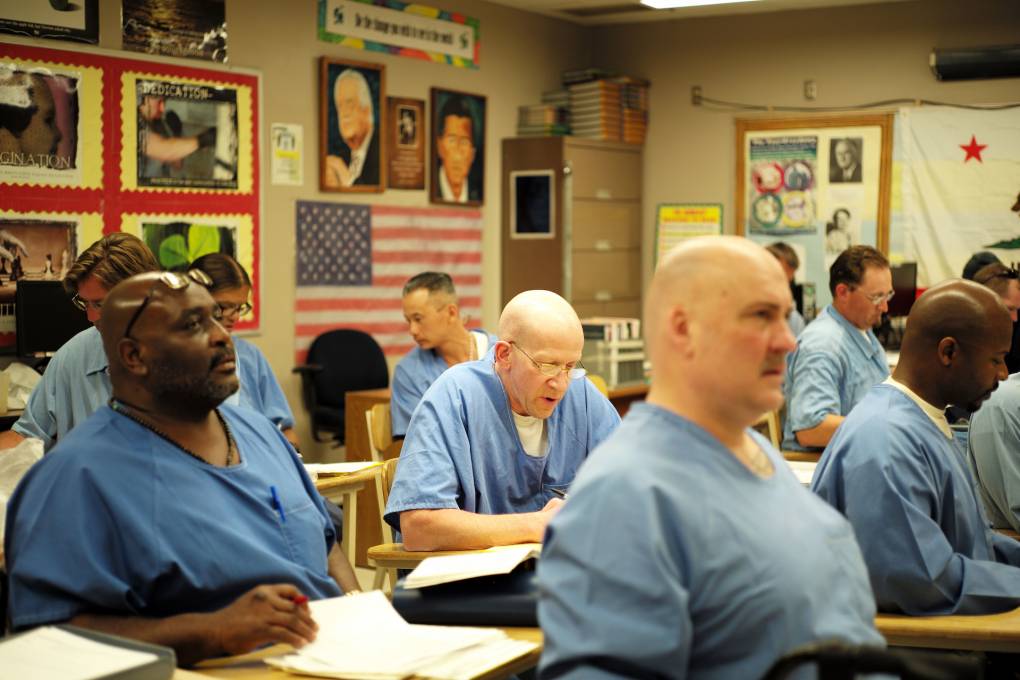
"caption": "Inmates at California State Prison, Los Angeles County, a maximum security facility in Lancaster, attend class as part of a bachelor's degree program run by Cal State L.A.",
"description": null,
"title": "inmates BA program.042",
"credit": "J. Emilio Flores/Cal State LA",
"status": "inherit",
"isLoading": false,
"fetchFailed": false
},
"news_11795174": {
"type": "attachments",
"id": "news_11795174",
"meta": {
"index": "attachments_1716263798",
"site": "news",
"id": "11795174",
"found": true
},
"parent": 11795091,
"imgSizes": {
"apple_news_ca_landscape_5_5": {
"file": "https://ww2.kqed.org/app/uploads/sites/10/2020/01/01092019_Newsom_budget_young-prisoners-qut-1044x783.jpg",
"width": 1044,
"mimeType": "image/jpeg",
"height": 783
},
"apple_news_ca_square_4_0": {
"file": "https://ww2.kqed.org/app/uploads/sites/10/2020/01/01092019_Newsom_budget_young-prisoners-qut-470x470.jpg",
"width": 470,
"mimeType": "image/jpeg",
"height": 470
},
"twentyfourteen-full-width": {
"file": "https://ww2.kqed.org/app/uploads/sites/10/2020/01/01092019_Newsom_budget_young-prisoners-qut-1038x576.jpg",
"width": 1038,
"mimeType": "image/jpeg",
"height": 576
},
"thumbnail": {
"file": "https://ww2.kqed.org/app/uploads/sites/10/2020/01/01092019_Newsom_budget_young-prisoners-qut-160x107.jpg",
"width": 160,
"mimeType": "image/jpeg",
"height": 107
},
"post-thumbnail": {
"file": "https://ww2.kqed.org/app/uploads/sites/10/2020/01/01092019_Newsom_budget_young-prisoners-qut-672x372.jpg",
"width": 672,
"mimeType": "image/jpeg",
"height": 372
},
"kqedFullSize": {
"file": "https://ww2.kqed.org/app/uploads/sites/10/2020/01/01092019_Newsom_budget_young-prisoners-qut.jpg",
"width": 1920,
"height": 1280
},
"apple_news_ca_landscape_4_7": {
"file": "https://ww2.kqed.org/app/uploads/sites/10/2020/01/01092019_Newsom_budget_young-prisoners-qut-632x474.jpg",
"width": 632,
"mimeType": "image/jpeg",
"height": 474
},
"large": {
"file": "https://ww2.kqed.org/app/uploads/sites/10/2020/01/01092019_Newsom_budget_young-prisoners-qut-1020x680.jpg",
"width": 1020,
"mimeType": "image/jpeg",
"height": 680
},
"complete_open_graph": {
"file": "https://ww2.kqed.org/app/uploads/sites/10/2020/01/01092019_Newsom_budget_young-prisoners-qut-1200x800.jpg",
"width": 1200,
"mimeType": "image/jpeg",
"height": 800
},
"apple_news_ca_landscape_4_0": {
"file": "https://ww2.kqed.org/app/uploads/sites/10/2020/01/01092019_Newsom_budget_young-prisoners-qut-536x402.jpg",
"width": 536,
"mimeType": "image/jpeg",
"height": 402
},
"apple_news_ca_portrait_12_9": {
"file": "https://ww2.kqed.org/app/uploads/sites/10/2020/01/01092019_Newsom_budget_young-prisoners-qut-1122x1280.jpg",
"width": 1122,
"mimeType": "image/jpeg",
"height": 1280
},
"medium": {
"file": "https://ww2.kqed.org/app/uploads/sites/10/2020/01/01092019_Newsom_budget_young-prisoners-qut-800x533.jpg",
"width": 800,
"mimeType": "image/jpeg",
"height": 533
},
"apple_news_ca_portrait_4_0": {
"file": "https://ww2.kqed.org/app/uploads/sites/10/2020/01/01092019_Newsom_budget_young-prisoners-qut-354x472.jpg",
"width": 354,
"mimeType": "image/jpeg",
"height": 472
},
"apple_news_ca_portrait_9_7": {
"file": "https://ww2.kqed.org/app/uploads/sites/10/2020/01/01092019_Newsom_budget_young-prisoners-qut-840x1120.jpg",
"width": 840,
"mimeType": "image/jpeg",
"height": 1120
},
"apple_news_ca_landscape_12_9": {
"file": "https://ww2.kqed.org/app/uploads/sites/10/2020/01/01092019_Newsom_budget_young-prisoners-qut-1832x1280.jpg",
"width": 1832,
"mimeType": "image/jpeg",
"height": 1280
},
"apple_news_ca_square_9_7": {
"file": "https://ww2.kqed.org/app/uploads/sites/10/2020/01/01092019_Newsom_budget_young-prisoners-qut-1104x1104.jpg",
"width": 1104,
"mimeType": "image/jpeg",
"height": 1104
},
"apple_news_ca_portrait_4_7": {
"file": "https://ww2.kqed.org/app/uploads/sites/10/2020/01/01092019_Newsom_budget_young-prisoners-qut-414x552.jpg",
"width": 414,
"mimeType": "image/jpeg",
"height": 552
},
"apple_news_ca_square_12_9": {
"file": "https://ww2.kqed.org/app/uploads/sites/10/2020/01/01092019_Newsom_budget_young-prisoners-qut-1472x1280.jpg",
"width": 1472,
"mimeType": "image/jpeg",
"height": 1280
},
"apple_news_ca_portrait_5_5": {
"file": "https://ww2.kqed.org/app/uploads/sites/10/2020/01/01092019_Newsom_budget_young-prisoners-qut-687x916.jpg",
"width": 687,
"mimeType": "image/jpeg",
"height": 916
},
"full-width": {
"file": "https://ww2.kqed.org/app/uploads/sites/10/2020/01/01092019_Newsom_budget_young-prisoners-qut-1920x1280.jpg",
"width": 1920,
"mimeType": "image/jpeg",
"height": 1280
},
"apple_news_ca_square_4_7": {
"file": "https://ww2.kqed.org/app/uploads/sites/10/2020/01/01092019_Newsom_budget_young-prisoners-qut-550x550.jpg",
"width": 550,
"mimeType": "image/jpeg",
"height": 550
},
"apple_news_ca_landscape_9_7": {
"file": "https://ww2.kqed.org/app/uploads/sites/10/2020/01/01092019_Newsom_budget_young-prisoners-qut-1376x1032.jpg",
"width": 1376,
"mimeType": "image/jpeg",
"height": 1032
},
"apple_news_ca_square_5_5": {
"file": "https://ww2.kqed.org/app/uploads/sites/10/2020/01/01092019_Newsom_budget_young-prisoners-qut-912x912.jpg",
"width": 912,
"mimeType": "image/jpeg",
"height": 912
}
},
"publishDate": 1578614369,
"modified": 1578614443,
"caption": "Gavin Newsom speaks during his primary election night gathering on June 5, 2018, in San Francisco.",
"description": "Gavin Newsom speaks during his primary election night gathering on June 5, 2018, in San Francisco.",
"title": "Newsom_budget_young prisoners_rehab program",
"credit": "Justin Sullivan/Getty Images",
"status": "inherit",
"isLoading": false,
"fetchFailed": false
},
"news_11775122": {
"type": "attachments",
"id": "news_11775122",
"meta": {
"index": "attachments_1716263798",
"site": "news",
"id": "11775122",
"found": true
},
"parent": 11775030,
"imgSizes": {
"apple_news_ca_landscape_5_5": {
"file": "https://ww2.kqed.org/app/uploads/sites/10/2019/09/09182019_prison_Roy-classroom-inmates-BA-program.048-qut-1044x783.jpg",
"width": 1044,
"mimeType": "image/jpeg",
"height": 783
},
"apple_news_ca_square_4_0": {
"file": "https://ww2.kqed.org/app/uploads/sites/10/2019/09/09182019_prison_Roy-classroom-inmates-BA-program.048-qut-470x470.jpg",
"width": 470,
"mimeType": "image/jpeg",
"height": 470
},
"twentyfourteen-full-width": {
"file": "https://ww2.kqed.org/app/uploads/sites/10/2019/09/09182019_prison_Roy-classroom-inmates-BA-program.048-qut-1038x576.jpg",
"width": 1038,
"mimeType": "image/jpeg",
"height": 576
},
"thumbnail": {
"file": "https://ww2.kqed.org/app/uploads/sites/10/2019/09/09182019_prison_Roy-classroom-inmates-BA-program.048-qut-160x107.jpg",
"width": 160,
"mimeType": "image/jpeg",
"height": 107
},
"post-thumbnail": {
"file": "https://ww2.kqed.org/app/uploads/sites/10/2019/09/09182019_prison_Roy-classroom-inmates-BA-program.048-qut-672x372.jpg",
"width": 672,
"mimeType": "image/jpeg",
"height": 372
},
"kqedFullSize": {
"file": "https://ww2.kqed.org/app/uploads/sites/10/2019/09/09182019_prison_Roy-classroom-inmates-BA-program.048-qut.jpg",
"width": 1920,
"height": 1280
},
"apple_news_ca_landscape_4_7": {
"file": "https://ww2.kqed.org/app/uploads/sites/10/2019/09/09182019_prison_Roy-classroom-inmates-BA-program.048-qut-632x474.jpg",
"width": 632,
"mimeType": "image/jpeg",
"height": 474
},
"large": {
"file": "https://ww2.kqed.org/app/uploads/sites/10/2019/09/09182019_prison_Roy-classroom-inmates-BA-program.048-qut-1020x680.jpg",
"width": 1020,
"mimeType": "image/jpeg",
"height": 680
},
"complete_open_graph": {
"file": "https://ww2.kqed.org/app/uploads/sites/10/2019/09/09182019_prison_Roy-classroom-inmates-BA-program.048-qut-1200x800.jpg",
"width": 1200,
"mimeType": "image/jpeg",
"height": 800
},
"apple_news_ca_landscape_4_0": {
"file": "https://ww2.kqed.org/app/uploads/sites/10/2019/09/09182019_prison_Roy-classroom-inmates-BA-program.048-qut-536x402.jpg",
"width": 536,
"mimeType": "image/jpeg",
"height": 402
},
"apple_news_ca_portrait_12_9": {
"file": "https://ww2.kqed.org/app/uploads/sites/10/2019/09/09182019_prison_Roy-classroom-inmates-BA-program.048-qut-1122x1280.jpg",
"width": 1122,
"mimeType": "image/jpeg",
"height": 1280
},
"medium": {
"file": "https://ww2.kqed.org/app/uploads/sites/10/2019/09/09182019_prison_Roy-classroom-inmates-BA-program.048-qut-800x533.jpg",
"width": 800,
"mimeType": "image/jpeg",
"height": 533
},
"apple_news_ca_portrait_4_0": {
"file": "https://ww2.kqed.org/app/uploads/sites/10/2019/09/09182019_prison_Roy-classroom-inmates-BA-program.048-qut-354x472.jpg",
"width": 354,
"mimeType": "image/jpeg",
"height": 472
},
"apple_news_ca_portrait_9_7": {
"file": "https://ww2.kqed.org/app/uploads/sites/10/2019/09/09182019_prison_Roy-classroom-inmates-BA-program.048-qut-840x1120.jpg",
"width": 840,
"mimeType": "image/jpeg",
"height": 1120
},
"apple_news_ca_landscape_12_9": {
"file": "https://ww2.kqed.org/app/uploads/sites/10/2019/09/09182019_prison_Roy-classroom-inmates-BA-program.048-qut-1832x1280.jpg",
"width": 1832,
"mimeType": "image/jpeg",
"height": 1280
},
"apple_news_ca_square_9_7": {
"file": "https://ww2.kqed.org/app/uploads/sites/10/2019/09/09182019_prison_Roy-classroom-inmates-BA-program.048-qut-1104x1104.jpg",
"width": 1104,
"mimeType": "image/jpeg",
"height": 1104
},
"apple_news_ca_portrait_4_7": {
"file": "https://ww2.kqed.org/app/uploads/sites/10/2019/09/09182019_prison_Roy-classroom-inmates-BA-program.048-qut-414x552.jpg",
"width": 414,
"mimeType": "image/jpeg",
"height": 552
},
"apple_news_ca_square_12_9": {
"file": "https://ww2.kqed.org/app/uploads/sites/10/2019/09/09182019_prison_Roy-classroom-inmates-BA-program.048-qut-1472x1280.jpg",
"width": 1472,
"mimeType": "image/jpeg",
"height": 1280
},
"apple_news_ca_portrait_5_5": {
"file": "https://ww2.kqed.org/app/uploads/sites/10/2019/09/09182019_prison_Roy-classroom-inmates-BA-program.048-qut-687x916.jpg",
"width": 687,
"mimeType": "image/jpeg",
"height": 916
},
"full-width": {
"file": "https://ww2.kqed.org/app/uploads/sites/10/2019/09/09182019_prison_Roy-classroom-inmates-BA-program.048-qut-1920x1280.jpg",
"width": 1920,
"mimeType": "image/jpeg",
"height": 1280
},
"apple_news_ca_square_4_7": {
"file": "https://ww2.kqed.org/app/uploads/sites/10/2019/09/09182019_prison_Roy-classroom-inmates-BA-program.048-qut-550x550.jpg",
"width": 550,
"mimeType": "image/jpeg",
"height": 550
},
"apple_news_ca_landscape_9_7": {
"file": "https://ww2.kqed.org/app/uploads/sites/10/2019/09/09182019_prison_Roy-classroom-inmates-BA-program.048-qut-1376x1032.jpg",
"width": 1376,
"mimeType": "image/jpeg",
"height": 1032
},
"apple_news_ca_square_5_5": {
"file": "https://ww2.kqed.org/app/uploads/sites/10/2019/09/09182019_prison_Roy-classroom-inmates-BA-program.048-qut-912x912.jpg",
"width": 912,
"mimeType": "image/jpeg",
"height": 912
}
},
"publishDate": 1568845633,
"modified": 1568941567,
"caption": "Bidhan Roy, a Cal State LA professor, teaches inmates participating in an undergraduate degree program. ",
"description": "Bidham Roy, a Cal State LA professor, teaches inmates participating in an undergraduate degree program. ",
"title": "09182019_prison_Roy classroom inmates BA program.048-qut",
"credit": "J. Emilio Flores/Cal State LA",
"status": "inherit",
"isLoading": false,
"fetchFailed": false
},
"news_11753315": {
"type": "attachments",
"id": "news_11753315",
"meta": {
"index": "attachments_1716263798",
"site": "news",
"id": "11753315",
"found": true
},
"parent": 11753291,
"imgSizes": {
"apple_news_ca_landscape_5_5": {
"file": "https://ww2.kqed.org/app/uploads/sites/10/2019/06/Dad-Melissa--1044x783.jpg",
"width": 1044,
"mimeType": "image/jpeg",
"height": 783
},
"apple_news_ca_square_4_0": {
"file": "https://ww2.kqed.org/app/uploads/sites/10/2019/06/Dad-Melissa--470x470.jpg",
"width": 470,
"mimeType": "image/jpeg",
"height": 470
},
"twentyfourteen-full-width": {
"file": "https://ww2.kqed.org/app/uploads/sites/10/2019/06/Dad-Melissa--1038x576.jpg",
"width": 1038,
"mimeType": "image/jpeg",
"height": 576
},
"thumbnail": {
"file": "https://ww2.kqed.org/app/uploads/sites/10/2019/06/Dad-Melissa--160x126.jpg",
"width": 160,
"mimeType": "image/jpeg",
"height": 126
},
"post-thumbnail": {
"file": "https://ww2.kqed.org/app/uploads/sites/10/2019/06/Dad-Melissa--672x372.jpg",
"width": 672,
"mimeType": "image/jpeg",
"height": 372
},
"kqedFullSize": {
"file": "https://ww2.kqed.org/app/uploads/sites/10/2019/06/Dad-Melissa-.jpg",
"width": 1291,
"height": 1016
},
"apple_news_ca_landscape_4_7": {
"file": "https://ww2.kqed.org/app/uploads/sites/10/2019/06/Dad-Melissa--632x474.jpg",
"width": 632,
"mimeType": "image/jpeg",
"height": 474
},
"large": {
"file": "https://ww2.kqed.org/app/uploads/sites/10/2019/06/Dad-Melissa--1020x803.jpg",
"width": 1020,
"mimeType": "image/jpeg",
"height": 803
},
"complete_open_graph": {
"file": "https://ww2.kqed.org/app/uploads/sites/10/2019/06/Dad-Melissa--1200x944.jpg",
"width": 1200,
"mimeType": "image/jpeg",
"height": 944
},
"apple_news_ca_landscape_4_0": {
"file": "https://ww2.kqed.org/app/uploads/sites/10/2019/06/Dad-Melissa--536x402.jpg",
"width": 536,
"mimeType": "image/jpeg",
"height": 402
},
"apple_news_ca_portrait_12_9": {
"file": "https://ww2.kqed.org/app/uploads/sites/10/2019/06/Dad-Melissa--1122x1016.jpg",
"width": 1122,
"mimeType": "image/jpeg",
"height": 1016
},
"medium": {
"file": "https://ww2.kqed.org/app/uploads/sites/10/2019/06/Dad-Melissa--800x630.jpg",
"width": 800,
"mimeType": "image/jpeg",
"height": 630
},
"apple_news_ca_portrait_4_0": {
"file": "https://ww2.kqed.org/app/uploads/sites/10/2019/06/Dad-Melissa--354x472.jpg",
"width": 354,
"mimeType": "image/jpeg",
"height": 472
},
"apple_news_ca_portrait_9_7": {
"file": "https://ww2.kqed.org/app/uploads/sites/10/2019/06/Dad-Melissa--840x1016.jpg",
"width": 840,
"mimeType": "image/jpeg",
"height": 1016
},
"apple_news_ca_square_9_7": {
"file": "https://ww2.kqed.org/app/uploads/sites/10/2019/06/Dad-Melissa--1104x1016.jpg",
"width": 1104,
"mimeType": "image/jpeg",
"height": 1016
},
"apple_news_ca_portrait_4_7": {
"file": "https://ww2.kqed.org/app/uploads/sites/10/2019/06/Dad-Melissa--414x552.jpg",
"width": 414,
"mimeType": "image/jpeg",
"height": 552
},
"apple_news_ca_portrait_5_5": {
"file": "https://ww2.kqed.org/app/uploads/sites/10/2019/06/Dad-Melissa--687x916.jpg",
"width": 687,
"mimeType": "image/jpeg",
"height": 916
},
"apple_news_ca_square_4_7": {
"file": "https://ww2.kqed.org/app/uploads/sites/10/2019/06/Dad-Melissa--550x550.jpg",
"width": 550,
"mimeType": "image/jpeg",
"height": 550
},
"apple_news_ca_square_5_5": {
"file": "https://ww2.kqed.org/app/uploads/sites/10/2019/06/Dad-Melissa--912x912.jpg",
"width": 912,
"mimeType": "image/jpeg",
"height": 912
}
},
"publishDate": 1559950701,
"modified": 1560555793,
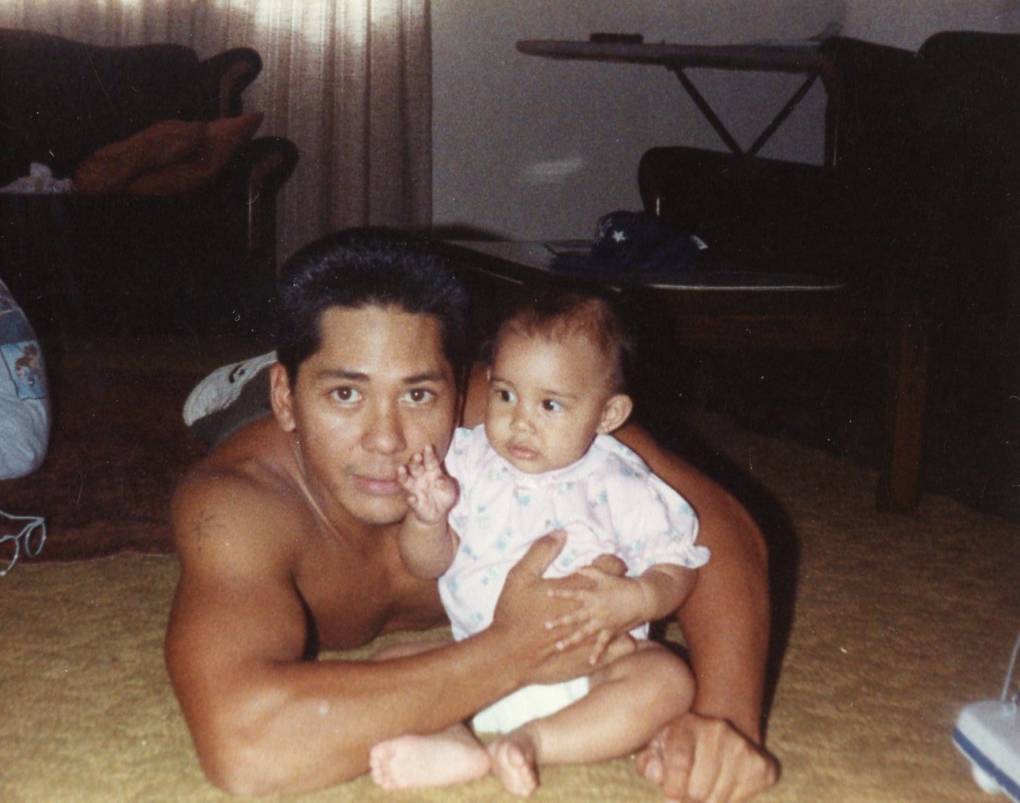
"caption": "The author with her father in National City, California, in 1988.\n",
"description": "Me with my father at home in National City (San Diego County) in 1988.\n",
"title": "Dad Melissa",
"credit": "Courtesy of Melissa Dueñas",
"status": "inherit",
"isLoading": false,
"fetchFailed": false
},
"news_11741745": {
"type": "attachments",
"id": "news_11741745",
"meta": {
"index": "attachments_1716263798",
"site": "news",
"id": "11741745",
"found": true
},
"parent": 11741744,
"imgSizes": {
"twentyfourteen-full-width": {
"file": "https://ww2.kqed.org/app/uploads/sites/10/2019/04/gettyimages-1138072237-5d95976c71024918088ee087e8fcd4bb01eb78a6-1038x576.jpg",
"width": 1038,
"mimeType": "image/jpeg",
"height": 576
},
"thumbnail": {
"file": "https://ww2.kqed.org/app/uploads/sites/10/2019/04/gettyimages-1138072237-5d95976c71024918088ee087e8fcd4bb01eb78a6-160x120.jpg",
"width": 160,
"mimeType": "image/jpeg",
"height": 120
},
"post-thumbnail": {
"file": "https://ww2.kqed.org/app/uploads/sites/10/2019/04/gettyimages-1138072237-5d95976c71024918088ee087e8fcd4bb01eb78a6-672x372.jpg",
"width": 672,
"mimeType": "image/jpeg",
"height": 372
},
"kqedFullSize": {
"file": "https://ww2.kqed.org/app/uploads/sites/10/2019/04/gettyimages-1138072237-5d95976c71024918088ee087e8fcd4bb01eb78a6.jpg",
"width": 2048,
"height": 1536
},
"large": {
"file": "https://ww2.kqed.org/app/uploads/sites/10/2019/04/gettyimages-1138072237-5d95976c71024918088ee087e8fcd4bb01eb78a6-1020x765.jpg",
"width": 1020,
"mimeType": "image/jpeg",
"height": 765
},
"complete_open_graph": {
"file": "https://ww2.kqed.org/app/uploads/sites/10/2019/04/gettyimages-1138072237-5d95976c71024918088ee087e8fcd4bb01eb78a6-1200x900.jpg",
"width": 1200,
"mimeType": "image/jpeg",
"height": 900
},
"full-width": {
"file": "https://ww2.kqed.org/app/uploads/sites/10/2019/04/gettyimages-1138072237-5d95976c71024918088ee087e8fcd4bb01eb78a6-1920x1440.jpg",
"width": 1920,
"mimeType": "image/jpeg",
"height": 1440
},
"medium": {
"file": "https://ww2.kqed.org/app/uploads/sites/10/2019/04/gettyimages-1138072237-5d95976c71024918088ee087e8fcd4bb01eb78a6-800x600.jpg",
"width": 800,
"mimeType": "image/jpeg",
"height": 600
}
},
"publishDate": 1555777147,
"modified": 1555777147,
"caption": null,
"description": "Louise and Daivd Turpin, who pleaded guilty to 14 felony counts for the abuse of 12 their 13 children, listened on Friday as two of their adult children testified in court.",
"title": "Louise and Daivd Turpin, who pleaded guilty to 14 felony counts for the abuse of 12 their 13 children, listened on Friday as two of their adult children testified in court.",
"credit": null,
"status": "inherit",
"isLoading": false,
"fetchFailed": false
},
"news_11738364": {
"type": "attachments",
"id": "news_11738364",
"meta": {
"index": "attachments_1716263798",
"site": "news",
"id": "11738364",
"found": true
},
"parent": 11738359,
"imgSizes": {
"post-thumbnail": {
"file": "https://ww2.kqed.org/app/uploads/sites/10/2019/04/RS1096_107517290-672x372.jpg",
"width": 672,
"mimeType": "image/jpeg",
"height": 372
},
"kqedFullSize": {
"file": "https://ww2.kqed.org/app/uploads/sites/10/2019/04/RS1096_107517290.jpg",
"width": 2048,
"height": 1328
},
"guest-author-50": {
"file": "https://ww2.kqed.org/app/uploads/sites/10/2019/04/RS1096_107517290-50x50.jpg",
"width": 50,
"mimeType": "image/jpeg",
"height": 50
},
"guest-author-96": {
"file": "https://ww2.kqed.org/app/uploads/sites/10/2019/04/RS1096_107517290-96x96.jpg",
"width": 96,
"mimeType": "image/jpeg",
"height": 96
},
"apple_news_ca_portrait_12_9": {
"file": "https://ww2.kqed.org/app/uploads/sites/10/2019/04/RS1096_107517290-1122x1496.jpg",
"width": 1122,
"mimeType": "image/jpeg",
"height": 1496
},
"medium": {
"file": "https://ww2.kqed.org/app/uploads/sites/10/2019/04/RS1096_107517290-800x519.jpg",
"width": 800,
"mimeType": "image/jpeg",
"height": 519
},
"guest-author-32": {
"file": "https://ww2.kqed.org/app/uploads/sites/10/2019/04/RS1096_107517290-32x32.jpg",
"width": 32,
"mimeType": "image/jpeg",
"height": 32
},
"apple_news_ca_portrait_9_7": {
"file": "https://ww2.kqed.org/app/uploads/sites/10/2019/04/RS1096_107517290-840x1120.jpg",
"width": 840,
"mimeType": "image/jpeg",
"height": 1120
},
"apple_news_ca_square_9_7": {
"file": "https://ww2.kqed.org/app/uploads/sites/10/2019/04/RS1096_107517290-1104x1104.jpg",
"width": 1104,
"mimeType": "image/jpeg",
"height": 1104
},
"apple_news_ca_portrait_4_7": {
"file": "https://ww2.kqed.org/app/uploads/sites/10/2019/04/RS1096_107517290-414x552.jpg",
"width": 414,
"mimeType": "image/jpeg",
"height": 552
},
"apple_news_ca_square_12_9": {
"file": "https://ww2.kqed.org/app/uploads/sites/10/2019/04/RS1096_107517290-1472x1472.jpg",
"width": 1472,
"mimeType": "image/jpeg",
"height": 1472
},
"apple_news_ca_portrait_5_5": {
"file": "https://ww2.kqed.org/app/uploads/sites/10/2019/04/RS1096_107517290-687x916.jpg",
"width": 687,
"mimeType": "image/jpeg",
"height": 916
},
"apple_news_ca_square_4_7": {
"file": "https://ww2.kqed.org/app/uploads/sites/10/2019/04/RS1096_107517290-550x550.jpg",
"width": 550,
"mimeType": "image/jpeg",
"height": 550
},
"apple_news_ca_square_5_5": {
"file": "https://ww2.kqed.org/app/uploads/sites/10/2019/04/RS1096_107517290-912x912.jpg",
"width": 912,
"mimeType": "image/jpeg",
"height": 912
},
"apple_news_ca_landscape_5_5": {
"file": "https://ww2.kqed.org/app/uploads/sites/10/2019/04/RS1096_107517290-1044x783.jpg",
"width": 1044,
"mimeType": "image/jpeg",
"height": 783
},
"apple_news_ca_square_4_0": {
"file": "https://ww2.kqed.org/app/uploads/sites/10/2019/04/RS1096_107517290-470x470.jpg",
"width": 470,
"mimeType": "image/jpeg",
"height": 470
},
"twentyfourteen-full-width": {
"file": "https://ww2.kqed.org/app/uploads/sites/10/2019/04/RS1096_107517290-1038x576.jpg",
"width": 1038,
"mimeType": "image/jpeg",
"height": 576
},
"thumbnail": {
"file": "https://ww2.kqed.org/app/uploads/sites/10/2019/04/RS1096_107517290-160x104.jpg",
"width": 160,
"mimeType": "image/jpeg",
"height": 104
},
"apple_news_ca_landscape_4_7": {
"file": "https://ww2.kqed.org/app/uploads/sites/10/2019/04/RS1096_107517290-632x474.jpg",
"width": 632,
"mimeType": "image/jpeg",
"height": 474
},
"large": {
"file": "https://ww2.kqed.org/app/uploads/sites/10/2019/04/RS1096_107517290-1020x662.jpg",
"width": 1020,
"mimeType": "image/jpeg",
"height": 662
},
"complete_open_graph": {
"file": "https://ww2.kqed.org/app/uploads/sites/10/2019/04/RS1096_107517290-1200x778.jpg",
"width": 1200,
"mimeType": "image/jpeg",
"height": 778
},
"apple_news_ca_landscape_4_0": {
"file": "https://ww2.kqed.org/app/uploads/sites/10/2019/04/RS1096_107517290-536x402.jpg",
"width": 536,
"mimeType": "image/jpeg",
"height": 402
},
"guest-author-64": {
"file": "https://ww2.kqed.org/app/uploads/sites/10/2019/04/RS1096_107517290-64x64.jpg",
"width": 64,
"mimeType": "image/jpeg",
"height": 64
},
"apple_news_ca_portrait_4_0": {
"file": "https://ww2.kqed.org/app/uploads/sites/10/2019/04/RS1096_107517290-354x472.jpg",
"width": 354,
"mimeType": "image/jpeg",
"height": 472
},
"apple_news_ca_landscape_12_9": {
"file": "https://ww2.kqed.org/app/uploads/sites/10/2019/04/RS1096_107517290-1832x1374.jpg",
"width": 1832,
"mimeType": "image/jpeg",
"height": 1374
},
"full-width": {
"file": "https://ww2.kqed.org/app/uploads/sites/10/2019/04/RS1096_107517290-1920x1245.jpg",
"width": 1920,
"mimeType": "image/jpeg",
"height": 1245
},
"guest-author-128": {
"file": "https://ww2.kqed.org/app/uploads/sites/10/2019/04/RS1096_107517290-128x128.jpg",
"width": 128,
"mimeType": "image/jpeg",
"height": 128
},
"apple_news_ca_landscape_9_7": {
"file": "https://ww2.kqed.org/app/uploads/sites/10/2019/04/RS1096_107517290-1376x1032.jpg",
"width": 1376,
"mimeType": "image/jpeg",
"height": 1032
}
},
"publishDate": 1554593040,
"modified": 1554593219,
"caption": "California has committed $260 million over four years to repair leaking roofs and clear dangerous mold at more than two dozen deteriorating prisons where the cost of overdue maintenance is pegged at more than $1 billion.",
"description": null,
"title": "Supreme Court To Rule On California's Overcrowded Prisons",
"credit": "Kevork Djansezian/Getty Images",
"status": "inherit",
"isLoading": false,
"fetchFailed": false
},
"news_11724277": {
"type": "attachments",
"id": "news_11724277",
"meta": {
"index": "attachments_1716263798",
"site": "news",
"id": "11724277",
"found": true
},
"parent": 11723744,
"imgSizes": {
"twentyfourteen-full-width": {
"file": "https://ww2.kqed.org/app/uploads/sites/10/2019/02/PrisonGuard-1038x576.jpg",
"width": 1038,
"mimeType": "image/jpeg",
"height": 576
},
"thumbnail": {
"file": "https://ww2.kqed.org/app/uploads/sites/10/2019/02/PrisonGuard-160x108.jpg",
"width": 160,
"mimeType": "image/jpeg",
"height": 108
},
"post-thumbnail": {
"file": "https://ww2.kqed.org/app/uploads/sites/10/2019/02/PrisonGuard-672x372.jpg",
"width": 672,
"mimeType": "image/jpeg",
"height": 372
},
"kqedFullSize": {
"file": "https://ww2.kqed.org/app/uploads/sites/10/2019/02/PrisonGuard.jpg",
"width": 1920,
"height": 1292
},
"large": {
"file": "https://ww2.kqed.org/app/uploads/sites/10/2019/02/PrisonGuard-1020x686.jpg",
"width": 1020,
"mimeType": "image/jpeg",
"height": 686
},
"complete_open_graph": {
"file": "https://ww2.kqed.org/app/uploads/sites/10/2019/02/PrisonGuard-1200x808.jpg",
"width": 1200,
"mimeType": "image/jpeg",
"height": 808
},
"guest-author-50": {
"file": "https://ww2.kqed.org/app/uploads/sites/10/2019/02/PrisonGuard-50x50.jpg",
"width": 50,
"mimeType": "image/jpeg",
"height": 50
},
"guest-author-96": {
"file": "https://ww2.kqed.org/app/uploads/sites/10/2019/02/PrisonGuard-96x96.jpg",
"width": 96,
"mimeType": "image/jpeg",
"height": 96
},
"medium": {
"file": "https://ww2.kqed.org/app/uploads/sites/10/2019/02/PrisonGuard-800x538.jpg",
"width": 800,
"mimeType": "image/jpeg",
"height": 538
},
"guest-author-64": {
"file": "https://ww2.kqed.org/app/uploads/sites/10/2019/02/PrisonGuard-64x64.jpg",
"width": 64,
"mimeType": "image/jpeg",
"height": 64
},
"guest-author-32": {
"file": "https://ww2.kqed.org/app/uploads/sites/10/2019/02/PrisonGuard-32x32.jpg",
"width": 32,
"mimeType": "image/jpeg",
"height": 32
},
"full-width": {
"file": "https://ww2.kqed.org/app/uploads/sites/10/2019/02/PrisonGuard-1920x1292.jpg",
"width": 1920,
"mimeType": "image/jpeg",
"height": 1292
},
"detail": {
"file": "https://ww2.kqed.org/app/uploads/sites/10/2019/02/PrisonGuard-150x150.jpg",
"width": 150,
"mimeType": "image/jpeg",
"height": 150
},
"guest-author-128": {
"file": "https://ww2.kqed.org/app/uploads/sites/10/2019/02/PrisonGuard-128x128.jpg",
"width": 128,
"mimeType": "image/jpeg",
"height": 128
}
},
"publishDate": 1549500574,
"modified": 1549500637,
"caption": "An armed California Department of Corrections and Rehabilitation (CDCR) officer stands guard at San Quentin State Prison in 2016.",
"description": "An armed California Department of Corrections and Rehabilitation (CDCR) officer stands guard at San Quentin State Prison in 2016.",
"title": "PrisonGuard",
"credit": "Justin Sullivan/Getty Images",
"status": "inherit",
"isLoading": false,
"fetchFailed": false
},
"news_11718703": {
"type": "attachments",
"id": "news_11718703",
"meta": {
"index": "attachments_1716263798",
"site": "news",
"id": "11718703",
"found": true
},
"parent": 11718702,
"imgSizes": {
"twentyfourteen-full-width": {
"file": "https://ww2.kqed.org/app/uploads/sites/10/2019/01/img_3440-edit-53e926798fde98e60a859950366b2eb8f1a1eabd-e1547678124690-1038x576.jpg",
"width": 1038,
"mimeType": "image/jpeg",
"height": 576
},
"thumbnail": {
"file": "https://ww2.kqed.org/app/uploads/sites/10/2019/01/img_3440-edit-53e926798fde98e60a859950366b2eb8f1a1eabd-e1547678124690-160x120.jpg",
"width": 160,
"mimeType": "image/jpeg",
"height": 120
},
"post-thumbnail": {
"file": "https://ww2.kqed.org/app/uploads/sites/10/2019/01/img_3440-edit-53e926798fde98e60a859950366b2eb8f1a1eabd-e1547678124690-672x372.jpg",
"width": 672,
"mimeType": "image/jpeg",
"height": 372
},
"kqedFullSize": {
"file": "https://ww2.kqed.org/app/uploads/sites/10/2019/01/img_3440-edit-53e926798fde98e60a859950366b2eb8f1a1eabd-e1547678124690.jpg",
"width": 1920,
"height": 1440
},
"large": {
"file": "https://ww2.kqed.org/app/uploads/sites/10/2019/01/img_3440-edit-53e926798fde98e60a859950366b2eb8f1a1eabd-e1547678124690-1020x765.jpg",
"width": 1020,
"mimeType": "image/jpeg",
"height": 765
},
"complete_open_graph": {
"file": "https://ww2.kqed.org/app/uploads/sites/10/2019/01/img_3440-edit-53e926798fde98e60a859950366b2eb8f1a1eabd-e1547678124690-1200x900.jpg",
"width": 1200,
"mimeType": "image/jpeg",
"height": 900
},
"guest-author-50": {
"file": "https://ww2.kqed.org/app/uploads/sites/10/2019/01/img_3440-edit-53e926798fde98e60a859950366b2eb8f1a1eabd-e1547678124690-50x50.jpg",
"width": 50,
"mimeType": "image/jpeg",
"height": 50
},
"guest-author-96": {
"file": "https://ww2.kqed.org/app/uploads/sites/10/2019/01/img_3440-edit-53e926798fde98e60a859950366b2eb8f1a1eabd-e1547678124690-96x96.jpg",
"width": 96,
"mimeType": "image/jpeg",
"height": 96
},
"medium": {
"file": "https://ww2.kqed.org/app/uploads/sites/10/2019/01/img_3440-edit-53e926798fde98e60a859950366b2eb8f1a1eabd-e1547678124690-800x600.jpg",
"width": 800,
"mimeType": "image/jpeg",
"height": 600
},
"guest-author-64": {
"file": "https://ww2.kqed.org/app/uploads/sites/10/2019/01/img_3440-edit-53e926798fde98e60a859950366b2eb8f1a1eabd-e1547678124690-64x64.jpg",
"width": 64,
"mimeType": "image/jpeg",
"height": 64
},
"guest-author-32": {
"file": "https://ww2.kqed.org/app/uploads/sites/10/2019/01/img_3440-edit-53e926798fde98e60a859950366b2eb8f1a1eabd-e1547678124690-32x32.jpg",
"width": 32,
"mimeType": "image/jpeg",
"height": 32
},
"full-width": {
"file": "https://ww2.kqed.org/app/uploads/sites/10/2019/01/img_3440-edit-53e926798fde98e60a859950366b2eb8f1a1eabd-e1547678124690-1920x1440.jpg",
"width": 1920,
"mimeType": "image/jpeg",
"height": 1440
},
"detail": {
"file": "https://ww2.kqed.org/app/uploads/sites/10/2019/01/img_3440-edit-53e926798fde98e60a859950366b2eb8f1a1eabd-e1547678124690-150x150.jpg",
"width": 150,
"mimeType": "image/jpeg",
"height": 150
},
"guest-author-128": {
"file": "https://ww2.kqed.org/app/uploads/sites/10/2019/01/img_3440-edit-53e926798fde98e60a859950366b2eb8f1a1eabd-e1547678124690-128x128.jpg",
"width": 128,
"mimeType": "image/jpeg",
"height": 128
}
},
"publishDate": 1547677902,
"modified": 1547678111,
"caption": "Jason Jones (L) with his roommates Joe Klein and Tamiko Panzella in their Oakland apartment. Panzella and Klein are participating in a new program to provide housing to former inmates. Jones was released recently after nearly 14 years in prison.",
"description": "Jason Jones (L) with his roommates Joe Klein and Tamiko Panzella in their Oakland apartment. Panzella and Klein are participating in a new program to provide housing to former inmates. Jones was released recently after nearly 14 years in prison.",
"title": "Jason Jones (left) with his roommates Joe Klein and Tamiko Panzella in their Oakland, Calif., apartment. Panzella and Klein are participating in a new program to provide housing to former inmates. Jones was released recently after nearly 14 years in prison.",
"credit": "Courtesy of Tamiko Panzella",
"status": "inherit",
"isLoading": false,
"fetchFailed": false
},
"news_11643060": {
"type": "attachments",
"id": "news_11643060",
"meta": {
"index": "attachments_1716263798",
"site": "news",
"id": "11643060",
"found": true
},
"parent": 11642653,
"imgSizes": {
"small": {
"file": "https://ww2.kqed.org/app/uploads/sites/10/2018/01/RS28918_Glen.live-qut-520x369.jpg",
"width": 520,
"mimeType": "image/jpeg",
"height": 369
},
"twentyfourteen-full-width": {
"file": "https://ww2.kqed.org/app/uploads/sites/10/2018/01/RS28918_Glen.live-qut-818x576.jpg",
"width": 818,
"mimeType": "image/jpeg",
"height": 576
},
"thumbnail": {
"file": "https://ww2.kqed.org/app/uploads/sites/10/2018/01/RS28918_Glen.live-qut-160x113.jpg",
"width": 160,
"mimeType": "image/jpeg",
"height": 113
},
"post-thumbnail": {
"file": "https://ww2.kqed.org/app/uploads/sites/10/2018/01/RS28918_Glen.live-qut-672x372.jpg",
"width": 672,
"mimeType": "image/jpeg",
"height": 372
},
"xsmall": {
"file": "https://ww2.kqed.org/app/uploads/sites/10/2018/01/RS28918_Glen.live-qut-375x266.jpg",
"width": 375,
"mimeType": "image/jpeg",
"height": 266
},
"kqedFullSize": {
"file": "https://ww2.kqed.org/app/uploads/sites/10/2018/01/RS28918_Glen.live-qut.jpg",
"width": 818,
"height": 580
},
"guest-author-50": {
"file": "https://ww2.kqed.org/app/uploads/sites/10/2018/01/RS28918_Glen.live-qut-50x50.jpg",
"width": 50,
"mimeType": "image/jpeg",
"height": 50
},
"guest-author-96": {
"file": "https://ww2.kqed.org/app/uploads/sites/10/2018/01/RS28918_Glen.live-qut-96x96.jpg",
"width": 96,
"mimeType": "image/jpeg",
"height": 96
},
"medium": {
"file": "https://ww2.kqed.org/app/uploads/sites/10/2018/01/RS28918_Glen.live-qut-800x567.jpg",
"width": 800,
"mimeType": "image/jpeg",
"height": 567
},
"guest-author-64": {
"file": "https://ww2.kqed.org/app/uploads/sites/10/2018/01/RS28918_Glen.live-qut-64x64.jpg",
"width": 64,
"mimeType": "image/jpeg",
"height": 64
},
"guest-author-32": {
"file": "https://ww2.kqed.org/app/uploads/sites/10/2018/01/RS28918_Glen.live-qut-32x32.jpg",
"width": 32,
"mimeType": "image/jpeg",
"height": 32
},
"detail": {
"file": "https://ww2.kqed.org/app/uploads/sites/10/2018/01/RS28918_Glen.live-qut-150x150.jpg",
"width": 150,
"mimeType": "image/jpeg",
"height": 150
},
"guest-author-128": {
"file": "https://ww2.kqed.org/app/uploads/sites/10/2018/01/RS28918_Glen.live-qut-128x128.jpg",
"width": 128,
"mimeType": "image/jpeg",
"height": 128
},
"xxsmall": {
"file": "https://ww2.kqed.org/app/uploads/sites/10/2018/01/RS28918_Glen.live-qut-240x170.jpg",
"width": 240,
"mimeType": "image/jpeg",
"height": 170
}
},
"publishDate": 1516390412,
"modified": 1546041803,
"caption": "Glen Sherley onstage at a prison in Vacaville, where he recorded a live album while incarcerated.",
"description": "Glen Sherley onstage at Vacaville prison, where he recorded a live album while incarcerated.",
"title": "RS28918_Glen.live-qut",
"credit": "Courtesy of Ronda Sherley",
"status": "inherit",
"isLoading": false,
"fetchFailed": false
},
"news_11714619": {
"type": "attachments",
"id": "news_11714619",
"meta": {
"index": "attachments_1716263798",
"site": "news",
"id": "11714619",
"found": true
},
"parent": 11714600,
"imgSizes": {
"twentyfourteen-full-width": {
"file": "https://ww2.kqed.org/app/uploads/sites/10/2018/12/featured-image-1038x576.jpg",
"width": 1038,
"mimeType": "image/jpeg",
"height": 576
},
"thumbnail": {
"file": "https://ww2.kqed.org/app/uploads/sites/10/2018/12/featured-image-160x98.jpg",
"width": 160,
"mimeType": "image/jpeg",
"height": 98
},
"post-thumbnail": {
"file": "https://ww2.kqed.org/app/uploads/sites/10/2018/12/featured-image-672x372.jpg",
"width": 672,
"mimeType": "image/jpeg",
"height": 372
},
"kqedFullSize": {
"file": "https://ww2.kqed.org/app/uploads/sites/10/2018/12/featured-image.jpg",
"width": 1920,
"height": 1174
},
"large": {
"file": "https://ww2.kqed.org/app/uploads/sites/10/2018/12/featured-image-1020x624.jpg",
"width": 1020,
"mimeType": "image/jpeg",
"height": 624
},
"complete_open_graph": {
"file": "https://ww2.kqed.org/app/uploads/sites/10/2018/12/featured-image-1200x734.jpg",
"width": 1200,
"mimeType": "image/jpeg",
"height": 734
},
"guest-author-50": {
"file": "https://ww2.kqed.org/app/uploads/sites/10/2018/12/featured-image-50x50.jpg",
"width": 50,
"mimeType": "image/jpeg",
"height": 50
},
"guest-author-96": {
"file": "https://ww2.kqed.org/app/uploads/sites/10/2018/12/featured-image-96x96.jpg",
"width": 96,
"mimeType": "image/jpeg",
"height": 96
},
"medium": {
"file": "https://ww2.kqed.org/app/uploads/sites/10/2018/12/featured-image-800x489.jpg",
"width": 800,
"mimeType": "image/jpeg",
"height": 489
},
"guest-author-64": {
"file": "https://ww2.kqed.org/app/uploads/sites/10/2018/12/featured-image-64x64.jpg",
"width": 64,
"mimeType": "image/jpeg",
"height": 64
},
"guest-author-32": {
"file": "https://ww2.kqed.org/app/uploads/sites/10/2018/12/featured-image-32x32.jpg",
"width": 32,
"mimeType": "image/jpeg",
"height": 32
},
"full-width": {
"file": "https://ww2.kqed.org/app/uploads/sites/10/2018/12/featured-image-1920x1174.jpg",
"width": 1920,
"mimeType": "image/jpeg",
"height": 1174
},
"detail": {
"file": "https://ww2.kqed.org/app/uploads/sites/10/2018/12/featured-image-150x150.jpg",
"width": 150,
"mimeType": "image/jpeg",
"height": 150
},
"guest-author-128": {
"file": "https://ww2.kqed.org/app/uploads/sites/10/2018/12/featured-image-128x128.jpg",
"width": 128,
"mimeType": "image/jpeg",
"height": 128
}
},
"publishDate": 1545599369,
"modified": 1545869913,
"caption": "Kate Chatfield, a law professor who helped draft Senate Bill 1437, tells inmates of Folsom State Prison on Dec. 11, 2018, about their right under the new law to petition for resentencing.",
"description": "Kate Chatfield, a law professor who helped draft Senate Bill 1437, tells inmates of Folsom State Prison on Dec. 11 about their right under the new law to petition for resentencing.",
"title": "featured image",
"credit": "Adam Grossberg/KQED",
"status": "inherit",
"isLoading": false,
"fetchFailed": false
},
"news_147534": {
"type": "attachments",
"id": "news_147534",
"meta": {
"index": "attachments_1716263798",
"site": "news",
"id": "147534",
"found": true
},
"parent": 147512,
"imgSizes": {
"wide-featured-image": {
"file": "https://ww2.kqed.org/app/uploads/sites/10/2014/09/RS3937_IMG_4329-lpr-600x300.jpg",
"width": 600,
"mimeType": "image/jpeg",
"height": 300
},
"featured-page": {
"file": "https://ww2.kqed.org/app/uploads/sites/10/2014/09/RS3937_IMG_4329-lpr-315x145.jpg",
"width": 315,
"mimeType": "image/jpeg",
"height": 145
},
"thumbnail": {
"file": "https://ww2.kqed.org/app/uploads/sites/10/2014/09/RS3937_IMG_4329-lpr-300x300.jpg",
"width": 300,
"mimeType": "image/jpeg",
"height": 300
},
"kqedFullSize": {
"file": "https://ww2.kqed.org/app/uploads/sites/10/2014/09/RS3937_IMG_4329-lpr-e1440781349947.jpg",
"width": 1920,
"height": 1440
},
"large": {
"file": "https://ww2.kqed.org/app/uploads/sites/10/2014/09/RS3937_IMG_4329-lpr-1028x771.jpg",
"width": 1028,
"mimeType": "image/jpeg",
"height": 771
},
"wide-featured-image-full": {
"file": "https://ww2.kqed.org/app/uploads/sites/10/2014/09/RS3937_IMG_4329-lpr-960x300.jpg",
"width": 960,
"mimeType": "image/jpeg",
"height": 300
},
"guest-author-96": {
"file": "https://ww2.kqed.org/app/uploads/sites/10/2014/09/RS3937_IMG_4329-lpr-96x96.jpg",
"width": 96,
"mimeType": "image/jpeg",
"height": 96
},
"medium": {
"file": "https://ww2.kqed.org/app/uploads/sites/10/2014/09/RS3937_IMG_4329-lpr-640x480.jpg",
"width": 640,
"mimeType": "image/jpeg",
"height": 480
},
"guest-author-64": {
"file": "https://ww2.kqed.org/app/uploads/sites/10/2014/09/RS3937_IMG_4329-lpr-64x64.jpg",
"width": 64,
"mimeType": "image/jpeg",
"height": 64
},
"guest-author-32": {
"file": "https://ww2.kqed.org/app/uploads/sites/10/2014/09/RS3937_IMG_4329-lpr-32x32.jpg",
"width": 32,
"mimeType": "image/jpeg",
"height": 32
},
"narrow-featured-image": {
"file": "https://ww2.kqed.org/app/uploads/sites/10/2014/09/RS3937_IMG_4329-lpr-400x300.jpg",
"width": 400,
"mimeType": "image/jpeg",
"height": 300
},
"narrow-featured-image-full": {
"file": "https://ww2.kqed.org/app/uploads/sites/10/2014/09/RS3937_IMG_4329-lpr-640x360.jpg",
"width": 640,
"mimeType": "image/jpeg",
"height": 360
},
"detail": {
"file": "https://ww2.kqed.org/app/uploads/sites/10/2014/09/RS3937_IMG_4329-lpr-75x75.jpg",
"width": 75,
"mimeType": "image/jpeg",
"height": 75
},
"guest-author-128": {
"file": "https://ww2.kqed.org/app/uploads/sites/10/2014/09/RS3937_IMG_4329-lpr-128x128.jpg",
"width": 128,
"mimeType": "image/jpeg",
"height": 128
}
},
"publishDate": 1410551705,
"modified": 1544225913,
"caption": "San Quentin State Prison",
"description": "San Quentin Prison.",
"title": "San Quentin",
"credit": "Molly Samuel/KQED",
"status": "inherit",
"isLoading": false,
"fetchFailed": false
},
"news_132450": {
"type": "attachments",
"id": "news_132450",
"meta": {
"index": "attachments_1716263798",
"site": "news",
"id": "132450",
"found": true
},
"parent": 132446,
"imgSizes": {
"kqedFullSize": {
"file": "https://ww2.kqed.org/app/uploads/sites/10/2014/04/pepperspray.jpg",
"width": 590,
"height": 333
}
},
"publishDate": 1397261554,
"modified": 1540421975,
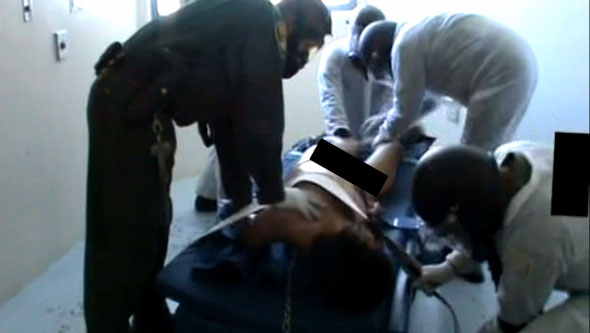
"caption": "A still image from a video showing California prison guards dousing mentally ill inmates repeatedly with pepper spray.",
"description": "A still image from a video showing California prison guards dousing mentally ill inmates repeatedly with pepper spray.",
"title": "pepperspray",
"credit": "CDCR video released via federal court case",
"status": "inherit",
"isLoading": false,
"fetchFailed": false
}
},
"audioPlayerReducer": {
"postId": "stream_live",
"isPaused": true,
"isPlaying": false,
"pfsActive": false,
"pledgeModalIsOpen": true,
"playerDrawerIsOpen": false,
"liveAudioPlayStartedAt": 0,
"liveAudioPlayContext": ""
},
"authorsReducer": {
"byline_news_11753291": {
"type": "authors",
"id": "byline_news_11753291",
"meta": {
"override": true
},
"slug": "byline_news_11753291",
"name": "Melissa Dueñas",
"isLoading": false
},
"byline_news_11741744": {
"type": "authors",
"id": "byline_news_11741744",
"meta": {
"override": true
},
"slug": "byline_news_11741744",
"name": "Vanessa Romo",
"isLoading": false
},
"byline_news_11738359": {
"type": "authors",
"id": "byline_news_11738359",
"meta": {
"override": true
},
"slug": "byline_news_11738359",
"name": "Don Thompson\u003cbr>Associated Press",
"isLoading": false
},
"byline_news_11723744": {
"type": "authors",
"id": "byline_news_11723744",
"meta": {
"override": true
},
"slug": "byline_news_11723744",
"name": "\u003cstrong>\u003ca href=\"https://calmatters.org/articles/author/jocelyn-wiener/\">Jocelyn Wiener\u003c/a>\u003c/strong>\u003cbr>\u003cstrong>\u003ca href=\"https://calmatters.org/articles/author/jocelyn-wiener/\">CALmatters\u003c/a>\u003c/strong>",
"isLoading": false
},
"byline_news_11718702": {
"type": "authors",
"id": "byline_news_11718702",
"meta": {
"override": true
},
"slug": "byline_news_11718702",
"name": "\u003ca href=\"https://www.npr.org/people/2101350/eric-westervelt\">Eric Westervelt\u003c/a>\u003cbr>NPR",
"isLoading": false
},
"agrossberg": {
"type": "authors",
"id": "188",
"meta": {
"index": "authors_1716337520",
"id": "188",
"found": true
},
"name": "Adam Grossberg",
"firstName": "Adam",
"lastName": "Grossberg",
"slug": "agrossberg",
"email": "agrossberg@KQED.org",
"display_author_email": false,
"staff_mastheads": [],
"title": "KQED Contributor",
"bio": "Adam Grossberg is a former video producer at KQED News. Prior to coming to KQED, he produced videos for PBS, The New York Times, Current TV and The Center for Investigative Reporting. His work has received an Excellence in Journalism award from the Society of Professional Journalists, a regional Murrow award and two Northern California Emmy awards. He is a graduate of the UC Berkeley Graduate School of Journalism.",
"avatar": "https://secure.gravatar.com/avatar/8e96dbdaaf98f5959a2c778289e0f9b5?s=600&d=blank&r=g",
"twitter": null,
"facebook": null,
"instagram": null,
"linkedin": null,
"sites": [
{
"site": "arts",
"roles": [
"contributor"
]
},
{
"site": "news",
"roles": [
"subscriber"
]
},
{
"site": "stateofhealth",
"roles": [
"editor"
]
},
{
"site": "science",
"roles": [
"editor"
]
}
],
"headData": {
"title": "Adam Grossberg | KQED",
"description": "KQED Contributor",
"ogImgSrc": "https://secure.gravatar.com/avatar/8e96dbdaaf98f5959a2c778289e0f9b5?s=600&d=blank&r=g",
"twImgSrc": "https://secure.gravatar.com/avatar/8e96dbdaaf98f5959a2c778289e0f9b5?s=600&d=blank&r=g"
},
"isLoading": false,
"link": "/author/agrossberg"
},
"tgoldberg": {
"type": "authors",
"id": "258",
"meta": {
"index": "authors_1716337520",
"id": "258",
"found": true
},
"name": "Ted Goldberg",
"firstName": "Ted",
"lastName": "Goldberg",
"slug": "tgoldberg",
"email": "tgoldberg@kqed.org",
"display_author_email": true,
"staff_mastheads": [
"news"
],
"title": "KQED Managing Editor, News and Newscasts",
"bio": "Ted Goldberg is Managing Editor of News and Newscasts at KQED. His main reporting beat is the Bay Area's oil refining industry.\r\n\r\nPrior to joining KQED in 2014, Ted worked at CBS News and WCBS AM in New York and Bay City News and KCBS Radio in San Francisco. He graduated from Oberlin College in Ohio in 1998.",
"avatar": "https://secure.gravatar.com/avatar/30ce2e4fe89135e104f89be2394d16225b9d36c121b5b3cb7651ce642978b96f?s=600&d=blank&r=g",
"twitter": "TedrickG",
"bluesky": null,
"facebook": null,
"instagram": null,
"linkedin": null,
"sites": [
{
"site": "news",
"roles": [
"editor"
]
},
{
"site": "science",
"roles": [
"editor"
]
}
],
"headData": {
"title": "Ted Goldberg | KQED",
"description": "KQED Managing Editor, News and Newscasts",
"ogImgSrc": "https://secure.gravatar.com/avatar/30ce2e4fe89135e104f89be2394d16225b9d36c121b5b3cb7651ce642978b96f?s=600&d=blank&r=g",
"twImgSrc": "https://secure.gravatar.com/avatar/30ce2e4fe89135e104f89be2394d16225b9d36c121b5b3cb7651ce642978b96f?s=600&d=blank&r=g"
},
"isLoading": false,
"link": "/author/tgoldberg"
},
"peterjonshuler": {
"type": "authors",
"id": "1329",
"meta": {
"index": "authors_1716337520",
"id": "1329",
"found": true
},
"name": "Peter Jon Shuler",
"firstName": "Peter Jon",
"lastName": "Shuler",
"slug": "peterjonshuler",
"email": "pshuler@kqed.org",
"display_author_email": false,
"staff_mastheads": [],
"title": null,
"bio": "Peter is a general assignment reporter covering Northern California news for KQED’s daily radio newscasts. He reports on a wide range of stories from current court cases to San Jose city hall.\r\n\r\nSince joining KQED in 1990, Peter has covered everything from the beginnings of the World Wide Web to the dot-com bust, from preserving Silicon Valley's open space to the preservation of historic Valley landmarks.\r\n\r\nPeter caught the radio bug at WAUS-FM while still a student at Andrews University in his home town of Berrien Springs, MI. He did local news and hosted a classical music program. Since then, he has pursued a variety of assignments, including production work at WBAI in New York and broadcasting to the English language community of Geneva, Switzerland via Radio 74. Email: \u003ca href=\"mailto:pshuler@kqed.org\">pshuler@kqed.org\u003c/a>",
"avatar": "https://secure.gravatar.com/avatar/4bcbeaf7cf49fec98284db283a33a47b?s=600&d=blank&r=g",
"twitter": null,
"facebook": null,
"instagram": null,
"linkedin": null,
"sites": [
{
"site": "news",
"roles": [
"contributor"
]
}
],
"headData": {
"title": "Peter Jon Shuler | KQED",
"description": null,
"ogImgSrc": "https://secure.gravatar.com/avatar/4bcbeaf7cf49fec98284db283a33a47b?s=600&d=blank&r=g",
"twImgSrc": "https://secure.gravatar.com/avatar/4bcbeaf7cf49fec98284db283a33a47b?s=600&d=blank&r=g"
},
"isLoading": false,
"link": "/author/peterjonshuler"
},
"aemslie": {
"type": "authors",
"id": "3206",
"meta": {
"index": "authors_1716337520",
"id": "3206",
"found": true
},
"name": "Alex Emslie",
"firstName": "Alex",
"lastName": "Emslie",
"slug": "aemslie",
"email": "aemslie@kqed.org",
"display_author_email": true,
"staff_mastheads": [
"news"
],
"title": "KQED Senior Editor",
"bio": "Alex Emslie is senior editor of talent and development at KQED, where he manages dozens of early career journalists and oversees news department internships.\r\n\r\nHe is a former carpenter and proud graduate of City College of San Francisco and San Francisco State University, where he studied journalism and criminal justice before joining KQED in 2013.\r\n\r\nAlex produced investigative journalism focused on \u003ca href=\"https://www.kqed.org/news/11667594/the-trials-of-marvin-mutch-video\">criminal justice\u003c/a> and policing for most of a decade. He has broken major stories about \u003ca href=\"https://www.kqed.org/news/135682/amid-a-series-of-vallejo-police-shootings-one-officers-name-stands-out\">police use of deadly force\u003c/a>, \u003ca href=\"https://www.kqed.org/news/10454955/racist-texts-prompt-sfpd-internal-investigation\">officer misconduct\u003c/a> and \u003ca href=\"https://www.kqed.org/news/11712239/terrorist-or-troll-judge-to-weigh-whether-oakland-man-really-intended-to-attack-bay-area\">other\u003c/a> \u003ca href=\"https://www.kqed.org/news/11221414/hayward-paid-159000-to-husband-of-retired-police-chief-documents-show\">high\u003c/a>-\u003ca href=\"https://www.kqed.org/news/10622762/the-forgotten-tracking-two-homicides-in-san-francisco-public-housing\">profile\u003c/a> \u003ca href=\"https://www.kqed.org/news/11624516/federal-agency-promoted-ranger-just-months-after-his-gun-was-stolen-and-used-in-steinle-killing\">cases\u003c/a>. He co-founded the \u003ca href=\"https://projects.scpr.org/california-reporting-project/\">California Reporting Project\u003c/a> in 2019 to obtain and report on previously confidential police internal investigations. The effort produced well over 100 original stories and changed the course of multiple criminal cases.\r\n\r\nHis work has been recognized with numerous journalism awards, including a national Edward R. Murrow award for several years of \u003ca href=\"https://www.kqed.org/news/11688481/sfpd-officers-in-mario-woods-case-recount-shooting-in-newly-filed-depositions\">reporting\u003c/a> on the San Francisco Police shooting of Mario Woods. His \u003ca href=\"https://www.kqed.org/news/147854/half-of-those-killed-by-san-francisco-police-are-mentally-ill\">reporting\u003c/a> on police killings of people in psychiatric crisis was cited in amicus briefs before the U.S. Supreme Court.\r\n\r\nAlex now enjoys mentoring the next generation of journalists at KQED.",
"avatar": "https://secure.gravatar.com/avatar/e691e65209f20e9da202bd730ead5663?s=600&d=blank&r=g",
"twitter": "SFNewsReporter",
"facebook": null,
"instagram": null,
"linkedin": null,
"sites": [
{
"site": "arts",
"roles": [
"editor"
]
},
{
"site": "news",
"roles": [
"editor"
]
},
{
"site": "mindshift",
"roles": [
"editor"
]
},
{
"site": "stateofhealth",
"roles": [
"editor"
]
},
{
"site": "science",
"roles": [
"administrator"
]
}
],
"headData": {
"title": "Alex Emslie | KQED",
"description": "KQED Senior Editor",
"ogImgSrc": "https://secure.gravatar.com/avatar/e691e65209f20e9da202bd730ead5663?s=600&d=blank&r=g",
"twImgSrc": "https://secure.gravatar.com/avatar/e691e65209f20e9da202bd730ead5663?s=600&d=blank&r=g"
},
"isLoading": false,
"link": "/author/aemslie"
},
"mlagos": {
"type": "authors",
"id": "3239",
"meta": {
"index": "authors_1716337520",
"id": "3239",
"found": true
},
"name": "Marisa Lagos",
"firstName": "Marisa",
"lastName": "Lagos",
"slug": "mlagos",
"email": "mlagos@kqed.org",
"display_author_email": false,
"staff_mastheads": [
"news"
],
"title": "KQED Contributor",
"bio": "Marisa Lagos is a correspondent for KQED’s California Politics and Government Desk and co-hosts the award-winning show and podcast, Political Breakdown. At KQED, Lagos also conducts reporting, analysis and investigations into state, local and national politics for radio, TV, online and onstage. In 2022, she and co-host, Scott Shafer, moderated the only gubernatorial debate in California. In 2020, the \u003ci>Washington Post\u003c/i> named her one of the top political journalists in California; she was nominated for a Peabody and won several other awards for her work investigating the 2017 California wildfires. She has worked at the \u003ci>San Francisco Chronicle\u003c/i>, \u003ci>San Francisco Examiner\u003c/i> and \u003ci>Los Angeles Times\u003c/i>. A UC Santa Barbara graduate, she lives in San Francisco with her two sons and husband.",
"avatar": "https://secure.gravatar.com/avatar/a261a0d3696fc066871ef96b85b5e7d2?s=600&d=blank&r=g",
"twitter": "@mlagos",
"facebook": null,
"instagram": null,
"linkedin": null,
"sites": [
{
"site": "arts",
"roles": [
"author"
]
},
{
"site": "news",
"roles": [
"editor"
]
},
{
"site": "science",
"roles": [
"editor"
]
},
{
"site": "forum",
"roles": [
"author"
]
},
{
"site": "liveblog",
"roles": [
"author"
]
}
],
"headData": {
"title": "Marisa Lagos | KQED",
"description": "KQED Contributor",
"ogImgSrc": "https://secure.gravatar.com/avatar/a261a0d3696fc066871ef96b85b5e7d2?s=600&d=blank&r=g",
"twImgSrc": "https://secure.gravatar.com/avatar/a261a0d3696fc066871ef96b85b5e7d2?s=600&d=blank&r=g"
},
"isLoading": false,
"link": "/author/mlagos"
},
"jsmall": {
"type": "authors",
"id": "6625",
"meta": {
"index": "authors_1716337520",
"id": "6625",
"found": true
},
"name": "Julie Small",
"firstName": "Julie",
"lastName": "Small",
"slug": "jsmall",
"email": "jsmall@kqed.org",
"display_author_email": true,
"staff_mastheads": [
"news"
],
"title": "KQED Contributor",
"bio": "Julie Small reports on criminal justice and immigration.\r\n\r\nShe was part of a team at KQED awarded a regional 2019 Edward R. Murrow award for continuing coverage of the Trump Administration's family separation policy.\r\n\r\nThe Society for Professional Journalists recognized Julie's 2018 \u003ca href=\"https://www.kqed.org/news/11636262/the-officer-tased-him-31-times-the-sheriff-called-his-death-an-accident\">reporting\u003c/a> on the San Joaquin County Sheriff's \u003ca href=\"https://www.kqed.org/news/11634689/autopsy-doctors-sheriff-overrode-death-findings-to-protect-law-enforcement\">interference\u003c/a> in death investigations with an Excellence in Journalism Award for Ongoing Coverage.\r\n\r\nJulie's\u003ca href=\"https://www.kqed.org/news/11039666/two-mentally-ill-inmates-died-one-month-in-santa-clara\"> reporting\u003c/a> with Lisa Pickoff-White on the treatment of mentally ill offenders in California jails earned a 2017 regional Edward R. Murrow Award for news reporting and an investigative reporting award from the SPJ of Northern California.\r\n\r\nBefore joining KQED, Julie covered government and politics in Sacramento for Southern California Public Radio (SCPR). Her 2010 \u003ca href=\"https://www.scpr.org/specials/prisonmedical/\">series\u003c/a> on lapses in California’s prison medical care also won a regional Edward R. Murrow Award for investigative reporting and a Golden Mic Award from the RTNDA of Southern California.\r\n\r\nJulie began her career in journalism in 2000 as the deputy foreign editor for public radio's \u003cem>Marketplace, \u003c/em>while earning her master's degree in journalism from USC’s Annenberg School of Communication.",
"avatar": "https://secure.gravatar.com/avatar/4baedf201468df97be97c2a9dd7585d0?s=600&d=blank&r=g",
"twitter": "@SmallRadio2",
"facebook": null,
"instagram": null,
"linkedin": null,
"sites": [
{
"site": "news",
"roles": [
"editor"
]
},
{
"site": "stateofhealth",
"roles": [
"author"
]
},
{
"site": "science",
"roles": [
"author"
]
}
],
"headData": {
"title": "Julie Small | KQED",
"description": "KQED Contributor",
"ogImgSrc": "https://secure.gravatar.com/avatar/4baedf201468df97be97c2a9dd7585d0?s=600&d=blank&r=g",
"twImgSrc": "https://secure.gravatar.com/avatar/4baedf201468df97be97c2a9dd7585d0?s=600&d=blank&r=g"
},
"isLoading": false,
"link": "/author/jsmall"
},
"pgilstrap": {
"type": "authors",
"id": "11275",
"meta": {
"index": "authors_1716337520",
"id": "11275",
"found": true
},
"name": "Peter Gilstrap",
"firstName": "Peter",
"lastName": "Gilstrap",
"slug": "pgilstrap",
"email": "pgilstrap@sbcglobal.net",
"display_author_email": false,
"staff_mastheads": [],
"title": null,
"bio": null,
"avatar": "https://secure.gravatar.com/avatar/2bf93e4a8c1e35493845045175273916?s=600&d=blank&r=g",
"twitter": null,
"facebook": null,
"instagram": null,
"linkedin": null,
"sites": [
{
"site": "news",
"roles": [
"author"
]
}
],
"headData": {
"title": "Peter Gilstrap | KQED",
"description": null,
"ogImgSrc": "https://secure.gravatar.com/avatar/2bf93e4a8c1e35493845045175273916?s=600&d=blank&r=g",
"twImgSrc": "https://secure.gravatar.com/avatar/2bf93e4a8c1e35493845045175273916?s=600&d=blank&r=g"
},
"isLoading": false,
"link": "/author/pgilstrap"
},
"vrancano": {
"type": "authors",
"id": "11276",
"meta": {
"index": "authors_1716337520",
"id": "11276",
"found": true
},
"name": "Vanessa Rancaño",
"firstName": "Vanessa",
"lastName": "Rancaño",
"slug": "vrancano",
"email": "vrancano@kqed.org",
"display_author_email": false,
"staff_mastheads": [
"news"
],
"title": "Reporter",
"bio": "Vanessa Rancaño is a features reporter for KQED. She’s also covered homelessness and education for the station and reported from the Central Valley. Her work has aired across public radio, from flagship national news shows to longform narrative podcasts. Before taking up a mic, she worked as a freelance print journalist. She’s been recognized with a number of national and regional awards. Vanessa grew up in California's Central Valley. She's a former NPR Kroc Fellow, and a graduate of the UC Berkeley Graduate School of Journalism.",
"avatar": "https://secure.gravatar.com/avatar/b3a383dfb0e7ee1c17568f2cf067904ab654d6e3de9743fc661f3c788ade1bed?s=600&d=blank&r=g",
"twitter": "vanessarancano",
"bluesky": null,
"facebook": null,
"instagram": null,
"linkedin": null,
"sites": [
{
"site": "arts",
"roles": [
"editor"
]
},
{
"site": "news",
"roles": [
"editor"
]
},
{
"site": "liveblog",
"roles": [
"contributor"
]
}
],
"headData": {
"title": "Vanessa Rancaño | KQED",
"description": "Reporter",
"ogImgSrc": "https://secure.gravatar.com/avatar/b3a383dfb0e7ee1c17568f2cf067904ab654d6e3de9743fc661f3c788ade1bed?s=600&d=blank&r=g",
"twImgSrc": "https://secure.gravatar.com/avatar/b3a383dfb0e7ee1c17568f2cf067904ab654d6e3de9743fc661f3c788ade1bed?s=600&d=blank&r=g"
},
"isLoading": false,
"link": "/author/vrancano"
}
},
"pagesReducer": {
"news_tag_prisons": {
"type": "terms",
"id": "news_1471",
"meta": {
"index": "terms_1716263798",
"site": "news",
"id": "1471",
"score": 9.305529
},
"featImg": null,
"name": "prisons",
"description": null,
"taxonomy": "tag",
"headData": {
"twImgId": null,
"twTitle": null,
"ogTitle": null,
"ogImgId": null,
"twDescription": null,
"description": null,
"title": "prisons Archives | KQED News",
"ogDescription": null
},
"ttid": 1483,
"slug": "prisons",
"isLoading": false,
"title": "prisons",
"pageMeta": {
"site": "news",
"WpPageTemplate": "page-topic-editorial",
"currentPage": 10
},
"blocks": [
{
"blockName": "kqed/post-list",
"attrs": {
"layout": "cardArticle2",
"query": "posts/news?tag=prisons",
"seeMore": false,
"paginated": true,
"page": 10
}
},
{
"blockName": "kqed/ad"
}
]
}
},
"pfsSessionReducer": {},
"postsReducer": {
"stream_live": {
"type": "live",
"id": "stream_live",
"audioUrl": "https://streams.kqed.org/kqedradio",
"title": "Live Stream",
"excerpt": "Live Stream information currently unavailable.",
"link": "/radio",
"featImg": "",
"label": {
"name": "KQED Live",
"link": "/"
}
},
"stream_kqedNewscast": {
"type": "posts",
"id": "stream_kqedNewscast",
"audioUrl": "https://www.kqed.org/.stream/anon/radio/RDnews/newscast.mp3?_=1",
"title": "KQED Newscast",
"featImg": "",
"label": {
"name": "88.5 FM",
"link": "/"
}
},
"news_11797314": {
"type": "posts",
"id": "news_11797314",
"meta": {
"index": "posts_1716263798",
"site": "news",
"id": "11797314",
"score": null,
"sort": [
1579788077000
]
},
"guestAuthors": [],
"slug": "california-looks-to-expand-bachelors-programs-behind-bars",
"title": "California Looks to Expand Bachelor's Programs Behind Bars",
"publishDate": 1579788077,
"format": "standard",
"headTitle": "California Looks to Expand Bachelor’s Programs Behind Bars | KQED",
"labelTerm": {
"term": 72,
"site": "news"
},
"content": "\u003cp>When Brant Choate gets mail from the men and women in the California prisons he helps oversee, he says the letters often read something like this: “I’ve graduated with my associate degree for transfer and I need a place to go.”\u003c/p>\n\u003cp>More than 1,000 people in California prisons are in that situation, Choate estimates. As director of the Division of Rehabilitative Programs for the California Department of Corrections and Rehabilitation, he said he’s been wanting to expand bachelor’s degree programs for years.\u003c/p>\n\u003cp>“I met a student who had seven AA [associate] degrees,” he said. “They’re lining up, ready for this.”\u003c/p>\n\u003cp>[pullquote size='medium' align='right' citation=\"Rebecca Silbert, director of Corrections to College California\"]‘Trying to fix this mess we’ve created with mass incarceration by asking one of our state agencies to step up and help out another state agency, that’s innovative and smart.’[/pullquote]\u003c/p>\n\u003cp>Today, the only public bachelor’s degree program offered in California’s sprawling state prison system is \u003ca href=\"http://www.calstatela.edu/engagement/prison-graduation-initiative\" target=\"_blank\" rel=\"noopener noreferrer\">run by California State University, Los Angeles \u003c/a>at a men’s maximum security facility in Lancaster. But a largely overlooked \u003ca href=\"http://www.ebudget.ca.gov/2020-21/pdf/BudgetSummary/PublicSafety.pdf\" target=\"_blank\" rel=\"noopener noreferrer\">proposal\u003c/a> in Gov. Gavin Newsom’s state budget plan, released earlier this month, could make bachelor’s programs a possibility for incarcerated students at several more prisons around the state.\u003c/p>\n\u003cp>“It’s incredibly innovative and it’s something that no other state is doing,” says Rebecca Silbert, who has helped expand higher education in California prisons as director of the nonprofit \u003ca href=\"https://correctionstocollegeca.org/\" target=\"_blank\" rel=\"noopener noreferrer\">Corrections to College California\u003c/a> initiative.\u003c/p>\n\u003cp>Under the proposal, CDCR would partner with the California State University system to expand bachelor’s programs to as many as seven prisons. Newsom’s budget puts $1.7 million toward that goal next year, then, beginning in 2021, dedicates $3.5 million a year to the effort on an ongoing basis. The money would cover things like tuition, books and other materials.\u003c/p>\n\u003cp>Bachelor’s programs are relatively rare in prisons across the country, and public ones even more so. \u003ca href=\"https://prisoneducationproject.utah.edu/research/the-research-collaborative-on-higher-education-in-prison/\" target=\"_blank\" rel=\"noopener noreferrer\">National estimates\u003c/a> put the number of colleges teaching in prisons at around 200 and most of those are community college associate degree programs. That scarcity is part of what makes this proposal groundbreaking, Silbert said.\u003c/p>\n\u003cfigure id=\"attachment_11797374\" class=\"wp-caption alignnone\" style=\"max-width: 1920px\">\u003ca href=\"https://ww2.kqed.org/app/uploads/sites/10/2020/01/inmates-BA-program.024.jpg\">\u003cimg loading=\"lazy\" decoding=\"async\" class=\"size-full wp-image-11797374\" src=\"https://ww2.kqed.org/app/uploads/sites/10/2020/01/inmates-BA-program.024.jpg\" alt=\"\" width=\"1920\" height=\"1280\" srcset=\"https://cdn.kqed.org/wp-content/uploads/sites/10/2020/01/inmates-BA-program.024.jpg 1920w, https://cdn.kqed.org/wp-content/uploads/sites/10/2020/01/inmates-BA-program.024-160x107.jpg 160w, https://cdn.kqed.org/wp-content/uploads/sites/10/2020/01/inmates-BA-program.024-800x533.jpg 800w, https://cdn.kqed.org/wp-content/uploads/sites/10/2020/01/inmates-BA-program.024-1020x680.jpg 1020w\" sizes=\"auto, (max-width: 1920px) 100vw, 1920px\">\u003c/a>\u003cfigcaption class=\"wp-caption-text\">CSU Los Angeles English professor Bidhan Roy teaches inmates at Lancaster prison as part of a bachelor’s program. \u003ccite>(J. Emilio Flores/Cal State LA)\u003c/cite>\u003c/figcaption>\u003c/figure>\n\u003cp>“Trying to fix this mess we’ve created with mass incarceration by asking one of our state agencies to step up and help out another state agency, that’s innovative and smart,” she said.\u003c/p>\n\u003cp>California has led the nation in expanding postsecondary opportunities for incarcerated students since 2014, when lawmakers \u003ca href=\"http://leginfo.legislature.ca.gov/faces/billNavClient.xhtml?bill_id=201320140SB1391\" target=\"_blank\" rel=\"noopener noreferrer\">opened the door\u003c/a> for community colleges to start teaching in-person courses behind bars. Today, 34 of the state’s 35 prisons offer face-to-face courses, \u003ca href=\"https://correctionstocollegeca.org/assets/general/StrivingForSuccess_4printR1.pdf\" target=\"_blank\" rel=\"noopener noreferrer\">serving nearly 6,000 incarcerated students\u003c/a>.\u003c/p>\n\u003cp>As the number of men and women completing transfer-worthy associate degrees in prison has grown, so have calls for the opportunity to complete a four-year degree.\u003c/p>\n\u003cp>Cal State Los Angeles’ success overcoming the challenges to working inside a prison — from lack of classroom space to technological limitations — demonstrated to Choate that CDCR and CSU could work together to expand B.A. programs. The model also convinced him these programs could serve as regional hubs, allowing qualified incarcerated students to transfer in from other prisons in the area.\u003c/p>\n\u003cp>State prisons in Folsom and Corcoran, as well as Valley State Prison and the Central California Women’s Facility, both in Chowchilla, are among those flagged as potential sites for the new bachelor’s programs.\u003c/p>\n\u003cp>[aside postID=\"news_11775030\" label=\"Related Coverage\"]The funding could also allow Cal State Los Angeles to stop relying on private grants to run its 4-year-old program, and facilitate a possible expansion to the California Institution for Women in Riverside County.\u003c/p>\n\u003cp>Choate said he expects Fresno State and Sacramento State to be among the CSUs involved. But the proposal is still very much in the early stages: prison education advocates and CSU administrators alike expressed surprise at the news, while a CSU spokesman said the university system’s leadership wasn’t even aware of the proposal until it was made public earlier this month.\u003c/p>\n\u003cp>In a statement, CSU spokesman Mike Uhlenkamp said an expanded partnership with state universities made sense now that Cal State Los Angeles has paved the way. “We look forward to pending discussions with the Department of Corrections and Rehabilitation to learn more details of the proposal as the budget process moves forward,” he wrote.\u003c/p>\n\u003cp>The funding set aside in Newsom’s budget would allow around 200 incarcerated students to enroll in bachelor’s programs next year and then about 400 students each year after that, Choate estimates.\u003c/p>\n\u003cp>And although that’s only a fraction of those who could benefit, it’s still a big deal, says Cal State Los Angeles English professor Bidhan Roy, whose advocacy inspired the school’s prison program.\u003c/p>\n\u003cp>“It signals a priority,” he said. “It’s a statewide acknowledgement that these people have value and higher education has a role in prison.”\u003c/p>\n\u003cp>In the 1970s and ‘80s, college-level education had a firm foothold in the nation’s prisons; it was a vital piece of ammunition in the rehabilitative arsenal. As political tides changed and the 1994 federal crime bill banned incarcerated students from accessing federal student aid, many of those programs dissolved.\u003c/p>\n\u003cfigure id=\"attachment_11797375\" class=\"wp-caption alignnone\" style=\"max-width: 1920px\">\u003ca href=\"https://ww2.kqed.org/app/uploads/sites/10/2020/01/inmates-BA-program.041.jpg\">\u003cimg loading=\"lazy\" decoding=\"async\" class=\"size-full wp-image-11797375\" src=\"https://ww2.kqed.org/app/uploads/sites/10/2020/01/inmates-BA-program.041.jpg\" alt=\"\" width=\"1920\" height=\"1280\" srcset=\"https://cdn.kqed.org/wp-content/uploads/sites/10/2020/01/inmates-BA-program.041.jpg 1920w, https://cdn.kqed.org/wp-content/uploads/sites/10/2020/01/inmates-BA-program.041-160x107.jpg 160w, https://cdn.kqed.org/wp-content/uploads/sites/10/2020/01/inmates-BA-program.041-800x533.jpg 800w, https://cdn.kqed.org/wp-content/uploads/sites/10/2020/01/inmates-BA-program.041-1020x680.jpg 1020w\" sizes=\"auto, (max-width: 1920px) 100vw, 1920px\">\u003c/a>\u003cfigcaption class=\"wp-caption-text\">A student-inmate at Lancaster taking notes during class. \u003ccite>(J. Emilio Flores/Cal State LA)\u003c/cite>\u003c/figcaption>\u003c/figure>\n\u003cp>Now, after decades of stagnation, there’s support nationally for expanding higher education in prisons and \u003ca href=\"https://www.schatz.senate.gov/imo/media/doc/REAL%20Act,%20116th.pdf\" target=\"_blank\" rel=\"noopener noreferrer\">bringing back Pell Grants\u003c/a> for incarcerated students, and California is paving the way.\u003c/p>\n\u003cp>“I don’t think that there’s anything novel about what we’re doing now,” Choate said. “We just turned the power on.”\u003c/p>\n\u003cp>The proposal, so far, has bipartisan support, Choate said, noting the plan’s potential cost savings through reduced recidivism. A \u003ca href=\"https://www.rand.org/pubs/research_reports/RR564.html\" target=\"_blank\" rel=\"noopener noreferrer\">major study \u003c/a>commissioned by the U.S. Department of Justice found that inmates who participate in educational opportunities behind bars are more than 40% less likely to return to prison.\u003c/p>\n\u003cp>Michael Stratman, associate warden at the state prison in Lancaster, is a believer. “They don’t come back,” he said of the former inmates who were enrolled in the Cal State Los Angeles program.\u003c/p>\n\u003cp>“You hear some flak about them getting an education in prison and it costs money,” he said. “But these guys are going to get out and they’re going to be living maybe in your neighborhood. You want the guy that worked his way through a college program, stayed out of drugs and gangs and things like that as your neighbor.”\u003c/p>\n\u003cp>[pullquote size='medium' align='right' citation=\"Bidhan Roy, CSU Los Angeles English professor\"]‘It’s a statewide acknowledgement that these people have value and higher education has a role in prison.’[/pullquote]\u003c/p>\n\u003cp>The programs are also intended to create better conditions within prisons themselves.\u003c/p>\n\u003cp>“The education that we’re getting here, it’s not just affecting the men in the room,” said Allen Burnett, a student in the bachelor’s program at Lancaster. “It’s affecting the whole facility as well as the other institutions.”\u003c/p>\n\u003cp>That influence may even extend beyond the prison walls.\u003c/p>\n\u003cp>After he started working toward his bachelor’s, Burnett said, his stepdaughter was also inspired to enroll at Cal State Los Angeles, and his nieces and nephews have since started taking college courses. “This thing right here that we’re doing, it’s transcending this facility,” he said.\u003c/p>\n\u003cp>After serving 27 years in prison for aiding and abetting in a murder, Burnett had his life sentence commuted by Newsom last year and is awaiting a parole hearing. He is the fifth inmate in the Cal State Los Angeles program to receive a commutation.\u003c/p>\n\u003cp>While the money for prison bachelor’s programs is welcomed by prison education advocates like Rebecca Silbert, she is also disappointed that so far there’s no additional funding in the budget to expand existing prison community college programs.\u003c/p>\n\u003cp>“If we’re really serious about using our education system to break the cycle of crime and poverty, it makes sense to recognize the burden put on all parts of the system, both the community colleges and the CSU,” she said.\u003cbr>\n[ad fullwidth]\u003c/p>\n\u003cp>[ad floatright]\u003c/p>\n",
"blocks": [],
"excerpt": "Under a proposal floated in Gov. Gavin Newsom's new budget plan, CDCR would partner with the California State University system to expand bachelor’s programs to as many as seven prisons. ",
"status": "publish",
"parent": 0,
"modified": 1738778349,
"stats": {
"hasAudio": false,
"hasVideo": false,
"hasChartOrMap": false,
"iframeSrcs": [],
"hasGoogleForm": false,
"hasGallery": false,
"hasHearkenModule": false,
"hasPolis": false,
"paragraphCount": 34,
"wordCount": 1478
},
"headData": {
"title": "California Looks to Expand Bachelor's Programs Behind Bars | KQED",
"description": "Under a proposal floated in Gov. Gavin Newsom's new budget plan, CDCR would partner with the California State University system to expand bachelor’s programs to as many as seven prisons. ",
"ogTitle": "",
"ogDescription": "",
"ogImgId": "",
"twTitle": "",
"twDescription": "",
"twImgId": "",
"schema": {
"@context": "https://schema.org",
"@type": "NewsArticle",
"headline": "California Looks to Expand Bachelor's Programs Behind Bars",
"datePublished": "2020-01-23T06:01:17-08:00",
"dateModified": "2025-02-05T09:59:09-08:00",
"image": "https://cdn.kqed.org/wp-content/uploads/2020/02/KQED-OG-Image@1x.png",
"isAccessibleForFree": "True",
"publisher": {
"@type": "NewsMediaOrganization",
"@id": "https://www.kqed.org/#organization",
"name": "KQED",
"logo": "https://cdn.kqed.org/wp-content/uploads/2020/02/KQED-OG-Image@1x.png",
"url": "https://www.kqed.org",
"sameAs": [
"https://www.facebook.com/KQED",
"https://twitter.com/KQED",
"https://www.instagram.com/kqed/",
"https://www.tiktok.com/@kqedofficial",
"https://www.linkedin.com/company/kqed",
"https://www.youtube.com/channel/UCeC0IOo7i1P_61zVUWbJ4nw"
]
}
}
},
"sticky": false,
"audioTrackLength": 89,
"path": "/news/11797314/california-looks-to-expand-bachelors-programs-behind-bars",
"audioUrl": "https://www.kqed.org/.stream/anon/radio/tcr/2020/01/RancanoBachelors.mp3",
"audioDuration": 89000,
"parsedContent": [
{
"type": "contentString",
"content": "\u003cdiv class=\"post-body\">\u003cp>\u003cp>When Brant Choate gets mail from the men and women in the California prisons he helps oversee, he says the letters often read something like this: “I’ve graduated with my associate degree for transfer and I need a place to go.”\u003c/p>\n\u003cp>More than 1,000 people in California prisons are in that situation, Choate estimates. As director of the Division of Rehabilitative Programs for the California Department of Corrections and Rehabilitation, he said he’s been wanting to expand bachelor’s degree programs for years.\u003c/p>\n\u003cp>“I met a student who had seven AA [associate] degrees,” he said. “They’re lining up, ready for this.”\u003c/p>\n\u003cp>\u003c/p>\u003c/div>",
"attributes": {
"named": {},
"numeric": []
}
},
{
"type": "component",
"content": "‘Trying to fix this mess we’ve created with mass incarceration by asking one of our state agencies to step up and help out another state agency, that’s innovative and smart.’",
"name": "pullquote",
"attributes": {
"named": {
"size": "medium",
"align": "right",
"citation": "Rebecca Silbert, director of Corrections to College California",
"label": ""
},
"numeric": []
}
},
{
"type": "contentString",
"content": "\u003cdiv class=\"post-body\">\u003cp>\u003c/p>\n\u003cp>Today, the only public bachelor’s degree program offered in California’s sprawling state prison system is \u003ca href=\"http://www.calstatela.edu/engagement/prison-graduation-initiative\" target=\"_blank\" rel=\"noopener noreferrer\">run by California State University, Los Angeles \u003c/a>at a men’s maximum security facility in Lancaster. But a largely overlooked \u003ca href=\"http://www.ebudget.ca.gov/2020-21/pdf/BudgetSummary/PublicSafety.pdf\" target=\"_blank\" rel=\"noopener noreferrer\">proposal\u003c/a> in Gov. Gavin Newsom’s state budget plan, released earlier this month, could make bachelor’s programs a possibility for incarcerated students at several more prisons around the state.\u003c/p>\n\u003cp>“It’s incredibly innovative and it’s something that no other state is doing,” says Rebecca Silbert, who has helped expand higher education in California prisons as director of the nonprofit \u003ca href=\"https://correctionstocollegeca.org/\" target=\"_blank\" rel=\"noopener noreferrer\">Corrections to College California\u003c/a> initiative.\u003c/p>\n\u003cp>Under the proposal, CDCR would partner with the California State University system to expand bachelor’s programs to as many as seven prisons. Newsom’s budget puts $1.7 million toward that goal next year, then, beginning in 2021, dedicates $3.5 million a year to the effort on an ongoing basis. The money would cover things like tuition, books and other materials.\u003c/p>\n\u003cp>Bachelor’s programs are relatively rare in prisons across the country, and public ones even more so. \u003ca href=\"https://prisoneducationproject.utah.edu/research/the-research-collaborative-on-higher-education-in-prison/\" target=\"_blank\" rel=\"noopener noreferrer\">National estimates\u003c/a> put the number of colleges teaching in prisons at around 200 and most of those are community college associate degree programs. That scarcity is part of what makes this proposal groundbreaking, Silbert said.\u003c/p>\n\u003cfigure id=\"attachment_11797374\" class=\"wp-caption alignnone\" style=\"max-width: 1920px\">\u003ca href=\"https://ww2.kqed.org/app/uploads/sites/10/2020/01/inmates-BA-program.024.jpg\">\u003cimg loading=\"lazy\" decoding=\"async\" class=\"size-full wp-image-11797374\" src=\"https://ww2.kqed.org/app/uploads/sites/10/2020/01/inmates-BA-program.024.jpg\" alt=\"\" width=\"1920\" height=\"1280\" srcset=\"https://cdn.kqed.org/wp-content/uploads/sites/10/2020/01/inmates-BA-program.024.jpg 1920w, https://cdn.kqed.org/wp-content/uploads/sites/10/2020/01/inmates-BA-program.024-160x107.jpg 160w, https://cdn.kqed.org/wp-content/uploads/sites/10/2020/01/inmates-BA-program.024-800x533.jpg 800w, https://cdn.kqed.org/wp-content/uploads/sites/10/2020/01/inmates-BA-program.024-1020x680.jpg 1020w\" sizes=\"auto, (max-width: 1920px) 100vw, 1920px\">\u003c/a>\u003cfigcaption class=\"wp-caption-text\">CSU Los Angeles English professor Bidhan Roy teaches inmates at Lancaster prison as part of a bachelor’s program. \u003ccite>(J. Emilio Flores/Cal State LA)\u003c/cite>\u003c/figcaption>\u003c/figure>\n\u003cp>“Trying to fix this mess we’ve created with mass incarceration by asking one of our state agencies to step up and help out another state agency, that’s innovative and smart,” she said.\u003c/p>\n\u003cp>California has led the nation in expanding postsecondary opportunities for incarcerated students since 2014, when lawmakers \u003ca href=\"http://leginfo.legislature.ca.gov/faces/billNavClient.xhtml?bill_id=201320140SB1391\" target=\"_blank\" rel=\"noopener noreferrer\">opened the door\u003c/a> for community colleges to start teaching in-person courses behind bars. Today, 34 of the state’s 35 prisons offer face-to-face courses, \u003ca href=\"https://correctionstocollegeca.org/assets/general/StrivingForSuccess_4printR1.pdf\" target=\"_blank\" rel=\"noopener noreferrer\">serving nearly 6,000 incarcerated students\u003c/a>.\u003c/p>\n\u003cp>As the number of men and women completing transfer-worthy associate degrees in prison has grown, so have calls for the opportunity to complete a four-year degree.\u003c/p>\n\u003cp>Cal State Los Angeles’ success overcoming the challenges to working inside a prison — from lack of classroom space to technological limitations — demonstrated to Choate that CDCR and CSU could work together to expand B.A. programs. The model also convinced him these programs could serve as regional hubs, allowing qualified incarcerated students to transfer in from other prisons in the area.\u003c/p>\n\u003cp>State prisons in Folsom and Corcoran, as well as Valley State Prison and the Central California Women’s Facility, both in Chowchilla, are among those flagged as potential sites for the new bachelor’s programs.\u003c/p>\n\u003cp>\u003c/p>\u003c/div>",
"attributes": {
"named": {},
"numeric": []
}
},
{
"type": "component",
"content": "",
"name": "aside",
"attributes": {
"named": {
"postid": "news_11775030",
"label": "Related Coverage "
},
"numeric": []
}
},
{
"type": "contentString",
"content": "\u003cdiv class=\"post-body\">\u003cp>The funding could also allow Cal State Los Angeles to stop relying on private grants to run its 4-year-old program, and facilitate a possible expansion to the California Institution for Women in Riverside County.\u003c/p>\n\u003cp>Choate said he expects Fresno State and Sacramento State to be among the CSUs involved. But the proposal is still very much in the early stages: prison education advocates and CSU administrators alike expressed surprise at the news, while a CSU spokesman said the university system’s leadership wasn’t even aware of the proposal until it was made public earlier this month.\u003c/p>\n\u003cp>In a statement, CSU spokesman Mike Uhlenkamp said an expanded partnership with state universities made sense now that Cal State Los Angeles has paved the way. “We look forward to pending discussions with the Department of Corrections and Rehabilitation to learn more details of the proposal as the budget process moves forward,” he wrote.\u003c/p>\n\u003cp>The funding set aside in Newsom’s budget would allow around 200 incarcerated students to enroll in bachelor’s programs next year and then about 400 students each year after that, Choate estimates.\u003c/p>\n\u003cp>And although that’s only a fraction of those who could benefit, it’s still a big deal, says Cal State Los Angeles English professor Bidhan Roy, whose advocacy inspired the school’s prison program.\u003c/p>\n\u003cp>“It signals a priority,” he said. “It’s a statewide acknowledgement that these people have value and higher education has a role in prison.”\u003c/p>\n\u003cp>In the 1970s and ‘80s, college-level education had a firm foothold in the nation’s prisons; it was a vital piece of ammunition in the rehabilitative arsenal. As political tides changed and the 1994 federal crime bill banned incarcerated students from accessing federal student aid, many of those programs dissolved.\u003c/p>\n\u003cfigure id=\"attachment_11797375\" class=\"wp-caption alignnone\" style=\"max-width: 1920px\">\u003ca href=\"https://ww2.kqed.org/app/uploads/sites/10/2020/01/inmates-BA-program.041.jpg\">\u003cimg loading=\"lazy\" decoding=\"async\" class=\"size-full wp-image-11797375\" src=\"https://ww2.kqed.org/app/uploads/sites/10/2020/01/inmates-BA-program.041.jpg\" alt=\"\" width=\"1920\" height=\"1280\" srcset=\"https://cdn.kqed.org/wp-content/uploads/sites/10/2020/01/inmates-BA-program.041.jpg 1920w, https://cdn.kqed.org/wp-content/uploads/sites/10/2020/01/inmates-BA-program.041-160x107.jpg 160w, https://cdn.kqed.org/wp-content/uploads/sites/10/2020/01/inmates-BA-program.041-800x533.jpg 800w, https://cdn.kqed.org/wp-content/uploads/sites/10/2020/01/inmates-BA-program.041-1020x680.jpg 1020w\" sizes=\"auto, (max-width: 1920px) 100vw, 1920px\">\u003c/a>\u003cfigcaption class=\"wp-caption-text\">A student-inmate at Lancaster taking notes during class. \u003ccite>(J. Emilio Flores/Cal State LA)\u003c/cite>\u003c/figcaption>\u003c/figure>\n\u003cp>Now, after decades of stagnation, there’s support nationally for expanding higher education in prisons and \u003ca href=\"https://www.schatz.senate.gov/imo/media/doc/REAL%20Act,%20116th.pdf\" target=\"_blank\" rel=\"noopener noreferrer\">bringing back Pell Grants\u003c/a> for incarcerated students, and California is paving the way.\u003c/p>\n\u003cp>“I don’t think that there’s anything novel about what we’re doing now,” Choate said. “We just turned the power on.”\u003c/p>\n\u003cp>The proposal, so far, has bipartisan support, Choate said, noting the plan’s potential cost savings through reduced recidivism. A \u003ca href=\"https://www.rand.org/pubs/research_reports/RR564.html\" target=\"_blank\" rel=\"noopener noreferrer\">major study \u003c/a>commissioned by the U.S. Department of Justice found that inmates who participate in educational opportunities behind bars are more than 40% less likely to return to prison.\u003c/p>\n\u003cp>Michael Stratman, associate warden at the state prison in Lancaster, is a believer. “They don’t come back,” he said of the former inmates who were enrolled in the Cal State Los Angeles program.\u003c/p>\n\u003cp>“You hear some flak about them getting an education in prison and it costs money,” he said. “But these guys are going to get out and they’re going to be living maybe in your neighborhood. You want the guy that worked his way through a college program, stayed out of drugs and gangs and things like that as your neighbor.”\u003c/p>\n\u003cp>\u003c/p>\u003c/div>",
"attributes": {
"named": {},
"numeric": []
}
},
{
"type": "component",
"content": "‘It’s a statewide acknowledgement that these people have value and higher education has a role in prison.’",
"name": "pullquote",
"attributes": {
"named": {
"size": "medium",
"align": "right",
"citation": "Bidhan Roy, CSU Los Angeles English professor",
"label": ""
},
"numeric": []
}
},
{
"type": "contentString",
"content": "\u003cdiv class=\"post-body\">\u003cp>\u003c/p>\n\u003cp>The programs are also intended to create better conditions within prisons themselves.\u003c/p>\n\u003cp>“The education that we’re getting here, it’s not just affecting the men in the room,” said Allen Burnett, a student in the bachelor’s program at Lancaster. “It’s affecting the whole facility as well as the other institutions.”\u003c/p>\n\u003cp>That influence may even extend beyond the prison walls.\u003c/p>\n\u003cp>After he started working toward his bachelor’s, Burnett said, his stepdaughter was also inspired to enroll at Cal State Los Angeles, and his nieces and nephews have since started taking college courses. “This thing right here that we’re doing, it’s transcending this facility,” he said.\u003c/p>\n\u003cp>After serving 27 years in prison for aiding and abetting in a murder, Burnett had his life sentence commuted by Newsom last year and is awaiting a parole hearing. He is the fifth inmate in the Cal State Los Angeles program to receive a commutation.\u003c/p>\n\u003cp>While the money for prison bachelor’s programs is welcomed by prison education advocates like Rebecca Silbert, she is also disappointed that so far there’s no additional funding in the budget to expand existing prison community college programs.\u003c/p>\n\u003cp>“If we’re really serious about using our education system to break the cycle of crime and poverty, it makes sense to recognize the burden put on all parts of the system, both the community colleges and the CSU,” she said.\u003cbr>\n\u003c/p>\u003c/div>",
"attributes": {
"named": {},
"numeric": []
}
},
{
"type": "component",
"content": "",
"name": "ad",
"attributes": {
"named": {
"label": "fullwidth"
},
"numeric": [
"fullwidth"
]
}
},
{
"type": "contentString",
"content": "\u003cdiv class=\"post-body\">\u003cp>\u003c/p>\n\u003cp>\u003c/p>\u003c/div>",
"attributes": {
"named": {},
"numeric": []
}
},
{
"type": "component",
"content": "",
"name": "ad",
"attributes": {
"named": {
"label": "floatright"
},
"numeric": [
"floatright"
]
}
},
{
"type": "contentString",
"content": "\u003cdiv class=\"post-body\">\u003cp>\u003c/p>\n\u003c/div>\u003c/p>",
"attributes": {
"named": {},
"numeric": []
}
}
],
"link": "/news/11797314/california-looks-to-expand-bachelors-programs-behind-bars",
"authors": [
"11276"
],
"programs": [
"news_72"
],
"categories": [
"news_18540",
"news_8",
"news_33520"
],
"tags": [
"news_1759",
"news_26658",
"news_221",
"news_1629",
"news_20013",
"news_1471"
],
"featImg": "news_11797376",
"label": "news_72"
},
"news_11795091": {
"type": "posts",
"id": "news_11795091",
"meta": {
"index": "posts_1716263798",
"site": "news",
"id": "11795091",
"score": null,
"sort": [
1578664902000
]
},
"guestAuthors": [],
"slug": "returning-as-good-neighbors-for-young-prisoners-newsom-proposes-rehab-program",
"title": "'Returning as Good Neighbors': For Young Prisoners, Newsom Proposes Rehab Program",
"publishDate": 1578664902,
"format": "standard",
"headTitle": "‘Returning as Good Neighbors’: For Young Prisoners, Newsom Proposes Rehab Program | KQED",
"labelTerm": {
"term": 72,
"site": "news"
},
"content": "\u003cp>Gov. Gavin Newsom, who has \u003ca href=\"https://www.kqed.org/news/11766587/newsom-visits-solano-prison-to-plan-criminal-justice-reforms\" target=\"_blank\" rel=\"noopener noreferrer\">promised to focus on rehabilitation in state prisons\u003c/a>, on Friday will propose a new program for young offenders that he says will resemble a college campus more than a state lockup — and let them access more educational, therapeutic and vocational opportunities.\u003c/p>\n\u003cp>The proposal to create a “youth offender rehabilitative community” at Valley State Prison in Chowchilla will build on an existing program in place at that prison and nine others since 2015. Called the \u003ca href=\"https://www.courts.ca.gov/documents/BTB24-1A-00PPT.pdf\" target=\"_blank\" rel=\"noopener noreferrer\">Youth Offender Program\u003c/a>, it lets inmates committed to prison before their 22nd birthday access more rehabilitative programs than other inmates — and mentor one another.\u003cbr>\n[pullquote size=\"small\" align=\"right\" citation=\"Gov. Gavin Newsom\"]‘The question is do you want them to come back stronger, more resilient, or do you want them coming back more hardened and more likely to recommit crimes?’[/pullquote]\u003c/p>\n\u003cp>Part of his 2020-2021 state budget, Newsom will propose spending $6.2 million in the first fiscal year on the program and $10.1 million each year after that to help create a campus-style environment where young inmates will live, work and study; hire extra staff; and create new partnerships with outside entities, including Fresno State University.\u003c/p>\n\u003cp>His office said the program will be modeled after successful initiatives in Norway and elsewhere. In a statement, Newsom noted research showing how differently — and positively — the brains of young adults can respond to rehabilitation.\u003c/p>\n\u003cp>“This proposal is in line with making our prison system more focused on preparing returning citizens for life on the outside,” Newsom said.\u003c/p>\n\u003cp>“The goal is to reduce recidivism and protect everyone’s safety by equipping individuals with the tools and skills necessary to return to the community as good neighbors,” he added.\u003c/p>\n\u003cp>In August, Newsom \u003ca href=\"https://www.kqed.org/news/11766587/newsom-visits-solano-prison-to-plan-criminal-justice-reforms\" target=\"_blank\" rel=\"noopener noreferrer\">invited KQED\u003c/a> on a tour of another immersive rehabilitative program at Solano State Prison, which is run by the Delancey Street Foundation. After hearing from inmates about how transformational that program has been in their lives, the governor appeared moved, telling the group of men that their success stories were “awesome and powerful” and “profoundly important.”\u003cbr>\n[pullquote size=\"small\" align=\"right\" citation=\"Sumit Lal, a 23-year-old Sacramento man who was sentenced to prison at age 18\"]‘I had no idea prison would turn out to be such a wonderful opportunity for me to change my life around.’[/pullquote]\u003cbr>\nJust outside the prison, Newsom told KQED he was committed to going out across the system, identifying what’s working and expanding it.\u003c/p>\n\u003cp>“I’m not here to dismiss bad behavior. You need to be held to account and we have got to keep violent predators off the street. But today’s was a tour — and a story — of redemption and lives that have meaning and purpose, and lives that are valuable,” he said.\u003c/p>\n\u003cp>He noted that ultimately, most inmates will be released back into California communities.\u003c/p>\n\u003cp>“The question is do you want them to come back stronger, more resilient, or do you want them coming back more hardened and more likely to recommit crimes?” he said.\u003c/p>\n\u003cp>[aside tag=\"criminal-justice-reform\" label=\"related coverage\"]\u003c/p>\n\u003cp>One of those people is Sumit Lal, a 23-year-old Sacramento man who was sentenced to prison at age 18 for credit card fraud, burglary and arson. Lal said he grew up in a “gang-infested” neighborhood with a lot of guns and violence —and that in some ways, it wasn’t a surprise for him to end up in prison.\u003c/p>\n\u003cp>“I had no idea prison would turn out to be such a wonderful opportunity for me to change my life around,” he said. “I was able to make something positive out of that negativity.”\u003c/p>\n\u003cp>Lal said that wasn’t the case at first: When he first got to prison, he was in a high security facility with a lot of violence. But after transferring to the Youth Offender Program at San Quentin, he was \u003ca href=\"https://www.kcet.org/local-heroes/meet-local-hero-nominee-sam-lewis\">able to study software engineering\u003c/a> and is now working in that field while he also attends college.\u003c/p>\n\u003cp>“In a perfect world, in 10 years, I am combining my passions for engineering and medicine and hopefully working at like a biomedical research company,” he said.\u003c/p>\n\u003cp>If Newsom’s plan comes to fruition, Lal said, he also wants to visit the new program at Valley State Prison and help mentor the inmates there.\u003c/p>\n\u003cp>[ad fullwidth]\u003c/p>\n\u003cp>\u003c/p>\n",
"blocks": [],
"excerpt": "The new program will resemble a college campus more than a state lockup — and let young prisoners access more educational, therapeutic and vocational opportunities.",
"status": "publish",
"parent": 0,
"modified": 1730494545,
"stats": {
"hasAudio": false,
"hasVideo": false,
"hasChartOrMap": false,
"iframeSrcs": [],
"hasGoogleForm": false,
"hasGallery": false,
"hasHearkenModule": false,
"hasPolis": false,
"paragraphCount": 18,
"wordCount": 765
},
"headData": {
"title": "'Returning as Good Neighbors': For Young Prisoners, Newsom Proposes Rehab Program | KQED",
"description": "The new program will resemble a college campus more than a state lockup — and let young prisoners access more educational, therapeutic and vocational opportunities.",
"ogTitle": "",
"ogDescription": "",
"ogImgId": "",
"twTitle": "",
"twDescription": "",
"twImgId": "",
"schema": {
"@context": "https://schema.org",
"@type": "NewsArticle",
"headline": "'Returning as Good Neighbors': For Young Prisoners, Newsom Proposes Rehab Program",
"datePublished": "2020-01-10T06:01:42-08:00",
"dateModified": "2024-11-01T13:55:45-07:00",
"image": "https://cdn.kqed.org/wp-content/uploads/2020/02/KQED-OG-Image@1x.png",
"isAccessibleForFree": "True",
"publisher": {
"@type": "NewsMediaOrganization",
"@id": "https://www.kqed.org/#organization",
"name": "KQED",
"logo": "https://cdn.kqed.org/wp-content/uploads/2020/02/KQED-OG-Image@1x.png",
"url": "https://www.kqed.org",
"sameAs": [
"https://www.facebook.com/KQED",
"https://twitter.com/KQED",
"https://www.instagram.com/kqed/",
"https://www.tiktok.com/@kqedofficial",
"https://www.linkedin.com/company/kqed",
"https://www.youtube.com/channel/UCeC0IOo7i1P_61zVUWbJ4nw"
]
}
}
},
"sticky": false,
"audioTrackLength": 46,
"path": "/news/11795091/returning-as-good-neighbors-for-young-prisoners-newsom-proposes-rehab-program",
"audioUrl": "https://www.kqed.org/.stream/anon/radio/tcr/2020/01/LagosYouthRehabilitation.mp3",
"audioDuration": 46000,
"parsedContent": [
{
"type": "contentString",
"content": "\u003cdiv class=\"post-body\">\u003cp>\u003cp>Gov. Gavin Newsom, who has \u003ca href=\"https://www.kqed.org/news/11766587/newsom-visits-solano-prison-to-plan-criminal-justice-reforms\" target=\"_blank\" rel=\"noopener noreferrer\">promised to focus on rehabilitation in state prisons\u003c/a>, on Friday will propose a new program for young offenders that he says will resemble a college campus more than a state lockup — and let them access more educational, therapeutic and vocational opportunities.\u003c/p>\n\u003cp>The proposal to create a “youth offender rehabilitative community” at Valley State Prison in Chowchilla will build on an existing program in place at that prison and nine others since 2015. Called the \u003ca href=\"https://www.courts.ca.gov/documents/BTB24-1A-00PPT.pdf\" target=\"_blank\" rel=\"noopener noreferrer\">Youth Offender Program\u003c/a>, it lets inmates committed to prison before their 22nd birthday access more rehabilitative programs than other inmates — and mentor one another.\u003cbr>\n\u003c/p>\u003c/div>",
"attributes": {
"named": {},
"numeric": []
}
},
{
"type": "component",
"content": "‘The question is do you want them to come back stronger, more resilient, or do you want them coming back more hardened and more likely to recommit crimes?’",
"name": "pullquote",
"attributes": {
"named": {
"size": "small",
"align": "right",
"citation": "Gov. Gavin Newsom",
"label": ""
},
"numeric": []
}
},
{
"type": "contentString",
"content": "\u003cdiv class=\"post-body\">\u003cp>\u003c/p>\n\u003cp>Part of his 2020-2021 state budget, Newsom will propose spending $6.2 million in the first fiscal year on the program and $10.1 million each year after that to help create a campus-style environment where young inmates will live, work and study; hire extra staff; and create new partnerships with outside entities, including Fresno State University.\u003c/p>\n\u003cp>His office said the program will be modeled after successful initiatives in Norway and elsewhere. In a statement, Newsom noted research showing how differently — and positively — the brains of young adults can respond to rehabilitation.\u003c/p>\n\u003cp>“This proposal is in line with making our prison system more focused on preparing returning citizens for life on the outside,” Newsom said.\u003c/p>\n\u003cp>“The goal is to reduce recidivism and protect everyone’s safety by equipping individuals with the tools and skills necessary to return to the community as good neighbors,” he added.\u003c/p>\n\u003cp>In August, Newsom \u003ca href=\"https://www.kqed.org/news/11766587/newsom-visits-solano-prison-to-plan-criminal-justice-reforms\" target=\"_blank\" rel=\"noopener noreferrer\">invited KQED\u003c/a> on a tour of another immersive rehabilitative program at Solano State Prison, which is run by the Delancey Street Foundation. After hearing from inmates about how transformational that program has been in their lives, the governor appeared moved, telling the group of men that their success stories were “awesome and powerful” and “profoundly important.”\u003cbr>\n\u003c/p>\u003c/div>",
"attributes": {
"named": {},
"numeric": []
}
},
{
"type": "component",
"content": "‘I had no idea prison would turn out to be such a wonderful opportunity for me to change my life around.’",
"name": "pullquote",
"attributes": {
"named": {
"size": "small",
"align": "right",
"citation": "Sumit Lal, a 23-year-old Sacramento man who was sentenced to prison at age 18",
"label": ""
},
"numeric": []
}
},
{
"type": "contentString",
"content": "\u003cdiv class=\"post-body\">\u003cp>\u003cbr>\nJust outside the prison, Newsom told KQED he was committed to going out across the system, identifying what’s working and expanding it.\u003c/p>\n\u003cp>“I’m not here to dismiss bad behavior. You need to be held to account and we have got to keep violent predators off the street. But today’s was a tour — and a story — of redemption and lives that have meaning and purpose, and lives that are valuable,” he said.\u003c/p>\n\u003cp>He noted that ultimately, most inmates will be released back into California communities.\u003c/p>\n\u003cp>“The question is do you want them to come back stronger, more resilient, or do you want them coming back more hardened and more likely to recommit crimes?” he said.\u003c/p>\n\u003cp>\u003c/p>\u003c/div>",
"attributes": {
"named": {},
"numeric": []
}
},
{
"type": "component",
"content": "",
"name": "aside",
"attributes": {
"named": {
"tag": "criminal-justice-reform",
"label": "related coverage "
},
"numeric": []
}
},
{
"type": "contentString",
"content": "\u003cdiv class=\"post-body\">\u003cp>\u003c/p>\n\u003cp>One of those people is Sumit Lal, a 23-year-old Sacramento man who was sentenced to prison at age 18 for credit card fraud, burglary and arson. Lal said he grew up in a “gang-infested” neighborhood with a lot of guns and violence —and that in some ways, it wasn’t a surprise for him to end up in prison.\u003c/p>\n\u003cp>“I had no idea prison would turn out to be such a wonderful opportunity for me to change my life around,” he said. “I was able to make something positive out of that negativity.”\u003c/p>\n\u003cp>Lal said that wasn’t the case at first: When he first got to prison, he was in a high security facility with a lot of violence. But after transferring to the Youth Offender Program at San Quentin, he was \u003ca href=\"https://www.kcet.org/local-heroes/meet-local-hero-nominee-sam-lewis\">able to study software engineering\u003c/a> and is now working in that field while he also attends college.\u003c/p>\n\u003cp>“In a perfect world, in 10 years, I am combining my passions for engineering and medicine and hopefully working at like a biomedical research company,” he said.\u003c/p>\n\u003cp>If Newsom’s plan comes to fruition, Lal said, he also wants to visit the new program at Valley State Prison and help mentor the inmates there.\u003c/p>\n\u003cp>\u003c/p>\u003c/div>",
"attributes": {
"named": {},
"numeric": []
}
},
{
"type": "component",
"content": "",
"name": "ad",
"attributes": {
"named": {
"label": "fullwidth"
},
"numeric": [
"fullwidth"
]
}
},
{
"type": "contentString",
"content": "\u003cdiv class=\"post-body\">\u003cp>\u003c/p>\n\u003cp>\u003c/p>\n\u003c/div>\u003c/p>",
"attributes": {
"named": {},
"numeric": []
}
}
],
"link": "/news/11795091/returning-as-good-neighbors-for-young-prisoners-newsom-proposes-rehab-program",
"authors": [
"3239"
],
"programs": [
"news_72"
],
"categories": [
"news_18540",
"news_8",
"news_33520",
"news_13"
],
"tags": [
"news_26658",
"news_22178",
"news_3149",
"news_1629",
"news_17725",
"news_20013",
"news_16",
"news_1471",
"news_17041"
],
"featImg": "news_11795174",
"label": "news_72"
},
"news_11775030": {
"type": "posts",
"id": "news_11775030",
"meta": {
"index": "posts_1716263798",
"site": "news",
"id": "11775030",
"score": null,
"sort": [
1568980832000
]
},
"guestAuthors": [],
"slug": "a-college-education-in-prison-opens-unexpected-path-to-freedom",
"title": "A College Education in Prison Opens Unexpected Path to Freedom",
"publishDate": 1568980832,
"format": "standard",
"headTitle": "A College Education in Prison Opens Unexpected Path to Freedom | KQED",
"labelTerm": {
"term": 72,
"site": "news"
},
"content": "\u003cp>One of the first things Charlie Praphatananda did when he got out of prison was vomit. After 22 years inside, hurtling down the freeway at 70 miles an hour was overwhelming, a feeling he’d have again and again in the coming days and weeks as he learned how to send text messages, use Facebook and reconnect with his family.\u003c/p>\n\u003cp>But the day he got out, he knew there was one place he could get his bearings: California State University, Los Angeles. After puking on the side of the road, he headed to campus, where he got his student ID. Though his hair was a mess in the photo, he was proud.\u003c/p>\n\u003cp>[pullquote size='small' align='right' citation='Daniel Whitlow, 39, an inmate and student at the California State Prison in Lancaster']‘They taught a bunch of traumatized people, that don’t know how to communicate, how to communicate and transcend their trauma.’[/pullquote]A year earlier, Praphatananda was serving a life sentence without the possibility of parole. He was also three years into a bachelor’s degree program — one of 42 men participating in an experiment that tests the limits of the public university mission to spread educational opportunity far and wide.\u003c/p>\n\u003cp>Cal State LA’s Prison Graduation Initiative is the state’s only public B.A. program sending professors to teach behind bars. College programs like it were once far more common, but today advocates are hopeful the political winds have shifted enough to bring public dollars back to prison education. \u003ca href=\"https://www.schatz.senate.gov/imo/media/doc/REAL%20Act,%20116th.pdf\" target=\"_blank\" rel=\"noopener noreferrer\">Federal legislation\u003c/a> that would make grant aid available has bipartisan support, and in California \u003ca href=\"http://leginfo.legislature.ca.gov/faces/billTextClient.xhtml?bill_id=201920200SB575\" target=\"_blank\" rel=\"noopener noreferrer\">a bill\u003c/a> to open the state’s financial aid program to incarcerated students has been sent to the governor.\u003c/p>\n\u003cp>For the time being, Cal State has made its program work, mostly on private grants. And while it has provided prisoners an undergraduate education, it’s also offered men like Praphatananda something no one expected: a path to freedom.\u003c/p>\n\u003cp>[ad fullwidth]\u003c/p>\n\u003cp>\u003cstrong>Transcending Trauma\u003c/strong>\u003c/p>\n\u003cp>[aside label=\"More stories from 'The College Try' series\" tag=\"college-try\"]Once a month, Taffany Lim makes the 70-mile drive from L.A. to the maximum security state prison in Lancaster, a concrete island in the high desert. Lim helped create the B.A. program here and runs it.\u003c/p>\n\u003cp>Since launching the first class four years ago she has become something between a principal and a mom figure to the men in the program. They call her Miss Taffany and treat her with a sort of saintly reverence.\u003c/p>\n\u003cp>“They can’t get over the fact that our tenure track faculty, our staff, would travel 90 minutes each way to be with them,” said Lim, senior director of Cal State LA’s Center for Engagement, Service and the Public Good.\u003c/p>\n\u003cp>Four nights a week, a Cal State professor teaches a three-hour class at the prison that builds toward a bachelor’s in communications. It wasn’t the guys’ first choice, but the business degree they lobbied for was off the table because they lacked the math coursework. Still, they’ve found unexpected meaning in the choice of major.\u003c/p>\n\u003cp>“It was a stroke of genius,” said Daniel Whitlow, 39, who has been in prison since he was 17. “They taught a bunch of traumatized people, that don’t know how to communicate, how to communicate and transcend their trauma.”\u003c/p>\n\u003cfigure id=\"attachment_11775121\" class=\"wp-caption alignnone\" style=\"max-width: 800px\">\u003cimg loading=\"lazy\" decoding=\"async\" class=\"size-medium wp-image-11775121\" src=\"https://ww2.kqed.org/news/wp-content/uploads/sites/10/2019/09/09182019_prison_Daniel-Whitlow-inmates-BA-program.028-qut-800x533.jpg\" alt=\"“When I got into college, that opened my mind to something completely different,” said Daniel Whitlow, an inmate and student at the California State Prison in Lancaster.\" width=\"800\" height=\"533\" srcset=\"https://cdn.kqed.org/wp-content/uploads/sites/10/2019/09/09182019_prison_Daniel-Whitlow-inmates-BA-program.028-qut-800x533.jpg 800w, https://cdn.kqed.org/wp-content/uploads/sites/10/2019/09/09182019_prison_Daniel-Whitlow-inmates-BA-program.028-qut-160x107.jpg 160w, https://cdn.kqed.org/wp-content/uploads/sites/10/2019/09/09182019_prison_Daniel-Whitlow-inmates-BA-program.028-qut-1020x680.jpg 1020w, https://cdn.kqed.org/wp-content/uploads/sites/10/2019/09/09182019_prison_Daniel-Whitlow-inmates-BA-program.028-qut-1200x800.jpg 1200w, https://cdn.kqed.org/wp-content/uploads/sites/10/2019/09/09182019_prison_Daniel-Whitlow-inmates-BA-program.028-qut.jpg 1920w\" sizes=\"auto, (max-width: 800px) 100vw, 800px\">\u003cfigcaption class=\"wp-caption-text\">“When I got into college, that opened my mind to something completely different,” said Daniel Whitlow, an inmate and student at California State Prison, Los Angeles County, in Lancaster. \u003ccite>(J. Emilio Flores/Cal State LA)\u003c/cite>\u003c/figcaption>\u003c/figure>\n\u003cp>The program lives at the prison’s A Yard, a place the men describe as a haven from the brutality of standard prison life, where, as Whitlow puts it: “We are not taught anything other than to perpetuate everything that made us into who we were at that moment when we committed our crime.” All he knew was survival, he said, until he came here.\u003c/p>\n\u003cp>A Yard, the progressive programming facility, is a place reserved for men who have earned access to some of the state prison system’s richest rehabilitative services through good conduct. Here, men serving long, often life, sentences put on theatre productions, play music, train service dogs and embrace self-improvement.\u003c/p>\n\u003cp>Even in this context, though, they say the B.A. program is a paradigm shift.\u003c/p>\n\u003cp>“When I got into college, that opened my mind to something completely different,” Whitlow said. “I’ve grown decades in the space of three or four years. I’ve learned everything about myself.”\u003c/p>\n\u003cp>\u003cstrong>‘Public Education Is Really Our Only Option’\u003c/strong>\u003c/p>\n\u003cp>In the heyday of correctional education in the U.S. in the 1970s, school was seen as crucial for successful rehabilitation, and college-level courses played an important role.\u003c/p>\n\u003cp>[pullquote size='small' align='right' citation='James Cain, an inmate and student at the California State Prison in Lancaster']‘If I had the chance right now to go home or have this education, I would choose this education.’[/pullquote]“There was an understanding that postsecondary education is one of the few things that really gives people enough skill to make a decent living when they get out,” said retired professor Carolyn Eggleston, who co-founded the Center for the Study of Correctional Education at CSU San Bernardino.\u003c/p>\n\u003cp>But as the national political climate began to change, support eroded.\u003c/p>\n\u003cp>“We will soon have the best educated prison population in the world — but we will have sacrificed the hopes and dreams of hundreds of thousands of our young men and women, who always have been good citizens,” then Sen. Kay Hutchison of Texas told \u003ca href=\"https://documentcloud.adobe.com/link/track?uri=urn%3Aaaid%3Ascds%3AUS%3Aaa93e664-6c74-475f-9f48-abce817529b7\" target=\"_blank\" rel=\"noopener noreferrer\">Congress\u003c/a> in 1993.\u003c/p>\n\u003cp>By the following year, Hutchison’s amendment to the federal crime bill had banned incarcerated students from accessing \u003ca href=\"https://studentaid.ed.gov/sa/types/grants-scholarships/pell\" target=\"_blank\" rel=\"noopener noreferrer\">Pell Grant\u003c/a> aid to help pay for school.\u003c/p>\n\u003cp>Without that source of funding, programs began to crumble. Within a decade, the number of prisoners in college classes dropped by \u003ca href=\"https://www.rand.org/pubs/research_reports/RR564.html\" target=\"_blank\" rel=\"noopener noreferrer\">half\u003c/a>.\u003c/p>\n\u003cfigure id=\"attachment_11775123\" class=\"wp-caption alignnone\" style=\"max-width: 800px\">\u003cimg loading=\"lazy\" decoding=\"async\" class=\"wp-image-11775123 size-medium\" src=\"https://ww2.kqed.org/news/wp-content/uploads/sites/10/2019/09/09182019_taffany_Burnett-and-Lim-Lancaster_fall2019_114-qut-800x533.jpg\" alt=\"Tiffany Lam, who helped to create the B.A. program and now runs it, greets participating student inmates at Lancaster state prison in fall 2019. \" width=\"800\" height=\"533\" srcset=\"https://cdn.kqed.org/wp-content/uploads/sites/10/2019/09/09182019_taffany_Burnett-and-Lim-Lancaster_fall2019_114-qut-800x533.jpg 800w, https://cdn.kqed.org/wp-content/uploads/sites/10/2019/09/09182019_taffany_Burnett-and-Lim-Lancaster_fall2019_114-qut-160x107.jpg 160w, https://cdn.kqed.org/wp-content/uploads/sites/10/2019/09/09182019_taffany_Burnett-and-Lim-Lancaster_fall2019_114-qut-1020x680.jpg 1020w, https://cdn.kqed.org/wp-content/uploads/sites/10/2019/09/09182019_taffany_Burnett-and-Lim-Lancaster_fall2019_114-qut-1200x800.jpg 1200w, https://cdn.kqed.org/wp-content/uploads/sites/10/2019/09/09182019_taffany_Burnett-and-Lim-Lancaster_fall2019_114-qut.jpg 1920w\" sizes=\"auto, (max-width: 800px) 100vw, 800px\">\u003cfigcaption class=\"wp-caption-text\">Taffany Lim, who helped to create the B.A. program and now runs it, greets participating student inmates during an event at a state prison in Lancaster in fall 2019. \u003ccite>(J. Emilio Flores/Cal State LA)\u003c/cite>\u003c/figcaption>\u003c/figure>\n\u003cp>Today, about 4% of the nation’s accredited higher education institutions \u003ca href=\"https://prisoneducationproject.utah.edu/research-collaborative-on-higher-education-in-prison/\" target=\"_blank\" rel=\"noopener noreferrer\">teach\u003c/a> for-credit classes in prison, according to the University of Utah’s Research Collaborative on Higher Education in Prison. Most are community colleges.\u003c/p>\n\u003cp>[aside tag='inmates' label='Related Coverage']California has become a national leader in prison education since 2014, when state lawmakers \u003ca href=\"http://leginfo.legislature.ca.gov/faces/billNavClient.xhtml?bill_id=201320140SB1391\" target=\"_blank\" rel=\"noopener noreferrer\">opened the door\u003c/a> for community colleges to begin teaching inside. There are now in-person community college classes \u003ca href=\"https://www.cccco.edu/-/media/CCCCO-Website/About-Us/Reports/Files/CCCCO_Report_Incarcerated_Students-final-ADA.ashx?la=en&hash=D771177F2CF5EC5DBC521A18CFB0CDE8911FF365\" target=\"_blank\" rel=\"noopener noreferrer\">in all\u003c/a> but one prison in the state, enrolling some 4,000 students.\u003c/p>\n\u003cp>The corrections community, lawmakers and others, including some victims’ rights advocates, have generally been supportive of expanding higher education in prison in recent years. Those raising \u003ca href=\"https://prisonuniversityproject.org/wp-content/uploads/2019/03/PUP-Newsletter-Spring-2019-Web.pdf\" target=\"_blank\" rel=\"noopener noreferrer\">concerns\u003c/a> about bringing back Pell often work in prison education themselves.\u003c/p>\n\u003cp>Erin Castro, who runs the University of Utah collaborative and oversees the school’s in-prison college program, points out that though many more programs existed before the ban on Pell, the quality was dubious in some cases.\u003c/p>\n\u003cp>While she supports lifting the ban on Pell for prisoners, she has a key caveat: “Incarcerated people are in a position where they cannot participate in this notion of college choice — they don’t have it,” she said. “So when we open the floodgates and allow institutions to access Pell money, without any oversight, we’re asking for a disaster.”\u003c/p>\n\u003cp>Some advocates are hopeful federal aid could help more public schools reach incarcerated students.\u003c/p>\n\u003cp>“Given the size of our criminal justice population and the scale of mass incarceration … our public higher education system is really our only option,” said Stanford Criminal Justice Center executive director Debbie Mukamal, who co-directs a statewide \u003ca href=\"https://correctionstocollegeca.org/\" target=\"_blank\" rel=\"noopener noreferrer\">initiative\u003c/a> to expand college opportunities for incarcerated and formerly incarcerated students.\u003c/p>\n\u003cp>Cal State LA’s program is the first attempt to bring the state’s public four-year university system to bear on the issue.\u003c/p>\n\u003cp>[audio src=\"https://www.kqed.org/.stream/anon/radio/RDnews/2019/10/RancanoPrisonToCollege.mp3\" title=\"Part One\" program=\"California Dream\" image=\"https://ww2.kqed.org/news/wp-content/uploads/sites/10/2019/09/RS39225_Roy-teaching-inmates-BA-program.026-qut.jpg\"]\u003c/p>\n\u003cp>\u003cstrong>‘The Other Fork in Life’\u003c/strong>\u003c/p>\n\u003cp>When Bidhan Roy first visited A Yard as a volunteer, the Cal State English professor heard from inmates who had amassed a collection of associate’s degrees and were hungry to continue their education. As the number of students working toward such degrees behind bars in California has grown, so has the demand for bachelor’s programs.\u003c/p>\n\u003cp>But Roy has also come to believe the degree holds special meaning for his incarcerated students because most of them went to prison at the age other young people went away to college.\u003c/p>\n\u003cp>“In a kind of symbolic way it represented the other fork in life. But also the fork, for most of them, that was never an option,” he said.\u003c/p>\n\u003cp>For Praphatananda, education never felt like one. He said he was diagnosed with dyslexia and other learning disabilities in fourth grade. “School was just a constant reminder of my shortcomings and failures,” he said.\u003c/p>\n\u003cfigure id=\"attachment_11775149\" class=\"wp-caption alignnone\" style=\"max-width: 800px\">\u003cimg loading=\"lazy\" decoding=\"async\" class=\"size-medium wp-image-11775149\" src=\"https://ww2.kqed.org/news/wp-content/uploads/sites/10/2019/09/09182019_prison_Charlie-ID-card-fixed-qut-800x600.jpg\" alt=\"Charlie Praphatananda is one of five students who had their life sentences commuted and are finishing their degrees on the Cal State LA campus.\" width=\"800\" height=\"600\" srcset=\"https://cdn.kqed.org/wp-content/uploads/sites/10/2019/09/09182019_prison_Charlie-ID-card-fixed-qut-800x600.jpg 800w, https://cdn.kqed.org/wp-content/uploads/sites/10/2019/09/09182019_prison_Charlie-ID-card-fixed-qut-160x120.jpg 160w, https://cdn.kqed.org/wp-content/uploads/sites/10/2019/09/09182019_prison_Charlie-ID-card-fixed-qut-1020x766.jpg 1020w, https://cdn.kqed.org/wp-content/uploads/sites/10/2019/09/09182019_prison_Charlie-ID-card-fixed-qut-1200x901.jpg 1200w, https://cdn.kqed.org/wp-content/uploads/sites/10/2019/09/09182019_prison_Charlie-ID-card-fixed-qut.jpg 1920w, https://cdn.kqed.org/wp-content/uploads/sites/10/2019/09/09182019_prison_Charlie-ID-card-fixed-qut-1832x1374.jpg 1832w, https://cdn.kqed.org/wp-content/uploads/sites/10/2019/09/09182019_prison_Charlie-ID-card-fixed-qut-1376x1032.jpg 1376w, https://cdn.kqed.org/wp-content/uploads/sites/10/2019/09/09182019_prison_Charlie-ID-card-fixed-qut-1044x783.jpg 1044w, https://cdn.kqed.org/wp-content/uploads/sites/10/2019/09/09182019_prison_Charlie-ID-card-fixed-qut-632x474.jpg 632w, https://cdn.kqed.org/wp-content/uploads/sites/10/2019/09/09182019_prison_Charlie-ID-card-fixed-qut-536x402.jpg 536w\" sizes=\"auto, (max-width: 800px) 100vw, 800px\">\u003cfigcaption class=\"wp-caption-text\">Charlie Praphatananda is one of five students who had their life sentences commuted. He is now finishing his degree on the Cal State LA campus. (This image has been altered to conceal Praphatananda’s student identification number.) \u003ccite>(Courtesy of Charlie Praphatananda)\u003c/cite>\u003c/figcaption>\u003c/figure>\n\u003cp>So when he got kicked out during his junior year of high school, Praphatananda didn’t care. He spent his late teenage years getting in trouble. At 20, he took part in a robbery that ended in a murder and a life sentence without parole.\u003c/p>\n\u003cp>After Praphatananda had exhausted his appeals, he had to face down his sentence. “You come to this crossroads where you realize that when they say life without, they mean literally you’re not ever going to get out of prison,” he said. “And you have to make that choice of what you’re going to do with your life.”\u003c/p>\n\u003cp>As he saw it, he had two options: drown himself in drugs until he ran out of money, or try to make the best of it. He opted to earn his GED, then associate’s degree, and was one of Cal State LA’s first students behind bars.\u003c/p>\n\u003cp>Most of Praphatananda’s classmates in the program have similar histories, and were convicted of equally serious crimes. The sheer number of life sentences on A Yard might have discouraged a less determined advocate, but Roy is guided by a belief that education is a universal right, and foreclosing on human potential isn’t his thing.\u003c/p>\n\u003cp>[pullquote size='small' align='right' citation='Bidhan Roy, a Cal State LA English professor teaching inmates at the California State Prison in Lancaster']‘In a kind of symbolic way it represented the other fork in life. But also the fork, for most of them, that was never an option.’[/pullquote]In contrast with the victims’ rights advocates of the ‘90s who opposed investing in such programs, the executive director of the National Center for Victims of Crime shares that view.\u003c/p>\n\u003cp>“I’d rather have people who are rehabilitated and can contribute to society than people who are just rotting in a prison cell,” said Mai Fernandez. While she notes she doesn’t speak for all victims, she added: “There are a lot of offenders who have severe trauma backgrounds. We need to look at them also as victims.”\u003c/p>\n\u003cp>\u003cstrong>‘Almost Always a Backlash’\u003c/strong>\u003c/p>\n\u003cp>Whether Cal State LA’s program can be scaled isn’t clear. It’s a massive logistical and financial undertaking that costs the school about $12,000 a year per student, according to administrators.\u003c/p>\n\u003cp>The program is part of a \u003ca href=\"https://www2.ed.gov/about/offices/list/ope/pell-secondchance.pdf\" target=\"_blank\" rel=\"noopener noreferrer\">national pilot\u003c/a> that allows some prisoners to once again access Pell Grants, and as more and more students begin to use those funds, administrators may be able to rely less on private money.\u003c/p>\n\u003cp>But program coordinator Lim said basic hurdles — like finding Social Security numbers — can stand in the way of getting the funding, not to mention basic \u003ca href=\"https://studentaid.ed.gov/sa/eligibility/basic-criteria\" target=\"_blank\" rel=\"noopener noreferrer\">restrictions\u003c/a> on aid that leave many inmates ineligible.\u003c/p>\n\u003cfigure id=\"attachment_11775119\" class=\"wp-caption alignnone\" style=\"max-width: 800px\">\u003cimg loading=\"lazy\" decoding=\"async\" class=\"size-medium wp-image-11775119\" src=\"https://ww2.kqed.org/news/wp-content/uploads/sites/10/2019/09/09182019_prison_Allen-Burnett-in-class-inmates-BA-program.039-qut-800x536.jpg\" alt=\"\" width=\"800\" height=\"536\" srcset=\"https://cdn.kqed.org/wp-content/uploads/sites/10/2019/09/09182019_prison_Allen-Burnett-in-class-inmates-BA-program.039-qut-800x536.jpg 800w, https://cdn.kqed.org/wp-content/uploads/sites/10/2019/09/09182019_prison_Allen-Burnett-in-class-inmates-BA-program.039-qut-160x107.jpg 160w, https://cdn.kqed.org/wp-content/uploads/sites/10/2019/09/09182019_prison_Allen-Burnett-in-class-inmates-BA-program.039-qut-1020x683.jpg 1020w, https://cdn.kqed.org/wp-content/uploads/sites/10/2019/09/09182019_prison_Allen-Burnett-in-class-inmates-BA-program.039-qut-1200x804.jpg 1200w, https://cdn.kqed.org/wp-content/uploads/sites/10/2019/09/09182019_prison_Allen-Burnett-in-class-inmates-BA-program.039-qut.jpg 1920w\" sizes=\"auto, (max-width: 800px) 100vw, 800px\">\u003cfigcaption class=\"wp-caption-text\">Allen Burnett, who just had his sentence commuted after 27 years in prison, said after he started working toward a B.A., his stepdaughter was inspired to enroll at Cal State LA, and his nieces and nephews have since started going to school. “This thing right here that we’re doing,” he said, “it’s transcending this facility.” \u003ccite>(J. Emilio Flores/Cal State LA)\u003c/cite>\u003c/figcaption>\u003c/figure>\n\u003cp>Still, a recent \u003ca href=\"https://www.vera.org/publications/investing-in-futures-education-in-prison\" target=\"_blank\" rel=\"noopener noreferrer\">report\u003c/a> from the Vera Institute of Justice estimates some 463,000 people in prisons nationwide would be eligible for Pell Grants if the ban were lifted. In California, they estimate, reduced recidivism associated with Pell access would save close to $70 million a year in incarceration costs.\u003c/p>\n\u003cp>[pullquote size='small' align='right' citation='Erin Castro, who oversees the in-prison college program at the University of Utah']‘Incarcerated people are in a position where they cannot participate in this notion of college choice — they don’t have it. So when we open the floodgates and allow institutions to access Pell money, without any oversight, we’re asking for a disaster.’[/pullquote]Recidivism rates in California are stubbornly high: About half of people coming out of California prisons end up getting convicted of another crime — a rate that hasn’t changed in 10 years, the state auditor \u003ca href=\"https://docs.google.com/viewer?url=https%3A%2F%2Fwww.auditor.ca.gov%2Fpdfs%2Freports%2F2018-113.pdf\" target=\"_blank\" rel=\"noopener noreferrer\">found\u003c/a>, despite increased investment in rehabilitation.\u003c/p>\n\u003cp>But school is a powerful tool against those odds. A major \u003ca href=\"https://www.rand.org/pubs/research_reports/RR564.html\" target=\"_blank\" rel=\"noopener noreferrer\">study\u003c/a> by the RAND Corp. found taking classes in prison cuts the chances of getting locked up again by 43%.\u003c/p>\n\u003cp>Eggleston, who spent over four decades studying prison education, has watched the ebb and flow of investment over the years and is heartened by what she sees today — but worries it won’t last.\u003c/p>\n\u003cp>“There’s almost always a backlash,” she said. “We lose post-secondary first because of the idea that it’s too much to give those people.”\u003c/p>\n\u003cp>[audio src=\"https://www.kqed.org/.stream/anon/radio/RDnews/2019/10/RancanoPrison2College2way.mp3\" title=\"Part Two\" program=\"California Dream\" image=\"https://ww2.kqed.org/news/wp-content/uploads/sites/10/2019/09/RS39224_Roy-Lancaster_fall2019_163-qut.jpg\"]\u003c/p>\n\u003cp>\u003cstrong>From Prison Education to Freedom \u003c/strong>\u003c/p>\n\u003cp>[aside tag='california-prisons' label='More Coverage']For Cal State’s incarcerated students, the college experience has been transformational — one that has allowed them to believe, often for the first time in their lives, that they hold some value.\u003c/p>\n\u003cp>“It’s been the most amazing experience of my entire life, as either a free man or as an incarcerated human being,” said James Cain, who has been in prison for 13 years. “If I had the chance right now to go home or have this education, I would choose this education.”\u003c/p>\n\u003cp>For the men of A Yard, education has become a kind of freedom. But it’s also led to liberation of the literal sort.\u003c/p>\n\u003cp>Since the program began, five men have had their life sentences commuted. Three are finishing their degrees on campus.\u003c/p>\n\u003cp>Charlie Praphatananda is \u003ca href=\"https://www.ca.gov/archive/gov39/wp-content/uploads/2018/08/August-2018-Pardons-and-Commutations.pdf\" target=\"_blank\" rel=\"noopener noreferrer\">the latest\u003c/a>. At 43, Praphatananda has lived more of his life in prison than outside. It took him decades of good conduct and dedicated self-improvement to merit commutation, but the support of Cal State LA went a long way toward proving he should get a second chance.\u003c/p>\n\u003cp>“When I was in and I had life without, I had given up on trying to ever get out,” he said. “To go from that perspective to — ‘I’m out here now, I get to go to college, I get to spend time with my family, I get to work’ — that is a blessing.”\u003c/p>\n\u003cp>\u003cem>The California Dream series is a statewide media collaboration of CalMatters, KPBS, KPCC, KQED and Capital Public Radio with support from the Corporation for Public Broadcasting and the James Irvine Foundation.\u003c/em>\u003c/p>\n\u003cp>[ad floatright]\u003c/p>\n\u003cp>\u003cimg loading=\"lazy\" decoding=\"async\" class=\"alignnone size-full wp-image-11768052\" src=\"https://ww2.kqed.org/news/wp-content/uploads/sites/10/2019/08/CADreamBanner-1-800x219.jpg\" alt=\"\" width=\"800\" height=\"219\" srcset=\"https://cdn.kqed.org/wp-content/uploads/sites/10/2019/08/CADreamBanner-1-800x219.jpg 800w, https://cdn.kqed.org/wp-content/uploads/sites/10/2019/08/CADreamBanner-1-800x219-160x44.jpg 160w\" sizes=\"auto, (max-width: 800px) 100vw, 800px\">\u003c/p>\n\n",
"blocks": [],
"excerpt": "College programs were far more common in the 1970s, but support for them eroded. Advocates are hopeful the political winds have shifted enough to bring public dollars back to prison education.",
"status": "publish",
"parent": 0,
"modified": 1738778762,
"stats": {
"hasAudio": true,
"hasVideo": false,
"hasChartOrMap": false,
"iframeSrcs": [],
"hasGoogleForm": false,
"hasGallery": false,
"hasHearkenModule": false,
"hasPolis": false,
"paragraphCount": 61,
"wordCount": 2787
},
"headData": {
"title": "A College Education in Prison Opens Unexpected Path to Freedom | KQED",
"description": "College programs were far more common in the 1970s, but support for them eroded. Advocates are hopeful the political winds have shifted enough to bring public dollars back to prison education.",
"ogTitle": "",
"ogDescription": "",
"ogImgId": "",
"twTitle": "",
"twDescription": "",
"twImgId": "",
"schema": {
"@context": "https://schema.org",
"@type": "NewsArticle",
"headline": "A College Education in Prison Opens Unexpected Path to Freedom",
"datePublished": "2019-09-20T05:00:32-07:00",
"dateModified": "2025-02-05T10:06:02-08:00",
"image": "https://cdn.kqed.org/wp-content/uploads/2020/02/KQED-OG-Image@1x.png",
"isAccessibleForFree": "True",
"publisher": {
"@type": "NewsMediaOrganization",
"@id": "https://www.kqed.org/#organization",
"name": "KQED",
"logo": "https://cdn.kqed.org/wp-content/uploads/2020/02/KQED-OG-Image@1x.png",
"url": "https://www.kqed.org",
"sameAs": [
"https://www.facebook.com/KQED",
"https://twitter.com/KQED",
"https://www.instagram.com/kqed/",
"https://www.tiktok.com/@kqedofficial",
"https://www.linkedin.com/company/kqed",
"https://www.youtube.com/channel/UCeC0IOo7i1P_61zVUWbJ4nw"
]
}
}
},
"audioUrl": "https://www.kqed.org/.stream/anon/radio/RDnews/2019/10/RancanoPrison2College2way.mp3",
"sticky": false,
"audioTrackLength": 450,
"path": "/news/11775030/a-college-education-in-prison-opens-unexpected-path-to-freedom",
"audioDuration": 450000,
"parsedContent": [
{
"type": "contentString",
"content": "\u003cdiv class=\"post-body\">\u003cp>\u003cp>One of the first things Charlie Praphatananda did when he got out of prison was vomit. After 22 years inside, hurtling down the freeway at 70 miles an hour was overwhelming, a feeling he’d have again and again in the coming days and weeks as he learned how to send text messages, use Facebook and reconnect with his family.\u003c/p>\n\u003cp>But the day he got out, he knew there was one place he could get his bearings: California State University, Los Angeles. After puking on the side of the road, he headed to campus, where he got his student ID. Though his hair was a mess in the photo, he was proud.\u003c/p>\n\u003cp>\u003c/p>\u003c/div>",
"attributes": {
"named": {},
"numeric": []
}
},
{
"type": "component",
"content": "‘They taught a bunch of traumatized people, that don’t know how to communicate, how to communicate and transcend their trauma.’",
"name": "pullquote",
"attributes": {
"named": {
"size": "small",
"align": "right",
"citation": "Daniel Whitlow, 39, an inmate and student at the California State Prison in Lancaster",
"label": ""
},
"numeric": []
}
},
{
"type": "contentString",
"content": "\u003cdiv class=\"post-body\">\u003cp>A year earlier, Praphatananda was serving a life sentence without the possibility of parole. He was also three years into a bachelor’s degree program — one of 42 men participating in an experiment that tests the limits of the public university mission to spread educational opportunity far and wide.\u003c/p>\n\u003cp>Cal State LA’s Prison Graduation Initiative is the state’s only public B.A. program sending professors to teach behind bars. College programs like it were once far more common, but today advocates are hopeful the political winds have shifted enough to bring public dollars back to prison education. \u003ca href=\"https://www.schatz.senate.gov/imo/media/doc/REAL%20Act,%20116th.pdf\" target=\"_blank\" rel=\"noopener noreferrer\">Federal legislation\u003c/a> that would make grant aid available has bipartisan support, and in California \u003ca href=\"http://leginfo.legislature.ca.gov/faces/billTextClient.xhtml?bill_id=201920200SB575\" target=\"_blank\" rel=\"noopener noreferrer\">a bill\u003c/a> to open the state’s financial aid program to incarcerated students has been sent to the governor.\u003c/p>\n\u003cp>For the time being, Cal State has made its program work, mostly on private grants. And while it has provided prisoners an undergraduate education, it’s also offered men like Praphatananda something no one expected: a path to freedom.\u003c/p>\n\u003cp>\u003c/p>\u003c/div>",
"attributes": {
"named": {},
"numeric": []
}
},
{
"type": "component",
"content": "",
"name": "ad",
"attributes": {
"named": {
"label": "fullwidth"
},
"numeric": [
"fullwidth"
]
}
},
{
"type": "contentString",
"content": "\u003cdiv class=\"post-body\">\u003cp>\u003c/p>\n\u003cp>\u003cstrong>Transcending Trauma\u003c/strong>\u003c/p>\n\u003cp>\u003c/p>\u003c/div>",
"attributes": {
"named": {},
"numeric": []
}
},
{
"type": "component",
"content": "",
"name": "aside",
"attributes": {
"named": {
"label": "More stories from 'The College Try' series ",
"tag": "college-try"
},
"numeric": []
}
},
{
"type": "contentString",
"content": "\u003cdiv class=\"post-body\">\u003cp>Once a month, Taffany Lim makes the 70-mile drive from L.A. to the maximum security state prison in Lancaster, a concrete island in the high desert. Lim helped create the B.A. program here and runs it.\u003c/p>\n\u003cp>Since launching the first class four years ago she has become something between a principal and a mom figure to the men in the program. They call her Miss Taffany and treat her with a sort of saintly reverence.\u003c/p>\n\u003cp>“They can’t get over the fact that our tenure track faculty, our staff, would travel 90 minutes each way to be with them,” said Lim, senior director of Cal State LA’s Center for Engagement, Service and the Public Good.\u003c/p>\n\u003cp>Four nights a week, a Cal State professor teaches a three-hour class at the prison that builds toward a bachelor’s in communications. It wasn’t the guys’ first choice, but the business degree they lobbied for was off the table because they lacked the math coursework. Still, they’ve found unexpected meaning in the choice of major.\u003c/p>\n\u003cp>“It was a stroke of genius,” said Daniel Whitlow, 39, who has been in prison since he was 17. “They taught a bunch of traumatized people, that don’t know how to communicate, how to communicate and transcend their trauma.”\u003c/p>\n\u003cfigure id=\"attachment_11775121\" class=\"wp-caption alignnone\" style=\"max-width: 800px\">\u003cimg loading=\"lazy\" decoding=\"async\" class=\"size-medium wp-image-11775121\" src=\"https://ww2.kqed.org/news/wp-content/uploads/sites/10/2019/09/09182019_prison_Daniel-Whitlow-inmates-BA-program.028-qut-800x533.jpg\" alt=\"“When I got into college, that opened my mind to something completely different,” said Daniel Whitlow, an inmate and student at the California State Prison in Lancaster.\" width=\"800\" height=\"533\" srcset=\"https://cdn.kqed.org/wp-content/uploads/sites/10/2019/09/09182019_prison_Daniel-Whitlow-inmates-BA-program.028-qut-800x533.jpg 800w, https://cdn.kqed.org/wp-content/uploads/sites/10/2019/09/09182019_prison_Daniel-Whitlow-inmates-BA-program.028-qut-160x107.jpg 160w, https://cdn.kqed.org/wp-content/uploads/sites/10/2019/09/09182019_prison_Daniel-Whitlow-inmates-BA-program.028-qut-1020x680.jpg 1020w, https://cdn.kqed.org/wp-content/uploads/sites/10/2019/09/09182019_prison_Daniel-Whitlow-inmates-BA-program.028-qut-1200x800.jpg 1200w, https://cdn.kqed.org/wp-content/uploads/sites/10/2019/09/09182019_prison_Daniel-Whitlow-inmates-BA-program.028-qut.jpg 1920w\" sizes=\"auto, (max-width: 800px) 100vw, 800px\">\u003cfigcaption class=\"wp-caption-text\">“When I got into college, that opened my mind to something completely different,” said Daniel Whitlow, an inmate and student at California State Prison, Los Angeles County, in Lancaster. \u003ccite>(J. Emilio Flores/Cal State LA)\u003c/cite>\u003c/figcaption>\u003c/figure>\n\u003cp>The program lives at the prison’s A Yard, a place the men describe as a haven from the brutality of standard prison life, where, as Whitlow puts it: “We are not taught anything other than to perpetuate everything that made us into who we were at that moment when we committed our crime.” All he knew was survival, he said, until he came here.\u003c/p>\n\u003cp>A Yard, the progressive programming facility, is a place reserved for men who have earned access to some of the state prison system’s richest rehabilitative services through good conduct. Here, men serving long, often life, sentences put on theatre productions, play music, train service dogs and embrace self-improvement.\u003c/p>\n\u003cp>Even in this context, though, they say the B.A. program is a paradigm shift.\u003c/p>\n\u003cp>“When I got into college, that opened my mind to something completely different,” Whitlow said. “I’ve grown decades in the space of three or four years. I’ve learned everything about myself.”\u003c/p>\n\u003cp>\u003cstrong>‘Public Education Is Really Our Only Option’\u003c/strong>\u003c/p>\n\u003cp>In the heyday of correctional education in the U.S. in the 1970s, school was seen as crucial for successful rehabilitation, and college-level courses played an important role.\u003c/p>\n\u003cp>\u003c/p>\u003c/div>",
"attributes": {
"named": {},
"numeric": []
}
},
{
"type": "component",
"content": "‘If I had the chance right now to go home or have this education, I would choose this education.’",
"name": "pullquote",
"attributes": {
"named": {
"size": "small",
"align": "right",
"citation": "James Cain, an inmate and student at the California State Prison in Lancaster",
"label": ""
},
"numeric": []
}
},
{
"type": "contentString",
"content": "\u003cdiv class=\"post-body\">\u003cp>“There was an understanding that postsecondary education is one of the few things that really gives people enough skill to make a decent living when they get out,” said retired professor Carolyn Eggleston, who co-founded the Center for the Study of Correctional Education at CSU San Bernardino.\u003c/p>\n\u003cp>But as the national political climate began to change, support eroded.\u003c/p>\n\u003cp>“We will soon have the best educated prison population in the world — but we will have sacrificed the hopes and dreams of hundreds of thousands of our young men and women, who always have been good citizens,” then Sen. Kay Hutchison of Texas told \u003ca href=\"https://documentcloud.adobe.com/link/track?uri=urn%3Aaaid%3Ascds%3AUS%3Aaa93e664-6c74-475f-9f48-abce817529b7\" target=\"_blank\" rel=\"noopener noreferrer\">Congress\u003c/a> in 1993.\u003c/p>\n\u003cp>By the following year, Hutchison’s amendment to the federal crime bill had banned incarcerated students from accessing \u003ca href=\"https://studentaid.ed.gov/sa/types/grants-scholarships/pell\" target=\"_blank\" rel=\"noopener noreferrer\">Pell Grant\u003c/a> aid to help pay for school.\u003c/p>\n\u003cp>Without that source of funding, programs began to crumble. Within a decade, the number of prisoners in college classes dropped by \u003ca href=\"https://www.rand.org/pubs/research_reports/RR564.html\" target=\"_blank\" rel=\"noopener noreferrer\">half\u003c/a>.\u003c/p>\n\u003cfigure id=\"attachment_11775123\" class=\"wp-caption alignnone\" style=\"max-width: 800px\">\u003cimg loading=\"lazy\" decoding=\"async\" class=\"wp-image-11775123 size-medium\" src=\"https://ww2.kqed.org/news/wp-content/uploads/sites/10/2019/09/09182019_taffany_Burnett-and-Lim-Lancaster_fall2019_114-qut-800x533.jpg\" alt=\"Tiffany Lam, who helped to create the B.A. program and now runs it, greets participating student inmates at Lancaster state prison in fall 2019. \" width=\"800\" height=\"533\" srcset=\"https://cdn.kqed.org/wp-content/uploads/sites/10/2019/09/09182019_taffany_Burnett-and-Lim-Lancaster_fall2019_114-qut-800x533.jpg 800w, https://cdn.kqed.org/wp-content/uploads/sites/10/2019/09/09182019_taffany_Burnett-and-Lim-Lancaster_fall2019_114-qut-160x107.jpg 160w, https://cdn.kqed.org/wp-content/uploads/sites/10/2019/09/09182019_taffany_Burnett-and-Lim-Lancaster_fall2019_114-qut-1020x680.jpg 1020w, https://cdn.kqed.org/wp-content/uploads/sites/10/2019/09/09182019_taffany_Burnett-and-Lim-Lancaster_fall2019_114-qut-1200x800.jpg 1200w, https://cdn.kqed.org/wp-content/uploads/sites/10/2019/09/09182019_taffany_Burnett-and-Lim-Lancaster_fall2019_114-qut.jpg 1920w\" sizes=\"auto, (max-width: 800px) 100vw, 800px\">\u003cfigcaption class=\"wp-caption-text\">Taffany Lim, who helped to create the B.A. program and now runs it, greets participating student inmates during an event at a state prison in Lancaster in fall 2019. \u003ccite>(J. Emilio Flores/Cal State LA)\u003c/cite>\u003c/figcaption>\u003c/figure>\n\u003cp>Today, about 4% of the nation’s accredited higher education institutions \u003ca href=\"https://prisoneducationproject.utah.edu/research-collaborative-on-higher-education-in-prison/\" target=\"_blank\" rel=\"noopener noreferrer\">teach\u003c/a> for-credit classes in prison, according to the University of Utah’s Research Collaborative on Higher Education in Prison. Most are community colleges.\u003c/p>\n\u003cp>\u003c/p>\u003c/div>",
"attributes": {
"named": {},
"numeric": []
}
},
{
"type": "component",
"content": "",
"name": "aside",
"attributes": {
"named": {
"tag": "inmates",
"label": "Related Coverage "
},
"numeric": []
}
},
{
"type": "contentString",
"content": "\u003cdiv class=\"post-body\">\u003cp>California has become a national leader in prison education since 2014, when state lawmakers \u003ca href=\"http://leginfo.legislature.ca.gov/faces/billNavClient.xhtml?bill_id=201320140SB1391\" target=\"_blank\" rel=\"noopener noreferrer\">opened the door\u003c/a> for community colleges to begin teaching inside. There are now in-person community college classes \u003ca href=\"https://www.cccco.edu/-/media/CCCCO-Website/About-Us/Reports/Files/CCCCO_Report_Incarcerated_Students-final-ADA.ashx?la=en&hash=D771177F2CF5EC5DBC521A18CFB0CDE8911FF365\" target=\"_blank\" rel=\"noopener noreferrer\">in all\u003c/a> but one prison in the state, enrolling some 4,000 students.\u003c/p>\n\u003cp>The corrections community, lawmakers and others, including some victims’ rights advocates, have generally been supportive of expanding higher education in prison in recent years. Those raising \u003ca href=\"https://prisonuniversityproject.org/wp-content/uploads/2019/03/PUP-Newsletter-Spring-2019-Web.pdf\" target=\"_blank\" rel=\"noopener noreferrer\">concerns\u003c/a> about bringing back Pell often work in prison education themselves.\u003c/p>\n\u003cp>Erin Castro, who runs the University of Utah collaborative and oversees the school’s in-prison college program, points out that though many more programs existed before the ban on Pell, the quality was dubious in some cases.\u003c/p>\n\u003cp>While she supports lifting the ban on Pell for prisoners, she has a key caveat: “Incarcerated people are in a position where they cannot participate in this notion of college choice — they don’t have it,” she said. “So when we open the floodgates and allow institutions to access Pell money, without any oversight, we’re asking for a disaster.”\u003c/p>\n\u003cp>Some advocates are hopeful federal aid could help more public schools reach incarcerated students.\u003c/p>\n\u003cp>“Given the size of our criminal justice population and the scale of mass incarceration … our public higher education system is really our only option,” said Stanford Criminal Justice Center executive director Debbie Mukamal, who co-directs a statewide \u003ca href=\"https://correctionstocollegeca.org/\" target=\"_blank\" rel=\"noopener noreferrer\">initiative\u003c/a> to expand college opportunities for incarcerated and formerly incarcerated students.\u003c/p>\n\u003cp>Cal State LA’s program is the first attempt to bring the state’s public four-year university system to bear on the issue.\u003c/p>\n\u003cp>\u003c/p>\u003c/div>",
"attributes": {
"named": {},
"numeric": []
}
},
{
"type": "component",
"content": "",
"name": "audio",
"attributes": {
"named": {
"src": "https://www.kqed.org/.stream/anon/radio/RDnews/2019/10/RancanoPrisonToCollege.mp3",
"title": "Part One",
"program": "California Dream",
"image": "https://ww2.kqed.org/news/wp-content/uploads/sites/10/2019/09/RS39225_Roy-teaching-inmates-BA-program.026-qut.jpg",
"label": ""
},
"numeric": []
}
},
{
"type": "contentString",
"content": "\u003cdiv class=\"post-body\">\u003cp>\u003c/p>\n\u003cp>\u003cstrong>‘The Other Fork in Life’\u003c/strong>\u003c/p>\n\u003cp>When Bidhan Roy first visited A Yard as a volunteer, the Cal State English professor heard from inmates who had amassed a collection of associate’s degrees and were hungry to continue their education. As the number of students working toward such degrees behind bars in California has grown, so has the demand for bachelor’s programs.\u003c/p>\n\u003cp>But Roy has also come to believe the degree holds special meaning for his incarcerated students because most of them went to prison at the age other young people went away to college.\u003c/p>\n\u003cp>“In a kind of symbolic way it represented the other fork in life. But also the fork, for most of them, that was never an option,” he said.\u003c/p>\n\u003cp>For Praphatananda, education never felt like one. He said he was diagnosed with dyslexia and other learning disabilities in fourth grade. “School was just a constant reminder of my shortcomings and failures,” he said.\u003c/p>\n\u003cfigure id=\"attachment_11775149\" class=\"wp-caption alignnone\" style=\"max-width: 800px\">\u003cimg loading=\"lazy\" decoding=\"async\" class=\"size-medium wp-image-11775149\" src=\"https://ww2.kqed.org/news/wp-content/uploads/sites/10/2019/09/09182019_prison_Charlie-ID-card-fixed-qut-800x600.jpg\" alt=\"Charlie Praphatananda is one of five students who had their life sentences commuted and are finishing their degrees on the Cal State LA campus.\" width=\"800\" height=\"600\" srcset=\"https://cdn.kqed.org/wp-content/uploads/sites/10/2019/09/09182019_prison_Charlie-ID-card-fixed-qut-800x600.jpg 800w, https://cdn.kqed.org/wp-content/uploads/sites/10/2019/09/09182019_prison_Charlie-ID-card-fixed-qut-160x120.jpg 160w, https://cdn.kqed.org/wp-content/uploads/sites/10/2019/09/09182019_prison_Charlie-ID-card-fixed-qut-1020x766.jpg 1020w, https://cdn.kqed.org/wp-content/uploads/sites/10/2019/09/09182019_prison_Charlie-ID-card-fixed-qut-1200x901.jpg 1200w, https://cdn.kqed.org/wp-content/uploads/sites/10/2019/09/09182019_prison_Charlie-ID-card-fixed-qut.jpg 1920w, https://cdn.kqed.org/wp-content/uploads/sites/10/2019/09/09182019_prison_Charlie-ID-card-fixed-qut-1832x1374.jpg 1832w, https://cdn.kqed.org/wp-content/uploads/sites/10/2019/09/09182019_prison_Charlie-ID-card-fixed-qut-1376x1032.jpg 1376w, https://cdn.kqed.org/wp-content/uploads/sites/10/2019/09/09182019_prison_Charlie-ID-card-fixed-qut-1044x783.jpg 1044w, https://cdn.kqed.org/wp-content/uploads/sites/10/2019/09/09182019_prison_Charlie-ID-card-fixed-qut-632x474.jpg 632w, https://cdn.kqed.org/wp-content/uploads/sites/10/2019/09/09182019_prison_Charlie-ID-card-fixed-qut-536x402.jpg 536w\" sizes=\"auto, (max-width: 800px) 100vw, 800px\">\u003cfigcaption class=\"wp-caption-text\">Charlie Praphatananda is one of five students who had their life sentences commuted. He is now finishing his degree on the Cal State LA campus. (This image has been altered to conceal Praphatananda’s student identification number.) \u003ccite>(Courtesy of Charlie Praphatananda)\u003c/cite>\u003c/figcaption>\u003c/figure>\n\u003cp>So when he got kicked out during his junior year of high school, Praphatananda didn’t care. He spent his late teenage years getting in trouble. At 20, he took part in a robbery that ended in a murder and a life sentence without parole.\u003c/p>\n\u003cp>After Praphatananda had exhausted his appeals, he had to face down his sentence. “You come to this crossroads where you realize that when they say life without, they mean literally you’re not ever going to get out of prison,” he said. “And you have to make that choice of what you’re going to do with your life.”\u003c/p>\n\u003cp>As he saw it, he had two options: drown himself in drugs until he ran out of money, or try to make the best of it. He opted to earn his GED, then associate’s degree, and was one of Cal State LA’s first students behind bars.\u003c/p>\n\u003cp>Most of Praphatananda’s classmates in the program have similar histories, and were convicted of equally serious crimes. The sheer number of life sentences on A Yard might have discouraged a less determined advocate, but Roy is guided by a belief that education is a universal right, and foreclosing on human potential isn’t his thing.\u003c/p>\n\u003cp>\u003c/p>\u003c/div>",
"attributes": {
"named": {},
"numeric": []
}
},
{
"type": "component",
"content": "‘In a kind of symbolic way it represented the other fork in life. But also the fork, for most of them, that was never an option.’",
"name": "pullquote",
"attributes": {
"named": {
"size": "small",
"align": "right",
"citation": "Bidhan Roy, a Cal State LA English professor teaching inmates at the California State Prison in Lancaster",
"label": ""
},
"numeric": []
}
},
{
"type": "contentString",
"content": "\u003cdiv class=\"post-body\">\u003cp>In contrast with the victims’ rights advocates of the ‘90s who opposed investing in such programs, the executive director of the National Center for Victims of Crime shares that view.\u003c/p>\n\u003cp>“I’d rather have people who are rehabilitated and can contribute to society than people who are just rotting in a prison cell,” said Mai Fernandez. While she notes she doesn’t speak for all victims, she added: “There are a lot of offenders who have severe trauma backgrounds. We need to look at them also as victims.”\u003c/p>\n\u003cp>\u003cstrong>‘Almost Always a Backlash’\u003c/strong>\u003c/p>\n\u003cp>Whether Cal State LA’s program can be scaled isn’t clear. It’s a massive logistical and financial undertaking that costs the school about $12,000 a year per student, according to administrators.\u003c/p>\n\u003cp>The program is part of a \u003ca href=\"https://www2.ed.gov/about/offices/list/ope/pell-secondchance.pdf\" target=\"_blank\" rel=\"noopener noreferrer\">national pilot\u003c/a> that allows some prisoners to once again access Pell Grants, and as more and more students begin to use those funds, administrators may be able to rely less on private money.\u003c/p>\n\u003cp>But program coordinator Lim said basic hurdles — like finding Social Security numbers — can stand in the way of getting the funding, not to mention basic \u003ca href=\"https://studentaid.ed.gov/sa/eligibility/basic-criteria\" target=\"_blank\" rel=\"noopener noreferrer\">restrictions\u003c/a> on aid that leave many inmates ineligible.\u003c/p>\n\u003cfigure id=\"attachment_11775119\" class=\"wp-caption alignnone\" style=\"max-width: 800px\">\u003cimg loading=\"lazy\" decoding=\"async\" class=\"size-medium wp-image-11775119\" src=\"https://ww2.kqed.org/news/wp-content/uploads/sites/10/2019/09/09182019_prison_Allen-Burnett-in-class-inmates-BA-program.039-qut-800x536.jpg\" alt=\"\" width=\"800\" height=\"536\" srcset=\"https://cdn.kqed.org/wp-content/uploads/sites/10/2019/09/09182019_prison_Allen-Burnett-in-class-inmates-BA-program.039-qut-800x536.jpg 800w, https://cdn.kqed.org/wp-content/uploads/sites/10/2019/09/09182019_prison_Allen-Burnett-in-class-inmates-BA-program.039-qut-160x107.jpg 160w, https://cdn.kqed.org/wp-content/uploads/sites/10/2019/09/09182019_prison_Allen-Burnett-in-class-inmates-BA-program.039-qut-1020x683.jpg 1020w, https://cdn.kqed.org/wp-content/uploads/sites/10/2019/09/09182019_prison_Allen-Burnett-in-class-inmates-BA-program.039-qut-1200x804.jpg 1200w, https://cdn.kqed.org/wp-content/uploads/sites/10/2019/09/09182019_prison_Allen-Burnett-in-class-inmates-BA-program.039-qut.jpg 1920w\" sizes=\"auto, (max-width: 800px) 100vw, 800px\">\u003cfigcaption class=\"wp-caption-text\">Allen Burnett, who just had his sentence commuted after 27 years in prison, said after he started working toward a B.A., his stepdaughter was inspired to enroll at Cal State LA, and his nieces and nephews have since started going to school. “This thing right here that we’re doing,” he said, “it’s transcending this facility.” \u003ccite>(J. Emilio Flores/Cal State LA)\u003c/cite>\u003c/figcaption>\u003c/figure>\n\u003cp>Still, a recent \u003ca href=\"https://www.vera.org/publications/investing-in-futures-education-in-prison\" target=\"_blank\" rel=\"noopener noreferrer\">report\u003c/a> from the Vera Institute of Justice estimates some 463,000 people in prisons nationwide would be eligible for Pell Grants if the ban were lifted. In California, they estimate, reduced recidivism associated with Pell access would save close to $70 million a year in incarceration costs.\u003c/p>\n\u003cp>\u003c/p>\u003c/div>",
"attributes": {
"named": {},
"numeric": []
}
},
{
"type": "component",
"content": "‘Incarcerated people are in a position where they cannot participate in this notion of college choice — they don’t have it. So when we open the floodgates and allow institutions to access Pell money, without any oversight, we’re asking for a disaster.’",
"name": "pullquote",
"attributes": {
"named": {
"size": "small",
"align": "right",
"citation": "Erin Castro, who oversees the in-prison college program at the University of Utah",
"label": ""
},
"numeric": []
}
},
{
"type": "contentString",
"content": "\u003cdiv class=\"post-body\">\u003cp>Recidivism rates in California are stubbornly high: About half of people coming out of California prisons end up getting convicted of another crime — a rate that hasn’t changed in 10 years, the state auditor \u003ca href=\"https://docs.google.com/viewer?url=https%3A%2F%2Fwww.auditor.ca.gov%2Fpdfs%2Freports%2F2018-113.pdf\" target=\"_blank\" rel=\"noopener noreferrer\">found\u003c/a>, despite increased investment in rehabilitation.\u003c/p>\n\u003cp>But school is a powerful tool against those odds. A major \u003ca href=\"https://www.rand.org/pubs/research_reports/RR564.html\" target=\"_blank\" rel=\"noopener noreferrer\">study\u003c/a> by the RAND Corp. found taking classes in prison cuts the chances of getting locked up again by 43%.\u003c/p>\n\u003cp>Eggleston, who spent over four decades studying prison education, has watched the ebb and flow of investment over the years and is heartened by what she sees today — but worries it won’t last.\u003c/p>\n\u003cp>“There’s almost always a backlash,” she said. “We lose post-secondary first because of the idea that it’s too much to give those people.”\u003c/p>\n\u003cp>\u003c/p>\u003c/div>",
"attributes": {
"named": {},
"numeric": []
}
},
{
"type": "component",
"content": "",
"name": "audio",
"attributes": {
"named": {
"src": "https://www.kqed.org/.stream/anon/radio/RDnews/2019/10/RancanoPrison2College2way.mp3",
"title": "Part Two",
"program": "California Dream",
"image": "https://ww2.kqed.org/news/wp-content/uploads/sites/10/2019/09/RS39224_Roy-Lancaster_fall2019_163-qut.jpg",
"label": ""
},
"numeric": []
}
},
{
"type": "contentString",
"content": "\u003cdiv class=\"post-body\">\u003cp>\u003c/p>\n\u003cp>\u003cstrong>From Prison Education to Freedom \u003c/strong>\u003c/p>\n\u003cp>\u003c/p>\u003c/div>",
"attributes": {
"named": {},
"numeric": []
}
},
{
"type": "component",
"content": "",
"name": "aside",
"attributes": {
"named": {
"tag": "california-prisons",
"label": "More Coverage "
},
"numeric": []
}
},
{
"type": "contentString",
"content": "\u003cdiv class=\"post-body\">\u003cp>For Cal State’s incarcerated students, the college experience has been transformational — one that has allowed them to believe, often for the first time in their lives, that they hold some value.\u003c/p>\n\u003cp>“It’s been the most amazing experience of my entire life, as either a free man or as an incarcerated human being,” said James Cain, who has been in prison for 13 years. “If I had the chance right now to go home or have this education, I would choose this education.”\u003c/p>\n\u003cp>For the men of A Yard, education has become a kind of freedom. But it’s also led to liberation of the literal sort.\u003c/p>\n\u003cp>Since the program began, five men have had their life sentences commuted. Three are finishing their degrees on campus.\u003c/p>\n\u003cp>Charlie Praphatananda is \u003ca href=\"https://www.ca.gov/archive/gov39/wp-content/uploads/2018/08/August-2018-Pardons-and-Commutations.pdf\" target=\"_blank\" rel=\"noopener noreferrer\">the latest\u003c/a>. At 43, Praphatananda has lived more of his life in prison than outside. It took him decades of good conduct and dedicated self-improvement to merit commutation, but the support of Cal State LA went a long way toward proving he should get a second chance.\u003c/p>\n\u003cp>“When I was in and I had life without, I had given up on trying to ever get out,” he said. “To go from that perspective to — ‘I’m out here now, I get to go to college, I get to spend time with my family, I get to work’ — that is a blessing.”\u003c/p>\n\u003cp>\u003cem>The California Dream series is a statewide media collaboration of CalMatters, KPBS, KPCC, KQED and Capital Public Radio with support from the Corporation for Public Broadcasting and the James Irvine Foundation.\u003c/em>\u003c/p>\n\u003cp>\u003c/p>\u003c/div>",
"attributes": {
"named": {},
"numeric": []
}
},
{
"type": "component",
"content": "",
"name": "ad",
"attributes": {
"named": {
"label": "floatright"
},
"numeric": [
"floatright"
]
}
},
{
"type": "contentString",
"content": "\u003cdiv class=\"post-body\">\u003cp>\u003c/p>\n\u003cp>\u003cimg loading=\"lazy\" decoding=\"async\" class=\"alignnone size-full wp-image-11768052\" src=\"https://ww2.kqed.org/news/wp-content/uploads/sites/10/2019/08/CADreamBanner-1-800x219.jpg\" alt=\"\" width=\"800\" height=\"219\" srcset=\"https://cdn.kqed.org/wp-content/uploads/sites/10/2019/08/CADreamBanner-1-800x219.jpg 800w, https://cdn.kqed.org/wp-content/uploads/sites/10/2019/08/CADreamBanner-1-800x219-160x44.jpg 160w\" sizes=\"auto, (max-width: 800px) 100vw, 800px\">\u003c/p>\n\n\u003c/div>\u003c/p>",
"attributes": {
"named": {},
"numeric": []
}
}
],
"link": "/news/11775030/a-college-education-in-prison-opens-unexpected-path-to-freedom",
"authors": [
"11276"
],
"programs": [
"news_72"
],
"series": [
"news_21879"
],
"categories": [
"news_18540",
"news_6188",
"news_8",
"news_33520"
],
"tags": [
"news_1628",
"news_21840",
"news_616",
"news_221",
"news_1629",
"news_25519",
"news_19542",
"news_2727",
"news_4",
"news_1471"
],
"featImg": "news_11775122",
"label": "news_72"
},
"news_11753291": {
"type": "posts",
"id": "news_11753291",
"meta": {
"index": "posts_1716263798",
"site": "news",
"id": "11753291",
"score": null,
"sort": [
1560555143000
]
},
"guestAuthors": [],
"slug": "letters-to-my-father-in-prison-in-his-absence-i-loved-harder",
"title": "Letters to My Father in Prison: 'In His Absence, I Loved Harder'",
"publishDate": 1560555143,
"format": "standard",
"headTitle": "Letters to My Father in Prison: ‘In His Absence, I Loved Harder’ | KQED",
"labelTerm": {
"term": 72,
"site": "news"
},
"content": "\u003cp>My dad once told me the defrost button in our car would eject our seats and detonate the vehicle.\u003c/p>\n\u003cp>“Why would we want to do that?” I asked him.\u003c/p>\n\u003cp>“In case we’re trying to get away from someone,” he answered. With mischievous eyes and a lopsided grin, he pretended to rev the engine of our beat-up Datsun.\u003c/p>\n\u003cp>It didn’t matter where we were, life with my dad was always an adventure. Playgrounds became fortresses, buses became speeding trains. He was a creative jokester who knew how to make magic out of the mundane.\u003c/p>\n\u003cfigure id=\"attachment_11753296\" class=\"wp-caption aligncenter\" style=\"max-width: 800px\">\u003cimg loading=\"lazy\" decoding=\"async\" class=\"wp-image-11753296 size-medium\" src=\"https://ww2.kqed.org/news/wp-content/uploads/sites/10/2019/06/Family-2-800x557.jpg\" alt=\"Family celebrating birthday.\" width=\"800\" height=\"557\" srcset=\"https://cdn.kqed.org/wp-content/uploads/sites/10/2019/06/Family-2-800x557.jpg 800w, https://cdn.kqed.org/wp-content/uploads/sites/10/2019/06/Family-2-160x111.jpg 160w, https://cdn.kqed.org/wp-content/uploads/sites/10/2019/06/Family-2-1020x710.jpg 1020w, https://cdn.kqed.org/wp-content/uploads/sites/10/2019/06/Family-2-1200x836.jpg 1200w, https://cdn.kqed.org/wp-content/uploads/sites/10/2019/06/Family-2.jpg 1443w\" sizes=\"auto, (max-width: 800px) 100vw, 800px\">\u003cfigcaption class=\"wp-caption-text\">My family celebrating my dad’s birthday at our home in National City in the mid-’90s. I’m the one giving him bunny ears. \u003ccite>(Courtesy of Melissa Dueñas)\u003c/cite>\u003c/figcaption>\u003c/figure>\n\u003cp>In many ways, we operated as a normal family: The five of us went to Disneyland, we hosted slumber parties, we spent summers at the beach.\u003c/p>\n\u003cp>But this was only part of the picture. My dad also went in and out of prisons and jails across California. A year out, nine months in, two years out, 13 months in – a constant instability that I had no choice but to accept.\u003c/p>\n\u003cfigure id=\"attachment_11753308\" class=\"wp-caption aligncenter\" style=\"max-width: 800px\">\u003cimg loading=\"lazy\" decoding=\"async\" class=\"wp-image-11753308 size-medium\" src=\"https://ww2.kqed.org/news/wp-content/uploads/sites/10/2019/06/FatherCardFrontBack-800x554.jpg\" alt=\"Portrait of man with letter on the back.\" width=\"800\" height=\"554\" srcset=\"https://cdn.kqed.org/wp-content/uploads/sites/10/2019/06/FatherCardFrontBack-800x554.jpg 800w, https://cdn.kqed.org/wp-content/uploads/sites/10/2019/06/FatherCardFrontBack-160x111.jpg 160w, https://cdn.kqed.org/wp-content/uploads/sites/10/2019/06/FatherCardFrontBack-1020x706.jpg 1020w, https://cdn.kqed.org/wp-content/uploads/sites/10/2019/06/FatherCardFrontBack-1200x831.jpg 1200w, https://cdn.kqed.org/wp-content/uploads/sites/10/2019/06/FatherCardFrontBack.jpg 1920w\" sizes=\"auto, (max-width: 800px) 100vw, 800px\">\u003cfigcaption class=\"wp-caption-text\">A photo of my father, with a note on the back, that he sent me in 1999. \u003ccite>(Courtesy of Melissa Dueñas)\u003c/cite>\u003c/figcaption>\u003c/figure>\n\u003cp>In his absence, I loved harder. I wrote to him constantly, updating him on everything from newly pregnant cousins to schoolyard drama to the daily power struggles in my immediate family.\u003c/p>\n\u003cp>Every holiday and occasion imaginable was met with a personalized card as we attempted to fill the void of missed life events. During these periods of separation, nothing brightened my day more than seeing that yellow paper with his immaculate handwriting.\u003c/p>\n\u003cfigure id=\"attachment_11753311\" class=\"wp-caption aligncenter\" style=\"max-width: 800px\">\u003cimg loading=\"lazy\" decoding=\"async\" class=\"size-medium wp-image-11753311\" src=\"https://ww2.kqed.org/news/wp-content/uploads/sites/10/2019/06/lettersandcards-800x450.jpg\" alt=\"Cards and letters\" width=\"800\" height=\"450\" srcset=\"https://cdn.kqed.org/wp-content/uploads/sites/10/2019/06/lettersandcards-800x450.jpg 800w, https://cdn.kqed.org/wp-content/uploads/sites/10/2019/06/lettersandcards-160x90.jpg 160w, https://cdn.kqed.org/wp-content/uploads/sites/10/2019/06/lettersandcards-1020x574.jpg 1020w, https://cdn.kqed.org/wp-content/uploads/sites/10/2019/06/lettersandcards-1200x675.jpg 1200w, https://cdn.kqed.org/wp-content/uploads/sites/10/2019/06/lettersandcards.jpg 1920w\" sizes=\"auto, (max-width: 800px) 100vw, 800px\">\u003cfigcaption class=\"wp-caption-text\">Left: An assortment of cards and envelopes my dad sent. Right: His letters often came on yellow lined paper. \u003ccite>(Courtesy of Melissa Dueñas)\u003c/cite>\u003c/figcaption>\u003c/figure>\n\u003cp>When I was young I didn’t know exactly why he was going away. No one detailed his crimes to me. But why would they? I was a kid. My mom was transparent about the fact that my dad used drugs. I don’t recall at what age I found out. It just seemed like an ever-present fact of his existence.\u003c/p>\n\u003cfigure id=\"attachment_11754883\" class=\"wp-caption alignnone\" style=\"max-width: 1256px\">\u003ca href=\"https://ww2.kqed.org/news/wp-content/uploads/sites/10/2019/06/Dad4.jpg\">\u003cimg loading=\"lazy\" decoding=\"async\" class=\"size-full wp-image-11754883\" src=\"https://ww2.kqed.org/news/wp-content/uploads/sites/10/2019/06/Dad4.jpg\" alt=\"\" width=\"1256\" height=\"970\" srcset=\"https://cdn.kqed.org/wp-content/uploads/sites/10/2019/06/Dad4.jpg 1256w, https://cdn.kqed.org/wp-content/uploads/sites/10/2019/06/Dad4-160x124.jpg 160w, https://cdn.kqed.org/wp-content/uploads/sites/10/2019/06/Dad4-800x618.jpg 800w, https://cdn.kqed.org/wp-content/uploads/sites/10/2019/06/Dad4-1020x788.jpg 1020w, https://cdn.kqed.org/wp-content/uploads/sites/10/2019/06/Dad4-1200x927.jpg 1200w\" sizes=\"auto, (max-width: 1256px) 100vw, 1256px\">\u003c/a>\u003cfigcaption class=\"wp-caption-text\">My dad in the early 1980s. \u003ccite>(Courtesy of Melissa Dueñas)\u003c/cite>\u003c/figcaption>\u003c/figure>\n\u003cp>In my teen years I pleaded with him to change, to get clean. My dad wrote apologetically, telling me how he really wanted to change this time. But he didn’t change that time, or the next time or the time after that. His apologies fell flat, his charm faded and his addiction, once limited to heroin, expanded to methamphetamine. By the time I turned 19, I no longer wanted to have anything to do with him.\u003c/p>\n\u003cfigure id=\"attachment_11753312\" class=\"wp-caption aligncenter\" style=\"max-width: 800px\">\u003cimg loading=\"lazy\" decoding=\"async\" class=\"wp-image-11753312 size-medium\" src=\"https://ww2.kqed.org/news/wp-content/uploads/sites/10/2019/06/DadMelissa2-800x578.jpg\" alt=\"The author with her father.\" width=\"800\" height=\"578\" srcset=\"https://cdn.kqed.org/wp-content/uploads/sites/10/2019/06/DadMelissa2-800x578.jpg 800w, https://cdn.kqed.org/wp-content/uploads/sites/10/2019/06/DadMelissa2-160x116.jpg 160w, https://cdn.kqed.org/wp-content/uploads/sites/10/2019/06/DadMelissa2-1020x737.jpg 1020w, https://cdn.kqed.org/wp-content/uploads/sites/10/2019/06/DadMelissa2-1200x867.jpg 1200w, https://cdn.kqed.org/wp-content/uploads/sites/10/2019/06/DadMelissa2.jpg 1496w\" sizes=\"auto, (max-width: 800px) 100vw, 800px\">\u003cfigcaption class=\"wp-caption-text\">Dad and me during my middle school years. \u003ccite>(Courtesy of Melissa Dueñas)\u003c/cite>\u003c/figcaption>\u003c/figure>\n\u003cp>The coexistence of love, pain, nostalgia and trauma is what this story is about — unpacking not only the complexities of my personal relationship with my dad, but that of my immediate family as well.\u003c/p>\n\u003cp>This is our story — one that I used to view with shame, but now claim as proof of our emotional resilience despite it all.\u003c/p>\n\u003cfigure id=\"attachment_11753317\" class=\"wp-caption aligncenter\" style=\"max-width: 800px\">\u003cimg loading=\"lazy\" decoding=\"async\" class=\"wp-image-11753317 size-medium\" src=\"https://ww2.kqed.org/news/wp-content/uploads/sites/10/2019/06/Family-4-800x600.jpeg\" alt=\"Family of four smiling. \" width=\"800\" height=\"600\" srcset=\"https://cdn.kqed.org/wp-content/uploads/sites/10/2019/06/Family-4-800x600.jpeg 800w, https://cdn.kqed.org/wp-content/uploads/sites/10/2019/06/Family-4-160x120.jpeg 160w, https://cdn.kqed.org/wp-content/uploads/sites/10/2019/06/Family-4-1020x765.jpeg 1020w, https://cdn.kqed.org/wp-content/uploads/sites/10/2019/06/Family-4-1200x900.jpeg 1200w, https://cdn.kqed.org/wp-content/uploads/sites/10/2019/06/Family-4-1920x1440.jpeg 1920w, https://cdn.kqed.org/wp-content/uploads/sites/10/2019/06/Family-4-1832x1374.jpeg 1832w, https://cdn.kqed.org/wp-content/uploads/sites/10/2019/06/Family-4-1376x1032.jpeg 1376w, https://cdn.kqed.org/wp-content/uploads/sites/10/2019/06/Family-4-1044x783.jpeg 1044w, https://cdn.kqed.org/wp-content/uploads/sites/10/2019/06/Family-4-632x474.jpeg 632w, https://cdn.kqed.org/wp-content/uploads/sites/10/2019/06/Family-4-536x402.jpeg 536w, https://cdn.kqed.org/wp-content/uploads/sites/10/2019/06/Family-4.jpeg 2048w\" sizes=\"auto, (max-width: 800px) 100vw, 800px\">\u003cfigcaption class=\"wp-caption-text\">Our family at Thanksgiving 2018. I’m next to my mother on the far right. \u003ccite>(Courtesy of Melissa Dueñas)\u003c/cite>\u003c/figcaption>\u003c/figure>\n\u003cp>[ad fullwidth]\u003c/p>\n\u003cp>\u003c/p>\n",
"blocks": [],
"excerpt": "Melissa Dueñas reflects on her complex relationship with her father, who cycled in and out of prison throughout much of her childhood. ",
"status": "publish",
"parent": 0,
"modified": 1738778355,
"stats": {
"hasAudio": false,
"hasVideo": false,
"hasChartOrMap": false,
"iframeSrcs": [],
"hasGoogleForm": false,
"hasGallery": false,
"hasHearkenModule": false,
"hasPolis": false,
"paragraphCount": 14,
"wordCount": 580
},
"headData": {
"title": "Letters to My Father in Prison: 'In His Absence, I Loved Harder' | KQED",
"description": "Melissa Dueñas reflects on her complex relationship with her father, who cycled in and out of prison throughout much of her childhood. ",
"ogTitle": "",
"ogDescription": "",
"ogImgId": "",
"twTitle": "",
"twDescription": "",
"twImgId": "",
"schema": {
"@context": "https://schema.org",
"@type": "NewsArticle",
"headline": "Letters to My Father in Prison: 'In His Absence, I Loved Harder'",
"datePublished": "2019-06-14T16:32:23-07:00",
"dateModified": "2025-02-05T09:59:15-08:00",
"image": "https://cdn.kqed.org/wp-content/uploads/2020/02/KQED-OG-Image@1x.png",
"isAccessibleForFree": "True",
"publisher": {
"@type": "NewsMediaOrganization",
"@id": "https://www.kqed.org/#organization",
"name": "KQED",
"logo": "https://cdn.kqed.org/wp-content/uploads/2020/02/KQED-OG-Image@1x.png",
"url": "https://www.kqed.org",
"sameAs": [
"https://www.facebook.com/KQED",
"https://twitter.com/KQED",
"https://www.instagram.com/kqed/",
"https://www.tiktok.com/@kqedofficial",
"https://www.linkedin.com/company/kqed",
"https://www.youtube.com/channel/UCeC0IOo7i1P_61zVUWbJ4nw"
]
}
}
},
"audioUrl": "https://www.kqed.org/.stream/anon/radio/tcrmag/2019/06/TCRMAGMelissa.mp3",
"sticky": false,
"nprByline": "Melissa Dueñas",
"audioTrackLength": 1016,
"path": "/news/11753291/letters-to-my-father-in-prison-in-his-absence-i-loved-harder",
"audioDuration": 1016000,
"parsedContent": [
{
"type": "contentString",
"content": "\u003cdiv class=\"post-body\">\u003cp>\u003cp>My dad once told me the defrost button in our car would eject our seats and detonate the vehicle.\u003c/p>\n\u003cp>“Why would we want to do that?” I asked him.\u003c/p>\n\u003cp>“In case we’re trying to get away from someone,” he answered. With mischievous eyes and a lopsided grin, he pretended to rev the engine of our beat-up Datsun.\u003c/p>\n\u003cp>It didn’t matter where we were, life with my dad was always an adventure. Playgrounds became fortresses, buses became speeding trains. He was a creative jokester who knew how to make magic out of the mundane.\u003c/p>\n\u003cfigure id=\"attachment_11753296\" class=\"wp-caption aligncenter\" style=\"max-width: 800px\">\u003cimg loading=\"lazy\" decoding=\"async\" class=\"wp-image-11753296 size-medium\" src=\"https://ww2.kqed.org/news/wp-content/uploads/sites/10/2019/06/Family-2-800x557.jpg\" alt=\"Family celebrating birthday.\" width=\"800\" height=\"557\" srcset=\"https://cdn.kqed.org/wp-content/uploads/sites/10/2019/06/Family-2-800x557.jpg 800w, https://cdn.kqed.org/wp-content/uploads/sites/10/2019/06/Family-2-160x111.jpg 160w, https://cdn.kqed.org/wp-content/uploads/sites/10/2019/06/Family-2-1020x710.jpg 1020w, https://cdn.kqed.org/wp-content/uploads/sites/10/2019/06/Family-2-1200x836.jpg 1200w, https://cdn.kqed.org/wp-content/uploads/sites/10/2019/06/Family-2.jpg 1443w\" sizes=\"auto, (max-width: 800px) 100vw, 800px\">\u003cfigcaption class=\"wp-caption-text\">My family celebrating my dad’s birthday at our home in National City in the mid-’90s. I’m the one giving him bunny ears. \u003ccite>(Courtesy of Melissa Dueñas)\u003c/cite>\u003c/figcaption>\u003c/figure>\n\u003cp>In many ways, we operated as a normal family: The five of us went to Disneyland, we hosted slumber parties, we spent summers at the beach.\u003c/p>\n\u003cp>But this was only part of the picture. My dad also went in and out of prisons and jails across California. A year out, nine months in, two years out, 13 months in – a constant instability that I had no choice but to accept.\u003c/p>\n\u003cfigure id=\"attachment_11753308\" class=\"wp-caption aligncenter\" style=\"max-width: 800px\">\u003cimg loading=\"lazy\" decoding=\"async\" class=\"wp-image-11753308 size-medium\" src=\"https://ww2.kqed.org/news/wp-content/uploads/sites/10/2019/06/FatherCardFrontBack-800x554.jpg\" alt=\"Portrait of man with letter on the back.\" width=\"800\" height=\"554\" srcset=\"https://cdn.kqed.org/wp-content/uploads/sites/10/2019/06/FatherCardFrontBack-800x554.jpg 800w, https://cdn.kqed.org/wp-content/uploads/sites/10/2019/06/FatherCardFrontBack-160x111.jpg 160w, https://cdn.kqed.org/wp-content/uploads/sites/10/2019/06/FatherCardFrontBack-1020x706.jpg 1020w, https://cdn.kqed.org/wp-content/uploads/sites/10/2019/06/FatherCardFrontBack-1200x831.jpg 1200w, https://cdn.kqed.org/wp-content/uploads/sites/10/2019/06/FatherCardFrontBack.jpg 1920w\" sizes=\"auto, (max-width: 800px) 100vw, 800px\">\u003cfigcaption class=\"wp-caption-text\">A photo of my father, with a note on the back, that he sent me in 1999. \u003ccite>(Courtesy of Melissa Dueñas)\u003c/cite>\u003c/figcaption>\u003c/figure>\n\u003cp>In his absence, I loved harder. I wrote to him constantly, updating him on everything from newly pregnant cousins to schoolyard drama to the daily power struggles in my immediate family.\u003c/p>\n\u003cp>Every holiday and occasion imaginable was met with a personalized card as we attempted to fill the void of missed life events. During these periods of separation, nothing brightened my day more than seeing that yellow paper with his immaculate handwriting.\u003c/p>\n\u003cfigure id=\"attachment_11753311\" class=\"wp-caption aligncenter\" style=\"max-width: 800px\">\u003cimg loading=\"lazy\" decoding=\"async\" class=\"size-medium wp-image-11753311\" src=\"https://ww2.kqed.org/news/wp-content/uploads/sites/10/2019/06/lettersandcards-800x450.jpg\" alt=\"Cards and letters\" width=\"800\" height=\"450\" srcset=\"https://cdn.kqed.org/wp-content/uploads/sites/10/2019/06/lettersandcards-800x450.jpg 800w, https://cdn.kqed.org/wp-content/uploads/sites/10/2019/06/lettersandcards-160x90.jpg 160w, https://cdn.kqed.org/wp-content/uploads/sites/10/2019/06/lettersandcards-1020x574.jpg 1020w, https://cdn.kqed.org/wp-content/uploads/sites/10/2019/06/lettersandcards-1200x675.jpg 1200w, https://cdn.kqed.org/wp-content/uploads/sites/10/2019/06/lettersandcards.jpg 1920w\" sizes=\"auto, (max-width: 800px) 100vw, 800px\">\u003cfigcaption class=\"wp-caption-text\">Left: An assortment of cards and envelopes my dad sent. Right: His letters often came on yellow lined paper. \u003ccite>(Courtesy of Melissa Dueñas)\u003c/cite>\u003c/figcaption>\u003c/figure>\n\u003cp>When I was young I didn’t know exactly why he was going away. No one detailed his crimes to me. But why would they? I was a kid. My mom was transparent about the fact that my dad used drugs. I don’t recall at what age I found out. It just seemed like an ever-present fact of his existence.\u003c/p>\n\u003cfigure id=\"attachment_11754883\" class=\"wp-caption alignnone\" style=\"max-width: 1256px\">\u003ca href=\"https://ww2.kqed.org/news/wp-content/uploads/sites/10/2019/06/Dad4.jpg\">\u003cimg loading=\"lazy\" decoding=\"async\" class=\"size-full wp-image-11754883\" src=\"https://ww2.kqed.org/news/wp-content/uploads/sites/10/2019/06/Dad4.jpg\" alt=\"\" width=\"1256\" height=\"970\" srcset=\"https://cdn.kqed.org/wp-content/uploads/sites/10/2019/06/Dad4.jpg 1256w, https://cdn.kqed.org/wp-content/uploads/sites/10/2019/06/Dad4-160x124.jpg 160w, https://cdn.kqed.org/wp-content/uploads/sites/10/2019/06/Dad4-800x618.jpg 800w, https://cdn.kqed.org/wp-content/uploads/sites/10/2019/06/Dad4-1020x788.jpg 1020w, https://cdn.kqed.org/wp-content/uploads/sites/10/2019/06/Dad4-1200x927.jpg 1200w\" sizes=\"auto, (max-width: 1256px) 100vw, 1256px\">\u003c/a>\u003cfigcaption class=\"wp-caption-text\">My dad in the early 1980s. \u003ccite>(Courtesy of Melissa Dueñas)\u003c/cite>\u003c/figcaption>\u003c/figure>\n\u003cp>In my teen years I pleaded with him to change, to get clean. My dad wrote apologetically, telling me how he really wanted to change this time. But he didn’t change that time, or the next time or the time after that. His apologies fell flat, his charm faded and his addiction, once limited to heroin, expanded to methamphetamine. By the time I turned 19, I no longer wanted to have anything to do with him.\u003c/p>\n\u003cfigure id=\"attachment_11753312\" class=\"wp-caption aligncenter\" style=\"max-width: 800px\">\u003cimg loading=\"lazy\" decoding=\"async\" class=\"wp-image-11753312 size-medium\" src=\"https://ww2.kqed.org/news/wp-content/uploads/sites/10/2019/06/DadMelissa2-800x578.jpg\" alt=\"The author with her father.\" width=\"800\" height=\"578\" srcset=\"https://cdn.kqed.org/wp-content/uploads/sites/10/2019/06/DadMelissa2-800x578.jpg 800w, https://cdn.kqed.org/wp-content/uploads/sites/10/2019/06/DadMelissa2-160x116.jpg 160w, https://cdn.kqed.org/wp-content/uploads/sites/10/2019/06/DadMelissa2-1020x737.jpg 1020w, https://cdn.kqed.org/wp-content/uploads/sites/10/2019/06/DadMelissa2-1200x867.jpg 1200w, https://cdn.kqed.org/wp-content/uploads/sites/10/2019/06/DadMelissa2.jpg 1496w\" sizes=\"auto, (max-width: 800px) 100vw, 800px\">\u003cfigcaption class=\"wp-caption-text\">Dad and me during my middle school years. \u003ccite>(Courtesy of Melissa Dueñas)\u003c/cite>\u003c/figcaption>\u003c/figure>\n\u003cp>The coexistence of love, pain, nostalgia and trauma is what this story is about — unpacking not only the complexities of my personal relationship with my dad, but that of my immediate family as well.\u003c/p>\n\u003cp>This is our story — one that I used to view with shame, but now claim as proof of our emotional resilience despite it all.\u003c/p>\n\u003cfigure id=\"attachment_11753317\" class=\"wp-caption aligncenter\" style=\"max-width: 800px\">\u003cimg loading=\"lazy\" decoding=\"async\" class=\"wp-image-11753317 size-medium\" src=\"https://ww2.kqed.org/news/wp-content/uploads/sites/10/2019/06/Family-4-800x600.jpeg\" alt=\"Family of four smiling. \" width=\"800\" height=\"600\" srcset=\"https://cdn.kqed.org/wp-content/uploads/sites/10/2019/06/Family-4-800x600.jpeg 800w, https://cdn.kqed.org/wp-content/uploads/sites/10/2019/06/Family-4-160x120.jpeg 160w, https://cdn.kqed.org/wp-content/uploads/sites/10/2019/06/Family-4-1020x765.jpeg 1020w, https://cdn.kqed.org/wp-content/uploads/sites/10/2019/06/Family-4-1200x900.jpeg 1200w, https://cdn.kqed.org/wp-content/uploads/sites/10/2019/06/Family-4-1920x1440.jpeg 1920w, https://cdn.kqed.org/wp-content/uploads/sites/10/2019/06/Family-4-1832x1374.jpeg 1832w, https://cdn.kqed.org/wp-content/uploads/sites/10/2019/06/Family-4-1376x1032.jpeg 1376w, https://cdn.kqed.org/wp-content/uploads/sites/10/2019/06/Family-4-1044x783.jpeg 1044w, https://cdn.kqed.org/wp-content/uploads/sites/10/2019/06/Family-4-632x474.jpeg 632w, https://cdn.kqed.org/wp-content/uploads/sites/10/2019/06/Family-4-536x402.jpeg 536w, https://cdn.kqed.org/wp-content/uploads/sites/10/2019/06/Family-4.jpeg 2048w\" sizes=\"auto, (max-width: 800px) 100vw, 800px\">\u003cfigcaption class=\"wp-caption-text\">Our family at Thanksgiving 2018. I’m next to my mother on the far right. \u003ccite>(Courtesy of Melissa Dueñas)\u003c/cite>\u003c/figcaption>\u003c/figure>\n\u003cp>\u003c/p>\u003c/div>",
"attributes": {
"named": {},
"numeric": []
}
},
{
"type": "component",
"content": "",
"name": "ad",
"attributes": {
"named": {
"label": "fullwidth"
},
"numeric": [
"fullwidth"
]
}
},
{
"type": "contentString",
"content": "\u003cdiv class=\"post-body\">\u003cp>\u003c/p>\n\u003cp>\u003c/p>\n\u003c/div>\u003c/p>",
"attributes": {
"named": {},
"numeric": []
}
}
],
"link": "/news/11753291/letters-to-my-father-in-prison-in-his-absence-i-loved-harder",
"authors": [
"byline_news_11753291"
],
"programs": [
"news_72"
],
"categories": [
"news_8",
"news_33520"
],
"tags": [
"news_25968",
"news_23333",
"news_6463",
"news_1471"
],
"featImg": "news_11753315",
"label": "news_72"
},
"news_11741744": {
"type": "posts",
"id": "news_11741744",
"meta": {
"index": "posts_1716263798",
"site": "news",
"id": "11741744",
"score": null,
"sort": [
1555778737000
]
},
"guestAuthors": [],
"slug": "california-parents-who-tortured-12-of-their-children-get-life-in-prison",
"title": "California Parents Who Tortured 12 of Their Children Get Life in Prison",
"publishDate": 1555778737,
"format": "standard",
"headTitle": "California Parents Who Tortured 12 of Their Children Get Life in Prison | KQED",
"labelTerm": {},
"content": "\u003cp>A California couple who beat, tortured and abused 12 of their 13 children for years were sentenced to life in prison during an emotional hearing that included testimony from some of the victims.\u003c/p>\n\u003cp>David and Louise Turpin pleaded guilty in February to 14 felony counts each, including counts of torture, false imprisonment, cruelty to dependent adults and child endangerment, after police discovered they had held their children captive, starving them and forcing them to live in horrific conditions.\u003c/p>\n\u003cp>“My parents took my whole life from me,” said one of their elder daughters, whose name was not revealed in court. She was one of the two adult children who read statements to the court before the sentencing. “Life may have been bad, but it made me strong. I saw my dad change my mom, they almost changed me. I’m a fighter, I’m strong.\u003c/p>\n\u003cp>“But now,” she said, “I’m taking my life back. … Life is great.”\u003c/p>\n\u003cp>Her mother wept as she looked on, the Associated Press reported.\u003c/p>\n\u003cp>[ad fullwidth]\u003c/p>\n\u003cp>“I cannot describe in words what we went through growing up. Sometimes I still have nightmares of things that happened, such as my siblings being chained up or getting beaten,” said the couple’s son.\u003c/p>\n\u003cp>“But that is the past and this is now,” he said.\u003c/p>\n\u003cp>Like his sister and at least one other sibling, he is enrolled in college and says he is optimistic about the future. He is studying to be a software engineer and has learned to ride a bike.\u003c/p>\n\u003cp>“I love my parents and have forgiven them for a lot of the things that they did to us,” he told the court, speaking slowly.\u003c/p>\n\u003cp>Both siblings sat in the courtroom accompanied by a support and comfort dog named Raider, from the Corona Police Department.\u003c/p>\n\u003cblockquote class=\"twitter-tweet\">\n\u003cp dir=\"ltr\" lang=\"en\">David and Louise Turpin, seen here talking with their attorneys after today’s hearing, were sentenced by Judge Bernard Schwartz to 25 years to life for the torture and abuse of their children. The judge told the Turpins their actions were “selfish, cruel, and inhumane.” MORE … \u003ca href=\"https://t.co/bdurOvU4Gu\">pic.twitter.com/bdurOvU4Gu\u003c/a>\u003c/p>\n\u003cp>— Riverside County DA’s Office (@RivCoDA) \u003ca href=\"https://twitter.com/RivCoDA/status/1119326401885241345?ref_src=twsrc%5Etfw\">April 19, 2019\u003c/a>\u003c/p>\u003c/blockquote>\n\u003cp>The sentencing came just over a year after the couple’s then-17-year-old daughter \u003ca href=\"https://www.npr.org/sections/thetwo-way/2018/01/18/578923611/this-is-depraved-conduct-couple-charged-with-torture-after-kids-found-shackled\" target=\"_blank\" rel=\"noopener\">escaped through a window\u003c/a> of the family’s Perris, Calif., home and called 911. It was the culmination of a \u003ca href=\"http://www.rivcoda.org/opencms/system/galleries/download/daReleases/NEWS_RELEASE_--_DA_Hestrin_announces_charges_in_Perris_child_torture_case.pdf\" target=\"_blank\" rel=\"noopener\">two-year plan\u003c/a>.\u003c/p>\n\u003cp>The girl directed police to the house where officials found the children — ages 2 to 29 at the time — living in appalling squalor. Some were “\u003ca href=\"http://nixle.us/9TFYK\" target=\"_blank\" rel=\"noopener\">shackled to their beds with chains and padlocks in dark and foul-smelling surroundings\u003c/a>,” according to the Riverside Sheriff’s Department.\u003c/p>\n\u003cp>They were so malnourished and emaciated that police mistook them for much younger children. In fact, they believed the 17-year-old was only 10. Police were also shocked to discover seven adults among the group, ranging in age from 18 to 29 — the eldest weighed 82 pounds when found. Officials also concluded several of the victims suffered cognitive impairment and neuropathy as result of the extreme and prolonged physical abuse.\u003c/p>\n\u003cp>Further investigations revealed the siblings were restrained by ropes and later chains as a form of punishment. They were often beaten, strangled or tied up for “weeks or even months at a time.” They were only allowed to shower once a year, and their parents often taunted them by keeping food and toys just out of reach.\u003c/p>\n\u003cp>[pullquote align='left' citation='Louise Turpin' ]‘I only want the best for them; their happiness is very important to me. They are very smart, amazing individuals. I hope they get all the education they need.’[/pullquote]\u003c/p>\n\u003cp>The youngest child, who was 2 when the Turpins were arrested, was apparently spared the abuse, the Riverside County district attorney determined.\u003c/p>\n\u003cp>Both parents offered tearful apologies to their children in court, saying they acted out of love.\u003c/p>\n\u003cp>“I’m sorry for everything I’ve done to hurt my children,” Louise Turpin said, weeping. “I love my children so much. I’m blessed to be the mother of each one of them. I only want the best for them; their happiness is very important to me. They are very smart, amazing individuals. I hope they get all the education they need.”\u003c/p>\n\u003cp>Their father, David, spoke briefly before breaking down. “I am so proud of each and every one of my children. I miss all of my children and I will be praying for them. I long for the opportunity to have contact with them again,” he said.\u003c/p>\n\u003cp>[pullquote align='right' citation='David Turpin' ]‘My home schooling and discipline had good intentions. … I’m sorry if I’ve done anything to cause them harm.’[/pullquote]\u003c/p>\n\u003cp>His lawyer finished reading the statement saying, “My home schooling and discipline had good intentions. … I’m sorry if I’ve done anything to cause them harm.”\u003c/p>\n\u003cp>Judge Bernard Schwartz had harsh words for the Turpins and the irreparable years of maltreatment they inflicted on their offspring.\u003c/p>\n\u003cp>“Their lives have been permanently altered in their ability to learn, grow and thrive. You have delayed their mental, physical and emotional development,” Schwartz said.\u003c/p>\n\u003cp>“To the extent that they do thrive, and it appears from today that perhaps a couple are, it will be not because of you both, but in spite of you both,” he rebuked the pair.\u003c/p>\n\u003cp>\u003c/p>\n\u003cp>The couple will be eligible for parole after 25 years.\u003c/p>\n\u003cdiv class=\"fullattribution\">Copyright 2019 NPR. To see more, visit https://www.npr.org.\u003cimg decoding=\"async\" src=\"https://www.google-analytics.com/__utm.gif?utmac=UA-5828686-4&utmdt=California+Parents+Sentenced+To+Life+In+Prison+After+Years+Of+Torturing+12+Children&utme=8(APIKey)9(MDAxOTAwOTE4MDEyMTkxMDAzNjczZDljZA004)\">\u003c/div>\n\n",
"blocks": [],
"excerpt": "\"My parents took my whole life from me,\" said one of the couple's adult daughters who testified against David and Louise Turpin on Friday. \"But now I'm taking my life back.\" ",
"status": "publish",
"parent": 0,
"modified": 1738778361,
"stats": {
"hasAudio": false,
"hasVideo": false,
"hasChartOrMap": false,
"iframeSrcs": [],
"hasGoogleForm": false,
"hasGallery": false,
"hasHearkenModule": false,
"hasPolis": false,
"paragraphCount": 28,
"wordCount": 967
},
"headData": {
"title": "California Parents Who Tortured 12 of Their Children Get Life in Prison | KQED",
"description": ""My parents took my whole life from me," said one of the couple's adult daughters who testified against David and Louise Turpin on Friday. "But now I'm taking my life back." ",
"ogTitle": "",
"ogDescription": "",
"ogImgId": "",
"twTitle": "",
"twDescription": "",
"twImgId": "",
"schema": {
"@context": "https://schema.org",
"@type": "NewsArticle",
"headline": "California Parents Who Tortured 12 of Their Children Get Life in Prison",
"datePublished": "2019-04-20T09:45:37-07:00",
"dateModified": "2025-02-05T09:59:21-08:00",
"image": "https://cdn.kqed.org/wp-content/uploads/2020/02/KQED-OG-Image@1x.png",
"isAccessibleForFree": "True",
"publisher": {
"@type": "NewsMediaOrganization",
"@id": "https://www.kqed.org/#organization",
"name": "KQED",
"logo": "https://cdn.kqed.org/wp-content/uploads/2020/02/KQED-OG-Image@1x.png",
"url": "https://www.kqed.org",
"sameAs": [
"https://www.facebook.com/KQED",
"https://twitter.com/KQED",
"https://www.instagram.com/kqed/",
"https://www.tiktok.com/@kqedofficial",
"https://www.linkedin.com/company/kqed",
"https://www.youtube.com/channel/UCeC0IOo7i1P_61zVUWbJ4nw"
]
}
}
},
"source": "NPR",
"sourceUrl": "www.npr.org",
"sticky": false,
"nprImageCredit": "Will Lester",
"nprByline": "Vanessa Romo",
"nprImageAgency": "AFP/Getty Images",
"nprStoryId": "715313589",
"nprApiLink": "http://api.npr.org/query?id=715313589&apiKey=MDAxOTAwOTE4MDEyMTkxMDAzNjczZDljZA004",
"nprHtmlLink": "https://www.npr.org/2019/04/19/715313589/california-parents-sentenced-to-life-in-prison-after-years-of-torturing-12-child?ft=nprml&f=715313589",
"nprRetrievedStory": "1",
"nprPubDate": "Fri, 19 Apr 2019 19:55:00 -0400",
"nprStoryDate": "Fri, 19 Apr 2019 18:55:23 -0400",
"nprLastModifiedDate": "Fri, 19 Apr 2019 19:55:42 -0400",
"path": "/news/11741744/california-parents-who-tortured-12-of-their-children-get-life-in-prison",
"audioTrackLength": null,
"parsedContent": [
{
"type": "contentString",
"content": "\u003cdiv class=\"post-body\">\u003cp>\u003cp>A California couple who beat, tortured and abused 12 of their 13 children for years were sentenced to life in prison during an emotional hearing that included testimony from some of the victims.\u003c/p>\n\u003cp>David and Louise Turpin pleaded guilty in February to 14 felony counts each, including counts of torture, false imprisonment, cruelty to dependent adults and child endangerment, after police discovered they had held their children captive, starving them and forcing them to live in horrific conditions.\u003c/p>\n\u003cp>“My parents took my whole life from me,” said one of their elder daughters, whose name was not revealed in court. She was one of the two adult children who read statements to the court before the sentencing. “Life may have been bad, but it made me strong. I saw my dad change my mom, they almost changed me. I’m a fighter, I’m strong.\u003c/p>\n\u003cp>“But now,” she said, “I’m taking my life back. … Life is great.”\u003c/p>\n\u003cp>Her mother wept as she looked on, the Associated Press reported.\u003c/p>\n\u003cp>\u003c/p>\u003c/div>",
"attributes": {
"named": {},
"numeric": []
}
},
{
"type": "component",
"content": "",
"name": "ad",
"attributes": {
"named": {
"label": "fullwidth"
},
"numeric": [
"fullwidth"
]
}
},
{
"type": "contentString",
"content": "\u003cdiv class=\"post-body\">\u003cp>\u003c/p>\n\u003cp>“I cannot describe in words what we went through growing up. Sometimes I still have nightmares of things that happened, such as my siblings being chained up or getting beaten,” said the couple’s son.\u003c/p>\n\u003cp>“But that is the past and this is now,” he said.\u003c/p>\n\u003cp>Like his sister and at least one other sibling, he is enrolled in college and says he is optimistic about the future. He is studying to be a software engineer and has learned to ride a bike.\u003c/p>\n\u003cp>“I love my parents and have forgiven them for a lot of the things that they did to us,” he told the court, speaking slowly.\u003c/p>\n\u003cp>Both siblings sat in the courtroom accompanied by a support and comfort dog named Raider, from the Corona Police Department.\u003c/p>\n\u003cblockquote class=\"twitter-tweet\">\n\u003cp dir=\"ltr\" lang=\"en\">David and Louise Turpin, seen here talking with their attorneys after today’s hearing, were sentenced by Judge Bernard Schwartz to 25 years to life for the torture and abuse of their children. The judge told the Turpins their actions were “selfish, cruel, and inhumane.” MORE … \u003ca href=\"https://t.co/bdurOvU4Gu\">pic.twitter.com/bdurOvU4Gu\u003c/a>\u003c/p>\n\u003cp>— Riverside County DA’s Office (@RivCoDA) \u003ca href=\"https://twitter.com/RivCoDA/status/1119326401885241345?ref_src=twsrc%5Etfw\">April 19, 2019\u003c/a>\u003c/p>\u003c/blockquote>\n\u003cp>The sentencing came just over a year after the couple’s then-17-year-old daughter \u003ca href=\"https://www.npr.org/sections/thetwo-way/2018/01/18/578923611/this-is-depraved-conduct-couple-charged-with-torture-after-kids-found-shackled\" target=\"_blank\" rel=\"noopener\">escaped through a window\u003c/a> of the family’s Perris, Calif., home and called 911. It was the culmination of a \u003ca href=\"http://www.rivcoda.org/opencms/system/galleries/download/daReleases/NEWS_RELEASE_--_DA_Hestrin_announces_charges_in_Perris_child_torture_case.pdf\" target=\"_blank\" rel=\"noopener\">two-year plan\u003c/a>.\u003c/p>\n\u003cp>The girl directed police to the house where officials found the children — ages 2 to 29 at the time — living in appalling squalor. Some were “\u003ca href=\"http://nixle.us/9TFYK\" target=\"_blank\" rel=\"noopener\">shackled to their beds with chains and padlocks in dark and foul-smelling surroundings\u003c/a>,” according to the Riverside Sheriff’s Department.\u003c/p>\n\u003cp>They were so malnourished and emaciated that police mistook them for much younger children. In fact, they believed the 17-year-old was only 10. Police were also shocked to discover seven adults among the group, ranging in age from 18 to 29 — the eldest weighed 82 pounds when found. Officials also concluded several of the victims suffered cognitive impairment and neuropathy as result of the extreme and prolonged physical abuse.\u003c/p>\n\u003cp>Further investigations revealed the siblings were restrained by ropes and later chains as a form of punishment. They were often beaten, strangled or tied up for “weeks or even months at a time.” They were only allowed to shower once a year, and their parents often taunted them by keeping food and toys just out of reach.\u003c/p>\n\u003cp>\u003c/p>\u003c/div>",
"attributes": {
"named": {},
"numeric": []
}
},
{
"type": "component",
"content": "‘I only want the best for them; their happiness is very important to me. They are very smart, amazing individuals. I hope they get all the education they need.’",
"name": "pullquote",
"attributes": {
"named": {
"align": "left",
"citation": "Louise Turpin",
"label": ""
},
"numeric": []
}
},
{
"type": "contentString",
"content": "\u003cdiv class=\"post-body\">\u003cp>\u003c/p>\n\u003cp>The youngest child, who was 2 when the Turpins were arrested, was apparently spared the abuse, the Riverside County district attorney determined.\u003c/p>\n\u003cp>Both parents offered tearful apologies to their children in court, saying they acted out of love.\u003c/p>\n\u003cp>“I’m sorry for everything I’ve done to hurt my children,” Louise Turpin said, weeping. “I love my children so much. I’m blessed to be the mother of each one of them. I only want the best for them; their happiness is very important to me. They are very smart, amazing individuals. I hope they get all the education they need.”\u003c/p>\n\u003cp>Their father, David, spoke briefly before breaking down. “I am so proud of each and every one of my children. I miss all of my children and I will be praying for them. I long for the opportunity to have contact with them again,” he said.\u003c/p>\n\u003cp>\u003c/p>\u003c/div>",
"attributes": {
"named": {},
"numeric": []
}
},
{
"type": "component",
"content": "‘My home schooling and discipline had good intentions. … I’m sorry if I’ve done anything to cause them harm.’",
"name": "pullquote",
"attributes": {
"named": {
"align": "right",
"citation": "David Turpin",
"label": ""
},
"numeric": []
}
},
{
"type": "contentString",
"content": "\u003cdiv class=\"post-body\">\u003cp>\u003c/p>\n\u003cp>His lawyer finished reading the statement saying, “My home schooling and discipline had good intentions. … I’m sorry if I’ve done anything to cause them harm.”\u003c/p>\n\u003cp>Judge Bernard Schwartz had harsh words for the Turpins and the irreparable years of maltreatment they inflicted on their offspring.\u003c/p>\n\u003cp>“Their lives have been permanently altered in their ability to learn, grow and thrive. You have delayed their mental, physical and emotional development,” Schwartz said.\u003c/p>\n\u003cp>“To the extent that they do thrive, and it appears from today that perhaps a couple are, it will be not because of you both, but in spite of you both,” he rebuked the pair.\u003c/p>\n\u003cp>\u003c/p>\n\u003cp>The couple will be eligible for parole after 25 years.\u003c/p>\n\u003cdiv class=\"fullattribution\">Copyright 2019 NPR. To see more, visit https://www.npr.org.\u003cimg decoding=\"async\" src=\"https://www.google-analytics.com/__utm.gif?utmac=UA-5828686-4&utmdt=California+Parents+Sentenced+To+Life+In+Prison+After+Years+Of+Torturing+12+Children&utme=8(APIKey)9(MDAxOTAwOTE4MDEyMTkxMDAzNjczZDljZA004)\">\u003c/div>\n\n\u003c/div>\u003c/p>",
"attributes": {
"named": {},
"numeric": []
}
}
],
"link": "/news/11741744/california-parents-who-tortured-12-of-their-children-get-life-in-prison",
"authors": [
"byline_news_11741744"
],
"categories": [
"news_8"
],
"tags": [
"news_18538",
"news_17626",
"news_1471"
],
"featImg": "news_11741745",
"label": "source_news_11741744"
},
"news_11738359": {
"type": "posts",
"id": "news_11738359",
"meta": {
"index": "posts_1716263798",
"site": "news",
"id": "11738359",
"score": null,
"sort": [
1554593879000
]
},
"parent": 0,
"labelTerm": {},
"blocks": [],
"publishDate": 1554593879,
"format": "standard",
"disqusTitle": "Inmate Sues State Over Leaky Roof in Central Valley Prison That Breeds Maggots and Mice",
"title": "Inmate Sues State Over Leaky Roof in Central Valley Prison That Breeds Maggots and Mice",
"headTitle": "The California Report | KQED News",
"content": "\u003cp>Maggots and mice have fallen onto inmates' dining tables at a California state prison where holes in the roof also allow rain and bird droppings to seep through and streak the walls, according to an inmate lawsuit that charges the state isn't moving fast enough to repair deteriorating prisons. \u003c/p>\n\u003cp>California has committed $260 million over four years to repair leaking roofs and clear dangerous mold at more than two dozen deteriorating prisons where the cost of overdue maintenance is pegged at more than $1 billion.\u003c/p>\n\u003cp>The lawsuit calls for swifter action and includes examples of the problems in stomach-churning detail.\u003c/p>\n\u003cp>Mice twice fell onto the dining table and scurried into a dishwashing area in April 2018, testified inmate Marvin Dominguez, who eats twice a day in the dining hall at the California Substance Abuse Treatment Facility and State Prison in Corcoran. Then a squirmy maggot dropped onto his food tray in October.\u003c/p>\n\u003cp>A guard advised him to sit at a different table, he said.\u003c/p>\n\u003cp>The disclosure comes amid increased scrutiny over prison conditions nationally. Other reports include a lack of heat in February in federal detention centers in the New York borough of \u003ca href=\"https://www.npr.org/2019/02/04/691260314/power-restored-to-brooklyn-jail-where-inmates-went-a-week-without-heat\" rel=\"noopener\" target=\"_blank\">Brooklyn\u003c/a> and near Los Angeles, and poor medical care and dangerous conditions at federal immigration facilities.\u003cbr>\n[ad fullwidth]\u003cbr>\nInmate Robert Escareno, who filed the California lawsuit, described in court how bird feces paint the dining room wall. He claims the mold and other contaminants aggravate his allergies.\u003c/p>\n\u003cp>State officials don't deny the problem but say they're fixing the roofs as fast as they can. They blame inmates for attracting vermin by tossing food and hiding liquor they make known as \"pruno\" in the damaged ceiling.[aside tag=\"police-records\" hero=\"https://ww2.kqed.org/news/wp-content/uploads/sites/10/2019/03/Police-Art_1-1.gif\" heroLink=\"https://www.kqed.org/news/tag/police-records\" target=\"_blank\"]\u003c/p>\n\u003cp>Inmates' attorneys say the Corcoran prison targeted in the lawsuit is a symptom of a system-wide problem.\u003c/p>\n\u003cp>\"Roofs are failing all over the place,\" said Don Specter, director of the nonprofit Prison Law Office, which is representing Escareno. \"They acknowledge the need of the roofs, (but) they're not making arrangements so people don't get hurt in the meantime.\"\u003c/p>\n\u003cp>Besides spawning mold, leaking roofs short out electrical systems, including lights, fire alarm control panels and fire suppression systems, corrections officials say.\u003c/p>\n\u003cp>Roofs at eight of California's 34 prisons have been replaced, but another 20 still need to be done. Gov. Gavin Newsom's budget includes replacing roofs at two prisons, leaving 18 needing roof replacements and repairs.\u003c/p>\n\u003cp>It's taken nearly two years just to design the Corcoran prison's new dining room roof, and prison officials could not say when construction will begin.\u003c/p>\n\u003cp>That led Kings County Superior Court Judge Donna Tarter to half-joke during trial that the roof \"is not getting fixed probably in our lifetime.\" She expects to decide by May whether to order the prison to close the dining hall and feed about 800 inmates in their dormitories, a stop-gap measure that officials said would cause considerable practical complications while interfering with prison programs.\u003c/p>\n\u003cp>The broader problem of leaking roofs could imperil California's efforts to keep the inmate population below a cap imposed by federal judges to improve prison conditions.\u003c/p>\n\u003cp>Corrections Secretary Ralph Diaz told legislators in March that one leaky roof could create problems if inmates have to be moved from cell houses. The state is about 3,300 inmates below the cap but expects to reduce that margin considerably when it returns 1,400 inmates from a private out-of-state prison by June.\u003c/p>\n\u003cp>\"The cushion isn't as robust as we would like,\" Diaz said.\u003c/p>\n\u003cp>The problem at Corcoran is that leaking rainwater has destroyed interior ceiling tiles so often that the prison no longer replaces them, prison Lt. Michael Owens testified on behalf of the state. Inmates then toss food onto the ventilation system through the openings in the ceiling, he said, which in turn attracts flies that produce maggots that fall from the ceiling. He also recounted how he ordered inmate workers to regularly scrub the discolored walls with bleach.\u003c/p>\n\u003cp>Associate Warden Jason Collins and prison Lt. Nicholas Tyler blamed \"pruno\" — an illicit alcoholic beverage fermented from leftover fruit with a little bread to provide the yeast.\u003c/p>\n\u003cp>Inmate workers likely climbed atop kitchen carts to hide 10 to 15 pounds of the sticky stuff atop a ventilation duct in the deteriorating ceiling area in November, said Tyler. Collins said he discovered another batch of hidden hooch in February, where it was attracting flies.\u003c/p>\n\u003cp>The dining hall roof also attracts pigeons — lots of them. There they poop, and some birds die, their waste washing into the building whenever it rains, testified licensed architect, engineer and building contractor Steven Norris.\u003c/p>\n\u003cp>\"We all know that prison is not supposed to be comfortable,\" inmate Escareno told the judge, \"but at the same time it's not designed for me to have to go and eat in a place where I'm feet away from what I know to be bird feces.\"\u003c/p>\n\u003cp>\u003c/p>\n",
"disqusIdentifier": "11738359 https://ww2.kqed.org/news/?p=11738359",
"disqusUrl": "https://ww2.kqed.org/news/2019/04/06/inmates-sue-state-over-leaky-roof-in-central-valley-prison-that-breeds-maggots-and-mice/",
"stats": {
"hasVideo": false,
"hasChartOrMap": false,
"hasAudio": false,
"hasPolis": false,
"wordCount": 858,
"hasGoogleForm": false,
"hasGallery": false,
"hasHearkenModule": false,
"iframeSrcs": [],
"paragraphCount": 22
},
"modified": 1554593892,
"excerpt": "The lawsuit charges the state isn't moving fast enough to repair deteriorating prisons.",
"headData": {
"twImgId": "",
"twTitle": "",
"ogTitle": "",
"ogImgId": "",
"twDescription": "",
"description": "The lawsuit charges the state isn't moving fast enough to repair deteriorating prisons.",
"title": "Inmate Sues State Over Leaky Roof in Central Valley Prison That Breeds Maggots and Mice | KQED",
"ogDescription": "",
"schema": {
"@context": "https://schema.org",
"@type": "NewsArticle",
"headline": "Inmate Sues State Over Leaky Roof in Central Valley Prison That Breeds Maggots and Mice",
"datePublished": "2019-04-06T16:37:59-07:00",
"dateModified": "2019-04-06T16:38:12-07:00",
"image": "https://cdn.kqed.org/wp-content/uploads/2020/02/KQED-OG-Image@1x.png",
"isAccessibleForFree": "True",
"publisher": {
"@type": "NewsMediaOrganization",
"@id": "https://www.kqed.org/#organization",
"name": "KQED",
"logo": "https://cdn.kqed.org/wp-content/uploads/2020/02/KQED-OG-Image@1x.png",
"url": "https://www.kqed.org",
"sameAs": [
"https://www.facebook.com/KQED",
"https://twitter.com/KQED",
"https://www.instagram.com/kqed/",
"https://www.tiktok.com/@kqedofficial",
"https://www.linkedin.com/company/kqed",
"https://www.youtube.com/channel/UCeC0IOo7i1P_61zVUWbJ4nw"
]
}
}
},
"guestAuthors": [],
"slug": "inmates-sue-state-over-leaky-roof-in-central-valley-prison-that-breeds-maggots-and-mice",
"status": "publish",
"nprByline": "Don Thompson\u003cbr>Associated Press",
"source": "Associated Press",
"path": "/news/11738359/inmates-sue-state-over-leaky-roof-in-central-valley-prison-that-breeds-maggots-and-mice",
"audioTrackLength": null,
"parsedContent": [
{
"type": "contentString",
"content": "\u003cdiv class=\"post-body\">\u003cp>\u003cp>Maggots and mice have fallen onto inmates' dining tables at a California state prison where holes in the roof also allow rain and bird droppings to seep through and streak the walls, according to an inmate lawsuit that charges the state isn't moving fast enough to repair deteriorating prisons. \u003c/p>\n\u003cp>California has committed $260 million over four years to repair leaking roofs and clear dangerous mold at more than two dozen deteriorating prisons where the cost of overdue maintenance is pegged at more than $1 billion.\u003c/p>\n\u003cp>The lawsuit calls for swifter action and includes examples of the problems in stomach-churning detail.\u003c/p>\n\u003cp>Mice twice fell onto the dining table and scurried into a dishwashing area in April 2018, testified inmate Marvin Dominguez, who eats twice a day in the dining hall at the California Substance Abuse Treatment Facility and State Prison in Corcoran. Then a squirmy maggot dropped onto his food tray in October.\u003c/p>\n\u003cp>A guard advised him to sit at a different table, he said.\u003c/p>\n\u003cp>The disclosure comes amid increased scrutiny over prison conditions nationally. Other reports include a lack of heat in February in federal detention centers in the New York borough of \u003ca href=\"https://www.npr.org/2019/02/04/691260314/power-restored-to-brooklyn-jail-where-inmates-went-a-week-without-heat\" rel=\"noopener\" target=\"_blank\">Brooklyn\u003c/a> and near Los Angeles, and poor medical care and dangerous conditions at federal immigration facilities.\u003cbr>\n\u003c/p>\u003c/div>",
"attributes": {
"named": {},
"numeric": []
}
},
{
"type": "component",
"content": "",
"name": "ad",
"attributes": {
"named": {
"label": "fullwidth"
},
"numeric": [
"fullwidth"
]
}
},
{
"type": "contentString",
"content": "\u003cdiv class=\"post-body\">\u003cp>\u003cbr>\nInmate Robert Escareno, who filed the California lawsuit, described in court how bird feces paint the dining room wall. He claims the mold and other contaminants aggravate his allergies.\u003c/p>\n\u003cp>State officials don't deny the problem but say they're fixing the roofs as fast as they can. They blame inmates for attracting vermin by tossing food and hiding liquor they make known as \"pruno\" in the damaged ceiling.\u003c/p>\u003c/div>",
"attributes": {
"named": {},
"numeric": []
}
},
{
"type": "component",
"content": "",
"name": "aside",
"attributes": {
"named": {
"tag": "police-records",
"hero": "https://ww2.kqed.org/news/wp-content/uploads/sites/10/2019/03/Police-Art_1-1.gif",
"herolink": "https://www.kqed.org/news/tag/police-records",
"target": "_blank",
"label": ""
},
"numeric": []
}
},
{
"type": "contentString",
"content": "\u003cdiv class=\"post-body\">\u003cp>\u003c/p>\n\u003cp>Inmates' attorneys say the Corcoran prison targeted in the lawsuit is a symptom of a system-wide problem.\u003c/p>\n\u003cp>\"Roofs are failing all over the place,\" said Don Specter, director of the nonprofit Prison Law Office, which is representing Escareno. \"They acknowledge the need of the roofs, (but) they're not making arrangements so people don't get hurt in the meantime.\"\u003c/p>\n\u003cp>Besides spawning mold, leaking roofs short out electrical systems, including lights, fire alarm control panels and fire suppression systems, corrections officials say.\u003c/p>\n\u003cp>Roofs at eight of California's 34 prisons have been replaced, but another 20 still need to be done. Gov. Gavin Newsom's budget includes replacing roofs at two prisons, leaving 18 needing roof replacements and repairs.\u003c/p>\n\u003cp>It's taken nearly two years just to design the Corcoran prison's new dining room roof, and prison officials could not say when construction will begin.\u003c/p>\n\u003cp>That led Kings County Superior Court Judge Donna Tarter to half-joke during trial that the roof \"is not getting fixed probably in our lifetime.\" She expects to decide by May whether to order the prison to close the dining hall and feed about 800 inmates in their dormitories, a stop-gap measure that officials said would cause considerable practical complications while interfering with prison programs.\u003c/p>\n\u003cp>The broader problem of leaking roofs could imperil California's efforts to keep the inmate population below a cap imposed by federal judges to improve prison conditions.\u003c/p>\n\u003cp>Corrections Secretary Ralph Diaz told legislators in March that one leaky roof could create problems if inmates have to be moved from cell houses. The state is about 3,300 inmates below the cap but expects to reduce that margin considerably when it returns 1,400 inmates from a private out-of-state prison by June.\u003c/p>\n\u003cp>\"The cushion isn't as robust as we would like,\" Diaz said.\u003c/p>\n\u003cp>The problem at Corcoran is that leaking rainwater has destroyed interior ceiling tiles so often that the prison no longer replaces them, prison Lt. Michael Owens testified on behalf of the state. Inmates then toss food onto the ventilation system through the openings in the ceiling, he said, which in turn attracts flies that produce maggots that fall from the ceiling. He also recounted how he ordered inmate workers to regularly scrub the discolored walls with bleach.\u003c/p>\n\u003cp>Associate Warden Jason Collins and prison Lt. Nicholas Tyler blamed \"pruno\" — an illicit alcoholic beverage fermented from leftover fruit with a little bread to provide the yeast.\u003c/p>\n\u003cp>Inmate workers likely climbed atop kitchen carts to hide 10 to 15 pounds of the sticky stuff atop a ventilation duct in the deteriorating ceiling area in November, said Tyler. Collins said he discovered another batch of hidden hooch in February, where it was attracting flies.\u003c/p>\n\u003cp>The dining hall roof also attracts pigeons — lots of them. There they poop, and some birds die, their waste washing into the building whenever it rains, testified licensed architect, engineer and building contractor Steven Norris.\u003c/p>\n\u003cp>\"We all know that prison is not supposed to be comfortable,\" inmate Escareno told the judge, \"but at the same time it's not designed for me to have to go and eat in a place where I'm feet away from what I know to be bird feces.\"\u003c/p>\n\u003cp>\u003c/p>\n\u003c/div>\u003c/p>",
"attributes": {
"named": {},
"numeric": []
}
}
],
"link": "/news/11738359/inmates-sue-state-over-leaky-roof-in-central-valley-prison-that-breeds-maggots-and-mice",
"authors": [
"byline_news_11738359"
],
"programs": [
"news_72"
],
"categories": [
"news_6188",
"news_8"
],
"tags": [
"news_616",
"news_1471"
],
"featImg": "news_11738364",
"label": "source_news_11738359"
},
"news_11723744": {
"type": "posts",
"id": "news_11723744",
"meta": {
"index": "posts_1716263798",
"site": "news",
"id": "11723744",
"score": null,
"sort": [
1549551610000
]
},
"parent": 0,
"labelTerm": {},
"blocks": [],
"publishDate": 1549551610,
"format": "image",
"disqusTitle": "All Too Often, California’s Default Mental Institutions Are Now Jails and Prisons",
"title": "All Too Often, California’s Default Mental Institutions Are Now Jails and Prisons",
"headTitle": "The California Report | KQED News",
"content": "\u003cp>[dropcap]J[/dropcap]effrey Jurgens stood in a cage in an orange jumpsuit, screaming that he was Jesus Christ. From her seat in the Sacramento courtroom, his mother watched through tears. Joanna Jurgens knew how important it was for the district attorney prosecuting Jeffrey for stealing a car—and the judge deciding his fate—to see the extent of her son’s illness. But it was torture to watch.\u003c/p>\n\u003cp>For years, she had begged judges to steer Jeffrey, who has schizoaffective disorder, into long-term treatment. She worried he would get hurt. She feared he could hurt someone else.\u003c/p>\n\u003cp>Joanna, 56, knew Jeffrey, who was 22 at the time of that 2014 hearing, did not belong behind bars. But after struggling to stabilize him through treatment in the community, she’d become convinced the criminal justice system was her last hope.\u003c/p>\n\u003cp>These days, the main path to treatment at a state psychiatric hospital is through jail. However controversial those state hospitals may be, many families conclude they are the best option for their loved ones.\u003c/p>\n\u003cp>“That is a sad state of affairs in our society, that only when you get locked up does it become a priority to get you treatment,” said Los Angeles District Attorney Jackie Lacey, who said she’s heard many parents describe similar feelings of desperation.\u003c/p>\n\u003cp>[ad fullwidth]\u003c/p>\n\u003cp>Perhaps nowhere is California’s mental health crisis more evident than in its criminal justice system. After decades of failure to create and fund policies that effectively help people with serious mental illnesses, many now say the jails and prisons have become the state’s default mental institutions.\u003c/p>\n\u003cp>\u003ca href=\"https://law.stanford.edu/wp-content/uploads/2017/05/Stanford-Report-FINAL.pdf\" target=\"_blank\" rel=\"noopener\">Close to a third of California’s inmates\u003c/a> have a documented serious mental illness, according to the California Department of Corrections and Rehabilitation.\u003c/p>\n\u003cp>“We’re going to end up with an incarceration system that’s mainly dealing with people that have serious mental health problems,” said Democratic Sen. Jim Beall of San Jose. “It’s our own fault, in a way, for not having a good mental health system.”\u003c/p>\n\u003cp>\u003ca href=\"https://ww2.kqed.org/news/wp-content/uploads/sites/10/2019/02/Mental-health-part-1-Graphic-1-.jpg\">\u003cimg class=\"aligncenter size-medium wp-image-11723765\" src=\"https://ww2.kqed.org/news/wp-content/uploads/sites/10/2019/02/Mental-health-part-1-Graphic-1--800x750.jpg\" alt=\"\" width=\"800\" height=\"750\" srcset=\"https://ww2.kqed.org/app/uploads/sites/10/2019/02/Mental-health-part-1-Graphic-1--800x750.jpg 800w, https://ww2.kqed.org/app/uploads/sites/10/2019/02/Mental-health-part-1-Graphic-1--160x150.jpg 160w, https://ww2.kqed.org/app/uploads/sites/10/2019/02/Mental-health-part-1-Graphic-1--1020x956.jpg 1020w, https://ww2.kqed.org/app/uploads/sites/10/2019/02/Mental-health-part-1-Graphic-1--1200x1124.jpg 1200w, https://ww2.kqed.org/app/uploads/sites/10/2019/02/Mental-health-part-1-Graphic-1--1920x1799.jpg 1920w\" sizes=\"(max-width: 800px) 100vw, 800px\">\u003c/a>\u003c/p>\n\u003cp>In the past five years, the number of people in California who were deemed incompetent to stand trial after arrest—and ordered sent to state hospitals for treatment—increased by 60 percent, state figures show. Judges make such referrals when doctors determine that defendants are unable to understand legal proceedings or cooperate with their attorneys—the goal generally being that they get stabilized and then return to stand trial.\u003c/p>\n\u003cp>Often this leaves people who need mental health treatment stuck in county jails. Inmates in Jeffrey’s condition can wait in limbo for months, or even years, before being sent to a state hospital.\u003c/p>\n\u003cp>Five years ago, an average of 343 inmates with mental illness were awaiting placement. Last year, that number shot up to 819.\u003c/p>\n\u003cp>The increasing number of people deemed incompetent to stand trial may also reflect changing attitudes among public defenders, who now see questioning someone’s competency as an avenue to a more therapeutic environment, said David Meyer, professor with the USC Institute of Psychiatry, Law, and Behavioral Science. Forty years ago, “we would never, ever refer somebody for incompetency proceedings if we could in any way get away with it,” he said. “People would be incarcerated for mental health treatment at a state hospital for a longer time than they would serve if they simply pled guilty.”\u003c/p>\n\u003cp>\u003c!-- iframe plugin v.4.3 wordpress.org/plugins/iframe/ -->\u003cbr>\n\u003ciframe src=\"https://e.infogram.com/629df325-41a8-4d8c-8ec9-02ce2bc573d9?src=embed\" title=\"Criminal referrals swamp state mental hospitals grouped graphics\" width=\"800\" height=\"900\" scrolling=\"no\" frameborder=\"0\" style=\"border:none;\" allowfullscreen=\"allowfullscreen\" class=\"iframe-class\">\u003c/iframe>\u003c/p>\n\u003cp>One major reason for the growing waitlist is that, while the number of state hospital beds has increased, it has not kept pace with the need. State hospitals now have more than 6,200 beds—a significant portion of which are reserved for other needs. In recent years, the state has added about 700 hospital and “jail-based competency restoration” beds.\u003c/p>\n\u003cp>A few decades ago, fewer than half of state hospital patients came from the criminal justice system. Today \u003ca href=\"http://www.dsh.ca.gov/Publications/docs/ADA2017AnnualRept.pdf\" target=\"_blank\" rel=\"noopener\">more than 90 percent\u003c/a> of them do—with more than a fifth of those individuals found incompetent to stand trial. The next largest group were tried and found not guilty by reason of insanity.\u003c/p>\n\u003cp>“We have hundreds of people sitting in our (community) hospitals right now who could benefit from a long-term stay at a state hospital, but we can’t get them in there,” said Sheree Lowe, vice president of behavioral health for the California Hospital Association.\u003c/p>\n\u003cp>That said, many experts believe state hospital stays are so restrictive and expensive that solutions to the crisis must be found elsewhere. The broader issue is that society is “letting people get so sick” they end up in jails and emergency rooms, Lowe said.\u003c/p>\n\u003cp>Jennifer Mathis, director of policy and legal advocacy at the Bazelon Center for Mental Health Law, describes state hospitals as “kind of like living in prison.”\u003c/p>\n\u003cp>“It’s not really a life on a long-term basis,” she said, but added that many families have gone so long without good community mental health services for their loved ones they see no other real option.\u003c/p>\n\u003cp>State data show that 47 percent of the inmates who were found incompetent to stand trial last year had no Medi-Cal mental health services during the six months before they landed in jail. Almost half were unsheltered; in many cases, the charges they faced were directly related to their homelessness and untreated psychosis, according to the Department of State Hospitals.\u003c/p>\n\u003cp>It was not that the system didn’t know them, though. In Napa State Hospital, state data show, nearly half of the people who were incompetent to stand trial had been arrested 15 or more times before they were deemed incompetent.\u003c/p>\n\u003cp>____\u003c/p>\n\u003cp>[dropcap]J[/dropcap]oanna Jurgens’ memories of Jeffrey’s childhood—soccer games and fishing trips and visits to the snow—have been obscured by the shadow of his illness. As a little boy, he acted out so much it was hard to keep him in preschool. By middle school, she was receiving daily calls from the principal’s office. Freshman year in high school, he started getting into fights and brought a knife to school.\u003c/p>\n\u003cfigure id=\"attachment_11723762\" class=\"wp-caption alignleft\" style=\"max-width: 360px\">\u003ca href=\"https://ww2.kqed.org/news/wp-content/uploads/sites/10/2019/02/Mental-health-part-1-Photo-1.png\">\u003cimg class=\"size-full wp-image-11723762\" src=\"https://ww2.kqed.org/news/wp-content/uploads/sites/10/2019/02/Mental-health-part-1-Photo-1.png\" alt=\"\" width=\"360\" height=\"640\" srcset=\"https://ww2.kqed.org/app/uploads/sites/10/2019/02/Mental-health-part-1-Photo-1.png 360w, https://ww2.kqed.org/app/uploads/sites/10/2019/02/Mental-health-part-1-Photo-1-160x284.png 160w\" sizes=\"(max-width: 360px) 100vw, 360px\">\u003c/a>\u003cfigcaption class=\"wp-caption-text\">Jeffrey Jurgens at age 5.\u003c/figcaption>\u003c/figure>\n\u003cp>Unable to control his behavior, Joanna—who operates a clinic for UC Davis Medical Center—and her ex-husband prevailed upon the school district to send their son to a locked residential program in Utah. The structure appeared to help. But after nine months, she said, he returned home, and the same behaviors resurfaced.\u003c/p>\n\u003cp>That Thanksgiving, when Jeffrey was 17, his mother drove him to his grandmother’s house in Tahoe. He couldn’t stop obsessing about a white car he thought was trailing them, which he insisted carried either government agents or the CIA.\u003c/p>\n\u003cp>Joanna took him to psychiatrist after psychiatrist. They put him on mood stabilizers and, eventually, anti-psychotics. He continued to spiral. Marijuana made the symptoms worse. He stole Joanna’s car again and again. Then, at 19, Jeffrey stole a friend’s parents’ car. They pressed charges.\u003c/p>\n\u003cp>“He needs help and I don’t know what to do,” Joanna remembers telling an El Dorado County judge around 2010. “We’re waiting for a disaster to happen.”\u003c/p>\n\u003cp>The judge was sympathetic, but told Joanna his hands were tied. He sent Jeffrey to jail for 90 days. After he got out, Jeffrey was on and off the streets, lost in a haze of street drugs and psychosis.\u003c/p>\n\u003cp>Over and over, he’d land in psychiatric hospitals. But each time he’d stabilize after a few weeks and his insurance provider would insist he be discharged, Joanna said. Joanna was certain her son needed longer-term inpatient treatment. She begged doctors to put him under a conservatorship, allowing a legal guardian to make decisions on his behalf.\u003c/p>\n\u003cp>A doctor who saw him at Sierra Vista Hospital in Sacramento agreed with her, Joanna said. Jeffrey spent six weeks there while the doctor pushed for him to be conserved. The county refused—Joanna remembers being told that Jeffrey needed to fail out of community treatment once more to be eligible.\u003c/p>\n\u003cp>Michelle Lazark, who at the time worked on the Sacramento Police Department’s mobile crisis unit, remembered the first time she came upon the disheveled-looking young man wearing tattered clothes and no shoes.\u003c/p>\n\u003cp>“Are you a new guy?” she asked. Jeffrey told her his name. Lazark asked if she could call his mom.\u003c/p>\n\u003cfigure id=\"attachment_11723761\" class=\"wp-caption aligncenter\" style=\"max-width: 1920px\">\u003ca href=\"https://ww2.kqed.org/news/wp-content/uploads/sites/10/2019/02/Mental-health-part-1-Photo-2-.jpg\">\u003cimg class=\"wp-image-11723761\" src=\"https://ww2.kqed.org/news/wp-content/uploads/sites/10/2019/02/Mental-health-part-1-Photo-2-.jpg\" alt=\"\" width=\"1920\" height=\"1303\" srcset=\"https://ww2.kqed.org/app/uploads/sites/10/2019/02/Mental-health-part-1-Photo-2-.jpg 4820w, https://ww2.kqed.org/app/uploads/sites/10/2019/02/Mental-health-part-1-Photo-2--160x109.jpg 160w, https://ww2.kqed.org/app/uploads/sites/10/2019/02/Mental-health-part-1-Photo-2--800x543.jpg 800w, https://ww2.kqed.org/app/uploads/sites/10/2019/02/Mental-health-part-1-Photo-2--1020x692.jpg 1020w, https://ww2.kqed.org/app/uploads/sites/10/2019/02/Mental-health-part-1-Photo-2--1200x814.jpg 1200w, https://ww2.kqed.org/app/uploads/sites/10/2019/02/Mental-health-part-1-Photo-2--1920x1303.jpg 1920w\" sizes=\"(max-width: 1920px) 100vw, 1920px\">\u003c/a>\u003cfigcaption class=\"wp-caption-text\">Michelle Lazark, a Sacramento police officer who works in the Mental Health Unit, put Jeffrey Jurgens back in touch with his mother. \u003ccite>(Randy Pench/CALmatters)\u003c/cite>\u003c/figcaption>\u003c/figure>\n\u003cp>“Oh my God,” Joanna said after she picked up the phone. “Where did you find him?”\u003c/p>\n\u003cp>Over the years, Lazark would often help Joanna search for Jeffrey. Sometimes he was relatively lucid, and she’d share her sandwich with him and chat. Other times she took him to the hospital. If he was self-medicating with meth, she’d take him to jail for a few hours to sober up.\u003c/p>\n\u003cp>“You want to protect them and you want to take them to a safe place where they can detox,” Lazark said. “If that was jail, then that’s what I would do every time. It’s not criminalizing it, it’s keeping them safe.”\u003c/p>\n\u003cp>But not all interactions with law enforcement went well.\u003c/p>\n\u003cp>In 2012, two CHP officers saw him driving a stolen car the wrong way down a one-way street in Sacramento. After a high-speed chase, he came to a stop. A lawsuit filed by the family in federal court said that although he was unarmed and had raised his hands, officers began kicking and beating him with their batons, leaving him with a broken hand and a traumatic brain injury—and then high-fived each other.\u003c/p>\n\u003cp>After an in-car camera video of the incident came out, the district attorney dropped charges against Jeffrey. Last spring, Jeffrey received \u003ca href=\"https://www.courthousenews.com/wp-content/uploads/2018/05/Jurgens-CHP-SETTLEMENT.pdf\" target=\"_blank\" rel=\"noopener\">a $1 million settlement\u003c/a>. (The officers involved all remain employed by the CHP).\u003c/p>\n\u003cp>The day he was discharged from jail, Jeffrey disappeared back into homelessness, said his attorney, Beau Weiner. Months later, on Dec. 5, 2013, he stole a car from valet parking in downtown Sacramento and was peacefully apprehended.\u003c/p>\n\u003cp>Twice a week, his mother visited him in jail.\u003c/p>\n\u003cp>“I see you in here a lot,” she remembers a security officer telling her one day.\u003c/p>\n\u003cp>“I visit my son,” she said.\u003c/p>\n\u003cp>“He probably doesn’t deserve it,” the officer said.\u003c/p>\n\u003cp>Joanna Jurgens looked at him sadly. Why bother trying to explain?\u003c/p>\n\u003cp>“You don’t know the whole situation,” she said.\u003c/p>\n\u003cp>___\u003c/p>\n\u003cp>[dropcap]B[/dropcap]ecause their mental illness leaves them so vulnerable, inmates in that condition are often kept in solitary confinement for their own protection. But extended stays in solitary exacerbate their mental illnesses, too.\u003c/p>\n\u003cp>“You put a bird in a cage, you got to let him out sometime, or he’ll die,” says Samuel Mays, whose adult son, Lorenzo, has been in Sacramento County Jail for eight years waiting to be declared competent. Lorenzo Mays, who has cognitive delays as well as mental illness, is the lead plaintiff in a class action complaint being brought by Disability Rights California against Sacramento County. The complaint cites overcrowding, understaffing and “dangerous, inhumane and degrading conditions,” including use of extended solitary confinement on inmates with serious mental illness.\u003c/p>\n\u003cp>“He’s suffering,” Samuel Mays said of his son. “You can only take so much of that.”\u003c/p>\n\u003cp>\u003c!-- iframe plugin v.4.3 wordpress.org/plugins/iframe/ -->\u003cbr>\n\u003ciframe src=\"https://e.infogram.com/dc3a4f7c-1557-4c9e-a357-cd680f620e49?src=embed\" title=\"mental illness\" width=\"800\" height=\"800\" scrolling=\"no\" frameborder=\"0\" style=\"border:none;\" allowfullscreen=\"allowfullscreen\" class=\"iframe-class\">\u003c/iframe>\u003c/p>\n\u003cp>Douglas Clark, who landed in jail on an attempted burglary charge in 2009, picked up a new charge in prison after throwing feces at a correctional officer. Clark, who has schizophrenia and hears spirits talking to him, was found incompetent to stand trial, said his mother Tammy Clark. He was sent to regain competency at the state hospital. He returned to jail to be tried, she said, but went off his medication, or had it changed, and then became mentally unstable again. That cycle keeps repeating, she said.\u003c/p>\n\u003cp>She tries not to seem upset when she talks to him—she wants to be “a light” in his dark world.\u003c/p>\n\u003cp>But sometimes he can tell she’s been crying. “It’s so disheartening,” she said.\u003c/p>\n\u003cp>___\u003c/p>\n\u003cp>[dropcap]E[/dropcap]ven as the population of inmates with mental illness burgeons, some advocates see the beginning signs of hope.\u003c/p>\n\u003cp>Sen. Beall, who himself has a family member with schizoaffective disorder, said the administrations of former governors Arnold Schwarzenegger and Jerry Brown rebuffed policy proposals meant to make comprehensive mental health services available in the community.\u003c/p>\n\u003cp>But last year, Brown signed a \u003ca href=\"https://leginfo.legislature.ca.gov/faces/billTextClient.xhtml?bill_id=201720180AB1810\" target=\"_blank\" rel=\"noopener\">provision\u003c/a> to allow courts to divert certain offenders with mental illness into community-based inpatient or outpatient treatment programs, and \u003ca href=\"https://leginfo.legislature.ca.gov/faces/billTextClient.xhtml?bill_id=201720180SB1187\" target=\"_blank\" rel=\"noopener\">another\u003c/a> to reduce the maximum wait time for an inmate to become competent to stand trial—from three years to two.\u003c/p>\n\u003cfigure id=\"attachment_11723760\" class=\"wp-caption aligncenter\" style=\"max-width: 1920px\">\u003ca href=\"https://ww2.kqed.org/news/wp-content/uploads/sites/10/2019/02/Mental-health-part-1-Photo-3.jpg\">\u003cimg class=\"wp-image-11723760\" src=\"https://ww2.kqed.org/news/wp-content/uploads/sites/10/2019/02/Mental-health-part-1-Photo-3.jpg\" alt=\"\" width=\"1920\" height=\"1302\" srcset=\"https://ww2.kqed.org/app/uploads/sites/10/2019/02/Mental-health-part-1-Photo-3.jpg 4786w, https://ww2.kqed.org/app/uploads/sites/10/2019/02/Mental-health-part-1-Photo-3-160x109.jpg 160w, https://ww2.kqed.org/app/uploads/sites/10/2019/02/Mental-health-part-1-Photo-3-800x543.jpg 800w, https://ww2.kqed.org/app/uploads/sites/10/2019/02/Mental-health-part-1-Photo-3-1020x692.jpg 1020w, https://ww2.kqed.org/app/uploads/sites/10/2019/02/Mental-health-part-1-Photo-3-1200x814.jpg 1200w, https://ww2.kqed.org/app/uploads/sites/10/2019/02/Mental-health-part-1-Photo-3-1920x1302.jpg 1920w\" sizes=\"(max-width: 1920px) 100vw, 1920px\">\u003c/a>\u003cfigcaption class=\"wp-caption-text\">Joanna Jurgens reflects on her son Jeffrey, who has struggled with mental illness and is now living at Atascadero State Hospital after stealing a car. \u003ccite>(Randy Pench/CALmatters)\u003c/cite>\u003c/figcaption>\u003c/figure>\n\u003cp>Last month, Gov. Gavin Newsom proposed a state budget that includes tens of millions of dollars for mental health programs, including training law enforcement officers on crisis de-escalation. The budget would also provide one-time grants to treat young people experiencing early psychosis and $100 million for “whole person care” programs that seek to address the housing, health, mental health and substance abuse needs of people experiencing homelessness.\u003c/p>\n\u003cp>Judge Stephen Manley started one of the nation’s first mental health courts in Santa Clara County more than 20 years ago. In these courts, public defenders, prosecutors, judges and social service providers work together to connect people with mental illness who have been arrested for certain crimes with services and treatment, with a goal of keeping them out of jail.\u003c/p>\n\u003cp>“Everyone wants to tell me, ‘It’s so complex, we can’t solve it.’” Manley said. “And I say, ‘No, you can. Get together and figure out what you can do.’”\u003c/p>\n\u003cp>Over the years, the model has expanded to counties around California.\u003c/p>\n\u003cp>On a recent afternoon in Department 8 in the downtown Sacramento courthouse, Judge Lawrence Brown called up the mental health court participants one by one. He complimented a woman’s red hat, another man’s poncho. He ribbed those who had a lot of hair, contrasting it with his own balding pate.\u003c/p>\n\u003cp>Standing alongside their public defenders, some participants beamed as he lauded their progress staying on medications and off drugs, getting jobs and doing their dishes. Others squirmed uncomfortably in the spotlight. One woman’s voice cracked as she described her troubled relationship with her mother.\u003c/p>\n\u003cp>“The fact that you’re taking all of these steps to take care of yourself, we’re behind you 1,000 percent,” the judge told her.\u003c/p>\n\u003cp>Brown, who has run the county’s mental health court since 2013 and has helped it to expand, says he’s been drawn to the work because of the “humanity of it all.”\u003c/p>\n\u003cp>“Keeping them in jail once they’re back on their medication is not a very compassionate approach,” he said. “They’re living a nightmare being behind bars. That setting of being in a cell, with loud noises, is not an opportune manner in which to address serious mental illness.”\u003c/p>\n\u003cp>For now, though, such courts still only serve a fraction of the ballooning need. Sex offenders, arson registrants, active gang members, those who have caused great bodily injury or death, and those arrested for driving under the influence are among those who are typically excluded. And many such courts aren’t designed to serve those who are incompetent to stand trial.\u003c/p>\n\u003cp>___\u003c/p>\n\u003cp>[dropcap]J[/dropcap]effrey Jurgens doesn’t remember much about the months he waited in jail to get a bed at Atascadero State Hospital—one of the five state hospitals that house people with serious mental illness. Reached over the phone there, Jurgens, now 27, said at first only that being in jail “doesn’t feel too good.”\u003c/p>\n\u003cfigure id=\"attachment_11723763\" class=\"wp-caption alignright\" style=\"max-width: 1242px\">\u003ca href=\"https://ww2.kqed.org/news/wp-content/uploads/sites/10/2019/02/Mental-health-part-1-Photo-4.png\">\u003cimg class=\"size-full wp-image-11723763\" src=\"https://ww2.kqed.org/news/wp-content/uploads/sites/10/2019/02/Mental-health-part-1-Photo-4.png\" alt=\"\" width=\"1242\" height=\"2208\" srcset=\"https://ww2.kqed.org/app/uploads/sites/10/2019/02/Mental-health-part-1-Photo-4.png 1242w, https://ww2.kqed.org/app/uploads/sites/10/2019/02/Mental-health-part-1-Photo-4-160x284.png 160w, https://ww2.kqed.org/app/uploads/sites/10/2019/02/Mental-health-part-1-Photo-4-800x1422.png 800w, https://ww2.kqed.org/app/uploads/sites/10/2019/02/Mental-health-part-1-Photo-4-1020x1813.png 1020w, https://ww2.kqed.org/app/uploads/sites/10/2019/02/Mental-health-part-1-Photo-4-675x1200.png 675w\" sizes=\"(max-width: 1242px) 100vw, 1242px\">\u003c/a>\u003cfigcaption class=\"wp-caption-text\">Jeffrey Jurgens at Atascadero State Hospital couple of years ago, surrounded by his parents.\u003c/figcaption>\u003c/figure>\n\u003cp>After his mother prompted him, he recalled being periodically locked in solitary confinement at the Sacramento County Jail after he was arrested in December 2013, alone with the voices, emerging—in her memory—for just an hour every couple of days.\u003c/p>\n\u003cp>“It was a bummer,” he said quietly. “I was going a little stir crazy. I didn’t know what to do, what to think. Nobody would help me while I was there. They just pushed me off because I wasn’t like everyone else.”\u003c/p>\n\u003cp>His mother figures it’s good he doesn’t remember more. Because she does.\u003c/p>\n\u003cp>She remembers the day he called her, panicked, after his heavyset new cellmate kept trying to give him bear hugs. She remembers him whispering into the phone: “I’m really scared.” With Lazark’s help, she got him moved.\u003c/p>\n\u003cp>Joanna also remembers the night Jeffrey called her, agitated and delusional. She was so terrified of what he might do to himself or someone else that she raced to the jail and refused to leave until she spoke to a sergeant.\u003c/p>\n\u003cp>After Jeffrey was arrested for stealing the car from the valet, weeks passed before he appeared before the judge, screaming that he was Jesus. In February 2014, he was admitted to a state hospital.\u003c/p>\n\u003cp>At the end of August, after six months of receiving treatment and preparing for a court appearance, he was found competent enough to have a trial. Months later, in May 2015, he was found not guilty by reason of insanity. He returned to Atascadero State Hospital that June. Someday he hopes he’ll be well enough to get out, so he can spend time with his family and get a job at a grocery store.\u003c/p>\n\u003cp>Joanna wishes her son had received intensive treatment earlier.\u003cbr>\nIt troubles her to think about all the other inmates like him, stuck behind bars with no one to speak up for them.\u003c/p>\n\u003cp>“You’ve got to fight,” she said. “If somebody doesn’t have someone to advocate for them, they don’t stand a chance. They don’t stand a chance.”\u003c/p>\n\u003cp>\u003cem>This is the first of a series exploring the challenges Californians face in the pursuit of mental health care.\u003c/em>\u003c/p>\n\u003cp>\u003cem>Jocelyn Wiener is a contributing writer to CALmatters. This story was supported by a grant from the California Health Care Foundation.\u003c/em>\u003c/p>\n\u003cp>[ad floatright]\u003c/p>\n\u003cp>\u003cem>\u003ca href=\"https://calmatters.org\" target=\"_blank\" rel=\"noopener\">CALmatters.org\u003c/a> is a nonprofit, nonpartisan media venture explaining California policies and politics.\u003c/em>\u003c/p>\n\n",
"disqusIdentifier": "11723744 https://ww2.kqed.org/news/?p=11723744",
"disqusUrl": "https://ww2.kqed.org/news/2019/02/07/all-too-often-californias-default-mental-institutions-are-now-jails-and-prisons/",
"stats": {
"hasVideo": false,
"hasChartOrMap": false,
"hasAudio": false,
"hasPolis": false,
"wordCount": 3235,
"hasGoogleForm": false,
"hasGallery": false,
"hasHearkenModule": false,
"iframeSrcs": [],
"paragraphCount": 84
},
"modified": 1549561002,
"excerpt": "In the past five years, the number of people in California who were deemed incompetent to stand trial—and ordered sent to state hospitals—increased by 60 percent.",
"headData": {
"twImgId": "",
"twTitle": "",
"ogTitle": "",
"ogImgId": "",
"twDescription": "",
"description": "In the past five years, the number of people in California who were deemed incompetent to stand trial—and ordered sent to state hospitals—increased by 60 percent.",
"title": "All Too Often, California’s Default Mental Institutions Are Now Jails and Prisons | KQED",
"ogDescription": "",
"schema": {
"@context": "https://schema.org",
"@type": "NewsArticle",
"headline": "All Too Often, California’s Default Mental Institutions Are Now Jails and Prisons",
"datePublished": "2019-02-07T07:00:10-08:00",
"dateModified": "2019-02-07T09:36:42-08:00",
"image": "https://cdn.kqed.org/wp-content/uploads/2020/02/KQED-OG-Image@1x.png",
"isAccessibleForFree": "True",
"publisher": {
"@type": "NewsMediaOrganization",
"@id": "https://www.kqed.org/#organization",
"name": "KQED",
"logo": "https://cdn.kqed.org/wp-content/uploads/2020/02/KQED-OG-Image@1x.png",
"url": "https://www.kqed.org",
"sameAs": [
"https://www.facebook.com/KQED",
"https://twitter.com/KQED",
"https://www.instagram.com/kqed/",
"https://www.tiktok.com/@kqedofficial",
"https://www.linkedin.com/company/kqed",
"https://www.youtube.com/channel/UCeC0IOo7i1P_61zVUWbJ4nw"
]
}
}
},
"guestAuthors": [],
"slug": "all-too-often-californias-default-mental-institutions-are-now-jails-and-prisons",
"status": "publish",
"sourceUrl": "https://calmatters.org/articles/california-mental-health-treatment-in-prisons/",
"nprByline": "\u003cstrong>\u003ca href=\"https://calmatters.org/articles/author/jocelyn-wiener/\">Jocelyn Wiener\u003c/a>\u003c/strong>\u003cbr>\u003cstrong>\u003ca href=\"https://calmatters.org/articles/author/jocelyn-wiener/\">CALmatters\u003c/a>\u003c/strong>",
"source": "CALmatters",
"path": "/news/11723744/all-too-often-californias-default-mental-institutions-are-now-jails-and-prisons",
"audioTrackLength": null,
"parsedContent": [
{
"type": "contentString",
"content": "\u003cdiv class=\"post-body\">\u003cp>\u003cp>\u003c/p>\u003cp>\u003cspan class=\"utils-parseShortcode-shortcodes-__dropcapShortcode__dropcap\">J\u003c/span>\u003c/p>\u003cp>effrey Jurgens stood in a cage in an orange jumpsuit, screaming that he was Jesus Christ. From her seat in the Sacramento courtroom, his mother watched through tears. Joanna Jurgens knew how important it was for the district attorney prosecuting Jeffrey for stealing a car—and the judge deciding his fate—to see the extent of her son’s illness. But it was torture to watch.\u003c/p>\n\u003cp>For years, she had begged judges to steer Jeffrey, who has schizoaffective disorder, into long-term treatment. She worried he would get hurt. She feared he could hurt someone else.\u003c/p>\n\u003cp>Joanna, 56, knew Jeffrey, who was 22 at the time of that 2014 hearing, did not belong behind bars. But after struggling to stabilize him through treatment in the community, she’d become convinced the criminal justice system was her last hope.\u003c/p>\n\u003cp>These days, the main path to treatment at a state psychiatric hospital is through jail. However controversial those state hospitals may be, many families conclude they are the best option for their loved ones.\u003c/p>\n\u003cp>“That is a sad state of affairs in our society, that only when you get locked up does it become a priority to get you treatment,” said Los Angeles District Attorney Jackie Lacey, who said she’s heard many parents describe similar feelings of desperation.\u003c/p>\n\u003cp>\u003c/p>\u003c/div>",
"attributes": {
"named": {},
"numeric": []
}
},
{
"type": "component",
"content": "",
"name": "ad",
"attributes": {
"named": {
"label": "fullwidth"
},
"numeric": [
"fullwidth"
]
}
},
{
"type": "contentString",
"content": "\u003cdiv class=\"post-body\">\u003cp>\u003c/p>\n\u003cp>Perhaps nowhere is California’s mental health crisis more evident than in its criminal justice system. After decades of failure to create and fund policies that effectively help people with serious mental illnesses, many now say the jails and prisons have become the state’s default mental institutions.\u003c/p>\n\u003cp>\u003ca href=\"https://law.stanford.edu/wp-content/uploads/2017/05/Stanford-Report-FINAL.pdf\" target=\"_blank\" rel=\"noopener\">Close to a third of California’s inmates\u003c/a> have a documented serious mental illness, according to the California Department of Corrections and Rehabilitation.\u003c/p>\n\u003cp>“We’re going to end up with an incarceration system that’s mainly dealing with people that have serious mental health problems,” said Democratic Sen. Jim Beall of San Jose. “It’s our own fault, in a way, for not having a good mental health system.”\u003c/p>\n\u003cp>\u003ca href=\"https://ww2.kqed.org/news/wp-content/uploads/sites/10/2019/02/Mental-health-part-1-Graphic-1-.jpg\">\u003cimg class=\"aligncenter size-medium wp-image-11723765\" src=\"https://ww2.kqed.org/news/wp-content/uploads/sites/10/2019/02/Mental-health-part-1-Graphic-1--800x750.jpg\" alt=\"\" width=\"800\" height=\"750\" srcset=\"https://ww2.kqed.org/app/uploads/sites/10/2019/02/Mental-health-part-1-Graphic-1--800x750.jpg 800w, https://ww2.kqed.org/app/uploads/sites/10/2019/02/Mental-health-part-1-Graphic-1--160x150.jpg 160w, https://ww2.kqed.org/app/uploads/sites/10/2019/02/Mental-health-part-1-Graphic-1--1020x956.jpg 1020w, https://ww2.kqed.org/app/uploads/sites/10/2019/02/Mental-health-part-1-Graphic-1--1200x1124.jpg 1200w, https://ww2.kqed.org/app/uploads/sites/10/2019/02/Mental-health-part-1-Graphic-1--1920x1799.jpg 1920w\" sizes=\"(max-width: 800px) 100vw, 800px\">\u003c/a>\u003c/p>\n\u003cp>In the past five years, the number of people in California who were deemed incompetent to stand trial after arrest—and ordered sent to state hospitals for treatment—increased by 60 percent, state figures show. Judges make such referrals when doctors determine that defendants are unable to understand legal proceedings or cooperate with their attorneys—the goal generally being that they get stabilized and then return to stand trial.\u003c/p>\n\u003cp>Often this leaves people who need mental health treatment stuck in county jails. Inmates in Jeffrey’s condition can wait in limbo for months, or even years, before being sent to a state hospital.\u003c/p>\n\u003cp>Five years ago, an average of 343 inmates with mental illness were awaiting placement. Last year, that number shot up to 819.\u003c/p>\n\u003cp>The increasing number of people deemed incompetent to stand trial may also reflect changing attitudes among public defenders, who now see questioning someone’s competency as an avenue to a more therapeutic environment, said David Meyer, professor with the USC Institute of Psychiatry, Law, and Behavioral Science. Forty years ago, “we would never, ever refer somebody for incompetency proceedings if we could in any way get away with it,” he said. “People would be incarcerated for mental health treatment at a state hospital for a longer time than they would serve if they simply pled guilty.”\u003c/p>\n\u003cp>\u003c!-- iframe plugin v.4.3 wordpress.org/plugins/iframe/ -->\u003cbr>\n\u003ciframe src=\"https://e.infogram.com/629df325-41a8-4d8c-8ec9-02ce2bc573d9?src=embed\" title=\"Criminal referrals swamp state mental hospitals grouped graphics\" width=\"800\" height=\"900\" scrolling=\"no\" frameborder=\"0\" style=\"border:none;\" allowfullscreen=\"allowfullscreen\" class=\"iframe-class\">\u003c/iframe>\u003c/p>\n\u003cp>One major reason for the growing waitlist is that, while the number of state hospital beds has increased, it has not kept pace with the need. State hospitals now have more than 6,200 beds—a significant portion of which are reserved for other needs. In recent years, the state has added about 700 hospital and “jail-based competency restoration” beds.\u003c/p>\n\u003cp>A few decades ago, fewer than half of state hospital patients came from the criminal justice system. Today \u003ca href=\"http://www.dsh.ca.gov/Publications/docs/ADA2017AnnualRept.pdf\" target=\"_blank\" rel=\"noopener\">more than 90 percent\u003c/a> of them do—with more than a fifth of those individuals found incompetent to stand trial. The next largest group were tried and found not guilty by reason of insanity.\u003c/p>\n\u003cp>“We have hundreds of people sitting in our (community) hospitals right now who could benefit from a long-term stay at a state hospital, but we can’t get them in there,” said Sheree Lowe, vice president of behavioral health for the California Hospital Association.\u003c/p>\n\u003cp>That said, many experts believe state hospital stays are so restrictive and expensive that solutions to the crisis must be found elsewhere. The broader issue is that society is “letting people get so sick” they end up in jails and emergency rooms, Lowe said.\u003c/p>\n\u003cp>Jennifer Mathis, director of policy and legal advocacy at the Bazelon Center for Mental Health Law, describes state hospitals as “kind of like living in prison.”\u003c/p>\n\u003cp>“It’s not really a life on a long-term basis,” she said, but added that many families have gone so long without good community mental health services for their loved ones they see no other real option.\u003c/p>\n\u003cp>State data show that 47 percent of the inmates who were found incompetent to stand trial last year had no Medi-Cal mental health services during the six months before they landed in jail. Almost half were unsheltered; in many cases, the charges they faced were directly related to their homelessness and untreated psychosis, according to the Department of State Hospitals.\u003c/p>\n\u003cp>It was not that the system didn’t know them, though. In Napa State Hospital, state data show, nearly half of the people who were incompetent to stand trial had been arrested 15 or more times before they were deemed incompetent.\u003c/p>\n\u003cp>____\u003c/p>\n\u003cp>\u003c/p>\u003cp>\u003cspan class=\"utils-parseShortcode-shortcodes-__dropcapShortcode__dropcap\">J\u003c/span>\u003c/p>\u003cp>oanna Jurgens’ memories of Jeffrey’s childhood—soccer games and fishing trips and visits to the snow—have been obscured by the shadow of his illness. As a little boy, he acted out so much it was hard to keep him in preschool. By middle school, she was receiving daily calls from the principal’s office. Freshman year in high school, he started getting into fights and brought a knife to school.\u003c/p>\n\u003cfigure id=\"attachment_11723762\" class=\"wp-caption alignleft\" style=\"max-width: 360px\">\u003ca href=\"https://ww2.kqed.org/news/wp-content/uploads/sites/10/2019/02/Mental-health-part-1-Photo-1.png\">\u003cimg class=\"size-full wp-image-11723762\" src=\"https://ww2.kqed.org/news/wp-content/uploads/sites/10/2019/02/Mental-health-part-1-Photo-1.png\" alt=\"\" width=\"360\" height=\"640\" srcset=\"https://ww2.kqed.org/app/uploads/sites/10/2019/02/Mental-health-part-1-Photo-1.png 360w, https://ww2.kqed.org/app/uploads/sites/10/2019/02/Mental-health-part-1-Photo-1-160x284.png 160w\" sizes=\"(max-width: 360px) 100vw, 360px\">\u003c/a>\u003cfigcaption class=\"wp-caption-text\">Jeffrey Jurgens at age 5.\u003c/figcaption>\u003c/figure>\n\u003cp>Unable to control his behavior, Joanna—who operates a clinic for UC Davis Medical Center—and her ex-husband prevailed upon the school district to send their son to a locked residential program in Utah. The structure appeared to help. But after nine months, she said, he returned home, and the same behaviors resurfaced.\u003c/p>\n\u003cp>That Thanksgiving, when Jeffrey was 17, his mother drove him to his grandmother’s house in Tahoe. He couldn’t stop obsessing about a white car he thought was trailing them, which he insisted carried either government agents or the CIA.\u003c/p>\n\u003cp>Joanna took him to psychiatrist after psychiatrist. They put him on mood stabilizers and, eventually, anti-psychotics. He continued to spiral. Marijuana made the symptoms worse. He stole Joanna’s car again and again. Then, at 19, Jeffrey stole a friend’s parents’ car. They pressed charges.\u003c/p>\n\u003cp>“He needs help and I don’t know what to do,” Joanna remembers telling an El Dorado County judge around 2010. “We’re waiting for a disaster to happen.”\u003c/p>\n\u003cp>The judge was sympathetic, but told Joanna his hands were tied. He sent Jeffrey to jail for 90 days. After he got out, Jeffrey was on and off the streets, lost in a haze of street drugs and psychosis.\u003c/p>\n\u003cp>Over and over, he’d land in psychiatric hospitals. But each time he’d stabilize after a few weeks and his insurance provider would insist he be discharged, Joanna said. Joanna was certain her son needed longer-term inpatient treatment. She begged doctors to put him under a conservatorship, allowing a legal guardian to make decisions on his behalf.\u003c/p>\n\u003cp>A doctor who saw him at Sierra Vista Hospital in Sacramento agreed with her, Joanna said. Jeffrey spent six weeks there while the doctor pushed for him to be conserved. The county refused—Joanna remembers being told that Jeffrey needed to fail out of community treatment once more to be eligible.\u003c/p>\n\u003cp>Michelle Lazark, who at the time worked on the Sacramento Police Department’s mobile crisis unit, remembered the first time she came upon the disheveled-looking young man wearing tattered clothes and no shoes.\u003c/p>\n\u003cp>“Are you a new guy?” she asked. Jeffrey told her his name. Lazark asked if she could call his mom.\u003c/p>\n\u003cfigure id=\"attachment_11723761\" class=\"wp-caption aligncenter\" style=\"max-width: 1920px\">\u003ca href=\"https://ww2.kqed.org/news/wp-content/uploads/sites/10/2019/02/Mental-health-part-1-Photo-2-.jpg\">\u003cimg class=\"wp-image-11723761\" src=\"https://ww2.kqed.org/news/wp-content/uploads/sites/10/2019/02/Mental-health-part-1-Photo-2-.jpg\" alt=\"\" width=\"1920\" height=\"1303\" srcset=\"https://ww2.kqed.org/app/uploads/sites/10/2019/02/Mental-health-part-1-Photo-2-.jpg 4820w, https://ww2.kqed.org/app/uploads/sites/10/2019/02/Mental-health-part-1-Photo-2--160x109.jpg 160w, https://ww2.kqed.org/app/uploads/sites/10/2019/02/Mental-health-part-1-Photo-2--800x543.jpg 800w, https://ww2.kqed.org/app/uploads/sites/10/2019/02/Mental-health-part-1-Photo-2--1020x692.jpg 1020w, https://ww2.kqed.org/app/uploads/sites/10/2019/02/Mental-health-part-1-Photo-2--1200x814.jpg 1200w, https://ww2.kqed.org/app/uploads/sites/10/2019/02/Mental-health-part-1-Photo-2--1920x1303.jpg 1920w\" sizes=\"(max-width: 1920px) 100vw, 1920px\">\u003c/a>\u003cfigcaption class=\"wp-caption-text\">Michelle Lazark, a Sacramento police officer who works in the Mental Health Unit, put Jeffrey Jurgens back in touch with his mother. \u003ccite>(Randy Pench/CALmatters)\u003c/cite>\u003c/figcaption>\u003c/figure>\n\u003cp>“Oh my God,” Joanna said after she picked up the phone. “Where did you find him?”\u003c/p>\n\u003cp>Over the years, Lazark would often help Joanna search for Jeffrey. Sometimes he was relatively lucid, and she’d share her sandwich with him and chat. Other times she took him to the hospital. If he was self-medicating with meth, she’d take him to jail for a few hours to sober up.\u003c/p>\n\u003cp>“You want to protect them and you want to take them to a safe place where they can detox,” Lazark said. “If that was jail, then that’s what I would do every time. It’s not criminalizing it, it’s keeping them safe.”\u003c/p>\n\u003cp>But not all interactions with law enforcement went well.\u003c/p>\n\u003cp>In 2012, two CHP officers saw him driving a stolen car the wrong way down a one-way street in Sacramento. After a high-speed chase, he came to a stop. A lawsuit filed by the family in federal court said that although he was unarmed and had raised his hands, officers began kicking and beating him with their batons, leaving him with a broken hand and a traumatic brain injury—and then high-fived each other.\u003c/p>\n\u003cp>After an in-car camera video of the incident came out, the district attorney dropped charges against Jeffrey. Last spring, Jeffrey received \u003ca href=\"https://www.courthousenews.com/wp-content/uploads/2018/05/Jurgens-CHP-SETTLEMENT.pdf\" target=\"_blank\" rel=\"noopener\">a $1 million settlement\u003c/a>. (The officers involved all remain employed by the CHP).\u003c/p>\n\u003cp>The day he was discharged from jail, Jeffrey disappeared back into homelessness, said his attorney, Beau Weiner. Months later, on Dec. 5, 2013, he stole a car from valet parking in downtown Sacramento and was peacefully apprehended.\u003c/p>\n\u003cp>Twice a week, his mother visited him in jail.\u003c/p>\n\u003cp>“I see you in here a lot,” she remembers a security officer telling her one day.\u003c/p>\n\u003cp>“I visit my son,” she said.\u003c/p>\n\u003cp>“He probably doesn’t deserve it,” the officer said.\u003c/p>\n\u003cp>Joanna Jurgens looked at him sadly. Why bother trying to explain?\u003c/p>\n\u003cp>“You don’t know the whole situation,” she said.\u003c/p>\n\u003cp>___\u003c/p>\n\u003cp>\u003c/p>\u003cp>\u003cspan class=\"utils-parseShortcode-shortcodes-__dropcapShortcode__dropcap\">B\u003c/span>\u003c/p>\u003cp>ecause their mental illness leaves them so vulnerable, inmates in that condition are often kept in solitary confinement for their own protection. But extended stays in solitary exacerbate their mental illnesses, too.\u003c/p>\n\u003cp>“You put a bird in a cage, you got to let him out sometime, or he’ll die,” says Samuel Mays, whose adult son, Lorenzo, has been in Sacramento County Jail for eight years waiting to be declared competent. Lorenzo Mays, who has cognitive delays as well as mental illness, is the lead plaintiff in a class action complaint being brought by Disability Rights California against Sacramento County. The complaint cites overcrowding, understaffing and “dangerous, inhumane and degrading conditions,” including use of extended solitary confinement on inmates with serious mental illness.\u003c/p>\n\u003cp>“He’s suffering,” Samuel Mays said of his son. “You can only take so much of that.”\u003c/p>\n\u003cp>\u003c!-- iframe plugin v.4.3 wordpress.org/plugins/iframe/ -->\u003cbr>\n\u003ciframe src=\"https://e.infogram.com/dc3a4f7c-1557-4c9e-a357-cd680f620e49?src=embed\" title=\"mental illness\" width=\"800\" height=\"800\" scrolling=\"no\" frameborder=\"0\" style=\"border:none;\" allowfullscreen=\"allowfullscreen\" class=\"iframe-class\">\u003c/iframe>\u003c/p>\n\u003cp>Douglas Clark, who landed in jail on an attempted burglary charge in 2009, picked up a new charge in prison after throwing feces at a correctional officer. Clark, who has schizophrenia and hears spirits talking to him, was found incompetent to stand trial, said his mother Tammy Clark. He was sent to regain competency at the state hospital. He returned to jail to be tried, she said, but went off his medication, or had it changed, and then became mentally unstable again. That cycle keeps repeating, she said.\u003c/p>\n\u003cp>She tries not to seem upset when she talks to him—she wants to be “a light” in his dark world.\u003c/p>\n\u003cp>But sometimes he can tell she’s been crying. “It’s so disheartening,” she said.\u003c/p>\n\u003cp>___\u003c/p>\n\u003cp>\u003c/p>\u003cp>\u003cspan class=\"utils-parseShortcode-shortcodes-__dropcapShortcode__dropcap\">E\u003c/span>\u003c/p>\u003cp>ven as the population of inmates with mental illness burgeons, some advocates see the beginning signs of hope.\u003c/p>\n\u003cp>Sen. Beall, who himself has a family member with schizoaffective disorder, said the administrations of former governors Arnold Schwarzenegger and Jerry Brown rebuffed policy proposals meant to make comprehensive mental health services available in the community.\u003c/p>\n\u003cp>But last year, Brown signed a \u003ca href=\"https://leginfo.legislature.ca.gov/faces/billTextClient.xhtml?bill_id=201720180AB1810\" target=\"_blank\" rel=\"noopener\">provision\u003c/a> to allow courts to divert certain offenders with mental illness into community-based inpatient or outpatient treatment programs, and \u003ca href=\"https://leginfo.legislature.ca.gov/faces/billTextClient.xhtml?bill_id=201720180SB1187\" target=\"_blank\" rel=\"noopener\">another\u003c/a> to reduce the maximum wait time for an inmate to become competent to stand trial—from three years to two.\u003c/p>\n\u003cfigure id=\"attachment_11723760\" class=\"wp-caption aligncenter\" style=\"max-width: 1920px\">\u003ca href=\"https://ww2.kqed.org/news/wp-content/uploads/sites/10/2019/02/Mental-health-part-1-Photo-3.jpg\">\u003cimg class=\"wp-image-11723760\" src=\"https://ww2.kqed.org/news/wp-content/uploads/sites/10/2019/02/Mental-health-part-1-Photo-3.jpg\" alt=\"\" width=\"1920\" height=\"1302\" srcset=\"https://ww2.kqed.org/app/uploads/sites/10/2019/02/Mental-health-part-1-Photo-3.jpg 4786w, https://ww2.kqed.org/app/uploads/sites/10/2019/02/Mental-health-part-1-Photo-3-160x109.jpg 160w, https://ww2.kqed.org/app/uploads/sites/10/2019/02/Mental-health-part-1-Photo-3-800x543.jpg 800w, https://ww2.kqed.org/app/uploads/sites/10/2019/02/Mental-health-part-1-Photo-3-1020x692.jpg 1020w, https://ww2.kqed.org/app/uploads/sites/10/2019/02/Mental-health-part-1-Photo-3-1200x814.jpg 1200w, https://ww2.kqed.org/app/uploads/sites/10/2019/02/Mental-health-part-1-Photo-3-1920x1302.jpg 1920w\" sizes=\"(max-width: 1920px) 100vw, 1920px\">\u003c/a>\u003cfigcaption class=\"wp-caption-text\">Joanna Jurgens reflects on her son Jeffrey, who has struggled with mental illness and is now living at Atascadero State Hospital after stealing a car. \u003ccite>(Randy Pench/CALmatters)\u003c/cite>\u003c/figcaption>\u003c/figure>\n\u003cp>Last month, Gov. Gavin Newsom proposed a state budget that includes tens of millions of dollars for mental health programs, including training law enforcement officers on crisis de-escalation. The budget would also provide one-time grants to treat young people experiencing early psychosis and $100 million for “whole person care” programs that seek to address the housing, health, mental health and substance abuse needs of people experiencing homelessness.\u003c/p>\n\u003cp>Judge Stephen Manley started one of the nation’s first mental health courts in Santa Clara County more than 20 years ago. In these courts, public defenders, prosecutors, judges and social service providers work together to connect people with mental illness who have been arrested for certain crimes with services and treatment, with a goal of keeping them out of jail.\u003c/p>\n\u003cp>“Everyone wants to tell me, ‘It’s so complex, we can’t solve it.’” Manley said. “And I say, ‘No, you can. Get together and figure out what you can do.’”\u003c/p>\n\u003cp>Over the years, the model has expanded to counties around California.\u003c/p>\n\u003cp>On a recent afternoon in Department 8 in the downtown Sacramento courthouse, Judge Lawrence Brown called up the mental health court participants one by one. He complimented a woman’s red hat, another man’s poncho. He ribbed those who had a lot of hair, contrasting it with his own balding pate.\u003c/p>\n\u003cp>Standing alongside their public defenders, some participants beamed as he lauded their progress staying on medications and off drugs, getting jobs and doing their dishes. Others squirmed uncomfortably in the spotlight. One woman’s voice cracked as she described her troubled relationship with her mother.\u003c/p>\n\u003cp>“The fact that you’re taking all of these steps to take care of yourself, we’re behind you 1,000 percent,” the judge told her.\u003c/p>\n\u003cp>Brown, who has run the county’s mental health court since 2013 and has helped it to expand, says he’s been drawn to the work because of the “humanity of it all.”\u003c/p>\n\u003cp>“Keeping them in jail once they’re back on their medication is not a very compassionate approach,” he said. “They’re living a nightmare being behind bars. That setting of being in a cell, with loud noises, is not an opportune manner in which to address serious mental illness.”\u003c/p>\n\u003cp>For now, though, such courts still only serve a fraction of the ballooning need. Sex offenders, arson registrants, active gang members, those who have caused great bodily injury or death, and those arrested for driving under the influence are among those who are typically excluded. And many such courts aren’t designed to serve those who are incompetent to stand trial.\u003c/p>\n\u003cp>___\u003c/p>\n\u003cp>\u003c/p>\u003cp>\u003cspan class=\"utils-parseShortcode-shortcodes-__dropcapShortcode__dropcap\">J\u003c/span>\u003c/p>\u003cp>effrey Jurgens doesn’t remember much about the months he waited in jail to get a bed at Atascadero State Hospital—one of the five state hospitals that house people with serious mental illness. Reached over the phone there, Jurgens, now 27, said at first only that being in jail “doesn’t feel too good.”\u003c/p>\n\u003cfigure id=\"attachment_11723763\" class=\"wp-caption alignright\" style=\"max-width: 1242px\">\u003ca href=\"https://ww2.kqed.org/news/wp-content/uploads/sites/10/2019/02/Mental-health-part-1-Photo-4.png\">\u003cimg class=\"size-full wp-image-11723763\" src=\"https://ww2.kqed.org/news/wp-content/uploads/sites/10/2019/02/Mental-health-part-1-Photo-4.png\" alt=\"\" width=\"1242\" height=\"2208\" srcset=\"https://ww2.kqed.org/app/uploads/sites/10/2019/02/Mental-health-part-1-Photo-4.png 1242w, https://ww2.kqed.org/app/uploads/sites/10/2019/02/Mental-health-part-1-Photo-4-160x284.png 160w, https://ww2.kqed.org/app/uploads/sites/10/2019/02/Mental-health-part-1-Photo-4-800x1422.png 800w, https://ww2.kqed.org/app/uploads/sites/10/2019/02/Mental-health-part-1-Photo-4-1020x1813.png 1020w, https://ww2.kqed.org/app/uploads/sites/10/2019/02/Mental-health-part-1-Photo-4-675x1200.png 675w\" sizes=\"(max-width: 1242px) 100vw, 1242px\">\u003c/a>\u003cfigcaption class=\"wp-caption-text\">Jeffrey Jurgens at Atascadero State Hospital couple of years ago, surrounded by his parents.\u003c/figcaption>\u003c/figure>\n\u003cp>After his mother prompted him, he recalled being periodically locked in solitary confinement at the Sacramento County Jail after he was arrested in December 2013, alone with the voices, emerging—in her memory—for just an hour every couple of days.\u003c/p>\n\u003cp>“It was a bummer,” he said quietly. “I was going a little stir crazy. I didn’t know what to do, what to think. Nobody would help me while I was there. They just pushed me off because I wasn’t like everyone else.”\u003c/p>\n\u003cp>His mother figures it’s good he doesn’t remember more. Because she does.\u003c/p>\n\u003cp>She remembers the day he called her, panicked, after his heavyset new cellmate kept trying to give him bear hugs. She remembers him whispering into the phone: “I’m really scared.” With Lazark’s help, she got him moved.\u003c/p>\n\u003cp>Joanna also remembers the night Jeffrey called her, agitated and delusional. She was so terrified of what he might do to himself or someone else that she raced to the jail and refused to leave until she spoke to a sergeant.\u003c/p>\n\u003cp>After Jeffrey was arrested for stealing the car from the valet, weeks passed before he appeared before the judge, screaming that he was Jesus. In February 2014, he was admitted to a state hospital.\u003c/p>\n\u003cp>At the end of August, after six months of receiving treatment and preparing for a court appearance, he was found competent enough to have a trial. Months later, in May 2015, he was found not guilty by reason of insanity. He returned to Atascadero State Hospital that June. Someday he hopes he’ll be well enough to get out, so he can spend time with his family and get a job at a grocery store.\u003c/p>\n\u003cp>Joanna wishes her son had received intensive treatment earlier.\u003cbr>\nIt troubles her to think about all the other inmates like him, stuck behind bars with no one to speak up for them.\u003c/p>\n\u003cp>“You’ve got to fight,” she said. “If somebody doesn’t have someone to advocate for them, they don’t stand a chance. They don’t stand a chance.”\u003c/p>\n\u003cp>\u003cem>This is the first of a series exploring the challenges Californians face in the pursuit of mental health care.\u003c/em>\u003c/p>\n\u003cp>\u003cem>Jocelyn Wiener is a contributing writer to CALmatters. This story was supported by a grant from the California Health Care Foundation.\u003c/em>\u003c/p>\n\u003cp>\u003c/p>\u003c/div>",
"attributes": {
"named": {},
"numeric": []
}
},
{
"type": "component",
"content": "",
"name": "ad",
"attributes": {
"named": {
"label": "floatright"
},
"numeric": [
"floatright"
]
}
},
{
"type": "contentString",
"content": "\u003cdiv class=\"post-body\">\u003cp>\u003c/p>\n\u003cp>\u003cem>\u003ca href=\"https://calmatters.org\" target=\"_blank\" rel=\"noopener\">CALmatters.org\u003c/a> is a nonprofit, nonpartisan media venture explaining California policies and politics.\u003c/em>\u003c/p>\n\n\u003c/div>\u003c/p>",
"attributes": {
"named": {},
"numeric": []
}
}
],
"link": "/news/11723744/all-too-often-californias-default-mental-institutions-are-now-jails-and-prisons",
"authors": [
"byline_news_11723744"
],
"programs": [
"news_72"
],
"categories": [
"news_457",
"news_6188",
"news_8"
],
"tags": [
"news_616",
"news_19542",
"news_2069",
"news_2109",
"news_1471",
"news_17041"
],
"affiliates": [
"news_18481"
],
"featImg": "news_11724277",
"label": "source_news_11723744"
},
"news_11718702": {
"type": "posts",
"id": "news_11718702",
"meta": {
"index": "posts_1716263798",
"site": "news",
"id": "11718702",
"score": null,
"sort": [
1547938804000
]
},
"guestAuthors": [],
"slug": "amid-housing-crisis-alameda-county-program-matches-newly-released-inmates-with-welcoming-hosts",
"title": "Amid Housing Crisis, Alameda County Program Matches Newly Released Inmates with Welcoming Hosts",
"publishDate": 1547938804,
"format": "standard",
"headTitle": "Amid Housing Crisis, Alameda County Program Matches Newly Released Inmates with Welcoming Hosts | KQED",
"labelTerm": {},
"content": "\u003cp>On a recent Friday night, roommates Jason Jones and Tamiko Panzella were hanging out in the Oakland apartment they shared, laughing about an epic gym workout.\u003c/p>\n\u003cp>“I get there and we have to take our shoes and socks off,” Jones said, laughing. “I’m like, oh no, she got me into yoga. She tricked me.”\u003c/p>\n\u003cp>What made the yoga session jarring was that it was Jones’ first full day of freedom after more than a decade behind bars.\u003c/p>\n\u003cp>“Yeah they tell me to get into Downward Dog,” Jones said, as Panzella chuckled. “That’s the one position you don’t want to be in, in prison. The second day out! I look over there and she’s dying laughing.”\u003c/p>\n\u003cp>On one level, it’s all normal, life-with-roommates kind of stuff, but this is new for Jones, 35.\u003c/p>\n\u003cp>[ad fullwidth]\u003c/p>\n\u003cp>He recently was released on parole, serving nearly 14 years in a series of California prisons for felony assault with a deadly weapon.\u003c/p>\n\u003cp>Jones and Panzella are part of a first-of-its-kind program that’s providing vitally needed housing for inmates released from prison. The program also aims to break down misconceptions and fear surrounding the formerly incarcerated in a nation that \u003ca href=\"http://www.prisonstudies.org/highest-to-lowest/prison-population-total?field_region_taxonomy_tid=All\" target=\"_blank\" rel=\"noopener\">imprisons more people than any other\u003c/a>.\u003c/p>\n\u003cp>The Homecoming Project in California’s Alameda County is matching prisoners being released after long sentences with homeowners and renters, who want to take part in the experiment. The nonprofit behind the program pays the former inmates’ rent for six months and actively supports the partnership.\u003c/p>\n\u003caside class=\"pullquote alignright\">‘It’s the first time I felt like I’m actually part of a family, you know what I mean?” said Jones.’\u003ccite>Jason Jones, former inmate\u003c/cite>\u003c/aside>\n\u003cp>Call it the social justice arm of the sharing economy. “The sharing economy with a conscience, with values,” said Alex Busansky, a former prosecutor and Justice Department lawyer. He now runs \u003ca href=\"https://impactjustice.org/\" target=\"_blank\" rel=\"noopener\">Impact Justice\u003c/a>, the group behind the novel housing initiative.\u003c/p>\n\u003cp>The Homecoming Project provides cash subsidies to homeowners in exchange for renting a room to a former inmate, Busansky said. It is similar to how Airbnb allows people to monetize their extra living spaces.\u003c/p>\n\u003cp>“For people getting out of prison, the penalty hasn’t ended and re-entry is its own obstacle course that everybody has to navigate,” Busansky said. “Housing is essential to being able to get through that obstacle course: If you don’t have a place to sleep, to shower, to keep your things, it’s very difficult to think about doing anything else.”\u003c/p>\n\u003ch3>How it works\u003c/h3>\n\u003cp>Finding stable, affordable housing — especially in the San Francisco Bay Area — is often one of the biggest barriers to ex-inmates, along with finding a decent job and getting their life back on track.\u003c/p>\n\u003cp>Across the nation, most inmates getting out after serving a lengthy sentence are offered some kind of transitional housing or a slot in a halfway house.\u003c/p>\n\u003cp>That usually involves communal living in cramped quarters with other ex-convicts. Often, there are strict curfews, limits on visitors and other prison-like rules and restrictions. Some former inmates chafe at those limits, because it can limit their ability to reconnect with family or find a job.\u003c/p>\n\u003cp>But this program has none of that. Participants come and go as they please. Issues that arise are worked out like any normal roommate situation.\u003c/p>\n\u003cp>“Project Homecoming says you’re a person and we’re going to treat you like a person and give you the footholds and the scaffolding to be able to come back home and to be a full member of society just like anybody else,” Busansky said.\u003c/p>\n\u003cp>Ex-inmates and home hosts are both carefully screened, through interviews and home visits, to make sure it’s a good match. Hosts agree to rent their space for at least six months. There is training for the hosts before anyone gets a key to the home and follow-up support for all of them on the often unique and formidable challenges facing the formerly imprisoned.\u003c/p>\n\u003cp>“We take a hard look at people’s pasts,” said the program’s coordinator, Terah Lawyer, who, as a formerly incarcerated woman, knows about the challenges of transitioning back from prison. “We have to look at their past as an indicator of what they’ve become over time. Most of our hosts are familiar with redemption and change and want to be a part of helping be the stepping stone for someone’s second chance.”\u003c/p>\n\u003cp>So far, the experiment is small. It launched just a few months ago with six male ex-convicts paired with local hosts — couples and families — around the Bay Area. Impact Justice hopes to expand it to 25 participants by the end of this year.\u003c/p>\n\u003cp>Panzella said she was initially apprehensive. But she had volunteered at a local prison and knew the challenges facing the formerly incarcerated. The more she learned, the more she and her boyfriend became excited to take part in the pilot.\u003c/p>\n\u003cp>“Because it’s not just working with the person in front of you,” Panzella said. “If it’s successful, this is something that could be replicated” in other American cities for smooth re-entry for former prisoners. In the United States, \u003ca href=\"https://www.prisonpolicy.org/reports/pie2018.html\" target=\"_blank\" rel=\"noopener\">more than 600,000 people\u003c/a> are released from prison every year.\u003c/p>\n\u003ch3>The larger goal\u003c/h3>\n\u003cp>A larger and perhaps more elusive goal is to demystify and to humanize the often abstract debates around criminal justice reform.\u003c/p>\n\u003cp>“For many people, the story of prison in America is not a story they know,” said Busansky. “They don’t know people who are in prison or people who are getting out of prison.” \u003c/p>\n\u003cp>Busansky said the biggest obstacle to growing the program was finding enough hosts.\u003c/p>\n\u003cp>“There’s fear,” said Busansky. “There’s apprehension, a sense of the unknown. It’s hard to tell people, ‘This is a great idea and you should try it; bring a stranger getting out of prison into your home.’ Not a conversation that most people are used to having.”\u003c/p>\n\u003cp>But it’s one Busansky believes America has to have — especially now — as a \u003ca href=\"https://www.wbur.org/onpoint/2018/05/21/trump-prison-reform\" target=\"_blank\" rel=\"noopener\">growing bipartisan\u003c/a> national movement of \u003ca href=\"https://www.wbur.org/hereandnow/2018/04/18/philadelphia-da-larry-krasner-incarceration\" target=\"_blank\" rel=\"noopener\">progressive district attorneys\u003c/a>, reform groups and businesses work to unwind decades of drug war-fueled mass incarceration.\u003c/p>\n\u003caside class=\"alignright\">\n\u003ch3>\u003ca href=\"https://www.kqed.org/arts/13843559/in-this-san-quentin-class-inmates-write-their-ways-into-better-futures\" target=\"_blank\" rel=\"noopener\">In This San Quentin Class, Inmates Write Their Way Into a Better Future\u003c/a>\u003c/h3>\n\u003cfigure>\u003ca href=\"https://www.kqed.org/arts/13843559/in-this-san-quentin-class-inmates-write-their-ways-into-better-futures\">\u003cimg decoding=\"async\" src=\"https://ww2.kqed.org/arts/wp-content/uploads/sites/2/2018/10/20110917_1100E-1180x664.jpg\" alt=\"\">\u003c/a>\u003c/figure>\n\u003c/aside>\n\u003cp>One recent report estimated former inmates were almost \u003ca href=\"https://www.prisonpolicy.org/reports/housing.html\" target=\"_blank\" rel=\"noopener\">10 times more likely\u003c/a> to become homeless than the general population.\u003c/p>\n\u003cp>“We’d love to increase our host numbers, but we can’t just say ‘Yes’ to anyone and everyone,” Lawyer said. “We’re not going to house people in unsafe neighborhoods that are not nurturing” or would put ex-inmates at greater risk for re-offending or falling back into old habits, she said.\u003c/p>\n\u003ch3>‘Part of a family’\u003c/h3>\n\u003cp>Jones grew up in Tulare, a mostly farming and dairy city in California’s Central Valley. His path to prison is a familiar one: Absent parents and little oversight led to a cycle of police trouble and being in and out of foster care and group homes starting around age 8.\u003c/p>\n\u003cp>“All the households I’ve been in consisted of some kind of abuse either mentally, verbally, physically — whatever it was, or some type of drug use in the household,” he said. He called growing up “a horrible experience” and that he started to not trust people.\u003c/p>\n\u003cp>Jones said he felt like one of the lucky ones. Most inmates released from the California prison system got just $200 and were sent off to figure things out on their own.\u003c/p>\n\u003cp>Jones had much more than that: He learned how to code with the backing of \u003ca href=\"https://thelastmile.org/\" target=\"_blank\" rel=\"noopener\">The Last Mile\u003c/a>, a computer tech and business training program for inmates. He had a software job waiting for him with the pop culture movie, games and TV website \u003ca href=\"https://www.fandom.com/\" target=\"_blank\" rel=\"noopener\">Fandom\u003c/a>.\u003c/p>\n\u003cp>But he didn’t have a home to go back to and initially had reservations about the Homecoming Project.\u003c/p>\n\u003cp>“I was like, man, this feel like adult foster care, like I’m getting adopted again,” he said. “Going into a stranger’s household, getting judged all over again.”\u003c/p>\n\u003cp>In a few short months he and hosts Panzella and her boyfriend, Joe Klein, have become genuine friends.\u003c/p>\n\u003cp>“I feel kind of weird even saying we’re in a ‘program’ because it doesn’t really feel like that,” Panzella said. “I think we just have a really strong friendship.”\u003c/p>\n\u003cp>Jones agreed. He called it one of the only stable homes he has ever known. He recently spent the holiday season with Panzella’s family.\u003c/p>\n\u003cp>Organizers said the key difference with this program and others is that former inmates get to see and experience the day-to-day life of people on the outside.\u003c/p>\n\u003cp>“They’re in the community — in someone’s home — able to watch how they buy groceries, clean their home, live a normal life, get up go to work and come home enjoy a TV show,” said Lawyer. “What that really looks like in real time is essential as an example to our participants, who have been completely out of society for 10-plus years.”\u003c/p>\n\u003cp>Panzella and Klein have been with Jones through a dizzying number of firsts since he left prison, including going to the beach, to a bowling alley, using a smartphone, getting on social media and more.\u003c/p>\n\u003cp>“I didn’t know what to order,” said Jones on his experience of seeing some restaurant menus that made his head spin. “I’m just like I don’t know what this food is like. I grew up eating burritos and pizza pockets at a liquor store, bologna sandwiches and Top Ramen.” Jones has enjoyed eating crab dumplings and Korean BBQ.\u003c/p>\n\u003cp>Jones has reunited with a teenage son and a daughter. But he’s still trying to reconnect and get custody of another daughter in his hometown of Tulare. She is now in foster care.\u003c/p>\n\u003cp>For Jones, coming back has been complicated and difficult, but his new roommates — with support from Impact Justice — have helped him navigate it all. “It’s the first time I felt like I’m actually part of a family, you know what I mean?” said Jones.\u003c/p>\n\u003cp>A lot of the program is something he didn’t expect.\u003c/p>\n\u003cp>[ad floatright]\u003c/p>\n\u003cp>“Honestly, if it wasn’t for this situation and the sacrifices and things that Joe and Tamiko were able to do, I don’t know exactly how far along I would be,” said Jones. “I’m only able to start work and do all this stuff because of that assistance that they gave me immediately when I got out.”\u003c/p>\n\n",
"blocks": [],
"excerpt": "A novel housing program in California links people who have served long-term prison sentences with those willing to rent space in their homes.",
"status": "publish",
"parent": 0,
"modified": 1725927580,
"stats": {
"hasAudio": false,
"hasVideo": false,
"hasChartOrMap": false,
"iframeSrcs": [],
"hasGoogleForm": false,
"hasGallery": false,
"hasHearkenModule": false,
"hasPolis": false,
"paragraphCount": 47,
"wordCount": 1897
},
"headData": {
"title": "Amid Housing Crisis, Alameda County Program Matches Newly Released Inmates with Welcoming Hosts | KQED",
"description": "A novel housing program in California links people who have served long-term prison sentences with those willing to rent space in their homes.",
"ogTitle": "",
"ogDescription": "",
"ogImgId": "",
"twTitle": "",
"twDescription": "",
"twImgId": "",
"schema": {
"@context": "https://schema.org",
"@type": "NewsArticle",
"headline": "Amid Housing Crisis, Alameda County Program Matches Newly Released Inmates with Welcoming Hosts",
"datePublished": "2019-01-19T15:00:04-08:00",
"dateModified": "2024-09-09T17:19:40-07:00",
"image": "https://cdn.kqed.org/wp-content/uploads/2020/02/KQED-OG-Image@1x.png",
"isAccessibleForFree": "True",
"publisher": {
"@type": "NewsMediaOrganization",
"@id": "https://www.kqed.org/#organization",
"name": "KQED",
"logo": "https://cdn.kqed.org/wp-content/uploads/2020/02/KQED-OG-Image@1x.png",
"url": "https://www.kqed.org",
"sameAs": [
"https://www.facebook.com/KQED",
"https://twitter.com/KQED",
"https://www.instagram.com/kqed/",
"https://www.tiktok.com/@kqedofficial",
"https://www.linkedin.com/company/kqed",
"https://www.youtube.com/channel/UCeC0IOo7i1P_61zVUWbJ4nw"
]
}
}
},
"source": "NPR",
"sourceUrl": "https://www.npr.org/",
"sticky": false,
"nprByline": "\u003ca href=\"https://www.npr.org/people/2101350/eric-westervelt\">Eric Westervelt\u003c/a>\u003cbr>NPR",
"nprImageAgency": "Courtesy of Tamiko Panzella",
"nprStoryId": "684135395",
"nprApiLink": "http://api.npr.org/query?id=684135395&apiKey=MDAxOTAwOTE4MDEyMTkxMDAzNjczZDljZA004",
"nprHtmlLink": "https://www.npr.org/2019/01/16/684135395/from-a-cell-to-a-home-ex-inmates-find-stability-with-innovative-program?ft=nprml&f=684135395",
"nprRetrievedStory": "1",
"nprPubDate": "Thu, 17 Jan 2019 12:20:00 -0500",
"nprStoryDate": "Wed, 16 Jan 2019 05:57:00 -0500",
"nprLastModifiedDate": "Thu, 17 Jan 2019 12:20:22 -0500",
"nprAudio": "https://ondemand.npr.org/anon.npr-mp3/npr/me/2019/01/20190116_me_ex_inmate_housing.mp3?orgId=1&topicId=1003&aggIds=582146517,130593764&d=296&p=3&story=684135395&ft=nprml&f=684135395",
"nprAudioM3u": "http://api.npr.org/m3u/1685801025-fbdcf3.m3u?orgId=1&topicId=1003&aggIds=582146517,130593764&d=296&p=3&story=684135395&ft=nprml&f=684135395",
"path": "/news/11718702/amid-housing-crisis-alameda-county-program-matches-newly-released-inmates-with-welcoming-hosts",
"audioUrl": "https://ondemand.npr.org/anon.npr-mp3/npr/me/2019/01/20190116_me_ex_inmate_housing.mp3?orgId=1&topicId=1003&aggIds=582146517,130593764&d=296&p=3&story=684135395&ft=nprml&f=684135395",
"audioTrackLength": null,
"parsedContent": [
{
"type": "contentString",
"content": "\u003cdiv class=\"post-body\">\u003cp>\u003cp>On a recent Friday night, roommates Jason Jones and Tamiko Panzella were hanging out in the Oakland apartment they shared, laughing about an epic gym workout.\u003c/p>\n\u003cp>“I get there and we have to take our shoes and socks off,” Jones said, laughing. “I’m like, oh no, she got me into yoga. She tricked me.”\u003c/p>\n\u003cp>What made the yoga session jarring was that it was Jones’ first full day of freedom after more than a decade behind bars.\u003c/p>\n\u003cp>“Yeah they tell me to get into Downward Dog,” Jones said, as Panzella chuckled. “That’s the one position you don’t want to be in, in prison. The second day out! I look over there and she’s dying laughing.”\u003c/p>\n\u003cp>On one level, it’s all normal, life-with-roommates kind of stuff, but this is new for Jones, 35.\u003c/p>\n\u003cp>\u003c/p>\u003c/div>",
"attributes": {
"named": {},
"numeric": []
}
},
{
"type": "component",
"content": "",
"name": "ad",
"attributes": {
"named": {
"label": "fullwidth"
},
"numeric": [
"fullwidth"
]
}
},
{
"type": "contentString",
"content": "\u003cdiv class=\"post-body\">\u003cp>\u003c/p>\n\u003cp>He recently was released on parole, serving nearly 14 years in a series of California prisons for felony assault with a deadly weapon.\u003c/p>\n\u003cp>Jones and Panzella are part of a first-of-its-kind program that’s providing vitally needed housing for inmates released from prison. The program also aims to break down misconceptions and fear surrounding the formerly incarcerated in a nation that \u003ca href=\"http://www.prisonstudies.org/highest-to-lowest/prison-population-total?field_region_taxonomy_tid=All\" target=\"_blank\" rel=\"noopener\">imprisons more people than any other\u003c/a>.\u003c/p>\n\u003cp>The Homecoming Project in California’s Alameda County is matching prisoners being released after long sentences with homeowners and renters, who want to take part in the experiment. The nonprofit behind the program pays the former inmates’ rent for six months and actively supports the partnership.\u003c/p>\n\u003caside class=\"pullquote alignright\">‘It’s the first time I felt like I’m actually part of a family, you know what I mean?” said Jones.’\u003ccite>Jason Jones, former inmate\u003c/cite>\u003c/aside>\n\u003cp>Call it the social justice arm of the sharing economy. “The sharing economy with a conscience, with values,” said Alex Busansky, a former prosecutor and Justice Department lawyer. He now runs \u003ca href=\"https://impactjustice.org/\" target=\"_blank\" rel=\"noopener\">Impact Justice\u003c/a>, the group behind the novel housing initiative.\u003c/p>\n\u003cp>The Homecoming Project provides cash subsidies to homeowners in exchange for renting a room to a former inmate, Busansky said. It is similar to how Airbnb allows people to monetize their extra living spaces.\u003c/p>\n\u003cp>“For people getting out of prison, the penalty hasn’t ended and re-entry is its own obstacle course that everybody has to navigate,” Busansky said. “Housing is essential to being able to get through that obstacle course: If you don’t have a place to sleep, to shower, to keep your things, it’s very difficult to think about doing anything else.”\u003c/p>\n\u003ch3>How it works\u003c/h3>\n\u003cp>Finding stable, affordable housing — especially in the San Francisco Bay Area — is often one of the biggest barriers to ex-inmates, along with finding a decent job and getting their life back on track.\u003c/p>\n\u003cp>Across the nation, most inmates getting out after serving a lengthy sentence are offered some kind of transitional housing or a slot in a halfway house.\u003c/p>\n\u003cp>That usually involves communal living in cramped quarters with other ex-convicts. Often, there are strict curfews, limits on visitors and other prison-like rules and restrictions. Some former inmates chafe at those limits, because it can limit their ability to reconnect with family or find a job.\u003c/p>\n\u003cp>But this program has none of that. Participants come and go as they please. Issues that arise are worked out like any normal roommate situation.\u003c/p>\n\u003cp>“Project Homecoming says you’re a person and we’re going to treat you like a person and give you the footholds and the scaffolding to be able to come back home and to be a full member of society just like anybody else,” Busansky said.\u003c/p>\n\u003cp>Ex-inmates and home hosts are both carefully screened, through interviews and home visits, to make sure it’s a good match. Hosts agree to rent their space for at least six months. There is training for the hosts before anyone gets a key to the home and follow-up support for all of them on the often unique and formidable challenges facing the formerly imprisoned.\u003c/p>\n\u003cp>“We take a hard look at people’s pasts,” said the program’s coordinator, Terah Lawyer, who, as a formerly incarcerated woman, knows about the challenges of transitioning back from prison. “We have to look at their past as an indicator of what they’ve become over time. Most of our hosts are familiar with redemption and change and want to be a part of helping be the stepping stone for someone’s second chance.”\u003c/p>\n\u003cp>So far, the experiment is small. It launched just a few months ago with six male ex-convicts paired with local hosts — couples and families — around the Bay Area. Impact Justice hopes to expand it to 25 participants by the end of this year.\u003c/p>\n\u003cp>Panzella said she was initially apprehensive. But she had volunteered at a local prison and knew the challenges facing the formerly incarcerated. The more she learned, the more she and her boyfriend became excited to take part in the pilot.\u003c/p>\n\u003cp>“Because it’s not just working with the person in front of you,” Panzella said. “If it’s successful, this is something that could be replicated” in other American cities for smooth re-entry for former prisoners. In the United States, \u003ca href=\"https://www.prisonpolicy.org/reports/pie2018.html\" target=\"_blank\" rel=\"noopener\">more than 600,000 people\u003c/a> are released from prison every year.\u003c/p>\n\u003ch3>The larger goal\u003c/h3>\n\u003cp>A larger and perhaps more elusive goal is to demystify and to humanize the often abstract debates around criminal justice reform.\u003c/p>\n\u003cp>“For many people, the story of prison in America is not a story they know,” said Busansky. “They don’t know people who are in prison or people who are getting out of prison.” \u003c/p>\n\u003cp>Busansky said the biggest obstacle to growing the program was finding enough hosts.\u003c/p>\n\u003cp>“There’s fear,” said Busansky. “There’s apprehension, a sense of the unknown. It’s hard to tell people, ‘This is a great idea and you should try it; bring a stranger getting out of prison into your home.’ Not a conversation that most people are used to having.”\u003c/p>\n\u003cp>But it’s one Busansky believes America has to have — especially now — as a \u003ca href=\"https://www.wbur.org/onpoint/2018/05/21/trump-prison-reform\" target=\"_blank\" rel=\"noopener\">growing bipartisan\u003c/a> national movement of \u003ca href=\"https://www.wbur.org/hereandnow/2018/04/18/philadelphia-da-larry-krasner-incarceration\" target=\"_blank\" rel=\"noopener\">progressive district attorneys\u003c/a>, reform groups and businesses work to unwind decades of drug war-fueled mass incarceration.\u003c/p>\n\u003caside class=\"alignright\">\n\u003ch3>\u003ca href=\"https://www.kqed.org/arts/13843559/in-this-san-quentin-class-inmates-write-their-ways-into-better-futures\" target=\"_blank\" rel=\"noopener\">In This San Quentin Class, Inmates Write Their Way Into a Better Future\u003c/a>\u003c/h3>\n\u003cfigure>\u003ca href=\"https://www.kqed.org/arts/13843559/in-this-san-quentin-class-inmates-write-their-ways-into-better-futures\">\u003cimg decoding=\"async\" src=\"https://ww2.kqed.org/arts/wp-content/uploads/sites/2/2018/10/20110917_1100E-1180x664.jpg\" alt=\"\">\u003c/a>\u003c/figure>\n\u003c/aside>\n\u003cp>One recent report estimated former inmates were almost \u003ca href=\"https://www.prisonpolicy.org/reports/housing.html\" target=\"_blank\" rel=\"noopener\">10 times more likely\u003c/a> to become homeless than the general population.\u003c/p>\n\u003cp>“We’d love to increase our host numbers, but we can’t just say ‘Yes’ to anyone and everyone,” Lawyer said. “We’re not going to house people in unsafe neighborhoods that are not nurturing” or would put ex-inmates at greater risk for re-offending or falling back into old habits, she said.\u003c/p>\n\u003ch3>‘Part of a family’\u003c/h3>\n\u003cp>Jones grew up in Tulare, a mostly farming and dairy city in California’s Central Valley. His path to prison is a familiar one: Absent parents and little oversight led to a cycle of police trouble and being in and out of foster care and group homes starting around age 8.\u003c/p>\n\u003cp>“All the households I’ve been in consisted of some kind of abuse either mentally, verbally, physically — whatever it was, or some type of drug use in the household,” he said. He called growing up “a horrible experience” and that he started to not trust people.\u003c/p>\n\u003cp>Jones said he felt like one of the lucky ones. Most inmates released from the California prison system got just $200 and were sent off to figure things out on their own.\u003c/p>\n\u003cp>Jones had much more than that: He learned how to code with the backing of \u003ca href=\"https://thelastmile.org/\" target=\"_blank\" rel=\"noopener\">The Last Mile\u003c/a>, a computer tech and business training program for inmates. He had a software job waiting for him with the pop culture movie, games and TV website \u003ca href=\"https://www.fandom.com/\" target=\"_blank\" rel=\"noopener\">Fandom\u003c/a>.\u003c/p>\n\u003cp>But he didn’t have a home to go back to and initially had reservations about the Homecoming Project.\u003c/p>\n\u003cp>“I was like, man, this feel like adult foster care, like I’m getting adopted again,” he said. “Going into a stranger’s household, getting judged all over again.”\u003c/p>\n\u003cp>In a few short months he and hosts Panzella and her boyfriend, Joe Klein, have become genuine friends.\u003c/p>\n\u003cp>“I feel kind of weird even saying we’re in a ‘program’ because it doesn’t really feel like that,” Panzella said. “I think we just have a really strong friendship.”\u003c/p>\n\u003cp>Jones agreed. He called it one of the only stable homes he has ever known. He recently spent the holiday season with Panzella’s family.\u003c/p>\n\u003cp>Organizers said the key difference with this program and others is that former inmates get to see and experience the day-to-day life of people on the outside.\u003c/p>\n\u003cp>“They’re in the community — in someone’s home — able to watch how they buy groceries, clean their home, live a normal life, get up go to work and come home enjoy a TV show,” said Lawyer. “What that really looks like in real time is essential as an example to our participants, who have been completely out of society for 10-plus years.”\u003c/p>\n\u003cp>Panzella and Klein have been with Jones through a dizzying number of firsts since he left prison, including going to the beach, to a bowling alley, using a smartphone, getting on social media and more.\u003c/p>\n\u003cp>“I didn’t know what to order,” said Jones on his experience of seeing some restaurant menus that made his head spin. “I’m just like I don’t know what this food is like. I grew up eating burritos and pizza pockets at a liquor store, bologna sandwiches and Top Ramen.” Jones has enjoyed eating crab dumplings and Korean BBQ.\u003c/p>\n\u003cp>Jones has reunited with a teenage son and a daughter. But he’s still trying to reconnect and get custody of another daughter in his hometown of Tulare. She is now in foster care.\u003c/p>\n\u003cp>For Jones, coming back has been complicated and difficult, but his new roommates — with support from Impact Justice — have helped him navigate it all. “It’s the first time I felt like I’m actually part of a family, you know what I mean?” said Jones.\u003c/p>\n\u003cp>A lot of the program is something he didn’t expect.\u003c/p>\n\u003cp>\u003c/p>\u003c/div>",
"attributes": {
"named": {},
"numeric": []
}
},
{
"type": "component",
"content": "",
"name": "ad",
"attributes": {
"named": {
"label": "floatright"
},
"numeric": [
"floatright"
]
}
},
{
"type": "contentString",
"content": "\u003cdiv class=\"post-body\">\u003cp>\u003c/p>\n\u003cp>“Honestly, if it wasn’t for this situation and the sacrifices and things that Joe and Tamiko were able to do, I don’t know exactly how far along I would be,” said Jones. “I’m only able to start work and do all this stuff because of that assistance that they gave me immediately when I got out.”\u003c/p>\n\n\u003c/div>\u003c/p>",
"attributes": {
"named": {},
"numeric": []
}
}
],
"link": "/news/11718702/amid-housing-crisis-alameda-county-program-matches-newly-released-inmates-with-welcoming-hosts",
"authors": [
"byline_news_11718702"
],
"programs": [
"news_72"
],
"categories": [
"news_6266",
"news_8"
],
"tags": [
"news_3921",
"news_260",
"news_20013",
"news_21358",
"news_2727",
"news_17835",
"news_1471"
],
"featImg": "news_11718703",
"label": "source_news_11718702"
},
"news_11642653": {
"type": "posts",
"id": "news_11642653",
"meta": {
"index": "posts_1716263798",
"site": "news",
"id": "11642653",
"score": null,
"sort": [
1546043412000
]
},
"guestAuthors": [],
"slug": "songwriter-in-a-cage-meet-glen-sherley-johnny-cashs-friend-in-folsom",
"title": "Songwriter in a Cage: Meet Glen Sherley, Johnny Cash’s Friend in Folsom",
"publishDate": 1546043412,
"format": "audio",
"headTitle": "Songwriter in a Cage: Meet Glen Sherley, Johnny Cash’s Friend in Folsom | KQED",
"labelTerm": {
"term": 72,
"site": "news"
},
"content": "\u003cp>\u003cem>\u003cstrong>This was originally published Jan. 23, 2018.\u003c/strong>\u003c/em>\u003c/p>\n\u003cp>Fifty years ago this month, Johnny Cash performed at Folsom Prison to an audience of 1,000 convicts. The recording of the show, \u003ca href=\"https://www.rollingstone.com/music/lists/50-greatest-live-albums-of-all-time-20150429/johnny-cash-at-folsom-prison-1968-20150427\" target=\"_blank\" rel=\"noopener\">“Live at Folsom Prison,”\u003c/a> went on to become a landmark album.\u003c/p>\n\u003cp>It solidified Cash’s image as a champion of the downtrodden, revitalized his career and forever linked him with those behind bars.\u003c/p>\n\u003cp>But the singer’s connection with Folsom went far beyond a triple platinum release. It was there that he met a jailhouse songwriter and career criminal named \u003ca href=\"https://en.wikipedia.org/wiki/Glen_Sherley\" target=\"_blank\" rel=\"noopener\">Glen Sherley\u003c/a>. Their friendship would have a profound effect on both men.\u003c/p>\n\u003cp>It all begins on the morning of Jan. 18, 1968. Johnny Cash is onstage under the raw fluorescent lights in mess hall #2 at Folsom Prison. Cash is giving the convicts what they want, running through numbers like “Folsom Prison Blues”, “Dark As a Dungeon,” “I Still Miss Someone,” “Send a Picture of Mother.”\u003c/p>\n\u003cfigure id=\"attachment_11643192\" class=\"wp-caption alignnone\" style=\"max-width: 800px\">\u003cimg loading=\"lazy\" decoding=\"async\" class=\"size-full wp-image-11643192\" src=\"https://ww2.kqed.org/news/wp-content/uploads/sites/10/2018/01/greystone-chapel.jpg\" alt=\"Greystone Chapel at Folsom Prison. The granite building was the inspiration for Glen Sherley’s song of the same title.\" width=\"800\" height=\"450\" srcset=\"https://cdn.kqed.org/wp-content/uploads/sites/10/2018/01/greystone-chapel.jpg 800w, https://cdn.kqed.org/wp-content/uploads/sites/10/2018/01/greystone-chapel-160x90.jpg 160w, https://cdn.kqed.org/wp-content/uploads/sites/10/2018/01/greystone-chapel-240x135.jpg 240w, https://cdn.kqed.org/wp-content/uploads/sites/10/2018/01/greystone-chapel-375x211.jpg 375w, https://cdn.kqed.org/wp-content/uploads/sites/10/2018/01/greystone-chapel-520x293.jpg 520w\" sizes=\"auto, (max-width: 800px) 100vw, 800px\">\u003cfigcaption class=\"wp-caption-text\">Greystone Chapel at Folsom Prison. The granite building was the inspiration for Glen Sherley’s song of the same title. \u003ccite>(Kristina Khokhobashvili/California Department of Corrections)\u003c/cite>\u003c/figcaption>\u003c/figure>\n\u003cp>Standing tall up there, dressed in black, sweat rolling down his cheek, Cash squints through the choking haze of cigarette smoke at a prisoner in the front row with a chiseled face, a high pompadour, and a Pall Mall dangling from his mouth.\u003c/p>\n\u003cp>[ad fullwidth]\u003c/p>\n\u003cp>This is Glen Sherley, California state convict A-59795C, a repeat offender doing a life sentence for armed robbery. He has no idea what’s about to happen, no idea his life is about to change forever.\u003c/p>\n\u003cp>From the stage, Cash pauses to introduce the next and final song.\u003c/p>\n\u003cp>“This next song was written by a man right here in Folsom Prison, and last night was the first time I’ve ever sung this song. Anyway, this song was written by our friend Glen Sherley.”\u003c/p>\n\u003cp>The room erupts, Sherley’s inmate brothers clapping, whistling and hooting for their man as he beams in shock and wonder. Cash kicks the band into “Greystone Chapel.”\u003c/p>\n\u003cp>\u003cem> Inside the walls of prison, my body may be\u003c/em>\u003cbr>\n\u003cem> But my Lord has set my heart free\u003c/em>\u003cbr>\n\u003cem> There’s a grey stone chapel here at Folsom\u003c/em>\u003cbr>\n\u003cem> A house of worship in this den of sin\u003c/em>\u003cbr>\n\u003cem> You wouldn’t think that God had a place here at Folsom\u003c/em>\u003cbr>\n\u003cem> But He’s saved the soul of many lost men\u003c/em>\u003c/p>\n\u003cp>Cash played two sets at Folsom that day and closed both with Sherley’s raw anthem to the small, sacred building.\u003c/p>\n\u003cp>“If you took the Glen Sherley component out of that record there would be a big hole,” says country musician Marty Stuart. He played with Cash in the ‘80s, and Johnny introduced him to Sherley many years ago. “To me that was kind of the heart of that record. That was a great gesture, but it was also a great song and a deserving song.”\u003c/p>\n\u003cp>So how did this guy who’d spent most of his adult life buried in the toughest prisons California had to offer — Chino, Soledad, San Quentin and Folsom — write a song that ended up on one of the most revered and powerful albums ever?\u003c/p>\n\u003cp>It all began with a behind-bars demo.\u003c/p>\n\u003cp>Sherley was friendly with the prison DJ, convicted killer Earl Green. Green loved Johnny Cash, and convinced Glen to write something in Cash’s style. Thus was born “Greystone Chapel.” Green recorded Sherley’s song, and — by all accounts without his knowledge — gave the tape to the Rev. Floyd Gressett, a traveling chaplain who brought the Good Word to the incarcerated. He also had a church in Ventura where Cash, who lived in nearby Casitas Springs, was known to darken the door on Sunday mornings.\u003c/p>\n\u003cp>The evening before the Folsom show, Cash was rehearsing in a Sacramento hotel when the Rev. Floyd dropped by with that tape straight from the big house. Cash loved what he heard, and performed the song the next morning onstage at the prison.\u003c/p>\n\u003cp>Sherley’s song was a crowd pleaser. It put the spotlight on a humble prisoner, and would be a savvy promo for the release.\u003c/p>\n\u003cp>Most artists would have left it at that and moved on.\u003c/p>\n\u003cp>But Johnny Cash was not most artists.\u003c/p>\n\u003cp>By 1968, he was getting a handle on his years of drug and alcohol abuse, resurrecting his career, and renewing his deep faith in the Lord. When he met Glen Sherley, Cash was meeting a kindred spirit, a darker version of himself, had he made slightly different life choices.\u003c/p>\n\u003cp>“Oh, I think it was just a country boy thing, just a Southern boy thing,” says Marty Stuart. “You see a buddy down in the ditch, you stick out your hand. They helped each other, I think they shored each other up. I think it was the best of intentions.”\u003c/p>\n\u003cp>Nashville pedal steel master Lloyd Green, who recorded with both Sherley and Cash, has a slightly different take on the relationship.\u003c/p>\n\u003cp>“It was that messianic complex thing kicking into high gear,” he says. “’I’m going to save this guy, and in the process save myself.’ [Cash] looked at it like, I’ve been redeemed because I was special. He really felt he was a special man. And he said it, you know, more than once. He might have been.”\u003c/p>\n\u003cp>Cash was finding salvation. Now, with the help of God and Nashville, he was going to save Glen Sherley, too.\u003c/p>\n\u003cp>But what brought Sherley to this point?\u003c/p>\n\u003cp>“I was born in state of Oklahoma in ’36. I think it was the latter part of ’38 when the whole family moved to California,” he said in a 1971 interview with CBS News. “If you read Steinbeck’s book the ‘Grapes of Wrath’ it kind of fits that, you know? Mattresses on the car, buckets on the side, stopping getting water. Got to California, I started school.”\u003c/p>\n\u003cp>School didn’t go so well. In his teens, Sherley started getting in trouble with the law. Over the years, he developed lifelong drug and alcohol addictions. Despite having a dedicated wife and two young children, by 1960 he would be in and out of prison for most of the next decade. So, what went wrong?\u003c/p>\n\u003cfigure id=\"attachment_11643066\" class=\"wp-caption alignnone\" style=\"max-width: 800px\">\u003cimg loading=\"lazy\" decoding=\"async\" class=\"size-medium wp-image-11643066\" src=\"https://ww2.kqed.org/news/wp-content/uploads/sites/10/2018/01/RS28919_Ronda.Tank-qut-800x600.jpg\" alt=\"\" width=\"800\" height=\"600\" srcset=\"https://cdn.kqed.org/wp-content/uploads/sites/10/2018/01/RS28919_Ronda.Tank-qut-800x600.jpg 800w, https://cdn.kqed.org/wp-content/uploads/sites/10/2018/01/RS28919_Ronda.Tank-qut-160x120.jpg 160w, https://cdn.kqed.org/wp-content/uploads/sites/10/2018/01/RS28919_Ronda.Tank-qut-1020x765.jpg 1020w, https://cdn.kqed.org/wp-content/uploads/sites/10/2018/01/RS28919_Ronda.Tank-qut.jpg 1920w, https://cdn.kqed.org/wp-content/uploads/sites/10/2018/01/RS28919_Ronda.Tank-qut-1180x885.jpg 1180w, https://cdn.kqed.org/wp-content/uploads/sites/10/2018/01/RS28919_Ronda.Tank-qut-960x720.jpg 960w, https://cdn.kqed.org/wp-content/uploads/sites/10/2018/01/RS28919_Ronda.Tank-qut-240x180.jpg 240w, https://cdn.kqed.org/wp-content/uploads/sites/10/2018/01/RS28919_Ronda.Tank-qut-375x281.jpg 375w, https://cdn.kqed.org/wp-content/uploads/sites/10/2018/01/RS28919_Ronda.Tank-qut-520x390.jpg 520w\" sizes=\"auto, (max-width: 800px) 100vw, 800px\">\u003cfigcaption class=\"wp-caption-text\">Retired Tennessee State Trooper Ronda Sherley, daughter of Glen Sherley, at home in Nashville with her dog, Tank. \u003ccite>(Peter Gilstrap/KQED)\u003c/cite>\u003c/figcaption>\u003c/figure>\n\u003cp>“I’ve asked myself that a lot of times,” says his daughter, Ronda Sherley, a retired Tennessee state trooper living in Nashville. “Because if you knew my grandmother and his brothers and sisters, they were all hardworking people, they were all very responsible, very honest people. But I guess that’s something you don’t really figure out. That was just something in him.”\u003c/p>\n\u003cp>In that 1971 interview, Sherley shed some light on his criminal motivation.\u003c/p>\n\u003cp>“What turned me to committing robberies, I think, well, the hardest thing for me to admit about five years ago to myself was the fact that I was in prison because I wanted to be in prison. …You’re fed and you’re housed and you’re clothed and you don’t have to worry about where your next meal is coming from. There’s no responsibility there.”\u003c/p>\n\u003cp>Sherley was not a criminal mastermind. He’d get loaded and impulsive, and once robbed a Burbank ice cream company of $28 using a toy gun.\u003c/p>\n\u003cp>In his brief moments of civilian life, he’d listen to the radio — George Jones was a favorite — and strum a few chords on a beat-up six string.\u003c/p>\n\u003cp>“I can remember him playing guitar and singing in the living room when we were going to bed,” says Ronda. “But he would be in and out, in and out [of prison] so I don’t have a whole lot of memories as a child of him being there.”\u003c/p>\n\u003cp>“You got to do something in prison or go insane,” said Glen in ‘71. “You can do it gambling, you can do it hustling, you can do it shooting narcotics or taking pills, but you’ve got to have something going to let you face that next day.”\u003c/p>\n\u003cfigure id=\"attachment_11643187\" class=\"wp-caption alignnone\" style=\"max-width: 800px\">\u003cimg loading=\"lazy\" decoding=\"async\" class=\"size-full wp-image-11643187\" src=\"https://ww2.kqed.org/news/wp-content/uploads/sites/10/2018/01/cash3.jpg\" alt=\"Folsom Prison’s imposing gatehouse. \" width=\"800\" height=\"533\" srcset=\"https://cdn.kqed.org/wp-content/uploads/sites/10/2018/01/cash3.jpg 800w, https://cdn.kqed.org/wp-content/uploads/sites/10/2018/01/cash3-160x107.jpg 160w, https://cdn.kqed.org/wp-content/uploads/sites/10/2018/01/cash3-240x160.jpg 240w, https://cdn.kqed.org/wp-content/uploads/sites/10/2018/01/cash3-375x250.jpg 375w, https://cdn.kqed.org/wp-content/uploads/sites/10/2018/01/cash3-520x346.jpg 520w\" sizes=\"auto, (max-width: 800px) 100vw, 800px\">\u003cfigcaption class=\"wp-caption-text\">Folsom Prison’s imposing gatehouse. \u003ccite>(Kristina Khokhobashvili/California Department of Corrections)\u003c/cite>\u003c/figcaption>\u003c/figure>\n\u003cp>What Sherley did was write songs.\u003c/p>\n\u003cp>After the Folsom performance, the “\u003ca href=\"https://en.wikipedia.org/wiki/Man_in_Black_(song)\" target=\"_blank\" rel=\"noopener\">Man In Black\u003c/a>” was on a mission to set Sherley free. He stepped in with connections that included Gov. Ronald Reagan and the Rev. Billy Graham, and got Sherley transferred to the minimum-security prison at Vacaville. Cash also landed him a record deal.\u003c/p>\n\u003cp>Lloyd Green was one of the session players imported from Tennessee to back up Sherley on his self-named album, recorded live in Vacaville while he was still doing time.\u003c/p>\n\u003cp>“Glen was the most humble, nicest guy in the world,” recalls Green. “He was just so grateful, you know? It was a major day, as it turned out, it was a major event in his life.\u003c/p>\n\u003cp>“Glen was treated as the hero by his friends in prison and it was a wonderful thing to see,” Green continues. “It was a very emotional thing for me because I just I got caught up in it, too. and I thought, ‘Wow, this is terrible this man spent a large portion of his adult life in prison.’ ”\u003c/p>\n\u003cp>In March 1971 Glen Sherley was paroled. His record was released a few weeks later and climbed up the Billboard country charts to #63 — not a hit, but nothing to be ashamed of. Cash moved him to Nashville, gave him a spot on his road show and signed him to a publishing deal.\u003c/p>\n\u003cfigure id=\"attachment_11643065\" class=\"wp-caption alignnone\" style=\"max-width: 800px\">\u003cimg loading=\"lazy\" decoding=\"async\" class=\"size-medium wp-image-11643065\" src=\"https://ww2.kqed.org/news/wp-content/uploads/sites/10/2018/01/RS28921_Glen.kids-qut-800x600.jpg\" alt=\"\" width=\"800\" height=\"600\" srcset=\"https://cdn.kqed.org/wp-content/uploads/sites/10/2018/01/RS28921_Glen.kids-qut-800x600.jpg 800w, https://cdn.kqed.org/wp-content/uploads/sites/10/2018/01/RS28921_Glen.kids-qut-160x120.jpg 160w, https://cdn.kqed.org/wp-content/uploads/sites/10/2018/01/RS28921_Glen.kids-qut-1020x765.jpg 1020w, https://cdn.kqed.org/wp-content/uploads/sites/10/2018/01/RS28921_Glen.kids-qut.jpg 1920w, https://cdn.kqed.org/wp-content/uploads/sites/10/2018/01/RS28921_Glen.kids-qut-1180x885.jpg 1180w, https://cdn.kqed.org/wp-content/uploads/sites/10/2018/01/RS28921_Glen.kids-qut-960x720.jpg 960w, https://cdn.kqed.org/wp-content/uploads/sites/10/2018/01/RS28921_Glen.kids-qut-240x180.jpg 240w, https://cdn.kqed.org/wp-content/uploads/sites/10/2018/01/RS28921_Glen.kids-qut-375x281.jpg 375w, https://cdn.kqed.org/wp-content/uploads/sites/10/2018/01/RS28921_Glen.kids-qut-520x390.jpg 520w\" sizes=\"auto, (max-width: 800px) 100vw, 800px\">\u003cfigcaption class=\"wp-caption-text\">Former inmate and songwriter Glen Sherley after being released from prison in 1971 with his children Ronda and Bruce in Nashville. \u003ccite>(Courtesy Ronda Sherley)\u003c/cite>\u003c/figcaption>\u003c/figure>\n\u003cp>But after about a year and a half of traveling and performing with Cash, including a gig at the Los Angeles Forum in front of a crowd of 17,000 people, things started going south for Sherley.\u003c/p>\n\u003cp>“This is a big statement, but to get turned out of the California penal system and to be put into the world of hillbilly show business, good ol’ boy show business, there ain’t a hell of a lot of difference in a lot of ways,” says Marty Stuart. “You just swapping jailhouses.”\u003c/p>\n\u003cp>“He knew how to be in prison,” Ronda says. “He knew how to be someone in prison. He didn’t know how to be Glen Sherley out here.”\u003c/p>\n\u003cp>Ultimately, he couldn’t play the Nashville game, couldn’t adjust to life beyond a cell. Sherley’s addictions kicked in, his behavior became unpredictable and dangerous, and when he threatened a band member, that was the last straw.\u003c/p>\n\u003cp>Though it crushed him, Cash finally had to cut his friend loose.\u003c/p>\n\u003cp>For the next several years, Sherley drifted and drugged. His only goal was to stay out of prison. By 1978 — just six years after his album was released — he was living in the cab of a truck on a cattle farm near Salinas. In May of that year, he took his own life at the age of 42.\u003c/p>\n\u003cp>“I’ve heard a lot of people say, ‘Well, do you think John [Cash] should have taken more responsibility?’ ” says Ronda Sherley. “He did his job. He gave him a job, he gave him a home. He was his friend. He gave him advice, but Dad was a grown man and chose to take it or not. So it was never John’s job to guide my father through life.”\u003c/p>\n\u003cp>She still listens to her father’s music, a long gone voice that continues to speak to her.\u003c/p>\n\u003cp>“The words, the way he writes … you think of somebody who’s in prison, you think, oh he’s a bad person,” says Ronda. “But somebody who’s a bad person couldn’t put those words together. They couldn’t feel what it takes to put those words together.”\u003c/p>\n\u003cp>In the last five decades, the Johnny Cash “Live at Folsom Prison” album has sold more than 3 million copies, and Johnny Cash is still probably the most recognized name in country music.\u003c/p>\n\u003cp>And Glen Sherley? Now you know who he is, too.\u003c/p>\n\u003cp>[ad floatright]\u003c/p>\n\u003cp>\u003cem>More of Peter Gilstrap’s reporting on Glen Sherley will be featured as part of a music documentary series, presented by \u003ca href=\"https://www.kcrw.com/\" target=\"_blank\" rel=\"noopener\">KCRW\u003c/a>, this spring.\u003c/em>\u003c/p>\n\n",
"blocks": [],
"excerpt": "Johnny Cash's visit to Folsom Prison is most known for his iconic performance, but his meeting with a prisoner had a lasting effect. ",
"status": "publish",
"parent": 0,
"modified": 1738778367,
"stats": {
"hasAudio": false,
"hasVideo": false,
"hasChartOrMap": false,
"iframeSrcs": [],
"hasGoogleForm": false,
"hasGallery": false,
"hasHearkenModule": false,
"hasPolis": false,
"paragraphCount": 55,
"wordCount": 2196
},
"headData": {
"title": "Songwriter in a Cage: Meet Glen Sherley, Johnny Cash’s Friend in Folsom | KQED",
"description": "Johnny Cash's visit to Folsom Prison is most known for his iconic performance, but his meeting with a prisoner had a lasting effect. ",
"ogTitle": "",
"ogDescription": "",
"ogImgId": "",
"twTitle": "",
"twDescription": "",
"twImgId": "",
"schema": {
"@context": "https://schema.org",
"@type": "NewsArticle",
"headline": "Songwriter in a Cage: Meet Glen Sherley, Johnny Cash’s Friend in Folsom",
"datePublished": "2018-12-28T16:30:12-08:00",
"dateModified": "2025-02-05T09:59:27-08:00",
"image": "https://cdn.kqed.org/wp-content/uploads/2020/02/KQED-OG-Image@1x.png",
"isAccessibleForFree": "True",
"publisher": {
"@type": "NewsMediaOrganization",
"@id": "https://www.kqed.org/#organization",
"name": "KQED",
"logo": "https://cdn.kqed.org/wp-content/uploads/2020/02/KQED-OG-Image@1x.png",
"url": "https://www.kqed.org",
"sameAs": [
"https://www.facebook.com/KQED",
"https://twitter.com/KQED",
"https://www.instagram.com/kqed/",
"https://www.tiktok.com/@kqedofficial",
"https://www.linkedin.com/company/kqed",
"https://www.youtube.com/channel/UCeC0IOo7i1P_61zVUWbJ4nw"
]
}
}
},
"audioUrl": "https://ww2.kqed.org/news/wp-content/uploads/sites/10/2018/01/TCR-Cash-Sherley.mp3",
"sticky": false,
"audioTrackLength": 546,
"templateType": "standard",
"featuredImageType": "standard",
"path": "/news/11642653/songwriter-in-a-cage-meet-glen-sherley-johnny-cashs-friend-in-folsom",
"parsedContent": [
{
"type": "contentString",
"content": "\u003cdiv class=\"post-body\">\u003cp>\u003cp>\u003cem>\u003cstrong>This was originally published Jan. 23, 2018.\u003c/strong>\u003c/em>\u003c/p>\n\u003cp>Fifty years ago this month, Johnny Cash performed at Folsom Prison to an audience of 1,000 convicts. The recording of the show, \u003ca href=\"https://www.rollingstone.com/music/lists/50-greatest-live-albums-of-all-time-20150429/johnny-cash-at-folsom-prison-1968-20150427\" target=\"_blank\" rel=\"noopener\">“Live at Folsom Prison,”\u003c/a> went on to become a landmark album.\u003c/p>\n\u003cp>It solidified Cash’s image as a champion of the downtrodden, revitalized his career and forever linked him with those behind bars.\u003c/p>\n\u003cp>But the singer’s connection with Folsom went far beyond a triple platinum release. It was there that he met a jailhouse songwriter and career criminal named \u003ca href=\"https://en.wikipedia.org/wiki/Glen_Sherley\" target=\"_blank\" rel=\"noopener\">Glen Sherley\u003c/a>. Their friendship would have a profound effect on both men.\u003c/p>\n\u003cp>It all begins on the morning of Jan. 18, 1968. Johnny Cash is onstage under the raw fluorescent lights in mess hall #2 at Folsom Prison. Cash is giving the convicts what they want, running through numbers like “Folsom Prison Blues”, “Dark As a Dungeon,” “I Still Miss Someone,” “Send a Picture of Mother.”\u003c/p>\n\u003cfigure id=\"attachment_11643192\" class=\"wp-caption alignnone\" style=\"max-width: 800px\">\u003cimg loading=\"lazy\" decoding=\"async\" class=\"size-full wp-image-11643192\" src=\"https://ww2.kqed.org/news/wp-content/uploads/sites/10/2018/01/greystone-chapel.jpg\" alt=\"Greystone Chapel at Folsom Prison. The granite building was the inspiration for Glen Sherley’s song of the same title.\" width=\"800\" height=\"450\" srcset=\"https://cdn.kqed.org/wp-content/uploads/sites/10/2018/01/greystone-chapel.jpg 800w, https://cdn.kqed.org/wp-content/uploads/sites/10/2018/01/greystone-chapel-160x90.jpg 160w, https://cdn.kqed.org/wp-content/uploads/sites/10/2018/01/greystone-chapel-240x135.jpg 240w, https://cdn.kqed.org/wp-content/uploads/sites/10/2018/01/greystone-chapel-375x211.jpg 375w, https://cdn.kqed.org/wp-content/uploads/sites/10/2018/01/greystone-chapel-520x293.jpg 520w\" sizes=\"auto, (max-width: 800px) 100vw, 800px\">\u003cfigcaption class=\"wp-caption-text\">Greystone Chapel at Folsom Prison. The granite building was the inspiration for Glen Sherley’s song of the same title. \u003ccite>(Kristina Khokhobashvili/California Department of Corrections)\u003c/cite>\u003c/figcaption>\u003c/figure>\n\u003cp>Standing tall up there, dressed in black, sweat rolling down his cheek, Cash squints through the choking haze of cigarette smoke at a prisoner in the front row with a chiseled face, a high pompadour, and a Pall Mall dangling from his mouth.\u003c/p>\n\u003cp>\u003c/p>\u003c/div>",
"attributes": {
"named": {},
"numeric": []
}
},
{
"type": "component",
"content": "",
"name": "ad",
"attributes": {
"named": {
"label": "fullwidth"
},
"numeric": [
"fullwidth"
]
}
},
{
"type": "contentString",
"content": "\u003cdiv class=\"post-body\">\u003cp>\u003c/p>\n\u003cp>This is Glen Sherley, California state convict A-59795C, a repeat offender doing a life sentence for armed robbery. He has no idea what’s about to happen, no idea his life is about to change forever.\u003c/p>\n\u003cp>From the stage, Cash pauses to introduce the next and final song.\u003c/p>\n\u003cp>“This next song was written by a man right here in Folsom Prison, and last night was the first time I’ve ever sung this song. Anyway, this song was written by our friend Glen Sherley.”\u003c/p>\n\u003cp>The room erupts, Sherley’s inmate brothers clapping, whistling and hooting for their man as he beams in shock and wonder. Cash kicks the band into “Greystone Chapel.”\u003c/p>\n\u003cp>\u003cem> Inside the walls of prison, my body may be\u003c/em>\u003cbr>\n\u003cem> But my Lord has set my heart free\u003c/em>\u003cbr>\n\u003cem> There’s a grey stone chapel here at Folsom\u003c/em>\u003cbr>\n\u003cem> A house of worship in this den of sin\u003c/em>\u003cbr>\n\u003cem> You wouldn’t think that God had a place here at Folsom\u003c/em>\u003cbr>\n\u003cem> But He’s saved the soul of many lost men\u003c/em>\u003c/p>\n\u003cp>Cash played two sets at Folsom that day and closed both with Sherley’s raw anthem to the small, sacred building.\u003c/p>\n\u003cp>“If you took the Glen Sherley component out of that record there would be a big hole,” says country musician Marty Stuart. He played with Cash in the ‘80s, and Johnny introduced him to Sherley many years ago. “To me that was kind of the heart of that record. That was a great gesture, but it was also a great song and a deserving song.”\u003c/p>\n\u003cp>So how did this guy who’d spent most of his adult life buried in the toughest prisons California had to offer — Chino, Soledad, San Quentin and Folsom — write a song that ended up on one of the most revered and powerful albums ever?\u003c/p>\n\u003cp>It all began with a behind-bars demo.\u003c/p>\n\u003cp>Sherley was friendly with the prison DJ, convicted killer Earl Green. Green loved Johnny Cash, and convinced Glen to write something in Cash’s style. Thus was born “Greystone Chapel.” Green recorded Sherley’s song, and — by all accounts without his knowledge — gave the tape to the Rev. Floyd Gressett, a traveling chaplain who brought the Good Word to the incarcerated. He also had a church in Ventura where Cash, who lived in nearby Casitas Springs, was known to darken the door on Sunday mornings.\u003c/p>\n\u003cp>The evening before the Folsom show, Cash was rehearsing in a Sacramento hotel when the Rev. Floyd dropped by with that tape straight from the big house. Cash loved what he heard, and performed the song the next morning onstage at the prison.\u003c/p>\n\u003cp>Sherley’s song was a crowd pleaser. It put the spotlight on a humble prisoner, and would be a savvy promo for the release.\u003c/p>\n\u003cp>Most artists would have left it at that and moved on.\u003c/p>\n\u003cp>But Johnny Cash was not most artists.\u003c/p>\n\u003cp>By 1968, he was getting a handle on his years of drug and alcohol abuse, resurrecting his career, and renewing his deep faith in the Lord. When he met Glen Sherley, Cash was meeting a kindred spirit, a darker version of himself, had he made slightly different life choices.\u003c/p>\n\u003cp>“Oh, I think it was just a country boy thing, just a Southern boy thing,” says Marty Stuart. “You see a buddy down in the ditch, you stick out your hand. They helped each other, I think they shored each other up. I think it was the best of intentions.”\u003c/p>\n\u003cp>Nashville pedal steel master Lloyd Green, who recorded with both Sherley and Cash, has a slightly different take on the relationship.\u003c/p>\n\u003cp>“It was that messianic complex thing kicking into high gear,” he says. “’I’m going to save this guy, and in the process save myself.’ [Cash] looked at it like, I’ve been redeemed because I was special. He really felt he was a special man. And he said it, you know, more than once. He might have been.”\u003c/p>\n\u003cp>Cash was finding salvation. Now, with the help of God and Nashville, he was going to save Glen Sherley, too.\u003c/p>\n\u003cp>But what brought Sherley to this point?\u003c/p>\n\u003cp>“I was born in state of Oklahoma in ’36. I think it was the latter part of ’38 when the whole family moved to California,” he said in a 1971 interview with CBS News. “If you read Steinbeck’s book the ‘Grapes of Wrath’ it kind of fits that, you know? Mattresses on the car, buckets on the side, stopping getting water. Got to California, I started school.”\u003c/p>\n\u003cp>School didn’t go so well. In his teens, Sherley started getting in trouble with the law. Over the years, he developed lifelong drug and alcohol addictions. Despite having a dedicated wife and two young children, by 1960 he would be in and out of prison for most of the next decade. So, what went wrong?\u003c/p>\n\u003cfigure id=\"attachment_11643066\" class=\"wp-caption alignnone\" style=\"max-width: 800px\">\u003cimg loading=\"lazy\" decoding=\"async\" class=\"size-medium wp-image-11643066\" src=\"https://ww2.kqed.org/news/wp-content/uploads/sites/10/2018/01/RS28919_Ronda.Tank-qut-800x600.jpg\" alt=\"\" width=\"800\" height=\"600\" srcset=\"https://cdn.kqed.org/wp-content/uploads/sites/10/2018/01/RS28919_Ronda.Tank-qut-800x600.jpg 800w, https://cdn.kqed.org/wp-content/uploads/sites/10/2018/01/RS28919_Ronda.Tank-qut-160x120.jpg 160w, https://cdn.kqed.org/wp-content/uploads/sites/10/2018/01/RS28919_Ronda.Tank-qut-1020x765.jpg 1020w, https://cdn.kqed.org/wp-content/uploads/sites/10/2018/01/RS28919_Ronda.Tank-qut.jpg 1920w, https://cdn.kqed.org/wp-content/uploads/sites/10/2018/01/RS28919_Ronda.Tank-qut-1180x885.jpg 1180w, https://cdn.kqed.org/wp-content/uploads/sites/10/2018/01/RS28919_Ronda.Tank-qut-960x720.jpg 960w, https://cdn.kqed.org/wp-content/uploads/sites/10/2018/01/RS28919_Ronda.Tank-qut-240x180.jpg 240w, https://cdn.kqed.org/wp-content/uploads/sites/10/2018/01/RS28919_Ronda.Tank-qut-375x281.jpg 375w, https://cdn.kqed.org/wp-content/uploads/sites/10/2018/01/RS28919_Ronda.Tank-qut-520x390.jpg 520w\" sizes=\"auto, (max-width: 800px) 100vw, 800px\">\u003cfigcaption class=\"wp-caption-text\">Retired Tennessee State Trooper Ronda Sherley, daughter of Glen Sherley, at home in Nashville with her dog, Tank. \u003ccite>(Peter Gilstrap/KQED)\u003c/cite>\u003c/figcaption>\u003c/figure>\n\u003cp>“I’ve asked myself that a lot of times,” says his daughter, Ronda Sherley, a retired Tennessee state trooper living in Nashville. “Because if you knew my grandmother and his brothers and sisters, they were all hardworking people, they were all very responsible, very honest people. But I guess that’s something you don’t really figure out. That was just something in him.”\u003c/p>\n\u003cp>In that 1971 interview, Sherley shed some light on his criminal motivation.\u003c/p>\n\u003cp>“What turned me to committing robberies, I think, well, the hardest thing for me to admit about five years ago to myself was the fact that I was in prison because I wanted to be in prison. …You’re fed and you’re housed and you’re clothed and you don’t have to worry about where your next meal is coming from. There’s no responsibility there.”\u003c/p>\n\u003cp>Sherley was not a criminal mastermind. He’d get loaded and impulsive, and once robbed a Burbank ice cream company of $28 using a toy gun.\u003c/p>\n\u003cp>In his brief moments of civilian life, he’d listen to the radio — George Jones was a favorite — and strum a few chords on a beat-up six string.\u003c/p>\n\u003cp>“I can remember him playing guitar and singing in the living room when we were going to bed,” says Ronda. “But he would be in and out, in and out [of prison] so I don’t have a whole lot of memories as a child of him being there.”\u003c/p>\n\u003cp>“You got to do something in prison or go insane,” said Glen in ‘71. “You can do it gambling, you can do it hustling, you can do it shooting narcotics or taking pills, but you’ve got to have something going to let you face that next day.”\u003c/p>\n\u003cfigure id=\"attachment_11643187\" class=\"wp-caption alignnone\" style=\"max-width: 800px\">\u003cimg loading=\"lazy\" decoding=\"async\" class=\"size-full wp-image-11643187\" src=\"https://ww2.kqed.org/news/wp-content/uploads/sites/10/2018/01/cash3.jpg\" alt=\"Folsom Prison’s imposing gatehouse. \" width=\"800\" height=\"533\" srcset=\"https://cdn.kqed.org/wp-content/uploads/sites/10/2018/01/cash3.jpg 800w, https://cdn.kqed.org/wp-content/uploads/sites/10/2018/01/cash3-160x107.jpg 160w, https://cdn.kqed.org/wp-content/uploads/sites/10/2018/01/cash3-240x160.jpg 240w, https://cdn.kqed.org/wp-content/uploads/sites/10/2018/01/cash3-375x250.jpg 375w, https://cdn.kqed.org/wp-content/uploads/sites/10/2018/01/cash3-520x346.jpg 520w\" sizes=\"auto, (max-width: 800px) 100vw, 800px\">\u003cfigcaption class=\"wp-caption-text\">Folsom Prison’s imposing gatehouse. \u003ccite>(Kristina Khokhobashvili/California Department of Corrections)\u003c/cite>\u003c/figcaption>\u003c/figure>\n\u003cp>What Sherley did was write songs.\u003c/p>\n\u003cp>After the Folsom performance, the “\u003ca href=\"https://en.wikipedia.org/wiki/Man_in_Black_(song)\" target=\"_blank\" rel=\"noopener\">Man In Black\u003c/a>” was on a mission to set Sherley free. He stepped in with connections that included Gov. Ronald Reagan and the Rev. Billy Graham, and got Sherley transferred to the minimum-security prison at Vacaville. Cash also landed him a record deal.\u003c/p>\n\u003cp>Lloyd Green was one of the session players imported from Tennessee to back up Sherley on his self-named album, recorded live in Vacaville while he was still doing time.\u003c/p>\n\u003cp>“Glen was the most humble, nicest guy in the world,” recalls Green. “He was just so grateful, you know? It was a major day, as it turned out, it was a major event in his life.\u003c/p>\n\u003cp>“Glen was treated as the hero by his friends in prison and it was a wonderful thing to see,” Green continues. “It was a very emotional thing for me because I just I got caught up in it, too. and I thought, ‘Wow, this is terrible this man spent a large portion of his adult life in prison.’ ”\u003c/p>\n\u003cp>In March 1971 Glen Sherley was paroled. His record was released a few weeks later and climbed up the Billboard country charts to #63 — not a hit, but nothing to be ashamed of. Cash moved him to Nashville, gave him a spot on his road show and signed him to a publishing deal.\u003c/p>\n\u003cfigure id=\"attachment_11643065\" class=\"wp-caption alignnone\" style=\"max-width: 800px\">\u003cimg loading=\"lazy\" decoding=\"async\" class=\"size-medium wp-image-11643065\" src=\"https://ww2.kqed.org/news/wp-content/uploads/sites/10/2018/01/RS28921_Glen.kids-qut-800x600.jpg\" alt=\"\" width=\"800\" height=\"600\" srcset=\"https://cdn.kqed.org/wp-content/uploads/sites/10/2018/01/RS28921_Glen.kids-qut-800x600.jpg 800w, https://cdn.kqed.org/wp-content/uploads/sites/10/2018/01/RS28921_Glen.kids-qut-160x120.jpg 160w, https://cdn.kqed.org/wp-content/uploads/sites/10/2018/01/RS28921_Glen.kids-qut-1020x765.jpg 1020w, https://cdn.kqed.org/wp-content/uploads/sites/10/2018/01/RS28921_Glen.kids-qut.jpg 1920w, https://cdn.kqed.org/wp-content/uploads/sites/10/2018/01/RS28921_Glen.kids-qut-1180x885.jpg 1180w, https://cdn.kqed.org/wp-content/uploads/sites/10/2018/01/RS28921_Glen.kids-qut-960x720.jpg 960w, https://cdn.kqed.org/wp-content/uploads/sites/10/2018/01/RS28921_Glen.kids-qut-240x180.jpg 240w, https://cdn.kqed.org/wp-content/uploads/sites/10/2018/01/RS28921_Glen.kids-qut-375x281.jpg 375w, https://cdn.kqed.org/wp-content/uploads/sites/10/2018/01/RS28921_Glen.kids-qut-520x390.jpg 520w\" sizes=\"auto, (max-width: 800px) 100vw, 800px\">\u003cfigcaption class=\"wp-caption-text\">Former inmate and songwriter Glen Sherley after being released from prison in 1971 with his children Ronda and Bruce in Nashville. \u003ccite>(Courtesy Ronda Sherley)\u003c/cite>\u003c/figcaption>\u003c/figure>\n\u003cp>But after about a year and a half of traveling and performing with Cash, including a gig at the Los Angeles Forum in front of a crowd of 17,000 people, things started going south for Sherley.\u003c/p>\n\u003cp>“This is a big statement, but to get turned out of the California penal system and to be put into the world of hillbilly show business, good ol’ boy show business, there ain’t a hell of a lot of difference in a lot of ways,” says Marty Stuart. “You just swapping jailhouses.”\u003c/p>\n\u003cp>“He knew how to be in prison,” Ronda says. “He knew how to be someone in prison. He didn’t know how to be Glen Sherley out here.”\u003c/p>\n\u003cp>Ultimately, he couldn’t play the Nashville game, couldn’t adjust to life beyond a cell. Sherley’s addictions kicked in, his behavior became unpredictable and dangerous, and when he threatened a band member, that was the last straw.\u003c/p>\n\u003cp>Though it crushed him, Cash finally had to cut his friend loose.\u003c/p>\n\u003cp>For the next several years, Sherley drifted and drugged. His only goal was to stay out of prison. By 1978 — just six years after his album was released — he was living in the cab of a truck on a cattle farm near Salinas. In May of that year, he took his own life at the age of 42.\u003c/p>\n\u003cp>“I’ve heard a lot of people say, ‘Well, do you think John [Cash] should have taken more responsibility?’ ” says Ronda Sherley. “He did his job. He gave him a job, he gave him a home. He was his friend. He gave him advice, but Dad was a grown man and chose to take it or not. So it was never John’s job to guide my father through life.”\u003c/p>\n\u003cp>She still listens to her father’s music, a long gone voice that continues to speak to her.\u003c/p>\n\u003cp>“The words, the way he writes … you think of somebody who’s in prison, you think, oh he’s a bad person,” says Ronda. “But somebody who’s a bad person couldn’t put those words together. They couldn’t feel what it takes to put those words together.”\u003c/p>\n\u003cp>In the last five decades, the Johnny Cash “Live at Folsom Prison” album has sold more than 3 million copies, and Johnny Cash is still probably the most recognized name in country music.\u003c/p>\n\u003cp>And Glen Sherley? Now you know who he is, too.\u003c/p>\n\u003cp>\u003c/p>\u003c/div>",
"attributes": {
"named": {},
"numeric": []
}
},
{
"type": "component",
"content": "",
"name": "ad",
"attributes": {
"named": {
"label": "floatright"
},
"numeric": [
"floatright"
]
}
},
{
"type": "contentString",
"content": "\u003cdiv class=\"post-body\">\u003cp>\u003c/p>\n\u003cp>\u003cem>More of Peter Gilstrap’s reporting on Glen Sherley will be featured as part of a music documentary series, presented by \u003ca href=\"https://www.kcrw.com/\" target=\"_blank\" rel=\"noopener\">KCRW\u003c/a>, this spring.\u003c/em>\u003c/p>\n\n\u003c/div>\u003c/p>",
"attributes": {
"named": {},
"numeric": []
}
}
],
"link": "/news/11642653/songwriter-in-a-cage-meet-glen-sherley-johnny-cashs-friend-in-folsom",
"authors": [
"11275"
],
"programs": [
"news_72"
],
"categories": [
"news_223",
"news_8",
"news_33520"
],
"tags": [
"news_1425",
"news_1471",
"news_17286"
],
"featImg": "news_11643060",
"label": "news_72"
},
"news_11714600": {
"type": "posts",
"id": "news_11714600",
"meta": {
"index": "posts_1716263798",
"site": "news",
"id": "11714600",
"score": null,
"sort": [
1545847149000
]
},
"guestAuthors": [],
"slug": "california-inmates-convicted-under-felony-murder-rule-prep-for-new-shot-at-freedom",
"title": "California Inmates Convicted Under 'Felony Murder Rule' Prep for New Shot at Freedom",
"publishDate": 1545847149,
"format": "video",
"headTitle": "California Inmates Convicted Under ‘Felony Murder Rule’ Prep for New Shot at Freedom | KQED",
"labelTerm": {
"term": 72,
"site": "news"
},
"content": "\u003cp>A state law set to take effect on Jan. 1 significantly narrows when accomplices to crimes in which someone was killed can be charged with murder.\u003c/p>\n\u003cp>The change to the “felony murder rule” doctrine’s application in California could shift the status of more than 800 inmates serving sentences for first- and second-degree murder. In essence, accomplices who solely intended to commit an underlying felony — such as a robbery — and who didn’t directly contribute or intend to kill someone cannot be convicted of murder under the new law.\u003c/p>\n\u003cp>Inmates previously convicted through the “felony murder rule” can now petition to change their sentence.\u003c/p>\n\u003cp>But exactly which inmates may be eligible for resentencing is a complicated question, depending in part on legal interpretations of the specific facts for each case. And inmates are required to personally file petitions for resentencing, though they can get help from an attorney if they ask for one.\u003c/p>\n\u003cp>Advocates with the organization Re:store Justice, which also championed Senate Bill 1437, toured prisons throughout the state in December, hosting a “down-and-dirty” 90-minute law school class for prisoners who could see a new chance at freedom in 2019.\u003c/p>\n\u003cp>[ad fullwidth]\u003c/p>\u003cp>\u003c/p>\n",
"blocks": [],
"excerpt": "The change to the \"felony murder rule\" doctrine's application in California could shift the status of more than 800 inmates serving sentences for first- and second-degree murder.",
"status": "publish",
"parent": 0,
"modified": 1738778373,
"stats": {
"hasAudio": false,
"hasVideo": false,
"hasChartOrMap": false,
"iframeSrcs": [],
"hasGoogleForm": false,
"hasGallery": false,
"hasHearkenModule": false,
"hasPolis": false,
"paragraphCount": 7,
"wordCount": 208
},
"headData": {
"title": "California Inmates Convicted Under 'Felony Murder Rule' Prep for New Shot at Freedom | KQED",
"description": "The change to the "felony murder rule" doctrine's application in California could shift the status of more than 800 inmates serving sentences for first- and second-degree murder.",
"ogTitle": "",
"ogDescription": "",
"ogImgId": "",
"twTitle": "",
"twDescription": "",
"twImgId": "",
"schema": {
"@context": "https://schema.org",
"@type": "NewsArticle",
"headline": "California Inmates Convicted Under 'Felony Murder Rule' Prep for New Shot at Freedom",
"datePublished": "2018-12-26T09:59:09-08:00",
"dateModified": "2025-02-05T09:59:33-08:00",
"image": "https://cdn.kqed.org/wp-content/uploads/2020/02/KQED-OG-Image@1x.png",
"isAccessibleForFree": "True",
"publisher": {
"@type": "NewsMediaOrganization",
"@id": "https://www.kqed.org/#organization",
"name": "KQED",
"logo": "https://cdn.kqed.org/wp-content/uploads/2020/02/KQED-OG-Image@1x.png",
"url": "https://www.kqed.org",
"sameAs": [
"https://www.facebook.com/KQED",
"https://twitter.com/KQED",
"https://www.instagram.com/kqed/",
"https://www.tiktok.com/@kqedofficial",
"https://www.linkedin.com/company/kqed",
"https://www.youtube.com/channel/UCeC0IOo7i1P_61zVUWbJ4nw"
]
}
}
},
"videoEmbed": "https://youtu.be/XNIUUr5ngz4",
"sticky": false,
"path": "/news/11714600/california-inmates-convicted-under-felony-murder-rule-prep-for-new-shot-at-freedom",
"audioTrackLength": null,
"parsedContent": [
{
"type": "contentString",
"content": "\u003cdiv class=\"post-body\">\u003cp>\u003cp>A state law set to take effect on Jan. 1 significantly narrows when accomplices to crimes in which someone was killed can be charged with murder.\u003c/p>\n\u003cp>The change to the “felony murder rule” doctrine’s application in California could shift the status of more than 800 inmates serving sentences for first- and second-degree murder. In essence, accomplices who solely intended to commit an underlying felony — such as a robbery — and who didn’t directly contribute or intend to kill someone cannot be convicted of murder under the new law.\u003c/p>\n\u003cp>Inmates previously convicted through the “felony murder rule” can now petition to change their sentence.\u003c/p>\n\u003cp>But exactly which inmates may be eligible for resentencing is a complicated question, depending in part on legal interpretations of the specific facts for each case. And inmates are required to personally file petitions for resentencing, though they can get help from an attorney if they ask for one.\u003c/p>\n\u003cp>Advocates with the organization Re:store Justice, which also championed Senate Bill 1437, toured prisons throughout the state in December, hosting a “down-and-dirty” 90-minute law school class for prisoners who could see a new chance at freedom in 2019.\u003c/p>\n\u003cp>\u003c/p>\u003c/div>",
"attributes": {
"named": {},
"numeric": []
}
},
{
"type": "component",
"content": "",
"name": "ad",
"attributes": {
"named": {
"label": "fullwidth"
},
"numeric": [
"fullwidth"
]
}
},
{
"type": "contentString",
"content": "\u003cdiv class=\"post-body\">\u003cp>\u003c/p>\u003cp>\u003c/p>\n\u003c/div>\u003c/p>",
"attributes": {
"named": {},
"numeric": []
}
}
],
"link": "/news/11714600/california-inmates-convicted-under-felony-murder-rule-prep-for-new-shot-at-freedom",
"authors": [
"3206",
"188"
],
"programs": [
"news_72"
],
"categories": [
"news_6188",
"news_8",
"news_33520"
],
"tags": [
"news_1628",
"news_616",
"news_23883",
"news_1471",
"news_150"
],
"featImg": "news_11714619",
"label": "news_72"
},
"news_11710744": {
"type": "posts",
"id": "news_11710744",
"meta": {
"index": "posts_1716263798",
"site": "news",
"id": "11710744",
"score": null,
"sort": [
1544383637000
]
},
"guestAuthors": [],
"slug": "san-quentin-deaths-come-amid-increase-in-drug-overdoses-at-prison",
"title": "San Quentin Deaths Come Amid Increase in Drug Overdoses at Prison",
"publishDate": 1544383637,
"format": "standard",
"headTitle": "San Quentin Deaths Come Amid Increase in Drug Overdoses at Prison | KQED",
"labelTerm": {
"term": 72,
"site": "news"
},
"content": "\u003cp>\u003cem>Updated 11:45 a.m. 12/10/18\u003c/em>\u003c/p>\n\u003cp>The recent deaths of two inmates on California’s death row at San Quentin State Prison took place as Marin County health paramedics received a “spike” in calls from the prison related to opioid overdoses, according to the county’s top health official.\u003c/p>\n\u003cp>Dr. Matt Willis, Marin County’s public health officer, said in the past six months the county’s emergency medical services responded to 155 ambulance calls at San Quentin.\u003c/p>\n\u003cp>Ten of those calls for service to the prison, which took place between June 5 and Dec. 5, were reported as overdoses, Willis said. And, six of the suspected overdose cases happened between the previous Sunday and last Tuesday, he said.\u003c/p>\n\u003cp>“This is clearly a spike in overdose events, on top of a baseline of one or so per month,” Willis said in an email Sunday.\u003c/p>\n\u003cp>[ad fullwidth]\u003c/p>\n\u003cp>He also said that the deaths of the two death row inmates last week were attributed to suspected drug overdoses, pending results from the Marin County Coroner’s office.\u003c/p>\n\u003cp>Last Monday, \u003ca href=\"https://news.cdcr.ca.gov/news-releases/2018/12/04/condemned-inmate-herminio-serna-dies-of-unknown-causes/\" target=\"_blank\" rel=\"noopener\">Herminio Serna\u003c/a>, a 53-year-old gang member sentenced to death for multiple murders in San Jose, was found unresponsive in his cell.\u003c/p>\n\u003cp>The day after, guards found \u003ca href=\"https://news.cdcr.ca.gov/news-releases/2018/12/05/condemned-inmate-joseph-a-perez-jr-dies-of-unknown-cause/\" target=\"_blank\" rel=\"noopener\">Joseph Perez\u003c/a>, a 47-year-old inmate sentenced to death for killing a woman who was stabbed and strangled during a robbery of her Lafayette home in 1998, also unresponsive.\u003c/p>\n\u003cp>Autopsy reports on their deaths are expected next month, according to Marin County Chief Deputy Coroner Roger Fielding.\u003c/p>\n\u003cp>State prison officials have not officially linked the two deaths with illegal drug use, but a \u003ca href=\"https://www.mercurynews.com/2018/12/06/death-row-inmate-dies-at-san-quentin-second-in-two-days/\" target=\"_blank\" rel=\"noopener\">statement\u003c/a> from the California Department of Corrections and Rehabilitation said health care staff at San Quentin are conducting outreach and education for inmates on the dangers of drug abuse.\u003c/p>\n\u003cp>Last May, \u003ca href=\"https://www.kqed.org/news/11665693/fentanyl-blamed-for-apparent-overdoses-that-killed-california-prisoner-sickened-others\" target=\"_blank\" rel=\"noopener\">KQED reported\u003c/a> that four inmates at San Quentin had died from drug overdoses since the beginning of 2017. Of those four, two involved fentanyl, according to the Marin County Sheriff’s Office.\u003c/p>\n\u003cp>Willis said the recent rise of cases at San Quentin is part of a cyclical trend.\u003c/p>\n\u003cp>“This is typically the pattern: We see a bad batch or very high-potency batch of fentanyl or heroin come into the community, and we’ll see spikes,” he said.\u003c/p>\n\u003cp>The cases are reviving attention on efforts by the CDCR to reduce the flow of illegal drugs into the prison system and to treat inmates battling addiction.\u003c/p>\n\u003cp>“It’s absolutely unacceptable to be holding people who are in effect our wards of the state, to have them dying on our watch for use of illegal substances,” said state Sen. Nancy Skinner, D-Berkeley, who chairs the Senate’s Public Safety Committee and has called for corrections officials to \u003ca href=\"https://www.kqed.org/news/11666434/top-state-lawmaker-california-prisons-must-do-more-to-reduce-inmate-drug-overdoses\" target=\"_blank\" rel=\"noopener\">do a better job of preventing illegal opioid drugs\u003c/a> from entering the prison system.\u003c/p>\n\u003cp>Last April, a series of \u003ca href=\"https://www.kqed.org/news/11665693/fentanyl-blamed-for-apparent-overdoses-that-killed-california-prisoner-sickened-others\" target=\"_blank\" rel=\"noopener\">suspected overdoses at Mule Creek State Prison\u003c/a> in Amador County killed one inmate and sickened 12 others. State tests determined that fentanyl was the prime suspect in those cases.\u003c/p>\n\u003cp>The following month, Gov. Jerry Brown’s administration unveiled a \u003ca href=\"https://www.kqed.org/news/11669671/governors-plan-for-stepped-up-searches-aims-to-stem-flow-of-drugs-into-prisons\" target=\"_blank\" rel=\"noopener\">new strategy\u003c/a> to reduce the amount of illegal drugs in state prisons. The governor’s budget included a $13.8 million proposal to search everyone who enters and exits the California Substance Abuse Treatment Facility and State Prison at Corcoran in Kings County.\u003c/p>\n\u003cp>“Drugs do find their way into the state’s 35 institutions,” CDCR spokeswoman Terry Thornton said. “There’s no tolerance for this. It really undermines safety.”\u003c/p>\n\u003cp>In 2016, 29 inmates died of drug overdoses, prison officials have said. Last year, 40 died in such cases, according to \u003ca href=\"https://cchcs.ca.gov/wp-content/uploads/sites/60/MS/2017-Inmate-Death-Reviews.pdf\" target=\"_blank\" rel=\"noopener\">analysis\u003c/a> of prisoner deaths by the California Correctional Health Care Services.\u003c/p>\n\u003cp>So far this year, there have been 35 confirmed drug overdose deaths, according to Thornton.\u003c/p>\n\u003cp>Illegal drugs come into the state prison system through CDCR employees and visitors. In some cases they are thrown over prison fences and are dropped from drones.\u003c/p>\n\u003cp>Don Specter, executive director of the Prison Law Office, said overdoses in the prison system are a major problem.\u003c/p>\n\u003cp>“It’s as serious, if not more serious, than in the community,” Specter said.\u003c/p>\n\u003cp>The governor’s plan also includes $3.6 million for an addiction treatment plan.\u003c/p>\n\u003cp>Inmate advocates like Specter have been pushing for more help for prisoners battling addiction.\u003c/p>\n\u003cp>“There’s very little treatment for what is a gigantic group of people who have substances abuse problems,” Specter said. “The state of California has only recently begun… to ramp up drug treatment in the prisons.”\u003c/p>\n\u003cp>Health officials and lawmakers have pressured state prison officials to use treatment medications like buprenorphine to help struggling inmates.\u003c/p>\n\u003cp>“We just need to make sure to build systems to get those treatments into our jails and prisons,” Willis said.\u003c/p>\n\u003cp>“Locking people away with opioid addiction without addressing the root cause, we haven’t made a lot of progress in that person’s life if we don’t really take advantage of that opportunity to treat them,” Willis said.\u003c/p>\n\u003cp>In October, Clark Kelso, the federal official who controls medical care at the state’s prisons, announced a plan to spend $252 million a year to provide medication aimed at reducing fatal drug overdoses.\u003c/p>\n\u003cp>Kelso’s plan calls for the state to provide drug treatment to 13,000 inmates to reduce craving while weening them off opioids.\u003c/p>\n\u003cp>\u003c/p>\n\u003cp>\u003cem>The Associated Press contributed reporting to this story.\u003c/em>\u003c/p>\n\n",
"blocks": [],
"excerpt": "There have been six suspected drug overdoses at San Quentin so far this month. ",
"status": "publish",
"parent": 0,
"modified": 1738778379,
"stats": {
"hasAudio": false,
"hasVideo": false,
"hasChartOrMap": false,
"iframeSrcs": [],
"hasGoogleForm": false,
"hasGallery": false,
"hasHearkenModule": false,
"hasPolis": false,
"paragraphCount": 34,
"wordCount": 944
},
"headData": {
"title": "San Quentin Deaths Come Amid Increase in Drug Overdoses at Prison | KQED",
"description": "There have been six suspected drug overdoses at San Quentin so far this month. ",
"ogTitle": "",
"ogDescription": "",
"ogImgId": "",
"twTitle": "",
"twDescription": "",
"twImgId": "",
"schema": {
"@context": "https://schema.org",
"@type": "NewsArticle",
"headline": "San Quentin Deaths Come Amid Increase in Drug Overdoses at Prison",
"datePublished": "2018-12-09T11:27:17-08:00",
"dateModified": "2025-02-05T09:59:39-08:00",
"image": "https://cdn.kqed.org/wp-content/uploads/2020/02/KQED-OG-Image@1x.png",
"isAccessibleForFree": "True",
"publisher": {
"@type": "NewsMediaOrganization",
"@id": "https://www.kqed.org/#organization",
"name": "KQED",
"logo": "https://cdn.kqed.org/wp-content/uploads/2020/02/KQED-OG-Image@1x.png",
"url": "https://www.kqed.org",
"sameAs": [
"https://www.facebook.com/KQED",
"https://twitter.com/KQED",
"https://www.instagram.com/kqed/",
"https://www.tiktok.com/@kqedofficial",
"https://www.linkedin.com/company/kqed",
"https://www.youtube.com/channel/UCeC0IOo7i1P_61zVUWbJ4nw"
]
}
}
},
"sticky": false,
"path": "/news/11710744/san-quentin-deaths-come-amid-increase-in-drug-overdoses-at-prison",
"audioTrackLength": null,
"parsedContent": [
{
"type": "contentString",
"content": "\u003cdiv class=\"post-body\">\u003cp>\u003cp>\u003cem>Updated 11:45 a.m. 12/10/18\u003c/em>\u003c/p>\n\u003cp>The recent deaths of two inmates on California’s death row at San Quentin State Prison took place as Marin County health paramedics received a “spike” in calls from the prison related to opioid overdoses, according to the county’s top health official.\u003c/p>\n\u003cp>Dr. Matt Willis, Marin County’s public health officer, said in the past six months the county’s emergency medical services responded to 155 ambulance calls at San Quentin.\u003c/p>\n\u003cp>Ten of those calls for service to the prison, which took place between June 5 and Dec. 5, were reported as overdoses, Willis said. And, six of the suspected overdose cases happened between the previous Sunday and last Tuesday, he said.\u003c/p>\n\u003cp>“This is clearly a spike in overdose events, on top of a baseline of one or so per month,” Willis said in an email Sunday.\u003c/p>\n\u003cp>\u003c/p>\u003c/div>",
"attributes": {
"named": {},
"numeric": []
}
},
{
"type": "component",
"content": "",
"name": "ad",
"attributes": {
"named": {
"label": "fullwidth"
},
"numeric": [
"fullwidth"
]
}
},
{
"type": "contentString",
"content": "\u003cdiv class=\"post-body\">\u003cp>\u003c/p>\n\u003cp>He also said that the deaths of the two death row inmates last week were attributed to suspected drug overdoses, pending results from the Marin County Coroner’s office.\u003c/p>\n\u003cp>Last Monday, \u003ca href=\"https://news.cdcr.ca.gov/news-releases/2018/12/04/condemned-inmate-herminio-serna-dies-of-unknown-causes/\" target=\"_blank\" rel=\"noopener\">Herminio Serna\u003c/a>, a 53-year-old gang member sentenced to death for multiple murders in San Jose, was found unresponsive in his cell.\u003c/p>\n\u003cp>The day after, guards found \u003ca href=\"https://news.cdcr.ca.gov/news-releases/2018/12/05/condemned-inmate-joseph-a-perez-jr-dies-of-unknown-cause/\" target=\"_blank\" rel=\"noopener\">Joseph Perez\u003c/a>, a 47-year-old inmate sentenced to death for killing a woman who was stabbed and strangled during a robbery of her Lafayette home in 1998, also unresponsive.\u003c/p>\n\u003cp>Autopsy reports on their deaths are expected next month, according to Marin County Chief Deputy Coroner Roger Fielding.\u003c/p>\n\u003cp>State prison officials have not officially linked the two deaths with illegal drug use, but a \u003ca href=\"https://www.mercurynews.com/2018/12/06/death-row-inmate-dies-at-san-quentin-second-in-two-days/\" target=\"_blank\" rel=\"noopener\">statement\u003c/a> from the California Department of Corrections and Rehabilitation said health care staff at San Quentin are conducting outreach and education for inmates on the dangers of drug abuse.\u003c/p>\n\u003cp>Last May, \u003ca href=\"https://www.kqed.org/news/11665693/fentanyl-blamed-for-apparent-overdoses-that-killed-california-prisoner-sickened-others\" target=\"_blank\" rel=\"noopener\">KQED reported\u003c/a> that four inmates at San Quentin had died from drug overdoses since the beginning of 2017. Of those four, two involved fentanyl, according to the Marin County Sheriff’s Office.\u003c/p>\n\u003cp>Willis said the recent rise of cases at San Quentin is part of a cyclical trend.\u003c/p>\n\u003cp>“This is typically the pattern: We see a bad batch or very high-potency batch of fentanyl or heroin come into the community, and we’ll see spikes,” he said.\u003c/p>\n\u003cp>The cases are reviving attention on efforts by the CDCR to reduce the flow of illegal drugs into the prison system and to treat inmates battling addiction.\u003c/p>\n\u003cp>“It’s absolutely unacceptable to be holding people who are in effect our wards of the state, to have them dying on our watch for use of illegal substances,” said state Sen. Nancy Skinner, D-Berkeley, who chairs the Senate’s Public Safety Committee and has called for corrections officials to \u003ca href=\"https://www.kqed.org/news/11666434/top-state-lawmaker-california-prisons-must-do-more-to-reduce-inmate-drug-overdoses\" target=\"_blank\" rel=\"noopener\">do a better job of preventing illegal opioid drugs\u003c/a> from entering the prison system.\u003c/p>\n\u003cp>Last April, a series of \u003ca href=\"https://www.kqed.org/news/11665693/fentanyl-blamed-for-apparent-overdoses-that-killed-california-prisoner-sickened-others\" target=\"_blank\" rel=\"noopener\">suspected overdoses at Mule Creek State Prison\u003c/a> in Amador County killed one inmate and sickened 12 others. State tests determined that fentanyl was the prime suspect in those cases.\u003c/p>\n\u003cp>The following month, Gov. Jerry Brown’s administration unveiled a \u003ca href=\"https://www.kqed.org/news/11669671/governors-plan-for-stepped-up-searches-aims-to-stem-flow-of-drugs-into-prisons\" target=\"_blank\" rel=\"noopener\">new strategy\u003c/a> to reduce the amount of illegal drugs in state prisons. The governor’s budget included a $13.8 million proposal to search everyone who enters and exits the California Substance Abuse Treatment Facility and State Prison at Corcoran in Kings County.\u003c/p>\n\u003cp>“Drugs do find their way into the state’s 35 institutions,” CDCR spokeswoman Terry Thornton said. “There’s no tolerance for this. It really undermines safety.”\u003c/p>\n\u003cp>In 2016, 29 inmates died of drug overdoses, prison officials have said. Last year, 40 died in such cases, according to \u003ca href=\"https://cchcs.ca.gov/wp-content/uploads/sites/60/MS/2017-Inmate-Death-Reviews.pdf\" target=\"_blank\" rel=\"noopener\">analysis\u003c/a> of prisoner deaths by the California Correctional Health Care Services.\u003c/p>\n\u003cp>So far this year, there have been 35 confirmed drug overdose deaths, according to Thornton.\u003c/p>\n\u003cp>Illegal drugs come into the state prison system through CDCR employees and visitors. In some cases they are thrown over prison fences and are dropped from drones.\u003c/p>\n\u003cp>Don Specter, executive director of the Prison Law Office, said overdoses in the prison system are a major problem.\u003c/p>\n\u003cp>“It’s as serious, if not more serious, than in the community,” Specter said.\u003c/p>\n\u003cp>The governor’s plan also includes $3.6 million for an addiction treatment plan.\u003c/p>\n\u003cp>Inmate advocates like Specter have been pushing for more help for prisoners battling addiction.\u003c/p>\n\u003cp>“There’s very little treatment for what is a gigantic group of people who have substances abuse problems,” Specter said. “The state of California has only recently begun… to ramp up drug treatment in the prisons.”\u003c/p>\n\u003cp>Health officials and lawmakers have pressured state prison officials to use treatment medications like buprenorphine to help struggling inmates.\u003c/p>\n\u003cp>“We just need to make sure to build systems to get those treatments into our jails and prisons,” Willis said.\u003c/p>\n\u003cp>“Locking people away with opioid addiction without addressing the root cause, we haven’t made a lot of progress in that person’s life if we don’t really take advantage of that opportunity to treat them,” Willis said.\u003c/p>\n\u003cp>In October, Clark Kelso, the federal official who controls medical care at the state’s prisons, announced a plan to spend $252 million a year to provide medication aimed at reducing fatal drug overdoses.\u003c/p>\n\u003cp>Kelso’s plan calls for the state to provide drug treatment to 13,000 inmates to reduce craving while weening them off opioids.\u003c/p>\n\u003cp>\u003c/p>\n\u003cp>\u003cem>The Associated Press contributed reporting to this story.\u003c/em>\u003c/p>\n\n\u003c/div>\u003c/p>",
"attributes": {
"named": {},
"numeric": []
}
}
],
"link": "/news/11710744/san-quentin-deaths-come-amid-increase-in-drug-overdoses-at-prison",
"authors": [
"258",
"1329"
],
"programs": [
"news_72"
],
"categories": [
"news_457",
"news_6188",
"news_8",
"news_33520",
"news_13"
],
"tags": [
"news_616",
"news_19542",
"news_22774",
"news_1471"
],
"featImg": "news_147534",
"label": "news_72"
},
"news_11700464": {
"type": "posts",
"id": "news_11700464",
"meta": {
"index": "posts_1716263798",
"site": "news",
"id": "11700464",
"score": null,
"sort": [
1540423719000
]
},
"guestAuthors": [],
"slug": "did-california-prison-officials-distort-record-on-psychiatric-care",
"title": "Did California Prison Officials Distort Record on Psychiatric Care?",
"publishDate": 1540423719,
"format": "standard",
"headTitle": "Did California Prison Officials Distort Record on Psychiatric Care? | KQED",
"labelTerm": {
"term": 72,
"site": "news"
},
"content": "\u003cp>A federal judge is expected to release a damning report this week by the chief psychiatrist for California prisons, threatening state officials’ efforts to end decades of federal oversight of inmate mental health care.\u003c/p>\n\u003cp>Dr. Michael Golding, who oversees psychiatrists in California’s 34 prisons, accused state officials of providing misleading data to a federal judge overseeing the nearly 30-year-old case that raised the standards of psychiatric care for inmates, according to an attorney familiar with the content of the still-sealed report.\u003c/p>\n\u003caside class=\"pullquote alignright\">‘It was really a bombshell. … There’s no choice but to completely re-evaluate all of our relations with defendants and their lawyers.’\u003ccite>Michael Bien,\u003cbr>\nPlaintiffs’ attorney\u003c/cite>\u003c/aside>\n\u003cp>At a hearing Monday in Sacramento, U.S. District Judge Kimberly Mueller said she would soon decide whether to unseal Golding’s report and ask the psychiatrist to testify at a Dec. 14 hearing. Mueller was also considering “areas of potential fraud on the court,” according to a court record of the hearing.\u003c/p>\n\u003cp>Earlier this year, it appeared the state was close to ending federal supervision of prison psychiatric care, said attorney Michael Bien, who sued the state on behalf of inmates with mental illness.\u003cbr>\n[ad fullwidth]\u003c/p>\n\u003cp>\u003cstrong>‘Bombshell’ Report\u003c/strong>\u003c/p>\n\u003cp>State attorneys had provided data showing that they were meeting requirements for care with the current staff levels and sought to reduce the staff further through the use of telepsychiatry, in which inmates interact with a psychiatrist via computer. But one day before the judge was scheduled to consider the plan, Golding turned in his report, calling that data into question.\u003c/p>\n\u003cp>“It was really a bombshell,” said Bien. “There’s no choice but to completely re-evaluate all of our relations with defendants and their lawyers.”\u003c/p>\n\u003cp>Bien said he learned about Golding’s 160-page report in early October, when the psychiatrist sent a copy to the court-appointed receiver in charge of prison medical care.\u003c/p>\n\u003cp>Golding raised serious doubts about the ability of the state to care for roughly 30,000 inmates in California diagnosed with mental illness, Bien said.\u003c/p>\n\u003cp>“In his view the mental health care system was operating way below any standard, and in fact in a dangerous way for patient safety,” Bien said. “And defendants were representing exactly the opposite.”\u003c/p>\n\u003cp>\u003cstrong>Fraud on the Court?\u003c/strong>\u003c/p>\n\u003cp>Golding alleged that state officials distorted data on how often those inmates see psychiatrists and how well those doctors monitor medications they’ve prescribed to them, according to Bien.\u003c/p>\n\u003cp>Attorneys for the state have argued that Golding’s report should be sealed pending investigation to protect the identity of employees. The state submitted suggested redactions to the report on Tuesday, should the court decide to unseal it.\u003c/p>\n\u003cp>California Department of Corrections and Rehabilitation spokesman Jeffrey Callison declined to comment on the matter.\u003c/p>\n\u003cp>“Typically we do not issue comment on matters that are the subject of litigation,” Callison wrote in an email.\u003c/p>\n\u003cp>\u003cstrong>Staffing Shortages, Delays\u003c/strong>\u003c/p>\n\u003cp>The case, now called Coleman v. Brown, was filed in 1990 and sought to improve care for prisoners who suffer from mental illness.\u003c/p>\n\u003cp>The state has increased spending and rolled out numerous reforms since then but still struggles to fill staffing vacancies.\u003c/p>\n\u003cp>Today, 25 percent of psychiatric staffing positions approved under a 2009 plan remain vacant, Bien said.\u003c/p>\n\u003cp>Delays in psychiatric treatment factored heavily into a 2011 U.S. Supreme Court decision upholding a federal court order to reduce California’s prison population and ensure inmates received minimal and timely medical and mental health care.\u003c/p>\n\u003cp>Gov. Jerry Brown declared in 2013 that California prisons had resolved all deficiencies in psychiatric care for inmates, and the state filed a motion to \u003ca href=\"https://www.kqed.org/stateofhealth/11716/state-seeks-return-to-full-control-over-prison-system-mental-health-care\" target=\"_blank\" rel=\"noopener\">dismiss\u003c/a> the Coleman lawsuit.\u003c/p>\n\u003cp>Later that year, Judge Lawrence Karlton, who is now deceased, ruled that the state had not met constitutional minimums for psychiatric care, as evidenced by increased suicides among prisoners and the state’s failure to implement court-mandated improvements to suicide prevention.\u003c/p>\n\u003cp>In 2014, attorneys for inmates challenged the routine use of force on mentally ill inmates, including the use of pepper spray on prisoners in their cells.\u003c/p>\n\u003cp>A series of videotapes depicting some of the most egregious practices \u003ca href=\"https://www.kqed.org/news/132446/judge-using-peppers-spray-on-mentally-ill-inmates-horrific\" target=\"_blank\" rel=\"noopener\">drew outrage\u003c/a> from the court and led to \u003ca href=\"https://www.kqed.org/stateofhealth/20862/california-prisons-begin-use-of-force-reforms-for-mentally-ill-inmates\" target=\"_blank\" rel=\"noopener\">new rules\u003c/a> restricting the use of pepper spray and solitary confinement for inmates with mental illness.\u003c/p>\n\u003cp>\u003c/p>\n",
"blocks": [],
"excerpt": "A federal judge is also considering 'areas of potential fraud on the court,' in light of a still-sealed report by the prison system's chief psychiatrist that alleges state officials manipulated data.",
"status": "publish",
"parent": 0,
"modified": 1738778382,
"stats": {
"hasAudio": false,
"hasVideo": false,
"hasChartOrMap": false,
"iframeSrcs": [],
"hasGoogleForm": false,
"hasGallery": false,
"hasHearkenModule": false,
"hasPolis": false,
"paragraphCount": 25,
"wordCount": 743
},
"headData": {
"title": "Did California Prison Officials Distort Record on Psychiatric Care? | KQED",
"description": "A federal judge is also considering 'areas of potential fraud on the court,' in light of a still-sealed report by the prison system's chief psychiatrist that alleges state officials manipulated data.",
"ogTitle": "",
"ogDescription": "",
"ogImgId": "",
"twTitle": "",
"twDescription": "",
"twImgId": "",
"schema": {
"@context": "https://schema.org",
"@type": "NewsArticle",
"headline": "Did California Prison Officials Distort Record on Psychiatric Care?",
"datePublished": "2018-10-24T16:28:39-07:00",
"dateModified": "2025-02-05T09:59:42-08:00",
"image": "https://cdn.kqed.org/wp-content/uploads/2020/02/KQED-OG-Image@1x.png",
"isAccessibleForFree": "True",
"publisher": {
"@type": "NewsMediaOrganization",
"@id": "https://www.kqed.org/#organization",
"name": "KQED",
"logo": "https://cdn.kqed.org/wp-content/uploads/2020/02/KQED-OG-Image@1x.png",
"url": "https://www.kqed.org",
"sameAs": [
"https://www.facebook.com/KQED",
"https://twitter.com/KQED",
"https://www.instagram.com/kqed/",
"https://www.tiktok.com/@kqedofficial",
"https://www.linkedin.com/company/kqed",
"https://www.youtube.com/channel/UCeC0IOo7i1P_61zVUWbJ4nw"
]
}
}
},
"sticky": false,
"path": "/news/11700464/did-california-prison-officials-distort-record-on-psychiatric-care",
"audioTrackLength": null,
"parsedContent": [
{
"type": "contentString",
"content": "\u003cdiv class=\"post-body\">\u003cp>\u003cp>A federal judge is expected to release a damning report this week by the chief psychiatrist for California prisons, threatening state officials’ efforts to end decades of federal oversight of inmate mental health care.\u003c/p>\n\u003cp>Dr. Michael Golding, who oversees psychiatrists in California’s 34 prisons, accused state officials of providing misleading data to a federal judge overseeing the nearly 30-year-old case that raised the standards of psychiatric care for inmates, according to an attorney familiar with the content of the still-sealed report.\u003c/p>\n\u003caside class=\"pullquote alignright\">‘It was really a bombshell. … There’s no choice but to completely re-evaluate all of our relations with defendants and their lawyers.’\u003ccite>Michael Bien,\u003cbr>\nPlaintiffs’ attorney\u003c/cite>\u003c/aside>\n\u003cp>At a hearing Monday in Sacramento, U.S. District Judge Kimberly Mueller said she would soon decide whether to unseal Golding’s report and ask the psychiatrist to testify at a Dec. 14 hearing. Mueller was also considering “areas of potential fraud on the court,” according to a court record of the hearing.\u003c/p>\n\u003cp>Earlier this year, it appeared the state was close to ending federal supervision of prison psychiatric care, said attorney Michael Bien, who sued the state on behalf of inmates with mental illness.\u003cbr>\n\u003c/p>\u003c/div>",
"attributes": {
"named": {},
"numeric": []
}
},
{
"type": "component",
"content": "",
"name": "ad",
"attributes": {
"named": {
"label": "fullwidth"
},
"numeric": [
"fullwidth"
]
}
},
{
"type": "contentString",
"content": "\u003cdiv class=\"post-body\">\u003cp>\u003c/p>\n\u003cp>\u003cstrong>‘Bombshell’ Report\u003c/strong>\u003c/p>\n\u003cp>State attorneys had provided data showing that they were meeting requirements for care with the current staff levels and sought to reduce the staff further through the use of telepsychiatry, in which inmates interact with a psychiatrist via computer. But one day before the judge was scheduled to consider the plan, Golding turned in his report, calling that data into question.\u003c/p>\n\u003cp>“It was really a bombshell,” said Bien. “There’s no choice but to completely re-evaluate all of our relations with defendants and their lawyers.”\u003c/p>\n\u003cp>Bien said he learned about Golding’s 160-page report in early October, when the psychiatrist sent a copy to the court-appointed receiver in charge of prison medical care.\u003c/p>\n\u003cp>Golding raised serious doubts about the ability of the state to care for roughly 30,000 inmates in California diagnosed with mental illness, Bien said.\u003c/p>\n\u003cp>“In his view the mental health care system was operating way below any standard, and in fact in a dangerous way for patient safety,” Bien said. “And defendants were representing exactly the opposite.”\u003c/p>\n\u003cp>\u003cstrong>Fraud on the Court?\u003c/strong>\u003c/p>\n\u003cp>Golding alleged that state officials distorted data on how often those inmates see psychiatrists and how well those doctors monitor medications they’ve prescribed to them, according to Bien.\u003c/p>\n\u003cp>Attorneys for the state have argued that Golding’s report should be sealed pending investigation to protect the identity of employees. The state submitted suggested redactions to the report on Tuesday, should the court decide to unseal it.\u003c/p>\n\u003cp>California Department of Corrections and Rehabilitation spokesman Jeffrey Callison declined to comment on the matter.\u003c/p>\n\u003cp>“Typically we do not issue comment on matters that are the subject of litigation,” Callison wrote in an email.\u003c/p>\n\u003cp>\u003cstrong>Staffing Shortages, Delays\u003c/strong>\u003c/p>\n\u003cp>The case, now called Coleman v. Brown, was filed in 1990 and sought to improve care for prisoners who suffer from mental illness.\u003c/p>\n\u003cp>The state has increased spending and rolled out numerous reforms since then but still struggles to fill staffing vacancies.\u003c/p>\n\u003cp>Today, 25 percent of psychiatric staffing positions approved under a 2009 plan remain vacant, Bien said.\u003c/p>\n\u003cp>Delays in psychiatric treatment factored heavily into a 2011 U.S. Supreme Court decision upholding a federal court order to reduce California’s prison population and ensure inmates received minimal and timely medical and mental health care.\u003c/p>\n\u003cp>Gov. Jerry Brown declared in 2013 that California prisons had resolved all deficiencies in psychiatric care for inmates, and the state filed a motion to \u003ca href=\"https://www.kqed.org/stateofhealth/11716/state-seeks-return-to-full-control-over-prison-system-mental-health-care\" target=\"_blank\" rel=\"noopener\">dismiss\u003c/a> the Coleman lawsuit.\u003c/p>\n\u003cp>Later that year, Judge Lawrence Karlton, who is now deceased, ruled that the state had not met constitutional minimums for psychiatric care, as evidenced by increased suicides among prisoners and the state’s failure to implement court-mandated improvements to suicide prevention.\u003c/p>\n\u003cp>In 2014, attorneys for inmates challenged the routine use of force on mentally ill inmates, including the use of pepper spray on prisoners in their cells.\u003c/p>\n\u003cp>A series of videotapes depicting some of the most egregious practices \u003ca href=\"https://www.kqed.org/news/132446/judge-using-peppers-spray-on-mentally-ill-inmates-horrific\" target=\"_blank\" rel=\"noopener\">drew outrage\u003c/a> from the court and led to \u003ca href=\"https://www.kqed.org/stateofhealth/20862/california-prisons-begin-use-of-force-reforms-for-mentally-ill-inmates\" target=\"_blank\" rel=\"noopener\">new rules\u003c/a> restricting the use of pepper spray and solitary confinement for inmates with mental illness.\u003c/p>\n\u003cp>\u003c/p>\n\u003c/div>\u003c/p>",
"attributes": {
"named": {},
"numeric": []
}
}
],
"link": "/news/11700464/did-california-prison-officials-distort-record-on-psychiatric-care",
"authors": [
"6625"
],
"programs": [
"news_72"
],
"categories": [
"news_6188",
"news_8",
"news_33520"
],
"tags": [
"news_1628",
"news_17983",
"news_1471"
],
"featImg": "news_132450",
"label": "news_72"
}
},
"podcastsReducer": {
"isFetching": false,
"fetchFailed": false,
"hasFetched": false,
"podcasts": {}
},
"radioProgramsReducer": {
"isFetching": false,
"fetchFailed": false,
"hasFetched": false,
"radioPrograms": {}
},
"radioSearchSegmentsReducer": {},
"programsReducer": {
"all-things-considered": {
"id": "all-things-considered",
"title": "All Things Considered",
"info": "Every weekday, \u003cem>All Things Considered\u003c/em> hosts Robert Siegel, Audie Cornish, Ari Shapiro, and Kelly McEvers present the program's trademark mix of news, interviews, commentaries, reviews, and offbeat features. Michel Martin hosts on the weekends.",
"airtime": "MON-FRI 1pm-2pm, 4:30pm-6:30pm\u003cbr />SAT-SUN 5pm-6pm",
"imageSrc": "https://cdn.kqed.org/wp-content/uploads/2024/04/All-Things-Considered-Podcast-Tile-360x360-1.jpg",
"officialWebsiteLink": "https://www.npr.org/programs/all-things-considered/",
"meta": {
"site": "news",
"source": "npr"
},
"link": "/radio/program/all-things-considered"
},
"american-suburb-podcast": {
"id": "american-suburb-podcast",
"title": "American Suburb: The Podcast",
"tagline": "The flip side of gentrification, told through one town",
"info": "Gentrification is changing cities across America, forcing people from neighborhoods they have long called home. Call them the displaced. Now those priced out of the Bay Area are looking for a better life in an unlikely place. American Suburb follows this migration to one California town along the Delta, 45 miles from San Francisco. But is this once sleepy suburb ready for them?",
"imageSrc": "https://cdn.kqed.org/wp-content/uploads/2024/04/American-Suburb-Podcast-Tile-703x703-1.jpg",
"officialWebsiteLink": "/news/series/american-suburb-podcast",
"meta": {
"site": "news",
"source": "kqed",
"order": 19
},
"link": "/news/series/american-suburb-podcast/",
"subscribe": {
"npr": "https://rpb3r.app.goo.gl/RBrW",
"apple": "https://itunes.apple.com/WebObjects/MZStore.woa/wa/viewPodcast?mt=2&id=1287748328",
"tuneIn": "https://tunein.com/radio/American-Suburb-p1086805/",
"rss": "https://ww2.kqed.org/news/series/american-suburb-podcast/feed/podcast",
"google": "https://podcasts.google.com/feed/aHR0cHM6Ly9mZWVkcy5tZWdhcGhvbmUuZm0vS1FJTkMzMDExODgxNjA5"
}
},
"baycurious": {
"id": "baycurious",
"title": "Bay Curious",
"tagline": "Exploring the Bay Area, one question at a time",
"info": "KQED’s new podcast, Bay Curious, gets to the bottom of the mysteries — both profound and peculiar — that give the Bay Area its unique identity. And we’ll do it with your help! You ask the questions. You decide what Bay Curious investigates. And you join us on the journey to find the answers.",
"imageSrc": "https://cdn.kqed.org/wp-content/uploads/2024/04/Bay-Curious-Podcast-Tile-703x703-1.jpg",
"imageAlt": "KQED Bay Curious",
"officialWebsiteLink": "/news/series/baycurious",
"meta": {
"site": "news",
"source": "kqed",
"order": 3
},
"link": "/podcasts/baycurious",
"subscribe": {
"apple": "https://podcasts.apple.com/us/podcast/bay-curious/id1172473406",
"npr": "https://www.npr.org/podcasts/500557090/bay-curious",
"rss": "https://ww2.kqed.org/news/category/bay-curious-podcast/feed/podcast",
"amazon": "https://music.amazon.com/podcasts/9a90d476-aa04-455d-9a4c-0871ed6216d4/bay-curious",
"stitcher": "https://www.stitcher.com/podcast/kqed/bay-curious",
"spotify": "https://open.spotify.com/show/6O76IdmhixfijmhTZLIJ8k"
}
},
"bbc-world-service": {
"id": "bbc-world-service",
"title": "BBC World Service",
"info": "The day's top stories from BBC News compiled twice daily in the week, once at weekends.",
"airtime": "MON-FRI 9pm-10pm, TUE-FRI 1am-2am",
"imageSrc": "https://cdn.kqed.org/wp-content/uploads/2024/04/BBC-World-Service-Podcast-Tile-360x360-1.jpg",
"officialWebsiteLink": "https://www.bbc.co.uk/sounds/play/live:bbc_world_service",
"meta": {
"site": "news",
"source": "BBC World Service"
},
"link": "/radio/program/bbc-world-service",
"subscribe": {
"apple": "https://itunes.apple.com/us/podcast/global-news-podcast/id135067274?mt=2",
"tuneIn": "https://tunein.com/radio/BBC-World-Service-p455581/",
"rss": "https://podcasts.files.bbci.co.uk/p02nq0gn.rss"
}
},
"californiareport": {
"id": "californiareport",
"title": "The California Report",
"tagline": "California, day by day",
"info": "KQED’s statewide radio news program providing daily coverage of issues, trends and public policy decisions.",
"imageSrc": "https://cdn.kqed.org/wp-content/uploads/2024/04/The-California-Report-Podcast-Tile-703x703-1.jpg",
"imageAlt": "KQED The California Report",
"officialWebsiteLink": "/californiareport",
"meta": {
"site": "news",
"source": "kqed",
"order": 8
},
"link": "/californiareport",
"subscribe": {
"apple": "https://podcasts.apple.com/us/podcast/kqeds-the-california-report/id79681292",
"amazon": "https://music.amazon.com/podcasts/26099305-72af-4542-9dde-ac1807fe36d5/kqed-s-the-california-report",
"npr": "https://www.npr.org/podcasts/432285393/the-california-report",
"stitcher": "https://www.stitcher.com/podcast/kqedfm-kqeds-the-california-report-podcast-8838",
"rss": "https://ww2.kqed.org/news/tag/tcram/feed/podcast"
}
},
"californiareportmagazine": {
"id": "californiareportmagazine",
"title": "The California Report Magazine",
"tagline": "Your state, your stories",
"info": "Every week, The California Report Magazine takes you on a road trip for the ears: to visit the places and meet the people who make California unique. The in-depth storytelling podcast from the California Report.",
"airtime": "FRI 4:30pm-5pm, 6:30pm-7pm, 11pm-11:30pm",
"imageSrc": "https://cdn.kqed.org/wp-content/uploads/2024/04/The-California-Report-Magazine-Podcast-Tile-703x703-1.jpg",
"imageAlt": "KQED The California Report Magazine",
"officialWebsiteLink": "/californiareportmagazine",
"meta": {
"site": "news",
"source": "kqed",
"order": 10
},
"link": "/californiareportmagazine",
"subscribe": {
"apple": "https://podcasts.apple.com/us/podcast/the-california-report-magazine/id1314750545",
"google": "https://podcasts.google.com/feed/aHR0cHM6Ly9mZWVkcy5tZWdhcGhvbmUuZm0vS1FJTkM3NjkwNjk1OTAz",
"npr": "https://www.npr.org/podcasts/564733126/the-california-report-magazine",
"stitcher": "https://www.stitcher.com/podcast/kqed/the-california-report-magazine",
"rss": "https://ww2.kqed.org/news/tag/tcrmag/feed/podcast"
}
},
"city-arts": {
"id": "city-arts",
"title": "City Arts & Lectures",
"info": "A one-hour radio program to hear celebrated writers, artists and thinkers address contemporary ideas and values, often discussing the creative process. Please note: tapes or transcripts are not available",
"imageSrc": "https://ww2.kqed.org/radio/wp-content/uploads/sites/50/2018/05/cityartsandlecture-300x300.jpg",
"officialWebsiteLink": "https://www.cityarts.net/",
"airtime": "SUN 1pm-2pm, TUE 10pm, WED 1am",
"meta": {
"site": "news",
"source": "City Arts & Lectures"
},
"link": "https://www.cityarts.net",
"subscribe": {
"tuneIn": "https://tunein.com/radio/City-Arts-and-Lectures-p692/",
"rss": "https://www.cityarts.net/feed/"
}
},
"closealltabs": {
"id": "closealltabs",
"title": "Close All Tabs",
"tagline": "Your irreverent guide to the trends redefining our world",
"info": "Close All Tabs breaks down how digital culture shapes our world through thoughtful insights and irreverent humor.",
"imageSrc": "https://cdn.kqed.org/wp-content/uploads/2025/02/CAT_2_Tile-scaled.jpg",
"imageAlt": "KQED Close All Tabs",
"officialWebsiteLink": "/podcasts/closealltabs",
"meta": {
"site": "news",
"source": "kqed",
"order": 1
},
"link": "/podcasts/closealltabs",
"subscribe": {
"apple": "https://podcasts.apple.com/us/podcast/close-all-tabs/id214663465",
"rss": "https://feeds.megaphone.fm/KQINC6993880386",
"amazon": "https://music.amazon.com/podcasts/92d9d4ac-67a3-4eed-b10a-fb45d45b1ef2/close-all-tabs",
"spotify": "https://open.spotify.com/show/6LAJFHnGK1pYXYzv6SIol6?si=deb0cae19813417c"
}
},
"code-switch-life-kit": {
"id": "code-switch-life-kit",
"title": "Code Switch / Life Kit",
"info": "\u003cem>Code Switch\u003c/em>, which listeners will hear in the first part of the hour, has fearless and much-needed conversations about race. Hosted by journalists of color, the show tackles the subject of race head-on, exploring how it impacts every part of society — from politics and pop culture to history, sports and more.\u003cbr />\u003cbr />\u003cem>Life Kit\u003c/em>, which will be in the second part of the hour, guides you through spaces and feelings no one prepares you for — from finances to mental health, from workplace microaggressions to imposter syndrome, from relationships to parenting. The show features experts with real world experience and shares their knowledge. Because everyone needs a little help being human.\u003cbr />\u003cbr />\u003ca href=\"https://www.npr.org/podcasts/510312/codeswitch\">\u003cem>Code Switch\u003c/em> offical site and podcast\u003c/a>\u003cbr />\u003ca href=\"https://www.npr.org/lifekit\">\u003cem>Life Kit\u003c/em> offical site and podcast\u003c/a>\u003cbr />",
"airtime": "SUN 9pm-10pm",
"imageSrc": "https://cdn.kqed.org/wp-content/uploads/2024/04/Code-Switch-Life-Kit-Podcast-Tile-360x360-1.jpg",
"meta": {
"site": "radio",
"source": "npr"
},
"link": "/radio/program/code-switch-life-kit",
"subscribe": {
"apple": "https://podcasts.apple.com/podcast/1112190608?mt=2&at=11l79Y&ct=nprdirectory",
"google": "https://podcasts.google.com/feed/aHR0cHM6Ly93d3cubnByLm9yZy9yc3MvcG9kY2FzdC5waHA_aWQ9NTEwMzEy",
"spotify": "https://open.spotify.com/show/3bExJ9JQpkwNhoHvaIIuyV",
"rss": "https://feeds.npr.org/510312/podcast.xml"
}
},
"commonwealth-club": {
"id": "commonwealth-club",
"title": "Commonwealth Club of California Podcast",
"info": "The Commonwealth Club of California is the nation's oldest and largest public affairs forum. As a non-partisan forum, The Club brings to the public airwaves diverse viewpoints on important topics. The Club's weekly radio broadcast - the oldest in the U.S., dating back to 1924 - is carried across the nation on public radio stations and is now podcasting. Our website archive features audio of our recent programs, as well as selected speeches from our long and distinguished history. This podcast feed is usually updated twice a week and is always un-edited.",
"airtime": "THU 10pm, FRI 1am",
"imageSrc": "https://cdn.kqed.org/wp-content/uploads/2024/04/Commonwealth-Club-Podcast-Tile-360x360-1.jpg",
"officialWebsiteLink": "https://www.commonwealthclub.org/podcasts",
"meta": {
"site": "news",
"source": "Commonwealth Club of California"
},
"link": "/radio/program/commonwealth-club",
"subscribe": {
"apple": "https://itunes.apple.com/us/podcast/commonwealth-club-of-california-podcast/id976334034?mt=2",
"google": "https://podcasts.google.com/feed/aHR0cDovL3d3dy5jb21tb253ZWFsdGhjbHViLm9yZy9hdWRpby9wb2RjYXN0L3dlZWtseS54bWw",
"tuneIn": "https://tunein.com/radio/Commonwealth-Club-of-California-p1060/"
}
},
"forum": {
"id": "forum",
"title": "Forum",
"tagline": "The conversation starts here",
"info": "KQED’s live call-in program discussing local, state, national and international issues, as well as in-depth interviews.",
"airtime": "MON-FRI 9am-11am, 10pm-11pm",
"imageSrc": "https://cdn.kqed.org/wp-content/uploads/2024/04/Forum-Podcast-Tile-703x703-1.jpg",
"imageAlt": "KQED Forum with Mina Kim and Alexis Madrigal",
"officialWebsiteLink": "/forum",
"meta": {
"site": "news",
"source": "kqed",
"order": 9
},
"link": "/forum",
"subscribe": {
"apple": "https://podcasts.apple.com/us/podcast/kqeds-forum/id73329719",
"google": "https://podcasts.google.com/feed/aHR0cHM6Ly9mZWVkcy5tZWdhcGhvbmUuZm0vS1FJTkM5NTU3MzgxNjMz",
"npr": "https://www.npr.org/podcasts/432307980/forum",
"stitcher": "https://www.stitcher.com/podcast/kqedfm-kqeds-forum-podcast",
"rss": "https://feeds.megaphone.fm/KQINC9557381633"
}
},
"freakonomics-radio": {
"id": "freakonomics-radio",
"title": "Freakonomics Radio",
"info": "Freakonomics Radio is a one-hour award-winning podcast and public-radio project hosted by Stephen Dubner, with co-author Steve Levitt as a regular guest. It is produced in partnership with WNYC.",
"imageSrc": "https://ww2.kqed.org/news/wp-content/uploads/sites/10/2018/05/freakonomicsRadio.png",
"officialWebsiteLink": "http://freakonomics.com/",
"airtime": "SUN 1am-2am, SAT 3pm-4pm",
"meta": {
"site": "radio",
"source": "WNYC"
},
"link": "/radio/program/freakonomics-radio",
"subscribe": {
"npr": "https://rpb3r.app.goo.gl/4s8b",
"apple": "https://itunes.apple.com/us/podcast/freakonomics-radio/id354668519",
"tuneIn": "https://tunein.com/podcasts/WNYC-Podcasts/Freakonomics-Radio-p272293/",
"rss": "https://feeds.feedburner.com/freakonomicsradio"
}
},
"fresh-air": {
"id": "fresh-air",
"title": "Fresh Air",
"info": "Hosted by Terry Gross, \u003cem>Fresh Air from WHYY\u003c/em> is the Peabody Award-winning weekday magazine of contemporary arts and issues. One of public radio's most popular programs, Fresh Air features intimate conversations with today's biggest luminaries.",
"airtime": "MON-FRI 7pm-8pm",
"imageSrc": "https://cdn.kqed.org/wp-content/uploads/2024/04/Fresh-Air-Podcast-Tile-360x360-1.jpg",
"officialWebsiteLink": "https://www.npr.org/programs/fresh-air/",
"meta": {
"site": "radio",
"source": "npr"
},
"link": "/radio/program/fresh-air",
"subscribe": {
"npr": "https://rpb3r.app.goo.gl/4s8b",
"apple": "https://itunes.apple.com/WebObjects/MZStore.woa/wa/viewPodcast?s=143441&mt=2&id=214089682&at=11l79Y&ct=nprdirectory",
"tuneIn": "https://tunein.com/radio/Fresh-Air-p17/",
"rss": "https://feeds.npr.org/381444908/podcast.xml"
}
},
"here-and-now": {
"id": "here-and-now",
"title": "Here & Now",
"info": "A live production of NPR and WBUR Boston, in collaboration with stations across the country, Here & Now reflects the fluid world of news as it's happening in the middle of the day, with timely, in-depth news, interviews and conversation. Hosted by Robin Young, Jeremy Hobson and Tonya Mosley.",
"airtime": "MON-THU 11am-12pm",
"imageSrc": "https://cdn.kqed.org/wp-content/uploads/2024/04/Here-And-Now-Podcast-Tile-360x360-1.jpg",
"officialWebsiteLink": "http://www.wbur.org/hereandnow",
"meta": {
"site": "news",
"source": "npr"
},
"link": "/radio/program/here-and-now",
"subsdcribe": {
"apple": "https://itunes.apple.com/WebObjects/MZStore.woa/wa/viewPodcast?mt=2&id=426698661",
"tuneIn": "https://tunein.com/radio/Here--Now-p211/",
"rss": "https://feeds.npr.org/510051/podcast.xml"
}
},
"hidden-brain": {
"id": "hidden-brain",
"title": "Hidden Brain",
"info": "Shankar Vedantam uses science and storytelling to reveal the unconscious patterns that drive human behavior, shape our choices and direct our relationships.",
"imageSrc": "https://ww2.kqed.org/radio/wp-content/uploads/sites/50/2018/05/hiddenbrain.jpg",
"officialWebsiteLink": "https://www.npr.org/series/423302056/hidden-brain",
"airtime": "SUN 7pm-8pm",
"meta": {
"site": "news",
"source": "NPR"
},
"link": "/radio/program/hidden-brain",
"subscribe": {
"apple": "https://itunes.apple.com/us/podcast/hidden-brain/id1028908750?mt=2",
"tuneIn": "https://tunein.com/podcasts/Science-Podcasts/Hidden-Brain-p787503/",
"rss": "https://feeds.npr.org/510308/podcast.xml"
}
},
"how-i-built-this": {
"id": "how-i-built-this",
"title": "How I Built This with Guy Raz",
"info": "Guy Raz dives into the stories behind some of the world's best known companies. How I Built This weaves a narrative journey about innovators, entrepreneurs and idealists—and the movements they built.",
"imageSrc": "https://ww2.kqed.org/news/wp-content/uploads/sites/10/2018/05/howIBuiltThis.png",
"officialWebsiteLink": "https://www.npr.org/podcasts/510313/how-i-built-this",
"airtime": "SUN 7:30pm-8pm",
"meta": {
"site": "news",
"source": "npr"
},
"link": "/radio/program/how-i-built-this",
"subscribe": {
"npr": "https://rpb3r.app.goo.gl/3zxy",
"apple": "https://itunes.apple.com/us/podcast/how-i-built-this-with-guy-raz/id1150510297?mt=2",
"tuneIn": "https://tunein.com/podcasts/Arts--Culture-Podcasts/How-I-Built-This-p910896/",
"rss": "https://feeds.npr.org/510313/podcast.xml"
}
},
"hyphenacion": {
"id": "hyphenacion",
"title": "Hyphenación",
"tagline": "Where conversation and cultura meet",
"info": "What kind of no sabo word is Hyphenación? For us, it’s about living within a hyphenation. Like being a third-gen Mexican-American from the Texas border now living that Bay Area Chicano life. Like Xorje! Each week we bring together a couple of hyphenated Latinos to talk all about personal life choices: family, careers, relationships, belonging … everything is on the table. ",
"imageSrc": "https://cdn.kqed.org/wp-content/uploads/2025/03/Hyphenacion_FinalAssets_PodcastTile.png",
"imageAlt": "KQED Hyphenación",
"officialWebsiteLink": "/podcasts/hyphenacion",
"meta": {
"site": "news",
"source": "kqed",
"order": 15
},
"link": "/podcasts/hyphenacion",
"subscribe": {
"apple": "https://podcasts.apple.com/us/podcast/hyphenaci%C3%B3n/id1191591838",
"spotify": "https://open.spotify.com/show/2p3Fifq96nw9BPcmFdIq0o?si=39209f7b25774f38",
"youtube": "https://www.youtube.com/c/kqedarts",
"amazon": "https://music.amazon.com/podcasts/6c3dd23c-93fb-4aab-97ba-1725fa6315f1/hyphenaci%C3%B3n",
"rss": "https://feeds.megaphone.fm/KQINC2275451163"
}
},
"jerrybrown": {
"id": "jerrybrown",
"title": "The Political Mind of Jerry Brown",
"tagline": "Lessons from a lifetime in politics",
"info": "The Political Mind of Jerry Brown brings listeners the wisdom of the former Governor, Mayor, and presidential candidate. Scott Shafer interviewed Brown for more than 40 hours, covering the former governor's life and half-century in the political game – and Brown has some lessons he'd like to share. ",
"imageSrc": "https://cdn.kqed.org/wp-content/uploads/2024/04/The-Political-Mind-of-Jerry-Brown-Podcast-Tile-703x703-1.jpg",
"imageAlt": "KQED The Political Mind of Jerry Brown",
"officialWebsiteLink": "/podcasts/jerrybrown",
"meta": {
"site": "news",
"source": "kqed",
"order": 18
},
"link": "/podcasts/jerrybrown",
"subscribe": {
"npr": "https://www.npr.org/podcasts/790253322/the-political-mind-of-jerry-brown",
"apple": "https://itunes.apple.com/us/podcast/id1492194549",
"rss": "https://ww2.kqed.org/news/series/jerrybrown/feed/podcast/",
"tuneIn": "http://tun.in/pjGcK",
"stitcher": "https://www.stitcher.com/podcast/kqed/the-political-mind-of-jerry-brown",
"spotify": "https://open.spotify.com/show/54C1dmuyFyKMFttY6X2j6r?si=K8SgRCoISNK6ZbjpXrX5-w",
"amazon": "https://music.amazon.com/podcasts/44420f75-3b0e-4301-ab3b-16da6b09e543/the-political-mind-of-jerry-brown"
}
},
"latino-usa": {
"id": "latino-usa",
"title": "Latino USA",
"airtime": "MON 1am-2am, SUN 6pm-7pm",
"info": "Latino USA, the radio journal of news and culture, is the only national, English-language radio program produced from a Latino perspective.",
"imageSrc": "https://ww2.kqed.org/radio/wp-content/uploads/sites/50/2018/04/latinoUsa.jpg",
"officialWebsiteLink": "http://latinousa.org/",
"meta": {
"site": "news",
"source": "npr"
},
"link": "/radio/program/latino-usa",
"subscribe": {
"npr": "https://rpb3r.app.goo.gl/xtTd",
"apple": "https://itunes.apple.com/WebObjects/MZStore.woa/wa/viewPodcast?s=143441&mt=2&id=79681317&at=11l79Y&ct=nprdirectory",
"tuneIn": "https://tunein.com/radio/Latino-USA-p621/",
"rss": "https://feeds.npr.org/510016/podcast.xml"
}
},
"marketplace": {
"id": "marketplace",
"title": "Marketplace",
"info": "Our flagship program, helmed by Kai Ryssdal, examines what the day in money delivered, through stories, conversations, newsworthy numbers and more. Updated Monday through Friday at about 3:30 p.m. PT.",
"airtime": "MON-FRI 4pm-4:30pm, MON-WED 6:30pm-7pm",
"imageSrc": "https://cdn.kqed.org/wp-content/uploads/2024/04/Marketplace-Podcast-Tile-360x360-1.jpg",
"officialWebsiteLink": "https://www.marketplace.org/",
"meta": {
"site": "news",
"source": "American Public Media"
},
"link": "/radio/program/marketplace",
"subscribe": {
"apple": "https://itunes.apple.com/WebObjects/MZStore.woa/wa/viewPodcast?s=143441&mt=2&id=201853034&at=11l79Y&ct=nprdirectory",
"tuneIn": "https://tunein.com/radio/APM-Marketplace-p88/",
"rss": "https://feeds.publicradio.org/public_feeds/marketplace-pm/rss/rss"
}
},
"masters-of-scale": {
"id": "masters-of-scale",
"title": "Masters of Scale",
"info": "Masters of Scale is an original podcast in which LinkedIn co-founder and Greylock Partner Reid Hoffman sets out to describe and prove theories that explain how great entrepreneurs take their companies from zero to a gazillion in ingenious fashion.",
"airtime": "Every other Wednesday June 12 through October 16 at 8pm (repeats Thursdays at 2am)",
"imageSrc": "https://cdn.kqed.org/wp-content/uploads/2024/04/Masters-of-Scale-Podcast-Tile-360x360-1.jpg",
"officialWebsiteLink": "https://mastersofscale.com/",
"meta": {
"site": "radio",
"source": "WaitWhat"
},
"link": "/radio/program/masters-of-scale",
"subscribe": {
"apple": "http://mastersofscale.app.link/",
"rss": "https://rss.art19.com/masters-of-scale"
}
},
"mindshift": {
"id": "mindshift",
"title": "MindShift",
"tagline": "A podcast about the future of learning and how we raise our kids",
"info": "The MindShift podcast explores the innovations in education that are shaping how kids learn. Hosts Ki Sung and Katrina Schwartz introduce listeners to educators, researchers, parents and students who are developing effective ways to improve how kids learn. We cover topics like how fed-up administrators are developing surprising tactics to deal with classroom disruptions; how listening to podcasts are helping kids develop reading skills; the consequences of overparenting; and why interdisciplinary learning can engage students on all ends of the traditional achievement spectrum. This podcast is part of the MindShift education site, a division of KQED News. KQED is an NPR/PBS member station based in San Francisco. You can also visit the MindShift website for episodes and supplemental blog posts or tweet us \u003ca href=\"https://twitter.com/MindShiftKQED\">@MindShiftKQED\u003c/a> or visit us at \u003ca href=\"/mindshift\">MindShift.KQED.org\u003c/a>",
"imageSrc": "https://cdn.kqed.org/wp-content/uploads/2024/04/Mindshift-Podcast-Tile-703x703-1.jpg",
"imageAlt": "KQED MindShift: How We Will Learn",
"officialWebsiteLink": "/mindshift/",
"meta": {
"site": "news",
"source": "kqed",
"order": 12
},
"link": "/podcasts/mindshift",
"subscribe": {
"apple": "https://podcasts.apple.com/us/podcast/mindshift-podcast/id1078765985",
"google": "https://podcasts.google.com/feed/aHR0cHM6Ly9mZWVkcy5tZWdhcGhvbmUuZm0vS1FJTkM1NzY0NjAwNDI5",
"npr": "https://www.npr.org/podcasts/464615685/mind-shift-podcast",
"stitcher": "https://www.stitcher.com/podcast/kqed/stories-teachers-share",
"spotify": "https://open.spotify.com/show/0MxSpNYZKNprFLCl7eEtyx"
}
},
"morning-edition": {
"id": "morning-edition",
"title": "Morning Edition",
"info": "\u003cem>Morning Edition\u003c/em> takes listeners around the country and the world with multi-faceted stories and commentaries every weekday. Hosts Steve Inskeep, David Greene and Rachel Martin bring you the latest breaking news and features to prepare you for the day.",
"airtime": "MON-FRI 3am-9am",
"imageSrc": "https://cdn.kqed.org/wp-content/uploads/2024/04/Morning-Edition-Podcast-Tile-360x360-1.jpg",
"officialWebsiteLink": "https://www.npr.org/programs/morning-edition/",
"meta": {
"site": "news",
"source": "npr"
},
"link": "/radio/program/morning-edition"
},
"onourwatch": {
"id": "onourwatch",
"title": "On Our Watch",
"tagline": "Deeply-reported investigative journalism",
"info": "For decades, the process for how police police themselves has been inconsistent – if not opaque. In some states, like California, these proceedings were completely hidden. After a new police transparency law unsealed scores of internal affairs files, our reporters set out to examine these cases and the shadow world of police discipline. On Our Watch brings listeners into the rooms where officers are questioned and witnesses are interrogated to find out who this system is really protecting. Is it the officers, or the public they've sworn to serve?",
"imageSrc": "https://cdn.kqed.org/wp-content/uploads/2024/04/On-Our-Watch-Podcast-Tile-703x703-1.jpg",
"imageAlt": "On Our Watch from NPR and KQED",
"officialWebsiteLink": "/podcasts/onourwatch",
"meta": {
"site": "news",
"source": "kqed",
"order": 11
},
"link": "/podcasts/onourwatch",
"subscribe": {
"apple": "https://podcasts.apple.com/podcast/id1567098962",
"google": "https://podcasts.google.com/feed/aHR0cHM6Ly9mZWVkcy5ucHIub3JnLzUxMDM2MC9wb2RjYXN0LnhtbD9zYz1nb29nbGVwb2RjYXN0cw",
"npr": "https://rpb3r.app.goo.gl/onourwatch",
"spotify": "https://open.spotify.com/show/0OLWoyizopu6tY1XiuX70x",
"tuneIn": "https://tunein.com/radio/On-Our-Watch-p1436229/",
"stitcher": "https://www.stitcher.com/show/on-our-watch",
"rss": "https://feeds.npr.org/510360/podcast.xml"
}
},
"on-the-media": {
"id": "on-the-media",
"title": "On The Media",
"info": "Our weekly podcast explores how the media 'sausage' is made, casts an incisive eye on fluctuations in the marketplace of ideas, and examines threats to the freedom of information and expression in America and abroad. For one hour a week, the show tries to lift the veil from the process of \"making media,\" especially news media, because it's through that lens that we see the world and the world sees us",
"airtime": "SUN 2pm-3pm, MON 12am-1am",
"imageSrc": "https://ww2.kqed.org/radio/wp-content/uploads/sites/50/2018/04/onTheMedia.png",
"officialWebsiteLink": "https://www.wnycstudios.org/shows/otm",
"meta": {
"site": "news",
"source": "wnyc"
},
"link": "/radio/program/on-the-media",
"subscribe": {
"apple": "https://itunes.apple.com/us/podcast/on-the-media/id73330715?mt=2",
"tuneIn": "https://tunein.com/radio/On-the-Media-p69/",
"rss": "http://feeds.wnyc.org/onthemedia"
}
},
"pbs-newshour": {
"id": "pbs-newshour",
"title": "PBS NewsHour",
"info": "Analysis, background reports and updates from the PBS NewsHour putting today's news in context.",
"airtime": "MON-FRI 3pm-4pm",
"imageSrc": "https://cdn.kqed.org/wp-content/uploads/2024/04/PBS-News-Hour-Podcast-Tile-360x360-1.jpg",
"officialWebsiteLink": "https://www.pbs.org/newshour/",
"meta": {
"site": "news",
"source": "pbs"
},
"link": "/radio/program/pbs-newshour",
"subscribe": {
"apple": "https://itunes.apple.com/us/podcast/pbs-newshour-full-show/id394432287?mt=2",
"tuneIn": "https://tunein.com/radio/PBS-NewsHour---Full-Show-p425698/",
"rss": "https://www.pbs.org/newshour/feeds/rss/podcasts/show"
}
},
"perspectives": {
"id": "perspectives",
"title": "Perspectives",
"tagline": "KQED's series of daily listener commentaries since 1991",
"info": "KQED's series of daily listener commentaries since 1991.",
"imageSrc": "https://cdn.kqed.org/wp-content/uploads/2025/01/Perspectives_Tile_Final.jpg",
"imageAlt": "KQED Perspectives",
"officialWebsiteLink": "/perspectives/",
"meta": {
"site": "radio",
"source": "kqed",
"order": 14
},
"link": "/perspectives",
"subscribe": {
"apple": "https://podcasts.apple.com/us/podcast/id73801135",
"npr": "https://www.npr.org/podcasts/432309616/perspectives",
"rss": "https://ww2.kqed.org/perspectives/category/perspectives/feed/",
"google": "https://podcasts.google.com/feed/aHR0cHM6Ly93dzIua3FlZC5vcmcvcGVyc3BlY3RpdmVzL2NhdGVnb3J5L3BlcnNwZWN0aXZlcy9mZWVkLw"
}
},
"planet-money": {
"id": "planet-money",
"title": "Planet Money",
"info": "The economy explained. Imagine you could call up a friend and say, Meet me at the bar and tell me what's going on with the economy. Now imagine that's actually a fun evening.",
"airtime": "SUN 3pm-4pm",
"imageSrc": "https://ww2.kqed.org/radio/wp-content/uploads/sites/50/2018/04/planetmoney.jpg",
"officialWebsiteLink": "https://www.npr.org/sections/money/",
"meta": {
"site": "news",
"source": "npr"
},
"link": "/radio/program/planet-money",
"subscribe": {
"npr": "https://rpb3r.app.goo.gl/M4f5",
"apple": "https://itunes.apple.com/us/podcast/planet-money/id290783428?mt=2",
"tuneIn": "https://tunein.com/podcasts/Business--Economics-Podcasts/Planet-Money-p164680/",
"rss": "https://feeds.npr.org/510289/podcast.xml"
}
},
"politicalbreakdown": {
"id": "politicalbreakdown",
"title": "Political Breakdown",
"tagline": "Politics from a personal perspective",
"info": "Political Breakdown is a new series that explores the political intersection of California and the nation. Each week hosts Scott Shafer and Marisa Lagos are joined with a new special guest to unpack politics -- with personality — and offer an insider’s glimpse at how politics happens.",
"airtime": "THU 6:30pm-7pm",
"imageSrc": "https://cdn.kqed.org/wp-content/uploads/2024/04/Political-Breakdown-2024-Podcast-Tile-703x703-1.jpg",
"imageAlt": "KQED Political Breakdown",
"officialWebsiteLink": "/podcasts/politicalbreakdown",
"meta": {
"site": "radio",
"source": "kqed",
"order": 5
},
"link": "/podcasts/politicalbreakdown",
"subscribe": {
"apple": "https://podcasts.apple.com/us/podcast/political-breakdown/id1327641087",
"amazon": "https://music.amazon.com/podcasts/e0c2d153-ad36-4c8d-901d-f1da6a724824/political-breakdown",
"npr": "https://www.npr.org/podcasts/572155894/political-breakdown",
"stitcher": "https://www.stitcher.com/podcast/kqed/political-breakdown",
"spotify": "https://open.spotify.com/show/07RVyIjIdk2WDuVehvBMoN",
"rss": "https://ww2.kqed.org/news/tag/political-breakdown/feed/podcast"
}
},
"possible": {
"id": "possible",
"title": "Possible",
"info": "Possible is hosted by entrepreneur Reid Hoffman and writer Aria Finger. Together in Possible, Hoffman and Finger lead enlightening discussions about building a brighter collective future. The show features interviews with visionary guests like Trevor Noah, Sam Altman and Janette Sadik-Khan. Possible paints an optimistic portrait of the world we can create through science, policy, business, art and our shared humanity. It asks: What if everything goes right for once? How can we get there? Each episode also includes a short fiction story generated by advanced AI GPT-4, serving as a thought-provoking springboard to speculate how humanity could leverage technology for good.",
"airtime": "SUN 2pm",
"imageSrc": "https://cdn.kqed.org/wp-content/uploads/2024/04/Possible-Podcast-Tile-360x360-1.jpg",
"officialWebsiteLink": "https://www.possible.fm/",
"meta": {
"site": "news",
"source": "Possible"
},
"link": "/radio/program/possible",
"subscribe": {
"apple": "https://podcasts.apple.com/us/podcast/possible/id1677184070",
"spotify": "https://open.spotify.com/show/730YpdUSNlMyPQwNnyjp4k"
}
},
"pri-the-world": {
"id": "pri-the-world",
"title": "PRI's The World: Latest Edition",
"info": "Each weekday, host Marco Werman and his team of producers bring you the world's most interesting stories in an hour of radio that reminds us just how small our planet really is.",
"airtime": "MON-FRI 2pm-3pm",
"imageSrc": "https://cdn.kqed.org/wp-content/uploads/2024/04/The-World-Podcast-Tile-360x360-1.jpg",
"officialWebsiteLink": "https://www.pri.org/programs/the-world",
"meta": {
"site": "news",
"source": "PRI"
},
"link": "/radio/program/pri-the-world",
"subscribe": {
"apple": "https://itunes.apple.com/us/podcast/pris-the-world-latest-edition/id278196007?mt=2",
"tuneIn": "https://tunein.com/podcasts/News--Politics-Podcasts/PRIs-The-World-p24/",
"rss": "http://feeds.feedburner.com/pri/theworld"
}
},
"radiolab": {
"id": "radiolab",
"title": "Radiolab",
"info": "A two-time Peabody Award-winner, Radiolab is an investigation told through sounds and stories, and centered around one big idea. In the Radiolab world, information sounds like music and science and culture collide. Hosted by Jad Abumrad and Robert Krulwich, the show is designed for listeners who demand skepticism, but appreciate wonder. WNYC Studios is the producer of other leading podcasts including Freakonomics Radio, Death, Sex & Money, On the Media and many more.",
"airtime": "SUN 12am-1am, SAT 2pm-3pm",
"imageSrc": "https://ww2.kqed.org/radio/wp-content/uploads/sites/50/2018/04/radiolab1400.png",
"officialWebsiteLink": "https://www.wnycstudios.org/shows/radiolab/",
"meta": {
"site": "science",
"source": "WNYC"
},
"link": "/radio/program/radiolab",
"subscribe": {
"apple": "https://itunes.apple.com/us/podcast/radiolab/id152249110?mt=2",
"tuneIn": "https://tunein.com/radio/RadioLab-p68032/",
"rss": "https://feeds.wnyc.org/radiolab"
}
},
"reveal": {
"id": "reveal",
"title": "Reveal",
"info": "Created by The Center for Investigative Reporting and PRX, Reveal is public radios first one-hour weekly radio show and podcast dedicated to investigative reporting. Credible, fact based and without a partisan agenda, Reveal combines the power and artistry of driveway moment storytelling with data-rich reporting on critically important issues. The result is stories that inform and inspire, arming our listeners with information to right injustices, hold the powerful accountable and improve lives.Reveal is hosted by Al Letson and showcases the award-winning work of CIR and newsrooms large and small across the nation. In a radio and podcast market crowded with choices, Reveal focuses on important and often surprising stories that illuminate the world for our listeners.",
"airtime": "SAT 4pm-5pm",
"imageSrc": "https://ww2.kqed.org/radio/wp-content/uploads/sites/50/2018/04/reveal300px.png",
"officialWebsiteLink": "https://www.revealnews.org/episodes/",
"meta": {
"site": "news",
"source": "npr"
},
"link": "/radio/program/reveal",
"subscribe": {
"apple": "https://itunes.apple.com/us/podcast/reveal/id886009669",
"tuneIn": "https://tunein.com/radio/Reveal-p679597/",
"rss": "http://feeds.revealradio.org/revealpodcast"
}
},
"rightnowish": {
"id": "rightnowish",
"title": "Rightnowish",
"tagline": "Art is where you find it",
"info": "Rightnowish digs into life in the Bay Area right now… ish. Journalist Pendarvis Harshaw takes us to galleries painted on the sides of liquor stores in West Oakland. We'll dance in warehouses in the Bayview, make smoothies with kids in South Berkeley, and listen to classical music in a 1984 Cutlass Supreme in Richmond. Every week, Pen talks to movers and shakers about how the Bay Area shapes what they create, and how they shape the place we call home.",
"imageSrc": "https://cdn.kqed.org/wp-content/uploads/2024/04/Rightnowish-Podcast-Tile-500x500-1.jpg",
"imageAlt": "KQED Rightnowish with Pendarvis Harshaw",
"officialWebsiteLink": "/podcasts/rightnowish",
"meta": {
"site": "arts",
"source": "kqed",
"order": 16
},
"link": "/podcasts/rightnowish",
"subscribe": {
"npr": "https://www.npr.org/podcasts/721590300/rightnowish",
"rss": "https://ww2.kqed.org/arts/programs/rightnowish/feed/podcast",
"apple": "https://podcasts.apple.com/us/podcast/rightnowish/id1482187648",
"stitcher": "https://www.stitcher.com/podcast/kqed/rightnowish",
"google": "https://podcasts.google.com/feed/aHR0cHM6Ly9mZWVkcy5tZWdhcGhvbmUuZm0vS1FJTkMxMjU5MTY3NDc4",
"spotify": "https://open.spotify.com/show/7kEJuafTzTVan7B78ttz1I"
}
},
"science-friday": {
"id": "science-friday",
"title": "Science Friday",
"info": "Science Friday is a weekly science talk show, broadcast live over public radio stations nationwide. Each week, the show focuses on science topics that are in the news and tries to bring an educated, balanced discussion to bear on the scientific issues at hand. Panels of expert guests join host Ira Flatow, a veteran science journalist, to discuss science and to take questions from listeners during the call-in portion of the program.",
"airtime": "FRI 11am-1pm",
"imageSrc": "https://cdn.kqed.org/wp-content/uploads/2024/04/Science-Friday-Podcast-Tile-360x360-1.jpg",
"officialWebsiteLink": "https://www.wnycstudios.org/shows/science-friday",
"meta": {
"site": "news",
"source": "npr"
},
"link": "/radio/program/science-friday",
"subscribe": {
"apple": "https://itunes.apple.com/WebObjects/MZStore.woa/wa/viewPodcast?s=143441&mt=2&id=73329284&at=11l79Y&ct=nprdirectory",
"tuneIn": "https://tunein.com/radio/Science-Friday-p394/",
"rss": "http://feeds.wnyc.org/science-friday"
}
},
"snap-judgment": {
"id": "snap-judgment",
"title": "Snap Judgment",
"tagline": "Real stories with killer beats",
"info": "The Snap Judgment radio show and podcast mixes real stories with killer beats to produce cinematic, dramatic radio. Snap's musical brand of storytelling dares listeners to see the world through the eyes of another. This is storytelling... with a BEAT!! Snap first aired on public radio stations nationwide in July 2010. Today, Snap Judgment airs on over 450 public radio stations and is brought to the airwaves by KQED & PRX.",
"airtime": "SAT 1pm-2pm, 9pm-10pm",
"imageSrc": "https://cdn.kqed.org/wp-content/uploads/2024/05/Snap-Judgment-Podcast-Tile-703x703-1.jpg",
"imageAlt": "KQED Snap Judgment",
"officialWebsiteLink": "https://snapjudgment.org",
"meta": {
"site": "arts",
"source": "kqed",
"order": 4
},
"link": "https://snapjudgment.org",
"subscribe": {
"apple": "https://podcasts.apple.com/us/podcast/snap-judgment/id283657561",
"npr": "https://www.npr.org/podcasts/449018144/snap-judgment",
"stitcher": "https://www.pandora.com/podcast/snap-judgment/PC:241?source=stitcher-sunset",
"spotify": "https://open.spotify.com/show/3Cct7ZWmxHNAtLgBTqjC5v",
"rss": "https://snap.feed.snapjudgment.org/"
}
},
"soldout": {
"id": "soldout",
"title": "SOLD OUT: Rethinking Housing in America",
"tagline": "A new future for housing",
"info": "Sold Out: Rethinking Housing in America",
"imageSrc": "https://cdn.kqed.org/wp-content/uploads/2024/04/Sold-Out-Podcast-Tile-703x703-1.jpg",
"imageAlt": "KQED Sold Out: Rethinking Housing in America",
"officialWebsiteLink": "/podcasts/soldout",
"meta": {
"site": "news",
"source": "kqed",
"order": 13
},
"link": "/podcasts/soldout",
"subscribe": {
"npr": "https://www.npr.org/podcasts/911586047/s-o-l-d-o-u-t-a-new-future-for-housing",
"apple": "https://podcasts.apple.com/us/podcast/introducing-sold-out-rethinking-housing-in-america/id1531354937",
"rss": "https://feeds.megaphone.fm/soldout",
"spotify": "https://open.spotify.com/show/38dTBSk2ISFoPiyYNoKn1X",
"stitcher": "https://www.stitcher.com/podcast/kqed/sold-out-rethinking-housing-in-america",
"tunein": "https://tunein.com/radio/SOLD-OUT-Rethinking-Housing-in-America-p1365871/"
}
},
"spooked": {
"id": "spooked",
"title": "Spooked",
"tagline": "True-life supernatural stories",
"info": "",
"imageSrc": "https://cdn.kqed.org/wp-content/uploads/2024/10/Spooked-Podcast-Tile-703x703-1.jpg",
"imageAlt": "KQED Spooked",
"officialWebsiteLink": "https://spookedpodcast.org/",
"meta": {
"site": "news",
"source": "kqed",
"order": 7
},
"link": "https://spookedpodcast.org/",
"subscribe": {
"apple": "https://podcasts.apple.com/us/podcast/spooked/id1279361017",
"npr": "https://www.npr.org/podcasts/549547848/snap-judgment-presents-spooked",
"spotify": "https://open.spotify.com/show/76571Rfl3m7PLJQZKQIGCT",
"rss": "https://feeds.simplecast.com/TBotaapn"
}
},
"tech-nation": {
"id": "tech-nation",
"title": "Tech Nation Radio Podcast",
"info": "Tech Nation is a weekly public radio program, hosted by Dr. Moira Gunn. Founded in 1993, it has grown from a simple interview show to a multi-faceted production, featuring conversations with noted technology and science leaders, and a weekly science and technology-related commentary.",
"airtime": "FRI 10pm",
"imageSrc": "https://cdn.kqed.org/wp-content/uploads/2024/04/Tech-Nation-Radio-Podcast-Tile-360x360-1.jpg",
"officialWebsiteLink": "http://technation.podomatic.com/",
"meta": {
"site": "science",
"source": "Tech Nation Media"
},
"link": "/radio/program/tech-nation",
"subscribe": {
"rss": "https://technation.podomatic.com/rss2.xml"
}
},
"ted-radio-hour": {
"id": "ted-radio-hour",
"title": "TED Radio Hour",
"info": "The TED Radio Hour is a journey through fascinating ideas, astonishing inventions, fresh approaches to old problems, and new ways to think and create.",
"airtime": "SUN 3pm-4pm, SAT 10pm-11pm",
"imageSrc": "https://ww2.kqed.org/radio/wp-content/uploads/sites/50/2018/04/tedRadioHour.jpg",
"officialWebsiteLink": "https://www.npr.org/programs/ted-radio-hour/?showDate=2018-06-22",
"meta": {
"site": "news",
"source": "npr"
},
"link": "/radio/program/ted-radio-hour",
"subscribe": {
"npr": "https://rpb3r.app.goo.gl/8vsS",
"apple": "https://itunes.apple.com/WebObjects/MZStore.woa/wa/viewPodcast?s=143441&mt=2&id=523121474&at=11l79Y&ct=nprdirectory",
"tuneIn": "https://tunein.com/radio/TED-Radio-Hour-p418021/",
"rss": "https://feeds.npr.org/510298/podcast.xml"
}
},
"thebay": {
"id": "thebay",
"title": "The Bay",
"tagline": "Local news to keep you rooted",
"info": "Host Devin Katayama walks you through the biggest story of the day with reporters and newsmakers.",
"imageSrc": "https://cdn.kqed.org/wp-content/uploads/2024/04/The-Bay-Podcast-Tile-703x703-1.jpg",
"imageAlt": "KQED The Bay",
"officialWebsiteLink": "/podcasts/thebay",
"meta": {
"site": "radio",
"source": "kqed",
"order": 2
},
"link": "/podcasts/thebay",
"subscribe": {
"apple": "https://podcasts.apple.com/us/podcast/the-bay/id1350043452",
"amazon": "https://music.amazon.com/podcasts/d800ea4c-7a2c-42f2-b861-edaf78a5db0b/the-bay",
"npr": "https://www.npr.org/podcasts/586725995/the-bay",
"stitcher": "https://www.stitcher.com/podcast/kqed/the-bay",
"spotify": "https://open.spotify.com/show/4BIKBKIujizLHlIlBNaAqQ",
"rss": "https://feeds.megaphone.fm/KQINC8259786327"
}
},
"thelatest": {
"id": "thelatest",
"title": "The Latest",
"tagline": "Trusted local news in real time",
"info": "",
"imageSrc": "https://cdn.kqed.org/wp-content/uploads/2025/05/The-Latest-2025-Podcast-Tile-703x703-1.jpg",
"imageAlt": "KQED The Latest",
"officialWebsiteLink": "/thelatest",
"meta": {
"site": "news",
"source": "kqed",
"order": 6
},
"link": "/thelatest",
"subscribe": {
"apple": "https://podcasts.apple.com/us/podcast/the-latest-from-kqed/id1197721799",
"npr": "https://www.npr.org/podcasts/1257949365/the-latest-from-k-q-e-d",
"spotify": "https://open.spotify.com/show/5KIIXMgM9GTi5AepwOYvIZ?si=bd3053fec7244dba",
"rss": "https://feeds.megaphone.fm/KQINC9137121918"
}
},
"theleap": {
"id": "theleap",
"title": "The Leap",
"tagline": "What if you closed your eyes, and jumped?",
"info": "Stories about people making dramatic, risky changes, told by award-winning public radio reporter Judy Campbell.",
"imageSrc": "https://cdn.kqed.org/wp-content/uploads/2024/04/The-Leap-Podcast-Tile-703x703-1.jpg",
"imageAlt": "KQED The Leap",
"officialWebsiteLink": "/podcasts/theleap",
"meta": {
"site": "news",
"source": "kqed",
"order": 17
},
"link": "/podcasts/theleap",
"subscribe": {
"apple": "https://podcasts.apple.com/us/podcast/the-leap/id1046668171",
"npr": "https://www.npr.org/podcasts/447248267/the-leap",
"stitcher": "https://www.stitcher.com/podcast/kqed/the-leap",
"spotify": "https://open.spotify.com/show/3sSlVHHzU0ytLwuGs1SD1U",
"rss": "https://ww2.kqed.org/news/programs/the-leap/feed/podcast"
}
},
"the-moth-radio-hour": {
"id": "the-moth-radio-hour",
"title": "The Moth Radio Hour",
"info": "Since its launch in 1997, The Moth has presented thousands of true stories, told live and without notes, to standing-room-only crowds worldwide. Moth storytellers stand alone, under a spotlight, with only a microphone and a roomful of strangers. The storyteller and the audience embark on a high-wire act of shared experience which is both terrifying and exhilarating. Since 2008, The Moth podcast has featured many of our favorite stories told live on Moth stages around the country. For information on all of our programs and live events, visit themoth.org.",
"airtime": "SAT 8pm-9pm and SUN 11am-12pm",
"imageSrc": "https://ww2.kqed.org/radio/wp-content/uploads/sites/50/2018/04/theMoth.jpg",
"officialWebsiteLink": "https://themoth.org/",
"meta": {
"site": "arts",
"source": "prx"
},
"link": "/radio/program/the-moth-radio-hour",
"subscribe": {
"apple": "https://itunes.apple.com/us/podcast/the-moth-podcast/id275699983?mt=2",
"tuneIn": "https://tunein.com/radio/The-Moth-p273888/",
"rss": "http://feeds.themoth.org/themothpodcast"
}
},
"the-new-yorker-radio-hour": {
"id": "the-new-yorker-radio-hour",
"title": "The New Yorker Radio Hour",
"info": "The New Yorker Radio Hour is a weekly program presented by the magazine's editor, David Remnick, and produced by WNYC Studios and The New Yorker. Each episode features a diverse mix of interviews, profiles, storytelling, and an occasional burst of humor inspired by the magazine, and shaped by its writers, artists, and editors. This isn't a radio version of a magazine, but something all its own, reflecting the rich possibilities of audio storytelling and conversation. Theme music for the show was composed and performed by Merrill Garbus of tUnE-YArDs.",
"airtime": "SAT 10am-11am",
"imageSrc": "https://cdn.kqed.org/wp-content/uploads/2024/04/The-New-Yorker-Podcast-Tile-360x360-1.jpg",
"officialWebsiteLink": "https://www.wnycstudios.org/shows/tnyradiohour",
"meta": {
"site": "arts",
"source": "WNYC"
},
"link": "/radio/program/the-new-yorker-radio-hour",
"subscribe": {
"apple": "https://itunes.apple.com/us/podcast/id1050430296",
"tuneIn": "https://tunein.com/podcasts/WNYC-Podcasts/New-Yorker-Radio-Hour-p803804/",
"rss": "https://feeds.feedburner.com/newyorkerradiohour"
}
},
"the-sam-sanders-show": {
"id": "the-sam-sanders-show",
"title": "The Sam Sanders Show",
"info": "One of public radio's most dynamic voices, Sam Sanders helped launch The NPR Politics Podcast and hosted NPR's hit show It's Been A Minute. Now, the award-winning host returns with something brand new, The Sam Sanders Show. Every week, Sam Sanders and friends dig into the culture that shapes our lives: what's driving the biggest trends, how artists really think, and even the memes you can't stop scrolling past. Sam is beloved for his way of unpacking the world and bringing you up close to fresh currents and engaging conversations. The Sam Sanders Show is smart, funny and always a good time.",
"airtime": "FRI 12-1pm AND SAT 11am-12pm",
"imageSrc": "https://cdn.kqed.org/wp-content/uploads/2025/11/The-Sam-Sanders-Show-Podcast-Tile-400x400-1.jpg",
"officialWebsiteLink": "https://www.kcrw.com/shows/the-sam-sanders-show/latest",
"meta": {
"site": "arts",
"source": "KCRW"
},
"link": "https://www.kcrw.com/shows/the-sam-sanders-show/latest",
"subscribe": {
"rss": "https://feed.cdnstream1.com/zjb/feed/download/ac/28/59/ac28594c-e1d0-4231-8728-61865cdc80e8.xml"
}
},
"the-splendid-table": {
"id": "the-splendid-table",
"title": "The Splendid Table",
"info": "\u003cem>The Splendid Table\u003c/em> hosts our nation's conversations about cooking, sustainability and food culture.",
"imageSrc": "https://cdn.kqed.org/wp-content/uploads/2024/04/The-Splendid-Table-Podcast-Tile-360x360-1.jpg",
"officialWebsiteLink": "https://www.splendidtable.org/",
"airtime": "SUN 10-11 pm",
"meta": {
"site": "radio",
"source": "npr"
},
"link": "/radio/program/the-splendid-table"
},
"this-american-life": {
"id": "this-american-life",
"title": "This American Life",
"info": "This American Life is a weekly public radio show, heard by 2.2 million people on more than 500 stations. Another 2.5 million people download the weekly podcast. It is hosted by Ira Glass, produced in collaboration with Chicago Public Media, delivered to stations by PRX The Public Radio Exchange, and has won all of the major broadcasting awards.",
"airtime": "SAT 12pm-1pm, 7pm-8pm",
"imageSrc": "https://ww2.kqed.org/radio/wp-content/uploads/sites/50/2018/04/thisAmericanLife.png",
"officialWebsiteLink": "https://www.thisamericanlife.org/",
"meta": {
"site": "news",
"source": "wbez"
},
"link": "/radio/program/this-american-life",
"subscribe": {
"apple": "https://itunes.apple.com/WebObjects/MZStore.woa/wa/viewPodcast?s=143441&mt=2&id=201671138&at=11l79Y&ct=nprdirectory",
"rss": "https://www.thisamericanlife.org/podcast/rss.xml"
}
},
"tinydeskradio": {
"id": "tinydeskradio",
"title": "Tiny Desk Radio",
"info": "We're bringing the best of Tiny Desk to the airwaves, only on public radio.",
"airtime": "SUN 8pm and SAT 9pm",
"imageSrc": "https://cdn.kqed.org/wp-content/uploads/2025/04/300x300-For-Member-Station-Logo-Tiny-Desk-Radio-@2x.png",
"officialWebsiteLink": "https://www.npr.org/series/g-s1-52030/tiny-desk-radio",
"meta": {
"site": "news",
"source": "npr"
},
"link": "/radio/program/tinydeskradio",
"subscribe": {
"rss": "https://feeds.npr.org/g-s1-52030/rss.xml"
}
},
"wait-wait-dont-tell-me": {
"id": "wait-wait-dont-tell-me",
"title": "Wait Wait... Don't Tell Me!",
"info": "Peter Sagal and Bill Kurtis host the weekly NPR News quiz show alongside some of the best and brightest news and entertainment personalities.",
"airtime": "SUN 10am-11am, SAT 11am-12pm, SAT 6pm-7pm",
"imageSrc": "https://cdn.kqed.org/wp-content/uploads/2024/04/Wait-Wait-Podcast-Tile-300x300-1.jpg",
"officialWebsiteLink": "https://www.npr.org/programs/wait-wait-dont-tell-me/",
"meta": {
"site": "news",
"source": "npr"
},
"link": "/radio/program/wait-wait-dont-tell-me",
"subscribe": {
"npr": "https://rpb3r.app.goo.gl/Xogv",
"apple": "https://itunes.apple.com/WebObjects/MZStore.woa/wa/viewPodcast?s=143441&mt=2&id=121493804&at=11l79Y&ct=nprdirectory",
"tuneIn": "https://tunein.com/radio/Wait-Wait-Dont-Tell-Me-p46/",
"rss": "https://feeds.npr.org/344098539/podcast.xml"
}
},
"weekend-edition-saturday": {
"id": "weekend-edition-saturday",
"title": "Weekend Edition Saturday",
"info": "Weekend Edition Saturday wraps up the week's news and offers a mix of analysis and features on a wide range of topics, including arts, sports, entertainment, and human interest stories. The two-hour program is hosted by NPR's Peabody Award-winning Scott Simon.",
"airtime": "SAT 5am-10am",
"imageSrc": "https://cdn.kqed.org/wp-content/uploads/2024/04/Weekend-Edition-Podcast-Tile-360x360-1.jpg",
"officialWebsiteLink": "https://www.npr.org/programs/weekend-edition-saturday/",
"meta": {
"site": "news",
"source": "npr"
},
"link": "/radio/program/weekend-edition-saturday"
},
"weekend-edition-sunday": {
"id": "weekend-edition-sunday",
"title": "Weekend Edition Sunday",
"info": "Weekend Edition Sunday features interviews with newsmakers, artists, scientists, politicians, musicians, writers, theologians and historians. The program has covered news events from Nelson Mandela's 1990 release from a South African prison to the capture of Saddam Hussein.",
"airtime": "SUN 5am-10am",
"imageSrc": "https://cdn.kqed.org/wp-content/uploads/2024/04/Weekend-Edition-Podcast-Tile-360x360-1.jpg",
"officialWebsiteLink": "https://www.npr.org/programs/weekend-edition-sunday/",
"meta": {
"site": "news",
"source": "npr"
},
"link": "/radio/program/weekend-edition-sunday"
}
},
"racesReducer": {},
"racesGenElectionReducer": {},
"racesGenElection2026Reducer": {},
"racesGenElection2026PresidentialReducer": {},
"radioSchedulesReducer": {},
"listsReducer": {
"posts/news?tag=prisons": {
"isFetching": false,
"latestQuery": {
"from": 108,
"size": 12
},
"vitalsOnly": false,
"totalRequested": 12,
"isLoading": false,
"isLoadingMore": true,
"total": {
"value": 208,
"relation": "eq"
},
"items": [
"news_11797314",
"news_11795091",
"news_11775030",
"news_11753291",
"news_11741744",
"news_11738359",
"news_11723744",
"news_11718702",
"news_11642653",
"news_11714600",
"news_11710744",
"news_11700464"
],
"complete": true
}
},
"recallGuideReducer": {
"intros": {},
"policy": {},
"candidates": {}
},
"savedArticleReducer": {
"articles": [],
"status": {}
},
"newslettersReducer": {
"isFetching": false,
"fetchFailed": false,
"hasFetched": false,
"newsletters": {},
"isSubscribing": false,
"isUnsubscribing": false,
"subscribedNewsletters": {}
},
"termsReducer": {
"about": {
"name": "About",
"type": "terms",
"id": "about",
"slug": "about",
"link": "/about",
"taxonomy": "site"
},
"arts": {
"name": "Arts & Culture",
"grouping": [
"arts",
"pop",
"trulyca"
],
"description": "KQED Arts provides daily in-depth coverage of the Bay Area's music, art, film, performing arts, literature and arts news, as well as cultural commentary and criticism.",
"type": "terms",
"id": "arts",
"slug": "arts",
"link": "/arts",
"taxonomy": "site"
},
"artschool": {
"name": "Art School",
"parent": "arts",
"type": "terms",
"id": "artschool",
"slug": "artschool",
"link": "/artschool",
"taxonomy": "site"
},
"bayareabites": {
"name": "KQED food",
"grouping": [
"food",
"bayareabites",
"checkplease"
],
"parent": "food",
"type": "terms",
"id": "bayareabites",
"slug": "bayareabites",
"link": "/food",
"taxonomy": "site"
},
"bayareahiphop": {
"name": "Bay Area Hiphop",
"type": "terms",
"id": "bayareahiphop",
"slug": "bayareahiphop",
"link": "/bayareahiphop",
"taxonomy": "site"
},
"campaign21": {
"name": "Campaign 21",
"type": "terms",
"id": "campaign21",
"slug": "campaign21",
"link": "/campaign21",
"taxonomy": "site"
},
"careers": {
"name": "Careers",
"type": "terms",
"id": "careers",
"slug": "careers",
"link": "/careers",
"taxonomy": "site"
},
"checkplease": {
"name": "KQED food",
"grouping": [
"food",
"bayareabites",
"checkplease"
],
"parent": "food",
"type": "terms",
"id": "checkplease",
"slug": "checkplease",
"link": "/food",
"taxonomy": "site"
},
"education": {
"name": "Education",
"grouping": [
"education"
],
"type": "terms",
"id": "education",
"slug": "education",
"link": "/education",
"taxonomy": "site"
},
"elections": {
"name": "Elections",
"type": "terms",
"id": "elections",
"slug": "elections",
"link": "/elections",
"taxonomy": "site"
},
"events": {
"name": "Events",
"type": "terms",
"id": "events",
"slug": "events",
"link": "/events",
"taxonomy": "site"
},
"event": {
"name": "Event",
"alias": "events",
"type": "terms",
"id": "event",
"slug": "event",
"link": "/event",
"taxonomy": "site"
},
"filmschoolshorts": {
"name": "Film School Shorts",
"type": "terms",
"id": "filmschoolshorts",
"slug": "filmschoolshorts",
"link": "/filmschoolshorts",
"taxonomy": "site"
},
"food": {
"name": "KQED food",
"grouping": [
"food",
"bayareabites",
"checkplease"
],
"type": "terms",
"id": "food",
"slug": "food",
"link": "/food",
"taxonomy": "site"
},
"forum": {
"name": "Forum",
"relatedContentQuery": "posts/forum?",
"parent": "news",
"type": "terms",
"id": "forum",
"slug": "forum",
"link": "/forum",
"taxonomy": "site"
},
"futureofyou": {
"name": "Future of You",
"grouping": [
"science",
"futureofyou"
],
"parent": "science",
"type": "terms",
"id": "futureofyou",
"slug": "futureofyou",
"link": "/futureofyou",
"taxonomy": "site"
},
"jpepinheart": {
"name": "KQED food",
"relatedContentQuery": "posts/food,bayareabites,checkplease",
"parent": "food",
"type": "terms",
"id": "jpepinheart",
"slug": "jpepinheart",
"link": "/food",
"taxonomy": "site"
},
"liveblog": {
"name": "Live Blog",
"type": "terms",
"id": "liveblog",
"slug": "liveblog",
"link": "/liveblog",
"taxonomy": "site"
},
"livetv": {
"name": "Live TV",
"parent": "tv",
"type": "terms",
"id": "livetv",
"slug": "livetv",
"link": "/livetv",
"taxonomy": "site"
},
"lowdown": {
"name": "The Lowdown",
"relatedContentQuery": "posts/lowdown?",
"parent": "news",
"type": "terms",
"id": "lowdown",
"slug": "lowdown",
"link": "/lowdown",
"taxonomy": "site"
},
"mindshift": {
"name": "Mindshift",
"parent": "news",
"description": "MindShift explores the future of education by highlighting the innovative – and sometimes counterintuitive – ways educators and parents are helping all children succeed.",
"type": "terms",
"id": "mindshift",
"slug": "mindshift",
"link": "/mindshift",
"taxonomy": "site"
},
"news": {
"name": "News",
"grouping": [
"news",
"forum"
],
"type": "terms",
"id": "news",
"slug": "news",
"link": "/news",
"taxonomy": "site"
},
"newsletters": {
"name": "newsletters",
"type": "terms",
"id": "newsletters",
"slug": "newsletters",
"link": "/newsletters",
"taxonomy": "site"
},
"perspectives": {
"name": "Perspectives",
"parent": "radio",
"type": "terms",
"id": "perspectives",
"slug": "perspectives",
"link": "/perspectives",
"taxonomy": "site"
},
"podcasts": {
"name": "Podcasts",
"type": "terms",
"id": "podcasts",
"slug": "podcasts",
"link": "/podcasts",
"taxonomy": "site"
},
"pop": {
"name": "Pop",
"parent": "arts",
"type": "terms",
"id": "pop",
"slug": "pop",
"link": "/pop",
"taxonomy": "site"
},
"pressroom": {
"name": "Pressroom",
"type": "terms",
"id": "pressroom",
"slug": "pressroom",
"link": "/pressroom",
"taxonomy": "site"
},
"quest": {
"name": "Quest",
"parent": "science",
"type": "terms",
"id": "quest",
"slug": "quest",
"link": "/quest",
"taxonomy": "site"
},
"radio": {
"name": "Radio",
"grouping": [
"forum",
"perspectives"
],
"description": "Listen to KQED Public Radio – home of Forum and The California Report – on 88.5 FM in San Francisco, 89.3 FM in Sacramento, 88.3 FM in Santa Rosa and 88.1 FM in Martinez.",
"type": "terms",
"id": "radio",
"slug": "radio",
"link": "/radio",
"taxonomy": "site"
},
"root": {
"name": "KQED",
"image": "https://ww2.kqed.org/app/uploads/2020/02/KQED-OG-Image@1x.png",
"imageWidth": 1200,
"imageHeight": 630,
"headData": {
"title": "KQED | News, Radio, Podcasts, TV | Public Media for Northern California",
"description": "KQED provides public radio, television, and independent reporting on issues that matter to the Bay Area. We’re the NPR and PBS member station for Northern California."
},
"type": "terms",
"id": "root",
"slug": "root",
"link": "/root",
"taxonomy": "site"
},
"science": {
"name": "Science",
"grouping": [
"science",
"futureofyou"
],
"description": "KQED Science brings you award-winning science and environment coverage from the Bay Area and beyond.",
"type": "terms",
"id": "science",
"slug": "science",
"link": "/science",
"taxonomy": "site"
},
"stateofhealth": {
"name": "State of Health",
"parent": "science",
"type": "terms",
"id": "stateofhealth",
"slug": "stateofhealth",
"link": "/stateofhealth",
"taxonomy": "site"
},
"support": {
"name": "Support",
"type": "terms",
"id": "support",
"slug": "support",
"link": "/support",
"taxonomy": "site"
},
"thedolist": {
"name": "The Do List",
"parent": "arts",
"type": "terms",
"id": "thedolist",
"slug": "thedolist",
"link": "/thedolist",
"taxonomy": "site"
},
"trulyca": {
"name": "Truly CA",
"grouping": [
"arts",
"pop",
"trulyca"
],
"parent": "arts",
"type": "terms",
"id": "trulyca",
"slug": "trulyca",
"link": "/trulyca",
"taxonomy": "site"
},
"tv": {
"name": "TV",
"type": "terms",
"id": "tv",
"slug": "tv",
"link": "/tv",
"taxonomy": "site"
},
"voterguide": {
"name": "Voter Guide",
"parent": "elections",
"alias": "elections",
"type": "terms",
"id": "voterguide",
"slug": "voterguide",
"link": "/voterguide",
"taxonomy": "site"
},
"guiaelectoral": {
"name": "Guia Electoral",
"parent": "elections",
"alias": "elections",
"type": "terms",
"id": "guiaelectoral",
"slug": "guiaelectoral",
"link": "/guiaelectoral",
"taxonomy": "site"
},
"news_tag_prisons": {
"isLoading": true
},
"news_1471": {
"type": "terms",
"id": "news_1471",
"meta": {
"index": "terms_1716263798",
"site": "news",
"id": "1471",
"found": true
},
"relationships": {},
"featImg": null,
"name": "prisons",
"description": null,
"taxonomy": "tag",
"headData": {
"twImgId": null,
"twTitle": null,
"ogTitle": null,
"ogImgId": null,
"twDescription": null,
"description": null,
"title": "prisons Archives | KQED News",
"ogDescription": null
},
"ttid": 1483,
"slug": "prisons",
"isLoading": false,
"link": "/news/tag/prisons"
},
"source_news_11741744": {
"type": "terms",
"id": "source_news_11741744",
"meta": {
"override": true
},
"name": "NPR",
"link": "www.npr.org",
"isLoading": false
},
"source_news_11738359": {
"type": "terms",
"id": "source_news_11738359",
"meta": {
"override": true
},
"name": "Associated Press",
"isLoading": false
},
"source_news_11723744": {
"type": "terms",
"id": "source_news_11723744",
"meta": {
"override": true
},
"name": "CALmatters",
"link": "https://calmatters.org/articles/california-mental-health-treatment-in-prisons/",
"isLoading": false
},
"source_news_11718702": {
"type": "terms",
"id": "source_news_11718702",
"meta": {
"override": true
},
"name": "NPR",
"link": "https://www.npr.org/",
"isLoading": false
},
"news_72": {
"type": "terms",
"id": "news_72",
"meta": {
"index": "terms_1716263798",
"site": "news",
"id": "72",
"found": true
},
"relationships": {},
"featImg": "https://ww2.kqed.org/app/uploads/sites/10/2014/10/TCR-2-Logo-Web-Banners-03.png",
"name": "The California Report",
"description": null,
"taxonomy": "program",
"headData": {
"twImgId": null,
"twTitle": null,
"ogTitle": null,
"ogImgId": null,
"twDescription": null,
"description": null,
"title": "The California Report Archives | KQED News",
"ogDescription": null
},
"ttid": 6969,
"slug": "the-california-report",
"isLoading": false,
"link": "/news/program/the-california-report"
},
"news_18540": {
"type": "terms",
"id": "news_18540",
"meta": {
"index": "terms_1716263798",
"site": "news",
"id": "18540",
"found": true
},
"relationships": {},
"featImg": null,
"name": "Education",
"description": null,
"taxonomy": "category",
"headData": {
"twImgId": null,
"twTitle": null,
"ogTitle": null,
"ogImgId": null,
"twDescription": null,
"description": null,
"title": "Education Archives | KQED News",
"ogDescription": null
},
"ttid": 2595,
"slug": "education",
"isLoading": false,
"link": "/news/category/education"
},
"news_8": {
"type": "terms",
"id": "news_8",
"meta": {
"index": "terms_1716263798",
"site": "news",
"id": "8",
"found": true
},
"relationships": {},
"featImg": null,
"name": "News",
"description": null,
"taxonomy": "category",
"headData": {
"twImgId": null,
"twTitle": null,
"ogTitle": null,
"ogImgId": null,
"twDescription": null,
"description": null,
"title": "News Archives | KQED News",
"ogDescription": null
},
"ttid": 8,
"slug": "news",
"isLoading": false,
"link": "/news/category/news"
},
"news_33520": {
"type": "terms",
"id": "news_33520",
"meta": {
"index": "terms_1716263798",
"site": "news",
"id": "33520",
"found": true
},
"relationships": {},
"featImg": null,
"name": "Podcast",
"description": null,
"taxonomy": "category",
"headData": {
"twImgId": null,
"twTitle": null,
"ogTitle": null,
"ogImgId": null,
"twDescription": null,
"description": null,
"title": "Podcast Archives | KQED News",
"ogDescription": null
},
"ttid": 33537,
"slug": "podcast",
"isLoading": false,
"link": "/news/category/podcast"
},
"news_1759": {
"type": "terms",
"id": "news_1759",
"meta": {
"index": "terms_1716263798",
"site": "news",
"id": "1759",
"found": true
},
"relationships": {},
"featImg": null,
"name": "budget",
"description": null,
"taxonomy": "tag",
"headData": {
"twImgId": null,
"twTitle": null,
"ogTitle": null,
"ogImgId": null,
"twDescription": null,
"description": null,
"title": "budget Archives | KQED News",
"ogDescription": null
},
"ttid": 1772,
"slug": "budget",
"isLoading": false,
"link": "/news/tag/budget"
},
"news_26658": {
"type": "terms",
"id": "news_26658",
"meta": {
"index": "terms_1716263798",
"site": "news",
"id": "26658",
"found": true
},
"relationships": {},
"featImg": null,
"name": "California Department of Correction and Rehabilitation",
"description": null,
"taxonomy": "tag",
"headData": {
"twImgId": null,
"twTitle": null,
"ogTitle": null,
"ogImgId": null,
"twDescription": null,
"description": null,
"title": "California Department of Correction and Rehabilitation Archives | KQED News",
"ogDescription": null
},
"ttid": 26675,
"slug": "california-department-of-correction-and-rehabilitation",
"isLoading": false,
"link": "/news/tag/california-department-of-correction-and-rehabilitation"
},
"news_221": {
"type": "terms",
"id": "news_221",
"meta": {
"index": "terms_1716263798",
"site": "news",
"id": "221",
"found": true
},
"relationships": {},
"featImg": null,
"name": "California State University",
"description": null,
"taxonomy": "tag",
"headData": {
"twImgId": null,
"twTitle": null,
"ogTitle": null,
"ogImgId": null,
"twDescription": null,
"description": null,
"title": "California State University Archives | KQED News",
"ogDescription": null
},
"ttid": 229,
"slug": "california-state-university",
"isLoading": false,
"link": "/news/tag/california-state-university"
},
"news_1629": {
"type": "terms",
"id": "news_1629",
"meta": {
"index": "terms_1716263798",
"site": "news",
"id": "1629",
"found": true
},
"relationships": {},
"featImg": null,
"name": "CDCR",
"description": null,
"taxonomy": "tag",
"headData": {
"twImgId": null,
"twTitle": null,
"ogTitle": null,
"ogImgId": null,
"twDescription": null,
"description": null,
"title": "CDCR Archives | KQED News",
"ogDescription": null
},
"ttid": 1641,
"slug": "cdcr",
"isLoading": false,
"link": "/news/tag/cdcr"
},
"news_20013": {
"type": "terms",
"id": "news_20013",
"meta": {
"index": "terms_1716263798",
"site": "news",
"id": "20013",
"found": true
},
"relationships": {},
"featImg": null,
"name": "education",
"description": null,
"taxonomy": "tag",
"headData": {
"twImgId": null,
"twTitle": null,
"ogTitle": null,
"ogImgId": null,
"twDescription": null,
"description": null,
"title": "education Archives | KQED News",
"ogDescription": null
},
"ttid": 20030,
"slug": "education",
"isLoading": false,
"link": "/news/tag/education"
},
"news_13": {
"type": "terms",
"id": "news_13",
"meta": {
"index": "terms_1716263798",
"site": "news",
"id": "13",
"found": true
},
"relationships": {},
"name": "Politics",
"slug": "politics",
"taxonomy": "category",
"description": null,
"featImg": null,
"headData": {
"title": "Politics | KQED News",
"description": null,
"ogTitle": null,
"ogDescription": null,
"ogImgId": null,
"twTitle": null,
"twDescription": null,
"twImgId": null
},
"ttid": 13,
"isLoading": false,
"link": "/news/category/politics"
},
"news_22178": {
"type": "terms",
"id": "news_22178",
"meta": {
"index": "terms_1716263798",
"site": "news",
"id": "22178",
"found": true
},
"relationships": {},
"featImg": null,
"name": "California State Budget",
"description": null,
"taxonomy": "tag",
"headData": {
"twImgId": null,
"twTitle": null,
"ogTitle": null,
"ogImgId": null,
"twDescription": null,
"description": null,
"title": "California State Budget Archives | KQED News",
"ogDescription": null
},
"ttid": 22195,
"slug": "california-state-budget",
"isLoading": false,
"link": "/news/tag/california-state-budget"
},
"news_3149": {
"type": "terms",
"id": "news_3149",
"meta": {
"index": "terms_1716263798",
"site": "news",
"id": "3149",
"found": true
},
"relationships": {},
"featImg": null,
"name": "California State Prison",
"description": null,
"taxonomy": "tag",
"headData": {
"twImgId": null,
"twTitle": null,
"ogTitle": null,
"ogImgId": null,
"twDescription": null,
"description": null,
"title": "California State Prison Archives | KQED News",
"ogDescription": null
},
"ttid": 3167,
"slug": "california-state-prison",
"isLoading": false,
"link": "/news/tag/california-state-prison"
},
"news_17725": {
"type": "terms",
"id": "news_17725",
"meta": {
"index": "terms_1716263798",
"site": "news",
"id": "17725",
"found": true
},
"relationships": {},
"featImg": null,
"name": "criminal justice",
"description": null,
"taxonomy": "tag",
"headData": {
"twImgId": null,
"twTitle": null,
"ogTitle": null,
"ogImgId": null,
"twDescription": null,
"description": null,
"title": "criminal justice Archives | KQED News",
"ogDescription": null
},
"ttid": 17759,
"slug": "criminal-justice",
"isLoading": false,
"link": "/news/tag/criminal-justice"
},
"news_16": {
"type": "terms",
"id": "news_16",
"meta": {
"index": "terms_1716263798",
"site": "news",
"id": "16",
"found": true
},
"relationships": {},
"featImg": null,
"name": "Gavin Newsom",
"description": null,
"taxonomy": "tag",
"headData": {
"twImgId": null,
"twTitle": null,
"ogTitle": null,
"ogImgId": null,
"twDescription": null,
"description": null,
"title": "Gavin Newsom Archives | KQED News",
"ogDescription": null
},
"ttid": 16,
"slug": "gavin-newsom",
"isLoading": false,
"link": "/news/tag/gavin-newsom"
},
"news_17041": {
"type": "terms",
"id": "news_17041",
"meta": {
"index": "terms_1716263798",
"site": "news",
"id": "17041",
"found": true
},
"relationships": {},
"featImg": null,
"name": "the-california-report-featured",
"description": null,
"taxonomy": "tag",
"headData": {
"twImgId": null,
"twTitle": null,
"ogTitle": null,
"ogImgId": null,
"twDescription": null,
"description": null,
"title": "the-california-report-featured Archives | KQED News",
"ogDescription": null
},
"ttid": 17067,
"slug": "the-california-report-featured",
"isLoading": false,
"link": "/news/tag/the-california-report-featured"
},
"news_21879": {
"type": "terms",
"id": "news_21879",
"meta": {
"index": "terms_1716263798",
"site": "news",
"id": "21879",
"found": true
},
"relationships": {},
"featImg": "https://ww2.kqed.org/app/uploads/sites/10/2017/10/interstate-1920x1080-tight-crop.jpg",
"name": "The California Dream",
"description": "\u003ch1>The California Dream\u003c/h1>\r\nYou became a Californian because someone in your family believed in a dream. A strong public education. The promise of a job. The weather. (Ahhh, the weather.) In its long history, the California Dream has meant different things to different people. Today, the state’s identity is in marked contrast to the rest of the country. The dream may still be alive, but it’s challenged at every corner.\r\n\r\nWhat does it mean today?\r\n\r\nKQED and mission-driven media organizations around the state will explore the California Dream starting this year. Reporters and producers will tell the personal stories and discuss the ideas that make up the history, future and current state of the California Dream.\r\n\r\nIs the dream still attainable for most people who live here? \u003ca href=\"https://www.kqed.org/news/11671006/what-was-your-familys-california-dream\">\u003cstrong>Tell us your California Dream story\u003c/strong>\u003c/a>.\r\n\r\n\u003ca href=\"https://www.kqed.org/news/11671006/what-was-your-familys-california-dream\">\u003cimg class=\"aligncenter size-medium wp-image-11660152\" src=\"https://ww2.kqed.org/news/wp-content/uploads/sites/10/2018/04/CADreamBanner-1-800x219.jpg\" alt=\"\" width=\"800\" height=\"219\" />\u003c/a>",
"taxonomy": "series",
"headData": {
"twImgId": null,
"twTitle": null,
"ogTitle": null,
"ogImgId": null,
"twDescription": null,
"description": "The California Dream You became a Californian because someone in your family believed in a dream. A strong public education. The promise of a job. The weather. (Ahhh, the weather.) In its long history, the California Dream has meant different things to different people. Today, the state’s identity is in marked contrast to the rest of the country. The dream may still be alive, but it’s challenged at every corner. What does it mean today? KQED and mission-driven media organizations around the state will explore the California Dream starting this year. Reporters and producers will tell the personal stories and discuss the ideas that make up the history, future and current state of the California Dream. Is the dream still attainable for most people who live here? Tell us your California Dream story.",
"title": "The California Dream Archives | KQED News",
"ogDescription": null
},
"ttid": 21896,
"slug": "californiadream",
"isLoading": false,
"link": "/news/series/californiadream"
},
"news_6188": {
"type": "terms",
"id": "news_6188",
"meta": {
"index": "terms_1716263798",
"site": "news",
"id": "6188",
"found": true
},
"relationships": {},
"featImg": null,
"name": "Law and Justice",
"description": null,
"taxonomy": "category",
"headData": {
"twImgId": null,
"twTitle": null,
"ogTitle": null,
"ogImgId": null,
"twDescription": null,
"description": null,
"title": "Law and Justice Archives | KQED News",
"ogDescription": null
},
"ttid": 6212,
"slug": "law-and-justice",
"isLoading": false,
"link": "/news/category/law-and-justice"
},
"news_1628": {
"type": "terms",
"id": "news_1628",
"meta": {
"index": "terms_1716263798",
"site": "news",
"id": "1628",
"found": true
},
"relationships": {},
"featImg": null,
"name": "California Department of Corrections and Rehabilitation",
"description": null,
"taxonomy": "tag",
"headData": {
"twImgId": null,
"twTitle": null,
"ogTitle": null,
"ogImgId": null,
"twDescription": null,
"description": null,
"title": "California Department of Corrections and Rehabilitation Archives | KQED News",
"ogDescription": null
},
"ttid": 1640,
"slug": "california-department-of-corrections-and-rehabilitation",
"isLoading": false,
"link": "/news/tag/california-department-of-corrections-and-rehabilitation"
},
"news_21840": {
"type": "terms",
"id": "news_21840",
"meta": {
"index": "terms_1716263798",
"site": "news",
"id": "21840",
"found": true
},
"relationships": {},
"featImg": null,
"name": "California Dream",
"description": null,
"taxonomy": "tag",
"headData": {
"twImgId": null,
"twTitle": null,
"ogTitle": null,
"ogImgId": null,
"twDescription": null,
"description": null,
"title": "California Dream Archives | KQED News",
"ogDescription": null
},
"ttid": 21857,
"slug": "california-dream",
"isLoading": false,
"link": "/news/tag/california-dream"
},
"news_616": {
"type": "terms",
"id": "news_616",
"meta": {
"index": "terms_1716263798",
"site": "news",
"id": "616",
"found": true
},
"relationships": {},
"featImg": null,
"name": "California prisons",
"description": null,
"taxonomy": "tag",
"headData": {
"twImgId": null,
"twTitle": null,
"ogTitle": null,
"ogImgId": null,
"twDescription": null,
"description": null,
"title": "California prisons Archives | KQED News",
"ogDescription": null
},
"ttid": 625,
"slug": "california-prisons",
"isLoading": false,
"link": "/news/tag/california-prisons"
},
"news_25519": {
"type": "terms",
"id": "news_25519",
"meta": {
"index": "terms_1716263798",
"site": "news",
"id": "25519",
"found": true
},
"relationships": {},
"featImg": null,
"name": "college try",
"description": null,
"taxonomy": "tag",
"headData": {
"twImgId": null,
"twTitle": null,
"ogTitle": null,
"ogImgId": null,
"twDescription": null,
"description": null,
"title": "college try Archives | KQED News",
"ogDescription": null
},
"ttid": 25536,
"slug": "college-try",
"isLoading": false,
"link": "/news/tag/college-try"
},
"news_19542": {
"type": "terms",
"id": "news_19542",
"meta": {
"index": "terms_1716263798",
"site": "news",
"id": "19542",
"found": true
},
"relationships": {},
"featImg": null,
"name": "featured",
"description": null,
"taxonomy": "tag",
"headData": {
"twImgId": null,
"twTitle": null,
"ogTitle": null,
"ogImgId": null,
"twDescription": null,
"description": null,
"title": "featured Archives | KQED News",
"ogDescription": null
},
"ttid": 19559,
"slug": "featured",
"isLoading": false,
"link": "/news/tag/featured"
},
"news_2727": {
"type": "terms",
"id": "news_2727",
"meta": {
"index": "terms_1716263798",
"site": "news",
"id": "2727",
"found": true
},
"relationships": {},
"featImg": null,
"name": "inmates",
"description": null,
"taxonomy": "tag",
"headData": {
"twImgId": null,
"twTitle": null,
"ogTitle": null,
"ogImgId": null,
"twDescription": null,
"description": null,
"title": "inmates Archives | KQED News",
"ogDescription": null
},
"ttid": 2745,
"slug": "inmates",
"isLoading": false,
"link": "/news/tag/inmates"
},
"news_4": {
"type": "terms",
"id": "news_4",
"meta": {
"index": "terms_1716263798",
"site": "news",
"id": "4",
"found": true
},
"relationships": {},
"featImg": null,
"name": "los angeles",
"description": null,
"taxonomy": "tag",
"headData": {
"twImgId": null,
"twTitle": null,
"ogTitle": null,
"ogImgId": null,
"twDescription": null,
"description": null,
"title": "los angeles Archives | KQED News",
"ogDescription": null
},
"ttid": 4,
"slug": "los-angeles",
"isLoading": false,
"link": "/news/tag/los-angeles"
},
"news_25968": {
"type": "terms",
"id": "news_25968",
"meta": {
"index": "terms_1716263798",
"site": "news",
"id": "25968",
"found": true
},
"relationships": {},
"featImg": null,
"name": "drug addiction",
"description": null,
"taxonomy": "tag",
"headData": {
"twImgId": null,
"twTitle": null,
"ogTitle": null,
"ogImgId": null,
"twDescription": null,
"description": null,
"title": "drug addiction Archives | KQED News",
"ogDescription": null
},
"ttid": 25985,
"slug": "drug-addiction",
"isLoading": false,
"link": "/news/tag/drug-addiction"
},
"news_23333": {
"type": "terms",
"id": "news_23333",
"meta": {
"index": "terms_1716263798",
"site": "news",
"id": "23333",
"found": true
},
"relationships": {},
"featImg": null,
"name": "families",
"description": null,
"taxonomy": "tag",
"headData": {
"twImgId": null,
"twTitle": null,
"ogTitle": null,
"ogImgId": null,
"twDescription": null,
"description": null,
"title": "families Archives | KQED News",
"ogDescription": null
},
"ttid": 23350,
"slug": "families",
"isLoading": false,
"link": "/news/tag/families"
},
"news_6463": {
"type": "terms",
"id": "news_6463",
"meta": {
"index": "terms_1716263798",
"site": "news",
"id": "6463",
"found": true
},
"relationships": {},
"featImg": null,
"name": "Father's Day",
"description": null,
"taxonomy": "tag",
"headData": {
"twImgId": null,
"twTitle": null,
"ogTitle": null,
"ogImgId": null,
"twDescription": null,
"description": null,
"title": "Father's Day Archives | KQED News",
"ogDescription": null
},
"ttid": 6487,
"slug": "fathers-day",
"isLoading": false,
"link": "/news/tag/fathers-day"
},
"news_18538": {
"type": "terms",
"id": "news_18538",
"meta": {
"index": "terms_1716263798",
"site": "news",
"id": "18538",
"found": true
},
"relationships": {},
"featImg": null,
"name": "California",
"description": null,
"taxonomy": "tag",
"headData": {
"twImgId": null,
"twTitle": null,
"ogTitle": null,
"ogImgId": null,
"twDescription": null,
"description": null,
"title": "California Archives | KQED News",
"ogDescription": null
},
"ttid": 31,
"slug": "california",
"isLoading": false,
"link": "/news/tag/california"
},
"news_17626": {
"type": "terms",
"id": "news_17626",
"meta": {
"index": "terms_1716263798",
"site": "news",
"id": "17626",
"found": true
},
"relationships": {},
"featImg": null,
"name": "crime",
"description": null,
"taxonomy": "tag",
"headData": {
"twImgId": null,
"twTitle": null,
"ogTitle": null,
"ogImgId": null,
"twDescription": null,
"description": null,
"title": "crime Archives | KQED News",
"ogDescription": null
},
"ttid": 17660,
"slug": "crime",
"isLoading": false,
"link": "/news/tag/crime"
},
"news_457": {
"type": "terms",
"id": "news_457",
"meta": {
"index": "terms_1716263798",
"site": "news",
"id": "457",
"found": true
},
"relationships": {},
"featImg": null,
"name": "Health",
"description": null,
"taxonomy": "category",
"headData": {
"twImgId": null,
"twTitle": null,
"ogTitle": null,
"ogImgId": null,
"twDescription": null,
"description": null,
"title": "Health Archives | KQED News",
"ogDescription": null
},
"ttid": 16998,
"slug": "health",
"isLoading": false,
"link": "/news/category/health"
},
"news_2069": {
"type": "terms",
"id": "news_2069",
"meta": {
"index": "terms_1716263798",
"site": "news",
"id": "2069",
"found": true
},
"relationships": {},
"featImg": null,
"name": "Jails",
"description": null,
"taxonomy": "tag",
"headData": {
"twImgId": null,
"twTitle": null,
"ogTitle": null,
"ogImgId": null,
"twDescription": null,
"description": null,
"title": "Jails Archives | KQED News",
"ogDescription": null
},
"ttid": 2084,
"slug": "jails",
"isLoading": false,
"link": "/news/tag/jails"
},
"news_2109": {
"type": "terms",
"id": "news_2109",
"meta": {
"index": "terms_1716263798",
"site": "news",
"id": "2109",
"found": true
},
"relationships": {},
"featImg": null,
"name": "mental health",
"description": null,
"taxonomy": "tag",
"headData": {
"twImgId": null,
"twTitle": null,
"ogTitle": null,
"ogImgId": null,
"twDescription": null,
"description": null,
"title": "mental health Archives | KQED News",
"ogDescription": null
},
"ttid": 2124,
"slug": "mental-health",
"isLoading": false,
"link": "/news/tag/mental-health"
},
"news_18481": {
"type": "terms",
"id": "news_18481",
"meta": {
"index": "terms_1716263798",
"site": "news",
"id": "18481",
"found": true
},
"relationships": {},
"featImg": null,
"name": "CALmatters",
"description": null,
"taxonomy": "affiliate",
"headData": {
"twImgId": null,
"twTitle": null,
"ogTitle": null,
"ogImgId": null,
"twDescription": null,
"description": null,
"title": "CALmatters Archives | KQED Arts",
"ogDescription": null
},
"ttid": 18515,
"slug": "calmatters",
"isLoading": false,
"link": "/news/affiliate/calmatters"
},
"news_6266": {
"type": "terms",
"id": "news_6266",
"meta": {
"index": "terms_1716263798",
"site": "news",
"id": "6266",
"found": true
},
"relationships": {},
"featImg": null,
"name": "Housing",
"description": null,
"taxonomy": "category",
"headData": {
"twImgId": null,
"twTitle": null,
"ogTitle": null,
"ogImgId": null,
"twDescription": null,
"description": null,
"title": "Housing Archives | KQED News",
"ogDescription": null
},
"ttid": 6290,
"slug": "housing",
"isLoading": false,
"link": "/news/category/housing"
},
"news_3921": {
"type": "terms",
"id": "news_3921",
"meta": {
"index": "terms_1716263798",
"site": "news",
"id": "3921",
"found": true
},
"relationships": {},
"featImg": null,
"name": "affordable housing",
"description": null,
"taxonomy": "tag",
"headData": {
"twImgId": null,
"twTitle": null,
"ogTitle": null,
"ogImgId": null,
"twDescription": null,
"description": null,
"title": "affordable housing Archives | KQED News",
"ogDescription": null
},
"ttid": 3940,
"slug": "affordable-housing",
"isLoading": false,
"link": "/news/tag/affordable-housing"
},
"news_260": {
"type": "terms",
"id": "news_260",
"meta": {
"index": "terms_1716263798",
"site": "news",
"id": "260",
"found": true
},
"relationships": {},
"featImg": null,
"name": "Alameda County",
"description": null,
"taxonomy": "tag",
"headData": {
"twImgId": null,
"twTitle": null,
"ogTitle": null,
"ogImgId": null,
"twDescription": null,
"description": null,
"title": "Alameda County Archives | KQED News",
"ogDescription": null
},
"ttid": 268,
"slug": "alameda-county",
"isLoading": false,
"link": "/news/tag/alameda-county"
},
"news_21358": {
"type": "terms",
"id": "news_21358",
"meta": {
"index": "terms_1716263798",
"site": "news",
"id": "21358",
"found": true
},
"relationships": {},
"featImg": null,
"name": "housing crisis",
"description": null,
"taxonomy": "tag",
"headData": {
"twImgId": null,
"twTitle": null,
"ogTitle": null,
"ogImgId": null,
"twDescription": null,
"description": null,
"title": "housing crisis Archives | KQED News",
"ogDescription": null
},
"ttid": 21375,
"slug": "housing-crisis",
"isLoading": false,
"link": "/news/tag/housing-crisis"
},
"news_17835": {
"type": "terms",
"id": "news_17835",
"meta": {
"index": "terms_1716263798",
"site": "news",
"id": "17835",
"found": true
},
"relationships": {},
"featImg": null,
"name": "parole",
"description": null,
"taxonomy": "tag",
"headData": {
"twImgId": null,
"twTitle": null,
"ogTitle": null,
"ogImgId": null,
"twDescription": null,
"description": null,
"title": "parole Archives | KQED News",
"ogDescription": null
},
"ttid": 17869,
"slug": "parole",
"isLoading": false,
"link": "/news/tag/parole"
},
"news_223": {
"type": "terms",
"id": "news_223",
"meta": {
"index": "terms_1716263798",
"site": "news",
"id": "223",
"found": true
},
"relationships": {},
"featImg": null,
"name": "Arts and Culture",
"description": null,
"taxonomy": "category",
"headData": {
"twImgId": null,
"twTitle": null,
"ogTitle": null,
"ogImgId": null,
"twDescription": null,
"description": null,
"title": "Arts and Culture Archives | KQED News",
"ogDescription": null
},
"ttid": 231,
"slug": "arts-and-culture",
"isLoading": false,
"link": "/news/category/arts-and-culture"
},
"news_1425": {
"type": "terms",
"id": "news_1425",
"meta": {
"index": "terms_1716263798",
"site": "news",
"id": "1425",
"found": true
},
"relationships": {},
"featImg": null,
"name": "music",
"description": null,
"taxonomy": "tag",
"headData": {
"twImgId": null,
"twTitle": null,
"ogTitle": null,
"ogImgId": null,
"twDescription": null,
"description": null,
"title": "music Archives | KQED News",
"ogDescription": null
},
"ttid": 1437,
"slug": "music",
"isLoading": false,
"link": "/news/tag/music"
},
"news_17286": {
"type": "terms",
"id": "news_17286",
"meta": {
"index": "terms_1716263798",
"site": "news",
"id": "17286",
"found": true
},
"relationships": {},
"featImg": null,
"name": "tcr",
"description": null,
"taxonomy": "tag",
"headData": {
"twImgId": null,
"twTitle": null,
"ogTitle": null,
"ogImgId": null,
"twDescription": null,
"description": null,
"title": "tcr Archives | KQED News",
"ogDescription": null
},
"ttid": 17318,
"slug": "tcr",
"isLoading": false,
"link": "/news/tag/tcr"
},
"news_23883": {
"type": "terms",
"id": "news_23883",
"meta": {
"index": "terms_1716263798",
"site": "news",
"id": "23883",
"found": true
},
"relationships": {},
"featImg": null,
"name": "felony murder",
"description": null,
"taxonomy": "tag",
"headData": {
"twImgId": null,
"twTitle": null,
"ogTitle": null,
"ogImgId": null,
"twDescription": null,
"description": null,
"title": "felony murder Archives | KQED News",
"ogDescription": null
},
"ttid": 23900,
"slug": "felony-murder",
"isLoading": false,
"link": "/news/tag/felony-murder"
},
"news_150": {
"type": "terms",
"id": "news_150",
"meta": {
"index": "terms_1716263798",
"site": "news",
"id": "150",
"found": true
},
"relationships": {},
"featImg": null,
"name": "video",
"description": null,
"taxonomy": "tag",
"headData": {
"twImgId": null,
"twTitle": null,
"ogTitle": null,
"ogImgId": null,
"twDescription": null,
"description": null,
"title": "video Archives | KQED News",
"ogDescription": null
},
"ttid": 157,
"slug": "video",
"isLoading": false,
"link": "/news/tag/video"
},
"news_22774": {
"type": "terms",
"id": "news_22774",
"meta": {
"index": "terms_1716263798",
"site": "news",
"id": "22774",
"found": true
},
"relationships": {},
"featImg": null,
"name": "opioids",
"description": null,
"taxonomy": "tag",
"headData": {
"twImgId": null,
"twTitle": null,
"ogTitle": null,
"ogImgId": null,
"twDescription": null,
"description": null,
"title": "opioids Archives | KQED News",
"ogDescription": null
},
"ttid": 22791,
"slug": "opioids",
"isLoading": false,
"link": "/news/tag/opioids"
},
"news_17983": {
"type": "terms",
"id": "news_17983",
"meta": {
"index": "terms_1716263798",
"site": "news",
"id": "17983",
"found": true
},
"relationships": {},
"featImg": null,
"name": "mental illness",
"description": null,
"taxonomy": "tag",
"headData": {
"twImgId": null,
"twTitle": null,
"ogTitle": null,
"ogImgId": null,
"twDescription": null,
"description": null,
"title": "mental illness Archives | KQED News",
"ogDescription": null
},
"ttid": 18017,
"slug": "mental-illness",
"isLoading": false,
"link": "/news/tag/mental-illness"
}
},
"userPermissionsReducer": {
"wpLoggedIn": false
},
"eventsReducer": {},
"fssReducer": {},
"tvDailyScheduleReducer": {},
"tvWeeklyScheduleReducer": {},
"tvPrimetimeScheduleReducer": {},
"tvMonthlyScheduleReducer": {},
"userAccountReducer": {
"user": {
"email": null,
"emailStatus": "EMAIL_UNVALIDATED",
"loggedStatus": "LOGGED_OUT",
"loggingChecked": false,
"articles": [],
"firstName": null,
"lastName": null,
"phoneNumber": null,
"fetchingMembership": false,
"membershipError": false,
"memberships": [
{
"id": null,
"startDate": null,
"firstName": null,
"lastName": null,
"familyNumber": null,
"memberNumber": null,
"memberSince": null,
"expirationDate": null,
"pfsEligible": false,
"isSustaining": false,
"membershipLevel": "Prospect",
"membershipStatus": "Non Member",
"lastGiftDate": null,
"renewalDate": null,
"lastDonationAmount": null
}
]
},
"authModal": {
"isOpen": false,
"view": "LANDING_VIEW"
},
"error": null
},
"youthMediaReducer": {},
"checkPleaseReducer": {
"filterData": {
"region": {
"key": "Restaurant Region",
"filters": [
"Any Region"
]
},
"cuisine": {
"key": "Restaurant Cuisine",
"filters": [
"Any Cuisine"
]
}
},
"restaurantDataById": {},
"restaurantIdsSorted": [],
"error": null
},
"userAgentReducer": {
"userAgent": "Mozilla/5.0 AppleWebKit/537.36 (KHTML, like Gecko; compatible; ClaudeBot/1.0; +claudebot@anthropic.com)",
"isBot": true
},
"requestOutcomesReducer": {
"notFound": []
}
}