window.__IS_SSR__=true
window.__INITIAL_STATE__={
"attachmentsReducer": {
"audio_0": {
"type": "attachments",
"id": "audio_0",
"imgSizes": {
"kqedFullSize": {
"file": "https://ww2.kqed.org/news/wp-content/themes/KQED-unified/img/audio_bgs/background0.jpg"
}
}
},
"audio_1": {
"type": "attachments",
"id": "audio_1",
"imgSizes": {
"kqedFullSize": {
"file": "https://ww2.kqed.org/news/wp-content/themes/KQED-unified/img/audio_bgs/background1.jpg"
}
}
},
"audio_2": {
"type": "attachments",
"id": "audio_2",
"imgSizes": {
"kqedFullSize": {
"file": "https://ww2.kqed.org/news/wp-content/themes/KQED-unified/img/audio_bgs/background2.jpg"
}
}
},
"audio_3": {
"type": "attachments",
"id": "audio_3",
"imgSizes": {
"kqedFullSize": {
"file": "https://ww2.kqed.org/news/wp-content/themes/KQED-unified/img/audio_bgs/background3.jpg"
}
}
},
"audio_4": {
"type": "attachments",
"id": "audio_4",
"imgSizes": {
"kqedFullSize": {
"file": "https://ww2.kqed.org/news/wp-content/themes/KQED-unified/img/audio_bgs/background4.jpg"
}
}
},
"placeholder": {
"type": "attachments",
"id": "placeholder",
"imgSizes": {
"thumbnail": {
"file": "https://cdn.kqed.org/wp-content/uploads/2024/12/KQED-Default-Image-816638274-2000x1333-1-160x107.jpg",
"width": 160,
"height": 107,
"mimeType": "image/jpeg"
},
"medium": {
"file": "https://cdn.kqed.org/wp-content/uploads/2024/12/KQED-Default-Image-816638274-2000x1333-1-800x533.jpg",
"width": 800,
"height": 533,
"mimeType": "image/jpeg"
},
"medium_large": {
"file": "https://cdn.kqed.org/wp-content/uploads/2024/12/KQED-Default-Image-816638274-2000x1333-1-768x512.jpg",
"width": 768,
"height": 512,
"mimeType": "image/jpeg"
},
"large": {
"file": "https://cdn.kqed.org/wp-content/uploads/2024/12/KQED-Default-Image-816638274-2000x1333-1-1020x680.jpg",
"width": 1020,
"height": 680,
"mimeType": "image/jpeg"
},
"1536x1536": {
"file": "https://cdn.kqed.org/wp-content/uploads/2024/12/KQED-Default-Image-816638274-2000x1333-1-1536x1024.jpg",
"width": 1536,
"height": 1024,
"mimeType": "image/jpeg"
},
"fd-lrg": {
"file": "https://cdn.kqed.org/wp-content/uploads/2024/12/KQED-Default-Image-816638274-2000x1333-1-1536x1024.jpg",
"width": 1536,
"height": 1024,
"mimeType": "image/jpeg"
},
"fd-med": {
"file": "https://cdn.kqed.org/wp-content/uploads/2024/12/KQED-Default-Image-816638274-2000x1333-1-1020x680.jpg",
"width": 1020,
"height": 680,
"mimeType": "image/jpeg"
},
"fd-sm": {
"file": "https://cdn.kqed.org/wp-content/uploads/2024/12/KQED-Default-Image-816638274-2000x1333-1-800x533.jpg",
"width": 800,
"height": 533,
"mimeType": "image/jpeg"
},
"post-thumbnail": {
"file": "https://cdn.kqed.org/wp-content/uploads/2024/12/KQED-Default-Image-816638274-2000x1333-1-672x372.jpg",
"width": 672,
"height": 372,
"mimeType": "image/jpeg"
},
"twentyfourteen-full-width": {
"file": "https://cdn.kqed.org/wp-content/uploads/2024/12/KQED-Default-Image-816638274-2000x1333-1-1038x576.jpg",
"width": 1038,
"height": 576,
"mimeType": "image/jpeg"
},
"xxsmall": {
"file": "https://cdn.kqed.org/wp-content/uploads/2024/12/KQED-Default-Image-816638274-2000x1333-1-160x107.jpg",
"width": 160,
"height": 107,
"mimeType": "image/jpeg"
},
"xsmall": {
"file": "https://cdn.kqed.org/wp-content/uploads/2024/12/KQED-Default-Image-816638274-2000x1333-1-672x372.jpg",
"width": 672,
"height": 372,
"mimeType": "image/jpeg"
},
"small": {
"file": "https://cdn.kqed.org/wp-content/uploads/2024/12/KQED-Default-Image-816638274-2000x1333-1-672x372.jpg",
"width": 672,
"height": 372,
"mimeType": "image/jpeg"
},
"xlarge": {
"file": "https://cdn.kqed.org/wp-content/uploads/2024/12/KQED-Default-Image-816638274-2000x1333-1-1020x680.jpg",
"width": 1020,
"height": 680,
"mimeType": "image/jpeg"
},
"full-width": {
"file": "https://cdn.kqed.org/wp-content/uploads/2024/12/KQED-Default-Image-816638274-2000x1333-1-1920x1280.jpg",
"width": 1920,
"height": 1280,
"mimeType": "image/jpeg"
},
"guest-author-32": {
"file": "https://cdn.kqed.org/wp-content/uploads/2025/01/KQED-Default-Image-816638274-1333x1333-1-160x160.jpg",
"width": 32,
"height": 32,
"mimeType": "image/jpeg"
},
"guest-author-50": {
"file": "https://cdn.kqed.org/wp-content/uploads/2025/01/KQED-Default-Image-816638274-1333x1333-1-160x160.jpg",
"width": 50,
"height": 50,
"mimeType": "image/jpeg"
},
"guest-author-64": {
"file": "https://cdn.kqed.org/wp-content/uploads/2025/01/KQED-Default-Image-816638274-1333x1333-1-160x160.jpg",
"width": 64,
"height": 64,
"mimeType": "image/jpeg"
},
"guest-author-96": {
"file": "https://cdn.kqed.org/wp-content/uploads/2025/01/KQED-Default-Image-816638274-1333x1333-1-160x160.jpg",
"width": 96,
"height": 96,
"mimeType": "image/jpeg"
},
"guest-author-128": {
"file": "https://cdn.kqed.org/wp-content/uploads/2025/01/KQED-Default-Image-816638274-1333x1333-1-160x160.jpg",
"width": 128,
"height": 128,
"mimeType": "image/jpeg"
},
"detail": {
"file": "https://cdn.kqed.org/wp-content/uploads/2025/01/KQED-Default-Image-816638274-1333x1333-1-160x160.jpg",
"width": 160,
"height": 160,
"mimeType": "image/jpeg"
},
"kqedFullSize": {
"file": "https://cdn.kqed.org/wp-content/uploads/2024/12/KQED-Default-Image-816638274-2000x1333-1.jpg",
"width": 2000,
"height": 1333
}
}
},
"news_12086149": {
"type": "attachments",
"id": "news_12086149",
"meta": {
"index": "attachments_1716263798",
"site": "news",
"id": "12086149",
"found": true
},
"title": "260601-BRUCELEE-TV-01539-KQED",
"publishDate": 1780519068,
"status": "inherit",
"parent": 0,
"modified": 1784680331,
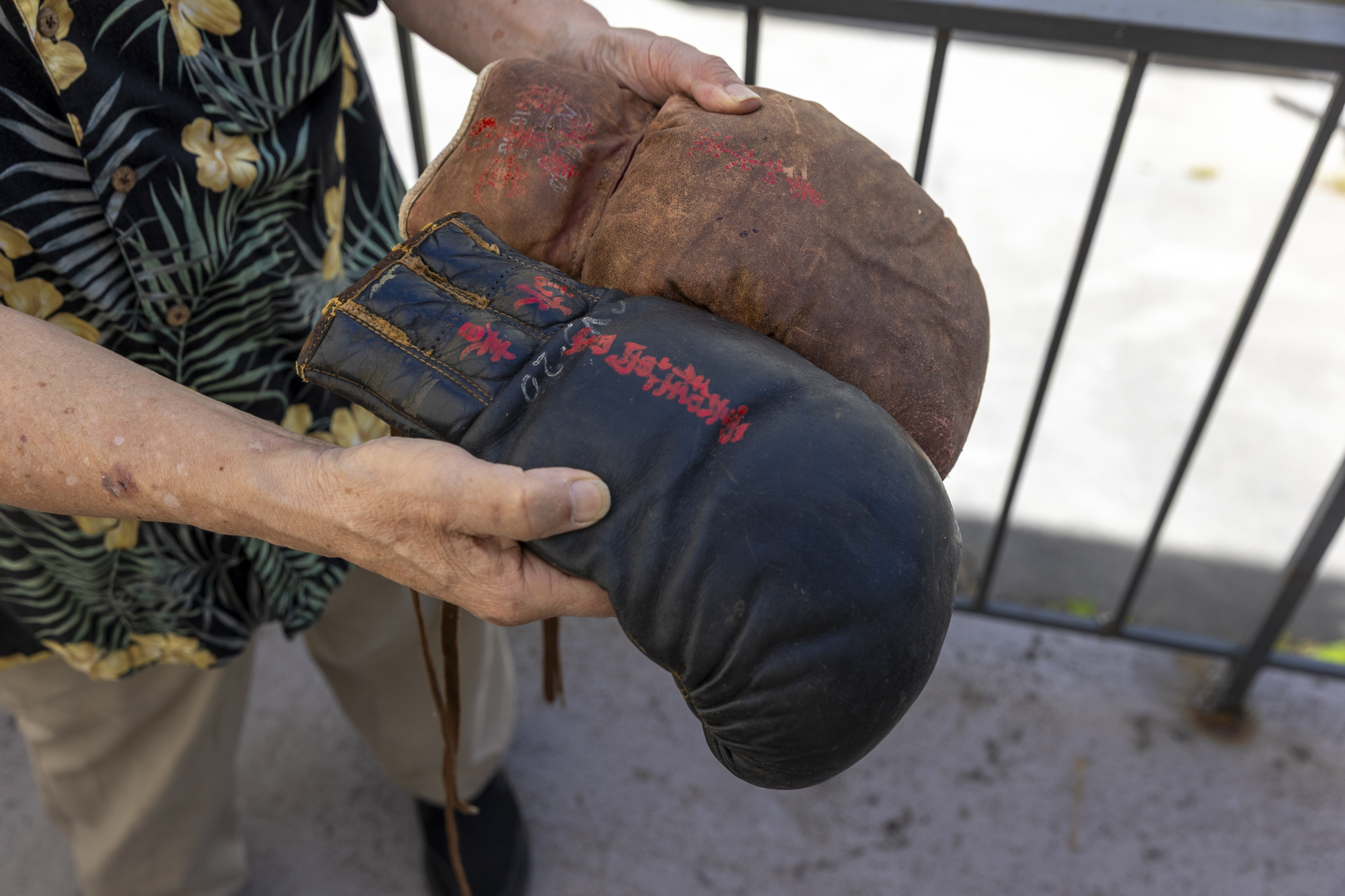
"caption": "Greglon Lee holds up boxing gloves signed by both Bruce Lee and his father James Lee at the apartment complex he lives at in Berkeley on June 1, 2026. Greglon Lee is the son of James Lee, a martial artist who once was Bruce Lee’s training partner.",
"credit": "Tâm Vũ/KQED",
"altTag": null,
"description": null,
"imgSizes": {
"thumbnail": {
"file": "https://cdn.kqed.org/wp-content/uploads/sites/10/2026/06/260601-BRUCELEE-TV-01539-KQED-160x107.jpg",
"width": 160,
"height": 107,
"mimeType": "image/jpeg"
},
"1536x1536": {
"file": "https://cdn.kqed.org/wp-content/uploads/sites/10/2026/06/260601-BRUCELEE-TV-01539-KQED-1536x1024.jpg",
"width": 1536,
"height": 1024,
"mimeType": "image/jpeg"
},
"post-thumbnail": {
"file": "https://cdn.kqed.org/wp-content/uploads/sites/10/2026/06/260601-BRUCELEE-TV-01539-KQED-672x372.jpg",
"width": 672,
"height": 372,
"mimeType": "image/jpeg"
},
"twentyfourteen-full-width": {
"file": "https://cdn.kqed.org/wp-content/uploads/sites/10/2026/06/260601-BRUCELEE-TV-01539-KQED-1038x576.jpg",
"width": 1038,
"height": 576,
"mimeType": "image/jpeg"
},
"npr-cds-wide": {
"file": "https://cdn.kqed.org/wp-content/uploads/sites/10/2026/06/260601-BRUCELEE-TV-01539-KQED-1200x675.jpg",
"width": 1200,
"height": 675,
"mimeType": "image/jpeg"
},
"npr-cds-square": {
"file": "https://cdn.kqed.org/wp-content/uploads/sites/10/2026/06/260601-BRUCELEE-TV-01539-KQED-600x600.jpg",
"width": 600,
"height": 600,
"mimeType": "image/jpeg"
},
"kqedFullSize": {
"file": "https://cdn.kqed.org/wp-content/uploads/sites/10/2026/06/260601-BRUCELEE-TV-01539-KQED.jpg",
"width": 2000,
"height": 1333
}
},
"isLoading": false,
"fetchFailed": false
},
"news_12091890": {
"type": "attachments",
"id": "news_12091890",
"meta": {
"index": "attachments_1716263798",
"site": "news",
"id": "12091890",
"found": true
},
"title": "Several States Are Preparing Lawsuit To Challenge Paramount's Purchase Of Warner Bros. Discovery",
"publishDate": 1784574206,
"status": "inherit",
"parent": 12091887,
"modified": 1784574273,
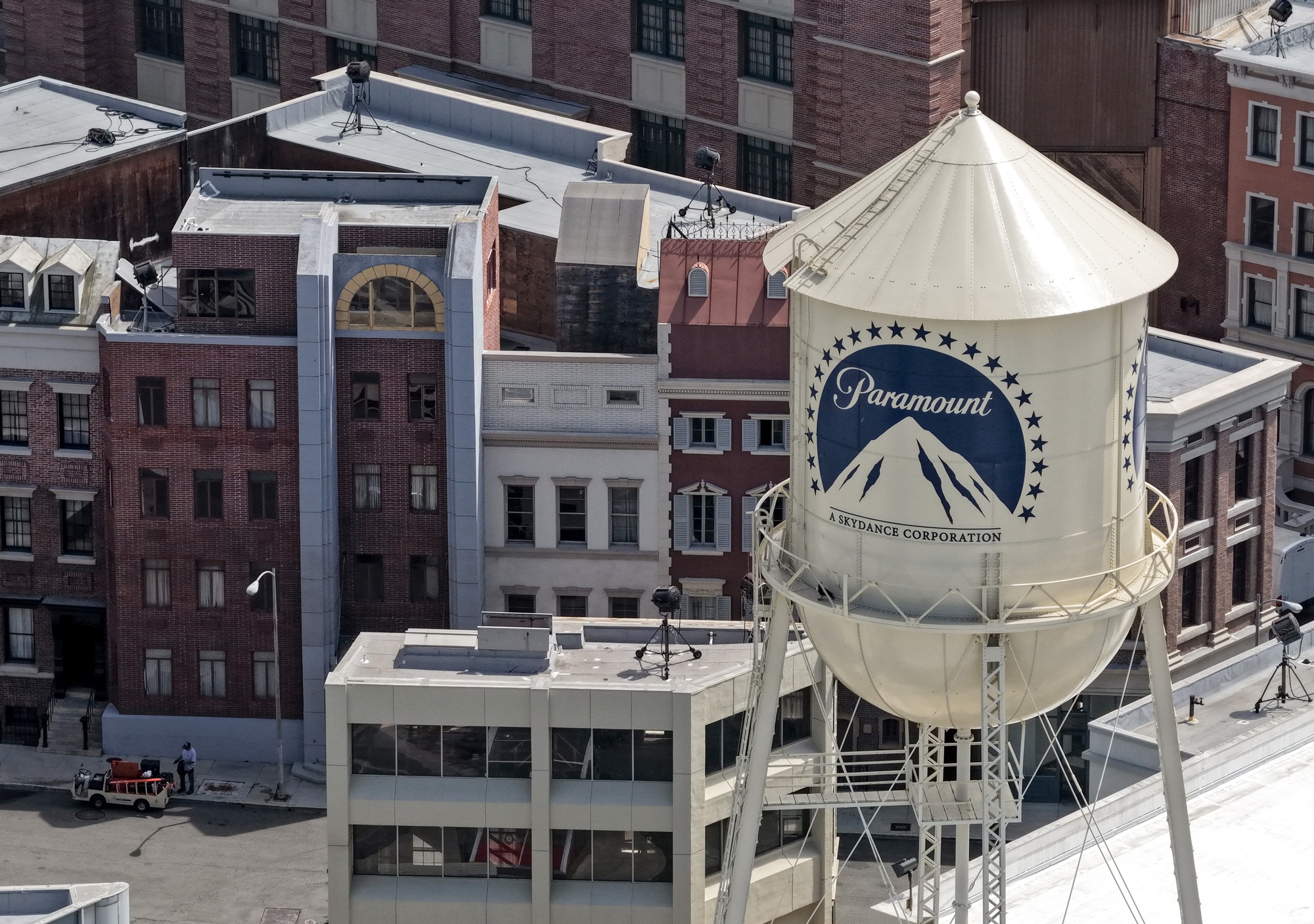
"caption": "The Paramount logo is displayed on a water tower at the Paramount Studios lot on July 13, 2026, in Los Angeles, California. Twelve state attorneys general, led by California, filed a lawsuit seeking to block Paramount Skydance's proposed acquisition of Warner Bros. Discovery. They argue that the merger would violate the Clayton Act, an antitrust law that prevents anticompetitive practices. ",
"credit": "Justin Sullivan/Getty Images",
"altTag": null,
"description": null,
"imgSizes": {
"thumbnail": {
"file": "https://cdn.kqed.org/wp-content/uploads/sites/10/2026/07/ParamountStudiosGetty-160x113.jpg",
"width": 160,
"height": 113,
"mimeType": "image/jpeg"
},
"1536x1536": {
"file": "https://cdn.kqed.org/wp-content/uploads/sites/10/2026/07/ParamountStudiosGetty-1536x1081.jpg",
"width": 1536,
"height": 1081,
"mimeType": "image/jpeg"
},
"post-thumbnail": {
"file": "https://cdn.kqed.org/wp-content/uploads/sites/10/2026/07/ParamountStudiosGetty-672x372.jpg",
"width": 672,
"height": 372,
"mimeType": "image/jpeg"
},
"twentyfourteen-full-width": {
"file": "https://cdn.kqed.org/wp-content/uploads/sites/10/2026/07/ParamountStudiosGetty-1038x576.jpg",
"width": 1038,
"height": 576,
"mimeType": "image/jpeg"
},
"npr-cds-wide": {
"file": "https://cdn.kqed.org/wp-content/uploads/sites/10/2026/07/ParamountStudiosGetty-1200x675.jpg",
"width": 1200,
"height": 675,
"mimeType": "image/jpeg"
},
"npr-cds-square": {
"file": "https://cdn.kqed.org/wp-content/uploads/sites/10/2026/07/ParamountStudiosGetty-600x600.jpg",
"width": 600,
"height": 600,
"mimeType": "image/jpeg"
},
"kqedFullSize": {
"file": "https://cdn.kqed.org/wp-content/uploads/sites/10/2026/07/ParamountStudiosGetty.jpg",
"width": 2000,
"height": 1407
}
},
"isLoading": false,
"fetchFailed": false
},
"news_12048727": {
"type": "attachments",
"id": "news_12048727",
"meta": {
"index": "attachments_1716263798",
"site": "news",
"id": "12048727",
"found": true
},
"title": "250702-OAKLAND POLICE DEPARTMENT-MD-01_qed",
"publishDate": 1752858990,
"status": "inherit",
"parent": 12048706,
"modified": 1752859091,
"caption": "An Oakland Police Department vehicle parked on July 1, 2025.",
"credit": "Martin do Nascimento/KQED",
"altTag": null,
"description": null,
"imgSizes": {
"thumbnail": {
"file": "https://cdn.kqed.org/wp-content/uploads/sites/10/2025/07/250702-OAKLAND-POLICE-DEPARTMENT-MD-01_qed-160x107.jpg",
"width": 160,
"height": 107,
"mimeType": "image/jpeg"
},
"1536x1536": {
"file": "https://cdn.kqed.org/wp-content/uploads/sites/10/2025/07/250702-OAKLAND-POLICE-DEPARTMENT-MD-01_qed-1536x1024.jpg",
"width": 1536,
"height": 1024,
"mimeType": "image/jpeg"
},
"post-thumbnail": {
"file": "https://cdn.kqed.org/wp-content/uploads/sites/10/2025/07/250702-OAKLAND-POLICE-DEPARTMENT-MD-01_qed-672x372.jpg",
"width": 672,
"height": 372,
"mimeType": "image/jpeg"
},
"twentyfourteen-full-width": {
"file": "https://cdn.kqed.org/wp-content/uploads/sites/10/2025/07/250702-OAKLAND-POLICE-DEPARTMENT-MD-01_qed-1038x576.jpg",
"width": 1038,
"height": 576,
"mimeType": "image/jpeg"
},
"kqedFullSize": {
"file": "https://cdn.kqed.org/wp-content/uploads/sites/10/2025/07/250702-OAKLAND-POLICE-DEPARTMENT-MD-01_qed.jpg",
"width": 1999,
"height": 1333
}
},
"isLoading": false,
"fetchFailed": false
},
"news_12091614": {
"type": "attachments",
"id": "news_12091614",
"meta": {
"index": "attachments_1716263798",
"site": "news",
"id": "12091614",
"found": true
},
"title": "260717-FILMMAKER RALLY-MD-01-KQED",
"publishDate": 1784312045,
"status": "inherit",
"parent": 0,
"modified": 1784312376,
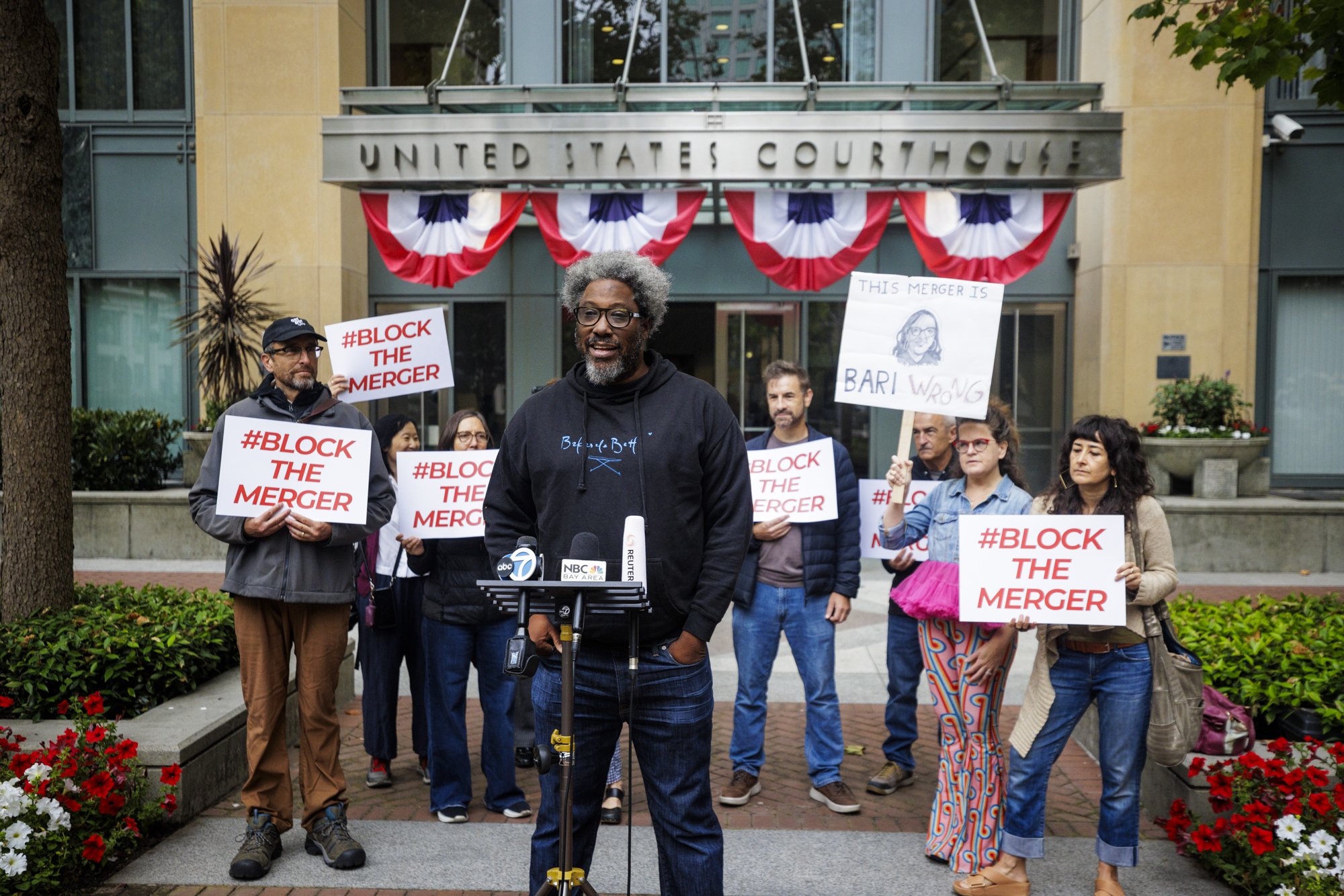
"caption": "Filmmaker and comedian W. Kamau Bell speaks at a rally calling for immediate action to stop the proposed $110 billion Paramount Skydance and Warner Bros. Discovery merger, in front of the federal courthouse in Oakland on July 17, 2026.",
"credit": "Martin do Nascimento/KQED",
"altTag": null,
"description": null,
"imgSizes": {
"thumbnail": {
"file": "https://cdn.kqed.org/wp-content/uploads/sites/10/2026/07/260717-FILMMAKER-RALLY-MD-01-KQED-160x107.jpg",
"width": 160,
"height": 107,
"mimeType": "image/jpeg"
},
"1536x1536": {
"file": "https://cdn.kqed.org/wp-content/uploads/sites/10/2026/07/260717-FILMMAKER-RALLY-MD-01-KQED-1536x1025.jpg",
"width": 1536,
"height": 1025,
"mimeType": "image/jpeg"
},
"post-thumbnail": {
"file": "https://cdn.kqed.org/wp-content/uploads/sites/10/2026/07/260717-FILMMAKER-RALLY-MD-01-KQED-672x372.jpg",
"width": 672,
"height": 372,
"mimeType": "image/jpeg"
},
"twentyfourteen-full-width": {
"file": "https://cdn.kqed.org/wp-content/uploads/sites/10/2026/07/260717-FILMMAKER-RALLY-MD-01-KQED-1038x576.jpg",
"width": 1038,
"height": 576,
"mimeType": "image/jpeg"
},
"npr-cds-wide": {
"file": "https://cdn.kqed.org/wp-content/uploads/sites/10/2026/07/260717-FILMMAKER-RALLY-MD-01-KQED-1200x675.jpg",
"width": 1200,
"height": 675,
"mimeType": "image/jpeg"
},
"npr-cds-square": {
"file": "https://cdn.kqed.org/wp-content/uploads/sites/10/2026/07/260717-FILMMAKER-RALLY-MD-01-KQED-600x600.jpg",
"width": 600,
"height": 600,
"mimeType": "image/jpeg"
},
"kqedFullSize": {
"file": "https://cdn.kqed.org/wp-content/uploads/sites/10/2026/07/260717-FILMMAKER-RALLY-MD-01-KQED.jpg",
"width": 2000,
"height": 1334
}
},
"isLoading": false,
"fetchFailed": false
},
"news_12091485": {
"type": "attachments",
"id": "news_12091485",
"meta": {
"index": "attachments_1716263798",
"site": "news",
"id": "12091485",
"found": true
},
"title": "MLC 2026 M11 - SFU v SO",
"publishDate": 1784240322,
"status": "inherit",
"parent": 0,
"modified": 1784321779,
"caption": "Lhuan-dre Pretorius and Finn Allen of the San Francisco Unicorns walk out to bat during match 11 of the Cognizant Major League Cricket season 4 between the San Francisco Unicorns and the Seattle Orcas at the Oakland Coliseum in Oakland on June 25, 2026.",
"credit": "Courtesy of Major League Cricket",
"altTag": null,
"description": null,
"imgSizes": {
"thumbnail": {
"file": "https://cdn.kqed.org/wp-content/uploads/sites/10/2026/07/260716-Cricket-Playoffs-Oakland-02-KQED-160x107.jpg",
"width": 160,
"height": 107,
"mimeType": "image/jpeg"
},
"1536x1536": {
"file": "https://cdn.kqed.org/wp-content/uploads/sites/10/2026/07/260716-Cricket-Playoffs-Oakland-02-KQED-1536x1024.jpg",
"width": 1536,
"height": 1024,
"mimeType": "image/jpeg"
},
"post-thumbnail": {
"file": "https://cdn.kqed.org/wp-content/uploads/sites/10/2026/07/260716-Cricket-Playoffs-Oakland-02-KQED-672x372.jpg",
"width": 672,
"height": 372,
"mimeType": "image/jpeg"
},
"twentyfourteen-full-width": {
"file": "https://cdn.kqed.org/wp-content/uploads/sites/10/2026/07/260716-Cricket-Playoffs-Oakland-02-KQED-1038x576.jpg",
"width": 1038,
"height": 576,
"mimeType": "image/jpeg"
},
"npr-cds-wide": {
"file": "https://cdn.kqed.org/wp-content/uploads/sites/10/2026/07/260716-Cricket-Playoffs-Oakland-02-KQED-1200x675.jpg",
"width": 1200,
"height": 675,
"mimeType": "image/jpeg"
},
"npr-cds-square": {
"file": "https://cdn.kqed.org/wp-content/uploads/sites/10/2026/07/260716-Cricket-Playoffs-Oakland-02-KQED-600x600.jpg",
"width": 600,
"height": 600,
"mimeType": "image/jpeg"
},
"kqedFullSize": {
"file": "https://cdn.kqed.org/wp-content/uploads/sites/10/2026/07/260716-Cricket-Playoffs-Oakland-02-KQED.jpg",
"width": 2000,
"height": 1333
}
},
"isLoading": false,
"fetchFailed": false
},
"news_12091321": {
"type": "attachments",
"id": "news_12091321",
"meta": {
"index": "attachments_1716263798",
"site": "news",
"id": "12091321",
"found": true
},
"title": "250701-OAKLAND ARTS FUNDING PROTEST-MD-15_qed",
"publishDate": 1784221384,
"status": "inherit",
"parent": 12091317,
"modified": 1784243766,
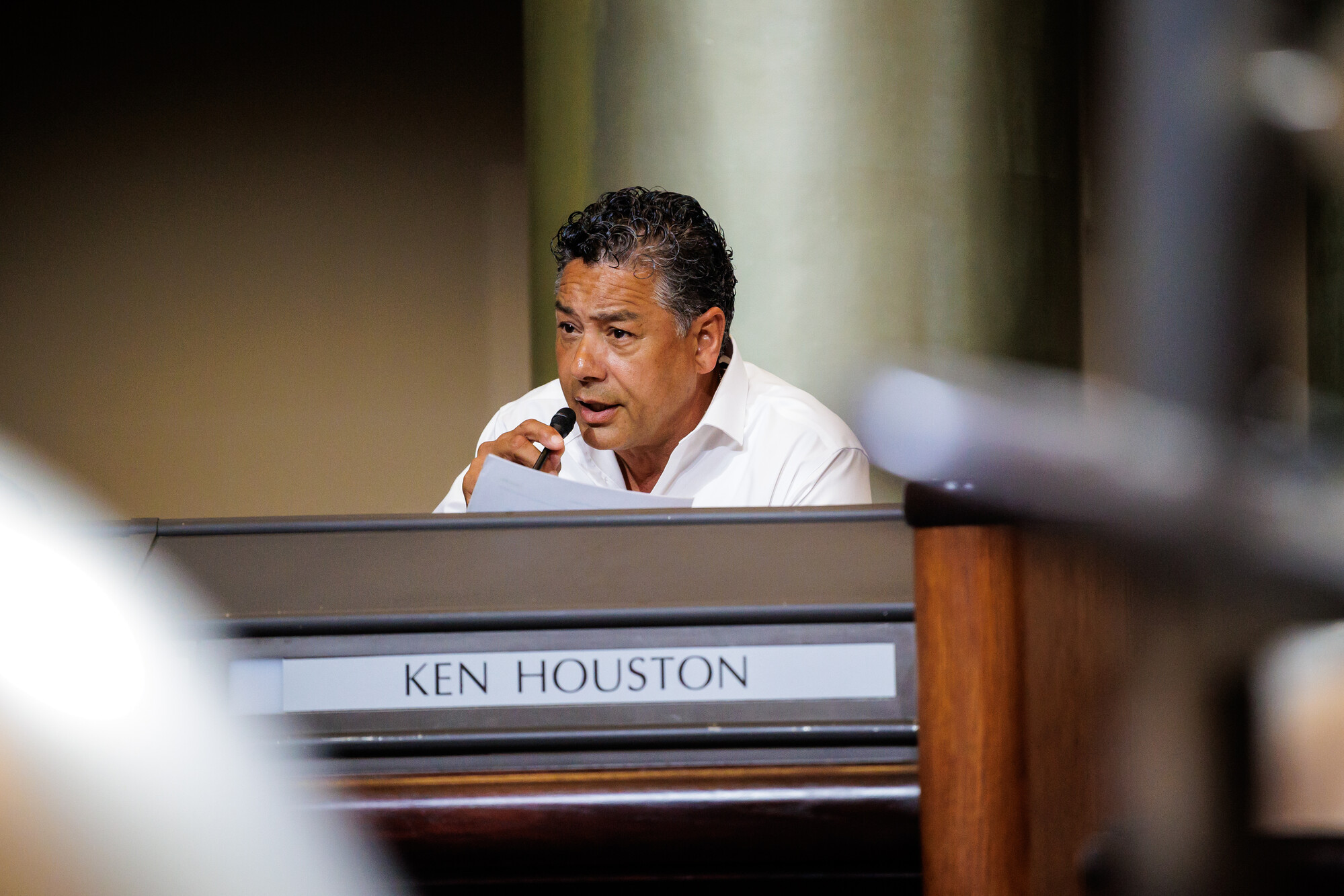
"caption": "Oakland City Councilmember Ken Houston attends a city council meeting at City Hall in Oakland on July 2, 2025.",
"credit": "Martin do Nascimento/KQED",
"altTag": null,
"description": null,
"imgSizes": {
"thumbnail": {
"file": "https://cdn.kqed.org/wp-content/uploads/sites/10/2026/07/250701-OAKLAND-ARTS-FUNDING-PROTEST-MD-15_qed-160x107.jpg",
"width": 160,
"height": 107,
"mimeType": "image/jpeg"
},
"1536x1536": {
"file": "https://cdn.kqed.org/wp-content/uploads/sites/10/2026/07/250701-OAKLAND-ARTS-FUNDING-PROTEST-MD-15_qed-1536x1024.jpg",
"width": 1536,
"height": 1024,
"mimeType": "image/jpeg"
},
"post-thumbnail": {
"file": "https://cdn.kqed.org/wp-content/uploads/sites/10/2026/07/250701-OAKLAND-ARTS-FUNDING-PROTEST-MD-15_qed-672x372.jpg",
"width": 672,
"height": 372,
"mimeType": "image/jpeg"
},
"twentyfourteen-full-width": {
"file": "https://cdn.kqed.org/wp-content/uploads/sites/10/2026/07/250701-OAKLAND-ARTS-FUNDING-PROTEST-MD-15_qed-1038x576.jpg",
"width": 1038,
"height": 576,
"mimeType": "image/jpeg"
},
"npr-cds-wide": {
"file": "https://cdn.kqed.org/wp-content/uploads/sites/10/2026/07/250701-OAKLAND-ARTS-FUNDING-PROTEST-MD-15_qed-1200x675.jpg",
"width": 1200,
"height": 675,
"mimeType": "image/jpeg"
},
"npr-cds-square": {
"file": "https://cdn.kqed.org/wp-content/uploads/sites/10/2026/07/250701-OAKLAND-ARTS-FUNDING-PROTEST-MD-15_qed-600x600.jpg",
"width": 600,
"height": 600,
"mimeType": "image/jpeg"
},
"kqedFullSize": {
"file": "https://cdn.kqed.org/wp-content/uploads/sites/10/2026/07/250701-OAKLAND-ARTS-FUNDING-PROTEST-MD-15_qed.jpg",
"width": 1999,
"height": 1333
}
},
"isLoading": false,
"fetchFailed": false
},
"news_12091160": {
"type": "attachments",
"id": "news_12091160",
"meta": {
"index": "attachments_1716263798",
"site": "news",
"id": "12091160",
"found": true
},
"title": "Rocky Ridge LoopTrail 3.jpg",
"publishDate": 1784141588,
"status": "inherit",
"parent": 12091135,
"modified": 1784143817,
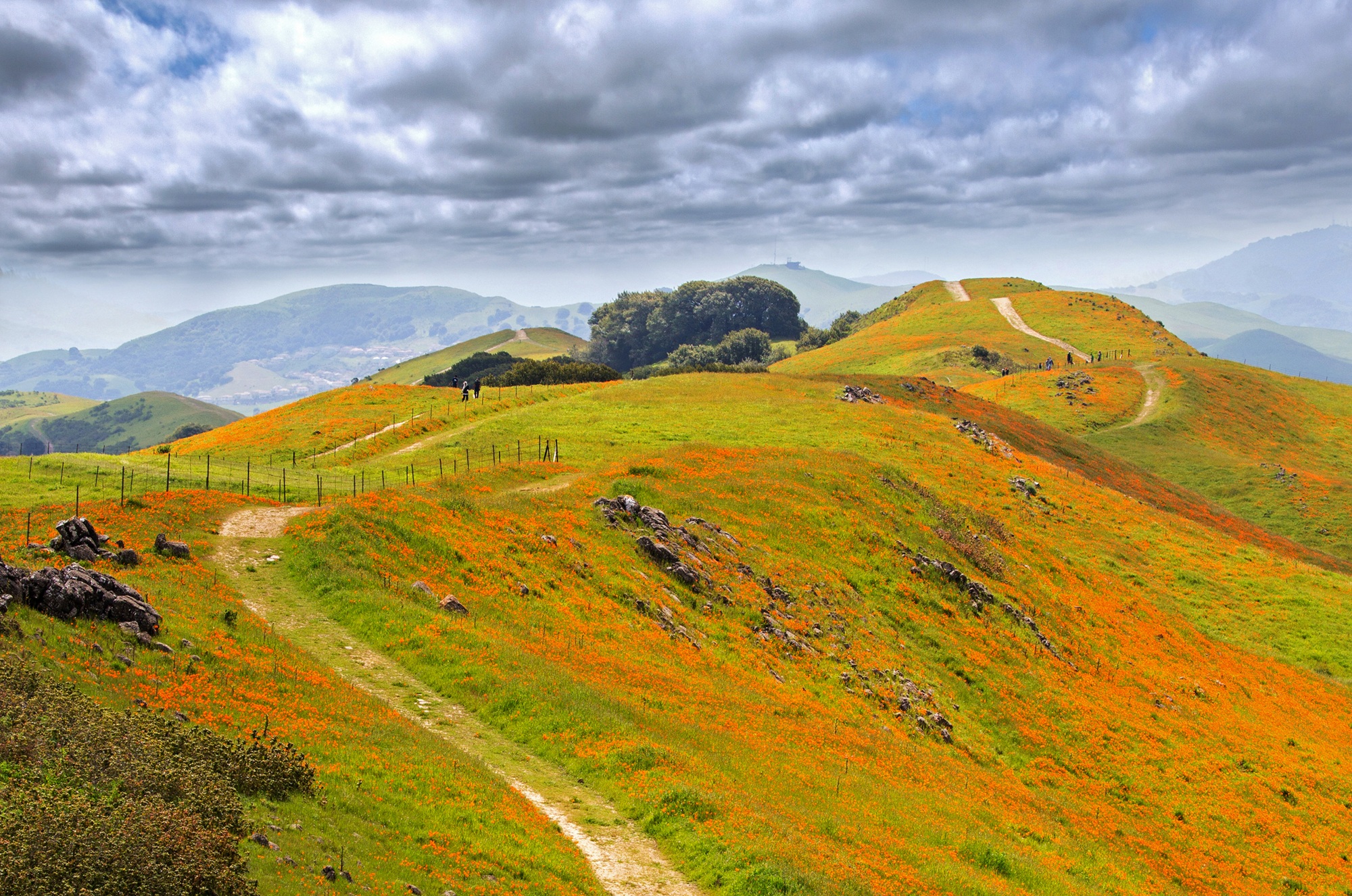
"caption": "The Rocky Ridge Loop Trail in Moraga, one of the hikes that’s accessible with the EBMUD annual pass.",
"credit": "Courtesy of EBMUD",
"altTag": null,
"description": null,
"imgSizes": {
"thumbnail": {
"file": "https://cdn.kqed.org/wp-content/uploads/sites/10/2026/07/LEDE-Rocky_Ridge_LoopTrail_3-1-160x106.jpg",
"width": 160,
"height": 106,
"mimeType": "image/jpeg"
},
"1536x1536": {
"file": "https://cdn.kqed.org/wp-content/uploads/sites/10/2026/07/LEDE-Rocky_Ridge_LoopTrail_3-1-1536x1018.jpg",
"width": 1536,
"height": 1018,
"mimeType": "image/jpeg"
},
"post-thumbnail": {
"file": "https://cdn.kqed.org/wp-content/uploads/sites/10/2026/07/LEDE-Rocky_Ridge_LoopTrail_3-1-672x372.jpg",
"width": 672,
"height": 372,
"mimeType": "image/jpeg"
},
"twentyfourteen-full-width": {
"file": "https://cdn.kqed.org/wp-content/uploads/sites/10/2026/07/LEDE-Rocky_Ridge_LoopTrail_3-1-1038x576.jpg",
"width": 1038,
"height": 576,
"mimeType": "image/jpeg"
},
"npr-cds-wide": {
"file": "https://cdn.kqed.org/wp-content/uploads/sites/10/2026/07/LEDE-Rocky_Ridge_LoopTrail_3-1-1200x675.jpg",
"width": 1200,
"height": 675,
"mimeType": "image/jpeg"
},
"npr-cds-square": {
"file": "https://cdn.kqed.org/wp-content/uploads/sites/10/2026/07/LEDE-Rocky_Ridge_LoopTrail_3-1-600x600.jpg",
"width": 600,
"height": 600,
"mimeType": "image/jpeg"
},
"kqedFullSize": {
"file": "https://cdn.kqed.org/wp-content/uploads/sites/10/2026/07/LEDE-Rocky_Ridge_LoopTrail_3-1.jpg",
"width": 2000,
"height": 1326
}
},
"isLoading": false,
"fetchFailed": false
},
"news_12090677": {
"type": "attachments",
"id": "news_12090677",
"meta": {
"index": "attachments_1716263798",
"site": "news",
"id": "12090677",
"found": true
},
"title": "20260710_KONDALATINAFASHIONUPCYCLER_GC-8-KQED",
"publishDate": 1783963678,
"status": "inherit",
"parent": 0,
"modified": 1783971861,
"caption": "Tracy Garcia, fashion designer and influencer, poses for a portrait at her studio in Oakland on July 10, 2026. Tracy’s YouTube channel “Transformations by Tracy” has amassed over 300,000 followers, where she posts content on how she upcycles clothing she thrifts.",
"credit": "Gina Castro for KQED",
"altTag": null,
"description": null,
"imgSizes": {
"thumbnail": {
"file": "https://cdn.kqed.org/wp-content/uploads/sites/10/2026/07/20260710_KONDALATINAFASHIONUPCYCLER_GC-8-KQED-160x110.jpg",
"width": 160,
"height": 110,
"mimeType": "image/jpeg"
},
"1536x1536": {
"file": "https://cdn.kqed.org/wp-content/uploads/sites/10/2026/07/20260710_KONDALATINAFASHIONUPCYCLER_GC-8-KQED-1536x1051.jpg",
"width": 1536,
"height": 1051,
"mimeType": "image/jpeg"
},
"post-thumbnail": {
"file": "https://cdn.kqed.org/wp-content/uploads/sites/10/2026/07/20260710_KONDALATINAFASHIONUPCYCLER_GC-8-KQED-672x372.jpg",
"width": 672,
"height": 372,
"mimeType": "image/jpeg"
},
"twentyfourteen-full-width": {
"file": "https://cdn.kqed.org/wp-content/uploads/sites/10/2026/07/20260710_KONDALATINAFASHIONUPCYCLER_GC-8-KQED-1038x576.jpg",
"width": 1038,
"height": 576,
"mimeType": "image/jpeg"
},
"npr-cds-wide": {
"file": "https://cdn.kqed.org/wp-content/uploads/sites/10/2026/07/20260710_KONDALATINAFASHIONUPCYCLER_GC-8-KQED-1200x675.jpg",
"width": 1200,
"height": 675,
"mimeType": "image/jpeg"
},
"npr-cds-square": {
"file": "https://cdn.kqed.org/wp-content/uploads/sites/10/2026/07/20260710_KONDALATINAFASHIONUPCYCLER_GC-8-KQED-600x600.jpg",
"width": 600,
"height": 600,
"mimeType": "image/jpeg"
},
"kqedFullSize": {
"file": "https://cdn.kqed.org/wp-content/uploads/sites/10/2026/07/20260710_KONDALATINAFASHIONUPCYCLER_GC-8-KQED.jpg",
"width": 2000,
"height": 1369
}
},
"isLoading": false,
"fetchFailed": false
},
"news_12090496": {
"type": "attachments",
"id": "news_12090496",
"meta": {
"index": "attachments_1716263798",
"site": "news",
"id": "12090496",
"found": true
},
"title": "Sitara; Credit Oakland Zoo",
"publishDate": 1783706398,
"status": "inherit",
"parent": 0,
"modified": 1783724144,
"caption": "Sitara, a tiger estimated to be around 13 years old, has become a permanent resident of Oakland Zoo. ",
"credit": "Courtesy of The Oakland Zoo",
"altTag": null,
"description": null,
"imgSizes": {
"thumbnail": {
"file": "https://cdn.kqed.org/wp-content/uploads/sites/10/2026/07/Sitara-Credit-Oakland-Zoo-160x107.jpg",
"width": 160,
"height": 107,
"mimeType": "image/jpeg"
},
"1536x1536": {
"file": "https://cdn.kqed.org/wp-content/uploads/sites/10/2026/07/Sitara-Credit-Oakland-Zoo-1536x1026.jpg",
"width": 1536,
"height": 1026,
"mimeType": "image/jpeg"
},
"post-thumbnail": {
"file": "https://cdn.kqed.org/wp-content/uploads/sites/10/2026/07/Sitara-Credit-Oakland-Zoo-672x372.jpg",
"width": 672,
"height": 372,
"mimeType": "image/jpeg"
},
"twentyfourteen-full-width": {
"file": "https://cdn.kqed.org/wp-content/uploads/sites/10/2026/07/Sitara-Credit-Oakland-Zoo-1038x576.jpg",
"width": 1038,
"height": 576,
"mimeType": "image/jpeg"
},
"npr-cds-wide": {
"file": "https://cdn.kqed.org/wp-content/uploads/sites/10/2026/07/Sitara-Credit-Oakland-Zoo-1200x675.jpg",
"width": 1200,
"height": 675,
"mimeType": "image/jpeg"
},
"npr-cds-square": {
"file": "https://cdn.kqed.org/wp-content/uploads/sites/10/2026/07/Sitara-Credit-Oakland-Zoo-600x600.jpg",
"width": 600,
"height": 600,
"mimeType": "image/jpeg"
},
"kqedFullSize": {
"file": "https://cdn.kqed.org/wp-content/uploads/sites/10/2026/07/Sitara-Credit-Oakland-Zoo.jpg",
"width": 2000,
"height": 1336
}
},
"isLoading": false,
"fetchFailed": false
},
"news_12032646": {
"type": "attachments",
"id": "news_12032646",
"meta": {
"index": "attachments_1716263798",
"site": "news",
"id": "12032646",
"found": true
},
"title": "Roots",
"publishDate": 1742752834,
"status": "inherit",
"parent": 0,
"modified": 1783712020,
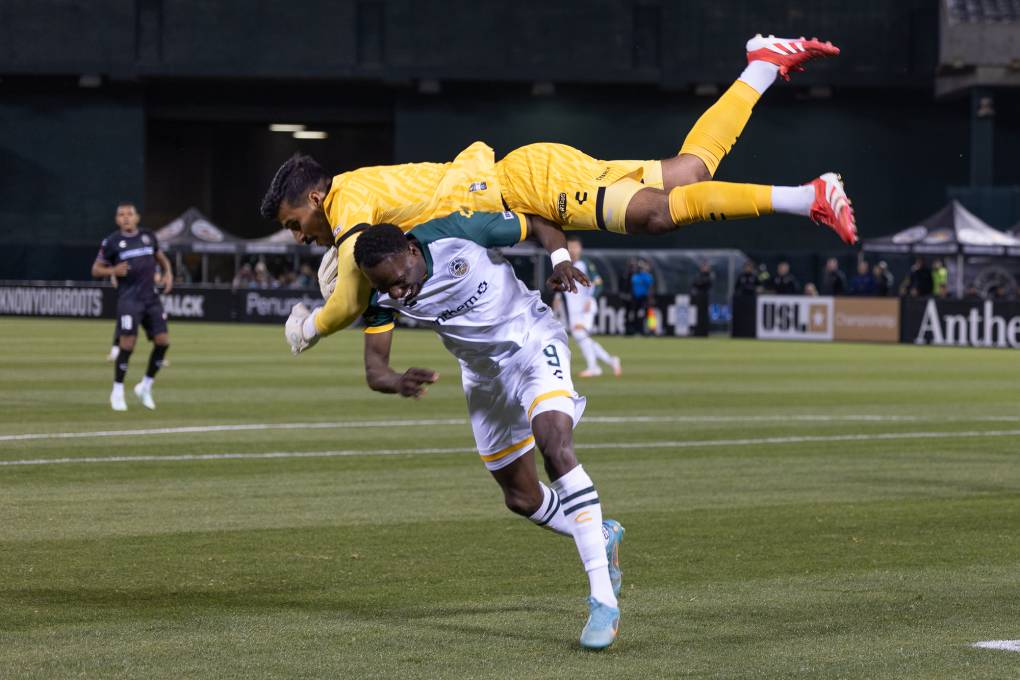
"caption": "San Antonio FC goalie Richard Sánchez leaps over Roots forward Peter Wilson (9) at the Oakland Coliseum Saturday, March 22, 2025, in Oakland, California. This was the first Roots game played in the storied stadium.",
"credit": "David M. Barreda/KQED",
"altTag": null,
"description": null,
"imgSizes": {
"medium": {
"file": "https://cdn.kqed.org/wp-content/uploads/sites/10/2025/03/20250322_Roots_8775-800x533.jpg",
"width": 800,
"height": 533,
"mimeType": "image/jpeg"
},
"large": {
"file": "https://cdn.kqed.org/wp-content/uploads/sites/10/2025/03/20250322_Roots_8775-1020x680.jpg",
"width": 1020,
"height": 680,
"mimeType": "image/jpeg"
},
"thumbnail": {
"file": "https://cdn.kqed.org/wp-content/uploads/sites/10/2025/03/20250322_Roots_8775-160x107.jpg",
"width": 160,
"height": 107,
"mimeType": "image/jpeg"
},
"1536x1536": {
"file": "https://cdn.kqed.org/wp-content/uploads/sites/10/2025/03/20250322_Roots_8775-1536x1024.jpg",
"width": 1536,
"height": 1024,
"mimeType": "image/jpeg"
},
"post-thumbnail": {
"file": "https://cdn.kqed.org/wp-content/uploads/sites/10/2025/03/20250322_Roots_8775-672x372.jpg",
"width": 672,
"height": 372,
"mimeType": "image/jpeg"
},
"twentyfourteen-full-width": {
"file": "https://cdn.kqed.org/wp-content/uploads/sites/10/2025/03/20250322_Roots_8775-1038x576.jpg",
"width": 1038,
"height": 576,
"mimeType": "image/jpeg"
},
"full-width": {
"file": "https://cdn.kqed.org/wp-content/uploads/sites/10/2025/03/20250322_Roots_8775-1920x1280.jpg",
"width": 1920,
"height": 1280,
"mimeType": "image/jpeg"
},
"kqedFullSize": {
"file": "https://cdn.kqed.org/wp-content/uploads/sites/10/2025/03/20250322_Roots_8775.jpg",
"width": 2000,
"height": 1333
}
},
"isLoading": false,
"fetchFailed": false
},
"news_12061256": {
"type": "attachments",
"id": "news_12061256",
"meta": {
"index": "attachments_1716263798",
"site": "news",
"id": "12061256",
"found": true
},
"title": "251023-MAYOR LEE PRESSER-MD-09-KQED",
"publishDate": 1761245641,
"status": "inherit",
"parent": 12061224,
"modified": 1783638320,
"caption": "James Beere, assistant chief of police with the Oakland Police Department, speaks at a press conference at Oakland City Hall on Oct. 23, 2025.",
"credit": "Martin do Nascimento/KQED",
"altTag": null,
"description": null,
"imgSizes": {
"thumbnail": {
"file": "https://cdn.kqed.org/wp-content/uploads/sites/10/2025/10/251023-MAYOR-LEE-PRESSER-MD-09-KQED-160x107.jpg",
"width": 160,
"height": 107,
"mimeType": "image/jpeg"
},
"1536x1536": {
"file": "https://cdn.kqed.org/wp-content/uploads/sites/10/2025/10/251023-MAYOR-LEE-PRESSER-MD-09-KQED-1536x1024.jpg",
"width": 1536,
"height": 1024,
"mimeType": "image/jpeg"
},
"post-thumbnail": {
"file": "https://cdn.kqed.org/wp-content/uploads/sites/10/2025/10/251023-MAYOR-LEE-PRESSER-MD-09-KQED-672x372.jpg",
"width": 672,
"height": 372,
"mimeType": "image/jpeg"
},
"twentyfourteen-full-width": {
"file": "https://cdn.kqed.org/wp-content/uploads/sites/10/2025/10/251023-MAYOR-LEE-PRESSER-MD-09-KQED-1038x576.jpg",
"width": 1038,
"height": 576,
"mimeType": "image/jpeg"
},
"npr-cds-wide": {
"file": "https://cdn.kqed.org/wp-content/uploads/sites/10/2025/10/251023-MAYOR-LEE-PRESSER-MD-09-KQED-1600x900.jpg",
"width": 1600,
"height": 900,
"mimeType": "image/jpeg"
},
"kqedFullSize": {
"file": "https://cdn.kqed.org/wp-content/uploads/sites/10/2025/10/251023-MAYOR-LEE-PRESSER-MD-09-KQED.jpg",
"width": 2000,
"height": 1333
}
},
"isLoading": false,
"fetchFailed": false
},
"news_12089865": {
"type": "attachments",
"id": "news_12089865",
"meta": {
"index": "attachments_1716263798",
"site": "news",
"id": "12089865",
"found": true
},
"title": "260114-BarPilots-30-BL",
"publishDate": 1783035742,
"status": "inherit",
"parent": 0,
"modified": 1783623786,
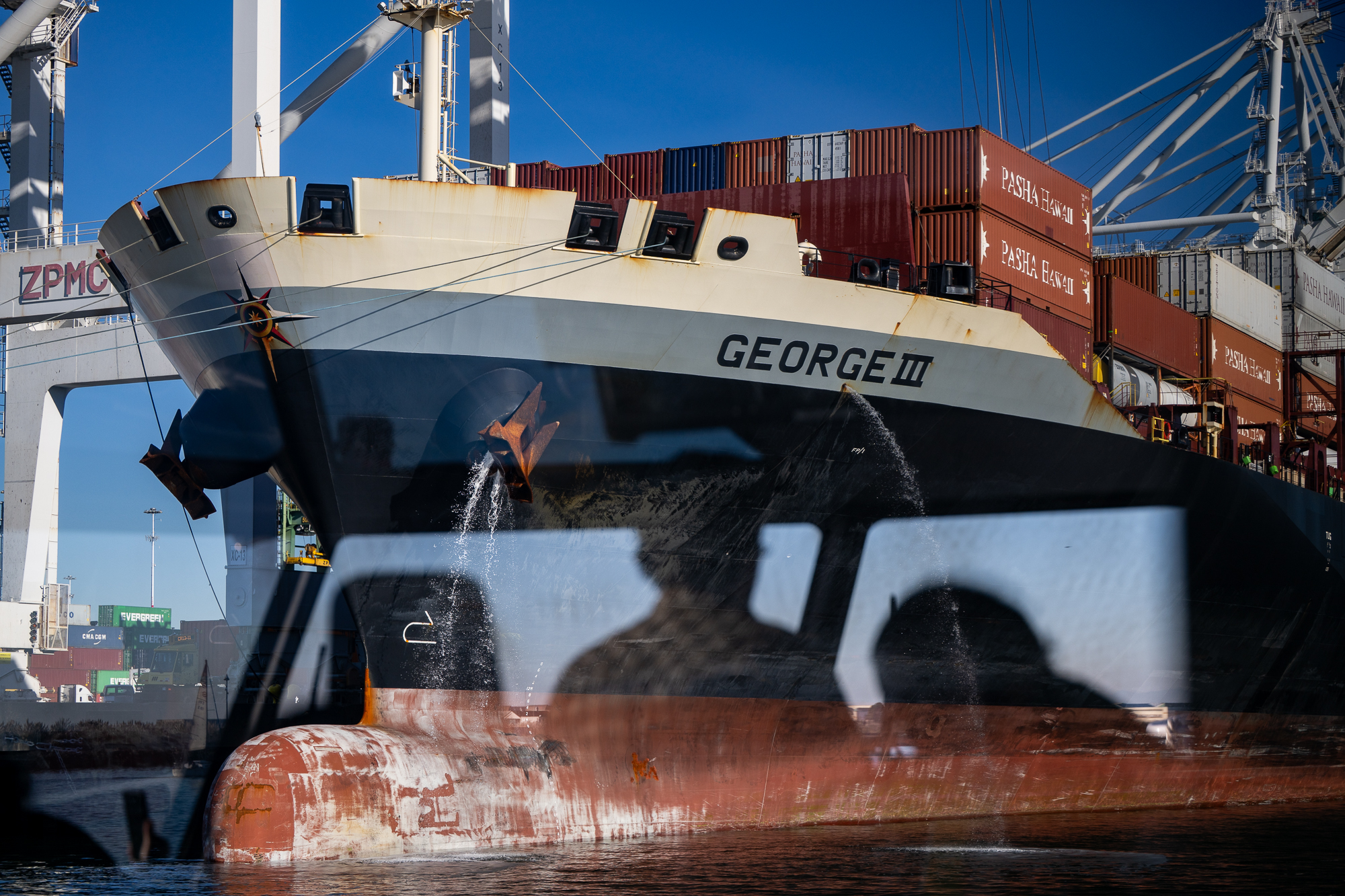
"caption": "A pilot boat operator's image reflects in the window of their boat as they pull up next to the Pasha Hawaii ship George III at the Port of Oakland on Jan. 14, 2026. The ship is part of Pasha Hawaii’s fleet, providing container shipping service between California ports and Hawaii. The pilots guide large ships along California’s coast to ports in San Francisco Bay and beyond.",
"credit": "Beth LaBerge/KQED",
"altTag": null,
"description": null,
"imgSizes": {
"thumbnail": {
"file": "https://cdn.kqed.org/wp-content/uploads/sites/10/2026/07/260114-BarPilots-30-BL-160x107.jpg",
"width": 160,
"height": 107,
"mimeType": "image/jpeg"
},
"1536x1536": {
"file": "https://cdn.kqed.org/wp-content/uploads/sites/10/2026/07/260114-BarPilots-30-BL-1536x1024.jpg",
"width": 1536,
"height": 1024,
"mimeType": "image/jpeg"
},
"post-thumbnail": {
"file": "https://cdn.kqed.org/wp-content/uploads/sites/10/2026/07/260114-BarPilots-30-BL-672x372.jpg",
"width": 672,
"height": 372,
"mimeType": "image/jpeg"
},
"twentyfourteen-full-width": {
"file": "https://cdn.kqed.org/wp-content/uploads/sites/10/2026/07/260114-BarPilots-30-BL-1038x576.jpg",
"width": 1038,
"height": 576,
"mimeType": "image/jpeg"
},
"npr-cds-wide": {
"file": "https://cdn.kqed.org/wp-content/uploads/sites/10/2026/07/260114-BarPilots-30-BL-1200x675.jpg",
"width": 1200,
"height": 675,
"mimeType": "image/jpeg"
},
"npr-cds-square": {
"file": "https://cdn.kqed.org/wp-content/uploads/sites/10/2026/07/260114-BarPilots-30-BL-600x600.jpg",
"width": 600,
"height": 600,
"mimeType": "image/jpeg"
},
"kqedFullSize": {
"file": "https://cdn.kqed.org/wp-content/uploads/sites/10/2026/07/260114-BarPilots-30-BL.jpg",
"width": 2000,
"height": 1333
}
},
"isLoading": false,
"fetchFailed": false
}
},
"audioPlayerReducer": {
"postId": "stream_live",
"isPaused": true,
"isPlaying": false,
"pfsActive": false,
"pledgeModalIsOpen": true,
"playerDrawerIsOpen": false,
"liveAudioPlayStartedAt": 0,
"liveAudioPlayContext": ""
},
"authorsReducer": {
"katrinaschwartz": {
"type": "authors",
"id": "234",
"meta": {
"index": "authors_1716337520",
"id": "234",
"found": true
},
"name": "Katrina Schwartz",
"firstName": "Katrina",
"lastName": "Schwartz",
"slug": "katrinaschwartz",
"email": "kschwartz@kqed.org",
"display_author_email": false,
"staff_mastheads": [
"news"
],
"title": "Producer",
"bio": "Katrina Schwartz is a journalist based in San Francisco. She's worked at KPCC public radio in LA and has reported on air and online for KQED since 2010. She covered how teaching and learning is changing for MindShift between 2012 and 2020. She is the co-host of the MindShift podcast and now produces KQED's Bay Curious podcast.",
"avatar": "https://secure.gravatar.com/avatar/edb4ee79070447a018538c9aae6eeecf28786515b8a0c30e43b6b7dce5aa44c8?s=600&d=blank&r=g",
"twitter": "kschwart",
"bluesky": null,
"facebook": null,
"instagram": null,
"linkedin": null,
"sites": [
{
"site": "",
"roles": [
"editor"
]
},
{
"site": "news",
"roles": [
"editor"
]
},
{
"site": "mindshift",
"roles": [
"administrator"
]
},
{
"site": "stateofhealth",
"roles": [
"author"
]
},
{
"site": "science",
"roles": [
"editor"
]
}
],
"headData": {
"title": "Katrina Schwartz | KQED",
"description": "Producer",
"ogImgSrc": "https://secure.gravatar.com/avatar/edb4ee79070447a018538c9aae6eeecf28786515b8a0c30e43b6b7dce5aa44c8?s=600&d=blank&r=g",
"twImgSrc": "https://secure.gravatar.com/avatar/edb4ee79070447a018538c9aae6eeecf28786515b8a0c30e43b6b7dce5aa44c8?s=600&d=blank&r=g"
},
"isLoading": false,
"link": "/author/katrinaschwartz"
},
"ninathorsen": {
"type": "authors",
"id": "246",
"meta": {
"index": "authors_1716337520",
"id": "246",
"found": true
},
"name": "Nina Thorsen",
"firstName": "Nina",
"lastName": "Thorsen",
"slug": "ninathorsen",
"email": "nthorsen@kqed.org",
"display_author_email": false,
"staff_mastheads": [
"news"
],
"title": "Producer, Radio",
"bio": "\u003cspan style=\"color: #000000;\">Nina Thorsen is a KQED radio producer, and frequently reports on sports and culture. \u003c/span>\u003cspan style=\"color: #000000;\">She co-created and produced KQED's \u003cem>Pacific Time, \u003c/em> a weekly radio program on Asian and Asian American issues that aired from 2000 to 2007. Before coming to KQED, Thorsen was the deputy foreign editor for \u003cem>Marketplace, \u003c/em>and in her home state of Minnesota, worked for \u003cem>A Prairie Home Companion\u003c/em> and for Public Radio International. \u003c/span>",
"avatar": "https://secure.gravatar.com/avatar/e13dc7282cec33c15d973ebb56d57ead?s=600&d=blank&r=g",
"twitter": "NinaKQED",
"facebook": null,
"instagram": null,
"linkedin": null,
"sites": [
{
"site": "news",
"roles": [
"editor"
]
},
{
"site": "podcasts",
"roles": [
"editor"
]
}
],
"headData": {
"title": "Nina Thorsen | KQED",
"description": "Producer, Radio",
"ogImgSrc": "https://secure.gravatar.com/avatar/e13dc7282cec33c15d973ebb56d57ead?s=600&d=blank&r=g",
"twImgSrc": "https://secure.gravatar.com/avatar/e13dc7282cec33c15d973ebb56d57ead?s=600&d=blank&r=g"
},
"isLoading": false,
"link": "/author/ninathorsen"
},
"btorres": {
"type": "authors",
"id": "11666",
"meta": {
"index": "authors_1716337520",
"id": "11666",
"found": true
},
"name": "Blanca Torres",
"firstName": "Blanca",
"lastName": "Torres",
"slug": "btorres",
"email": "btorres@kqed.org",
"display_author_email": true,
"staff_mastheads": [
"news"
],
"title": "Producer, Forum",
"bio": "Blanca Torres brings sharp news judgement and keen sense of lively conversation to her work as producer for Forum. She loves producing shows that leave listeners feeling like they heard distinctive voices, learned something new and gained a fresh perspective.\r\n\r\nShe joined KQED in January of 2020 after 16 years of working as a newspaper reporter most recently at the \u003cem>San Francisco Business Times,\u003c/em> where she wrote about real estate and economic development. Before that, she covered a variety of beats including crime, education, retail, workplace, the economy, consumer issues, and small business for the \u003cem>Contra Costa Times, Baltimore Sun\u003c/em> and\u003cem> The Seattle Times\u003c/em>. In addition to reporting, she worked as an editorial writer and columnist for the \u003cem>Seattle Times\u003c/em>. From 2017 to 2020, Blanca won a total of ten awards from the National Association of Real Estate Editors and won first place for land use reporting from the California News Publishers Association two years in a row. She is also a member and former board member for the National Association of Hispanic Journalists.\r\n\r\nA native of the Pacific Northwest, Blanca earned her bachelor's degree from Vanderbilt University in Nashville and a master's in fine arts in creative writing at Mills College. She lives in the East Bay with her family.",
"avatar": "https://secure.gravatar.com/avatar/50b49d19b14a1eed34f26ebf4681152cdd81574ed21851100871ccd29e578cdc?s=600&d=blank&r=g",
"twitter": "@blancawrites",
"bluesky": null,
"facebook": null,
"instagram": null,
"linkedin": null,
"sites": [
{
"site": "arts",
"roles": [
"editor"
]
},
{
"site": "news",
"roles": [
"editor"
]
},
{
"site": "forum",
"roles": [
"editor"
]
}
],
"headData": {
"title": "Blanca Torres | KQED",
"description": "Producer, Forum",
"ogImgSrc": "https://secure.gravatar.com/avatar/50b49d19b14a1eed34f26ebf4681152cdd81574ed21851100871ccd29e578cdc?s=600&d=blank&r=g",
"twImgSrc": "https://secure.gravatar.com/avatar/50b49d19b14a1eed34f26ebf4681152cdd81574ed21851100871ccd29e578cdc?s=600&d=blank&r=g"
},
"isLoading": false,
"link": "/author/btorres"
},
"kdebenedetti": {
"type": "authors",
"id": "11913",
"meta": {
"index": "authors_1716337520",
"id": "11913",
"found": true
},
"name": "Katie DeBenedetti",
"firstName": "Katie",
"lastName": "DeBenedetti",
"slug": "kdebenedetti",
"email": "kdebenedetti@kqed.org",
"display_author_email": false,
"staff_mastheads": [
"news",
"science"
],
"title": "KQED Contributor",
"bio": "Katie DeBenedetti is a digital reporter covering daily news for the Express Desk. Prior to joining KQED as a culture reporting intern in January 2024, she covered education and city government for the Napa Valley Register.",
"avatar": "https://secure.gravatar.com/avatar/6e31073cb8f7e4214ab03f42771d0f45?s=600&d=blank&r=g",
"twitter": null,
"facebook": null,
"instagram": null,
"linkedin": null,
"sites": [
{
"site": "news",
"roles": [
"author"
]
},
{
"site": "science",
"roles": [
"author"
]
},
{
"site": "liveblog",
"roles": [
"author"
]
}
],
"headData": {
"title": "Katie DeBenedetti | KQED",
"description": "KQED Contributor",
"ogImgSrc": "https://secure.gravatar.com/avatar/6e31073cb8f7e4214ab03f42771d0f45?s=600&d=blank&r=g",
"twImgSrc": "https://secure.gravatar.com/avatar/6e31073cb8f7e4214ab03f42771d0f45?s=600&d=blank&r=g"
},
"isLoading": false,
"link": "/author/kdebenedetti"
},
"emanoukian": {
"type": "authors",
"id": "11925",
"meta": {
"index": "authors_1716337520",
"id": "11925",
"found": true
},
"name": "Elize Manoukian",
"firstName": "Elize",
"lastName": "Manoukian",
"slug": "emanoukian",
"email": "emanoukian@KQED.org",
"display_author_email": false,
"staff_mastheads": [
"news"
],
"title": "Digital News Editor",
"bio": "Elize Manoukian is an award-winning audio producer and Senior Editor on the Express Desk, KQED's digital news platform. Her work has appeared on KPFA, Interlochen Public Radio, Oregon Public Broadcast, the New York Daily News, LA Times and the San Diego Union-Tribune.",
"avatar": "https://secure.gravatar.com/avatar/4525f1a8e46ccb30933b32653d9772064cfefe3fa655eb45b3b3a80341f6bdad?s=600&d=blank&r=g",
"twitter": null,
"bluesky": null,
"facebook": null,
"instagram": null,
"linkedin": null,
"sites": [
{
"site": "arts",
"roles": [
"editor"
]
},
{
"site": "news",
"roles": [
"editor"
]
},
{
"site": "science",
"roles": [
"editor"
]
}
],
"headData": {
"title": "Elize Manoukian | KQED",
"description": "Digital News Editor",
"ogImgSrc": "https://secure.gravatar.com/avatar/4525f1a8e46ccb30933b32653d9772064cfefe3fa655eb45b3b3a80341f6bdad?s=600&d=blank&r=g",
"twImgSrc": "https://secure.gravatar.com/avatar/4525f1a8e46ccb30933b32653d9772064cfefe3fa655eb45b3b3a80341f6bdad?s=600&d=blank&r=g"
},
"isLoading": false,
"link": "/author/emanoukian"
},
"sarahwright": {
"type": "authors",
"id": "11956",
"meta": {
"index": "authors_1716337520",
"id": "11956",
"found": true
},
"name": "Sarah Wright",
"firstName": "Sarah",
"lastName": "Wright",
"slug": "sarahwright",
"email": "swright@kqed.org",
"display_author_email": true,
"staff_mastheads": [],
"title": "Outdoors Engagement Reporter",
"bio": "Sarah Wright is KQED's Outdoors Engagement Reporter. Originally from Lake Tahoe, she completed a thru-hike of the Pacific Crest Trail in 2019 and was a U.S. Fulbright Program grantee to Argentina in 2023. Her journalism has appeared in The Guardian, The San Francisco Standard, The Palo Alto Weekly and the Half Moon Bay Review.",
"avatar": "https://secure.gravatar.com/avatar/c161a3d6441865cba25e6db4fa561099ad665799e9432e34da2b84d7e371524c?s=600&d=blank&r=g",
"twitter": null,
"bluesky": null,
"facebook": null,
"instagram": null,
"linkedin": null,
"sites": [
{
"site": "arts",
"roles": [
"editor"
]
},
{
"site": "news",
"roles": [
"editor"
]
},
{
"site": "science",
"roles": [
"contributor",
"author"
]
},
{
"site": "forum",
"roles": [
"editor"
]
}
],
"headData": {
"title": "Sarah Wright | KQED",
"description": "Outdoors Engagement Reporter",
"ogImgSrc": "https://secure.gravatar.com/avatar/c161a3d6441865cba25e6db4fa561099ad665799e9432e34da2b84d7e371524c?s=600&d=blank&r=g",
"twImgSrc": "https://secure.gravatar.com/avatar/c161a3d6441865cba25e6db4fa561099ad665799e9432e34da2b84d7e371524c?s=600&d=blank&r=g"
},
"isLoading": false,
"link": "/author/sarahwright"
},
"aaliahmad": {
"type": "authors",
"id": "11986",
"meta": {
"index": "authors_1716337520",
"id": "11986",
"found": true
},
"name": "Ayah Ali-Ahmad",
"firstName": "Ayah",
"lastName": "Ali-Ahmad",
"slug": "aaliahmad",
"email": "aaliahmad@KQED.org",
"display_author_email": false,
"staff_mastheads": [],
"title": "KQED Contributor",
"bio": null,
"avatar": "https://secure.gravatar.com/avatar/1cf54f187a5e1064b2cfef3f3d2f1e4f93e453395d56912aca6382a6071ec3ed?s=600&d=blank&r=g",
"twitter": "ayahaliahmad",
"bluesky": null,
"facebook": null,
"instagram": null,
"linkedin": null,
"sites": [
{
"site": "news",
"roles": [
"subscriber"
]
}
],
"headData": {
"title": "Ayah Ali-Ahmad | KQED",
"description": "KQED Contributor",
"ogImgSrc": "https://secure.gravatar.com/avatar/1cf54f187a5e1064b2cfef3f3d2f1e4f93e453395d56912aca6382a6071ec3ed?s=600&d=blank&r=g",
"twImgSrc": "https://secure.gravatar.com/avatar/1cf54f187a5e1064b2cfef3f3d2f1e4f93e453395d56912aca6382a6071ec3ed?s=600&d=blank&r=g"
},
"isLoading": false,
"link": "/author/aaliahmad"
},
"ejackson": {
"type": "authors",
"id": "12003",
"meta": {
"index": "authors_1716337520",
"id": "12003",
"found": true
},
"name": "Ella Jackson",
"firstName": "Ella",
"lastName": "Jackson",
"slug": "ejackson",
"email": "ejackson@kqed.org",
"display_author_email": false,
"staff_mastheads": [],
"title": "KQED Contributor",
"bio": null,
"avatar": "https://secure.gravatar.com/avatar/3c688edc62aec1dcae096e1475956d245f72bde99cff316455871c9b22a7205b?s=600&d=blank&r=g",
"twitter": null,
"bluesky": null,
"facebook": null,
"instagram": null,
"linkedin": null,
"sites": [
{
"site": "news",
"roles": [
"author"
]
},
{
"site": "science",
"roles": [
"author"
]
}
],
"headData": {
"title": "Ella Jackson | KQED",
"description": "KQED Contributor",
"ogImgSrc": "https://secure.gravatar.com/avatar/3c688edc62aec1dcae096e1475956d245f72bde99cff316455871c9b22a7205b?s=600&d=blank&r=g",
"twImgSrc": "https://secure.gravatar.com/avatar/3c688edc62aec1dcae096e1475956d245f72bde99cff316455871c9b22a7205b?s=600&d=blank&r=g"
},
"isLoading": false,
"link": "/author/ejackson"
}
},
"pagesReducer": {
"news_tag_oakland": {
"type": "terms",
"id": "news_34054",
"meta": {
"index": "terms_1716263798",
"site": "news",
"id": "34054",
"score": 6.8670506
},
"featImg": null,
"name": "oakland",
"description": null,
"taxonomy": "tag",
"headData": {
"twImgId": null,
"twTitle": null,
"ogTitle": null,
"ogImgId": null,
"twDescription": null,
"description": null,
"title": "oakland Archives | KQED News",
"ogDescription": null
},
"ttid": 34071,
"slug": "oakland",
"isLoading": false,
"title": "oakland",
"pageMeta": {
"site": "news",
"WpPageTemplate": "page-topic-editorial",
"currentPage": 4
},
"blocks": [
{
"blockName": "kqed/post-list",
"attrs": {
"layout": "cardArticle2",
"query": "posts/news?tag=oakland",
"seeMore": false,
"paginated": true,
"page": 4
}
},
{
"blockName": "kqed/ad"
}
]
}
},
"pfsSessionReducer": {},
"postsReducer": {
"stream_live": {
"type": "live",
"id": "stream_live",
"audioUrl": "https://streams.kqed.org/kqedradio",
"title": "Live Stream",
"excerpt": "Live Stream information currently unavailable.",
"link": "/radio",
"featImg": "",
"label": {
"name": "KQED Live",
"link": "/"
}
},
"stream_kqedNewscast": {
"type": "posts",
"id": "stream_kqedNewscast",
"audioUrl": "https://www.kqed.org/.stream/anon/radio/RDnews/newscast.mp3?_=1",
"title": "KQED Newscast",
"featImg": "",
"label": {
"name": "88.5 FM",
"link": "/"
}
},
"news_12091968": {
"type": "posts",
"id": "news_12091968",
"meta": {
"index": "posts_1716263798",
"site": "news",
"id": "12091968",
"score": null,
"sort": [
1784850540000
]
},
"guestAuthors": [],
"slug": "the-bruce-lee-fight-in-oakland-that-became-martial-arts-legend",
"title": "The Bruce Lee Fight in Oakland That Became Martial Arts Legend",
"publishDate": 1784850540,
"format": "standard",
"headTitle": "The Bruce Lee Fight in Oakland That Became Martial Arts Legend | KQED",
"labelTerm": {},
"content": "\u003cp>\u003cem>\u003ca href=\"#episode-transcript\">View the full episode transcript.\u003c/a>\u003c/em>\u003c/p>\n\n\n\n\u003cp>Greglon Lee peered through the gaps in a black, wrought-iron fence enclosing an empty corner lot on \u003ca href=\"https://www.kqed.org/news/tag/oakland\">Oakland’s\u003c/a> Auto Row. More than half a century ago, the martial arts legend Bruce Lee — then still unknown — ran a kung fu studio here with Greglon’s father. \u003c/p>\n\n\n\n\u003cp>Though they were peers and close friends, Greglon’s father was one of Bruce’s most fervent disciples.\u003c/p>\n\n\n\n\u003cp>“The main teacher was Bruce,” Greglon said. “My dad was 20 years older, and had just as much experience, but he let Bruce run things. Because Bruce knew what he was doing and it was obvious that Bruce had it.”\u003c/p>\n\n\n\n\u003cfigure class=\"wp-block-image size-full\">\u003cimg loading=\"lazy\" decoding=\"async\" width=\"2000\" height=\"1333\" src=\"https://cdn.kqed.org/wp-content/uploads/sites/10/2026/06/260601-BRUCELEE-TV-01191-KQED.jpg\" alt=\"\" class=\"wp-image-12086153\" srcset=\"https://cdn.kqed.org/wp-content/uploads/sites/10/2026/06/260601-BRUCELEE-TV-01191-KQED.jpg 2000w, https://cdn.kqed.org/wp-content/uploads/sites/10/2026/06/260601-BRUCELEE-TV-01191-KQED-160x107.jpg 160w, https://cdn.kqed.org/wp-content/uploads/sites/10/2026/06/260601-BRUCELEE-TV-01191-KQED-1536x1024.jpg 1536w\" sizes=\"auto, (max-width: 2000px) 100vw, 2000px\">\u003cfigcaption class=\"wp-element-caption\">Greglon Lee stores James Lee’s old Mook Jong, a training tool in martial arts, in the garage of the apartment complex he lives at in Berkeley on June 1, 2026. Greglon Lee is the son of James Lee, a martial artist who once was Bruce Lee’s training partner. (Tâm Vũ/KQED)\u003c/figcaption>\u003c/figure>\n\n\n\n\u003cp>The studio served as the ring of what may have been one of the most important fights of Bruce Lee’s life: the Showdown in Oakland. \u003c/p>\n\n\n\n\u003cp>[ad fullwidth]\u003c/p>\n\u003cp>“This is the school where Bruce fought Wong Jack-man,” Greglon said. “Bruce took it personally.” \u003c/p>\n\n\n\n\u003cp>Bruce Lee was born in San Francisco when his parents were on tour with an opera company from Hong Kong. He returned to the Bay Area as a young man to study and train, making a name for himself as a martial artist. But only recently has California made an effort to recognize and celebrate the Hollywood star’s early roots here. \u003c/p>\n\n\n\n\u003cp>Earlier this summer, San Francisco officials and Chinatown community members, along with Bruce’s daughter, Shannon, led the effort to commemorate May 17 — the day Bruce moved back to the city from Hong Kong as a teen — as Bruce Lee Day — becoming the first Chinese American to be honored with a namesake day in state history. \u003c/p>\n\n\n\n\u003cfigure class=\"wp-block-embed is-type-video is-provider-youtube wp-block-embed-youtube wp-embed-aspect-4-3 wp-has-aspect-ratio\">\u003cdiv class=\"wp-block-embed__wrapper\">\nhttps://www.youtube.com/watch?v=k2BKNDc48N4\n\u003c/div>\u003c/figure>\n\n\n\n\u003cp>Though the Hollywood icon and martial artist’s time here in the Bay Area was brief, it was formative. Among the best-known chapters is the Showdown in Oakland, when he exchanged blows with a martial artist from San Francisco. The fight has become lore in the martial arts world, the subject of books, magazine articles and films, and is well-known to Bruce Lee fans around the world. More than 60 years after it happened, it remains controversial and hotly debated within dojos and on online forums. \u003c/p>\n\n\n\n\u003cp>“It’s the story of how gung fu — let’s call it by its English name — how kung fu becomes American,” said Berkeley-based historian and cultural critic Jeff Chang, who wrote the recent biography \u003cem>Water, Mirror, Echo: Bruce Lee and the Making of Asian-America, \u003c/em>of the fight. \u003c/p>\n\n\n\n\u003cp>Like the classic Akira Kurosawa film \u003cem>Rashomon\u003c/em>, which explores truth and self-interest among characters who give contradictory accounts of an event they witness, the story of the fight reads like a case study in selective human memory. Countless retellings, each drawing from legend and third-hand accounts, have inevitably added a bit to the hero’s journey, turning the story into its own myth. Here’s what really happened: \u003c/p>\n\n\n\n\u003ch2 class=\"wp-block-heading\">Moving back to the heart of the martial arts scene \u003c/h2>\n\n\n\n\u003cp>In 1964, Bruce was a student at the University of Washington, but spent more time fighting than studying. Through his work as a cha-cha instructor, which would occasionally bring him to the Bay Area to make money, he met an Oakland resident named James Yimm Lee — Greglon’s dad. \u003c/p>\n\n\n\n\u003cp>James, who grew up in Oakland, came from the world of blue-collar bodybuilding and weightlifting. But he was also a skilled martial artist who wanted to modernize and popularize the sport. When he met Bruce, James realized he “was the real deal,” Greglon said, “kind of like the [martial arts] Michael Jordan.”\u003c/p>\n\n\n\u003cdiv class=\"wp-block-image\">\n\u003cfigure class=\"alignleft size-full\">\u003cimg loading=\"lazy\" decoding=\"async\" width=\"1442\" height=\"2000\" src=\"https://cdn.kqed.org/wp-content/uploads/sites/10/2026/07/260717-BRUCE-LEE-03-KQED.jpg\" alt=\"\" class=\"wp-image-12091696\" srcset=\"https://cdn.kqed.org/wp-content/uploads/sites/10/2026/07/260717-BRUCE-LEE-03-KQED.jpg 1442w, https://cdn.kqed.org/wp-content/uploads/sites/10/2026/07/260717-BRUCE-LEE-03-KQED-160x222.jpg 160w, https://cdn.kqed.org/wp-content/uploads/sites/10/2026/07/260717-BRUCE-LEE-03-KQED-1107x1536.jpg 1107w\" sizes=\"auto, (max-width: 1442px) 100vw, 1442px\">\u003cfigcaption class=\"wp-element-caption\">Bruce Lee in long-sleeved shirt, smiling in a family portrait. His wife, Linda Lee Caldwell, holds her daughter, Shannon, with Brandon on the left. (Courtesy of the Bruce Lee Family Archive)\u003c/figcaption>\u003c/figure>\n\u003c/div>\n\n\n\u003cp>Despite sharing a surname, the men weren’t related but became fast friends and instant collaborators. So, James convinced Bruce to move, along with his wife Linda Lee Caldwell — who was then eight months pregnant — to the Bay Area, to live with James and his two children. James’ wife had just died of cancer, so Linda helped care for Greglon and his sister. \u003c/p>\n\n\n\n\u003cp>“The Bay Area, at that point,” said Chang, is “the heart of the U.S. martial arts movement. You have like all of these folks who are working class fighters … security guards or policemen or military. And they’re all mixing up into a martial arts scene that now is desegregating — and it’s created a lot of ferment. Bruce wanted to be down there.”\u003c/p>\n\n\n\n\u003cp>Bruce and James spent countless hours together, training and dissecting their craft. The two articulated a shared vision of martial arts: one that fluidly changed between styles and forms, and drew upon Daoism as a philosophy for how to live. To practice these ideas, they set up a kung fu school together in Oakland, which at first they ran out of James’ garage. When they started to pick up more students, they opened up the storefront at 4157 Broadway Street. \u003c/p>\n\n\n\n\u003cp>The two shared a belief that martial arts should be more adaptable, not as fixed in style or form. And they both chafed at what they perceived as rigidity among other martial arts teachers — particularly in San Francisco. \u003c/p>\n\n\n\n\u003cp>As a young man, Bruce had run afoul of some of the San Francisco Chinatown koons — or kung fu schools. The community, at that time, was extremely wary of outsiders, and, due to decades of anti-Chinese racism, protective of their schools, Chang said. Exclusionary policies had heavily \u003ca href=\"https://www.kqed.org/news/11443320/as-chinese-exclusion-act-turns-135-experts-point-to-parallels-today\">restricted Chinese immigration\u003c/a>, siloing off the community from newer waves of Chinese from the mainland and surrounding territories. San Francisco residents didn’t know what to make of Bruce, Chang said — “a loud, brash immigrant from Hong Kong.” \u003c/p>\n\n\n\n\u003ch2 class=\"wp-block-heading\">The Sun Sing Theater demonstration\u003c/h2>\n\n\n\n\u003cp>Tensions came to a head in August 1964, when Bruce gave a martial arts demonstration at San Francisco Chinatown’s \u003ca href=\"https://cinematreasures.org/theaters/3939/\">Sun Sing Theater\u003c/a> at 1021 Grant Ave. — one of San Francisco’s oldest opera houses, and where his father had performed opera nearly two decades earlier (though the building’s gorgeous facade remains, it’s boarded up today).\u003c/p>\n\n\n\n\u003cp>Bruce had been there on tour with Diana Chang, known as the “Mandarin Marilyn Monroe,” to dance the cha-cha. But after they finished their performance, Bruce had a surprise for the crowd: he took to the stage to demonstrate his style of martial arts for the packed house. \u003c/p>\n\n\n\n\u003cp>A fight nearly broke out on stage, and the crowd hurled cigarette butts and insults at Bruce, then only 24 years old. As Chang describes it, Bruce scrambled to get the situation back under control.\u003c/p>\n\n\n\n\u003cfigure class=\"wp-block-image size-full\">\u003cimg loading=\"lazy\" decoding=\"async\" width=\"2000\" height=\"1338\" src=\"https://cdn.kqed.org/wp-content/uploads/sites/10/2026/07/260717-BRUCE-LEE-02-KQED.jpg\" alt=\"\" class=\"wp-image-12091695\" srcset=\"https://cdn.kqed.org/wp-content/uploads/sites/10/2026/07/260717-BRUCE-LEE-02-KQED.jpg 2000w, https://cdn.kqed.org/wp-content/uploads/sites/10/2026/07/260717-BRUCE-LEE-02-KQED-160x107.jpg 160w, https://cdn.kqed.org/wp-content/uploads/sites/10/2026/07/260717-BRUCE-LEE-02-KQED-1536x1028.jpg 1536w\" sizes=\"auto, (max-width: 2000px) 100vw, 2000px\">\u003cfigcaption class=\"wp-element-caption\">Bruce Lee in a yellow jumpsuit in action while directing Kareem Abdul-Jabbar on the set of “Game of Death.” (Courtesy of the Bruce Lee Family Archive)\u003c/figcaption>\u003c/figure>\n\n\n\n\u003cp>“I would like to let everybody know that any time my Chinatown brothers want to try out my Wing Chun,” Bruce said, as retold in Chang’s book, “they are welcomed to come find me at my school in Oakland.”\u003c/p>\n\n\n\n\u003cp>To the riled-up crowd, this sounded like a challenge.\u003c/p>\n\n\n\n\u003cp>To the San Francisco martial artists, a fight seemed inevitable. And they chose a promising young fighter, a \u003ca href=\"https://www.jingmo.com/\">\u003cem>jing wu\u003c/em>\u003c/a> star named Wong Jack-man, to challenge the “young dissident,” as the elders in the city called him. \u003c/p>\n\n\n\n\u003cp>Wong was known for being stoic, polished — a picture of grace and power — in comparison with Bruce’s more back-alley style of brawling. To this day, it’s not clear why he agreed to the proposal when his Chinatown friends came to the Jackson Cafe, at 633 Battery, where he worked as a waiter, and asked him to represent the big city in the challenge against Bruce Lee.\u003c/p>\n\n\n\n\u003ch2 class=\"wp-block-heading\">The ‘Showdown in Oakland’\u003c/h2>\n\n\n\n\u003cp>The match-up — wrote Charles Russo, San Francisco journalist and author of \u003cem>Striking Distance: Bruce Lee and the Dawn of Martial Arts in America\u003c/em> — was “spectacular,” pitting two talented young martial artists with a uniquely yin-yang-like symmetry together. \u003c/p>\n\n\n\n\u003cp>“Bruce’s style was compact and economical. Wong’s expansive and acrobatic,” Russo said. “Collectively, it had all the characteristics of a fight promoter’s dream.” \u003c/p>\n\n\n\n\u003cp>At the end of a cold day in November 1964, Wong Jack-man and his friends piled into a crimson Pontiac Tempest and drove to the Broadway studio in Oakland.\u003c/p>\n\n\n\n\u003cfigure class=\"wp-block-image size-full\">\u003cimg loading=\"lazy\" decoding=\"async\" width=\"2000\" height=\"1333\" src=\"https://cdn.kqed.org/wp-content/uploads/sites/10/2026/06/260601-BRUCELEE-TV-01676-KQED.jpg\" alt=\"\" class=\"wp-image-12086152\" srcset=\"https://cdn.kqed.org/wp-content/uploads/sites/10/2026/06/260601-BRUCELEE-TV-01676-KQED.jpg 2000w, https://cdn.kqed.org/wp-content/uploads/sites/10/2026/06/260601-BRUCELEE-TV-01676-KQED-160x107.jpg 160w, https://cdn.kqed.org/wp-content/uploads/sites/10/2026/06/260601-BRUCELEE-TV-01676-KQED-1536x1024.jpg 1536w\" sizes=\"auto, (max-width: 2000px) 100vw, 2000px\">\u003cfigcaption class=\"wp-element-caption\">Bruce Lee’s old home on Monticello Avenue in East Oakland on June 1, 2026. (Tâm Vũ/KQED)\u003c/figcaption>\u003c/figure>\n\n\n\n\u003cp>Waiting inside were a “very pregnant Linda,” James, and Bruce, Chang said. \u003c/p>\n\n\n\n\u003cp>Wong was dressed formally, in a dark, high-collared, long-sleeved uniform with lacing down the middle. Bruce wore white jeans and a white tank top. \u003c/p>\n\n\n\n\u003cp>There were a total of nine people in the studio, only one of whom is alive today, Bruce’s wife Linda. And she did not speak Cantonese, the \u003cem>lingua franca\u003c/em> of the fight, so undoubtedly some context was lost. \u003c/p>\n\n\n\n\u003cp>However, everyone can agree on what happened next: David Chin, one of Wong’s friends and an instigator of the fight, began enumerating rules. Bruce “kept the tone harsh,” martial arts journalist Russo said: “You came to my school to challenge me, and now you want to set the rules?”\u003c/p>\n\n\n\n\u003cp>When Wong reached out to shake hands, the tense Bruce Lee threw out a feint that crashed right above Wong’s eye — immediately setting the tone for the rest of the fight. \u003c/p>\n\n\n\n\u003cfigure class=\"wp-block-image size-full\">\u003cimg loading=\"lazy\" decoding=\"async\" width=\"2000\" height=\"1539\" src=\"https://cdn.kqed.org/wp-content/uploads/sites/10/2026/07/260717-BRUCE-LEE-01-KQED.jpg\" alt=\"\" class=\"wp-image-12091693\" srcset=\"https://cdn.kqed.org/wp-content/uploads/sites/10/2026/07/260717-BRUCE-LEE-01-KQED.jpg 2000w, https://cdn.kqed.org/wp-content/uploads/sites/10/2026/07/260717-BRUCE-LEE-01-KQED-160x123.jpg 160w, https://cdn.kqed.org/wp-content/uploads/sites/10/2026/07/260717-BRUCE-LEE-01-KQED-1536x1182.jpg 1536w\" sizes=\"auto, (max-width: 2000px) 100vw, 2000px\">\u003cfigcaption class=\"wp-element-caption\">Bruce Lee during the Hall of Mirrors scene on the set of “Enter the Dragon.” (Courtesy of the Bruce Lee Family Archive)\u003c/figcaption>\u003c/figure>\n\n\n\n\u003cp>At one point, wrote Rick Wing, one of Wong’s students and another chronicler of the fight, Wong got Bruce into a headlock, though eventually, he let go.\u003c/p>\n\n\n\n\u003cp>“Wong considered Lee to be a sparring opponent only, and not a mortal enemy,” Wing said. \u003c/p>\n\n\n\n\u003cp>Wong later told Wing about Bruce: “He would never say he lost until you killed him.” \u003c/p>\n\n\n\n\u003cp>A final detail of the fight that everyone agrees with: once Bruce got out of the headlock, he lunged after Wong, who turned and tried to evade the attack. Then, he tripped on a floorboard. \u003c/p>\n\n\n\n\u003cp>The two scuffled on the edge of the studio, with Bruce pummeling Wong with punches and yelling, “Admit it, you lost!”\u003c/p>\n\n\n\n\u003cp>Whether Wong actually surrendered is up for debate. However, multiple kung fu students of San Francisco Chinatown have relayed third-hand that if Wong had won, the neighborhood would have been celebrating. Instead, it was silent the next day, like a funeral. \u003c/p>\n\n\n\n\u003ch2 class=\"wp-block-heading\">The aftermath of the fight\u003c/h2>\n\n\n\n\u003cp>The details are somewhat unremarkable — a messy fight in a small Oakland studio with a murky victory — but rumors of the fight, and what caused it, would spread like wildfire through the martial arts community and ultimately reach Hong Kong.\u003c/p>\n\n\n\n\u003cp>The rumor mill claimed over and over — in tabloids, martial arts magazines and even major Hollywood films — that Chinatown’s old guard took issue with Bruce teaching kung fu to non-Chinese people. \u003c/p>\n\n\n\n\u003cfigure class=\"wp-block-image size-full\">\u003cimg loading=\"lazy\" decoding=\"async\" width=\"2000\" height=\"1333\" src=\"https://cdn.kqed.org/wp-content/uploads/sites/10/2026/06/260601-BRUCELEE-TV-01619-KQED.jpg\" alt=\"\" class=\"wp-image-12086154\" srcset=\"https://cdn.kqed.org/wp-content/uploads/sites/10/2026/06/260601-BRUCELEE-TV-01619-KQED.jpg 2000w, https://cdn.kqed.org/wp-content/uploads/sites/10/2026/06/260601-BRUCELEE-TV-01619-KQED-160x107.jpg 160w, https://cdn.kqed.org/wp-content/uploads/sites/10/2026/06/260601-BRUCELEE-TV-01619-KQED-1536x1024.jpg 1536w\" sizes=\"auto, (max-width: 2000px) 100vw, 2000px\">\u003cfigcaption class=\"wp-element-caption\">Greglon Lee poses for a portrait at the apartment complex he lives at in Berkeley on June 1, 2026. Greglon Lee is the son of James Lee, a martial artist who once was Bruce Lee’s training partner. (Tâm Vũ/KQED)\u003c/figcaption>\u003c/figure>\n\n\n\n\u003cp>Those who peddle this narrative often point to discrimination Bruce may have faced growing up in Hong Kong, due to his own background as a quarter-Dutch on his mom’s side. \u003c/p>\n\n\n\n\u003cp>But Chang questioned whether this narrative holds up to scrutiny. \u003c/p>\n\n\n\n\u003cp>“Very famously, the fight has been portrayed as this thing where Bruce was defending his right to teach non-Chinese people,” Chang said. “I just think that’s not true at all. The record shows that the koons in San Francisco had already opened themselves to non-Chinese for a long time.”\u003c/p>\n\n\n\n\u003cp>But the fight did have a big effect on Bruce’s life and career.\u003c/p>\n\n\n\n\n\n\u003cp>For all of his bluster, the fight against Wong Jack-man was a huge reality check for Bruce, who realized his technique and conditioning came up short of his own expectations. His sloppy “victory” would forever alter his approach to martial arts, his biographers have said, and came at the right time, just as his Hollywood star was about to rise. \u003c/p>\n\n\n\n\u003cp>“Iron sharpens iron,” Greglon said. “You always have to have an adversary, an opponent in fighting to get better. [After] the fight with Wong Jack-man, Bruce changed his training completely. It helped Bruce go to another level.”\u003c/p>\n\n\n\n\u003cp>Just months after The Showdown in Oakland, Bruce Lee got a call from a Hollywood producer asking him to audition for a part. It was his first big break and the beginning of a distinguished film career that ultimately led to Bruce starring in his most famous film, \u003cem>Enter the Dragon\u003c/em>.\u003c/p>\n\n\n\n\u003cp>Whether or not the story bears the weight of the facts, “there’s a great mythology here,” Chang said, that may represent its power to this day. In the showdown, Bruce Lee’s fans found a battle over culture and change, one that matched the upheaval of the times, and wider shifts within Asian America. \u003c/p>\n\n\n\n\u003cp>Although that context was real, the more meaningful transformation was within Bruce himself. He went on to dedicate his life to becoming one of the best that ever lived. As an actor, he challenged stereotypes in Hollywood, refusing roles that typecast him. In his short life, he paved the way for future generations and set an example that continues to inspire and comfort fans to this day.\u003c/p>\n\n\n\u003cp>[baycuriousquestion]\u003c/p>\n\n\n\n\u003ch2 class=\"wp-block-heading\" id=\"episode-transcript\">Episode transcript\u003c/h2>\n\n\n\n\u003cp>\u003cstrong>Olivia Allen-Price: \u003c/strong>There was always something special about Bruce Lee.\u003c/p>\n\n\n\n\u003cp>\u003cem>Enter the Dragon theme song plays\u003c/em>\u003c/p>\n\n\n\n\u003cp>\u003cstrong>Olivia Allen-Price: \u003c/strong>The martial artist and actor was one of the first Asian stars in Hollywood. His path to fame wasn’t easy, but it paved the way for other Asian Americans to do the same today. \u003c/p>\n\n\n\n\u003cp>There’s this famous thing Bruce said…\u003c/p>\n\n\n\n\u003cp>\u003cstrong>Bruce Lee archival:\u003c/strong> I said empty your mind…be formless, shapeless…like water. Water can flow or crash. Be water, my friend…”\u003c/p>\n\n\n\n\u003cp>\u003cstrong>Olivia Allen-Price: \u003c/strong>It’s the cornerstone of his martial arts philosophy…as much a mantra for how to live as a fighting technique. Be adaptable. Go with the flow … even if you’re riding a tidal wave.\u003c/p>\n\n\n\n\u003cp>Bruce was a disruptor in the kung fu world…a young upstart who wanted to do things differently. Though he would eventually become this legendary figure in American culture, it took him years to hone his own style and philosophy. And many of the early moments that shaped him, the ones that made him \u003cem>the\u003c/em> Bruce Lee we see on the silver screen, they took place in the Bay Area.\u003c/p>\n\n\n\n\u003cp>\u003cstrong>Sam Hopkins: \u003c/strong>I assume there’s people alive still in Oakland and San Francisco who know him and have great stories to share. \u003c/p>\n\n\n\n\u003cp>\u003cstrong>Olivia Allen-Price: \u003c/strong>That’s Bay Curious listener Sam Hopkins. Sam’s first exposure to Bruce Lee was in the star’s most famous film — Enter the Dragon.\u003c/p>\n\n\n\n\u003cp>\u003cstrong>Sam Hopkins: \u003c/strong>Most people would say like the defining one in the one that first like drew me into him and pulled me in. \u003c/p>\n\n\n\n\u003cp>\u003cstrong>Olivia Allen-Price: \u003c/strong>As a kid, he loved Bruce’s kung-fu moves. But as an adult he’s come to appreciate how brave Bruce was. \u003c/p>\n\n\n\n\u003cp>\u003cstrong>Sam Hopkins: \u003c/strong>The thing that really inspires me about him is that he changed how people think. And that’s so powerful, like how they view themselves and how they view others and pushed against like all these stereotypes and all these limitations that Hollywood was putting on him and society was putting on him. \u003c/p>\n\n\n\n\u003cp>\u003cstrong>Olivia Allen-Price: \u003c/strong>Sam’s become kind of obsessed. He’s watched documentaries about Bruce Lee, been to museum exhibits about him and located local spots in San Francisco and Oakland that were meaningful in Bruce’s life. \u003c/p>\n\n\n\n\u003cp>\u003cstrong>Sam Hopkins: \u003c/strong>And I just have always wondered though, why isn’t there more in terms of honoring his legacy and all the great things that he did in his time here? \u003c/p>\n\n\n\n\u003cp>\u003cstrong>Olivia Allen-Price: \u003c/strong>There’s this one story Sam has heard over and over about “The Showdown in Oakland,” a fight between Bruce and a kung fu fighter from San Francisco that has become lore in the martial arts world. It’s one of the early moments in Bruce’s career that puts him on the map, and it’s practically a legend at this point. \u003c/p>\n\n\n\n\u003cp>\u003cstrong>Sam Hopkins: \u003c/strong>I’ve heard different versions of it. So I’m just so curious, like which one is like the most accurate?\u003cstrong>\u003cbr>\u003c/strong>\u003cstrong>\u003cbr>\u003c/strong>\u003cstrong>Olivia Allen-Price: \u003c/strong>This is Bay Curious. The show where we answer listener questions about the San Francisco Bay Area. I’m Olivia Allen-Price.\u003c/p>\n\n\n\n\u003cp>KQED’s Elize Manoukian set out to separate fact from fiction and understand what role the Bay Area played in Bruce Lee’s life.\u003c/p>\n\n\n\n\u003cp>\u003cstrong>Elize Manoukian:\u003c/strong> There’s an interview Bruce Lee gives in 1966, right as his star is about to rise. He’s still a bit of an unknown…it seems like the interviewer doesn’t know who he is.\u003c/p>\n\n\n\n\u003cp>\u003cstrong>Bruce Lee interviewer archival: \u003c/strong>I think his name is Bruce Lee…\u003c/p>\n\n\n\n\u003cp>\u003cstrong>Elize Manoukian: \u003c/strong>In the interview, Bruce explains to a mainstream American audience what kung fu is, using the Chinese pronunciation.\u003c/p>\n\n\n\n\u003cp>\u003cstrong>Bruce Lee archival: \u003c/strong>Well, gung fu is a Chinese form of combat. Arts like karate or jiu jitsu derive from gung fu. \u003c/p>\n\n\n\n\u003cp>\u003cstrong>Elize Manoukian: \u003c/strong>Then the journalist asks him: \u003c/p>\n\n\n\n\u003cp>\u003cstrong>Bruce Lee interviewer archival: \u003c/strong>Don’t you have some karate schools in San Francisco or something?\u003c/p>\n\n\n\n\u003cp>\u003cstrong>Elize Manoukian: \u003c/strong>There are multiple issues with that question, but Bruce homes in on just one.\u003c/p>\n\n\n\n\u003cp>\u003cstrong>Bruce Lee archival: In Oakland, really. \u003c/strong>\u003c/p>\n\n\n\n\u003cp>\u003cstrong>Elize Manoukian: \u003c/strong>Even at this early point in his Hollywood career, the difference between the two Bay Area cities was important to him. You’ll soon hear why.\u003c/p>\n\n\n\n\u003cp>Bruce lived in the Bay Area only a short while — just a few years — but his time in Oakland and San Francisco would go on to have a major influence on his career, and some have argued, on the way we think about martial arts in the U.S.\u003c/p>\n\n\n\n\u003cp>\u003cstrong>Jeff Chang:\u003c/strong> It’s a story in a way of how gung fu…how Kung Fu becomes American\u003c/p>\n\n\n\n\u003cp>\u003cstrong>Elize Manoukian: \u003c/strong>That’s historian and cultural critic Jeff Chang, the author of a recent Bruce Lee biography, “Water, Mirror, Echo: Bruce Lee and the Making of Asian America.”\u003c/p>\n\n\n\n\u003cp>I asked him to tell me about Bruce’s life here, starting from the very beginning. \u003c/p>\n\n\n\n\u003cp>\u003cstrong>Jeff Chang: \u003c/strong>Bruce was born in the Bay Area. He is there because his parents are on a tour. His dad is a famous Cantonese opera singer.\u003c/p>\n\n\n\n\u003cp>\u003cstrong>Elize Manoukian: \u003c/strong>And while his dad is performing in San Francisco, his mom becomes pregnant\u003c/p>\n\n\n\n\u003cp>\u003cstrong>Jeff Chang: \u003c/strong>So he’s born in this segregated hospital in 1940.\u003c/p>\n\n\n\n\u003cp>\u003cstrong>Elize Manoukian: \u003c/strong>In San Francisco’s Chinese Hospital, which is still open today. His mom, Grace, names her baby Bruce. \u003c/p>\n\n\n\n\u003cp>Soon after, the family heads back to Hong Kong, which is quickly becoming the heart of Asia’s film industry. \u003c/p>\n\n\n\n\u003cp>Bruce’s dad, Hoi Cheun, transitions from singing opera to acting in movies. And at a young age, Bruce starts acting too.\u003c/p>\n\n\n\n\u003cp>\u003cstrong>Jeff Chang: \u003c/strong>So the directors are looking at who’s this kid. He’s so, he’s so fascinating. He’s got so much energy. He loves to be. He’s like a born showperson. Let’s put him in the movies. \u003c/p>\n\n\n\n\u003cp>\u003cem>Bruce Lee speaking Cantonese in The Kid\u003c/em>\u003c/p>\n\n\n\n\u003cp>\u003cstrong>Elize Manoukian: \u003c/strong>That’s Bruce at age 10, in a movie called the Kid. It’s about a tough street urchin with a heart of gold. The film premieres in 1950, and it’s a smash success in Hong Kong. But being famous is hard on Bruce, and he starts getting picked on in school.\u003c/p>\n\n\n\n\u003cp>This is Bruce Lee’s martial arts origin story. \u003c/p>\n\n\n\n\u003cp>\u003cstrong>Jeff Chang: \u003c/strong>And so he learns to try to figure out ways of protecting himself.\u003c/p>\n\n\n\n\u003cp>And eventually, he meets a seifu, a Gongfu seifu named Yipman. \u003c/p>\n\n\n\n\u003cp>\u003cstrong>Elize Manoukian: \u003c/strong>Yipman is a legendary figure in 1950s Hong Kong. He trains Bruce in a discipline called Wing Chun. \u003c/p>\n\n\n\n\u003cp>At this point, Hong Kong’s youth culture is obsessed with kung fu and streetfighting. Kids would literally challenge each other and battle on school rooftops.\u003c/p>\n\n\n\n\u003cp>\u003cstrong>Jeff Chang: \u003c/strong>Turns out that Bruce really loves the taste of blood on his lips.\u003cbr>\u003cstrong>\u003cbr>\u003c/strong>\u003cem>Music end\u003c/em>\u003c/p>\n\n\n\n\u003cp>\u003cstrong>Elize Manoukian: \u003c/strong>Bruce has a short fuse and loves “talking with his hands,”. During his teen years, he gets a bad boy, James-Dean-kinda reputation in Hong Kong. He even gets kicked out of school for fighting. One day, when Bruce is 18 years old, the police come to his parents house, and tell them that if he stays in Hong Kong, he’ll be arrested. \u003c/p>\n\n\n\n\u003cp>\u003cstrong>Jeff Chang: \u003c/strong>And his parents are like, that’s it. You know, the police are after you, like the gangs are after you. You’re not, you’re not going to be here anymore. We’re going to send you back to the U.S.\u003c/p>\n\n\n\n\u003cp>\u003cstrong>Elize Manoukian: \u003c/strong>Remember, Bruce was born in the U.S., so he’s a citizen. In 1959, his parents give him $100 and send him to live with one of their friends in San Francisco Chinatown.\u003c/p>\n\n\n\n\u003cp>Bruce gets a job, his first non-acting job, at a restaurant.\u003c/p>\n\n\n\n\u003cp>\u003cstrong>Jeff Chang: \u003c/strong>He hates it. He can’t take it. Like, this is beneath me. You know, I’ve been on the movie screen, and now you got me cutting carrots. Like, no, I’m not, I’m not about that life. So he quits in a day. And his guardian is like, OK, — Well, I guess we have to have you teach cha-cha then.\u003c/p>\n\n\n\n\u003cp>\u003cstrong>Elize Manoukian: \u003c/strong>Oh, I forgot to mention: Bruce is an amazing dancer. \u003c/p>\n\n\n\n\u003cp>The Cha-cha was a huge craze in 1950s Hong Kong, and Bruce is super athletic. \u003c/p>\n\n\n\n\u003cp>So while learning English, Bruce starts teaching cha-cha to San Francisco’s Chinese community to make money. But he’s bored. And restless. \u003c/p>\n\n\n\n\u003cp>\u003cstrong>Jeff Chang: \u003c/strong>And he’s like, where are the fighters here? \u003c/p>\n\n\n\n\u003cp>\u003cstrong>Elize Manoukian: \u003c/strong>He can’t help himself. There’s some part of him that just needs to feel the \u003cem>rush\u003c/em> of a real, flesh-and-blood fight again. \u003c/p>\n\n\n\n\u003cp>So he walks into a kung fu school and challenges the other students to a fight. \u003c/p>\n\n\n\n\u003cp>\u003cstrong>Jeff Chang: \u003c/strong>And they run him out immediately.\u003c/p>\n\n\n\n\u003cp>\u003cstrong>Elize Manoukian: \u003c/strong>It’s the first in a long list of grievances San Francisco’s kung fu community will have with Bruce. \u003c/p>\n\n\n\n\u003cp>As if his parents read the writing on the wall, they decide to send him to Seattle.\u003c/p>\n\n\n\n\u003cp>\u003cstrong>Jeff Chang: \u003c/strong>His parents are like, OK, you’re going to get in trouble again. We’re sending you to a place where there’s less Chinese, there’s less distractions. And you’re going to finish your fricking diploma, and you’re going to get a college degree.\u003c/p>\n\n\n\n\u003cp>\u003cstrong>Elize Manoukian:\u003c/strong> He never gets that diploma. In fact, Bruce doesn’t last long in Seattle, although he does end up getting married to a woman named Linda while he’s there. The Bay Area is the heart of the West Coast’s martial arts scene, and Bruce wants to get back there. So he drops out of the University of Washington, moves his young family, and gambles everything…on the Bay. \u003c/p>\n\n\n\n\u003cp>\u003cstrong>Olivia Allen Price: \u003c/strong>Back in Oakland, Bruce meets some folks who help him refine his theories and practice of martial arts. More on that when we come back. \u003c/p>\n\n\n\n\u003cp>\u003cem>Sponsor break\u003c/em>\u003c/p>\n\n\n\n\u003cp>\u003cstrong>Olivia Allen-Price:\u003c/strong> The year is 1964, a time of major cultural change. Young people are questioning everything about U.S. society. And Bruce Lee, who has just moved back to the Bay Area as a 24-year-old college dropout, is going through his own personal revolution. He isn’t just studying martial arts; he has some radical ideas about its future. And he finds some enthusiastic disciples in the Bay Area. Elize Manoukian takes us to Oakland. \u003c/p>\n\n\n\n\u003cp>\u003cstrong>Greglon Lee: \u003c/strong>Yeah, this is the old house: 3039 Monticello. \u003c/p>\n\n\n\n\u003cp>\u003cstrong>Elize Manoukian: \u003c/strong>That’s Greglon Lee, a kung fu sifu based in Berkeley. He’s showing me the funky, yellow bungalow in the East Oakland hills where he once lived with Bruce Lee. \u003c/p>\n\n\n\n\u003cp>\u003cstrong>Greglon Lee: \u003c/strong>Bruce spent a lot of time here, and he was basically training 10-12 hours a day.\u003cstrong> \u003c/strong>\u003c/p>\n\n\n\n\u003cp>\u003cstrong>Elize Manoukian: \u003c/strong>Even as a college student, Bruce had picked up kung fu students across the West Coast. And one of the most dedicated was a man named James Yimm Lee, Greglon’s dad. \u003c/p>\n\n\n\n\u003cp>\u003cstrong>Greglon Lee: \u003c/strong>My dad was one of his top students; my dad had been training with him for a few years.\u003c/p>\n\n\n\n\u003cp>\u003cstrong>Elize Manoukian: \u003c/strong>James was a local streetfighter and bodybuilder. He became fascinated with kung fu, wanted to modernize and popularize it. He knew Bruce could help. So he convinced Bruce and his family to move in with him and his kids in the East Bay. \u003c/p>\n\n\n\n\u003cp>\u003cstrong>Greglon Lee: \u003c/strong>You come down to Oakland. We got you covered, roof over your head, and you can train and do whatever you want.\u003c/p>\n\n\n\n\u003cp>\u003cstrong>Elize Manoukian: \u003c/strong>James filled his garage with a bunch of diy equipment — punching pads, shields, leg stretchers. The two men scrutinized reels of Mohammed Ali boxing fights. They practiced what worked from classical styles of martial arts and threw away the rest. \u003c/p>\n\n\n\n\u003cp>\u003cstrong>Greglon Lee: \u003c/strong>To get better when you’re already good ain’t easy. You really have to break things down completely. \u003c/p>\n\n\n\n\u003cp>\u003cstrong>Elize Manoukian: \u003c/strong>James was helping Bruce invent a NEW style of martial arts that tried to break away from set technique completely. Classical kung fu was too rigid, they said. Instead, they experimented with fusing wing chun, boxing, street fighting with some heavy doses of Daoist philosophy. \u003c/p>\n\n\n\n\u003cp>\u003cstrong>Greglon Lee: \u003c/strong>The individual has to really do their own work. There’s no magic pill. There’s no magic movement to martial arts. It’s getting to know yourself. \u003c/p>\n\n\n\n\u003cp>\u003cstrong>Elize Manoukian: \u003c/strong>Bruce’s homegrown fighting style would eventually become known as Jeet Kun Do, or as Greg calls it, JKD. \u003c/p>\n\n\n\n\u003cp>\u003cstrong>Greglon Lee: \u003c/strong>And you’ve got to remember the Cha Cha taught him really good footwork and how to change timing, which is really the key to J. K. D. It’s not static.\u003c/p>\n\n\n\n\u003cp>\u003cstrong>Elize Manoukian: \u003c/strong>Bruce and James gain some attention for their new fighting style. Students come from hundreds of miles away to study with them. They pick up enough disciples that they decide to open up a little studio on Broadway Street in Oakland, near what’s now auto row. \u003c/p>\n\n\n\n\u003cp>\u003cstrong>Greglon Lee: \u003c/strong>My dad was twenty years older, but he let Bruce run everything. Because Bruce knew what he was doing and it was obvious that Bruce had it.\u003c/p>\n\n\n\n\u003cp>\u003cstrong>Elize Manoukian: \u003c/strong>In Oakland, Bruce gains confidence in his approach to martial arts, and he’s convinced the San Francisco kung fu scene is \u003cem>backwards … \u003c/em>he’s not shy about sharing that opinion. \u003c/p>\n\n\n\n\u003cp>Here’s Bruce Lee biographer Jeff Chang again: \u003c/p>\n\n\n\n\u003cp>\u003cstrong>Jeff Chang: \u003c/strong>He’s basically saying, all of your schools, all the stuff they teach you: That’s all garbage. \u003c/p>\n\n\n\n\u003cp>\u003cstrong>Elize Manoukian: \u003c/strong>And some people in San Francisco get wind of this.\u003c/p>\n\n\n\n\u003cp>\u003cstrong>Jeff Chang: \u003c/strong>They don’t have short-term memories. Like, they remember when Bruce first was there.\u003c/p>\n\n\n\n\u003cp>\u003cstrong>Elize Manoukian: \u003c/strong>It all comes to a head in the summer of 1964. \u003c/p>\n\n\n\n\u003cp>Bruce is promoting his Oakland school, in a kung fu demonstration at San Francisco’s Sun Sing Theater, the same stage where his dad performed opera, two decades earlier. \u003c/p>\n\n\n\n\u003cp>During his demo, he starts critiquing the style of teaching in San Francisco, but in kind of a brash, 24-year-old way. \u003c/p>\n\n\n\n\u003cp>\u003cstrong>Jeff Chang: \u003c/strong>Everything that you’ve been taught is no good. Let me show you how a real martial artist does things. Provocative, right?\u003c/p>\n\n\n\n\u003cp>\u003cstrong>Elize Manoukian: \u003c/strong>The air in the theater is hazy with cigarette smoke. And the crowd is full of San Francisco martial artists.\u003c/p>\n\n\n\n\u003cp>\u003cstrong>Jeff Chang: \u003c/strong>They’re just waiting for Bruce to make a wrong move.\u003c/p>\n\n\n\n\u003cp>\u003cstrong>Elize Manoukian: \u003c/strong>Then he invites somebody on stage, and says, try to defend yourself using your style, and I’ll show you why mine’s better\u003c/p>\n\n\n\n\u003cp>\u003cstrong>Jeff Chang: \u003c/strong>He wants to show the speed and accuracy of his punch. As it turns out, the guy that comes up to be on stage with him is somebody who’s deeply affiliated with the Chinatown koons.\u003c/p>\n\n\n\n\u003cp>\u003cstrong>Elize Manoukian: \u003c/strong>The koons are kung fu schools\u003cstrong>. \u003c/strong>\u003c/p>\n\n\n\n\u003cp>The volunteer blocks Bruce’s punch. Bruce tries again, and the kid blocks it again. Then, the kid puts up his fists, ready for a fight.\u003c/p>\n\n\n\n\u003cp>\u003cstrong>Jeff Chang: \u003c/strong>And everybody starts hooting and hollering, ’cause they’re cheering for the guy who came up from the audience. That’s their guy, right? He’s like a ringer.\u003c/p>\n\n\n\n\u003cp>\u003cstrong>Elize Manoukian: \u003c/strong>Bruce is embarrassed. But he stops and collects himself… trying to refocus the message on what his school has to offer. \u003c/p>\n\n\n\n\u003cp>\u003cstrong>Jeff Chang: \u003c/strong>And he says, “If you want more, come and see me in Oakland.” And what he really means is, “My school is in Oakland. You’re welcome to come, we’ll train and that kind of thing.”\u003c/p>\n\n\n\n\u003cp>\u003cstrong>Elize Manoukian: \u003c/strong>But at this point, tempers are high. And to the riled-up crowd it sounds like Bruce is saying: “let’s finish what we started, meet me in Oakland.”\u003c/p>\n\n\n\n\u003cp>\u003cstrong>Jeff Chang: \u003c/strong>This spreads through the sort of underground pipeline, right? The coconut wireless really fast.\u003c/p>\n\n\n\n\u003cp>\u003cstrong>Elize Manoukian: \u003c/strong>Soon every martial artist in the Bay Area is talking about what happened at the theater. And some San Francisco guys decide to challenge Bruce to a fight. \u003c/p>\n\n\n\n\u003cp>\u003cstrong>Jeff Chang: \u003c/strong>They want to see Bruce get his ass beaten.\u003c/p>\n\n\n\n\u003cp>\u003cstrong>Elize Manoukian: \u003c/strong>So they recruit an up-and-coming martial artist named Wong Jack-man, telling him, you’re our best hope to take this guy down. \u003c/p>\n\n\n\n\u003cp>Now, Wong wasn’t at the Sun Sing Theater, and by all accounts, didn’t really seem to know what he was walking into.\u003c/p>\n\n\n\n\u003cp>\u003cstrong>Jeff Chang: \u003c/strong>WongJack-man thinks he’s going to Oakland to fight a comparison fight. It’s a friendly kind of thing. Everybody goes out and has tea and dim sum afterwards, right?\u003c/p>\n\n\n\n\u003cp>\u003cstrong>Elize Manoukian: \u003c/strong>Instead, he’s an unwitting participant in one of Bruce Lee’s most famous fights. The Showdown in Oakland. \u003c/p>\n\n\n\n\u003cp>Here’s what happened according to Jeff and Greglon: \u003c/p>\n\n\n\n\u003cp>\u003cstrong>Jeff Chang: \u003c/strong>They come to the studio at dusk on a November evening. And at the studio are James, James Yimm Lee, Bruce and Linda. \u003c/p>\n\n\n\n\u003cp>\u003cstrong>Greglon Lee: \u003c/strong>I know that my dad did bring a gun just in case, just in case things got out of control.\u003c/p>\n\n\n\n\u003cp>\u003cstrong>Elize Manoukian: \u003c/strong>Elize: It starts out friendly enough…\u003c/p>\n\n\n\n\u003cp>\u003cstrong>Jeff Chang: \u003c/strong>Wong Jack-man reaches his hand out, and that Bruce, uh, sort of gives a faint instead. \u003c/p>\n\n\n\n\u003cp>\u003cstrong>Elize Manoukian: \u003c/strong>And lashes out with a punch \u003c/p>\n\n\n\n\u003cp>\u003cstrong>Jeff Chang: \u003c/strong>That is directed at Wong Jack-man’s eyes. \u003c/p>\n\n\n\n\u003cp>\u003cstrong>Elize Manoukian:\u003c/strong> So hard it leaves a mark.\u003c/p>\n\n\n\n\u003cp>\u003cstrong>Jeff Chang: \u003c/strong>And the realization that, Oh, Bruce is actually out for blood, like this is something serious. \u003c/p>\n\n\n\n\u003cp>\u003cstrong>Elize Manoukian: \u003c/strong>Bruce presses in. He uses low kicks and close-up punches.\u003c/p>\n\n\n\n\u003cp>\u003cstrong>Greglon Lee: \u003c/strong>Most people Bruce dealt with, he could take them out in about five seconds. \u003c/p>\n\n\n\n\u003cp>\u003cstrong>Elize Manoukian: \u003c/strong>But Wong sidesteps the assault and deflects with his forearms. He uses long and graceful kicks and wide diagonal blows — like axes coming down — he hits Bruce HARD in the neck, and gets Bruce into a headlock.\u003c/p>\n\n\n\n\u003cp>\u003cstrong>Jeff Chang: \u003c/strong>Like holding his neck under his arm.\u003c/p>\n\n\n\n\u003cp>\u003cstrong>Elize Manoukian: \u003c/strong>Wong Jack-man could have won right there. But he lets go. He considers Bruce an opponent, not a mortal enemy. Bruce seizes the opportunity and attacks.\u003c/p>\n\n\n\n\u003cp>\u003cstrong>Greglon Lee: \u003c/strong>Wong Jack-man started running.\u003c/p>\n\n\n\n\u003cp>\u003cstrong>Jeff Chang: \u003c/strong>And he trips on a floorboard and falls down. Bruce pounces on him. \u003c/p>\n\n\n\n\u003cp>\u003cstrong>Elize Manoukian: \u003c/strong>They’re on the floor, with Bruce yelling, “You lost, admit it!” Their friends jump in and separate the two. And that was that. A pretty messy fight, ended by a floorboard. Not at all the resolution to the Oakland- San Francisco rivalry. \u003c/p>\n\n\n\n\u003cp>Except the story doesn’t end there. The fight at the studio was just the beginning. \u003c/p>\n\n\n\n\u003cp>\u003cstrong>Jeff Chang: \u003c/strong>It became a story that just passed word of mouth. The word gets back to Hong Kong.\u003c/p>\n\n\n\n\u003cp>\u003cstrong>Greglon Lee: \u003c/strong>The magazines picked up about Bruce and Wong Jack-man, all kinds of rumors. \u003c/p>\n\n\n\n\u003cp>\u003cstrong>Elize Manoukian: \u003c/strong>In one story, Wong Jack-man kills Bruce. In others, Bruce is defending the honor of an actress from Hong Kong. \u003c/p>\n\n\n\n\u003cp>But the biggest story — the one that has prevailed — is that the fight was about who gets to learn kung fu. \u003c/p>\n\n\n\n\u003cp>\u003cstrong>Jeff Chang: \u003c/strong>Very famously, the fight has been portrayed as this thing where Bruce was defending his right to teach non-Chinese people.\u003c/p>\n\n\n\n\u003cp>\u003cstrong>Elize Manoukian: \u003c/strong>It’s part of the mythology around Bruce Lee, that he not only popularizes kung fu…\u003c/p>\n\n\n\n\u003cp>\u003cstrong>Jeff Chang: \u003c/strong>He opens the doors for non-Chinese to kind of study it. \u003c/p>\n\n\n\n\u003cp>\u003cstrong>Elize Manoukian: \u003c/strong>Though it’s a compelling story, it’s just not true. After all, this is San Francisco in the 60s we’re talking about here. \u003c/p>\n\n\n\n\u003cp>\u003cstrong>Jeff Chang:\u003c/strong> The record shows that the koons in San Francisco had already opened themselves to non-Chinese. And so it just doesn’t stand up to, to that kind of scrutiny.\u003c/p>\n\n\n\n\u003cp>\u003cstrong>Elize Manoukian: \u003c/strong>So a lot of the myths surrounding the Showdown are not true. But for Bruce, it was still a turning point.\u003c/p>\n\n\n\n\u003cp>The fight was the first true test of his ideas. Wong Jack-man represented all of the things Bruce and James had been arguing needed to change. But it wasn’t the easy victory he had expected, says Greglon. \u003c/p>\n\n\n\n\u003cp>\u003cstrong>Greglon Lee: \u003c/strong>Bruce changed his training completely. So actually, the fight with Wong Jack-man helped Bruce go to another level. \u003c/p>\n\n\n\n\u003cp>\u003cstrong>Elize Manoukian: \u003c/strong>Martial arts is ultimately about fighting yourself, Bruce Lee would write later in life. You train to control your impulses, to empty your mind. And this fight showed him he wasn’t there yet. \u003c/p>\n\n\n\n\u003cp>He knew he needed to work harder. And get better. \u003c/p>\n\n\n\n\u003cp>\u003cstrong>Greglon Lee:\u003c/strong> Iron sharpens iron. You don’t sharpen your knife or sword on wood or a piece of butter. So you always have to have an adversary, an opponent in fighting to get better.\u003c/p>\n\n\n\n\u003cp>\u003cstrong>Elize Manoukian: \u003c/strong>The timing of the Showdown would turn out to be important for Bruce. Because he would need these lessons as he embarked on a new phase of his career. \u003c/p>\n\n\n\n\u003cp>Shortly after the Showdown in Oakland, something unexpected happens. Bruce’s wife gets a call.\u003c/p>\n\n\n\n\u003cp>\u003cstrong>Jeff Chang: \u003c/strong>Out of the blue one afternoon. Linda gets a call, and it’s this Hollywood producer. \u003c/p>\n\n\n\n\u003cp>\u003cstrong>Elize Manoukian: \u003c/strong>The producer’s barber saw Bruce do a kung fu demonstration earlier that year…and Bruce gets the role of Kato, the sidekick of a TV superhero named the Green Hornet.\u003c/p>\n\n\n\n\u003cp>\u003cem>Sounds of martial arts fighting from The Green Hornet.\u003c/em>\u003c/p>\n\n\n\n\u003cp>\u003cstrong>Elize Manoukian: \u003c/strong>The show only ran one season. And Kato doesn’t have many lines. But Bruce’s character, who uses martial arts to save the Green Hornet episode after episode, becomes a hit. \u003c/p>\n\n\n\n\u003cp>\u003cstrong>Jeff Chang: \u003c/strong>As the management looks at the numbers of toys being sold, they’re like, well, Kato’s outselling the Green Hornet.\u003c/p>\n\n\n\n\u003cp>\u003cstrong>Elize Manoukian: \u003c/strong>The show gives Bruce a chance to show off his kung fu to a national audience. For many viewers, it’s their first time seeing martial arts. \u003c/p>\n\n\n\n\u003cp>But Bruce still can’t break into the mainstream. When the show gets canceled, Bruce struggles to find new work.\u003c/p>\n\n\n\n\u003cp>\u003cstrong>Jeff Chang: \u003c/strong>He can’t get a single job in Hollywood for a while unless it’s as a fight choreographer or in a sort of stereotypically, like, you know, oriental type role that he would refuse to play. And he comes to realize at some point, well, actually, they don’t see me as a main character. And so he has to, at that point, make a choice.\u003c/p>\n\n\n\n\u003cp>\u003cstrong>Elize Manoukian: \u003c/strong>So at age 29, he decides, forget this. I’m going back to Asia, where I’m gonna be a superstar. \u003c/p>\n\n\n\n\u003cp>And in Hong Kong, his career explodes. He does a movie called \u003cem>Big Boss\u003c/em>, and then another called \u003cem>Fist of Fury.\u003c/em> After one screening, the audience was so excited, they actually tore the seats out of the movie theater. \u003c/p>\n\n\n\n\u003cp>\u003cstrong>Jeff Chang: \u003c/strong>At this point that, Bruce is the largest star by far in Asia.\u003c/p>\n\n\n\n\u003cp>\u003cstrong>Elize Manoukian: \u003c/strong>After a few years of mega-stardom, he writes, directs and stars in a third movie called \u003cem>The Way of the Dragon\u003c/em>, where he faces off against a then-unknown actor named Chuck Norris. \u003c/p>\n\n\n\n\u003cp>\u003cstrong>Jeff Chang: \u003c/strong>He joked with his mother. Mom, in this movie, I get to beat up a white guy.\u003c/p>\n\n\n\n\u003cp>\u003cstrong>Elize Manoukian: \u003c/strong>\u003cem>The Way of the Dragon\u003c/em> was Bruce’s crossover hit. Suddenly Bruce’s movies are being watched back in the U.S.\u003c/p>\n\n\n\n\u003cp>\u003cstrong>Jeff Chang: \u003c/strong>They’re being imported, they’re dubbed, and they’re packing the theatres.\u003c/p>\n\n\n\n\u003cp>\u003cstrong>Elize Manoukian: \u003c/strong>Finally, Hollywood notices and comes crawling back. Warner Bros approaches him and his manager in Hong Kong about a new film they want him to star in. And this time, Bruce Lee gets to call the shots. \u003c/p>\n\n\n\n\u003cp>Here he is in an interview from 1971:\u003c/p>\n\n\n\n\u003cp>\u003cstrong>Bruce Lee interviewer archival:\u003c/strong> So are you going to go to the United States and be famous or you going to try and eat your cake and have it too?\u003c/p>\n\n\n\n\u003cp>\u003cstrong>Bruce Lee archival:\u003c/strong> I am going to do both because you see I have already made up my mind that in the United States something about the Oriental needs to be shown.\u003c/p>\n\n\n\n\u003cp>\u003cstrong>Bruce Lee interviewer archival:\u003c/strong> Hollywood sure hasn’t.\u003c/p>\n\n\n\n\u003cp>\u003cstrong>Bruce Lee archival:\u003c/strong> You better believe it man, it’s all chop chop and with the eyes.\u003c/p>\n\n\n\n\u003cp>\u003cstrong>Elize Manoukian: \u003c/strong>He directs the fight scenes, negotiates higher pay and takes ownership of the script. And he names the movie — \u003cem>Enter the Dragon\u003c/em>.\u003c/p>\n\n\n\n\u003cp>Originally, the writer and director saw Bruce’s character as an Asian James Bond. But Bruce Lee thought that that was too Western … too imperialist. The character, he said, should be a Shaolin monk. \u003c/p>\n\n\n\n\u003cp>\u003cstrong>Jeff Chang: \u003c/strong>These are ideas that he’s adopted from Taoism that he’s been teaching to other folks since he was 19 years old.\u003c/p>\n\n\n\n\u003cp>\u003cstrong>Enter the Dragon clip:\u003c/strong> Don’t think, feel. It’s like a finger pointing to the moon. Don’t concentrate on the finger or you will miss all of the heavenly glory.\u003c/p>\n\n\n\n\u003cp>\u003cstrong>Elize Manoukian: \u003c/strong>Bruce knew he was on the cusp of global stardom. But in his intense focus on his career, he may have ignored signs from his body that something was deeply wrong. \u003c/p>\n\n\n\n\u003cp>In May 1973, he has a seizure on set. The doctors can’t find any reason for it, so they allow him to return to work. He continues traveling and working hard. \u003c/p>\n\n\n\n\u003cp>A few months later, he has a headache, so he takes an aspirin and a tranquilizer and falls asleep. He never wakes up. He’s only 32 years old. \u003c/p>\n\n\n\n\u003cp>\u003cstrong>Bruce Lee: The Man and The Legend clip:\u003c/strong> Hong Kong was stunned, and as the word spread, people read with shock and disbelief that Bruce Lee was dead.\u003c/p>\n\n\n\n\u003cp>\u003cstrong>Elize Manoukian:\u003c/strong> A 1973 documentary “Bruce Lee: The Man and The Legend” shows a crowd gathering outside the funeral parlor.\u003c/p>\n\n\n\n\u003cp>\u003cstrong>Bruce Lee: The Man and The Legend clip: \u003c/strong>Several hundred extra police were detailed to try to control the crowd; no one could believe that someone like Bruce Lee, so young, so fit, could just die.\u003c/p>\n\n\n\n\u003cp>\u003cstrong>Elize Manoukian: \u003c/strong>His death is still a mystery. The autopsy reveals a cerebral edema, which is a swelling of the brain caused by trauma, and other factors, but could not determine a cause.\u003c/p>\n\n\n\n\u003cp>Enter the Dragon, Bruce’s triumphant return to Hollywood, premieres just days later. \u003c/p>\n\n\n\n\u003cp>\u003cstrong>Enter the Dragon trailer:\u003c/strong> What do you know about Han? We are investigating corruption….\u003c/p>\n\n\n\n\u003cp>\u003cstrong>Elize Manoukian: \u003c/strong>The film was a box office hit and cemented Bruce Lee’s legacy as not just a martial artist, but as a Hollywood star. \u003c/p>\n\n\n\n\u003cp>For the first time, Americans finally see Bruce Lee as he wants to be seen: his confidence, his physique, and his philosophy all on display. Here he is in 1971 on the Pierre Berton Show. \u003c/p>\n\n\n\n\u003cp>\u003cstrong>Bruce Lee archival: \u003c/strong>You see, the idea is running water never grow stale, so you got to just keep on flowing.\u003c/p>\n\n\n\n\u003cp>\u003cstrong>Elize Manoukian: \u003c/strong>If you watch Bruce Lee movies now, this is the man you see: disciplined, polished, cool. But Hollywood only got the finished product. \u003c/p>\n\n\n\n\u003cp>The Bay Area’s Bruce was much more raw, reckless, full of dreams and ambition. Though his time here was brief, the battles he fought shaped his philosophy and honed his skills so he could become the superstar we know today. \u003c/p>\n\n\n\n\u003cp>\u003cstrong>Olivia Allen-Price: \u003c/strong>That was KQED’s Elize Manoukian. \u003c/p>\n\n\n\n\u003cp>Thanks to Sam Hopkins for asking today’s question. And he’ll be glad to know Bruce Lee is getting a little more recognition locally.\u003c/p>\n\n\n\n\u003cp>California recently designated May 17 Bruce Lee Day to commemorate the date the fighter moved to the U.S. as a teenager. \u003c/p>\n\n\n\n\u003cp>At the site of Bruce Lee’s Oakland studio, there’s a street sign designating the intersection “Bruce Lee Way.” \u003c/p>\n\n\n\n\u003cp>And the Chinese Historical Society of America also has a cool exhibit about Bruce’s life and career at their museum in San Francisco’s Chinatown.\u003c/p>\n\n\n\n\u003cp>Thanks also to Charlie Russo, and Rick Wing, whose writing about Bruce Lee and the showdown in Oakland were helpful in the making of this story.\u003c/p>\n\n\n\n\u003cp>Bay Curious is a production of member-supported KQED in San Francisco.\u003c/p>\n\n\n\n\u003cp>Our show is produced by Katrina Schwartz, Christopher Beale, and me, Olivia Allen-Price. With extra support from Maha Sanad, Katie Sprenger, Jen Chien, Ethan Toven-Lindsey and everyone at KQED.\u003c/p>\n\n\n\n\u003cp>[ad floatright]\u003c/p>\n\u003cp>I’m Olivia Allen-Price. Have a great week.\u003c/p>\n\n",
"blocks": [
{
"blockName": "core/paragraph",
"attrs": [],
"innerHTML": "\n\u003cp>\u003cem>\u003ca href=\"#episode-transcript\">View the full episode transcript.\u003c/a>\u003c/em>\u003c/p>\n",
"innerContent": [
"\n\u003cp>\u003cem>\u003ca href=\"#episode-transcript\">View the full episode transcript.\u003c/a>\u003c/em>\u003c/p>\n"
],
"innerBlocks": []
},
{
"blockName": "core/paragraph",
"attrs": [],
"innerHTML": "\n\u003cp>Greglon Lee peered through the gaps in a black, wrought-iron fence enclosing an empty corner lot on \u003ca href=\"https://www.kqed.org/news/tag/oakland\">Oakland’s\u003c/a> Auto Row. More than half a century ago, the martial arts legend Bruce Lee — then still unknown — ran a kung fu studio here with Greglon’s father. \u003c/p>\n",
"innerContent": [
"\n\u003cp>Greglon Lee peered through the gaps in a black, wrought-iron fence enclosing an empty corner lot on \u003ca href=\"https://www.kqed.org/news/tag/oakland\">Oakland’s\u003c/a> Auto Row. More than half a century ago, the martial arts legend Bruce Lee — then still unknown — ran a kung fu studio here with Greglon’s father. \u003c/p>\n"
],
"innerBlocks": []
},
{
"blockName": "core/paragraph",
"attrs": [],
"innerHTML": "\n\u003cp>Though they were peers and close friends, Greglon’s father was one of Bruce’s most fervent disciples.\u003c/p>\n",
"innerContent": [
"\n\u003cp>Though they were peers and close friends, Greglon’s father was one of Bruce’s most fervent disciples.\u003c/p>\n"
],
"innerBlocks": []
},
{
"blockName": "core/paragraph",
"attrs": [],
"innerHTML": "\n\u003cp>“The main teacher was Bruce,” Greglon said. “My dad was 20 years older, and had just as much experience, but he let Bruce run things. Because Bruce knew what he was doing and it was obvious that Bruce had it.”\u003c/p>\n",
"innerContent": [
"\n\u003cp>“The main teacher was Bruce,” Greglon said. “My dad was 20 years older, and had just as much experience, but he let Bruce run things. Because Bruce knew what he was doing and it was obvious that Bruce had it.”\u003c/p>\n"
],
"innerBlocks": []
},
{
"blockName": "core/image",
"attrs": {
"id": 12086153,
"sizeSlug": "full",
"linkDestination": "none",
"imageCredit": "Tâm Vũ/KQED",
"srcset": "https://cdn.kqed.org/wp-content/uploads/sites/10/2026/06/260601-BRUCELEE-TV-01191-KQED.jpg 2000w, https://cdn.kqed.org/wp-content/uploads/sites/10/2026/06/260601-BRUCELEE-TV-01191-KQED-160x107.jpg 160w, https://cdn.kqed.org/wp-content/uploads/sites/10/2026/06/260601-BRUCELEE-TV-01191-KQED-1536x1024.jpg 1536w",
"sizes": "(min-width: 992px) min(100vw, 1536px), (min-width: 768px) min(100vw, 1280px), min(100vw, 1020px)"
},
"innerHTML": "\n\u003cfigure class=\"wp-block-image size-full\">\u003cimg src=\"https://cdn.kqed.org/wp-content/uploads/sites/10/2026/06/260601-BRUCELEE-TV-01191-KQED.jpg\" alt=\"\" class=\"wp-image-12086153\" srcset=\"https://cdn.kqed.org/wp-content/uploads/sites/10/2026/06/260601-BRUCELEE-TV-01191-KQED.jpg 2000w, https://cdn.kqed.org/wp-content/uploads/sites/10/2026/06/260601-BRUCELEE-TV-01191-KQED-160x107.jpg 160w, https://cdn.kqed.org/wp-content/uploads/sites/10/2026/06/260601-BRUCELEE-TV-01191-KQED-1536x1024.jpg 1536w\" sizes=\"(min-width: 992px) min(100vw, 1536px), (min-width: 768px) min(100vw, 1280px), min(100vw, 1020px)\" />\u003cfigcaption class=\"wp-element-caption\">Greglon Lee stores James Lee’s old Mook Jong, a training tool in martial arts, in the garage of the apartment complex he lives at in Berkeley on June 1, 2026. Greglon Lee is the son of James Lee, a martial artist who once was Bruce Lee’s training partner.\u003c/figcaption>\u003c/figure>\n",
"innerContent": [
"\n\u003cfigure class=\"wp-block-image size-full\">\u003cimg src=\"https://cdn.kqed.org/wp-content/uploads/sites/10/2026/06/260601-BRUCELEE-TV-01191-KQED.jpg\" alt=\"\" class=\"wp-image-12086153\" />\u003cfigcaption class=\"wp-element-caption\">Greglon Lee stores James Lee’s old Mook Jong, a training tool in martial arts, in the garage of the apartment complex he lives at in Berkeley on June 1, 2026. Greglon Lee is the son of James Lee, a martial artist who once was Bruce Lee’s training partner.\u003c/figcaption>\u003c/figure>\n"
],
"innerBlocks": []
},
{
"blockName": "core/paragraph",
"attrs": [],
"innerHTML": "\n\u003cp>The studio served as the ring of what may have been one of the most important fights of Bruce Lee’s life: the Showdown in Oakland. \u003c/p>\n",
"innerContent": [
"\n\u003cp>The studio served as the ring of what may have been one of the most important fights of Bruce Lee’s life: the Showdown in Oakland. \u003c/p>\n"
],
"innerBlocks": []
},
{
"blockName": "kqed/ad",
"attrs": {
"format": "fullwidth"
},
"innerBlocks": [],
"innerHTML": "",
"innerContent": []
},
{
"blockName": "core/paragraph",
"attrs": [],
"innerHTML": "\n\u003cp>“This is the school where Bruce fought Wong Jack-man,” Greglon said. “Bruce took it personally.” \u003c/p>\n",
"innerContent": [
"\n\u003cp>“This is the school where Bruce fought Wong Jack-man,” Greglon said. “Bruce took it personally.” \u003c/p>\n"
],
"innerBlocks": []
},
{
"blockName": "core/paragraph",
"attrs": [],
"innerHTML": "\n\u003cp>Bruce Lee was born in San Francisco when his parents were on tour with an opera company from Hong Kong. He returned to the Bay Area as a young man to study and train, making a name for himself as a martial artist. But only recently has California made an effort to recognize and celebrate the Hollywood star’s early roots here. \u003c/p>\n",
"innerContent": [
"\n\u003cp>Bruce Lee was born in San Francisco when his parents were on tour with an opera company from Hong Kong. He returned to the Bay Area as a young man to study and train, making a name for himself as a martial artist. But only recently has California made an effort to recognize and celebrate the Hollywood star’s early roots here. \u003c/p>\n"
],
"innerBlocks": []
},
{
"blockName": "core/paragraph",
"attrs": [],
"innerHTML": "\n\u003cp>Earlier this summer, San Francisco officials and Chinatown community members, along with Bruce’s daughter, Shannon, led the effort to commemorate May 17 — the day Bruce moved back to the city from Hong Kong as a teen — as Bruce Lee Day — becoming the first Chinese American to be honored with a namesake day in state history. \u003c/p>\n",
"innerContent": [
"\n\u003cp>Earlier this summer, San Francisco officials and Chinatown community members, along with Bruce’s daughter, Shannon, led the effort to commemorate May 17 — the day Bruce moved back to the city from Hong Kong as a teen — as Bruce Lee Day — becoming the first Chinese American to be honored with a namesake day in state history. \u003c/p>\n"
],
"innerBlocks": []
},
{
"blockName": "core/embed",
"attrs": {
"url": "https://www.youtube.com/watch?v=k2BKNDc48N4",
"type": "video",
"providerNameSlug": "youtube",
"responsive": true,
"className": "wp-embed-aspect-4-3 wp-has-aspect-ratio"
},
"innerHTML": "\n\u003cfigure class=\"wp-block-embed is-type-video is-provider-youtube wp-block-embed-youtube wp-embed-aspect-4-3 wp-has-aspect-ratio\">\u003cdiv class=\"wp-block-embed__wrapper\">\nhttps://www.youtube.com/watch?v=k2BKNDc48N4\n\u003c/div>\u003c/figure>\n",
"innerContent": [
"\n\u003cfigure class=\"wp-block-embed is-type-video is-provider-youtube wp-block-embed-youtube wp-embed-aspect-4-3 wp-has-aspect-ratio\">\u003cdiv class=\"wp-block-embed__wrapper\">\nhttps://www.youtube.com/watch?v=k2BKNDc48N4\n\u003c/div>\u003c/figure>\n"
],
"innerBlocks": []
},
{
"blockName": "core/paragraph",
"attrs": [],
"innerHTML": "\n\u003cp>Though the Hollywood icon and martial artist’s time here in the Bay Area was brief, it was formative. Among the best-known chapters is the Showdown in Oakland, when he exchanged blows with a martial artist from San Francisco. The fight has become lore in the martial arts world, the subject of books, magazine articles and films, and is well-known to Bruce Lee fans around the world. More than 60 years after it happened, it remains controversial and hotly debated within dojos and on online forums. \u003c/p>\n",
"innerContent": [
"\n\u003cp>Though the Hollywood icon and martial artist’s time here in the Bay Area was brief, it was formative. Among the best-known chapters is the Showdown in Oakland, when he exchanged blows with a martial artist from San Francisco. The fight has become lore in the martial arts world, the subject of books, magazine articles and films, and is well-known to Bruce Lee fans around the world. More than 60 years after it happened, it remains controversial and hotly debated within dojos and on online forums. \u003c/p>\n"
],
"innerBlocks": []
},
{
"blockName": "core/paragraph",
"attrs": [],
"innerHTML": "\n\u003cp>“It’s the story of how gung fu — let’s call it by its English name — how kung fu becomes American,” said Berkeley-based historian and cultural critic Jeff Chang, who wrote the recent biography \u003cem>Water, Mirror, Echo: Bruce Lee and the Making of Asian-America, \u003c/em>of the fight. \u003c/p>\n",
"innerContent": [
"\n\u003cp>“It’s the story of how gung fu — let’s call it by its English name — how kung fu becomes American,” said Berkeley-based historian and cultural critic Jeff Chang, who wrote the recent biography \u003cem>Water, Mirror, Echo: Bruce Lee and the Making of Asian-America, \u003c/em>of the fight. \u003c/p>\n"
],
"innerBlocks": []
},
{
"blockName": "core/paragraph",
"attrs": [],
"innerHTML": "\n\u003cp>Like the classic Akira Kurosawa film \u003cem>Rashomon\u003c/em>, which explores truth and self-interest among characters who give contradictory accounts of an event they witness, the story of the fight reads like a case study in selective human memory. Countless retellings, each drawing from legend and third-hand accounts, have inevitably added a bit to the hero’s journey, turning the story into its own myth. Here’s what really happened: \u003c/p>\n",
"innerContent": [
"\n\u003cp>Like the classic Akira Kurosawa film \u003cem>Rashomon\u003c/em>, which explores truth and self-interest among characters who give contradictory accounts of an event they witness, the story of the fight reads like a case study in selective human memory. Countless retellings, each drawing from legend and third-hand accounts, have inevitably added a bit to the hero’s journey, turning the story into its own myth. Here’s what really happened: \u003c/p>\n"
],
"innerBlocks": []
},
{
"blockName": "core/heading",
"attrs": {
"text": "Moving back to the heart of the martial arts scene ",
"level": 2
},
"innerHTML": "\n\u003ch2 class=\"wp-block-heading\">Moving back to the heart of the martial arts scene \u003c/h2>\n",
"innerContent": [
"\n\u003ch2 class=\"wp-block-heading\">Moving back to the heart of the martial arts scene \u003c/h2>\n"
],
"innerBlocks": []
},
{
"blockName": "core/paragraph",
"attrs": [],
"innerHTML": "\n\u003cp>In 1964, Bruce was a student at the University of Washington, but spent more time fighting than studying. Through his work as a cha-cha instructor, which would occasionally bring him to the Bay Area to make money, he met an Oakland resident named James Yimm Lee — Greglon’s dad. \u003c/p>\n",
"innerContent": [
"\n\u003cp>In 1964, Bruce was a student at the University of Washington, but spent more time fighting than studying. Through his work as a cha-cha instructor, which would occasionally bring him to the Bay Area to make money, he met an Oakland resident named James Yimm Lee — Greglon’s dad. \u003c/p>\n"
],
"innerBlocks": []
},
{
"blockName": "core/paragraph",
"attrs": [],
"innerHTML": "\n\u003cp>James, who grew up in Oakland, came from the world of blue-collar bodybuilding and weightlifting. But he was also a skilled martial artist who wanted to modernize and popularize the sport. When he met Bruce, James realized he “was the real deal,” Greglon said, “kind of like the [martial arts] Michael Jordan.”\u003c/p>\n",
"innerContent": [
"\n\u003cp>James, who grew up in Oakland, came from the world of blue-collar bodybuilding and weightlifting. But he was also a skilled martial artist who wanted to modernize and popularize the sport. When he met Bruce, James realized he “was the real deal,” Greglon said, “kind of like the [martial arts] Michael Jordan.”\u003c/p>\n"
],
"innerBlocks": []
},
{
"blockName": "core/image",
"attrs": {
"id": 12091696,
"sizeSlug": "full",
"linkDestination": "none",
"align": "left",
"imageCredit": "Courtesy of the Bruce Lee Family Archive",
"srcset": "https://cdn.kqed.org/wp-content/uploads/sites/10/2026/07/260717-BRUCE-LEE-03-KQED.jpg 1442w, https://cdn.kqed.org/wp-content/uploads/sites/10/2026/07/260717-BRUCE-LEE-03-KQED-160x222.jpg 160w, https://cdn.kqed.org/wp-content/uploads/sites/10/2026/07/260717-BRUCE-LEE-03-KQED-1107x1536.jpg 1107w",
"sizes": "(min-width: 992px) min(100vw, 1536px), (min-width: 768px) min(100vw, 1280px), min(100vw, 1020px)"
},
"innerHTML": "\n\u003cfigure class=\"wp-block-image alignleft size-full\">\u003cimg src=\"https://cdn.kqed.org/wp-content/uploads/sites/10/2026/07/260717-BRUCE-LEE-03-KQED.jpg\" alt=\"\" class=\"wp-image-12091696\" srcset=\"https://cdn.kqed.org/wp-content/uploads/sites/10/2026/07/260717-BRUCE-LEE-03-KQED.jpg 1442w, https://cdn.kqed.org/wp-content/uploads/sites/10/2026/07/260717-BRUCE-LEE-03-KQED-160x222.jpg 160w, https://cdn.kqed.org/wp-content/uploads/sites/10/2026/07/260717-BRUCE-LEE-03-KQED-1107x1536.jpg 1107w\" sizes=\"(min-width: 992px) min(100vw, 1536px), (min-width: 768px) min(100vw, 1280px), min(100vw, 1020px)\" />\u003cfigcaption class=\"wp-element-caption\">Bruce Lee in long-sleeved shirt, smiling in a family portrait. His wife, Linda Lee Caldwell, holds her daughter, Shannon, with Brandon on the left. \u003c/figcaption>\u003c/figure>\n",
"innerContent": [
"\n\u003cfigure class=\"wp-block-image alignleft size-full\">\u003cimg src=\"https://cdn.kqed.org/wp-content/uploads/sites/10/2026/07/260717-BRUCE-LEE-03-KQED.jpg\" alt=\"\" class=\"wp-image-12091696\" />\u003cfigcaption class=\"wp-element-caption\">Bruce Lee in long-sleeved shirt, smiling in a family portrait. His wife, Linda Lee Caldwell, holds her daughter, Shannon, with Brandon on the left. \u003c/figcaption>\u003c/figure>\n"
],
"innerBlocks": []
},
{
"blockName": "core/paragraph",
"attrs": [],
"innerHTML": "\n\u003cp>Despite sharing a surname, the men weren’t related but became fast friends and instant collaborators. So, James convinced Bruce to move, along with his wife Linda Lee Caldwell — who was then eight months pregnant — to the Bay Area, to live with James and his two children. James’ wife had just died of cancer, so Linda helped care for Greglon and his sister. \u003c/p>\n",
"innerContent": [
"\n\u003cp>Despite sharing a surname, the men weren’t related but became fast friends and instant collaborators. So, James convinced Bruce to move, along with his wife Linda Lee Caldwell — who was then eight months pregnant — to the Bay Area, to live with James and his two children. James’ wife had just died of cancer, so Linda helped care for Greglon and his sister. \u003c/p>\n"
],
"innerBlocks": []
},
{
"blockName": "core/paragraph",
"attrs": [],
"innerHTML": "\n\u003cp>“The Bay Area, at that point,” said Chang, is “the heart of the U.S. martial arts movement. You have like all of these folks who are working class fighters … security guards or policemen or military. And they’re all mixing up into a martial arts scene that now is desegregating — and it’s created a lot of ferment. Bruce wanted to be down there.”\u003c/p>\n",
"innerContent": [
"\n\u003cp>“The Bay Area, at that point,” said Chang, is “the heart of the U.S. martial arts movement. You have like all of these folks who are working class fighters … security guards or policemen or military. And they’re all mixing up into a martial arts scene that now is desegregating — and it’s created a lot of ferment. Bruce wanted to be down there.”\u003c/p>\n"
],
"innerBlocks": []
},
{
"blockName": "core/paragraph",
"attrs": [],
"innerHTML": "\n\u003cp>Bruce and James spent countless hours together, training and dissecting their craft. The two articulated a shared vision of martial arts: one that fluidly changed between styles and forms, and drew upon Daoism as a philosophy for how to live. To practice these ideas, they set up a kung fu school together in Oakland, which at first they ran out of James’ garage. When they started to pick up more students, they opened up the storefront at 4157 Broadway Street. \u003c/p>\n",
"innerContent": [
"\n\u003cp>Bruce and James spent countless hours together, training and dissecting their craft. The two articulated a shared vision of martial arts: one that fluidly changed between styles and forms, and drew upon Daoism as a philosophy for how to live. To practice these ideas, they set up a kung fu school together in Oakland, which at first they ran out of James’ garage. When they started to pick up more students, they opened up the storefront at 4157 Broadway Street. \u003c/p>\n"
],
"innerBlocks": []
},
{
"blockName": "core/paragraph",
"attrs": [],
"innerHTML": "\n\u003cp>The two shared a belief that martial arts should be more adaptable, not as fixed in style or form. And they both chafed at what they perceived as rigidity among other martial arts teachers — particularly in San Francisco. \u003c/p>\n",
"innerContent": [
"\n\u003cp>The two shared a belief that martial arts should be more adaptable, not as fixed in style or form. And they both chafed at what they perceived as rigidity among other martial arts teachers — particularly in San Francisco. \u003c/p>\n"
],
"innerBlocks": []
},
{
"blockName": "core/paragraph",
"attrs": [],
"innerHTML": "\n\u003cp>As a young man, Bruce had run afoul of some of the San Francisco Chinatown koons — or kung fu schools. The community, at that time, was extremely wary of outsiders, and, due to decades of anti-Chinese racism, protective of their schools, Chang said. Exclusionary policies had heavily \u003ca href=\"https://www.kqed.org/news/11443320/as-chinese-exclusion-act-turns-135-experts-point-to-parallels-today\">restricted Chinese immigration\u003c/a>, siloing off the community from newer waves of Chinese from the mainland and surrounding territories. San Francisco residents didn’t know what to make of Bruce, Chang said — “a loud, brash immigrant from Hong Kong.” \u003c/p>\n",
"innerContent": [
"\n\u003cp>As a young man, Bruce had run afoul of some of the San Francisco Chinatown koons — or kung fu schools. The community, at that time, was extremely wary of outsiders, and, due to decades of anti-Chinese racism, protective of their schools, Chang said. Exclusionary policies had heavily \u003ca href=\"https://www.kqed.org/news/11443320/as-chinese-exclusion-act-turns-135-experts-point-to-parallels-today\">restricted Chinese immigration\u003c/a>, siloing off the community from newer waves of Chinese from the mainland and surrounding territories. San Francisco residents didn’t know what to make of Bruce, Chang said — “a loud, brash immigrant from Hong Kong.” \u003c/p>\n"
],
"innerBlocks": []
},
{
"blockName": "core/heading",
"attrs": {
"text": "The Sun Sing Theater demonstration",
"level": 2
},
"innerHTML": "\n\u003ch2 class=\"wp-block-heading\">The Sun Sing Theater demonstration\u003c/h2>\n",
"innerContent": [
"\n\u003ch2 class=\"wp-block-heading\">The Sun Sing Theater demonstration\u003c/h2>\n"
],
"innerBlocks": []
},
{
"blockName": "core/paragraph",
"attrs": [],
"innerHTML": "\n\u003cp>Tensions came to a head in August 1964, when Bruce gave a martial arts demonstration at San Francisco Chinatown’s \u003ca href=\"https://cinematreasures.org/theaters/3939/\">Sun Sing Theater\u003c/a> at 1021 Grant Ave. — one of San Francisco’s oldest opera houses, and where his father had performed opera nearly two decades earlier (though the building’s gorgeous facade remains, it’s boarded up today).\u003c/p>\n",
"innerContent": [
"\n\u003cp>Tensions came to a head in August 1964, when Bruce gave a martial arts demonstration at San Francisco Chinatown’s \u003ca href=\"https://cinematreasures.org/theaters/3939/\">Sun Sing Theater\u003c/a> at 1021 Grant Ave. — one of San Francisco’s oldest opera houses, and where his father had performed opera nearly two decades earlier (though the building’s gorgeous facade remains, it’s boarded up today).\u003c/p>\n"
],
"innerBlocks": []
},
{
"blockName": "core/paragraph",
"attrs": [],
"innerHTML": "\n\u003cp>Bruce had been there on tour with Diana Chang, known as the “Mandarin Marilyn Monroe,” to dance the cha-cha. But after they finished their performance, Bruce had a surprise for the crowd: he took to the stage to demonstrate his style of martial arts for the packed house. \u003c/p>\n",
"innerContent": [
"\n\u003cp>Bruce had been there on tour with Diana Chang, known as the “Mandarin Marilyn Monroe,” to dance the cha-cha. But after they finished their performance, Bruce had a surprise for the crowd: he took to the stage to demonstrate his style of martial arts for the packed house. \u003c/p>\n"
],
"innerBlocks": []
},
{
"blockName": "core/paragraph",
"attrs": [],
"innerHTML": "\n\u003cp>A fight nearly broke out on stage, and the crowd hurled cigarette butts and insults at Bruce, then only 24 years old. As Chang describes it, Bruce scrambled to get the situation back under control.\u003c/p>\n",
"innerContent": [
"\n\u003cp>A fight nearly broke out on stage, and the crowd hurled cigarette butts and insults at Bruce, then only 24 years old. As Chang describes it, Bruce scrambled to get the situation back under control.\u003c/p>\n"
],
"innerBlocks": []
},
{
"blockName": "core/image",
"attrs": {
"id": 12091695,
"sizeSlug": "full",
"linkDestination": "none",
"imageCredit": "Courtesy of the Bruce Lee Family Archive",
"srcset": "https://cdn.kqed.org/wp-content/uploads/sites/10/2026/07/260717-BRUCE-LEE-02-KQED.jpg 2000w, https://cdn.kqed.org/wp-content/uploads/sites/10/2026/07/260717-BRUCE-LEE-02-KQED-160x107.jpg 160w, https://cdn.kqed.org/wp-content/uploads/sites/10/2026/07/260717-BRUCE-LEE-02-KQED-1536x1028.jpg 1536w",
"sizes": "(min-width: 992px) min(100vw, 1536px), (min-width: 768px) min(100vw, 1280px), min(100vw, 1020px)"
},
"innerHTML": "\n\u003cfigure class=\"wp-block-image size-full\">\u003cimg src=\"https://cdn.kqed.org/wp-content/uploads/sites/10/2026/07/260717-BRUCE-LEE-02-KQED.jpg\" alt=\"\" class=\"wp-image-12091695\" srcset=\"https://cdn.kqed.org/wp-content/uploads/sites/10/2026/07/260717-BRUCE-LEE-02-KQED.jpg 2000w, https://cdn.kqed.org/wp-content/uploads/sites/10/2026/07/260717-BRUCE-LEE-02-KQED-160x107.jpg 160w, https://cdn.kqed.org/wp-content/uploads/sites/10/2026/07/260717-BRUCE-LEE-02-KQED-1536x1028.jpg 1536w\" sizes=\"(min-width: 992px) min(100vw, 1536px), (min-width: 768px) min(100vw, 1280px), min(100vw, 1020px)\" />\u003cfigcaption class=\"wp-element-caption\">Bruce Lee in a yellow jumpsuit in action while directing Kareem Abdul-Jabbar on the set of “Game of Death.” \u003c/figcaption>\u003c/figure>\n",
"innerContent": [
"\n\u003cfigure class=\"wp-block-image size-full\">\u003cimg src=\"https://cdn.kqed.org/wp-content/uploads/sites/10/2026/07/260717-BRUCE-LEE-02-KQED.jpg\" alt=\"\" class=\"wp-image-12091695\" />\u003cfigcaption class=\"wp-element-caption\">Bruce Lee in a yellow jumpsuit in action while directing Kareem Abdul-Jabbar on the set of “Game of Death.” \u003c/figcaption>\u003c/figure>\n"
],
"innerBlocks": []
},
{
"blockName": "core/paragraph",
"attrs": [],
"innerHTML": "\n\u003cp>“I would like to let everybody know that any time my Chinatown brothers want to try out my Wing Chun,” Bruce said, as retold in Chang’s book, “they are welcomed to come find me at my school in Oakland.”\u003c/p>\n",
"innerContent": [
"\n\u003cp>“I would like to let everybody know that any time my Chinatown brothers want to try out my Wing Chun,” Bruce said, as retold in Chang’s book, “they are welcomed to come find me at my school in Oakland.”\u003c/p>\n"
],
"innerBlocks": []
},
{
"blockName": "core/paragraph",
"attrs": [],
"innerHTML": "\n\u003cp>To the riled-up crowd, this sounded like a challenge.\u003c/p>\n",
"innerContent": [
"\n\u003cp>To the riled-up crowd, this sounded like a challenge.\u003c/p>\n"
],
"innerBlocks": []
},
{
"blockName": "core/paragraph",
"attrs": [],
"innerHTML": "\n\u003cp>To the San Francisco martial artists, a fight seemed inevitable. And they chose a promising young fighter, a \u003ca href=\"https://www.jingmo.com/\">\u003cem>jing wu\u003c/em>\u003c/a> star named Wong Jack-man, to challenge the “young dissident,” as the elders in the city called him. \u003c/p>\n",
"innerContent": [
"\n\u003cp>To the San Francisco martial artists, a fight seemed inevitable. And they chose a promising young fighter, a \u003ca href=\"https://www.jingmo.com/\">\u003cem>jing wu\u003c/em>\u003c/a> star named Wong Jack-man, to challenge the “young dissident,” as the elders in the city called him. \u003c/p>\n"
],
"innerBlocks": []
},
{
"blockName": "core/paragraph",
"attrs": [],
"innerHTML": "\n\u003cp>Wong was known for being stoic, polished — a picture of grace and power — in comparison with Bruce’s more back-alley style of brawling. To this day, it’s not clear why he agreed to the proposal when his Chinatown friends came to the Jackson Cafe, at 633 Battery, where he worked as a waiter, and asked him to represent the big city in the challenge against Bruce Lee.\u003c/p>\n",
"innerContent": [
"\n\u003cp>Wong was known for being stoic, polished — a picture of grace and power — in comparison with Bruce’s more back-alley style of brawling. To this day, it’s not clear why he agreed to the proposal when his Chinatown friends came to the Jackson Cafe, at 633 Battery, where he worked as a waiter, and asked him to represent the big city in the challenge against Bruce Lee.\u003c/p>\n"
],
"innerBlocks": []
},
{
"blockName": "core/heading",
"attrs": {
"text": "The ‘Showdown in Oakland’",
"level": 2
},
"innerHTML": "\n\u003ch2 class=\"wp-block-heading\">The ‘Showdown in Oakland’\u003c/h2>\n",
"innerContent": [
"\n\u003ch2 class=\"wp-block-heading\">The ‘Showdown in Oakland’\u003c/h2>\n"
],
"innerBlocks": []
},
{
"blockName": "core/paragraph",
"attrs": [],
"innerHTML": "\n\u003cp>The match-up — wrote Charles Russo, San Francisco journalist and author of \u003cem>Striking Distance: Bruce Lee and the Dawn of Martial Arts in America\u003c/em> — was “spectacular,” pitting two talented young martial artists with a uniquely yin-yang-like symmetry together. \u003c/p>\n",
"innerContent": [
"\n\u003cp>The match-up — wrote Charles Russo, San Francisco journalist and author of \u003cem>Striking Distance: Bruce Lee and the Dawn of Martial Arts in America\u003c/em> — was “spectacular,” pitting two talented young martial artists with a uniquely yin-yang-like symmetry together. \u003c/p>\n"
],
"innerBlocks": []
},
{
"blockName": "core/paragraph",
"attrs": [],
"innerHTML": "\n\u003cp>“Bruce’s style was compact and economical. Wong’s expansive and acrobatic,” Russo said. “Collectively, it had all the characteristics of a fight promoter’s dream.” \u003c/p>\n",
"innerContent": [
"\n\u003cp>“Bruce’s style was compact and economical. Wong’s expansive and acrobatic,” Russo said. “Collectively, it had all the characteristics of a fight promoter’s dream.” \u003c/p>\n"
],
"innerBlocks": []
},
{
"blockName": "core/paragraph",
"attrs": [],
"innerHTML": "\n\u003cp>At the end of a cold day in November 1964, Wong Jack-man and his friends piled into a crimson Pontiac Tempest and drove to the Broadway studio in Oakland.\u003c/p>\n",
"innerContent": [
"\n\u003cp>At the end of a cold day in November 1964, Wong Jack-man and his friends piled into a crimson Pontiac Tempest and drove to the Broadway studio in Oakland.\u003c/p>\n"
],
"innerBlocks": []
},
{
"blockName": "core/image",
"attrs": {
"id": 12086152,
"sizeSlug": "full",
"linkDestination": "none",
"imageCredit": "Tâm Vũ/KQED",
"srcset": "https://cdn.kqed.org/wp-content/uploads/sites/10/2026/06/260601-BRUCELEE-TV-01676-KQED.jpg 2000w, https://cdn.kqed.org/wp-content/uploads/sites/10/2026/06/260601-BRUCELEE-TV-01676-KQED-160x107.jpg 160w, https://cdn.kqed.org/wp-content/uploads/sites/10/2026/06/260601-BRUCELEE-TV-01676-KQED-1536x1024.jpg 1536w",
"sizes": "(min-width: 992px) min(100vw, 1536px), (min-width: 768px) min(100vw, 1280px), min(100vw, 1020px)"
},
"innerHTML": "\n\u003cfigure class=\"wp-block-image size-full\">\u003cimg src=\"https://cdn.kqed.org/wp-content/uploads/sites/10/2026/06/260601-BRUCELEE-TV-01676-KQED.jpg\" alt=\"\" class=\"wp-image-12086152\" srcset=\"https://cdn.kqed.org/wp-content/uploads/sites/10/2026/06/260601-BRUCELEE-TV-01676-KQED.jpg 2000w, https://cdn.kqed.org/wp-content/uploads/sites/10/2026/06/260601-BRUCELEE-TV-01676-KQED-160x107.jpg 160w, https://cdn.kqed.org/wp-content/uploads/sites/10/2026/06/260601-BRUCELEE-TV-01676-KQED-1536x1024.jpg 1536w\" sizes=\"(min-width: 992px) min(100vw, 1536px), (min-width: 768px) min(100vw, 1280px), min(100vw, 1020px)\" />\u003cfigcaption class=\"wp-element-caption\">Bruce Lee’s old home on Monticello Avenue in East Oakland on June 1, 2026.\u003c/figcaption>\u003c/figure>\n",
"innerContent": [
"\n\u003cfigure class=\"wp-block-image size-full\">\u003cimg src=\"https://cdn.kqed.org/wp-content/uploads/sites/10/2026/06/260601-BRUCELEE-TV-01676-KQED.jpg\" alt=\"\" class=\"wp-image-12086152\" />\u003cfigcaption class=\"wp-element-caption\">Bruce Lee’s old home on Monticello Avenue in East Oakland on June 1, 2026.\u003c/figcaption>\u003c/figure>\n"
],
"innerBlocks": []
},
{
"blockName": "core/paragraph",
"attrs": [],
"innerHTML": "\n\u003cp>Waiting inside were a “very pregnant Linda,” James, and Bruce, Chang said. \u003c/p>\n",
"innerContent": [
"\n\u003cp>Waiting inside were a “very pregnant Linda,” James, and Bruce, Chang said. \u003c/p>\n"
],
"innerBlocks": []
},
{
"blockName": "core/paragraph",
"attrs": [],
"innerHTML": "\n\u003cp>Wong was dressed formally, in a dark, high-collared, long-sleeved uniform with lacing down the middle. Bruce wore white jeans and a white tank top. \u003c/p>\n",
"innerContent": [
"\n\u003cp>Wong was dressed formally, in a dark, high-collared, long-sleeved uniform with lacing down the middle. Bruce wore white jeans and a white tank top. \u003c/p>\n"
],
"innerBlocks": []
},
{
"blockName": "core/paragraph",
"attrs": [],
"innerHTML": "\n\u003cp>There were a total of nine people in the studio, only one of whom is alive today, Bruce’s wife Linda. And she did not speak Cantonese, the \u003cem>lingua franca\u003c/em> of the fight, so undoubtedly some context was lost. \u003c/p>\n",
"innerContent": [
"\n\u003cp>There were a total of nine people in the studio, only one of whom is alive today, Bruce’s wife Linda. And she did not speak Cantonese, the \u003cem>lingua franca\u003c/em> of the fight, so undoubtedly some context was lost. \u003c/p>\n"
],
"innerBlocks": []
},
{
"blockName": "core/paragraph",
"attrs": [],
"innerHTML": "\n\u003cp>However, everyone can agree on what happened next: David Chin, one of Wong’s friends and an instigator of the fight, began enumerating rules. Bruce “kept the tone harsh,” martial arts journalist Russo said: “You came to my school to challenge me, and now you want to set the rules?”\u003c/p>\n",
"innerContent": [
"\n\u003cp>However, everyone can agree on what happened next: David Chin, one of Wong’s friends and an instigator of the fight, began enumerating rules. Bruce “kept the tone harsh,” martial arts journalist Russo said: “You came to my school to challenge me, and now you want to set the rules?”\u003c/p>\n"
],
"innerBlocks": []
},
{
"blockName": "core/paragraph",
"attrs": [],
"innerHTML": "\n\u003cp>When Wong reached out to shake hands, the tense Bruce Lee threw out a feint that crashed right above Wong’s eye — immediately setting the tone for the rest of the fight. \u003c/p>\n",
"innerContent": [
"\n\u003cp>When Wong reached out to shake hands, the tense Bruce Lee threw out a feint that crashed right above Wong’s eye — immediately setting the tone for the rest of the fight. \u003c/p>\n"
],
"innerBlocks": []
},
{
"blockName": "core/image",
"attrs": {
"id": 12091693,
"sizeSlug": "full",
"linkDestination": "none",
"imageCredit": "Courtesy of the Bruce Lee Family Archive",
"srcset": "https://cdn.kqed.org/wp-content/uploads/sites/10/2026/07/260717-BRUCE-LEE-01-KQED.jpg 2000w, https://cdn.kqed.org/wp-content/uploads/sites/10/2026/07/260717-BRUCE-LEE-01-KQED-160x123.jpg 160w, https://cdn.kqed.org/wp-content/uploads/sites/10/2026/07/260717-BRUCE-LEE-01-KQED-1536x1182.jpg 1536w",
"sizes": "(min-width: 992px) min(100vw, 1536px), (min-width: 768px) min(100vw, 1280px), min(100vw, 1020px)"
},
"innerHTML": "\n\u003cfigure class=\"wp-block-image size-full\">\u003cimg src=\"https://cdn.kqed.org/wp-content/uploads/sites/10/2026/07/260717-BRUCE-LEE-01-KQED.jpg\" alt=\"\" class=\"wp-image-12091693\" srcset=\"https://cdn.kqed.org/wp-content/uploads/sites/10/2026/07/260717-BRUCE-LEE-01-KQED.jpg 2000w, https://cdn.kqed.org/wp-content/uploads/sites/10/2026/07/260717-BRUCE-LEE-01-KQED-160x123.jpg 160w, https://cdn.kqed.org/wp-content/uploads/sites/10/2026/07/260717-BRUCE-LEE-01-KQED-1536x1182.jpg 1536w\" sizes=\"(min-width: 992px) min(100vw, 1536px), (min-width: 768px) min(100vw, 1280px), min(100vw, 1020px)\" />\u003cfigcaption class=\"wp-element-caption\">Bruce Lee during the Hall of Mirrors scene on the set of “Enter the Dragon.”\u003c/figcaption>\u003c/figure>\n",
"innerContent": [
"\n\u003cfigure class=\"wp-block-image size-full\">\u003cimg src=\"https://cdn.kqed.org/wp-content/uploads/sites/10/2026/07/260717-BRUCE-LEE-01-KQED.jpg\" alt=\"\" class=\"wp-image-12091693\" />\u003cfigcaption class=\"wp-element-caption\">Bruce Lee during the Hall of Mirrors scene on the set of “Enter the Dragon.”\u003c/figcaption>\u003c/figure>\n"
],
"innerBlocks": []
},
{
"blockName": "core/paragraph",
"attrs": [],
"innerHTML": "\n\u003cp>At one point, wrote Rick Wing, one of Wong’s students and another chronicler of the fight, Wong got Bruce into a headlock, though eventually, he let go.\u003c/p>\n",
"innerContent": [
"\n\u003cp>At one point, wrote Rick Wing, one of Wong’s students and another chronicler of the fight, Wong got Bruce into a headlock, though eventually, he let go.\u003c/p>\n"
],
"innerBlocks": []
},
{
"blockName": "core/paragraph",
"attrs": [],
"innerHTML": "\n\u003cp>“Wong considered Lee to be a sparring opponent only, and not a mortal enemy,” Wing said. \u003c/p>\n",
"innerContent": [
"\n\u003cp>“Wong considered Lee to be a sparring opponent only, and not a mortal enemy,” Wing said. \u003c/p>\n"
],
"innerBlocks": []
},
{
"blockName": "core/paragraph",
"attrs": [],
"innerHTML": "\n\u003cp>Wong later told Wing about Bruce: “He would never say he lost until you killed him.” \u003c/p>\n",
"innerContent": [
"\n\u003cp>Wong later told Wing about Bruce: “He would never say he lost until you killed him.” \u003c/p>\n"
],
"innerBlocks": []
},
{
"blockName": "core/paragraph",
"attrs": [],
"innerHTML": "\n\u003cp>A final detail of the fight that everyone agrees with: once Bruce got out of the headlock, he lunged after Wong, who turned and tried to evade the attack. Then, he tripped on a floorboard. \u003c/p>\n",
"innerContent": [
"\n\u003cp>A final detail of the fight that everyone agrees with: once Bruce got out of the headlock, he lunged after Wong, who turned and tried to evade the attack. Then, he tripped on a floorboard. \u003c/p>\n"
],
"innerBlocks": []
},
{
"blockName": "core/paragraph",
"attrs": [],
"innerHTML": "\n\u003cp>The two scuffled on the edge of the studio, with Bruce pummeling Wong with punches and yelling, “Admit it, you lost!”\u003c/p>\n",
"innerContent": [
"\n\u003cp>The two scuffled on the edge of the studio, with Bruce pummeling Wong with punches and yelling, “Admit it, you lost!”\u003c/p>\n"
],
"innerBlocks": []
},
{
"blockName": "core/paragraph",
"attrs": [],
"innerHTML": "\n\u003cp>Whether Wong actually surrendered is up for debate. However, multiple kung fu students of San Francisco Chinatown have relayed third-hand that if Wong had won, the neighborhood would have been celebrating. Instead, it was silent the next day, like a funeral. \u003c/p>\n",
"innerContent": [
"\n\u003cp>Whether Wong actually surrendered is up for debate. However, multiple kung fu students of San Francisco Chinatown have relayed third-hand that if Wong had won, the neighborhood would have been celebrating. Instead, it was silent the next day, like a funeral. \u003c/p>\n"
],
"innerBlocks": []
},
{
"blockName": "core/heading",
"attrs": {
"text": "The aftermath of the fight",
"level": 2
},
"innerHTML": "\n\u003ch2 class=\"wp-block-heading\">The aftermath of the fight\u003c/h2>\n",
"innerContent": [
"\n\u003ch2 class=\"wp-block-heading\">The aftermath of the fight\u003c/h2>\n"
],
"innerBlocks": []
},
{
"blockName": "core/paragraph",
"attrs": [],
"innerHTML": "\n\u003cp>The details are somewhat unremarkable — a messy fight in a small Oakland studio with a murky victory — but rumors of the fight, and what caused it, would spread like wildfire through the martial arts community and ultimately reach Hong Kong.\u003c/p>\n",
"innerContent": [
"\n\u003cp>The details are somewhat unremarkable — a messy fight in a small Oakland studio with a murky victory — but rumors of the fight, and what caused it, would spread like wildfire through the martial arts community and ultimately reach Hong Kong.\u003c/p>\n"
],
"innerBlocks": []
},
{
"blockName": "core/paragraph",
"attrs": [],
"innerHTML": "\n\u003cp>The rumor mill claimed over and over — in tabloids, martial arts magazines and even major Hollywood films — that Chinatown’s old guard took issue with Bruce teaching kung fu to non-Chinese people. \u003c/p>\n",
"innerContent": [
"\n\u003cp>The rumor mill claimed over and over — in tabloids, martial arts magazines and even major Hollywood films — that Chinatown’s old guard took issue with Bruce teaching kung fu to non-Chinese people. \u003c/p>\n"
],
"innerBlocks": []
},
{
"blockName": "core/image",
"attrs": {
"id": 12086154,
"sizeSlug": "full",
"linkDestination": "none",
"imageCredit": "Tâm Vũ/KQED",
"srcset": "https://cdn.kqed.org/wp-content/uploads/sites/10/2026/06/260601-BRUCELEE-TV-01619-KQED.jpg 2000w, https://cdn.kqed.org/wp-content/uploads/sites/10/2026/06/260601-BRUCELEE-TV-01619-KQED-160x107.jpg 160w, https://cdn.kqed.org/wp-content/uploads/sites/10/2026/06/260601-BRUCELEE-TV-01619-KQED-1536x1024.jpg 1536w",
"sizes": "(min-width: 992px) min(100vw, 1536px), (min-width: 768px) min(100vw, 1280px), min(100vw, 1020px)"
},
"innerHTML": "\n\u003cfigure class=\"wp-block-image size-full\">\u003cimg src=\"https://cdn.kqed.org/wp-content/uploads/sites/10/2026/06/260601-BRUCELEE-TV-01619-KQED.jpg\" alt=\"\" class=\"wp-image-12086154\" srcset=\"https://cdn.kqed.org/wp-content/uploads/sites/10/2026/06/260601-BRUCELEE-TV-01619-KQED.jpg 2000w, https://cdn.kqed.org/wp-content/uploads/sites/10/2026/06/260601-BRUCELEE-TV-01619-KQED-160x107.jpg 160w, https://cdn.kqed.org/wp-content/uploads/sites/10/2026/06/260601-BRUCELEE-TV-01619-KQED-1536x1024.jpg 1536w\" sizes=\"(min-width: 992px) min(100vw, 1536px), (min-width: 768px) min(100vw, 1280px), min(100vw, 1020px)\" />\u003cfigcaption class=\"wp-element-caption\">Greglon Lee poses for a portrait at the apartment complex he lives at in Berkeley on June 1, 2026. Greglon Lee is the son of James Lee, a martial artist who once was Bruce Lee’s training partner.\u003c/figcaption>\u003c/figure>\n",
"innerContent": [
"\n\u003cfigure class=\"wp-block-image size-full\">\u003cimg src=\"https://cdn.kqed.org/wp-content/uploads/sites/10/2026/06/260601-BRUCELEE-TV-01619-KQED.jpg\" alt=\"\" class=\"wp-image-12086154\" />\u003cfigcaption class=\"wp-element-caption\">Greglon Lee poses for a portrait at the apartment complex he lives at in Berkeley on June 1, 2026. Greglon Lee is the son of James Lee, a martial artist who once was Bruce Lee’s training partner.\u003c/figcaption>\u003c/figure>\n"
],
"innerBlocks": []
},
{
"blockName": "core/paragraph",
"attrs": [],
"innerHTML": "\n\u003cp>Those who peddle this narrative often point to discrimination Bruce may have faced growing up in Hong Kong, due to his own background as a quarter-Dutch on his mom’s side. \u003c/p>\n",
"innerContent": [
"\n\u003cp>Those who peddle this narrative often point to discrimination Bruce may have faced growing up in Hong Kong, due to his own background as a quarter-Dutch on his mom’s side. \u003c/p>\n"
],
"innerBlocks": []
},
{
"blockName": "core/paragraph",
"attrs": [],
"innerHTML": "\n\u003cp>But Chang questioned whether this narrative holds up to scrutiny. \u003c/p>\n",
"innerContent": [
"\n\u003cp>But Chang questioned whether this narrative holds up to scrutiny. \u003c/p>\n"
],
"innerBlocks": []
},
{
"blockName": "core/paragraph",
"attrs": [],
"innerHTML": "\n\u003cp>“Very famously, the fight has been portrayed as this thing where Bruce was defending his right to teach non-Chinese people,” Chang said. “I just think that’s not true at all. The record shows that the koons in San Francisco had already opened themselves to non-Chinese for a long time.”\u003c/p>\n",
"innerContent": [
"\n\u003cp>“Very famously, the fight has been portrayed as this thing where Bruce was defending his right to teach non-Chinese people,” Chang said. “I just think that’s not true at all. The record shows that the koons in San Francisco had already opened themselves to non-Chinese for a long time.”\u003c/p>\n"
],
"innerBlocks": []
},
{
"blockName": "core/paragraph",
"attrs": [],
"innerHTML": "\n\u003cp>But the fight did have a big effect on Bruce’s life and career.\u003c/p>\n",
"innerContent": [
"\n\u003cp>But the fight did have a big effect on Bruce’s life and career.\u003c/p>\n"
],
"innerBlocks": []
},
{
"blockName": "kqed-v2/related-articles",
"attrs": {
"postIds": [
"news_12089929"
],
"label": "Related Articles",
"maxPosts": 1,
"showImages": false,
"heroImage": "https://cdn.kqed.org/wp-content/uploads/sites/10/2026/07/260114-BarPilots-30-BL.jpg"
},
"innerHTML": "",
"innerContent": [],
"innerBlocks": []
},
{
"blockName": "core/paragraph",
"attrs": [],
"innerHTML": "\n\u003cp>For all of his bluster, the fight against Wong Jack-man was a huge reality check for Bruce, who realized his technique and conditioning came up short of his own expectations. His sloppy “victory” would forever alter his approach to martial arts, his biographers have said, and came at the right time, just as his Hollywood star was about to rise. \u003c/p>\n",
"innerContent": [
"\n\u003cp>For all of his bluster, the fight against Wong Jack-man was a huge reality check for Bruce, who realized his technique and conditioning came up short of his own expectations. His sloppy “victory” would forever alter his approach to martial arts, his biographers have said, and came at the right time, just as his Hollywood star was about to rise. \u003c/p>\n"
],
"innerBlocks": []
},
{
"blockName": "core/paragraph",
"attrs": [],
"innerHTML": "\n\u003cp>“Iron sharpens iron,” Greglon said. “You always have to have an adversary, an opponent in fighting to get better. [After] the fight with Wong Jack-man, Bruce changed his training completely. It helped Bruce go to another level.”\u003c/p>\n",
"innerContent": [
"\n\u003cp>“Iron sharpens iron,” Greglon said. “You always have to have an adversary, an opponent in fighting to get better. [After] the fight with Wong Jack-man, Bruce changed his training completely. It helped Bruce go to another level.”\u003c/p>\n"
],
"innerBlocks": []
},
{
"blockName": "core/paragraph",
"attrs": [],
"innerHTML": "\n\u003cp>Just months after The Showdown in Oakland, Bruce Lee got a call from a Hollywood producer asking him to audition for a part. It was his first big break and the beginning of a distinguished film career that ultimately led to Bruce starring in his most famous film, \u003cem>Enter the Dragon\u003c/em>.\u003c/p>\n",
"innerContent": [
"\n\u003cp>Just months after The Showdown in Oakland, Bruce Lee got a call from a Hollywood producer asking him to audition for a part. It was his first big break and the beginning of a distinguished film career that ultimately led to Bruce starring in his most famous film, \u003cem>Enter the Dragon\u003c/em>.\u003c/p>\n"
],
"innerBlocks": []
},
{
"blockName": "core/paragraph",
"attrs": [],
"innerHTML": "\n\u003cp>Whether or not the story bears the weight of the facts, “there’s a great mythology here,” Chang said, that may represent its power to this day. In the showdown, Bruce Lee’s fans found a battle over culture and change, one that matched the upheaval of the times, and wider shifts within Asian America. \u003c/p>\n",
"innerContent": [
"\n\u003cp>Whether or not the story bears the weight of the facts, “there’s a great mythology here,” Chang said, that may represent its power to this day. In the showdown, Bruce Lee’s fans found a battle over culture and change, one that matched the upheaval of the times, and wider shifts within Asian America. \u003c/p>\n"
],
"innerBlocks": []
},
{
"blockName": "core/paragraph",
"attrs": [],
"innerHTML": "\n\u003cp>Although that context was real, the more meaningful transformation was within Bruce himself. He went on to dedicate his life to becoming one of the best that ever lived. As an actor, he challenged stereotypes in Hollywood, refusing roles that typecast him. In his short life, he paved the way for future generations and set an example that continues to inspire and comfort fans to this day.\u003c/p>\n",
"innerContent": [
"\n\u003cp>Although that context was real, the more meaningful transformation was within Bruce himself. He went on to dedicate his life to becoming one of the best that ever lived. As an actor, he challenged stereotypes in Hollywood, refusing roles that typecast him. In his short life, he paved the way for future generations and set an example that continues to inspire and comfort fans to this day.\u003c/p>\n"
],
"innerBlocks": []
},
{
"blockName": "core/shortcode",
"attrs": {
"shortcode_type": "self_closing",
"shortcode_name": "baycuriousquestion"
},
"innerHTML": "\n[baycuriousquestion]\n",
"innerContent": [
"\n[baycuriousquestion]\n"
],
"innerBlocks": []
},
{
"blockName": "core/heading",
"attrs": {
"text": "Episode transcript",
"level": 2
},
"innerHTML": "\n\u003ch2 class=\"wp-block-heading\" id=\"episode-transcript\">Episode transcript\u003c/h2>\n",
"innerContent": [
"\n\u003ch2 class=\"wp-block-heading\" id=\"episode-transcript\">Episode transcript\u003c/h2>\n"
],
"innerBlocks": []
},
{
"blockName": "core/paragraph",
"attrs": [],
"innerHTML": "\n\u003cp>\u003cstrong>Olivia Allen-Price: \u003c/strong>There was always something special about Bruce Lee.\u003c/p>\n",
"innerContent": [
"\n\u003cp>\u003cstrong>Olivia Allen-Price: \u003c/strong>There was always something special about Bruce Lee.\u003c/p>\n"
],
"innerBlocks": []
},
{
"blockName": "core/paragraph",
"attrs": [],
"innerHTML": "\n\u003cp>\u003cem>Enter the Dragon theme song plays\u003c/em>\u003c/p>\n",
"innerContent": [
"\n\u003cp>\u003cem>Enter the Dragon theme song plays\u003c/em>\u003c/p>\n"
],
"innerBlocks": []
},
{
"blockName": "core/paragraph",
"attrs": [],
"innerHTML": "\n\u003cp>\u003cstrong>Olivia Allen-Price: \u003c/strong>The martial artist and actor was one of the first Asian stars in Hollywood. His path to fame wasn’t easy, but it paved the way for other Asian Americans to do the same today. \u003c/p>\n",
"innerContent": [
"\n\u003cp>\u003cstrong>Olivia Allen-Price: \u003c/strong>The martial artist and actor was one of the first Asian stars in Hollywood. His path to fame wasn’t easy, but it paved the way for other Asian Americans to do the same today. \u003c/p>\n"
],
"innerBlocks": []
},
{
"blockName": "core/paragraph",
"attrs": [],
"innerHTML": "\n\u003cp>There’s this famous thing Bruce said…\u003c/p>\n",
"innerContent": [
"\n\u003cp>There’s this famous thing Bruce said…\u003c/p>\n"
],
"innerBlocks": []
},
{
"blockName": "core/paragraph",
"attrs": [],
"innerHTML": "\n\u003cp>\u003cstrong>Bruce Lee archival:\u003c/strong> I said empty your mind…be formless, shapeless…like water. Water can flow or crash. Be water, my friend…”\u003c/p>\n",
"innerContent": [
"\n\u003cp>\u003cstrong>Bruce Lee archival:\u003c/strong> I said empty your mind…be formless, shapeless…like water. Water can flow or crash. Be water, my friend…”\u003c/p>\n"
],
"innerBlocks": []
},
{
"blockName": "core/paragraph",
"attrs": [],
"innerHTML": "\n\u003cp>\u003cstrong>Olivia Allen-Price: \u003c/strong>It’s the cornerstone of his martial arts philosophy…as much a mantra for how to live as a fighting technique. Be adaptable. Go with the flow … even if you’re riding a tidal wave.\u003c/p>\n",
"innerContent": [
"\n\u003cp>\u003cstrong>Olivia Allen-Price: \u003c/strong>It’s the cornerstone of his martial arts philosophy…as much a mantra for how to live as a fighting technique. Be adaptable. Go with the flow … even if you’re riding a tidal wave.\u003c/p>\n"
],
"innerBlocks": []
},
{
"blockName": "core/paragraph",
"attrs": [],
"innerHTML": "\n\u003cp>Bruce was a disruptor in the kung fu world…a young upstart who wanted to do things differently. Though he would eventually become this legendary figure in American culture, it took him years to hone his own style and philosophy. And many of the early moments that shaped him, the ones that made him \u003cem>the\u003c/em> Bruce Lee we see on the silver screen, they took place in the Bay Area.\u003c/p>\n",
"innerContent": [
"\n\u003cp>Bruce was a disruptor in the kung fu world…a young upstart who wanted to do things differently. Though he would eventually become this legendary figure in American culture, it took him years to hone his own style and philosophy. And many of the early moments that shaped him, the ones that made him \u003cem>the\u003c/em> Bruce Lee we see on the silver screen, they took place in the Bay Area.\u003c/p>\n"
],
"innerBlocks": []
},
{
"blockName": "core/paragraph",
"attrs": [],
"innerHTML": "\n\u003cp>\u003cstrong>Sam Hopkins: \u003c/strong>I assume there’s people alive still in Oakland and San Francisco who know him and have great stories to share. \u003c/p>\n",
"innerContent": [
"\n\u003cp>\u003cstrong>Sam Hopkins: \u003c/strong>I assume there’s people alive still in Oakland and San Francisco who know him and have great stories to share. \u003c/p>\n"
],
"innerBlocks": []
},
{
"blockName": "core/paragraph",
"attrs": [],
"innerHTML": "\n\u003cp>\u003cstrong>Olivia Allen-Price: \u003c/strong>That’s Bay Curious listener Sam Hopkins. Sam’s first exposure to Bruce Lee was in the star’s most famous film — Enter the Dragon.\u003c/p>\n",
"innerContent": [
"\n\u003cp>\u003cstrong>Olivia Allen-Price: \u003c/strong>That’s Bay Curious listener Sam Hopkins. Sam’s first exposure to Bruce Lee was in the star’s most famous film — Enter the Dragon.\u003c/p>\n"
],
"innerBlocks": []
},
{
"blockName": "core/paragraph",
"attrs": [],
"innerHTML": "\n\u003cp>\u003cstrong>Sam Hopkins: \u003c/strong>Most people would say like the defining one in the one that first like drew me into him and pulled me in. \u003c/p>\n",
"innerContent": [
"\n\u003cp>\u003cstrong>Sam Hopkins: \u003c/strong>Most people would say like the defining one in the one that first like drew me into him and pulled me in. \u003c/p>\n"
],
"innerBlocks": []
},
{
"blockName": "core/paragraph",
"attrs": [],
"innerHTML": "\n\u003cp>\u003cstrong>Olivia Allen-Price: \u003c/strong>As a kid, he loved Bruce’s kung-fu moves. But as an adult he’s come to appreciate how brave Bruce was. \u003c/p>\n",
"innerContent": [
"\n\u003cp>\u003cstrong>Olivia Allen-Price: \u003c/strong>As a kid, he loved Bruce’s kung-fu moves. But as an adult he’s come to appreciate how brave Bruce was. \u003c/p>\n"
],
"innerBlocks": []
},
{
"blockName": "core/paragraph",
"attrs": [],
"innerHTML": "\n\u003cp>\u003cstrong>Sam Hopkins: \u003c/strong>The thing that really inspires me about him is that he changed how people think. And that’s so powerful, like how they view themselves and how they view others and pushed against like all these stereotypes and all these limitations that Hollywood was putting on him and society was putting on him. \u003c/p>\n",
"innerContent": [
"\n\u003cp>\u003cstrong>Sam Hopkins: \u003c/strong>The thing that really inspires me about him is that he changed how people think. And that’s so powerful, like how they view themselves and how they view others and pushed against like all these stereotypes and all these limitations that Hollywood was putting on him and society was putting on him. \u003c/p>\n"
],
"innerBlocks": []
},
{
"blockName": "core/paragraph",
"attrs": [],
"innerHTML": "\n\u003cp>\u003cstrong>Olivia Allen-Price: \u003c/strong>Sam’s become kind of obsessed. He’s watched documentaries about Bruce Lee, been to museum exhibits about him and located local spots in San Francisco and Oakland that were meaningful in Bruce’s life. \u003c/p>\n",
"innerContent": [
"\n\u003cp>\u003cstrong>Olivia Allen-Price: \u003c/strong>Sam’s become kind of obsessed. He’s watched documentaries about Bruce Lee, been to museum exhibits about him and located local spots in San Francisco and Oakland that were meaningful in Bruce’s life. \u003c/p>\n"
],
"innerBlocks": []
},
{
"blockName": "core/paragraph",
"attrs": [],
"innerHTML": "\n\u003cp>\u003cstrong>Sam Hopkins: \u003c/strong>And I just have always wondered though, why isn’t there more in terms of honoring his legacy and all the great things that he did in his time here? \u003c/p>\n",
"innerContent": [
"\n\u003cp>\u003cstrong>Sam Hopkins: \u003c/strong>And I just have always wondered though, why isn’t there more in terms of honoring his legacy and all the great things that he did in his time here? \u003c/p>\n"
],
"innerBlocks": []
},
{
"blockName": "core/paragraph",
"attrs": [],
"innerHTML": "\n\u003cp>\u003cstrong>Olivia Allen-Price: \u003c/strong>There’s this one story Sam has heard over and over about “The Showdown in Oakland,” a fight between Bruce and a kung fu fighter from San Francisco that has become lore in the martial arts world. It’s one of the early moments in Bruce’s career that puts him on the map, and it’s practically a legend at this point. \u003c/p>\n",
"innerContent": [
"\n\u003cp>\u003cstrong>Olivia Allen-Price: \u003c/strong>There’s this one story Sam has heard over and over about “The Showdown in Oakland,” a fight between Bruce and a kung fu fighter from San Francisco that has become lore in the martial arts world. It’s one of the early moments in Bruce’s career that puts him on the map, and it’s practically a legend at this point. \u003c/p>\n"
],
"innerBlocks": []
},
{
"blockName": "core/paragraph",
"attrs": [],
"innerHTML": "\n\u003cp>\u003cstrong>Sam Hopkins: \u003c/strong>I’ve heard different versions of it. So I’m just so curious, like which one is like the most accurate?\u003cstrong>\u003cbr>\u003c/strong>\u003cstrong>\u003cbr>\u003c/strong>\u003cstrong>Olivia Allen-Price: \u003c/strong>This is Bay Curious. The show where we answer listener questions about the San Francisco Bay Area. I’m Olivia Allen-Price.\u003c/p>\n",
"innerContent": [
"\n\u003cp>\u003cstrong>Sam Hopkins: \u003c/strong>I’ve heard different versions of it. So I’m just so curious, like which one is like the most accurate?\u003cstrong>\u003cbr>\u003c/strong>\u003cstrong>\u003cbr>\u003c/strong>\u003cstrong>Olivia Allen-Price: \u003c/strong>This is Bay Curious. The show where we answer listener questions about the San Francisco Bay Area. I’m Olivia Allen-Price.\u003c/p>\n"
],
"innerBlocks": []
},
{
"blockName": "core/paragraph",
"attrs": [],
"innerHTML": "\n\u003cp>KQED’s Elize Manoukian set out to separate fact from fiction and understand what role the Bay Area played in Bruce Lee’s life.\u003c/p>\n",
"innerContent": [
"\n\u003cp>KQED’s Elize Manoukian set out to separate fact from fiction and understand what role the Bay Area played in Bruce Lee’s life.\u003c/p>\n"
],
"innerBlocks": []
},
{
"blockName": "core/paragraph",
"attrs": [],
"innerHTML": "\n\u003cp>\u003cstrong>Elize Manoukian:\u003c/strong> There’s an interview Bruce Lee gives in 1966, right as his star is about to rise. He’s still a bit of an unknown…it seems like the interviewer doesn’t know who he is.\u003c/p>\n",
"innerContent": [
"\n\u003cp>\u003cstrong>Elize Manoukian:\u003c/strong> There’s an interview Bruce Lee gives in 1966, right as his star is about to rise. He’s still a bit of an unknown…it seems like the interviewer doesn’t know who he is.\u003c/p>\n"
],
"innerBlocks": []
},
{
"blockName": "core/paragraph",
"attrs": [],
"innerHTML": "\n\u003cp>\u003cstrong>Bruce Lee interviewer archival: \u003c/strong>I think his name is Bruce Lee…\u003c/p>\n",
"innerContent": [
"\n\u003cp>\u003cstrong>Bruce Lee interviewer archival: \u003c/strong>I think his name is Bruce Lee…\u003c/p>\n"
],
"innerBlocks": []
},
{
"blockName": "core/paragraph",
"attrs": [],
"innerHTML": "\n\u003cp>\u003cstrong>Elize Manoukian: \u003c/strong>In the interview, Bruce explains to a mainstream American audience what kung fu is, using the Chinese pronunciation.\u003c/p>\n",
"innerContent": [
"\n\u003cp>\u003cstrong>Elize Manoukian: \u003c/strong>In the interview, Bruce explains to a mainstream American audience what kung fu is, using the Chinese pronunciation.\u003c/p>\n"
],
"innerBlocks": []
},
{
"blockName": "core/paragraph",
"attrs": [],
"innerHTML": "\n\u003cp>\u003cstrong>Bruce Lee archival: \u003c/strong>Well, gung fu is a Chinese form of combat. Arts like karate or jiu jitsu derive from gung fu. \u003c/p>\n",
"innerContent": [
"\n\u003cp>\u003cstrong>Bruce Lee archival: \u003c/strong>Well, gung fu is a Chinese form of combat. Arts like karate or jiu jitsu derive from gung fu. \u003c/p>\n"
],
"innerBlocks": []
},
{
"blockName": "core/paragraph",
"attrs": [],
"innerHTML": "\n\u003cp>\u003cstrong>Elize Manoukian: \u003c/strong>Then the journalist asks him: \u003c/p>\n",
"innerContent": [
"\n\u003cp>\u003cstrong>Elize Manoukian: \u003c/strong>Then the journalist asks him: \u003c/p>\n"
],
"innerBlocks": []
},
{
"blockName": "core/paragraph",
"attrs": [],
"innerHTML": "\n\u003cp>\u003cstrong>Bruce Lee interviewer archival: \u003c/strong>Don’t you have some karate schools in San Francisco or something?\u003c/p>\n",
"innerContent": [
"\n\u003cp>\u003cstrong>Bruce Lee interviewer archival: \u003c/strong>Don’t you have some karate schools in San Francisco or something?\u003c/p>\n"
],
"innerBlocks": []
},
{
"blockName": "core/paragraph",
"attrs": [],
"innerHTML": "\n\u003cp>\u003cstrong>Elize Manoukian: \u003c/strong>There are multiple issues with that question, but Bruce homes in on just one.\u003c/p>\n",
"innerContent": [
"\n\u003cp>\u003cstrong>Elize Manoukian: \u003c/strong>There are multiple issues with that question, but Bruce homes in on just one.\u003c/p>\n"
],
"innerBlocks": []
},
{
"blockName": "core/paragraph",
"attrs": [],
"innerHTML": "\n\u003cp>\u003cstrong>Bruce Lee archival: In Oakland, really. \u003c/strong>\u003c/p>\n",
"innerContent": [
"\n\u003cp>\u003cstrong>Bruce Lee archival: In Oakland, really. \u003c/strong>\u003c/p>\n"
],
"innerBlocks": []
},
{
"blockName": "core/paragraph",
"attrs": [],
"innerHTML": "\n\u003cp>\u003cstrong>Elize Manoukian: \u003c/strong>Even at this early point in his Hollywood career, the difference between the two Bay Area cities was important to him. You’ll soon hear why.\u003c/p>\n",
"innerContent": [
"\n\u003cp>\u003cstrong>Elize Manoukian: \u003c/strong>Even at this early point in his Hollywood career, the difference between the two Bay Area cities was important to him. You’ll soon hear why.\u003c/p>\n"
],
"innerBlocks": []
},
{
"blockName": "core/paragraph",
"attrs": [],
"innerHTML": "\n\u003cp>Bruce lived in the Bay Area only a short while — just a few years — but his time in Oakland and San Francisco would go on to have a major influence on his career, and some have argued, on the way we think about martial arts in the U.S.\u003c/p>\n",
"innerContent": [
"\n\u003cp>Bruce lived in the Bay Area only a short while — just a few years — but his time in Oakland and San Francisco would go on to have a major influence on his career, and some have argued, on the way we think about martial arts in the U.S.\u003c/p>\n"
],
"innerBlocks": []
},
{
"blockName": "core/paragraph",
"attrs": [],
"innerHTML": "\n\u003cp>\u003cstrong>Jeff Chang:\u003c/strong> It’s a story in a way of how gung fu…how Kung Fu becomes American\u003c/p>\n",
"innerContent": [
"\n\u003cp>\u003cstrong>Jeff Chang:\u003c/strong> It’s a story in a way of how gung fu…how Kung Fu becomes American\u003c/p>\n"
],
"innerBlocks": []
},
{
"blockName": "core/paragraph",
"attrs": [],
"innerHTML": "\n\u003cp>\u003cstrong>Elize Manoukian: \u003c/strong>That’s historian and cultural critic Jeff Chang, the author of a recent Bruce Lee biography, “Water, Mirror, Echo: Bruce Lee and the Making of Asian America.”\u003c/p>\n",
"innerContent": [
"\n\u003cp>\u003cstrong>Elize Manoukian: \u003c/strong>That’s historian and cultural critic Jeff Chang, the author of a recent Bruce Lee biography, “Water, Mirror, Echo: Bruce Lee and the Making of Asian America.”\u003c/p>\n"
],
"innerBlocks": []
},
{
"blockName": "core/paragraph",
"attrs": [],
"innerHTML": "\n\u003cp>I asked him to tell me about Bruce’s life here, starting from the very beginning. \u003c/p>\n",
"innerContent": [
"\n\u003cp>I asked him to tell me about Bruce’s life here, starting from the very beginning. \u003c/p>\n"
],
"innerBlocks": []
},
{
"blockName": "core/paragraph",
"attrs": [],
"innerHTML": "\n\u003cp>\u003cstrong>Jeff Chang: \u003c/strong>Bruce was born in the Bay Area. He is there because his parents are on a tour. His dad is a famous Cantonese opera singer.\u003c/p>\n",
"innerContent": [
"\n\u003cp>\u003cstrong>Jeff Chang: \u003c/strong>Bruce was born in the Bay Area. He is there because his parents are on a tour. His dad is a famous Cantonese opera singer.\u003c/p>\n"
],
"innerBlocks": []
},
{
"blockName": "core/paragraph",
"attrs": [],
"innerHTML": "\n\u003cp>\u003cstrong>Elize Manoukian: \u003c/strong>And while his dad is performing in San Francisco, his mom becomes pregnant\u003c/p>\n",
"innerContent": [
"\n\u003cp>\u003cstrong>Elize Manoukian: \u003c/strong>And while his dad is performing in San Francisco, his mom becomes pregnant\u003c/p>\n"
],
"innerBlocks": []
},
{
"blockName": "core/paragraph",
"attrs": [],
"innerHTML": "\n\u003cp>\u003cstrong>Jeff Chang: \u003c/strong>So he’s born in this segregated hospital in 1940.\u003c/p>\n",
"innerContent": [
"\n\u003cp>\u003cstrong>Jeff Chang: \u003c/strong>So he’s born in this segregated hospital in 1940.\u003c/p>\n"
],
"innerBlocks": []
},
{
"blockName": "core/paragraph",
"attrs": [],
"innerHTML": "\n\u003cp>\u003cstrong>Elize Manoukian: \u003c/strong>In San Francisco’s Chinese Hospital, which is still open today. His mom, Grace, names her baby Bruce. \u003c/p>\n",
"innerContent": [
"\n\u003cp>\u003cstrong>Elize Manoukian: \u003c/strong>In San Francisco’s Chinese Hospital, which is still open today. His mom, Grace, names her baby Bruce. \u003c/p>\n"
],
"innerBlocks": []
},
{
"blockName": "core/paragraph",
"attrs": [],
"innerHTML": "\n\u003cp>Soon after, the family heads back to Hong Kong, which is quickly becoming the heart of Asia’s film industry. \u003c/p>\n",
"innerContent": [
"\n\u003cp>Soon after, the family heads back to Hong Kong, which is quickly becoming the heart of Asia’s film industry. \u003c/p>\n"
],
"innerBlocks": []
},
{
"blockName": "core/paragraph",
"attrs": [],
"innerHTML": "\n\u003cp>Bruce’s dad, Hoi Cheun, transitions from singing opera to acting in movies. And at a young age, Bruce starts acting too.\u003c/p>\n",
"innerContent": [
"\n\u003cp>Bruce’s dad, Hoi Cheun, transitions from singing opera to acting in movies. And at a young age, Bruce starts acting too.\u003c/p>\n"
],
"innerBlocks": []
},
{
"blockName": "core/paragraph",
"attrs": [],
"innerHTML": "\n\u003cp>\u003cstrong>Jeff Chang: \u003c/strong>So the directors are looking at who’s this kid. He’s so, he’s so fascinating. He’s got so much energy. He loves to be. He’s like a born showperson. Let’s put him in the movies. \u003c/p>\n",
"innerContent": [
"\n\u003cp>\u003cstrong>Jeff Chang: \u003c/strong>So the directors are looking at who’s this kid. He’s so, he’s so fascinating. He’s got so much energy. He loves to be. He’s like a born showperson. Let’s put him in the movies. \u003c/p>\n"
],
"innerBlocks": []
},
{
"blockName": "core/paragraph",
"attrs": [],
"innerHTML": "\n\u003cp>\u003cem>Bruce Lee speaking Cantonese in The Kid\u003c/em>\u003c/p>\n",
"innerContent": [
"\n\u003cp>\u003cem>Bruce Lee speaking Cantonese in The Kid\u003c/em>\u003c/p>\n"
],
"innerBlocks": []
},
{
"blockName": "core/paragraph",
"attrs": [],
"innerHTML": "\n\u003cp>\u003cstrong>Elize Manoukian: \u003c/strong>That’s Bruce at age 10, in a movie called the Kid. It’s about a tough street urchin with a heart of gold. The film premieres in 1950, and it’s a smash success in Hong Kong. But being famous is hard on Bruce, and he starts getting picked on in school.\u003c/p>\n",
"innerContent": [
"\n\u003cp>\u003cstrong>Elize Manoukian: \u003c/strong>That’s Bruce at age 10, in a movie called the Kid. It’s about a tough street urchin with a heart of gold. The film premieres in 1950, and it’s a smash success in Hong Kong. But being famous is hard on Bruce, and he starts getting picked on in school.\u003c/p>\n"
],
"innerBlocks": []
},
{
"blockName": "core/paragraph",
"attrs": [],
"innerHTML": "\n\u003cp>This is Bruce Lee’s martial arts origin story. \u003c/p>\n",
"innerContent": [
"\n\u003cp>This is Bruce Lee’s martial arts origin story. \u003c/p>\n"
],
"innerBlocks": []
},
{
"blockName": "core/paragraph",
"attrs": [],
"innerHTML": "\n\u003cp>\u003cstrong>Jeff Chang: \u003c/strong>And so he learns to try to figure out ways of protecting himself.\u003c/p>\n",
"innerContent": [
"\n\u003cp>\u003cstrong>Jeff Chang: \u003c/strong>And so he learns to try to figure out ways of protecting himself.\u003c/p>\n"
],
"innerBlocks": []
},
{
"blockName": "core/paragraph",
"attrs": [],
"innerHTML": "\n\u003cp>And eventually, he meets a seifu, a Gongfu seifu named Yipman. \u003c/p>\n",
"innerContent": [
"\n\u003cp>And eventually, he meets a seifu, a Gongfu seifu named Yipman. \u003c/p>\n"
],
"innerBlocks": []
},
{
"blockName": "core/paragraph",
"attrs": [],
"innerHTML": "\n\u003cp>\u003cstrong>Elize Manoukian: \u003c/strong>Yipman is a legendary figure in 1950s Hong Kong. He trains Bruce in a discipline called Wing Chun. \u003c/p>\n",
"innerContent": [
"\n\u003cp>\u003cstrong>Elize Manoukian: \u003c/strong>Yipman is a legendary figure in 1950s Hong Kong. He trains Bruce in a discipline called Wing Chun. \u003c/p>\n"
],
"innerBlocks": []
},
{
"blockName": "core/paragraph",
"attrs": [],
"innerHTML": "\n\u003cp>At this point, Hong Kong’s youth culture is obsessed with kung fu and streetfighting. Kids would literally challenge each other and battle on school rooftops.\u003c/p>\n",
"innerContent": [
"\n\u003cp>At this point, Hong Kong’s youth culture is obsessed with kung fu and streetfighting. Kids would literally challenge each other and battle on school rooftops.\u003c/p>\n"
],
"innerBlocks": []
},
{
"blockName": "core/paragraph",
"attrs": [],
"innerHTML": "\n\u003cp>\u003cstrong>Jeff Chang: \u003c/strong>Turns out that Bruce really loves the taste of blood on his lips.\u003cbr>\u003cstrong>\u003cbr>\u003c/strong>\u003cem>Music end\u003c/em>\u003c/p>\n",
"innerContent": [
"\n\u003cp>\u003cstrong>Jeff Chang: \u003c/strong>Turns out that Bruce really loves the taste of blood on his lips.\u003cbr>\u003cstrong>\u003cbr>\u003c/strong>\u003cem>Music end\u003c/em>\u003c/p>\n"
],
"innerBlocks": []
},
{
"blockName": "core/paragraph",
"attrs": [],
"innerHTML": "\n\u003cp>\u003cstrong>Elize Manoukian: \u003c/strong>Bruce has a short fuse and loves “talking with his hands,”. During his teen years, he gets a bad boy, James-Dean-kinda reputation in Hong Kong. He even gets kicked out of school for fighting. One day, when Bruce is 18 years old, the police come to his parents house, and tell them that if he stays in Hong Kong, he’ll be arrested. \u003c/p>\n",
"innerContent": [
"\n\u003cp>\u003cstrong>Elize Manoukian: \u003c/strong>Bruce has a short fuse and loves “talking with his hands,”. During his teen years, he gets a bad boy, James-Dean-kinda reputation in Hong Kong. He even gets kicked out of school for fighting. One day, when Bruce is 18 years old, the police come to his parents house, and tell them that if he stays in Hong Kong, he’ll be arrested. \u003c/p>\n"
],
"innerBlocks": []
},
{
"blockName": "core/paragraph",
"attrs": [],
"innerHTML": "\n\u003cp>\u003cstrong>Jeff Chang: \u003c/strong>And his parents are like, that’s it. You know, the police are after you, like the gangs are after you. You’re not, you’re not going to be here anymore. We’re going to send you back to the U.S.\u003c/p>\n",
"innerContent": [
"\n\u003cp>\u003cstrong>Jeff Chang: \u003c/strong>And his parents are like, that’s it. You know, the police are after you, like the gangs are after you. You’re not, you’re not going to be here anymore. We’re going to send you back to the U.S.\u003c/p>\n"
],
"innerBlocks": []
},
{
"blockName": "core/paragraph",
"attrs": [],
"innerHTML": "\n\u003cp>\u003cstrong>Elize Manoukian: \u003c/strong>Remember, Bruce was born in the U.S., so he’s a citizen. In 1959, his parents give him $100 and send him to live with one of their friends in San Francisco Chinatown.\u003c/p>\n",
"innerContent": [
"\n\u003cp>\u003cstrong>Elize Manoukian: \u003c/strong>Remember, Bruce was born in the U.S., so he’s a citizen. In 1959, his parents give him $100 and send him to live with one of their friends in San Francisco Chinatown.\u003c/p>\n"
],
"innerBlocks": []
},
{
"blockName": "core/paragraph",
"attrs": [],
"innerHTML": "\n\u003cp>Bruce gets a job, his first non-acting job, at a restaurant.\u003c/p>\n",
"innerContent": [
"\n\u003cp>Bruce gets a job, his first non-acting job, at a restaurant.\u003c/p>\n"
],
"innerBlocks": []
},
{
"blockName": "core/paragraph",
"attrs": [],
"innerHTML": "\n\u003cp>\u003cstrong>Jeff Chang: \u003c/strong>He hates it. He can’t take it. Like, this is beneath me. You know, I’ve been on the movie screen, and now you got me cutting carrots. Like, no, I’m not, I’m not about that life. So he quits in a day. And his guardian is like, OK, — Well, I guess we have to have you teach cha-cha then.\u003c/p>\n",
"innerContent": [
"\n\u003cp>\u003cstrong>Jeff Chang: \u003c/strong>He hates it. He can’t take it. Like, this is beneath me. You know, I’ve been on the movie screen, and now you got me cutting carrots. Like, no, I’m not, I’m not about that life. So he quits in a day. And his guardian is like, OK, — Well, I guess we have to have you teach cha-cha then.\u003c/p>\n"
],
"innerBlocks": []
},
{
"blockName": "core/paragraph",
"attrs": [],
"innerHTML": "\n\u003cp>\u003cstrong>Elize Manoukian: \u003c/strong>Oh, I forgot to mention: Bruce is an amazing dancer. \u003c/p>\n",
"innerContent": [
"\n\u003cp>\u003cstrong>Elize Manoukian: \u003c/strong>Oh, I forgot to mention: Bruce is an amazing dancer. \u003c/p>\n"
],
"innerBlocks": []
},
{
"blockName": "core/paragraph",
"attrs": [],
"innerHTML": "\n\u003cp>The Cha-cha was a huge craze in 1950s Hong Kong, and Bruce is super athletic. \u003c/p>\n",
"innerContent": [
"\n\u003cp>The Cha-cha was a huge craze in 1950s Hong Kong, and Bruce is super athletic. \u003c/p>\n"
],
"innerBlocks": []
},
{
"blockName": "core/paragraph",
"attrs": [],
"innerHTML": "\n\u003cp>So while learning English, Bruce starts teaching cha-cha to San Francisco’s Chinese community to make money. But he’s bored. And restless. \u003c/p>\n",
"innerContent": [
"\n\u003cp>So while learning English, Bruce starts teaching cha-cha to San Francisco’s Chinese community to make money. But he’s bored. And restless. \u003c/p>\n"
],
"innerBlocks": []
},
{
"blockName": "core/paragraph",
"attrs": [],
"innerHTML": "\n\u003cp>\u003cstrong>Jeff Chang: \u003c/strong>And he’s like, where are the fighters here? \u003c/p>\n",
"innerContent": [
"\n\u003cp>\u003cstrong>Jeff Chang: \u003c/strong>And he’s like, where are the fighters here? \u003c/p>\n"
],
"innerBlocks": []
},
{
"blockName": "core/paragraph",
"attrs": [],
"innerHTML": "\n\u003cp>\u003cstrong>Elize Manoukian: \u003c/strong>He can’t help himself. There’s some part of him that just needs to feel the \u003cem>rush\u003c/em> of a real, flesh-and-blood fight again. \u003c/p>\n",
"innerContent": [
"\n\u003cp>\u003cstrong>Elize Manoukian: \u003c/strong>He can’t help himself. There’s some part of him that just needs to feel the \u003cem>rush\u003c/em> of a real, flesh-and-blood fight again. \u003c/p>\n"
],
"innerBlocks": []
},
{
"blockName": "core/paragraph",
"attrs": [],
"innerHTML": "\n\u003cp>So he walks into a kung fu school and challenges the other students to a fight. \u003c/p>\n",
"innerContent": [
"\n\u003cp>So he walks into a kung fu school and challenges the other students to a fight. \u003c/p>\n"
],
"innerBlocks": []
},
{
"blockName": "core/paragraph",
"attrs": [],
"innerHTML": "\n\u003cp>\u003cstrong>Jeff Chang: \u003c/strong>And they run him out immediately.\u003c/p>\n",
"innerContent": [
"\n\u003cp>\u003cstrong>Jeff Chang: \u003c/strong>And they run him out immediately.\u003c/p>\n"
],
"innerBlocks": []
},
{
"blockName": "core/paragraph",
"attrs": [],
"innerHTML": "\n\u003cp>\u003cstrong>Elize Manoukian: \u003c/strong>It’s the first in a long list of grievances San Francisco’s kung fu community will have with Bruce. \u003c/p>\n",
"innerContent": [
"\n\u003cp>\u003cstrong>Elize Manoukian: \u003c/strong>It’s the first in a long list of grievances San Francisco’s kung fu community will have with Bruce. \u003c/p>\n"
],
"innerBlocks": []
},
{
"blockName": "core/paragraph",
"attrs": [],
"innerHTML": "\n\u003cp>As if his parents read the writing on the wall, they decide to send him to Seattle.\u003c/p>\n",
"innerContent": [
"\n\u003cp>As if his parents read the writing on the wall, they decide to send him to Seattle.\u003c/p>\n"
],
"innerBlocks": []
},
{
"blockName": "core/paragraph",
"attrs": [],
"innerHTML": "\n\u003cp>\u003cstrong>Jeff Chang: \u003c/strong>His parents are like, OK, you’re going to get in trouble again. We’re sending you to a place where there’s less Chinese, there’s less distractions. And you’re going to finish your fricking diploma, and you’re going to get a college degree.\u003c/p>\n",
"innerContent": [
"\n\u003cp>\u003cstrong>Jeff Chang: \u003c/strong>His parents are like, OK, you’re going to get in trouble again. We’re sending you to a place where there’s less Chinese, there’s less distractions. And you’re going to finish your fricking diploma, and you’re going to get a college degree.\u003c/p>\n"
],
"innerBlocks": []
},
{
"blockName": "core/paragraph",
"attrs": [],
"innerHTML": "\n\u003cp>\u003cstrong>Elize Manoukian:\u003c/strong> He never gets that diploma. In fact, Bruce doesn’t last long in Seattle, although he does end up getting married to a woman named Linda while he’s there. The Bay Area is the heart of the West Coast’s martial arts scene, and Bruce wants to get back there. So he drops out of the University of Washington, moves his young family, and gambles everything…on the Bay. \u003c/p>\n",
"innerContent": [
"\n\u003cp>\u003cstrong>Elize Manoukian:\u003c/strong> He never gets that diploma. In fact, Bruce doesn’t last long in Seattle, although he does end up getting married to a woman named Linda while he’s there. The Bay Area is the heart of the West Coast’s martial arts scene, and Bruce wants to get back there. So he drops out of the University of Washington, moves his young family, and gambles everything…on the Bay. \u003c/p>\n"
],
"innerBlocks": []
},
{
"blockName": "core/paragraph",
"attrs": [],
"innerHTML": "\n\u003cp>\u003cstrong>Olivia Allen Price: \u003c/strong>Back in Oakland, Bruce meets some folks who help him refine his theories and practice of martial arts. More on that when we come back. \u003c/p>\n",
"innerContent": [
"\n\u003cp>\u003cstrong>Olivia Allen Price: \u003c/strong>Back in Oakland, Bruce meets some folks who help him refine his theories and practice of martial arts. More on that when we come back. \u003c/p>\n"
],
"innerBlocks": []
},
{
"blockName": "core/paragraph",
"attrs": [],
"innerHTML": "\n\u003cp>\u003cem>Sponsor break\u003c/em>\u003c/p>\n",
"innerContent": [
"\n\u003cp>\u003cem>Sponsor break\u003c/em>\u003c/p>\n"
],
"innerBlocks": []
},
{
"blockName": "core/paragraph",
"attrs": [],
"innerHTML": "\n\u003cp>\u003cstrong>Olivia Allen-Price:\u003c/strong> The year is 1964, a time of major cultural change. Young people are questioning everything about U.S. society. And Bruce Lee, who has just moved back to the Bay Area as a 24-year-old college dropout, is going through his own personal revolution. He isn’t just studying martial arts; he has some radical ideas about its future. And he finds some enthusiastic disciples in the Bay Area. Elize Manoukian takes us to Oakland. \u003c/p>\n",
"innerContent": [
"\n\u003cp>\u003cstrong>Olivia Allen-Price:\u003c/strong> The year is 1964, a time of major cultural change. Young people are questioning everything about U.S. society. And Bruce Lee, who has just moved back to the Bay Area as a 24-year-old college dropout, is going through his own personal revolution. He isn’t just studying martial arts; he has some radical ideas about its future. And he finds some enthusiastic disciples in the Bay Area. Elize Manoukian takes us to Oakland. \u003c/p>\n"
],
"innerBlocks": []
},
{
"blockName": "core/paragraph",
"attrs": [],
"innerHTML": "\n\u003cp>\u003cstrong>Greglon Lee: \u003c/strong>Yeah, this is the old house: 3039 Monticello. \u003c/p>\n",
"innerContent": [
"\n\u003cp>\u003cstrong>Greglon Lee: \u003c/strong>Yeah, this is the old house: 3039 Monticello. \u003c/p>\n"
],
"innerBlocks": []
},
{
"blockName": "core/paragraph",
"attrs": [],
"innerHTML": "\n\u003cp>\u003cstrong>Elize Manoukian: \u003c/strong>That’s Greglon Lee, a kung fu sifu based in Berkeley. He’s showing me the funky, yellow bungalow in the East Oakland hills where he once lived with Bruce Lee. \u003c/p>\n",
"innerContent": [
"\n\u003cp>\u003cstrong>Elize Manoukian: \u003c/strong>That’s Greglon Lee, a kung fu sifu based in Berkeley. He’s showing me the funky, yellow bungalow in the East Oakland hills where he once lived with Bruce Lee. \u003c/p>\n"
],
"innerBlocks": []
},
{
"blockName": "core/paragraph",
"attrs": [],
"innerHTML": "\n\u003cp>\u003cstrong>Greglon Lee: \u003c/strong>Bruce spent a lot of time here, and he was basically training 10-12 hours a day.\u003cstrong> \u003c/strong>\u003c/p>\n",
"innerContent": [
"\n\u003cp>\u003cstrong>Greglon Lee: \u003c/strong>Bruce spent a lot of time here, and he was basically training 10-12 hours a day.\u003cstrong> \u003c/strong>\u003c/p>\n"
],
"innerBlocks": []
},
{
"blockName": "core/paragraph",
"attrs": [],
"innerHTML": "\n\u003cp>\u003cstrong>Elize Manoukian: \u003c/strong>Even as a college student, Bruce had picked up kung fu students across the West Coast. And one of the most dedicated was a man named James Yimm Lee, Greglon’s dad. \u003c/p>\n",
"innerContent": [
"\n\u003cp>\u003cstrong>Elize Manoukian: \u003c/strong>Even as a college student, Bruce had picked up kung fu students across the West Coast. And one of the most dedicated was a man named James Yimm Lee, Greglon’s dad. \u003c/p>\n"
],
"innerBlocks": []
},
{
"blockName": "core/paragraph",
"attrs": [],
"innerHTML": "\n\u003cp>\u003cstrong>Greglon Lee: \u003c/strong>My dad was one of his top students; my dad had been training with him for a few years.\u003c/p>\n",
"innerContent": [
"\n\u003cp>\u003cstrong>Greglon Lee: \u003c/strong>My dad was one of his top students; my dad had been training with him for a few years.\u003c/p>\n"
],
"innerBlocks": []
},
{
"blockName": "core/paragraph",
"attrs": [],
"innerHTML": "\n\u003cp>\u003cstrong>Elize Manoukian: \u003c/strong>James was a local streetfighter and bodybuilder. He became fascinated with kung fu, wanted to modernize and popularize it. He knew Bruce could help. So he convinced Bruce and his family to move in with him and his kids in the East Bay. \u003c/p>\n",
"innerContent": [
"\n\u003cp>\u003cstrong>Elize Manoukian: \u003c/strong>James was a local streetfighter and bodybuilder. He became fascinated with kung fu, wanted to modernize and popularize it. He knew Bruce could help. So he convinced Bruce and his family to move in with him and his kids in the East Bay. \u003c/p>\n"
],
"innerBlocks": []
},
{
"blockName": "core/paragraph",
"attrs": [],
"innerHTML": "\n\u003cp>\u003cstrong>Greglon Lee: \u003c/strong>You come down to Oakland. We got you covered, roof over your head, and you can train and do whatever you want.\u003c/p>\n",
"innerContent": [
"\n\u003cp>\u003cstrong>Greglon Lee: \u003c/strong>You come down to Oakland. We got you covered, roof over your head, and you can train and do whatever you want.\u003c/p>\n"
],
"innerBlocks": []
},
{
"blockName": "core/paragraph",
"attrs": [],
"innerHTML": "\n\u003cp>\u003cstrong>Elize Manoukian: \u003c/strong>James filled his garage with a bunch of diy equipment — punching pads, shields, leg stretchers. The two men scrutinized reels of Mohammed Ali boxing fights. They practiced what worked from classical styles of martial arts and threw away the rest. \u003c/p>\n",
"innerContent": [
"\n\u003cp>\u003cstrong>Elize Manoukian: \u003c/strong>James filled his garage with a bunch of diy equipment — punching pads, shields, leg stretchers. The two men scrutinized reels of Mohammed Ali boxing fights. They practiced what worked from classical styles of martial arts and threw away the rest. \u003c/p>\n"
],
"innerBlocks": []
},
{
"blockName": "core/paragraph",
"attrs": [],
"innerHTML": "\n\u003cp>\u003cstrong>Greglon Lee: \u003c/strong>To get better when you’re already good ain’t easy. You really have to break things down completely. \u003c/p>\n",
"innerContent": [
"\n\u003cp>\u003cstrong>Greglon Lee: \u003c/strong>To get better when you’re already good ain’t easy. You really have to break things down completely. \u003c/p>\n"
],
"innerBlocks": []
},
{
"blockName": "core/paragraph",
"attrs": [],
"innerHTML": "\n\u003cp>\u003cstrong>Elize Manoukian: \u003c/strong>James was helping Bruce invent a NEW style of martial arts that tried to break away from set technique completely. Classical kung fu was too rigid, they said. Instead, they experimented with fusing wing chun, boxing, street fighting with some heavy doses of Daoist philosophy. \u003c/p>\n",
"innerContent": [
"\n\u003cp>\u003cstrong>Elize Manoukian: \u003c/strong>James was helping Bruce invent a NEW style of martial arts that tried to break away from set technique completely. Classical kung fu was too rigid, they said. Instead, they experimented with fusing wing chun, boxing, street fighting with some heavy doses of Daoist philosophy. \u003c/p>\n"
],
"innerBlocks": []
},
{
"blockName": "core/paragraph",
"attrs": [],
"innerHTML": "\n\u003cp>\u003cstrong>Greglon Lee: \u003c/strong>The individual has to really do their own work. There’s no magic pill. There’s no magic movement to martial arts. It’s getting to know yourself. \u003c/p>\n",
"innerContent": [
"\n\u003cp>\u003cstrong>Greglon Lee: \u003c/strong>The individual has to really do their own work. There’s no magic pill. There’s no magic movement to martial arts. It’s getting to know yourself. \u003c/p>\n"
],
"innerBlocks": []
},
{
"blockName": "core/paragraph",
"attrs": [],
"innerHTML": "\n\u003cp>\u003cstrong>Elize Manoukian: \u003c/strong>Bruce’s homegrown fighting style would eventually become known as Jeet Kun Do, or as Greg calls it, JKD. \u003c/p>\n",
"innerContent": [
"\n\u003cp>\u003cstrong>Elize Manoukian: \u003c/strong>Bruce’s homegrown fighting style would eventually become known as Jeet Kun Do, or as Greg calls it, JKD. \u003c/p>\n"
],
"innerBlocks": []
},
{
"blockName": "core/paragraph",
"attrs": [],
"innerHTML": "\n\u003cp>\u003cstrong>Greglon Lee: \u003c/strong>And you’ve got to remember the Cha Cha taught him really good footwork and how to change timing, which is really the key to J. K. D. It’s not static.\u003c/p>\n",
"innerContent": [
"\n\u003cp>\u003cstrong>Greglon Lee: \u003c/strong>And you’ve got to remember the Cha Cha taught him really good footwork and how to change timing, which is really the key to J. K. D. It’s not static.\u003c/p>\n"
],
"innerBlocks": []
},
{
"blockName": "core/paragraph",
"attrs": [],
"innerHTML": "\n\u003cp>\u003cstrong>Elize Manoukian: \u003c/strong>Bruce and James gain some attention for their new fighting style. Students come from hundreds of miles away to study with them. They pick up enough disciples that they decide to open up a little studio on Broadway Street in Oakland, near what’s now auto row. \u003c/p>\n",
"innerContent": [
"\n\u003cp>\u003cstrong>Elize Manoukian: \u003c/strong>Bruce and James gain some attention for their new fighting style. Students come from hundreds of miles away to study with them. They pick up enough disciples that they decide to open up a little studio on Broadway Street in Oakland, near what’s now auto row. \u003c/p>\n"
],
"innerBlocks": []
},
{
"blockName": "core/paragraph",
"attrs": [],
"innerHTML": "\n\u003cp>\u003cstrong>Greglon Lee: \u003c/strong>My dad was twenty years older, but he let Bruce run everything. Because Bruce knew what he was doing and it was obvious that Bruce had it.\u003c/p>\n",
"innerContent": [
"\n\u003cp>\u003cstrong>Greglon Lee: \u003c/strong>My dad was twenty years older, but he let Bruce run everything. Because Bruce knew what he was doing and it was obvious that Bruce had it.\u003c/p>\n"
],
"innerBlocks": []
},
{
"blockName": "core/paragraph",
"attrs": [],
"innerHTML": "\n\u003cp>\u003cstrong>Elize Manoukian: \u003c/strong>In Oakland, Bruce gains confidence in his approach to martial arts, and he’s convinced the San Francisco kung fu scene is \u003cem>backwards … \u003c/em>he’s not shy about sharing that opinion. \u003c/p>\n",
"innerContent": [
"\n\u003cp>\u003cstrong>Elize Manoukian: \u003c/strong>In Oakland, Bruce gains confidence in his approach to martial arts, and he’s convinced the San Francisco kung fu scene is \u003cem>backwards … \u003c/em>he’s not shy about sharing that opinion. \u003c/p>\n"
],
"innerBlocks": []
},
{
"blockName": "core/paragraph",
"attrs": [],
"innerHTML": "\n\u003cp>Here’s Bruce Lee biographer Jeff Chang again: \u003c/p>\n",
"innerContent": [
"\n\u003cp>Here’s Bruce Lee biographer Jeff Chang again: \u003c/p>\n"
],
"innerBlocks": []
},
{
"blockName": "core/paragraph",
"attrs": [],
"innerHTML": "\n\u003cp>\u003cstrong>Jeff Chang: \u003c/strong>He’s basically saying, all of your schools, all the stuff they teach you: That’s all garbage. \u003c/p>\n",
"innerContent": [
"\n\u003cp>\u003cstrong>Jeff Chang: \u003c/strong>He’s basically saying, all of your schools, all the stuff they teach you: That’s all garbage. \u003c/p>\n"
],
"innerBlocks": []
},
{
"blockName": "core/paragraph",
"attrs": [],
"innerHTML": "\n\u003cp>\u003cstrong>Elize Manoukian: \u003c/strong>And some people in San Francisco get wind of this.\u003c/p>\n",
"innerContent": [
"\n\u003cp>\u003cstrong>Elize Manoukian: \u003c/strong>And some people in San Francisco get wind of this.\u003c/p>\n"
],
"innerBlocks": []
},
{
"blockName": "core/paragraph",
"attrs": [],
"innerHTML": "\n\u003cp>\u003cstrong>Jeff Chang: \u003c/strong>They don’t have short-term memories. Like, they remember when Bruce first was there.\u003c/p>\n",
"innerContent": [
"\n\u003cp>\u003cstrong>Jeff Chang: \u003c/strong>They don’t have short-term memories. Like, they remember when Bruce first was there.\u003c/p>\n"
],
"innerBlocks": []
},
{
"blockName": "core/paragraph",
"attrs": [],
"innerHTML": "\n\u003cp>\u003cstrong>Elize Manoukian: \u003c/strong>It all comes to a head in the summer of 1964. \u003c/p>\n",
"innerContent": [
"\n\u003cp>\u003cstrong>Elize Manoukian: \u003c/strong>It all comes to a head in the summer of 1964. \u003c/p>\n"
],
"innerBlocks": []
},
{
"blockName": "core/paragraph",
"attrs": [],
"innerHTML": "\n\u003cp>Bruce is promoting his Oakland school, in a kung fu demonstration at San Francisco’s Sun Sing Theater, the same stage where his dad performed opera, two decades earlier. \u003c/p>\n",
"innerContent": [
"\n\u003cp>Bruce is promoting his Oakland school, in a kung fu demonstration at San Francisco’s Sun Sing Theater, the same stage where his dad performed opera, two decades earlier. \u003c/p>\n"
],
"innerBlocks": []
},
{
"blockName": "core/paragraph",
"attrs": [],
"innerHTML": "\n\u003cp>During his demo, he starts critiquing the style of teaching in San Francisco, but in kind of a brash, 24-year-old way. \u003c/p>\n",
"innerContent": [
"\n\u003cp>During his demo, he starts critiquing the style of teaching in San Francisco, but in kind of a brash, 24-year-old way. \u003c/p>\n"
],
"innerBlocks": []
},
{
"blockName": "core/paragraph",
"attrs": [],
"innerHTML": "\n\u003cp>\u003cstrong>Jeff Chang: \u003c/strong>Everything that you’ve been taught is no good. Let me show you how a real martial artist does things. Provocative, right?\u003c/p>\n",
"innerContent": [
"\n\u003cp>\u003cstrong>Jeff Chang: \u003c/strong>Everything that you’ve been taught is no good. Let me show you how a real martial artist does things. Provocative, right?\u003c/p>\n"
],
"innerBlocks": []
},
{
"blockName": "core/paragraph",
"attrs": [],
"innerHTML": "\n\u003cp>\u003cstrong>Elize Manoukian: \u003c/strong>The air in the theater is hazy with cigarette smoke. And the crowd is full of San Francisco martial artists.\u003c/p>\n",
"innerContent": [
"\n\u003cp>\u003cstrong>Elize Manoukian: \u003c/strong>The air in the theater is hazy with cigarette smoke. And the crowd is full of San Francisco martial artists.\u003c/p>\n"
],
"innerBlocks": []
},
{
"blockName": "core/paragraph",
"attrs": [],
"innerHTML": "\n\u003cp>\u003cstrong>Jeff Chang: \u003c/strong>They’re just waiting for Bruce to make a wrong move.\u003c/p>\n",
"innerContent": [
"\n\u003cp>\u003cstrong>Jeff Chang: \u003c/strong>They’re just waiting for Bruce to make a wrong move.\u003c/p>\n"
],
"innerBlocks": []
},
{
"blockName": "core/paragraph",
"attrs": [],
"innerHTML": "\n\u003cp>\u003cstrong>Elize Manoukian: \u003c/strong>Then he invites somebody on stage, and says, try to defend yourself using your style, and I’ll show you why mine’s better\u003c/p>\n",
"innerContent": [
"\n\u003cp>\u003cstrong>Elize Manoukian: \u003c/strong>Then he invites somebody on stage, and says, try to defend yourself using your style, and I’ll show you why mine’s better\u003c/p>\n"
],
"innerBlocks": []
},
{
"blockName": "core/paragraph",
"attrs": [],
"innerHTML": "\n\u003cp>\u003cstrong>Jeff Chang: \u003c/strong>He wants to show the speed and accuracy of his punch. As it turns out, the guy that comes up to be on stage with him is somebody who’s deeply affiliated with the Chinatown koons.\u003c/p>\n",
"innerContent": [
"\n\u003cp>\u003cstrong>Jeff Chang: \u003c/strong>He wants to show the speed and accuracy of his punch. As it turns out, the guy that comes up to be on stage with him is somebody who’s deeply affiliated with the Chinatown koons.\u003c/p>\n"
],
"innerBlocks": []
},
{
"blockName": "core/paragraph",
"attrs": [],
"innerHTML": "\n\u003cp>\u003cstrong>Elize Manoukian: \u003c/strong>The koons are kung fu schools\u003cstrong>. \u003c/strong>\u003c/p>\n",
"innerContent": [
"\n\u003cp>\u003cstrong>Elize Manoukian: \u003c/strong>The koons are kung fu schools\u003cstrong>. \u003c/strong>\u003c/p>\n"
],
"innerBlocks": []
},
{
"blockName": "core/paragraph",
"attrs": [],
"innerHTML": "\n\u003cp>The volunteer blocks Bruce’s punch. Bruce tries again, and the kid blocks it again. Then, the kid puts up his fists, ready for a fight.\u003c/p>\n",
"innerContent": [
"\n\u003cp>The volunteer blocks Bruce’s punch. Bruce tries again, and the kid blocks it again. Then, the kid puts up his fists, ready for a fight.\u003c/p>\n"
],
"innerBlocks": []
},
{
"blockName": "core/paragraph",
"attrs": [],
"innerHTML": "\n\u003cp>\u003cstrong>Jeff Chang: \u003c/strong>And everybody starts hooting and hollering, ’cause they’re cheering for the guy who came up from the audience. That’s their guy, right? He’s like a ringer.\u003c/p>\n",
"innerContent": [
"\n\u003cp>\u003cstrong>Jeff Chang: \u003c/strong>And everybody starts hooting and hollering, ’cause they’re cheering for the guy who came up from the audience. That’s their guy, right? He’s like a ringer.\u003c/p>\n"
],
"innerBlocks": []
},
{
"blockName": "core/paragraph",
"attrs": [],
"innerHTML": "\n\u003cp>\u003cstrong>Elize Manoukian: \u003c/strong>Bruce is embarrassed. But he stops and collects himself… trying to refocus the message on what his school has to offer. \u003c/p>\n",
"innerContent": [
"\n\u003cp>\u003cstrong>Elize Manoukian: \u003c/strong>Bruce is embarrassed. But he stops and collects himself… trying to refocus the message on what his school has to offer. \u003c/p>\n"
],
"innerBlocks": []
},
{
"blockName": "core/paragraph",
"attrs": [],
"innerHTML": "\n\u003cp>\u003cstrong>Jeff Chang: \u003c/strong>And he says, “If you want more, come and see me in Oakland.” And what he really means is, “My school is in Oakland. You’re welcome to come, we’ll train and that kind of thing.”\u003c/p>\n",
"innerContent": [
"\n\u003cp>\u003cstrong>Jeff Chang: \u003c/strong>And he says, “If you want more, come and see me in Oakland.” And what he really means is, “My school is in Oakland. You’re welcome to come, we’ll train and that kind of thing.”\u003c/p>\n"
],
"innerBlocks": []
},
{
"blockName": "core/paragraph",
"attrs": [],
"innerHTML": "\n\u003cp>\u003cstrong>Elize Manoukian: \u003c/strong>But at this point, tempers are high. And to the riled-up crowd it sounds like Bruce is saying: “let’s finish what we started, meet me in Oakland.”\u003c/p>\n",
"innerContent": [
"\n\u003cp>\u003cstrong>Elize Manoukian: \u003c/strong>But at this point, tempers are high. And to the riled-up crowd it sounds like Bruce is saying: “let’s finish what we started, meet me in Oakland.”\u003c/p>\n"
],
"innerBlocks": []
},
{
"blockName": "core/paragraph",
"attrs": [],
"innerHTML": "\n\u003cp>\u003cstrong>Jeff Chang: \u003c/strong>This spreads through the sort of underground pipeline, right? The coconut wireless really fast.\u003c/p>\n",
"innerContent": [
"\n\u003cp>\u003cstrong>Jeff Chang: \u003c/strong>This spreads through the sort of underground pipeline, right? The coconut wireless really fast.\u003c/p>\n"
],
"innerBlocks": []
},
{
"blockName": "core/paragraph",
"attrs": [],
"innerHTML": "\n\u003cp>\u003cstrong>Elize Manoukian: \u003c/strong>Soon every martial artist in the Bay Area is talking about what happened at the theater. And some San Francisco guys decide to challenge Bruce to a fight. \u003c/p>\n",
"innerContent": [
"\n\u003cp>\u003cstrong>Elize Manoukian: \u003c/strong>Soon every martial artist in the Bay Area is talking about what happened at the theater. And some San Francisco guys decide to challenge Bruce to a fight. \u003c/p>\n"
],
"innerBlocks": []
},
{
"blockName": "core/paragraph",
"attrs": [],
"innerHTML": "\n\u003cp>\u003cstrong>Jeff Chang: \u003c/strong>They want to see Bruce get his ass beaten.\u003c/p>\n",
"innerContent": [
"\n\u003cp>\u003cstrong>Jeff Chang: \u003c/strong>They want to see Bruce get his ass beaten.\u003c/p>\n"
],
"innerBlocks": []
},
{
"blockName": "core/paragraph",
"attrs": [],
"innerHTML": "\n\u003cp>\u003cstrong>Elize Manoukian: \u003c/strong>So they recruit an up-and-coming martial artist named Wong Jack-man, telling him, you’re our best hope to take this guy down. \u003c/p>\n",
"innerContent": [
"\n\u003cp>\u003cstrong>Elize Manoukian: \u003c/strong>So they recruit an up-and-coming martial artist named Wong Jack-man, telling him, you’re our best hope to take this guy down. \u003c/p>\n"
],
"innerBlocks": []
},
{
"blockName": "core/paragraph",
"attrs": [],
"innerHTML": "\n\u003cp>Now, Wong wasn’t at the Sun Sing Theater, and by all accounts, didn’t really seem to know what he was walking into.\u003c/p>\n",
"innerContent": [
"\n\u003cp>Now, Wong wasn’t at the Sun Sing Theater, and by all accounts, didn’t really seem to know what he was walking into.\u003c/p>\n"
],
"innerBlocks": []
},
{
"blockName": "core/paragraph",
"attrs": [],
"innerHTML": "\n\u003cp>\u003cstrong>Jeff Chang: \u003c/strong>WongJack-man thinks he’s going to Oakland to fight a comparison fight. It’s a friendly kind of thing. Everybody goes out and has tea and dim sum afterwards, right?\u003c/p>\n",
"innerContent": [
"\n\u003cp>\u003cstrong>Jeff Chang: \u003c/strong>WongJack-man thinks he’s going to Oakland to fight a comparison fight. It’s a friendly kind of thing. Everybody goes out and has tea and dim sum afterwards, right?\u003c/p>\n"
],
"innerBlocks": []
},
{
"blockName": "core/paragraph",
"attrs": [],
"innerHTML": "\n\u003cp>\u003cstrong>Elize Manoukian: \u003c/strong>Instead, he’s an unwitting participant in one of Bruce Lee’s most famous fights. The Showdown in Oakland. \u003c/p>\n",
"innerContent": [
"\n\u003cp>\u003cstrong>Elize Manoukian: \u003c/strong>Instead, he’s an unwitting participant in one of Bruce Lee’s most famous fights. The Showdown in Oakland. \u003c/p>\n"
],
"innerBlocks": []
},
{
"blockName": "core/paragraph",
"attrs": [],
"innerHTML": "\n\u003cp>Here’s what happened according to Jeff and Greglon: \u003c/p>\n",
"innerContent": [
"\n\u003cp>Here’s what happened according to Jeff and Greglon: \u003c/p>\n"
],
"innerBlocks": []
},
{
"blockName": "core/paragraph",
"attrs": [],
"innerHTML": "\n\u003cp>\u003cstrong>Jeff Chang: \u003c/strong>They come to the studio at dusk on a November evening. And at the studio are James, James Yimm Lee, Bruce and Linda. \u003c/p>\n",
"innerContent": [
"\n\u003cp>\u003cstrong>Jeff Chang: \u003c/strong>They come to the studio at dusk on a November evening. And at the studio are James, James Yimm Lee, Bruce and Linda. \u003c/p>\n"
],
"innerBlocks": []
},
{
"blockName": "core/paragraph",
"attrs": [],
"innerHTML": "\n\u003cp>\u003cstrong>Greglon Lee: \u003c/strong>I know that my dad did bring a gun just in case, just in case things got out of control.\u003c/p>\n",
"innerContent": [
"\n\u003cp>\u003cstrong>Greglon Lee: \u003c/strong>I know that my dad did bring a gun just in case, just in case things got out of control.\u003c/p>\n"
],
"innerBlocks": []
},
{
"blockName": "core/paragraph",
"attrs": [],
"innerHTML": "\n\u003cp>\u003cstrong>Elize Manoukian: \u003c/strong>Elize: It starts out friendly enough…\u003c/p>\n",
"innerContent": [
"\n\u003cp>\u003cstrong>Elize Manoukian: \u003c/strong>Elize: It starts out friendly enough…\u003c/p>\n"
],
"innerBlocks": []
},
{
"blockName": "core/paragraph",
"attrs": [],
"innerHTML": "\n\u003cp>\u003cstrong>Jeff Chang: \u003c/strong>Wong Jack-man reaches his hand out, and that Bruce, uh, sort of gives a faint instead. \u003c/p>\n",
"innerContent": [
"\n\u003cp>\u003cstrong>Jeff Chang: \u003c/strong>Wong Jack-man reaches his hand out, and that Bruce, uh, sort of gives a faint instead. \u003c/p>\n"
],
"innerBlocks": []
},
{
"blockName": "core/paragraph",
"attrs": [],
"innerHTML": "\n\u003cp>\u003cstrong>Elize Manoukian: \u003c/strong>And lashes out with a punch \u003c/p>\n",
"innerContent": [
"\n\u003cp>\u003cstrong>Elize Manoukian: \u003c/strong>And lashes out with a punch \u003c/p>\n"
],
"innerBlocks": []
},
{
"blockName": "core/paragraph",
"attrs": [],
"innerHTML": "\n\u003cp>\u003cstrong>Jeff Chang: \u003c/strong>That is directed at Wong Jack-man’s eyes. \u003c/p>\n",
"innerContent": [
"\n\u003cp>\u003cstrong>Jeff Chang: \u003c/strong>That is directed at Wong Jack-man’s eyes. \u003c/p>\n"
],
"innerBlocks": []
},
{
"blockName": "core/paragraph",
"attrs": [],
"innerHTML": "\n\u003cp>\u003cstrong>Elize Manoukian:\u003c/strong> So hard it leaves a mark.\u003c/p>\n",
"innerContent": [
"\n\u003cp>\u003cstrong>Elize Manoukian:\u003c/strong> So hard it leaves a mark.\u003c/p>\n"
],
"innerBlocks": []
},
{
"blockName": "core/paragraph",
"attrs": [],
"innerHTML": "\n\u003cp>\u003cstrong>Jeff Chang: \u003c/strong>And the realization that, Oh, Bruce is actually out for blood, like this is something serious. \u003c/p>\n",
"innerContent": [
"\n\u003cp>\u003cstrong>Jeff Chang: \u003c/strong>And the realization that, Oh, Bruce is actually out for blood, like this is something serious. \u003c/p>\n"
],
"innerBlocks": []
},
{
"blockName": "core/paragraph",
"attrs": [],
"innerHTML": "\n\u003cp>\u003cstrong>Elize Manoukian: \u003c/strong>Bruce presses in. He uses low kicks and close-up punches.\u003c/p>\n",
"innerContent": [
"\n\u003cp>\u003cstrong>Elize Manoukian: \u003c/strong>Bruce presses in. He uses low kicks and close-up punches.\u003c/p>\n"
],
"innerBlocks": []
},
{
"blockName": "core/paragraph",
"attrs": [],
"innerHTML": "\n\u003cp>\u003cstrong>Greglon Lee: \u003c/strong>Most people Bruce dealt with, he could take them out in about five seconds. \u003c/p>\n",
"innerContent": [
"\n\u003cp>\u003cstrong>Greglon Lee: \u003c/strong>Most people Bruce dealt with, he could take them out in about five seconds. \u003c/p>\n"
],
"innerBlocks": []
},
{
"blockName": "core/paragraph",
"attrs": [],
"innerHTML": "\n\u003cp>\u003cstrong>Elize Manoukian: \u003c/strong>But Wong sidesteps the assault and deflects with his forearms. He uses long and graceful kicks and wide diagonal blows — like axes coming down — he hits Bruce HARD in the neck, and gets Bruce into a headlock.\u003c/p>\n",
"innerContent": [
"\n\u003cp>\u003cstrong>Elize Manoukian: \u003c/strong>But Wong sidesteps the assault and deflects with his forearms. He uses long and graceful kicks and wide diagonal blows — like axes coming down — he hits Bruce HARD in the neck, and gets Bruce into a headlock.\u003c/p>\n"
],
"innerBlocks": []
},
{
"blockName": "core/paragraph",
"attrs": [],
"innerHTML": "\n\u003cp>\u003cstrong>Jeff Chang: \u003c/strong>Like holding his neck under his arm.\u003c/p>\n",
"innerContent": [
"\n\u003cp>\u003cstrong>Jeff Chang: \u003c/strong>Like holding his neck under his arm.\u003c/p>\n"
],
"innerBlocks": []
},
{
"blockName": "core/paragraph",
"attrs": [],
"innerHTML": "\n\u003cp>\u003cstrong>Elize Manoukian: \u003c/strong>Wong Jack-man could have won right there. But he lets go. He considers Bruce an opponent, not a mortal enemy. Bruce seizes the opportunity and attacks.\u003c/p>\n",
"innerContent": [
"\n\u003cp>\u003cstrong>Elize Manoukian: \u003c/strong>Wong Jack-man could have won right there. But he lets go. He considers Bruce an opponent, not a mortal enemy. Bruce seizes the opportunity and attacks.\u003c/p>\n"
],
"innerBlocks": []
},
{
"blockName": "core/paragraph",
"attrs": [],
"innerHTML": "\n\u003cp>\u003cstrong>Greglon Lee: \u003c/strong>Wong Jack-man started running.\u003c/p>\n",
"innerContent": [
"\n\u003cp>\u003cstrong>Greglon Lee: \u003c/strong>Wong Jack-man started running.\u003c/p>\n"
],
"innerBlocks": []
},
{
"blockName": "core/paragraph",
"attrs": [],
"innerHTML": "\n\u003cp>\u003cstrong>Jeff Chang: \u003c/strong>And he trips on a floorboard and falls down. Bruce pounces on him. \u003c/p>\n",
"innerContent": [
"\n\u003cp>\u003cstrong>Jeff Chang: \u003c/strong>And he trips on a floorboard and falls down. Bruce pounces on him. \u003c/p>\n"
],
"innerBlocks": []
},
{
"blockName": "core/paragraph",
"attrs": [],
"innerHTML": "\n\u003cp>\u003cstrong>Elize Manoukian: \u003c/strong>They’re on the floor, with Bruce yelling, “You lost, admit it!” Their friends jump in and separate the two. And that was that. A pretty messy fight, ended by a floorboard. Not at all the resolution to the Oakland- San Francisco rivalry. \u003c/p>\n",
"innerContent": [
"\n\u003cp>\u003cstrong>Elize Manoukian: \u003c/strong>They’re on the floor, with Bruce yelling, “You lost, admit it!” Their friends jump in and separate the two. And that was that. A pretty messy fight, ended by a floorboard. Not at all the resolution to the Oakland- San Francisco rivalry. \u003c/p>\n"
],
"innerBlocks": []
},
{
"blockName": "core/paragraph",
"attrs": [],
"innerHTML": "\n\u003cp>Except the story doesn’t end there. The fight at the studio was just the beginning. \u003c/p>\n",
"innerContent": [
"\n\u003cp>Except the story doesn’t end there. The fight at the studio was just the beginning. \u003c/p>\n"
],
"innerBlocks": []
},
{
"blockName": "core/paragraph",
"attrs": [],
"innerHTML": "\n\u003cp>\u003cstrong>Jeff Chang: \u003c/strong>It became a story that just passed word of mouth. The word gets back to Hong Kong.\u003c/p>\n",
"innerContent": [
"\n\u003cp>\u003cstrong>Jeff Chang: \u003c/strong>It became a story that just passed word of mouth. The word gets back to Hong Kong.\u003c/p>\n"
],
"innerBlocks": []
},
{
"blockName": "core/paragraph",
"attrs": [],
"innerHTML": "\n\u003cp>\u003cstrong>Greglon Lee: \u003c/strong>The magazines picked up about Bruce and Wong Jack-man, all kinds of rumors. \u003c/p>\n",
"innerContent": [
"\n\u003cp>\u003cstrong>Greglon Lee: \u003c/strong>The magazines picked up about Bruce and Wong Jack-man, all kinds of rumors. \u003c/p>\n"
],
"innerBlocks": []
},
{
"blockName": "core/paragraph",
"attrs": [],
"innerHTML": "\n\u003cp>\u003cstrong>Elize Manoukian: \u003c/strong>In one story, Wong Jack-man kills Bruce. In others, Bruce is defending the honor of an actress from Hong Kong. \u003c/p>\n",
"innerContent": [
"\n\u003cp>\u003cstrong>Elize Manoukian: \u003c/strong>In one story, Wong Jack-man kills Bruce. In others, Bruce is defending the honor of an actress from Hong Kong. \u003c/p>\n"
],
"innerBlocks": []
},
{
"blockName": "core/paragraph",
"attrs": [],
"innerHTML": "\n\u003cp>But the biggest story — the one that has prevailed — is that the fight was about who gets to learn kung fu. \u003c/p>\n",
"innerContent": [
"\n\u003cp>But the biggest story — the one that has prevailed — is that the fight was about who gets to learn kung fu. \u003c/p>\n"
],
"innerBlocks": []
},
{
"blockName": "core/paragraph",
"attrs": [],
"innerHTML": "\n\u003cp>\u003cstrong>Jeff Chang: \u003c/strong>Very famously, the fight has been portrayed as this thing where Bruce was defending his right to teach non-Chinese people.\u003c/p>\n",
"innerContent": [
"\n\u003cp>\u003cstrong>Jeff Chang: \u003c/strong>Very famously, the fight has been portrayed as this thing where Bruce was defending his right to teach non-Chinese people.\u003c/p>\n"
],
"innerBlocks": []
},
{
"blockName": "core/paragraph",
"attrs": [],
"innerHTML": "\n\u003cp>\u003cstrong>Elize Manoukian: \u003c/strong>It’s part of the mythology around Bruce Lee, that he not only popularizes kung fu…\u003c/p>\n",
"innerContent": [
"\n\u003cp>\u003cstrong>Elize Manoukian: \u003c/strong>It’s part of the mythology around Bruce Lee, that he not only popularizes kung fu…\u003c/p>\n"
],
"innerBlocks": []
},
{
"blockName": "core/paragraph",
"attrs": [],
"innerHTML": "\n\u003cp>\u003cstrong>Jeff Chang: \u003c/strong>He opens the doors for non-Chinese to kind of study it. \u003c/p>\n",
"innerContent": [
"\n\u003cp>\u003cstrong>Jeff Chang: \u003c/strong>He opens the doors for non-Chinese to kind of study it. \u003c/p>\n"
],
"innerBlocks": []
},
{
"blockName": "core/paragraph",
"attrs": [],
"innerHTML": "\n\u003cp>\u003cstrong>Elize Manoukian: \u003c/strong>Though it’s a compelling story, it’s just not true. After all, this is San Francisco in the 60s we’re talking about here. \u003c/p>\n",
"innerContent": [
"\n\u003cp>\u003cstrong>Elize Manoukian: \u003c/strong>Though it’s a compelling story, it’s just not true. After all, this is San Francisco in the 60s we’re talking about here. \u003c/p>\n"
],
"innerBlocks": []
},
{
"blockName": "core/paragraph",
"attrs": [],
"innerHTML": "\n\u003cp>\u003cstrong>Jeff Chang:\u003c/strong> The record shows that the koons in San Francisco had already opened themselves to non-Chinese. And so it just doesn’t stand up to, to that kind of scrutiny.\u003c/p>\n",
"innerContent": [
"\n\u003cp>\u003cstrong>Jeff Chang:\u003c/strong> The record shows that the koons in San Francisco had already opened themselves to non-Chinese. And so it just doesn’t stand up to, to that kind of scrutiny.\u003c/p>\n"
],
"innerBlocks": []
},
{
"blockName": "core/paragraph",
"attrs": [],
"innerHTML": "\n\u003cp>\u003cstrong>Elize Manoukian: \u003c/strong>So a lot of the myths surrounding the Showdown are not true. But for Bruce, it was still a turning point.\u003c/p>\n",
"innerContent": [
"\n\u003cp>\u003cstrong>Elize Manoukian: \u003c/strong>So a lot of the myths surrounding the Showdown are not true. But for Bruce, it was still a turning point.\u003c/p>\n"
],
"innerBlocks": []
},
{
"blockName": "core/paragraph",
"attrs": [],
"innerHTML": "\n\u003cp>The fight was the first true test of his ideas. Wong Jack-man represented all of the things Bruce and James had been arguing needed to change. But it wasn’t the easy victory he had expected, says Greglon. \u003c/p>\n",
"innerContent": [
"\n\u003cp>The fight was the first true test of his ideas. Wong Jack-man represented all of the things Bruce and James had been arguing needed to change. But it wasn’t the easy victory he had expected, says Greglon. \u003c/p>\n"
],
"innerBlocks": []
},
{
"blockName": "core/paragraph",
"attrs": [],
"innerHTML": "\n\u003cp>\u003cstrong>Greglon Lee: \u003c/strong>Bruce changed his training completely. So actually, the fight with Wong Jack-man helped Bruce go to another level. \u003c/p>\n",
"innerContent": [
"\n\u003cp>\u003cstrong>Greglon Lee: \u003c/strong>Bruce changed his training completely. So actually, the fight with Wong Jack-man helped Bruce go to another level. \u003c/p>\n"
],
"innerBlocks": []
},
{
"blockName": "core/paragraph",
"attrs": [],
"innerHTML": "\n\u003cp>\u003cstrong>Elize Manoukian: \u003c/strong>Martial arts is ultimately about fighting yourself, Bruce Lee would write later in life. You train to control your impulses, to empty your mind. And this fight showed him he wasn’t there yet. \u003c/p>\n",
"innerContent": [
"\n\u003cp>\u003cstrong>Elize Manoukian: \u003c/strong>Martial arts is ultimately about fighting yourself, Bruce Lee would write later in life. You train to control your impulses, to empty your mind. And this fight showed him he wasn’t there yet. \u003c/p>\n"
],
"innerBlocks": []
},
{
"blockName": "core/paragraph",
"attrs": [],
"innerHTML": "\n\u003cp>He knew he needed to work harder. And get better. \u003c/p>\n",
"innerContent": [
"\n\u003cp>He knew he needed to work harder. And get better. \u003c/p>\n"
],
"innerBlocks": []
},
{
"blockName": "core/paragraph",
"attrs": [],
"innerHTML": "\n\u003cp>\u003cstrong>Greglon Lee:\u003c/strong> Iron sharpens iron. You don’t sharpen your knife or sword on wood or a piece of butter. So you always have to have an adversary, an opponent in fighting to get better.\u003c/p>\n",
"innerContent": [
"\n\u003cp>\u003cstrong>Greglon Lee:\u003c/strong> Iron sharpens iron. You don’t sharpen your knife or sword on wood or a piece of butter. So you always have to have an adversary, an opponent in fighting to get better.\u003c/p>\n"
],
"innerBlocks": []
},
{
"blockName": "core/paragraph",
"attrs": [],
"innerHTML": "\n\u003cp>\u003cstrong>Elize Manoukian: \u003c/strong>The timing of the Showdown would turn out to be important for Bruce. Because he would need these lessons as he embarked on a new phase of his career. \u003c/p>\n",
"innerContent": [
"\n\u003cp>\u003cstrong>Elize Manoukian: \u003c/strong>The timing of the Showdown would turn out to be important for Bruce. Because he would need these lessons as he embarked on a new phase of his career. \u003c/p>\n"
],
"innerBlocks": []
},
{
"blockName": "core/paragraph",
"attrs": [],
"innerHTML": "\n\u003cp>Shortly after the Showdown in Oakland, something unexpected happens. Bruce’s wife gets a call.\u003c/p>\n",
"innerContent": [
"\n\u003cp>Shortly after the Showdown in Oakland, something unexpected happens. Bruce’s wife gets a call.\u003c/p>\n"
],
"innerBlocks": []
},
{
"blockName": "core/paragraph",
"attrs": [],
"innerHTML": "\n\u003cp>\u003cstrong>Jeff Chang: \u003c/strong>Out of the blue one afternoon. Linda gets a call, and it’s this Hollywood producer. \u003c/p>\n",
"innerContent": [
"\n\u003cp>\u003cstrong>Jeff Chang: \u003c/strong>Out of the blue one afternoon. Linda gets a call, and it’s this Hollywood producer. \u003c/p>\n"
],
"innerBlocks": []
},
{
"blockName": "core/paragraph",
"attrs": [],
"innerHTML": "\n\u003cp>\u003cstrong>Elize Manoukian: \u003c/strong>The producer’s barber saw Bruce do a kung fu demonstration earlier that year…and Bruce gets the role of Kato, the sidekick of a TV superhero named the Green Hornet.\u003c/p>\n",
"innerContent": [
"\n\u003cp>\u003cstrong>Elize Manoukian: \u003c/strong>The producer’s barber saw Bruce do a kung fu demonstration earlier that year…and Bruce gets the role of Kato, the sidekick of a TV superhero named the Green Hornet.\u003c/p>\n"
],
"innerBlocks": []
},
{
"blockName": "core/paragraph",
"attrs": [],
"innerHTML": "\n\u003cp>\u003cem>Sounds of martial arts fighting from The Green Hornet.\u003c/em>\u003c/p>\n",
"innerContent": [
"\n\u003cp>\u003cem>Sounds of martial arts fighting from The Green Hornet.\u003c/em>\u003c/p>\n"
],
"innerBlocks": []
},
{
"blockName": "core/paragraph",
"attrs": [],
"innerHTML": "\n\u003cp>\u003cstrong>Elize Manoukian: \u003c/strong>The show only ran one season. And Kato doesn’t have many lines. But Bruce’s character, who uses martial arts to save the Green Hornet episode after episode, becomes a hit. \u003c/p>\n",
"innerContent": [
"\n\u003cp>\u003cstrong>Elize Manoukian: \u003c/strong>The show only ran one season. And Kato doesn’t have many lines. But Bruce’s character, who uses martial arts to save the Green Hornet episode after episode, becomes a hit. \u003c/p>\n"
],
"innerBlocks": []
},
{
"blockName": "core/paragraph",
"attrs": [],
"innerHTML": "\n\u003cp>\u003cstrong>Jeff Chang: \u003c/strong>As the management looks at the numbers of toys being sold, they’re like, well, Kato’s outselling the Green Hornet.\u003c/p>\n",
"innerContent": [
"\n\u003cp>\u003cstrong>Jeff Chang: \u003c/strong>As the management looks at the numbers of toys being sold, they’re like, well, Kato’s outselling the Green Hornet.\u003c/p>\n"
],
"innerBlocks": []
},
{
"blockName": "core/paragraph",
"attrs": [],
"innerHTML": "\n\u003cp>\u003cstrong>Elize Manoukian: \u003c/strong>The show gives Bruce a chance to show off his kung fu to a national audience. For many viewers, it’s their first time seeing martial arts. \u003c/p>\n",
"innerContent": [
"\n\u003cp>\u003cstrong>Elize Manoukian: \u003c/strong>The show gives Bruce a chance to show off his kung fu to a national audience. For many viewers, it’s their first time seeing martial arts. \u003c/p>\n"
],
"innerBlocks": []
},
{
"blockName": "core/paragraph",
"attrs": [],
"innerHTML": "\n\u003cp>But Bruce still can’t break into the mainstream. When the show gets canceled, Bruce struggles to find new work.\u003c/p>\n",
"innerContent": [
"\n\u003cp>But Bruce still can’t break into the mainstream. When the show gets canceled, Bruce struggles to find new work.\u003c/p>\n"
],
"innerBlocks": []
},
{
"blockName": "core/paragraph",
"attrs": [],
"innerHTML": "\n\u003cp>\u003cstrong>Jeff Chang: \u003c/strong>He can’t get a single job in Hollywood for a while unless it’s as a fight choreographer or in a sort of stereotypically, like, you know, oriental type role that he would refuse to play. And he comes to realize at some point, well, actually, they don’t see me as a main character. And so he has to, at that point, make a choice.\u003c/p>\n",
"innerContent": [
"\n\u003cp>\u003cstrong>Jeff Chang: \u003c/strong>He can’t get a single job in Hollywood for a while unless it’s as a fight choreographer or in a sort of stereotypically, like, you know, oriental type role that he would refuse to play. And he comes to realize at some point, well, actually, they don’t see me as a main character. And so he has to, at that point, make a choice.\u003c/p>\n"
],
"innerBlocks": []
},
{
"blockName": "core/paragraph",
"attrs": [],
"innerHTML": "\n\u003cp>\u003cstrong>Elize Manoukian: \u003c/strong>So at age 29, he decides, forget this. I’m going back to Asia, where I’m gonna be a superstar. \u003c/p>\n",
"innerContent": [
"\n\u003cp>\u003cstrong>Elize Manoukian: \u003c/strong>So at age 29, he decides, forget this. I’m going back to Asia, where I’m gonna be a superstar. \u003c/p>\n"
],
"innerBlocks": []
},
{
"blockName": "core/paragraph",
"attrs": [],
"innerHTML": "\n\u003cp>And in Hong Kong, his career explodes. He does a movie called \u003cem>Big Boss\u003c/em>, and then another called \u003cem>Fist of Fury.\u003c/em> After one screening, the audience was so excited, they actually tore the seats out of the movie theater. \u003c/p>\n",
"innerContent": [
"\n\u003cp>And in Hong Kong, his career explodes. He does a movie called \u003cem>Big Boss\u003c/em>, and then another called \u003cem>Fist of Fury.\u003c/em> After one screening, the audience was so excited, they actually tore the seats out of the movie theater. \u003c/p>\n"
],
"innerBlocks": []
},
{
"blockName": "core/paragraph",
"attrs": [],
"innerHTML": "\n\u003cp>\u003cstrong>Jeff Chang: \u003c/strong>At this point that, Bruce is the largest star by far in Asia.\u003c/p>\n",
"innerContent": [
"\n\u003cp>\u003cstrong>Jeff Chang: \u003c/strong>At this point that, Bruce is the largest star by far in Asia.\u003c/p>\n"
],
"innerBlocks": []
},
{
"blockName": "core/paragraph",
"attrs": [],
"innerHTML": "\n\u003cp>\u003cstrong>Elize Manoukian: \u003c/strong>After a few years of mega-stardom, he writes, directs and stars in a third movie called \u003cem>The Way of the Dragon\u003c/em>, where he faces off against a then-unknown actor named Chuck Norris. \u003c/p>\n",
"innerContent": [
"\n\u003cp>\u003cstrong>Elize Manoukian: \u003c/strong>After a few years of mega-stardom, he writes, directs and stars in a third movie called \u003cem>The Way of the Dragon\u003c/em>, where he faces off against a then-unknown actor named Chuck Norris. \u003c/p>\n"
],
"innerBlocks": []
},
{
"blockName": "core/paragraph",
"attrs": [],
"innerHTML": "\n\u003cp>\u003cstrong>Jeff Chang: \u003c/strong>He joked with his mother. Mom, in this movie, I get to beat up a white guy.\u003c/p>\n",
"innerContent": [
"\n\u003cp>\u003cstrong>Jeff Chang: \u003c/strong>He joked with his mother. Mom, in this movie, I get to beat up a white guy.\u003c/p>\n"
],
"innerBlocks": []
},
{
"blockName": "core/paragraph",
"attrs": [],
"innerHTML": "\n\u003cp>\u003cstrong>Elize Manoukian: \u003c/strong>\u003cem>The Way of the Dragon\u003c/em> was Bruce’s crossover hit. Suddenly Bruce’s movies are being watched back in the U.S.\u003c/p>\n",
"innerContent": [
"\n\u003cp>\u003cstrong>Elize Manoukian: \u003c/strong>\u003cem>The Way of the Dragon\u003c/em> was Bruce’s crossover hit. Suddenly Bruce’s movies are being watched back in the U.S.\u003c/p>\n"
],
"innerBlocks": []
},
{
"blockName": "core/paragraph",
"attrs": [],
"innerHTML": "\n\u003cp>\u003cstrong>Jeff Chang: \u003c/strong>They’re being imported, they’re dubbed, and they’re packing the theatres.\u003c/p>\n",
"innerContent": [
"\n\u003cp>\u003cstrong>Jeff Chang: \u003c/strong>They’re being imported, they’re dubbed, and they’re packing the theatres.\u003c/p>\n"
],
"innerBlocks": []
},
{
"blockName": "core/paragraph",
"attrs": [],
"innerHTML": "\n\u003cp>\u003cstrong>Elize Manoukian: \u003c/strong>Finally, Hollywood notices and comes crawling back. Warner Bros approaches him and his manager in Hong Kong about a new film they want him to star in. And this time, Bruce Lee gets to call the shots. \u003c/p>\n",
"innerContent": [
"\n\u003cp>\u003cstrong>Elize Manoukian: \u003c/strong>Finally, Hollywood notices and comes crawling back. Warner Bros approaches him and his manager in Hong Kong about a new film they want him to star in. And this time, Bruce Lee gets to call the shots. \u003c/p>\n"
],
"innerBlocks": []
},
{
"blockName": "core/paragraph",
"attrs": [],
"innerHTML": "\n\u003cp>Here he is in an interview from 1971:\u003c/p>\n",
"innerContent": [
"\n\u003cp>Here he is in an interview from 1971:\u003c/p>\n"
],
"innerBlocks": []
},
{
"blockName": "core/paragraph",
"attrs": [],
"innerHTML": "\n\u003cp>\u003cstrong>Bruce Lee interviewer archival:\u003c/strong> So are you going to go to the United States and be famous or you going to try and eat your cake and have it too?\u003c/p>\n",
"innerContent": [
"\n\u003cp>\u003cstrong>Bruce Lee interviewer archival:\u003c/strong> So are you going to go to the United States and be famous or you going to try and eat your cake and have it too?\u003c/p>\n"
],
"innerBlocks": []
},
{
"blockName": "core/paragraph",
"attrs": [],
"innerHTML": "\n\u003cp>\u003cstrong>Bruce Lee archival:\u003c/strong> I am going to do both because you see I have already made up my mind that in the United States something about the Oriental needs to be shown.\u003c/p>\n",
"innerContent": [
"\n\u003cp>\u003cstrong>Bruce Lee archival:\u003c/strong> I am going to do both because you see I have already made up my mind that in the United States something about the Oriental needs to be shown.\u003c/p>\n"
],
"innerBlocks": []
},
{
"blockName": "core/paragraph",
"attrs": [],
"innerHTML": "\n\u003cp>\u003cstrong>Bruce Lee interviewer archival:\u003c/strong> Hollywood sure hasn’t.\u003c/p>\n",
"innerContent": [
"\n\u003cp>\u003cstrong>Bruce Lee interviewer archival:\u003c/strong> Hollywood sure hasn’t.\u003c/p>\n"
],
"innerBlocks": []
},
{
"blockName": "core/paragraph",
"attrs": [],
"innerHTML": "\n\u003cp>\u003cstrong>Bruce Lee archival:\u003c/strong> You better believe it man, it’s all chop chop and with the eyes.\u003c/p>\n",
"innerContent": [
"\n\u003cp>\u003cstrong>Bruce Lee archival:\u003c/strong> You better believe it man, it’s all chop chop and with the eyes.\u003c/p>\n"
],
"innerBlocks": []
},
{
"blockName": "core/paragraph",
"attrs": [],
"innerHTML": "\n\u003cp>\u003cstrong>Elize Manoukian: \u003c/strong>He directs the fight scenes, negotiates higher pay and takes ownership of the script. And he names the movie — \u003cem>Enter the Dragon\u003c/em>.\u003c/p>\n",
"innerContent": [
"\n\u003cp>\u003cstrong>Elize Manoukian: \u003c/strong>He directs the fight scenes, negotiates higher pay and takes ownership of the script. And he names the movie — \u003cem>Enter the Dragon\u003c/em>.\u003c/p>\n"
],
"innerBlocks": []
},
{
"blockName": "core/paragraph",
"attrs": [],
"innerHTML": "\n\u003cp>Originally, the writer and director saw Bruce’s character as an Asian James Bond. But Bruce Lee thought that that was too Western … too imperialist. The character, he said, should be a Shaolin monk. \u003c/p>\n",
"innerContent": [
"\n\u003cp>Originally, the writer and director saw Bruce’s character as an Asian James Bond. But Bruce Lee thought that that was too Western … too imperialist. The character, he said, should be a Shaolin monk. \u003c/p>\n"
],
"innerBlocks": []
},
{
"blockName": "core/paragraph",
"attrs": [],
"innerHTML": "\n\u003cp>\u003cstrong>Jeff Chang: \u003c/strong>These are ideas that he’s adopted from Taoism that he’s been teaching to other folks since he was 19 years old.\u003c/p>\n",
"innerContent": [
"\n\u003cp>\u003cstrong>Jeff Chang: \u003c/strong>These are ideas that he’s adopted from Taoism that he’s been teaching to other folks since he was 19 years old.\u003c/p>\n"
],
"innerBlocks": []
},
{
"blockName": "core/paragraph",
"attrs": [],
"innerHTML": "\n\u003cp>\u003cstrong>Enter the Dragon clip:\u003c/strong> Don’t think, feel. It’s like a finger pointing to the moon. Don’t concentrate on the finger or you will miss all of the heavenly glory.\u003c/p>\n",
"innerContent": [
"\n\u003cp>\u003cstrong>Enter the Dragon clip:\u003c/strong> Don’t think, feel. It’s like a finger pointing to the moon. Don’t concentrate on the finger or you will miss all of the heavenly glory.\u003c/p>\n"
],
"innerBlocks": []
},
{
"blockName": "core/paragraph",
"attrs": [],
"innerHTML": "\n\u003cp>\u003cstrong>Elize Manoukian: \u003c/strong>Bruce knew he was on the cusp of global stardom. But in his intense focus on his career, he may have ignored signs from his body that something was deeply wrong. \u003c/p>\n",
"innerContent": [
"\n\u003cp>\u003cstrong>Elize Manoukian: \u003c/strong>Bruce knew he was on the cusp of global stardom. But in his intense focus on his career, he may have ignored signs from his body that something was deeply wrong. \u003c/p>\n"
],
"innerBlocks": []
},
{
"blockName": "core/paragraph",
"attrs": [],
"innerHTML": "\n\u003cp>In May 1973, he has a seizure on set. The doctors can’t find any reason for it, so they allow him to return to work. He continues traveling and working hard. \u003c/p>\n",
"innerContent": [
"\n\u003cp>In May 1973, he has a seizure on set. The doctors can’t find any reason for it, so they allow him to return to work. He continues traveling and working hard. \u003c/p>\n"
],
"innerBlocks": []
},
{
"blockName": "core/paragraph",
"attrs": [],
"innerHTML": "\n\u003cp>A few months later, he has a headache, so he takes an aspirin and a tranquilizer and falls asleep. He never wakes up. He’s only 32 years old. \u003c/p>\n",
"innerContent": [
"\n\u003cp>A few months later, he has a headache, so he takes an aspirin and a tranquilizer and falls asleep. He never wakes up. He’s only 32 years old. \u003c/p>\n"
],
"innerBlocks": []
},
{
"blockName": "core/paragraph",
"attrs": [],
"innerHTML": "\n\u003cp>\u003cstrong>Bruce Lee: The Man and The Legend clip:\u003c/strong> Hong Kong was stunned, and as the word spread, people read with shock and disbelief that Bruce Lee was dead.\u003c/p>\n",
"innerContent": [
"\n\u003cp>\u003cstrong>Bruce Lee: The Man and The Legend clip:\u003c/strong> Hong Kong was stunned, and as the word spread, people read with shock and disbelief that Bruce Lee was dead.\u003c/p>\n"
],
"innerBlocks": []
},
{
"blockName": "core/paragraph",
"attrs": [],
"innerHTML": "\n\u003cp>\u003cstrong>Elize Manoukian:\u003c/strong> A 1973 documentary “Bruce Lee: The Man and The Legend” shows a crowd gathering outside the funeral parlor.\u003c/p>\n",
"innerContent": [
"\n\u003cp>\u003cstrong>Elize Manoukian:\u003c/strong> A 1973 documentary “Bruce Lee: The Man and The Legend” shows a crowd gathering outside the funeral parlor.\u003c/p>\n"
],
"innerBlocks": []
},
{
"blockName": "core/paragraph",
"attrs": [],
"innerHTML": "\n\u003cp>\u003cstrong>Bruce Lee: The Man and The Legend clip: \u003c/strong>Several hundred extra police were detailed to try to control the crowd; no one could believe that someone like Bruce Lee, so young, so fit, could just die.\u003c/p>\n",
"innerContent": [
"\n\u003cp>\u003cstrong>Bruce Lee: The Man and The Legend clip: \u003c/strong>Several hundred extra police were detailed to try to control the crowd; no one could believe that someone like Bruce Lee, so young, so fit, could just die.\u003c/p>\n"
],
"innerBlocks": []
},
{
"blockName": "core/paragraph",
"attrs": [],
"innerHTML": "\n\u003cp>\u003cstrong>Elize Manoukian: \u003c/strong>His death is still a mystery. The autopsy reveals a cerebral edema, which is a swelling of the brain caused by trauma, and other factors, but could not determine a cause.\u003c/p>\n",
"innerContent": [
"\n\u003cp>\u003cstrong>Elize Manoukian: \u003c/strong>His death is still a mystery. The autopsy reveals a cerebral edema, which is a swelling of the brain caused by trauma, and other factors, but could not determine a cause.\u003c/p>\n"
],
"innerBlocks": []
},
{
"blockName": "core/paragraph",
"attrs": [],
"innerHTML": "\n\u003cp>Enter the Dragon, Bruce’s triumphant return to Hollywood, premieres just days later. \u003c/p>\n",
"innerContent": [
"\n\u003cp>Enter the Dragon, Bruce’s triumphant return to Hollywood, premieres just days later. \u003c/p>\n"
],
"innerBlocks": []
},
{
"blockName": "core/paragraph",
"attrs": [],
"innerHTML": "\n\u003cp>\u003cstrong>Enter the Dragon trailer:\u003c/strong> What do you know about Han? We are investigating corruption….\u003c/p>\n",
"innerContent": [
"\n\u003cp>\u003cstrong>Enter the Dragon trailer:\u003c/strong> What do you know about Han? We are investigating corruption….\u003c/p>\n"
],
"innerBlocks": []
},
{
"blockName": "core/paragraph",
"attrs": [],
"innerHTML": "\n\u003cp>\u003cstrong>Elize Manoukian: \u003c/strong>The film was a box office hit and cemented Bruce Lee’s legacy as not just a martial artist, but as a Hollywood star. \u003c/p>\n",
"innerContent": [
"\n\u003cp>\u003cstrong>Elize Manoukian: \u003c/strong>The film was a box office hit and cemented Bruce Lee’s legacy as not just a martial artist, but as a Hollywood star. \u003c/p>\n"
],
"innerBlocks": []
},
{
"blockName": "core/paragraph",
"attrs": [],
"innerHTML": "\n\u003cp>For the first time, Americans finally see Bruce Lee as he wants to be seen: his confidence, his physique, and his philosophy all on display. Here he is in 1971 on the Pierre Berton Show. \u003c/p>\n",
"innerContent": [
"\n\u003cp>For the first time, Americans finally see Bruce Lee as he wants to be seen: his confidence, his physique, and his philosophy all on display. Here he is in 1971 on the Pierre Berton Show. \u003c/p>\n"
],
"innerBlocks": []
},
{
"blockName": "core/paragraph",
"attrs": [],
"innerHTML": "\n\u003cp>\u003cstrong>Bruce Lee archival: \u003c/strong>You see, the idea is running water never grow stale, so you got to just keep on flowing.\u003c/p>\n",
"innerContent": [
"\n\u003cp>\u003cstrong>Bruce Lee archival: \u003c/strong>You see, the idea is running water never grow stale, so you got to just keep on flowing.\u003c/p>\n"
],
"innerBlocks": []
},
{
"blockName": "core/paragraph",
"attrs": [],
"innerHTML": "\n\u003cp>\u003cstrong>Elize Manoukian: \u003c/strong>If you watch Bruce Lee movies now, this is the man you see: disciplined, polished, cool. But Hollywood only got the finished product. \u003c/p>\n",
"innerContent": [
"\n\u003cp>\u003cstrong>Elize Manoukian: \u003c/strong>If you watch Bruce Lee movies now, this is the man you see: disciplined, polished, cool. But Hollywood only got the finished product. \u003c/p>\n"
],
"innerBlocks": []
},
{
"blockName": "core/paragraph",
"attrs": [],
"innerHTML": "\n\u003cp>The Bay Area’s Bruce was much more raw, reckless, full of dreams and ambition. Though his time here was brief, the battles he fought shaped his philosophy and honed his skills so he could become the superstar we know today. \u003c/p>\n",
"innerContent": [
"\n\u003cp>The Bay Area’s Bruce was much more raw, reckless, full of dreams and ambition. Though his time here was brief, the battles he fought shaped his philosophy and honed his skills so he could become the superstar we know today. \u003c/p>\n"
],
"innerBlocks": []
},
{
"blockName": "core/paragraph",
"attrs": [],
"innerHTML": "\n\u003cp>\u003cstrong>Olivia Allen-Price: \u003c/strong>That was KQED’s Elize Manoukian. \u003c/p>\n",
"innerContent": [
"\n\u003cp>\u003cstrong>Olivia Allen-Price: \u003c/strong>That was KQED’s Elize Manoukian. \u003c/p>\n"
],
"innerBlocks": []
},
{
"blockName": "core/paragraph",
"attrs": [],
"innerHTML": "\n\u003cp>Thanks to Sam Hopkins for asking today’s question. And he’ll be glad to know Bruce Lee is getting a little more recognition locally.\u003c/p>\n",
"innerContent": [
"\n\u003cp>Thanks to Sam Hopkins for asking today’s question. And he’ll be glad to know Bruce Lee is getting a little more recognition locally.\u003c/p>\n"
],
"innerBlocks": []
},
{
"blockName": "core/paragraph",
"attrs": [],
"innerHTML": "\n\u003cp>California recently designated May 17 Bruce Lee Day to commemorate the date the fighter moved to the U.S. as a teenager. \u003c/p>\n",
"innerContent": [
"\n\u003cp>California recently designated May 17 Bruce Lee Day to commemorate the date the fighter moved to the U.S. as a teenager. \u003c/p>\n"
],
"innerBlocks": []
},
{
"blockName": "core/paragraph",
"attrs": [],
"innerHTML": "\n\u003cp>At the site of Bruce Lee’s Oakland studio, there’s a street sign designating the intersection “Bruce Lee Way.” \u003c/p>\n",
"innerContent": [
"\n\u003cp>At the site of Bruce Lee’s Oakland studio, there’s a street sign designating the intersection “Bruce Lee Way.” \u003c/p>\n"
],
"innerBlocks": []
},
{
"blockName": "core/paragraph",
"attrs": [],
"innerHTML": "\n\u003cp>And the Chinese Historical Society of America also has a cool exhibit about Bruce’s life and career at their museum in San Francisco’s Chinatown.\u003c/p>\n",
"innerContent": [
"\n\u003cp>And the Chinese Historical Society of America also has a cool exhibit about Bruce’s life and career at their museum in San Francisco’s Chinatown.\u003c/p>\n"
],
"innerBlocks": []
},
{
"blockName": "core/paragraph",
"attrs": [],
"innerHTML": "\n\u003cp>Thanks also to Charlie Russo, and Rick Wing, whose writing about Bruce Lee and the showdown in Oakland were helpful in the making of this story.\u003c/p>\n",
"innerContent": [
"\n\u003cp>Thanks also to Charlie Russo, and Rick Wing, whose writing about Bruce Lee and the showdown in Oakland were helpful in the making of this story.\u003c/p>\n"
],
"innerBlocks": []
},
{
"blockName": "core/paragraph",
"attrs": [],
"innerHTML": "\n\u003cp>Bay Curious is a production of member-supported KQED in San Francisco.\u003c/p>\n",
"innerContent": [
"\n\u003cp>Bay Curious is a production of member-supported KQED in San Francisco.\u003c/p>\n"
],
"innerBlocks": []
},
{
"blockName": "core/paragraph",
"attrs": [],
"innerHTML": "\n\u003cp>Our show is produced by Katrina Schwartz, Christopher Beale, and me, Olivia Allen-Price. With extra support from Maha Sanad, Katie Sprenger, Jen Chien, Ethan Toven-Lindsey and everyone at KQED.\u003c/p>\n",
"innerContent": [
"\n\u003cp>Our show is produced by Katrina Schwartz, Christopher Beale, and me, Olivia Allen-Price. With extra support from Maha Sanad, Katie Sprenger, Jen Chien, Ethan Toven-Lindsey and everyone at KQED.\u003c/p>\n"
],
"innerBlocks": []
},
{
"blockName": "kqed/ad",
"attrs": {
"format": "floatright"
},
"innerBlocks": [],
"innerHTML": "",
"innerContent": []
},
{
"blockName": "core/paragraph",
"attrs": [],
"innerHTML": "\n\u003cp>I’m Olivia Allen-Price. Have a great week.\u003c/p>\n",
"innerContent": [
"\n\u003cp>I’m Olivia Allen-Price. Have a great week.\u003c/p>\n"
],
"innerBlocks": []
}
],
"excerpt": "Bruce Lee was born in San Francisco, but found his people in the East Bay. His legendary 1964 Oakland fight reshaped his martial arts philosophy and stoked rumors about race and kung fu.",
"status": "publish",
"parent": 0,
"modified": 1784850611,
"stats": {
"hasAudio": false,
"hasVideo": false,
"hasChartOrMap": false,
"iframeSrcs": [],
"hasGoogleForm": false,
"hasGallery": false,
"hasHearkenModule": true,
"hasPolis": false,
"paragraphCount": 241,
"wordCount": 7541
},
"headData": {
"title": "The Bruce Lee Fight in Oakland That Became Martial Arts Legend | KQED",
"description": "Bruce Lee was born in San Francisco, but found his people in the East Bay. His legendary 1964 Oakland fight reshaped his martial arts philosophy and stoked rumors about race and kung fu.",
"ogTitle": "",
"ogDescription": "",
"ogImgId": "",
"twTitle": "",
"twDescription": "",
"twImgId": "",
"schema": {
"@context": "https://schema.org",
"@type": "NewsArticle",
"headline": "The Bruce Lee Fight in Oakland That Became Martial Arts Legend",
"datePublished": "2026-07-23T16:49:00-07:00",
"dateModified": "2026-07-23T16:50:11-07:00",
"image": "https://cdn.kqed.org/wp-content/uploads/2020/02/KQED-OG-Image@1x.png",
"isAccessibleForFree": "True",
"publisher": {
"@type": "NewsMediaOrganization",
"@id": "https://www.kqed.org/#organization",
"name": "KQED",
"logo": "https://cdn.kqed.org/wp-content/uploads/2020/02/KQED-OG-Image@1x.png",
"url": "https://www.kqed.org",
"sameAs": [
"https://www.facebook.com/KQED",
"https://twitter.com/KQED",
"https://www.instagram.com/kqed/",
"https://www.tiktok.com/@kqedofficial",
"https://www.linkedin.com/company/kqed",
"https://www.youtube.com/channel/UCeC0IOo7i1P_61zVUWbJ4nw"
]
}
}
},
"primaryCategory": {
"termId": 28250,
"slug": "local",
"name": "Local"
},
"source": "Bay Curious",
"sourceUrl": "https://www.kqed.org/podcasts/baycurious",
"audioUrl": "https://www.podtrac.com/pts/redirect.mp3/pdst.fm/e/traffic.megaphone.fm/KQINC4112311233.mp3",
"sticky": false,
"nprStoryId": "kqed-12091968",
"templateType": "standard",
"featuredImageType": "standard",
"excludeFromSiteSearch": "Include",
"articleAge": "0",
"path": "/news/12091968/the-bruce-lee-fight-in-oakland-that-became-martial-arts-legend",
"audioTrackLength": null,
"parsedContent": [
{
"type": "contentString",
"content": "\u003cdiv class=\"post-body\">\u003cp>\u003cp>\u003cem>\u003ca href=\"#episode-transcript\">View the full episode transcript.\u003c/a>\u003c/em>\u003c/p>\n\n\n\n\u003cp>Greglon Lee peered through the gaps in a black, wrought-iron fence enclosing an empty corner lot on \u003ca href=\"https://www.kqed.org/news/tag/oakland\">Oakland’s\u003c/a> Auto Row. More than half a century ago, the martial arts legend Bruce Lee — then still unknown — ran a kung fu studio here with Greglon’s father. \u003c/p>\n\n\n\n\u003cp>Though they were peers and close friends, Greglon’s father was one of Bruce’s most fervent disciples.\u003c/p>\n\n\n\n\u003cp>“The main teacher was Bruce,” Greglon said. “My dad was 20 years older, and had just as much experience, but he let Bruce run things. Because Bruce knew what he was doing and it was obvious that Bruce had it.”\u003c/p>\n\n\n\n\u003cfigure class=\"wp-block-image size-full\">\u003cimg loading=\"lazy\" decoding=\"async\" width=\"2000\" height=\"1333\" src=\"https://cdn.kqed.org/wp-content/uploads/sites/10/2026/06/260601-BRUCELEE-TV-01191-KQED.jpg\" alt=\"\" class=\"wp-image-12086153\" srcset=\"https://cdn.kqed.org/wp-content/uploads/sites/10/2026/06/260601-BRUCELEE-TV-01191-KQED.jpg 2000w, https://cdn.kqed.org/wp-content/uploads/sites/10/2026/06/260601-BRUCELEE-TV-01191-KQED-160x107.jpg 160w, https://cdn.kqed.org/wp-content/uploads/sites/10/2026/06/260601-BRUCELEE-TV-01191-KQED-1536x1024.jpg 1536w\" sizes=\"auto, (max-width: 2000px) 100vw, 2000px\">\u003cfigcaption class=\"wp-element-caption\">Greglon Lee stores James Lee’s old Mook Jong, a training tool in martial arts, in the garage of the apartment complex he lives at in Berkeley on June 1, 2026. Greglon Lee is the son of James Lee, a martial artist who once was Bruce Lee’s training partner. (Tâm Vũ/KQED)\u003c/figcaption>\u003c/figure>\n\n\n\n\u003cp>The studio served as the ring of what may have been one of the most important fights of Bruce Lee’s life: the Showdown in Oakland. \u003c/p>\n\n\n\n\u003cp>\u003c/p>\u003c/div>",
"attributes": {
"named": {},
"numeric": []
}
},
{
"type": "component",
"content": "",
"name": "ad",
"attributes": {
"named": {
"label": "fullwidth"
},
"numeric": [
"fullwidth"
]
}
},
{
"type": "contentString",
"content": "\u003cdiv class=\"post-body\">\u003cp>\u003c/p>\n\u003cp>“This is the school where Bruce fought Wong Jack-man,” Greglon said. “Bruce took it personally.” \u003c/p>\n\n\n\n\u003cp>Bruce Lee was born in San Francisco when his parents were on tour with an opera company from Hong Kong. He returned to the Bay Area as a young man to study and train, making a name for himself as a martial artist. But only recently has California made an effort to recognize and celebrate the Hollywood star’s early roots here. \u003c/p>\n\n\n\n\u003cp>Earlier this summer, San Francisco officials and Chinatown community members, along with Bruce’s daughter, Shannon, led the effort to commemorate May 17 — the day Bruce moved back to the city from Hong Kong as a teen — as Bruce Lee Day — becoming the first Chinese American to be honored with a namesake day in state history. \u003c/p>\n\n\n\n\u003cfigure class=\"wp-block-embed is-type-video is-provider-youtube wp-block-embed-youtube wp-embed-aspect-4-3 wp-has-aspect-ratio\">\u003cdiv class=\"wp-block-embed__wrapper\">\u003c/p>\u003cp>\u003cspan class='utils-parseShortcode-shortcodes-__youtubeShortcode__embedYoutube'>\n \u003cspan class='utils-parseShortcode-shortcodes-__youtubeShortcode__embedYoutubeInside'>\n \u003ciframe\n loading='lazy'\n class='utils-parseShortcode-shortcodes-__youtubeShortcode__youtubePlayer'\n type='text/html'\n src='//www.youtube.com/embed/k2BKNDc48N4'\n title='//www.youtube.com/embed/k2BKNDc48N4'\n allowfullscreen='true'\n style='border:0;'>\u003c/iframe>\n \u003c/span>\n \u003c/span>\u003c/p>\u003cp>\u003c/div>\u003c/figure>\n\n\n\n\u003cp>Though the Hollywood icon and martial artist’s time here in the Bay Area was brief, it was formative. Among the best-known chapters is the Showdown in Oakland, when he exchanged blows with a martial artist from San Francisco. The fight has become lore in the martial arts world, the subject of books, magazine articles and films, and is well-known to Bruce Lee fans around the world. More than 60 years after it happened, it remains controversial and hotly debated within dojos and on online forums. \u003c/p>\n\n\n\n\u003cp>“It’s the story of how gung fu — let’s call it by its English name — how kung fu becomes American,” said Berkeley-based historian and cultural critic Jeff Chang, who wrote the recent biography \u003cem>Water, Mirror, Echo: Bruce Lee and the Making of Asian-America, \u003c/em>of the fight. \u003c/p>\n\n\n\n\u003cp>Like the classic Akira Kurosawa film \u003cem>Rashomon\u003c/em>, which explores truth and self-interest among characters who give contradictory accounts of an event they witness, the story of the fight reads like a case study in selective human memory. Countless retellings, each drawing from legend and third-hand accounts, have inevitably added a bit to the hero’s journey, turning the story into its own myth. Here’s what really happened: \u003c/p>\n\n\n\n\u003ch2 class=\"wp-block-heading\">Moving back to the heart of the martial arts scene \u003c/h2>\n\n\n\n\u003cp>In 1964, Bruce was a student at the University of Washington, but spent more time fighting than studying. Through his work as a cha-cha instructor, which would occasionally bring him to the Bay Area to make money, he met an Oakland resident named James Yimm Lee — Greglon’s dad. \u003c/p>\n\n\n\n\u003cp>James, who grew up in Oakland, came from the world of blue-collar bodybuilding and weightlifting. But he was also a skilled martial artist who wanted to modernize and popularize the sport. When he met Bruce, James realized he “was the real deal,” Greglon said, “kind of like the [martial arts] Michael Jordan.”\u003c/p>\n\n\n\u003cdiv class=\"wp-block-image\">\n\u003cfigure class=\"alignleft size-full\">\u003cimg loading=\"lazy\" decoding=\"async\" width=\"1442\" height=\"2000\" src=\"https://cdn.kqed.org/wp-content/uploads/sites/10/2026/07/260717-BRUCE-LEE-03-KQED.jpg\" alt=\"\" class=\"wp-image-12091696\" srcset=\"https://cdn.kqed.org/wp-content/uploads/sites/10/2026/07/260717-BRUCE-LEE-03-KQED.jpg 1442w, https://cdn.kqed.org/wp-content/uploads/sites/10/2026/07/260717-BRUCE-LEE-03-KQED-160x222.jpg 160w, https://cdn.kqed.org/wp-content/uploads/sites/10/2026/07/260717-BRUCE-LEE-03-KQED-1107x1536.jpg 1107w\" sizes=\"auto, (max-width: 1442px) 100vw, 1442px\">\u003cfigcaption class=\"wp-element-caption\">Bruce Lee in long-sleeved shirt, smiling in a family portrait. His wife, Linda Lee Caldwell, holds her daughter, Shannon, with Brandon on the left. (Courtesy of the Bruce Lee Family Archive)\u003c/figcaption>\u003c/figure>\n\u003c/div>\n\n\n\u003cp>Despite sharing a surname, the men weren’t related but became fast friends and instant collaborators. So, James convinced Bruce to move, along with his wife Linda Lee Caldwell — who was then eight months pregnant — to the Bay Area, to live with James and his two children. James’ wife had just died of cancer, so Linda helped care for Greglon and his sister. \u003c/p>\n\n\n\n\u003cp>“The Bay Area, at that point,” said Chang, is “the heart of the U.S. martial arts movement. You have like all of these folks who are working class fighters … security guards or policemen or military. And they’re all mixing up into a martial arts scene that now is desegregating — and it’s created a lot of ferment. Bruce wanted to be down there.”\u003c/p>\n\n\n\n\u003cp>Bruce and James spent countless hours together, training and dissecting their craft. The two articulated a shared vision of martial arts: one that fluidly changed between styles and forms, and drew upon Daoism as a philosophy for how to live. To practice these ideas, they set up a kung fu school together in Oakland, which at first they ran out of James’ garage. When they started to pick up more students, they opened up the storefront at 4157 Broadway Street. \u003c/p>\n\n\n\n\u003cp>The two shared a belief that martial arts should be more adaptable, not as fixed in style or form. And they both chafed at what they perceived as rigidity among other martial arts teachers — particularly in San Francisco. \u003c/p>\n\n\n\n\u003cp>As a young man, Bruce had run afoul of some of the San Francisco Chinatown koons — or kung fu schools. The community, at that time, was extremely wary of outsiders, and, due to decades of anti-Chinese racism, protective of their schools, Chang said. Exclusionary policies had heavily \u003ca href=\"https://www.kqed.org/news/11443320/as-chinese-exclusion-act-turns-135-experts-point-to-parallels-today\">restricted Chinese immigration\u003c/a>, siloing off the community from newer waves of Chinese from the mainland and surrounding territories. San Francisco residents didn’t know what to make of Bruce, Chang said — “a loud, brash immigrant from Hong Kong.” \u003c/p>\n\n\n\n\u003ch2 class=\"wp-block-heading\">The Sun Sing Theater demonstration\u003c/h2>\n\n\n\n\u003cp>Tensions came to a head in August 1964, when Bruce gave a martial arts demonstration at San Francisco Chinatown’s \u003ca href=\"https://cinematreasures.org/theaters/3939/\">Sun Sing Theater\u003c/a> at 1021 Grant Ave. — one of San Francisco’s oldest opera houses, and where his father had performed opera nearly two decades earlier (though the building’s gorgeous facade remains, it’s boarded up today).\u003c/p>\n\n\n\n\u003cp>Bruce had been there on tour with Diana Chang, known as the “Mandarin Marilyn Monroe,” to dance the cha-cha. But after they finished their performance, Bruce had a surprise for the crowd: he took to the stage to demonstrate his style of martial arts for the packed house. \u003c/p>\n\n\n\n\u003cp>A fight nearly broke out on stage, and the crowd hurled cigarette butts and insults at Bruce, then only 24 years old. As Chang describes it, Bruce scrambled to get the situation back under control.\u003c/p>\n\n\n\n\u003cfigure class=\"wp-block-image size-full\">\u003cimg loading=\"lazy\" decoding=\"async\" width=\"2000\" height=\"1338\" src=\"https://cdn.kqed.org/wp-content/uploads/sites/10/2026/07/260717-BRUCE-LEE-02-KQED.jpg\" alt=\"\" class=\"wp-image-12091695\" srcset=\"https://cdn.kqed.org/wp-content/uploads/sites/10/2026/07/260717-BRUCE-LEE-02-KQED.jpg 2000w, https://cdn.kqed.org/wp-content/uploads/sites/10/2026/07/260717-BRUCE-LEE-02-KQED-160x107.jpg 160w, https://cdn.kqed.org/wp-content/uploads/sites/10/2026/07/260717-BRUCE-LEE-02-KQED-1536x1028.jpg 1536w\" sizes=\"auto, (max-width: 2000px) 100vw, 2000px\">\u003cfigcaption class=\"wp-element-caption\">Bruce Lee in a yellow jumpsuit in action while directing Kareem Abdul-Jabbar on the set of “Game of Death.” (Courtesy of the Bruce Lee Family Archive)\u003c/figcaption>\u003c/figure>\n\n\n\n\u003cp>“I would like to let everybody know that any time my Chinatown brothers want to try out my Wing Chun,” Bruce said, as retold in Chang’s book, “they are welcomed to come find me at my school in Oakland.”\u003c/p>\n\n\n\n\u003cp>To the riled-up crowd, this sounded like a challenge.\u003c/p>\n\n\n\n\u003cp>To the San Francisco martial artists, a fight seemed inevitable. And they chose a promising young fighter, a \u003ca href=\"https://www.jingmo.com/\">\u003cem>jing wu\u003c/em>\u003c/a> star named Wong Jack-man, to challenge the “young dissident,” as the elders in the city called him. \u003c/p>\n\n\n\n\u003cp>Wong was known for being stoic, polished — a picture of grace and power — in comparison with Bruce’s more back-alley style of brawling. To this day, it’s not clear why he agreed to the proposal when his Chinatown friends came to the Jackson Cafe, at 633 Battery, where he worked as a waiter, and asked him to represent the big city in the challenge against Bruce Lee.\u003c/p>\n\n\n\n\u003ch2 class=\"wp-block-heading\">The ‘Showdown in Oakland’\u003c/h2>\n\n\n\n\u003cp>The match-up — wrote Charles Russo, San Francisco journalist and author of \u003cem>Striking Distance: Bruce Lee and the Dawn of Martial Arts in America\u003c/em> — was “spectacular,” pitting two talented young martial artists with a uniquely yin-yang-like symmetry together. \u003c/p>\n\n\n\n\u003cp>“Bruce’s style was compact and economical. Wong’s expansive and acrobatic,” Russo said. “Collectively, it had all the characteristics of a fight promoter’s dream.” \u003c/p>\n\n\n\n\u003cp>At the end of a cold day in November 1964, Wong Jack-man and his friends piled into a crimson Pontiac Tempest and drove to the Broadway studio in Oakland.\u003c/p>\n\n\n\n\u003cfigure class=\"wp-block-image size-full\">\u003cimg loading=\"lazy\" decoding=\"async\" width=\"2000\" height=\"1333\" src=\"https://cdn.kqed.org/wp-content/uploads/sites/10/2026/06/260601-BRUCELEE-TV-01676-KQED.jpg\" alt=\"\" class=\"wp-image-12086152\" srcset=\"https://cdn.kqed.org/wp-content/uploads/sites/10/2026/06/260601-BRUCELEE-TV-01676-KQED.jpg 2000w, https://cdn.kqed.org/wp-content/uploads/sites/10/2026/06/260601-BRUCELEE-TV-01676-KQED-160x107.jpg 160w, https://cdn.kqed.org/wp-content/uploads/sites/10/2026/06/260601-BRUCELEE-TV-01676-KQED-1536x1024.jpg 1536w\" sizes=\"auto, (max-width: 2000px) 100vw, 2000px\">\u003cfigcaption class=\"wp-element-caption\">Bruce Lee’s old home on Monticello Avenue in East Oakland on June 1, 2026. (Tâm Vũ/KQED)\u003c/figcaption>\u003c/figure>\n\n\n\n\u003cp>Waiting inside were a “very pregnant Linda,” James, and Bruce, Chang said. \u003c/p>\n\n\n\n\u003cp>Wong was dressed formally, in a dark, high-collared, long-sleeved uniform with lacing down the middle. Bruce wore white jeans and a white tank top. \u003c/p>\n\n\n\n\u003cp>There were a total of nine people in the studio, only one of whom is alive today, Bruce’s wife Linda. And she did not speak Cantonese, the \u003cem>lingua franca\u003c/em> of the fight, so undoubtedly some context was lost. \u003c/p>\n\n\n\n\u003cp>However, everyone can agree on what happened next: David Chin, one of Wong’s friends and an instigator of the fight, began enumerating rules. Bruce “kept the tone harsh,” martial arts journalist Russo said: “You came to my school to challenge me, and now you want to set the rules?”\u003c/p>\n\n\n\n\u003cp>When Wong reached out to shake hands, the tense Bruce Lee threw out a feint that crashed right above Wong’s eye — immediately setting the tone for the rest of the fight. \u003c/p>\n\n\n\n\u003cfigure class=\"wp-block-image size-full\">\u003cimg loading=\"lazy\" decoding=\"async\" width=\"2000\" height=\"1539\" src=\"https://cdn.kqed.org/wp-content/uploads/sites/10/2026/07/260717-BRUCE-LEE-01-KQED.jpg\" alt=\"\" class=\"wp-image-12091693\" srcset=\"https://cdn.kqed.org/wp-content/uploads/sites/10/2026/07/260717-BRUCE-LEE-01-KQED.jpg 2000w, https://cdn.kqed.org/wp-content/uploads/sites/10/2026/07/260717-BRUCE-LEE-01-KQED-160x123.jpg 160w, https://cdn.kqed.org/wp-content/uploads/sites/10/2026/07/260717-BRUCE-LEE-01-KQED-1536x1182.jpg 1536w\" sizes=\"auto, (max-width: 2000px) 100vw, 2000px\">\u003cfigcaption class=\"wp-element-caption\">Bruce Lee during the Hall of Mirrors scene on the set of “Enter the Dragon.” (Courtesy of the Bruce Lee Family Archive)\u003c/figcaption>\u003c/figure>\n\n\n\n\u003cp>At one point, wrote Rick Wing, one of Wong’s students and another chronicler of the fight, Wong got Bruce into a headlock, though eventually, he let go.\u003c/p>\n\n\n\n\u003cp>“Wong considered Lee to be a sparring opponent only, and not a mortal enemy,” Wing said. \u003c/p>\n\n\n\n\u003cp>Wong later told Wing about Bruce: “He would never say he lost until you killed him.” \u003c/p>\n\n\n\n\u003cp>A final detail of the fight that everyone agrees with: once Bruce got out of the headlock, he lunged after Wong, who turned and tried to evade the attack. Then, he tripped on a floorboard. \u003c/p>\n\n\n\n\u003cp>The two scuffled on the edge of the studio, with Bruce pummeling Wong with punches and yelling, “Admit it, you lost!”\u003c/p>\n\n\n\n\u003cp>Whether Wong actually surrendered is up for debate. However, multiple kung fu students of San Francisco Chinatown have relayed third-hand that if Wong had won, the neighborhood would have been celebrating. Instead, it was silent the next day, like a funeral. \u003c/p>\n\n\n\n\u003ch2 class=\"wp-block-heading\">The aftermath of the fight\u003c/h2>\n\n\n\n\u003cp>The details are somewhat unremarkable — a messy fight in a small Oakland studio with a murky victory — but rumors of the fight, and what caused it, would spread like wildfire through the martial arts community and ultimately reach Hong Kong.\u003c/p>\n\n\n\n\u003cp>The rumor mill claimed over and over — in tabloids, martial arts magazines and even major Hollywood films — that Chinatown’s old guard took issue with Bruce teaching kung fu to non-Chinese people. \u003c/p>\n\n\n\n\u003cfigure class=\"wp-block-image size-full\">\u003cimg loading=\"lazy\" decoding=\"async\" width=\"2000\" height=\"1333\" src=\"https://cdn.kqed.org/wp-content/uploads/sites/10/2026/06/260601-BRUCELEE-TV-01619-KQED.jpg\" alt=\"\" class=\"wp-image-12086154\" srcset=\"https://cdn.kqed.org/wp-content/uploads/sites/10/2026/06/260601-BRUCELEE-TV-01619-KQED.jpg 2000w, https://cdn.kqed.org/wp-content/uploads/sites/10/2026/06/260601-BRUCELEE-TV-01619-KQED-160x107.jpg 160w, https://cdn.kqed.org/wp-content/uploads/sites/10/2026/06/260601-BRUCELEE-TV-01619-KQED-1536x1024.jpg 1536w\" sizes=\"auto, (max-width: 2000px) 100vw, 2000px\">\u003cfigcaption class=\"wp-element-caption\">Greglon Lee poses for a portrait at the apartment complex he lives at in Berkeley on June 1, 2026. Greglon Lee is the son of James Lee, a martial artist who once was Bruce Lee’s training partner. (Tâm Vũ/KQED)\u003c/figcaption>\u003c/figure>\n\n\n\n\u003cp>Those who peddle this narrative often point to discrimination Bruce may have faced growing up in Hong Kong, due to his own background as a quarter-Dutch on his mom’s side. \u003c/p>\n\n\n\n\u003cp>But Chang questioned whether this narrative holds up to scrutiny. \u003c/p>\n\n\n\n\u003cp>“Very famously, the fight has been portrayed as this thing where Bruce was defending his right to teach non-Chinese people,” Chang said. “I just think that’s not true at all. The record shows that the koons in San Francisco had already opened themselves to non-Chinese for a long time.”\u003c/p>\n\n\n\n\u003cp>But the fight did have a big effect on Bruce’s life and career.\u003c/p>\n\n\n\n\n\n\u003cp>For all of his bluster, the fight against Wong Jack-man was a huge reality check for Bruce, who realized his technique and conditioning came up short of his own expectations. His sloppy “victory” would forever alter his approach to martial arts, his biographers have said, and came at the right time, just as his Hollywood star was about to rise. \u003c/p>\n\n\n\n\u003cp>“Iron sharpens iron,” Greglon said. “You always have to have an adversary, an opponent in fighting to get better. [After] the fight with Wong Jack-man, Bruce changed his training completely. It helped Bruce go to another level.”\u003c/p>\n\n\n\n\u003cp>Just months after The Showdown in Oakland, Bruce Lee got a call from a Hollywood producer asking him to audition for a part. It was his first big break and the beginning of a distinguished film career that ultimately led to Bruce starring in his most famous film, \u003cem>Enter the Dragon\u003c/em>.\u003c/p>\n\n\n\n\u003cp>Whether or not the story bears the weight of the facts, “there’s a great mythology here,” Chang said, that may represent its power to this day. In the showdown, Bruce Lee’s fans found a battle over culture and change, one that matched the upheaval of the times, and wider shifts within Asian America. \u003c/p>\n\n\n\n\u003cp>Although that context was real, the more meaningful transformation was within Bruce himself. He went on to dedicate his life to becoming one of the best that ever lived. As an actor, he challenged stereotypes in Hollywood, refusing roles that typecast him. In his short life, he paved the way for future generations and set an example that continues to inspire and comfort fans to this day.\u003c/p>\n\n\n\u003cp>\u003c/p>\u003c/div>",
"attributes": {
"named": {},
"numeric": []
}
},
{
"type": "component",
"content": "",
"name": "baycuriousquestion",
"attributes": {
"named": {
"label": ""
},
"numeric": []
}
},
{
"type": "contentString",
"content": "\u003cdiv class=\"post-body\">\u003c/div>",
"attributes": {
"named": {},
"numeric": []
}
},
{
"type": "contentString",
"content": "\u003cdiv class=\"post-content post-body\">\u003ch2 class=\"wp-block-heading\" id=\"episode-transcript\">Episode transcript\u003c/h2>\n\n\n\n\u003cp>\u003cstrong>Olivia Allen-Price: \u003c/strong>There was always something special about Bruce Lee.\u003c/p>\n\n\n\n\u003cp>\u003cem>Enter the Dragon theme song plays\u003c/em>\u003c/p>\n\n\n\n\u003cp>\u003cstrong>Olivia Allen-Price: \u003c/strong>The martial artist and actor was one of the first Asian stars in Hollywood. His path to fame wasn’t easy, but it paved the way for other Asian Americans to do the same today. \u003c/p>\n\n\n\n\u003cp>There’s this famous thing Bruce said…\u003c/p>\n\n\n\n\u003cp>\u003cstrong>Bruce Lee archival:\u003c/strong> I said empty your mind…be formless, shapeless…like water. Water can flow or crash. Be water, my friend…”\u003c/p>\n\n\n\n\u003cp>\u003cstrong>Olivia Allen-Price: \u003c/strong>It’s the cornerstone of his martial arts philosophy…as much a mantra for how to live as a fighting technique. Be adaptable. Go with the flow … even if you’re riding a tidal wave.\u003c/p>\n\n\n\n\u003cp>Bruce was a disruptor in the kung fu world…a young upstart who wanted to do things differently. Though he would eventually become this legendary figure in American culture, it took him years to hone his own style and philosophy. And many of the early moments that shaped him, the ones that made him \u003cem>the\u003c/em> Bruce Lee we see on the silver screen, they took place in the Bay Area.\u003c/p>\n\n\n\n\u003cp>\u003cstrong>Sam Hopkins: \u003c/strong>I assume there’s people alive still in Oakland and San Francisco who know him and have great stories to share. \u003c/p>\n\n\n\n\u003cp>\u003cstrong>Olivia Allen-Price: \u003c/strong>That’s Bay Curious listener Sam Hopkins. Sam’s first exposure to Bruce Lee was in the star’s most famous film — Enter the Dragon.\u003c/p>\n\n\n\n\u003cp>\u003cstrong>Sam Hopkins: \u003c/strong>Most people would say like the defining one in the one that first like drew me into him and pulled me in. \u003c/p>\n\n\n\n\u003cp>\u003cstrong>Olivia Allen-Price: \u003c/strong>As a kid, he loved Bruce’s kung-fu moves. But as an adult he’s come to appreciate how brave Bruce was. \u003c/p>\n\n\n\n\u003cp>\u003cstrong>Sam Hopkins: \u003c/strong>The thing that really inspires me about him is that he changed how people think. And that’s so powerful, like how they view themselves and how they view others and pushed against like all these stereotypes and all these limitations that Hollywood was putting on him and society was putting on him. \u003c/p>\n\n\n\n\u003cp>\u003cstrong>Olivia Allen-Price: \u003c/strong>Sam’s become kind of obsessed. He’s watched documentaries about Bruce Lee, been to museum exhibits about him and located local spots in San Francisco and Oakland that were meaningful in Bruce’s life. \u003c/p>\n\n\n\n\u003cp>\u003cstrong>Sam Hopkins: \u003c/strong>And I just have always wondered though, why isn’t there more in terms of honoring his legacy and all the great things that he did in his time here? \u003c/p>\n\n\n\n\u003cp>\u003cstrong>Olivia Allen-Price: \u003c/strong>There’s this one story Sam has heard over and over about “The Showdown in Oakland,” a fight between Bruce and a kung fu fighter from San Francisco that has become lore in the martial arts world. It’s one of the early moments in Bruce’s career that puts him on the map, and it’s practically a legend at this point. \u003c/p>\n\n\n\n\u003cp>\u003cstrong>Sam Hopkins: \u003c/strong>I’ve heard different versions of it. So I’m just so curious, like which one is like the most accurate?\u003cstrong>\u003cbr>\u003c/strong>\u003cstrong>\u003cbr>\u003c/strong>\u003cstrong>Olivia Allen-Price: \u003c/strong>This is Bay Curious. The show where we answer listener questions about the San Francisco Bay Area. I’m Olivia Allen-Price.\u003c/p>\n\n\n\n\u003cp>KQED’s Elize Manoukian set out to separate fact from fiction and understand what role the Bay Area played in Bruce Lee’s life.\u003c/p>\n\n\n\n\u003cp>\u003cstrong>Elize Manoukian:\u003c/strong> There’s an interview Bruce Lee gives in 1966, right as his star is about to rise. He’s still a bit of an unknown…it seems like the interviewer doesn’t know who he is.\u003c/p>\n\n\n\n\u003cp>\u003cstrong>Bruce Lee interviewer archival: \u003c/strong>I think his name is Bruce Lee…\u003c/p>\n\n\n\n\u003cp>\u003cstrong>Elize Manoukian: \u003c/strong>In the interview, Bruce explains to a mainstream American audience what kung fu is, using the Chinese pronunciation.\u003c/p>\n\n\n\n\u003cp>\u003cstrong>Bruce Lee archival: \u003c/strong>Well, gung fu is a Chinese form of combat. Arts like karate or jiu jitsu derive from gung fu. \u003c/p>\n\n\n\n\u003cp>\u003cstrong>Elize Manoukian: \u003c/strong>Then the journalist asks him: \u003c/p>\n\n\n\n\u003cp>\u003cstrong>Bruce Lee interviewer archival: \u003c/strong>Don’t you have some karate schools in San Francisco or something?\u003c/p>\n\n\n\n\u003cp>\u003cstrong>Elize Manoukian: \u003c/strong>There are multiple issues with that question, but Bruce homes in on just one.\u003c/p>\n\n\n\n\u003cp>\u003cstrong>Bruce Lee archival: In Oakland, really. \u003c/strong>\u003c/p>\n\n\n\n\u003cp>\u003cstrong>Elize Manoukian: \u003c/strong>Even at this early point in his Hollywood career, the difference between the two Bay Area cities was important to him. You’ll soon hear why.\u003c/p>\n\n\n\n\u003cp>Bruce lived in the Bay Area only a short while — just a few years — but his time in Oakland and San Francisco would go on to have a major influence on his career, and some have argued, on the way we think about martial arts in the U.S.\u003c/p>\n\n\n\n\u003cp>\u003cstrong>Jeff Chang:\u003c/strong> It’s a story in a way of how gung fu…how Kung Fu becomes American\u003c/p>\n\n\n\n\u003cp>\u003cstrong>Elize Manoukian: \u003c/strong>That’s historian and cultural critic Jeff Chang, the author of a recent Bruce Lee biography, “Water, Mirror, Echo: Bruce Lee and the Making of Asian America.”\u003c/p>\n\n\n\n\u003cp>I asked him to tell me about Bruce’s life here, starting from the very beginning. \u003c/p>\n\n\n\n\u003cp>\u003cstrong>Jeff Chang: \u003c/strong>Bruce was born in the Bay Area. He is there because his parents are on a tour. His dad is a famous Cantonese opera singer.\u003c/p>\n\n\n\n\u003cp>\u003cstrong>Elize Manoukian: \u003c/strong>And while his dad is performing in San Francisco, his mom becomes pregnant\u003c/p>\n\n\n\n\u003cp>\u003cstrong>Jeff Chang: \u003c/strong>So he’s born in this segregated hospital in 1940.\u003c/p>\n\n\n\n\u003cp>\u003cstrong>Elize Manoukian: \u003c/strong>In San Francisco’s Chinese Hospital, which is still open today. His mom, Grace, names her baby Bruce. \u003c/p>\n\n\n\n\u003cp>Soon after, the family heads back to Hong Kong, which is quickly becoming the heart of Asia’s film industry. \u003c/p>\n\n\n\n\u003cp>Bruce’s dad, Hoi Cheun, transitions from singing opera to acting in movies. And at a young age, Bruce starts acting too.\u003c/p>\n\n\n\n\u003cp>\u003cstrong>Jeff Chang: \u003c/strong>So the directors are looking at who’s this kid. He’s so, he’s so fascinating. He’s got so much energy. He loves to be. He’s like a born showperson. Let’s put him in the movies. \u003c/p>\n\n\n\n\u003cp>\u003cem>Bruce Lee speaking Cantonese in The Kid\u003c/em>\u003c/p>\n\n\n\n\u003cp>\u003cstrong>Elize Manoukian: \u003c/strong>That’s Bruce at age 10, in a movie called the Kid. It’s about a tough street urchin with a heart of gold. The film premieres in 1950, and it’s a smash success in Hong Kong. But being famous is hard on Bruce, and he starts getting picked on in school.\u003c/p>\n\n\n\n\u003cp>This is Bruce Lee’s martial arts origin story. \u003c/p>\n\n\n\n\u003cp>\u003cstrong>Jeff Chang: \u003c/strong>And so he learns to try to figure out ways of protecting himself.\u003c/p>\n\n\n\n\u003cp>And eventually, he meets a seifu, a Gongfu seifu named Yipman. \u003c/p>\n\n\n\n\u003cp>\u003cstrong>Elize Manoukian: \u003c/strong>Yipman is a legendary figure in 1950s Hong Kong. He trains Bruce in a discipline called Wing Chun. \u003c/p>\n\n\n\n\u003cp>At this point, Hong Kong’s youth culture is obsessed with kung fu and streetfighting. Kids would literally challenge each other and battle on school rooftops.\u003c/p>\n\n\n\n\u003cp>\u003cstrong>Jeff Chang: \u003c/strong>Turns out that Bruce really loves the taste of blood on his lips.\u003cbr>\u003cstrong>\u003cbr>\u003c/strong>\u003cem>Music end\u003c/em>\u003c/p>\n\n\n\n\u003cp>\u003cstrong>Elize Manoukian: \u003c/strong>Bruce has a short fuse and loves “talking with his hands,”. During his teen years, he gets a bad boy, James-Dean-kinda reputation in Hong Kong. He even gets kicked out of school for fighting. One day, when Bruce is 18 years old, the police come to his parents house, and tell them that if he stays in Hong Kong, he’ll be arrested. \u003c/p>\n\n\n\n\u003cp>\u003cstrong>Jeff Chang: \u003c/strong>And his parents are like, that’s it. You know, the police are after you, like the gangs are after you. You’re not, you’re not going to be here anymore. We’re going to send you back to the U.S.\u003c/p>\n\n\n\n\u003cp>\u003cstrong>Elize Manoukian: \u003c/strong>Remember, Bruce was born in the U.S., so he’s a citizen. In 1959, his parents give him $100 and send him to live with one of their friends in San Francisco Chinatown.\u003c/p>\n\n\n\n\u003cp>Bruce gets a job, his first non-acting job, at a restaurant.\u003c/p>\n\n\n\n\u003cp>\u003cstrong>Jeff Chang: \u003c/strong>He hates it. He can’t take it. Like, this is beneath me. You know, I’ve been on the movie screen, and now you got me cutting carrots. Like, no, I’m not, I’m not about that life. So he quits in a day. And his guardian is like, OK, — Well, I guess we have to have you teach cha-cha then.\u003c/p>\n\n\n\n\u003cp>\u003cstrong>Elize Manoukian: \u003c/strong>Oh, I forgot to mention: Bruce is an amazing dancer. \u003c/p>\n\n\n\n\u003cp>The Cha-cha was a huge craze in 1950s Hong Kong, and Bruce is super athletic. \u003c/p>\n\n\n\n\u003cp>So while learning English, Bruce starts teaching cha-cha to San Francisco’s Chinese community to make money. But he’s bored. And restless. \u003c/p>\n\n\n\n\u003cp>\u003cstrong>Jeff Chang: \u003c/strong>And he’s like, where are the fighters here? \u003c/p>\n\n\n\n\u003cp>\u003cstrong>Elize Manoukian: \u003c/strong>He can’t help himself. There’s some part of him that just needs to feel the \u003cem>rush\u003c/em> of a real, flesh-and-blood fight again. \u003c/p>\n\n\n\n\u003cp>So he walks into a kung fu school and challenges the other students to a fight. \u003c/p>\n\n\n\n\u003cp>\u003cstrong>Jeff Chang: \u003c/strong>And they run him out immediately.\u003c/p>\n\n\n\n\u003cp>\u003cstrong>Elize Manoukian: \u003c/strong>It’s the first in a long list of grievances San Francisco’s kung fu community will have with Bruce. \u003c/p>\n\n\n\n\u003cp>As if his parents read the writing on the wall, they decide to send him to Seattle.\u003c/p>\n\n\n\n\u003cp>\u003cstrong>Jeff Chang: \u003c/strong>His parents are like, OK, you’re going to get in trouble again. We’re sending you to a place where there’s less Chinese, there’s less distractions. And you’re going to finish your fricking diploma, and you’re going to get a college degree.\u003c/p>\n\n\n\n\u003cp>\u003cstrong>Elize Manoukian:\u003c/strong> He never gets that diploma. In fact, Bruce doesn’t last long in Seattle, although he does end up getting married to a woman named Linda while he’s there. The Bay Area is the heart of the West Coast’s martial arts scene, and Bruce wants to get back there. So he drops out of the University of Washington, moves his young family, and gambles everything…on the Bay. \u003c/p>\n\n\n\n\u003cp>\u003cstrong>Olivia Allen Price: \u003c/strong>Back in Oakland, Bruce meets some folks who help him refine his theories and practice of martial arts. More on that when we come back. \u003c/p>\n\n\n\n\u003cp>\u003cem>Sponsor break\u003c/em>\u003c/p>\n\n\n\n\u003cp>\u003cstrong>Olivia Allen-Price:\u003c/strong> The year is 1964, a time of major cultural change. Young people are questioning everything about U.S. society. And Bruce Lee, who has just moved back to the Bay Area as a 24-year-old college dropout, is going through his own personal revolution. He isn’t just studying martial arts; he has some radical ideas about its future. And he finds some enthusiastic disciples in the Bay Area. Elize Manoukian takes us to Oakland. \u003c/p>\n\n\n\n\u003cp>\u003cstrong>Greglon Lee: \u003c/strong>Yeah, this is the old house: 3039 Monticello. \u003c/p>\n\n\n\n\u003cp>\u003cstrong>Elize Manoukian: \u003c/strong>That’s Greglon Lee, a kung fu sifu based in Berkeley. He’s showing me the funky, yellow bungalow in the East Oakland hills where he once lived with Bruce Lee. \u003c/p>\n\n\n\n\u003cp>\u003cstrong>Greglon Lee: \u003c/strong>Bruce spent a lot of time here, and he was basically training 10-12 hours a day.\u003cstrong> \u003c/strong>\u003c/p>\n\n\n\n\u003cp>\u003cstrong>Elize Manoukian: \u003c/strong>Even as a college student, Bruce had picked up kung fu students across the West Coast. And one of the most dedicated was a man named James Yimm Lee, Greglon’s dad. \u003c/p>\n\n\n\n\u003cp>\u003cstrong>Greglon Lee: \u003c/strong>My dad was one of his top students; my dad had been training with him for a few years.\u003c/p>\n\n\n\n\u003cp>\u003cstrong>Elize Manoukian: \u003c/strong>James was a local streetfighter and bodybuilder. He became fascinated with kung fu, wanted to modernize and popularize it. He knew Bruce could help. So he convinced Bruce and his family to move in with him and his kids in the East Bay. \u003c/p>\n\n\n\n\u003cp>\u003cstrong>Greglon Lee: \u003c/strong>You come down to Oakland. We got you covered, roof over your head, and you can train and do whatever you want.\u003c/p>\n\n\n\n\u003cp>\u003cstrong>Elize Manoukian: \u003c/strong>James filled his garage with a bunch of diy equipment — punching pads, shields, leg stretchers. The two men scrutinized reels of Mohammed Ali boxing fights. They practiced what worked from classical styles of martial arts and threw away the rest. \u003c/p>\n\n\n\n\u003cp>\u003cstrong>Greglon Lee: \u003c/strong>To get better when you’re already good ain’t easy. You really have to break things down completely. \u003c/p>\n\n\n\n\u003cp>\u003cstrong>Elize Manoukian: \u003c/strong>James was helping Bruce invent a NEW style of martial arts that tried to break away from set technique completely. Classical kung fu was too rigid, they said. Instead, they experimented with fusing wing chun, boxing, street fighting with some heavy doses of Daoist philosophy. \u003c/p>\n\n\n\n\u003cp>\u003cstrong>Greglon Lee: \u003c/strong>The individual has to really do their own work. There’s no magic pill. There’s no magic movement to martial arts. It’s getting to know yourself. \u003c/p>\n\n\n\n\u003cp>\u003cstrong>Elize Manoukian: \u003c/strong>Bruce’s homegrown fighting style would eventually become known as Jeet Kun Do, or as Greg calls it, JKD. \u003c/p>\n\n\n\n\u003cp>\u003cstrong>Greglon Lee: \u003c/strong>And you’ve got to remember the Cha Cha taught him really good footwork and how to change timing, which is really the key to J. K. D. It’s not static.\u003c/p>\n\n\n\n\u003cp>\u003cstrong>Elize Manoukian: \u003c/strong>Bruce and James gain some attention for their new fighting style. Students come from hundreds of miles away to study with them. They pick up enough disciples that they decide to open up a little studio on Broadway Street in Oakland, near what’s now auto row. \u003c/p>\n\n\n\n\u003cp>\u003cstrong>Greglon Lee: \u003c/strong>My dad was twenty years older, but he let Bruce run everything. Because Bruce knew what he was doing and it was obvious that Bruce had it.\u003c/p>\n\n\n\n\u003cp>\u003cstrong>Elize Manoukian: \u003c/strong>In Oakland, Bruce gains confidence in his approach to martial arts, and he’s convinced the San Francisco kung fu scene is \u003cem>backwards … \u003c/em>he’s not shy about sharing that opinion. \u003c/p>\n\n\n\n\u003cp>Here’s Bruce Lee biographer Jeff Chang again: \u003c/p>\n\n\n\n\u003cp>\u003cstrong>Jeff Chang: \u003c/strong>He’s basically saying, all of your schools, all the stuff they teach you: That’s all garbage. \u003c/p>\n\n\n\n\u003cp>\u003cstrong>Elize Manoukian: \u003c/strong>And some people in San Francisco get wind of this.\u003c/p>\n\n\n\n\u003cp>\u003cstrong>Jeff Chang: \u003c/strong>They don’t have short-term memories. Like, they remember when Bruce first was there.\u003c/p>\n\n\n\n\u003cp>\u003cstrong>Elize Manoukian: \u003c/strong>It all comes to a head in the summer of 1964. \u003c/p>\n\n\n\n\u003cp>Bruce is promoting his Oakland school, in a kung fu demonstration at San Francisco’s Sun Sing Theater, the same stage where his dad performed opera, two decades earlier. \u003c/p>\n\n\n\n\u003cp>During his demo, he starts critiquing the style of teaching in San Francisco, but in kind of a brash, 24-year-old way. \u003c/p>\n\n\n\n\u003cp>\u003cstrong>Jeff Chang: \u003c/strong>Everything that you’ve been taught is no good. Let me show you how a real martial artist does things. Provocative, right?\u003c/p>\n\n\n\n\u003cp>\u003cstrong>Elize Manoukian: \u003c/strong>The air in the theater is hazy with cigarette smoke. And the crowd is full of San Francisco martial artists.\u003c/p>\n\n\n\n\u003cp>\u003cstrong>Jeff Chang: \u003c/strong>They’re just waiting for Bruce to make a wrong move.\u003c/p>\n\n\n\n\u003cp>\u003cstrong>Elize Manoukian: \u003c/strong>Then he invites somebody on stage, and says, try to defend yourself using your style, and I’ll show you why mine’s better\u003c/p>\n\n\n\n\u003cp>\u003cstrong>Jeff Chang: \u003c/strong>He wants to show the speed and accuracy of his punch. As it turns out, the guy that comes up to be on stage with him is somebody who’s deeply affiliated with the Chinatown koons.\u003c/p>\n\n\n\n\u003cp>\u003cstrong>Elize Manoukian: \u003c/strong>The koons are kung fu schools\u003cstrong>. \u003c/strong>\u003c/p>\n\n\n\n\u003cp>The volunteer blocks Bruce’s punch. Bruce tries again, and the kid blocks it again. Then, the kid puts up his fists, ready for a fight.\u003c/p>\n\n\n\n\u003cp>\u003cstrong>Jeff Chang: \u003c/strong>And everybody starts hooting and hollering, ’cause they’re cheering for the guy who came up from the audience. That’s their guy, right? He’s like a ringer.\u003c/p>\n\n\n\n\u003cp>\u003cstrong>Elize Manoukian: \u003c/strong>Bruce is embarrassed. But he stops and collects himself… trying to refocus the message on what his school has to offer. \u003c/p>\n\n\n\n\u003cp>\u003cstrong>Jeff Chang: \u003c/strong>And he says, “If you want more, come and see me in Oakland.” And what he really means is, “My school is in Oakland. You’re welcome to come, we’ll train and that kind of thing.”\u003c/p>\n\n\n\n\u003cp>\u003cstrong>Elize Manoukian: \u003c/strong>But at this point, tempers are high. And to the riled-up crowd it sounds like Bruce is saying: “let’s finish what we started, meet me in Oakland.”\u003c/p>\n\n\n\n\u003cp>\u003cstrong>Jeff Chang: \u003c/strong>This spreads through the sort of underground pipeline, right? The coconut wireless really fast.\u003c/p>\n\n\n\n\u003cp>\u003cstrong>Elize Manoukian: \u003c/strong>Soon every martial artist in the Bay Area is talking about what happened at the theater. And some San Francisco guys decide to challenge Bruce to a fight. \u003c/p>\n\n\n\n\u003cp>\u003cstrong>Jeff Chang: \u003c/strong>They want to see Bruce get his ass beaten.\u003c/p>\n\n\n\n\u003cp>\u003cstrong>Elize Manoukian: \u003c/strong>So they recruit an up-and-coming martial artist named Wong Jack-man, telling him, you’re our best hope to take this guy down. \u003c/p>\n\n\n\n\u003cp>Now, Wong wasn’t at the Sun Sing Theater, and by all accounts, didn’t really seem to know what he was walking into.\u003c/p>\n\n\n\n\u003cp>\u003cstrong>Jeff Chang: \u003c/strong>WongJack-man thinks he’s going to Oakland to fight a comparison fight. It’s a friendly kind of thing. Everybody goes out and has tea and dim sum afterwards, right?\u003c/p>\n\n\n\n\u003cp>\u003cstrong>Elize Manoukian: \u003c/strong>Instead, he’s an unwitting participant in one of Bruce Lee’s most famous fights. The Showdown in Oakland. \u003c/p>\n\n\n\n\u003cp>Here’s what happened according to Jeff and Greglon: \u003c/p>\n\n\n\n\u003cp>\u003cstrong>Jeff Chang: \u003c/strong>They come to the studio at dusk on a November evening. And at the studio are James, James Yimm Lee, Bruce and Linda. \u003c/p>\n\n\n\n\u003cp>\u003cstrong>Greglon Lee: \u003c/strong>I know that my dad did bring a gun just in case, just in case things got out of control.\u003c/p>\n\n\n\n\u003cp>\u003cstrong>Elize Manoukian: \u003c/strong>Elize: It starts out friendly enough…\u003c/p>\n\n\n\n\u003cp>\u003cstrong>Jeff Chang: \u003c/strong>Wong Jack-man reaches his hand out, and that Bruce, uh, sort of gives a faint instead. \u003c/p>\n\n\n\n\u003cp>\u003cstrong>Elize Manoukian: \u003c/strong>And lashes out with a punch \u003c/p>\n\n\n\n\u003cp>\u003cstrong>Jeff Chang: \u003c/strong>That is directed at Wong Jack-man’s eyes. \u003c/p>\n\n\n\n\u003cp>\u003cstrong>Elize Manoukian:\u003c/strong> So hard it leaves a mark.\u003c/p>\n\n\n\n\u003cp>\u003cstrong>Jeff Chang: \u003c/strong>And the realization that, Oh, Bruce is actually out for blood, like this is something serious. \u003c/p>\n\n\n\n\u003cp>\u003cstrong>Elize Manoukian: \u003c/strong>Bruce presses in. He uses low kicks and close-up punches.\u003c/p>\n\n\n\n\u003cp>\u003cstrong>Greglon Lee: \u003c/strong>Most people Bruce dealt with, he could take them out in about five seconds. \u003c/p>\n\n\n\n\u003cp>\u003cstrong>Elize Manoukian: \u003c/strong>But Wong sidesteps the assault and deflects with his forearms. He uses long and graceful kicks and wide diagonal blows — like axes coming down — he hits Bruce HARD in the neck, and gets Bruce into a headlock.\u003c/p>\n\n\n\n\u003cp>\u003cstrong>Jeff Chang: \u003c/strong>Like holding his neck under his arm.\u003c/p>\n\n\n\n\u003cp>\u003cstrong>Elize Manoukian: \u003c/strong>Wong Jack-man could have won right there. But he lets go. He considers Bruce an opponent, not a mortal enemy. Bruce seizes the opportunity and attacks.\u003c/p>\n\n\n\n\u003cp>\u003cstrong>Greglon Lee: \u003c/strong>Wong Jack-man started running.\u003c/p>\n\n\n\n\u003cp>\u003cstrong>Jeff Chang: \u003c/strong>And he trips on a floorboard and falls down. Bruce pounces on him. \u003c/p>\n\n\n\n\u003cp>\u003cstrong>Elize Manoukian: \u003c/strong>They’re on the floor, with Bruce yelling, “You lost, admit it!” Their friends jump in and separate the two. And that was that. A pretty messy fight, ended by a floorboard. Not at all the resolution to the Oakland- San Francisco rivalry. \u003c/p>\n\n\n\n\u003cp>Except the story doesn’t end there. The fight at the studio was just the beginning. \u003c/p>\n\n\n\n\u003cp>\u003cstrong>Jeff Chang: \u003c/strong>It became a story that just passed word of mouth. The word gets back to Hong Kong.\u003c/p>\n\n\n\n\u003cp>\u003cstrong>Greglon Lee: \u003c/strong>The magazines picked up about Bruce and Wong Jack-man, all kinds of rumors. \u003c/p>\n\n\n\n\u003cp>\u003cstrong>Elize Manoukian: \u003c/strong>In one story, Wong Jack-man kills Bruce. In others, Bruce is defending the honor of an actress from Hong Kong. \u003c/p>\n\n\n\n\u003cp>But the biggest story — the one that has prevailed — is that the fight was about who gets to learn kung fu. \u003c/p>\n\n\n\n\u003cp>\u003cstrong>Jeff Chang: \u003c/strong>Very famously, the fight has been portrayed as this thing where Bruce was defending his right to teach non-Chinese people.\u003c/p>\n\n\n\n\u003cp>\u003cstrong>Elize Manoukian: \u003c/strong>It’s part of the mythology around Bruce Lee, that he not only popularizes kung fu…\u003c/p>\n\n\n\n\u003cp>\u003cstrong>Jeff Chang: \u003c/strong>He opens the doors for non-Chinese to kind of study it. \u003c/p>\n\n\n\n\u003cp>\u003cstrong>Elize Manoukian: \u003c/strong>Though it’s a compelling story, it’s just not true. After all, this is San Francisco in the 60s we’re talking about here. \u003c/p>\n\n\n\n\u003cp>\u003cstrong>Jeff Chang:\u003c/strong> The record shows that the koons in San Francisco had already opened themselves to non-Chinese. And so it just doesn’t stand up to, to that kind of scrutiny.\u003c/p>\n\n\n\n\u003cp>\u003cstrong>Elize Manoukian: \u003c/strong>So a lot of the myths surrounding the Showdown are not true. But for Bruce, it was still a turning point.\u003c/p>\n\n\n\n\u003cp>The fight was the first true test of his ideas. Wong Jack-man represented all of the things Bruce and James had been arguing needed to change. But it wasn’t the easy victory he had expected, says Greglon. \u003c/p>\n\n\n\n\u003cp>\u003cstrong>Greglon Lee: \u003c/strong>Bruce changed his training completely. So actually, the fight with Wong Jack-man helped Bruce go to another level. \u003c/p>\n\n\n\n\u003cp>\u003cstrong>Elize Manoukian: \u003c/strong>Martial arts is ultimately about fighting yourself, Bruce Lee would write later in life. You train to control your impulses, to empty your mind. And this fight showed him he wasn’t there yet. \u003c/p>\n\n\n\n\u003cp>He knew he needed to work harder. And get better. \u003c/p>\n\n\n\n\u003cp>\u003cstrong>Greglon Lee:\u003c/strong> Iron sharpens iron. You don’t sharpen your knife or sword on wood or a piece of butter. So you always have to have an adversary, an opponent in fighting to get better.\u003c/p>\n\n\n\n\u003cp>\u003cstrong>Elize Manoukian: \u003c/strong>The timing of the Showdown would turn out to be important for Bruce. Because he would need these lessons as he embarked on a new phase of his career. \u003c/p>\n\n\n\n\u003cp>Shortly after the Showdown in Oakland, something unexpected happens. Bruce’s wife gets a call.\u003c/p>\n\n\n\n\u003cp>\u003cstrong>Jeff Chang: \u003c/strong>Out of the blue one afternoon. Linda gets a call, and it’s this Hollywood producer. \u003c/p>\n\n\n\n\u003cp>\u003cstrong>Elize Manoukian: \u003c/strong>The producer’s barber saw Bruce do a kung fu demonstration earlier that year…and Bruce gets the role of Kato, the sidekick of a TV superhero named the Green Hornet.\u003c/p>\n\n\n\n\u003cp>\u003cem>Sounds of martial arts fighting from The Green Hornet.\u003c/em>\u003c/p>\n\n\n\n\u003cp>\u003cstrong>Elize Manoukian: \u003c/strong>The show only ran one season. And Kato doesn’t have many lines. But Bruce’s character, who uses martial arts to save the Green Hornet episode after episode, becomes a hit. \u003c/p>\n\n\n\n\u003cp>\u003cstrong>Jeff Chang: \u003c/strong>As the management looks at the numbers of toys being sold, they’re like, well, Kato’s outselling the Green Hornet.\u003c/p>\n\n\n\n\u003cp>\u003cstrong>Elize Manoukian: \u003c/strong>The show gives Bruce a chance to show off his kung fu to a national audience. For many viewers, it’s their first time seeing martial arts. \u003c/p>\n\n\n\n\u003cp>But Bruce still can’t break into the mainstream. When the show gets canceled, Bruce struggles to find new work.\u003c/p>\n\n\n\n\u003cp>\u003cstrong>Jeff Chang: \u003c/strong>He can’t get a single job in Hollywood for a while unless it’s as a fight choreographer or in a sort of stereotypically, like, you know, oriental type role that he would refuse to play. And he comes to realize at some point, well, actually, they don’t see me as a main character. And so he has to, at that point, make a choice.\u003c/p>\n\n\n\n\u003cp>\u003cstrong>Elize Manoukian: \u003c/strong>So at age 29, he decides, forget this. I’m going back to Asia, where I’m gonna be a superstar. \u003c/p>\n\n\n\n\u003cp>And in Hong Kong, his career explodes. He does a movie called \u003cem>Big Boss\u003c/em>, and then another called \u003cem>Fist of Fury.\u003c/em> After one screening, the audience was so excited, they actually tore the seats out of the movie theater. \u003c/p>\n\n\n\n\u003cp>\u003cstrong>Jeff Chang: \u003c/strong>At this point that, Bruce is the largest star by far in Asia.\u003c/p>\n\n\n\n\u003cp>\u003cstrong>Elize Manoukian: \u003c/strong>After a few years of mega-stardom, he writes, directs and stars in a third movie called \u003cem>The Way of the Dragon\u003c/em>, where he faces off against a then-unknown actor named Chuck Norris. \u003c/p>\n\n\n\n\u003cp>\u003cstrong>Jeff Chang: \u003c/strong>He joked with his mother. Mom, in this movie, I get to beat up a white guy.\u003c/p>\n\n\n\n\u003cp>\u003cstrong>Elize Manoukian: \u003c/strong>\u003cem>The Way of the Dragon\u003c/em> was Bruce’s crossover hit. Suddenly Bruce’s movies are being watched back in the U.S.\u003c/p>\n\n\n\n\u003cp>\u003cstrong>Jeff Chang: \u003c/strong>They’re being imported, they’re dubbed, and they’re packing the theatres.\u003c/p>\n\n\n\n\u003cp>\u003cstrong>Elize Manoukian: \u003c/strong>Finally, Hollywood notices and comes crawling back. Warner Bros approaches him and his manager in Hong Kong about a new film they want him to star in. And this time, Bruce Lee gets to call the shots. \u003c/p>\n\n\n\n\u003cp>Here he is in an interview from 1971:\u003c/p>\n\n\n\n\u003cp>\u003cstrong>Bruce Lee interviewer archival:\u003c/strong> So are you going to go to the United States and be famous or you going to try and eat your cake and have it too?\u003c/p>\n\n\n\n\u003cp>\u003cstrong>Bruce Lee archival:\u003c/strong> I am going to do both because you see I have already made up my mind that in the United States something about the Oriental needs to be shown.\u003c/p>\n\n\n\n\u003cp>\u003cstrong>Bruce Lee interviewer archival:\u003c/strong> Hollywood sure hasn’t.\u003c/p>\n\n\n\n\u003cp>\u003cstrong>Bruce Lee archival:\u003c/strong> You better believe it man, it’s all chop chop and with the eyes.\u003c/p>\n\n\n\n\u003cp>\u003cstrong>Elize Manoukian: \u003c/strong>He directs the fight scenes, negotiates higher pay and takes ownership of the script. And he names the movie — \u003cem>Enter the Dragon\u003c/em>.\u003c/p>\n\n\n\n\u003cp>Originally, the writer and director saw Bruce’s character as an Asian James Bond. But Bruce Lee thought that that was too Western … too imperialist. The character, he said, should be a Shaolin monk. \u003c/p>\n\n\n\n\u003cp>\u003cstrong>Jeff Chang: \u003c/strong>These are ideas that he’s adopted from Taoism that he’s been teaching to other folks since he was 19 years old.\u003c/p>\n\n\n\n\u003cp>\u003cstrong>Enter the Dragon clip:\u003c/strong> Don’t think, feel. It’s like a finger pointing to the moon. Don’t concentrate on the finger or you will miss all of the heavenly glory.\u003c/p>\n\n\n\n\u003cp>\u003cstrong>Elize Manoukian: \u003c/strong>Bruce knew he was on the cusp of global stardom. But in his intense focus on his career, he may have ignored signs from his body that something was deeply wrong. \u003c/p>\n\n\n\n\u003cp>In May 1973, he has a seizure on set. The doctors can’t find any reason for it, so they allow him to return to work. He continues traveling and working hard. \u003c/p>\n\n\n\n\u003cp>A few months later, he has a headache, so he takes an aspirin and a tranquilizer and falls asleep. He never wakes up. He’s only 32 years old. \u003c/p>\n\n\n\n\u003cp>\u003cstrong>Bruce Lee: The Man and The Legend clip:\u003c/strong> Hong Kong was stunned, and as the word spread, people read with shock and disbelief that Bruce Lee was dead.\u003c/p>\n\n\n\n\u003cp>\u003cstrong>Elize Manoukian:\u003c/strong> A 1973 documentary “Bruce Lee: The Man and The Legend” shows a crowd gathering outside the funeral parlor.\u003c/p>\n\n\n\n\u003cp>\u003cstrong>Bruce Lee: The Man and The Legend clip: \u003c/strong>Several hundred extra police were detailed to try to control the crowd; no one could believe that someone like Bruce Lee, so young, so fit, could just die.\u003c/p>\n\n\n\n\u003cp>\u003cstrong>Elize Manoukian: \u003c/strong>His death is still a mystery. The autopsy reveals a cerebral edema, which is a swelling of the brain caused by trauma, and other factors, but could not determine a cause.\u003c/p>\n\n\n\n\u003cp>Enter the Dragon, Bruce’s triumphant return to Hollywood, premieres just days later. \u003c/p>\n\n\n\n\u003cp>\u003cstrong>Enter the Dragon trailer:\u003c/strong> What do you know about Han? We are investigating corruption….\u003c/p>\n\n\n\n\u003cp>\u003cstrong>Elize Manoukian: \u003c/strong>The film was a box office hit and cemented Bruce Lee’s legacy as not just a martial artist, but as a Hollywood star. \u003c/p>\n\n\n\n\u003cp>For the first time, Americans finally see Bruce Lee as he wants to be seen: his confidence, his physique, and his philosophy all on display. Here he is in 1971 on the Pierre Berton Show. \u003c/p>\n\n\n\n\u003cp>\u003cstrong>Bruce Lee archival: \u003c/strong>You see, the idea is running water never grow stale, so you got to just keep on flowing.\u003c/p>\n\n\n\n\u003cp>\u003cstrong>Elize Manoukian: \u003c/strong>If you watch Bruce Lee movies now, this is the man you see: disciplined, polished, cool. But Hollywood only got the finished product. \u003c/p>\n\n\n\n\u003cp>The Bay Area’s Bruce was much more raw, reckless, full of dreams and ambition. Though his time here was brief, the battles he fought shaped his philosophy and honed his skills so he could become the superstar we know today. \u003c/p>\n\n\n\n\u003cp>\u003cstrong>Olivia Allen-Price: \u003c/strong>That was KQED’s Elize Manoukian. \u003c/p>\n\n\n\n\u003cp>Thanks to Sam Hopkins for asking today’s question. And he’ll be glad to know Bruce Lee is getting a little more recognition locally.\u003c/p>\n\n\n\n\u003cp>California recently designated May 17 Bruce Lee Day to commemorate the date the fighter moved to the U.S. as a teenager. \u003c/p>\n\n\n\n\u003cp>At the site of Bruce Lee’s Oakland studio, there’s a street sign designating the intersection “Bruce Lee Way.” \u003c/p>\n\n\n\n\u003cp>And the Chinese Historical Society of America also has a cool exhibit about Bruce’s life and career at their museum in San Francisco’s Chinatown.\u003c/p>\n\n\n\n\u003cp>Thanks also to Charlie Russo, and Rick Wing, whose writing about Bruce Lee and the showdown in Oakland were helpful in the making of this story.\u003c/p>\n\n\n\n\u003cp>Bay Curious is a production of member-supported KQED in San Francisco.\u003c/p>\n\n\n\n\u003cp>Our show is produced by Katrina Schwartz, Christopher Beale, and me, Olivia Allen-Price. With extra support from Maha Sanad, Katie Sprenger, Jen Chien, Ethan Toven-Lindsey and everyone at KQED.\u003c/p>\n\n\n\n\u003cp>\u003c/p>\n\u003cp>I’m Olivia Allen-Price. Have a great week.\u003c/p>\n\n\u003c/div>"
}
],
"link": "/news/12091968/the-bruce-lee-fight-in-oakland-that-became-martial-arts-legend",
"authors": [
"11925"
],
"programs": [
"news_33523"
],
"series": [
"news_17986"
],
"categories": [
"news_29992",
"news_223",
"news_31795",
"news_28250",
"news_8"
],
"tags": [
"news_1386",
"news_3631",
"news_18426",
"news_34054",
"news_38",
"news_6627"
],
"featImg": "news_12086149",
"label": "source_news_12091968"
},
"news_12091887": {
"type": "posts",
"id": "news_12091887",
"meta": {
"index": "posts_1716263798",
"site": "news",
"id": "12091887",
"score": null,
"sort": [
1784590537000
]
},
"guestAuthors": [],
"slug": "us-judge-says-paramount-and-warner-bros-must-temporarily-pause-merger",
"title": "US Judge Says Paramount and Warner Bros. Must Temporarily Pause Merger",
"publishDate": 1784590537,
"format": "standard",
"headTitle": "US Judge Says Paramount and Warner Bros. Must Temporarily Pause Merger | KQED",
"labelTerm": {
"site": "news"
},
"content": "\u003cp>A federal judge in Oakland \u003ca href=\"https://www.kqed.org/news/12091592/an-oakland-judge-will-soon-rule-on-one-of-the-largest-media-mergers-in-hollywood-history\">has temporarily halted\u003c/a> a major merger between Paramount and Warner Brothers, as she considers a lawsuit from California that alleges the deal violates antitrust laws.\u003c/p>\n\n\n\n\u003cp>U.S. Judge Araceli Martínez-Olguín granted a temporary restraining order requested by \u003ca href=\"https://www.kqed.org/forum/2010101914425/why-california-wants-to-block-the-paramount-warner-bros-merger\">California Attorney General Rob Bonta\u003c/a> and nearly a dozen other states’ attorneys general to pause Paramount Skydance’s $111 billion acquisition of Warner Bros. Discovery. \u003c/p>\n\n\n\n\u003cp>“This is a critical first win in our case to ensure this megamerger never sees the light of day,” Bonta said in a statement. “With our lawsuit, we’re fighting for a free and fair market and a thriving film and television industry that serves creatives and audiences alike. We have a full tank of gas, the law on our side, and look forward to continuing to make our case.”\u003c/p>\n\n\n\n\u003cp>The court order will remain in place while a judge decides whether or not to grant a preliminary injunction, which would delay the transaction throughout litigation. \u003c/p>\n\n\n\n\u003cfigure class=\"wp-block-image size-full\">\u003cimg loading=\"lazy\" decoding=\"async\" width=\"2000\" height=\"1333\" src=\"https://cdn.kqed.org/wp-content/uploads/sites/10/2025/10/RobBontaTrumpGetty.jpg\" alt=\"\" class=\"wp-image-12058864\" srcset=\"https://cdn.kqed.org/wp-content/uploads/sites/10/2025/10/RobBontaTrumpGetty.jpg 2000w, https://cdn.kqed.org/wp-content/uploads/sites/10/2025/10/RobBontaTrumpGetty-160x107.jpg 160w, https://cdn.kqed.org/wp-content/uploads/sites/10/2025/10/RobBontaTrumpGetty-1536x1024.jpg 1536w\" sizes=\"auto, (max-width: 2000px) 100vw, 2000px\">\u003cfigcaption class=\"wp-element-caption\">California Attorney General Rob Bonta is briefed by members of his Civil Rights Enforcement Section on litigation challenging the Trump administration at his offices in downtown Los Angeles, California, on March 11, 2025. (Allen J. Schaben/Los Angeles Times via Getty Images)\u003c/figcaption>\u003c/figure>\n\n\n\n\u003cp>If successful, the deal would be the largest merger in Hollywood history — consolidating major film studios, television networks and streaming services. The attorneys general argue that the move violates Section 7 of the Clayton Act, which makes mergers that may substantially lessen competition or create a monopoly illegal. \u003c/p>\n\n\n\n\u003cp>[ad fullwidth]\u003c/p>\n\u003cp>While the Department of Justice has concluded an investigation into the deal and determined that it does not create a threat to competition, critics have been skeptical of President Donald Trump’s proximity to the Ellison family, which controls Paramount. \u003c/p>\n\n\n\n\u003cp>Oracle co-founder Larry Ellison, who is the father of Paramount CEO David Ellison and the deal’s primary financial backer, is a close ally of Trump. In the acquisition, Paramount would gain control over CNN, which Trump has repeatedly criticized as “fake news” when it’s been critical of his administration.\u003c/p>\n\n\n\n\u003cp>The top litigators in Arizona, Colorado, Connecticut, Massachusetts, Minnesota, Nevada, New Jersey, New Mexico, New York, Oregon and Washington are also party to the suit. While it’s not uncommon for states to challenge mergers, it is rare to do so when federal antitrust agencies do not challenge the transaction, according to UC Davis law professor Menesh Patel. \u003c/p>\n\n\n\n\u003cp>“What at least is happening in this administration [is] there are certain deals that might be expected to be challenged based on the sort of initial competitive landscape,” Patel said. “This may be an instance where the executive has sort of interjected their views into what the DOJ might be doing, but whether or not that’s the case, the federal agencies have not acted, the states have.” \u003c/p>\n\n\n\n\n\n\u003cp>The states alleged that the merger would reduce competition in multiple markets, including wide-release film distribution, anticipated top-grossing film distribution and licensing basic cable television channels. \u003c/p>\n\n\n\n\u003cp>“History tells the tale of what happens when a few people have great power over markets that are central to Americans’ lives: fewer opportunities for more people, worse products and services for all people,” Bonta said.\u003c/p>\n\n\n\n\u003cp>Paramount has distributed major classic movies, like \u003cem>Titanic\u003c/em> and the \u003cem>Top Gun\u003c/em> franchise, while Warner Brothers distributed \u003cem>Barbie\u003c/em> and franchises like \u003cem>Harry Potter\u003c/em> and \u003cem>Batman\u003c/em>. They also have a massive rights deal with major sporting markets like March Madness.\u003c/p>\n\n\n\n\u003cp>The states argue that the merger would increase the companies’ combined market share to 27%, and increase its Herfindahl-Hirschman Index, a metric used to measure market concentration and competition, by nearly 360 points. \u003c/p>\n\n\n\n\u003cp>Mergers that create a firm with a combined market share of 30% are “presumed likely to violate antitrust law,” and mergers that increase HHI by more than 200 points are “presumed to be likely to enhance market power.” \u003c/p>\n\n\n\n\u003cp>Martínez-Olguín wrote in her decision that “the plaintiff states thus make a strong showing that the Transaction will substantially lessen competition.”\u003c/p>\n\n\n\n\u003cp>Patel said that while the ruling issued Monday does stop forward progress on the deal for two weeks, whether or not the judge decides to issue a preliminary injunction, which assesses both their argument and Paramount’s rebuttal, will give a better indication of the likely outcome of the suit. \u003c/p>\n\n\n\n\u003cp>\u003c/p>\n\u003cp>“That’s the one that’s going to decide what happens to the deal,” Patel said.\u003c/p>\n\n",
"blocks": [
{
"blockName": "core/paragraph",
"attrs": [],
"innerHTML": "\n\u003cp>A federal judge in Oakland \u003ca href=\"https://www.kqed.org/news/12091592/an-oakland-judge-will-soon-rule-on-one-of-the-largest-media-mergers-in-hollywood-history\">has temporarily halted\u003c/a> a major merger between Paramount and Warner Brothers, as she considers a lawsuit from California that alleges the deal violates antitrust laws.\u003c/p>\n",
"innerContent": [
"\n\u003cp>A federal judge in Oakland \u003ca href=\"https://www.kqed.org/news/12091592/an-oakland-judge-will-soon-rule-on-one-of-the-largest-media-mergers-in-hollywood-history\">has temporarily halted\u003c/a> a major merger between Paramount and Warner Brothers, as she considers a lawsuit from California that alleges the deal violates antitrust laws.\u003c/p>\n"
],
"innerBlocks": []
},
{
"blockName": "core/paragraph",
"attrs": [],
"innerHTML": "\n\u003cp>U.S. Judge Araceli Martínez-Olguín granted a temporary restraining order requested by \u003ca href=\"https://www.kqed.org/forum/2010101914425/why-california-wants-to-block-the-paramount-warner-bros-merger\">California Attorney General Rob Bonta\u003c/a> and nearly a dozen other states’ attorneys general to pause Paramount Skydance’s $111 billion acquisition of Warner Bros. Discovery. \u003c/p>\n",
"innerContent": [
"\n\u003cp>U.S. Judge Araceli Martínez-Olguín granted a temporary restraining order requested by \u003ca href=\"https://www.kqed.org/forum/2010101914425/why-california-wants-to-block-the-paramount-warner-bros-merger\">California Attorney General Rob Bonta\u003c/a> and nearly a dozen other states’ attorneys general to pause Paramount Skydance’s $111 billion acquisition of Warner Bros. Discovery. \u003c/p>\n"
],
"innerBlocks": []
},
{
"blockName": "core/paragraph",
"attrs": [],
"innerHTML": "\n\u003cp>“This is a critical first win in our case to ensure this megamerger never sees the light of day,” Bonta said in a statement. “With our lawsuit, we’re fighting for a free and fair market and a thriving film and television industry that serves creatives and audiences alike. We have a full tank of gas, the law on our side, and look forward to continuing to make our case.”\u003c/p>\n",
"innerContent": [
"\n\u003cp>“This is a critical first win in our case to ensure this megamerger never sees the light of day,” Bonta said in a statement. “With our lawsuit, we’re fighting for a free and fair market and a thriving film and television industry that serves creatives and audiences alike. We have a full tank of gas, the law on our side, and look forward to continuing to make our case.”\u003c/p>\n"
],
"innerBlocks": []
},
{
"blockName": "core/paragraph",
"attrs": [],
"innerHTML": "\n\u003cp>The court order will remain in place while a judge decides whether or not to grant a preliminary injunction, which would delay the transaction throughout litigation. \u003c/p>\n",
"innerContent": [
"\n\u003cp>The court order will remain in place while a judge decides whether or not to grant a preliminary injunction, which would delay the transaction throughout litigation. \u003c/p>\n"
],
"innerBlocks": []
},
{
"blockName": "core/image",
"attrs": {
"id": 12058864,
"sizeSlug": "full",
"linkDestination": "none",
"imageCredit": "Allen J. Schaben/Los Angeles Times via Getty Images",
"srcset": "https://cdn.kqed.org/wp-content/uploads/sites/10/2025/10/RobBontaTrumpGetty.jpg 2000w, https://cdn.kqed.org/wp-content/uploads/sites/10/2025/10/RobBontaTrumpGetty-160x107.jpg 160w, https://cdn.kqed.org/wp-content/uploads/sites/10/2025/10/RobBontaTrumpGetty-1536x1024.jpg 1536w",
"sizes": "(min-width: 992px) min(100vw, 1536px), (min-width: 768px) min(100vw, 1280px), min(100vw, 1020px)"
},
"innerHTML": "\n\u003cfigure class=\"wp-block-image size-full\">\u003cimg src=\"https://cdn.kqed.org/wp-content/uploads/sites/10/2025/10/RobBontaTrumpGetty.jpg\" alt=\"\" class=\"wp-image-12058864\" srcset=\"https://cdn.kqed.org/wp-content/uploads/sites/10/2025/10/RobBontaTrumpGetty.jpg 2000w, https://cdn.kqed.org/wp-content/uploads/sites/10/2025/10/RobBontaTrumpGetty-160x107.jpg 160w, https://cdn.kqed.org/wp-content/uploads/sites/10/2025/10/RobBontaTrumpGetty-1536x1024.jpg 1536w\" sizes=\"(min-width: 992px) min(100vw, 1536px), (min-width: 768px) min(100vw, 1280px), min(100vw, 1020px)\" />\u003cfigcaption class=\"wp-element-caption\">California Attorney General Rob Bonta is briefed by members of his Civil Rights Enforcement Section on litigation challenging the Trump administration at his offices in downtown Los Angeles, California, on March 11, 2025. \u003c/figcaption>\u003c/figure>\n",
"innerContent": [
"\n\u003cfigure class=\"wp-block-image size-full\">\u003cimg src=\"https://cdn.kqed.org/wp-content/uploads/sites/10/2025/10/RobBontaTrumpGetty.jpg\" alt=\"\" class=\"wp-image-12058864\" />\u003cfigcaption class=\"wp-element-caption\">California Attorney General Rob Bonta is briefed by members of his Civil Rights Enforcement Section on litigation challenging the Trump administration at his offices in downtown Los Angeles, California, on March 11, 2025. \u003c/figcaption>\u003c/figure>\n"
],
"innerBlocks": []
},
{
"blockName": "core/paragraph",
"attrs": [],
"innerHTML": "\n\u003cp>If successful, the deal would be the largest merger in Hollywood history — consolidating major film studios, television networks and streaming services. The attorneys general argue that the move violates Section 7 of the Clayton Act, which makes mergers that may substantially lessen competition or create a monopoly illegal. \u003c/p>\n",
"innerContent": [
"\n\u003cp>If successful, the deal would be the largest merger in Hollywood history — consolidating major film studios, television networks and streaming services. The attorneys general argue that the move violates Section 7 of the Clayton Act, which makes mergers that may substantially lessen competition or create a monopoly illegal. \u003c/p>\n"
],
"innerBlocks": []
},
{
"blockName": "kqed/ad",
"attrs": {
"format": "fullwidth"
},
"innerBlocks": [],
"innerHTML": "",
"innerContent": []
},
{
"blockName": "core/paragraph",
"attrs": [],
"innerHTML": "\n\u003cp>While the Department of Justice has concluded an investigation into the deal and determined that it does not create a threat to competition, critics have been skeptical of President Donald Trump’s proximity to the Ellison family, which controls Paramount. \u003c/p>\n",
"innerContent": [
"\n\u003cp>While the Department of Justice has concluded an investigation into the deal and determined that it does not create a threat to competition, critics have been skeptical of President Donald Trump’s proximity to the Ellison family, which controls Paramount. \u003c/p>\n"
],
"innerBlocks": []
},
{
"blockName": "core/paragraph",
"attrs": [],
"innerHTML": "\n\u003cp>Oracle co-founder Larry Ellison, who is the father of Paramount CEO David Ellison and the deal’s primary financial backer, is a close ally of Trump. In the acquisition, Paramount would gain control over CNN, which Trump has repeatedly criticized as “fake news” when it’s been critical of his administration.\u003c/p>\n",
"innerContent": [
"\n\u003cp>Oracle co-founder Larry Ellison, who is the father of Paramount CEO David Ellison and the deal’s primary financial backer, is a close ally of Trump. In the acquisition, Paramount would gain control over CNN, which Trump has repeatedly criticized as “fake news” when it’s been critical of his administration.\u003c/p>\n"
],
"innerBlocks": []
},
{
"blockName": "core/paragraph",
"attrs": [],
"innerHTML": "\n\u003cp>The top litigators in Arizona, Colorado, Connecticut, Massachusetts, Minnesota, Nevada, New Jersey, New Mexico, New York, Oregon and Washington are also party to the suit. While it’s not uncommon for states to challenge mergers, it is rare to do so when federal antitrust agencies do not challenge the transaction, according to UC Davis law professor Menesh Patel. \u003c/p>\n",
"innerContent": [
"\n\u003cp>The top litigators in Arizona, Colorado, Connecticut, Massachusetts, Minnesota, Nevada, New Jersey, New Mexico, New York, Oregon and Washington are also party to the suit. While it’s not uncommon for states to challenge mergers, it is rare to do so when federal antitrust agencies do not challenge the transaction, according to UC Davis law professor Menesh Patel. \u003c/p>\n"
],
"innerBlocks": []
},
{
"blockName": "core/paragraph",
"attrs": [],
"innerHTML": "\n\u003cp>“What at least is happening in this administration [is] there are certain deals that might be expected to be challenged based on the sort of initial competitive landscape,” Patel said. “This may be an instance where the executive has sort of interjected their views into what the DOJ might be doing, but whether or not that’s the case, the federal agencies have not acted, the states have.” \u003c/p>\n",
"innerContent": [
"\n\u003cp>“What at least is happening in this administration [is] there are certain deals that might be expected to be challenged based on the sort of initial competitive landscape,” Patel said. “This may be an instance where the executive has sort of interjected their views into what the DOJ might be doing, but whether or not that’s the case, the federal agencies have not acted, the states have.” \u003c/p>\n"
],
"innerBlocks": []
},
{
"blockName": "kqed-v2/related-articles",
"attrs": {
"postIds": [
"news_12091592"
],
"label": "Related Articles",
"maxPosts": 1,
"showImages": false,
"heroImage": "https://cdn.kqed.org/wp-content/uploads/sites/10/2026/07/260717-FILMMAKER-RALLY-MD-01-KQED.jpg"
},
"innerHTML": "",
"innerContent": [],
"innerBlocks": []
},
{
"blockName": "core/paragraph",
"attrs": [],
"innerHTML": "\n\u003cp>The states alleged that the merger would reduce competition in multiple markets, including wide-release film distribution, anticipated top-grossing film distribution and licensing basic cable television channels. \u003c/p>\n",
"innerContent": [
"\n\u003cp>The states alleged that the merger would reduce competition in multiple markets, including wide-release film distribution, anticipated top-grossing film distribution and licensing basic cable television channels. \u003c/p>\n"
],
"innerBlocks": []
},
{
"blockName": "core/paragraph",
"attrs": [],
"innerHTML": "\n\u003cp>“History tells the tale of what happens when a few people have great power over markets that are central to Americans’ lives: fewer opportunities for more people, worse products and services for all people,” Bonta said.\u003c/p>\n",
"innerContent": [
"\n\u003cp>“History tells the tale of what happens when a few people have great power over markets that are central to Americans’ lives: fewer opportunities for more people, worse products and services for all people,” Bonta said.\u003c/p>\n"
],
"innerBlocks": []
},
{
"blockName": "core/paragraph",
"attrs": [],
"innerHTML": "\n\u003cp>Paramount has distributed major classic movies, like \u003cem>Titanic\u003c/em> and the \u003cem>Top Gun\u003c/em> franchise, while Warner Brothers distributed \u003cem>Barbie\u003c/em> and franchises like \u003cem>Harry Potter\u003c/em> and \u003cem>Batman\u003c/em>. They also have a massive rights deal with major sporting markets like March Madness.\u003c/p>\n",
"innerContent": [
"\n\u003cp>Paramount has distributed major classic movies, like \u003cem>Titanic\u003c/em> and the \u003cem>Top Gun\u003c/em> franchise, while Warner Brothers distributed \u003cem>Barbie\u003c/em> and franchises like \u003cem>Harry Potter\u003c/em> and \u003cem>Batman\u003c/em>. They also have a massive rights deal with major sporting markets like March Madness.\u003c/p>\n"
],
"innerBlocks": []
},
{
"blockName": "core/paragraph",
"attrs": [],
"innerHTML": "\n\u003cp>The states argue that the merger would increase the companies’ combined market share to 27%, and increase its Herfindahl-Hirschman Index, a metric used to measure market concentration and competition, by nearly 360 points. \u003c/p>\n",
"innerContent": [
"\n\u003cp>The states argue that the merger would increase the companies’ combined market share to 27%, and increase its Herfindahl-Hirschman Index, a metric used to measure market concentration and competition, by nearly 360 points. \u003c/p>\n"
],
"innerBlocks": []
},
{
"blockName": "core/paragraph",
"attrs": [],
"innerHTML": "\n\u003cp>Mergers that create a firm with a combined market share of 30% are “presumed likely to violate antitrust law,” and mergers that increase HHI by more than 200 points are “presumed to be likely to enhance market power.” \u003c/p>\n",
"innerContent": [
"\n\u003cp>Mergers that create a firm with a combined market share of 30% are “presumed likely to violate antitrust law,” and mergers that increase HHI by more than 200 points are “presumed to be likely to enhance market power.” \u003c/p>\n"
],
"innerBlocks": []
},
{
"blockName": "core/paragraph",
"attrs": [],
"innerHTML": "\n\u003cp>Martínez-Olguín wrote in her decision that “the plaintiff states thus make a strong showing that the Transaction will substantially lessen competition.”\u003c/p>\n",
"innerContent": [
"\n\u003cp>Martínez-Olguín wrote in her decision that “the plaintiff states thus make a strong showing that the Transaction will substantially lessen competition.”\u003c/p>\n"
],
"innerBlocks": []
},
{
"blockName": "core/paragraph",
"attrs": [],
"innerHTML": "\n\u003cp>Patel said that while the ruling issued Monday does stop forward progress on the deal for two weeks, whether or not the judge decides to issue a preliminary injunction, which assesses both their argument and Paramount’s rebuttal, will give a better indication of the likely outcome of the suit. \u003c/p>\n",
"innerContent": [
"\n\u003cp>Patel said that while the ruling issued Monday does stop forward progress on the deal for two weeks, whether or not the judge decides to issue a preliminary injunction, which assesses both their argument and Paramount’s rebuttal, will give a better indication of the likely outcome of the suit. \u003c/p>\n"
],
"innerBlocks": []
},
{
"blockName": "kqed/ad",
"attrs": {
"format": "floatright"
},
"innerBlocks": [],
"innerHTML": "",
"innerContent": []
},
{
"blockName": "core/paragraph",
"attrs": [],
"innerHTML": "\n\u003cp>“That’s the one that’s going to decide what happens to the deal,” Patel said.\u003c/p>\n",
"innerContent": [
"\n\u003cp>“That’s the one that’s going to decide what happens to the deal,” Patel said.\u003c/p>\n"
],
"innerBlocks": []
}
],
"excerpt": "The judge granted California’s request and allowed the states more time to argue their case against the deal between media giants in court. ",
"status": "publish",
"parent": 0,
"modified": 1784594393,
"stats": {
"hasAudio": false,
"hasVideo": false,
"hasChartOrMap": false,
"iframeSrcs": [],
"hasGoogleForm": false,
"hasGallery": false,
"hasHearkenModule": false,
"hasPolis": false,
"paragraphCount": 19,
"wordCount": 789
},
"headData": {
"title": "US Judge Says Paramount and Warner Bros. Must Temporarily Pause Merger | KQED",
"description": "The judge granted California’s request and allowed the states more time to argue their case against the deal between media giants in court. ",
"ogTitle": "",
"ogDescription": "",
"ogImgId": "",
"twTitle": "",
"twDescription": "",
"twImgId": "",
"schema": {
"@context": "https://schema.org",
"@type": "NewsArticle",
"headline": "US Judge Says Paramount and Warner Bros. Must Temporarily Pause Merger",
"datePublished": "2026-07-20T16:35:37-07:00",
"dateModified": "2026-07-20T17:39:53-07:00",
"image": "https://cdn.kqed.org/wp-content/uploads/2020/02/KQED-OG-Image@1x.png",
"isAccessibleForFree": "True",
"publisher": {
"@type": "NewsMediaOrganization",
"@id": "https://www.kqed.org/#organization",
"name": "KQED",
"logo": "https://cdn.kqed.org/wp-content/uploads/2020/02/KQED-OG-Image@1x.png",
"url": "https://www.kqed.org",
"sameAs": [
"https://www.facebook.com/KQED",
"https://twitter.com/KQED",
"https://www.instagram.com/kqed/",
"https://www.tiktok.com/@kqedofficial",
"https://www.linkedin.com/company/kqed",
"https://www.youtube.com/channel/UCeC0IOo7i1P_61zVUWbJ4nw"
]
}
}
},
"primaryCategory": {
"termId": 31795,
"slug": "california",
"name": "California"
},
"sticky": false,
"nprStoryId": "kqed-12091887",
"templateType": "standard",
"featuredImageType": "standard",
"excludeFromSiteSearch": "Include",
"articleAge": "0",
"path": "/news/12091887/us-judge-says-paramount-and-warner-bros-must-temporarily-pause-merger",
"audioTrackLength": null,
"parsedContent": [
{
"type": "contentString",
"content": "\u003cdiv class=\"post-body\">\u003cp>\u003cp>A federal judge in Oakland \u003ca href=\"https://www.kqed.org/news/12091592/an-oakland-judge-will-soon-rule-on-one-of-the-largest-media-mergers-in-hollywood-history\">has temporarily halted\u003c/a> a major merger between Paramount and Warner Brothers, as she considers a lawsuit from California that alleges the deal violates antitrust laws.\u003c/p>\n\n\n\n\u003cp>U.S. Judge Araceli Martínez-Olguín granted a temporary restraining order requested by \u003ca href=\"https://www.kqed.org/forum/2010101914425/why-california-wants-to-block-the-paramount-warner-bros-merger\">California Attorney General Rob Bonta\u003c/a> and nearly a dozen other states’ attorneys general to pause Paramount Skydance’s $111 billion acquisition of Warner Bros. Discovery. \u003c/p>\n\n\n\n\u003cp>“This is a critical first win in our case to ensure this megamerger never sees the light of day,” Bonta said in a statement. “With our lawsuit, we’re fighting for a free and fair market and a thriving film and television industry that serves creatives and audiences alike. We have a full tank of gas, the law on our side, and look forward to continuing to make our case.”\u003c/p>\n\n\n\n\u003cp>The court order will remain in place while a judge decides whether or not to grant a preliminary injunction, which would delay the transaction throughout litigation. \u003c/p>\n\n\n\n\u003cfigure class=\"wp-block-image size-full\">\u003cimg loading=\"lazy\" decoding=\"async\" width=\"2000\" height=\"1333\" src=\"https://cdn.kqed.org/wp-content/uploads/sites/10/2025/10/RobBontaTrumpGetty.jpg\" alt=\"\" class=\"wp-image-12058864\" srcset=\"https://cdn.kqed.org/wp-content/uploads/sites/10/2025/10/RobBontaTrumpGetty.jpg 2000w, https://cdn.kqed.org/wp-content/uploads/sites/10/2025/10/RobBontaTrumpGetty-160x107.jpg 160w, https://cdn.kqed.org/wp-content/uploads/sites/10/2025/10/RobBontaTrumpGetty-1536x1024.jpg 1536w\" sizes=\"auto, (max-width: 2000px) 100vw, 2000px\">\u003cfigcaption class=\"wp-element-caption\">California Attorney General Rob Bonta is briefed by members of his Civil Rights Enforcement Section on litigation challenging the Trump administration at his offices in downtown Los Angeles, California, on March 11, 2025. (Allen J. Schaben/Los Angeles Times via Getty Images)\u003c/figcaption>\u003c/figure>\n\n\n\n\u003cp>If successful, the deal would be the largest merger in Hollywood history — consolidating major film studios, television networks and streaming services. The attorneys general argue that the move violates Section 7 of the Clayton Act, which makes mergers that may substantially lessen competition or create a monopoly illegal. \u003c/p>\n\n\n\n\u003cp>\u003c/p>\u003c/div>",
"attributes": {
"named": {},
"numeric": []
}
},
{
"type": "component",
"content": "",
"name": "ad",
"attributes": {
"named": {
"label": "fullwidth"
},
"numeric": [
"fullwidth"
]
}
},
{
"type": "contentString",
"content": "\u003cdiv class=\"post-body\">\u003cp>\u003c/p>\n\u003cp>While the Department of Justice has concluded an investigation into the deal and determined that it does not create a threat to competition, critics have been skeptical of President Donald Trump’s proximity to the Ellison family, which controls Paramount. \u003c/p>\n\n\n\n\u003cp>Oracle co-founder Larry Ellison, who is the father of Paramount CEO David Ellison and the deal’s primary financial backer, is a close ally of Trump. In the acquisition, Paramount would gain control over CNN, which Trump has repeatedly criticized as “fake news” when it’s been critical of his administration.\u003c/p>\n\n\n\n\u003cp>The top litigators in Arizona, Colorado, Connecticut, Massachusetts, Minnesota, Nevada, New Jersey, New Mexico, New York, Oregon and Washington are also party to the suit. While it’s not uncommon for states to challenge mergers, it is rare to do so when federal antitrust agencies do not challenge the transaction, according to UC Davis law professor Menesh Patel. \u003c/p>\n\n\n\n\u003cp>“What at least is happening in this administration [is] there are certain deals that might be expected to be challenged based on the sort of initial competitive landscape,” Patel said. “This may be an instance where the executive has sort of interjected their views into what the DOJ might be doing, but whether or not that’s the case, the federal agencies have not acted, the states have.” \u003c/p>\n\n\n\n\n\n\u003cp>The states alleged that the merger would reduce competition in multiple markets, including wide-release film distribution, anticipated top-grossing film distribution and licensing basic cable television channels. \u003c/p>\n\n\n\n\u003cp>“History tells the tale of what happens when a few people have great power over markets that are central to Americans’ lives: fewer opportunities for more people, worse products and services for all people,” Bonta said.\u003c/p>\n\n\n\n\u003cp>Paramount has distributed major classic movies, like \u003cem>Titanic\u003c/em> and the \u003cem>Top Gun\u003c/em> franchise, while Warner Brothers distributed \u003cem>Barbie\u003c/em> and franchises like \u003cem>Harry Potter\u003c/em> and \u003cem>Batman\u003c/em>. They also have a massive rights deal with major sporting markets like March Madness.\u003c/p>\n\n\n\n\u003cp>The states argue that the merger would increase the companies’ combined market share to 27%, and increase its Herfindahl-Hirschman Index, a metric used to measure market concentration and competition, by nearly 360 points. \u003c/p>\n\n\n\n\u003cp>Mergers that create a firm with a combined market share of 30% are “presumed likely to violate antitrust law,” and mergers that increase HHI by more than 200 points are “presumed to be likely to enhance market power.” \u003c/p>\n\n\n\n\u003cp>Martínez-Olguín wrote in her decision that “the plaintiff states thus make a strong showing that the Transaction will substantially lessen competition.”\u003c/p>\n\n\n\n\u003cp>Patel said that while the ruling issued Monday does stop forward progress on the deal for two weeks, whether or not the judge decides to issue a preliminary injunction, which assesses both their argument and Paramount’s rebuttal, will give a better indication of the likely outcome of the suit. \u003c/p>\n\n\n\n\u003cp>\u003c/p>\n\u003cp>“That’s the one that’s going to decide what happens to the deal,” Patel said.\u003c/p>\n\n\u003c/div>\u003c/p>",
"attributes": {
"named": {},
"numeric": []
}
}
],
"link": "/news/12091887/us-judge-says-paramount-and-warner-bros-must-temporarily-pause-merger",
"authors": [
"11913"
],
"categories": [
"news_31795",
"news_28250",
"news_8",
"news_13"
],
"tags": [
"news_27626",
"news_5396",
"news_36518",
"news_34054",
"news_17968"
],
"featImg": "news_12091890",
"label": "news"
},
"news_12091598": {
"type": "posts",
"id": "news_12091598",
"meta": {
"index": "posts_1716263798",
"site": "news",
"id": "12091598",
"score": null,
"sort": [
1784573213000
]
},
"guestAuthors": [],
"slug": "after-third-opd-shooting-this-year-advocates-demand-body-cam-footage",
"title": "After Third OPD Shooting This Year, Advocates Demand Body-Cam Footage",
"publishDate": 1784573213,
"format": "standard",
"headTitle": "After Third OPD Shooting This Year, Advocates Demand Body-Cam Footage | KQED",
"labelTerm": {
"site": "news"
},
"content": "\u003cp>After \u003ca href=\"https://www.kqed.org/news/tag/oakland\">Oakland\u003c/a> police shot and killed a person they said was armed last week, community leaders, advocates and impacted families gathered on Friday outside the department’s headquarters to demand greater accountability from law enforcement. \u003c/p>\n\n\n\n\u003cp>Chanting “New badge, same gang,” a coalition of restorative justice and Black-led public safety groups called on the Oakland Police Department to justify the use of deadly force on July 13.\u003c/p>\n\n\n\n\u003cp>“We want to know what the legal — based on state law — justification was for them to move from what they call less-lethal to lethal weapons. Why this man is dead,” said Cat Brooks, co-founder and executive director of the Anti Police-Terror Project.\u003c/p>\n\n\n\n\u003cp>Officers were called to the 4000 block of International Boulevard just after 2 p.m. Monday, July 13, after the California Highway Patrol requested assistance, according to OPD’s initial statement. Officers said they found an armed man who ignored their commands and “lunged at officers with a weapon,” then fired both less-lethal and lethal force, killing him at the scene. \u003c/p>\n\n\n\n\u003cp>Weapons were recovered, the department said, and no officers or bystanders were hurt. OPD has not publicly identified the man.\u003c/p>\n\n\n\n\u003cp>[ad fullwidth]\u003c/p>\n\u003cp>Organizers said they want OPD to immediately release unedited body-worn camera footage, dispatch and 911 audio, and a minute-by-minute account of the July 13 shooting.\u003c/p>\n\n\n\n\u003cp>The shooting is the third by Oakland police officers this year, and the second fatal shooting. Advocates say it points to a troubling reversal for a department on the cusp of exiting more than \u003ca href=\"https://www.kqed.org/news/12085228/oakland-police-judge-clears-path-for-possible-end-to-federal-oversight\">two decades of federal oversight\u003c/a>.\u003c/p>\n\n\n\n\u003cp>Brooks and others questioned why the department has not publicly specified what weapon the man was holding and why CHP officers were pursuing a suspect through Oakland neighborhoods.\u003c/p>\n\n\n\n\u003cfigure class=\"wp-block-image size-full\">\u003cimg loading=\"lazy\" decoding=\"async\" width=\"2000\" height=\"1500\" src=\"https://cdn.kqed.org/wp-content/uploads/sites/10/2024/12/OaklandPoliceDepartment2.jpg\" alt=\"\" class=\"wp-image-12017328\" srcset=\"https://cdn.kqed.org/wp-content/uploads/sites/10/2024/12/OaklandPoliceDepartment2.jpg 2000w, https://cdn.kqed.org/wp-content/uploads/sites/10/2024/12/OaklandPoliceDepartment2-800x600.jpg 800w, https://cdn.kqed.org/wp-content/uploads/sites/10/2024/12/OaklandPoliceDepartment2-1020x765.jpg 1020w, https://cdn.kqed.org/wp-content/uploads/sites/10/2024/12/OaklandPoliceDepartment2-160x120.jpg 160w, https://cdn.kqed.org/wp-content/uploads/sites/10/2024/12/OaklandPoliceDepartment2-1536x1152.jpg 1536w, https://cdn.kqed.org/wp-content/uploads/sites/10/2024/12/OaklandPoliceDepartment2-1920x1440.jpg 1920w\" sizes=\"auto, (max-width: 2000px) 100vw, 2000px\">\u003cfigcaption class=\"wp-element-caption\">The Oakland Police Department on Nov. 12, 2016. (Alex Emslie/KQED)\u003c/figcaption>\u003c/figure>\n\n\n\n\u003cp>OPD did not respond to a request for comment beyond its initial statement.\u003c/p>\n\n\n\n\u003cp>Lawrence Cox, a policy advocate for Legal Services for Prisoners with Children, said the simultaneous use of less-lethal and lethal force demands an explanation of: “what happened, what was present, how far away the individual was, what de-escalations were attempted, and why less-lethal force was insufficient.”\u003c/p>\n\n\n\n\u003cp>Being labeled a threat, he said, “cannot become a blank check for death.”\u003c/p>\n\n\n\n\u003cp>“Where is the outrage when our local police murder? Where is the transparency?” asked George Galvis, executive director of Communities United for Restorative Youth Justice. \u003c/p>\n\n\n\n\u003cp>With no weapon named and no footage released, he said, the object involved “could have been something completely benign.”\u003c/p>\n\n\n\n\u003cp>On April 27, officers fatally shot a man in the 1800 block of 89th Avenue after police said he pointed a gun at them. Less than two weeks later, officers shot and wounded a man on May 8 who they said dragged one officer and pinned another against a parked car while fleeing a traffic stop near Ninth Avenue. OPD said he survived and was in stable condition.\u003c/p>\n\n\n\n\n\n\u003cp>OPD has been under federal oversight since 2003, stemming from the Riders scandal, in which 119 plaintiffs accused a rogue group of OPD officers of false arrests, beatings, kidnapping, planting evidence, falsifying reports and racial discrimination that violated their constitutional rights. \u003c/p>\n\n\n\n\u003cp>To settle the case, the city and OPD agreed to pay nearly $11 million and to carry out 51 reforms, addressing use of force, discipline, supervision, training and internal affairs.\u003c/p>\n\n\n\n\u003cp>In a May 22 report, federal monitor Robert Warshaw found that OPD had met all 51 tasks for the first time. U.S. District Judge William H. Orrick has said he will close the case at the next court date, Sept. 29, as long as the department stays in compliance. \u003c/p>\n\n\n\n\u003cp>Organizers argue that another police killing raises doubts about whether OPD is ready to police itself.\u003c/p>\n\n\n\n\u003cp>“That is not reform. That is not progress. That is a department moving backward at the exact moment Oakland is being told OPD is ready to police itself without federal oversight,” Brooks said in a statement.\u003c/p>\n\n\n\n\u003cp>The department placed the officers who fired on paid administrative leave. OPD is reviewing the shooting through its own criminal and internal-affairs investigations, a press release said, while the Alameda County District Attorney’s Office conducts a separate, independent inquiry. The city’s civilian Community Police Review Agency has been notified of the case.\u003c/p>\n\n\n\n\u003cp>For those gathered on Seventh Street, none of that is enough without public evidence.\u003c/p>\n\n\n\n\u003cp>“The police cannot be allowed to take a life, control the evidence, shape the public narrative, and then ask the community to simply trust their conclusions,” said Saabir Lockett, deputy director of civic engagement at the East Bay Action. “We will not accept silence.”\u003c/p>\n\n\n\n\u003cp>\u003c/p>\n\u003cp>\u003cem>KQED’s\u003c/em> \u003ca href=\"https://www.kqed.org/author/psibulo\">\u003cem>Paula Sibulo\u003c/em>\u003c/a>\u003cem> contributed to this report.\u003c/em>\u003c/p>\n\n",
"blocks": [
{
"blockName": "core/paragraph",
"attrs": [],
"innerHTML": "\n\u003cp>After \u003ca href=\"https://www.kqed.org/news/tag/oakland\">Oakland\u003c/a> police shot and killed a person they said was armed last week, community leaders, advocates and impacted families gathered on Friday outside the department’s headquarters to demand greater accountability from law enforcement. \u003c/p>\n",
"innerContent": [
"\n\u003cp>After \u003ca href=\"https://www.kqed.org/news/tag/oakland\">Oakland\u003c/a> police shot and killed a person they said was armed last week, community leaders, advocates and impacted families gathered on Friday outside the department’s headquarters to demand greater accountability from law enforcement. \u003c/p>\n"
],
"innerBlocks": []
},
{
"blockName": "core/paragraph",
"attrs": [],
"innerHTML": "\n\u003cp>Chanting “New badge, same gang,” a coalition of restorative justice and Black-led public safety groups called on the Oakland Police Department to justify the use of deadly force on July 13.\u003c/p>\n",
"innerContent": [
"\n\u003cp>Chanting “New badge, same gang,” a coalition of restorative justice and Black-led public safety groups called on the Oakland Police Department to justify the use of deadly force on July 13.\u003c/p>\n"
],
"innerBlocks": []
},
{
"blockName": "core/paragraph",
"attrs": [],
"innerHTML": "\n\u003cp>“We want to know what the legal — based on state law — justification was for them to move from what they call less-lethal to lethal weapons. Why this man is dead,” said Cat Brooks, co-founder and executive director of the Anti Police-Terror Project.\u003c/p>\n",
"innerContent": [
"\n\u003cp>“We want to know what the legal — based on state law — justification was for them to move from what they call less-lethal to lethal weapons. Why this man is dead,” said Cat Brooks, co-founder and executive director of the Anti Police-Terror Project.\u003c/p>\n"
],
"innerBlocks": []
},
{
"blockName": "core/paragraph",
"attrs": [],
"innerHTML": "\n\u003cp>Officers were called to the 4000 block of International Boulevard just after 2 p.m. Monday, July 13, after the California Highway Patrol requested assistance, according to OPD’s initial statement. Officers said they found an armed man who ignored their commands and “lunged at officers with a weapon,” then fired both less-lethal and lethal force, killing him at the scene. \u003c/p>\n",
"innerContent": [
"\n\u003cp>Officers were called to the 4000 block of International Boulevard just after 2 p.m. Monday, July 13, after the California Highway Patrol requested assistance, according to OPD’s initial statement. Officers said they found an armed man who ignored their commands and “lunged at officers with a weapon,” then fired both less-lethal and lethal force, killing him at the scene. \u003c/p>\n"
],
"innerBlocks": []
},
{
"blockName": "core/paragraph",
"attrs": [],
"innerHTML": "\n\u003cp>Weapons were recovered, the department said, and no officers or bystanders were hurt. OPD has not publicly identified the man.\u003c/p>\n",
"innerContent": [
"\n\u003cp>Weapons were recovered, the department said, and no officers or bystanders were hurt. OPD has not publicly identified the man.\u003c/p>\n"
],
"innerBlocks": []
},
{
"blockName": "kqed/ad",
"attrs": {
"format": "fullwidth"
},
"innerBlocks": [],
"innerHTML": "",
"innerContent": []
},
{
"blockName": "core/paragraph",
"attrs": [],
"innerHTML": "\n\u003cp>Organizers said they want OPD to immediately release unedited body-worn camera footage, dispatch and 911 audio, and a minute-by-minute account of the July 13 shooting.\u003c/p>\n",
"innerContent": [
"\n\u003cp>Organizers said they want OPD to immediately release unedited body-worn camera footage, dispatch and 911 audio, and a minute-by-minute account of the July 13 shooting.\u003c/p>\n"
],
"innerBlocks": []
},
{
"blockName": "core/paragraph",
"attrs": [],
"innerHTML": "\n\u003cp>The shooting is the third by Oakland police officers this year, and the second fatal shooting. Advocates say it points to a troubling reversal for a department on the cusp of exiting more than \u003ca href=\"https://www.kqed.org/news/12085228/oakland-police-judge-clears-path-for-possible-end-to-federal-oversight\">two decades of federal oversight\u003c/a>.\u003c/p>\n",
"innerContent": [
"\n\u003cp>The shooting is the third by Oakland police officers this year, and the second fatal shooting. Advocates say it points to a troubling reversal for a department on the cusp of exiting more than \u003ca href=\"https://www.kqed.org/news/12085228/oakland-police-judge-clears-path-for-possible-end-to-federal-oversight\">two decades of federal oversight\u003c/a>.\u003c/p>\n"
],
"innerBlocks": []
},
{
"blockName": "core/paragraph",
"attrs": [],
"innerHTML": "\n\u003cp>Brooks and others questioned why the department has not publicly specified what weapon the man was holding and why CHP officers were pursuing a suspect through Oakland neighborhoods.\u003c/p>\n",
"innerContent": [
"\n\u003cp>Brooks and others questioned why the department has not publicly specified what weapon the man was holding and why CHP officers were pursuing a suspect through Oakland neighborhoods.\u003c/p>\n"
],
"innerBlocks": []
},
{
"blockName": "core/image",
"attrs": {
"id": 12017328,
"sizeSlug": "full",
"linkDestination": "none",
"imageCredit": "Alex Emslie/KQED",
"srcset": "https://cdn.kqed.org/wp-content/uploads/sites/10/2024/12/OaklandPoliceDepartment2.jpg 2000w, https://cdn.kqed.org/wp-content/uploads/sites/10/2024/12/OaklandPoliceDepartment2-800x600.jpg 800w, https://cdn.kqed.org/wp-content/uploads/sites/10/2024/12/OaklandPoliceDepartment2-1020x765.jpg 1020w, https://cdn.kqed.org/wp-content/uploads/sites/10/2024/12/OaklandPoliceDepartment2-160x120.jpg 160w, https://cdn.kqed.org/wp-content/uploads/sites/10/2024/12/OaklandPoliceDepartment2-1536x1152.jpg 1536w, https://cdn.kqed.org/wp-content/uploads/sites/10/2024/12/OaklandPoliceDepartment2-1920x1440.jpg 1920w",
"sizes": "(min-width: 992px) min(100vw, 1536px), (min-width: 768px) min(100vw, 1280px), min(100vw, 1020px)"
},
"innerHTML": "\n\u003cfigure class=\"wp-block-image size-full\">\u003cimg src=\"https://cdn.kqed.org/wp-content/uploads/sites/10/2024/12/OaklandPoliceDepartment2.jpg\" alt=\"\" class=\"wp-image-12017328\" srcset=\"https://cdn.kqed.org/wp-content/uploads/sites/10/2024/12/OaklandPoliceDepartment2.jpg 2000w, https://cdn.kqed.org/wp-content/uploads/sites/10/2024/12/OaklandPoliceDepartment2-800x600.jpg 800w, https://cdn.kqed.org/wp-content/uploads/sites/10/2024/12/OaklandPoliceDepartment2-1020x765.jpg 1020w, https://cdn.kqed.org/wp-content/uploads/sites/10/2024/12/OaklandPoliceDepartment2-160x120.jpg 160w, https://cdn.kqed.org/wp-content/uploads/sites/10/2024/12/OaklandPoliceDepartment2-1536x1152.jpg 1536w, https://cdn.kqed.org/wp-content/uploads/sites/10/2024/12/OaklandPoliceDepartment2-1920x1440.jpg 1920w\" sizes=\"(min-width: 992px) min(100vw, 1536px), (min-width: 768px) min(100vw, 1280px), min(100vw, 1020px)\" />\u003cfigcaption class=\"wp-element-caption\">The Oakland Police Department on Nov. 12, 2016.\u003c/figcaption>\u003c/figure>\n",
"innerContent": [
"\n\u003cfigure class=\"wp-block-image size-full\">\u003cimg src=\"https://cdn.kqed.org/wp-content/uploads/sites/10/2024/12/OaklandPoliceDepartment2.jpg\" alt=\"\" class=\"wp-image-12017328\" />\u003cfigcaption class=\"wp-element-caption\">The Oakland Police Department on Nov. 12, 2016.\u003c/figcaption>\u003c/figure>\n"
],
"innerBlocks": []
},
{
"blockName": "core/paragraph",
"attrs": [],
"innerHTML": "\n\u003cp>OPD did not respond to a request for comment beyond its initial statement.\u003c/p>\n",
"innerContent": [
"\n\u003cp>OPD did not respond to a request for comment beyond its initial statement.\u003c/p>\n"
],
"innerBlocks": []
},
{
"blockName": "core/paragraph",
"attrs": [],
"innerHTML": "\n\u003cp>Lawrence Cox, a policy advocate for Legal Services for Prisoners with Children, said the simultaneous use of less-lethal and lethal force demands an explanation of: “what happened, what was present, how far away the individual was, what de-escalations were attempted, and why less-lethal force was insufficient.”\u003c/p>\n",
"innerContent": [
"\n\u003cp>Lawrence Cox, a policy advocate for Legal Services for Prisoners with Children, said the simultaneous use of less-lethal and lethal force demands an explanation of: “what happened, what was present, how far away the individual was, what de-escalations were attempted, and why less-lethal force was insufficient.”\u003c/p>\n"
],
"innerBlocks": []
},
{
"blockName": "core/paragraph",
"attrs": [],
"innerHTML": "\n\u003cp>Being labeled a threat, he said, “cannot become a blank check for death.”\u003c/p>\n",
"innerContent": [
"\n\u003cp>Being labeled a threat, he said, “cannot become a blank check for death.”\u003c/p>\n"
],
"innerBlocks": []
},
{
"blockName": "core/paragraph",
"attrs": [],
"innerHTML": "\n\u003cp>“Where is the outrage when our local police murder? Where is the transparency?” asked George Galvis, executive director of Communities United for Restorative Youth Justice. \u003c/p>\n",
"innerContent": [
"\n\u003cp>“Where is the outrage when our local police murder? Where is the transparency?” asked George Galvis, executive director of Communities United for Restorative Youth Justice. \u003c/p>\n"
],
"innerBlocks": []
},
{
"blockName": "core/paragraph",
"attrs": [],
"innerHTML": "\n\u003cp>With no weapon named and no footage released, he said, the object involved “could have been something completely benign.”\u003c/p>\n",
"innerContent": [
"\n\u003cp>With no weapon named and no footage released, he said, the object involved “could have been something completely benign.”\u003c/p>\n"
],
"innerBlocks": []
},
{
"blockName": "core/paragraph",
"attrs": [],
"innerHTML": "\n\u003cp>On April 27, officers fatally shot a man in the 1800 block of 89th Avenue after police said he pointed a gun at them. Less than two weeks later, officers shot and wounded a man on May 8 who they said dragged one officer and pinned another against a parked car while fleeing a traffic stop near Ninth Avenue. OPD said he survived and was in stable condition.\u003c/p>\n",
"innerContent": [
"\n\u003cp>On April 27, officers fatally shot a man in the 1800 block of 89th Avenue after police said he pointed a gun at them. Less than two weeks later, officers shot and wounded a man on May 8 who they said dragged one officer and pinned another against a parked car while fleeing a traffic stop near Ninth Avenue. OPD said he survived and was in stable condition.\u003c/p>\n"
],
"innerBlocks": []
},
{
"blockName": "kqed-v2/related-articles",
"attrs": {
"postIds": [
"news_12090333"
],
"label": "Related Articles",
"maxPosts": 1,
"showImages": false,
"heroImage": "https://cdn.kqed.org/wp-content/uploads/sites/10/2025/10/251023-MAYOR-LEE-PRESSER-MD-09-KQED.jpg"
},
"innerHTML": "",
"innerContent": [],
"innerBlocks": []
},
{
"blockName": "core/paragraph",
"attrs": [],
"innerHTML": "\n\u003cp>OPD has been under federal oversight since 2003, stemming from the Riders scandal, in which 119 plaintiffs accused a rogue group of OPD officers of false arrests, beatings, kidnapping, planting evidence, falsifying reports and racial discrimination that violated their constitutional rights. \u003c/p>\n",
"innerContent": [
"\n\u003cp>OPD has been under federal oversight since 2003, stemming from the Riders scandal, in which 119 plaintiffs accused a rogue group of OPD officers of false arrests, beatings, kidnapping, planting evidence, falsifying reports and racial discrimination that violated their constitutional rights. \u003c/p>\n"
],
"innerBlocks": []
},
{
"blockName": "core/paragraph",
"attrs": [],
"innerHTML": "\n\u003cp>To settle the case, the city and OPD agreed to pay nearly $11 million and to carry out 51 reforms, addressing use of force, discipline, supervision, training and internal affairs.\u003c/p>\n",
"innerContent": [
"\n\u003cp>To settle the case, the city and OPD agreed to pay nearly $11 million and to carry out 51 reforms, addressing use of force, discipline, supervision, training and internal affairs.\u003c/p>\n"
],
"innerBlocks": []
},
{
"blockName": "core/paragraph",
"attrs": [],
"innerHTML": "\n\u003cp>In a May 22 report, federal monitor Robert Warshaw found that OPD had met all 51 tasks for the first time. U.S. District Judge William H. Orrick has said he will close the case at the next court date, Sept. 29, as long as the department stays in compliance. \u003c/p>\n",
"innerContent": [
"\n\u003cp>In a May 22 report, federal monitor Robert Warshaw found that OPD had met all 51 tasks for the first time. U.S. District Judge William H. Orrick has said he will close the case at the next court date, Sept. 29, as long as the department stays in compliance. \u003c/p>\n"
],
"innerBlocks": []
},
{
"blockName": "core/paragraph",
"attrs": [],
"innerHTML": "\n\u003cp>Organizers argue that another police killing raises doubts about whether OPD is ready to police itself.\u003c/p>\n",
"innerContent": [
"\n\u003cp>Organizers argue that another police killing raises doubts about whether OPD is ready to police itself.\u003c/p>\n"
],
"innerBlocks": []
},
{
"blockName": "core/paragraph",
"attrs": [],
"innerHTML": "\n\u003cp>“That is not reform. That is not progress. That is a department moving backward at the exact moment Oakland is being told OPD is ready to police itself without federal oversight,” Brooks said in a statement.\u003c/p>\n",
"innerContent": [
"\n\u003cp>“That is not reform. That is not progress. That is a department moving backward at the exact moment Oakland is being told OPD is ready to police itself without federal oversight,” Brooks said in a statement.\u003c/p>\n"
],
"innerBlocks": []
},
{
"blockName": "core/paragraph",
"attrs": [],
"innerHTML": "\n\u003cp>The department placed the officers who fired on paid administrative leave. OPD is reviewing the shooting through its own criminal and internal-affairs investigations, a press release said, while the Alameda County District Attorney’s Office conducts a separate, independent inquiry. The city’s civilian Community Police Review Agency has been notified of the case.\u003c/p>\n",
"innerContent": [
"\n\u003cp>The department placed the officers who fired on paid administrative leave. OPD is reviewing the shooting through its own criminal and internal-affairs investigations, a press release said, while the Alameda County District Attorney’s Office conducts a separate, independent inquiry. The city’s civilian Community Police Review Agency has been notified of the case.\u003c/p>\n"
],
"innerBlocks": []
},
{
"blockName": "core/paragraph",
"attrs": [],
"innerHTML": "\n\u003cp>For those gathered on Seventh Street, none of that is enough without public evidence.\u003c/p>\n",
"innerContent": [
"\n\u003cp>For those gathered on Seventh Street, none of that is enough without public evidence.\u003c/p>\n"
],
"innerBlocks": []
},
{
"blockName": "core/paragraph",
"attrs": [],
"innerHTML": "\n\u003cp>“The police cannot be allowed to take a life, control the evidence, shape the public narrative, and then ask the community to simply trust their conclusions,” said Saabir Lockett, deputy director of civic engagement at the East Bay Action. “We will not accept silence.”\u003c/p>\n",
"innerContent": [
"\n\u003cp>“The police cannot be allowed to take a life, control the evidence, shape the public narrative, and then ask the community to simply trust their conclusions,” said Saabir Lockett, deputy director of civic engagement at the East Bay Action. “We will not accept silence.”\u003c/p>\n"
],
"innerBlocks": []
},
{
"blockName": "kqed/ad",
"attrs": {
"format": "floatright"
},
"innerBlocks": [],
"innerHTML": "",
"innerContent": []
},
{
"blockName": "core/paragraph",
"attrs": [],
"innerHTML": "\n\u003cp>\u003cem>KQED’s\u003c/em> \u003ca href=\"https://www.kqed.org/author/psibulo\">\u003cem>Paula Sibulo\u003c/em>\u003c/a>\u003cem> contributed to this report.\u003c/em>\u003c/p>\n",
"innerContent": [
"\n\u003cp>\u003cem>KQED’s\u003c/em> \u003ca href=\"https://www.kqed.org/author/psibulo\">\u003cem>Paula Sibulo\u003c/em>\u003c/a>\u003cem> contributed to this report.\u003c/em>\u003c/p>\n"
],
"innerBlocks": []
}
],
"excerpt": "Advocates rallied outside Oakland police headquarters on Friday to demand a full timeline and answers after officers fatally shot a man in East Oakland last week. ",
"status": "publish",
"parent": 0,
"modified": 1784574262,
"stats": {
"hasAudio": false,
"hasVideo": false,
"hasChartOrMap": false,
"iframeSrcs": [],
"hasGoogleForm": false,
"hasGallery": false,
"hasHearkenModule": false,
"hasPolis": false,
"paragraphCount": 25,
"wordCount": 815
},
"headData": {
"title": "After Third OPD Shooting This Year, Advocates Demand Body-Cam Footage | KQED",
"description": "Advocates rallied outside Oakland police headquarters on Friday to demand a full timeline and answers after officers fatally shot a man in East Oakland last week. ",
"ogTitle": "",
"ogDescription": "",
"ogImgId": "",
"twTitle": "",
"twDescription": "",
"twImgId": "",
"schema": {
"@context": "https://schema.org",
"@type": "NewsArticle",
"headline": "After Third OPD Shooting This Year, Advocates Demand Body-Cam Footage",
"datePublished": "2026-07-20T11:46:53-07:00",
"dateModified": "2026-07-20T12:04:22-07:00",
"image": "https://cdn.kqed.org/wp-content/uploads/2020/02/KQED-OG-Image@1x.png",
"isAccessibleForFree": "True",
"publisher": {
"@type": "NewsMediaOrganization",
"@id": "https://www.kqed.org/#organization",
"name": "KQED",
"logo": "https://cdn.kqed.org/wp-content/uploads/2020/02/KQED-OG-Image@1x.png",
"url": "https://www.kqed.org",
"sameAs": [
"https://www.facebook.com/KQED",
"https://twitter.com/KQED",
"https://www.instagram.com/kqed/",
"https://www.tiktok.com/@kqedofficial",
"https://www.linkedin.com/company/kqed",
"https://www.youtube.com/channel/UCeC0IOo7i1P_61zVUWbJ4nw"
]
}
}
},
"primaryCategory": {
"termId": 34167,
"slug": "criminal-justice",
"name": "Criminal Justice"
},
"sticky": false,
"nprStoryId": "kqed-12091598",
"templateType": "standard",
"featuredImageType": "standard",
"excludeFromSiteSearch": "Include",
"articleAge": "0",
"path": "/news/12091598/after-third-opd-shooting-this-year-advocates-demand-body-cam-footage",
"audioTrackLength": null,
"parsedContent": [
{
"type": "contentString",
"content": "\u003cdiv class=\"post-body\">\u003cp>\u003cp>After \u003ca href=\"https://www.kqed.org/news/tag/oakland\">Oakland\u003c/a> police shot and killed a person they said was armed last week, community leaders, advocates and impacted families gathered on Friday outside the department’s headquarters to demand greater accountability from law enforcement. \u003c/p>\n\n\n\n\u003cp>Chanting “New badge, same gang,” a coalition of restorative justice and Black-led public safety groups called on the Oakland Police Department to justify the use of deadly force on July 13.\u003c/p>\n\n\n\n\u003cp>“We want to know what the legal — based on state law — justification was for them to move from what they call less-lethal to lethal weapons. Why this man is dead,” said Cat Brooks, co-founder and executive director of the Anti Police-Terror Project.\u003c/p>\n\n\n\n\u003cp>Officers were called to the 4000 block of International Boulevard just after 2 p.m. Monday, July 13, after the California Highway Patrol requested assistance, according to OPD’s initial statement. Officers said they found an armed man who ignored their commands and “lunged at officers with a weapon,” then fired both less-lethal and lethal force, killing him at the scene. \u003c/p>\n\n\n\n\u003cp>Weapons were recovered, the department said, and no officers or bystanders were hurt. OPD has not publicly identified the man.\u003c/p>\n\n\n\n\u003cp>\u003c/p>\u003c/div>",
"attributes": {
"named": {},
"numeric": []
}
},
{
"type": "component",
"content": "",
"name": "ad",
"attributes": {
"named": {
"label": "fullwidth"
},
"numeric": [
"fullwidth"
]
}
},
{
"type": "contentString",
"content": "\u003cdiv class=\"post-body\">\u003cp>\u003c/p>\n\u003cp>Organizers said they want OPD to immediately release unedited body-worn camera footage, dispatch and 911 audio, and a minute-by-minute account of the July 13 shooting.\u003c/p>\n\n\n\n\u003cp>The shooting is the third by Oakland police officers this year, and the second fatal shooting. Advocates say it points to a troubling reversal for a department on the cusp of exiting more than \u003ca href=\"https://www.kqed.org/news/12085228/oakland-police-judge-clears-path-for-possible-end-to-federal-oversight\">two decades of federal oversight\u003c/a>.\u003c/p>\n\n\n\n\u003cp>Brooks and others questioned why the department has not publicly specified what weapon the man was holding and why CHP officers were pursuing a suspect through Oakland neighborhoods.\u003c/p>\n\n\n\n\u003cfigure class=\"wp-block-image size-full\">\u003cimg loading=\"lazy\" decoding=\"async\" width=\"2000\" height=\"1500\" src=\"https://cdn.kqed.org/wp-content/uploads/sites/10/2024/12/OaklandPoliceDepartment2.jpg\" alt=\"\" class=\"wp-image-12017328\" srcset=\"https://cdn.kqed.org/wp-content/uploads/sites/10/2024/12/OaklandPoliceDepartment2.jpg 2000w, https://cdn.kqed.org/wp-content/uploads/sites/10/2024/12/OaklandPoliceDepartment2-800x600.jpg 800w, https://cdn.kqed.org/wp-content/uploads/sites/10/2024/12/OaklandPoliceDepartment2-1020x765.jpg 1020w, https://cdn.kqed.org/wp-content/uploads/sites/10/2024/12/OaklandPoliceDepartment2-160x120.jpg 160w, https://cdn.kqed.org/wp-content/uploads/sites/10/2024/12/OaklandPoliceDepartment2-1536x1152.jpg 1536w, https://cdn.kqed.org/wp-content/uploads/sites/10/2024/12/OaklandPoliceDepartment2-1920x1440.jpg 1920w\" sizes=\"auto, (max-width: 2000px) 100vw, 2000px\">\u003cfigcaption class=\"wp-element-caption\">The Oakland Police Department on Nov. 12, 2016. (Alex Emslie/KQED)\u003c/figcaption>\u003c/figure>\n\n\n\n\u003cp>OPD did not respond to a request for comment beyond its initial statement.\u003c/p>\n\n\n\n\u003cp>Lawrence Cox, a policy advocate for Legal Services for Prisoners with Children, said the simultaneous use of less-lethal and lethal force demands an explanation of: “what happened, what was present, how far away the individual was, what de-escalations were attempted, and why less-lethal force was insufficient.”\u003c/p>\n\n\n\n\u003cp>Being labeled a threat, he said, “cannot become a blank check for death.”\u003c/p>\n\n\n\n\u003cp>“Where is the outrage when our local police murder? Where is the transparency?” asked George Galvis, executive director of Communities United for Restorative Youth Justice. \u003c/p>\n\n\n\n\u003cp>With no weapon named and no footage released, he said, the object involved “could have been something completely benign.”\u003c/p>\n\n\n\n\u003cp>On April 27, officers fatally shot a man in the 1800 block of 89th Avenue after police said he pointed a gun at them. Less than two weeks later, officers shot and wounded a man on May 8 who they said dragged one officer and pinned another against a parked car while fleeing a traffic stop near Ninth Avenue. OPD said he survived and was in stable condition.\u003c/p>\n\n\n\n\n\n\u003cp>OPD has been under federal oversight since 2003, stemming from the Riders scandal, in which 119 plaintiffs accused a rogue group of OPD officers of false arrests, beatings, kidnapping, planting evidence, falsifying reports and racial discrimination that violated their constitutional rights. \u003c/p>\n\n\n\n\u003cp>To settle the case, the city and OPD agreed to pay nearly $11 million and to carry out 51 reforms, addressing use of force, discipline, supervision, training and internal affairs.\u003c/p>\n\n\n\n\u003cp>In a May 22 report, federal monitor Robert Warshaw found that OPD had met all 51 tasks for the first time. U.S. District Judge William H. Orrick has said he will close the case at the next court date, Sept. 29, as long as the department stays in compliance. \u003c/p>\n\n\n\n\u003cp>Organizers argue that another police killing raises doubts about whether OPD is ready to police itself.\u003c/p>\n\n\n\n\u003cp>“That is not reform. That is not progress. That is a department moving backward at the exact moment Oakland is being told OPD is ready to police itself without federal oversight,” Brooks said in a statement.\u003c/p>\n\n\n\n\u003cp>The department placed the officers who fired on paid administrative leave. OPD is reviewing the shooting through its own criminal and internal-affairs investigations, a press release said, while the Alameda County District Attorney’s Office conducts a separate, independent inquiry. The city’s civilian Community Police Review Agency has been notified of the case.\u003c/p>\n\n\n\n\u003cp>For those gathered on Seventh Street, none of that is enough without public evidence.\u003c/p>\n\n\n\n\u003cp>“The police cannot be allowed to take a life, control the evidence, shape the public narrative, and then ask the community to simply trust their conclusions,” said Saabir Lockett, deputy director of civic engagement at the East Bay Action. “We will not accept silence.”\u003c/p>\n\n\n\n\u003cp>\u003c/p>\n\u003cp>\u003cem>KQED’s\u003c/em> \u003ca href=\"https://www.kqed.org/author/psibulo\">\u003cem>Paula Sibulo\u003c/em>\u003c/a>\u003cem> contributed to this report.\u003c/em>\u003c/p>\n\n\u003c/div>\u003c/p>",
"attributes": {
"named": {},
"numeric": []
}
}
],
"link": "/news/12091598/after-third-opd-shooting-this-year-advocates-demand-body-cam-footage",
"authors": [
"11986"
],
"categories": [
"news_34167",
"news_28250",
"news_8"
],
"tags": [
"news_260",
"news_18352",
"news_34054",
"news_416",
"news_1526",
"news_28780"
],
"featImg": "news_12048727",
"label": "news"
},
"news_12091592": {
"type": "posts",
"id": "news_12091592",
"meta": {
"index": "posts_1716263798",
"site": "news",
"id": "12091592",
"score": null,
"sort": [
1784383200000
]
},
"guestAuthors": [],
"slug": "an-oakland-judge-will-soon-rule-on-one-of-the-largest-media-mergers-in-hollywood-history",
"title": "An Oakland Judge Will Soon Rule on 1 of the Largest Media Mergers in Hollywood History",
"publishDate": 1784383200,
"format": "standard",
"headTitle": "An Oakland Judge Will Soon Rule on 1 of the Largest Media Mergers in Hollywood History | KQED",
"labelTerm": {
"site": "news"
},
"content": "\u003cp>Film industry workers and antitrust activists gathered outside of a federal court in Oakland on Friday to support a new lawsuit aimed at stopping the \u003ca href=\"https://www.kqed.org/forum/2010101914425/why-california-wants-to-block-the-paramount-warner-bros-merger\">merger between Paramount Skydance\u003c/a> and Warner Bros. Discovery, Inc. \u003c/p>\n\n\n\n\u003cp>The showdown, presided over by U.S. District Judge Araceli Martínez-Olguín, came after California and 11 other states filed an \u003ca href=\"https://oag.ca.gov/news/press-releases/%E2%80%99s-not-all-folks-attorney-general-bonta-files-emergency-motion-immediately-block\">“emergency motion”\u003c/a> on Monday to temporarily block Paramount’s $110 billion acquisition of Warner Bros. Discovery, Inc., alleging the deal violated the Clayton Antitrust Act. \u003c/p>\n\n\n\n\u003cp>Martínez-Olguín decided not to rule from the bench, but said she would provide a ruling by July 22.\u003c/p>\n\n\n\n\u003cp>The U.S. Department of Justice \u003ca href=\"https://www.justice.gov/opa/pr/statement-department-justice-antitrust-division-closing-its-investigation-merger-paramount\">approved\u003c/a> the merger in June, meaning the deal could have gone through as soon as it cleared overseas regulators, according to \u003ca href=\"https://www.cnn.com/2026/07/15/media/paramount-wbd-merger-lawsuit-tro-bonta\">\u003cem>CNN\u003c/em>\u003c/a> and \u003ca href=\"https://variety.com/2026/biz/global/paramount-warner-bros-merger-overseas-will-eu-uk-approve-1236790282/\">\u003cem>Variety\u003c/em>\u003c/a>. \u003c/p>\n\n\n\n\u003cfigure class=\"wp-block-image size-full\">\u003cimg loading=\"lazy\" decoding=\"async\" width=\"2000\" height=\"1334\" src=\"https://cdn.kqed.org/wp-content/uploads/sites/10/2026/07/260717-FILMMAKER-RALLY-MD-05-KQED.jpg\" alt=\"\" class=\"wp-image-12091616\" srcset=\"https://cdn.kqed.org/wp-content/uploads/sites/10/2026/07/260717-FILMMAKER-RALLY-MD-05-KQED.jpg 2000w, https://cdn.kqed.org/wp-content/uploads/sites/10/2026/07/260717-FILMMAKER-RALLY-MD-05-KQED-160x107.jpg 160w, https://cdn.kqed.org/wp-content/uploads/sites/10/2026/07/260717-FILMMAKER-RALLY-MD-05-KQED-1536x1025.jpg 1536w\" sizes=\"auto, (max-width: 2000px) 100vw, 2000px\">\u003cfigcaption class=\"wp-element-caption\">Protesters calling for immediate action to stop the proposed $110 billion Paramount Skydance and Warner Bros. Discovery merger rally in front of the federal courthouse in Oakland on July 17, 2026. (Martin do Nascimento/KQED)\u003c/figcaption>\u003c/figure>\n\n\n\n\u003cp>But California Attorney General Rob Bonta said he would “not let Warner Bros. and Paramount merge without a fight” in a \u003ca href=\"https://oag.ca.gov/news/press-releases/%E2%80%99s-not-all-folks-attorney-general-bonta-files-emergency-motion-immediately-block\">statement\u003c/a> on Monday. \u003c/p>\n\n\n\n\u003cp>[ad fullwidth]\u003c/p>\n\u003cp>“The unlawful merger of Warner Bros. and Paramount would harm movie theaters, basic cable distributors, and ultimately, audiences on every sofa and movie theater seat in the U.S.,” Bonta said.\u003c/p>\n\n\n\n\u003cp>Paramount’s lawyers \u003ca href=\"https://storage.courtlistener.com/recap/gov.uscourts.cand.474157/gov.uscourts.cand.474157.114.0.pdf\">called\u003c/a> the challenge weak, arguing that the merger would provide more high-quality content to consumers and create a “more formidable competitor to the largest streaming services,” including Netflix, Amazon and Disney. \u003c/p>\n\n\n\n\u003cp>Speakers at the news conference outside the courthouse, organized by a group called #BlockTheMerger, cited concerns that the “transaction would further consolidate an already concentrated media landscape, reducing competition at a moment when our industries — and the audiences we serve — can least afford it,” according to an \u003ca href=\"https://blockthemerger.com/openletter\">open letter\u003c/a> signed by over 5,000 people, including Glenn Close, Pedro Pascal and Tiffany Haddish and other well-known artists.\u003c/p>\n\n\n\n\n\n\u003cp>W. Kamau Bell, an Oakland resident, comedian and executive producer and host of the CNN docuseries \u003cem>United Shades of America, \u003c/em>highlighted this point during the event. \u003c/p>\n\n\n\n\u003cp>“The more media consolidation we have, the less choice we have,” Bell said. \u003c/p>\n\n\n\n\u003cp>California’s formal \u003ca href=\"https://oag.ca.gov/system/files/attachments/press-docs/Redacted%20Paramount%20Warner%20complaint%20%20-%20file%20stamped.pdf\">complaint\u003c/a> called this the largest media merger in history and noted that it would combine “two of the country’s five major film distributors” and “two of the five major owners of basic cable channels.”\u003c/p>\n\n\n\n\u003cp>Rachel Antell, a documentary film producer and co-founder of the Archival Producers Alliance, drew attention to the risks associated with allowing Paramount to control all of the archival footage for both CNN and CBS. \u003c/p>\n\n\n\n\u003cp>“Television news is often the first draft of history, and documentary storytelling relies on these drafts to synthesize deeper narratives and bring new perspectives to old stories,” Antell said. \u003c/p>\n\n\n\n\u003cp>Antell said she worried that the merger could limit access to these materials given that the corporate owner has “sole discretion” in the approval process. She called the merger an “unprecedented concentration of American broadcast history under one single ownership structure.”\u003c/p>\n\n\n\n\u003cp>Protesters also raised concerns about this merger’s impact on content and journalism. \u003c/p>\n\n\n\n\u003cp>“Without a free and independent and uncensored media, we are all at risk. Our democracy is at risk,” said Annie Leonard, longtime activist and co-founder of the Committee for the First Amendment. \u003c/p>\n\n\n\n\u003cfigure class=\"wp-block-image size-full\">\u003cimg loading=\"lazy\" decoding=\"async\" width=\"2000\" height=\"1334\" src=\"https://cdn.kqed.org/wp-content/uploads/sites/10/2026/07/260717-FILMMAKER-RALLY-MD-07-KQED.jpg\" alt=\"\" class=\"wp-image-12091617\" srcset=\"https://cdn.kqed.org/wp-content/uploads/sites/10/2026/07/260717-FILMMAKER-RALLY-MD-07-KQED.jpg 2000w, https://cdn.kqed.org/wp-content/uploads/sites/10/2026/07/260717-FILMMAKER-RALLY-MD-07-KQED-160x107.jpg 160w, https://cdn.kqed.org/wp-content/uploads/sites/10/2026/07/260717-FILMMAKER-RALLY-MD-07-KQED-1536x1025.jpg 1536w\" sizes=\"auto, (max-width: 2000px) 100vw, 2000px\">\u003cfigcaption class=\"wp-element-caption\">Annie Leonard speaks at a rally calling for immediate action to stop the proposed $110 billion Paramount Skydance and Warner Bros. Discovery merger, in front of the federal courthouse in Oakland on July 17, 2026. (Martin do Nascimento/KQED)\u003c/figcaption>\u003c/figure>\n\n\n\n\u003cp>“It is also horrific for all of us who have any stake in truth, any stake in understanding our past, any stake in being able to make sense of our present and any stake in being able to take the reins and reclaim our freedoms,” said Anat Shenker-Osorio, a communications consultant. \u003c/p>\n\n\n\n\u003cp>The Writers Guild of America also filed a \u003ca href=\"https://www.wga.org/uploadedfiles/news_and_events/public_policy/wga-v-paramount-warner-bros-complaint.pdf\">lawsuit\u003c/a> focused on the harms that the merger would cause to film industry employees, and a group of Paramount subscribers filed a class action suit, which Martínez-Olguín denied on Thursday, according to \u003ca href=\"https://variety.com/2026/film/news/paramount-subscribers-fail-injunction-merger-1236813567/\">\u003cem>Variety\u003c/em>\u003c/a>\u003cem>. \u003c/em>\u003c/p>\n\n\n\n\u003cp>This potential acquisition has also been scrutinized due to the relationship between President Donald Trump and Larry Ellison, father of Paramount Skydance CEO David Ellison, leading some critics to speculate whether the relationship influenced the DOJ’s clearance of the merger. \u003c/p>\n\n\n\n\u003cp>On Wednesday, \u003cem>Politico\u003c/em> journalist Daniel Miller told KQED that since Ellison took over Paramount, there have been \u003ca href=\"https://www.kqed.org/news/12076712/san-francisco-cbs-workers-hold-24-hour-walk-out-for-higher-pay-more-respect\">major changes at CBS News\u003c/a>, creating some concerns about what would happen if CNN and CBS were “under the same roof.” \u003c/p>\n\n\n\n\u003cp>\u003c/p>\n\u003cp>\u003cem>KQED’s \u003c/em>\u003ca href=\"https://www.kqed.org/author/kmonahan\">\u003cem>Katherine Monahan\u003c/em>\u003c/a>\u003cem> contributed to this report.\u003c/em>\u003c/p>\n\n",
"blocks": [
{
"blockName": "core/paragraph",
"attrs": [],
"innerHTML": "\n\u003cp>Film industry workers and antitrust activists gathered outside of a federal court in Oakland on Friday to support a new lawsuit aimed at stopping the \u003ca href=\"https://www.kqed.org/forum/2010101914425/why-california-wants-to-block-the-paramount-warner-bros-merger\">merger between Paramount Skydance\u003c/a> and Warner Bros. Discovery, Inc. \u003c/p>\n",
"innerContent": [
"\n\u003cp>Film industry workers and antitrust activists gathered outside of a federal court in Oakland on Friday to support a new lawsuit aimed at stopping the \u003ca href=\"https://www.kqed.org/forum/2010101914425/why-california-wants-to-block-the-paramount-warner-bros-merger\">merger between Paramount Skydance\u003c/a> and Warner Bros. Discovery, Inc. \u003c/p>\n"
],
"innerBlocks": []
},
{
"blockName": "core/paragraph",
"attrs": [],
"innerHTML": "\n\u003cp>The showdown, presided over by U.S. District Judge Araceli Martínez-Olguín, came after California and 11 other states filed an \u003ca href=\"https://oag.ca.gov/news/press-releases/%E2%80%99s-not-all-folks-attorney-general-bonta-files-emergency-motion-immediately-block\">“emergency motion”\u003c/a> on Monday to temporarily block Paramount’s $110 billion acquisition of Warner Bros. Discovery, Inc., alleging the deal violated the Clayton Antitrust Act. \u003c/p>\n",
"innerContent": [
"\n\u003cp>The showdown, presided over by U.S. District Judge Araceli Martínez-Olguín, came after California and 11 other states filed an \u003ca href=\"https://oag.ca.gov/news/press-releases/%E2%80%99s-not-all-folks-attorney-general-bonta-files-emergency-motion-immediately-block\">“emergency motion”\u003c/a> on Monday to temporarily block Paramount’s $110 billion acquisition of Warner Bros. Discovery, Inc., alleging the deal violated the Clayton Antitrust Act. \u003c/p>\n"
],
"innerBlocks": []
},
{
"blockName": "core/paragraph",
"attrs": [],
"innerHTML": "\n\u003cp>Martínez-Olguín decided not to rule from the bench, but said she would provide a ruling by July 22.\u003c/p>\n",
"innerContent": [
"\n\u003cp>Martínez-Olguín decided not to rule from the bench, but said she would provide a ruling by July 22.\u003c/p>\n"
],
"innerBlocks": []
},
{
"blockName": "core/paragraph",
"attrs": [],
"innerHTML": "\n\u003cp>The U.S. Department of Justice \u003ca href=\"https://www.justice.gov/opa/pr/statement-department-justice-antitrust-division-closing-its-investigation-merger-paramount\">approved\u003c/a> the merger in June, meaning the deal could have gone through as soon as it cleared overseas regulators, according to \u003ca href=\"https://www.cnn.com/2026/07/15/media/paramount-wbd-merger-lawsuit-tro-bonta\">\u003cem>CNN\u003c/em>\u003c/a> and \u003ca href=\"https://variety.com/2026/biz/global/paramount-warner-bros-merger-overseas-will-eu-uk-approve-1236790282/\">\u003cem>Variety\u003c/em>\u003c/a>. \u003c/p>\n",
"innerContent": [
"\n\u003cp>The U.S. Department of Justice \u003ca href=\"https://www.justice.gov/opa/pr/statement-department-justice-antitrust-division-closing-its-investigation-merger-paramount\">approved\u003c/a> the merger in June, meaning the deal could have gone through as soon as it cleared overseas regulators, according to \u003ca href=\"https://www.cnn.com/2026/07/15/media/paramount-wbd-merger-lawsuit-tro-bonta\">\u003cem>CNN\u003c/em>\u003c/a> and \u003ca href=\"https://variety.com/2026/biz/global/paramount-warner-bros-merger-overseas-will-eu-uk-approve-1236790282/\">\u003cem>Variety\u003c/em>\u003c/a>. \u003c/p>\n"
],
"innerBlocks": []
},
{
"blockName": "core/image",
"attrs": {
"id": 12091616,
"sizeSlug": "full",
"linkDestination": "none",
"imageCredit": "Martin do Nascimento/KQED",
"srcset": "https://cdn.kqed.org/wp-content/uploads/sites/10/2026/07/260717-FILMMAKER-RALLY-MD-05-KQED.jpg 2000w, https://cdn.kqed.org/wp-content/uploads/sites/10/2026/07/260717-FILMMAKER-RALLY-MD-05-KQED-160x107.jpg 160w, https://cdn.kqed.org/wp-content/uploads/sites/10/2026/07/260717-FILMMAKER-RALLY-MD-05-KQED-1536x1025.jpg 1536w",
"sizes": "(min-width: 992px) min(100vw, 1536px), (min-width: 768px) min(100vw, 1280px), min(100vw, 1020px)"
},
"innerHTML": "\n\u003cfigure class=\"wp-block-image size-full\">\u003cimg src=\"https://cdn.kqed.org/wp-content/uploads/sites/10/2026/07/260717-FILMMAKER-RALLY-MD-05-KQED.jpg\" alt=\"\" class=\"wp-image-12091616\" srcset=\"https://cdn.kqed.org/wp-content/uploads/sites/10/2026/07/260717-FILMMAKER-RALLY-MD-05-KQED.jpg 2000w, https://cdn.kqed.org/wp-content/uploads/sites/10/2026/07/260717-FILMMAKER-RALLY-MD-05-KQED-160x107.jpg 160w, https://cdn.kqed.org/wp-content/uploads/sites/10/2026/07/260717-FILMMAKER-RALLY-MD-05-KQED-1536x1025.jpg 1536w\" sizes=\"(min-width: 992px) min(100vw, 1536px), (min-width: 768px) min(100vw, 1280px), min(100vw, 1020px)\" />\u003cfigcaption class=\"wp-element-caption\">Protesters calling for immediate action to stop the proposed $110 billion Paramount Skydance and Warner Bros. Discovery merger rally in front of the federal courthouse in Oakland on July 17, 2026.\u003c/figcaption>\u003c/figure>\n",
"innerContent": [
"\n\u003cfigure class=\"wp-block-image size-full\">\u003cimg src=\"https://cdn.kqed.org/wp-content/uploads/sites/10/2026/07/260717-FILMMAKER-RALLY-MD-05-KQED.jpg\" alt=\"\" class=\"wp-image-12091616\" />\u003cfigcaption class=\"wp-element-caption\">Protesters calling for immediate action to stop the proposed $110 billion Paramount Skydance and Warner Bros. Discovery merger rally in front of the federal courthouse in Oakland on July 17, 2026.\u003c/figcaption>\u003c/figure>\n"
],
"innerBlocks": []
},
{
"blockName": "core/paragraph",
"attrs": [],
"innerHTML": "\n\u003cp>But California Attorney General Rob Bonta said he would “not let Warner Bros. and Paramount merge without a fight” in a \u003ca href=\"https://oag.ca.gov/news/press-releases/%E2%80%99s-not-all-folks-attorney-general-bonta-files-emergency-motion-immediately-block\">statement\u003c/a> on Monday. \u003c/p>\n",
"innerContent": [
"\n\u003cp>But California Attorney General Rob Bonta said he would “not let Warner Bros. and Paramount merge without a fight” in a \u003ca href=\"https://oag.ca.gov/news/press-releases/%E2%80%99s-not-all-folks-attorney-general-bonta-files-emergency-motion-immediately-block\">statement\u003c/a> on Monday. \u003c/p>\n"
],
"innerBlocks": []
},
{
"blockName": "kqed/ad",
"attrs": {
"format": "fullwidth"
},
"innerBlocks": [],
"innerHTML": "",
"innerContent": []
},
{
"blockName": "core/paragraph",
"attrs": [],
"innerHTML": "\n\u003cp>“The unlawful merger of Warner Bros. and Paramount would harm movie theaters, basic cable distributors, and ultimately, audiences on every sofa and movie theater seat in the U.S.,” Bonta said.\u003c/p>\n",
"innerContent": [
"\n\u003cp>“The unlawful merger of Warner Bros. and Paramount would harm movie theaters, basic cable distributors, and ultimately, audiences on every sofa and movie theater seat in the U.S.,” Bonta said.\u003c/p>\n"
],
"innerBlocks": []
},
{
"blockName": "core/paragraph",
"attrs": [],
"innerHTML": "\n\u003cp>Paramount’s lawyers \u003ca href=\"https://storage.courtlistener.com/recap/gov.uscourts.cand.474157/gov.uscourts.cand.474157.114.0.pdf\">called\u003c/a> the challenge weak, arguing that the merger would provide more high-quality content to consumers and create a “more formidable competitor to the largest streaming services,” including Netflix, Amazon and Disney. \u003c/p>\n",
"innerContent": [
"\n\u003cp>Paramount’s lawyers \u003ca href=\"https://storage.courtlistener.com/recap/gov.uscourts.cand.474157/gov.uscourts.cand.474157.114.0.pdf\">called\u003c/a> the challenge weak, arguing that the merger would provide more high-quality content to consumers and create a “more formidable competitor to the largest streaming services,” including Netflix, Amazon and Disney. \u003c/p>\n"
],
"innerBlocks": []
},
{
"blockName": "core/paragraph",
"attrs": [],
"innerHTML": "\n\u003cp>Speakers at the news conference outside the courthouse, organized by a group called #BlockTheMerger, cited concerns that the “transaction would further consolidate an already concentrated media landscape, reducing competition at a moment when our industries — and the audiences we serve — can least afford it,” according to an \u003ca href=\"https://blockthemerger.com/openletter\">open letter\u003c/a> signed by over 5,000 people, including Glenn Close, Pedro Pascal and Tiffany Haddish and other well-known artists.\u003c/p>\n",
"innerContent": [
"\n\u003cp>Speakers at the news conference outside the courthouse, organized by a group called #BlockTheMerger, cited concerns that the “transaction would further consolidate an already concentrated media landscape, reducing competition at a moment when our industries — and the audiences we serve — can least afford it,” according to an \u003ca href=\"https://blockthemerger.com/openletter\">open letter\u003c/a> signed by over 5,000 people, including Glenn Close, Pedro Pascal and Tiffany Haddish and other well-known artists.\u003c/p>\n"
],
"innerBlocks": []
},
{
"blockName": "kqed-v2/related-articles",
"attrs": {
"postIds": [
"news_12090758"
],
"label": "Related Articles",
"maxPosts": 1,
"showImages": false,
"heroImage": "https://cdn.kqed.org/wp-content/uploads/sites/10/2026/07/IMG_1836-lead-image-1.jpg"
},
"innerHTML": "",
"innerContent": [],
"innerBlocks": []
},
{
"blockName": "core/paragraph",
"attrs": [],
"innerHTML": "\n\u003cp>W. Kamau Bell, an Oakland resident, comedian and executive producer and host of the CNN docuseries \u003cem>United Shades of America, \u003c/em>highlighted this point during the event. \u003c/p>\n",
"innerContent": [
"\n\u003cp>W. Kamau Bell, an Oakland resident, comedian and executive producer and host of the CNN docuseries \u003cem>United Shades of America, \u003c/em>highlighted this point during the event. \u003c/p>\n"
],
"innerBlocks": []
},
{
"blockName": "core/paragraph",
"attrs": [],
"innerHTML": "\n\u003cp>“The more media consolidation we have, the less choice we have,” Bell said. \u003c/p>\n",
"innerContent": [
"\n\u003cp>“The more media consolidation we have, the less choice we have,” Bell said. \u003c/p>\n"
],
"innerBlocks": []
},
{
"blockName": "core/paragraph",
"attrs": [],
"innerHTML": "\n\u003cp>California’s formal \u003ca href=\"https://oag.ca.gov/system/files/attachments/press-docs/Redacted%20Paramount%20Warner%20complaint%20%20-%20file%20stamped.pdf\">complaint\u003c/a> called this the largest media merger in history and noted that it would combine “two of the country’s five major film distributors” and “two of the five major owners of basic cable channels.”\u003c/p>\n",
"innerContent": [
"\n\u003cp>California’s formal \u003ca href=\"https://oag.ca.gov/system/files/attachments/press-docs/Redacted%20Paramount%20Warner%20complaint%20%20-%20file%20stamped.pdf\">complaint\u003c/a> called this the largest media merger in history and noted that it would combine “two of the country’s five major film distributors” and “two of the five major owners of basic cable channels.”\u003c/p>\n"
],
"innerBlocks": []
},
{
"blockName": "core/paragraph",
"attrs": [],
"innerHTML": "\n\u003cp>Rachel Antell, a documentary film producer and co-founder of the Archival Producers Alliance, drew attention to the risks associated with allowing Paramount to control all of the archival footage for both CNN and CBS. \u003c/p>\n",
"innerContent": [
"\n\u003cp>Rachel Antell, a documentary film producer and co-founder of the Archival Producers Alliance, drew attention to the risks associated with allowing Paramount to control all of the archival footage for both CNN and CBS. \u003c/p>\n"
],
"innerBlocks": []
},
{
"blockName": "core/paragraph",
"attrs": [],
"innerHTML": "\n\u003cp>“Television news is often the first draft of history, and documentary storytelling relies on these drafts to synthesize deeper narratives and bring new perspectives to old stories,” Antell said. \u003c/p>\n",
"innerContent": [
"\n\u003cp>“Television news is often the first draft of history, and documentary storytelling relies on these drafts to synthesize deeper narratives and bring new perspectives to old stories,” Antell said. \u003c/p>\n"
],
"innerBlocks": []
},
{
"blockName": "core/paragraph",
"attrs": [],
"innerHTML": "\n\u003cp>Antell said she worried that the merger could limit access to these materials given that the corporate owner has “sole discretion” in the approval process. She called the merger an “unprecedented concentration of American broadcast history under one single ownership structure.”\u003c/p>\n",
"innerContent": [
"\n\u003cp>Antell said she worried that the merger could limit access to these materials given that the corporate owner has “sole discretion” in the approval process. She called the merger an “unprecedented concentration of American broadcast history under one single ownership structure.”\u003c/p>\n"
],
"innerBlocks": []
},
{
"blockName": "core/paragraph",
"attrs": [],
"innerHTML": "\n\u003cp>Protesters also raised concerns about this merger’s impact on content and journalism. \u003c/p>\n",
"innerContent": [
"\n\u003cp>Protesters also raised concerns about this merger’s impact on content and journalism. \u003c/p>\n"
],
"innerBlocks": []
},
{
"blockName": "core/paragraph",
"attrs": [],
"innerHTML": "\n\u003cp>“Without a free and independent and uncensored media, we are all at risk. Our democracy is at risk,” said Annie Leonard, longtime activist and co-founder of the Committee for the First Amendment. \u003c/p>\n",
"innerContent": [
"\n\u003cp>“Without a free and independent and uncensored media, we are all at risk. Our democracy is at risk,” said Annie Leonard, longtime activist and co-founder of the Committee for the First Amendment. \u003c/p>\n"
],
"innerBlocks": []
},
{
"blockName": "core/image",
"attrs": {
"id": 12091617,
"sizeSlug": "full",
"linkDestination": "none",
"imageCredit": "Martin do Nascimento/KQED",
"srcset": "https://cdn.kqed.org/wp-content/uploads/sites/10/2026/07/260717-FILMMAKER-RALLY-MD-07-KQED.jpg 2000w, https://cdn.kqed.org/wp-content/uploads/sites/10/2026/07/260717-FILMMAKER-RALLY-MD-07-KQED-160x107.jpg 160w, https://cdn.kqed.org/wp-content/uploads/sites/10/2026/07/260717-FILMMAKER-RALLY-MD-07-KQED-1536x1025.jpg 1536w",
"sizes": "(min-width: 992px) min(100vw, 1536px), (min-width: 768px) min(100vw, 1280px), min(100vw, 1020px)"
},
"innerHTML": "\n\u003cfigure class=\"wp-block-image size-full\">\u003cimg src=\"https://cdn.kqed.org/wp-content/uploads/sites/10/2026/07/260717-FILMMAKER-RALLY-MD-07-KQED.jpg\" alt=\"\" class=\"wp-image-12091617\" srcset=\"https://cdn.kqed.org/wp-content/uploads/sites/10/2026/07/260717-FILMMAKER-RALLY-MD-07-KQED.jpg 2000w, https://cdn.kqed.org/wp-content/uploads/sites/10/2026/07/260717-FILMMAKER-RALLY-MD-07-KQED-160x107.jpg 160w, https://cdn.kqed.org/wp-content/uploads/sites/10/2026/07/260717-FILMMAKER-RALLY-MD-07-KQED-1536x1025.jpg 1536w\" sizes=\"(min-width: 992px) min(100vw, 1536px), (min-width: 768px) min(100vw, 1280px), min(100vw, 1020px)\" />\u003cfigcaption class=\"wp-element-caption\">Annie Leonard speaks at a rally calling for immediate action to stop the proposed $110 billion Paramount Skydance and Warner Bros. Discovery merger, in front of the federal courthouse in Oakland on July 17, 2026.\u003c/figcaption>\u003c/figure>\n",
"innerContent": [
"\n\u003cfigure class=\"wp-block-image size-full\">\u003cimg src=\"https://cdn.kqed.org/wp-content/uploads/sites/10/2026/07/260717-FILMMAKER-RALLY-MD-07-KQED.jpg\" alt=\"\" class=\"wp-image-12091617\" />\u003cfigcaption class=\"wp-element-caption\">Annie Leonard speaks at a rally calling for immediate action to stop the proposed $110 billion Paramount Skydance and Warner Bros. Discovery merger, in front of the federal courthouse in Oakland on July 17, 2026.\u003c/figcaption>\u003c/figure>\n"
],
"innerBlocks": []
},
{
"blockName": "core/paragraph",
"attrs": [],
"innerHTML": "\n\u003cp>“It is also horrific for all of us who have any stake in truth, any stake in understanding our past, any stake in being able to make sense of our present and any stake in being able to take the reins and reclaim our freedoms,” said Anat Shenker-Osorio, a communications consultant. \u003c/p>\n",
"innerContent": [
"\n\u003cp>“It is also horrific for all of us who have any stake in truth, any stake in understanding our past, any stake in being able to make sense of our present and any stake in being able to take the reins and reclaim our freedoms,” said Anat Shenker-Osorio, a communications consultant. \u003c/p>\n"
],
"innerBlocks": []
},
{
"blockName": "core/paragraph",
"attrs": [],
"innerHTML": "\n\u003cp>The Writers Guild of America also filed a \u003ca href=\"https://www.wga.org/uploadedfiles/news_and_events/public_policy/wga-v-paramount-warner-bros-complaint.pdf\">lawsuit\u003c/a> focused on the harms that the merger would cause to film industry employees, and a group of Paramount subscribers filed a class action suit, which Martínez-Olguín denied on Thursday, according to \u003ca href=\"https://variety.com/2026/film/news/paramount-subscribers-fail-injunction-merger-1236813567/\">\u003cem>Variety\u003c/em>\u003c/a>\u003cem>. \u003c/em>\u003c/p>\n",
"innerContent": [
"\n\u003cp>The Writers Guild of America also filed a \u003ca href=\"https://www.wga.org/uploadedfiles/news_and_events/public_policy/wga-v-paramount-warner-bros-complaint.pdf\">lawsuit\u003c/a> focused on the harms that the merger would cause to film industry employees, and a group of Paramount subscribers filed a class action suit, which Martínez-Olguín denied on Thursday, according to \u003ca href=\"https://variety.com/2026/film/news/paramount-subscribers-fail-injunction-merger-1236813567/\">\u003cem>Variety\u003c/em>\u003c/a>\u003cem>. \u003c/em>\u003c/p>\n"
],
"innerBlocks": []
},
{
"blockName": "core/paragraph",
"attrs": [],
"innerHTML": "\n\u003cp>This potential acquisition has also been scrutinized due to the relationship between President Donald Trump and Larry Ellison, father of Paramount Skydance CEO David Ellison, leading some critics to speculate whether the relationship influenced the DOJ’s clearance of the merger. \u003c/p>\n",
"innerContent": [
"\n\u003cp>This potential acquisition has also been scrutinized due to the relationship between President Donald Trump and Larry Ellison, father of Paramount Skydance CEO David Ellison, leading some critics to speculate whether the relationship influenced the DOJ’s clearance of the merger. \u003c/p>\n"
],
"innerBlocks": []
},
{
"blockName": "core/paragraph",
"attrs": [],
"innerHTML": "\n\u003cp>On Wednesday, \u003cem>Politico\u003c/em> journalist Daniel Miller told KQED that since Ellison took over Paramount, there have been \u003ca href=\"https://www.kqed.org/news/12076712/san-francisco-cbs-workers-hold-24-hour-walk-out-for-higher-pay-more-respect\">major changes at CBS News\u003c/a>, creating some concerns about what would happen if CNN and CBS were “under the same roof.” \u003c/p>\n",
"innerContent": [
"\n\u003cp>On Wednesday, \u003cem>Politico\u003c/em> journalist Daniel Miller told KQED that since Ellison took over Paramount, there have been \u003ca href=\"https://www.kqed.org/news/12076712/san-francisco-cbs-workers-hold-24-hour-walk-out-for-higher-pay-more-respect\">major changes at CBS News\u003c/a>, creating some concerns about what would happen if CNN and CBS were “under the same roof.” \u003c/p>\n"
],
"innerBlocks": []
},
{
"blockName": "kqed/ad",
"attrs": {
"format": "floatright"
},
"innerBlocks": [],
"innerHTML": "",
"innerContent": []
},
{
"blockName": "core/paragraph",
"attrs": [],
"innerHTML": "\n\u003cp>\u003cem>KQED’s \u003c/em>\u003ca href=\"https://www.kqed.org/author/kmonahan\">\u003cem>Katherine Monahan\u003c/em>\u003c/a>\u003cem> contributed to this report.\u003c/em>\u003c/p>\n",
"innerContent": [
"\n\u003cp>\u003cem>KQED’s \u003c/em>\u003ca href=\"https://www.kqed.org/author/kmonahan\">\u003cem>Katherine Monahan\u003c/em>\u003c/a>\u003cem> contributed to this report.\u003c/em>\u003c/p>\n"
],
"innerBlocks": []
}
],
"excerpt": "Antitrust advocates and artists said the deal threatens to “further consolidate an already concentrated media landscape.” Paramount Skydance said a merger with Warner Bros. Discovery, Inc. would provide more high-quality content to consumers. ",
"status": "publish",
"parent": 0,
"modified": 1784337980,
"stats": {
"hasAudio": false,
"hasVideo": false,
"hasChartOrMap": false,
"iframeSrcs": [],
"hasGoogleForm": false,
"hasGallery": false,
"hasHearkenModule": false,
"hasPolis": false,
"paragraphCount": 23,
"wordCount": 835
},
"headData": {
"title": "An Oakland Judge Will Soon Rule on 1 of the Largest Media Mergers in Hollywood History | KQED",
"description": "Antitrust advocates and artists said the deal threatens to “further consolidate an already concentrated media landscape.” Paramount Skydance said a merger with Warner Bros. Discovery, Inc. would provide more high-quality content to consumers. ",
"ogTitle": "",
"ogDescription": "",
"ogImgId": "",
"twTitle": "",
"twDescription": "",
"twImgId": "",
"schema": {
"@context": "https://schema.org",
"@type": "NewsArticle",
"headline": "An Oakland Judge Will Soon Rule on 1 of the Largest Media Mergers in Hollywood History",
"datePublished": "2026-07-18T07:00:00-07:00",
"dateModified": "2026-07-17T18:26:20-07:00",
"image": "https://cdn.kqed.org/wp-content/uploads/2020/02/KQED-OG-Image@1x.png",
"isAccessibleForFree": "True",
"publisher": {
"@type": "NewsMediaOrganization",
"@id": "https://www.kqed.org/#organization",
"name": "KQED",
"logo": "https://cdn.kqed.org/wp-content/uploads/2020/02/KQED-OG-Image@1x.png",
"url": "https://www.kqed.org",
"sameAs": [
"https://www.facebook.com/KQED",
"https://twitter.com/KQED",
"https://www.instagram.com/kqed/",
"https://www.tiktok.com/@kqedofficial",
"https://www.linkedin.com/company/kqed",
"https://www.youtube.com/channel/UCeC0IOo7i1P_61zVUWbJ4nw"
]
}
}
},
"primaryCategory": {
"termId": 34551,
"slug": "labor",
"name": "Labor"
},
"sticky": false,
"templateType": "standard",
"featuredImageType": "standard",
"excludeFromSiteSearch": "Include",
"articleAge": "0",
"path": "/news/12091592/an-oakland-judge-will-soon-rule-on-one-of-the-largest-media-mergers-in-hollywood-history",
"audioTrackLength": null,
"parsedContent": [
{
"type": "contentString",
"content": "\u003cdiv class=\"post-body\">\u003cp>\u003cp>Film industry workers and antitrust activists gathered outside of a federal court in Oakland on Friday to support a new lawsuit aimed at stopping the \u003ca href=\"https://www.kqed.org/forum/2010101914425/why-california-wants-to-block-the-paramount-warner-bros-merger\">merger between Paramount Skydance\u003c/a> and Warner Bros. Discovery, Inc. \u003c/p>\n\n\n\n\u003cp>The showdown, presided over by U.S. District Judge Araceli Martínez-Olguín, came after California and 11 other states filed an \u003ca href=\"https://oag.ca.gov/news/press-releases/%E2%80%99s-not-all-folks-attorney-general-bonta-files-emergency-motion-immediately-block\">“emergency motion”\u003c/a> on Monday to temporarily block Paramount’s $110 billion acquisition of Warner Bros. Discovery, Inc., alleging the deal violated the Clayton Antitrust Act. \u003c/p>\n\n\n\n\u003cp>Martínez-Olguín decided not to rule from the bench, but said she would provide a ruling by July 22.\u003c/p>\n\n\n\n\u003cp>The U.S. Department of Justice \u003ca href=\"https://www.justice.gov/opa/pr/statement-department-justice-antitrust-division-closing-its-investigation-merger-paramount\">approved\u003c/a> the merger in June, meaning the deal could have gone through as soon as it cleared overseas regulators, according to \u003ca href=\"https://www.cnn.com/2026/07/15/media/paramount-wbd-merger-lawsuit-tro-bonta\">\u003cem>CNN\u003c/em>\u003c/a> and \u003ca href=\"https://variety.com/2026/biz/global/paramount-warner-bros-merger-overseas-will-eu-uk-approve-1236790282/\">\u003cem>Variety\u003c/em>\u003c/a>. \u003c/p>\n\n\n\n\u003cfigure class=\"wp-block-image size-full\">\u003cimg loading=\"lazy\" decoding=\"async\" width=\"2000\" height=\"1334\" src=\"https://cdn.kqed.org/wp-content/uploads/sites/10/2026/07/260717-FILMMAKER-RALLY-MD-05-KQED.jpg\" alt=\"\" class=\"wp-image-12091616\" srcset=\"https://cdn.kqed.org/wp-content/uploads/sites/10/2026/07/260717-FILMMAKER-RALLY-MD-05-KQED.jpg 2000w, https://cdn.kqed.org/wp-content/uploads/sites/10/2026/07/260717-FILMMAKER-RALLY-MD-05-KQED-160x107.jpg 160w, https://cdn.kqed.org/wp-content/uploads/sites/10/2026/07/260717-FILMMAKER-RALLY-MD-05-KQED-1536x1025.jpg 1536w\" sizes=\"auto, (max-width: 2000px) 100vw, 2000px\">\u003cfigcaption class=\"wp-element-caption\">Protesters calling for immediate action to stop the proposed $110 billion Paramount Skydance and Warner Bros. Discovery merger rally in front of the federal courthouse in Oakland on July 17, 2026. (Martin do Nascimento/KQED)\u003c/figcaption>\u003c/figure>\n\n\n\n\u003cp>But California Attorney General Rob Bonta said he would “not let Warner Bros. and Paramount merge without a fight” in a \u003ca href=\"https://oag.ca.gov/news/press-releases/%E2%80%99s-not-all-folks-attorney-general-bonta-files-emergency-motion-immediately-block\">statement\u003c/a> on Monday. \u003c/p>\n\n\n\n\u003cp>\u003c/p>\u003c/div>",
"attributes": {
"named": {},
"numeric": []
}
},
{
"type": "component",
"content": "",
"name": "ad",
"attributes": {
"named": {
"label": "fullwidth"
},
"numeric": [
"fullwidth"
]
}
},
{
"type": "contentString",
"content": "\u003cdiv class=\"post-body\">\u003cp>\u003c/p>\n\u003cp>“The unlawful merger of Warner Bros. and Paramount would harm movie theaters, basic cable distributors, and ultimately, audiences on every sofa and movie theater seat in the U.S.,” Bonta said.\u003c/p>\n\n\n\n\u003cp>Paramount’s lawyers \u003ca href=\"https://storage.courtlistener.com/recap/gov.uscourts.cand.474157/gov.uscourts.cand.474157.114.0.pdf\">called\u003c/a> the challenge weak, arguing that the merger would provide more high-quality content to consumers and create a “more formidable competitor to the largest streaming services,” including Netflix, Amazon and Disney. \u003c/p>\n\n\n\n\u003cp>Speakers at the news conference outside the courthouse, organized by a group called #BlockTheMerger, cited concerns that the “transaction would further consolidate an already concentrated media landscape, reducing competition at a moment when our industries — and the audiences we serve — can least afford it,” according to an \u003ca href=\"https://blockthemerger.com/openletter\">open letter\u003c/a> signed by over 5,000 people, including Glenn Close, Pedro Pascal and Tiffany Haddish and other well-known artists.\u003c/p>\n\n\n\n\n\n\u003cp>W. Kamau Bell, an Oakland resident, comedian and executive producer and host of the CNN docuseries \u003cem>United Shades of America, \u003c/em>highlighted this point during the event. \u003c/p>\n\n\n\n\u003cp>“The more media consolidation we have, the less choice we have,” Bell said. \u003c/p>\n\n\n\n\u003cp>California’s formal \u003ca href=\"https://oag.ca.gov/system/files/attachments/press-docs/Redacted%20Paramount%20Warner%20complaint%20%20-%20file%20stamped.pdf\">complaint\u003c/a> called this the largest media merger in history and noted that it would combine “two of the country’s five major film distributors” and “two of the five major owners of basic cable channels.”\u003c/p>\n\n\n\n\u003cp>Rachel Antell, a documentary film producer and co-founder of the Archival Producers Alliance, drew attention to the risks associated with allowing Paramount to control all of the archival footage for both CNN and CBS. \u003c/p>\n\n\n\n\u003cp>“Television news is often the first draft of history, and documentary storytelling relies on these drafts to synthesize deeper narratives and bring new perspectives to old stories,” Antell said. \u003c/p>\n\n\n\n\u003cp>Antell said she worried that the merger could limit access to these materials given that the corporate owner has “sole discretion” in the approval process. She called the merger an “unprecedented concentration of American broadcast history under one single ownership structure.”\u003c/p>\n\n\n\n\u003cp>Protesters also raised concerns about this merger’s impact on content and journalism. \u003c/p>\n\n\n\n\u003cp>“Without a free and independent and uncensored media, we are all at risk. Our democracy is at risk,” said Annie Leonard, longtime activist and co-founder of the Committee for the First Amendment. \u003c/p>\n\n\n\n\u003cfigure class=\"wp-block-image size-full\">\u003cimg loading=\"lazy\" decoding=\"async\" width=\"2000\" height=\"1334\" src=\"https://cdn.kqed.org/wp-content/uploads/sites/10/2026/07/260717-FILMMAKER-RALLY-MD-07-KQED.jpg\" alt=\"\" class=\"wp-image-12091617\" srcset=\"https://cdn.kqed.org/wp-content/uploads/sites/10/2026/07/260717-FILMMAKER-RALLY-MD-07-KQED.jpg 2000w, https://cdn.kqed.org/wp-content/uploads/sites/10/2026/07/260717-FILMMAKER-RALLY-MD-07-KQED-160x107.jpg 160w, https://cdn.kqed.org/wp-content/uploads/sites/10/2026/07/260717-FILMMAKER-RALLY-MD-07-KQED-1536x1025.jpg 1536w\" sizes=\"auto, (max-width: 2000px) 100vw, 2000px\">\u003cfigcaption class=\"wp-element-caption\">Annie Leonard speaks at a rally calling for immediate action to stop the proposed $110 billion Paramount Skydance and Warner Bros. Discovery merger, in front of the federal courthouse in Oakland on July 17, 2026. (Martin do Nascimento/KQED)\u003c/figcaption>\u003c/figure>\n\n\n\n\u003cp>“It is also horrific for all of us who have any stake in truth, any stake in understanding our past, any stake in being able to make sense of our present and any stake in being able to take the reins and reclaim our freedoms,” said Anat Shenker-Osorio, a communications consultant. \u003c/p>\n\n\n\n\u003cp>The Writers Guild of America also filed a \u003ca href=\"https://www.wga.org/uploadedfiles/news_and_events/public_policy/wga-v-paramount-warner-bros-complaint.pdf\">lawsuit\u003c/a> focused on the harms that the merger would cause to film industry employees, and a group of Paramount subscribers filed a class action suit, which Martínez-Olguín denied on Thursday, according to \u003ca href=\"https://variety.com/2026/film/news/paramount-subscribers-fail-injunction-merger-1236813567/\">\u003cem>Variety\u003c/em>\u003c/a>\u003cem>. \u003c/em>\u003c/p>\n\n\n\n\u003cp>This potential acquisition has also been scrutinized due to the relationship between President Donald Trump and Larry Ellison, father of Paramount Skydance CEO David Ellison, leading some critics to speculate whether the relationship influenced the DOJ’s clearance of the merger. \u003c/p>\n\n\n\n\u003cp>On Wednesday, \u003cem>Politico\u003c/em> journalist Daniel Miller told KQED that since Ellison took over Paramount, there have been \u003ca href=\"https://www.kqed.org/news/12076712/san-francisco-cbs-workers-hold-24-hour-walk-out-for-higher-pay-more-respect\">major changes at CBS News\u003c/a>, creating some concerns about what would happen if CNN and CBS were “under the same roof.” \u003c/p>\n\n\n\n\u003cp>\u003c/p>\n\u003cp>\u003cem>KQED’s \u003c/em>\u003ca href=\"https://www.kqed.org/author/kmonahan\">\u003cem>Katherine Monahan\u003c/em>\u003c/a>\u003cem> contributed to this report.\u003c/em>\u003c/p>\n\n\u003c/div>\u003c/p>",
"attributes": {
"named": {},
"numeric": []
}
}
],
"link": "/news/12091592/an-oakland-judge-will-soon-rule-on-one-of-the-largest-media-mergers-in-hollywood-history",
"authors": [
"12003"
],
"categories": [
"news_31795",
"news_34551",
"news_28250",
"news_8"
],
"tags": [
"news_18538",
"news_18352",
"news_27626",
"news_17719",
"news_19904",
"news_32377",
"news_20482",
"news_34054",
"news_794"
],
"featImg": "news_12091614",
"label": "news"
},
"news_12091405": {
"type": "posts",
"id": "news_12091405",
"meta": {
"index": "posts_1716263798",
"site": "news",
"id": "12091405",
"score": null,
"sort": [
1784372400000
]
},
"guestAuthors": [],
"slug": "oakland-coliseum-welcomes-bay-area-fans-for-major-league-cricket-final",
"title": "Oakland Coliseum Welcomes Bay Area Fans for Major League Cricket Final",
"publishDate": 1784372400,
"format": "standard",
"headTitle": "Oakland Coliseum Welcomes Bay Area Fans for Major League Cricket Final | KQED",
"labelTerm": {
"site": "news"
},
"content": "\u003cp>American cricketer Sanjay Krishnamurthi recalled watching a baseball game at \u003ca href=\"https://www.kqed.org/news/12090665/oakland-approves-125-million-coliseum-sale-clearing-way-for-irving-azoff-overhaul\">the Oakland Coliseum\u003c/a> a few years back, when the Athletics were still playing there.\u003c/p>\n\n\n\n\u003cp>“And I remember thinking, it would be really cool if cricket could be like this someday,” the 23-year-old San José State University student said. “It happened sooner than expected.”\u003c/p>\n\n\n\n\u003cp>Krishnamurthi plays for the \u003ca href=\"https://www.kqed.org/forum/2010101909911/ballers-unicorns-valkyries-oh-my-bay-area-sports-teams-bring-sparkle-to-the-summer\">San Francisco Unicorns\u003c/a>, a Major League Cricket franchise that has existed since 2023. For the first two seasons, with no “home field” available, the team had to play all of its games outside California. After the A’s left for West Sacramento, the Unicorns moved to the Coliseum — injecting \u003ca href=\"https://www.kqed.org/news/12044302/oakland-coliseum-in-its-2nd-life-hosts-major-league-crickets-west-coast-debut\">new life into a venue hurting\u003c/a> for major or professional sports teams, and seen in many ways as a symbol for Oakland’s trials and transformations. \u003c/p>\n\n\n\n\u003cp>Oakland approved new terms for the $125 million sale of its stake in the Coliseum on Monday. Although plans are still uncertain, the new owners, the Oakland Acquisition Company, an affiliate of the African American Sports and Entertainment Group, have indicated they want the space to become a destination for musical artists. \u003c/p>\n\n\n\n\u003cfigure class=\"wp-block-image size-full\">\u003cimg loading=\"lazy\" decoding=\"async\" width=\"2000\" height=\"1333\" src=\"https://cdn.kqed.org/wp-content/uploads/sites/10/2026/07/260716-Cricket-Playoffs-Oakland-03-KQED.jpg\" alt=\"\" class=\"wp-image-12091486\" srcset=\"https://cdn.kqed.org/wp-content/uploads/sites/10/2026/07/260716-Cricket-Playoffs-Oakland-03-KQED.jpg 2000w, https://cdn.kqed.org/wp-content/uploads/sites/10/2026/07/260716-Cricket-Playoffs-Oakland-03-KQED-160x107.jpg 160w, https://cdn.kqed.org/wp-content/uploads/sites/10/2026/07/260716-Cricket-Playoffs-Oakland-03-KQED-1536x1024.jpg 1536w\" sizes=\"auto, (max-width: 2000px) 100vw, 2000px\">\u003cfigcaption class=\"wp-element-caption\">San Francisco Unicorns captain Matt Short talks to his players in the huddle during match 15 of the Cognizant Major League Cricket season 4 between San Francisco Unicorns and the Washington Freedom held at the Oakland Coliseum in Oakland on June 28, 2026. (Courtesy of Major League Cricket)\u003c/figcaption>\u003c/figure>\n\n\n\n\u003cp>For now, the massive edifice at 7000 Coliseum Way is still functioning as the home of the \u003ca href=\"https://www.kqed.org/news/12090471/oakland-roots-to-leave-coliseum-begin-search-for-new-permanent-home\">Oakland Roots soccer team\u003c/a> for the rest of this season and as the site for the national playoffs for the MLC. The final game on Saturday will pit the Los Angeles Knight Riders against the Washington Freedom.\u003c/p>\n\n\n\n\u003cp>[ad fullwidth]\u003c/p>\n\u003cp>Over the past two seasons, while the Unicorns have been at the Coliseum, Krishnamurthi has invited a lot of his buddies who didn’t grow up watching the game to give it a try. \u003c/p>\n\n\n\n\u003cp>“Cricket sells itself,” he said. “Once people see and understand the game in person, it brings fans in.”\u003c/p>\n\n\n\n\u003cp>This version of cricket, which is called T-20, is not the one many of us are vaguely familiar with from British novels and \u003cem>Masterpiece Theater\u003c/em>. The games take about three hours, not three days, and the players are not wearing baggy white flannels but brightly colored uniforms — orange for the Unicorns, purple for the Knight Riders — with logos splashed across the front.\u003c/p>\n\n\n\n\u003cfigure class=\"wp-block-image size-full\">\u003cimg loading=\"lazy\" decoding=\"async\" width=\"2000\" height=\"1333\" src=\"https://cdn.kqed.org/wp-content/uploads/sites/10/2025/06/20250612_CRICKETCOLISEUM_GC-23-KQED.jpg\" alt=\"\" class=\"wp-image-12044155\" srcset=\"https://cdn.kqed.org/wp-content/uploads/sites/10/2025/06/20250612_CRICKETCOLISEUM_GC-23-KQED.jpg 2000w, https://cdn.kqed.org/wp-content/uploads/sites/10/2025/06/20250612_CRICKETCOLISEUM_GC-23-KQED-160x107.jpg 160w, https://cdn.kqed.org/wp-content/uploads/sites/10/2025/06/20250612_CRICKETCOLISEUM_GC-23-KQED-1536x1024.jpg 1536w\" sizes=\"auto, (max-width: 2000px) 100vw, 2000px\">\u003cfigcaption class=\"wp-element-caption\">Fans wave flags as the San Francisco Unicorns play the Washington Freedom during their opening Major League Cricket game at the Oakland Coliseum on June 12, 2025. (Gina Castro/KQED)\u003c/figcaption>\u003c/figure>\n\n\n\n\u003cp>It’s fast-paced and high-scoring — if you’re annoyed by a soccer match that may end in a 0-0 tie, check out the box score of Thursday’s game, where the Washington Freedom spoiled the Unicorns’ hopes for the championship — 238/6 to 231/6. \u003c/p>\n\n\n\n\u003cp>“In cricket, you can score 360 degrees. You can score behind yourself,” Liam Plunkett, part of the broadcast team for Major League Cricket, said on Sunday. “You don’t run the bases, you run back and forth. And if you do hit the equivalent of a home run — a six — you stay batting.\u003c/p>\n\n\n\n\u003cp>“If you’ve got a batsman who’s hot on that day, he stays there and keeps batting,” he said. “Sometimes you get guys who hit the equivalent of 15 home runs in one game.”\u003c/p>\n\n\n\n\u003cp>Plunkett played for the Unicorns last year, but at age 41, decided it was time to retire, although he did sign a limited contract to play baseball for the Oakland Ballers for a couple of games on cricket off-days. That gives him some room to compare and contrast the two games. \u003c/p>\n\n\n\n\u003cfigure class=\"wp-block-image size-full\">\u003cimg loading=\"lazy\" decoding=\"async\" width=\"2000\" height=\"1333\" src=\"https://cdn.kqed.org/wp-content/uploads/sites/10/2025/06/20250612_CRICKETCOLISEUM_GC-32-KQED.jpg\" alt=\"\" class=\"wp-image-12044158\" srcset=\"https://cdn.kqed.org/wp-content/uploads/sites/10/2025/06/20250612_CRICKETCOLISEUM_GC-32-KQED.jpg 2000w, https://cdn.kqed.org/wp-content/uploads/sites/10/2025/06/20250612_CRICKETCOLISEUM_GC-32-KQED-160x107.jpg 160w, https://cdn.kqed.org/wp-content/uploads/sites/10/2025/06/20250612_CRICKETCOLISEUM_GC-32-KQED-1536x1024.jpg 1536w\" sizes=\"auto, (max-width: 2000px) 100vw, 2000px\">\u003cfigcaption class=\"wp-element-caption\">The San Francisco Unicorns celebrate during their opening Major League Cricket game against the Washington Freedom at the Oakland Coliseum on June 12, 2025. (Gina Castro/KQED)\u003c/figcaption>\u003c/figure>\n\n\n\n\u003cp>The MLC season is short — just one month separates the first of 34 games from the championship this year. Unicorns CEO David White said cricket watchers are used to that and follow their favorite players through various leagues around the world.\u003c/p>\n\n\n\n\u003cp>“Even the most avid cricket fan is very impressed when they get to an MLC match and see the quality of players we have,” he said. “Our team alone has five or six players who’ve just come in from the Indian Premier League, stars from all over the world, Pakistan, India, Australia, South Africa, you name it.” \u003c/p>\n\n\n\n\u003cp>Although the Unicorns are branded as “San Francisco,” a lot of the South Asian American fanbase lives in the South Bay, and Oakland is just as convenient for them. \u003c/p>\n\n\n\n\u003cp>The unusually spacious dimensions of the Coliseum’s playing field, designed to accommodate both football and baseball, make it work for cricket, too.\u003c/p>\n\n\n\n\n\n\u003cp>“We checked every sports field available, and this is the only one [in the United States] with the dimensions big enough to play cricket,” MLC Tournament Director Justin Geale said. \u003c/p>\n\n\n\n\u003cp>Other than the fields that were designed especially for cricket, of course, including the new home of the Los Angeles Knight Riders in Pomona. That field will also be used in 2028 when cricket returns to the Olympics after a 128-year absence.\u003c/p>\n\n\n\n\u003cp>The Unicorns intend to build their own permanent facility somewhere in the Bay Area. They spent a few years negotiating with Santa Clara County for a site on the fairgrounds, but that plan has fallen through. \u003c/p>\n\n\n\n\u003cp>White said the team has some good leads, but nothing firm yet. He hopes to return to the Coliseum for 2027, but the sale on Monday makes that uncertain. \u003c/p>\n\n\n\n\u003cp>Krishamurthi and Plunkett said they won’t ever forget their time in Oakland, and Geale said he got goosebumps just stepping onto the field. \u003c/p>\n\n\n\n\u003cp>“You know, I watched the film \u003cem>Moneyball\u003c/em> 100 times,” Geale said. “The Oakland Raiders would play NFL football right here. For me to be able to walk out here, a kid from Australia who never thought he’d be in America, is amazing.”\u003c/p>\n\n\n\n\u003cp>[ad floatright]\u003c/p>\n\u003cp>White said he expects Saturday’s final will have the largest crowd in MLC’s brief history, perhaps in excess of 10,000 attendees. He said the team is planning live South Asian music, fireworks and even a version of one of the Coliseum’s greatest traditions — tailgating. \u003c/p>\n\n",
"blocks": [
{
"blockName": "core/paragraph",
"attrs": [],
"innerHTML": "\n\u003cp>American cricketer Sanjay Krishnamurthi recalled watching a baseball game at \u003ca href=\"https://www.kqed.org/news/12090665/oakland-approves-125-million-coliseum-sale-clearing-way-for-irving-azoff-overhaul\">the Oakland Coliseum\u003c/a> a few years back, when the Athletics were still playing there.\u003c/p>\n",
"innerContent": [
"\n\u003cp>American cricketer Sanjay Krishnamurthi recalled watching a baseball game at \u003ca href=\"https://www.kqed.org/news/12090665/oakland-approves-125-million-coliseum-sale-clearing-way-for-irving-azoff-overhaul\">the Oakland Coliseum\u003c/a> a few years back, when the Athletics were still playing there.\u003c/p>\n"
],
"innerBlocks": []
},
{
"blockName": "core/paragraph",
"attrs": [],
"innerHTML": "\n\u003cp>“And I remember thinking, it would be really cool if cricket could be like this someday,” the 23-year-old San José State University student said. “It happened sooner than expected.”\u003c/p>\n",
"innerContent": [
"\n\u003cp>“And I remember thinking, it would be really cool if cricket could be like this someday,” the 23-year-old San José State University student said. “It happened sooner than expected.”\u003c/p>\n"
],
"innerBlocks": []
},
{
"blockName": "core/paragraph",
"attrs": [],
"innerHTML": "\n\u003cp>Krishnamurthi plays for the \u003ca href=\"https://www.kqed.org/forum/2010101909911/ballers-unicorns-valkyries-oh-my-bay-area-sports-teams-bring-sparkle-to-the-summer\">San Francisco Unicorns\u003c/a>, a Major League Cricket franchise that has existed since 2023. For the first two seasons, with no “home field” available, the team had to play all of its games outside California. After the A’s left for West Sacramento, the Unicorns moved to the Coliseum — injecting \u003ca href=\"https://www.kqed.org/news/12044302/oakland-coliseum-in-its-2nd-life-hosts-major-league-crickets-west-coast-debut\">new life into a venue hurting\u003c/a> for major or professional sports teams, and seen in many ways as a symbol for Oakland’s trials and transformations. \u003c/p>\n",
"innerContent": [
"\n\u003cp>Krishnamurthi plays for the \u003ca href=\"https://www.kqed.org/forum/2010101909911/ballers-unicorns-valkyries-oh-my-bay-area-sports-teams-bring-sparkle-to-the-summer\">San Francisco Unicorns\u003c/a>, a Major League Cricket franchise that has existed since 2023. For the first two seasons, with no “home field” available, the team had to play all of its games outside California. After the A’s left for West Sacramento, the Unicorns moved to the Coliseum — injecting \u003ca href=\"https://www.kqed.org/news/12044302/oakland-coliseum-in-its-2nd-life-hosts-major-league-crickets-west-coast-debut\">new life into a venue hurting\u003c/a> for major or professional sports teams, and seen in many ways as a symbol for Oakland’s trials and transformations. \u003c/p>\n"
],
"innerBlocks": []
},
{
"blockName": "core/paragraph",
"attrs": [],
"innerHTML": "\n\u003cp>Oakland approved new terms for the $125 million sale of its stake in the Coliseum on Monday. Although plans are still uncertain, the new owners, the Oakland Acquisition Company, an affiliate of the African American Sports and Entertainment Group, have indicated they want the space to become a destination for musical artists. \u003c/p>\n",
"innerContent": [
"\n\u003cp>Oakland approved new terms for the $125 million sale of its stake in the Coliseum on Monday. Although plans are still uncertain, the new owners, the Oakland Acquisition Company, an affiliate of the African American Sports and Entertainment Group, have indicated they want the space to become a destination for musical artists. \u003c/p>\n"
],
"innerBlocks": []
},
{
"blockName": "core/image",
"attrs": {
"id": 12091486,
"sizeSlug": "full",
"linkDestination": "none",
"imageCredit": "Courtesy of Major League Cricket",
"srcset": "https://cdn.kqed.org/wp-content/uploads/sites/10/2026/07/260716-Cricket-Playoffs-Oakland-03-KQED.jpg 2000w, https://cdn.kqed.org/wp-content/uploads/sites/10/2026/07/260716-Cricket-Playoffs-Oakland-03-KQED-160x107.jpg 160w, https://cdn.kqed.org/wp-content/uploads/sites/10/2026/07/260716-Cricket-Playoffs-Oakland-03-KQED-1536x1024.jpg 1536w",
"sizes": "(min-width: 992px) min(100vw, 1536px), (min-width: 768px) min(100vw, 1280px), min(100vw, 1020px)"
},
"innerHTML": "\n\u003cfigure class=\"wp-block-image size-full\">\u003cimg src=\"https://cdn.kqed.org/wp-content/uploads/sites/10/2026/07/260716-Cricket-Playoffs-Oakland-03-KQED.jpg\" alt=\"\" class=\"wp-image-12091486\" srcset=\"https://cdn.kqed.org/wp-content/uploads/sites/10/2026/07/260716-Cricket-Playoffs-Oakland-03-KQED.jpg 2000w, https://cdn.kqed.org/wp-content/uploads/sites/10/2026/07/260716-Cricket-Playoffs-Oakland-03-KQED-160x107.jpg 160w, https://cdn.kqed.org/wp-content/uploads/sites/10/2026/07/260716-Cricket-Playoffs-Oakland-03-KQED-1536x1024.jpg 1536w\" sizes=\"(min-width: 992px) min(100vw, 1536px), (min-width: 768px) min(100vw, 1280px), min(100vw, 1020px)\" />\u003cfigcaption class=\"wp-element-caption\">San Francisco Unicorns captain Matt Short talks to his players in the huddle during match 15 of the Cognizant Major League Cricket season 4 between San Francisco Unicorns and the Washington Freedom held at the Oakland Coliseum in Oakland on June 28, 2026.\u003c/figcaption>\u003c/figure>\n",
"innerContent": [
"\n\u003cfigure class=\"wp-block-image size-full\">\u003cimg src=\"https://cdn.kqed.org/wp-content/uploads/sites/10/2026/07/260716-Cricket-Playoffs-Oakland-03-KQED.jpg\" alt=\"\" class=\"wp-image-12091486\" />\u003cfigcaption class=\"wp-element-caption\">San Francisco Unicorns captain Matt Short talks to his players in the huddle during match 15 of the Cognizant Major League Cricket season 4 between San Francisco Unicorns and the Washington Freedom held at the Oakland Coliseum in Oakland on June 28, 2026.\u003c/figcaption>\u003c/figure>\n"
],
"innerBlocks": []
},
{
"blockName": "core/paragraph",
"attrs": [],
"innerHTML": "\n\u003cp>For now, the massive edifice at 7000 Coliseum Way is still functioning as the home of the \u003ca href=\"https://www.kqed.org/news/12090471/oakland-roots-to-leave-coliseum-begin-search-for-new-permanent-home\">Oakland Roots soccer team\u003c/a> for the rest of this season and as the site for the national playoffs for the MLC. The final game on Saturday will pit the Los Angeles Knight Riders against the Washington Freedom.\u003c/p>\n",
"innerContent": [
"\n\u003cp>For now, the massive edifice at 7000 Coliseum Way is still functioning as the home of the \u003ca href=\"https://www.kqed.org/news/12090471/oakland-roots-to-leave-coliseum-begin-search-for-new-permanent-home\">Oakland Roots soccer team\u003c/a> for the rest of this season and as the site for the national playoffs for the MLC. The final game on Saturday will pit the Los Angeles Knight Riders against the Washington Freedom.\u003c/p>\n"
],
"innerBlocks": []
},
{
"blockName": "kqed/ad",
"attrs": {
"format": "fullwidth"
},
"innerBlocks": [],
"innerHTML": "",
"innerContent": []
},
{
"blockName": "core/paragraph",
"attrs": [],
"innerHTML": "\n\u003cp>Over the past two seasons, while the Unicorns have been at the Coliseum, Krishnamurthi has invited a lot of his buddies who didn’t grow up watching the game to give it a try. \u003c/p>\n",
"innerContent": [
"\n\u003cp>Over the past two seasons, while the Unicorns have been at the Coliseum, Krishnamurthi has invited a lot of his buddies who didn’t grow up watching the game to give it a try. \u003c/p>\n"
],
"innerBlocks": []
},
{
"blockName": "core/paragraph",
"attrs": [],
"innerHTML": "\n\u003cp>“Cricket sells itself,” he said. “Once people see and understand the game in person, it brings fans in.”\u003c/p>\n",
"innerContent": [
"\n\u003cp>“Cricket sells itself,” he said. “Once people see and understand the game in person, it brings fans in.”\u003c/p>\n"
],
"innerBlocks": []
},
{
"blockName": "core/paragraph",
"attrs": [],
"innerHTML": "\n\u003cp>This version of cricket, which is called T-20, is not the one many of us are vaguely familiar with from British novels and \u003cem>Masterpiece Theater\u003c/em>. The games take about three hours, not three days, and the players are not wearing baggy white flannels but brightly colored uniforms — orange for the Unicorns, purple for the Knight Riders — with logos splashed across the front.\u003c/p>\n",
"innerContent": [
"\n\u003cp>This version of cricket, which is called T-20, is not the one many of us are vaguely familiar with from British novels and \u003cem>Masterpiece Theater\u003c/em>. The games take about three hours, not three days, and the players are not wearing baggy white flannels but brightly colored uniforms — orange for the Unicorns, purple for the Knight Riders — with logos splashed across the front.\u003c/p>\n"
],
"innerBlocks": []
},
{
"blockName": "core/image",
"attrs": {
"id": 12044155,
"sizeSlug": "full",
"linkDestination": "none",
"imageCredit": "Gina Castro/KQED",
"srcset": "https://cdn.kqed.org/wp-content/uploads/sites/10/2025/06/20250612_CRICKETCOLISEUM_GC-23-KQED.jpg 2000w, https://cdn.kqed.org/wp-content/uploads/sites/10/2025/06/20250612_CRICKETCOLISEUM_GC-23-KQED-160x107.jpg 160w, https://cdn.kqed.org/wp-content/uploads/sites/10/2025/06/20250612_CRICKETCOLISEUM_GC-23-KQED-1536x1024.jpg 1536w",
"sizes": "(min-width: 992px) min(100vw, 1536px), (min-width: 768px) min(100vw, 1280px), min(100vw, 1020px)"
},
"innerHTML": "\n\u003cfigure class=\"wp-block-image size-full\">\u003cimg src=\"https://cdn.kqed.org/wp-content/uploads/sites/10/2025/06/20250612_CRICKETCOLISEUM_GC-23-KQED.jpg\" alt=\"\" class=\"wp-image-12044155\" srcset=\"https://cdn.kqed.org/wp-content/uploads/sites/10/2025/06/20250612_CRICKETCOLISEUM_GC-23-KQED.jpg 2000w, https://cdn.kqed.org/wp-content/uploads/sites/10/2025/06/20250612_CRICKETCOLISEUM_GC-23-KQED-160x107.jpg 160w, https://cdn.kqed.org/wp-content/uploads/sites/10/2025/06/20250612_CRICKETCOLISEUM_GC-23-KQED-1536x1024.jpg 1536w\" sizes=\"(min-width: 992px) min(100vw, 1536px), (min-width: 768px) min(100vw, 1280px), min(100vw, 1020px)\" />\u003cfigcaption class=\"wp-element-caption\">Fans wave flags as the San Francisco Unicorns play the Washington Freedom during their opening Major League Cricket game at the Oakland Coliseum on June 12, 2025.\u003c/figcaption>\u003c/figure>\n",
"innerContent": [
"\n\u003cfigure class=\"wp-block-image size-full\">\u003cimg src=\"https://cdn.kqed.org/wp-content/uploads/sites/10/2025/06/20250612_CRICKETCOLISEUM_GC-23-KQED.jpg\" alt=\"\" class=\"wp-image-12044155\" />\u003cfigcaption class=\"wp-element-caption\">Fans wave flags as the San Francisco Unicorns play the Washington Freedom during their opening Major League Cricket game at the Oakland Coliseum on June 12, 2025.\u003c/figcaption>\u003c/figure>\n"
],
"innerBlocks": []
},
{
"blockName": "core/paragraph",
"attrs": [],
"innerHTML": "\n\u003cp>It’s fast-paced and high-scoring — if you’re annoyed by a soccer match that may end in a 0-0 tie, check out the box score of Thursday’s game, where the Washington Freedom spoiled the Unicorns’ hopes for the championship — 238/6 to 231/6. \u003c/p>\n",
"innerContent": [
"\n\u003cp>It’s fast-paced and high-scoring — if you’re annoyed by a soccer match that may end in a 0-0 tie, check out the box score of Thursday’s game, where the Washington Freedom spoiled the Unicorns’ hopes for the championship — 238/6 to 231/6. \u003c/p>\n"
],
"innerBlocks": []
},
{
"blockName": "core/paragraph",
"attrs": [],
"innerHTML": "\n\u003cp>“In cricket, you can score 360 degrees. You can score behind yourself,” Liam Plunkett, part of the broadcast team for Major League Cricket, said on Sunday. “You don’t run the bases, you run back and forth. And if you do hit the equivalent of a home run — a six — you stay batting.\u003c/p>\n",
"innerContent": [
"\n\u003cp>“In cricket, you can score 360 degrees. You can score behind yourself,” Liam Plunkett, part of the broadcast team for Major League Cricket, said on Sunday. “You don’t run the bases, you run back and forth. And if you do hit the equivalent of a home run — a six — you stay batting.\u003c/p>\n"
],
"innerBlocks": []
},
{
"blockName": "core/paragraph",
"attrs": [],
"innerHTML": "\n\u003cp>“If you’ve got a batsman who’s hot on that day, he stays there and keeps batting,” he said. “Sometimes you get guys who hit the equivalent of 15 home runs in one game.”\u003c/p>\n",
"innerContent": [
"\n\u003cp>“If you’ve got a batsman who’s hot on that day, he stays there and keeps batting,” he said. “Sometimes you get guys who hit the equivalent of 15 home runs in one game.”\u003c/p>\n"
],
"innerBlocks": []
},
{
"blockName": "core/paragraph",
"attrs": [],
"innerHTML": "\n\u003cp>Plunkett played for the Unicorns last year, but at age 41, decided it was time to retire, although he did sign a limited contract to play baseball for the Oakland Ballers for a couple of games on cricket off-days. That gives him some room to compare and contrast the two games. \u003c/p>\n",
"innerContent": [
"\n\u003cp>Plunkett played for the Unicorns last year, but at age 41, decided it was time to retire, although he did sign a limited contract to play baseball for the Oakland Ballers for a couple of games on cricket off-days. That gives him some room to compare and contrast the two games. \u003c/p>\n"
],
"innerBlocks": []
},
{
"blockName": "core/image",
"attrs": {
"id": 12044158,
"sizeSlug": "full",
"linkDestination": "none",
"imageCredit": "Gina Castro/KQED",
"srcset": "https://cdn.kqed.org/wp-content/uploads/sites/10/2025/06/20250612_CRICKETCOLISEUM_GC-32-KQED.jpg 2000w, https://cdn.kqed.org/wp-content/uploads/sites/10/2025/06/20250612_CRICKETCOLISEUM_GC-32-KQED-160x107.jpg 160w, https://cdn.kqed.org/wp-content/uploads/sites/10/2025/06/20250612_CRICKETCOLISEUM_GC-32-KQED-1536x1024.jpg 1536w",
"sizes": "(min-width: 992px) min(100vw, 1536px), (min-width: 768px) min(100vw, 1280px), min(100vw, 1020px)"
},
"innerHTML": "\n\u003cfigure class=\"wp-block-image size-full\">\u003cimg src=\"https://cdn.kqed.org/wp-content/uploads/sites/10/2025/06/20250612_CRICKETCOLISEUM_GC-32-KQED.jpg\" alt=\"\" class=\"wp-image-12044158\" srcset=\"https://cdn.kqed.org/wp-content/uploads/sites/10/2025/06/20250612_CRICKETCOLISEUM_GC-32-KQED.jpg 2000w, https://cdn.kqed.org/wp-content/uploads/sites/10/2025/06/20250612_CRICKETCOLISEUM_GC-32-KQED-160x107.jpg 160w, https://cdn.kqed.org/wp-content/uploads/sites/10/2025/06/20250612_CRICKETCOLISEUM_GC-32-KQED-1536x1024.jpg 1536w\" sizes=\"(min-width: 992px) min(100vw, 1536px), (min-width: 768px) min(100vw, 1280px), min(100vw, 1020px)\" />\u003cfigcaption class=\"wp-element-caption\">The San Francisco Unicorns celebrate during their opening Major League Cricket game against the Washington Freedom at the Oakland Coliseum on June 12, 2025.\u003c/figcaption>\u003c/figure>\n",
"innerContent": [
"\n\u003cfigure class=\"wp-block-image size-full\">\u003cimg src=\"https://cdn.kqed.org/wp-content/uploads/sites/10/2025/06/20250612_CRICKETCOLISEUM_GC-32-KQED.jpg\" alt=\"\" class=\"wp-image-12044158\" />\u003cfigcaption class=\"wp-element-caption\">The San Francisco Unicorns celebrate during their opening Major League Cricket game against the Washington Freedom at the Oakland Coliseum on June 12, 2025.\u003c/figcaption>\u003c/figure>\n"
],
"innerBlocks": []
},
{
"blockName": "core/paragraph",
"attrs": [],
"innerHTML": "\n\u003cp>The MLC season is short — just one month separates the first of 34 games from the championship this year. Unicorns CEO David White said cricket watchers are used to that and follow their favorite players through various leagues around the world.\u003c/p>\n",
"innerContent": [
"\n\u003cp>The MLC season is short — just one month separates the first of 34 games from the championship this year. Unicorns CEO David White said cricket watchers are used to that and follow their favorite players through various leagues around the world.\u003c/p>\n"
],
"innerBlocks": []
},
{
"blockName": "core/paragraph",
"attrs": [],
"innerHTML": "\n\u003cp>“Even the most avid cricket fan is very impressed when they get to an MLC match and see the quality of players we have,” he said. “Our team alone has five or six players who’ve just come in from the Indian Premier League, stars from all over the world, Pakistan, India, Australia, South Africa, you name it.” \u003c/p>\n",
"innerContent": [
"\n\u003cp>“Even the most avid cricket fan is very impressed when they get to an MLC match and see the quality of players we have,” he said. “Our team alone has five or six players who’ve just come in from the Indian Premier League, stars from all over the world, Pakistan, India, Australia, South Africa, you name it.” \u003c/p>\n"
],
"innerBlocks": []
},
{
"blockName": "core/paragraph",
"attrs": [],
"innerHTML": "\n\u003cp>Although the Unicorns are branded as “San Francisco,” a lot of the South Asian American fanbase lives in the South Bay, and Oakland is just as convenient for them. \u003c/p>\n",
"innerContent": [
"\n\u003cp>Although the Unicorns are branded as “San Francisco,” a lot of the South Asian American fanbase lives in the South Bay, and Oakland is just as convenient for them. \u003c/p>\n"
],
"innerBlocks": []
},
{
"blockName": "core/paragraph",
"attrs": [],
"innerHTML": "\n\u003cp>The unusually spacious dimensions of the Coliseum’s playing field, designed to accommodate both football and baseball, make it work for cricket, too.\u003c/p>\n",
"innerContent": [
"\n\u003cp>The unusually spacious dimensions of the Coliseum’s playing field, designed to accommodate both football and baseball, make it work for cricket, too.\u003c/p>\n"
],
"innerBlocks": []
},
{
"blockName": "kqed-v2/related-articles",
"attrs": {
"postIds": [
"news_12090471"
],
"label": "Related Articles",
"maxPosts": 1,
"showImages": false,
"heroImage": "https://cdn.kqed.org/wp-content/uploads/sites/10/2025/03/20250322_Roots_8775.jpg"
},
"innerHTML": "",
"innerContent": [],
"innerBlocks": []
},
{
"blockName": "core/paragraph",
"attrs": [],
"innerHTML": "\n\u003cp>“We checked every sports field available, and this is the only one [in the United States] with the dimensions big enough to play cricket,” MLC Tournament Director Justin Geale said. \u003c/p>\n",
"innerContent": [
"\n\u003cp>“We checked every sports field available, and this is the only one [in the United States] with the dimensions big enough to play cricket,” MLC Tournament Director Justin Geale said. \u003c/p>\n"
],
"innerBlocks": []
},
{
"blockName": "core/paragraph",
"attrs": [],
"innerHTML": "\n\u003cp>Other than the fields that were designed especially for cricket, of course, including the new home of the Los Angeles Knight Riders in Pomona. That field will also be used in 2028 when cricket returns to the Olympics after a 128-year absence.\u003c/p>\n",
"innerContent": [
"\n\u003cp>Other than the fields that were designed especially for cricket, of course, including the new home of the Los Angeles Knight Riders in Pomona. That field will also be used in 2028 when cricket returns to the Olympics after a 128-year absence.\u003c/p>\n"
],
"innerBlocks": []
},
{
"blockName": "core/paragraph",
"attrs": [],
"innerHTML": "\n\u003cp>The Unicorns intend to build their own permanent facility somewhere in the Bay Area. They spent a few years negotiating with Santa Clara County for a site on the fairgrounds, but that plan has fallen through. \u003c/p>\n",
"innerContent": [
"\n\u003cp>The Unicorns intend to build their own permanent facility somewhere in the Bay Area. They spent a few years negotiating with Santa Clara County for a site on the fairgrounds, but that plan has fallen through. \u003c/p>\n"
],
"innerBlocks": []
},
{
"blockName": "core/paragraph",
"attrs": [],
"innerHTML": "\n\u003cp>White said the team has some good leads, but nothing firm yet. He hopes to return to the Coliseum for 2027, but the sale on Monday makes that uncertain. \u003c/p>\n",
"innerContent": [
"\n\u003cp>White said the team has some good leads, but nothing firm yet. He hopes to return to the Coliseum for 2027, but the sale on Monday makes that uncertain. \u003c/p>\n"
],
"innerBlocks": []
},
{
"blockName": "core/paragraph",
"attrs": [],
"innerHTML": "\n\u003cp>Krishamurthi and Plunkett said they won’t ever forget their time in Oakland, and Geale said he got goosebumps just stepping onto the field. \u003c/p>\n",
"innerContent": [
"\n\u003cp>Krishamurthi and Plunkett said they won’t ever forget their time in Oakland, and Geale said he got goosebumps just stepping onto the field. \u003c/p>\n"
],
"innerBlocks": []
},
{
"blockName": "core/paragraph",
"attrs": [],
"innerHTML": "\n\u003cp>“You know, I watched the film \u003cem>Moneyball\u003c/em> 100 times,” Geale said. “The Oakland Raiders would play NFL football right here. For me to be able to walk out here, a kid from Australia who never thought he’d be in America, is amazing.”\u003c/p>\n",
"innerContent": [
"\n\u003cp>“You know, I watched the film \u003cem>Moneyball\u003c/em> 100 times,” Geale said. “The Oakland Raiders would play NFL football right here. For me to be able to walk out here, a kid from Australia who never thought he’d be in America, is amazing.”\u003c/p>\n"
],
"innerBlocks": []
},
{
"blockName": "kqed/ad",
"attrs": {
"format": "floatright"
},
"innerBlocks": [],
"innerHTML": "",
"innerContent": []
},
{
"blockName": "core/paragraph",
"attrs": [],
"innerHTML": "\n\u003cp>White said he expects Saturday’s final will have the largest crowd in MLC’s brief history, perhaps in excess of 10,000 attendees. He said the team is planning live South Asian music, fireworks and even a version of one of the Coliseum’s greatest traditions — tailgating. \u003c/p>\n",
"innerContent": [
"\n\u003cp>White said he expects Saturday’s final will have the largest crowd in MLC’s brief history, perhaps in excess of 10,000 attendees. He said the team is planning live South Asian music, fireworks and even a version of one of the Coliseum’s greatest traditions — tailgating. \u003c/p>\n"
],
"innerBlocks": []
}
],
"excerpt": "The San Francisco Unicorns are helping build the sport in Northern California ahead of Saturday's Championship Final and the stadium's uncertain future.",
"status": "publish",
"parent": 0,
"modified": 1784322657,
"stats": {
"hasAudio": false,
"hasVideo": false,
"hasChartOrMap": false,
"iframeSrcs": [],
"hasGoogleForm": false,
"hasGallery": false,
"hasHearkenModule": false,
"hasPolis": false,
"paragraphCount": 25,
"wordCount": 1120
},
"headData": {
"title": "Oakland Coliseum Welcomes Bay Area Fans for Major League Cricket Final | KQED",
"description": "The San Francisco Unicorns are helping build the sport in Northern California ahead of Saturday's Championship Final and the stadium's uncertain future.",
"ogTitle": "",
"ogDescription": "",
"ogImgId": "",
"twTitle": "",
"twDescription": "",
"twImgId": "",
"schema": {
"@context": "https://schema.org",
"@type": "NewsArticle",
"headline": "Oakland Coliseum Welcomes Bay Area Fans for Major League Cricket Final",
"datePublished": "2026-07-18T04:00:00-07:00",
"dateModified": "2026-07-17T14:10:57-07:00",
"image": "https://cdn.kqed.org/wp-content/uploads/2020/02/KQED-OG-Image@1x.png",
"isAccessibleForFree": "True",
"publisher": {
"@type": "NewsMediaOrganization",
"@id": "https://www.kqed.org/#organization",
"name": "KQED",
"logo": "https://cdn.kqed.org/wp-content/uploads/2020/02/KQED-OG-Image@1x.png",
"url": "https://www.kqed.org",
"sameAs": [
"https://www.facebook.com/KQED",
"https://twitter.com/KQED",
"https://www.instagram.com/kqed/",
"https://www.tiktok.com/@kqedofficial",
"https://www.linkedin.com/company/kqed",
"https://www.youtube.com/channel/UCeC0IOo7i1P_61zVUWbJ4nw"
]
}
}
},
"primaryCategory": {
"termId": 10,
"slug": "sports",
"name": "Sports"
},
"audioUrl": "https://traffic.omny.fm/d/clips/0af137ef-751e-4b19-a055-aaef00d2d578/ffca7e9f-6831-41c5-bcaf-aaef00f5a073/e29f8820-7933-4556-b82a-b4890124203c/audio.mp3",
"sticky": false,
"templateType": "standard",
"featuredImageType": "standard",
"excludeFromSiteSearch": "Include",
"articleAge": "0",
"path": "/news/12091405/oakland-coliseum-welcomes-bay-area-fans-for-major-league-cricket-final",
"audioTrackLength": null,
"parsedContent": [
{
"type": "contentString",
"content": "\u003cdiv class=\"post-body\">\u003cp>\u003cp>American cricketer Sanjay Krishnamurthi recalled watching a baseball game at \u003ca href=\"https://www.kqed.org/news/12090665/oakland-approves-125-million-coliseum-sale-clearing-way-for-irving-azoff-overhaul\">the Oakland Coliseum\u003c/a> a few years back, when the Athletics were still playing there.\u003c/p>\n\n\n\n\u003cp>“And I remember thinking, it would be really cool if cricket could be like this someday,” the 23-year-old San José State University student said. “It happened sooner than expected.”\u003c/p>\n\n\n\n\u003cp>Krishnamurthi plays for the \u003ca href=\"https://www.kqed.org/forum/2010101909911/ballers-unicorns-valkyries-oh-my-bay-area-sports-teams-bring-sparkle-to-the-summer\">San Francisco Unicorns\u003c/a>, a Major League Cricket franchise that has existed since 2023. For the first two seasons, with no “home field” available, the team had to play all of its games outside California. After the A’s left for West Sacramento, the Unicorns moved to the Coliseum — injecting \u003ca href=\"https://www.kqed.org/news/12044302/oakland-coliseum-in-its-2nd-life-hosts-major-league-crickets-west-coast-debut\">new life into a venue hurting\u003c/a> for major or professional sports teams, and seen in many ways as a symbol for Oakland’s trials and transformations. \u003c/p>\n\n\n\n\u003cp>Oakland approved new terms for the $125 million sale of its stake in the Coliseum on Monday. Although plans are still uncertain, the new owners, the Oakland Acquisition Company, an affiliate of the African American Sports and Entertainment Group, have indicated they want the space to become a destination for musical artists. \u003c/p>\n\n\n\n\u003cfigure class=\"wp-block-image size-full\">\u003cimg loading=\"lazy\" decoding=\"async\" width=\"2000\" height=\"1333\" src=\"https://cdn.kqed.org/wp-content/uploads/sites/10/2026/07/260716-Cricket-Playoffs-Oakland-03-KQED.jpg\" alt=\"\" class=\"wp-image-12091486\" srcset=\"https://cdn.kqed.org/wp-content/uploads/sites/10/2026/07/260716-Cricket-Playoffs-Oakland-03-KQED.jpg 2000w, https://cdn.kqed.org/wp-content/uploads/sites/10/2026/07/260716-Cricket-Playoffs-Oakland-03-KQED-160x107.jpg 160w, https://cdn.kqed.org/wp-content/uploads/sites/10/2026/07/260716-Cricket-Playoffs-Oakland-03-KQED-1536x1024.jpg 1536w\" sizes=\"auto, (max-width: 2000px) 100vw, 2000px\">\u003cfigcaption class=\"wp-element-caption\">San Francisco Unicorns captain Matt Short talks to his players in the huddle during match 15 of the Cognizant Major League Cricket season 4 between San Francisco Unicorns and the Washington Freedom held at the Oakland Coliseum in Oakland on June 28, 2026. (Courtesy of Major League Cricket)\u003c/figcaption>\u003c/figure>\n\n\n\n\u003cp>For now, the massive edifice at 7000 Coliseum Way is still functioning as the home of the \u003ca href=\"https://www.kqed.org/news/12090471/oakland-roots-to-leave-coliseum-begin-search-for-new-permanent-home\">Oakland Roots soccer team\u003c/a> for the rest of this season and as the site for the national playoffs for the MLC. The final game on Saturday will pit the Los Angeles Knight Riders against the Washington Freedom.\u003c/p>\n\n\n\n\u003cp>\u003c/p>\u003c/div>",
"attributes": {
"named": {},
"numeric": []
}
},
{
"type": "component",
"content": "",
"name": "ad",
"attributes": {
"named": {
"label": "fullwidth"
},
"numeric": [
"fullwidth"
]
}
},
{
"type": "contentString",
"content": "\u003cdiv class=\"post-body\">\u003cp>\u003c/p>\n\u003cp>Over the past two seasons, while the Unicorns have been at the Coliseum, Krishnamurthi has invited a lot of his buddies who didn’t grow up watching the game to give it a try. \u003c/p>\n\n\n\n\u003cp>“Cricket sells itself,” he said. “Once people see and understand the game in person, it brings fans in.”\u003c/p>\n\n\n\n\u003cp>This version of cricket, which is called T-20, is not the one many of us are vaguely familiar with from British novels and \u003cem>Masterpiece Theater\u003c/em>. The games take about three hours, not three days, and the players are not wearing baggy white flannels but brightly colored uniforms — orange for the Unicorns, purple for the Knight Riders — with logos splashed across the front.\u003c/p>\n\n\n\n\u003cfigure class=\"wp-block-image size-full\">\u003cimg loading=\"lazy\" decoding=\"async\" width=\"2000\" height=\"1333\" src=\"https://cdn.kqed.org/wp-content/uploads/sites/10/2025/06/20250612_CRICKETCOLISEUM_GC-23-KQED.jpg\" alt=\"\" class=\"wp-image-12044155\" srcset=\"https://cdn.kqed.org/wp-content/uploads/sites/10/2025/06/20250612_CRICKETCOLISEUM_GC-23-KQED.jpg 2000w, https://cdn.kqed.org/wp-content/uploads/sites/10/2025/06/20250612_CRICKETCOLISEUM_GC-23-KQED-160x107.jpg 160w, https://cdn.kqed.org/wp-content/uploads/sites/10/2025/06/20250612_CRICKETCOLISEUM_GC-23-KQED-1536x1024.jpg 1536w\" sizes=\"auto, (max-width: 2000px) 100vw, 2000px\">\u003cfigcaption class=\"wp-element-caption\">Fans wave flags as the San Francisco Unicorns play the Washington Freedom during their opening Major League Cricket game at the Oakland Coliseum on June 12, 2025. (Gina Castro/KQED)\u003c/figcaption>\u003c/figure>\n\n\n\n\u003cp>It’s fast-paced and high-scoring — if you’re annoyed by a soccer match that may end in a 0-0 tie, check out the box score of Thursday’s game, where the Washington Freedom spoiled the Unicorns’ hopes for the championship — 238/6 to 231/6. \u003c/p>\n\n\n\n\u003cp>“In cricket, you can score 360 degrees. You can score behind yourself,” Liam Plunkett, part of the broadcast team for Major League Cricket, said on Sunday. “You don’t run the bases, you run back and forth. And if you do hit the equivalent of a home run — a six — you stay batting.\u003c/p>\n\n\n\n\u003cp>“If you’ve got a batsman who’s hot on that day, he stays there and keeps batting,” he said. “Sometimes you get guys who hit the equivalent of 15 home runs in one game.”\u003c/p>\n\n\n\n\u003cp>Plunkett played for the Unicorns last year, but at age 41, decided it was time to retire, although he did sign a limited contract to play baseball for the Oakland Ballers for a couple of games on cricket off-days. That gives him some room to compare and contrast the two games. \u003c/p>\n\n\n\n\u003cfigure class=\"wp-block-image size-full\">\u003cimg loading=\"lazy\" decoding=\"async\" width=\"2000\" height=\"1333\" src=\"https://cdn.kqed.org/wp-content/uploads/sites/10/2025/06/20250612_CRICKETCOLISEUM_GC-32-KQED.jpg\" alt=\"\" class=\"wp-image-12044158\" srcset=\"https://cdn.kqed.org/wp-content/uploads/sites/10/2025/06/20250612_CRICKETCOLISEUM_GC-32-KQED.jpg 2000w, https://cdn.kqed.org/wp-content/uploads/sites/10/2025/06/20250612_CRICKETCOLISEUM_GC-32-KQED-160x107.jpg 160w, https://cdn.kqed.org/wp-content/uploads/sites/10/2025/06/20250612_CRICKETCOLISEUM_GC-32-KQED-1536x1024.jpg 1536w\" sizes=\"auto, (max-width: 2000px) 100vw, 2000px\">\u003cfigcaption class=\"wp-element-caption\">The San Francisco Unicorns celebrate during their opening Major League Cricket game against the Washington Freedom at the Oakland Coliseum on June 12, 2025. (Gina Castro/KQED)\u003c/figcaption>\u003c/figure>\n\n\n\n\u003cp>The MLC season is short — just one month separates the first of 34 games from the championship this year. Unicorns CEO David White said cricket watchers are used to that and follow their favorite players through various leagues around the world.\u003c/p>\n\n\n\n\u003cp>“Even the most avid cricket fan is very impressed when they get to an MLC match and see the quality of players we have,” he said. “Our team alone has five or six players who’ve just come in from the Indian Premier League, stars from all over the world, Pakistan, India, Australia, South Africa, you name it.” \u003c/p>\n\n\n\n\u003cp>Although the Unicorns are branded as “San Francisco,” a lot of the South Asian American fanbase lives in the South Bay, and Oakland is just as convenient for them. \u003c/p>\n\n\n\n\u003cp>The unusually spacious dimensions of the Coliseum’s playing field, designed to accommodate both football and baseball, make it work for cricket, too.\u003c/p>\n\n\n\n\n\n\u003cp>“We checked every sports field available, and this is the only one [in the United States] with the dimensions big enough to play cricket,” MLC Tournament Director Justin Geale said. \u003c/p>\n\n\n\n\u003cp>Other than the fields that were designed especially for cricket, of course, including the new home of the Los Angeles Knight Riders in Pomona. That field will also be used in 2028 when cricket returns to the Olympics after a 128-year absence.\u003c/p>\n\n\n\n\u003cp>The Unicorns intend to build their own permanent facility somewhere in the Bay Area. They spent a few years negotiating with Santa Clara County for a site on the fairgrounds, but that plan has fallen through. \u003c/p>\n\n\n\n\u003cp>White said the team has some good leads, but nothing firm yet. He hopes to return to the Coliseum for 2027, but the sale on Monday makes that uncertain. \u003c/p>\n\n\n\n\u003cp>Krishamurthi and Plunkett said they won’t ever forget their time in Oakland, and Geale said he got goosebumps just stepping onto the field. \u003c/p>\n\n\n\n\u003cp>“You know, I watched the film \u003cem>Moneyball\u003c/em> 100 times,” Geale said. “The Oakland Raiders would play NFL football right here. For me to be able to walk out here, a kid from Australia who never thought he’d be in America, is amazing.”\u003c/p>\n\n\n\n\u003cp>\u003c/p>\u003c/div>",
"attributes": {
"named": {},
"numeric": []
}
},
{
"type": "component",
"content": "",
"name": "ad",
"attributes": {
"named": {
"label": "floatright"
},
"numeric": [
"floatright"
]
}
},
{
"type": "contentString",
"content": "\u003cdiv class=\"post-body\">\u003cp>\u003c/p>\n\u003cp>White said he expects Saturday’s final will have the largest crowd in MLC’s brief history, perhaps in excess of 10,000 attendees. He said the team is planning live South Asian music, fireworks and even a version of one of the Coliseum’s greatest traditions — tailgating. \u003c/p>\n\n\u003c/div>\u003c/p>",
"attributes": {
"named": {},
"numeric": []
}
}
],
"link": "/news/12091405/oakland-coliseum-welcomes-bay-area-fans-for-major-league-cricket-final",
"authors": [
"246"
],
"categories": [
"news_28250",
"news_8",
"news_10"
],
"tags": [
"news_36280",
"news_18352",
"news_34081",
"news_27626",
"news_34054",
"news_643",
"news_17596",
"news_34078"
],
"featImg": "news_12091485",
"label": "news"
},
"news_12091317": {
"type": "posts",
"id": "news_12091317",
"meta": {
"index": "posts_1716263798",
"site": "news",
"id": "12091317",
"score": null,
"sort": [
1784240906000
]
},
"guestAuthors": [],
"slug": "oakland-councilmember-proposes-a-409000-severance-for-former-city-administrator",
"title": "Oakland Official Says City Should Pay $409K to City Admin Who Resigned Over Text Scandal",
"publishDate": 1784240906,
"format": "standard",
"headTitle": "Oakland Official Says City Should Pay $409K to City Admin Who Resigned Over Text Scandal | KQED",
"labelTerm": {
"site": "news"
},
"content": "\u003cp>Months after \u003ca href=\"https://www.kqed.org/news/tag/oakland\">Oakland’s\u003c/a> top administrator resigned over inappropriate text messages about female colleagues, a city council member said he wants to pay him over $400,000 in severance.\u003c/p>\n\n\n\n\u003cp>Councilmember Ken Houston on Thursday \u003ca href=\"https://oakland.legistar.com/LegislationDetail.aspx?ID=8137367&GUID=DB384C2C-65A2-4727-A61A-9BC4EED4811D\">proposed granting\u003c/a> former City Administrator Jestin Johnson the payment in exchange for a waiver of any potential legal claims against the city. Houston eventually pulled the item before the council was able to discuss it in a meeting, but said he would reintroduce the proposal later.\u003c/p>\n\n\n\n\u003cp>\u003ca href=\"https://www.kqed.org/news/12084482/oakland-mayor-barbara-lee-signals-shell-run-for-full-term-in-november\">Johnson stepped down in May\u003c/a> after a public records request revealed the messages from 2024. Johnson described a female subordinate as his “kryptonite” and wrote: “My goodness, [she] has a helluva walk.” \u003c/p>\n\n\n\n\u003cp>In another text to a former assistant city administrator, Johnson said a female department head “had me a little giddy,” adding, “I have to force myself to only look into her eyes.”\u003c/p>\n\n\n\n\u003cfigure class=\"wp-block-image size-full\">\u003cimg loading=\"lazy\" decoding=\"async\" width=\"1920\" height=\"1280\" src=\"https://cdn.kqed.org/wp-content/uploads/sites/10/2026/04/250428-OAKLAND-CITY-HALL-FILE-MD-02-KQED-1920x1280-1.jpg\" alt=\"\" class=\"wp-image-12081625\" srcset=\"https://cdn.kqed.org/wp-content/uploads/sites/10/2026/04/250428-OAKLAND-CITY-HALL-FILE-MD-02-KQED-1920x1280-1.jpg 1920w, https://cdn.kqed.org/wp-content/uploads/sites/10/2026/04/250428-OAKLAND-CITY-HALL-FILE-MD-02-KQED-1920x1280-1-160x107.jpg 160w, https://cdn.kqed.org/wp-content/uploads/sites/10/2026/04/250428-OAKLAND-CITY-HALL-FILE-MD-02-KQED-1920x1280-1-1536x1024.jpg 1536w\" sizes=\"auto, (max-width: 1920px) 100vw, 1920px\">\u003cfigcaption class=\"wp-element-caption\">Oakland City Hall in Oakland on April 28, 2025. (Martin do Nascimento/KQED)\u003c/figcaption>\u003c/figure>\n\n\n\n\u003cp>Under his \u003ca href=\"https://oakland.legistar.com/LegislationDetail.aspx?ID=6202728&GUID=08E1D061-2F88-47C7-B8B7-E87E17C3D3D4&Options=&Search=\">original employment agreement\u003c/a>, Johnson was entitled to six months of severance pay in the event of being terminated without cause. \u003c/p>\n\n\n\n\u003cp>[ad fullwidth]\u003c/p>\n\u003cp>But because he resigned, that severance provision was never triggered, so Houston’s resolution would require council authorization to create a new, alternative payout.\u003c/p>\n\n\n\n\u003cp>The mayor’s office, the city administrator and the city attorney were not behind the severance item. Houston brought it forward on his own.\u003c/p>\n\n\n\n\u003cp>“I planned to pull it this morning because I want to wait till after recess to bring it forward,” Houston told KQED ahead of the Rules and Legislation Committee meeting. “I’m definitely bringing it back.”\u003c/p>\n\n\n\n\n\n\u003cp>In May, Mayor Barbara Lee said she was unaware of the messages until they became public, and accepted his resignation shortly after.\u003c/p>\n\n\n\n\u003cp>“Under my watch, I will not tolerate transgressions of this nature,” Lee said.\u003c/p>\n\n\n\n\u003cp>Houston said that he did not partake in the discussions that led to Johnson’s departure and that he had not discussed the proposal with Johnson.\u003c/p>\n\n\n\n\u003cp>He’s pushing the severance, he said, because he believes Johnson was effectively “forced to resign” rather than leaving on his own — and because he worries the city could face an expensive lawsuit if it pays Johnson nothing.\u003c/p>\n\n\n\n\u003cp>“I’m a business person, I’m proactive,” Houston said. “If he sues, which I would do if I was in his position, it will cost the city.” Houston likened his proposed severance to “killing two birds with one stone.\u003cbr>\u003cbr>“It’s helping someone that helped the city, and is being proactive for a lawsuit that may be possibly coming down the pipeline,” he said.\u003c/p>\n\n\n\n\u003cp>He asked, “Is it better to give up $400,000 than $3 million with all the expenses?” \u003c/p>\n\n\n\n\u003cp>Lee’s office declined to comment on Houston’s item or his claims that Johnson was essentially forced to resign.\u003c/p>\n\n\n\n\u003cp>\u003c/p>\n\u003cp>Johnson did not respond to requests for comment.\u003c/p>\n\n",
"blocks": [
{
"blockName": "core/paragraph",
"attrs": [],
"innerHTML": "\n\u003cp>Months after \u003ca href=\"https://www.kqed.org/news/tag/oakland\">Oakland’s\u003c/a> top administrator resigned over inappropriate text messages about female colleagues, a city council member said he wants to pay him over $400,000 in severance.\u003c/p>\n",
"innerContent": [
"\n\u003cp>Months after \u003ca href=\"https://www.kqed.org/news/tag/oakland\">Oakland’s\u003c/a> top administrator resigned over inappropriate text messages about female colleagues, a city council member said he wants to pay him over $400,000 in severance.\u003c/p>\n"
],
"innerBlocks": []
},
{
"blockName": "core/paragraph",
"attrs": [],
"innerHTML": "\n\u003cp>Councilmember Ken Houston on Thursday \u003ca href=\"https://oakland.legistar.com/LegislationDetail.aspx?ID=8137367&GUID=DB384C2C-65A2-4727-A61A-9BC4EED4811D\">proposed granting\u003c/a> former City Administrator Jestin Johnson the payment in exchange for a waiver of any potential legal claims against the city. Houston eventually pulled the item before the council was able to discuss it in a meeting, but said he would reintroduce the proposal later.\u003c/p>\n",
"innerContent": [
"\n\u003cp>Councilmember Ken Houston on Thursday \u003ca href=\"https://oakland.legistar.com/LegislationDetail.aspx?ID=8137367&GUID=DB384C2C-65A2-4727-A61A-9BC4EED4811D\">proposed granting\u003c/a> former City Administrator Jestin Johnson the payment in exchange for a waiver of any potential legal claims against the city. Houston eventually pulled the item before the council was able to discuss it in a meeting, but said he would reintroduce the proposal later.\u003c/p>\n"
],
"innerBlocks": []
},
{
"blockName": "core/paragraph",
"attrs": [],
"innerHTML": "\n\u003cp>\u003ca href=\"https://www.kqed.org/news/12084482/oakland-mayor-barbara-lee-signals-shell-run-for-full-term-in-november\">Johnson stepped down in May\u003c/a> after a public records request revealed the messages from 2024. Johnson described a female subordinate as his “kryptonite” and wrote: “My goodness, [she] has a helluva walk.” \u003c/p>\n",
"innerContent": [
"\n\u003cp>\u003ca href=\"https://www.kqed.org/news/12084482/oakland-mayor-barbara-lee-signals-shell-run-for-full-term-in-november\">Johnson stepped down in May\u003c/a> after a public records request revealed the messages from 2024. Johnson described a female subordinate as his “kryptonite” and wrote: “My goodness, [she] has a helluva walk.” \u003c/p>\n"
],
"innerBlocks": []
},
{
"blockName": "core/paragraph",
"attrs": [],
"innerHTML": "\n\u003cp>In another text to a former assistant city administrator, Johnson said a female department head “had me a little giddy,” adding, “I have to force myself to only look into her eyes.”\u003c/p>\n",
"innerContent": [
"\n\u003cp>In another text to a former assistant city administrator, Johnson said a female department head “had me a little giddy,” adding, “I have to force myself to only look into her eyes.”\u003c/p>\n"
],
"innerBlocks": []
},
{
"blockName": "core/image",
"attrs": {
"id": 12081625,
"sizeSlug": "full",
"linkDestination": "none",
"imageCredit": "Martin do Nascimento/KQED",
"srcset": "https://cdn.kqed.org/wp-content/uploads/sites/10/2026/04/250428-OAKLAND-CITY-HALL-FILE-MD-02-KQED-1920x1280-1.jpg 1920w, https://cdn.kqed.org/wp-content/uploads/sites/10/2026/04/250428-OAKLAND-CITY-HALL-FILE-MD-02-KQED-1920x1280-1-160x107.jpg 160w, https://cdn.kqed.org/wp-content/uploads/sites/10/2026/04/250428-OAKLAND-CITY-HALL-FILE-MD-02-KQED-1920x1280-1-1536x1024.jpg 1536w",
"sizes": "(min-width: 992px) min(100vw, 1536px), (min-width: 768px) min(100vw, 1280px), min(100vw, 1020px)"
},
"innerHTML": "\n\u003cfigure class=\"wp-block-image size-full\">\u003cimg src=\"https://cdn.kqed.org/wp-content/uploads/sites/10/2026/04/250428-OAKLAND-CITY-HALL-FILE-MD-02-KQED-1920x1280-1.jpg\" alt=\"\" class=\"wp-image-12081625\" srcset=\"https://cdn.kqed.org/wp-content/uploads/sites/10/2026/04/250428-OAKLAND-CITY-HALL-FILE-MD-02-KQED-1920x1280-1.jpg 1920w, https://cdn.kqed.org/wp-content/uploads/sites/10/2026/04/250428-OAKLAND-CITY-HALL-FILE-MD-02-KQED-1920x1280-1-160x107.jpg 160w, https://cdn.kqed.org/wp-content/uploads/sites/10/2026/04/250428-OAKLAND-CITY-HALL-FILE-MD-02-KQED-1920x1280-1-1536x1024.jpg 1536w\" sizes=\"(min-width: 992px) min(100vw, 1536px), (min-width: 768px) min(100vw, 1280px), min(100vw, 1020px)\" />\u003cfigcaption class=\"wp-element-caption\">Oakland City Hall in Oakland on April 28, 2025. \u003c/figcaption>\u003c/figure>\n",
"innerContent": [
"\n\u003cfigure class=\"wp-block-image size-full\">\u003cimg src=\"https://cdn.kqed.org/wp-content/uploads/sites/10/2026/04/250428-OAKLAND-CITY-HALL-FILE-MD-02-KQED-1920x1280-1.jpg\" alt=\"\" class=\"wp-image-12081625\" />\u003cfigcaption class=\"wp-element-caption\">Oakland City Hall in Oakland on April 28, 2025. \u003c/figcaption>\u003c/figure>\n"
],
"innerBlocks": []
},
{
"blockName": "core/paragraph",
"attrs": [],
"innerHTML": "\n\u003cp>Under his \u003ca href=\"https://oakland.legistar.com/LegislationDetail.aspx?ID=6202728&GUID=08E1D061-2F88-47C7-B8B7-E87E17C3D3D4&Options=&Search=\">original employment agreement\u003c/a>, Johnson was entitled to six months of severance pay in the event of being terminated without cause. \u003c/p>\n",
"innerContent": [
"\n\u003cp>Under his \u003ca href=\"https://oakland.legistar.com/LegislationDetail.aspx?ID=6202728&GUID=08E1D061-2F88-47C7-B8B7-E87E17C3D3D4&Options=&Search=\">original employment agreement\u003c/a>, Johnson was entitled to six months of severance pay in the event of being terminated without cause. \u003c/p>\n"
],
"innerBlocks": []
},
{
"blockName": "kqed/ad",
"attrs": {
"format": "fullwidth"
},
"innerBlocks": [],
"innerHTML": "",
"innerContent": []
},
{
"blockName": "core/paragraph",
"attrs": [],
"innerHTML": "\n\u003cp>But because he resigned, that severance provision was never triggered, so Houston’s resolution would require council authorization to create a new, alternative payout.\u003c/p>\n",
"innerContent": [
"\n\u003cp>But because he resigned, that severance provision was never triggered, so Houston’s resolution would require council authorization to create a new, alternative payout.\u003c/p>\n"
],
"innerBlocks": []
},
{
"blockName": "core/paragraph",
"attrs": [],
"innerHTML": "\n\u003cp>The mayor’s office, the city administrator and the city attorney were not behind the severance item. Houston brought it forward on his own.\u003c/p>\n",
"innerContent": [
"\n\u003cp>The mayor’s office, the city administrator and the city attorney were not behind the severance item. Houston brought it forward on his own.\u003c/p>\n"
],
"innerBlocks": []
},
{
"blockName": "core/paragraph",
"attrs": [],
"innerHTML": "\n\u003cp>“I planned to pull it this morning because I want to wait till after recess to bring it forward,” Houston told KQED ahead of the Rules and Legislation Committee meeting. “I’m definitely bringing it back.”\u003c/p>\n",
"innerContent": [
"\n\u003cp>“I planned to pull it this morning because I want to wait till after recess to bring it forward,” Houston told KQED ahead of the Rules and Legislation Committee meeting. “I’m definitely bringing it back.”\u003c/p>\n"
],
"innerBlocks": []
},
{
"blockName": "kqed-v2/related-articles",
"attrs": {
"postIds": [
"news_12090471"
],
"label": "Related Articles",
"maxPosts": 1,
"showImages": false,
"heroImage": "https://cdn.kqed.org/wp-content/uploads/sites/10/2025/03/20250322_Roots_8775.jpg"
},
"innerHTML": "",
"innerContent": [],
"innerBlocks": []
},
{
"blockName": "core/paragraph",
"attrs": [],
"innerHTML": "\n\u003cp>In May, Mayor Barbara Lee said she was unaware of the messages until they became public, and accepted his resignation shortly after.\u003c/p>\n",
"innerContent": [
"\n\u003cp>In May, Mayor Barbara Lee said she was unaware of the messages until they became public, and accepted his resignation shortly after.\u003c/p>\n"
],
"innerBlocks": []
},
{
"blockName": "core/paragraph",
"attrs": [],
"innerHTML": "\n\u003cp>“Under my watch, I will not tolerate transgressions of this nature,” Lee said.\u003c/p>\n",
"innerContent": [
"\n\u003cp>“Under my watch, I will not tolerate transgressions of this nature,” Lee said.\u003c/p>\n"
],
"innerBlocks": []
},
{
"blockName": "core/paragraph",
"attrs": [],
"innerHTML": "\n\u003cp>Houston said that he did not partake in the discussions that led to Johnson’s departure and that he had not discussed the proposal with Johnson.\u003c/p>\n",
"innerContent": [
"\n\u003cp>Houston said that he did not partake in the discussions that led to Johnson’s departure and that he had not discussed the proposal with Johnson.\u003c/p>\n"
],
"innerBlocks": []
},
{
"blockName": "core/paragraph",
"attrs": [],
"innerHTML": "\n\u003cp>He’s pushing the severance, he said, because he believes Johnson was effectively “forced to resign” rather than leaving on his own — and because he worries the city could face an expensive lawsuit if it pays Johnson nothing.\u003c/p>\n",
"innerContent": [
"\n\u003cp>He’s pushing the severance, he said, because he believes Johnson was effectively “forced to resign” rather than leaving on his own — and because he worries the city could face an expensive lawsuit if it pays Johnson nothing.\u003c/p>\n"
],
"innerBlocks": []
},
{
"blockName": "core/paragraph",
"attrs": [],
"innerHTML": "\n\u003cp>“I’m a business person, I’m proactive,” Houston said. “If he sues, which I would do if I was in his position, it will cost the city.” Houston likened his proposed severance to “killing two birds with one stone.\u003cbr>\u003cbr>“It’s helping someone that helped the city, and is being proactive for a lawsuit that may be possibly coming down the pipeline,” he said.\u003c/p>\n",
"innerContent": [
"\n\u003cp>“I’m a business person, I’m proactive,” Houston said. “If he sues, which I would do if I was in his position, it will cost the city.” Houston likened his proposed severance to “killing two birds with one stone.\u003cbr>\u003cbr>“It’s helping someone that helped the city, and is being proactive for a lawsuit that may be possibly coming down the pipeline,” he said.\u003c/p>\n"
],
"innerBlocks": []
},
{
"blockName": "core/paragraph",
"attrs": [],
"innerHTML": "\n\u003cp>He asked, “Is it better to give up $400,000 than $3 million with all the expenses?” \u003c/p>\n",
"innerContent": [
"\n\u003cp>He asked, “Is it better to give up $400,000 than $3 million with all the expenses?” \u003c/p>\n"
],
"innerBlocks": []
},
{
"blockName": "core/paragraph",
"attrs": [],
"innerHTML": "\n\u003cp>Lee’s office declined to comment on Houston’s item or his claims that Johnson was essentially forced to resign.\u003c/p>\n",
"innerContent": [
"\n\u003cp>Lee’s office declined to comment on Houston’s item or his claims that Johnson was essentially forced to resign.\u003c/p>\n"
],
"innerBlocks": []
},
{
"blockName": "core/paragraph",
"attrs": [],
"innerHTML": "\n\u003cp>Johnson did not respond to requests for comment.\u003c/p>\n",
"innerContent": [
"\n\u003cp>Johnson did not respond to requests for comment.\u003c/p>\n"
],
"innerBlocks": []
}
],
"excerpt": "Councilmember Ken Houston said a severance payment to former City Administrator Jestin Johnson could shield the city from a costly lawsuit.",
"status": "publish",
"parent": 0,
"modified": 1784246044,
"stats": {
"hasAudio": false,
"hasVideo": false,
"hasChartOrMap": false,
"iframeSrcs": [],
"hasGoogleForm": false,
"hasGallery": false,
"hasHearkenModule": false,
"hasPolis": false,
"paragraphCount": 18,
"wordCount": 513
},
"headData": {
"title": "Oakland Official Says City Should Pay $409K to City Admin Who Resigned Over Text Scandal | KQED",
"description": "Councilmember Ken Houston said a severance payment to former City Administrator Jestin Johnson could shield the city from a costly lawsuit.",
"ogTitle": "",
"ogDescription": "",
"ogImgId": "",
"twTitle": "",
"twDescription": "",
"twImgId": "",
"schema": {
"@context": "https://schema.org",
"@type": "NewsArticle",
"headline": "Oakland Official Says City Should Pay $409K to City Admin Who Resigned Over Text Scandal",
"datePublished": "2026-07-16T15:28:26-07:00",
"dateModified": "2026-07-16T16:54:04-07:00",
"image": "https://cdn.kqed.org/wp-content/uploads/2020/02/KQED-OG-Image@1x.png",
"isAccessibleForFree": "True",
"publisher": {
"@type": "NewsMediaOrganization",
"@id": "https://www.kqed.org/#organization",
"name": "KQED",
"logo": "https://cdn.kqed.org/wp-content/uploads/2020/02/KQED-OG-Image@1x.png",
"url": "https://www.kqed.org",
"sameAs": [
"https://www.facebook.com/KQED",
"https://twitter.com/KQED",
"https://www.instagram.com/kqed/",
"https://www.tiktok.com/@kqedofficial",
"https://www.linkedin.com/company/kqed",
"https://www.youtube.com/channel/UCeC0IOo7i1P_61zVUWbJ4nw"
]
}
}
},
"primaryCategory": {
"termId": 28250,
"slug": "local",
"name": "Local"
},
"sticky": false,
"nprStoryId": "kqed-12091317",
"templateType": "standard",
"featuredImageType": "standard",
"excludeFromSiteSearch": "Include",
"articleAge": "0",
"path": "/news/12091317/oakland-councilmember-proposes-a-409000-severance-for-former-city-administrator",
"audioTrackLength": null,
"parsedContent": [
{
"type": "contentString",
"content": "\u003cdiv class=\"post-body\">\u003cp>\u003cp>Months after \u003ca href=\"https://www.kqed.org/news/tag/oakland\">Oakland’s\u003c/a> top administrator resigned over inappropriate text messages about female colleagues, a city council member said he wants to pay him over $400,000 in severance.\u003c/p>\n\n\n\n\u003cp>Councilmember Ken Houston on Thursday \u003ca href=\"https://oakland.legistar.com/LegislationDetail.aspx?ID=8137367&GUID=DB384C2C-65A2-4727-A61A-9BC4EED4811D\">proposed granting\u003c/a> former City Administrator Jestin Johnson the payment in exchange for a waiver of any potential legal claims against the city. Houston eventually pulled the item before the council was able to discuss it in a meeting, but said he would reintroduce the proposal later.\u003c/p>\n\n\n\n\u003cp>\u003ca href=\"https://www.kqed.org/news/12084482/oakland-mayor-barbara-lee-signals-shell-run-for-full-term-in-november\">Johnson stepped down in May\u003c/a> after a public records request revealed the messages from 2024. Johnson described a female subordinate as his “kryptonite” and wrote: “My goodness, [she] has a helluva walk.” \u003c/p>\n\n\n\n\u003cp>In another text to a former assistant city administrator, Johnson said a female department head “had me a little giddy,” adding, “I have to force myself to only look into her eyes.”\u003c/p>\n\n\n\n\u003cfigure class=\"wp-block-image size-full\">\u003cimg loading=\"lazy\" decoding=\"async\" width=\"1920\" height=\"1280\" src=\"https://cdn.kqed.org/wp-content/uploads/sites/10/2026/04/250428-OAKLAND-CITY-HALL-FILE-MD-02-KQED-1920x1280-1.jpg\" alt=\"\" class=\"wp-image-12081625\" srcset=\"https://cdn.kqed.org/wp-content/uploads/sites/10/2026/04/250428-OAKLAND-CITY-HALL-FILE-MD-02-KQED-1920x1280-1.jpg 1920w, https://cdn.kqed.org/wp-content/uploads/sites/10/2026/04/250428-OAKLAND-CITY-HALL-FILE-MD-02-KQED-1920x1280-1-160x107.jpg 160w, https://cdn.kqed.org/wp-content/uploads/sites/10/2026/04/250428-OAKLAND-CITY-HALL-FILE-MD-02-KQED-1920x1280-1-1536x1024.jpg 1536w\" sizes=\"auto, (max-width: 1920px) 100vw, 1920px\">\u003cfigcaption class=\"wp-element-caption\">Oakland City Hall in Oakland on April 28, 2025. (Martin do Nascimento/KQED)\u003c/figcaption>\u003c/figure>\n\n\n\n\u003cp>Under his \u003ca href=\"https://oakland.legistar.com/LegislationDetail.aspx?ID=6202728&GUID=08E1D061-2F88-47C7-B8B7-E87E17C3D3D4&Options=&Search=\">original employment agreement\u003c/a>, Johnson was entitled to six months of severance pay in the event of being terminated without cause. \u003c/p>\n\n\n\n\u003cp>\u003c/p>\u003c/div>",
"attributes": {
"named": {},
"numeric": []
}
},
{
"type": "component",
"content": "",
"name": "ad",
"attributes": {
"named": {
"label": "fullwidth"
},
"numeric": [
"fullwidth"
]
}
},
{
"type": "contentString",
"content": "\u003cdiv class=\"post-body\">\u003cp>\u003c/p>\n\u003cp>But because he resigned, that severance provision was never triggered, so Houston’s resolution would require council authorization to create a new, alternative payout.\u003c/p>\n\n\n\n\u003cp>The mayor’s office, the city administrator and the city attorney were not behind the severance item. Houston brought it forward on his own.\u003c/p>\n\n\n\n\u003cp>“I planned to pull it this morning because I want to wait till after recess to bring it forward,” Houston told KQED ahead of the Rules and Legislation Committee meeting. “I’m definitely bringing it back.”\u003c/p>\n\n\n\n\n\n\u003cp>In May, Mayor Barbara Lee said she was unaware of the messages until they became public, and accepted his resignation shortly after.\u003c/p>\n\n\n\n\u003cp>“Under my watch, I will not tolerate transgressions of this nature,” Lee said.\u003c/p>\n\n\n\n\u003cp>Houston said that he did not partake in the discussions that led to Johnson’s departure and that he had not discussed the proposal with Johnson.\u003c/p>\n\n\n\n\u003cp>He’s pushing the severance, he said, because he believes Johnson was effectively “forced to resign” rather than leaving on his own — and because he worries the city could face an expensive lawsuit if it pays Johnson nothing.\u003c/p>\n\n\n\n\u003cp>“I’m a business person, I’m proactive,” Houston said. “If he sues, which I would do if I was in his position, it will cost the city.” Houston likened his proposed severance to “killing two birds with one stone.\u003cbr>\u003cbr>“It’s helping someone that helped the city, and is being proactive for a lawsuit that may be possibly coming down the pipeline,” he said.\u003c/p>\n\n\n\n\u003cp>He asked, “Is it better to give up $400,000 than $3 million with all the expenses?” \u003c/p>\n\n\n\n\u003cp>Lee’s office declined to comment on Houston’s item or his claims that Johnson was essentially forced to resign.\u003c/p>\n\n\n\n\u003cp>\u003c/p>\n\u003cp>Johnson did not respond to requests for comment.\u003c/p>\n\n\u003c/div>\u003c/p>",
"attributes": {
"named": {},
"numeric": []
}
}
],
"link": "/news/12091317/oakland-councilmember-proposes-a-409000-severance-for-former-city-administrator",
"authors": [
"11986"
],
"categories": [
"news_28250",
"news_8",
"news_13"
],
"tags": [
"news_18352",
"news_34054",
"news_643",
"news_17968",
"news_5451",
"news_2838"
],
"featImg": "news_12091321",
"label": "news"
},
"news_12091135": {
"type": "posts",
"id": "news_12091135",
"meta": {
"index": "posts_1716263798",
"site": "news",
"id": "12091135",
"score": null,
"sort": [
1784199600000
]
},
"guestAuthors": [],
"slug": "want-access-to-new-less-crowded-bay-area-hiking-trails-a-10-ebmud-permit-could-be-the-answer",
"title": "Want Access to New, Less-Crowded Bay Area Hiking Trails? A $10 EBMUD Permit Could Be the Answer",
"publishDate": 1784199600,
"format": "standard",
"headTitle": "Want Access to New, Less-Crowded Bay Area Hiking Trails? A $10 EBMUD Permit Could Be the Answer | KQED",
"labelTerm": {
"site": "news"
},
"content": "\u003cp>If you’re a Bay Area hiker who feels like you’ve exhausted all of the region’s most scenic parks and trails — or are just getting tired of being surrounded by people on crowded trails when you’re looking for solitude — there might be a cost-effective solution. \u003c/p>\n\n\n\n\u003cp>That is, \u003ca href=\"https://www.ebmud.com/recreation/buy-trail-permit\">buying this $10 annual pass\u003c/a> to be able to enter 57,000 acres of East Bay Municipal Utility District land.\u003c/p>\n\n\n\n\u003cp>Bordering reservoirs in the \u003ca href=\"https://www.ebmud.com/recreation/east-bay/east-bay-trails\">East Bay\u003c/a> and the \u003ca href=\"http://ebmud.com/recreation/sierra-foothills/sierra-foothills-trails\">Sierra foothills\u003c/a>, EBMUD’s land includes the entire watershed the utility manages and is full of hiking, biking and even watersports opportunities that only people with an annual pass can access.\u003c/p>\n\n\n\n\u003cp>Why the $10 fee for the pass? Nelsy Rodriguez, spokesperson for EBMUD, said the agency asks for this paid yearly trail permit to cover trail and land maintenance, and also so the agency can monitor how many people are actually using its trails.\u003c/p>\n\n\n\n\u003cp>“For a very small fee, just so that we know who’s there, we can fund the maintenance of these trails,” she said. “There’s worlds of trails to explore out there.”\u003c/p>\n\n\n\n\u003cul class=\"wp-block-list\">\n\u003cli>\u003cstrong>Jump straight to: \u003ca href=\"#bay-area-hikes\">3 beautiful Bay Area hikes to explore with an EBMUD permit\u003c/a>\u003c/strong>\u003c/li>\n\u003c/ul>\n\n\n\n\u003ch2 class=\"wp-block-heading\">How the EBMUD permit works\u003c/h2>\n\n\n\n\u003cp>The permit, \u003ca href=\"https://trailpermits.ebmud.com/\">which you can purchase online\u003c/a>, costs $10 per year and includes access for you and your immediate family (with no limit on this number) — plus three other people. If you don’t want to commit to a year, you can buy a day permit for $3. EBMUD also offers 3-year permits for $20 and 5-year $30 permits, which may offer you even more value if you plan to use these lands over several years. \u003c/p>\n\n\n\n\u003cp>[ad fullwidth]\u003c/p>\n\u003cp>Rodriguez said when visiting an EBMUD trail, it’s best to keep your permit on you and sign the trail register at the start of your hike. \u003c/p>\n\n\n\n\u003cfigure class=\"wp-block-image size-full\">\u003cimg loading=\"lazy\" decoding=\"async\" width=\"2000\" height=\"1338\" src=\"https://cdn.kqed.org/wp-content/uploads/sites/10/2026/07/Riche_loop_2-1.jpg\" alt=\"\" class=\"wp-image-12091159\" srcset=\"https://cdn.kqed.org/wp-content/uploads/sites/10/2026/07/Riche_loop_2-1.jpg 2000w, https://cdn.kqed.org/wp-content/uploads/sites/10/2026/07/Riche_loop_2-1-160x107.jpg 160w, https://cdn.kqed.org/wp-content/uploads/sites/10/2026/07/Riche_loop_2-1-1536x1028.jpg 1536w\" sizes=\"auto, (max-width: 2000px) 100vw, 2000px\">\u003cfigcaption class=\"wp-element-caption\">The Riche Loop Trail in Moraga, one of the hikes that’s accessible with the EBMUD annual pass. (Courtesy of EBMUD)\u003c/figcaption>\u003c/figure>\n\n\n\n\u003cp>“That way, in case there’s any emergency, we can verify your identity,” she said.\u003c/p>\n\n\n\n\u003cp>While hiking on watershed land, stay on the trail, stay \u003ca href=\"https://www.kqed.org/news/12085282/ticks-lyme-disease-california-bay-area-what-to-do-tick-bite-dog-deer-how-to-avoid-ticks\">aware of ticks\u003c/a> and always carry water, Rodriguez said. Any form of fire is prohibited, she said.\u003c/p>\n\n\n\n\u003cp>As for the reservoirs themselves — from \u003ca href=\"https://www.ebmud.com/recreation/east-bay/san-pablo-reservoir\">San Pablo\u003c/a> all the way to \u003ca href=\"https://www.ebmud.com/recreation/sierra-foothills/pardee-reservoir\">Pardee \u003c/a>in the Sierra foothills — they’re open for recreation but not for swimming. That means visitors can hike around the water’s perimeter and sometimes fish, boat or kayak in the water. Just remember: these waterways provide drinking water for 1.4 million people in the Bay Area, so actual \u003ca href=\"https://www.kqed.org/news/11780692/why-cant-you-swim-in-most-of-the-bay-area-lakes\">body contact isn’t allowed.\u003c/a>\u003c/p>\n\n\n\n\u003cp>Keep reading for a few ideas on how to use a $10 annual EBMUD pass around the Bay Area. And if you still want more ideas, the utility has \u003ca href=\"https://webapps.ebmud.com/trailmap/\">its own interactive trail map\u003c/a> where you can filter by difficulty and other factors, and a \u003ca href=\"https://storymaps.arcgis.com/stories/f0b88ce7369c48279c0c4104f35e2182\">list of suggested Bay Area hikes.\u003c/a>\u003c/p>\n\n\n\n\u003ch2 class=\"wp-block-heading\" id=\"bay-area-hikes\">3 beautiful Bay Area hikes to explore with an EBMUD permit\u003c/h2>\n\n\n\n\u003cp>\u003ca href=\"https://www.alltrails.com/trail/us/california/oursan-trail-to-briones-dam\">\u003cstrong>Oursan Trail\u003c/strong>\u003c/a>\u003cstrong> to Bear Creek Trail along Briones Reservoir \u003c/strong>\u003c/p>\n\n\n\n\u003cp>This 13-mile loop, 10 miles of which is dog-friendly, can fill a full day of adventure — or simply make it an out-and-back and turn around when you’re ready. \u003c/p>\n\n\n\n\u003cp>Following unpaved fire trails with intermittent views of the reservoir, the trail is scattered with meadows, oak trees and lots of wildlife. Just be sure to keep your dog on leash at all times.\u003c/p>\n\n\n\n\u003cfigure class=\"wp-block-image size-full\">\u003cimg loading=\"lazy\" decoding=\"async\" width=\"2000\" height=\"1350\" src=\"https://cdn.kqed.org/wp-content/uploads/sites/10/2026/07/Rocky_Ridge_Loop_Trail_2-1.jpg\" alt=\"\" class=\"wp-image-12091158\" srcset=\"https://cdn.kqed.org/wp-content/uploads/sites/10/2026/07/Rocky_Ridge_Loop_Trail_2-1.jpg 2000w, https://cdn.kqed.org/wp-content/uploads/sites/10/2026/07/Rocky_Ridge_Loop_Trail_2-1-160x108.jpg 160w, https://cdn.kqed.org/wp-content/uploads/sites/10/2026/07/Rocky_Ridge_Loop_Trail_2-1-1536x1037.jpg 1536w\" sizes=\"auto, (max-width: 2000px) 100vw, 2000px\">\u003cfigcaption class=\"wp-element-caption\">The Rocky Ridge Loop Trail in Moraga, one of the hikes that’s accessible with the EBMUD annual pass. (Courtesy of EBMUD)\u003c/figcaption>\u003c/figure>\n\n\n\n\u003cp>\u003ca href=\"https://www.alltrails.com/trail/us/california/pinole-ridge-to-pinole-valley-trail\">\u003cstrong>Pinole Ridge and Valley Loop Trail\u003c/strong>\u003c/a>\u003c/p>\n\n\n\n\u003cp>Connect two trails together to form a 6.6-mile loop through the \u003ca href=\"https://ridgetrail.org/trail-section/pinole-watershed/\">Pinole Valley Watershed\u003c/a>, an especially quiet trail despite its expansive valley views. \u003c/p>\n\n\n\n\u003cp>This trail is best done in the shoulder season or on cool days as there is little shade. Dogs are not allowed.\u003c/p>\n\n\n\n\u003cp>\u003ca href=\"https://www.alltrails.com/trail/us/california/lafayette-reservoir-loop\">\u003cstrong>Lakeside Nature Trail\u003c/strong>\u003c/a>\u003cstrong> at Lafayette Reservoir\u003c/strong> \u003c/p>\n\n\n\n\u003cp>This paved, family-friendly trail can be hiked in an easy 1-hour loop, ideal for strollers, runners and dog walkers. \u003c/p>\n\n\n\n\u003cp>Enjoy constant views of the reservoir and plenty of picnic areas, benches and water fountains – and even a \u003ca href=\"https://www.ebmud.com/recreation/east-bay/lafayette-reservoir\">playground and boat rentals \u003c/a>for a full day of activities with kids. Dogs are allowed but must be on leash at all times.\u003c/p>\n\n\n\n\u003cp>\u003c/p>\n\u003cp>Note: There is a $7 parking fee (or $1 for every half-hour) at the Lafayette Reservoir.\u003c/p>\n\n",
"blocks": [
{
"blockName": "core/paragraph",
"attrs": [],
"innerHTML": "\n\u003cp>If you’re a Bay Area hiker who feels like you’ve exhausted all of the region’s most scenic parks and trails — or are just getting tired of being surrounded by people on crowded trails when you’re looking for solitude — there might be a cost-effective solution. \u003c/p>\n",
"innerContent": [
"\n\u003cp>If you’re a Bay Area hiker who feels like you’ve exhausted all of the region’s most scenic parks and trails — or are just getting tired of being surrounded by people on crowded trails when you’re looking for solitude — there might be a cost-effective solution. \u003c/p>\n"
],
"innerBlocks": []
},
{
"blockName": "core/paragraph",
"attrs": [],
"innerHTML": "\n\u003cp>That is, \u003ca href=\"https://www.ebmud.com/recreation/buy-trail-permit\">buying this $10 annual pass\u003c/a> to be able to enter 57,000 acres of East Bay Municipal Utility District land.\u003c/p>\n",
"innerContent": [
"\n\u003cp>That is, \u003ca href=\"https://www.ebmud.com/recreation/buy-trail-permit\">buying this $10 annual pass\u003c/a> to be able to enter 57,000 acres of East Bay Municipal Utility District land.\u003c/p>\n"
],
"innerBlocks": []
},
{
"blockName": "core/paragraph",
"attrs": [],
"innerHTML": "\n\u003cp>Bordering reservoirs in the \u003ca href=\"https://www.ebmud.com/recreation/east-bay/east-bay-trails\">East Bay\u003c/a> and the \u003ca href=\"http://ebmud.com/recreation/sierra-foothills/sierra-foothills-trails\">Sierra foothills\u003c/a>, EBMUD’s land includes the entire watershed the utility manages and is full of hiking, biking and even watersports opportunities that only people with an annual pass can access.\u003c/p>\n",
"innerContent": [
"\n\u003cp>Bordering reservoirs in the \u003ca href=\"https://www.ebmud.com/recreation/east-bay/east-bay-trails\">East Bay\u003c/a> and the \u003ca href=\"http://ebmud.com/recreation/sierra-foothills/sierra-foothills-trails\">Sierra foothills\u003c/a>, EBMUD’s land includes the entire watershed the utility manages and is full of hiking, biking and even watersports opportunities that only people with an annual pass can access.\u003c/p>\n"
],
"innerBlocks": []
},
{
"blockName": "core/paragraph",
"attrs": [],
"innerHTML": "\n\u003cp>Why the $10 fee for the pass? Nelsy Rodriguez, spokesperson for EBMUD, said the agency asks for this paid yearly trail permit to cover trail and land maintenance, and also so the agency can monitor how many people are actually using its trails.\u003c/p>\n",
"innerContent": [
"\n\u003cp>Why the $10 fee for the pass? Nelsy Rodriguez, spokesperson for EBMUD, said the agency asks for this paid yearly trail permit to cover trail and land maintenance, and also so the agency can monitor how many people are actually using its trails.\u003c/p>\n"
],
"innerBlocks": []
},
{
"blockName": "core/paragraph",
"attrs": [],
"innerHTML": "\n\u003cp>“For a very small fee, just so that we know who’s there, we can fund the maintenance of these trails,” she said. “There’s worlds of trails to explore out there.”\u003c/p>\n",
"innerContent": [
"\n\u003cp>“For a very small fee, just so that we know who’s there, we can fund the maintenance of these trails,” she said. “There’s worlds of trails to explore out there.”\u003c/p>\n"
],
"innerBlocks": []
},
{
"blockName": "core/list",
"attrs": {
"items": [
"Jump straight to: 3 beautiful Bay Area hikes to explore with an EBMUD permit"
]
},
"innerHTML": "\n\u003cul class=\"wp-block-list\">\u003c/ul>\n",
"innerContent": [
"\n\u003cul class=\"wp-block-list\">",
null,
"\u003c/ul>\n"
],
"innerBlocks": [
{
"blockName": "core/list-item",
"attrs": [],
"innerBlocks": [],
"innerHTML": "\n\u003cli>\u003cstrong>Jump straight to: \u003ca href=\"#bay-area-hikes\">3 beautiful Bay Area hikes to explore with an EBMUD permit\u003c/a>\u003c/strong>\u003c/li>\n",
"innerContent": [
"\n\u003cli>\u003cstrong>Jump straight to: \u003ca href=\"#bay-area-hikes\">3 beautiful Bay Area hikes to explore with an EBMUD permit\u003c/a>\u003c/strong>\u003c/li>\n"
]
}
]
},
{
"blockName": "core/heading",
"attrs": {
"text": "How the EBMUD permit works",
"level": 2
},
"innerHTML": "\n\u003ch2 class=\"wp-block-heading\">How the EBMUD permit works\u003c/h2>\n",
"innerContent": [
"\n\u003ch2 class=\"wp-block-heading\">How the EBMUD permit works\u003c/h2>\n"
],
"innerBlocks": []
},
{
"blockName": "core/paragraph",
"attrs": [],
"innerHTML": "\n\u003cp>The permit, \u003ca href=\"https://trailpermits.ebmud.com/\">which you can purchase online\u003c/a>, costs $10 per year and includes access for you and your immediate family (with no limit on this number) — plus three other people. If you don’t want to commit to a year, you can buy a day permit for $3. EBMUD also offers 3-year permits for $20 and 5-year $30 permits, which may offer you even more value if you plan to use these lands over several years. \u003c/p>\n",
"innerContent": [
"\n\u003cp>The permit, \u003ca href=\"https://trailpermits.ebmud.com/\">which you can purchase online\u003c/a>, costs $10 per year and includes access for you and your immediate family (with no limit on this number) — plus three other people. If you don’t want to commit to a year, you can buy a day permit for $3. EBMUD also offers 3-year permits for $20 and 5-year $30 permits, which may offer you even more value if you plan to use these lands over several years. \u003c/p>\n"
],
"innerBlocks": []
},
{
"blockName": "kqed/ad",
"attrs": {
"format": "fullwidth"
},
"innerBlocks": [],
"innerHTML": "",
"innerContent": []
},
{
"blockName": "core/paragraph",
"attrs": [],
"innerHTML": "\n\u003cp>Rodriguez said when visiting an EBMUD trail, it’s best to keep your permit on you and sign the trail register at the start of your hike. \u003c/p>\n",
"innerContent": [
"\n\u003cp>Rodriguez said when visiting an EBMUD trail, it’s best to keep your permit on you and sign the trail register at the start of your hike. \u003c/p>\n"
],
"innerBlocks": []
},
{
"blockName": "core/image",
"attrs": {
"id": 12091159,
"sizeSlug": "full",
"linkDestination": "none",
"imageCredit": "Courtesy of EBMUD",
"srcset": "https://cdn.kqed.org/wp-content/uploads/sites/10/2026/07/Riche_loop_2-1.jpg 2000w, https://cdn.kqed.org/wp-content/uploads/sites/10/2026/07/Riche_loop_2-1-160x107.jpg 160w, https://cdn.kqed.org/wp-content/uploads/sites/10/2026/07/Riche_loop_2-1-1536x1028.jpg 1536w",
"sizes": "(min-width: 992px) min(100vw, 1536px), (min-width: 768px) min(100vw, 1280px), min(100vw, 1020px)"
},
"innerHTML": "\n\u003cfigure class=\"wp-block-image size-full\">\u003cimg src=\"https://cdn.kqed.org/wp-content/uploads/sites/10/2026/07/Riche_loop_2-1.jpg\" alt=\"\" class=\"wp-image-12091159\" srcset=\"https://cdn.kqed.org/wp-content/uploads/sites/10/2026/07/Riche_loop_2-1.jpg 2000w, https://cdn.kqed.org/wp-content/uploads/sites/10/2026/07/Riche_loop_2-1-160x107.jpg 160w, https://cdn.kqed.org/wp-content/uploads/sites/10/2026/07/Riche_loop_2-1-1536x1028.jpg 1536w\" sizes=\"(min-width: 992px) min(100vw, 1536px), (min-width: 768px) min(100vw, 1280px), min(100vw, 1020px)\" />\u003cfigcaption class=\"wp-element-caption\">The Riche Loop Trail in Moraga, one of the hikes that’s accessible with the EBMUD annual pass.\u003c/figcaption>\u003c/figure>\n",
"innerContent": [
"\n\u003cfigure class=\"wp-block-image size-full\">\u003cimg src=\"https://cdn.kqed.org/wp-content/uploads/sites/10/2026/07/Riche_loop_2-1.jpg\" alt=\"\" class=\"wp-image-12091159\" />\u003cfigcaption class=\"wp-element-caption\">The Riche Loop Trail in Moraga, one of the hikes that’s accessible with the EBMUD annual pass.\u003c/figcaption>\u003c/figure>\n"
],
"innerBlocks": []
},
{
"blockName": "core/paragraph",
"attrs": [],
"innerHTML": "\n\u003cp>“That way, in case there’s any emergency, we can verify your identity,” she said.\u003c/p>\n",
"innerContent": [
"\n\u003cp>“That way, in case there’s any emergency, we can verify your identity,” she said.\u003c/p>\n"
],
"innerBlocks": []
},
{
"blockName": "core/paragraph",
"attrs": [],
"innerHTML": "\n\u003cp>While hiking on watershed land, stay on the trail, stay \u003ca href=\"https://www.kqed.org/news/12085282/ticks-lyme-disease-california-bay-area-what-to-do-tick-bite-dog-deer-how-to-avoid-ticks\">aware of ticks\u003c/a> and always carry water, Rodriguez said. Any form of fire is prohibited, she said.\u003c/p>\n",
"innerContent": [
"\n\u003cp>While hiking on watershed land, stay on the trail, stay \u003ca href=\"https://www.kqed.org/news/12085282/ticks-lyme-disease-california-bay-area-what-to-do-tick-bite-dog-deer-how-to-avoid-ticks\">aware of ticks\u003c/a> and always carry water, Rodriguez said. Any form of fire is prohibited, she said.\u003c/p>\n"
],
"innerBlocks": []
},
{
"blockName": "core/paragraph",
"attrs": [],
"innerHTML": "\n\u003cp>As for the reservoirs themselves — from \u003ca href=\"https://www.ebmud.com/recreation/east-bay/san-pablo-reservoir\">San Pablo\u003c/a> all the way to \u003ca href=\"https://www.ebmud.com/recreation/sierra-foothills/pardee-reservoir\">Pardee \u003c/a>in the Sierra foothills — they’re open for recreation but not for swimming. That means visitors can hike around the water’s perimeter and sometimes fish, boat or kayak in the water. Just remember: these waterways provide drinking water for 1.4 million people in the Bay Area, so actual \u003ca href=\"https://www.kqed.org/news/11780692/why-cant-you-swim-in-most-of-the-bay-area-lakes\">body contact isn’t allowed.\u003c/a>\u003c/p>\n",
"innerContent": [
"\n\u003cp>As for the reservoirs themselves — from \u003ca href=\"https://www.ebmud.com/recreation/east-bay/san-pablo-reservoir\">San Pablo\u003c/a> all the way to \u003ca href=\"https://www.ebmud.com/recreation/sierra-foothills/pardee-reservoir\">Pardee \u003c/a>in the Sierra foothills — they’re open for recreation but not for swimming. That means visitors can hike around the water’s perimeter and sometimes fish, boat or kayak in the water. Just remember: these waterways provide drinking water for 1.4 million people in the Bay Area, so actual \u003ca href=\"https://www.kqed.org/news/11780692/why-cant-you-swim-in-most-of-the-bay-area-lakes\">body contact isn’t allowed.\u003c/a>\u003c/p>\n"
],
"innerBlocks": []
},
{
"blockName": "core/paragraph",
"attrs": [],
"innerHTML": "\n\u003cp>Keep reading for a few ideas on how to use a $10 annual EBMUD pass around the Bay Area. And if you still want more ideas, the utility has \u003ca href=\"https://webapps.ebmud.com/trailmap/\">its own interactive trail map\u003c/a> where you can filter by difficulty and other factors, and a \u003ca href=\"https://storymaps.arcgis.com/stories/f0b88ce7369c48279c0c4104f35e2182\">list of suggested Bay Area hikes.\u003c/a>\u003c/p>\n",
"innerContent": [
"\n\u003cp>Keep reading for a few ideas on how to use a $10 annual EBMUD pass around the Bay Area. And if you still want more ideas, the utility has \u003ca href=\"https://webapps.ebmud.com/trailmap/\">its own interactive trail map\u003c/a> where you can filter by difficulty and other factors, and a \u003ca href=\"https://storymaps.arcgis.com/stories/f0b88ce7369c48279c0c4104f35e2182\">list of suggested Bay Area hikes.\u003c/a>\u003c/p>\n"
],
"innerBlocks": []
},
{
"blockName": "core/heading",
"attrs": {
"text": "3 beautiful Bay Area hikes to explore with an EBMUD permit",
"level": 2
},
"innerHTML": "\n\u003ch2 class=\"wp-block-heading\" id=\"bay-area-hikes\">3 beautiful Bay Area hikes to explore with an EBMUD permit\u003c/h2>\n",
"innerContent": [
"\n\u003ch2 class=\"wp-block-heading\" id=\"bay-area-hikes\">3 beautiful Bay Area hikes to explore with an EBMUD permit\u003c/h2>\n"
],
"innerBlocks": []
},
{
"blockName": "core/paragraph",
"attrs": [],
"innerHTML": "\n\u003cp>\u003ca href=\"https://www.alltrails.com/trail/us/california/oursan-trail-to-briones-dam\">\u003cstrong>Oursan Trail\u003c/strong>\u003c/a>\u003cstrong> to Bear Creek Trail along Briones Reservoir \u003c/strong>\u003c/p>\n",
"innerContent": [
"\n\u003cp>\u003ca href=\"https://www.alltrails.com/trail/us/california/oursan-trail-to-briones-dam\">\u003cstrong>Oursan Trail\u003c/strong>\u003c/a>\u003cstrong> to Bear Creek Trail along Briones Reservoir \u003c/strong>\u003c/p>\n"
],
"innerBlocks": []
},
{
"blockName": "core/paragraph",
"attrs": [],
"innerHTML": "\n\u003cp>This 13-mile loop, 10 miles of which is dog-friendly, can fill a full day of adventure — or simply make it an out-and-back and turn around when you’re ready. \u003c/p>\n",
"innerContent": [
"\n\u003cp>This 13-mile loop, 10 miles of which is dog-friendly, can fill a full day of adventure — or simply make it an out-and-back and turn around when you’re ready. \u003c/p>\n"
],
"innerBlocks": []
},
{
"blockName": "core/paragraph",
"attrs": [],
"innerHTML": "\n\u003cp>Following unpaved fire trails with intermittent views of the reservoir, the trail is scattered with meadows, oak trees and lots of wildlife. Just be sure to keep your dog on leash at all times.\u003c/p>\n",
"innerContent": [
"\n\u003cp>Following unpaved fire trails with intermittent views of the reservoir, the trail is scattered with meadows, oak trees and lots of wildlife. Just be sure to keep your dog on leash at all times.\u003c/p>\n"
],
"innerBlocks": []
},
{
"blockName": "core/image",
"attrs": {
"id": 12091158,
"sizeSlug": "full",
"linkDestination": "none",
"imageCredit": "Courtesy of EBMUD",
"srcset": "https://cdn.kqed.org/wp-content/uploads/sites/10/2026/07/Rocky_Ridge_Loop_Trail_2-1.jpg 2000w, https://cdn.kqed.org/wp-content/uploads/sites/10/2026/07/Rocky_Ridge_Loop_Trail_2-1-160x108.jpg 160w, https://cdn.kqed.org/wp-content/uploads/sites/10/2026/07/Rocky_Ridge_Loop_Trail_2-1-1536x1037.jpg 1536w",
"sizes": "(min-width: 992px) min(100vw, 1536px), (min-width: 768px) min(100vw, 1280px), min(100vw, 1020px)"
},
"innerHTML": "\n\u003cfigure class=\"wp-block-image size-full\">\u003cimg src=\"https://cdn.kqed.org/wp-content/uploads/sites/10/2026/07/Rocky_Ridge_Loop_Trail_2-1.jpg\" alt=\"\" class=\"wp-image-12091158\" srcset=\"https://cdn.kqed.org/wp-content/uploads/sites/10/2026/07/Rocky_Ridge_Loop_Trail_2-1.jpg 2000w, https://cdn.kqed.org/wp-content/uploads/sites/10/2026/07/Rocky_Ridge_Loop_Trail_2-1-160x108.jpg 160w, https://cdn.kqed.org/wp-content/uploads/sites/10/2026/07/Rocky_Ridge_Loop_Trail_2-1-1536x1037.jpg 1536w\" sizes=\"(min-width: 992px) min(100vw, 1536px), (min-width: 768px) min(100vw, 1280px), min(100vw, 1020px)\" />\u003cfigcaption class=\"wp-element-caption\">The Rocky Ridge Loop Trail in Moraga, one of the hikes that’s accessible with the EBMUD annual pass.\u003c/figcaption>\u003c/figure>\n",
"innerContent": [
"\n\u003cfigure class=\"wp-block-image size-full\">\u003cimg src=\"https://cdn.kqed.org/wp-content/uploads/sites/10/2026/07/Rocky_Ridge_Loop_Trail_2-1.jpg\" alt=\"\" class=\"wp-image-12091158\" />\u003cfigcaption class=\"wp-element-caption\">The Rocky Ridge Loop Trail in Moraga, one of the hikes that’s accessible with the EBMUD annual pass.\u003c/figcaption>\u003c/figure>\n"
],
"innerBlocks": []
},
{
"blockName": "core/paragraph",
"attrs": [],
"innerHTML": "\n\u003cp>\u003ca href=\"https://www.alltrails.com/trail/us/california/pinole-ridge-to-pinole-valley-trail\">\u003cstrong>Pinole Ridge and Valley Loop Trail\u003c/strong>\u003c/a>\u003c/p>\n",
"innerContent": [
"\n\u003cp>\u003ca href=\"https://www.alltrails.com/trail/us/california/pinole-ridge-to-pinole-valley-trail\">\u003cstrong>Pinole Ridge and Valley Loop Trail\u003c/strong>\u003c/a>\u003c/p>\n"
],
"innerBlocks": []
},
{
"blockName": "core/paragraph",
"attrs": [],
"innerHTML": "\n\u003cp>Connect two trails together to form a 6.6-mile loop through the \u003ca href=\"https://ridgetrail.org/trail-section/pinole-watershed/\">Pinole Valley Watershed\u003c/a>, an especially quiet trail despite its expansive valley views. \u003c/p>\n",
"innerContent": [
"\n\u003cp>Connect two trails together to form a 6.6-mile loop through the \u003ca href=\"https://ridgetrail.org/trail-section/pinole-watershed/\">Pinole Valley Watershed\u003c/a>, an especially quiet trail despite its expansive valley views. \u003c/p>\n"
],
"innerBlocks": []
},
{
"blockName": "core/paragraph",
"attrs": [],
"innerHTML": "\n\u003cp>This trail is best done in the shoulder season or on cool days as there is little shade. Dogs are not allowed.\u003c/p>\n",
"innerContent": [
"\n\u003cp>This trail is best done in the shoulder season or on cool days as there is little shade. Dogs are not allowed.\u003c/p>\n"
],
"innerBlocks": []
},
{
"blockName": "core/paragraph",
"attrs": [],
"innerHTML": "\n\u003cp>\u003ca href=\"https://www.alltrails.com/trail/us/california/lafayette-reservoir-loop\">\u003cstrong>Lakeside Nature Trail\u003c/strong>\u003c/a>\u003cstrong> at Lafayette Reservoir\u003c/strong> \u003c/p>\n",
"innerContent": [
"\n\u003cp>\u003ca href=\"https://www.alltrails.com/trail/us/california/lafayette-reservoir-loop\">\u003cstrong>Lakeside Nature Trail\u003c/strong>\u003c/a>\u003cstrong> at Lafayette Reservoir\u003c/strong> \u003c/p>\n"
],
"innerBlocks": []
},
{
"blockName": "core/paragraph",
"attrs": [],
"innerHTML": "\n\u003cp>This paved, family-friendly trail can be hiked in an easy 1-hour loop, ideal for strollers, runners and dog walkers. \u003c/p>\n",
"innerContent": [
"\n\u003cp>This paved, family-friendly trail can be hiked in an easy 1-hour loop, ideal for strollers, runners and dog walkers. \u003c/p>\n"
],
"innerBlocks": []
},
{
"blockName": "core/paragraph",
"attrs": [],
"innerHTML": "\n\u003cp>Enjoy constant views of the reservoir and plenty of picnic areas, benches and water fountains – and even a \u003ca href=\"https://www.ebmud.com/recreation/east-bay/lafayette-reservoir\">playground and boat rentals \u003c/a>for a full day of activities with kids. Dogs are allowed but must be on leash at all times.\u003c/p>\n",
"innerContent": [
"\n\u003cp>Enjoy constant views of the reservoir and plenty of picnic areas, benches and water fountains – and even a \u003ca href=\"https://www.ebmud.com/recreation/east-bay/lafayette-reservoir\">playground and boat rentals \u003c/a>for a full day of activities with kids. Dogs are allowed but must be on leash at all times.\u003c/p>\n"
],
"innerBlocks": []
},
{
"blockName": "kqed/ad",
"attrs": {
"format": "floatright"
},
"innerBlocks": [],
"innerHTML": "",
"innerContent": []
},
{
"blockName": "core/paragraph",
"attrs": [],
"innerHTML": "\n\u003cp>Note: There is a $7 parking fee (or $1 for every half-hour) at the Lafayette Reservoir.\u003c/p>\n",
"innerContent": [
"\n\u003cp>Note: There is a $7 parking fee (or $1 for every half-hour) at the Lafayette Reservoir.\u003c/p>\n"
],
"innerBlocks": []
}
],
"excerpt": "If you’re trying to get away from the crowds on the trail, here’s what a year's access to these East Bay trails and parks could get you.",
"status": "publish",
"parent": 0,
"modified": 1784330831,
"stats": {
"hasAudio": false,
"hasVideo": false,
"hasChartOrMap": false,
"iframeSrcs": [],
"hasGoogleForm": false,
"hasGallery": false,
"hasHearkenModule": false,
"hasPolis": false,
"paragraphCount": 23,
"wordCount": 776
},
"headData": {
"title": "Want Access to New, Less-Crowded Bay Area Hiking Trails? A $10 EBMUD Permit Could Be the Answer | KQED",
"description": "If you’re trying to get away from the crowds on the trail, here’s what a year's access to these East Bay trails and parks could get you.",
"ogTitle": "",
"ogDescription": "",
"ogImgId": "",
"twTitle": "",
"twDescription": "",
"twImgId": "",
"schema": {
"@context": "https://schema.org",
"@type": "NewsArticle",
"headline": "Want Access to New, Less-Crowded Bay Area Hiking Trails? A $10 EBMUD Permit Could Be the Answer",
"datePublished": "2026-07-16T04:00:00-07:00",
"dateModified": "2026-07-17T16:27:11-07:00",
"image": "https://cdn.kqed.org/wp-content/uploads/2020/02/KQED-OG-Image@1x.png",
"isAccessibleForFree": "True",
"publisher": {
"@type": "NewsMediaOrganization",
"@id": "https://www.kqed.org/#organization",
"name": "KQED",
"logo": "https://cdn.kqed.org/wp-content/uploads/2020/02/KQED-OG-Image@1x.png",
"url": "https://www.kqed.org",
"sameAs": [
"https://www.facebook.com/KQED",
"https://twitter.com/KQED",
"https://www.instagram.com/kqed/",
"https://www.tiktok.com/@kqedofficial",
"https://www.linkedin.com/company/kqed",
"https://www.youtube.com/channel/UCeC0IOo7i1P_61zVUWbJ4nw"
]
}
}
},
"primaryCategory": {
"termId": 34168,
"slug": "guides-and-explainers",
"name": "Guides and Explainers"
},
"sticky": false,
"nprStoryId": "kqed-12091135",
"templateType": "standard",
"featuredImageType": "standard",
"excludeFromSiteSearch": "Include",
"articleAge": "0",
"path": "/news/12091135/want-access-to-new-less-crowded-bay-area-hiking-trails-a-10-ebmud-permit-could-be-the-answer",
"audioTrackLength": null,
"parsedContent": [
{
"type": "contentString",
"content": "\u003cdiv class=\"post-body\">\u003cp>\u003cp>If you’re a Bay Area hiker who feels like you’ve exhausted all of the region’s most scenic parks and trails — or are just getting tired of being surrounded by people on crowded trails when you’re looking for solitude — there might be a cost-effective solution. \u003c/p>\n\n\n\n\u003cp>That is, \u003ca href=\"https://www.ebmud.com/recreation/buy-trail-permit\">buying this $10 annual pass\u003c/a> to be able to enter 57,000 acres of East Bay Municipal Utility District land.\u003c/p>\n\n\n\n\u003cp>Bordering reservoirs in the \u003ca href=\"https://www.ebmud.com/recreation/east-bay/east-bay-trails\">East Bay\u003c/a> and the \u003ca href=\"http://ebmud.com/recreation/sierra-foothills/sierra-foothills-trails\">Sierra foothills\u003c/a>, EBMUD’s land includes the entire watershed the utility manages and is full of hiking, biking and even watersports opportunities that only people with an annual pass can access.\u003c/p>\n\n\n\n\u003cp>Why the $10 fee for the pass? Nelsy Rodriguez, spokesperson for EBMUD, said the agency asks for this paid yearly trail permit to cover trail and land maintenance, and also so the agency can monitor how many people are actually using its trails.\u003c/p>\n\n\n\n\u003cp>“For a very small fee, just so that we know who’s there, we can fund the maintenance of these trails,” she said. “There’s worlds of trails to explore out there.”\u003c/p>\n\n\n\n\u003cul class=\"wp-block-list\">\n\u003cli>\u003cstrong>Jump straight to: \u003ca href=\"#bay-area-hikes\">3 beautiful Bay Area hikes to explore with an EBMUD permit\u003c/a>\u003c/strong>\u003c/li>\n\u003c/ul>\n\n\n\n\u003ch2 class=\"wp-block-heading\">How the EBMUD permit works\u003c/h2>\n\n\n\n\u003cp>The permit, \u003ca href=\"https://trailpermits.ebmud.com/\">which you can purchase online\u003c/a>, costs $10 per year and includes access for you and your immediate family (with no limit on this number) — plus three other people. If you don’t want to commit to a year, you can buy a day permit for $3. EBMUD also offers 3-year permits for $20 and 5-year $30 permits, which may offer you even more value if you plan to use these lands over several years. \u003c/p>\n\n\n\n\u003cp>\u003c/p>\u003c/div>",
"attributes": {
"named": {},
"numeric": []
}
},
{
"type": "component",
"content": "",
"name": "ad",
"attributes": {
"named": {
"label": "fullwidth"
},
"numeric": [
"fullwidth"
]
}
},
{
"type": "contentString",
"content": "\u003cdiv class=\"post-body\">\u003cp>\u003c/p>\n\u003cp>Rodriguez said when visiting an EBMUD trail, it’s best to keep your permit on you and sign the trail register at the start of your hike. \u003c/p>\n\n\n\n\u003cfigure class=\"wp-block-image size-full\">\u003cimg loading=\"lazy\" decoding=\"async\" width=\"2000\" height=\"1338\" src=\"https://cdn.kqed.org/wp-content/uploads/sites/10/2026/07/Riche_loop_2-1.jpg\" alt=\"\" class=\"wp-image-12091159\" srcset=\"https://cdn.kqed.org/wp-content/uploads/sites/10/2026/07/Riche_loop_2-1.jpg 2000w, https://cdn.kqed.org/wp-content/uploads/sites/10/2026/07/Riche_loop_2-1-160x107.jpg 160w, https://cdn.kqed.org/wp-content/uploads/sites/10/2026/07/Riche_loop_2-1-1536x1028.jpg 1536w\" sizes=\"auto, (max-width: 2000px) 100vw, 2000px\">\u003cfigcaption class=\"wp-element-caption\">The Riche Loop Trail in Moraga, one of the hikes that’s accessible with the EBMUD annual pass. (Courtesy of EBMUD)\u003c/figcaption>\u003c/figure>\n\n\n\n\u003cp>“That way, in case there’s any emergency, we can verify your identity,” she said.\u003c/p>\n\n\n\n\u003cp>While hiking on watershed land, stay on the trail, stay \u003ca href=\"https://www.kqed.org/news/12085282/ticks-lyme-disease-california-bay-area-what-to-do-tick-bite-dog-deer-how-to-avoid-ticks\">aware of ticks\u003c/a> and always carry water, Rodriguez said. Any form of fire is prohibited, she said.\u003c/p>\n\n\n\n\u003cp>As for the reservoirs themselves — from \u003ca href=\"https://www.ebmud.com/recreation/east-bay/san-pablo-reservoir\">San Pablo\u003c/a> all the way to \u003ca href=\"https://www.ebmud.com/recreation/sierra-foothills/pardee-reservoir\">Pardee \u003c/a>in the Sierra foothills — they’re open for recreation but not for swimming. That means visitors can hike around the water’s perimeter and sometimes fish, boat or kayak in the water. Just remember: these waterways provide drinking water for 1.4 million people in the Bay Area, so actual \u003ca href=\"https://www.kqed.org/news/11780692/why-cant-you-swim-in-most-of-the-bay-area-lakes\">body contact isn’t allowed.\u003c/a>\u003c/p>\n\n\n\n\u003cp>Keep reading for a few ideas on how to use a $10 annual EBMUD pass around the Bay Area. And if you still want more ideas, the utility has \u003ca href=\"https://webapps.ebmud.com/trailmap/\">its own interactive trail map\u003c/a> where you can filter by difficulty and other factors, and a \u003ca href=\"https://storymaps.arcgis.com/stories/f0b88ce7369c48279c0c4104f35e2182\">list of suggested Bay Area hikes.\u003c/a>\u003c/p>\n\n\n\n\u003ch2 class=\"wp-block-heading\" id=\"bay-area-hikes\">3 beautiful Bay Area hikes to explore with an EBMUD permit\u003c/h2>\n\n\n\n\u003cp>\u003ca href=\"https://www.alltrails.com/trail/us/california/oursan-trail-to-briones-dam\">\u003cstrong>Oursan Trail\u003c/strong>\u003c/a>\u003cstrong> to Bear Creek Trail along Briones Reservoir \u003c/strong>\u003c/p>\n\n\n\n\u003cp>This 13-mile loop, 10 miles of which is dog-friendly, can fill a full day of adventure — or simply make it an out-and-back and turn around when you’re ready. \u003c/p>\n\n\n\n\u003cp>Following unpaved fire trails with intermittent views of the reservoir, the trail is scattered with meadows, oak trees and lots of wildlife. Just be sure to keep your dog on leash at all times.\u003c/p>\n\n\n\n\u003cfigure class=\"wp-block-image size-full\">\u003cimg loading=\"lazy\" decoding=\"async\" width=\"2000\" height=\"1350\" src=\"https://cdn.kqed.org/wp-content/uploads/sites/10/2026/07/Rocky_Ridge_Loop_Trail_2-1.jpg\" alt=\"\" class=\"wp-image-12091158\" srcset=\"https://cdn.kqed.org/wp-content/uploads/sites/10/2026/07/Rocky_Ridge_Loop_Trail_2-1.jpg 2000w, https://cdn.kqed.org/wp-content/uploads/sites/10/2026/07/Rocky_Ridge_Loop_Trail_2-1-160x108.jpg 160w, https://cdn.kqed.org/wp-content/uploads/sites/10/2026/07/Rocky_Ridge_Loop_Trail_2-1-1536x1037.jpg 1536w\" sizes=\"auto, (max-width: 2000px) 100vw, 2000px\">\u003cfigcaption class=\"wp-element-caption\">The Rocky Ridge Loop Trail in Moraga, one of the hikes that’s accessible with the EBMUD annual pass. (Courtesy of EBMUD)\u003c/figcaption>\u003c/figure>\n\n\n\n\u003cp>\u003ca href=\"https://www.alltrails.com/trail/us/california/pinole-ridge-to-pinole-valley-trail\">\u003cstrong>Pinole Ridge and Valley Loop Trail\u003c/strong>\u003c/a>\u003c/p>\n\n\n\n\u003cp>Connect two trails together to form a 6.6-mile loop through the \u003ca href=\"https://ridgetrail.org/trail-section/pinole-watershed/\">Pinole Valley Watershed\u003c/a>, an especially quiet trail despite its expansive valley views. \u003c/p>\n\n\n\n\u003cp>This trail is best done in the shoulder season or on cool days as there is little shade. Dogs are not allowed.\u003c/p>\n\n\n\n\u003cp>\u003ca href=\"https://www.alltrails.com/trail/us/california/lafayette-reservoir-loop\">\u003cstrong>Lakeside Nature Trail\u003c/strong>\u003c/a>\u003cstrong> at Lafayette Reservoir\u003c/strong> \u003c/p>\n\n\n\n\u003cp>This paved, family-friendly trail can be hiked in an easy 1-hour loop, ideal for strollers, runners and dog walkers. \u003c/p>\n\n\n\n\u003cp>Enjoy constant views of the reservoir and plenty of picnic areas, benches and water fountains – and even a \u003ca href=\"https://www.ebmud.com/recreation/east-bay/lafayette-reservoir\">playground and boat rentals \u003c/a>for a full day of activities with kids. Dogs are allowed but must be on leash at all times.\u003c/p>\n\n\n\n\u003cp>\u003c/p>\n\u003cp>Note: There is a $7 parking fee (or $1 for every half-hour) at the Lafayette Reservoir.\u003c/p>\n\n\u003c/div>\u003c/p>",
"attributes": {
"named": {},
"numeric": []
}
}
],
"link": "/news/12091135/want-access-to-new-less-crowded-bay-area-hiking-trails-a-10-ebmud-permit-could-be-the-answer",
"authors": [
"11956"
],
"categories": [
"news_31795",
"news_34168",
"news_28250",
"news_8"
],
"tags": [
"news_32707",
"news_1386",
"news_18352",
"news_295",
"news_35888",
"news_27626",
"news_34054",
"news_36379"
],
"featImg": "news_12091160",
"label": "news"
},
"news_12090669": {
"type": "posts",
"id": "news_12090669",
"meta": {
"index": "posts_1716263798",
"site": "news",
"id": "12090669",
"score": null,
"sort": [
1784034012000
]
},
"guestAuthors": [],
"slug": "this-oakland-based-fashion-designer-tells-her-story-through-reclaimed-fabrics",
"title": "This Oakland-Based Fashion Designer Tells Her Story Through Reclaimed Fabrics",
"publishDate": 1784034012,
"format": "standard",
"headTitle": "This Oakland-Based Fashion Designer Tells Her Story Through Reclaimed Fabrics | KQED",
"labelTerm": {},
"content": "\u003cp>\u003cem>This story was reported for K Onda KQED, a monthly newsletter focused on the Bay Area’s Latinx community. \u003c/em>\u003ca href=\"https://www.kqed.org/newsletters/k-onda\">\u003cem>Click here to subscribe.\u003c/em>\u003c/a>\u003c/p>\n\u003cp>Tracy Garcia had just graduated from the Fashion Institute of Technology in New York when the \u003ca href=\"https://www.kqed.org/news/tag/covid-19\">pandemic\u003c/a> took hold in 2020. Unemployed and with a lot of time on her hands, she started posting sewing tutorials online.\u003c/p>\n\u003cp>The \u003ca href=\"https://www.kqed.org/news/tag/oakland\">Oakland\u003c/a>-based designer’s social media accounts, dubbed Transformations by Tracy, have since amassed a huge following, along with her “Thriftflip Thursday” videos in which she repurposes items like a wedding dress, tablecloth or thrift store bargains into chic dresses.\u003c/p>\n\u003cp>\u003ca href=\"https://www.instagram.com/transformationsbytracy/reel/DWW_hC8gZ6Y/\">In one video\u003c/a>, the 28-year-old takes a drapey, fuchsia-colored women’s blouse and transforms it into a sleek, fitted cocktail dress.\u003c/p>\n\u003cp>[ad fullwidth]\u003c/p>\n\u003cp>“And of course we’re going dancing in this, so let’s go,” she said in the video before it cuts to footage of her grooving to bachata at a club.\u003c/p>\n\u003cp>Her goal, Garcia said, is to teach people to make clothes so that they can appreciate all the work and artistry that goes into a garment.\u003c/p>\n\u003cp>“There’s just so much clothing in the world, and I really feel like we don’t need to make any more material,” Garcia said. In her eyes, upcycling “is just seeing the potential within a garment and creating something completely new.”\u003c/p>\n\u003cfigure id=\"attachment_12090679\" class=\"wp-caption aligncenter\" style=\"max-width: 2000px\">\u003cimg loading=\"lazy\" decoding=\"async\" class=\"size-full wp-image-12090679\" src=\"https://cdn.kqed.org/wp-content/uploads/sites/10/2026/07/20260710_KONDALATINAFASHIONUPCYCLER_GC-19-KQED.jpg\" alt=\"\" width=\"2000\" height=\"1334\" srcset=\"https://cdn.kqed.org/wp-content/uploads/sites/10/2026/07/20260710_KONDALATINAFASHIONUPCYCLER_GC-19-KQED.jpg 2000w, https://cdn.kqed.org/wp-content/uploads/sites/10/2026/07/20260710_KONDALATINAFASHIONUPCYCLER_GC-19-KQED-160x107.jpg 160w, https://cdn.kqed.org/wp-content/uploads/sites/10/2026/07/20260710_KONDALATINAFASHIONUPCYCLER_GC-19-KQED-1536x1025.jpg 1536w\" sizes=\"auto, (max-width: 2000px) 100vw, 2000px\">\u003cfigcaption class=\"wp-caption-text\">Tracy Garcia, fashion designer and influencer, looks through some of her handmade pieces from her personal collection at her studio in Oakland on July 10, 2026. \u003ccite>(Gina Castro for KQED)\u003c/cite>\u003c/figcaption>\u003c/figure>\n\u003cp>Garcia’s ability to not just reuse an item, but turn it into a work of art, reminded me of the Mexican and Chicano tradition of rasquache, a practice rooted in resourcefulness, creativity and reuse of materials.\u003c/p>\n\u003cp>Rasquachismo stems from the idea of not letting anything useful go to waste, said Aída Hurtado, a professor of Chicano and Chicana Studies at UC Santa Barbara and co-author of \u003cem>meXicana Fashions: Politics, Self-Adornment, and Identity Construction.\u003c/em>\u003c/p>\n\u003cp>Many Latine designers are looking to fashion for cultural expression and to promote practices that benefit the environment, a long-held tradition, Hurtado said. Latinos have been known for reusing everything from margarine containers to clothing to broken items, all of which can be repaired or reassembled into something else.[aside postID=news_12087163 hero='https://cdn.kqed.org/wp-content/uploads/sites/10/2026/06/260611-KONDAWORLDCUP00428_TV-KQED.jpg']I witnessed this growing up with my mother, who sews, and my father, who knew carpentry. There is still a bench sitting outside my parents’ house that my dad fashioned out of a discarded diving board.\u003c/p>\n\u003cp>Hurtado said that in Latine communities, “you have to make everything extend because you don’t have a lot of money and you also live in a collective, collaborative kind of community where whatever else you have, you give to other people.”\u003c/p>\n\u003cp>“It’s more common among people that are working class or are poor, both in the U.S. and in Mexico.”\u003c/p>\n\u003cp>Rasquache, born out of necessity and struggle, now confronts a world where regular items are cheap and disposable and fast fashion clothes are filling up landfills — a particular concern for Garcia.\u003c/p>\n\u003cp>I asked Hurtado if Latinos are beginning to lose our Rasquachismo as it becomes easier and cheaper to access various goods.\u003c/p>\n\u003cp>Hurtado responded that cultural practices are not always transmitted linearly from one generation, and younger generations can choose to carry on those practices.\u003c/p>\n\u003cfigure id=\"attachment_12090678\" class=\"wp-caption aligncenter\" style=\"max-width: 2000px\">\u003cimg loading=\"lazy\" decoding=\"async\" class=\"size-full wp-image-12090678\" src=\"https://cdn.kqed.org/wp-content/uploads/sites/10/2026/07/20260710_KONDALATINAFASHIONUPCYCLER_GC-17-KQED.jpg\" alt=\"\" width=\"2000\" height=\"1334\" srcset=\"https://cdn.kqed.org/wp-content/uploads/sites/10/2026/07/20260710_KONDALATINAFASHIONUPCYCLER_GC-17-KQED.jpg 2000w, https://cdn.kqed.org/wp-content/uploads/sites/10/2026/07/20260710_KONDALATINAFASHIONUPCYCLER_GC-17-KQED-160x107.jpg 160w, https://cdn.kqed.org/wp-content/uploads/sites/10/2026/07/20260710_KONDALATINAFASHIONUPCYCLER_GC-17-KQED-1536x1025.jpg 1536w\" sizes=\"auto, (max-width: 2000px) 100vw, 2000px\">\u003cfigcaption class=\"wp-caption-text\">Tracy Garcia, fashion designer and influencer, sews a piece of fabric at her studio in Oakland on July 10, 2026. \u003ccite>(Gina Castro for KQED)\u003c/cite>\u003c/figcaption>\u003c/figure>\n\u003cp>Garcia, for example, is making a conscious choice to reject fast fashion and promote sustainability.\u003c/p>\n\u003cp>“You may not loop back all the way to the origins of these practices,” Hurtado said. “But you end up modifying those practices and keeping some of the essence of them.”\u003cstrong> \u003c/strong>\u003c/p>\n\u003cp>Garcia, whose parents immigrated from Oaxaca, Mexico, grew up in Paso Robles. From the time that she was in kindergarten, she knew she wanted to be a clothing designer.\u003c/p>\n\u003cp>Garcia’s love of thrifting came from “just not having money,” she said. “Growing up, we would go to charity shops and get secondhand clothing, or I’d get a lot of hand-me-downs from my sister or my mom or family.”\u003c/p>\n\u003cp>She learned to sew in high school so she could apply to a fashion program for college, and made her dress for senior prom. At FIT, she specialized in intimate apparel and learned how to make garments by hand, use natural dyes and make use of what’s known as dead stock — excess fabric left over from clothing factories.\u003c/p>\n\u003cp>https://www.youtube.com/watch?v=kwmdENkEvJg\u003c/p>\n\u003cp>Part of her graduation from FIT was supposed to entail a final fashion show, attended by potential employers. The event was canceled because of COVID-19.\u003c/p>\n\u003cp>She had imagined trying to get a job out of college as an entry-level designer for a fashion brand, but those opportunities dissipated during the pandemic.\u003c/p>\n\u003cp>That led her to social media and upcycling.\u003c/p>\n\u003cp>“When I first started out my business, my intention was to upcycle and sell pieces. But I was doing that, and I was pricing things very affordably,” she said. “So I was underpaying myself. It just wasn’t a sustainable business model.”\u003c/p>\n\u003cp>She mostly makes dresses for herself as opposed to making them for customers, because dresses seem to offer the biggest wow factor.\u003c/p>\n\u003cfigure id=\"attachment_12090676\" class=\"wp-caption aligncenter\" style=\"max-width: 2000px\">\u003cimg loading=\"lazy\" decoding=\"async\" class=\"size-full wp-image-12090676\" src=\"https://cdn.kqed.org/wp-content/uploads/sites/10/2026/07/20260710_KONDALATINAFASHIONUPCYCLER_GC-1-KQED.jpg\" alt=\"\" width=\"2000\" height=\"1334\" srcset=\"https://cdn.kqed.org/wp-content/uploads/sites/10/2026/07/20260710_KONDALATINAFASHIONUPCYCLER_GC-1-KQED.jpg 2000w, https://cdn.kqed.org/wp-content/uploads/sites/10/2026/07/20260710_KONDALATINAFASHIONUPCYCLER_GC-1-KQED-160x107.jpg 160w, https://cdn.kqed.org/wp-content/uploads/sites/10/2026/07/20260710_KONDALATINAFASHIONUPCYCLER_GC-1-KQED-1536x1025.jpg 1536w\" sizes=\"auto, (max-width: 2000px) 100vw, 2000px\">\u003cfigcaption class=\"wp-caption-text\">Tracy Garcia’s work station in Oakland on July 10, 2026. Tracy Garcia is a fashion designer and influencer whose YouTube channel “Transformations by Tracy” has amassed over 300,000 subscribers. \u003ccite>(Gina Castro for KQED)\u003c/cite>\u003c/figcaption>\u003c/figure>\n\u003cp>Now, she said her business brings in six figures from ad revenue, sponsorship deals and sales of digital sewing patterns through Etsy. That is more than double what she might be earning as a low-level designer at a major fashion brand.\u003c/p>\n\u003cp>“I’m really happy with the way things turned out, because if that never happened, I wouldn’t be where I am today,” she said. “It pushed me to start my own business.”\u003c/p>\n\u003cp>After Garcia and her fiancé moved to the Bay Area in late 2024, she set up her studio in the second bedroom of their apartment.[aside postID=arts_13991309 hero='https://cdn.kqed.org/wp-content/uploads/sites/2/2026/07/Christian-Vela-soundcheck-5.jpg']Her creative process starts with finding reclaimed fabrics, usually at thrift stores like Savers in Alameda, one of her local favorites.\u003c/p>\n\u003cp>On a recent visit to her studio, she showed me some of her favorite pieces, including a two-toned light and medium blue halter beach dress, a sleeveless number from a beaded shirt she found in Europe, a cocktail dress made from Mexican National Team soccer jerseys and an off-white lace gown with a Mandarin collar that she plans to wear for her engagement photo shoot.\u003c/p>\n\u003cp>“I never look at the item itself,” Garcia said. “I always look at that fabric if I like the print, if I like the fiber.\u003c/p>\n\u003cp>“I’m always drawn to floral prints, bright colors. And, if I’m looking at fiber, I’m drawn to silks, crochet textures, anything that’s really soft and romantic. And then, I kind of just go from there.”\u003c/p>\n\u003cp>She often comes up with a specific design once she’s done cutting up the source material. She drapes it over a mannequin — and the ideas start to percolate.\u003c/p>\n\u003cp>Garcia shares this creative process with her social media followers, which, between \u003ca href=\"https://www.instagram.com/transformationsbytracy/\">Instagram \u003c/a>and \u003ca href=\"http://www.youtube.com/transformationsbytracy\">YouTube\u003c/a>\u003cu>,\u003c/u> total more than 1 million.\u003c/p>\n\u003cp>“I love reading the comments that people leave saying, ‘I started sewing because of you,’” she said. “I feel so good being able to show people the potential there is in what a lot of others see as waste.”\u003c/p>\n\u003cp>[ad floatright]\u003c/p>\n",
"blocks": [],
"excerpt": "Tracy Garcia turned the second bedroom of her Oakland apartment into a fashion studio, where repurposed clothes become works of art — and over 1 million people have peered into her process through social media.",
"status": "publish",
"parent": 0,
"modified": 1783995548,
"stats": {
"hasAudio": false,
"hasVideo": true,
"hasChartOrMap": false,
"iframeSrcs": [],
"hasGoogleForm": false,
"hasGallery": false,
"hasHearkenModule": false,
"hasPolis": false,
"paragraphCount": 36,
"wordCount": 1376
},
"headData": {
"title": "This Oakland-Based Fashion Designer Tells Her Story Through Reclaimed Fabrics | KQED",
"description": "Tracy Garcia turned the second bedroom of her Oakland apartment into a fashion studio, where repurposed clothes become works of art — and over 1 million people have peered into her process through social media.",
"ogTitle": "",
"ogDescription": "",
"ogImgId": "",
"twTitle": "",
"twDescription": "",
"twImgId": "",
"schema": {
"@context": "https://schema.org",
"@type": "NewsArticle",
"headline": "This Oakland-Based Fashion Designer Tells Her Story Through Reclaimed Fabrics",
"datePublished": "2026-07-14T06:00:12-07:00",
"dateModified": "2026-07-13T19:19:08-07:00",
"image": "https://cdn.kqed.org/wp-content/uploads/2020/02/KQED-OG-Image@1x.png",
"isAccessibleForFree": "True",
"publisher": {
"@type": "NewsMediaOrganization",
"@id": "https://www.kqed.org/#organization",
"name": "KQED",
"logo": "https://cdn.kqed.org/wp-content/uploads/2020/02/KQED-OG-Image@1x.png",
"url": "https://www.kqed.org",
"sameAs": [
"https://www.facebook.com/KQED",
"https://twitter.com/KQED",
"https://www.instagram.com/kqed/",
"https://www.tiktok.com/@kqedofficial",
"https://www.linkedin.com/company/kqed",
"https://www.youtube.com/channel/UCeC0IOo7i1P_61zVUWbJ4nw"
]
}
}
},
"primaryCategory": {
"termId": 28250,
"slug": "local",
"name": "Local"
},
"source": "K Onda KQED",
"sourceUrl": "https://www.kqed.org/newsletters/k-onda",
"sticky": false,
"templateType": "standard",
"featuredImageType": "standard",
"excludeFromSiteSearch": "Include",
"articleAge": "0",
"path": "/news/12090669/this-oakland-based-fashion-designer-tells-her-story-through-reclaimed-fabrics",
"audioTrackLength": null,
"parsedContent": [
{
"type": "contentString",
"content": "\u003cdiv class=\"post-body\">\u003cp>\u003cp>\u003cem>This story was reported for K Onda KQED, a monthly newsletter focused on the Bay Area’s Latinx community. \u003c/em>\u003ca href=\"https://www.kqed.org/newsletters/k-onda\">\u003cem>Click here to subscribe.\u003c/em>\u003c/a>\u003c/p>\n\u003cp>Tracy Garcia had just graduated from the Fashion Institute of Technology in New York when the \u003ca href=\"https://www.kqed.org/news/tag/covid-19\">pandemic\u003c/a> took hold in 2020. Unemployed and with a lot of time on her hands, she started posting sewing tutorials online.\u003c/p>\n\u003cp>The \u003ca href=\"https://www.kqed.org/news/tag/oakland\">Oakland\u003c/a>-based designer’s social media accounts, dubbed Transformations by Tracy, have since amassed a huge following, along with her “Thriftflip Thursday” videos in which she repurposes items like a wedding dress, tablecloth or thrift store bargains into chic dresses.\u003c/p>\n\u003cp>\u003ca href=\"https://www.instagram.com/transformationsbytracy/reel/DWW_hC8gZ6Y/\">In one video\u003c/a>, the 28-year-old takes a drapey, fuchsia-colored women’s blouse and transforms it into a sleek, fitted cocktail dress.\u003c/p>\n\u003cp>\u003c/p>\u003c/div>",
"attributes": {
"named": {},
"numeric": []
}
},
{
"type": "component",
"content": "",
"name": "ad",
"attributes": {
"named": {
"label": "fullwidth"
},
"numeric": [
"fullwidth"
]
}
},
{
"type": "contentString",
"content": "\u003cdiv class=\"post-body\">\u003cp>\u003c/p>\n\u003cp>“And of course we’re going dancing in this, so let’s go,” she said in the video before it cuts to footage of her grooving to bachata at a club.\u003c/p>\n\u003cp>Her goal, Garcia said, is to teach people to make clothes so that they can appreciate all the work and artistry that goes into a garment.\u003c/p>\n\u003cp>“There’s just so much clothing in the world, and I really feel like we don’t need to make any more material,” Garcia said. In her eyes, upcycling “is just seeing the potential within a garment and creating something completely new.”\u003c/p>\n\u003cfigure id=\"attachment_12090679\" class=\"wp-caption aligncenter\" style=\"max-width: 2000px\">\u003cimg loading=\"lazy\" decoding=\"async\" class=\"size-full wp-image-12090679\" src=\"https://cdn.kqed.org/wp-content/uploads/sites/10/2026/07/20260710_KONDALATINAFASHIONUPCYCLER_GC-19-KQED.jpg\" alt=\"\" width=\"2000\" height=\"1334\" srcset=\"https://cdn.kqed.org/wp-content/uploads/sites/10/2026/07/20260710_KONDALATINAFASHIONUPCYCLER_GC-19-KQED.jpg 2000w, https://cdn.kqed.org/wp-content/uploads/sites/10/2026/07/20260710_KONDALATINAFASHIONUPCYCLER_GC-19-KQED-160x107.jpg 160w, https://cdn.kqed.org/wp-content/uploads/sites/10/2026/07/20260710_KONDALATINAFASHIONUPCYCLER_GC-19-KQED-1536x1025.jpg 1536w\" sizes=\"auto, (max-width: 2000px) 100vw, 2000px\">\u003cfigcaption class=\"wp-caption-text\">Tracy Garcia, fashion designer and influencer, looks through some of her handmade pieces from her personal collection at her studio in Oakland on July 10, 2026. \u003ccite>(Gina Castro for KQED)\u003c/cite>\u003c/figcaption>\u003c/figure>\n\u003cp>Garcia’s ability to not just reuse an item, but turn it into a work of art, reminded me of the Mexican and Chicano tradition of rasquache, a practice rooted in resourcefulness, creativity and reuse of materials.\u003c/p>\n\u003cp>Rasquachismo stems from the idea of not letting anything useful go to waste, said Aída Hurtado, a professor of Chicano and Chicana Studies at UC Santa Barbara and co-author of \u003cem>meXicana Fashions: Politics, Self-Adornment, and Identity Construction.\u003c/em>\u003c/p>\n\u003cp>Many Latine designers are looking to fashion for cultural expression and to promote practices that benefit the environment, a long-held tradition, Hurtado said. Latinos have been known for reusing everything from margarine containers to clothing to broken items, all of which can be repaired or reassembled into something else.\u003c/p>\u003c/div>",
"attributes": {
"named": {},
"numeric": []
}
},
{
"type": "component",
"content": "",
"name": "aside",
"attributes": {
"named": {
"postid": "news_12087163",
"hero": "https://cdn.kqed.org/wp-content/uploads/sites/10/2026/06/260611-KONDAWORLDCUP00428_TV-KQED.jpg",
"label": ""
},
"numeric": []
}
},
{
"type": "contentString",
"content": "\u003cdiv class=\"post-body\">\u003cp>I witnessed this growing up with my mother, who sews, and my father, who knew carpentry. There is still a bench sitting outside my parents’ house that my dad fashioned out of a discarded diving board.\u003c/p>\n\u003cp>Hurtado said that in Latine communities, “you have to make everything extend because you don’t have a lot of money and you also live in a collective, collaborative kind of community where whatever else you have, you give to other people.”\u003c/p>\n\u003cp>“It’s more common among people that are working class or are poor, both in the U.S. and in Mexico.”\u003c/p>\n\u003cp>Rasquache, born out of necessity and struggle, now confronts a world where regular items are cheap and disposable and fast fashion clothes are filling up landfills — a particular concern for Garcia.\u003c/p>\n\u003cp>I asked Hurtado if Latinos are beginning to lose our Rasquachismo as it becomes easier and cheaper to access various goods.\u003c/p>\n\u003cp>Hurtado responded that cultural practices are not always transmitted linearly from one generation, and younger generations can choose to carry on those practices.\u003c/p>\n\u003cfigure id=\"attachment_12090678\" class=\"wp-caption aligncenter\" style=\"max-width: 2000px\">\u003cimg loading=\"lazy\" decoding=\"async\" class=\"size-full wp-image-12090678\" src=\"https://cdn.kqed.org/wp-content/uploads/sites/10/2026/07/20260710_KONDALATINAFASHIONUPCYCLER_GC-17-KQED.jpg\" alt=\"\" width=\"2000\" height=\"1334\" srcset=\"https://cdn.kqed.org/wp-content/uploads/sites/10/2026/07/20260710_KONDALATINAFASHIONUPCYCLER_GC-17-KQED.jpg 2000w, https://cdn.kqed.org/wp-content/uploads/sites/10/2026/07/20260710_KONDALATINAFASHIONUPCYCLER_GC-17-KQED-160x107.jpg 160w, https://cdn.kqed.org/wp-content/uploads/sites/10/2026/07/20260710_KONDALATINAFASHIONUPCYCLER_GC-17-KQED-1536x1025.jpg 1536w\" sizes=\"auto, (max-width: 2000px) 100vw, 2000px\">\u003cfigcaption class=\"wp-caption-text\">Tracy Garcia, fashion designer and influencer, sews a piece of fabric at her studio in Oakland on July 10, 2026. \u003ccite>(Gina Castro for KQED)\u003c/cite>\u003c/figcaption>\u003c/figure>\n\u003cp>Garcia, for example, is making a conscious choice to reject fast fashion and promote sustainability.\u003c/p>\n\u003cp>“You may not loop back all the way to the origins of these practices,” Hurtado said. “But you end up modifying those practices and keeping some of the essence of them.”\u003cstrong> \u003c/strong>\u003c/p>\n\u003cp>Garcia, whose parents immigrated from Oaxaca, Mexico, grew up in Paso Robles. From the time that she was in kindergarten, she knew she wanted to be a clothing designer.\u003c/p>\n\u003cp>Garcia’s love of thrifting came from “just not having money,” she said. “Growing up, we would go to charity shops and get secondhand clothing, or I’d get a lot of hand-me-downs from my sister or my mom or family.”\u003c/p>\n\u003cp>She learned to sew in high school so she could apply to a fashion program for college, and made her dress for senior prom. At FIT, she specialized in intimate apparel and learned how to make garments by hand, use natural dyes and make use of what’s known as dead stock — excess fabric left over from clothing factories.\u003c/p>\u003c/p>\u003cp>\u003cspan class='utils-parseShortcode-shortcodes-__youtubeShortcode__embedYoutube'>\n \u003cspan class='utils-parseShortcode-shortcodes-__youtubeShortcode__embedYoutubeInside'>\n \u003ciframe\n loading='lazy'\n class='utils-parseShortcode-shortcodes-__youtubeShortcode__youtubePlayer'\n type='text/html'\n src='//www.youtube.com/embed/kwmdENkEvJg'\n title='//www.youtube.com/embed/kwmdENkEvJg'\n allowfullscreen='true'\n style='border:0;'>\u003c/iframe>\n \u003c/span>\n \u003c/span>\u003c/p>\u003cp>\u003cp>Part of her graduation from FIT was supposed to entail a final fashion show, attended by potential employers. The event was canceled because of COVID-19.\u003c/p>\n\u003cp>She had imagined trying to get a job out of college as an entry-level designer for a fashion brand, but those opportunities dissipated during the pandemic.\u003c/p>\n\u003cp>That led her to social media and upcycling.\u003c/p>\n\u003cp>“When I first started out my business, my intention was to upcycle and sell pieces. But I was doing that, and I was pricing things very affordably,” she said. “So I was underpaying myself. It just wasn’t a sustainable business model.”\u003c/p>\n\u003cp>She mostly makes dresses for herself as opposed to making them for customers, because dresses seem to offer the biggest wow factor.\u003c/p>\n\u003cfigure id=\"attachment_12090676\" class=\"wp-caption aligncenter\" style=\"max-width: 2000px\">\u003cimg loading=\"lazy\" decoding=\"async\" class=\"size-full wp-image-12090676\" src=\"https://cdn.kqed.org/wp-content/uploads/sites/10/2026/07/20260710_KONDALATINAFASHIONUPCYCLER_GC-1-KQED.jpg\" alt=\"\" width=\"2000\" height=\"1334\" srcset=\"https://cdn.kqed.org/wp-content/uploads/sites/10/2026/07/20260710_KONDALATINAFASHIONUPCYCLER_GC-1-KQED.jpg 2000w, https://cdn.kqed.org/wp-content/uploads/sites/10/2026/07/20260710_KONDALATINAFASHIONUPCYCLER_GC-1-KQED-160x107.jpg 160w, https://cdn.kqed.org/wp-content/uploads/sites/10/2026/07/20260710_KONDALATINAFASHIONUPCYCLER_GC-1-KQED-1536x1025.jpg 1536w\" sizes=\"auto, (max-width: 2000px) 100vw, 2000px\">\u003cfigcaption class=\"wp-caption-text\">Tracy Garcia’s work station in Oakland on July 10, 2026. Tracy Garcia is a fashion designer and influencer whose YouTube channel “Transformations by Tracy” has amassed over 300,000 subscribers. \u003ccite>(Gina Castro for KQED)\u003c/cite>\u003c/figcaption>\u003c/figure>\n\u003cp>Now, she said her business brings in six figures from ad revenue, sponsorship deals and sales of digital sewing patterns through Etsy. That is more than double what she might be earning as a low-level designer at a major fashion brand.\u003c/p>\n\u003cp>“I’m really happy with the way things turned out, because if that never happened, I wouldn’t be where I am today,” she said. “It pushed me to start my own business.”\u003c/p>\n\u003cp>After Garcia and her fiancé moved to the Bay Area in late 2024, she set up her studio in the second bedroom of their apartment.\u003c/p>\u003c/div>",
"attributes": {
"named": {},
"numeric": []
}
},
{
"type": "component",
"content": "",
"name": "aside",
"attributes": {
"named": {
"postid": "arts_13991309",
"hero": "https://cdn.kqed.org/wp-content/uploads/sites/2/2026/07/Christian-Vela-soundcheck-5.jpg",
"label": ""
},
"numeric": []
}
},
{
"type": "contentString",
"content": "\u003cdiv class=\"post-body\">\u003cp>Her creative process starts with finding reclaimed fabrics, usually at thrift stores like Savers in Alameda, one of her local favorites.\u003c/p>\n\u003cp>On a recent visit to her studio, she showed me some of her favorite pieces, including a two-toned light and medium blue halter beach dress, a sleeveless number from a beaded shirt she found in Europe, a cocktail dress made from Mexican National Team soccer jerseys and an off-white lace gown with a Mandarin collar that she plans to wear for her engagement photo shoot.\u003c/p>\n\u003cp>“I never look at the item itself,” Garcia said. “I always look at that fabric if I like the print, if I like the fiber.\u003c/p>\n\u003cp>“I’m always drawn to floral prints, bright colors. And, if I’m looking at fiber, I’m drawn to silks, crochet textures, anything that’s really soft and romantic. And then, I kind of just go from there.”\u003c/p>\n\u003cp>She often comes up with a specific design once she’s done cutting up the source material. She drapes it over a mannequin — and the ideas start to percolate.\u003c/p>\n\u003cp>Garcia shares this creative process with her social media followers, which, between \u003ca href=\"https://www.instagram.com/transformationsbytracy/\">Instagram \u003c/a>and \u003ca href=\"http://www.youtube.com/transformationsbytracy\">YouTube\u003c/a>\u003cu>,\u003c/u> total more than 1 million.\u003c/p>\n\u003cp>“I love reading the comments that people leave saying, ‘I started sewing because of you,’” she said. “I feel so good being able to show people the potential there is in what a lot of others see as waste.”\u003c/p>\n\u003cp>\u003c/p>\u003c/div>",
"attributes": {
"named": {},
"numeric": []
}
},
{
"type": "component",
"content": "",
"name": "ad",
"attributes": {
"named": {
"label": "floatright"
},
"numeric": [
"floatright"
]
}
},
{
"type": "contentString",
"content": "\u003cdiv class=\"post-body\">\u003cp>\u003c/p>\n\u003c/div>\u003c/p>",
"attributes": {
"named": {},
"numeric": []
}
}
],
"link": "/news/12090669/this-oakland-based-fashion-designer-tells-her-story-through-reclaimed-fabrics",
"authors": [
"11666"
],
"categories": [
"news_223",
"news_28250",
"news_8"
],
"tags": [
"news_19133",
"news_32662",
"news_1386",
"news_18352",
"news_23681",
"news_27626",
"news_18142",
"news_25409",
"news_34054",
"news_382"
],
"featImg": "news_12090677",
"label": "source_news_12090669"
},
"news_12090467": {
"type": "posts",
"id": "news_12090467",
"meta": {
"index": "posts_1716263798",
"site": "news",
"id": "12090467",
"score": null,
"sort": [
1783720395000
]
},
"guestAuthors": [],
"slug": "oakland-zoo-welcomes-sitara-a-13-year-old-tiger-rescue",
"title": "Oakland Zoo Welcomes Sitara, a 13-Year-Old Tiger Rescue",
"publishDate": 1783720395,
"format": "standard",
"headTitle": "Oakland Zoo Welcomes Sitara, a 13-Year-Old Tiger Rescue | KQED",
"labelTerm": {
"site": "news"
},
"content": "\u003cp>The \u003ca href=\"https://www.kqed.org/news/tag/oakland-zoo\">Oakland Zoo\u003c/a> will become the permanent home of a new tiger as part of a transfer operation of big cats rescued from an unaccredited Northern California facility.\u003c/p>\n\u003cp>Sitara, a 13-year-old female with a classic gold coat and black stripes, is one of four tigers that the East Bay site has helped place in rehabilitation facilities across the country after years of captivity.\u003c/p>\n\u003cp>“Every tiger rescue is a success story, but every rescue also reminds us that exploitation is still happening,” said Darren Minier, the director of animal welfare and research at the Oakland Zoo. “Many of these animals have spent years in conditions that have prioritized profit and public interactions or photo opportunities over animal welfare.”\u003c/p>\n\u003cp>[ad fullwidth]\u003c/p>\n\u003cp>The tigers previously resided at the shuttered Barry R. Kirshner Wildlife Foundation in Butte County’s Oroville, which came under a California Department of Fish and Wildlife investigation in 2024 and failed to get its permit renewed.\u003c/p>\n\u003cp>According to animal rights organization People for the Ethical Treatment of Animals, which launched a lawsuit against Kirshner after the investigation, animals from the Oroville roadside zoo were shuffled to other facilities, including an unaccredited one in Rio Vista that agreed to surrender five cats.\u003c/p>\n\u003cfigure id=\"attachment_12090498\" class=\"wp-caption aligncenter\" style=\"max-width: 2000px\">\u003cimg loading=\"lazy\" decoding=\"async\" class=\"size-full wp-image-12090498\" src=\"https://cdn.kqed.org/wp-content/uploads/sites/10/2026/07/Tiger-Transfer-Credit-Oakland-Zoo-2.jpg\" alt=\"\" width=\"2000\" height=\"1336\" srcset=\"https://cdn.kqed.org/wp-content/uploads/sites/10/2026/07/Tiger-Transfer-Credit-Oakland-Zoo-2.jpg 2000w, https://cdn.kqed.org/wp-content/uploads/sites/10/2026/07/Tiger-Transfer-Credit-Oakland-Zoo-2-160x107.jpg 160w, https://cdn.kqed.org/wp-content/uploads/sites/10/2026/07/Tiger-Transfer-Credit-Oakland-Zoo-2-1536x1026.jpg 1536w\" sizes=\"auto, (max-width: 2000px) 100vw, 2000px\">\u003cfigcaption class=\"wp-caption-text\">A sedated female tiger is handled by staff at the Oakland Zoo. \u003ccite>(Courtesy of The Oakland Zoo)\u003c/cite>\u003c/figcaption>\u003c/figure>\n\u003cp>The Oakland Zoo helped relocate two male tigers, an 11-year-old white-and-Bengal mix and a 13-year-old Siberian mix, to the Performing Animal Welfare Society, a San Andreas-based facility that specializes in caring for older and physically challenged animals.\u003c/p>\n\u003cp>A 14-year-old female white tiger, who suffered from significant visual impairment due to inbreeding, was immediately treated at the Oakland Zoo before relocating to the Turpentine Creek Wildlife Refuge in Arkansas.\u003c/p>\n\u003cp>The fifth tiger, a 16-year-old female who came to the zoo with end-stage arthritis and spinal disease, was euthanized after she did not respond to treatment.[aside postID=news_12089736 hero='https://cdn.kqed.org/wp-content/uploads/sites/10/2026/07/AQ5I0282.jpg']Sitara, whose name has Hindi origins, meaning star, is still getting used to her new home, Minier said.\u003c/p>\n\u003cp>She’s exploratory and “happy-go-lucky” and loves to explore the zoo’s pools, waterfall, grass and vegetation, but Minier said she can also get spooked easily and has issues trusting the care team.\u003c/p>\n\u003cp>“Something bangs, or there’s an object that scares her, and there’s a very obvious trauma response,” he said.\u003c/p>\n\u003cp>Throughout the 20 or so years Oakland Zoo has hosted rescued big cats, about a dozen have lived in its habitat.\u003c/p>\n\u003cp>Minier said many of these animals had spent most of their previous lives in small, concrete enclosures and had to be taught about the natural world.\u003c/p>\n\u003cp>“Sometimes they don’t feel like dirt can support them because they’ve always been on concrete,” Minier said. “[We have to teach them] that grass tickling their toes is okay. They’ve never seen water flow outside of something other than a hose.”\u003c/p>\n\u003cp>The Oakland Zoo said it will post updates of Sitara’s acclimation on social media and would be initiating a program designed “to help her build trust and resilience.”\u003c/p>\n\u003cfigure id=\"attachment_12090499\" class=\"wp-caption aligncenter\" style=\"max-width: 2000px\">\u003cimg loading=\"lazy\" decoding=\"async\" class=\"size-full wp-image-12090499\" src=\"https://cdn.kqed.org/wp-content/uploads/sites/10/2026/07/Tiger-Transfer-Credit-Oakland-Zoo.jpg\" alt=\"\" width=\"2000\" height=\"1336\" srcset=\"https://cdn.kqed.org/wp-content/uploads/sites/10/2026/07/Tiger-Transfer-Credit-Oakland-Zoo.jpg 2000w, https://cdn.kqed.org/wp-content/uploads/sites/10/2026/07/Tiger-Transfer-Credit-Oakland-Zoo-160x107.jpg 160w, https://cdn.kqed.org/wp-content/uploads/sites/10/2026/07/Tiger-Transfer-Credit-Oakland-Zoo-1536x1026.jpg 1536w\" sizes=\"auto, (max-width: 2000px) 100vw, 2000px\">\u003cfigcaption class=\"wp-caption-text\">Staff transports a new female tiger to the Oakland Zoo. \u003ccite>(Courtesy of The Oakland Zoo)\u003c/cite>\u003c/figcaption>\u003c/figure>\n\u003cp>Sitara appears mostly healthy, apart from some lameness in her left hind leg, but she will also undergo a medical exam to identify any underlying conditions, according to the zoo.\u003c/p>\n\u003cp>Minier said that while the Oakland Zoo remains committed to animal rescue and rehabilitation, it also hopes to raise awareness that helps bring an end to wildlife exploitation.\u003c/p>\n\u003cp>“We really are looking forward to a day where the U.S. has the regulations that don’t allow for these exploitative and neglectful practices,” he said. “Don’t pay to play with wildlife, and don’t support businesses that profit from direct contact with wild animals. Ticket that’s purchased for a cub petting session or posed wildlife photo creates the demand for more breeding and more exploitation.”\u003c/p>\n\u003cp>\u003cem>KQED’s \u003c/em>\u003ca href=\"https://www.kqed.org/author/emanoukian\">\u003cem>Elize Manoukian\u003c/em>\u003c/a>\u003cem> contributed to this report.\u003c/em>\u003c/p>\n\u003cp>\u003c/p>\n",
"blocks": [],
"excerpt": "The wild cat was rescued with four other tigers from a roadside zoo in Butte County and is slowly settling into life in the East Bay. ",
"status": "publish",
"parent": 0,
"modified": 1783725531,
"stats": {
"hasAudio": false,
"hasVideo": false,
"hasChartOrMap": false,
"iframeSrcs": [],
"hasGoogleForm": false,
"hasGallery": false,
"hasHearkenModule": false,
"hasPolis": false,
"paragraphCount": 20,
"wordCount": 718
},
"headData": {
"title": "Oakland Zoo Welcomes Sitara, a 13-Year-Old Tiger Rescue | KQED",
"description": "The wild cat was rescued with four other tigers from a roadside zoo in Butte County and is slowly settling into life in the East Bay. ",
"ogTitle": "",
"ogDescription": "",
"ogImgId": "",
"twTitle": "",
"twDescription": "",
"twImgId": "",
"schema": {
"@context": "https://schema.org",
"@type": "NewsArticle",
"headline": "Oakland Zoo Welcomes Sitara, a 13-Year-Old Tiger Rescue",
"datePublished": "2026-07-10T14:53:15-07:00",
"dateModified": "2026-07-10T16:18:51-07:00",
"image": "https://cdn.kqed.org/wp-content/uploads/2020/02/KQED-OG-Image@1x.png",
"isAccessibleForFree": "True",
"publisher": {
"@type": "NewsMediaOrganization",
"@id": "https://www.kqed.org/#organization",
"name": "KQED",
"logo": "https://cdn.kqed.org/wp-content/uploads/2020/02/KQED-OG-Image@1x.png",
"url": "https://www.kqed.org",
"sameAs": [
"https://www.facebook.com/KQED",
"https://twitter.com/KQED",
"https://www.instagram.com/kqed/",
"https://www.tiktok.com/@kqedofficial",
"https://www.linkedin.com/company/kqed",
"https://www.youtube.com/channel/UCeC0IOo7i1P_61zVUWbJ4nw"
]
}
}
},
"primaryCategory": {
"termId": 28250,
"slug": "local",
"name": "Local"
},
"sticky": false,
"nprStoryId": "kqed-12090467",
"templateType": "standard",
"featuredImageType": "standard",
"excludeFromSiteSearch": "Include",
"articleAge": "0",
"path": "/news/12090467/oakland-zoo-welcomes-sitara-a-13-year-old-tiger-rescue",
"audioTrackLength": null,
"parsedContent": [
{
"type": "contentString",
"content": "\u003cdiv class=\"post-body\">\u003cp>\u003cp>The \u003ca href=\"https://www.kqed.org/news/tag/oakland-zoo\">Oakland Zoo\u003c/a> will become the permanent home of a new tiger as part of a transfer operation of big cats rescued from an unaccredited Northern California facility.\u003c/p>\n\u003cp>Sitara, a 13-year-old female with a classic gold coat and black stripes, is one of four tigers that the East Bay site has helped place in rehabilitation facilities across the country after years of captivity.\u003c/p>\n\u003cp>“Every tiger rescue is a success story, but every rescue also reminds us that exploitation is still happening,” said Darren Minier, the director of animal welfare and research at the Oakland Zoo. “Many of these animals have spent years in conditions that have prioritized profit and public interactions or photo opportunities over animal welfare.”\u003c/p>\n\u003cp>\u003c/p>\u003c/div>",
"attributes": {
"named": {},
"numeric": []
}
},
{
"type": "component",
"content": "",
"name": "ad",
"attributes": {
"named": {
"label": "fullwidth"
},
"numeric": [
"fullwidth"
]
}
},
{
"type": "contentString",
"content": "\u003cdiv class=\"post-body\">\u003cp>\u003c/p>\n\u003cp>The tigers previously resided at the shuttered Barry R. Kirshner Wildlife Foundation in Butte County’s Oroville, which came under a California Department of Fish and Wildlife investigation in 2024 and failed to get its permit renewed.\u003c/p>\n\u003cp>According to animal rights organization People for the Ethical Treatment of Animals, which launched a lawsuit against Kirshner after the investigation, animals from the Oroville roadside zoo were shuffled to other facilities, including an unaccredited one in Rio Vista that agreed to surrender five cats.\u003c/p>\n\u003cfigure id=\"attachment_12090498\" class=\"wp-caption aligncenter\" style=\"max-width: 2000px\">\u003cimg loading=\"lazy\" decoding=\"async\" class=\"size-full wp-image-12090498\" src=\"https://cdn.kqed.org/wp-content/uploads/sites/10/2026/07/Tiger-Transfer-Credit-Oakland-Zoo-2.jpg\" alt=\"\" width=\"2000\" height=\"1336\" srcset=\"https://cdn.kqed.org/wp-content/uploads/sites/10/2026/07/Tiger-Transfer-Credit-Oakland-Zoo-2.jpg 2000w, https://cdn.kqed.org/wp-content/uploads/sites/10/2026/07/Tiger-Transfer-Credit-Oakland-Zoo-2-160x107.jpg 160w, https://cdn.kqed.org/wp-content/uploads/sites/10/2026/07/Tiger-Transfer-Credit-Oakland-Zoo-2-1536x1026.jpg 1536w\" sizes=\"auto, (max-width: 2000px) 100vw, 2000px\">\u003cfigcaption class=\"wp-caption-text\">A sedated female tiger is handled by staff at the Oakland Zoo. \u003ccite>(Courtesy of The Oakland Zoo)\u003c/cite>\u003c/figcaption>\u003c/figure>\n\u003cp>The Oakland Zoo helped relocate two male tigers, an 11-year-old white-and-Bengal mix and a 13-year-old Siberian mix, to the Performing Animal Welfare Society, a San Andreas-based facility that specializes in caring for older and physically challenged animals.\u003c/p>\n\u003cp>A 14-year-old female white tiger, who suffered from significant visual impairment due to inbreeding, was immediately treated at the Oakland Zoo before relocating to the Turpentine Creek Wildlife Refuge in Arkansas.\u003c/p>\n\u003cp>The fifth tiger, a 16-year-old female who came to the zoo with end-stage arthritis and spinal disease, was euthanized after she did not respond to treatment.\u003c/p>\u003c/div>",
"attributes": {
"named": {},
"numeric": []
}
},
{
"type": "component",
"content": "",
"name": "aside",
"attributes": {
"named": {
"postid": "news_12089736",
"hero": "https://cdn.kqed.org/wp-content/uploads/sites/10/2026/07/AQ5I0282.jpg",
"label": ""
},
"numeric": []
}
},
{
"type": "contentString",
"content": "\u003cdiv class=\"post-body\">\u003cp>Sitara, whose name has Hindi origins, meaning star, is still getting used to her new home, Minier said.\u003c/p>\n\u003cp>She’s exploratory and “happy-go-lucky” and loves to explore the zoo’s pools, waterfall, grass and vegetation, but Minier said she can also get spooked easily and has issues trusting the care team.\u003c/p>\n\u003cp>“Something bangs, or there’s an object that scares her, and there’s a very obvious trauma response,” he said.\u003c/p>\n\u003cp>Throughout the 20 or so years Oakland Zoo has hosted rescued big cats, about a dozen have lived in its habitat.\u003c/p>\n\u003cp>Minier said many of these animals had spent most of their previous lives in small, concrete enclosures and had to be taught about the natural world.\u003c/p>\n\u003cp>“Sometimes they don’t feel like dirt can support them because they’ve always been on concrete,” Minier said. “[We have to teach them] that grass tickling their toes is okay. They’ve never seen water flow outside of something other than a hose.”\u003c/p>\n\u003cp>The Oakland Zoo said it will post updates of Sitara’s acclimation on social media and would be initiating a program designed “to help her build trust and resilience.”\u003c/p>\n\u003cfigure id=\"attachment_12090499\" class=\"wp-caption aligncenter\" style=\"max-width: 2000px\">\u003cimg loading=\"lazy\" decoding=\"async\" class=\"size-full wp-image-12090499\" src=\"https://cdn.kqed.org/wp-content/uploads/sites/10/2026/07/Tiger-Transfer-Credit-Oakland-Zoo.jpg\" alt=\"\" width=\"2000\" height=\"1336\" srcset=\"https://cdn.kqed.org/wp-content/uploads/sites/10/2026/07/Tiger-Transfer-Credit-Oakland-Zoo.jpg 2000w, https://cdn.kqed.org/wp-content/uploads/sites/10/2026/07/Tiger-Transfer-Credit-Oakland-Zoo-160x107.jpg 160w, https://cdn.kqed.org/wp-content/uploads/sites/10/2026/07/Tiger-Transfer-Credit-Oakland-Zoo-1536x1026.jpg 1536w\" sizes=\"auto, (max-width: 2000px) 100vw, 2000px\">\u003cfigcaption class=\"wp-caption-text\">Staff transports a new female tiger to the Oakland Zoo. \u003ccite>(Courtesy of The Oakland Zoo)\u003c/cite>\u003c/figcaption>\u003c/figure>\n\u003cp>Sitara appears mostly healthy, apart from some lameness in her left hind leg, but she will also undergo a medical exam to identify any underlying conditions, according to the zoo.\u003c/p>\n\u003cp>Minier said that while the Oakland Zoo remains committed to animal rescue and rehabilitation, it also hopes to raise awareness that helps bring an end to wildlife exploitation.\u003c/p>\n\u003cp>“We really are looking forward to a day where the U.S. has the regulations that don’t allow for these exploitative and neglectful practices,” he said. “Don’t pay to play with wildlife, and don’t support businesses that profit from direct contact with wild animals. Ticket that’s purchased for a cub petting session or posed wildlife photo creates the demand for more breeding and more exploitation.”\u003c/p>\n\u003cp>\u003cem>KQED’s \u003c/em>\u003ca href=\"https://www.kqed.org/author/emanoukian\">\u003cem>Elize Manoukian\u003c/em>\u003c/a>\u003cem> contributed to this report.\u003c/em>\u003c/p>\n\u003cp>\u003c/p>\n\u003c/div>\u003c/p>",
"attributes": {
"named": {},
"numeric": []
}
}
],
"link": "/news/12090467/oakland-zoo-welcomes-sitara-a-13-year-old-tiger-rescue",
"authors": [
"11913"
],
"categories": [
"news_28250",
"news_8",
"news_356"
],
"tags": [
"news_18132",
"news_18352",
"news_28199",
"news_5930",
"news_34054",
"news_1353",
"news_3187",
"news_1999",
"news_1421"
],
"featImg": "news_12090496",
"label": "news"
},
"news_12090471": {
"type": "posts",
"id": "news_12090471",
"meta": {
"index": "posts_1716263798",
"site": "news",
"id": "12090471",
"score": null,
"sort": [
1783710481000
]
},
"guestAuthors": [],
"slug": "oakland-roots-to-leave-coliseum-begin-search-for-new-permanent-home",
"title": "Oakland Roots to Leave Coliseum, Begin Search for New Permanent Home",
"publishDate": 1783710481,
"format": "standard",
"headTitle": "Oakland Roots to Leave Coliseum, Begin Search for New Permanent Home | KQED",
"labelTerm": {
"site": "news"
},
"content": "\u003cp>The \u003ca href=\"https://www.kqed.org/arts/13987541/the-oakland-roots-edreece-arghandiwal-soccer-2026-season\">Oakland Roots\u003c/a> will play their final matches at the Oakland Coliseum this fall, the team announced Thursday.\u003c/p>\n\u003cp>The soccer club’s tenancy has kept Oakland sports fans tethered to the iconic stadium since the Athletics’ departure last year, but they’ll be the latest professional sports team to depart the space in September.\u003c/p>\n\u003cp>“It’s been an incredible honor to be at the Coliseum these past two years,” Oakland Roots and Soul SC President Lindsay Barenz said. “But we’re also very excited to be moving on to the next step in our evolution and having a venue that we have control over, and we can make our very own.\u003c/p>\n\u003cp>[ad fullwidth]\u003c/p>\n\u003cp>“It’s [a feeling] of gratitude and hope and excitement about what’s to come,” she continued.\u003c/p>\n\u003cp>The Oakland Roots, a men’s USL Championship team, played home games at the Oakland Coliseum during the 2025 season and plans to host seven more matches at the venue this fall.\u003c/p>\n\u003cfigure id=\"attachment_12032885\" class=\"wp-caption aligncenter\" style=\"max-width: 2000px\">\u003cimg loading=\"lazy\" decoding=\"async\" class=\"size-full wp-image-12032885\" src=\"https://cdn.kqed.org/wp-content/uploads/sites/10/2025/03/20250322_Roots_4275_qed.jpg\" alt=\"\" width=\"2000\" height=\"1333\" srcset=\"https://cdn.kqed.org/wp-content/uploads/sites/10/2025/03/20250322_Roots_4275_qed.jpg 2000w, https://cdn.kqed.org/wp-content/uploads/sites/10/2025/03/20250322_Roots_4275_qed-800x533.jpg 800w, https://cdn.kqed.org/wp-content/uploads/sites/10/2025/03/20250322_Roots_4275_qed-1020x680.jpg 1020w, https://cdn.kqed.org/wp-content/uploads/sites/10/2025/03/20250322_Roots_4275_qed-160x107.jpg 160w, https://cdn.kqed.org/wp-content/uploads/sites/10/2025/03/20250322_Roots_4275_qed-1536x1024.jpg 1536w, https://cdn.kqed.org/wp-content/uploads/sites/10/2025/03/20250322_Roots_4275_qed-1920x1280.jpg 1920w\" sizes=\"auto, (max-width: 2000px) 100vw, 2000px\">\u003cfigcaption class=\"wp-caption-text\">The Oakland Roots hosted the San Antonio FC at the Oakland Coliseum on March 22, 2025, in Oakland, California. This was the first Roots game played in the storied stadium. \u003ccite>(David M. Barreda/KQED)\u003c/cite>\u003c/figcaption>\u003c/figure>\n\u003cp>Barenz said that hosting games at the iconic venue, which drew 26,000 fans to their season opener last year, has been a highlight for the club, but that limitations in their access and control over the space make it unsustainable as a long-term home.\u003c/p>\n\u003cp>As it stands, the Roots’ relationship with the Coliseum requires the club to move out of the venue between matches and gives them little say over amenities like parking, concessions and security.\u003c/p>\n\u003cp>The Roots have also had to play some home matches at Oakland’s Merritt College — the home field of their sister club, the USL Super League Oakland Soul — while the Coliseum hosts other events, like the \u003ca href=\"https://oaklandside.org/2026/07/09/major-league-cricket-2026-san-francisco-unicorns-oakland-championship/\">Major League Cricket playoffs\u003c/a> kicking off this week.[aside postID=news_12076503 hero='https://cdn.kqed.org/wp-content/uploads/sites/10/2026/03/IMG_1406.jpg']“We want to make sure that from beginning to end that we can control our game days and make sure that they are fun and exciting for our community,” Barenz said.\u003c/p>\n\u003cp>In the short term, Barenz said the Roots and Soul are considering multiple options for the 2027 season, including installing bleachers at their Alameda training site or building a pop-up field in the parking lot of the Coliseum.\u003c/p>\n\u003cp>The Roots \u003ca href=\"https://www.kqed.org/news/12023859/oakland-roots-soul-want-to-play-in-the-coliseum-for-years-to-come\">abandoned a plan\u003c/a> to construct a temporary stadium in the Coliseum’s adjacent Malibu lot last year, saying at the time that they hoped to remain in the site’s existing stadium as they worked to build a dedicated facility.\u003c/p>\n\u003cp>The club has been pursuing a permanent home since its inaugural season in 2019, when it hosted home matches at nearby Laney College. In 2023, the Roots moved to Cal State East Bay’s Hayward campus, where they played until the move to the Coliseum last year.\u003c/p>\n\u003cp>For years, the Roots have been eyeing Howard Terminal, a former shipping container terminal owned by the Port of Oakland, for a waterfront stadium, and said it’s working to secure an exclusive negotiating agreement with the port to create a “world-class” waterfront venue there.\u003c/p>\n\u003cp>It’s also exploring the potential to build a stadium at the Coliseum site, though that option is likely complicated by the now yearslong negotiations between stakeholders and the \u003ca href=\"https://www.kqed.org/news/12048852/after-months-oakland-coliseum-sale-is-finally-up-for-key-vote-heres-what-to-know\">African American Sports and Entertainment Group\u003c/a>, the development group in the process of purchasing the property.\u003c/p>\n\u003cfigure id=\"attachment_12032650\" class=\"wp-caption aligncenter\" style=\"max-width: 2000px\">\u003cimg loading=\"lazy\" decoding=\"async\" class=\"size-full wp-image-12032650\" src=\"https://cdn.kqed.org/wp-content/uploads/sites/10/2025/03/20250322_Roots_12993.jpg\" alt=\"\" width=\"2000\" height=\"1333\" srcset=\"https://cdn.kqed.org/wp-content/uploads/sites/10/2025/03/20250322_Roots_12993.jpg 2000w, https://cdn.kqed.org/wp-content/uploads/sites/10/2025/03/20250322_Roots_12993-800x533.jpg 800w, https://cdn.kqed.org/wp-content/uploads/sites/10/2025/03/20250322_Roots_12993-1020x680.jpg 1020w, https://cdn.kqed.org/wp-content/uploads/sites/10/2025/03/20250322_Roots_12993-160x107.jpg 160w, https://cdn.kqed.org/wp-content/uploads/sites/10/2025/03/20250322_Roots_12993-1536x1024.jpg 1536w, https://cdn.kqed.org/wp-content/uploads/sites/10/2025/03/20250322_Roots_12993-1920x1280.jpg 1920w\" sizes=\"auto, (max-width: 2000px) 100vw, 2000px\">\u003cfigcaption class=\"wp-caption-text\">Oakland Roots forward EJ Johnson (22) battles between San Antonio FC midfielder Almir de Jesús Soto (18) and defender Mitchell Taintor (3) at the Oakland Coliseum on March 22, 2025, in Oakland, California. This was the first Roots game played in the storied stadium. \u003ccite>(David M. Barreda/KQED)\u003c/cite>\u003c/figcaption>\u003c/figure>\n\u003cp>Though the Roots’ departure could mean the end of Oakland sports at the Coliseum for now, AASEG has said it’s open to hosting athletic teams in the future.\u003c/p>\n\u003cp>Barenz said she hopes Oaklanders will come out to one of the team’s final seven games in the stadium, beginning July 25 against the Sacramento Republic FC.\u003c/p>\n\u003cp>“I think it is possible these will be the last sporting event at the building of the Coliseum,” she said. “We wanted to make sure that we gave our fans plenty of notice … so they would have lots of opportunity to come out and celebrate our games there and bid farewell to that storied venue.”\u003c/p>\n\u003cp>\u003cem>KQED’s \u003c/em>\u003ca href=\"https://www.kqed.org/author/ninathorsen\">\u003cem>Nina Thorsen\u003c/em>\u003c/a>\u003cem> contributed to this report. \u003c/em>\u003c/p>\n\u003cp>\u003c/p>\n",
"blocks": [],
"excerpt": "The professional soccer club announced plans to depart the East Bay stadium at the end of the 2026 season.",
"status": "publish",
"parent": 0,
"modified": 1783713637,
"stats": {
"hasAudio": false,
"hasVideo": false,
"hasChartOrMap": false,
"iframeSrcs": [],
"hasGoogleForm": false,
"hasGallery": false,
"hasHearkenModule": false,
"hasPolis": false,
"paragraphCount": 19,
"wordCount": 790
},
"headData": {
"title": "Oakland Roots to Leave Coliseum, Begin Search for New Permanent Home | KQED",
"description": "The professional soccer club announced plans to depart the East Bay stadium at the end of the 2026 season.",
"ogTitle": "",
"ogDescription": "",
"ogImgId": "",
"twTitle": "",
"twDescription": "",
"twImgId": "",
"schema": {
"@context": "https://schema.org",
"@type": "NewsArticle",
"headline": "Oakland Roots to Leave Coliseum, Begin Search for New Permanent Home",
"datePublished": "2026-07-10T12:08:01-07:00",
"dateModified": "2026-07-10T13:00:37-07:00",
"image": "https://cdn.kqed.org/wp-content/uploads/2020/02/KQED-OG-Image@1x.png",
"isAccessibleForFree": "True",
"publisher": {
"@type": "NewsMediaOrganization",
"@id": "https://www.kqed.org/#organization",
"name": "KQED",
"logo": "https://cdn.kqed.org/wp-content/uploads/2020/02/KQED-OG-Image@1x.png",
"url": "https://www.kqed.org",
"sameAs": [
"https://www.facebook.com/KQED",
"https://twitter.com/KQED",
"https://www.instagram.com/kqed/",
"https://www.tiktok.com/@kqedofficial",
"https://www.linkedin.com/company/kqed",
"https://www.youtube.com/channel/UCeC0IOo7i1P_61zVUWbJ4nw"
]
}
}
},
"primaryCategory": {
"termId": 10,
"slug": "sports",
"name": "Sports"
},
"sticky": false,
"nprStoryId": "kqed-12090471",
"templateType": "standard",
"featuredImageType": "standard",
"excludeFromSiteSearch": "Include",
"articleAge": "0",
"path": "/news/12090471/oakland-roots-to-leave-coliseum-begin-search-for-new-permanent-home",
"audioTrackLength": null,
"parsedContent": [
{
"type": "contentString",
"content": "\u003cdiv class=\"post-body\">\u003cp>\u003cp>The \u003ca href=\"https://www.kqed.org/arts/13987541/the-oakland-roots-edreece-arghandiwal-soccer-2026-season\">Oakland Roots\u003c/a> will play their final matches at the Oakland Coliseum this fall, the team announced Thursday.\u003c/p>\n\u003cp>The soccer club’s tenancy has kept Oakland sports fans tethered to the iconic stadium since the Athletics’ departure last year, but they’ll be the latest professional sports team to depart the space in September.\u003c/p>\n\u003cp>“It’s been an incredible honor to be at the Coliseum these past two years,” Oakland Roots and Soul SC President Lindsay Barenz said. “But we’re also very excited to be moving on to the next step in our evolution and having a venue that we have control over, and we can make our very own.\u003c/p>\n\u003cp>\u003c/p>\u003c/div>",
"attributes": {
"named": {},
"numeric": []
}
},
{
"type": "component",
"content": "",
"name": "ad",
"attributes": {
"named": {
"label": "fullwidth"
},
"numeric": [
"fullwidth"
]
}
},
{
"type": "contentString",
"content": "\u003cdiv class=\"post-body\">\u003cp>\u003c/p>\n\u003cp>“It’s [a feeling] of gratitude and hope and excitement about what’s to come,” she continued.\u003c/p>\n\u003cp>The Oakland Roots, a men’s USL Championship team, played home games at the Oakland Coliseum during the 2025 season and plans to host seven more matches at the venue this fall.\u003c/p>\n\u003cfigure id=\"attachment_12032885\" class=\"wp-caption aligncenter\" style=\"max-width: 2000px\">\u003cimg loading=\"lazy\" decoding=\"async\" class=\"size-full wp-image-12032885\" src=\"https://cdn.kqed.org/wp-content/uploads/sites/10/2025/03/20250322_Roots_4275_qed.jpg\" alt=\"\" width=\"2000\" height=\"1333\" srcset=\"https://cdn.kqed.org/wp-content/uploads/sites/10/2025/03/20250322_Roots_4275_qed.jpg 2000w, https://cdn.kqed.org/wp-content/uploads/sites/10/2025/03/20250322_Roots_4275_qed-800x533.jpg 800w, https://cdn.kqed.org/wp-content/uploads/sites/10/2025/03/20250322_Roots_4275_qed-1020x680.jpg 1020w, https://cdn.kqed.org/wp-content/uploads/sites/10/2025/03/20250322_Roots_4275_qed-160x107.jpg 160w, https://cdn.kqed.org/wp-content/uploads/sites/10/2025/03/20250322_Roots_4275_qed-1536x1024.jpg 1536w, https://cdn.kqed.org/wp-content/uploads/sites/10/2025/03/20250322_Roots_4275_qed-1920x1280.jpg 1920w\" sizes=\"auto, (max-width: 2000px) 100vw, 2000px\">\u003cfigcaption class=\"wp-caption-text\">The Oakland Roots hosted the San Antonio FC at the Oakland Coliseum on March 22, 2025, in Oakland, California. This was the first Roots game played in the storied stadium. \u003ccite>(David M. Barreda/KQED)\u003c/cite>\u003c/figcaption>\u003c/figure>\n\u003cp>Barenz said that hosting games at the iconic venue, which drew 26,000 fans to their season opener last year, has been a highlight for the club, but that limitations in their access and control over the space make it unsustainable as a long-term home.\u003c/p>\n\u003cp>As it stands, the Roots’ relationship with the Coliseum requires the club to move out of the venue between matches and gives them little say over amenities like parking, concessions and security.\u003c/p>\n\u003cp>The Roots have also had to play some home matches at Oakland’s Merritt College — the home field of their sister club, the USL Super League Oakland Soul — while the Coliseum hosts other events, like the \u003ca href=\"https://oaklandside.org/2026/07/09/major-league-cricket-2026-san-francisco-unicorns-oakland-championship/\">Major League Cricket playoffs\u003c/a> kicking off this week.\u003c/p>\u003c/div>",
"attributes": {
"named": {},
"numeric": []
}
},
{
"type": "component",
"content": "",
"name": "aside",
"attributes": {
"named": {
"postid": "news_12076503",
"hero": "https://cdn.kqed.org/wp-content/uploads/sites/10/2026/03/IMG_1406.jpg",
"label": ""
},
"numeric": []
}
},
{
"type": "contentString",
"content": "\u003cdiv class=\"post-body\">\u003cp>“We want to make sure that from beginning to end that we can control our game days and make sure that they are fun and exciting for our community,” Barenz said.\u003c/p>\n\u003cp>In the short term, Barenz said the Roots and Soul are considering multiple options for the 2027 season, including installing bleachers at their Alameda training site or building a pop-up field in the parking lot of the Coliseum.\u003c/p>\n\u003cp>The Roots \u003ca href=\"https://www.kqed.org/news/12023859/oakland-roots-soul-want-to-play-in-the-coliseum-for-years-to-come\">abandoned a plan\u003c/a> to construct a temporary stadium in the Coliseum’s adjacent Malibu lot last year, saying at the time that they hoped to remain in the site’s existing stadium as they worked to build a dedicated facility.\u003c/p>\n\u003cp>The club has been pursuing a permanent home since its inaugural season in 2019, when it hosted home matches at nearby Laney College. In 2023, the Roots moved to Cal State East Bay’s Hayward campus, where they played until the move to the Coliseum last year.\u003c/p>\n\u003cp>For years, the Roots have been eyeing Howard Terminal, a former shipping container terminal owned by the Port of Oakland, for a waterfront stadium, and said it’s working to secure an exclusive negotiating agreement with the port to create a “world-class” waterfront venue there.\u003c/p>\n\u003cp>It’s also exploring the potential to build a stadium at the Coliseum site, though that option is likely complicated by the now yearslong negotiations between stakeholders and the \u003ca href=\"https://www.kqed.org/news/12048852/after-months-oakland-coliseum-sale-is-finally-up-for-key-vote-heres-what-to-know\">African American Sports and Entertainment Group\u003c/a>, the development group in the process of purchasing the property.\u003c/p>\n\u003cfigure id=\"attachment_12032650\" class=\"wp-caption aligncenter\" style=\"max-width: 2000px\">\u003cimg loading=\"lazy\" decoding=\"async\" class=\"size-full wp-image-12032650\" src=\"https://cdn.kqed.org/wp-content/uploads/sites/10/2025/03/20250322_Roots_12993.jpg\" alt=\"\" width=\"2000\" height=\"1333\" srcset=\"https://cdn.kqed.org/wp-content/uploads/sites/10/2025/03/20250322_Roots_12993.jpg 2000w, https://cdn.kqed.org/wp-content/uploads/sites/10/2025/03/20250322_Roots_12993-800x533.jpg 800w, https://cdn.kqed.org/wp-content/uploads/sites/10/2025/03/20250322_Roots_12993-1020x680.jpg 1020w, https://cdn.kqed.org/wp-content/uploads/sites/10/2025/03/20250322_Roots_12993-160x107.jpg 160w, https://cdn.kqed.org/wp-content/uploads/sites/10/2025/03/20250322_Roots_12993-1536x1024.jpg 1536w, https://cdn.kqed.org/wp-content/uploads/sites/10/2025/03/20250322_Roots_12993-1920x1280.jpg 1920w\" sizes=\"auto, (max-width: 2000px) 100vw, 2000px\">\u003cfigcaption class=\"wp-caption-text\">Oakland Roots forward EJ Johnson (22) battles between San Antonio FC midfielder Almir de Jesús Soto (18) and defender Mitchell Taintor (3) at the Oakland Coliseum on March 22, 2025, in Oakland, California. This was the first Roots game played in the storied stadium. \u003ccite>(David M. Barreda/KQED)\u003c/cite>\u003c/figcaption>\u003c/figure>\n\u003cp>Though the Roots’ departure could mean the end of Oakland sports at the Coliseum for now, AASEG has said it’s open to hosting athletic teams in the future.\u003c/p>\n\u003cp>Barenz said she hopes Oaklanders will come out to one of the team’s final seven games in the stadium, beginning July 25 against the Sacramento Republic FC.\u003c/p>\n\u003cp>“I think it is possible these will be the last sporting event at the building of the Coliseum,” she said. “We wanted to make sure that we gave our fans plenty of notice … so they would have lots of opportunity to come out and celebrate our games there and bid farewell to that storied venue.”\u003c/p>\n\u003cp>\u003cem>KQED’s \u003c/em>\u003ca href=\"https://www.kqed.org/author/ninathorsen\">\u003cem>Nina Thorsen\u003c/em>\u003c/a>\u003cem> contributed to this report. \u003c/em>\u003c/p>\n\u003cp>\u003c/p>\n\u003c/div>\u003c/p>",
"attributes": {
"named": {},
"numeric": []
}
}
],
"link": "/news/12090471/oakland-roots-to-leave-coliseum-begin-search-for-new-permanent-home",
"authors": [
"11913"
],
"categories": [
"news_28250",
"news_8",
"news_10"
],
"tags": [
"news_1386",
"news_32793",
"news_33130",
"news_18352",
"news_27626",
"news_34054",
"news_17596",
"news_1489",
"news_34078",
"news_35312"
],
"featImg": "news_12032646",
"label": "news"
},
"news_12090333": {
"type": "posts",
"id": "news_12090333",
"meta": {
"index": "posts_1716263798",
"site": "news",
"id": "12090333",
"score": null,
"sort": [
1783637562000
]
},
"guestAuthors": [],
"slug": "oakland-chooses-james-beere-to-serve-as-permanent-police-chief",
"title": "Oakland Chooses James Beere to Serve as Permanent Police Chief",
"publishDate": 1783637562,
"format": "standard",
"headTitle": "Oakland Chooses James Beere to Serve as Permanent Police Chief | KQED",
"labelTerm": {
"site": "news"
},
"content": "\u003cp>Longtime \u003ca href=\"https://www.kqed.org/news/tag/oakland-police-department\">Oakland Police\u003c/a> officer James Beere was selected to serve as the department’s permanent chief on Thursday.\u003c/p>\n\u003cp>Mayor Barbara Lee selected Beere, a department veteran of nearly three decades, to bring long-desired stability to the department after years of leadership turnover.\u003c/p>\n\u003cp>Beere has served as interim chief since December, following \u003ca href=\"https://www.kqed.org/news/12059098/oaklands-police-chief-is-resigning-after-just-a-year-and-a-half\">Floyd Mitchell’s departure\u003c/a> after less than a year on the job. Mitchell’s resignation was at least the 10th leadership change in a decade at the department, which has struggled to recruit and retain officers and exit court oversight through instability.\u003c/p>\n\u003cp>[ad fullwidth]\u003c/p>\n\u003cp>“Today’s appointment is about more than selecting a police chief — it is about renewing our commitment to the people of Oakland,” Lee said in a statement. “James Beere embraces meaningful civilian oversight and constitutional policing, values collaboration with our neighborhoods, businesses, and faith leaders, and is fully prepared to lead on day one.”\u003c/p>\n\u003cp>Previous public safety leaders have come under sharp scrutiny for \u003ca href=\"https://www.kqed.org/news/12085228/oakland-police-judge-clears-path-for-possible-end-to-federal-oversight\">major corruption scandals\u003c/a> and \u003ca href=\"https://www.kqed.org/news/12078769/oakland-crime-plunges-in-2026-but-many-residents-havent-felt-the-shift\">concerns over crime\u003c/a>, but the new chief is stepping into the official role with widespread support.\u003c/p>\n\u003cp>“ Not a lot of people agree on many things in Oakland, but we all agree on Beere,” City Council President Kevin Jenkins said.\u003c/p>\n\u003cfigure id=\"attachment_12038002\" class=\"wp-caption aligncenter\" style=\"max-width: 2000px\">\u003cimg loading=\"lazy\" decoding=\"async\" class=\"size-full wp-image-12038002\" src=\"https://cdn.kqed.org/wp-content/uploads/sites/10/2025/04/250428-OPD-FILE-MD-01-KQED-1.jpg\" alt=\"\" width=\"2000\" height=\"1333\" srcset=\"https://cdn.kqed.org/wp-content/uploads/sites/10/2025/04/250428-OPD-FILE-MD-01-KQED-1.jpg 2000w, https://cdn.kqed.org/wp-content/uploads/sites/10/2025/04/250428-OPD-FILE-MD-01-KQED-1-800x533.jpg 800w, https://cdn.kqed.org/wp-content/uploads/sites/10/2025/04/250428-OPD-FILE-MD-01-KQED-1-1020x680.jpg 1020w, https://cdn.kqed.org/wp-content/uploads/sites/10/2025/04/250428-OPD-FILE-MD-01-KQED-1-160x107.jpg 160w, https://cdn.kqed.org/wp-content/uploads/sites/10/2025/04/250428-OPD-FILE-MD-01-KQED-1-1536x1024.jpg 1536w, https://cdn.kqed.org/wp-content/uploads/sites/10/2025/04/250428-OPD-FILE-MD-01-KQED-1-1920x1280.jpg 1920w\" sizes=\"auto, (max-width: 2000px) 100vw, 2000px\">\u003cfigcaption class=\"wp-caption-text\">An Oakland Police Department squad car in downtown Oakland on April 28, 2025. \u003ccite>(Martin do Nascimento/KQED)\u003c/cite>\u003c/figcaption>\u003c/figure>\n\u003cp>Beere joined the Oakland Police Department in 1997 and has worked key roles in vice and narcotics before rising to sergeant in crime reduction and intelligence units. He commanded the force’s criminal investigations division before serving as former assistant chief of police.\u003c/p>\n\u003cp>Councilmember Zac Unger praised Beere for being “instrumental” to Oakland’s declining crime rates and supporting the city’s \u003ca href=\"https://www.kqed.org/news/11974485/how-oaklands-marquee-gun-violence-prevention-program-broke-down\">Operation Ceasefire\u003c/a> gun violence prevention initiative.\u003c/p>\n\u003cp>“He is a stable pick. He has the trust of the community. He has the trust of our police officers. And I think he is the right person to lead us into the next phase of OPD,” Unger said.\u003c/p>\n\u003cp>Lee selected Beere from four candidates after a recruitment process led by the city’s police commission and retired Sacramento Police Chief Daniel Hahn.\u003c/p>\n\u003cp>Beere said that he doesn’t expect much to change now that his position is permanent and will continue to focus on reducing crime, recruiting new officers and constitutional policing.[aside postID=news_12090103 hero='https://cdn.kqed.org/wp-content/uploads/sites/10/2026/07/CAT_Flock-Out_img.png']He also promised to maintain the many reforms instituted since a \u003ca href=\"https://www.kqed.org/forum/2010101891855/oakland-police-departments-brutality-corruption-and-cover-up-and-long-road-toward-reform\">police misconduct scandal\u003c/a> shook community trust in 2000. More than 100 people sued OPD, accusing a group of officers known as the “Riders” of beating, kidnapping and planting drugs on them.\u003c/p>\n\u003cp>The department agreed to a negotiated settlement agreement in 2003, which included coming into compliance with 51 tasks to reshape the department’s culture and policy under federal oversight.\u003c/p>\n\u003cp>In May, a court monitor found that the department had reached full compliance, and OPD is set for a hearing where it could regain independence in the fall.\u003c/p>\n\u003cp>“ I’ve seen the worst, but I’ve also seen the best,” Beere said. “I’m a product of the negotiated settlement agreement. And if we are taken out of court oversight in September, the negotiated settlement agreement’s not going away.”\u003c/p>\n\u003cp>He said the reforms are “ stitched into the fabric” of the department.\u003c/p>\n\u003cp>John Burris, an attorney who brought that case and spent decades overseeing OPD’s progress toward achieving the reforms, said that as a veteran of the department, Beere understands the reforms.\u003c/p>\n\u003cp>“I think that we have confidence that when crises do happen and do occur, which they will, he will handle them in a manner that’s consistent with the general orders that are applicable,” Burris said. “Not show a kind of favoritism and make decisions based upon his relationship with various officers, as opposed to following the rules that have been laid out by the NSA.”\u003c/p>\n\u003cp>Beere’s appointment still needs to be approved by the city council, which is expected July 17.\u003c/p>\n\u003cp>\u003cem>KQED’s \u003c/em>\u003ca href=\"https://www.kqed.org/author/dmeagley\">\u003cem>Desmond Meagley\u003c/em>\u003c/a>\u003cem> contributed to this report.\u003c/em>\u003c/p>\n\u003cp>\u003c/p>\n",
"blocks": [],
"excerpt": "A 30-year veteran officer, Beere promised to maintain the many reforms instituted after past misconduct and corruption scandals.",
"status": "publish",
"parent": 0,
"modified": 1783638683,
"stats": {
"hasAudio": false,
"hasVideo": false,
"hasChartOrMap": false,
"iframeSrcs": [],
"hasGoogleForm": false,
"hasGallery": false,
"hasHearkenModule": false,
"hasPolis": false,
"paragraphCount": 21,
"wordCount": 718
},
"headData": {
"title": "Oakland Chooses James Beere to Serve as Permanent Police Chief | KQED",
"description": "A 30-year veteran officer, Beere promised to maintain the many reforms instituted after past misconduct and corruption scandals.",
"ogTitle": "",
"ogDescription": "",
"ogImgId": "",
"twTitle": "",
"twDescription": "",
"twImgId": "",
"schema": {
"@context": "https://schema.org",
"@type": "NewsArticle",
"headline": "Oakland Chooses James Beere to Serve as Permanent Police Chief",
"datePublished": "2026-07-09T15:52:42-07:00",
"dateModified": "2026-07-09T16:11:23-07:00",
"image": "https://cdn.kqed.org/wp-content/uploads/2020/02/KQED-OG-Image@1x.png",
"isAccessibleForFree": "True",
"publisher": {
"@type": "NewsMediaOrganization",
"@id": "https://www.kqed.org/#organization",
"name": "KQED",
"logo": "https://cdn.kqed.org/wp-content/uploads/2020/02/KQED-OG-Image@1x.png",
"url": "https://www.kqed.org",
"sameAs": [
"https://www.facebook.com/KQED",
"https://twitter.com/KQED",
"https://www.instagram.com/kqed/",
"https://www.tiktok.com/@kqedofficial",
"https://www.linkedin.com/company/kqed",
"https://www.youtube.com/channel/UCeC0IOo7i1P_61zVUWbJ4nw"
]
}
}
},
"primaryCategory": {
"termId": 28250,
"slug": "local",
"name": "Local"
},
"sticky": false,
"nprStoryId": "kqed-12090333",
"templateType": "standard",
"featuredImageType": "standard",
"excludeFromSiteSearch": "Include",
"articleAge": "0",
"path": "/news/12090333/oakland-chooses-james-beere-to-serve-as-permanent-police-chief",
"audioTrackLength": null,
"parsedContent": [
{
"type": "contentString",
"content": "\u003cdiv class=\"post-body\">\u003cp>\u003cp>Longtime \u003ca href=\"https://www.kqed.org/news/tag/oakland-police-department\">Oakland Police\u003c/a> officer James Beere was selected to serve as the department’s permanent chief on Thursday.\u003c/p>\n\u003cp>Mayor Barbara Lee selected Beere, a department veteran of nearly three decades, to bring long-desired stability to the department after years of leadership turnover.\u003c/p>\n\u003cp>Beere has served as interim chief since December, following \u003ca href=\"https://www.kqed.org/news/12059098/oaklands-police-chief-is-resigning-after-just-a-year-and-a-half\">Floyd Mitchell’s departure\u003c/a> after less than a year on the job. Mitchell’s resignation was at least the 10th leadership change in a decade at the department, which has struggled to recruit and retain officers and exit court oversight through instability.\u003c/p>\n\u003cp>\u003c/p>\u003c/div>",
"attributes": {
"named": {},
"numeric": []
}
},
{
"type": "component",
"content": "",
"name": "ad",
"attributes": {
"named": {
"label": "fullwidth"
},
"numeric": [
"fullwidth"
]
}
},
{
"type": "contentString",
"content": "\u003cdiv class=\"post-body\">\u003cp>\u003c/p>\n\u003cp>“Today’s appointment is about more than selecting a police chief — it is about renewing our commitment to the people of Oakland,” Lee said in a statement. “James Beere embraces meaningful civilian oversight and constitutional policing, values collaboration with our neighborhoods, businesses, and faith leaders, and is fully prepared to lead on day one.”\u003c/p>\n\u003cp>Previous public safety leaders have come under sharp scrutiny for \u003ca href=\"https://www.kqed.org/news/12085228/oakland-police-judge-clears-path-for-possible-end-to-federal-oversight\">major corruption scandals\u003c/a> and \u003ca href=\"https://www.kqed.org/news/12078769/oakland-crime-plunges-in-2026-but-many-residents-havent-felt-the-shift\">concerns over crime\u003c/a>, but the new chief is stepping into the official role with widespread support.\u003c/p>\n\u003cp>“ Not a lot of people agree on many things in Oakland, but we all agree on Beere,” City Council President Kevin Jenkins said.\u003c/p>\n\u003cfigure id=\"attachment_12038002\" class=\"wp-caption aligncenter\" style=\"max-width: 2000px\">\u003cimg loading=\"lazy\" decoding=\"async\" class=\"size-full wp-image-12038002\" src=\"https://cdn.kqed.org/wp-content/uploads/sites/10/2025/04/250428-OPD-FILE-MD-01-KQED-1.jpg\" alt=\"\" width=\"2000\" height=\"1333\" srcset=\"https://cdn.kqed.org/wp-content/uploads/sites/10/2025/04/250428-OPD-FILE-MD-01-KQED-1.jpg 2000w, https://cdn.kqed.org/wp-content/uploads/sites/10/2025/04/250428-OPD-FILE-MD-01-KQED-1-800x533.jpg 800w, https://cdn.kqed.org/wp-content/uploads/sites/10/2025/04/250428-OPD-FILE-MD-01-KQED-1-1020x680.jpg 1020w, https://cdn.kqed.org/wp-content/uploads/sites/10/2025/04/250428-OPD-FILE-MD-01-KQED-1-160x107.jpg 160w, https://cdn.kqed.org/wp-content/uploads/sites/10/2025/04/250428-OPD-FILE-MD-01-KQED-1-1536x1024.jpg 1536w, https://cdn.kqed.org/wp-content/uploads/sites/10/2025/04/250428-OPD-FILE-MD-01-KQED-1-1920x1280.jpg 1920w\" sizes=\"auto, (max-width: 2000px) 100vw, 2000px\">\u003cfigcaption class=\"wp-caption-text\">An Oakland Police Department squad car in downtown Oakland on April 28, 2025. \u003ccite>(Martin do Nascimento/KQED)\u003c/cite>\u003c/figcaption>\u003c/figure>\n\u003cp>Beere joined the Oakland Police Department in 1997 and has worked key roles in vice and narcotics before rising to sergeant in crime reduction and intelligence units. He commanded the force’s criminal investigations division before serving as former assistant chief of police.\u003c/p>\n\u003cp>Councilmember Zac Unger praised Beere for being “instrumental” to Oakland’s declining crime rates and supporting the city’s \u003ca href=\"https://www.kqed.org/news/11974485/how-oaklands-marquee-gun-violence-prevention-program-broke-down\">Operation Ceasefire\u003c/a> gun violence prevention initiative.\u003c/p>\n\u003cp>“He is a stable pick. He has the trust of the community. He has the trust of our police officers. And I think he is the right person to lead us into the next phase of OPD,” Unger said.\u003c/p>\n\u003cp>Lee selected Beere from four candidates after a recruitment process led by the city’s police commission and retired Sacramento Police Chief Daniel Hahn.\u003c/p>\n\u003cp>Beere said that he doesn’t expect much to change now that his position is permanent and will continue to focus on reducing crime, recruiting new officers and constitutional policing.\u003c/p>\u003c/div>",
"attributes": {
"named": {},
"numeric": []
}
},
{
"type": "component",
"content": "",
"name": "aside",
"attributes": {
"named": {
"postid": "news_12090103",
"hero": "https://cdn.kqed.org/wp-content/uploads/sites/10/2026/07/CAT_Flock-Out_img.png",
"label": ""
},
"numeric": []
}
},
{
"type": "contentString",
"content": "\u003cdiv class=\"post-body\">\u003cp>He also promised to maintain the many reforms instituted since a \u003ca href=\"https://www.kqed.org/forum/2010101891855/oakland-police-departments-brutality-corruption-and-cover-up-and-long-road-toward-reform\">police misconduct scandal\u003c/a> shook community trust in 2000. More than 100 people sued OPD, accusing a group of officers known as the “Riders” of beating, kidnapping and planting drugs on them.\u003c/p>\n\u003cp>The department agreed to a negotiated settlement agreement in 2003, which included coming into compliance with 51 tasks to reshape the department’s culture and policy under federal oversight.\u003c/p>\n\u003cp>In May, a court monitor found that the department had reached full compliance, and OPD is set for a hearing where it could regain independence in the fall.\u003c/p>\n\u003cp>“ I’ve seen the worst, but I’ve also seen the best,” Beere said. “I’m a product of the negotiated settlement agreement. And if we are taken out of court oversight in September, the negotiated settlement agreement’s not going away.”\u003c/p>\n\u003cp>He said the reforms are “ stitched into the fabric” of the department.\u003c/p>\n\u003cp>John Burris, an attorney who brought that case and spent decades overseeing OPD’s progress toward achieving the reforms, said that as a veteran of the department, Beere understands the reforms.\u003c/p>\n\u003cp>“I think that we have confidence that when crises do happen and do occur, which they will, he will handle them in a manner that’s consistent with the general orders that are applicable,” Burris said. “Not show a kind of favoritism and make decisions based upon his relationship with various officers, as opposed to following the rules that have been laid out by the NSA.”\u003c/p>\n\u003cp>Beere’s appointment still needs to be approved by the city council, which is expected July 17.\u003c/p>\n\u003cp>\u003cem>KQED’s \u003c/em>\u003ca href=\"https://www.kqed.org/author/dmeagley\">\u003cem>Desmond Meagley\u003c/em>\u003c/a>\u003cem> contributed to this report.\u003c/em>\u003c/p>\n\u003cp>\u003c/p>\n\u003c/div>\u003c/p>",
"attributes": {
"named": {},
"numeric": []
}
}
],
"link": "/news/12090333/oakland-chooses-james-beere-to-serve-as-permanent-police-chief",
"authors": [
"11913"
],
"categories": [
"news_6188",
"news_28250",
"news_8"
],
"tags": [
"news_260",
"news_18352",
"news_17996",
"news_34054",
"news_412",
"news_416",
"news_1526",
"news_116"
],
"featImg": "news_12061256",
"label": "news"
},
"news_12089929": {
"type": "posts",
"id": "news_12089929",
"meta": {
"index": "posts_1716263798",
"site": "news",
"id": "12089929",
"score": null,
"sort": [
1783591252000
]
},
"guestAuthors": [],
"slug": "why-specialized-mariners-are-required-on-every-ship-sailing-into-san-francisco-bay",
"title": "Why Specialized Mariners Are Required on Every Ship Sailing Into San Francisco Bay",
"publishDate": 1783591252,
"format": "standard",
"headTitle": "Why Specialized Mariners Are Required on Every Ship Sailing Into San Francisco Bay | KQED",
"labelTerm": {},
"content": "\u003cp>\u003cem>\u003ca href=\"#Viewthefullepisodetranscript\">View the full episode transcript.\u003c/a>\u003c/em>\u003c/p>\n\u003cp>On a sunny day, the beauty of San Francisco Bay rivals almost any place in the world. The stately bridges boldly cross its watery expanse, dreamy islands call out for exploration, green or golden hills rise up on all sides and the twinkling lights of the city sparkle in the distance. But on a foggy, windy day, that same paradise can be treacherous for ships coming in and out of the Golden Gate.\u003c/p>\n\u003cp>That’s why all ships over 750 gross tons — about 150 feet or longer — are required to use a special mariner who knows the local conditions when they enter or exit the bay. Known as bar pilots, these local guides board vessels about 11 miles west of the Golden Gate Bridge, take charge of the ship and guide it safely under the bridges and through the bay to its anchorage spot or port berth. They also help move vessels within the bay, like from anchorage to port, for example.\u003c/p>\n\u003cp>[ad fullwidth]\u003c/p>\n\u003cp>Erik Udd often sees the bar pilot speedboat depart from Pier 9, where the bar pilots are headquartered, as he cycles his pedicab along the Embarcadero.\u003c/p>\n\u003cp>“I’ve seen the boats, and I’ve seen them heading out towards the Golden Gate, but I never thought about the process,” Udd said. So he asked Bay Curious: “What do they do? How does it work? Do they get hazard pay when they’re out there in a storm?”\u003c/p>\n\u003ch2>How the bar pilots came to be\u003c/h2>\n\u003cp>There are a lot of reasons San Francisco Bay is a tricky port to enter. First, there’s a large sandbar outside the mouth of the Golden Gate with only a narrow channel through it that’s deep enough for ships to navigate. Then there’s the weather — dense fog, strong winds and winter storms. Lastly, the currents can be deadly and pull ships off course.\u003c/p>\n\u003cp>For all these reasons, many Gold Rush-era ships foundered and sank on their way into the bay. And sunken ships are bad for the flow of commerce. They create additional maritime hazards and gum up the works.\u003c/p>\n\u003cfigure id=\"attachment_12089870\" class=\"wp-caption aligncenter\" style=\"max-width: 2000px\">\u003cimg loading=\"lazy\" decoding=\"async\" class=\"wp-image-12089870 size-full\" src=\"https://cdn.kqed.org/wp-content/uploads/sites/10/2026/07/260114-BarPilots-22-BL.jpg\" alt=\"\" width=\"2000\" height=\"1333\" srcset=\"https://cdn.kqed.org/wp-content/uploads/sites/10/2026/07/260114-BarPilots-22-BL.jpg 2000w, https://cdn.kqed.org/wp-content/uploads/sites/10/2026/07/260114-BarPilots-22-BL-160x107.jpg 160w, https://cdn.kqed.org/wp-content/uploads/sites/10/2026/07/260114-BarPilots-22-BL-1536x1024.jpg 1536w\" sizes=\"auto, (max-width: 2000px) 100vw, 2000px\">\u003cfigcaption class=\"wp-caption-text\">A pilot boat operator navigates a pilot boat in the San Francisco Bay. The pilots guide large ships along California’s coast to ports in San Francisco Bay and beyond. \u003ccite>(Beth LaBerge/KQED)\u003c/cite>\u003c/figcaption>\u003c/figure>\n\u003cfigure id=\"attachment_12089871\" class=\"wp-caption aligncenter\" style=\"max-width: 2000px\">\u003cimg loading=\"lazy\" decoding=\"async\" class=\"size-full wp-image-12089871\" src=\"https://cdn.kqed.org/wp-content/uploads/sites/10/2026/07/260114-BarPilots-28-BL.jpg\" alt=\"\" width=\"2000\" height=\"1333\" srcset=\"https://cdn.kqed.org/wp-content/uploads/sites/10/2026/07/260114-BarPilots-28-BL.jpg 2000w, https://cdn.kqed.org/wp-content/uploads/sites/10/2026/07/260114-BarPilots-28-BL-160x107.jpg 160w, https://cdn.kqed.org/wp-content/uploads/sites/10/2026/07/260114-BarPilots-28-BL-1536x1024.jpg 1536w\" sizes=\"auto, (max-width: 2000px) 100vw, 2000px\">\u003cfigcaption class=\"wp-caption-text\">Ships sit at anchor in the San Francisco Bay in areas known as ‘anchor buckets,’ where commercial vessels can remain for extended periods. \u003ccite>(Beth LaBerge/KQED)\u003c/cite>\u003c/figcaption>\u003c/figure>\n\u003cp>“The San Francisco Bar Pilots have been around a long time,” said Anne McIntyre, business director for the San Francisco Bar Pilots. “We were founded in 1850. The first thing the California legislature did was pass the Pilotage Act, and that’s what founded the San Francisco Bar Pilots.”\u003c/p>\n\u003cp>Evidence of this long history lines the walls of bar pilot headquarters at Pier 9. The first ships they served were sailing ships, but soon steam-powered vessels came on the scene, and eventually, diesel engines.\u003c/p>\n\u003cfigure id=\"attachment_12089869\" class=\"wp-caption aligncenter\" style=\"max-width: 2000px\">\u003cimg loading=\"lazy\" decoding=\"async\" class=\"size-full wp-image-12089869\" src=\"https://cdn.kqed.org/wp-content/uploads/sites/10/2026/07/260114-BarPilots-01-BL.jpg\" alt=\"\" width=\"2000\" height=\"1333\" srcset=\"https://cdn.kqed.org/wp-content/uploads/sites/10/2026/07/260114-BarPilots-01-BL.jpg 2000w, https://cdn.kqed.org/wp-content/uploads/sites/10/2026/07/260114-BarPilots-01-BL-160x107.jpg 160w, https://cdn.kqed.org/wp-content/uploads/sites/10/2026/07/260114-BarPilots-01-BL-1536x1024.jpg 1536w\" sizes=\"auto, (max-width: 2000px) 100vw, 2000px\">\u003cfigcaption class=\"wp-caption-text\">Capt. Cevan LeSieur points to historic photos of early bar pilot boats at the San Francisco Bar Pilots headquarters in San Francisco. The San Francisco Bar Pilot Association was founded in 1850 and is one of the oldest maritime organizations on the Pacific Coast. \u003ccite>(Beth LaBerge/KQED)\u003c/cite>\u003c/figcaption>\u003c/figure>\n\u003cp>In the early days, “the pilot would get on a little dinghy, and they’d row to the side of the ship, and then climb up the ladder,” said Captain Cevan Lesieur, a bar pilot with more than 10 years of experience.\u003c/p>\n\u003cp>He has piloted hundreds of ships through the bay’s waters and shook his head at the idea of one man braving the fog and wind alone in a boat powered only by his own strength.\u003c/p>\n\u003cp>“You know when I look at the type of weather and conditions we deal with, these people were just tougher than we are nowadays,” he said.\u003c/p>\n\u003ch2>What’s it like being a bar pilot today?\u003c/h2>\n\u003cp>That’s not to say being a bar pilot today is easy. They have to navigate many types of waterways – including through the open ocean, up and down the Stockton and Sacramento rivers, under several bridges and through a congested central bay. They also pilot all kinds of vessels from massive cargo ships to cruise ships, tankers to bulkers, yachts to car ships.\u003c/p>\n\u003cp>The most harrowing part of a bar pilot’s job is open water boarding. Here’s how it works: when a ship approaches San Francisco from the open ocean, it meets up with a station boat that’s always waiting 11 miles west of the Golden Gate Bridge. The crew on that boat rotates weekly, but the bar pilots work 365 days a year in all weather conditions.\u003c/p>\n\u003cfigure id=\"attachment_12089866\" class=\"wp-caption aligncenter\" style=\"max-width: 2000px\">\u003cimg loading=\"lazy\" decoding=\"async\" class=\"size-full wp-image-12089866\" src=\"https://cdn.kqed.org/wp-content/uploads/sites/10/2026/07/260114-BarPilots-34-BL.jpg\" alt=\"\" width=\"2000\" height=\"1333\" srcset=\"https://cdn.kqed.org/wp-content/uploads/sites/10/2026/07/260114-BarPilots-34-BL.jpg 2000w, https://cdn.kqed.org/wp-content/uploads/sites/10/2026/07/260114-BarPilots-34-BL-160x107.jpg 160w, https://cdn.kqed.org/wp-content/uploads/sites/10/2026/07/260114-BarPilots-34-BL-1536x1024.jpg 1536w\" sizes=\"auto, (max-width: 2000px) 100vw, 2000px\">\u003cfigcaption class=\"wp-caption-text\">Capt. Cevan LeSieur (left) prepares to board the Pasha Hawaii ship George III at the Port of Oakland. \u003ccite>(Beth LaBerge/KQED)\u003c/cite>\u003c/figcaption>\u003c/figure>\n\u003cfigure id=\"attachment_12089879\" class=\"wp-caption aligncenter\" style=\"max-width: 2560px\">\u003cimg loading=\"lazy\" decoding=\"async\" class=\"size-full wp-image-12089879\" src=\"https://cdn.kqed.org/wp-content/uploads/sites/10/2026/07/260114-BarPilots-Diptych4-scaled.jpg\" alt=\"\" width=\"2560\" height=\"847\" srcset=\"https://cdn.kqed.org/wp-content/uploads/sites/10/2026/07/260114-BarPilots-Diptych4-scaled.jpg 2560w, https://cdn.kqed.org/wp-content/uploads/sites/10/2026/07/260114-BarPilots-Diptych4-2000x662.jpg 2000w, https://cdn.kqed.org/wp-content/uploads/sites/10/2026/07/260114-BarPilots-Diptych4-160x53.jpg 160w, https://cdn.kqed.org/wp-content/uploads/sites/10/2026/07/260114-BarPilots-Diptych4-1536x508.jpg 1536w, https://cdn.kqed.org/wp-content/uploads/sites/10/2026/07/260114-BarPilots-Diptych4-2048x678.jpg 2048w\" sizes=\"auto, (max-width: 2560px) 100vw, 2560px\">\u003cfigcaption class=\"wp-caption-text\">Left: A bar pilot boat pulls up next to the Pasha Hawaii ship George III at the Port of Oakland. Right: Capt. Cevan LeSieur boards the Pasha Hawaii ship George III. \u003ccite>(Beth LaBerge/KQED)\u003c/cite>\u003c/figcaption>\u003c/figure>\n\u003cp>As the ship approaches, it slows down to 9 knots — about 12 miles per hour — and the pilot boat comes alongside at the same speed. Then, timing the jump carefully, the bar pilot leaps across and grabs onto a ladder hanging on the side of the ship.\u003c/p>\n\u003cp>They are not tied into anything when they make this jump. When a ship leaves for sea, this process is reversed, with the bar pilot jumping from the ladder to the moving deck of the pilot boat.[aside postID=news_12088210 hero='https://cdn.kqed.org/wp-content/uploads/sites/10/2026/05/260521-YEMENICOFFEE-11-BL-KQED.jpg']“Getting on can be tricky, and people have gone in the water,” said John Carlier, the president of the bar pilots association and a man with more than 30 years on the job. “But getting off and trying to get that small landing area on that deck while that boat’s surfing past you can be a bit sketchy.”\u003c/p>\n\u003cp>If a pilot does go in the water, he’s wearing a “float coat,” which turns into a lifejacket when it hits the water, complete with lights and a safety whistle. Pilots make the jump in all kinds of weather conditions.\u003c/p>\n\u003cp>“If it’s not safe, you don’t do it, but a lot of people would look at the conditions and not think it’s safe, but we have our own definition of it,” Lesieur said.\u003c/p>\n\u003cp>He estimated that it’s only about once a year that the weather is so bad that the pilot can’t make the jump. If that happens, the pilot has to stay on the ship until the next port of call and then fly home, and no one wants that.\u003c/p>\n\u003cp>Our question asker, Erik Udd, was interested in knowing if bar pilots receive hazard pay during bad weather, and the answer is no. But they are paid well — in the mid-six figures on average. They are paid by the shipping companies that use their services. There’s a \u003ca href=\"https://sfbarpilots.com/wp-content/uploads/2019/03/Pilotage-Rates.pdf\">rate structure\u003c/a> based on the tonnage of the ship.\u003c/p>\n\u003ch2>Becoming a bar pilot\u003c/h2>\n\u003cp>To become a bar pilot, a person must be a mid-career captain with decades of experience already. There’s a written test and a simulator test. Based on those scores, candidates are ranked on a list from which the bar pilots pull when apprenticeships open up. Once in the training program, most people spend close to two years shadowing more experienced pilots and learning all the different routes.\u003c/p>\n\u003cp>“The area starts with the Gulf of the Farallones, works its way through the main bay, down the Redwood City, and all the way up to Stockton and Sacramento,” Carlier said. “There’s eight different sections. You’re going to do in the neighborhood of at least 600 jobs under the tutelage of existing pilots.”\u003c/p>\n\u003cfigure id=\"attachment_12089872\" class=\"wp-caption aligncenter\" style=\"max-width: 2000px\">\u003cimg loading=\"lazy\" decoding=\"async\" class=\"size-full wp-image-12089872\" src=\"https://cdn.kqed.org/wp-content/uploads/sites/10/2026/07/260114-BarPilots-57-BL.jpg\" alt=\"\" width=\"2000\" height=\"1333\" srcset=\"https://cdn.kqed.org/wp-content/uploads/sites/10/2026/07/260114-BarPilots-57-BL.jpg 2000w, https://cdn.kqed.org/wp-content/uploads/sites/10/2026/07/260114-BarPilots-57-BL-160x107.jpg 160w, https://cdn.kqed.org/wp-content/uploads/sites/10/2026/07/260114-BarPilots-57-BL-1536x1024.jpg 1536w\" sizes=\"auto, (max-width: 2000px) 100vw, 2000px\">\u003cfigcaption class=\"wp-caption-text\">Bar pilot Capt. Cevan LeSieur stands on the bridge of the Pasha Hawaii ship George III while docked at the Port of Oakland. \u003ccite>(Beth LaBerge/KQED)\u003c/cite>\u003c/figcaption>\u003c/figure>\n\u003cp>They also have to learn by heart over 670 aids to navigation — the lights and buoys — as well as the depth charts for the entire 5,000-square-mile area.\u003c/p>\n\u003cp>Despite the expertise and local knowledge of the bar pilots, there have been instances when they made mistakes with devastating consequences. In 2007, a ship with a bar pilot in charge \u003ca href=\"https://response.restoration.noaa.gov/remembering-cosco-busan-overview-2007-oil-spill\">clipped one of the Bay Bridge towers\u003c/a> and 58,000 gallons of fuel oil spilled into the bay.\u003c/p>\n\u003cp>“There were some communication problems between the pilot and the crew as to where the center of the bridge was on their electronic [navigation] equipment, which definitely added to the sideswiping of the Delta Tower of the Bay Bridge,” Carlier said. “We actually bring our own electronic navigation equipment with us on board now. We also bring our GPS antennas.”\u003c/p>\n\u003ch2>Bar pilots at work\u003c/h2>\n\u003cp>The container ships that dock at the Port of Oakland to load and unload cargo are massive. The largest ones are as long as the Salesforce Tower is tall, but even more modestly sized ones are huge. The bar pilots have had to adapt as the ships have gotten bigger.\u003c/p>\n\u003cp>\u003ca href=\"https://www.pashahawaii.com/services/vessels/george-iii\">George III is a container ship\u003c/a> operated by Pasha Hawaii that brings supplies to the Hawaiian Islands. It runs the same route every two weeks, leaving Honolulu mostly empty save for a few commodities like macadamia nuts and rum, stops in Oakland to take on cargo and then heads down to Long Beach for more, before returning to Hawaii.\u003c/p>\n\u003cfigure id=\"attachment_12089946\" class=\"wp-caption aligncenter\" style=\"max-width: 1600px\">\u003cimg loading=\"lazy\" decoding=\"async\" class=\"size-full wp-image-12089946\" src=\"https://cdn.kqed.org/wp-content/uploads/sites/10/2026/07/GraphBarPilots.jpg\" alt=\"\" width=\"1600\" height=\"1079\" srcset=\"https://cdn.kqed.org/wp-content/uploads/sites/10/2026/07/GraphBarPilots.jpg 1600w, https://cdn.kqed.org/wp-content/uploads/sites/10/2026/07/GraphBarPilots-160x108.jpg 160w, https://cdn.kqed.org/wp-content/uploads/sites/10/2026/07/GraphBarPilots-1536x1036.jpg 1536w\" sizes=\"auto, (max-width: 1600px) 100vw, 1600px\">\u003cfigcaption class=\"wp-caption-text\">Many of the ships operating in the bay are as long as a skyscraper is tall. \u003ccite>(Courtesy of the San Francisco Bar Pilots)\u003c/cite>\u003c/figcaption>\u003c/figure>\n\u003cp>“The state of Hawaii has about three to five days of food availability if shipping stopped,” said Ed Washburn, senior vice president of fleet operations. “So it’s very sensitive.”\u003c/p>\n\u003cp>The crew of the ship signs on for long stints, 10 to 14 weeks, but then gets just as much time off on land. When they’re on board, they work as a team to keep ship operations running smoothly, the loads balanced, and the engines purring.\u003c/p>\n\u003cp>George III is a unique vessel because it runs on both diesel fuel and \u003ca href=\"https://www.pashahawaii.com/news-media/news/571/pasha-hawaii-marks-historic-milestone-mv-george-iii-first-lng-powered\">natural gas\u003c/a>, making it a cleaner vessel, but also one with more specific engineering needs. The crew eats, sleeps and works in shifts, building a strong sense of camaraderie.\u003c/p>\n\u003cfigure id=\"attachment_12089873\" class=\"wp-caption aligncenter\" style=\"max-width: 2000px\">\u003cimg loading=\"lazy\" decoding=\"async\" class=\"size-full wp-image-12089873\" src=\"https://cdn.kqed.org/wp-content/uploads/sites/10/2026/07/260114-BarPilots-60-BL.jpg\" alt=\"\" width=\"2000\" height=\"1333\" srcset=\"https://cdn.kqed.org/wp-content/uploads/sites/10/2026/07/260114-BarPilots-60-BL.jpg 2000w, https://cdn.kqed.org/wp-content/uploads/sites/10/2026/07/260114-BarPilots-60-BL-160x107.jpg 160w, https://cdn.kqed.org/wp-content/uploads/sites/10/2026/07/260114-BarPilots-60-BL-1536x1024.jpg 1536w\" sizes=\"auto, (max-width: 2000px) 100vw, 2000px\">\u003cfigcaption class=\"wp-caption-text\">A crew member on the Pasha Hawaii ship George III works on the bridge while docked at the Port of Oakland. \u003ccite>(Beth LaBerge/KQED)\u003c/cite>\u003c/figcaption>\u003c/figure>\n\u003cfigure id=\"attachment_12089878\" class=\"wp-caption aligncenter\" style=\"max-width: 2560px\">\u003cimg loading=\"lazy\" decoding=\"async\" class=\"size-full wp-image-12089878\" src=\"https://cdn.kqed.org/wp-content/uploads/sites/10/2026/07/260114-BarPilots-Diptych03-BL-scaled.jpg\" alt=\"\" width=\"2560\" height=\"846\" srcset=\"https://cdn.kqed.org/wp-content/uploads/sites/10/2026/07/260114-BarPilots-Diptych03-BL-scaled.jpg 2560w, https://cdn.kqed.org/wp-content/uploads/sites/10/2026/07/260114-BarPilots-Diptych03-BL-2000x661.jpg 2000w, https://cdn.kqed.org/wp-content/uploads/sites/10/2026/07/260114-BarPilots-Diptych03-BL-160x53.jpg 160w, https://cdn.kqed.org/wp-content/uploads/sites/10/2026/07/260114-BarPilots-Diptych03-BL-1536x507.jpg 1536w, https://cdn.kqed.org/wp-content/uploads/sites/10/2026/07/260114-BarPilots-Diptych03-BL-2048x676.jpg 2048w\" sizes=\"auto, (max-width: 2560px) 100vw, 2560px\">\u003cfigcaption class=\"wp-caption-text\">Left: Mark Bancroft, a second assistant engineer, works in the engine room of the Pasha Hawaii ship George III while docked at the Port of Oakland. Right: Crew members eat dinner on the George III before departing the Port of Oakland. \u003ccite>(Beth LaBerge/KQED)\u003c/cite>\u003c/figcaption>\u003c/figure>\n\u003cp>When it’s time to push off for sea, the bar pilot boards the ship and heads towards the ship’s bridge, at the top of the vessel. From there, he checks in with the captain, makes sure the equipment has all been tested and communicates with tugboats.\u003c/p>\n\u003cp>“It’s kinda anticlimactic when you have 90-ton boats and no wind,” said Christian Barron, the bar pilot on duty as George III slowly inched away from the dock. “We’ll start casting off tugs once we get about half a mile from here and start bringing her up to speed.”\u003c/p>\n\u003cfigure id=\"attachment_12089875\" class=\"wp-caption aligncenter\" style=\"max-width: 2000px\">\u003cimg loading=\"lazy\" decoding=\"async\" class=\"size-full wp-image-12089875\" src=\"https://cdn.kqed.org/wp-content/uploads/sites/10/2026/07/260114-BarPilots-83-BL.jpg\" alt=\"\" width=\"2000\" height=\"1333\" srcset=\"https://cdn.kqed.org/wp-content/uploads/sites/10/2026/07/260114-BarPilots-83-BL.jpg 2000w, https://cdn.kqed.org/wp-content/uploads/sites/10/2026/07/260114-BarPilots-83-BL-160x107.jpg 160w, https://cdn.kqed.org/wp-content/uploads/sites/10/2026/07/260114-BarPilots-83-BL-1536x1024.jpg 1536w\" sizes=\"auto, (max-width: 2000px) 100vw, 2000px\">\u003cfigcaption class=\"wp-caption-text\">San Francisco bar pilot Christian Barron works on the Pasha Hawaii ship George III before departing the Port of Oakland. \u003ccite>(Beth LaBerge/KQED)\u003c/cite>\u003c/figcaption>\u003c/figure>\n\u003cfigure id=\"attachment_12089874\" class=\"wp-caption aligncenter\" style=\"max-width: 2000px\">\u003cimg loading=\"lazy\" decoding=\"async\" class=\"size-full wp-image-12089874\" src=\"https://cdn.kqed.org/wp-content/uploads/sites/10/2026/07/260114-BarPilots-72-BL.jpg\" alt=\"\" width=\"2000\" height=\"1333\" srcset=\"https://cdn.kqed.org/wp-content/uploads/sites/10/2026/07/260114-BarPilots-72-BL.jpg 2000w, https://cdn.kqed.org/wp-content/uploads/sites/10/2026/07/260114-BarPilots-72-BL-160x107.jpg 160w, https://cdn.kqed.org/wp-content/uploads/sites/10/2026/07/260114-BarPilots-72-BL-1536x1024.jpg 1536w\" sizes=\"auto, (max-width: 2000px) 100vw, 2000px\">\u003cfigcaption class=\"wp-caption-text\">A bar pilot boat is docked at the Port of Oakland. \u003ccite>(Beth LaBerge/KQED)\u003c/cite>\u003c/figcaption>\u003c/figure>\n\u003cfigure id=\"attachment_12089876\" class=\"wp-caption aligncenter\" style=\"max-width: 2000px\">\u003cimg loading=\"lazy\" decoding=\"async\" class=\"size-full wp-image-12089876\" src=\"https://cdn.kqed.org/wp-content/uploads/sites/10/2026/07/260114-BarPilots-101-BL.jpg\" alt=\"\" width=\"2000\" height=\"1333\" srcset=\"https://cdn.kqed.org/wp-content/uploads/sites/10/2026/07/260114-BarPilots-101-BL.jpg 2000w, https://cdn.kqed.org/wp-content/uploads/sites/10/2026/07/260114-BarPilots-101-BL-160x107.jpg 160w, https://cdn.kqed.org/wp-content/uploads/sites/10/2026/07/260114-BarPilots-101-BL-1536x1024.jpg 1536w\" sizes=\"auto, (max-width: 2000px) 100vw, 2000px\">\u003cfigcaption class=\"wp-caption-text\">Views of the San Francisco skyline from a bar pilot boat. \u003ccite>(Beth LaBerge/KQED)\u003c/cite>\u003c/figcaption>\u003c/figure>\n\u003cp>Once the ship was safely out of San Francisco Bay, Christian climbed down the ladder and jumped onto the station boat, where he waited for the next ship needing his services to arrive.\u003c/p>\n\u003cp>When the bar pilots are doing their jobs well, we landlubbers might not even know they exist. We only see the stocked grocery shelves, fuel at the gas pump and cruise ships awaiting passengers at the pier. But to make all of that happen, a bar pilot is working day or night, rain or shine, fog or no, to bring ships safely to port.\u003c/p>\n\u003cp>[baycuriousquestion]\u003c/p>\n\u003ch2>\u003ca id=\"Viewthefullepisodetranscript\">\u003c/a>Episode transcript\u003c/h2>\n\u003cp>\u003cstrong>Olivia Allen-Price:\u003c/strong> If you ask mariners, they’ll tell you, navigating a boat from the open ocean into the San Francisco Bay is notoriously treacherous.\u003c/p>\n\u003cp>There’s the dense fog that can make it hard to see. Strong currents constantly rearrange the sea floor, and can quickly throw a vessel off course. And finally – our bridges! If a boat were to strike a pillar it could be\u003cem> catastrophic. \u003c/em>\u003c/p>\n\u003cp>That’s why captains of big ships aren’t allowed to navigate into port on their own. A specially trained mariner called a \u003cem>bar pilot\u003c/em> – hops aboard every ship that comes into San Francisco Bay, and takes over command.\u003c/p>\n\u003cp>We got a question about those bar pilots, so we sent Bay Curious editor and producer Katrina Schwartz to the Embarcadero to meet the man who asked it.\u003c/p>\n\u003cp>\u003cstrong>Katrina Schwartz: \u003c/strong>Erik Udd said he’d meet me at the Embarcadero BART station. When I emerged on the escalator he was waiting for me, sitting at the helm of a pedicab.\u003c/p>\n\u003cp>\u003cstrong>Erik Udd: \u003c/strong>It’s a great retirement job, I get exercise, it is perfect for me.\u003c/p>\n\u003cp>\u003cstrong>Katrina Schwartz: \u003c/strong>While we talk, he’s giving me a ride in his pedicab over to Pier 9…near the Exploratorium…\u003c/p>\n\u003cp>\u003cstrong>Erik Udd: \u003c/strong>Oh, there goes a boat right now.\u003c/p>\n\u003cp>\u003cstrong>Katrina Schwartz: \u003c/strong>While Erik pedals along the Embarcadero, he often notices the orange and white boats with the word “PILOT” painted on the side in giant, all caps letters.\u003c/p>\n\u003cp>\u003cstrong>Erik Udd: \u003c/strong>I’ve seen the boats and I’ve seen them heading out towards the golden gate, but I never thought about the process. What do they do? How does it work?\u003c/p>\n\u003cp>\u003cstrong>Katrina Schwartz: \u003c/strong>Erik wants to know everything about the bar pilots. Like, how does the pilot get onto one of those big container ships?\u003c/p>\n\u003cp>\u003cstrong>Erik Udd: \u003c/strong>How big of a boat needs a pilot to come into the bay?\u003c/p>\n\u003cp>\u003cstrong>Katrina Schwartz: \u003c/strong>What kind of training do the pilots go through?\u003c/p>\n\u003cp>\u003cstrong>Erik Udd: \u003c/strong>Has anyone ever gone in the water? I’m sure someone has gone in the water. Maybe a better question is how many times?\u003c/p>\n\u003cp>\u003cstrong>Katrina Schwartz: \u003c/strong>What happens when there’s a storm?\u003c/p>\n\u003cp>\u003cstrong>Erik Udd: \u003c/strong>Do they get hazard pay when they’re out there in a storm?\u003c/p>\n\u003cp>\u003cstrong>Katrina Schwartz: \u003c/strong>After all, some of the ships coming into the bay are truly massive.\u003c/p>\n\u003cp>\u003cstrong>Erik Udd: \u003c/strong>It’s like a building is moving along across the water. Those things are huge.\u003c/p>\n\u003cp>\u003cstrong>Katrina Schwartz: \u003c/strong>It’s quite a lot of questions, but I’m up to the task. Erik drops me off at Pier 9, where the Bar Pilots are headquartered. It’s the last office out at the end of the pier and sits behind a chain link fence. But once I’m inside, it looks like a fairly typical office building except the views of the bay are stunning.\u003c/p>\n\u003cp>\u003cstrong>Cevan Lesieur: \u003c/strong>Anne’s office has the best views in the city.\u003c/p>\n\u003cp>\u003cstrong>Katrina Schwartz: \u003c/strong>Captains Cevan Lesieur and Anne McIntyre are showing me around.\u003c/p>\n\u003cp>Cevan has been a pilot here for 12 years.\u003c/p>\n\u003cp>\u003cstrong>Cevan Lesieur: \u003c/strong>This is the best and most interesting waterway to work on from my experience and most challenging. So I always said if I was gonna become a pilot, it’d be in San Francisco.\u003c/p>\n\u003cp>\u003cstrong>Katrina Schwartz: \u003c/strong>Challenging because of the currents, the weather, the varied types of waterways and a congested central bay. Bar pilots can be called upon to move cruise ships, oil tankers, cargo ships, even really big yachts. And they have to be able to skillfully maneuver each type of vessel through narrowly dredged channels up the Sacramento and Stockton rivers and around smaller vessels.\u003c/p>\n\u003cp>\u003cstrong>Anne McIntyre: \u003c/strong>We service all nine Bay Area ports. So we take ships all the way up to West Sacramento, to Stockton, down to Redwood City, even down to Monterey.\u003c/p>\n\u003cp>\u003cstrong>Katrina Schwartz: \u003c/strong>Here’s how it works.\u003c/p>\n\u003cp>Every ship over about 150 feet is required by law to use a bar pilot to enter and exit the bay, as well as to move from anchor to port within the bay. The pilots serve about 75-hundred vessels a year.\u003c/p>\n\u003cp>The most dramatic moment for a bar pilot happens out in the open ocean beyond the Golden Gate Bridge.\u003c/p>\n\u003cp>\u003cstrong>Cevan Lesieur: \u003c/strong>We have what we call our station boat or ocean boats. And one is off shore at all times, about 11 miles west of the Golden Gate Bridge. And so we have crews out there that rotate every week.\u003c/p>\n\u003cp>\u003cstrong>Katrina Schwartz: \u003c/strong>When a large vessel is heading into San Francisco Bay, it meets up with the bar pilot boat out on the ocean and the bar pilot leaps from one to the other — you heard that right — and they are not tied into anything when they do it. Then they climb up a ladder on the outside of the ship.\u003c/p>\n\u003cp>\u003cstrong>Cevan Lesieur: \u003c/strong>Timing is critical, and especially the worse the weather, the more important timing is.\u003c/p>\n\u003cp>\u003cstrong>Katrina Schwartz: \u003c/strong>The ships are side-by-side going about 12-miles per hour when the pilot makes his jump. Cevan says there are some weather conditions that make the transfer too dangerous, but it doesn’t happen often…maybe once a year.\u003c/p>\n\u003cp>\u003cstrong>Cevan Lesieur: \u003c/strong>If it’s not safe you don’t do it, but a lot of people would look at the conditions and not think it’s safe, but we have our own definition of it.\u003c/p>\n\u003cp>\u003cstrong>Katrina Schwartz: \u003c/strong>Once the pilot is on board, he or she communicates with the captain and crew to bring the vessel safely under the Golden Gate Bridge, through the Bay and to its anchorage spot or port berth. The same happens in reverse, except the pilot has to jump off the ladder and onto the pilot boat.\u003c/p>\n\u003cp>Every bar pilot I talked to had a harrowing story about open water boarding, but Cevan’s is the funniest.\u003c/p>\n\u003cp>\u003cstrong>Cevan Lesieur: \u003c/strong>I was boarding a car ship and the conditions were really bad and the ship and the pilot boat were going up and down and up and down. The wind was so bad, I took like 3 attempts. Finally we came alongside and I was on the platform and I jumped and landed on the deck and was laying there. And the mate looked down, and said you’re f**ing crazy!\u003c/p>\n\u003cp>\u003cstrong>Katrina Schwartz: \u003c/strong>Over their long history, pilots \u003cem>have\u003c/em> died and many have gone in the water, but it’s not common.\u003c/p>\n\u003cp>\u003cstrong>Cevan Lesieur: \u003c/strong>In the modern era, we have not lost a pilot here. And the last time a pilot went into the water has been several years ago.\u003c/p>\n\u003cp>\u003cstrong>Katrina Schwartz: \u003c/strong>If a pilot does miss the jump, he’s wearing a “float coat” that becomes a life jacket when he hits the water, complete with lights and whistles.\u003c/p>\n\u003cp>And to answer our question asker, no, they don’t get hazard pay. But they are paid well… on average about 500,000 a year — all of that paid by the companies operating the boats they serve.\u003c/p>\n\u003cp>\u003cstrong>Olivia Allen-Price:\u003c/strong> We’re going to take a quick break, but when we come back we’ll learn how the bar pilots came to be and Katrina gets to shadow a pilot on a real job. Will she make the jump? All that coming up.\u003c/p>\n\u003cp>Sponsor message\u003c/p>\n\u003cp>\u003cstrong>Olivia Allen-Price: \u003c/strong>We were on a tour of bar pilot headquarters at Pier 9. Bay Curious editor and producer Katrina Schwartz found the halls are lined with evidence of the organization’s very \u003cstrong>long\u003c/strong> history.\u003c/p>\n\u003cp>\u003cstrong>Katrina Schwartz: \u003c/strong>Captains Cevan Lesieur and Anne McIntyre are showing me cool photos and artifacts from bar pilot history.\u003c/p>\n\u003cp>\u003cstrong>Anne McIntyre: \u003c/strong>We have to stop at this one here. This is the original charter from the first California legislative session.\u003c/p>\n\u003cp>\u003cstrong>Katrina Schwartz: \u003c/strong>Anne points to an old looking document on the wall.\u003c/p>\n\u003cp>\u003cstrong>Anne McIntyre: \u003c/strong>The San Francisco Bar Pilots have been around a long time. We were founded in 1850. We’re the second oldest business in San Francisco behind Boudin Bread.\u003c/p>\n\u003cp>\u003cstrong>Katrina Schwartz: \u003c/strong>The bar pilots are as old as the state of California. Even back in 1850, state legislators understood the future of San Francisco — California even — depended on the safe flow of ships in and out of the Bay. We couldn’t have all these shipwrecks gumming up the works.\u003c/p>\n\u003cp>\u003cstrong>Anne McIntyre: \u003c/strong>We were the first act of the first California Legislature. So the first thing the California legislature did was pass the pilotage act happened and that’s what founded the San Francisco Bar Pilots.\u003c/p>\n\u003cp>\u003cstrong>Katrina Schwartz: \u003c/strong>Back then, the ships coming to San Francisco were mostly sailing vessels. By the end of the century coal-fired steam engines would come on the scene and later diesel engines. Each era required something different from the bar pilots, Cevan tells me. Boarding sailing ships might have been the most physically demanding.\u003c/p>\n\u003cp>\u003cstrong>Cevan Lesieur: \u003c/strong>The pilot would get on a little dinghy, and they’d row to the side of the ship, and then you’d climb up the ladder.\u003c/p>\n\u003cp>\u003cstrong>Katrina Schwartz: \u003c/strong>He shakes his head at the idea of rowing a dingy through dense fog and huge wake.\u003c/p>\n\u003cp>\u003cstrong>Cevan Lesieur: \u003c/strong>You know when I look at the type of weather and conditions we deal with…These people were just tougher than we are nowadays. \u003cem>(Laughs, fade under)\u003c/em>\u003c/p>\n\u003cp>\u003cstrong>Katrina Schwartz: \u003c/strong>To become a bar pilot, you have to be a mid-career captain with many years of experience. There’s a written test and a simulator test. Candidates are ranked based on their scores and are then eligible for an apprenticeship with the bar pilots.\u003c/p>\n\u003cp>\u003cstrong>John Carlier: \u003c/strong>You’re going to probably do in the neighborhood of at least 600 jobs under the tutelage of existing pilots.\u003c/p>\n\u003cp>\u003cstrong>Katrina Schwartz: \u003c/strong>John Carlier is the President of the Bar Pilots Association. He says there are eight sections in the Bay, each with their own challenges, and the pilots have to learn all of them.\u003c/p>\n\u003cp>\u003cstrong>John Carlier: \u003c/strong>And the area starts with the Gulf of the Farallones, works its way through the main bay, down the Redwood City, and all the way up to Stockton and Sacramento.\u003c/p>\n\u003cp>\u003cstrong>Katrina Schwartz: \u003c/strong>Piloting up the rivers here can be especially challenging. The ships are within two feet of the bottom in narrow channels with little room for error. And it takes a long time, about 9 hours from the open ocean to Stockton or Sacramento, so they usually change bar pilots half way to avoid fatigue.\u003c/p>\n\u003cp>Despite all this training, there have been incidents when ships captained by bar pilots have run into trouble in the Bay. Like in 2007 when an oil tanker clipped one of the Bay Bridge towers.\u003c/p>\n\u003cp>\u003cstrong>John Carlier: \u003c/strong>Yes, that was a bar pilot.\u003c/p>\n\u003cp>\u003cstrong>News clip: \u003c/strong>A 900 foot container ship hit the Bay Bridge tower east of the main anchorage. 58,000 gallons of fuel oil. Countless fragile ecosystems.\u003c/p>\n\u003cp>\u003cstrong>John Carlier: \u003c/strong>There was some communication problems between the pilot and the crew as to where the center of the bridge was on their electronic nav equipment which definitely added to you know the the sideswiping of the Delta Tower of the Bay Bridge.\u003c/p>\n\u003cp>\u003cstrong>Katrina Schwartz: \u003c/strong>Because of that incident, the bar pilots now bring their own GPS navigational equipment on board with them so they don’t have to rely on the vessel’s equipment.\u003c/p>\n\u003cp>I’m going to get to see that in action soon, so we start heading towards a boat with the word “pilot” boldly written on its side tied up out back. We clamor aboard. It looks like a fancy speedboat, and head towards Oakland.\u003c/p>\n\u003cp>\u003cstrong>Pilot: \u003c/strong>Where do you want to head to?\u003c/p>\n\u003cp>\u003cstrong>Cevan Lesieur: \u003c/strong>Port of Oakland, George III\u003c/p>\n\u003cp>\u003cstrong>Katrina Schwartz: \u003c/strong>It takes about 20 minutes to cross the bay and soon our small boat is pulling up alongside a massive containership. This boat is considered “small” by shipping standards and it’s still as tall as a 15 story building from the water up to the top. I now have to step from the bobbing deck of the pilot boat onto a rope ladder dangling from the first deck.\u003c/p>\n\u003cp>\u003cem>Sounds of ladder clanking against the ship\u003c/em>\u003c/p>\n\u003cp>\u003cstrong>Katrina Schwartz: \u003c/strong>I had hoped to do the open ocean leap I’d heard so much about. Climbing about 15 feet up this ladder felt pretty tame by comparison. The water in the Oakland estuary was very calm, kinda the training wheels version of this climb. No heroics for me.\u003c/p>\n\u003cp>This ship, George the III, brings supplies to the Hawaiian Islands.\u003c/p>\n\u003cp>\u003cstrong>Ed Washburn: \u003c/strong>Everything from medicine to groceries to fertilizer.\u003c/p>\n\u003cp>\u003cstrong>Katrina Schwartz: \u003c/strong>Ed Washburn is senior vice president of fleet operations with Pasha, Hawaii, the company that owns this vessel.\u003c/p>\n\u003cp>This ship runs the same two-week route on repeat.\u003c/p>\n\u003cp>\u003cstrong>Ed Washburn: \u003c/strong>The state of Hawaii has about three to five days of food availability, of shipping stopped. So it’s very sensitive.\u003c/p>\n\u003cp>\u003cstrong>Katrina Schwartz: \u003c/strong>It leaves Honolulu mostly empty, carrying a few commodities like rum and macadamia nuts to the mainland. Then it stops in Oakland to pick up cargo, down to Long Beach for more and back to Honolulu.\u003c/p>\n\u003cp>\u003cstrong>Ed Washburn: \u003c/strong>The value of that is about $50 million in cargo each time.\u003c/p>\n\u003cp>Ok, should we go up to the bridge?\u003c/p>\n\u003cp>\u003cstrong>Katrina Schwartz: \u003c/strong>The bridge is at the top of the ship and it’s where the bar pilot does their work. We walk up A LOT of steps to get there.\u003c/p>\n\u003cp>\u003cem>(sounds of steps under this)\u003c/em>\u003c/p>\n\u003cp>\u003cstrong>Katrina Schwartz: \u003c/strong>From up here we have incredible views of the sun setting over the bay and the internal workings of the port.\u003c/p>\n\u003cp>\u003cstrong>Cevan Lesieur: \u003c/strong>This is Christian Barron. He’s also a Cal Maritime graduate.\u003c/p>\n\u003cp>\u003cstrong>Katrina Schwartz: \u003c/strong>Today, Christian Barron is the bar pilot in charge. But Cevan is hanging out with me, explaining what’s happening so I don’t bug Christian at crucial moments, like when he’s checking in with the captain.\u003c/p>\n\u003cp>\u003cstrong>Cevan Lesieur: \u003c/strong>Once the tugs have been made fast and the engine’s been tested we can get rolling.\u003c/p>\n\u003cp>\u003cstrong>Captain Eric Veloni: \u003c/strong>The engine has been tested.\u003c/p>\n\u003cp>\u003cstrong>Katrina Schwartz: \u003c/strong>These massive ships are hard to maneuver, so pilots use tugboats to pull the ship off the dock.\u003c/p>\n\u003cp>\u003cstrong>Radio sounds: \u003c/strong>Captain, this is the chief engineer. Show of power. Cables secured.\u003c/p>\n\u003cp>\u003cstrong>Captain Eric Veloni: \u003c/strong>Roger, Dave.\u003c/p>\n\u003cp>\u003cstrong>Katrina Schwartz: \u003c/strong>Christian checks in with Vessel Traffic Services, basically air traffic control for boats, to let them know his plan and find out if there are other vessels in the shipping lanes he needs to be aware of.\u003c/p>\n\u003cp>\u003cstrong>Christian Barron: \u003c/strong>\u003cspan style=\"font-weight: 400\">Traffic, good evening, 4-5. Preparing to depart Oakland 55 starboard side two bound for sea. Deep draft 32 feet two inches. Tend to Delta-Echo span and deep water traffic lane Working my tugs on 20 Alpha.\u003c/span>\u003c/p>\n\u003cp>\u003cb>VTS Operator:\u003c/b>\u003cspan style=\"font-weight: 400\"> Roger, copy that, 4-5. George the third preparing to get underway from Oakland…\u003c/span>\u003c/p>\n\u003cp>\u003cstrong>Katrina Schwartz: \u003c/strong>Nothing to worry about. There’s a fair amount of waiting as the crew gets in position and the port workers untie the boat.\u003c/p>\n\u003cp>\u003cstrong>Christian Barron: \u003c/strong>All clear forward\u003c/p>\n\u003cp>\u003cstrong>Katrina Schwartz: \u003c/strong>And then we get going.\u003c/p>\n\u003cp>\u003cstrong>Christian Barron:\u003c/strong> All clear fore and aft, stand clear of your tuglines.\u003c/p>\n\u003cp>\u003cstrong>Katrina Schwartz: \u003c/strong>Artemis and Apollo are the names of the tugboats.\u003c/p>\n\u003cp>\u003cstrong>Christian Barron: \u003c/strong>Ok, ready to go. Artemis stop and stretch. Apollo stop and stretch.\u003c/p>\n\u003cp>\u003cstrong>Katrina Schwartz: \u003c/strong>As Christian gives orders, the massive container ship starts to slowly move away from the dock.\u003c/p>\n\u003cp>\u003cstrong>Christian Barron: \u003c/strong>It’s kinda anticlimactic when you have 90 ton boats and no wind.\u003c/p>\n\u003cp>\u003cstrong>Katrina Schwartz: \u003c/strong>Once the tugboats are secured and ready to go, the whole procedure only takes about ten minutes.\u003c/p>\n\u003cp>\u003cstrong>Katrina Schwartz (in scene): \u003c/strong>It is a little anticlimactic.\u003c/p>\n\u003cp>\u003cstrong>Captain Eric Veloni: \u003c/strong>We love boring when it comes to this.\u003c/p>\n\u003cp>\u003cstrong>Katrina Schwartz (in scene):\u003c/strong> I didn’t even realize we were moving at first.\u003c/p>\n\u003cp>\u003cem>Port sounds\u003c/em>\u003c/p>\n\u003cp>\u003cstrong>Katrina Schwartz (in scene): \u003c/strong>You pushed off, what’s the next thing.\u003c/p>\n\u003cp>\u003cstrong>Christian Barron: \u003c/strong>I’ll give a command for dead slow ahead. We’ll confirm the engines come up to rpm and then we’ll put the tugs in position so they can follow along so they’re not impeding us, but can still affect the boat if we have an engine or steering failure they can still maneuver the vessel if need be.\u003c/p>\n\u003cp>\u003cstrong>Katrina Schwartz: \u003c/strong>Then he’ll check in with traffic again to let them know he’s underway and get any updates.\u003c/p>\n\u003cp>\u003cstrong>Christian Barron: \u003c/strong>And then we’ll start casting off tugs once we get about half a mile from here and start bringing her up to speed.\u003c/p>\n\u003cp>\u003cstrong>Katrina Schwartz (in scene): \u003c/strong>Anything you’re particularly concerned about tonight?\u003c/p>\n\u003cp>\u003cstrong>Christian Barron: \u003c/strong>Tonight, no. We have a little bit of current at the bar, so I just need to make sure I time my turns correctly, use enough rudder, engine.\u003c/p>\n\u003cp>\u003cstrong>Katrina Schwartz: \u003c/strong>Unfortunately, the bar pilots were not keen on me following Christian all the way out into the open ocean to disembark at 9 knots onto the pilot boat. Instead, we’ll be going back down the ladder in the Oakland estuary.\u003c/p>\n\u003cp>\u003cstrong>Katrina Schwartz: \u003c/strong>Thanks, nice to meet you all. Safe voyage.\u003c/p>\n\u003cp>\u003cstrong>Captain Eric Veloni: \u003c/strong>Be safe on the ladder!\u003c/p>\n\u003cp>\u003cstrong>Katrina Schwartz: \u003c/strong>We tramp down many flights of stairs, back to the lowest deck and our ladder.\u003c/p>\n\u003cp>\u003cstrong>Katrina Schwartz: \u003c/strong>It should be easier going down, right.\u003c/p>\n\u003cp>\u003cem>Sounds of clanking\u003c/em>\u003c/p>\n\u003cp>\u003cstrong>Pilot boat crew: \u003c/strong>You’re two from the bottom…\u003c/p>\n\u003cp>\u003cstrong>Katrina Schwartz: \u003c/strong>As we head back towards the Ferry Building, the sun’s last glow seeping from the sky, I’m struck by the vastness of the Bay as the darkness encroaches.\u003c/p>\n\u003cp>I’m heading home to my warm bed. But a crew of bar pilots is waiting 11 miles offshore rain or shine. At their best, their work is invisible to us. We only notice the stocked shelves, cruise ships at their berths and fuel at the gas station. Our entire city works because they do. Guiding ship after ship through the fog and to safety.\u003c/p>\n\u003cp>\u003cem>Sound of the pilot boat motoring back to the Embarcadero\u003c/em>\u003c/p>\n\u003cp>\u003cstrong>Olivia Allen-Price: \u003c/strong>That was Bay Curious editor and producer, Katrina Schwartz.\u003c/p>\n\u003cp>Thanks to the KQED Members whose support made this episode possible! If you’d like to become a member, visit donate.kqed.org/podcasts to get started. It only takes a minute and comes with some nice perks. We’ll drop the link in our show notes.\u003c/p>\n\u003cp>Bay Curious is made by Katrina Schwartz, Christopher Beale and me, Olivia Allen-Price. With extra support from Maha Sanad, Katie Sprenger, Jen Chien, Ethan Toven-Lindsey and everyone on Team KQED.\u003c/p>\n\u003cp>Some members of the KQED podcast team are represented by The Screen Actors Guild, American Federation of Television and Radio Artists, San Francisco Northern California Local.\u003c/p>\n\u003cp>I’m Olivia Allen-Price. Have a great week!\u003c/p>\n\u003cp>[ad floatright]\u003c/p>\n",
"blocks": [],
"excerpt": "San Francisco Bay is notorious in the shipping world for its tricky waters. That’s why bar pilots — specially trained mariners — board every ship entering or exiting the bay and guide it to safety.",
"status": "publish",
"parent": 0,
"modified": 1784481034,
"stats": {
"hasAudio": false,
"hasVideo": false,
"hasChartOrMap": false,
"iframeSrcs": [],
"hasGoogleForm": false,
"hasGallery": false,
"hasHearkenModule": true,
"hasPolis": false,
"paragraphCount": 161,
"wordCount": 5383
},
"headData": {
"title": "Why Specialized Mariners Are Required on Every Ship Sailing Into San Francisco Bay | KQED",
"description": "San Francisco Bay is notorious in the shipping world for its tricky waters. That’s why bar pilots — specially trained mariners — board every ship entering or exiting the bay and guide it to safety.",
"ogTitle": "",
"ogDescription": "",
"ogImgId": "",
"twTitle": "",
"twDescription": "",
"twImgId": "",
"schema": {
"@context": "https://schema.org",
"@type": "NewsArticle",
"headline": "Why Specialized Mariners Are Required on Every Ship Sailing Into San Francisco Bay",
"datePublished": "2026-07-09T03:00:52-07:00",
"dateModified": "2026-07-19T10:10:34-07:00",
"image": "https://cdn.kqed.org/wp-content/uploads/2020/02/KQED-OG-Image@1x.png",
"isAccessibleForFree": "True",
"publisher": {
"@type": "NewsMediaOrganization",
"@id": "https://www.kqed.org/#organization",
"name": "KQED",
"logo": "https://cdn.kqed.org/wp-content/uploads/2020/02/KQED-OG-Image@1x.png",
"url": "https://www.kqed.org",
"sameAs": [
"https://www.facebook.com/KQED",
"https://twitter.com/KQED",
"https://www.instagram.com/kqed/",
"https://www.tiktok.com/@kqedofficial",
"https://www.linkedin.com/company/kqed",
"https://www.youtube.com/channel/UCeC0IOo7i1P_61zVUWbJ4nw"
]
}
}
},
"primaryCategory": {
"termId": 33520,
"slug": "podcast",
"name": "Podcast"
},
"source": "Bay Curious",
"sourceUrl": "https://www.kqed.org/podcasts/baycurious",
"audioUrl": "https://dcs-spotify.megaphone.fm/KQINC7905385819.mp3?key=78b74ef51dd0612a4d71b0167ca9e0bc&request_event_id=c6290909-0dd1-49e9-b1c8-df3717999cd1&session_id=c6290909-0dd1-49e9-b1c8-df3717999cd1&timetoken=1783474352_C373B97C34A36B25D813A36E10997277",
"sticky": false,
"nprStoryId": "kqed-12089929",
"templateType": "standard",
"featuredImageType": "standard",
"excludeFromSiteSearch": "Include",
"articleAge": "0",
"path": "/news/12089929/why-specialized-mariners-are-required-on-every-ship-sailing-into-san-francisco-bay",
"audioTrackLength": null,
"parsedContent": [
{
"type": "contentString",
"content": "\u003cdiv class=\"post-body\">\u003cp>\u003cp>\u003cem>\u003ca href=\"#Viewthefullepisodetranscript\">View the full episode transcript.\u003c/a>\u003c/em>\u003c/p>\n\u003cp>On a sunny day, the beauty of San Francisco Bay rivals almost any place in the world. The stately bridges boldly cross its watery expanse, dreamy islands call out for exploration, green or golden hills rise up on all sides and the twinkling lights of the city sparkle in the distance. But on a foggy, windy day, that same paradise can be treacherous for ships coming in and out of the Golden Gate.\u003c/p>\n\u003cp>That’s why all ships over 750 gross tons — about 150 feet or longer — are required to use a special mariner who knows the local conditions when they enter or exit the bay. Known as bar pilots, these local guides board vessels about 11 miles west of the Golden Gate Bridge, take charge of the ship and guide it safely under the bridges and through the bay to its anchorage spot or port berth. They also help move vessels within the bay, like from anchorage to port, for example.\u003c/p>\n\u003cp>\u003c/p>\u003c/div>",
"attributes": {
"named": {},
"numeric": []
}
},
{
"type": "component",
"content": "",
"name": "ad",
"attributes": {
"named": {
"label": "fullwidth"
},
"numeric": [
"fullwidth"
]
}
},
{
"type": "contentString",
"content": "\u003cdiv class=\"post-body\">\u003cp>\u003c/p>\n\u003cp>Erik Udd often sees the bar pilot speedboat depart from Pier 9, where the bar pilots are headquartered, as he cycles his pedicab along the Embarcadero.\u003c/p>\n\u003cp>“I’ve seen the boats, and I’ve seen them heading out towards the Golden Gate, but I never thought about the process,” Udd said. So he asked Bay Curious: “What do they do? How does it work? Do they get hazard pay when they’re out there in a storm?”\u003c/p>\n\u003ch2>How the bar pilots came to be\u003c/h2>\n\u003cp>There are a lot of reasons San Francisco Bay is a tricky port to enter. First, there’s a large sandbar outside the mouth of the Golden Gate with only a narrow channel through it that’s deep enough for ships to navigate. Then there’s the weather — dense fog, strong winds and winter storms. Lastly, the currents can be deadly and pull ships off course.\u003c/p>\n\u003cp>For all these reasons, many Gold Rush-era ships foundered and sank on their way into the bay. And sunken ships are bad for the flow of commerce. They create additional maritime hazards and gum up the works.\u003c/p>\n\u003cfigure id=\"attachment_12089870\" class=\"wp-caption aligncenter\" style=\"max-width: 2000px\">\u003cimg loading=\"lazy\" decoding=\"async\" class=\"wp-image-12089870 size-full\" src=\"https://cdn.kqed.org/wp-content/uploads/sites/10/2026/07/260114-BarPilots-22-BL.jpg\" alt=\"\" width=\"2000\" height=\"1333\" srcset=\"https://cdn.kqed.org/wp-content/uploads/sites/10/2026/07/260114-BarPilots-22-BL.jpg 2000w, https://cdn.kqed.org/wp-content/uploads/sites/10/2026/07/260114-BarPilots-22-BL-160x107.jpg 160w, https://cdn.kqed.org/wp-content/uploads/sites/10/2026/07/260114-BarPilots-22-BL-1536x1024.jpg 1536w\" sizes=\"auto, (max-width: 2000px) 100vw, 2000px\">\u003cfigcaption class=\"wp-caption-text\">A pilot boat operator navigates a pilot boat in the San Francisco Bay. The pilots guide large ships along California’s coast to ports in San Francisco Bay and beyond. \u003ccite>(Beth LaBerge/KQED)\u003c/cite>\u003c/figcaption>\u003c/figure>\n\u003cfigure id=\"attachment_12089871\" class=\"wp-caption aligncenter\" style=\"max-width: 2000px\">\u003cimg loading=\"lazy\" decoding=\"async\" class=\"size-full wp-image-12089871\" src=\"https://cdn.kqed.org/wp-content/uploads/sites/10/2026/07/260114-BarPilots-28-BL.jpg\" alt=\"\" width=\"2000\" height=\"1333\" srcset=\"https://cdn.kqed.org/wp-content/uploads/sites/10/2026/07/260114-BarPilots-28-BL.jpg 2000w, https://cdn.kqed.org/wp-content/uploads/sites/10/2026/07/260114-BarPilots-28-BL-160x107.jpg 160w, https://cdn.kqed.org/wp-content/uploads/sites/10/2026/07/260114-BarPilots-28-BL-1536x1024.jpg 1536w\" sizes=\"auto, (max-width: 2000px) 100vw, 2000px\">\u003cfigcaption class=\"wp-caption-text\">Ships sit at anchor in the San Francisco Bay in areas known as ‘anchor buckets,’ where commercial vessels can remain for extended periods. \u003ccite>(Beth LaBerge/KQED)\u003c/cite>\u003c/figcaption>\u003c/figure>\n\u003cp>“The San Francisco Bar Pilots have been around a long time,” said Anne McIntyre, business director for the San Francisco Bar Pilots. “We were founded in 1850. The first thing the California legislature did was pass the Pilotage Act, and that’s what founded the San Francisco Bar Pilots.”\u003c/p>\n\u003cp>Evidence of this long history lines the walls of bar pilot headquarters at Pier 9. The first ships they served were sailing ships, but soon steam-powered vessels came on the scene, and eventually, diesel engines.\u003c/p>\n\u003cfigure id=\"attachment_12089869\" class=\"wp-caption aligncenter\" style=\"max-width: 2000px\">\u003cimg loading=\"lazy\" decoding=\"async\" class=\"size-full wp-image-12089869\" src=\"https://cdn.kqed.org/wp-content/uploads/sites/10/2026/07/260114-BarPilots-01-BL.jpg\" alt=\"\" width=\"2000\" height=\"1333\" srcset=\"https://cdn.kqed.org/wp-content/uploads/sites/10/2026/07/260114-BarPilots-01-BL.jpg 2000w, https://cdn.kqed.org/wp-content/uploads/sites/10/2026/07/260114-BarPilots-01-BL-160x107.jpg 160w, https://cdn.kqed.org/wp-content/uploads/sites/10/2026/07/260114-BarPilots-01-BL-1536x1024.jpg 1536w\" sizes=\"auto, (max-width: 2000px) 100vw, 2000px\">\u003cfigcaption class=\"wp-caption-text\">Capt. Cevan LeSieur points to historic photos of early bar pilot boats at the San Francisco Bar Pilots headquarters in San Francisco. The San Francisco Bar Pilot Association was founded in 1850 and is one of the oldest maritime organizations on the Pacific Coast. \u003ccite>(Beth LaBerge/KQED)\u003c/cite>\u003c/figcaption>\u003c/figure>\n\u003cp>In the early days, “the pilot would get on a little dinghy, and they’d row to the side of the ship, and then climb up the ladder,” said Captain Cevan Lesieur, a bar pilot with more than 10 years of experience.\u003c/p>\n\u003cp>He has piloted hundreds of ships through the bay’s waters and shook his head at the idea of one man braving the fog and wind alone in a boat powered only by his own strength.\u003c/p>\n\u003cp>“You know when I look at the type of weather and conditions we deal with, these people were just tougher than we are nowadays,” he said.\u003c/p>\n\u003ch2>What’s it like being a bar pilot today?\u003c/h2>\n\u003cp>That’s not to say being a bar pilot today is easy. They have to navigate many types of waterways – including through the open ocean, up and down the Stockton and Sacramento rivers, under several bridges and through a congested central bay. They also pilot all kinds of vessels from massive cargo ships to cruise ships, tankers to bulkers, yachts to car ships.\u003c/p>\n\u003cp>The most harrowing part of a bar pilot’s job is open water boarding. Here’s how it works: when a ship approaches San Francisco from the open ocean, it meets up with a station boat that’s always waiting 11 miles west of the Golden Gate Bridge. The crew on that boat rotates weekly, but the bar pilots work 365 days a year in all weather conditions.\u003c/p>\n\u003cfigure id=\"attachment_12089866\" class=\"wp-caption aligncenter\" style=\"max-width: 2000px\">\u003cimg loading=\"lazy\" decoding=\"async\" class=\"size-full wp-image-12089866\" src=\"https://cdn.kqed.org/wp-content/uploads/sites/10/2026/07/260114-BarPilots-34-BL.jpg\" alt=\"\" width=\"2000\" height=\"1333\" srcset=\"https://cdn.kqed.org/wp-content/uploads/sites/10/2026/07/260114-BarPilots-34-BL.jpg 2000w, https://cdn.kqed.org/wp-content/uploads/sites/10/2026/07/260114-BarPilots-34-BL-160x107.jpg 160w, https://cdn.kqed.org/wp-content/uploads/sites/10/2026/07/260114-BarPilots-34-BL-1536x1024.jpg 1536w\" sizes=\"auto, (max-width: 2000px) 100vw, 2000px\">\u003cfigcaption class=\"wp-caption-text\">Capt. Cevan LeSieur (left) prepares to board the Pasha Hawaii ship George III at the Port of Oakland. \u003ccite>(Beth LaBerge/KQED)\u003c/cite>\u003c/figcaption>\u003c/figure>\n\u003cfigure id=\"attachment_12089879\" class=\"wp-caption aligncenter\" style=\"max-width: 2560px\">\u003cimg loading=\"lazy\" decoding=\"async\" class=\"size-full wp-image-12089879\" src=\"https://cdn.kqed.org/wp-content/uploads/sites/10/2026/07/260114-BarPilots-Diptych4-scaled.jpg\" alt=\"\" width=\"2560\" height=\"847\" srcset=\"https://cdn.kqed.org/wp-content/uploads/sites/10/2026/07/260114-BarPilots-Diptych4-scaled.jpg 2560w, https://cdn.kqed.org/wp-content/uploads/sites/10/2026/07/260114-BarPilots-Diptych4-2000x662.jpg 2000w, https://cdn.kqed.org/wp-content/uploads/sites/10/2026/07/260114-BarPilots-Diptych4-160x53.jpg 160w, https://cdn.kqed.org/wp-content/uploads/sites/10/2026/07/260114-BarPilots-Diptych4-1536x508.jpg 1536w, https://cdn.kqed.org/wp-content/uploads/sites/10/2026/07/260114-BarPilots-Diptych4-2048x678.jpg 2048w\" sizes=\"auto, (max-width: 2560px) 100vw, 2560px\">\u003cfigcaption class=\"wp-caption-text\">Left: A bar pilot boat pulls up next to the Pasha Hawaii ship George III at the Port of Oakland. Right: Capt. Cevan LeSieur boards the Pasha Hawaii ship George III. \u003ccite>(Beth LaBerge/KQED)\u003c/cite>\u003c/figcaption>\u003c/figure>\n\u003cp>As the ship approaches, it slows down to 9 knots — about 12 miles per hour — and the pilot boat comes alongside at the same speed. Then, timing the jump carefully, the bar pilot leaps across and grabs onto a ladder hanging on the side of the ship.\u003c/p>\n\u003cp>They are not tied into anything when they make this jump. When a ship leaves for sea, this process is reversed, with the bar pilot jumping from the ladder to the moving deck of the pilot boat.\u003c/p>\u003c/div>",
"attributes": {
"named": {},
"numeric": []
}
},
{
"type": "component",
"content": "",
"name": "aside",
"attributes": {
"named": {
"postid": "news_12088210",
"hero": "https://cdn.kqed.org/wp-content/uploads/sites/10/2026/05/260521-YEMENICOFFEE-11-BL-KQED.jpg",
"label": ""
},
"numeric": []
}
},
{
"type": "contentString",
"content": "\u003cdiv class=\"post-body\">\u003cp>“Getting on can be tricky, and people have gone in the water,” said John Carlier, the president of the bar pilots association and a man with more than 30 years on the job. “But getting off and trying to get that small landing area on that deck while that boat’s surfing past you can be a bit sketchy.”\u003c/p>\n\u003cp>If a pilot does go in the water, he’s wearing a “float coat,” which turns into a lifejacket when it hits the water, complete with lights and a safety whistle. Pilots make the jump in all kinds of weather conditions.\u003c/p>\n\u003cp>“If it’s not safe, you don’t do it, but a lot of people would look at the conditions and not think it’s safe, but we have our own definition of it,” Lesieur said.\u003c/p>\n\u003cp>He estimated that it’s only about once a year that the weather is so bad that the pilot can’t make the jump. If that happens, the pilot has to stay on the ship until the next port of call and then fly home, and no one wants that.\u003c/p>\n\u003cp>Our question asker, Erik Udd, was interested in knowing if bar pilots receive hazard pay during bad weather, and the answer is no. But they are paid well — in the mid-six figures on average. They are paid by the shipping companies that use their services. There’s a \u003ca href=\"https://sfbarpilots.com/wp-content/uploads/2019/03/Pilotage-Rates.pdf\">rate structure\u003c/a> based on the tonnage of the ship.\u003c/p>\n\u003ch2>Becoming a bar pilot\u003c/h2>\n\u003cp>To become a bar pilot, a person must be a mid-career captain with decades of experience already. There’s a written test and a simulator test. Based on those scores, candidates are ranked on a list from which the bar pilots pull when apprenticeships open up. Once in the training program, most people spend close to two years shadowing more experienced pilots and learning all the different routes.\u003c/p>\n\u003cp>“The area starts with the Gulf of the Farallones, works its way through the main bay, down the Redwood City, and all the way up to Stockton and Sacramento,” Carlier said. “There’s eight different sections. You’re going to do in the neighborhood of at least 600 jobs under the tutelage of existing pilots.”\u003c/p>\n\u003cfigure id=\"attachment_12089872\" class=\"wp-caption aligncenter\" style=\"max-width: 2000px\">\u003cimg loading=\"lazy\" decoding=\"async\" class=\"size-full wp-image-12089872\" src=\"https://cdn.kqed.org/wp-content/uploads/sites/10/2026/07/260114-BarPilots-57-BL.jpg\" alt=\"\" width=\"2000\" height=\"1333\" srcset=\"https://cdn.kqed.org/wp-content/uploads/sites/10/2026/07/260114-BarPilots-57-BL.jpg 2000w, https://cdn.kqed.org/wp-content/uploads/sites/10/2026/07/260114-BarPilots-57-BL-160x107.jpg 160w, https://cdn.kqed.org/wp-content/uploads/sites/10/2026/07/260114-BarPilots-57-BL-1536x1024.jpg 1536w\" sizes=\"auto, (max-width: 2000px) 100vw, 2000px\">\u003cfigcaption class=\"wp-caption-text\">Bar pilot Capt. Cevan LeSieur stands on the bridge of the Pasha Hawaii ship George III while docked at the Port of Oakland. \u003ccite>(Beth LaBerge/KQED)\u003c/cite>\u003c/figcaption>\u003c/figure>\n\u003cp>They also have to learn by heart over 670 aids to navigation — the lights and buoys — as well as the depth charts for the entire 5,000-square-mile area.\u003c/p>\n\u003cp>Despite the expertise and local knowledge of the bar pilots, there have been instances when they made mistakes with devastating consequences. In 2007, a ship with a bar pilot in charge \u003ca href=\"https://response.restoration.noaa.gov/remembering-cosco-busan-overview-2007-oil-spill\">clipped one of the Bay Bridge towers\u003c/a> and 58,000 gallons of fuel oil spilled into the bay.\u003c/p>\n\u003cp>“There were some communication problems between the pilot and the crew as to where the center of the bridge was on their electronic [navigation] equipment, which definitely added to the sideswiping of the Delta Tower of the Bay Bridge,” Carlier said. “We actually bring our own electronic navigation equipment with us on board now. We also bring our GPS antennas.”\u003c/p>\n\u003ch2>Bar pilots at work\u003c/h2>\n\u003cp>The container ships that dock at the Port of Oakland to load and unload cargo are massive. The largest ones are as long as the Salesforce Tower is tall, but even more modestly sized ones are huge. The bar pilots have had to adapt as the ships have gotten bigger.\u003c/p>\n\u003cp>\u003ca href=\"https://www.pashahawaii.com/services/vessels/george-iii\">George III is a container ship\u003c/a> operated by Pasha Hawaii that brings supplies to the Hawaiian Islands. It runs the same route every two weeks, leaving Honolulu mostly empty save for a few commodities like macadamia nuts and rum, stops in Oakland to take on cargo and then heads down to Long Beach for more, before returning to Hawaii.\u003c/p>\n\u003cfigure id=\"attachment_12089946\" class=\"wp-caption aligncenter\" style=\"max-width: 1600px\">\u003cimg loading=\"lazy\" decoding=\"async\" class=\"size-full wp-image-12089946\" src=\"https://cdn.kqed.org/wp-content/uploads/sites/10/2026/07/GraphBarPilots.jpg\" alt=\"\" width=\"1600\" height=\"1079\" srcset=\"https://cdn.kqed.org/wp-content/uploads/sites/10/2026/07/GraphBarPilots.jpg 1600w, https://cdn.kqed.org/wp-content/uploads/sites/10/2026/07/GraphBarPilots-160x108.jpg 160w, https://cdn.kqed.org/wp-content/uploads/sites/10/2026/07/GraphBarPilots-1536x1036.jpg 1536w\" sizes=\"auto, (max-width: 1600px) 100vw, 1600px\">\u003cfigcaption class=\"wp-caption-text\">Many of the ships operating in the bay are as long as a skyscraper is tall. \u003ccite>(Courtesy of the San Francisco Bar Pilots)\u003c/cite>\u003c/figcaption>\u003c/figure>\n\u003cp>“The state of Hawaii has about three to five days of food availability if shipping stopped,” said Ed Washburn, senior vice president of fleet operations. “So it’s very sensitive.”\u003c/p>\n\u003cp>The crew of the ship signs on for long stints, 10 to 14 weeks, but then gets just as much time off on land. When they’re on board, they work as a team to keep ship operations running smoothly, the loads balanced, and the engines purring.\u003c/p>\n\u003cp>George III is a unique vessel because it runs on both diesel fuel and \u003ca href=\"https://www.pashahawaii.com/news-media/news/571/pasha-hawaii-marks-historic-milestone-mv-george-iii-first-lng-powered\">natural gas\u003c/a>, making it a cleaner vessel, but also one with more specific engineering needs. The crew eats, sleeps and works in shifts, building a strong sense of camaraderie.\u003c/p>\n\u003cfigure id=\"attachment_12089873\" class=\"wp-caption aligncenter\" style=\"max-width: 2000px\">\u003cimg loading=\"lazy\" decoding=\"async\" class=\"size-full wp-image-12089873\" src=\"https://cdn.kqed.org/wp-content/uploads/sites/10/2026/07/260114-BarPilots-60-BL.jpg\" alt=\"\" width=\"2000\" height=\"1333\" srcset=\"https://cdn.kqed.org/wp-content/uploads/sites/10/2026/07/260114-BarPilots-60-BL.jpg 2000w, https://cdn.kqed.org/wp-content/uploads/sites/10/2026/07/260114-BarPilots-60-BL-160x107.jpg 160w, https://cdn.kqed.org/wp-content/uploads/sites/10/2026/07/260114-BarPilots-60-BL-1536x1024.jpg 1536w\" sizes=\"auto, (max-width: 2000px) 100vw, 2000px\">\u003cfigcaption class=\"wp-caption-text\">A crew member on the Pasha Hawaii ship George III works on the bridge while docked at the Port of Oakland. \u003ccite>(Beth LaBerge/KQED)\u003c/cite>\u003c/figcaption>\u003c/figure>\n\u003cfigure id=\"attachment_12089878\" class=\"wp-caption aligncenter\" style=\"max-width: 2560px\">\u003cimg loading=\"lazy\" decoding=\"async\" class=\"size-full wp-image-12089878\" src=\"https://cdn.kqed.org/wp-content/uploads/sites/10/2026/07/260114-BarPilots-Diptych03-BL-scaled.jpg\" alt=\"\" width=\"2560\" height=\"846\" srcset=\"https://cdn.kqed.org/wp-content/uploads/sites/10/2026/07/260114-BarPilots-Diptych03-BL-scaled.jpg 2560w, https://cdn.kqed.org/wp-content/uploads/sites/10/2026/07/260114-BarPilots-Diptych03-BL-2000x661.jpg 2000w, https://cdn.kqed.org/wp-content/uploads/sites/10/2026/07/260114-BarPilots-Diptych03-BL-160x53.jpg 160w, https://cdn.kqed.org/wp-content/uploads/sites/10/2026/07/260114-BarPilots-Diptych03-BL-1536x507.jpg 1536w, https://cdn.kqed.org/wp-content/uploads/sites/10/2026/07/260114-BarPilots-Diptych03-BL-2048x676.jpg 2048w\" sizes=\"auto, (max-width: 2560px) 100vw, 2560px\">\u003cfigcaption class=\"wp-caption-text\">Left: Mark Bancroft, a second assistant engineer, works in the engine room of the Pasha Hawaii ship George III while docked at the Port of Oakland. Right: Crew members eat dinner on the George III before departing the Port of Oakland. \u003ccite>(Beth LaBerge/KQED)\u003c/cite>\u003c/figcaption>\u003c/figure>\n\u003cp>When it’s time to push off for sea, the bar pilot boards the ship and heads towards the ship’s bridge, at the top of the vessel. From there, he checks in with the captain, makes sure the equipment has all been tested and communicates with tugboats.\u003c/p>\n\u003cp>“It’s kinda anticlimactic when you have 90-ton boats and no wind,” said Christian Barron, the bar pilot on duty as George III slowly inched away from the dock. “We’ll start casting off tugs once we get about half a mile from here and start bringing her up to speed.”\u003c/p>\n\u003cfigure id=\"attachment_12089875\" class=\"wp-caption aligncenter\" style=\"max-width: 2000px\">\u003cimg loading=\"lazy\" decoding=\"async\" class=\"size-full wp-image-12089875\" src=\"https://cdn.kqed.org/wp-content/uploads/sites/10/2026/07/260114-BarPilots-83-BL.jpg\" alt=\"\" width=\"2000\" height=\"1333\" srcset=\"https://cdn.kqed.org/wp-content/uploads/sites/10/2026/07/260114-BarPilots-83-BL.jpg 2000w, https://cdn.kqed.org/wp-content/uploads/sites/10/2026/07/260114-BarPilots-83-BL-160x107.jpg 160w, https://cdn.kqed.org/wp-content/uploads/sites/10/2026/07/260114-BarPilots-83-BL-1536x1024.jpg 1536w\" sizes=\"auto, (max-width: 2000px) 100vw, 2000px\">\u003cfigcaption class=\"wp-caption-text\">San Francisco bar pilot Christian Barron works on the Pasha Hawaii ship George III before departing the Port of Oakland. \u003ccite>(Beth LaBerge/KQED)\u003c/cite>\u003c/figcaption>\u003c/figure>\n\u003cfigure id=\"attachment_12089874\" class=\"wp-caption aligncenter\" style=\"max-width: 2000px\">\u003cimg loading=\"lazy\" decoding=\"async\" class=\"size-full wp-image-12089874\" src=\"https://cdn.kqed.org/wp-content/uploads/sites/10/2026/07/260114-BarPilots-72-BL.jpg\" alt=\"\" width=\"2000\" height=\"1333\" srcset=\"https://cdn.kqed.org/wp-content/uploads/sites/10/2026/07/260114-BarPilots-72-BL.jpg 2000w, https://cdn.kqed.org/wp-content/uploads/sites/10/2026/07/260114-BarPilots-72-BL-160x107.jpg 160w, https://cdn.kqed.org/wp-content/uploads/sites/10/2026/07/260114-BarPilots-72-BL-1536x1024.jpg 1536w\" sizes=\"auto, (max-width: 2000px) 100vw, 2000px\">\u003cfigcaption class=\"wp-caption-text\">A bar pilot boat is docked at the Port of Oakland. \u003ccite>(Beth LaBerge/KQED)\u003c/cite>\u003c/figcaption>\u003c/figure>\n\u003cfigure id=\"attachment_12089876\" class=\"wp-caption aligncenter\" style=\"max-width: 2000px\">\u003cimg loading=\"lazy\" decoding=\"async\" class=\"size-full wp-image-12089876\" src=\"https://cdn.kqed.org/wp-content/uploads/sites/10/2026/07/260114-BarPilots-101-BL.jpg\" alt=\"\" width=\"2000\" height=\"1333\" srcset=\"https://cdn.kqed.org/wp-content/uploads/sites/10/2026/07/260114-BarPilots-101-BL.jpg 2000w, https://cdn.kqed.org/wp-content/uploads/sites/10/2026/07/260114-BarPilots-101-BL-160x107.jpg 160w, https://cdn.kqed.org/wp-content/uploads/sites/10/2026/07/260114-BarPilots-101-BL-1536x1024.jpg 1536w\" sizes=\"auto, (max-width: 2000px) 100vw, 2000px\">\u003cfigcaption class=\"wp-caption-text\">Views of the San Francisco skyline from a bar pilot boat. \u003ccite>(Beth LaBerge/KQED)\u003c/cite>\u003c/figcaption>\u003c/figure>\n\u003cp>Once the ship was safely out of San Francisco Bay, Christian climbed down the ladder and jumped onto the station boat, where he waited for the next ship needing his services to arrive.\u003c/p>\n\u003cp>When the bar pilots are doing their jobs well, we landlubbers might not even know they exist. We only see the stocked grocery shelves, fuel at the gas pump and cruise ships awaiting passengers at the pier. But to make all of that happen, a bar pilot is working day or night, rain or shine, fog or no, to bring ships safely to port.\u003c/p>\n\u003cp>\u003c/p>\u003c/div>",
"attributes": {
"named": {},
"numeric": []
}
},
{
"type": "component",
"content": "",
"name": "baycuriousquestion",
"attributes": {
"named": {
"label": ""
},
"numeric": []
}
},
{
"type": "contentString",
"content": "\u003cdiv class=\"post-body\">\u003cp>\u003c/p>\n\u003ch2>\u003ca id=\"Viewthefullepisodetranscript\">\u003c/a>Episode transcript\u003c/h2>\n\u003cp>\u003cstrong>Olivia Allen-Price:\u003c/strong> If you ask mariners, they’ll tell you, navigating a boat from the open ocean into the San Francisco Bay is notoriously treacherous.\u003c/p>\n\u003cp>There’s the dense fog that can make it hard to see. Strong currents constantly rearrange the sea floor, and can quickly throw a vessel off course. And finally – our bridges! If a boat were to strike a pillar it could be\u003cem> catastrophic. \u003c/em>\u003c/p>\n\u003cp>That’s why captains of big ships aren’t allowed to navigate into port on their own. A specially trained mariner called a \u003cem>bar pilot\u003c/em> – hops aboard every ship that comes into San Francisco Bay, and takes over command.\u003c/p>\n\u003cp>We got a question about those bar pilots, so we sent Bay Curious editor and producer Katrina Schwartz to the Embarcadero to meet the man who asked it.\u003c/p>\n\u003cp>\u003cstrong>Katrina Schwartz: \u003c/strong>Erik Udd said he’d meet me at the Embarcadero BART station. When I emerged on the escalator he was waiting for me, sitting at the helm of a pedicab.\u003c/p>\n\u003cp>\u003cstrong>Erik Udd: \u003c/strong>It’s a great retirement job, I get exercise, it is perfect for me.\u003c/p>\n\u003cp>\u003cstrong>Katrina Schwartz: \u003c/strong>While we talk, he’s giving me a ride in his pedicab over to Pier 9…near the Exploratorium…\u003c/p>\n\u003cp>\u003cstrong>Erik Udd: \u003c/strong>Oh, there goes a boat right now.\u003c/p>\n\u003cp>\u003cstrong>Katrina Schwartz: \u003c/strong>While Erik pedals along the Embarcadero, he often notices the orange and white boats with the word “PILOT” painted on the side in giant, all caps letters.\u003c/p>\n\u003cp>\u003cstrong>Erik Udd: \u003c/strong>I’ve seen the boats and I’ve seen them heading out towards the golden gate, but I never thought about the process. What do they do? How does it work?\u003c/p>\n\u003cp>\u003cstrong>Katrina Schwartz: \u003c/strong>Erik wants to know everything about the bar pilots. Like, how does the pilot get onto one of those big container ships?\u003c/p>\n\u003cp>\u003cstrong>Erik Udd: \u003c/strong>How big of a boat needs a pilot to come into the bay?\u003c/p>\n\u003cp>\u003cstrong>Katrina Schwartz: \u003c/strong>What kind of training do the pilots go through?\u003c/p>\n\u003cp>\u003cstrong>Erik Udd: \u003c/strong>Has anyone ever gone in the water? I’m sure someone has gone in the water. Maybe a better question is how many times?\u003c/p>\n\u003cp>\u003cstrong>Katrina Schwartz: \u003c/strong>What happens when there’s a storm?\u003c/p>\n\u003cp>\u003cstrong>Erik Udd: \u003c/strong>Do they get hazard pay when they’re out there in a storm?\u003c/p>\n\u003cp>\u003cstrong>Katrina Schwartz: \u003c/strong>After all, some of the ships coming into the bay are truly massive.\u003c/p>\n\u003cp>\u003cstrong>Erik Udd: \u003c/strong>It’s like a building is moving along across the water. Those things are huge.\u003c/p>\n\u003cp>\u003cstrong>Katrina Schwartz: \u003c/strong>It’s quite a lot of questions, but I’m up to the task. Erik drops me off at Pier 9, where the Bar Pilots are headquartered. It’s the last office out at the end of the pier and sits behind a chain link fence. But once I’m inside, it looks like a fairly typical office building except the views of the bay are stunning.\u003c/p>\n\u003cp>\u003cstrong>Cevan Lesieur: \u003c/strong>Anne’s office has the best views in the city.\u003c/p>\n\u003cp>\u003cstrong>Katrina Schwartz: \u003c/strong>Captains Cevan Lesieur and Anne McIntyre are showing me around.\u003c/p>\n\u003cp>Cevan has been a pilot here for 12 years.\u003c/p>\n\u003cp>\u003cstrong>Cevan Lesieur: \u003c/strong>This is the best and most interesting waterway to work on from my experience and most challenging. So I always said if I was gonna become a pilot, it’d be in San Francisco.\u003c/p>\n\u003cp>\u003cstrong>Katrina Schwartz: \u003c/strong>Challenging because of the currents, the weather, the varied types of waterways and a congested central bay. Bar pilots can be called upon to move cruise ships, oil tankers, cargo ships, even really big yachts. And they have to be able to skillfully maneuver each type of vessel through narrowly dredged channels up the Sacramento and Stockton rivers and around smaller vessels.\u003c/p>\n\u003cp>\u003cstrong>Anne McIntyre: \u003c/strong>We service all nine Bay Area ports. So we take ships all the way up to West Sacramento, to Stockton, down to Redwood City, even down to Monterey.\u003c/p>\n\u003cp>\u003cstrong>Katrina Schwartz: \u003c/strong>Here’s how it works.\u003c/p>\n\u003cp>Every ship over about 150 feet is required by law to use a bar pilot to enter and exit the bay, as well as to move from anchor to port within the bay. The pilots serve about 75-hundred vessels a year.\u003c/p>\n\u003cp>The most dramatic moment for a bar pilot happens out in the open ocean beyond the Golden Gate Bridge.\u003c/p>\n\u003cp>\u003cstrong>Cevan Lesieur: \u003c/strong>We have what we call our station boat or ocean boats. And one is off shore at all times, about 11 miles west of the Golden Gate Bridge. And so we have crews out there that rotate every week.\u003c/p>\n\u003cp>\u003cstrong>Katrina Schwartz: \u003c/strong>When a large vessel is heading into San Francisco Bay, it meets up with the bar pilot boat out on the ocean and the bar pilot leaps from one to the other — you heard that right — and they are not tied into anything when they do it. Then they climb up a ladder on the outside of the ship.\u003c/p>\n\u003cp>\u003cstrong>Cevan Lesieur: \u003c/strong>Timing is critical, and especially the worse the weather, the more important timing is.\u003c/p>\n\u003cp>\u003cstrong>Katrina Schwartz: \u003c/strong>The ships are side-by-side going about 12-miles per hour when the pilot makes his jump. Cevan says there are some weather conditions that make the transfer too dangerous, but it doesn’t happen often…maybe once a year.\u003c/p>\n\u003cp>\u003cstrong>Cevan Lesieur: \u003c/strong>If it’s not safe you don’t do it, but a lot of people would look at the conditions and not think it’s safe, but we have our own definition of it.\u003c/p>\n\u003cp>\u003cstrong>Katrina Schwartz: \u003c/strong>Once the pilot is on board, he or she communicates with the captain and crew to bring the vessel safely under the Golden Gate Bridge, through the Bay and to its anchorage spot or port berth. The same happens in reverse, except the pilot has to jump off the ladder and onto the pilot boat.\u003c/p>\n\u003cp>Every bar pilot I talked to had a harrowing story about open water boarding, but Cevan’s is the funniest.\u003c/p>\n\u003cp>\u003cstrong>Cevan Lesieur: \u003c/strong>I was boarding a car ship and the conditions were really bad and the ship and the pilot boat were going up and down and up and down. The wind was so bad, I took like 3 attempts. Finally we came alongside and I was on the platform and I jumped and landed on the deck and was laying there. And the mate looked down, and said you’re f**ing crazy!\u003c/p>\n\u003cp>\u003cstrong>Katrina Schwartz: \u003c/strong>Over their long history, pilots \u003cem>have\u003c/em> died and many have gone in the water, but it’s not common.\u003c/p>\n\u003cp>\u003cstrong>Cevan Lesieur: \u003c/strong>In the modern era, we have not lost a pilot here. And the last time a pilot went into the water has been several years ago.\u003c/p>\n\u003cp>\u003cstrong>Katrina Schwartz: \u003c/strong>If a pilot does miss the jump, he’s wearing a “float coat” that becomes a life jacket when he hits the water, complete with lights and whistles.\u003c/p>\n\u003cp>And to answer our question asker, no, they don’t get hazard pay. But they are paid well… on average about 500,000 a year — all of that paid by the companies operating the boats they serve.\u003c/p>\n\u003cp>\u003cstrong>Olivia Allen-Price:\u003c/strong> We’re going to take a quick break, but when we come back we’ll learn how the bar pilots came to be and Katrina gets to shadow a pilot on a real job. Will she make the jump? All that coming up.\u003c/p>\n\u003cp>Sponsor message\u003c/p>\n\u003cp>\u003cstrong>Olivia Allen-Price: \u003c/strong>We were on a tour of bar pilot headquarters at Pier 9. Bay Curious editor and producer Katrina Schwartz found the halls are lined with evidence of the organization’s very \u003cstrong>long\u003c/strong> history.\u003c/p>\n\u003cp>\u003cstrong>Katrina Schwartz: \u003c/strong>Captains Cevan Lesieur and Anne McIntyre are showing me cool photos and artifacts from bar pilot history.\u003c/p>\n\u003cp>\u003cstrong>Anne McIntyre: \u003c/strong>We have to stop at this one here. This is the original charter from the first California legislative session.\u003c/p>\n\u003cp>\u003cstrong>Katrina Schwartz: \u003c/strong>Anne points to an old looking document on the wall.\u003c/p>\n\u003cp>\u003cstrong>Anne McIntyre: \u003c/strong>The San Francisco Bar Pilots have been around a long time. We were founded in 1850. We’re the second oldest business in San Francisco behind Boudin Bread.\u003c/p>\n\u003cp>\u003cstrong>Katrina Schwartz: \u003c/strong>The bar pilots are as old as the state of California. Even back in 1850, state legislators understood the future of San Francisco — California even — depended on the safe flow of ships in and out of the Bay. We couldn’t have all these shipwrecks gumming up the works.\u003c/p>\n\u003cp>\u003cstrong>Anne McIntyre: \u003c/strong>We were the first act of the first California Legislature. So the first thing the California legislature did was pass the pilotage act happened and that’s what founded the San Francisco Bar Pilots.\u003c/p>\n\u003cp>\u003cstrong>Katrina Schwartz: \u003c/strong>Back then, the ships coming to San Francisco were mostly sailing vessels. By the end of the century coal-fired steam engines would come on the scene and later diesel engines. Each era required something different from the bar pilots, Cevan tells me. Boarding sailing ships might have been the most physically demanding.\u003c/p>\n\u003cp>\u003cstrong>Cevan Lesieur: \u003c/strong>The pilot would get on a little dinghy, and they’d row to the side of the ship, and then you’d climb up the ladder.\u003c/p>\n\u003cp>\u003cstrong>Katrina Schwartz: \u003c/strong>He shakes his head at the idea of rowing a dingy through dense fog and huge wake.\u003c/p>\n\u003cp>\u003cstrong>Cevan Lesieur: \u003c/strong>You know when I look at the type of weather and conditions we deal with…These people were just tougher than we are nowadays. \u003cem>(Laughs, fade under)\u003c/em>\u003c/p>\n\u003cp>\u003cstrong>Katrina Schwartz: \u003c/strong>To become a bar pilot, you have to be a mid-career captain with many years of experience. There’s a written test and a simulator test. Candidates are ranked based on their scores and are then eligible for an apprenticeship with the bar pilots.\u003c/p>\n\u003cp>\u003cstrong>John Carlier: \u003c/strong>You’re going to probably do in the neighborhood of at least 600 jobs under the tutelage of existing pilots.\u003c/p>\n\u003cp>\u003cstrong>Katrina Schwartz: \u003c/strong>John Carlier is the President of the Bar Pilots Association. He says there are eight sections in the Bay, each with their own challenges, and the pilots have to learn all of them.\u003c/p>\n\u003cp>\u003cstrong>John Carlier: \u003c/strong>And the area starts with the Gulf of the Farallones, works its way through the main bay, down the Redwood City, and all the way up to Stockton and Sacramento.\u003c/p>\n\u003cp>\u003cstrong>Katrina Schwartz: \u003c/strong>Piloting up the rivers here can be especially challenging. The ships are within two feet of the bottom in narrow channels with little room for error. And it takes a long time, about 9 hours from the open ocean to Stockton or Sacramento, so they usually change bar pilots half way to avoid fatigue.\u003c/p>\n\u003cp>Despite all this training, there have been incidents when ships captained by bar pilots have run into trouble in the Bay. Like in 2007 when an oil tanker clipped one of the Bay Bridge towers.\u003c/p>\n\u003cp>\u003cstrong>John Carlier: \u003c/strong>Yes, that was a bar pilot.\u003c/p>\n\u003cp>\u003cstrong>News clip: \u003c/strong>A 900 foot container ship hit the Bay Bridge tower east of the main anchorage. 58,000 gallons of fuel oil. Countless fragile ecosystems.\u003c/p>\n\u003cp>\u003cstrong>John Carlier: \u003c/strong>There was some communication problems between the pilot and the crew as to where the center of the bridge was on their electronic nav equipment which definitely added to you know the the sideswiping of the Delta Tower of the Bay Bridge.\u003c/p>\n\u003cp>\u003cstrong>Katrina Schwartz: \u003c/strong>Because of that incident, the bar pilots now bring their own GPS navigational equipment on board with them so they don’t have to rely on the vessel’s equipment.\u003c/p>\n\u003cp>I’m going to get to see that in action soon, so we start heading towards a boat with the word “pilot” boldly written on its side tied up out back. We clamor aboard. It looks like a fancy speedboat, and head towards Oakland.\u003c/p>\n\u003cp>\u003cstrong>Pilot: \u003c/strong>Where do you want to head to?\u003c/p>\n\u003cp>\u003cstrong>Cevan Lesieur: \u003c/strong>Port of Oakland, George III\u003c/p>\n\u003cp>\u003cstrong>Katrina Schwartz: \u003c/strong>It takes about 20 minutes to cross the bay and soon our small boat is pulling up alongside a massive containership. This boat is considered “small” by shipping standards and it’s still as tall as a 15 story building from the water up to the top. I now have to step from the bobbing deck of the pilot boat onto a rope ladder dangling from the first deck.\u003c/p>\n\u003cp>\u003cem>Sounds of ladder clanking against the ship\u003c/em>\u003c/p>\n\u003cp>\u003cstrong>Katrina Schwartz: \u003c/strong>I had hoped to do the open ocean leap I’d heard so much about. Climbing about 15 feet up this ladder felt pretty tame by comparison. The water in the Oakland estuary was very calm, kinda the training wheels version of this climb. No heroics for me.\u003c/p>\n\u003cp>This ship, George the III, brings supplies to the Hawaiian Islands.\u003c/p>\n\u003cp>\u003cstrong>Ed Washburn: \u003c/strong>Everything from medicine to groceries to fertilizer.\u003c/p>\n\u003cp>\u003cstrong>Katrina Schwartz: \u003c/strong>Ed Washburn is senior vice president of fleet operations with Pasha, Hawaii, the company that owns this vessel.\u003c/p>\n\u003cp>This ship runs the same two-week route on repeat.\u003c/p>\n\u003cp>\u003cstrong>Ed Washburn: \u003c/strong>The state of Hawaii has about three to five days of food availability, of shipping stopped. So it’s very sensitive.\u003c/p>\n\u003cp>\u003cstrong>Katrina Schwartz: \u003c/strong>It leaves Honolulu mostly empty, carrying a few commodities like rum and macadamia nuts to the mainland. Then it stops in Oakland to pick up cargo, down to Long Beach for more and back to Honolulu.\u003c/p>\n\u003cp>\u003cstrong>Ed Washburn: \u003c/strong>The value of that is about $50 million in cargo each time.\u003c/p>\n\u003cp>Ok, should we go up to the bridge?\u003c/p>\n\u003cp>\u003cstrong>Katrina Schwartz: \u003c/strong>The bridge is at the top of the ship and it’s where the bar pilot does their work. We walk up A LOT of steps to get there.\u003c/p>\n\u003cp>\u003cem>(sounds of steps under this)\u003c/em>\u003c/p>\n\u003cp>\u003cstrong>Katrina Schwartz: \u003c/strong>From up here we have incredible views of the sun setting over the bay and the internal workings of the port.\u003c/p>\n\u003cp>\u003cstrong>Cevan Lesieur: \u003c/strong>This is Christian Barron. He’s also a Cal Maritime graduate.\u003c/p>\n\u003cp>\u003cstrong>Katrina Schwartz: \u003c/strong>Today, Christian Barron is the bar pilot in charge. But Cevan is hanging out with me, explaining what’s happening so I don’t bug Christian at crucial moments, like when he’s checking in with the captain.\u003c/p>\n\u003cp>\u003cstrong>Cevan Lesieur: \u003c/strong>Once the tugs have been made fast and the engine’s been tested we can get rolling.\u003c/p>\n\u003cp>\u003cstrong>Captain Eric Veloni: \u003c/strong>The engine has been tested.\u003c/p>\n\u003cp>\u003cstrong>Katrina Schwartz: \u003c/strong>These massive ships are hard to maneuver, so pilots use tugboats to pull the ship off the dock.\u003c/p>\n\u003cp>\u003cstrong>Radio sounds: \u003c/strong>Captain, this is the chief engineer. Show of power. Cables secured.\u003c/p>\n\u003cp>\u003cstrong>Captain Eric Veloni: \u003c/strong>Roger, Dave.\u003c/p>\n\u003cp>\u003cstrong>Katrina Schwartz: \u003c/strong>Christian checks in with Vessel Traffic Services, basically air traffic control for boats, to let them know his plan and find out if there are other vessels in the shipping lanes he needs to be aware of.\u003c/p>\n\u003cp>\u003cstrong>Christian Barron: \u003c/strong>\u003cspan style=\"font-weight: 400\">Traffic, good evening, 4-5. Preparing to depart Oakland 55 starboard side two bound for sea. Deep draft 32 feet two inches. Tend to Delta-Echo span and deep water traffic lane Working my tugs on 20 Alpha.\u003c/span>\u003c/p>\n\u003cp>\u003cb>VTS Operator:\u003c/b>\u003cspan style=\"font-weight: 400\"> Roger, copy that, 4-5. George the third preparing to get underway from Oakland…\u003c/span>\u003c/p>\n\u003cp>\u003cstrong>Katrina Schwartz: \u003c/strong>Nothing to worry about. There’s a fair amount of waiting as the crew gets in position and the port workers untie the boat.\u003c/p>\n\u003cp>\u003cstrong>Christian Barron: \u003c/strong>All clear forward\u003c/p>\n\u003cp>\u003cstrong>Katrina Schwartz: \u003c/strong>And then we get going.\u003c/p>\n\u003cp>\u003cstrong>Christian Barron:\u003c/strong> All clear fore and aft, stand clear of your tuglines.\u003c/p>\n\u003cp>\u003cstrong>Katrina Schwartz: \u003c/strong>Artemis and Apollo are the names of the tugboats.\u003c/p>\n\u003cp>\u003cstrong>Christian Barron: \u003c/strong>Ok, ready to go. Artemis stop and stretch. Apollo stop and stretch.\u003c/p>\n\u003cp>\u003cstrong>Katrina Schwartz: \u003c/strong>As Christian gives orders, the massive container ship starts to slowly move away from the dock.\u003c/p>\n\u003cp>\u003cstrong>Christian Barron: \u003c/strong>It’s kinda anticlimactic when you have 90 ton boats and no wind.\u003c/p>\n\u003cp>\u003cstrong>Katrina Schwartz: \u003c/strong>Once the tugboats are secured and ready to go, the whole procedure only takes about ten minutes.\u003c/p>\n\u003cp>\u003cstrong>Katrina Schwartz (in scene): \u003c/strong>It is a little anticlimactic.\u003c/p>\n\u003cp>\u003cstrong>Captain Eric Veloni: \u003c/strong>We love boring when it comes to this.\u003c/p>\n\u003cp>\u003cstrong>Katrina Schwartz (in scene):\u003c/strong> I didn’t even realize we were moving at first.\u003c/p>\n\u003cp>\u003cem>Port sounds\u003c/em>\u003c/p>\n\u003cp>\u003cstrong>Katrina Schwartz (in scene): \u003c/strong>You pushed off, what’s the next thing.\u003c/p>\n\u003cp>\u003cstrong>Christian Barron: \u003c/strong>I’ll give a command for dead slow ahead. We’ll confirm the engines come up to rpm and then we’ll put the tugs in position so they can follow along so they’re not impeding us, but can still affect the boat if we have an engine or steering failure they can still maneuver the vessel if need be.\u003c/p>\n\u003cp>\u003cstrong>Katrina Schwartz: \u003c/strong>Then he’ll check in with traffic again to let them know he’s underway and get any updates.\u003c/p>\n\u003cp>\u003cstrong>Christian Barron: \u003c/strong>And then we’ll start casting off tugs once we get about half a mile from here and start bringing her up to speed.\u003c/p>\n\u003cp>\u003cstrong>Katrina Schwartz (in scene): \u003c/strong>Anything you’re particularly concerned about tonight?\u003c/p>\n\u003cp>\u003cstrong>Christian Barron: \u003c/strong>Tonight, no. We have a little bit of current at the bar, so I just need to make sure I time my turns correctly, use enough rudder, engine.\u003c/p>\n\u003cp>\u003cstrong>Katrina Schwartz: \u003c/strong>Unfortunately, the bar pilots were not keen on me following Christian all the way out into the open ocean to disembark at 9 knots onto the pilot boat. Instead, we’ll be going back down the ladder in the Oakland estuary.\u003c/p>\n\u003cp>\u003cstrong>Katrina Schwartz: \u003c/strong>Thanks, nice to meet you all. Safe voyage.\u003c/p>\n\u003cp>\u003cstrong>Captain Eric Veloni: \u003c/strong>Be safe on the ladder!\u003c/p>\n\u003cp>\u003cstrong>Katrina Schwartz: \u003c/strong>We tramp down many flights of stairs, back to the lowest deck and our ladder.\u003c/p>\n\u003cp>\u003cstrong>Katrina Schwartz: \u003c/strong>It should be easier going down, right.\u003c/p>\n\u003cp>\u003cem>Sounds of clanking\u003c/em>\u003c/p>\n\u003cp>\u003cstrong>Pilot boat crew: \u003c/strong>You’re two from the bottom…\u003c/p>\n\u003cp>\u003cstrong>Katrina Schwartz: \u003c/strong>As we head back towards the Ferry Building, the sun’s last glow seeping from the sky, I’m struck by the vastness of the Bay as the darkness encroaches.\u003c/p>\n\u003cp>I’m heading home to my warm bed. But a crew of bar pilots is waiting 11 miles offshore rain or shine. At their best, their work is invisible to us. We only notice the stocked shelves, cruise ships at their berths and fuel at the gas station. Our entire city works because they do. Guiding ship after ship through the fog and to safety.\u003c/p>\n\u003cp>\u003cem>Sound of the pilot boat motoring back to the Embarcadero\u003c/em>\u003c/p>\n\u003cp>\u003cstrong>Olivia Allen-Price: \u003c/strong>That was Bay Curious editor and producer, Katrina Schwartz.\u003c/p>\n\u003cp>Thanks to the KQED Members whose support made this episode possible! If you’d like to become a member, visit donate.kqed.org/podcasts to get started. It only takes a minute and comes with some nice perks. We’ll drop the link in our show notes.\u003c/p>\n\u003cp>Bay Curious is made by Katrina Schwartz, Christopher Beale and me, Olivia Allen-Price. With extra support from Maha Sanad, Katie Sprenger, Jen Chien, Ethan Toven-Lindsey and everyone on Team KQED.\u003c/p>\n\u003cp>Some members of the KQED podcast team are represented by The Screen Actors Guild, American Federation of Television and Radio Artists, San Francisco Northern California Local.\u003c/p>\n\u003cp>I’m Olivia Allen-Price. Have a great week!\u003c/p>\n\u003cp>\u003c/p>\u003c/div>",
"attributes": {
"named": {},
"numeric": []
}
},
{
"type": "component",
"content": "",
"name": "ad",
"attributes": {
"named": {
"label": "floatright"
},
"numeric": [
"floatright"
]
}
},
{
"type": "contentString",
"content": "\u003cdiv class=\"post-body\">\u003cp>\u003c/p>\n\u003c/div>\u003c/p>",
"attributes": {
"named": {},
"numeric": []
}
}
],
"link": "/news/12089929/why-specialized-mariners-are-required-on-every-ship-sailing-into-san-francisco-bay",
"authors": [
"234"
],
"programs": [
"news_33523",
"news_34552"
],
"series": [
"news_17986"
],
"categories": [
"news_31795",
"news_28250",
"news_8",
"news_33520"
],
"tags": [
"news_1386",
"news_18426",
"news_34076",
"news_27626",
"news_34054",
"news_2672",
"news_2045",
"news_38",
"news_1861"
],
"featImg": "news_12089865",
"label": "source_news_12089929"
}
},
"podcastsReducer": {
"isFetching": false,
"fetchFailed": false,
"hasFetched": false,
"podcasts": {}
},
"radioProgramsReducer": {
"isFetching": false,
"fetchFailed": false,
"hasFetched": false,
"radioPrograms": {}
},
"radioSearchSegmentsReducer": {},
"programsReducer": {
"all-things-considered": {
"id": "all-things-considered",
"title": "All Things Considered",
"info": "Every weekday, \u003cem>All Things Considered\u003c/em> hosts Robert Siegel, Audie Cornish, Ari Shapiro, and Kelly McEvers present the program's trademark mix of news, interviews, commentaries, reviews, and offbeat features. Michel Martin hosts on the weekends.",
"airtime": "MON-FRI 1pm-2pm, 4:30pm-6:30pm\u003cbr />SAT-SUN 5pm-6pm",
"imageSrc": "https://cdn.kqed.org/wp-content/uploads/2024/04/All-Things-Considered-Podcast-Tile-360x360-1.jpg",
"officialWebsiteLink": "https://www.npr.org/programs/all-things-considered/",
"meta": {
"site": "news",
"source": "npr"
},
"link": "/radio/program/all-things-considered"
},
"american-suburb-podcast": {
"id": "american-suburb-podcast",
"title": "American Suburb: The Podcast",
"tagline": "The flip side of gentrification, told through one town",
"info": "Gentrification is changing cities across America, forcing people from neighborhoods they have long called home. Call them the displaced. Now those priced out of the Bay Area are looking for a better life in an unlikely place. American Suburb follows this migration to one California town along the Delta, 45 miles from San Francisco. But is this once sleepy suburb ready for them?",
"imageSrc": "https://cdn.kqed.org/wp-content/uploads/2024/04/American-Suburb-Podcast-Tile-703x703-1.jpg",
"officialWebsiteLink": "/news/series/american-suburb-podcast",
"meta": {
"site": "news",
"source": "kqed",
"order": 19
},
"link": "/news/series/american-suburb-podcast/",
"subscribe": {
"npr": "https://rpb3r.app.goo.gl/RBrW",
"apple": "https://itunes.apple.com/WebObjects/MZStore.woa/wa/viewPodcast?mt=2&id=1287748328",
"tuneIn": "https://tunein.com/radio/American-Suburb-p1086805/",
"rss": "https://ww2.kqed.org/news/series/american-suburb-podcast/feed/podcast",
"google": "https://podcasts.google.com/feed/aHR0cHM6Ly9mZWVkcy5tZWdhcGhvbmUuZm0vS1FJTkMzMDExODgxNjA5"
}
},
"baycurious": {
"id": "baycurious",
"title": "Bay Curious",
"tagline": "Exploring the Bay Area, one question at a time",
"info": "KQED’s new podcast, Bay Curious, gets to the bottom of the mysteries — both profound and peculiar — that give the Bay Area its unique identity. And we’ll do it with your help! You ask the questions. You decide what Bay Curious investigates. And you join us on the journey to find the answers.",
"imageSrc": "https://cdn.kqed.org/wp-content/uploads/2024/04/Bay-Curious-Podcast-Tile-703x703-1.jpg",
"imageAlt": "KQED Bay Curious",
"officialWebsiteLink": "/news/series/baycurious",
"meta": {
"site": "news",
"source": "kqed",
"order": 3
},
"link": "/podcasts/baycurious",
"subscribe": {
"apple": "https://podcasts.apple.com/us/podcast/bay-curious/id1172473406",
"npr": "https://www.npr.org/podcasts/500557090/bay-curious",
"rss": "https://ww2.kqed.org/news/category/bay-curious-podcast/feed/podcast",
"amazon": "https://music.amazon.com/podcasts/9a90d476-aa04-455d-9a4c-0871ed6216d4/bay-curious",
"stitcher": "https://www.stitcher.com/podcast/kqed/bay-curious",
"spotify": "https://open.spotify.com/show/6O76IdmhixfijmhTZLIJ8k"
}
},
"bbc-world-service": {
"id": "bbc-world-service",
"title": "BBC World Service",
"info": "The day's top stories from BBC News compiled twice daily in the week, once at weekends.",
"airtime": "MON-FRI 9pm-10pm, TUE-FRI 1am-2am",
"imageSrc": "https://cdn.kqed.org/wp-content/uploads/2024/04/BBC-World-Service-Podcast-Tile-360x360-1.jpg",
"officialWebsiteLink": "https://www.bbc.co.uk/sounds/play/live:bbc_world_service",
"meta": {
"site": "news",
"source": "BBC World Service"
},
"link": "/radio/program/bbc-world-service",
"subscribe": {
"apple": "https://itunes.apple.com/us/podcast/global-news-podcast/id135067274?mt=2",
"tuneIn": "https://tunein.com/radio/BBC-World-Service-p455581/",
"rss": "https://podcasts.files.bbci.co.uk/p02nq0gn.rss"
}
},
"californiareport": {
"id": "californiareport",
"title": "The California Report",
"tagline": "California, day by day",
"info": "KQED’s statewide radio news program providing daily coverage of issues, trends and public policy decisions.",
"imageSrc": "https://cdn.kqed.org/wp-content/uploads/2024/04/The-California-Report-Podcast-Tile-703x703-1.jpg",
"imageAlt": "KQED The California Report",
"officialWebsiteLink": "/californiareport",
"meta": {
"site": "news",
"source": "kqed",
"order": 8
},
"link": "/californiareport",
"subscribe": {
"apple": "https://podcasts.apple.com/us/podcast/kqeds-the-california-report/id79681292",
"amazon": "https://music.amazon.com/podcasts/26099305-72af-4542-9dde-ac1807fe36d5/kqed-s-the-california-report",
"npr": "https://www.npr.org/podcasts/432285393/the-california-report",
"stitcher": "https://www.stitcher.com/podcast/kqedfm-kqeds-the-california-report-podcast-8838",
"rss": "https://ww2.kqed.org/news/tag/tcram/feed/podcast"
}
},
"californiareportmagazine": {
"id": "californiareportmagazine",
"title": "The California Report Magazine",
"tagline": "Your state, your stories",
"info": "Every week, The California Report Magazine takes you on a road trip for the ears: to visit the places and meet the people who make California unique. The in-depth storytelling podcast from the California Report.",
"airtime": "FRI 4:30pm-5pm, 6:30pm-7pm, 11pm-11:30pm",
"imageSrc": "https://cdn.kqed.org/wp-content/uploads/2024/04/The-California-Report-Magazine-Podcast-Tile-703x703-1.jpg",
"imageAlt": "KQED The California Report Magazine",
"officialWebsiteLink": "/californiareportmagazine",
"meta": {
"site": "news",
"source": "kqed",
"order": 10
},
"link": "/californiareportmagazine",
"subscribe": {
"apple": "https://podcasts.apple.com/us/podcast/the-california-report-magazine/id1314750545",
"google": "https://podcasts.google.com/feed/aHR0cHM6Ly9mZWVkcy5tZWdhcGhvbmUuZm0vS1FJTkM3NjkwNjk1OTAz",
"npr": "https://www.npr.org/podcasts/564733126/the-california-report-magazine",
"stitcher": "https://www.stitcher.com/podcast/kqed/the-california-report-magazine",
"rss": "https://ww2.kqed.org/news/tag/tcrmag/feed/podcast"
}
},
"city-arts": {
"id": "city-arts",
"title": "City Arts & Lectures",
"info": "A one-hour radio program to hear celebrated writers, artists and thinkers address contemporary ideas and values, often discussing the creative process. Please note: tapes or transcripts are not available",
"imageSrc": "https://ww2.kqed.org/radio/wp-content/uploads/sites/50/2018/05/cityartsandlecture-300x300.jpg",
"officialWebsiteLink": "https://www.cityarts.net/",
"airtime": "SUN 1pm-2pm, TUE 10pm, WED 1am",
"meta": {
"site": "news",
"source": "City Arts & Lectures"
},
"link": "https://www.cityarts.net",
"subscribe": {
"tuneIn": "https://tunein.com/radio/City-Arts-and-Lectures-p692/",
"rss": "https://www.cityarts.net/feed/"
}
},
"closealltabs": {
"id": "closealltabs",
"title": "Close All Tabs",
"tagline": "Your irreverent guide to the trends redefining our world",
"info": "Close All Tabs breaks down how digital culture shapes our world through thoughtful insights and irreverent humor.",
"imageSrc": "https://cdn.kqed.org/wp-content/uploads/2025/02/CAT_2_Tile-scaled.jpg",
"imageAlt": "KQED Close All Tabs",
"officialWebsiteLink": "/podcasts/closealltabs",
"meta": {
"site": "news",
"source": "kqed",
"order": 1
},
"link": "/podcasts/closealltabs",
"subscribe": {
"apple": "https://podcasts.apple.com/us/podcast/close-all-tabs/id214663465",
"rss": "https://feeds.megaphone.fm/KQINC6993880386",
"amazon": "https://music.amazon.com/podcasts/92d9d4ac-67a3-4eed-b10a-fb45d45b1ef2/close-all-tabs",
"spotify": "https://open.spotify.com/show/6LAJFHnGK1pYXYzv6SIol6?si=deb0cae19813417c"
}
},
"code-switch-life-kit": {
"id": "code-switch-life-kit",
"title": "Code Switch / Life Kit",
"info": "\u003cem>Code Switch\u003c/em>, which listeners will hear in the first part of the hour, has fearless and much-needed conversations about race. Hosted by journalists of color, the show tackles the subject of race head-on, exploring how it impacts every part of society — from politics and pop culture to history, sports and more.\u003cbr />\u003cbr />\u003cem>Life Kit\u003c/em>, which will be in the second part of the hour, guides you through spaces and feelings no one prepares you for — from finances to mental health, from workplace microaggressions to imposter syndrome, from relationships to parenting. The show features experts with real world experience and shares their knowledge. Because everyone needs a little help being human.\u003cbr />\u003cbr />\u003ca href=\"https://www.npr.org/podcasts/510312/codeswitch\">\u003cem>Code Switch\u003c/em> offical site and podcast\u003c/a>\u003cbr />\u003ca href=\"https://www.npr.org/lifekit\">\u003cem>Life Kit\u003c/em> offical site and podcast\u003c/a>\u003cbr />",
"airtime": "SUN 9pm-10pm",
"imageSrc": "https://cdn.kqed.org/wp-content/uploads/2024/04/Code-Switch-Life-Kit-Podcast-Tile-360x360-1.jpg",
"meta": {
"site": "radio",
"source": "npr"
},
"link": "/radio/program/code-switch-life-kit",
"subscribe": {
"apple": "https://podcasts.apple.com/podcast/1112190608?mt=2&at=11l79Y&ct=nprdirectory",
"google": "https://podcasts.google.com/feed/aHR0cHM6Ly93d3cubnByLm9yZy9yc3MvcG9kY2FzdC5waHA_aWQ9NTEwMzEy",
"spotify": "https://open.spotify.com/show/3bExJ9JQpkwNhoHvaIIuyV",
"rss": "https://feeds.npr.org/510312/podcast.xml"
}
},
"commonwealth-club": {
"id": "commonwealth-club",
"title": "Commonwealth Club of California Podcast",
"info": "The Commonwealth Club of California is the nation's oldest and largest public affairs forum. As a non-partisan forum, The Club brings to the public airwaves diverse viewpoints on important topics. The Club's weekly radio broadcast - the oldest in the U.S., dating back to 1924 - is carried across the nation on public radio stations and is now podcasting. Our website archive features audio of our recent programs, as well as selected speeches from our long and distinguished history. This podcast feed is usually updated twice a week and is always un-edited.",
"airtime": "THU 10pm, FRI 1am",
"imageSrc": "https://cdn.kqed.org/wp-content/uploads/2024/04/Commonwealth-Club-Podcast-Tile-360x360-1.jpg",
"officialWebsiteLink": "https://www.commonwealthclub.org/podcasts",
"meta": {
"site": "news",
"source": "Commonwealth Club of California"
},
"link": "/radio/program/commonwealth-club",
"subscribe": {
"apple": "https://itunes.apple.com/us/podcast/commonwealth-club-of-california-podcast/id976334034?mt=2",
"google": "https://podcasts.google.com/feed/aHR0cDovL3d3dy5jb21tb253ZWFsdGhjbHViLm9yZy9hdWRpby9wb2RjYXN0L3dlZWtseS54bWw",
"tuneIn": "https://tunein.com/radio/Commonwealth-Club-of-California-p1060/"
}
},
"forum": {
"id": "forum",
"title": "Forum",
"tagline": "The conversation starts here",
"info": "KQED’s live call-in program discussing local, state, national and international issues, as well as in-depth interviews.",
"airtime": "MON-FRI 9am-11am, 10pm-11pm",
"imageSrc": "https://cdn.kqed.org/wp-content/uploads/2024/04/Forum-Podcast-Tile-703x703-1.jpg",
"imageAlt": "KQED Forum with Mina Kim and Alexis Madrigal",
"officialWebsiteLink": "/forum",
"meta": {
"site": "news",
"source": "kqed",
"order": 9
},
"link": "/forum",
"subscribe": {
"apple": "https://podcasts.apple.com/us/podcast/kqeds-forum/id73329719",
"google": "https://podcasts.google.com/feed/aHR0cHM6Ly9mZWVkcy5tZWdhcGhvbmUuZm0vS1FJTkM5NTU3MzgxNjMz",
"npr": "https://www.npr.org/podcasts/432307980/forum",
"stitcher": "https://www.stitcher.com/podcast/kqedfm-kqeds-forum-podcast",
"rss": "https://feeds.megaphone.fm/KQINC9557381633"
}
},
"freakonomics-radio": {
"id": "freakonomics-radio",
"title": "Freakonomics Radio",
"info": "Freakonomics Radio is a one-hour award-winning podcast and public-radio project hosted by Stephen Dubner, with co-author Steve Levitt as a regular guest. It is produced in partnership with WNYC.",
"imageSrc": "https://ww2.kqed.org/news/wp-content/uploads/sites/10/2018/05/freakonomicsRadio.png",
"officialWebsiteLink": "http://freakonomics.com/",
"airtime": "SUN 1am-2am, SAT 3pm-4pm",
"meta": {
"site": "radio",
"source": "WNYC"
},
"link": "/radio/program/freakonomics-radio",
"subscribe": {
"npr": "https://rpb3r.app.goo.gl/4s8b",
"apple": "https://itunes.apple.com/us/podcast/freakonomics-radio/id354668519",
"tuneIn": "https://tunein.com/podcasts/WNYC-Podcasts/Freakonomics-Radio-p272293/",
"rss": "https://feeds.feedburner.com/freakonomicsradio"
}
},
"fresh-air": {
"id": "fresh-air",
"title": "Fresh Air",
"info": "Hosted by Terry Gross, \u003cem>Fresh Air from WHYY\u003c/em> is the Peabody Award-winning weekday magazine of contemporary arts and issues. One of public radio's most popular programs, Fresh Air features intimate conversations with today's biggest luminaries.",
"airtime": "MON-FRI 7pm-8pm",
"imageSrc": "https://cdn.kqed.org/wp-content/uploads/2024/04/Fresh-Air-Podcast-Tile-360x360-1.jpg",
"officialWebsiteLink": "https://www.npr.org/programs/fresh-air/",
"meta": {
"site": "radio",
"source": "npr"
},
"link": "/radio/program/fresh-air",
"subscribe": {
"npr": "https://rpb3r.app.goo.gl/4s8b",
"apple": "https://itunes.apple.com/WebObjects/MZStore.woa/wa/viewPodcast?s=143441&mt=2&id=214089682&at=11l79Y&ct=nprdirectory",
"tuneIn": "https://tunein.com/radio/Fresh-Air-p17/",
"rss": "https://feeds.npr.org/381444908/podcast.xml"
}
},
"here-and-now": {
"id": "here-and-now",
"title": "Here & Now",
"info": "A live production of NPR and WBUR Boston, in collaboration with stations across the country, Here & Now reflects the fluid world of news as it's happening in the middle of the day, with timely, in-depth news, interviews and conversation. Hosted by Robin Young, Jeremy Hobson and Tonya Mosley.",
"airtime": "MON-THU 11am-12pm",
"imageSrc": "https://cdn.kqed.org/wp-content/uploads/2024/04/Here-And-Now-Podcast-Tile-360x360-1.jpg",
"officialWebsiteLink": "http://www.wbur.org/hereandnow",
"meta": {
"site": "news",
"source": "npr"
},
"link": "/radio/program/here-and-now",
"subsdcribe": {
"apple": "https://itunes.apple.com/WebObjects/MZStore.woa/wa/viewPodcast?mt=2&id=426698661",
"tuneIn": "https://tunein.com/radio/Here--Now-p211/",
"rss": "https://feeds.npr.org/510051/podcast.xml"
}
},
"hidden-brain": {
"id": "hidden-brain",
"title": "Hidden Brain",
"info": "Shankar Vedantam uses science and storytelling to reveal the unconscious patterns that drive human behavior, shape our choices and direct our relationships.",
"imageSrc": "https://ww2.kqed.org/radio/wp-content/uploads/sites/50/2018/05/hiddenbrain.jpg",
"officialWebsiteLink": "https://www.npr.org/series/423302056/hidden-brain",
"airtime": "SUN 7pm-8pm",
"meta": {
"site": "news",
"source": "NPR"
},
"link": "/radio/program/hidden-brain",
"subscribe": {
"apple": "https://itunes.apple.com/us/podcast/hidden-brain/id1028908750?mt=2",
"tuneIn": "https://tunein.com/podcasts/Science-Podcasts/Hidden-Brain-p787503/",
"rss": "https://feeds.npr.org/510308/podcast.xml"
}
},
"how-i-built-this": {
"id": "how-i-built-this",
"title": "How I Built This with Guy Raz",
"info": "Guy Raz dives into the stories behind some of the world's best known companies. How I Built This weaves a narrative journey about innovators, entrepreneurs and idealists—and the movements they built.",
"imageSrc": "https://ww2.kqed.org/news/wp-content/uploads/sites/10/2018/05/howIBuiltThis.png",
"officialWebsiteLink": "https://www.npr.org/podcasts/510313/how-i-built-this",
"airtime": "SUN 7:30pm-8pm",
"meta": {
"site": "news",
"source": "npr"
},
"link": "/radio/program/how-i-built-this",
"subscribe": {
"npr": "https://rpb3r.app.goo.gl/3zxy",
"apple": "https://itunes.apple.com/us/podcast/how-i-built-this-with-guy-raz/id1150510297?mt=2",
"tuneIn": "https://tunein.com/podcasts/Arts--Culture-Podcasts/How-I-Built-This-p910896/",
"rss": "https://feeds.npr.org/510313/podcast.xml"
}
},
"hyphenacion": {
"id": "hyphenacion",
"title": "Hyphenación",
"tagline": "Where conversation and cultura meet",
"info": "What kind of no sabo word is Hyphenación? For us, it’s about living within a hyphenation. Like being a third-gen Mexican-American from the Texas border now living that Bay Area Chicano life. Like Xorje! Each week we bring together a couple of hyphenated Latinos to talk all about personal life choices: family, careers, relationships, belonging … everything is on the table. ",
"imageSrc": "https://cdn.kqed.org/wp-content/uploads/2025/03/Hyphenacion_FinalAssets_PodcastTile.png",
"imageAlt": "KQED Hyphenación",
"officialWebsiteLink": "/podcasts/hyphenacion",
"meta": {
"site": "news",
"source": "kqed",
"order": 15
},
"link": "/podcasts/hyphenacion",
"subscribe": {
"apple": "https://podcasts.apple.com/us/podcast/hyphenaci%C3%B3n/id1191591838",
"spotify": "https://open.spotify.com/show/2p3Fifq96nw9BPcmFdIq0o?si=39209f7b25774f38",
"youtube": "https://www.youtube.com/c/kqedarts",
"amazon": "https://music.amazon.com/podcasts/6c3dd23c-93fb-4aab-97ba-1725fa6315f1/hyphenaci%C3%B3n",
"rss": "https://feeds.megaphone.fm/KQINC2275451163"
}
},
"jerrybrown": {
"id": "jerrybrown",
"title": "The Political Mind of Jerry Brown",
"tagline": "Lessons from a lifetime in politics",
"info": "The Political Mind of Jerry Brown brings listeners the wisdom of the former Governor, Mayor, and presidential candidate. Scott Shafer interviewed Brown for more than 40 hours, covering the former governor's life and half-century in the political game – and Brown has some lessons he'd like to share. ",
"imageSrc": "https://cdn.kqed.org/wp-content/uploads/2024/04/The-Political-Mind-of-Jerry-Brown-Podcast-Tile-703x703-1.jpg",
"imageAlt": "KQED The Political Mind of Jerry Brown",
"officialWebsiteLink": "/podcasts/jerrybrown",
"meta": {
"site": "news",
"source": "kqed",
"order": 18
},
"link": "/podcasts/jerrybrown",
"subscribe": {
"npr": "https://www.npr.org/podcasts/790253322/the-political-mind-of-jerry-brown",
"apple": "https://itunes.apple.com/us/podcast/id1492194549",
"rss": "https://ww2.kqed.org/news/series/jerrybrown/feed/podcast/",
"tuneIn": "http://tun.in/pjGcK",
"stitcher": "https://www.stitcher.com/podcast/kqed/the-political-mind-of-jerry-brown",
"spotify": "https://open.spotify.com/show/54C1dmuyFyKMFttY6X2j6r?si=K8SgRCoISNK6ZbjpXrX5-w",
"amazon": "https://music.amazon.com/podcasts/44420f75-3b0e-4301-ab3b-16da6b09e543/the-political-mind-of-jerry-brown"
}
},
"latino-usa": {
"id": "latino-usa",
"title": "Latino USA",
"airtime": "MON 1am-2am, SUN 6pm-7pm",
"info": "Latino USA, the radio journal of news and culture, is the only national, English-language radio program produced from a Latino perspective.",
"imageSrc": "https://ww2.kqed.org/radio/wp-content/uploads/sites/50/2018/04/latinoUsa.jpg",
"officialWebsiteLink": "http://latinousa.org/",
"meta": {
"site": "news",
"source": "npr"
},
"link": "/radio/program/latino-usa",
"subscribe": {
"npr": "https://rpb3r.app.goo.gl/xtTd",
"apple": "https://itunes.apple.com/WebObjects/MZStore.woa/wa/viewPodcast?s=143441&mt=2&id=79681317&at=11l79Y&ct=nprdirectory",
"tuneIn": "https://tunein.com/radio/Latino-USA-p621/",
"rss": "https://feeds.npr.org/510016/podcast.xml"
}
},
"marketplace": {
"id": "marketplace",
"title": "Marketplace",
"info": "Our flagship program, helmed by Kai Ryssdal, examines what the day in money delivered, through stories, conversations, newsworthy numbers and more. Updated Monday through Friday at about 3:30 p.m. PT.",
"airtime": "MON-FRI 4pm-4:30pm, MON-WED 6:30pm-7pm",
"imageSrc": "https://cdn.kqed.org/wp-content/uploads/2024/04/Marketplace-Podcast-Tile-360x360-1.jpg",
"officialWebsiteLink": "https://www.marketplace.org/",
"meta": {
"site": "news",
"source": "American Public Media"
},
"link": "/radio/program/marketplace",
"subscribe": {
"apple": "https://itunes.apple.com/WebObjects/MZStore.woa/wa/viewPodcast?s=143441&mt=2&id=201853034&at=11l79Y&ct=nprdirectory",
"tuneIn": "https://tunein.com/radio/APM-Marketplace-p88/",
"rss": "https://feeds.publicradio.org/public_feeds/marketplace-pm/rss/rss"
}
},
"masters-of-scale": {
"id": "masters-of-scale",
"title": "Masters of Scale",
"info": "Masters of Scale is an original podcast in which LinkedIn co-founder and Greylock Partner Reid Hoffman sets out to describe and prove theories that explain how great entrepreneurs take their companies from zero to a gazillion in ingenious fashion.",
"airtime": "Every other Wednesday June 12 through October 16 at 8pm (repeats Thursdays at 2am)",
"imageSrc": "https://cdn.kqed.org/wp-content/uploads/2024/04/Masters-of-Scale-Podcast-Tile-360x360-1.jpg",
"officialWebsiteLink": "https://mastersofscale.com/",
"meta": {
"site": "radio",
"source": "WaitWhat"
},
"link": "/radio/program/masters-of-scale",
"subscribe": {
"apple": "http://mastersofscale.app.link/",
"rss": "https://rss.art19.com/masters-of-scale"
}
},
"mindshift": {
"id": "mindshift",
"title": "MindShift",
"tagline": "A podcast about the future of learning and how we raise our kids",
"info": "The MindShift podcast explores the innovations in education that are shaping how kids learn. Hosts Ki Sung and Katrina Schwartz introduce listeners to educators, researchers, parents and students who are developing effective ways to improve how kids learn. We cover topics like how fed-up administrators are developing surprising tactics to deal with classroom disruptions; how listening to podcasts are helping kids develop reading skills; the consequences of overparenting; and why interdisciplinary learning can engage students on all ends of the traditional achievement spectrum. This podcast is part of the MindShift education site, a division of KQED News. KQED is an NPR/PBS member station based in San Francisco. You can also visit the MindShift website for episodes and supplemental blog posts or tweet us \u003ca href=\"https://twitter.com/MindShiftKQED\">@MindShiftKQED\u003c/a> or visit us at \u003ca href=\"/mindshift\">MindShift.KQED.org\u003c/a>",
"imageSrc": "https://cdn.kqed.org/wp-content/uploads/2024/04/Mindshift-Podcast-Tile-703x703-1.jpg",
"imageAlt": "KQED MindShift: How We Will Learn",
"officialWebsiteLink": "/mindshift/",
"meta": {
"site": "news",
"source": "kqed",
"order": 12
},
"link": "/podcasts/mindshift",
"subscribe": {
"apple": "https://podcasts.apple.com/us/podcast/mindshift-podcast/id1078765985",
"google": "https://podcasts.google.com/feed/aHR0cHM6Ly9mZWVkcy5tZWdhcGhvbmUuZm0vS1FJTkM1NzY0NjAwNDI5",
"npr": "https://www.npr.org/podcasts/464615685/mind-shift-podcast",
"stitcher": "https://www.stitcher.com/podcast/kqed/stories-teachers-share",
"spotify": "https://open.spotify.com/show/0MxSpNYZKNprFLCl7eEtyx"
}
},
"morning-edition": {
"id": "morning-edition",
"title": "Morning Edition",
"info": "\u003cem>Morning Edition\u003c/em> takes listeners around the country and the world with multi-faceted stories and commentaries every weekday. Hosts Steve Inskeep, David Greene and Rachel Martin bring you the latest breaking news and features to prepare you for the day.",
"airtime": "MON-FRI 3am-9am",
"imageSrc": "https://cdn.kqed.org/wp-content/uploads/2024/04/Morning-Edition-Podcast-Tile-360x360-1.jpg",
"officialWebsiteLink": "https://www.npr.org/programs/morning-edition/",
"meta": {
"site": "news",
"source": "npr"
},
"link": "/radio/program/morning-edition"
},
"onourwatch": {
"id": "onourwatch",
"title": "On Our Watch",
"tagline": "Deeply-reported investigative journalism",
"info": "For decades, the process for how police police themselves has been inconsistent – if not opaque. In some states, like California, these proceedings were completely hidden. After a new police transparency law unsealed scores of internal affairs files, our reporters set out to examine these cases and the shadow world of police discipline. On Our Watch brings listeners into the rooms where officers are questioned and witnesses are interrogated to find out who this system is really protecting. Is it the officers, or the public they've sworn to serve?",
"imageSrc": "https://cdn.kqed.org/wp-content/uploads/2024/04/On-Our-Watch-Podcast-Tile-703x703-1.jpg",
"imageAlt": "On Our Watch from NPR and KQED",
"officialWebsiteLink": "/podcasts/onourwatch",
"meta": {
"site": "news",
"source": "kqed",
"order": 11
},
"link": "/podcasts/onourwatch",
"subscribe": {
"apple": "https://podcasts.apple.com/podcast/id1567098962",
"google": "https://podcasts.google.com/feed/aHR0cHM6Ly9mZWVkcy5ucHIub3JnLzUxMDM2MC9wb2RjYXN0LnhtbD9zYz1nb29nbGVwb2RjYXN0cw",
"npr": "https://rpb3r.app.goo.gl/onourwatch",
"spotify": "https://open.spotify.com/show/0OLWoyizopu6tY1XiuX70x",
"tuneIn": "https://tunein.com/radio/On-Our-Watch-p1436229/",
"stitcher": "https://www.stitcher.com/show/on-our-watch",
"rss": "https://feeds.npr.org/510360/podcast.xml"
}
},
"on-the-media": {
"id": "on-the-media",
"title": "On The Media",
"info": "Our weekly podcast explores how the media 'sausage' is made, casts an incisive eye on fluctuations in the marketplace of ideas, and examines threats to the freedom of information and expression in America and abroad. For one hour a week, the show tries to lift the veil from the process of \"making media,\" especially news media, because it's through that lens that we see the world and the world sees us",
"airtime": "SUN 2pm-3pm, MON 12am-1am",
"imageSrc": "https://ww2.kqed.org/radio/wp-content/uploads/sites/50/2018/04/onTheMedia.png",
"officialWebsiteLink": "https://www.wnycstudios.org/shows/otm",
"meta": {
"site": "news",
"source": "wnyc"
},
"link": "/radio/program/on-the-media",
"subscribe": {
"apple": "https://itunes.apple.com/us/podcast/on-the-media/id73330715?mt=2",
"tuneIn": "https://tunein.com/radio/On-the-Media-p69/",
"rss": "http://feeds.wnyc.org/onthemedia"
}
},
"pbs-newshour": {
"id": "pbs-newshour",
"title": "PBS NewsHour",
"info": "Analysis, background reports and updates from the PBS NewsHour putting today's news in context.",
"airtime": "MON-FRI 3pm-4pm",
"imageSrc": "https://cdn.kqed.org/wp-content/uploads/2024/04/PBS-News-Hour-Podcast-Tile-360x360-1.jpg",
"officialWebsiteLink": "https://www.pbs.org/newshour/",
"meta": {
"site": "news",
"source": "pbs"
},
"link": "/radio/program/pbs-newshour",
"subscribe": {
"apple": "https://itunes.apple.com/us/podcast/pbs-newshour-full-show/id394432287?mt=2",
"tuneIn": "https://tunein.com/radio/PBS-NewsHour---Full-Show-p425698/",
"rss": "https://www.pbs.org/newshour/feeds/rss/podcasts/show"
}
},
"perspectives": {
"id": "perspectives",
"title": "Perspectives",
"tagline": "KQED's series of daily listener commentaries since 1991",
"info": "KQED's series of daily listener commentaries since 1991.",
"imageSrc": "https://cdn.kqed.org/wp-content/uploads/2025/01/Perspectives_Tile_Final.jpg",
"imageAlt": "KQED Perspectives",
"officialWebsiteLink": "/perspectives/",
"meta": {
"site": "radio",
"source": "kqed",
"order": 14
},
"link": "/perspectives",
"subscribe": {
"apple": "https://podcasts.apple.com/us/podcast/id73801135",
"npr": "https://www.npr.org/podcasts/432309616/perspectives",
"rss": "https://ww2.kqed.org/perspectives/category/perspectives/feed/",
"google": "https://podcasts.google.com/feed/aHR0cHM6Ly93dzIua3FlZC5vcmcvcGVyc3BlY3RpdmVzL2NhdGVnb3J5L3BlcnNwZWN0aXZlcy9mZWVkLw"
}
},
"planet-money": {
"id": "planet-money",
"title": "Planet Money",
"info": "The economy explained. Imagine you could call up a friend and say, Meet me at the bar and tell me what's going on with the economy. Now imagine that's actually a fun evening.",
"airtime": "SUN 3pm-4pm",
"imageSrc": "https://ww2.kqed.org/radio/wp-content/uploads/sites/50/2018/04/planetmoney.jpg",
"officialWebsiteLink": "https://www.npr.org/sections/money/",
"meta": {
"site": "news",
"source": "npr"
},
"link": "/radio/program/planet-money",
"subscribe": {
"npr": "https://rpb3r.app.goo.gl/M4f5",
"apple": "https://itunes.apple.com/us/podcast/planet-money/id290783428?mt=2",
"tuneIn": "https://tunein.com/podcasts/Business--Economics-Podcasts/Planet-Money-p164680/",
"rss": "https://feeds.npr.org/510289/podcast.xml"
}
},
"politicalbreakdown": {
"id": "politicalbreakdown",
"title": "Political Breakdown",
"tagline": "Politics from a personal perspective",
"info": "Political Breakdown is a new series that explores the political intersection of California and the nation. Each week hosts Scott Shafer and Marisa Lagos are joined with a new special guest to unpack politics -- with personality — and offer an insider’s glimpse at how politics happens.",
"airtime": "THU 6:30pm-7pm",
"imageSrc": "https://cdn.kqed.org/wp-content/uploads/2024/04/Political-Breakdown-2024-Podcast-Tile-703x703-1.jpg",
"imageAlt": "KQED Political Breakdown",
"officialWebsiteLink": "/podcasts/politicalbreakdown",
"meta": {
"site": "radio",
"source": "kqed",
"order": 5
},
"link": "/podcasts/politicalbreakdown",
"subscribe": {
"apple": "https://podcasts.apple.com/us/podcast/political-breakdown/id1327641087",
"amazon": "https://music.amazon.com/podcasts/e0c2d153-ad36-4c8d-901d-f1da6a724824/political-breakdown",
"npr": "https://www.npr.org/podcasts/572155894/political-breakdown",
"stitcher": "https://www.stitcher.com/podcast/kqed/political-breakdown",
"spotify": "https://open.spotify.com/show/07RVyIjIdk2WDuVehvBMoN",
"rss": "https://ww2.kqed.org/news/tag/political-breakdown/feed/podcast"
}
},
"possible": {
"id": "possible",
"title": "Possible",
"info": "Possible is hosted by entrepreneur Reid Hoffman and writer Aria Finger. Together in Possible, Hoffman and Finger lead enlightening discussions about building a brighter collective future. The show features interviews with visionary guests like Trevor Noah, Sam Altman and Janette Sadik-Khan. Possible paints an optimistic portrait of the world we can create through science, policy, business, art and our shared humanity. It asks: What if everything goes right for once? How can we get there? Each episode also includes a short fiction story generated by advanced AI GPT-4, serving as a thought-provoking springboard to speculate how humanity could leverage technology for good.",
"airtime": "SUN 2pm",
"imageSrc": "https://cdn.kqed.org/wp-content/uploads/2024/04/Possible-Podcast-Tile-360x360-1.jpg",
"officialWebsiteLink": "https://www.possible.fm/",
"meta": {
"site": "news",
"source": "Possible"
},
"link": "/radio/program/possible",
"subscribe": {
"apple": "https://podcasts.apple.com/us/podcast/possible/id1677184070",
"spotify": "https://open.spotify.com/show/730YpdUSNlMyPQwNnyjp4k"
}
},
"pri-the-world": {
"id": "pri-the-world",
"title": "PRI's The World: Latest Edition",
"info": "Each weekday, host Marco Werman and his team of producers bring you the world's most interesting stories in an hour of radio that reminds us just how small our planet really is.",
"airtime": "MON-FRI 2pm-3pm",
"imageSrc": "https://cdn.kqed.org/wp-content/uploads/2024/04/The-World-Podcast-Tile-360x360-1.jpg",
"officialWebsiteLink": "https://www.pri.org/programs/the-world",
"meta": {
"site": "news",
"source": "PRI"
},
"link": "/radio/program/pri-the-world",
"subscribe": {
"apple": "https://itunes.apple.com/us/podcast/pris-the-world-latest-edition/id278196007?mt=2",
"tuneIn": "https://tunein.com/podcasts/News--Politics-Podcasts/PRIs-The-World-p24/",
"rss": "http://feeds.feedburner.com/pri/theworld"
}
},
"radiolab": {
"id": "radiolab",
"title": "Radiolab",
"info": "A two-time Peabody Award-winner, Radiolab is an investigation told through sounds and stories, and centered around one big idea. In the Radiolab world, information sounds like music and science and culture collide. Hosted by Jad Abumrad and Robert Krulwich, the show is designed for listeners who demand skepticism, but appreciate wonder. WNYC Studios is the producer of other leading podcasts including Freakonomics Radio, Death, Sex & Money, On the Media and many more.",
"airtime": "SUN 12am-1am, SAT 2pm-3pm",
"imageSrc": "https://ww2.kqed.org/radio/wp-content/uploads/sites/50/2018/04/radiolab1400.png",
"officialWebsiteLink": "https://www.wnycstudios.org/shows/radiolab/",
"meta": {
"site": "science",
"source": "WNYC"
},
"link": "/radio/program/radiolab",
"subscribe": {
"apple": "https://itunes.apple.com/us/podcast/radiolab/id152249110?mt=2",
"tuneIn": "https://tunein.com/radio/RadioLab-p68032/",
"rss": "https://feeds.wnyc.org/radiolab"
}
},
"reveal": {
"id": "reveal",
"title": "Reveal",
"info": "Created by The Center for Investigative Reporting and PRX, Reveal is public radios first one-hour weekly radio show and podcast dedicated to investigative reporting. Credible, fact based and without a partisan agenda, Reveal combines the power and artistry of driveway moment storytelling with data-rich reporting on critically important issues. The result is stories that inform and inspire, arming our listeners with information to right injustices, hold the powerful accountable and improve lives.Reveal is hosted by Al Letson and showcases the award-winning work of CIR and newsrooms large and small across the nation. In a radio and podcast market crowded with choices, Reveal focuses on important and often surprising stories that illuminate the world for our listeners.",
"airtime": "SAT 4pm-5pm",
"imageSrc": "https://ww2.kqed.org/radio/wp-content/uploads/sites/50/2018/04/reveal300px.png",
"officialWebsiteLink": "https://www.revealnews.org/episodes/",
"meta": {
"site": "news",
"source": "npr"
},
"link": "/radio/program/reveal",
"subscribe": {
"apple": "https://itunes.apple.com/us/podcast/reveal/id886009669",
"tuneIn": "https://tunein.com/radio/Reveal-p679597/",
"rss": "http://feeds.revealradio.org/revealpodcast"
}
},
"rightnowish": {
"id": "rightnowish",
"title": "Rightnowish",
"tagline": "Art is where you find it",
"info": "Rightnowish digs into life in the Bay Area right now… ish. Journalist Pendarvis Harshaw takes us to galleries painted on the sides of liquor stores in West Oakland. We'll dance in warehouses in the Bayview, make smoothies with kids in South Berkeley, and listen to classical music in a 1984 Cutlass Supreme in Richmond. Every week, Pen talks to movers and shakers about how the Bay Area shapes what they create, and how they shape the place we call home.",
"imageSrc": "https://cdn.kqed.org/wp-content/uploads/2024/04/Rightnowish-Podcast-Tile-500x500-1.jpg",
"imageAlt": "KQED Rightnowish with Pendarvis Harshaw",
"officialWebsiteLink": "/podcasts/rightnowish",
"meta": {
"site": "arts",
"source": "kqed",
"order": 16
},
"link": "/podcasts/rightnowish",
"subscribe": {
"npr": "https://www.npr.org/podcasts/721590300/rightnowish",
"rss": "https://ww2.kqed.org/arts/programs/rightnowish/feed/podcast",
"apple": "https://podcasts.apple.com/us/podcast/rightnowish/id1482187648",
"stitcher": "https://www.stitcher.com/podcast/kqed/rightnowish",
"google": "https://podcasts.google.com/feed/aHR0cHM6Ly9mZWVkcy5tZWdhcGhvbmUuZm0vS1FJTkMxMjU5MTY3NDc4",
"spotify": "https://open.spotify.com/show/7kEJuafTzTVan7B78ttz1I"
}
},
"science-friday": {
"id": "science-friday",
"title": "Science Friday",
"info": "Science Friday is a weekly science talk show, broadcast live over public radio stations nationwide. Each week, the show focuses on science topics that are in the news and tries to bring an educated, balanced discussion to bear on the scientific issues at hand. Panels of expert guests join host Ira Flatow, a veteran science journalist, to discuss science and to take questions from listeners during the call-in portion of the program.",
"airtime": "FRI 11am-1pm",
"imageSrc": "https://cdn.kqed.org/wp-content/uploads/2024/04/Science-Friday-Podcast-Tile-360x360-1.jpg",
"officialWebsiteLink": "https://www.wnycstudios.org/shows/science-friday",
"meta": {
"site": "news",
"source": "npr"
},
"link": "/radio/program/science-friday",
"subscribe": {
"apple": "https://itunes.apple.com/WebObjects/MZStore.woa/wa/viewPodcast?s=143441&mt=2&id=73329284&at=11l79Y&ct=nprdirectory",
"tuneIn": "https://tunein.com/radio/Science-Friday-p394/",
"rss": "http://feeds.wnyc.org/science-friday"
}
},
"snap-judgment": {
"id": "snap-judgment",
"title": "Snap Judgment",
"tagline": "Real stories with killer beats",
"info": "The Snap Judgment radio show and podcast mixes real stories with killer beats to produce cinematic, dramatic radio. Snap's musical brand of storytelling dares listeners to see the world through the eyes of another. This is storytelling... with a BEAT!! Snap first aired on public radio stations nationwide in July 2010. Today, Snap Judgment airs on over 450 public radio stations and is brought to the airwaves by KQED & PRX.",
"airtime": "SAT 1pm-2pm, 9pm-10pm",
"imageSrc": "https://cdn.kqed.org/wp-content/uploads/2024/05/Snap-Judgment-Podcast-Tile-703x703-1.jpg",
"imageAlt": "KQED Snap Judgment",
"officialWebsiteLink": "https://snapjudgment.org",
"meta": {
"site": "arts",
"source": "kqed",
"order": 4
},
"link": "https://snapjudgment.org",
"subscribe": {
"apple": "https://podcasts.apple.com/us/podcast/snap-judgment/id283657561",
"npr": "https://www.npr.org/podcasts/449018144/snap-judgment",
"stitcher": "https://www.pandora.com/podcast/snap-judgment/PC:241?source=stitcher-sunset",
"spotify": "https://open.spotify.com/show/3Cct7ZWmxHNAtLgBTqjC5v",
"rss": "https://snap.feed.snapjudgment.org/"
}
},
"soldout": {
"id": "soldout",
"title": "SOLD OUT: Rethinking Housing in America",
"tagline": "A new future for housing",
"info": "Sold Out: Rethinking Housing in America",
"imageSrc": "https://cdn.kqed.org/wp-content/uploads/2024/04/Sold-Out-Podcast-Tile-703x703-1.jpg",
"imageAlt": "KQED Sold Out: Rethinking Housing in America",
"officialWebsiteLink": "/podcasts/soldout",
"meta": {
"site": "news",
"source": "kqed",
"order": 13
},
"link": "/podcasts/soldout",
"subscribe": {
"npr": "https://www.npr.org/podcasts/911586047/s-o-l-d-o-u-t-a-new-future-for-housing",
"apple": "https://podcasts.apple.com/us/podcast/introducing-sold-out-rethinking-housing-in-america/id1531354937",
"rss": "https://feeds.megaphone.fm/soldout",
"spotify": "https://open.spotify.com/show/38dTBSk2ISFoPiyYNoKn1X",
"stitcher": "https://www.stitcher.com/podcast/kqed/sold-out-rethinking-housing-in-america",
"tunein": "https://tunein.com/radio/SOLD-OUT-Rethinking-Housing-in-America-p1365871/"
}
},
"spooked": {
"id": "spooked",
"title": "Spooked",
"tagline": "True-life supernatural stories",
"info": "",
"imageSrc": "https://cdn.kqed.org/wp-content/uploads/2024/10/Spooked-Podcast-Tile-703x703-1.jpg",
"imageAlt": "KQED Spooked",
"officialWebsiteLink": "https://spookedpodcast.org/",
"meta": {
"site": "news",
"source": "kqed",
"order": 7
},
"link": "https://spookedpodcast.org/",
"subscribe": {
"apple": "https://podcasts.apple.com/us/podcast/spooked/id1279361017",
"npr": "https://www.npr.org/podcasts/549547848/snap-judgment-presents-spooked",
"spotify": "https://open.spotify.com/show/76571Rfl3m7PLJQZKQIGCT",
"rss": "https://feeds.simplecast.com/TBotaapn"
}
},
"tech-nation": {
"id": "tech-nation",
"title": "Tech Nation Radio Podcast",
"info": "Tech Nation is a weekly public radio program, hosted by Dr. Moira Gunn. Founded in 1993, it has grown from a simple interview show to a multi-faceted production, featuring conversations with noted technology and science leaders, and a weekly science and technology-related commentary.",
"airtime": "FRI 10pm",
"imageSrc": "https://cdn.kqed.org/wp-content/uploads/2024/04/Tech-Nation-Radio-Podcast-Tile-360x360-1.jpg",
"officialWebsiteLink": "http://technation.podomatic.com/",
"meta": {
"site": "science",
"source": "Tech Nation Media"
},
"link": "/radio/program/tech-nation",
"subscribe": {
"rss": "https://technation.podomatic.com/rss2.xml"
}
},
"ted-radio-hour": {
"id": "ted-radio-hour",
"title": "TED Radio Hour",
"info": "The TED Radio Hour is a journey through fascinating ideas, astonishing inventions, fresh approaches to old problems, and new ways to think and create.",
"airtime": "SUN 3pm-4pm, SAT 10pm-11pm",
"imageSrc": "https://ww2.kqed.org/radio/wp-content/uploads/sites/50/2018/04/tedRadioHour.jpg",
"officialWebsiteLink": "https://www.npr.org/programs/ted-radio-hour/?showDate=2018-06-22",
"meta": {
"site": "news",
"source": "npr"
},
"link": "/radio/program/ted-radio-hour",
"subscribe": {
"npr": "https://rpb3r.app.goo.gl/8vsS",
"apple": "https://itunes.apple.com/WebObjects/MZStore.woa/wa/viewPodcast?s=143441&mt=2&id=523121474&at=11l79Y&ct=nprdirectory",
"tuneIn": "https://tunein.com/radio/TED-Radio-Hour-p418021/",
"rss": "https://feeds.npr.org/510298/podcast.xml"
}
},
"thebay": {
"id": "thebay",
"title": "The Bay",
"tagline": "Local news to keep you rooted",
"info": "Host Devin Katayama walks you through the biggest story of the day with reporters and newsmakers.",
"imageSrc": "https://cdn.kqed.org/wp-content/uploads/2024/04/The-Bay-Podcast-Tile-703x703-1.jpg",
"imageAlt": "KQED The Bay",
"officialWebsiteLink": "/podcasts/thebay",
"meta": {
"site": "radio",
"source": "kqed",
"order": 2
},
"link": "/podcasts/thebay",
"subscribe": {
"apple": "https://podcasts.apple.com/us/podcast/the-bay/id1350043452",
"amazon": "https://music.amazon.com/podcasts/d800ea4c-7a2c-42f2-b861-edaf78a5db0b/the-bay",
"npr": "https://www.npr.org/podcasts/586725995/the-bay",
"stitcher": "https://www.stitcher.com/podcast/kqed/the-bay",
"spotify": "https://open.spotify.com/show/4BIKBKIujizLHlIlBNaAqQ",
"rss": "https://feeds.megaphone.fm/KQINC8259786327"
}
},
"thelatest": {
"id": "thelatest",
"title": "The Latest",
"tagline": "Trusted local news in real time",
"info": "",
"imageSrc": "https://cdn.kqed.org/wp-content/uploads/2025/05/The-Latest-2025-Podcast-Tile-703x703-1.jpg",
"imageAlt": "KQED The Latest",
"officialWebsiteLink": "/thelatest",
"meta": {
"site": "news",
"source": "kqed",
"order": 6
},
"link": "/thelatest",
"subscribe": {
"apple": "https://podcasts.apple.com/us/podcast/the-latest-from-kqed/id1197721799",
"npr": "https://www.npr.org/podcasts/1257949365/the-latest-from-k-q-e-d",
"spotify": "https://open.spotify.com/show/5KIIXMgM9GTi5AepwOYvIZ?si=bd3053fec7244dba",
"rss": "https://feeds.megaphone.fm/KQINC9137121918"
}
},
"theleap": {
"id": "theleap",
"title": "The Leap",
"tagline": "What if you closed your eyes, and jumped?",
"info": "Stories about people making dramatic, risky changes, told by award-winning public radio reporter Judy Campbell.",
"imageSrc": "https://cdn.kqed.org/wp-content/uploads/2024/04/The-Leap-Podcast-Tile-703x703-1.jpg",
"imageAlt": "KQED The Leap",
"officialWebsiteLink": "/podcasts/theleap",
"meta": {
"site": "news",
"source": "kqed",
"order": 17
},
"link": "/podcasts/theleap",
"subscribe": {
"apple": "https://podcasts.apple.com/us/podcast/the-leap/id1046668171",
"npr": "https://www.npr.org/podcasts/447248267/the-leap",
"stitcher": "https://www.stitcher.com/podcast/kqed/the-leap",
"spotify": "https://open.spotify.com/show/3sSlVHHzU0ytLwuGs1SD1U",
"rss": "https://ww2.kqed.org/news/programs/the-leap/feed/podcast"
}
},
"the-moth-radio-hour": {
"id": "the-moth-radio-hour",
"title": "The Moth Radio Hour",
"info": "Since its launch in 1997, The Moth has presented thousands of true stories, told live and without notes, to standing-room-only crowds worldwide. Moth storytellers stand alone, under a spotlight, with only a microphone and a roomful of strangers. The storyteller and the audience embark on a high-wire act of shared experience which is both terrifying and exhilarating. Since 2008, The Moth podcast has featured many of our favorite stories told live on Moth stages around the country. For information on all of our programs and live events, visit themoth.org.",
"airtime": "SAT 8pm-9pm and SUN 11am-12pm",
"imageSrc": "https://ww2.kqed.org/radio/wp-content/uploads/sites/50/2018/04/theMoth.jpg",
"officialWebsiteLink": "https://themoth.org/",
"meta": {
"site": "arts",
"source": "prx"
},
"link": "/radio/program/the-moth-radio-hour",
"subscribe": {
"apple": "https://itunes.apple.com/us/podcast/the-moth-podcast/id275699983?mt=2",
"tuneIn": "https://tunein.com/radio/The-Moth-p273888/",
"rss": "http://feeds.themoth.org/themothpodcast"
}
},
"the-new-yorker-radio-hour": {
"id": "the-new-yorker-radio-hour",
"title": "The New Yorker Radio Hour",
"info": "The New Yorker Radio Hour is a weekly program presented by the magazine's editor, David Remnick, and produced by WNYC Studios and The New Yorker. Each episode features a diverse mix of interviews, profiles, storytelling, and an occasional burst of humor inspired by the magazine, and shaped by its writers, artists, and editors. This isn't a radio version of a magazine, but something all its own, reflecting the rich possibilities of audio storytelling and conversation. Theme music for the show was composed and performed by Merrill Garbus of tUnE-YArDs.",
"airtime": "SAT 10am-11am",
"imageSrc": "https://cdn.kqed.org/wp-content/uploads/2024/04/The-New-Yorker-Podcast-Tile-360x360-1.jpg",
"officialWebsiteLink": "https://www.wnycstudios.org/shows/tnyradiohour",
"meta": {
"site": "arts",
"source": "WNYC"
},
"link": "/radio/program/the-new-yorker-radio-hour",
"subscribe": {
"apple": "https://itunes.apple.com/us/podcast/id1050430296",
"tuneIn": "https://tunein.com/podcasts/WNYC-Podcasts/New-Yorker-Radio-Hour-p803804/",
"rss": "https://feeds.feedburner.com/newyorkerradiohour"
}
},
"the-sam-sanders-show": {
"id": "the-sam-sanders-show",
"title": "The Sam Sanders Show",
"info": "One of public radio's most dynamic voices, Sam Sanders helped launch The NPR Politics Podcast and hosted NPR's hit show It's Been A Minute. Now, the award-winning host returns with something brand new, The Sam Sanders Show. Every week, Sam Sanders and friends dig into the culture that shapes our lives: what's driving the biggest trends, how artists really think, and even the memes you can't stop scrolling past. Sam is beloved for his way of unpacking the world and bringing you up close to fresh currents and engaging conversations. The Sam Sanders Show is smart, funny and always a good time.",
"airtime": "FRI 12-1pm AND SAT 11am-12pm",
"imageSrc": "https://cdn.kqed.org/wp-content/uploads/2025/11/The-Sam-Sanders-Show-Podcast-Tile-400x400-1.jpg",
"officialWebsiteLink": "https://www.kcrw.com/shows/the-sam-sanders-show/latest",
"meta": {
"site": "arts",
"source": "KCRW"
},
"link": "https://www.kcrw.com/shows/the-sam-sanders-show/latest",
"subscribe": {
"rss": "https://feed.cdnstream1.com/zjb/feed/download/ac/28/59/ac28594c-e1d0-4231-8728-61865cdc80e8.xml"
}
},
"the-splendid-table": {
"id": "the-splendid-table",
"title": "The Splendid Table",
"info": "\u003cem>The Splendid Table\u003c/em> hosts our nation's conversations about cooking, sustainability and food culture.",
"imageSrc": "https://cdn.kqed.org/wp-content/uploads/2024/04/The-Splendid-Table-Podcast-Tile-360x360-1.jpg",
"officialWebsiteLink": "https://www.splendidtable.org/",
"airtime": "SUN 10-11 pm",
"meta": {
"site": "radio",
"source": "npr"
},
"link": "/radio/program/the-splendid-table"
},
"this-american-life": {
"id": "this-american-life",
"title": "This American Life",
"info": "This American Life is a weekly public radio show, heard by 2.2 million people on more than 500 stations. Another 2.5 million people download the weekly podcast. It is hosted by Ira Glass, produced in collaboration with Chicago Public Media, delivered to stations by PRX The Public Radio Exchange, and has won all of the major broadcasting awards.",
"airtime": "SAT 12pm-1pm, 7pm-8pm",
"imageSrc": "https://ww2.kqed.org/radio/wp-content/uploads/sites/50/2018/04/thisAmericanLife.png",
"officialWebsiteLink": "https://www.thisamericanlife.org/",
"meta": {
"site": "news",
"source": "wbez"
},
"link": "/radio/program/this-american-life",
"subscribe": {
"apple": "https://itunes.apple.com/WebObjects/MZStore.woa/wa/viewPodcast?s=143441&mt=2&id=201671138&at=11l79Y&ct=nprdirectory",
"rss": "https://www.thisamericanlife.org/podcast/rss.xml"
}
},
"tinydeskradio": {
"id": "tinydeskradio",
"title": "Tiny Desk Radio",
"info": "We're bringing the best of Tiny Desk to the airwaves, only on public radio.",
"airtime": "SUN 8pm and SAT 9pm",
"imageSrc": "https://cdn.kqed.org/wp-content/uploads/2025/04/300x300-For-Member-Station-Logo-Tiny-Desk-Radio-@2x.png",
"officialWebsiteLink": "https://www.npr.org/series/g-s1-52030/tiny-desk-radio",
"meta": {
"site": "news",
"source": "npr"
},
"link": "/radio/program/tinydeskradio",
"subscribe": {
"rss": "https://feeds.npr.org/g-s1-52030/rss.xml"
}
},
"wait-wait-dont-tell-me": {
"id": "wait-wait-dont-tell-me",
"title": "Wait Wait... Don't Tell Me!",
"info": "Peter Sagal and Bill Kurtis host the weekly NPR News quiz show alongside some of the best and brightest news and entertainment personalities.",
"airtime": "SUN 10am-11am, SAT 11am-12pm, SAT 6pm-7pm",
"imageSrc": "https://cdn.kqed.org/wp-content/uploads/2024/04/Wait-Wait-Podcast-Tile-300x300-1.jpg",
"officialWebsiteLink": "https://www.npr.org/programs/wait-wait-dont-tell-me/",
"meta": {
"site": "news",
"source": "npr"
},
"link": "/radio/program/wait-wait-dont-tell-me",
"subscribe": {
"npr": "https://rpb3r.app.goo.gl/Xogv",
"apple": "https://itunes.apple.com/WebObjects/MZStore.woa/wa/viewPodcast?s=143441&mt=2&id=121493804&at=11l79Y&ct=nprdirectory",
"tuneIn": "https://tunein.com/radio/Wait-Wait-Dont-Tell-Me-p46/",
"rss": "https://feeds.npr.org/344098539/podcast.xml"
}
},
"weekend-edition-saturday": {
"id": "weekend-edition-saturday",
"title": "Weekend Edition Saturday",
"info": "Weekend Edition Saturday wraps up the week's news and offers a mix of analysis and features on a wide range of topics, including arts, sports, entertainment, and human interest stories. The two-hour program is hosted by NPR's Peabody Award-winning Scott Simon.",
"airtime": "SAT 5am-10am",
"imageSrc": "https://cdn.kqed.org/wp-content/uploads/2024/04/Weekend-Edition-Podcast-Tile-360x360-1.jpg",
"officialWebsiteLink": "https://www.npr.org/programs/weekend-edition-saturday/",
"meta": {
"site": "news",
"source": "npr"
},
"link": "/radio/program/weekend-edition-saturday"
},
"weekend-edition-sunday": {
"id": "weekend-edition-sunday",
"title": "Weekend Edition Sunday",
"info": "Weekend Edition Sunday features interviews with newsmakers, artists, scientists, politicians, musicians, writers, theologians and historians. The program has covered news events from Nelson Mandela's 1990 release from a South African prison to the capture of Saddam Hussein.",
"airtime": "SUN 5am-10am",
"imageSrc": "https://cdn.kqed.org/wp-content/uploads/2024/04/Weekend-Edition-Podcast-Tile-360x360-1.jpg",
"officialWebsiteLink": "https://www.npr.org/programs/weekend-edition-sunday/",
"meta": {
"site": "news",
"source": "npr"
},
"link": "/radio/program/weekend-edition-sunday"
}
},
"racesReducer": {},
"racesGenElectionReducer": {},
"racesGenElection2026Reducer": {},
"radioSchedulesReducer": {},
"listsReducer": {
"posts/news?tag=oakland": {
"isFetching": false,
"latestQuery": {
"from": 36,
"size": 12
},
"vitalsOnly": false,
"totalRequested": 12,
"isLoading": false,
"isLoadingMore": true,
"total": {
"value": 1243,
"relation": "eq"
},
"items": [
"news_12091968",
"news_12091887",
"news_12091598",
"news_12091592",
"news_12091405",
"news_12091317",
"news_12091135",
"news_12090669",
"news_12090467",
"news_12090471",
"news_12090333",
"news_12089929"
],
"complete": true
}
},
"recallGuideReducer": {
"intros": {},
"policy": {},
"candidates": {}
},
"savedArticleReducer": {
"articles": [],
"status": {}
},
"newslettersReducer": {
"isFetching": false,
"fetchFailed": false,
"hasFetched": false,
"newsletters": {},
"isSubscribing": false,
"isUnsubscribing": false,
"subscribedNewsletters": {}
},
"termsReducer": {
"about": {
"name": "About",
"type": "terms",
"id": "about",
"slug": "about",
"link": "/about",
"taxonomy": "site"
},
"arts": {
"name": "Arts & Culture",
"grouping": [
"arts",
"pop",
"trulyca"
],
"description": "KQED Arts provides daily in-depth coverage of the Bay Area's music, art, film, performing arts, literature and arts news, as well as cultural commentary and criticism.",
"type": "terms",
"id": "arts",
"slug": "arts",
"link": "/arts",
"taxonomy": "site"
},
"artschool": {
"name": "Art School",
"parent": "arts",
"type": "terms",
"id": "artschool",
"slug": "artschool",
"link": "/artschool",
"taxonomy": "site"
},
"bayareabites": {
"name": "KQED food",
"grouping": [
"food",
"bayareabites",
"checkplease"
],
"parent": "food",
"type": "terms",
"id": "bayareabites",
"slug": "bayareabites",
"link": "/food",
"taxonomy": "site"
},
"bayareahiphop": {
"name": "Bay Area Hiphop",
"type": "terms",
"id": "bayareahiphop",
"slug": "bayareahiphop",
"link": "/bayareahiphop",
"taxonomy": "site"
},
"campaign21": {
"name": "Campaign 21",
"type": "terms",
"id": "campaign21",
"slug": "campaign21",
"link": "/campaign21",
"taxonomy": "site"
},
"careers": {
"name": "Careers",
"type": "terms",
"id": "careers",
"slug": "careers",
"link": "/careers",
"taxonomy": "site"
},
"checkplease": {
"name": "KQED food",
"grouping": [
"food",
"bayareabites",
"checkplease"
],
"parent": "food",
"type": "terms",
"id": "checkplease",
"slug": "checkplease",
"link": "/food",
"taxonomy": "site"
},
"education": {
"name": "Education",
"grouping": [
"education"
],
"type": "terms",
"id": "education",
"slug": "education",
"link": "/education",
"taxonomy": "site"
},
"elections": {
"name": "Elections",
"type": "terms",
"id": "elections",
"slug": "elections",
"link": "/elections",
"taxonomy": "site"
},
"events": {
"name": "Events",
"type": "terms",
"id": "events",
"slug": "events",
"link": "/events",
"taxonomy": "site"
},
"event": {
"name": "Event",
"alias": "events",
"type": "terms",
"id": "event",
"slug": "event",
"link": "/event",
"taxonomy": "site"
},
"filmschoolshorts": {
"name": "Film School Shorts",
"type": "terms",
"id": "filmschoolshorts",
"slug": "filmschoolshorts",
"link": "/filmschoolshorts",
"taxonomy": "site"
},
"food": {
"name": "KQED food",
"grouping": [
"food",
"bayareabites",
"checkplease"
],
"type": "terms",
"id": "food",
"slug": "food",
"link": "/food",
"taxonomy": "site"
},
"forum": {
"name": "Forum",
"relatedContentQuery": "posts/forum?",
"parent": "news",
"type": "terms",
"id": "forum",
"slug": "forum",
"link": "/forum",
"taxonomy": "site"
},
"futureofyou": {
"name": "Future of You",
"grouping": [
"science",
"futureofyou"
],
"parent": "science",
"type": "terms",
"id": "futureofyou",
"slug": "futureofyou",
"link": "/futureofyou",
"taxonomy": "site"
},
"jpepinheart": {
"name": "KQED food",
"relatedContentQuery": "posts/food,bayareabites,checkplease",
"parent": "food",
"type": "terms",
"id": "jpepinheart",
"slug": "jpepinheart",
"link": "/food",
"taxonomy": "site"
},
"liveblog": {
"name": "Live Blog",
"type": "terms",
"id": "liveblog",
"slug": "liveblog",
"link": "/liveblog",
"taxonomy": "site"
},
"livetv": {
"name": "Live TV",
"parent": "tv",
"type": "terms",
"id": "livetv",
"slug": "livetv",
"link": "/livetv",
"taxonomy": "site"
},
"lowdown": {
"name": "The Lowdown",
"relatedContentQuery": "posts/lowdown?",
"parent": "news",
"type": "terms",
"id": "lowdown",
"slug": "lowdown",
"link": "/lowdown",
"taxonomy": "site"
},
"mindshift": {
"name": "Mindshift",
"parent": "news",
"description": "MindShift explores the future of education by highlighting the innovative – and sometimes counterintuitive – ways educators and parents are helping all children succeed.",
"type": "terms",
"id": "mindshift",
"slug": "mindshift",
"link": "/mindshift",
"taxonomy": "site"
},
"news": {
"name": "News",
"grouping": [
"news",
"forum"
],
"type": "terms",
"id": "news",
"slug": "news",
"link": "/news",
"taxonomy": "site"
},
"newsletters": {
"name": "newsletters",
"type": "terms",
"id": "newsletters",
"slug": "newsletters",
"link": "/newsletters",
"taxonomy": "site"
},
"perspectives": {
"name": "Perspectives",
"parent": "radio",
"type": "terms",
"id": "perspectives",
"slug": "perspectives",
"link": "/perspectives",
"taxonomy": "site"
},
"podcasts": {
"name": "Podcasts",
"type": "terms",
"id": "podcasts",
"slug": "podcasts",
"link": "/podcasts",
"taxonomy": "site"
},
"pop": {
"name": "Pop",
"parent": "arts",
"type": "terms",
"id": "pop",
"slug": "pop",
"link": "/pop",
"taxonomy": "site"
},
"pressroom": {
"name": "Pressroom",
"type": "terms",
"id": "pressroom",
"slug": "pressroom",
"link": "/pressroom",
"taxonomy": "site"
},
"quest": {
"name": "Quest",
"parent": "science",
"type": "terms",
"id": "quest",
"slug": "quest",
"link": "/quest",
"taxonomy": "site"
},
"radio": {
"name": "Radio",
"grouping": [
"forum",
"perspectives"
],
"description": "Listen to KQED Public Radio – home of Forum and The California Report – on 88.5 FM in San Francisco, 89.3 FM in Sacramento, 88.3 FM in Santa Rosa and 88.1 FM in Martinez.",
"type": "terms",
"id": "radio",
"slug": "radio",
"link": "/radio",
"taxonomy": "site"
},
"root": {
"name": "KQED",
"image": "https://ww2.kqed.org/app/uploads/2020/02/KQED-OG-Image@1x.png",
"imageWidth": 1200,
"imageHeight": 630,
"headData": {
"title": "KQED | News, Radio, Podcasts, TV | Public Media for Northern California",
"description": "KQED provides public radio, television, and independent reporting on issues that matter to the Bay Area. We’re the NPR and PBS member station for Northern California."
},
"type": "terms",
"id": "root",
"slug": "root",
"link": "/root",
"taxonomy": "site"
},
"science": {
"name": "Science",
"grouping": [
"science",
"futureofyou"
],
"description": "KQED Science brings you award-winning science and environment coverage from the Bay Area and beyond.",
"type": "terms",
"id": "science",
"slug": "science",
"link": "/science",
"taxonomy": "site"
},
"stateofhealth": {
"name": "State of Health",
"parent": "science",
"type": "terms",
"id": "stateofhealth",
"slug": "stateofhealth",
"link": "/stateofhealth",
"taxonomy": "site"
},
"support": {
"name": "Support",
"type": "terms",
"id": "support",
"slug": "support",
"link": "/support",
"taxonomy": "site"
},
"thedolist": {
"name": "The Do List",
"parent": "arts",
"type": "terms",
"id": "thedolist",
"slug": "thedolist",
"link": "/thedolist",
"taxonomy": "site"
},
"trulyca": {
"name": "Truly CA",
"grouping": [
"arts",
"pop",
"trulyca"
],
"parent": "arts",
"type": "terms",
"id": "trulyca",
"slug": "trulyca",
"link": "/trulyca",
"taxonomy": "site"
},
"tv": {
"name": "TV",
"type": "terms",
"id": "tv",
"slug": "tv",
"link": "/tv",
"taxonomy": "site"
},
"voterguide": {
"name": "Voter Guide",
"parent": "elections",
"alias": "elections",
"type": "terms",
"id": "voterguide",
"slug": "voterguide",
"link": "/voterguide",
"taxonomy": "site"
},
"guiaelectoral": {
"name": "Guia Electoral",
"parent": "elections",
"alias": "elections",
"type": "terms",
"id": "guiaelectoral",
"slug": "guiaelectoral",
"link": "/guiaelectoral",
"taxonomy": "site"
},
"news_tag_oakland": {
"isLoading": true
},
"news_34054": {
"type": "terms",
"id": "news_34054",
"meta": {
"index": "terms_1716263798",
"site": "news",
"id": "34054",
"found": true
},
"relationships": {},
"featImg": null,
"name": "oakland",
"description": null,
"taxonomy": "tag",
"headData": {
"twImgId": null,
"twTitle": null,
"ogTitle": null,
"ogImgId": null,
"twDescription": null,
"description": null,
"title": "oakland Archives | KQED News",
"ogDescription": null
},
"ttid": 34071,
"slug": "oakland",
"isLoading": false,
"link": "/news/tag/oakland"
},
"source_news_12091968": {
"type": "terms",
"id": "source_news_12091968",
"meta": {
"override": true
},
"name": "Bay Curious",
"link": "https://www.kqed.org/podcasts/baycurious",
"isLoading": false
},
"source_news_12090669": {
"type": "terms",
"id": "source_news_12090669",
"meta": {
"override": true
},
"name": "K Onda KQED",
"link": "https://www.kqed.org/newsletters/k-onda",
"isLoading": false
},
"source_news_12089929": {
"type": "terms",
"id": "source_news_12089929",
"meta": {
"override": true
},
"name": "Bay Curious",
"link": "https://www.kqed.org/podcasts/baycurious",
"isLoading": false
},
"news_33523": {
"type": "terms",
"id": "news_33523",
"meta": {
"index": "terms_1716263798",
"site": "news",
"id": "33523",
"found": true
},
"relationships": {},
"featImg": null,
"name": "Bay Curious",
"description": null,
"taxonomy": "program",
"headData": {
"twImgId": null,
"twTitle": null,
"ogTitle": null,
"ogImgId": null,
"twDescription": null,
"description": null,
"title": "Bay Curious Archives | KQED News",
"ogDescription": null
},
"ttid": 33540,
"slug": "bay-curious",
"isLoading": false,
"link": "/news/program/bay-curious"
},
"news_17986": {
"type": "terms",
"id": "news_17986",
"meta": {
"index": "terms_1716263798",
"site": "news",
"id": "17986",
"found": true
},
"relationships": {},
"featImg": "https://ww2.kqed.org/app/uploads/sites/10/2016/11/BayCuriousLogoFinal01-e1493662037229.png",
"name": "Bay Curious",
"description": "\u003ch2>A podcast exploring the Bay Area one question at a time\u003c/h2>\r\n\r\n\u003caside>\r\n\u003cdiv style=\"width: 100%; padding-right: 20px;\">\r\n\r\nKQED’s \u003cstrong>Bay Curious\u003c/strong> gets to the bottom of the mysteries — both profound and peculiar — that give the Bay Area its unique identity. And we’ll do it with your help! You ask the questions. You decide what Bay Curious investigates. And you join us on the journey to find the answers.\r\n\u003cbr />\r\n\u003cspan class=\"alignleft\">\u003ca href=\"https://itunes.apple.com/us/podcast/id1172473406\">\u003cimg width=\"75px\" src=\"https://ww2.kqed.org/news/wp-content/uploads/sites/10/2016/11/DownloadOniTunes_100x100.png\">\u003c/a> \u003ca href=\"https://goo.gl/app/playmusic?ibi=com.google.PlayMusic&isi=691797987&ius=googleplaymusic&link=https://play.google.com/music/m/Ipi2mc5aqfen4nr2daayiziiyuy?t%3DBay_Curious\">\u003cimg width=\"75px\" src=\"https://ww2.kqed.org/news/wp-content/uploads/sites/10/2016/11/Google_Play_100x100.png\">\u003c/a>\u003c/span>\u003c/div>\r\n\u003c/aside> \r\n\u003ch2>What's your question?\u003c/h2>\r\n\u003cdiv id=\"huxq6\" class=\"curiosity-module\" data-pym-src=\"//modules.wearehearken.com/kqed/curiosity_modules/133\">\u003c/div>\r\n\u003cscript src=\"//assets.wearehearken.com/production/thirdparty/p.m.js\">\u003c/script>\r\n\u003ch2>Bay Curious monthly newsletter\u003c/h2>\r\nWe're launching it soon! \u003ca href=\"https://docs.google.com/forms/d/e/1FAIpQLSdEtzbyNbSQkRHCCAkKhoGiAl3Bd0zWxhk0ZseJ1KH_o_ZDjQ/viewform\" target=\"_blank\">Sign up\u003c/a> so you don't miss it when it drops.\r\n",
"taxonomy": "series",
"headData": {
"twImgId": null,
"twTitle": null,
"ogTitle": null,
"ogImgId": null,
"twDescription": null,
"description": "A podcast exploring the Bay Area one question at a time KQED’s Bay Curious gets to the bottom of the mysteries — both profound and peculiar — that give the Bay Area its unique identity. And we’ll do it with your help! You ask the questions. You decide what Bay Curious investigates. And you join us on the journey to find the answers. What's your question? Bay Curious monthly newsletter We're launching it soon! Sign up so you don't miss it when it drops.",
"title": "Bay Curious Archives | KQED News",
"ogDescription": null
},
"ttid": 18020,
"slug": "baycurious",
"isLoading": false,
"link": "/news/series/baycurious"
},
"news_29992": {
"type": "terms",
"id": "news_29992",
"meta": {
"index": "terms_1716263798",
"site": "news",
"id": "29992",
"found": true
},
"relationships": {},
"featImg": null,
"name": "Arts",
"description": null,
"taxonomy": "category",
"headData": {
"twImgId": null,
"twTitle": null,
"ogTitle": null,
"ogImgId": null,
"twDescription": null,
"description": null,
"title": "Arts Archives | KQED News",
"ogDescription": null
},
"ttid": 30009,
"slug": "arts",
"isLoading": false,
"link": "/news/category/arts"
},
"news_223": {
"type": "terms",
"id": "news_223",
"meta": {
"index": "terms_1716263798",
"site": "news",
"id": "223",
"found": true
},
"relationships": {},
"featImg": null,
"name": "Arts and Culture",
"description": null,
"taxonomy": "category",
"headData": {
"twImgId": null,
"twTitle": null,
"ogTitle": null,
"ogImgId": null,
"twDescription": null,
"description": null,
"title": "Arts and Culture Archives | KQED News",
"ogDescription": null
},
"ttid": 231,
"slug": "arts-and-culture",
"isLoading": false,
"link": "/news/category/arts-and-culture"
},
"news_31795": {
"type": "terms",
"id": "news_31795",
"meta": {
"index": "terms_1716263798",
"site": "news",
"id": "31795",
"found": true
},
"relationships": {},
"featImg": null,
"name": "California",
"description": null,
"taxonomy": "category",
"headData": {
"twImgId": null,
"twTitle": null,
"ogTitle": null,
"ogImgId": null,
"twDescription": null,
"description": null,
"title": "California Archives | KQED News",
"ogDescription": null
},
"ttid": 31812,
"slug": "california",
"isLoading": false,
"link": "/news/category/california"
},
"news_28250": {
"type": "terms",
"id": "news_28250",
"meta": {
"index": "terms_1716263798",
"site": "news",
"id": "28250",
"found": true
},
"relationships": {},
"featImg": null,
"name": "Local",
"description": null,
"taxonomy": "category",
"headData": {
"twImgId": null,
"twTitle": null,
"ogTitle": null,
"ogImgId": null,
"twDescription": null,
"description": null,
"title": "Local Archives | KQED News",
"ogDescription": null
},
"ttid": 28267,
"slug": "local",
"isLoading": false,
"link": "/news/category/local"
},
"news_8": {
"type": "terms",
"id": "news_8",
"meta": {
"index": "terms_1716263798",
"site": "news",
"id": "8",
"found": true
},
"relationships": {},
"featImg": null,
"name": "News",
"description": null,
"taxonomy": "category",
"headData": {
"twImgId": null,
"twTitle": null,
"ogTitle": null,
"ogImgId": null,
"twDescription": null,
"description": null,
"title": "News Archives | KQED News",
"ogDescription": null
},
"ttid": 8,
"slug": "news",
"isLoading": false,
"link": "/news/category/news"
},
"news_1386": {
"type": "terms",
"id": "news_1386",
"meta": {
"index": "terms_1716263798",
"site": "news",
"id": "1386",
"found": true
},
"relationships": {},
"featImg": null,
"name": "Bay Area",
"description": null,
"taxonomy": "tag",
"headData": {
"twImgId": null,
"twTitle": null,
"ogTitle": null,
"ogImgId": null,
"twDescription": null,
"description": null,
"title": "Bay Area Archives | KQED News",
"ogDescription": null
},
"ttid": 1398,
"slug": "bay-area",
"isLoading": false,
"link": "/news/tag/bay-area"
},
"news_3631": {
"type": "terms",
"id": "news_3631",
"meta": {
"index": "terms_1716263798",
"site": "news",
"id": "3631",
"found": true
},
"relationships": {},
"featImg": null,
"name": "Bay Area History",
"description": null,
"taxonomy": "tag",
"headData": {
"twImgId": null,
"twTitle": null,
"ogTitle": null,
"ogImgId": null,
"twDescription": null,
"description": null,
"title": "Bay Area History Archives | KQED News",
"ogDescription": null
},
"ttid": 3649,
"slug": "bay-area-history",
"isLoading": false,
"link": "/news/tag/bay-area-history"
},
"news_18426": {
"type": "terms",
"id": "news_18426",
"meta": {
"index": "terms_1716263798",
"site": "news",
"id": "18426",
"found": true
},
"relationships": {},
"featImg": null,
"name": "Bay Curious",
"description": null,
"taxonomy": "tag",
"headData": {
"twImgId": null,
"twTitle": null,
"ogTitle": null,
"ogImgId": null,
"twDescription": null,
"description": null,
"title": "Bay Curious Archives | KQED News",
"ogDescription": null
},
"ttid": 18460,
"slug": "bay-curious",
"isLoading": false,
"link": "/news/tag/bay-curious"
},
"news_38": {
"type": "terms",
"id": "news_38",
"meta": {
"index": "terms_1716263798",
"site": "news",
"id": "38",
"found": true
},
"relationships": {},
"featImg": null,
"name": "San Francisco",
"description": null,
"taxonomy": "tag",
"headData": {
"twImgId": null,
"twTitle": null,
"ogTitle": null,
"ogImgId": null,
"twDescription": null,
"description": null,
"title": "San Francisco Archives | KQED News",
"ogDescription": null
},
"ttid": 58,
"slug": "san-francisco",
"isLoading": false,
"link": "/news/tag/san-francisco"
},
"news_6627": {
"type": "terms",
"id": "news_6627",
"meta": {
"index": "terms_1716263798",
"site": "news",
"id": "6627",
"found": true
},
"relationships": {},
"featImg": null,
"name": "San Francisco history",
"description": null,
"taxonomy": "tag",
"headData": {
"twImgId": null,
"twTitle": null,
"ogTitle": null,
"ogImgId": null,
"twDescription": null,
"description": null,
"title": "San Francisco history Archives | KQED News",
"ogDescription": null
},
"ttid": 6651,
"slug": "san-francisco-history",
"isLoading": false,
"link": "/news/tag/san-francisco-history"
},
"news_33736": {
"type": "terms",
"id": "news_33736",
"meta": {
"index": "terms_1716263798",
"site": "news",
"id": "33736",
"found": true
},
"relationships": {},
"featImg": null,
"name": "Arts and Culture",
"description": null,
"taxonomy": "interest",
"headData": {
"twImgId": null,
"twTitle": null,
"ogTitle": null,
"ogImgId": null,
"twDescription": null,
"description": null,
"title": "Arts and Culture Archives | KQED News",
"ogDescription": null
},
"ttid": 33753,
"slug": "arts-and-culture",
"isLoading": false,
"link": "/news/interest/arts-and-culture"
},
"news_33733": {
"type": "terms",
"id": "news_33733",
"meta": {
"index": "terms_1716263798",
"site": "news",
"id": "33733",
"found": true
},
"relationships": {},
"featImg": null,
"name": "News",
"description": null,
"taxonomy": "interest",
"headData": {
"twImgId": null,
"twTitle": null,
"ogTitle": null,
"ogImgId": null,
"twDescription": null,
"description": null,
"title": "News Archives | KQED News",
"ogDescription": null
},
"ttid": 33750,
"slug": "news",
"isLoading": false,
"link": "/news/interest/news"
},
"news_33729": {
"type": "terms",
"id": "news_33729",
"meta": {
"index": "terms_1716263798",
"site": "news",
"id": "33729",
"found": true
},
"relationships": {},
"featImg": null,
"name": "San Francisco",
"description": null,
"taxonomy": "interest",
"headData": {
"twImgId": null,
"twTitle": null,
"ogTitle": null,
"ogImgId": null,
"twDescription": null,
"description": null,
"title": "San Francisco Archives | KQED News",
"ogDescription": null
},
"ttid": 33746,
"slug": "san-francisco",
"isLoading": false,
"link": "/news/interest/san-francisco"
},
"news_13": {
"type": "terms",
"id": "news_13",
"meta": {
"index": "terms_1716263798",
"site": "news",
"id": "13",
"found": true
},
"relationships": {},
"name": "Politics",
"slug": "politics",
"taxonomy": "category",
"description": null,
"featImg": null,
"headData": {
"title": "Politics | KQED News",
"description": null,
"ogTitle": null,
"ogDescription": null,
"ogImgId": null,
"twTitle": null,
"twDescription": null,
"twImgId": null
},
"ttid": 13,
"isLoading": false,
"link": "/news/category/politics"
},
"news_27626": {
"type": "terms",
"id": "news_27626",
"meta": {
"index": "terms_1716263798",
"site": "news",
"id": "27626",
"found": true
},
"relationships": {},
"featImg": null,
"name": "featured-news",
"description": null,
"taxonomy": "tag",
"headData": {
"twImgId": null,
"twTitle": null,
"ogTitle": null,
"ogImgId": null,
"twDescription": null,
"description": null,
"title": "featured-news Archives | KQED News",
"ogDescription": null
},
"ttid": 27643,
"slug": "featured-news",
"isLoading": false,
"link": "/news/tag/featured-news"
},
"news_5396": {
"type": "terms",
"id": "news_5396",
"meta": {
"index": "terms_1716263798",
"site": "news",
"id": "5396",
"found": true
},
"relationships": {},
"featImg": null,
"name": "hollywood",
"description": null,
"taxonomy": "tag",
"headData": {
"twImgId": null,
"twTitle": null,
"ogTitle": null,
"ogImgId": null,
"twDescription": null,
"description": null,
"title": "hollywood Archives | KQED News",
"ogDescription": null
},
"ttid": 5419,
"slug": "hollywood",
"isLoading": false,
"link": "/news/tag/hollywood"
},
"news_36518": {
"type": "terms",
"id": "news_36518",
"meta": {
"index": "terms_1716263798",
"site": "news",
"id": "36518",
"found": true
},
"relationships": {},
"name": "Hollywood studios",
"slug": "hollywood-studios",
"taxonomy": "tag",
"description": null,
"featImg": null,
"headData": {
"title": "Hollywood studios | KQED News",
"description": null,
"ogTitle": null,
"ogDescription": null,
"ogImgId": null,
"twTitle": null,
"twDescription": null,
"twImgId": null
},
"ttid": 36535,
"isLoading": false,
"link": "/news/tag/hollywood-studios"
},
"news_17968": {
"type": "terms",
"id": "news_17968",
"meta": {
"index": "terms_1716263798",
"site": "news",
"id": "17968",
"found": true
},
"relationships": {},
"name": "Politics",
"slug": "politics",
"taxonomy": "tag",
"description": null,
"featImg": null,
"headData": {
"title": "Politics | KQED News",
"description": null,
"ogTitle": null,
"ogDescription": null,
"ogImgId": null,
"twTitle": null,
"twDescription": null,
"twImgId": null
},
"ttid": 18002,
"isLoading": false,
"link": "/news/tag/politics"
},
"news_33749": {
"type": "terms",
"id": "news_33749",
"meta": {
"index": "terms_1716263798",
"site": "news",
"id": "33749",
"found": true
},
"relationships": {},
"featImg": null,
"name": "Entertainment",
"description": null,
"taxonomy": "interest",
"headData": {
"twImgId": null,
"twTitle": null,
"ogTitle": null,
"ogImgId": null,
"twDescription": null,
"description": null,
"title": "Entertainment Archives | KQED News",
"ogDescription": null
},
"ttid": 33766,
"slug": "entertainment",
"isLoading": false,
"link": "/news/interest/entertainment"
},
"news_33730": {
"type": "terms",
"id": "news_33730",
"meta": {
"index": "terms_1716263798",
"site": "news",
"id": "33730",
"found": true
},
"relationships": {},
"featImg": null,
"name": "Oakland",
"description": null,
"taxonomy": "interest",
"headData": {
"twImgId": null,
"twTitle": null,
"ogTitle": null,
"ogImgId": null,
"twDescription": null,
"description": null,
"title": "Oakland Archives | KQED News",
"ogDescription": null
},
"ttid": 33747,
"slug": "oakland",
"isLoading": false,
"link": "/news/interest/oakland"
},
"news_34167": {
"type": "terms",
"id": "news_34167",
"meta": {
"index": "terms_1716263798",
"site": "news",
"id": "34167",
"found": true
},
"relationships": {},
"name": "Criminal Justice",
"slug": "criminal-justice",
"taxonomy": "category",
"description": null,
"featImg": null,
"headData": {
"title": "Criminal Justice Archives | KQED News",
"description": null,
"ogTitle": null,
"ogDescription": null,
"ogImgId": null,
"twTitle": null,
"twDescription": null,
"twImgId": null
},
"ttid": 34184,
"isLoading": false,
"link": "/news/category/criminal-justice"
},
"news_260": {
"type": "terms",
"id": "news_260",
"meta": {
"index": "terms_1716263798",
"site": "news",
"id": "260",
"found": true
},
"relationships": {},
"featImg": null,
"name": "Alameda County",
"description": null,
"taxonomy": "tag",
"headData": {
"twImgId": null,
"twTitle": null,
"ogTitle": null,
"ogImgId": null,
"twDescription": null,
"description": null,
"title": "Alameda County Archives | KQED News",
"ogDescription": null
},
"ttid": 268,
"slug": "alameda-county",
"isLoading": false,
"link": "/news/tag/alameda-county"
},
"news_18352": {
"type": "terms",
"id": "news_18352",
"meta": {
"index": "terms_1716263798",
"site": "news",
"id": "18352",
"found": true
},
"relationships": {},
"featImg": null,
"name": "East Bay",
"description": null,
"taxonomy": "tag",
"headData": {
"twImgId": null,
"twTitle": null,
"ogTitle": null,
"ogImgId": null,
"twDescription": null,
"description": null,
"title": "East Bay Archives | KQED News",
"ogDescription": null
},
"ttid": 18386,
"slug": "east-bay",
"isLoading": false,
"link": "/news/tag/east-bay"
},
"news_416": {
"type": "terms",
"id": "news_416",
"meta": {
"index": "terms_1716263798",
"site": "news",
"id": "416",
"found": true
},
"relationships": {},
"featImg": null,
"name": "Oakland Police Department",
"description": null,
"taxonomy": "tag",
"headData": {
"twImgId": null,
"twTitle": null,
"ogTitle": null,
"ogImgId": null,
"twDescription": null,
"description": null,
"title": "Oakland Police Department Archives | KQED News",
"ogDescription": null
},
"ttid": 425,
"slug": "oakland-police-department",
"isLoading": false,
"link": "/news/tag/oakland-police-department"
},
"news_1526": {
"type": "terms",
"id": "news_1526",
"meta": {
"index": "terms_1716263798",
"site": "news",
"id": "1526",
"found": true
},
"relationships": {},
"featImg": null,
"name": "OPD",
"description": null,
"taxonomy": "tag",
"headData": {
"twImgId": null,
"twTitle": null,
"ogTitle": null,
"ogImgId": null,
"twDescription": null,
"description": null,
"title": "OPD Archives | KQED News",
"ogDescription": null
},
"ttid": 1538,
"slug": "opd",
"isLoading": false,
"link": "/news/tag/opd"
},
"news_28780": {
"type": "terms",
"id": "news_28780",
"meta": {
"index": "terms_1716263798",
"site": "news",
"id": "28780",
"found": true
},
"relationships": {},
"featImg": null,
"name": "police accountability",
"description": null,
"taxonomy": "tag",
"headData": {
"twImgId": null,
"twTitle": null,
"ogTitle": null,
"ogImgId": null,
"twDescription": null,
"description": null,
"title": "police accountability Archives | KQED News",
"ogDescription": null
},
"ttid": 28797,
"slug": "police-accountability",
"isLoading": false,
"link": "/news/tag/police-accountability"
},
"news_33745": {
"type": "terms",
"id": "news_33745",
"meta": {
"index": "terms_1716263798",
"site": "news",
"id": "33745",
"found": true
},
"relationships": {},
"featImg": null,
"name": "Criminal Justice",
"description": null,
"taxonomy": "interest",
"headData": {
"twImgId": null,
"twTitle": null,
"ogTitle": null,
"ogImgId": null,
"twDescription": null,
"description": null,
"title": "Criminal Justice Archives | KQED News",
"ogDescription": null
},
"ttid": 33762,
"slug": "criminal-justice",
"isLoading": false,
"link": "/news/interest/criminal-justice"
},
"news_34551": {
"type": "terms",
"id": "news_34551",
"meta": {
"index": "terms_1716263798",
"site": "news",
"id": "34551",
"found": true
},
"relationships": {},
"name": "Labor",
"slug": "labor",
"taxonomy": "category",
"description": "We examine worker safety, workplace regulation, employment trends and union organizing.",
"featImg": null,
"headData": {
"title": "Labor | KQED News",
"description": "We examine worker safety, workplace regulation, employment trends and union organizing.",
"ogTitle": null,
"ogDescription": null,
"ogImgId": null,
"twTitle": null,
"twDescription": null,
"twImgId": null
},
"ttid": 34568,
"isLoading": false,
"link": "/news/category/labor"
},
"news_18538": {
"type": "terms",
"id": "news_18538",
"meta": {
"index": "terms_1716263798",
"site": "news",
"id": "18538",
"found": true
},
"relationships": {},
"featImg": null,
"name": "California",
"description": null,
"taxonomy": "tag",
"headData": {
"twImgId": null,
"twTitle": null,
"ogTitle": null,
"ogImgId": null,
"twDescription": null,
"description": null,
"title": "California Archives | KQED News",
"ogDescription": null
},
"ttid": 31,
"slug": "california",
"isLoading": false,
"link": "/news/tag/california"
},
"news_17719": {
"type": "terms",
"id": "news_17719",
"meta": {
"index": "terms_1716263798",
"site": "news",
"id": "17719",
"found": true
},
"relationships": {},
"featImg": null,
"name": "film",
"description": null,
"taxonomy": "tag",
"headData": {
"twImgId": null,
"twTitle": null,
"ogTitle": null,
"ogImgId": null,
"twDescription": null,
"description": null,
"title": "film Archives | KQED News",
"ogDescription": null
},
"ttid": 17753,
"slug": "film",
"isLoading": false,
"link": "/news/tag/film"
},
"news_19904": {
"type": "terms",
"id": "news_19904",
"meta": {
"index": "terms_1716263798",
"site": "news",
"id": "19904",
"found": true
},
"relationships": {},
"name": "Labor",
"slug": "labor",
"taxonomy": "tag",
"description": null,
"featImg": null,
"headData": {
"title": "Labor | KQED News",
"description": null,
"ogTitle": null,
"ogDescription": null,
"ogImgId": null,
"twTitle": null,
"twDescription": null,
"twImgId": null
},
"ttid": 19921,
"isLoading": false,
"link": "/news/tag/labor"
},
"news_32377": {
"type": "terms",
"id": "news_32377",
"meta": {
"index": "terms_1716263798",
"site": "news",
"id": "32377",
"found": true
},
"relationships": {},
"featImg": null,
"name": "labor laws",
"description": null,
"taxonomy": "tag",
"headData": {
"twImgId": null,
"twTitle": null,
"ogTitle": null,
"ogImgId": null,
"twDescription": null,
"description": null,
"title": "labor laws Archives | KQED News",
"ogDescription": null
},
"ttid": 32394,
"slug": "labor-laws",
"isLoading": false,
"link": "/news/tag/labor-laws"
},
"news_20482": {
"type": "terms",
"id": "news_20482",
"meta": {
"index": "terms_1716263798",
"site": "news",
"id": "20482",
"found": true
},
"relationships": {},
"featImg": null,
"name": "labor unions",
"description": null,
"taxonomy": "tag",
"headData": {
"twImgId": null,
"twTitle": null,
"ogTitle": null,
"ogImgId": null,
"twDescription": null,
"description": null,
"title": "labor unions Archives | KQED News",
"ogDescription": null
},
"ttid": 20499,
"slug": "labor-unions",
"isLoading": false,
"link": "/news/tag/labor-unions"
},
"news_794": {
"type": "terms",
"id": "news_794",
"meta": {
"index": "terms_1716263798",
"site": "news",
"id": "794",
"found": true
},
"relationships": {},
"name": "Unions",
"slug": "unions",
"taxonomy": "tag",
"description": null,
"featImg": null,
"headData": {
"title": "Unions | KQED News",
"description": null,
"ogTitle": null,
"ogDescription": null,
"ogImgId": null,
"twTitle": null,
"twDescription": null,
"twImgId": null
},
"ttid": 804,
"isLoading": false,
"link": "/news/tag/unions"
},
"news_10": {
"type": "terms",
"id": "news_10",
"meta": {
"index": "terms_1716263798",
"site": "news",
"id": "10",
"found": true
},
"relationships": {},
"featImg": null,
"name": "Sports",
"description": null,
"taxonomy": "category",
"headData": {
"twImgId": null,
"twTitle": null,
"ogTitle": null,
"ogImgId": null,
"twDescription": null,
"description": null,
"title": "Sports Archives | KQED News",
"ogDescription": null
},
"ttid": 10,
"slug": "sports",
"isLoading": false,
"link": "/news/category/sports"
},
"news_36280": {
"type": "terms",
"id": "news_36280",
"meta": {
"index": "terms_1716263798",
"site": "news",
"id": "36280",
"found": true
},
"relationships": {},
"name": "cricket",
"slug": "cricket",
"taxonomy": "tag",
"description": null,
"featImg": null,
"headData": {
"title": "cricket | KQED News",
"description": null,
"ogTitle": null,
"ogDescription": null,
"ogImgId": null,
"twTitle": null,
"twDescription": null,
"twImgId": null
},
"ttid": 36297,
"isLoading": false,
"link": "/news/tag/cricket"
},
"news_34081": {
"type": "terms",
"id": "news_34081",
"meta": {
"index": "terms_1716263798",
"site": "news",
"id": "34081",
"found": true
},
"relationships": {},
"featImg": null,
"name": "events",
"description": null,
"taxonomy": "tag",
"headData": {
"twImgId": null,
"twTitle": null,
"ogTitle": null,
"ogImgId": null,
"twDescription": null,
"description": null,
"title": "events Archives | KQED News",
"ogDescription": null
},
"ttid": 34098,
"slug": "events",
"isLoading": false,
"link": "/news/tag/events"
},
"news_643": {
"type": "terms",
"id": "news_643",
"meta": {
"index": "terms_1716263798",
"site": "news",
"id": "643",
"found": true
},
"relationships": {},
"featImg": null,
"name": "Oakland City Council",
"description": null,
"taxonomy": "tag",
"headData": {
"twImgId": null,
"twTitle": null,
"ogTitle": null,
"ogImgId": null,
"twDescription": null,
"description": null,
"title": "Oakland City Council Archives | KQED News",
"ogDescription": null
},
"ttid": 652,
"slug": "oakland-city-council",
"isLoading": false,
"link": "/news/tag/oakland-city-council"
},
"news_17596": {
"type": "terms",
"id": "news_17596",
"meta": {
"index": "terms_1716263798",
"site": "news",
"id": "17596",
"found": true
},
"relationships": {},
"featImg": null,
"name": "Oakland Coliseum",
"description": null,
"taxonomy": "tag",
"headData": {
"twImgId": null,
"twTitle": null,
"ogTitle": null,
"ogImgId": null,
"twDescription": null,
"description": null,
"title": "Oakland Coliseum Archives | KQED News",
"ogDescription": null
},
"ttid": 17630,
"slug": "oakland-coliseum",
"isLoading": false,
"link": "/news/tag/oakland-coliseum"
},
"news_34078": {
"type": "terms",
"id": "news_34078",
"meta": {
"index": "terms_1716263798",
"site": "news",
"id": "34078",
"found": true
},
"relationships": {},
"featImg": null,
"name": "sports",
"description": null,
"taxonomy": "tag",
"headData": {
"twImgId": null,
"twTitle": null,
"ogTitle": null,
"ogImgId": null,
"twDescription": null,
"description": null,
"title": "sports Archives | KQED News",
"ogDescription": null
},
"ttid": 34095,
"slug": "sports",
"isLoading": false,
"link": "/news/tag/sports"
},
"news_33741": {
"type": "terms",
"id": "news_33741",
"meta": {
"index": "terms_1716263798",
"site": "news",
"id": "33741",
"found": true
},
"relationships": {},
"featImg": null,
"name": "East Bay",
"description": null,
"taxonomy": "interest",
"headData": {
"twImgId": null,
"twTitle": null,
"ogTitle": null,
"ogImgId": null,
"twDescription": null,
"description": null,
"title": "East Bay Archives | KQED News",
"ogDescription": null
},
"ttid": 33758,
"slug": "east-bay",
"isLoading": false,
"link": "/news/interest/east-bay"
},
"news_33740": {
"type": "terms",
"id": "news_33740",
"meta": {
"index": "terms_1716263798",
"site": "news",
"id": "33740",
"found": true
},
"relationships": {},
"featImg": null,
"name": "Events",
"description": null,
"taxonomy": "interest",
"headData": {
"twImgId": null,
"twTitle": null,
"ogTitle": null,
"ogImgId": null,
"twDescription": null,
"description": null,
"title": "Events Archives | KQED News",
"ogDescription": null
},
"ttid": 33757,
"slug": "events",
"isLoading": false,
"link": "/news/interest/events"
},
"news_5451": {
"type": "terms",
"id": "news_5451",
"meta": {
"index": "terms_1716263798",
"site": "news",
"id": "5451",
"found": true
},
"relationships": {},
"featImg": null,
"name": "severance agreements",
"description": null,
"taxonomy": "tag",
"headData": {
"twImgId": null,
"twTitle": null,
"ogTitle": null,
"ogImgId": null,
"twDescription": null,
"description": null,
"title": "severance agreements Archives | KQED News",
"ogDescription": null
},
"ttid": 5474,
"slug": "severance-agreements",
"isLoading": false,
"link": "/news/tag/severance-agreements"
},
"news_2838": {
"type": "terms",
"id": "news_2838",
"meta": {
"index": "terms_1716263798",
"site": "news",
"id": "2838",
"found": true
},
"relationships": {},
"featImg": null,
"name": "sexual harassment",
"description": null,
"taxonomy": "tag",
"headData": {
"twImgId": null,
"twTitle": null,
"ogTitle": null,
"ogImgId": null,
"twDescription": null,
"description": null,
"title": "sexual harassment Archives | KQED News",
"ogDescription": null
},
"ttid": 2856,
"slug": "sexual-harassment",
"isLoading": false,
"link": "/news/tag/sexual-harassment"
},
"news_33734": {
"type": "terms",
"id": "news_33734",
"meta": {
"index": "terms_1716263798",
"site": "news",
"id": "33734",
"found": true
},
"relationships": {},
"featImg": null,
"name": "Local Politics",
"description": null,
"taxonomy": "interest",
"headData": {
"twImgId": null,
"twTitle": null,
"ogTitle": null,
"ogImgId": null,
"twDescription": null,
"description": null,
"title": "Local Politics Archives | KQED News",
"ogDescription": null
},
"ttid": 33751,
"slug": "local-politics",
"isLoading": false,
"link": "/news/interest/local-politics"
},
"news_34168": {
"type": "terms",
"id": "news_34168",
"meta": {
"index": "terms_1716263798",
"site": "news",
"id": "34168",
"found": true
},
"relationships": {},
"name": "Guides and Explainers",
"slug": "guides-and-explainers",
"taxonomy": "category",
"description": null,
"featImg": null,
"headData": {
"title": "Guides and Explainers Archives | KQED News",
"description": null,
"ogTitle": null,
"ogDescription": null,
"ogImgId": null,
"twTitle": null,
"twDescription": null,
"twImgId": null
},
"ttid": 34185,
"isLoading": false,
"link": "/news/category/guides-and-explainers"
},
"news_32707": {
"type": "terms",
"id": "news_32707",
"meta": {
"index": "terms_1716263798",
"site": "news",
"id": "32707",
"found": true
},
"relationships": {},
"featImg": null,
"name": "audience-news",
"description": null,
"taxonomy": "tag",
"headData": {
"twImgId": null,
"twTitle": null,
"ogTitle": null,
"ogImgId": null,
"twDescription": null,
"description": null,
"title": "audience-news Archives | KQED News",
"ogDescription": null
},
"ttid": 32724,
"slug": "audience-news",
"isLoading": false,
"link": "/news/tag/audience-news"
},
"news_295": {
"type": "terms",
"id": "news_295",
"meta": {
"index": "terms_1716263798",
"site": "news",
"id": "295",
"found": true
},
"relationships": {},
"featImg": null,
"name": "EBMUD",
"description": null,
"taxonomy": "tag",
"headData": {
"twImgId": null,
"twTitle": null,
"ogTitle": null,
"ogImgId": null,
"twDescription": null,
"description": null,
"title": "EBMUD Archives | KQED News",
"ogDescription": null
},
"ttid": 303,
"slug": "ebmud",
"isLoading": false,
"link": "/news/tag/ebmud"
},
"news_35888": {
"type": "terms",
"id": "news_35888",
"meta": {
"index": "terms_1716263798",
"site": "news",
"id": "35888",
"found": true
},
"relationships": {},
"name": "featured-audience-news",
"slug": "featured-audience-news",
"taxonomy": "tag",
"description": null,
"featImg": null,
"headData": {
"title": "featured-audience-news | KQED News",
"description": null,
"ogTitle": null,
"ogDescription": null,
"ogImgId": null,
"twTitle": null,
"twDescription": null,
"twImgId": null
},
"ttid": 35905,
"isLoading": false,
"link": "/news/tag/featured-audience-news"
},
"news_36379": {
"type": "terms",
"id": "news_36379",
"meta": {
"index": "terms_1716263798",
"site": "news",
"id": "36379",
"found": true
},
"relationships": {},
"name": "outdoors",
"slug": "outdoors",
"taxonomy": "tag",
"description": null,
"featImg": null,
"headData": {
"title": "outdoors | KQED News",
"description": null,
"ogTitle": null,
"ogDescription": null,
"ogImgId": null,
"twTitle": null,
"twDescription": null,
"twImgId": null
},
"ttid": 36396,
"isLoading": false,
"link": "/news/tag/outdoors"
},
"news_33738": {
"type": "terms",
"id": "news_33738",
"meta": {
"index": "terms_1716263798",
"site": "news",
"id": "33738",
"found": true
},
"relationships": {},
"featImg": null,
"name": "California",
"description": null,
"taxonomy": "interest",
"headData": {
"twImgId": null,
"twTitle": null,
"ogTitle": null,
"ogImgId": null,
"twDescription": null,
"description": null,
"title": "California Archives | KQED News",
"ogDescription": null
},
"ttid": 33755,
"slug": "california",
"isLoading": false,
"link": "/news/interest/california"
},
"news_19133": {
"type": "terms",
"id": "news_19133",
"meta": {
"index": "terms_1716263798",
"site": "news",
"id": "19133",
"found": true
},
"relationships": {},
"featImg": null,
"name": "Arts",
"description": null,
"taxonomy": "tag",
"headData": {
"twImgId": null,
"twTitle": null,
"ogTitle": null,
"ogImgId": null,
"twDescription": null,
"description": null,
"title": "Arts Archives | KQED News",
"ogDescription": null
},
"ttid": 19150,
"slug": "arts",
"isLoading": false,
"link": "/news/tag/arts"
},
"news_32662": {
"type": "terms",
"id": "news_32662",
"meta": {
"index": "terms_1716263798",
"site": "news",
"id": "32662",
"found": true
},
"relationships": {},
"featImg": null,
"name": "arts and culture",
"description": null,
"taxonomy": "tag",
"headData": {
"twImgId": null,
"twTitle": null,
"ogTitle": null,
"ogImgId": null,
"twDescription": null,
"description": null,
"title": "arts and culture Archives | KQED News",
"ogDescription": null
},
"ttid": 32679,
"slug": "arts-and-culture",
"isLoading": false,
"link": "/news/tag/arts-and-culture"
},
"news_23681": {
"type": "terms",
"id": "news_23681",
"meta": {
"index": "terms_1716263798",
"site": "news",
"id": "23681",
"found": true
},
"relationships": {},
"featImg": null,
"name": "fashion",
"description": null,
"taxonomy": "tag",
"headData": {
"twImgId": null,
"twTitle": null,
"ogTitle": null,
"ogImgId": null,
"twDescription": null,
"description": null,
"title": "fashion Archives | KQED News",
"ogDescription": null
},
"ttid": 23698,
"slug": "fashion",
"isLoading": false,
"link": "/news/tag/fashion"
},
"news_18142": {
"type": "terms",
"id": "news_18142",
"meta": {
"index": "terms_1716263798",
"site": "news",
"id": "18142",
"found": true
},
"relationships": {},
"featImg": null,
"name": "Latinos",
"description": null,
"taxonomy": "tag",
"headData": {
"twImgId": null,
"twTitle": null,
"ogTitle": null,
"ogImgId": null,
"twDescription": null,
"description": null,
"title": "Latinos Archives | KQED News",
"ogDescription": null
},
"ttid": 18176,
"slug": "latinos",
"isLoading": false,
"link": "/news/tag/latinos"
},
"news_25409": {
"type": "terms",
"id": "news_25409",
"meta": {
"index": "terms_1716263798",
"site": "news",
"id": "25409",
"found": true
},
"relationships": {},
"featImg": null,
"name": "Latinx",
"description": null,
"taxonomy": "tag",
"headData": {
"twImgId": null,
"twTitle": null,
"ogTitle": null,
"ogImgId": null,
"twDescription": null,
"description": null,
"title": "Latinx Archives | KQED News",
"ogDescription": null
},
"ttid": 25426,
"slug": "latinx",
"isLoading": false,
"link": "/news/tag/latinx"
},
"news_382": {
"type": "terms",
"id": "news_382",
"meta": {
"index": "terms_1716263798",
"site": "news",
"id": "382",
"found": true
},
"relationships": {},
"featImg": null,
"name": "recycling",
"description": null,
"taxonomy": "tag",
"headData": {
"twImgId": null,
"twTitle": null,
"ogTitle": null,
"ogImgId": null,
"twDescription": null,
"description": null,
"title": "recycling Archives | KQED News",
"ogDescription": null
},
"ttid": 390,
"slug": "recycling",
"isLoading": false,
"link": "/news/tag/recycling"
},
"news_356": {
"type": "terms",
"id": "news_356",
"meta": {
"index": "terms_1716263798",
"site": "news",
"id": "356",
"found": true
},
"relationships": {},
"featImg": null,
"name": "Science",
"description": null,
"taxonomy": "category",
"headData": {
"twImgId": null,
"twTitle": null,
"ogTitle": null,
"ogImgId": null,
"twDescription": null,
"description": null,
"title": "Science Archives | KQED News",
"ogDescription": null
},
"ttid": 364,
"slug": "science",
"isLoading": false,
"link": "/news/category/science"
},
"news_18132": {
"type": "terms",
"id": "news_18132",
"meta": {
"index": "terms_1716263798",
"site": "news",
"id": "18132",
"found": true
},
"relationships": {},
"featImg": null,
"name": "animals",
"description": null,
"taxonomy": "tag",
"headData": {
"twImgId": null,
"twTitle": null,
"ogTitle": null,
"ogImgId": null,
"twDescription": null,
"description": null,
"title": "animals Archives | KQED News",
"ogDescription": null
},
"ttid": 18166,
"slug": "animals",
"isLoading": false,
"link": "/news/tag/animals"
},
"news_28199": {
"type": "terms",
"id": "news_28199",
"meta": {
"index": "terms_1716263798",
"site": "news",
"id": "28199",
"found": true
},
"relationships": {},
"featImg": null,
"name": "featured-science",
"description": null,
"taxonomy": "tag",
"headData": {
"twImgId": null,
"twTitle": null,
"ogTitle": null,
"ogImgId": null,
"twDescription": null,
"description": null,
"title": "featured-science Archives | KQED News",
"ogDescription": null
},
"ttid": 28216,
"slug": "featured-science",
"isLoading": false,
"link": "/news/tag/featured-science"
},
"news_5930": {
"type": "terms",
"id": "news_5930",
"meta": {
"index": "terms_1716263798",
"site": "news",
"id": "5930",
"found": true
},
"relationships": {},
"featImg": null,
"name": "Northern California",
"description": null,
"taxonomy": "tag",
"headData": {
"twImgId": null,
"twTitle": null,
"ogTitle": null,
"ogImgId": null,
"twDescription": null,
"description": null,
"title": "Northern California Archives | KQED News",
"ogDescription": null
},
"ttid": 5954,
"slug": "northern-california",
"isLoading": false,
"link": "/news/tag/northern-california"
},
"news_1353": {
"type": "terms",
"id": "news_1353",
"meta": {
"index": "terms_1716263798",
"site": "news",
"id": "1353",
"found": true
},
"relationships": {},
"featImg": null,
"name": "Oakland Zoo",
"description": null,
"taxonomy": "tag",
"headData": {
"twImgId": null,
"twTitle": null,
"ogTitle": null,
"ogImgId": null,
"twDescription": null,
"description": null,
"title": "Oakland Zoo Archives | KQED News",
"ogDescription": null
},
"ttid": 1365,
"slug": "oakland-zoo",
"isLoading": false,
"link": "/news/tag/oakland-zoo"
},
"news_3187": {
"type": "terms",
"id": "news_3187",
"meta": {
"index": "terms_1716263798",
"site": "news",
"id": "3187",
"found": true
},
"relationships": {},
"featImg": null,
"name": "science",
"description": null,
"taxonomy": "tag",
"headData": {
"twImgId": null,
"twTitle": null,
"ogTitle": null,
"ogImgId": null,
"twDescription": null,
"description": null,
"title": "science Archives | KQED News",
"ogDescription": null
},
"ttid": 3205,
"slug": "science-2",
"isLoading": false,
"link": "/news/tag/science-2"
},
"news_1999": {
"type": "terms",
"id": "news_1999",
"meta": {
"index": "terms_1716263798",
"site": "news",
"id": "1999",
"found": true
},
"relationships": {},
"name": "tigers",
"slug": "tigers",
"taxonomy": "tag",
"description": null,
"featImg": null,
"headData": {
"title": "tigers | KQED News",
"description": null,
"ogTitle": null,
"ogDescription": null,
"ogImgId": null,
"twTitle": null,
"twDescription": null,
"twImgId": null,
"metaRobotsNoIndex": "noindex"
},
"ttid": 2014,
"isLoading": false,
"link": "/news/tag/tigers"
},
"news_1421": {
"type": "terms",
"id": "news_1421",
"meta": {
"index": "terms_1716263798",
"site": "news",
"id": "1421",
"found": true
},
"relationships": {},
"featImg": null,
"name": "wildlife",
"description": null,
"taxonomy": "tag",
"headData": {
"twImgId": null,
"twTitle": null,
"ogTitle": null,
"ogImgId": null,
"twDescription": null,
"description": null,
"title": "wildlife Archives | KQED News",
"ogDescription": null
},
"ttid": 1433,
"slug": "wildlife",
"isLoading": false,
"link": "/news/tag/wildlife"
},
"news_33737": {
"type": "terms",
"id": "news_33737",
"meta": {
"index": "terms_1716263798",
"site": "news",
"id": "33737",
"found": true
},
"relationships": {},
"featImg": null,
"name": "Science",
"description": null,
"taxonomy": "interest",
"headData": {
"twImgId": null,
"twTitle": null,
"ogTitle": null,
"ogImgId": null,
"twDescription": null,
"description": null,
"title": "Science Archives | KQED News",
"ogDescription": null
},
"ttid": 33754,
"slug": "science",
"isLoading": false,
"link": "/news/interest/science"
},
"news_32793": {
"type": "terms",
"id": "news_32793",
"meta": {
"index": "terms_1716263798",
"site": "news",
"id": "32793",
"found": true
},
"relationships": {},
"featImg": null,
"name": "Bay Area soccer",
"description": null,
"taxonomy": "tag",
"headData": {
"twImgId": null,
"twTitle": null,
"ogTitle": null,
"ogImgId": null,
"twDescription": null,
"description": null,
"title": "Bay Area soccer Archives | KQED News",
"ogDescription": null
},
"ttid": 32810,
"slug": "bay-area-soccer",
"isLoading": false,
"link": "/news/tag/bay-area-soccer"
},
"news_33130": {
"type": "terms",
"id": "news_33130",
"meta": {
"index": "terms_1716263798",
"site": "news",
"id": "33130",
"found": true
},
"relationships": {},
"featImg": null,
"name": "Bay Area sports",
"description": null,
"taxonomy": "tag",
"headData": {
"twImgId": null,
"twTitle": null,
"ogTitle": null,
"ogImgId": null,
"twDescription": null,
"description": null,
"title": "Bay Area sports Archives | KQED News",
"ogDescription": null
},
"ttid": 33147,
"slug": "bay-area-sports",
"isLoading": false,
"link": "/news/tag/bay-area-sports"
},
"news_1489": {
"type": "terms",
"id": "news_1489",
"meta": {
"index": "terms_1716263798",
"site": "news",
"id": "1489",
"found": true
},
"relationships": {},
"featImg": null,
"name": "soccer",
"description": null,
"taxonomy": "tag",
"headData": {
"twImgId": null,
"twTitle": null,
"ogTitle": null,
"ogImgId": null,
"twDescription": null,
"description": null,
"title": "soccer Archives | KQED News",
"ogDescription": null
},
"ttid": 1501,
"slug": "soccer",
"isLoading": false,
"link": "/news/tag/soccer"
},
"news_35312": {
"type": "terms",
"id": "news_35312",
"meta": {
"index": "terms_1716263798",
"site": "news",
"id": "35312",
"found": true
},
"relationships": {},
"name": "United Soccer League",
"slug": "united-soccer-league",
"taxonomy": "tag",
"description": null,
"featImg": null,
"headData": {
"title": "United Soccer League | KQED News",
"description": null,
"ogTitle": null,
"ogDescription": null,
"ogImgId": null,
"twTitle": null,
"twDescription": null,
"twImgId": null
},
"ttid": 35329,
"isLoading": false,
"link": "/news/tag/united-soccer-league"
},
"news_6188": {
"type": "terms",
"id": "news_6188",
"meta": {
"index": "terms_1716263798",
"site": "news",
"id": "6188",
"found": true
},
"relationships": {},
"featImg": null,
"name": "Law and Justice",
"description": null,
"taxonomy": "category",
"headData": {
"twImgId": null,
"twTitle": null,
"ogTitle": null,
"ogImgId": null,
"twDescription": null,
"description": null,
"title": "Law and Justice Archives | KQED News",
"ogDescription": null
},
"ttid": 6212,
"slug": "law-and-justice",
"isLoading": false,
"link": "/news/category/law-and-justice"
},
"news_17996": {
"type": "terms",
"id": "news_17996",
"meta": {
"index": "terms_1716263798",
"site": "news",
"id": "17996",
"found": true
},
"relationships": {},
"featImg": null,
"name": "News",
"description": null,
"taxonomy": "tag",
"headData": {
"twImgId": null,
"twTitle": null,
"ogTitle": null,
"ogImgId": null,
"twDescription": null,
"description": null,
"title": "News Archives | KQED News",
"ogDescription": null
},
"ttid": 18030,
"slug": "news",
"isLoading": false,
"link": "/news/tag/news"
},
"news_412": {
"type": "terms",
"id": "news_412",
"meta": {
"index": "terms_1716263798",
"site": "news",
"id": "412",
"found": true
},
"relationships": {},
"featImg": null,
"name": "Oakland police",
"description": null,
"taxonomy": "tag",
"headData": {
"twImgId": null,
"twTitle": null,
"ogTitle": null,
"ogImgId": null,
"twDescription": null,
"description": null,
"title": "Oakland police Archives | KQED News",
"ogDescription": null
},
"ttid": 421,
"slug": "oakland-police",
"isLoading": false,
"link": "/news/tag/oakland-police"
},
"news_116": {
"type": "terms",
"id": "news_116",
"meta": {
"index": "terms_1716263798",
"site": "news",
"id": "116",
"found": true
},
"relationships": {},
"featImg": null,
"name": "police",
"description": null,
"taxonomy": "tag",
"headData": {
"twImgId": null,
"twTitle": null,
"ogTitle": null,
"ogImgId": null,
"twDescription": null,
"description": null,
"title": "police Archives | KQED News",
"ogDescription": null
},
"ttid": 120,
"slug": "police",
"isLoading": false,
"link": "/news/tag/police"
},
"news_34552": {
"type": "terms",
"id": "news_34552",
"meta": {
"index": "terms_1716263798",
"site": "news",
"id": "34552",
"found": true
},
"relationships": {},
"name": "baycurious",
"slug": "baycurious",
"taxonomy": "program",
"description": null,
"featImg": null,
"headData": {
"title": "baycurious | KQED News",
"description": null,
"ogTitle": null,
"ogDescription": null,
"ogImgId": null,
"twTitle": null,
"twDescription": null,
"twImgId": null
},
"ttid": 34569,
"isLoading": false,
"link": "/news/program/baycurious"
},
"news_33520": {
"type": "terms",
"id": "news_33520",
"meta": {
"index": "terms_1716263798",
"site": "news",
"id": "33520",
"found": true
},
"relationships": {},
"featImg": null,
"name": "Podcast",
"description": null,
"taxonomy": "category",
"headData": {
"twImgId": null,
"twTitle": null,
"ogTitle": null,
"ogImgId": null,
"twDescription": null,
"description": null,
"title": "Podcast Archives | KQED News",
"ogDescription": null
},
"ttid": 33537,
"slug": "podcast",
"isLoading": false,
"link": "/news/category/podcast"
},
"news_34076": {
"type": "terms",
"id": "news_34076",
"meta": {
"index": "terms_1716263798",
"site": "news",
"id": "34076",
"found": true
},
"relationships": {},
"featImg": null,
"name": "California coast",
"description": null,
"taxonomy": "tag",
"headData": {
"twImgId": null,
"twTitle": null,
"ogTitle": null,
"ogImgId": null,
"twDescription": null,
"description": null,
"title": "California coast Archives | KQED News",
"ogDescription": null
},
"ttid": 34093,
"slug": "california-coast",
"isLoading": false,
"link": "/news/tag/california-coast"
},
"news_2672": {
"type": "terms",
"id": "news_2672",
"meta": {
"index": "terms_1716263798",
"site": "news",
"id": "2672",
"found": true
},
"relationships": {},
"featImg": null,
"name": "Photography",
"description": "Witness the Bay Area through captivating images and compelling narratives. Explore the latest visually-driven storytelling by KQED and immerse yourself in the heart of our community.",
"taxonomy": "tag",
"headData": {
"twImgId": null,
"twTitle": null,
"ogTitle": null,
"ogImgId": null,
"twDescription": null,
"description": "Witness the Bay Area through captivating images and compelling narratives. Explore the latest visually-driven storytelling by KQED and immerse yourself in the heart of our community.",
"title": "Photography Archives | KQED News",
"ogDescription": null
},
"ttid": 2689,
"slug": "photography",
"isLoading": false,
"link": "/news/tag/photography"
},
"news_2045": {
"type": "terms",
"id": "news_2045",
"meta": {
"index": "terms_1716263798",
"site": "news",
"id": "2045",
"found": true
},
"relationships": {},
"featImg": null,
"name": "Port of Oakland",
"description": null,
"taxonomy": "tag",
"headData": {
"twImgId": null,
"twTitle": null,
"ogTitle": null,
"ogImgId": null,
"twDescription": null,
"description": null,
"title": "Port of Oakland Archives | KQED News",
"ogDescription": null
},
"ttid": 2060,
"slug": "port-of-oakland",
"isLoading": false,
"link": "/news/tag/port-of-oakland"
},
"news_1861": {
"type": "terms",
"id": "news_1861",
"meta": {
"index": "terms_1716263798",
"site": "news",
"id": "1861",
"found": true
},
"relationships": {},
"featImg": null,
"name": "San Francisco Bay",
"description": null,
"taxonomy": "tag",
"headData": {
"twImgId": null,
"twTitle": null,
"ogTitle": null,
"ogImgId": null,
"twDescription": null,
"description": null,
"title": "San Francisco Bay Archives | KQED News",
"ogDescription": null
},
"ttid": 1876,
"slug": "san-francisco-bay",
"isLoading": false,
"link": "/news/tag/san-francisco-bay"
}
},
"userPermissionsReducer": {
"wpLoggedIn": false
},
"eventsReducer": {},
"fssReducer": {},
"tvDailyScheduleReducer": {},
"tvWeeklyScheduleReducer": {},
"tvPrimetimeScheduleReducer": {},
"tvMonthlyScheduleReducer": {},
"userAccountReducer": {
"user": {
"email": null,
"emailStatus": "EMAIL_UNVALIDATED",
"loggedStatus": "LOGGED_OUT",
"loggingChecked": false,
"articles": [],
"firstName": null,
"lastName": null,
"phoneNumber": null,
"fetchingMembership": false,
"membershipError": false,
"memberships": [
{
"id": null,
"startDate": null,
"firstName": null,
"lastName": null,
"familyNumber": null,
"memberNumber": null,
"memberSince": null,
"expirationDate": null,
"pfsEligible": false,
"isSustaining": false,
"membershipLevel": "Prospect",
"membershipStatus": "Non Member",
"lastGiftDate": null,
"renewalDate": null,
"lastDonationAmount": null
}
]
},
"authModal": {
"isOpen": false,
"view": "LANDING_VIEW"
},
"error": null
},
"youthMediaReducer": {},
"checkPleaseReducer": {
"filterData": {
"region": {
"key": "Restaurant Region",
"filters": [
"Any Region"
]
},
"cuisine": {
"key": "Restaurant Cuisine",
"filters": [
"Any Cuisine"
]
}
},
"restaurantDataById": {},
"restaurantIdsSorted": [],
"error": null
},
"userAgentReducer": {
"userAgent": "Mozilla/5.0 AppleWebKit/537.36 (KHTML, like Gecko; compatible; ClaudeBot/1.0; +claudebot@anthropic.com)",
"isBot": true
},
"requestOutcomesReducer": {
"notFound": []
}
}