Oakland Police Could Finally Emerge From Oversight, 23 Years After ‘Riders’

Oakland’s police force could emerge Tuesday from more than two decades of federal court oversight following a major brutality and corruption scandal in 2000.
At a long-awaited hearing, the city plans to argue that the Oakland Police Department is reformed and ask federal Judge William Orrick for full independence. But a monitoring report this month showing the department is failing to perform internal investigations quickly enough could leave it in limbo for longer.
OPD has spent the last 23 years under a federally mandated consent decree following a class-action civil rights lawsuit brought by 119 residents. They alleged that a group of officers known as the Riders planted evidence and falsely arrested them, and engaged in intimidation, beatings, kidnapping and racial discrimination.
In 2003, the parties reached a settlement that required OPD to pay $11 million in restitution and implement 51 operational reforms related to the use of force, discipline, supervision, training and internal affairs investigations.
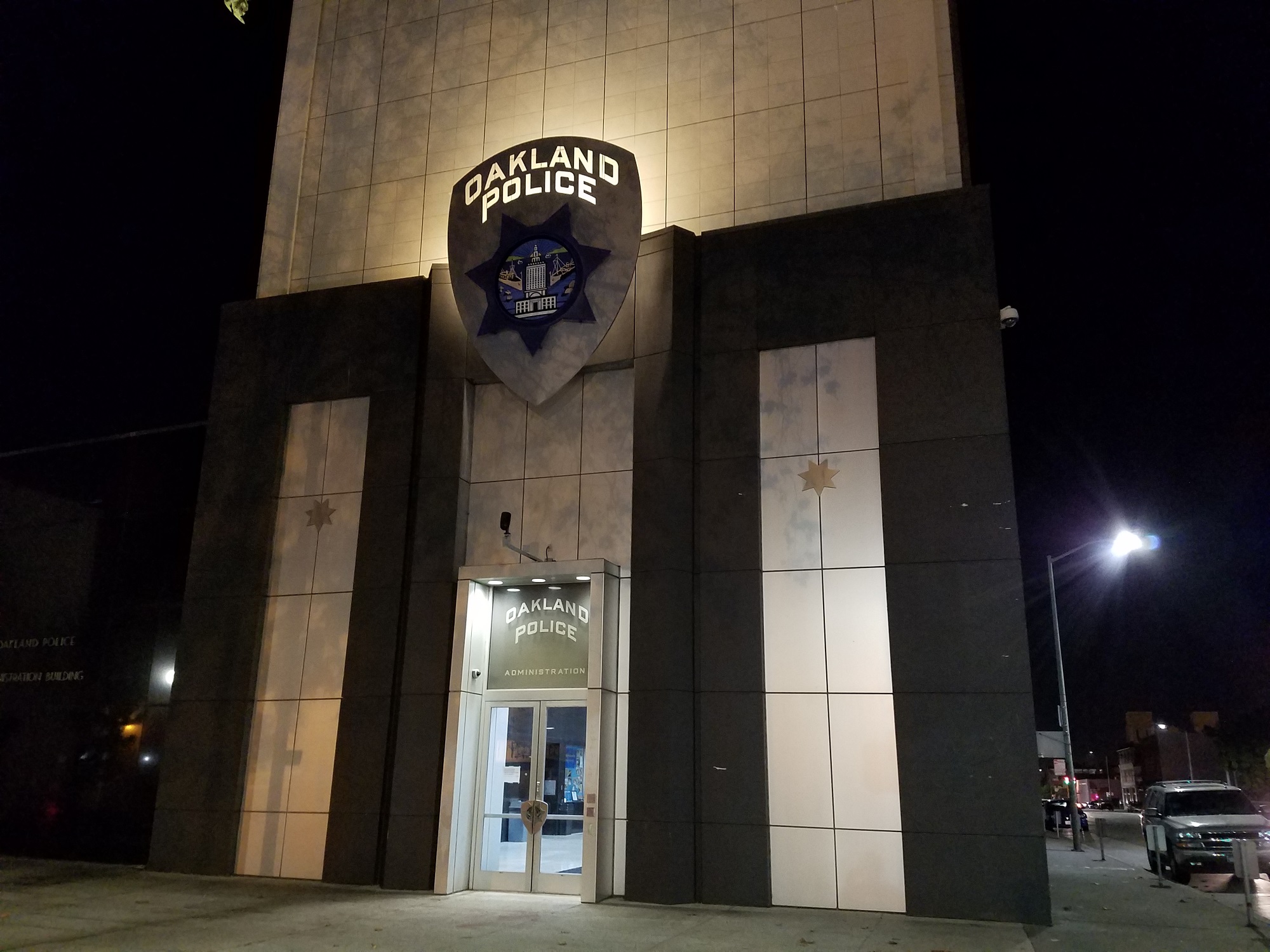
The Riders scandal sowed deep mistrust toward Oakland law enforcement, as OPD worked to reform its culture amid repeated missteps, backsliding, a revolving door of police chiefs and multiple city administrations.
After finally coming into compliance with all 51 tasks in May, it appeared that OPD was on track to be released from oversight this week.
“This is the first time in 23 years that OPD has achieved each of the 51 tasks in the [settlement agreement],” Orrick said during the spring hearing. “No one can say, ‘mission accomplished.’ But I do congratulate the city and OPD for getting this far.”
But court-appointed monitor Robert S. Warshaw’s progress report earlier this month found that OPD had again fallen below the threshold for timely investigations into severe misconduct violations, threatening that decision.
The settlement requires that at least 85% of internal affairs investigations related to “the most serious allegations of misconduct” should be completed within 180 days of reporting. Between January and March of this year, 77 of 93, or 83%, of these investigations were completed in time.
“The timeliness of [Internal Affairs Bureau] investigations is an important issue in the [negotiated settlement agreement],” Warshaw wrote. “Members of the public, as well as sworn and non-sworn employees of the Department, are entitled to learn of the results of investigations that are overseen by the Internal Affairs Bureau.”

In response to the report, Oakland’s Coalition for Police Accountability, a civilian-led advocacy group, submitted a letter to Orrick, urging him not to release the department from oversight or add additional conditions to its decision.
“Other cities have exited federal oversight only to back-slide,” the letter reads. “OPD did not bother to prioritize compliance at such a critical juncture; it seems naively optimistic to expect more energetic efforts if they are left to answer to no one.”
In the letter, the coalition accused the city of underfunding its police commission, an independent oversight body, which will assume responsibility for auditing OPD’s accountability to reforms if court oversight ends.
If OPD is released this week, the coalition argued, it should require that the city provide funding to fully staff the Office of the Inspector General, the police commission’s monitoring arm.
“The [negotiated settlement agreement] has been a 23-year project that represents an enormous amount of time and money for the City, and decades-long commitment by plaintiffs, and the Court,” the letter reads. “To terminate now, without necessary funding for independent civilian oversight, would jeopardize all that work.”
The commission wrote in its own statement to the court that they too believe their funding levels “do not provide the institutional resources the work demands.”
Still, other activist groups have urged the court to end its oversight.

Safe Oakland, a coalition of Oakland civil rights, faith, business and neighborhood leaders, wrote its own letter expressing “strong support” for concluding the settlement agreement.
“For twenty-three years, a federal court has held Oakland to the standard of constitutional policing,” Safe Oakland wrote. “The time has come for Oakland to hold itself to that standard, and for the community to share in that responsibility. We stand ready to do our part.”
Warshaw also expressed confidence in the city, despite the recent backslide: “Mayor [Barbara] Lee and her administration, as well as Chief [James] Beere, who is now the permanent Chief of Police, and OPD’s executive team, have worked diligently to foster a culture of accountability,” he wrote in his September report. “City leadership remains an imperative part of the sustainability process, and we are encouraged by the commitment of the Mayor and her team.”
In their statement to the court, attorneys for the plaintiffs John Burris and James Chanin harshly criticized the department for falling behind in compliance, calling it “incomprehensible and bitterly disappointing that OPD is once again in this position.” However, they acknowledged a transformation of the department and strides made, and urged the court to end the settlement agreement in its current form.
They have asked the court to end their role in the case, and for Orrick and Warshaw to continue their oversight for one more year, without them.
Burris told KQED that while personally, he hasn’t come to a conclusion about whether he thinks OPD should be released Tuesday, he’s hopeful that the city now has the right people in place to hold the department accountable without outside interference.
“I will say this: At some point, the department has to run itself, and the city has to be responsible,” he said.