Newsom Signs Coal Terminal Law as Oakland Wins Key Court Fight
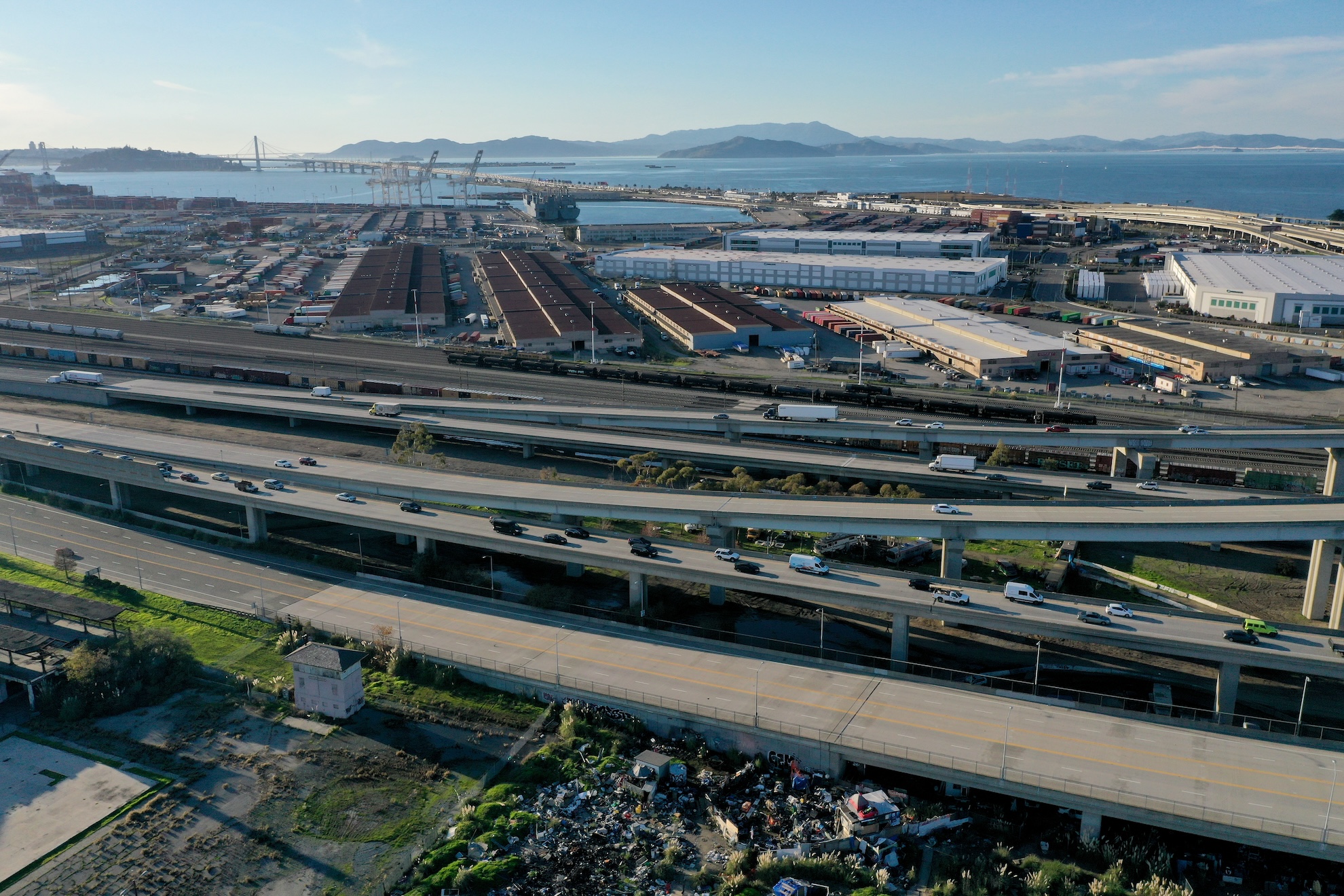
A controversial proposed coal terminal in West Oakland was dealt two major blows this week, presenting new obstacles for the Trump administration-backed project.
On Wednesday, a Kentucky federal court threw out a $1 billion lawsuit against Oakland from one of the developers behind the proposed export facility.
The company in that case, Insight Terminal Solutions, argued that the city interfered with its plans to build a facility that would process millions of tons of coal, leading to the company’s bankruptcy.
That same day, Gov. Gavin Newsom signed Assembly Bill 40 into law, which requires that developers prepare an environmental impact report before building a large-volume bulk coal facility. The law applies to any such new facility in the state but its author, Oakland Assemblymember Mia Bonta, designed the bill to apply to the so-called West Gateway Terminal project.

If approved, more than 13 million tons of coal per year would be shipped overseas from the facility and stored in the open, according to a recent report prepared for investors. After lawsuits from the city of Oakland bogged the project down for decades, the Trump administration announced a $75 million investment into the project in June.
The project, which would be built on part of the former Oakland Army Base, is being pushed by developer Oakland Bulk Oversized Terminal, and formerly by Kentucky-based ITS, which was contracted to ship the coal out of the terminal.
After a years-long legal battle with the city, OBOT succeeded through appeals last year and is still moving forward with the project. But the court drama didn’t end there. In 2025, a Kentucky bankruptcy judge found that Oakland burdened ITS, and could owe the company between $230 and $654 million.
Kicked from Kentucky court
In a higher court, however, ITS’s case ran into challenges.
In his decision Wednesday, U.S. District Judge Benjamin Beaton said he chose to abstain from the case because it likely belonged in a California court instead, and vacated the 2025 bankruptcy ruling.
“ITS’s decision to file an adversary proceeding in bankruptcy court in Kentucky, rather than to sue in the California courts, carries at least a whiff of forum shopping,” Beaton wrote.
“The City of Oakland maintained from the start that this case was improper and should be dismissed,” the Oakland city attorney’s office said in a statement. “The district court agreed, and we’re pleased with the result.”
Had Oakland been forced to pay ITS, it also could have also pushed the city to bankruptcy.
“This is wonderful news for Oakland, and I think it takes the sword off of their neck,” said Ben Eichenberg, a senior staff attorney for pollution watchdog group San Francisco Baykeeper. “It’s my hope that what this means is that the city feels it can once again take a stand representing the majority of people in Oakland who do not want this terminal.”
New roadblocks and concerns
Though the coal would not be burned in Oakland, residents and environmental justice advocates worry that coal dust from uncovered trains blowing through the city could add to existing health burdens. Parts of West and East Oakland already suffer from some of the highest asthma-related emergency room visits and hospitalization rates in the country due to pollution from highways and industrial operations.
Bonta’s Community First Coal Review Act specifically addresses West Oakland’s environmental justice concerns.
“West Oakland residents are predominantly people of color, and the life expectancy for an African American child born and raised in West Oakland is at least 15 years fewer than for a white child born and raised in wealthier Oakland neighborhoods,” reads part of the legislation.
Local advocates who have been opposing the development for years applauded the governor’s signing of AB 40.
“This clears the way for a very comprehensive examination of the environmental impacts and requirements for mitigating all of those impacts,” Ted Franklin, an organizer with No Coal in Oakland said.
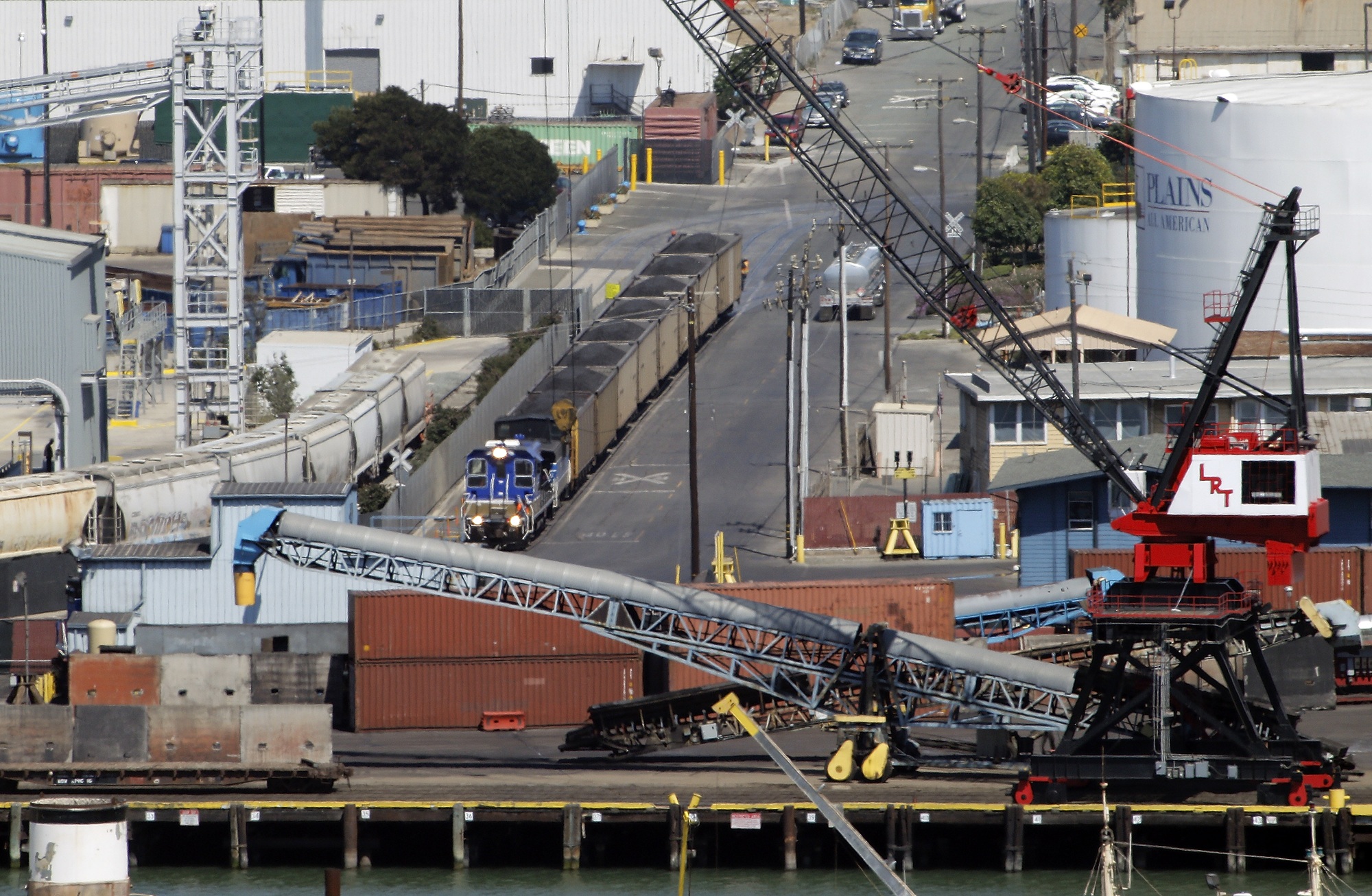
A 2023 study by UC Davis researchers looked at trains carrying coal on the way to a terminal in Richmond and found that the transportation, handling and storage of coal all significantly increase community exposure to PM 2.5, or fine particulate matter. Exposure to fine particulate matter can cause asthma and respiratory inflammation, jeopardize lung functions and even promote cancers.
“The adverse effects are borne disproportionately by the most vulnerable, including infants, children and the elderly, people of color, those with low incomes, and those with underlying health conditions,” the study’s authors wrote.
Advocates have repeatedly raised those concerns despite assurances from developers that they would make a state-of-the-art facility to minimize health impacts.
At least some of the concerns were validated by the recent investor report, which contained a surprising revelation: that the coal would be stored in “open-air bunkers.” That appeared to contradict previous assurances from developers that they would store the coal in covered silos to minimize the spread of toxic dust.
“In this incredibly windy area we live in, all that coal is gonna get blown all around and really impact the community,” Eichenberg said “And the developer had promised to have a state-of-the-art facility with everything covered. So we’re deeply disappointed that these kinds of impacts are being imposed on the community.”