A Giant La Catrina Sculpture Sends a Defiant Message From Oakland’s Latinx Community
This story was reported for K Onda KQED, a monthly newsletter focused on the Bay Area’s Latinx community. Click here to subscribe.
In the not-too-distant past, I might have argued that we had reached peak Catrina — the skeleton image linked with Día de los Muertos was everywhere from keychains to restaurant murals — and was becoming cliché.
A giant La Catrina sculpture in Oakland has proven me wrong.
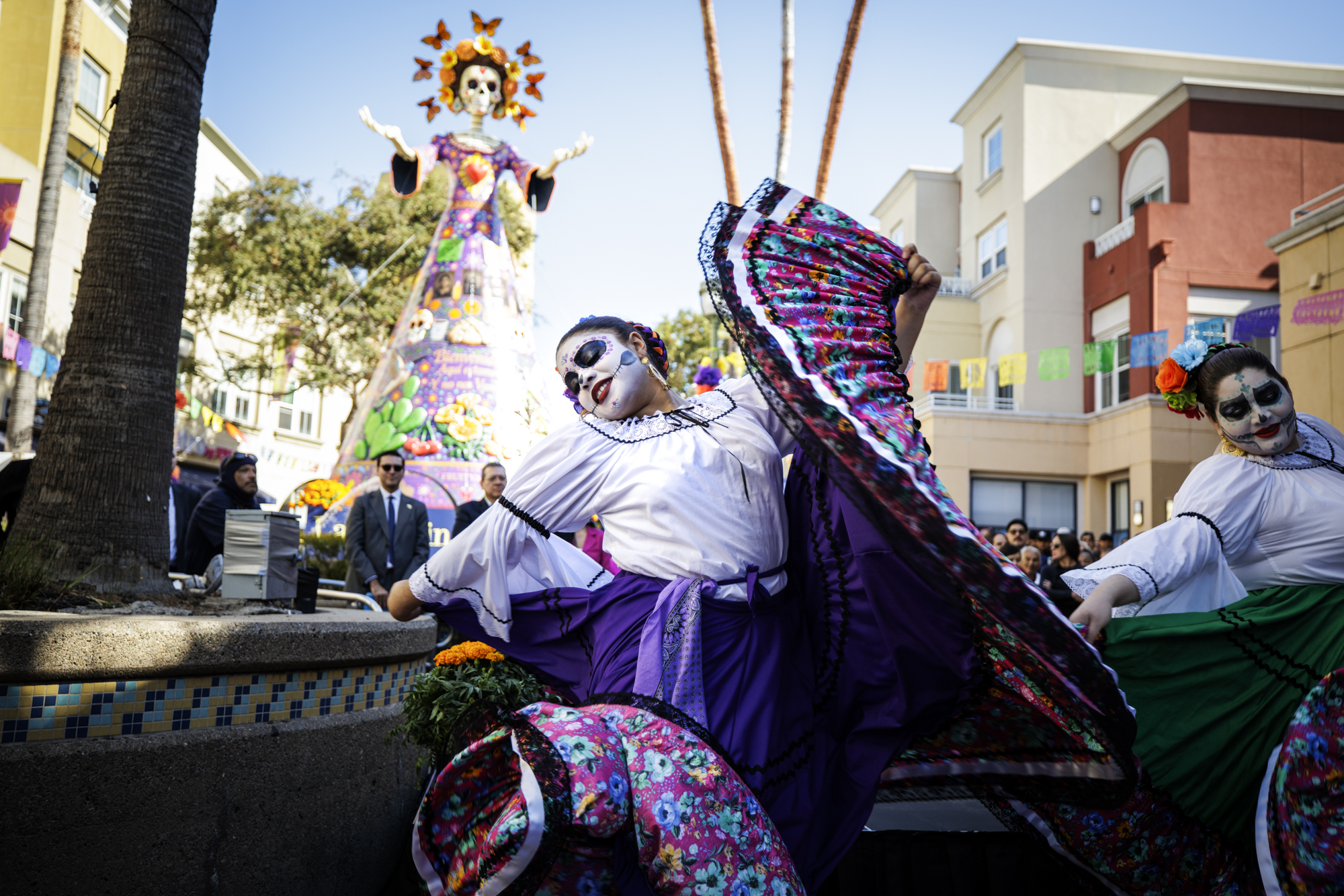
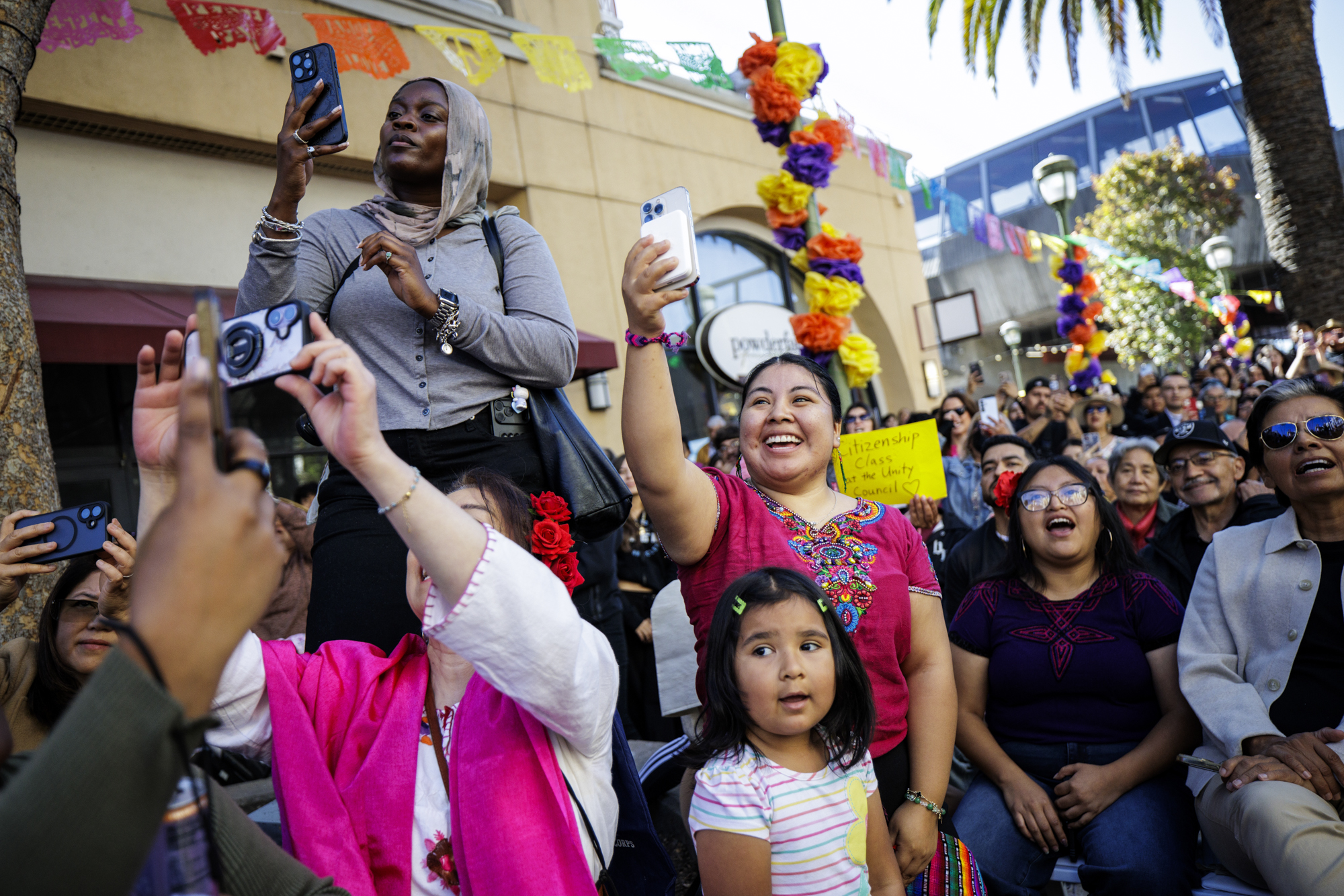
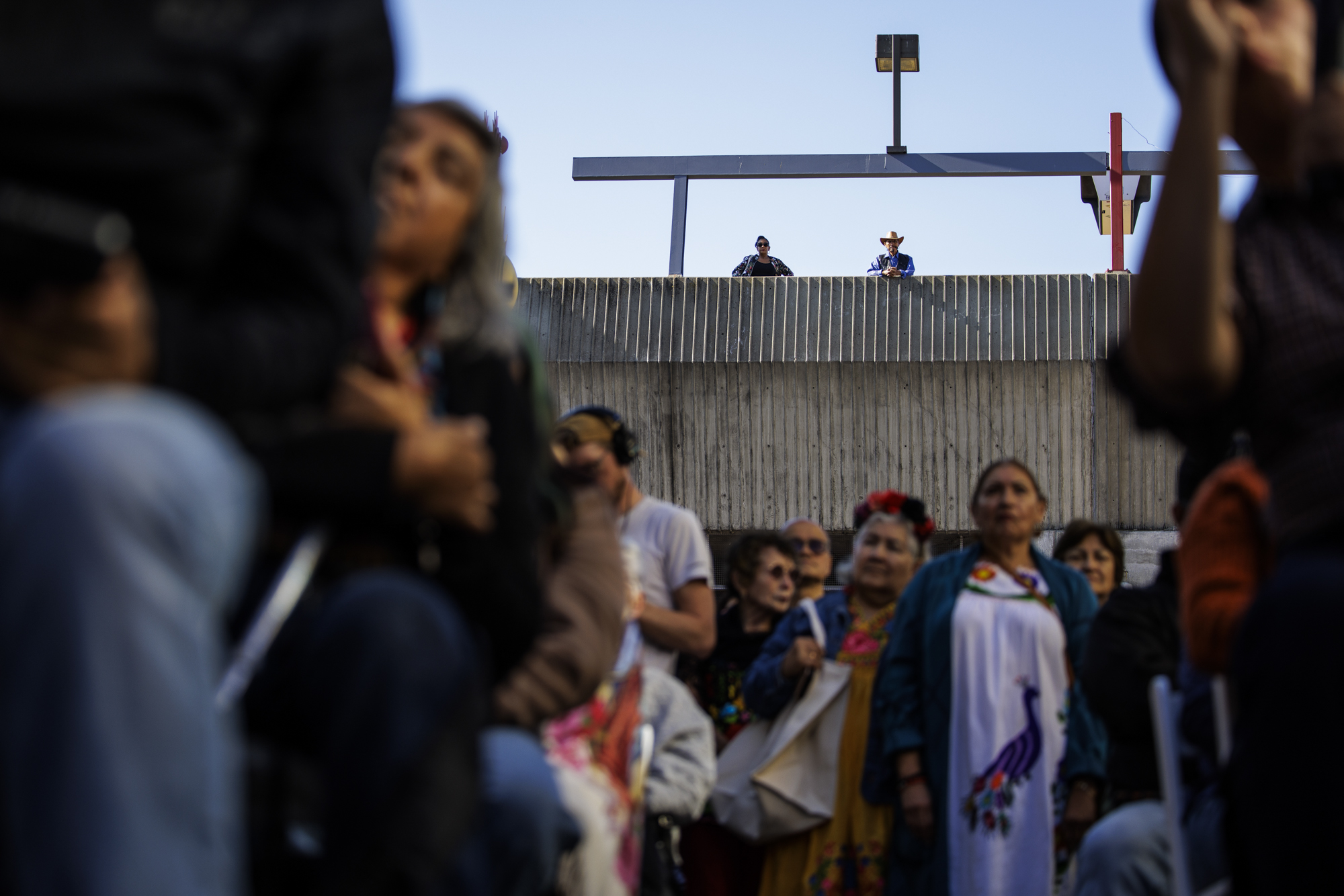
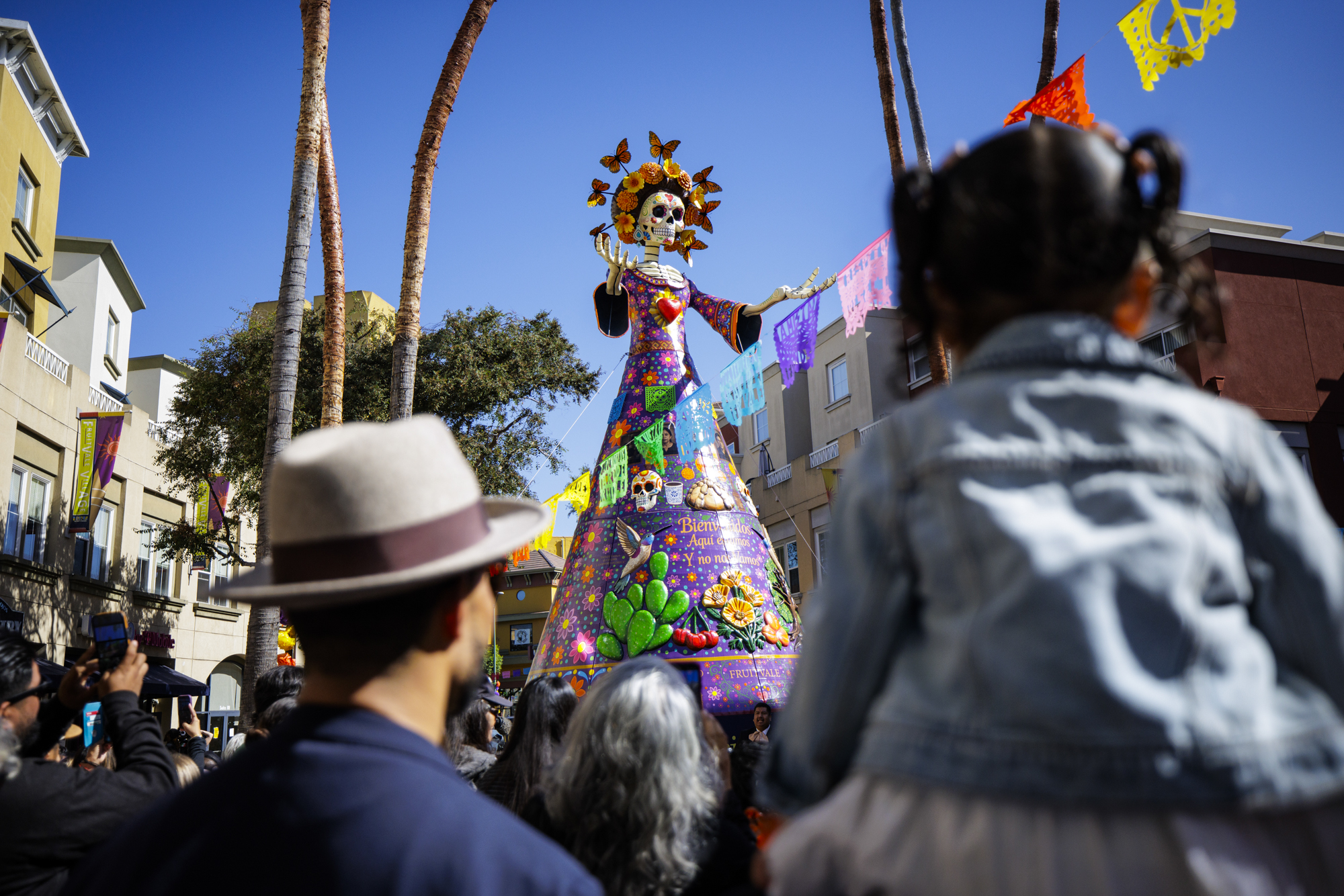
On Thursday morning, a crowd of hundreds gathered in the Fruitvale Transit Center plaza to officially welcome the towering 34-foot sculpture, with fanfare usually reserved for a foreign dignitary.
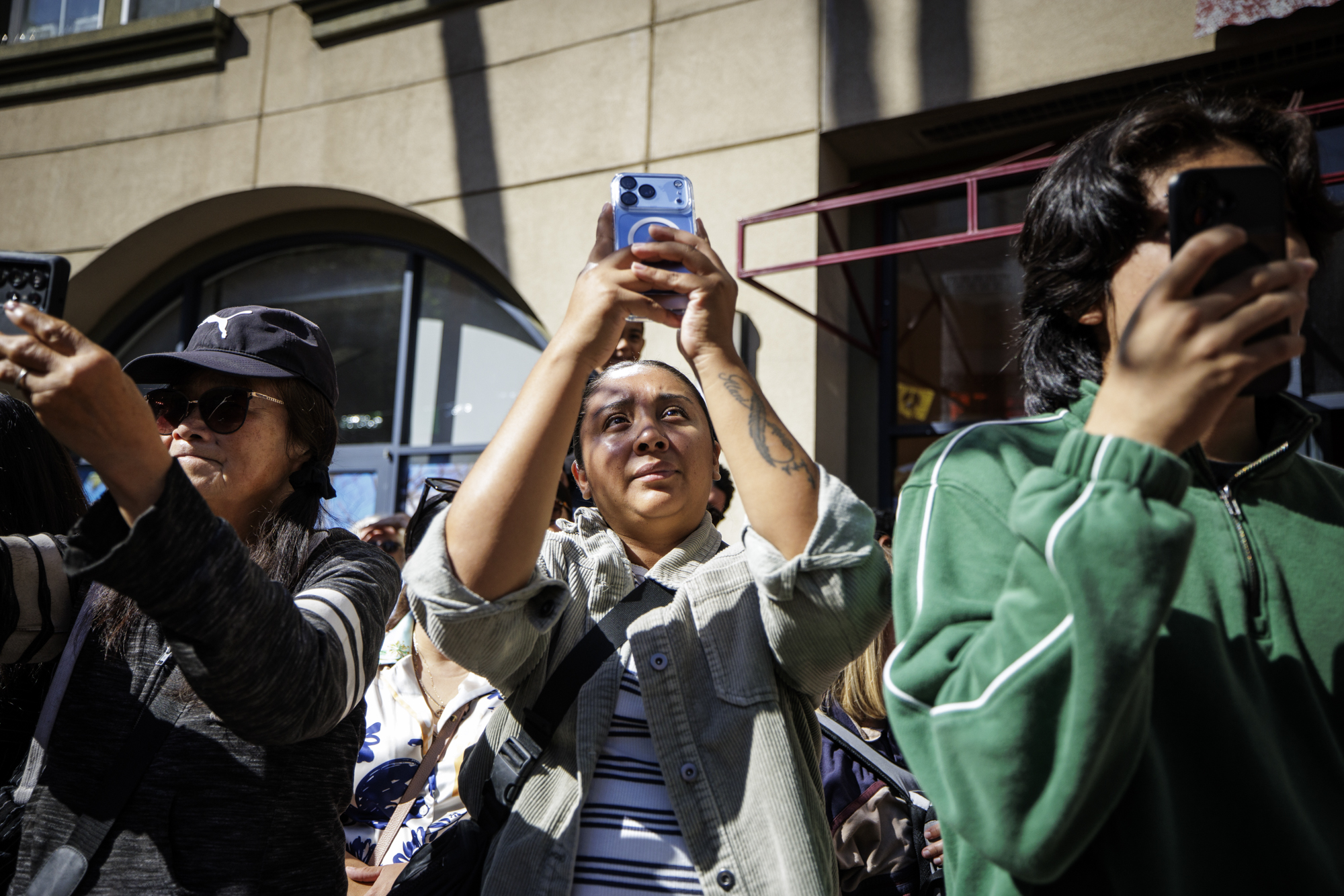
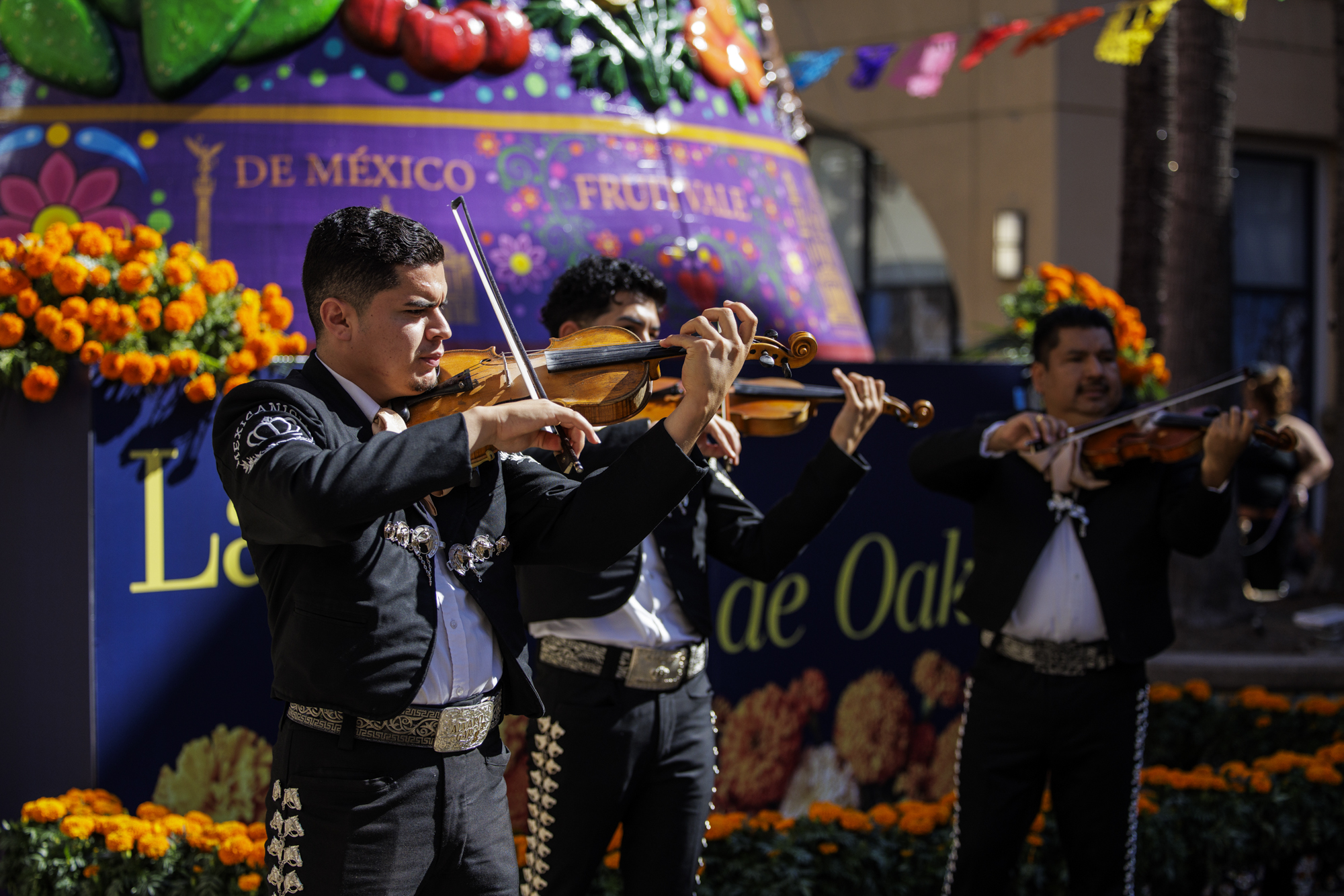
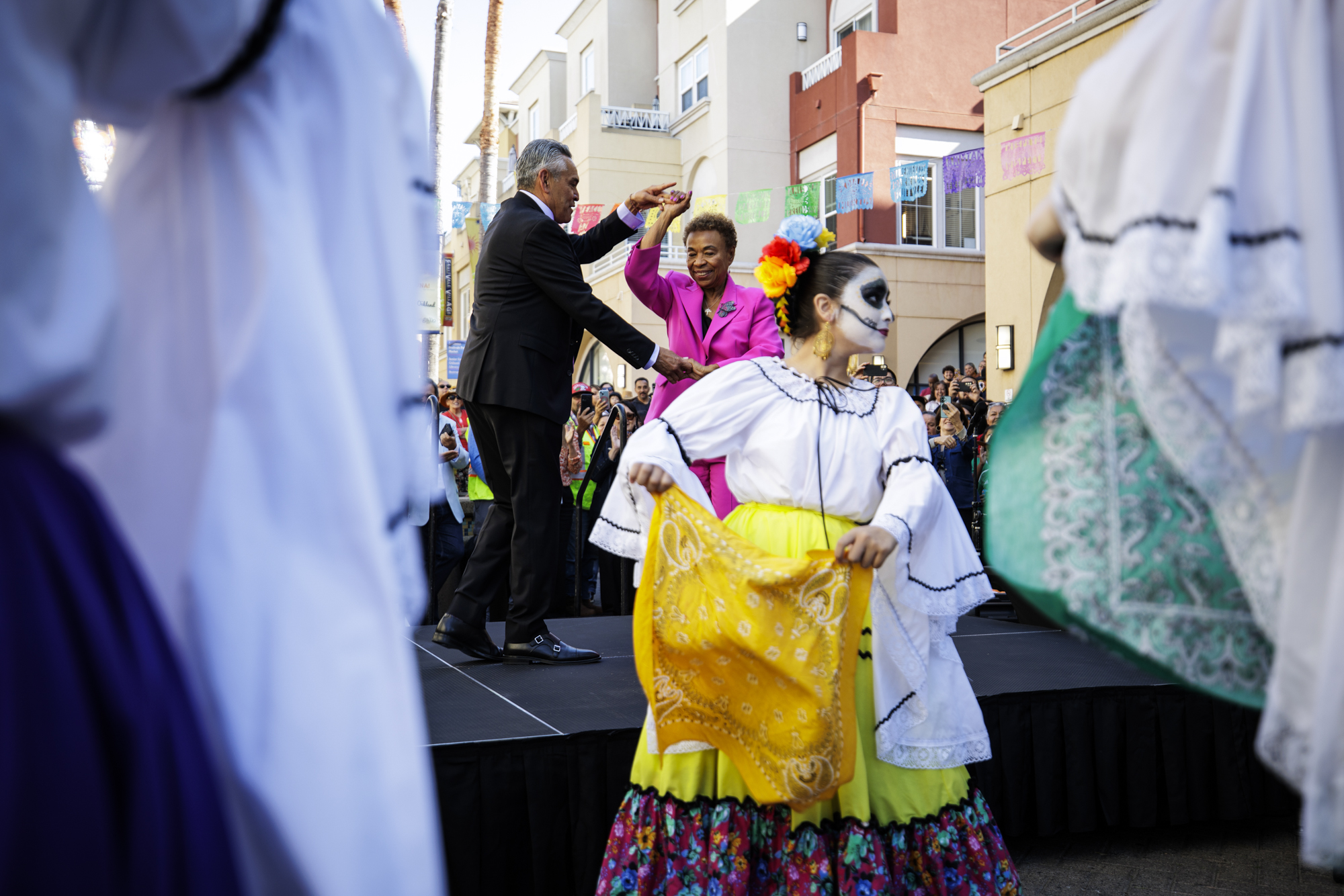
Elected officials, including Mayor Barbara Lee and the Consul General of Mexico, offered remarks. A ballet folklórico from Oakland’s Fremont High School, Turf Inc. dancers and a mariachi performed. Bystanders cheered and took selfies.
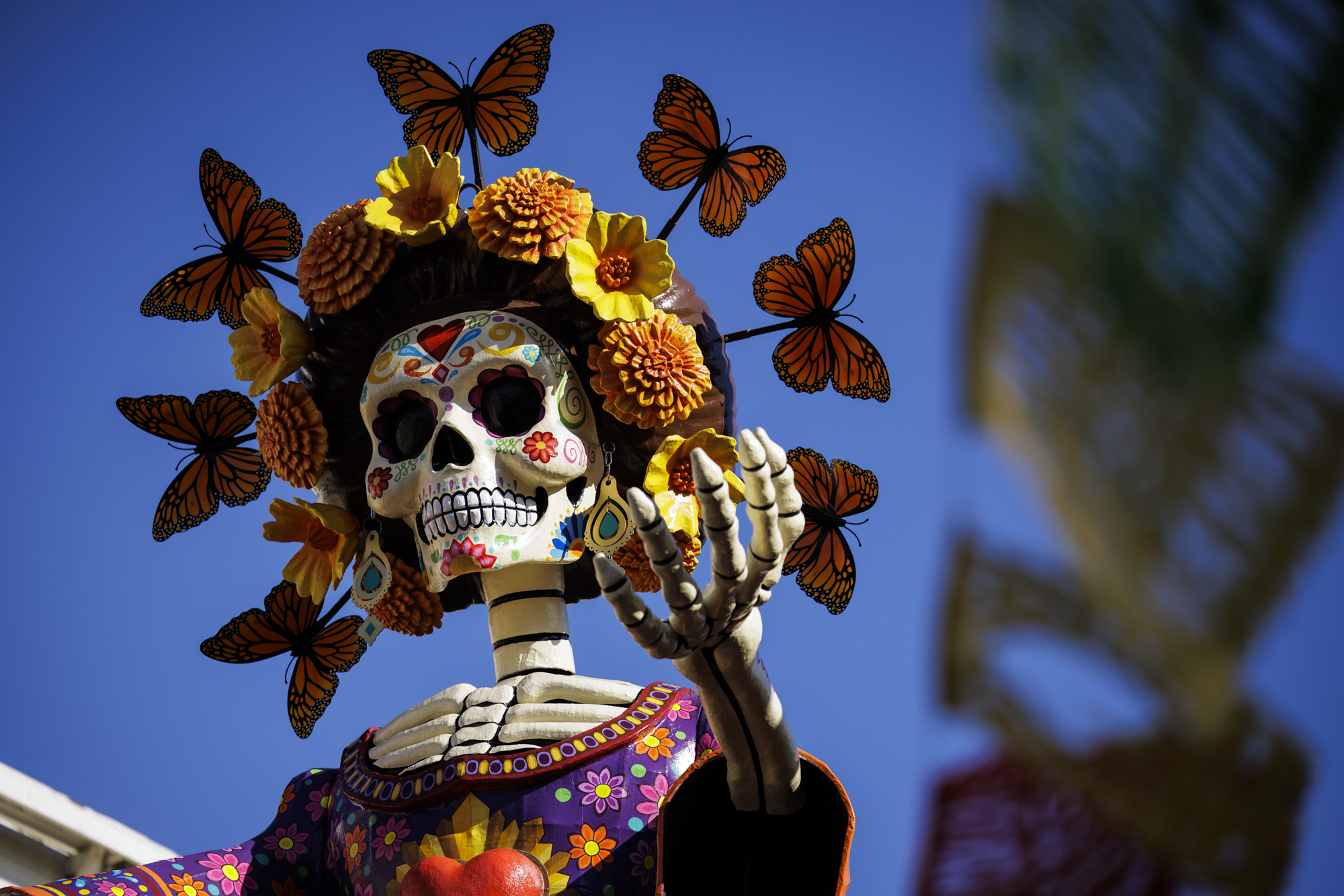
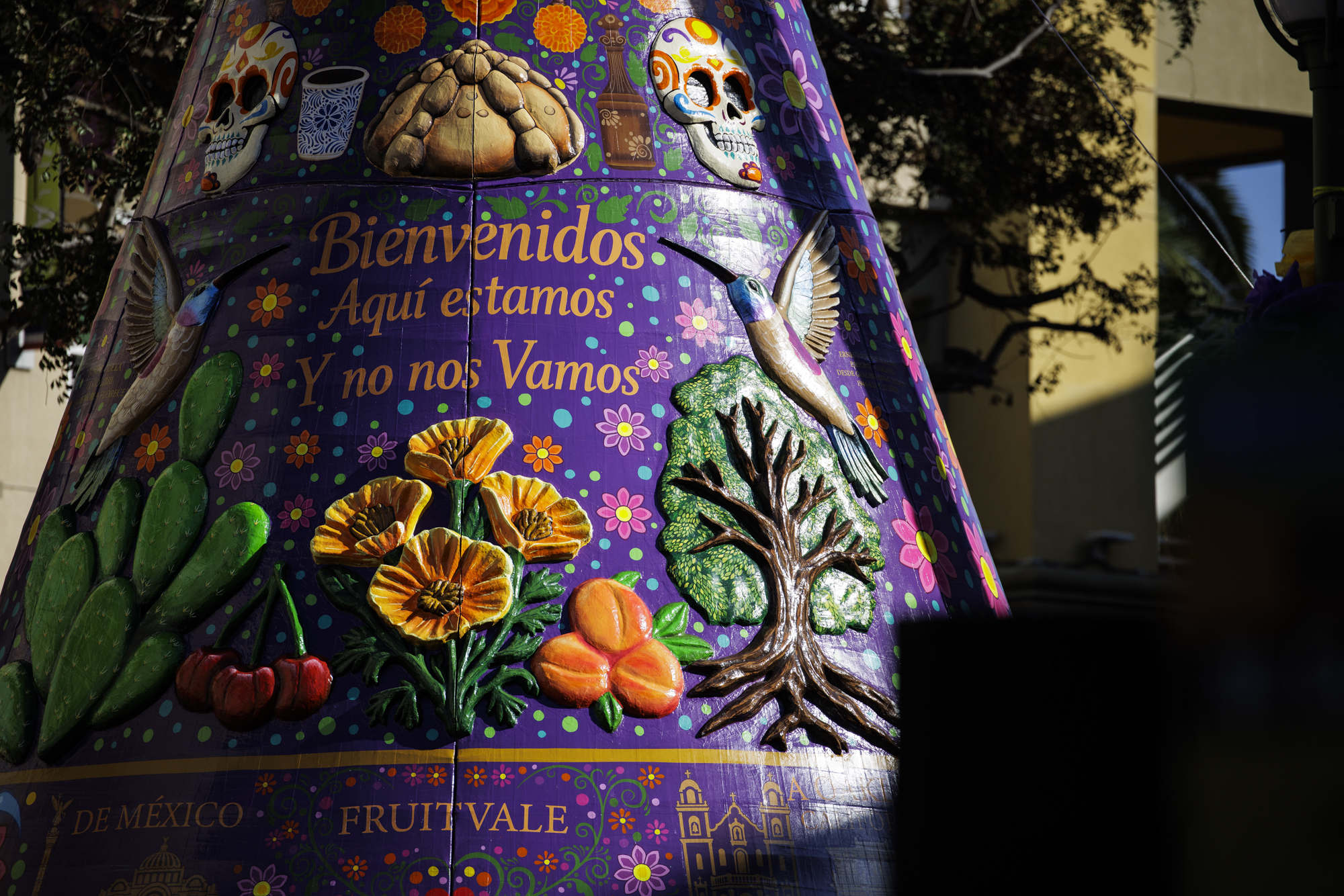
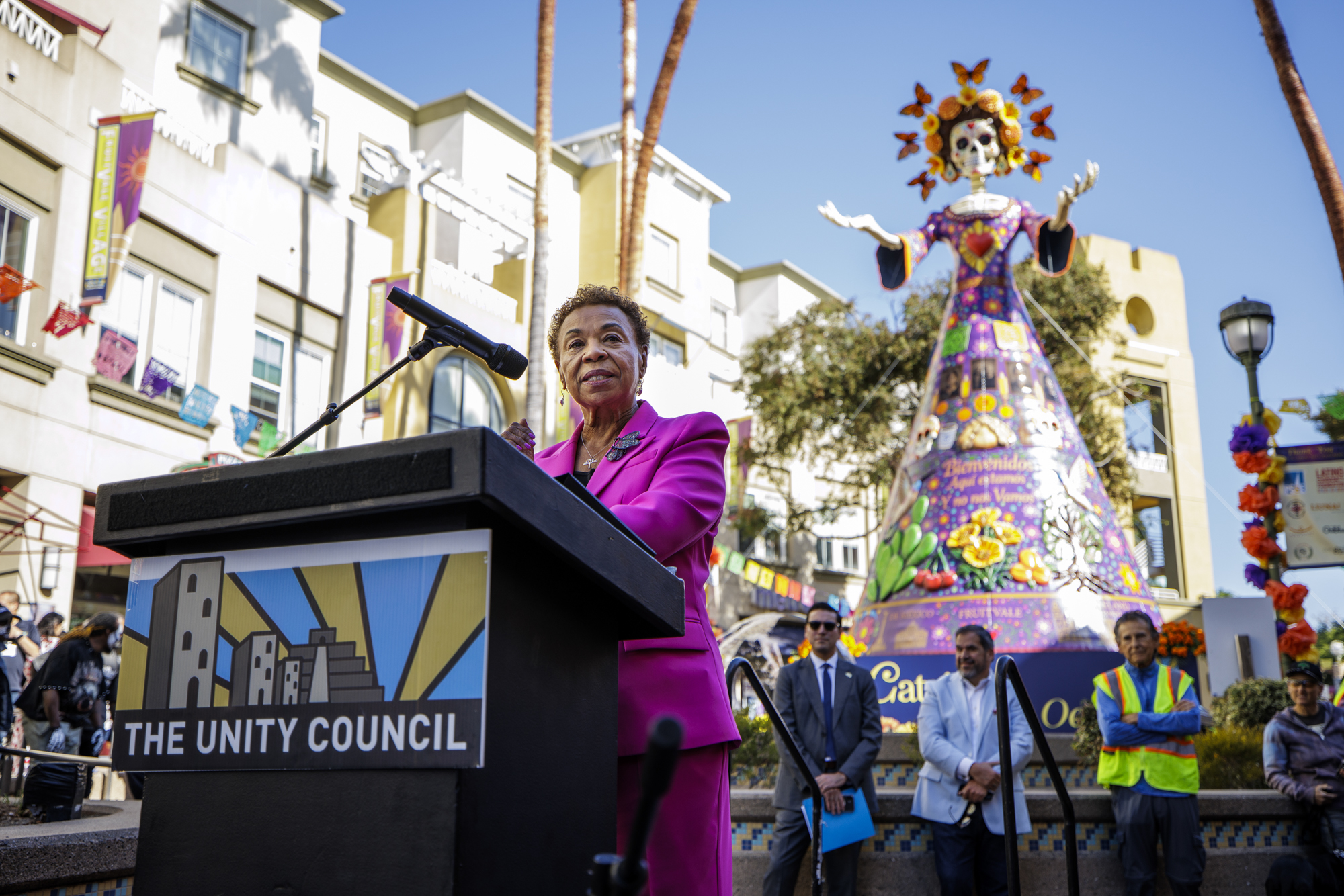
All the while, La Catrina, with her arms stretched out, seemed to offer everyone an unexpected warm hug. The skeletal figure dons a marigold crown and a purple dress covered in Mexican iconography and phrases, including “Aquí estamos y no nos vamos,” which means, “We are here and we’re not leaving.”
Last year, Chris Iglesias, CEO of Oakland nonprofit the Unity Council, saw that artists had installed massive Catrina sculptures in other cities and decided that Oakland needed one, too. The Unity Council organizes the annual Día de los Muertos festival in Fruitvale.
“Because of Día de los Muertos and how many people come out every year, and what happened last year with the theme, ‘Aquí estamos y no nos vamos,’ it’s like, let’s just build on that,” he said during the welcome ceremony. “We want to build on it in a very big way. We didn’t think he was going to be this big. She’s a big lady, right? But she’s a beautiful lady.”
The Unity Council connected with ArtSumex, a group of Mexican artists who specialize in larger-than-life Catrinas, to commission the piece, which was crafted in central Mexico and trucked to Oakland. Other groups, including Visit Oakland, the city of Oakland and the Latino Community Foundation, joined in to help cover the $65,000 cost.
Thursday’s welcome ceremony was a celebration of an amazing work of art, but also of Oakland’s community and the way Mexican culture transcends borders.
“She traveled over 2,000 miles from Mexico to Oakland,” said Caheri Gutierrez, the Unity Council’s director of fund development and communications. “A journey that mirrors the journeys of generations of families who have made their way here to El Norte, carrying their culture, traditions, dreams and hopes.
“And now she stands here in Fruitvale, the heart of Oakland’s Latino community, as the tallest Catrina in the United States.”
The speakers on Thursdays talked about the importance of honoring and uplifting immigrant communities at a time when the federal government has adopted an anti-immigrant stance and launched a harsh deportation enforcement campaign.
La Catrina, “really is a symbol of the friendship, of the connection, of the enduring legacy, of the contributions that Mexicans and Mexican Americans have made,” said Julián Castro, CEO of the Latino Community Foundation and former HUD secretary.
“During this time when the community has been targeted, when it’s been scapegoated, when it has been otherized, when it is told in so many ways that it doesn’t belong, instead, we find in this image … a beautiful, beautiful statement about joy and celebration.”
Lee talked about her childhood in El Paso, Texas, a border community where two countries converged.
“We are a town that stays true to its values for speaking up for racial justice, to defending our immigrant neighbors when their rights are being threatened and to protect our immigrant neighborhoods,” she said. “I know that immigrants give our city of Oakland its strength, its culture and its resilience. And that’s why La Catrina means so much.”
La Catrina refers to an image created by Mexican artist José Guadalupe Posada in 1912 as a satirical image making fun of Mexico’s upper classes. Skeleton imagery, however, dates back thousands of years to the indigenous people of Mexico.
In recent decades, Posada’s Catrina has become heavily associated with Día de los Muertos or Day of the Dead, a holiday in which people honor deceased loved ones and ancestors, and now represents an evolution of an ancient tradition.
Day of the Dead has slowly crept into mainstream U.S. culture thanks to movies like Disney’s Coco — and of course the holiday industrial complex that turns any celebration into an excuse to buy decor and merchandise.
I have been worried for years that oversaturation of skeleton imagery meant that it and Day of the Dead were losing significance. Catrinas depict the dead as living beings, which represents the way life and death are intertwined and the way death and the deceased are ever-present in our lives.
There is something arresting, evocative and impressive about Catrinas because skeletons aren’t supposed to laugh or smile or exude life. It’s a fascinating dichotomy, which is perhaps why La Catrina is an appropriate symbol for our current times when immigrants are under siege and yet bring so much life to our communities.
I found it endearing that the speakers at the welcome ceremony talked about La Catrina as a being who had traveled to Oakland, who would serve to welcome people stepping off BART and who would serve as an ambassador of Mexican culture.
I hope you go see her for yourself. You can visit La Catrina at the Fruitvale Transit Center plaza now through Nov. 1.