window.__IS_SSR__=true
window.__INITIAL_STATE__={
"attachmentsReducer": {
"audio_0": {
"type": "attachments",
"id": "audio_0",
"imgSizes": {
"kqedFullSize": {
"file": "https://ww2.kqed.org/news/wp-content/themes/KQED-unified/img/audio_bgs/background0.jpg"
}
}
},
"audio_1": {
"type": "attachments",
"id": "audio_1",
"imgSizes": {
"kqedFullSize": {
"file": "https://ww2.kqed.org/news/wp-content/themes/KQED-unified/img/audio_bgs/background1.jpg"
}
}
},
"audio_2": {
"type": "attachments",
"id": "audio_2",
"imgSizes": {
"kqedFullSize": {
"file": "https://ww2.kqed.org/news/wp-content/themes/KQED-unified/img/audio_bgs/background2.jpg"
}
}
},
"audio_3": {
"type": "attachments",
"id": "audio_3",
"imgSizes": {
"kqedFullSize": {
"file": "https://ww2.kqed.org/news/wp-content/themes/KQED-unified/img/audio_bgs/background3.jpg"
}
}
},
"audio_4": {
"type": "attachments",
"id": "audio_4",
"imgSizes": {
"kqedFullSize": {
"file": "https://ww2.kqed.org/news/wp-content/themes/KQED-unified/img/audio_bgs/background4.jpg"
}
}
},
"placeholder": {
"type": "attachments",
"id": "placeholder",
"imgSizes": {
"thumbnail": {
"file": "https://cdn.kqed.org/wp-content/uploads/2024/12/KQED-Default-Image-816638274-2000x1333-1-160x107.jpg",
"width": 160,
"height": 107,
"mimeType": "image/jpeg"
},
"medium": {
"file": "https://cdn.kqed.org/wp-content/uploads/2024/12/KQED-Default-Image-816638274-2000x1333-1-800x533.jpg",
"width": 800,
"height": 533,
"mimeType": "image/jpeg"
},
"medium_large": {
"file": "https://cdn.kqed.org/wp-content/uploads/2024/12/KQED-Default-Image-816638274-2000x1333-1-768x512.jpg",
"width": 768,
"height": 512,
"mimeType": "image/jpeg"
},
"large": {
"file": "https://cdn.kqed.org/wp-content/uploads/2024/12/KQED-Default-Image-816638274-2000x1333-1-1020x680.jpg",
"width": 1020,
"height": 680,
"mimeType": "image/jpeg"
},
"1536x1536": {
"file": "https://cdn.kqed.org/wp-content/uploads/2024/12/KQED-Default-Image-816638274-2000x1333-1-1536x1024.jpg",
"width": 1536,
"height": 1024,
"mimeType": "image/jpeg"
},
"fd-lrg": {
"file": "https://cdn.kqed.org/wp-content/uploads/2024/12/KQED-Default-Image-816638274-2000x1333-1-1536x1024.jpg",
"width": 1536,
"height": 1024,
"mimeType": "image/jpeg"
},
"fd-med": {
"file": "https://cdn.kqed.org/wp-content/uploads/2024/12/KQED-Default-Image-816638274-2000x1333-1-1020x680.jpg",
"width": 1020,
"height": 680,
"mimeType": "image/jpeg"
},
"fd-sm": {
"file": "https://cdn.kqed.org/wp-content/uploads/2024/12/KQED-Default-Image-816638274-2000x1333-1-800x533.jpg",
"width": 800,
"height": 533,
"mimeType": "image/jpeg"
},
"post-thumbnail": {
"file": "https://cdn.kqed.org/wp-content/uploads/2024/12/KQED-Default-Image-816638274-2000x1333-1-672x372.jpg",
"width": 672,
"height": 372,
"mimeType": "image/jpeg"
},
"twentyfourteen-full-width": {
"file": "https://cdn.kqed.org/wp-content/uploads/2024/12/KQED-Default-Image-816638274-2000x1333-1-1038x576.jpg",
"width": 1038,
"height": 576,
"mimeType": "image/jpeg"
},
"xxsmall": {
"file": "https://cdn.kqed.org/wp-content/uploads/2024/12/KQED-Default-Image-816638274-2000x1333-1-160x107.jpg",
"width": 160,
"height": 107,
"mimeType": "image/jpeg"
},
"xsmall": {
"file": "https://cdn.kqed.org/wp-content/uploads/2024/12/KQED-Default-Image-816638274-2000x1333-1-672x372.jpg",
"width": 672,
"height": 372,
"mimeType": "image/jpeg"
},
"small": {
"file": "https://cdn.kqed.org/wp-content/uploads/2024/12/KQED-Default-Image-816638274-2000x1333-1-672x372.jpg",
"width": 672,
"height": 372,
"mimeType": "image/jpeg"
},
"xlarge": {
"file": "https://cdn.kqed.org/wp-content/uploads/2024/12/KQED-Default-Image-816638274-2000x1333-1-1020x680.jpg",
"width": 1020,
"height": 680,
"mimeType": "image/jpeg"
},
"full-width": {
"file": "https://cdn.kqed.org/wp-content/uploads/2024/12/KQED-Default-Image-816638274-2000x1333-1-1920x1280.jpg",
"width": 1920,
"height": 1280,
"mimeType": "image/jpeg"
},
"guest-author-32": {
"file": "https://cdn.kqed.org/wp-content/uploads/2025/01/KQED-Default-Image-816638274-1333x1333-1-160x160.jpg",
"width": 32,
"height": 32,
"mimeType": "image/jpeg"
},
"guest-author-50": {
"file": "https://cdn.kqed.org/wp-content/uploads/2025/01/KQED-Default-Image-816638274-1333x1333-1-160x160.jpg",
"width": 50,
"height": 50,
"mimeType": "image/jpeg"
},
"guest-author-64": {
"file": "https://cdn.kqed.org/wp-content/uploads/2025/01/KQED-Default-Image-816638274-1333x1333-1-160x160.jpg",
"width": 64,
"height": 64,
"mimeType": "image/jpeg"
},
"guest-author-96": {
"file": "https://cdn.kqed.org/wp-content/uploads/2025/01/KQED-Default-Image-816638274-1333x1333-1-160x160.jpg",
"width": 96,
"height": 96,
"mimeType": "image/jpeg"
},
"guest-author-128": {
"file": "https://cdn.kqed.org/wp-content/uploads/2025/01/KQED-Default-Image-816638274-1333x1333-1-160x160.jpg",
"width": 128,
"height": 128,
"mimeType": "image/jpeg"
},
"detail": {
"file": "https://cdn.kqed.org/wp-content/uploads/2025/01/KQED-Default-Image-816638274-1333x1333-1-160x160.jpg",
"width": 160,
"height": 160,
"mimeType": "image/jpeg"
},
"kqedFullSize": {
"file": "https://cdn.kqed.org/wp-content/uploads/2024/12/KQED-Default-Image-816638274-2000x1333-1.jpg",
"width": 2000,
"height": 1333
}
}
},
"news_11905986": {
"type": "attachments",
"id": "news_11905986",
"meta": {
"index": "attachments_1716263798",
"site": "news",
"id": "11905986",
"found": true
},
"parent": 11905982,
"imgSizes": {
"twentyfourteen-full-width": {
"file": "https://ww2.kqed.org/app/uploads/sites/10/2022/02/IMG_7916-2-1038x576.jpg",
"width": 1038,
"mimeType": "image/jpeg",
"height": 576
},
"thumbnail": {
"file": "https://ww2.kqed.org/app/uploads/sites/10/2022/02/IMG_7916-2-160x126.jpg",
"width": 160,
"mimeType": "image/jpeg",
"height": 126
},
"post-thumbnail": {
"file": "https://ww2.kqed.org/app/uploads/sites/10/2022/02/IMG_7916-2-672x372.jpg",
"width": 672,
"mimeType": "image/jpeg",
"height": 372
},
"kqedFullSize": {
"file": "https://ww2.kqed.org/app/uploads/sites/10/2022/02/IMG_7916-2.jpg",
"width": 1920,
"height": 1512
},
"large": {
"file": "https://ww2.kqed.org/app/uploads/sites/10/2022/02/IMG_7916-2-1020x803.jpg",
"width": 1020,
"mimeType": "image/jpeg",
"height": 803
},
"1536x1536": {
"file": "https://ww2.kqed.org/app/uploads/sites/10/2022/02/IMG_7916-2-1536x1210.jpg",
"width": 1536,
"mimeType": "image/jpeg",
"height": 1210
},
"medium": {
"file": "https://ww2.kqed.org/app/uploads/sites/10/2022/02/IMG_7916-2-800x630.jpg",
"width": 800,
"mimeType": "image/jpeg",
"height": 630
}
},
"publishDate": 1645466711,
"modified": 1645562058,
"caption": "Jayvien Bolden and Nailah Williams, both graduates of OUSD schools, participated in a rally on MacArthur Boulevard in Oakland on Saturday, Feb. 19, 2022.",
"description": null,
"title": "IMG_7916 (2)",
"credit": "Annelise Finney/KQED",
"status": "inherit",
"altTag": "A young man, left, holds a picket sign reading \"keep our schools open\" while yelling to a passing car, a young woman holds another sign that is cut off from the photo, behind him, with blue skies behind them.",
"isLoading": false,
"fetchFailed": false
},
"news_11904516": {
"type": "attachments",
"id": "news_11904516",
"meta": {
"index": "attachments_1716263798",
"site": "news",
"id": "11904516",
"found": true
},
"parent": 11904511,
"imgSizes": {
"twentyfourteen-full-width": {
"file": "https://ww2.kqed.org/app/uploads/sites/10/2022/02/tuesday_020822_final-1038x576.png",
"width": 1038,
"mimeType": "image/png",
"height": 576
},
"thumbnail": {
"file": "https://ww2.kqed.org/app/uploads/sites/10/2022/02/tuesday_020822_final-160x114.png",
"width": 160,
"mimeType": "image/png",
"height": 114
},
"post-thumbnail": {
"file": "https://ww2.kqed.org/app/uploads/sites/10/2022/02/tuesday_020822_final-672x372.png",
"width": 672,
"mimeType": "image/png",
"height": 372
},
"kqedFullSize": {
"file": "https://ww2.kqed.org/app/uploads/sites/10/2022/02/tuesday_020822_final.png",
"width": 1920,
"height": 1369
},
"large": {
"file": "https://ww2.kqed.org/app/uploads/sites/10/2022/02/tuesday_020822_final-1020x727.png",
"width": 1020,
"mimeType": "image/png",
"height": 727
},
"1536x1536": {
"file": "https://ww2.kqed.org/app/uploads/sites/10/2022/02/tuesday_020822_final-1536x1095.png",
"width": 1536,
"mimeType": "image/png",
"height": 1095
},
"medium": {
"file": "https://ww2.kqed.org/app/uploads/sites/10/2022/02/tuesday_020822_final-800x570.png",
"width": 800,
"mimeType": "image/png",
"height": 570
}
},
"publishDate": 1644362372,
"modified": 1644362474,
"caption": null,
"description": null,
"title": "tuesday_020822_final",
"credit": null,
"status": "inherit",
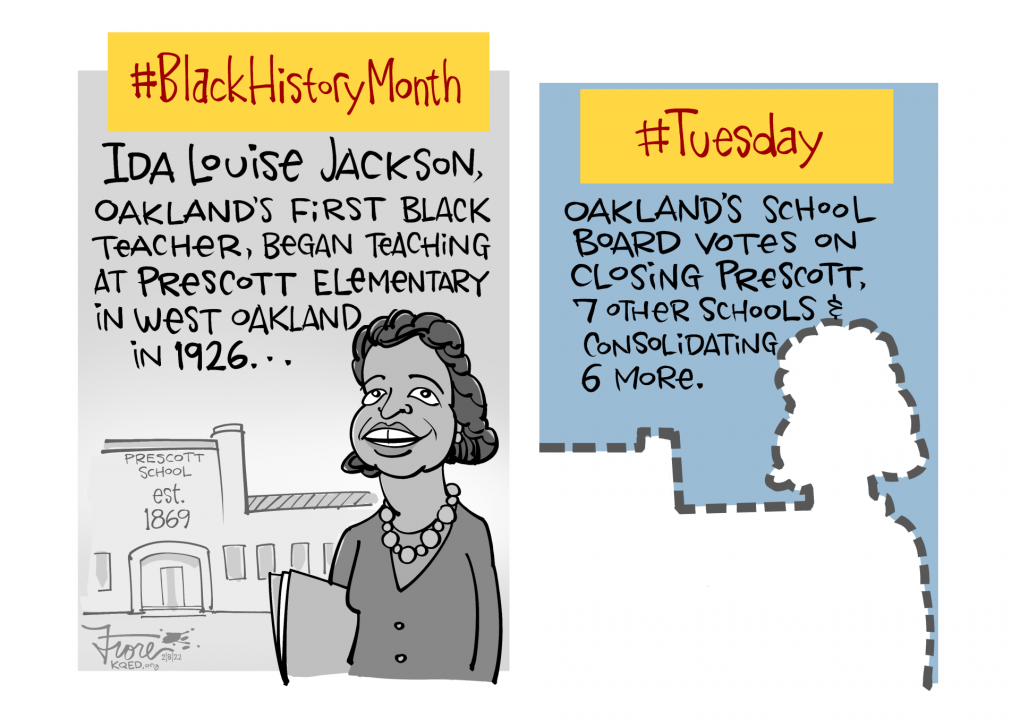
"altTag": "Cartoon: one panel is titled #BlackHistoryMonth and features Ida Louise Jackson, Oakland's first teacher who taught at Prescott School in West Oakland. The second panel is titled, \"#Tuesday\" and shows a missing piece with no Jackson or school, the caption says, \"Oakland's school board votes on closing Prescott...\"",
"isLoading": false,
"fetchFailed": false
},
"news_11897945": {
"type": "attachments",
"id": "news_11897945",
"meta": {
"index": "attachments_1716263798",
"site": "news",
"id": "11897945",
"found": true
},
"parent": 11897919,
"imgSizes": {
"twentyfourteen-full-width": {
"file": "https://ww2.kqed.org/app/uploads/sites/10/2021/12/GettyImages-1351114790-1024x576.jpg",
"width": 1024,
"mimeType": "image/jpeg",
"height": 576
},
"thumbnail": {
"file": "https://ww2.kqed.org/app/uploads/sites/10/2021/12/GettyImages-1351114790-160x105.jpg",
"width": 160,
"mimeType": "image/jpeg",
"height": 105
},
"post-thumbnail": {
"file": "https://ww2.kqed.org/app/uploads/sites/10/2021/12/GettyImages-1351114790-672x372.jpg",
"width": 672,
"mimeType": "image/jpeg",
"height": 372
},
"kqedFullSize": {
"file": "https://ww2.kqed.org/app/uploads/sites/10/2021/12/GettyImages-1351114790.jpg",
"width": 1024,
"height": 674
},
"large": {
"file": "https://ww2.kqed.org/app/uploads/sites/10/2021/12/GettyImages-1351114790-1020x671.jpg",
"width": 1020,
"mimeType": "image/jpeg",
"height": 671
},
"medium": {
"file": "https://ww2.kqed.org/app/uploads/sites/10/2021/12/GettyImages-1351114790-800x527.jpg",
"width": 800,
"mimeType": "image/jpeg",
"height": 527
}
},
"publishDate": 1638492139,
"modified": 1638495983,
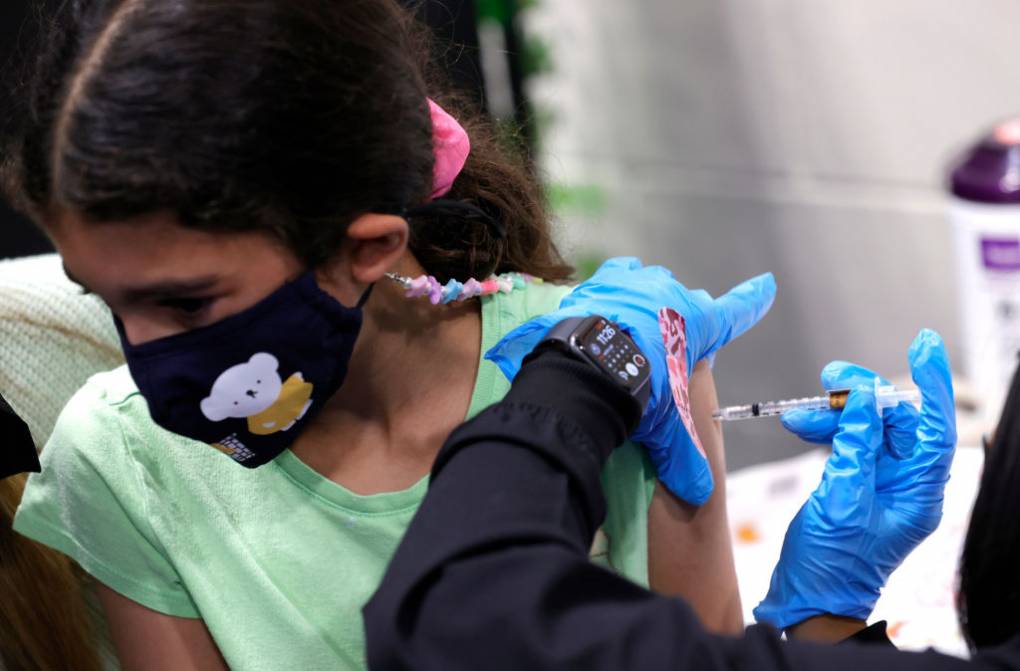
"caption": "Eight-year-old Ava Onaissi receives a pediatric Pfizer COVID-19 vaccination during a vaccine clinic at Emmanuel Baptist Church on Nov. 3, 2021, in San José, California.",
"description": null,
"title": "Vaccinations Offered For Children Age 5-11 At A Church In San Jose",
"credit": "Justin Sullivan/Getty Images",
"status": "inherit",
"altTag": "A young girl wearing a mask gets vaccinated.",
"isLoading": false,
"fetchFailed": false
},
"news_11898153": {
"type": "attachments",
"id": "news_11898153",
"meta": {
"index": "attachments_1716263798",
"site": "news",
"id": "11898153",
"found": true
},
"parent": 11898137,
"imgSizes": {
"twentyfourteen-full-width": {
"file": "https://ww2.kqed.org/app/uploads/sites/10/2021/12/Oak_Tech_137-1200x750-1-1038x576.jpg",
"width": 1038,
"mimeType": "image/jpeg",
"height": 576
},
"thumbnail": {
"file": "https://ww2.kqed.org/app/uploads/sites/10/2021/12/Oak_Tech_137-1200x750-1-160x100.jpg",
"width": 160,
"mimeType": "image/jpeg",
"height": 100
},
"post-thumbnail": {
"file": "https://ww2.kqed.org/app/uploads/sites/10/2021/12/Oak_Tech_137-1200x750-1-672x372.jpg",
"width": 672,
"mimeType": "image/jpeg",
"height": 372
},
"kqedFullSize": {
"file": "https://ww2.kqed.org/app/uploads/sites/10/2021/12/Oak_Tech_137-1200x750-1.jpg",
"width": 1200,
"height": 750
},
"large": {
"file": "https://ww2.kqed.org/app/uploads/sites/10/2021/12/Oak_Tech_137-1200x750-1-1020x638.jpg",
"width": 1020,
"mimeType": "image/jpeg",
"height": 638
},
"medium": {
"file": "https://ww2.kqed.org/app/uploads/sites/10/2021/12/Oak_Tech_137-1200x750-1-800x500.jpg",
"width": 800,
"mimeType": "image/jpeg",
"height": 500
}
},
"publishDate": 1638760390,
"modified": 1638841382,
"caption": "High school students participate in Art 1 at Oakland Technical High School in Oakland, Calif., on Monday, May 1, 2017.",
"description": null,
"title": "Oakland Tech",
"credit": "Alison Yin/EdSource",
"status": "inherit",
"altTag": "Three students sit at a table with an open book in a classroom, apparently studying.",
"isLoading": false,
"fetchFailed": false
},
"news_11896896": {
"type": "attachments",
"id": "news_11896896",
"meta": {
"index": "attachments_1716263798",
"site": "news",
"id": "11896896",
"found": true
},
"parent": 11896682,
"imgSizes": {
"twentyfourteen-full-width": {
"file": "https://ww2.kqed.org/app/uploads/sites/10/2021/11/RS52564_IMG_5118-qut-1020x765-1-986x576.jpg",
"width": 986,
"mimeType": "image/jpeg",
"height": 576
},
"thumbnail": {
"file": "https://ww2.kqed.org/app/uploads/sites/10/2021/11/RS52564_IMG_5118-qut-1020x765-1-160x107.jpg",
"width": 160,
"mimeType": "image/jpeg",
"height": 107
},
"post-thumbnail": {
"file": "https://ww2.kqed.org/app/uploads/sites/10/2021/11/RS52564_IMG_5118-qut-1020x765-1-672x372.jpg",
"width": 672,
"mimeType": "image/jpeg",
"height": 372
},
"kqedFullSize": {
"file": "https://ww2.kqed.org/app/uploads/sites/10/2021/11/RS52564_IMG_5118-qut-1020x765-1.jpg",
"width": 986,
"height": 658
},
"medium": {
"file": "https://ww2.kqed.org/app/uploads/sites/10/2021/11/RS52564_IMG_5118-qut-1020x765-1-800x534.jpg",
"width": 800,
"mimeType": "image/jpeg",
"height": 534
}
},
"publishDate": 1637357272,
"modified": 1637793551,
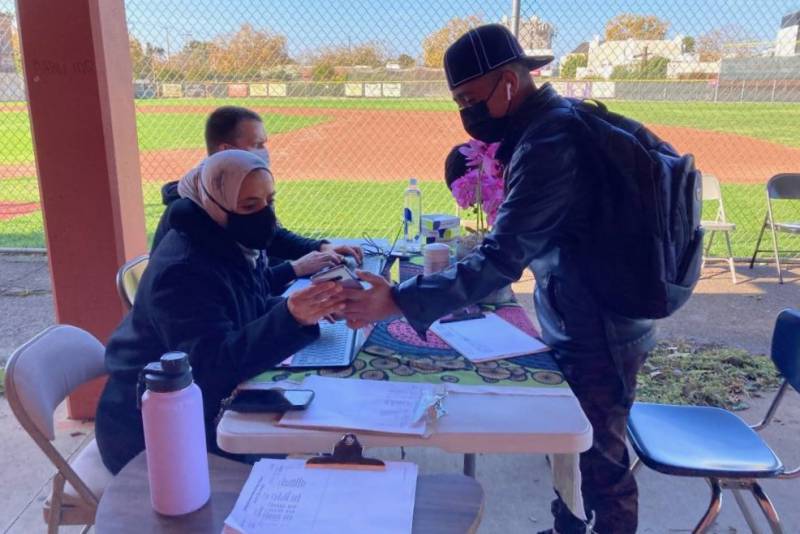
"caption": "Oakland International High School (OIHS) community school manager Madenh Hassan registers students to be vaccinated at a pop-up vaccine clinic on campus. The district's student vaccination mandate kicks in January 1, 2022.",
"description": "Oakland International High School community school manager Madenh Hassan registers students to be vaccinated at a pop up vaccine clinic on campus.",
"title": "RS52564_IMG_5118-qut-1020x765",
"credit": "Vanessa Rancaño/KQED",
"status": "inherit",
"altTag": "A student wearing a facemask stands in front of a table in a school courtyard and shows their phone to an administrator who is sitting down.",
"isLoading": false,
"fetchFailed": false
},
"news_11887213": {
"type": "attachments",
"id": "news_11887213",
"meta": {
"index": "attachments_1716263798",
"site": "news",
"id": "11887213",
"found": true
},
"parent": 11887194,
"imgSizes": {
"twentyfourteen-full-width": {
"file": "https://ww2.kqed.org/app/uploads/sites/10/2021/09/RS48265_017_Oakland_SchoolReopening_03302021-qut-1038x576.jpeg",
"width": 1038,
"mimeType": "image/jpeg",
"height": 576
},
"thumbnail": {
"file": "https://ww2.kqed.org/app/uploads/sites/10/2021/09/RS48265_017_Oakland_SchoolReopening_03302021-qut-160x107.jpeg",
"width": 160,
"mimeType": "image/jpeg",
"height": 107
},
"post-thumbnail": {
"file": "https://ww2.kqed.org/app/uploads/sites/10/2021/09/RS48265_017_Oakland_SchoolReopening_03302021-qut-672x372.jpeg",
"width": 672,
"mimeType": "image/jpeg",
"height": 372
},
"kqedFullSize": {
"file": "https://ww2.kqed.org/app/uploads/sites/10/2021/09/RS48265_017_Oakland_SchoolReopening_03302021-qut.jpeg",
"width": 1920,
"height": 1280
},
"large": {
"file": "https://ww2.kqed.org/app/uploads/sites/10/2021/09/RS48265_017_Oakland_SchoolReopening_03302021-qut-1020x680.jpeg",
"width": 1020,
"mimeType": "image/jpeg",
"height": 680
},
"1536x1536": {
"file": "https://ww2.kqed.org/app/uploads/sites/10/2021/09/RS48265_017_Oakland_SchoolReopening_03302021-qut-1536x1024.jpeg",
"width": 1536,
"mimeType": "image/jpeg",
"height": 1024
},
"medium": {
"file": "https://ww2.kqed.org/app/uploads/sites/10/2021/09/RS48265_017_Oakland_SchoolReopening_03302021-qut-800x533.jpeg",
"width": 800,
"mimeType": "image/jpeg",
"height": 533
}
},
"publishDate": 1630516472,
"modified": 1633376129,
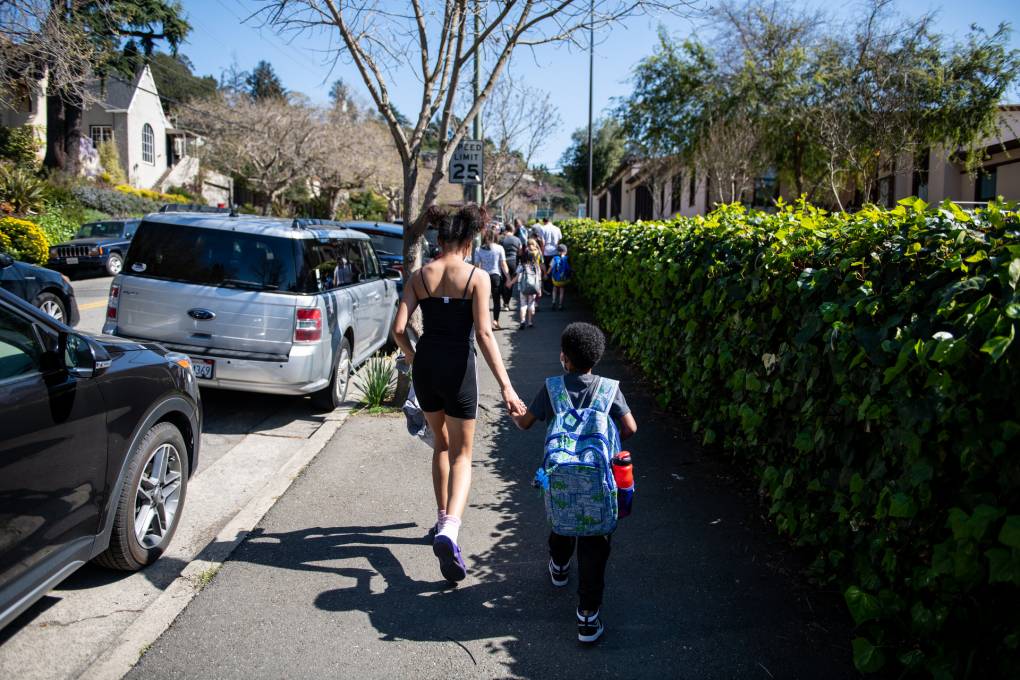
"caption": "Families pick up their children from Montclair Elementary School on the first day back to in-person learning on March 30, 2021. Most of Oakland Unified's 36,000 students have returned to schools in person this year. ",
"description": "Families pick up their children from Montclair Elementary School on the first day back to in-person learning on March 30, 2021. Most of Oakland Unified's 36,000 students have returned to schools in person this year. ",
"title": "RS48265_017_Oakland_SchoolReopening_03302021-qut",
"credit": "Beth LaBerge/KQED",
"status": "inherit",
"altTag": "A woman and an elementary school-age child walk down a leafy street.",
"isLoading": false,
"fetchFailed": false
},
"news_11864917": {
"type": "attachments",
"id": "news_11864917",
"meta": {
"index": "attachments_1716263798",
"site": "news",
"id": "11864917",
"found": true
},
"parent": 11864818,
"imgSizes": {
"twentyfourteen-full-width": {
"file": "https://ww2.kqed.org/app/uploads/sites/10/2021/03/RS47148_017_Oakland_SkylineHSFootballPractice_02032021-qut-1020x680-1-1020x576.jpeg",
"width": 1020,
"mimeType": "image/jpeg",
"height": 576
},
"thumbnail": {
"file": "https://ww2.kqed.org/app/uploads/sites/10/2021/03/RS47148_017_Oakland_SkylineHSFootballPractice_02032021-qut-1020x680-1-160x107.jpeg",
"width": 160,
"mimeType": "image/jpeg",
"height": 107
},
"post-thumbnail": {
"file": "https://ww2.kqed.org/app/uploads/sites/10/2021/03/RS47148_017_Oakland_SkylineHSFootballPractice_02032021-qut-1020x680-1-672x372.jpeg",
"width": 672,
"mimeType": "image/jpeg",
"height": 372
},
"kqedFullSize": {
"file": "https://ww2.kqed.org/app/uploads/sites/10/2021/03/RS47148_017_Oakland_SkylineHSFootballPractice_02032021-qut-1020x680-1.jpeg",
"width": 1020,
"height": 680
},
"medium": {
"file": "https://ww2.kqed.org/app/uploads/sites/10/2021/03/RS47148_017_Oakland_SkylineHSFootballPractice_02032021-qut-1020x680-1-800x533.jpeg",
"width": 800,
"mimeType": "image/jpeg",
"height": 533
}
},
"publishDate": 1615847421,
"modified": 1632443992,
"caption": "Students enter Castlemont High School in Oakland, California, on Feb. 3, 2021, for football practice. ",
"description": "OUSD students entering Castlemont High School Oakland on Feb. 3, 2021 for football practice. ",
"title": "RS47148_017_Oakland_SkylineHSFootballPractice_02032021-qut-1020x680",
"credit": "Beth LaBerge/KQED",
"status": "inherit",
"altTag": "Students wearing masks and backpacks walk through a chain-link fence.",
"isLoading": false,
"fetchFailed": false
},
"news_11888064": {
"type": "attachments",
"id": "news_11888064",
"meta": {
"index": "attachments_1716263798",
"site": "news",
"id": "11888064",
"found": true
},
"parent": 11888033,
"imgSizes": {
"twentyfourteen-full-width": {
"file": "https://ww2.kqed.org/app/uploads/sites/10/2021/09/GettyImages-1232872860-1-1-1038x576.jpg",
"width": 1038,
"mimeType": "image/jpeg",
"height": 576
},
"thumbnail": {
"file": "https://ww2.kqed.org/app/uploads/sites/10/2021/09/GettyImages-1232872860-1-1-160x95.jpg",
"width": 160,
"mimeType": "image/jpeg",
"height": 95
},
"post-thumbnail": {
"file": "https://ww2.kqed.org/app/uploads/sites/10/2021/09/GettyImages-1232872860-1-1-672x372.jpg",
"width": 672,
"mimeType": "image/jpeg",
"height": 372
},
"kqedFullSize": {
"file": "https://ww2.kqed.org/app/uploads/sites/10/2021/09/GettyImages-1232872860-1-1.jpg",
"width": 1920,
"height": 1134
},
"large": {
"file": "https://ww2.kqed.org/app/uploads/sites/10/2021/09/GettyImages-1232872860-1-1-1020x602.jpg",
"width": 1020,
"mimeType": "image/jpeg",
"height": 602
},
"1536x1536": {
"file": "https://ww2.kqed.org/app/uploads/sites/10/2021/09/GettyImages-1232872860-1-1-1536x907.jpg",
"width": 1536,
"mimeType": "image/jpeg",
"height": 907
},
"medium": {
"file": "https://ww2.kqed.org/app/uploads/sites/10/2021/09/GettyImages-1232872860-1-1-800x473.jpg",
"width": 800,
"mimeType": "image/jpeg",
"height": 473
}
},
"publishDate": 1631310296,
"modified": 1631315291,
"caption": "Oliver Barr, 13, receives his COVID-19 vaccine administered by medical assistant Karina Cisneros from St. John's Well Child & Family Center at Abraham Lincoln High School in Los Angeles on May 13, 2021, on the first day of availability of the vaccine for the 12-15 year old age group.",
"description": "Oliver Barr, 13, receives his Covid-19 vaccine administered by medical assistant Karina Cisneros from St. John's Well Child & Family Center at Abraham Lincoln High School in Los Angeles, California on May 13, 2021, on the first day of availability of the vaccine for the 12-15 year old age group.",
"title": "GettyImages-1232872860 (1) (1)",
"credit": "Frederic J. Brown/AFP via Getty Images",
"status": "inherit",
"altTag": null,
"isLoading": false,
"fetchFailed": false
},
"news_11882698": {
"type": "attachments",
"id": "news_11882698",
"meta": {
"index": "attachments_1716263798",
"site": "news",
"id": "11882698",
"found": true
},
"parent": 11882605,
"imgSizes": {
"twentyfourteen-full-width": {
"file": "https://ww2.kqed.org/app/uploads/sites/10/2021/07/GettyImages-1314853312-1-1038x576.jpg",
"width": 1038,
"mimeType": "image/jpeg",
"height": 576
},
"thumbnail": {
"file": "https://ww2.kqed.org/app/uploads/sites/10/2021/07/GettyImages-1314853312-1-160x107.jpg",
"width": 160,
"mimeType": "image/jpeg",
"height": 107
},
"post-thumbnail": {
"file": "https://ww2.kqed.org/app/uploads/sites/10/2021/07/GettyImages-1314853312-1-672x372.jpg",
"width": 672,
"mimeType": "image/jpeg",
"height": 372
},
"kqedFullSize": {
"file": "https://ww2.kqed.org/app/uploads/sites/10/2021/07/GettyImages-1314853312-1.jpg",
"width": 1280,
"height": 853
},
"large": {
"file": "https://ww2.kqed.org/app/uploads/sites/10/2021/07/GettyImages-1314853312-1-1020x680.jpg",
"width": 1020,
"mimeType": "image/jpeg",
"height": 680
},
"medium": {
"file": "https://ww2.kqed.org/app/uploads/sites/10/2021/07/GettyImages-1314853312-1-800x533.jpg",
"width": 800,
"mimeType": "image/jpeg",
"height": 533
}
},
"publishDate": 1627426987,
"modified": 1627428713,
"caption": "Students on their lunch break observe social distance protocols at Hollywood High School on April 27, 2021 in Los Angeles. ",
"description": "LOS ANGELES, CALIFORNIA - APRIL 27: Students on their lunch break observe social distance protocols at Hollywood High School on April 27, 2021 in Los Angeles, California. Los Angeles Unified School District middle and high schools have reopened this week for in-person instruction. COVID-19 protocols in place include testing for all students and staff, vaccinations for all staff, and a completed daily health check for anyone arriving on campus ",
"title": "GettyImages-1314853312 (1)",
"credit": "Rodin Eckenroth/Getty Images",
"status": "inherit",
"altTag": null,
"isLoading": false,
"fetchFailed": false
},
"news_11875903": {
"type": "attachments",
"id": "news_11875903",
"meta": {
"index": "attachments_1716263798",
"site": "news",
"id": "11875903",
"found": true
},
"parent": 11875883,
"imgSizes": {
"twentyfourteen-full-width": {
"file": "https://ww2.kqed.org/app/uploads/sites/10/2021/05/RS44115_004_KQED_Oakland_SchoolPods_ElisaCecaci_07272020-qut-1038x576.jpeg",
"width": 1038,
"mimeType": "image/jpeg",
"height": 576
},
"thumbnail": {
"file": "https://ww2.kqed.org/app/uploads/sites/10/2021/05/RS44115_004_KQED_Oakland_SchoolPods_ElisaCecaci_07272020-qut-160x107.jpeg",
"width": 160,
"mimeType": "image/jpeg",
"height": 107
},
"post-thumbnail": {
"file": "https://ww2.kqed.org/app/uploads/sites/10/2021/05/RS44115_004_KQED_Oakland_SchoolPods_ElisaCecaci_07272020-qut-672x372.jpeg",
"width": 672,
"mimeType": "image/jpeg",
"height": 372
},
"kqedFullSize": {
"file": "https://ww2.kqed.org/app/uploads/sites/10/2021/05/RS44115_004_KQED_Oakland_SchoolPods_ElisaCecaci_07272020-qut.jpeg",
"width": 1920,
"height": 1280
},
"large": {
"file": "https://ww2.kqed.org/app/uploads/sites/10/2021/05/RS44115_004_KQED_Oakland_SchoolPods_ElisaCecaci_07272020-qut-1020x680.jpeg",
"width": 1020,
"mimeType": "image/jpeg",
"height": 680
},
"1536x1536": {
"file": "https://ww2.kqed.org/app/uploads/sites/10/2021/05/RS44115_004_KQED_Oakland_SchoolPods_ElisaCecaci_07272020-qut-1536x1024.jpeg",
"width": 1536,
"mimeType": "image/jpeg",
"height": 1024
},
"medium": {
"file": "https://ww2.kqed.org/app/uploads/sites/10/2021/05/RS44115_004_KQED_Oakland_SchoolPods_ElisaCecaci_07272020-qut-800x533.jpeg",
"width": 800,
"mimeType": "image/jpeg",
"height": 533
}
},
"publishDate": 1622230182,
"modified": 1622230328,
"caption": "After more than a year of distance learning, some students and parents are counting on summer school to help make up for lost learning. ",
"description": "Keli'i, 6, and Kanoa, 18, study on their front porch in Oakland on July 27, 2020. ",
"title": "distance learning",
"credit": "Beth LaBerge/KQED",
"status": "inherit",
"altTag": null,
"isLoading": false,
"fetchFailed": false
},
"news_11875277": {
"type": "attachments",
"id": "news_11875277",
"meta": {
"index": "attachments_1716263798",
"site": "news",
"id": "11875277",
"found": true
},
"parent": 11875271,
"imgSizes": {
"twentyfourteen-full-width": {
"file": "https://ww2.kqed.org/app/uploads/sites/10/2021/05/RS36182_IMG_9404-14-qut-1038x576.jpg",
"width": 1038,
"mimeType": "image/jpeg",
"height": 576
},
"thumbnail": {
"file": "https://ww2.kqed.org/app/uploads/sites/10/2021/05/RS36182_IMG_9404-14-qut-160x107.jpg",
"width": 160,
"mimeType": "image/jpeg",
"height": 107
},
"post-thumbnail": {
"file": "https://ww2.kqed.org/app/uploads/sites/10/2021/05/RS36182_IMG_9404-14-qut-672x372.jpg",
"width": 672,
"mimeType": "image/jpeg",
"height": 372
},
"kqedFullSize": {
"file": "https://ww2.kqed.org/app/uploads/sites/10/2021/05/RS36182_IMG_9404-14-qut.jpg",
"width": 1920,
"height": 1280
},
"large": {
"file": "https://ww2.kqed.org/app/uploads/sites/10/2021/05/RS36182_IMG_9404-14-qut-1020x680.jpg",
"width": 1020,
"mimeType": "image/jpeg",
"height": 680
},
"1536x1536": {
"file": "https://ww2.kqed.org/app/uploads/sites/10/2021/05/RS36182_IMG_9404-14-qut-1536x1024.jpg",
"width": 1536,
"mimeType": "image/jpeg",
"height": 1024
},
"medium": {
"file": "https://ww2.kqed.org/app/uploads/sites/10/2021/05/RS36182_IMG_9404-14-qut-800x533.jpg",
"width": 800,
"mimeType": "image/jpeg",
"height": 533
}
},
"publishDate": 1621977870,
"modified": 1624904813,
"caption": "A group of Oakland REACH students.",
"description": null,
"title": "RS36182_IMG_9404-14-qut",
"credit": "Olivia Obineme/KQED",
"status": "inherit",
"altTag": null,
"isLoading": false,
"fetchFailed": false
},
"news_11866510": {
"type": "attachments",
"id": "news_11866510",
"meta": {
"index": "attachments_1716263798",
"site": "news",
"id": "11866510",
"found": true
},
"parent": 11866418,
"imgSizes": {
"twentyfourteen-full-width": {
"file": "https://ww2.kqed.org/app/uploads/sites/10/2021/03/OUSD4-1038x576.jpeg",
"width": 1038,
"mimeType": "image/jpeg",
"height": 576
},
"thumbnail": {
"file": "https://ww2.kqed.org/app/uploads/sites/10/2021/03/OUSD4-160x120.jpeg",
"width": 160,
"mimeType": "image/jpeg",
"height": 120
},
"post-thumbnail": {
"file": "https://ww2.kqed.org/app/uploads/sites/10/2021/03/OUSD4-672x372.jpeg",
"width": 672,
"mimeType": "image/jpeg",
"height": 372
},
"kqedFullSize": {
"file": "https://ww2.kqed.org/app/uploads/sites/10/2021/03/OUSD4-e1616711178378.jpeg",
"width": 1920,
"height": 1440
},
"large": {
"file": "https://ww2.kqed.org/app/uploads/sites/10/2021/03/OUSD4-1020x765.jpeg",
"width": 1020,
"mimeType": "image/jpeg",
"height": 765
},
"1536x1536": {
"file": "https://ww2.kqed.org/app/uploads/sites/10/2021/03/OUSD4-1536x1152.jpeg",
"width": 1536,
"mimeType": "image/jpeg",
"height": 1152
},
"full-width": {
"file": "https://ww2.kqed.org/app/uploads/sites/10/2021/03/OUSD4-1920x1440.jpeg",
"width": 1920,
"mimeType": "image/jpeg",
"height": 1440
},
"medium": {
"file": "https://ww2.kqed.org/app/uploads/sites/10/2021/03/OUSD4-800x600.jpeg",
"width": 800,
"mimeType": "image/jpeg",
"height": 600
}
},
"publishDate": 1616708473,
"modified": 1616781714,
"caption": "Antionette Powell, the head custodian at Garfield Elementary School in East Oakland, demonstrates cleaning protocols in preparation for students return on March 30.",
"description": null,
"title": "OUSD4",
"credit": "Vanessa Rancaño/KQED",
"status": "inherit",
"altTag": null,
"isLoading": false,
"fetchFailed": false
}
},
"audioPlayerReducer": {
"postId": "stream_live",
"isPaused": true,
"isPlaying": false,
"pfsActive": false,
"pledgeModalIsOpen": true,
"playerDrawerIsOpen": false,
"liveAudioPlayStartedAt": 0,
"liveAudioPlayContext": ""
},
"authorsReducer": {
"byline_news_11899840": {
"type": "authors",
"id": "byline_news_11899840",
"meta": {
"override": true
},
"slug": "byline_news_11899840",
"name": "\u003ca href=\"//edsource.org/author/atadayon”\">Ali Tadayon\u003c/a>",
"isLoading": false
},
"byline_news_11898137": {
"type": "authors",
"id": "byline_news_11898137",
"meta": {
"override": true
},
"slug": "byline_news_11898137",
"name": "\u003ca href=\"https://edsource.org/author/cjones\">Carolyn Jones\u003c/a> and \u003ca href=\"https://edsource.org/author/jfensterwald\">John Fensterwald\u003c/a>",
"isLoading": false
},
"byline_news_11890825": {
"type": "authors",
"id": "byline_news_11890825",
"meta": {
"override": true
},
"slug": "byline_news_11890825",
"name": "Terence Chea and Amy Taxin\u003cbr>The Associated Press",
"isLoading": false
},
"byline_news_11888033": {
"type": "authors",
"id": "byline_news_11888033",
"meta": {
"override": true
},
"slug": "byline_news_11888033",
"name": "Joe Hong\u003cbr>CalMatters",
"isLoading": false
},
"byline_news_11882605": {
"type": "authors",
"id": "byline_news_11882605",
"meta": {
"override": true
},
"slug": "byline_news_11882605",
"name": "Ali Tadayon\u003cbr>EdSource",
"isLoading": false
},
"markfiore": {
"type": "authors",
"id": "3236",
"meta": {
"index": "authors_1716337520",
"id": "3236",
"found": true
},
"name": "Mark Fiore",
"firstName": "Mark",
"lastName": "Fiore",
"slug": "markfiore",
"email": "mark@markfiore.com",
"display_author_email": false,
"staff_mastheads": [
"news"
],
"title": "KQED News Cartoonist",
"bio": "\u003ca href=\"http://www.MarkFiore.com\">MarkFiore.com\u003c/a> | \u003ca href=\"https://twitter.com/markfiore\">Follow on Twitter\u003c/a> | \u003ca href=\"https://www.facebook.com/pages/Mark-Fiore-Animated-Political-Cartoons/94451707396?ref=bookmarks\">Facebook\u003c/a> | \u003ca href=\"mailto:mark@markfiore.com\">email\u003c/a>\r\n\r\nPulitzer Prize-winner, Mark Fiore, who the Wall Street Journal has called “the undisputed guru of the form,” creates animated political cartoons in San Francisco, where his work has been featured regularly on the San Francisco Chronicle’s web site, SFGate.com. His work has appeared on Newsweek.com, Slate.com, CBSNews.com, MotherJones.com, DailyKos.com and NPR’s web site. Fiore’s political animation has appeared on CNN, Frontline, Bill Moyers Journal, Salon.com and cable and broadcast outlets across the globe.\r\n\r\nBeginning his professional life by drawing traditional political cartoons for newspapers, Fiore’s work appeared in publications ranging from the Washington Post to the Los Angeles Times. In the late 1990s, he began to experiment with animating political cartoons and, after a short stint at the San Jose Mercury News as their staff cartoonist, Fiore devoted all his energies to animation.\r\nGrowing up in California, Fiore also spent a good portion of his life in the backwoods of Idaho. It was this combination that shaped him politically. Mark majored in political science at Colorado College, where, in a perfect send-off for a cartoonist, he received his diploma in 1991 as commencement speaker Dick Cheney smiled approvingly.\r\nMark Fiore was awarded the Pulitzer Prize for political cartooning in 2010, a Robert F. Kennedy Journalism Award in 2004 and has twice received an Online Journalism Award for commentary from the Online News Association (2002, 2008). Fiore has received two awards for his work in new media from the National Cartoonists Society (2001, 2002), and in 2006 received The James Madison Freedom of Information Award from The Society of Professional Journalists.",
"avatar": "https://secure.gravatar.com/avatar/fc4e2a612b15b67bad0c6f0e1db4ca9b?s=600&d=blank&r=g",
"twitter": "MarkFiore",
"facebook": null,
"instagram": "https://www.instagram.com/markfiore/?hl=en",
"linkedin": null,
"sites": [
{
"site": "arts",
"roles": [
"contributor"
]
},
{
"site": "news",
"roles": [
"editor"
]
},
{
"site": "futureofyou",
"roles": [
"editor"
]
},
{
"site": "science",
"roles": [
"editor"
]
}
],
"headData": {
"title": "Mark Fiore | KQED",
"description": "KQED News Cartoonist",
"ogImgSrc": "https://secure.gravatar.com/avatar/fc4e2a612b15b67bad0c6f0e1db4ca9b?s=600&d=blank&r=g",
"twImgSrc": "https://secure.gravatar.com/avatar/fc4e2a612b15b67bad0c6f0e1db4ca9b?s=600&d=blank&r=g"
},
"isLoading": false,
"link": "/author/markfiore"
},
"dkatayama": {
"type": "authors",
"id": "7240",
"meta": {
"index": "authors_1716337520",
"id": "7240",
"found": true
},
"name": "Devin Katayama",
"firstName": "Devin",
"lastName": "Katayama",
"slug": "dkatayama",
"email": "dkatayama@kqed.org",
"display_author_email": true,
"staff_mastheads": [
"news"
],
"title": "Editor of Talent and Development",
"bio": "Devin Katayama is former Editor of Talent and Development for KQED. He supported our internship program and on-call staff by looking for equitable opportunities to improve the newsroom.\r\n\r\nHe previously hosted The Bay and American Suburb podcasts from KQED News. Prior to returning to the Bay Area in 2015, Devin was the education reporter for WFPL in Louisville and worked as a producer with radio stations in Chicago and Portland, OR. His work has appeared on NPR’s \u003cem>Morning Edition, All Things Considered, The Takeaway\u003c/em> and \u003cem>Here and Now.\u003c/em>\r\n\r\nDevin earned his MA in Journalism from Columbia College Chicago, where he was a Follett Fellow and the recipient of the 2011 Studs Terkel Community Media Workshop Scholarship for his story on Chicago's homeless youth. He won WBUR's 2014 Daniel Schorr award and a regional RTNDA Edward R. Murrow Award for his documentary \"At Risk\" that looked at issues facing some of Louisville's students. Devin has also received numerous local awards from the Associated Press and the Society of Professional Journalists.",
"avatar": "https://secure.gravatar.com/avatar/d0d2978a31002fb2de107921a8e18405?s=600&d=blank&r=g",
"twitter": "RadioDevin",
"facebook": null,
"instagram": null,
"linkedin": null,
"sites": [
{
"site": "arts",
"roles": []
},
{
"site": "news",
"roles": [
"author"
]
},
{
"site": "stateofhealth",
"roles": [
"author"
]
},
{
"site": "forum",
"roles": [
"editor"
]
},
{
"site": "perspectives",
"roles": [
"editor"
]
}
],
"headData": {
"title": "Devin Katayama | KQED",
"description": "Editor of Talent and Development",
"ogImgSrc": "https://secure.gravatar.com/avatar/d0d2978a31002fb2de107921a8e18405?s=600&d=blank&r=g",
"twImgSrc": "https://secure.gravatar.com/avatar/d0d2978a31002fb2de107921a8e18405?s=600&d=blank&r=g"
},
"isLoading": false,
"link": "/author/dkatayama"
},
"ecruzguevarra": {
"type": "authors",
"id": "8654",
"meta": {
"index": "authors_1716337520",
"id": "8654",
"found": true
},
"name": "Ericka Cruz Guevarra",
"firstName": "Ericka",
"lastName": "Cruz Guevarra",
"slug": "ecruzguevarra",
"email": "ecruzguevarra@kqed.org",
"display_author_email": true,
"staff_mastheads": [
"news"
],
"title": "Producer, The Bay Podcast",
"bio": "Ericka Cruz Guevarra is host of \u003ca href=\"https://www.kqed.org/podcasts/thebay\">\u003cem>The Bay\u003c/em>\u003c/a> podcast at KQED. Before host, she was the show’s producer. Her work in that capacity includes a three-part reported series on policing in Vallejo, which won a 2020 excellence in journalism award from the Society of Professional Journalists. Ericka has worked as a breaking news reporter at Oregon Public Broadcasting, helped produce the Code Switch podcast, and was KQED’s inaugural Raul Ramirez Diversity Fund intern. She’s also an alumna of NPR’s Next Generation Radio program. Send her an email if you have strong feelings about whether Fairfield and Suisun City are the Bay. Ericka is represented by SAG-AFTRA.",
"avatar": "https://secure.gravatar.com/avatar/accefc1de4bafc7e234b69bcb9b6f6536c130fd84709bc3069ef11a78787e1bb?s=600&d=blank&r=g",
"twitter": "NotoriousECG",
"bluesky": null,
"facebook": null,
"instagram": null,
"linkedin": null,
"sites": [
{
"site": "arts",
"roles": [
"subscriber"
]
},
{
"site": "news",
"roles": [
"editor",
"manage_categories"
]
},
{
"site": "futureofyou",
"roles": [
"subscriber"
]
},
{
"site": "stateofhealth",
"roles": [
"subscriber"
]
},
{
"site": "science",
"roles": [
"editor"
]
},
{
"site": "forum",
"roles": [
"subscriber"
]
}
],
"headData": {
"title": "Ericka Cruz Guevarra | KQED",
"description": "Producer, The Bay Podcast",
"ogImgSrc": "https://secure.gravatar.com/avatar/accefc1de4bafc7e234b69bcb9b6f6536c130fd84709bc3069ef11a78787e1bb?s=600&d=blank&r=g",
"twImgSrc": "https://secure.gravatar.com/avatar/accefc1de4bafc7e234b69bcb9b6f6536c130fd84709bc3069ef11a78787e1bb?s=600&d=blank&r=g"
},
"isLoading": false,
"link": "/author/ecruzguevarra"
},
"vrancano": {
"type": "authors",
"id": "11276",
"meta": {
"index": "authors_1716337520",
"id": "11276",
"found": true
},
"name": "Vanessa Rancaño",
"firstName": "Vanessa",
"lastName": "Rancaño",
"slug": "vrancano",
"email": "vrancano@kqed.org",
"display_author_email": false,
"staff_mastheads": [
"news"
],
"title": "Reporter",
"bio": "Vanessa Rancaño is a features reporter for KQED. She’s also covered homelessness and education for the station and reported from the Central Valley. Her work has aired across public radio, from flagship national news shows to longform narrative podcasts. Before taking up a mic, she worked as a freelance print journalist. She’s been recognized with a number of national and regional awards. Vanessa grew up in California's Central Valley. She's a former NPR Kroc Fellow, and a graduate of the UC Berkeley Graduate School of Journalism.",
"avatar": "https://secure.gravatar.com/avatar/b3a383dfb0e7ee1c17568f2cf067904ab654d6e3de9743fc661f3c788ade1bed?s=600&d=blank&r=g",
"twitter": "vanessarancano",
"bluesky": null,
"facebook": null,
"instagram": null,
"linkedin": null,
"sites": [
{
"site": "arts",
"roles": [
"editor"
]
},
{
"site": "news",
"roles": [
"editor"
]
},
{
"site": "liveblog",
"roles": [
"contributor"
]
}
],
"headData": {
"title": "Vanessa Rancaño | KQED",
"description": "Reporter",
"ogImgSrc": "https://secure.gravatar.com/avatar/b3a383dfb0e7ee1c17568f2cf067904ab654d6e3de9743fc661f3c788ade1bed?s=600&d=blank&r=g",
"twImgSrc": "https://secure.gravatar.com/avatar/b3a383dfb0e7ee1c17568f2cf067904ab654d6e3de9743fc661f3c788ade1bed?s=600&d=blank&r=g"
},
"isLoading": false,
"link": "/author/vrancano"
},
"amontecillo": {
"type": "authors",
"id": "11649",
"meta": {
"index": "authors_1716337520",
"id": "11649",
"found": true
},
"name": "Alan Montecillo",
"firstName": "Alan",
"lastName": "Montecillo",
"slug": "amontecillo",
"email": "amontecillo@kqed.org",
"display_author_email": false,
"staff_mastheads": [
"news"
],
"title": "KQED Contributor",
"bio": "Alan Montecillo is the senior editor of \u003cem>\u003ca href=\"http://kqed.org/thebay\">The Bay\u003c/a>, \u003c/em> KQED's local news podcast. Before moving to the Bay Area, he worked as a senior talk show producer for WILL in Champaign-Urbana, Illinois and at Oregon Public Broadcasting in Portland, Oregon. He has won journalism awards from the Society of Professional Journalists Northern California, the Public Media Journalists Association, The Signal Awards, and has also received a regional Edward R. Murrow award. Alan is a Filipino American from Hong Kong and a graduate of Reed College.",
"avatar": "https://secure.gravatar.com/avatar/268f53a2066899ea9efdd8a5900218b17c822d9862cbc9326cccec53ef41d349?s=600&d=blank&r=g",
"twitter": "alanmontecillo",
"bluesky": null,
"facebook": null,
"instagram": null,
"linkedin": null,
"sites": [
{
"site": "",
"roles": [
"editor"
]
},
{
"site": "news",
"roles": [
"editor",
"manage_categories"
]
}
],
"headData": {
"title": "Alan Montecillo | KQED",
"description": "KQED Contributor",
"ogImgSrc": "https://secure.gravatar.com/avatar/268f53a2066899ea9efdd8a5900218b17c822d9862cbc9326cccec53ef41d349?s=600&d=blank&r=g",
"twImgSrc": "https://secure.gravatar.com/avatar/268f53a2066899ea9efdd8a5900218b17c822d9862cbc9326cccec53ef41d349?s=600&d=blank&r=g"
},
"isLoading": false,
"link": "/author/amontecillo"
},
"smartos": {
"type": "authors",
"id": "11741",
"meta": {
"index": "authors_1716337520",
"id": "11741",
"found": true
},
"name": "Shaylyn Martos",
"firstName": "Shaylyn",
"lastName": "Martos",
"slug": "smartos",
"email": "smartos@kqed.org",
"display_author_email": false,
"staff_mastheads": [],
"title": "KQED Contributor",
"bio": null,
"avatar": "https://secure.gravatar.com/avatar/ca566efb61a864c9a7fff48e77d45f31?s=600&d=blank&r=g",
"twitter": "@shaylynmartos",
"facebook": null,
"instagram": null,
"linkedin": null,
"sites": [
{
"site": "news",
"roles": [
"author"
]
}
],
"headData": {
"title": "Shaylyn Martos | KQED",
"description": "KQED Contributor",
"ogImgSrc": "https://secure.gravatar.com/avatar/ca566efb61a864c9a7fff48e77d45f31?s=600&d=blank&r=g",
"twImgSrc": "https://secure.gravatar.com/avatar/ca566efb61a864c9a7fff48e77d45f31?s=600&d=blank&r=g"
},
"isLoading": false,
"link": "/author/smartos"
},
"afinney": {
"type": "authors",
"id": "11772",
"meta": {
"index": "authors_1716337520",
"id": "11772",
"found": true
},
"name": "Annelise Finney",
"firstName": "Annelise",
"lastName": "Finney",
"slug": "afinney",
"email": "afinney@kqed.org",
"display_author_email": true,
"staff_mastheads": [
"news"
],
"title": "Reporter",
"bio": "Annelise reports on reparations in California and East Bay politics. She co-produced the Sunday Music Drop, a limited-term radio series featuring Bay Area musicians that aired between Sept 2022 and Oct 2024. She joined KQED in 2021 as a general assignment reporter and is an alumna of KALW's Audio Academy. She was born and raised in the East Bay. She is currently away from KQED completing a year-long reporting project in Berlin, Germany as a Alexander Von Humboldt German Chancellor Fellow.",
"avatar": "https://secure.gravatar.com/avatar/5fded66cae47704cdfc5021cde0f3aa4?s=600&d=blank&r=g",
"twitter": null,
"facebook": null,
"instagram": null,
"linkedin": null,
"sites": [
{
"site": "news",
"roles": [
"editor"
]
},
{
"site": "liveblog",
"roles": [
"author"
]
}
],
"headData": {
"title": "Annelise Finney | KQED",
"description": "Reporter",
"ogImgSrc": "https://secure.gravatar.com/avatar/5fded66cae47704cdfc5021cde0f3aa4?s=600&d=blank&r=g",
"twImgSrc": "https://secure.gravatar.com/avatar/5fded66cae47704cdfc5021cde0f3aa4?s=600&d=blank&r=g"
},
"isLoading": false,
"link": "/author/afinney"
}
},
"pagesReducer": {
"news_tag_oakland-unified-school-district": {
"type": "terms",
"id": "news_1826",
"meta": {
"index": "terms_1716263798",
"site": "news",
"id": "1826",
"score": 10.403249
},
"featImg": null,
"name": "Oakland Unified School District",
"description": null,
"taxonomy": "tag",
"headData": {
"twImgId": null,
"twTitle": null,
"ogTitle": null,
"ogImgId": null,
"twDescription": null,
"description": null,
"title": "Oakland Unified School District Archives | KQED News",
"ogDescription": null
},
"ttid": 1841,
"slug": "oakland-unified-school-district",
"isLoading": false,
"title": "Oakland Unified School District",
"pageMeta": {
"site": "news",
"WpPageTemplate": "page-topic-editorial",
"currentPage": 6
},
"blocks": [
{
"blockName": "kqed/post-list",
"attrs": {
"layout": "cardArticle2",
"query": "posts/news?tag=oakland-unified-school-district",
"seeMore": false,
"paginated": true,
"page": 6
}
},
{
"blockName": "kqed/ad"
}
]
}
},
"pfsSessionReducer": {},
"postsReducer": {
"stream_live": {
"type": "live",
"id": "stream_live",
"audioUrl": "https://streams.kqed.org/kqedradio",
"title": "Live Stream",
"excerpt": "Live Stream information currently unavailable.",
"link": "/radio",
"featImg": "",
"label": {
"name": "KQED Live",
"link": "/"
}
},
"stream_kqedNewscast": {
"type": "posts",
"id": "stream_kqedNewscast",
"audioUrl": "https://www.kqed.org/.stream/anon/radio/RDnews/newscast.mp3?_=1",
"title": "KQED Newscast",
"featImg": "",
"label": {
"name": "88.5 FM",
"link": "/"
}
},
"news_11905982": {
"type": "posts",
"id": "news_11905982",
"meta": {
"index": "posts_1716263798",
"site": "news",
"id": "11905982",
"score": null,
"sort": [
1645468209000
]
},
"parent": 0,
"labelTerm": {
"site": "news"
},
"blocks": [],
"publishDate": 1645468209,
"format": "standard",
"disqusTitle": "'How Dare You': Oakland School Closure Decision Inspires New Opposition Efforts",
"title": "'How Dare You': Oakland School Closure Decision Inspires New Opposition Efforts",
"headTitle": "KQED News",
"content": "\u003cp>On Saturday afternoon, Oakland Unified School District employee Timothy Killings stood in front of a crowd of parents, teachers and community members scattered across the lawn at Markham Elementary School in East Oakland.\u003c/p>\n\u003cp>“The point of this town hall is to bring the sites under the most immediate threat together, so we could get some plans of actions going,” he said. “Truth be told, we should have been in the streets, like, yesterday.”\u003c/p>\n\u003cp>The group had assembled to plan protests of the district's planned school consolidations.\u003c/p>\n\u003cp>Sitting in clusters together in the grass, looking like students at recess, participants debated whether or not teachers should strike, school board members should be recalled, and other solutions, like lobbying state lawmakers in Sacramento to send funding to stave off the district’s budget woes. One idea floated would even see opponents of school closures partner with the International Longshore and Warehouse Union workers at Oakland’s port, since both say they are fighting privatization — of the port and of schools.\u003c/p>\n\u003cp>When not organizing resistance, Killings is a case manager at Oakland Unified School District’s Westlake Middle School. But on Saturday, his day off, he helped organize Oakland residents to push back against the district's proposed school closures, mergers and grade truncations.\u003c/p>\n\u003cfigure id=\"attachment_11905987\" class=\"wp-caption alignnone\" style=\"max-width: 1920px\">\u003cimg class=\"size-full wp-image-11905987\" src=\"https://ww2.kqed.org/app/uploads/sites/10/2022/02/IMG_7909-1.jpg\" alt=\"A few dozen people sit in the grass, many cross-legged, facing a speaker that is off-camera. A baskteball court and the street can be seen in the background.\" width=\"1920\" height=\"1440\" srcset=\"https://ww2.kqed.org/app/uploads/sites/10/2022/02/IMG_7909-1.jpg 1920w, https://ww2.kqed.org/app/uploads/sites/10/2022/02/IMG_7909-1-800x600.jpg 800w, https://ww2.kqed.org/app/uploads/sites/10/2022/02/IMG_7909-1-1020x765.jpg 1020w, https://ww2.kqed.org/app/uploads/sites/10/2022/02/IMG_7909-1-160x120.jpg 160w, https://ww2.kqed.org/app/uploads/sites/10/2022/02/IMG_7909-1-1536x1152.jpg 1536w\" sizes=\"(max-width: 1920px) 100vw, 1920px\">\u003cfigcaption class=\"wp-caption-text\">People gathered on a lawn at Markham Elementary School Saturday to plan protests of OUSD’s planned school consolidations. \u003ccite>(Annelise Finney/KQED)\u003c/cite>\u003c/figcaption>\u003c/figure>\n\u003cp>The latest version of the district’s plan would close two schools — Parker K-8 and Community Day — this year. Five other schools—Korematsu, Horace Mann, Brookfield, Carl B. Munck and Grass Valley — would be shuttered at the end of the 2022-2023 school year. Lastly, two additional schools — Rise Community Elementary and New Highland Academy — would be merged this year, and another two — Hillcrest and La Escuelita — would see the number of grades they teach decrease.\u003c/p>\n\u003cp>[ad fullwidth]\u003c/p>\n\u003cp>\u003ca href=\"https://www.kqed.org/news/11904618/oakland-moves-to-close-seven-schools-despite-fierce-community-opposition\">As KQED reported earlier this month\u003c/a>, an estimated 93% of students at the schools affected by the plan are considered either lower-income, English learners or foster youth, compared to the \u003ca href=\"http://www.ed-data.org/district/Alameda/Oakland-Unified\">district-wide average of about 80%\u003c/a>. Black students are also disproportionately affected – about 43% of students at the eight sites on the original school closure list are Black, almost twice the proportion of Black students in the entire district.\u003c/p>\n\u003cp>The district's plan for school closures was originally announced at the end of January, and attributed to\u003ca href=\"https://oaklandside.org/2021/12/17/oakland-unified-budget-deficit-enrollment-attendance/\"> a roughly $40 million budget deficit and declining enrollment\u003c/a>. The plan was amended, decreasing the number of schools affected, on February 8.\u003c/p>\n\u003cp>On Friday, February 18, the school board held an emergency meeting to consider further changes to the plan but, at the end of the night, voted to move forward with the plan they had already approved that would see schools shutter.\u003c/p>\n\u003cp>The district’s plan faced opposition from the start, and after the emergency meeting that resistance is blossoming.\u003c/p>\n\u003cp>[pullquote size=\"medium\" align=\"right\" citation=\"Timothy Killings, organizer and Oakland educator\"]'Truth be told, we should have been in the streets, like, yesterday.'[/pullquote]\u003c/p>\n\u003cp>On Saturday, parents and alumni of Parker K-8 rallied on MacArthur Boulevard in Oakland’s Eastmont neighborhood. Around 20 frustrated parents, alumni and people living in the neighborhood waved signs and drummed up enthusiasm, in the form of honks, from passing cars.\u003c/p>\n\u003cp>One of those fed-up parents rallying was Rochelle Jenkins, who worries for the education of her three OUSD students. Jenkins spoke to passing cars through a speaker. She directed her words to board members through a loudspeaker.\u003c/p>\n\u003cp>“How dare you guys come down and try to take the thing that is needed in each and every last community,” she said.\u003c/p>\n\u003cp>Jenkins says she plans to protest until the school board calls off the closure of Parker.\u003c/p>\n\u003cp>Two OUSD employees began a hunger strike in protest of the plans at the start of the month. One of those employees ended their strike at the emergency meeting Friday; the other, Maurice André San-Chez, a teacher at Westlake Middle School, announced the end of their hunger strike in an Instagram post on Sunday, February 20.\u003c/p>\n\u003cp>\"Time to recover and gain strength to continue this battle,” they wrote on Instagram. “The torch is in your hands.”\u003c/p>\n\u003cp>https://www.instagram.com/p/CaOMXP9Fcoe/\u003c/p>\n\u003cp>At the emergency meeting, others said they would join the hunger strike if the board voted in favor of the current plan — and that’s exactly how the board voted.\u003c/p>\n\u003cp>Some of the anger at the school closures may have manifested in vandalism. Oakland Board of Education President Dr. Gary Yee encountered people disgruntled by the closures at his home over the weekend and later found\u003ca href=\"https://sanfrancisco.cbslocal.com/2022/02/21/oakland-school-board-presidents-home-vandalized/\"> his front window broken\u003c/a>.\u003c/p>\n\u003cp>At least one person who said they would join the strikers Friday night has since decided not to.[aside label=\"More OUSD Coverage\" link1=\"https://www.kqed.org/news/11904618/oakland-moves-to-close-seven-schools-despite-fierce-community-opposition,Oakland Moves to Close 7 Schools Despite Fierce Community Opposition\"]High school senior and Oakland Youth Advisory Commission co-chair Aniyah Story says her mom convinced her to consider alternatives, something she says a group of community members discussed at a virtual meeting Sunday.\u003c/p>\n\u003cp>“I feel like even though money is a big issue, there's well-being, community, our future … it's way bigger than that,” she told KQED Sunday.\u003c/p>\n\u003cp>In a statement, Oakland Unified School District says it understands that many people in Oakland are upset with the decision to consolidate and it supports means of protest that do not jeopardize the health of those involved.\u003c/p>\n\u003cp>\u003c/p>\n\u003cp>\u003cem>This story includes reporting from KQED's Sara Hossaini and Vanessa Rancaño.\u003c/em>\u003c/p>\n\n",
"disqusIdentifier": "11905982 https://ww2.kqed.org/news/?p=11905982",
"disqusUrl": "https://ww2.kqed.org/news/2022/02/21/how-dare-you-oakland-school-closure-decision-inspires-new-opposition-efforts/",
"stats": {
"hasVideo": false,
"hasChartOrMap": false,
"hasAudio": false,
"hasPolis": false,
"wordCount": 974,
"hasGoogleForm": false,
"hasGallery": false,
"hasHearkenModule": false,
"iframeSrcs": [],
"paragraphCount": 25
},
"modified": 1645655957,
"excerpt": "At an emergency meeting Friday, the Oakland Board of Education voted to move forward with closing some schools, citing declining enrollment and a budget deficit.",
"headData": {
"twImgId": "",
"twTitle": "",
"ogTitle": "",
"ogImgId": "",
"twDescription": "",
"description": "At an emergency meeting Friday, the Oakland Board of Education voted to move forward with closing some schools, citing declining enrollment and a budget deficit.",
"title": "'How Dare You': Oakland School Closure Decision Inspires New Opposition Efforts | KQED",
"ogDescription": "",
"schema": {
"@context": "https://schema.org",
"@type": "NewsArticle",
"headline": "'How Dare You': Oakland School Closure Decision Inspires New Opposition Efforts",
"datePublished": "2022-02-21T10:30:09-08:00",
"dateModified": "2022-02-23T14:39:17-08:00",
"image": "https://cdn.kqed.org/wp-content/uploads/2020/02/KQED-OG-Image@1x.png",
"isAccessibleForFree": "True",
"publisher": {
"@type": "NewsMediaOrganization",
"@id": "https://www.kqed.org/#organization",
"name": "KQED",
"logo": "https://cdn.kqed.org/wp-content/uploads/2020/02/KQED-OG-Image@1x.png",
"url": "https://www.kqed.org",
"sameAs": [
"https://www.facebook.com/KQED",
"https://twitter.com/KQED",
"https://www.instagram.com/kqed/",
"https://www.tiktok.com/@kqedofficial",
"https://www.linkedin.com/company/kqed",
"https://www.youtube.com/channel/UCeC0IOo7i1P_61zVUWbJ4nw"
]
}
}
},
"guestAuthors": [],
"slug": "how-dare-you-oakland-school-closure-decision-inspires-new-opposition-efforts",
"status": "publish",
"excludeFromSiteSearch": "Include",
"path": "/news/11905982/how-dare-you-oakland-school-closure-decision-inspires-new-opposition-efforts",
"audioTrackLength": null,
"parsedContent": [
{
"type": "contentString",
"content": "\u003cdiv class=\"post-body\">\u003cp>\u003cp>On Saturday afternoon, Oakland Unified School District employee Timothy Killings stood in front of a crowd of parents, teachers and community members scattered across the lawn at Markham Elementary School in East Oakland.\u003c/p>\n\u003cp>“The point of this town hall is to bring the sites under the most immediate threat together, so we could get some plans of actions going,” he said. “Truth be told, we should have been in the streets, like, yesterday.”\u003c/p>\n\u003cp>The group had assembled to plan protests of the district's planned school consolidations.\u003c/p>\n\u003cp>Sitting in clusters together in the grass, looking like students at recess, participants debated whether or not teachers should strike, school board members should be recalled, and other solutions, like lobbying state lawmakers in Sacramento to send funding to stave off the district’s budget woes. One idea floated would even see opponents of school closures partner with the International Longshore and Warehouse Union workers at Oakland’s port, since both say they are fighting privatization — of the port and of schools.\u003c/p>\n\u003cp>When not organizing resistance, Killings is a case manager at Oakland Unified School District’s Westlake Middle School. But on Saturday, his day off, he helped organize Oakland residents to push back against the district's proposed school closures, mergers and grade truncations.\u003c/p>\n\u003cfigure id=\"attachment_11905987\" class=\"wp-caption alignnone\" style=\"max-width: 1920px\">\u003cimg class=\"size-full wp-image-11905987\" src=\"https://ww2.kqed.org/app/uploads/sites/10/2022/02/IMG_7909-1.jpg\" alt=\"A few dozen people sit in the grass, many cross-legged, facing a speaker that is off-camera. A baskteball court and the street can be seen in the background.\" width=\"1920\" height=\"1440\" srcset=\"https://ww2.kqed.org/app/uploads/sites/10/2022/02/IMG_7909-1.jpg 1920w, https://ww2.kqed.org/app/uploads/sites/10/2022/02/IMG_7909-1-800x600.jpg 800w, https://ww2.kqed.org/app/uploads/sites/10/2022/02/IMG_7909-1-1020x765.jpg 1020w, https://ww2.kqed.org/app/uploads/sites/10/2022/02/IMG_7909-1-160x120.jpg 160w, https://ww2.kqed.org/app/uploads/sites/10/2022/02/IMG_7909-1-1536x1152.jpg 1536w\" sizes=\"(max-width: 1920px) 100vw, 1920px\">\u003cfigcaption class=\"wp-caption-text\">People gathered on a lawn at Markham Elementary School Saturday to plan protests of OUSD’s planned school consolidations. \u003ccite>(Annelise Finney/KQED)\u003c/cite>\u003c/figcaption>\u003c/figure>\n\u003cp>The latest version of the district’s plan would close two schools — Parker K-8 and Community Day — this year. Five other schools—Korematsu, Horace Mann, Brookfield, Carl B. Munck and Grass Valley — would be shuttered at the end of the 2022-2023 school year. Lastly, two additional schools — Rise Community Elementary and New Highland Academy — would be merged this year, and another two — Hillcrest and La Escuelita — would see the number of grades they teach decrease.\u003c/p>\n\u003cp>\u003c/p>\u003c/div>",
"attributes": {
"named": {},
"numeric": []
}
},
{
"type": "component",
"content": "",
"name": "ad",
"attributes": {
"named": {
"label": "fullwidth"
},
"numeric": [
"fullwidth"
]
}
},
{
"type": "contentString",
"content": "\u003cdiv class=\"post-body\">\u003cp>\u003c/p>\n\u003cp>\u003ca href=\"https://www.kqed.org/news/11904618/oakland-moves-to-close-seven-schools-despite-fierce-community-opposition\">As KQED reported earlier this month\u003c/a>, an estimated 93% of students at the schools affected by the plan are considered either lower-income, English learners or foster youth, compared to the \u003ca href=\"http://www.ed-data.org/district/Alameda/Oakland-Unified\">district-wide average of about 80%\u003c/a>. Black students are also disproportionately affected – about 43% of students at the eight sites on the original school closure list are Black, almost twice the proportion of Black students in the entire district.\u003c/p>\n\u003cp>The district's plan for school closures was originally announced at the end of January, and attributed to\u003ca href=\"https://oaklandside.org/2021/12/17/oakland-unified-budget-deficit-enrollment-attendance/\"> a roughly $40 million budget deficit and declining enrollment\u003c/a>. The plan was amended, decreasing the number of schools affected, on February 8.\u003c/p>\n\u003cp>On Friday, February 18, the school board held an emergency meeting to consider further changes to the plan but, at the end of the night, voted to move forward with the plan they had already approved that would see schools shutter.\u003c/p>\n\u003cp>The district’s plan faced opposition from the start, and after the emergency meeting that resistance is blossoming.\u003c/p>\n\u003cp>\u003c/p>\u003c/div>",
"attributes": {
"named": {},
"numeric": []
}
},
{
"type": "component",
"content": "'Truth be told, we should have been in the streets, like, yesterday.'",
"name": "pullquote",
"attributes": {
"named": {
"size": "medium",
"align": "right",
"citation": "Timothy Killings, organizer and Oakland educator",
"label": ""
},
"numeric": []
}
},
{
"type": "contentString",
"content": "\u003cdiv class=\"post-body\">\u003cp>\u003c/p>\n\u003cp>On Saturday, parents and alumni of Parker K-8 rallied on MacArthur Boulevard in Oakland’s Eastmont neighborhood. Around 20 frustrated parents, alumni and people living in the neighborhood waved signs and drummed up enthusiasm, in the form of honks, from passing cars.\u003c/p>\n\u003cp>One of those fed-up parents rallying was Rochelle Jenkins, who worries for the education of her three OUSD students. Jenkins spoke to passing cars through a speaker. She directed her words to board members through a loudspeaker.\u003c/p>\n\u003cp>“How dare you guys come down and try to take the thing that is needed in each and every last community,” she said.\u003c/p>\n\u003cp>Jenkins says she plans to protest until the school board calls off the closure of Parker.\u003c/p>\n\u003cp>Two OUSD employees began a hunger strike in protest of the plans at the start of the month. One of those employees ended their strike at the emergency meeting Friday; the other, Maurice André San-Chez, a teacher at Westlake Middle School, announced the end of their hunger strike in an Instagram post on Sunday, February 20.\u003c/p>\n\u003cp>\"Time to recover and gain strength to continue this battle,” they wrote on Instagram. “The torch is in your hands.”\u003c/p>\u003c/p>\u003c/div>",
"attributes": {
"named": {},
"numeric": []
}
},
{
"type": "component",
"content": "",
"name": "instagramLink",
"attributes": {
"named": {
"instagramUrl": "https://www.instagram.com/p/CaOMXP9Fcoe/"
},
"numeric": []
}
},
{
"type": "contentString",
"content": "\u003cdiv class=\"post-body\">\u003cp>\u003cp>At the emergency meeting, others said they would join the hunger strike if the board voted in favor of the current plan — and that’s exactly how the board voted.\u003c/p>\n\u003cp>Some of the anger at the school closures may have manifested in vandalism. Oakland Board of Education President Dr. Gary Yee encountered people disgruntled by the closures at his home over the weekend and later found\u003ca href=\"https://sanfrancisco.cbslocal.com/2022/02/21/oakland-school-board-presidents-home-vandalized/\"> his front window broken\u003c/a>.\u003c/p>\n\u003cp>At least one person who said they would join the strikers Friday night has since decided not to.\u003c/p>\u003c/div>",
"attributes": {
"named": {},
"numeric": []
}
},
{
"type": "component",
"content": "",
"name": "aside",
"attributes": {
"named": {
"label": "More OUSD Coverage ",
"link1": "https://www.kqed.org/news/11904618/oakland-moves-to-close-seven-schools-despite-fierce-community-opposition,Oakland Moves to Close 7 Schools Despite Fierce Community Opposition"
},
"numeric": []
}
},
{
"type": "contentString",
"content": "\u003cdiv class=\"post-body\">\u003cp>High school senior and Oakland Youth Advisory Commission co-chair Aniyah Story says her mom convinced her to consider alternatives, something she says a group of community members discussed at a virtual meeting Sunday.\u003c/p>\n\u003cp>“I feel like even though money is a big issue, there's well-being, community, our future … it's way bigger than that,” she told KQED Sunday.\u003c/p>\n\u003cp>In a statement, Oakland Unified School District says it understands that many people in Oakland are upset with the decision to consolidate and it supports means of protest that do not jeopardize the health of those involved.\u003c/p>\n\u003cp>\u003c/p>\n\u003cp>\u003cem>This story includes reporting from KQED's Sara Hossaini and Vanessa Rancaño.\u003c/em>\u003c/p>\n\n\u003c/div>\u003c/p>",
"attributes": {
"named": {},
"numeric": []
}
}
],
"link": "/news/11905982/how-dare-you-oakland-school-closure-decision-inspires-new-opposition-efforts",
"authors": [
"11772"
],
"categories": [
"news_18540",
"news_8"
],
"tags": [
"news_20013",
"news_27626",
"news_30698",
"news_30699",
"news_30700",
"news_18",
"news_4281",
"news_1826",
"news_3366"
],
"featImg": "news_11905986",
"label": "news"
},
"news_11904511": {
"type": "posts",
"id": "news_11904511",
"meta": {
"index": "posts_1716263798",
"site": "news",
"id": "11904511",
"score": null,
"sort": [
1644363666000
]
},
"guestAuthors": [],
"slug": "will-scores-of-schools-in-oakland-be-history",
"title": "Will Scores of Schools in Oakland Be History?",
"publishDate": 1644363666,
"format": "aside",
"headTitle": "Will Scores of Schools in Oakland Be History? | KQED",
"labelTerm": {
"term": 18515,
"site": "news"
},
"content": "\u003cp>\u003ca href=\"https://ww2.kqed.org/app/uploads/sites/10/2022/02/tuesday_020822_final.png\">\u003cimg loading=\"lazy\" decoding=\"async\" class=\"alignnone size-full wp-image-11904516\" src=\"https://ww2.kqed.org/app/uploads/sites/10/2022/02/tuesday_020822_final.png\" alt=\"Cartoon: one panel is titled #BlackHistoryMonth and features Ida Louise Jackson, Oakland's first teacher who taught at Prescott School in West Oakland. The second panel is titled, "#Tuesday" and shows a missing piece with no Jackson or school, the caption says, "Oakland's school board votes on closing Prescott..."\" width=\"1920\" height=\"1369\" srcset=\"https://cdn.kqed.org/wp-content/uploads/sites/10/2022/02/tuesday_020822_final.png 1920w, https://cdn.kqed.org/wp-content/uploads/sites/10/2022/02/tuesday_020822_final-800x570.png 800w, https://cdn.kqed.org/wp-content/uploads/sites/10/2022/02/tuesday_020822_final-1020x727.png 1020w, https://cdn.kqed.org/wp-content/uploads/sites/10/2022/02/tuesday_020822_final-160x114.png 160w, https://cdn.kqed.org/wp-content/uploads/sites/10/2022/02/tuesday_020822_final-1536x1095.png 1536w\" sizes=\"(max-width: 1920px) 100vw, 1920px\">\u003c/a>\u003c/p>\n\u003cp>Prescott School, an elementary school in West Oakland, was founded in 1869.\u003c/p>\n\u003cp>On Tuesday evening, \u003ca href=\"https://bit.ly/fioreousdprescott\">the Oakland Unified School District board will vote on whether to close it\u003c/a> and seven other schools, and consolidate six more schools in the district over the next two years.\u003c/p>\n\u003cp>Prescott has a lot of history: \u003ca href=\"https://www.facebook.com/ousdnews/posts/in-1926-ida-louise-jackson-became-oaklands-first-black-teacher-she-remained-the-/2763247253721624/\">The amazing Ida Louise Jackson, Oakland’s first Black teacher\u003c/a>, taught there.\u003c/p>\n\u003cp>[ad fullwidth]\u003c/p>\u003cp>\u003c/p>\n",
"blocks": [],
"excerpt": "Prescott School, an elementary in West Oakland, was founded in 1869. On Tuesday night the Oakland Unified School District will vote on whether to close it, along with seven other schools.",
"status": "publish",
"parent": 0,
"modified": 1721130396,
"stats": {
"hasAudio": false,
"hasVideo": false,
"hasChartOrMap": false,
"iframeSrcs": [],
"hasGoogleForm": false,
"hasGallery": false,
"hasHearkenModule": false,
"hasPolis": false,
"paragraphCount": 6,
"wordCount": 66
},
"headData": {
"title": "Will Scores of Schools in Oakland Be History? | KQED",
"description": "Prescott School, an elementary in West Oakland, was founded in 1869. On Tuesday night the Oakland Unified School District will vote on whether to close it, along with seven other schools.",
"ogTitle": "",
"ogDescription": "",
"ogImgId": "",
"twTitle": "",
"twDescription": "",
"twImgId": "",
"schema": {
"@context": "https://schema.org",
"@type": "NewsArticle",
"headline": "Will Scores of Schools in Oakland Be History?",
"datePublished": "2022-02-08T15:41:06-08:00",
"dateModified": "2024-07-16T04:46:36-07:00",
"image": "https://cdn.kqed.org/wp-content/uploads/2020/02/KQED-OG-Image@1x.png",
"isAccessibleForFree": "True",
"publisher": {
"@type": "NewsMediaOrganization",
"@id": "https://www.kqed.org/#organization",
"name": "KQED",
"logo": "https://cdn.kqed.org/wp-content/uploads/2020/02/KQED-OG-Image@1x.png",
"url": "https://www.kqed.org",
"sameAs": [
"https://www.facebook.com/KQED",
"https://twitter.com/KQED",
"https://www.instagram.com/kqed/",
"https://www.tiktok.com/@kqedofficial",
"https://www.linkedin.com/company/kqed",
"https://www.youtube.com/channel/UCeC0IOo7i1P_61zVUWbJ4nw"
]
}
}
},
"sticky": false,
"excludeFromSiteSearch": "Include",
"path": "/news/11904511/will-scores-of-schools-in-oakland-be-history",
"audioTrackLength": null,
"parsedContent": [
{
"type": "contentString",
"content": "\u003cdiv class=\"post-body\">\u003cp>\u003cp>\u003ca href=\"https://ww2.kqed.org/app/uploads/sites/10/2022/02/tuesday_020822_final.png\">\u003cimg loading=\"lazy\" decoding=\"async\" class=\"alignnone size-full wp-image-11904516\" src=\"https://ww2.kqed.org/app/uploads/sites/10/2022/02/tuesday_020822_final.png\" alt=\"Cartoon: one panel is titled #BlackHistoryMonth and features Ida Louise Jackson, Oakland's first teacher who taught at Prescott School in West Oakland. The second panel is titled, "#Tuesday" and shows a missing piece with no Jackson or school, the caption says, "Oakland's school board votes on closing Prescott..."\" width=\"1920\" height=\"1369\" srcset=\"https://cdn.kqed.org/wp-content/uploads/sites/10/2022/02/tuesday_020822_final.png 1920w, https://cdn.kqed.org/wp-content/uploads/sites/10/2022/02/tuesday_020822_final-800x570.png 800w, https://cdn.kqed.org/wp-content/uploads/sites/10/2022/02/tuesday_020822_final-1020x727.png 1020w, https://cdn.kqed.org/wp-content/uploads/sites/10/2022/02/tuesday_020822_final-160x114.png 160w, https://cdn.kqed.org/wp-content/uploads/sites/10/2022/02/tuesday_020822_final-1536x1095.png 1536w\" sizes=\"(max-width: 1920px) 100vw, 1920px\">\u003c/a>\u003c/p>\n\u003cp>Prescott School, an elementary school in West Oakland, was founded in 1869.\u003c/p>\n\u003cp>On Tuesday evening, \u003ca href=\"https://bit.ly/fioreousdprescott\">the Oakland Unified School District board will vote on whether to close it\u003c/a> and seven other schools, and consolidate six more schools in the district over the next two years.\u003c/p>\n\u003cp>Prescott has a lot of history: \u003ca href=\"https://www.facebook.com/ousdnews/posts/in-1926-ida-louise-jackson-became-oaklands-first-black-teacher-she-remained-the-/2763247253721624/\">The amazing Ida Louise Jackson, Oakland’s first Black teacher\u003c/a>, taught there.\u003c/p>\n\u003cp>\u003c/p>\u003c/div>",
"attributes": {
"named": {},
"numeric": []
}
},
{
"type": "component",
"content": "",
"name": "ad",
"attributes": {
"named": {
"label": "fullwidth"
},
"numeric": [
"fullwidth"
]
}
},
{
"type": "contentString",
"content": "\u003cdiv class=\"post-body\">\u003cp>\u003c/p>\u003cp>\u003c/p>\n\u003c/div>\u003c/p>",
"attributes": {
"named": {},
"numeric": []
}
}
],
"link": "/news/11904511/will-scores-of-schools-in-oakland-be-history",
"authors": [
"3236"
],
"series": [
"news_18515"
],
"categories": [
"news_18540",
"news_13"
],
"tags": [
"news_20013",
"news_20949",
"news_1826",
"news_3366",
"news_2998"
],
"featImg": "news_11904516",
"label": "news_18515"
},
"news_11899840": {
"type": "posts",
"id": "news_11899840",
"meta": {
"index": "posts_1716263798",
"site": "news",
"id": "11899840",
"score": null,
"sort": [
1640031662000
]
},
"guestAuthors": [],
"slug": "some-california-school-districts-are-pushing-back-vaccine-mandate-deadlines",
"title": "Some California School Districts Are Pushing Back Vaccine Mandate Deadlines",
"publishDate": 1640031662,
"format": "standard",
"headTitle": "Some California School Districts Are Pushing Back Vaccine Mandate Deadlines | KQED",
"labelTerm": {},
"content": "\u003cp>Unprepared to add \u003ca href=\"https://edsource.org/2021/thousands-of-california-students-still-lack-proof-of-vaccination-despite-school-deadlines/664510\">thousands of students\u003c/a> to their independent study programs, several large California school districts opted this week to roll back their vaccine mandate deadlines.\u003c/p>\n\u003cp>West Contra Costa Unified board members \u003ca href=\"https://edsource.org/updates/west-contra-costa-unified-pushes-back-covid-19-vaccine-mandate-deadline\">voted Wednesday to push their vaccine deadline back\u003c/a> from Jan. 3 to Feb. 18, while ramping up outreach to get more students vaccinated. Thousands of families had not submitted their children’s COVID-19 vaccine verifications to continue in-person instruction.\u003c/p>\n\u003cp>Just the day before, Los Angeles Unified’s school board \u003ca href=\"https://edsource.org/updates/la-unified-pushes-back-deadline-for-covid-19-vaccine-mandate\">voted to give students age 12 and older until fall 2022\u003c/a> to receive both doses of the vaccine. By doing so they scrapped their original deadline — the start of the spring 2021 semester, Jan. 10 — and aligned with the state’s vaccine mandate timeline.\u003c/p>\n\u003cp>Though anti-vaccine and anti-vaccine-mandate groups are declaring the deadline delay a win, school board members have made it clear that the decisions were not made to appease them. Rather, as Los Angeles Unified school board member Jackie Goldberg said Tuesday, the decisions were made to avoid destabilizing the school environment for both vaccinated and unvaccinated students, since \u003ca href=\"https://www.latimes.com/california/story/2021-09-27/independent-study-california-lausd\">independent study programs like LA’s City of Angels remain short-staffed\u003c/a>.\u003c/p>\n\u003cp>“I want to tell those of you who come and say you think you’ve pushed us back: No, you didn’t,” Goldberg said. “The mandate remains.”\u003c/p>\n\u003cp>[ad fullwidth]\u003c/p>\n\u003cp>West Contra Costa Unified Superintendent Kenneth “Chris” Hurst said the district would not have been prepared to offer independent study to the 6,743 students age 12 and older who had not verified their vaccination status as of Monday. The district’s independent study program already had \u003ca href=\"https://edsource.org/2021/bay-area-district-among-first-in-state-to-keep-distance-learning-even-after-campuses-reopen/647422\">a wait list of 365 students\u003c/a> this week.\u003c/p>\n\u003cp>Not offering those students \u003ca href=\"https://edsource.org/2021/quick-guide-what-is-independent-study-in-california/659197\">independent study\u003c/a> would have violated state law. Assembly Bill 130 requires districts to offer independent study for the 2021-22 school year to all students who seek it as an alternative to in-person instruction.\u003c/p>\n\u003cp>[pullquote size=\"medium\" align=\"right\" citation=\"Jackie Goldberg, Los Angeles Unified School District board member\"]‘I want to tell those of you who come and say you think you’ve pushed us back: No, you didn’t.’[/pullquote]\u003c/p>\n\u003cp>West Contra Costa and Los Angeles are only the latest to delay vaccine deadlines in school districts statewide.\u003c/p>\n\u003cp>Oakland Unified pushed back its deadline from Jan. 1 to Jan. 31, after only 60% of the district’s students age 12 and older — about 6,000 — were fully vaccinated by Dec. 1, \u003ca class=\"external\" href=\"https://oaklandside.org/2021/12/02/oaklands-student-vaccine-mandate-starts-jan-31-what-you-need-to-know/\" target=\"_blank\" rel=\"noopener noreferrer\">Oaklandside reported\u003c/a>.\u003c/p>\n\u003cp>Sacramento City Unified’s deadline was Nov. 30, but \u003ca class=\"external\" href=\"https://www.sacbee.com/article256262992.html\" target=\"_blank\" rel=\"noopener noreferrer\">less than 30%\u003c/a> of students reported their vaccine status by then. The district will give students until Feb. 1 to get vaccinated or be assigned to independent study.\u003c/p>\n\u003cp>California Department of Public Health officials said they will be working with local health departments and districts throughout the state to ramp up student vaccinations in the coming months.\u003c/p>\n\u003cp>“We are hopeful many families will see the benefits of vaccination and move forward with the decision to get their children protected against this deadly virus,” CDPH officials said via email.\u003c/p>\n\u003cp>Gov. Gavin Newsom’s office said it is “closely monitoring” the vaccine mandates of districts that adopted stricter timelines than the state’s. Newsom’s office also decried the attempt by anti-vaccination groups to “politicize” the vaccine and the virus.\u003c/p>\n\u003cp>The \u003ca href=\"https://edsource.org/2021/california-to-require-covid-vaccine-for-all-students-newsom-says/661843\">state’s vaccine mandate\u003c/a> will follow the federal Food and Drug Administration’s full approval of the COVID vaccine for each age group and is expected to go into effect in July 2022.\u003c/p>\n\u003cp>Currently, only the Pfizer vaccine is \u003ca class=\"external\" href=\"https://www.fda.gov/news-events/press-announcements/fda-approves-first-covid-19-vaccine\" target=\"_blank\" rel=\"noopener noreferrer\">fully approved\u003c/a> for people 16 and older. The Pfizer vaccine also has emergency authorization for use in children age 12 to 16. LA Unified, West Contra Costa Unified, Oakland Unified and others adopted even stricter timelines.[aside tag=\"education\" label=\"More education coverage\"]\u003c/p>\n\u003cp>LA Unified school board member Nick Melvoin this week said the logistical nightmare of transferring thousands of students to independent study amid a \u003ca class=\"external\" href=\"https://learningpolicyinstitute.org/sites/default/files/product-files/A_Coming_Crisis_in_Teaching_REPORT.pdf\" target=\"_blank\" rel=\"noopener noreferrer\">national teacher shortage\u003c/a> is the “result of lack of support from the state.”\u003c/p>\n\u003cp>Goldberg concurred that LA Unified might be in “a different place right now” if the state had given districts \u003cb>“\u003c/b>more choices of what to do with the unvaccinated [other than long-term independent study] than they have thus far,” or if the district had received more funding to entice teachers with better pay.\u003c/p>\n\u003cp>State Sen. Richard Pan, D-Sacramento, said in an interview with EdSource that legislators will be looking at ways to help districts in this predicament during the upcoming legislative session. That means addressing how the state can help districts build up their independent study capacity and what rules may be making that more difficult. Legislators will also be looking to update rules around immunization, and making databases more accessible to schools, so that vaccine verification is easier on families. As it is, families currently have to verify their children’s vaccination status with their district even though that information is already available at the state level.\u003c/p>\n\u003cp>“I’m sure [verification and independent study] will be a significant focus in this coming legislative session,” Pan said. “It doesn’t look like COVID is going away anytime soon. … We can’t have another school year still hampered because we haven’t addressed these issues. We need to get these kids educated.”\u003c/p>\n\u003cp>\u003c/p>\n\u003cp>\u003ci data-stringify-type=\"italic\">\u003ca class=\"c-link\" href=\"https://edsource.org/2021/several-school-districts-push-back-vaccine-mandate-deadlines/664786\" target=\"_blank\" rel=\"noopener noreferrer\" data-stringify-link=\"https://edsource.org/2021/districts-anticipate-major-hits-to-their-2022-23-budgets-as-enrollments-drop/662448\" data-sk=\"tooltip_parent\">This story originally appeared in EdSource.\u003c/a>\u003c/i>\u003c/p>\n\n",
"blocks": [],
"excerpt": "West Contra Costa, Los Angeles, Sacramento and Oakland school districts are among those pushing back their vaccine deadlines statewide. ",
"status": "publish",
"parent": 0,
"modified": 1740699588,
"stats": {
"hasAudio": false,
"hasVideo": false,
"hasChartOrMap": false,
"iframeSrcs": [],
"hasGoogleForm": false,
"hasGallery": false,
"hasHearkenModule": false,
"hasPolis": false,
"paragraphCount": 23,
"wordCount": 948
},
"headData": {
"title": "Some California School Districts Are Pushing Back Vaccine Mandate Deadlines | KQED",
"description": "West Contra Costa, Los Angeles, Sacramento and Oakland school districts are among those pushing back their vaccine deadlines statewide. ",
"ogTitle": "",
"ogDescription": "",
"ogImgId": "",
"twTitle": "",
"twDescription": "",
"twImgId": "",
"schema": {
"@context": "https://schema.org",
"@type": "NewsArticle",
"headline": "Some California School Districts Are Pushing Back Vaccine Mandate Deadlines",
"datePublished": "2021-12-20T12:21:02-08:00",
"dateModified": "2025-02-27T15:39:48-08:00",
"image": "https://cdn.kqed.org/wp-content/uploads/2020/02/KQED-OG-Image@1x.png",
"isAccessibleForFree": "True",
"publisher": {
"@type": "NewsMediaOrganization",
"@id": "https://www.kqed.org/#organization",
"name": "KQED",
"logo": "https://cdn.kqed.org/wp-content/uploads/2020/02/KQED-OG-Image@1x.png",
"url": "https://www.kqed.org",
"sameAs": [
"https://www.facebook.com/KQED",
"https://twitter.com/KQED",
"https://www.instagram.com/kqed/",
"https://www.tiktok.com/@kqedofficial",
"https://www.linkedin.com/company/kqed",
"https://www.youtube.com/channel/UCeC0IOo7i1P_61zVUWbJ4nw"
]
}
}
},
"source": "EdSource",
"sourceUrl": "https://edsource.org/",
"sticky": false,
"nprByline": "\u003ca href=\"//edsource.org/author/atadayon”\">Ali Tadayon\u003c/a>",
"excludeFromSiteSearch": "Include",
"showOnAuthorArchivePages": "No",
"path": "/news/11899840/some-california-school-districts-are-pushing-back-vaccine-mandate-deadlines",
"audioTrackLength": null,
"parsedContent": [
{
"type": "contentString",
"content": "\u003cdiv class=\"post-body\">\u003cp>\u003cp>Unprepared to add \u003ca href=\"https://edsource.org/2021/thousands-of-california-students-still-lack-proof-of-vaccination-despite-school-deadlines/664510\">thousands of students\u003c/a> to their independent study programs, several large California school districts opted this week to roll back their vaccine mandate deadlines.\u003c/p>\n\u003cp>West Contra Costa Unified board members \u003ca href=\"https://edsource.org/updates/west-contra-costa-unified-pushes-back-covid-19-vaccine-mandate-deadline\">voted Wednesday to push their vaccine deadline back\u003c/a> from Jan. 3 to Feb. 18, while ramping up outreach to get more students vaccinated. Thousands of families had not submitted their children’s COVID-19 vaccine verifications to continue in-person instruction.\u003c/p>\n\u003cp>Just the day before, Los Angeles Unified’s school board \u003ca href=\"https://edsource.org/updates/la-unified-pushes-back-deadline-for-covid-19-vaccine-mandate\">voted to give students age 12 and older until fall 2022\u003c/a> to receive both doses of the vaccine. By doing so they scrapped their original deadline — the start of the spring 2021 semester, Jan. 10 — and aligned with the state’s vaccine mandate timeline.\u003c/p>\n\u003cp>Though anti-vaccine and anti-vaccine-mandate groups are declaring the deadline delay a win, school board members have made it clear that the decisions were not made to appease them. Rather, as Los Angeles Unified school board member Jackie Goldberg said Tuesday, the decisions were made to avoid destabilizing the school environment for both vaccinated and unvaccinated students, since \u003ca href=\"https://www.latimes.com/california/story/2021-09-27/independent-study-california-lausd\">independent study programs like LA’s City of Angels remain short-staffed\u003c/a>.\u003c/p>\n\u003cp>“I want to tell those of you who come and say you think you’ve pushed us back: No, you didn’t,” Goldberg said. “The mandate remains.”\u003c/p>\n\u003cp>\u003c/p>\u003c/div>",
"attributes": {
"named": {},
"numeric": []
}
},
{
"type": "component",
"content": "",
"name": "ad",
"attributes": {
"named": {
"label": "fullwidth"
},
"numeric": [
"fullwidth"
]
}
},
{
"type": "contentString",
"content": "\u003cdiv class=\"post-body\">\u003cp>\u003c/p>\n\u003cp>West Contra Costa Unified Superintendent Kenneth “Chris” Hurst said the district would not have been prepared to offer independent study to the 6,743 students age 12 and older who had not verified their vaccination status as of Monday. The district’s independent study program already had \u003ca href=\"https://edsource.org/2021/bay-area-district-among-first-in-state-to-keep-distance-learning-even-after-campuses-reopen/647422\">a wait list of 365 students\u003c/a> this week.\u003c/p>\n\u003cp>Not offering those students \u003ca href=\"https://edsource.org/2021/quick-guide-what-is-independent-study-in-california/659197\">independent study\u003c/a> would have violated state law. Assembly Bill 130 requires districts to offer independent study for the 2021-22 school year to all students who seek it as an alternative to in-person instruction.\u003c/p>\n\u003cp>\u003c/p>\u003c/div>",
"attributes": {
"named": {},
"numeric": []
}
},
{
"type": "component",
"content": "‘I want to tell those of you who come and say you think you’ve pushed us back: No, you didn’t.’",
"name": "pullquote",
"attributes": {
"named": {
"size": "medium",
"align": "right",
"citation": "Jackie Goldberg, Los Angeles Unified School District board member",
"label": ""
},
"numeric": []
}
},
{
"type": "contentString",
"content": "\u003cdiv class=\"post-body\">\u003cp>\u003c/p>\n\u003cp>West Contra Costa and Los Angeles are only the latest to delay vaccine deadlines in school districts statewide.\u003c/p>\n\u003cp>Oakland Unified pushed back its deadline from Jan. 1 to Jan. 31, after only 60% of the district’s students age 12 and older — about 6,000 — were fully vaccinated by Dec. 1, \u003ca class=\"external\" href=\"https://oaklandside.org/2021/12/02/oaklands-student-vaccine-mandate-starts-jan-31-what-you-need-to-know/\" target=\"_blank\" rel=\"noopener noreferrer\">Oaklandside reported\u003c/a>.\u003c/p>\n\u003cp>Sacramento City Unified’s deadline was Nov. 30, but \u003ca class=\"external\" href=\"https://www.sacbee.com/article256262992.html\" target=\"_blank\" rel=\"noopener noreferrer\">less than 30%\u003c/a> of students reported their vaccine status by then. The district will give students until Feb. 1 to get vaccinated or be assigned to independent study.\u003c/p>\n\u003cp>California Department of Public Health officials said they will be working with local health departments and districts throughout the state to ramp up student vaccinations in the coming months.\u003c/p>\n\u003cp>“We are hopeful many families will see the benefits of vaccination and move forward with the decision to get their children protected against this deadly virus,” CDPH officials said via email.\u003c/p>\n\u003cp>Gov. Gavin Newsom’s office said it is “closely monitoring” the vaccine mandates of districts that adopted stricter timelines than the state’s. Newsom’s office also decried the attempt by anti-vaccination groups to “politicize” the vaccine and the virus.\u003c/p>\n\u003cp>The \u003ca href=\"https://edsource.org/2021/california-to-require-covid-vaccine-for-all-students-newsom-says/661843\">state’s vaccine mandate\u003c/a> will follow the federal Food and Drug Administration’s full approval of the COVID vaccine for each age group and is expected to go into effect in July 2022.\u003c/p>\n\u003cp>Currently, only the Pfizer vaccine is \u003ca class=\"external\" href=\"https://www.fda.gov/news-events/press-announcements/fda-approves-first-covid-19-vaccine\" target=\"_blank\" rel=\"noopener noreferrer\">fully approved\u003c/a> for people 16 and older. The Pfizer vaccine also has emergency authorization for use in children age 12 to 16. LA Unified, West Contra Costa Unified, Oakland Unified and others adopted even stricter timelines.\u003c/p>\u003c/div>",
"attributes": {
"named": {},
"numeric": []
}
},
{
"type": "component",
"content": "",
"name": "aside",
"attributes": {
"named": {
"tag": "education",
"label": "More education coverage "
},
"numeric": []
}
},
{
"type": "contentString",
"content": "\u003cdiv class=\"post-body\">\u003cp>\u003c/p>\n\u003cp>LA Unified school board member Nick Melvoin this week said the logistical nightmare of transferring thousands of students to independent study amid a \u003ca class=\"external\" href=\"https://learningpolicyinstitute.org/sites/default/files/product-files/A_Coming_Crisis_in_Teaching_REPORT.pdf\" target=\"_blank\" rel=\"noopener noreferrer\">national teacher shortage\u003c/a> is the “result of lack of support from the state.”\u003c/p>\n\u003cp>Goldberg concurred that LA Unified might be in “a different place right now” if the state had given districts \u003cb>“\u003c/b>more choices of what to do with the unvaccinated [other than long-term independent study] than they have thus far,” or if the district had received more funding to entice teachers with better pay.\u003c/p>\n\u003cp>State Sen. Richard Pan, D-Sacramento, said in an interview with EdSource that legislators will be looking at ways to help districts in this predicament during the upcoming legislative session. That means addressing how the state can help districts build up their independent study capacity and what rules may be making that more difficult. Legislators will also be looking to update rules around immunization, and making databases more accessible to schools, so that vaccine verification is easier on families. As it is, families currently have to verify their children’s vaccination status with their district even though that information is already available at the state level.\u003c/p>\n\u003cp>“I’m sure [verification and independent study] will be a significant focus in this coming legislative session,” Pan said. “It doesn’t look like COVID is going away anytime soon. … We can’t have another school year still hampered because we haven’t addressed these issues. We need to get these kids educated.”\u003c/p>\n\u003cp>\u003c/p>\n\u003cp>\u003ci data-stringify-type=\"italic\">\u003ca class=\"c-link\" href=\"https://edsource.org/2021/several-school-districts-push-back-vaccine-mandate-deadlines/664786\" target=\"_blank\" rel=\"noopener noreferrer\" data-stringify-link=\"https://edsource.org/2021/districts-anticipate-major-hits-to-their-2022-23-budgets-as-enrollments-drop/662448\" data-sk=\"tooltip_parent\">This story originally appeared in EdSource.\u003c/a>\u003c/i>\u003c/p>\n\n\u003c/div>\u003c/p>",
"attributes": {
"named": {},
"numeric": []
}
}
],
"link": "/news/11899840/some-california-school-districts-are-pushing-back-vaccine-mandate-deadlines",
"authors": [
"byline_news_11899840"
],
"categories": [
"news_18540",
"news_8"
],
"tags": [
"news_20013",
"news_24808",
"news_1826",
"news_5831",
"news_95",
"news_2998",
"news_981"
],
"featImg": "news_11897945",
"label": "source_news_11899840"
},
"news_11898137": {
"type": "posts",
"id": "news_11898137",
"meta": {
"index": "posts_1716263798",
"site": "news",
"id": "11898137",
"score": null,
"sort": [
1638799233000
]
},
"parent": 0,
"labelTerm": {},
"blocks": [],
"publishDate": 1638799233,
"format": "standard",
"disqusTitle": "Why Some California School Districts Are Changing How Students Earn Grades",
"title": "Why Some California School Districts Are Changing How Students Earn Grades",
"headTitle": "KQED News",
"content": "\u003cp>Some of California’s largest school districts are trying an unconventional tactic to help students reengage in school after distance learning and boost their chances of acceptance into the state’s public colleges: by dropping D and F grades.\u003c/p>\n\u003cp>Los Angeles Unified, \u003ca href=\"https://oaklandside.org/2021/11/08/oakland-unified-considers-dropping-the-d-grade/\">Oakland Unified\u003c/a>, Sacramento City Unified, San Diego Unified and other districts are phasing out grades below a C for high school students. If a student fails a test or doesn’t complete their homework, they’ll be able to retake the test and get more time to turn in assignments.\u003c/p>\n\u003cp>The idea is to encourage students to learn the course material and not be derailed by a low grade that could potentially disqualify them from admission to the University of California and California State University. Students who don’t learn the material, pass the final exam or finish homework by the end of the semester would earn an “incomplete.”\u003c/p>\n\u003cp>“Our hope is that students begin to see school as a place of learning, where they can take risks and learn from mistakes, instead of a place of compliance,” said Nidya Baez, assistant principal at Fremont High in Oakland Unified. “Right now, we have a system where we give a million points for a million pieces of paper that students turn in, without much attention to what they’re actually learning.”\u003c/p>\n\u003cp>Although education reform advocates have been pushing for this for years, the pandemic offered an opportunity for districts to put it into action. With so many students \u003ca href=\"https://www.kqed.org/news/11887194/in-oakland-distance-learners-face-confusion-teacher-shortage\">languishing academically after a year of distance learning\u003c/a>, districts see dropping D’s and F’s as a way to help students who were most affected by the pandemic, especially Black and Latino students and those from lower-income families.\u003c/p>\n\u003cp>[ad fullwidth]\u003c/p>\n\u003cp>But the move is also, potentially, a step toward an entirely different learning system, in which students are assessed by what they’ve learned, not how well they perform on tests on a given day or whether they turn in their homework on time. Known as competency — or \u003ca href=\"https://www.chalkbeat.org/2020/5/28/21272602/ed-tech-mastery-competency-based-learning-coronavirus\">mastery-based learning\u003c/a> — the style has been a staple of some private and charter schools for years, and a goal for education reformers trying to overhaul the traditional high school system.\u003c/p>\n\u003cp>[pullquote size=\"medium\" align=\"right\" citation=\"H. Alix Gallagher, director of strategic partnerships, Policy Analysis for California Education\"]'Instruction is what leads to learning. Not grading. They’re separate. That’s the problem — we have a disconnect between instruction, learning and grading.'[/pullquote]\u003c/p>\n\u003cp>While traditional grading may have worked for previous generations, a competency-based system is better suited for the rapidly changing workplace of the future, said Devin Vodicka, former superintendent of Vista Unified in San Diego County and chief executive of the \u003ca href=\"https://learnercentered.org/our-story/\">Learner-Centered Collaborative\u003c/a>, a nonprofit that helps districts shift to competency-based learning.\u003c/p>\n\u003cp>“We need a system that gets beyond the institutional model and provides more meaningful feedback for students,” Vodicka said. “The future is going to require less focus on time and more focus on what we can do and contribute, and the quality of our performance. We need to prepare our students for this.”\u003c/p>\n\u003cp>At most high schools, grades are linked to time, and a grade reflects how well a student has performed on tests and homework by the end of a semester. Grades can open doors to advanced classes and are the primary component of college admissions, especially since universities like UC and CSU temporarily dropped standardized tests as part of the admissions criteria.\u003c/p>\n\u003cp>But they’re notoriously subjective. The state \u003ca class=\"external\" href=\"https://leginfo.legislature.ca.gov/faces/codes_displaySection.xhtml?lawCode=EDC§ionNum=49066.\" target=\"_blank\" rel=\"noopener noreferrer\">Education Code\u003c/a> gives teachers the authority to issue grades, but it doesn’t specify how those grades should be determined. Some teachers grade on a curve, with only a set number of students earning A’s or B’s, while others are more lax.\u003c/p>\n\u003cp>An informal EdSource survey of about two dozen California teachers found that 57% rarely or never gave D's and F’s. Only 7% said they did frequently.\u003c/p>\n\u003cp>“Grades are punitive and provide no information on standards mastery,” one teacher wrote. “I would love [grading] to be based on mastery of standards and … authentic feedback.”\u003c/p>\n\u003cp>But for some teachers, D's and F's play an important role in the classroom. They signal that a student did not learn the material and needs extra help. Dropping D's and F's doesn’t guarantee that students will learn the material, even with extra help, and may lead to grade inflation, said Debora Rinehart, a math and science teacher at St. Theresa School, a Catholic school in Oakland.\u003c/p>\n\u003cp>“I will work with any student before or after school or even on the weekend to help them learn. However, I will never lie about their knowledge level,” she said. “Not reporting D's and F's is the equivalent of lying about a student’s progress.”\u003c/p>\n\u003cp>But the vast difference in teachers’ grading styles has resulted in a system where grades are nearly useless as an indicator of students’ abilities, said H. Alix Gallagher, director of strategic partnerships at Policy Analysis for California Education.\u003c/p>\n\u003cp>“What does a grade mean? It’s a mix of things, and it’s different from teacher to teacher. It can actually be radically different,” she said. “As it’s practiced now, grading is idiosyncratic, and that’s not a good thing.”\u003c/p>\n\u003cp>Too often, she said, grades take on outsized importance for students, and those who get D's or F's become discouraged or disengage even further, never learning the material they missed to begin with.\u003c/p>\n\u003cp>“Instruction is what leads to learning. Not grading. They’re separate. That’s the problem — we have a disconnect between instruction, learning and grading,” she said.\u003c/p>\n\u003cp>Patricia Russell is the chief learning officer at the \u003ca href=\"https://mastery.org/mtc-team/\">Mastery Transcript Consortium\u003c/a>, a nonprofit that advises school districts and colleges on alternatives to grades. Interest in the topic has been soaring, she said. In the three years since the group started, membership has increased from four districts to more than two dozen nationwide.\u003c/p>\n\u003cp>For college applications, Russell’s group encourages students to submit a portfolio that includes essays, tests with high scores, videos showing oral presentations, lab projects or other items that showcase a student’s best work. [aside tag=\"education\" label=\"Related Coverage\"]The idea is to show colleges evidence of what a student can actually do, not a teacher’s interpretation based on a limited grading scale.\u003c/p>\n\u003cp>“We’re talking about people who are very young, and labeling them at such an early age as ‘less than’ or ‘more than’ can have significant psychological repercussions,” Russell said. “Some things in life are zero-sum games, but learning should not be.”\u003c/p>\n\u003cp>Two large school improvement networks, supported by foundations, have made reexamining grading policies a priority.\u003c/p>\n\u003cp>Laura Schwalm, a retired superintendent of Garden Grove Unified who is now chief of staff of California Education Partners, said the aim is a grading system that puts students on track for admission to the UC and CSU, as well as trade schools.\u003c/p>\n\u003cp>“Graduating with a D, in career and technology courses, too, leaves students with few choices,” she said. “No one is saying water down grades. This is about giving support, not lowering standards, and looking for simple ways to make grading more fair, to give kids a fighting chance and to measure what students know with multiple opportunities to show that.”\u003c/p>\n\u003cp>Lynn Rocha-Salazar, a former principal in Fresno Unified who is now CORE Districts’ senior improvement coach, said the work on grading preceded COVID-19, but the pandemic underscored the need for it.\u003c/p>\n\u003cp>“Those who had not been well served were penalized the most … so now is a time to examine grading practices to see the harm that was done,” she said.\u003c/p>\n\u003cp>Lindsay Unified, in rural Tulare County, has been moving toward a competency-based system for several years, and results are promising. Students at Lindsay High School, nearly all of whom are Latino and come from lower-income families, scored higher than the state average among all student groups on math and English language arts tests, as well as in college and career readiness, according to the 2019 \u003ca class=\"external\" href=\"https://www.caschooldashboard.org/reports/54719935432414/2019#college-career-card\" target=\"_blank\" rel=\"noopener noreferrer\">California School Dashboard\u003c/a>.\u003c/p>\n\u003cp>In Oakland, high schools are moving gradually toward a new system of assessment that doesn’t include D’s and F’s. Baez, the assistant principal at Fremont High, said the change will not happen overnight. Parents, students and especially teachers need time to understand what’s expected of them, and they must “buy in” to the change, she said.\u003c/p>\n\u003cp>“It has to be a cultural shift at the school. You have to build trust because we’re really rebuilding an entire system,” Baez said. “It will be a lot of work, but it’s important we do this because traditional grades benefit some kids, but they don’t help everyone.”\u003c/p>\n\u003cp>[ad floatright]\u003c/p>\n\u003cp>\u003ca href=\"https://edsource.org/2021/why-some-california-school-districts-are-changing-how-students-earn-grades/664226\">\u003ci>\u003cspan style=\"font-weight: 400\">This story originally appeared in EdSource.\u003c/span>\u003c/i>\u003c/a>\u003c/p>\n\n",
"disqusIdentifier": "11898137 https://ww2.kqed.org/news/?p=11898137",
"disqusUrl": "https://ww2.kqed.org/news/2021/12/06/why-some-california-school-districts-are-changing-how-students-earn-grades/",
"stats": {
"hasVideo": false,
"hasChartOrMap": false,
"hasAudio": false,
"hasPolis": false,
"wordCount": 1568,
"hasGoogleForm": false,
"hasGallery": false,
"hasHearkenModule": false,
"iframeSrcs": [],
"paragraphCount": 33
},
"modified": 1638841830,
"excerpt": "An alternate form of evaluating, called mastery-based learning, is seen as a way to improve equity in grading.",
"headData": {
"twImgId": "",
"twTitle": "",
"ogTitle": "",
"ogImgId": "",
"twDescription": "",
"description": "An alternate form of evaluating, called mastery-based learning, is seen as a way to improve equity in grading.",
"title": "Why Some California School Districts Are Changing How Students Earn Grades | KQED",
"ogDescription": "",
"schema": {
"@context": "https://schema.org",
"@type": "NewsArticle",
"headline": "Why Some California School Districts Are Changing How Students Earn Grades",
"datePublished": "2021-12-06T06:00:33-08:00",
"dateModified": "2021-12-06T17:50:30-08:00",
"image": "https://cdn.kqed.org/wp-content/uploads/2020/02/KQED-OG-Image@1x.png",
"isAccessibleForFree": "True",
"publisher": {
"@type": "NewsMediaOrganization",
"@id": "https://www.kqed.org/#organization",
"name": "KQED",
"logo": "https://cdn.kqed.org/wp-content/uploads/2020/02/KQED-OG-Image@1x.png",
"url": "https://www.kqed.org",
"sameAs": [
"https://www.facebook.com/KQED",
"https://twitter.com/KQED",
"https://www.instagram.com/kqed/",
"https://www.tiktok.com/@kqedofficial",
"https://www.linkedin.com/company/kqed",
"https://www.youtube.com/channel/UCeC0IOo7i1P_61zVUWbJ4nw"
]
}
}
},
"guestAuthors": [],
"slug": "why-some-california-school-districts-are-changing-how-students-earn-grades",
"status": "publish",
"sourceUrl": "edsource.org",
"nprByline": "\u003ca href=\"https://edsource.org/author/cjones\">Carolyn Jones\u003c/a> and \u003ca href=\"https://edsource.org/author/jfensterwald\">John Fensterwald\u003c/a>",
"excludeFromSiteSearch": "Include",
"source": "EdSource",
"showOnAuthorArchivePages": "No",
"path": "/news/11898137/why-some-california-school-districts-are-changing-how-students-earn-grades",
"audioTrackLength": null,
"parsedContent": [
{
"type": "contentString",
"content": "\u003cdiv class=\"post-body\">\u003cp>\u003cp>Some of California’s largest school districts are trying an unconventional tactic to help students reengage in school after distance learning and boost their chances of acceptance into the state’s public colleges: by dropping D and F grades.\u003c/p>\n\u003cp>Los Angeles Unified, \u003ca href=\"https://oaklandside.org/2021/11/08/oakland-unified-considers-dropping-the-d-grade/\">Oakland Unified\u003c/a>, Sacramento City Unified, San Diego Unified and other districts are phasing out grades below a C for high school students. If a student fails a test or doesn’t complete their homework, they’ll be able to retake the test and get more time to turn in assignments.\u003c/p>\n\u003cp>The idea is to encourage students to learn the course material and not be derailed by a low grade that could potentially disqualify them from admission to the University of California and California State University. Students who don’t learn the material, pass the final exam or finish homework by the end of the semester would earn an “incomplete.”\u003c/p>\n\u003cp>“Our hope is that students begin to see school as a place of learning, where they can take risks and learn from mistakes, instead of a place of compliance,” said Nidya Baez, assistant principal at Fremont High in Oakland Unified. “Right now, we have a system where we give a million points for a million pieces of paper that students turn in, without much attention to what they’re actually learning.”\u003c/p>\n\u003cp>Although education reform advocates have been pushing for this for years, the pandemic offered an opportunity for districts to put it into action. With so many students \u003ca href=\"https://www.kqed.org/news/11887194/in-oakland-distance-learners-face-confusion-teacher-shortage\">languishing academically after a year of distance learning\u003c/a>, districts see dropping D’s and F’s as a way to help students who were most affected by the pandemic, especially Black and Latino students and those from lower-income families.\u003c/p>\n\u003cp>\u003c/p>\u003c/div>",
"attributes": {
"named": {},
"numeric": []
}
},
{
"type": "component",
"content": "",
"name": "ad",
"attributes": {
"named": {
"label": "fullwidth"
},
"numeric": [
"fullwidth"
]
}
},
{
"type": "contentString",
"content": "\u003cdiv class=\"post-body\">\u003cp>\u003c/p>\n\u003cp>But the move is also, potentially, a step toward an entirely different learning system, in which students are assessed by what they’ve learned, not how well they perform on tests on a given day or whether they turn in their homework on time. Known as competency — or \u003ca href=\"https://www.chalkbeat.org/2020/5/28/21272602/ed-tech-mastery-competency-based-learning-coronavirus\">mastery-based learning\u003c/a> — the style has been a staple of some private and charter schools for years, and a goal for education reformers trying to overhaul the traditional high school system.\u003c/p>\n\u003cp>\u003c/p>\u003c/div>",
"attributes": {
"named": {},
"numeric": []
}
},
{
"type": "component",
"content": "'Instruction is what leads to learning. Not grading. They’re separate. That’s the problem — we have a disconnect between instruction, learning and grading.'",
"name": "pullquote",
"attributes": {
"named": {
"size": "medium",
"align": "right",
"citation": "H. Alix Gallagher, director of strategic partnerships, Policy Analysis for California Education",
"label": ""
},
"numeric": []
}
},
{
"type": "contentString",
"content": "\u003cdiv class=\"post-body\">\u003cp>\u003c/p>\n\u003cp>While traditional grading may have worked for previous generations, a competency-based system is better suited for the rapidly changing workplace of the future, said Devin Vodicka, former superintendent of Vista Unified in San Diego County and chief executive of the \u003ca href=\"https://learnercentered.org/our-story/\">Learner-Centered Collaborative\u003c/a>, a nonprofit that helps districts shift to competency-based learning.\u003c/p>\n\u003cp>“We need a system that gets beyond the institutional model and provides more meaningful feedback for students,” Vodicka said. “The future is going to require less focus on time and more focus on what we can do and contribute, and the quality of our performance. We need to prepare our students for this.”\u003c/p>\n\u003cp>At most high schools, grades are linked to time, and a grade reflects how well a student has performed on tests and homework by the end of a semester. Grades can open doors to advanced classes and are the primary component of college admissions, especially since universities like UC and CSU temporarily dropped standardized tests as part of the admissions criteria.\u003c/p>\n\u003cp>But they’re notoriously subjective. The state \u003ca class=\"external\" href=\"https://leginfo.legislature.ca.gov/faces/codes_displaySection.xhtml?lawCode=EDC§ionNum=49066.\" target=\"_blank\" rel=\"noopener noreferrer\">Education Code\u003c/a> gives teachers the authority to issue grades, but it doesn’t specify how those grades should be determined. Some teachers grade on a curve, with only a set number of students earning A’s or B’s, while others are more lax.\u003c/p>\n\u003cp>An informal EdSource survey of about two dozen California teachers found that 57% rarely or never gave D's and F’s. Only 7% said they did frequently.\u003c/p>\n\u003cp>“Grades are punitive and provide no information on standards mastery,” one teacher wrote. “I would love [grading] to be based on mastery of standards and … authentic feedback.”\u003c/p>\n\u003cp>But for some teachers, D's and F's play an important role in the classroom. They signal that a student did not learn the material and needs extra help. Dropping D's and F's doesn’t guarantee that students will learn the material, even with extra help, and may lead to grade inflation, said Debora Rinehart, a math and science teacher at St. Theresa School, a Catholic school in Oakland.\u003c/p>\n\u003cp>“I will work with any student before or after school or even on the weekend to help them learn. However, I will never lie about their knowledge level,” she said. “Not reporting D's and F's is the equivalent of lying about a student’s progress.”\u003c/p>\n\u003cp>But the vast difference in teachers’ grading styles has resulted in a system where grades are nearly useless as an indicator of students’ abilities, said H. Alix Gallagher, director of strategic partnerships at Policy Analysis for California Education.\u003c/p>\n\u003cp>“What does a grade mean? It’s a mix of things, and it’s different from teacher to teacher. It can actually be radically different,” she said. “As it’s practiced now, grading is idiosyncratic, and that’s not a good thing.”\u003c/p>\n\u003cp>Too often, she said, grades take on outsized importance for students, and those who get D's or F's become discouraged or disengage even further, never learning the material they missed to begin with.\u003c/p>\n\u003cp>“Instruction is what leads to learning. Not grading. They’re separate. That’s the problem — we have a disconnect between instruction, learning and grading,” she said.\u003c/p>\n\u003cp>Patricia Russell is the chief learning officer at the \u003ca href=\"https://mastery.org/mtc-team/\">Mastery Transcript Consortium\u003c/a>, a nonprofit that advises school districts and colleges on alternatives to grades. Interest in the topic has been soaring, she said. In the three years since the group started, membership has increased from four districts to more than two dozen nationwide.\u003c/p>\n\u003cp>For college applications, Russell’s group encourages students to submit a portfolio that includes essays, tests with high scores, videos showing oral presentations, lab projects or other items that showcase a student’s best work. \u003c/p>\u003c/div>",
"attributes": {
"named": {},
"numeric": []
}
},
{
"type": "component",
"content": "",
"name": "aside",
"attributes": {
"named": {
"tag": "education",
"label": "Related Coverage "
},
"numeric": []
}
},
{
"type": "contentString",
"content": "\u003cdiv class=\"post-body\">\u003cp>The idea is to show colleges evidence of what a student can actually do, not a teacher’s interpretation based on a limited grading scale.\u003c/p>\n\u003cp>“We’re talking about people who are very young, and labeling them at such an early age as ‘less than’ or ‘more than’ can have significant psychological repercussions,” Russell said. “Some things in life are zero-sum games, but learning should not be.”\u003c/p>\n\u003cp>Two large school improvement networks, supported by foundations, have made reexamining grading policies a priority.\u003c/p>\n\u003cp>Laura Schwalm, a retired superintendent of Garden Grove Unified who is now chief of staff of California Education Partners, said the aim is a grading system that puts students on track for admission to the UC and CSU, as well as trade schools.\u003c/p>\n\u003cp>“Graduating with a D, in career and technology courses, too, leaves students with few choices,” she said. “No one is saying water down grades. This is about giving support, not lowering standards, and looking for simple ways to make grading more fair, to give kids a fighting chance and to measure what students know with multiple opportunities to show that.”\u003c/p>\n\u003cp>Lynn Rocha-Salazar, a former principal in Fresno Unified who is now CORE Districts’ senior improvement coach, said the work on grading preceded COVID-19, but the pandemic underscored the need for it.\u003c/p>\n\u003cp>“Those who had not been well served were penalized the most … so now is a time to examine grading practices to see the harm that was done,” she said.\u003c/p>\n\u003cp>Lindsay Unified, in rural Tulare County, has been moving toward a competency-based system for several years, and results are promising. Students at Lindsay High School, nearly all of whom are Latino and come from lower-income families, scored higher than the state average among all student groups on math and English language arts tests, as well as in college and career readiness, according to the 2019 \u003ca class=\"external\" href=\"https://www.caschooldashboard.org/reports/54719935432414/2019#college-career-card\" target=\"_blank\" rel=\"noopener noreferrer\">California School Dashboard\u003c/a>.\u003c/p>\n\u003cp>In Oakland, high schools are moving gradually toward a new system of assessment that doesn’t include D’s and F’s. Baez, the assistant principal at Fremont High, said the change will not happen overnight. Parents, students and especially teachers need time to understand what’s expected of them, and they must “buy in” to the change, she said.\u003c/p>\n\u003cp>“It has to be a cultural shift at the school. You have to build trust because we’re really rebuilding an entire system,” Baez said. “It will be a lot of work, but it’s important we do this because traditional grades benefit some kids, but they don’t help everyone.”\u003c/p>\n\u003cp>\u003c/p>\u003c/div>",
"attributes": {
"named": {},
"numeric": []
}
},
{
"type": "component",
"content": "",
"name": "ad",
"attributes": {
"named": {
"label": "floatright"
},
"numeric": [
"floatright"
]
}
},
{
"type": "contentString",
"content": "\u003cdiv class=\"post-body\">\u003cp>\u003c/p>\n\u003cp>\u003ca href=\"https://edsource.org/2021/why-some-california-school-districts-are-changing-how-students-earn-grades/664226\">\u003ci>\u003cspan style=\"font-weight: 400\">This story originally appeared in EdSource.\u003c/span>\u003c/i>\u003c/a>\u003c/p>\n\n\u003c/div>\u003c/p>",
"attributes": {
"named": {},
"numeric": []
}
}
],
"link": "/news/11898137/why-some-california-school-districts-are-changing-how-students-earn-grades",
"authors": [
"byline_news_11898137"
],
"categories": [
"news_18540",
"news_8"
],
"tags": [
"news_30337",
"news_20013",
"news_30338",
"news_30336",
"news_1826"
],
"featImg": "news_11898153",
"label": "source_news_11898137"
},
"news_11896682": {
"type": "posts",
"id": "news_11896682",
"meta": {
"index": "posts_1716263798",
"site": "news",
"id": "11896682",
"score": null,
"sort": [
1637589645000
]
},
"guestAuthors": [],
"slug": "what-immigrant-students-and-educators-in-oakland-are-doing-to-boost-vaccination-rates-at-schools",
"title": "What Immigrant Students and Educators in Oakland Are Doing to Boost Vaccination Rates at Schools",
"publishDate": 1637589645,
"format": "audio",
"headTitle": "What Immigrant Students and Educators in Oakland Are Doing to Boost Vaccination Rates at Schools | KQED",
"labelTerm": {
"site": "news"
},
"content": "\u003cp>Oakland students age 12 and older have less than two months left to get their COVID-19 shots before the school \u003ca href=\"https://www.ousd.org/Page/21114\">district’s vaccine mandate kicks in on Jan. 1\u003c/a>. As of late October, about 60% of district students had gotten at least one dose, according to district officials.\u003c/p>\n\u003cp>But some schools are facing more obstacles than others in making sure their students get vaccinated. At Oakland International High School, which serves immigrant students who’ve recently arrived from around the world, administrators estimated only 47% of students had gotten at least their first dose as of early November.\u003c/p>\n\u003cp>They point to misinformation about the vaccine and language barriers as hurdles they need to work through to boost their numbers.\u003c/p>\n\u003cp>“We feel like we’ve been put in a situation where, for better or worse, we have to round up students and really very strongly recommend that they get the vaccine,” says OIHS principal Veronica Garcia. “The stakes are very high.”\u003c/p>\n\u003cp>Students who aren’t vaccinated and don’t get an exemption must either transfer to the district’s independent study program — distance learning — or be disenrolled.\u003c/p>\n\u003cfigure id=\"attachment_11896899\" class=\"wp-caption alignnone\" style=\"max-width: 1009px\">\u003cimg loading=\"lazy\" decoding=\"async\" class=\"size-full wp-image-11896899\" src=\"https://ww2.kqed.org/app/uploads/sites/10/2021/11/RS52568_IMG_5127-qut-1020x765-1.jpg\" alt=\"A close-up of a clamshell billboard that reads, "Today's vaccine: Pfizer."\" width=\"1009\" height=\"673\" srcset=\"https://cdn.kqed.org/wp-content/uploads/sites/10/2021/11/RS52568_IMG_5127-qut-1020x765-1.jpg 1009w, https://cdn.kqed.org/wp-content/uploads/sites/10/2021/11/RS52568_IMG_5127-qut-1020x765-1-800x534.jpg 800w, https://cdn.kqed.org/wp-content/uploads/sites/10/2021/11/RS52568_IMG_5127-qut-1020x765-1-160x107.jpg 160w\" sizes=\"auto, (max-width: 1009px) 100vw, 1009px\">\u003cfigcaption class=\"wp-caption-text\">OIHS staff organized a pop-up vaccine clinic on campus to encourage more students to get vaccinated. Some school officials say there are other reasons getting a vaccine is complicated. For example, undocumented students worry about being asked to show documentation. \u003ccite>(Vanessa Rancaño/KQED)\u003c/cite>\u003c/figcaption>\u003c/figure>\n\u003cp>Garcia worries the \u003ca href=\"https://www.kqed.org/news/11887194/in-oakland-distance-learners-face-confusion-teacher-shortage\" target=\"_blank\" rel=\"noopener noreferrer\">district’s distance learning program isn’t equipped\u003c/a> to serve newcomers. \u003ca href=\"http://laschoolreport.com/learning-loss-in-california-new-analysis-digs-into-how-students-particularly-english-learners-are-falling-behind-during-the-pandemic/\">English-language learners suffered some of the worst academic consequences\u003c/a> of Zoom-based school.\u003c/p>\n\u003cp>“It’s a terrible choice, right?” she says.\u003c/p>\n\u003cp>She says there aren’t enough resources to provide culturally relevant and accurate information on the vaccines to students and families, who tend to live in Oakland ZIP codes with lower vaccination rates.\u003cstrong> \u003c/strong>\u003c/p>\n\u003cp>[aside postID=\"news_11855640\" hero=\"https://ww2.kqed.org/app/uploads/sites/10/2021/01/Oakland-Mam-Aguilar-1020x680.jpg\"]“There’s just \u003ca href=\"https://www.kqed.org/news/11855640/how-native-speakers-are-helping-1300-mam-students-in-oakland-through-remote-learning\" target=\"_blank\" rel=\"noopener noreferrer\">not a lot of consistent support with Mam language translation\u003c/a>,” she says, referring to a Mayan tongue used by some half million people, primarily in Guatemala. “There just aren’t a lot of culturally competent people out there in the field that can provide information to our Arabic-speaking families, for example, who have their own specific concerns about the vaccine or our families that speak Tigrinya.”\u003c/p>\n\u003cp>So one November morning, it’s case manager Ricardo Jaramillo’s job to round up unvaccinated students. He walks the school hallways checking, and rechecking, his list of names.\u003c/p>\n\u003cp>He dips into a classroom and comes out with 18-year-old Edras Sanchez from Honduras. Like all the students at this high school, Sanchez is new to the country, and Jaramillo wants to ensure he understands the district’s vaccine mandate so he can stay in school. Come January first, Jaramillo explains, Sanchez will need an exemption to come to school if he’s still not vaccinated.\u003c/p>\n\u003cfigure id=\"attachment_11896901\" class=\"wp-caption alignnone\" style=\"max-width: 957px\">\u003cimg loading=\"lazy\" decoding=\"async\" class=\"size-full wp-image-11896901\" src=\"https://ww2.kqed.org/app/uploads/sites/10/2021/11/RS52563_IMG_5115-qut-1020x765-1.jpg\" alt=\"Two people discuss and look at documents as they stand outside in a school courtyard.\" width=\"957\" height=\"637\" srcset=\"https://cdn.kqed.org/wp-content/uploads/sites/10/2021/11/RS52563_IMG_5115-qut-1020x765-1.jpg 957w, https://cdn.kqed.org/wp-content/uploads/sites/10/2021/11/RS52563_IMG_5115-qut-1020x765-1-800x532.jpg 800w, https://cdn.kqed.org/wp-content/uploads/sites/10/2021/11/RS52563_IMG_5115-qut-1020x765-1-160x106.jpg 160w\" sizes=\"auto, (max-width: 957px) 100vw, 957px\">\u003cfigcaption class=\"wp-caption-text\">OIHS staff review lists of unvaccinated students at a pop-up vaccine clinic on campus. Besides organizing this clinic, staff also have been giving presentations in classes, providing information in students’ native languages, and calling home to make sure families have accurate information about the vaccine. \u003ccite>(Vanessa Rancaño/KQED)\u003c/cite>\u003c/figcaption>\u003c/figure>\n\u003cp>Sanchez has been avoiding the shot. “I’m scared,” he says. “I hear the vaccine is getting people sick.” He’s worried about the side effects and has a lot of questions about how vaccines work.\u003c/p>\n\u003cp>Community school manager Madenh Hassan, who’s responsible for helping with things like students’ mental health, medical and legal needs, says there are other reasons getting a vaccine is complicated for her students. Those who are undocumented worry about being asked to show their documentation, plus they’re still learning their way around this country.\u003c/p>\n\u003cp>[aside postID=\"news_11896107\" hero=\"https://ww2.kqed.org/app/uploads/sites/10/2021/11/GettyImages-1234850823-1020x680.jpg\"]“It’s really challenging being a newcomer and really understanding how to have a conversation about my needs,” she says. “Even just saying it’s available everywhere, that means almost nothing to students. Like, ‘I need you to walk me here and show me and me to feel comfortable knowing you’re somebody I trust.'”\u003c/p>\n\u003cp>In October the school held a vaccine clinic on campus and only 30 students got shots, principal Garcia says. Since then, staff have upped their outreach efforts. They’ve been giving presentations in classes, providing information in students’ native languages, and calling home.\u003c/p>\n\u003cp>Case managers like Jaramillo are also having lots of one-on-one conversations with students like Sanchez. Outside his classroom, he asks Jaramillo, “Are there any risks associated with the vaccine?”\u003c/p>\n\u003cp>Jaramillo explains they’re minimal and points out that he’s gotten two doses himself. To his surprise, Sanchez agrees to head over to the pop-up vaccine clinic the school is holding that day. Most students turn down the offer.\u003c/p>\n\u003cfigure id=\"attachment_11896902\" class=\"wp-caption alignnone\" style=\"max-width: 1009px\">\u003cimg loading=\"lazy\" decoding=\"async\" class=\"size-full wp-image-11896902\" src=\"https://ww2.kqed.org/app/uploads/sites/10/2021/11/RS52567_IMG_5129-qut-1020x765-1.jpg\" alt=\"Two high schoolers wearing facemasks stand close together and face the camera.\" width=\"1009\" height=\"672\" srcset=\"https://cdn.kqed.org/wp-content/uploads/sites/10/2021/11/RS52567_IMG_5129-qut-1020x765-1.jpg 1009w, https://cdn.kqed.org/wp-content/uploads/sites/10/2021/11/RS52567_IMG_5129-qut-1020x765-1-800x533.jpg 800w, https://cdn.kqed.org/wp-content/uploads/sites/10/2021/11/RS52567_IMG_5129-qut-1020x765-1-160x107.jpg 160w\" sizes=\"auto, (max-width: 1009px) 100vw, 1009px\">\u003cfigcaption class=\"wp-caption-text\">Some OIHS students, like Ronaldo Aguilar and Anibal Godinez, have been encouraging their fellow students to get vaccinated. They say they don’t want any of their classmates to have to go back to distance learning. \u003ccite>(Vanessa Rancaño/KQED)\u003c/cite>\u003c/figcaption>\u003c/figure>\n\u003cp>Eighteen-year-old Ronaldo Aguilar and fellow student Anibal Godinez, 17, say they’re doing their part to encourage hesitant classmates to get the shot. And it’s not just about health; they don’t want to see their peers end up in distance learning. “In-person [school] is better,” Aguilar says. “That’s why we need to get the vaccine.”\u003c/p>\n\u003cp>OIHS administrators hoped to get 100 students vaccinated at a clinic held on November 10. In the end, 72 people got shots, and some of those were staff members getting boosters.\u003c/p>\n\u003cp>[pullquote align=\"right\" size=\"medium\" citation=\"Ronaldo Aguilar, OIHS student\"]‘In-person [school] is better … that’s why we need to get the vaccine.’[/pullquote]At Rudsdale Newcomer High School, the other district campus dedicated solely to serving new immigrant students, assistant principal Emma Batten-Bowman says she’s had more success.\u003c/p>\n\u003cp>She estimates around 75% of her students are vaccinated. That’s in part because they tend to be older, and many of them hold jobs that require them to be vaccinated. But she also credits the robust support system she’s been able to put in place at the school through her own grant writing and other efforts.\u003c/p>\n\u003cp>“It just feels like we’re creating a lot of stuff on our own instead of getting that from the district,” she says. “They should be sending folks that speak Spanish and Mam to talk about the vaccine and to meet with families.”\u003c/p>\n\u003cp>Instead, she’s relied in part on her AmeriCorps volunteers to accompany students to vaccination appointments. “Most schools just don’t have the capacity for that kind of outreach,” Batten-Bowman says, “and that’s the kind of outreach it really takes.”\u003c/p>\n\u003cfigure id=\"attachment_11896897\" class=\"wp-caption alignnone\" style=\"max-width: 970px\">\u003cimg loading=\"lazy\" decoding=\"async\" class=\"size-full wp-image-11896897\" src=\"https://ww2.kqed.org/app/uploads/sites/10/2021/11/RS52569_IMG_5132-qut-1020x765-1.jpg\" alt=\"Some students are sitting in chairs, in line formation, outside in a school courtyard.\" width=\"970\" height=\"647\" srcset=\"https://cdn.kqed.org/wp-content/uploads/sites/10/2021/11/RS52569_IMG_5132-qut-1020x765-1.jpg 970w, https://cdn.kqed.org/wp-content/uploads/sites/10/2021/11/RS52569_IMG_5132-qut-1020x765-1-800x534.jpg 800w, https://cdn.kqed.org/wp-content/uploads/sites/10/2021/11/RS52569_IMG_5132-qut-1020x765-1-160x107.jpg 160w\" sizes=\"auto, (max-width: 970px) 100vw, 970px\">\u003cfigcaption class=\"wp-caption-text\">OIHS students wait to be vaccinated at a pop-up vaccine clinic on campus. \u003ccite>(Vanessa Rancaño/KQED)\u003c/cite>\u003c/figcaption>\u003c/figure>\n\u003cp>Oakland Unified partnered with the county \u003ca href=\"https://www.ousd.org/Page/21210\" target=\"_blank\" rel=\"noopener noreferrer\">to bring vaccination clinics to some campuses\u003c/a>, held district-wide info sessions online and made an \u003ca href=\"https://www.ousd.org/Page/20983\" target=\"_blank\" rel=\"noopener noreferrer\">informational video available there in several languages\u003c/a>, including Mam, but Batten-Bowman says those aren’t accessible for many families. The district has designated this week “\u003ca href=\"https://www.ousd.org/Page/21238\" target=\"_blank\" rel=\"noopener noreferrer\">Vaccination Education Week\u003c/a>” and is encouraging teachers to dedicate lessons to vaccine education.\u003c/p>\n\u003cp>[aside label ='Related Coverage' tag='vaccine-hesitancy']Students who don’t get vaccinated will be able to keep going to school if they can \u003ca href=\"https://www.ousd.org/Page/21239\" target=\"_blank\" rel=\"noopener noreferrer\">get a doctor’s note granting them a medical or personal belief exemption\u003c/a>. But Batten-Bowman and Oakland International’s Garcia say that won’t be easy for many of their students, who don’t have regular medical care.\u003c/p>\n\u003cp>“There’s no guarantee that we can help them access doctors to get a waiver,” Garcia says.\u003c/p>\n\u003cp>And if they can’t, she worries too many will end up in distance learning classes that don’t meet their needs, or pushed out of school altogether. With the deadline approaching, Garcia is planning another vaccine clinic for next month.\u003cbr>\n[ad fullwidth]\u003c/p>\n\u003cp>[ad floatright]\u003c/p>\n",
"blocks": [],
"excerpt": "For Oakland's newcomer immigrant students, disinformation and language barriers are just one extra hurdle to getting the COVID-19 vaccine. ",
"status": "publish",
"parent": 0,
"modified": 1740699595,
"stats": {
"hasAudio": false,
"hasVideo": false,
"hasChartOrMap": false,
"iframeSrcs": [],
"hasGoogleForm": false,
"hasGallery": false,
"hasHearkenModule": false,
"hasPolis": false,
"paragraphCount": 28,
"wordCount": 1446
},
"headData": {
"title": "What Immigrant Students and Educators in Oakland Are Doing to Boost Vaccination Rates at Schools | KQED",
"description": "For Oakland's newcomer immigrant students, disinformation and language barriers are just one extra hurdle to getting the COVID-19 vaccine. ",
"ogTitle": "",
"ogDescription": "",
"ogImgId": "",
"twTitle": "",
"twDescription": "",
"twImgId": "",
"schema": {
"@context": "https://schema.org",
"@type": "NewsArticle",
"headline": "What Immigrant Students and Educators in Oakland Are Doing to Boost Vaccination Rates at Schools",
"datePublished": "2021-11-22T06:00:45-08:00",
"dateModified": "2025-02-27T15:39:55-08:00",
"image": "https://cdn.kqed.org/wp-content/uploads/2020/02/KQED-OG-Image@1x.png",
"isAccessibleForFree": "True",
"publisher": {
"@type": "NewsMediaOrganization",
"@id": "https://www.kqed.org/#organization",
"name": "KQED",
"logo": "https://cdn.kqed.org/wp-content/uploads/2020/02/KQED-OG-Image@1x.png",
"url": "https://www.kqed.org",
"sameAs": [
"https://www.facebook.com/KQED",
"https://twitter.com/KQED",
"https://www.instagram.com/kqed/",
"https://www.tiktok.com/@kqedofficial",
"https://www.linkedin.com/company/kqed",
"https://www.youtube.com/channel/UCeC0IOo7i1P_61zVUWbJ4nw"
]
}
}
},
"audioUrl": "https://traffic.omny.fm/d/clips/0af137ef-751e-4b19-a055-aaef00d2d578/ffca7e9f-6831-4[…]f-aaef00f5a073/8de61e2b-08b5-4a8a-88c6-ade4012cc269/audio.mp3",
"sticky": false,
"excludeFromSiteSearch": "Include",
"path": "/news/11896682/what-immigrant-students-and-educators-in-oakland-are-doing-to-boost-vaccination-rates-at-schools",
"audioTrackLength": null,
"parsedContent": [
{
"type": "contentString",
"content": "\u003cdiv class=\"post-body\">\u003cp>\u003cp>Oakland students age 12 and older have less than two months left to get their COVID-19 shots before the school \u003ca href=\"https://www.ousd.org/Page/21114\">district’s vaccine mandate kicks in on Jan. 1\u003c/a>. As of late October, about 60% of district students had gotten at least one dose, according to district officials.\u003c/p>\n\u003cp>But some schools are facing more obstacles than others in making sure their students get vaccinated. At Oakland International High School, which serves immigrant students who’ve recently arrived from around the world, administrators estimated only 47% of students had gotten at least their first dose as of early November.\u003c/p>\n\u003cp>They point to misinformation about the vaccine and language barriers as hurdles they need to work through to boost their numbers.\u003c/p>\n\u003cp>“We feel like we’ve been put in a situation where, for better or worse, we have to round up students and really very strongly recommend that they get the vaccine,” says OIHS principal Veronica Garcia. “The stakes are very high.”\u003c/p>\n\u003cp>Students who aren’t vaccinated and don’t get an exemption must either transfer to the district’s independent study program — distance learning — or be disenrolled.\u003c/p>\n\u003cfigure id=\"attachment_11896899\" class=\"wp-caption alignnone\" style=\"max-width: 1009px\">\u003cimg loading=\"lazy\" decoding=\"async\" class=\"size-full wp-image-11896899\" src=\"https://ww2.kqed.org/app/uploads/sites/10/2021/11/RS52568_IMG_5127-qut-1020x765-1.jpg\" alt=\"A close-up of a clamshell billboard that reads, "Today's vaccine: Pfizer."\" width=\"1009\" height=\"673\" srcset=\"https://cdn.kqed.org/wp-content/uploads/sites/10/2021/11/RS52568_IMG_5127-qut-1020x765-1.jpg 1009w, https://cdn.kqed.org/wp-content/uploads/sites/10/2021/11/RS52568_IMG_5127-qut-1020x765-1-800x534.jpg 800w, https://cdn.kqed.org/wp-content/uploads/sites/10/2021/11/RS52568_IMG_5127-qut-1020x765-1-160x107.jpg 160w\" sizes=\"auto, (max-width: 1009px) 100vw, 1009px\">\u003cfigcaption class=\"wp-caption-text\">OIHS staff organized a pop-up vaccine clinic on campus to encourage more students to get vaccinated. Some school officials say there are other reasons getting a vaccine is complicated. For example, undocumented students worry about being asked to show documentation. \u003ccite>(Vanessa Rancaño/KQED)\u003c/cite>\u003c/figcaption>\u003c/figure>\n\u003cp>Garcia worries the \u003ca href=\"https://www.kqed.org/news/11887194/in-oakland-distance-learners-face-confusion-teacher-shortage\" target=\"_blank\" rel=\"noopener noreferrer\">district’s distance learning program isn’t equipped\u003c/a> to serve newcomers. \u003ca href=\"http://laschoolreport.com/learning-loss-in-california-new-analysis-digs-into-how-students-particularly-english-learners-are-falling-behind-during-the-pandemic/\">English-language learners suffered some of the worst academic consequences\u003c/a> of Zoom-based school.\u003c/p>\n\u003cp>“It’s a terrible choice, right?” she says.\u003c/p>\n\u003cp>She says there aren’t enough resources to provide culturally relevant and accurate information on the vaccines to students and families, who tend to live in Oakland ZIP codes with lower vaccination rates.\u003cstrong> \u003c/strong>\u003c/p>\n\u003cp>\u003c/p>\u003c/div>",
"attributes": {
"named": {},
"numeric": []
}
},
{
"type": "component",
"content": "",
"name": "aside",
"attributes": {
"named": {
"postid": "news_11855640",
"hero": "https://ww2.kqed.org/app/uploads/sites/10/2021/01/Oakland-Mam-Aguilar-1020x680.jpg",
"label": ""
},
"numeric": []
}
},
{
"type": "contentString",
"content": "\u003cdiv class=\"post-body\">\u003cp>“There’s just \u003ca href=\"https://www.kqed.org/news/11855640/how-native-speakers-are-helping-1300-mam-students-in-oakland-through-remote-learning\" target=\"_blank\" rel=\"noopener noreferrer\">not a lot of consistent support with Mam language translation\u003c/a>,” she says, referring to a Mayan tongue used by some half million people, primarily in Guatemala. “There just aren’t a lot of culturally competent people out there in the field that can provide information to our Arabic-speaking families, for example, who have their own specific concerns about the vaccine or our families that speak Tigrinya.”\u003c/p>\n\u003cp>So one November morning, it’s case manager Ricardo Jaramillo’s job to round up unvaccinated students. He walks the school hallways checking, and rechecking, his list of names.\u003c/p>\n\u003cp>He dips into a classroom and comes out with 18-year-old Edras Sanchez from Honduras. Like all the students at this high school, Sanchez is new to the country, and Jaramillo wants to ensure he understands the district’s vaccine mandate so he can stay in school. Come January first, Jaramillo explains, Sanchez will need an exemption to come to school if he’s still not vaccinated.\u003c/p>\n\u003cfigure id=\"attachment_11896901\" class=\"wp-caption alignnone\" style=\"max-width: 957px\">\u003cimg loading=\"lazy\" decoding=\"async\" class=\"size-full wp-image-11896901\" src=\"https://ww2.kqed.org/app/uploads/sites/10/2021/11/RS52563_IMG_5115-qut-1020x765-1.jpg\" alt=\"Two people discuss and look at documents as they stand outside in a school courtyard.\" width=\"957\" height=\"637\" srcset=\"https://cdn.kqed.org/wp-content/uploads/sites/10/2021/11/RS52563_IMG_5115-qut-1020x765-1.jpg 957w, https://cdn.kqed.org/wp-content/uploads/sites/10/2021/11/RS52563_IMG_5115-qut-1020x765-1-800x532.jpg 800w, https://cdn.kqed.org/wp-content/uploads/sites/10/2021/11/RS52563_IMG_5115-qut-1020x765-1-160x106.jpg 160w\" sizes=\"auto, (max-width: 957px) 100vw, 957px\">\u003cfigcaption class=\"wp-caption-text\">OIHS staff review lists of unvaccinated students at a pop-up vaccine clinic on campus. Besides organizing this clinic, staff also have been giving presentations in classes, providing information in students’ native languages, and calling home to make sure families have accurate information about the vaccine. \u003ccite>(Vanessa Rancaño/KQED)\u003c/cite>\u003c/figcaption>\u003c/figure>\n\u003cp>Sanchez has been avoiding the shot. “I’m scared,” he says. “I hear the vaccine is getting people sick.” He’s worried about the side effects and has a lot of questions about how vaccines work.\u003c/p>\n\u003cp>Community school manager Madenh Hassan, who’s responsible for helping with things like students’ mental health, medical and legal needs, says there are other reasons getting a vaccine is complicated for her students. Those who are undocumented worry about being asked to show their documentation, plus they’re still learning their way around this country.\u003c/p>\n\u003cp>\u003c/p>\u003c/div>",
"attributes": {
"named": {},
"numeric": []
}
},
{
"type": "component",
"content": "",
"name": "aside",
"attributes": {
"named": {
"postid": "news_11896107",
"hero": "https://ww2.kqed.org/app/uploads/sites/10/2021/11/GettyImages-1234850823-1020x680.jpg",
"label": ""
},
"numeric": []
}
},
{
"type": "contentString",
"content": "\u003cdiv class=\"post-body\">\u003cp>“It’s really challenging being a newcomer and really understanding how to have a conversation about my needs,” she says. “Even just saying it’s available everywhere, that means almost nothing to students. Like, ‘I need you to walk me here and show me and me to feel comfortable knowing you’re somebody I trust.'”\u003c/p>\n\u003cp>In October the school held a vaccine clinic on campus and only 30 students got shots, principal Garcia says. Since then, staff have upped their outreach efforts. They’ve been giving presentations in classes, providing information in students’ native languages, and calling home.\u003c/p>\n\u003cp>Case managers like Jaramillo are also having lots of one-on-one conversations with students like Sanchez. Outside his classroom, he asks Jaramillo, “Are there any risks associated with the vaccine?”\u003c/p>\n\u003cp>Jaramillo explains they’re minimal and points out that he’s gotten two doses himself. To his surprise, Sanchez agrees to head over to the pop-up vaccine clinic the school is holding that day. Most students turn down the offer.\u003c/p>\n\u003cfigure id=\"attachment_11896902\" class=\"wp-caption alignnone\" style=\"max-width: 1009px\">\u003cimg loading=\"lazy\" decoding=\"async\" class=\"size-full wp-image-11896902\" src=\"https://ww2.kqed.org/app/uploads/sites/10/2021/11/RS52567_IMG_5129-qut-1020x765-1.jpg\" alt=\"Two high schoolers wearing facemasks stand close together and face the camera.\" width=\"1009\" height=\"672\" srcset=\"https://cdn.kqed.org/wp-content/uploads/sites/10/2021/11/RS52567_IMG_5129-qut-1020x765-1.jpg 1009w, https://cdn.kqed.org/wp-content/uploads/sites/10/2021/11/RS52567_IMG_5129-qut-1020x765-1-800x533.jpg 800w, https://cdn.kqed.org/wp-content/uploads/sites/10/2021/11/RS52567_IMG_5129-qut-1020x765-1-160x107.jpg 160w\" sizes=\"auto, (max-width: 1009px) 100vw, 1009px\">\u003cfigcaption class=\"wp-caption-text\">Some OIHS students, like Ronaldo Aguilar and Anibal Godinez, have been encouraging their fellow students to get vaccinated. They say they don’t want any of their classmates to have to go back to distance learning. \u003ccite>(Vanessa Rancaño/KQED)\u003c/cite>\u003c/figcaption>\u003c/figure>\n\u003cp>Eighteen-year-old Ronaldo Aguilar and fellow student Anibal Godinez, 17, say they’re doing their part to encourage hesitant classmates to get the shot. And it’s not just about health; they don’t want to see their peers end up in distance learning. “In-person [school] is better,” Aguilar says. “That’s why we need to get the vaccine.”\u003c/p>\n\u003cp>OIHS administrators hoped to get 100 students vaccinated at a clinic held on November 10. In the end, 72 people got shots, and some of those were staff members getting boosters.\u003c/p>\n\u003cp>\u003c/p>\u003c/div>",
"attributes": {
"named": {},
"numeric": []
}
},
{
"type": "component",
"content": "‘In-person [school] is better … that’s why we need to get the vaccine.’",
"name": "pullquote",
"attributes": {
"named": {
"align": "right",
"size": "medium",
"citation": "Ronaldo Aguilar, OIHS student",
"label": ""
},
"numeric": []
}
},
{
"type": "contentString",
"content": "\u003cdiv class=\"post-body\">\u003cp>At Rudsdale Newcomer High School, the other district campus dedicated solely to serving new immigrant students, assistant principal Emma Batten-Bowman says she’s had more success.\u003c/p>\n\u003cp>She estimates around 75% of her students are vaccinated. That’s in part because they tend to be older, and many of them hold jobs that require them to be vaccinated. But she also credits the robust support system she’s been able to put in place at the school through her own grant writing and other efforts.\u003c/p>\n\u003cp>“It just feels like we’re creating a lot of stuff on our own instead of getting that from the district,” she says. “They should be sending folks that speak Spanish and Mam to talk about the vaccine and to meet with families.”\u003c/p>\n\u003cp>Instead, she’s relied in part on her AmeriCorps volunteers to accompany students to vaccination appointments. “Most schools just don’t have the capacity for that kind of outreach,” Batten-Bowman says, “and that’s the kind of outreach it really takes.”\u003c/p>\n\u003cfigure id=\"attachment_11896897\" class=\"wp-caption alignnone\" style=\"max-width: 970px\">\u003cimg loading=\"lazy\" decoding=\"async\" class=\"size-full wp-image-11896897\" src=\"https://ww2.kqed.org/app/uploads/sites/10/2021/11/RS52569_IMG_5132-qut-1020x765-1.jpg\" alt=\"Some students are sitting in chairs, in line formation, outside in a school courtyard.\" width=\"970\" height=\"647\" srcset=\"https://cdn.kqed.org/wp-content/uploads/sites/10/2021/11/RS52569_IMG_5132-qut-1020x765-1.jpg 970w, https://cdn.kqed.org/wp-content/uploads/sites/10/2021/11/RS52569_IMG_5132-qut-1020x765-1-800x534.jpg 800w, https://cdn.kqed.org/wp-content/uploads/sites/10/2021/11/RS52569_IMG_5132-qut-1020x765-1-160x107.jpg 160w\" sizes=\"auto, (max-width: 970px) 100vw, 970px\">\u003cfigcaption class=\"wp-caption-text\">OIHS students wait to be vaccinated at a pop-up vaccine clinic on campus. \u003ccite>(Vanessa Rancaño/KQED)\u003c/cite>\u003c/figcaption>\u003c/figure>\n\u003cp>Oakland Unified partnered with the county \u003ca href=\"https://www.ousd.org/Page/21210\" target=\"_blank\" rel=\"noopener noreferrer\">to bring vaccination clinics to some campuses\u003c/a>, held district-wide info sessions online and made an \u003ca href=\"https://www.ousd.org/Page/20983\" target=\"_blank\" rel=\"noopener noreferrer\">informational video available there in several languages\u003c/a>, including Mam, but Batten-Bowman says those aren’t accessible for many families. The district has designated this week “\u003ca href=\"https://www.ousd.org/Page/21238\" target=\"_blank\" rel=\"noopener noreferrer\">Vaccination Education Week\u003c/a>” and is encouraging teachers to dedicate lessons to vaccine education.\u003c/p>\n\u003cp>\u003c/p>\u003c/div>",
"attributes": {
"named": {},
"numeric": []
}
},
{
"type": "component",
"content": "",
"name": "aside",
"attributes": {
"named": {
"label": "Related Coverage ",
"tag": "vaccine-hesitancy"
},
"numeric": []
}
},
{
"type": "contentString",
"content": "\u003cdiv class=\"post-body\">\u003cp>Students who don’t get vaccinated will be able to keep going to school if they can \u003ca href=\"https://www.ousd.org/Page/21239\" target=\"_blank\" rel=\"noopener noreferrer\">get a doctor’s note granting them a medical or personal belief exemption\u003c/a>. But Batten-Bowman and Oakland International’s Garcia say that won’t be easy for many of their students, who don’t have regular medical care.\u003c/p>\n\u003cp>“There’s no guarantee that we can help them access doctors to get a waiver,” Garcia says.\u003c/p>\n\u003cp>And if they can’t, she worries too many will end up in distance learning classes that don’t meet their needs, or pushed out of school altogether. With the deadline approaching, Garcia is planning another vaccine clinic for next month.\u003cbr>\n\u003c/p>\u003c/div>",
"attributes": {
"named": {},
"numeric": []
}
},
{
"type": "component",
"content": "",
"name": "ad",
"attributes": {
"named": {
"label": "fullwidth"
},
"numeric": [
"fullwidth"
]
}
},
{
"type": "contentString",
"content": "\u003cdiv class=\"post-body\">\u003cp>\u003c/p>\n\u003cp>\u003c/p>\u003c/div>",
"attributes": {
"named": {},
"numeric": []
}
},
{
"type": "component",
"content": "",
"name": "ad",
"attributes": {
"named": {
"label": "floatright"
},
"numeric": [
"floatright"
]
}
},
{
"type": "contentString",
"content": "\u003cdiv class=\"post-body\">\u003cp>\u003c/p>\n\u003c/div>\u003c/p>",
"attributes": {
"named": {},
"numeric": []
}
}
],
"link": "/news/11896682/what-immigrant-students-and-educators-in-oakland-are-doing-to-boost-vaccination-rates-at-schools",
"authors": [
"11276"
],
"categories": [
"news_18540",
"news_457",
"news_8"
],
"tags": [
"news_27626",
"news_1826",
"news_3228",
"news_981"
],
"featImg": "news_11896896",
"label": "news"
},
"news_11890825": {
"type": "posts",
"id": "news_11890825",
"meta": {
"index": "posts_1716263798",
"site": "news",
"id": "11890825",
"score": null,
"sort": [
1633133181000
]
},
"parent": 0,
"labelTerm": {
"site": "news"
},
"blocks": [],
"publishDate": 1633133181,
"format": "standard",
"disqusTitle": "While Some California Parents Praise K-12 COVID Vaccine Mandate, Others Call It Premature",
"title": "While Some California Parents Praise K-12 COVID Vaccine Mandate, Others Call It Premature",
"headTitle": "KQED News",
"content": "\u003cp>Parents in California on Friday had mixed reactions to Gov. Gavin Newsom’s \u003ca href=\"https://www.kqed.org/news/11890715/newsom-enacts-first-in-nation-statewide-student-vaccine-mandate\">plan to mandate coronavirus vaccinations for schoolchildren after they gain final federal approval\u003c/a>.\u003c/p>\n\u003cp>Some welcomed the move as a way to keep children safe and classrooms open for learning and to try to put the pandemic behind. Others blasted the decision as premature, noting there is still no vaccine approved for children under 12 and there were more questions than answers about the potential impacts of the shots, and need for them, for youngsters.\u003c/p>\n\u003cp>Sarah Burwick, a lawyer in Los Angeles and parent of a soon-to-be 5-year-old, said she is fully vaccinated but that it isn’t clear at this time whether the risk to her child is greater from getting the shot or not getting it.\u003c/p>\n\u003cp>“I think any mandate on this vaccine for kids is way too soon,” she said. “We keep hearing the buzzwords ‘safe’ and ‘effective,’ but I think the question for kids should be: Is this necessary?”\u003c/p>\n\u003cp>Newsom on Friday announced a plan to have all students in grades 7-12 vaccinated by next fall once the shots gain final federal approval for everyone 12 and over. The Democratic governor said he expects the U.S. government to give that final sign-off sometime next year, and that the state would require K-6 students to get the vaccine once final federal approval comes for children 5 to 11.\u003c/p>\n\u003cp>[ad fullwidth]\u003c/p>\n\u003cp>The move comes as several public school districts in the state have said they will require the coronavirus vaccine. In Los Angeles, a vaccine mandate for eligible students is set to take effect in January for the nation’s second-largest school district.\u003c/p>\n\u003cp>Jenna Schwartz, co-founder of the Los Angeles Unified group Parents Supporting Teachers, welcomed the state’s move after supporting her district’s. She said she believes it will prevent parents from pulling their children from public schools thinking they can avoid vaccine requirements and encourage students who are learning from home due to health concerns to return to campuses.[aside postID=\"news_11890715\" label=\"Newsom announces student vaccine mandate\"]\u003c/p>\n\u003cp>“I think this is just a great way to back up science and back up data and say, ‘This is actually what’s best and safest for all students,’” she said. “We’re hearing from families who opposed, [saying], ‘We’re going to form our own schools.’ Well, that’s terrifying.”\u003c/p>\n\u003cp>Janet Meadows, whose children are in first grade and preschool, said she’d consider homeschooling her children before vaccinating them. The 41-year-old from Kern County said she’s worried about the health effects of the not-yet-approved shots for children and a potential exodus of families from public schools.\u003c/p>\n\u003cp>“I don’t think we know enough about the vaccine to make our children get it,” she said. “There’s just a lot of unknowns. We don’t need to rush into this right now.”\u003c/p>\n\u003cp>Los Angeles mother of two Jenny Monir said she feels Newsom’s mandate was made more for political reasons than public health. She predicts that parents like her, who oppose the idea of a vaccine mandate, will act by pulling their kids out of public schools.[pullquote size=\"medium\" align=\"right\" citation=\"Jenna Schwartz, co-founder of Parents Supporting Teachers\"]\"I think this is just a great way to back up science and back up data and say, 'This is actually what's best and safest for all students.'\"[/pullquote]\u003c/p>\n\u003cp>“I’m furious. On so many levels,” she said. “We’re just pawns in an elite game.”\u003c/p>\n\u003cp>But some parents said they felt the time was right to require the vaccines, especially in light of widespread school closures and coronavirus cases among schoolchildren in other states. At Edna Brewer Middle School in Oakland, parent Adam Silverman said everyone he knows has been vaccinated without a problem.\u003c/p>\n\u003cp>“I’m delighted to see that we’re trying to get this health crisis under control,” said Andrew Patterson, father of an elementary school student in San Francisco. “And we have lots of other vaccine requirements. I don’t see why this one would be any different.”\u003c/p>\n\u003cp>But Fabio Zamora, whose eighth-grader attends the Oakland middle school, said he doesn’t trust the shot, and the state shouldn’t be requiring it for kids.\u003c/p>\n\u003cp>“I just think it’s a parent’s decision, you know. Period. The government in no shape or form should be having mandates like that,” Zamora said.\u003c/p>\n\u003cp>\u003c/p>\n\u003cp>\u003cem>Amy Taxin reported from Orange County. Associated Press reporters Jocelyn Gecker and Haven Daley in San Francisco contributed to this report.\u003c/em>\u003c/p>\n\n",
"disqusIdentifier": "11890825 https://ww2.kqed.org/news/?p=11890825",
"disqusUrl": "https://ww2.kqed.org/news/2021/10/01/while-some-california-parents-praise-k-12-covid-vaccine-mandate-others-call-it-premature/",
"stats": {
"hasVideo": false,
"hasChartOrMap": false,
"hasAudio": false,
"hasPolis": false,
"wordCount": 826,
"hasGoogleForm": false,
"hasGallery": false,
"hasHearkenModule": false,
"iframeSrcs": [],
"paragraphCount": 19
},
"modified": 1633376132,
"excerpt": "Gov. Gavin Newsom on Friday announced a plan to have all students in grades 7-12 vaccinated by next fall once the shots gain final federal approval for everyone 12 and over.",
"headData": {
"twImgId": "",
"twTitle": "",
"ogTitle": "",
"ogImgId": "",
"twDescription": "",
"description": "Gov. Gavin Newsom on Friday announced a plan to have all students in grades 7-12 vaccinated by next fall once the shots gain final federal approval for everyone 12 and over.",
"title": "While Some California Parents Praise K-12 COVID Vaccine Mandate, Others Call It Premature | KQED",
"ogDescription": "",
"schema": {
"@context": "https://schema.org",
"@type": "NewsArticle",
"headline": "While Some California Parents Praise K-12 COVID Vaccine Mandate, Others Call It Premature",
"datePublished": "2021-10-01T17:06:21-07:00",
"dateModified": "2021-10-04T12:35:32-07:00",
"image": "https://cdn.kqed.org/wp-content/uploads/2020/02/KQED-OG-Image@1x.png",
"isAccessibleForFree": "True",
"publisher": {
"@type": "NewsMediaOrganization",
"@id": "https://www.kqed.org/#organization",
"name": "KQED",
"logo": "https://cdn.kqed.org/wp-content/uploads/2020/02/KQED-OG-Image@1x.png",
"url": "https://www.kqed.org",
"sameAs": [
"https://www.facebook.com/KQED",
"https://twitter.com/KQED",
"https://www.instagram.com/kqed/",
"https://www.tiktok.com/@kqedofficial",
"https://www.linkedin.com/company/kqed",
"https://www.youtube.com/channel/UCeC0IOo7i1P_61zVUWbJ4nw"
]
}
}
},
"guestAuthors": [],
"slug": "while-some-california-parents-praise-k-12-covid-vaccine-mandate-others-call-it-premature",
"status": "publish",
"nprByline": "Terence Chea and Amy Taxin\u003cbr>The Associated Press",
"path": "/news/11890825/while-some-california-parents-praise-k-12-covid-vaccine-mandate-others-call-it-premature",
"audioTrackLength": null,
"parsedContent": [
{
"type": "contentString",
"content": "\u003cdiv class=\"post-body\">\u003cp>\u003cp>Parents in California on Friday had mixed reactions to Gov. Gavin Newsom’s \u003ca href=\"https://www.kqed.org/news/11890715/newsom-enacts-first-in-nation-statewide-student-vaccine-mandate\">plan to mandate coronavirus vaccinations for schoolchildren after they gain final federal approval\u003c/a>.\u003c/p>\n\u003cp>Some welcomed the move as a way to keep children safe and classrooms open for learning and to try to put the pandemic behind. Others blasted the decision as premature, noting there is still no vaccine approved for children under 12 and there were more questions than answers about the potential impacts of the shots, and need for them, for youngsters.\u003c/p>\n\u003cp>Sarah Burwick, a lawyer in Los Angeles and parent of a soon-to-be 5-year-old, said she is fully vaccinated but that it isn’t clear at this time whether the risk to her child is greater from getting the shot or not getting it.\u003c/p>\n\u003cp>“I think any mandate on this vaccine for kids is way too soon,” she said. “We keep hearing the buzzwords ‘safe’ and ‘effective,’ but I think the question for kids should be: Is this necessary?”\u003c/p>\n\u003cp>Newsom on Friday announced a plan to have all students in grades 7-12 vaccinated by next fall once the shots gain final federal approval for everyone 12 and over. The Democratic governor said he expects the U.S. government to give that final sign-off sometime next year, and that the state would require K-6 students to get the vaccine once final federal approval comes for children 5 to 11.\u003c/p>\n\u003cp>\u003c/p>\u003c/div>",
"attributes": {
"named": {},
"numeric": []
}
},
{
"type": "component",
"content": "",
"name": "ad",
"attributes": {
"named": {
"label": "fullwidth"
},
"numeric": [
"fullwidth"
]
}
},
{
"type": "contentString",
"content": "\u003cdiv class=\"post-body\">\u003cp>\u003c/p>\n\u003cp>The move comes as several public school districts in the state have said they will require the coronavirus vaccine. In Los Angeles, a vaccine mandate for eligible students is set to take effect in January for the nation’s second-largest school district.\u003c/p>\n\u003cp>Jenna Schwartz, co-founder of the Los Angeles Unified group Parents Supporting Teachers, welcomed the state’s move after supporting her district’s. She said she believes it will prevent parents from pulling their children from public schools thinking they can avoid vaccine requirements and encourage students who are learning from home due to health concerns to return to campuses.\u003c/p>\u003c/div>",
"attributes": {
"named": {},
"numeric": []
}
},
{
"type": "component",
"content": "",
"name": "aside",
"attributes": {
"named": {
"postid": "news_11890715",
"label": "Newsom announces student vaccine mandate "
},
"numeric": []
}
},
{
"type": "contentString",
"content": "\u003cdiv class=\"post-body\">\u003cp>\u003c/p>\n\u003cp>“I think this is just a great way to back up science and back up data and say, ‘This is actually what’s best and safest for all students,’” she said. “We’re hearing from families who opposed, [saying], ‘We’re going to form our own schools.’ Well, that’s terrifying.”\u003c/p>\n\u003cp>Janet Meadows, whose children are in first grade and preschool, said she’d consider homeschooling her children before vaccinating them. The 41-year-old from Kern County said she’s worried about the health effects of the not-yet-approved shots for children and a potential exodus of families from public schools.\u003c/p>\n\u003cp>“I don’t think we know enough about the vaccine to make our children get it,” she said. “There’s just a lot of unknowns. We don’t need to rush into this right now.”\u003c/p>\n\u003cp>Los Angeles mother of two Jenny Monir said she feels Newsom’s mandate was made more for political reasons than public health. She predicts that parents like her, who oppose the idea of a vaccine mandate, will act by pulling their kids out of public schools.\u003c/p>\u003c/div>",
"attributes": {
"named": {},
"numeric": []
}
},
{
"type": "component",
"content": "\"I think this is just a great way to back up science and back up data and say, 'This is actually what's best and safest for all students.'\"",
"name": "pullquote",
"attributes": {
"named": {
"size": "medium",
"align": "right",
"citation": "Jenna Schwartz, co-founder of Parents Supporting Teachers",
"label": ""
},
"numeric": []
}
},
{
"type": "contentString",
"content": "\u003cdiv class=\"post-body\">\u003cp>\u003c/p>\n\u003cp>“I’m furious. On so many levels,” she said. “We’re just pawns in an elite game.”\u003c/p>\n\u003cp>But some parents said they felt the time was right to require the vaccines, especially in light of widespread school closures and coronavirus cases among schoolchildren in other states. At Edna Brewer Middle School in Oakland, parent Adam Silverman said everyone he knows has been vaccinated without a problem.\u003c/p>\n\u003cp>“I’m delighted to see that we’re trying to get this health crisis under control,” said Andrew Patterson, father of an elementary school student in San Francisco. “And we have lots of other vaccine requirements. I don’t see why this one would be any different.”\u003c/p>\n\u003cp>But Fabio Zamora, whose eighth-grader attends the Oakland middle school, said he doesn’t trust the shot, and the state shouldn’t be requiring it for kids.\u003c/p>\n\u003cp>“I just think it’s a parent’s decision, you know. Period. The government in no shape or form should be having mandates like that,” Zamora said.\u003c/p>\n\u003cp>\u003c/p>\n\u003cp>\u003cem>Amy Taxin reported from Orange County. Associated Press reporters Jocelyn Gecker and Haven Daley in San Francisco contributed to this report.\u003c/em>\u003c/p>\n\n\u003c/div>\u003c/p>",
"attributes": {
"named": {},
"numeric": []
}
}
],
"link": "/news/11890825/while-some-california-parents-praise-k-12-covid-vaccine-mandate-others-call-it-premature",
"authors": [
"byline_news_11890825"
],
"categories": [
"news_18540",
"news_457",
"news_8"
],
"tags": [
"news_16",
"news_1826",
"news_2998",
"news_981"
],
"featImg": "news_11887213",
"label": "news"
},
"news_11889665": {
"type": "posts",
"id": "news_11889665",
"meta": {
"index": "posts_1716263798",
"site": "news",
"id": "11889665",
"score": null,
"sort": [
1632415694000
]
},
"guestAuthors": [],
"slug": "oakland-to-require-covid-19-vaccine-for-students-12-and-up",
"title": "Oakland Unified to Require Coronavirus Vaccine for Students 12 and Up",
"publishDate": 1632415694,
"format": "standard",
"headTitle": "Oakland Unified to Require Coronavirus Vaccine for Students 12 and Up | KQED",
"labelTerm": {
"site": "news"
},
"content": "\u003cp>The Oakland Board of Education voted late Wednesday to require district students 12 and older to be vaccinated against the coronavirus as a prerequisite for attending in-person school.\u003c/p>\n\u003cp>The move makes Oakland Unified the first school district in Northern California to adopt a student vaccine requirement. It follows similar mandates imposed earlier this month by Los Angeles Unified, the state’s largest school district, and the smaller Southern California district of Culver City.\u003c/p>\n\u003cp>Several other school boards in the Bay Area are considering similar measures, including West Contra Costa County Unified and Berkeley Unified, as schools try to navigate in-person instruction amid ongoing concerns over the highly contagious delta variant.\u003c/p>\n\u003cp>[aside postID=news_11889297 hero='https://ww2.kqed.org/app/uploads/sites/10/2021/03/RS42264_006_KQED_Pittsburg_MaliaJohnson_03242020-qut-1020x680.jpg']The plan in Oakland, which serves about 50,000 students, will require all students age 12 and older to be fully vaccinated against COVID-19 unless they are granted medical or “personal belief” exemptions.\u003c/p>\n\u003cp>The resolution does not specify a timeline or say how students’ vaccination status will be tracked. It requires OUSD Superintendent Kyla Johnson-Trammell to “develop recommendations for enforcement of this vaccine requirement” and report them to the board by October.\u003c/p>\n\u003cp>Sam Davis, the school board vice president who \u003ca href=\"https://ousd.legistar.com/LegislationDetail.aspx?ID=5126010&GUID=8D190D58-237F-4085-8620-499EFCBB54FC&Options=&Search=\">introduced the vaccine resolution\u003c/a>, cited district data showing that 40% of the \u003ca href=\"https://dashboards.ousd.org/views/COVIDCaseDashboard/SchoolLevelData?%3Aembed=y\" target=\"_blank\" rel=\"noopener noreferrer\">positive cases \u003c/a>have involved students in middle and high schools, who are old enough to be vaccinated.\u003c/p>\n\u003cp>“We know that if more students were vaccinated, those numbers would go down really sharply,” he said. “That’s what’s creating the urgency around this.”\u003c/p>\n\u003cp>There is no data on how many students are already vaccinated in Oakland Unified, but in the city of Oakland, 54% of 12- to 17-year-olds are fully vaccinated, and 71% have received at least one dose, according to data cited in the school board’s proposal.\u003c/p>\n\u003cp>Davis says the district’s efforts to reach more high school students, including mobile vaccine clinics and free donuts, simply aren’t getting enough traction.\u003c/p>\n\u003cp>He says he sees the resolution as a starting point. “It just feels like this is an urgent conversation that we need to have,” he said. “And I know it’s a hard conversation, but I don’t want to shy away from it.”\u003c/p>\n\u003cp>Vocal critics of the vaccine mandate — including the school board president, Shanthi Gonzales — say the plan could easily backfire, exposing the district to major litigation and driving a significant number of students out of the classroom.\u003c/p>\n\u003cp>“It will push more students to distance learning, where we don’t have space for more students,” she said in a statement. “Or worse, to charters or other districts.”\u003c/p>\n\u003cp>School board member Mike Hutchinson, who also opposes the new requirement, says any such mandate should come from the state.\u003c/p>\n\u003cp>“We’re talking about potentially thousands of students being told that you can’t attend school until you get this vaccination,” said Hutchinson. “That makes me nervous that some families will respond by not attending school.”\u003c/p>\n\u003cp>Some education officials also have questioned the legality of mandating the coronavirus vaccine for students under 16 while it’s still under emergency use authorization. Currently, only the Pfizer-BioNTech vaccine has been granted full FDA authorization, and only for those 16 and older.\u003c/p>\n\u003cp>California currently requires public school staff to either be vaccinated or submit to weekly testing starting Oct. 15, but there is no similar statewide rule regarding students.\u003c/p>\n\u003cp>Asked at a Thursday media briefing if the state is considering requiring eligible schoolchildren to be vaccinated to attend in-person classes, Dr. Mark Ghaly, California’s secretary of health and human services, said there is “no definitive action or decision” right now. But he left open the possibility of such a mandate, noting that students have \u003ca href=\"https://www.shotsforschool.org/k-12/\">long been required\u003c/a> to receive vaccinations against other viruses — including polio, hepatitis B, measles and diphtheria — to attend school in person.[aside tag=\"education\" label=\"Related Coverage\"]“We’re watching the experience in Los Angeles, understanding what it means for students and families alike, staff as well, and watching as other counties consider the same,” he said. “So that conversation is happening.”\u003c/p>\n\u003cp>California State Superintendent of Public Instruction Tony Thurmond has \u003ca href=\"https://edsource.org/2021/culver-city-unified-mandates-covid-vaccine-for-students-possibly-the-states-first/659929\" target=\"_blank\" rel=\"noopener noreferrer\">expressed support\u003c/a> for mandatory student vaccination, \u003ca href=\"https://www.reuters.com/world/us/fauci-backs-covid-19-vaccine-mandate-us-school-children-2021-08-29/\" target=\"_blank\" rel=\"noopener noreferrer\">as has Dr. Anthony Fauci\u003c/a>. A \u003ca href=\"https://apnews.com/article/lifestyle-health-education-coronavirus-pandemic-only-on-ap-0440d83602da918c571d506a3de9f44b\" target=\"_blank\" rel=\"noopener noreferrer\">poll by the Associated Press\u003c/a> found that 6 out of 10 Americans support requiring vaccines for eligible students.\u003c/p>\n\u003cp>Still, Oakland’s new requirement is likely to face significant backlash among students and families who are already on the fence about the vaccine.\u003c/p>\n\u003cp>McClymonds High School student L’Shawna Fletcher, 14, says she thinks a vaccine mandate will keep more students out of class.\u003c/p>\n\u003cp>“Everybody’s just gonna choose to go home instead of getting the vaccine,” she said. “My mom don’t even want me with the vaccine. I would have to do distance learning.”\u003c/p>\n\u003cp>For parent advocate Lakisha Young, the resolution also raises equity concerns. “Looking at the data, our families would probably have the most challenges meeting the requirement,” said Young, who runs The Oakland REACH, an organization that helps support the needs of many of the district’s families.\u003c/p>\n\u003cp>California’s Black, Latino, and lower-income residents are \u003ca href=\"https://www.latimes.com/projects/california-coronavirus-cases-tracking-outbreak/covid-19-vaccines-distribution/\" target=\"_blank\" rel=\"noopener noreferrer\">significantly less likely\u003c/a> to be vaccinated than white residents, data shows.\u003c/p>\n\u003cp>“If I was a board member and I knew these communities were less likely to be vaccinated, I’d be going to them to say, ‘How does this impact you?'” she said. “Why not make sure that you understand and hear from them?”\u003c/p>\n\u003cp>\u003cem>This post includes additional reporting from the Associated Press.\u003c/em>\u003cbr>\n[ad fullwidth]\u003c/p>\n\u003cp>\u003c/p>\n",
"blocks": [],
"excerpt": "The move makes Oakland Unified the first school district in Northern California to adopt a vaccine requirement, on the heels of a similar decision by Los Angeles Unified.",
"status": "publish",
"parent": 0,
"modified": 1740699362,
"stats": {
"hasAudio": false,
"hasVideo": false,
"hasChartOrMap": false,
"iframeSrcs": [],
"hasGoogleForm": false,
"hasGallery": false,
"hasHearkenModule": false,
"hasPolis": false,
"paragraphCount": 26,
"wordCount": 995
},
"headData": {
"title": "Oakland Unified to Require Coronavirus Vaccine for Students 12 and Up | KQED",
"description": "The move makes Oakland Unified the first school district in Northern California to adopt a vaccine requirement, on the heels of a similar decision by Los Angeles Unified.",
"ogTitle": "",
"ogDescription": "",
"ogImgId": "",
"twTitle": "",
"twDescription": "",
"twImgId": "",
"schema": {
"@context": "https://schema.org",
"@type": "NewsArticle",
"headline": "Oakland Unified to Require Coronavirus Vaccine for Students 12 and Up",
"datePublished": "2021-09-23T09:48:14-07:00",
"dateModified": "2025-02-27T15:36:02-08:00",
"image": "https://cdn.kqed.org/wp-content/uploads/2020/02/KQED-OG-Image@1x.png",
"isAccessibleForFree": "True",
"publisher": {
"@type": "NewsMediaOrganization",
"@id": "https://www.kqed.org/#organization",
"name": "KQED",
"logo": "https://cdn.kqed.org/wp-content/uploads/2020/02/KQED-OG-Image@1x.png",
"url": "https://www.kqed.org",
"sameAs": [
"https://www.facebook.com/KQED",
"https://twitter.com/KQED",
"https://www.instagram.com/kqed/",
"https://www.tiktok.com/@kqedofficial",
"https://www.linkedin.com/company/kqed",
"https://www.youtube.com/channel/UCeC0IOo7i1P_61zVUWbJ4nw"
]
}
}
},
"sticky": false,
"path": "/news/11889665/oakland-to-require-covid-19-vaccine-for-students-12-and-up",
"audioTrackLength": null,
"parsedContent": [
{
"type": "contentString",
"content": "\u003cdiv class=\"post-body\">\u003cp>\u003cp>The Oakland Board of Education voted late Wednesday to require district students 12 and older to be vaccinated against the coronavirus as a prerequisite for attending in-person school.\u003c/p>\n\u003cp>The move makes Oakland Unified the first school district in Northern California to adopt a student vaccine requirement. It follows similar mandates imposed earlier this month by Los Angeles Unified, the state’s largest school district, and the smaller Southern California district of Culver City.\u003c/p>\n\u003cp>Several other school boards in the Bay Area are considering similar measures, including West Contra Costa County Unified and Berkeley Unified, as schools try to navigate in-person instruction amid ongoing concerns over the highly contagious delta variant.\u003c/p>\n\u003cp>\u003c/p>\u003c/div>",
"attributes": {
"named": {},
"numeric": []
}
},
{
"type": "component",
"content": "",
"name": "aside",
"attributes": {
"named": {
"postid": "news_11889297",
"hero": "https://ww2.kqed.org/app/uploads/sites/10/2021/03/RS42264_006_KQED_Pittsburg_MaliaJohnson_03242020-qut-1020x680.jpg",
"label": ""
},
"numeric": []
}
},
{
"type": "contentString",
"content": "\u003cdiv class=\"post-body\">\u003cp>The plan in Oakland, which serves about 50,000 students, will require all students age 12 and older to be fully vaccinated against COVID-19 unless they are granted medical or “personal belief” exemptions.\u003c/p>\n\u003cp>The resolution does not specify a timeline or say how students’ vaccination status will be tracked. It requires OUSD Superintendent Kyla Johnson-Trammell to “develop recommendations for enforcement of this vaccine requirement” and report them to the board by October.\u003c/p>\n\u003cp>Sam Davis, the school board vice president who \u003ca href=\"https://ousd.legistar.com/LegislationDetail.aspx?ID=5126010&GUID=8D190D58-237F-4085-8620-499EFCBB54FC&Options=&Search=\">introduced the vaccine resolution\u003c/a>, cited district data showing that 40% of the \u003ca href=\"https://dashboards.ousd.org/views/COVIDCaseDashboard/SchoolLevelData?%3Aembed=y\" target=\"_blank\" rel=\"noopener noreferrer\">positive cases \u003c/a>have involved students in middle and high schools, who are old enough to be vaccinated.\u003c/p>\n\u003cp>“We know that if more students were vaccinated, those numbers would go down really sharply,” he said. “That’s what’s creating the urgency around this.”\u003c/p>\n\u003cp>There is no data on how many students are already vaccinated in Oakland Unified, but in the city of Oakland, 54% of 12- to 17-year-olds are fully vaccinated, and 71% have received at least one dose, according to data cited in the school board’s proposal.\u003c/p>\n\u003cp>Davis says the district’s efforts to reach more high school students, including mobile vaccine clinics and free donuts, simply aren’t getting enough traction.\u003c/p>\n\u003cp>He says he sees the resolution as a starting point. “It just feels like this is an urgent conversation that we need to have,” he said. “And I know it’s a hard conversation, but I don’t want to shy away from it.”\u003c/p>\n\u003cp>Vocal critics of the vaccine mandate — including the school board president, Shanthi Gonzales — say the plan could easily backfire, exposing the district to major litigation and driving a significant number of students out of the classroom.\u003c/p>\n\u003cp>“It will push more students to distance learning, where we don’t have space for more students,” she said in a statement. “Or worse, to charters or other districts.”\u003c/p>\n\u003cp>School board member Mike Hutchinson, who also opposes the new requirement, says any such mandate should come from the state.\u003c/p>\n\u003cp>“We’re talking about potentially thousands of students being told that you can’t attend school until you get this vaccination,” said Hutchinson. “That makes me nervous that some families will respond by not attending school.”\u003c/p>\n\u003cp>Some education officials also have questioned the legality of mandating the coronavirus vaccine for students under 16 while it’s still under emergency use authorization. Currently, only the Pfizer-BioNTech vaccine has been granted full FDA authorization, and only for those 16 and older.\u003c/p>\n\u003cp>California currently requires public school staff to either be vaccinated or submit to weekly testing starting Oct. 15, but there is no similar statewide rule regarding students.\u003c/p>\n\u003cp>Asked at a Thursday media briefing if the state is considering requiring eligible schoolchildren to be vaccinated to attend in-person classes, Dr. Mark Ghaly, California’s secretary of health and human services, said there is “no definitive action or decision” right now. But he left open the possibility of such a mandate, noting that students have \u003ca href=\"https://www.shotsforschool.org/k-12/\">long been required\u003c/a> to receive vaccinations against other viruses — including polio, hepatitis B, measles and diphtheria — to attend school in person.\u003c/p>\u003c/div>",
"attributes": {
"named": {},
"numeric": []
}
},
{
"type": "component",
"content": "",
"name": "aside",
"attributes": {
"named": {
"tag": "education",
"label": "Related Coverage "
},
"numeric": []
}
},
{
"type": "contentString",
"content": "\u003cdiv class=\"post-body\">\u003cp>“We’re watching the experience in Los Angeles, understanding what it means for students and families alike, staff as well, and watching as other counties consider the same,” he said. “So that conversation is happening.”\u003c/p>\n\u003cp>California State Superintendent of Public Instruction Tony Thurmond has \u003ca href=\"https://edsource.org/2021/culver-city-unified-mandates-covid-vaccine-for-students-possibly-the-states-first/659929\" target=\"_blank\" rel=\"noopener noreferrer\">expressed support\u003c/a> for mandatory student vaccination, \u003ca href=\"https://www.reuters.com/world/us/fauci-backs-covid-19-vaccine-mandate-us-school-children-2021-08-29/\" target=\"_blank\" rel=\"noopener noreferrer\">as has Dr. Anthony Fauci\u003c/a>. A \u003ca href=\"https://apnews.com/article/lifestyle-health-education-coronavirus-pandemic-only-on-ap-0440d83602da918c571d506a3de9f44b\" target=\"_blank\" rel=\"noopener noreferrer\">poll by the Associated Press\u003c/a> found that 6 out of 10 Americans support requiring vaccines for eligible students.\u003c/p>\n\u003cp>Still, Oakland’s new requirement is likely to face significant backlash among students and families who are already on the fence about the vaccine.\u003c/p>\n\u003cp>McClymonds High School student L’Shawna Fletcher, 14, says she thinks a vaccine mandate will keep more students out of class.\u003c/p>\n\u003cp>“Everybody’s just gonna choose to go home instead of getting the vaccine,” she said. “My mom don’t even want me with the vaccine. I would have to do distance learning.”\u003c/p>\n\u003cp>For parent advocate Lakisha Young, the resolution also raises equity concerns. “Looking at the data, our families would probably have the most challenges meeting the requirement,” said Young, who runs The Oakland REACH, an organization that helps support the needs of many of the district’s families.\u003c/p>\n\u003cp>California’s Black, Latino, and lower-income residents are \u003ca href=\"https://www.latimes.com/projects/california-coronavirus-cases-tracking-outbreak/covid-19-vaccines-distribution/\" target=\"_blank\" rel=\"noopener noreferrer\">significantly less likely\u003c/a> to be vaccinated than white residents, data shows.\u003c/p>\n\u003cp>“If I was a board member and I knew these communities were less likely to be vaccinated, I’d be going to them to say, ‘How does this impact you?'” she said. “Why not make sure that you understand and hear from them?”\u003c/p>\n\u003cp>\u003cem>This post includes additional reporting from the Associated Press.\u003c/em>\u003cbr>\n\u003c/p>\u003c/div>",
"attributes": {
"named": {},
"numeric": []
}
},
{
"type": "component",
"content": "",
"name": "ad",
"attributes": {
"named": {
"label": "fullwidth"
},
"numeric": [
"fullwidth"
]
}
},
{
"type": "contentString",
"content": "\u003cdiv class=\"post-body\">\u003cp>\u003c/p>\n\u003cp>\u003c/p>\n\u003c/div>\u003c/p>",
"attributes": {
"named": {},
"numeric": []
}
}
],
"link": "/news/11889665/oakland-to-require-covid-19-vaccine-for-students-12-and-up",
"authors": [
"11276"
],
"categories": [
"news_18540",
"news_457",
"news_8"
],
"tags": [
"news_28801",
"news_27504",
"news_27626",
"news_18543",
"news_1826",
"news_981"
],
"featImg": "news_11864917",
"label": "news"
},
"news_11888033": {
"type": "posts",
"id": "news_11888033",
"meta": {
"index": "posts_1716263798",
"site": "news",
"id": "11888033",
"score": null,
"sort": [
1631310758000
]
},
"guestAuthors": [],
"slug": "other-school-districts-in-no-rush-to-follow-los-angeles-unified-vaccine-mandate",
"title": "Other School Districts in No Rush to Follow Los Angeles Unified Vaccine Mandate",
"publishDate": 1631310758,
"format": "standard",
"headTitle": "Other School Districts in No Rush to Follow Los Angeles Unified Vaccine Mandate | KQED",
"labelTerm": {
"site": "news"
},
"content": "\u003cp>Fourteen-year-old Allison Cunningham rushed to get her vaccine as soon as she became eligible for her shots.\u003c/p>\n\u003cp>But when she started her first year last month at Venice High School in the Los Angeles Unified School District, she found that many of her classmates had not been so eager.\u003c/p>\n\u003cp>“People we don’t know will sometimes sit and eat lunch with us,” Cunningham said. “And it’s kinda awkward to ask, ‘Are you vaccinated?’ ”\u003c/p>\n\u003cp>Cunningham can interact with new classmates with more confidence now that the Los Angeles Unified School District Board of Education voted Thursday to require all eligible students ages 12 and older to be vaccinated by Dec. 19.\u003c/p>\n\u003cp>“I’m pretty excited about it. I’m glad we’re taking this step,” she said. “I feel more comfortable hanging out with people who are vaccinated.”\u003c/p>\n\u003cp>[ad fullwidth]\u003c/p>\n\u003cp>LAUSD is the first major school district in the nation to require vaccines for students. But the move from California’s largest school district won’t have an immediate ripple effect. While some California districts have already started considering a vaccine mandate for students, the conversation hasn’t started at others.\u003c/p>\n\u003cp>“We have so many kids in our district,” Cunningham said. “I think it’s our job to make it safe to come to school.”\u003c/p>\n\u003ch3>No statewide momentum yet\u003c/h3>\n\u003cp>\u003ca href=\"https://boe.lausd.net/sites/default/files/09-09-21SpclBdMaterials.pdf\">Los Angeles Unified’s\u003c/a> mandate requires that all students 12 and older receive their first dose by Nov. 3 and their second dose by Dec. 19, with earlier deadlines for students participating in in-person extracurricular activities. Younger students must be fully vaccinated within eight weeks of their 12th birthdays.\u003c/p>\n\u003cp>LAUSD isn’t the first district to require vaccines for students.\u003c/p>\n\u003cp>The neighboring \u003ca href=\"https://www.nytimes.com/2021/08/19/us/culver-city-student-vaccine-mandate.html\">Culver City Unified School District\u003c/a> issued a vaccine mandate in mid-August. Less than a week later, the U.S. Food and Drug Administration granted full approval to the Pfizer vaccine for those 16 and older.\u003c/p>\n\u003cp>But as schools reopened statewide, no other districts in the state required vaccines for students.\u003c/p>\n\u003cp>“Some districts may hesitate because they feel it’s intrusive,” said Troy Flint, spokesperson for the California School Boards Association. “Some may feel that it’s too politically charged. Others may feel they’ve been able to mitigate the spread of COVID-19 through other measures.”\u003c/p>\n\u003cp>While health experts hope California’s largest district can be a guiding light for others across the state, Flint said there’s been no immediate rush to issue similar mandates.\u003c/p>\n\u003cp>“I’m sure there will be some other districts that take this step,” he said. “But I don’t get the feeling that this will become a huge trend in the short term.”\u003c/p>\n\u003cp>Alex Stack, a spokesperson for Gov. Gavin Newsom, said there is currently \u003ca href=\"https://calmatters.org/education/2021/08/california-vaccines-teachers-mandate/\">no conversation about a statewide vaccine mandate for students\u003c/a>.\u003c/p>\n\u003cp>Even at neighboring districts like Newport-Mesa Unified School District in Orange County and Duarte Unified School District 20 miles east of Los Angeles, school leaders have not started considering a vaccine requirement for students.\u003c/p>\n\u003cp>Public health experts like Dr. Monica Gandhi from UCSF and Andrew Noymer from UC Irvine support a vaccine mandate for all eligible students but said all students and staff should continue wearing masks indoors.\u003c/p>\n\u003cp>While children are less likely to have severe cases of COVID-19, those same experts say vaccinating children will help protect their families and the other adults in their lives. Vaccinations would reduce \u003ca href=\"https://www.latimes.com/california/story/2021-08-23/frustrated-with-lausds-covid-19-reporting-system-a-parent-group-creates-their-own\">the number of quarantines\u003c/a> for students and tilt the school year towards normalcy.\u003c/p>\n\u003cp>“We already ask children to get vaccinated for preventable illnesses like measles, mumps and rubella,” said Gandhi, a professor of medicine. “These kinds of mandates that keep society immune have been around a long time.”\u003c/p>\n\u003cp>The FDA has not fully approved the vaccine for children between the age of 12 and 15, but Gandhi said millions of students in those age groups have already been safely vaccinated under emergency use authorization.[pullquote size=\"medium\" align=\"right\" citation=\"Allison Cunningham, Los Angeles Unified School District student\"]‘I feel more comfortable hanging out with people who are vaccinated.’[/pullquote]\u003c/p>\n\u003cp>Noymer, a public health professor, said the FDA prioritized approving the COVID-19 vaccine for adults not because the shots are dangerous for kids, but because adults are most at risk of getting sick.\u003c/p>\n\u003cp>“The idea was never that we need to protect these children from vaccines because vaccines are experimental and dangerous,” he said. “We vaccinate kids all the time.”\u003c/p>\n\u003ch3>Oakland Unified starts the conversation\u003c/h3>\n\u003cp>On Wednesday, less than 24 hours before the Los Angeles Unified School District school board passed its vaccine mandate for students, the Oakland Unified School District’s board introduced a resolution that tasks the superintendent with coming up with a plan for getting all students vaccinated.\u003c/p>\n\u003cp>“There’s no date set yet for a vaccine requirement, but it’s definitely gonna be soon,” said Gary Yee, an OUSD school board member.\u003c/p>\n\u003cp>He added that students could be exempt from the requirement for medical or religious reasons, but might have to provide a note from a doctor to be medically excused.\u003c/p>\n\u003cp>Megan Bacigalupi, an Oakland Unified School District parent and the executive director of Open Schools California, said districts should first require all employees to be vaccinated first, as Los Angeles Unified has done.\u003c/p>\n\u003cp>“The primary burden in schools and society should be on adults getting vaccinated because of their risk of getting sick,” she said. “We’re asking children to shoulder the burden.”\u003c/p>\n\u003cp>OUSD and most other districts in the state are following the guidelines from the California Department of Public Health, which require teachers and staff to be fully vaccinated or undergo weekly testing.\u003c/p>\n\u003cp>Yee said a vaccine requirement for all adults and students would be ideal, but he said it would require bargaining with the teacher and staff unions.[aside tag=\"education\" label=\"More school coverage\"]\u003c/p>\n\u003cp>“I would personally love that,” Yee said. “Requiring vaccinations for adults might be the next step, but I wanted to move forward with something that’s cleaner and clearer.”\u003c/p>\n\u003cp>Many public health experts agree with Bacigalupi.\u003c/p>\n\u003cp>“In this case, I don’t see the logic in having one set of standards for one school sub-population alongside a different standard for another sub-population,” Noymer said. “Especially given that the students have the stricter standard, while the adults are the ones who are more at risk of symptomatic disease.”\u003c/p>\n\u003ch3>Responding to local needs\u003c/h3>\n\u003cp>San Francisco Unified School District, another large urban district, will likely not need a vaccine mandate for students, said Board of Education President Gabriela López. According to the city’s COVID-19 vaccination data, 90% of all residents between 12 and 17 have received at least one dose of the vaccine.\u003c/p>\n\u003cp>“The reason why we’ve been safer in combating the pandemic is because of vaccinations,” López said. “It’s helped our staff get back to school. It’s the one thing that shifted our entire approach to COVID.”\u003c/p>\n\u003cp>At San Diego Unified School District, the state’s second-largest district with close to 100,000 students, Board President Richard Barrera said the district is “not quite ready to discuss vaccine mandates for students.”\u003c/p>\n\u003cp>But Zachary Patterson, a student board member and a senior in the district, said he believes the science is clear behind vaccines.\u003c/p>\n\u003cp>[ad floatright]\u003c/p>\n\u003cp>“I would support any resolution brought forth,” he said. “As we see LAUSD moving in this direction, it definitely paves the way for smaller school districts to consider things like that.”\u003c/p>\n\n",
"blocks": [],
"excerpt": "Oakland Unified School District’s board introduced a resolution that tasks the superintendent with making a plan for vaccinating all students, while San Francisco Unified School District's Board of Education thinks it may be unnecessary, since so many San Franciscans are vaccinated.",
"status": "publish",
"parent": 0,
"modified": 1721128475,
"stats": {
"hasAudio": false,
"hasVideo": false,
"hasChartOrMap": false,
"iframeSrcs": [],
"hasGoogleForm": false,
"hasGallery": false,
"hasHearkenModule": false,
"hasPolis": false,
"paragraphCount": 39,
"wordCount": 1332
},
"headData": {
"title": "Other School Districts in No Rush to Follow Los Angeles Unified Vaccine Mandate | KQED",
"description": "Oakland Unified School District’s board introduced a resolution that tasks the superintendent with making a plan for vaccinating all students, while San Francisco Unified School District's Board of Education thinks it may be unnecessary, since so many San Franciscans are vaccinated.",
"ogTitle": "",
"ogDescription": "",
"ogImgId": "",
"twTitle": "",
"twDescription": "",
"twImgId": "",
"schema": {
"@context": "https://schema.org",
"@type": "NewsArticle",
"headline": "Other School Districts in No Rush to Follow Los Angeles Unified Vaccine Mandate",
"datePublished": "2021-09-10T14:52:38-07:00",
"dateModified": "2024-07-16T04:14:35-07:00",
"image": "https://cdn.kqed.org/wp-content/uploads/2020/02/KQED-OG-Image@1x.png",
"isAccessibleForFree": "True",
"publisher": {
"@type": "NewsMediaOrganization",
"@id": "https://www.kqed.org/#organization",
"name": "KQED",
"logo": "https://cdn.kqed.org/wp-content/uploads/2020/02/KQED-OG-Image@1x.png",
"url": "https://www.kqed.org",
"sameAs": [
"https://www.facebook.com/KQED",
"https://twitter.com/KQED",
"https://www.instagram.com/kqed/",
"https://www.tiktok.com/@kqedofficial",
"https://www.linkedin.com/company/kqed",
"https://www.youtube.com/channel/UCeC0IOo7i1P_61zVUWbJ4nw"
]
}
}
},
"sticky": false,
"nprByline": "Joe Hong\u003cbr>CalMatters",
"path": "/news/11888033/other-school-districts-in-no-rush-to-follow-los-angeles-unified-vaccine-mandate",
"audioTrackLength": null,
"parsedContent": [
{
"type": "contentString",
"content": "\u003cdiv class=\"post-body\">\u003cp>\u003cp>Fourteen-year-old Allison Cunningham rushed to get her vaccine as soon as she became eligible for her shots.\u003c/p>\n\u003cp>But when she started her first year last month at Venice High School in the Los Angeles Unified School District, she found that many of her classmates had not been so eager.\u003c/p>\n\u003cp>“People we don’t know will sometimes sit and eat lunch with us,” Cunningham said. “And it’s kinda awkward to ask, ‘Are you vaccinated?’ ”\u003c/p>\n\u003cp>Cunningham can interact with new classmates with more confidence now that the Los Angeles Unified School District Board of Education voted Thursday to require all eligible students ages 12 and older to be vaccinated by Dec. 19.\u003c/p>\n\u003cp>“I’m pretty excited about it. I’m glad we’re taking this step,” she said. “I feel more comfortable hanging out with people who are vaccinated.”\u003c/p>\n\u003cp>\u003c/p>\u003c/div>",
"attributes": {
"named": {},
"numeric": []
}
},
{
"type": "component",
"content": "",
"name": "ad",
"attributes": {
"named": {
"label": "fullwidth"
},
"numeric": [
"fullwidth"
]
}
},
{
"type": "contentString",
"content": "\u003cdiv class=\"post-body\">\u003cp>\u003c/p>\n\u003cp>LAUSD is the first major school district in the nation to require vaccines for students. But the move from California’s largest school district won’t have an immediate ripple effect. While some California districts have already started considering a vaccine mandate for students, the conversation hasn’t started at others.\u003c/p>\n\u003cp>“We have so many kids in our district,” Cunningham said. “I think it’s our job to make it safe to come to school.”\u003c/p>\n\u003ch3>No statewide momentum yet\u003c/h3>\n\u003cp>\u003ca href=\"https://boe.lausd.net/sites/default/files/09-09-21SpclBdMaterials.pdf\">Los Angeles Unified’s\u003c/a> mandate requires that all students 12 and older receive their first dose by Nov. 3 and their second dose by Dec. 19, with earlier deadlines for students participating in in-person extracurricular activities. Younger students must be fully vaccinated within eight weeks of their 12th birthdays.\u003c/p>\n\u003cp>LAUSD isn’t the first district to require vaccines for students.\u003c/p>\n\u003cp>The neighboring \u003ca href=\"https://www.nytimes.com/2021/08/19/us/culver-city-student-vaccine-mandate.html\">Culver City Unified School District\u003c/a> issued a vaccine mandate in mid-August. Less than a week later, the U.S. Food and Drug Administration granted full approval to the Pfizer vaccine for those 16 and older.\u003c/p>\n\u003cp>But as schools reopened statewide, no other districts in the state required vaccines for students.\u003c/p>\n\u003cp>“Some districts may hesitate because they feel it’s intrusive,” said Troy Flint, spokesperson for the California School Boards Association. “Some may feel that it’s too politically charged. Others may feel they’ve been able to mitigate the spread of COVID-19 through other measures.”\u003c/p>\n\u003cp>While health experts hope California’s largest district can be a guiding light for others across the state, Flint said there’s been no immediate rush to issue similar mandates.\u003c/p>\n\u003cp>“I’m sure there will be some other districts that take this step,” he said. “But I don’t get the feeling that this will become a huge trend in the short term.”\u003c/p>\n\u003cp>Alex Stack, a spokesperson for Gov. Gavin Newsom, said there is currently \u003ca href=\"https://calmatters.org/education/2021/08/california-vaccines-teachers-mandate/\">no conversation about a statewide vaccine mandate for students\u003c/a>.\u003c/p>\n\u003cp>Even at neighboring districts like Newport-Mesa Unified School District in Orange County and Duarte Unified School District 20 miles east of Los Angeles, school leaders have not started considering a vaccine requirement for students.\u003c/p>\n\u003cp>Public health experts like Dr. Monica Gandhi from UCSF and Andrew Noymer from UC Irvine support a vaccine mandate for all eligible students but said all students and staff should continue wearing masks indoors.\u003c/p>\n\u003cp>While children are less likely to have severe cases of COVID-19, those same experts say vaccinating children will help protect their families and the other adults in their lives. Vaccinations would reduce \u003ca href=\"https://www.latimes.com/california/story/2021-08-23/frustrated-with-lausds-covid-19-reporting-system-a-parent-group-creates-their-own\">the number of quarantines\u003c/a> for students and tilt the school year towards normalcy.\u003c/p>\n\u003cp>“We already ask children to get vaccinated for preventable illnesses like measles, mumps and rubella,” said Gandhi, a professor of medicine. “These kinds of mandates that keep society immune have been around a long time.”\u003c/p>\n\u003cp>The FDA has not fully approved the vaccine for children between the age of 12 and 15, but Gandhi said millions of students in those age groups have already been safely vaccinated under emergency use authorization.\u003c/p>\u003c/div>",
"attributes": {
"named": {},
"numeric": []
}
},
{
"type": "component",
"content": "‘I feel more comfortable hanging out with people who are vaccinated.’",
"name": "pullquote",
"attributes": {
"named": {
"size": "medium",
"align": "right",
"citation": "Allison Cunningham, Los Angeles Unified School District student",
"label": ""
},
"numeric": []
}
},
{
"type": "contentString",
"content": "\u003cdiv class=\"post-body\">\u003cp>\u003c/p>\n\u003cp>Noymer, a public health professor, said the FDA prioritized approving the COVID-19 vaccine for adults not because the shots are dangerous for kids, but because adults are most at risk of getting sick.\u003c/p>\n\u003cp>“The idea was never that we need to protect these children from vaccines because vaccines are experimental and dangerous,” he said. “We vaccinate kids all the time.”\u003c/p>\n\u003ch3>Oakland Unified starts the conversation\u003c/h3>\n\u003cp>On Wednesday, less than 24 hours before the Los Angeles Unified School District school board passed its vaccine mandate for students, the Oakland Unified School District’s board introduced a resolution that tasks the superintendent with coming up with a plan for getting all students vaccinated.\u003c/p>\n\u003cp>“There’s no date set yet for a vaccine requirement, but it’s definitely gonna be soon,” said Gary Yee, an OUSD school board member.\u003c/p>\n\u003cp>He added that students could be exempt from the requirement for medical or religious reasons, but might have to provide a note from a doctor to be medically excused.\u003c/p>\n\u003cp>Megan Bacigalupi, an Oakland Unified School District parent and the executive director of Open Schools California, said districts should first require all employees to be vaccinated first, as Los Angeles Unified has done.\u003c/p>\n\u003cp>“The primary burden in schools and society should be on adults getting vaccinated because of their risk of getting sick,” she said. “We’re asking children to shoulder the burden.”\u003c/p>\n\u003cp>OUSD and most other districts in the state are following the guidelines from the California Department of Public Health, which require teachers and staff to be fully vaccinated or undergo weekly testing.\u003c/p>\n\u003cp>Yee said a vaccine requirement for all adults and students would be ideal, but he said it would require bargaining with the teacher and staff unions.\u003c/p>\u003c/div>",
"attributes": {
"named": {},
"numeric": []
}
},
{
"type": "component",
"content": "",
"name": "aside",
"attributes": {
"named": {
"tag": "education",
"label": "More school coverage "
},
"numeric": []
}
},
{
"type": "contentString",
"content": "\u003cdiv class=\"post-body\">\u003cp>\u003c/p>\n\u003cp>“I would personally love that,” Yee said. “Requiring vaccinations for adults might be the next step, but I wanted to move forward with something that’s cleaner and clearer.”\u003c/p>\n\u003cp>Many public health experts agree with Bacigalupi.\u003c/p>\n\u003cp>“In this case, I don’t see the logic in having one set of standards for one school sub-population alongside a different standard for another sub-population,” Noymer said. “Especially given that the students have the stricter standard, while the adults are the ones who are more at risk of symptomatic disease.”\u003c/p>\n\u003ch3>Responding to local needs\u003c/h3>\n\u003cp>San Francisco Unified School District, another large urban district, will likely not need a vaccine mandate for students, said Board of Education President Gabriela López. According to the city’s COVID-19 vaccination data, 90% of all residents between 12 and 17 have received at least one dose of the vaccine.\u003c/p>\n\u003cp>“The reason why we’ve been safer in combating the pandemic is because of vaccinations,” López said. “It’s helped our staff get back to school. It’s the one thing that shifted our entire approach to COVID.”\u003c/p>\n\u003cp>At San Diego Unified School District, the state’s second-largest district with close to 100,000 students, Board President Richard Barrera said the district is “not quite ready to discuss vaccine mandates for students.”\u003c/p>\n\u003cp>But Zachary Patterson, a student board member and a senior in the district, said he believes the science is clear behind vaccines.\u003c/p>\n\u003cp>\u003c/p>\u003c/div>",
"attributes": {
"named": {},
"numeric": []
}
},
{
"type": "component",
"content": "",
"name": "ad",
"attributes": {
"named": {
"label": "floatright"
},
"numeric": [
"floatright"
]
}
},
{
"type": "contentString",
"content": "\u003cdiv class=\"post-body\">\u003cp>\u003c/p>\n\u003cp>“I would support any resolution brought forth,” he said. “As we see LAUSD moving in this direction, it definitely paves the way for smaller school districts to consider things like that.”\u003c/p>\n\n\u003c/div>\u003c/p>",
"attributes": {
"named": {},
"numeric": []
}
}
],
"link": "/news/11888033/other-school-districts-in-no-rush-to-follow-los-angeles-unified-vaccine-mandate",
"authors": [
"byline_news_11888033"
],
"categories": [
"news_18540",
"news_8"
],
"tags": [
"news_20013",
"news_29888",
"news_1826",
"news_3946",
"news_2998"
],
"featImg": "news_11888064",
"label": "news"
},
"news_11882605": {
"type": "posts",
"id": "news_11882605",
"meta": {
"index": "posts_1716263798",
"site": "news",
"id": "11882605",
"score": null,
"sort": [
1627427796000
]
},
"guestAuthors": [],
"slug": "free-school-meals-for-all-here-to-stay-in-california",
"title": "Free School Meals for All Here to Stay in California",
"publishDate": 1627427796,
"format": "standard",
"headTitle": "Free School Meals for All Here to Stay in California | KQED",
"labelTerm": {},
"content": "\u003cp>With \u003ca href=\"https://www.feedingamerica.org/sites/default/files/2021-03/National%20Projections%20Brief_3.9.2021_0.pdf\">1 in every 6 children\u003c/a> facing hunger in the U.S., California is the first state to promise every public school student — all \u003ca href=\"https://www.cde.ca.gov/nr/ne/yr21/yr21rel32.asp\">6 million of them\u003c/a> — free school meals.\u003c/p>\n\u003cp>The universal school meals program, which will launch in the 2022-2023 school year, is part of the landmark state budget agreement reached between Gov. Gavin Newsom and the Legislature last month. Days later, \u003ca href=\"https://www.newscentermaine.com/article/news/local/as-seen-on-tv/new-law-requires-free-school-meals-for-all-maine-public-students-regardless-of-family-income-starting-2022-2023/97-4e822474-cd25-4641-958e-c0c8599971c3\">Maine\u003c/a> became the second state to commit to offering a universal school meals program with the signing of its budget.\u003c/p>\n\u003cp>The program ensures that all students will be offered breakfast and lunch at their school, which state Sen. Nancy Skinner, D-Berkeley, said is “essential to learning.” Skinner has led the effort to establish a universal school meal program.\u003c/p>\n\u003cp>“We know that many California children are food insecure, and if you’re hungry you cannot learn well,” Skinner said. “The whole point of school is learning, and everything we can do to create an environment that allows children to thrive and learn is what we need to do.”\u003c/p>\n\u003cp>[ad fullwidth]\u003c/p>\n\u003cp>Skinner \u003ca href=\"https://edsource.org/2021/california-moving-to-pioneer-free-meals-for-all-students/652779\">introduced a bill\u003c/a> in March that would have established a universal school meal program.\u003c/p>\n\u003cp>After the program garnered bipartisan support and the California Department of Finance forecast \u003ca href=\"https://edsource.org/2021/here-are-the-highlights-of-the-may-state-budget-revision/654773\">unexpectedly large projected revenues\u003c/a>, lawmakers opted to include it in the state budget rather than as a separate bill.\u003c/p>\n\u003cp>The final agreement between Newsom and the Legislature calls for $650 million through the Proposition 98 fund each year to reimburse school districts starting in 2022, as well as $54 million in the 2021-22 fiscal year to supplement state meal reimbursements. Proposition 98 is the formula that determines what portion of the general fund goes to community colleges and K-12 schools.\u003c/p>\n\u003cp>The state program is set to begin in the 2022-23 school year because the U.S. Department of Agriculture has already \u003ca href=\"https://edsource.org/2021/usda-extends-free-meals-through-next-school-year/653335\">committed\u003c/a> to paying for school meals for all students through the 2021-22 school year.\u003c/p>\n\u003cp>[pullquote size='medium' align='right' citation=\"State Sen. Nancy Skinner, D-Berkeley\"]‘The whole point of school is learning, and everything we can do to create an environment that allows children to thrive and learn is what we need to do.’[/pullquote]The USDA has reimbursed districts for providing free meals to all students since the start of the pandemic. Before the pandemic, districts were only reimbursed for feeding students who were enrolled in the National School Lunch Program. Advocates said being able to feed students without having to check whether they qualified for free lunches allowed districts to serve more families at a time when many faced hunger and hardship.\u003c/p>\n\u003cp>Waiving the eligibility requirements allowed the Oakland Unified School District, for example, to distribute as many as 18,000 \u003ca href=\"https://edsource.org/2020/grab-and-go-and-drive-up-allow-families-to-pick-up-food-at-closed-california-schools/626088\">grab-and-go meals\u003c/a> a day during the pandemic, said OUSD spokesman John Sasaki.\u003c/p>\n\u003cp>“That just goes to show the need that was there,” Sasaki said.\u003c/p>\n\u003cp>Previously, as part of the National School Lunch Program \u003ca href=\"https://www.fns.usda.gov/cn/applying-free-and-reduced-price-school-meals\">application process\u003c/a>, families had to disclose their household income, how many people lived in the household, their children’s immigration status or if their children were homeless or runaways. Some families feared giving out that information, and students may have felt embarrassed to receive a free meal while others paid for it.\u003c/p>\n\u003cp>[aside label=\"More Education Stories\" tag=\"education\"]Schools in New York City began serving free meals to all students in 2017 after finding that some students would rather go hungry than admit they didn’t have enough money to pay for lunch. The decision followed a national outcry over \u003ca href=\"https://www.nytimes.com/2017/04/30/well/family/lunch-shaming-children-parents-school-bills.html)\">“lunch shaming”\u003c/a> — publicly shaming students for unpaid school meal bills, or even school staff throwing away their lunches rather than allowing them to eat.\u003c/p>\n\u003cp>Advocates believed that though \u003ca href=\"https://www.cde.ca.gov/nr/ne/yr20/yr20rel29.asp\">3.9 million students\u003c/a> — 63% of California’s student body — participated in the program, the need was actually much higher.\u003c/p>\n\u003cp>“It’s such good news that everybody gets food with no strings attached, but to be able to do it in a way that nobody is called out is the best thing about this,” Sasaki said. “We want to make sure kids are never given a hard time for being who they are or being in the situation they are in.”\u003c/p>\n\u003cp>Districts will still be asking families to fill out household income eligibility forms, however. That’s because the number of families in the district that make so little that they qualify for the federal free and reduced-price lunch program remains a \u003ca href=\"https://www.cde.ca.gov/fg/aa/lc/index.asp\">key factor\u003c/a> in the state’s \u003ca href=\"https://edsource.org/2016/local-control-funding-formula-guide-lcff/89272\">Local Control Funding Formula\u003c/a>. The formula gives additional state funds to districts based on the number of low-income students, English learners, foster children and homeless youth they serve.\u003c/p>\n\u003cp>Tony Wold, West Contra Costa Unified School District associate superintendent of business services, said the district was concerned that fewer families would fill out the household income eligibility forms because they didn’t have to in order to receive free meals. That could have potentially led to a reduction in supplemental funds for the cash-strapped district. To help solve the problem, the district had outreach workers call families directly, explaining why it was important for families to submit the information.\u003c/p>\n\u003cp>[pullquote size='medium' align='right' citation=\"Spokesman John Sasaki, Oakland Unified School District\"]‘We want to make sure kids are never given a hard time for being who they are or being in the situation they are in.’[/pullquote]\u003c/p>\n\u003cp>The outreach workers’ “big lift” resulted in more families filling out the forms than the previous year, Wold said, which kept the district’s unduplicated pupils percentage constant. That statistic measures the share of a district’s students who are low-income, homeless, foster youth or English learners — all of which drive the Local Control Funding Formula.\u003c/p>\n\u003cp>Outreach workers at Oakland Unified emphasize to families who are skeptical about the forms that they determine how much money goes to the classroom, Sasaki said.\u003c/p>\n\u003cp>California School Boards Association spokesman Troy Flint said the organization anticipates it will be harder for districts to collect income eligibility forms with the new universal meals program. The association hopes the state will provide some support to schools’ “diligent and creative efforts” to collect the forms, though the group isn’t calling for any specific change.\u003c/p>\n\u003cp>“This administration has prioritized steering additional money toward high-need students, particularly into concentration grants, so there’s reason to believe they might be willing to work toward a modification here,” Flint said.\u003c/p>\n\u003cp>[ad floatright]\u003c/p>\n",
"blocks": [],
"excerpt": "The universal school meals program, which will launch in the 2022-2023 school year, will ensure that all students in California public schools will be offered breakfast and lunch.",
"status": "publish",
"parent": 0,
"modified": 1726006272,
"stats": {
"hasAudio": false,
"hasVideo": false,
"hasChartOrMap": false,
"iframeSrcs": [],
"hasGoogleForm": false,
"hasGallery": false,
"hasHearkenModule": false,
"hasPolis": false,
"paragraphCount": 24,
"wordCount": 1113
},
"headData": {
"title": "Free School Meals for All Here to Stay in California | KQED",
"description": "The universal school meals program, which will launch in the 2022-2023 school year, will ensure that all students in California public schools will be offered breakfast and lunch.",
"ogTitle": "",
"ogDescription": "",
"ogImgId": "",
"twTitle": "",
"twDescription": "",
"twImgId": "",
"schema": {
"@context": "https://schema.org",
"@type": "NewsArticle",
"headline": "Free School Meals for All Here to Stay in California",
"datePublished": "2021-07-27T16:16:36-07:00",
"dateModified": "2024-09-10T15:11:12-07:00",
"image": "https://cdn.kqed.org/wp-content/uploads/2020/02/KQED-OG-Image@1x.png",
"isAccessibleForFree": "True",
"publisher": {
"@type": "NewsMediaOrganization",
"@id": "https://www.kqed.org/#organization",
"name": "KQED",
"logo": "https://cdn.kqed.org/wp-content/uploads/2020/02/KQED-OG-Image@1x.png",
"url": "https://www.kqed.org",
"sameAs": [
"https://www.facebook.com/KQED",
"https://twitter.com/KQED",
"https://www.instagram.com/kqed/",
"https://www.tiktok.com/@kqedofficial",
"https://www.linkedin.com/company/kqed",
"https://www.youtube.com/channel/UCeC0IOo7i1P_61zVUWbJ4nw"
]
}
}
},
"source": "EdSource",
"sourceUrl": "https://edsource.org/2021/free-school-meals-here-to-stay-in-california/658564",
"sticky": false,
"nprByline": "Ali Tadayon\u003cbr>EdSource",
"path": "/news/11882605/free-school-meals-for-all-here-to-stay-in-california",
"audioTrackLength": null,
"parsedContent": [
{
"type": "contentString",
"content": "\u003cdiv class=\"post-body\">\u003cp>\u003cp>With \u003ca href=\"https://www.feedingamerica.org/sites/default/files/2021-03/National%20Projections%20Brief_3.9.2021_0.pdf\">1 in every 6 children\u003c/a> facing hunger in the U.S., California is the first state to promise every public school student — all \u003ca href=\"https://www.cde.ca.gov/nr/ne/yr21/yr21rel32.asp\">6 million of them\u003c/a> — free school meals.\u003c/p>\n\u003cp>The universal school meals program, which will launch in the 2022-2023 school year, is part of the landmark state budget agreement reached between Gov. Gavin Newsom and the Legislature last month. Days later, \u003ca href=\"https://www.newscentermaine.com/article/news/local/as-seen-on-tv/new-law-requires-free-school-meals-for-all-maine-public-students-regardless-of-family-income-starting-2022-2023/97-4e822474-cd25-4641-958e-c0c8599971c3\">Maine\u003c/a> became the second state to commit to offering a universal school meals program with the signing of its budget.\u003c/p>\n\u003cp>The program ensures that all students will be offered breakfast and lunch at their school, which state Sen. Nancy Skinner, D-Berkeley, said is “essential to learning.” Skinner has led the effort to establish a universal school meal program.\u003c/p>\n\u003cp>“We know that many California children are food insecure, and if you’re hungry you cannot learn well,” Skinner said. “The whole point of school is learning, and everything we can do to create an environment that allows children to thrive and learn is what we need to do.”\u003c/p>\n\u003cp>\u003c/p>\u003c/div>",
"attributes": {
"named": {},
"numeric": []
}
},
{
"type": "component",
"content": "",
"name": "ad",
"attributes": {
"named": {
"label": "fullwidth"
},
"numeric": [
"fullwidth"
]
}
},
{
"type": "contentString",
"content": "\u003cdiv class=\"post-body\">\u003cp>\u003c/p>\n\u003cp>Skinner \u003ca href=\"https://edsource.org/2021/california-moving-to-pioneer-free-meals-for-all-students/652779\">introduced a bill\u003c/a> in March that would have established a universal school meal program.\u003c/p>\n\u003cp>After the program garnered bipartisan support and the California Department of Finance forecast \u003ca href=\"https://edsource.org/2021/here-are-the-highlights-of-the-may-state-budget-revision/654773\">unexpectedly large projected revenues\u003c/a>, lawmakers opted to include it in the state budget rather than as a separate bill.\u003c/p>\n\u003cp>The final agreement between Newsom and the Legislature calls for $650 million through the Proposition 98 fund each year to reimburse school districts starting in 2022, as well as $54 million in the 2021-22 fiscal year to supplement state meal reimbursements. Proposition 98 is the formula that determines what portion of the general fund goes to community colleges and K-12 schools.\u003c/p>\n\u003cp>The state program is set to begin in the 2022-23 school year because the U.S. Department of Agriculture has already \u003ca href=\"https://edsource.org/2021/usda-extends-free-meals-through-next-school-year/653335\">committed\u003c/a> to paying for school meals for all students through the 2021-22 school year.\u003c/p>\n\u003cp>\u003c/p>\u003c/div>",
"attributes": {
"named": {},
"numeric": []
}
},
{
"type": "component",
"content": "‘The whole point of school is learning, and everything we can do to create an environment that allows children to thrive and learn is what we need to do.’",
"name": "pullquote",
"attributes": {
"named": {
"size": "medium",
"align": "right",
"citation": "State Sen. Nancy Skinner, D-Berkeley",
"label": ""
},
"numeric": []
}
},
{
"type": "contentString",
"content": "\u003cdiv class=\"post-body\">\u003cp>The USDA has reimbursed districts for providing free meals to all students since the start of the pandemic. Before the pandemic, districts were only reimbursed for feeding students who were enrolled in the National School Lunch Program. Advocates said being able to feed students without having to check whether they qualified for free lunches allowed districts to serve more families at a time when many faced hunger and hardship.\u003c/p>\n\u003cp>Waiving the eligibility requirements allowed the Oakland Unified School District, for example, to distribute as many as 18,000 \u003ca href=\"https://edsource.org/2020/grab-and-go-and-drive-up-allow-families-to-pick-up-food-at-closed-california-schools/626088\">grab-and-go meals\u003c/a> a day during the pandemic, said OUSD spokesman John Sasaki.\u003c/p>\n\u003cp>“That just goes to show the need that was there,” Sasaki said.\u003c/p>\n\u003cp>Previously, as part of the National School Lunch Program \u003ca href=\"https://www.fns.usda.gov/cn/applying-free-and-reduced-price-school-meals\">application process\u003c/a>, families had to disclose their household income, how many people lived in the household, their children’s immigration status or if their children were homeless or runaways. Some families feared giving out that information, and students may have felt embarrassed to receive a free meal while others paid for it.\u003c/p>\n\u003cp>\u003c/p>\u003c/div>",
"attributes": {
"named": {},
"numeric": []
}
},
{
"type": "component",
"content": "",
"name": "aside",
"attributes": {
"named": {
"label": "More Education Stories ",
"tag": "education"
},
"numeric": []
}
},
{
"type": "contentString",
"content": "\u003cdiv class=\"post-body\">\u003cp>Schools in New York City began serving free meals to all students in 2017 after finding that some students would rather go hungry than admit they didn’t have enough money to pay for lunch. The decision followed a national outcry over \u003ca href=\"https://www.nytimes.com/2017/04/30/well/family/lunch-shaming-children-parents-school-bills.html)\">“lunch shaming”\u003c/a> — publicly shaming students for unpaid school meal bills, or even school staff throwing away their lunches rather than allowing them to eat.\u003c/p>\n\u003cp>Advocates believed that though \u003ca href=\"https://www.cde.ca.gov/nr/ne/yr20/yr20rel29.asp\">3.9 million students\u003c/a> — 63% of California’s student body — participated in the program, the need was actually much higher.\u003c/p>\n\u003cp>“It’s such good news that everybody gets food with no strings attached, but to be able to do it in a way that nobody is called out is the best thing about this,” Sasaki said. “We want to make sure kids are never given a hard time for being who they are or being in the situation they are in.”\u003c/p>\n\u003cp>Districts will still be asking families to fill out household income eligibility forms, however. That’s because the number of families in the district that make so little that they qualify for the federal free and reduced-price lunch program remains a \u003ca href=\"https://www.cde.ca.gov/fg/aa/lc/index.asp\">key factor\u003c/a> in the state’s \u003ca href=\"https://edsource.org/2016/local-control-funding-formula-guide-lcff/89272\">Local Control Funding Formula\u003c/a>. The formula gives additional state funds to districts based on the number of low-income students, English learners, foster children and homeless youth they serve.\u003c/p>\n\u003cp>Tony Wold, West Contra Costa Unified School District associate superintendent of business services, said the district was concerned that fewer families would fill out the household income eligibility forms because they didn’t have to in order to receive free meals. That could have potentially led to a reduction in supplemental funds for the cash-strapped district. To help solve the problem, the district had outreach workers call families directly, explaining why it was important for families to submit the information.\u003c/p>\n\u003cp>\u003c/p>\u003c/div>",
"attributes": {
"named": {},
"numeric": []
}
},
{
"type": "component",
"content": "‘We want to make sure kids are never given a hard time for being who they are or being in the situation they are in.’",
"name": "pullquote",
"attributes": {
"named": {
"size": "medium",
"align": "right",
"citation": "Spokesman John Sasaki, Oakland Unified School District",
"label": ""
},
"numeric": []
}
},
{
"type": "contentString",
"content": "\u003cdiv class=\"post-body\">\u003cp>\u003c/p>\n\u003cp>The outreach workers’ “big lift” resulted in more families filling out the forms than the previous year, Wold said, which kept the district’s unduplicated pupils percentage constant. That statistic measures the share of a district’s students who are low-income, homeless, foster youth or English learners — all of which drive the Local Control Funding Formula.\u003c/p>\n\u003cp>Outreach workers at Oakland Unified emphasize to families who are skeptical about the forms that they determine how much money goes to the classroom, Sasaki said.\u003c/p>\n\u003cp>California School Boards Association spokesman Troy Flint said the organization anticipates it will be harder for districts to collect income eligibility forms with the new universal meals program. The association hopes the state will provide some support to schools’ “diligent and creative efforts” to collect the forms, though the group isn’t calling for any specific change.\u003c/p>\n\u003cp>“This administration has prioritized steering additional money toward high-need students, particularly into concentration grants, so there’s reason to believe they might be willing to work toward a modification here,” Flint said.\u003c/p>\n\u003cp>\u003c/p>\u003c/div>",
"attributes": {
"named": {},
"numeric": []
}
},
{
"type": "component",
"content": "",
"name": "ad",
"attributes": {
"named": {
"label": "floatright"
},
"numeric": [
"floatright"
]
}
},
{
"type": "contentString",
"content": "\u003cdiv class=\"post-body\">\u003cp>\u003c/p>\n\u003c/div>\u003c/p>",
"attributes": {
"named": {},
"numeric": []
}
}
],
"link": "/news/11882605/free-school-meals-for-all-here-to-stay-in-california",
"authors": [
"byline_news_11882605"
],
"categories": [
"news_18540",
"news_457",
"news_8",
"news_13"
],
"tags": [
"news_20013",
"news_18543",
"news_1826"
],
"featImg": "news_11882698",
"label": "source_news_11882605"
},
"news_11875883": {
"type": "posts",
"id": "news_11875883",
"meta": {
"index": "posts_1716263798",
"site": "news",
"id": "11875883",
"score": null,
"sort": [
1622293224000
]
},
"guestAuthors": [],
"slug": "oakland-students-wont-see-a-major-summer-school-expansion-this-year",
"title": "Oakland Students Won't See a Major Summer School Expansion This Year",
"publishDate": 1622293224,
"format": "audio",
"headTitle": "Oakland Students Won’t See a Major Summer School Expansion This Year | KQED",
"labelTerm": {
"site": "news"
},
"content": "\u003cp>After a year of distance learning, Ericka Njemanze knows her third grade twins are behind.\u003c/p>\n\u003cp>“At the rate it’s going right now, I don’t think they’re ready for fourth grade at all,” she says.\u003c/p>\n\u003cp>Now she’s counting on five additional weeks of learning to make up the difference.\u003c/p>\n\u003cp>Summer school has traditionally offered struggling students a chance to catch up so they’re better prepared to start the next grade. But this year, as California school districts collect billions in pandemic relief money, many parents have their hopes set on those extra classes in June and July to compensate for any learning loss suffered during a school year in which kids, for the first time, learned completely at home through lessons given online.\u003c/p>\n\u003cp>“It’s going to have to be a whole lot of catching up,” Njemanze says.\u003c/p>\n\u003cp>[ad fullwidth]\u003c/p>\n\u003cp>She’s hoping her twins can brush up on their writing skills and practice their division.\u003c/p>\n\u003cp>“Something,” she says, “because they’re really not where they’re supposed to be.”\u003c/p>\n\u003cp>Njemanze’s kids have attended summer school for the past three years. This year, she was hoping the district would offer something extra because, right now, they have extra needs.\u003c/p>\n\u003cp>“With all the money, I would think that they would have been able to hire more teachers,” she says.\u003c/p>\n\u003cp>The Oakland Unified School District is expecting about $277 million in state and federal COVID relief money over the next three years, according to a district spokesperson.\u003c/p>\n\u003cp>But the cash isn’t translating into a major expansion of summer school, and in most ways it is business as usual. There’s still an intensive focus on literacy and small-group support for young students, plus hands-on enrichment activities.\u003c/p>\n\u003cp>“We have great interest from families,” says Julie McCalmont, the district’s summer learning program coordinator. “What we’re finding is our teachers are not as excited, and so we do have a little bit of a teacher shortage that we’re really racing to close.”\u003c/p>\n\u003cp>[aside label=\"More Coverage\" tag=\"distance-learning\"]\u003c/p>\n\u003cp>She’s planning to enroll the same number of students as usual, about 6,000. The most significant change this year is that families can choose between in-person classes and remote learning. Social distancing guidelines also mean classrooms are capped at 14 students.\u003c/p>\n\u003cp>“We need a lot more teachers in order to serve the same amount of students,” McCalmont says.\u003c/p>\n\u003cp>All that added labor — not just teachers, but extra support staff — will cost the district an extra $2 million, she says.\u003c/p>\n\u003cp>If the influx of COVID relief money does lead to more robust summer offerings, they won’t come until next year, according to McCalmont. Because while the funds will still be around, the COVID protocols may not. If that’s the case, she’d like to see the district spend the money on serving as many as 10,000 students.\u003c/p>\n\u003cp>“The real story is what we’re going to be dreaming up for 2022 when we are all back on our campuses together, where we don’t have to focus so much energy on operations and COVID response, [so] we can really focus on instructional design and student learning,” she says. “This is when we’re going to see the COVID money really ignite innovation.”\u003c/p>\n\u003cp>A couple weeks before the end of the school year, she was worried about simply maintaining regular programming. \u003c/p>\n\u003cp>“A successful summer will be maintaining the normal number of students that we always serve, given the pandemic and given the exhaustion point of so many of our teachers,” she says.\u003c/p>\n\u003cp>But after a major recruitment push from the district, another 50 teachers signed up. In all, about 400 teachers stepped forward to teach this summer, enough to serve all the students who signed up.\u003c/p>\n\u003cp>Darielle Vigay, a seventh grade history teacher, has taught the past three summers. But this year, she’s prioritizing her own children.\u003c/p>\n\u003cp>“I just really wanted to dedicate that time to my kids and being able to get them out of the house,” she says. “My family needed it.”\u003c/p>\n\u003cp>And she sees value in teachers and students taking a break to focus on themselves.\u003c/p>\n\u003cp>“While there’s definitely learning loss that happened, if our mental health isn’t right, Aug. 9 is going to be really hard,” she says, referring to the start of the next school year.\u003c/p>\n\u003cp>Teachers are paid their same hourly rate over the summer, and the district isn’t offering any additional financial incentives this year.\u003c/p>\n\u003cp>For Sam Petty, a fifth grade teacher, the extra income is welcome. But he regularly signs up because he sees summer school as an opportunity for a valuable learning experience.\u003c/p>\n\u003cp>“I use it as my own kind of training camp,” he says. “I take what I’ve learned from there to use it in the coming year.”\u003c/p>\n\u003cp>Last summer, the classes were crucial in helping him figure out how to effectively teach through distance learning. This year, it’s about working the kinks out of the return to in-classroom instruction.\u003c/p>\n\u003cp>“It’s pretty clear that we’re not going back to distance learning next year fully,” he says. “This is my chance to get my sea legs under me again.”\u003c/p>\n\u003cp>After more than a year at home, Ericka Njemanze’s daughter Kyra is looking forward to summer school. She’s excited to see her friends, but she’ll be bringing along her hand sanitizer.\u003c/p>\n\u003cp>“I’m just nervous about new things in the classroom,” she says.\u003c/p>\n\u003cp>Despite that anxiety, Kyra can’t wait to get off the computer and onto campus to polish her multiplication and division skills, “So you can get smarter and you can prepare for the fourth grade.”\u003c/p>\n\u003cp>\u003c/p>\n\u003cp>That’s what her mom is hoping, too.\u003c/p>\n\n",
"blocks": [],
"excerpt": "Parents are looking to summer school to make up for pandemic learning loss. It may not be all they hoped for.\r\n\r\n",
"status": "publish",
"parent": 0,
"modified": 1721125678,
"stats": {
"hasAudio": false,
"hasVideo": false,
"hasChartOrMap": false,
"iframeSrcs": [],
"hasGoogleForm": false,
"hasGallery": false,
"hasHearkenModule": false,
"hasPolis": false,
"paragraphCount": 36,
"wordCount": 1043
},
"headData": {
"title": "Oakland Students Won't See a Major Summer School Expansion This Year | KQED",
"description": "Parents are looking to summer school to make up for pandemic learning loss. It may not be all they hoped for.\r\n\r\n",
"ogTitle": "",
"ogDescription": "",
"ogImgId": "",
"twTitle": "",
"twDescription": "",
"twImgId": "",
"schema": {
"@context": "https://schema.org",
"@type": "NewsArticle",
"headline": "Oakland Students Won't See a Major Summer School Expansion This Year",
"datePublished": "2021-05-29T06:00:24-07:00",
"dateModified": "2024-07-16T03:27:58-07:00",
"image": "https://cdn.kqed.org/wp-content/uploads/2020/02/KQED-OG-Image@1x.png",
"isAccessibleForFree": "True",
"publisher": {
"@type": "NewsMediaOrganization",
"@id": "https://www.kqed.org/#organization",
"name": "KQED",
"logo": "https://cdn.kqed.org/wp-content/uploads/2020/02/KQED-OG-Image@1x.png",
"url": "https://www.kqed.org",
"sameAs": [
"https://www.facebook.com/KQED",
"https://twitter.com/KQED",
"https://www.instagram.com/kqed/",
"https://www.tiktok.com/@kqedofficial",
"https://www.linkedin.com/company/kqed",
"https://www.youtube.com/channel/UCeC0IOo7i1P_61zVUWbJ4nw"
]
}
}
},
"audioUrl": "https://www.kqed.org/.stream/anon/radio/RDnews/2021/05/RancanoOaklandSummerSchool.mp3",
"sticky": false,
"path": "/news/11875883/oakland-students-wont-see-a-major-summer-school-expansion-this-year",
"audioTrackLength": null,
"parsedContent": [
{
"type": "contentString",
"content": "\u003cdiv class=\"post-body\">\u003cp>\u003cp>After a year of distance learning, Ericka Njemanze knows her third grade twins are behind.\u003c/p>\n\u003cp>“At the rate it’s going right now, I don’t think they’re ready for fourth grade at all,” she says.\u003c/p>\n\u003cp>Now she’s counting on five additional weeks of learning to make up the difference.\u003c/p>\n\u003cp>Summer school has traditionally offered struggling students a chance to catch up so they’re better prepared to start the next grade. But this year, as California school districts collect billions in pandemic relief money, many parents have their hopes set on those extra classes in June and July to compensate for any learning loss suffered during a school year in which kids, for the first time, learned completely at home through lessons given online.\u003c/p>\n\u003cp>“It’s going to have to be a whole lot of catching up,” Njemanze says.\u003c/p>\n\u003cp>\u003c/p>\u003c/div>",
"attributes": {
"named": {},
"numeric": []
}
},
{
"type": "component",
"content": "",
"name": "ad",
"attributes": {
"named": {
"label": "fullwidth"
},
"numeric": [
"fullwidth"
]
}
},
{
"type": "contentString",
"content": "\u003cdiv class=\"post-body\">\u003cp>\u003c/p>\n\u003cp>She’s hoping her twins can brush up on their writing skills and practice their division.\u003c/p>\n\u003cp>“Something,” she says, “because they’re really not where they’re supposed to be.”\u003c/p>\n\u003cp>Njemanze’s kids have attended summer school for the past three years. This year, she was hoping the district would offer something extra because, right now, they have extra needs.\u003c/p>\n\u003cp>“With all the money, I would think that they would have been able to hire more teachers,” she says.\u003c/p>\n\u003cp>The Oakland Unified School District is expecting about $277 million in state and federal COVID relief money over the next three years, according to a district spokesperson.\u003c/p>\n\u003cp>But the cash isn’t translating into a major expansion of summer school, and in most ways it is business as usual. There’s still an intensive focus on literacy and small-group support for young students, plus hands-on enrichment activities.\u003c/p>\n\u003cp>“We have great interest from families,” says Julie McCalmont, the district’s summer learning program coordinator. “What we’re finding is our teachers are not as excited, and so we do have a little bit of a teacher shortage that we’re really racing to close.”\u003c/p>\n\u003cp>\u003c/p>\u003c/div>",
"attributes": {
"named": {},
"numeric": []
}
},
{
"type": "component",
"content": "",
"name": "aside",
"attributes": {
"named": {
"label": "More Coverage ",
"tag": "distance-learning"
},
"numeric": []
}
},
{
"type": "contentString",
"content": "\u003cdiv class=\"post-body\">\u003cp>\u003c/p>\n\u003cp>She’s planning to enroll the same number of students as usual, about 6,000. The most significant change this year is that families can choose between in-person classes and remote learning. Social distancing guidelines also mean classrooms are capped at 14 students.\u003c/p>\n\u003cp>“We need a lot more teachers in order to serve the same amount of students,” McCalmont says.\u003c/p>\n\u003cp>All that added labor — not just teachers, but extra support staff — will cost the district an extra $2 million, she says.\u003c/p>\n\u003cp>If the influx of COVID relief money does lead to more robust summer offerings, they won’t come until next year, according to McCalmont. Because while the funds will still be around, the COVID protocols may not. If that’s the case, she’d like to see the district spend the money on serving as many as 10,000 students.\u003c/p>\n\u003cp>“The real story is what we’re going to be dreaming up for 2022 when we are all back on our campuses together, where we don’t have to focus so much energy on operations and COVID response, [so] we can really focus on instructional design and student learning,” she says. “This is when we’re going to see the COVID money really ignite innovation.”\u003c/p>\n\u003cp>A couple weeks before the end of the school year, she was worried about simply maintaining regular programming. \u003c/p>\n\u003cp>“A successful summer will be maintaining the normal number of students that we always serve, given the pandemic and given the exhaustion point of so many of our teachers,” she says.\u003c/p>\n\u003cp>But after a major recruitment push from the district, another 50 teachers signed up. In all, about 400 teachers stepped forward to teach this summer, enough to serve all the students who signed up.\u003c/p>\n\u003cp>Darielle Vigay, a seventh grade history teacher, has taught the past three summers. But this year, she’s prioritizing her own children.\u003c/p>\n\u003cp>“I just really wanted to dedicate that time to my kids and being able to get them out of the house,” she says. “My family needed it.”\u003c/p>\n\u003cp>And she sees value in teachers and students taking a break to focus on themselves.\u003c/p>\n\u003cp>“While there’s definitely learning loss that happened, if our mental health isn’t right, Aug. 9 is going to be really hard,” she says, referring to the start of the next school year.\u003c/p>\n\u003cp>Teachers are paid their same hourly rate over the summer, and the district isn’t offering any additional financial incentives this year.\u003c/p>\n\u003cp>For Sam Petty, a fifth grade teacher, the extra income is welcome. But he regularly signs up because he sees summer school as an opportunity for a valuable learning experience.\u003c/p>\n\u003cp>“I use it as my own kind of training camp,” he says. “I take what I’ve learned from there to use it in the coming year.”\u003c/p>\n\u003cp>Last summer, the classes were crucial in helping him figure out how to effectively teach through distance learning. This year, it’s about working the kinks out of the return to in-classroom instruction.\u003c/p>\n\u003cp>“It’s pretty clear that we’re not going back to distance learning next year fully,” he says. “This is my chance to get my sea legs under me again.”\u003c/p>\n\u003cp>After more than a year at home, Ericka Njemanze’s daughter Kyra is looking forward to summer school. She’s excited to see her friends, but she’ll be bringing along her hand sanitizer.\u003c/p>\n\u003cp>“I’m just nervous about new things in the classroom,” she says.\u003c/p>\n\u003cp>Despite that anxiety, Kyra can’t wait to get off the computer and onto campus to polish her multiplication and division skills, “So you can get smarter and you can prepare for the fourth grade.”\u003c/p>\n\u003cp>\u003c/p>\n\u003cp>That’s what her mom is hoping, too.\u003c/p>\n\n\u003c/div>\u003c/p>",
"attributes": {
"named": {},
"numeric": []
}
}
],
"link": "/news/11875883/oakland-students-wont-see-a-major-summer-school-expansion-this-year",
"authors": [
"11276"
],
"categories": [
"news_18540",
"news_8"
],
"tags": [
"news_27989",
"news_27666",
"news_20013",
"news_1826",
"news_3366"
],
"featImg": "news_11875903",
"label": "news"
},
"news_11875271": {
"type": "posts",
"id": "news_11875271",
"meta": {
"index": "posts_1716263798",
"site": "news",
"id": "11875271",
"score": null,
"sort": [
1622023215000
]
},
"guestAuthors": [],
"slug": "the-black-and-brown-parents-in-oakland-reimagining-education-for-their-kids",
"title": "The Black and Brown Families in Oakland Reimagining Education for Their Kids",
"publishDate": 1622023215,
"format": "audio",
"headTitle": "The Black and Brown Families in Oakland Reimagining Education for Their Kids | KQED",
"labelTerm": {},
"content": "\u003cp>For years, Black and brown parents of Oakland Unified students have been pushing the district to do more to support kids in low-income communities of color.\u003c/p>\n\u003cp>Then the pandemic hit, prompting fears of even more disparities in learning. So a group called \u003ca href=\"https://oaklandreach.org/\" target=\"_blank\" rel=\"noopener noreferrer\">The Oakland REACH\u003c/a> decided to take matters into their own hands, and use the pandemic as an opportunity to continue reimagining their kids’ education.\u003c/p>\n\u003cp>\u003cstrong>Guest\u003c/strong>: \u003ca href=\"https://twitter.com/vanessarancano\" target=\"_blank\" rel=\"noopener noreferrer\">Vanessa Rancaño\u003c/a>, KQED education reporter\u003c/p>\n\u003cp>Episode transcript \u003ca href=\"https://bit.ly/3oSiQu0\">here\u003c/a>.\u003c/p>\n\u003cp>\u003cem>Subscribe to our newsletter \u003c/em>\u003ca href=\"https://docs.google.com/forms/d/e/1FAIpQLSfeiQTfCnzwvOkxyTf8kUNPHsaoishgMkbMpQ25W5UpHOn9bw/viewform\" target=\"_blank\" rel=\"noopener noreferrer\">\u003cem>here\u003c/em>\u003c/a>\u003cem>.\u003c/em>\u003c/p>\n\u003cp>[ad fullwidth]\u003c/p>\n\u003cp>\u003c/p>\n\u003cp>\u003ci>\u003cspan style=\"font-weight: 400\">Follow \u003c/span>\u003c/i>\u003ca href=\"https://www.kqed.org/news/tag/the-bay\">\u003ci>\u003cspan style=\"font-weight: 400\">The Bay\u003c/span>\u003c/i>\u003c/a>\u003ci>\u003cspan style=\"font-weight: 400\"> to hear more local Bay Area stories like this one. New episodes are released Monday, Wednesday and Friday at 3 a.m. Find The Bay on \u003c/span>\u003c/i>\u003ca href=\"https://podcasts.apple.com/us/podcast/the-bay/id1350043452?mt=2\">\u003ci>\u003cspan style=\"font-weight: 400\">Apple Podcasts\u003c/span>\u003c/i>\u003c/a>\u003ci>\u003cspan style=\"font-weight: 400\">, \u003c/span>\u003c/i>\u003ca href=\"https://open.spotify.com/show/4BIKBKIujizLHlIlBNaAqQ\">\u003ci>\u003cspan style=\"font-weight: 400\">Spotify\u003c/span>\u003c/i>\u003c/a>\u003ci>\u003cspan style=\"font-weight: 400\">, \u003c/span>\u003c/i>\u003ca href=\"https://www.stitcher.com/podcast/kqed/the-bay\">\u003ci>\u003cspan style=\"font-weight: 400\">Stitcher\u003c/span>\u003c/i>\u003c/a>\u003ci>\u003cspan style=\"font-weight: 400\">, NPR One or via \u003c/span>\u003c/i>\u003ca href=\"https://www.amazon.com/KQED-The-Bay-Flash-Briefing/dp/B07H6YYV23\">\u003ci>\u003cspan style=\"font-weight: 400\">Alexa\u003c/span>\u003c/i>\u003c/a>\u003cspan style=\"font-weight: 400\">. \u003c/span>\u003c/p>\n\n",
"blocks": [],
"excerpt": null,
"status": "publish",
"parent": 0,
"modified": 1721129626,
"stats": {
"hasAudio": false,
"hasVideo": false,
"hasChartOrMap": false,
"iframeSrcs": [],
"hasGoogleForm": false,
"hasGallery": false,
"hasHearkenModule": false,
"hasPolis": false,
"paragraphCount": 8,
"wordCount": 125
},
"headData": {
"title": "The Black and Brown Families in Oakland Reimagining Education for Their Kids | KQED",
"description": "For years, Black and brown parents of Oakland Unified students have been pushing the district to do more to support kids in low-income communities of color. Then the pandemic hit, prompting fears of even more disparities in learning. So a group called The Oakland REACH decided to take matters into their own hands, and use",
"ogTitle": "",
"ogDescription": "",
"ogImgId": "",
"twTitle": "",
"twDescription": "",
"twImgId": "",
"schema": {
"@context": "https://schema.org",
"@type": "NewsArticle",
"headline": "The Black and Brown Families in Oakland Reimagining Education for Their Kids",
"datePublished": "2021-05-26T03:00:15-07:00",
"dateModified": "2024-07-16T04:33:46-07:00",
"image": "https://cdn.kqed.org/wp-content/uploads/2020/02/KQED-OG-Image@1x.png",
"isAccessibleForFree": "True",
"publisher": {
"@type": "NewsMediaOrganization",
"@id": "https://www.kqed.org/#organization",
"name": "KQED",
"logo": "https://cdn.kqed.org/wp-content/uploads/2020/02/KQED-OG-Image@1x.png",
"url": "https://www.kqed.org",
"sameAs": [
"https://www.facebook.com/KQED",
"https://twitter.com/KQED",
"https://www.instagram.com/kqed/",
"https://www.tiktok.com/@kqedofficial",
"https://www.linkedin.com/company/kqed",
"https://www.youtube.com/channel/UCeC0IOo7i1P_61zVUWbJ4nw"
]
}
}
},
"source": "The Bay",
"sourceUrl": "https://www.kqed.org/podcasts/thebay",
"audioUrl": "https://www.podtrac.com/pts/redirect.mp3/traffic.megaphone.fm/KQINC4525546573.mp3?updated=1621994858",
"sticky": false,
"path": "/news/11875271/the-black-and-brown-parents-in-oakland-reimagining-education-for-their-kids",
"audioTrackLength": null,
"parsedContent": [
{
"type": "contentString",
"content": "\u003cdiv class=\"post-body\">\u003cp>\u003cp>For years, Black and brown parents of Oakland Unified students have been pushing the district to do more to support kids in low-income communities of color.\u003c/p>\n\u003cp>Then the pandemic hit, prompting fears of even more disparities in learning. So a group called \u003ca href=\"https://oaklandreach.org/\" target=\"_blank\" rel=\"noopener noreferrer\">The Oakland REACH\u003c/a> decided to take matters into their own hands, and use the pandemic as an opportunity to continue reimagining their kids’ education.\u003c/p>\n\u003cp>\u003cstrong>Guest\u003c/strong>: \u003ca href=\"https://twitter.com/vanessarancano\" target=\"_blank\" rel=\"noopener noreferrer\">Vanessa Rancaño\u003c/a>, KQED education reporter\u003c/p>\n\u003cp>Episode transcript \u003ca href=\"https://bit.ly/3oSiQu0\">here\u003c/a>.\u003c/p>\n\u003cp>\u003cem>Subscribe to our newsletter \u003c/em>\u003ca href=\"https://docs.google.com/forms/d/e/1FAIpQLSfeiQTfCnzwvOkxyTf8kUNPHsaoishgMkbMpQ25W5UpHOn9bw/viewform\" target=\"_blank\" rel=\"noopener noreferrer\">\u003cem>here\u003c/em>\u003c/a>\u003cem>.\u003c/em>\u003c/p>\n\u003cp>\u003c/p>\u003c/div>",
"attributes": {
"named": {},
"numeric": []
}
},
{
"type": "component",
"content": "",
"name": "ad",
"attributes": {
"named": {
"label": "fullwidth"
},
"numeric": [
"fullwidth"
]
}
},
{
"type": "contentString",
"content": "\u003cdiv class=\"post-body\">\u003cp>\u003c/p>\n\u003cp>\u003c/p>\n\u003cp>\u003ci>\u003cspan style=\"font-weight: 400\">Follow \u003c/span>\u003c/i>\u003ca href=\"https://www.kqed.org/news/tag/the-bay\">\u003ci>\u003cspan style=\"font-weight: 400\">The Bay\u003c/span>\u003c/i>\u003c/a>\u003ci>\u003cspan style=\"font-weight: 400\"> to hear more local Bay Area stories like this one. New episodes are released Monday, Wednesday and Friday at 3 a.m. Find The Bay on \u003c/span>\u003c/i>\u003ca href=\"https://podcasts.apple.com/us/podcast/the-bay/id1350043452?mt=2\">\u003ci>\u003cspan style=\"font-weight: 400\">Apple Podcasts\u003c/span>\u003c/i>\u003c/a>\u003ci>\u003cspan style=\"font-weight: 400\">, \u003c/span>\u003c/i>\u003ca href=\"https://open.spotify.com/show/4BIKBKIujizLHlIlBNaAqQ\">\u003ci>\u003cspan style=\"font-weight: 400\">Spotify\u003c/span>\u003c/i>\u003c/a>\u003ci>\u003cspan style=\"font-weight: 400\">, \u003c/span>\u003c/i>\u003ca href=\"https://www.stitcher.com/podcast/kqed/the-bay\">\u003ci>\u003cspan style=\"font-weight: 400\">Stitcher\u003c/span>\u003c/i>\u003c/a>\u003ci>\u003cspan style=\"font-weight: 400\">, NPR One or via \u003c/span>\u003c/i>\u003ca href=\"https://www.amazon.com/KQED-The-Bay-Flash-Briefing/dp/B07H6YYV23\">\u003ci>\u003cspan style=\"font-weight: 400\">Alexa\u003c/span>\u003c/i>\u003c/a>\u003cspan style=\"font-weight: 400\">. \u003c/span>\u003c/p>\n\n\u003c/div>\u003c/p>",
"attributes": {
"named": {},
"numeric": []
}
}
],
"link": "/news/11875271/the-black-and-brown-parents-in-oakland-reimagining-education-for-their-kids",
"authors": [
"7240",
"11276",
"8654",
"11741",
"11649"
],
"programs": [
"news_28779"
],
"categories": [
"news_18540",
"news_8",
"news_33520"
],
"tags": [
"news_20013",
"news_1826",
"news_22598"
],
"featImg": "news_11875277",
"label": "source_news_11875271"
},
"news_11866418": {
"type": "posts",
"id": "news_11866418",
"meta": {
"index": "posts_1716263798",
"site": "news",
"id": "11866418",
"score": null,
"sort": [
1616718016000
]
},
"parent": 0,
"labelTerm": {
"site": "news"
},
"blocks": [],
"publishDate": 1616718016,
"format": "standard",
"disqusTitle": "Some Oakland Elementary Schools to Remain Closed Next Week as Many Teachers Choose to Stay Home",
"title": "Some Oakland Elementary Schools to Remain Closed Next Week as Many Teachers Choose to Stay Home",
"headTitle": "KQED News",
"content": "\u003cp>The Oakland Unified School District’s push to begin reopening some schools next Tuesday is hitting a major roadblock: not enough teachers willing to come back yet.\u003c/p>\n\u003cp>A truncated reopening timeline and unanswered questions about the process have prompted a majority of teachers, who were given the choice as part of the reopening deal, to opt out of returning to their classrooms next week, leaving parents in limbo and administrators scrambling to prepare for returning students.\u003c/p>\n\u003cp>[pullquote align=\"right\" size=\"medium\" citation=\"Tim Douglas, fifth-grade teacher and union bargaining team member\"]'While we are trying our best to move forward together, there are a lot of logistics that need to be figured out still. So those pain points are very real and we're very aware of that.'[/pullquote]Skyline High School, a half dozen elementary schools and 10 preschools that had been scheduled to reopen next week will now remain closed until mid-April because not enough of their teachers have volunteered to return next week. Thirty other elementary and preschools will reopen on an even more limited basis than originally planned because only a small percentage of teachers have opted in.\u003c/p>\n\u003cp>According to the district's latest tally, over 30 other schools have enough teachers to reopen as planned. Heather Dodge, whose two kids attend Peralta Elementary School in North Oakland, says she was elated when she first heard a reopening agreement between the district and the teachers union had been reached earlier this month. Doing so, she says, would enable her kindergartener to meet her teacher in person for the first time this year.\u003c/p>\n\u003cp>But when she learned none of the school’s teachers would be returning next week, she felt duped. “They've suddenly done this bait and switch,\" Dodge said. \"I feel really betrayed by it.\"\u003c/p>\n\u003cfigure id=\"attachment_11866625\" class=\"wp-caption aligncenter\" style=\"max-width: 800px\">\u003cimg class=\"size-medium wp-image-11866625\" src=\"https://ww2.kqed.org/app/uploads/sites/10/2021/03/Screen-Shot-2021-03-25-at-7.06.22-PM-800x634.png\" alt=\"\" width=\"800\" height=\"634\" srcset=\"https://ww2.kqed.org/app/uploads/sites/10/2021/03/Screen-Shot-2021-03-25-at-7.06.22-PM-800x634.png 800w, https://ww2.kqed.org/app/uploads/sites/10/2021/03/Screen-Shot-2021-03-25-at-7.06.22-PM-1020x808.png 1020w, https://ww2.kqed.org/app/uploads/sites/10/2021/03/Screen-Shot-2021-03-25-at-7.06.22-PM-160x127.png 160w, https://ww2.kqed.org/app/uploads/sites/10/2021/03/Screen-Shot-2021-03-25-at-7.06.22-PM.png 1250w\" sizes=\"(max-width: 800px) 100vw, 800px\">\u003cfigcaption class=\"wp-caption-text\">A list released Thursday evening by OUSD updating schools' reopening status\u003c/figcaption>\u003c/figure>\n\u003cp>The first phase of the district’s reopening plan, announced March 14 and narrowly approved by union membership, offers pre-K through second grade students and some of the highest-needs students from all ages the option to start in-person classes on a limited basis beginning Tuesday, March 30. District and union officials said making the return to in-person classes voluntarily for teachers was an effort to practice safety protocols and build trust with staff before more students are allowed to come back April 19, at which point most teachers can no longer opt out.\u003c/p>\n\u003cp>OUSD’s challenges are similar to what other districts around the country are facing as they work to get students who have struggled the most with distance learning back inside physical classrooms, notes John Sasaki, a district spokesman. “We expect to face challenges in Oakland under such imperfect conditions,” he said. “We are working to stay one step ahead and communicate with families, but we know that there could be some unanticipated changes.”\u003c/p>\n\u003cp>As of Thursday, 38% of teachers had volunteered to return, according to the district.\u003c/p>\n\u003cp>Reasons vary widely as to why many teachers have opted not to return to their classrooms next week. While some aren’t vaccinated yet, many others say the tight turnaround has left them little time to sort out personal logistics like child care. Some teachers have also expressed doubt that the district's agreed-on conditions for a safe and organized return can be met by next week.\u003c/p>\n\u003cp>“Nobody on either side has said, ‘Here is what your room should look like if it’s ready to go and safe,’ ” said Erin Ronhovde, a third grade teacher and union representative at East Oakland Pride Elementary School. “My room, at least, has not changed at all — nobody's come in to figure out how to open the windows.”\u003c/p>\n\u003cp>“While we are trying our best to move forward together, there are a lot of logistics that need to be figured out still,” said Tim Douglas, a fifth grade teacher at International Community School, who’s also on the union bargaining team. With less than a week to go, he says, there are still sites that don't have air filters yet. “So those pain points are very real and we're very aware of that.”\u003c/p>\n\u003cp>[ad fullwidth]So far, about 50 school sites have had safety inspections by district and union representatives, with another 12 expected by the end of the day, according to Preston Thomas, the district's chief services officer.\u003c/p>\n\u003cp>“When we find out those school sites that might not have enough air purifiers in the classrooms, we’re dropping them off in those spaces,” he said. “We are absolutely confident that we’re going to be able to deliver all the materials to the classrooms to make sure teachers are safe.”\u003c/p>\n\u003cp>Union officials say the inspections will give them a chance to hold the district accountable in meeting the agreed-on safety standards and will also help build trust and buy-in among teachers.\u003c/p>\n\u003cp>“Those schools, if they're not safe based on the criteria that we've agreed to, they can't open,” Douglas said.\u003c/p>\n\u003cp>But for teachers like Ronhovde, facilities aren’t the only problem.\u003c/p>\n\u003cfigure id=\"attachment_11866508\" class=\"wp-caption aligncenter\" style=\"max-width: 2016px\">\u003ca href=\"https://ww2.kqed.org/app/uploads/sites/10/2021/03/OUSD2.jpeg\">\u003cimg class=\"size-full wp-image-11866508\" src=\"https://ww2.kqed.org/app/uploads/sites/10/2021/03/OUSD2.jpeg\" alt=\"\" width=\"2016\" height=\"1512\" srcset=\"https://ww2.kqed.org/app/uploads/sites/10/2021/03/OUSD2.jpeg 2016w, https://ww2.kqed.org/app/uploads/sites/10/2021/03/OUSD2-800x600.jpeg 800w, https://ww2.kqed.org/app/uploads/sites/10/2021/03/OUSD2-1020x765.jpeg 1020w, https://ww2.kqed.org/app/uploads/sites/10/2021/03/OUSD2-160x120.jpeg 160w, https://ww2.kqed.org/app/uploads/sites/10/2021/03/OUSD2-1536x1152.jpeg 1536w, https://ww2.kqed.org/app/uploads/sites/10/2021/03/OUSD2-1920x1440.jpeg 1920w\" sizes=\"(max-width: 2016px) 100vw, 2016px\">\u003c/a>\u003cfigcaption class=\"wp-caption-text\">Bathrooms at Garfield Elementary School in preparation for students to begin returning next week. \u003ccite>(Vanessa Rancano/KQED)\u003c/cite>\u003c/figcaption>\u003c/figure>\n\u003cp>“We have no idea what our day is going to look like as teachers,” she said.\u003c/p>\n\u003cp>Hybrid learning schedules still aren’t set and may vary from school to school, depending on how many students choose to return, with the expectation that elementary school instructors will lead a distance learning class for all students in the morning and then teach some students in person in the afternoon.\u003c/p>\n\u003cp>“There's no clarity around what we're supposed to be doing with them during that time [in the afternoon] and how to keep that equitable so parents don't feel pressured to send their kids back to school,” Ronhovde said. “I'm trying to bring clarity to the people I'm representing at my site and there's none to bring.”\u003c/p>\n\u003cp>Ronhovde did not support the reopening agreement because she said she wanted more detail. “I am vaccinated. I do personally feel safe returning to the classroom,” she said. But she still does not plan to return next week because she worries it will end up being a disservice to students. “Nothing about this right now makes me feel comfortable.”\u003c/p>\n\u003cp>Montclair Elementary School teacher Jamila Brooks is among the minority of district teachers opting to return to the classroom next week. On the union’s bargaining team, she says she feels a responsibility “to help figure things out, and I can only do that in person.”\u003c/p>\n\u003cp>[aside label=\"related coverage\" tag=\"ousd\"]Brooks notes, though, that returning requires her to take on less risk than some of her peers: she’s fully vaccinated, doesn't have vulnerable family members she's worried about infecting and works at a school in a community with low COVID-19 infection rates. But as of Wednesday, she still lacked clarity on what her schedule would look like when she returns next week.\u003c/p>\n\u003cp>School administrators throughout the district are also scrambling to work out what to do for students who show up next week. On Tuesday night, the principal of Peralta Elementary School told parents she was requesting 10 substitutes to fill in because no teachers were volunteering to come back. The following day she said the school would not reopen for kindergarten through second grade students until April 19.\u003c/p>\n\u003cp>It’s also unclear how many students will opt to return in person next week. There are about \u003ca href=\"https://dashboards.ousd.org/views/Enrollment/Snapshot?%3Aembed=y&%3AshowShareOptions=true&%3Adisplay_count=no&%3AshowVizHome=no&%3Arender=false#7\" target=\"_blank\" rel=\"noopener noreferrer\">10,000 kindergarten through second grade students\u003c/a> in the district, and thousands of special needs students, English learners, unhoused students, foster youth and other at-risk students across all grades who could also be eligible to return next week. But in a survey released March 11, only about half of families in the district said they wanted the option to send their kids back to in-person classes this spring.\u003c/p>\n\u003cp>“There is a heavy monetary incentive for this rush to happen,” said Douglas from the union bargaining team, referring to the $2 billion pot the state plans to distribute to incentivize reopening. For every day after April 1 that a district is not meeting state reopening expectations it stands to lose a portion of the money.\u003c/p>\n\u003cp>Although the district denies that the reopening schedule is related to the state funding incentive, Douglas and other union officials say they have felt pressure from officials. “We pushed back at the table that we need a bigger timeline, but OUSD is feeling the pressure from the state. They want to receive those funds,” he said.\u003c/p>\n\u003cp>OUSD has faced painful budget cuts in recent years, so it’s understandably hard for leaders to walk away from extra funding.\u003c/p>\n\u003cp>“We didn’t want to leave money on the table,” said OUSD Board President Shanthi Gonzales in a text message, though she also emphasized that the voluntary return period for teachers is vital in helping to build trust around larger upcoming reopening plans. “We wanted to have the chance to make adjustments before the majority of kids are back.\"\u003c/p>\n\u003cp>But the ever-changing dynamic has left Peralta Elementary parent Heather Dodge feeling disillusioned.\u003c/p>\n\u003cp>“The political game that's playing out is making it so stressful for families and so stressful for schools that I fear that it is going to break up public education as we know it,” she said.\u003c/p>\n\u003cp>\u003cem>This story was updated Thursday evening with new information released by OUSD regarding schools' reopening status.\u003c/em>\u003c/p>\n\u003cp>[ad floatright]\u003c/p>\n",
"disqusIdentifier": "11866418 https://ww2.kqed.org/news/?p=11866418",
"disqusUrl": "https://ww2.kqed.org/news/2021/03/25/some-oakland-elementary-schools-to-remain-closed-next-week-as-many-teachers-choose-to-stay-home/",
"stats": {
"hasVideo": false,
"hasChartOrMap": false,
"hasAudio": false,
"hasPolis": false,
"wordCount": 1654,
"hasGoogleForm": false,
"hasGallery": false,
"hasHearkenModule": false,
"iframeSrcs": [],
"paragraphCount": 32
},
"modified": 1616781825,
"excerpt": "A majority of district teachers are choosing to not return to their classrooms next week, leaving parents in limbo and administrators scrambling to prepare.",
"headData": {
"twImgId": "",
"twTitle": "",
"ogTitle": "",
"ogImgId": "",
"twDescription": "",
"description": "A majority of district teachers are choosing to not return to their classrooms next week, leaving parents in limbo and administrators scrambling to prepare.",
"title": "Some Oakland Elementary Schools to Remain Closed Next Week as Many Teachers Choose to Stay Home | KQED",
"ogDescription": "",
"schema": {
"@context": "https://schema.org",
"@type": "NewsArticle",
"headline": "Some Oakland Elementary Schools to Remain Closed Next Week as Many Teachers Choose to Stay Home",
"datePublished": "2021-03-25T17:20:16-07:00",
"dateModified": "2021-03-26T11:03:45-07:00",
"image": "https://cdn.kqed.org/wp-content/uploads/2020/02/KQED-OG-Image@1x.png",
"isAccessibleForFree": "True",
"publisher": {
"@type": "NewsMediaOrganization",
"@id": "https://www.kqed.org/#organization",
"name": "KQED",
"logo": "https://cdn.kqed.org/wp-content/uploads/2020/02/KQED-OG-Image@1x.png",
"url": "https://www.kqed.org",
"sameAs": [
"https://www.facebook.com/KQED",
"https://twitter.com/KQED",
"https://www.instagram.com/kqed/",
"https://www.tiktok.com/@kqedofficial",
"https://www.linkedin.com/company/kqed",
"https://www.youtube.com/channel/UCeC0IOo7i1P_61zVUWbJ4nw"
]
}
}
},
"guestAuthors": [],
"slug": "some-oakland-elementary-schools-to-remain-closed-next-week-as-many-teachers-choose-to-stay-home",
"status": "publish",
"path": "/news/11866418/some-oakland-elementary-schools-to-remain-closed-next-week-as-many-teachers-choose-to-stay-home",
"audioTrackLength": null,
"parsedContent": [
{
"type": "contentString",
"content": "\u003cdiv class=\"post-body\">\u003cp>\u003cp>The Oakland Unified School District’s push to begin reopening some schools next Tuesday is hitting a major roadblock: not enough teachers willing to come back yet.\u003c/p>\n\u003cp>A truncated reopening timeline and unanswered questions about the process have prompted a majority of teachers, who were given the choice as part of the reopening deal, to opt out of returning to their classrooms next week, leaving parents in limbo and administrators scrambling to prepare for returning students.\u003c/p>\n\u003cp>\u003c/p>\u003c/div>",
"attributes": {
"named": {},
"numeric": []
}
},
{
"type": "component",
"content": "'While we are trying our best to move forward together, there are a lot of logistics that need to be figured out still. So those pain points are very real and we're very aware of that.'",
"name": "pullquote",
"attributes": {
"named": {
"align": "right",
"size": "medium",
"citation": "Tim Douglas, fifth-grade teacher and union bargaining team member",
"label": ""
},
"numeric": []
}
},
{
"type": "contentString",
"content": "\u003cdiv class=\"post-body\">\u003cp>Skyline High School, a half dozen elementary schools and 10 preschools that had been scheduled to reopen next week will now remain closed until mid-April because not enough of their teachers have volunteered to return next week. Thirty other elementary and preschools will reopen on an even more limited basis than originally planned because only a small percentage of teachers have opted in.\u003c/p>\n\u003cp>According to the district's latest tally, over 30 other schools have enough teachers to reopen as planned. Heather Dodge, whose two kids attend Peralta Elementary School in North Oakland, says she was elated when she first heard a reopening agreement between the district and the teachers union had been reached earlier this month. Doing so, she says, would enable her kindergartener to meet her teacher in person for the first time this year.\u003c/p>\n\u003cp>But when she learned none of the school’s teachers would be returning next week, she felt duped. “They've suddenly done this bait and switch,\" Dodge said. \"I feel really betrayed by it.\"\u003c/p>\n\u003cfigure id=\"attachment_11866625\" class=\"wp-caption aligncenter\" style=\"max-width: 800px\">\u003cimg class=\"size-medium wp-image-11866625\" src=\"https://ww2.kqed.org/app/uploads/sites/10/2021/03/Screen-Shot-2021-03-25-at-7.06.22-PM-800x634.png\" alt=\"\" width=\"800\" height=\"634\" srcset=\"https://ww2.kqed.org/app/uploads/sites/10/2021/03/Screen-Shot-2021-03-25-at-7.06.22-PM-800x634.png 800w, https://ww2.kqed.org/app/uploads/sites/10/2021/03/Screen-Shot-2021-03-25-at-7.06.22-PM-1020x808.png 1020w, https://ww2.kqed.org/app/uploads/sites/10/2021/03/Screen-Shot-2021-03-25-at-7.06.22-PM-160x127.png 160w, https://ww2.kqed.org/app/uploads/sites/10/2021/03/Screen-Shot-2021-03-25-at-7.06.22-PM.png 1250w\" sizes=\"(max-width: 800px) 100vw, 800px\">\u003cfigcaption class=\"wp-caption-text\">A list released Thursday evening by OUSD updating schools' reopening status\u003c/figcaption>\u003c/figure>\n\u003cp>The first phase of the district’s reopening plan, announced March 14 and narrowly approved by union membership, offers pre-K through second grade students and some of the highest-needs students from all ages the option to start in-person classes on a limited basis beginning Tuesday, March 30. District and union officials said making the return to in-person classes voluntarily for teachers was an effort to practice safety protocols and build trust with staff before more students are allowed to come back April 19, at which point most teachers can no longer opt out.\u003c/p>\n\u003cp>OUSD’s challenges are similar to what other districts around the country are facing as they work to get students who have struggled the most with distance learning back inside physical classrooms, notes John Sasaki, a district spokesman. “We expect to face challenges in Oakland under such imperfect conditions,” he said. “We are working to stay one step ahead and communicate with families, but we know that there could be some unanticipated changes.”\u003c/p>\n\u003cp>As of Thursday, 38% of teachers had volunteered to return, according to the district.\u003c/p>\n\u003cp>Reasons vary widely as to why many teachers have opted not to return to their classrooms next week. While some aren’t vaccinated yet, many others say the tight turnaround has left them little time to sort out personal logistics like child care. Some teachers have also expressed doubt that the district's agreed-on conditions for a safe and organized return can be met by next week.\u003c/p>\n\u003cp>“Nobody on either side has said, ‘Here is what your room should look like if it’s ready to go and safe,’ ” said Erin Ronhovde, a third grade teacher and union representative at East Oakland Pride Elementary School. “My room, at least, has not changed at all — nobody's come in to figure out how to open the windows.”\u003c/p>\n\u003cp>“While we are trying our best to move forward together, there are a lot of logistics that need to be figured out still,” said Tim Douglas, a fifth grade teacher at International Community School, who’s also on the union bargaining team. With less than a week to go, he says, there are still sites that don't have air filters yet. “So those pain points are very real and we're very aware of that.”\u003c/p>\n\u003cp>\u003c/p>\u003c/div>",
"attributes": {
"named": {},
"numeric": []
}
},
{
"type": "component",
"content": "",
"name": "ad",
"attributes": {
"named": {
"label": "fullwidth"
},
"numeric": [
"fullwidth"
]
}
},
{
"type": "contentString",
"content": "\u003cdiv class=\"post-body\">\u003cp>So far, about 50 school sites have had safety inspections by district and union representatives, with another 12 expected by the end of the day, according to Preston Thomas, the district's chief services officer.\u003c/p>\n\u003cp>“When we find out those school sites that might not have enough air purifiers in the classrooms, we’re dropping them off in those spaces,” he said. “We are absolutely confident that we’re going to be able to deliver all the materials to the classrooms to make sure teachers are safe.”\u003c/p>\n\u003cp>Union officials say the inspections will give them a chance to hold the district accountable in meeting the agreed-on safety standards and will also help build trust and buy-in among teachers.\u003c/p>\n\u003cp>“Those schools, if they're not safe based on the criteria that we've agreed to, they can't open,” Douglas said.\u003c/p>\n\u003cp>But for teachers like Ronhovde, facilities aren’t the only problem.\u003c/p>\n\u003cfigure id=\"attachment_11866508\" class=\"wp-caption aligncenter\" style=\"max-width: 2016px\">\u003ca href=\"https://ww2.kqed.org/app/uploads/sites/10/2021/03/OUSD2.jpeg\">\u003cimg class=\"size-full wp-image-11866508\" src=\"https://ww2.kqed.org/app/uploads/sites/10/2021/03/OUSD2.jpeg\" alt=\"\" width=\"2016\" height=\"1512\" srcset=\"https://ww2.kqed.org/app/uploads/sites/10/2021/03/OUSD2.jpeg 2016w, https://ww2.kqed.org/app/uploads/sites/10/2021/03/OUSD2-800x600.jpeg 800w, https://ww2.kqed.org/app/uploads/sites/10/2021/03/OUSD2-1020x765.jpeg 1020w, https://ww2.kqed.org/app/uploads/sites/10/2021/03/OUSD2-160x120.jpeg 160w, https://ww2.kqed.org/app/uploads/sites/10/2021/03/OUSD2-1536x1152.jpeg 1536w, https://ww2.kqed.org/app/uploads/sites/10/2021/03/OUSD2-1920x1440.jpeg 1920w\" sizes=\"(max-width: 2016px) 100vw, 2016px\">\u003c/a>\u003cfigcaption class=\"wp-caption-text\">Bathrooms at Garfield Elementary School in preparation for students to begin returning next week. \u003ccite>(Vanessa Rancano/KQED)\u003c/cite>\u003c/figcaption>\u003c/figure>\n\u003cp>“We have no idea what our day is going to look like as teachers,” she said.\u003c/p>\n\u003cp>Hybrid learning schedules still aren’t set and may vary from school to school, depending on how many students choose to return, with the expectation that elementary school instructors will lead a distance learning class for all students in the morning and then teach some students in person in the afternoon.\u003c/p>\n\u003cp>“There's no clarity around what we're supposed to be doing with them during that time [in the afternoon] and how to keep that equitable so parents don't feel pressured to send their kids back to school,” Ronhovde said. “I'm trying to bring clarity to the people I'm representing at my site and there's none to bring.”\u003c/p>\n\u003cp>Ronhovde did not support the reopening agreement because she said she wanted more detail. “I am vaccinated. I do personally feel safe returning to the classroom,” she said. But she still does not plan to return next week because she worries it will end up being a disservice to students. “Nothing about this right now makes me feel comfortable.”\u003c/p>\n\u003cp>Montclair Elementary School teacher Jamila Brooks is among the minority of district teachers opting to return to the classroom next week. On the union’s bargaining team, she says she feels a responsibility “to help figure things out, and I can only do that in person.”\u003c/p>\n\u003cp>\u003c/p>\u003c/div>",
"attributes": {
"named": {},
"numeric": []
}
},
{
"type": "component",
"content": "",
"name": "aside",
"attributes": {
"named": {
"label": "related coverage ",
"tag": "ousd"
},
"numeric": []
}
},
{
"type": "contentString",
"content": "\u003cdiv class=\"post-body\">\u003cp>Brooks notes, though, that returning requires her to take on less risk than some of her peers: she’s fully vaccinated, doesn't have vulnerable family members she's worried about infecting and works at a school in a community with low COVID-19 infection rates. But as of Wednesday, she still lacked clarity on what her schedule would look like when she returns next week.\u003c/p>\n\u003cp>School administrators throughout the district are also scrambling to work out what to do for students who show up next week. On Tuesday night, the principal of Peralta Elementary School told parents she was requesting 10 substitutes to fill in because no teachers were volunteering to come back. The following day she said the school would not reopen for kindergarten through second grade students until April 19.\u003c/p>\n\u003cp>It’s also unclear how many students will opt to return in person next week. There are about \u003ca href=\"https://dashboards.ousd.org/views/Enrollment/Snapshot?%3Aembed=y&%3AshowShareOptions=true&%3Adisplay_count=no&%3AshowVizHome=no&%3Arender=false#7\" target=\"_blank\" rel=\"noopener noreferrer\">10,000 kindergarten through second grade students\u003c/a> in the district, and thousands of special needs students, English learners, unhoused students, foster youth and other at-risk students across all grades who could also be eligible to return next week. But in a survey released March 11, only about half of families in the district said they wanted the option to send their kids back to in-person classes this spring.\u003c/p>\n\u003cp>“There is a heavy monetary incentive for this rush to happen,” said Douglas from the union bargaining team, referring to the $2 billion pot the state plans to distribute to incentivize reopening. For every day after April 1 that a district is not meeting state reopening expectations it stands to lose a portion of the money.\u003c/p>\n\u003cp>Although the district denies that the reopening schedule is related to the state funding incentive, Douglas and other union officials say they have felt pressure from officials. “We pushed back at the table that we need a bigger timeline, but OUSD is feeling the pressure from the state. They want to receive those funds,” he said.\u003c/p>\n\u003cp>OUSD has faced painful budget cuts in recent years, so it’s understandably hard for leaders to walk away from extra funding.\u003c/p>\n\u003cp>“We didn’t want to leave money on the table,” said OUSD Board President Shanthi Gonzales in a text message, though she also emphasized that the voluntary return period for teachers is vital in helping to build trust around larger upcoming reopening plans. “We wanted to have the chance to make adjustments before the majority of kids are back.\"\u003c/p>\n\u003cp>But the ever-changing dynamic has left Peralta Elementary parent Heather Dodge feeling disillusioned.\u003c/p>\n\u003cp>“The political game that's playing out is making it so stressful for families and so stressful for schools that I fear that it is going to break up public education as we know it,” she said.\u003c/p>\n\u003cp>\u003cem>This story was updated Thursday evening with new information released by OUSD regarding schools' reopening status.\u003c/em>\u003c/p>\n\u003cp>\u003c/p>\u003c/div>",
"attributes": {
"named": {},
"numeric": []
}
},
{
"type": "component",
"content": "",
"name": "ad",
"attributes": {
"named": {
"label": "floatright"
},
"numeric": [
"floatright"
]
}
},
{
"type": "contentString",
"content": "\u003cdiv class=\"post-body\">\u003cp>\u003c/p>\n\u003c/div>\u003c/p>",
"attributes": {
"named": {},
"numeric": []
}
}
],
"link": "/news/11866418/some-oakland-elementary-schools-to-remain-closed-next-week-as-many-teachers-choose-to-stay-home",
"authors": [
"11276"
],
"categories": [
"news_8"
],
"tags": [
"news_1826",
"news_3366",
"news_28267",
"news_29229"
],
"featImg": "news_11866510",
"label": "news"
}
},
"podcastsReducer": {
"isFetching": false,
"fetchFailed": false,
"hasFetched": false,
"podcasts": {}
},
"radioProgramsReducer": {
"isFetching": false,
"fetchFailed": false,
"hasFetched": false,
"radioPrograms": {}
},
"radioSearchSegmentsReducer": {},
"programsReducer": {
"all-things-considered": {
"id": "all-things-considered",
"title": "All Things Considered",
"info": "Every weekday, \u003cem>All Things Considered\u003c/em> hosts Robert Siegel, Audie Cornish, Ari Shapiro, and Kelly McEvers present the program's trademark mix of news, interviews, commentaries, reviews, and offbeat features. Michel Martin hosts on the weekends.",
"airtime": "MON-FRI 1pm-2pm, 4:30pm-6:30pm\u003cbr />SAT-SUN 5pm-6pm",
"imageSrc": "https://cdn.kqed.org/wp-content/uploads/2024/04/All-Things-Considered-Podcast-Tile-360x360-1.jpg",
"officialWebsiteLink": "https://www.npr.org/programs/all-things-considered/",
"meta": {
"site": "news",
"source": "npr"
},
"link": "/radio/program/all-things-considered"
},
"american-suburb-podcast": {
"id": "american-suburb-podcast",
"title": "American Suburb: The Podcast",
"tagline": "The flip side of gentrification, told through one town",
"info": "Gentrification is changing cities across America, forcing people from neighborhoods they have long called home. Call them the displaced. Now those priced out of the Bay Area are looking for a better life in an unlikely place. American Suburb follows this migration to one California town along the Delta, 45 miles from San Francisco. But is this once sleepy suburb ready for them?",
"imageSrc": "https://cdn.kqed.org/wp-content/uploads/2024/04/American-Suburb-Podcast-Tile-703x703-1.jpg",
"officialWebsiteLink": "/news/series/american-suburb-podcast",
"meta": {
"site": "news",
"source": "kqed",
"order": 19
},
"link": "/news/series/american-suburb-podcast/",
"subscribe": {
"npr": "https://rpb3r.app.goo.gl/RBrW",
"apple": "https://itunes.apple.com/WebObjects/MZStore.woa/wa/viewPodcast?mt=2&id=1287748328",
"tuneIn": "https://tunein.com/radio/American-Suburb-p1086805/",
"rss": "https://ww2.kqed.org/news/series/american-suburb-podcast/feed/podcast",
"google": "https://podcasts.google.com/feed/aHR0cHM6Ly9mZWVkcy5tZWdhcGhvbmUuZm0vS1FJTkMzMDExODgxNjA5"
}
},
"baycurious": {
"id": "baycurious",
"title": "Bay Curious",
"tagline": "Exploring the Bay Area, one question at a time",
"info": "KQED’s new podcast, Bay Curious, gets to the bottom of the mysteries — both profound and peculiar — that give the Bay Area its unique identity. And we’ll do it with your help! You ask the questions. You decide what Bay Curious investigates. And you join us on the journey to find the answers.",
"imageSrc": "https://cdn.kqed.org/wp-content/uploads/2024/04/Bay-Curious-Podcast-Tile-703x703-1.jpg",
"imageAlt": "KQED Bay Curious",
"officialWebsiteLink": "/news/series/baycurious",
"meta": {
"site": "news",
"source": "kqed",
"order": 3
},
"link": "/podcasts/baycurious",
"subscribe": {
"apple": "https://podcasts.apple.com/us/podcast/bay-curious/id1172473406",
"npr": "https://www.npr.org/podcasts/500557090/bay-curious",
"rss": "https://ww2.kqed.org/news/category/bay-curious-podcast/feed/podcast",
"amazon": "https://music.amazon.com/podcasts/9a90d476-aa04-455d-9a4c-0871ed6216d4/bay-curious",
"stitcher": "https://www.stitcher.com/podcast/kqed/bay-curious",
"spotify": "https://open.spotify.com/show/6O76IdmhixfijmhTZLIJ8k"
}
},
"bbc-world-service": {
"id": "bbc-world-service",
"title": "BBC World Service",
"info": "The day's top stories from BBC News compiled twice daily in the week, once at weekends.",
"airtime": "MON-FRI 9pm-10pm, TUE-FRI 1am-2am",
"imageSrc": "https://cdn.kqed.org/wp-content/uploads/2024/04/BBC-World-Service-Podcast-Tile-360x360-1.jpg",
"officialWebsiteLink": "https://www.bbc.co.uk/sounds/play/live:bbc_world_service",
"meta": {
"site": "news",
"source": "BBC World Service"
},
"link": "/radio/program/bbc-world-service",
"subscribe": {
"apple": "https://itunes.apple.com/us/podcast/global-news-podcast/id135067274?mt=2",
"tuneIn": "https://tunein.com/radio/BBC-World-Service-p455581/",
"rss": "https://podcasts.files.bbci.co.uk/p02nq0gn.rss"
}
},
"californiareport": {
"id": "californiareport",
"title": "The California Report",
"tagline": "California, day by day",
"info": "KQED’s statewide radio news program providing daily coverage of issues, trends and public policy decisions.",
"imageSrc": "https://cdn.kqed.org/wp-content/uploads/2024/04/The-California-Report-Podcast-Tile-703x703-1.jpg",
"imageAlt": "KQED The California Report",
"officialWebsiteLink": "/californiareport",
"meta": {
"site": "news",
"source": "kqed",
"order": 8
},
"link": "/californiareport",
"subscribe": {
"apple": "https://podcasts.apple.com/us/podcast/kqeds-the-california-report/id79681292",
"amazon": "https://music.amazon.com/podcasts/26099305-72af-4542-9dde-ac1807fe36d5/kqed-s-the-california-report",
"npr": "https://www.npr.org/podcasts/432285393/the-california-report",
"stitcher": "https://www.stitcher.com/podcast/kqedfm-kqeds-the-california-report-podcast-8838",
"rss": "https://ww2.kqed.org/news/tag/tcram/feed/podcast"
}
},
"californiareportmagazine": {
"id": "californiareportmagazine",
"title": "The California Report Magazine",
"tagline": "Your state, your stories",
"info": "Every week, The California Report Magazine takes you on a road trip for the ears: to visit the places and meet the people who make California unique. The in-depth storytelling podcast from the California Report.",
"airtime": "FRI 4:30pm-5pm, 6:30pm-7pm, 11pm-11:30pm",
"imageSrc": "https://cdn.kqed.org/wp-content/uploads/2024/04/The-California-Report-Magazine-Podcast-Tile-703x703-1.jpg",
"imageAlt": "KQED The California Report Magazine",
"officialWebsiteLink": "/californiareportmagazine",
"meta": {
"site": "news",
"source": "kqed",
"order": 10
},
"link": "/californiareportmagazine",
"subscribe": {
"apple": "https://podcasts.apple.com/us/podcast/the-california-report-magazine/id1314750545",
"google": "https://podcasts.google.com/feed/aHR0cHM6Ly9mZWVkcy5tZWdhcGhvbmUuZm0vS1FJTkM3NjkwNjk1OTAz",
"npr": "https://www.npr.org/podcasts/564733126/the-california-report-magazine",
"stitcher": "https://www.stitcher.com/podcast/kqed/the-california-report-magazine",
"rss": "https://ww2.kqed.org/news/tag/tcrmag/feed/podcast"
}
},
"city-arts": {
"id": "city-arts",
"title": "City Arts & Lectures",
"info": "A one-hour radio program to hear celebrated writers, artists and thinkers address contemporary ideas and values, often discussing the creative process. Please note: tapes or transcripts are not available",
"imageSrc": "https://ww2.kqed.org/radio/wp-content/uploads/sites/50/2018/05/cityartsandlecture-300x300.jpg",
"officialWebsiteLink": "https://www.cityarts.net/",
"airtime": "SUN 1pm-2pm, TUE 10pm, WED 1am",
"meta": {
"site": "news",
"source": "City Arts & Lectures"
},
"link": "https://www.cityarts.net",
"subscribe": {
"tuneIn": "https://tunein.com/radio/City-Arts-and-Lectures-p692/",
"rss": "https://www.cityarts.net/feed/"
}
},
"closealltabs": {
"id": "closealltabs",
"title": "Close All Tabs",
"tagline": "Your irreverent guide to the trends redefining our world",
"info": "Close All Tabs breaks down how digital culture shapes our world through thoughtful insights and irreverent humor.",
"imageSrc": "https://cdn.kqed.org/wp-content/uploads/2025/02/CAT_2_Tile-scaled.jpg",
"imageAlt": "KQED Close All Tabs",
"officialWebsiteLink": "/podcasts/closealltabs",
"meta": {
"site": "news",
"source": "kqed",
"order": 1
},
"link": "/podcasts/closealltabs",
"subscribe": {
"apple": "https://podcasts.apple.com/us/podcast/close-all-tabs/id214663465",
"rss": "https://feeds.megaphone.fm/KQINC6993880386",
"amazon": "https://music.amazon.com/podcasts/92d9d4ac-67a3-4eed-b10a-fb45d45b1ef2/close-all-tabs",
"spotify": "https://open.spotify.com/show/6LAJFHnGK1pYXYzv6SIol6?si=deb0cae19813417c"
}
},
"code-switch-life-kit": {
"id": "code-switch-life-kit",
"title": "Code Switch / Life Kit",
"info": "\u003cem>Code Switch\u003c/em>, which listeners will hear in the first part of the hour, has fearless and much-needed conversations about race. Hosted by journalists of color, the show tackles the subject of race head-on, exploring how it impacts every part of society — from politics and pop culture to history, sports and more.\u003cbr />\u003cbr />\u003cem>Life Kit\u003c/em>, which will be in the second part of the hour, guides you through spaces and feelings no one prepares you for — from finances to mental health, from workplace microaggressions to imposter syndrome, from relationships to parenting. The show features experts with real world experience and shares their knowledge. Because everyone needs a little help being human.\u003cbr />\u003cbr />\u003ca href=\"https://www.npr.org/podcasts/510312/codeswitch\">\u003cem>Code Switch\u003c/em> offical site and podcast\u003c/a>\u003cbr />\u003ca href=\"https://www.npr.org/lifekit\">\u003cem>Life Kit\u003c/em> offical site and podcast\u003c/a>\u003cbr />",
"airtime": "SUN 9pm-10pm",
"imageSrc": "https://cdn.kqed.org/wp-content/uploads/2024/04/Code-Switch-Life-Kit-Podcast-Tile-360x360-1.jpg",
"meta": {
"site": "radio",
"source": "npr"
},
"link": "/radio/program/code-switch-life-kit",
"subscribe": {
"apple": "https://podcasts.apple.com/podcast/1112190608?mt=2&at=11l79Y&ct=nprdirectory",
"google": "https://podcasts.google.com/feed/aHR0cHM6Ly93d3cubnByLm9yZy9yc3MvcG9kY2FzdC5waHA_aWQ9NTEwMzEy",
"spotify": "https://open.spotify.com/show/3bExJ9JQpkwNhoHvaIIuyV",
"rss": "https://feeds.npr.org/510312/podcast.xml"
}
},
"commonwealth-club": {
"id": "commonwealth-club",
"title": "Commonwealth Club of California Podcast",
"info": "The Commonwealth Club of California is the nation's oldest and largest public affairs forum. As a non-partisan forum, The Club brings to the public airwaves diverse viewpoints on important topics. The Club's weekly radio broadcast - the oldest in the U.S., dating back to 1924 - is carried across the nation on public radio stations and is now podcasting. Our website archive features audio of our recent programs, as well as selected speeches from our long and distinguished history. This podcast feed is usually updated twice a week and is always un-edited.",
"airtime": "THU 10pm, FRI 1am",
"imageSrc": "https://cdn.kqed.org/wp-content/uploads/2024/04/Commonwealth-Club-Podcast-Tile-360x360-1.jpg",
"officialWebsiteLink": "https://www.commonwealthclub.org/podcasts",
"meta": {
"site": "news",
"source": "Commonwealth Club of California"
},
"link": "/radio/program/commonwealth-club",
"subscribe": {
"apple": "https://itunes.apple.com/us/podcast/commonwealth-club-of-california-podcast/id976334034?mt=2",
"google": "https://podcasts.google.com/feed/aHR0cDovL3d3dy5jb21tb253ZWFsdGhjbHViLm9yZy9hdWRpby9wb2RjYXN0L3dlZWtseS54bWw",
"tuneIn": "https://tunein.com/radio/Commonwealth-Club-of-California-p1060/"
}
},
"forum": {
"id": "forum",
"title": "Forum",
"tagline": "The conversation starts here",
"info": "KQED’s live call-in program discussing local, state, national and international issues, as well as in-depth interviews.",
"airtime": "MON-FRI 9am-11am, 10pm-11pm",
"imageSrc": "https://cdn.kqed.org/wp-content/uploads/2024/04/Forum-Podcast-Tile-703x703-1.jpg",
"imageAlt": "KQED Forum with Mina Kim and Alexis Madrigal",
"officialWebsiteLink": "/forum",
"meta": {
"site": "news",
"source": "kqed",
"order": 9
},
"link": "/forum",
"subscribe": {
"apple": "https://podcasts.apple.com/us/podcast/kqeds-forum/id73329719",
"google": "https://podcasts.google.com/feed/aHR0cHM6Ly9mZWVkcy5tZWdhcGhvbmUuZm0vS1FJTkM5NTU3MzgxNjMz",
"npr": "https://www.npr.org/podcasts/432307980/forum",
"stitcher": "https://www.stitcher.com/podcast/kqedfm-kqeds-forum-podcast",
"rss": "https://feeds.megaphone.fm/KQINC9557381633"
}
},
"freakonomics-radio": {
"id": "freakonomics-radio",
"title": "Freakonomics Radio",
"info": "Freakonomics Radio is a one-hour award-winning podcast and public-radio project hosted by Stephen Dubner, with co-author Steve Levitt as a regular guest. It is produced in partnership with WNYC.",
"imageSrc": "https://ww2.kqed.org/news/wp-content/uploads/sites/10/2018/05/freakonomicsRadio.png",
"officialWebsiteLink": "http://freakonomics.com/",
"airtime": "SUN 1am-2am, SAT 3pm-4pm",
"meta": {
"site": "radio",
"source": "WNYC"
},
"link": "/radio/program/freakonomics-radio",
"subscribe": {
"npr": "https://rpb3r.app.goo.gl/4s8b",
"apple": "https://itunes.apple.com/us/podcast/freakonomics-radio/id354668519",
"tuneIn": "https://tunein.com/podcasts/WNYC-Podcasts/Freakonomics-Radio-p272293/",
"rss": "https://feeds.feedburner.com/freakonomicsradio"
}
},
"fresh-air": {
"id": "fresh-air",
"title": "Fresh Air",
"info": "Hosted by Terry Gross, \u003cem>Fresh Air from WHYY\u003c/em> is the Peabody Award-winning weekday magazine of contemporary arts and issues. One of public radio's most popular programs, Fresh Air features intimate conversations with today's biggest luminaries.",
"airtime": "MON-FRI 7pm-8pm",
"imageSrc": "https://cdn.kqed.org/wp-content/uploads/2024/04/Fresh-Air-Podcast-Tile-360x360-1.jpg",
"officialWebsiteLink": "https://www.npr.org/programs/fresh-air/",
"meta": {
"site": "radio",
"source": "npr"
},
"link": "/radio/program/fresh-air",
"subscribe": {
"npr": "https://rpb3r.app.goo.gl/4s8b",
"apple": "https://itunes.apple.com/WebObjects/MZStore.woa/wa/viewPodcast?s=143441&mt=2&id=214089682&at=11l79Y&ct=nprdirectory",
"tuneIn": "https://tunein.com/radio/Fresh-Air-p17/",
"rss": "https://feeds.npr.org/381444908/podcast.xml"
}
},
"here-and-now": {
"id": "here-and-now",
"title": "Here & Now",
"info": "A live production of NPR and WBUR Boston, in collaboration with stations across the country, Here & Now reflects the fluid world of news as it's happening in the middle of the day, with timely, in-depth news, interviews and conversation. Hosted by Robin Young, Jeremy Hobson and Tonya Mosley.",
"airtime": "MON-THU 11am-12pm",
"imageSrc": "https://cdn.kqed.org/wp-content/uploads/2024/04/Here-And-Now-Podcast-Tile-360x360-1.jpg",
"officialWebsiteLink": "http://www.wbur.org/hereandnow",
"meta": {
"site": "news",
"source": "npr"
},
"link": "/radio/program/here-and-now",
"subsdcribe": {
"apple": "https://itunes.apple.com/WebObjects/MZStore.woa/wa/viewPodcast?mt=2&id=426698661",
"tuneIn": "https://tunein.com/radio/Here--Now-p211/",
"rss": "https://feeds.npr.org/510051/podcast.xml"
}
},
"hidden-brain": {
"id": "hidden-brain",
"title": "Hidden Brain",
"info": "Shankar Vedantam uses science and storytelling to reveal the unconscious patterns that drive human behavior, shape our choices and direct our relationships.",
"imageSrc": "https://ww2.kqed.org/radio/wp-content/uploads/sites/50/2018/05/hiddenbrain.jpg",
"officialWebsiteLink": "https://www.npr.org/series/423302056/hidden-brain",
"airtime": "SUN 7pm-8pm",
"meta": {
"site": "news",
"source": "NPR"
},
"link": "/radio/program/hidden-brain",
"subscribe": {
"apple": "https://itunes.apple.com/us/podcast/hidden-brain/id1028908750?mt=2",
"tuneIn": "https://tunein.com/podcasts/Science-Podcasts/Hidden-Brain-p787503/",
"rss": "https://feeds.npr.org/510308/podcast.xml"
}
},
"how-i-built-this": {
"id": "how-i-built-this",
"title": "How I Built This with Guy Raz",
"info": "Guy Raz dives into the stories behind some of the world's best known companies. How I Built This weaves a narrative journey about innovators, entrepreneurs and idealists—and the movements they built.",
"imageSrc": "https://ww2.kqed.org/news/wp-content/uploads/sites/10/2018/05/howIBuiltThis.png",
"officialWebsiteLink": "https://www.npr.org/podcasts/510313/how-i-built-this",
"airtime": "SUN 7:30pm-8pm",
"meta": {
"site": "news",
"source": "npr"
},
"link": "/radio/program/how-i-built-this",
"subscribe": {
"npr": "https://rpb3r.app.goo.gl/3zxy",
"apple": "https://itunes.apple.com/us/podcast/how-i-built-this-with-guy-raz/id1150510297?mt=2",
"tuneIn": "https://tunein.com/podcasts/Arts--Culture-Podcasts/How-I-Built-This-p910896/",
"rss": "https://feeds.npr.org/510313/podcast.xml"
}
},
"hyphenacion": {
"id": "hyphenacion",
"title": "Hyphenación",
"tagline": "Where conversation and cultura meet",
"info": "What kind of no sabo word is Hyphenación? For us, it’s about living within a hyphenation. Like being a third-gen Mexican-American from the Texas border now living that Bay Area Chicano life. Like Xorje! Each week we bring together a couple of hyphenated Latinos to talk all about personal life choices: family, careers, relationships, belonging … everything is on the table. ",
"imageSrc": "https://cdn.kqed.org/wp-content/uploads/2025/03/Hyphenacion_FinalAssets_PodcastTile.png",
"imageAlt": "KQED Hyphenación",
"officialWebsiteLink": "/podcasts/hyphenacion",
"meta": {
"site": "news",
"source": "kqed",
"order": 15
},
"link": "/podcasts/hyphenacion",
"subscribe": {
"apple": "https://podcasts.apple.com/us/podcast/hyphenaci%C3%B3n/id1191591838",
"spotify": "https://open.spotify.com/show/2p3Fifq96nw9BPcmFdIq0o?si=39209f7b25774f38",
"youtube": "https://www.youtube.com/c/kqedarts",
"amazon": "https://music.amazon.com/podcasts/6c3dd23c-93fb-4aab-97ba-1725fa6315f1/hyphenaci%C3%B3n",
"rss": "https://feeds.megaphone.fm/KQINC2275451163"
}
},
"jerrybrown": {
"id": "jerrybrown",
"title": "The Political Mind of Jerry Brown",
"tagline": "Lessons from a lifetime in politics",
"info": "The Political Mind of Jerry Brown brings listeners the wisdom of the former Governor, Mayor, and presidential candidate. Scott Shafer interviewed Brown for more than 40 hours, covering the former governor's life and half-century in the political game – and Brown has some lessons he'd like to share. ",
"imageSrc": "https://cdn.kqed.org/wp-content/uploads/2024/04/The-Political-Mind-of-Jerry-Brown-Podcast-Tile-703x703-1.jpg",
"imageAlt": "KQED The Political Mind of Jerry Brown",
"officialWebsiteLink": "/podcasts/jerrybrown",
"meta": {
"site": "news",
"source": "kqed",
"order": 18
},
"link": "/podcasts/jerrybrown",
"subscribe": {
"npr": "https://www.npr.org/podcasts/790253322/the-political-mind-of-jerry-brown",
"apple": "https://itunes.apple.com/us/podcast/id1492194549",
"rss": "https://ww2.kqed.org/news/series/jerrybrown/feed/podcast/",
"tuneIn": "http://tun.in/pjGcK",
"stitcher": "https://www.stitcher.com/podcast/kqed/the-political-mind-of-jerry-brown",
"spotify": "https://open.spotify.com/show/54C1dmuyFyKMFttY6X2j6r?si=K8SgRCoISNK6ZbjpXrX5-w",
"amazon": "https://music.amazon.com/podcasts/44420f75-3b0e-4301-ab3b-16da6b09e543/the-political-mind-of-jerry-brown"
}
},
"latino-usa": {
"id": "latino-usa",
"title": "Latino USA",
"airtime": "MON 1am-2am, SUN 6pm-7pm",
"info": "Latino USA, the radio journal of news and culture, is the only national, English-language radio program produced from a Latino perspective.",
"imageSrc": "https://ww2.kqed.org/radio/wp-content/uploads/sites/50/2018/04/latinoUsa.jpg",
"officialWebsiteLink": "http://latinousa.org/",
"meta": {
"site": "news",
"source": "npr"
},
"link": "/radio/program/latino-usa",
"subscribe": {
"npr": "https://rpb3r.app.goo.gl/xtTd",
"apple": "https://itunes.apple.com/WebObjects/MZStore.woa/wa/viewPodcast?s=143441&mt=2&id=79681317&at=11l79Y&ct=nprdirectory",
"tuneIn": "https://tunein.com/radio/Latino-USA-p621/",
"rss": "https://feeds.npr.org/510016/podcast.xml"
}
},
"marketplace": {
"id": "marketplace",
"title": "Marketplace",
"info": "Our flagship program, helmed by Kai Ryssdal, examines what the day in money delivered, through stories, conversations, newsworthy numbers and more. Updated Monday through Friday at about 3:30 p.m. PT.",
"airtime": "MON-FRI 4pm-4:30pm, MON-WED 6:30pm-7pm",
"imageSrc": "https://cdn.kqed.org/wp-content/uploads/2024/04/Marketplace-Podcast-Tile-360x360-1.jpg",
"officialWebsiteLink": "https://www.marketplace.org/",
"meta": {
"site": "news",
"source": "American Public Media"
},
"link": "/radio/program/marketplace",
"subscribe": {
"apple": "https://itunes.apple.com/WebObjects/MZStore.woa/wa/viewPodcast?s=143441&mt=2&id=201853034&at=11l79Y&ct=nprdirectory",
"tuneIn": "https://tunein.com/radio/APM-Marketplace-p88/",
"rss": "https://feeds.publicradio.org/public_feeds/marketplace-pm/rss/rss"
}
},
"masters-of-scale": {
"id": "masters-of-scale",
"title": "Masters of Scale",
"info": "Masters of Scale is an original podcast in which LinkedIn co-founder and Greylock Partner Reid Hoffman sets out to describe and prove theories that explain how great entrepreneurs take their companies from zero to a gazillion in ingenious fashion.",
"airtime": "Every other Wednesday June 12 through October 16 at 8pm (repeats Thursdays at 2am)",
"imageSrc": "https://cdn.kqed.org/wp-content/uploads/2024/04/Masters-of-Scale-Podcast-Tile-360x360-1.jpg",
"officialWebsiteLink": "https://mastersofscale.com/",
"meta": {
"site": "radio",
"source": "WaitWhat"
},
"link": "/radio/program/masters-of-scale",
"subscribe": {
"apple": "http://mastersofscale.app.link/",
"rss": "https://rss.art19.com/masters-of-scale"
}
},
"mindshift": {
"id": "mindshift",
"title": "MindShift",
"tagline": "A podcast about the future of learning and how we raise our kids",
"info": "The MindShift podcast explores the innovations in education that are shaping how kids learn. Hosts Ki Sung and Katrina Schwartz introduce listeners to educators, researchers, parents and students who are developing effective ways to improve how kids learn. We cover topics like how fed-up administrators are developing surprising tactics to deal with classroom disruptions; how listening to podcasts are helping kids develop reading skills; the consequences of overparenting; and why interdisciplinary learning can engage students on all ends of the traditional achievement spectrum. This podcast is part of the MindShift education site, a division of KQED News. KQED is an NPR/PBS member station based in San Francisco. You can also visit the MindShift website for episodes and supplemental blog posts or tweet us \u003ca href=\"https://twitter.com/MindShiftKQED\">@MindShiftKQED\u003c/a> or visit us at \u003ca href=\"/mindshift\">MindShift.KQED.org\u003c/a>",
"imageSrc": "https://cdn.kqed.org/wp-content/uploads/2024/04/Mindshift-Podcast-Tile-703x703-1.jpg",
"imageAlt": "KQED MindShift: How We Will Learn",
"officialWebsiteLink": "/mindshift/",
"meta": {
"site": "news",
"source": "kqed",
"order": 12
},
"link": "/podcasts/mindshift",
"subscribe": {
"apple": "https://podcasts.apple.com/us/podcast/mindshift-podcast/id1078765985",
"google": "https://podcasts.google.com/feed/aHR0cHM6Ly9mZWVkcy5tZWdhcGhvbmUuZm0vS1FJTkM1NzY0NjAwNDI5",
"npr": "https://www.npr.org/podcasts/464615685/mind-shift-podcast",
"stitcher": "https://www.stitcher.com/podcast/kqed/stories-teachers-share",
"spotify": "https://open.spotify.com/show/0MxSpNYZKNprFLCl7eEtyx"
}
},
"morning-edition": {
"id": "morning-edition",
"title": "Morning Edition",
"info": "\u003cem>Morning Edition\u003c/em> takes listeners around the country and the world with multi-faceted stories and commentaries every weekday. Hosts Steve Inskeep, David Greene and Rachel Martin bring you the latest breaking news and features to prepare you for the day.",
"airtime": "MON-FRI 3am-9am",
"imageSrc": "https://cdn.kqed.org/wp-content/uploads/2024/04/Morning-Edition-Podcast-Tile-360x360-1.jpg",
"officialWebsiteLink": "https://www.npr.org/programs/morning-edition/",
"meta": {
"site": "news",
"source": "npr"
},
"link": "/radio/program/morning-edition"
},
"onourwatch": {
"id": "onourwatch",
"title": "On Our Watch",
"tagline": "Deeply-reported investigative journalism",
"info": "For decades, the process for how police police themselves has been inconsistent – if not opaque. In some states, like California, these proceedings were completely hidden. After a new police transparency law unsealed scores of internal affairs files, our reporters set out to examine these cases and the shadow world of police discipline. On Our Watch brings listeners into the rooms where officers are questioned and witnesses are interrogated to find out who this system is really protecting. Is it the officers, or the public they've sworn to serve?",
"imageSrc": "https://cdn.kqed.org/wp-content/uploads/2024/04/On-Our-Watch-Podcast-Tile-703x703-1.jpg",
"imageAlt": "On Our Watch from NPR and KQED",
"officialWebsiteLink": "/podcasts/onourwatch",
"meta": {
"site": "news",
"source": "kqed",
"order": 11
},
"link": "/podcasts/onourwatch",
"subscribe": {
"apple": "https://podcasts.apple.com/podcast/id1567098962",
"google": "https://podcasts.google.com/feed/aHR0cHM6Ly9mZWVkcy5ucHIub3JnLzUxMDM2MC9wb2RjYXN0LnhtbD9zYz1nb29nbGVwb2RjYXN0cw",
"npr": "https://rpb3r.app.goo.gl/onourwatch",
"spotify": "https://open.spotify.com/show/0OLWoyizopu6tY1XiuX70x",
"tuneIn": "https://tunein.com/radio/On-Our-Watch-p1436229/",
"stitcher": "https://www.stitcher.com/show/on-our-watch",
"rss": "https://feeds.npr.org/510360/podcast.xml"
}
},
"on-the-media": {
"id": "on-the-media",
"title": "On The Media",
"info": "Our weekly podcast explores how the media 'sausage' is made, casts an incisive eye on fluctuations in the marketplace of ideas, and examines threats to the freedom of information and expression in America and abroad. For one hour a week, the show tries to lift the veil from the process of \"making media,\" especially news media, because it's through that lens that we see the world and the world sees us",
"airtime": "SUN 2pm-3pm, MON 12am-1am",
"imageSrc": "https://ww2.kqed.org/radio/wp-content/uploads/sites/50/2018/04/onTheMedia.png",
"officialWebsiteLink": "https://www.wnycstudios.org/shows/otm",
"meta": {
"site": "news",
"source": "wnyc"
},
"link": "/radio/program/on-the-media",
"subscribe": {
"apple": "https://itunes.apple.com/us/podcast/on-the-media/id73330715?mt=2",
"tuneIn": "https://tunein.com/radio/On-the-Media-p69/",
"rss": "http://feeds.wnyc.org/onthemedia"
}
},
"pbs-newshour": {
"id": "pbs-newshour",
"title": "PBS NewsHour",
"info": "Analysis, background reports and updates from the PBS NewsHour putting today's news in context.",
"airtime": "MON-FRI 3pm-4pm",
"imageSrc": "https://cdn.kqed.org/wp-content/uploads/2024/04/PBS-News-Hour-Podcast-Tile-360x360-1.jpg",
"officialWebsiteLink": "https://www.pbs.org/newshour/",
"meta": {
"site": "news",
"source": "pbs"
},
"link": "/radio/program/pbs-newshour",
"subscribe": {
"apple": "https://itunes.apple.com/us/podcast/pbs-newshour-full-show/id394432287?mt=2",
"tuneIn": "https://tunein.com/radio/PBS-NewsHour---Full-Show-p425698/",
"rss": "https://www.pbs.org/newshour/feeds/rss/podcasts/show"
}
},
"perspectives": {
"id": "perspectives",
"title": "Perspectives",
"tagline": "KQED's series of daily listener commentaries since 1991",
"info": "KQED's series of daily listener commentaries since 1991.",
"imageSrc": "https://cdn.kqed.org/wp-content/uploads/2025/01/Perspectives_Tile_Final.jpg",
"imageAlt": "KQED Perspectives",
"officialWebsiteLink": "/perspectives/",
"meta": {
"site": "radio",
"source": "kqed",
"order": 14
},
"link": "/perspectives",
"subscribe": {
"apple": "https://podcasts.apple.com/us/podcast/id73801135",
"npr": "https://www.npr.org/podcasts/432309616/perspectives",
"rss": "https://ww2.kqed.org/perspectives/category/perspectives/feed/",
"google": "https://podcasts.google.com/feed/aHR0cHM6Ly93dzIua3FlZC5vcmcvcGVyc3BlY3RpdmVzL2NhdGVnb3J5L3BlcnNwZWN0aXZlcy9mZWVkLw"
}
},
"planet-money": {
"id": "planet-money",
"title": "Planet Money",
"info": "The economy explained. Imagine you could call up a friend and say, Meet me at the bar and tell me what's going on with the economy. Now imagine that's actually a fun evening.",
"airtime": "SUN 3pm-4pm",
"imageSrc": "https://ww2.kqed.org/radio/wp-content/uploads/sites/50/2018/04/planetmoney.jpg",
"officialWebsiteLink": "https://www.npr.org/sections/money/",
"meta": {
"site": "news",
"source": "npr"
},
"link": "/radio/program/planet-money",
"subscribe": {
"npr": "https://rpb3r.app.goo.gl/M4f5",
"apple": "https://itunes.apple.com/us/podcast/planet-money/id290783428?mt=2",
"tuneIn": "https://tunein.com/podcasts/Business--Economics-Podcasts/Planet-Money-p164680/",
"rss": "https://feeds.npr.org/510289/podcast.xml"
}
},
"politicalbreakdown": {
"id": "politicalbreakdown",
"title": "Political Breakdown",
"tagline": "Politics from a personal perspective",
"info": "Political Breakdown is a new series that explores the political intersection of California and the nation. Each week hosts Scott Shafer and Marisa Lagos are joined with a new special guest to unpack politics -- with personality — and offer an insider’s glimpse at how politics happens.",
"airtime": "THU 6:30pm-7pm",
"imageSrc": "https://cdn.kqed.org/wp-content/uploads/2024/04/Political-Breakdown-2024-Podcast-Tile-703x703-1.jpg",
"imageAlt": "KQED Political Breakdown",
"officialWebsiteLink": "/podcasts/politicalbreakdown",
"meta": {
"site": "radio",
"source": "kqed",
"order": 5
},
"link": "/podcasts/politicalbreakdown",
"subscribe": {
"apple": "https://podcasts.apple.com/us/podcast/political-breakdown/id1327641087",
"amazon": "https://music.amazon.com/podcasts/e0c2d153-ad36-4c8d-901d-f1da6a724824/political-breakdown",
"npr": "https://www.npr.org/podcasts/572155894/political-breakdown",
"stitcher": "https://www.stitcher.com/podcast/kqed/political-breakdown",
"spotify": "https://open.spotify.com/show/07RVyIjIdk2WDuVehvBMoN",
"rss": "https://ww2.kqed.org/news/tag/political-breakdown/feed/podcast"
}
},
"possible": {
"id": "possible",
"title": "Possible",
"info": "Possible is hosted by entrepreneur Reid Hoffman and writer Aria Finger. Together in Possible, Hoffman and Finger lead enlightening discussions about building a brighter collective future. The show features interviews with visionary guests like Trevor Noah, Sam Altman and Janette Sadik-Khan. Possible paints an optimistic portrait of the world we can create through science, policy, business, art and our shared humanity. It asks: What if everything goes right for once? How can we get there? Each episode also includes a short fiction story generated by advanced AI GPT-4, serving as a thought-provoking springboard to speculate how humanity could leverage technology for good.",
"airtime": "SUN 2pm",
"imageSrc": "https://cdn.kqed.org/wp-content/uploads/2024/04/Possible-Podcast-Tile-360x360-1.jpg",
"officialWebsiteLink": "https://www.possible.fm/",
"meta": {
"site": "news",
"source": "Possible"
},
"link": "/radio/program/possible",
"subscribe": {
"apple": "https://podcasts.apple.com/us/podcast/possible/id1677184070",
"spotify": "https://open.spotify.com/show/730YpdUSNlMyPQwNnyjp4k"
}
},
"pri-the-world": {
"id": "pri-the-world",
"title": "PRI's The World: Latest Edition",
"info": "Each weekday, host Marco Werman and his team of producers bring you the world's most interesting stories in an hour of radio that reminds us just how small our planet really is.",
"airtime": "MON-FRI 2pm-3pm",
"imageSrc": "https://cdn.kqed.org/wp-content/uploads/2024/04/The-World-Podcast-Tile-360x360-1.jpg",
"officialWebsiteLink": "https://www.pri.org/programs/the-world",
"meta": {
"site": "news",
"source": "PRI"
},
"link": "/radio/program/pri-the-world",
"subscribe": {
"apple": "https://itunes.apple.com/us/podcast/pris-the-world-latest-edition/id278196007?mt=2",
"tuneIn": "https://tunein.com/podcasts/News--Politics-Podcasts/PRIs-The-World-p24/",
"rss": "http://feeds.feedburner.com/pri/theworld"
}
},
"radiolab": {
"id": "radiolab",
"title": "Radiolab",
"info": "A two-time Peabody Award-winner, Radiolab is an investigation told through sounds and stories, and centered around one big idea. In the Radiolab world, information sounds like music and science and culture collide. Hosted by Jad Abumrad and Robert Krulwich, the show is designed for listeners who demand skepticism, but appreciate wonder. WNYC Studios is the producer of other leading podcasts including Freakonomics Radio, Death, Sex & Money, On the Media and many more.",
"airtime": "SUN 12am-1am, SAT 2pm-3pm",
"imageSrc": "https://ww2.kqed.org/radio/wp-content/uploads/sites/50/2018/04/radiolab1400.png",
"officialWebsiteLink": "https://www.wnycstudios.org/shows/radiolab/",
"meta": {
"site": "science",
"source": "WNYC"
},
"link": "/radio/program/radiolab",
"subscribe": {
"apple": "https://itunes.apple.com/us/podcast/radiolab/id152249110?mt=2",
"tuneIn": "https://tunein.com/radio/RadioLab-p68032/",
"rss": "https://feeds.wnyc.org/radiolab"
}
},
"reveal": {
"id": "reveal",
"title": "Reveal",
"info": "Created by The Center for Investigative Reporting and PRX, Reveal is public radios first one-hour weekly radio show and podcast dedicated to investigative reporting. Credible, fact based and without a partisan agenda, Reveal combines the power and artistry of driveway moment storytelling with data-rich reporting on critically important issues. The result is stories that inform and inspire, arming our listeners with information to right injustices, hold the powerful accountable and improve lives.Reveal is hosted by Al Letson and showcases the award-winning work of CIR and newsrooms large and small across the nation. In a radio and podcast market crowded with choices, Reveal focuses on important and often surprising stories that illuminate the world for our listeners.",
"airtime": "SAT 4pm-5pm",
"imageSrc": "https://ww2.kqed.org/radio/wp-content/uploads/sites/50/2018/04/reveal300px.png",
"officialWebsiteLink": "https://www.revealnews.org/episodes/",
"meta": {
"site": "news",
"source": "npr"
},
"link": "/radio/program/reveal",
"subscribe": {
"apple": "https://itunes.apple.com/us/podcast/reveal/id886009669",
"tuneIn": "https://tunein.com/radio/Reveal-p679597/",
"rss": "http://feeds.revealradio.org/revealpodcast"
}
},
"rightnowish": {
"id": "rightnowish",
"title": "Rightnowish",
"tagline": "Art is where you find it",
"info": "Rightnowish digs into life in the Bay Area right now… ish. Journalist Pendarvis Harshaw takes us to galleries painted on the sides of liquor stores in West Oakland. We'll dance in warehouses in the Bayview, make smoothies with kids in South Berkeley, and listen to classical music in a 1984 Cutlass Supreme in Richmond. Every week, Pen talks to movers and shakers about how the Bay Area shapes what they create, and how they shape the place we call home.",
"imageSrc": "https://cdn.kqed.org/wp-content/uploads/2024/04/Rightnowish-Podcast-Tile-500x500-1.jpg",
"imageAlt": "KQED Rightnowish with Pendarvis Harshaw",
"officialWebsiteLink": "/podcasts/rightnowish",
"meta": {
"site": "arts",
"source": "kqed",
"order": 16
},
"link": "/podcasts/rightnowish",
"subscribe": {
"npr": "https://www.npr.org/podcasts/721590300/rightnowish",
"rss": "https://ww2.kqed.org/arts/programs/rightnowish/feed/podcast",
"apple": "https://podcasts.apple.com/us/podcast/rightnowish/id1482187648",
"stitcher": "https://www.stitcher.com/podcast/kqed/rightnowish",
"google": "https://podcasts.google.com/feed/aHR0cHM6Ly9mZWVkcy5tZWdhcGhvbmUuZm0vS1FJTkMxMjU5MTY3NDc4",
"spotify": "https://open.spotify.com/show/7kEJuafTzTVan7B78ttz1I"
}
},
"science-friday": {
"id": "science-friday",
"title": "Science Friday",
"info": "Science Friday is a weekly science talk show, broadcast live over public radio stations nationwide. Each week, the show focuses on science topics that are in the news and tries to bring an educated, balanced discussion to bear on the scientific issues at hand. Panels of expert guests join host Ira Flatow, a veteran science journalist, to discuss science and to take questions from listeners during the call-in portion of the program.",
"airtime": "FRI 11am-1pm",
"imageSrc": "https://cdn.kqed.org/wp-content/uploads/2024/04/Science-Friday-Podcast-Tile-360x360-1.jpg",
"officialWebsiteLink": "https://www.wnycstudios.org/shows/science-friday",
"meta": {
"site": "news",
"source": "npr"
},
"link": "/radio/program/science-friday",
"subscribe": {
"apple": "https://itunes.apple.com/WebObjects/MZStore.woa/wa/viewPodcast?s=143441&mt=2&id=73329284&at=11l79Y&ct=nprdirectory",
"tuneIn": "https://tunein.com/radio/Science-Friday-p394/",
"rss": "http://feeds.wnyc.org/science-friday"
}
},
"snap-judgment": {
"id": "snap-judgment",
"title": "Snap Judgment",
"tagline": "Real stories with killer beats",
"info": "The Snap Judgment radio show and podcast mixes real stories with killer beats to produce cinematic, dramatic radio. Snap's musical brand of storytelling dares listeners to see the world through the eyes of another. This is storytelling... with a BEAT!! Snap first aired on public radio stations nationwide in July 2010. Today, Snap Judgment airs on over 450 public radio stations and is brought to the airwaves by KQED & PRX.",
"airtime": "SAT 1pm-2pm, 9pm-10pm",
"imageSrc": "https://cdn.kqed.org/wp-content/uploads/2024/05/Snap-Judgment-Podcast-Tile-703x703-1.jpg",
"imageAlt": "KQED Snap Judgment",
"officialWebsiteLink": "https://snapjudgment.org",
"meta": {
"site": "arts",
"source": "kqed",
"order": 4
},
"link": "https://snapjudgment.org",
"subscribe": {
"apple": "https://podcasts.apple.com/us/podcast/snap-judgment/id283657561",
"npr": "https://www.npr.org/podcasts/449018144/snap-judgment",
"stitcher": "https://www.pandora.com/podcast/snap-judgment/PC:241?source=stitcher-sunset",
"spotify": "https://open.spotify.com/show/3Cct7ZWmxHNAtLgBTqjC5v",
"rss": "https://snap.feed.snapjudgment.org/"
}
},
"soldout": {
"id": "soldout",
"title": "SOLD OUT: Rethinking Housing in America",
"tagline": "A new future for housing",
"info": "Sold Out: Rethinking Housing in America",
"imageSrc": "https://cdn.kqed.org/wp-content/uploads/2024/04/Sold-Out-Podcast-Tile-703x703-1.jpg",
"imageAlt": "KQED Sold Out: Rethinking Housing in America",
"officialWebsiteLink": "/podcasts/soldout",
"meta": {
"site": "news",
"source": "kqed",
"order": 13
},
"link": "/podcasts/soldout",
"subscribe": {
"npr": "https://www.npr.org/podcasts/911586047/s-o-l-d-o-u-t-a-new-future-for-housing",
"apple": "https://podcasts.apple.com/us/podcast/introducing-sold-out-rethinking-housing-in-america/id1531354937",
"rss": "https://feeds.megaphone.fm/soldout",
"spotify": "https://open.spotify.com/show/38dTBSk2ISFoPiyYNoKn1X",
"stitcher": "https://www.stitcher.com/podcast/kqed/sold-out-rethinking-housing-in-america",
"tunein": "https://tunein.com/radio/SOLD-OUT-Rethinking-Housing-in-America-p1365871/"
}
},
"spooked": {
"id": "spooked",
"title": "Spooked",
"tagline": "True-life supernatural stories",
"info": "",
"imageSrc": "https://cdn.kqed.org/wp-content/uploads/2024/10/Spooked-Podcast-Tile-703x703-1.jpg",
"imageAlt": "KQED Spooked",
"officialWebsiteLink": "https://spookedpodcast.org/",
"meta": {
"site": "news",
"source": "kqed",
"order": 7
},
"link": "https://spookedpodcast.org/",
"subscribe": {
"apple": "https://podcasts.apple.com/us/podcast/spooked/id1279361017",
"npr": "https://www.npr.org/podcasts/549547848/snap-judgment-presents-spooked",
"spotify": "https://open.spotify.com/show/76571Rfl3m7PLJQZKQIGCT",
"rss": "https://feeds.simplecast.com/TBotaapn"
}
},
"tech-nation": {
"id": "tech-nation",
"title": "Tech Nation Radio Podcast",
"info": "Tech Nation is a weekly public radio program, hosted by Dr. Moira Gunn. Founded in 1993, it has grown from a simple interview show to a multi-faceted production, featuring conversations with noted technology and science leaders, and a weekly science and technology-related commentary.",
"airtime": "FRI 10pm",
"imageSrc": "https://cdn.kqed.org/wp-content/uploads/2024/04/Tech-Nation-Radio-Podcast-Tile-360x360-1.jpg",
"officialWebsiteLink": "http://technation.podomatic.com/",
"meta": {
"site": "science",
"source": "Tech Nation Media"
},
"link": "/radio/program/tech-nation",
"subscribe": {
"rss": "https://technation.podomatic.com/rss2.xml"
}
},
"ted-radio-hour": {
"id": "ted-radio-hour",
"title": "TED Radio Hour",
"info": "The TED Radio Hour is a journey through fascinating ideas, astonishing inventions, fresh approaches to old problems, and new ways to think and create.",
"airtime": "SUN 3pm-4pm, SAT 10pm-11pm",
"imageSrc": "https://ww2.kqed.org/radio/wp-content/uploads/sites/50/2018/04/tedRadioHour.jpg",
"officialWebsiteLink": "https://www.npr.org/programs/ted-radio-hour/?showDate=2018-06-22",
"meta": {
"site": "news",
"source": "npr"
},
"link": "/radio/program/ted-radio-hour",
"subscribe": {
"npr": "https://rpb3r.app.goo.gl/8vsS",
"apple": "https://itunes.apple.com/WebObjects/MZStore.woa/wa/viewPodcast?s=143441&mt=2&id=523121474&at=11l79Y&ct=nprdirectory",
"tuneIn": "https://tunein.com/radio/TED-Radio-Hour-p418021/",
"rss": "https://feeds.npr.org/510298/podcast.xml"
}
},
"thebay": {
"id": "thebay",
"title": "The Bay",
"tagline": "Local news to keep you rooted",
"info": "Host Devin Katayama walks you through the biggest story of the day with reporters and newsmakers.",
"imageSrc": "https://cdn.kqed.org/wp-content/uploads/2024/04/The-Bay-Podcast-Tile-703x703-1.jpg",
"imageAlt": "KQED The Bay",
"officialWebsiteLink": "/podcasts/thebay",
"meta": {
"site": "radio",
"source": "kqed",
"order": 2
},
"link": "/podcasts/thebay",
"subscribe": {
"apple": "https://podcasts.apple.com/us/podcast/the-bay/id1350043452",
"amazon": "https://music.amazon.com/podcasts/d800ea4c-7a2c-42f2-b861-edaf78a5db0b/the-bay",
"npr": "https://www.npr.org/podcasts/586725995/the-bay",
"stitcher": "https://www.stitcher.com/podcast/kqed/the-bay",
"spotify": "https://open.spotify.com/show/4BIKBKIujizLHlIlBNaAqQ",
"rss": "https://feeds.megaphone.fm/KQINC8259786327"
}
},
"thelatest": {
"id": "thelatest",
"title": "The Latest",
"tagline": "Trusted local news in real time",
"info": "",
"imageSrc": "https://cdn.kqed.org/wp-content/uploads/2025/05/The-Latest-2025-Podcast-Tile-703x703-1.jpg",
"imageAlt": "KQED The Latest",
"officialWebsiteLink": "/thelatest",
"meta": {
"site": "news",
"source": "kqed",
"order": 6
},
"link": "/thelatest",
"subscribe": {
"apple": "https://podcasts.apple.com/us/podcast/the-latest-from-kqed/id1197721799",
"npr": "https://www.npr.org/podcasts/1257949365/the-latest-from-k-q-e-d",
"spotify": "https://open.spotify.com/show/5KIIXMgM9GTi5AepwOYvIZ?si=bd3053fec7244dba",
"rss": "https://feeds.megaphone.fm/KQINC9137121918"
}
},
"theleap": {
"id": "theleap",
"title": "The Leap",
"tagline": "What if you closed your eyes, and jumped?",
"info": "Stories about people making dramatic, risky changes, told by award-winning public radio reporter Judy Campbell.",
"imageSrc": "https://cdn.kqed.org/wp-content/uploads/2024/04/The-Leap-Podcast-Tile-703x703-1.jpg",
"imageAlt": "KQED The Leap",
"officialWebsiteLink": "/podcasts/theleap",
"meta": {
"site": "news",
"source": "kqed",
"order": 17
},
"link": "/podcasts/theleap",
"subscribe": {
"apple": "https://podcasts.apple.com/us/podcast/the-leap/id1046668171",
"npr": "https://www.npr.org/podcasts/447248267/the-leap",
"stitcher": "https://www.stitcher.com/podcast/kqed/the-leap",
"spotify": "https://open.spotify.com/show/3sSlVHHzU0ytLwuGs1SD1U",
"rss": "https://ww2.kqed.org/news/programs/the-leap/feed/podcast"
}
},
"the-moth-radio-hour": {
"id": "the-moth-radio-hour",
"title": "The Moth Radio Hour",
"info": "Since its launch in 1997, The Moth has presented thousands of true stories, told live and without notes, to standing-room-only crowds worldwide. Moth storytellers stand alone, under a spotlight, with only a microphone and a roomful of strangers. The storyteller and the audience embark on a high-wire act of shared experience which is both terrifying and exhilarating. Since 2008, The Moth podcast has featured many of our favorite stories told live on Moth stages around the country. For information on all of our programs and live events, visit themoth.org.",
"airtime": "SAT 8pm-9pm and SUN 11am-12pm",
"imageSrc": "https://ww2.kqed.org/radio/wp-content/uploads/sites/50/2018/04/theMoth.jpg",
"officialWebsiteLink": "https://themoth.org/",
"meta": {
"site": "arts",
"source": "prx"
},
"link": "/radio/program/the-moth-radio-hour",
"subscribe": {
"apple": "https://itunes.apple.com/us/podcast/the-moth-podcast/id275699983?mt=2",
"tuneIn": "https://tunein.com/radio/The-Moth-p273888/",
"rss": "http://feeds.themoth.org/themothpodcast"
}
},
"the-new-yorker-radio-hour": {
"id": "the-new-yorker-radio-hour",
"title": "The New Yorker Radio Hour",
"info": "The New Yorker Radio Hour is a weekly program presented by the magazine's editor, David Remnick, and produced by WNYC Studios and The New Yorker. Each episode features a diverse mix of interviews, profiles, storytelling, and an occasional burst of humor inspired by the magazine, and shaped by its writers, artists, and editors. This isn't a radio version of a magazine, but something all its own, reflecting the rich possibilities of audio storytelling and conversation. Theme music for the show was composed and performed by Merrill Garbus of tUnE-YArDs.",
"airtime": "SAT 10am-11am",
"imageSrc": "https://cdn.kqed.org/wp-content/uploads/2024/04/The-New-Yorker-Podcast-Tile-360x360-1.jpg",
"officialWebsiteLink": "https://www.wnycstudios.org/shows/tnyradiohour",
"meta": {
"site": "arts",
"source": "WNYC"
},
"link": "/radio/program/the-new-yorker-radio-hour",
"subscribe": {
"apple": "https://itunes.apple.com/us/podcast/id1050430296",
"tuneIn": "https://tunein.com/podcasts/WNYC-Podcasts/New-Yorker-Radio-Hour-p803804/",
"rss": "https://feeds.feedburner.com/newyorkerradiohour"
}
},
"the-sam-sanders-show": {
"id": "the-sam-sanders-show",
"title": "The Sam Sanders Show",
"info": "One of public radio's most dynamic voices, Sam Sanders helped launch The NPR Politics Podcast and hosted NPR's hit show It's Been A Minute. Now, the award-winning host returns with something brand new, The Sam Sanders Show. Every week, Sam Sanders and friends dig into the culture that shapes our lives: what's driving the biggest trends, how artists really think, and even the memes you can't stop scrolling past. Sam is beloved for his way of unpacking the world and bringing you up close to fresh currents and engaging conversations. The Sam Sanders Show is smart, funny and always a good time.",
"airtime": "FRI 12-1pm AND SAT 11am-12pm",
"imageSrc": "https://cdn.kqed.org/wp-content/uploads/2025/11/The-Sam-Sanders-Show-Podcast-Tile-400x400-1.jpg",
"officialWebsiteLink": "https://www.kcrw.com/shows/the-sam-sanders-show/latest",
"meta": {
"site": "arts",
"source": "KCRW"
},
"link": "https://www.kcrw.com/shows/the-sam-sanders-show/latest",
"subscribe": {
"rss": "https://feed.cdnstream1.com/zjb/feed/download/ac/28/59/ac28594c-e1d0-4231-8728-61865cdc80e8.xml"
}
},
"the-splendid-table": {
"id": "the-splendid-table",
"title": "The Splendid Table",
"info": "\u003cem>The Splendid Table\u003c/em> hosts our nation's conversations about cooking, sustainability and food culture.",
"imageSrc": "https://cdn.kqed.org/wp-content/uploads/2024/04/The-Splendid-Table-Podcast-Tile-360x360-1.jpg",
"officialWebsiteLink": "https://www.splendidtable.org/",
"airtime": "SUN 10-11 pm",
"meta": {
"site": "radio",
"source": "npr"
},
"link": "/radio/program/the-splendid-table"
},
"this-american-life": {
"id": "this-american-life",
"title": "This American Life",
"info": "This American Life is a weekly public radio show, heard by 2.2 million people on more than 500 stations. Another 2.5 million people download the weekly podcast. It is hosted by Ira Glass, produced in collaboration with Chicago Public Media, delivered to stations by PRX The Public Radio Exchange, and has won all of the major broadcasting awards.",
"airtime": "SAT 12pm-1pm, 7pm-8pm",
"imageSrc": "https://ww2.kqed.org/radio/wp-content/uploads/sites/50/2018/04/thisAmericanLife.png",
"officialWebsiteLink": "https://www.thisamericanlife.org/",
"meta": {
"site": "news",
"source": "wbez"
},
"link": "/radio/program/this-american-life",
"subscribe": {
"apple": "https://itunes.apple.com/WebObjects/MZStore.woa/wa/viewPodcast?s=143441&mt=2&id=201671138&at=11l79Y&ct=nprdirectory",
"rss": "https://www.thisamericanlife.org/podcast/rss.xml"
}
},
"tinydeskradio": {
"id": "tinydeskradio",
"title": "Tiny Desk Radio",
"info": "We're bringing the best of Tiny Desk to the airwaves, only on public radio.",
"airtime": "SUN 8pm and SAT 9pm",
"imageSrc": "https://cdn.kqed.org/wp-content/uploads/2025/04/300x300-For-Member-Station-Logo-Tiny-Desk-Radio-@2x.png",
"officialWebsiteLink": "https://www.npr.org/series/g-s1-52030/tiny-desk-radio",
"meta": {
"site": "news",
"source": "npr"
},
"link": "/radio/program/tinydeskradio",
"subscribe": {
"rss": "https://feeds.npr.org/g-s1-52030/rss.xml"
}
},
"wait-wait-dont-tell-me": {
"id": "wait-wait-dont-tell-me",
"title": "Wait Wait... Don't Tell Me!",
"info": "Peter Sagal and Bill Kurtis host the weekly NPR News quiz show alongside some of the best and brightest news and entertainment personalities.",
"airtime": "SUN 10am-11am, SAT 11am-12pm, SAT 6pm-7pm",
"imageSrc": "https://cdn.kqed.org/wp-content/uploads/2024/04/Wait-Wait-Podcast-Tile-300x300-1.jpg",
"officialWebsiteLink": "https://www.npr.org/programs/wait-wait-dont-tell-me/",
"meta": {
"site": "news",
"source": "npr"
},
"link": "/radio/program/wait-wait-dont-tell-me",
"subscribe": {
"npr": "https://rpb3r.app.goo.gl/Xogv",
"apple": "https://itunes.apple.com/WebObjects/MZStore.woa/wa/viewPodcast?s=143441&mt=2&id=121493804&at=11l79Y&ct=nprdirectory",
"tuneIn": "https://tunein.com/radio/Wait-Wait-Dont-Tell-Me-p46/",
"rss": "https://feeds.npr.org/344098539/podcast.xml"
}
},
"weekend-edition-saturday": {
"id": "weekend-edition-saturday",
"title": "Weekend Edition Saturday",
"info": "Weekend Edition Saturday wraps up the week's news and offers a mix of analysis and features on a wide range of topics, including arts, sports, entertainment, and human interest stories. The two-hour program is hosted by NPR's Peabody Award-winning Scott Simon.",
"airtime": "SAT 5am-10am",
"imageSrc": "https://cdn.kqed.org/wp-content/uploads/2024/04/Weekend-Edition-Podcast-Tile-360x360-1.jpg",
"officialWebsiteLink": "https://www.npr.org/programs/weekend-edition-saturday/",
"meta": {
"site": "news",
"source": "npr"
},
"link": "/radio/program/weekend-edition-saturday"
},
"weekend-edition-sunday": {
"id": "weekend-edition-sunday",
"title": "Weekend Edition Sunday",
"info": "Weekend Edition Sunday features interviews with newsmakers, artists, scientists, politicians, musicians, writers, theologians and historians. The program has covered news events from Nelson Mandela's 1990 release from a South African prison to the capture of Saddam Hussein.",
"airtime": "SUN 5am-10am",
"imageSrc": "https://cdn.kqed.org/wp-content/uploads/2024/04/Weekend-Edition-Podcast-Tile-360x360-1.jpg",
"officialWebsiteLink": "https://www.npr.org/programs/weekend-edition-sunday/",
"meta": {
"site": "news",
"source": "npr"
},
"link": "/radio/program/weekend-edition-sunday"
}
},
"racesReducer": {},
"racesGenElectionReducer": {},
"racesGenElection2026Reducer": {},
"radioSchedulesReducer": {},
"listsReducer": {
"posts/news?tag=oakland-unified-school-district": {
"isFetching": false,
"latestQuery": {
"from": 60,
"size": 12
},
"vitalsOnly": false,
"totalRequested": 12,
"isLoading": false,
"isLoadingMore": true,
"total": {
"value": 145,
"relation": "eq"
},
"items": [
"news_11905982",
"news_11904511",
"news_11899840",
"news_11898137",
"news_11896682",
"news_11890825",
"news_11889665",
"news_11888033",
"news_11882605",
"news_11875883",
"news_11875271",
"news_11866418"
],
"complete": true
}
},
"recallGuideReducer": {
"intros": {},
"policy": {},
"candidates": {}
},
"savedArticleReducer": {
"articles": [],
"status": {}
},
"newslettersReducer": {
"isFetching": false,
"fetchFailed": false,
"hasFetched": false,
"newsletters": {},
"isSubscribing": false,
"isUnsubscribing": false,
"subscribedNewsletters": {}
},
"termsReducer": {
"about": {
"name": "About",
"type": "terms",
"id": "about",
"slug": "about",
"link": "/about",
"taxonomy": "site"
},
"arts": {
"name": "Arts & Culture",
"grouping": [
"arts",
"pop",
"trulyca"
],
"description": "KQED Arts provides daily in-depth coverage of the Bay Area's music, art, film, performing arts, literature and arts news, as well as cultural commentary and criticism.",
"type": "terms",
"id": "arts",
"slug": "arts",
"link": "/arts",
"taxonomy": "site"
},
"artschool": {
"name": "Art School",
"parent": "arts",
"type": "terms",
"id": "artschool",
"slug": "artschool",
"link": "/artschool",
"taxonomy": "site"
},
"bayareabites": {
"name": "KQED food",
"grouping": [
"food",
"bayareabites",
"checkplease"
],
"parent": "food",
"type": "terms",
"id": "bayareabites",
"slug": "bayareabites",
"link": "/food",
"taxonomy": "site"
},
"bayareahiphop": {
"name": "Bay Area Hiphop",
"type": "terms",
"id": "bayareahiphop",
"slug": "bayareahiphop",
"link": "/bayareahiphop",
"taxonomy": "site"
},
"campaign21": {
"name": "Campaign 21",
"type": "terms",
"id": "campaign21",
"slug": "campaign21",
"link": "/campaign21",
"taxonomy": "site"
},
"careers": {
"name": "Careers",
"type": "terms",
"id": "careers",
"slug": "careers",
"link": "/careers",
"taxonomy": "site"
},
"checkplease": {
"name": "KQED food",
"grouping": [
"food",
"bayareabites",
"checkplease"
],
"parent": "food",
"type": "terms",
"id": "checkplease",
"slug": "checkplease",
"link": "/food",
"taxonomy": "site"
},
"education": {
"name": "Education",
"grouping": [
"education"
],
"type": "terms",
"id": "education",
"slug": "education",
"link": "/education",
"taxonomy": "site"
},
"elections": {
"name": "Elections",
"type": "terms",
"id": "elections",
"slug": "elections",
"link": "/elections",
"taxonomy": "site"
},
"events": {
"name": "Events",
"type": "terms",
"id": "events",
"slug": "events",
"link": "/events",
"taxonomy": "site"
},
"event": {
"name": "Event",
"alias": "events",
"type": "terms",
"id": "event",
"slug": "event",
"link": "/event",
"taxonomy": "site"
},
"filmschoolshorts": {
"name": "Film School Shorts",
"type": "terms",
"id": "filmschoolshorts",
"slug": "filmschoolshorts",
"link": "/filmschoolshorts",
"taxonomy": "site"
},
"food": {
"name": "KQED food",
"grouping": [
"food",
"bayareabites",
"checkplease"
],
"type": "terms",
"id": "food",
"slug": "food",
"link": "/food",
"taxonomy": "site"
},
"forum": {
"name": "Forum",
"relatedContentQuery": "posts/forum?",
"parent": "news",
"type": "terms",
"id": "forum",
"slug": "forum",
"link": "/forum",
"taxonomy": "site"
},
"futureofyou": {
"name": "Future of You",
"grouping": [
"science",
"futureofyou"
],
"parent": "science",
"type": "terms",
"id": "futureofyou",
"slug": "futureofyou",
"link": "/futureofyou",
"taxonomy": "site"
},
"jpepinheart": {
"name": "KQED food",
"relatedContentQuery": "posts/food,bayareabites,checkplease",
"parent": "food",
"type": "terms",
"id": "jpepinheart",
"slug": "jpepinheart",
"link": "/food",
"taxonomy": "site"
},
"liveblog": {
"name": "Live Blog",
"type": "terms",
"id": "liveblog",
"slug": "liveblog",
"link": "/liveblog",
"taxonomy": "site"
},
"livetv": {
"name": "Live TV",
"parent": "tv",
"type": "terms",
"id": "livetv",
"slug": "livetv",
"link": "/livetv",
"taxonomy": "site"
},
"lowdown": {
"name": "The Lowdown",
"relatedContentQuery": "posts/lowdown?",
"parent": "news",
"type": "terms",
"id": "lowdown",
"slug": "lowdown",
"link": "/lowdown",
"taxonomy": "site"
},
"mindshift": {
"name": "Mindshift",
"parent": "news",
"description": "MindShift explores the future of education by highlighting the innovative – and sometimes counterintuitive – ways educators and parents are helping all children succeed.",
"type": "terms",
"id": "mindshift",
"slug": "mindshift",
"link": "/mindshift",
"taxonomy": "site"
},
"news": {
"name": "News",
"grouping": [
"news",
"forum"
],
"type": "terms",
"id": "news",
"slug": "news",
"link": "/news",
"taxonomy": "site"
},
"newsletters": {
"name": "newsletters",
"type": "terms",
"id": "newsletters",
"slug": "newsletters",
"link": "/newsletters",
"taxonomy": "site"
},
"perspectives": {
"name": "Perspectives",
"parent": "radio",
"type": "terms",
"id": "perspectives",
"slug": "perspectives",
"link": "/perspectives",
"taxonomy": "site"
},
"podcasts": {
"name": "Podcasts",
"type": "terms",
"id": "podcasts",
"slug": "podcasts",
"link": "/podcasts",
"taxonomy": "site"
},
"pop": {
"name": "Pop",
"parent": "arts",
"type": "terms",
"id": "pop",
"slug": "pop",
"link": "/pop",
"taxonomy": "site"
},
"pressroom": {
"name": "Pressroom",
"type": "terms",
"id": "pressroom",
"slug": "pressroom",
"link": "/pressroom",
"taxonomy": "site"
},
"quest": {
"name": "Quest",
"parent": "science",
"type": "terms",
"id": "quest",
"slug": "quest",
"link": "/quest",
"taxonomy": "site"
},
"radio": {
"name": "Radio",
"grouping": [
"forum",
"perspectives"
],
"description": "Listen to KQED Public Radio – home of Forum and The California Report – on 88.5 FM in San Francisco, 89.3 FM in Sacramento, 88.3 FM in Santa Rosa and 88.1 FM in Martinez.",
"type": "terms",
"id": "radio",
"slug": "radio",
"link": "/radio",
"taxonomy": "site"
},
"root": {
"name": "KQED",
"image": "https://ww2.kqed.org/app/uploads/2020/02/KQED-OG-Image@1x.png",
"imageWidth": 1200,
"imageHeight": 630,
"headData": {
"title": "KQED | News, Radio, Podcasts, TV | Public Media for Northern California",
"description": "KQED provides public radio, television, and independent reporting on issues that matter to the Bay Area. We’re the NPR and PBS member station for Northern California."
},
"type": "terms",
"id": "root",
"slug": "root",
"link": "/root",
"taxonomy": "site"
},
"science": {
"name": "Science",
"grouping": [
"science",
"futureofyou"
],
"description": "KQED Science brings you award-winning science and environment coverage from the Bay Area and beyond.",
"type": "terms",
"id": "science",
"slug": "science",
"link": "/science",
"taxonomy": "site"
},
"stateofhealth": {
"name": "State of Health",
"parent": "science",
"type": "terms",
"id": "stateofhealth",
"slug": "stateofhealth",
"link": "/stateofhealth",
"taxonomy": "site"
},
"support": {
"name": "Support",
"type": "terms",
"id": "support",
"slug": "support",
"link": "/support",
"taxonomy": "site"
},
"thedolist": {
"name": "The Do List",
"parent": "arts",
"type": "terms",
"id": "thedolist",
"slug": "thedolist",
"link": "/thedolist",
"taxonomy": "site"
},
"trulyca": {
"name": "Truly CA",
"grouping": [
"arts",
"pop",
"trulyca"
],
"parent": "arts",
"type": "terms",
"id": "trulyca",
"slug": "trulyca",
"link": "/trulyca",
"taxonomy": "site"
},
"tv": {
"name": "TV",
"type": "terms",
"id": "tv",
"slug": "tv",
"link": "/tv",
"taxonomy": "site"
},
"voterguide": {
"name": "Voter Guide",
"parent": "elections",
"alias": "elections",
"type": "terms",
"id": "voterguide",
"slug": "voterguide",
"link": "/voterguide",
"taxonomy": "site"
},
"guiaelectoral": {
"name": "Guia Electoral",
"parent": "elections",
"alias": "elections",
"type": "terms",
"id": "guiaelectoral",
"slug": "guiaelectoral",
"link": "/guiaelectoral",
"taxonomy": "site"
},
"news_tag_oakland-unified-school-district": {
"isLoading": true
},
"news_1826": {
"type": "terms",
"id": "news_1826",
"meta": {
"index": "terms_1716263798",
"site": "news",
"id": "1826",
"found": true
},
"relationships": {},
"featImg": null,
"name": "Oakland Unified School District",
"description": null,
"taxonomy": "tag",
"headData": {
"twImgId": null,
"twTitle": null,
"ogTitle": null,
"ogImgId": null,
"twDescription": null,
"description": null,
"title": "Oakland Unified School District Archives | KQED News",
"ogDescription": null
},
"ttid": 1841,
"slug": "oakland-unified-school-district",
"isLoading": false,
"link": "/news/tag/oakland-unified-school-district"
},
"source_news_11899840": {
"type": "terms",
"id": "source_news_11899840",
"meta": {
"override": true
},
"name": "EdSource",
"link": "https://edsource.org/",
"isLoading": false
},
"source_news_11898137": {
"type": "terms",
"id": "source_news_11898137",
"meta": {
"override": true
},
"name": "EdSource",
"link": "edsource.org",
"isLoading": false
},
"source_news_11882605": {
"type": "terms",
"id": "source_news_11882605",
"meta": {
"override": true
},
"name": "EdSource",
"link": "https://edsource.org/2021/free-school-meals-here-to-stay-in-california/658564",
"isLoading": false
},
"source_news_11875271": {
"type": "terms",
"id": "source_news_11875271",
"meta": {
"override": true
},
"name": "The Bay",
"link": "https://www.kqed.org/podcasts/thebay",
"isLoading": false
},
"news_18540": {
"type": "terms",
"id": "news_18540",
"meta": {
"index": "terms_1716263798",
"site": "news",
"id": "18540",
"found": true
},
"relationships": {},
"featImg": null,
"name": "Education",
"description": null,
"taxonomy": "category",
"headData": {
"twImgId": null,
"twTitle": null,
"ogTitle": null,
"ogImgId": null,
"twDescription": null,
"description": null,
"title": "Education Archives | KQED News",
"ogDescription": null
},
"ttid": 2595,
"slug": "education",
"isLoading": false,
"link": "/news/category/education"
},
"news_8": {
"type": "terms",
"id": "news_8",
"meta": {
"index": "terms_1716263798",
"site": "news",
"id": "8",
"found": true
},
"relationships": {},
"featImg": null,
"name": "News",
"description": null,
"taxonomy": "category",
"headData": {
"twImgId": null,
"twTitle": null,
"ogTitle": null,
"ogImgId": null,
"twDescription": null,
"description": null,
"title": "News Archives | KQED News",
"ogDescription": null
},
"ttid": 8,
"slug": "news",
"isLoading": false,
"link": "/news/category/news"
},
"news_20013": {
"type": "terms",
"id": "news_20013",
"meta": {
"index": "terms_1716263798",
"site": "news",
"id": "20013",
"found": true
},
"relationships": {},
"featImg": null,
"name": "education",
"description": null,
"taxonomy": "tag",
"headData": {
"twImgId": null,
"twTitle": null,
"ogTitle": null,
"ogImgId": null,
"twDescription": null,
"description": null,
"title": "education Archives | KQED News",
"ogDescription": null
},
"ttid": 20030,
"slug": "education",
"isLoading": false,
"link": "/news/tag/education"
},
"news_27626": {
"type": "terms",
"id": "news_27626",
"meta": {
"index": "terms_1716263798",
"site": "news",
"id": "27626",
"found": true
},
"relationships": {},
"featImg": null,
"name": "featured-news",
"description": null,
"taxonomy": "tag",
"headData": {
"twImgId": null,
"twTitle": null,
"ogTitle": null,
"ogImgId": null,
"twDescription": null,
"description": null,
"title": "featured-news Archives | KQED News",
"ogDescription": null
},
"ttid": 27643,
"slug": "featured-news",
"isLoading": false,
"link": "/news/tag/featured-news"
},
"news_4281": {
"type": "terms",
"id": "news_4281",
"meta": {
"index": "terms_1716263798",
"site": "news",
"id": "4281",
"found": true
},
"relationships": {},
"featImg": null,
"name": "Oakland School Board",
"description": null,
"taxonomy": "tag",
"headData": {
"twImgId": null,
"twTitle": null,
"ogTitle": null,
"ogImgId": null,
"twDescription": null,
"description": null,
"title": "Oakland School Board Archives | KQED News",
"ogDescription": null
},
"ttid": 4300,
"slug": "oakland-school-board",
"isLoading": false,
"link": "/news/tag/oakland-school-board"
},
"news_3366": {
"type": "terms",
"id": "news_3366",
"meta": {
"index": "terms_1716263798",
"site": "news",
"id": "3366",
"found": true
},
"relationships": {},
"featImg": null,
"name": "OUSD",
"description": null,
"taxonomy": "tag",
"headData": {
"twImgId": null,
"twTitle": null,
"ogTitle": null,
"ogImgId": null,
"twDescription": null,
"description": null,
"title": "OUSD Archives | KQED News",
"ogDescription": null
},
"ttid": 3384,
"slug": "ousd",
"isLoading": false,
"link": "/news/tag/ousd"
},
"news_18515": {
"type": "terms",
"id": "news_18515",
"meta": {
"index": "terms_1716263798",
"site": "news",
"id": "18515",
"found": true
},
"relationships": {},
"featImg": "https://ww2.kqed.org/app/uploads/sites/10/2015/09/DrawnBayHeader.jpg",
"name": "Mark Fiore: Drawn to the Bay",
"description": "\"Mark Fiore: Drawn to the Bay\" is a look at the Bay Area through the eyes of a longtime local cartoonist. Sometimes current, sometimes quirky, always interesting and engaging, you can find Drawn to the Bay here and on KQED’s Facebook, Twitter and Instagram feeds Monday through Friday. Mark Fiore is a Pulitzer Prize-winning political animator and cartoonist who hatched in California before the Intertubes were even invented.\r\n",
"taxonomy": "series",
"headData": {
"twImgId": null,
"twTitle": null,
"ogTitle": null,
"ogImgId": null,
"twDescription": null,
"description": "\"Mark Fiore: Drawn to the Bay\" is a look at the Bay Area through the eyes of a longtime local cartoonist. Sometimes current, sometimes quirky, always interesting and engaging, you can find Drawn to the Bay here and on KQED’s Facebook, Twitter and Instagram feeds Monday through Friday. Mark Fiore is a Pulitzer Prize-winning political animator and cartoonist who hatched in California before the Intertubes were even invented.",
"title": "Mark Fiore: Drawn to the Bay Archives | KQED News",
"ogDescription": null
},
"ttid": 18549,
"slug": "mark-fiore-drawn-to-the-bay",
"isLoading": false,
"link": "/news/series/mark-fiore-drawn-to-the-bay"
},
"news_13": {
"type": "terms",
"id": "news_13",
"meta": {
"index": "terms_1716263798",
"site": "news",
"id": "13",
"found": true
},
"relationships": {},
"name": "Politics",
"slug": "politics",
"taxonomy": "category",
"description": null,
"featImg": null,
"headData": {
"title": "Politics | KQED News",
"description": null,
"ogTitle": null,
"ogDescription": null,
"ogImgId": null,
"twTitle": null,
"twDescription": null,
"twImgId": null
},
"ttid": 13,
"isLoading": false,
"link": "/news/category/politics"
},
"news_20949": {
"type": "terms",
"id": "news_20949",
"meta": {
"index": "terms_1716263798",
"site": "news",
"id": "20949",
"found": true
},
"relationships": {},
"featImg": null,
"name": "mark-fiore-drawn-to-the-bay-featured",
"description": null,
"taxonomy": "tag",
"headData": {
"twImgId": null,
"twTitle": null,
"ogTitle": null,
"ogImgId": null,
"twDescription": null,
"description": null,
"title": "mark-fiore-drawn-to-the-bay-featured Archives | KQED News",
"ogDescription": null
},
"ttid": 20966,
"slug": "mark-fiore-drawn-to-the-bay-featured",
"isLoading": false,
"link": "/news/tag/mark-fiore-drawn-to-the-bay-featured"
},
"news_2998": {
"type": "terms",
"id": "news_2998",
"meta": {
"index": "terms_1716263798",
"site": "news",
"id": "2998",
"found": true
},
"relationships": {},
"featImg": null,
"name": "schools",
"description": null,
"taxonomy": "tag",
"headData": {
"twImgId": null,
"twTitle": null,
"ogTitle": null,
"ogImgId": null,
"twDescription": null,
"description": null,
"title": "schools Archives | KQED News",
"ogDescription": null
},
"ttid": 3016,
"slug": "schools",
"isLoading": false,
"link": "/news/tag/schools"
},
"news_24808": {
"type": "terms",
"id": "news_24808",
"meta": {
"index": "terms_1716263798",
"site": "news",
"id": "24808",
"found": true
},
"relationships": {},
"featImg": null,
"name": "Los Angeles Unified School District",
"description": null,
"taxonomy": "tag",
"headData": {
"twImgId": null,
"twTitle": null,
"ogTitle": null,
"ogImgId": null,
"twDescription": null,
"description": null,
"title": "Los Angeles Unified School District Archives | KQED News",
"ogDescription": null
},
"ttid": 24825,
"slug": "los-angeles-unified-school-district",
"isLoading": false,
"link": "/news/tag/los-angeles-unified-school-district"
},
"news_5831": {
"type": "terms",
"id": "news_5831",
"meta": {
"index": "terms_1716263798",
"site": "news",
"id": "5831",
"found": true
},
"relationships": {},
"featImg": null,
"name": "Richard Pan",
"description": null,
"taxonomy": "tag",
"headData": {
"twImgId": null,
"twTitle": null,
"ogTitle": null,
"ogImgId": null,
"twDescription": null,
"description": null,
"title": "Richard Pan Archives | KQED News",
"ogDescription": null
},
"ttid": 5855,
"slug": "richard-pan",
"isLoading": false,
"link": "/news/tag/richard-pan"
},
"news_95": {
"type": "terms",
"id": "news_95",
"meta": {
"index": "terms_1716263798",
"site": "news",
"id": "95",
"found": true
},
"relationships": {},
"featImg": null,
"name": "Sacramento",
"description": null,
"taxonomy": "tag",
"headData": {
"twImgId": null,
"twTitle": null,
"ogTitle": null,
"ogImgId": null,
"twDescription": null,
"description": null,
"title": "Sacramento Archives | KQED News",
"ogDescription": null
},
"ttid": 411,
"slug": "sacramento",
"isLoading": false,
"link": "/news/tag/sacramento"
},
"news_981": {
"type": "terms",
"id": "news_981",
"meta": {
"index": "terms_1716263798",
"site": "news",
"id": "981",
"found": true
},
"relationships": {},
"name": "Vaccines",
"slug": "vaccines",
"taxonomy": "tag",
"description": null,
"featImg": null,
"headData": {
"title": "Vaccines | KQED News",
"description": null,
"ogTitle": null,
"ogDescription": null,
"ogImgId": null,
"twTitle": null,
"twDescription": null,
"twImgId": null
},
"ttid": 991,
"isLoading": false,
"link": "/news/tag/vaccines"
},
"news_457": {
"type": "terms",
"id": "news_457",
"meta": {
"index": "terms_1716263798",
"site": "news",
"id": "457",
"found": true
},
"relationships": {},
"featImg": null,
"name": "Health",
"description": null,
"taxonomy": "category",
"headData": {
"twImgId": null,
"twTitle": null,
"ogTitle": null,
"ogImgId": null,
"twDescription": null,
"description": null,
"title": "Health Archives | KQED News",
"ogDescription": null
},
"ttid": 16998,
"slug": "health",
"isLoading": false,
"link": "/news/category/health"
},
"news_3228": {
"type": "terms",
"id": "news_3228",
"meta": {
"index": "terms_1716263798",
"site": "news",
"id": "3228",
"found": true
},
"relationships": {},
"featImg": null,
"name": "vaccination",
"description": null,
"taxonomy": "tag",
"headData": {
"twImgId": null,
"twTitle": null,
"ogTitle": null,
"ogImgId": null,
"twDescription": null,
"description": null,
"title": "vaccination Archives | KQED News",
"ogDescription": null
},
"ttid": 3246,
"slug": "vaccination",
"isLoading": false,
"link": "/news/tag/vaccination"
},
"news_16": {
"type": "terms",
"id": "news_16",
"meta": {
"index": "terms_1716263798",
"site": "news",
"id": "16",
"found": true
},
"relationships": {},
"featImg": null,
"name": "Gavin Newsom",
"description": null,
"taxonomy": "tag",
"headData": {
"twImgId": null,
"twTitle": null,
"ogTitle": null,
"ogImgId": null,
"twDescription": null,
"description": null,
"title": "Gavin Newsom Archives | KQED News",
"ogDescription": null
},
"ttid": 16,
"slug": "gavin-newsom",
"isLoading": false,
"link": "/news/tag/gavin-newsom"
},
"news_28801": {
"type": "terms",
"id": "news_28801",
"meta": {
"index": "terms_1716263798",
"site": "news",
"id": "28801",
"found": true
},
"relationships": {},
"name": "COVID vaccines",
"slug": "covid-vaccines",
"taxonomy": "tag",
"description": null,
"featImg": null,
"headData": {
"title": "COVID vaccines | KQED News",
"description": null,
"ogTitle": null,
"ogDescription": null,
"ogImgId": null,
"twTitle": null,
"twDescription": null,
"twImgId": null
},
"ttid": 28818,
"isLoading": false,
"link": "/news/tag/covid-vaccines"
},
"news_27504": {
"type": "terms",
"id": "news_27504",
"meta": {
"index": "terms_1716263798",
"site": "news",
"id": "27504",
"found": true
},
"relationships": {},
"featImg": null,
"name": "covid-19",
"description": null,
"taxonomy": "tag",
"headData": {
"twImgId": null,
"twTitle": null,
"ogTitle": null,
"ogImgId": null,
"twDescription": null,
"description": null,
"title": "covid-19 Archives | KQED News",
"ogDescription": null
},
"ttid": 27521,
"slug": "covid-19",
"isLoading": false,
"link": "/news/tag/covid-19"
},
"news_18543": {
"type": "terms",
"id": "news_18543",
"meta": {
"index": "terms_1716263798",
"site": "news",
"id": "18543",
"found": true
},
"relationships": {},
"featImg": null,
"name": "Health",
"description": null,
"taxonomy": "tag",
"headData": {
"twImgId": null,
"twTitle": null,
"ogTitle": null,
"ogImgId": null,
"twDescription": null,
"description": null,
"title": "Health Archives | KQED News",
"ogDescription": null
},
"ttid": 466,
"slug": "health",
"isLoading": false,
"link": "/news/tag/health"
},
"news_29888": {
"type": "terms",
"id": "news_29888",
"meta": {
"index": "terms_1716263798",
"site": "news",
"id": "29888",
"found": true
},
"relationships": {},
"featImg": null,
"name": "Gabriela Lopez",
"description": null,
"taxonomy": "tag",
"headData": {
"twImgId": null,
"twTitle": null,
"ogTitle": null,
"ogImgId": null,
"twDescription": null,
"description": null,
"title": "Gabriela Lopez Archives | KQED News",
"ogDescription": null
},
"ttid": 29905,
"slug": "gabriela-lopez",
"isLoading": false,
"link": "/news/tag/gabriela-lopez"
},
"news_3946": {
"type": "terms",
"id": "news_3946",
"meta": {
"index": "terms_1716263798",
"site": "news",
"id": "3946",
"found": true
},
"relationships": {},
"featImg": null,
"name": "San Francisco Unified School District",
"description": null,
"taxonomy": "tag",
"headData": {
"twImgId": null,
"twTitle": null,
"ogTitle": null,
"ogImgId": null,
"twDescription": null,
"description": null,
"title": "San Francisco Unified School District Archives | KQED News",
"ogDescription": null
},
"ttid": 3965,
"slug": "san-francisco-unified-school-district",
"isLoading": false,
"link": "/news/tag/san-francisco-unified-school-district"
},
"news_27989": {
"type": "terms",
"id": "news_27989",
"meta": {
"index": "terms_1716263798",
"site": "news",
"id": "27989",
"found": true
},
"relationships": {},
"featImg": null,
"name": "covid",
"description": null,
"taxonomy": "tag",
"headData": {
"twImgId": null,
"twTitle": null,
"ogTitle": null,
"ogImgId": null,
"twDescription": null,
"description": null,
"title": "covid Archives | KQED News",
"ogDescription": null
},
"ttid": 28006,
"slug": "covid",
"isLoading": false,
"link": "/news/tag/covid"
},
"news_27666": {
"type": "terms",
"id": "news_27666",
"meta": {
"index": "terms_1716263798",
"site": "news",
"id": "27666",
"found": true
},
"relationships": {},
"featImg": null,
"name": "distance learning",
"description": null,
"taxonomy": "tag",
"headData": {
"twImgId": null,
"twTitle": null,
"ogTitle": null,
"ogImgId": null,
"twDescription": null,
"description": null,
"title": "distance learning Archives | KQED News",
"ogDescription": null
},
"ttid": 27683,
"slug": "distance-learning",
"isLoading": false,
"link": "/news/tag/distance-learning"
},
"news_28779": {
"type": "terms",
"id": "news_28779",
"meta": {
"index": "terms_1716263798",
"site": "news",
"id": "28779",
"found": true
},
"relationships": {},
"featImg": null,
"name": "The Bay",
"description": null,
"taxonomy": "program",
"headData": {
"twImgId": null,
"twTitle": null,
"ogTitle": null,
"ogImgId": null,
"twDescription": null,
"description": "The Bay is a daily news and culture program from KQED that covers the latest headlines, trends, and stories that matter to the Bay Area.",
"title": "The Bay Area Archives | KQED",
"ogDescription": null
},
"ttid": 28796,
"slug": "the-bay",
"isLoading": false,
"link": "/news/program/the-bay"
},
"news_33520": {
"type": "terms",
"id": "news_33520",
"meta": {
"index": "terms_1716263798",
"site": "news",
"id": "33520",
"found": true
},
"relationships": {},
"featImg": null,
"name": "Podcast",
"description": null,
"taxonomy": "category",
"headData": {
"twImgId": null,
"twTitle": null,
"ogTitle": null,
"ogImgId": null,
"twDescription": null,
"description": null,
"title": "Podcast Archives | KQED News",
"ogDescription": null
},
"ttid": 33537,
"slug": "podcast",
"isLoading": false,
"link": "/news/category/podcast"
},
"news_22598": {
"type": "terms",
"id": "news_22598",
"meta": {
"index": "terms_1716263798",
"site": "news",
"id": "22598",
"found": true
},
"relationships": {},
"featImg": null,
"name": "The Bay",
"description": "\u003cimg class=\"alignnone size-medium wp-image-11638190\" src=\"https://ww2.kqed.org/news/wp-content/uploads/sites/10/2018/02/TheBay_1200x6301.png\" alt=\"\" />\r\n\u003cbr/>\r\n\r\nEvery good story starts local. So that’s where we start. \u003ci>The Bay\u003c/i> is storytelling for daily news. KQED host Devin Katayama talks with reporters to help us make sense of what’s happening in the Bay Area. One story. One conversation. One idea.\r\n\r\n\u003cstrong>Subscribe to The Bay:\u003c/strong>\r\n\r\n\u003ca href=\"https://itunes.apple.com/us/podcast/the-bay/id1350043452?mt=2\">\u003cimg src=\"https://ww2.kqed.org/news/wp-content/uploads/sites/10/2018/01/Listen_on_Apple_Podcasts_sRGB_US-e1515635079510.png\" />\u003c/a>",
"taxonomy": "tag",
"headData": {
"twImgId": null,
"twTitle": null,
"ogTitle": null,
"ogImgId": null,
"twDescription": null,
"description": "Every good story starts local. So that’s where we start. The Bay is storytelling for daily news. KQED host Devin Katayama talks with reporters to help us make sense of what’s happening in the Bay Area. One story. One conversation. One idea. Subscribe to The Bay:",
"title": "The Bay Archives | KQED News",
"ogDescription": null
},
"ttid": 22615,
"slug": "the-bay",
"isLoading": false,
"link": "/news/tag/the-bay"
},
"news_28267": {
"type": "terms",
"id": "news_28267",
"meta": {
"index": "terms_1716263798",
"site": "news",
"id": "28267",
"found": true
},
"relationships": {},
"featImg": null,
"name": "school reopening",
"description": null,
"taxonomy": "tag",
"headData": {
"twImgId": null,
"twTitle": null,
"ogTitle": null,
"ogImgId": null,
"twDescription": null,
"description": null,
"title": "school reopening Archives | KQED News",
"ogDescription": null
},
"ttid": 28284,
"slug": "school-reopening",
"isLoading": false,
"link": "/news/tag/school-reopening"
},
"news_29229": {
"type": "terms",
"id": "news_29229",
"meta": {
"index": "terms_1716263798",
"site": "news",
"id": "29229",
"found": true
},
"relationships": {},
"featImg": null,
"name": "school reopenings",
"description": null,
"taxonomy": "tag",
"headData": {
"twImgId": null,
"twTitle": null,
"ogTitle": null,
"ogImgId": null,
"twDescription": null,
"description": null,
"title": "school reopenings Archives | KQED News",
"ogDescription": null
},
"ttid": 29246,
"slug": "school-reopenings",
"isLoading": false,
"link": "/news/tag/school-reopenings"
}
},
"userPermissionsReducer": {
"wpLoggedIn": false
},
"eventsReducer": {},
"fssReducer": {},
"tvDailyScheduleReducer": {},
"tvWeeklyScheduleReducer": {},
"tvPrimetimeScheduleReducer": {},
"tvMonthlyScheduleReducer": {},
"userAccountReducer": {
"user": {
"email": null,
"emailStatus": "EMAIL_UNVALIDATED",
"loggedStatus": "LOGGED_OUT",
"loggingChecked": false,
"articles": [],
"firstName": null,
"lastName": null,
"phoneNumber": null,
"fetchingMembership": false,
"membershipError": false,
"memberships": [
{
"id": null,
"startDate": null,
"firstName": null,
"lastName": null,
"familyNumber": null,
"memberNumber": null,
"memberSince": null,
"expirationDate": null,
"pfsEligible": false,
"isSustaining": false,
"membershipLevel": "Prospect",
"membershipStatus": "Non Member",
"lastGiftDate": null,
"renewalDate": null,
"lastDonationAmount": null
}
]
},
"authModal": {
"isOpen": false,
"view": "LANDING_VIEW"
},
"error": null
},
"youthMediaReducer": {},
"checkPleaseReducer": {
"filterData": {
"region": {
"key": "Restaurant Region",
"filters": [
"Any Region"
]
},
"cuisine": {
"key": "Restaurant Cuisine",
"filters": [
"Any Cuisine"
]
}
},
"restaurantDataById": {},
"restaurantIdsSorted": [],
"error": null
},
"userAgentReducer": {
"userAgent": "Mozilla/5.0 AppleWebKit/537.36 (KHTML, like Gecko; compatible; ClaudeBot/1.0; +claudebot@anthropic.com)",
"isBot": true
},
"requestOutcomesReducer": {
"notFound": []
}
}