window.__IS_SSR__=true
window.__INITIAL_STATE__={
"attachmentsReducer": {
"audio_0": {
"type": "attachments",
"id": "audio_0",
"imgSizes": {
"kqedFullSize": {
"file": "https://ww2.kqed.org/news/wp-content/themes/KQED-unified/img/audio_bgs/background0.jpg"
}
}
},
"audio_1": {
"type": "attachments",
"id": "audio_1",
"imgSizes": {
"kqedFullSize": {
"file": "https://ww2.kqed.org/news/wp-content/themes/KQED-unified/img/audio_bgs/background1.jpg"
}
}
},
"audio_2": {
"type": "attachments",
"id": "audio_2",
"imgSizes": {
"kqedFullSize": {
"file": "https://ww2.kqed.org/news/wp-content/themes/KQED-unified/img/audio_bgs/background2.jpg"
}
}
},
"audio_3": {
"type": "attachments",
"id": "audio_3",
"imgSizes": {
"kqedFullSize": {
"file": "https://ww2.kqed.org/news/wp-content/themes/KQED-unified/img/audio_bgs/background3.jpg"
}
}
},
"audio_4": {
"type": "attachments",
"id": "audio_4",
"imgSizes": {
"kqedFullSize": {
"file": "https://ww2.kqed.org/news/wp-content/themes/KQED-unified/img/audio_bgs/background4.jpg"
}
}
},
"placeholder": {
"type": "attachments",
"id": "placeholder",
"imgSizes": {
"thumbnail": {
"file": "https://cdn.kqed.org/wp-content/uploads/2024/12/KQED-Default-Image-816638274-2000x1333-1-160x107.jpg",
"width": 160,
"height": 107,
"mimeType": "image/jpeg"
},
"medium": {
"file": "https://cdn.kqed.org/wp-content/uploads/2024/12/KQED-Default-Image-816638274-2000x1333-1-800x533.jpg",
"width": 800,
"height": 533,
"mimeType": "image/jpeg"
},
"medium_large": {
"file": "https://cdn.kqed.org/wp-content/uploads/2024/12/KQED-Default-Image-816638274-2000x1333-1-768x512.jpg",
"width": 768,
"height": 512,
"mimeType": "image/jpeg"
},
"large": {
"file": "https://cdn.kqed.org/wp-content/uploads/2024/12/KQED-Default-Image-816638274-2000x1333-1-1020x680.jpg",
"width": 1020,
"height": 680,
"mimeType": "image/jpeg"
},
"1536x1536": {
"file": "https://cdn.kqed.org/wp-content/uploads/2024/12/KQED-Default-Image-816638274-2000x1333-1-1536x1024.jpg",
"width": 1536,
"height": 1024,
"mimeType": "image/jpeg"
},
"fd-lrg": {
"file": "https://cdn.kqed.org/wp-content/uploads/2024/12/KQED-Default-Image-816638274-2000x1333-1-1536x1024.jpg",
"width": 1536,
"height": 1024,
"mimeType": "image/jpeg"
},
"fd-med": {
"file": "https://cdn.kqed.org/wp-content/uploads/2024/12/KQED-Default-Image-816638274-2000x1333-1-1020x680.jpg",
"width": 1020,
"height": 680,
"mimeType": "image/jpeg"
},
"fd-sm": {
"file": "https://cdn.kqed.org/wp-content/uploads/2024/12/KQED-Default-Image-816638274-2000x1333-1-800x533.jpg",
"width": 800,
"height": 533,
"mimeType": "image/jpeg"
},
"post-thumbnail": {
"file": "https://cdn.kqed.org/wp-content/uploads/2024/12/KQED-Default-Image-816638274-2000x1333-1-672x372.jpg",
"width": 672,
"height": 372,
"mimeType": "image/jpeg"
},
"twentyfourteen-full-width": {
"file": "https://cdn.kqed.org/wp-content/uploads/2024/12/KQED-Default-Image-816638274-2000x1333-1-1038x576.jpg",
"width": 1038,
"height": 576,
"mimeType": "image/jpeg"
},
"xxsmall": {
"file": "https://cdn.kqed.org/wp-content/uploads/2024/12/KQED-Default-Image-816638274-2000x1333-1-160x107.jpg",
"width": 160,
"height": 107,
"mimeType": "image/jpeg"
},
"xsmall": {
"file": "https://cdn.kqed.org/wp-content/uploads/2024/12/KQED-Default-Image-816638274-2000x1333-1-672x372.jpg",
"width": 672,
"height": 372,
"mimeType": "image/jpeg"
},
"small": {
"file": "https://cdn.kqed.org/wp-content/uploads/2024/12/KQED-Default-Image-816638274-2000x1333-1-672x372.jpg",
"width": 672,
"height": 372,
"mimeType": "image/jpeg"
},
"xlarge": {
"file": "https://cdn.kqed.org/wp-content/uploads/2024/12/KQED-Default-Image-816638274-2000x1333-1-1020x680.jpg",
"width": 1020,
"height": 680,
"mimeType": "image/jpeg"
},
"full-width": {
"file": "https://cdn.kqed.org/wp-content/uploads/2024/12/KQED-Default-Image-816638274-2000x1333-1-1920x1280.jpg",
"width": 1920,
"height": 1280,
"mimeType": "image/jpeg"
},
"guest-author-32": {
"file": "https://cdn.kqed.org/wp-content/uploads/2025/01/KQED-Default-Image-816638274-1333x1333-1-160x160.jpg",
"width": 32,
"height": 32,
"mimeType": "image/jpeg"
},
"guest-author-50": {
"file": "https://cdn.kqed.org/wp-content/uploads/2025/01/KQED-Default-Image-816638274-1333x1333-1-160x160.jpg",
"width": 50,
"height": 50,
"mimeType": "image/jpeg"
},
"guest-author-64": {
"file": "https://cdn.kqed.org/wp-content/uploads/2025/01/KQED-Default-Image-816638274-1333x1333-1-160x160.jpg",
"width": 64,
"height": 64,
"mimeType": "image/jpeg"
},
"guest-author-96": {
"file": "https://cdn.kqed.org/wp-content/uploads/2025/01/KQED-Default-Image-816638274-1333x1333-1-160x160.jpg",
"width": 96,
"height": 96,
"mimeType": "image/jpeg"
},
"guest-author-128": {
"file": "https://cdn.kqed.org/wp-content/uploads/2025/01/KQED-Default-Image-816638274-1333x1333-1-160x160.jpg",
"width": 128,
"height": 128,
"mimeType": "image/jpeg"
},
"detail": {
"file": "https://cdn.kqed.org/wp-content/uploads/2025/01/KQED-Default-Image-816638274-1333x1333-1-160x160.jpg",
"width": 160,
"height": 160,
"mimeType": "image/jpeg"
},
"kqedFullSize": {
"file": "https://cdn.kqed.org/wp-content/uploads/2024/12/KQED-Default-Image-816638274-2000x1333-1.jpg",
"width": 2000,
"height": 1333
}
}
},
"news_11818395": {
"type": "attachments",
"id": "news_11818395",
"meta": {
"index": "attachments_1716263798",
"site": "news",
"id": "11818395",
"found": true
},
"parent": 11818362,
"imgSizes": {
"apple_news_ca_landscape_5_5": {
"file": "https://ww2.kqed.org/app/uploads/sites/10/2020/05/RS43182_IMG_0012-qut-1044x783.jpg",
"width": 1044,
"mimeType": "image/jpeg",
"height": 783
},
"apple_news_ca_square_4_0": {
"file": "https://ww2.kqed.org/app/uploads/sites/10/2020/05/RS43182_IMG_0012-qut-470x470.jpg",
"width": 470,
"mimeType": "image/jpeg",
"height": 470
},
"twentyfourteen-full-width": {
"file": "https://ww2.kqed.org/app/uploads/sites/10/2020/05/RS43182_IMG_0012-qut-1038x576.jpg",
"width": 1038,
"mimeType": "image/jpeg",
"height": 576
},
"thumbnail": {
"file": "https://ww2.kqed.org/app/uploads/sites/10/2020/05/RS43182_IMG_0012-qut-160x120.jpg",
"width": 160,
"mimeType": "image/jpeg",
"height": 120
},
"post-thumbnail": {
"file": "https://ww2.kqed.org/app/uploads/sites/10/2020/05/RS43182_IMG_0012-qut-672x372.jpg",
"width": 672,
"mimeType": "image/jpeg",
"height": 372
},
"kqedFullSize": {
"file": "https://ww2.kqed.org/app/uploads/sites/10/2020/05/RS43182_IMG_0012-qut.jpg",
"width": 1920,
"height": 1440
},
"apple_news_ca_landscape_4_7": {
"file": "https://ww2.kqed.org/app/uploads/sites/10/2020/05/RS43182_IMG_0012-qut-632x474.jpg",
"width": 632,
"mimeType": "image/jpeg",
"height": 474
},
"large": {
"file": "https://ww2.kqed.org/app/uploads/sites/10/2020/05/RS43182_IMG_0012-qut-1020x765.jpg",
"width": 1020,
"mimeType": "image/jpeg",
"height": 765
},
"apple_news_ca_landscape_4_0": {
"file": "https://ww2.kqed.org/app/uploads/sites/10/2020/05/RS43182_IMG_0012-qut-536x402.jpg",
"width": 536,
"mimeType": "image/jpeg",
"height": 402
},
"apple_news_ca_portrait_12_9": {
"file": "https://ww2.kqed.org/app/uploads/sites/10/2020/05/RS43182_IMG_0012-qut-1122x1440.jpg",
"width": 1122,
"mimeType": "image/jpeg",
"height": 1440
},
"medium": {
"file": "https://ww2.kqed.org/app/uploads/sites/10/2020/05/RS43182_IMG_0012-qut-800x600.jpg",
"width": 800,
"mimeType": "image/jpeg",
"height": 600
},
"apple_news_ca_portrait_4_0": {
"file": "https://ww2.kqed.org/app/uploads/sites/10/2020/05/RS43182_IMG_0012-qut-354x472.jpg",
"width": 354,
"mimeType": "image/jpeg",
"height": 472
},
"apple_news_ca_portrait_9_7": {
"file": "https://ww2.kqed.org/app/uploads/sites/10/2020/05/RS43182_IMG_0012-qut-840x1120.jpg",
"width": 840,
"mimeType": "image/jpeg",
"height": 1120
},
"apple_news_ca_landscape_12_9": {
"file": "https://ww2.kqed.org/app/uploads/sites/10/2020/05/RS43182_IMG_0012-qut-1832x1374.jpg",
"width": 1832,
"mimeType": "image/jpeg",
"height": 1374
},
"apple_news_ca_square_9_7": {
"file": "https://ww2.kqed.org/app/uploads/sites/10/2020/05/RS43182_IMG_0012-qut-1104x1104.jpg",
"width": 1104,
"mimeType": "image/jpeg",
"height": 1104
},
"apple_news_ca_portrait_4_7": {
"file": "https://ww2.kqed.org/app/uploads/sites/10/2020/05/RS43182_IMG_0012-qut-414x552.jpg",
"width": 414,
"mimeType": "image/jpeg",
"height": 552
},
"apple_news_ca_square_12_9": {
"file": "https://ww2.kqed.org/app/uploads/sites/10/2020/05/RS43182_IMG_0012-qut-1472x1440.jpg",
"width": 1472,
"mimeType": "image/jpeg",
"height": 1440
},
"apple_news_ca_portrait_5_5": {
"file": "https://ww2.kqed.org/app/uploads/sites/10/2020/05/RS43182_IMG_0012-qut-687x916.jpg",
"width": 687,
"mimeType": "image/jpeg",
"height": 916
},
"full-width": {
"file": "https://ww2.kqed.org/app/uploads/sites/10/2020/05/RS43182_IMG_0012-qut-1920x1440.jpg",
"width": 1920,
"mimeType": "image/jpeg",
"height": 1440
},
"apple_news_ca_square_4_7": {
"file": "https://ww2.kqed.org/app/uploads/sites/10/2020/05/RS43182_IMG_0012-qut-550x550.jpg",
"width": 550,
"mimeType": "image/jpeg",
"height": 550
},
"apple_news_ca_landscape_9_7": {
"file": "https://ww2.kqed.org/app/uploads/sites/10/2020/05/RS43182_IMG_0012-qut-1376x1032.jpg",
"width": 1376,
"mimeType": "image/jpeg",
"height": 1032
},
"apple_news_ca_square_5_5": {
"file": "https://ww2.kqed.org/app/uploads/sites/10/2020/05/RS43182_IMG_0012-qut-912x912.jpg",
"width": 912,
"mimeType": "image/jpeg",
"height": 912
}
},
"publishDate": 1589492709,
"modified": 1589570389,
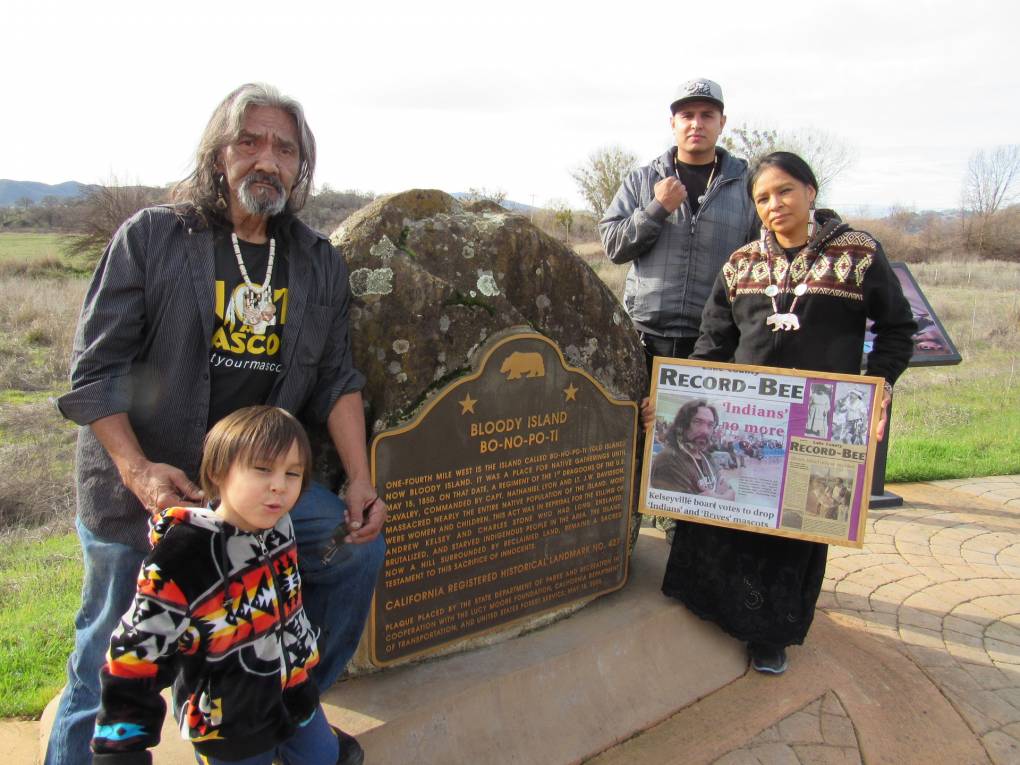
"caption": "Clayton Duncan, his 4-year-old grandson Misuenculla, Lisa Peake and Rudy Alvarez at the California Historical Landmark commemorating the massacre at Bloody Island.",
"description": null,
"title": "RS43182_IMG_0012-qut",
"credit": "Suzie Racho/KQED",
"status": "inherit",
"isLoading": false,
"fetchFailed": false
},
"news_11790007": {
"type": "attachments",
"id": "news_11790007",
"meta": {
"index": "attachments_1716263798",
"site": "news",
"id": "11790007",
"found": true
},
"parent": 11790005,
"imgSizes": {
"apple_news_ca_landscape_5_5": {
"file": "https://ww2.kqed.org/app/uploads/sites/10/2019/12/federal_courthouse_slave_mart_1920-1044x783.jpg",
"width": 1044,
"mimeType": "image/jpeg",
"height": 783
},
"apple_news_ca_square_4_0": {
"file": "https://ww2.kqed.org/app/uploads/sites/10/2019/12/federal_courthouse_slave_mart_1920-470x470.jpg",
"width": 470,
"mimeType": "image/jpeg",
"height": 470
},
"twentyfourteen-full-width": {
"file": "https://ww2.kqed.org/app/uploads/sites/10/2019/12/federal_courthouse_slave_mart_1920-1038x576.jpg",
"width": 1038,
"mimeType": "image/jpeg",
"height": 576
},
"thumbnail": {
"file": "https://ww2.kqed.org/app/uploads/sites/10/2019/12/federal_courthouse_slave_mart_1920-160x107.jpg",
"width": 160,
"mimeType": "image/jpeg",
"height": 107
},
"post-thumbnail": {
"file": "https://ww2.kqed.org/app/uploads/sites/10/2019/12/federal_courthouse_slave_mart_1920-672x372.jpg",
"width": 672,
"mimeType": "image/jpeg",
"height": 372
},
"kqedFullSize": {
"file": "https://ww2.kqed.org/app/uploads/sites/10/2019/12/federal_courthouse_slave_mart_1920.jpg",
"width": 1920,
"height": 1280
},
"apple_news_ca_landscape_4_7": {
"file": "https://ww2.kqed.org/app/uploads/sites/10/2019/12/federal_courthouse_slave_mart_1920-632x474.jpg",
"width": 632,
"mimeType": "image/jpeg",
"height": 474
},
"large": {
"file": "https://ww2.kqed.org/app/uploads/sites/10/2019/12/federal_courthouse_slave_mart_1920-1020x680.jpg",
"width": 1020,
"mimeType": "image/jpeg",
"height": 680
},
"complete_open_graph": {
"file": "https://ww2.kqed.org/app/uploads/sites/10/2019/12/federal_courthouse_slave_mart_1920-1200x800.jpg",
"width": 1200,
"mimeType": "image/jpeg",
"height": 800
},
"apple_news_ca_landscape_4_0": {
"file": "https://ww2.kqed.org/app/uploads/sites/10/2019/12/federal_courthouse_slave_mart_1920-536x402.jpg",
"width": 536,
"mimeType": "image/jpeg",
"height": 402
},
"apple_news_ca_portrait_12_9": {
"file": "https://ww2.kqed.org/app/uploads/sites/10/2019/12/federal_courthouse_slave_mart_1920-1122x1280.jpg",
"width": 1122,
"mimeType": "image/jpeg",
"height": 1280
},
"medium": {
"file": "https://ww2.kqed.org/app/uploads/sites/10/2019/12/federal_courthouse_slave_mart_1920-800x533.jpg",
"width": 800,
"mimeType": "image/jpeg",
"height": 533
},
"apple_news_ca_portrait_4_0": {
"file": "https://ww2.kqed.org/app/uploads/sites/10/2019/12/federal_courthouse_slave_mart_1920-354x472.jpg",
"width": 354,
"mimeType": "image/jpeg",
"height": 472
},
"apple_news_ca_portrait_9_7": {
"file": "https://ww2.kqed.org/app/uploads/sites/10/2019/12/federal_courthouse_slave_mart_1920-840x1120.jpg",
"width": 840,
"mimeType": "image/jpeg",
"height": 1120
},
"apple_news_ca_landscape_12_9": {
"file": "https://ww2.kqed.org/app/uploads/sites/10/2019/12/federal_courthouse_slave_mart_1920-1832x1280.jpg",
"width": 1832,
"mimeType": "image/jpeg",
"height": 1280
},
"apple_news_ca_square_9_7": {
"file": "https://ww2.kqed.org/app/uploads/sites/10/2019/12/federal_courthouse_slave_mart_1920-1104x1104.jpg",
"width": 1104,
"mimeType": "image/jpeg",
"height": 1104
},
"apple_news_ca_portrait_4_7": {
"file": "https://ww2.kqed.org/app/uploads/sites/10/2019/12/federal_courthouse_slave_mart_1920-414x552.jpg",
"width": 414,
"mimeType": "image/jpeg",
"height": 552
},
"apple_news_ca_square_12_9": {
"file": "https://ww2.kqed.org/app/uploads/sites/10/2019/12/federal_courthouse_slave_mart_1920-1472x1280.jpg",
"width": 1472,
"mimeType": "image/jpeg",
"height": 1280
},
"apple_news_ca_portrait_5_5": {
"file": "https://ww2.kqed.org/app/uploads/sites/10/2019/12/federal_courthouse_slave_mart_1920-687x916.jpg",
"width": 687,
"mimeType": "image/jpeg",
"height": 916
},
"full-width": {
"file": "https://ww2.kqed.org/app/uploads/sites/10/2019/12/federal_courthouse_slave_mart_1920-1920x1280.jpg",
"width": 1920,
"mimeType": "image/jpeg",
"height": 1280
},
"apple_news_ca_square_4_7": {
"file": "https://ww2.kqed.org/app/uploads/sites/10/2019/12/federal_courthouse_slave_mart_1920-550x550.jpg",
"width": 550,
"mimeType": "image/jpeg",
"height": 550
},
"apple_news_ca_landscape_9_7": {
"file": "https://ww2.kqed.org/app/uploads/sites/10/2019/12/federal_courthouse_slave_mart_1920-1376x1032.jpg",
"width": 1376,
"mimeType": "image/jpeg",
"height": 1032
},
"apple_news_ca_square_5_5": {
"file": "https://ww2.kqed.org/app/uploads/sites/10/2019/12/federal_courthouse_slave_mart_1920-912x912.jpg",
"width": 912,
"mimeType": "image/jpeg",
"height": 912
}
},
"publishDate": 1575659662,
"modified": 1575673570,
"caption": "The site of the Indian slave auction today: the U.S. Courthouse.",
"description": "The site of the Indian slave auction today: the Federal Courthouse.",
"title": "federal_courthouse_slave_mart_1920",
"credit": "Robert Petersen/KCET",
"status": "inherit",
"isLoading": false,
"fetchFailed": false
},
"news_11789448": {
"type": "attachments",
"id": "news_11789448",
"meta": {
"index": "attachments_1716263798",
"site": "news",
"id": "11789448",
"found": true
},
"parent": 11789158,
"imgSizes": {
"apple_news_ca_landscape_5_5": {
"file": "https://ww2.kqed.org/app/uploads/sites/10/2019/12/IRM_KQED-7-1044x783.jpg",
"width": 1044,
"mimeType": "image/jpeg",
"height": 783
},
"apple_news_ca_square_4_0": {
"file": "https://ww2.kqed.org/app/uploads/sites/10/2019/12/IRM_KQED-7-470x470.jpg",
"width": 470,
"mimeType": "image/jpeg",
"height": 470
},
"twentyfourteen-full-width": {
"file": "https://ww2.kqed.org/app/uploads/sites/10/2019/12/IRM_KQED-7-1038x576.jpg",
"width": 1038,
"mimeType": "image/jpeg",
"height": 576
},
"thumbnail": {
"file": "https://ww2.kqed.org/app/uploads/sites/10/2019/12/IRM_KQED-7-160x107.jpg",
"width": 160,
"mimeType": "image/jpeg",
"height": 107
},
"post-thumbnail": {
"file": "https://ww2.kqed.org/app/uploads/sites/10/2019/12/IRM_KQED-7-672x372.jpg",
"width": 672,
"mimeType": "image/jpeg",
"height": 372
},
"kqedFullSize": {
"file": "https://ww2.kqed.org/app/uploads/sites/10/2019/12/IRM_KQED-7-e1613003482580.jpg",
"width": 1920,
"height": 1280
},
"apple_news_ca_landscape_4_7": {
"file": "https://ww2.kqed.org/app/uploads/sites/10/2019/12/IRM_KQED-7-632x474.jpg",
"width": 632,
"mimeType": "image/jpeg",
"height": 474
},
"large": {
"file": "https://ww2.kqed.org/app/uploads/sites/10/2019/12/IRM_KQED-7-1020x680.jpg",
"width": 1020,
"mimeType": "image/jpeg",
"height": 680
},
"complete_open_graph": {
"file": "https://ww2.kqed.org/app/uploads/sites/10/2019/12/IRM_KQED-7-1200x800.jpg",
"width": 1200,
"mimeType": "image/jpeg",
"height": 800
},
"apple_news_ca_landscape_4_0": {
"file": "https://ww2.kqed.org/app/uploads/sites/10/2019/12/IRM_KQED-7-536x402.jpg",
"width": 536,
"mimeType": "image/jpeg",
"height": 402
},
"apple_news_ca_portrait_12_9": {
"file": "https://ww2.kqed.org/app/uploads/sites/10/2019/12/IRM_KQED-7-1122x1496.jpg",
"width": 1122,
"mimeType": "image/jpeg",
"height": 1496
},
"medium": {
"file": "https://ww2.kqed.org/app/uploads/sites/10/2019/12/IRM_KQED-7-800x533.jpg",
"width": 800,
"mimeType": "image/jpeg",
"height": 533
},
"apple_news_ca_portrait_4_0": {
"file": "https://ww2.kqed.org/app/uploads/sites/10/2019/12/IRM_KQED-7-354x472.jpg",
"width": 354,
"mimeType": "image/jpeg",
"height": 472
},
"apple_news_ca_portrait_9_7": {
"file": "https://ww2.kqed.org/app/uploads/sites/10/2019/12/IRM_KQED-7-840x1120.jpg",
"width": 840,
"mimeType": "image/jpeg",
"height": 1120
},
"apple_news_ca_landscape_12_9": {
"file": "https://ww2.kqed.org/app/uploads/sites/10/2019/12/IRM_KQED-7-1832x1374.jpg",
"width": 1832,
"mimeType": "image/jpeg",
"height": 1374
},
"apple_news_ca_square_9_7": {
"file": "https://ww2.kqed.org/app/uploads/sites/10/2019/12/IRM_KQED-7-1104x1104.jpg",
"width": 1104,
"mimeType": "image/jpeg",
"height": 1104
},
"apple_news_ca_portrait_4_7": {
"file": "https://ww2.kqed.org/app/uploads/sites/10/2019/12/IRM_KQED-7-414x552.jpg",
"width": 414,
"mimeType": "image/jpeg",
"height": 552
},
"apple_news_ca_square_12_9": {
"file": "https://ww2.kqed.org/app/uploads/sites/10/2019/12/IRM_KQED-7-1472x1472.jpg",
"width": 1472,
"mimeType": "image/jpeg",
"height": 1472
},
"apple_news_ca_portrait_5_5": {
"file": "https://ww2.kqed.org/app/uploads/sites/10/2019/12/IRM_KQED-7-687x916.jpg",
"width": 687,
"mimeType": "image/jpeg",
"height": 916
},
"full-width": {
"file": "https://ww2.kqed.org/app/uploads/sites/10/2019/12/IRM_KQED-7-1920x1280.jpg",
"width": 1920,
"mimeType": "image/jpeg",
"height": 1280
},
"apple_news_ca_square_4_7": {
"file": "https://ww2.kqed.org/app/uploads/sites/10/2019/12/IRM_KQED-7-550x550.jpg",
"width": 550,
"mimeType": "image/jpeg",
"height": 550
},
"apple_news_ca_landscape_9_7": {
"file": "https://ww2.kqed.org/app/uploads/sites/10/2019/12/IRM_KQED-7-1376x1032.jpg",
"width": 1376,
"mimeType": "image/jpeg",
"height": 1032
},
"apple_news_ca_square_5_5": {
"file": "https://ww2.kqed.org/app/uploads/sites/10/2019/12/IRM_KQED-7-912x912.jpg",
"width": 912,
"mimeType": "image/jpeg",
"height": 912
}
},
"publishDate": 1575424405,
"modified": 1613003717,
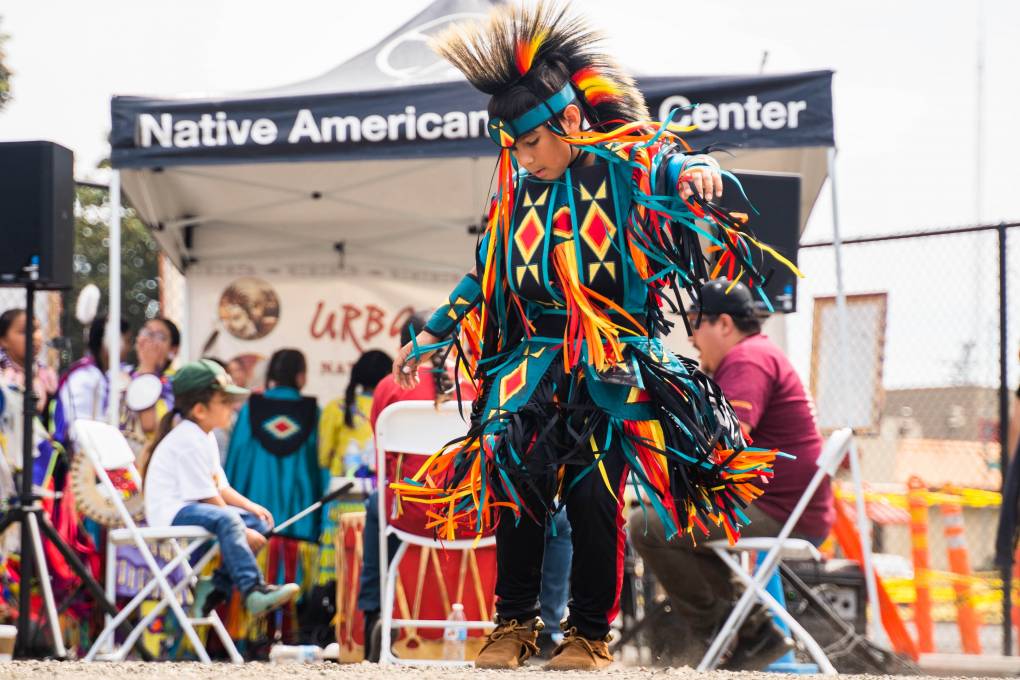
"caption": "Indigenous artists, chefs and vendors celebrate Native culture at the Indigenous Red Market. ",
"description": "Indigenous artists, chefs, and vendors celebrate native culture at the Indigenous Red Market. ",
"title": "Indigenous Red Market 1",
"credit": "Joey Montoya",
"status": "inherit",
"altTag": "Indigenous artists, chefs, and vendors celebrate native culture at the Indigenous Red Market.",
"isLoading": false,
"fetchFailed": false
},
"news_11781483": {
"type": "attachments",
"id": "news_11781483",
"meta": {
"index": "attachments_1716263798",
"site": "news",
"id": "11781483",
"found": true
},
"parent": 11781477,
"imgSizes": {
"apple_news_ca_landscape_5_5": {
"file": "https://ww2.kqed.org/app/uploads/sites/10/2019/10/10212019_wiyot-tribe_indian-island_eureka-qut-1044x783.jpg",
"width": 1044,
"mimeType": "image/jpeg",
"height": 783
},
"apple_news_ca_square_4_0": {
"file": "https://ww2.kqed.org/app/uploads/sites/10/2019/10/10212019_wiyot-tribe_indian-island_eureka-qut-470x470.jpg",
"width": 470,
"mimeType": "image/jpeg",
"height": 470
},
"twentyfourteen-full-width": {
"file": "https://ww2.kqed.org/app/uploads/sites/10/2019/10/10212019_wiyot-tribe_indian-island_eureka-qut-1038x576.jpg",
"width": 1038,
"mimeType": "image/jpeg",
"height": 576
},
"thumbnail": {
"file": "https://ww2.kqed.org/app/uploads/sites/10/2019/10/10212019_wiyot-tribe_indian-island_eureka-qut-160x72.jpg",
"width": 160,
"mimeType": "image/jpeg",
"height": 72
},
"post-thumbnail": {
"file": "https://ww2.kqed.org/app/uploads/sites/10/2019/10/10212019_wiyot-tribe_indian-island_eureka-qut-672x372.jpg",
"width": 672,
"mimeType": "image/jpeg",
"height": 372
},
"kqedFullSize": {
"file": "https://ww2.kqed.org/app/uploads/sites/10/2019/10/10212019_wiyot-tribe_indian-island_eureka-qut.jpg",
"width": 1920,
"height": 858
},
"apple_news_ca_landscape_4_7": {
"file": "https://ww2.kqed.org/app/uploads/sites/10/2019/10/10212019_wiyot-tribe_indian-island_eureka-qut-632x474.jpg",
"width": 632,
"mimeType": "image/jpeg",
"height": 474
},
"large": {
"file": "https://ww2.kqed.org/app/uploads/sites/10/2019/10/10212019_wiyot-tribe_indian-island_eureka-qut-1020x456.jpg",
"width": 1020,
"mimeType": "image/jpeg",
"height": 456
},
"complete_open_graph": {
"file": "https://ww2.kqed.org/app/uploads/sites/10/2019/10/10212019_wiyot-tribe_indian-island_eureka-qut-1200x536.jpg",
"width": 1200,
"mimeType": "image/jpeg",
"height": 536
},
"apple_news_ca_landscape_4_0": {
"file": "https://ww2.kqed.org/app/uploads/sites/10/2019/10/10212019_wiyot-tribe_indian-island_eureka-qut-536x402.jpg",
"width": 536,
"mimeType": "image/jpeg",
"height": 402
},
"apple_news_ca_portrait_12_9": {
"file": "https://ww2.kqed.org/app/uploads/sites/10/2019/10/10212019_wiyot-tribe_indian-island_eureka-qut-1122x858.jpg",
"width": 1122,
"mimeType": "image/jpeg",
"height": 858
},
"medium": {
"file": "https://ww2.kqed.org/app/uploads/sites/10/2019/10/10212019_wiyot-tribe_indian-island_eureka-qut-800x358.jpg",
"width": 800,
"mimeType": "image/jpeg",
"height": 358
},
"apple_news_ca_portrait_4_0": {
"file": "https://ww2.kqed.org/app/uploads/sites/10/2019/10/10212019_wiyot-tribe_indian-island_eureka-qut-354x472.jpg",
"width": 354,
"mimeType": "image/jpeg",
"height": 472
},
"apple_news_ca_portrait_9_7": {
"file": "https://ww2.kqed.org/app/uploads/sites/10/2019/10/10212019_wiyot-tribe_indian-island_eureka-qut-840x858.jpg",
"width": 840,
"mimeType": "image/jpeg",
"height": 858
},
"apple_news_ca_landscape_12_9": {
"file": "https://ww2.kqed.org/app/uploads/sites/10/2019/10/10212019_wiyot-tribe_indian-island_eureka-qut-1832x858.jpg",
"width": 1832,
"mimeType": "image/jpeg",
"height": 858
},
"apple_news_ca_square_9_7": {
"file": "https://ww2.kqed.org/app/uploads/sites/10/2019/10/10212019_wiyot-tribe_indian-island_eureka-qut-1104x858.jpg",
"width": 1104,
"mimeType": "image/jpeg",
"height": 858
},
"apple_news_ca_portrait_4_7": {
"file": "https://ww2.kqed.org/app/uploads/sites/10/2019/10/10212019_wiyot-tribe_indian-island_eureka-qut-414x552.jpg",
"width": 414,
"mimeType": "image/jpeg",
"height": 552
},
"apple_news_ca_square_12_9": {
"file": "https://ww2.kqed.org/app/uploads/sites/10/2019/10/10212019_wiyot-tribe_indian-island_eureka-qut-1472x858.jpg",
"width": 1472,
"mimeType": "image/jpeg",
"height": 858
},
"apple_news_ca_portrait_5_5": {
"file": "https://ww2.kqed.org/app/uploads/sites/10/2019/10/10212019_wiyot-tribe_indian-island_eureka-qut-687x858.jpg",
"width": 687,
"mimeType": "image/jpeg",
"height": 858
},
"full-width": {
"file": "https://ww2.kqed.org/app/uploads/sites/10/2019/10/10212019_wiyot-tribe_indian-island_eureka-qut-1920x858.jpg",
"width": 1920,
"mimeType": "image/jpeg",
"height": 858
},
"apple_news_ca_square_4_7": {
"file": "https://ww2.kqed.org/app/uploads/sites/10/2019/10/10212019_wiyot-tribe_indian-island_eureka-qut-550x550.jpg",
"width": 550,
"mimeType": "image/jpeg",
"height": 550
},
"apple_news_ca_landscape_9_7": {
"file": "https://ww2.kqed.org/app/uploads/sites/10/2019/10/10212019_wiyot-tribe_indian-island_eureka-qut-1376x858.jpg",
"width": 1376,
"mimeType": "image/jpeg",
"height": 858
},
"apple_news_ca_square_5_5": {
"file": "https://ww2.kqed.org/app/uploads/sites/10/2019/10/10212019_wiyot-tribe_indian-island_eureka-qut-912x858.jpg",
"width": 912,
"mimeType": "image/jpeg",
"height": 858
}
},
"publishDate": 1571683690,
"modified": 1571683771,
"caption": "Indian Island on Dec. 12, 2012.",
"description": "Nancy Spruance/Humboldt Baykeeper/Creative Commons",
"title": "10212019_wiyot tribe_indian island_eureka-qut",
"credit": "Nancy Spruance/Humboldt Baykeeper/Creative Commons",
"status": "inherit",
"isLoading": false,
"fetchFailed": false
},
"news_11767510": {
"type": "attachments",
"id": "news_11767510",
"meta": {
"index": "attachments_1716263798",
"site": "news",
"id": "11767510",
"found": true
},
"parent": 11767493,
"imgSizes": {
"apple_news_ca_square_4_0": {
"file": "https://ww2.kqed.org/app/uploads/sites/10/2019/08/GWHS-Mural-470x342.jpg",
"width": 470,
"mimeType": "image/jpeg",
"height": 342
},
"thumbnail": {
"file": "https://ww2.kqed.org/app/uploads/sites/10/2019/08/GWHS-Mural-160x68.jpg",
"width": 160,
"mimeType": "image/jpeg",
"height": 68
},
"post-thumbnail": {
"file": "https://ww2.kqed.org/app/uploads/sites/10/2019/08/GWHS-Mural-672x342.jpg",
"width": 672,
"mimeType": "image/jpeg",
"height": 342
},
"kqedFullSize": {
"file": "https://ww2.kqed.org/app/uploads/sites/10/2019/08/GWHS-Mural.jpg",
"width": 806,
"height": 342
},
"apple_news_ca_landscape_4_7": {
"file": "https://ww2.kqed.org/app/uploads/sites/10/2019/08/GWHS-Mural-632x342.jpg",
"width": 632,
"mimeType": "image/jpeg",
"height": 342
},
"apple_news_ca_portrait_4_7": {
"file": "https://ww2.kqed.org/app/uploads/sites/10/2019/08/GWHS-Mural-414x342.jpg",
"width": 414,
"mimeType": "image/jpeg",
"height": 342
},
"apple_news_ca_portrait_5_5": {
"file": "https://ww2.kqed.org/app/uploads/sites/10/2019/08/GWHS-Mural-687x342.jpg",
"width": 687,
"mimeType": "image/jpeg",
"height": 342
},
"apple_news_ca_square_4_7": {
"file": "https://ww2.kqed.org/app/uploads/sites/10/2019/08/GWHS-Mural-550x342.jpg",
"width": 550,
"mimeType": "image/jpeg",
"height": 342
},
"apple_news_ca_landscape_4_0": {
"file": "https://ww2.kqed.org/app/uploads/sites/10/2019/08/GWHS-Mural-536x342.jpg",
"width": 536,
"mimeType": "image/jpeg",
"height": 342
},
"medium": {
"file": "https://ww2.kqed.org/app/uploads/sites/10/2019/08/GWHS-Mural-800x339.jpg",
"width": 800,
"mimeType": "image/jpeg",
"height": 339
},
"apple_news_ca_portrait_4_0": {
"file": "https://ww2.kqed.org/app/uploads/sites/10/2019/08/GWHS-Mural-354x342.jpg",
"width": 354,
"mimeType": "image/jpeg",
"height": 342
}
},
"publishDate": 1565800455,
"modified": 1565800535,
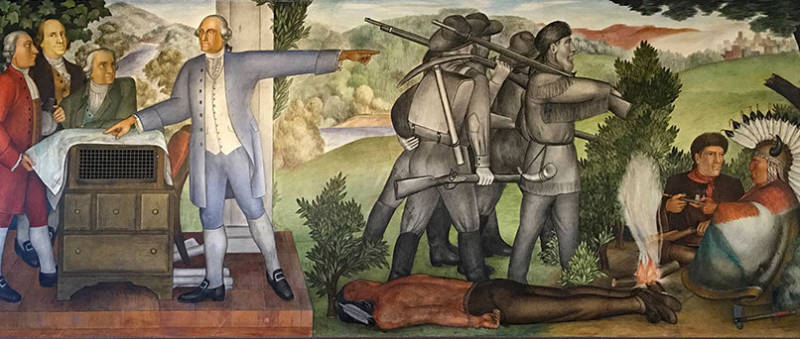
"caption": "The WPA-era mural by Victor Arnautoff at George Washington High School depicts slave ownership and Native American genocide.",
"description": "The WPA-era mural by Victor Arnautoff at George Washington High School depicts slave ownership and Native American genocide.",
"title": "GWHS-Mural",
"credit": "George Washington High School Alumni Association",
"status": "inherit",
"isLoading": false,
"fetchFailed": false
},
"news_11762350": {
"type": "attachments",
"id": "news_11762350",
"meta": {
"index": "attachments_1716263798",
"site": "news",
"id": "11762350",
"found": true
},
"parent": 11762333,
"imgSizes": {
"apple_news_ca_landscape_5_5": {
"file": "https://ww2.kqed.org/app/uploads/sites/10/2019/07/GettyImages-98529895-2-1044x783.jpg",
"width": 1044,
"mimeType": "image/jpeg",
"height": 783
},
"apple_news_ca_square_4_0": {
"file": "https://ww2.kqed.org/app/uploads/sites/10/2019/07/GettyImages-98529895-2-470x470.jpg",
"width": 470,
"mimeType": "image/jpeg",
"height": 470
},
"twentyfourteen-full-width": {
"file": "https://ww2.kqed.org/app/uploads/sites/10/2019/07/GettyImages-98529895-2-1038x576.jpg",
"width": 1038,
"mimeType": "image/jpeg",
"height": 576
},
"thumbnail": {
"file": "https://ww2.kqed.org/app/uploads/sites/10/2019/07/GettyImages-98529895-2-160x109.jpg",
"width": 160,
"mimeType": "image/jpeg",
"height": 109
},
"post-thumbnail": {
"file": "https://ww2.kqed.org/app/uploads/sites/10/2019/07/GettyImages-98529895-2-672x372.jpg",
"width": 672,
"mimeType": "image/jpeg",
"height": 372
},
"kqedFullSize": {
"file": "https://ww2.kqed.org/app/uploads/sites/10/2019/07/GettyImages-98529895-2-e1563495152432.jpg",
"width": 1920,
"height": 1314
},
"apple_news_ca_landscape_4_7": {
"file": "https://ww2.kqed.org/app/uploads/sites/10/2019/07/GettyImages-98529895-2-632x474.jpg",
"width": 632,
"mimeType": "image/jpeg",
"height": 474
},
"large": {
"file": "https://ww2.kqed.org/app/uploads/sites/10/2019/07/GettyImages-98529895-2-1020x698.jpg",
"width": 1020,
"mimeType": "image/jpeg",
"height": 698
},
"complete_open_graph": {
"file": "https://ww2.kqed.org/app/uploads/sites/10/2019/07/GettyImages-98529895-2-1200x821.jpg",
"width": 1200,
"mimeType": "image/jpeg",
"height": 821
},
"apple_news_ca_landscape_4_0": {
"file": "https://ww2.kqed.org/app/uploads/sites/10/2019/07/GettyImages-98529895-2-536x402.jpg",
"width": 536,
"mimeType": "image/jpeg",
"height": 402
},
"apple_news_ca_portrait_12_9": {
"file": "https://ww2.kqed.org/app/uploads/sites/10/2019/07/GettyImages-98529895-2-1122x1496.jpg",
"width": 1122,
"mimeType": "image/jpeg",
"height": 1496
},
"medium": {
"file": "https://ww2.kqed.org/app/uploads/sites/10/2019/07/GettyImages-98529895-2-800x547.jpg",
"width": 800,
"mimeType": "image/jpeg",
"height": 547
},
"apple_news_ca_portrait_4_0": {
"file": "https://ww2.kqed.org/app/uploads/sites/10/2019/07/GettyImages-98529895-2-354x472.jpg",
"width": 354,
"mimeType": "image/jpeg",
"height": 472
},
"apple_news_ca_portrait_9_7": {
"file": "https://ww2.kqed.org/app/uploads/sites/10/2019/07/GettyImages-98529895-2-840x1120.jpg",
"width": 840,
"mimeType": "image/jpeg",
"height": 1120
},
"apple_news_ca_landscape_12_9": {
"file": "https://ww2.kqed.org/app/uploads/sites/10/2019/07/GettyImages-98529895-2-1832x1374.jpg",
"width": 1832,
"mimeType": "image/jpeg",
"height": 1374
},
"apple_news_ca_square_9_7": {
"file": "https://ww2.kqed.org/app/uploads/sites/10/2019/07/GettyImages-98529895-2-1104x1104.jpg",
"width": 1104,
"mimeType": "image/jpeg",
"height": 1104
},
"apple_news_ca_portrait_4_7": {
"file": "https://ww2.kqed.org/app/uploads/sites/10/2019/07/GettyImages-98529895-2-414x552.jpg",
"width": 414,
"mimeType": "image/jpeg",
"height": 552
},
"apple_news_ca_square_12_9": {
"file": "https://ww2.kqed.org/app/uploads/sites/10/2019/07/GettyImages-98529895-2-1472x1472.jpg",
"width": 1472,
"mimeType": "image/jpeg",
"height": 1472
},
"apple_news_ca_portrait_5_5": {
"file": "https://ww2.kqed.org/app/uploads/sites/10/2019/07/GettyImages-98529895-2-687x916.jpg",
"width": 687,
"mimeType": "image/jpeg",
"height": 916
},
"full-width": {
"file": "https://ww2.kqed.org/app/uploads/sites/10/2019/07/GettyImages-98529895-2-1920x1314.jpg",
"width": 1920,
"mimeType": "image/jpeg",
"height": 1314
},
"apple_news_ca_square_4_7": {
"file": "https://ww2.kqed.org/app/uploads/sites/10/2019/07/GettyImages-98529895-2-550x550.jpg",
"width": 550,
"mimeType": "image/jpeg",
"height": 550
},
"apple_news_ca_landscape_9_7": {
"file": "https://ww2.kqed.org/app/uploads/sites/10/2019/07/GettyImages-98529895-2-1376x1032.jpg",
"width": 1376,
"mimeType": "image/jpeg",
"height": 1032
},
"apple_news_ca_square_5_5": {
"file": "https://ww2.kqed.org/app/uploads/sites/10/2019/07/GettyImages-98529895-2-912x912.jpg",
"width": 912,
"mimeType": "image/jpeg",
"height": 912
}
},
"publishDate": 1563495080,
"modified": 1563495264,
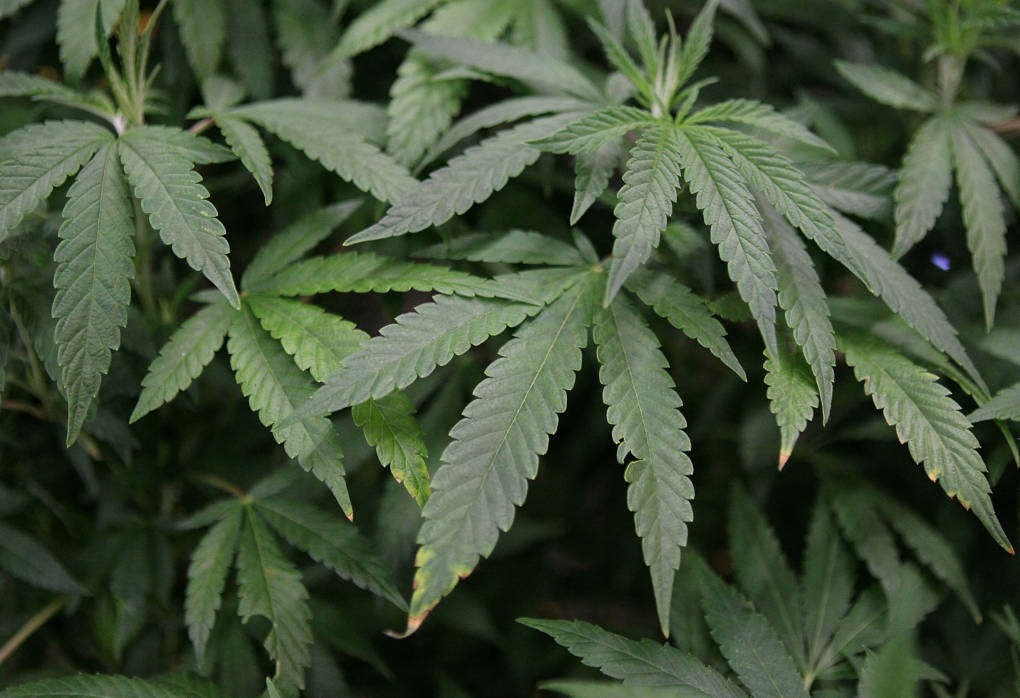
"caption": "Tribal leaders say the state is unfairly shutting them out of the nascent legal cannabis market.",
"description": null,
"title": "International Cannabis And Hemp Expo Held In San Francisco",
"credit": "Justin Sullivan/Getty Images",
"status": "inherit",
"isLoading": false,
"fetchFailed": false
},
"news_11706330": {
"type": "attachments",
"id": "news_11706330",
"meta": {
"index": "attachments_1716263798",
"site": "news",
"id": "11706330",
"found": true
},
"parent": 11706264,
"imgSizes": {
"twentyfourteen-full-width": {
"file": "https://ww2.kqed.org/app/uploads/sites/10/2018/11/DowntownParadise-1038x576.jpg",
"width": 1038,
"mimeType": "image/jpeg",
"height": 576
},
"thumbnail": {
"file": "https://ww2.kqed.org/app/uploads/sites/10/2018/11/DowntownParadise-160x106.jpg",
"width": 160,
"mimeType": "image/jpeg",
"height": 106
},
"post-thumbnail": {
"file": "https://ww2.kqed.org/app/uploads/sites/10/2018/11/DowntownParadise-672x372.jpg",
"width": 672,
"mimeType": "image/jpeg",
"height": 372
},
"kqedFullSize": {
"file": "https://ww2.kqed.org/app/uploads/sites/10/2018/11/DowntownParadise.jpg",
"width": 1920,
"height": 1273
},
"large": {
"file": "https://ww2.kqed.org/app/uploads/sites/10/2018/11/DowntownParadise-1020x676.jpg",
"width": 1020,
"mimeType": "image/jpeg",
"height": 676
},
"complete_open_graph": {
"file": "https://ww2.kqed.org/app/uploads/sites/10/2018/11/DowntownParadise-1200x796.jpg",
"width": 1200,
"mimeType": "image/jpeg",
"height": 796
},
"guest-author-50": {
"file": "https://ww2.kqed.org/app/uploads/sites/10/2018/11/DowntownParadise-50x50.jpg",
"width": 50,
"mimeType": "image/jpeg",
"height": 50
},
"guest-author-96": {
"file": "https://ww2.kqed.org/app/uploads/sites/10/2018/11/DowntownParadise-96x96.jpg",
"width": 96,
"mimeType": "image/jpeg",
"height": 96
},
"medium": {
"file": "https://ww2.kqed.org/app/uploads/sites/10/2018/11/DowntownParadise-800x530.jpg",
"width": 800,
"mimeType": "image/jpeg",
"height": 530
},
"guest-author-64": {
"file": "https://ww2.kqed.org/app/uploads/sites/10/2018/11/DowntownParadise-64x64.jpg",
"width": 64,
"mimeType": "image/jpeg",
"height": 64
},
"guest-author-32": {
"file": "https://ww2.kqed.org/app/uploads/sites/10/2018/11/DowntownParadise-32x32.jpg",
"width": 32,
"mimeType": "image/jpeg",
"height": 32
},
"full-width": {
"file": "https://ww2.kqed.org/app/uploads/sites/10/2018/11/DowntownParadise-1920x1273.jpg",
"width": 1920,
"mimeType": "image/jpeg",
"height": 1273
},
"detail": {
"file": "https://ww2.kqed.org/app/uploads/sites/10/2018/11/DowntownParadise-150x150.jpg",
"width": 150,
"mimeType": "image/jpeg",
"height": 150
},
"guest-author-128": {
"file": "https://ww2.kqed.org/app/uploads/sites/10/2018/11/DowntownParadise-128x128.jpg",
"width": 128,
"mimeType": "image/jpeg",
"height": 128
}
},
"publishDate": 1542233894,
"modified": 1542234121,
"caption": "The remains of downtown Paradise sit empty in the wake of the Camp Fire - the most destructive and deadly wildfire in state history - on Nov. 13, 2018.",
"description": "The remains of downtown Paradise sit empty in the wake of the Camp Fire - the most destructive and deadly wildfire in state history - on Nov. 13, 2018.",
"title": "DowntownParadise",
"credit": "Anne Wernikoff/KQED",
"status": "inherit",
"isLoading": false,
"fetchFailed": false
},
"news_11698725": {
"type": "attachments",
"id": "news_11698725",
"meta": {
"index": "attachments_1716263798",
"site": "news",
"id": "11698725",
"found": true
},
"parent": 11698712,
"imgSizes": {
"small": {
"file": "https://ww2.kqed.org/app/uploads/sites/10/2018/10/IMG_6730-520x347.jpg",
"width": 520,
"mimeType": "image/jpeg",
"height": 347
},
"twentyfourteen-full-width": {
"file": "https://ww2.kqed.org/app/uploads/sites/10/2018/10/IMG_6730-1038x576.jpg",
"width": 1038,
"mimeType": "image/jpeg",
"height": 576
},
"thumbnail": {
"file": "https://ww2.kqed.org/app/uploads/sites/10/2018/10/IMG_6730-160x107.jpg",
"width": 160,
"mimeType": "image/jpeg",
"height": 107
},
"fd-sm": {
"file": "https://ww2.kqed.org/app/uploads/sites/10/2018/10/IMG_6730-960x640.jpg",
"width": 960,
"mimeType": "image/jpeg",
"height": 640
},
"post-thumbnail": {
"file": "https://ww2.kqed.org/app/uploads/sites/10/2018/10/IMG_6730-672x372.jpg",
"width": 672,
"mimeType": "image/jpeg",
"height": 372
},
"xsmall": {
"file": "https://ww2.kqed.org/app/uploads/sites/10/2018/10/IMG_6730-375x250.jpg",
"width": 375,
"mimeType": "image/jpeg",
"height": 250
},
"kqedFullSize": {
"file": "https://ww2.kqed.org/app/uploads/sites/10/2018/10/IMG_6730-e1539477183733.jpg",
"width": 1920,
"height": 1280
},
"large": {
"file": "https://ww2.kqed.org/app/uploads/sites/10/2018/10/IMG_6730-1020x680.jpg",
"width": 1020,
"mimeType": "image/jpeg",
"height": 680
},
"xlarge": {
"file": "https://ww2.kqed.org/app/uploads/sites/10/2018/10/IMG_6730-1180x787.jpg",
"width": 1180,
"mimeType": "image/jpeg",
"height": 787
},
"complete_open_graph": {
"file": "https://ww2.kqed.org/app/uploads/sites/10/2018/10/IMG_6730-1200x800.jpg",
"width": 1200,
"mimeType": "image/jpeg",
"height": 800
},
"guest-author-50": {
"file": "https://ww2.kqed.org/app/uploads/sites/10/2018/10/IMG_6730-50x50.jpg",
"width": 50,
"mimeType": "image/jpeg",
"height": 50
},
"guest-author-96": {
"file": "https://ww2.kqed.org/app/uploads/sites/10/2018/10/IMG_6730-96x96.jpg",
"width": 96,
"mimeType": "image/jpeg",
"height": 96
},
"medium": {
"file": "https://ww2.kqed.org/app/uploads/sites/10/2018/10/IMG_6730-800x533.jpg",
"width": 800,
"mimeType": "image/jpeg",
"height": 533
},
"guest-author-64": {
"file": "https://ww2.kqed.org/app/uploads/sites/10/2018/10/IMG_6730-64x64.jpg",
"width": 64,
"mimeType": "image/jpeg",
"height": 64
},
"guest-author-32": {
"file": "https://ww2.kqed.org/app/uploads/sites/10/2018/10/IMG_6730-32x32.jpg",
"width": 32,
"mimeType": "image/jpeg",
"height": 32
},
"fd-lrg": {
"file": "https://ww2.kqed.org/app/uploads/sites/10/2018/10/IMG_6730-1920x1280.jpg",
"width": 1920,
"mimeType": "image/jpeg",
"height": 1280
},
"fd-med": {
"file": "https://ww2.kqed.org/app/uploads/sites/10/2018/10/IMG_6730-1180x787.jpg",
"width": 1180,
"mimeType": "image/jpeg",
"height": 787
},
"full-width": {
"file": "https://ww2.kqed.org/app/uploads/sites/10/2018/10/IMG_6730-1920x1280.jpg",
"width": 1920,
"mimeType": "image/jpeg",
"height": 1280
},
"detail": {
"file": "https://ww2.kqed.org/app/uploads/sites/10/2018/10/IMG_6730-150x150.jpg",
"width": 150,
"mimeType": "image/jpeg",
"height": 150
},
"guest-author-128": {
"file": "https://ww2.kqed.org/app/uploads/sites/10/2018/10/IMG_6730-128x128.jpg",
"width": 128,
"mimeType": "image/jpeg",
"height": 128
},
"xxsmall": {
"file": "https://ww2.kqed.org/app/uploads/sites/10/2018/10/IMG_6730-240x160.jpg",
"width": 240,
"mimeType": "image/jpeg",
"height": 160
}
},
"publishDate": 1539450845,
"modified": 1539477418,
"caption": "Cafe Ohlone co-owner Louis Trevino waits on a long line of eager diners at a preview tasting at the new Berkeley cafe.",
"description": "Cafe Ohlone co-owner Louis Trevino waits on a long line of eager diners at a preview tasting at the new Berkeley cafe.",
"title": "IMG_6730",
"credit": "Sara Hossaini/KQED",
"status": "inherit",
"isLoading": false,
"fetchFailed": false
},
"news_11685045": {
"type": "attachments",
"id": "news_11685045",
"meta": {
"index": "attachments_1716263798",
"site": "news",
"id": "11685045",
"found": true
},
"parent": 11684091,
"imgSizes": {
"small": {
"file": "https://ww2.kqed.org/app/uploads/sites/10/2018/08/RS32210_MtShasta5-qut-520x390.jpg",
"width": 520,
"mimeType": "image/jpeg",
"height": 390
},
"twentyfourteen-full-width": {
"file": "https://ww2.kqed.org/app/uploads/sites/10/2018/08/RS32210_MtShasta5-qut-1038x576.jpg",
"width": 1038,
"mimeType": "image/jpeg",
"height": 576
},
"thumbnail": {
"file": "https://ww2.kqed.org/app/uploads/sites/10/2018/08/RS32210_MtShasta5-qut-160x120.jpg",
"width": 160,
"mimeType": "image/jpeg",
"height": 120
},
"fd-sm": {
"file": "https://ww2.kqed.org/app/uploads/sites/10/2018/08/RS32210_MtShasta5-qut-960x720.jpg",
"width": 960,
"mimeType": "image/jpeg",
"height": 720
},
"post-thumbnail": {
"file": "https://ww2.kqed.org/app/uploads/sites/10/2018/08/RS32210_MtShasta5-qut-672x372.jpg",
"width": 672,
"mimeType": "image/jpeg",
"height": 372
},
"xsmall": {
"file": "https://ww2.kqed.org/app/uploads/sites/10/2018/08/RS32210_MtShasta5-qut-375x281.jpg",
"width": 375,
"mimeType": "image/jpeg",
"height": 281
},
"kqedFullSize": {
"file": "https://ww2.kqed.org/app/uploads/sites/10/2018/08/RS32210_MtShasta5-qut.jpg",
"width": 1920,
"height": 1440
},
"large": {
"file": "https://ww2.kqed.org/app/uploads/sites/10/2018/08/RS32210_MtShasta5-qut-1020x765.jpg",
"width": 1020,
"mimeType": "image/jpeg",
"height": 765
},
"xlarge": {
"file": "https://ww2.kqed.org/app/uploads/sites/10/2018/08/RS32210_MtShasta5-qut-1180x885.jpg",
"width": 1180,
"mimeType": "image/jpeg",
"height": 885
},
"complete_open_graph": {
"file": "https://ww2.kqed.org/app/uploads/sites/10/2018/08/RS32210_MtShasta5-qut-1200x900.jpg",
"width": 1200,
"mimeType": "image/jpeg",
"height": 900
},
"guest-author-50": {
"file": "https://ww2.kqed.org/app/uploads/sites/10/2018/08/RS32210_MtShasta5-qut-50x50.jpg",
"width": 50,
"mimeType": "image/jpeg",
"height": 50
},
"guest-author-96": {
"file": "https://ww2.kqed.org/app/uploads/sites/10/2018/08/RS32210_MtShasta5-qut-96x96.jpg",
"width": 96,
"mimeType": "image/jpeg",
"height": 96
},
"medium": {
"file": "https://ww2.kqed.org/app/uploads/sites/10/2018/08/RS32210_MtShasta5-qut-800x600.jpg",
"width": 800,
"mimeType": "image/jpeg",
"height": 600
},
"guest-author-64": {
"file": "https://ww2.kqed.org/app/uploads/sites/10/2018/08/RS32210_MtShasta5-qut-64x64.jpg",
"width": 64,
"mimeType": "image/jpeg",
"height": 64
},
"guest-author-32": {
"file": "https://ww2.kqed.org/app/uploads/sites/10/2018/08/RS32210_MtShasta5-qut-32x32.jpg",
"width": 32,
"mimeType": "image/jpeg",
"height": 32
},
"fd-lrg": {
"file": "https://ww2.kqed.org/app/uploads/sites/10/2018/08/RS32210_MtShasta5-qut-1920x1440.jpg",
"width": 1920,
"mimeType": "image/jpeg",
"height": 1440
},
"fd-med": {
"file": "https://ww2.kqed.org/app/uploads/sites/10/2018/08/RS32210_MtShasta5-qut-1180x885.jpg",
"width": 1180,
"mimeType": "image/jpeg",
"height": 885
},
"full-width": {
"file": "https://ww2.kqed.org/app/uploads/sites/10/2018/08/RS32210_MtShasta5-qut-1920x1440.jpg",
"width": 1920,
"mimeType": "image/jpeg",
"height": 1440
},
"detail": {
"file": "https://ww2.kqed.org/app/uploads/sites/10/2018/08/RS32210_MtShasta5-qut-150x150.jpg",
"width": 150,
"mimeType": "image/jpeg",
"height": 150
},
"guest-author-128": {
"file": "https://ww2.kqed.org/app/uploads/sites/10/2018/08/RS32210_MtShasta5-qut-128x128.jpg",
"width": 128,
"mimeType": "image/jpeg",
"height": 128
},
"xxsmall": {
"file": "https://ww2.kqed.org/app/uploads/sites/10/2018/08/RS32210_MtShasta5-qut-240x180.jpg",
"width": 240,
"mimeType": "image/jpeg",
"height": 180
}
},
"publishDate": 1533579818,
"modified": 1535758403,
"caption": "There are three main theories that explain the origin of the mysterious hole dug into Mount Shasta, and each theory tells a different story about the region’s history. ",
"description": "There are three main theories that explain the origin of the mysterious hole dug into Mt. Shasta, and each theory tells a different story about the region’s history. ",
"title": "OLYMPUS DIGITAL CAMERA",
"credit": "Cat Schuknecht/KQED",
"status": "inherit",
"isLoading": false,
"fetchFailed": false
},
"news_11680085": {
"type": "attachments",
"id": "news_11680085",
"meta": {
"index": "attachments_1716263798",
"site": "news",
"id": "11680085",
"found": true
},
"parent": 11680078,
"imgSizes": {
"small": {
"file": "https://ww2.kqed.org/app/uploads/sites/10/2018/07/NativeAmericansVUCMain-520x347.jpg",
"width": 520,
"mimeType": "image/jpeg",
"height": 347
},
"twentyfourteen-full-width": {
"file": "https://ww2.kqed.org/app/uploads/sites/10/2018/07/NativeAmericansVUCMain-1038x576.jpg",
"width": 1038,
"mimeType": "image/jpeg",
"height": 576
},
"thumbnail": {
"file": "https://ww2.kqed.org/app/uploads/sites/10/2018/07/NativeAmericansVUCMain-160x107.jpg",
"width": 160,
"mimeType": "image/jpeg",
"height": 107
},
"fd-sm": {
"file": "https://ww2.kqed.org/app/uploads/sites/10/2018/07/NativeAmericansVUCMain-960x640.jpg",
"width": 960,
"mimeType": "image/jpeg",
"height": 640
},
"post-thumbnail": {
"file": "https://ww2.kqed.org/app/uploads/sites/10/2018/07/NativeAmericansVUCMain-672x372.jpg",
"width": 672,
"mimeType": "image/jpeg",
"height": 372
},
"xsmall": {
"file": "https://ww2.kqed.org/app/uploads/sites/10/2018/07/NativeAmericansVUCMain-375x250.jpg",
"width": 375,
"mimeType": "image/jpeg",
"height": 250
},
"kqedFullSize": {
"file": "https://ww2.kqed.org/app/uploads/sites/10/2018/07/NativeAmericansVUCMain.jpg",
"width": 1920,
"height": 1280
},
"large": {
"file": "https://ww2.kqed.org/app/uploads/sites/10/2018/07/NativeAmericansVUCMain-1020x680.jpg",
"width": 1020,
"mimeType": "image/jpeg",
"height": 680
},
"xlarge": {
"file": "https://ww2.kqed.org/app/uploads/sites/10/2018/07/NativeAmericansVUCMain-1180x787.jpg",
"width": 1180,
"mimeType": "image/jpeg",
"height": 787
},
"complete_open_graph": {
"file": "https://ww2.kqed.org/app/uploads/sites/10/2018/07/NativeAmericansVUCMain-1200x800.jpg",
"width": 1200,
"mimeType": "image/jpeg",
"height": 800
},
"guest-author-50": {
"file": "https://ww2.kqed.org/app/uploads/sites/10/2018/07/NativeAmericansVUCMain-50x50.jpg",
"width": 50,
"mimeType": "image/jpeg",
"height": 50
},
"guest-author-96": {
"file": "https://ww2.kqed.org/app/uploads/sites/10/2018/07/NativeAmericansVUCMain-96x96.jpg",
"width": 96,
"mimeType": "image/jpeg",
"height": 96
},
"medium": {
"file": "https://ww2.kqed.org/app/uploads/sites/10/2018/07/NativeAmericansVUCMain-800x533.jpg",
"width": 800,
"mimeType": "image/jpeg",
"height": 533
},
"guest-author-64": {
"file": "https://ww2.kqed.org/app/uploads/sites/10/2018/07/NativeAmericansVUCMain-64x64.jpg",
"width": 64,
"mimeType": "image/jpeg",
"height": 64
},
"guest-author-32": {
"file": "https://ww2.kqed.org/app/uploads/sites/10/2018/07/NativeAmericansVUCMain-32x32.jpg",
"width": 32,
"mimeType": "image/jpeg",
"height": 32
},
"fd-lrg": {
"file": "https://ww2.kqed.org/app/uploads/sites/10/2018/07/NativeAmericansVUCMain-1920x1280.jpg",
"width": 1920,
"mimeType": "image/jpeg",
"height": 1280
},
"fd-med": {
"file": "https://ww2.kqed.org/app/uploads/sites/10/2018/07/NativeAmericansVUCMain-1180x787.jpg",
"width": 1180,
"mimeType": "image/jpeg",
"height": 787
},
"full-width": {
"file": "https://ww2.kqed.org/app/uploads/sites/10/2018/07/NativeAmericansVUCMain-1920x1280.jpg",
"width": 1920,
"mimeType": "image/jpeg",
"height": 1280
},
"detail": {
"file": "https://ww2.kqed.org/app/uploads/sites/10/2018/07/NativeAmericansVUCMain-150x150.jpg",
"width": 150,
"mimeType": "image/jpeg",
"height": 150
},
"guest-author-128": {
"file": "https://ww2.kqed.org/app/uploads/sites/10/2018/07/NativeAmericansVUCMain-128x128.jpg",
"width": 128,
"mimeType": "image/jpeg",
"height": 128
},
"xxsmall": {
"file": "https://ww2.kqed.org/app/uploads/sites/10/2018/07/NativeAmericansVUCMain-240x160.jpg",
"width": 240,
"mimeType": "image/jpeg",
"height": 160
}
},
"publishDate": 1531343922,
"modified": 1531343958,
"caption": "Tribal archaeologist Myra Masiel of the Pechanga Tribe of Luiseño Indians.",
"description": "Tribal archaeologist Myra Masiel of the Pechanga Tribe of Luiseño Indians.",
"title": "NativeAmericansVUCMain",
"credit": "Robbie Short/CALmatters",
"status": "inherit",
"isLoading": false,
"fetchFailed": false
},
"news_11678219": {
"type": "attachments",
"id": "news_11678219",
"meta": {
"index": "attachments_1716263798",
"site": "news",
"id": "11678219",
"found": true
},
"parent": 11678136,
"imgSizes": {
"small": {
"file": "https://ww2.kqed.org/app/uploads/sites/10/2018/06/NABS-Before-and-After-Portraits-520x342.jpg",
"width": 520,
"mimeType": "image/jpeg",
"height": 342
},
"twentyfourteen-full-width": {
"file": "https://ww2.kqed.org/app/uploads/sites/10/2018/06/NABS-Before-and-After-Portraits-1038x576.jpg",
"width": 1038,
"mimeType": "image/jpeg",
"height": 576
},
"thumbnail": {
"file": "https://ww2.kqed.org/app/uploads/sites/10/2018/06/NABS-Before-and-After-Portraits-160x105.jpg",
"width": 160,
"mimeType": "image/jpeg",
"height": 105
},
"fd-sm": {
"file": "https://ww2.kqed.org/app/uploads/sites/10/2018/06/NABS-Before-and-After-Portraits-960x631.jpg",
"width": 960,
"mimeType": "image/jpeg",
"height": 631
},
"post-thumbnail": {
"file": "https://ww2.kqed.org/app/uploads/sites/10/2018/06/NABS-Before-and-After-Portraits-672x372.jpg",
"width": 672,
"mimeType": "image/jpeg",
"height": 372
},
"xsmall": {
"file": "https://ww2.kqed.org/app/uploads/sites/10/2018/06/NABS-Before-and-After-Portraits-375x247.jpg",
"width": 375,
"mimeType": "image/jpeg",
"height": 247
},
"kqedFullSize": {
"file": "https://ww2.kqed.org/app/uploads/sites/10/2018/06/NABS-Before-and-After-Portraits.jpg",
"width": 1200,
"height": 789
},
"large": {
"file": "https://ww2.kqed.org/app/uploads/sites/10/2018/06/NABS-Before-and-After-Portraits-1020x671.jpg",
"width": 1020,
"mimeType": "image/jpeg",
"height": 671
},
"xlarge": {
"file": "https://ww2.kqed.org/app/uploads/sites/10/2018/06/NABS-Before-and-After-Portraits-1180x776.jpg",
"width": 1180,
"mimeType": "image/jpeg",
"height": 776
},
"complete_open_graph": {
"file": "https://ww2.kqed.org/app/uploads/sites/10/2018/06/NABS-Before-and-After-Portraits-1200x789.jpg",
"width": 1200,
"mimeType": "image/jpeg",
"height": 789
},
"guest-author-50": {
"file": "https://ww2.kqed.org/app/uploads/sites/10/2018/06/NABS-Before-and-After-Portraits-50x50.jpg",
"width": 50,
"mimeType": "image/jpeg",
"height": 50
},
"guest-author-96": {
"file": "https://ww2.kqed.org/app/uploads/sites/10/2018/06/NABS-Before-and-After-Portraits-96x96.jpg",
"width": 96,
"mimeType": "image/jpeg",
"height": 96
},
"medium": {
"file": "https://ww2.kqed.org/app/uploads/sites/10/2018/06/NABS-Before-and-After-Portraits-800x526.jpg",
"width": 800,
"mimeType": "image/jpeg",
"height": 526
},
"guest-author-64": {
"file": "https://ww2.kqed.org/app/uploads/sites/10/2018/06/NABS-Before-and-After-Portraits-64x64.jpg",
"width": 64,
"mimeType": "image/jpeg",
"height": 64
},
"guest-author-32": {
"file": "https://ww2.kqed.org/app/uploads/sites/10/2018/06/NABS-Before-and-After-Portraits-32x32.jpg",
"width": 32,
"mimeType": "image/jpeg",
"height": 32
},
"fd-med": {
"file": "https://ww2.kqed.org/app/uploads/sites/10/2018/06/NABS-Before-and-After-Portraits-1180x776.jpg",
"width": 1180,
"mimeType": "image/jpeg",
"height": 776
},
"detail": {
"file": "https://ww2.kqed.org/app/uploads/sites/10/2018/06/NABS-Before-and-After-Portraits-150x150.jpg",
"width": 150,
"mimeType": "image/jpeg",
"height": 150
},
"guest-author-128": {
"file": "https://ww2.kqed.org/app/uploads/sites/10/2018/06/NABS-Before-and-After-Portraits-128x128.jpg",
"width": 128,
"mimeType": "image/jpeg",
"height": 128
},
"xxsmall": {
"file": "https://ww2.kqed.org/app/uploads/sites/10/2018/06/NABS-Before-and-After-Portraits-240x158.jpg",
"width": 240,
"mimeType": "image/jpeg",
"height": 158
}
},
"publishDate": 1530299856,
"modified": 1530303564,
"caption": "Wounded Yellow Robe, Henry Standing Bear and Timber Yellow Robe before and after their Pennsylvania boarding school gave them “proper” clothes and haircuts.",
"description": null,
"title": "NABS-Before-and-After-Portraits",
"credit": "John N. Choate/Dickinson College Archives & Special Collections",
"status": "inherit",
"isLoading": false,
"fetchFailed": false
},
"news_11669180": {
"type": "attachments",
"id": "news_11669180",
"meta": {
"index": "attachments_1716263798",
"site": "news",
"id": "11669180",
"found": true
},
"parent": 11668589,
"imgSizes": {
"small": {
"file": "https://ww2.kqed.org/app/uploads/sites/10/2018/05/NazareneChurchMembersRancho-520x367.jpg",
"width": 520,
"mimeType": "image/jpeg",
"height": 367
},
"thumbnail": {
"file": "https://ww2.kqed.org/app/uploads/sites/10/2018/05/NazareneChurchMembersRancho-160x113.jpg",
"width": 160,
"mimeType": "image/jpeg",
"height": 113
},
"post-thumbnail": {
"file": "https://ww2.kqed.org/app/uploads/sites/10/2018/05/NazareneChurchMembersRancho-672x372.jpg",
"width": 672,
"mimeType": "image/jpeg",
"height": 372
},
"xsmall": {
"file": "https://ww2.kqed.org/app/uploads/sites/10/2018/05/NazareneChurchMembersRancho-375x264.jpg",
"width": 375,
"mimeType": "image/jpeg",
"height": 264
},
"kqedFullSize": {
"file": "https://ww2.kqed.org/app/uploads/sites/10/2018/05/NazareneChurchMembersRancho.jpg",
"width": 800,
"height": 564
},
"guest-author-50": {
"file": "https://ww2.kqed.org/app/uploads/sites/10/2018/05/NazareneChurchMembersRancho-50x50.jpg",
"width": 50,
"mimeType": "image/jpeg",
"height": 50
},
"guest-author-96": {
"file": "https://ww2.kqed.org/app/uploads/sites/10/2018/05/NazareneChurchMembersRancho-96x96.jpg",
"width": 96,
"mimeType": "image/jpeg",
"height": 96
},
"medium": {
"file": "https://ww2.kqed.org/app/uploads/sites/10/2018/05/NazareneChurchMembersRancho-800x564.jpg",
"width": 800,
"mimeType": "image/jpeg",
"height": 564
},
"guest-author-64": {
"file": "https://ww2.kqed.org/app/uploads/sites/10/2018/05/NazareneChurchMembersRancho-64x64.jpg",
"width": 64,
"mimeType": "image/jpeg",
"height": 64
},
"guest-author-32": {
"file": "https://ww2.kqed.org/app/uploads/sites/10/2018/05/NazareneChurchMembersRancho-32x32.jpg",
"width": 32,
"mimeType": "image/jpeg",
"height": 32
},
"detail": {
"file": "https://ww2.kqed.org/app/uploads/sites/10/2018/05/NazareneChurchMembersRancho-150x150.jpg",
"width": 150,
"mimeType": "image/jpeg",
"height": 150
},
"guest-author-128": {
"file": "https://ww2.kqed.org/app/uploads/sites/10/2018/05/NazareneChurchMembersRancho-128x128.jpg",
"width": 128,
"mimeType": "image/jpeg",
"height": 128
},
"xxsmall": {
"file": "https://ww2.kqed.org/app/uploads/sites/10/2018/05/NazareneChurchMembersRancho-240x169.jpg",
"width": 240,
"mimeType": "image/jpeg",
"height": 169
}
},
"publishDate": 1526672532,
"modified": 1526672550,
"caption": "Members of the Nazarene Church stand in front of the John Rains House in Rancho Cucamonga, 1902.",
"description": "Members of the Nazarene Church stand in front of the John Rains House in Rancho Cucamonga, 1902.",
"title": "NazareneChurchMembersRancho",
"credit": "Courtesy of San Bernardino County Museum",
"status": "inherit",
"isLoading": false,
"fetchFailed": false
}
},
"audioPlayerReducer": {
"postId": "stream_live",
"isPaused": true,
"isPlaying": false,
"pfsActive": false,
"pledgeModalIsOpen": true,
"playerDrawerIsOpen": false,
"liveAudioPlayStartedAt": 0,
"liveAudioPlayContext": ""
},
"authorsReducer": {
"byline_news_11790005": {
"type": "authors",
"id": "byline_news_11790005",
"meta": {
"override": true
},
"slug": "byline_news_11790005",
"name": "\u003cstrong>\u003ca href=\"https://www.kcet.org/author/robert-petersen\">Robert Petersen\u003c/a>\u003cbr />\u003ca href=\"https://www.kcet.org/\">KCET\u003c/a>\u003c/strong>",
"isLoading": false
},
"byline_news_11781477": {
"type": "authors",
"id": "byline_news_11781477",
"meta": {
"override": true
},
"slug": "byline_news_11781477",
"name": "\u003cstrong>Felicia Fonseca, The Associated Press\u003c/strong>",
"isLoading": false
},
"byline_news_11762333": {
"type": "authors",
"id": "byline_news_11762333",
"meta": {
"override": true
},
"slug": "byline_news_11762333",
"name": "\u003ca href=\"https://www.politico.com/states/staff/alexander-nieves\" target=\"_blank\">Alexander Nieves\u003c/a>",
"isLoading": false
},
"byline_news_11684091": {
"type": "authors",
"id": "byline_news_11684091",
"meta": {
"override": true
},
"slug": "byline_news_11684091",
"name": "Cat Schuknecht",
"isLoading": false
},
"byline_news_11680078": {
"type": "authors",
"id": "byline_news_11680078",
"meta": {
"override": true
},
"slug": "byline_news_11680078",
"name": "\u003cstrong>\u003ca href=\"https://calmatters.org/articles/author/feliciacalmatters-org/\">Felicia Mello\u003c/a>\u003c/strong>",
"isLoading": false
},
"sracho": {
"type": "authors",
"id": "107",
"meta": {
"index": "authors_1716337520",
"id": "107",
"found": true
},
"name": "Suzie Racho",
"firstName": "Suzie",
"lastName": "Racho",
"slug": "sracho",
"email": "SRacho@KQED.org",
"display_author_email": false,
"staff_mastheads": [
"news"
],
"title": "KQED Contributor",
"bio": "Suzie Racho is a correspondent-producer with \u003cem>The California Report Magazine\u003c/em>\u003cem>. S\u003c/em>he has also worked with several other KQED productions, including Bay Curious, Truth Be Told, The Do List and KQED News.\r\n\r\nSuzie came to KQED in 1996 after receiving a BA in journalism from San Francisco State University and spending several years working in the music industry. As part of \u003cem>The California Report\u003c/em> team, her work has been recognized by the Society for Professional Journalists, National Federation of Community Broadcasters and Public Radio News Directors Incorporated, among others. She was recognized with a national Gracie Award in 2019. She spends her free time baking, listening to K-pop and rooting for the Giants and Valkyries.",
"avatar": "https://secure.gravatar.com/avatar/842e457a9830b0f3c1ce3ab70ed3518d616d1e25e315c6292eab8cd611d98601?s=600&d=blank&r=g",
"twitter": null,
"bluesky": null,
"facebook": null,
"instagram": null,
"linkedin": null,
"sites": [
{
"site": "arts",
"roles": [
"editor"
]
},
{
"site": "news",
"roles": [
"editor"
]
}
],
"headData": {
"title": "Suzie Racho | KQED",
"description": "KQED Contributor",
"ogImgSrc": "https://secure.gravatar.com/avatar/842e457a9830b0f3c1ce3ab70ed3518d616d1e25e315c6292eab8cd611d98601?s=600&d=blank&r=g",
"twImgSrc": "https://secure.gravatar.com/avatar/842e457a9830b0f3c1ce3ab70ed3518d616d1e25e315c6292eab8cd611d98601?s=600&d=blank&r=g"
},
"isLoading": false,
"link": "/author/sracho"
},
"sasha-khokha": {
"type": "authors",
"id": "254",
"meta": {
"index": "authors_1716337520",
"id": "254",
"found": true
},
"name": "Sasha Khokha",
"firstName": "Sasha",
"lastName": "Khokha",
"slug": "sasha-khokha",
"email": "skhokha@kqed.org",
"display_author_email": true,
"staff_mastheads": [
"news"
],
"title": "Host, The California Report Magazine",
"bio": "Sasha Khokha is the host of \u003cem>The California Report's \u003c/em> weekly magazine program, which takes listeners on sound-rich excursions to meet the people that make the Golden State unique -- through audio documentaries and long-form stories. As \u003cem>The California Report's\u003c/em> Central Valley Bureau Chief based in Fresno for nearly a dozen years, Sasha brought the lives and concerns of rural Californians to listeners around the state. Her reporting helped expose the hidden price immigrant women janitors and farmworkers may pay to keep their jobs: sexual assault at work. It inspired two new California laws to protect them from sexual harassment. She was a key member of the reporting team for the Frontline film \u003cem>Rape on the Night Shift, \u003c/em>which was nominated for two national Emmys. Sasha has also won a national Edward R. Murrow and a national PRNDI award for investigative reporting, as well as multiple prizes from the Society for Professional Journalists. Sasha is a proud alum of the UC Berkeley Graduate School of Journalism and Brown University and a member of the South Asian Journalists Association.",
"avatar": "https://secure.gravatar.com/avatar/e4b5e1541aaeea2aa356aa1fb2a68950?s=600&d=blank&r=g",
"twitter": "KQEDSashaKhokha",
"facebook": null,
"instagram": null,
"linkedin": null,
"sites": [
{
"site": "news",
"roles": [
"editor"
]
},
{
"site": "stateofhealth",
"roles": [
"author"
]
},
{
"site": "science",
"roles": [
"author"
]
},
{
"site": "quest",
"roles": [
"subscriber"
]
}
],
"headData": {
"title": "Sasha Khokha | KQED",
"description": "Host, The California Report Magazine",
"ogImgSrc": "https://secure.gravatar.com/avatar/e4b5e1541aaeea2aa356aa1fb2a68950?s=600&d=blank&r=g",
"twImgSrc": "https://secure.gravatar.com/avatar/e4b5e1541aaeea2aa356aa1fb2a68950?s=600&d=blank&r=g"
},
"isLoading": false,
"link": "/author/sasha-khokha"
},
"shossaini": {
"type": "authors",
"id": "3214",
"meta": {
"index": "authors_1716337520",
"id": "3214",
"found": true
},
"name": "Sara Hossaini",
"firstName": "Sara",
"lastName": "Hossaini",
"slug": "shossaini",
"email": "shossaini@kqed.org",
"display_author_email": true,
"staff_mastheads": [
"news"
],
"title": "KQED Reporter",
"bio": "Sara Hossaini came to general assignment reporting at KQED in 2013 after two winters reporting at Wyoming Public Radio. She holds a bachelor's degree in broadcast journalism from the University of Nebraska-Lincoln. Her radio romance began after a bitter breakup with documentary film (Ok, maybe it's still complicated). Her first simultaneous jobs in San Francisco were as Associate Producer on a PBS film series through the Center for Asian American Media and as a butler. She likes to trot, plot and make things with her hands.",
"avatar": "https://secure.gravatar.com/avatar/060e9f56b9554e17942e89f413242774?s=600&d=blank&r=g",
"twitter": "mshossaini",
"facebook": null,
"instagram": null,
"linkedin": null,
"sites": [
{
"site": "news",
"roles": [
"author"
]
},
{
"site": "stateofhealth",
"roles": [
"author"
]
}
],
"headData": {
"title": "Sara Hossaini | KQED",
"description": "KQED Reporter",
"ogImgSrc": "https://secure.gravatar.com/avatar/060e9f56b9554e17942e89f413242774?s=600&d=blank&r=g",
"twImgSrc": "https://secure.gravatar.com/avatar/060e9f56b9554e17942e89f413242774?s=600&d=blank&r=g"
},
"isLoading": false,
"link": "/author/shossaini"
},
"shutson": {
"type": "authors",
"id": "11216",
"meta": {
"index": "authors_1716337520",
"id": "11216",
"found": true
},
"name": "Sonja Hutson",
"firstName": "Sonja",
"lastName": "Hutson",
"slug": "shutson",
"email": "shutson@kqed.org",
"display_author_email": false,
"staff_mastheads": [],
"title": "KQED Contributor",
"bio": "Sonja Hutson is a former reporter for KQED's Silicon Valley desk and weekend newscasts. She primarily covers tech and housing. Sonja is a Bay Area native and now lives in San Francisco. When she's not working, you can find her camping, skiing, scuba diving, and struggling with the New York Times Crossword. Email: \u003ca href=\"mailto:shutson@kqed.org\">shutson@kqed.org. \u003c/a>Twitter: \u003ca href=\"https://twitter.com/SonjaHutson\">@SonjaHutson\u003c/a>",
"avatar": "https://secure.gravatar.com/avatar/7537c5e36818614e599b6c0f41d72b7a?s=600&d=blank&r=g",
"twitter": "SonjaHutson",
"facebook": null,
"instagram": null,
"linkedin": null,
"sites": [
{
"site": "arts",
"roles": [
"author"
]
},
{
"site": "news",
"roles": [
"subscriber"
]
}
],
"headData": {
"title": "Sonja Hutson | KQED",
"description": "KQED Contributor",
"ogImgSrc": "https://secure.gravatar.com/avatar/7537c5e36818614e599b6c0f41d72b7a?s=600&d=blank&r=g",
"twImgSrc": "https://secure.gravatar.com/avatar/7537c5e36818614e599b6c0f41d72b7a?s=600&d=blank&r=g"
},
"isLoading": false,
"link": "/author/shutson"
},
"vrancano": {
"type": "authors",
"id": "11276",
"meta": {
"index": "authors_1716337520",
"id": "11276",
"found": true
},
"name": "Vanessa Rancaño",
"firstName": "Vanessa",
"lastName": "Rancaño",
"slug": "vrancano",
"email": "vrancano@kqed.org",
"display_author_email": false,
"staff_mastheads": [
"news"
],
"title": "Reporter",
"bio": "Vanessa Rancaño is a features reporter for KQED. She’s also covered homelessness and education for the station and reported from the Central Valley. Her work has aired across public radio, from flagship national news shows to longform narrative podcasts. Before taking up a mic, she worked as a freelance print journalist. She’s been recognized with a number of national and regional awards. Vanessa grew up in California's Central Valley. She's a former NPR Kroc Fellow, and a graduate of the UC Berkeley Graduate School of Journalism.",
"avatar": "https://secure.gravatar.com/avatar/b3a383dfb0e7ee1c17568f2cf067904ab654d6e3de9743fc661f3c788ade1bed?s=600&d=blank&r=g",
"twitter": "vanessarancano",
"bluesky": null,
"facebook": null,
"instagram": null,
"linkedin": null,
"sites": [
{
"site": "arts",
"roles": [
"editor"
]
},
{
"site": "news",
"roles": [
"editor"
]
},
{
"site": "liveblog",
"roles": [
"contributor"
]
}
],
"headData": {
"title": "Vanessa Rancaño | KQED",
"description": "Reporter",
"ogImgSrc": "https://secure.gravatar.com/avatar/b3a383dfb0e7ee1c17568f2cf067904ab654d6e3de9743fc661f3c788ade1bed?s=600&d=blank&r=g",
"twImgSrc": "https://secure.gravatar.com/avatar/b3a383dfb0e7ee1c17568f2cf067904ab654d6e3de9743fc661f3c788ade1bed?s=600&d=blank&r=g"
},
"isLoading": false,
"link": "/author/vrancano"
},
"nsebai": {
"type": "authors",
"id": "11412",
"meta": {
"index": "authors_1716337520",
"id": "11412",
"found": true
},
"name": "Nadine Sebai",
"firstName": "Nadine",
"lastName": "Sebai",
"slug": "nsebai",
"email": "nsebai@kqed.org",
"display_author_email": false,
"staff_mastheads": [],
"title": null,
"bio": null,
"avatar": "https://secure.gravatar.com/avatar/19a519d943a3c1cb0537d495677de5b5?s=600&d=blank&r=g",
"twitter": "@NadineSebai",
"facebook": null,
"instagram": null,
"linkedin": null,
"sites": [
{
"site": "news",
"roles": [
"author",
"edit_others_posts"
]
}
],
"headData": {
"title": "Nadine Sebai | KQED",
"description": null,
"ogImgSrc": "https://secure.gravatar.com/avatar/19a519d943a3c1cb0537d495677de5b5?s=600&d=blank&r=g",
"twImgSrc": "https://secure.gravatar.com/avatar/19a519d943a3c1cb0537d495677de5b5?s=600&d=blank&r=g"
},
"isLoading": false,
"link": "/author/nsebai"
},
"katewolffe": {
"type": "authors",
"id": "11523",
"meta": {
"index": "authors_1716337520",
"id": "11523",
"found": true
},
"name": "Kate Wolffe",
"firstName": "Kate",
"lastName": "Wolffe",
"slug": "katewolffe",
"email": "kwolffe@kqed.org",
"display_author_email": true,
"staff_mastheads": [
"news"
],
"title": "KQED Reporter + Weekend Host",
"bio": "Kate Wolffe reports on local Bay Area happenings for KQED, and hosts the news on weekend afternoons. She joined KQED in 2018 as an intern on the Forum team, before moving to cover topics ranging from politics to criminal justice to homelessness. A Bay Area native and UC Berkeley graduate, Kate loves to discover new corners of the region.",
"avatar": "https://secure.gravatar.com/avatar/22455f14db824a03ee252f73052fe939?s=600&d=blank&r=g",
"twitter": "katewolffe",
"facebook": null,
"instagram": null,
"linkedin": null,
"sites": [
{
"site": "arts",
"roles": [
"editor"
]
},
{
"site": "news",
"roles": [
"author",
"edit_others_posts"
]
},
{
"site": "forum",
"roles": [
"editor"
]
}
],
"headData": {
"title": "Kate Wolffe | KQED",
"description": "KQED Reporter + Weekend Host",
"ogImgSrc": "https://secure.gravatar.com/avatar/22455f14db824a03ee252f73052fe939?s=600&d=blank&r=g",
"twImgSrc": "https://secure.gravatar.com/avatar/22455f14db824a03ee252f73052fe939?s=600&d=blank&r=g"
},
"isLoading": false,
"link": "/author/katewolffe"
},
"mmedina": {
"type": "authors",
"id": "11528",
"meta": {
"index": "authors_1716337520",
"id": "11528",
"found": true
},
"name": "Marisol Medina-Cadena",
"firstName": "Marisol",
"lastName": "Medina-Cadena",
"slug": "mmedina",
"email": "mmedina@KQED.org",
"display_author_email": true,
"staff_mastheads": [],
"title": "Producer, Rightnowish Podcast",
"bio": "Marisol Medina-Cadena is a radio reporter and podcast producer. Before working at KQED, she produced for PBS member station, KCET, in Los Angeles. In 2017, Marisol won an Emmy Award for her work on the televised documentary, \u003cem>City Rising\u003c/em>, examining California's affordable housing crisis and the historical roots of gentrification.",
"avatar": "https://secure.gravatar.com/avatar/6c3db46a1cabb5e1fe9a365b5f4e681e?s=600&d=blank&r=g",
"twitter": "marisolreports",
"facebook": null,
"instagram": null,
"linkedin": null,
"sites": [
{
"site": "arts",
"roles": []
},
{
"site": "news",
"roles": [
"edit_others_posts"
]
}
],
"headData": {
"title": "Marisol Medina-Cadena | KQED",
"description": "Producer, Rightnowish Podcast",
"ogImgSrc": "https://secure.gravatar.com/avatar/6c3db46a1cabb5e1fe9a365b5f4e681e?s=600&d=blank&r=g",
"twImgSrc": "https://secure.gravatar.com/avatar/6c3db46a1cabb5e1fe9a365b5f4e681e?s=600&d=blank&r=g"
},
"isLoading": false,
"link": "/author/mmedina"
}
},
"pagesReducer": {
"news_tag_native-americans": {
"type": "terms",
"id": "news_1262",
"meta": {
"index": "terms_1716263798",
"site": "news",
"id": "1262",
"score": 9.304556
},
"featImg": null,
"name": "native americans",
"description": null,
"taxonomy": "tag",
"headData": {
"twImgId": null,
"twTitle": null,
"ogTitle": null,
"ogImgId": null,
"twDescription": null,
"description": null,
"title": "native americans Archives | KQED News",
"ogDescription": null
},
"ttid": 1274,
"slug": "native-americans",
"isLoading": false,
"title": "native americans",
"pageMeta": {
"site": "news",
"WpPageTemplate": "page-topic-editorial",
"currentPage": 6
},
"blocks": [
{
"blockName": "kqed/post-list",
"attrs": {
"layout": "cardArticle2",
"query": "posts/news?tag=native-americans",
"seeMore": false,
"paginated": true,
"page": 6
}
},
{
"blockName": "kqed/ad"
}
]
}
},
"pfsSessionReducer": {},
"postsReducer": {
"stream_live": {
"type": "live",
"id": "stream_live",
"audioUrl": "https://streams.kqed.org/kqedradio",
"title": "Live Stream",
"excerpt": "Live Stream information currently unavailable.",
"link": "/radio",
"featImg": "",
"label": {
"name": "KQED Live",
"link": "/"
}
},
"stream_kqedNewscast": {
"type": "posts",
"id": "stream_kqedNewscast",
"audioUrl": "https://www.kqed.org/.stream/anon/radio/RDnews/newscast.mp3?_=1",
"title": "KQED Newscast",
"featImg": "",
"label": {
"name": "88.5 FM",
"link": "/"
}
},
"news_11818362": {
"type": "posts",
"id": "news_11818362",
"meta": {
"index": "posts_1716263798",
"site": "news",
"id": "11818362",
"score": null,
"sort": [
1589581987000
]
},
"guestAuthors": [],
"slug": "marking-a-california-massacre-with-a-native-ceremony-of-forgiveness",
"title": "Marking a California Massacre — With a Native Ceremony of Forgiveness",
"publishDate": 1589581987,
"format": "audio",
"headTitle": "Marking a California Massacre — With a Native Ceremony of Forgiveness | KQED",
"labelTerm": {
"term": 26731,
"site": "news"
},
"content": "\u003cp>It’s rare to have a direct link to history in the way Clayton Duncan does. He’s 70, and he remembers his great-grandmother, Lucy Moore, who lived until 110.\u003c/p>\n\u003cp>Do the math, and you can see how Duncan heard stories as a child about her firsthand experience surviving a massacre in 1850.\u003c/p>\n\u003cp>Moore was one of the few who lived to recount what happened when the U.S. Army slaughtered a group of Pomo Indians on May 15, 1850, at an island known as Bonopoti. Pomo gathered at the island in Lake County to fish and collect medicine and plants. While U.S. soldiers murdered hundreds of men, women and children, 6-year-old Moore hid under the water.\u003c/p>\n\u003cp>Duncan says she survived because of a hide-and-seek game Pomo kids used to play, hiding under the water and breathing through hollowed-out reeds. And that’s what she did, until she came up hours later.\u003c/p>\n\u003cp>“She saw all her cousins and grandpas and grandmas, they’re all just laying there dead. The water was all just full of blood,” Duncan said.\u003c/p>\n\u003cp>The attack was in retaliation for the deaths of Andrew Kelsey and Charles Stone, white cattle ranchers who were notoriously cruel to the native population. They forced Pomo to work as laborers on their ranch. Native people were often starved and beat, sometimes even strung up from trees as a form of torture.\u003c/p>\n\u003cp>[pullquote size=\"medium\" align=\"right\" citation=\"Clayton Duncan\"]“My mother would ask me, ‘Why are you always walking around here mad? Let me tell you about Grandma. She used to pray, and she forgave those people, and she lived through it.'”[/pullquote]\u003c/p>\n\u003cp>It all came to a head after Kelsey lashed a young Pomo boy 100 times, then shot him, allegedly for flirting with a Pomo woman Kelsey kept on his property as a concubine. Exasperated with the violence and oppression, Pomo men murdered Kelsey and Stone soon after.\u003c/p>\n\u003cp>Then, the U.S. military retaliated. A regiment of the 1st Dragoons of the U.S. Cavalry, commanded by Capt. Nathaniel Lyon and Lt. J.W. Davidson, massacred nearly the entire native population of the island. (You may recognize Lyon’s name — he’s the first Union general to be killed in the Civil War, and there’s a famous street named after him in San Francisco.)\u003c/p>\n\u003cp>Now, the place once known as Bonopoti is called Bloody Island. The water and marshes have been drained. All that’s left is a grassy hill.\u003c/p>\n\u003cp>On the side of Highway 20 in Lake County, there’s a commemorative plaque that explains how Bloody Island got its name. It’s easy to miss it driving past, unless you’re looking for it.\u003c/p>\n\u003cfigure id=\"attachment_11818394\" class=\"wp-caption alignnone\" style=\"max-width: 800px\">\u003cimg loading=\"lazy\" decoding=\"async\" class=\"size-medium wp-image-11818394\" src=\"https://ww2.kqed.org/app/uploads/sites/10/2020/05/RS43181_IMG_0002-qut-800x600.jpg\" alt=\"\" width=\"800\" height=\"600\" srcset=\"https://cdn.kqed.org/wp-content/uploads/sites/10/2020/05/RS43181_IMG_0002-qut-800x600.jpg 800w, https://cdn.kqed.org/wp-content/uploads/sites/10/2020/05/RS43181_IMG_0002-qut-160x120.jpg 160w, https://cdn.kqed.org/wp-content/uploads/sites/10/2020/05/RS43181_IMG_0002-qut-1020x765.jpg 1020w, https://cdn.kqed.org/wp-content/uploads/sites/10/2020/05/RS43181_IMG_0002-qut.jpg 1920w, https://cdn.kqed.org/wp-content/uploads/sites/10/2020/05/RS43181_IMG_0002-qut-1832x1374.jpg 1832w, https://cdn.kqed.org/wp-content/uploads/sites/10/2020/05/RS43181_IMG_0002-qut-1376x1032.jpg 1376w, https://cdn.kqed.org/wp-content/uploads/sites/10/2020/05/RS43181_IMG_0002-qut-1044x783.jpg 1044w, https://cdn.kqed.org/wp-content/uploads/sites/10/2020/05/RS43181_IMG_0002-qut-632x474.jpg 632w, https://cdn.kqed.org/wp-content/uploads/sites/10/2020/05/RS43181_IMG_0002-qut-536x402.jpg 536w\" sizes=\"(max-width: 800px) 100vw, 800px\">\u003cfigcaption class=\"wp-caption-text\">This California Historical Landmark commemorates the massacre at Bloody Island. It was installed in 2005, after advocacy from Clayton Duncan and others. \u003ccite>(Suzie Racho/KQED)\u003c/cite>\u003c/figcaption>\u003c/figure>\n\u003cp>Clayton Duncan petitioned the state to get the highway plaque installed. He lives just a few miles away, in Nice.\u003c/p>\n\u003cp>But to get to the actual site of Bloody Island, Duncan has to drive his Dodge Dart down a rutted road, on the edge of the hill that was the island.\u003c/p>\n\u003cp>On a recent visit, he wore a T-shirt proclaiming “I Am Not Your Mascot.” Lighting a bundle of dried sage, he fanned the smoke toward the grassy hillside where Bonopoti used to be.\u003c/p>\n\u003cp>“I can imagine my great-grandmother telling this story over and over and over,” Duncan said. “You know, what can we do about it? You know, we can’t just let these people get away with it.”\u003cbr>\n[ad fullwidth]\u003c/p>\n\u003ch3>History, Rewritten, Again and Again\u003c/h3>\n\u003cp>The massacre has been \u003ca href=\"https://dpg.lib.berkeley.edu/webdb/anthpubs/search?all=&volume=10&journal=6&item=1\">well-documented\u003c/a>, even when it happened back in 1850. Here’s an excerpt from an article that appeared in the \u003ca href=\"http://calindianhistory.org/wp-content/uploads/2015/09/05_28_1850.pdf\">Daily Alta California dated May 28, 1850\u003c/a>:\u003c/p>\n\u003cp>\u003cem>“On the 1st of the month an expedition was fitted out against them, composed of a detachment of Infantry, and a company of Dragoons, under command of Lieut. Davidson … with orders to proceed against the Clear Lake Indians, and exterminate if possible the tribe. The troops arrived in the vicinity of the Lake, and came unexpectedly upon a body of Indians numbering between two and three hundred. Little or no resistance was encountered, and the work of butchery was of short duration. The shrieks of the slaughtered victims died away, the roar of muskets that ceased, and stretched lifeless upon the sod of their native valley were the bleeding bodies of these Indians — or sex, nor age was spared; it was the order of extermination fearfully obeyed.”\u003c/em>\u003c/p>\n\u003cp>But history was rewritten just three days later in the same newspaper, after a military officer questioned the original story. Here’s what \u003ca href=\"https://cdnc.ucr.edu/?a=d&d=DAC18500601.2.3&srpos=2&e=------185-en--20--1--txt-txIN-clear+lake+massacre----1850---1\">the new version said\u003c/a>:\u003c/p>\n\u003cp>\u003cem>“A party of Indians, living in and about the Sonoma district, after committing many murders and other outrages, in November last fled to Clear Lake … This they have made their abode ever since, setting the troops at defiance and maintaining an attitude of hostility towards all the whites … The men advanced in boats and were received with a shower of arrows. In the combat, many of the soldiers were seriously wounded, and a number of the Indians killed. The statement that women and children were massacred, is wholly unfounded.”\u003c/em>\u003c/p>\n\u003cp>That history was echoed in 1942, when \u003ca href=\"https://nsgw.org/benefits-of-the-native-sons/\">The Native Sons of the Golden West\u003c/a> — known for commemorating the Gold Rush, California’s entry into statehood and the deeds of white California “pioneers” — put up a tiny plaque on a rock near the hillside. An \u003ca href=\"https://scholarcommons.usf.edu/gsp/vol9/iss2/8/\">article in Genocide Studies and Prevention: An International Journal\u003c/a> analyzes how this plaque reflects a World War II mentality, when racism against Japanese Americans and others was heightened.\u003c/p>\n\u003cfigure id=\"attachment_11818392\" class=\"wp-caption alignnone\" style=\"max-width: 800px\">\u003cimg loading=\"lazy\" decoding=\"async\" class=\"size-medium wp-image-11818392\" src=\"https://ww2.kqed.org/app/uploads/sites/10/2020/05/RS43180_IMG_0037-qut-800x600.jpg\" alt=\"\" width=\"800\" height=\"600\" srcset=\"https://cdn.kqed.org/wp-content/uploads/sites/10/2020/05/RS43180_IMG_0037-qut-800x600.jpg 800w, https://cdn.kqed.org/wp-content/uploads/sites/10/2020/05/RS43180_IMG_0037-qut-160x120.jpg 160w, https://cdn.kqed.org/wp-content/uploads/sites/10/2020/05/RS43180_IMG_0037-qut-1020x765.jpg 1020w, https://cdn.kqed.org/wp-content/uploads/sites/10/2020/05/RS43180_IMG_0037-qut.jpg 1920w, https://cdn.kqed.org/wp-content/uploads/sites/10/2020/05/RS43180_IMG_0037-qut-1832x1374.jpg 1832w, https://cdn.kqed.org/wp-content/uploads/sites/10/2020/05/RS43180_IMG_0037-qut-1376x1032.jpg 1376w, https://cdn.kqed.org/wp-content/uploads/sites/10/2020/05/RS43180_IMG_0037-qut-1044x783.jpg 1044w, https://cdn.kqed.org/wp-content/uploads/sites/10/2020/05/RS43180_IMG_0037-qut-632x474.jpg 632w, https://cdn.kqed.org/wp-content/uploads/sites/10/2020/05/RS43180_IMG_0037-qut-536x402.jpg 536w\" sizes=\"(max-width: 800px) 100vw, 800px\">\u003cfigcaption class=\"wp-caption-text\">Installed by the Native Sons of the Golden West, the plaque downplays the brutal murders that took place at Bloody Island, instead framing the site as “the scene of a battle.” \u003ccite>(Suzie Racho/KQED)\u003c/cite>\u003c/figcaption>\u003c/figure>\n\u003cp>Ironically, an inaccurate plaque is closest to the scene. Today, it is splashed with red paint to signify the blood spilled there.\u003c/p>\n\u003cp>Duncan’s cousin, Lisa Peake, likes to come to the plaque to burn sage, purifying the area as she smudges with an eagle feather.\u003c/p>\n\u003cp>“I smudge and pray when I come here,” Peake said. “My grandparents were dead before I was even born. I feel it inside a lot. So I know when they say blood memory.”\u003c/p>\n\u003cp>There’s no way to confirm how many people were killed that day. Army estimates from the time calculated that about 200 people were killed. Duncan and other indigenous leaders estimate closer to 400 people lived on the island, and very few survived.\u003c/p>\n\u003cfigure id=\"attachment_11818391\" class=\"wp-caption alignnone\" style=\"max-width: 800px\">\u003cimg loading=\"lazy\" decoding=\"async\" class=\"size-medium wp-image-11818391\" src=\"https://ww2.kqed.org/app/uploads/sites/10/2020/05/RS43179_IMG_0054-qut-800x600.jpg\" alt=\"\" width=\"800\" height=\"600\" srcset=\"https://cdn.kqed.org/wp-content/uploads/sites/10/2020/05/RS43179_IMG_0054-qut-800x600.jpg 800w, https://cdn.kqed.org/wp-content/uploads/sites/10/2020/05/RS43179_IMG_0054-qut-160x120.jpg 160w, https://cdn.kqed.org/wp-content/uploads/sites/10/2020/05/RS43179_IMG_0054-qut-1020x765.jpg 1020w, https://cdn.kqed.org/wp-content/uploads/sites/10/2020/05/RS43179_IMG_0054-qut.jpg 1920w, https://cdn.kqed.org/wp-content/uploads/sites/10/2020/05/RS43179_IMG_0054-qut-1832x1374.jpg 1832w, https://cdn.kqed.org/wp-content/uploads/sites/10/2020/05/RS43179_IMG_0054-qut-1376x1032.jpg 1376w, https://cdn.kqed.org/wp-content/uploads/sites/10/2020/05/RS43179_IMG_0054-qut-1044x783.jpg 1044w, https://cdn.kqed.org/wp-content/uploads/sites/10/2020/05/RS43179_IMG_0054-qut-632x474.jpg 632w, https://cdn.kqed.org/wp-content/uploads/sites/10/2020/05/RS43179_IMG_0054-qut-536x402.jpg 536w\" sizes=\"(max-width: 800px) 100vw, 800px\">\u003cfigcaption class=\"wp-caption-text\">Clayton Duncan holds a framed image of his great grandparents, Lucy and Solomon Moore, taken sometime in the 1950s, when Lucy Moore was 106 years old. \u003ccite>(Suzie Racho/KQED )\u003c/cite>\u003c/figcaption>\u003c/figure>\n\u003ch3>One Family’s Legacy\u003c/h3>\n\u003cp>Duncan’s mom isn’t alive anymore, but he has a recording of her voice set to music. He played it from a CD out of his car stereo as he smudged the hillside with sage.\u003c/p>\n\u003cp>In the recording, Mildred Duncan explains how Lucy Moore and her mother — Mildred’s great-grandmother — both survived the massacre. They went up into the mountains, hunting animals and eating wild onions and potatoes. After about a month, they came back down and settled near Upper Lake. Listen below:\u003c/p>\n\u003cp>\u003c!-- iframe plugin v.4.3 wordpress.org/plugins/iframe/ -->\u003cbr>\n\u003ciframe loading=\"lazy\" src=\"https://omny.fm/shows/kqed-segmented-audio/claytons-mom/embed\" width=\"100%\" height=\"180\" frameborder=\"0\" scrolling=\"yes\" class=\"iframe-class\">\u003c/iframe>\u003c/p>\n\u003cp>In an act of fierce determination, Lucy Moore lived more than a century after the massacre. She married a man much younger than she was, and survived to 110 years old. In her final years, she helped raise Clayton after he was born in 1950.\u003c/p>\n\u003cp>“My mom said she was talking our language, telling me what to do, telling me to go do this and that. And then every time she went out and prayed — she had cataracts so she couldn’t see — but I’d run outside [and] bring her inside. I was like, her little eyes, you know,” laughed Duncan. “That’s why out of our whole family, I took this on.”\u003c/p>\n\u003cp>Now, Duncan is raising his three grandkids who are about the same age he was when Lucy helped raise him.\u003c/p>\n\u003cp>He’s figuring out how he’ll tell them her story.\u003c/p>\n\u003cp>“You can imagine these guys with guns and bayonets, walking through these shallow places and looking for these people hiding, too. How can anybody feel proud of what my forefathers did?” he asked.\u003c/p>\n\u003cp>It took Duncan a while to learn how to forgive.\u003c/p>\n\u003cp>“My mother would ask me, ‘Why are you always walking around here mad? Let me tell you about grandma. She used to pray, and she forgave those people, and she lived through it,’ ” recalled Duncan. “And so I start thinking, what an ultimate human being. If I were to hurt any white man, I would shame my grandma’s prayer.”\u003c/p>\n\u003cfigure class=\"wp-caption aligncenter\" style=\"max-width: 600px\">\u003cimg loading=\"lazy\" decoding=\"async\" src=\"https://media.giphy.com/media/RestQTTQXPMcnzLMRp/source.gif\" alt=\"\" width=\"600\" height=\"338\">\u003cfigcaption class=\"wp-caption-text\">Clayton Duncan organizes an annual Sunrise Ceremony of Forgiveness at Bloody Island where people from different tribes gather. (Video courtesy of Dennis Hinrichs)\u003c/figcaption>\u003c/figure>\n\u003cp>Today, the descendants of those who were killed in that massacre are part of the Robinson Rancheria, and other rancherias, in Lake County. The nearby town of Kelseyville, named after Andrew Kelsey, has a historical marker where Kelsey and Stone are buried. But there’s no mention of the massacre that was carried out in their name.\u003c/p>\n\u003cp>Duncan wants to make sure people in Lake County don’t forget Bloody Island. He’s established the \u003ca href=\"https://www.lakeconews.com/index.php/news/1584-lucy-moore-foundation-seeks-to-create-healing-understanding?__cf_chl_jschl_tk__=e684f6a4d089d19fdd4cd1deb83b92d842b29234-1589413194-0-AXdGEnTh2ge6PHF1-w5MVMXBbp_JzRLO1sF2n41i2qhz-MEsngqIRPQHW4axJL7dMDLIymBKeb6MoxCqYvHsJTGvkvq2sYTDwxVNRPeiWrM21DgAhWZHr8u2-y9H1a5PIPfkvYiUBpyVmT8E_ewKkvY2wQVTA9nWqwtZV-lntzFPOQC1VvXFmNWr3W2L6u5m-ZGews1rBayqN8jV9jgUv6NzAH1L0DJdCrvGZWm4nGjpk7h1FEdkHCXmHKcSFhnyBgGbPv_JW9JYNvymoDNZfhHbvO2MOE4L-L8d80TzFQB4twnOUie5mBsRrbXp-XacFrY7TWXKRkN-H6Rz21gPYoXeMGAlA4ZinyKO3xmzclAy0qIgxqroOvkSkoCjErF94w\">Lucy Moore Foundation\u003c/a> in his grandmother’s memory. For the last two decades, he’s been organizing a \u003ca href=\"https://www.lakeconews.com/index.php/news/1584-lucy-moore-foundation-seeks-to-create-healing-understanding?__cf_chl_jschl_tk__=e684f6a4d089d19fdd4cd1deb83b92d842b29234-1589413194-0-AXdGEnTh2ge6PHF1-w5MVMXBbp_JzRLO1sF2n41i2qhz-MEsngqIRPQHW4axJL7dMDLIymBKeb6MoxCqYvHsJTGvkvq2sYTDwxVNRPeiWrM21DgAhWZHr8u2-y9H1a5PIPfkvYiUBpyVmT8E_ewKkvY2wQVTA9nWqwtZV-lntzFPOQC1VvXFmNWr3W2L6u5m-ZGews1rBayqN8jV9jgUv6NzAH1L0DJdCrvGZWm4nGjpk7h1FEdkHCXmHKcSFhnyBgGbPv_JW9JYNvymoDNZfhHbvO2MOE4L-L8d80TzFQB4twnOUie5mBsRrbXp-XacFrY7TWXKRkN-H6Rz21gPYoXeMGAlA4ZinyKO3xmzclAy0qIgxqroOvkSkoCjErF94w\">Sunrise Ceremony of Forgiveness\u003c/a> every May at Bloody Island where people from different tribes gather.\u003c/p>\n\u003cp>“We are spiritual people, we are the creator’s people,” Duncan said. “We don’t start wars, we don’t steal, we don’t lie, and we don’t kill. Human beings don’t do that.”\u003c/p>\n\u003cp>Some locals who are white, like Charmaine Larsen, also attend the ceremony.\u003c/p>\n\u003cp>[aside postID=\"science_1963054\" label=\"Related Coverage\" hero=\"https://cdn.kqed.org/wp-content/uploads/sites/35/2020/04/RS42927_1-qut-1020x681.jpg\"]\u003c/p>\n\u003cp>“We’re all fed some fake history from the time we’re born,” said Charmaine. “That’s not right. I don’t want to be told lies and I don’t want to believe lies. I want to help those bringing out the truth and stand behind what’s real.”\u003c/p>\n\u003cp>This year, Duncan plans to \u003ca href=\"https://www.facebook.com/BloodyIslandMemorial/photos/a.103534626401372/3024851974269608/?type=3&theater\">livestream the ceremony on May 16 at 5 a.m.\u003c/a> — to respect social distancing rules under shelter-in-place orders.\u003c/p>\n\u003cp>It’s no surprise, he says, that Native Americans are \u003ca href=\"https://www.pbs.org/newshour/nation/how-covid-19-is-impacting-indigenous-peoples-in-the-u-s\">disproportionately impacted\u003c/a> by COVID-19. Just look at the \u003ca href=\"https://www.historylink.org/File/5171\">history\u003c/a> of smallpox and other contagious diseases that helped white settlers claim Native American land.\u003c/p>\n\u003cp>“It all goes back to inequality,” Duncan said. “Genocide is still in our mind and our soul.”\u003c/p>\n\u003cp>\u003cem>This story was reported as part of “\u003ca href=\"http://www.goldchainsca.org\">Gold Chains: The Hidden History of Slavery in California\u003c/a>.” The project aims to lift up the voices of courageous African American and Native American individuals who challenged their brutal treatment and demanded their civil rights, inspiring us with their ingenuity, resilience and tenacity. Gold Chains is a collaboration between KQED, the ACLU of Northern California, the California Historical Society, Laura Atkins, and the Equal Justice Society.\u003c/em>\u003c/p>\n\u003cp>[ad floatright]\u003c/p>\n",
"blocks": [],
"excerpt": "The Bloody Island Massacre of 1850 is a tragic chapter of California history. This year, a descendant of one of the survivors is hosting the annual ceremony to mark the anniversary by livestream.",
"status": "publish",
"parent": 0,
"modified": 1721124907,
"stats": {
"hasAudio": false,
"hasVideo": false,
"hasChartOrMap": false,
"iframeSrcs": [],
"hasGoogleForm": false,
"hasGallery": false,
"hasHearkenModule": false,
"hasPolis": false,
"paragraphCount": 45,
"wordCount": 1988
},
"headData": {
"title": "Marking a California Massacre — With a Native Ceremony of Forgiveness | KQED",
"description": "The Bloody Island Massacre of 1850 is a tragic chapter of California history. This year, a descendant of one of the survivors is hosting the annual ceremony to mark the anniversary by livestream.",
"ogTitle": "",
"ogDescription": "",
"ogImgId": "",
"twTitle": "",
"twDescription": "",
"twImgId": "",
"schema": {
"@context": "https://schema.org",
"@type": "NewsArticle",
"headline": "Marking a California Massacre — With a Native Ceremony of Forgiveness",
"datePublished": "2020-05-15T15:33:07-07:00",
"dateModified": "2024-07-16T03:15:07-07:00",
"image": "https://cdn.kqed.org/wp-content/uploads/2020/02/KQED-OG-Image@1x.png",
"isAccessibleForFree": "True",
"publisher": {
"@type": "NewsMediaOrganization",
"@id": "https://www.kqed.org/#organization",
"name": "KQED",
"logo": "https://cdn.kqed.org/wp-content/uploads/2020/02/KQED-OG-Image@1x.png",
"url": "https://www.kqed.org",
"sameAs": [
"https://www.facebook.com/KQED",
"https://twitter.com/KQED",
"https://www.instagram.com/kqed/",
"https://www.tiktok.com/@kqedofficial",
"https://www.linkedin.com/company/kqed",
"https://www.youtube.com/channel/UCeC0IOo7i1P_61zVUWbJ4nw"
]
}
}
},
"audioUrl": "https://traffic.omny.fm/d/clips/0af137ef-751e-4b19-a055-aaef00d2d578/ffca7e9f-6831-41c5-bcaf-aaef00f5a073/70768377-e3d3-40b4-b9e5-abbc0145a899/audio.mp3",
"sticky": false,
"path": "/news/11818362/marking-a-california-massacre-with-a-native-ceremony-of-forgiveness",
"audioDuration": 533000,
"audioTrackLength": null,
"parsedContent": [
{
"type": "contentString",
"content": "\u003cdiv class=\"post-body\">\u003cp>\u003cp>It’s rare to have a direct link to history in the way Clayton Duncan does. He’s 70, and he remembers his great-grandmother, Lucy Moore, who lived until 110.\u003c/p>\n\u003cp>Do the math, and you can see how Duncan heard stories as a child about her firsthand experience surviving a massacre in 1850.\u003c/p>\n\u003cp>Moore was one of the few who lived to recount what happened when the U.S. Army slaughtered a group of Pomo Indians on May 15, 1850, at an island known as Bonopoti. Pomo gathered at the island in Lake County to fish and collect medicine and plants. While U.S. soldiers murdered hundreds of men, women and children, 6-year-old Moore hid under the water.\u003c/p>\n\u003cp>Duncan says she survived because of a hide-and-seek game Pomo kids used to play, hiding under the water and breathing through hollowed-out reeds. And that’s what she did, until she came up hours later.\u003c/p>\n\u003cp>“She saw all her cousins and grandpas and grandmas, they’re all just laying there dead. The water was all just full of blood,” Duncan said.\u003c/p>\n\u003cp>The attack was in retaliation for the deaths of Andrew Kelsey and Charles Stone, white cattle ranchers who were notoriously cruel to the native population. They forced Pomo to work as laborers on their ranch. Native people were often starved and beat, sometimes even strung up from trees as a form of torture.\u003c/p>\n\u003cp>\u003c/p>\u003c/div>",
"attributes": {
"named": {},
"numeric": []
}
},
{
"type": "component",
"content": "“My mother would ask me, ‘Why are you always walking around here mad? Let me tell you about Grandma. She used to pray, and she forgave those people, and she lived through it.'”",
"name": "pullquote",
"attributes": {
"named": {
"size": "medium",
"align": "right",
"citation": "Clayton Duncan",
"label": ""
},
"numeric": []
}
},
{
"type": "contentString",
"content": "\u003cdiv class=\"post-body\">\u003cp>\u003c/p>\n\u003cp>It all came to a head after Kelsey lashed a young Pomo boy 100 times, then shot him, allegedly for flirting with a Pomo woman Kelsey kept on his property as a concubine. Exasperated with the violence and oppression, Pomo men murdered Kelsey and Stone soon after.\u003c/p>\n\u003cp>Then, the U.S. military retaliated. A regiment of the 1st Dragoons of the U.S. Cavalry, commanded by Capt. Nathaniel Lyon and Lt. J.W. Davidson, massacred nearly the entire native population of the island. (You may recognize Lyon’s name — he’s the first Union general to be killed in the Civil War, and there’s a famous street named after him in San Francisco.)\u003c/p>\n\u003cp>Now, the place once known as Bonopoti is called Bloody Island. The water and marshes have been drained. All that’s left is a grassy hill.\u003c/p>\n\u003cp>On the side of Highway 20 in Lake County, there’s a commemorative plaque that explains how Bloody Island got its name. It’s easy to miss it driving past, unless you’re looking for it.\u003c/p>\n\u003cfigure id=\"attachment_11818394\" class=\"wp-caption alignnone\" style=\"max-width: 800px\">\u003cimg loading=\"lazy\" decoding=\"async\" class=\"size-medium wp-image-11818394\" src=\"https://ww2.kqed.org/app/uploads/sites/10/2020/05/RS43181_IMG_0002-qut-800x600.jpg\" alt=\"\" width=\"800\" height=\"600\" srcset=\"https://cdn.kqed.org/wp-content/uploads/sites/10/2020/05/RS43181_IMG_0002-qut-800x600.jpg 800w, https://cdn.kqed.org/wp-content/uploads/sites/10/2020/05/RS43181_IMG_0002-qut-160x120.jpg 160w, https://cdn.kqed.org/wp-content/uploads/sites/10/2020/05/RS43181_IMG_0002-qut-1020x765.jpg 1020w, https://cdn.kqed.org/wp-content/uploads/sites/10/2020/05/RS43181_IMG_0002-qut.jpg 1920w, https://cdn.kqed.org/wp-content/uploads/sites/10/2020/05/RS43181_IMG_0002-qut-1832x1374.jpg 1832w, https://cdn.kqed.org/wp-content/uploads/sites/10/2020/05/RS43181_IMG_0002-qut-1376x1032.jpg 1376w, https://cdn.kqed.org/wp-content/uploads/sites/10/2020/05/RS43181_IMG_0002-qut-1044x783.jpg 1044w, https://cdn.kqed.org/wp-content/uploads/sites/10/2020/05/RS43181_IMG_0002-qut-632x474.jpg 632w, https://cdn.kqed.org/wp-content/uploads/sites/10/2020/05/RS43181_IMG_0002-qut-536x402.jpg 536w\" sizes=\"(max-width: 800px) 100vw, 800px\">\u003cfigcaption class=\"wp-caption-text\">This California Historical Landmark commemorates the massacre at Bloody Island. It was installed in 2005, after advocacy from Clayton Duncan and others. \u003ccite>(Suzie Racho/KQED)\u003c/cite>\u003c/figcaption>\u003c/figure>\n\u003cp>Clayton Duncan petitioned the state to get the highway plaque installed. He lives just a few miles away, in Nice.\u003c/p>\n\u003cp>But to get to the actual site of Bloody Island, Duncan has to drive his Dodge Dart down a rutted road, on the edge of the hill that was the island.\u003c/p>\n\u003cp>On a recent visit, he wore a T-shirt proclaiming “I Am Not Your Mascot.” Lighting a bundle of dried sage, he fanned the smoke toward the grassy hillside where Bonopoti used to be.\u003c/p>\n\u003cp>“I can imagine my great-grandmother telling this story over and over and over,” Duncan said. “You know, what can we do about it? You know, we can’t just let these people get away with it.”\u003cbr>\n\u003c/p>\u003c/div>",
"attributes": {
"named": {},
"numeric": []
}
},
{
"type": "component",
"content": "",
"name": "ad",
"attributes": {
"named": {
"label": "fullwidth"
},
"numeric": [
"fullwidth"
]
}
},
{
"type": "contentString",
"content": "\u003cdiv class=\"post-body\">\u003cp>\u003c/p>\n\u003ch3>History, Rewritten, Again and Again\u003c/h3>\n\u003cp>The massacre has been \u003ca href=\"https://dpg.lib.berkeley.edu/webdb/anthpubs/search?all=&volume=10&journal=6&item=1\">well-documented\u003c/a>, even when it happened back in 1850. Here’s an excerpt from an article that appeared in the \u003ca href=\"http://calindianhistory.org/wp-content/uploads/2015/09/05_28_1850.pdf\">Daily Alta California dated May 28, 1850\u003c/a>:\u003c/p>\n\u003cp>\u003cem>“On the 1st of the month an expedition was fitted out against them, composed of a detachment of Infantry, and a company of Dragoons, under command of Lieut. Davidson … with orders to proceed against the Clear Lake Indians, and exterminate if possible the tribe. The troops arrived in the vicinity of the Lake, and came unexpectedly upon a body of Indians numbering between two and three hundred. Little or no resistance was encountered, and the work of butchery was of short duration. The shrieks of the slaughtered victims died away, the roar of muskets that ceased, and stretched lifeless upon the sod of their native valley were the bleeding bodies of these Indians — or sex, nor age was spared; it was the order of extermination fearfully obeyed.”\u003c/em>\u003c/p>\n\u003cp>But history was rewritten just three days later in the same newspaper, after a military officer questioned the original story. Here’s what \u003ca href=\"https://cdnc.ucr.edu/?a=d&d=DAC18500601.2.3&srpos=2&e=------185-en--20--1--txt-txIN-clear+lake+massacre----1850---1\">the new version said\u003c/a>:\u003c/p>\n\u003cp>\u003cem>“A party of Indians, living in and about the Sonoma district, after committing many murders and other outrages, in November last fled to Clear Lake … This they have made their abode ever since, setting the troops at defiance and maintaining an attitude of hostility towards all the whites … The men advanced in boats and were received with a shower of arrows. In the combat, many of the soldiers were seriously wounded, and a number of the Indians killed. The statement that women and children were massacred, is wholly unfounded.”\u003c/em>\u003c/p>\n\u003cp>That history was echoed in 1942, when \u003ca href=\"https://nsgw.org/benefits-of-the-native-sons/\">The Native Sons of the Golden West\u003c/a> — known for commemorating the Gold Rush, California’s entry into statehood and the deeds of white California “pioneers” — put up a tiny plaque on a rock near the hillside. An \u003ca href=\"https://scholarcommons.usf.edu/gsp/vol9/iss2/8/\">article in Genocide Studies and Prevention: An International Journal\u003c/a> analyzes how this plaque reflects a World War II mentality, when racism against Japanese Americans and others was heightened.\u003c/p>\n\u003cfigure id=\"attachment_11818392\" class=\"wp-caption alignnone\" style=\"max-width: 800px\">\u003cimg loading=\"lazy\" decoding=\"async\" class=\"size-medium wp-image-11818392\" src=\"https://ww2.kqed.org/app/uploads/sites/10/2020/05/RS43180_IMG_0037-qut-800x600.jpg\" alt=\"\" width=\"800\" height=\"600\" srcset=\"https://cdn.kqed.org/wp-content/uploads/sites/10/2020/05/RS43180_IMG_0037-qut-800x600.jpg 800w, https://cdn.kqed.org/wp-content/uploads/sites/10/2020/05/RS43180_IMG_0037-qut-160x120.jpg 160w, https://cdn.kqed.org/wp-content/uploads/sites/10/2020/05/RS43180_IMG_0037-qut-1020x765.jpg 1020w, https://cdn.kqed.org/wp-content/uploads/sites/10/2020/05/RS43180_IMG_0037-qut.jpg 1920w, https://cdn.kqed.org/wp-content/uploads/sites/10/2020/05/RS43180_IMG_0037-qut-1832x1374.jpg 1832w, https://cdn.kqed.org/wp-content/uploads/sites/10/2020/05/RS43180_IMG_0037-qut-1376x1032.jpg 1376w, https://cdn.kqed.org/wp-content/uploads/sites/10/2020/05/RS43180_IMG_0037-qut-1044x783.jpg 1044w, https://cdn.kqed.org/wp-content/uploads/sites/10/2020/05/RS43180_IMG_0037-qut-632x474.jpg 632w, https://cdn.kqed.org/wp-content/uploads/sites/10/2020/05/RS43180_IMG_0037-qut-536x402.jpg 536w\" sizes=\"(max-width: 800px) 100vw, 800px\">\u003cfigcaption class=\"wp-caption-text\">Installed by the Native Sons of the Golden West, the plaque downplays the brutal murders that took place at Bloody Island, instead framing the site as “the scene of a battle.” \u003ccite>(Suzie Racho/KQED)\u003c/cite>\u003c/figcaption>\u003c/figure>\n\u003cp>Ironically, an inaccurate plaque is closest to the scene. Today, it is splashed with red paint to signify the blood spilled there.\u003c/p>\n\u003cp>Duncan’s cousin, Lisa Peake, likes to come to the plaque to burn sage, purifying the area as she smudges with an eagle feather.\u003c/p>\n\u003cp>“I smudge and pray when I come here,” Peake said. “My grandparents were dead before I was even born. I feel it inside a lot. So I know when they say blood memory.”\u003c/p>\n\u003cp>There’s no way to confirm how many people were killed that day. Army estimates from the time calculated that about 200 people were killed. Duncan and other indigenous leaders estimate closer to 400 people lived on the island, and very few survived.\u003c/p>\n\u003cfigure id=\"attachment_11818391\" class=\"wp-caption alignnone\" style=\"max-width: 800px\">\u003cimg loading=\"lazy\" decoding=\"async\" class=\"size-medium wp-image-11818391\" src=\"https://ww2.kqed.org/app/uploads/sites/10/2020/05/RS43179_IMG_0054-qut-800x600.jpg\" alt=\"\" width=\"800\" height=\"600\" srcset=\"https://cdn.kqed.org/wp-content/uploads/sites/10/2020/05/RS43179_IMG_0054-qut-800x600.jpg 800w, https://cdn.kqed.org/wp-content/uploads/sites/10/2020/05/RS43179_IMG_0054-qut-160x120.jpg 160w, https://cdn.kqed.org/wp-content/uploads/sites/10/2020/05/RS43179_IMG_0054-qut-1020x765.jpg 1020w, https://cdn.kqed.org/wp-content/uploads/sites/10/2020/05/RS43179_IMG_0054-qut.jpg 1920w, https://cdn.kqed.org/wp-content/uploads/sites/10/2020/05/RS43179_IMG_0054-qut-1832x1374.jpg 1832w, https://cdn.kqed.org/wp-content/uploads/sites/10/2020/05/RS43179_IMG_0054-qut-1376x1032.jpg 1376w, https://cdn.kqed.org/wp-content/uploads/sites/10/2020/05/RS43179_IMG_0054-qut-1044x783.jpg 1044w, https://cdn.kqed.org/wp-content/uploads/sites/10/2020/05/RS43179_IMG_0054-qut-632x474.jpg 632w, https://cdn.kqed.org/wp-content/uploads/sites/10/2020/05/RS43179_IMG_0054-qut-536x402.jpg 536w\" sizes=\"(max-width: 800px) 100vw, 800px\">\u003cfigcaption class=\"wp-caption-text\">Clayton Duncan holds a framed image of his great grandparents, Lucy and Solomon Moore, taken sometime in the 1950s, when Lucy Moore was 106 years old. \u003ccite>(Suzie Racho/KQED )\u003c/cite>\u003c/figcaption>\u003c/figure>\n\u003ch3>One Family’s Legacy\u003c/h3>\n\u003cp>Duncan’s mom isn’t alive anymore, but he has a recording of her voice set to music. He played it from a CD out of his car stereo as he smudged the hillside with sage.\u003c/p>\n\u003cp>In the recording, Mildred Duncan explains how Lucy Moore and her mother — Mildred’s great-grandmother — both survived the massacre. They went up into the mountains, hunting animals and eating wild onions and potatoes. After about a month, they came back down and settled near Upper Lake. Listen below:\u003c/p>\n\u003cp>\u003c!-- iframe plugin v.4.3 wordpress.org/plugins/iframe/ -->\u003cbr>\n\u003ciframe loading=\"lazy\" src=\"https://omny.fm/shows/kqed-segmented-audio/claytons-mom/embed\" width=\"100%\" height=\"180\" frameborder=\"0\" scrolling=\"yes\" class=\"iframe-class\">\u003c/iframe>\u003c/p>\n\u003cp>In an act of fierce determination, Lucy Moore lived more than a century after the massacre. She married a man much younger than she was, and survived to 110 years old. In her final years, she helped raise Clayton after he was born in 1950.\u003c/p>\n\u003cp>“My mom said she was talking our language, telling me what to do, telling me to go do this and that. And then every time she went out and prayed — she had cataracts so she couldn’t see — but I’d run outside [and] bring her inside. I was like, her little eyes, you know,” laughed Duncan. “That’s why out of our whole family, I took this on.”\u003c/p>\n\u003cp>Now, Duncan is raising his three grandkids who are about the same age he was when Lucy helped raise him.\u003c/p>\n\u003cp>He’s figuring out how he’ll tell them her story.\u003c/p>\n\u003cp>“You can imagine these guys with guns and bayonets, walking through these shallow places and looking for these people hiding, too. How can anybody feel proud of what my forefathers did?” he asked.\u003c/p>\n\u003cp>It took Duncan a while to learn how to forgive.\u003c/p>\n\u003cp>“My mother would ask me, ‘Why are you always walking around here mad? Let me tell you about grandma. She used to pray, and she forgave those people, and she lived through it,’ ” recalled Duncan. “And so I start thinking, what an ultimate human being. If I were to hurt any white man, I would shame my grandma’s prayer.”\u003c/p>\n\u003cfigure class=\"wp-caption aligncenter\" style=\"max-width: 600px\">\u003cimg loading=\"lazy\" decoding=\"async\" src=\"https://media.giphy.com/media/RestQTTQXPMcnzLMRp/source.gif\" alt=\"\" width=\"600\" height=\"338\">\u003cfigcaption class=\"wp-caption-text\">Clayton Duncan organizes an annual Sunrise Ceremony of Forgiveness at Bloody Island where people from different tribes gather. (Video courtesy of Dennis Hinrichs)\u003c/figcaption>\u003c/figure>\n\u003cp>Today, the descendants of those who were killed in that massacre are part of the Robinson Rancheria, and other rancherias, in Lake County. The nearby town of Kelseyville, named after Andrew Kelsey, has a historical marker where Kelsey and Stone are buried. But there’s no mention of the massacre that was carried out in their name.\u003c/p>\n\u003cp>Duncan wants to make sure people in Lake County don’t forget Bloody Island. He’s established the \u003ca href=\"https://www.lakeconews.com/index.php/news/1584-lucy-moore-foundation-seeks-to-create-healing-understanding?__cf_chl_jschl_tk__=e684f6a4d089d19fdd4cd1deb83b92d842b29234-1589413194-0-AXdGEnTh2ge6PHF1-w5MVMXBbp_JzRLO1sF2n41i2qhz-MEsngqIRPQHW4axJL7dMDLIymBKeb6MoxCqYvHsJTGvkvq2sYTDwxVNRPeiWrM21DgAhWZHr8u2-y9H1a5PIPfkvYiUBpyVmT8E_ewKkvY2wQVTA9nWqwtZV-lntzFPOQC1VvXFmNWr3W2L6u5m-ZGews1rBayqN8jV9jgUv6NzAH1L0DJdCrvGZWm4nGjpk7h1FEdkHCXmHKcSFhnyBgGbPv_JW9JYNvymoDNZfhHbvO2MOE4L-L8d80TzFQB4twnOUie5mBsRrbXp-XacFrY7TWXKRkN-H6Rz21gPYoXeMGAlA4ZinyKO3xmzclAy0qIgxqroOvkSkoCjErF94w\">Lucy Moore Foundation\u003c/a> in his grandmother’s memory. For the last two decades, he’s been organizing a \u003ca href=\"https://www.lakeconews.com/index.php/news/1584-lucy-moore-foundation-seeks-to-create-healing-understanding?__cf_chl_jschl_tk__=e684f6a4d089d19fdd4cd1deb83b92d842b29234-1589413194-0-AXdGEnTh2ge6PHF1-w5MVMXBbp_JzRLO1sF2n41i2qhz-MEsngqIRPQHW4axJL7dMDLIymBKeb6MoxCqYvHsJTGvkvq2sYTDwxVNRPeiWrM21DgAhWZHr8u2-y9H1a5PIPfkvYiUBpyVmT8E_ewKkvY2wQVTA9nWqwtZV-lntzFPOQC1VvXFmNWr3W2L6u5m-ZGews1rBayqN8jV9jgUv6NzAH1L0DJdCrvGZWm4nGjpk7h1FEdkHCXmHKcSFhnyBgGbPv_JW9JYNvymoDNZfhHbvO2MOE4L-L8d80TzFQB4twnOUie5mBsRrbXp-XacFrY7TWXKRkN-H6Rz21gPYoXeMGAlA4ZinyKO3xmzclAy0qIgxqroOvkSkoCjErF94w\">Sunrise Ceremony of Forgiveness\u003c/a> every May at Bloody Island where people from different tribes gather.\u003c/p>\n\u003cp>“We are spiritual people, we are the creator’s people,” Duncan said. “We don’t start wars, we don’t steal, we don’t lie, and we don’t kill. Human beings don’t do that.”\u003c/p>\n\u003cp>Some locals who are white, like Charmaine Larsen, also attend the ceremony.\u003c/p>\n\u003cp>\u003c/p>\u003c/div>",
"attributes": {
"named": {},
"numeric": []
}
},
{
"type": "component",
"content": "",
"name": "aside",
"attributes": {
"named": {
"postid": "science_1963054",
"label": "Related Coverage ",
"hero": "https://cdn.kqed.org/wp-content/uploads/sites/35/2020/04/RS42927_1-qut-1020x681.jpg"
},
"numeric": []
}
},
{
"type": "contentString",
"content": "\u003cdiv class=\"post-body\">\u003cp>\u003c/p>\n\u003cp>“We’re all fed some fake history from the time we’re born,” said Charmaine. “That’s not right. I don’t want to be told lies and I don’t want to believe lies. I want to help those bringing out the truth and stand behind what’s real.”\u003c/p>\n\u003cp>This year, Duncan plans to \u003ca href=\"https://www.facebook.com/BloodyIslandMemorial/photos/a.103534626401372/3024851974269608/?type=3&theater\">livestream the ceremony on May 16 at 5 a.m.\u003c/a> — to respect social distancing rules under shelter-in-place orders.\u003c/p>\n\u003cp>It’s no surprise, he says, that Native Americans are \u003ca href=\"https://www.pbs.org/newshour/nation/how-covid-19-is-impacting-indigenous-peoples-in-the-u-s\">disproportionately impacted\u003c/a> by COVID-19. Just look at the \u003ca href=\"https://www.historylink.org/File/5171\">history\u003c/a> of smallpox and other contagious diseases that helped white settlers claim Native American land.\u003c/p>\n\u003cp>“It all goes back to inequality,” Duncan said. “Genocide is still in our mind and our soul.”\u003c/p>\n\u003cp>\u003cem>This story was reported as part of “\u003ca href=\"http://www.goldchainsca.org\">Gold Chains: The Hidden History of Slavery in California\u003c/a>.” The project aims to lift up the voices of courageous African American and Native American individuals who challenged their brutal treatment and demanded their civil rights, inspiring us with their ingenuity, resilience and tenacity. Gold Chains is a collaboration between KQED, the ACLU of Northern California, the California Historical Society, Laura Atkins, and the Equal Justice Society.\u003c/em>\u003c/p>\n\u003cp>\u003c/p>\u003c/div>",
"attributes": {
"named": {},
"numeric": []
}
},
{
"type": "component",
"content": "",
"name": "ad",
"attributes": {
"named": {
"label": "floatright"
},
"numeric": [
"floatright"
]
}
},
{
"type": "contentString",
"content": "\u003cdiv class=\"post-body\">\u003cp>\u003c/p>\n\u003c/div>\u003c/p>",
"attributes": {
"named": {},
"numeric": []
}
}
],
"link": "/news/11818362/marking-a-california-massacre-with-a-native-ceremony-of-forgiveness",
"authors": [
"254",
"107"
],
"programs": [
"news_72",
"news_26731"
],
"categories": [
"news_8"
],
"tags": [
"news_18411",
"news_21512",
"news_1262"
],
"featImg": "news_11818395",
"label": "news_26731"
},
"news_11790005": {
"type": "posts",
"id": "news_11790005",
"meta": {
"index": "posts_1716263798",
"site": "news",
"id": "11790005",
"score": null,
"sort": [
1575678913000
]
},
"parent": 0,
"labelTerm": {},
"blocks": [],
"publishDate": 1575678913,
"format": "image",
"disqusTitle": "Los Angeles' 1850s Slave Market Is Now the Site of a Federal Courthouse",
"title": "Los Angeles' 1850s Slave Market Is Now the Site of a Federal Courthouse",
"headTitle": "The California Report | KQED News",
"content": "\u003cp>\u003cem>The following article is republished with permission from \"\u003ca href=\"https://www.kcet.org/shows/lost-la\" target=\"_blank\" rel=\"noopener noreferrer\">Lost LA\u003c/a>.\" This history documentary series explores our region’s hidden past through documents, photos and other rare artifacts from California libraries and archives. \"Lost LA\" is produced by the Public Media Group of Southern California and USC Libraries.\u003c/em>\u003c/p>\n\u003cp>\u003cem>\u003ca href=\"http://itunes.apple.com/us/podcast/the-california-report-magazine/id1314750545?mt=2\" target=\"_blank\" rel=\"noopener noreferrer\">Listen to this and more in-depth storytelling by subscribing to The California Report Magazine podcast.\u003c/a>\u003c/em>\u003c/p>\n\u003cp>Auctioning off human beings is a practice many would think was confined to the pre-Civil War American South. Here in California, slavery was purportedly banned during the 1849 Constitutional Convention. But even though it was situated in a supposedly “free” state, Los Angeles held its own human auctions during the mid-19th century. And the product for sale was Native Americans.\u003c/p>\n\u003cp>When Europeans arrived in 1769, more than 300,000 American Indians called California home. By 1860, that number dropped to about 30,000, meaning approximately nine out of every 10 Native Californians had been \u003ca href=\"https://www.kcet.org/shows/lost-la/genocide-slavery-and-las-role-in-the-decimation-of-native-californians\">wiped out\u003c/a>. After the Gold Rush started and California became part of the United States in 1848, thousands of Americans began flooding the state. Consequently, Native Californians were facing the prospect of elimination.\u003c/p>\n\u003cp>[pullquote]Even though it was situated in a supposedly 'free' state, Los Angeles held its own human auctions during the mid-19th century.[/pullquote]\u003c/p>\n\u003cp>Even before Los Angeles became an American town, Native Americans in Spanish and Mexican Los Angeles were treated as a subclass of people, prevented from full participation in public life and left at risk of violence and subjugation. In fact, Mexican Angelenos, descendents themselves of American Indians and Africans as well as Spaniards, attempted to elevate their own social status, while obfuscating their own mixed ancestry, by distinguishing themselves from and marginalizing local Native Americans.\u003c/p>\n\u003cp>During the 1850s, Angelenos generally grouped Native Californians into one of two categories. You had what were referred to, in dehumanizing terms, as the “wild Indians” who lived outside town or in the mountains. The approach to dealing with this group can best be described by the old, and repugnant, saying: “There is no good Indian but a dead Indian.” If captured, death was a routine punishment.\u003c/p>\n\u003cfigure id=\"attachment_11790008\" class=\"wp-caption aligncenter\" style=\"max-width: 800px\">\u003cimg class=\"size-medium wp-image-11790008\" src=\"https://ww2.kqed.org/app/uploads/sites/10/2019/12/los_angeles_1853-800x529.jpg\" alt=\"\" width=\"800\" height=\"529\" srcset=\"https://ww2.kqed.org/app/uploads/sites/10/2019/12/los_angeles_1853-800x529.jpg 800w, https://ww2.kqed.org/app/uploads/sites/10/2019/12/los_angeles_1853-160x106.jpg 160w, https://ww2.kqed.org/app/uploads/sites/10/2019/12/los_angeles_1853-1020x674.jpg 1020w, https://ww2.kqed.org/app/uploads/sites/10/2019/12/los_angeles_1853-1200x793.jpg 1200w, https://ww2.kqed.org/app/uploads/sites/10/2019/12/los_angeles_1853.jpg 1777w\" sizes=\"(max-width: 800px) 100vw, 800px\">\u003cfigcaption class=\"wp-caption-text\">Los Angeles in 1853. \u003ccite>(Lithographic drawing by Charles Koppel for the Pacific Railroad Survey.)\u003c/cite>\u003c/figcaption>\u003c/figure>\n\u003cp>But Angelenos had a different approach with respect to the other group of American Indians. These were the Christianized Native Americans who had been associated with the California Missions. They were sometimes referred to as the “tame Indians” or the “Mission Indians.” These “Mission Indians” were often utilized as a source of cheap labor.\u003c/p>\n\u003cp>During the 1850s, Angelenos contrived an economic scheme that essentially subjected Native Americans to a type of indentured servitude. They used alcohol to incentivize the scheme to the Native Americans. This system supplied cheap labor and revenue for the town, and in the process decimated the native population of Los Angeles.\u003c/p>\n\u003cp>[ad fullwidth]\u003c/p>\n\u003cp>The system worked as follows: Local ranchers and vineyard owners started paying some or all of the wages owed to their American Indian laborers in alcohol. The Native Americans then got drunk off the alcohol and American lawmen arrested them for drunkenness. The next morning, after sobering up, the American Indians were auctioned off to local ranchers and vineyard owners who would post their bail in exchange for one week of forced servitude. At the end of the week, if they performed their work satisfactorily, one-third of the sale price was given to the laborer. Of course, this payment was usually in the form of more alcohol. So the vicious cycle of alcohol-induced arrest and resulting servitude often repeated itself.\u003c/p>\n\u003cp>Horace Bell, a colorful but sometimes unreliable chronicler of the early days of Los Angeles, described it like this:\u003c/p>\n\u003cblockquote>\u003cp>The cultivators of vineyards commenced paying their Indian peons with aguardiente, a veritable fire-water and no mistake. The consequence was that on being paid off on Saturday evening, they would meet in great gatherings called peons, and pass the night in gambling, drunkenness and debauchery. On Sunday the streets would be crowded from morn till night with Indians, males and females of all ages ... About sundown the pompous marshall ... would drive and drag the herd to a big corral in the rear of Downey Block, where they would sleep away their intoxication, and in the morning they would be exposed for sale, as slaves for the week. Los Angeles had its slave mart, as well as New Orleans and Constantinople – only the slave at Los Angeles was sold fifty-two times a year as long as he lived, which did not generally exceed one, two, or three years, under the new dispensation.\u003c/p>\u003c/blockquote>\n\u003cp>And this process was not undertaken in the shadows – out of the reach of law enforcement – because auctioning off Native people was totally legal in 1850s California.\u003c/p>\n\u003cp>The ironically named California Act for the Government and Protection of Indians of 1850 allowed any white person to post bail for a convicted American Indian and then require the Native person to work for the white man until the fine was discharged. Historian Robert Heizer called this legislative act “a thinly disguised substitute for slavery.”\u003c/p>\n\u003cp>Imitating the state Legislature, the Los Angeles City Council passed its own ordinance in 1850, which allowed prisoners to be “auctioned off to the highest bidder for private service.”\u003c/p>\n\u003cfigure id=\"attachment_11790009\" class=\"wp-caption aligncenter\" style=\"max-width: 639px\">\u003cimg class=\"size-full wp-image-11790009\" src=\"https://ww2.kqed.org/app/uploads/sites/10/2019/12/00081890.jpg\" alt=\"\" width=\"639\" height=\"800\" srcset=\"https://ww2.kqed.org/app/uploads/sites/10/2019/12/00081890.jpg 639w, https://ww2.kqed.org/app/uploads/sites/10/2019/12/00081890-160x200.jpg 160w\" sizes=\"(max-width: 639px) 100vw, 639px\">\u003cfigcaption class=\"wp-caption-text\">Two American Indian women at San Fernando Rey de España Mission in 1890. \u003ccite>(Photo courtesy of the Photo Collection – Los Angeles Public Library)\u003c/cite>\u003c/figcaption>\u003c/figure>\n\u003cp>The auction took place nearly every week for almost 20 years. That the practice became routine is demonstrated by an 1852 letter written by the administrator of Rancho Los Alamitos. He called upon his employer to “deputize someone to attend the auction that usually takes place at the prison on Mondays, and buy me five or six Indians.”\u003c/p>\n\u003cp>This routine practice continued until there was no one left to sell.\u003c/p>\n\u003cp>In his book, \"The Herald’s History of Los Angeles City,\" Charles Willard described it as follows:\u003c/p>\n\u003cblockquote>\u003cp>About two thousand natives who had either been brought up at the missions or had sometime been under their influence, so that they were not wholly wild, were living in and around Los Angeles. During the week they worked on the ranches and vineyards and on Saturday, having secured their pay, much of it in brandy, they repaired to the city to indulge in a frantic carouse ... When they were all drunk, which happened usually within twelve hours after their discharge from the ranches, they were gathered into a corral back of the present location of the Downey block. On Monday morning they were sold off, like so many slaves, the employer agreeing to pay the fine in return for the next period of service. The Indian received only a dollar or two for his week's work, part of that in brandy. This condition of affairs lasted until the Indians were all dead, and they went out rapidly under such a hideous system.\u003c/p>\u003c/blockquote>\n\u003cp>The present-day location of the human auction is Main Street between Temple and Aliso streets in downtown, where the United States Courthouse now stands. It is ironic that such a great injustice occurred at a place where Angelenos now go to seek justice. In fact, over the past few decades, Native American groups have staged several different protests at the federal courthouse in an effort to seek justice, on the very site where, a century earlier, their forefathers were auctioned off like cattle.\u003c/p>\n\u003cp>This auction offers insight into the Native American experience in the newly American town of Los Angeles. Native Californians during the 1850s had very few rights. They could not gain citizenship or vote. They could not testify against a white person in court or own a gun to protect themselves. If they were accused of a crime, the case would be heard in front of an all-white jury, if a mob or vigilance committee did not take justice into its own hands first. Already weakened by years of Spanish and Mexican rule, American Indian life in Los Angeles disintegrated even further under American rule. And this alcohol-induced system of forced labor was one of the final straws that pushed Los Angeles’ Native people to the brink of extinction.\u003c/p>\n\u003cfigure id=\"attachment_11790010\" class=\"wp-caption aligncenter\" style=\"max-width: 800px\">\u003cimg class=\"size-medium wp-image-11790010\" src=\"https://ww2.kqed.org/app/uploads/sites/10/2019/12/00092484-800x552.jpg\" alt=\"\" width=\"800\" height=\"552\" srcset=\"https://ww2.kqed.org/app/uploads/sites/10/2019/12/00092484.jpg 800w, https://ww2.kqed.org/app/uploads/sites/10/2019/12/00092484-160x110.jpg 160w\" sizes=\"(max-width: 800px) 100vw, 800px\">\u003cfigcaption class=\"wp-caption-text\">A group of Native Americans protesters, who said they were conducting a religious ceremony, being physically removed from the grass lawn in front of the Federal Courthouse in 1979. \u003ccite>(Photo courtesy of the Herald-Examiner Collection – Los Angels Public Library.)\u003c/cite>\u003c/figcaption>\u003c/figure>\n\u003cp>\u003cstrong>\u003cbr>\nSources:\u003c/strong>\u003c/p>\n\u003cp>\u003cem>Horace Bell. Reminiscences of a Ranger (Norman: University of Oklahoma Press, 1999), 34-36.\u003c/em>\u003cbr>\n\u003cem>\u003cbr>\nJ.M. Guinn. The Passing of the Old Pueblo, Southern California Quarterly, Vol. 5, No. 2 (1901).\u003c/em>\u003c/p>\n\u003cp>\u003cem>Robert Heizer. The Destruction of the California Indians (Lincoln: University of Nebraska Press, 1974).\u003c/em>\u003c/p>\n\u003cp>\u003cem>Carey McWilliams. Southern California: An Island on the Land (Salt Lake City: Peregrine Smith Books, 1946).\u003c/em>\u003c/p>\n\u003cp>\u003cem>George Harwood Phillips, Indians in Los Angeles, 1781-1875: Economic Integration, Social Disintegration , Pacific Historical Review, Vol. 49, No. 3 (1980).\u003c/em>\u003cbr>\n\u003cem>\u003cbr>\nDavid Samuel Torres-Rouff, Before L.A.: Race, Space, and Municipal Power in Los Angeles, 1781-1894 (New Haven: Yale University Press, 2013), 23-54.\u003c/em>\u003cbr>\n\u003cem>\u003cbr>\nCharles Dwight Willard. The Herald’s History of Los Angeles City (Los Angeles: Kingsley-Barnes & Neuner Co., 1901), 282-283.\u003c/em>\u003c/p>\n\u003cp>[ad floatright]\u003c/p>\n",
"disqusIdentifier": "11790005 https://ww2.kqed.org/news/?p=11790005",
"disqusUrl": "https://ww2.kqed.org/news/2019/12/06/los-angeles-1850s-slave-market-is-now-the-site-of-a-federal-courthouse/",
"stats": {
"hasVideo": false,
"hasChartOrMap": false,
"hasAudio": false,
"hasPolis": false,
"wordCount": 1573,
"hasGoogleForm": false,
"hasGallery": false,
"hasHearkenModule": false,
"iframeSrcs": [],
"paragraphCount": 28
},
"modified": 1575677929,
"excerpt": "Even though it was situated in a supposedly 'free' state, Los Angeles held its own human auctions during the mid-19th century. And the product for sale was Native Americans.",
"headData": {
"twImgId": "",
"twTitle": "",
"ogTitle": "",
"ogImgId": "",
"twDescription": "",
"description": "Even though it was situated in a supposedly 'free' state, Los Angeles held its own human auctions during the mid-19th century. And the product for sale was Native Americans.",
"title": "Los Angeles' 1850s Slave Market Is Now the Site of a Federal Courthouse | KQED",
"ogDescription": "",
"schema": {
"@context": "https://schema.org",
"@type": "NewsArticle",
"headline": "Los Angeles' 1850s Slave Market Is Now the Site of a Federal Courthouse",
"datePublished": "2019-12-06T16:35:13-08:00",
"dateModified": "2019-12-06T16:18:49-08:00",
"image": "https://cdn.kqed.org/wp-content/uploads/2020/02/KQED-OG-Image@1x.png",
"isAccessibleForFree": "True",
"publisher": {
"@type": "NewsMediaOrganization",
"@id": "https://www.kqed.org/#organization",
"name": "KQED",
"logo": "https://cdn.kqed.org/wp-content/uploads/2020/02/KQED-OG-Image@1x.png",
"url": "https://www.kqed.org",
"sameAs": [
"https://www.facebook.com/KQED",
"https://twitter.com/KQED",
"https://www.instagram.com/kqed/",
"https://www.tiktok.com/@kqedofficial",
"https://www.linkedin.com/company/kqed",
"https://www.youtube.com/channel/UCeC0IOo7i1P_61zVUWbJ4nw"
]
}
}
},
"guestAuthors": [],
"slug": "los-angeles-1850s-slave-market-is-now-the-site-of-a-federal-courthouse",
"status": "publish",
"sourceUrl": "https://www.kcet.org/",
"audioUrl": "https://www.kqed.org/.stream/anon/radio/tcrmag/2019/12/LASlavery.mp3",
"nprByline": "\u003cstrong>\u003ca href=\"https://www.kcet.org/author/robert-petersen\">Robert Petersen\u003c/a>\u003cbr />\u003ca href=\"https://www.kcet.org/\">KCET\u003c/a>\u003c/strong>",
"audioTrackLength": 337,
"source": "KCET",
"path": "/news/11790005/los-angeles-1850s-slave-market-is-now-the-site-of-a-federal-courthouse",
"audioDuration": 336000,
"parsedContent": [
{
"type": "contentString",
"content": "\u003cdiv class=\"post-body\">\u003cp>\u003cp>\u003cem>The following article is republished with permission from \"\u003ca href=\"https://www.kcet.org/shows/lost-la\" target=\"_blank\" rel=\"noopener noreferrer\">Lost LA\u003c/a>.\" This history documentary series explores our region’s hidden past through documents, photos and other rare artifacts from California libraries and archives. \"Lost LA\" is produced by the Public Media Group of Southern California and USC Libraries.\u003c/em>\u003c/p>\n\u003cp>\u003cem>\u003ca href=\"http://itunes.apple.com/us/podcast/the-california-report-magazine/id1314750545?mt=2\" target=\"_blank\" rel=\"noopener noreferrer\">Listen to this and more in-depth storytelling by subscribing to The California Report Magazine podcast.\u003c/a>\u003c/em>\u003c/p>\n\u003cp>Auctioning off human beings is a practice many would think was confined to the pre-Civil War American South. Here in California, slavery was purportedly banned during the 1849 Constitutional Convention. But even though it was situated in a supposedly “free” state, Los Angeles held its own human auctions during the mid-19th century. And the product for sale was Native Americans.\u003c/p>\n\u003cp>When Europeans arrived in 1769, more than 300,000 American Indians called California home. By 1860, that number dropped to about 30,000, meaning approximately nine out of every 10 Native Californians had been \u003ca href=\"https://www.kcet.org/shows/lost-la/genocide-slavery-and-las-role-in-the-decimation-of-native-californians\">wiped out\u003c/a>. After the Gold Rush started and California became part of the United States in 1848, thousands of Americans began flooding the state. Consequently, Native Californians were facing the prospect of elimination.\u003c/p>\n\u003cp>\u003c/p>\u003c/div>",
"attributes": {
"named": {},
"numeric": []
}
},
{
"type": "component",
"content": "Even though it was situated in a supposedly 'free' state, Los Angeles held its own human auctions during the mid-19th century.",
"name": "pullquote",
"attributes": {
"named": {
"label": ""
},
"numeric": []
}
},
{
"type": "contentString",
"content": "\u003cdiv class=\"post-body\">\u003cp>\u003c/p>\n\u003cp>Even before Los Angeles became an American town, Native Americans in Spanish and Mexican Los Angeles were treated as a subclass of people, prevented from full participation in public life and left at risk of violence and subjugation. In fact, Mexican Angelenos, descendents themselves of American Indians and Africans as well as Spaniards, attempted to elevate their own social status, while obfuscating their own mixed ancestry, by distinguishing themselves from and marginalizing local Native Americans.\u003c/p>\n\u003cp>During the 1850s, Angelenos generally grouped Native Californians into one of two categories. You had what were referred to, in dehumanizing terms, as the “wild Indians” who lived outside town or in the mountains. The approach to dealing with this group can best be described by the old, and repugnant, saying: “There is no good Indian but a dead Indian.” If captured, death was a routine punishment.\u003c/p>\n\u003cfigure id=\"attachment_11790008\" class=\"wp-caption aligncenter\" style=\"max-width: 800px\">\u003cimg class=\"size-medium wp-image-11790008\" src=\"https://ww2.kqed.org/app/uploads/sites/10/2019/12/los_angeles_1853-800x529.jpg\" alt=\"\" width=\"800\" height=\"529\" srcset=\"https://ww2.kqed.org/app/uploads/sites/10/2019/12/los_angeles_1853-800x529.jpg 800w, https://ww2.kqed.org/app/uploads/sites/10/2019/12/los_angeles_1853-160x106.jpg 160w, https://ww2.kqed.org/app/uploads/sites/10/2019/12/los_angeles_1853-1020x674.jpg 1020w, https://ww2.kqed.org/app/uploads/sites/10/2019/12/los_angeles_1853-1200x793.jpg 1200w, https://ww2.kqed.org/app/uploads/sites/10/2019/12/los_angeles_1853.jpg 1777w\" sizes=\"(max-width: 800px) 100vw, 800px\">\u003cfigcaption class=\"wp-caption-text\">Los Angeles in 1853. \u003ccite>(Lithographic drawing by Charles Koppel for the Pacific Railroad Survey.)\u003c/cite>\u003c/figcaption>\u003c/figure>\n\u003cp>But Angelenos had a different approach with respect to the other group of American Indians. These were the Christianized Native Americans who had been associated with the California Missions. They were sometimes referred to as the “tame Indians” or the “Mission Indians.” These “Mission Indians” were often utilized as a source of cheap labor.\u003c/p>\n\u003cp>During the 1850s, Angelenos contrived an economic scheme that essentially subjected Native Americans to a type of indentured servitude. They used alcohol to incentivize the scheme to the Native Americans. This system supplied cheap labor and revenue for the town, and in the process decimated the native population of Los Angeles.\u003c/p>\n\u003cp>\u003c/p>\u003c/div>",
"attributes": {
"named": {},
"numeric": []
}
},
{
"type": "component",
"content": "",
"name": "ad",
"attributes": {
"named": {
"label": "fullwidth"
},
"numeric": [
"fullwidth"
]
}
},
{
"type": "contentString",
"content": "\u003cdiv class=\"post-body\">\u003cp>\u003c/p>\n\u003cp>The system worked as follows: Local ranchers and vineyard owners started paying some or all of the wages owed to their American Indian laborers in alcohol. The Native Americans then got drunk off the alcohol and American lawmen arrested them for drunkenness. The next morning, after sobering up, the American Indians were auctioned off to local ranchers and vineyard owners who would post their bail in exchange for one week of forced servitude. At the end of the week, if they performed their work satisfactorily, one-third of the sale price was given to the laborer. Of course, this payment was usually in the form of more alcohol. So the vicious cycle of alcohol-induced arrest and resulting servitude often repeated itself.\u003c/p>\n\u003cp>Horace Bell, a colorful but sometimes unreliable chronicler of the early days of Los Angeles, described it like this:\u003c/p>\n\u003cblockquote>\u003cp>The cultivators of vineyards commenced paying their Indian peons with aguardiente, a veritable fire-water and no mistake. The consequence was that on being paid off on Saturday evening, they would meet in great gatherings called peons, and pass the night in gambling, drunkenness and debauchery. On Sunday the streets would be crowded from morn till night with Indians, males and females of all ages ... About sundown the pompous marshall ... would drive and drag the herd to a big corral in the rear of Downey Block, where they would sleep away their intoxication, and in the morning they would be exposed for sale, as slaves for the week. Los Angeles had its slave mart, as well as New Orleans and Constantinople – only the slave at Los Angeles was sold fifty-two times a year as long as he lived, which did not generally exceed one, two, or three years, under the new dispensation.\u003c/p>\u003c/blockquote>\n\u003cp>And this process was not undertaken in the shadows – out of the reach of law enforcement – because auctioning off Native people was totally legal in 1850s California.\u003c/p>\n\u003cp>The ironically named California Act for the Government and Protection of Indians of 1850 allowed any white person to post bail for a convicted American Indian and then require the Native person to work for the white man until the fine was discharged. Historian Robert Heizer called this legislative act “a thinly disguised substitute for slavery.”\u003c/p>\n\u003cp>Imitating the state Legislature, the Los Angeles City Council passed its own ordinance in 1850, which allowed prisoners to be “auctioned off to the highest bidder for private service.”\u003c/p>\n\u003cfigure id=\"attachment_11790009\" class=\"wp-caption aligncenter\" style=\"max-width: 639px\">\u003cimg class=\"size-full wp-image-11790009\" src=\"https://ww2.kqed.org/app/uploads/sites/10/2019/12/00081890.jpg\" alt=\"\" width=\"639\" height=\"800\" srcset=\"https://ww2.kqed.org/app/uploads/sites/10/2019/12/00081890.jpg 639w, https://ww2.kqed.org/app/uploads/sites/10/2019/12/00081890-160x200.jpg 160w\" sizes=\"(max-width: 639px) 100vw, 639px\">\u003cfigcaption class=\"wp-caption-text\">Two American Indian women at San Fernando Rey de España Mission in 1890. \u003ccite>(Photo courtesy of the Photo Collection – Los Angeles Public Library)\u003c/cite>\u003c/figcaption>\u003c/figure>\n\u003cp>The auction took place nearly every week for almost 20 years. That the practice became routine is demonstrated by an 1852 letter written by the administrator of Rancho Los Alamitos. He called upon his employer to “deputize someone to attend the auction that usually takes place at the prison on Mondays, and buy me five or six Indians.”\u003c/p>\n\u003cp>This routine practice continued until there was no one left to sell.\u003c/p>\n\u003cp>In his book, \"The Herald’s History of Los Angeles City,\" Charles Willard described it as follows:\u003c/p>\n\u003cblockquote>\u003cp>About two thousand natives who had either been brought up at the missions or had sometime been under their influence, so that they were not wholly wild, were living in and around Los Angeles. During the week they worked on the ranches and vineyards and on Saturday, having secured their pay, much of it in brandy, they repaired to the city to indulge in a frantic carouse ... When they were all drunk, which happened usually within twelve hours after their discharge from the ranches, they were gathered into a corral back of the present location of the Downey block. On Monday morning they were sold off, like so many slaves, the employer agreeing to pay the fine in return for the next period of service. The Indian received only a dollar or two for his week's work, part of that in brandy. This condition of affairs lasted until the Indians were all dead, and they went out rapidly under such a hideous system.\u003c/p>\u003c/blockquote>\n\u003cp>The present-day location of the human auction is Main Street between Temple and Aliso streets in downtown, where the United States Courthouse now stands. It is ironic that such a great injustice occurred at a place where Angelenos now go to seek justice. In fact, over the past few decades, Native American groups have staged several different protests at the federal courthouse in an effort to seek justice, on the very site where, a century earlier, their forefathers were auctioned off like cattle.\u003c/p>\n\u003cp>This auction offers insight into the Native American experience in the newly American town of Los Angeles. Native Californians during the 1850s had very few rights. They could not gain citizenship or vote. They could not testify against a white person in court or own a gun to protect themselves. If they were accused of a crime, the case would be heard in front of an all-white jury, if a mob or vigilance committee did not take justice into its own hands first. Already weakened by years of Spanish and Mexican rule, American Indian life in Los Angeles disintegrated even further under American rule. And this alcohol-induced system of forced labor was one of the final straws that pushed Los Angeles’ Native people to the brink of extinction.\u003c/p>\n\u003cfigure id=\"attachment_11790010\" class=\"wp-caption aligncenter\" style=\"max-width: 800px\">\u003cimg class=\"size-medium wp-image-11790010\" src=\"https://ww2.kqed.org/app/uploads/sites/10/2019/12/00092484-800x552.jpg\" alt=\"\" width=\"800\" height=\"552\" srcset=\"https://ww2.kqed.org/app/uploads/sites/10/2019/12/00092484.jpg 800w, https://ww2.kqed.org/app/uploads/sites/10/2019/12/00092484-160x110.jpg 160w\" sizes=\"(max-width: 800px) 100vw, 800px\">\u003cfigcaption class=\"wp-caption-text\">A group of Native Americans protesters, who said they were conducting a religious ceremony, being physically removed from the grass lawn in front of the Federal Courthouse in 1979. \u003ccite>(Photo courtesy of the Herald-Examiner Collection – Los Angels Public Library.)\u003c/cite>\u003c/figcaption>\u003c/figure>\n\u003cp>\u003cstrong>\u003cbr>\nSources:\u003c/strong>\u003c/p>\n\u003cp>\u003cem>Horace Bell. Reminiscences of a Ranger (Norman: University of Oklahoma Press, 1999), 34-36.\u003c/em>\u003cbr>\n\u003cem>\u003cbr>\nJ.M. Guinn. The Passing of the Old Pueblo, Southern California Quarterly, Vol. 5, No. 2 (1901).\u003c/em>\u003c/p>\n\u003cp>\u003cem>Robert Heizer. The Destruction of the California Indians (Lincoln: University of Nebraska Press, 1974).\u003c/em>\u003c/p>\n\u003cp>\u003cem>Carey McWilliams. Southern California: An Island on the Land (Salt Lake City: Peregrine Smith Books, 1946).\u003c/em>\u003c/p>\n\u003cp>\u003cem>George Harwood Phillips, Indians in Los Angeles, 1781-1875: Economic Integration, Social Disintegration , Pacific Historical Review, Vol. 49, No. 3 (1980).\u003c/em>\u003cbr>\n\u003cem>\u003cbr>\nDavid Samuel Torres-Rouff, Before L.A.: Race, Space, and Municipal Power in Los Angeles, 1781-1894 (New Haven: Yale University Press, 2013), 23-54.\u003c/em>\u003cbr>\n\u003cem>\u003cbr>\nCharles Dwight Willard. The Herald’s History of Los Angeles City (Los Angeles: Kingsley-Barnes & Neuner Co., 1901), 282-283.\u003c/em>\u003c/p>\n\u003cp>\u003c/p>\u003c/div>",
"attributes": {
"named": {},
"numeric": []
}
},
{
"type": "component",
"content": "",
"name": "ad",
"attributes": {
"named": {
"label": "floatright"
},
"numeric": [
"floatright"
]
}
},
{
"type": "contentString",
"content": "\u003cdiv class=\"post-body\">\u003cp>\u003c/p>\n\u003c/div>\u003c/p>",
"attributes": {
"named": {},
"numeric": []
}
}
],
"link": "/news/11790005/los-angeles-1850s-slave-market-is-now-the-site-of-a-federal-courthouse",
"authors": [
"byline_news_11790005"
],
"programs": [
"news_72"
],
"categories": [
"news_8"
],
"tags": [
"news_20397",
"news_160",
"news_4",
"news_1262",
"news_22493"
],
"featImg": "news_11790007",
"label": "source_news_11790005"
},
"news_11789158": {
"type": "posts",
"id": "news_11789158",
"meta": {
"index": "posts_1716263798",
"site": "news",
"id": "11789158",
"score": null,
"sort": [
1575677725000
]
},
"guestAuthors": [],
"slug": "get-your-kickapoo-chili-and-artwork-featuring-strong-babes-at-oaklands-indigenous-red-market",
"title": "At Oakland's Indigenous Red Market, Art, Food and Activism Celebrate Native Identities",
"publishDate": 1575677725,
"format": "audio",
"headTitle": "At Oakland’s Indigenous Red Market, Art, Food and Activism Celebrate Native Identities | KQED",
"labelTerm": {},
"content": "\u003cp>On the first Sunday of every month, a parking lot in the heart of Oakland’s Fruitvale neighborhood transforms into a vibrant marketplace featuring Indigenous artists, performers and chefs.\u003c/p>\n\u003cp>Since its start over a year ago, the Indigenous Red Market, organized by \u003ca href=\"https://urbannativeera.com\">Urban Native Era\u003c/a> and the\u003ca href=\"https://www.nativehealth.org/content/oakland-0\"> Native American Health Center,\u003c/a> has become more than a place to buy handcrafted items and mouthwatering foods. \u003c/p>\n\u003cp>“It’s a gathering place where we can come and be Native,” said Noah Gallo (Ysleta del Sur Pueblo) one of the event organizers with the Native American Health Center. “There is this misconception that Natives don’t exist anymore, but we do. We’re human beings. We have jobs. We live out here just like everybody else.”\u003c/p>\n\u003cp>Although Oakland is home to a number of Native American community centers, including the \u003ca href=\"https://www.ifhurbanrez.org\">Intertribal Friendship House\u003c/a>, Gallo says it’s important to also have spaces where all Indigenous people — including those from Latin America and the Pacific Islands — can come together.\u003c/p>\n\u003cfigure id=\"attachment_11789451\" class=\"wp-caption alignnone\" style=\"max-width: 800px\">\u003cimg loading=\"lazy\" decoding=\"async\" class=\"wp-image-11789451 size-medium\" src=\"https://ww2.kqed.org/app/uploads/sites/10/2019/12/RS40309_IRM_KQED-3-qut-800x533.jpg\" alt=\"Mexica dance group Calpulli Coatlicue dances at the Indigenous Red Market in Oakland.\" width=\"800\" height=\"533\">\u003cfigcaption class=\"wp-caption-text\">Mexica (Aztec) dance group Calpulli Coatlicue dances at the Indigenous Red Market in Oakland. \u003ccite>(Joey Montoya)\u003c/cite>\u003c/figcaption>\u003c/figure>\n\u003ch3>Kickapoo Chili\u003c/h3>\n\u003cp>The food options cover a wide range, too. At one corner of the market, you might find fry bread tacos. ‘Otai, a \u003ca href=\"https://www.instagram.com/otaimibreeze/\">Tongan watermelon drink, \u003c/a>is sold in another corner.\u003c/p>\n\u003cp>[aside tag=\"native-americans\" label=\"Related Coverage\"]\u003c/p>\n\u003cp>On a recent weekend, the \u003ca href=\"https://www.wahpepahskitchen.com\">Wahpepah’s Kitchen\u003c/a> food stand is slammed with customers waiting to order elderberry hibiscus tea and Kickapoo chili, a thick soup with bison and hominy topped with microgreens. The chef behind the popular food booth is Crystal Wahpepah (Kickapoo/Sac and Fox).\u003c/p>\n\u003cp>“[The chili] is something out of Oklahoma,” said Wahpepah. “It’s very inspired by my grandmother and all the Kickapoo ladies from Mexico all the way up to Oklahoma to Kansas to Michigan.”\u003c/p>\n\u003cp>Wahpepah’s family moved to Oakland from Oklahoma not long after the \u003ca href=\"https://www.apmreports.org/story/2019/11/01/uprooted-the-1950s-plan-to-erase-indian-country\">1956 Indian Relocation Act\u003c/a>, which encouraged rural Native Americans to leave their reservations for urban areas. The federal government circulated posters that promised “good jobs” and “happy homes” in places like Oakland, with the expectation that Native Americans would assimilate.\u003c/p>\n\u003cp>But many of those promises for quality housing and job training didn’t materialize.\u003c/p>\n\u003cfigure id=\"attachment_11789453\" class=\"wp-caption aligncenter\" style=\"max-width: 800px\">\u003cimg loading=\"lazy\" decoding=\"async\" class=\"size-medium wp-image-11789453\" src=\"https://ww2.kqed.org/app/uploads/sites/10/2019/12/come-to-denver-800x997.jpg\" alt=\"A relocation recruitment poster from the 1950s distributed by the Bureau of Indian Affairs.\" width=\"800\" height=\"997\" srcset=\"https://cdn.kqed.org/wp-content/uploads/sites/10/2019/12/come-to-denver-800x997.jpg 800w, https://cdn.kqed.org/wp-content/uploads/sites/10/2019/12/come-to-denver-160x199.jpg 160w, https://cdn.kqed.org/wp-content/uploads/sites/10/2019/12/come-to-denver-1020x1271.jpg 1020w, https://cdn.kqed.org/wp-content/uploads/sites/10/2019/12/come-to-denver-963x1200.jpg 963w, https://cdn.kqed.org/wp-content/uploads/sites/10/2019/12/come-to-denver-1920x2392.jpg 1920w\" sizes=\"(max-width: 800px) 100vw, 800px\">\u003cfigcaption class=\"wp-caption-text\">A relocation recruitment poster from the 1950s distributed by the Bureau of Indian Affairs. \u003ccite>(Courtesy National Archives and Records Administration)\u003c/cite>\u003c/figcaption>\u003c/figure>\n\u003cp>Despite pressure from the federal government to assimilate, Wahpepah’s family didn’t abandon their culture. Instead, they got involved with the local American Indian movement and held onto their traditional foods.\u003c/p>\n\u003cp>Wahpepah grew up among many Native Americans who also hung out at the Intertribal Friendship House. She wondered why there weren’t any restaurants where her community could eat Indigenous foods. That’s what ultimately inspired her to learn the recipes of her Kickapoo elders.\u003c/p>\n\u003cp>Fast forward a couple of years, and Wahpepah became the first Native American chef on the \u003ca href=\"https://www.foodnetwork.com/shows/chopped/episodes/tortellini-trials\">Food Network show “Chopped.”\u003c/a>\u003c/p>\n\u003cp>Nowadays, she’s busy running her booming catering company, but the \u003ca href=\"https://www.facebook.com/IndigenousRedMarket/\">Indigenous Red Market\u003c/a> is her favorite place to share her food.\u003c/p>\n\u003cp>“When we do food booths this is the one I like doing, because it represents who I am and where I’m from,” she said.\u003c/p>\n\u003ch3>‘Strong Indigenous Babes All Around Is My Theme’\u003c/h3>\n\u003cp>The Indigenous Red Market also provides a platform for activists and artists to report on social issues like the construction happening on sacred lands, including Mauna Kea in Hawaii.\u003c/p>\n\u003cp>These issues are at the forefront of \u003ca href=\"https://www.facebook.com/pg/jackiefawnillustrations/photos/?ref=page_internal\">Jackie Fawn’s\u003c/a> (Yurok/Washoe/Filipino) work. Her illustrations of Indigenous women — stylized like the characters of the comic “Sailor Moon” — are on display at her booth.\u003c/p>\n\u003cfigure id=\"attachment_11789493\" class=\"wp-caption aligncenter\" style=\"max-width: 800px\">\u003cimg loading=\"lazy\" decoding=\"async\" class=\"size-medium wp-image-11789493\" src=\"https://ww2.kqed.org/app/uploads/sites/10/2019/12/RS40316_74413575_10163059223725599_3383600945463033856_o-qut-800x801.jpg\" alt=\"One of the many posters artist Jackie Fawn has for sale at the Indigenous Red Market.\" width=\"800\" height=\"801\" srcset=\"https://cdn.kqed.org/wp-content/uploads/sites/10/2019/12/RS40316_74413575_10163059223725599_3383600945463033856_o-qut-800x801.jpg 800w, https://cdn.kqed.org/wp-content/uploads/sites/10/2019/12/RS40316_74413575_10163059223725599_3383600945463033856_o-qut-160x160.jpg 160w, https://cdn.kqed.org/wp-content/uploads/sites/10/2019/12/RS40316_74413575_10163059223725599_3383600945463033856_o-qut-912x912.jpg 912w, https://cdn.kqed.org/wp-content/uploads/sites/10/2019/12/RS40316_74413575_10163059223725599_3383600945463033856_o-qut-550x550.jpg 550w, https://cdn.kqed.org/wp-content/uploads/sites/10/2019/12/RS40316_74413575_10163059223725599_3383600945463033856_o-qut-470x470.jpg 470w, https://cdn.kqed.org/wp-content/uploads/sites/10/2019/12/RS40316_74413575_10163059223725599_3383600945463033856_o-qut.jpg 1001w\" sizes=\"(max-width: 800px) 100vw, 800px\">\u003cfigcaption class=\"wp-caption-text\">One of the many posters artist Jackie Fawn has for sale at the Indigenous Red Market. \u003ccite>(Courtesy of Jackie Fawn)\u003c/cite>\u003c/figcaption>\u003c/figure>\n\u003cp>“My favorite poster is a woman riding a horse into battle. She’s fighting a black snake, which symbolizes the pipelines,” said Fawn. “Strong Indigenous babes all around is my theme of work.”\u003c/p>\n\u003cp>On the other side of the market is jewelry maker \u003ca href=\"https://www.instagram.com/bravensaigeeagle/\">Desiree Adams\u003c/a> (Diné), who blends her Native culture with Bay Area aesthetics. Her handcrafted hoop earrings are intricately beaded in the pattern of Diné baskets and integrate the colors of local sports teams like the Oakland A’s and the Golden State Warriors.\u003c/p>\n\u003cp>“We’re not all on reservations. We’re urban. We’re just trying to bring awareness to who we are as people and let society know that we’re still here,” said Adams.\u003c/p>\n\u003cp>She also wants to share the diversity of Native people. “A lot of people think we’re just all one tribe,” said Adams. “We’re multiple tribes, multiple clans.”\u003c/p>\n\u003cp>[ad fullwidth]\u003c/p>\n\u003cp>Honoring and sharing different histories and identities is what draws many Indigenous people in the Bay Area to this market — and others have come from as far as Sacramento, Los Angeles and New Mexico.\u003c/p>\n\u003cp>For drummer and singer Manny Lieras (Navajo/Comanche), the market is also a place to share powwow drumming and singing.\u003c/p>\n\u003cp>To close out the event, he invited the crowd to join his family in a communal dance. Toddlers, 20-somethings and elders linked arms to form a circle. Together they stepped to the beat of the drum.\u003c/p>\n\u003cp>“All right, give yourselves a big round of applause for being out here at the Indigenous Red Market,” said Lieras. “Thank you for your time. Thank you for your participation. Thank you for your good vibes.”\u003c/p>\n\u003cp>Then friends, old and new, made plans to see each other at the next market.\u003c/p>\n\u003cp>The market is located at 3124 International Blvd, Oakland. For information on market dates, follow \u003ca href=\"https://www.instagram.com/indigenousredmarket/?utm_source=ig_embed\">@indigenousredmarket on Instagram \u003c/a>or the market’s\u003ca href=\"https://www.facebook.com/IndigenousRedMarket/\"> Facebook page.\u003c/a>\u003c/p>\n\u003cp>https://www.instagram.com/p/B5jeKrXF5QC/\u003c/p>\n\u003cp>\u003c/p>\n",
"blocks": [],
"excerpt": "On the first Sunday of every month, a parking lot in the heart of Oakland’s Fruitvale neighborhood transforms into a vibrant marketplace featuring Indigenous artists, performers and chefs.",
"status": "publish",
"parent": 0,
"modified": 1721123799,
"stats": {
"hasAudio": false,
"hasVideo": false,
"hasChartOrMap": false,
"iframeSrcs": [],
"hasGoogleForm": false,
"hasGallery": false,
"hasHearkenModule": false,
"hasPolis": false,
"paragraphCount": 29,
"wordCount": 1011
},
"headData": {
"title": "At Oakland's Indigenous Red Market, Art, Food and Activism Celebrate Native Identities | KQED",
"description": "On the first Sunday of every month, a parking lot in the heart of Oakland’s Fruitvale neighborhood transforms into a vibrant marketplace featuring Indigenous artists, performers and chefs.",
"ogTitle": "",
"ogDescription": "",
"ogImgId": "",
"twTitle": "",
"twDescription": "",
"twImgId": "",
"schema": {
"@context": "https://schema.org",
"@type": "NewsArticle",
"headline": "At Oakland's Indigenous Red Market, Art, Food and Activism Celebrate Native Identities",
"datePublished": "2019-12-06T16:15:25-08:00",
"dateModified": "2024-07-16T02:56:39-07:00",
"image": "https://cdn.kqed.org/wp-content/uploads/2020/02/KQED-OG-Image@1x.png",
"isAccessibleForFree": "True",
"publisher": {
"@type": "NewsMediaOrganization",
"@id": "https://www.kqed.org/#organization",
"name": "KQED",
"logo": "https://cdn.kqed.org/wp-content/uploads/2020/02/KQED-OG-Image@1x.png",
"url": "https://www.kqed.org",
"sameAs": [
"https://www.facebook.com/KQED",
"https://twitter.com/KQED",
"https://www.instagram.com/kqed/",
"https://www.tiktok.com/@kqedofficial",
"https://www.linkedin.com/company/kqed",
"https://www.youtube.com/channel/UCeC0IOo7i1P_61zVUWbJ4nw"
]
}
}
},
"audioUrl": "https://www.kqed.org/.stream/anon/radio/tcrmag/2019/12/MedinaCadenaIndigenousMarket.mp3",
"sticky": false,
"audioTrackLength": 322,
"templateType": "standard",
"featuredImageType": "standard",
"path": "/news/11789158/get-your-kickapoo-chili-and-artwork-featuring-strong-babes-at-oaklands-indigenous-red-market",
"audioDuration": 323000,
"parsedContent": [
{
"type": "contentString",
"content": "\u003cdiv class=\"post-body\">\u003cp>\u003cp>On the first Sunday of every month, a parking lot in the heart of Oakland’s Fruitvale neighborhood transforms into a vibrant marketplace featuring Indigenous artists, performers and chefs.\u003c/p>\n\u003cp>Since its start over a year ago, the Indigenous Red Market, organized by \u003ca href=\"https://urbannativeera.com\">Urban Native Era\u003c/a> and the\u003ca href=\"https://www.nativehealth.org/content/oakland-0\"> Native American Health Center,\u003c/a> has become more than a place to buy handcrafted items and mouthwatering foods. \u003c/p>\n\u003cp>“It’s a gathering place where we can come and be Native,” said Noah Gallo (Ysleta del Sur Pueblo) one of the event organizers with the Native American Health Center. “There is this misconception that Natives don’t exist anymore, but we do. We’re human beings. We have jobs. We live out here just like everybody else.”\u003c/p>\n\u003cp>Although Oakland is home to a number of Native American community centers, including the \u003ca href=\"https://www.ifhurbanrez.org\">Intertribal Friendship House\u003c/a>, Gallo says it’s important to also have spaces where all Indigenous people — including those from Latin America and the Pacific Islands — can come together.\u003c/p>\n\u003cfigure id=\"attachment_11789451\" class=\"wp-caption alignnone\" style=\"max-width: 800px\">\u003cimg loading=\"lazy\" decoding=\"async\" class=\"wp-image-11789451 size-medium\" src=\"https://ww2.kqed.org/app/uploads/sites/10/2019/12/RS40309_IRM_KQED-3-qut-800x533.jpg\" alt=\"Mexica dance group Calpulli Coatlicue dances at the Indigenous Red Market in Oakland.\" width=\"800\" height=\"533\">\u003cfigcaption class=\"wp-caption-text\">Mexica (Aztec) dance group Calpulli Coatlicue dances at the Indigenous Red Market in Oakland. \u003ccite>(Joey Montoya)\u003c/cite>\u003c/figcaption>\u003c/figure>\n\u003ch3>Kickapoo Chili\u003c/h3>\n\u003cp>The food options cover a wide range, too. At one corner of the market, you might find fry bread tacos. ‘Otai, a \u003ca href=\"https://www.instagram.com/otaimibreeze/\">Tongan watermelon drink, \u003c/a>is sold in another corner.\u003c/p>\n\u003cp>\u003c/p>\u003c/div>",
"attributes": {
"named": {},
"numeric": []
}
},
{
"type": "component",
"content": "",
"name": "aside",
"attributes": {
"named": {
"tag": "native-americans",
"label": "Related Coverage "
},
"numeric": []
}
},
{
"type": "contentString",
"content": "\u003cdiv class=\"post-body\">\u003cp>\u003c/p>\n\u003cp>On a recent weekend, the \u003ca href=\"https://www.wahpepahskitchen.com\">Wahpepah’s Kitchen\u003c/a> food stand is slammed with customers waiting to order elderberry hibiscus tea and Kickapoo chili, a thick soup with bison and hominy topped with microgreens. The chef behind the popular food booth is Crystal Wahpepah (Kickapoo/Sac and Fox).\u003c/p>\n\u003cp>“[The chili] is something out of Oklahoma,” said Wahpepah. “It’s very inspired by my grandmother and all the Kickapoo ladies from Mexico all the way up to Oklahoma to Kansas to Michigan.”\u003c/p>\n\u003cp>Wahpepah’s family moved to Oakland from Oklahoma not long after the \u003ca href=\"https://www.apmreports.org/story/2019/11/01/uprooted-the-1950s-plan-to-erase-indian-country\">1956 Indian Relocation Act\u003c/a>, which encouraged rural Native Americans to leave their reservations for urban areas. The federal government circulated posters that promised “good jobs” and “happy homes” in places like Oakland, with the expectation that Native Americans would assimilate.\u003c/p>\n\u003cp>But many of those promises for quality housing and job training didn’t materialize.\u003c/p>\n\u003cfigure id=\"attachment_11789453\" class=\"wp-caption aligncenter\" style=\"max-width: 800px\">\u003cimg loading=\"lazy\" decoding=\"async\" class=\"size-medium wp-image-11789453\" src=\"https://ww2.kqed.org/app/uploads/sites/10/2019/12/come-to-denver-800x997.jpg\" alt=\"A relocation recruitment poster from the 1950s distributed by the Bureau of Indian Affairs.\" width=\"800\" height=\"997\" srcset=\"https://cdn.kqed.org/wp-content/uploads/sites/10/2019/12/come-to-denver-800x997.jpg 800w, https://cdn.kqed.org/wp-content/uploads/sites/10/2019/12/come-to-denver-160x199.jpg 160w, https://cdn.kqed.org/wp-content/uploads/sites/10/2019/12/come-to-denver-1020x1271.jpg 1020w, https://cdn.kqed.org/wp-content/uploads/sites/10/2019/12/come-to-denver-963x1200.jpg 963w, https://cdn.kqed.org/wp-content/uploads/sites/10/2019/12/come-to-denver-1920x2392.jpg 1920w\" sizes=\"(max-width: 800px) 100vw, 800px\">\u003cfigcaption class=\"wp-caption-text\">A relocation recruitment poster from the 1950s distributed by the Bureau of Indian Affairs. \u003ccite>(Courtesy National Archives and Records Administration)\u003c/cite>\u003c/figcaption>\u003c/figure>\n\u003cp>Despite pressure from the federal government to assimilate, Wahpepah’s family didn’t abandon their culture. Instead, they got involved with the local American Indian movement and held onto their traditional foods.\u003c/p>\n\u003cp>Wahpepah grew up among many Native Americans who also hung out at the Intertribal Friendship House. She wondered why there weren’t any restaurants where her community could eat Indigenous foods. That’s what ultimately inspired her to learn the recipes of her Kickapoo elders.\u003c/p>\n\u003cp>Fast forward a couple of years, and Wahpepah became the first Native American chef on the \u003ca href=\"https://www.foodnetwork.com/shows/chopped/episodes/tortellini-trials\">Food Network show “Chopped.”\u003c/a>\u003c/p>\n\u003cp>Nowadays, she’s busy running her booming catering company, but the \u003ca href=\"https://www.facebook.com/IndigenousRedMarket/\">Indigenous Red Market\u003c/a> is her favorite place to share her food.\u003c/p>\n\u003cp>“When we do food booths this is the one I like doing, because it represents who I am and where I’m from,” she said.\u003c/p>\n\u003ch3>‘Strong Indigenous Babes All Around Is My Theme’\u003c/h3>\n\u003cp>The Indigenous Red Market also provides a platform for activists and artists to report on social issues like the construction happening on sacred lands, including Mauna Kea in Hawaii.\u003c/p>\n\u003cp>These issues are at the forefront of \u003ca href=\"https://www.facebook.com/pg/jackiefawnillustrations/photos/?ref=page_internal\">Jackie Fawn’s\u003c/a> (Yurok/Washoe/Filipino) work. Her illustrations of Indigenous women — stylized like the characters of the comic “Sailor Moon” — are on display at her booth.\u003c/p>\n\u003cfigure id=\"attachment_11789493\" class=\"wp-caption aligncenter\" style=\"max-width: 800px\">\u003cimg loading=\"lazy\" decoding=\"async\" class=\"size-medium wp-image-11789493\" src=\"https://ww2.kqed.org/app/uploads/sites/10/2019/12/RS40316_74413575_10163059223725599_3383600945463033856_o-qut-800x801.jpg\" alt=\"One of the many posters artist Jackie Fawn has for sale at the Indigenous Red Market.\" width=\"800\" height=\"801\" srcset=\"https://cdn.kqed.org/wp-content/uploads/sites/10/2019/12/RS40316_74413575_10163059223725599_3383600945463033856_o-qut-800x801.jpg 800w, https://cdn.kqed.org/wp-content/uploads/sites/10/2019/12/RS40316_74413575_10163059223725599_3383600945463033856_o-qut-160x160.jpg 160w, https://cdn.kqed.org/wp-content/uploads/sites/10/2019/12/RS40316_74413575_10163059223725599_3383600945463033856_o-qut-912x912.jpg 912w, https://cdn.kqed.org/wp-content/uploads/sites/10/2019/12/RS40316_74413575_10163059223725599_3383600945463033856_o-qut-550x550.jpg 550w, https://cdn.kqed.org/wp-content/uploads/sites/10/2019/12/RS40316_74413575_10163059223725599_3383600945463033856_o-qut-470x470.jpg 470w, https://cdn.kqed.org/wp-content/uploads/sites/10/2019/12/RS40316_74413575_10163059223725599_3383600945463033856_o-qut.jpg 1001w\" sizes=\"(max-width: 800px) 100vw, 800px\">\u003cfigcaption class=\"wp-caption-text\">One of the many posters artist Jackie Fawn has for sale at the Indigenous Red Market. \u003ccite>(Courtesy of Jackie Fawn)\u003c/cite>\u003c/figcaption>\u003c/figure>\n\u003cp>“My favorite poster is a woman riding a horse into battle. She’s fighting a black snake, which symbolizes the pipelines,” said Fawn. “Strong Indigenous babes all around is my theme of work.”\u003c/p>\n\u003cp>On the other side of the market is jewelry maker \u003ca href=\"https://www.instagram.com/bravensaigeeagle/\">Desiree Adams\u003c/a> (Diné), who blends her Native culture with Bay Area aesthetics. Her handcrafted hoop earrings are intricately beaded in the pattern of Diné baskets and integrate the colors of local sports teams like the Oakland A’s and the Golden State Warriors.\u003c/p>\n\u003cp>“We’re not all on reservations. We’re urban. We’re just trying to bring awareness to who we are as people and let society know that we’re still here,” said Adams.\u003c/p>\n\u003cp>She also wants to share the diversity of Native people. “A lot of people think we’re just all one tribe,” said Adams. “We’re multiple tribes, multiple clans.”\u003c/p>\n\u003cp>\u003c/p>\u003c/div>",
"attributes": {
"named": {},
"numeric": []
}
},
{
"type": "component",
"content": "",
"name": "ad",
"attributes": {
"named": {
"label": "fullwidth"
},
"numeric": [
"fullwidth"
]
}
},
{
"type": "contentString",
"content": "\u003cdiv class=\"post-body\">\u003cp>\u003c/p>\n\u003cp>Honoring and sharing different histories and identities is what draws many Indigenous people in the Bay Area to this market — and others have come from as far as Sacramento, Los Angeles and New Mexico.\u003c/p>\n\u003cp>For drummer and singer Manny Lieras (Navajo/Comanche), the market is also a place to share powwow drumming and singing.\u003c/p>\n\u003cp>To close out the event, he invited the crowd to join his family in a communal dance. Toddlers, 20-somethings and elders linked arms to form a circle. Together they stepped to the beat of the drum.\u003c/p>\n\u003cp>“All right, give yourselves a big round of applause for being out here at the Indigenous Red Market,” said Lieras. “Thank you for your time. Thank you for your participation. Thank you for your good vibes.”\u003c/p>\n\u003cp>Then friends, old and new, made plans to see each other at the next market.\u003c/p>\n\u003cp>The market is located at 3124 International Blvd, Oakland. For information on market dates, follow \u003ca href=\"https://www.instagram.com/indigenousredmarket/?utm_source=ig_embed\">@indigenousredmarket on Instagram \u003c/a>or the market’s\u003ca href=\"https://www.facebook.com/IndigenousRedMarket/\"> Facebook page.\u003c/a>\u003c/p>\u003c/p>\u003c/div>",
"attributes": {
"named": {},
"numeric": []
}
},
{
"type": "component",
"content": "",
"name": "instagramLink",
"attributes": {
"named": {
"instagramUrl": "https://www.instagram.com/p/B5jeKrXF5QC/"
},
"numeric": []
}
},
{
"type": "contentString",
"content": "\u003cdiv class=\"post-body\">\u003cp>\u003cp>\u003c/p>\n\u003c/div>\u003c/p>",
"attributes": {
"named": {},
"numeric": []
}
}
],
"link": "/news/11789158/get-your-kickapoo-chili-and-artwork-featuring-strong-babes-at-oaklands-indigenous-red-market",
"authors": [
"11528"
],
"programs": [
"news_72"
],
"categories": [
"news_223",
"news_24114",
"news_8"
],
"tags": [
"news_20013",
"news_333",
"news_85",
"news_21512",
"news_1262",
"news_17041"
],
"featImg": "news_11789448",
"label": "news"
},
"news_11781477": {
"type": "posts",
"id": "news_11781477",
"meta": {
"index": "posts_1716263798",
"site": "news",
"id": "11781477",
"score": null,
"sort": [
1571685786000
]
},
"guestAuthors": [],
"slug": "northern-california-tribe-regains-island-it-calls-center-of-universe",
"title": "Northern California Tribe Regains Island It Calls Center of Universe",
"publishDate": 1571685786,
"format": "standard",
"headTitle": "Northern California Tribe Regains Island It Calls Center of Universe | KQED",
"labelTerm": {
"term": 72,
"site": "news"
},
"content": "\u003cp>Indian Island off the coast of Northern California was the site of a massacre, a place that was contaminated by a shipyard and flush with invasive species.\u003c/p>\n\u003cp>[pullquote]The tribe was decimated in 1860, when scores of elders, women and children were wiped out during a raid by settlers while the tribe’s men were away gathering supplies.[/pullquote]It’s also the spiritual and physical center of the universe for the small Wiyot Tribe, and it now belongs to them almost entirely after the city of Eureka deeded all the land it owns on the island to the tribe during a packed signing ceremony Monday.\u003c/p>\n\u003cp>“It’s a really good example of resilience because Wiyot people never gave up the dream,” tribal administrator Michelle Vassel said. “It’s a really good story about healing and about coming together of community.”\u003c/p>\n\u003cp>The tribe was decimated in 1860, when scores of elders, women and children were wiped out during a raid by settlers while the tribe’s men were away gathering supplies. Since then, the now 600-member tribe has been making small strides toward regaining the land it lost.\u003c/p>\n\u003cp>The tribe sold art and fry bread and took in donations to buy 1.5 acres on the eastern tip of the island for $106,000 in 2000. Years later, the city of Eureka gave the tribe more land.\u003c/p>\n\u003cp>During the signing celebrated with a prayer, a traditional Native American dance and cheers from a crowd, city officials turned over over the deed to the largest chunk of land — more than 200 acres (81 hectares) in what was once the historic village of Etpidolh. No money was exchanged.\u003c/p>\n\u003cp>\u003c!-- iframe plugin v.4.3 wordpress.org/plugins/iframe/ -->\u003cbr>\n\u003ciframe loading=\"lazy\" src=\"https://www.facebook.com/plugins/video.php?href=https%3A%2F%2Fwww.facebook.com%2FTribeWiyot%2Fvideos%2F508337126384257%2F&show_text=0&width=560\" width=\"800\" height=\"500\" style=\"border:none;overflow:hidden\" scrolling=\"no\" frameborder=\"0\" allowtransparency=\"true\" allowfullscreen=\"true\" class=\"iframe-class\">\u003c/iframe>\u003c/p>\n\u003cp>“For our city, it’s the right thing to do, and that’s why we’re doing it,” said Councilwoman Kim Bergel, who was born and raised in the county. “Certainly, it’s been far too long.”\u003c/p>\n\u003cp>Tribes have lost millions of acres of land through treaties broken by the U.S. government, by force and in exchange for federal services such as health care and education. Rarely has it been restored, said Cris Stainbrook, president of the Indian Land Tenure Foundation. Most tribes resort to buying land as it comes up for sale.\u003c/p>\n\u003cp>[pullquote size='medium' align='right' citation='Wiyot Tribal Chairman Ted Hernandez']‘We knew our ancestors were still there.’[/pullquote]The tribe with the largest land base of any, Navajo Nation in the Southwest, has purchased ranches in Colorado outside the boundary of its 27,000 square-mile reservation.\u003c/p>\n\u003cp>In New Mexico, Santa Ana Pueblo bought back a large swath of ancestral land in 2016 for an undisclosed price. Isleta Pueblo to the south added 140 square miles to its reservation the same year when federal officials agreed to put it into trust.\u003c/p>\n\u003cp>The U.S. government offered Sioux tribes money for seizing the Black Hills more than a century ago. The tribes refused the payment and have sought return of the land.\u003c/p>\n\u003cp>In California, a former Wiyot councilman unsuccessfully petitioned Eureka for part of Indian Island in the 1970s. The tribe started fundraising in 1998, watching for any properties that came up for sale.\u003c/p>\n\u003cp>The Wiyot Tribe knew the parcel it bought in 2000 had extensive contamination from a former shipyard that was established on the island shortly after the massacre, along with livestock grazing. That didn’t matter. People in the community asked what they could do to help.\u003c/p>\n\u003cp>[aside tag='native-americans' label='Related Coverage']The tribe and community members came together to remove boat batteries, lead paint, chemicals, scrap metal, rusty buckets, a huge engine and contaminated soil. A 1,000-year-old clamshell mound containing burial sites, tools and things left over from ceremonies was restored.\u003c/p>\n\u003cp>The land was deemed safe in 2014. The overall quality of water, plants and marine life has improved, the tribe says.\u003c/p>\n\u003cp>Vassel took the first group of children to the island and remembers the excitement.\u003c/p>\n\u003cp>“You could feel it in the air,” she said. “The feeling of coming home.”\u003c/p>\n\u003cp>The clean bill of health by the U.S. Environmental Protection Agency also meant the tribe could resume a ceremony it was forced to abandon after the massacre.\u003c/p>\n\u003cp>The ceremony staged in 2014 to renew the world and restore balance lasted 10 days. Sea lions came up on the beach and watched dancers and singers. Egrets stooped on cypress trees.\u003c/p>\n\u003cp>The last day started off clear and sunny, before heavy rain sent 100 people fleeing for shelter, which Tribal Chairman Ted Hernandez took as a sign the ceremony was complete.\u003c/p>\n\u003cp>“We knew our ancestors were still there,” Hernandez said. “We can feel them, saying ‘we are watching you, we know that what you are doing is correct.’ It’s a peaceful feeling.”\u003c/p>\n\u003cp>[ad fullwidth]\u003c/p>\n\u003cp>The tribe has been trying to revive its language and cultural practices that were driven underground after the massacre. The last person fluent in the Wiyot language died in the 1960s. Some elders who were sent to boarding school were afraid to teach Wiyot traditions to the younger generation, Hernandez said.\u003c/p>\n\u003cp>[pullquote size='medium' align='right' citation='Eureka Councilwoman Kim Bergel']‘For our city, it’s the right thing to do, and that’s why we’re doing it. Certainly, it’s been far too long.’[/pullquote]The massacre is a point of history that third-graders learn during a ferry tour that passes Indian Island, Bergel said. Over the years, tribal members and the community have joined in a candlelight vigil around the anniversary to remember those lost.\u003c/p>\n\u003cp>The tribe’s reservation in Loleta is southwest of Indian Island, which can take hours to reach by boat. During the highest tide, the island can become submerged.\u003c/p>\n\u003cp>The city had no use for the land it declared surplus property and offered it up to public agencies but had no takers. Few parcels on the island are privately owned.\u003c/p>\n\u003cp>The tribe imagines the island as a place where native plants can flourish and be used in ceremonies, where the community can gather and where its renewal ceremony can be practiced annually. The next one is scheduled in March.\u003c/p>\n\u003cp>Officials attribute the relationship built between Eureka and the Wiyot to communication and understanding that they all benefit from the health of the island.\u003c/p>\n\u003cp>“It was never vile, us versus them,” Vassel said. “It was more about healing the community, healing the land. We all live in this community together.”\u003c/p>\n\u003cp>\u003cem>Associated Press writer Susan Montoya Bryan in Albuquerque, New Mexico, contributed to this story.\u003c/em>\u003c/p>\n\u003cp>[ad floatright]\u003c/p>\n",
"blocks": [],
"excerpt": "The Wiyot Tribe was decimated in 1860, when scores of elders, women and children were wiped out during a raid by settlers. Since then, it has been making small strides toward regaining the land that was lost.",
"status": "publish",
"parent": 0,
"modified": 1721117142,
"stats": {
"hasAudio": false,
"hasVideo": false,
"hasChartOrMap": false,
"iframeSrcs": [],
"hasGoogleForm": false,
"hasGallery": false,
"hasHearkenModule": false,
"hasPolis": false,
"paragraphCount": 32,
"wordCount": 1131
},
"headData": {
"title": "Northern California Tribe Regains Island It Calls Center of Universe | KQED",
"description": "The Wiyot Tribe was decimated in 1860, when scores of elders, women and children were wiped out during a raid by settlers. Since then, it has been making small strides toward regaining the land that was lost.",
"ogTitle": "",
"ogDescription": "",
"ogImgId": "",
"twTitle": "",
"twDescription": "",
"twImgId": "",
"schema": {
"@context": "https://schema.org",
"@type": "NewsArticle",
"headline": "Northern California Tribe Regains Island It Calls Center of Universe",
"datePublished": "2019-10-21T12:23:06-07:00",
"dateModified": "2024-07-16T01:05:42-07:00",
"image": "https://cdn.kqed.org/wp-content/uploads/2020/02/KQED-OG-Image@1x.png",
"isAccessibleForFree": "True",
"publisher": {
"@type": "NewsMediaOrganization",
"@id": "https://www.kqed.org/#organization",
"name": "KQED",
"logo": "https://cdn.kqed.org/wp-content/uploads/2020/02/KQED-OG-Image@1x.png",
"url": "https://www.kqed.org",
"sameAs": [
"https://www.facebook.com/KQED",
"https://twitter.com/KQED",
"https://www.instagram.com/kqed/",
"https://www.tiktok.com/@kqedofficial",
"https://www.linkedin.com/company/kqed",
"https://www.youtube.com/channel/UCeC0IOo7i1P_61zVUWbJ4nw"
]
}
}
},
"sticky": false,
"nprByline": "\u003cstrong>Felicia Fonseca, The Associated Press\u003c/strong>",
"path": "/news/11781477/northern-california-tribe-regains-island-it-calls-center-of-universe",
"audioTrackLength": null,
"parsedContent": [
{
"type": "contentString",
"content": "\u003cdiv class=\"post-body\">\u003cp>\u003cp>Indian Island off the coast of Northern California was the site of a massacre, a place that was contaminated by a shipyard and flush with invasive species.\u003c/p>\n\u003cp>\u003c/p>\u003c/div>",
"attributes": {
"named": {},
"numeric": []
}
},
{
"type": "component",
"content": "The tribe was decimated in 1860, when scores of elders, women and children were wiped out during a raid by settlers while the tribe’s men were away gathering supplies.",
"name": "pullquote",
"attributes": {
"named": {
"label": ""
},
"numeric": []
}
},
{
"type": "contentString",
"content": "\u003cdiv class=\"post-body\">\u003cp>It’s also the spiritual and physical center of the universe for the small Wiyot Tribe, and it now belongs to them almost entirely after the city of Eureka deeded all the land it owns on the island to the tribe during a packed signing ceremony Monday.\u003c/p>\n\u003cp>“It’s a really good example of resilience because Wiyot people never gave up the dream,” tribal administrator Michelle Vassel said. “It’s a really good story about healing and about coming together of community.”\u003c/p>\n\u003cp>The tribe was decimated in 1860, when scores of elders, women and children were wiped out during a raid by settlers while the tribe’s men were away gathering supplies. Since then, the now 600-member tribe has been making small strides toward regaining the land it lost.\u003c/p>\n\u003cp>The tribe sold art and fry bread and took in donations to buy 1.5 acres on the eastern tip of the island for $106,000 in 2000. Years later, the city of Eureka gave the tribe more land.\u003c/p>\n\u003cp>During the signing celebrated with a prayer, a traditional Native American dance and cheers from a crowd, city officials turned over over the deed to the largest chunk of land — more than 200 acres (81 hectares) in what was once the historic village of Etpidolh. No money was exchanged.\u003c/p>\n\u003cp>\u003c!-- iframe plugin v.4.3 wordpress.org/plugins/iframe/ -->\u003cbr>\n\u003ciframe loading=\"lazy\" src=\"https://www.facebook.com/plugins/video.php?href=https%3A%2F%2Fwww.facebook.com%2FTribeWiyot%2Fvideos%2F508337126384257%2F&show_text=0&width=560\" width=\"800\" height=\"500\" style=\"border:none;overflow:hidden\" scrolling=\"no\" frameborder=\"0\" allowtransparency=\"true\" allowfullscreen=\"true\" class=\"iframe-class\">\u003c/iframe>\u003c/p>\n\u003cp>“For our city, it’s the right thing to do, and that’s why we’re doing it,” said Councilwoman Kim Bergel, who was born and raised in the county. “Certainly, it’s been far too long.”\u003c/p>\n\u003cp>Tribes have lost millions of acres of land through treaties broken by the U.S. government, by force and in exchange for federal services such as health care and education. Rarely has it been restored, said Cris Stainbrook, president of the Indian Land Tenure Foundation. Most tribes resort to buying land as it comes up for sale.\u003c/p>\n\u003cp>\u003c/p>\u003c/div>",
"attributes": {
"named": {},
"numeric": []
}
},
{
"type": "component",
"content": "‘We knew our ancestors were still there.’",
"name": "pullquote",
"attributes": {
"named": {
"size": "medium",
"align": "right",
"citation": "Wiyot Tribal Chairman Ted Hernandez",
"label": ""
},
"numeric": []
}
},
{
"type": "contentString",
"content": "\u003cdiv class=\"post-body\">\u003cp>The tribe with the largest land base of any, Navajo Nation in the Southwest, has purchased ranches in Colorado outside the boundary of its 27,000 square-mile reservation.\u003c/p>\n\u003cp>In New Mexico, Santa Ana Pueblo bought back a large swath of ancestral land in 2016 for an undisclosed price. Isleta Pueblo to the south added 140 square miles to its reservation the same year when federal officials agreed to put it into trust.\u003c/p>\n\u003cp>The U.S. government offered Sioux tribes money for seizing the Black Hills more than a century ago. The tribes refused the payment and have sought return of the land.\u003c/p>\n\u003cp>In California, a former Wiyot councilman unsuccessfully petitioned Eureka for part of Indian Island in the 1970s. The tribe started fundraising in 1998, watching for any properties that came up for sale.\u003c/p>\n\u003cp>The Wiyot Tribe knew the parcel it bought in 2000 had extensive contamination from a former shipyard that was established on the island shortly after the massacre, along with livestock grazing. That didn’t matter. People in the community asked what they could do to help.\u003c/p>\n\u003cp>\u003c/p>\u003c/div>",
"attributes": {
"named": {},
"numeric": []
}
},
{
"type": "component",
"content": "",
"name": "aside",
"attributes": {
"named": {
"tag": "native-americans",
"label": "Related Coverage "
},
"numeric": []
}
},
{
"type": "contentString",
"content": "\u003cdiv class=\"post-body\">\u003cp>The tribe and community members came together to remove boat batteries, lead paint, chemicals, scrap metal, rusty buckets, a huge engine and contaminated soil. A 1,000-year-old clamshell mound containing burial sites, tools and things left over from ceremonies was restored.\u003c/p>\n\u003cp>The land was deemed safe in 2014. The overall quality of water, plants and marine life has improved, the tribe says.\u003c/p>\n\u003cp>Vassel took the first group of children to the island and remembers the excitement.\u003c/p>\n\u003cp>“You could feel it in the air,” she said. “The feeling of coming home.”\u003c/p>\n\u003cp>The clean bill of health by the U.S. Environmental Protection Agency also meant the tribe could resume a ceremony it was forced to abandon after the massacre.\u003c/p>\n\u003cp>The ceremony staged in 2014 to renew the world and restore balance lasted 10 days. Sea lions came up on the beach and watched dancers and singers. Egrets stooped on cypress trees.\u003c/p>\n\u003cp>The last day started off clear and sunny, before heavy rain sent 100 people fleeing for shelter, which Tribal Chairman Ted Hernandez took as a sign the ceremony was complete.\u003c/p>\n\u003cp>“We knew our ancestors were still there,” Hernandez said. “We can feel them, saying ‘we are watching you, we know that what you are doing is correct.’ It’s a peaceful feeling.”\u003c/p>\n\u003cp>\u003c/p>\u003c/div>",
"attributes": {
"named": {},
"numeric": []
}
},
{
"type": "component",
"content": "",
"name": "ad",
"attributes": {
"named": {
"label": "fullwidth"
},
"numeric": [
"fullwidth"
]
}
},
{
"type": "contentString",
"content": "\u003cdiv class=\"post-body\">\u003cp>\u003c/p>\n\u003cp>The tribe has been trying to revive its language and cultural practices that were driven underground after the massacre. The last person fluent in the Wiyot language died in the 1960s. Some elders who were sent to boarding school were afraid to teach Wiyot traditions to the younger generation, Hernandez said.\u003c/p>\n\u003cp>\u003c/p>\u003c/div>",
"attributes": {
"named": {},
"numeric": []
}
},
{
"type": "component",
"content": "‘For our city, it’s the right thing to do, and that’s why we’re doing it. Certainly, it’s been far too long.’",
"name": "pullquote",
"attributes": {
"named": {
"size": "medium",
"align": "right",
"citation": "Eureka Councilwoman Kim Bergel",
"label": ""
},
"numeric": []
}
},
{
"type": "contentString",
"content": "\u003cdiv class=\"post-body\">\u003cp>The massacre is a point of history that third-graders learn during a ferry tour that passes Indian Island, Bergel said. Over the years, tribal members and the community have joined in a candlelight vigil around the anniversary to remember those lost.\u003c/p>\n\u003cp>The tribe’s reservation in Loleta is southwest of Indian Island, which can take hours to reach by boat. During the highest tide, the island can become submerged.\u003c/p>\n\u003cp>The city had no use for the land it declared surplus property and offered it up to public agencies but had no takers. Few parcels on the island are privately owned.\u003c/p>\n\u003cp>The tribe imagines the island as a place where native plants can flourish and be used in ceremonies, where the community can gather and where its renewal ceremony can be practiced annually. The next one is scheduled in March.\u003c/p>\n\u003cp>Officials attribute the relationship built between Eureka and the Wiyot to communication and understanding that they all benefit from the health of the island.\u003c/p>\n\u003cp>“It was never vile, us versus them,” Vassel said. “It was more about healing the community, healing the land. We all live in this community together.”\u003c/p>\n\u003cp>\u003cem>Associated Press writer Susan Montoya Bryan in Albuquerque, New Mexico, contributed to this story.\u003c/em>\u003c/p>\n\u003cp>\u003c/p>\u003c/div>",
"attributes": {
"named": {},
"numeric": []
}
},
{
"type": "component",
"content": "",
"name": "ad",
"attributes": {
"named": {
"label": "floatright"
},
"numeric": [
"floatright"
]
}
},
{
"type": "contentString",
"content": "\u003cdiv class=\"post-body\">\u003cp>\u003c/p>\n\u003c/div>\u003c/p>",
"attributes": {
"named": {},
"numeric": []
}
}
],
"link": "/news/11781477/northern-california-tribe-regains-island-it-calls-center-of-universe",
"authors": [
"byline_news_11781477"
],
"programs": [
"news_72"
],
"categories": [
"news_19906",
"news_8",
"news_13"
],
"tags": [
"news_1262",
"news_17041"
],
"featImg": "news_11781483",
"label": "news_72"
},
"news_11767493": {
"type": "posts",
"id": "news_11767493",
"meta": {
"index": "posts_1716263798",
"site": "news",
"id": "11767493",
"score": null,
"sort": [
1565802067000
]
},
"guestAuthors": [],
"slug": "s-f-school-board-votes-to-cover-controversial-mural-instead-of-painting-over-it",
"title": "S.F. School Board Votes to Cover Controversial Mural Instead of Painting Over It",
"publishDate": 1565802067,
"format": "audio",
"headTitle": "S.F. School Board Votes to Cover Controversial Mural Instead of Painting Over It | KQED",
"labelTerm": {
"site": "news"
},
"content": "\u003cp>A controversial mural at a San Francisco high school is not going away quite yet after the San Francisco Unified School District’s board reversed an earlier decision to paint over the mural in a 4-3 vote Tuesday night. \u003c/p>\n\u003cp>[aside postID=\"news_11765093\" label=\"Related Coverage\"]\u003c/p>\n\u003cp>The SFUSD Board meeting was packed, with attendees voicing opinions on the 13-panel mural at George Washington High School. At times things became heated with boos and shouting.\u003c/p>\n\u003cp>The 1,600 square-foot “Life of Washington” was painted by Victor Arnautoff in 1936, and depicts scenes from Washington’s life. One of the panels features Washington directing white men westward over the body of an apparently slain Native American. Another shows Washington among his slaves at Mount Vernon.\u003c/p>\n\u003cp>In June, the Board \u003ca href=\"https://www.kqed.org/arts/13860237/this-is-reparations-s-f-school-board-votes-to-paint-over-controversial-high-school-mural\" rel=\"noopener\" target=\"_blank\">voted to paint over the mural\u003c/a>. But SFUSD Board President Stevon Cook decided there should be another vote.\u003c/p>\n\u003cp>[ad fullwidth]\u003c/p>\n\u003cp>“After hearing much more input from the public and a lot of sentiment around destroying the art, I decided to bring the item back,” Cook said.\u003c/p>\n\u003cp>Cook admitted intensifying criticism made him reconsider.\u003c/p>\n\u003cp>“We did have outreach from people in favor of the decision, but we did get a lot of outreach from people against it … those emails haven’t stopped,” Cook said.\u003c/p>\n\u003cp>https://twitter.com/katewolffe/status/1161481784321691648\u003c/p>\n\u003cp>The move came after critics insisted destroying the mural would amount historical censorship, and a loss to art.\u003c/p>\n\u003cp>Work will now begin to cover up the murals using solid panels instead of paint. \u003c/p>\n\u003cp>Arianna Antone-Ramirez, a member of the Tohono O’odham Nation and board member of the American Indian Cultural Center of San Francisco, said that while she’s glad the mural will be covered up, she’s frustrated by the reversal of the decision.\u003c/p>\n\u003cp>[aside label=\"From KQED Arts\" link1=\"https://www.kqed.org/arts/13860237/this-is-reparations-s-f-school-board-votes-to-paint-over-controversial-high-school-mural,S.F. School Board Votes to Paint Over Controversial High School Mural\"]\u003c/p>\n\u003cp>“I wouldn’t be surprised if we’re back here in 20 years trying to advocate again to try to cover up this mural,” Anton-Ramirez said. “I won’t be surprised if a future board of education takes the panel down.”\u003c/p>\n\u003cp>Students returning to class next week will see the mural at least until a required environmental impact report is completed and the panels installed.\u003c/p>\n\u003cp>The cost to cover the mural is expected to run into the hundreds of thousands of dollars.\u003c/p>\n\u003cp>\u003cem>The Associated Press contributed reporting to this post.\u003c/em>\u003c/p>\n\u003cp>\u003c/p>\n",
"blocks": [],
"excerpt": "After a packed, heated meeting, the SFUSD Board reversed an earlier decision to paint over the mural George Washington High School in a 4-3 vote on Tuesday night.",
"status": "publish",
"parent": 0,
"modified": 1721155094,
"stats": {
"hasAudio": false,
"hasVideo": false,
"hasChartOrMap": false,
"iframeSrcs": [],
"hasGoogleForm": false,
"hasGallery": false,
"hasHearkenModule": false,
"hasPolis": false,
"paragraphCount": 18,
"wordCount": 445
},
"headData": {
"title": "S.F. School Board Votes to Cover Controversial Mural Instead of Painting Over It | KQED",
"description": "After a packed, heated meeting, the SFUSD Board reversed an earlier decision to paint over the mural George Washington High School in a 4-3 vote on Tuesday night.",
"ogTitle": "",
"ogDescription": "",
"ogImgId": "",
"twTitle": "",
"twDescription": "",
"twImgId": "",
"schema": {
"@context": "https://schema.org",
"@type": "NewsArticle",
"headline": "S.F. School Board Votes to Cover Controversial Mural Instead of Painting Over It",
"datePublished": "2019-08-14T10:01:07-07:00",
"dateModified": "2024-07-16T11:38:14-07:00",
"image": "https://cdn.kqed.org/wp-content/uploads/2020/02/KQED-OG-Image@1x.png",
"isAccessibleForFree": "True",
"publisher": {
"@type": "NewsMediaOrganization",
"@id": "https://www.kqed.org/#organization",
"name": "KQED",
"logo": "https://cdn.kqed.org/wp-content/uploads/2020/02/KQED-OG-Image@1x.png",
"url": "https://www.kqed.org",
"sameAs": [
"https://www.facebook.com/KQED",
"https://twitter.com/KQED",
"https://www.instagram.com/kqed/",
"https://www.tiktok.com/@kqedofficial",
"https://www.linkedin.com/company/kqed",
"https://www.youtube.com/channel/UCeC0IOo7i1P_61zVUWbJ4nw"
]
}
}
},
"audioUrl": "https://ww2.kqed.org/news/wp-content/uploads/sites/10/2050/05/Mural.mp3",
"sticky": false,
"audioTrackLength": 43,
"path": "/news/11767493/s-f-school-board-votes-to-cover-controversial-mural-instead-of-painting-over-it",
"audioDuration": 43000,
"parsedContent": [
{
"type": "contentString",
"content": "\u003cdiv class=\"post-body\">\u003cp>\u003cp>A controversial mural at a San Francisco high school is not going away quite yet after the San Francisco Unified School District’s board reversed an earlier decision to paint over the mural in a 4-3 vote Tuesday night. \u003c/p>\n\u003cp>\u003c/p>\u003c/div>",
"attributes": {
"named": {},
"numeric": []
}
},
{
"type": "component",
"content": "",
"name": "aside",
"attributes": {
"named": {
"postid": "news_11765093",
"label": "Related Coverage "
},
"numeric": []
}
},
{
"type": "contentString",
"content": "\u003cdiv class=\"post-body\">\u003cp>\u003c/p>\n\u003cp>The SFUSD Board meeting was packed, with attendees voicing opinions on the 13-panel mural at George Washington High School. At times things became heated with boos and shouting.\u003c/p>\n\u003cp>The 1,600 square-foot “Life of Washington” was painted by Victor Arnautoff in 1936, and depicts scenes from Washington’s life. One of the panels features Washington directing white men westward over the body of an apparently slain Native American. Another shows Washington among his slaves at Mount Vernon.\u003c/p>\n\u003cp>In June, the Board \u003ca href=\"https://www.kqed.org/arts/13860237/this-is-reparations-s-f-school-board-votes-to-paint-over-controversial-high-school-mural\" rel=\"noopener\" target=\"_blank\">voted to paint over the mural\u003c/a>. But SFUSD Board President Stevon Cook decided there should be another vote.\u003c/p>\n\u003cp>\u003c/p>\u003c/div>",
"attributes": {
"named": {},
"numeric": []
}
},
{
"type": "component",
"content": "",
"name": "ad",
"attributes": {
"named": {
"label": "fullwidth"
},
"numeric": [
"fullwidth"
]
}
},
{
"type": "contentString",
"content": "\u003cdiv class=\"post-body\">\u003cp>\u003c/p>\n\u003cp>“After hearing much more input from the public and a lot of sentiment around destroying the art, I decided to bring the item back,” Cook said.\u003c/p>\n\u003cp>Cook admitted intensifying criticism made him reconsider.\u003c/p>\n\u003cp>“We did have outreach from people in favor of the decision, but we did get a lot of outreach from people against it … those emails haven’t stopped,” Cook said.\u003c/p>\u003c/p>\u003c/div>",
"attributes": {
"named": {},
"numeric": []
}
},
{
"type": "component",
"content": "",
"name": "singleTwitterStatus",
"attributes": {
"named": {
"id": "1161481784321691648"
},
"numeric": []
}
},
{
"type": "contentString",
"content": "\u003cdiv class=\"post-body\">\u003cp>\n\u003cp>The move came after critics insisted destroying the mural would amount historical censorship, and a loss to art.\u003c/p>\n\u003cp>Work will now begin to cover up the murals using solid panels instead of paint. \u003c/p>\n\u003cp>Arianna Antone-Ramirez, a member of the Tohono O’odham Nation and board member of the American Indian Cultural Center of San Francisco, said that while she’s glad the mural will be covered up, she’s frustrated by the reversal of the decision.\u003c/p>\n\u003cp>\u003c/p>\u003c/div>",
"attributes": {
"named": {},
"numeric": []
}
},
{
"type": "component",
"content": "",
"name": "aside",
"attributes": {
"named": {
"label": "From KQED Arts ",
"link1": "https://www.kqed.org/arts/13860237/this-is-reparations-s-f-school-board-votes-to-paint-over-controversial-high-school-mural,S.F. School Board Votes to Paint Over Controversial High School Mural"
},
"numeric": []
}
},
{
"type": "contentString",
"content": "\u003cdiv class=\"post-body\">\u003cp>\u003c/p>\n\u003cp>“I wouldn’t be surprised if we’re back here in 20 years trying to advocate again to try to cover up this mural,” Anton-Ramirez said. “I won’t be surprised if a future board of education takes the panel down.”\u003c/p>\n\u003cp>Students returning to class next week will see the mural at least until a required environmental impact report is completed and the panels installed.\u003c/p>\n\u003cp>The cost to cover the mural is expected to run into the hundreds of thousands of dollars.\u003c/p>\n\u003cp>\u003cem>The Associated Press contributed reporting to this post.\u003c/em>\u003c/p>\n\u003cp>\u003c/p>\n\u003c/div>\u003c/p>",
"attributes": {
"named": {},
"numeric": []
}
}
],
"link": "/news/11767493/s-f-school-board-votes-to-cover-controversial-mural-instead-of-painting-over-it",
"authors": [
"11523"
],
"categories": [
"news_223",
"news_18540",
"news_8",
"news_13"
],
"tags": [
"news_20759",
"news_26343",
"news_1247",
"news_1262",
"news_38",
"news_1290"
],
"featImg": "news_11767510",
"label": "news"
},
"news_11762333": {
"type": "posts",
"id": "news_11762333",
"meta": {
"index": "posts_1716263798",
"site": "news",
"id": "11762333",
"score": null,
"sort": [
1563541258000
]
},
"guestAuthors": [],
"slug": "tribes-frustrated-at-being-locked-out-of-california-cannabis-market",
"title": "Tribes Frustrated at Being Locked out of California Cannabis Market",
"publishDate": 1563541258,
"format": "standard",
"headTitle": "Tribes Frustrated at Being Locked out of California Cannabis Market | KQED",
"labelTerm": {},
"content": "\u003cp>\u003cem>This story was originally published by POLITICO California Pro on 7/17/2019\u003c/em>\u003c/p>\n\u003cp>California’s marijuana legalization was supposed to provide economic justice to communities most affected by drug laws in the past, but Native American tribes that have suffered say the state is unfairly shutting them out of its nascent cannabis trade.\u003c/p>\n\u003cp>Tribes want the state to establish compacts, similar to gaming deals, that would allow them to sell cannabis grown on tribal lands to the broader California market. Under such arrangements, tribes would agree to regulations similar to those established under Proposition 64 and provide tax revenue to the state for products sold off-reservation.\u003c/p>\n\u003cp>But tribal leaders say they’ve been ignored by Gov. Gavin Newsom’s administration despite months of trying to get the state to engage on cannabis compacts. Their frustration spilled over last month at a state workshop in Los Angeles where the California Native American Cannabis Association gave an hour-long presentation criticizing the state that ended with Bureau of Cannabis Control Chief Lori Ajax visibly angry.\u003c/p>\n\u003caside class=\"pullquote alignright\">‘When you have the governor making a statement about apologizing for all the grief or all the tragedy, our point is, OK, well, put your money where your mouth is.’\u003ccite>Dave Vialpando, executive director of C-NACA\u003c/cite>\u003c/aside>\n\u003cp>“Can’t we bypass those years of going at each other over these issues and just come to the good agreement where the state recognizes the tribe’s sovereignty for what they can do on the reservation and still have a productive, healthy market? Apparently not,” said tribal attorney Mark Levitan during the presentation.\u003c/p>\n\u003cp>The stakes are high for some 35 tribes interested in starting cannabis businesses to get back to the negotiation table. Because Proposition 64, which voters approved in 2016, was silent on how the state would interact with tribes in the legal marketplace, they’ve had to watch from the sidelines as the multibillion-dollar cannabis market rapidly develops without them. Many of these tribes rank among the communities with the highest rates of unemployment and drug abuse in the state.\u003c/p>\n\u003cp>As sovereign nations, tribes are able to regulate, grow and sell cannabis on reservation lands. However, to sell products off reservation, they currently have to sign a partial waiver of sovereign immunity that would give state agencies like the Bureau of Cannabis Control and California Department of Food and Agriculture complete regulatory control on tribal lands.\u003c/p>\n\u003cp>So far, none of California’s tribes have agreed to that arrangement.\u003c/p>\n\u003cp>“There’s already so much that has been taken and making that compromise and giving [sovereignty] up is what is deeply problematic for people who are marginalized,” said Ariel Clark, a cannabis businesses attorney who is half Native American.\u003c/p>\n\u003cp>Assemblyman Rob Bonta, D-Oakland, has carried legislation in each of the previous three years that would have allowed tribes to enter regulatory cannabis agreements negotiated by the governor and approved by the Legislature. The most recent bill, AB 924, gained the support of the cannabis industry after tribal leaders agreed to implement regulations and taxes mirroring the state’s. But it subsequently fell apart after Gov. Jerry Brown’s administration stood firm that tribes waive their sovereignty to allow for state oversight.\u003c/p>\n\u003cp>The barriers were significant enough that Bonta opted against pursuing another bill this year, according to his office.\u003c/p>\n\u003cp>The California Native American Cannabis Association, or C-NACA, thought it would have better luck going directly to Newsom because he championed Prop 64, and has tried to improve the state’s relationship with tribes.\u003c/p>\n\u003cp>[aside label=\"related stories\" tag=\"prop-64\"]\u003c/p>\n\u003cp>Newsom made national news last month when he \u003ca href=\"https://www.politico.com/states/california/story/2019/06/18/newsom-to-deliver-californias-formal-apology-to-native-americans-along-with-a-national-first-1065879\" target=\"_blank\" rel=\"noopener\">issued a formal apology\u003c/a> to California tribes for the state’s history of violence against Native Americans.\u003c/p>\n\u003cp>But the group says the governor’s office has not responded to multiple letters it sent asking for meetings to negotiate agreements. After Newsom’s formal apology, C-NACA responded by saying that actions speak louder than words.\u003c/p>\n\u003cp>Dave Vialpando, executive director of C-NACA, said the apparent lack of interest in engaging with tribes on a potential economic opportunity seems hypocritical.\u003c/p>\n\u003cp>“When you have the governor making a statement about apologizing for all the grief or all the tragedy, our point is, OK, well, put your money where your mouth is,” he said.\u003c/p>\n\u003cp>Tribal leaders and advocates have pointed to neighboring states as examples of how California could create a successful regulatory partnership with tribes. Washington, Oregon and Nevada have all passed legislation that empowers them to sign individual compacts with each tribe that allow for sharing of regulatory responsibilities on reservations.\u003c/p>\n\u003cp>In Washington, tribes agree to impose regulations and tax levels that at a minimum mirror those of the state. Tribal and state regulators also collaborate on enforcement, while the state can run background checks on non-tribal investors and partners. In return, tribes have access to the general Washington market and tax revenue goes to reservation coffers.\u003c/p>\n\u003cp>“It is a unique relationship that you have with the tribes. They’re not a traditional stakeholder, they are governments,” said Brett Cain, the tribal liaison for the Washington State Liquor and Cannabis Board. “They just happen to reside within Washington state and you have to treat it as a unique relationship and respect their sovereignty.”\u003c/p>\n\u003cp>From the perspective of California regulators and lawmakers, it’s unclear if the systems used by other states for negotiating tribal cannabis agreements can work here. That’s because the strict set of criteria laid out for legal business under Prop 64 — which covers everything from water usage to labor peace agreements — would offer little wiggle room in the negotiation process.\u003c/p>\n\u003cp>[ad fullwidth]\u003c/p>\n\u003cp>C-NACA and its member tribes have started to look toward inter-reservation commerce as an alternative to entering the California market and as a tool to put pressure on the state.\u003c/p>\n\u003cp>Levitan said tribes would create healthy nation-to-nation markets where they will develop their own regulatory standards and open dispensaries that sell products to consumers who travel to reservations. None of the income, including from retail sales to California residents, would be subject to state taxes.\u003c/p>\n\u003cp>“If you keep telling the tribes we’ll deal with you next year when we have time, we’ll deal with you next year when we have more time, this is the inevitable result,” Levitan said.\u003c/p>\n\u003cp>For members of small tribes often located in California’s most rural areas, the promise made to voters that legalization would create social equity for individuals and communities impacted by drug prohibition laws would be broken if Native Americans are excluded from the picture. Reports show Native Americans have the highest rate of substance dependence or abuse among ethnic groups.\u003c/p>\n\u003cp>Richard Almaraz, a member of the Santa Rosa Band of Cahuilla Indians, a tribe of about 130 people located in the Riverside County mountains, said that cannabis cultivation offers the best opportunity for the tribe to support itself in the future. His tribe is one of almost 50 that doesn’t participate in gaming and struggles to make ends meet.\u003c/p>\n\u003cp>“You have a lot more third-world situations right here in California than you know, and it is in tribes,” he said. “Without the money from casinos, it would not be possible to live.”\u003c/p>\n\u003cp>\u003cem>\u003ca href=\"https://www.politicopro.com/state-policy/california?cid=promkt_19q2_cal_kq\" rel=\"noopener\" target=\"_blank\">POLITICO California Pro\u003c/a> is a subscription platform providing access to original reporting, analysis and tools on the political and policy developments impacting California.\u003c/em>\u003c/p>\n\u003cp>\u003cem>Copyright 2019 POLITICO LLC.\u003c/em>\u003c/p>\n\u003cp>[ad floatright]\u003c/p>\n",
"blocks": [],
"excerpt": "Tribal leaders say they've been ignored by Gov. Gavin Newsom's administration despite months of trying to get the state to engage on cannabis compacts.",
"status": "publish",
"parent": 0,
"modified": 1721154077,
"stats": {
"hasAudio": false,
"hasVideo": false,
"hasChartOrMap": false,
"iframeSrcs": [],
"hasGoogleForm": false,
"hasGallery": false,
"hasHearkenModule": false,
"hasPolis": false,
"paragraphCount": 31,
"wordCount": 1278
},
"headData": {
"title": "Tribes Frustrated at Being Locked out of California Cannabis Market | KQED",
"description": "Tribal leaders say they've been ignored by Gov. Gavin Newsom's administration despite months of trying to get the state to engage on cannabis compacts.",
"ogTitle": "",
"ogDescription": "",
"ogImgId": "",
"twTitle": "",
"twDescription": "",
"twImgId": "",
"schema": {
"@context": "https://schema.org",
"@type": "NewsArticle",
"headline": "Tribes Frustrated at Being Locked out of California Cannabis Market",
"datePublished": "2019-07-19T06:00:58-07:00",
"dateModified": "2024-07-16T11:21:17-07:00",
"image": "https://cdn.kqed.org/wp-content/uploads/2020/02/KQED-OG-Image@1x.png",
"isAccessibleForFree": "True",
"publisher": {
"@type": "NewsMediaOrganization",
"@id": "https://www.kqed.org/#organization",
"name": "KQED",
"logo": "https://cdn.kqed.org/wp-content/uploads/2020/02/KQED-OG-Image@1x.png",
"url": "https://www.kqed.org",
"sameAs": [
"https://www.facebook.com/KQED",
"https://twitter.com/KQED",
"https://www.instagram.com/kqed/",
"https://www.tiktok.com/@kqedofficial",
"https://www.linkedin.com/company/kqed",
"https://www.youtube.com/channel/UCeC0IOo7i1P_61zVUWbJ4nw"
]
}
}
},
"source": "POLITICO PRO",
"sourceUrl": "https://www.politicopro.com/state-policy/california?cid=promkt_19q2_cal_kq",
"sticky": false,
"nprByline": "\u003ca href=\"https://www.politico.com/states/staff/alexander-nieves\" target=\"_blank\">Alexander Nieves\u003c/a>",
"path": "/news/11762333/tribes-frustrated-at-being-locked-out-of-california-cannabis-market",
"audioTrackLength": null,
"parsedContent": [
{
"type": "contentString",
"content": "\u003cdiv class=\"post-body\">\u003cp>\u003cp>\u003cem>This story was originally published by POLITICO California Pro on 7/17/2019\u003c/em>\u003c/p>\n\u003cp>California’s marijuana legalization was supposed to provide economic justice to communities most affected by drug laws in the past, but Native American tribes that have suffered say the state is unfairly shutting them out of its nascent cannabis trade.\u003c/p>\n\u003cp>Tribes want the state to establish compacts, similar to gaming deals, that would allow them to sell cannabis grown on tribal lands to the broader California market. Under such arrangements, tribes would agree to regulations similar to those established under Proposition 64 and provide tax revenue to the state for products sold off-reservation.\u003c/p>\n\u003cp>But tribal leaders say they’ve been ignored by Gov. Gavin Newsom’s administration despite months of trying to get the state to engage on cannabis compacts. Their frustration spilled over last month at a state workshop in Los Angeles where the California Native American Cannabis Association gave an hour-long presentation criticizing the state that ended with Bureau of Cannabis Control Chief Lori Ajax visibly angry.\u003c/p>\n\u003caside class=\"pullquote alignright\">‘When you have the governor making a statement about apologizing for all the grief or all the tragedy, our point is, OK, well, put your money where your mouth is.’\u003ccite>Dave Vialpando, executive director of C-NACA\u003c/cite>\u003c/aside>\n\u003cp>“Can’t we bypass those years of going at each other over these issues and just come to the good agreement where the state recognizes the tribe’s sovereignty for what they can do on the reservation and still have a productive, healthy market? Apparently not,” said tribal attorney Mark Levitan during the presentation.\u003c/p>\n\u003cp>The stakes are high for some 35 tribes interested in starting cannabis businesses to get back to the negotiation table. Because Proposition 64, which voters approved in 2016, was silent on how the state would interact with tribes in the legal marketplace, they’ve had to watch from the sidelines as the multibillion-dollar cannabis market rapidly develops without them. Many of these tribes rank among the communities with the highest rates of unemployment and drug abuse in the state.\u003c/p>\n\u003cp>As sovereign nations, tribes are able to regulate, grow and sell cannabis on reservation lands. However, to sell products off reservation, they currently have to sign a partial waiver of sovereign immunity that would give state agencies like the Bureau of Cannabis Control and California Department of Food and Agriculture complete regulatory control on tribal lands.\u003c/p>\n\u003cp>So far, none of California’s tribes have agreed to that arrangement.\u003c/p>\n\u003cp>“There’s already so much that has been taken and making that compromise and giving [sovereignty] up is what is deeply problematic for people who are marginalized,” said Ariel Clark, a cannabis businesses attorney who is half Native American.\u003c/p>\n\u003cp>Assemblyman Rob Bonta, D-Oakland, has carried legislation in each of the previous three years that would have allowed tribes to enter regulatory cannabis agreements negotiated by the governor and approved by the Legislature. The most recent bill, AB 924, gained the support of the cannabis industry after tribal leaders agreed to implement regulations and taxes mirroring the state’s. But it subsequently fell apart after Gov. Jerry Brown’s administration stood firm that tribes waive their sovereignty to allow for state oversight.\u003c/p>\n\u003cp>The barriers were significant enough that Bonta opted against pursuing another bill this year, according to his office.\u003c/p>\n\u003cp>The California Native American Cannabis Association, or C-NACA, thought it would have better luck going directly to Newsom because he championed Prop 64, and has tried to improve the state’s relationship with tribes.\u003c/p>\n\u003cp>\u003c/p>\u003c/div>",
"attributes": {
"named": {},
"numeric": []
}
},
{
"type": "component",
"content": "",
"name": "aside",
"attributes": {
"named": {
"label": "related stories ",
"tag": "prop-64"
},
"numeric": []
}
},
{
"type": "contentString",
"content": "\u003cdiv class=\"post-body\">\u003cp>\u003c/p>\n\u003cp>Newsom made national news last month when he \u003ca href=\"https://www.politico.com/states/california/story/2019/06/18/newsom-to-deliver-californias-formal-apology-to-native-americans-along-with-a-national-first-1065879\" target=\"_blank\" rel=\"noopener\">issued a formal apology\u003c/a> to California tribes for the state’s history of violence against Native Americans.\u003c/p>\n\u003cp>But the group says the governor’s office has not responded to multiple letters it sent asking for meetings to negotiate agreements. After Newsom’s formal apology, C-NACA responded by saying that actions speak louder than words.\u003c/p>\n\u003cp>Dave Vialpando, executive director of C-NACA, said the apparent lack of interest in engaging with tribes on a potential economic opportunity seems hypocritical.\u003c/p>\n\u003cp>“When you have the governor making a statement about apologizing for all the grief or all the tragedy, our point is, OK, well, put your money where your mouth is,” he said.\u003c/p>\n\u003cp>Tribal leaders and advocates have pointed to neighboring states as examples of how California could create a successful regulatory partnership with tribes. Washington, Oregon and Nevada have all passed legislation that empowers them to sign individual compacts with each tribe that allow for sharing of regulatory responsibilities on reservations.\u003c/p>\n\u003cp>In Washington, tribes agree to impose regulations and tax levels that at a minimum mirror those of the state. Tribal and state regulators also collaborate on enforcement, while the state can run background checks on non-tribal investors and partners. In return, tribes have access to the general Washington market and tax revenue goes to reservation coffers.\u003c/p>\n\u003cp>“It is a unique relationship that you have with the tribes. They’re not a traditional stakeholder, they are governments,” said Brett Cain, the tribal liaison for the Washington State Liquor and Cannabis Board. “They just happen to reside within Washington state and you have to treat it as a unique relationship and respect their sovereignty.”\u003c/p>\n\u003cp>From the perspective of California regulators and lawmakers, it’s unclear if the systems used by other states for negotiating tribal cannabis agreements can work here. That’s because the strict set of criteria laid out for legal business under Prop 64 — which covers everything from water usage to labor peace agreements — would offer little wiggle room in the negotiation process.\u003c/p>\n\u003cp>\u003c/p>\u003c/div>",
"attributes": {
"named": {},
"numeric": []
}
},
{
"type": "component",
"content": "",
"name": "ad",
"attributes": {
"named": {
"label": "fullwidth"
},
"numeric": [
"fullwidth"
]
}
},
{
"type": "contentString",
"content": "\u003cdiv class=\"post-body\">\u003cp>\u003c/p>\n\u003cp>C-NACA and its member tribes have started to look toward inter-reservation commerce as an alternative to entering the California market and as a tool to put pressure on the state.\u003c/p>\n\u003cp>Levitan said tribes would create healthy nation-to-nation markets where they will develop their own regulatory standards and open dispensaries that sell products to consumers who travel to reservations. None of the income, including from retail sales to California residents, would be subject to state taxes.\u003c/p>\n\u003cp>“If you keep telling the tribes we’ll deal with you next year when we have time, we’ll deal with you next year when we have more time, this is the inevitable result,” Levitan said.\u003c/p>\n\u003cp>For members of small tribes often located in California’s most rural areas, the promise made to voters that legalization would create social equity for individuals and communities impacted by drug prohibition laws would be broken if Native Americans are excluded from the picture. Reports show Native Americans have the highest rate of substance dependence or abuse among ethnic groups.\u003c/p>\n\u003cp>Richard Almaraz, a member of the Santa Rosa Band of Cahuilla Indians, a tribe of about 130 people located in the Riverside County mountains, said that cannabis cultivation offers the best opportunity for the tribe to support itself in the future. His tribe is one of almost 50 that doesn’t participate in gaming and struggles to make ends meet.\u003c/p>\n\u003cp>“You have a lot more third-world situations right here in California than you know, and it is in tribes,” he said. “Without the money from casinos, it would not be possible to live.”\u003c/p>\n\u003cp>\u003cem>\u003ca href=\"https://www.politicopro.com/state-policy/california?cid=promkt_19q2_cal_kq\" rel=\"noopener\" target=\"_blank\">POLITICO California Pro\u003c/a> is a subscription platform providing access to original reporting, analysis and tools on the political and policy developments impacting California.\u003c/em>\u003c/p>\n\u003cp>\u003cem>Copyright 2019 POLITICO LLC.\u003c/em>\u003c/p>\n\u003cp>\u003c/p>\u003c/div>",
"attributes": {
"named": {},
"numeric": []
}
},
{
"type": "component",
"content": "",
"name": "ad",
"attributes": {
"named": {
"label": "floatright"
},
"numeric": [
"floatright"
]
}
},
{
"type": "contentString",
"content": "\u003cdiv class=\"post-body\">\u003cp>\u003c/p>\n\u003c/div>\u003c/p>",
"attributes": {
"named": {},
"numeric": []
}
}
],
"link": "/news/11762333/tribes-frustrated-at-being-locked-out-of-california-cannabis-market",
"authors": [
"byline_news_11762333"
],
"programs": [
"news_72"
],
"categories": [
"news_1758",
"news_8",
"news_13"
],
"tags": [
"news_19963",
"news_102",
"news_18584",
"news_1261",
"news_1262",
"news_19962",
"news_19895",
"news_17041"
],
"featImg": "news_11762350",
"label": "source_news_11762333"
},
"news_11706264": {
"type": "posts",
"id": "news_11706264",
"meta": {
"index": "posts_1716263798",
"site": "news",
"id": "11706264",
"score": null,
"sort": [
1542239544000
]
},
"guestAuthors": [],
"slug": "study-people-of-color-and-low-income-residents-most-vulnerable-to-wildfire-impacts",
"title": "Study: People of Color and Low-Income Residents Most Vulnerable to Wildfire Impacts",
"publishDate": 1542239544,
"format": "image",
"headTitle": "Study: People of Color and Low-Income Residents Most Vulnerable to Wildfire Impacts | KQED",
"labelTerm": {
"term": 72,
"site": "news"
},
"content": "\u003cp>\u003cem>\u003ca href=\"https://www.kqed.org/news/tag/wildfires/\" target=\"_blank\" rel=\"noopener\">Follow KQED’s ongoing wildfire coverage.\u003c/a>\u003c/em>\u003c/p>\n\u003cp>When ferociously destructive wildfires descend on a community — as the \u003ca href=\"https://www.kqed.org/news/11705243/california-wildfires-what-you-need-to-know\" target=\"_blank\" rel=\"noopener\">Camp Fire\u003c/a> did in Paradise and the Woolsey Fire did in Ventura and Los Angeles counties last week — there’s a sense that everyone is created equal. Roaring, wind-driven infernos don’t discriminate between the structures or people in their paths.\u003c/p>\n\u003cp>After the fires are out, however, it’s a different story.\u003c/p>\n\u003cp>Across the nation, wildfires disproportionately affect the poor and people of color, according to a \u003ca href=\"https://journals.plos.org/plosone/article?id=10.1371/journal.pone.0205825\" target=\"_blank\" rel=\"noopener\">study published earlier this month\u003c/a> by researchers from the University of Washington and the Nature Conservancy. The study’s authors examined over 70,000 census tracts across the United States.\u003c/p>\n\u003cp>By far, Native Americans are hit the hardest.\u003c/p>\n\u003cp>Native Americans are six times more vulnerable to the impacts of wildfires than white people. Black and Hispanic people are about 50 percent more vulnerable.\u003c/p>\n\u003cp>Researchers took into account both the likelihood that a community would be hit by wildfire, and how difficult it is to recover economically.\u003c/p>\n\u003cp>For example, they found that while affluent exurban regions east of San Francisco Bay and rural areas of the eastern Sierra Nevada have similar potential for suffering a destructive wildfire, relatively poorer socioeconomic conditions in the Sierra Nevada make those communities far more vulnerable to fire disaster.\u003c/p>\n\u003cp>In California more broadly, according to the study:\u003c/p>\n\u003cblockquote>\u003cp>Many individuals in rural areas, low-income neighborhoods, and immigrant communities do not have access to the resources necessary to pay for insurance, rebuilding, or continual investment in fire safety, \u003ca href=\"https://journals.plos.org/plosone/article?id=10.1371/journal.pone.0205825#pone.0205825.ref018\" target=\"_blank\" rel=\"noopener\">thereby increasing\u003c/a> their vulnerability to wildfire. These disparities became very clear after the 2017 wildfires in Sonoma County, California, where \u003ca href=\"https://journals.plos.org/plosone/article?id=10.1371/journal.pone.0205825#pone.0205825.ref019\" target=\"_blank\" rel=\"noopener\">price gouging on rentals worsened\u003c/a> an already dire housing shortage.\u003c/p>\u003c/blockquote>\n\u003cp>[ad fullwidth]\u003c/p>\n\u003cp>Nature Conservancy lead scientist Phil Levin said Native Americans are so hard-hit because — first off — they were forced to settle in fire-prone areas.\u003c/p>\n\u003cp>“Secondly, [these are] communities that are suffering economic or social issues, so there are higher poverty rates. Those populations tend to be most vulnerable as well,” Levin said.\u003c/p>\n\u003cp>Wealthier people are more likely to be able to have cars to evacuate, buy fire insurance and create a defensible space around their homes.\u003c/p>\n\u003cp>And they have more money to rebuild.\u003c/p>\n\u003cp>“So we were really interested in identifying where those places were around the country, around California, Oregon and Washington, where we could invest our resources most effectively so we could help the people that need it the most,” Levin said.\u003c/p>\n\u003cp>Levin said preparing for wildfires doesn’t just mean controlled burns and forest thinning — it also means addressing poverty.\u003c/p>\n\u003cp>\u003c/p>\n",
"blocks": [],
"excerpt": "Across the United States, Native Americans are by far hit the hardest.",
"status": "publish",
"parent": 0,
"modified": 1721151385,
"stats": {
"hasAudio": false,
"hasVideo": false,
"hasChartOrMap": false,
"iframeSrcs": [],
"hasGoogleForm": false,
"hasGallery": false,
"hasHearkenModule": false,
"hasPolis": false,
"paragraphCount": 18,
"wordCount": 445
},
"headData": {
"title": "Study: People of Color and Low-Income Residents Most Vulnerable to Wildfire Impacts | KQED",
"description": "Across the United States, Native Americans are by far hit the hardest.",
"ogTitle": "",
"ogDescription": "",
"ogImgId": "",
"twTitle": "",
"twDescription": "",
"twImgId": "",
"schema": {
"@context": "https://schema.org",
"@type": "NewsArticle",
"headline": "Study: People of Color and Low-Income Residents Most Vulnerable to Wildfire Impacts",
"datePublished": "2018-11-14T15:52:24-08:00",
"dateModified": "2024-07-16T10:36:25-07:00",
"image": "https://cdn.kqed.org/wp-content/uploads/2020/02/KQED-OG-Image@1x.png",
"isAccessibleForFree": "True",
"publisher": {
"@type": "NewsMediaOrganization",
"@id": "https://www.kqed.org/#organization",
"name": "KQED",
"logo": "https://cdn.kqed.org/wp-content/uploads/2020/02/KQED-OG-Image@1x.png",
"url": "https://www.kqed.org",
"sameAs": [
"https://www.facebook.com/KQED",
"https://twitter.com/KQED",
"https://www.instagram.com/kqed/",
"https://www.tiktok.com/@kqedofficial",
"https://www.linkedin.com/company/kqed",
"https://www.youtube.com/channel/UCeC0IOo7i1P_61zVUWbJ4nw"
]
}
}
},
"audioUrl": "https://www.kqed.org/.stream/anon/radio/tcr/2018/11/HutsonFireImpactStudy.mp3",
"sticky": false,
"audioTrackLength": 102,
"path": "/news/11706264/study-people-of-color-and-low-income-residents-most-vulnerable-to-wildfire-impacts",
"audioDuration": 106000,
"parsedContent": [
{
"type": "contentString",
"content": "\u003cdiv class=\"post-body\">\u003cp>\u003cp>\u003cem>\u003ca href=\"https://www.kqed.org/news/tag/wildfires/\" target=\"_blank\" rel=\"noopener\">Follow KQED’s ongoing wildfire coverage.\u003c/a>\u003c/em>\u003c/p>\n\u003cp>When ferociously destructive wildfires descend on a community — as the \u003ca href=\"https://www.kqed.org/news/11705243/california-wildfires-what-you-need-to-know\" target=\"_blank\" rel=\"noopener\">Camp Fire\u003c/a> did in Paradise and the Woolsey Fire did in Ventura and Los Angeles counties last week — there’s a sense that everyone is created equal. Roaring, wind-driven infernos don’t discriminate between the structures or people in their paths.\u003c/p>\n\u003cp>After the fires are out, however, it’s a different story.\u003c/p>\n\u003cp>Across the nation, wildfires disproportionately affect the poor and people of color, according to a \u003ca href=\"https://journals.plos.org/plosone/article?id=10.1371/journal.pone.0205825\" target=\"_blank\" rel=\"noopener\">study published earlier this month\u003c/a> by researchers from the University of Washington and the Nature Conservancy. The study’s authors examined over 70,000 census tracts across the United States.\u003c/p>\n\u003cp>By far, Native Americans are hit the hardest.\u003c/p>\n\u003cp>Native Americans are six times more vulnerable to the impacts of wildfires than white people. Black and Hispanic people are about 50 percent more vulnerable.\u003c/p>\n\u003cp>Researchers took into account both the likelihood that a community would be hit by wildfire, and how difficult it is to recover economically.\u003c/p>\n\u003cp>For example, they found that while affluent exurban regions east of San Francisco Bay and rural areas of the eastern Sierra Nevada have similar potential for suffering a destructive wildfire, relatively poorer socioeconomic conditions in the Sierra Nevada make those communities far more vulnerable to fire disaster.\u003c/p>\n\u003cp>In California more broadly, according to the study:\u003c/p>\n\u003cblockquote>\u003cp>Many individuals in rural areas, low-income neighborhoods, and immigrant communities do not have access to the resources necessary to pay for insurance, rebuilding, or continual investment in fire safety, \u003ca href=\"https://journals.plos.org/plosone/article?id=10.1371/journal.pone.0205825#pone.0205825.ref018\" target=\"_blank\" rel=\"noopener\">thereby increasing\u003c/a> their vulnerability to wildfire. These disparities became very clear after the 2017 wildfires in Sonoma County, California, where \u003ca href=\"https://journals.plos.org/plosone/article?id=10.1371/journal.pone.0205825#pone.0205825.ref019\" target=\"_blank\" rel=\"noopener\">price gouging on rentals worsened\u003c/a> an already dire housing shortage.\u003c/p>\u003c/blockquote>\n\u003cp>\u003c/p>\u003c/div>",
"attributes": {
"named": {},
"numeric": []
}
},
{
"type": "component",
"content": "",
"name": "ad",
"attributes": {
"named": {
"label": "fullwidth"
},
"numeric": [
"fullwidth"
]
}
},
{
"type": "contentString",
"content": "\u003cdiv class=\"post-body\">\u003cp>\u003c/p>\n\u003cp>Nature Conservancy lead scientist Phil Levin said Native Americans are so hard-hit because — first off — they were forced to settle in fire-prone areas.\u003c/p>\n\u003cp>“Secondly, [these are] communities that are suffering economic or social issues, so there are higher poverty rates. Those populations tend to be most vulnerable as well,” Levin said.\u003c/p>\n\u003cp>Wealthier people are more likely to be able to have cars to evacuate, buy fire insurance and create a defensible space around their homes.\u003c/p>\n\u003cp>And they have more money to rebuild.\u003c/p>\n\u003cp>“So we were really interested in identifying where those places were around the country, around California, Oregon and Washington, where we could invest our resources most effectively so we could help the people that need it the most,” Levin said.\u003c/p>\n\u003cp>Levin said preparing for wildfires doesn’t just mean controlled burns and forest thinning — it also means addressing poverty.\u003c/p>\n\u003cp>\u003c/p>\n\u003c/div>\u003c/p>",
"attributes": {
"named": {},
"numeric": []
}
}
],
"link": "/news/11706264/study-people-of-color-and-low-income-residents-most-vulnerable-to-wildfire-impacts",
"authors": [
"11216"
],
"programs": [
"news_72"
],
"categories": [
"news_1758",
"news_19906",
"news_8"
],
"tags": [
"news_24483",
"news_5605",
"news_1262",
"news_1585",
"news_4463"
],
"featImg": "news_11706330",
"label": "news_72"
},
"news_11698712": {
"type": "posts",
"id": "news_11698712",
"meta": {
"index": "posts_1716263798",
"site": "news",
"id": "11698712",
"score": null,
"sort": [
1539500507000
]
},
"parent": 0,
"labelTerm": {
"site": "news"
},
"blocks": [],
"publishDate": 1539500507,
"format": "image",
"disqusTitle": "Cafe Ohlone Brings Native Food to Berkeley",
"title": "Cafe Ohlone Brings Native Food to Berkeley",
"headTitle": "KQED News",
"content": "\u003cp>The Bay Area is renowned for its food, both global and local. But when it comes to the first foods of this place, not so much. Until now.\u003c/p>\n\u003cp>\u003ca href=\"https://www.makamham.com/cafeohlone/\" target=\"_blank\" rel=\"noopener\">Cafe Ohlone\u003c/a>, a new cafe featuring native Ohlone cuisine, has been hosting preview tastings inside University Press Books near the UC Berkeley campus, as it moves toward \u003ca href=\"https://twitter.com/makamham/status/1049773973775380480\" target=\"_blank\" rel=\"noopener\">regular hours and a grand opening\u003c/a> later this fall.\u003c/p>\n\u003cfigure id=\"attachment_11698716\" class=\"wp-caption aligncenter\" style=\"max-width: 800px\">\u003cimg class=\"wp-image-11698716 size-medium\" src=\"https://ww2.kqed.org/news/wp-content/uploads/sites/10/2018/10/IMG_6719-800x533.jpg\" alt=\"Staff of Cafe Ohlone cart venison with elderberry sauce up to diners on the upper deck.\" width=\"800\" height=\"533\" srcset=\"https://ww2.kqed.org/app/uploads/sites/10/2018/10/IMG_6719-800x533.jpg 800w, https://ww2.kqed.org/app/uploads/sites/10/2018/10/IMG_6719-160x107.jpg 160w, https://ww2.kqed.org/app/uploads/sites/10/2018/10/IMG_6719-1020x680.jpg 1020w, https://ww2.kqed.org/app/uploads/sites/10/2018/10/IMG_6719-1200x800.jpg 1200w, https://ww2.kqed.org/app/uploads/sites/10/2018/10/IMG_6719-1920x1280.jpg 1920w, https://ww2.kqed.org/app/uploads/sites/10/2018/10/IMG_6719-1180x787.jpg 1180w, https://ww2.kqed.org/app/uploads/sites/10/2018/10/IMG_6719-960x640.jpg 960w, https://ww2.kqed.org/app/uploads/sites/10/2018/10/IMG_6719-240x160.jpg 240w, https://ww2.kqed.org/app/uploads/sites/10/2018/10/IMG_6719-375x250.jpg 375w, https://ww2.kqed.org/app/uploads/sites/10/2018/10/IMG_6719-520x347.jpg 520w\" sizes=\"(max-width: 800px) 100vw, 800px\">\u003cfigcaption class=\"wp-caption-text\">Staff of Cafe Ohlone cart venison with elderberry sauce up to diners on the upper deck. \u003ccite>(Sara Hossaini/KQED)\u003c/cite>\u003c/figcaption>\u003c/figure>\n\u003cp>At a recent tasting, Vincent Medina and partner Louis Trevino served up Ohlone dishes including acorn bisque, elderberry sorrel salad and soft-boiled quail eggs with bayshore salt.\u003c/p>\n\u003cp>Standing in line for seconds, tribal member Johnny Dominguez called the place and the food an \"honor\" to behold.\u003c/p>\n\u003cp>\"I just had smoked venison, and that was really good,\" Dominguez said with a smile.\u003c/p>\n\u003cfigure id=\"attachment_11698718\" class=\"wp-caption alignright\" style=\"max-width: 800px\">\u003cimg class=\"wp-image-11698718 size-medium\" src=\"https://ww2.kqed.org/news/wp-content/uploads/sites/10/2018/10/IMG_6721-e1539478100462-800x1273.jpg\" alt=\"Andrea Wieland of San Francisco says she was excited to try Ohlone food all week, and she was not disappointed. She says the visit gave her the opportunity to meet members of the Ohlone community for the first time.\" width=\"800\" height=\"1273\" srcset=\"https://ww2.kqed.org/app/uploads/sites/10/2018/10/IMG_6721-e1539478100462-800x1273.jpg 800w, https://ww2.kqed.org/app/uploads/sites/10/2018/10/IMG_6721-e1539478100462-160x255.jpg 160w, https://ww2.kqed.org/app/uploads/sites/10/2018/10/IMG_6721-e1539478100462-1020x1623.jpg 1020w, https://ww2.kqed.org/app/uploads/sites/10/2018/10/IMG_6721-e1539478100462-754x1200.jpg 754w, https://ww2.kqed.org/app/uploads/sites/10/2018/10/IMG_6721-e1539478100462-1920x3056.jpg 1920w, https://ww2.kqed.org/app/uploads/sites/10/2018/10/IMG_6721-e1539478100462-1180x1878.jpg 1180w, https://ww2.kqed.org/app/uploads/sites/10/2018/10/IMG_6721-e1539478100462-960x1528.jpg 960w, https://ww2.kqed.org/app/uploads/sites/10/2018/10/IMG_6721-e1539478100462-240x382.jpg 240w, https://ww2.kqed.org/app/uploads/sites/10/2018/10/IMG_6721-e1539478100462-375x597.jpg 375w, https://ww2.kqed.org/app/uploads/sites/10/2018/10/IMG_6721-e1539478100462-520x828.jpg 520w\" sizes=\"(max-width: 800px) 100vw, 800px\">\u003cfigcaption class=\"wp-caption-text\">Andrea Wieland of San Francisco says she was excited to try Ohlone food all week, and she was not disappointed. She says the visit gave her the opportunity to meet members of the Ohlone community for the first time. \u003ccite>(Sara Hossaini/KQED)\u003c/cite>\u003c/figcaption>\u003c/figure>\n\u003cp>Andrea Wieland of San Francisco said she'd been excited to taste the food for an entire week prior, and she wasn't disappointed.\u003c/p>\n\u003cp>\"I think there's a lot of indigenous cultures throughout the country that are a little bit better represented [than the Ohlone], but you could live in the Bay Area your entire life, and it wouldn't really register ever that there's a whole indigenous cultural group because we never hear about them,\" said Wieland, who said she'd never met an Ohlone person before visiting the cafe.\u003c/p>\n\u003cp>Alex Waite says she's excited about the establishment, which she says gives her another way for her to connect with her Native American heritage after being adopted away from the reservation where she was born.\u003c/p>\n\u003cp>\"My body feels really good eating it, you know?\" Waite said.\u003c/p>\n\u003cp>Cafe co-owner Vincent Medina says the food is as indigenous to this region as it is invisible to many.\u003c/p>\n\u003cfigure id=\"attachment_11698715\" class=\"wp-caption aligncenter\" style=\"max-width: 800px\">\u003cimg class=\"wp-image-11698715 size-medium\" src=\"https://ww2.kqed.org/news/wp-content/uploads/sites/10/2018/10/IMG_6716-800x533.jpg\" alt=\"Alex Waite (R) finishes up her native tea with a friend. She says eating at Cafe Ohlone is another way for her to connect with her Native American heritage after being adopted away from the reservation where she was born.\" width=\"800\" height=\"533\" srcset=\"https://ww2.kqed.org/app/uploads/sites/10/2018/10/IMG_6716-800x533.jpg 800w, https://ww2.kqed.org/app/uploads/sites/10/2018/10/IMG_6716-160x107.jpg 160w, https://ww2.kqed.org/app/uploads/sites/10/2018/10/IMG_6716-1020x680.jpg 1020w, https://ww2.kqed.org/app/uploads/sites/10/2018/10/IMG_6716-1200x800.jpg 1200w, https://ww2.kqed.org/app/uploads/sites/10/2018/10/IMG_6716-1920x1280.jpg 1920w, https://ww2.kqed.org/app/uploads/sites/10/2018/10/IMG_6716-1180x787.jpg 1180w, https://ww2.kqed.org/app/uploads/sites/10/2018/10/IMG_6716-960x640.jpg 960w, https://ww2.kqed.org/app/uploads/sites/10/2018/10/IMG_6716-240x160.jpg 240w, https://ww2.kqed.org/app/uploads/sites/10/2018/10/IMG_6716-375x250.jpg 375w, https://ww2.kqed.org/app/uploads/sites/10/2018/10/IMG_6716-520x347.jpg 520w\" sizes=\"(max-width: 800px) 100vw, 800px\">\u003cfigcaption class=\"wp-caption-text\">Alex Waite (R) finishes up her native tea with a friend. She says eating at Cafe Ohlone is another way for her to connect with her Native American heritage after being adopted away from the reservation where she was born. \u003ccite>(Sara Hossaini/KQED)\u003c/cite>\u003c/figcaption>\u003c/figure>\n\u003cp>\"It can be isolating when you're Ohlone, when you know you're from a place but you don't really see any reminders of your existence anywhere,' Medina said. \"And then to top it off, a big chunk of the population thinks you're extinct.\"\u003c/p>\n\u003cp>Medina is from one of East Bay's oldest families, and he spent nearly a decade studying audio and written records of the last fluent speakers of the Chochenyo language.\u003c/p>\n\u003cp>\"One of the things I think about a lot is how sad it must have been in those times in our history when those traditional foods weren't available to our people,\" he said. \"Not because they didn't care about it, but because of the violence that existed.\"\u003c/p>\n\u003cfigure id=\"attachment_11698720\" class=\"wp-caption aligncenter\" style=\"max-width: 800px\">\u003cimg class=\"wp-image-11698720 size-medium\" src=\"https://ww2.kqed.org/news/wp-content/uploads/sites/10/2018/10/IMG_6725-800x533.jpg\" alt=\"Vincent Medina (R) shares venison with tribal members. 'This is your place,' Medina tells them.\" width=\"800\" height=\"533\" srcset=\"https://ww2.kqed.org/app/uploads/sites/10/2018/10/IMG_6725-800x533.jpg 800w, https://ww2.kqed.org/app/uploads/sites/10/2018/10/IMG_6725-160x107.jpg 160w, https://ww2.kqed.org/app/uploads/sites/10/2018/10/IMG_6725-1020x680.jpg 1020w, https://ww2.kqed.org/app/uploads/sites/10/2018/10/IMG_6725-1200x800.jpg 1200w, https://ww2.kqed.org/app/uploads/sites/10/2018/10/IMG_6725-1920x1280.jpg 1920w, https://ww2.kqed.org/app/uploads/sites/10/2018/10/IMG_6725-1180x787.jpg 1180w, https://ww2.kqed.org/app/uploads/sites/10/2018/10/IMG_6725-960x640.jpg 960w, https://ww2.kqed.org/app/uploads/sites/10/2018/10/IMG_6725-240x160.jpg 240w, https://ww2.kqed.org/app/uploads/sites/10/2018/10/IMG_6725-375x250.jpg 375w, https://ww2.kqed.org/app/uploads/sites/10/2018/10/IMG_6725-520x347.jpg 520w\" sizes=\"(max-width: 800px) 100vw, 800px\">\u003cfigcaption class=\"wp-caption-text\">Vincent Medina (R) shares venison with tribal members. 'This is your place,' Medina tells them. \u003ccite>(Sara Hossaini/KQED)\u003c/cite>\u003c/figcaption>\u003c/figure>\n\u003cp>Medina says Cafe Ohlone is following in the footsteps of those elders who worked hard to preserve their traditions against the odds.\u003c/p>\n\u003cp>\"We're just trying to make it easier for the next generation,\" he said.\u003c/p>\n\u003cp>The cafe plans to update its \u003ca href=\"https://twitter.com/makamham\">Twitter feed\u003c/a> with its progress and schedule as it moves toward an official grand opening.\u003c/p>\n\u003cp>[ad fullwidth]\u003c/p>\n\u003cp>\u003c/p>\n",
"disqusIdentifier": "11698712 https://ww2.kqed.org/news/?p=11698712",
"disqusUrl": "https://ww2.kqed.org/news/2018/10/14/cafe-ohlone-brings-native-food-to-berkeley/",
"stats": {
"hasVideo": false,
"hasChartOrMap": false,
"hasAudio": false,
"hasPolis": false,
"wordCount": 592,
"hasGoogleForm": false,
"hasGallery": false,
"hasHearkenModule": false,
"iframeSrcs": [],
"paragraphCount": 18
},
"modified": 1539544241,
"excerpt": "Cafe Ohlone, a new cafe featuring native Ohlone cuisine, has been hosting preview tastings in Berkeley as it moves toward regular hours and a grand opening later this fall.",
"headData": {
"twImgId": "",
"twTitle": "",
"ogTitle": "",
"ogImgId": "",
"twDescription": "",
"description": "Cafe Ohlone, a new cafe featuring native Ohlone cuisine, has been hosting preview tastings in Berkeley as it moves toward regular hours and a grand opening later this fall.",
"title": "Cafe Ohlone Brings Native Food to Berkeley | KQED",
"ogDescription": "",
"schema": {
"@context": "https://schema.org",
"@type": "NewsArticle",
"headline": "Cafe Ohlone Brings Native Food to Berkeley",
"datePublished": "2018-10-14T00:01:47-07:00",
"dateModified": "2018-10-14T12:10:41-07:00",
"image": "https://cdn.kqed.org/wp-content/uploads/2020/02/KQED-OG-Image@1x.png",
"isAccessibleForFree": "True",
"publisher": {
"@type": "NewsMediaOrganization",
"@id": "https://www.kqed.org/#organization",
"name": "KQED",
"logo": "https://cdn.kqed.org/wp-content/uploads/2020/02/KQED-OG-Image@1x.png",
"url": "https://www.kqed.org",
"sameAs": [
"https://www.facebook.com/KQED",
"https://twitter.com/KQED",
"https://www.instagram.com/kqed/",
"https://www.tiktok.com/@kqedofficial",
"https://www.linkedin.com/company/kqed",
"https://www.youtube.com/channel/UCeC0IOo7i1P_61zVUWbJ4nw"
]
}
}
},
"guestAuthors": [],
"slug": "cafe-ohlone-brings-native-food-to-berkeley",
"status": "publish",
"audioUrl": "https://www.kqed.org/.stream/anon/radio/RDnews/2018/10/HossainiOhlone.mp3",
"audioTrackLength": 115,
"path": "/news/11698712/cafe-ohlone-brings-native-food-to-berkeley",
"parsedContent": [
{
"type": "contentString",
"content": "\u003cdiv class=\"post-body\">\u003cp>\u003cp>The Bay Area is renowned for its food, both global and local. But when it comes to the first foods of this place, not so much. Until now.\u003c/p>\n\u003cp>\u003ca href=\"https://www.makamham.com/cafeohlone/\" target=\"_blank\" rel=\"noopener\">Cafe Ohlone\u003c/a>, a new cafe featuring native Ohlone cuisine, has been hosting preview tastings inside University Press Books near the UC Berkeley campus, as it moves toward \u003ca href=\"https://twitter.com/makamham/status/1049773973775380480\" target=\"_blank\" rel=\"noopener\">regular hours and a grand opening\u003c/a> later this fall.\u003c/p>\n\u003cfigure id=\"attachment_11698716\" class=\"wp-caption aligncenter\" style=\"max-width: 800px\">\u003cimg class=\"wp-image-11698716 size-medium\" src=\"https://ww2.kqed.org/news/wp-content/uploads/sites/10/2018/10/IMG_6719-800x533.jpg\" alt=\"Staff of Cafe Ohlone cart venison with elderberry sauce up to diners on the upper deck.\" width=\"800\" height=\"533\" srcset=\"https://ww2.kqed.org/app/uploads/sites/10/2018/10/IMG_6719-800x533.jpg 800w, https://ww2.kqed.org/app/uploads/sites/10/2018/10/IMG_6719-160x107.jpg 160w, https://ww2.kqed.org/app/uploads/sites/10/2018/10/IMG_6719-1020x680.jpg 1020w, https://ww2.kqed.org/app/uploads/sites/10/2018/10/IMG_6719-1200x800.jpg 1200w, https://ww2.kqed.org/app/uploads/sites/10/2018/10/IMG_6719-1920x1280.jpg 1920w, https://ww2.kqed.org/app/uploads/sites/10/2018/10/IMG_6719-1180x787.jpg 1180w, https://ww2.kqed.org/app/uploads/sites/10/2018/10/IMG_6719-960x640.jpg 960w, https://ww2.kqed.org/app/uploads/sites/10/2018/10/IMG_6719-240x160.jpg 240w, https://ww2.kqed.org/app/uploads/sites/10/2018/10/IMG_6719-375x250.jpg 375w, https://ww2.kqed.org/app/uploads/sites/10/2018/10/IMG_6719-520x347.jpg 520w\" sizes=\"(max-width: 800px) 100vw, 800px\">\u003cfigcaption class=\"wp-caption-text\">Staff of Cafe Ohlone cart venison with elderberry sauce up to diners on the upper deck. \u003ccite>(Sara Hossaini/KQED)\u003c/cite>\u003c/figcaption>\u003c/figure>\n\u003cp>At a recent tasting, Vincent Medina and partner Louis Trevino served up Ohlone dishes including acorn bisque, elderberry sorrel salad and soft-boiled quail eggs with bayshore salt.\u003c/p>\n\u003cp>Standing in line for seconds, tribal member Johnny Dominguez called the place and the food an \"honor\" to behold.\u003c/p>\n\u003cp>\"I just had smoked venison, and that was really good,\" Dominguez said with a smile.\u003c/p>\n\u003cfigure id=\"attachment_11698718\" class=\"wp-caption alignright\" style=\"max-width: 800px\">\u003cimg class=\"wp-image-11698718 size-medium\" src=\"https://ww2.kqed.org/news/wp-content/uploads/sites/10/2018/10/IMG_6721-e1539478100462-800x1273.jpg\" alt=\"Andrea Wieland of San Francisco says she was excited to try Ohlone food all week, and she was not disappointed. She says the visit gave her the opportunity to meet members of the Ohlone community for the first time.\" width=\"800\" height=\"1273\" srcset=\"https://ww2.kqed.org/app/uploads/sites/10/2018/10/IMG_6721-e1539478100462-800x1273.jpg 800w, https://ww2.kqed.org/app/uploads/sites/10/2018/10/IMG_6721-e1539478100462-160x255.jpg 160w, https://ww2.kqed.org/app/uploads/sites/10/2018/10/IMG_6721-e1539478100462-1020x1623.jpg 1020w, https://ww2.kqed.org/app/uploads/sites/10/2018/10/IMG_6721-e1539478100462-754x1200.jpg 754w, https://ww2.kqed.org/app/uploads/sites/10/2018/10/IMG_6721-e1539478100462-1920x3056.jpg 1920w, https://ww2.kqed.org/app/uploads/sites/10/2018/10/IMG_6721-e1539478100462-1180x1878.jpg 1180w, https://ww2.kqed.org/app/uploads/sites/10/2018/10/IMG_6721-e1539478100462-960x1528.jpg 960w, https://ww2.kqed.org/app/uploads/sites/10/2018/10/IMG_6721-e1539478100462-240x382.jpg 240w, https://ww2.kqed.org/app/uploads/sites/10/2018/10/IMG_6721-e1539478100462-375x597.jpg 375w, https://ww2.kqed.org/app/uploads/sites/10/2018/10/IMG_6721-e1539478100462-520x828.jpg 520w\" sizes=\"(max-width: 800px) 100vw, 800px\">\u003cfigcaption class=\"wp-caption-text\">Andrea Wieland of San Francisco says she was excited to try Ohlone food all week, and she was not disappointed. She says the visit gave her the opportunity to meet members of the Ohlone community for the first time. \u003ccite>(Sara Hossaini/KQED)\u003c/cite>\u003c/figcaption>\u003c/figure>\n\u003cp>Andrea Wieland of San Francisco said she'd been excited to taste the food for an entire week prior, and she wasn't disappointed.\u003c/p>\n\u003cp>\"I think there's a lot of indigenous cultures throughout the country that are a little bit better represented [than the Ohlone], but you could live in the Bay Area your entire life, and it wouldn't really register ever that there's a whole indigenous cultural group because we never hear about them,\" said Wieland, who said she'd never met an Ohlone person before visiting the cafe.\u003c/p>\n\u003cp>Alex Waite says she's excited about the establishment, which she says gives her another way for her to connect with her Native American heritage after being adopted away from the reservation where she was born.\u003c/p>\n\u003cp>\"My body feels really good eating it, you know?\" Waite said.\u003c/p>\n\u003cp>Cafe co-owner Vincent Medina says the food is as indigenous to this region as it is invisible to many.\u003c/p>\n\u003cfigure id=\"attachment_11698715\" class=\"wp-caption aligncenter\" style=\"max-width: 800px\">\u003cimg class=\"wp-image-11698715 size-medium\" src=\"https://ww2.kqed.org/news/wp-content/uploads/sites/10/2018/10/IMG_6716-800x533.jpg\" alt=\"Alex Waite (R) finishes up her native tea with a friend. She says eating at Cafe Ohlone is another way for her to connect with her Native American heritage after being adopted away from the reservation where she was born.\" width=\"800\" height=\"533\" srcset=\"https://ww2.kqed.org/app/uploads/sites/10/2018/10/IMG_6716-800x533.jpg 800w, https://ww2.kqed.org/app/uploads/sites/10/2018/10/IMG_6716-160x107.jpg 160w, https://ww2.kqed.org/app/uploads/sites/10/2018/10/IMG_6716-1020x680.jpg 1020w, https://ww2.kqed.org/app/uploads/sites/10/2018/10/IMG_6716-1200x800.jpg 1200w, https://ww2.kqed.org/app/uploads/sites/10/2018/10/IMG_6716-1920x1280.jpg 1920w, https://ww2.kqed.org/app/uploads/sites/10/2018/10/IMG_6716-1180x787.jpg 1180w, https://ww2.kqed.org/app/uploads/sites/10/2018/10/IMG_6716-960x640.jpg 960w, https://ww2.kqed.org/app/uploads/sites/10/2018/10/IMG_6716-240x160.jpg 240w, https://ww2.kqed.org/app/uploads/sites/10/2018/10/IMG_6716-375x250.jpg 375w, https://ww2.kqed.org/app/uploads/sites/10/2018/10/IMG_6716-520x347.jpg 520w\" sizes=\"(max-width: 800px) 100vw, 800px\">\u003cfigcaption class=\"wp-caption-text\">Alex Waite (R) finishes up her native tea with a friend. She says eating at Cafe Ohlone is another way for her to connect with her Native American heritage after being adopted away from the reservation where she was born. \u003ccite>(Sara Hossaini/KQED)\u003c/cite>\u003c/figcaption>\u003c/figure>\n\u003cp>\"It can be isolating when you're Ohlone, when you know you're from a place but you don't really see any reminders of your existence anywhere,' Medina said. \"And then to top it off, a big chunk of the population thinks you're extinct.\"\u003c/p>\n\u003cp>Medina is from one of East Bay's oldest families, and he spent nearly a decade studying audio and written records of the last fluent speakers of the Chochenyo language.\u003c/p>\n\u003cp>\"One of the things I think about a lot is how sad it must have been in those times in our history when those traditional foods weren't available to our people,\" he said. \"Not because they didn't care about it, but because of the violence that existed.\"\u003c/p>\n\u003cfigure id=\"attachment_11698720\" class=\"wp-caption aligncenter\" style=\"max-width: 800px\">\u003cimg class=\"wp-image-11698720 size-medium\" src=\"https://ww2.kqed.org/news/wp-content/uploads/sites/10/2018/10/IMG_6725-800x533.jpg\" alt=\"Vincent Medina (R) shares venison with tribal members. 'This is your place,' Medina tells them.\" width=\"800\" height=\"533\" srcset=\"https://ww2.kqed.org/app/uploads/sites/10/2018/10/IMG_6725-800x533.jpg 800w, https://ww2.kqed.org/app/uploads/sites/10/2018/10/IMG_6725-160x107.jpg 160w, https://ww2.kqed.org/app/uploads/sites/10/2018/10/IMG_6725-1020x680.jpg 1020w, https://ww2.kqed.org/app/uploads/sites/10/2018/10/IMG_6725-1200x800.jpg 1200w, https://ww2.kqed.org/app/uploads/sites/10/2018/10/IMG_6725-1920x1280.jpg 1920w, https://ww2.kqed.org/app/uploads/sites/10/2018/10/IMG_6725-1180x787.jpg 1180w, https://ww2.kqed.org/app/uploads/sites/10/2018/10/IMG_6725-960x640.jpg 960w, https://ww2.kqed.org/app/uploads/sites/10/2018/10/IMG_6725-240x160.jpg 240w, https://ww2.kqed.org/app/uploads/sites/10/2018/10/IMG_6725-375x250.jpg 375w, https://ww2.kqed.org/app/uploads/sites/10/2018/10/IMG_6725-520x347.jpg 520w\" sizes=\"(max-width: 800px) 100vw, 800px\">\u003cfigcaption class=\"wp-caption-text\">Vincent Medina (R) shares venison with tribal members. 'This is your place,' Medina tells them. \u003ccite>(Sara Hossaini/KQED)\u003c/cite>\u003c/figcaption>\u003c/figure>\n\u003cp>Medina says Cafe Ohlone is following in the footsteps of those elders who worked hard to preserve their traditions against the odds.\u003c/p>\n\u003cp>\"We're just trying to make it easier for the next generation,\" he said.\u003c/p>\n\u003cp>The cafe plans to update its \u003ca href=\"https://twitter.com/makamham\">Twitter feed\u003c/a> with its progress and schedule as it moves toward an official grand opening.\u003c/p>\n\u003cp>\u003c/p>\u003c/div>",
"attributes": {
"named": {},
"numeric": []
}
},
{
"type": "component",
"content": "",
"name": "ad",
"attributes": {
"named": {
"label": "fullwidth"
},
"numeric": [
"fullwidth"
]
}
},
{
"type": "contentString",
"content": "\u003cdiv class=\"post-body\">\u003cp>\u003c/p>\n\u003cp>\u003c/p>\n\u003c/div>\u003c/p>",
"attributes": {
"named": {},
"numeric": []
}
}
],
"link": "/news/11698712/cafe-ohlone-brings-native-food-to-berkeley",
"authors": [
"3214"
],
"categories": [
"news_223",
"news_24114",
"news_8"
],
"tags": [
"news_19542",
"news_1262",
"news_21733"
],
"featImg": "news_11698725",
"label": "news"
},
"news_11684091": {
"type": "posts",
"id": "news_11684091",
"meta": {
"index": "posts_1716263798",
"site": "news",
"id": "11684091",
"score": null,
"sort": [
1535758252000
]
},
"guestAuthors": [],
"slug": "the-whole-story-faith-and-fraud-in-mt-shasta",
"title": "A Mysterious Hole Appeared on Mt. Shasta. Each Theory Behind It Tells a Different Story",
"publishDate": 1535758252,
"format": "image",
"headTitle": "A Mysterious Hole Appeared on Mt. Shasta. Each Theory Behind It Tells a Different Story | KQED",
"labelTerm": {
"term": 72,
"site": "news"
},
"content": "\u003cp>[dropcap]E[/dropcap]lijah Sullivan has spent the last six years trying to solve a mystery. About 10 years ago, a hole — about 60 feet deep — appeared on the side of Mount Shasta, California’s highest volcano.\u003c/p>\n\u003cp>It seemed to have been dug by hand at night, using a makeshift pulley system to remove the dirt. The only clues the diggers left behind were a ladder, some buckets and a plastic water bottle.\u003c/p>\n\u003cp>Sullivan grew up in Mount Shasta, a former logging town that lies at the base of the mountain.\u003c/p>\n\u003cp>“Most people know me as the guy from the video store,” says Sullivan, who works at an independent movie store in the city.\u003c/p>\n\u003cp>But he’s even better known for his quest to solve the mystery of the giant hole for a documentary film he’s making called\u003ca href=\"https://www.facebook.com/TheHoleStoryMovie/\"> “The Hole Story\u003c/a>.”\u003c/p>\n\u003cfigure id=\"attachment_11685046\" class=\"wp-caption aligncenter\" style=\"max-width: 1920px\">\u003cimg loading=\"lazy\" decoding=\"async\" class=\"wp-image-11685046 size-full\" src=\"https://ww2.kqed.org/news/wp-content/uploads/sites/10/2018/08/RS31963_Elijah2-qut.jpg\" alt=\"\" width=\"1920\" height=\"1280\" srcset=\"https://cdn.kqed.org/wp-content/uploads/sites/10/2018/08/RS31963_Elijah2-qut.jpg 1920w, https://cdn.kqed.org/wp-content/uploads/sites/10/2018/08/RS31963_Elijah2-qut-160x107.jpg 160w, https://cdn.kqed.org/wp-content/uploads/sites/10/2018/08/RS31963_Elijah2-qut-800x533.jpg 800w, https://cdn.kqed.org/wp-content/uploads/sites/10/2018/08/RS31963_Elijah2-qut-1020x680.jpg 1020w, https://cdn.kqed.org/wp-content/uploads/sites/10/2018/08/RS31963_Elijah2-qut-1200x800.jpg 1200w, https://cdn.kqed.org/wp-content/uploads/sites/10/2018/08/RS31963_Elijah2-qut-1180x787.jpg 1180w, https://cdn.kqed.org/wp-content/uploads/sites/10/2018/08/RS31963_Elijah2-qut-960x640.jpg 960w, https://cdn.kqed.org/wp-content/uploads/sites/10/2018/08/RS31963_Elijah2-qut-240x160.jpg 240w, https://cdn.kqed.org/wp-content/uploads/sites/10/2018/08/RS31963_Elijah2-qut-375x250.jpg 375w, https://cdn.kqed.org/wp-content/uploads/sites/10/2018/08/RS31963_Elijah2-qut-520x347.jpg 520w\" sizes=\"(max-width: 1920px) 100vw, 1920px\">\u003cfigcaption class=\"wp-caption-text\">Elijah Sullivan stands on the spot where, about 10 years ago, Forest Service agents discovered a mysterious 60-foot-deep hole that seemed to have been dug completely by hand. The hole has since been filled in, but traces of the dig remain, including a plastic 5-gallon bucket and scratch marks on the trees that held a pulley system the diggers used to remove the dirt. \u003ccite>(Cat Schuknecht/KQED)\u003c/cite>\u003c/figcaption>\u003c/figure>\n\u003cp>Sullivan says he’s been tracking three main theories about what someone was looking for at the bottom of the hole, and each theory tells a different story about the region’s history.\u003c/p>\n\u003cp>[ad fullwidth]\u003c/p>\n\u003cp>“All the different competing theories mirrored everybody’s different beliefs around here,” Sullivan says.\u003c/p>\n\u003cp>For example, belief in the legend of Lemuria.\u003c/p>\n\u003ch3>The Lost Continent of Lemuria\u003c/h3>\n\u003cp>Some people in Mount Shasta believe that a lost continent called Lemuria is hidden beneath the mountain, along with its capital crystalline city, Telos.\u003c/p>\n\u003cp>The name Lemuria originated with a 19th century English zoologist who believed that lemurs had used the lost continent as a land bridge to migrate from India to Madagascar.\u003c/p>\n\u003cp>While some people think Lemuria exists only in the mind, others say they’ve seen tall robed Lemurians shopping in town, or traveling in and out of the mountain in cloud-shaped UFOs.\u003c/p>\n\u003cfigure id=\"attachment_11685051\" class=\"wp-caption aligncenter\" style=\"max-width: 1920px\">\u003cimg loading=\"lazy\" decoding=\"async\" class=\"size-full wp-image-11685051\" src=\"https://ww2.kqed.org/news/wp-content/uploads/sites/10/2018/08/RS32207_VisitorCenter2-qut.jpg\" alt=\"\" width=\"1920\" height=\"1440\" srcset=\"https://cdn.kqed.org/wp-content/uploads/sites/10/2018/08/RS32207_VisitorCenter2-qut.jpg 1920w, https://cdn.kqed.org/wp-content/uploads/sites/10/2018/08/RS32207_VisitorCenter2-qut-160x120.jpg 160w, https://cdn.kqed.org/wp-content/uploads/sites/10/2018/08/RS32207_VisitorCenter2-qut-800x600.jpg 800w, https://cdn.kqed.org/wp-content/uploads/sites/10/2018/08/RS32207_VisitorCenter2-qut-1020x765.jpg 1020w, https://cdn.kqed.org/wp-content/uploads/sites/10/2018/08/RS32207_VisitorCenter2-qut-1200x900.jpg 1200w, https://cdn.kqed.org/wp-content/uploads/sites/10/2018/08/RS32207_VisitorCenter2-qut-1180x885.jpg 1180w, https://cdn.kqed.org/wp-content/uploads/sites/10/2018/08/RS32207_VisitorCenter2-qut-960x720.jpg 960w, https://cdn.kqed.org/wp-content/uploads/sites/10/2018/08/RS32207_VisitorCenter2-qut-240x180.jpg 240w, https://cdn.kqed.org/wp-content/uploads/sites/10/2018/08/RS32207_VisitorCenter2-qut-375x281.jpg 375w, https://cdn.kqed.org/wp-content/uploads/sites/10/2018/08/RS32207_VisitorCenter2-qut-520x390.jpg 520w\" sizes=\"(max-width: 1920px) 100vw, 1920px\">\u003cfigcaption class=\"wp-caption-text\">At Mount Shasta’s visitor center, books on the mountain’s myths and legends seem to outnumber guides to the mountain’s other attractions, like hiking and backpacking. \u003ccite>(Cat Schuknecht/KQED)\u003c/cite>\u003c/figcaption>\u003c/figure>\n\u003cp>So, when Sullivan heard about the giant hole, his first thought was that the diggers were trying to get to the underground world.\u003c/p>\n\u003cp>“You’ll hear a lot of people talking about Lemuria, maybe even asking for directions,” says Sullivan. “People make pilgrimages here — it’s like a New Age mecca.”\u003c/p>\n\u003cfigure id=\"attachment_11685047\" class=\"wp-caption aligncenter\" style=\"max-width: 1920px\">\u003cimg loading=\"lazy\" decoding=\"async\" class=\"wp-image-11685047 size-full\" src=\"https://ww2.kqed.org/news/wp-content/uploads/sites/10/2018/08/RS32211_LemuriaBook1-qut.jpg\" alt=\"\" width=\"1920\" height=\"1440\" srcset=\"https://cdn.kqed.org/wp-content/uploads/sites/10/2018/08/RS32211_LemuriaBook1-qut.jpg 1920w, https://cdn.kqed.org/wp-content/uploads/sites/10/2018/08/RS32211_LemuriaBook1-qut-160x120.jpg 160w, https://cdn.kqed.org/wp-content/uploads/sites/10/2018/08/RS32211_LemuriaBook1-qut-800x600.jpg 800w, https://cdn.kqed.org/wp-content/uploads/sites/10/2018/08/RS32211_LemuriaBook1-qut-1020x765.jpg 1020w, https://cdn.kqed.org/wp-content/uploads/sites/10/2018/08/RS32211_LemuriaBook1-qut-1200x900.jpg 1200w, https://cdn.kqed.org/wp-content/uploads/sites/10/2018/08/RS32211_LemuriaBook1-qut-1180x885.jpg 1180w, https://cdn.kqed.org/wp-content/uploads/sites/10/2018/08/RS32211_LemuriaBook1-qut-960x720.jpg 960w, https://cdn.kqed.org/wp-content/uploads/sites/10/2018/08/RS32211_LemuriaBook1-qut-240x180.jpg 240w, https://cdn.kqed.org/wp-content/uploads/sites/10/2018/08/RS32211_LemuriaBook1-qut-375x281.jpg 375w, https://cdn.kqed.org/wp-content/uploads/sites/10/2018/08/RS32211_LemuriaBook1-qut-520x390.jpg 520w\" sizes=\"(max-width: 1920px) 100vw, 1920px\">\u003cfigcaption class=\"wp-caption-text\">A shop window on Mount Shasta’s main boulevard displays a book on Lemurian portals. Some people believe that the lost continent of Lemuria is hidden beneath Mount Shasta, along with its capital city, Telos. \u003ccite>(Cat Schuknecht/KQED)\u003c/cite>\u003c/figcaption>\u003c/figure>\n\u003cp>In 1987, an event called the Harmonic Convergence marked Mount Shasta as a destination for New Age spirituality. It was a huge production — one news report from the time called the gathering a “spiritual Woodstock.”\u003c/p>\n\u003cp>But Mount Shasta has a spiritual reputation that long predates the New Age movement.\u003c/p>\n\u003ch3>A Sacred Mountain for Native Americans\u003c/h3>\n\u003cp>The mountain is sacred to the \u003ca href=\"http://www.winnememwintu.us/\">Winnemem Wintu\u003c/a> tribe, which is indigenous to the McCloud River area of Northern California.\u003c/p>\n\u003cp>“We heard about the hole,” says the tribe’s leader, Caleen Sisk, who worries that spiritual and recreational visitors are harming Mount Shasta. “We came out of that mountain, so we’re obligated to be the watchers of the mountain.”\u003c/p>\n\u003cp>That’s why Sullivan’s second theory — about why someone dug a giant hole on Mount Shasta — is that they were looking for Native American artifacts.\u003c/p>\n\u003cp>“There’s a pretty long history of Native American artifact-looting here,” says Sullivan. “It makes sense because so many tribes have been here over so many centuries.”\u003c/p>\n\u003cfigure id=\"attachment_11685052\" class=\"wp-caption aligncenter\" style=\"max-width: 1920px\">\u003cimg loading=\"lazy\" decoding=\"async\" class=\"size-full wp-image-11685052\" src=\"https://ww2.kqed.org/news/wp-content/uploads/sites/10/2018/08/RS32206_MtShasta4-qut.jpg\" alt=\"\" width=\"1920\" height=\"1440\" srcset=\"https://cdn.kqed.org/wp-content/uploads/sites/10/2018/08/RS32206_MtShasta4-qut.jpg 1920w, https://cdn.kqed.org/wp-content/uploads/sites/10/2018/08/RS32206_MtShasta4-qut-160x120.jpg 160w, https://cdn.kqed.org/wp-content/uploads/sites/10/2018/08/RS32206_MtShasta4-qut-800x600.jpg 800w, https://cdn.kqed.org/wp-content/uploads/sites/10/2018/08/RS32206_MtShasta4-qut-1020x765.jpg 1020w, https://cdn.kqed.org/wp-content/uploads/sites/10/2018/08/RS32206_MtShasta4-qut-1200x900.jpg 1200w, https://cdn.kqed.org/wp-content/uploads/sites/10/2018/08/RS32206_MtShasta4-qut-1180x885.jpg 1180w, https://cdn.kqed.org/wp-content/uploads/sites/10/2018/08/RS32206_MtShasta4-qut-960x720.jpg 960w, https://cdn.kqed.org/wp-content/uploads/sites/10/2018/08/RS32206_MtShasta4-qut-240x180.jpg 240w, https://cdn.kqed.org/wp-content/uploads/sites/10/2018/08/RS32206_MtShasta4-qut-375x281.jpg 375w, https://cdn.kqed.org/wp-content/uploads/sites/10/2018/08/RS32206_MtShasta4-qut-520x390.jpg 520w\" sizes=\"(max-width: 1920px) 100vw, 1920px\">\u003cfigcaption class=\"wp-caption-text\">Mount Shasta is California’s highest volcano, and it towers above the surrounding landscape. \u003ccite>(Cat Schuknecht/KQED)\u003c/cite>\u003c/figcaption>\u003c/figure>\n\u003cp>Digging for artifacts like arrowheads or human remains without a permit is a serious crime. First-time offenders can be fined up to $20,000, and imprisoned for up to a year. The penalty is five times worse for second-time offenders.\u003c/p>\n\u003cp>A few years ago, there was a big looting investigation just across the border in Oregon’s Klamath County.\u003c/p>\n\u003cp>“I called two Oregon state police officers who have worked on looting cases,” says Sullivan. “They said, ‘Oh yeah, that looks like looters.’ ” Sullivan said the officers told him that looters often work at night and remove the dirt from the dig site for processing, which is what the diggers did on Mount Shasta.\u003c/p>\n\u003cp>But the Forest Service disagrees with Sullivan’s sources. They said there aren’t many Native American artifacts on the mountain because it’s a sacred site, so tools and ceremonial items would have been packed out.\u003c/p>\n\u003cp>The Forest Service has its own theory about what the diggers were looking for.\u003c/p>\n\u003ch3>Does it Just Come Down to Gold?\u003c/h3>\n\u003cp>“Somebody was doing some mining,” says Carolyn Napper, the district ranger for the Shasta McCloud management unit of the Shasta-Trinity National Forest. She says the diggers were looking for gold, and that someone was eventually prosecuted for digging the hole.\u003c/p>\n\u003cfigure id=\"attachment_11685048\" class=\"wp-caption aligncenter\" style=\"max-width: 1920px\">\u003cimg loading=\"lazy\" decoding=\"async\" class=\"size-full wp-image-11685048\" src=\"https://ww2.kqed.org/news/wp-content/uploads/sites/10/2018/08/RS32209_GoldSign3-qut.jpg\" alt=\"\" width=\"1920\" height=\"1440\" srcset=\"https://cdn.kqed.org/wp-content/uploads/sites/10/2018/08/RS32209_GoldSign3-qut.jpg 1920w, https://cdn.kqed.org/wp-content/uploads/sites/10/2018/08/RS32209_GoldSign3-qut-160x120.jpg 160w, https://cdn.kqed.org/wp-content/uploads/sites/10/2018/08/RS32209_GoldSign3-qut-800x600.jpg 800w, https://cdn.kqed.org/wp-content/uploads/sites/10/2018/08/RS32209_GoldSign3-qut-1020x765.jpg 1020w, https://cdn.kqed.org/wp-content/uploads/sites/10/2018/08/RS32209_GoldSign3-qut-1200x900.jpg 1200w, https://cdn.kqed.org/wp-content/uploads/sites/10/2018/08/RS32209_GoldSign3-qut-1180x885.jpg 1180w, https://cdn.kqed.org/wp-content/uploads/sites/10/2018/08/RS32209_GoldSign3-qut-960x720.jpg 960w, https://cdn.kqed.org/wp-content/uploads/sites/10/2018/08/RS32209_GoldSign3-qut-240x180.jpg 240w, https://cdn.kqed.org/wp-content/uploads/sites/10/2018/08/RS32209_GoldSign3-qut-375x281.jpg 375w, https://cdn.kqed.org/wp-content/uploads/sites/10/2018/08/RS32209_GoldSign3-qut-520x390.jpg 520w\" sizes=\"(max-width: 1920px) 100vw, 1920px\">\u003cfigcaption class=\"wp-caption-text\">A sign advertises gold panning in Yreka, a city north of Mount Shasta. The Forest Service says that the diggers were looking for gold on the mountain, even though the volcanic geology of the area makes it unlikely that they found any. \u003ccite>(Cat Schuknecht/KQED)\u003c/cite>\u003c/figcaption>\u003c/figure>\n\u003cp>It wouldn’t be totally unprecedented; there is a history of Gold Rush-era mining in the area. But Napper says it isn’t likely that there’s any gold where the hole was, due to the volcanic geology of that part of the mountain.\u003c/p>\n\u003cp>“It’s somewhat far-fetched that it would be a mining claim in this area, but probably stranger things have happened,” says Napper. “It’s the beauty of Mount Shasta.”\u003c/p>\n\u003cp>No matter what the diggers were looking for — an underground world, Native American artifacts, or gold — Sullivan isn’t ready to let go of the mystery.\u003c/p>\n\u003cp>“There [are] always going to be questions — are any of these people telling the truth?” says Sullivan, who sees the hole as a kind of Rorschach test for people in Mount Shasta.\u003c/p>\n\u003cp>“It’s a perfect blank slate for people to project,” he says. “Every conceivable thing that a person would look for is at the bottom of that hole, to somebody.”\u003c/p>\n\u003cp>Sullivan is still working on his documentary film about the hole, but he likes the idea of it ending mysteriously.\u003c/p>\n\u003cp>“I don’t know if any one answer could live up to the whole mystery of it,” says Sullivan. “Answers are disappointing, aren’t they?”\u003c/p>\n\u003cp>[ad floatright]\u003c/p>\n\u003cp>\u003cem>\u003ca href=\"http://itunes.apple.com/us/podcast/the-california-report-magazine/id1314750545?mt=2\" rel=\"noopener\" target=\"_blank\">Listen to this and more in-depth storytelling by subscribing to The California Report Magazine podcast.\u003c/a>\u003c/em>\u003c/p>\n\n",
"blocks": [],
"excerpt": "Ten years ago, a 60-foot hole appeared on the side of Mount Shasta. A local began a quest to solve the mystery, and says each of the three main theories tells a different story about the region’s history.",
"status": "publish",
"parent": 0,
"modified": 1721114747,
"stats": {
"hasAudio": false,
"hasVideo": false,
"hasChartOrMap": false,
"iframeSrcs": [],
"hasGoogleForm": false,
"hasGallery": false,
"hasHearkenModule": false,
"hasPolis": false,
"paragraphCount": 35,
"wordCount": 1235
},
"headData": {
"title": "A Mysterious Hole Appeared on Mt. Shasta. Each Theory Behind It Tells a Different Story | KQED",
"description": "Ten years ago, a 60-foot hole appeared on the side of Mount Shasta. A local began a quest to solve the mystery, and says each of the three main theories tells a different story about the region’s history.",
"ogTitle": "",
"ogDescription": "",
"ogImgId": "",
"twTitle": "",
"twDescription": "",
"twImgId": "",
"schema": {
"@context": "https://schema.org",
"@type": "NewsArticle",
"headline": "A Mysterious Hole Appeared on Mt. Shasta. Each Theory Behind It Tells a Different Story",
"datePublished": "2018-08-31T16:30:52-07:00",
"dateModified": "2024-07-16T00:25:47-07:00",
"image": "https://cdn.kqed.org/wp-content/uploads/2020/02/KQED-OG-Image@1x.png",
"isAccessibleForFree": "True",
"publisher": {
"@type": "NewsMediaOrganization",
"@id": "https://www.kqed.org/#organization",
"name": "KQED",
"logo": "https://cdn.kqed.org/wp-content/uploads/2020/02/KQED-OG-Image@1x.png",
"url": "https://www.kqed.org",
"sameAs": [
"https://www.facebook.com/KQED",
"https://twitter.com/KQED",
"https://www.instagram.com/kqed/",
"https://www.tiktok.com/@kqedofficial",
"https://www.linkedin.com/company/kqed",
"https://www.youtube.com/channel/UCeC0IOo7i1P_61zVUWbJ4nw"
]
}
}
},
"audioUrl": "https://www.kqed.org/.stream/anon/radio/tcrmag/2018/08/MtShastaHoleLegends.mp3",
"sticky": false,
"nprByline": "Cat Schuknecht",
"audioTrackLength": 652,
"path": "/news/11684091/the-whole-story-faith-and-fraud-in-mt-shasta",
"audioDuration": 669000,
"parsedContent": [
{
"type": "contentString",
"content": "\u003cdiv class=\"post-body\">\u003cp>\u003cp>\u003c/p>\u003cp>\u003cspan class=\"utils-parseShortcode-shortcodes-__dropcapShortcode__dropcap\">E\u003c/span>\u003c/p>\u003cp>lijah Sullivan has spent the last six years trying to solve a mystery. About 10 years ago, a hole — about 60 feet deep — appeared on the side of Mount Shasta, California’s highest volcano.\u003c/p>\n\u003cp>It seemed to have been dug by hand at night, using a makeshift pulley system to remove the dirt. The only clues the diggers left behind were a ladder, some buckets and a plastic water bottle.\u003c/p>\n\u003cp>Sullivan grew up in Mount Shasta, a former logging town that lies at the base of the mountain.\u003c/p>\n\u003cp>“Most people know me as the guy from the video store,” says Sullivan, who works at an independent movie store in the city.\u003c/p>\n\u003cp>But he’s even better known for his quest to solve the mystery of the giant hole for a documentary film he’s making called\u003ca href=\"https://www.facebook.com/TheHoleStoryMovie/\"> “The Hole Story\u003c/a>.”\u003c/p>\n\u003cfigure id=\"attachment_11685046\" class=\"wp-caption aligncenter\" style=\"max-width: 1920px\">\u003cimg loading=\"lazy\" decoding=\"async\" class=\"wp-image-11685046 size-full\" src=\"https://ww2.kqed.org/news/wp-content/uploads/sites/10/2018/08/RS31963_Elijah2-qut.jpg\" alt=\"\" width=\"1920\" height=\"1280\" srcset=\"https://cdn.kqed.org/wp-content/uploads/sites/10/2018/08/RS31963_Elijah2-qut.jpg 1920w, https://cdn.kqed.org/wp-content/uploads/sites/10/2018/08/RS31963_Elijah2-qut-160x107.jpg 160w, https://cdn.kqed.org/wp-content/uploads/sites/10/2018/08/RS31963_Elijah2-qut-800x533.jpg 800w, https://cdn.kqed.org/wp-content/uploads/sites/10/2018/08/RS31963_Elijah2-qut-1020x680.jpg 1020w, https://cdn.kqed.org/wp-content/uploads/sites/10/2018/08/RS31963_Elijah2-qut-1200x800.jpg 1200w, https://cdn.kqed.org/wp-content/uploads/sites/10/2018/08/RS31963_Elijah2-qut-1180x787.jpg 1180w, https://cdn.kqed.org/wp-content/uploads/sites/10/2018/08/RS31963_Elijah2-qut-960x640.jpg 960w, https://cdn.kqed.org/wp-content/uploads/sites/10/2018/08/RS31963_Elijah2-qut-240x160.jpg 240w, https://cdn.kqed.org/wp-content/uploads/sites/10/2018/08/RS31963_Elijah2-qut-375x250.jpg 375w, https://cdn.kqed.org/wp-content/uploads/sites/10/2018/08/RS31963_Elijah2-qut-520x347.jpg 520w\" sizes=\"(max-width: 1920px) 100vw, 1920px\">\u003cfigcaption class=\"wp-caption-text\">Elijah Sullivan stands on the spot where, about 10 years ago, Forest Service agents discovered a mysterious 60-foot-deep hole that seemed to have been dug completely by hand. The hole has since been filled in, but traces of the dig remain, including a plastic 5-gallon bucket and scratch marks on the trees that held a pulley system the diggers used to remove the dirt. \u003ccite>(Cat Schuknecht/KQED)\u003c/cite>\u003c/figcaption>\u003c/figure>\n\u003cp>Sullivan says he’s been tracking three main theories about what someone was looking for at the bottom of the hole, and each theory tells a different story about the region’s history.\u003c/p>\n\u003cp>\u003c/p>\u003c/div>",
"attributes": {
"named": {},
"numeric": []
}
},
{
"type": "component",
"content": "",
"name": "ad",
"attributes": {
"named": {
"label": "fullwidth"
},
"numeric": [
"fullwidth"
]
}
},
{
"type": "contentString",
"content": "\u003cdiv class=\"post-body\">\u003cp>\u003c/p>\n\u003cp>“All the different competing theories mirrored everybody’s different beliefs around here,” Sullivan says.\u003c/p>\n\u003cp>For example, belief in the legend of Lemuria.\u003c/p>\n\u003ch3>The Lost Continent of Lemuria\u003c/h3>\n\u003cp>Some people in Mount Shasta believe that a lost continent called Lemuria is hidden beneath the mountain, along with its capital crystalline city, Telos.\u003c/p>\n\u003cp>The name Lemuria originated with a 19th century English zoologist who believed that lemurs had used the lost continent as a land bridge to migrate from India to Madagascar.\u003c/p>\n\u003cp>While some people think Lemuria exists only in the mind, others say they’ve seen tall robed Lemurians shopping in town, or traveling in and out of the mountain in cloud-shaped UFOs.\u003c/p>\n\u003cfigure id=\"attachment_11685051\" class=\"wp-caption aligncenter\" style=\"max-width: 1920px\">\u003cimg loading=\"lazy\" decoding=\"async\" class=\"size-full wp-image-11685051\" src=\"https://ww2.kqed.org/news/wp-content/uploads/sites/10/2018/08/RS32207_VisitorCenter2-qut.jpg\" alt=\"\" width=\"1920\" height=\"1440\" srcset=\"https://cdn.kqed.org/wp-content/uploads/sites/10/2018/08/RS32207_VisitorCenter2-qut.jpg 1920w, https://cdn.kqed.org/wp-content/uploads/sites/10/2018/08/RS32207_VisitorCenter2-qut-160x120.jpg 160w, https://cdn.kqed.org/wp-content/uploads/sites/10/2018/08/RS32207_VisitorCenter2-qut-800x600.jpg 800w, https://cdn.kqed.org/wp-content/uploads/sites/10/2018/08/RS32207_VisitorCenter2-qut-1020x765.jpg 1020w, https://cdn.kqed.org/wp-content/uploads/sites/10/2018/08/RS32207_VisitorCenter2-qut-1200x900.jpg 1200w, https://cdn.kqed.org/wp-content/uploads/sites/10/2018/08/RS32207_VisitorCenter2-qut-1180x885.jpg 1180w, https://cdn.kqed.org/wp-content/uploads/sites/10/2018/08/RS32207_VisitorCenter2-qut-960x720.jpg 960w, https://cdn.kqed.org/wp-content/uploads/sites/10/2018/08/RS32207_VisitorCenter2-qut-240x180.jpg 240w, https://cdn.kqed.org/wp-content/uploads/sites/10/2018/08/RS32207_VisitorCenter2-qut-375x281.jpg 375w, https://cdn.kqed.org/wp-content/uploads/sites/10/2018/08/RS32207_VisitorCenter2-qut-520x390.jpg 520w\" sizes=\"(max-width: 1920px) 100vw, 1920px\">\u003cfigcaption class=\"wp-caption-text\">At Mount Shasta’s visitor center, books on the mountain’s myths and legends seem to outnumber guides to the mountain’s other attractions, like hiking and backpacking. \u003ccite>(Cat Schuknecht/KQED)\u003c/cite>\u003c/figcaption>\u003c/figure>\n\u003cp>So, when Sullivan heard about the giant hole, his first thought was that the diggers were trying to get to the underground world.\u003c/p>\n\u003cp>“You’ll hear a lot of people talking about Lemuria, maybe even asking for directions,” says Sullivan. “People make pilgrimages here — it’s like a New Age mecca.”\u003c/p>\n\u003cfigure id=\"attachment_11685047\" class=\"wp-caption aligncenter\" style=\"max-width: 1920px\">\u003cimg loading=\"lazy\" decoding=\"async\" class=\"wp-image-11685047 size-full\" src=\"https://ww2.kqed.org/news/wp-content/uploads/sites/10/2018/08/RS32211_LemuriaBook1-qut.jpg\" alt=\"\" width=\"1920\" height=\"1440\" srcset=\"https://cdn.kqed.org/wp-content/uploads/sites/10/2018/08/RS32211_LemuriaBook1-qut.jpg 1920w, https://cdn.kqed.org/wp-content/uploads/sites/10/2018/08/RS32211_LemuriaBook1-qut-160x120.jpg 160w, https://cdn.kqed.org/wp-content/uploads/sites/10/2018/08/RS32211_LemuriaBook1-qut-800x600.jpg 800w, https://cdn.kqed.org/wp-content/uploads/sites/10/2018/08/RS32211_LemuriaBook1-qut-1020x765.jpg 1020w, https://cdn.kqed.org/wp-content/uploads/sites/10/2018/08/RS32211_LemuriaBook1-qut-1200x900.jpg 1200w, https://cdn.kqed.org/wp-content/uploads/sites/10/2018/08/RS32211_LemuriaBook1-qut-1180x885.jpg 1180w, https://cdn.kqed.org/wp-content/uploads/sites/10/2018/08/RS32211_LemuriaBook1-qut-960x720.jpg 960w, https://cdn.kqed.org/wp-content/uploads/sites/10/2018/08/RS32211_LemuriaBook1-qut-240x180.jpg 240w, https://cdn.kqed.org/wp-content/uploads/sites/10/2018/08/RS32211_LemuriaBook1-qut-375x281.jpg 375w, https://cdn.kqed.org/wp-content/uploads/sites/10/2018/08/RS32211_LemuriaBook1-qut-520x390.jpg 520w\" sizes=\"(max-width: 1920px) 100vw, 1920px\">\u003cfigcaption class=\"wp-caption-text\">A shop window on Mount Shasta’s main boulevard displays a book on Lemurian portals. Some people believe that the lost continent of Lemuria is hidden beneath Mount Shasta, along with its capital city, Telos. \u003ccite>(Cat Schuknecht/KQED)\u003c/cite>\u003c/figcaption>\u003c/figure>\n\u003cp>In 1987, an event called the Harmonic Convergence marked Mount Shasta as a destination for New Age spirituality. It was a huge production — one news report from the time called the gathering a “spiritual Woodstock.”\u003c/p>\n\u003cp>But Mount Shasta has a spiritual reputation that long predates the New Age movement.\u003c/p>\n\u003ch3>A Sacred Mountain for Native Americans\u003c/h3>\n\u003cp>The mountain is sacred to the \u003ca href=\"http://www.winnememwintu.us/\">Winnemem Wintu\u003c/a> tribe, which is indigenous to the McCloud River area of Northern California.\u003c/p>\n\u003cp>“We heard about the hole,” says the tribe’s leader, Caleen Sisk, who worries that spiritual and recreational visitors are harming Mount Shasta. “We came out of that mountain, so we’re obligated to be the watchers of the mountain.”\u003c/p>\n\u003cp>That’s why Sullivan’s second theory — about why someone dug a giant hole on Mount Shasta — is that they were looking for Native American artifacts.\u003c/p>\n\u003cp>“There’s a pretty long history of Native American artifact-looting here,” says Sullivan. “It makes sense because so many tribes have been here over so many centuries.”\u003c/p>\n\u003cfigure id=\"attachment_11685052\" class=\"wp-caption aligncenter\" style=\"max-width: 1920px\">\u003cimg loading=\"lazy\" decoding=\"async\" class=\"size-full wp-image-11685052\" src=\"https://ww2.kqed.org/news/wp-content/uploads/sites/10/2018/08/RS32206_MtShasta4-qut.jpg\" alt=\"\" width=\"1920\" height=\"1440\" srcset=\"https://cdn.kqed.org/wp-content/uploads/sites/10/2018/08/RS32206_MtShasta4-qut.jpg 1920w, https://cdn.kqed.org/wp-content/uploads/sites/10/2018/08/RS32206_MtShasta4-qut-160x120.jpg 160w, https://cdn.kqed.org/wp-content/uploads/sites/10/2018/08/RS32206_MtShasta4-qut-800x600.jpg 800w, https://cdn.kqed.org/wp-content/uploads/sites/10/2018/08/RS32206_MtShasta4-qut-1020x765.jpg 1020w, https://cdn.kqed.org/wp-content/uploads/sites/10/2018/08/RS32206_MtShasta4-qut-1200x900.jpg 1200w, https://cdn.kqed.org/wp-content/uploads/sites/10/2018/08/RS32206_MtShasta4-qut-1180x885.jpg 1180w, https://cdn.kqed.org/wp-content/uploads/sites/10/2018/08/RS32206_MtShasta4-qut-960x720.jpg 960w, https://cdn.kqed.org/wp-content/uploads/sites/10/2018/08/RS32206_MtShasta4-qut-240x180.jpg 240w, https://cdn.kqed.org/wp-content/uploads/sites/10/2018/08/RS32206_MtShasta4-qut-375x281.jpg 375w, https://cdn.kqed.org/wp-content/uploads/sites/10/2018/08/RS32206_MtShasta4-qut-520x390.jpg 520w\" sizes=\"(max-width: 1920px) 100vw, 1920px\">\u003cfigcaption class=\"wp-caption-text\">Mount Shasta is California’s highest volcano, and it towers above the surrounding landscape. \u003ccite>(Cat Schuknecht/KQED)\u003c/cite>\u003c/figcaption>\u003c/figure>\n\u003cp>Digging for artifacts like arrowheads or human remains without a permit is a serious crime. First-time offenders can be fined up to $20,000, and imprisoned for up to a year. The penalty is five times worse for second-time offenders.\u003c/p>\n\u003cp>A few years ago, there was a big looting investigation just across the border in Oregon’s Klamath County.\u003c/p>\n\u003cp>“I called two Oregon state police officers who have worked on looting cases,” says Sullivan. “They said, ‘Oh yeah, that looks like looters.’ ” Sullivan said the officers told him that looters often work at night and remove the dirt from the dig site for processing, which is what the diggers did on Mount Shasta.\u003c/p>\n\u003cp>But the Forest Service disagrees with Sullivan’s sources. They said there aren’t many Native American artifacts on the mountain because it’s a sacred site, so tools and ceremonial items would have been packed out.\u003c/p>\n\u003cp>The Forest Service has its own theory about what the diggers were looking for.\u003c/p>\n\u003ch3>Does it Just Come Down to Gold?\u003c/h3>\n\u003cp>“Somebody was doing some mining,” says Carolyn Napper, the district ranger for the Shasta McCloud management unit of the Shasta-Trinity National Forest. She says the diggers were looking for gold, and that someone was eventually prosecuted for digging the hole.\u003c/p>\n\u003cfigure id=\"attachment_11685048\" class=\"wp-caption aligncenter\" style=\"max-width: 1920px\">\u003cimg loading=\"lazy\" decoding=\"async\" class=\"size-full wp-image-11685048\" src=\"https://ww2.kqed.org/news/wp-content/uploads/sites/10/2018/08/RS32209_GoldSign3-qut.jpg\" alt=\"\" width=\"1920\" height=\"1440\" srcset=\"https://cdn.kqed.org/wp-content/uploads/sites/10/2018/08/RS32209_GoldSign3-qut.jpg 1920w, https://cdn.kqed.org/wp-content/uploads/sites/10/2018/08/RS32209_GoldSign3-qut-160x120.jpg 160w, https://cdn.kqed.org/wp-content/uploads/sites/10/2018/08/RS32209_GoldSign3-qut-800x600.jpg 800w, https://cdn.kqed.org/wp-content/uploads/sites/10/2018/08/RS32209_GoldSign3-qut-1020x765.jpg 1020w, https://cdn.kqed.org/wp-content/uploads/sites/10/2018/08/RS32209_GoldSign3-qut-1200x900.jpg 1200w, https://cdn.kqed.org/wp-content/uploads/sites/10/2018/08/RS32209_GoldSign3-qut-1180x885.jpg 1180w, https://cdn.kqed.org/wp-content/uploads/sites/10/2018/08/RS32209_GoldSign3-qut-960x720.jpg 960w, https://cdn.kqed.org/wp-content/uploads/sites/10/2018/08/RS32209_GoldSign3-qut-240x180.jpg 240w, https://cdn.kqed.org/wp-content/uploads/sites/10/2018/08/RS32209_GoldSign3-qut-375x281.jpg 375w, https://cdn.kqed.org/wp-content/uploads/sites/10/2018/08/RS32209_GoldSign3-qut-520x390.jpg 520w\" sizes=\"(max-width: 1920px) 100vw, 1920px\">\u003cfigcaption class=\"wp-caption-text\">A sign advertises gold panning in Yreka, a city north of Mount Shasta. The Forest Service says that the diggers were looking for gold on the mountain, even though the volcanic geology of the area makes it unlikely that they found any. \u003ccite>(Cat Schuknecht/KQED)\u003c/cite>\u003c/figcaption>\u003c/figure>\n\u003cp>It wouldn’t be totally unprecedented; there is a history of Gold Rush-era mining in the area. But Napper says it isn’t likely that there’s any gold where the hole was, due to the volcanic geology of that part of the mountain.\u003c/p>\n\u003cp>“It’s somewhat far-fetched that it would be a mining claim in this area, but probably stranger things have happened,” says Napper. “It’s the beauty of Mount Shasta.”\u003c/p>\n\u003cp>No matter what the diggers were looking for — an underground world, Native American artifacts, or gold — Sullivan isn’t ready to let go of the mystery.\u003c/p>\n\u003cp>“There [are] always going to be questions — are any of these people telling the truth?” says Sullivan, who sees the hole as a kind of Rorschach test for people in Mount Shasta.\u003c/p>\n\u003cp>“It’s a perfect blank slate for people to project,” he says. “Every conceivable thing that a person would look for is at the bottom of that hole, to somebody.”\u003c/p>\n\u003cp>Sullivan is still working on his documentary film about the hole, but he likes the idea of it ending mysteriously.\u003c/p>\n\u003cp>“I don’t know if any one answer could live up to the whole mystery of it,” says Sullivan. “Answers are disappointing, aren’t they?”\u003c/p>\n\u003cp>\u003c/p>\u003c/div>",
"attributes": {
"named": {},
"numeric": []
}
},
{
"type": "component",
"content": "",
"name": "ad",
"attributes": {
"named": {
"label": "floatright"
},
"numeric": [
"floatright"
]
}
},
{
"type": "contentString",
"content": "\u003cdiv class=\"post-body\">\u003cp>\u003c/p>\n\u003cp>\u003cem>\u003ca href=\"http://itunes.apple.com/us/podcast/the-california-report-magazine/id1314750545?mt=2\" rel=\"noopener\" target=\"_blank\">Listen to this and more in-depth storytelling by subscribing to The California Report Magazine podcast.\u003c/a>\u003c/em>\u003c/p>\n\n\u003c/div>\u003c/p>",
"attributes": {
"named": {},
"numeric": []
}
}
],
"link": "/news/11684091/the-whole-story-faith-and-fraud-in-mt-shasta",
"authors": [
"byline_news_11684091"
],
"programs": [
"news_72"
],
"categories": [
"news_223",
"news_19906",
"news_8"
],
"tags": [
"news_22586",
"news_20023",
"news_1368",
"news_1262",
"news_22895",
"news_17041"
],
"featImg": "news_11685045",
"label": "news_72"
},
"news_11680078": {
"type": "posts",
"id": "news_11680078",
"meta": {
"index": "posts_1716263798",
"site": "news",
"id": "11680078",
"score": null,
"sort": [
1531350791000
]
},
"parent": 0,
"labelTerm": {},
"blocks": [],
"publishDate": 1531350791,
"format": "image",
"disqusTitle": "Native American Tribes Clash With UC Over Bones of Their Ancestors",
"title": "Native American Tribes Clash With UC Over Bones of Their Ancestors",
"headTitle": "The California Report | KQED News",
"content": "\u003cp>As tribal archaeologist for the Pechanga Band of Luiseño Indians, Myra Masiel uses her UC Berkeley anthropology training daily. Her mission: track down skeletons of Native Californians extracted from gravesites over the last two centuries and shipped off to museums around the world, and return them to the tribe’s ancestral land near Temecula so they can be reburied with dignity.\u003c/p>\n\u003cp>But lately that quest has put Masiel at odds with her alma mater.\u003c/p>\n\u003cp>The remains of thousands of Native Americans, along with possessions such as beads and fishhooks buried with them, now sit in drawers and boxes at University of California museums. Federal and state laws require their return to tribes able to prove a connection to them. Some tribes accuse university officials of delaying so professors can continue to study the bones, and are pushing state \u003ca href=\"https://leginfo.legislature.ca.gov/faces/billTextClient.xhtml?bill_id=201720180AB2836\">legislation\u003c/a> to force UC to speed its efforts.\u003c/p>\n\u003cp>“As an anthropologist, you don’t own what you’re taking care of. They’re in your care,” said Masiel. “But I think the research community does feel that they own them.”\u003c/p>\n\u003cp>Over decades, archaeologists and common looters excavated Native American cemeteries—some even motivated by the racist eugenics movement, which compared skull shapes to attempt to prove white superiority.\u003c/p>\n\u003cp>[ad fullwidth]\u003c/p>\n\u003cp>In 1990, U.S. \u003ca href=\"https://www.nps.gov/nagpra/mandates/25usc3001etseq.htm\">law\u003c/a> began requiring federally funded museums to list remains in their collections, along with any “associated funerary objects” or other sacred items, and share the list with tribes, who could then make repatriation claims. \u003c/p>\n\u003cp>California \u003ca href=\"https://leginfo.legislature.ca.gov/faces/codes_displayText.xhtml?lawCode=HSC&division=7.&title=&part=2.&chapter=5.&article=1.\">law\u003c/a> extended that approach to state-funded museums. But UC campus responses varied widely. \u003c/p>\n\u003cp>UCLA’s Fowler Museum has transferred nearly all of the 2,300 remains in its collection to tribes, according to its archaeology curator, Wendy Teeter. But at UC Berkeley’s Phoebe Hearst Museum, which holds one of the largest collections of human remains in the country, fewer than 300 bodies have been returned out of more than 9,000.\u003c/p>\n\u003cp>“It’s a huge black eye on the institution,” said Phenocia Bauerle, Berkeley’s director of Native American Student Development. She said the slow pace of repatriation has hurt her ability to build trust with Native American students and tribes.\u003c/p>\n\u003caside class=\"pullquote alignright\">The dispute reflects a longstanding clash of worldviews, with UC academics weighing concerns of descendants against potential research benefits.\u003c/aside>\n\u003cp>Randy Katz, Berkeley’s vice chancellor for research, said the university “works diligently to care for (remains) in a respectful and legal manner.” He noted that he recently appointed more Native Americans to the campus committee reviewing repatriation requests, once dominated by anthropologists and with only one Native American member.\u003c/p>\n\u003cp>Pechanga’s dispute with the Hearst Museum began on San Nicolas Island, a sandy, scrub-covered outpost about 60 miles offshore of Southern California, owned by the Navy. Archaeologists with the Navy and Cal State Los Angeles were digging there, seeking to unravel the mystery of the \u003ca href=\"http://www.latimes.com/local/great-reads/la-me-c1-cave-artifacts-20150305-story.html\">Lone Woman\u003c/a>, a Native American whose story inspired the novel \u003cem>Island of the Blue Dolphins\u003c/em>.\u003c/p>\n\u003cp>That didn’t sit well with the Pechanga tribal council, which said traditional songs and stories prove the tribe’s connection to the island. It filed a petition with the Navy, which agreed the tribe had a cultural affiliation with the area. That meant digging had to stop—and by law, the nearly 500 remains uncovered on the island over the decades could go to the tribe.\u003c/p>\n\u003cp>In what tribal representatives describe as a six-year saga, other museums—including UCLA’s Fowler—have said they will return bodies they have from San Nicolas. The Navy has given permission for island reburial to Pechanga and three other Luiseño and Chumash tribes. But UC Berkeley insists it must conduct its own investigation before returning some of the remains.\u003c/p>\n\u003cp>The dispute reflects a longstanding clash of worldviews, with UC academics weighing concerns of descendants against potential research benefits.\u003c/p>\n\u003cfigure id=\"attachment_11680092\" class=\"wp-caption aligncenter\" style=\"max-width: 800px\">\u003cimg src=\"https://ww2.kqed.org/news/wp-content/uploads/sites/10/2018/07/NativeAmericansMacarro-800x533.jpg\" alt=\"Chairman Mark Macarro of the Pechanga Tribe of Luiseño Indians.\" width=\"800\" height=\"533\" class=\"size-medium wp-image-11680092\" srcset=\"https://ww2.kqed.org/app/uploads/sites/10/2018/07/NativeAmericansMacarro-800x533.jpg 800w, https://ww2.kqed.org/app/uploads/sites/10/2018/07/NativeAmericansMacarro-160x107.jpg 160w, https://ww2.kqed.org/app/uploads/sites/10/2018/07/NativeAmericansMacarro-1020x680.jpg 1020w, https://ww2.kqed.org/app/uploads/sites/10/2018/07/NativeAmericansMacarro-1200x800.jpg 1200w, https://ww2.kqed.org/app/uploads/sites/10/2018/07/NativeAmericansMacarro.jpg 1920w, https://ww2.kqed.org/app/uploads/sites/10/2018/07/NativeAmericansMacarro-1180x787.jpg 1180w, https://ww2.kqed.org/app/uploads/sites/10/2018/07/NativeAmericansMacarro-960x640.jpg 960w, https://ww2.kqed.org/app/uploads/sites/10/2018/07/NativeAmericansMacarro-240x160.jpg 240w, https://ww2.kqed.org/app/uploads/sites/10/2018/07/NativeAmericansMacarro-375x250.jpg 375w, https://ww2.kqed.org/app/uploads/sites/10/2018/07/NativeAmericansMacarro-520x347.jpg 520w\" sizes=\"(max-width: 800px) 100vw, 800px\">\u003cfigcaption class=\"wp-caption-text\">Chairman Mark Macarro of the Pechanga Tribe of Luiseño Indians. \u003ccite>(Robbie Short/CALmatters)\u003c/cite>\u003c/figcaption>\u003c/figure>\n\u003cp>“There’s a wealth of data in the human body,” said Robert Bettinger, professor emeritus of anthropology at UC Davis. “We can trace a whole series of isotopes that will tell us about your diet, about the water you drank and probably the region you came from.”\u003c/p>\n\u003cp>Bettinger worries that if tribes rebury remains without allowing anthropologists to examine them, society will lose the opportunity to gain detailed knowledge about life in western North America before Europeans’ arrival. “Maybe this is patronizing from an archaeologist’s point of view, but I think someday, somebody in the Native American community is going to ask, ‘Why don’t we know this?’ ” he said. “And the answer will be because some of your forebears decided it was more important not to know that.”\u003c/p>\n\u003cp>But for many tribes, the very idea that their ancestors would become research objects is, in Pechanga chairman Mark Macarro’s word, “abhorrent.”\u003c/p>\n\u003cp>“As long as these remains are out there and our people are in pieces in different institutions,” he said, “the tribes have this sense that things are really out of balance.”\u003c/p>\n\u003cp>Macarro subscribes to the Luiseño view that the world was created in the Temecula Valley, and is skeptical of academics who he sees as guessing at history, constantly changing their ideas as new evidence discredits the old ones.\u003c/p>\n\u003cp>“Look, if you want to know the past,” he said, “talk to us.”\u003c/p>\n\u003cp>California’s Assembly has passed legislation by San Diego \u003ca href=\"https://a78.asmdc.org/\">Assemblyman Todd Gloria\u003c/a>, a member of Alaska’s Tlingit Haida tribe, to create a uniform UC repatriation process, overseen by the state’s \u003ca href=\"http://nahc.ca.gov/\">Native American Heritage Commission\u003c/a>. Tribes would have equal representation on campus committees, and the state auditor would review UC’s legal compliance.\u003c/p>\n\u003cp>“If (research) was done in a cooperative fashion with the descendants, maybe something could happen here,” Gloria said. “Sadly, right now the relationship is very adversarial.”\u003c/p>\n\u003cp>Matching centuries-old skeletons with contemporary Native American groups can be challenging. Poor record-keeping abounds. Even when likely descendants are identified, they\u003ca href=\"https://www.gao.gov/assets/310/307856.pdf\"> sometimes lack\u003c/a> the money or land to take on repatriation.\u003c/p>\n\u003cp>UCLA’s Teeter said her team reaches out to tribes to help identify the origin of remains.\u003c/p>\n\u003cp>“We’re not talking about Neanderthals; we’re not talking about Homo erectus. We’re talking about people that are sometimes just a generation or two separated from us,” Teeter said. “There’s more value in making sure our relationships are true and ethical than in trying to hold onto (someone’s) ancestors.”\u003c/p>\n\u003cfigure id=\"attachment_11680095\" class=\"wp-caption alignright\" style=\"max-width: 800px\">\u003cimg src=\"https://ww2.kqed.org/news/wp-content/uploads/sites/10/2018/07/NativeAmericanRemains-800x1067.jpg\" alt=\"Michael Walters, a UC Davis osteologist, shows how he sorts through animal bones from archaeological digs to find any human bones that have been misclassified.\" width=\"800\" height=\"1067\" class=\"size-medium wp-image-11680095\" srcset=\"https://ww2.kqed.org/app/uploads/sites/10/2018/07/NativeAmericanRemains-800x1067.jpg 800w, https://ww2.kqed.org/app/uploads/sites/10/2018/07/NativeAmericanRemains-160x213.jpg 160w, https://ww2.kqed.org/app/uploads/sites/10/2018/07/NativeAmericanRemains-1020x1360.jpg 1020w, https://ww2.kqed.org/app/uploads/sites/10/2018/07/NativeAmericanRemains-900x1200.jpg 900w, https://ww2.kqed.org/app/uploads/sites/10/2018/07/NativeAmericanRemains.jpg 1920w, https://ww2.kqed.org/app/uploads/sites/10/2018/07/NativeAmericanRemains-1180x1573.jpg 1180w, https://ww2.kqed.org/app/uploads/sites/10/2018/07/NativeAmericanRemains-960x1280.jpg 960w, https://ww2.kqed.org/app/uploads/sites/10/2018/07/NativeAmericanRemains-240x320.jpg 240w, https://ww2.kqed.org/app/uploads/sites/10/2018/07/NativeAmericanRemains-375x500.jpg 375w, https://ww2.kqed.org/app/uploads/sites/10/2018/07/NativeAmericanRemains-520x693.jpg 520w\" sizes=\"(max-width: 800px) 100vw, 800px\">\u003cfigcaption class=\"wp-caption-text\">Michael Walters, a UC Davis osteologist, shows how he sorts through animal bones from archaeological digs to find any human bones that have been misclassified. \u003ccite>(Felicia Mello/CALmatters)\u003c/cite>\u003c/figcaption>\u003c/figure>\n\u003cp>Teeter said the collaboration with tribes is one reason for UCLA’s high repatriation rate. At UC Berkeley, by contrast, campus officials have designated more than 80 percent of the remains in its North American collection as “culturally unidentifiable”—a legal limbo that means researchers can study the bones without seeking permission from any tribe. Katz says that’s because they come from a broader range of places and time periods.\u003c/p>\n\u003cp>In a basement room filled with white file boxes, UC Davis osteologist Michael Walters sorts through plastic bags full of bone fragments so small they look like wood chips. He’s searching for human bones that were mislabeled as animal, and sometimes he finds them—a body part from a child, for example, that was so small that an undergraduate in the 1960s decided it must have come from a bird.\u003c/p>\n\u003cp>Walters is part of a three-person team hired by UC Davis to update its inventory of about 300 sets of Native American remains—finding additional bones that researchers in the past missed, and returning those that can be repatriated to tribes.\u003c/p>\n\u003cp>Human bones go to a separate room closed to the public and the press. There, black curtains cover the shelves that house the bodies, the lighting is dim, and there’s an area for tribal representatives to make religious offerings, according to staff.\u003c/p>\n\u003cp>Walters wears gloves, and speaks to the bones while he works. “I do say hello and good morning to them, I apologize for colonialism,” he said. “My goal is to get that person home.”\u003c/p>\n\u003cp>But even this process is controversial. The United Auburn Indian Community says its own claim for repatriation of remains and sacred items from UC Davis has dragged on for years, and objects to scientists handling the bones as disrespectful.\u003c/p>\n\u003cp>The scientists contend they must ensure there’s sufficient evidence to repatriate the bones—or they could be sued by anthropologists who want to study them. In 2012, Bettinger and two other UC scientists seeking DNA to study ancient migrations sued but failed to stop the university from transferring \u003ca href=\"https://www.nytimes.com/2016/02/02/science/tribes-win-in-fight-for-la-jolla-bones-clouds-hopes-for-dna-studies.html\">two 9,000-year-old skeletons\u003c/a> to the Kumeyaay tribes.\u003c/p>\n\u003cp>UC has not taken a position on Gloria’s bill, though Berkeley’s Katz said he’s “concerned that as written it will increase layers of bureaucracy and hobble our ability to act swiftly on the advice of the new (committee) we’ve established that is more representative and inclusive of Native American perspectives.”\u003c/p>\n\u003cp>While the tribes await Senate action, Masiel continues her work. Last month, she flew to Europe to consult with a museum about remains that she says have ties to her people.\u003c/p>\n\u003cp>“The tribe, we’re very patient,” she said. “We don’t forget. I will continue to fight for these people until they get returned back to where they came from.”\u003c/p>\n\u003cp>[ad floatright]\u003c/p>\n\u003cp>\u003ca href=\"http://www.calmatters.org/\">\u003cem>CALmatters.org\u003c/em>\u003c/a>\u003cem> is a nonprofit, nonpartisan media venture explaining California policies and politics. This story and other higher education coverage are supported by the College Futures Foundation.\u003c/em>\u003c/p>\n\n",
"disqusIdentifier": "11680078 https://ww2.kqed.org/news/?p=11680078",
"disqusUrl": "https://ww2.kqed.org/news/2018/07/11/native-american-tribes-clash-with-uc-over-bones-of-their-ancestors/",
"stats": {
"hasVideo": false,
"hasChartOrMap": false,
"hasAudio": false,
"hasPolis": false,
"wordCount": 1719,
"hasGoogleForm": false,
"hasGallery": false,
"hasHearkenModule": false,
"iframeSrcs": [],
"paragraphCount": 38
},
"modified": 1531361441,
"excerpt": "The remains of thousands of Native Americans sit in drawers and boxes at University of California museums. Laws require their return to tribes able to prove a connection to them. But some tribes accuse the university of delaying.",
"headData": {
"twImgId": "",
"twTitle": "",
"ogTitle": "",
"ogImgId": "",
"twDescription": "",
"description": "The remains of thousands of Native Americans sit in drawers and boxes at University of California museums. Laws require their return to tribes able to prove a connection to them. But some tribes accuse the university of delaying.",
"title": "Native American Tribes Clash With UC Over Bones of Their Ancestors | KQED",
"ogDescription": "",
"schema": {
"@context": "https://schema.org",
"@type": "NewsArticle",
"headline": "Native American Tribes Clash With UC Over Bones of Their Ancestors",
"datePublished": "2018-07-11T16:13:11-07:00",
"dateModified": "2018-07-11T19:10:41-07:00",
"image": "https://cdn.kqed.org/wp-content/uploads/2020/02/KQED-OG-Image@1x.png",
"isAccessibleForFree": "True",
"publisher": {
"@type": "NewsMediaOrganization",
"@id": "https://www.kqed.org/#organization",
"name": "KQED",
"logo": "https://cdn.kqed.org/wp-content/uploads/2020/02/KQED-OG-Image@1x.png",
"url": "https://www.kqed.org",
"sameAs": [
"https://www.facebook.com/KQED",
"https://twitter.com/KQED",
"https://www.instagram.com/kqed/",
"https://www.tiktok.com/@kqedofficial",
"https://www.linkedin.com/company/kqed",
"https://www.youtube.com/channel/UCeC0IOo7i1P_61zVUWbJ4nw"
]
}
}
},
"guestAuthors": [],
"slug": "native-american-tribes-clash-with-uc-over-bones-of-their-ancestors",
"status": "publish",
"sourceUrl": "https://calmatters.org/",
"nprByline": "\u003cstrong>\u003ca href=\"https://calmatters.org/articles/author/feliciacalmatters-org/\">Felicia Mello\u003c/a>\u003c/strong>",
"source": "CALmatters",
"path": "/news/11680078/native-american-tribes-clash-with-uc-over-bones-of-their-ancestors",
"audioTrackLength": null,
"parsedContent": [
{
"type": "contentString",
"content": "\u003cdiv class=\"post-body\">\u003cp>\u003cp>As tribal archaeologist for the Pechanga Band of Luiseño Indians, Myra Masiel uses her UC Berkeley anthropology training daily. Her mission: track down skeletons of Native Californians extracted from gravesites over the last two centuries and shipped off to museums around the world, and return them to the tribe’s ancestral land near Temecula so they can be reburied with dignity.\u003c/p>\n\u003cp>But lately that quest has put Masiel at odds with her alma mater.\u003c/p>\n\u003cp>The remains of thousands of Native Americans, along with possessions such as beads and fishhooks buried with them, now sit in drawers and boxes at University of California museums. Federal and state laws require their return to tribes able to prove a connection to them. Some tribes accuse university officials of delaying so professors can continue to study the bones, and are pushing state \u003ca href=\"https://leginfo.legislature.ca.gov/faces/billTextClient.xhtml?bill_id=201720180AB2836\">legislation\u003c/a> to force UC to speed its efforts.\u003c/p>\n\u003cp>“As an anthropologist, you don’t own what you’re taking care of. They’re in your care,” said Masiel. “But I think the research community does feel that they own them.”\u003c/p>\n\u003cp>Over decades, archaeologists and common looters excavated Native American cemeteries—some even motivated by the racist eugenics movement, which compared skull shapes to attempt to prove white superiority.\u003c/p>\n\u003cp>\u003c/p>\u003c/div>",
"attributes": {
"named": {},
"numeric": []
}
},
{
"type": "component",
"content": "",
"name": "ad",
"attributes": {
"named": {
"label": "fullwidth"
},
"numeric": [
"fullwidth"
]
}
},
{
"type": "contentString",
"content": "\u003cdiv class=\"post-body\">\u003cp>\u003c/p>\n\u003cp>In 1990, U.S. \u003ca href=\"https://www.nps.gov/nagpra/mandates/25usc3001etseq.htm\">law\u003c/a> began requiring federally funded museums to list remains in their collections, along with any “associated funerary objects” or other sacred items, and share the list with tribes, who could then make repatriation claims. \u003c/p>\n\u003cp>California \u003ca href=\"https://leginfo.legislature.ca.gov/faces/codes_displayText.xhtml?lawCode=HSC&division=7.&title=&part=2.&chapter=5.&article=1.\">law\u003c/a> extended that approach to state-funded museums. But UC campus responses varied widely. \u003c/p>\n\u003cp>UCLA’s Fowler Museum has transferred nearly all of the 2,300 remains in its collection to tribes, according to its archaeology curator, Wendy Teeter. But at UC Berkeley’s Phoebe Hearst Museum, which holds one of the largest collections of human remains in the country, fewer than 300 bodies have been returned out of more than 9,000.\u003c/p>\n\u003cp>“It’s a huge black eye on the institution,” said Phenocia Bauerle, Berkeley’s director of Native American Student Development. She said the slow pace of repatriation has hurt her ability to build trust with Native American students and tribes.\u003c/p>\n\u003caside class=\"pullquote alignright\">The dispute reflects a longstanding clash of worldviews, with UC academics weighing concerns of descendants against potential research benefits.\u003c/aside>\n\u003cp>Randy Katz, Berkeley’s vice chancellor for research, said the university “works diligently to care for (remains) in a respectful and legal manner.” He noted that he recently appointed more Native Americans to the campus committee reviewing repatriation requests, once dominated by anthropologists and with only one Native American member.\u003c/p>\n\u003cp>Pechanga’s dispute with the Hearst Museum began on San Nicolas Island, a sandy, scrub-covered outpost about 60 miles offshore of Southern California, owned by the Navy. Archaeologists with the Navy and Cal State Los Angeles were digging there, seeking to unravel the mystery of the \u003ca href=\"http://www.latimes.com/local/great-reads/la-me-c1-cave-artifacts-20150305-story.html\">Lone Woman\u003c/a>, a Native American whose story inspired the novel \u003cem>Island of the Blue Dolphins\u003c/em>.\u003c/p>\n\u003cp>That didn’t sit well with the Pechanga tribal council, which said traditional songs and stories prove the tribe’s connection to the island. It filed a petition with the Navy, which agreed the tribe had a cultural affiliation with the area. That meant digging had to stop—and by law, the nearly 500 remains uncovered on the island over the decades could go to the tribe.\u003c/p>\n\u003cp>In what tribal representatives describe as a six-year saga, other museums—including UCLA’s Fowler—have said they will return bodies they have from San Nicolas. The Navy has given permission for island reburial to Pechanga and three other Luiseño and Chumash tribes. But UC Berkeley insists it must conduct its own investigation before returning some of the remains.\u003c/p>\n\u003cp>The dispute reflects a longstanding clash of worldviews, with UC academics weighing concerns of descendants against potential research benefits.\u003c/p>\n\u003cfigure id=\"attachment_11680092\" class=\"wp-caption aligncenter\" style=\"max-width: 800px\">\u003cimg src=\"https://ww2.kqed.org/news/wp-content/uploads/sites/10/2018/07/NativeAmericansMacarro-800x533.jpg\" alt=\"Chairman Mark Macarro of the Pechanga Tribe of Luiseño Indians.\" width=\"800\" height=\"533\" class=\"size-medium wp-image-11680092\" srcset=\"https://ww2.kqed.org/app/uploads/sites/10/2018/07/NativeAmericansMacarro-800x533.jpg 800w, https://ww2.kqed.org/app/uploads/sites/10/2018/07/NativeAmericansMacarro-160x107.jpg 160w, https://ww2.kqed.org/app/uploads/sites/10/2018/07/NativeAmericansMacarro-1020x680.jpg 1020w, https://ww2.kqed.org/app/uploads/sites/10/2018/07/NativeAmericansMacarro-1200x800.jpg 1200w, https://ww2.kqed.org/app/uploads/sites/10/2018/07/NativeAmericansMacarro.jpg 1920w, https://ww2.kqed.org/app/uploads/sites/10/2018/07/NativeAmericansMacarro-1180x787.jpg 1180w, https://ww2.kqed.org/app/uploads/sites/10/2018/07/NativeAmericansMacarro-960x640.jpg 960w, https://ww2.kqed.org/app/uploads/sites/10/2018/07/NativeAmericansMacarro-240x160.jpg 240w, https://ww2.kqed.org/app/uploads/sites/10/2018/07/NativeAmericansMacarro-375x250.jpg 375w, https://ww2.kqed.org/app/uploads/sites/10/2018/07/NativeAmericansMacarro-520x347.jpg 520w\" sizes=\"(max-width: 800px) 100vw, 800px\">\u003cfigcaption class=\"wp-caption-text\">Chairman Mark Macarro of the Pechanga Tribe of Luiseño Indians. \u003ccite>(Robbie Short/CALmatters)\u003c/cite>\u003c/figcaption>\u003c/figure>\n\u003cp>“There’s a wealth of data in the human body,” said Robert Bettinger, professor emeritus of anthropology at UC Davis. “We can trace a whole series of isotopes that will tell us about your diet, about the water you drank and probably the region you came from.”\u003c/p>\n\u003cp>Bettinger worries that if tribes rebury remains without allowing anthropologists to examine them, society will lose the opportunity to gain detailed knowledge about life in western North America before Europeans’ arrival. “Maybe this is patronizing from an archaeologist’s point of view, but I think someday, somebody in the Native American community is going to ask, ‘Why don’t we know this?’ ” he said. “And the answer will be because some of your forebears decided it was more important not to know that.”\u003c/p>\n\u003cp>But for many tribes, the very idea that their ancestors would become research objects is, in Pechanga chairman Mark Macarro’s word, “abhorrent.”\u003c/p>\n\u003cp>“As long as these remains are out there and our people are in pieces in different institutions,” he said, “the tribes have this sense that things are really out of balance.”\u003c/p>\n\u003cp>Macarro subscribes to the Luiseño view that the world was created in the Temecula Valley, and is skeptical of academics who he sees as guessing at history, constantly changing their ideas as new evidence discredits the old ones.\u003c/p>\n\u003cp>“Look, if you want to know the past,” he said, “talk to us.”\u003c/p>\n\u003cp>California’s Assembly has passed legislation by San Diego \u003ca href=\"https://a78.asmdc.org/\">Assemblyman Todd Gloria\u003c/a>, a member of Alaska’s Tlingit Haida tribe, to create a uniform UC repatriation process, overseen by the state’s \u003ca href=\"http://nahc.ca.gov/\">Native American Heritage Commission\u003c/a>. Tribes would have equal representation on campus committees, and the state auditor would review UC’s legal compliance.\u003c/p>\n\u003cp>“If (research) was done in a cooperative fashion with the descendants, maybe something could happen here,” Gloria said. “Sadly, right now the relationship is very adversarial.”\u003c/p>\n\u003cp>Matching centuries-old skeletons with contemporary Native American groups can be challenging. Poor record-keeping abounds. Even when likely descendants are identified, they\u003ca href=\"https://www.gao.gov/assets/310/307856.pdf\"> sometimes lack\u003c/a> the money or land to take on repatriation.\u003c/p>\n\u003cp>UCLA’s Teeter said her team reaches out to tribes to help identify the origin of remains.\u003c/p>\n\u003cp>“We’re not talking about Neanderthals; we’re not talking about Homo erectus. We’re talking about people that are sometimes just a generation or two separated from us,” Teeter said. “There’s more value in making sure our relationships are true and ethical than in trying to hold onto (someone’s) ancestors.”\u003c/p>\n\u003cfigure id=\"attachment_11680095\" class=\"wp-caption alignright\" style=\"max-width: 800px\">\u003cimg src=\"https://ww2.kqed.org/news/wp-content/uploads/sites/10/2018/07/NativeAmericanRemains-800x1067.jpg\" alt=\"Michael Walters, a UC Davis osteologist, shows how he sorts through animal bones from archaeological digs to find any human bones that have been misclassified.\" width=\"800\" height=\"1067\" class=\"size-medium wp-image-11680095\" srcset=\"https://ww2.kqed.org/app/uploads/sites/10/2018/07/NativeAmericanRemains-800x1067.jpg 800w, https://ww2.kqed.org/app/uploads/sites/10/2018/07/NativeAmericanRemains-160x213.jpg 160w, https://ww2.kqed.org/app/uploads/sites/10/2018/07/NativeAmericanRemains-1020x1360.jpg 1020w, https://ww2.kqed.org/app/uploads/sites/10/2018/07/NativeAmericanRemains-900x1200.jpg 900w, https://ww2.kqed.org/app/uploads/sites/10/2018/07/NativeAmericanRemains.jpg 1920w, https://ww2.kqed.org/app/uploads/sites/10/2018/07/NativeAmericanRemains-1180x1573.jpg 1180w, https://ww2.kqed.org/app/uploads/sites/10/2018/07/NativeAmericanRemains-960x1280.jpg 960w, https://ww2.kqed.org/app/uploads/sites/10/2018/07/NativeAmericanRemains-240x320.jpg 240w, https://ww2.kqed.org/app/uploads/sites/10/2018/07/NativeAmericanRemains-375x500.jpg 375w, https://ww2.kqed.org/app/uploads/sites/10/2018/07/NativeAmericanRemains-520x693.jpg 520w\" sizes=\"(max-width: 800px) 100vw, 800px\">\u003cfigcaption class=\"wp-caption-text\">Michael Walters, a UC Davis osteologist, shows how he sorts through animal bones from archaeological digs to find any human bones that have been misclassified. \u003ccite>(Felicia Mello/CALmatters)\u003c/cite>\u003c/figcaption>\u003c/figure>\n\u003cp>Teeter said the collaboration with tribes is one reason for UCLA’s high repatriation rate. At UC Berkeley, by contrast, campus officials have designated more than 80 percent of the remains in its North American collection as “culturally unidentifiable”—a legal limbo that means researchers can study the bones without seeking permission from any tribe. Katz says that’s because they come from a broader range of places and time periods.\u003c/p>\n\u003cp>In a basement room filled with white file boxes, UC Davis osteologist Michael Walters sorts through plastic bags full of bone fragments so small they look like wood chips. He’s searching for human bones that were mislabeled as animal, and sometimes he finds them—a body part from a child, for example, that was so small that an undergraduate in the 1960s decided it must have come from a bird.\u003c/p>\n\u003cp>Walters is part of a three-person team hired by UC Davis to update its inventory of about 300 sets of Native American remains—finding additional bones that researchers in the past missed, and returning those that can be repatriated to tribes.\u003c/p>\n\u003cp>Human bones go to a separate room closed to the public and the press. There, black curtains cover the shelves that house the bodies, the lighting is dim, and there’s an area for tribal representatives to make religious offerings, according to staff.\u003c/p>\n\u003cp>Walters wears gloves, and speaks to the bones while he works. “I do say hello and good morning to them, I apologize for colonialism,” he said. “My goal is to get that person home.”\u003c/p>\n\u003cp>But even this process is controversial. The United Auburn Indian Community says its own claim for repatriation of remains and sacred items from UC Davis has dragged on for years, and objects to scientists handling the bones as disrespectful.\u003c/p>\n\u003cp>The scientists contend they must ensure there’s sufficient evidence to repatriate the bones—or they could be sued by anthropologists who want to study them. In 2012, Bettinger and two other UC scientists seeking DNA to study ancient migrations sued but failed to stop the university from transferring \u003ca href=\"https://www.nytimes.com/2016/02/02/science/tribes-win-in-fight-for-la-jolla-bones-clouds-hopes-for-dna-studies.html\">two 9,000-year-old skeletons\u003c/a> to the Kumeyaay tribes.\u003c/p>\n\u003cp>UC has not taken a position on Gloria’s bill, though Berkeley’s Katz said he’s “concerned that as written it will increase layers of bureaucracy and hobble our ability to act swiftly on the advice of the new (committee) we’ve established that is more representative and inclusive of Native American perspectives.”\u003c/p>\n\u003cp>While the tribes await Senate action, Masiel continues her work. Last month, she flew to Europe to consult with a museum about remains that she says have ties to her people.\u003c/p>\n\u003cp>“The tribe, we’re very patient,” she said. “We don’t forget. I will continue to fight for these people until they get returned back to where they came from.”\u003c/p>\n\u003cp>\u003c/p>\u003c/div>",
"attributes": {
"named": {},
"numeric": []
}
},
{
"type": "component",
"content": "",
"name": "ad",
"attributes": {
"named": {
"label": "floatright"
},
"numeric": [
"floatright"
]
}
},
{
"type": "contentString",
"content": "\u003cdiv class=\"post-body\">\u003cp>\u003c/p>\n\u003cp>\u003ca href=\"http://www.calmatters.org/\">\u003cem>CALmatters.org\u003c/em>\u003c/a>\u003cem> is a nonprofit, nonpartisan media venture explaining California policies and politics. This story and other higher education coverage are supported by the College Futures Foundation.\u003c/em>\u003c/p>\n\n\u003c/div>\u003c/p>",
"attributes": {
"named": {},
"numeric": []
}
}
],
"link": "/news/11680078/native-american-tribes-clash-with-uc-over-bones-of-their-ancestors",
"authors": [
"byline_news_11680078"
],
"programs": [
"news_72"
],
"categories": [
"news_223",
"news_18540",
"news_8"
],
"tags": [
"news_1262",
"news_17041",
"news_206"
],
"affiliates": [
"news_18481"
],
"featImg": "news_11680085",
"label": "source_news_11680078"
},
"news_11678136": {
"type": "posts",
"id": "news_11678136",
"meta": {
"index": "posts_1716263798",
"site": "news",
"id": "11678136",
"score": null,
"sort": [
1530307786000
]
},
"guestAuthors": [],
"slug": "its-not-a-new-story-family-separations-open-old-wounds",
"title": "'It's Not a New Story': Family Separations Open Old Wounds",
"publishDate": 1530307786,
"format": "audio",
"headTitle": "‘It’s Not a New Story’: Family Separations Open Old Wounds | KQED",
"labelTerm": {
"term": 72,
"site": "news"
},
"content": "\u003cp>Many Californians have reacted to the separation of families at the border with outrage and sadness; with protests, donations and a \u003ca href=\"https://www.oag.ca.gov/news/press-releases/attorney-general-becerra-co-leads-lawsuit-against-trump-administrations-child\" target=\"_blank\" rel=\"noopener\">lawsuit\u003c/a> against the federal government. But for some, the story feels especially personal, and familiar.\u003c/p>\n\u003cp>“I think my first reaction was, ‘Oh my God, this is what my mother went through,’ ” says Connie Reitman. She lives in Sacramento, but grew up on a \u003ca href=\"http://www.bvrancheria.com/\" target=\"_blank\" rel=\"noopener\">Pomo Indian rancheria\u003c/a> in Lake County.\u003c/p>\n\u003cp>“It’s not a new story, unfortunately,” Reitman says. It’s a story her mother told her; a story she told her own children, and her grandchildren.\u003c/p>\n\u003cp>She didn’t hear it all at once. Her mother doled out details gingerly as Reitman was growing up, weighing how much her children were ready for. It took years to tell them.\u003c/p>\n\u003cp>“All of us would lay in the bed,” Reitman says, “and she would be sewing and she’d tell us about things that happened to her in the boarding school.”\u003c/p>\n\u003cp>[ad fullwidth]\u003c/p>\n\u003cp>Her mother was referring to a boarding school for American Indian kids set up by the federal government in the late 1800s. At first she shared positive memories about the place — she talked about learning to sew and cook at the school.\u003c/p>\n\u003cp>As Reitman got older, the story got darker. “I was like probably about 11 or 12 the first time we heard the part about when she was taken from the family.”\u003c/p>\n\u003cp>One day in the mid-1920s, when Reitman’s mother was about 5 years old, there was a knock on the door. “It was a federal official that said that my mother had to go to school,” Reitman says.\u003c/p>\n\u003cfigure id=\"attachment_11678208\" class=\"wp-caption aligncenter\" style=\"max-width: 4033px\">\u003cimg loading=\"lazy\" decoding=\"async\" class=\"size-full wp-image-11678208\" src=\"https://ww2.kqed.org/news/wp-content/uploads/sites/10/2018/06/634_original.jpg\" alt=\"\" width=\"4033\" height=\"3031\" srcset=\"https://cdn.kqed.org/wp-content/uploads/sites/10/2018/06/634_original.jpg 4033w, https://cdn.kqed.org/wp-content/uploads/sites/10/2018/06/634_original-160x120.jpg 160w, https://cdn.kqed.org/wp-content/uploads/sites/10/2018/06/634_original-800x601.jpg 800w, https://cdn.kqed.org/wp-content/uploads/sites/10/2018/06/634_original-1020x767.jpg 1020w, https://cdn.kqed.org/wp-content/uploads/sites/10/2018/06/634_original-1200x902.jpg 1200w, https://cdn.kqed.org/wp-content/uploads/sites/10/2018/06/634_original-1920x1443.jpg 1920w, https://cdn.kqed.org/wp-content/uploads/sites/10/2018/06/634_original-1180x887.jpg 1180w, https://cdn.kqed.org/wp-content/uploads/sites/10/2018/06/634_original-960x721.jpg 960w, https://cdn.kqed.org/wp-content/uploads/sites/10/2018/06/634_original-240x180.jpg 240w, https://cdn.kqed.org/wp-content/uploads/sites/10/2018/06/634_original-375x282.jpg 375w, https://cdn.kqed.org/wp-content/uploads/sites/10/2018/06/634_original-520x391.jpg 520w\" sizes=\"(max-width: 4033px) 100vw, 4033px\">\u003cfigcaption class=\"wp-caption-text\">Chiricahua Apache children arrive at the Carlisle Indian School, which was considered the model for many Native American boarding schools around the country. \u003ccite>(National Archives, Records of the Office of the Chief Signal Officer)\u003c/cite>\u003c/figcaption>\u003c/figure>\n\u003cp>Until the mid-1930s, it was \u003ca href=\"https://www.bia.gov/bie\" target=\"_blank\" rel=\"noopener\">federal policy\u003c/a> to assimilate Native Americans by eradicating tribal culture through a boarding school system. As David Wallace Adams writes in “\u003ca href=\"https://kansaspress.ku.edu/978-0-7006-0838-6.html\" target=\"_blank\" rel=\"noopener\">Education for Extinction\u003c/a>: American Indians and the Boarding School Experience,” “… the white man had concluded that the only way to save Indians was to destroy them, that the last great Indian war should be waged against the children.”\u003c/p>\n\u003cp>\u003ca href=\"http://www.sagchip.org/ziibiwing/planyourvisit/pdf/aibscurrguide.pdf\" target=\"_blank\" rel=\"noopener\">There were 25\u003c/a> of these schools in the United States, including three in California. Federal officials forced parents to release a certain number of children from each reservation — Reitman’s family has never known why her mother was taken while other kids weren’t.\u003c/p>\n\u003cp>“Not very much was able to be said or done,” Reitman says. “She was just taken.”\u003c/p>\n\u003cp>Taken from her home in Lake County to \u003ca href=\"http://stewartindianschool.com/\" target=\"_blank\" rel=\"noopener\">Stewart Indian School\u003c/a> near Carson City, Nevada, more than 200 miles away.\u003c/p>\n\u003cfigure id=\"attachment_11678210\" class=\"wp-caption aligncenter\" style=\"max-width: 4043px\">\u003cimg loading=\"lazy\" decoding=\"async\" class=\"size-full wp-image-11678210\" src=\"https://ww2.kqed.org/news/wp-content/uploads/sites/10/2018/06/635_original.jpg\" alt=\"\" width=\"4043\" height=\"3243\" srcset=\"https://cdn.kqed.org/wp-content/uploads/sites/10/2018/06/635_original.jpg 4043w, https://cdn.kqed.org/wp-content/uploads/sites/10/2018/06/635_original-160x128.jpg 160w, https://cdn.kqed.org/wp-content/uploads/sites/10/2018/06/635_original-800x642.jpg 800w, https://cdn.kqed.org/wp-content/uploads/sites/10/2018/06/635_original-1020x818.jpg 1020w, https://cdn.kqed.org/wp-content/uploads/sites/10/2018/06/635_original-1200x963.jpg 1200w, https://cdn.kqed.org/wp-content/uploads/sites/10/2018/06/635_original-1920x1540.jpg 1920w, https://cdn.kqed.org/wp-content/uploads/sites/10/2018/06/635_original-1180x947.jpg 1180w, https://cdn.kqed.org/wp-content/uploads/sites/10/2018/06/635_original-960x770.jpg 960w, https://cdn.kqed.org/wp-content/uploads/sites/10/2018/06/635_original-240x193.jpg 240w, https://cdn.kqed.org/wp-content/uploads/sites/10/2018/06/635_original-375x301.jpg 375w, https://cdn.kqed.org/wp-content/uploads/sites/10/2018/06/635_original-520x417.jpg 520w\" sizes=\"(max-width: 4043px) 100vw, 4043px\">\u003cfigcaption class=\"wp-caption-text\">After Carlisle Indian School training, education at boarding schools was intended to assimilate Native American children, like this group of Chiricahua Apaches at the Carlisle Indian School, into non-Indian society. \u003ccite>(National Archives, Records of the Office of the Chief Signal Officer)\u003c/cite>\u003c/figcaption>\u003c/figure>\n\u003cp>“So my grandmother and my grandfather didn’t know where my mom was,” Reitman says, “and they didn’t really know how to get ahold of her.”\u003c/p>\n\u003cp>Tens of thousands of kids were put in boarding schools — where \u003ca href=\"https://www.narf.org/nill/resources/meriam.html\" target=\"_blank\" rel=\"noopener\">a report\u003c/a> commissioned by the government described hunger, overcrowding, disease and hard labor.\u003c/p>\n\u003cfigure id=\"attachment_11678215\" class=\"wp-caption aligncenter\" style=\"max-width: 800px\">\u003cimg loading=\"lazy\" decoding=\"async\" class=\"size-medium wp-image-11678215\" src=\"https://ww2.kqed.org/news/wp-content/uploads/sites/10/2018/06/285700_75-RL-0406_001-800x458.jpg\" alt=\"\" width=\"800\" height=\"458\" srcset=\"https://cdn.kqed.org/wp-content/uploads/sites/10/2018/06/285700_75-RL-0406_001-800x458.jpg 800w, https://cdn.kqed.org/wp-content/uploads/sites/10/2018/06/285700_75-RL-0406_001-160x92.jpg 160w, https://cdn.kqed.org/wp-content/uploads/sites/10/2018/06/285700_75-RL-0406_001-1020x583.jpg 1020w, https://cdn.kqed.org/wp-content/uploads/sites/10/2018/06/285700_75-RL-0406_001-1200x686.jpg 1200w, https://cdn.kqed.org/wp-content/uploads/sites/10/2018/06/285700_75-RL-0406_001-1180x675.jpg 1180w, https://cdn.kqed.org/wp-content/uploads/sites/10/2018/06/285700_75-RL-0406_001-960x549.jpg 960w, https://cdn.kqed.org/wp-content/uploads/sites/10/2018/06/285700_75-RL-0406_001-240x137.jpg 240w, https://cdn.kqed.org/wp-content/uploads/sites/10/2018/06/285700_75-RL-0406_001-375x215.jpg 375w, https://cdn.kqed.org/wp-content/uploads/sites/10/2018/06/285700_75-RL-0406_001-520x297.jpg 520w, https://cdn.kqed.org/wp-content/uploads/sites/10/2018/06/285700_75-RL-0406_001.jpg 1624w\" sizes=\"(max-width: 800px) 100vw, 800px\">\u003cfigcaption class=\"wp-caption-text\">Cross Lake Boarding School in Minnesota. \u003ccite>(National Archives)\u003c/cite>\u003c/figcaption>\u003c/figure>\n\u003cp>“As we got older, she related, you know, how at the school, her hair was cut,” Reitman says. “She was not allowed to talk her language. There was a lot of hunger and abuse.”\u003c/p>\n\u003cp>Reitman says her mother would get punished for crying because she wanted to go home, “but all she could think of was to get home.”\u003c/p>\n\u003cp>Reitman’s mother contracted tuberculosis and was sent to a hospital in San Francisco. After two years of treatment, she was allowed to go home. She was 14.\u003c/p>\n\u003cp>“When my mother came home she was not really accepted — ever really accepted — back into the tribal community because she’d been gone for so long,” Reitman says.\u003c/p>\n\u003cp>She’d been away about nine years.\u003c/p>\n\u003cp>The trauma of these experiences shaped her life, but it also shaped Reitman’s. That’s why seeing children separated from their parents at the U.S.-Mexico border today feels so personal to her.\u003c/p>\n\u003cp>It’s why American Indian leaders have \u003ca href=\"http://www.ncai.org/news/articles/2018/06/19/official-statement-of-ncai-president-jefferson-keel-on-the-forced-separation-of-immigrant-families\" target=\"_blank\" rel=\"noopener\">come forward\u003c/a> to condemn the actions. “It’s a good opportunity for America to be able to relate to what happened to us as tribal people,” Reitman says.\u003c/p>\n\u003cfigure id=\"attachment_11678217\" class=\"wp-caption aligncenter\" style=\"max-width: 800px\">\u003cimg loading=\"lazy\" decoding=\"async\" class=\"size-medium wp-image-11678217\" src=\"https://ww2.kqed.org/news/wp-content/uploads/sites/10/2018/06/IMG_0277-800x600.jpg\" alt=\"\" width=\"800\" height=\"600\" srcset=\"https://cdn.kqed.org/wp-content/uploads/sites/10/2018/06/IMG_0277-800x600.jpg 800w, https://cdn.kqed.org/wp-content/uploads/sites/10/2018/06/IMG_0277-160x120.jpg 160w, https://cdn.kqed.org/wp-content/uploads/sites/10/2018/06/IMG_0277-1020x765.jpg 1020w, https://cdn.kqed.org/wp-content/uploads/sites/10/2018/06/IMG_0277-1200x900.jpg 1200w, https://cdn.kqed.org/wp-content/uploads/sites/10/2018/06/IMG_0277-1920x1440.jpg 1920w, https://cdn.kqed.org/wp-content/uploads/sites/10/2018/06/IMG_0277-1180x885.jpg 1180w, https://cdn.kqed.org/wp-content/uploads/sites/10/2018/06/IMG_0277-960x720.jpg 960w, https://cdn.kqed.org/wp-content/uploads/sites/10/2018/06/IMG_0277-240x180.jpg 240w, https://cdn.kqed.org/wp-content/uploads/sites/10/2018/06/IMG_0277-375x281.jpg 375w, https://cdn.kqed.org/wp-content/uploads/sites/10/2018/06/IMG_0277-520x390.jpg 520w\" sizes=\"(max-width: 800px) 100vw, 800px\">\u003cfigcaption class=\"wp-caption-text\">Connie Reitman at the Inter-Tribal Council of California office in Sacramento. \u003ccite>(Vanessa Rancaño/KQED)\u003c/cite>\u003c/figcaption>\u003c/figure>\n\u003cp>Reitman is almost 70. She runs the \u003ca href=\"http://www.itccinc.org/\" target=\"_blank\" rel=\"noopener\">Inter-Tribal Council of California\u003c/a> and has dedicated her life to working with tribal communities around this legacy of trauma. She says we can’t heal if we don’t remember our history.\u003c/p>\n\u003cp>\u003c/p>\n\u003cp>“We don’t want this to keep happening to the families, to children, because we’ve been there, done that, and we know what it’s like,” Reitman says. “These wounds are generational, multigenerational. That’s why we have to tell this story.”\u003c/p>\n\n",
"blocks": [],
"excerpt": "It was once federal policy to eradicate tribal culture by placing children in boarding schools.",
"status": "publish",
"parent": 0,
"modified": 1721117146,
"stats": {
"hasAudio": false,
"hasVideo": false,
"hasChartOrMap": false,
"iframeSrcs": [],
"hasGoogleForm": false,
"hasGallery": false,
"hasHearkenModule": false,
"hasPolis": false,
"paragraphCount": 25,
"wordCount": 918
},
"headData": {
"title": "'It's Not a New Story': Family Separations Open Old Wounds | KQED",
"description": "It was once federal policy to eradicate tribal culture by placing children in boarding schools.",
"ogTitle": "",
"ogDescription": "",
"ogImgId": "",
"twTitle": "",
"twDescription": "",
"twImgId": "",
"schema": {
"@context": "https://schema.org",
"@type": "NewsArticle",
"headline": "'It's Not a New Story': Family Separations Open Old Wounds",
"datePublished": "2018-06-29T14:29:46-07:00",
"dateModified": "2024-07-16T01:05:46-07:00",
"image": "https://cdn.kqed.org/wp-content/uploads/2020/02/KQED-OG-Image@1x.png",
"isAccessibleForFree": "True",
"publisher": {
"@type": "NewsMediaOrganization",
"@id": "https://www.kqed.org/#organization",
"name": "KQED",
"logo": "https://cdn.kqed.org/wp-content/uploads/2020/02/KQED-OG-Image@1x.png",
"url": "https://www.kqed.org",
"sameAs": [
"https://www.facebook.com/KQED",
"https://twitter.com/KQED",
"https://www.instagram.com/kqed/",
"https://www.tiktok.com/@kqedofficial",
"https://www.linkedin.com/company/kqed",
"https://www.youtube.com/channel/UCeC0IOo7i1P_61zVUWbJ4nw"
]
}
}
},
"audioUrl": "https://www.kqed.org/.stream/anon/radio/tcrmag/2018/06/TCRMag20180629d.mp3",
"sticky": false,
"path": "/news/11678136/its-not-a-new-story-family-separations-open-old-wounds",
"audioDuration": 288000,
"audioTrackLength": null,
"parsedContent": [
{
"type": "contentString",
"content": "\u003cdiv class=\"post-body\">\u003cp>\u003cp>Many Californians have reacted to the separation of families at the border with outrage and sadness; with protests, donations and a \u003ca href=\"https://www.oag.ca.gov/news/press-releases/attorney-general-becerra-co-leads-lawsuit-against-trump-administrations-child\" target=\"_blank\" rel=\"noopener\">lawsuit\u003c/a> against the federal government. But for some, the story feels especially personal, and familiar.\u003c/p>\n\u003cp>“I think my first reaction was, ‘Oh my God, this is what my mother went through,’ ” says Connie Reitman. She lives in Sacramento, but grew up on a \u003ca href=\"http://www.bvrancheria.com/\" target=\"_blank\" rel=\"noopener\">Pomo Indian rancheria\u003c/a> in Lake County.\u003c/p>\n\u003cp>“It’s not a new story, unfortunately,” Reitman says. It’s a story her mother told her; a story she told her own children, and her grandchildren.\u003c/p>\n\u003cp>She didn’t hear it all at once. Her mother doled out details gingerly as Reitman was growing up, weighing how much her children were ready for. It took years to tell them.\u003c/p>\n\u003cp>“All of us would lay in the bed,” Reitman says, “and she would be sewing and she’d tell us about things that happened to her in the boarding school.”\u003c/p>\n\u003cp>\u003c/p>\u003c/div>",
"attributes": {
"named": {},
"numeric": []
}
},
{
"type": "component",
"content": "",
"name": "ad",
"attributes": {
"named": {
"label": "fullwidth"
},
"numeric": [
"fullwidth"
]
}
},
{
"type": "contentString",
"content": "\u003cdiv class=\"post-body\">\u003cp>\u003c/p>\n\u003cp>Her mother was referring to a boarding school for American Indian kids set up by the federal government in the late 1800s. At first she shared positive memories about the place — she talked about learning to sew and cook at the school.\u003c/p>\n\u003cp>As Reitman got older, the story got darker. “I was like probably about 11 or 12 the first time we heard the part about when she was taken from the family.”\u003c/p>\n\u003cp>One day in the mid-1920s, when Reitman’s mother was about 5 years old, there was a knock on the door. “It was a federal official that said that my mother had to go to school,” Reitman says.\u003c/p>\n\u003cfigure id=\"attachment_11678208\" class=\"wp-caption aligncenter\" style=\"max-width: 4033px\">\u003cimg loading=\"lazy\" decoding=\"async\" class=\"size-full wp-image-11678208\" src=\"https://ww2.kqed.org/news/wp-content/uploads/sites/10/2018/06/634_original.jpg\" alt=\"\" width=\"4033\" height=\"3031\" srcset=\"https://cdn.kqed.org/wp-content/uploads/sites/10/2018/06/634_original.jpg 4033w, https://cdn.kqed.org/wp-content/uploads/sites/10/2018/06/634_original-160x120.jpg 160w, https://cdn.kqed.org/wp-content/uploads/sites/10/2018/06/634_original-800x601.jpg 800w, https://cdn.kqed.org/wp-content/uploads/sites/10/2018/06/634_original-1020x767.jpg 1020w, https://cdn.kqed.org/wp-content/uploads/sites/10/2018/06/634_original-1200x902.jpg 1200w, https://cdn.kqed.org/wp-content/uploads/sites/10/2018/06/634_original-1920x1443.jpg 1920w, https://cdn.kqed.org/wp-content/uploads/sites/10/2018/06/634_original-1180x887.jpg 1180w, https://cdn.kqed.org/wp-content/uploads/sites/10/2018/06/634_original-960x721.jpg 960w, https://cdn.kqed.org/wp-content/uploads/sites/10/2018/06/634_original-240x180.jpg 240w, https://cdn.kqed.org/wp-content/uploads/sites/10/2018/06/634_original-375x282.jpg 375w, https://cdn.kqed.org/wp-content/uploads/sites/10/2018/06/634_original-520x391.jpg 520w\" sizes=\"(max-width: 4033px) 100vw, 4033px\">\u003cfigcaption class=\"wp-caption-text\">Chiricahua Apache children arrive at the Carlisle Indian School, which was considered the model for many Native American boarding schools around the country. \u003ccite>(National Archives, Records of the Office of the Chief Signal Officer)\u003c/cite>\u003c/figcaption>\u003c/figure>\n\u003cp>Until the mid-1930s, it was \u003ca href=\"https://www.bia.gov/bie\" target=\"_blank\" rel=\"noopener\">federal policy\u003c/a> to assimilate Native Americans by eradicating tribal culture through a boarding school system. As David Wallace Adams writes in “\u003ca href=\"https://kansaspress.ku.edu/978-0-7006-0838-6.html\" target=\"_blank\" rel=\"noopener\">Education for Extinction\u003c/a>: American Indians and the Boarding School Experience,” “… the white man had concluded that the only way to save Indians was to destroy them, that the last great Indian war should be waged against the children.”\u003c/p>\n\u003cp>\u003ca href=\"http://www.sagchip.org/ziibiwing/planyourvisit/pdf/aibscurrguide.pdf\" target=\"_blank\" rel=\"noopener\">There were 25\u003c/a> of these schools in the United States, including three in California. Federal officials forced parents to release a certain number of children from each reservation — Reitman’s family has never known why her mother was taken while other kids weren’t.\u003c/p>\n\u003cp>“Not very much was able to be said or done,” Reitman says. “She was just taken.”\u003c/p>\n\u003cp>Taken from her home in Lake County to \u003ca href=\"http://stewartindianschool.com/\" target=\"_blank\" rel=\"noopener\">Stewart Indian School\u003c/a> near Carson City, Nevada, more than 200 miles away.\u003c/p>\n\u003cfigure id=\"attachment_11678210\" class=\"wp-caption aligncenter\" style=\"max-width: 4043px\">\u003cimg loading=\"lazy\" decoding=\"async\" class=\"size-full wp-image-11678210\" src=\"https://ww2.kqed.org/news/wp-content/uploads/sites/10/2018/06/635_original.jpg\" alt=\"\" width=\"4043\" height=\"3243\" srcset=\"https://cdn.kqed.org/wp-content/uploads/sites/10/2018/06/635_original.jpg 4043w, https://cdn.kqed.org/wp-content/uploads/sites/10/2018/06/635_original-160x128.jpg 160w, https://cdn.kqed.org/wp-content/uploads/sites/10/2018/06/635_original-800x642.jpg 800w, https://cdn.kqed.org/wp-content/uploads/sites/10/2018/06/635_original-1020x818.jpg 1020w, https://cdn.kqed.org/wp-content/uploads/sites/10/2018/06/635_original-1200x963.jpg 1200w, https://cdn.kqed.org/wp-content/uploads/sites/10/2018/06/635_original-1920x1540.jpg 1920w, https://cdn.kqed.org/wp-content/uploads/sites/10/2018/06/635_original-1180x947.jpg 1180w, https://cdn.kqed.org/wp-content/uploads/sites/10/2018/06/635_original-960x770.jpg 960w, https://cdn.kqed.org/wp-content/uploads/sites/10/2018/06/635_original-240x193.jpg 240w, https://cdn.kqed.org/wp-content/uploads/sites/10/2018/06/635_original-375x301.jpg 375w, https://cdn.kqed.org/wp-content/uploads/sites/10/2018/06/635_original-520x417.jpg 520w\" sizes=\"(max-width: 4043px) 100vw, 4043px\">\u003cfigcaption class=\"wp-caption-text\">After Carlisle Indian School training, education at boarding schools was intended to assimilate Native American children, like this group of Chiricahua Apaches at the Carlisle Indian School, into non-Indian society. \u003ccite>(National Archives, Records of the Office of the Chief Signal Officer)\u003c/cite>\u003c/figcaption>\u003c/figure>\n\u003cp>“So my grandmother and my grandfather didn’t know where my mom was,” Reitman says, “and they didn’t really know how to get ahold of her.”\u003c/p>\n\u003cp>Tens of thousands of kids were put in boarding schools — where \u003ca href=\"https://www.narf.org/nill/resources/meriam.html\" target=\"_blank\" rel=\"noopener\">a report\u003c/a> commissioned by the government described hunger, overcrowding, disease and hard labor.\u003c/p>\n\u003cfigure id=\"attachment_11678215\" class=\"wp-caption aligncenter\" style=\"max-width: 800px\">\u003cimg loading=\"lazy\" decoding=\"async\" class=\"size-medium wp-image-11678215\" src=\"https://ww2.kqed.org/news/wp-content/uploads/sites/10/2018/06/285700_75-RL-0406_001-800x458.jpg\" alt=\"\" width=\"800\" height=\"458\" srcset=\"https://cdn.kqed.org/wp-content/uploads/sites/10/2018/06/285700_75-RL-0406_001-800x458.jpg 800w, https://cdn.kqed.org/wp-content/uploads/sites/10/2018/06/285700_75-RL-0406_001-160x92.jpg 160w, https://cdn.kqed.org/wp-content/uploads/sites/10/2018/06/285700_75-RL-0406_001-1020x583.jpg 1020w, https://cdn.kqed.org/wp-content/uploads/sites/10/2018/06/285700_75-RL-0406_001-1200x686.jpg 1200w, https://cdn.kqed.org/wp-content/uploads/sites/10/2018/06/285700_75-RL-0406_001-1180x675.jpg 1180w, https://cdn.kqed.org/wp-content/uploads/sites/10/2018/06/285700_75-RL-0406_001-960x549.jpg 960w, https://cdn.kqed.org/wp-content/uploads/sites/10/2018/06/285700_75-RL-0406_001-240x137.jpg 240w, https://cdn.kqed.org/wp-content/uploads/sites/10/2018/06/285700_75-RL-0406_001-375x215.jpg 375w, https://cdn.kqed.org/wp-content/uploads/sites/10/2018/06/285700_75-RL-0406_001-520x297.jpg 520w, https://cdn.kqed.org/wp-content/uploads/sites/10/2018/06/285700_75-RL-0406_001.jpg 1624w\" sizes=\"(max-width: 800px) 100vw, 800px\">\u003cfigcaption class=\"wp-caption-text\">Cross Lake Boarding School in Minnesota. \u003ccite>(National Archives)\u003c/cite>\u003c/figcaption>\u003c/figure>\n\u003cp>“As we got older, she related, you know, how at the school, her hair was cut,” Reitman says. “She was not allowed to talk her language. There was a lot of hunger and abuse.”\u003c/p>\n\u003cp>Reitman says her mother would get punished for crying because she wanted to go home, “but all she could think of was to get home.”\u003c/p>\n\u003cp>Reitman’s mother contracted tuberculosis and was sent to a hospital in San Francisco. After two years of treatment, she was allowed to go home. She was 14.\u003c/p>\n\u003cp>“When my mother came home she was not really accepted — ever really accepted — back into the tribal community because she’d been gone for so long,” Reitman says.\u003c/p>\n\u003cp>She’d been away about nine years.\u003c/p>\n\u003cp>The trauma of these experiences shaped her life, but it also shaped Reitman’s. That’s why seeing children separated from their parents at the U.S.-Mexico border today feels so personal to her.\u003c/p>\n\u003cp>It’s why American Indian leaders have \u003ca href=\"http://www.ncai.org/news/articles/2018/06/19/official-statement-of-ncai-president-jefferson-keel-on-the-forced-separation-of-immigrant-families\" target=\"_blank\" rel=\"noopener\">come forward\u003c/a> to condemn the actions. “It’s a good opportunity for America to be able to relate to what happened to us as tribal people,” Reitman says.\u003c/p>\n\u003cfigure id=\"attachment_11678217\" class=\"wp-caption aligncenter\" style=\"max-width: 800px\">\u003cimg loading=\"lazy\" decoding=\"async\" class=\"size-medium wp-image-11678217\" src=\"https://ww2.kqed.org/news/wp-content/uploads/sites/10/2018/06/IMG_0277-800x600.jpg\" alt=\"\" width=\"800\" height=\"600\" srcset=\"https://cdn.kqed.org/wp-content/uploads/sites/10/2018/06/IMG_0277-800x600.jpg 800w, https://cdn.kqed.org/wp-content/uploads/sites/10/2018/06/IMG_0277-160x120.jpg 160w, https://cdn.kqed.org/wp-content/uploads/sites/10/2018/06/IMG_0277-1020x765.jpg 1020w, https://cdn.kqed.org/wp-content/uploads/sites/10/2018/06/IMG_0277-1200x900.jpg 1200w, https://cdn.kqed.org/wp-content/uploads/sites/10/2018/06/IMG_0277-1920x1440.jpg 1920w, https://cdn.kqed.org/wp-content/uploads/sites/10/2018/06/IMG_0277-1180x885.jpg 1180w, https://cdn.kqed.org/wp-content/uploads/sites/10/2018/06/IMG_0277-960x720.jpg 960w, https://cdn.kqed.org/wp-content/uploads/sites/10/2018/06/IMG_0277-240x180.jpg 240w, https://cdn.kqed.org/wp-content/uploads/sites/10/2018/06/IMG_0277-375x281.jpg 375w, https://cdn.kqed.org/wp-content/uploads/sites/10/2018/06/IMG_0277-520x390.jpg 520w\" sizes=\"(max-width: 800px) 100vw, 800px\">\u003cfigcaption class=\"wp-caption-text\">Connie Reitman at the Inter-Tribal Council of California office in Sacramento. \u003ccite>(Vanessa Rancaño/KQED)\u003c/cite>\u003c/figcaption>\u003c/figure>\n\u003cp>Reitman is almost 70. She runs the \u003ca href=\"http://www.itccinc.org/\" target=\"_blank\" rel=\"noopener\">Inter-Tribal Council of California\u003c/a> and has dedicated her life to working with tribal communities around this legacy of trauma. She says we can’t heal if we don’t remember our history.\u003c/p>\n\u003cp>\u003c/p>\n\u003cp>“We don’t want this to keep happening to the families, to children, because we’ve been there, done that, and we know what it’s like,” Reitman says. “These wounds are generational, multigenerational. That’s why we have to tell this story.”\u003c/p>\n\n\u003c/div>\u003c/p>",
"attributes": {
"named": {},
"numeric": []
}
}
],
"link": "/news/11678136/its-not-a-new-story-family-separations-open-old-wounds",
"authors": [
"11276"
],
"programs": [
"news_72"
],
"categories": [
"news_6188",
"news_8"
],
"tags": [
"news_23456",
"news_1262"
],
"featImg": "news_11678219",
"label": "news_72"
},
"news_11668589": {
"type": "posts",
"id": "news_11668589",
"meta": {
"index": "posts_1716263798",
"site": "news",
"id": "11668589",
"score": null,
"sort": [
1526689800000
]
},
"parent": 0,
"labelTerm": {
"site": "news",
"term": 72
},
"blocks": [],
"publishDate": 1526689800,
"format": "audio",
"disqusTitle": "Rancho Cucamonga: From Wine Region to Birthplace of ... Flamin' Hot Cheetos?",
"title": "Rancho Cucamonga: From Wine Region to Birthplace of ... Flamin' Hot Cheetos?",
"headTitle": "A Place Called What?! | The California Report | KQED News",
"content": "\u003cp>\u003cem>A lot of us Californians like to hit the open road, explore miles of highway and venture off onto some back roads. Sometimes, we come across towns with some pretty bizarre and surprising names. For this installment in our series “\u003ca href=\"https://www.kqed.org/news/series/a-place-called-what\" target=\"_blank\" rel=\"noopener\">A Place Called What?!\u003c/a>” we head to Rancho Cucamonga in San Bernardino County. Know an unusual place name in California? Tell us about it in the comments below, or send a note to calreport@kqed.org.\u003c/em>\u003c/p>\n\u003cp>Many Californians may know Rancho Cucamonga because of its rather exotic-sounding name. But this suburban city nestled in the foothills of the San Gabriel Mountains is also known for its robust wine industry.\u003c/p>\n\u003cp>In fact the city is home to California's oldest commercial wine facility -- the Thomas Winery -- which dates back as far as 1839.\u003c/p>\n\u003cfigure id=\"attachment_11668986\" class=\"wp-caption aligncenter\" style=\"max-width: 1920px\">\u003cimg class=\"size-full wp-image-11668986\" src=\"https://ww2.kqed.org/news/wp-content/uploads/sites/10/2018/05/RS30975_Resized_A2623-1.1391_Redwood_wine_tank_at_Thomas_Vineyards_on_Foothill_in_Rancho_Cucamonga_old-qut.jpg\" alt=\"\" width=\"1920\" height=\"1182\" srcset=\"https://ww2.kqed.org/app/uploads/sites/10/2018/05/RS30975_Resized_A2623-1.1391_Redwood_wine_tank_at_Thomas_Vineyards_on_Foothill_in_Rancho_Cucamonga_old-qut.jpg 1920w, https://ww2.kqed.org/app/uploads/sites/10/2018/05/RS30975_Resized_A2623-1.1391_Redwood_wine_tank_at_Thomas_Vineyards_on_Foothill_in_Rancho_Cucamonga_old-qut-160x99.jpg 160w, https://ww2.kqed.org/app/uploads/sites/10/2018/05/RS30975_Resized_A2623-1.1391_Redwood_wine_tank_at_Thomas_Vineyards_on_Foothill_in_Rancho_Cucamonga_old-qut-800x493.jpg 800w, https://ww2.kqed.org/app/uploads/sites/10/2018/05/RS30975_Resized_A2623-1.1391_Redwood_wine_tank_at_Thomas_Vineyards_on_Foothill_in_Rancho_Cucamonga_old-qut-1020x628.jpg 1020w, https://ww2.kqed.org/app/uploads/sites/10/2018/05/RS30975_Resized_A2623-1.1391_Redwood_wine_tank_at_Thomas_Vineyards_on_Foothill_in_Rancho_Cucamonga_old-qut-1200x739.jpg 1200w, https://ww2.kqed.org/app/uploads/sites/10/2018/05/RS30975_Resized_A2623-1.1391_Redwood_wine_tank_at_Thomas_Vineyards_on_Foothill_in_Rancho_Cucamonga_old-qut-1180x726.jpg 1180w, https://ww2.kqed.org/app/uploads/sites/10/2018/05/RS30975_Resized_A2623-1.1391_Redwood_wine_tank_at_Thomas_Vineyards_on_Foothill_in_Rancho_Cucamonga_old-qut-960x591.jpg 960w, https://ww2.kqed.org/app/uploads/sites/10/2018/05/RS30975_Resized_A2623-1.1391_Redwood_wine_tank_at_Thomas_Vineyards_on_Foothill_in_Rancho_Cucamonga_old-qut-240x148.jpg 240w, https://ww2.kqed.org/app/uploads/sites/10/2018/05/RS30975_Resized_A2623-1.1391_Redwood_wine_tank_at_Thomas_Vineyards_on_Foothill_in_Rancho_Cucamonga_old-qut-375x231.jpg 375w, https://ww2.kqed.org/app/uploads/sites/10/2018/05/RS30975_Resized_A2623-1.1391_Redwood_wine_tank_at_Thomas_Vineyards_on_Foothill_in_Rancho_Cucamonga_old-qut-520x320.jpg 520w\" sizes=\"(max-width: 1920px) 100vw, 1920px\">\u003cfigcaption class=\"wp-caption-text\">A redwood wine tank at the Thomas Winery in Rancho Cucamonga. \u003ccite>(Courtesy of San Bernardino County Museum)\u003c/cite>\u003c/figcaption>\u003c/figure>\n\u003cp>And to accompany that wine, the city has birthed an unusual snack food -- addictive to some, repulsive to others.\u003c/p>\n\u003cp>Richard Montañez worked as a janitor in Frito-Lay's factory in Rancho Cucamonga. One day, he had an idea to take some plain Cheetos and coat them with chili. He pitched it to company executives, and they loved it. And just like that, Flamin' Hot Cheetos came into existence -- and then became Frito-Lay's top-selling product.\u003c/p>\n\u003cp>[ad fullwidth]\u003c/p>\n\u003cp>But back to the town's rather exotic-sounding name.\u003c/p>\n\u003cp>Where did it originate? We called up Jennifer Dickerson, from the San Bernardino County Museum, who says it dates back to 1200 A.D., when the Kukamongan Native Americans established a settlement in the area.\u003c/p>\n\u003cp>\"They were part of the Tongva native peoples,\" Dickerson explains, \"so the name 'Cucamonga' actually derives from these people.\"\u003c/p>\n\u003cp>The name itself has had various spellings throughout history, but it has always been pronounced the same way.\u003c/p>\n\u003cfigure id=\"attachment_11668592\" class=\"wp-caption aligncenter\" style=\"max-width: 800px\">\u003cimg class=\"size-medium wp-image-11668592\" src=\"https://ww2.kqed.org/news/wp-content/uploads/sites/10/2018/05/Resized_A64-4289.248_Grape_and_Apricots_North_of_4th_Street_Rancho_Cucamonga-800x518.jpg\" alt=\"\" width=\"800\" height=\"518\" srcset=\"https://ww2.kqed.org/app/uploads/sites/10/2018/05/Resized_A64-4289.248_Grape_and_Apricots_North_of_4th_Street_Rancho_Cucamonga-800x518.jpg 800w, https://ww2.kqed.org/app/uploads/sites/10/2018/05/Resized_A64-4289.248_Grape_and_Apricots_North_of_4th_Street_Rancho_Cucamonga-160x104.jpg 160w, https://ww2.kqed.org/app/uploads/sites/10/2018/05/Resized_A64-4289.248_Grape_and_Apricots_North_of_4th_Street_Rancho_Cucamonga-1020x661.jpg 1020w, https://ww2.kqed.org/app/uploads/sites/10/2018/05/Resized_A64-4289.248_Grape_and_Apricots_North_of_4th_Street_Rancho_Cucamonga-1200x777.jpg 1200w, https://ww2.kqed.org/app/uploads/sites/10/2018/05/Resized_A64-4289.248_Grape_and_Apricots_North_of_4th_Street_Rancho_Cucamonga-1920x1244.jpg 1920w, https://ww2.kqed.org/app/uploads/sites/10/2018/05/Resized_A64-4289.248_Grape_and_Apricots_North_of_4th_Street_Rancho_Cucamonga-1180x764.jpg 1180w, https://ww2.kqed.org/app/uploads/sites/10/2018/05/Resized_A64-4289.248_Grape_and_Apricots_North_of_4th_Street_Rancho_Cucamonga-960x622.jpg 960w, https://ww2.kqed.org/app/uploads/sites/10/2018/05/Resized_A64-4289.248_Grape_and_Apricots_North_of_4th_Street_Rancho_Cucamonga-240x155.jpg 240w, https://ww2.kqed.org/app/uploads/sites/10/2018/05/Resized_A64-4289.248_Grape_and_Apricots_North_of_4th_Street_Rancho_Cucamonga-375x243.jpg 375w, https://ww2.kqed.org/app/uploads/sites/10/2018/05/Resized_A64-4289.248_Grape_and_Apricots_North_of_4th_Street_Rancho_Cucamonga-520x337.jpg 520w\" sizes=\"(max-width: 800px) 100vw, 800px\">\u003cfigcaption class=\"wp-caption-text\">Grapes and apricots in Rancho Cucamonga. \u003ccite>(Courtesy of San Bernardino County Museum.)\u003c/cite>\u003c/figcaption>\u003c/figure>\n\u003cp>In the 18th century, the Spanish soldier and explorer Gaspar de Portolá incorporated the Cucamonga area into the Spanish mission system.\u003c/p>\n\u003cp>\"That land [then] belonged to the Mission San Gabriel for cattle grazing,\" Dickerson says. In 1821, Mexico won its independence from Spain.\u003c/p>\n\u003caside class=\"alignright\">\n\u003ch3>\u003ca href=\"https://www.kqed.org/news/11657676/peanut-how-a-postmasters-snack-changed-a-california-towns-name\">Peanut: How a Postmaster's Snack Changed a California Town's Name\u003c/a>\u003c/h3>\n\u003cfigure>\u003ca href=\"https://www.kqed.org/news/11657676/peanut-how-a-postmasters-snack-changed-a-california-towns-name\">\u003cimg src=\"https://ww2.kqed.org/wp-content/uploads/sites/10/2018/03/PeanutPostOffice-880x576.jpg\" alt=\"\">\u003c/a>\u003c/figure>\n\u003c/aside>\n\u003cp>Ten years later, Dickerson says, the missions were secularized and the land that all the missions owned and encompassed was parceled off into what were called \"ranchos.\"\u003c/p>\n\u003cp>\"Rancho Cucamonga was actually one of those ranchos,\" Dickerson explains.\u003c/p>\n\u003cp>By 1839, Rancho Cucamonga was a sprawling 13,000 acres.\u003c/p>\n\u003cp>\"It was in a really prime location because not only was it in a good region,\" Dickerson explains, \"but it was also along the old Spanish Trail.\"\u003c/p>\n\u003cp>Rancho Cucamonga was also on the road that led from Los Angeles to Mission San Gabriel to San Bernardino.\u003c/p>\n\u003cp>\u003c/p>\n\u003cp>\"It's really built up in the last couple of decades,\" Dickerson says. \"It's a wonderful city.\"\u003c/p>\n\u003cfigure id=\"attachment_11668594\" class=\"wp-caption aligncenter\" style=\"max-width: 800px\">\u003cimg class=\"size-medium wp-image-11668594\" src=\"https://ww2.kqed.org/news/wp-content/uploads/sites/10/2018/05/Resized_A874-6.854_Foothill_Blvd_Rancho_Cucamonga-800x619.jpg\" alt=\"\" width=\"800\" height=\"619\" srcset=\"https://ww2.kqed.org/app/uploads/sites/10/2018/05/Resized_A874-6.854_Foothill_Blvd_Rancho_Cucamonga-800x619.jpg 800w, https://ww2.kqed.org/app/uploads/sites/10/2018/05/Resized_A874-6.854_Foothill_Blvd_Rancho_Cucamonga-160x124.jpg 160w, https://ww2.kqed.org/app/uploads/sites/10/2018/05/Resized_A874-6.854_Foothill_Blvd_Rancho_Cucamonga-1020x790.jpg 1020w, https://ww2.kqed.org/app/uploads/sites/10/2018/05/Resized_A874-6.854_Foothill_Blvd_Rancho_Cucamonga-1200x929.jpg 1200w, https://ww2.kqed.org/app/uploads/sites/10/2018/05/Resized_A874-6.854_Foothill_Blvd_Rancho_Cucamonga-1920x1487.jpg 1920w, https://ww2.kqed.org/app/uploads/sites/10/2018/05/Resized_A874-6.854_Foothill_Blvd_Rancho_Cucamonga-1180x914.jpg 1180w, https://ww2.kqed.org/app/uploads/sites/10/2018/05/Resized_A874-6.854_Foothill_Blvd_Rancho_Cucamonga-960x743.jpg 960w, https://ww2.kqed.org/app/uploads/sites/10/2018/05/Resized_A874-6.854_Foothill_Blvd_Rancho_Cucamonga-240x186.jpg 240w, https://ww2.kqed.org/app/uploads/sites/10/2018/05/Resized_A874-6.854_Foothill_Blvd_Rancho_Cucamonga-375x290.jpg 375w, https://ww2.kqed.org/app/uploads/sites/10/2018/05/Resized_A874-6.854_Foothill_Blvd_Rancho_Cucamonga-520x403.jpg 520w\" sizes=\"(max-width: 800px) 100vw, 800px\">\u003cfigcaption class=\"wp-caption-text\">Foothill Boulevard (Route 66) in Rancho Cucamonga. \u003ccite>(Courtesy of San Bernardino County Museum)\u003c/cite>\u003c/figcaption>\u003c/figure>\n\n",
"disqusIdentifier": "11668589 https://ww2.kqed.org/news/?p=11668589",
"disqusUrl": "https://ww2.kqed.org/news/2018/05/18/rancho-cucamonga-from-wine-region-to-birthplace-of-flamin-hot-cheetos/",
"stats": {
"hasVideo": false,
"hasChartOrMap": false,
"hasAudio": false,
"hasPolis": false,
"wordCount": 510,
"hasGoogleForm": false,
"hasGallery": false,
"hasHearkenModule": false,
"iframeSrcs": [],
"paragraphCount": 19
},
"modified": 1526690263,
"excerpt": "You might not guess it, but Rancho Cucamonga gets its name from the first Native American inhabitants of the region, dating back to 1200 A.D.",
"headData": {
"twImgId": "",
"twTitle": "",
"ogTitle": "",
"ogImgId": "",
"twDescription": "",
"description": "You might not guess it, but Rancho Cucamonga gets its name from the first Native American inhabitants of the region, dating back to 1200 A.D.",
"title": "Rancho Cucamonga: From Wine Region to Birthplace of ... Flamin' Hot Cheetos? | KQED",
"ogDescription": "",
"schema": {
"@context": "https://schema.org",
"@type": "NewsArticle",
"headline": "Rancho Cucamonga: From Wine Region to Birthplace of ... Flamin' Hot Cheetos?",
"datePublished": "2018-05-18T17:30:00-07:00",
"dateModified": "2018-05-18T17:37:43-07:00",
"image": "https://cdn.kqed.org/wp-content/uploads/2020/02/KQED-OG-Image@1x.png",
"isAccessibleForFree": "True",
"publisher": {
"@type": "NewsMediaOrganization",
"@id": "https://www.kqed.org/#organization",
"name": "KQED",
"logo": "https://cdn.kqed.org/wp-content/uploads/2020/02/KQED-OG-Image@1x.png",
"url": "https://www.kqed.org",
"sameAs": [
"https://www.facebook.com/KQED",
"https://twitter.com/KQED",
"https://www.instagram.com/kqed/",
"https://www.tiktok.com/@kqedofficial",
"https://www.linkedin.com/company/kqed",
"https://www.youtube.com/channel/UCeC0IOo7i1P_61zVUWbJ4nw"
]
}
}
},
"guestAuthors": [],
"slug": "rancho-cucamonga-from-wine-region-to-birthplace-of-flamin-hot-cheetos",
"status": "publish",
"audioUrl": "https://www.kqed.org/.stream/anon/radio/tcrmag/2018/05/PlaceCalledRancho.mp3",
"path": "/news/11668589/rancho-cucamonga-from-wine-region-to-birthplace-of-flamin-hot-cheetos",
"audioDuration": 199000,
"audioTrackLength": null,
"parsedContent": [
{
"type": "contentString",
"content": "\u003cdiv class=\"post-body\">\u003cp>\u003cp>\u003cem>A lot of us Californians like to hit the open road, explore miles of highway and venture off onto some back roads. Sometimes, we come across towns with some pretty bizarre and surprising names. For this installment in our series “\u003ca href=\"https://www.kqed.org/news/series/a-place-called-what\" target=\"_blank\" rel=\"noopener\">A Place Called What?!\u003c/a>” we head to Rancho Cucamonga in San Bernardino County. Know an unusual place name in California? Tell us about it in the comments below, or send a note to calreport@kqed.org.\u003c/em>\u003c/p>\n\u003cp>Many Californians may know Rancho Cucamonga because of its rather exotic-sounding name. But this suburban city nestled in the foothills of the San Gabriel Mountains is also known for its robust wine industry.\u003c/p>\n\u003cp>In fact the city is home to California's oldest commercial wine facility -- the Thomas Winery -- which dates back as far as 1839.\u003c/p>\n\u003cfigure id=\"attachment_11668986\" class=\"wp-caption aligncenter\" style=\"max-width: 1920px\">\u003cimg class=\"size-full wp-image-11668986\" src=\"https://ww2.kqed.org/news/wp-content/uploads/sites/10/2018/05/RS30975_Resized_A2623-1.1391_Redwood_wine_tank_at_Thomas_Vineyards_on_Foothill_in_Rancho_Cucamonga_old-qut.jpg\" alt=\"\" width=\"1920\" height=\"1182\" srcset=\"https://ww2.kqed.org/app/uploads/sites/10/2018/05/RS30975_Resized_A2623-1.1391_Redwood_wine_tank_at_Thomas_Vineyards_on_Foothill_in_Rancho_Cucamonga_old-qut.jpg 1920w, https://ww2.kqed.org/app/uploads/sites/10/2018/05/RS30975_Resized_A2623-1.1391_Redwood_wine_tank_at_Thomas_Vineyards_on_Foothill_in_Rancho_Cucamonga_old-qut-160x99.jpg 160w, https://ww2.kqed.org/app/uploads/sites/10/2018/05/RS30975_Resized_A2623-1.1391_Redwood_wine_tank_at_Thomas_Vineyards_on_Foothill_in_Rancho_Cucamonga_old-qut-800x493.jpg 800w, https://ww2.kqed.org/app/uploads/sites/10/2018/05/RS30975_Resized_A2623-1.1391_Redwood_wine_tank_at_Thomas_Vineyards_on_Foothill_in_Rancho_Cucamonga_old-qut-1020x628.jpg 1020w, https://ww2.kqed.org/app/uploads/sites/10/2018/05/RS30975_Resized_A2623-1.1391_Redwood_wine_tank_at_Thomas_Vineyards_on_Foothill_in_Rancho_Cucamonga_old-qut-1200x739.jpg 1200w, https://ww2.kqed.org/app/uploads/sites/10/2018/05/RS30975_Resized_A2623-1.1391_Redwood_wine_tank_at_Thomas_Vineyards_on_Foothill_in_Rancho_Cucamonga_old-qut-1180x726.jpg 1180w, https://ww2.kqed.org/app/uploads/sites/10/2018/05/RS30975_Resized_A2623-1.1391_Redwood_wine_tank_at_Thomas_Vineyards_on_Foothill_in_Rancho_Cucamonga_old-qut-960x591.jpg 960w, https://ww2.kqed.org/app/uploads/sites/10/2018/05/RS30975_Resized_A2623-1.1391_Redwood_wine_tank_at_Thomas_Vineyards_on_Foothill_in_Rancho_Cucamonga_old-qut-240x148.jpg 240w, https://ww2.kqed.org/app/uploads/sites/10/2018/05/RS30975_Resized_A2623-1.1391_Redwood_wine_tank_at_Thomas_Vineyards_on_Foothill_in_Rancho_Cucamonga_old-qut-375x231.jpg 375w, https://ww2.kqed.org/app/uploads/sites/10/2018/05/RS30975_Resized_A2623-1.1391_Redwood_wine_tank_at_Thomas_Vineyards_on_Foothill_in_Rancho_Cucamonga_old-qut-520x320.jpg 520w\" sizes=\"(max-width: 1920px) 100vw, 1920px\">\u003cfigcaption class=\"wp-caption-text\">A redwood wine tank at the Thomas Winery in Rancho Cucamonga. \u003ccite>(Courtesy of San Bernardino County Museum)\u003c/cite>\u003c/figcaption>\u003c/figure>\n\u003cp>And to accompany that wine, the city has birthed an unusual snack food -- addictive to some, repulsive to others.\u003c/p>\n\u003cp>Richard Montañez worked as a janitor in Frito-Lay's factory in Rancho Cucamonga. One day, he had an idea to take some plain Cheetos and coat them with chili. He pitched it to company executives, and they loved it. And just like that, Flamin' Hot Cheetos came into existence -- and then became Frito-Lay's top-selling product.\u003c/p>\n\u003cp>\u003c/p>\u003c/div>",
"attributes": {
"named": {},
"numeric": []
}
},
{
"type": "component",
"content": "",
"name": "ad",
"attributes": {
"named": {
"label": "fullwidth"
},
"numeric": [
"fullwidth"
]
}
},
{
"type": "contentString",
"content": "\u003cdiv class=\"post-body\">\u003cp>\u003c/p>\n\u003cp>But back to the town's rather exotic-sounding name.\u003c/p>\n\u003cp>Where did it originate? We called up Jennifer Dickerson, from the San Bernardino County Museum, who says it dates back to 1200 A.D., when the Kukamongan Native Americans established a settlement in the area.\u003c/p>\n\u003cp>\"They were part of the Tongva native peoples,\" Dickerson explains, \"so the name 'Cucamonga' actually derives from these people.\"\u003c/p>\n\u003cp>The name itself has had various spellings throughout history, but it has always been pronounced the same way.\u003c/p>\n\u003cfigure id=\"attachment_11668592\" class=\"wp-caption aligncenter\" style=\"max-width: 800px\">\u003cimg class=\"size-medium wp-image-11668592\" src=\"https://ww2.kqed.org/news/wp-content/uploads/sites/10/2018/05/Resized_A64-4289.248_Grape_and_Apricots_North_of_4th_Street_Rancho_Cucamonga-800x518.jpg\" alt=\"\" width=\"800\" height=\"518\" srcset=\"https://ww2.kqed.org/app/uploads/sites/10/2018/05/Resized_A64-4289.248_Grape_and_Apricots_North_of_4th_Street_Rancho_Cucamonga-800x518.jpg 800w, https://ww2.kqed.org/app/uploads/sites/10/2018/05/Resized_A64-4289.248_Grape_and_Apricots_North_of_4th_Street_Rancho_Cucamonga-160x104.jpg 160w, https://ww2.kqed.org/app/uploads/sites/10/2018/05/Resized_A64-4289.248_Grape_and_Apricots_North_of_4th_Street_Rancho_Cucamonga-1020x661.jpg 1020w, https://ww2.kqed.org/app/uploads/sites/10/2018/05/Resized_A64-4289.248_Grape_and_Apricots_North_of_4th_Street_Rancho_Cucamonga-1200x777.jpg 1200w, https://ww2.kqed.org/app/uploads/sites/10/2018/05/Resized_A64-4289.248_Grape_and_Apricots_North_of_4th_Street_Rancho_Cucamonga-1920x1244.jpg 1920w, https://ww2.kqed.org/app/uploads/sites/10/2018/05/Resized_A64-4289.248_Grape_and_Apricots_North_of_4th_Street_Rancho_Cucamonga-1180x764.jpg 1180w, https://ww2.kqed.org/app/uploads/sites/10/2018/05/Resized_A64-4289.248_Grape_and_Apricots_North_of_4th_Street_Rancho_Cucamonga-960x622.jpg 960w, https://ww2.kqed.org/app/uploads/sites/10/2018/05/Resized_A64-4289.248_Grape_and_Apricots_North_of_4th_Street_Rancho_Cucamonga-240x155.jpg 240w, https://ww2.kqed.org/app/uploads/sites/10/2018/05/Resized_A64-4289.248_Grape_and_Apricots_North_of_4th_Street_Rancho_Cucamonga-375x243.jpg 375w, https://ww2.kqed.org/app/uploads/sites/10/2018/05/Resized_A64-4289.248_Grape_and_Apricots_North_of_4th_Street_Rancho_Cucamonga-520x337.jpg 520w\" sizes=\"(max-width: 800px) 100vw, 800px\">\u003cfigcaption class=\"wp-caption-text\">Grapes and apricots in Rancho Cucamonga. \u003ccite>(Courtesy of San Bernardino County Museum.)\u003c/cite>\u003c/figcaption>\u003c/figure>\n\u003cp>In the 18th century, the Spanish soldier and explorer Gaspar de Portolá incorporated the Cucamonga area into the Spanish mission system.\u003c/p>\n\u003cp>\"That land [then] belonged to the Mission San Gabriel for cattle grazing,\" Dickerson says. In 1821, Mexico won its independence from Spain.\u003c/p>\n\u003caside class=\"alignright\">\n\u003ch3>\u003ca href=\"https://www.kqed.org/news/11657676/peanut-how-a-postmasters-snack-changed-a-california-towns-name\">Peanut: How a Postmaster's Snack Changed a California Town's Name\u003c/a>\u003c/h3>\n\u003cfigure>\u003ca href=\"https://www.kqed.org/news/11657676/peanut-how-a-postmasters-snack-changed-a-california-towns-name\">\u003cimg src=\"https://ww2.kqed.org/wp-content/uploads/sites/10/2018/03/PeanutPostOffice-880x576.jpg\" alt=\"\">\u003c/a>\u003c/figure>\n\u003c/aside>\n\u003cp>Ten years later, Dickerson says, the missions were secularized and the land that all the missions owned and encompassed was parceled off into what were called \"ranchos.\"\u003c/p>\n\u003cp>\"Rancho Cucamonga was actually one of those ranchos,\" Dickerson explains.\u003c/p>\n\u003cp>By 1839, Rancho Cucamonga was a sprawling 13,000 acres.\u003c/p>\n\u003cp>\"It was in a really prime location because not only was it in a good region,\" Dickerson explains, \"but it was also along the old Spanish Trail.\"\u003c/p>\n\u003cp>Rancho Cucamonga was also on the road that led from Los Angeles to Mission San Gabriel to San Bernardino.\u003c/p>\n\u003cp>\u003c/p>\n\u003cp>\"It's really built up in the last couple of decades,\" Dickerson says. \"It's a wonderful city.\"\u003c/p>\n\u003cfigure id=\"attachment_11668594\" class=\"wp-caption aligncenter\" style=\"max-width: 800px\">\u003cimg class=\"size-medium wp-image-11668594\" src=\"https://ww2.kqed.org/news/wp-content/uploads/sites/10/2018/05/Resized_A874-6.854_Foothill_Blvd_Rancho_Cucamonga-800x619.jpg\" alt=\"\" width=\"800\" height=\"619\" srcset=\"https://ww2.kqed.org/app/uploads/sites/10/2018/05/Resized_A874-6.854_Foothill_Blvd_Rancho_Cucamonga-800x619.jpg 800w, https://ww2.kqed.org/app/uploads/sites/10/2018/05/Resized_A874-6.854_Foothill_Blvd_Rancho_Cucamonga-160x124.jpg 160w, https://ww2.kqed.org/app/uploads/sites/10/2018/05/Resized_A874-6.854_Foothill_Blvd_Rancho_Cucamonga-1020x790.jpg 1020w, https://ww2.kqed.org/app/uploads/sites/10/2018/05/Resized_A874-6.854_Foothill_Blvd_Rancho_Cucamonga-1200x929.jpg 1200w, https://ww2.kqed.org/app/uploads/sites/10/2018/05/Resized_A874-6.854_Foothill_Blvd_Rancho_Cucamonga-1920x1487.jpg 1920w, https://ww2.kqed.org/app/uploads/sites/10/2018/05/Resized_A874-6.854_Foothill_Blvd_Rancho_Cucamonga-1180x914.jpg 1180w, https://ww2.kqed.org/app/uploads/sites/10/2018/05/Resized_A874-6.854_Foothill_Blvd_Rancho_Cucamonga-960x743.jpg 960w, https://ww2.kqed.org/app/uploads/sites/10/2018/05/Resized_A874-6.854_Foothill_Blvd_Rancho_Cucamonga-240x186.jpg 240w, https://ww2.kqed.org/app/uploads/sites/10/2018/05/Resized_A874-6.854_Foothill_Blvd_Rancho_Cucamonga-375x290.jpg 375w, https://ww2.kqed.org/app/uploads/sites/10/2018/05/Resized_A874-6.854_Foothill_Blvd_Rancho_Cucamonga-520x403.jpg 520w\" sizes=\"(max-width: 800px) 100vw, 800px\">\u003cfigcaption class=\"wp-caption-text\">Foothill Boulevard (Route 66) in Rancho Cucamonga. \u003ccite>(Courtesy of San Bernardino County Museum)\u003c/cite>\u003c/figcaption>\u003c/figure>\n\n\u003c/div>\u003c/p>",
"attributes": {
"named": {},
"numeric": []
}
}
],
"link": "/news/11668589/rancho-cucamonga-from-wine-region-to-birthplace-of-flamin-hot-cheetos",
"authors": [
"11412"
],
"programs": [
"news_72"
],
"series": [
"news_21844"
],
"categories": [
"news_223",
"news_8"
],
"tags": [
"news_1262"
],
"featImg": "news_11669180",
"label": "news_72"
}
},
"podcastsReducer": {
"isFetching": false,
"fetchFailed": false,
"hasFetched": false,
"podcasts": {}
},
"radioProgramsReducer": {
"isFetching": false,
"fetchFailed": false,
"hasFetched": false,
"radioPrograms": {}
},
"radioSearchSegmentsReducer": {},
"programsReducer": {
"all-things-considered": {
"id": "all-things-considered",
"title": "All Things Considered",
"info": "Every weekday, \u003cem>All Things Considered\u003c/em> hosts Robert Siegel, Audie Cornish, Ari Shapiro, and Kelly McEvers present the program's trademark mix of news, interviews, commentaries, reviews, and offbeat features. Michel Martin hosts on the weekends.",
"airtime": "MON-FRI 1pm-2pm, 4:30pm-6:30pm\u003cbr />SAT-SUN 5pm-6pm",
"imageSrc": "https://cdn.kqed.org/wp-content/uploads/2024/04/All-Things-Considered-Podcast-Tile-360x360-1.jpg",
"officialWebsiteLink": "https://www.npr.org/programs/all-things-considered/",
"meta": {
"site": "news",
"source": "npr"
},
"link": "/radio/program/all-things-considered"
},
"american-suburb-podcast": {
"id": "american-suburb-podcast",
"title": "American Suburb: The Podcast",
"tagline": "The flip side of gentrification, told through one town",
"info": "Gentrification is changing cities across America, forcing people from neighborhoods they have long called home. Call them the displaced. Now those priced out of the Bay Area are looking for a better life in an unlikely place. American Suburb follows this migration to one California town along the Delta, 45 miles from San Francisco. But is this once sleepy suburb ready for them?",
"imageSrc": "https://cdn.kqed.org/wp-content/uploads/2024/04/American-Suburb-Podcast-Tile-703x703-1.jpg",
"officialWebsiteLink": "/news/series/american-suburb-podcast",
"meta": {
"site": "news",
"source": "kqed",
"order": 19
},
"link": "/news/series/american-suburb-podcast/",
"subscribe": {
"npr": "https://rpb3r.app.goo.gl/RBrW",
"apple": "https://itunes.apple.com/WebObjects/MZStore.woa/wa/viewPodcast?mt=2&id=1287748328",
"tuneIn": "https://tunein.com/radio/American-Suburb-p1086805/",
"rss": "https://ww2.kqed.org/news/series/american-suburb-podcast/feed/podcast",
"google": "https://podcasts.google.com/feed/aHR0cHM6Ly9mZWVkcy5tZWdhcGhvbmUuZm0vS1FJTkMzMDExODgxNjA5"
}
},
"baycurious": {
"id": "baycurious",
"title": "Bay Curious",
"tagline": "Exploring the Bay Area, one question at a time",
"info": "KQED’s new podcast, Bay Curious, gets to the bottom of the mysteries — both profound and peculiar — that give the Bay Area its unique identity. And we’ll do it with your help! You ask the questions. You decide what Bay Curious investigates. And you join us on the journey to find the answers.",
"imageSrc": "https://cdn.kqed.org/wp-content/uploads/2024/04/Bay-Curious-Podcast-Tile-703x703-1.jpg",
"imageAlt": "KQED Bay Curious",
"officialWebsiteLink": "/news/series/baycurious",
"meta": {
"site": "news",
"source": "kqed",
"order": 3
},
"link": "/podcasts/baycurious",
"subscribe": {
"apple": "https://podcasts.apple.com/us/podcast/bay-curious/id1172473406",
"npr": "https://www.npr.org/podcasts/500557090/bay-curious",
"rss": "https://ww2.kqed.org/news/category/bay-curious-podcast/feed/podcast",
"amazon": "https://music.amazon.com/podcasts/9a90d476-aa04-455d-9a4c-0871ed6216d4/bay-curious",
"stitcher": "https://www.stitcher.com/podcast/kqed/bay-curious",
"spotify": "https://open.spotify.com/show/6O76IdmhixfijmhTZLIJ8k"
}
},
"bbc-world-service": {
"id": "bbc-world-service",
"title": "BBC World Service",
"info": "The day's top stories from BBC News compiled twice daily in the week, once at weekends.",
"airtime": "MON-FRI 9pm-10pm, TUE-FRI 1am-2am",
"imageSrc": "https://cdn.kqed.org/wp-content/uploads/2024/04/BBC-World-Service-Podcast-Tile-360x360-1.jpg",
"officialWebsiteLink": "https://www.bbc.co.uk/sounds/play/live:bbc_world_service",
"meta": {
"site": "news",
"source": "BBC World Service"
},
"link": "/radio/program/bbc-world-service",
"subscribe": {
"apple": "https://itunes.apple.com/us/podcast/global-news-podcast/id135067274?mt=2",
"tuneIn": "https://tunein.com/radio/BBC-World-Service-p455581/",
"rss": "https://podcasts.files.bbci.co.uk/p02nq0gn.rss"
}
},
"californiareport": {
"id": "californiareport",
"title": "The California Report",
"tagline": "California, day by day",
"info": "KQED’s statewide radio news program providing daily coverage of issues, trends and public policy decisions.",
"imageSrc": "https://cdn.kqed.org/wp-content/uploads/2024/04/The-California-Report-Podcast-Tile-703x703-1.jpg",
"imageAlt": "KQED The California Report",
"officialWebsiteLink": "/californiareport",
"meta": {
"site": "news",
"source": "kqed",
"order": 8
},
"link": "/californiareport",
"subscribe": {
"apple": "https://podcasts.apple.com/us/podcast/kqeds-the-california-report/id79681292",
"amazon": "https://music.amazon.com/podcasts/26099305-72af-4542-9dde-ac1807fe36d5/kqed-s-the-california-report",
"npr": "https://www.npr.org/podcasts/432285393/the-california-report",
"stitcher": "https://www.stitcher.com/podcast/kqedfm-kqeds-the-california-report-podcast-8838",
"rss": "https://ww2.kqed.org/news/tag/tcram/feed/podcast"
}
},
"californiareportmagazine": {
"id": "californiareportmagazine",
"title": "The California Report Magazine",
"tagline": "Your state, your stories",
"info": "Every week, The California Report Magazine takes you on a road trip for the ears: to visit the places and meet the people who make California unique. The in-depth storytelling podcast from the California Report.",
"airtime": "FRI 4:30pm-5pm, 6:30pm-7pm, 11pm-11:30pm",
"imageSrc": "https://cdn.kqed.org/wp-content/uploads/2024/04/The-California-Report-Magazine-Podcast-Tile-703x703-1.jpg",
"imageAlt": "KQED The California Report Magazine",
"officialWebsiteLink": "/californiareportmagazine",
"meta": {
"site": "news",
"source": "kqed",
"order": 10
},
"link": "/californiareportmagazine",
"subscribe": {
"apple": "https://podcasts.apple.com/us/podcast/the-california-report-magazine/id1314750545",
"google": "https://podcasts.google.com/feed/aHR0cHM6Ly9mZWVkcy5tZWdhcGhvbmUuZm0vS1FJTkM3NjkwNjk1OTAz",
"npr": "https://www.npr.org/podcasts/564733126/the-california-report-magazine",
"stitcher": "https://www.stitcher.com/podcast/kqed/the-california-report-magazine",
"rss": "https://ww2.kqed.org/news/tag/tcrmag/feed/podcast"
}
},
"city-arts": {
"id": "city-arts",
"title": "City Arts & Lectures",
"info": "A one-hour radio program to hear celebrated writers, artists and thinkers address contemporary ideas and values, often discussing the creative process. Please note: tapes or transcripts are not available",
"imageSrc": "https://ww2.kqed.org/radio/wp-content/uploads/sites/50/2018/05/cityartsandlecture-300x300.jpg",
"officialWebsiteLink": "https://www.cityarts.net/",
"airtime": "SUN 1pm-2pm, TUE 10pm, WED 1am",
"meta": {
"site": "news",
"source": "City Arts & Lectures"
},
"link": "https://www.cityarts.net",
"subscribe": {
"tuneIn": "https://tunein.com/radio/City-Arts-and-Lectures-p692/",
"rss": "https://www.cityarts.net/feed/"
}
},
"closealltabs": {
"id": "closealltabs",
"title": "Close All Tabs",
"tagline": "Your irreverent guide to the trends redefining our world",
"info": "Close All Tabs breaks down how digital culture shapes our world through thoughtful insights and irreverent humor.",
"imageSrc": "https://cdn.kqed.org/wp-content/uploads/2025/02/CAT_2_Tile-scaled.jpg",
"imageAlt": "KQED Close All Tabs",
"officialWebsiteLink": "/podcasts/closealltabs",
"meta": {
"site": "news",
"source": "kqed",
"order": 1
},
"link": "/podcasts/closealltabs",
"subscribe": {
"apple": "https://podcasts.apple.com/us/podcast/close-all-tabs/id214663465",
"rss": "https://feeds.megaphone.fm/KQINC6993880386",
"amazon": "https://music.amazon.com/podcasts/92d9d4ac-67a3-4eed-b10a-fb45d45b1ef2/close-all-tabs",
"spotify": "https://open.spotify.com/show/6LAJFHnGK1pYXYzv6SIol6?si=deb0cae19813417c"
}
},
"code-switch-life-kit": {
"id": "code-switch-life-kit",
"title": "Code Switch / Life Kit",
"info": "\u003cem>Code Switch\u003c/em>, which listeners will hear in the first part of the hour, has fearless and much-needed conversations about race. Hosted by journalists of color, the show tackles the subject of race head-on, exploring how it impacts every part of society — from politics and pop culture to history, sports and more.\u003cbr />\u003cbr />\u003cem>Life Kit\u003c/em>, which will be in the second part of the hour, guides you through spaces and feelings no one prepares you for — from finances to mental health, from workplace microaggressions to imposter syndrome, from relationships to parenting. The show features experts with real world experience and shares their knowledge. Because everyone needs a little help being human.\u003cbr />\u003cbr />\u003ca href=\"https://www.npr.org/podcasts/510312/codeswitch\">\u003cem>Code Switch\u003c/em> offical site and podcast\u003c/a>\u003cbr />\u003ca href=\"https://www.npr.org/lifekit\">\u003cem>Life Kit\u003c/em> offical site and podcast\u003c/a>\u003cbr />",
"airtime": "SUN 9pm-10pm",
"imageSrc": "https://cdn.kqed.org/wp-content/uploads/2024/04/Code-Switch-Life-Kit-Podcast-Tile-360x360-1.jpg",
"meta": {
"site": "radio",
"source": "npr"
},
"link": "/radio/program/code-switch-life-kit",
"subscribe": {
"apple": "https://podcasts.apple.com/podcast/1112190608?mt=2&at=11l79Y&ct=nprdirectory",
"google": "https://podcasts.google.com/feed/aHR0cHM6Ly93d3cubnByLm9yZy9yc3MvcG9kY2FzdC5waHA_aWQ9NTEwMzEy",
"spotify": "https://open.spotify.com/show/3bExJ9JQpkwNhoHvaIIuyV",
"rss": "https://feeds.npr.org/510312/podcast.xml"
}
},
"commonwealth-club": {
"id": "commonwealth-club",
"title": "Commonwealth Club of California Podcast",
"info": "The Commonwealth Club of California is the nation's oldest and largest public affairs forum. As a non-partisan forum, The Club brings to the public airwaves diverse viewpoints on important topics. The Club's weekly radio broadcast - the oldest in the U.S., dating back to 1924 - is carried across the nation on public radio stations and is now podcasting. Our website archive features audio of our recent programs, as well as selected speeches from our long and distinguished history. This podcast feed is usually updated twice a week and is always un-edited.",
"airtime": "THU 10pm, FRI 1am",
"imageSrc": "https://cdn.kqed.org/wp-content/uploads/2024/04/Commonwealth-Club-Podcast-Tile-360x360-1.jpg",
"officialWebsiteLink": "https://www.commonwealthclub.org/podcasts",
"meta": {
"site": "news",
"source": "Commonwealth Club of California"
},
"link": "/radio/program/commonwealth-club",
"subscribe": {
"apple": "https://itunes.apple.com/us/podcast/commonwealth-club-of-california-podcast/id976334034?mt=2",
"google": "https://podcasts.google.com/feed/aHR0cDovL3d3dy5jb21tb253ZWFsdGhjbHViLm9yZy9hdWRpby9wb2RjYXN0L3dlZWtseS54bWw",
"tuneIn": "https://tunein.com/radio/Commonwealth-Club-of-California-p1060/"
}
},
"forum": {
"id": "forum",
"title": "Forum",
"tagline": "The conversation starts here",
"info": "KQED’s live call-in program discussing local, state, national and international issues, as well as in-depth interviews.",
"airtime": "MON-FRI 9am-11am, 10pm-11pm",
"imageSrc": "https://cdn.kqed.org/wp-content/uploads/2024/04/Forum-Podcast-Tile-703x703-1.jpg",
"imageAlt": "KQED Forum with Mina Kim and Alexis Madrigal",
"officialWebsiteLink": "/forum",
"meta": {
"site": "news",
"source": "kqed",
"order": 9
},
"link": "/forum",
"subscribe": {
"apple": "https://podcasts.apple.com/us/podcast/kqeds-forum/id73329719",
"google": "https://podcasts.google.com/feed/aHR0cHM6Ly9mZWVkcy5tZWdhcGhvbmUuZm0vS1FJTkM5NTU3MzgxNjMz",
"npr": "https://www.npr.org/podcasts/432307980/forum",
"stitcher": "https://www.stitcher.com/podcast/kqedfm-kqeds-forum-podcast",
"rss": "https://feeds.megaphone.fm/KQINC9557381633"
}
},
"freakonomics-radio": {
"id": "freakonomics-radio",
"title": "Freakonomics Radio",
"info": "Freakonomics Radio is a one-hour award-winning podcast and public-radio project hosted by Stephen Dubner, with co-author Steve Levitt as a regular guest. It is produced in partnership with WNYC.",
"imageSrc": "https://ww2.kqed.org/news/wp-content/uploads/sites/10/2018/05/freakonomicsRadio.png",
"officialWebsiteLink": "http://freakonomics.com/",
"airtime": "SUN 1am-2am, SAT 3pm-4pm",
"meta": {
"site": "radio",
"source": "WNYC"
},
"link": "/radio/program/freakonomics-radio",
"subscribe": {
"npr": "https://rpb3r.app.goo.gl/4s8b",
"apple": "https://itunes.apple.com/us/podcast/freakonomics-radio/id354668519",
"tuneIn": "https://tunein.com/podcasts/WNYC-Podcasts/Freakonomics-Radio-p272293/",
"rss": "https://feeds.feedburner.com/freakonomicsradio"
}
},
"fresh-air": {
"id": "fresh-air",
"title": "Fresh Air",
"info": "Hosted by Terry Gross, \u003cem>Fresh Air from WHYY\u003c/em> is the Peabody Award-winning weekday magazine of contemporary arts and issues. One of public radio's most popular programs, Fresh Air features intimate conversations with today's biggest luminaries.",
"airtime": "MON-FRI 7pm-8pm",
"imageSrc": "https://cdn.kqed.org/wp-content/uploads/2024/04/Fresh-Air-Podcast-Tile-360x360-1.jpg",
"officialWebsiteLink": "https://www.npr.org/programs/fresh-air/",
"meta": {
"site": "radio",
"source": "npr"
},
"link": "/radio/program/fresh-air",
"subscribe": {
"npr": "https://rpb3r.app.goo.gl/4s8b",
"apple": "https://itunes.apple.com/WebObjects/MZStore.woa/wa/viewPodcast?s=143441&mt=2&id=214089682&at=11l79Y&ct=nprdirectory",
"tuneIn": "https://tunein.com/radio/Fresh-Air-p17/",
"rss": "https://feeds.npr.org/381444908/podcast.xml"
}
},
"here-and-now": {
"id": "here-and-now",
"title": "Here & Now",
"info": "A live production of NPR and WBUR Boston, in collaboration with stations across the country, Here & Now reflects the fluid world of news as it's happening in the middle of the day, with timely, in-depth news, interviews and conversation. Hosted by Robin Young, Jeremy Hobson and Tonya Mosley.",
"airtime": "MON-THU 11am-12pm",
"imageSrc": "https://cdn.kqed.org/wp-content/uploads/2024/04/Here-And-Now-Podcast-Tile-360x360-1.jpg",
"officialWebsiteLink": "http://www.wbur.org/hereandnow",
"meta": {
"site": "news",
"source": "npr"
},
"link": "/radio/program/here-and-now",
"subsdcribe": {
"apple": "https://itunes.apple.com/WebObjects/MZStore.woa/wa/viewPodcast?mt=2&id=426698661",
"tuneIn": "https://tunein.com/radio/Here--Now-p211/",
"rss": "https://feeds.npr.org/510051/podcast.xml"
}
},
"hidden-brain": {
"id": "hidden-brain",
"title": "Hidden Brain",
"info": "Shankar Vedantam uses science and storytelling to reveal the unconscious patterns that drive human behavior, shape our choices and direct our relationships.",
"imageSrc": "https://ww2.kqed.org/radio/wp-content/uploads/sites/50/2018/05/hiddenbrain.jpg",
"officialWebsiteLink": "https://www.npr.org/series/423302056/hidden-brain",
"airtime": "SUN 7pm-8pm",
"meta": {
"site": "news",
"source": "NPR"
},
"link": "/radio/program/hidden-brain",
"subscribe": {
"apple": "https://itunes.apple.com/us/podcast/hidden-brain/id1028908750?mt=2",
"tuneIn": "https://tunein.com/podcasts/Science-Podcasts/Hidden-Brain-p787503/",
"rss": "https://feeds.npr.org/510308/podcast.xml"
}
},
"how-i-built-this": {
"id": "how-i-built-this",
"title": "How I Built This with Guy Raz",
"info": "Guy Raz dives into the stories behind some of the world's best known companies. How I Built This weaves a narrative journey about innovators, entrepreneurs and idealists—and the movements they built.",
"imageSrc": "https://ww2.kqed.org/news/wp-content/uploads/sites/10/2018/05/howIBuiltThis.png",
"officialWebsiteLink": "https://www.npr.org/podcasts/510313/how-i-built-this",
"airtime": "SUN 7:30pm-8pm",
"meta": {
"site": "news",
"source": "npr"
},
"link": "/radio/program/how-i-built-this",
"subscribe": {
"npr": "https://rpb3r.app.goo.gl/3zxy",
"apple": "https://itunes.apple.com/us/podcast/how-i-built-this-with-guy-raz/id1150510297?mt=2",
"tuneIn": "https://tunein.com/podcasts/Arts--Culture-Podcasts/How-I-Built-This-p910896/",
"rss": "https://feeds.npr.org/510313/podcast.xml"
}
},
"hyphenacion": {
"id": "hyphenacion",
"title": "Hyphenación",
"tagline": "Where conversation and cultura meet",
"info": "What kind of no sabo word is Hyphenación? For us, it’s about living within a hyphenation. Like being a third-gen Mexican-American from the Texas border now living that Bay Area Chicano life. Like Xorje! Each week we bring together a couple of hyphenated Latinos to talk all about personal life choices: family, careers, relationships, belonging … everything is on the table. ",
"imageSrc": "https://cdn.kqed.org/wp-content/uploads/2025/03/Hyphenacion_FinalAssets_PodcastTile.png",
"imageAlt": "KQED Hyphenación",
"officialWebsiteLink": "/podcasts/hyphenacion",
"meta": {
"site": "news",
"source": "kqed",
"order": 15
},
"link": "/podcasts/hyphenacion",
"subscribe": {
"apple": "https://podcasts.apple.com/us/podcast/hyphenaci%C3%B3n/id1191591838",
"spotify": "https://open.spotify.com/show/2p3Fifq96nw9BPcmFdIq0o?si=39209f7b25774f38",
"youtube": "https://www.youtube.com/c/kqedarts",
"amazon": "https://music.amazon.com/podcasts/6c3dd23c-93fb-4aab-97ba-1725fa6315f1/hyphenaci%C3%B3n",
"rss": "https://feeds.megaphone.fm/KQINC2275451163"
}
},
"jerrybrown": {
"id": "jerrybrown",
"title": "The Political Mind of Jerry Brown",
"tagline": "Lessons from a lifetime in politics",
"info": "The Political Mind of Jerry Brown brings listeners the wisdom of the former Governor, Mayor, and presidential candidate. Scott Shafer interviewed Brown for more than 40 hours, covering the former governor's life and half-century in the political game – and Brown has some lessons he'd like to share. ",
"imageSrc": "https://cdn.kqed.org/wp-content/uploads/2024/04/The-Political-Mind-of-Jerry-Brown-Podcast-Tile-703x703-1.jpg",
"imageAlt": "KQED The Political Mind of Jerry Brown",
"officialWebsiteLink": "/podcasts/jerrybrown",
"meta": {
"site": "news",
"source": "kqed",
"order": 18
},
"link": "/podcasts/jerrybrown",
"subscribe": {
"npr": "https://www.npr.org/podcasts/790253322/the-political-mind-of-jerry-brown",
"apple": "https://itunes.apple.com/us/podcast/id1492194549",
"rss": "https://ww2.kqed.org/news/series/jerrybrown/feed/podcast/",
"tuneIn": "http://tun.in/pjGcK",
"stitcher": "https://www.stitcher.com/podcast/kqed/the-political-mind-of-jerry-brown",
"spotify": "https://open.spotify.com/show/54C1dmuyFyKMFttY6X2j6r?si=K8SgRCoISNK6ZbjpXrX5-w",
"amazon": "https://music.amazon.com/podcasts/44420f75-3b0e-4301-ab3b-16da6b09e543/the-political-mind-of-jerry-brown"
}
},
"latino-usa": {
"id": "latino-usa",
"title": "Latino USA",
"airtime": "MON 1am-2am, SUN 6pm-7pm",
"info": "Latino USA, the radio journal of news and culture, is the only national, English-language radio program produced from a Latino perspective.",
"imageSrc": "https://ww2.kqed.org/radio/wp-content/uploads/sites/50/2018/04/latinoUsa.jpg",
"officialWebsiteLink": "http://latinousa.org/",
"meta": {
"site": "news",
"source": "npr"
},
"link": "/radio/program/latino-usa",
"subscribe": {
"npr": "https://rpb3r.app.goo.gl/xtTd",
"apple": "https://itunes.apple.com/WebObjects/MZStore.woa/wa/viewPodcast?s=143441&mt=2&id=79681317&at=11l79Y&ct=nprdirectory",
"tuneIn": "https://tunein.com/radio/Latino-USA-p621/",
"rss": "https://feeds.npr.org/510016/podcast.xml"
}
},
"marketplace": {
"id": "marketplace",
"title": "Marketplace",
"info": "Our flagship program, helmed by Kai Ryssdal, examines what the day in money delivered, through stories, conversations, newsworthy numbers and more. Updated Monday through Friday at about 3:30 p.m. PT.",
"airtime": "MON-FRI 4pm-4:30pm, MON-WED 6:30pm-7pm",
"imageSrc": "https://cdn.kqed.org/wp-content/uploads/2024/04/Marketplace-Podcast-Tile-360x360-1.jpg",
"officialWebsiteLink": "https://www.marketplace.org/",
"meta": {
"site": "news",
"source": "American Public Media"
},
"link": "/radio/program/marketplace",
"subscribe": {
"apple": "https://itunes.apple.com/WebObjects/MZStore.woa/wa/viewPodcast?s=143441&mt=2&id=201853034&at=11l79Y&ct=nprdirectory",
"tuneIn": "https://tunein.com/radio/APM-Marketplace-p88/",
"rss": "https://feeds.publicradio.org/public_feeds/marketplace-pm/rss/rss"
}
},
"masters-of-scale": {
"id": "masters-of-scale",
"title": "Masters of Scale",
"info": "Masters of Scale is an original podcast in which LinkedIn co-founder and Greylock Partner Reid Hoffman sets out to describe and prove theories that explain how great entrepreneurs take their companies from zero to a gazillion in ingenious fashion.",
"airtime": "Every other Wednesday June 12 through October 16 at 8pm (repeats Thursdays at 2am)",
"imageSrc": "https://cdn.kqed.org/wp-content/uploads/2024/04/Masters-of-Scale-Podcast-Tile-360x360-1.jpg",
"officialWebsiteLink": "https://mastersofscale.com/",
"meta": {
"site": "radio",
"source": "WaitWhat"
},
"link": "/radio/program/masters-of-scale",
"subscribe": {
"apple": "http://mastersofscale.app.link/",
"rss": "https://rss.art19.com/masters-of-scale"
}
},
"mindshift": {
"id": "mindshift",
"title": "MindShift",
"tagline": "A podcast about the future of learning and how we raise our kids",
"info": "The MindShift podcast explores the innovations in education that are shaping how kids learn. Hosts Ki Sung and Katrina Schwartz introduce listeners to educators, researchers, parents and students who are developing effective ways to improve how kids learn. We cover topics like how fed-up administrators are developing surprising tactics to deal with classroom disruptions; how listening to podcasts are helping kids develop reading skills; the consequences of overparenting; and why interdisciplinary learning can engage students on all ends of the traditional achievement spectrum. This podcast is part of the MindShift education site, a division of KQED News. KQED is an NPR/PBS member station based in San Francisco. You can also visit the MindShift website for episodes and supplemental blog posts or tweet us \u003ca href=\"https://twitter.com/MindShiftKQED\">@MindShiftKQED\u003c/a> or visit us at \u003ca href=\"/mindshift\">MindShift.KQED.org\u003c/a>",
"imageSrc": "https://cdn.kqed.org/wp-content/uploads/2024/04/Mindshift-Podcast-Tile-703x703-1.jpg",
"imageAlt": "KQED MindShift: How We Will Learn",
"officialWebsiteLink": "/mindshift/",
"meta": {
"site": "news",
"source": "kqed",
"order": 12
},
"link": "/podcasts/mindshift",
"subscribe": {
"apple": "https://podcasts.apple.com/us/podcast/mindshift-podcast/id1078765985",
"google": "https://podcasts.google.com/feed/aHR0cHM6Ly9mZWVkcy5tZWdhcGhvbmUuZm0vS1FJTkM1NzY0NjAwNDI5",
"npr": "https://www.npr.org/podcasts/464615685/mind-shift-podcast",
"stitcher": "https://www.stitcher.com/podcast/kqed/stories-teachers-share",
"spotify": "https://open.spotify.com/show/0MxSpNYZKNprFLCl7eEtyx"
}
},
"morning-edition": {
"id": "morning-edition",
"title": "Morning Edition",
"info": "\u003cem>Morning Edition\u003c/em> takes listeners around the country and the world with multi-faceted stories and commentaries every weekday. Hosts Steve Inskeep, David Greene and Rachel Martin bring you the latest breaking news and features to prepare you for the day.",
"airtime": "MON-FRI 3am-9am",
"imageSrc": "https://cdn.kqed.org/wp-content/uploads/2024/04/Morning-Edition-Podcast-Tile-360x360-1.jpg",
"officialWebsiteLink": "https://www.npr.org/programs/morning-edition/",
"meta": {
"site": "news",
"source": "npr"
},
"link": "/radio/program/morning-edition"
},
"onourwatch": {
"id": "onourwatch",
"title": "On Our Watch",
"tagline": "Deeply-reported investigative journalism",
"info": "For decades, the process for how police police themselves has been inconsistent – if not opaque. In some states, like California, these proceedings were completely hidden. After a new police transparency law unsealed scores of internal affairs files, our reporters set out to examine these cases and the shadow world of police discipline. On Our Watch brings listeners into the rooms where officers are questioned and witnesses are interrogated to find out who this system is really protecting. Is it the officers, or the public they've sworn to serve?",
"imageSrc": "https://cdn.kqed.org/wp-content/uploads/2024/04/On-Our-Watch-Podcast-Tile-703x703-1.jpg",
"imageAlt": "On Our Watch from NPR and KQED",
"officialWebsiteLink": "/podcasts/onourwatch",
"meta": {
"site": "news",
"source": "kqed",
"order": 11
},
"link": "/podcasts/onourwatch",
"subscribe": {
"apple": "https://podcasts.apple.com/podcast/id1567098962",
"google": "https://podcasts.google.com/feed/aHR0cHM6Ly9mZWVkcy5ucHIub3JnLzUxMDM2MC9wb2RjYXN0LnhtbD9zYz1nb29nbGVwb2RjYXN0cw",
"npr": "https://rpb3r.app.goo.gl/onourwatch",
"spotify": "https://open.spotify.com/show/0OLWoyizopu6tY1XiuX70x",
"tuneIn": "https://tunein.com/radio/On-Our-Watch-p1436229/",
"stitcher": "https://www.stitcher.com/show/on-our-watch",
"rss": "https://feeds.npr.org/510360/podcast.xml"
}
},
"on-the-media": {
"id": "on-the-media",
"title": "On The Media",
"info": "Our weekly podcast explores how the media 'sausage' is made, casts an incisive eye on fluctuations in the marketplace of ideas, and examines threats to the freedom of information and expression in America and abroad. For one hour a week, the show tries to lift the veil from the process of \"making media,\" especially news media, because it's through that lens that we see the world and the world sees us",
"airtime": "SUN 2pm-3pm, MON 12am-1am",
"imageSrc": "https://ww2.kqed.org/radio/wp-content/uploads/sites/50/2018/04/onTheMedia.png",
"officialWebsiteLink": "https://www.wnycstudios.org/shows/otm",
"meta": {
"site": "news",
"source": "wnyc"
},
"link": "/radio/program/on-the-media",
"subscribe": {
"apple": "https://itunes.apple.com/us/podcast/on-the-media/id73330715?mt=2",
"tuneIn": "https://tunein.com/radio/On-the-Media-p69/",
"rss": "http://feeds.wnyc.org/onthemedia"
}
},
"pbs-newshour": {
"id": "pbs-newshour",
"title": "PBS NewsHour",
"info": "Analysis, background reports and updates from the PBS NewsHour putting today's news in context.",
"airtime": "MON-FRI 3pm-4pm",
"imageSrc": "https://cdn.kqed.org/wp-content/uploads/2024/04/PBS-News-Hour-Podcast-Tile-360x360-1.jpg",
"officialWebsiteLink": "https://www.pbs.org/newshour/",
"meta": {
"site": "news",
"source": "pbs"
},
"link": "/radio/program/pbs-newshour",
"subscribe": {
"apple": "https://itunes.apple.com/us/podcast/pbs-newshour-full-show/id394432287?mt=2",
"tuneIn": "https://tunein.com/radio/PBS-NewsHour---Full-Show-p425698/",
"rss": "https://www.pbs.org/newshour/feeds/rss/podcasts/show"
}
},
"perspectives": {
"id": "perspectives",
"title": "Perspectives",
"tagline": "KQED's series of daily listener commentaries since 1991",
"info": "KQED's series of daily listener commentaries since 1991.",
"imageSrc": "https://cdn.kqed.org/wp-content/uploads/2025/01/Perspectives_Tile_Final.jpg",
"imageAlt": "KQED Perspectives",
"officialWebsiteLink": "/perspectives/",
"meta": {
"site": "radio",
"source": "kqed",
"order": 14
},
"link": "/perspectives",
"subscribe": {
"apple": "https://podcasts.apple.com/us/podcast/id73801135",
"npr": "https://www.npr.org/podcasts/432309616/perspectives",
"rss": "https://ww2.kqed.org/perspectives/category/perspectives/feed/",
"google": "https://podcasts.google.com/feed/aHR0cHM6Ly93dzIua3FlZC5vcmcvcGVyc3BlY3RpdmVzL2NhdGVnb3J5L3BlcnNwZWN0aXZlcy9mZWVkLw"
}
},
"planet-money": {
"id": "planet-money",
"title": "Planet Money",
"info": "The economy explained. Imagine you could call up a friend and say, Meet me at the bar and tell me what's going on with the economy. Now imagine that's actually a fun evening.",
"airtime": "SUN 3pm-4pm",
"imageSrc": "https://ww2.kqed.org/radio/wp-content/uploads/sites/50/2018/04/planetmoney.jpg",
"officialWebsiteLink": "https://www.npr.org/sections/money/",
"meta": {
"site": "news",
"source": "npr"
},
"link": "/radio/program/planet-money",
"subscribe": {
"npr": "https://rpb3r.app.goo.gl/M4f5",
"apple": "https://itunes.apple.com/us/podcast/planet-money/id290783428?mt=2",
"tuneIn": "https://tunein.com/podcasts/Business--Economics-Podcasts/Planet-Money-p164680/",
"rss": "https://feeds.npr.org/510289/podcast.xml"
}
},
"politicalbreakdown": {
"id": "politicalbreakdown",
"title": "Political Breakdown",
"tagline": "Politics from a personal perspective",
"info": "Political Breakdown is a new series that explores the political intersection of California and the nation. Each week hosts Scott Shafer and Marisa Lagos are joined with a new special guest to unpack politics -- with personality — and offer an insider’s glimpse at how politics happens.",
"airtime": "THU 6:30pm-7pm",
"imageSrc": "https://cdn.kqed.org/wp-content/uploads/2024/04/Political-Breakdown-2024-Podcast-Tile-703x703-1.jpg",
"imageAlt": "KQED Political Breakdown",
"officialWebsiteLink": "/podcasts/politicalbreakdown",
"meta": {
"site": "radio",
"source": "kqed",
"order": 5
},
"link": "/podcasts/politicalbreakdown",
"subscribe": {
"apple": "https://podcasts.apple.com/us/podcast/political-breakdown/id1327641087",
"amazon": "https://music.amazon.com/podcasts/e0c2d153-ad36-4c8d-901d-f1da6a724824/political-breakdown",
"npr": "https://www.npr.org/podcasts/572155894/political-breakdown",
"stitcher": "https://www.stitcher.com/podcast/kqed/political-breakdown",
"spotify": "https://open.spotify.com/show/07RVyIjIdk2WDuVehvBMoN",
"rss": "https://ww2.kqed.org/news/tag/political-breakdown/feed/podcast"
}
},
"possible": {
"id": "possible",
"title": "Possible",
"info": "Possible is hosted by entrepreneur Reid Hoffman and writer Aria Finger. Together in Possible, Hoffman and Finger lead enlightening discussions about building a brighter collective future. The show features interviews with visionary guests like Trevor Noah, Sam Altman and Janette Sadik-Khan. Possible paints an optimistic portrait of the world we can create through science, policy, business, art and our shared humanity. It asks: What if everything goes right for once? How can we get there? Each episode also includes a short fiction story generated by advanced AI GPT-4, serving as a thought-provoking springboard to speculate how humanity could leverage technology for good.",
"airtime": "SUN 2pm",
"imageSrc": "https://cdn.kqed.org/wp-content/uploads/2024/04/Possible-Podcast-Tile-360x360-1.jpg",
"officialWebsiteLink": "https://www.possible.fm/",
"meta": {
"site": "news",
"source": "Possible"
},
"link": "/radio/program/possible",
"subscribe": {
"apple": "https://podcasts.apple.com/us/podcast/possible/id1677184070",
"spotify": "https://open.spotify.com/show/730YpdUSNlMyPQwNnyjp4k"
}
},
"pri-the-world": {
"id": "pri-the-world",
"title": "PRI's The World: Latest Edition",
"info": "Each weekday, host Marco Werman and his team of producers bring you the world's most interesting stories in an hour of radio that reminds us just how small our planet really is.",
"airtime": "MON-FRI 2pm-3pm",
"imageSrc": "https://cdn.kqed.org/wp-content/uploads/2024/04/The-World-Podcast-Tile-360x360-1.jpg",
"officialWebsiteLink": "https://www.pri.org/programs/the-world",
"meta": {
"site": "news",
"source": "PRI"
},
"link": "/radio/program/pri-the-world",
"subscribe": {
"apple": "https://itunes.apple.com/us/podcast/pris-the-world-latest-edition/id278196007?mt=2",
"tuneIn": "https://tunein.com/podcasts/News--Politics-Podcasts/PRIs-The-World-p24/",
"rss": "http://feeds.feedburner.com/pri/theworld"
}
},
"radiolab": {
"id": "radiolab",
"title": "Radiolab",
"info": "A two-time Peabody Award-winner, Radiolab is an investigation told through sounds and stories, and centered around one big idea. In the Radiolab world, information sounds like music and science and culture collide. Hosted by Jad Abumrad and Robert Krulwich, the show is designed for listeners who demand skepticism, but appreciate wonder. WNYC Studios is the producer of other leading podcasts including Freakonomics Radio, Death, Sex & Money, On the Media and many more.",
"airtime": "SUN 12am-1am, SAT 2pm-3pm",
"imageSrc": "https://ww2.kqed.org/radio/wp-content/uploads/sites/50/2018/04/radiolab1400.png",
"officialWebsiteLink": "https://www.wnycstudios.org/shows/radiolab/",
"meta": {
"site": "science",
"source": "WNYC"
},
"link": "/radio/program/radiolab",
"subscribe": {
"apple": "https://itunes.apple.com/us/podcast/radiolab/id152249110?mt=2",
"tuneIn": "https://tunein.com/radio/RadioLab-p68032/",
"rss": "https://feeds.wnyc.org/radiolab"
}
},
"reveal": {
"id": "reveal",
"title": "Reveal",
"info": "Created by The Center for Investigative Reporting and PRX, Reveal is public radios first one-hour weekly radio show and podcast dedicated to investigative reporting. Credible, fact based and without a partisan agenda, Reveal combines the power and artistry of driveway moment storytelling with data-rich reporting on critically important issues. The result is stories that inform and inspire, arming our listeners with information to right injustices, hold the powerful accountable and improve lives.Reveal is hosted by Al Letson and showcases the award-winning work of CIR and newsrooms large and small across the nation. In a radio and podcast market crowded with choices, Reveal focuses on important and often surprising stories that illuminate the world for our listeners.",
"airtime": "SAT 4pm-5pm",
"imageSrc": "https://ww2.kqed.org/radio/wp-content/uploads/sites/50/2018/04/reveal300px.png",
"officialWebsiteLink": "https://www.revealnews.org/episodes/",
"meta": {
"site": "news",
"source": "npr"
},
"link": "/radio/program/reveal",
"subscribe": {
"apple": "https://itunes.apple.com/us/podcast/reveal/id886009669",
"tuneIn": "https://tunein.com/radio/Reveal-p679597/",
"rss": "http://feeds.revealradio.org/revealpodcast"
}
},
"rightnowish": {
"id": "rightnowish",
"title": "Rightnowish",
"tagline": "Art is where you find it",
"info": "Rightnowish digs into life in the Bay Area right now… ish. Journalist Pendarvis Harshaw takes us to galleries painted on the sides of liquor stores in West Oakland. We'll dance in warehouses in the Bayview, make smoothies with kids in South Berkeley, and listen to classical music in a 1984 Cutlass Supreme in Richmond. Every week, Pen talks to movers and shakers about how the Bay Area shapes what they create, and how they shape the place we call home.",
"imageSrc": "https://cdn.kqed.org/wp-content/uploads/2024/04/Rightnowish-Podcast-Tile-500x500-1.jpg",
"imageAlt": "KQED Rightnowish with Pendarvis Harshaw",
"officialWebsiteLink": "/podcasts/rightnowish",
"meta": {
"site": "arts",
"source": "kqed",
"order": 16
},
"link": "/podcasts/rightnowish",
"subscribe": {
"npr": "https://www.npr.org/podcasts/721590300/rightnowish",
"rss": "https://ww2.kqed.org/arts/programs/rightnowish/feed/podcast",
"apple": "https://podcasts.apple.com/us/podcast/rightnowish/id1482187648",
"stitcher": "https://www.stitcher.com/podcast/kqed/rightnowish",
"google": "https://podcasts.google.com/feed/aHR0cHM6Ly9mZWVkcy5tZWdhcGhvbmUuZm0vS1FJTkMxMjU5MTY3NDc4",
"spotify": "https://open.spotify.com/show/7kEJuafTzTVan7B78ttz1I"
}
},
"science-friday": {
"id": "science-friday",
"title": "Science Friday",
"info": "Science Friday is a weekly science talk show, broadcast live over public radio stations nationwide. Each week, the show focuses on science topics that are in the news and tries to bring an educated, balanced discussion to bear on the scientific issues at hand. Panels of expert guests join host Ira Flatow, a veteran science journalist, to discuss science and to take questions from listeners during the call-in portion of the program.",
"airtime": "FRI 11am-1pm",
"imageSrc": "https://cdn.kqed.org/wp-content/uploads/2024/04/Science-Friday-Podcast-Tile-360x360-1.jpg",
"officialWebsiteLink": "https://www.wnycstudios.org/shows/science-friday",
"meta": {
"site": "news",
"source": "npr"
},
"link": "/radio/program/science-friday",
"subscribe": {
"apple": "https://itunes.apple.com/WebObjects/MZStore.woa/wa/viewPodcast?s=143441&mt=2&id=73329284&at=11l79Y&ct=nprdirectory",
"tuneIn": "https://tunein.com/radio/Science-Friday-p394/",
"rss": "http://feeds.wnyc.org/science-friday"
}
},
"snap-judgment": {
"id": "snap-judgment",
"title": "Snap Judgment",
"tagline": "Real stories with killer beats",
"info": "The Snap Judgment radio show and podcast mixes real stories with killer beats to produce cinematic, dramatic radio. Snap's musical brand of storytelling dares listeners to see the world through the eyes of another. This is storytelling... with a BEAT!! Snap first aired on public radio stations nationwide in July 2010. Today, Snap Judgment airs on over 450 public radio stations and is brought to the airwaves by KQED & PRX.",
"airtime": "SAT 1pm-2pm, 9pm-10pm",
"imageSrc": "https://cdn.kqed.org/wp-content/uploads/2024/05/Snap-Judgment-Podcast-Tile-703x703-1.jpg",
"imageAlt": "KQED Snap Judgment",
"officialWebsiteLink": "https://snapjudgment.org",
"meta": {
"site": "arts",
"source": "kqed",
"order": 4
},
"link": "https://snapjudgment.org",
"subscribe": {
"apple": "https://podcasts.apple.com/us/podcast/snap-judgment/id283657561",
"npr": "https://www.npr.org/podcasts/449018144/snap-judgment",
"stitcher": "https://www.pandora.com/podcast/snap-judgment/PC:241?source=stitcher-sunset",
"spotify": "https://open.spotify.com/show/3Cct7ZWmxHNAtLgBTqjC5v",
"rss": "https://snap.feed.snapjudgment.org/"
}
},
"soldout": {
"id": "soldout",
"title": "SOLD OUT: Rethinking Housing in America",
"tagline": "A new future for housing",
"info": "Sold Out: Rethinking Housing in America",
"imageSrc": "https://cdn.kqed.org/wp-content/uploads/2024/04/Sold-Out-Podcast-Tile-703x703-1.jpg",
"imageAlt": "KQED Sold Out: Rethinking Housing in America",
"officialWebsiteLink": "/podcasts/soldout",
"meta": {
"site": "news",
"source": "kqed",
"order": 13
},
"link": "/podcasts/soldout",
"subscribe": {
"npr": "https://www.npr.org/podcasts/911586047/s-o-l-d-o-u-t-a-new-future-for-housing",
"apple": "https://podcasts.apple.com/us/podcast/introducing-sold-out-rethinking-housing-in-america/id1531354937",
"rss": "https://feeds.megaphone.fm/soldout",
"spotify": "https://open.spotify.com/show/38dTBSk2ISFoPiyYNoKn1X",
"stitcher": "https://www.stitcher.com/podcast/kqed/sold-out-rethinking-housing-in-america",
"tunein": "https://tunein.com/radio/SOLD-OUT-Rethinking-Housing-in-America-p1365871/"
}
},
"spooked": {
"id": "spooked",
"title": "Spooked",
"tagline": "True-life supernatural stories",
"info": "",
"imageSrc": "https://cdn.kqed.org/wp-content/uploads/2024/10/Spooked-Podcast-Tile-703x703-1.jpg",
"imageAlt": "KQED Spooked",
"officialWebsiteLink": "https://spookedpodcast.org/",
"meta": {
"site": "news",
"source": "kqed",
"order": 7
},
"link": "https://spookedpodcast.org/",
"subscribe": {
"apple": "https://podcasts.apple.com/us/podcast/spooked/id1279361017",
"npr": "https://www.npr.org/podcasts/549547848/snap-judgment-presents-spooked",
"spotify": "https://open.spotify.com/show/76571Rfl3m7PLJQZKQIGCT",
"rss": "https://feeds.simplecast.com/TBotaapn"
}
},
"tech-nation": {
"id": "tech-nation",
"title": "Tech Nation Radio Podcast",
"info": "Tech Nation is a weekly public radio program, hosted by Dr. Moira Gunn. Founded in 1993, it has grown from a simple interview show to a multi-faceted production, featuring conversations with noted technology and science leaders, and a weekly science and technology-related commentary.",
"airtime": "FRI 10pm",
"imageSrc": "https://cdn.kqed.org/wp-content/uploads/2024/04/Tech-Nation-Radio-Podcast-Tile-360x360-1.jpg",
"officialWebsiteLink": "http://technation.podomatic.com/",
"meta": {
"site": "science",
"source": "Tech Nation Media"
},
"link": "/radio/program/tech-nation",
"subscribe": {
"rss": "https://technation.podomatic.com/rss2.xml"
}
},
"ted-radio-hour": {
"id": "ted-radio-hour",
"title": "TED Radio Hour",
"info": "The TED Radio Hour is a journey through fascinating ideas, astonishing inventions, fresh approaches to old problems, and new ways to think and create.",
"airtime": "SUN 3pm-4pm, SAT 10pm-11pm",
"imageSrc": "https://ww2.kqed.org/radio/wp-content/uploads/sites/50/2018/04/tedRadioHour.jpg",
"officialWebsiteLink": "https://www.npr.org/programs/ted-radio-hour/?showDate=2018-06-22",
"meta": {
"site": "news",
"source": "npr"
},
"link": "/radio/program/ted-radio-hour",
"subscribe": {
"npr": "https://rpb3r.app.goo.gl/8vsS",
"apple": "https://itunes.apple.com/WebObjects/MZStore.woa/wa/viewPodcast?s=143441&mt=2&id=523121474&at=11l79Y&ct=nprdirectory",
"tuneIn": "https://tunein.com/radio/TED-Radio-Hour-p418021/",
"rss": "https://feeds.npr.org/510298/podcast.xml"
}
},
"thebay": {
"id": "thebay",
"title": "The Bay",
"tagline": "Local news to keep you rooted",
"info": "Host Devin Katayama walks you through the biggest story of the day with reporters and newsmakers.",
"imageSrc": "https://cdn.kqed.org/wp-content/uploads/2024/04/The-Bay-Podcast-Tile-703x703-1.jpg",
"imageAlt": "KQED The Bay",
"officialWebsiteLink": "/podcasts/thebay",
"meta": {
"site": "radio",
"source": "kqed",
"order": 2
},
"link": "/podcasts/thebay",
"subscribe": {
"apple": "https://podcasts.apple.com/us/podcast/the-bay/id1350043452",
"amazon": "https://music.amazon.com/podcasts/d800ea4c-7a2c-42f2-b861-edaf78a5db0b/the-bay",
"npr": "https://www.npr.org/podcasts/586725995/the-bay",
"stitcher": "https://www.stitcher.com/podcast/kqed/the-bay",
"spotify": "https://open.spotify.com/show/4BIKBKIujizLHlIlBNaAqQ",
"rss": "https://feeds.megaphone.fm/KQINC8259786327"
}
},
"thelatest": {
"id": "thelatest",
"title": "The Latest",
"tagline": "Trusted local news in real time",
"info": "",
"imageSrc": "https://cdn.kqed.org/wp-content/uploads/2025/05/The-Latest-2025-Podcast-Tile-703x703-1.jpg",
"imageAlt": "KQED The Latest",
"officialWebsiteLink": "/thelatest",
"meta": {
"site": "news",
"source": "kqed",
"order": 6
},
"link": "/thelatest",
"subscribe": {
"apple": "https://podcasts.apple.com/us/podcast/the-latest-from-kqed/id1197721799",
"npr": "https://www.npr.org/podcasts/1257949365/the-latest-from-k-q-e-d",
"spotify": "https://open.spotify.com/show/5KIIXMgM9GTi5AepwOYvIZ?si=bd3053fec7244dba",
"rss": "https://feeds.megaphone.fm/KQINC9137121918"
}
},
"theleap": {
"id": "theleap",
"title": "The Leap",
"tagline": "What if you closed your eyes, and jumped?",
"info": "Stories about people making dramatic, risky changes, told by award-winning public radio reporter Judy Campbell.",
"imageSrc": "https://cdn.kqed.org/wp-content/uploads/2024/04/The-Leap-Podcast-Tile-703x703-1.jpg",
"imageAlt": "KQED The Leap",
"officialWebsiteLink": "/podcasts/theleap",
"meta": {
"site": "news",
"source": "kqed",
"order": 17
},
"link": "/podcasts/theleap",
"subscribe": {
"apple": "https://podcasts.apple.com/us/podcast/the-leap/id1046668171",
"npr": "https://www.npr.org/podcasts/447248267/the-leap",
"stitcher": "https://www.stitcher.com/podcast/kqed/the-leap",
"spotify": "https://open.spotify.com/show/3sSlVHHzU0ytLwuGs1SD1U",
"rss": "https://ww2.kqed.org/news/programs/the-leap/feed/podcast"
}
},
"the-moth-radio-hour": {
"id": "the-moth-radio-hour",
"title": "The Moth Radio Hour",
"info": "Since its launch in 1997, The Moth has presented thousands of true stories, told live and without notes, to standing-room-only crowds worldwide. Moth storytellers stand alone, under a spotlight, with only a microphone and a roomful of strangers. The storyteller and the audience embark on a high-wire act of shared experience which is both terrifying and exhilarating. Since 2008, The Moth podcast has featured many of our favorite stories told live on Moth stages around the country. For information on all of our programs and live events, visit themoth.org.",
"airtime": "SAT 8pm-9pm and SUN 11am-12pm",
"imageSrc": "https://ww2.kqed.org/radio/wp-content/uploads/sites/50/2018/04/theMoth.jpg",
"officialWebsiteLink": "https://themoth.org/",
"meta": {
"site": "arts",
"source": "prx"
},
"link": "/radio/program/the-moth-radio-hour",
"subscribe": {
"apple": "https://itunes.apple.com/us/podcast/the-moth-podcast/id275699983?mt=2",
"tuneIn": "https://tunein.com/radio/The-Moth-p273888/",
"rss": "http://feeds.themoth.org/themothpodcast"
}
},
"the-new-yorker-radio-hour": {
"id": "the-new-yorker-radio-hour",
"title": "The New Yorker Radio Hour",
"info": "The New Yorker Radio Hour is a weekly program presented by the magazine's editor, David Remnick, and produced by WNYC Studios and The New Yorker. Each episode features a diverse mix of interviews, profiles, storytelling, and an occasional burst of humor inspired by the magazine, and shaped by its writers, artists, and editors. This isn't a radio version of a magazine, but something all its own, reflecting the rich possibilities of audio storytelling and conversation. Theme music for the show was composed and performed by Merrill Garbus of tUnE-YArDs.",
"airtime": "SAT 10am-11am",
"imageSrc": "https://cdn.kqed.org/wp-content/uploads/2024/04/The-New-Yorker-Podcast-Tile-360x360-1.jpg",
"officialWebsiteLink": "https://www.wnycstudios.org/shows/tnyradiohour",
"meta": {
"site": "arts",
"source": "WNYC"
},
"link": "/radio/program/the-new-yorker-radio-hour",
"subscribe": {
"apple": "https://itunes.apple.com/us/podcast/id1050430296",
"tuneIn": "https://tunein.com/podcasts/WNYC-Podcasts/New-Yorker-Radio-Hour-p803804/",
"rss": "https://feeds.feedburner.com/newyorkerradiohour"
}
},
"the-sam-sanders-show": {
"id": "the-sam-sanders-show",
"title": "The Sam Sanders Show",
"info": "One of public radio's most dynamic voices, Sam Sanders helped launch The NPR Politics Podcast and hosted NPR's hit show It's Been A Minute. Now, the award-winning host returns with something brand new, The Sam Sanders Show. Every week, Sam Sanders and friends dig into the culture that shapes our lives: what's driving the biggest trends, how artists really think, and even the memes you can't stop scrolling past. Sam is beloved for his way of unpacking the world and bringing you up close to fresh currents and engaging conversations. The Sam Sanders Show is smart, funny and always a good time.",
"airtime": "FRI 12-1pm AND SAT 11am-12pm",
"imageSrc": "https://cdn.kqed.org/wp-content/uploads/2025/11/The-Sam-Sanders-Show-Podcast-Tile-400x400-1.jpg",
"officialWebsiteLink": "https://www.kcrw.com/shows/the-sam-sanders-show/latest",
"meta": {
"site": "arts",
"source": "KCRW"
},
"link": "https://www.kcrw.com/shows/the-sam-sanders-show/latest",
"subscribe": {
"rss": "https://feed.cdnstream1.com/zjb/feed/download/ac/28/59/ac28594c-e1d0-4231-8728-61865cdc80e8.xml"
}
},
"the-splendid-table": {
"id": "the-splendid-table",
"title": "The Splendid Table",
"info": "\u003cem>The Splendid Table\u003c/em> hosts our nation's conversations about cooking, sustainability and food culture.",
"imageSrc": "https://cdn.kqed.org/wp-content/uploads/2024/04/The-Splendid-Table-Podcast-Tile-360x360-1.jpg",
"officialWebsiteLink": "https://www.splendidtable.org/",
"airtime": "SUN 10-11 pm",
"meta": {
"site": "radio",
"source": "npr"
},
"link": "/radio/program/the-splendid-table"
},
"this-american-life": {
"id": "this-american-life",
"title": "This American Life",
"info": "This American Life is a weekly public radio show, heard by 2.2 million people on more than 500 stations. Another 2.5 million people download the weekly podcast. It is hosted by Ira Glass, produced in collaboration with Chicago Public Media, delivered to stations by PRX The Public Radio Exchange, and has won all of the major broadcasting awards.",
"airtime": "SAT 12pm-1pm, 7pm-8pm",
"imageSrc": "https://ww2.kqed.org/radio/wp-content/uploads/sites/50/2018/04/thisAmericanLife.png",
"officialWebsiteLink": "https://www.thisamericanlife.org/",
"meta": {
"site": "news",
"source": "wbez"
},
"link": "/radio/program/this-american-life",
"subscribe": {
"apple": "https://itunes.apple.com/WebObjects/MZStore.woa/wa/viewPodcast?s=143441&mt=2&id=201671138&at=11l79Y&ct=nprdirectory",
"rss": "https://www.thisamericanlife.org/podcast/rss.xml"
}
},
"tinydeskradio": {
"id": "tinydeskradio",
"title": "Tiny Desk Radio",
"info": "We're bringing the best of Tiny Desk to the airwaves, only on public radio.",
"airtime": "SUN 8pm and SAT 9pm",
"imageSrc": "https://cdn.kqed.org/wp-content/uploads/2025/04/300x300-For-Member-Station-Logo-Tiny-Desk-Radio-@2x.png",
"officialWebsiteLink": "https://www.npr.org/series/g-s1-52030/tiny-desk-radio",
"meta": {
"site": "news",
"source": "npr"
},
"link": "/radio/program/tinydeskradio",
"subscribe": {
"rss": "https://feeds.npr.org/g-s1-52030/rss.xml"
}
},
"wait-wait-dont-tell-me": {
"id": "wait-wait-dont-tell-me",
"title": "Wait Wait... Don't Tell Me!",
"info": "Peter Sagal and Bill Kurtis host the weekly NPR News quiz show alongside some of the best and brightest news and entertainment personalities.",
"airtime": "SUN 10am-11am, SAT 11am-12pm, SAT 6pm-7pm",
"imageSrc": "https://cdn.kqed.org/wp-content/uploads/2024/04/Wait-Wait-Podcast-Tile-300x300-1.jpg",
"officialWebsiteLink": "https://www.npr.org/programs/wait-wait-dont-tell-me/",
"meta": {
"site": "news",
"source": "npr"
},
"link": "/radio/program/wait-wait-dont-tell-me",
"subscribe": {
"npr": "https://rpb3r.app.goo.gl/Xogv",
"apple": "https://itunes.apple.com/WebObjects/MZStore.woa/wa/viewPodcast?s=143441&mt=2&id=121493804&at=11l79Y&ct=nprdirectory",
"tuneIn": "https://tunein.com/radio/Wait-Wait-Dont-Tell-Me-p46/",
"rss": "https://feeds.npr.org/344098539/podcast.xml"
}
},
"weekend-edition-saturday": {
"id": "weekend-edition-saturday",
"title": "Weekend Edition Saturday",
"info": "Weekend Edition Saturday wraps up the week's news and offers a mix of analysis and features on a wide range of topics, including arts, sports, entertainment, and human interest stories. The two-hour program is hosted by NPR's Peabody Award-winning Scott Simon.",
"airtime": "SAT 5am-10am",
"imageSrc": "https://cdn.kqed.org/wp-content/uploads/2024/04/Weekend-Edition-Podcast-Tile-360x360-1.jpg",
"officialWebsiteLink": "https://www.npr.org/programs/weekend-edition-saturday/",
"meta": {
"site": "news",
"source": "npr"
},
"link": "/radio/program/weekend-edition-saturday"
},
"weekend-edition-sunday": {
"id": "weekend-edition-sunday",
"title": "Weekend Edition Sunday",
"info": "Weekend Edition Sunday features interviews with newsmakers, artists, scientists, politicians, musicians, writers, theologians and historians. The program has covered news events from Nelson Mandela's 1990 release from a South African prison to the capture of Saddam Hussein.",
"airtime": "SUN 5am-10am",
"imageSrc": "https://cdn.kqed.org/wp-content/uploads/2024/04/Weekend-Edition-Podcast-Tile-360x360-1.jpg",
"officialWebsiteLink": "https://www.npr.org/programs/weekend-edition-sunday/",
"meta": {
"site": "news",
"source": "npr"
},
"link": "/radio/program/weekend-edition-sunday"
}
},
"racesReducer": {},
"racesGenElectionReducer": {},
"racesGenElection2026Reducer": {},
"radioSchedulesReducer": {},
"listsReducer": {
"posts/news?tag=native-americans": {
"isFetching": false,
"latestQuery": {
"from": 60,
"size": 12
},
"vitalsOnly": false,
"totalRequested": 12,
"isLoading": false,
"isLoadingMore": true,
"total": {
"value": 101,
"relation": "eq"
},
"items": [
"news_11818362",
"news_11790005",
"news_11789158",
"news_11781477",
"news_11767493",
"news_11762333",
"news_11706264",
"news_11698712",
"news_11684091",
"news_11680078",
"news_11678136",
"news_11668589"
],
"complete": true
}
},
"recallGuideReducer": {
"intros": {},
"policy": {},
"candidates": {}
},
"savedArticleReducer": {
"articles": [],
"status": {}
},
"newslettersReducer": {
"isFetching": false,
"fetchFailed": false,
"hasFetched": false,
"newsletters": {},
"isSubscribing": false,
"isUnsubscribing": false,
"subscribedNewsletters": {}
},
"termsReducer": {
"about": {
"name": "About",
"type": "terms",
"id": "about",
"slug": "about",
"link": "/about",
"taxonomy": "site"
},
"arts": {
"name": "Arts & Culture",
"grouping": [
"arts",
"pop",
"trulyca"
],
"description": "KQED Arts provides daily in-depth coverage of the Bay Area's music, art, film, performing arts, literature and arts news, as well as cultural commentary and criticism.",
"type": "terms",
"id": "arts",
"slug": "arts",
"link": "/arts",
"taxonomy": "site"
},
"artschool": {
"name": "Art School",
"parent": "arts",
"type": "terms",
"id": "artschool",
"slug": "artschool",
"link": "/artschool",
"taxonomy": "site"
},
"bayareabites": {
"name": "KQED food",
"grouping": [
"food",
"bayareabites",
"checkplease"
],
"parent": "food",
"type": "terms",
"id": "bayareabites",
"slug": "bayareabites",
"link": "/food",
"taxonomy": "site"
},
"bayareahiphop": {
"name": "Bay Area Hiphop",
"type": "terms",
"id": "bayareahiphop",
"slug": "bayareahiphop",
"link": "/bayareahiphop",
"taxonomy": "site"
},
"campaign21": {
"name": "Campaign 21",
"type": "terms",
"id": "campaign21",
"slug": "campaign21",
"link": "/campaign21",
"taxonomy": "site"
},
"careers": {
"name": "Careers",
"type": "terms",
"id": "careers",
"slug": "careers",
"link": "/careers",
"taxonomy": "site"
},
"checkplease": {
"name": "KQED food",
"grouping": [
"food",
"bayareabites",
"checkplease"
],
"parent": "food",
"type": "terms",
"id": "checkplease",
"slug": "checkplease",
"link": "/food",
"taxonomy": "site"
},
"education": {
"name": "Education",
"grouping": [
"education"
],
"type": "terms",
"id": "education",
"slug": "education",
"link": "/education",
"taxonomy": "site"
},
"elections": {
"name": "Elections",
"type": "terms",
"id": "elections",
"slug": "elections",
"link": "/elections",
"taxonomy": "site"
},
"events": {
"name": "Events",
"type": "terms",
"id": "events",
"slug": "events",
"link": "/events",
"taxonomy": "site"
},
"event": {
"name": "Event",
"alias": "events",
"type": "terms",
"id": "event",
"slug": "event",
"link": "/event",
"taxonomy": "site"
},
"filmschoolshorts": {
"name": "Film School Shorts",
"type": "terms",
"id": "filmschoolshorts",
"slug": "filmschoolshorts",
"link": "/filmschoolshorts",
"taxonomy": "site"
},
"food": {
"name": "KQED food",
"grouping": [
"food",
"bayareabites",
"checkplease"
],
"type": "terms",
"id": "food",
"slug": "food",
"link": "/food",
"taxonomy": "site"
},
"forum": {
"name": "Forum",
"relatedContentQuery": "posts/forum?",
"parent": "news",
"type": "terms",
"id": "forum",
"slug": "forum",
"link": "/forum",
"taxonomy": "site"
},
"futureofyou": {
"name": "Future of You",
"grouping": [
"science",
"futureofyou"
],
"parent": "science",
"type": "terms",
"id": "futureofyou",
"slug": "futureofyou",
"link": "/futureofyou",
"taxonomy": "site"
},
"jpepinheart": {
"name": "KQED food",
"relatedContentQuery": "posts/food,bayareabites,checkplease",
"parent": "food",
"type": "terms",
"id": "jpepinheart",
"slug": "jpepinheart",
"link": "/food",
"taxonomy": "site"
},
"liveblog": {
"name": "Live Blog",
"type": "terms",
"id": "liveblog",
"slug": "liveblog",
"link": "/liveblog",
"taxonomy": "site"
},
"livetv": {
"name": "Live TV",
"parent": "tv",
"type": "terms",
"id": "livetv",
"slug": "livetv",
"link": "/livetv",
"taxonomy": "site"
},
"lowdown": {
"name": "The Lowdown",
"relatedContentQuery": "posts/lowdown?",
"parent": "news",
"type": "terms",
"id": "lowdown",
"slug": "lowdown",
"link": "/lowdown",
"taxonomy": "site"
},
"mindshift": {
"name": "Mindshift",
"parent": "news",
"description": "MindShift explores the future of education by highlighting the innovative – and sometimes counterintuitive – ways educators and parents are helping all children succeed.",
"type": "terms",
"id": "mindshift",
"slug": "mindshift",
"link": "/mindshift",
"taxonomy": "site"
},
"news": {
"name": "News",
"grouping": [
"news",
"forum"
],
"type": "terms",
"id": "news",
"slug": "news",
"link": "/news",
"taxonomy": "site"
},
"newsletters": {
"name": "newsletters",
"type": "terms",
"id": "newsletters",
"slug": "newsletters",
"link": "/newsletters",
"taxonomy": "site"
},
"perspectives": {
"name": "Perspectives",
"parent": "radio",
"type": "terms",
"id": "perspectives",
"slug": "perspectives",
"link": "/perspectives",
"taxonomy": "site"
},
"podcasts": {
"name": "Podcasts",
"type": "terms",
"id": "podcasts",
"slug": "podcasts",
"link": "/podcasts",
"taxonomy": "site"
},
"pop": {
"name": "Pop",
"parent": "arts",
"type": "terms",
"id": "pop",
"slug": "pop",
"link": "/pop",
"taxonomy": "site"
},
"pressroom": {
"name": "Pressroom",
"type": "terms",
"id": "pressroom",
"slug": "pressroom",
"link": "/pressroom",
"taxonomy": "site"
},
"quest": {
"name": "Quest",
"parent": "science",
"type": "terms",
"id": "quest",
"slug": "quest",
"link": "/quest",
"taxonomy": "site"
},
"radio": {
"name": "Radio",
"grouping": [
"forum",
"perspectives"
],
"description": "Listen to KQED Public Radio – home of Forum and The California Report – on 88.5 FM in San Francisco, 89.3 FM in Sacramento, 88.3 FM in Santa Rosa and 88.1 FM in Martinez.",
"type": "terms",
"id": "radio",
"slug": "radio",
"link": "/radio",
"taxonomy": "site"
},
"root": {
"name": "KQED",
"image": "https://ww2.kqed.org/app/uploads/2020/02/KQED-OG-Image@1x.png",
"imageWidth": 1200,
"imageHeight": 630,
"headData": {
"title": "KQED | News, Radio, Podcasts, TV | Public Media for Northern California",
"description": "KQED provides public radio, television, and independent reporting on issues that matter to the Bay Area. We’re the NPR and PBS member station for Northern California."
},
"type": "terms",
"id": "root",
"slug": "root",
"link": "/root",
"taxonomy": "site"
},
"science": {
"name": "Science",
"grouping": [
"science",
"futureofyou"
],
"description": "KQED Science brings you award-winning science and environment coverage from the Bay Area and beyond.",
"type": "terms",
"id": "science",
"slug": "science",
"link": "/science",
"taxonomy": "site"
},
"stateofhealth": {
"name": "State of Health",
"parent": "science",
"type": "terms",
"id": "stateofhealth",
"slug": "stateofhealth",
"link": "/stateofhealth",
"taxonomy": "site"
},
"support": {
"name": "Support",
"type": "terms",
"id": "support",
"slug": "support",
"link": "/support",
"taxonomy": "site"
},
"thedolist": {
"name": "The Do List",
"parent": "arts",
"type": "terms",
"id": "thedolist",
"slug": "thedolist",
"link": "/thedolist",
"taxonomy": "site"
},
"trulyca": {
"name": "Truly CA",
"grouping": [
"arts",
"pop",
"trulyca"
],
"parent": "arts",
"type": "terms",
"id": "trulyca",
"slug": "trulyca",
"link": "/trulyca",
"taxonomy": "site"
},
"tv": {
"name": "TV",
"type": "terms",
"id": "tv",
"slug": "tv",
"link": "/tv",
"taxonomy": "site"
},
"voterguide": {
"name": "Voter Guide",
"parent": "elections",
"alias": "elections",
"type": "terms",
"id": "voterguide",
"slug": "voterguide",
"link": "/voterguide",
"taxonomy": "site"
},
"guiaelectoral": {
"name": "Guia Electoral",
"parent": "elections",
"alias": "elections",
"type": "terms",
"id": "guiaelectoral",
"slug": "guiaelectoral",
"link": "/guiaelectoral",
"taxonomy": "site"
},
"news_tag_native-americans": {
"isLoading": true
},
"news_1262": {
"type": "terms",
"id": "news_1262",
"meta": {
"index": "terms_1716263798",
"site": "news",
"id": "1262",
"found": true
},
"relationships": {},
"featImg": null,
"name": "native americans",
"description": null,
"taxonomy": "tag",
"headData": {
"twImgId": null,
"twTitle": null,
"ogTitle": null,
"ogImgId": null,
"twDescription": null,
"description": null,
"title": "native americans Archives | KQED News",
"ogDescription": null
},
"ttid": 1274,
"slug": "native-americans",
"isLoading": false,
"link": "/news/tag/native-americans"
},
"source_news_11790005": {
"type": "terms",
"id": "source_news_11790005",
"meta": {
"override": true
},
"name": "KCET",
"link": "https://www.kcet.org/",
"isLoading": false
},
"source_news_11762333": {
"type": "terms",
"id": "source_news_11762333",
"meta": {
"override": true
},
"name": "POLITICO PRO",
"link": "https://www.politicopro.com/state-policy/california?cid=promkt_19q2_cal_kq",
"isLoading": false
},
"source_news_11680078": {
"type": "terms",
"id": "source_news_11680078",
"meta": {
"override": true
},
"name": "CALmatters",
"link": "https://calmatters.org/",
"isLoading": false
},
"news_72": {
"type": "terms",
"id": "news_72",
"meta": {
"index": "terms_1716263798",
"site": "news",
"id": "72",
"found": true
},
"relationships": {},
"featImg": "https://ww2.kqed.org/app/uploads/sites/10/2014/10/TCR-2-Logo-Web-Banners-03.png",
"name": "The California Report",
"description": null,
"taxonomy": "program",
"headData": {
"twImgId": null,
"twTitle": null,
"ogTitle": null,
"ogImgId": null,
"twDescription": null,
"description": null,
"title": "The California Report Archives | KQED News",
"ogDescription": null
},
"ttid": 6969,
"slug": "the-california-report",
"isLoading": false,
"link": "/news/program/the-california-report"
},
"news_26731": {
"type": "terms",
"id": "news_26731",
"meta": {
"index": "terms_1716263798",
"site": "news",
"id": "26731",
"found": true
},
"relationships": {},
"featImg": null,
"name": "The California Report Magazine",
"description": null,
"taxonomy": "program",
"headData": {
"twImgId": null,
"twTitle": null,
"ogTitle": null,
"ogImgId": null,
"twDescription": null,
"description": null,
"title": "The California Report Magazine Archives | KQED News",
"ogDescription": null
},
"ttid": 26748,
"slug": "the-california-report-magazine",
"isLoading": false,
"link": "/news/program/the-california-report-magazine"
},
"news_8": {
"type": "terms",
"id": "news_8",
"meta": {
"index": "terms_1716263798",
"site": "news",
"id": "8",
"found": true
},
"relationships": {},
"featImg": null,
"name": "News",
"description": null,
"taxonomy": "category",
"headData": {
"twImgId": null,
"twTitle": null,
"ogTitle": null,
"ogImgId": null,
"twDescription": null,
"description": null,
"title": "News Archives | KQED News",
"ogDescription": null
},
"ttid": 8,
"slug": "news",
"isLoading": false,
"link": "/news/category/news"
},
"news_18411": {
"type": "terms",
"id": "news_18411",
"meta": {
"index": "terms_1716263798",
"site": "news",
"id": "18411",
"found": true
},
"relationships": {},
"featImg": null,
"name": "Lake County",
"description": null,
"taxonomy": "tag",
"headData": {
"twImgId": null,
"twTitle": null,
"ogTitle": null,
"ogImgId": null,
"twDescription": null,
"description": null,
"title": "Lake County Archives | KQED News",
"ogDescription": null
},
"ttid": 18445,
"slug": "lake-county",
"isLoading": false,
"link": "/news/tag/lake-county"
},
"news_21512": {
"type": "terms",
"id": "news_21512",
"meta": {
"index": "terms_1716263798",
"site": "news",
"id": "21512",
"found": true
},
"relationships": {},
"featImg": null,
"name": "Native American",
"description": null,
"taxonomy": "tag",
"headData": {
"twImgId": null,
"twTitle": null,
"ogTitle": null,
"ogImgId": null,
"twDescription": null,
"description": null,
"title": "Native American Archives | KQED News",
"ogDescription": null
},
"ttid": 21529,
"slug": "native-american",
"isLoading": false,
"link": "/news/tag/native-american"
},
"news_20397": {
"type": "terms",
"id": "news_20397",
"meta": {
"index": "terms_1716263798",
"site": "news",
"id": "20397",
"found": true
},
"relationships": {},
"featImg": null,
"name": "California history",
"description": null,
"taxonomy": "tag",
"headData": {
"twImgId": null,
"twTitle": null,
"ogTitle": null,
"ogImgId": null,
"twDescription": null,
"description": null,
"title": "California history Archives | KQED News",
"ogDescription": null
},
"ttid": 20414,
"slug": "california-history",
"isLoading": false,
"link": "/news/tag/california-history"
},
"news_160": {
"type": "terms",
"id": "news_160",
"meta": {
"index": "terms_1716263798",
"site": "news",
"id": "160",
"found": true
},
"relationships": {},
"featImg": null,
"name": "history",
"description": null,
"taxonomy": "tag",
"headData": {
"twImgId": null,
"twTitle": null,
"ogTitle": null,
"ogImgId": null,
"twDescription": null,
"description": null,
"title": "history Archives | KQED News",
"ogDescription": null
},
"ttid": 167,
"slug": "history",
"isLoading": false,
"link": "/news/tag/history"
},
"news_4": {
"type": "terms",
"id": "news_4",
"meta": {
"index": "terms_1716263798",
"site": "news",
"id": "4",
"found": true
},
"relationships": {},
"featImg": null,
"name": "los angeles",
"description": null,
"taxonomy": "tag",
"headData": {
"twImgId": null,
"twTitle": null,
"ogTitle": null,
"ogImgId": null,
"twDescription": null,
"description": null,
"title": "los angeles Archives | KQED News",
"ogDescription": null
},
"ttid": 4,
"slug": "los-angeles",
"isLoading": false,
"link": "/news/tag/los-angeles"
},
"news_22493": {
"type": "terms",
"id": "news_22493",
"meta": {
"index": "terms_1716263798",
"site": "news",
"id": "22493",
"found": true
},
"relationships": {},
"featImg": null,
"name": "Slavery",
"description": null,
"taxonomy": "tag",
"headData": {
"twImgId": null,
"twTitle": null,
"ogTitle": null,
"ogImgId": null,
"twDescription": null,
"description": null,
"title": "Slavery Archives | KQED News",
"ogDescription": null
},
"ttid": 22510,
"slug": "slavery",
"isLoading": false,
"link": "/news/tag/slavery"
},
"news_223": {
"type": "terms",
"id": "news_223",
"meta": {
"index": "terms_1716263798",
"site": "news",
"id": "223",
"found": true
},
"relationships": {},
"featImg": null,
"name": "Arts and Culture",
"description": null,
"taxonomy": "category",
"headData": {
"twImgId": null,
"twTitle": null,
"ogTitle": null,
"ogImgId": null,
"twDescription": null,
"description": null,
"title": "Arts and Culture Archives | KQED News",
"ogDescription": null
},
"ttid": 231,
"slug": "arts-and-culture",
"isLoading": false,
"link": "/news/category/arts-and-culture"
},
"news_24114": {
"type": "terms",
"id": "news_24114",
"meta": {
"index": "terms_1716263798",
"site": "news",
"id": "24114",
"found": true
},
"relationships": {},
"featImg": null,
"name": "Food",
"description": null,
"taxonomy": "category",
"headData": {
"twImgId": null,
"twTitle": null,
"ogTitle": null,
"ogImgId": null,
"twDescription": null,
"description": null,
"title": "Food Archives | KQED News",
"ogDescription": null
},
"ttid": 24131,
"slug": "food",
"isLoading": false,
"link": "/news/category/food"
},
"news_20013": {
"type": "terms",
"id": "news_20013",
"meta": {
"index": "terms_1716263798",
"site": "news",
"id": "20013",
"found": true
},
"relationships": {},
"featImg": null,
"name": "education",
"description": null,
"taxonomy": "tag",
"headData": {
"twImgId": null,
"twTitle": null,
"ogTitle": null,
"ogImgId": null,
"twDescription": null,
"description": null,
"title": "education Archives | KQED News",
"ogDescription": null
},
"ttid": 20030,
"slug": "education",
"isLoading": false,
"link": "/news/tag/education"
},
"news_333": {
"type": "terms",
"id": "news_333",
"meta": {
"index": "terms_1716263798",
"site": "news",
"id": "333",
"found": true
},
"relationships": {},
"featImg": null,
"name": "Food",
"description": null,
"taxonomy": "tag",
"headData": {
"twImgId": null,
"twTitle": null,
"ogTitle": null,
"ogImgId": null,
"twDescription": null,
"description": null,
"title": "Food Archives | KQED News",
"ogDescription": null
},
"ttid": 341,
"slug": "food",
"isLoading": false,
"link": "/news/tag/food"
},
"news_85": {
"type": "terms",
"id": "news_85",
"meta": {
"index": "terms_1716263798",
"site": "news",
"id": "85",
"found": true
},
"relationships": {},
"featImg": null,
"name": "Fruitvale",
"description": null,
"taxonomy": "tag",
"headData": {
"twImgId": null,
"twTitle": null,
"ogTitle": null,
"ogImgId": null,
"twDescription": null,
"description": null,
"title": "Fruitvale Archives | KQED News",
"ogDescription": null
},
"ttid": 87,
"slug": "fruitvale",
"isLoading": false,
"link": "/news/tag/fruitvale"
},
"news_17041": {
"type": "terms",
"id": "news_17041",
"meta": {
"index": "terms_1716263798",
"site": "news",
"id": "17041",
"found": true
},
"relationships": {},
"featImg": null,
"name": "the-california-report-featured",
"description": null,
"taxonomy": "tag",
"headData": {
"twImgId": null,
"twTitle": null,
"ogTitle": null,
"ogImgId": null,
"twDescription": null,
"description": null,
"title": "the-california-report-featured Archives | KQED News",
"ogDescription": null
},
"ttid": 17067,
"slug": "the-california-report-featured",
"isLoading": false,
"link": "/news/tag/the-california-report-featured"
},
"news_19906": {
"type": "terms",
"id": "news_19906",
"meta": {
"index": "terms_1716263798",
"site": "news",
"id": "19906",
"found": true
},
"relationships": {},
"featImg": null,
"name": "Environment",
"description": null,
"taxonomy": "category",
"headData": {
"twImgId": null,
"twTitle": null,
"ogTitle": null,
"ogImgId": null,
"twDescription": null,
"description": null,
"title": "Environment Archives | KQED News",
"ogDescription": null
},
"ttid": 19923,
"slug": "environment",
"isLoading": false,
"link": "/news/category/environment"
},
"news_13": {
"type": "terms",
"id": "news_13",
"meta": {
"index": "terms_1716263798",
"site": "news",
"id": "13",
"found": true
},
"relationships": {},
"name": "Politics",
"slug": "politics",
"taxonomy": "category",
"description": null,
"featImg": null,
"headData": {
"title": "Politics | KQED News",
"description": null,
"ogTitle": null,
"ogDescription": null,
"ogImgId": null,
"twTitle": null,
"twDescription": null,
"twImgId": null
},
"ttid": 13,
"isLoading": false,
"link": "/news/category/politics"
},
"news_18540": {
"type": "terms",
"id": "news_18540",
"meta": {
"index": "terms_1716263798",
"site": "news",
"id": "18540",
"found": true
},
"relationships": {},
"featImg": null,
"name": "Education",
"description": null,
"taxonomy": "category",
"headData": {
"twImgId": null,
"twTitle": null,
"ogTitle": null,
"ogImgId": null,
"twDescription": null,
"description": null,
"title": "Education Archives | KQED News",
"ogDescription": null
},
"ttid": 2595,
"slug": "education",
"isLoading": false,
"link": "/news/category/education"
},
"news_20759": {
"type": "terms",
"id": "news_20759",
"meta": {
"index": "terms_1716263798",
"site": "news",
"id": "20759",
"found": true
},
"relationships": {},
"featImg": null,
"name": "censorship",
"description": null,
"taxonomy": "tag",
"headData": {
"twImgId": null,
"twTitle": null,
"ogTitle": null,
"ogImgId": null,
"twDescription": null,
"description": null,
"title": "censorship Archives | KQED News",
"ogDescription": null
},
"ttid": 20776,
"slug": "censorship",
"isLoading": false,
"link": "/news/tag/censorship"
},
"news_26343": {
"type": "terms",
"id": "news_26343",
"meta": {
"index": "terms_1716263798",
"site": "news",
"id": "26343",
"found": true
},
"relationships": {},
"featImg": null,
"name": "George Washington High School",
"description": null,
"taxonomy": "tag",
"headData": {
"twImgId": null,
"twTitle": null,
"ogTitle": null,
"ogImgId": null,
"twDescription": null,
"description": null,
"title": "George Washington High School Archives | KQED News",
"ogDescription": null
},
"ttid": 26360,
"slug": "george-washington-high-school",
"isLoading": false,
"link": "/news/tag/george-washington-high-school"
},
"news_1247": {
"type": "terms",
"id": "news_1247",
"meta": {
"index": "terms_1716263798",
"site": "news",
"id": "1247",
"found": true
},
"relationships": {},
"featImg": null,
"name": "mural",
"description": null,
"taxonomy": "tag",
"headData": {
"twImgId": null,
"twTitle": null,
"ogTitle": null,
"ogImgId": null,
"twDescription": null,
"description": null,
"title": "mural Archives | KQED News",
"ogDescription": null
},
"ttid": 1259,
"slug": "mural",
"isLoading": false,
"link": "/news/tag/mural"
},
"news_38": {
"type": "terms",
"id": "news_38",
"meta": {
"index": "terms_1716263798",
"site": "news",
"id": "38",
"found": true
},
"relationships": {},
"featImg": null,
"name": "San Francisco",
"description": null,
"taxonomy": "tag",
"headData": {
"twImgId": null,
"twTitle": null,
"ogTitle": null,
"ogImgId": null,
"twDescription": null,
"description": null,
"title": "San Francisco Archives | KQED News",
"ogDescription": null
},
"ttid": 58,
"slug": "san-francisco",
"isLoading": false,
"link": "/news/tag/san-francisco"
},
"news_1290": {
"type": "terms",
"id": "news_1290",
"meta": {
"index": "terms_1716263798",
"site": "news",
"id": "1290",
"found": true
},
"relationships": {},
"featImg": null,
"name": "SFUSD",
"description": null,
"taxonomy": "tag",
"headData": {
"twImgId": null,
"twTitle": null,
"ogTitle": null,
"ogImgId": null,
"twDescription": null,
"description": null,
"title": "SFUSD Archives | KQED News",
"ogDescription": null
},
"ttid": 1302,
"slug": "sfusd",
"isLoading": false,
"link": "/news/tag/sfusd"
},
"news_1758": {
"type": "terms",
"id": "news_1758",
"meta": {
"index": "terms_1716263798",
"site": "news",
"id": "1758",
"found": true
},
"relationships": {},
"featImg": null,
"name": "Economy",
"description": null,
"taxonomy": "category",
"headData": {
"twImgId": null,
"twTitle": null,
"ogTitle": null,
"ogImgId": null,
"twDescription": null,
"description": "Full coverage of the economy",
"title": "Economy Archives | KQED News",
"ogDescription": null
},
"ttid": 2648,
"slug": "economy",
"isLoading": false,
"link": "/news/category/economy"
},
"news_19963": {
"type": "terms",
"id": "news_19963",
"meta": {
"index": "terms_1716263798",
"site": "news",
"id": "19963",
"found": true
},
"relationships": {},
"featImg": null,
"name": "Cannabis",
"description": null,
"taxonomy": "tag",
"headData": {
"twImgId": null,
"twTitle": null,
"ogTitle": null,
"ogImgId": null,
"twDescription": null,
"description": null,
"title": "Cannabis Archives | KQED News",
"ogDescription": null
},
"ttid": 19980,
"slug": "cannabis",
"isLoading": false,
"link": "/news/tag/cannabis"
},
"news_102": {
"type": "terms",
"id": "news_102",
"meta": {
"index": "terms_1716263798",
"site": "news",
"id": "102",
"found": true
},
"relationships": {},
"featImg": null,
"name": "marijuana",
"description": null,
"taxonomy": "tag",
"headData": {
"twImgId": null,
"twTitle": null,
"ogTitle": null,
"ogImgId": null,
"twDescription": null,
"description": null,
"title": "marijuana Archives | KQED News",
"ogDescription": null
},
"ttid": 106,
"slug": "marijuana",
"isLoading": false,
"link": "/news/tag/marijuana"
},
"news_18584": {
"type": "terms",
"id": "news_18584",
"meta": {
"index": "terms_1716263798",
"site": "news",
"id": "18584",
"found": true
},
"relationships": {},
"featImg": null,
"name": "marijuana legalization",
"description": null,
"taxonomy": "tag",
"headData": {
"twImgId": null,
"twTitle": null,
"ogTitle": null,
"ogImgId": null,
"twDescription": null,
"description": null,
"title": "marijuana legalization Archives | KQED News",
"ogDescription": null
},
"ttid": 18601,
"slug": "marijuana-legalization",
"isLoading": false,
"link": "/news/tag/marijuana-legalization"
},
"news_1261": {
"type": "terms",
"id": "news_1261",
"meta": {
"index": "terms_1716263798",
"site": "news",
"id": "1261",
"found": true
},
"relationships": {},
"featImg": null,
"name": "Native American Issues",
"description": null,
"taxonomy": "tag",
"headData": {
"twImgId": null,
"twTitle": null,
"ogTitle": null,
"ogImgId": null,
"twDescription": null,
"description": null,
"title": "Native American Issues Archives | KQED News",
"ogDescription": null
},
"ttid": 1273,
"slug": "native-american-issues",
"isLoading": false,
"link": "/news/tag/native-american-issues"
},
"news_19962": {
"type": "terms",
"id": "news_19962",
"meta": {
"index": "terms_1716263798",
"site": "news",
"id": "19962",
"found": true
},
"relationships": {},
"featImg": null,
"name": "Prop 64",
"description": null,
"taxonomy": "tag",
"headData": {
"twImgId": null,
"twTitle": null,
"ogTitle": null,
"ogImgId": null,
"twDescription": null,
"description": null,
"title": "Prop 64 Archives | KQED News",
"ogDescription": null
},
"ttid": 19979,
"slug": "prop-64",
"isLoading": false,
"link": "/news/tag/prop-64"
},
"news_19895": {
"type": "terms",
"id": "news_19895",
"meta": {
"index": "terms_1716263798",
"site": "news",
"id": "19895",
"found": true
},
"relationships": {},
"featImg": null,
"name": "Proposition 64",
"description": null,
"taxonomy": "tag",
"headData": {
"twImgId": null,
"twTitle": null,
"ogTitle": null,
"ogImgId": null,
"twDescription": null,
"description": null,
"title": "Proposition 64 Archives | KQED News",
"ogDescription": null
},
"ttid": 19912,
"slug": "proposition-64",
"isLoading": false,
"link": "/news/tag/proposition-64"
},
"news_24483": {
"type": "terms",
"id": "news_24483",
"meta": {
"index": "terms_1716263798",
"site": "news",
"id": "24483",
"found": true
},
"relationships": {},
"featImg": null,
"name": "Camp Fire",
"description": null,
"taxonomy": "tag",
"headData": {
"twImgId": null,
"twTitle": null,
"ogTitle": null,
"ogImgId": null,
"twDescription": null,
"description": null,
"title": "Camp Fire Archives | KQED News",
"ogDescription": null
},
"ttid": 24500,
"slug": "camp-fire",
"isLoading": false,
"link": "/news/tag/camp-fire"
},
"news_5605": {
"type": "terms",
"id": "news_5605",
"meta": {
"index": "terms_1716263798",
"site": "news",
"id": "5605",
"found": true
},
"relationships": {},
"featImg": null,
"name": "inequality",
"description": null,
"taxonomy": "tag",
"headData": {
"twImgId": null,
"twTitle": null,
"ogTitle": null,
"ogImgId": null,
"twDescription": null,
"description": null,
"title": "inequality Archives | KQED News",
"ogDescription": null
},
"ttid": 5629,
"slug": "inequality",
"isLoading": false,
"link": "/news/tag/inequality"
},
"news_1585": {
"type": "terms",
"id": "news_1585",
"meta": {
"index": "terms_1716263798",
"site": "news",
"id": "1585",
"found": true
},
"relationships": {},
"featImg": null,
"name": "poverty",
"description": null,
"taxonomy": "tag",
"headData": {
"twImgId": null,
"twTitle": null,
"ogTitle": null,
"ogImgId": null,
"twDescription": null,
"description": null,
"title": "poverty Archives | KQED News",
"ogDescription": null
},
"ttid": 1597,
"slug": "poverty",
"isLoading": false,
"link": "/news/tag/poverty"
},
"news_4463": {
"type": "terms",
"id": "news_4463",
"meta": {
"index": "terms_1716263798",
"site": "news",
"id": "4463",
"found": true
},
"relationships": {},
"featImg": null,
"name": "wildfires",
"description": null,
"taxonomy": "tag",
"headData": {
"twImgId": null,
"twTitle": null,
"ogTitle": null,
"ogImgId": null,
"twDescription": null,
"description": null,
"title": "wildfires Archives | KQED News",
"ogDescription": null
},
"ttid": 4482,
"slug": "wildfires",
"isLoading": false,
"link": "/news/tag/wildfires"
},
"news_19542": {
"type": "terms",
"id": "news_19542",
"meta": {
"index": "terms_1716263798",
"site": "news",
"id": "19542",
"found": true
},
"relationships": {},
"featImg": null,
"name": "featured",
"description": null,
"taxonomy": "tag",
"headData": {
"twImgId": null,
"twTitle": null,
"ogTitle": null,
"ogImgId": null,
"twDescription": null,
"description": null,
"title": "featured Archives | KQED News",
"ogDescription": null
},
"ttid": 19559,
"slug": "featured",
"isLoading": false,
"link": "/news/tag/featured"
},
"news_21733": {
"type": "terms",
"id": "news_21733",
"meta": {
"index": "terms_1716263798",
"site": "news",
"id": "21733",
"found": true
},
"relationships": {},
"featImg": null,
"name": "Ohlone",
"description": null,
"taxonomy": "tag",
"headData": {
"twImgId": null,
"twTitle": null,
"ogTitle": null,
"ogImgId": null,
"twDescription": null,
"description": null,
"title": "Ohlone Archives | KQED News",
"ogDescription": null
},
"ttid": 21750,
"slug": "ohlone",
"isLoading": false,
"link": "/news/tag/ohlone"
},
"news_22586": {
"type": "terms",
"id": "news_22586",
"meta": {
"index": "terms_1716263798",
"site": "news",
"id": "22586",
"found": true
},
"relationships": {},
"name": "_2018_lp",
"slug": "_2018_lp",
"taxonomy": "tag",
"description": null,
"featImg": null,
"headData": {
"title": "_2018_lp | KQED News",
"description": null,
"ogTitle": null,
"ogDescription": null,
"ogImgId": null,
"twTitle": null,
"twDescription": null,
"twImgId": null,
"metaRobotsNoIndex": "noindex"
},
"ttid": 22603,
"isLoading": false,
"link": "/news/tag/_2018_lp"
},
"news_20023": {
"type": "terms",
"id": "news_20023",
"meta": {
"index": "terms_1716263798",
"site": "news",
"id": "20023",
"found": true
},
"relationships": {},
"featImg": null,
"name": "environment",
"description": null,
"taxonomy": "tag",
"headData": {
"twImgId": null,
"twTitle": null,
"ogTitle": null,
"ogImgId": null,
"twDescription": null,
"description": null,
"title": "environment Archives | KQED News",
"ogDescription": null
},
"ttid": 20040,
"slug": "environment",
"isLoading": false,
"link": "/news/tag/environment"
},
"news_1368": {
"type": "terms",
"id": "news_1368",
"meta": {
"index": "terms_1716263798",
"site": "news",
"id": "1368",
"found": true
},
"relationships": {},
"featImg": null,
"name": "gold mining",
"description": null,
"taxonomy": "tag",
"headData": {
"twImgId": null,
"twTitle": null,
"ogTitle": null,
"ogImgId": null,
"twDescription": null,
"description": null,
"title": "gold mining Archives | KQED News",
"ogDescription": null
},
"ttid": 1380,
"slug": "gold-mining",
"isLoading": false,
"link": "/news/tag/gold-mining"
},
"news_22895": {
"type": "terms",
"id": "news_22895",
"meta": {
"index": "terms_1716263798",
"site": "news",
"id": "22895",
"found": true
},
"relationships": {},
"featImg": null,
"name": "Shasta County",
"description": null,
"taxonomy": "tag",
"headData": {
"twImgId": null,
"twTitle": null,
"ogTitle": null,
"ogImgId": null,
"twDescription": null,
"description": null,
"title": "Shasta County Archives | KQED News",
"ogDescription": null
},
"ttid": 22912,
"slug": "shasta-county",
"isLoading": false,
"link": "/news/tag/shasta-county"
},
"news_206": {
"type": "terms",
"id": "news_206",
"meta": {
"index": "terms_1716263798",
"site": "news",
"id": "206",
"found": true
},
"relationships": {},
"featImg": null,
"name": "University of California",
"description": null,
"taxonomy": "tag",
"headData": {
"twImgId": null,
"twTitle": null,
"ogTitle": null,
"ogImgId": null,
"twDescription": null,
"description": null,
"title": "University of California Archives | KQED News",
"ogDescription": null
},
"ttid": 214,
"slug": "university-of-california",
"isLoading": false,
"link": "/news/tag/university-of-california"
},
"news_18481": {
"type": "terms",
"id": "news_18481",
"meta": {
"index": "terms_1716263798",
"site": "news",
"id": "18481",
"found": true
},
"relationships": {},
"featImg": null,
"name": "CALmatters",
"description": null,
"taxonomy": "affiliate",
"headData": {
"twImgId": null,
"twTitle": null,
"ogTitle": null,
"ogImgId": null,
"twDescription": null,
"description": null,
"title": "CALmatters Archives | KQED Arts",
"ogDescription": null
},
"ttid": 18515,
"slug": "calmatters",
"isLoading": false,
"link": "/news/affiliate/calmatters"
},
"news_6188": {
"type": "terms",
"id": "news_6188",
"meta": {
"index": "terms_1716263798",
"site": "news",
"id": "6188",
"found": true
},
"relationships": {},
"featImg": null,
"name": "Law and Justice",
"description": null,
"taxonomy": "category",
"headData": {
"twImgId": null,
"twTitle": null,
"ogTitle": null,
"ogImgId": null,
"twDescription": null,
"description": null,
"title": "Law and Justice Archives | KQED News",
"ogDescription": null
},
"ttid": 6212,
"slug": "law-and-justice",
"isLoading": false,
"link": "/news/category/law-and-justice"
},
"news_23456": {
"type": "terms",
"id": "news_23456",
"meta": {
"index": "terms_1716263798",
"site": "news",
"id": "23456",
"found": true
},
"relationships": {},
"featImg": null,
"name": "family separation",
"description": null,
"taxonomy": "tag",
"headData": {
"twImgId": null,
"twTitle": null,
"ogTitle": null,
"ogImgId": null,
"twDescription": null,
"description": null,
"title": "family separation Archives | KQED News",
"ogDescription": null
},
"ttid": 23473,
"slug": "family-separation",
"isLoading": false,
"link": "/news/tag/family-separation"
},
"news_21844": {
"type": "terms",
"id": "news_21844",
"meta": {
"index": "terms_1716263798",
"site": "news",
"id": "21844",
"found": true
},
"relationships": {},
"featImg": null,
"name": "A Place Called What?!",
"description": "We Californians like to hit the open road, explore miles of highway and venture off onto some back roads. \r\n\r\nSometimes, we come across towns with some pretty bizarre and surprising names. \r\n\r\nKnow an unusual place name in California? Tell us about it! Send a note to calreport@kqed.org.",
"taxonomy": "series",
"headData": {
"twImgId": null,
"twTitle": null,
"ogTitle": null,
"ogImgId": null,
"twDescription": null,
"description": "We Californians like to hit the open road, explore miles of highway and venture off onto some back roads. Sometimes, we come across towns with some pretty bizarre and surprising names. Know an unusual place name in California? Tell us about it! Send a note to calreport@kqed.org.",
"title": "A Place Called What?! Archives | KQED News",
"ogDescription": null
},
"ttid": 21861,
"slug": "a-place-called-what",
"isLoading": false,
"link": "/news/series/a-place-called-what"
}
},
"userPermissionsReducer": {
"wpLoggedIn": false
},
"eventsReducer": {},
"fssReducer": {},
"tvDailyScheduleReducer": {},
"tvWeeklyScheduleReducer": {},
"tvPrimetimeScheduleReducer": {},
"tvMonthlyScheduleReducer": {},
"userAccountReducer": {
"user": {
"email": null,
"emailStatus": "EMAIL_UNVALIDATED",
"loggedStatus": "LOGGED_OUT",
"loggingChecked": false,
"articles": [],
"firstName": null,
"lastName": null,
"phoneNumber": null,
"fetchingMembership": false,
"membershipError": false,
"memberships": [
{
"id": null,
"startDate": null,
"firstName": null,
"lastName": null,
"familyNumber": null,
"memberNumber": null,
"memberSince": null,
"expirationDate": null,
"pfsEligible": false,
"isSustaining": false,
"membershipLevel": "Prospect",
"membershipStatus": "Non Member",
"lastGiftDate": null,
"renewalDate": null,
"lastDonationAmount": null
}
]
},
"authModal": {
"isOpen": false,
"view": "LANDING_VIEW"
},
"error": null
},
"youthMediaReducer": {},
"checkPleaseReducer": {
"filterData": {
"region": {
"key": "Restaurant Region",
"filters": [
"Any Region"
]
},
"cuisine": {
"key": "Restaurant Cuisine",
"filters": [
"Any Cuisine"
]
}
},
"restaurantDataById": {},
"restaurantIdsSorted": [],
"error": null
},
"userAgentReducer": {
"userAgent": "Mozilla/5.0 AppleWebKit/537.36 (KHTML, like Gecko; compatible; ClaudeBot/1.0; +claudebot@anthropic.com)",
"isBot": true
},
"requestOutcomesReducer": {
"notFound": []
}
}