window.__IS_SSR__=true
window.__INITIAL_STATE__={
"attachmentsReducer": {
"audio_0": {
"type": "attachments",
"id": "audio_0",
"imgSizes": {
"kqedFullSize": {
"file": "https://ww2.kqed.org/news/wp-content/themes/KQED-unified/img/audio_bgs/background0.jpg"
}
}
},
"audio_1": {
"type": "attachments",
"id": "audio_1",
"imgSizes": {
"kqedFullSize": {
"file": "https://ww2.kqed.org/news/wp-content/themes/KQED-unified/img/audio_bgs/background1.jpg"
}
}
},
"audio_2": {
"type": "attachments",
"id": "audio_2",
"imgSizes": {
"kqedFullSize": {
"file": "https://ww2.kqed.org/news/wp-content/themes/KQED-unified/img/audio_bgs/background2.jpg"
}
}
},
"audio_3": {
"type": "attachments",
"id": "audio_3",
"imgSizes": {
"kqedFullSize": {
"file": "https://ww2.kqed.org/news/wp-content/themes/KQED-unified/img/audio_bgs/background3.jpg"
}
}
},
"audio_4": {
"type": "attachments",
"id": "audio_4",
"imgSizes": {
"kqedFullSize": {
"file": "https://ww2.kqed.org/news/wp-content/themes/KQED-unified/img/audio_bgs/background4.jpg"
}
}
},
"placeholder": {
"type": "attachments",
"id": "placeholder",
"imgSizes": {
"thumbnail": {
"file": "https://cdn.kqed.org/wp-content/uploads/2024/12/KQED-Default-Image-816638274-2000x1333-1-160x107.jpg",
"width": 160,
"height": 107,
"mimeType": "image/jpeg"
},
"medium": {
"file": "https://cdn.kqed.org/wp-content/uploads/2024/12/KQED-Default-Image-816638274-2000x1333-1-800x533.jpg",
"width": 800,
"height": 533,
"mimeType": "image/jpeg"
},
"medium_large": {
"file": "https://cdn.kqed.org/wp-content/uploads/2024/12/KQED-Default-Image-816638274-2000x1333-1-768x512.jpg",
"width": 768,
"height": 512,
"mimeType": "image/jpeg"
},
"large": {
"file": "https://cdn.kqed.org/wp-content/uploads/2024/12/KQED-Default-Image-816638274-2000x1333-1-1020x680.jpg",
"width": 1020,
"height": 680,
"mimeType": "image/jpeg"
},
"1536x1536": {
"file": "https://cdn.kqed.org/wp-content/uploads/2024/12/KQED-Default-Image-816638274-2000x1333-1-1536x1024.jpg",
"width": 1536,
"height": 1024,
"mimeType": "image/jpeg"
},
"fd-lrg": {
"file": "https://cdn.kqed.org/wp-content/uploads/2024/12/KQED-Default-Image-816638274-2000x1333-1-1536x1024.jpg",
"width": 1536,
"height": 1024,
"mimeType": "image/jpeg"
},
"fd-med": {
"file": "https://cdn.kqed.org/wp-content/uploads/2024/12/KQED-Default-Image-816638274-2000x1333-1-1020x680.jpg",
"width": 1020,
"height": 680,
"mimeType": "image/jpeg"
},
"fd-sm": {
"file": "https://cdn.kqed.org/wp-content/uploads/2024/12/KQED-Default-Image-816638274-2000x1333-1-800x533.jpg",
"width": 800,
"height": 533,
"mimeType": "image/jpeg"
},
"post-thumbnail": {
"file": "https://cdn.kqed.org/wp-content/uploads/2024/12/KQED-Default-Image-816638274-2000x1333-1-672x372.jpg",
"width": 672,
"height": 372,
"mimeType": "image/jpeg"
},
"twentyfourteen-full-width": {
"file": "https://cdn.kqed.org/wp-content/uploads/2024/12/KQED-Default-Image-816638274-2000x1333-1-1038x576.jpg",
"width": 1038,
"height": 576,
"mimeType": "image/jpeg"
},
"xxsmall": {
"file": "https://cdn.kqed.org/wp-content/uploads/2024/12/KQED-Default-Image-816638274-2000x1333-1-160x107.jpg",
"width": 160,
"height": 107,
"mimeType": "image/jpeg"
},
"xsmall": {
"file": "https://cdn.kqed.org/wp-content/uploads/2024/12/KQED-Default-Image-816638274-2000x1333-1-672x372.jpg",
"width": 672,
"height": 372,
"mimeType": "image/jpeg"
},
"small": {
"file": "https://cdn.kqed.org/wp-content/uploads/2024/12/KQED-Default-Image-816638274-2000x1333-1-672x372.jpg",
"width": 672,
"height": 372,
"mimeType": "image/jpeg"
},
"xlarge": {
"file": "https://cdn.kqed.org/wp-content/uploads/2024/12/KQED-Default-Image-816638274-2000x1333-1-1020x680.jpg",
"width": 1020,
"height": 680,
"mimeType": "image/jpeg"
},
"full-width": {
"file": "https://cdn.kqed.org/wp-content/uploads/2024/12/KQED-Default-Image-816638274-2000x1333-1-1920x1280.jpg",
"width": 1920,
"height": 1280,
"mimeType": "image/jpeg"
},
"guest-author-32": {
"file": "https://cdn.kqed.org/wp-content/uploads/2025/01/KQED-Default-Image-816638274-1333x1333-1-160x160.jpg",
"width": 32,
"height": 32,
"mimeType": "image/jpeg"
},
"guest-author-50": {
"file": "https://cdn.kqed.org/wp-content/uploads/2025/01/KQED-Default-Image-816638274-1333x1333-1-160x160.jpg",
"width": 50,
"height": 50,
"mimeType": "image/jpeg"
},
"guest-author-64": {
"file": "https://cdn.kqed.org/wp-content/uploads/2025/01/KQED-Default-Image-816638274-1333x1333-1-160x160.jpg",
"width": 64,
"height": 64,
"mimeType": "image/jpeg"
},
"guest-author-96": {
"file": "https://cdn.kqed.org/wp-content/uploads/2025/01/KQED-Default-Image-816638274-1333x1333-1-160x160.jpg",
"width": 96,
"height": 96,
"mimeType": "image/jpeg"
},
"guest-author-128": {
"file": "https://cdn.kqed.org/wp-content/uploads/2025/01/KQED-Default-Image-816638274-1333x1333-1-160x160.jpg",
"width": 128,
"height": 128,
"mimeType": "image/jpeg"
},
"detail": {
"file": "https://cdn.kqed.org/wp-content/uploads/2025/01/KQED-Default-Image-816638274-1333x1333-1-160x160.jpg",
"width": 160,
"height": 160,
"mimeType": "image/jpeg"
},
"kqedFullSize": {
"file": "https://cdn.kqed.org/wp-content/uploads/2024/12/KQED-Default-Image-816638274-2000x1333-1.jpg",
"width": 2000,
"height": 1333
}
}
},
"news_11779816": {
"type": "attachments",
"id": "news_11779816",
"meta": {
"index": "attachments_1716263798",
"site": "news",
"id": "11779816",
"found": true
},
"parent": 11779811,
"imgSizes": {
"apple_news_ca_landscape_5_5": {
"file": "https://ww2.kqed.org/app/uploads/sites/10/2019/10/GettyImages-1175362545-1044x783.jpg",
"width": 1044,
"mimeType": "image/jpeg",
"height": 783
},
"apple_news_ca_square_4_0": {
"file": "https://ww2.kqed.org/app/uploads/sites/10/2019/10/GettyImages-1175362545-470x470.jpg",
"width": 470,
"mimeType": "image/jpeg",
"height": 470
},
"twentyfourteen-full-width": {
"file": "https://ww2.kqed.org/app/uploads/sites/10/2019/10/GettyImages-1175362545-1038x576.jpg",
"width": 1038,
"mimeType": "image/jpeg",
"height": 576
},
"thumbnail": {
"file": "https://ww2.kqed.org/app/uploads/sites/10/2019/10/GettyImages-1175362545-160x107.jpg",
"width": 160,
"mimeType": "image/jpeg",
"height": 107
},
"post-thumbnail": {
"file": "https://ww2.kqed.org/app/uploads/sites/10/2019/10/GettyImages-1175362545-672x372.jpg",
"width": 672,
"mimeType": "image/jpeg",
"height": 372
},
"kqedFullSize": {
"file": "https://ww2.kqed.org/app/uploads/sites/10/2019/10/GettyImages-1175362545-e1570908310467.jpg",
"width": 1920,
"height": 1280
},
"apple_news_ca_landscape_4_7": {
"file": "https://ww2.kqed.org/app/uploads/sites/10/2019/10/GettyImages-1175362545-632x474.jpg",
"width": 632,
"mimeType": "image/jpeg",
"height": 474
},
"large": {
"file": "https://ww2.kqed.org/app/uploads/sites/10/2019/10/GettyImages-1175362545-1020x680.jpg",
"width": 1020,
"mimeType": "image/jpeg",
"height": 680
},
"complete_open_graph": {
"file": "https://ww2.kqed.org/app/uploads/sites/10/2019/10/GettyImages-1175362545-1200x800.jpg",
"width": 1200,
"mimeType": "image/jpeg",
"height": 800
},
"apple_news_ca_landscape_4_0": {
"file": "https://ww2.kqed.org/app/uploads/sites/10/2019/10/GettyImages-1175362545-536x402.jpg",
"width": 536,
"mimeType": "image/jpeg",
"height": 402
},
"apple_news_ca_portrait_12_9": {
"file": "https://ww2.kqed.org/app/uploads/sites/10/2019/10/GettyImages-1175362545-1122x1496.jpg",
"width": 1122,
"mimeType": "image/jpeg",
"height": 1496
},
"medium": {
"file": "https://ww2.kqed.org/app/uploads/sites/10/2019/10/GettyImages-1175362545-800x533.jpg",
"width": 800,
"mimeType": "image/jpeg",
"height": 533
},
"apple_news_ca_portrait_4_0": {
"file": "https://ww2.kqed.org/app/uploads/sites/10/2019/10/GettyImages-1175362545-354x472.jpg",
"width": 354,
"mimeType": "image/jpeg",
"height": 472
},
"apple_news_ca_portrait_9_7": {
"file": "https://ww2.kqed.org/app/uploads/sites/10/2019/10/GettyImages-1175362545-840x1120.jpg",
"width": 840,
"mimeType": "image/jpeg",
"height": 1120
},
"apple_news_ca_landscape_12_9": {
"file": "https://ww2.kqed.org/app/uploads/sites/10/2019/10/GettyImages-1175362545-1832x1374.jpg",
"width": 1832,
"mimeType": "image/jpeg",
"height": 1374
},
"apple_news_ca_square_9_7": {
"file": "https://ww2.kqed.org/app/uploads/sites/10/2019/10/GettyImages-1175362545-1104x1104.jpg",
"width": 1104,
"mimeType": "image/jpeg",
"height": 1104
},
"apple_news_ca_portrait_4_7": {
"file": "https://ww2.kqed.org/app/uploads/sites/10/2019/10/GettyImages-1175362545-414x552.jpg",
"width": 414,
"mimeType": "image/jpeg",
"height": 552
},
"apple_news_ca_square_12_9": {
"file": "https://ww2.kqed.org/app/uploads/sites/10/2019/10/GettyImages-1175362545-1472x1472.jpg",
"width": 1472,
"mimeType": "image/jpeg",
"height": 1472
},
"apple_news_ca_portrait_5_5": {
"file": "https://ww2.kqed.org/app/uploads/sites/10/2019/10/GettyImages-1175362545-687x916.jpg",
"width": 687,
"mimeType": "image/jpeg",
"height": 916
},
"full-width": {
"file": "https://ww2.kqed.org/app/uploads/sites/10/2019/10/GettyImages-1175362545-1920x1280.jpg",
"width": 1920,
"mimeType": "image/jpeg",
"height": 1280
},
"apple_news_ca_square_4_7": {
"file": "https://ww2.kqed.org/app/uploads/sites/10/2019/10/GettyImages-1175362545-550x550.jpg",
"width": 550,
"mimeType": "image/jpeg",
"height": 550
},
"apple_news_ca_landscape_9_7": {
"file": "https://ww2.kqed.org/app/uploads/sites/10/2019/10/GettyImages-1175362545-1376x1032.jpg",
"width": 1376,
"mimeType": "image/jpeg",
"height": 1032
},
"apple_news_ca_square_5_5": {
"file": "https://ww2.kqed.org/app/uploads/sites/10/2019/10/GettyImages-1175362545-912x912.jpg",
"width": 912,
"mimeType": "image/jpeg",
"height": 912
}
},
"publishDate": 1570908092,
"modified": 1570908331,
"caption": "Flames heat up high power lines at the Saddleridge Fire on October 11, 2019 near Newhall, California. The fire has spread to 7500 acres and burned at least two dozen homes.",
"description": "Flames heat up high power lines at the Saddleridge Fire on October 11, 2019 near Newhall, California. The fire has spread to 7500 acres and burned at least two dozen homes.",
"title": "Saddleridge Fire Scorches 4000 Acres In LA County, Thousands Evacuated",
"credit": "Photo by David McNew/Getty Images",
"status": "inherit",
"isLoading": false,
"fetchFailed": false
},
"news_11779620": {
"type": "attachments",
"id": "news_11779620",
"meta": {
"index": "attachments_1716263798",
"site": "news",
"id": "11779620",
"found": true
},
"parent": 11779580,
"imgSizes": {
"apple_news_ca_landscape_5_5": {
"file": "https://ww2.kqed.org/app/uploads/sites/10/2019/10/RS39475_GettyImages-1175341969-qut-1044x783.jpg",
"width": 1044,
"mimeType": "image/jpeg",
"height": 783
},
"apple_news_ca_square_4_0": {
"file": "https://ww2.kqed.org/app/uploads/sites/10/2019/10/RS39475_GettyImages-1175341969-qut-470x470.jpg",
"width": 470,
"mimeType": "image/jpeg",
"height": 470
},
"twentyfourteen-full-width": {
"file": "https://ww2.kqed.org/app/uploads/sites/10/2019/10/RS39475_GettyImages-1175341969-qut-1038x576.jpg",
"width": 1038,
"mimeType": "image/jpeg",
"height": 576
},
"thumbnail": {
"file": "https://ww2.kqed.org/app/uploads/sites/10/2019/10/RS39475_GettyImages-1175341969-qut-160x102.jpg",
"width": 160,
"mimeType": "image/jpeg",
"height": 102
},
"post-thumbnail": {
"file": "https://ww2.kqed.org/app/uploads/sites/10/2019/10/RS39475_GettyImages-1175341969-qut-672x372.jpg",
"width": 672,
"mimeType": "image/jpeg",
"height": 372
},
"kqedFullSize": {
"file": "https://ww2.kqed.org/app/uploads/sites/10/2019/10/RS39475_GettyImages-1175341969-qut.jpg",
"width": 1920,
"height": 1228
},
"apple_news_ca_landscape_4_7": {
"file": "https://ww2.kqed.org/app/uploads/sites/10/2019/10/RS39475_GettyImages-1175341969-qut-632x474.jpg",
"width": 632,
"mimeType": "image/jpeg",
"height": 474
},
"large": {
"file": "https://ww2.kqed.org/app/uploads/sites/10/2019/10/RS39475_GettyImages-1175341969-qut-1020x652.jpg",
"width": 1020,
"mimeType": "image/jpeg",
"height": 652
},
"complete_open_graph": {
"file": "https://ww2.kqed.org/app/uploads/sites/10/2019/10/RS39475_GettyImages-1175341969-qut-1200x768.jpg",
"width": 1200,
"mimeType": "image/jpeg",
"height": 768
},
"apple_news_ca_landscape_4_0": {
"file": "https://ww2.kqed.org/app/uploads/sites/10/2019/10/RS39475_GettyImages-1175341969-qut-536x402.jpg",
"width": 536,
"mimeType": "image/jpeg",
"height": 402
},
"apple_news_ca_portrait_12_9": {
"file": "https://ww2.kqed.org/app/uploads/sites/10/2019/10/RS39475_GettyImages-1175341969-qut-1122x1228.jpg",
"width": 1122,
"mimeType": "image/jpeg",
"height": 1228
},
"medium": {
"file": "https://ww2.kqed.org/app/uploads/sites/10/2019/10/RS39475_GettyImages-1175341969-qut-800x512.jpg",
"width": 800,
"mimeType": "image/jpeg",
"height": 512
},
"apple_news_ca_portrait_4_0": {
"file": "https://ww2.kqed.org/app/uploads/sites/10/2019/10/RS39475_GettyImages-1175341969-qut-354x472.jpg",
"width": 354,
"mimeType": "image/jpeg",
"height": 472
},
"apple_news_ca_portrait_9_7": {
"file": "https://ww2.kqed.org/app/uploads/sites/10/2019/10/RS39475_GettyImages-1175341969-qut-840x1120.jpg",
"width": 840,
"mimeType": "image/jpeg",
"height": 1120
},
"apple_news_ca_landscape_12_9": {
"file": "https://ww2.kqed.org/app/uploads/sites/10/2019/10/RS39475_GettyImages-1175341969-qut-1832x1228.jpg",
"width": 1832,
"mimeType": "image/jpeg",
"height": 1228
},
"apple_news_ca_square_9_7": {
"file": "https://ww2.kqed.org/app/uploads/sites/10/2019/10/RS39475_GettyImages-1175341969-qut-1104x1104.jpg",
"width": 1104,
"mimeType": "image/jpeg",
"height": 1104
},
"apple_news_ca_portrait_4_7": {
"file": "https://ww2.kqed.org/app/uploads/sites/10/2019/10/RS39475_GettyImages-1175341969-qut-414x552.jpg",
"width": 414,
"mimeType": "image/jpeg",
"height": 552
},
"apple_news_ca_square_12_9": {
"file": "https://ww2.kqed.org/app/uploads/sites/10/2019/10/RS39475_GettyImages-1175341969-qut-1472x1228.jpg",
"width": 1472,
"mimeType": "image/jpeg",
"height": 1228
},
"apple_news_ca_portrait_5_5": {
"file": "https://ww2.kqed.org/app/uploads/sites/10/2019/10/RS39475_GettyImages-1175341969-qut-687x916.jpg",
"width": 687,
"mimeType": "image/jpeg",
"height": 916
},
"full-width": {
"file": "https://ww2.kqed.org/app/uploads/sites/10/2019/10/RS39475_GettyImages-1175341969-qut-1920x1228.jpg",
"width": 1920,
"mimeType": "image/jpeg",
"height": 1228
},
"apple_news_ca_square_4_7": {
"file": "https://ww2.kqed.org/app/uploads/sites/10/2019/10/RS39475_GettyImages-1175341969-qut-550x550.jpg",
"width": 550,
"mimeType": "image/jpeg",
"height": 550
},
"apple_news_ca_landscape_9_7": {
"file": "https://ww2.kqed.org/app/uploads/sites/10/2019/10/RS39475_GettyImages-1175341969-qut-1376x1032.jpg",
"width": 1376,
"mimeType": "image/jpeg",
"height": 1032
},
"apple_news_ca_square_5_5": {
"file": "https://ww2.kqed.org/app/uploads/sites/10/2019/10/RS39475_GettyImages-1175341969-qut-912x912.jpg",
"width": 912,
"mimeType": "image/jpeg",
"height": 912
}
},
"publishDate": 1570824881,
"modified": 1601475330,
"caption": null,
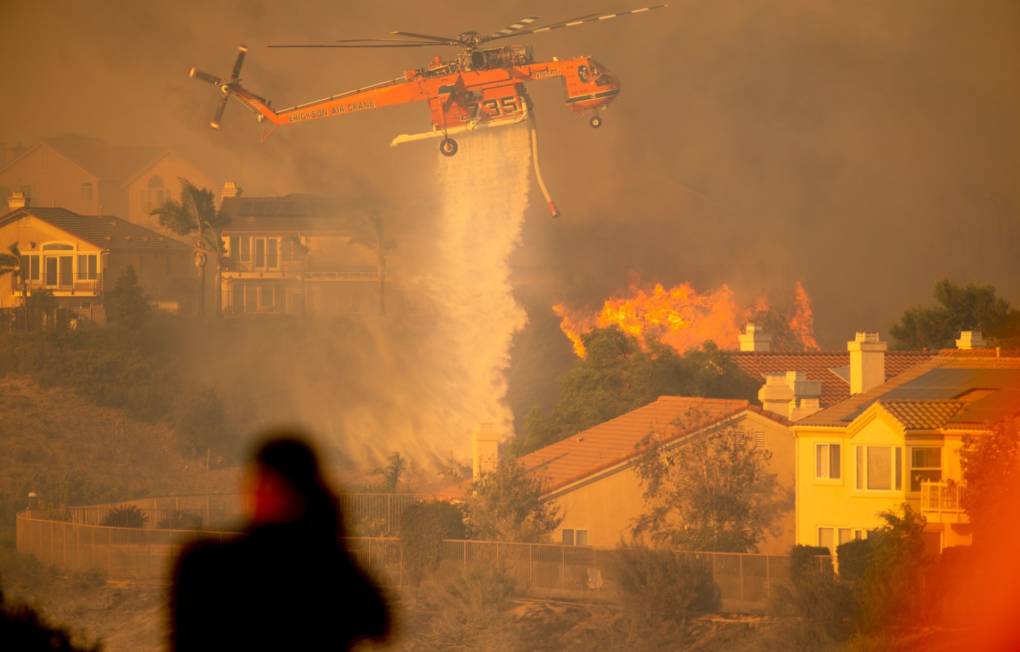
"description": "A helicopter drops water to help fight flames as the Saddleridge Fire in the Porter Ranch section of Los Angeles on Oct. 11, 2019. ",
"title": "US-CALIFORNIA-WILDFIRES",
"credit": "Josh Edelson/AFP via Getty Images",
"status": "inherit",
"isLoading": false,
"fetchFailed": false
},
"news_11779608": {
"type": "attachments",
"id": "news_11779608",
"meta": {
"index": "attachments_1716263798",
"site": "news",
"id": "11779608",
"found": true
},
"parent": 11779505,
"imgSizes": {
"apple_news_ca_square_4_0": {
"file": "https://ww2.kqed.org/app/uploads/sites/10/2019/10/gettyimages-524228732_wide-ea22a423887cfb472f425bc8a6574ab960176115-s1600-c85-1020x573-1-470x470.jpg",
"width": 470,
"mimeType": "image/jpeg",
"height": 470
},
"thumbnail": {
"file": "https://ww2.kqed.org/app/uploads/sites/10/2019/10/gettyimages-524228732_wide-ea22a423887cfb472f425bc8a6574ab960176115-s1600-c85-1020x573-1-160x90.jpg",
"width": 160,
"mimeType": "image/jpeg",
"height": 90
},
"post-thumbnail": {
"file": "https://ww2.kqed.org/app/uploads/sites/10/2019/10/gettyimages-524228732_wide-ea22a423887cfb472f425bc8a6574ab960176115-s1600-c85-1020x573-1-672x372.jpg",
"width": 672,
"mimeType": "image/jpeg",
"height": 372
},
"kqedFullSize": {
"file": "https://ww2.kqed.org/app/uploads/sites/10/2019/10/gettyimages-524228732_wide-ea22a423887cfb472f425bc8a6574ab960176115-s1600-c85-1020x573-1.jpg",
"width": 1020,
"height": 573
},
"apple_news_ca_landscape_4_7": {
"file": "https://ww2.kqed.org/app/uploads/sites/10/2019/10/gettyimages-524228732_wide-ea22a423887cfb472f425bc8a6574ab960176115-s1600-c85-1020x573-1-632x474.jpg",
"width": 632,
"mimeType": "image/jpeg",
"height": 474
},
"large": {
"file": "https://ww2.kqed.org/app/uploads/sites/10/2019/10/gettyimages-524228732_wide-ea22a423887cfb472f425bc8a6574ab960176115-s1600-c85-1020x573-1-1020x573.jpg",
"width": 1020,
"mimeType": "image/jpeg",
"height": 573
},
"apple_news_ca_landscape_4_0": {
"file": "https://ww2.kqed.org/app/uploads/sites/10/2019/10/gettyimages-524228732_wide-ea22a423887cfb472f425bc8a6574ab960176115-s1600-c85-1020x573-1-536x402.jpg",
"width": 536,
"mimeType": "image/jpeg",
"height": 402
},
"medium": {
"file": "https://ww2.kqed.org/app/uploads/sites/10/2019/10/gettyimages-524228732_wide-ea22a423887cfb472f425bc8a6574ab960176115-s1600-c85-1020x573-1-800x449.jpg",
"width": 800,
"mimeType": "image/jpeg",
"height": 449
},
"apple_news_ca_portrait_4_0": {
"file": "https://ww2.kqed.org/app/uploads/sites/10/2019/10/gettyimages-524228732_wide-ea22a423887cfb472f425bc8a6574ab960176115-s1600-c85-1020x573-1-354x472.jpg",
"width": 354,
"mimeType": "image/jpeg",
"height": 472
},
"apple_news_ca_portrait_9_7": {
"file": "https://ww2.kqed.org/app/uploads/sites/10/2019/10/gettyimages-524228732_wide-ea22a423887cfb472f425bc8a6574ab960176115-s1600-c85-1020x573-1-840x573.jpg",
"width": 840,
"mimeType": "image/jpeg",
"height": 573
},
"apple_news_ca_portrait_4_7": {
"file": "https://ww2.kqed.org/app/uploads/sites/10/2019/10/gettyimages-524228732_wide-ea22a423887cfb472f425bc8a6574ab960176115-s1600-c85-1020x573-1-414x552.jpg",
"width": 414,
"mimeType": "image/jpeg",
"height": 552
},
"apple_news_ca_portrait_5_5": {
"file": "https://ww2.kqed.org/app/uploads/sites/10/2019/10/gettyimages-524228732_wide-ea22a423887cfb472f425bc8a6574ab960176115-s1600-c85-1020x573-1-687x573.jpg",
"width": 687,
"mimeType": "image/jpeg",
"height": 573
},
"apple_news_ca_square_4_7": {
"file": "https://ww2.kqed.org/app/uploads/sites/10/2019/10/gettyimages-524228732_wide-ea22a423887cfb472f425bc8a6574ab960176115-s1600-c85-1020x573-1-550x550.jpg",
"width": 550,
"mimeType": "image/jpeg",
"height": 550
},
"apple_news_ca_square_5_5": {
"file": "https://ww2.kqed.org/app/uploads/sites/10/2019/10/gettyimages-524228732_wide-ea22a423887cfb472f425bc8a6574ab960176115-s1600-c85-1020x573-1-912x573.jpg",
"width": 912,
"mimeType": "image/jpeg",
"height": 573
}
},
"publishDate": 1570823567,
"modified": 1570824041,
"caption": "Political donor Ed Buck pleaded not guilty in Los Angeles federal court on Oct. 10 to charges in connection with two overdose deaths.",
"description": null,
"title": "gettyimages-524228732_wide-ea22a423887cfb472f425bc8a6574ab960176115-s1600-c85-1020x573-1",
"credit": "Ann Johansson/Getty Images",
"status": "inherit",
"isLoading": false,
"fetchFailed": false
},
"news_11775122": {
"type": "attachments",
"id": "news_11775122",
"meta": {
"index": "attachments_1716263798",
"site": "news",
"id": "11775122",
"found": true
},
"parent": 11775030,
"imgSizes": {
"apple_news_ca_landscape_5_5": {
"file": "https://ww2.kqed.org/app/uploads/sites/10/2019/09/09182019_prison_Roy-classroom-inmates-BA-program.048-qut-1044x783.jpg",
"width": 1044,
"mimeType": "image/jpeg",
"height": 783
},
"apple_news_ca_square_4_0": {
"file": "https://ww2.kqed.org/app/uploads/sites/10/2019/09/09182019_prison_Roy-classroom-inmates-BA-program.048-qut-470x470.jpg",
"width": 470,
"mimeType": "image/jpeg",
"height": 470
},
"twentyfourteen-full-width": {
"file": "https://ww2.kqed.org/app/uploads/sites/10/2019/09/09182019_prison_Roy-classroom-inmates-BA-program.048-qut-1038x576.jpg",
"width": 1038,
"mimeType": "image/jpeg",
"height": 576
},
"thumbnail": {
"file": "https://ww2.kqed.org/app/uploads/sites/10/2019/09/09182019_prison_Roy-classroom-inmates-BA-program.048-qut-160x107.jpg",
"width": 160,
"mimeType": "image/jpeg",
"height": 107
},
"post-thumbnail": {
"file": "https://ww2.kqed.org/app/uploads/sites/10/2019/09/09182019_prison_Roy-classroom-inmates-BA-program.048-qut-672x372.jpg",
"width": 672,
"mimeType": "image/jpeg",
"height": 372
},
"kqedFullSize": {
"file": "https://ww2.kqed.org/app/uploads/sites/10/2019/09/09182019_prison_Roy-classroom-inmates-BA-program.048-qut.jpg",
"width": 1920,
"height": 1280
},
"apple_news_ca_landscape_4_7": {
"file": "https://ww2.kqed.org/app/uploads/sites/10/2019/09/09182019_prison_Roy-classroom-inmates-BA-program.048-qut-632x474.jpg",
"width": 632,
"mimeType": "image/jpeg",
"height": 474
},
"large": {
"file": "https://ww2.kqed.org/app/uploads/sites/10/2019/09/09182019_prison_Roy-classroom-inmates-BA-program.048-qut-1020x680.jpg",
"width": 1020,
"mimeType": "image/jpeg",
"height": 680
},
"complete_open_graph": {
"file": "https://ww2.kqed.org/app/uploads/sites/10/2019/09/09182019_prison_Roy-classroom-inmates-BA-program.048-qut-1200x800.jpg",
"width": 1200,
"mimeType": "image/jpeg",
"height": 800
},
"apple_news_ca_landscape_4_0": {
"file": "https://ww2.kqed.org/app/uploads/sites/10/2019/09/09182019_prison_Roy-classroom-inmates-BA-program.048-qut-536x402.jpg",
"width": 536,
"mimeType": "image/jpeg",
"height": 402
},
"apple_news_ca_portrait_12_9": {
"file": "https://ww2.kqed.org/app/uploads/sites/10/2019/09/09182019_prison_Roy-classroom-inmates-BA-program.048-qut-1122x1280.jpg",
"width": 1122,
"mimeType": "image/jpeg",
"height": 1280
},
"medium": {
"file": "https://ww2.kqed.org/app/uploads/sites/10/2019/09/09182019_prison_Roy-classroom-inmates-BA-program.048-qut-800x533.jpg",
"width": 800,
"mimeType": "image/jpeg",
"height": 533
},
"apple_news_ca_portrait_4_0": {
"file": "https://ww2.kqed.org/app/uploads/sites/10/2019/09/09182019_prison_Roy-classroom-inmates-BA-program.048-qut-354x472.jpg",
"width": 354,
"mimeType": "image/jpeg",
"height": 472
},
"apple_news_ca_portrait_9_7": {
"file": "https://ww2.kqed.org/app/uploads/sites/10/2019/09/09182019_prison_Roy-classroom-inmates-BA-program.048-qut-840x1120.jpg",
"width": 840,
"mimeType": "image/jpeg",
"height": 1120
},
"apple_news_ca_landscape_12_9": {
"file": "https://ww2.kqed.org/app/uploads/sites/10/2019/09/09182019_prison_Roy-classroom-inmates-BA-program.048-qut-1832x1280.jpg",
"width": 1832,
"mimeType": "image/jpeg",
"height": 1280
},
"apple_news_ca_square_9_7": {
"file": "https://ww2.kqed.org/app/uploads/sites/10/2019/09/09182019_prison_Roy-classroom-inmates-BA-program.048-qut-1104x1104.jpg",
"width": 1104,
"mimeType": "image/jpeg",
"height": 1104
},
"apple_news_ca_portrait_4_7": {
"file": "https://ww2.kqed.org/app/uploads/sites/10/2019/09/09182019_prison_Roy-classroom-inmates-BA-program.048-qut-414x552.jpg",
"width": 414,
"mimeType": "image/jpeg",
"height": 552
},
"apple_news_ca_square_12_9": {
"file": "https://ww2.kqed.org/app/uploads/sites/10/2019/09/09182019_prison_Roy-classroom-inmates-BA-program.048-qut-1472x1280.jpg",
"width": 1472,
"mimeType": "image/jpeg",
"height": 1280
},
"apple_news_ca_portrait_5_5": {
"file": "https://ww2.kqed.org/app/uploads/sites/10/2019/09/09182019_prison_Roy-classroom-inmates-BA-program.048-qut-687x916.jpg",
"width": 687,
"mimeType": "image/jpeg",
"height": 916
},
"full-width": {
"file": "https://ww2.kqed.org/app/uploads/sites/10/2019/09/09182019_prison_Roy-classroom-inmates-BA-program.048-qut-1920x1280.jpg",
"width": 1920,
"mimeType": "image/jpeg",
"height": 1280
},
"apple_news_ca_square_4_7": {
"file": "https://ww2.kqed.org/app/uploads/sites/10/2019/09/09182019_prison_Roy-classroom-inmates-BA-program.048-qut-550x550.jpg",
"width": 550,
"mimeType": "image/jpeg",
"height": 550
},
"apple_news_ca_landscape_9_7": {
"file": "https://ww2.kqed.org/app/uploads/sites/10/2019/09/09182019_prison_Roy-classroom-inmates-BA-program.048-qut-1376x1032.jpg",
"width": 1376,
"mimeType": "image/jpeg",
"height": 1032
},
"apple_news_ca_square_5_5": {
"file": "https://ww2.kqed.org/app/uploads/sites/10/2019/09/09182019_prison_Roy-classroom-inmates-BA-program.048-qut-912x912.jpg",
"width": 912,
"mimeType": "image/jpeg",
"height": 912
}
},
"publishDate": 1568845633,
"modified": 1568941567,
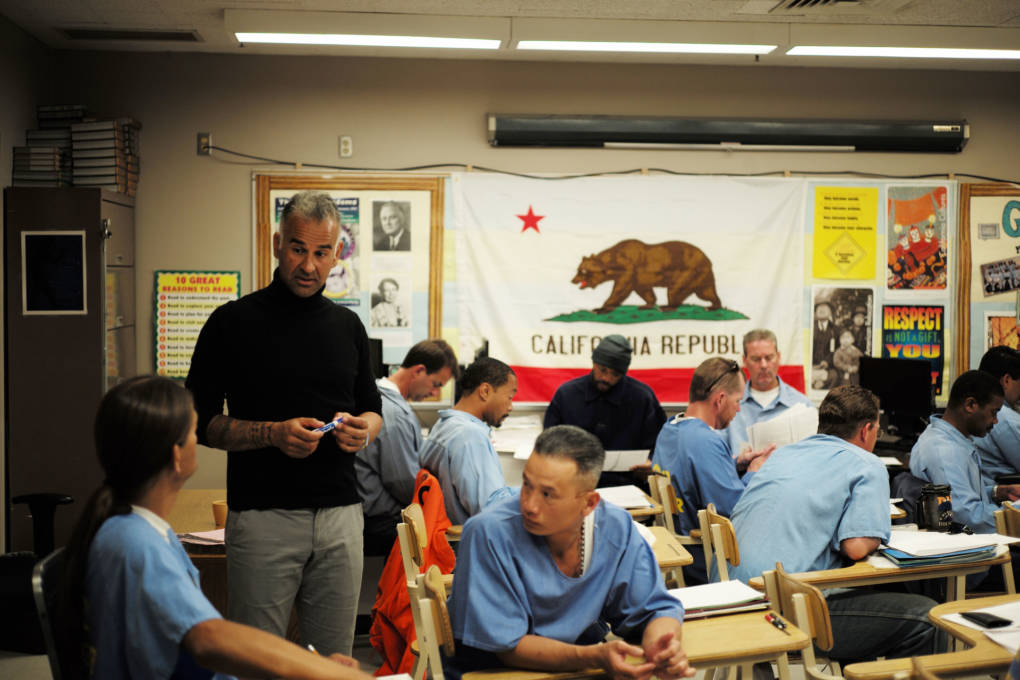
"caption": "Bidhan Roy, a Cal State LA professor, teaches inmates participating in an undergraduate degree program. ",
"description": "Bidham Roy, a Cal State LA professor, teaches inmates participating in an undergraduate degree program. ",
"title": "09182019_prison_Roy classroom inmates BA program.048-qut",
"credit": "J. Emilio Flores/Cal State LA",
"status": "inherit",
"isLoading": false,
"fetchFailed": false
},
"news_11764385": {
"type": "attachments",
"id": "news_11764385",
"meta": {
"index": "attachments_1716263798",
"site": "news",
"id": "11764385",
"found": true
},
"parent": 11764275,
"imgSizes": {
"apple_news_ca_landscape_5_5": {
"file": "https://ww2.kqed.org/app/uploads/sites/10/2019/07/RS27189_GettyImages-691243686-qut-1044x783.jpg",
"width": 1044,
"mimeType": "image/jpeg",
"height": 783
},
"apple_news_ca_square_4_0": {
"file": "https://ww2.kqed.org/app/uploads/sites/10/2019/07/RS27189_GettyImages-691243686-qut-470x470.jpg",
"width": 470,
"mimeType": "image/jpeg",
"height": 470
},
"twentyfourteen-full-width": {
"file": "https://ww2.kqed.org/app/uploads/sites/10/2019/07/RS27189_GettyImages-691243686-qut-1038x576.jpg",
"width": 1038,
"mimeType": "image/jpeg",
"height": 576
},
"thumbnail": {
"file": "https://ww2.kqed.org/app/uploads/sites/10/2019/07/RS27189_GettyImages-691243686-qut-160x107.jpg",
"width": 160,
"mimeType": "image/jpeg",
"height": 107
},
"post-thumbnail": {
"file": "https://ww2.kqed.org/app/uploads/sites/10/2019/07/RS27189_GettyImages-691243686-qut-672x372.jpg",
"width": 672,
"mimeType": "image/jpeg",
"height": 372
},
"kqedFullSize": {
"file": "https://ww2.kqed.org/app/uploads/sites/10/2019/07/RS27189_GettyImages-691243686-qut.jpg",
"width": 1920,
"height": 1280
},
"apple_news_ca_landscape_4_7": {
"file": "https://ww2.kqed.org/app/uploads/sites/10/2019/07/RS27189_GettyImages-691243686-qut-632x474.jpg",
"width": 632,
"mimeType": "image/jpeg",
"height": 474
},
"large": {
"file": "https://ww2.kqed.org/app/uploads/sites/10/2019/07/RS27189_GettyImages-691243686-qut-1020x680.jpg",
"width": 1020,
"mimeType": "image/jpeg",
"height": 680
},
"complete_open_graph": {
"file": "https://ww2.kqed.org/app/uploads/sites/10/2019/07/RS27189_GettyImages-691243686-qut-1200x800.jpg",
"width": 1200,
"mimeType": "image/jpeg",
"height": 800
},
"apple_news_ca_landscape_4_0": {
"file": "https://ww2.kqed.org/app/uploads/sites/10/2019/07/RS27189_GettyImages-691243686-qut-536x402.jpg",
"width": 536,
"mimeType": "image/jpeg",
"height": 402
},
"apple_news_ca_portrait_12_9": {
"file": "https://ww2.kqed.org/app/uploads/sites/10/2019/07/RS27189_GettyImages-691243686-qut-1122x1280.jpg",
"width": 1122,
"mimeType": "image/jpeg",
"height": 1280
},
"medium": {
"file": "https://ww2.kqed.org/app/uploads/sites/10/2019/07/RS27189_GettyImages-691243686-qut-800x533.jpg",
"width": 800,
"mimeType": "image/jpeg",
"height": 533
},
"apple_news_ca_portrait_4_0": {
"file": "https://ww2.kqed.org/app/uploads/sites/10/2019/07/RS27189_GettyImages-691243686-qut-354x472.jpg",
"width": 354,
"mimeType": "image/jpeg",
"height": 472
},
"apple_news_ca_portrait_9_7": {
"file": "https://ww2.kqed.org/app/uploads/sites/10/2019/07/RS27189_GettyImages-691243686-qut-840x1120.jpg",
"width": 840,
"mimeType": "image/jpeg",
"height": 1120
},
"apple_news_ca_landscape_12_9": {
"file": "https://ww2.kqed.org/app/uploads/sites/10/2019/07/RS27189_GettyImages-691243686-qut-1832x1280.jpg",
"width": 1832,
"mimeType": "image/jpeg",
"height": 1280
},
"apple_news_ca_square_9_7": {
"file": "https://ww2.kqed.org/app/uploads/sites/10/2019/07/RS27189_GettyImages-691243686-qut-1104x1104.jpg",
"width": 1104,
"mimeType": "image/jpeg",
"height": 1104
},
"apple_news_ca_portrait_4_7": {
"file": "https://ww2.kqed.org/app/uploads/sites/10/2019/07/RS27189_GettyImages-691243686-qut-414x552.jpg",
"width": 414,
"mimeType": "image/jpeg",
"height": 552
},
"apple_news_ca_square_12_9": {
"file": "https://ww2.kqed.org/app/uploads/sites/10/2019/07/RS27189_GettyImages-691243686-qut-1472x1280.jpg",
"width": 1472,
"mimeType": "image/jpeg",
"height": 1280
},
"apple_news_ca_portrait_5_5": {
"file": "https://ww2.kqed.org/app/uploads/sites/10/2019/07/RS27189_GettyImages-691243686-qut-687x916.jpg",
"width": 687,
"mimeType": "image/jpeg",
"height": 916
},
"full-width": {
"file": "https://ww2.kqed.org/app/uploads/sites/10/2019/07/RS27189_GettyImages-691243686-qut-1920x1280.jpg",
"width": 1920,
"mimeType": "image/jpeg",
"height": 1280
},
"apple_news_ca_square_4_7": {
"file": "https://ww2.kqed.org/app/uploads/sites/10/2019/07/RS27189_GettyImages-691243686-qut-550x550.jpg",
"width": 550,
"mimeType": "image/jpeg",
"height": 550
},
"apple_news_ca_landscape_9_7": {
"file": "https://ww2.kqed.org/app/uploads/sites/10/2019/07/RS27189_GettyImages-691243686-qut-1376x1032.jpg",
"width": 1376,
"mimeType": "image/jpeg",
"height": 1032
},
"apple_news_ca_square_5_5": {
"file": "https://ww2.kqed.org/app/uploads/sites/10/2019/07/RS27189_GettyImages-691243686-qut-912x912.jpg",
"width": 912,
"mimeType": "image/jpeg",
"height": 912
}
},
"publishDate": 1564525153,
"modified": 1577132712,
"caption": "A homeless encampment in Los Angeles.",
"description": null,
"title": "Homelessness In Los Angeles Jumps 20 Percent From 2016 Numbers",
"credit": "David McNew/Getty Images",
"status": "inherit",
"isLoading": false,
"fetchFailed": false
},
"news_11769832": {
"type": "attachments",
"id": "news_11769832",
"meta": {
"index": "attachments_1716263798",
"site": "news",
"id": "11769832",
"found": true
},
"parent": 11769831,
"imgSizes": {
"apple_news_ca_landscape_5_5": {
"file": "https://ww2.kqed.org/app/uploads/sites/10/2019/08/ap_19234619766608-278e1cddb548a9247f07663df44fe43afba2013f-1044x783.jpg",
"width": 1044,
"mimeType": "image/jpeg",
"height": 783
},
"apple_news_ca_square_4_0": {
"file": "https://ww2.kqed.org/app/uploads/sites/10/2019/08/ap_19234619766608-278e1cddb548a9247f07663df44fe43afba2013f-470x470.jpg",
"width": 470,
"mimeType": "image/jpeg",
"height": 470
},
"twentyfourteen-full-width": {
"file": "https://ww2.kqed.org/app/uploads/sites/10/2019/08/ap_19234619766608-278e1cddb548a9247f07663df44fe43afba2013f-1038x576.jpg",
"width": 1038,
"mimeType": "image/jpeg",
"height": 576
},
"thumbnail": {
"file": "https://ww2.kqed.org/app/uploads/sites/10/2019/08/ap_19234619766608-278e1cddb548a9247f07663df44fe43afba2013f-160x120.jpg",
"width": 160,
"mimeType": "image/jpeg",
"height": 120
},
"post-thumbnail": {
"file": "https://ww2.kqed.org/app/uploads/sites/10/2019/08/ap_19234619766608-278e1cddb548a9247f07663df44fe43afba2013f-672x372.jpg",
"width": 672,
"mimeType": "image/jpeg",
"height": 372
},
"kqedFullSize": {
"file": "https://ww2.kqed.org/app/uploads/sites/10/2019/08/ap_19234619766608-278e1cddb548a9247f07663df44fe43afba2013f-e1566691424784.jpg",
"width": 1920,
"height": 1440
},
"apple_news_ca_landscape_4_7": {
"file": "https://ww2.kqed.org/app/uploads/sites/10/2019/08/ap_19234619766608-278e1cddb548a9247f07663df44fe43afba2013f-632x474.jpg",
"width": 632,
"mimeType": "image/jpeg",
"height": 474
},
"large": {
"file": "https://ww2.kqed.org/app/uploads/sites/10/2019/08/ap_19234619766608-278e1cddb548a9247f07663df44fe43afba2013f-1020x765.jpg",
"width": 1020,
"mimeType": "image/jpeg",
"height": 765
},
"complete_open_graph": {
"file": "https://ww2.kqed.org/app/uploads/sites/10/2019/08/ap_19234619766608-278e1cddb548a9247f07663df44fe43afba2013f-1200x900.jpg",
"width": 1200,
"mimeType": "image/jpeg",
"height": 900
},
"apple_news_ca_landscape_4_0": {
"file": "https://ww2.kqed.org/app/uploads/sites/10/2019/08/ap_19234619766608-278e1cddb548a9247f07663df44fe43afba2013f-536x402.jpg",
"width": 536,
"mimeType": "image/jpeg",
"height": 402
},
"apple_news_ca_portrait_12_9": {
"file": "https://ww2.kqed.org/app/uploads/sites/10/2019/08/ap_19234619766608-278e1cddb548a9247f07663df44fe43afba2013f-1122x1496.jpg",
"width": 1122,
"mimeType": "image/jpeg",
"height": 1496
},
"medium": {
"file": "https://ww2.kqed.org/app/uploads/sites/10/2019/08/ap_19234619766608-278e1cddb548a9247f07663df44fe43afba2013f-800x600.jpg",
"width": 800,
"mimeType": "image/jpeg",
"height": 600
},
"apple_news_ca_portrait_4_0": {
"file": "https://ww2.kqed.org/app/uploads/sites/10/2019/08/ap_19234619766608-278e1cddb548a9247f07663df44fe43afba2013f-354x472.jpg",
"width": 354,
"mimeType": "image/jpeg",
"height": 472
},
"apple_news_ca_portrait_9_7": {
"file": "https://ww2.kqed.org/app/uploads/sites/10/2019/08/ap_19234619766608-278e1cddb548a9247f07663df44fe43afba2013f-840x1120.jpg",
"width": 840,
"mimeType": "image/jpeg",
"height": 1120
},
"apple_news_ca_landscape_12_9": {
"file": "https://ww2.kqed.org/app/uploads/sites/10/2019/08/ap_19234619766608-278e1cddb548a9247f07663df44fe43afba2013f-1832x1374.jpg",
"width": 1832,
"mimeType": "image/jpeg",
"height": 1374
},
"apple_news_ca_square_9_7": {
"file": "https://ww2.kqed.org/app/uploads/sites/10/2019/08/ap_19234619766608-278e1cddb548a9247f07663df44fe43afba2013f-1104x1104.jpg",
"width": 1104,
"mimeType": "image/jpeg",
"height": 1104
},
"apple_news_ca_portrait_4_7": {
"file": "https://ww2.kqed.org/app/uploads/sites/10/2019/08/ap_19234619766608-278e1cddb548a9247f07663df44fe43afba2013f-414x552.jpg",
"width": 414,
"mimeType": "image/jpeg",
"height": 552
},
"apple_news_ca_square_12_9": {
"file": "https://ww2.kqed.org/app/uploads/sites/10/2019/08/ap_19234619766608-278e1cddb548a9247f07663df44fe43afba2013f-1472x1472.jpg",
"width": 1472,
"mimeType": "image/jpeg",
"height": 1472
},
"apple_news_ca_portrait_5_5": {
"file": "https://ww2.kqed.org/app/uploads/sites/10/2019/08/ap_19234619766608-278e1cddb548a9247f07663df44fe43afba2013f-687x916.jpg",
"width": 687,
"mimeType": "image/jpeg",
"height": 916
},
"full-width": {
"file": "https://ww2.kqed.org/app/uploads/sites/10/2019/08/ap_19234619766608-278e1cddb548a9247f07663df44fe43afba2013f-1920x1440.jpg",
"width": 1920,
"mimeType": "image/jpeg",
"height": 1440
},
"apple_news_ca_square_4_7": {
"file": "https://ww2.kqed.org/app/uploads/sites/10/2019/08/ap_19234619766608-278e1cddb548a9247f07663df44fe43afba2013f-550x550.jpg",
"width": 550,
"mimeType": "image/jpeg",
"height": 550
},
"apple_news_ca_landscape_9_7": {
"file": "https://ww2.kqed.org/app/uploads/sites/10/2019/08/ap_19234619766608-278e1cddb548a9247f07663df44fe43afba2013f-1376x1032.jpg",
"width": 1376,
"mimeType": "image/jpeg",
"height": 1032
},
"apple_news_ca_square_5_5": {
"file": "https://ww2.kqed.org/app/uploads/sites/10/2019/08/ap_19234619766608-278e1cddb548a9247f07663df44fe43afba2013f-912x912.jpg",
"width": 912,
"mimeType": "image/jpeg",
"height": 912
}
},
"publishDate": 1566691268,
"modified": 1566691414,
"caption": "Federal agents hold a detainee (second from left) at a downtown Los Angeles parking lot after predawn raids in the L.A. area on Thursday.",
"description": "Federal agents hold a detainee (second from left) at a downtown Los Angeles parking lot after predawn raids in the L.A. area on Thursday.",
"title": "Federal agents hold a detainee (second from left) at a downtown Los Angeles parking lot after predawn raids in the L.A. area on Thursday.",
"credit": "Reed Saxon/AP",
"status": "inherit",
"isLoading": false,
"fetchFailed": false
},
"news_11768379": {
"type": "attachments",
"id": "news_11768379",
"meta": {
"index": "attachments_1716263798",
"site": "news",
"id": "11768379",
"found": true
},
"parent": 11768378,
"imgSizes": {
"apple_news_ca_landscape_5_5": {
"file": "https://ww2.kqed.org/app/uploads/sites/10/2019/08/homeless-rvs-15089198d53106c852ba1808d794398cd3f95ebd-1044x783.jpg",
"width": 1044,
"mimeType": "image/jpeg",
"height": 783
},
"apple_news_ca_square_4_0": {
"file": "https://ww2.kqed.org/app/uploads/sites/10/2019/08/homeless-rvs-15089198d53106c852ba1808d794398cd3f95ebd-470x470.jpg",
"width": 470,
"mimeType": "image/jpeg",
"height": 470
},
"twentyfourteen-full-width": {
"file": "https://ww2.kqed.org/app/uploads/sites/10/2019/08/homeless-rvs-15089198d53106c852ba1808d794398cd3f95ebd-1038x576.jpg",
"width": 1038,
"mimeType": "image/jpeg",
"height": 576
},
"thumbnail": {
"file": "https://ww2.kqed.org/app/uploads/sites/10/2019/08/homeless-rvs-15089198d53106c852ba1808d794398cd3f95ebd-160x120.jpg",
"width": 160,
"mimeType": "image/jpeg",
"height": 120
},
"post-thumbnail": {
"file": "https://ww2.kqed.org/app/uploads/sites/10/2019/08/homeless-rvs-15089198d53106c852ba1808d794398cd3f95ebd-672x372.jpg",
"width": 672,
"mimeType": "image/jpeg",
"height": 372
},
"kqedFullSize": {
"file": "https://ww2.kqed.org/app/uploads/sites/10/2019/08/homeless-rvs-15089198d53106c852ba1808d794398cd3f95ebd-e1566226447414.jpg",
"width": 1920,
"height": 1440
},
"apple_news_ca_landscape_4_7": {
"file": "https://ww2.kqed.org/app/uploads/sites/10/2019/08/homeless-rvs-15089198d53106c852ba1808d794398cd3f95ebd-632x474.jpg",
"width": 632,
"mimeType": "image/jpeg",
"height": 474
},
"large": {
"file": "https://ww2.kqed.org/app/uploads/sites/10/2019/08/homeless-rvs-15089198d53106c852ba1808d794398cd3f95ebd-1020x765.jpg",
"width": 1020,
"mimeType": "image/jpeg",
"height": 765
},
"complete_open_graph": {
"file": "https://ww2.kqed.org/app/uploads/sites/10/2019/08/homeless-rvs-15089198d53106c852ba1808d794398cd3f95ebd-1200x900.jpg",
"width": 1200,
"mimeType": "image/jpeg",
"height": 900
},
"apple_news_ca_landscape_4_0": {
"file": "https://ww2.kqed.org/app/uploads/sites/10/2019/08/homeless-rvs-15089198d53106c852ba1808d794398cd3f95ebd-536x402.jpg",
"width": 536,
"mimeType": "image/jpeg",
"height": 402
},
"apple_news_ca_portrait_12_9": {
"file": "https://ww2.kqed.org/app/uploads/sites/10/2019/08/homeless-rvs-15089198d53106c852ba1808d794398cd3f95ebd-1122x1496.jpg",
"width": 1122,
"mimeType": "image/jpeg",
"height": 1496
},
"medium": {
"file": "https://ww2.kqed.org/app/uploads/sites/10/2019/08/homeless-rvs-15089198d53106c852ba1808d794398cd3f95ebd-800x600.jpg",
"width": 800,
"mimeType": "image/jpeg",
"height": 600
},
"apple_news_ca_portrait_4_0": {
"file": "https://ww2.kqed.org/app/uploads/sites/10/2019/08/homeless-rvs-15089198d53106c852ba1808d794398cd3f95ebd-354x472.jpg",
"width": 354,
"mimeType": "image/jpeg",
"height": 472
},
"apple_news_ca_portrait_9_7": {
"file": "https://ww2.kqed.org/app/uploads/sites/10/2019/08/homeless-rvs-15089198d53106c852ba1808d794398cd3f95ebd-840x1120.jpg",
"width": 840,
"mimeType": "image/jpeg",
"height": 1120
},
"apple_news_ca_landscape_12_9": {
"file": "https://ww2.kqed.org/app/uploads/sites/10/2019/08/homeless-rvs-15089198d53106c852ba1808d794398cd3f95ebd-1832x1374.jpg",
"width": 1832,
"mimeType": "image/jpeg",
"height": 1374
},
"apple_news_ca_square_9_7": {
"file": "https://ww2.kqed.org/app/uploads/sites/10/2019/08/homeless-rvs-15089198d53106c852ba1808d794398cd3f95ebd-1104x1104.jpg",
"width": 1104,
"mimeType": "image/jpeg",
"height": 1104
},
"apple_news_ca_portrait_4_7": {
"file": "https://ww2.kqed.org/app/uploads/sites/10/2019/08/homeless-rvs-15089198d53106c852ba1808d794398cd3f95ebd-414x552.jpg",
"width": 414,
"mimeType": "image/jpeg",
"height": 552
},
"apple_news_ca_square_12_9": {
"file": "https://ww2.kqed.org/app/uploads/sites/10/2019/08/homeless-rvs-15089198d53106c852ba1808d794398cd3f95ebd-1472x1472.jpg",
"width": 1472,
"mimeType": "image/jpeg",
"height": 1472
},
"apple_news_ca_portrait_5_5": {
"file": "https://ww2.kqed.org/app/uploads/sites/10/2019/08/homeless-rvs-15089198d53106c852ba1808d794398cd3f95ebd-687x916.jpg",
"width": 687,
"mimeType": "image/jpeg",
"height": 916
},
"full-width": {
"file": "https://ww2.kqed.org/app/uploads/sites/10/2019/08/homeless-rvs-15089198d53106c852ba1808d794398cd3f95ebd-1920x1440.jpg",
"width": 1920,
"mimeType": "image/jpeg",
"height": 1440
},
"apple_news_ca_square_4_7": {
"file": "https://ww2.kqed.org/app/uploads/sites/10/2019/08/homeless-rvs-15089198d53106c852ba1808d794398cd3f95ebd-550x550.jpg",
"width": 550,
"mimeType": "image/jpeg",
"height": 550
},
"apple_news_ca_landscape_9_7": {
"file": "https://ww2.kqed.org/app/uploads/sites/10/2019/08/homeless-rvs-15089198d53106c852ba1808d794398cd3f95ebd-1376x1032.jpg",
"width": 1376,
"mimeType": "image/jpeg",
"height": 1032
},
"apple_news_ca_square_5_5": {
"file": "https://ww2.kqed.org/app/uploads/sites/10/2019/08/homeless-rvs-15089198d53106c852ba1808d794398cd3f95ebd-912x912.jpg",
"width": 912,
"mimeType": "image/jpeg",
"height": 912
}
},
"publishDate": 1566226356,
"modified": 1566226440,
"caption": "RVs line neighborhood streets in Los Angeles, where nearly 10,000 people live in vehicles.",
"description": "RVs line neighborhood streets in Los Angeles, where nearly 10,000 people live in vehicles.",
"title": "RVs line neighborhood streets in Los Angeles, where nearly 10,000 people live in vehicles.",
"credit": "Anna Scott/KCRW",
"status": "inherit",
"isLoading": false,
"fetchFailed": false
},
"news_11768294": {
"type": "attachments",
"id": "news_11768294",
"meta": {
"index": "attachments_1716263798",
"site": "news",
"id": "11768294",
"found": true
},
"parent": 11768293,
"imgSizes": {
"thumbnail": {
"file": "https://ww2.kqed.org/app/uploads/sites/10/2019/08/capture-8019cfe570844cabb9c37357027146d40daade17-160x120.png",
"width": 160,
"mimeType": "image/png",
"height": 120
},
"kqedFullSize": {
"file": "https://ww2.kqed.org/app/uploads/sites/10/2019/08/capture-8019cfe570844cabb9c37357027146d40daade17.png",
"width": 444,
"height": 333
},
"apple_news_ca_portrait_4_7": {
"file": "https://ww2.kqed.org/app/uploads/sites/10/2019/08/capture-8019cfe570844cabb9c37357027146d40daade17-414x333.png",
"width": 414,
"mimeType": "image/png",
"height": 333
},
"apple_news_ca_portrait_4_0": {
"file": "https://ww2.kqed.org/app/uploads/sites/10/2019/08/capture-8019cfe570844cabb9c37357027146d40daade17-354x333.png",
"width": 354,
"mimeType": "image/png",
"height": 333
}
},
"publishDate": 1566154087,
"modified": 1566154087,
"caption": null,
"description": null,
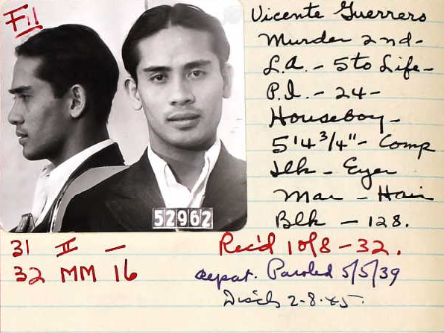
"title": "The author's grandfather, Vicente Guerra, is pictured in a mug shot from San Quentin State Prison. He was sentenced to five years to life for the 1931 murder of Joseph Retotar.",
"credit": null,
"status": "inherit",
"isLoading": false,
"fetchFailed": false
},
"news_11760948": {
"type": "attachments",
"id": "news_11760948",
"meta": {
"index": "attachments_1716263798",
"site": "news",
"id": "11760948",
"found": true
},
"parent": 11760903,
"imgSizes": {
"apple_news_ca_landscape_5_5": {
"file": "https://ww2.kqed.org/app/uploads/sites/10/2019/07/RS38060_BLACK-MOTHERS-PHOTO-2-qut-1044x783.jpg",
"width": 1044,
"mimeType": "image/jpeg",
"height": 783
},
"apple_news_ca_square_4_0": {
"file": "https://ww2.kqed.org/app/uploads/sites/10/2019/07/RS38060_BLACK-MOTHERS-PHOTO-2-qut-470x470.jpg",
"width": 470,
"mimeType": "image/jpeg",
"height": 470
},
"twentyfourteen-full-width": {
"file": "https://ww2.kqed.org/app/uploads/sites/10/2019/07/RS38060_BLACK-MOTHERS-PHOTO-2-qut-1038x576.jpg",
"width": 1038,
"mimeType": "image/jpeg",
"height": 576
},
"thumbnail": {
"file": "https://ww2.kqed.org/app/uploads/sites/10/2019/07/RS38060_BLACK-MOTHERS-PHOTO-2-qut-160x107.jpg",
"width": 160,
"mimeType": "image/jpeg",
"height": 107
},
"post-thumbnail": {
"file": "https://ww2.kqed.org/app/uploads/sites/10/2019/07/RS38060_BLACK-MOTHERS-PHOTO-2-qut-672x372.jpg",
"width": 672,
"mimeType": "image/jpeg",
"height": 372
},
"kqedFullSize": {
"file": "https://ww2.kqed.org/app/uploads/sites/10/2019/07/RS38060_BLACK-MOTHERS-PHOTO-2-qut.jpg",
"width": 1920,
"height": 1279
},
"apple_news_ca_landscape_4_7": {
"file": "https://ww2.kqed.org/app/uploads/sites/10/2019/07/RS38060_BLACK-MOTHERS-PHOTO-2-qut-632x474.jpg",
"width": 632,
"mimeType": "image/jpeg",
"height": 474
},
"large": {
"file": "https://ww2.kqed.org/app/uploads/sites/10/2019/07/RS38060_BLACK-MOTHERS-PHOTO-2-qut-1020x679.jpg",
"width": 1020,
"mimeType": "image/jpeg",
"height": 679
},
"complete_open_graph": {
"file": "https://ww2.kqed.org/app/uploads/sites/10/2019/07/RS38060_BLACK-MOTHERS-PHOTO-2-qut-1200x799.jpg",
"width": 1200,
"mimeType": "image/jpeg",
"height": 799
},
"apple_news_ca_landscape_4_0": {
"file": "https://ww2.kqed.org/app/uploads/sites/10/2019/07/RS38060_BLACK-MOTHERS-PHOTO-2-qut-536x402.jpg",
"width": 536,
"mimeType": "image/jpeg",
"height": 402
},
"apple_news_ca_portrait_12_9": {
"file": "https://ww2.kqed.org/app/uploads/sites/10/2019/07/RS38060_BLACK-MOTHERS-PHOTO-2-qut-1122x1279.jpg",
"width": 1122,
"mimeType": "image/jpeg",
"height": 1279
},
"medium": {
"file": "https://ww2.kqed.org/app/uploads/sites/10/2019/07/RS38060_BLACK-MOTHERS-PHOTO-2-qut-800x533.jpg",
"width": 800,
"mimeType": "image/jpeg",
"height": 533
},
"apple_news_ca_portrait_4_0": {
"file": "https://ww2.kqed.org/app/uploads/sites/10/2019/07/RS38060_BLACK-MOTHERS-PHOTO-2-qut-354x472.jpg",
"width": 354,
"mimeType": "image/jpeg",
"height": 472
},
"apple_news_ca_portrait_9_7": {
"file": "https://ww2.kqed.org/app/uploads/sites/10/2019/07/RS38060_BLACK-MOTHERS-PHOTO-2-qut-840x1120.jpg",
"width": 840,
"mimeType": "image/jpeg",
"height": 1120
},
"apple_news_ca_landscape_12_9": {
"file": "https://ww2.kqed.org/app/uploads/sites/10/2019/07/RS38060_BLACK-MOTHERS-PHOTO-2-qut-1832x1279.jpg",
"width": 1832,
"mimeType": "image/jpeg",
"height": 1279
},
"apple_news_ca_square_9_7": {
"file": "https://ww2.kqed.org/app/uploads/sites/10/2019/07/RS38060_BLACK-MOTHERS-PHOTO-2-qut-1104x1104.jpg",
"width": 1104,
"mimeType": "image/jpeg",
"height": 1104
},
"apple_news_ca_portrait_4_7": {
"file": "https://ww2.kqed.org/app/uploads/sites/10/2019/07/RS38060_BLACK-MOTHERS-PHOTO-2-qut-414x552.jpg",
"width": 414,
"mimeType": "image/jpeg",
"height": 552
},
"apple_news_ca_square_12_9": {
"file": "https://ww2.kqed.org/app/uploads/sites/10/2019/07/RS38060_BLACK-MOTHERS-PHOTO-2-qut-1472x1279.jpg",
"width": 1472,
"mimeType": "image/jpeg",
"height": 1279
},
"apple_news_ca_portrait_5_5": {
"file": "https://ww2.kqed.org/app/uploads/sites/10/2019/07/RS38060_BLACK-MOTHERS-PHOTO-2-qut-687x916.jpg",
"width": 687,
"mimeType": "image/jpeg",
"height": 916
},
"full-width": {
"file": "https://ww2.kqed.org/app/uploads/sites/10/2019/07/RS38060_BLACK-MOTHERS-PHOTO-2-qut-1920x1279.jpg",
"width": 1920,
"mimeType": "image/jpeg",
"height": 1279
},
"apple_news_ca_square_4_7": {
"file": "https://ww2.kqed.org/app/uploads/sites/10/2019/07/RS38060_BLACK-MOTHERS-PHOTO-2-qut-550x550.jpg",
"width": 550,
"mimeType": "image/jpeg",
"height": 550
},
"apple_news_ca_landscape_9_7": {
"file": "https://ww2.kqed.org/app/uploads/sites/10/2019/07/RS38060_BLACK-MOTHERS-PHOTO-2-qut-1376x1032.jpg",
"width": 1376,
"mimeType": "image/jpeg",
"height": 1032
},
"apple_news_ca_square_5_5": {
"file": "https://ww2.kqed.org/app/uploads/sites/10/2019/07/RS38060_BLACK-MOTHERS-PHOTO-2-qut-912x912.jpg",
"width": 912,
"mimeType": "image/jpeg",
"height": 912
}
},
"publishDate": 1562968453,
"modified": 1563227331,
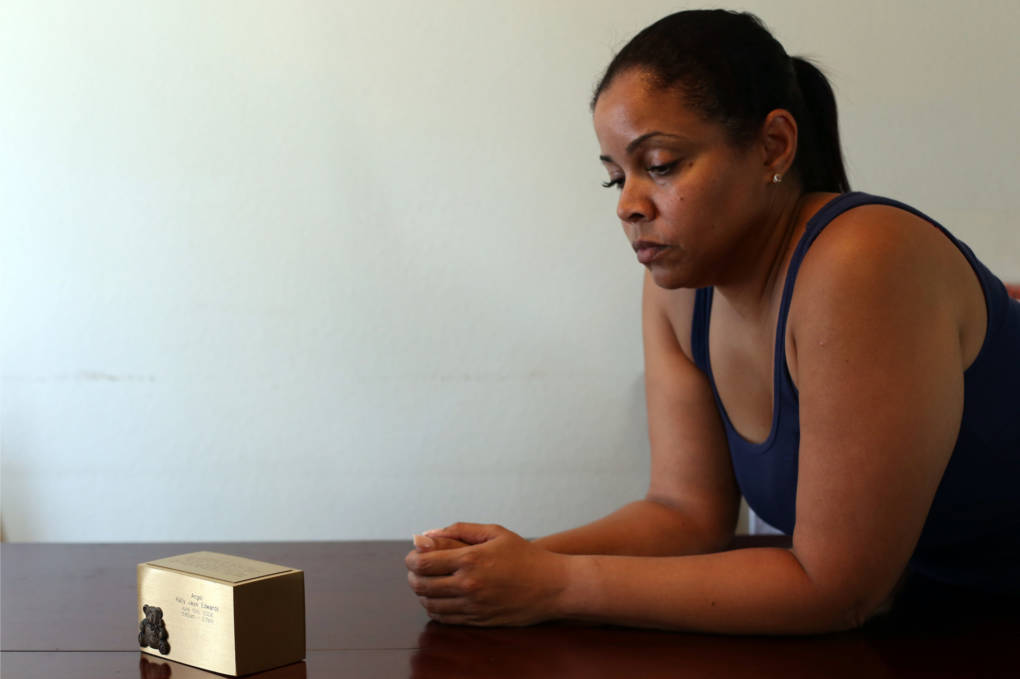
"caption": "Bettye Jean Ford with her first child Kally's ashes. Ms. Ford said when she lost her baby, she was determined to take Kally home with her. ",
"description": "Bettye Jean Ford with her first child Kally's ashes. Ms. Ford said when she lost her baby, she was determined to take Kally home with her. ",
"title": "RS38060_BLACK MOTHERS PHOTO 2-qut",
"credit": "Iris Schneider/CALmatters",
"status": "inherit",
"isLoading": false,
"fetchFailed": false
},
"news_11759962": {
"type": "attachments",
"id": "news_11759962",
"meta": {
"index": "attachments_1716263798",
"site": "news",
"id": "11759962",
"found": true
},
"parent": 11759939,
"imgSizes": {
"apple_news_ca_landscape_5_5": {
"file": "https://ww2.kqed.org/app/uploads/sites/10/2019/07/RIVERA-FAMILY3-1044x783.jpg",
"width": 1044,
"mimeType": "image/jpeg",
"height": 783
},
"apple_news_ca_square_4_0": {
"file": "https://ww2.kqed.org/app/uploads/sites/10/2019/07/RIVERA-FAMILY3-470x470.jpg",
"width": 470,
"mimeType": "image/jpeg",
"height": 470
},
"twentyfourteen-full-width": {
"file": "https://ww2.kqed.org/app/uploads/sites/10/2019/07/RIVERA-FAMILY3-1038x576.jpg",
"width": 1038,
"mimeType": "image/jpeg",
"height": 576
},
"thumbnail": {
"file": "https://ww2.kqed.org/app/uploads/sites/10/2019/07/RIVERA-FAMILY3-160x116.jpg",
"width": 160,
"mimeType": "image/jpeg",
"height": 116
},
"post-thumbnail": {
"file": "https://ww2.kqed.org/app/uploads/sites/10/2019/07/RIVERA-FAMILY3-672x372.jpg",
"width": 672,
"mimeType": "image/jpeg",
"height": 372
},
"kqedFullSize": {
"file": "https://ww2.kqed.org/app/uploads/sites/10/2019/07/RIVERA-FAMILY3-e1562703462594.jpg",
"width": 1920,
"height": 1388
},
"apple_news_ca_landscape_4_7": {
"file": "https://ww2.kqed.org/app/uploads/sites/10/2019/07/RIVERA-FAMILY3-632x474.jpg",
"width": 632,
"mimeType": "image/jpeg",
"height": 474
},
"large": {
"file": "https://ww2.kqed.org/app/uploads/sites/10/2019/07/RIVERA-FAMILY3-1020x738.jpg",
"width": 1020,
"mimeType": "image/jpeg",
"height": 738
},
"complete_open_graph": {
"file": "https://ww2.kqed.org/app/uploads/sites/10/2019/07/RIVERA-FAMILY3-1200x868.jpg",
"width": 1200,
"mimeType": "image/jpeg",
"height": 868
},
"apple_news_ca_landscape_4_0": {
"file": "https://ww2.kqed.org/app/uploads/sites/10/2019/07/RIVERA-FAMILY3-536x402.jpg",
"width": 536,
"mimeType": "image/jpeg",
"height": 402
},
"apple_news_ca_portrait_12_9": {
"file": "https://ww2.kqed.org/app/uploads/sites/10/2019/07/RIVERA-FAMILY3-1122x1496.jpg",
"width": 1122,
"mimeType": "image/jpeg",
"height": 1496
},
"medium": {
"file": "https://ww2.kqed.org/app/uploads/sites/10/2019/07/RIVERA-FAMILY3-800x578.jpg",
"width": 800,
"mimeType": "image/jpeg",
"height": 578
},
"apple_news_ca_portrait_4_0": {
"file": "https://ww2.kqed.org/app/uploads/sites/10/2019/07/RIVERA-FAMILY3-354x472.jpg",
"width": 354,
"mimeType": "image/jpeg",
"height": 472
},
"apple_news_ca_portrait_9_7": {
"file": "https://ww2.kqed.org/app/uploads/sites/10/2019/07/RIVERA-FAMILY3-840x1120.jpg",
"width": 840,
"mimeType": "image/jpeg",
"height": 1120
},
"apple_news_ca_landscape_12_9": {
"file": "https://ww2.kqed.org/app/uploads/sites/10/2019/07/RIVERA-FAMILY3-1832x1374.jpg",
"width": 1832,
"mimeType": "image/jpeg",
"height": 1374
},
"apple_news_ca_square_9_7": {
"file": "https://ww2.kqed.org/app/uploads/sites/10/2019/07/RIVERA-FAMILY3-1104x1104.jpg",
"width": 1104,
"mimeType": "image/jpeg",
"height": 1104
},
"apple_news_ca_portrait_4_7": {
"file": "https://ww2.kqed.org/app/uploads/sites/10/2019/07/RIVERA-FAMILY3-414x552.jpg",
"width": 414,
"mimeType": "image/jpeg",
"height": 552
},
"apple_news_ca_square_12_9": {
"file": "https://ww2.kqed.org/app/uploads/sites/10/2019/07/RIVERA-FAMILY3-1472x1472.jpg",
"width": 1472,
"mimeType": "image/jpeg",
"height": 1472
},
"apple_news_ca_portrait_5_5": {
"file": "https://ww2.kqed.org/app/uploads/sites/10/2019/07/RIVERA-FAMILY3-687x916.jpg",
"width": 687,
"mimeType": "image/jpeg",
"height": 916
},
"full-width": {
"file": "https://ww2.kqed.org/app/uploads/sites/10/2019/07/RIVERA-FAMILY3-1920x1388.jpg",
"width": 1920,
"mimeType": "image/jpeg",
"height": 1388
},
"apple_news_ca_square_4_7": {
"file": "https://ww2.kqed.org/app/uploads/sites/10/2019/07/RIVERA-FAMILY3-550x550.jpg",
"width": 550,
"mimeType": "image/jpeg",
"height": 550
},
"apple_news_ca_landscape_9_7": {
"file": "https://ww2.kqed.org/app/uploads/sites/10/2019/07/RIVERA-FAMILY3-1376x1032.jpg",
"width": 1376,
"mimeType": "image/jpeg",
"height": 1032
},
"apple_news_ca_square_5_5": {
"file": "https://ww2.kqed.org/app/uploads/sites/10/2019/07/RIVERA-FAMILY3-912x912.jpg",
"width": 912,
"mimeType": "image/jpeg",
"height": 912
}
},
"publishDate": 1562703428,
"modified": 1562716427,
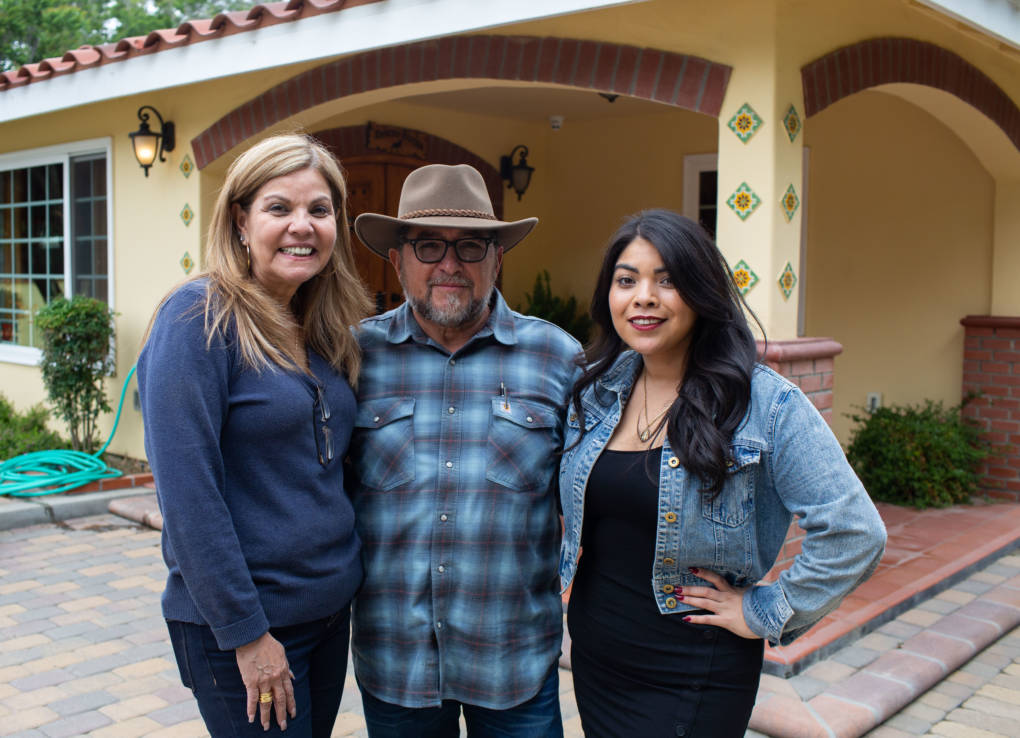
"caption": "Helen, Juan, and Monica Rivera in front of their home, on May 26, 2019 in Chino.",
"description": "Helen, Juan, and Monica Rivera in front of their home, on May 26, 2019 in Chino.",
"title": "RIVERA FAMILY3",
"credit": "James Berna/KPCC",
"status": "inherit",
"isLoading": false,
"fetchFailed": false
},
"news_11760043": {
"type": "attachments",
"id": "news_11760043",
"meta": {
"index": "attachments_1716263798",
"site": "news",
"id": "11760043",
"found": true
},
"parent": 11759895,
"imgSizes": {
"apple_news_ca_landscape_5_5": {
"file": "https://ww2.kqed.org/app/uploads/sites/10/2019/07/07092019_HUD-Ben-Carson-Housing-Immigrants-Los-Angeles-California-qut-1044x783.jpg",
"width": 1044,
"mimeType": "image/jpeg",
"height": 783
},
"apple_news_ca_square_4_0": {
"file": "https://ww2.kqed.org/app/uploads/sites/10/2019/07/07092019_HUD-Ben-Carson-Housing-Immigrants-Los-Angeles-California-qut-470x470.jpg",
"width": 470,
"mimeType": "image/jpeg",
"height": 470
},
"twentyfourteen-full-width": {
"file": "https://ww2.kqed.org/app/uploads/sites/10/2019/07/07092019_HUD-Ben-Carson-Housing-Immigrants-Los-Angeles-California-qut-1038x576.jpg",
"width": 1038,
"mimeType": "image/jpeg",
"height": 576
},
"thumbnail": {
"file": "https://ww2.kqed.org/app/uploads/sites/10/2019/07/07092019_HUD-Ben-Carson-Housing-Immigrants-Los-Angeles-California-qut-160x106.jpg",
"width": 160,
"mimeType": "image/jpeg",
"height": 106
},
"post-thumbnail": {
"file": "https://ww2.kqed.org/app/uploads/sites/10/2019/07/07092019_HUD-Ben-Carson-Housing-Immigrants-Los-Angeles-California-qut-672x372.jpg",
"width": 672,
"mimeType": "image/jpeg",
"height": 372
},
"kqedFullSize": {
"file": "https://ww2.kqed.org/app/uploads/sites/10/2019/07/07092019_HUD-Ben-Carson-Housing-Immigrants-Los-Angeles-California-qut.jpg",
"width": 1920,
"height": 1275
},
"apple_news_ca_landscape_4_7": {
"file": "https://ww2.kqed.org/app/uploads/sites/10/2019/07/07092019_HUD-Ben-Carson-Housing-Immigrants-Los-Angeles-California-qut-632x474.jpg",
"width": 632,
"mimeType": "image/jpeg",
"height": 474
},
"large": {
"file": "https://ww2.kqed.org/app/uploads/sites/10/2019/07/07092019_HUD-Ben-Carson-Housing-Immigrants-Los-Angeles-California-qut-1020x677.jpg",
"width": 1020,
"mimeType": "image/jpeg",
"height": 677
},
"complete_open_graph": {
"file": "https://ww2.kqed.org/app/uploads/sites/10/2019/07/07092019_HUD-Ben-Carson-Housing-Immigrants-Los-Angeles-California-qut-1200x797.jpg",
"width": 1200,
"mimeType": "image/jpeg",
"height": 797
},
"apple_news_ca_landscape_4_0": {
"file": "https://ww2.kqed.org/app/uploads/sites/10/2019/07/07092019_HUD-Ben-Carson-Housing-Immigrants-Los-Angeles-California-qut-536x402.jpg",
"width": 536,
"mimeType": "image/jpeg",
"height": 402
},
"apple_news_ca_portrait_12_9": {
"file": "https://ww2.kqed.org/app/uploads/sites/10/2019/07/07092019_HUD-Ben-Carson-Housing-Immigrants-Los-Angeles-California-qut-1122x1275.jpg",
"width": 1122,
"mimeType": "image/jpeg",
"height": 1275
},
"medium": {
"file": "https://ww2.kqed.org/app/uploads/sites/10/2019/07/07092019_HUD-Ben-Carson-Housing-Immigrants-Los-Angeles-California-qut-800x531.jpg",
"width": 800,
"mimeType": "image/jpeg",
"height": 531
},
"apple_news_ca_portrait_4_0": {
"file": "https://ww2.kqed.org/app/uploads/sites/10/2019/07/07092019_HUD-Ben-Carson-Housing-Immigrants-Los-Angeles-California-qut-354x472.jpg",
"width": 354,
"mimeType": "image/jpeg",
"height": 472
},
"apple_news_ca_portrait_9_7": {
"file": "https://ww2.kqed.org/app/uploads/sites/10/2019/07/07092019_HUD-Ben-Carson-Housing-Immigrants-Los-Angeles-California-qut-840x1120.jpg",
"width": 840,
"mimeType": "image/jpeg",
"height": 1120
},
"apple_news_ca_landscape_12_9": {
"file": "https://ww2.kqed.org/app/uploads/sites/10/2019/07/07092019_HUD-Ben-Carson-Housing-Immigrants-Los-Angeles-California-qut-1832x1275.jpg",
"width": 1832,
"mimeType": "image/jpeg",
"height": 1275
},
"apple_news_ca_square_9_7": {
"file": "https://ww2.kqed.org/app/uploads/sites/10/2019/07/07092019_HUD-Ben-Carson-Housing-Immigrants-Los-Angeles-California-qut-1104x1104.jpg",
"width": 1104,
"mimeType": "image/jpeg",
"height": 1104
},
"apple_news_ca_portrait_4_7": {
"file": "https://ww2.kqed.org/app/uploads/sites/10/2019/07/07092019_HUD-Ben-Carson-Housing-Immigrants-Los-Angeles-California-qut-414x552.jpg",
"width": 414,
"mimeType": "image/jpeg",
"height": 552
},
"apple_news_ca_square_12_9": {
"file": "https://ww2.kqed.org/app/uploads/sites/10/2019/07/07092019_HUD-Ben-Carson-Housing-Immigrants-Los-Angeles-California-qut-1472x1275.jpg",
"width": 1472,
"mimeType": "image/jpeg",
"height": 1275
},
"apple_news_ca_portrait_5_5": {
"file": "https://ww2.kqed.org/app/uploads/sites/10/2019/07/07092019_HUD-Ben-Carson-Housing-Immigrants-Los-Angeles-California-qut-687x916.jpg",
"width": 687,
"mimeType": "image/jpeg",
"height": 916
},
"full-width": {
"file": "https://ww2.kqed.org/app/uploads/sites/10/2019/07/07092019_HUD-Ben-Carson-Housing-Immigrants-Los-Angeles-California-qut-1920x1275.jpg",
"width": 1920,
"mimeType": "image/jpeg",
"height": 1275
},
"apple_news_ca_square_4_7": {
"file": "https://ww2.kqed.org/app/uploads/sites/10/2019/07/07092019_HUD-Ben-Carson-Housing-Immigrants-Los-Angeles-California-qut-550x550.jpg",
"width": 550,
"mimeType": "image/jpeg",
"height": 550
},
"apple_news_ca_landscape_9_7": {
"file": "https://ww2.kqed.org/app/uploads/sites/10/2019/07/07092019_HUD-Ben-Carson-Housing-Immigrants-Los-Angeles-California-qut-1376x1032.jpg",
"width": 1376,
"mimeType": "image/jpeg",
"height": 1032
},
"apple_news_ca_square_5_5": {
"file": "https://ww2.kqed.org/app/uploads/sites/10/2019/07/07092019_HUD-Ben-Carson-Housing-Immigrants-Los-Angeles-California-qut-912x912.jpg",
"width": 912,
"mimeType": "image/jpeg",
"height": 912
}
},
"publishDate": 1562712443,
"modified": 1562713936,
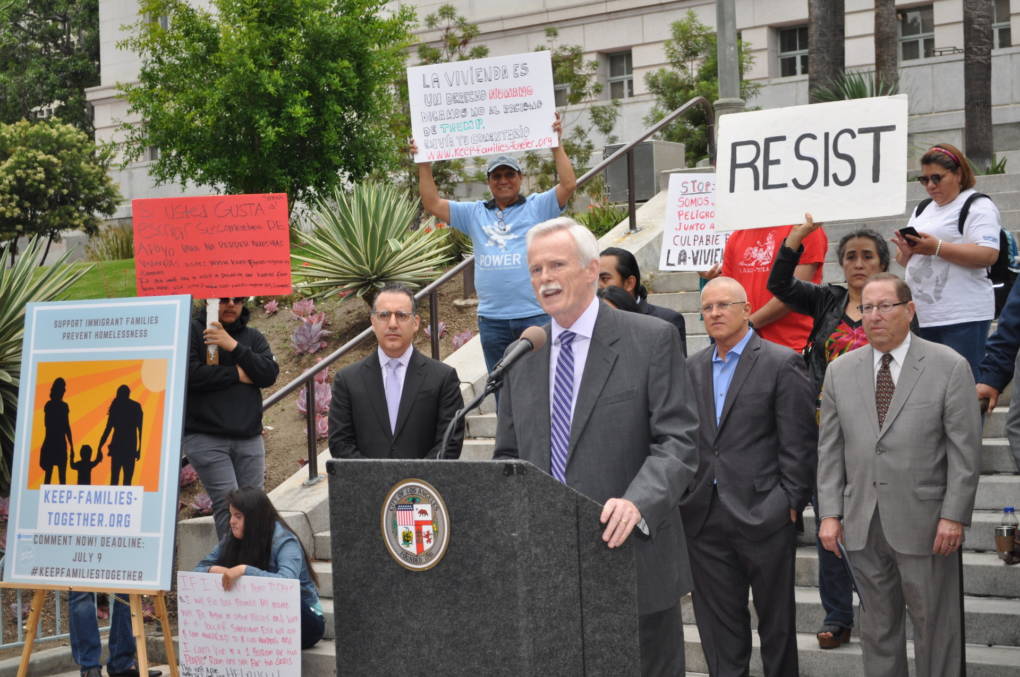
"caption": "Doug Guthrie, president and CEO of the Housing Authority of the City of Los Angeles, speaks on June 28, 2019, against a proposed rule that would deny federally subsidized housing to thousands of people, many of them U.S. citizen children.",
"description": "Doug Guthrie, president and CEO of the Housing Authority of the City of Los Angeles speaks on June 26, 2019 at city hall against a proposed rule that would deny federally subsidized housing to thousands of people, many of them U.S. citizen children.",
"title": "07092019_HUD Ben Carson Housing Immigrants Los Angeles California-qut",
"credit": "Housing Authority of the City of Los Angeles",
"status": "inherit",
"isLoading": false,
"fetchFailed": false
},
"news_11759648": {
"type": "attachments",
"id": "news_11759648",
"meta": {
"index": "attachments_1716263798",
"site": "news",
"id": "11759648",
"found": true
},
"parent": 11759601,
"imgSizes": {
"apple_news_ca_landscape_5_5": {
"file": "https://ww2.kqed.org/app/uploads/sites/10/2019/07/GettyImages-1160397037-1044x783.jpg",
"width": 1044,
"mimeType": "image/jpeg",
"height": 783
},
"apple_news_ca_square_4_0": {
"file": "https://ww2.kqed.org/app/uploads/sites/10/2019/07/GettyImages-1160397037-470x470.jpg",
"width": 470,
"mimeType": "image/jpeg",
"height": 470
},
"twentyfourteen-full-width": {
"file": "https://ww2.kqed.org/app/uploads/sites/10/2019/07/GettyImages-1160397037-1038x576.jpg",
"width": 1038,
"mimeType": "image/jpeg",
"height": 576
},
"thumbnail": {
"file": "https://ww2.kqed.org/app/uploads/sites/10/2019/07/GettyImages-1160397037-160x105.jpg",
"width": 160,
"mimeType": "image/jpeg",
"height": 105
},
"post-thumbnail": {
"file": "https://ww2.kqed.org/app/uploads/sites/10/2019/07/GettyImages-1160397037-672x372.jpg",
"width": 672,
"mimeType": "image/jpeg",
"height": 372
},
"kqedFullSize": {
"file": "https://ww2.kqed.org/app/uploads/sites/10/2019/07/GettyImages-1160397037-e1562613356301.jpg",
"width": 1920,
"height": 1261
},
"apple_news_ca_landscape_4_7": {
"file": "https://ww2.kqed.org/app/uploads/sites/10/2019/07/GettyImages-1160397037-632x474.jpg",
"width": 632,
"mimeType": "image/jpeg",
"height": 474
},
"large": {
"file": "https://ww2.kqed.org/app/uploads/sites/10/2019/07/GettyImages-1160397037-1020x670.jpg",
"width": 1020,
"mimeType": "image/jpeg",
"height": 670
},
"complete_open_graph": {
"file": "https://ww2.kqed.org/app/uploads/sites/10/2019/07/GettyImages-1160397037-1200x788.jpg",
"width": 1200,
"mimeType": "image/jpeg",
"height": 788
},
"apple_news_ca_landscape_4_0": {
"file": "https://ww2.kqed.org/app/uploads/sites/10/2019/07/GettyImages-1160397037-536x402.jpg",
"width": 536,
"mimeType": "image/jpeg",
"height": 402
},
"apple_news_ca_portrait_12_9": {
"file": "https://ww2.kqed.org/app/uploads/sites/10/2019/07/GettyImages-1160397037-1122x1496.jpg",
"width": 1122,
"mimeType": "image/jpeg",
"height": 1496
},
"medium": {
"file": "https://ww2.kqed.org/app/uploads/sites/10/2019/07/GettyImages-1160397037-800x525.jpg",
"width": 800,
"mimeType": "image/jpeg",
"height": 525
},
"apple_news_ca_portrait_4_0": {
"file": "https://ww2.kqed.org/app/uploads/sites/10/2019/07/GettyImages-1160397037-354x472.jpg",
"width": 354,
"mimeType": "image/jpeg",
"height": 472
},
"apple_news_ca_portrait_9_7": {
"file": "https://ww2.kqed.org/app/uploads/sites/10/2019/07/GettyImages-1160397037-840x1120.jpg",
"width": 840,
"mimeType": "image/jpeg",
"height": 1120
},
"apple_news_ca_landscape_12_9": {
"file": "https://ww2.kqed.org/app/uploads/sites/10/2019/07/GettyImages-1160397037-1832x1374.jpg",
"width": 1832,
"mimeType": "image/jpeg",
"height": 1374
},
"apple_news_ca_square_9_7": {
"file": "https://ww2.kqed.org/app/uploads/sites/10/2019/07/GettyImages-1160397037-1104x1104.jpg",
"width": 1104,
"mimeType": "image/jpeg",
"height": 1104
},
"apple_news_ca_portrait_4_7": {
"file": "https://ww2.kqed.org/app/uploads/sites/10/2019/07/GettyImages-1160397037-414x552.jpg",
"width": 414,
"mimeType": "image/jpeg",
"height": 552
},
"apple_news_ca_square_12_9": {
"file": "https://ww2.kqed.org/app/uploads/sites/10/2019/07/GettyImages-1160397037-1472x1472.jpg",
"width": 1472,
"mimeType": "image/jpeg",
"height": 1472
},
"apple_news_ca_portrait_5_5": {
"file": "https://ww2.kqed.org/app/uploads/sites/10/2019/07/GettyImages-1160397037-687x916.jpg",
"width": 687,
"mimeType": "image/jpeg",
"height": 916
},
"full-width": {
"file": "https://ww2.kqed.org/app/uploads/sites/10/2019/07/GettyImages-1160397037-1920x1260.jpg",
"width": 1920,
"mimeType": "image/jpeg",
"height": 1260
},
"apple_news_ca_square_4_7": {
"file": "https://ww2.kqed.org/app/uploads/sites/10/2019/07/GettyImages-1160397037-550x550.jpg",
"width": 550,
"mimeType": "image/jpeg",
"height": 550
},
"apple_news_ca_landscape_9_7": {
"file": "https://ww2.kqed.org/app/uploads/sites/10/2019/07/GettyImages-1160397037-1376x1032.jpg",
"width": 1376,
"mimeType": "image/jpeg",
"height": 1032
},
"apple_news_ca_square_5_5": {
"file": "https://ww2.kqed.org/app/uploads/sites/10/2019/07/GettyImages-1160397037-912x912.jpg",
"width": 912,
"mimeType": "image/jpeg",
"height": 912
}
},
"publishDate": 1562613292,
"modified": 1562633157,
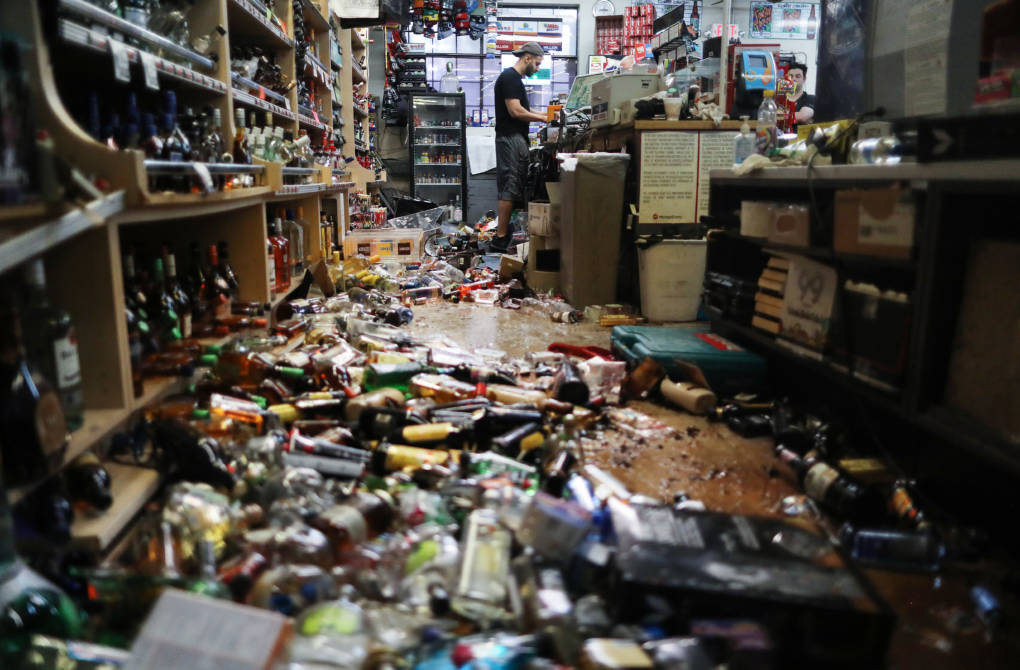
"caption": "An employee works at the cash register at Eastridge Market, near broken bottles scattered on the floor, following a 7.1 magnitude earthquake that struck in the area, on July 6, 2019, in Ridgecrest, California. The earthquake, which occurred July 5, was the second large earthquake to hit the area in two days and the largest in Southern California in 20 years. ",
"description": null,
"title": "Southern California Hit By Second Big Earthquake In Two Days",
"credit": "Mario Tama/Getty Images",
"status": "inherit",
"isLoading": false,
"fetchFailed": false
}
},
"audioPlayerReducer": {
"postId": "stream_live",
"isPaused": true,
"isPlaying": false,
"pfsActive": false,
"pledgeModalIsOpen": true,
"playerDrawerIsOpen": false,
"liveAudioPlayStartedAt": 0,
"liveAudioPlayContext": ""
},
"authorsReducer": {
"byline_news_11779811": {
"type": "authors",
"id": "byline_news_11779811",
"meta": {
"override": true
},
"slug": "byline_news_11779811",
"name": "\u003cstrong>Christopher Weber and Michael R. Blood\u003cbr />Associated Press\u003c/strong>",
"isLoading": false
},
"byline_news_11779580": {
"type": "authors",
"id": "byline_news_11779580",
"meta": {
"override": true
},
"slug": "byline_news_11779580",
"name": "\u003cstrong>Stefanie Dazio and John Antczak\u003cbr />Associated Press\u003c/strong>",
"isLoading": false
},
"byline_news_11779505": {
"type": "authors",
"id": "byline_news_11779505",
"meta": {
"override": true
},
"slug": "byline_news_11779505",
"name": "\u003ca href=\"https://twitter.com/LarryBuhl?ref_src=twsrc%5Egoogle%7Ctwcamp%5Eserp%7Ctwgr%5Eauthor\"> Larry Buhl \u003ca/>",
"isLoading": false
},
"byline_news_11773790": {
"type": "authors",
"id": "byline_news_11773790",
"meta": {
"override": true
},
"slug": "byline_news_11773790",
"name": "Michael R. Blood\u003cbr>Associated Press",
"isLoading": false
},
"byline_news_11769831": {
"type": "authors",
"id": "byline_news_11769831",
"meta": {
"override": true
},
"slug": "byline_news_11769831",
"name": "\u003ca href=\"https://www.npr.org/people/466454757/merrit-kennedy\">Merrit Kennedy\u003c/a>",
"isLoading": false
},
"byline_news_11768378": {
"type": "authors",
"id": "byline_news_11768378",
"meta": {
"override": true
},
"slug": "byline_news_11768378",
"name": "\u003cstrong>Anna Scott\u003cbr/>KCRW\u003c/strong>",
"isLoading": false
},
"byline_news_11768293": {
"type": "authors",
"id": "byline_news_11768293",
"meta": {
"override": true
},
"slug": "byline_news_11768293",
"name": "\u003ca href= \"https://www.npr.org/people/716309801/denise-guerra\"> Denise Guerra \u003ca/>",
"isLoading": false
},
"byline_news_11760903": {
"type": "authors",
"id": "byline_news_11760903",
"meta": {
"override": true
},
"slug": "byline_news_11760903",
"name": "Adria Watson \u003cbr>CALmatters",
"isLoading": false
},
"byline_news_11759939": {
"type": "authors",
"id": "byline_news_11759939",
"meta": {
"override": true
},
"slug": "byline_news_11759939",
"name": "\u003ca href= \"https://www.scpr.org/about/people/staff/leslie-berestein-rojas\"> Leslie Berestein Rojas \u003ca/>",
"isLoading": false
},
"fjhabvala": {
"type": "authors",
"id": "8659",
"meta": {
"index": "authors_1716337520",
"id": "8659",
"found": true
},
"name": "Farida Jhabvala Romero",
"firstName": "Farida",
"lastName": "Jhabvala Romero",
"slug": "fjhabvala",
"email": "fjhabvala@kqed.org",
"display_author_email": true,
"staff_mastheads": [
"news"
],
"title": "KQED Contributor",
"bio": "Farida Jhabvala Romero is a Labor Correspondent for KQED. She previously covered immigration. Farida was \u003ca href=\"https://www.ccnma.org/2022-most-influential-latina-journalists\">named\u003c/a> one of the 10 Most Influential Latina Journalists in California in 2022 by the California Chicano News Media Association. Her work has won awards from the Society of Professional Journalists (Northern California), as well as a national and regional Edward M. Murrow Award for the collaborative reporting projects “Dangerous Air” and “Graying California.” Before joining KQED, Farida worked as a producer at Radio Bilingüe, a national public radio network. Farida earned her master’s degree in journalism from Stanford University.",
"avatar": "https://secure.gravatar.com/avatar/f9f022d4e2609741874222a1e9d41f48fea74011aa7c615eef91d9a50c944ebe?s=600&d=blank&r=g",
"twitter": "FaridaJhabvala",
"bluesky": null,
"facebook": null,
"instagram": null,
"linkedin": "https://www.linkedin.com/in/faridajhabvala/",
"sites": [
{
"site": "news",
"roles": [
"editor"
]
},
{
"site": "stateofhealth",
"roles": [
"author"
]
},
{
"site": "liveblog",
"roles": [
"author"
]
}
],
"headData": {
"title": "Farida Jhabvala Romero | KQED",
"description": "KQED Contributor",
"ogImgSrc": "https://secure.gravatar.com/avatar/f9f022d4e2609741874222a1e9d41f48fea74011aa7c615eef91d9a50c944ebe?s=600&d=blank&r=g",
"twImgSrc": "https://secure.gravatar.com/avatar/f9f022d4e2609741874222a1e9d41f48fea74011aa7c615eef91d9a50c944ebe?s=600&d=blank&r=g"
},
"isLoading": false,
"link": "/author/fjhabvala"
},
"vrancano": {
"type": "authors",
"id": "11276",
"meta": {
"index": "authors_1716337520",
"id": "11276",
"found": true
},
"name": "Vanessa Rancaño",
"firstName": "Vanessa",
"lastName": "Rancaño",
"slug": "vrancano",
"email": "vrancano@kqed.org",
"display_author_email": false,
"staff_mastheads": [
"news"
],
"title": "Reporter",
"bio": "Vanessa Rancaño is a features reporter for KQED. She’s also covered homelessness and education for the station and reported from the Central Valley. Her work has aired across public radio, from flagship national news shows to longform narrative podcasts. Before taking up a mic, she worked as a freelance print journalist. She’s been recognized with a number of national and regional awards. Vanessa grew up in California's Central Valley. She's a former NPR Kroc Fellow, and a graduate of the UC Berkeley Graduate School of Journalism.",
"avatar": "https://secure.gravatar.com/avatar/b3a383dfb0e7ee1c17568f2cf067904ab654d6e3de9743fc661f3c788ade1bed?s=600&d=blank&r=g",
"twitter": "vanessarancano",
"bluesky": null,
"facebook": null,
"instagram": null,
"linkedin": null,
"sites": [
{
"site": "arts",
"roles": [
"editor"
]
},
{
"site": "news",
"roles": [
"editor"
]
},
{
"site": "liveblog",
"roles": [
"contributor"
]
}
],
"headData": {
"title": "Vanessa Rancaño | KQED",
"description": "Reporter",
"ogImgSrc": "https://secure.gravatar.com/avatar/b3a383dfb0e7ee1c17568f2cf067904ab654d6e3de9743fc661f3c788ade1bed?s=600&d=blank&r=g",
"twImgSrc": "https://secure.gravatar.com/avatar/b3a383dfb0e7ee1c17568f2cf067904ab654d6e3de9743fc661f3c788ade1bed?s=600&d=blank&r=g"
},
"isLoading": false,
"link": "/author/vrancano"
},
"agarces": {
"type": "authors",
"id": "11367",
"meta": {
"index": "authors_1716337520",
"id": "11367",
"found": true
},
"name": "Audrey Garces",
"firstName": "Audrey",
"lastName": "Garces",
"slug": "agarces",
"email": "agarces@kqed.org",
"display_author_email": false,
"staff_mastheads": [
"news"
],
"title": "Digital Producer",
"bio": "Audrey is a former digital producer at KQED News. Previously, she was a KQED Raul Ramirez Diversity Fund intern where she developed stories that focused on highlighting diverse voices in journalism. Prior to her work at KQED, she worked as a news intern at the San Francisco Examiner. Audrey graduated from San Francisco State University with a B.A. in journalism and a minor in political science.",
"avatar": "https://secure.gravatar.com/avatar/5211bc2e6a809b9956da169e35ce63d5?s=600&d=blank&r=g",
"twitter": "audgar",
"facebook": null,
"instagram": null,
"linkedin": null,
"sites": [
{
"site": "arts",
"roles": []
},
{
"site": "news",
"roles": [
"subscriber"
]
},
{
"site": "science",
"roles": [
"editor"
]
},
{
"site": "forum",
"roles": [
"editor"
]
},
{
"site": "perspectives",
"roles": [
"administrator"
]
}
],
"headData": {
"title": "Audrey Garces | KQED",
"description": "Digital Producer",
"ogImgSrc": "https://secure.gravatar.com/avatar/5211bc2e6a809b9956da169e35ce63d5?s=600&d=blank&r=g",
"twImgSrc": "https://secure.gravatar.com/avatar/5211bc2e6a809b9956da169e35ce63d5?s=600&d=blank&r=g"
},
"isLoading": false,
"link": "/author/agarces"
}
},
"pagesReducer": {
"news_tag_los-angeles": {
"type": "terms",
"id": "news_4",
"meta": {
"index": "terms_1716263798",
"site": "news",
"id": "4",
"score": 8.557567
},
"featImg": null,
"name": "los angeles",
"description": null,
"taxonomy": "tag",
"headData": {
"twImgId": null,
"twTitle": null,
"ogTitle": null,
"ogImgId": null,
"twDescription": null,
"description": null,
"title": "los angeles Archives | KQED News",
"ogDescription": null
},
"ttid": 4,
"slug": "los-angeles",
"isLoading": false,
"title": "los angeles",
"pageMeta": {
"site": "news",
"WpPageTemplate": "page-topic-editorial",
"currentPage": 15
},
"blocks": [
{
"blockName": "kqed/post-list",
"attrs": {
"layout": "cardArticle2",
"query": "posts/news?tag=los-angeles",
"seeMore": false,
"paginated": true,
"page": 15
}
},
{
"blockName": "kqed/ad"
}
]
}
},
"pfsSessionReducer": {},
"postsReducer": {
"stream_live": {
"type": "live",
"id": "stream_live",
"audioUrl": "https://streams.kqed.org/kqedradio",
"title": "Live Stream",
"excerpt": "Live Stream information currently unavailable.",
"link": "/radio",
"featImg": "",
"label": {
"name": "KQED Live",
"link": "/"
}
},
"stream_kqedNewscast": {
"type": "posts",
"id": "stream_kqedNewscast",
"audioUrl": "https://www.kqed.org/.stream/anon/radio/RDnews/newscast.mp3?_=1",
"title": "KQED Newscast",
"featImg": "",
"label": {
"name": "88.5 FM",
"link": "/"
}
},
"news_11779811": {
"type": "posts",
"id": "news_11779811",
"meta": {
"index": "posts_1716263798",
"site": "news",
"id": "11779811",
"score": null,
"sort": [
1570908881000
]
},
"guestAuthors": [],
"slug": "firefighters-taming-southern-california-blaze-as-winds-fade",
"title": "Authorities: 3 Deaths Tied to Southern California Wildfires",
"publishDate": 1570908881,
"format": "standard",
"headTitle": "Authorities: 3 Deaths Tied to Southern California Wildfires | KQED",
"labelTerm": {},
"content": "\u003cp>\u003cem>Updated: Saturday, Oct. 12, 2:15 p.m.\u003c/em>\u003c/p>\n\u003cp>Three people have died at the scene of Southern California wildfires this week, authorities said Saturday, as firefighters aided by diminishing winds beat back a blaze on the edge of Los Angeles that damaged or destroyed more than 30 structures and sent a blanket of smoke across a swath of neighborhoods.\u003c/p>\n\u003cp>Los Angeles officials said the fire in the city’s San Fernando Valley area hadn’t grown significantly since Friday, and ground crews were tamping down lingering hotspots. Thousands of people remained under evacuation orders, though many were allowed to return home Saturday.\u003c/p>\n\u003cp>One man who tried to fight the blaze died of a heart attack, and one firefighter reported a minor eye injury.\u003c/p>\n\u003cp>The fire’s cause is under investigation, and authorities warned that the threat of flare-ups remained.\u003c/p>\n\u003cp>At the site of another blaze east of Los Angeles, the Riverside County Sheriff’s Department said a second body was found at a mobile home park where 74 structures were destroyed Thursday in Calimesa. Officials previously reported one death at the community east of Los Angeles.\u003c/p>\n\u003cp>The department said one of the Calimesa victims has been identified as 89-year-old Lois Arvikson. Her son Don Turner said she had called him to say she was evacuating, but he never heard from her again. Authorities are working to identify the other victim.\u003c/p>\n\u003cp>Los Angeles Fire Department spokesman Brian Humphrey said the bulk of the fire at the city’s edge had moved away from homes and into rugged hillsides and canyons where firefighters were making steady progress slowing its advance. Television footage showed plumes of smoke rising from the area but no walls of towering flame, as a water-dropping helicopter moved in to dump another cascade on the blaze.\u003c/p>\n\u003cp>\u003cspan style=\"font-weight: 400\">[aside tag='wildfires' label='More Coverage.']\u003c/span>\u003c/p>\n\u003cp>“The bulk of the fire has moved toward wildland,” Humphrey said.\u003c/p>\n\u003cp>Firefighters worked under sunny skies, but air quality was poor as smoke dispersed over much of greater Los Angeles. Air quality officials urged people to limit outdoor activities.\u003c/p>\n\u003cp>The forecast called for low humidity — in the 10% range — with light wind and an occasional gust up to 15 mph (24 kph).\u003c/p>\n\u003cp>East of Los Angeles, firefighters were also gaining ground on a blaze that ripped through a Riverside County mobile home park, destroying dozens of residences. In Northern California, the lights are back on for 98% of customers who lost power when Pacific Gas & Electric switched it off in an effort to prevent wildfires.\u003c/p>\n\u003cp>Some 100,000 residents were ordered out of their homes because of the wind-driven wildfire that broke out Thursday evening in the San Fernando Valley, though authorities began lifting evacuation orders in many areas Saturday. It spread westward through tinder-dry brush in hilly subdivisions on the outskirts of the nation’s second-largest city.\u003c/p>\n\u003cp>Interstate 5, the main north-to-south corridor in the state, was shut down for much of the day Friday, choking traffic until finally reopening.\u003c/p>\n\u003cp>The smoky scent spreading through much of Los Angeles was a reminder of the threat of a fire season just beginning.\u003c/p>\n\u003cp>The region has been on high alert as notoriously powerful Santa Ana winds brought dry desert air to a desiccated landscape that only needed a spark to erupt. Fire officials have warned that they expect more intense and devastating California wildfires due, in part, to climate change.\u003c/p>\n\u003cp>Fire danger remained high for much of Southern California, with warnings in place for large swaths of Ventura and Santa Barbara counties west of Los Angeles.\u003c/p>\n\u003cp>The cause of the Los Angeles blaze wasn’t immediately known, though arson investigators said a witness reported seeing sparks or flames coming from a power line near where the fire is believed to have started, said Peter Sanders, a spokesman for the Los Angeles Fire Department.\u003c/p>\n\u003cp>Jonathan Stahl was driving home to Valencia when he saw the smoke and immediately diverted to a mobile home park in Sylmar where his grandmother and aunt live together.\u003c/p>\n\u003cp>The park had been nearly wiped out in 2008 when one of the city’s most destructive fires leveled 500 homes.\u003c/p>\n\u003cp>Stahl helped his grandmother, Beverly Stahl, 91, who was in her pajamas, and his aunt to pack clothing, medication and take their two dogs. They saw flames in the distance as they drove away.\u003c/p>\n\u003cp>“We just packed up what we could as fast as we could,” Stahl said at an evacuation center at the Sylmar Recreation Center, massaging his grandmother’s shoulders as she sat in a wheelchair with a Red Cross blanket on her lap. “If we’d stuck around, we would have been in trouble. Real big trouble.”\u003c/p>\n\u003cp>[ad fullwidth]\u003c/p>\n\u003cp>\u003c/p>\n",
"blocks": [],
"excerpt": "The Saddleridge Fire burning near Los Angeles has scorched more than 7,500 acres, and is now moving away from homes and into woodlands.",
"status": "publish",
"parent": 0,
"modified": 1722638456,
"stats": {
"hasAudio": false,
"hasVideo": false,
"hasChartOrMap": false,
"iframeSrcs": [],
"hasGoogleForm": false,
"hasGallery": false,
"hasHearkenModule": false,
"hasPolis": false,
"paragraphCount": 25,
"wordCount": 805
},
"headData": {
"title": "Authorities: 3 Deaths Tied to Southern California Wildfires | KQED",
"description": "The Saddleridge Fire burning near Los Angeles has scorched more than 7,500 acres, and is now moving away from homes and into woodlands.",
"ogTitle": "",
"ogDescription": "",
"ogImgId": "",
"twTitle": "",
"twDescription": "",
"twImgId": "",
"schema": {
"@context": "https://schema.org",
"@type": "NewsArticle",
"headline": "Authorities: 3 Deaths Tied to Southern California Wildfires",
"datePublished": "2019-10-12T12:34:41-07:00",
"dateModified": "2024-08-02T15:40:56-07:00",
"image": "https://cdn.kqed.org/wp-content/uploads/2020/02/KQED-OG-Image@1x.png",
"isAccessibleForFree": "True",
"publisher": {
"@type": "NewsMediaOrganization",
"@id": "https://www.kqed.org/#organization",
"name": "KQED",
"logo": "https://cdn.kqed.org/wp-content/uploads/2020/02/KQED-OG-Image@1x.png",
"url": "https://www.kqed.org",
"sameAs": [
"https://www.facebook.com/KQED",
"https://twitter.com/KQED",
"https://www.instagram.com/kqed/",
"https://www.tiktok.com/@kqedofficial",
"https://www.linkedin.com/company/kqed",
"https://www.youtube.com/channel/UCeC0IOo7i1P_61zVUWbJ4nw"
]
}
}
},
"source": "Associated Press",
"sourceUrl": "https://www.apnews.com/",
"sticky": false,
"nprByline": "\u003cstrong>Christopher Weber and Michael R. Blood\u003cbr />Associated Press\u003c/strong>",
"path": "/news/11779811/firefighters-taming-southern-california-blaze-as-winds-fade",
"audioTrackLength": null,
"parsedContent": [
{
"type": "contentString",
"content": "\u003cdiv class=\"post-body\">\u003cp>\u003cp>\u003cem>Updated: Saturday, Oct. 12, 2:15 p.m.\u003c/em>\u003c/p>\n\u003cp>Three people have died at the scene of Southern California wildfires this week, authorities said Saturday, as firefighters aided by diminishing winds beat back a blaze on the edge of Los Angeles that damaged or destroyed more than 30 structures and sent a blanket of smoke across a swath of neighborhoods.\u003c/p>\n\u003cp>Los Angeles officials said the fire in the city’s San Fernando Valley area hadn’t grown significantly since Friday, and ground crews were tamping down lingering hotspots. Thousands of people remained under evacuation orders, though many were allowed to return home Saturday.\u003c/p>\n\u003cp>One man who tried to fight the blaze died of a heart attack, and one firefighter reported a minor eye injury.\u003c/p>\n\u003cp>The fire’s cause is under investigation, and authorities warned that the threat of flare-ups remained.\u003c/p>\n\u003cp>At the site of another blaze east of Los Angeles, the Riverside County Sheriff’s Department said a second body was found at a mobile home park where 74 structures were destroyed Thursday in Calimesa. Officials previously reported one death at the community east of Los Angeles.\u003c/p>\n\u003cp>The department said one of the Calimesa victims has been identified as 89-year-old Lois Arvikson. Her son Don Turner said she had called him to say she was evacuating, but he never heard from her again. Authorities are working to identify the other victim.\u003c/p>\n\u003cp>Los Angeles Fire Department spokesman Brian Humphrey said the bulk of the fire at the city’s edge had moved away from homes and into rugged hillsides and canyons where firefighters were making steady progress slowing its advance. Television footage showed plumes of smoke rising from the area but no walls of towering flame, as a water-dropping helicopter moved in to dump another cascade on the blaze.\u003c/p>\n\u003cp>\u003cspan style=\"font-weight: 400\">\u003c/p>\u003c/div>",
"attributes": {
"named": {},
"numeric": []
}
},
{
"type": "component",
"content": "",
"name": "aside",
"attributes": {
"named": {
"tag": "wildfires",
"label": "More Coverage. "
},
"numeric": []
}
},
{
"type": "contentString",
"content": "\u003cdiv class=\"post-body\">\u003cp>\u003c/span>\u003c/p>\n\u003cp>“The bulk of the fire has moved toward wildland,” Humphrey said.\u003c/p>\n\u003cp>Firefighters worked under sunny skies, but air quality was poor as smoke dispersed over much of greater Los Angeles. Air quality officials urged people to limit outdoor activities.\u003c/p>\n\u003cp>The forecast called for low humidity — in the 10% range — with light wind and an occasional gust up to 15 mph (24 kph).\u003c/p>\n\u003cp>East of Los Angeles, firefighters were also gaining ground on a blaze that ripped through a Riverside County mobile home park, destroying dozens of residences. In Northern California, the lights are back on for 98% of customers who lost power when Pacific Gas & Electric switched it off in an effort to prevent wildfires.\u003c/p>\n\u003cp>Some 100,000 residents were ordered out of their homes because of the wind-driven wildfire that broke out Thursday evening in the San Fernando Valley, though authorities began lifting evacuation orders in many areas Saturday. It spread westward through tinder-dry brush in hilly subdivisions on the outskirts of the nation’s second-largest city.\u003c/p>\n\u003cp>Interstate 5, the main north-to-south corridor in the state, was shut down for much of the day Friday, choking traffic until finally reopening.\u003c/p>\n\u003cp>The smoky scent spreading through much of Los Angeles was a reminder of the threat of a fire season just beginning.\u003c/p>\n\u003cp>The region has been on high alert as notoriously powerful Santa Ana winds brought dry desert air to a desiccated landscape that only needed a spark to erupt. Fire officials have warned that they expect more intense and devastating California wildfires due, in part, to climate change.\u003c/p>\n\u003cp>Fire danger remained high for much of Southern California, with warnings in place for large swaths of Ventura and Santa Barbara counties west of Los Angeles.\u003c/p>\n\u003cp>The cause of the Los Angeles blaze wasn’t immediately known, though arson investigators said a witness reported seeing sparks or flames coming from a power line near where the fire is believed to have started, said Peter Sanders, a spokesman for the Los Angeles Fire Department.\u003c/p>\n\u003cp>Jonathan Stahl was driving home to Valencia when he saw the smoke and immediately diverted to a mobile home park in Sylmar where his grandmother and aunt live together.\u003c/p>\n\u003cp>The park had been nearly wiped out in 2008 when one of the city’s most destructive fires leveled 500 homes.\u003c/p>\n\u003cp>Stahl helped his grandmother, Beverly Stahl, 91, who was in her pajamas, and his aunt to pack clothing, medication and take their two dogs. They saw flames in the distance as they drove away.\u003c/p>\n\u003cp>“We just packed up what we could as fast as we could,” Stahl said at an evacuation center at the Sylmar Recreation Center, massaging his grandmother’s shoulders as she sat in a wheelchair with a Red Cross blanket on her lap. “If we’d stuck around, we would have been in trouble. Real big trouble.”\u003c/p>\n\u003cp>\u003c/p>\u003c/div>",
"attributes": {
"named": {},
"numeric": []
}
},
{
"type": "component",
"content": "",
"name": "ad",
"attributes": {
"named": {
"label": "fullwidth"
},
"numeric": [
"fullwidth"
]
}
},
{
"type": "contentString",
"content": "\u003cdiv class=\"post-body\">\u003cp>\u003c/p>\n\u003cp>\u003c/p>\n\u003c/div>\u003c/p>",
"attributes": {
"named": {},
"numeric": []
}
}
],
"link": "/news/11779811/firefighters-taming-southern-california-blaze-as-winds-fade",
"authors": [
"byline_news_11779811"
],
"programs": [
"news_72"
],
"categories": [
"news_19906",
"news_8"
],
"tags": [
"news_4",
"news_4463"
],
"featImg": "news_11779816",
"label": "source_news_11779811"
},
"news_11779580": {
"type": "posts",
"id": "news_11779580",
"meta": {
"index": "posts_1716263798",
"site": "news",
"id": "11779580",
"score": null,
"sort": [
1570831282000
]
},
"guestAuthors": [],
"slug": "authorities-order-100000-evacuated-due-to-wildfire-near-los-angeles",
"title": "Authorities Order 100,000 Evacuated Due to Wildfire Near Los Angeles",
"publishDate": 1570831282,
"format": "standard",
"headTitle": "Authorities Order 100,000 Evacuated Due to Wildfire Near Los Angeles | KQED",
"labelTerm": {},
"content": "\u003cp>A wildfire raged out of control along the northern edge of Los Angeles early Friday, forcing tens of thousands of people from their homes as firefighters battled flames from the air and on the ground.\u003c/p>\n\u003cp>Los Angeles Police Department Chief Michel Moore said about 100,000 people in over 20,000 homes were ordered to evacuate.\u003c/p>\n\u003cp>Fire Chief Ralph Terrazas said the blaze known as the Saddleridge Fire had grown to 7,524, or more than 11 square miles, and at least 25 homes had been damaged. The blaze is 13% contained, according to \u003ca href=\"https://www.lafd.org/news/saddle-ridge-brush-fire\" rel=\"noopener\" target=\"_blank\">Los Angeles Fire Department\u003c/a>.\u003c/p>\n\u003cp>A middle-aged man who was near the fire went into cardiac arrest and died, the chief said, but he did not have details. A death was also confirmed at an earlier wildfire east of Los Angeles.\u003c/p>\n\u003cp>https://twitter.com/LACoFDPIO/status/1182694111490400258?ref_src=twsrc%5Etfw%7Ctwcamp%5Etweetembed%7Ctwterm%5E1182694111490400258&ref_url=https%3A%2F%2Fwww.npr.org%2F2019%2F10%2F11%2F769352277%2F25-homes-more-than-4-700-acres-burn-in-saddleridge-fire-near-los-angeles\u003c/p>\n\u003cp>The Los Angeles blaze erupted around 9 p.m. Thursday along the northern tier of the San Fernando Valley as powerful Santa Ana winds swept through Southern California. Smoke streamed across the city and out to sea.\u003c/p>\n\u003cp>Terrazas said there were sustained winds of 20-25 mph with gusts over 50 mph and relative humidity levels had fallen as low as 3%.\u003c/p>\n\u003cp>“As you can imagine the embers from the wind have been traveling a significant distance which causes another fire to start,” Terrazas said.\u003c/p>\n\u003cp>The fire erupted in Sylmar, the northernmost portion of the valley, and spread westward at a rate of 800 acres an hour into Granada Hills and Porter Ranch, where subdivisions crowd against the foothills of the Santa Susana Mountains. The cause wasn’t immediately known.\u003c/p>\n\u003cp>[aside tag=\"power-shutoffs\" label=\"More on PG&E's power shutoffs\"]\u003c/p>\n\u003cp>Porter Ranch, an upper middle-class suburb that was the backdrop for the 1982 movie “E.T.” is no stranger to evacuations. Four years ago, a \u003ca href=\"https://www.kqed.org/news/11748036/report-safety-failures-led-to-largest-gas-leak-in-u-s-history\" target=\"_blank\" rel=\"noopener\">blowout at an underground natural gas well\u003c/a> operated by Southern California Gas Co. in the neighboring Aliso Canyon storage facility drove 8,000 families from their homes.\u003c/p>\n\u003cp>In Northern California, the lights were back on Friday for more than half of the 1.8 million to 2.4 million residents who\u003ca href=\"https://www.kqed.org/news/11779285/life-in-pges-blackout-outrage-and-optimism-on-day-2-of-outages\" target=\"_blank\" rel=\"noopener\"> lost electricity\u003c/a> after PG&E switched it off on Wednesday to prevent its equipment from sparking wildfires during dry, windy weather.\u003c/p>\n\u003cp>PG&E began restoring the power after workers inspected power lines to make sure it was safe to do so. Officials had worried the winds might topple transmission lines and start wildfires.\u003c/p>\n\u003cp>Helicopters made repeated water drops as crews in Los Angeles attacked flames in and around homes. Water and retardant-dropping airplanes joined the battle after daybreak. About 1,000 firefighters were on the lines.\u003c/p>\n\u003cp>“Although they’ve happened a lot throughout the years, they’ve never been this close to where we can actually see the flames if you’re standing in your backyard,” Daisy Perez, a resident in the area, told KQED.\u003c/p>\n\u003cp>Edwin Bernard, 73, said he and his wife were forced to leave their four cats behind as they fled their Sylmar home.\u003c/p>\n\u003cp>Bernard, standing outside the evacuation center at the Sylmar Recreation Center on Friday, said they were only able to grab their three dogs. During a previous wildfire, they’d had time to find their passports and photo albums, but not Thursday night.\u003c/p>\n\u003cp>“The fireman said, ‘go, go, go!'” Bernard said. “It was a whole curtain of fire. There was fire on all sides. We had to leave.”\u003c/p>\n\u003cp>https://twitter.com/abc7leanne/status/1182623181544157186\u003c/p>\n\u003cp>\u003cstrong>Sandalwood Fire Burns East of Los Angeles\u003c/strong>\u003c/p>\n\u003cp>Evacuations were also still in effect in the inland region east of Los Angeles where a fire erupted Thursday and raged through a mobile home park in the Calimesa area of Riverside County.\u003c/p>\n\u003cp>Seventy-four buildings were destroyed and 16 others were damaged.\u003c/p>\n\u003cp>Cal Fire spokeswoman Cathey Mattingly said Friday the blaze knownn as the Sandalwood Fire had killed one person and others reported injuries, but she did not know the number or severity. The dead person was not immediately identified.\u003c/p>\n\u003cp>The missing included Don Turner’s 89-year-old mother.\u003c/p>\n\u003cp>Lois Arvickson called her son from her cellphone to say she was evacuating shortly after the blaze was reported in the small city of Calimesa, Turner said while with relatives at an evacuation center.\u003c/p>\n\u003cp>“She said she’s getting her purse and she’s getting out, and the line went dead,” he said.\u003c/p>\n\u003cp>[aside postID=\"news_11759209\" label=\"High-Risk Fire Zone Map\"]\u003c/p>\n\u003cp>Arvickson’s neighbors saw her in her garage as flames approached, according to Turner. A short time later the neighbors saw the garage on fire, but they didn’t know if she’d managed to escape, he said.\u003c/p>\n\u003cp>Melissa Brown said she moved to the mobile home complex earlier this year from Arizona, in part to help take care of her mother who has since died. Brown said she now also faces the loss of her home.\u003c/p>\n\u003cp>“The hardest part is my mom’s remains are in there,” she said Friday morning, choking back tears.\u003c/p>\n\u003cp>Fire danger is high throughout Southern California after the typically dry summer and early fall, and the notorious Santa Ana winds — linked to the spread of many wildfires — bring a dangerous mix of witheringly low humidity levels and powerful gusts.\u003c/p>\n\u003cp>The Calimesa fire erupted when the driver of a commercial trash truck dumped a smoldering load to prevent the vehicle from catching fire.\u003c/p>\n\u003cp>Dry grass quickly ignited and winds gusting to 50 mph blew the fire into the Villa Calimesa Mobile Home Park about 75 miles east of downtown Los Angeles. The park has 110 home sites and was built in 1958, according to its website. Fire officials were investigating what caused the trash in the truck to catch fire in Calimesa.\u003c/p>\n\u003cp>\u003cem>KQED’ Saul Gonzalez contributed to this report.\u003c/em>\u003cbr>\n[ad fullwidth]\u003c/p>\n\u003cp>\u003c/p>\n",
"blocks": [],
"excerpt": "A wildfire raged out of control along the northern edge of Los Angeles early Friday, forcing tens of thousands of people from their homes as firefighters battled flames from the air and on the ground.",
"status": "publish",
"parent": 0,
"modified": 1721123457,
"stats": {
"hasAudio": false,
"hasVideo": false,
"hasChartOrMap": false,
"iframeSrcs": [],
"hasGoogleForm": false,
"hasGallery": false,
"hasHearkenModule": false,
"hasPolis": false,
"paragraphCount": 33,
"wordCount": 1033
},
"headData": {
"title": "Authorities Order 100,000 Evacuated Due to Wildfire Near Los Angeles | KQED",
"description": "A wildfire raged out of control along the northern edge of Los Angeles early Friday, forcing tens of thousands of people from their homes as firefighters battled flames from the air and on the ground.",
"ogTitle": "",
"ogDescription": "",
"ogImgId": "",
"twTitle": "",
"twDescription": "",
"twImgId": "",
"schema": {
"@context": "https://schema.org",
"@type": "NewsArticle",
"headline": "Authorities Order 100,000 Evacuated Due to Wildfire Near Los Angeles",
"datePublished": "2019-10-11T15:01:22-07:00",
"dateModified": "2024-07-16T02:50:57-07:00",
"image": "https://cdn.kqed.org/wp-content/uploads/2020/02/KQED-OG-Image@1x.png",
"isAccessibleForFree": "True",
"publisher": {
"@type": "NewsMediaOrganization",
"@id": "https://www.kqed.org/#organization",
"name": "KQED",
"logo": "https://cdn.kqed.org/wp-content/uploads/2020/02/KQED-OG-Image@1x.png",
"url": "https://www.kqed.org",
"sameAs": [
"https://www.facebook.com/KQED",
"https://twitter.com/KQED",
"https://www.instagram.com/kqed/",
"https://www.tiktok.com/@kqedofficial",
"https://www.linkedin.com/company/kqed",
"https://www.youtube.com/channel/UCeC0IOo7i1P_61zVUWbJ4nw"
]
}
}
},
"source": "Associated Press",
"sourceUrl": "https://www.kqed.org/.stream/anon/radio/tcr/2019/10/SouthernCAfires.mp3",
"audioUrl": "https://www.kqed.org/.stream/anon/radio/tcr/2019/10/SouthernCAfires.mp3",
"sticky": false,
"nprByline": "\u003cstrong>Stefanie Dazio and John Antczak\u003cbr />Associated Press\u003c/strong>",
"audioTrackLength": 267,
"path": "/news/11779580/authorities-order-100000-evacuated-due-to-wildfire-near-los-angeles",
"audioDuration": 266000,
"parsedContent": [
{
"type": "contentString",
"content": "\u003cdiv class=\"post-body\">\u003cp>\u003cp>A wildfire raged out of control along the northern edge of Los Angeles early Friday, forcing tens of thousands of people from their homes as firefighters battled flames from the air and on the ground.\u003c/p>\n\u003cp>Los Angeles Police Department Chief Michel Moore said about 100,000 people in over 20,000 homes were ordered to evacuate.\u003c/p>\n\u003cp>Fire Chief Ralph Terrazas said the blaze known as the Saddleridge Fire had grown to 7,524, or more than 11 square miles, and at least 25 homes had been damaged. The blaze is 13% contained, according to \u003ca href=\"https://www.lafd.org/news/saddle-ridge-brush-fire\" rel=\"noopener\" target=\"_blank\">Los Angeles Fire Department\u003c/a>.\u003c/p>\n\u003cp>A middle-aged man who was near the fire went into cardiac arrest and died, the chief said, but he did not have details. A death was also confirmed at an earlier wildfire east of Los Angeles.\u003c/p>\u003c/p>\u003c/div>",
"attributes": {
"named": {},
"numeric": []
}
},
{
"type": "component",
"content": "",
"name": "singleTwitterStatus",
"attributes": {
"named": {
"id": "1182694111490400258"
},
"numeric": []
}
},
{
"type": "contentString",
"content": "\u003cdiv class=\"post-body\">\u003cp>\n\u003cp>The Los Angeles blaze erupted around 9 p.m. Thursday along the northern tier of the San Fernando Valley as powerful Santa Ana winds swept through Southern California. Smoke streamed across the city and out to sea.\u003c/p>\n\u003cp>Terrazas said there were sustained winds of 20-25 mph with gusts over 50 mph and relative humidity levels had fallen as low as 3%.\u003c/p>\n\u003cp>“As you can imagine the embers from the wind have been traveling a significant distance which causes another fire to start,” Terrazas said.\u003c/p>\n\u003cp>The fire erupted in Sylmar, the northernmost portion of the valley, and spread westward at a rate of 800 acres an hour into Granada Hills and Porter Ranch, where subdivisions crowd against the foothills of the Santa Susana Mountains. The cause wasn’t immediately known.\u003c/p>\n\u003cp>\u003c/p>\u003c/div>",
"attributes": {
"named": {},
"numeric": []
}
},
{
"type": "component",
"content": "",
"name": "aside",
"attributes": {
"named": {
"tag": "power-shutoffs",
"label": "More on PG&E's power shutoffs "
},
"numeric": []
}
},
{
"type": "contentString",
"content": "\u003cdiv class=\"post-body\">\u003cp>\u003c/p>\n\u003cp>Porter Ranch, an upper middle-class suburb that was the backdrop for the 1982 movie “E.T.” is no stranger to evacuations. Four years ago, a \u003ca href=\"https://www.kqed.org/news/11748036/report-safety-failures-led-to-largest-gas-leak-in-u-s-history\" target=\"_blank\" rel=\"noopener\">blowout at an underground natural gas well\u003c/a> operated by Southern California Gas Co. in the neighboring Aliso Canyon storage facility drove 8,000 families from their homes.\u003c/p>\n\u003cp>In Northern California, the lights were back on Friday for more than half of the 1.8 million to 2.4 million residents who\u003ca href=\"https://www.kqed.org/news/11779285/life-in-pges-blackout-outrage-and-optimism-on-day-2-of-outages\" target=\"_blank\" rel=\"noopener\"> lost electricity\u003c/a> after PG&E switched it off on Wednesday to prevent its equipment from sparking wildfires during dry, windy weather.\u003c/p>\n\u003cp>PG&E began restoring the power after workers inspected power lines to make sure it was safe to do so. Officials had worried the winds might topple transmission lines and start wildfires.\u003c/p>\n\u003cp>Helicopters made repeated water drops as crews in Los Angeles attacked flames in and around homes. Water and retardant-dropping airplanes joined the battle after daybreak. About 1,000 firefighters were on the lines.\u003c/p>\n\u003cp>“Although they’ve happened a lot throughout the years, they’ve never been this close to where we can actually see the flames if you’re standing in your backyard,” Daisy Perez, a resident in the area, told KQED.\u003c/p>\n\u003cp>Edwin Bernard, 73, said he and his wife were forced to leave their four cats behind as they fled their Sylmar home.\u003c/p>\n\u003cp>Bernard, standing outside the evacuation center at the Sylmar Recreation Center on Friday, said they were only able to grab their three dogs. During a previous wildfire, they’d had time to find their passports and photo albums, but not Thursday night.\u003c/p>\n\u003cp>“The fireman said, ‘go, go, go!'” Bernard said. “It was a whole curtain of fire. There was fire on all sides. We had to leave.”\u003c/p>\u003c/p>\u003c/div>",
"attributes": {
"named": {},
"numeric": []
}
},
{
"type": "component",
"content": "",
"name": "singleTwitterStatus",
"attributes": {
"named": {
"id": "1182623181544157186"
},
"numeric": []
}
},
{
"type": "contentString",
"content": "\u003cdiv class=\"post-body\">\u003cp>\n\u003cp>\u003cstrong>Sandalwood Fire Burns East of Los Angeles\u003c/strong>\u003c/p>\n\u003cp>Evacuations were also still in effect in the inland region east of Los Angeles where a fire erupted Thursday and raged through a mobile home park in the Calimesa area of Riverside County.\u003c/p>\n\u003cp>Seventy-four buildings were destroyed and 16 others were damaged.\u003c/p>\n\u003cp>Cal Fire spokeswoman Cathey Mattingly said Friday the blaze knownn as the Sandalwood Fire had killed one person and others reported injuries, but she did not know the number or severity. The dead person was not immediately identified.\u003c/p>\n\u003cp>The missing included Don Turner’s 89-year-old mother.\u003c/p>\n\u003cp>Lois Arvickson called her son from her cellphone to say she was evacuating shortly after the blaze was reported in the small city of Calimesa, Turner said while with relatives at an evacuation center.\u003c/p>\n\u003cp>“She said she’s getting her purse and she’s getting out, and the line went dead,” he said.\u003c/p>\n\u003cp>\u003c/p>\u003c/div>",
"attributes": {
"named": {},
"numeric": []
}
},
{
"type": "component",
"content": "",
"name": "aside",
"attributes": {
"named": {
"postid": "news_11759209",
"label": "High-Risk Fire Zone Map "
},
"numeric": []
}
},
{
"type": "contentString",
"content": "\u003cdiv class=\"post-body\">\u003cp>\u003c/p>\n\u003cp>Arvickson’s neighbors saw her in her garage as flames approached, according to Turner. A short time later the neighbors saw the garage on fire, but they didn’t know if she’d managed to escape, he said.\u003c/p>\n\u003cp>Melissa Brown said she moved to the mobile home complex earlier this year from Arizona, in part to help take care of her mother who has since died. Brown said she now also faces the loss of her home.\u003c/p>\n\u003cp>“The hardest part is my mom’s remains are in there,” she said Friday morning, choking back tears.\u003c/p>\n\u003cp>Fire danger is high throughout Southern California after the typically dry summer and early fall, and the notorious Santa Ana winds — linked to the spread of many wildfires — bring a dangerous mix of witheringly low humidity levels and powerful gusts.\u003c/p>\n\u003cp>The Calimesa fire erupted when the driver of a commercial trash truck dumped a smoldering load to prevent the vehicle from catching fire.\u003c/p>\n\u003cp>Dry grass quickly ignited and winds gusting to 50 mph blew the fire into the Villa Calimesa Mobile Home Park about 75 miles east of downtown Los Angeles. The park has 110 home sites and was built in 1958, according to its website. Fire officials were investigating what caused the trash in the truck to catch fire in Calimesa.\u003c/p>\n\u003cp>\u003cem>KQED’ Saul Gonzalez contributed to this report.\u003c/em>\u003cbr>\n\u003c/p>\u003c/div>",
"attributes": {
"named": {},
"numeric": []
}
},
{
"type": "component",
"content": "",
"name": "ad",
"attributes": {
"named": {
"label": "fullwidth"
},
"numeric": [
"fullwidth"
]
}
},
{
"type": "contentString",
"content": "\u003cdiv class=\"post-body\">\u003cp>\u003c/p>\n\u003cp>\u003c/p>\n\u003c/div>\u003c/p>",
"attributes": {
"named": {},
"numeric": []
}
}
],
"link": "/news/11779580/authorities-order-100000-evacuated-due-to-wildfire-near-los-angeles",
"authors": [
"byline_news_11779580"
],
"programs": [
"news_72"
],
"categories": [
"news_19906",
"news_8"
],
"tags": [
"news_4",
"news_20583",
"news_18355",
"news_4463"
],
"featImg": "news_11779620",
"label": "source_news_11779580"
},
"news_11779505": {
"type": "posts",
"id": "news_11779505",
"meta": {
"index": "posts_1716263798",
"site": "news",
"id": "11779505",
"score": null,
"sort": [
1570822171000
]
},
"guestAuthors": [],
"slug": "democratic-donor-ed-buck-pleads-not-guilty-to-drug-charges",
"title": "Democratic Donor Ed Buck Pleads Not Guilty to Drug Charges",
"publishDate": 1570822171,
"format": "audio",
"headTitle": "Democratic Donor Ed Buck Pleads Not Guilty to Drug Charges | KQED",
"labelTerm": {
"term": 72,
"site": "news"
},
"content": "\u003cp>Democratic donor and political contributor Ed Buck pleaded not guilty in Los Angeles federal court on Thursday to \u003ca href=\"https://www.kqed.org/news/11774923/democratic-donor-ed-buck-accused-of-running-a-drug-den-after-a-3rd-man-ods\" target=\"_blank\" rel=\"noopener\">charges\u003c/a> in connection with two overdose deaths of younger, gay black men at his West Hollywood home.\u003c/p>\n\u003cp>[pullquote size=\"medium\" align=\"right\" citation=\"Cory McLean, friend of Gemmel Moore\"]“We have 11 victims who came forward. Think of the victims who didn’t come forward.”[/pullquote]\u003c/p>\n\u003cp>A federal indictment alleges that Buck “engaged in a pattern of soliciting men to consume drugs that Buck provided and perform sexual acts at Buck’s apartment” — a practice described as “party and play” — and that Buck is directly responsible for the overdose deaths of two men, 26-year-old Gemmel Moore in 2017 and 55-year-old Timothy Dean earlier this year.\u003c/p>\n\u003cp>The indictment alleges Buck solicited the men on social media platforms, including a gay dating website, and then injected them with methamphetamine with or without their consent, sometimes while they were unconscious.\u003c/p>\n\u003cp>He was taken into custody on Sept. 17 after a young, homeless man allegedly escaped Buck’s apartment after being injected with meth. But Buck was charged with running a drug den, not for the two deaths.\u003c/p>\n\u003cfigure id=\"attachment_11779522\" class=\"wp-caption alignnone\" style=\"max-width: 1920px\">\u003cimg loading=\"lazy\" decoding=\"async\" class=\"size-full wp-image-11779522\" src=\"https://ww2.kqed.org/news/wp-content/uploads/sites/10/2019/10/friendsandfamily-e1570813037609.jpg\" alt=\"\" width=\"1920\" height=\"1440\">\u003cfigcaption class=\"wp-caption-text\">Friends and relatives of Gemmel Moore and Timothy Dean gather outside the federal courthouse in downtown Los Angeles Oct. 10, 2019 \u003ccite>(Larry Buhl/KQED)\u003c/cite>\u003c/figcaption>\u003c/figure>\n\u003cp>Speaking outside the federal courthouse in downtown Los Angeles on Thursday, friends and relatives of Moore and Dean expressed frustration that it took local authorities more than two years after Moore’s death to arrest Buck.\u003c/p>\n\u003cp>Holding Moore’s ashes in a container, friend Cory McLean said he and others warned local authorities that Buck was preying on other younger black men.\u003c/p>\n\u003cp>“We have 11 victims who came forward,” McLean said. “Think of the victims who didn’t come forward.”\u003c/p>\n\u003cp>Joyce Jackson, Timothy Dean’s sister, also thanked federal prosecutors “for taking this case and making it move in a positive direction, because the district attorney was not doing that.”\u003c/p>\n\u003cp>LaTisha Nixon, Gemmel Moore’s mother, commented on 65-year-old Buck’s brief court appearance.\u003c/p>\n\u003cp>“Seeing Ed Buck in court today, it just enraged me, because here’s this man who tries to appear feeble and that he can’t hear,” Nixon said. “We’re not buying it. We know he’s a monster.”\u003c/p>\n\u003cp>[aside tag=\"ed-buck\" label=\"related coverage\"]\u003c/p>\n\u003cp>Nixon has an ongoing wrongful-death lawsuit against the Los Angeles County District Attorney’s Office for failing to properly investigate and charge Buck after her son’s death.\u003c/p>\n\u003cp>Activists say Buck’s race, status and privilege protected him from arrest as allegations piled up for more than two years.\u003c/p>\n\u003cp>Last month, Jerome Kitchen, a friend of Gemmel Moore, said he believes Buck evaded arrest because he was a wealthy, white man and most of his victims were black.\u003c/p>\n\u003cp>“And society, our justice system has to answer up to that in order for other minorities and people from our community to feel safe and make sure we turn predators in,” Kitchen said. “Ed Buck is one of many.”\u003c/p>\n\u003cp>In an email, Los Angeles County District Attorney’s Office spokesman Greg Risling declined to comment on the possibility that race was a factor in the decision not to bring charges against Buck earlier, but said the agency “is legally and ethically required and committed to only bring charges that have sufficient, admissible evidence to convince an objective jury of a defendant’s guilt beyond a reasonable doubt.”\u003c/p>\n\u003cp>Buck’s trial is scheduled for Nov. 26. Under federal law, Buck faces a much longer sentence than state law, potentially decades instead of a few years.\u003c/p>\n\u003cp>Buck’s attorney, Seymour Amster, declined to comment for this report.\u003c/p>\n\u003cp>[ad fullwidth]\u003c/p>\n\u003cp>\u003c/p>\n",
"blocks": [],
"excerpt": "Democratic donor Ed Buck pleaded not guilty in Los Angeles federal court to charges in connection with two overdose deaths of younger, gay black men at his West Hollywood home.",
"status": "publish",
"parent": 0,
"modified": 1721155178,
"stats": {
"hasAudio": false,
"hasVideo": false,
"hasChartOrMap": false,
"iframeSrcs": [],
"hasGoogleForm": false,
"hasGallery": false,
"hasHearkenModule": false,
"hasPolis": false,
"paragraphCount": 21,
"wordCount": 690
},
"headData": {
"title": "Democratic Donor Ed Buck Pleads Not Guilty to Drug Charges | KQED",
"description": "Democratic donor Ed Buck pleaded not guilty in Los Angeles federal court to charges in connection with two overdose deaths of younger, gay black men at his West Hollywood home.",
"ogTitle": "",
"ogDescription": "",
"ogImgId": "",
"twTitle": "",
"twDescription": "",
"twImgId": "",
"schema": {
"@context": "https://schema.org",
"@type": "NewsArticle",
"headline": "Democratic Donor Ed Buck Pleads Not Guilty to Drug Charges",
"datePublished": "2019-10-11T12:29:31-07:00",
"dateModified": "2024-07-16T11:39:38-07:00",
"image": "https://cdn.kqed.org/wp-content/uploads/2020/02/KQED-OG-Image@1x.png",
"isAccessibleForFree": "True",
"publisher": {
"@type": "NewsMediaOrganization",
"@id": "https://www.kqed.org/#organization",
"name": "KQED",
"logo": "https://cdn.kqed.org/wp-content/uploads/2020/02/KQED-OG-Image@1x.png",
"url": "https://www.kqed.org",
"sameAs": [
"https://www.facebook.com/KQED",
"https://twitter.com/KQED",
"https://www.instagram.com/kqed/",
"https://www.tiktok.com/@kqedofficial",
"https://www.linkedin.com/company/kqed",
"https://www.youtube.com/channel/UCeC0IOo7i1P_61zVUWbJ4nw"
]
}
}
},
"audioUrl": "https://www.kqed.org/.stream/anon/radio/tcr/2019/10/BuhlBuck.mp3",
"sticky": false,
"nprByline": "\u003ca href=\"https://twitter.com/LarryBuhl?ref_src=twsrc%5Egoogle%7Ctwcamp%5Eserp%7Ctwgr%5Eauthor\"> Larry Buhl \u003ca/>",
"audioTrackLength": 90,
"path": "/news/11779505/democratic-donor-ed-buck-pleads-not-guilty-to-drug-charges",
"audioDuration": 91000,
"parsedContent": [
{
"type": "contentString",
"content": "\u003cdiv class=\"post-body\">\u003cp>\u003cp>Democratic donor and political contributor Ed Buck pleaded not guilty in Los Angeles federal court on Thursday to \u003ca href=\"https://www.kqed.org/news/11774923/democratic-donor-ed-buck-accused-of-running-a-drug-den-after-a-3rd-man-ods\" target=\"_blank\" rel=\"noopener\">charges\u003c/a> in connection with two overdose deaths of younger, gay black men at his West Hollywood home.\u003c/p>\n\u003cp>\u003c/p>\u003c/div>",
"attributes": {
"named": {},
"numeric": []
}
},
{
"type": "component",
"content": "“We have 11 victims who came forward. Think of the victims who didn’t come forward.”",
"name": "pullquote",
"attributes": {
"named": {
"size": "medium",
"align": "right",
"citation": "Cory McLean, friend of Gemmel Moore",
"label": ""
},
"numeric": []
}
},
{
"type": "contentString",
"content": "\u003cdiv class=\"post-body\">\u003cp>\u003c/p>\n\u003cp>A federal indictment alleges that Buck “engaged in a pattern of soliciting men to consume drugs that Buck provided and perform sexual acts at Buck’s apartment” — a practice described as “party and play” — and that Buck is directly responsible for the overdose deaths of two men, 26-year-old Gemmel Moore in 2017 and 55-year-old Timothy Dean earlier this year.\u003c/p>\n\u003cp>The indictment alleges Buck solicited the men on social media platforms, including a gay dating website, and then injected them with methamphetamine with or without their consent, sometimes while they were unconscious.\u003c/p>\n\u003cp>He was taken into custody on Sept. 17 after a young, homeless man allegedly escaped Buck’s apartment after being injected with meth. But Buck was charged with running a drug den, not for the two deaths.\u003c/p>\n\u003cfigure id=\"attachment_11779522\" class=\"wp-caption alignnone\" style=\"max-width: 1920px\">\u003cimg loading=\"lazy\" decoding=\"async\" class=\"size-full wp-image-11779522\" src=\"https://ww2.kqed.org/news/wp-content/uploads/sites/10/2019/10/friendsandfamily-e1570813037609.jpg\" alt=\"\" width=\"1920\" height=\"1440\">\u003cfigcaption class=\"wp-caption-text\">Friends and relatives of Gemmel Moore and Timothy Dean gather outside the federal courthouse in downtown Los Angeles Oct. 10, 2019 \u003ccite>(Larry Buhl/KQED)\u003c/cite>\u003c/figcaption>\u003c/figure>\n\u003cp>Speaking outside the federal courthouse in downtown Los Angeles on Thursday, friends and relatives of Moore and Dean expressed frustration that it took local authorities more than two years after Moore’s death to arrest Buck.\u003c/p>\n\u003cp>Holding Moore’s ashes in a container, friend Cory McLean said he and others warned local authorities that Buck was preying on other younger black men.\u003c/p>\n\u003cp>“We have 11 victims who came forward,” McLean said. “Think of the victims who didn’t come forward.”\u003c/p>\n\u003cp>Joyce Jackson, Timothy Dean’s sister, also thanked federal prosecutors “for taking this case and making it move in a positive direction, because the district attorney was not doing that.”\u003c/p>\n\u003cp>LaTisha Nixon, Gemmel Moore’s mother, commented on 65-year-old Buck’s brief court appearance.\u003c/p>\n\u003cp>“Seeing Ed Buck in court today, it just enraged me, because here’s this man who tries to appear feeble and that he can’t hear,” Nixon said. “We’re not buying it. We know he’s a monster.”\u003c/p>\n\u003cp>\u003c/p>\u003c/div>",
"attributes": {
"named": {},
"numeric": []
}
},
{
"type": "component",
"content": "",
"name": "aside",
"attributes": {
"named": {
"tag": "ed-buck",
"label": "related coverage "
},
"numeric": []
}
},
{
"type": "contentString",
"content": "\u003cdiv class=\"post-body\">\u003cp>\u003c/p>\n\u003cp>Nixon has an ongoing wrongful-death lawsuit against the Los Angeles County District Attorney’s Office for failing to properly investigate and charge Buck after her son’s death.\u003c/p>\n\u003cp>Activists say Buck’s race, status and privilege protected him from arrest as allegations piled up for more than two years.\u003c/p>\n\u003cp>Last month, Jerome Kitchen, a friend of Gemmel Moore, said he believes Buck evaded arrest because he was a wealthy, white man and most of his victims were black.\u003c/p>\n\u003cp>“And society, our justice system has to answer up to that in order for other minorities and people from our community to feel safe and make sure we turn predators in,” Kitchen said. “Ed Buck is one of many.”\u003c/p>\n\u003cp>In an email, Los Angeles County District Attorney’s Office spokesman Greg Risling declined to comment on the possibility that race was a factor in the decision not to bring charges against Buck earlier, but said the agency “is legally and ethically required and committed to only bring charges that have sufficient, admissible evidence to convince an objective jury of a defendant’s guilt beyond a reasonable doubt.”\u003c/p>\n\u003cp>Buck’s trial is scheduled for Nov. 26. Under federal law, Buck faces a much longer sentence than state law, potentially decades instead of a few years.\u003c/p>\n\u003cp>Buck’s attorney, Seymour Amster, declined to comment for this report.\u003c/p>\n\u003cp>\u003c/p>\u003c/div>",
"attributes": {
"named": {},
"numeric": []
}
},
{
"type": "component",
"content": "",
"name": "ad",
"attributes": {
"named": {
"label": "fullwidth"
},
"numeric": [
"fullwidth"
]
}
},
{
"type": "contentString",
"content": "\u003cdiv class=\"post-body\">\u003cp>\u003c/p>\n\u003cp>\u003c/p>\n\u003c/div>\u003c/p>",
"attributes": {
"named": {},
"numeric": []
}
}
],
"link": "/news/11779505/democratic-donor-ed-buck-pleads-not-guilty-to-drug-charges",
"authors": [
"byline_news_11779505"
],
"programs": [
"news_72"
],
"categories": [
"news_6188",
"news_8",
"news_13"
],
"tags": [
"news_4"
],
"featImg": "news_11779608",
"label": "news_72"
},
"news_11775030": {
"type": "posts",
"id": "news_11775030",
"meta": {
"index": "posts_1716263798",
"site": "news",
"id": "11775030",
"score": null,
"sort": [
1568980832000
]
},
"guestAuthors": [],
"slug": "a-college-education-in-prison-opens-unexpected-path-to-freedom",
"title": "A College Education in Prison Opens Unexpected Path to Freedom",
"publishDate": 1568980832,
"format": "standard",
"headTitle": "A College Education in Prison Opens Unexpected Path to Freedom | KQED",
"labelTerm": {
"term": 72,
"site": "news"
},
"content": "\u003cp>One of the first things Charlie Praphatananda did when he got out of prison was vomit. After 22 years inside, hurtling down the freeway at 70 miles an hour was overwhelming, a feeling he’d have again and again in the coming days and weeks as he learned how to send text messages, use Facebook and reconnect with his family.\u003c/p>\n\u003cp>But the day he got out, he knew there was one place he could get his bearings: California State University, Los Angeles. After puking on the side of the road, he headed to campus, where he got his student ID. Though his hair was a mess in the photo, he was proud.\u003c/p>\n\u003cp>[pullquote size='small' align='right' citation='Daniel Whitlow, 39, an inmate and student at the California State Prison in Lancaster']‘They taught a bunch of traumatized people, that don’t know how to communicate, how to communicate and transcend their trauma.’[/pullquote]A year earlier, Praphatananda was serving a life sentence without the possibility of parole. He was also three years into a bachelor’s degree program — one of 42 men participating in an experiment that tests the limits of the public university mission to spread educational opportunity far and wide.\u003c/p>\n\u003cp>Cal State LA’s Prison Graduation Initiative is the state’s only public B.A. program sending professors to teach behind bars. College programs like it were once far more common, but today advocates are hopeful the political winds have shifted enough to bring public dollars back to prison education. \u003ca href=\"https://www.schatz.senate.gov/imo/media/doc/REAL%20Act,%20116th.pdf\" target=\"_blank\" rel=\"noopener noreferrer\">Federal legislation\u003c/a> that would make grant aid available has bipartisan support, and in California \u003ca href=\"http://leginfo.legislature.ca.gov/faces/billTextClient.xhtml?bill_id=201920200SB575\" target=\"_blank\" rel=\"noopener noreferrer\">a bill\u003c/a> to open the state’s financial aid program to incarcerated students has been sent to the governor.\u003c/p>\n\u003cp>For the time being, Cal State has made its program work, mostly on private grants. And while it has provided prisoners an undergraduate education, it’s also offered men like Praphatananda something no one expected: a path to freedom.\u003c/p>\n\u003cp>[ad fullwidth]\u003c/p>\n\u003cp>\u003cstrong>Transcending Trauma\u003c/strong>\u003c/p>\n\u003cp>[aside label=\"More stories from 'The College Try' series\" tag=\"college-try\"]Once a month, Taffany Lim makes the 70-mile drive from L.A. to the maximum security state prison in Lancaster, a concrete island in the high desert. Lim helped create the B.A. program here and runs it.\u003c/p>\n\u003cp>Since launching the first class four years ago she has become something between a principal and a mom figure to the men in the program. They call her Miss Taffany and treat her with a sort of saintly reverence.\u003c/p>\n\u003cp>“They can’t get over the fact that our tenure track faculty, our staff, would travel 90 minutes each way to be with them,” said Lim, senior director of Cal State LA’s Center for Engagement, Service and the Public Good.\u003c/p>\n\u003cp>Four nights a week, a Cal State professor teaches a three-hour class at the prison that builds toward a bachelor’s in communications. It wasn’t the guys’ first choice, but the business degree they lobbied for was off the table because they lacked the math coursework. Still, they’ve found unexpected meaning in the choice of major.\u003c/p>\n\u003cp>“It was a stroke of genius,” said Daniel Whitlow, 39, who has been in prison since he was 17. “They taught a bunch of traumatized people, that don’t know how to communicate, how to communicate and transcend their trauma.”\u003c/p>\n\u003cfigure id=\"attachment_11775121\" class=\"wp-caption alignnone\" style=\"max-width: 800px\">\u003cimg loading=\"lazy\" decoding=\"async\" class=\"size-medium wp-image-11775121\" src=\"https://ww2.kqed.org/news/wp-content/uploads/sites/10/2019/09/09182019_prison_Daniel-Whitlow-inmates-BA-program.028-qut-800x533.jpg\" alt=\"“When I got into college, that opened my mind to something completely different,” said Daniel Whitlow, an inmate and student at the California State Prison in Lancaster.\" width=\"800\" height=\"533\" srcset=\"https://cdn.kqed.org/wp-content/uploads/sites/10/2019/09/09182019_prison_Daniel-Whitlow-inmates-BA-program.028-qut-800x533.jpg 800w, https://cdn.kqed.org/wp-content/uploads/sites/10/2019/09/09182019_prison_Daniel-Whitlow-inmates-BA-program.028-qut-160x107.jpg 160w, https://cdn.kqed.org/wp-content/uploads/sites/10/2019/09/09182019_prison_Daniel-Whitlow-inmates-BA-program.028-qut-1020x680.jpg 1020w, https://cdn.kqed.org/wp-content/uploads/sites/10/2019/09/09182019_prison_Daniel-Whitlow-inmates-BA-program.028-qut-1200x800.jpg 1200w, https://cdn.kqed.org/wp-content/uploads/sites/10/2019/09/09182019_prison_Daniel-Whitlow-inmates-BA-program.028-qut.jpg 1920w\" sizes=\"auto, (max-width: 800px) 100vw, 800px\">\u003cfigcaption class=\"wp-caption-text\">“When I got into college, that opened my mind to something completely different,” said Daniel Whitlow, an inmate and student at California State Prison, Los Angeles County, in Lancaster. \u003ccite>(J. Emilio Flores/Cal State LA)\u003c/cite>\u003c/figcaption>\u003c/figure>\n\u003cp>The program lives at the prison’s A Yard, a place the men describe as a haven from the brutality of standard prison life, where, as Whitlow puts it: “We are not taught anything other than to perpetuate everything that made us into who we were at that moment when we committed our crime.” All he knew was survival, he said, until he came here.\u003c/p>\n\u003cp>A Yard, the progressive programming facility, is a place reserved for men who have earned access to some of the state prison system’s richest rehabilitative services through good conduct. Here, men serving long, often life, sentences put on theatre productions, play music, train service dogs and embrace self-improvement.\u003c/p>\n\u003cp>Even in this context, though, they say the B.A. program is a paradigm shift.\u003c/p>\n\u003cp>“When I got into college, that opened my mind to something completely different,” Whitlow said. “I’ve grown decades in the space of three or four years. I’ve learned everything about myself.”\u003c/p>\n\u003cp>\u003cstrong>‘Public Education Is Really Our Only Option’\u003c/strong>\u003c/p>\n\u003cp>In the heyday of correctional education in the U.S. in the 1970s, school was seen as crucial for successful rehabilitation, and college-level courses played an important role.\u003c/p>\n\u003cp>[pullquote size='small' align='right' citation='James Cain, an inmate and student at the California State Prison in Lancaster']‘If I had the chance right now to go home or have this education, I would choose this education.’[/pullquote]“There was an understanding that postsecondary education is one of the few things that really gives people enough skill to make a decent living when they get out,” said retired professor Carolyn Eggleston, who co-founded the Center for the Study of Correctional Education at CSU San Bernardino.\u003c/p>\n\u003cp>But as the national political climate began to change, support eroded.\u003c/p>\n\u003cp>“We will soon have the best educated prison population in the world — but we will have sacrificed the hopes and dreams of hundreds of thousands of our young men and women, who always have been good citizens,” then Sen. Kay Hutchison of Texas told \u003ca href=\"https://documentcloud.adobe.com/link/track?uri=urn%3Aaaid%3Ascds%3AUS%3Aaa93e664-6c74-475f-9f48-abce817529b7\" target=\"_blank\" rel=\"noopener noreferrer\">Congress\u003c/a> in 1993.\u003c/p>\n\u003cp>By the following year, Hutchison’s amendment to the federal crime bill had banned incarcerated students from accessing \u003ca href=\"https://studentaid.ed.gov/sa/types/grants-scholarships/pell\" target=\"_blank\" rel=\"noopener noreferrer\">Pell Grant\u003c/a> aid to help pay for school.\u003c/p>\n\u003cp>Without that source of funding, programs began to crumble. Within a decade, the number of prisoners in college classes dropped by \u003ca href=\"https://www.rand.org/pubs/research_reports/RR564.html\" target=\"_blank\" rel=\"noopener noreferrer\">half\u003c/a>.\u003c/p>\n\u003cfigure id=\"attachment_11775123\" class=\"wp-caption alignnone\" style=\"max-width: 800px\">\u003cimg loading=\"lazy\" decoding=\"async\" class=\"wp-image-11775123 size-medium\" src=\"https://ww2.kqed.org/news/wp-content/uploads/sites/10/2019/09/09182019_taffany_Burnett-and-Lim-Lancaster_fall2019_114-qut-800x533.jpg\" alt=\"Tiffany Lam, who helped to create the B.A. program and now runs it, greets participating student inmates at Lancaster state prison in fall 2019. \" width=\"800\" height=\"533\" srcset=\"https://cdn.kqed.org/wp-content/uploads/sites/10/2019/09/09182019_taffany_Burnett-and-Lim-Lancaster_fall2019_114-qut-800x533.jpg 800w, https://cdn.kqed.org/wp-content/uploads/sites/10/2019/09/09182019_taffany_Burnett-and-Lim-Lancaster_fall2019_114-qut-160x107.jpg 160w, https://cdn.kqed.org/wp-content/uploads/sites/10/2019/09/09182019_taffany_Burnett-and-Lim-Lancaster_fall2019_114-qut-1020x680.jpg 1020w, https://cdn.kqed.org/wp-content/uploads/sites/10/2019/09/09182019_taffany_Burnett-and-Lim-Lancaster_fall2019_114-qut-1200x800.jpg 1200w, https://cdn.kqed.org/wp-content/uploads/sites/10/2019/09/09182019_taffany_Burnett-and-Lim-Lancaster_fall2019_114-qut.jpg 1920w\" sizes=\"auto, (max-width: 800px) 100vw, 800px\">\u003cfigcaption class=\"wp-caption-text\">Taffany Lim, who helped to create the B.A. program and now runs it, greets participating student inmates during an event at a state prison in Lancaster in fall 2019. \u003ccite>(J. Emilio Flores/Cal State LA)\u003c/cite>\u003c/figcaption>\u003c/figure>\n\u003cp>Today, about 4% of the nation’s accredited higher education institutions \u003ca href=\"https://prisoneducationproject.utah.edu/research-collaborative-on-higher-education-in-prison/\" target=\"_blank\" rel=\"noopener noreferrer\">teach\u003c/a> for-credit classes in prison, according to the University of Utah’s Research Collaborative on Higher Education in Prison. Most are community colleges.\u003c/p>\n\u003cp>[aside tag='inmates' label='Related Coverage']California has become a national leader in prison education since 2014, when state lawmakers \u003ca href=\"http://leginfo.legislature.ca.gov/faces/billNavClient.xhtml?bill_id=201320140SB1391\" target=\"_blank\" rel=\"noopener noreferrer\">opened the door\u003c/a> for community colleges to begin teaching inside. There are now in-person community college classes \u003ca href=\"https://www.cccco.edu/-/media/CCCCO-Website/About-Us/Reports/Files/CCCCO_Report_Incarcerated_Students-final-ADA.ashx?la=en&hash=D771177F2CF5EC5DBC521A18CFB0CDE8911FF365\" target=\"_blank\" rel=\"noopener noreferrer\">in all\u003c/a> but one prison in the state, enrolling some 4,000 students.\u003c/p>\n\u003cp>The corrections community, lawmakers and others, including some victims’ rights advocates, have generally been supportive of expanding higher education in prison in recent years. Those raising \u003ca href=\"https://prisonuniversityproject.org/wp-content/uploads/2019/03/PUP-Newsletter-Spring-2019-Web.pdf\" target=\"_blank\" rel=\"noopener noreferrer\">concerns\u003c/a> about bringing back Pell often work in prison education themselves.\u003c/p>\n\u003cp>Erin Castro, who runs the University of Utah collaborative and oversees the school’s in-prison college program, points out that though many more programs existed before the ban on Pell, the quality was dubious in some cases.\u003c/p>\n\u003cp>While she supports lifting the ban on Pell for prisoners, she has a key caveat: “Incarcerated people are in a position where they cannot participate in this notion of college choice — they don’t have it,” she said. “So when we open the floodgates and allow institutions to access Pell money, without any oversight, we’re asking for a disaster.”\u003c/p>\n\u003cp>Some advocates are hopeful federal aid could help more public schools reach incarcerated students.\u003c/p>\n\u003cp>“Given the size of our criminal justice population and the scale of mass incarceration … our public higher education system is really our only option,” said Stanford Criminal Justice Center executive director Debbie Mukamal, who co-directs a statewide \u003ca href=\"https://correctionstocollegeca.org/\" target=\"_blank\" rel=\"noopener noreferrer\">initiative\u003c/a> to expand college opportunities for incarcerated and formerly incarcerated students.\u003c/p>\n\u003cp>Cal State LA’s program is the first attempt to bring the state’s public four-year university system to bear on the issue.\u003c/p>\n\u003cp>[audio src=\"https://www.kqed.org/.stream/anon/radio/RDnews/2019/10/RancanoPrisonToCollege.mp3\" title=\"Part One\" program=\"California Dream\" image=\"https://ww2.kqed.org/news/wp-content/uploads/sites/10/2019/09/RS39225_Roy-teaching-inmates-BA-program.026-qut.jpg\"]\u003c/p>\n\u003cp>\u003cstrong>‘The Other Fork in Life’\u003c/strong>\u003c/p>\n\u003cp>When Bidhan Roy first visited A Yard as a volunteer, the Cal State English professor heard from inmates who had amassed a collection of associate’s degrees and were hungry to continue their education. As the number of students working toward such degrees behind bars in California has grown, so has the demand for bachelor’s programs.\u003c/p>\n\u003cp>But Roy has also come to believe the degree holds special meaning for his incarcerated students because most of them went to prison at the age other young people went away to college.\u003c/p>\n\u003cp>“In a kind of symbolic way it represented the other fork in life. But also the fork, for most of them, that was never an option,” he said.\u003c/p>\n\u003cp>For Praphatananda, education never felt like one. He said he was diagnosed with dyslexia and other learning disabilities in fourth grade. “School was just a constant reminder of my shortcomings and failures,” he said.\u003c/p>\n\u003cfigure id=\"attachment_11775149\" class=\"wp-caption alignnone\" style=\"max-width: 800px\">\u003cimg loading=\"lazy\" decoding=\"async\" class=\"size-medium wp-image-11775149\" src=\"https://ww2.kqed.org/news/wp-content/uploads/sites/10/2019/09/09182019_prison_Charlie-ID-card-fixed-qut-800x600.jpg\" alt=\"Charlie Praphatananda is one of five students who had their life sentences commuted and are finishing their degrees on the Cal State LA campus.\" width=\"800\" height=\"600\" srcset=\"https://cdn.kqed.org/wp-content/uploads/sites/10/2019/09/09182019_prison_Charlie-ID-card-fixed-qut-800x600.jpg 800w, https://cdn.kqed.org/wp-content/uploads/sites/10/2019/09/09182019_prison_Charlie-ID-card-fixed-qut-160x120.jpg 160w, https://cdn.kqed.org/wp-content/uploads/sites/10/2019/09/09182019_prison_Charlie-ID-card-fixed-qut-1020x766.jpg 1020w, https://cdn.kqed.org/wp-content/uploads/sites/10/2019/09/09182019_prison_Charlie-ID-card-fixed-qut-1200x901.jpg 1200w, https://cdn.kqed.org/wp-content/uploads/sites/10/2019/09/09182019_prison_Charlie-ID-card-fixed-qut.jpg 1920w, https://cdn.kqed.org/wp-content/uploads/sites/10/2019/09/09182019_prison_Charlie-ID-card-fixed-qut-1832x1374.jpg 1832w, https://cdn.kqed.org/wp-content/uploads/sites/10/2019/09/09182019_prison_Charlie-ID-card-fixed-qut-1376x1032.jpg 1376w, https://cdn.kqed.org/wp-content/uploads/sites/10/2019/09/09182019_prison_Charlie-ID-card-fixed-qut-1044x783.jpg 1044w, https://cdn.kqed.org/wp-content/uploads/sites/10/2019/09/09182019_prison_Charlie-ID-card-fixed-qut-632x474.jpg 632w, https://cdn.kqed.org/wp-content/uploads/sites/10/2019/09/09182019_prison_Charlie-ID-card-fixed-qut-536x402.jpg 536w\" sizes=\"auto, (max-width: 800px) 100vw, 800px\">\u003cfigcaption class=\"wp-caption-text\">Charlie Praphatananda is one of five students who had their life sentences commuted. He is now finishing his degree on the Cal State LA campus. (This image has been altered to conceal Praphatananda’s student identification number.) \u003ccite>(Courtesy of Charlie Praphatananda)\u003c/cite>\u003c/figcaption>\u003c/figure>\n\u003cp>So when he got kicked out during his junior year of high school, Praphatananda didn’t care. He spent his late teenage years getting in trouble. At 20, he took part in a robbery that ended in a murder and a life sentence without parole.\u003c/p>\n\u003cp>After Praphatananda had exhausted his appeals, he had to face down his sentence. “You come to this crossroads where you realize that when they say life without, they mean literally you’re not ever going to get out of prison,” he said. “And you have to make that choice of what you’re going to do with your life.”\u003c/p>\n\u003cp>As he saw it, he had two options: drown himself in drugs until he ran out of money, or try to make the best of it. He opted to earn his GED, then associate’s degree, and was one of Cal State LA’s first students behind bars.\u003c/p>\n\u003cp>Most of Praphatananda’s classmates in the program have similar histories, and were convicted of equally serious crimes. The sheer number of life sentences on A Yard might have discouraged a less determined advocate, but Roy is guided by a belief that education is a universal right, and foreclosing on human potential isn’t his thing.\u003c/p>\n\u003cp>[pullquote size='small' align='right' citation='Bidhan Roy, a Cal State LA English professor teaching inmates at the California State Prison in Lancaster']‘In a kind of symbolic way it represented the other fork in life. But also the fork, for most of them, that was never an option.’[/pullquote]In contrast with the victims’ rights advocates of the ‘90s who opposed investing in such programs, the executive director of the National Center for Victims of Crime shares that view.\u003c/p>\n\u003cp>“I’d rather have people who are rehabilitated and can contribute to society than people who are just rotting in a prison cell,” said Mai Fernandez. While she notes she doesn’t speak for all victims, she added: “There are a lot of offenders who have severe trauma backgrounds. We need to look at them also as victims.”\u003c/p>\n\u003cp>\u003cstrong>‘Almost Always a Backlash’\u003c/strong>\u003c/p>\n\u003cp>Whether Cal State LA’s program can be scaled isn’t clear. It’s a massive logistical and financial undertaking that costs the school about $12,000 a year per student, according to administrators.\u003c/p>\n\u003cp>The program is part of a \u003ca href=\"https://www2.ed.gov/about/offices/list/ope/pell-secondchance.pdf\" target=\"_blank\" rel=\"noopener noreferrer\">national pilot\u003c/a> that allows some prisoners to once again access Pell Grants, and as more and more students begin to use those funds, administrators may be able to rely less on private money.\u003c/p>\n\u003cp>But program coordinator Lim said basic hurdles — like finding Social Security numbers — can stand in the way of getting the funding, not to mention basic \u003ca href=\"https://studentaid.ed.gov/sa/eligibility/basic-criteria\" target=\"_blank\" rel=\"noopener noreferrer\">restrictions\u003c/a> on aid that leave many inmates ineligible.\u003c/p>\n\u003cfigure id=\"attachment_11775119\" class=\"wp-caption alignnone\" style=\"max-width: 800px\">\u003cimg loading=\"lazy\" decoding=\"async\" class=\"size-medium wp-image-11775119\" src=\"https://ww2.kqed.org/news/wp-content/uploads/sites/10/2019/09/09182019_prison_Allen-Burnett-in-class-inmates-BA-program.039-qut-800x536.jpg\" alt=\"\" width=\"800\" height=\"536\" srcset=\"https://cdn.kqed.org/wp-content/uploads/sites/10/2019/09/09182019_prison_Allen-Burnett-in-class-inmates-BA-program.039-qut-800x536.jpg 800w, https://cdn.kqed.org/wp-content/uploads/sites/10/2019/09/09182019_prison_Allen-Burnett-in-class-inmates-BA-program.039-qut-160x107.jpg 160w, https://cdn.kqed.org/wp-content/uploads/sites/10/2019/09/09182019_prison_Allen-Burnett-in-class-inmates-BA-program.039-qut-1020x683.jpg 1020w, https://cdn.kqed.org/wp-content/uploads/sites/10/2019/09/09182019_prison_Allen-Burnett-in-class-inmates-BA-program.039-qut-1200x804.jpg 1200w, https://cdn.kqed.org/wp-content/uploads/sites/10/2019/09/09182019_prison_Allen-Burnett-in-class-inmates-BA-program.039-qut.jpg 1920w\" sizes=\"auto, (max-width: 800px) 100vw, 800px\">\u003cfigcaption class=\"wp-caption-text\">Allen Burnett, who just had his sentence commuted after 27 years in prison, said after he started working toward a B.A., his stepdaughter was inspired to enroll at Cal State LA, and his nieces and nephews have since started going to school. “This thing right here that we’re doing,” he said, “it’s transcending this facility.” \u003ccite>(J. Emilio Flores/Cal State LA)\u003c/cite>\u003c/figcaption>\u003c/figure>\n\u003cp>Still, a recent \u003ca href=\"https://www.vera.org/publications/investing-in-futures-education-in-prison\" target=\"_blank\" rel=\"noopener noreferrer\">report\u003c/a> from the Vera Institute of Justice estimates some 463,000 people in prisons nationwide would be eligible for Pell Grants if the ban were lifted. In California, they estimate, reduced recidivism associated with Pell access would save close to $70 million a year in incarceration costs.\u003c/p>\n\u003cp>[pullquote size='small' align='right' citation='Erin Castro, who oversees the in-prison college program at the University of Utah']‘Incarcerated people are in a position where they cannot participate in this notion of college choice — they don’t have it. So when we open the floodgates and allow institutions to access Pell money, without any oversight, we’re asking for a disaster.’[/pullquote]Recidivism rates in California are stubbornly high: About half of people coming out of California prisons end up getting convicted of another crime — a rate that hasn’t changed in 10 years, the state auditor \u003ca href=\"https://docs.google.com/viewer?url=https%3A%2F%2Fwww.auditor.ca.gov%2Fpdfs%2Freports%2F2018-113.pdf\" target=\"_blank\" rel=\"noopener noreferrer\">found\u003c/a>, despite increased investment in rehabilitation.\u003c/p>\n\u003cp>But school is a powerful tool against those odds. A major \u003ca href=\"https://www.rand.org/pubs/research_reports/RR564.html\" target=\"_blank\" rel=\"noopener noreferrer\">study\u003c/a> by the RAND Corp. found taking classes in prison cuts the chances of getting locked up again by 43%.\u003c/p>\n\u003cp>Eggleston, who spent over four decades studying prison education, has watched the ebb and flow of investment over the years and is heartened by what she sees today — but worries it won’t last.\u003c/p>\n\u003cp>“There’s almost always a backlash,” she said. “We lose post-secondary first because of the idea that it’s too much to give those people.”\u003c/p>\n\u003cp>[audio src=\"https://www.kqed.org/.stream/anon/radio/RDnews/2019/10/RancanoPrison2College2way.mp3\" title=\"Part Two\" program=\"California Dream\" image=\"https://ww2.kqed.org/news/wp-content/uploads/sites/10/2019/09/RS39224_Roy-Lancaster_fall2019_163-qut.jpg\"]\u003c/p>\n\u003cp>\u003cstrong>From Prison Education to Freedom \u003c/strong>\u003c/p>\n\u003cp>[aside tag='california-prisons' label='More Coverage']For Cal State’s incarcerated students, the college experience has been transformational — one that has allowed them to believe, often for the first time in their lives, that they hold some value.\u003c/p>\n\u003cp>“It’s been the most amazing experience of my entire life, as either a free man or as an incarcerated human being,” said James Cain, who has been in prison for 13 years. “If I had the chance right now to go home or have this education, I would choose this education.”\u003c/p>\n\u003cp>For the men of A Yard, education has become a kind of freedom. But it’s also led to liberation of the literal sort.\u003c/p>\n\u003cp>Since the program began, five men have had their life sentences commuted. Three are finishing their degrees on campus.\u003c/p>\n\u003cp>Charlie Praphatananda is \u003ca href=\"https://www.ca.gov/archive/gov39/wp-content/uploads/2018/08/August-2018-Pardons-and-Commutations.pdf\" target=\"_blank\" rel=\"noopener noreferrer\">the latest\u003c/a>. At 43, Praphatananda has lived more of his life in prison than outside. It took him decades of good conduct and dedicated self-improvement to merit commutation, but the support of Cal State LA went a long way toward proving he should get a second chance.\u003c/p>\n\u003cp>“When I was in and I had life without, I had given up on trying to ever get out,” he said. “To go from that perspective to — ‘I’m out here now, I get to go to college, I get to spend time with my family, I get to work’ — that is a blessing.”\u003c/p>\n\u003cp>\u003cem>The California Dream series is a statewide media collaboration of CalMatters, KPBS, KPCC, KQED and Capital Public Radio with support from the Corporation for Public Broadcasting and the James Irvine Foundation.\u003c/em>\u003c/p>\n\u003cp>[ad floatright]\u003c/p>\n\u003cp>\u003cimg loading=\"lazy\" decoding=\"async\" class=\"alignnone size-full wp-image-11768052\" src=\"https://ww2.kqed.org/news/wp-content/uploads/sites/10/2019/08/CADreamBanner-1-800x219.jpg\" alt=\"\" width=\"800\" height=\"219\" srcset=\"https://cdn.kqed.org/wp-content/uploads/sites/10/2019/08/CADreamBanner-1-800x219.jpg 800w, https://cdn.kqed.org/wp-content/uploads/sites/10/2019/08/CADreamBanner-1-800x219-160x44.jpg 160w\" sizes=\"auto, (max-width: 800px) 100vw, 800px\">\u003c/p>\n\n",
"blocks": [],
"excerpt": "College programs were far more common in the 1970s, but support for them eroded. Advocates are hopeful the political winds have shifted enough to bring public dollars back to prison education.",
"status": "publish",
"parent": 0,
"modified": 1738778762,
"stats": {
"hasAudio": true,
"hasVideo": false,
"hasChartOrMap": false,
"iframeSrcs": [],
"hasGoogleForm": false,
"hasGallery": false,
"hasHearkenModule": false,
"hasPolis": false,
"paragraphCount": 61,
"wordCount": 2787
},
"headData": {
"title": "A College Education in Prison Opens Unexpected Path to Freedom | KQED",
"description": "College programs were far more common in the 1970s, but support for them eroded. Advocates are hopeful the political winds have shifted enough to bring public dollars back to prison education.",
"ogTitle": "",
"ogDescription": "",
"ogImgId": "",
"twTitle": "",
"twDescription": "",
"twImgId": "",
"schema": {
"@context": "https://schema.org",
"@type": "NewsArticle",
"headline": "A College Education in Prison Opens Unexpected Path to Freedom",
"datePublished": "2019-09-20T05:00:32-07:00",
"dateModified": "2025-02-05T10:06:02-08:00",
"image": "https://cdn.kqed.org/wp-content/uploads/2020/02/KQED-OG-Image@1x.png",
"isAccessibleForFree": "True",
"publisher": {
"@type": "NewsMediaOrganization",
"@id": "https://www.kqed.org/#organization",
"name": "KQED",
"logo": "https://cdn.kqed.org/wp-content/uploads/2020/02/KQED-OG-Image@1x.png",
"url": "https://www.kqed.org",
"sameAs": [
"https://www.facebook.com/KQED",
"https://twitter.com/KQED",
"https://www.instagram.com/kqed/",
"https://www.tiktok.com/@kqedofficial",
"https://www.linkedin.com/company/kqed",
"https://www.youtube.com/channel/UCeC0IOo7i1P_61zVUWbJ4nw"
]
}
}
},
"audioUrl": "https://www.kqed.org/.stream/anon/radio/RDnews/2019/10/RancanoPrison2College2way.mp3",
"sticky": false,
"audioTrackLength": 450,
"path": "/news/11775030/a-college-education-in-prison-opens-unexpected-path-to-freedom",
"audioDuration": 450000,
"parsedContent": [
{
"type": "contentString",
"content": "\u003cdiv class=\"post-body\">\u003cp>\u003cp>One of the first things Charlie Praphatananda did when he got out of prison was vomit. After 22 years inside, hurtling down the freeway at 70 miles an hour was overwhelming, a feeling he’d have again and again in the coming days and weeks as he learned how to send text messages, use Facebook and reconnect with his family.\u003c/p>\n\u003cp>But the day he got out, he knew there was one place he could get his bearings: California State University, Los Angeles. After puking on the side of the road, he headed to campus, where he got his student ID. Though his hair was a mess in the photo, he was proud.\u003c/p>\n\u003cp>\u003c/p>\u003c/div>",
"attributes": {
"named": {},
"numeric": []
}
},
{
"type": "component",
"content": "‘They taught a bunch of traumatized people, that don’t know how to communicate, how to communicate and transcend their trauma.’",
"name": "pullquote",
"attributes": {
"named": {
"size": "small",
"align": "right",
"citation": "Daniel Whitlow, 39, an inmate and student at the California State Prison in Lancaster",
"label": ""
},
"numeric": []
}
},
{
"type": "contentString",
"content": "\u003cdiv class=\"post-body\">\u003cp>A year earlier, Praphatananda was serving a life sentence without the possibility of parole. He was also three years into a bachelor’s degree program — one of 42 men participating in an experiment that tests the limits of the public university mission to spread educational opportunity far and wide.\u003c/p>\n\u003cp>Cal State LA’s Prison Graduation Initiative is the state’s only public B.A. program sending professors to teach behind bars. College programs like it were once far more common, but today advocates are hopeful the political winds have shifted enough to bring public dollars back to prison education. \u003ca href=\"https://www.schatz.senate.gov/imo/media/doc/REAL%20Act,%20116th.pdf\" target=\"_blank\" rel=\"noopener noreferrer\">Federal legislation\u003c/a> that would make grant aid available has bipartisan support, and in California \u003ca href=\"http://leginfo.legislature.ca.gov/faces/billTextClient.xhtml?bill_id=201920200SB575\" target=\"_blank\" rel=\"noopener noreferrer\">a bill\u003c/a> to open the state’s financial aid program to incarcerated students has been sent to the governor.\u003c/p>\n\u003cp>For the time being, Cal State has made its program work, mostly on private grants. And while it has provided prisoners an undergraduate education, it’s also offered men like Praphatananda something no one expected: a path to freedom.\u003c/p>\n\u003cp>\u003c/p>\u003c/div>",
"attributes": {
"named": {},
"numeric": []
}
},
{
"type": "component",
"content": "",
"name": "ad",
"attributes": {
"named": {
"label": "fullwidth"
},
"numeric": [
"fullwidth"
]
}
},
{
"type": "contentString",
"content": "\u003cdiv class=\"post-body\">\u003cp>\u003c/p>\n\u003cp>\u003cstrong>Transcending Trauma\u003c/strong>\u003c/p>\n\u003cp>\u003c/p>\u003c/div>",
"attributes": {
"named": {},
"numeric": []
}
},
{
"type": "component",
"content": "",
"name": "aside",
"attributes": {
"named": {
"label": "More stories from 'The College Try' series ",
"tag": "college-try"
},
"numeric": []
}
},
{
"type": "contentString",
"content": "\u003cdiv class=\"post-body\">\u003cp>Once a month, Taffany Lim makes the 70-mile drive from L.A. to the maximum security state prison in Lancaster, a concrete island in the high desert. Lim helped create the B.A. program here and runs it.\u003c/p>\n\u003cp>Since launching the first class four years ago she has become something between a principal and a mom figure to the men in the program. They call her Miss Taffany and treat her with a sort of saintly reverence.\u003c/p>\n\u003cp>“They can’t get over the fact that our tenure track faculty, our staff, would travel 90 minutes each way to be with them,” said Lim, senior director of Cal State LA’s Center for Engagement, Service and the Public Good.\u003c/p>\n\u003cp>Four nights a week, a Cal State professor teaches a three-hour class at the prison that builds toward a bachelor’s in communications. It wasn’t the guys’ first choice, but the business degree they lobbied for was off the table because they lacked the math coursework. Still, they’ve found unexpected meaning in the choice of major.\u003c/p>\n\u003cp>“It was a stroke of genius,” said Daniel Whitlow, 39, who has been in prison since he was 17. “They taught a bunch of traumatized people, that don’t know how to communicate, how to communicate and transcend their trauma.”\u003c/p>\n\u003cfigure id=\"attachment_11775121\" class=\"wp-caption alignnone\" style=\"max-width: 800px\">\u003cimg loading=\"lazy\" decoding=\"async\" class=\"size-medium wp-image-11775121\" src=\"https://ww2.kqed.org/news/wp-content/uploads/sites/10/2019/09/09182019_prison_Daniel-Whitlow-inmates-BA-program.028-qut-800x533.jpg\" alt=\"“When I got into college, that opened my mind to something completely different,” said Daniel Whitlow, an inmate and student at the California State Prison in Lancaster.\" width=\"800\" height=\"533\" srcset=\"https://cdn.kqed.org/wp-content/uploads/sites/10/2019/09/09182019_prison_Daniel-Whitlow-inmates-BA-program.028-qut-800x533.jpg 800w, https://cdn.kqed.org/wp-content/uploads/sites/10/2019/09/09182019_prison_Daniel-Whitlow-inmates-BA-program.028-qut-160x107.jpg 160w, https://cdn.kqed.org/wp-content/uploads/sites/10/2019/09/09182019_prison_Daniel-Whitlow-inmates-BA-program.028-qut-1020x680.jpg 1020w, https://cdn.kqed.org/wp-content/uploads/sites/10/2019/09/09182019_prison_Daniel-Whitlow-inmates-BA-program.028-qut-1200x800.jpg 1200w, https://cdn.kqed.org/wp-content/uploads/sites/10/2019/09/09182019_prison_Daniel-Whitlow-inmates-BA-program.028-qut.jpg 1920w\" sizes=\"auto, (max-width: 800px) 100vw, 800px\">\u003cfigcaption class=\"wp-caption-text\">“When I got into college, that opened my mind to something completely different,” said Daniel Whitlow, an inmate and student at California State Prison, Los Angeles County, in Lancaster. \u003ccite>(J. Emilio Flores/Cal State LA)\u003c/cite>\u003c/figcaption>\u003c/figure>\n\u003cp>The program lives at the prison’s A Yard, a place the men describe as a haven from the brutality of standard prison life, where, as Whitlow puts it: “We are not taught anything other than to perpetuate everything that made us into who we were at that moment when we committed our crime.” All he knew was survival, he said, until he came here.\u003c/p>\n\u003cp>A Yard, the progressive programming facility, is a place reserved for men who have earned access to some of the state prison system’s richest rehabilitative services through good conduct. Here, men serving long, often life, sentences put on theatre productions, play music, train service dogs and embrace self-improvement.\u003c/p>\n\u003cp>Even in this context, though, they say the B.A. program is a paradigm shift.\u003c/p>\n\u003cp>“When I got into college, that opened my mind to something completely different,” Whitlow said. “I’ve grown decades in the space of three or four years. I’ve learned everything about myself.”\u003c/p>\n\u003cp>\u003cstrong>‘Public Education Is Really Our Only Option’\u003c/strong>\u003c/p>\n\u003cp>In the heyday of correctional education in the U.S. in the 1970s, school was seen as crucial for successful rehabilitation, and college-level courses played an important role.\u003c/p>\n\u003cp>\u003c/p>\u003c/div>",
"attributes": {
"named": {},
"numeric": []
}
},
{
"type": "component",
"content": "‘If I had the chance right now to go home or have this education, I would choose this education.’",
"name": "pullquote",
"attributes": {
"named": {
"size": "small",
"align": "right",
"citation": "James Cain, an inmate and student at the California State Prison in Lancaster",
"label": ""
},
"numeric": []
}
},
{
"type": "contentString",
"content": "\u003cdiv class=\"post-body\">\u003cp>“There was an understanding that postsecondary education is one of the few things that really gives people enough skill to make a decent living when they get out,” said retired professor Carolyn Eggleston, who co-founded the Center for the Study of Correctional Education at CSU San Bernardino.\u003c/p>\n\u003cp>But as the national political climate began to change, support eroded.\u003c/p>\n\u003cp>“We will soon have the best educated prison population in the world — but we will have sacrificed the hopes and dreams of hundreds of thousands of our young men and women, who always have been good citizens,” then Sen. Kay Hutchison of Texas told \u003ca href=\"https://documentcloud.adobe.com/link/track?uri=urn%3Aaaid%3Ascds%3AUS%3Aaa93e664-6c74-475f-9f48-abce817529b7\" target=\"_blank\" rel=\"noopener noreferrer\">Congress\u003c/a> in 1993.\u003c/p>\n\u003cp>By the following year, Hutchison’s amendment to the federal crime bill had banned incarcerated students from accessing \u003ca href=\"https://studentaid.ed.gov/sa/types/grants-scholarships/pell\" target=\"_blank\" rel=\"noopener noreferrer\">Pell Grant\u003c/a> aid to help pay for school.\u003c/p>\n\u003cp>Without that source of funding, programs began to crumble. Within a decade, the number of prisoners in college classes dropped by \u003ca href=\"https://www.rand.org/pubs/research_reports/RR564.html\" target=\"_blank\" rel=\"noopener noreferrer\">half\u003c/a>.\u003c/p>\n\u003cfigure id=\"attachment_11775123\" class=\"wp-caption alignnone\" style=\"max-width: 800px\">\u003cimg loading=\"lazy\" decoding=\"async\" class=\"wp-image-11775123 size-medium\" src=\"https://ww2.kqed.org/news/wp-content/uploads/sites/10/2019/09/09182019_taffany_Burnett-and-Lim-Lancaster_fall2019_114-qut-800x533.jpg\" alt=\"Tiffany Lam, who helped to create the B.A. program and now runs it, greets participating student inmates at Lancaster state prison in fall 2019. \" width=\"800\" height=\"533\" srcset=\"https://cdn.kqed.org/wp-content/uploads/sites/10/2019/09/09182019_taffany_Burnett-and-Lim-Lancaster_fall2019_114-qut-800x533.jpg 800w, https://cdn.kqed.org/wp-content/uploads/sites/10/2019/09/09182019_taffany_Burnett-and-Lim-Lancaster_fall2019_114-qut-160x107.jpg 160w, https://cdn.kqed.org/wp-content/uploads/sites/10/2019/09/09182019_taffany_Burnett-and-Lim-Lancaster_fall2019_114-qut-1020x680.jpg 1020w, https://cdn.kqed.org/wp-content/uploads/sites/10/2019/09/09182019_taffany_Burnett-and-Lim-Lancaster_fall2019_114-qut-1200x800.jpg 1200w, https://cdn.kqed.org/wp-content/uploads/sites/10/2019/09/09182019_taffany_Burnett-and-Lim-Lancaster_fall2019_114-qut.jpg 1920w\" sizes=\"auto, (max-width: 800px) 100vw, 800px\">\u003cfigcaption class=\"wp-caption-text\">Taffany Lim, who helped to create the B.A. program and now runs it, greets participating student inmates during an event at a state prison in Lancaster in fall 2019. \u003ccite>(J. Emilio Flores/Cal State LA)\u003c/cite>\u003c/figcaption>\u003c/figure>\n\u003cp>Today, about 4% of the nation’s accredited higher education institutions \u003ca href=\"https://prisoneducationproject.utah.edu/research-collaborative-on-higher-education-in-prison/\" target=\"_blank\" rel=\"noopener noreferrer\">teach\u003c/a> for-credit classes in prison, according to the University of Utah’s Research Collaborative on Higher Education in Prison. Most are community colleges.\u003c/p>\n\u003cp>\u003c/p>\u003c/div>",
"attributes": {
"named": {},
"numeric": []
}
},
{
"type": "component",
"content": "",
"name": "aside",
"attributes": {
"named": {
"tag": "inmates",
"label": "Related Coverage "
},
"numeric": []
}
},
{
"type": "contentString",
"content": "\u003cdiv class=\"post-body\">\u003cp>California has become a national leader in prison education since 2014, when state lawmakers \u003ca href=\"http://leginfo.legislature.ca.gov/faces/billNavClient.xhtml?bill_id=201320140SB1391\" target=\"_blank\" rel=\"noopener noreferrer\">opened the door\u003c/a> for community colleges to begin teaching inside. There are now in-person community college classes \u003ca href=\"https://www.cccco.edu/-/media/CCCCO-Website/About-Us/Reports/Files/CCCCO_Report_Incarcerated_Students-final-ADA.ashx?la=en&hash=D771177F2CF5EC5DBC521A18CFB0CDE8911FF365\" target=\"_blank\" rel=\"noopener noreferrer\">in all\u003c/a> but one prison in the state, enrolling some 4,000 students.\u003c/p>\n\u003cp>The corrections community, lawmakers and others, including some victims’ rights advocates, have generally been supportive of expanding higher education in prison in recent years. Those raising \u003ca href=\"https://prisonuniversityproject.org/wp-content/uploads/2019/03/PUP-Newsletter-Spring-2019-Web.pdf\" target=\"_blank\" rel=\"noopener noreferrer\">concerns\u003c/a> about bringing back Pell often work in prison education themselves.\u003c/p>\n\u003cp>Erin Castro, who runs the University of Utah collaborative and oversees the school’s in-prison college program, points out that though many more programs existed before the ban on Pell, the quality was dubious in some cases.\u003c/p>\n\u003cp>While she supports lifting the ban on Pell for prisoners, she has a key caveat: “Incarcerated people are in a position where they cannot participate in this notion of college choice — they don’t have it,” she said. “So when we open the floodgates and allow institutions to access Pell money, without any oversight, we’re asking for a disaster.”\u003c/p>\n\u003cp>Some advocates are hopeful federal aid could help more public schools reach incarcerated students.\u003c/p>\n\u003cp>“Given the size of our criminal justice population and the scale of mass incarceration … our public higher education system is really our only option,” said Stanford Criminal Justice Center executive director Debbie Mukamal, who co-directs a statewide \u003ca href=\"https://correctionstocollegeca.org/\" target=\"_blank\" rel=\"noopener noreferrer\">initiative\u003c/a> to expand college opportunities for incarcerated and formerly incarcerated students.\u003c/p>\n\u003cp>Cal State LA’s program is the first attempt to bring the state’s public four-year university system to bear on the issue.\u003c/p>\n\u003cp>\u003c/p>\u003c/div>",
"attributes": {
"named": {},
"numeric": []
}
},
{
"type": "component",
"content": "",
"name": "audio",
"attributes": {
"named": {
"src": "https://www.kqed.org/.stream/anon/radio/RDnews/2019/10/RancanoPrisonToCollege.mp3",
"title": "Part One",
"program": "California Dream",
"image": "https://ww2.kqed.org/news/wp-content/uploads/sites/10/2019/09/RS39225_Roy-teaching-inmates-BA-program.026-qut.jpg",
"label": ""
},
"numeric": []
}
},
{
"type": "contentString",
"content": "\u003cdiv class=\"post-body\">\u003cp>\u003c/p>\n\u003cp>\u003cstrong>‘The Other Fork in Life’\u003c/strong>\u003c/p>\n\u003cp>When Bidhan Roy first visited A Yard as a volunteer, the Cal State English professor heard from inmates who had amassed a collection of associate’s degrees and were hungry to continue their education. As the number of students working toward such degrees behind bars in California has grown, so has the demand for bachelor’s programs.\u003c/p>\n\u003cp>But Roy has also come to believe the degree holds special meaning for his incarcerated students because most of them went to prison at the age other young people went away to college.\u003c/p>\n\u003cp>“In a kind of symbolic way it represented the other fork in life. But also the fork, for most of them, that was never an option,” he said.\u003c/p>\n\u003cp>For Praphatananda, education never felt like one. He said he was diagnosed with dyslexia and other learning disabilities in fourth grade. “School was just a constant reminder of my shortcomings and failures,” he said.\u003c/p>\n\u003cfigure id=\"attachment_11775149\" class=\"wp-caption alignnone\" style=\"max-width: 800px\">\u003cimg loading=\"lazy\" decoding=\"async\" class=\"size-medium wp-image-11775149\" src=\"https://ww2.kqed.org/news/wp-content/uploads/sites/10/2019/09/09182019_prison_Charlie-ID-card-fixed-qut-800x600.jpg\" alt=\"Charlie Praphatananda is one of five students who had their life sentences commuted and are finishing their degrees on the Cal State LA campus.\" width=\"800\" height=\"600\" srcset=\"https://cdn.kqed.org/wp-content/uploads/sites/10/2019/09/09182019_prison_Charlie-ID-card-fixed-qut-800x600.jpg 800w, https://cdn.kqed.org/wp-content/uploads/sites/10/2019/09/09182019_prison_Charlie-ID-card-fixed-qut-160x120.jpg 160w, https://cdn.kqed.org/wp-content/uploads/sites/10/2019/09/09182019_prison_Charlie-ID-card-fixed-qut-1020x766.jpg 1020w, https://cdn.kqed.org/wp-content/uploads/sites/10/2019/09/09182019_prison_Charlie-ID-card-fixed-qut-1200x901.jpg 1200w, https://cdn.kqed.org/wp-content/uploads/sites/10/2019/09/09182019_prison_Charlie-ID-card-fixed-qut.jpg 1920w, https://cdn.kqed.org/wp-content/uploads/sites/10/2019/09/09182019_prison_Charlie-ID-card-fixed-qut-1832x1374.jpg 1832w, https://cdn.kqed.org/wp-content/uploads/sites/10/2019/09/09182019_prison_Charlie-ID-card-fixed-qut-1376x1032.jpg 1376w, https://cdn.kqed.org/wp-content/uploads/sites/10/2019/09/09182019_prison_Charlie-ID-card-fixed-qut-1044x783.jpg 1044w, https://cdn.kqed.org/wp-content/uploads/sites/10/2019/09/09182019_prison_Charlie-ID-card-fixed-qut-632x474.jpg 632w, https://cdn.kqed.org/wp-content/uploads/sites/10/2019/09/09182019_prison_Charlie-ID-card-fixed-qut-536x402.jpg 536w\" sizes=\"auto, (max-width: 800px) 100vw, 800px\">\u003cfigcaption class=\"wp-caption-text\">Charlie Praphatananda is one of five students who had their life sentences commuted. He is now finishing his degree on the Cal State LA campus. (This image has been altered to conceal Praphatananda’s student identification number.) \u003ccite>(Courtesy of Charlie Praphatananda)\u003c/cite>\u003c/figcaption>\u003c/figure>\n\u003cp>So when he got kicked out during his junior year of high school, Praphatananda didn’t care. He spent his late teenage years getting in trouble. At 20, he took part in a robbery that ended in a murder and a life sentence without parole.\u003c/p>\n\u003cp>After Praphatananda had exhausted his appeals, he had to face down his sentence. “You come to this crossroads where you realize that when they say life without, they mean literally you’re not ever going to get out of prison,” he said. “And you have to make that choice of what you’re going to do with your life.”\u003c/p>\n\u003cp>As he saw it, he had two options: drown himself in drugs until he ran out of money, or try to make the best of it. He opted to earn his GED, then associate’s degree, and was one of Cal State LA’s first students behind bars.\u003c/p>\n\u003cp>Most of Praphatananda’s classmates in the program have similar histories, and were convicted of equally serious crimes. The sheer number of life sentences on A Yard might have discouraged a less determined advocate, but Roy is guided by a belief that education is a universal right, and foreclosing on human potential isn’t his thing.\u003c/p>\n\u003cp>\u003c/p>\u003c/div>",
"attributes": {
"named": {},
"numeric": []
}
},
{
"type": "component",
"content": "‘In a kind of symbolic way it represented the other fork in life. But also the fork, for most of them, that was never an option.’",
"name": "pullquote",
"attributes": {
"named": {
"size": "small",
"align": "right",
"citation": "Bidhan Roy, a Cal State LA English professor teaching inmates at the California State Prison in Lancaster",
"label": ""
},
"numeric": []
}
},
{
"type": "contentString",
"content": "\u003cdiv class=\"post-body\">\u003cp>In contrast with the victims’ rights advocates of the ‘90s who opposed investing in such programs, the executive director of the National Center for Victims of Crime shares that view.\u003c/p>\n\u003cp>“I’d rather have people who are rehabilitated and can contribute to society than people who are just rotting in a prison cell,” said Mai Fernandez. While she notes she doesn’t speak for all victims, she added: “There are a lot of offenders who have severe trauma backgrounds. We need to look at them also as victims.”\u003c/p>\n\u003cp>\u003cstrong>‘Almost Always a Backlash’\u003c/strong>\u003c/p>\n\u003cp>Whether Cal State LA’s program can be scaled isn’t clear. It’s a massive logistical and financial undertaking that costs the school about $12,000 a year per student, according to administrators.\u003c/p>\n\u003cp>The program is part of a \u003ca href=\"https://www2.ed.gov/about/offices/list/ope/pell-secondchance.pdf\" target=\"_blank\" rel=\"noopener noreferrer\">national pilot\u003c/a> that allows some prisoners to once again access Pell Grants, and as more and more students begin to use those funds, administrators may be able to rely less on private money.\u003c/p>\n\u003cp>But program coordinator Lim said basic hurdles — like finding Social Security numbers — can stand in the way of getting the funding, not to mention basic \u003ca href=\"https://studentaid.ed.gov/sa/eligibility/basic-criteria\" target=\"_blank\" rel=\"noopener noreferrer\">restrictions\u003c/a> on aid that leave many inmates ineligible.\u003c/p>\n\u003cfigure id=\"attachment_11775119\" class=\"wp-caption alignnone\" style=\"max-width: 800px\">\u003cimg loading=\"lazy\" decoding=\"async\" class=\"size-medium wp-image-11775119\" src=\"https://ww2.kqed.org/news/wp-content/uploads/sites/10/2019/09/09182019_prison_Allen-Burnett-in-class-inmates-BA-program.039-qut-800x536.jpg\" alt=\"\" width=\"800\" height=\"536\" srcset=\"https://cdn.kqed.org/wp-content/uploads/sites/10/2019/09/09182019_prison_Allen-Burnett-in-class-inmates-BA-program.039-qut-800x536.jpg 800w, https://cdn.kqed.org/wp-content/uploads/sites/10/2019/09/09182019_prison_Allen-Burnett-in-class-inmates-BA-program.039-qut-160x107.jpg 160w, https://cdn.kqed.org/wp-content/uploads/sites/10/2019/09/09182019_prison_Allen-Burnett-in-class-inmates-BA-program.039-qut-1020x683.jpg 1020w, https://cdn.kqed.org/wp-content/uploads/sites/10/2019/09/09182019_prison_Allen-Burnett-in-class-inmates-BA-program.039-qut-1200x804.jpg 1200w, https://cdn.kqed.org/wp-content/uploads/sites/10/2019/09/09182019_prison_Allen-Burnett-in-class-inmates-BA-program.039-qut.jpg 1920w\" sizes=\"auto, (max-width: 800px) 100vw, 800px\">\u003cfigcaption class=\"wp-caption-text\">Allen Burnett, who just had his sentence commuted after 27 years in prison, said after he started working toward a B.A., his stepdaughter was inspired to enroll at Cal State LA, and his nieces and nephews have since started going to school. “This thing right here that we’re doing,” he said, “it’s transcending this facility.” \u003ccite>(J. Emilio Flores/Cal State LA)\u003c/cite>\u003c/figcaption>\u003c/figure>\n\u003cp>Still, a recent \u003ca href=\"https://www.vera.org/publications/investing-in-futures-education-in-prison\" target=\"_blank\" rel=\"noopener noreferrer\">report\u003c/a> from the Vera Institute of Justice estimates some 463,000 people in prisons nationwide would be eligible for Pell Grants if the ban were lifted. In California, they estimate, reduced recidivism associated with Pell access would save close to $70 million a year in incarceration costs.\u003c/p>\n\u003cp>\u003c/p>\u003c/div>",
"attributes": {
"named": {},
"numeric": []
}
},
{
"type": "component",
"content": "‘Incarcerated people are in a position where they cannot participate in this notion of college choice — they don’t have it. So when we open the floodgates and allow institutions to access Pell money, without any oversight, we’re asking for a disaster.’",
"name": "pullquote",
"attributes": {
"named": {
"size": "small",
"align": "right",
"citation": "Erin Castro, who oversees the in-prison college program at the University of Utah",
"label": ""
},
"numeric": []
}
},
{
"type": "contentString",
"content": "\u003cdiv class=\"post-body\">\u003cp>Recidivism rates in California are stubbornly high: About half of people coming out of California prisons end up getting convicted of another crime — a rate that hasn’t changed in 10 years, the state auditor \u003ca href=\"https://docs.google.com/viewer?url=https%3A%2F%2Fwww.auditor.ca.gov%2Fpdfs%2Freports%2F2018-113.pdf\" target=\"_blank\" rel=\"noopener noreferrer\">found\u003c/a>, despite increased investment in rehabilitation.\u003c/p>\n\u003cp>But school is a powerful tool against those odds. A major \u003ca href=\"https://www.rand.org/pubs/research_reports/RR564.html\" target=\"_blank\" rel=\"noopener noreferrer\">study\u003c/a> by the RAND Corp. found taking classes in prison cuts the chances of getting locked up again by 43%.\u003c/p>\n\u003cp>Eggleston, who spent over four decades studying prison education, has watched the ebb and flow of investment over the years and is heartened by what she sees today — but worries it won’t last.\u003c/p>\n\u003cp>“There’s almost always a backlash,” she said. “We lose post-secondary first because of the idea that it’s too much to give those people.”\u003c/p>\n\u003cp>\u003c/p>\u003c/div>",
"attributes": {
"named": {},
"numeric": []
}
},
{
"type": "component",
"content": "",
"name": "audio",
"attributes": {
"named": {
"src": "https://www.kqed.org/.stream/anon/radio/RDnews/2019/10/RancanoPrison2College2way.mp3",
"title": "Part Two",
"program": "California Dream",
"image": "https://ww2.kqed.org/news/wp-content/uploads/sites/10/2019/09/RS39224_Roy-Lancaster_fall2019_163-qut.jpg",
"label": ""
},
"numeric": []
}
},
{
"type": "contentString",
"content": "\u003cdiv class=\"post-body\">\u003cp>\u003c/p>\n\u003cp>\u003cstrong>From Prison Education to Freedom \u003c/strong>\u003c/p>\n\u003cp>\u003c/p>\u003c/div>",
"attributes": {
"named": {},
"numeric": []
}
},
{
"type": "component",
"content": "",
"name": "aside",
"attributes": {
"named": {
"tag": "california-prisons",
"label": "More Coverage "
},
"numeric": []
}
},
{
"type": "contentString",
"content": "\u003cdiv class=\"post-body\">\u003cp>For Cal State’s incarcerated students, the college experience has been transformational — one that has allowed them to believe, often for the first time in their lives, that they hold some value.\u003c/p>\n\u003cp>“It’s been the most amazing experience of my entire life, as either a free man or as an incarcerated human being,” said James Cain, who has been in prison for 13 years. “If I had the chance right now to go home or have this education, I would choose this education.”\u003c/p>\n\u003cp>For the men of A Yard, education has become a kind of freedom. But it’s also led to liberation of the literal sort.\u003c/p>\n\u003cp>Since the program began, five men have had their life sentences commuted. Three are finishing their degrees on campus.\u003c/p>\n\u003cp>Charlie Praphatananda is \u003ca href=\"https://www.ca.gov/archive/gov39/wp-content/uploads/2018/08/August-2018-Pardons-and-Commutations.pdf\" target=\"_blank\" rel=\"noopener noreferrer\">the latest\u003c/a>. At 43, Praphatananda has lived more of his life in prison than outside. It took him decades of good conduct and dedicated self-improvement to merit commutation, but the support of Cal State LA went a long way toward proving he should get a second chance.\u003c/p>\n\u003cp>“When I was in and I had life without, I had given up on trying to ever get out,” he said. “To go from that perspective to — ‘I’m out here now, I get to go to college, I get to spend time with my family, I get to work’ — that is a blessing.”\u003c/p>\n\u003cp>\u003cem>The California Dream series is a statewide media collaboration of CalMatters, KPBS, KPCC, KQED and Capital Public Radio with support from the Corporation for Public Broadcasting and the James Irvine Foundation.\u003c/em>\u003c/p>\n\u003cp>\u003c/p>\u003c/div>",
"attributes": {
"named": {},
"numeric": []
}
},
{
"type": "component",
"content": "",
"name": "ad",
"attributes": {
"named": {
"label": "floatright"
},
"numeric": [
"floatright"
]
}
},
{
"type": "contentString",
"content": "\u003cdiv class=\"post-body\">\u003cp>\u003c/p>\n\u003cp>\u003cimg loading=\"lazy\" decoding=\"async\" class=\"alignnone size-full wp-image-11768052\" src=\"https://ww2.kqed.org/news/wp-content/uploads/sites/10/2019/08/CADreamBanner-1-800x219.jpg\" alt=\"\" width=\"800\" height=\"219\" srcset=\"https://cdn.kqed.org/wp-content/uploads/sites/10/2019/08/CADreamBanner-1-800x219.jpg 800w, https://cdn.kqed.org/wp-content/uploads/sites/10/2019/08/CADreamBanner-1-800x219-160x44.jpg 160w\" sizes=\"auto, (max-width: 800px) 100vw, 800px\">\u003c/p>\n\n\u003c/div>\u003c/p>",
"attributes": {
"named": {},
"numeric": []
}
}
],
"link": "/news/11775030/a-college-education-in-prison-opens-unexpected-path-to-freedom",
"authors": [
"11276"
],
"programs": [
"news_72"
],
"series": [
"news_21879"
],
"categories": [
"news_18540",
"news_6188",
"news_8",
"news_33520"
],
"tags": [
"news_1628",
"news_21840",
"news_616",
"news_221",
"news_1629",
"news_25519",
"news_19542",
"news_2727",
"news_4",
"news_1471"
],
"featImg": "news_11775122",
"label": "news_72"
},
"news_11773790": {
"type": "posts",
"id": "news_11773790",
"meta": {
"index": "posts_1716263798",
"site": "news",
"id": "11773790",
"score": null,
"sort": [
1568245498000
]
},
"guestAuthors": [],
"slug": "trump-officials-dispatched-to-survey-los-angeles-homeless-crisis",
"title": "Trump Officials Dispatched to Survey Los Angeles' Homeless Crisis",
"publishDate": 1568245498,
"format": "standard",
"headTitle": "Trump Officials Dispatched to Survey Los Angeles’ Homeless Crisis | KQED",
"labelTerm": {
"term": 72,
"site": "news"
},
"content": "\u003cp>Members of the Trump administration visited Los Angeles Tuesday to get a firsthand look at the city’s sprawling homeless encampments and efforts to control them, while President Trump directed his staff to develop policy options to address the national crisis of people living on the streets.\u003c/p>\n\u003cp>The visit by a delegation from several federal agencies came about two months after the Republican president called the homelessness crisis in Los Angeles, San Francisco and other big cities disgraceful and faulted the “liberal establishment” for the problem.\u003c/p>\n\u003cp>According to reporting by \u003ca href=\"https://beta.washingtonpost.com/business/2019/09/10/trump-pushing-major-crackdown-homeless-camps-california-with-aides-discussing-moving-residents-government-backed-facilities/\" target=\"_blank\" rel=\"noopener\">The Washington Post\u003c/a>, administration officials have floated the idea of taking homeless people off the streets of Los Angeles and other cities, razing their encampments and placing them in new federally operated facilities. But it remains unclear how they would accomplish that and what legal authority they would have to do so, particularly in light of likely opposition from local and state leaders.\u003c/p>\n\u003cp>The effort, the Post notes, is part of Trump’s broader push in recent months to highlight major problems in California and a number of other liberal states and major cities, blaming years of failed Democratic leadership that have resulted in entrenched poverty and crime.\u003c/p>\n\u003cp>In July, Democratic Mayor Eric Garcetti issued a public invitation for the Republican president to walk the streets with him and see the suffering and squalid conditions. The mayor released a letter to Trump on Tuesday saying he looked forward to working together, but tensions between the White House and officials in heavily Democratic California were also on vivid display.\u003c/p>\n\u003cp>[aside label=\"Homelessness coverage\" tag=\"homelessness\"]\u003c/p>\n\u003cp>State officials are eager for new federal dollars to help them build housing and provide services for the homeless, but deep political divisions make it unclear if an agreement will be reached.\u003c/p>\n\u003cp>Gov. Gavin Newsom has sparred with the White House routinely, and his office released a statement Tuesday saying the state was ready to discuss serious proposals but suggested that Trump “start by ending his plans to cut food stamps, gut health care for low-income people and scare immigrant families from accessing government services.”\u003c/p>\n\u003cp>San Francisco Mayor London Breed said in a statement that the city would welcome assistance from the federal government to build more housing, “but simply cracking down on homelessness without providing the housing that people need is not a real solution.”\u003c/p>\n\u003cp>Garcetti, too, said he was ready to talk, but wrote that “the federal government has woefully underfunded our housing safety net, contributing to homelessness,” and slashed funding for new housing.\u003c/p>\n\u003cp>“We must put politics aside,” he wrote.\u003c/p>\n\u003cp>Los Angeles is also considering a controversial plan that would bar homeless people from sleeping in many places in the city, including near parks, schools and child care centers. These restrictions would cover about 25% of the sprawling city’s total area.\u003c/p>\n\u003cp>“That’ll criminalize me again. And just generally, I don’t think it’s necessary,” said Robert Dragusica, part of a group of homeless people who live in LA’s Echo Park. “It would mean that I couldn’t do some of the things I’m doing right now to get off the street. … When you take away stability, you take away opportunity.”\u003c/p>\n\u003cp>And at an event Monday in Beverly Hills, sponsored by the website Politico, Garcetti’s chief of state and federal affairs, Breelyn Pete, said the city looked forward to explaining its homeless strategy to administration officials, but added, “They’re just not thoughtful, and quite frankly not smart enough, to know what we’re doing.”\u003c/p>\n\u003cp>Trump would make an unlikely pairing with the Los Angeles mayor, who comes from a heavily Democratic state recognized as the center of the so-called Trump resistance. Trump lost California to Hillary Clinton in the 2016 election by over 4 million votes.\u003c/p>\n\u003cp>White House spokesman Judd Deere echoed Trump’s earlier remarks linking homelessness with liberal policies, saying “the president has taken notice of the homelessness crisis, particularly in cities and states where the liberal policies of overregulation, excessive taxation, and poor public service delivery are combining to dramatically increase poverty and public health risks.”\u003c/p>\n\u003cp>Like many big cities, Los Angeles has struggled with homelessness for decades, and the population on the streets has grown despite a robust economy and increased local funding for services. Unsanitary, drug-infested encampments line downtown streets, and homeless people often sprawl on the lawn of City Hall, with tents nearby. The mayor says 36,000 people in the city are homeless on any given night.\u003c/p>\n\u003cp>[ad fullwidth]\u003c/p>\n\u003cp>Figures released in June showed a 16% jump in Los Angeles’ homeless population over the last year. The jump came after the mayor helped convince voters in 2016 to borrow $1.2 billion to construct housing for the homeless.\u003c/p>\n\u003cp>The mayor’s office said the federal group visited several homelessness and housing projects, including a recently opened shelter.\u003c/p>\n\u003cp>The Trump administration provided no specifics on what its national homeless policy would entail.\u003c/p>\n\u003cp>Taylor Griffin, a spokeswoman for House Speaker Nancy Pelosi, said, “Homelessness is a challenge to the conscience of our nation and a growing humanitarian crisis for communities across our country. The Trump Administration’s heartless policies have only exacerbated the matter.”\u003c/p>\n\u003cp>\u003c/p>\n",
"blocks": [],
"excerpt": "The visit comes about two months after Trump called the homelessness crisis in Los Angeles, San Francisco and other big cities disgraceful, and faulted the \"liberal establishment\" for the problem.\r\n\r\n",
"status": "publish",
"parent": 0,
"modified": 1740518066,
"stats": {
"hasAudio": false,
"hasVideo": false,
"hasChartOrMap": false,
"iframeSrcs": [],
"hasGoogleForm": false,
"hasGallery": false,
"hasHearkenModule": false,
"hasPolis": false,
"paragraphCount": 23,
"wordCount": 902
},
"headData": {
"title": "Trump Officials Dispatched to Survey Los Angeles' Homeless Crisis | KQED",
"description": "The visit comes about two months after Trump called the homelessness crisis in Los Angeles, San Francisco and other big cities disgraceful, and faulted the "liberal establishment" for the problem.\r\n\r\n",
"ogTitle": "",
"ogDescription": "",
"ogImgId": "",
"twTitle": "",
"twDescription": "",
"twImgId": "",
"schema": {
"@context": "https://schema.org",
"@type": "NewsArticle",
"headline": "Trump Officials Dispatched to Survey Los Angeles' Homeless Crisis",
"datePublished": "2019-09-11T16:44:58-07:00",
"dateModified": "2025-02-25T13:14:26-08:00",
"image": "https://cdn.kqed.org/wp-content/uploads/2020/02/KQED-OG-Image@1x.png",
"isAccessibleForFree": "True",
"publisher": {
"@type": "NewsMediaOrganization",
"@id": "https://www.kqed.org/#organization",
"name": "KQED",
"logo": "https://cdn.kqed.org/wp-content/uploads/2020/02/KQED-OG-Image@1x.png",
"url": "https://www.kqed.org",
"sameAs": [
"https://www.facebook.com/KQED",
"https://twitter.com/KQED",
"https://www.instagram.com/kqed/",
"https://www.tiktok.com/@kqedofficial",
"https://www.linkedin.com/company/kqed",
"https://www.youtube.com/channel/UCeC0IOo7i1P_61zVUWbJ4nw"
]
}
}
},
"audioUrl": "https://www.kqed.org/.stream/anon/radio/tcr/2019/09/302637LAhomeless.mp3",
"sticky": false,
"nprByline": "Michael R. Blood\u003cbr>Associated Press",
"audioTrackLength": 160,
"path": "/news/11773790/trump-officials-dispatched-to-survey-los-angeles-homeless-crisis",
"audioDuration": 160000,
"parsedContent": [
{
"type": "contentString",
"content": "\u003cdiv class=\"post-body\">\u003cp>\u003cp>Members of the Trump administration visited Los Angeles Tuesday to get a firsthand look at the city’s sprawling homeless encampments and efforts to control them, while President Trump directed his staff to develop policy options to address the national crisis of people living on the streets.\u003c/p>\n\u003cp>The visit by a delegation from several federal agencies came about two months after the Republican president called the homelessness crisis in Los Angeles, San Francisco and other big cities disgraceful and faulted the “liberal establishment” for the problem.\u003c/p>\n\u003cp>According to reporting by \u003ca href=\"https://beta.washingtonpost.com/business/2019/09/10/trump-pushing-major-crackdown-homeless-camps-california-with-aides-discussing-moving-residents-government-backed-facilities/\" target=\"_blank\" rel=\"noopener\">The Washington Post\u003c/a>, administration officials have floated the idea of taking homeless people off the streets of Los Angeles and other cities, razing their encampments and placing them in new federally operated facilities. But it remains unclear how they would accomplish that and what legal authority they would have to do so, particularly in light of likely opposition from local and state leaders.\u003c/p>\n\u003cp>The effort, the Post notes, is part of Trump’s broader push in recent months to highlight major problems in California and a number of other liberal states and major cities, blaming years of failed Democratic leadership that have resulted in entrenched poverty and crime.\u003c/p>\n\u003cp>In July, Democratic Mayor Eric Garcetti issued a public invitation for the Republican president to walk the streets with him and see the suffering and squalid conditions. The mayor released a letter to Trump on Tuesday saying he looked forward to working together, but tensions between the White House and officials in heavily Democratic California were also on vivid display.\u003c/p>\n\u003cp>\u003c/p>\u003c/div>",
"attributes": {
"named": {},
"numeric": []
}
},
{
"type": "component",
"content": "",
"name": "aside",
"attributes": {
"named": {
"label": "Homelessness coverage ",
"tag": "homelessness"
},
"numeric": []
}
},
{
"type": "contentString",
"content": "\u003cdiv class=\"post-body\">\u003cp>\u003c/p>\n\u003cp>State officials are eager for new federal dollars to help them build housing and provide services for the homeless, but deep political divisions make it unclear if an agreement will be reached.\u003c/p>\n\u003cp>Gov. Gavin Newsom has sparred with the White House routinely, and his office released a statement Tuesday saying the state was ready to discuss serious proposals but suggested that Trump “start by ending his plans to cut food stamps, gut health care for low-income people and scare immigrant families from accessing government services.”\u003c/p>\n\u003cp>San Francisco Mayor London Breed said in a statement that the city would welcome assistance from the federal government to build more housing, “but simply cracking down on homelessness without providing the housing that people need is not a real solution.”\u003c/p>\n\u003cp>Garcetti, too, said he was ready to talk, but wrote that “the federal government has woefully underfunded our housing safety net, contributing to homelessness,” and slashed funding for new housing.\u003c/p>\n\u003cp>“We must put politics aside,” he wrote.\u003c/p>\n\u003cp>Los Angeles is also considering a controversial plan that would bar homeless people from sleeping in many places in the city, including near parks, schools and child care centers. These restrictions would cover about 25% of the sprawling city’s total area.\u003c/p>\n\u003cp>“That’ll criminalize me again. And just generally, I don’t think it’s necessary,” said Robert Dragusica, part of a group of homeless people who live in LA’s Echo Park. “It would mean that I couldn’t do some of the things I’m doing right now to get off the street. … When you take away stability, you take away opportunity.”\u003c/p>\n\u003cp>And at an event Monday in Beverly Hills, sponsored by the website Politico, Garcetti’s chief of state and federal affairs, Breelyn Pete, said the city looked forward to explaining its homeless strategy to administration officials, but added, “They’re just not thoughtful, and quite frankly not smart enough, to know what we’re doing.”\u003c/p>\n\u003cp>Trump would make an unlikely pairing with the Los Angeles mayor, who comes from a heavily Democratic state recognized as the center of the so-called Trump resistance. Trump lost California to Hillary Clinton in the 2016 election by over 4 million votes.\u003c/p>\n\u003cp>White House spokesman Judd Deere echoed Trump’s earlier remarks linking homelessness with liberal policies, saying “the president has taken notice of the homelessness crisis, particularly in cities and states where the liberal policies of overregulation, excessive taxation, and poor public service delivery are combining to dramatically increase poverty and public health risks.”\u003c/p>\n\u003cp>Like many big cities, Los Angeles has struggled with homelessness for decades, and the population on the streets has grown despite a robust economy and increased local funding for services. Unsanitary, drug-infested encampments line downtown streets, and homeless people often sprawl on the lawn of City Hall, with tents nearby. The mayor says 36,000 people in the city are homeless on any given night.\u003c/p>\n\u003cp>\u003c/p>\u003c/div>",
"attributes": {
"named": {},
"numeric": []
}
},
{
"type": "component",
"content": "",
"name": "ad",
"attributes": {
"named": {
"label": "fullwidth"
},
"numeric": [
"fullwidth"
]
}
},
{
"type": "contentString",
"content": "\u003cdiv class=\"post-body\">\u003cp>\u003c/p>\n\u003cp>Figures released in June showed a 16% jump in Los Angeles’ homeless population over the last year. The jump came after the mayor helped convince voters in 2016 to borrow $1.2 billion to construct housing for the homeless.\u003c/p>\n\u003cp>The mayor’s office said the federal group visited several homelessness and housing projects, including a recently opened shelter.\u003c/p>\n\u003cp>The Trump administration provided no specifics on what its national homeless policy would entail.\u003c/p>\n\u003cp>Taylor Griffin, a spokeswoman for House Speaker Nancy Pelosi, said, “Homelessness is a challenge to the conscience of our nation and a growing humanitarian crisis for communities across our country. The Trump Administration’s heartless policies have only exacerbated the matter.”\u003c/p>\n\u003cp>\u003c/p>\n\u003c/div>\u003c/p>",
"attributes": {
"named": {},
"numeric": []
}
}
],
"link": "/news/11773790/trump-officials-dispatched-to-survey-los-angeles-homeless-crisis",
"authors": [
"byline_news_11773790"
],
"programs": [
"news_72"
],
"categories": [
"news_6266",
"news_8",
"news_33520"
],
"tags": [
"news_1323",
"news_20837",
"news_4020",
"news_6931",
"news_4"
],
"featImg": "news_11764385",
"label": "news_72"
},
"news_11769831": {
"type": "posts",
"id": "news_11769831",
"meta": {
"index": "posts_1716263798",
"site": "news",
"id": "11769831",
"score": null,
"sort": [
1566691675000
]
},
"parent": 0,
"labelTerm": {},
"blocks": [],
"publishDate": 1566691675,
"format": "standard",
"disqusTitle": "Feds Charge 80 People Over Massive Online Fraud Conspiracy",
"title": "Feds Charge 80 People Over Massive Online Fraud Conspiracy",
"headTitle": "The California Report | KQED News",
"content": "\u003cp>A Japanese woman met a person online in March 2016 who said he was a U.S. Army captain based in Syria.\u003c/p>\n\u003cp>They quickly became close, exchanging messages over email. She thought she was in a romantic relationship with the man, who called himself Terry Garcia.\u003c/p>\n\u003cp>Over the course of 10 months, the Japanese woman lost more than $200,000, sending money to accounts in Turkey, the United Kingdom, and the U.S.\u003c/p>\n\u003cp>This romance scheme is just one example of a \u003ca href=\"https://www.justice.gov/usao-cdca/pr/massive-international-fraud-and-money-laundering-conspiracy-detailed-federal-grand-jury\">massive international fraud conspiracy\u003c/a> detailed in a 252-count federal grand jury indictment unsealed on Thursday. Authorities have charged 80 defendants with involvement in the scheme. Fourteen people were arrested on Thursday morning – 11 of those in the Los Angeles area – and many of the rest are believed to be based in Nigeria.\u003c/p>\n\u003cp>\"Who can forget the famous Nigerian Prince scam in which the fraudster claims to have millions of dollars stuck in Nigeria and needs the victim to help get the money out of the country?\" Nicola Hanna, the U.S. Attorney for the Central District of California, told reporters. \"Well, over the years, those fraud schemes have evolved and become much more complex and sophisticated.\"\u003c/p>\n\u003cp>[ad fullwidth]\u003c/p>\n\u003cp>\"We believe this is one of the largest cases of its kind in U.S. history,\" Hanna added.\u003c/p>\n\u003cp>According to the prosecutors, the defendants pursued a wide range of schemes, including preying on businesses by hacking into their accounts and representing themselves as vendors who were owed money.\u003c/p>\n\u003cp>The two lead defendants, Valentine Iro and Chukwudi Christogunus Igbokwe, are accused of facilitating fraudulent payments by acting as \"brokers of fraudulent bank accounts.\"\u003c/p>\n\u003cp>They allegedly \"collected bank accounts, fielded requests for bank account information, provided that information to co-conspirators around the world, and laundered the money obtained from victims – all of this in exchange for a cut of the money stolen from victims of various fraud schemes,\" according to prosecutors. Iro and Igbokwe are accused of illegally transferring at least $6 million.\u003c/p>\n\u003cp>The lead defendants allegedly registered fake businesses with L.A. County authorities so that they could open bank accounts under those names. Once money was deposited into an account, they would often quickly withdraw the money in cash or cashier's checks, or transfer it to another account that was part of the scheme, prosecutors say. Eventually, the funds would be sent to Nigeria.\u003c/p>\n\u003cp>The Japanese woman, identified as F.K. in court records, \"was and is extremely depressed and angry about these losses, and is on the verge of bankruptcy,\" the complaint states. \"She began crying when discussing the way that these losses have affected her.\"\u003c/p>\n\u003cp>F.K. spoke little English and would use Google Translate to read Garcia's emails and translate her responses.\u003c/p>\n\u003cp>According to the complaint, shortly after they started communicating, he told F.K. that he had discovered a bag of diamonds in Syria. He said that he was injured and trying to send them to her, and F.K. received details from multiple other people purportedly trying to arrange the transfer. She was told that she'd need to pay hefty fees for a \"non-inspection tag,\" a \"final accreditation fee\" and a \"diplomatic consignment tax.\" She told federal officials that she made as many as 40 payments to Garcia over the course of the 10 months.\u003c/p>\n\u003cp>F.K. even traveled to Los Angeles in October 2016, after she was told that there was a problem with a bank releasing her funds.\u003c/p>\n\u003cp>\u003c/p>\n\u003cp>The federal officials warn that fraud schemes like these are on the rise, and urge people to warn their friends and family members who might be vulnerable.\u003c/p>\n\u003cdiv class=\"fullattribution\">Copyright 2019 NPR. To see more, visit https://www.npr.org.\u003cimg src=\"https://www.google-analytics.com/__utm.gif?utmac=UA-5828686-4&utmdt=Feds+Charge+80+People+Over+Massive+Online+Fraud+Conspiracy&utme=8(APIKey)9(MDAxOTAwOTE4MDEyMTkxMDAzNjczZDljZA004)\">\u003c/div>\n\n",
"disqusIdentifier": "11769831 https://ww2.kqed.org/news/?p=11769831",
"disqusUrl": "https://ww2.kqed.org/news/2019/08/24/feds-charge-80-people-over-massive-online-fraud-conspiracy/",
"stats": {
"hasVideo": false,
"hasChartOrMap": false,
"hasAudio": false,
"hasPolis": false,
"wordCount": 622,
"hasGoogleForm": false,
"hasGallery": false,
"hasHearkenModule": false,
"iframeSrcs": [],
"paragraphCount": 17
},
"modified": 1566691675,
"excerpt": "One of the victims is a Japanese woman who sent more than $200,000 to a person she thought was a U.S. service member in Syria, according to the federal complaint. ",
"headData": {
"twImgId": "",
"twTitle": "",
"ogTitle": "",
"ogImgId": "",
"twDescription": "",
"description": "One of the victims is a Japanese woman who sent more than $200,000 to a person she thought was a U.S. service member in Syria, according to the federal complaint. ",
"title": "Feds Charge 80 People Over Massive Online Fraud Conspiracy | KQED",
"ogDescription": "",
"schema": {
"@context": "https://schema.org",
"@type": "NewsArticle",
"headline": "Feds Charge 80 People Over Massive Online Fraud Conspiracy",
"datePublished": "2019-08-24T17:07:55-07:00",
"dateModified": "2019-08-24T17:07:55-07:00",
"image": "https://cdn.kqed.org/wp-content/uploads/2020/02/KQED-OG-Image@1x.png",
"isAccessibleForFree": "True",
"publisher": {
"@type": "NewsMediaOrganization",
"@id": "https://www.kqed.org/#organization",
"name": "KQED",
"logo": "https://cdn.kqed.org/wp-content/uploads/2020/02/KQED-OG-Image@1x.png",
"url": "https://www.kqed.org",
"sameAs": [
"https://www.facebook.com/KQED",
"https://twitter.com/KQED",
"https://www.instagram.com/kqed/",
"https://www.tiktok.com/@kqedofficial",
"https://www.linkedin.com/company/kqed",
"https://www.youtube.com/channel/UCeC0IOo7i1P_61zVUWbJ4nw"
]
}
}
},
"guestAuthors": [],
"slug": "feds-charge-80-people-over-massive-online-fraud-conspiracy",
"status": "publish",
"sourceUrl": "https://www.npr.org",
"nprApiLink": "http://api.npr.org/query?id=753771905&apiKey=MDAxOTAwOTE4MDEyMTkxMDAzNjczZDljZA004",
"nprByline": "\u003ca href=\"https://www.npr.org/people/466454757/merrit-kennedy\">Merrit Kennedy\u003c/a>",
"nprStoryDate": "Fri, 23 Aug 2019 16:10:04 -0400",
"nprLastModifiedDate": "Fri, 23 Aug 2019 16:10:04 -0400",
"nprHtmlLink": "https://www.npr.org/2019/08/23/753771905/feds-charge-80-people-over-massive-online-fraud-conspiracy?ft=nprml&f=753771905",
"nprImageAgency": "AP",
"nprImageCredit": "Reed Saxon",
"source": "NPR",
"nprStoryId": "753771905",
"nprRetrievedStory": "1",
"nprPubDate": "Fri, 23 Aug 2019 16:10:00 -0400",
"path": "/news/11769831/feds-charge-80-people-over-massive-online-fraud-conspiracy",
"audioTrackLength": null,
"parsedContent": [
{
"type": "contentString",
"content": "\u003cdiv class=\"post-body\">\u003cp>\u003cp>A Japanese woman met a person online in March 2016 who said he was a U.S. Army captain based in Syria.\u003c/p>\n\u003cp>They quickly became close, exchanging messages over email. She thought she was in a romantic relationship with the man, who called himself Terry Garcia.\u003c/p>\n\u003cp>Over the course of 10 months, the Japanese woman lost more than $200,000, sending money to accounts in Turkey, the United Kingdom, and the U.S.\u003c/p>\n\u003cp>This romance scheme is just one example of a \u003ca href=\"https://www.justice.gov/usao-cdca/pr/massive-international-fraud-and-money-laundering-conspiracy-detailed-federal-grand-jury\">massive international fraud conspiracy\u003c/a> detailed in a 252-count federal grand jury indictment unsealed on Thursday. Authorities have charged 80 defendants with involvement in the scheme. Fourteen people were arrested on Thursday morning – 11 of those in the Los Angeles area – and many of the rest are believed to be based in Nigeria.\u003c/p>\n\u003cp>\"Who can forget the famous Nigerian Prince scam in which the fraudster claims to have millions of dollars stuck in Nigeria and needs the victim to help get the money out of the country?\" Nicola Hanna, the U.S. Attorney for the Central District of California, told reporters. \"Well, over the years, those fraud schemes have evolved and become much more complex and sophisticated.\"\u003c/p>\n\u003cp>\u003c/p>\u003c/div>",
"attributes": {
"named": {},
"numeric": []
}
},
{
"type": "component",
"content": "",
"name": "ad",
"attributes": {
"named": {
"label": "fullwidth"
},
"numeric": [
"fullwidth"
]
}
},
{
"type": "contentString",
"content": "\u003cdiv class=\"post-body\">\u003cp>\u003c/p>\n\u003cp>\"We believe this is one of the largest cases of its kind in U.S. history,\" Hanna added.\u003c/p>\n\u003cp>According to the prosecutors, the defendants pursued a wide range of schemes, including preying on businesses by hacking into their accounts and representing themselves as vendors who were owed money.\u003c/p>\n\u003cp>The two lead defendants, Valentine Iro and Chukwudi Christogunus Igbokwe, are accused of facilitating fraudulent payments by acting as \"brokers of fraudulent bank accounts.\"\u003c/p>\n\u003cp>They allegedly \"collected bank accounts, fielded requests for bank account information, provided that information to co-conspirators around the world, and laundered the money obtained from victims – all of this in exchange for a cut of the money stolen from victims of various fraud schemes,\" according to prosecutors. Iro and Igbokwe are accused of illegally transferring at least $6 million.\u003c/p>\n\u003cp>The lead defendants allegedly registered fake businesses with L.A. County authorities so that they could open bank accounts under those names. Once money was deposited into an account, they would often quickly withdraw the money in cash or cashier's checks, or transfer it to another account that was part of the scheme, prosecutors say. Eventually, the funds would be sent to Nigeria.\u003c/p>\n\u003cp>The Japanese woman, identified as F.K. in court records, \"was and is extremely depressed and angry about these losses, and is on the verge of bankruptcy,\" the complaint states. \"She began crying when discussing the way that these losses have affected her.\"\u003c/p>\n\u003cp>F.K. spoke little English and would use Google Translate to read Garcia's emails and translate her responses.\u003c/p>\n\u003cp>According to the complaint, shortly after they started communicating, he told F.K. that he had discovered a bag of diamonds in Syria. He said that he was injured and trying to send them to her, and F.K. received details from multiple other people purportedly trying to arrange the transfer. She was told that she'd need to pay hefty fees for a \"non-inspection tag,\" a \"final accreditation fee\" and a \"diplomatic consignment tax.\" She told federal officials that she made as many as 40 payments to Garcia over the course of the 10 months.\u003c/p>\n\u003cp>F.K. even traveled to Los Angeles in October 2016, after she was told that there was a problem with a bank releasing her funds.\u003c/p>\n\u003cp>\u003c/p>\n\u003cp>The federal officials warn that fraud schemes like these are on the rise, and urge people to warn their friends and family members who might be vulnerable.\u003c/p>\n\u003cdiv class=\"fullattribution\">Copyright 2019 NPR. To see more, visit https://www.npr.org.\u003cimg src=\"https://www.google-analytics.com/__utm.gif?utmac=UA-5828686-4&utmdt=Feds+Charge+80+People+Over+Massive+Online+Fraud+Conspiracy&utme=8(APIKey)9(MDAxOTAwOTE4MDEyMTkxMDAzNjczZDljZA004)\">\u003c/div>\n\n\u003c/div>\u003c/p>",
"attributes": {
"named": {},
"numeric": []
}
}
],
"link": "/news/11769831/feds-charge-80-people-over-massive-online-fraud-conspiracy",
"authors": [
"byline_news_11769831"
],
"programs": [
"news_72"
],
"categories": [
"news_6188",
"news_8"
],
"tags": [
"news_23052",
"news_4"
],
"featImg": "news_11769832",
"label": "source_news_11769831"
},
"news_11768378": {
"type": "posts",
"id": "news_11768378",
"meta": {
"index": "posts_1716263798",
"site": "news",
"id": "11768378",
"score": null,
"sort": [
1566228630000
]
},
"parent": 0,
"labelTerm": {},
"blocks": [],
"publishDate": 1566228630,
"format": "standard",
"disqusTitle": "Amid Homelessness Crisis, Los Angeles Restricts Living in Vehicles",
"title": "Amid Homelessness Crisis, Los Angeles Restricts Living in Vehicles",
"headTitle": "The California Report | KQED News",
"content": "\u003cp>Along a big, commercial street in Los Angeles' North Hollywood area, near a row of empty storefronts, about half a dozen motor homes sat parked on a recent morning. Inside one of them, 67-year-old Edith Grays and her husband watched TV with the door open. Grays said they'd been there a few days, despite a two-hour parking limit. \u003c/p>\n\u003cp>\"Thank God they're not bothering us right now,\" she said.\u003c/p>\n\u003cp>It's not unusual to see clusters of campers around the city. Grays is one of the nearly 10,000 people who live in vehicles inside L.A.'s city limits. Some take shelter in cars, others in vans or trucks, but RVs are the most visible. They're also the most difficult to park — especially now.\u003c/p>\n\u003cp>The Los Angeles City Council recently reinstated an ordinance that bans sleeping overnight in vehicles in residential areas. The law also forbids living in a vehicle within a block of a park, school or day care. Tickets for violating the rules start at $25 for a first offense, $50 the second time and $75 after that.\u003c/p>\n\u003cp>\u003cstrong>Neighborhoods divided\u003c/strong>\u003c/p>\n\u003cp>Residents who support the restrictions say vehicle encampments have caused parking shortages and sanitation issues. Critics say that without alternatives to parking on the street, the rules are inhumane.\u003c/p>\n\u003cp>\"This is a stupid law,\" Mel Tillekeratne, executive director of a homelessness nonprofit called The Shower of Hope, said during a recent public meeting. \"This law ... is going to directly contribute to these people being on the street.\"\u003c/p>\n\u003cp>For Edith Grays, who ran a window-washing business with her husband until he had a series of strokes and couldn't work, losing their motor home is a big fear. She said they moved into it after not being able to afford rent anymore, and she takes care to avoid being ticketed or towed. When asked how much of her time is spent looking for parking or planning where to park next, Grays replied: \"All of it.\"\u003c/p>\n\u003cp>[aside tag=\"homeless-project\" label=\"Coverage of Homelessness in the Bay Area\"]\u003c/p>\n\u003cp>\"It's very difficult,\" she said. \"It causes a lot of stress in my life.\" \u003c/p>\n\u003cp>Just a couple of miles away, however, homeowner Walter Hall says RV encampments have choked major streets and that public urination by people living in vehicles has been a problem for at least one local park. \"That's the kind of thing we would prefer not to see,\" he said.\u003c/p>\n\u003cp>Hall supports the city having rules around vehicle dwelling but said enforcement should be tougher. A \u003ca href=\"http://clkrep.lacity.org/onlinedocs/2014/14-1057-S2_misc_09-06-2018.pdf\">2018 report\u003c/a> from the Los Angeles Police Department said that officers issued about 10 citations a month, partly because it's difficult to confirm when people are living in vehicles.\u003c/p>\n\u003cp>One result, Hall said, is that the restrictions mostly just shuffle people from one location to another.\u003c/p>\n\u003cp>\"They disappear one place only to reappear someplace else,\" he said. \u003c/p>\n\u003cp>\u003cstrong>A national problem\u003c/strong>\u003c/p>\n\u003cp>Los Angeles isn't the only city struggling to balance the rights of those with and those without homes. Over the past decade, municipalities around the country with large homeless populations have passed laws banning activities such as panhandling or sleeping in public areas. \u003c/p>\n\u003cp>Ordinances limiting where people can live in vehicles are now the fastest-growing type of such restrictions, according to the National Law Center on Homelessness and Poverty.\u003c/p>\n\u003cp>For decades it was completely illegal to live in a vehicle in L.A. But in 2014, as homelessness swelled, that policy was struck down in federal court. The city then came up with the current ordinance, but it expired in July, so the City Council had to vote on renewing it for another six months.\u003c/p>\n\u003cp>[aside postID=\"news_11764545\" label=\"Related Coverage\"]\u003c/p>\n\u003cp>One reason it had lapsed is that it was intended to be a stop-gap while the city expanded its safe parking program, which provides after-hours lots specifically designated for overnight vehicle camping. The program also provides security and bathroom access. But that plan has lagged, partly due to budget issues, and L.A. has only about 100 safe parking spaces for more than 5,000 vehicles in which people live. \u003c/p>\n\u003cp>The day of the City Council vote on extending the parking restrictions, dozens of opponents showed up at City Hall to argue that the policy is cruel without safe parking options.\u003c/p>\n\u003cp>\"Several of the families at my children's elementary school are struggling with homelessness,\" said Erika Feresten. \"It's unconscionable that they would be criminalized.\"\u003c/p>\n\u003cp>[ad fullwidth]\u003c/p>\n\u003cp>After hearing nearly an hour of solid opposition, the City Council voted 13 to 0 to reinstate the rules, prompting the crowd to start chanting, \"Shame on you!\" \u003c/p>\n\u003cp>Los Angeles Mayor Eric Garcetti says he expects to add another 200 safe parking spaces in the next few months. In the meantime, he said, the city has homeless outreach teams dedicated to finding people in vehicles and connecting them with social services.\u003c/p>\n\u003cp>\"We want to make it easier\" for people living in vehicles, Garcetti said, \"but we also have to have that balance ... making sure that it's not going to be chaos out there.\"\u003c/p>\n\u003cp>The parking restrictions will go to the City Council again early next year. \u003c/p>\n\u003cp>Copyright 2019 KCRW. To see more, visit \u003ca href=\"http://www.kcrw.com\">KCRW\u003c/a>.\u003c/p>\n\u003cp>\u003c/p>\n",
"disqusIdentifier": "11768378 https://ww2.kqed.org/news/?p=11768378",
"disqusUrl": "https://ww2.kqed.org/news/2019/08/19/amid-homelessness-crisis-los-angeles-restricts-living-in-vehicles/",
"stats": {
"hasVideo": false,
"hasChartOrMap": false,
"hasAudio": false,
"hasPolis": false,
"wordCount": 875,
"hasGoogleForm": false,
"hasGallery": false,
"hasHearkenModule": false,
"iframeSrcs": [],
"paragraphCount": 29
},
"modified": 1566228630,
"excerpt": "Nearly 10,000 people in Los Angeles live in vehicles. The City Council recently extended a ban on sleeping overnight in cars, vans or RVs in residential areas and near parks or schools.",
"headData": {
"twImgId": "",
"twTitle": "",
"ogTitle": "",
"ogImgId": "",
"twDescription": "",
"description": "Nearly 10,000 people in Los Angeles live in vehicles. The City Council recently extended a ban on sleeping overnight in cars, vans or RVs in residential areas and near parks or schools.",
"title": "Amid Homelessness Crisis, Los Angeles Restricts Living in Vehicles | KQED",
"ogDescription": "",
"schema": {
"@context": "https://schema.org",
"@type": "NewsArticle",
"headline": "Amid Homelessness Crisis, Los Angeles Restricts Living in Vehicles",
"datePublished": "2019-08-19T08:30:30-07:00",
"dateModified": "2019-08-19T08:30:30-07:00",
"image": "https://cdn.kqed.org/wp-content/uploads/2020/02/KQED-OG-Image@1x.png",
"isAccessibleForFree": "True",
"publisher": {
"@type": "NewsMediaOrganization",
"@id": "https://www.kqed.org/#organization",
"name": "KQED",
"logo": "https://cdn.kqed.org/wp-content/uploads/2020/02/KQED-OG-Image@1x.png",
"url": "https://www.kqed.org",
"sameAs": [
"https://www.facebook.com/KQED",
"https://twitter.com/KQED",
"https://www.instagram.com/kqed/",
"https://www.tiktok.com/@kqedofficial",
"https://www.linkedin.com/company/kqed",
"https://www.youtube.com/channel/UCeC0IOo7i1P_61zVUWbJ4nw"
]
}
}
},
"guestAuthors": [],
"slug": "amid-homelessness-crisis-los-angeles-restricts-living-in-vehicles",
"status": "publish",
"nprApiLink": "http://api.npr.org/query?id=751802740&apiKey=MDAxOTAwOTE4MDEyMTkxMDAzNjczZDljZA004",
"nprStoryDate": "Mon, 19 Aug 2019 05:04:00 -0400",
"nprLastModifiedDate": "Mon, 19 Aug 2019 10:42:39 -0400",
"nprHtmlLink": "https://www.npr.org/2019/08/19/751802740/amid-homelessness-crisis-los-angeles-restricts-living-in-vehicles?ft=nprml&f=751802740",
"nprAudio": "https://ondemand.npr.org/anon.npr-mp3/npr/me/2019/08/20190819_me_amid_homelessness_crisis_los_angeles_restricts_living_in_vehicles.mp3?orgId=55&topicId=1003&d=224&p=3&story=751802740&ft=nprml&f=751802740",
"nprImageAgency": "KCRW",
"source": "NPR",
"nprAudioM3u": "http://api.npr.org/m3u/1752292595-d4bf47.m3u?orgId=55&topicId=1003&d=224&p=3&story=751802740&ft=nprml&f=751802740",
"nprStoryId": "751802740",
"sourceUrl": "https://www.npr.org/",
"nprByline": "\u003cstrong>Anna Scott\u003cbr/>KCRW\u003c/strong>",
"audioTrackLength": 225,
"nprImageCredit": "Anna Scott",
"nprRetrievedStory": "1",
"nprPubDate": "Mon, 19 Aug 2019 10:42:00 -0400",
"path": "/news/11768378/amid-homelessness-crisis-los-angeles-restricts-living-in-vehicles",
"audioUrl": "https://ondemand.npr.org/anon.npr-mp3/npr/me/2019/08/20190819_me_amid_homelessness_crisis_los_angeles_restricts_living_in_vehicles.mp3?orgId=55&topicId=1003&d=224&p=3&story=751802740&ft=nprml&f=751802740",
"parsedContent": [
{
"type": "contentString",
"content": "\u003cdiv class=\"post-body\">\u003cp>\u003cp>Along a big, commercial street in Los Angeles' North Hollywood area, near a row of empty storefronts, about half a dozen motor homes sat parked on a recent morning. Inside one of them, 67-year-old Edith Grays and her husband watched TV with the door open. Grays said they'd been there a few days, despite a two-hour parking limit. \u003c/p>\n\u003cp>\"Thank God they're not bothering us right now,\" she said.\u003c/p>\n\u003cp>It's not unusual to see clusters of campers around the city. Grays is one of the nearly 10,000 people who live in vehicles inside L.A.'s city limits. Some take shelter in cars, others in vans or trucks, but RVs are the most visible. They're also the most difficult to park — especially now.\u003c/p>\n\u003cp>The Los Angeles City Council recently reinstated an ordinance that bans sleeping overnight in vehicles in residential areas. The law also forbids living in a vehicle within a block of a park, school or day care. Tickets for violating the rules start at $25 for a first offense, $50 the second time and $75 after that.\u003c/p>\n\u003cp>\u003cstrong>Neighborhoods divided\u003c/strong>\u003c/p>\n\u003cp>Residents who support the restrictions say vehicle encampments have caused parking shortages and sanitation issues. Critics say that without alternatives to parking on the street, the rules are inhumane.\u003c/p>\n\u003cp>\"This is a stupid law,\" Mel Tillekeratne, executive director of a homelessness nonprofit called The Shower of Hope, said during a recent public meeting. \"This law ... is going to directly contribute to these people being on the street.\"\u003c/p>\n\u003cp>For Edith Grays, who ran a window-washing business with her husband until he had a series of strokes and couldn't work, losing their motor home is a big fear. She said they moved into it after not being able to afford rent anymore, and she takes care to avoid being ticketed or towed. When asked how much of her time is spent looking for parking or planning where to park next, Grays replied: \"All of it.\"\u003c/p>\n\u003cp>\u003c/p>\u003c/div>",
"attributes": {
"named": {},
"numeric": []
}
},
{
"type": "component",
"content": "",
"name": "aside",
"attributes": {
"named": {
"tag": "homeless-project",
"label": "Coverage of Homelessness in the Bay Area "
},
"numeric": []
}
},
{
"type": "contentString",
"content": "\u003cdiv class=\"post-body\">\u003cp>\u003c/p>\n\u003cp>\"It's very difficult,\" she said. \"It causes a lot of stress in my life.\" \u003c/p>\n\u003cp>Just a couple of miles away, however, homeowner Walter Hall says RV encampments have choked major streets and that public urination by people living in vehicles has been a problem for at least one local park. \"That's the kind of thing we would prefer not to see,\" he said.\u003c/p>\n\u003cp>Hall supports the city having rules around vehicle dwelling but said enforcement should be tougher. A \u003ca href=\"http://clkrep.lacity.org/onlinedocs/2014/14-1057-S2_misc_09-06-2018.pdf\">2018 report\u003c/a> from the Los Angeles Police Department said that officers issued about 10 citations a month, partly because it's difficult to confirm when people are living in vehicles.\u003c/p>\n\u003cp>One result, Hall said, is that the restrictions mostly just shuffle people from one location to another.\u003c/p>\n\u003cp>\"They disappear one place only to reappear someplace else,\" he said. \u003c/p>\n\u003cp>\u003cstrong>A national problem\u003c/strong>\u003c/p>\n\u003cp>Los Angeles isn't the only city struggling to balance the rights of those with and those without homes. Over the past decade, municipalities around the country with large homeless populations have passed laws banning activities such as panhandling or sleeping in public areas. \u003c/p>\n\u003cp>Ordinances limiting where people can live in vehicles are now the fastest-growing type of such restrictions, according to the National Law Center on Homelessness and Poverty.\u003c/p>\n\u003cp>For decades it was completely illegal to live in a vehicle in L.A. But in 2014, as homelessness swelled, that policy was struck down in federal court. The city then came up with the current ordinance, but it expired in July, so the City Council had to vote on renewing it for another six months.\u003c/p>\n\u003cp>\u003c/p>\u003c/div>",
"attributes": {
"named": {},
"numeric": []
}
},
{
"type": "component",
"content": "",
"name": "aside",
"attributes": {
"named": {
"postid": "news_11764545",
"label": "Related Coverage "
},
"numeric": []
}
},
{
"type": "contentString",
"content": "\u003cdiv class=\"post-body\">\u003cp>\u003c/p>\n\u003cp>One reason it had lapsed is that it was intended to be a stop-gap while the city expanded its safe parking program, which provides after-hours lots specifically designated for overnight vehicle camping. The program also provides security and bathroom access. But that plan has lagged, partly due to budget issues, and L.A. has only about 100 safe parking spaces for more than 5,000 vehicles in which people live. \u003c/p>\n\u003cp>The day of the City Council vote on extending the parking restrictions, dozens of opponents showed up at City Hall to argue that the policy is cruel without safe parking options.\u003c/p>\n\u003cp>\"Several of the families at my children's elementary school are struggling with homelessness,\" said Erika Feresten. \"It's unconscionable that they would be criminalized.\"\u003c/p>\n\u003cp>\u003c/p>\u003c/div>",
"attributes": {
"named": {},
"numeric": []
}
},
{
"type": "component",
"content": "",
"name": "ad",
"attributes": {
"named": {
"label": "fullwidth"
},
"numeric": [
"fullwidth"
]
}
},
{
"type": "contentString",
"content": "\u003cdiv class=\"post-body\">\u003cp>\u003c/p>\n\u003cp>After hearing nearly an hour of solid opposition, the City Council voted 13 to 0 to reinstate the rules, prompting the crowd to start chanting, \"Shame on you!\" \u003c/p>\n\u003cp>Los Angeles Mayor Eric Garcetti says he expects to add another 200 safe parking spaces in the next few months. In the meantime, he said, the city has homeless outreach teams dedicated to finding people in vehicles and connecting them with social services.\u003c/p>\n\u003cp>\"We want to make it easier\" for people living in vehicles, Garcetti said, \"but we also have to have that balance ... making sure that it's not going to be chaos out there.\"\u003c/p>\n\u003cp>The parking restrictions will go to the City Council again early next year. \u003c/p>\n\u003cp>Copyright 2019 KCRW. To see more, visit \u003ca href=\"http://www.kcrw.com\">KCRW\u003c/a>.\u003c/p>\n\u003cp>\u003c/p>\n\u003c/div>\u003c/p>",
"attributes": {
"named": {},
"numeric": []
}
}
],
"link": "/news/11768378/amid-homelessness-crisis-los-angeles-restricts-living-in-vehicles",
"authors": [
"byline_news_11768378"
],
"programs": [
"news_72"
],
"categories": [
"news_6266",
"news_8",
"news_13"
],
"tags": [
"news_4020",
"news_4"
],
"featImg": "news_11768379",
"label": "source_news_11768378"
},
"news_11768293": {
"type": "posts",
"id": "news_11768293",
"meta": {
"index": "posts_1716263798",
"site": "news",
"id": "11768293",
"score": null,
"sort": [
1566158464000
]
},
"parent": 0,
"labelTerm": {},
"blocks": [],
"publishDate": 1566158464,
"format": "standard",
"disqusTitle": "My Grandfather, A Killer",
"title": "My Grandfather, A Killer",
"headTitle": "The California Report | KQED News",
"content": "\u003cp>On rare occasions, Dad and I would get together for lunch. It was 2014, and I had just started a job at NPR. Dad was retired and lived 60 miles away.\u003c/p>\n\u003cp>From what I remember, we ate dim sum, which meant driving through the heart of downtown Los Angeles, the massive skyscrapers glistening in the afternoon sun.\u003c/p>\n\u003cp>It was quiet in the car. I was thinking about how Mom and Dad used to make this commute to LA every day for work. Two hours in the morning, two hours at night.\u003c/p>\n\u003cp>[aside postID=\"news_11767453\" label=\"Bay Area Activist Shot in PI\"]\u003c/p>\n\u003cp>Dad interrupted my thoughts, pointing to a building on the side of the freeway.\u003c/p>\n\u003cp>\"Did you know that my dad killed somebody in that place?\"\u003c/p>\n\u003cp>\"Wait, what?\" I responded, almost missing the moment.\u003c/p>\n\u003cp>I never met my grandfather, Lolo Vicente, but I'd heard stories about him. On our living room wall, there's a picture of him. He was handsome. Dad said he was strict, but he never talked about him coming to America, much less that he killed someone. When I asked Dad why it had taken him so long to tell me, he said it's because I never asked.\u003c/p>\n\u003cp>A million thoughts raced through my head. Lolo was in America? Why was Lolo in America? Who did he kill? Did he go to prison?\u003c/p>\n\u003cp>But the main question tugging at me was what this all meant for the story of my family's history in America.\u003c/p>\n\u003cfigure id=\"attachment_11768295\" class=\"wp-caption alignnone\" style=\"max-width: 1920px\">\u003ca href=\"https://ww2.kqed.org/news/wp-content/uploads/sites/10/2019/08/npr_kat_kaye_mg_0087_custom-c0585b545430b16710a9af0cf79faf63be15644e-e1566155580832.jpg\">\u003cimg class=\"size-full wp-image-11768295\" src=\"https://ww2.kqed.org/news/wp-content/uploads/sites/10/2019/08/npr_kat_kaye_mg_0087_custom-c0585b545430b16710a9af0cf79faf63be15644e-e1566155580832.jpg\" alt=\"\" width=\"1920\" height=\"1222\">\u003c/a>\u003cfigcaption class=\"wp-caption-text\">The author's father, Manolo Guerra, stands for a portrait at his home in Moreno Valley, Calif., on Aug. 7. \u003ccite>(Kat Kaye/NPR)\u003c/cite>\u003c/figcaption>\u003c/figure>\n\u003cp> \u003c/p>\n\u003cp>The murder had suddenly shattered my view of the quintessential immigrant narrative — the story my parents embodied. They both came to the United States from the Philippines in the 1980s looking for a better life. Dad became a citizen; Mom, a green card holder. They worked hard, bought a house in the suburbs and raised three children.\u003c/p>\n\u003cp>My grandfather had taken a darker path. The fact that this violence was a part of my American story scared me. I hated how it might feed into the \u003ca href=\"https://www.nytimes.com/interactive/2018/03/30/upshot/crime-immigration-myth.html?module=inline\">false\u003c/a> \u003ca href=\"https://www.nytimes.com/2019/05/13/upshot/illegal-immigration-crime-rates-research.html\">narrative\u003c/a> that immigrants drive up crime rates. The story also enticed me. I needed to find answers to my questions.\u003c/p>\n\u003cp>This is the story of my Lolo — which means \"grandfather\" in Tagalog, a language native to the Philippines. The reason I'm here is because of him.\u003c/p>\n\u003cfigure id=\"attachment_11768296\" class=\"wp-caption alignnone\" style=\"max-width: 1920px\">\u003ca href=\"https://ww2.kqed.org/news/wp-content/uploads/sites/10/2019/08/npr_kat_kaye_mg_0125_custom-c9645c2e7b06ad2ca7ca309cb317dc0510e8d865-e1566155627245.jpg\">\u003cimg class=\"size-full wp-image-11768296\" src=\"https://ww2.kqed.org/news/wp-content/uploads/sites/10/2019/08/npr_kat_kaye_mg_0125_custom-c9645c2e7b06ad2ca7ca309cb317dc0510e8d865-e1566155627245.jpg\" alt=\"\" width=\"1920\" height=\"1332\">\u003c/a>\u003cfigcaption class=\"wp-caption-text\">Trophies and ribbons won by the Guerra sisters are on display in the garage of their father, Manolo Guerra. \u003ccite>(Kat Kaye/NPR)\u003c/cite>\u003c/figcaption>\u003c/figure>\n\u003cp> \u003c/p>\n\u003cp>\u003cstrong>America's \"Little Brown Brothers\" \u003c/strong>\u003c/p>\n\u003cp>When I first found Lolo's mug shot, I thought he looked handsome. He was only 24, with soft features and slick black hair.\u003c/p>\n\u003cp>He had come to America six years earlier, in 1926. He grew up poor in a small province in the Philippines and was part of a mass migration that, \u003ca href=\"https://www.migrationpolicy.org/article/philippines-culture-migration\">by one estimate\u003c/a>, brought 150,000 Filipinos to America between 1907 and 1930. These were mostly single young men who boarded steamships to travel thousands of miles from the Philippines to the United States.\u003c/p>\n\u003cp>At the time, it was relatively easy to immigrate to the U.S. from the Philippines, which in the 1930s was still \u003ca href=\"https://history.house.gov/Exhibitions-and-Publications/APA/Historical-Essays/Exclusion-and-Empire/The-Philippines/\">a U.S. territory\u003c/a>. The agricultural sector needed cheap labor, and Filipinos, who were considered noncitizen nationals, fulfilled that role.\u003c/p>\n\u003cfigure id=\"attachment_11768297\" class=\"wp-caption alignnone\" style=\"max-width: 1920px\">\u003ca href=\"https://ww2.kqed.org/news/wp-content/uploads/sites/10/2019/08/npr_kat_kaye_mg_0006_custom-1882b5ad05ee6114c851da325a2def1eb5d017ee-e1566155844678.jpg\">\u003cimg class=\"size-full wp-image-11768297\" src=\"https://ww2.kqed.org/news/wp-content/uploads/sites/10/2019/08/npr_kat_kaye_mg_0006_custom-1882b5ad05ee6114c851da325a2def1eb5d017ee-e1566155844678.jpg\" alt=\"\" width=\"1920\" height=\"1280\">\u003c/a>\u003cfigcaption class=\"wp-caption-text\">Manolo Guerra points himself out in an old family portrait. He's standing in the photo with his father, Vicente Guerra, his mother, Isabel Guerra, and his older brother Greg. \u003ccite>(Kat Kaye/NPR)\u003c/cite>\u003c/figcaption>\u003c/figure>\n\u003cfigure id=\"attachment_11768298\" class=\"wp-caption alignnone\" style=\"max-width: 1920px\">\u003ca href=\"https://ww2.kqed.org/news/wp-content/uploads/sites/10/2019/08/npr_kat_kaye_mg_0103_custom-628870066d5a5490411611fdb6372e0377ff79a8-e1566155896220.jpg\">\u003cimg class=\"size-full wp-image-11768298\" src=\"https://ww2.kqed.org/news/wp-content/uploads/sites/10/2019/08/npr_kat_kaye_mg_0103_custom-628870066d5a5490411611fdb6372e0377ff79a8-e1566155896220.jpg\" alt=\"\" width=\"1920\" height=\"1332\">\u003c/a>\u003cfigcaption class=\"wp-caption-text\">A family photo at the home of Manolo Guerra. The author, Denise Guerra, appears on the far left alongside her sister, mother, father, sister and brother-in-law. Her two nieces appear seated in the front row. \u003ccite>(Kat Kaye/NPR)\u003c/cite>\u003c/figcaption>\u003c/figure>\n\u003cp>While most of these Filipinos worked in farming, men like my grandfather ended up in cities as low-wage domestic workers. In Los Angeles, he became a \"houseboy.\" Family lore said he cleaned house for actor George Raft, who appeared in the original \u003cem>Scarface\u003c/em>.\u003c/p>\n\u003cp>For newly arrived immigrants like Lolo, life in America was hard, and the reception was not always warm. Filipino men were known as America's \"little brown brothers,\" a phrase coined by William Howard Taft, who before winning the White House in the 1908 election, served as the first American governor-general of the Philippines.\u003c/p>\n\u003cp>[aside postID=\"perspectives_201601138926\" label=\"Perspectives: Filipino Pride\"]\u003c/p>\n\u003cp>White America's view could be summed up in a 1929 \u003cem>Los Angeles Times \u003c/em>op-ed titled \"The Filipino Invasion.\" The author describes Filipinos as \"good boys, most of them trained on battleships or as houseboys to neatness, cleanliness and quiet courtesy.\"\u003c/p>\n\u003cp>I can only imagine how emasculating this must have felt for Lolo and other young Filipino men. But you wouldn't be able to tell by looking at photographs of them from the time. Outside of work they wore fedoras, \u003ca href=\"https://www.esquiremag.ph/style/fashion/filipino-mens-fashion-a2289-20190401-lfrm6\">pressed zoot suits\u003c/a> and shiny wingtip shoes.\u003c/p>\n\u003cp>Anthony Ocampo, a sociologist at California State Polytechnic University and author of the book \u003cem>The Latinos of Asia: How Filipino Americans Break the Rules of Race, \u003c/em>said dressing like that offered a form of mental self-preservation.\u003c/p>\n\u003cp>\"I think part of the reason they did that is because having traveled 7,000 miles across the Pacific Ocean, being able to present themselves in that way gave them some sort of dignity,\" Ocampo said. \"That the journey was worth it.\"\u003c/p>\n\u003cfigure id=\"attachment_11768306\" class=\"wp-caption alignnone\" style=\"max-width: 800px\">\u003ca href=\"https://ww2.kqed.org/news/wp-content/uploads/sites/10/2019/08/npr_kat_kaye_mg_0320_custom-175badc4bdaff2881b5f935ef6b6505fd46bb2fd-s800-c85.jpg\">\u003cimg class=\"size-full wp-image-11768306\" src=\"https://ww2.kqed.org/news/wp-content/uploads/sites/10/2019/08/npr_kat_kaye_mg_0320_custom-175badc4bdaff2881b5f935ef6b6505fd46bb2fd-s800-c85.jpg\" alt=\"\" width=\"800\" height=\"533\" srcset=\"https://ww2.kqed.org/app/uploads/sites/10/2019/08/npr_kat_kaye_mg_0320_custom-175badc4bdaff2881b5f935ef6b6505fd46bb2fd-s800-c85.jpg 800w, https://ww2.kqed.org/app/uploads/sites/10/2019/08/npr_kat_kaye_mg_0320_custom-175badc4bdaff2881b5f935ef6b6505fd46bb2fd-s800-c85-160x107.jpg 160w\" sizes=\"(max-width: 800px) 100vw, 800px\">\u003c/a>\u003cfigcaption class=\"wp-caption-text\">Guerra sits at his home. In the 1980s, Guerra immigrated to the U.S. from the Philippines in search of a better life. \u003ccite>(Kat Kaye/NPR)\u003c/cite>\u003c/figcaption>\u003c/figure>\n\u003cp>Of course, it wasn't strictly about self-preservation, said Ocampo. They also did it to attract women, especially at the local taxi-dance halls, where men could hire women to dance with them. The dance halls gave immigrants an outlet to socialize with one another and spend some of their hard-earned money — typically 10 cents per dance — in hopes of finding some companionship.\u003c/p>\n\u003cp>The women were usually white, and given racist attitudes and miscegenation laws, that dynamic would eventually spark violence against the Filipino community by white men enraged over the \u003ca href=\"https://books.google.com/books?id=_yD8ND6gMUsC&pg=PA21#v=onepage&q&f=false\">influx of migrant laborers in the area\u003c/a>.\u003c/p>\n\u003cp>The most notorious incident happened in Watsonville, an agricultural community in Northern California. In 1930, a mob of about 500 white men and youth opened fire at a dance hall popular with the local Filipino community where white women were being employed. Over five days, roaming mobs assaulted Filipinos with pistols, clubs and whips. They dragged Filipinos from their homes and beat them. Filipinos were thrown off bridges. One man, Fermin Tobera, 22, was shot to death.\u003c/p>\n\u003cp>\"I was out to run the Filipinos out of the country,\" one participant told the \u003cem>Oakland Tribune\u003c/em>. \"We're going to get rid of them, that's what.\"\u003c/p>\n\u003cp>\u003cstrong>The Murder \u003c/strong>\u003c/p>\n\u003cp>The next year, a woman would again be at the center of violence involving Filipinos. This time, it involved my Lolo.\u003c/p>\n\u003cp>To this day, no one in my family can say for certain what drove my grandfather to murder. But according to an Associated Press report dated Sept. 23, 1931, it all had to do with \"an American girl.\" The headline of the story read, \"Oriental Killed, One Shot in Love Feud.\"\u003c/p>\n\u003cp>According to my dad, Lolo was in a restaurant bathroom when two men cornered him and slit his neck, leaving Lolo bleeding and facedown on a toilet. Someone found Lolo and was able to get help.\u003c/p>\n\u003cp>Dad doesn't know what prompted the attack, but he remembers the scar that it left on the back of Lolo's neck.\u003c/p>\n\u003cp>After his recovery, Lolo went looking for his attackers, and one day, while cruising the streets of a busy downtown corridor, Lolo spotted two men leaving a theater. He told a friend to get the car ready. Lolo had a gun and was set on revenge.\u003c/p>\n\u003cp>The shooting took place close to a popular dance hall where Filipinos hung out, near city hall. His victims were John Lopez, shot in the leg, and Joseph Retotar, a Filipino, who died.\u003c/p>\n\u003cp>Records for the two men are hard to come by. Based on what I could find, Retotar was about the same age as Lolo. And that love feud? While the article suggests it was over an American, no one in the family can say for sure.\u003c/p>\n\u003cp>For years I agonized. If only I had her name or the details of the others involved, then just maybe I could figure out what really happened. It had to be in the case file. I went to the Los Angeles County Hall of Records to look for it, but when the archivist took the decades-old microfilm out of its box, it fell apart. This mystery woman was now a ghost on decrepit microfilm.\u003c/p>\n\u003cfigure id=\"attachment_11768307\" class=\"wp-caption alignnone\" style=\"max-width: 800px\">\u003ca href=\"https://ww2.kqed.org/news/wp-content/uploads/sites/10/2019/08/npr_kat_kaye_mg_0455_custom-84a3de002f71d533d87bdc201dafbf8875775473-s800-c85.jpg\">\u003cimg class=\"size-full wp-image-11768307\" src=\"https://ww2.kqed.org/news/wp-content/uploads/sites/10/2019/08/npr_kat_kaye_mg_0455_custom-84a3de002f71d533d87bdc201dafbf8875775473-s800-c85.jpg\" alt=\"\" width=\"800\" height=\"533\" srcset=\"https://ww2.kqed.org/app/uploads/sites/10/2019/08/npr_kat_kaye_mg_0455_custom-84a3de002f71d533d87bdc201dafbf8875775473-s800-c85.jpg 800w, https://ww2.kqed.org/app/uploads/sites/10/2019/08/npr_kat_kaye_mg_0455_custom-84a3de002f71d533d87bdc201dafbf8875775473-s800-c85-160x107.jpg 160w\" sizes=\"(max-width: 800px) 100vw, 800px\">\u003c/a>\u003cfigcaption class=\"wp-caption-text\">Guerra and wife's house in the suburban community of Moreno Valley. The couple bought the home after immigrating to the U.S. and raised three children there. \u003ccite>(Kat Kaye/NPR)\u003c/cite>\u003c/figcaption>\u003c/figure>\n\u003cp>\u003cstrong>Return to the Philippines\u003c/strong>\u003c/p>\n\u003cp>Lolo was caught, tried by a jury and found guilty of second-degree murder. He was sentenced to five years to life at San Quentin State Prison.\u003c/p>\n\u003cp>He was out in seven years. Dad said Lolo talked about marking his cell with chalk every year he spent there. When he was released, he took his hand, swiped the chalk marks off the wall and cried aloud, \"Goodbye!\"\u003c/p>\n\u003cp>It's unclear why Lolo was released from prison so early, but a handwritten note in his prison records offers a clue. It appears to read, \"repat Paroled 5/5/39.\"\u003c/p>\n\u003cp>\"Repat\" is a likely reference to the government's efforts to repatriate Filipinos under a 1935 law signed by President Franklin D. Roosevelt in response to anger among white workers about Filipino men taking U.S. jobs. The measure came a year after the Tydings-McDuffie Act — a law that set the Philippines on the path to independence but that also reclassified Filipinos already in the U.S. as \"aliens.\" Taken together, the two laws were blamed for separating Filipino families, given that Tydings-McDuffie capped Filipino immigration at 50 people per year, making it near impossible for anyone who was repatriated to return.\u003c/p>\n\u003cp>As Lolo was heading back to the Philippines in 1939, World War II was raging in Europe. In the Pacific, Japanese forces had taken over several Chinese cities. The U.S. was on guard — its interests in the Philippines could be next.\u003c/p>\n\u003cp>Lolo's niece, my Tita Letty Francisco, remembers that the war may be the reason for Lolo's parole. Back then, it was common for prisoners to be recruited to fight the Japanese.\u003c/p>\n\u003cp>In 1941, Japan bombed Pearl Harbor, Hawaii. Within hours, it invaded the Philippines. Lolo became a second lieutenant in the guerrilla army fighting the Japanese alongside U.S. forces. He even got a new nickname. Instead of Vicente Guerra, they called him Vicente Bakal.\u003c/p>\n\u003cfigure id=\"attachment_11768304\" class=\"wp-caption alignnone\" style=\"max-width: 800px\">\u003ca href=\"https://ww2.kqed.org/news/wp-content/uploads/sites/10/2019/08/img_2491-copy-84559d54d634a915727b2c66a1b2c6f8f924956c-s800-c85.jpg\">\u003cimg class=\"size-full wp-image-11768304\" src=\"https://ww2.kqed.org/news/wp-content/uploads/sites/10/2019/08/img_2491-copy-84559d54d634a915727b2c66a1b2c6f8f924956c-s800-c85.jpg\" alt=\"\" width=\"800\" height=\"599\" srcset=\"https://ww2.kqed.org/app/uploads/sites/10/2019/08/img_2491-copy-84559d54d634a915727b2c66a1b2c6f8f924956c-s800-c85.jpg 800w, https://ww2.kqed.org/app/uploads/sites/10/2019/08/img_2491-copy-84559d54d634a915727b2c66a1b2c6f8f924956c-s800-c85-160x120.jpg 160w, https://ww2.kqed.org/app/uploads/sites/10/2019/08/img_2491-copy-84559d54d634a915727b2c66a1b2c6f8f924956c-s800-c85-632x474.jpg 632w, https://ww2.kqed.org/app/uploads/sites/10/2019/08/img_2491-copy-84559d54d634a915727b2c66a1b2c6f8f924956c-s800-c85-536x402.jpg 536w\" sizes=\"(max-width: 800px) 100vw, 800px\">\u003c/a>\u003cfigcaption class=\"wp-caption-text\">Vicente Guerra is pictured during his time as a second lieutenant in the guerilla force fighting the Japanese in World War II. \u003ccite>(Courtesy of Denise Guerra)\u003c/cite>\u003c/figcaption>\u003c/figure>\n\u003cp>\"Bakal is iron,\" said Tita Letty. She said he could be loving toward his family, but when it came to war, Lolo showed no remorse for killing the Japanese. She remembers Lolo's fury after the Japanese bombed the home he shared with the woman he ended up marrying in the Philippines, Lola Isabel. He'd even brag about how many lives he took, she said.\u003c/p>\n\u003cp>But according to Dad, there was at least one death that troubled Lolo.\u003c/p>\n\u003cp>It was the time he was tasked with killing a Filipina who had been accused of working as an informant for the Japanese. She was labeled a \"Makapili,\" the name Filipinos gave those who aided the Japanese.\u003c/p>\n\u003cp>During the war, the Japanese would take informants, place bags over their heads, cut two holes for their eyes and ask them to identify Filipinos. Once identified, the Japanese would shoot.\u003c/p>\n\u003cp>Lolo's secret mission to kill this woman meant he couldn't use a gun, because it would make noise, so he and others used a piece of wood.\u003c/p>\n\u003cp>\"' They keep hitting her and hitting her, and she won't die,'\" Dad remembered Lolo telling him.\u003c/p>\n\u003cp>\"So what they did, they just digged a hole. But when they put her there, she's still alive. So they keep hitting her,\" Dad said, his tone solemn like I imagine Lolo's must have been when recounting the story.\u003c/p>\n\u003cp>After that, Lolo asked his boss to transfer him to another assignment. He couldn't take it anymore.\u003c/p>\n\u003cp>When I think back on this story, it makes me angry. How could he have killed someone so brutally? Even if it was in the service of his country.\u003c/p>\n\u003cp>Dad takes me back to reality.\u003c/p>\n\u003cp>\"This is war,\" he said. \"What did you expect?\"\u003c/p>\n\u003cp>\u003cstrong>The Enforcer \u003c/strong>\u003c/p>\n\u003cp>It was about five years after our car ride that Dad and I went to where the murder took place in downtown LA. The street corner looks like a restored loft with some shops. It's loud, bustling. Traffic and construction noise fills the air. In one direction, I see homeless men. In another, a man on a dockless scooter riding by.\u003c/p>\n\u003cp>It's here, almost a century ago, that Lolo's life in America took a turn.\u003c/p>\n\u003cp>Dad's silent, taking it all in. My thoughts are elsewhere, and I wonder how Lolo's environment shaped his actions. Did life in America encourage the worst in him? Turn him more angry? More violent? What if he had never come to the U.S.? Would he have avoided all the bloodshed? Or was it all inevitable?\u003c/p>\n\u003cp>I think about another influence in Lolo's life, Ted Lewin. He was an American who built one of the biggest gaming operations in Manila. In a 1959 profile, \u003ca href=\"http://content.time.com/time/magazine/article/0,9171,865128,00.html\">\u003cem>Time\u003c/em> magazine described\u003c/a> Lewin, saying he had \"a taste for dark shirts, penthouses, air-conditioned Cadillacs and shadowy wheelings and dealings. In and out of Manila, in the past two decades, he has turned many a fast peso.\"\u003c/p>\n\u003cp>[aside tag=\"filipino-americans\" label=\"Related Coverage\"]\u003c/p>\n\u003cp>Lolo worked for Lewin as an enforcer.\u003c/p>\n\u003cp>\"When they see something or they found out something in the casino that you are cheating, they would beat the hell out of them,\" said Dad.\u003c/p>\n\u003cp>Dad said Lolo would tell him stories about taking a hammer and smashing each finger of a cheater's hand.\u003c/p>\n\u003cp>Lolo became a top boss for Lewin. He was feared and respected. When Lewin was forced out of the trade by the Philippine government, Lolo took his experience and used it to establish his own businesses.\u003c/p>\n\u003cp>He had a fleet of taxis and operated distilleries. Ever the hustler, he at one point took a job at customs, where he accepted bribes for letting folks smuggle goods into the islands.\u003c/p>\n\u003cp>This allowed him to give his kids the opportunity to attend college in the Philippines, drive nice cars and establish political and business connections.\u003c/p>\n\u003cp>Dad used that to build his own business selling electronics in the Philippines. It did well at first but then fell into bankruptcy. He looked at America and saw a second chance. And thanks in part to Lolo's war service, Dad was eventually able to gain citizenship.\u003c/p>\n\u003cp>He's retired now, after 40 years in manufacturing. He and my mom worked all the time, and because of that, my family enjoyed full bellies and college educations. The quintessential American Dream.\u003c/p>\n\u003cp>\u003cstrong>My family, my country \u003c/strong>\u003c/p>\n\u003cp>I asked Dad why his life in America was so different from Lolo's. He said it's because each generation will be better off than the one before it.\u003c/p>\n\u003cp>\"Remember during [his] time, they are all illiterate. They didn't go to high school,\" Dad said.\u003c/p>\n\u003cp>\"You go to another country, especially an industrialized country like America, most of them turned out to be drivers, busboys or work as a maid because they don't have schooling.\"\u003c/p>\n\u003cp>Dad never went back to the Philippines, even for Lolo's funeral.\u003c/p>\n\u003cp>\"Even when I die, I already bought our family plot, because most people when they die, they go home, but this is my home, so I will just stay here,\" Dad said.\u003c/p>\n\u003cp>\"My parents are already dead. My only brother is dead. So there's no more thing for me to go to the Philippines.\"\u003c/p>\n\u003cfigure id=\"attachment_11768305\" class=\"wp-caption alignnone\" style=\"max-width: 800px\">\u003ca href=\"https://ww2.kqed.org/news/wp-content/uploads/sites/10/2019/08/npr_kat_kaye_mg_0155_custom-fb92a686c357b8bd1b2269c5e9a242486348174e-s800-c85.jpg\">\u003cimg class=\"size-full wp-image-11768305\" src=\"https://ww2.kqed.org/news/wp-content/uploads/sites/10/2019/08/npr_kat_kaye_mg_0155_custom-fb92a686c357b8bd1b2269c5e9a242486348174e-s800-c85.jpg\" alt=\"\" width=\"800\" height=\"550\" srcset=\"https://ww2.kqed.org/app/uploads/sites/10/2019/08/npr_kat_kaye_mg_0155_custom-fb92a686c357b8bd1b2269c5e9a242486348174e-s800-c85.jpg 800w, https://ww2.kqed.org/app/uploads/sites/10/2019/08/npr_kat_kaye_mg_0155_custom-fb92a686c357b8bd1b2269c5e9a242486348174e-s800-c85-160x110.jpg 160w\" sizes=\"(max-width: 800px) 100vw, 800px\">\u003c/a>\u003cfigcaption class=\"wp-caption-text\">Guerra says a prayer in the chapel he constructed in his garage. He has never returned to the Philippines since coming to America in the 1980s. \"My parents are already dead. My only brother is dead. So there's no more thing for me to go to the Philippines,\" he said. \u003ccite>(Kat Kaye/NPR)\u003c/cite>\u003c/figcaption>\u003c/figure>\n\u003cp>When I think about Lolo's history in America — the murder, the war, his thuggery — my biggest question is still whether he was a monster. Or would he have made different choices if America had been kinder? If you exist in a land where you're constantly seen as a villain, do you inevitably become one?\u003c/p>\n\u003cp>Despite Lolo's violence, Dad believes he was a good father, a good friend. Tita Letty remembers him as kind.\u003c/p>\n\u003cp>I'm not so sure. But the blood he shed is part of my family's story. It's part of America's.\u003c/p>\n\u003cdiv class=\"fullattribution\">\u003cem>Copyright 2019 NPR. To see more, visit \u003ca href=\"https://www.npr.org\">https://www.npr.org\u003c/a>.\u003cimg src=\"https://www.google-analytics.com/__utm.gif?utmac=UA-5828686-4&utmdt=My+Grandfather%2C+A+Killer+&utme=8(APIKey)9(MDAxOTAwOTE4MDEyMTkxMDAzNjczZDljZA004)\">\u003c/em>\u003c/div>\n\u003cp>[ad fullwidth]\u003c/p>\n\u003cp>[ad floatright]\u003c/p>\n",
"disqusIdentifier": "11768293 https://ww2.kqed.org/news/?p=11768293",
"disqusUrl": "https://ww2.kqed.org/news/2019/08/18/my-grandfather-a-killer/",
"stats": {
"hasVideo": false,
"hasChartOrMap": false,
"hasAudio": false,
"hasPolis": false,
"wordCount": 2919,
"hasGoogleForm": false,
"hasGallery": false,
"hasHearkenModule": false,
"iframeSrcs": [],
"paragraphCount": 82
},
"modified": 1566158464,
"excerpt": "Denise Guerra, a second-generation Filipino American, never met her grandfather. When she finally learned a long-held family secret, it shattered her view of the quintessential immigrant narrative.",
"headData": {
"twImgId": "",
"twTitle": "",
"ogTitle": "",
"ogImgId": "",
"twDescription": "",
"description": "Denise Guerra, a second-generation Filipino American, never met her grandfather. When she finally learned a long-held family secret, it shattered her view of the quintessential immigrant narrative.",
"title": "My Grandfather, A Killer | KQED",
"ogDescription": "",
"schema": {
"@context": "https://schema.org",
"@type": "NewsArticle",
"headline": "My Grandfather, A Killer",
"datePublished": "2019-08-18T13:01:04-07:00",
"dateModified": "2019-08-18T13:01:04-07:00",
"image": "https://cdn.kqed.org/wp-content/uploads/2020/02/KQED-OG-Image@1x.png",
"isAccessibleForFree": "True",
"publisher": {
"@type": "NewsMediaOrganization",
"@id": "https://www.kqed.org/#organization",
"name": "KQED",
"logo": "https://cdn.kqed.org/wp-content/uploads/2020/02/KQED-OG-Image@1x.png",
"url": "https://www.kqed.org",
"sameAs": [
"https://www.facebook.com/KQED",
"https://twitter.com/KQED",
"https://www.instagram.com/kqed/",
"https://www.tiktok.com/@kqedofficial",
"https://www.linkedin.com/company/kqed",
"https://www.youtube.com/channel/UCeC0IOo7i1P_61zVUWbJ4nw"
]
}
}
},
"guestAuthors": [],
"slug": "my-grandfather-a-killer",
"status": "publish",
"sourceUrl": "https://www.npr.org",
"nprByline": "\u003ca href= \"https://www.npr.org/people/716309801/denise-guerra\"> Denise Guerra \u003ca/>",
"nprImageAgency": "California State Archives",
"source": "NPR",
"path": "/news/11768293/my-grandfather-a-killer",
"audioTrackLength": null,
"parsedContent": [
{
"type": "contentString",
"content": "\u003cdiv class=\"post-body\">\u003cp>\u003cp>On rare occasions, Dad and I would get together for lunch. It was 2014, and I had just started a job at NPR. Dad was retired and lived 60 miles away.\u003c/p>\n\u003cp>From what I remember, we ate dim sum, which meant driving through the heart of downtown Los Angeles, the massive skyscrapers glistening in the afternoon sun.\u003c/p>\n\u003cp>It was quiet in the car. I was thinking about how Mom and Dad used to make this commute to LA every day for work. Two hours in the morning, two hours at night.\u003c/p>\n\u003cp>\u003c/p>\u003c/div>",
"attributes": {
"named": {},
"numeric": []
}
},
{
"type": "component",
"content": "",
"name": "aside",
"attributes": {
"named": {
"postid": "news_11767453",
"label": "Bay Area Activist Shot in PI "
},
"numeric": []
}
},
{
"type": "contentString",
"content": "\u003cdiv class=\"post-body\">\u003cp>\u003c/p>\n\u003cp>Dad interrupted my thoughts, pointing to a building on the side of the freeway.\u003c/p>\n\u003cp>\"Did you know that my dad killed somebody in that place?\"\u003c/p>\n\u003cp>\"Wait, what?\" I responded, almost missing the moment.\u003c/p>\n\u003cp>I never met my grandfather, Lolo Vicente, but I'd heard stories about him. On our living room wall, there's a picture of him. He was handsome. Dad said he was strict, but he never talked about him coming to America, much less that he killed someone. When I asked Dad why it had taken him so long to tell me, he said it's because I never asked.\u003c/p>\n\u003cp>A million thoughts raced through my head. Lolo was in America? Why was Lolo in America? Who did he kill? Did he go to prison?\u003c/p>\n\u003cp>But the main question tugging at me was what this all meant for the story of my family's history in America.\u003c/p>\n\u003cfigure id=\"attachment_11768295\" class=\"wp-caption alignnone\" style=\"max-width: 1920px\">\u003ca href=\"https://ww2.kqed.org/news/wp-content/uploads/sites/10/2019/08/npr_kat_kaye_mg_0087_custom-c0585b545430b16710a9af0cf79faf63be15644e-e1566155580832.jpg\">\u003cimg class=\"size-full wp-image-11768295\" src=\"https://ww2.kqed.org/news/wp-content/uploads/sites/10/2019/08/npr_kat_kaye_mg_0087_custom-c0585b545430b16710a9af0cf79faf63be15644e-e1566155580832.jpg\" alt=\"\" width=\"1920\" height=\"1222\">\u003c/a>\u003cfigcaption class=\"wp-caption-text\">The author's father, Manolo Guerra, stands for a portrait at his home in Moreno Valley, Calif., on Aug. 7. \u003ccite>(Kat Kaye/NPR)\u003c/cite>\u003c/figcaption>\u003c/figure>\n\u003cp> \u003c/p>\n\u003cp>The murder had suddenly shattered my view of the quintessential immigrant narrative — the story my parents embodied. They both came to the United States from the Philippines in the 1980s looking for a better life. Dad became a citizen; Mom, a green card holder. They worked hard, bought a house in the suburbs and raised three children.\u003c/p>\n\u003cp>My grandfather had taken a darker path. The fact that this violence was a part of my American story scared me. I hated how it might feed into the \u003ca href=\"https://www.nytimes.com/interactive/2018/03/30/upshot/crime-immigration-myth.html?module=inline\">false\u003c/a> \u003ca href=\"https://www.nytimes.com/2019/05/13/upshot/illegal-immigration-crime-rates-research.html\">narrative\u003c/a> that immigrants drive up crime rates. The story also enticed me. I needed to find answers to my questions.\u003c/p>\n\u003cp>This is the story of my Lolo — which means \"grandfather\" in Tagalog, a language native to the Philippines. The reason I'm here is because of him.\u003c/p>\n\u003cfigure id=\"attachment_11768296\" class=\"wp-caption alignnone\" style=\"max-width: 1920px\">\u003ca href=\"https://ww2.kqed.org/news/wp-content/uploads/sites/10/2019/08/npr_kat_kaye_mg_0125_custom-c9645c2e7b06ad2ca7ca309cb317dc0510e8d865-e1566155627245.jpg\">\u003cimg class=\"size-full wp-image-11768296\" src=\"https://ww2.kqed.org/news/wp-content/uploads/sites/10/2019/08/npr_kat_kaye_mg_0125_custom-c9645c2e7b06ad2ca7ca309cb317dc0510e8d865-e1566155627245.jpg\" alt=\"\" width=\"1920\" height=\"1332\">\u003c/a>\u003cfigcaption class=\"wp-caption-text\">Trophies and ribbons won by the Guerra sisters are on display in the garage of their father, Manolo Guerra. \u003ccite>(Kat Kaye/NPR)\u003c/cite>\u003c/figcaption>\u003c/figure>\n\u003cp> \u003c/p>\n\u003cp>\u003cstrong>America's \"Little Brown Brothers\" \u003c/strong>\u003c/p>\n\u003cp>When I first found Lolo's mug shot, I thought he looked handsome. He was only 24, with soft features and slick black hair.\u003c/p>\n\u003cp>He had come to America six years earlier, in 1926. He grew up poor in a small province in the Philippines and was part of a mass migration that, \u003ca href=\"https://www.migrationpolicy.org/article/philippines-culture-migration\">by one estimate\u003c/a>, brought 150,000 Filipinos to America between 1907 and 1930. These were mostly single young men who boarded steamships to travel thousands of miles from the Philippines to the United States.\u003c/p>\n\u003cp>At the time, it was relatively easy to immigrate to the U.S. from the Philippines, which in the 1930s was still \u003ca href=\"https://history.house.gov/Exhibitions-and-Publications/APA/Historical-Essays/Exclusion-and-Empire/The-Philippines/\">a U.S. territory\u003c/a>. The agricultural sector needed cheap labor, and Filipinos, who were considered noncitizen nationals, fulfilled that role.\u003c/p>\n\u003cfigure id=\"attachment_11768297\" class=\"wp-caption alignnone\" style=\"max-width: 1920px\">\u003ca href=\"https://ww2.kqed.org/news/wp-content/uploads/sites/10/2019/08/npr_kat_kaye_mg_0006_custom-1882b5ad05ee6114c851da325a2def1eb5d017ee-e1566155844678.jpg\">\u003cimg class=\"size-full wp-image-11768297\" src=\"https://ww2.kqed.org/news/wp-content/uploads/sites/10/2019/08/npr_kat_kaye_mg_0006_custom-1882b5ad05ee6114c851da325a2def1eb5d017ee-e1566155844678.jpg\" alt=\"\" width=\"1920\" height=\"1280\">\u003c/a>\u003cfigcaption class=\"wp-caption-text\">Manolo Guerra points himself out in an old family portrait. He's standing in the photo with his father, Vicente Guerra, his mother, Isabel Guerra, and his older brother Greg. \u003ccite>(Kat Kaye/NPR)\u003c/cite>\u003c/figcaption>\u003c/figure>\n\u003cfigure id=\"attachment_11768298\" class=\"wp-caption alignnone\" style=\"max-width: 1920px\">\u003ca href=\"https://ww2.kqed.org/news/wp-content/uploads/sites/10/2019/08/npr_kat_kaye_mg_0103_custom-628870066d5a5490411611fdb6372e0377ff79a8-e1566155896220.jpg\">\u003cimg class=\"size-full wp-image-11768298\" src=\"https://ww2.kqed.org/news/wp-content/uploads/sites/10/2019/08/npr_kat_kaye_mg_0103_custom-628870066d5a5490411611fdb6372e0377ff79a8-e1566155896220.jpg\" alt=\"\" width=\"1920\" height=\"1332\">\u003c/a>\u003cfigcaption class=\"wp-caption-text\">A family photo at the home of Manolo Guerra. The author, Denise Guerra, appears on the far left alongside her sister, mother, father, sister and brother-in-law. Her two nieces appear seated in the front row. \u003ccite>(Kat Kaye/NPR)\u003c/cite>\u003c/figcaption>\u003c/figure>\n\u003cp>While most of these Filipinos worked in farming, men like my grandfather ended up in cities as low-wage domestic workers. In Los Angeles, he became a \"houseboy.\" Family lore said he cleaned house for actor George Raft, who appeared in the original \u003cem>Scarface\u003c/em>.\u003c/p>\n\u003cp>For newly arrived immigrants like Lolo, life in America was hard, and the reception was not always warm. Filipino men were known as America's \"little brown brothers,\" a phrase coined by William Howard Taft, who before winning the White House in the 1908 election, served as the first American governor-general of the Philippines.\u003c/p>\n\u003cp>\u003c/p>\u003c/div>",
"attributes": {
"named": {},
"numeric": []
}
},
{
"type": "component",
"content": "",
"name": "aside",
"attributes": {
"named": {
"postid": "perspectives_201601138926",
"label": "Perspectives: Filipino Pride "
},
"numeric": []
}
},
{
"type": "contentString",
"content": "\u003cdiv class=\"post-body\">\u003cp>\u003c/p>\n\u003cp>White America's view could be summed up in a 1929 \u003cem>Los Angeles Times \u003c/em>op-ed titled \"The Filipino Invasion.\" The author describes Filipinos as \"good boys, most of them trained on battleships or as houseboys to neatness, cleanliness and quiet courtesy.\"\u003c/p>\n\u003cp>I can only imagine how emasculating this must have felt for Lolo and other young Filipino men. But you wouldn't be able to tell by looking at photographs of them from the time. Outside of work they wore fedoras, \u003ca href=\"https://www.esquiremag.ph/style/fashion/filipino-mens-fashion-a2289-20190401-lfrm6\">pressed zoot suits\u003c/a> and shiny wingtip shoes.\u003c/p>\n\u003cp>Anthony Ocampo, a sociologist at California State Polytechnic University and author of the book \u003cem>The Latinos of Asia: How Filipino Americans Break the Rules of Race, \u003c/em>said dressing like that offered a form of mental self-preservation.\u003c/p>\n\u003cp>\"I think part of the reason they did that is because having traveled 7,000 miles across the Pacific Ocean, being able to present themselves in that way gave them some sort of dignity,\" Ocampo said. \"That the journey was worth it.\"\u003c/p>\n\u003cfigure id=\"attachment_11768306\" class=\"wp-caption alignnone\" style=\"max-width: 800px\">\u003ca href=\"https://ww2.kqed.org/news/wp-content/uploads/sites/10/2019/08/npr_kat_kaye_mg_0320_custom-175badc4bdaff2881b5f935ef6b6505fd46bb2fd-s800-c85.jpg\">\u003cimg class=\"size-full wp-image-11768306\" src=\"https://ww2.kqed.org/news/wp-content/uploads/sites/10/2019/08/npr_kat_kaye_mg_0320_custom-175badc4bdaff2881b5f935ef6b6505fd46bb2fd-s800-c85.jpg\" alt=\"\" width=\"800\" height=\"533\" srcset=\"https://ww2.kqed.org/app/uploads/sites/10/2019/08/npr_kat_kaye_mg_0320_custom-175badc4bdaff2881b5f935ef6b6505fd46bb2fd-s800-c85.jpg 800w, https://ww2.kqed.org/app/uploads/sites/10/2019/08/npr_kat_kaye_mg_0320_custom-175badc4bdaff2881b5f935ef6b6505fd46bb2fd-s800-c85-160x107.jpg 160w\" sizes=\"(max-width: 800px) 100vw, 800px\">\u003c/a>\u003cfigcaption class=\"wp-caption-text\">Guerra sits at his home. In the 1980s, Guerra immigrated to the U.S. from the Philippines in search of a better life. \u003ccite>(Kat Kaye/NPR)\u003c/cite>\u003c/figcaption>\u003c/figure>\n\u003cp>Of course, it wasn't strictly about self-preservation, said Ocampo. They also did it to attract women, especially at the local taxi-dance halls, where men could hire women to dance with them. The dance halls gave immigrants an outlet to socialize with one another and spend some of their hard-earned money — typically 10 cents per dance — in hopes of finding some companionship.\u003c/p>\n\u003cp>The women were usually white, and given racist attitudes and miscegenation laws, that dynamic would eventually spark violence against the Filipino community by white men enraged over the \u003ca href=\"https://books.google.com/books?id=_yD8ND6gMUsC&pg=PA21#v=onepage&q&f=false\">influx of migrant laborers in the area\u003c/a>.\u003c/p>\n\u003cp>The most notorious incident happened in Watsonville, an agricultural community in Northern California. In 1930, a mob of about 500 white men and youth opened fire at a dance hall popular with the local Filipino community where white women were being employed. Over five days, roaming mobs assaulted Filipinos with pistols, clubs and whips. They dragged Filipinos from their homes and beat them. Filipinos were thrown off bridges. One man, Fermin Tobera, 22, was shot to death.\u003c/p>\n\u003cp>\"I was out to run the Filipinos out of the country,\" one participant told the \u003cem>Oakland Tribune\u003c/em>. \"We're going to get rid of them, that's what.\"\u003c/p>\n\u003cp>\u003cstrong>The Murder \u003c/strong>\u003c/p>\n\u003cp>The next year, a woman would again be at the center of violence involving Filipinos. This time, it involved my Lolo.\u003c/p>\n\u003cp>To this day, no one in my family can say for certain what drove my grandfather to murder. But according to an Associated Press report dated Sept. 23, 1931, it all had to do with \"an American girl.\" The headline of the story read, \"Oriental Killed, One Shot in Love Feud.\"\u003c/p>\n\u003cp>According to my dad, Lolo was in a restaurant bathroom when two men cornered him and slit his neck, leaving Lolo bleeding and facedown on a toilet. Someone found Lolo and was able to get help.\u003c/p>\n\u003cp>Dad doesn't know what prompted the attack, but he remembers the scar that it left on the back of Lolo's neck.\u003c/p>\n\u003cp>After his recovery, Lolo went looking for his attackers, and one day, while cruising the streets of a busy downtown corridor, Lolo spotted two men leaving a theater. He told a friend to get the car ready. Lolo had a gun and was set on revenge.\u003c/p>\n\u003cp>The shooting took place close to a popular dance hall where Filipinos hung out, near city hall. His victims were John Lopez, shot in the leg, and Joseph Retotar, a Filipino, who died.\u003c/p>\n\u003cp>Records for the two men are hard to come by. Based on what I could find, Retotar was about the same age as Lolo. And that love feud? While the article suggests it was over an American, no one in the family can say for sure.\u003c/p>\n\u003cp>For years I agonized. If only I had her name or the details of the others involved, then just maybe I could figure out what really happened. It had to be in the case file. I went to the Los Angeles County Hall of Records to look for it, but when the archivist took the decades-old microfilm out of its box, it fell apart. This mystery woman was now a ghost on decrepit microfilm.\u003c/p>\n\u003cfigure id=\"attachment_11768307\" class=\"wp-caption alignnone\" style=\"max-width: 800px\">\u003ca href=\"https://ww2.kqed.org/news/wp-content/uploads/sites/10/2019/08/npr_kat_kaye_mg_0455_custom-84a3de002f71d533d87bdc201dafbf8875775473-s800-c85.jpg\">\u003cimg class=\"size-full wp-image-11768307\" src=\"https://ww2.kqed.org/news/wp-content/uploads/sites/10/2019/08/npr_kat_kaye_mg_0455_custom-84a3de002f71d533d87bdc201dafbf8875775473-s800-c85.jpg\" alt=\"\" width=\"800\" height=\"533\" srcset=\"https://ww2.kqed.org/app/uploads/sites/10/2019/08/npr_kat_kaye_mg_0455_custom-84a3de002f71d533d87bdc201dafbf8875775473-s800-c85.jpg 800w, https://ww2.kqed.org/app/uploads/sites/10/2019/08/npr_kat_kaye_mg_0455_custom-84a3de002f71d533d87bdc201dafbf8875775473-s800-c85-160x107.jpg 160w\" sizes=\"(max-width: 800px) 100vw, 800px\">\u003c/a>\u003cfigcaption class=\"wp-caption-text\">Guerra and wife's house in the suburban community of Moreno Valley. The couple bought the home after immigrating to the U.S. and raised three children there. \u003ccite>(Kat Kaye/NPR)\u003c/cite>\u003c/figcaption>\u003c/figure>\n\u003cp>\u003cstrong>Return to the Philippines\u003c/strong>\u003c/p>\n\u003cp>Lolo was caught, tried by a jury and found guilty of second-degree murder. He was sentenced to five years to life at San Quentin State Prison.\u003c/p>\n\u003cp>He was out in seven years. Dad said Lolo talked about marking his cell with chalk every year he spent there. When he was released, he took his hand, swiped the chalk marks off the wall and cried aloud, \"Goodbye!\"\u003c/p>\n\u003cp>It's unclear why Lolo was released from prison so early, but a handwritten note in his prison records offers a clue. It appears to read, \"repat Paroled 5/5/39.\"\u003c/p>\n\u003cp>\"Repat\" is a likely reference to the government's efforts to repatriate Filipinos under a 1935 law signed by President Franklin D. Roosevelt in response to anger among white workers about Filipino men taking U.S. jobs. The measure came a year after the Tydings-McDuffie Act — a law that set the Philippines on the path to independence but that also reclassified Filipinos already in the U.S. as \"aliens.\" Taken together, the two laws were blamed for separating Filipino families, given that Tydings-McDuffie capped Filipino immigration at 50 people per year, making it near impossible for anyone who was repatriated to return.\u003c/p>\n\u003cp>As Lolo was heading back to the Philippines in 1939, World War II was raging in Europe. In the Pacific, Japanese forces had taken over several Chinese cities. The U.S. was on guard — its interests in the Philippines could be next.\u003c/p>\n\u003cp>Lolo's niece, my Tita Letty Francisco, remembers that the war may be the reason for Lolo's parole. Back then, it was common for prisoners to be recruited to fight the Japanese.\u003c/p>\n\u003cp>In 1941, Japan bombed Pearl Harbor, Hawaii. Within hours, it invaded the Philippines. Lolo became a second lieutenant in the guerrilla army fighting the Japanese alongside U.S. forces. He even got a new nickname. Instead of Vicente Guerra, they called him Vicente Bakal.\u003c/p>\n\u003cfigure id=\"attachment_11768304\" class=\"wp-caption alignnone\" style=\"max-width: 800px\">\u003ca href=\"https://ww2.kqed.org/news/wp-content/uploads/sites/10/2019/08/img_2491-copy-84559d54d634a915727b2c66a1b2c6f8f924956c-s800-c85.jpg\">\u003cimg class=\"size-full wp-image-11768304\" src=\"https://ww2.kqed.org/news/wp-content/uploads/sites/10/2019/08/img_2491-copy-84559d54d634a915727b2c66a1b2c6f8f924956c-s800-c85.jpg\" alt=\"\" width=\"800\" height=\"599\" srcset=\"https://ww2.kqed.org/app/uploads/sites/10/2019/08/img_2491-copy-84559d54d634a915727b2c66a1b2c6f8f924956c-s800-c85.jpg 800w, https://ww2.kqed.org/app/uploads/sites/10/2019/08/img_2491-copy-84559d54d634a915727b2c66a1b2c6f8f924956c-s800-c85-160x120.jpg 160w, https://ww2.kqed.org/app/uploads/sites/10/2019/08/img_2491-copy-84559d54d634a915727b2c66a1b2c6f8f924956c-s800-c85-632x474.jpg 632w, https://ww2.kqed.org/app/uploads/sites/10/2019/08/img_2491-copy-84559d54d634a915727b2c66a1b2c6f8f924956c-s800-c85-536x402.jpg 536w\" sizes=\"(max-width: 800px) 100vw, 800px\">\u003c/a>\u003cfigcaption class=\"wp-caption-text\">Vicente Guerra is pictured during his time as a second lieutenant in the guerilla force fighting the Japanese in World War II. \u003ccite>(Courtesy of Denise Guerra)\u003c/cite>\u003c/figcaption>\u003c/figure>\n\u003cp>\"Bakal is iron,\" said Tita Letty. She said he could be loving toward his family, but when it came to war, Lolo showed no remorse for killing the Japanese. She remembers Lolo's fury after the Japanese bombed the home he shared with the woman he ended up marrying in the Philippines, Lola Isabel. He'd even brag about how many lives he took, she said.\u003c/p>\n\u003cp>But according to Dad, there was at least one death that troubled Lolo.\u003c/p>\n\u003cp>It was the time he was tasked with killing a Filipina who had been accused of working as an informant for the Japanese. She was labeled a \"Makapili,\" the name Filipinos gave those who aided the Japanese.\u003c/p>\n\u003cp>During the war, the Japanese would take informants, place bags over their heads, cut two holes for their eyes and ask them to identify Filipinos. Once identified, the Japanese would shoot.\u003c/p>\n\u003cp>Lolo's secret mission to kill this woman meant he couldn't use a gun, because it would make noise, so he and others used a piece of wood.\u003c/p>\n\u003cp>\"' They keep hitting her and hitting her, and she won't die,'\" Dad remembered Lolo telling him.\u003c/p>\n\u003cp>\"So what they did, they just digged a hole. But when they put her there, she's still alive. So they keep hitting her,\" Dad said, his tone solemn like I imagine Lolo's must have been when recounting the story.\u003c/p>\n\u003cp>After that, Lolo asked his boss to transfer him to another assignment. He couldn't take it anymore.\u003c/p>\n\u003cp>When I think back on this story, it makes me angry. How could he have killed someone so brutally? Even if it was in the service of his country.\u003c/p>\n\u003cp>Dad takes me back to reality.\u003c/p>\n\u003cp>\"This is war,\" he said. \"What did you expect?\"\u003c/p>\n\u003cp>\u003cstrong>The Enforcer \u003c/strong>\u003c/p>\n\u003cp>It was about five years after our car ride that Dad and I went to where the murder took place in downtown LA. The street corner looks like a restored loft with some shops. It's loud, bustling. Traffic and construction noise fills the air. In one direction, I see homeless men. In another, a man on a dockless scooter riding by.\u003c/p>\n\u003cp>It's here, almost a century ago, that Lolo's life in America took a turn.\u003c/p>\n\u003cp>Dad's silent, taking it all in. My thoughts are elsewhere, and I wonder how Lolo's environment shaped his actions. Did life in America encourage the worst in him? Turn him more angry? More violent? What if he had never come to the U.S.? Would he have avoided all the bloodshed? Or was it all inevitable?\u003c/p>\n\u003cp>I think about another influence in Lolo's life, Ted Lewin. He was an American who built one of the biggest gaming operations in Manila. In a 1959 profile, \u003ca href=\"http://content.time.com/time/magazine/article/0,9171,865128,00.html\">\u003cem>Time\u003c/em> magazine described\u003c/a> Lewin, saying he had \"a taste for dark shirts, penthouses, air-conditioned Cadillacs and shadowy wheelings and dealings. In and out of Manila, in the past two decades, he has turned many a fast peso.\"\u003c/p>\n\u003cp>\u003c/p>\u003c/div>",
"attributes": {
"named": {},
"numeric": []
}
},
{
"type": "component",
"content": "",
"name": "aside",
"attributes": {
"named": {
"tag": "filipino-americans",
"label": "Related Coverage "
},
"numeric": []
}
},
{
"type": "contentString",
"content": "\u003cdiv class=\"post-body\">\u003cp>\u003c/p>\n\u003cp>Lolo worked for Lewin as an enforcer.\u003c/p>\n\u003cp>\"When they see something or they found out something in the casino that you are cheating, they would beat the hell out of them,\" said Dad.\u003c/p>\n\u003cp>Dad said Lolo would tell him stories about taking a hammer and smashing each finger of a cheater's hand.\u003c/p>\n\u003cp>Lolo became a top boss for Lewin. He was feared and respected. When Lewin was forced out of the trade by the Philippine government, Lolo took his experience and used it to establish his own businesses.\u003c/p>\n\u003cp>He had a fleet of taxis and operated distilleries. Ever the hustler, he at one point took a job at customs, where he accepted bribes for letting folks smuggle goods into the islands.\u003c/p>\n\u003cp>This allowed him to give his kids the opportunity to attend college in the Philippines, drive nice cars and establish political and business connections.\u003c/p>\n\u003cp>Dad used that to build his own business selling electronics in the Philippines. It did well at first but then fell into bankruptcy. He looked at America and saw a second chance. And thanks in part to Lolo's war service, Dad was eventually able to gain citizenship.\u003c/p>\n\u003cp>He's retired now, after 40 years in manufacturing. He and my mom worked all the time, and because of that, my family enjoyed full bellies and college educations. The quintessential American Dream.\u003c/p>\n\u003cp>\u003cstrong>My family, my country \u003c/strong>\u003c/p>\n\u003cp>I asked Dad why his life in America was so different from Lolo's. He said it's because each generation will be better off than the one before it.\u003c/p>\n\u003cp>\"Remember during [his] time, they are all illiterate. They didn't go to high school,\" Dad said.\u003c/p>\n\u003cp>\"You go to another country, especially an industrialized country like America, most of them turned out to be drivers, busboys or work as a maid because they don't have schooling.\"\u003c/p>\n\u003cp>Dad never went back to the Philippines, even for Lolo's funeral.\u003c/p>\n\u003cp>\"Even when I die, I already bought our family plot, because most people when they die, they go home, but this is my home, so I will just stay here,\" Dad said.\u003c/p>\n\u003cp>\"My parents are already dead. My only brother is dead. So there's no more thing for me to go to the Philippines.\"\u003c/p>\n\u003cfigure id=\"attachment_11768305\" class=\"wp-caption alignnone\" style=\"max-width: 800px\">\u003ca href=\"https://ww2.kqed.org/news/wp-content/uploads/sites/10/2019/08/npr_kat_kaye_mg_0155_custom-fb92a686c357b8bd1b2269c5e9a242486348174e-s800-c85.jpg\">\u003cimg class=\"size-full wp-image-11768305\" src=\"https://ww2.kqed.org/news/wp-content/uploads/sites/10/2019/08/npr_kat_kaye_mg_0155_custom-fb92a686c357b8bd1b2269c5e9a242486348174e-s800-c85.jpg\" alt=\"\" width=\"800\" height=\"550\" srcset=\"https://ww2.kqed.org/app/uploads/sites/10/2019/08/npr_kat_kaye_mg_0155_custom-fb92a686c357b8bd1b2269c5e9a242486348174e-s800-c85.jpg 800w, https://ww2.kqed.org/app/uploads/sites/10/2019/08/npr_kat_kaye_mg_0155_custom-fb92a686c357b8bd1b2269c5e9a242486348174e-s800-c85-160x110.jpg 160w\" sizes=\"(max-width: 800px) 100vw, 800px\">\u003c/a>\u003cfigcaption class=\"wp-caption-text\">Guerra says a prayer in the chapel he constructed in his garage. He has never returned to the Philippines since coming to America in the 1980s. \"My parents are already dead. My only brother is dead. So there's no more thing for me to go to the Philippines,\" he said. \u003ccite>(Kat Kaye/NPR)\u003c/cite>\u003c/figcaption>\u003c/figure>\n\u003cp>When I think about Lolo's history in America — the murder, the war, his thuggery — my biggest question is still whether he was a monster. Or would he have made different choices if America had been kinder? If you exist in a land where you're constantly seen as a villain, do you inevitably become one?\u003c/p>\n\u003cp>Despite Lolo's violence, Dad believes he was a good father, a good friend. Tita Letty remembers him as kind.\u003c/p>\n\u003cp>I'm not so sure. But the blood he shed is part of my family's story. It's part of America's.\u003c/p>\n\u003cdiv class=\"fullattribution\">\u003cem>Copyright 2019 NPR. To see more, visit \u003ca href=\"https://www.npr.org\">https://www.npr.org\u003c/a>.\u003cimg src=\"https://www.google-analytics.com/__utm.gif?utmac=UA-5828686-4&utmdt=My+Grandfather%2C+A+Killer+&utme=8(APIKey)9(MDAxOTAwOTE4MDEyMTkxMDAzNjczZDljZA004)\">\u003c/em>\u003c/div>\n\u003cp>\u003c/p>\u003c/div>",
"attributes": {
"named": {},
"numeric": []
}
},
{
"type": "component",
"content": "",
"name": "ad",
"attributes": {
"named": {
"label": "fullwidth"
},
"numeric": [
"fullwidth"
]
}
},
{
"type": "contentString",
"content": "\u003cdiv class=\"post-body\">\u003cp>\u003c/p>\n\u003cp>\u003c/p>\u003c/div>",
"attributes": {
"named": {},
"numeric": []
}
},
{
"type": "component",
"content": "",
"name": "ad",
"attributes": {
"named": {
"label": "floatright"
},
"numeric": [
"floatright"
]
}
},
{
"type": "contentString",
"content": "\u003cdiv class=\"post-body\">\u003cp>\u003c/p>\n\u003c/div>\u003c/p>",
"attributes": {
"named": {},
"numeric": []
}
}
],
"link": "/news/11768293/my-grandfather-a-killer",
"authors": [
"byline_news_11768293"
],
"programs": [
"news_72"
],
"categories": [
"news_1169",
"news_6188",
"news_8"
],
"tags": [
"news_20855",
"news_5056",
"news_4",
"news_5055"
],
"affiliates": [
"news_253"
],
"featImg": "news_11768294",
"label": "source_news_11768293"
},
"news_11760903": {
"type": "posts",
"id": "news_11760903",
"meta": {
"index": "posts_1716263798",
"site": "news",
"id": "11760903",
"score": null,
"sort": [
1563037209000
]
},
"guestAuthors": [],
"slug": "a-black-mother-told-not-to-scream-in-labor-asks-can-california-fix-racism-in-maternity-care",
"title": "A Black Mother Told Not to Scream in Labor Asks: Can California Fix Racism in Maternity Care?",
"publishDate": 1563037209,
"format": "standard",
"headTitle": "A Black Mother Told Not to Scream in Labor Asks: Can California Fix Racism in Maternity Care? | KQED",
"labelTerm": {},
"content": "\u003cp>Bettye Jean Ford was in her second trimester when the pressure she had been feeling in her abdomen for weeks turned to excruciating pain. She rushed to a Los Angeles emergency room, where she was diagnosed with a urinary tract infection and sent home with antibiotics. Still cramping severely, the first-time expectant mother spent the next 24 hours trying to sleep.\u003c/p>\n\u003cp>The next morning, her obstetrician found her dilated and sent her to the hospital next door where an ultrasound confirmed she was in labor. Rather than being admitted, she was sent back to the clinic with paperwork to finish.\u003c/p>\n\u003cp>Finally, at 23 weeks and six days, Ford gave birth to a premature baby girl while a nurse told her to close her mouth so as not to scream while pushing. After delivery, the new mother was sedated; her child, whom she had named Kally, had died by the time she awoke.\u003c/p>\n\u003cp>That was 2006. Since then, California has worked hard to improve health care for pregnant women—so hard, in fact, that the state is now often held up as a national success story in improving maternal outcomes.\u003c/p>\n\u003cp>But for African American mothers, that improvement has remained elusive. \u003ca href=\"https://www.youtube.com/watch?v=FSjHIr1Z7kc&feature=youtu.be\">Statewide\u003c/a> as well as \u003ca href=\"https://www.cdc.gov/mmwr/volumes/68/wr/mm6818e1.htm?s_cid=mm6818e1_w\">nationally\u003c/a>, black women are substantially more likely than white women to suffer life-threatening complications during pregnancy, give birth prematurely, die in childbirth and lose their babies.\u003c/p>\n\u003cp>\u003c!-- iframe plugin v.4.3 wordpress.org/plugins/iframe/ -->\u003cbr>\n\u003ciframe loading=\"lazy\" src=\"https://e.infogram.com/8e172bc0-8640-4937-9869-c974fddc198a?src=embed\" title=\"Maternal Morbidity\" width=\"800\" height=\"752\" scrolling=\"no\" frameborder=\"0\" style=\"border:none;\" allowfullscreen=\"allowfullscreen\" class=\"iframe-class\">\u003c/iframe>\u003cbr>\n Mortality rates among black infants in California are triple those of white infants, according to state birth records. California Department of Public Health statistics show the rate of preterm births among black mothers to be nearly twice that of white mothers, and the rate of maternal mortality to be quadruple, in part because of complications from underestimated or undiagnosed cardiovascular conditions.\u003c/p>\n\u003cp>A host of factors underlie this health gap, but studies consistently point to an ugly one: the persistence of racial bias in perinatal care \u003ca href=\"https://www.ncbi.nlm.nih.gov/pmc/articles/PMC2847630/\">for women of color\u003c/a>.\u003c/p>\n\u003cp>[aside tag='childbirth' label='Maternity in California']Even when studies control for socioeconomic differences, the health care experience for black mothers is particularly—and often lethally—inadequate compared to that of other ethnic groups, not to mention traumatizing.\u003c/p>\n\u003cp>“Giving birth was horrible,” said Ford. “It was just an awful experience emotionally, physically.”\u003c/p>\n\u003cp>Democratic state Sen. Holly Mitchell—who represents Los Angeles, where Ford still lives—is carrying \u003ca href=\"https://leginfo.legislature.ca.gov/faces/billStatusClient.xhtml?bill_id=201920200SB464\">legislation\u003c/a> that would make California the first state to mandate implicit bias training for obstetricians, delivery nurses and other perinatal health care providers at hospitals and birthing centers. \u003ca href=\"https://leginfo.legislature.ca.gov/faces/billTextClient.xhtml?bill_id=201920200SB464\">Senate Bill 464\u003c/a> would require that providers be taught to spot bias, to communicate across identities and be educated on how racial bias impacts maternal and infant health.\u003c/p>\n\u003cp>Mitchell’s bill, called the Dignity in Pregnancy and Childbirth Act, would also require maternal deaths to be registered more consistently on death certificates by requiring coroners to list whether a woman was pregnant at the time of her death or in the year preceding.\u003c/p>\n\u003cp>Advocacy groups including \u003ca href=\"https://www.bwwla.org/aboutus/\">Black Women for Wellness\u003c/a> and\u003ca href=\"https://wclp.org/about-us/\"> The Western Center on Law and Poverty\u003c/a>, an anti-poverty organization, sponsored the bill after noticing how racial discrimination persists in medicine regardless of a patient’s ability to pay. The issue has also drawn national attention.\u003c/p>\n\u003cfigure id=\"attachment_11760930\" class=\"wp-caption aligncenter\" style=\"max-width: 800px\">\u003cimg loading=\"lazy\" decoding=\"async\" class=\"size-medium wp-image-11760930\" src=\"https://ww2.kqed.org/news/wp-content/uploads/sites/10/2019/07/RS38059_BLACK-MOTHERS-PHOTO-1-qut-800x533.jpg\" alt=\"\" width=\"800\" height=\"533\" srcset=\"https://cdn.kqed.org/wp-content/uploads/sites/10/2019/07/RS38059_BLACK-MOTHERS-PHOTO-1-qut-800x533.jpg 800w, https://cdn.kqed.org/wp-content/uploads/sites/10/2019/07/RS38059_BLACK-MOTHERS-PHOTO-1-qut-160x107.jpg 160w, https://cdn.kqed.org/wp-content/uploads/sites/10/2019/07/RS38059_BLACK-MOTHERS-PHOTO-1-qut-1020x680.jpg 1020w, https://cdn.kqed.org/wp-content/uploads/sites/10/2019/07/RS38059_BLACK-MOTHERS-PHOTO-1-qut-1200x800.jpg 1200w, https://cdn.kqed.org/wp-content/uploads/sites/10/2019/07/RS38059_BLACK-MOTHERS-PHOTO-1-qut.jpg 1920w\" sizes=\"(max-width: 800px) 100vw, 800px\">\u003cfigcaption class=\"wp-caption-text\">Bettye Jean Ford holds the tiny urn containing the ashes of her first child Kally. Complications Ford says she wasn’t warned of resulted in a birth so premature that the child died within hours. \u003ccite>(Iris Schneider/CALmatters)\u003c/cite>\u003c/figcaption>\u003c/figure>\n\u003cp>Tennis star \u003ca href=\"https://www.cnn.com/2018/02/20/opinions/protect-mother-pregnancy-williams-opinion/index.html\">Serena Williams\u003c/a> underscored the dangers facing pregnant black women in sharing her labor and delivery experience. Singer Beyoncé echoed her concerns. And in Congress, California Sen. Kamala Harris, a presidential contender, has proposed the \u003ca href=\"https://www.harris.senate.gov/imo/media/doc/ERN18510.pdf\">Maternal Care Access and Reducing Emergencies (CARE) Act\u003c/a>, which would provide $125 million to train for the detection of high-risk pregnancies.\u003c/p>\n\u003cp>Nourbese Flint, policy director at Black Women for Wellness, said supporters of SB 464 drew inspiration in part from Harris’ legislation. Just as civil rights advocates have initiated tough conversations about race in the classroom or in the criminal justice system, she said, moms and nurses believe it’s time to have “the talk” about the doctor’s office.\u003c/p>\n\u003cp>“Delivering a baby is probably a moment in time when you feel the most vulnerable,” Mitchell said. “And to have to layer on top concerns about whether or not your health care provider sees you, hears you, listens to you—is an unfair burden black women are bearing.”\u003c/p>\n\u003cp>Though the bill has influential supporters, including nurses and MomsRising, a multicultural organization with more than 1 million members, physicians say the bill is too abstract and unwieldy to implement.\u003c/p>\n\u003cp>“It’s not a question of whether this training is needed, just how best to do it,” said Anthony York, spokesman for the influential California Medical Association.\u003c/p>\n\u003cp>\u003c!-- iframe plugin v.4.3 wordpress.org/plugins/iframe/ -->\u003cbr>\n\u003ciframe loading=\"lazy\" src=\"https://e.infogram.com/b5579ce1-479e-4be4-b5d1-f4570b28592c?src=embed\" title=\"Physicians by race\" width=\"800\" height=\"817\" scrolling=\"no\" frameborder=\"0\" style=\"border:none;\" allowfullscreen=\"allowfullscreen\" class=\"iframe-class\">\u003c/iframe>\u003cbr>\n Doctors don’t dispute there’s discrimination. A \u003ca href=\"https://www.pnas.org/content/113/16/4296\">2016 University of Virginia\u003c/a> study found biological myths about black patients still persist among white medical students, such as the notions that African Americans have less sensitive nerve endings, can tolerate more pain and have thicker skin. In other \u003ca href=\"https://www.medscape.com/features/slideshow/lifestyle/2017/womens-health#page=11\">surveys\u003c/a>, one in seven ob/gyns said that a patient’s race impacted treatment.\u003c/p>\n\u003cp>But while the California Hospital Association supported the bill after requesting technical changes, doctors have called Mitchell’s bill unenforceable since \u003ca href=\"https://calmatters.org/economy/2019/06/california-dynamex-gig-worker-classification-independent-contractors-uber-lyft-strippers-truckers-freelancers/\">physicians are not employees\u003c/a>.\u003c/p>\n\u003cp>Researchers agree that a physicans’ employment status is an obstacle.\u003c/p>\n\u003cp>[pullquote size='medium' align='right' citation='Monica McLemore, reproductive health researcher at UCSF']‘I think we’ve done a real disservice where you have a health care workforce that does not live, work, play, pray, thrive in the same communities where they actually provide care.’[/pullquote] Doctors throughout the state contract with hospitals so they don’t receive the same oversight or accountability as an employee would, and they cannot be disciplined or rewarded for biased care, said Monica McLemore, a reproductive health researcher at University of California, San Francisco, who has focused on \u003ca href=\"https://reproductive-health-journal.biomedcentral.com/track/pdf/10.1186/s12978-019-0729-2\">inequality and mistreatment during pregnancy and childbirth\u003c/a>.\u003c/p>\n\u003cp>“The same institutions and mechanisms that we use for accountability within organizations don’t exist for contract individuals,” she said. “There’s no established mechanisms to be able to enforce whether or not individuals actually deal with their own bias.”\u003c/p>\n\u003cp>McLemore said that, despite the legislation’s good intentions, it’s naive to believe systemic change will occur by leaving the implementation of implicit bias training up to health care facilities. A better solution, she said, would be more diversity in the health care workforce, with a push similar to campaigns for more \u003ca href=\"https://hechingerreport.org/whats-wrong-white-teachers/\">teachers who reflect the students in their classrooms.\u003c/a>\u003c/p>\n\u003cp>[ad fullwidth]\u003cbr>\nA 2018 \u003ca href=\"https://www.chcf.org/wp-content/uploads/2018/06/CAPhysicianSupply2018.pdf\">report\u003c/a> by the California Health Care Foundation found that Latinos and African Americans are profoundly underrepresented in the state’s physician workforce. Latinos, for instance, make up 38% of California’s population but only 5% of the state’s active physicians. African Americans make up 3% of the physician workforce, compared to 6% of the state population. And while the proportion of white doctors largely mirrors the rest of the state, Asians are overly represented in the field, with twice their share of the population.\u003c/p>\n\u003cp>“I think we’ve done a real disservice where you have a health care workforce that does not live, work, play, pray, thrive in the same communities where they actually provide care,” McLemore said.\u003c/p>\n\u003cp>And without buy-in from doctors, advocates say, California will continue to have a tough time making experiences like Ford’s a thing of the past for women of all races.\u003c/p>\n\u003cfigure id=\"attachment_11760958\" class=\"wp-caption alignnone\" style=\"max-width: 800px\">\u003cimg loading=\"lazy\" decoding=\"async\" class=\"size-medium wp-image-11760958\" src=\"https://ww2.kqed.org/news/wp-content/uploads/sites/10/2019/07/RS38061_BLACK-MOTHERS-PHOTO-3-qut-800x533.jpg\" alt=\"\" width=\"800\" height=\"533\" srcset=\"https://cdn.kqed.org/wp-content/uploads/sites/10/2019/07/RS38061_BLACK-MOTHERS-PHOTO-3-qut-800x533.jpg 800w, https://cdn.kqed.org/wp-content/uploads/sites/10/2019/07/RS38061_BLACK-MOTHERS-PHOTO-3-qut-160x107.jpg 160w, https://cdn.kqed.org/wp-content/uploads/sites/10/2019/07/RS38061_BLACK-MOTHERS-PHOTO-3-qut-1020x680.jpg 1020w, https://cdn.kqed.org/wp-content/uploads/sites/10/2019/07/RS38061_BLACK-MOTHERS-PHOTO-3-qut-1200x800.jpg 1200w, https://cdn.kqed.org/wp-content/uploads/sites/10/2019/07/RS38061_BLACK-MOTHERS-PHOTO-3-qut.jpg 1920w\" sizes=\"(max-width: 800px) 100vw, 800px\">\u003cfigcaption class=\"wp-caption-text\">Bettye Jean Ford at home with her 11-year-old daughter, Skylar, June 21, 2019. Skylar was born a year and a day after the due date of Ford’s first child. \u003ccite>(Iris Schneider/CALmatters)\u003c/cite>\u003c/figcaption>\u003c/figure>\n\u003cp>Since the\u003ca href=\"https://www.cmqcc.org/who-we-are\"> California Maternal Quality of Care Collaborative\u003c/a> was adopted in 2006 to improve health outcomes for mothers and infants in California, the overall maternal mortality rate in the state has declined 55%—far better than most of the U.S. In 2017, the national maternal mortality rate was 21.6 deaths per 100,000 live births compared to 8.7 deaths per 100,000 live births in California.\u003c/p>\n\u003cp>Women of color, however, continue to face worse outcomes.\u003c/p>\n\u003cp>“While we have been somewhat successful, we can’t really be jumping for joy yet,” said Holly Smith of the California Nurse-Midwives Association, which supports mandating racial bias training.\u003c/p>\n\u003cp>During Ford’s preterm delivery, for example, she was unaware that black women are \u003ca href=\"http://www.nationalpartnership.org/our-work/health/reports/black-womens-maternal-health.html\">three times more likely\u003c/a> than white women to have fibroids, which can have a harmful impact on \u003ca href=\"https://www.ncbi.nlm.nih.gov/pmc/articles/PMC3874080/\">fertility and pregnancy\u003c/a>. Ford said her doctor never warned her that the ones resting on her uterus could complicate her own childbirth.\u003c/p>\n\u003cp>[aside tag='women-of-color' label='More on women of color']\u003c/p>\n\u003cp>When Ford did get pregnant again, she took extra precautions fearing she would have to relive her trauma. It wasn’t until she was 27 weeks along that she and her husband felt comfortable enough to bring the crib intended for her first daughter back into their home.\u003c/p>\n\u003cp>A year and one day after Kally’s due date, Ford gave birth to her daughter Skylar, who is now 11.\u003c/p>\n\u003cp>“I really appreciate every day with my daughter,” says the therapist, who sought help to cope with her own grief and anger. “But I have a niece and a goddaughter who were born right around the time that Kally was born. So watching the three of these girls grow up, I always have this feeling of like there should be one more.”\u003c/p>\n\u003cp>Her first born, she said, is never far from memory. Her remains rest in a tiny urn at Ford’s home.\u003c/p>\n\u003cp>\u003ca href=\"http://calmatters.org/\">\u003cem>CALmatters.org\u003c/em>\u003c/a>\u003cem> is a nonprofit, nonpartisan media venture explaining California policies and politics.\u003c/em>\u003c/p>\n\u003cp>[ad floatright]\u003c/p>\n",
"blocks": [],
"excerpt": "A host of factors underlie the maternal health gap between black and white women, but studies consistently point to an ugly one: the persistence of racial bias.",
"status": "publish",
"parent": 0,
"modified": 1726008551,
"stats": {
"hasAudio": false,
"hasVideo": false,
"hasChartOrMap": true,
"iframeSrcs": [
"https://e.infogram.com/8e172bc0-8640-4937-9869-c974fddc198a",
"https://e.infogram.com/b5579ce1-479e-4be4-b5d1-f4570b28592c"
],
"hasGoogleForm": false,
"hasGallery": false,
"hasHearkenModule": false,
"hasPolis": false,
"paragraphCount": 37,
"wordCount": 1710
},
"headData": {
"title": "A Black Mother Told Not to Scream in Labor Asks: Can California Fix Racism in Maternity Care? | KQED",
"description": "A host of factors underlie the maternal health gap between black and white women, but studies consistently point to an ugly one: the persistence of racial bias.",
"ogTitle": "",
"ogDescription": "",
"ogImgId": "",
"twTitle": "",
"twDescription": "",
"twImgId": "",
"schema": {
"@context": "https://schema.org",
"@type": "NewsArticle",
"headline": "A Black Mother Told Not to Scream in Labor Asks: Can California Fix Racism in Maternity Care?",
"datePublished": "2019-07-13T10:00:09-07:00",
"dateModified": "2024-09-10T15:49:11-07:00",
"image": "https://cdn.kqed.org/wp-content/uploads/2020/02/KQED-OG-Image@1x.png",
"isAccessibleForFree": "True",
"publisher": {
"@type": "NewsMediaOrganization",
"@id": "https://www.kqed.org/#organization",
"name": "KQED",
"logo": "https://cdn.kqed.org/wp-content/uploads/2020/02/KQED-OG-Image@1x.png",
"url": "https://www.kqed.org",
"sameAs": [
"https://www.facebook.com/KQED",
"https://twitter.com/KQED",
"https://www.instagram.com/kqed/",
"https://www.tiktok.com/@kqedofficial",
"https://www.linkedin.com/company/kqed",
"https://www.youtube.com/channel/UCeC0IOo7i1P_61zVUWbJ4nw"
]
}
}
},
"source": "CALmatters",
"sourceUrl": "https://calmatters.org/",
"sticky": false,
"nprByline": "Adria Watson \u003cbr>CALmatters",
"path": "/news/11760903/a-black-mother-told-not-to-scream-in-labor-asks-can-california-fix-racism-in-maternity-care",
"audioTrackLength": null,
"parsedContent": [
{
"type": "contentString",
"content": "\u003cdiv class=\"post-body\">\u003cp>\u003cp>Bettye Jean Ford was in her second trimester when the pressure she had been feeling in her abdomen for weeks turned to excruciating pain. She rushed to a Los Angeles emergency room, where she was diagnosed with a urinary tract infection and sent home with antibiotics. Still cramping severely, the first-time expectant mother spent the next 24 hours trying to sleep.\u003c/p>\n\u003cp>The next morning, her obstetrician found her dilated and sent her to the hospital next door where an ultrasound confirmed she was in labor. Rather than being admitted, she was sent back to the clinic with paperwork to finish.\u003c/p>\n\u003cp>Finally, at 23 weeks and six days, Ford gave birth to a premature baby girl while a nurse told her to close her mouth so as not to scream while pushing. After delivery, the new mother was sedated; her child, whom she had named Kally, had died by the time she awoke.\u003c/p>\n\u003cp>That was 2006. Since then, California has worked hard to improve health care for pregnant women—so hard, in fact, that the state is now often held up as a national success story in improving maternal outcomes.\u003c/p>\n\u003cp>But for African American mothers, that improvement has remained elusive. \u003ca href=\"https://www.youtube.com/watch?v=FSjHIr1Z7kc&feature=youtu.be\">Statewide\u003c/a> as well as \u003ca href=\"https://www.cdc.gov/mmwr/volumes/68/wr/mm6818e1.htm?s_cid=mm6818e1_w\">nationally\u003c/a>, black women are substantially more likely than white women to suffer life-threatening complications during pregnancy, give birth prematurely, die in childbirth and lose their babies.\u003c/p>\n\u003cp>\u003c!-- iframe plugin v.4.3 wordpress.org/plugins/iframe/ -->\u003cbr>\n\u003ciframe loading=\"lazy\" src=\"https://e.infogram.com/8e172bc0-8640-4937-9869-c974fddc198a?src=embed\" title=\"Maternal Morbidity\" width=\"800\" height=\"752\" scrolling=\"no\" frameborder=\"0\" style=\"border:none;\" allowfullscreen=\"allowfullscreen\" class=\"iframe-class\">\u003c/iframe>\u003cbr>\n Mortality rates among black infants in California are triple those of white infants, according to state birth records. California Department of Public Health statistics show the rate of preterm births among black mothers to be nearly twice that of white mothers, and the rate of maternal mortality to be quadruple, in part because of complications from underestimated or undiagnosed cardiovascular conditions.\u003c/p>\n\u003cp>A host of factors underlie this health gap, but studies consistently point to an ugly one: the persistence of racial bias in perinatal care \u003ca href=\"https://www.ncbi.nlm.nih.gov/pmc/articles/PMC2847630/\">for women of color\u003c/a>.\u003c/p>\n\u003cp>\u003c/p>\u003c/div>",
"attributes": {
"named": {},
"numeric": []
}
},
{
"type": "component",
"content": "",
"name": "aside",
"attributes": {
"named": {
"tag": "childbirth",
"label": "Maternity in California "
},
"numeric": []
}
},
{
"type": "contentString",
"content": "\u003cdiv class=\"post-body\">\u003cp>Even when studies control for socioeconomic differences, the health care experience for black mothers is particularly—and often lethally—inadequate compared to that of other ethnic groups, not to mention traumatizing.\u003c/p>\n\u003cp>“Giving birth was horrible,” said Ford. “It was just an awful experience emotionally, physically.”\u003c/p>\n\u003cp>Democratic state Sen. Holly Mitchell—who represents Los Angeles, where Ford still lives—is carrying \u003ca href=\"https://leginfo.legislature.ca.gov/faces/billStatusClient.xhtml?bill_id=201920200SB464\">legislation\u003c/a> that would make California the first state to mandate implicit bias training for obstetricians, delivery nurses and other perinatal health care providers at hospitals and birthing centers. \u003ca href=\"https://leginfo.legislature.ca.gov/faces/billTextClient.xhtml?bill_id=201920200SB464\">Senate Bill 464\u003c/a> would require that providers be taught to spot bias, to communicate across identities and be educated on how racial bias impacts maternal and infant health.\u003c/p>\n\u003cp>Mitchell’s bill, called the Dignity in Pregnancy and Childbirth Act, would also require maternal deaths to be registered more consistently on death certificates by requiring coroners to list whether a woman was pregnant at the time of her death or in the year preceding.\u003c/p>\n\u003cp>Advocacy groups including \u003ca href=\"https://www.bwwla.org/aboutus/\">Black Women for Wellness\u003c/a> and\u003ca href=\"https://wclp.org/about-us/\"> The Western Center on Law and Poverty\u003c/a>, an anti-poverty organization, sponsored the bill after noticing how racial discrimination persists in medicine regardless of a patient’s ability to pay. The issue has also drawn national attention.\u003c/p>\n\u003cfigure id=\"attachment_11760930\" class=\"wp-caption aligncenter\" style=\"max-width: 800px\">\u003cimg loading=\"lazy\" decoding=\"async\" class=\"size-medium wp-image-11760930\" src=\"https://ww2.kqed.org/news/wp-content/uploads/sites/10/2019/07/RS38059_BLACK-MOTHERS-PHOTO-1-qut-800x533.jpg\" alt=\"\" width=\"800\" height=\"533\" srcset=\"https://cdn.kqed.org/wp-content/uploads/sites/10/2019/07/RS38059_BLACK-MOTHERS-PHOTO-1-qut-800x533.jpg 800w, https://cdn.kqed.org/wp-content/uploads/sites/10/2019/07/RS38059_BLACK-MOTHERS-PHOTO-1-qut-160x107.jpg 160w, https://cdn.kqed.org/wp-content/uploads/sites/10/2019/07/RS38059_BLACK-MOTHERS-PHOTO-1-qut-1020x680.jpg 1020w, https://cdn.kqed.org/wp-content/uploads/sites/10/2019/07/RS38059_BLACK-MOTHERS-PHOTO-1-qut-1200x800.jpg 1200w, https://cdn.kqed.org/wp-content/uploads/sites/10/2019/07/RS38059_BLACK-MOTHERS-PHOTO-1-qut.jpg 1920w\" sizes=\"(max-width: 800px) 100vw, 800px\">\u003cfigcaption class=\"wp-caption-text\">Bettye Jean Ford holds the tiny urn containing the ashes of her first child Kally. Complications Ford says she wasn’t warned of resulted in a birth so premature that the child died within hours. \u003ccite>(Iris Schneider/CALmatters)\u003c/cite>\u003c/figcaption>\u003c/figure>\n\u003cp>Tennis star \u003ca href=\"https://www.cnn.com/2018/02/20/opinions/protect-mother-pregnancy-williams-opinion/index.html\">Serena Williams\u003c/a> underscored the dangers facing pregnant black women in sharing her labor and delivery experience. Singer Beyoncé echoed her concerns. And in Congress, California Sen. Kamala Harris, a presidential contender, has proposed the \u003ca href=\"https://www.harris.senate.gov/imo/media/doc/ERN18510.pdf\">Maternal Care Access and Reducing Emergencies (CARE) Act\u003c/a>, which would provide $125 million to train for the detection of high-risk pregnancies.\u003c/p>\n\u003cp>Nourbese Flint, policy director at Black Women for Wellness, said supporters of SB 464 drew inspiration in part from Harris’ legislation. Just as civil rights advocates have initiated tough conversations about race in the classroom or in the criminal justice system, she said, moms and nurses believe it’s time to have “the talk” about the doctor’s office.\u003c/p>\n\u003cp>“Delivering a baby is probably a moment in time when you feel the most vulnerable,” Mitchell said. “And to have to layer on top concerns about whether or not your health care provider sees you, hears you, listens to you—is an unfair burden black women are bearing.”\u003c/p>\n\u003cp>Though the bill has influential supporters, including nurses and MomsRising, a multicultural organization with more than 1 million members, physicians say the bill is too abstract and unwieldy to implement.\u003c/p>\n\u003cp>“It’s not a question of whether this training is needed, just how best to do it,” said Anthony York, spokesman for the influential California Medical Association.\u003c/p>\n\u003cp>\u003c!-- iframe plugin v.4.3 wordpress.org/plugins/iframe/ -->\u003cbr>\n\u003ciframe loading=\"lazy\" src=\"https://e.infogram.com/b5579ce1-479e-4be4-b5d1-f4570b28592c?src=embed\" title=\"Physicians by race\" width=\"800\" height=\"817\" scrolling=\"no\" frameborder=\"0\" style=\"border:none;\" allowfullscreen=\"allowfullscreen\" class=\"iframe-class\">\u003c/iframe>\u003cbr>\n Doctors don’t dispute there’s discrimination. A \u003ca href=\"https://www.pnas.org/content/113/16/4296\">2016 University of Virginia\u003c/a> study found biological myths about black patients still persist among white medical students, such as the notions that African Americans have less sensitive nerve endings, can tolerate more pain and have thicker skin. In other \u003ca href=\"https://www.medscape.com/features/slideshow/lifestyle/2017/womens-health#page=11\">surveys\u003c/a>, one in seven ob/gyns said that a patient’s race impacted treatment.\u003c/p>\n\u003cp>But while the California Hospital Association supported the bill after requesting technical changes, doctors have called Mitchell’s bill unenforceable since \u003ca href=\"https://calmatters.org/economy/2019/06/california-dynamex-gig-worker-classification-independent-contractors-uber-lyft-strippers-truckers-freelancers/\">physicians are not employees\u003c/a>.\u003c/p>\n\u003cp>Researchers agree that a physicans’ employment status is an obstacle.\u003c/p>\n\u003cp>\u003c/p>\u003c/div>",
"attributes": {
"named": {},
"numeric": []
}
},
{
"type": "component",
"content": "‘I think we’ve done a real disservice where you have a health care workforce that does not live, work, play, pray, thrive in the same communities where they actually provide care.’",
"name": "pullquote",
"attributes": {
"named": {
"size": "medium",
"align": "right",
"citation": "Monica McLemore, reproductive health researcher at UCSF",
"label": ""
},
"numeric": []
}
},
{
"type": "contentString",
"content": "\u003cdiv class=\"post-body\">\u003cp> Doctors throughout the state contract with hospitals so they don’t receive the same oversight or accountability as an employee would, and they cannot be disciplined or rewarded for biased care, said Monica McLemore, a reproductive health researcher at University of California, San Francisco, who has focused on \u003ca href=\"https://reproductive-health-journal.biomedcentral.com/track/pdf/10.1186/s12978-019-0729-2\">inequality and mistreatment during pregnancy and childbirth\u003c/a>.\u003c/p>\n\u003cp>“The same institutions and mechanisms that we use for accountability within organizations don’t exist for contract individuals,” she said. “There’s no established mechanisms to be able to enforce whether or not individuals actually deal with their own bias.”\u003c/p>\n\u003cp>McLemore said that, despite the legislation’s good intentions, it’s naive to believe systemic change will occur by leaving the implementation of implicit bias training up to health care facilities. A better solution, she said, would be more diversity in the health care workforce, with a push similar to campaigns for more \u003ca href=\"https://hechingerreport.org/whats-wrong-white-teachers/\">teachers who reflect the students in their classrooms.\u003c/a>\u003c/p>\n\u003cp>\u003c/p>\u003c/div>",
"attributes": {
"named": {},
"numeric": []
}
},
{
"type": "component",
"content": "",
"name": "ad",
"attributes": {
"named": {
"label": "fullwidth"
},
"numeric": [
"fullwidth"
]
}
},
{
"type": "contentString",
"content": "\u003cdiv class=\"post-body\">\u003cp>\u003cbr>\nA 2018 \u003ca href=\"https://www.chcf.org/wp-content/uploads/2018/06/CAPhysicianSupply2018.pdf\">report\u003c/a> by the California Health Care Foundation found that Latinos and African Americans are profoundly underrepresented in the state’s physician workforce. Latinos, for instance, make up 38% of California’s population but only 5% of the state’s active physicians. African Americans make up 3% of the physician workforce, compared to 6% of the state population. And while the proportion of white doctors largely mirrors the rest of the state, Asians are overly represented in the field, with twice their share of the population.\u003c/p>\n\u003cp>“I think we’ve done a real disservice where you have a health care workforce that does not live, work, play, pray, thrive in the same communities where they actually provide care,” McLemore said.\u003c/p>\n\u003cp>And without buy-in from doctors, advocates say, California will continue to have a tough time making experiences like Ford’s a thing of the past for women of all races.\u003c/p>\n\u003cfigure id=\"attachment_11760958\" class=\"wp-caption alignnone\" style=\"max-width: 800px\">\u003cimg loading=\"lazy\" decoding=\"async\" class=\"size-medium wp-image-11760958\" src=\"https://ww2.kqed.org/news/wp-content/uploads/sites/10/2019/07/RS38061_BLACK-MOTHERS-PHOTO-3-qut-800x533.jpg\" alt=\"\" width=\"800\" height=\"533\" srcset=\"https://cdn.kqed.org/wp-content/uploads/sites/10/2019/07/RS38061_BLACK-MOTHERS-PHOTO-3-qut-800x533.jpg 800w, https://cdn.kqed.org/wp-content/uploads/sites/10/2019/07/RS38061_BLACK-MOTHERS-PHOTO-3-qut-160x107.jpg 160w, https://cdn.kqed.org/wp-content/uploads/sites/10/2019/07/RS38061_BLACK-MOTHERS-PHOTO-3-qut-1020x680.jpg 1020w, https://cdn.kqed.org/wp-content/uploads/sites/10/2019/07/RS38061_BLACK-MOTHERS-PHOTO-3-qut-1200x800.jpg 1200w, https://cdn.kqed.org/wp-content/uploads/sites/10/2019/07/RS38061_BLACK-MOTHERS-PHOTO-3-qut.jpg 1920w\" sizes=\"(max-width: 800px) 100vw, 800px\">\u003cfigcaption class=\"wp-caption-text\">Bettye Jean Ford at home with her 11-year-old daughter, Skylar, June 21, 2019. Skylar was born a year and a day after the due date of Ford’s first child. \u003ccite>(Iris Schneider/CALmatters)\u003c/cite>\u003c/figcaption>\u003c/figure>\n\u003cp>Since the\u003ca href=\"https://www.cmqcc.org/who-we-are\"> California Maternal Quality of Care Collaborative\u003c/a> was adopted in 2006 to improve health outcomes for mothers and infants in California, the overall maternal mortality rate in the state has declined 55%—far better than most of the U.S. In 2017, the national maternal mortality rate was 21.6 deaths per 100,000 live births compared to 8.7 deaths per 100,000 live births in California.\u003c/p>\n\u003cp>Women of color, however, continue to face worse outcomes.\u003c/p>\n\u003cp>“While we have been somewhat successful, we can’t really be jumping for joy yet,” said Holly Smith of the California Nurse-Midwives Association, which supports mandating racial bias training.\u003c/p>\n\u003cp>During Ford’s preterm delivery, for example, she was unaware that black women are \u003ca href=\"http://www.nationalpartnership.org/our-work/health/reports/black-womens-maternal-health.html\">three times more likely\u003c/a> than white women to have fibroids, which can have a harmful impact on \u003ca href=\"https://www.ncbi.nlm.nih.gov/pmc/articles/PMC3874080/\">fertility and pregnancy\u003c/a>. Ford said her doctor never warned her that the ones resting on her uterus could complicate her own childbirth.\u003c/p>\n\u003cp>\u003c/p>\u003c/div>",
"attributes": {
"named": {},
"numeric": []
}
},
{
"type": "component",
"content": "",
"name": "aside",
"attributes": {
"named": {
"tag": "women-of-color",
"label": "More on women of color "
},
"numeric": []
}
},
{
"type": "contentString",
"content": "\u003cdiv class=\"post-body\">\u003cp>\u003c/p>\n\u003cp>When Ford did get pregnant again, she took extra precautions fearing she would have to relive her trauma. It wasn’t until she was 27 weeks along that she and her husband felt comfortable enough to bring the crib intended for her first daughter back into their home.\u003c/p>\n\u003cp>A year and one day after Kally’s due date, Ford gave birth to her daughter Skylar, who is now 11.\u003c/p>\n\u003cp>“I really appreciate every day with my daughter,” says the therapist, who sought help to cope with her own grief and anger. “But I have a niece and a goddaughter who were born right around the time that Kally was born. So watching the three of these girls grow up, I always have this feeling of like there should be one more.”\u003c/p>\n\u003cp>Her first born, she said, is never far from memory. Her remains rest in a tiny urn at Ford’s home.\u003c/p>\n\u003cp>\u003ca href=\"http://calmatters.org/\">\u003cem>CALmatters.org\u003c/em>\u003c/a>\u003cem> is a nonprofit, nonpartisan media venture explaining California policies and politics.\u003c/em>\u003c/p>\n\u003cp>\u003c/p>\u003c/div>",
"attributes": {
"named": {},
"numeric": []
}
},
{
"type": "component",
"content": "",
"name": "ad",
"attributes": {
"named": {
"label": "floatright"
},
"numeric": [
"floatright"
]
}
},
{
"type": "contentString",
"content": "\u003cdiv class=\"post-body\">\u003cp>\u003c/p>\n\u003c/div>\u003c/p>",
"attributes": {
"named": {},
"numeric": []
}
}
],
"link": "/news/11760903/a-black-mother-told-not-to-scream-in-labor-asks-can-california-fix-racism-in-maternity-care",
"authors": [
"byline_news_11760903"
],
"programs": [
"news_72"
],
"categories": [
"news_457",
"news_8"
],
"tags": [
"news_18543",
"news_4",
"news_21771",
"news_19216"
],
"affiliates": [
"news_18481"
],
"featImg": "news_11760948",
"label": "source_news_11760903"
},
"news_11759939": {
"type": "posts",
"id": "news_11759939",
"meta": {
"index": "posts_1716263798",
"site": "news",
"id": "11759939",
"score": null,
"sort": [
1562765724000
]
},
"guestAuthors": [],
"slug": "a-growing-latino-middle-class-one-familys-journey-from-have-not-to-have",
"title": "A Growing Latino Middle Class: One Family’s Journey From Have-Not to Have",
"publishDate": 1562765724,
"format": "audio",
"headTitle": "A Growing Latino Middle Class: One Family’s Journey From Have-Not to Have | KQED",
"labelTerm": {},
"content": "\u003cp>[dropcap]I[/dropcap]n the real estate firm where she works, Monica Rivera has a window office. At 29, she has a great job, managing a team of agents. She has a degree from USC. The walls of her office are adorned with the awards she’s won and family photos.\u003c/p>\n\u003cp>In the center of one wall is a small, framed photo that stands out. It’s a faded black and white snapshot of a woman with dark hair, seated at a workbench, making something with her hands. Rivera calls her Abuela Nina – her grandmother.\u003c/p>\n\u003cp>[pullquote size='medium' align='right' citation='Jody Agius Vallejo, a University of Southern California sociologist']‘The Latino education gap is closing, although it’s still large, more and more Latinos are entering college than ever before. High school graduation rates have increased significantly. And so there is real progress being made.’[/pullquote]\u003c/p>\n\u003cp>“It’s actually from when she came to the United States and worked in a factory, and she’s making some kind of plastic mold,” said Rivera. “One of my favorite pictures.”\u003c/p>\n\u003cp>The photo was taken about 50 years ago, not long after Rivera’s grandparents set out from the Mexican state of Jalisco in the mid-1960s for Southern California. They found work in a metal foundry that made aircraft parts. At first, their plan was to save up and take their earnings back to Mexico. But after about five years here, they decided to stay.\u003c/p>\n\u003cp>That’s when Abuela Nina had a radical idea: Why not buy property? Doing so was a decision that would change the family’s trajectory.\u003c/p>\n\u003cp>Fast-forward a few decades, and Monica’s family is successful: Her father owns a business. Her mother works for Los Angeles County. Both have profited from real estate investments. And Monica is the first in the family to earn a college degree.\u003c/p>\n\u003cp>Within two generations, the Rivera family has gone from the factory floor to solid middle class. It took lots of hard work and smart financial investments. But their story is rapidly becoming that of a growing number of Latinos in California and throughout the country.\u003c/p>\n\u003cp>[aside label=\"The California Dream Series\" tag=\"california-dream\"]\u003c/p>\n\u003cp>“We’re seeing increases in socioeconomic attainment with each generation since immigration,” said Jody Agius Vallejo, a University of Southern California sociologist who studies the Latino middle class.\u003c/p>\n\u003cp>According to the U.S. Census Bureau, the poverty rate among Latinos in the U.S.\u003ca href=\"https://www.census.gov/library/stories/2019/02/hispanic-poverty-rate-hit-an-all-time-low-in-2017.html\" target=\"_blank\" rel=\"noopener\"> has dropped\u003c/a> to its lowest recorded level in history. It continues to drop in California, too. Meanwhile, the median income for Latinos in the U.S. and in California continues to rise.\u003c/p>\n\u003cp>More Latinos are becoming affluent: Beacon Economics \u003ca href=\"https://www.scpr.org/news/2016/03/24/58901/latinos-make-more-spend-more-in-los-angeles-county/\" target=\"_blank\" rel=\"noopener\">reported\u003c/a> three years ago that in 2014, more than a quarter of Los Angeles County’s Latino households were bringing in between $100,000 to $200,000 a year, compared with 16 percent in 2000.\u003c/p>\n\u003cp>“We’ve seen rates of Latino business ownership increase exponentially,” Vallejo said. “The Latino education gap is closing, although it’s still large, more and more Latinos are entering college than ever before. High school graduation rates have increased significantly. And so there is real progress being made.”\u003c/p>\n\u003cp>Vallejo added, “It absolutely contrasts with the myths and the rhetoric that is out there.”\u003c/p>\n\u003cp>All that said, many Latino families in California are still struggling. In spite of the gains, Latinos are overrepresented among poor Americans, with 17 percent of California’s Latino population living below the federal poverty line, according to census data.\u003c/p>\n\u003cp>And with ever-higher housing and other costs, some of the very opportunities that gave previous generations a leg up toward the middle class in California are becoming ever more elusive.\u003c/p>\n\u003cfigure id=\"attachment_11759964\" class=\"wp-caption aligncenter\" style=\"max-width: 800px\">\u003cimg loading=\"lazy\" decoding=\"async\" src=\"https://ww2.kqed.org/news/wp-content/uploads/sites/10/2019/07/RIVERA-FAMILY12-800x539.jpg\" alt=\"Juan Rivera with one of their horses, photographed on May 26, 2019 in Chino.\" width=\"800\" height=\"539\" class=\"size-medium wp-image-11759964\">\u003cfigcaption class=\"wp-caption-text\">Juan Rivera with one of their horses, photographed on May 26, 2019 in Chino. \u003ccite>(James Bernal/KPCC)\u003c/cite>\u003c/figcaption>\u003c/figure>\n\u003cp>\u003cstrong>From Have-Not to Have\u003c/strong>\u003c/p>\n\u003cp>One recent morning, Rivera joined her parents for breakfast in their spacious home in Chino, a suburb about 30 miles east of Los Angeles.\u003c/p>\n\u003cp>Juan and Helen Rivera designed and built their modern three-bedroom, Spanish-style home a few years ago. It sits on a two-acre equestrian property — the couple loves horses, and they own several of them. Out back are stables and a riding arena, on grounds lush with purple jacaranda. A convertible Mercedes sits in the driveway.\u003c/p>\n\u003cp>It’s the couple’s second horse property. Before this they lived in a five-bedroom home with stables in La Mirada. Helen, an administrator with the L.A. County Health Department, recounted the neighborhood gossip when they moved in.\u003c/p>\n\u003cp>“People, neighbors, just assumed that we were drug lords,” she said, half-laughing. “There was a rumor that came back to us, and I was, like, what?”\u003c/p>\n\u003cp>Neighbors have assumed other things, as well. One neighbor saw Juan working on his new home and thought he was part of the construction crew, asking him where the owner was. Juan simply took off his hat and said “Hi, I’m Juan.”\u003c/p>\n\u003cp>“It’s just an assumption that people will make against us, you know,” Helen said, “that we can’t have anything.”\u003c/p>\n\u003cp>But they do, and they worked for it — as did their parents.\u003c/p>\n\u003cfigure id=\"attachment_11759983\" class=\"wp-caption alignnone\" style=\"max-width: 1920px\">\u003ca href=\"https://ww2.kqed.org/news/wp-content/uploads/sites/10/2019/07/RS38020_RIVERA-FAMILY25-qut.jpg\">\u003cimg loading=\"lazy\" decoding=\"async\" class=\"size-full wp-image-11759983\" src=\"https://ww2.kqed.org/news/wp-content/uploads/sites/10/2019/07/RS38020_RIVERA-FAMILY25-qut.jpg\" alt=\"\" width=\"1920\" height=\"1280\" srcset=\"https://cdn.kqed.org/wp-content/uploads/sites/10/2019/07/RS38020_RIVERA-FAMILY25-qut.jpg 1920w, https://cdn.kqed.org/wp-content/uploads/sites/10/2019/07/RS38020_RIVERA-FAMILY25-qut-160x107.jpg 160w, https://cdn.kqed.org/wp-content/uploads/sites/10/2019/07/RS38020_RIVERA-FAMILY25-qut-800x533.jpg 800w, https://cdn.kqed.org/wp-content/uploads/sites/10/2019/07/RS38020_RIVERA-FAMILY25-qut-1020x680.jpg 1020w, https://cdn.kqed.org/wp-content/uploads/sites/10/2019/07/RS38020_RIVERA-FAMILY25-qut-1200x800.jpg 1200w\" sizes=\"(max-width: 1920px) 100vw, 1920px\">\u003c/a>\u003cfigcaption class=\"wp-caption-text\">Helen Rivera showing a photo of her with her children in the 1990s. Photographed at their home on May 26, 2019 in Chino, California. \u003ccite>(James Bernal/KPCC)\u003c/cite>\u003c/figcaption>\u003c/figure>\n\u003cp>Juan was in his teens when his parents bought that first home in 1971, a triplex in the working-class community of South Gate. They’d been saving and saving, he said, never so much as going out to eat. But his parents didn’t even have legal status then, and they earned little.\u003c/p>\n\u003cp>“When I think about it, I don’t know how they made it, because they were making minimum wage and the down payment was $3,000,” Juan said.\u003c/p>\n\u003cp>But they made it. Pooling their resources, the family bought the units. Juan, his parents and three siblings crammed into the front house, a small two-bedroom.\u003c/p>\n\u003cp>“My mom and my dad slept in one bedroom, then my sisters slept in the other one, and we slept in the living room, the boys,” Juan said.\u003c/p>\n\u003cp>The other units were rented out — and with that, the family began modestly building wealth.\u003c/p>\n\u003cp>Juan, who by then was working as a welder, had pitched in some of his savings for his parents’ purchase. When he was ready to buy his first home as a young man, they helped out.\u003c/p>\n\u003cp>Not long after, he was temporarily laid off.\u003c/p>\n\u003cp>“So then,” Juan said, “I went selling oranges on the street.”\u003c/p>\n\u003cp>And he kept making those mortgage payments and building equity, until he got his job back.\u003c/p>\n\u003cfigure id=\"attachment_11759992\" class=\"wp-caption alignright\" style=\"max-width: 1920px\">\u003ca href=\"https://ww2.kqed.org/news/wp-content/uploads/sites/10/2019/07/RS38021_RIVERA-FAMILY26-qut.jpg\">\u003cimg loading=\"lazy\" decoding=\"async\" class=\"size-full wp-image-11759992\" src=\"https://ww2.kqed.org/news/wp-content/uploads/sites/10/2019/07/RS38021_RIVERA-FAMILY26-qut.jpg\" alt=\"\" width=\"1920\" height=\"1280\" srcset=\"https://cdn.kqed.org/wp-content/uploads/sites/10/2019/07/RS38021_RIVERA-FAMILY26-qut.jpg 1920w, https://cdn.kqed.org/wp-content/uploads/sites/10/2019/07/RS38021_RIVERA-FAMILY26-qut-160x107.jpg 160w, https://cdn.kqed.org/wp-content/uploads/sites/10/2019/07/RS38021_RIVERA-FAMILY26-qut-800x533.jpg 800w, https://cdn.kqed.org/wp-content/uploads/sites/10/2019/07/RS38021_RIVERA-FAMILY26-qut-1020x680.jpg 1020w, https://cdn.kqed.org/wp-content/uploads/sites/10/2019/07/RS38021_RIVERA-FAMILY26-qut-1200x800.jpg 1200w\" sizes=\"(max-width: 1920px) 100vw, 1920px\">\u003c/a>\u003cfigcaption class=\"wp-caption-text\">Helen Rivera with her parrot, Blue Agave, photographed at her home, on May 26, 2019 in Chino, California. \u003ccite>(James Berna/KPCC)\u003c/cite>\u003c/figcaption>\u003c/figure>\n\u003cp>Helen didn’t have it much easier. She grew up Mexican American, the daughter of U.S. citizens, a short distance east of downtown Los Angeles in East L.A. Her father had a union job at a company that made garbage disposals. Things were stable until she was around seven, when her mother became disabled in a devastating car accident.\u003c/p>\n\u003cp>Bills piled up. Then, her dad’s union went on strike. At one point, money got so tight that the family resorted to scrounging for food.\u003c/p>\n\u003cp>“My dad would wake me up early in the morning, and we’d take the bus to the big central market where they have all these trucks, and we would have shopping bags,” Helen remembers. “As a little girl, it was easier for me to go under the trucks and pick up the potatoes that fell under the truck. And then I would come back and get ready for school.”\u003c/p>\n\u003cp>In time, the family got back on its feet. Helen’s dad began earning better pay and, over time, her parents bought a house.\u003c/p>\n\u003cp>“They knew being homeowners that you gain a certain level of respect being a homeowner,” Helen said. “And that was something my dad explained to me at a young age.”\u003c/p>\n\u003cp>While they absorbed these lessons from their parents, both of the Riveras struggled financially as younger adults. Both had children of their own before they met. Helen at one point worked three jobs, including waiting tables.\u003c/p>\n\u003cp>[pullquote size='medium' align='right' citation='Monica Rivera']‘I believe that the American dream is to come to a place where you open up new opportunities not just for yourself, but for your family.’[/pullquote]\u003c/p>\n\u003cp>But they took what opportunities they could. Not long after they married in the mid-1980s, the welding-repair shop where Juan worked went up for sale. With his savings and a little help from relatives, Juan bought it. At first, just paying the bills was a stretch. But as the shop began turning a profit, the couple invested it in real estate.\u003c/p>\n\u003cp>“I read all kinds of books,” Juan said, “On doing foundation, everything to build a house. I also read principles of real estate, all this stuff to do real estate.”\u003c/p>\n\u003cp>They started with some apartments. They did a little flipping. As property values rose, they held off. Then, the housing bubble burst. Juan, who obtained a real estate license in 2007, started going to property auctions. Monica was a teenager then, and she would go along.\u003c/p>\n\u003cp>“I had just gotten my permit to start driving,” Monica said. “So he was basically teaching me how to drive, and we started going to auctions. And we’d literally be in the front of the line, with the bidding paddle and the auctioneer would be auctioning off the property, and he’d let me hold the paddle. And I’d get excited about that.”\u003c/p>\n\u003cp>[ad fullwidth]\u003c/p>\n\u003cp>The properties they bought, sold and refinanced helped put Monica through college. She graduated from USC in 2012 with zero student loans.\u003c/p>\n\u003cp>“I believe that the American dream is to come to a place where you open up new opportunities not just for yourself, but for your family,” Monica said. “Had it not been for the road that was paved by my parents, by my grandmother, by all of our family that came before, I would never have gotten the opportunity to go to college.”\u003c/p>\n\u003cfigure id=\"attachment_11759980\" class=\"wp-caption alignright\" style=\"max-width: 1348px\">\u003ca href=\"https://ww2.kqed.org/news/wp-content/uploads/sites/10/2019/07/RS38019_RIVERA-FAMILY6-qut.jpg\">\u003cimg loading=\"lazy\" decoding=\"async\" class=\"size-full wp-image-11759980\" src=\"https://ww2.kqed.org/news/wp-content/uploads/sites/10/2019/07/RS38019_RIVERA-FAMILY6-qut.jpg\" alt=\"\" width=\"1348\" height=\"2048\" srcset=\"https://cdn.kqed.org/wp-content/uploads/sites/10/2019/07/RS38019_RIVERA-FAMILY6-qut.jpg 1348w, https://cdn.kqed.org/wp-content/uploads/sites/10/2019/07/RS38019_RIVERA-FAMILY6-qut-160x243.jpg 160w, https://cdn.kqed.org/wp-content/uploads/sites/10/2019/07/RS38019_RIVERA-FAMILY6-qut-800x1216.jpg 800w, https://cdn.kqed.org/wp-content/uploads/sites/10/2019/07/RS38019_RIVERA-FAMILY6-qut-1020x1550.jpg 1020w, https://cdn.kqed.org/wp-content/uploads/sites/10/2019/07/RS38019_RIVERA-FAMILY6-qut-790x1200.jpg 790w, https://cdn.kqed.org/wp-content/uploads/sites/10/2019/07/RS38019_RIVERA-FAMILY6-qut-1920x2918.jpg 1920w\" sizes=\"(max-width: 1348px) 100vw, 1348px\">\u003c/a>\u003cfigcaption class=\"wp-caption-text\">A gate cutout depicting Helen Rivera and one their horses under the shaed of a Loquat tree. Photographed at tehe Rivera home on May 26, 2019 in Chino, California. \u003ccite>(James Bernal/KPCC)\u003c/cite>\u003c/figcaption>\u003c/figure>\n\u003cp>\u003cstrong>Planting Seeds\u003c/strong>\u003c/p>\n\u003cp>Today, Monica has her successful career with Keller Williams Realty in Downey, a city that in recent decades has become a magnet for middle-class Latinos and Latino-owned businesses. She and her team work closely with Latino families, including first-time homebuyers.\u003c/p>\n\u003cp>While buying has become increasingly difficult these days, when a family succeeds in closing on their first home, she said, it often makes her think of Abuela Nina, who died a couple of years ago.\u003c/p>\n\u003cp>As Monica sees it, her hard-working family would have made it eventually. But she credits Abuela Nina’s ambitious desire to put down roots as the catalyst that helped push them forward.\u003c/p>\n\u003cp>“She said something that really stuck with me,” Monica said. “’Hay que sembrar para cosechar.’ You have to plant the seeds in order to reap the harvest.”\u003c/p>\n\u003cp>A harvest that families like her grandmother’s hope they can reap someday, too.\u003c/p>\n\u003cp>\u003cem>The California Dream series is a statewide media collaboration of CALmatters, KPBS, KPCC, KQED and Capital Public Radio, with support from the Corporation for Public Broadcasting, the James Irvine Foundation and the College Futures Foundation.\u003c/em>\u003c/p>\n\u003cp>\u003ca href=\"https://ww2.kqed.org/news/wp-content/uploads/sites/10/2019/07/CADreamBanner-1-800x219.jpg\">\u003cimg loading=\"lazy\" decoding=\"async\" class=\"alignnone size-full wp-image-11759951\" src=\"https://ww2.kqed.org/news/wp-content/uploads/sites/10/2019/07/CADreamBanner-1-800x219.jpg\" alt=\"\" width=\"800\" height=\"219\" srcset=\"https://cdn.kqed.org/wp-content/uploads/sites/10/2019/07/CADreamBanner-1-800x219.jpg 800w, https://cdn.kqed.org/wp-content/uploads/sites/10/2019/07/CADreamBanner-1-800x219-160x44.jpg 160w\" sizes=\"(max-width: 800px) 100vw, 800px\">\u003c/a>\u003c/p>\n\u003cp>[ad floatright]\u003c/p>\n",
"blocks": [],
"excerpt": "The median income for Latinos in California continues to rise, but some of the opportunities that gave previous generations a leg up toward the middle class are becoming ever more elusive.",
"status": "publish",
"parent": 0,
"modified": 1721151965,
"stats": {
"hasAudio": false,
"hasVideo": false,
"hasChartOrMap": false,
"iframeSrcs": [],
"hasGoogleForm": false,
"hasGallery": false,
"hasHearkenModule": false,
"hasPolis": false,
"paragraphCount": 56,
"wordCount": 2027
},
"headData": {
"title": "A Growing Latino Middle Class: One Family’s Journey From Have-Not to Have | KQED",
"description": "The median income for Latinos in California continues to rise, but some of the opportunities that gave previous generations a leg up toward the middle class are becoming ever more elusive.",
"ogTitle": "",
"ogDescription": "",
"ogImgId": "",
"twTitle": "",
"twDescription": "",
"twImgId": "",
"schema": {
"@context": "https://schema.org",
"@type": "NewsArticle",
"headline": "A Growing Latino Middle Class: One Family’s Journey From Have-Not to Have",
"datePublished": "2019-07-10T06:35:24-07:00",
"dateModified": "2024-07-16T10:46:05-07:00",
"image": "https://cdn.kqed.org/wp-content/uploads/2020/02/KQED-OG-Image@1x.png",
"isAccessibleForFree": "True",
"publisher": {
"@type": "NewsMediaOrganization",
"@id": "https://www.kqed.org/#organization",
"name": "KQED",
"logo": "https://cdn.kqed.org/wp-content/uploads/2020/02/KQED-OG-Image@1x.png",
"url": "https://www.kqed.org",
"sameAs": [
"https://www.facebook.com/KQED",
"https://twitter.com/KQED",
"https://www.instagram.com/kqed/",
"https://www.tiktok.com/@kqedofficial",
"https://www.linkedin.com/company/kqed",
"https://www.youtube.com/channel/UCeC0IOo7i1P_61zVUWbJ4nw"
]
}
}
},
"source": "KPCC",
"sourceUrl": "https://www.scpr.org",
"audioUrl": "https://www.kqed.org/.stream/anon/radio/RDnews/2019/08/CADreamLatinoMiddleClass1.mp3",
"sticky": false,
"nprByline": "\u003ca href= \"https://www.scpr.org/about/people/staff/leslie-berestein-rojas\"> Leslie Berestein Rojas \u003ca/>",
"audioTrackLength": 302,
"path": "/news/11759939/a-growing-latino-middle-class-one-familys-journey-from-have-not-to-have",
"audioDuration": 302000,
"parsedContent": [
{
"type": "contentString",
"content": "\u003cdiv class=\"post-body\">\u003cp>\u003cp>\u003c/p>\u003cp>\u003cspan class=\"utils-parseShortcode-shortcodes-__dropcapShortcode__dropcap\">I\u003c/span>\u003c/p>\u003cp>n the real estate firm where she works, Monica Rivera has a window office. At 29, she has a great job, managing a team of agents. She has a degree from USC. The walls of her office are adorned with the awards she’s won and family photos.\u003c/p>\n\u003cp>In the center of one wall is a small, framed photo that stands out. It’s a faded black and white snapshot of a woman with dark hair, seated at a workbench, making something with her hands. Rivera calls her Abuela Nina – her grandmother.\u003c/p>\n\u003cp>\u003c/p>\u003c/div>",
"attributes": {
"named": {},
"numeric": []
}
},
{
"type": "component",
"content": "‘The Latino education gap is closing, although it’s still large, more and more Latinos are entering college than ever before. High school graduation rates have increased significantly. And so there is real progress being made.’",
"name": "pullquote",
"attributes": {
"named": {
"size": "medium",
"align": "right",
"citation": "Jody Agius Vallejo, a University of Southern California sociologist",
"label": ""
},
"numeric": []
}
},
{
"type": "contentString",
"content": "\u003cdiv class=\"post-body\">\u003cp>\u003c/p>\n\u003cp>“It’s actually from when she came to the United States and worked in a factory, and she’s making some kind of plastic mold,” said Rivera. “One of my favorite pictures.”\u003c/p>\n\u003cp>The photo was taken about 50 years ago, not long after Rivera’s grandparents set out from the Mexican state of Jalisco in the mid-1960s for Southern California. They found work in a metal foundry that made aircraft parts. At first, their plan was to save up and take their earnings back to Mexico. But after about five years here, they decided to stay.\u003c/p>\n\u003cp>That’s when Abuela Nina had a radical idea: Why not buy property? Doing so was a decision that would change the family’s trajectory.\u003c/p>\n\u003cp>Fast-forward a few decades, and Monica’s family is successful: Her father owns a business. Her mother works for Los Angeles County. Both have profited from real estate investments. And Monica is the first in the family to earn a college degree.\u003c/p>\n\u003cp>Within two generations, the Rivera family has gone from the factory floor to solid middle class. It took lots of hard work and smart financial investments. But their story is rapidly becoming that of a growing number of Latinos in California and throughout the country.\u003c/p>\n\u003cp>\u003c/p>\u003c/div>",
"attributes": {
"named": {},
"numeric": []
}
},
{
"type": "component",
"content": "",
"name": "aside",
"attributes": {
"named": {
"label": "The California Dream Series ",
"tag": "california-dream"
},
"numeric": []
}
},
{
"type": "contentString",
"content": "\u003cdiv class=\"post-body\">\u003cp>\u003c/p>\n\u003cp>“We’re seeing increases in socioeconomic attainment with each generation since immigration,” said Jody Agius Vallejo, a University of Southern California sociologist who studies the Latino middle class.\u003c/p>\n\u003cp>According to the U.S. Census Bureau, the poverty rate among Latinos in the U.S.\u003ca href=\"https://www.census.gov/library/stories/2019/02/hispanic-poverty-rate-hit-an-all-time-low-in-2017.html\" target=\"_blank\" rel=\"noopener\"> has dropped\u003c/a> to its lowest recorded level in history. It continues to drop in California, too. Meanwhile, the median income for Latinos in the U.S. and in California continues to rise.\u003c/p>\n\u003cp>More Latinos are becoming affluent: Beacon Economics \u003ca href=\"https://www.scpr.org/news/2016/03/24/58901/latinos-make-more-spend-more-in-los-angeles-county/\" target=\"_blank\" rel=\"noopener\">reported\u003c/a> three years ago that in 2014, more than a quarter of Los Angeles County’s Latino households were bringing in between $100,000 to $200,000 a year, compared with 16 percent in 2000.\u003c/p>\n\u003cp>“We’ve seen rates of Latino business ownership increase exponentially,” Vallejo said. “The Latino education gap is closing, although it’s still large, more and more Latinos are entering college than ever before. High school graduation rates have increased significantly. And so there is real progress being made.”\u003c/p>\n\u003cp>Vallejo added, “It absolutely contrasts with the myths and the rhetoric that is out there.”\u003c/p>\n\u003cp>All that said, many Latino families in California are still struggling. In spite of the gains, Latinos are overrepresented among poor Americans, with 17 percent of California’s Latino population living below the federal poverty line, according to census data.\u003c/p>\n\u003cp>And with ever-higher housing and other costs, some of the very opportunities that gave previous generations a leg up toward the middle class in California are becoming ever more elusive.\u003c/p>\n\u003cfigure id=\"attachment_11759964\" class=\"wp-caption aligncenter\" style=\"max-width: 800px\">\u003cimg loading=\"lazy\" decoding=\"async\" src=\"https://ww2.kqed.org/news/wp-content/uploads/sites/10/2019/07/RIVERA-FAMILY12-800x539.jpg\" alt=\"Juan Rivera with one of their horses, photographed on May 26, 2019 in Chino.\" width=\"800\" height=\"539\" class=\"size-medium wp-image-11759964\">\u003cfigcaption class=\"wp-caption-text\">Juan Rivera with one of their horses, photographed on May 26, 2019 in Chino. \u003ccite>(James Bernal/KPCC)\u003c/cite>\u003c/figcaption>\u003c/figure>\n\u003cp>\u003cstrong>From Have-Not to Have\u003c/strong>\u003c/p>\n\u003cp>One recent morning, Rivera joined her parents for breakfast in their spacious home in Chino, a suburb about 30 miles east of Los Angeles.\u003c/p>\n\u003cp>Juan and Helen Rivera designed and built their modern three-bedroom, Spanish-style home a few years ago. It sits on a two-acre equestrian property — the couple loves horses, and they own several of them. Out back are stables and a riding arena, on grounds lush with purple jacaranda. A convertible Mercedes sits in the driveway.\u003c/p>\n\u003cp>It’s the couple’s second horse property. Before this they lived in a five-bedroom home with stables in La Mirada. Helen, an administrator with the L.A. County Health Department, recounted the neighborhood gossip when they moved in.\u003c/p>\n\u003cp>“People, neighbors, just assumed that we were drug lords,” she said, half-laughing. “There was a rumor that came back to us, and I was, like, what?”\u003c/p>\n\u003cp>Neighbors have assumed other things, as well. One neighbor saw Juan working on his new home and thought he was part of the construction crew, asking him where the owner was. Juan simply took off his hat and said “Hi, I’m Juan.”\u003c/p>\n\u003cp>“It’s just an assumption that people will make against us, you know,” Helen said, “that we can’t have anything.”\u003c/p>\n\u003cp>But they do, and they worked for it — as did their parents.\u003c/p>\n\u003cfigure id=\"attachment_11759983\" class=\"wp-caption alignnone\" style=\"max-width: 1920px\">\u003ca href=\"https://ww2.kqed.org/news/wp-content/uploads/sites/10/2019/07/RS38020_RIVERA-FAMILY25-qut.jpg\">\u003cimg loading=\"lazy\" decoding=\"async\" class=\"size-full wp-image-11759983\" src=\"https://ww2.kqed.org/news/wp-content/uploads/sites/10/2019/07/RS38020_RIVERA-FAMILY25-qut.jpg\" alt=\"\" width=\"1920\" height=\"1280\" srcset=\"https://cdn.kqed.org/wp-content/uploads/sites/10/2019/07/RS38020_RIVERA-FAMILY25-qut.jpg 1920w, https://cdn.kqed.org/wp-content/uploads/sites/10/2019/07/RS38020_RIVERA-FAMILY25-qut-160x107.jpg 160w, https://cdn.kqed.org/wp-content/uploads/sites/10/2019/07/RS38020_RIVERA-FAMILY25-qut-800x533.jpg 800w, https://cdn.kqed.org/wp-content/uploads/sites/10/2019/07/RS38020_RIVERA-FAMILY25-qut-1020x680.jpg 1020w, https://cdn.kqed.org/wp-content/uploads/sites/10/2019/07/RS38020_RIVERA-FAMILY25-qut-1200x800.jpg 1200w\" sizes=\"(max-width: 1920px) 100vw, 1920px\">\u003c/a>\u003cfigcaption class=\"wp-caption-text\">Helen Rivera showing a photo of her with her children in the 1990s. Photographed at their home on May 26, 2019 in Chino, California. \u003ccite>(James Bernal/KPCC)\u003c/cite>\u003c/figcaption>\u003c/figure>\n\u003cp>Juan was in his teens when his parents bought that first home in 1971, a triplex in the working-class community of South Gate. They’d been saving and saving, he said, never so much as going out to eat. But his parents didn’t even have legal status then, and they earned little.\u003c/p>\n\u003cp>“When I think about it, I don’t know how they made it, because they were making minimum wage and the down payment was $3,000,” Juan said.\u003c/p>\n\u003cp>But they made it. Pooling their resources, the family bought the units. Juan, his parents and three siblings crammed into the front house, a small two-bedroom.\u003c/p>\n\u003cp>“My mom and my dad slept in one bedroom, then my sisters slept in the other one, and we slept in the living room, the boys,” Juan said.\u003c/p>\n\u003cp>The other units were rented out — and with that, the family began modestly building wealth.\u003c/p>\n\u003cp>Juan, who by then was working as a welder, had pitched in some of his savings for his parents’ purchase. When he was ready to buy his first home as a young man, they helped out.\u003c/p>\n\u003cp>Not long after, he was temporarily laid off.\u003c/p>\n\u003cp>“So then,” Juan said, “I went selling oranges on the street.”\u003c/p>\n\u003cp>And he kept making those mortgage payments and building equity, until he got his job back.\u003c/p>\n\u003cfigure id=\"attachment_11759992\" class=\"wp-caption alignright\" style=\"max-width: 1920px\">\u003ca href=\"https://ww2.kqed.org/news/wp-content/uploads/sites/10/2019/07/RS38021_RIVERA-FAMILY26-qut.jpg\">\u003cimg loading=\"lazy\" decoding=\"async\" class=\"size-full wp-image-11759992\" src=\"https://ww2.kqed.org/news/wp-content/uploads/sites/10/2019/07/RS38021_RIVERA-FAMILY26-qut.jpg\" alt=\"\" width=\"1920\" height=\"1280\" srcset=\"https://cdn.kqed.org/wp-content/uploads/sites/10/2019/07/RS38021_RIVERA-FAMILY26-qut.jpg 1920w, https://cdn.kqed.org/wp-content/uploads/sites/10/2019/07/RS38021_RIVERA-FAMILY26-qut-160x107.jpg 160w, https://cdn.kqed.org/wp-content/uploads/sites/10/2019/07/RS38021_RIVERA-FAMILY26-qut-800x533.jpg 800w, https://cdn.kqed.org/wp-content/uploads/sites/10/2019/07/RS38021_RIVERA-FAMILY26-qut-1020x680.jpg 1020w, https://cdn.kqed.org/wp-content/uploads/sites/10/2019/07/RS38021_RIVERA-FAMILY26-qut-1200x800.jpg 1200w\" sizes=\"(max-width: 1920px) 100vw, 1920px\">\u003c/a>\u003cfigcaption class=\"wp-caption-text\">Helen Rivera with her parrot, Blue Agave, photographed at her home, on May 26, 2019 in Chino, California. \u003ccite>(James Berna/KPCC)\u003c/cite>\u003c/figcaption>\u003c/figure>\n\u003cp>Helen didn’t have it much easier. She grew up Mexican American, the daughter of U.S. citizens, a short distance east of downtown Los Angeles in East L.A. Her father had a union job at a company that made garbage disposals. Things were stable until she was around seven, when her mother became disabled in a devastating car accident.\u003c/p>\n\u003cp>Bills piled up. Then, her dad’s union went on strike. At one point, money got so tight that the family resorted to scrounging for food.\u003c/p>\n\u003cp>“My dad would wake me up early in the morning, and we’d take the bus to the big central market where they have all these trucks, and we would have shopping bags,” Helen remembers. “As a little girl, it was easier for me to go under the trucks and pick up the potatoes that fell under the truck. And then I would come back and get ready for school.”\u003c/p>\n\u003cp>In time, the family got back on its feet. Helen’s dad began earning better pay and, over time, her parents bought a house.\u003c/p>\n\u003cp>“They knew being homeowners that you gain a certain level of respect being a homeowner,” Helen said. “And that was something my dad explained to me at a young age.”\u003c/p>\n\u003cp>While they absorbed these lessons from their parents, both of the Riveras struggled financially as younger adults. Both had children of their own before they met. Helen at one point worked three jobs, including waiting tables.\u003c/p>\n\u003cp>\u003c/p>\u003c/div>",
"attributes": {
"named": {},
"numeric": []
}
},
{
"type": "component",
"content": "‘I believe that the American dream is to come to a place where you open up new opportunities not just for yourself, but for your family.’",
"name": "pullquote",
"attributes": {
"named": {
"size": "medium",
"align": "right",
"citation": "Monica Rivera",
"label": ""
},
"numeric": []
}
},
{
"type": "contentString",
"content": "\u003cdiv class=\"post-body\">\u003cp>\u003c/p>\n\u003cp>But they took what opportunities they could. Not long after they married in the mid-1980s, the welding-repair shop where Juan worked went up for sale. With his savings and a little help from relatives, Juan bought it. At first, just paying the bills was a stretch. But as the shop began turning a profit, the couple invested it in real estate.\u003c/p>\n\u003cp>“I read all kinds of books,” Juan said, “On doing foundation, everything to build a house. I also read principles of real estate, all this stuff to do real estate.”\u003c/p>\n\u003cp>They started with some apartments. They did a little flipping. As property values rose, they held off. Then, the housing bubble burst. Juan, who obtained a real estate license in 2007, started going to property auctions. Monica was a teenager then, and she would go along.\u003c/p>\n\u003cp>“I had just gotten my permit to start driving,” Monica said. “So he was basically teaching me how to drive, and we started going to auctions. And we’d literally be in the front of the line, with the bidding paddle and the auctioneer would be auctioning off the property, and he’d let me hold the paddle. And I’d get excited about that.”\u003c/p>\n\u003cp>\u003c/p>\u003c/div>",
"attributes": {
"named": {},
"numeric": []
}
},
{
"type": "component",
"content": "",
"name": "ad",
"attributes": {
"named": {
"label": "fullwidth"
},
"numeric": [
"fullwidth"
]
}
},
{
"type": "contentString",
"content": "\u003cdiv class=\"post-body\">\u003cp>\u003c/p>\n\u003cp>The properties they bought, sold and refinanced helped put Monica through college. She graduated from USC in 2012 with zero student loans.\u003c/p>\n\u003cp>“I believe that the American dream is to come to a place where you open up new opportunities not just for yourself, but for your family,” Monica said. “Had it not been for the road that was paved by my parents, by my grandmother, by all of our family that came before, I would never have gotten the opportunity to go to college.”\u003c/p>\n\u003cfigure id=\"attachment_11759980\" class=\"wp-caption alignright\" style=\"max-width: 1348px\">\u003ca href=\"https://ww2.kqed.org/news/wp-content/uploads/sites/10/2019/07/RS38019_RIVERA-FAMILY6-qut.jpg\">\u003cimg loading=\"lazy\" decoding=\"async\" class=\"size-full wp-image-11759980\" src=\"https://ww2.kqed.org/news/wp-content/uploads/sites/10/2019/07/RS38019_RIVERA-FAMILY6-qut.jpg\" alt=\"\" width=\"1348\" height=\"2048\" srcset=\"https://cdn.kqed.org/wp-content/uploads/sites/10/2019/07/RS38019_RIVERA-FAMILY6-qut.jpg 1348w, https://cdn.kqed.org/wp-content/uploads/sites/10/2019/07/RS38019_RIVERA-FAMILY6-qut-160x243.jpg 160w, https://cdn.kqed.org/wp-content/uploads/sites/10/2019/07/RS38019_RIVERA-FAMILY6-qut-800x1216.jpg 800w, https://cdn.kqed.org/wp-content/uploads/sites/10/2019/07/RS38019_RIVERA-FAMILY6-qut-1020x1550.jpg 1020w, https://cdn.kqed.org/wp-content/uploads/sites/10/2019/07/RS38019_RIVERA-FAMILY6-qut-790x1200.jpg 790w, https://cdn.kqed.org/wp-content/uploads/sites/10/2019/07/RS38019_RIVERA-FAMILY6-qut-1920x2918.jpg 1920w\" sizes=\"(max-width: 1348px) 100vw, 1348px\">\u003c/a>\u003cfigcaption class=\"wp-caption-text\">A gate cutout depicting Helen Rivera and one their horses under the shaed of a Loquat tree. Photographed at tehe Rivera home on May 26, 2019 in Chino, California. \u003ccite>(James Bernal/KPCC)\u003c/cite>\u003c/figcaption>\u003c/figure>\n\u003cp>\u003cstrong>Planting Seeds\u003c/strong>\u003c/p>\n\u003cp>Today, Monica has her successful career with Keller Williams Realty in Downey, a city that in recent decades has become a magnet for middle-class Latinos and Latino-owned businesses. She and her team work closely with Latino families, including first-time homebuyers.\u003c/p>\n\u003cp>While buying has become increasingly difficult these days, when a family succeeds in closing on their first home, she said, it often makes her think of Abuela Nina, who died a couple of years ago.\u003c/p>\n\u003cp>As Monica sees it, her hard-working family would have made it eventually. But she credits Abuela Nina’s ambitious desire to put down roots as the catalyst that helped push them forward.\u003c/p>\n\u003cp>“She said something that really stuck with me,” Monica said. “’Hay que sembrar para cosechar.’ You have to plant the seeds in order to reap the harvest.”\u003c/p>\n\u003cp>A harvest that families like her grandmother’s hope they can reap someday, too.\u003c/p>\n\u003cp>\u003cem>The California Dream series is a statewide media collaboration of CALmatters, KPBS, KPCC, KQED and Capital Public Radio, with support from the Corporation for Public Broadcasting, the James Irvine Foundation and the College Futures Foundation.\u003c/em>\u003c/p>\n\u003cp>\u003ca href=\"https://ww2.kqed.org/news/wp-content/uploads/sites/10/2019/07/CADreamBanner-1-800x219.jpg\">\u003cimg loading=\"lazy\" decoding=\"async\" class=\"alignnone size-full wp-image-11759951\" src=\"https://ww2.kqed.org/news/wp-content/uploads/sites/10/2019/07/CADreamBanner-1-800x219.jpg\" alt=\"\" width=\"800\" height=\"219\" srcset=\"https://cdn.kqed.org/wp-content/uploads/sites/10/2019/07/CADreamBanner-1-800x219.jpg 800w, https://cdn.kqed.org/wp-content/uploads/sites/10/2019/07/CADreamBanner-1-800x219-160x44.jpg 160w\" sizes=\"(max-width: 800px) 100vw, 800px\">\u003c/a>\u003c/p>\n\u003cp>\u003c/p>\u003c/div>",
"attributes": {
"named": {},
"numeric": []
}
},
{
"type": "component",
"content": "",
"name": "ad",
"attributes": {
"named": {
"label": "floatright"
},
"numeric": [
"floatright"
]
}
},
{
"type": "contentString",
"content": "\u003cdiv class=\"post-body\">\u003cp>\u003c/p>\n\u003c/div>\u003c/p>",
"attributes": {
"named": {},
"numeric": []
}
}
],
"link": "/news/11759939/a-growing-latino-middle-class-one-familys-journey-from-have-not-to-have",
"authors": [
"byline_news_11759939"
],
"programs": [
"news_72"
],
"series": [
"news_21879"
],
"categories": [
"news_1758",
"news_1169",
"news_8"
],
"tags": [
"news_21840",
"news_20605",
"news_18142",
"news_4",
"news_17041"
],
"affiliates": [
"news_7055"
],
"featImg": "news_11759962",
"label": "source_news_11759939"
},
"news_11759895": {
"type": "posts",
"id": "news_11759895",
"meta": {
"index": "posts_1716263798",
"site": "news",
"id": "11759895",
"score": null,
"sort": [
1562718445000
]
},
"guestAuthors": [],
"slug": "thousands-of-families-could-lose-housing-in-california-under-trump-proposal",
"title": "Thousands of Families Could Lose Housing in California Under Trump Proposal",
"publishDate": 1562718445,
"format": "audio",
"headTitle": "Thousands of Families Could Lose Housing in California Under Trump Proposal | KQED",
"labelTerm": {
"term": 72,
"site": "news"
},
"content": "\u003cp>A federal plan to deny public housing and rental aid programs to households that include an ineligible immigrant could leave thousands of families homeless in California.\u003c/p>\n\u003cp>Nationwide, 70% of people who would be impacted by the \u003ca href=\"http://programs%20to%20entire%20households%20that%20include%20an%20ineligible%20immigrant\" target=\"_blank\" rel=\"noopener\">proposed rule change\u003c/a> are U.S. citizens or lawful residents — often children with parents who are undocumented immigrants, according to an\u003ca href=\"https://nlihc.org/sites/default/files/2019-05/Noncitizen-RIA-Final-April-15-2019.pdf\" target=\"_blank\" rel=\"noopener\"> analysis \u003c/a>by the U.S. Department of Housing and Urban Development (HUD). A period of public comment on the change ends Tuesday night.\u003c/p>\n\u003cp>[pullquote size='small' align='right' citation='HUD Secretary Ben Carson']‘There is an affordable housing crisis in this country, and we need to make certain our scarce public resources help those who are legally entitled to it.’[/pullquote]\u003c/p>\n\u003cp>Overall, the agency estimates that 25,000 families could lose their housing across the country; the largest share of those — 37% , or 9,250— live in California.\u003c/p>\n\u003cp>In Los Angeles, that translates into 11,500 people who could be left without a home — the most of any city in the country, local housing authorities say.\u003c/p>\n\u003cp>[ad fullwidth]\u003c/p>\n\u003cp>“Many of these eligible family members are minors, who due to the circumstances of the families they are born into, are now at risk of becoming homeless,” Doug Guthrie, president and CEO of the Housing Authority of the City of Los Angeles, wrote in a letter to HUD in July. It is “inconceivable” that HUD would add to Los Angeles’ homeless population, estimated to be about 58,000 people, Guthrie added.\u003c/p>\n\u003cp>Currently, such “mixed-status” families get less federal housing aid because they include people who are ineligible to receive funding. Immigrants who can’t get HUD financial aid include undocumented people, as well as those with student visas and other time-limited permits, such as Deferred Action for Childhood Arrivals or Dreamers.\u003c/p>\n\u003cp>[pullquote size='small' align='right' citation='Doug Guthrie, head of the Housing Authority of the City of Los Angeles']‘Many of these eligible family members are minors, who due to the circumstances of the families they are born into, are now at risk of becoming homeless.’[/pullquote]Under the proposed changes, a household would not receive assistance unless every member residing in the unit is of eligible immigration status, which would force mixed-status families to live apart or to forgo the benefits. The plan would also require local housing authorities administering aid to check the immigration status of all recipients under age 62.\u003c/p>\n\u003cp>By law, HUD provides financial aid only to U.S. citizens, green card holders and other legal residents, such as refugees and asylum-seekers.\u003c/p>\n\u003cp>The agency said the proposed rule is meant to bring HUD into “greater alignment” with the law, and ensure that U.S. citizens and lawful residents are first in line for the benefits, which have waitlists of more than two years on average.\u003c/p>\n\u003cp>“There is an affordable housing crisis in this country, and we need to make certain our scarce public resources help those who are legally entitled to it,” said HUD Secretary Ben Carson in a statement. “Given the overwhelming demand for our programs, fairness requires that we devote ourselves to legal residents who have been waiting, some for many years, for access to affordable housing.”\u003c/p>\n\u003cp>In Los Angeles, the cost of evicting so many public housing residents, when taking into account the process to release units and lost rental revenue while changes are implemented, could reach up to $49 million, according to Housing Authority CEO Guthrie.\u003c/p>\n\u003cp>In May, the L.A. City Council approved a resolution officially opposing the proposal. And in June, Mayor Eric Garcetti wrote to Carson urging him to withdraw the proposal.\u003c/p>\n\u003cp>[aside postID=news_11758708,news_11752622]“Its sole purpose isn’t about smart immigration policy, public safety or fiscal responsibility,” said Garcetti. “Its goal is to spark fear in immigrant households, and its effects would target U.S.-born children and their families.”\u003c/p>\n\u003cp>Housing advocates worry the policy change would lead eligible immigrant households to drop benefits out of fear or confusion. Local governments, they say, would have to shoulder the steep costs of additional homelessness in areas with tight housing markets. HUD’s analysis puts that figure at $20,000 to $50,000 per each person who is displaced and ends up homeless.\u003c/p>\n\u003cp>“If suddenly there are literally thousands of families who need to live in a shelter or they need emergency housing assistance, where’s that going to come from? You know the shelters are full,” said Karlo Ng, an attorney with the National Housing Law Project in San Francisco.\u003c/p>\n\u003cp>\u003c/p>\n\u003cp>Of the public housing residents and Section 8 program beneficiaries affected by the proposed rule change, 95% are people of color and half are children, according to a \u003ca href=\"https://www.cbpp.org/research/housing/demographic-data-highlight-potential-harm-of-new-trump-proposal-to-restrict-housing\" target=\"_blank\" rel=\"noopener\">report\u003c/a> released earlier in July by the Center on Budget and Policy Priorities.\u003c/p>\n\n",
"blocks": [],
"excerpt": "Nationwide, 70% of people impacted by the rule change are U.S. citizens or lawful residents. The largest share of those who could be evicted — 37% — live in California.",
"status": "publish",
"parent": 0,
"modified": 1725923098,
"stats": {
"hasAudio": false,
"hasVideo": false,
"hasChartOrMap": false,
"iframeSrcs": [],
"hasGoogleForm": false,
"hasGallery": false,
"hasHearkenModule": false,
"hasPolis": false,
"paragraphCount": 19,
"wordCount": 834
},
"headData": {
"title": "Thousands of Families Could Lose Housing in California Under Trump Proposal | KQED",
"description": "Nationwide, 70% of people impacted by the rule change are U.S. citizens or lawful residents. The largest share of those who could be evicted — 37% — live in California.",
"ogTitle": "",
"ogDescription": "",
"ogImgId": "",
"twTitle": "",
"twDescription": "",
"twImgId": "",
"schema": {
"@context": "https://schema.org",
"@type": "NewsArticle",
"headline": "Thousands of Families Could Lose Housing in California Under Trump Proposal",
"datePublished": "2019-07-09T17:27:25-07:00",
"dateModified": "2024-09-09T16:04:58-07:00",
"image": "https://cdn.kqed.org/wp-content/uploads/2020/02/KQED-OG-Image@1x.png",
"isAccessibleForFree": "True",
"publisher": {
"@type": "NewsMediaOrganization",
"@id": "https://www.kqed.org/#organization",
"name": "KQED",
"logo": "https://cdn.kqed.org/wp-content/uploads/2020/02/KQED-OG-Image@1x.png",
"url": "https://www.kqed.org",
"sameAs": [
"https://www.facebook.com/KQED",
"https://twitter.com/KQED",
"https://www.instagram.com/kqed/",
"https://www.tiktok.com/@kqedofficial",
"https://www.linkedin.com/company/kqed",
"https://www.youtube.com/channel/UCeC0IOo7i1P_61zVUWbJ4nw"
]
}
}
},
"audioUrl": "https://www.kqed.org/.stream/anon/radio/tcr/2019/07/RomeroFederalhousing.mp3",
"sticky": false,
"audioTrackLength": 113,
"path": "/news/11759895/thousands-of-families-could-lose-housing-in-california-under-trump-proposal",
"parsedContent": [
{
"type": "contentString",
"content": "\u003cdiv class=\"post-body\">\u003cp>\u003cp>A federal plan to deny public housing and rental aid programs to households that include an ineligible immigrant could leave thousands of families homeless in California.\u003c/p>\n\u003cp>Nationwide, 70% of people who would be impacted by the \u003ca href=\"http://programs%20to%20entire%20households%20that%20include%20an%20ineligible%20immigrant\" target=\"_blank\" rel=\"noopener\">proposed rule change\u003c/a> are U.S. citizens or lawful residents — often children with parents who are undocumented immigrants, according to an\u003ca href=\"https://nlihc.org/sites/default/files/2019-05/Noncitizen-RIA-Final-April-15-2019.pdf\" target=\"_blank\" rel=\"noopener\"> analysis \u003c/a>by the U.S. Department of Housing and Urban Development (HUD). A period of public comment on the change ends Tuesday night.\u003c/p>\n\u003cp>\u003c/p>\u003c/div>",
"attributes": {
"named": {},
"numeric": []
}
},
{
"type": "component",
"content": "‘There is an affordable housing crisis in this country, and we need to make certain our scarce public resources help those who are legally entitled to it.’",
"name": "pullquote",
"attributes": {
"named": {
"size": "small",
"align": "right",
"citation": "HUD Secretary Ben Carson",
"label": ""
},
"numeric": []
}
},
{
"type": "contentString",
"content": "\u003cdiv class=\"post-body\">\u003cp>\u003c/p>\n\u003cp>Overall, the agency estimates that 25,000 families could lose their housing across the country; the largest share of those — 37% , or 9,250— live in California.\u003c/p>\n\u003cp>In Los Angeles, that translates into 11,500 people who could be left without a home — the most of any city in the country, local housing authorities say.\u003c/p>\n\u003cp>\u003c/p>\u003c/div>",
"attributes": {
"named": {},
"numeric": []
}
},
{
"type": "component",
"content": "",
"name": "ad",
"attributes": {
"named": {
"label": "fullwidth"
},
"numeric": [
"fullwidth"
]
}
},
{
"type": "contentString",
"content": "\u003cdiv class=\"post-body\">\u003cp>\u003c/p>\n\u003cp>“Many of these eligible family members are minors, who due to the circumstances of the families they are born into, are now at risk of becoming homeless,” Doug Guthrie, president and CEO of the Housing Authority of the City of Los Angeles, wrote in a letter to HUD in July. It is “inconceivable” that HUD would add to Los Angeles’ homeless population, estimated to be about 58,000 people, Guthrie added.\u003c/p>\n\u003cp>Currently, such “mixed-status” families get less federal housing aid because they include people who are ineligible to receive funding. Immigrants who can’t get HUD financial aid include undocumented people, as well as those with student visas and other time-limited permits, such as Deferred Action for Childhood Arrivals or Dreamers.\u003c/p>\n\u003cp>\u003c/p>\u003c/div>",
"attributes": {
"named": {},
"numeric": []
}
},
{
"type": "component",
"content": "‘Many of these eligible family members are minors, who due to the circumstances of the families they are born into, are now at risk of becoming homeless.’",
"name": "pullquote",
"attributes": {
"named": {
"size": "small",
"align": "right",
"citation": "Doug Guthrie, head of the Housing Authority of the City of Los Angeles",
"label": ""
},
"numeric": []
}
},
{
"type": "contentString",
"content": "\u003cdiv class=\"post-body\">\u003cp>Under the proposed changes, a household would not receive assistance unless every member residing in the unit is of eligible immigration status, which would force mixed-status families to live apart or to forgo the benefits. The plan would also require local housing authorities administering aid to check the immigration status of all recipients under age 62.\u003c/p>\n\u003cp>By law, HUD provides financial aid only to U.S. citizens, green card holders and other legal residents, such as refugees and asylum-seekers.\u003c/p>\n\u003cp>The agency said the proposed rule is meant to bring HUD into “greater alignment” with the law, and ensure that U.S. citizens and lawful residents are first in line for the benefits, which have waitlists of more than two years on average.\u003c/p>\n\u003cp>“There is an affordable housing crisis in this country, and we need to make certain our scarce public resources help those who are legally entitled to it,” said HUD Secretary Ben Carson in a statement. “Given the overwhelming demand for our programs, fairness requires that we devote ourselves to legal residents who have been waiting, some for many years, for access to affordable housing.”\u003c/p>\n\u003cp>In Los Angeles, the cost of evicting so many public housing residents, when taking into account the process to release units and lost rental revenue while changes are implemented, could reach up to $49 million, according to Housing Authority CEO Guthrie.\u003c/p>\n\u003cp>In May, the L.A. City Council approved a resolution officially opposing the proposal. And in June, Mayor Eric Garcetti wrote to Carson urging him to withdraw the proposal.\u003c/p>\n\u003cp>\u003c/p>\u003c/div>",
"attributes": {
"named": {},
"numeric": []
}
},
{
"type": "component",
"content": "",
"name": "aside",
"attributes": {
"named": {
"postid": "news_11758708,news_11752622",
"label": ""
},
"numeric": []
}
},
{
"type": "contentString",
"content": "\u003cdiv class=\"post-body\">\u003cp>“Its sole purpose isn’t about smart immigration policy, public safety or fiscal responsibility,” said Garcetti. “Its goal is to spark fear in immigrant households, and its effects would target U.S.-born children and their families.”\u003c/p>\n\u003cp>Housing advocates worry the policy change would lead eligible immigrant households to drop benefits out of fear or confusion. Local governments, they say, would have to shoulder the steep costs of additional homelessness in areas with tight housing markets. HUD’s analysis puts that figure at $20,000 to $50,000 per each person who is displaced and ends up homeless.\u003c/p>\n\u003cp>“If suddenly there are literally thousands of families who need to live in a shelter or they need emergency housing assistance, where’s that going to come from? You know the shelters are full,” said Karlo Ng, an attorney with the National Housing Law Project in San Francisco.\u003c/p>\n\u003cp>\u003c/p>\n\u003cp>Of the public housing residents and Section 8 program beneficiaries affected by the proposed rule change, 95% are people of color and half are children, according to a \u003ca href=\"https://www.cbpp.org/research/housing/demographic-data-highlight-potential-harm-of-new-trump-proposal-to-restrict-housing\" target=\"_blank\" rel=\"noopener\">report\u003c/a> released earlier in July by the Center on Budget and Policy Priorities.\u003c/p>\n\n\u003c/div>\u003c/p>",
"attributes": {
"named": {},
"numeric": []
}
}
],
"link": "/news/11759895/thousands-of-families-could-lose-housing-in-california-under-trump-proposal",
"authors": [
"8659"
],
"programs": [
"news_72"
],
"categories": [
"news_6266",
"news_1169",
"news_6188",
"news_8",
"news_13"
],
"tags": [
"news_3921",
"news_20453",
"news_1775",
"news_829",
"news_4",
"news_5813",
"news_23943"
],
"featImg": "news_11760043",
"label": "news_72"
},
"news_11759601": {
"type": "posts",
"id": "news_11759601",
"meta": {
"index": "posts_1716263798",
"site": "news",
"id": "11759601",
"score": null,
"sort": [
1562632046000
]
},
"guestAuthors": [],
"slug": "recent-socal-earthquakes-spur-reassessment-of-warning-systems",
"title": "Recent SoCal Earthquakes Spur Reassessment of Warning Systems",
"publishDate": 1562632046,
"format": "audio",
"headTitle": "Recent SoCal Earthquakes Spur Reassessment of Warning Systems | KQED",
"labelTerm": {
"term": 72,
"site": "news"
},
"content": "\u003cp>When two major earthquakes rattled the Mojave Desert this past weekend, Los Angeles residents didn’t receive an alert — prompting a public outcry for local officials to reassess and update the county’s local earthquake warning system.\u003c/p>\n\u003cp>The system currently in place, \u003ca href=\"https://www.kqed.org/news/11715793/la-now-has-an-earthquake-alert-app-to-warn-us-before-the-big-one-hits\" target=\"_blank\" rel=\"noopener\">an app for L.A. County called “ShakeAlert,”\u003c/a> is programmed to send out notifications only when a 5.0 or higher magnitude earthquake is detected within the county, or if there’s intense shaking from a smaller tremor. Although at their epicenters, the magnitudes of the Ridgecrest and Trona earthquakes measured 6.4 and 7.1, respectively, the shaking detected within L.A. still fell below the system’s threshold.\u003c/p>\n\u003cp>https://twitter.com/LACity/status/1146853301939347456\u003c/p>\n\u003cp>“We got warnings here in the lab,” Dr. Lucy Jones, a research associate at Caltech’s Seismological Laboratory, said \u003ca href=\"https://www.kqed.org/forum/2010101872052/early-earthquake-warning-systems-fail-for-southern-california\" target=\"_blank\" rel=\"noopener\">on KQED’s Forum \u003c/a>on Monday. “But the decision had been made that the public version should be set at a higher threshold because they were concerned about false alarms at lower levels.”\u003c/p>\n\u003cp>[aside postID='news_11759431,news_11759142' label='KQEDs coverage of recent earthquakes']\u003c/p>\n\u003cp>County officials now plan to lower the magnitude threshold for when notifications are sent out.\u003c/p>\n\u003cp>“I think this change is probably going to make us be able to meet the needs of the community,” said Leslie Luke, deputy director of L.A. County’s Office of Emergency Management.\u003c/p>\n\u003cp>The plan to implement a lower threshold has been in the works for some time, according to a spokesperson for L.A. Mayor Eric Garcetti, who noted that more details are expected to be announced later this month.\u003c/p>\n\u003cp>On a statewide level, Jones said, there are two separate issues to tackle: expanding the network of seismometers to alert scientists when an earthquake is underway, and then actually delivering that information to people.\u003c/p>\n\u003cp>California is currently spending more than $16 million to install quake-detecting sensors throughout the state, and is aiming to spend $25 million more, with funding made available in Gov. Gavin Newsom’s recently approved budget, Michael Cabanatuan, a staff writer at the San Francisco Chronicle, said \u003ca href=\"https://www.kqed.org/forum/2010101872052/early-earthquake-warning-systems-fail-for-southern-california\" target=\"_blank\" rel=\"noopener\">on Forum\u003c/a>.\u003c/p>\n\u003cp>[aside postID='news_11755431,news_10840324,news_145659' label='Are You Prepared for the Next Quake?']\u003c/p>\n\u003cp>Still, a warning system like the one L.A. uses might not be as effective in the Bay Area, Cabanatuan said, noting that San Francisco and a number of East Bay cities are located directly on faults, and the closer a sensor is to an earthquake’s epicenter, the less warning time people there receive.\u003c/p>\n\u003cp>Nonetheless, scientists say last week’s quakes should serve as a wake-up call for Californians living on or near the San Andreas Fault to be prepared for the long-dreaded “Big One.”\u003c/p>\n\u003cp>“This has been a very quiet time in California, especially Southern California,” Jones said about the lack of significant earthquakes in California over the past few decades. “It’s not that we can tell you when the next one is, but we can say that the last 20 years was abnormal. Don’t expect that to be what the next 20 years looks like.”\u003c/p>\n\u003cp>\u003cem>The Associated Press, KQED’s Forum and The California Report’s Benjamin Gottlieb contributed to this report.\u003c/em>\u003c/p>\n\u003cp>[ad fullwidth]\u003c/p>\n\u003cp>\u003c/p>\n",
"blocks": [],
"excerpt": "On a statewide level, officials are grappling with two separate issues: expanding the network of seismometers to alert scientists when an earthquake is underway, and then actually delivering that information to people as fast as possible.",
"status": "publish",
"parent": 0,
"modified": 1721154963,
"stats": {
"hasAudio": false,
"hasVideo": false,
"hasChartOrMap": false,
"iframeSrcs": [],
"hasGoogleForm": false,
"hasGallery": false,
"hasHearkenModule": false,
"hasPolis": false,
"paragraphCount": 16,
"wordCount": 564
},
"headData": {
"title": "Recent SoCal Earthquakes Spur Reassessment of Warning Systems | KQED",
"description": "On a statewide level, officials are grappling with two separate issues: expanding the network of seismometers to alert scientists when an earthquake is underway, and then actually delivering that information to people as fast as possible.",
"ogTitle": "",
"ogDescription": "",
"ogImgId": "",
"twTitle": "",
"twDescription": "",
"twImgId": "",
"schema": {
"@context": "https://schema.org",
"@type": "NewsArticle",
"headline": "Recent SoCal Earthquakes Spur Reassessment of Warning Systems",
"datePublished": "2019-07-08T17:27:26-07:00",
"dateModified": "2024-07-16T11:36:03-07:00",
"image": "https://cdn.kqed.org/wp-content/uploads/2020/02/KQED-OG-Image@1x.png",
"isAccessibleForFree": "True",
"publisher": {
"@type": "NewsMediaOrganization",
"@id": "https://www.kqed.org/#organization",
"name": "KQED",
"logo": "https://cdn.kqed.org/wp-content/uploads/2020/02/KQED-OG-Image@1x.png",
"url": "https://www.kqed.org",
"sameAs": [
"https://www.facebook.com/KQED",
"https://twitter.com/KQED",
"https://www.instagram.com/kqed/",
"https://www.tiktok.com/@kqedofficial",
"https://www.linkedin.com/company/kqed",
"https://www.youtube.com/channel/UCeC0IOo7i1P_61zVUWbJ4nw"
]
}
}
},
"audioUrl": "https://www.kqed.org/.stream/anon/radio/tcr/2019/07/GottliebEarthquakeWarning.mp3",
"sticky": false,
"audioTrackLength": 100,
"path": "/news/11759601/recent-socal-earthquakes-spur-reassessment-of-warning-systems",
"audioDuration": 100000,
"parsedContent": [
{
"type": "contentString",
"content": "\u003cdiv class=\"post-body\">\u003cp>\u003cp>When two major earthquakes rattled the Mojave Desert this past weekend, Los Angeles residents didn’t receive an alert — prompting a public outcry for local officials to reassess and update the county’s local earthquake warning system.\u003c/p>\n\u003cp>The system currently in place, \u003ca href=\"https://www.kqed.org/news/11715793/la-now-has-an-earthquake-alert-app-to-warn-us-before-the-big-one-hits\" target=\"_blank\" rel=\"noopener\">an app for L.A. County called “ShakeAlert,”\u003c/a> is programmed to send out notifications only when a 5.0 or higher magnitude earthquake is detected within the county, or if there’s intense shaking from a smaller tremor. Although at their epicenters, the magnitudes of the Ridgecrest and Trona earthquakes measured 6.4 and 7.1, respectively, the shaking detected within L.A. still fell below the system’s threshold.\u003c/p>\u003c/p>\u003c/div>",
"attributes": {
"named": {},
"numeric": []
}
},
{
"type": "component",
"content": "",
"name": "singleTwitterStatus",
"attributes": {
"named": {
"id": "1146853301939347456"
},
"numeric": []
}
},
{
"type": "contentString",
"content": "\u003cdiv class=\"post-body\">\u003cp>\n\u003cp>“We got warnings here in the lab,” Dr. Lucy Jones, a research associate at Caltech’s Seismological Laboratory, said \u003ca href=\"https://www.kqed.org/forum/2010101872052/early-earthquake-warning-systems-fail-for-southern-california\" target=\"_blank\" rel=\"noopener\">on KQED’s Forum \u003c/a>on Monday. “But the decision had been made that the public version should be set at a higher threshold because they were concerned about false alarms at lower levels.”\u003c/p>\n\u003cp>\u003c/p>\u003c/div>",
"attributes": {
"named": {},
"numeric": []
}
},
{
"type": "component",
"content": "",
"name": "aside",
"attributes": {
"named": {
"postid": "news_11759431,news_11759142",
"label": "KQEDs coverage of recent earthquakes "
},
"numeric": []
}
},
{
"type": "contentString",
"content": "\u003cdiv class=\"post-body\">\u003cp>\u003c/p>\n\u003cp>County officials now plan to lower the magnitude threshold for when notifications are sent out.\u003c/p>\n\u003cp>“I think this change is probably going to make us be able to meet the needs of the community,” said Leslie Luke, deputy director of L.A. County’s Office of Emergency Management.\u003c/p>\n\u003cp>The plan to implement a lower threshold has been in the works for some time, according to a spokesperson for L.A. Mayor Eric Garcetti, who noted that more details are expected to be announced later this month.\u003c/p>\n\u003cp>On a statewide level, Jones said, there are two separate issues to tackle: expanding the network of seismometers to alert scientists when an earthquake is underway, and then actually delivering that information to people.\u003c/p>\n\u003cp>California is currently spending more than $16 million to install quake-detecting sensors throughout the state, and is aiming to spend $25 million more, with funding made available in Gov. Gavin Newsom’s recently approved budget, Michael Cabanatuan, a staff writer at the San Francisco Chronicle, said \u003ca href=\"https://www.kqed.org/forum/2010101872052/early-earthquake-warning-systems-fail-for-southern-california\" target=\"_blank\" rel=\"noopener\">on Forum\u003c/a>.\u003c/p>\n\u003cp>\u003c/p>\u003c/div>",
"attributes": {
"named": {},
"numeric": []
}
},
{
"type": "component",
"content": "",
"name": "aside",
"attributes": {
"named": {
"postid": "news_11755431,news_10840324,news_145659",
"label": "Are You Prepared for the Next Quake? "
},
"numeric": []
}
},
{
"type": "contentString",
"content": "\u003cdiv class=\"post-body\">\u003cp>\u003c/p>\n\u003cp>Still, a warning system like the one L.A. uses might not be as effective in the Bay Area, Cabanatuan said, noting that San Francisco and a number of East Bay cities are located directly on faults, and the closer a sensor is to an earthquake’s epicenter, the less warning time people there receive.\u003c/p>\n\u003cp>Nonetheless, scientists say last week’s quakes should serve as a wake-up call for Californians living on or near the San Andreas Fault to be prepared for the long-dreaded “Big One.”\u003c/p>\n\u003cp>“This has been a very quiet time in California, especially Southern California,” Jones said about the lack of significant earthquakes in California over the past few decades. “It’s not that we can tell you when the next one is, but we can say that the last 20 years was abnormal. Don’t expect that to be what the next 20 years looks like.”\u003c/p>\n\u003cp>\u003cem>The Associated Press, KQED’s Forum and The California Report’s Benjamin Gottlieb contributed to this report.\u003c/em>\u003c/p>\n\u003cp>\u003c/p>\u003c/div>",
"attributes": {
"named": {},
"numeric": []
}
},
{
"type": "component",
"content": "",
"name": "ad",
"attributes": {
"named": {
"label": "fullwidth"
},
"numeric": [
"fullwidth"
]
}
},
{
"type": "contentString",
"content": "\u003cdiv class=\"post-body\">\u003cp>\u003c/p>\n\u003cp>\u003c/p>\n\u003c/div>\u003c/p>",
"attributes": {
"named": {},
"numeric": []
}
}
],
"link": "/news/11759601/recent-socal-earthquakes-spur-reassessment-of-warning-systems",
"authors": [
"11367"
],
"programs": [
"news_72"
],
"categories": [
"news_19906",
"news_8",
"news_356",
"news_248"
],
"tags": [
"news_1012",
"news_17826",
"news_4",
"news_6902",
"news_18355"
],
"featImg": "news_11759648",
"label": "news_72"
}
},
"podcastsReducer": {
"isFetching": false,
"fetchFailed": false,
"hasFetched": false,
"podcasts": {}
},
"radioProgramsReducer": {
"isFetching": false,
"fetchFailed": false,
"hasFetched": false,
"radioPrograms": {}
},
"radioSearchSegmentsReducer": {},
"programsReducer": {
"all-things-considered": {
"id": "all-things-considered",
"title": "All Things Considered",
"info": "Every weekday, \u003cem>All Things Considered\u003c/em> hosts Robert Siegel, Audie Cornish, Ari Shapiro, and Kelly McEvers present the program's trademark mix of news, interviews, commentaries, reviews, and offbeat features. Michel Martin hosts on the weekends.",
"airtime": "MON-FRI 1pm-2pm, 4:30pm-6:30pm\u003cbr />SAT-SUN 5pm-6pm",
"imageSrc": "https://cdn.kqed.org/wp-content/uploads/2024/04/All-Things-Considered-Podcast-Tile-360x360-1.jpg",
"officialWebsiteLink": "https://www.npr.org/programs/all-things-considered/",
"meta": {
"site": "news",
"source": "npr"
},
"link": "/radio/program/all-things-considered"
},
"american-suburb-podcast": {
"id": "american-suburb-podcast",
"title": "American Suburb: The Podcast",
"tagline": "The flip side of gentrification, told through one town",
"info": "Gentrification is changing cities across America, forcing people from neighborhoods they have long called home. Call them the displaced. Now those priced out of the Bay Area are looking for a better life in an unlikely place. American Suburb follows this migration to one California town along the Delta, 45 miles from San Francisco. But is this once sleepy suburb ready for them?",
"imageSrc": "https://cdn.kqed.org/wp-content/uploads/2024/04/American-Suburb-Podcast-Tile-703x703-1.jpg",
"officialWebsiteLink": "/news/series/american-suburb-podcast",
"meta": {
"site": "news",
"source": "kqed",
"order": 19
},
"link": "/news/series/american-suburb-podcast/",
"subscribe": {
"npr": "https://rpb3r.app.goo.gl/RBrW",
"apple": "https://itunes.apple.com/WebObjects/MZStore.woa/wa/viewPodcast?mt=2&id=1287748328",
"tuneIn": "https://tunein.com/radio/American-Suburb-p1086805/",
"rss": "https://ww2.kqed.org/news/series/american-suburb-podcast/feed/podcast",
"google": "https://podcasts.google.com/feed/aHR0cHM6Ly9mZWVkcy5tZWdhcGhvbmUuZm0vS1FJTkMzMDExODgxNjA5"
}
},
"baycurious": {
"id": "baycurious",
"title": "Bay Curious",
"tagline": "Exploring the Bay Area, one question at a time",
"info": "KQED’s new podcast, Bay Curious, gets to the bottom of the mysteries — both profound and peculiar — that give the Bay Area its unique identity. And we’ll do it with your help! You ask the questions. You decide what Bay Curious investigates. And you join us on the journey to find the answers.",
"imageSrc": "https://cdn.kqed.org/wp-content/uploads/2024/04/Bay-Curious-Podcast-Tile-703x703-1.jpg",
"imageAlt": "KQED Bay Curious",
"officialWebsiteLink": "/news/series/baycurious",
"meta": {
"site": "news",
"source": "kqed",
"order": 3
},
"link": "/podcasts/baycurious",
"subscribe": {
"apple": "https://podcasts.apple.com/us/podcast/bay-curious/id1172473406",
"npr": "https://www.npr.org/podcasts/500557090/bay-curious",
"rss": "https://ww2.kqed.org/news/category/bay-curious-podcast/feed/podcast",
"amazon": "https://music.amazon.com/podcasts/9a90d476-aa04-455d-9a4c-0871ed6216d4/bay-curious",
"stitcher": "https://www.stitcher.com/podcast/kqed/bay-curious",
"spotify": "https://open.spotify.com/show/6O76IdmhixfijmhTZLIJ8k"
}
},
"bbc-world-service": {
"id": "bbc-world-service",
"title": "BBC World Service",
"info": "The day's top stories from BBC News compiled twice daily in the week, once at weekends.",
"airtime": "MON-FRI 9pm-10pm, TUE-FRI 1am-2am",
"imageSrc": "https://cdn.kqed.org/wp-content/uploads/2024/04/BBC-World-Service-Podcast-Tile-360x360-1.jpg",
"officialWebsiteLink": "https://www.bbc.co.uk/sounds/play/live:bbc_world_service",
"meta": {
"site": "news",
"source": "BBC World Service"
},
"link": "/radio/program/bbc-world-service",
"subscribe": {
"apple": "https://itunes.apple.com/us/podcast/global-news-podcast/id135067274?mt=2",
"tuneIn": "https://tunein.com/radio/BBC-World-Service-p455581/",
"rss": "https://podcasts.files.bbci.co.uk/p02nq0gn.rss"
}
},
"californiareport": {
"id": "californiareport",
"title": "The California Report",
"tagline": "California, day by day",
"info": "KQED’s statewide radio news program providing daily coverage of issues, trends and public policy decisions.",
"imageSrc": "https://cdn.kqed.org/wp-content/uploads/2024/04/The-California-Report-Podcast-Tile-703x703-1.jpg",
"imageAlt": "KQED The California Report",
"officialWebsiteLink": "/californiareport",
"meta": {
"site": "news",
"source": "kqed",
"order": 8
},
"link": "/californiareport",
"subscribe": {
"apple": "https://podcasts.apple.com/us/podcast/kqeds-the-california-report/id79681292",
"amazon": "https://music.amazon.com/podcasts/26099305-72af-4542-9dde-ac1807fe36d5/kqed-s-the-california-report",
"npr": "https://www.npr.org/podcasts/432285393/the-california-report",
"stitcher": "https://www.stitcher.com/podcast/kqedfm-kqeds-the-california-report-podcast-8838",
"rss": "https://ww2.kqed.org/news/tag/tcram/feed/podcast"
}
},
"californiareportmagazine": {
"id": "californiareportmagazine",
"title": "The California Report Magazine",
"tagline": "Your state, your stories",
"info": "Every week, The California Report Magazine takes you on a road trip for the ears: to visit the places and meet the people who make California unique. The in-depth storytelling podcast from the California Report.",
"airtime": "FRI 4:30pm-5pm, 6:30pm-7pm, 11pm-11:30pm",
"imageSrc": "https://cdn.kqed.org/wp-content/uploads/2024/04/The-California-Report-Magazine-Podcast-Tile-703x703-1.jpg",
"imageAlt": "KQED The California Report Magazine",
"officialWebsiteLink": "/californiareportmagazine",
"meta": {
"site": "news",
"source": "kqed",
"order": 10
},
"link": "/californiareportmagazine",
"subscribe": {
"apple": "https://podcasts.apple.com/us/podcast/the-california-report-magazine/id1314750545",
"google": "https://podcasts.google.com/feed/aHR0cHM6Ly9mZWVkcy5tZWdhcGhvbmUuZm0vS1FJTkM3NjkwNjk1OTAz",
"npr": "https://www.npr.org/podcasts/564733126/the-california-report-magazine",
"stitcher": "https://www.stitcher.com/podcast/kqed/the-california-report-magazine",
"rss": "https://ww2.kqed.org/news/tag/tcrmag/feed/podcast"
}
},
"city-arts": {
"id": "city-arts",
"title": "City Arts & Lectures",
"info": "A one-hour radio program to hear celebrated writers, artists and thinkers address contemporary ideas and values, often discussing the creative process. Please note: tapes or transcripts are not available",
"imageSrc": "https://ww2.kqed.org/radio/wp-content/uploads/sites/50/2018/05/cityartsandlecture-300x300.jpg",
"officialWebsiteLink": "https://www.cityarts.net/",
"airtime": "SUN 1pm-2pm, TUE 10pm, WED 1am",
"meta": {
"site": "news",
"source": "City Arts & Lectures"
},
"link": "https://www.cityarts.net",
"subscribe": {
"tuneIn": "https://tunein.com/radio/City-Arts-and-Lectures-p692/",
"rss": "https://www.cityarts.net/feed/"
}
},
"closealltabs": {
"id": "closealltabs",
"title": "Close All Tabs",
"tagline": "Your irreverent guide to the trends redefining our world",
"info": "Close All Tabs breaks down how digital culture shapes our world through thoughtful insights and irreverent humor.",
"imageSrc": "https://cdn.kqed.org/wp-content/uploads/2025/02/CAT_2_Tile-scaled.jpg",
"imageAlt": "KQED Close All Tabs",
"officialWebsiteLink": "/podcasts/closealltabs",
"meta": {
"site": "news",
"source": "kqed",
"order": 1
},
"link": "/podcasts/closealltabs",
"subscribe": {
"apple": "https://podcasts.apple.com/us/podcast/close-all-tabs/id214663465",
"rss": "https://feeds.megaphone.fm/KQINC6993880386",
"amazon": "https://music.amazon.com/podcasts/92d9d4ac-67a3-4eed-b10a-fb45d45b1ef2/close-all-tabs",
"spotify": "https://open.spotify.com/show/6LAJFHnGK1pYXYzv6SIol6?si=deb0cae19813417c"
}
},
"code-switch-life-kit": {
"id": "code-switch-life-kit",
"title": "Code Switch / Life Kit",
"info": "\u003cem>Code Switch\u003c/em>, which listeners will hear in the first part of the hour, has fearless and much-needed conversations about race. Hosted by journalists of color, the show tackles the subject of race head-on, exploring how it impacts every part of society — from politics and pop culture to history, sports and more.\u003cbr />\u003cbr />\u003cem>Life Kit\u003c/em>, which will be in the second part of the hour, guides you through spaces and feelings no one prepares you for — from finances to mental health, from workplace microaggressions to imposter syndrome, from relationships to parenting. The show features experts with real world experience and shares their knowledge. Because everyone needs a little help being human.\u003cbr />\u003cbr />\u003ca href=\"https://www.npr.org/podcasts/510312/codeswitch\">\u003cem>Code Switch\u003c/em> offical site and podcast\u003c/a>\u003cbr />\u003ca href=\"https://www.npr.org/lifekit\">\u003cem>Life Kit\u003c/em> offical site and podcast\u003c/a>\u003cbr />",
"airtime": "SUN 9pm-10pm",
"imageSrc": "https://cdn.kqed.org/wp-content/uploads/2024/04/Code-Switch-Life-Kit-Podcast-Tile-360x360-1.jpg",
"meta": {
"site": "radio",
"source": "npr"
},
"link": "/radio/program/code-switch-life-kit",
"subscribe": {
"apple": "https://podcasts.apple.com/podcast/1112190608?mt=2&at=11l79Y&ct=nprdirectory",
"google": "https://podcasts.google.com/feed/aHR0cHM6Ly93d3cubnByLm9yZy9yc3MvcG9kY2FzdC5waHA_aWQ9NTEwMzEy",
"spotify": "https://open.spotify.com/show/3bExJ9JQpkwNhoHvaIIuyV",
"rss": "https://feeds.npr.org/510312/podcast.xml"
}
},
"commonwealth-club": {
"id": "commonwealth-club",
"title": "Commonwealth Club of California Podcast",
"info": "The Commonwealth Club of California is the nation's oldest and largest public affairs forum. As a non-partisan forum, The Club brings to the public airwaves diverse viewpoints on important topics. The Club's weekly radio broadcast - the oldest in the U.S., dating back to 1924 - is carried across the nation on public radio stations and is now podcasting. Our website archive features audio of our recent programs, as well as selected speeches from our long and distinguished history. This podcast feed is usually updated twice a week and is always un-edited.",
"airtime": "THU 10pm, FRI 1am",
"imageSrc": "https://cdn.kqed.org/wp-content/uploads/2024/04/Commonwealth-Club-Podcast-Tile-360x360-1.jpg",
"officialWebsiteLink": "https://www.commonwealthclub.org/podcasts",
"meta": {
"site": "news",
"source": "Commonwealth Club of California"
},
"link": "/radio/program/commonwealth-club",
"subscribe": {
"apple": "https://itunes.apple.com/us/podcast/commonwealth-club-of-california-podcast/id976334034?mt=2",
"google": "https://podcasts.google.com/feed/aHR0cDovL3d3dy5jb21tb253ZWFsdGhjbHViLm9yZy9hdWRpby9wb2RjYXN0L3dlZWtseS54bWw",
"tuneIn": "https://tunein.com/radio/Commonwealth-Club-of-California-p1060/"
}
},
"forum": {
"id": "forum",
"title": "Forum",
"tagline": "The conversation starts here",
"info": "KQED’s live call-in program discussing local, state, national and international issues, as well as in-depth interviews.",
"airtime": "MON-FRI 9am-11am, 10pm-11pm",
"imageSrc": "https://cdn.kqed.org/wp-content/uploads/2024/04/Forum-Podcast-Tile-703x703-1.jpg",
"imageAlt": "KQED Forum with Mina Kim and Alexis Madrigal",
"officialWebsiteLink": "/forum",
"meta": {
"site": "news",
"source": "kqed",
"order": 9
},
"link": "/forum",
"subscribe": {
"apple": "https://podcasts.apple.com/us/podcast/kqeds-forum/id73329719",
"google": "https://podcasts.google.com/feed/aHR0cHM6Ly9mZWVkcy5tZWdhcGhvbmUuZm0vS1FJTkM5NTU3MzgxNjMz",
"npr": "https://www.npr.org/podcasts/432307980/forum",
"stitcher": "https://www.stitcher.com/podcast/kqedfm-kqeds-forum-podcast",
"rss": "https://feeds.megaphone.fm/KQINC9557381633"
}
},
"freakonomics-radio": {
"id": "freakonomics-radio",
"title": "Freakonomics Radio",
"info": "Freakonomics Radio is a one-hour award-winning podcast and public-radio project hosted by Stephen Dubner, with co-author Steve Levitt as a regular guest. It is produced in partnership with WNYC.",
"imageSrc": "https://ww2.kqed.org/news/wp-content/uploads/sites/10/2018/05/freakonomicsRadio.png",
"officialWebsiteLink": "http://freakonomics.com/",
"airtime": "SUN 1am-2am, SAT 3pm-4pm",
"meta": {
"site": "radio",
"source": "WNYC"
},
"link": "/radio/program/freakonomics-radio",
"subscribe": {
"npr": "https://rpb3r.app.goo.gl/4s8b",
"apple": "https://itunes.apple.com/us/podcast/freakonomics-radio/id354668519",
"tuneIn": "https://tunein.com/podcasts/WNYC-Podcasts/Freakonomics-Radio-p272293/",
"rss": "https://feeds.feedburner.com/freakonomicsradio"
}
},
"fresh-air": {
"id": "fresh-air",
"title": "Fresh Air",
"info": "Hosted by Terry Gross, \u003cem>Fresh Air from WHYY\u003c/em> is the Peabody Award-winning weekday magazine of contemporary arts and issues. One of public radio's most popular programs, Fresh Air features intimate conversations with today's biggest luminaries.",
"airtime": "MON-FRI 7pm-8pm",
"imageSrc": "https://cdn.kqed.org/wp-content/uploads/2024/04/Fresh-Air-Podcast-Tile-360x360-1.jpg",
"officialWebsiteLink": "https://www.npr.org/programs/fresh-air/",
"meta": {
"site": "radio",
"source": "npr"
},
"link": "/radio/program/fresh-air",
"subscribe": {
"npr": "https://rpb3r.app.goo.gl/4s8b",
"apple": "https://itunes.apple.com/WebObjects/MZStore.woa/wa/viewPodcast?s=143441&mt=2&id=214089682&at=11l79Y&ct=nprdirectory",
"tuneIn": "https://tunein.com/radio/Fresh-Air-p17/",
"rss": "https://feeds.npr.org/381444908/podcast.xml"
}
},
"here-and-now": {
"id": "here-and-now",
"title": "Here & Now",
"info": "A live production of NPR and WBUR Boston, in collaboration with stations across the country, Here & Now reflects the fluid world of news as it's happening in the middle of the day, with timely, in-depth news, interviews and conversation. Hosted by Robin Young, Jeremy Hobson and Tonya Mosley.",
"airtime": "MON-THU 11am-12pm",
"imageSrc": "https://cdn.kqed.org/wp-content/uploads/2024/04/Here-And-Now-Podcast-Tile-360x360-1.jpg",
"officialWebsiteLink": "http://www.wbur.org/hereandnow",
"meta": {
"site": "news",
"source": "npr"
},
"link": "/radio/program/here-and-now",
"subsdcribe": {
"apple": "https://itunes.apple.com/WebObjects/MZStore.woa/wa/viewPodcast?mt=2&id=426698661",
"tuneIn": "https://tunein.com/radio/Here--Now-p211/",
"rss": "https://feeds.npr.org/510051/podcast.xml"
}
},
"hidden-brain": {
"id": "hidden-brain",
"title": "Hidden Brain",
"info": "Shankar Vedantam uses science and storytelling to reveal the unconscious patterns that drive human behavior, shape our choices and direct our relationships.",
"imageSrc": "https://ww2.kqed.org/radio/wp-content/uploads/sites/50/2018/05/hiddenbrain.jpg",
"officialWebsiteLink": "https://www.npr.org/series/423302056/hidden-brain",
"airtime": "SUN 7pm-8pm",
"meta": {
"site": "news",
"source": "NPR"
},
"link": "/radio/program/hidden-brain",
"subscribe": {
"apple": "https://itunes.apple.com/us/podcast/hidden-brain/id1028908750?mt=2",
"tuneIn": "https://tunein.com/podcasts/Science-Podcasts/Hidden-Brain-p787503/",
"rss": "https://feeds.npr.org/510308/podcast.xml"
}
},
"how-i-built-this": {
"id": "how-i-built-this",
"title": "How I Built This with Guy Raz",
"info": "Guy Raz dives into the stories behind some of the world's best known companies. How I Built This weaves a narrative journey about innovators, entrepreneurs and idealists—and the movements they built.",
"imageSrc": "https://ww2.kqed.org/news/wp-content/uploads/sites/10/2018/05/howIBuiltThis.png",
"officialWebsiteLink": "https://www.npr.org/podcasts/510313/how-i-built-this",
"airtime": "SUN 7:30pm-8pm",
"meta": {
"site": "news",
"source": "npr"
},
"link": "/radio/program/how-i-built-this",
"subscribe": {
"npr": "https://rpb3r.app.goo.gl/3zxy",
"apple": "https://itunes.apple.com/us/podcast/how-i-built-this-with-guy-raz/id1150510297?mt=2",
"tuneIn": "https://tunein.com/podcasts/Arts--Culture-Podcasts/How-I-Built-This-p910896/",
"rss": "https://feeds.npr.org/510313/podcast.xml"
}
},
"hyphenacion": {
"id": "hyphenacion",
"title": "Hyphenación",
"tagline": "Where conversation and cultura meet",
"info": "What kind of no sabo word is Hyphenación? For us, it’s about living within a hyphenation. Like being a third-gen Mexican-American from the Texas border now living that Bay Area Chicano life. Like Xorje! Each week we bring together a couple of hyphenated Latinos to talk all about personal life choices: family, careers, relationships, belonging … everything is on the table. ",
"imageSrc": "https://cdn.kqed.org/wp-content/uploads/2025/03/Hyphenacion_FinalAssets_PodcastTile.png",
"imageAlt": "KQED Hyphenación",
"officialWebsiteLink": "/podcasts/hyphenacion",
"meta": {
"site": "news",
"source": "kqed",
"order": 15
},
"link": "/podcasts/hyphenacion",
"subscribe": {
"apple": "https://podcasts.apple.com/us/podcast/hyphenaci%C3%B3n/id1191591838",
"spotify": "https://open.spotify.com/show/2p3Fifq96nw9BPcmFdIq0o?si=39209f7b25774f38",
"youtube": "https://www.youtube.com/c/kqedarts",
"amazon": "https://music.amazon.com/podcasts/6c3dd23c-93fb-4aab-97ba-1725fa6315f1/hyphenaci%C3%B3n",
"rss": "https://feeds.megaphone.fm/KQINC2275451163"
}
},
"jerrybrown": {
"id": "jerrybrown",
"title": "The Political Mind of Jerry Brown",
"tagline": "Lessons from a lifetime in politics",
"info": "The Political Mind of Jerry Brown brings listeners the wisdom of the former Governor, Mayor, and presidential candidate. Scott Shafer interviewed Brown for more than 40 hours, covering the former governor's life and half-century in the political game – and Brown has some lessons he'd like to share. ",
"imageSrc": "https://cdn.kqed.org/wp-content/uploads/2024/04/The-Political-Mind-of-Jerry-Brown-Podcast-Tile-703x703-1.jpg",
"imageAlt": "KQED The Political Mind of Jerry Brown",
"officialWebsiteLink": "/podcasts/jerrybrown",
"meta": {
"site": "news",
"source": "kqed",
"order": 18
},
"link": "/podcasts/jerrybrown",
"subscribe": {
"npr": "https://www.npr.org/podcasts/790253322/the-political-mind-of-jerry-brown",
"apple": "https://itunes.apple.com/us/podcast/id1492194549",
"rss": "https://ww2.kqed.org/news/series/jerrybrown/feed/podcast/",
"tuneIn": "http://tun.in/pjGcK",
"stitcher": "https://www.stitcher.com/podcast/kqed/the-political-mind-of-jerry-brown",
"spotify": "https://open.spotify.com/show/54C1dmuyFyKMFttY6X2j6r?si=K8SgRCoISNK6ZbjpXrX5-w",
"amazon": "https://music.amazon.com/podcasts/44420f75-3b0e-4301-ab3b-16da6b09e543/the-political-mind-of-jerry-brown"
}
},
"latino-usa": {
"id": "latino-usa",
"title": "Latino USA",
"airtime": "MON 1am-2am, SUN 6pm-7pm",
"info": "Latino USA, the radio journal of news and culture, is the only national, English-language radio program produced from a Latino perspective.",
"imageSrc": "https://ww2.kqed.org/radio/wp-content/uploads/sites/50/2018/04/latinoUsa.jpg",
"officialWebsiteLink": "http://latinousa.org/",
"meta": {
"site": "news",
"source": "npr"
},
"link": "/radio/program/latino-usa",
"subscribe": {
"npr": "https://rpb3r.app.goo.gl/xtTd",
"apple": "https://itunes.apple.com/WebObjects/MZStore.woa/wa/viewPodcast?s=143441&mt=2&id=79681317&at=11l79Y&ct=nprdirectory",
"tuneIn": "https://tunein.com/radio/Latino-USA-p621/",
"rss": "https://feeds.npr.org/510016/podcast.xml"
}
},
"marketplace": {
"id": "marketplace",
"title": "Marketplace",
"info": "Our flagship program, helmed by Kai Ryssdal, examines what the day in money delivered, through stories, conversations, newsworthy numbers and more. Updated Monday through Friday at about 3:30 p.m. PT.",
"airtime": "MON-FRI 4pm-4:30pm, MON-WED 6:30pm-7pm",
"imageSrc": "https://cdn.kqed.org/wp-content/uploads/2024/04/Marketplace-Podcast-Tile-360x360-1.jpg",
"officialWebsiteLink": "https://www.marketplace.org/",
"meta": {
"site": "news",
"source": "American Public Media"
},
"link": "/radio/program/marketplace",
"subscribe": {
"apple": "https://itunes.apple.com/WebObjects/MZStore.woa/wa/viewPodcast?s=143441&mt=2&id=201853034&at=11l79Y&ct=nprdirectory",
"tuneIn": "https://tunein.com/radio/APM-Marketplace-p88/",
"rss": "https://feeds.publicradio.org/public_feeds/marketplace-pm/rss/rss"
}
},
"masters-of-scale": {
"id": "masters-of-scale",
"title": "Masters of Scale",
"info": "Masters of Scale is an original podcast in which LinkedIn co-founder and Greylock Partner Reid Hoffman sets out to describe and prove theories that explain how great entrepreneurs take their companies from zero to a gazillion in ingenious fashion.",
"airtime": "Every other Wednesday June 12 through October 16 at 8pm (repeats Thursdays at 2am)",
"imageSrc": "https://cdn.kqed.org/wp-content/uploads/2024/04/Masters-of-Scale-Podcast-Tile-360x360-1.jpg",
"officialWebsiteLink": "https://mastersofscale.com/",
"meta": {
"site": "radio",
"source": "WaitWhat"
},
"link": "/radio/program/masters-of-scale",
"subscribe": {
"apple": "http://mastersofscale.app.link/",
"rss": "https://rss.art19.com/masters-of-scale"
}
},
"mindshift": {
"id": "mindshift",
"title": "MindShift",
"tagline": "A podcast about the future of learning and how we raise our kids",
"info": "The MindShift podcast explores the innovations in education that are shaping how kids learn. Hosts Ki Sung and Katrina Schwartz introduce listeners to educators, researchers, parents and students who are developing effective ways to improve how kids learn. We cover topics like how fed-up administrators are developing surprising tactics to deal with classroom disruptions; how listening to podcasts are helping kids develop reading skills; the consequences of overparenting; and why interdisciplinary learning can engage students on all ends of the traditional achievement spectrum. This podcast is part of the MindShift education site, a division of KQED News. KQED is an NPR/PBS member station based in San Francisco. You can also visit the MindShift website for episodes and supplemental blog posts or tweet us \u003ca href=\"https://twitter.com/MindShiftKQED\">@MindShiftKQED\u003c/a> or visit us at \u003ca href=\"/mindshift\">MindShift.KQED.org\u003c/a>",
"imageSrc": "https://cdn.kqed.org/wp-content/uploads/2024/04/Mindshift-Podcast-Tile-703x703-1.jpg",
"imageAlt": "KQED MindShift: How We Will Learn",
"officialWebsiteLink": "/mindshift/",
"meta": {
"site": "news",
"source": "kqed",
"order": 12
},
"link": "/podcasts/mindshift",
"subscribe": {
"apple": "https://podcasts.apple.com/us/podcast/mindshift-podcast/id1078765985",
"google": "https://podcasts.google.com/feed/aHR0cHM6Ly9mZWVkcy5tZWdhcGhvbmUuZm0vS1FJTkM1NzY0NjAwNDI5",
"npr": "https://www.npr.org/podcasts/464615685/mind-shift-podcast",
"stitcher": "https://www.stitcher.com/podcast/kqed/stories-teachers-share",
"spotify": "https://open.spotify.com/show/0MxSpNYZKNprFLCl7eEtyx"
}
},
"morning-edition": {
"id": "morning-edition",
"title": "Morning Edition",
"info": "\u003cem>Morning Edition\u003c/em> takes listeners around the country and the world with multi-faceted stories and commentaries every weekday. Hosts Steve Inskeep, David Greene and Rachel Martin bring you the latest breaking news and features to prepare you for the day.",
"airtime": "MON-FRI 3am-9am",
"imageSrc": "https://cdn.kqed.org/wp-content/uploads/2024/04/Morning-Edition-Podcast-Tile-360x360-1.jpg",
"officialWebsiteLink": "https://www.npr.org/programs/morning-edition/",
"meta": {
"site": "news",
"source": "npr"
},
"link": "/radio/program/morning-edition"
},
"onourwatch": {
"id": "onourwatch",
"title": "On Our Watch",
"tagline": "Deeply-reported investigative journalism",
"info": "For decades, the process for how police police themselves has been inconsistent – if not opaque. In some states, like California, these proceedings were completely hidden. After a new police transparency law unsealed scores of internal affairs files, our reporters set out to examine these cases and the shadow world of police discipline. On Our Watch brings listeners into the rooms where officers are questioned and witnesses are interrogated to find out who this system is really protecting. Is it the officers, or the public they've sworn to serve?",
"imageSrc": "https://cdn.kqed.org/wp-content/uploads/2024/04/On-Our-Watch-Podcast-Tile-703x703-1.jpg",
"imageAlt": "On Our Watch from NPR and KQED",
"officialWebsiteLink": "/podcasts/onourwatch",
"meta": {
"site": "news",
"source": "kqed",
"order": 11
},
"link": "/podcasts/onourwatch",
"subscribe": {
"apple": "https://podcasts.apple.com/podcast/id1567098962",
"google": "https://podcasts.google.com/feed/aHR0cHM6Ly9mZWVkcy5ucHIub3JnLzUxMDM2MC9wb2RjYXN0LnhtbD9zYz1nb29nbGVwb2RjYXN0cw",
"npr": "https://rpb3r.app.goo.gl/onourwatch",
"spotify": "https://open.spotify.com/show/0OLWoyizopu6tY1XiuX70x",
"tuneIn": "https://tunein.com/radio/On-Our-Watch-p1436229/",
"stitcher": "https://www.stitcher.com/show/on-our-watch",
"rss": "https://feeds.npr.org/510360/podcast.xml"
}
},
"on-the-media": {
"id": "on-the-media",
"title": "On The Media",
"info": "Our weekly podcast explores how the media 'sausage' is made, casts an incisive eye on fluctuations in the marketplace of ideas, and examines threats to the freedom of information and expression in America and abroad. For one hour a week, the show tries to lift the veil from the process of \"making media,\" especially news media, because it's through that lens that we see the world and the world sees us",
"airtime": "SUN 2pm-3pm, MON 12am-1am",
"imageSrc": "https://ww2.kqed.org/radio/wp-content/uploads/sites/50/2018/04/onTheMedia.png",
"officialWebsiteLink": "https://www.wnycstudios.org/shows/otm",
"meta": {
"site": "news",
"source": "wnyc"
},
"link": "/radio/program/on-the-media",
"subscribe": {
"apple": "https://itunes.apple.com/us/podcast/on-the-media/id73330715?mt=2",
"tuneIn": "https://tunein.com/radio/On-the-Media-p69/",
"rss": "http://feeds.wnyc.org/onthemedia"
}
},
"pbs-newshour": {
"id": "pbs-newshour",
"title": "PBS NewsHour",
"info": "Analysis, background reports and updates from the PBS NewsHour putting today's news in context.",
"airtime": "MON-FRI 3pm-4pm",
"imageSrc": "https://cdn.kqed.org/wp-content/uploads/2024/04/PBS-News-Hour-Podcast-Tile-360x360-1.jpg",
"officialWebsiteLink": "https://www.pbs.org/newshour/",
"meta": {
"site": "news",
"source": "pbs"
},
"link": "/radio/program/pbs-newshour",
"subscribe": {
"apple": "https://itunes.apple.com/us/podcast/pbs-newshour-full-show/id394432287?mt=2",
"tuneIn": "https://tunein.com/radio/PBS-NewsHour---Full-Show-p425698/",
"rss": "https://www.pbs.org/newshour/feeds/rss/podcasts/show"
}
},
"perspectives": {
"id": "perspectives",
"title": "Perspectives",
"tagline": "KQED's series of daily listener commentaries since 1991",
"info": "KQED's series of daily listener commentaries since 1991.",
"imageSrc": "https://cdn.kqed.org/wp-content/uploads/2025/01/Perspectives_Tile_Final.jpg",
"imageAlt": "KQED Perspectives",
"officialWebsiteLink": "/perspectives/",
"meta": {
"site": "radio",
"source": "kqed",
"order": 14
},
"link": "/perspectives",
"subscribe": {
"apple": "https://podcasts.apple.com/us/podcast/id73801135",
"npr": "https://www.npr.org/podcasts/432309616/perspectives",
"rss": "https://ww2.kqed.org/perspectives/category/perspectives/feed/",
"google": "https://podcasts.google.com/feed/aHR0cHM6Ly93dzIua3FlZC5vcmcvcGVyc3BlY3RpdmVzL2NhdGVnb3J5L3BlcnNwZWN0aXZlcy9mZWVkLw"
}
},
"planet-money": {
"id": "planet-money",
"title": "Planet Money",
"info": "The economy explained. Imagine you could call up a friend and say, Meet me at the bar and tell me what's going on with the economy. Now imagine that's actually a fun evening.",
"airtime": "SUN 3pm-4pm",
"imageSrc": "https://ww2.kqed.org/radio/wp-content/uploads/sites/50/2018/04/planetmoney.jpg",
"officialWebsiteLink": "https://www.npr.org/sections/money/",
"meta": {
"site": "news",
"source": "npr"
},
"link": "/radio/program/planet-money",
"subscribe": {
"npr": "https://rpb3r.app.goo.gl/M4f5",
"apple": "https://itunes.apple.com/us/podcast/planet-money/id290783428?mt=2",
"tuneIn": "https://tunein.com/podcasts/Business--Economics-Podcasts/Planet-Money-p164680/",
"rss": "https://feeds.npr.org/510289/podcast.xml"
}
},
"politicalbreakdown": {
"id": "politicalbreakdown",
"title": "Political Breakdown",
"tagline": "Politics from a personal perspective",
"info": "Political Breakdown is a new series that explores the political intersection of California and the nation. Each week hosts Scott Shafer and Marisa Lagos are joined with a new special guest to unpack politics -- with personality — and offer an insider’s glimpse at how politics happens.",
"airtime": "THU 6:30pm-7pm",
"imageSrc": "https://cdn.kqed.org/wp-content/uploads/2024/04/Political-Breakdown-2024-Podcast-Tile-703x703-1.jpg",
"imageAlt": "KQED Political Breakdown",
"officialWebsiteLink": "/podcasts/politicalbreakdown",
"meta": {
"site": "radio",
"source": "kqed",
"order": 5
},
"link": "/podcasts/politicalbreakdown",
"subscribe": {
"apple": "https://podcasts.apple.com/us/podcast/political-breakdown/id1327641087",
"amazon": "https://music.amazon.com/podcasts/e0c2d153-ad36-4c8d-901d-f1da6a724824/political-breakdown",
"npr": "https://www.npr.org/podcasts/572155894/political-breakdown",
"stitcher": "https://www.stitcher.com/podcast/kqed/political-breakdown",
"spotify": "https://open.spotify.com/show/07RVyIjIdk2WDuVehvBMoN",
"rss": "https://ww2.kqed.org/news/tag/political-breakdown/feed/podcast"
}
},
"possible": {
"id": "possible",
"title": "Possible",
"info": "Possible is hosted by entrepreneur Reid Hoffman and writer Aria Finger. Together in Possible, Hoffman and Finger lead enlightening discussions about building a brighter collective future. The show features interviews with visionary guests like Trevor Noah, Sam Altman and Janette Sadik-Khan. Possible paints an optimistic portrait of the world we can create through science, policy, business, art and our shared humanity. It asks: What if everything goes right for once? How can we get there? Each episode also includes a short fiction story generated by advanced AI GPT-4, serving as a thought-provoking springboard to speculate how humanity could leverage technology for good.",
"airtime": "SUN 2pm",
"imageSrc": "https://cdn.kqed.org/wp-content/uploads/2024/04/Possible-Podcast-Tile-360x360-1.jpg",
"officialWebsiteLink": "https://www.possible.fm/",
"meta": {
"site": "news",
"source": "Possible"
},
"link": "/radio/program/possible",
"subscribe": {
"apple": "https://podcasts.apple.com/us/podcast/possible/id1677184070",
"spotify": "https://open.spotify.com/show/730YpdUSNlMyPQwNnyjp4k"
}
},
"pri-the-world": {
"id": "pri-the-world",
"title": "PRI's The World: Latest Edition",
"info": "Each weekday, host Marco Werman and his team of producers bring you the world's most interesting stories in an hour of radio that reminds us just how small our planet really is.",
"airtime": "MON-FRI 2pm-3pm",
"imageSrc": "https://cdn.kqed.org/wp-content/uploads/2024/04/The-World-Podcast-Tile-360x360-1.jpg",
"officialWebsiteLink": "https://www.pri.org/programs/the-world",
"meta": {
"site": "news",
"source": "PRI"
},
"link": "/radio/program/pri-the-world",
"subscribe": {
"apple": "https://itunes.apple.com/us/podcast/pris-the-world-latest-edition/id278196007?mt=2",
"tuneIn": "https://tunein.com/podcasts/News--Politics-Podcasts/PRIs-The-World-p24/",
"rss": "http://feeds.feedburner.com/pri/theworld"
}
},
"radiolab": {
"id": "radiolab",
"title": "Radiolab",
"info": "A two-time Peabody Award-winner, Radiolab is an investigation told through sounds and stories, and centered around one big idea. In the Radiolab world, information sounds like music and science and culture collide. Hosted by Jad Abumrad and Robert Krulwich, the show is designed for listeners who demand skepticism, but appreciate wonder. WNYC Studios is the producer of other leading podcasts including Freakonomics Radio, Death, Sex & Money, On the Media and many more.",
"airtime": "SUN 12am-1am, SAT 2pm-3pm",
"imageSrc": "https://ww2.kqed.org/radio/wp-content/uploads/sites/50/2018/04/radiolab1400.png",
"officialWebsiteLink": "https://www.wnycstudios.org/shows/radiolab/",
"meta": {
"site": "science",
"source": "WNYC"
},
"link": "/radio/program/radiolab",
"subscribe": {
"apple": "https://itunes.apple.com/us/podcast/radiolab/id152249110?mt=2",
"tuneIn": "https://tunein.com/radio/RadioLab-p68032/",
"rss": "https://feeds.wnyc.org/radiolab"
}
},
"reveal": {
"id": "reveal",
"title": "Reveal",
"info": "Created by The Center for Investigative Reporting and PRX, Reveal is public radios first one-hour weekly radio show and podcast dedicated to investigative reporting. Credible, fact based and without a partisan agenda, Reveal combines the power and artistry of driveway moment storytelling with data-rich reporting on critically important issues. The result is stories that inform and inspire, arming our listeners with information to right injustices, hold the powerful accountable and improve lives.Reveal is hosted by Al Letson and showcases the award-winning work of CIR and newsrooms large and small across the nation. In a radio and podcast market crowded with choices, Reveal focuses on important and often surprising stories that illuminate the world for our listeners.",
"airtime": "SAT 4pm-5pm",
"imageSrc": "https://ww2.kqed.org/radio/wp-content/uploads/sites/50/2018/04/reveal300px.png",
"officialWebsiteLink": "https://www.revealnews.org/episodes/",
"meta": {
"site": "news",
"source": "npr"
},
"link": "/radio/program/reveal",
"subscribe": {
"apple": "https://itunes.apple.com/us/podcast/reveal/id886009669",
"tuneIn": "https://tunein.com/radio/Reveal-p679597/",
"rss": "http://feeds.revealradio.org/revealpodcast"
}
},
"rightnowish": {
"id": "rightnowish",
"title": "Rightnowish",
"tagline": "Art is where you find it",
"info": "Rightnowish digs into life in the Bay Area right now… ish. Journalist Pendarvis Harshaw takes us to galleries painted on the sides of liquor stores in West Oakland. We'll dance in warehouses in the Bayview, make smoothies with kids in South Berkeley, and listen to classical music in a 1984 Cutlass Supreme in Richmond. Every week, Pen talks to movers and shakers about how the Bay Area shapes what they create, and how they shape the place we call home.",
"imageSrc": "https://cdn.kqed.org/wp-content/uploads/2024/04/Rightnowish-Podcast-Tile-500x500-1.jpg",
"imageAlt": "KQED Rightnowish with Pendarvis Harshaw",
"officialWebsiteLink": "/podcasts/rightnowish",
"meta": {
"site": "arts",
"source": "kqed",
"order": 16
},
"link": "/podcasts/rightnowish",
"subscribe": {
"npr": "https://www.npr.org/podcasts/721590300/rightnowish",
"rss": "https://ww2.kqed.org/arts/programs/rightnowish/feed/podcast",
"apple": "https://podcasts.apple.com/us/podcast/rightnowish/id1482187648",
"stitcher": "https://www.stitcher.com/podcast/kqed/rightnowish",
"google": "https://podcasts.google.com/feed/aHR0cHM6Ly9mZWVkcy5tZWdhcGhvbmUuZm0vS1FJTkMxMjU5MTY3NDc4",
"spotify": "https://open.spotify.com/show/7kEJuafTzTVan7B78ttz1I"
}
},
"science-friday": {
"id": "science-friday",
"title": "Science Friday",
"info": "Science Friday is a weekly science talk show, broadcast live over public radio stations nationwide. Each week, the show focuses on science topics that are in the news and tries to bring an educated, balanced discussion to bear on the scientific issues at hand. Panels of expert guests join host Ira Flatow, a veteran science journalist, to discuss science and to take questions from listeners during the call-in portion of the program.",
"airtime": "FRI 11am-1pm",
"imageSrc": "https://cdn.kqed.org/wp-content/uploads/2024/04/Science-Friday-Podcast-Tile-360x360-1.jpg",
"officialWebsiteLink": "https://www.wnycstudios.org/shows/science-friday",
"meta": {
"site": "news",
"source": "npr"
},
"link": "/radio/program/science-friday",
"subscribe": {
"apple": "https://itunes.apple.com/WebObjects/MZStore.woa/wa/viewPodcast?s=143441&mt=2&id=73329284&at=11l79Y&ct=nprdirectory",
"tuneIn": "https://tunein.com/radio/Science-Friday-p394/",
"rss": "http://feeds.wnyc.org/science-friday"
}
},
"snap-judgment": {
"id": "snap-judgment",
"title": "Snap Judgment",
"tagline": "Real stories with killer beats",
"info": "The Snap Judgment radio show and podcast mixes real stories with killer beats to produce cinematic, dramatic radio. Snap's musical brand of storytelling dares listeners to see the world through the eyes of another. This is storytelling... with a BEAT!! Snap first aired on public radio stations nationwide in July 2010. Today, Snap Judgment airs on over 450 public radio stations and is brought to the airwaves by KQED & PRX.",
"airtime": "SAT 1pm-2pm, 9pm-10pm",
"imageSrc": "https://cdn.kqed.org/wp-content/uploads/2024/05/Snap-Judgment-Podcast-Tile-703x703-1.jpg",
"imageAlt": "KQED Snap Judgment",
"officialWebsiteLink": "https://snapjudgment.org",
"meta": {
"site": "arts",
"source": "kqed",
"order": 4
},
"link": "https://snapjudgment.org",
"subscribe": {
"apple": "https://podcasts.apple.com/us/podcast/snap-judgment/id283657561",
"npr": "https://www.npr.org/podcasts/449018144/snap-judgment",
"stitcher": "https://www.pandora.com/podcast/snap-judgment/PC:241?source=stitcher-sunset",
"spotify": "https://open.spotify.com/show/3Cct7ZWmxHNAtLgBTqjC5v",
"rss": "https://snap.feed.snapjudgment.org/"
}
},
"soldout": {
"id": "soldout",
"title": "SOLD OUT: Rethinking Housing in America",
"tagline": "A new future for housing",
"info": "Sold Out: Rethinking Housing in America",
"imageSrc": "https://cdn.kqed.org/wp-content/uploads/2024/04/Sold-Out-Podcast-Tile-703x703-1.jpg",
"imageAlt": "KQED Sold Out: Rethinking Housing in America",
"officialWebsiteLink": "/podcasts/soldout",
"meta": {
"site": "news",
"source": "kqed",
"order": 13
},
"link": "/podcasts/soldout",
"subscribe": {
"npr": "https://www.npr.org/podcasts/911586047/s-o-l-d-o-u-t-a-new-future-for-housing",
"apple": "https://podcasts.apple.com/us/podcast/introducing-sold-out-rethinking-housing-in-america/id1531354937",
"rss": "https://feeds.megaphone.fm/soldout",
"spotify": "https://open.spotify.com/show/38dTBSk2ISFoPiyYNoKn1X",
"stitcher": "https://www.stitcher.com/podcast/kqed/sold-out-rethinking-housing-in-america",
"tunein": "https://tunein.com/radio/SOLD-OUT-Rethinking-Housing-in-America-p1365871/"
}
},
"spooked": {
"id": "spooked",
"title": "Spooked",
"tagline": "True-life supernatural stories",
"info": "",
"imageSrc": "https://cdn.kqed.org/wp-content/uploads/2024/10/Spooked-Podcast-Tile-703x703-1.jpg",
"imageAlt": "KQED Spooked",
"officialWebsiteLink": "https://spookedpodcast.org/",
"meta": {
"site": "news",
"source": "kqed",
"order": 7
},
"link": "https://spookedpodcast.org/",
"subscribe": {
"apple": "https://podcasts.apple.com/us/podcast/spooked/id1279361017",
"npr": "https://www.npr.org/podcasts/549547848/snap-judgment-presents-spooked",
"spotify": "https://open.spotify.com/show/76571Rfl3m7PLJQZKQIGCT",
"rss": "https://feeds.simplecast.com/TBotaapn"
}
},
"tech-nation": {
"id": "tech-nation",
"title": "Tech Nation Radio Podcast",
"info": "Tech Nation is a weekly public radio program, hosted by Dr. Moira Gunn. Founded in 1993, it has grown from a simple interview show to a multi-faceted production, featuring conversations with noted technology and science leaders, and a weekly science and technology-related commentary.",
"airtime": "FRI 10pm",
"imageSrc": "https://cdn.kqed.org/wp-content/uploads/2024/04/Tech-Nation-Radio-Podcast-Tile-360x360-1.jpg",
"officialWebsiteLink": "http://technation.podomatic.com/",
"meta": {
"site": "science",
"source": "Tech Nation Media"
},
"link": "/radio/program/tech-nation",
"subscribe": {
"rss": "https://technation.podomatic.com/rss2.xml"
}
},
"ted-radio-hour": {
"id": "ted-radio-hour",
"title": "TED Radio Hour",
"info": "The TED Radio Hour is a journey through fascinating ideas, astonishing inventions, fresh approaches to old problems, and new ways to think and create.",
"airtime": "SUN 3pm-4pm, SAT 10pm-11pm",
"imageSrc": "https://ww2.kqed.org/radio/wp-content/uploads/sites/50/2018/04/tedRadioHour.jpg",
"officialWebsiteLink": "https://www.npr.org/programs/ted-radio-hour/?showDate=2018-06-22",
"meta": {
"site": "news",
"source": "npr"
},
"link": "/radio/program/ted-radio-hour",
"subscribe": {
"npr": "https://rpb3r.app.goo.gl/8vsS",
"apple": "https://itunes.apple.com/WebObjects/MZStore.woa/wa/viewPodcast?s=143441&mt=2&id=523121474&at=11l79Y&ct=nprdirectory",
"tuneIn": "https://tunein.com/radio/TED-Radio-Hour-p418021/",
"rss": "https://feeds.npr.org/510298/podcast.xml"
}
},
"thebay": {
"id": "thebay",
"title": "The Bay",
"tagline": "Local news to keep you rooted",
"info": "Host Devin Katayama walks you through the biggest story of the day with reporters and newsmakers.",
"imageSrc": "https://cdn.kqed.org/wp-content/uploads/2024/04/The-Bay-Podcast-Tile-703x703-1.jpg",
"imageAlt": "KQED The Bay",
"officialWebsiteLink": "/podcasts/thebay",
"meta": {
"site": "radio",
"source": "kqed",
"order": 2
},
"link": "/podcasts/thebay",
"subscribe": {
"apple": "https://podcasts.apple.com/us/podcast/the-bay/id1350043452",
"amazon": "https://music.amazon.com/podcasts/d800ea4c-7a2c-42f2-b861-edaf78a5db0b/the-bay",
"npr": "https://www.npr.org/podcasts/586725995/the-bay",
"stitcher": "https://www.stitcher.com/podcast/kqed/the-bay",
"spotify": "https://open.spotify.com/show/4BIKBKIujizLHlIlBNaAqQ",
"rss": "https://feeds.megaphone.fm/KQINC8259786327"
}
},
"thelatest": {
"id": "thelatest",
"title": "The Latest",
"tagline": "Trusted local news in real time",
"info": "",
"imageSrc": "https://cdn.kqed.org/wp-content/uploads/2025/05/The-Latest-2025-Podcast-Tile-703x703-1.jpg",
"imageAlt": "KQED The Latest",
"officialWebsiteLink": "/thelatest",
"meta": {
"site": "news",
"source": "kqed",
"order": 6
},
"link": "/thelatest",
"subscribe": {
"apple": "https://podcasts.apple.com/us/podcast/the-latest-from-kqed/id1197721799",
"npr": "https://www.npr.org/podcasts/1257949365/the-latest-from-k-q-e-d",
"spotify": "https://open.spotify.com/show/5KIIXMgM9GTi5AepwOYvIZ?si=bd3053fec7244dba",
"rss": "https://feeds.megaphone.fm/KQINC9137121918"
}
},
"theleap": {
"id": "theleap",
"title": "The Leap",
"tagline": "What if you closed your eyes, and jumped?",
"info": "Stories about people making dramatic, risky changes, told by award-winning public radio reporter Judy Campbell.",
"imageSrc": "https://cdn.kqed.org/wp-content/uploads/2024/04/The-Leap-Podcast-Tile-703x703-1.jpg",
"imageAlt": "KQED The Leap",
"officialWebsiteLink": "/podcasts/theleap",
"meta": {
"site": "news",
"source": "kqed",
"order": 17
},
"link": "/podcasts/theleap",
"subscribe": {
"apple": "https://podcasts.apple.com/us/podcast/the-leap/id1046668171",
"npr": "https://www.npr.org/podcasts/447248267/the-leap",
"stitcher": "https://www.stitcher.com/podcast/kqed/the-leap",
"spotify": "https://open.spotify.com/show/3sSlVHHzU0ytLwuGs1SD1U",
"rss": "https://ww2.kqed.org/news/programs/the-leap/feed/podcast"
}
},
"the-moth-radio-hour": {
"id": "the-moth-radio-hour",
"title": "The Moth Radio Hour",
"info": "Since its launch in 1997, The Moth has presented thousands of true stories, told live and without notes, to standing-room-only crowds worldwide. Moth storytellers stand alone, under a spotlight, with only a microphone and a roomful of strangers. The storyteller and the audience embark on a high-wire act of shared experience which is both terrifying and exhilarating. Since 2008, The Moth podcast has featured many of our favorite stories told live on Moth stages around the country. For information on all of our programs and live events, visit themoth.org.",
"airtime": "SAT 8pm-9pm and SUN 11am-12pm",
"imageSrc": "https://ww2.kqed.org/radio/wp-content/uploads/sites/50/2018/04/theMoth.jpg",
"officialWebsiteLink": "https://themoth.org/",
"meta": {
"site": "arts",
"source": "prx"
},
"link": "/radio/program/the-moth-radio-hour",
"subscribe": {
"apple": "https://itunes.apple.com/us/podcast/the-moth-podcast/id275699983?mt=2",
"tuneIn": "https://tunein.com/radio/The-Moth-p273888/",
"rss": "http://feeds.themoth.org/themothpodcast"
}
},
"the-new-yorker-radio-hour": {
"id": "the-new-yorker-radio-hour",
"title": "The New Yorker Radio Hour",
"info": "The New Yorker Radio Hour is a weekly program presented by the magazine's editor, David Remnick, and produced by WNYC Studios and The New Yorker. Each episode features a diverse mix of interviews, profiles, storytelling, and an occasional burst of humor inspired by the magazine, and shaped by its writers, artists, and editors. This isn't a radio version of a magazine, but something all its own, reflecting the rich possibilities of audio storytelling and conversation. Theme music for the show was composed and performed by Merrill Garbus of tUnE-YArDs.",
"airtime": "SAT 10am-11am",
"imageSrc": "https://cdn.kqed.org/wp-content/uploads/2024/04/The-New-Yorker-Podcast-Tile-360x360-1.jpg",
"officialWebsiteLink": "https://www.wnycstudios.org/shows/tnyradiohour",
"meta": {
"site": "arts",
"source": "WNYC"
},
"link": "/radio/program/the-new-yorker-radio-hour",
"subscribe": {
"apple": "https://itunes.apple.com/us/podcast/id1050430296",
"tuneIn": "https://tunein.com/podcasts/WNYC-Podcasts/New-Yorker-Radio-Hour-p803804/",
"rss": "https://feeds.feedburner.com/newyorkerradiohour"
}
},
"the-sam-sanders-show": {
"id": "the-sam-sanders-show",
"title": "The Sam Sanders Show",
"info": "One of public radio's most dynamic voices, Sam Sanders helped launch The NPR Politics Podcast and hosted NPR's hit show It's Been A Minute. Now, the award-winning host returns with something brand new, The Sam Sanders Show. Every week, Sam Sanders and friends dig into the culture that shapes our lives: what's driving the biggest trends, how artists really think, and even the memes you can't stop scrolling past. Sam is beloved for his way of unpacking the world and bringing you up close to fresh currents and engaging conversations. The Sam Sanders Show is smart, funny and always a good time.",
"airtime": "FRI 12-1pm AND SAT 11am-12pm",
"imageSrc": "https://cdn.kqed.org/wp-content/uploads/2025/11/The-Sam-Sanders-Show-Podcast-Tile-400x400-1.jpg",
"officialWebsiteLink": "https://www.kcrw.com/shows/the-sam-sanders-show/latest",
"meta": {
"site": "arts",
"source": "KCRW"
},
"link": "https://www.kcrw.com/shows/the-sam-sanders-show/latest",
"subscribe": {
"rss": "https://feed.cdnstream1.com/zjb/feed/download/ac/28/59/ac28594c-e1d0-4231-8728-61865cdc80e8.xml"
}
},
"the-splendid-table": {
"id": "the-splendid-table",
"title": "The Splendid Table",
"info": "\u003cem>The Splendid Table\u003c/em> hosts our nation's conversations about cooking, sustainability and food culture.",
"imageSrc": "https://cdn.kqed.org/wp-content/uploads/2024/04/The-Splendid-Table-Podcast-Tile-360x360-1.jpg",
"officialWebsiteLink": "https://www.splendidtable.org/",
"airtime": "SUN 10-11 pm",
"meta": {
"site": "radio",
"source": "npr"
},
"link": "/radio/program/the-splendid-table"
},
"this-american-life": {
"id": "this-american-life",
"title": "This American Life",
"info": "This American Life is a weekly public radio show, heard by 2.2 million people on more than 500 stations. Another 2.5 million people download the weekly podcast. It is hosted by Ira Glass, produced in collaboration with Chicago Public Media, delivered to stations by PRX The Public Radio Exchange, and has won all of the major broadcasting awards.",
"airtime": "SAT 12pm-1pm, 7pm-8pm",
"imageSrc": "https://ww2.kqed.org/radio/wp-content/uploads/sites/50/2018/04/thisAmericanLife.png",
"officialWebsiteLink": "https://www.thisamericanlife.org/",
"meta": {
"site": "news",
"source": "wbez"
},
"link": "/radio/program/this-american-life",
"subscribe": {
"apple": "https://itunes.apple.com/WebObjects/MZStore.woa/wa/viewPodcast?s=143441&mt=2&id=201671138&at=11l79Y&ct=nprdirectory",
"rss": "https://www.thisamericanlife.org/podcast/rss.xml"
}
},
"tinydeskradio": {
"id": "tinydeskradio",
"title": "Tiny Desk Radio",
"info": "We're bringing the best of Tiny Desk to the airwaves, only on public radio.",
"airtime": "SUN 8pm and SAT 9pm",
"imageSrc": "https://cdn.kqed.org/wp-content/uploads/2025/04/300x300-For-Member-Station-Logo-Tiny-Desk-Radio-@2x.png",
"officialWebsiteLink": "https://www.npr.org/series/g-s1-52030/tiny-desk-radio",
"meta": {
"site": "news",
"source": "npr"
},
"link": "/radio/program/tinydeskradio",
"subscribe": {
"rss": "https://feeds.npr.org/g-s1-52030/rss.xml"
}
},
"wait-wait-dont-tell-me": {
"id": "wait-wait-dont-tell-me",
"title": "Wait Wait... Don't Tell Me!",
"info": "Peter Sagal and Bill Kurtis host the weekly NPR News quiz show alongside some of the best and brightest news and entertainment personalities.",
"airtime": "SUN 10am-11am, SAT 11am-12pm, SAT 6pm-7pm",
"imageSrc": "https://cdn.kqed.org/wp-content/uploads/2024/04/Wait-Wait-Podcast-Tile-300x300-1.jpg",
"officialWebsiteLink": "https://www.npr.org/programs/wait-wait-dont-tell-me/",
"meta": {
"site": "news",
"source": "npr"
},
"link": "/radio/program/wait-wait-dont-tell-me",
"subscribe": {
"npr": "https://rpb3r.app.goo.gl/Xogv",
"apple": "https://itunes.apple.com/WebObjects/MZStore.woa/wa/viewPodcast?s=143441&mt=2&id=121493804&at=11l79Y&ct=nprdirectory",
"tuneIn": "https://tunein.com/radio/Wait-Wait-Dont-Tell-Me-p46/",
"rss": "https://feeds.npr.org/344098539/podcast.xml"
}
},
"weekend-edition-saturday": {
"id": "weekend-edition-saturday",
"title": "Weekend Edition Saturday",
"info": "Weekend Edition Saturday wraps up the week's news and offers a mix of analysis and features on a wide range of topics, including arts, sports, entertainment, and human interest stories. The two-hour program is hosted by NPR's Peabody Award-winning Scott Simon.",
"airtime": "SAT 5am-10am",
"imageSrc": "https://cdn.kqed.org/wp-content/uploads/2024/04/Weekend-Edition-Podcast-Tile-360x360-1.jpg",
"officialWebsiteLink": "https://www.npr.org/programs/weekend-edition-saturday/",
"meta": {
"site": "news",
"source": "npr"
},
"link": "/radio/program/weekend-edition-saturday"
},
"weekend-edition-sunday": {
"id": "weekend-edition-sunday",
"title": "Weekend Edition Sunday",
"info": "Weekend Edition Sunday features interviews with newsmakers, artists, scientists, politicians, musicians, writers, theologians and historians. The program has covered news events from Nelson Mandela's 1990 release from a South African prison to the capture of Saddam Hussein.",
"airtime": "SUN 5am-10am",
"imageSrc": "https://cdn.kqed.org/wp-content/uploads/2024/04/Weekend-Edition-Podcast-Tile-360x360-1.jpg",
"officialWebsiteLink": "https://www.npr.org/programs/weekend-edition-sunday/",
"meta": {
"site": "news",
"source": "npr"
},
"link": "/radio/program/weekend-edition-sunday"
}
},
"racesReducer": {},
"racesGenElectionReducer": {},
"racesGenElection2026Reducer": {},
"radioSchedulesReducer": {},
"listsReducer": {
"posts/news?tag=los-angeles": {
"isFetching": false,
"latestQuery": {
"from": 168,
"size": 12
},
"vitalsOnly": false,
"totalRequested": 12,
"isLoading": false,
"isLoadingMore": true,
"total": {
"value": 431,
"relation": "eq"
},
"items": [
"news_11779811",
"news_11779580",
"news_11779505",
"news_11775030",
"news_11773790",
"news_11769831",
"news_11768378",
"news_11768293",
"news_11760903",
"news_11759939",
"news_11759895",
"news_11759601"
],
"complete": true
}
},
"recallGuideReducer": {
"intros": {},
"policy": {},
"candidates": {}
},
"savedArticleReducer": {
"articles": [],
"status": {}
},
"newslettersReducer": {
"isFetching": false,
"fetchFailed": false,
"hasFetched": false,
"newsletters": {},
"isSubscribing": false,
"isUnsubscribing": false,
"subscribedNewsletters": {}
},
"termsReducer": {
"about": {
"name": "About",
"type": "terms",
"id": "about",
"slug": "about",
"link": "/about",
"taxonomy": "site"
},
"arts": {
"name": "Arts & Culture",
"grouping": [
"arts",
"pop",
"trulyca"
],
"description": "KQED Arts provides daily in-depth coverage of the Bay Area's music, art, film, performing arts, literature and arts news, as well as cultural commentary and criticism.",
"type": "terms",
"id": "arts",
"slug": "arts",
"link": "/arts",
"taxonomy": "site"
},
"artschool": {
"name": "Art School",
"parent": "arts",
"type": "terms",
"id": "artschool",
"slug": "artschool",
"link": "/artschool",
"taxonomy": "site"
},
"bayareabites": {
"name": "KQED food",
"grouping": [
"food",
"bayareabites",
"checkplease"
],
"parent": "food",
"type": "terms",
"id": "bayareabites",
"slug": "bayareabites",
"link": "/food",
"taxonomy": "site"
},
"bayareahiphop": {
"name": "Bay Area Hiphop",
"type": "terms",
"id": "bayareahiphop",
"slug": "bayareahiphop",
"link": "/bayareahiphop",
"taxonomy": "site"
},
"campaign21": {
"name": "Campaign 21",
"type": "terms",
"id": "campaign21",
"slug": "campaign21",
"link": "/campaign21",
"taxonomy": "site"
},
"careers": {
"name": "Careers",
"type": "terms",
"id": "careers",
"slug": "careers",
"link": "/careers",
"taxonomy": "site"
},
"checkplease": {
"name": "KQED food",
"grouping": [
"food",
"bayareabites",
"checkplease"
],
"parent": "food",
"type": "terms",
"id": "checkplease",
"slug": "checkplease",
"link": "/food",
"taxonomy": "site"
},
"education": {
"name": "Education",
"grouping": [
"education"
],
"type": "terms",
"id": "education",
"slug": "education",
"link": "/education",
"taxonomy": "site"
},
"elections": {
"name": "Elections",
"type": "terms",
"id": "elections",
"slug": "elections",
"link": "/elections",
"taxonomy": "site"
},
"events": {
"name": "Events",
"type": "terms",
"id": "events",
"slug": "events",
"link": "/events",
"taxonomy": "site"
},
"event": {
"name": "Event",
"alias": "events",
"type": "terms",
"id": "event",
"slug": "event",
"link": "/event",
"taxonomy": "site"
},
"filmschoolshorts": {
"name": "Film School Shorts",
"type": "terms",
"id": "filmschoolshorts",
"slug": "filmschoolshorts",
"link": "/filmschoolshorts",
"taxonomy": "site"
},
"food": {
"name": "KQED food",
"grouping": [
"food",
"bayareabites",
"checkplease"
],
"type": "terms",
"id": "food",
"slug": "food",
"link": "/food",
"taxonomy": "site"
},
"forum": {
"name": "Forum",
"relatedContentQuery": "posts/forum?",
"parent": "news",
"type": "terms",
"id": "forum",
"slug": "forum",
"link": "/forum",
"taxonomy": "site"
},
"futureofyou": {
"name": "Future of You",
"grouping": [
"science",
"futureofyou"
],
"parent": "science",
"type": "terms",
"id": "futureofyou",
"slug": "futureofyou",
"link": "/futureofyou",
"taxonomy": "site"
},
"jpepinheart": {
"name": "KQED food",
"relatedContentQuery": "posts/food,bayareabites,checkplease",
"parent": "food",
"type": "terms",
"id": "jpepinheart",
"slug": "jpepinheart",
"link": "/food",
"taxonomy": "site"
},
"liveblog": {
"name": "Live Blog",
"type": "terms",
"id": "liveblog",
"slug": "liveblog",
"link": "/liveblog",
"taxonomy": "site"
},
"livetv": {
"name": "Live TV",
"parent": "tv",
"type": "terms",
"id": "livetv",
"slug": "livetv",
"link": "/livetv",
"taxonomy": "site"
},
"lowdown": {
"name": "The Lowdown",
"relatedContentQuery": "posts/lowdown?",
"parent": "news",
"type": "terms",
"id": "lowdown",
"slug": "lowdown",
"link": "/lowdown",
"taxonomy": "site"
},
"mindshift": {
"name": "Mindshift",
"parent": "news",
"description": "MindShift explores the future of education by highlighting the innovative – and sometimes counterintuitive – ways educators and parents are helping all children succeed.",
"type": "terms",
"id": "mindshift",
"slug": "mindshift",
"link": "/mindshift",
"taxonomy": "site"
},
"news": {
"name": "News",
"grouping": [
"news",
"forum"
],
"type": "terms",
"id": "news",
"slug": "news",
"link": "/news",
"taxonomy": "site"
},
"newsletters": {
"name": "newsletters",
"type": "terms",
"id": "newsletters",
"slug": "newsletters",
"link": "/newsletters",
"taxonomy": "site"
},
"perspectives": {
"name": "Perspectives",
"parent": "radio",
"type": "terms",
"id": "perspectives",
"slug": "perspectives",
"link": "/perspectives",
"taxonomy": "site"
},
"podcasts": {
"name": "Podcasts",
"type": "terms",
"id": "podcasts",
"slug": "podcasts",
"link": "/podcasts",
"taxonomy": "site"
},
"pop": {
"name": "Pop",
"parent": "arts",
"type": "terms",
"id": "pop",
"slug": "pop",
"link": "/pop",
"taxonomy": "site"
},
"pressroom": {
"name": "Pressroom",
"type": "terms",
"id": "pressroom",
"slug": "pressroom",
"link": "/pressroom",
"taxonomy": "site"
},
"quest": {
"name": "Quest",
"parent": "science",
"type": "terms",
"id": "quest",
"slug": "quest",
"link": "/quest",
"taxonomy": "site"
},
"radio": {
"name": "Radio",
"grouping": [
"forum",
"perspectives"
],
"description": "Listen to KQED Public Radio – home of Forum and The California Report – on 88.5 FM in San Francisco, 89.3 FM in Sacramento, 88.3 FM in Santa Rosa and 88.1 FM in Martinez.",
"type": "terms",
"id": "radio",
"slug": "radio",
"link": "/radio",
"taxonomy": "site"
},
"root": {
"name": "KQED",
"image": "https://ww2.kqed.org/app/uploads/2020/02/KQED-OG-Image@1x.png",
"imageWidth": 1200,
"imageHeight": 630,
"headData": {
"title": "KQED | News, Radio, Podcasts, TV | Public Media for Northern California",
"description": "KQED provides public radio, television, and independent reporting on issues that matter to the Bay Area. We’re the NPR and PBS member station for Northern California."
},
"type": "terms",
"id": "root",
"slug": "root",
"link": "/root",
"taxonomy": "site"
},
"science": {
"name": "Science",
"grouping": [
"science",
"futureofyou"
],
"description": "KQED Science brings you award-winning science and environment coverage from the Bay Area and beyond.",
"type": "terms",
"id": "science",
"slug": "science",
"link": "/science",
"taxonomy": "site"
},
"stateofhealth": {
"name": "State of Health",
"parent": "science",
"type": "terms",
"id": "stateofhealth",
"slug": "stateofhealth",
"link": "/stateofhealth",
"taxonomy": "site"
},
"support": {
"name": "Support",
"type": "terms",
"id": "support",
"slug": "support",
"link": "/support",
"taxonomy": "site"
},
"thedolist": {
"name": "The Do List",
"parent": "arts",
"type": "terms",
"id": "thedolist",
"slug": "thedolist",
"link": "/thedolist",
"taxonomy": "site"
},
"trulyca": {
"name": "Truly CA",
"grouping": [
"arts",
"pop",
"trulyca"
],
"parent": "arts",
"type": "terms",
"id": "trulyca",
"slug": "trulyca",
"link": "/trulyca",
"taxonomy": "site"
},
"tv": {
"name": "TV",
"type": "terms",
"id": "tv",
"slug": "tv",
"link": "/tv",
"taxonomy": "site"
},
"voterguide": {
"name": "Voter Guide",
"parent": "elections",
"alias": "elections",
"type": "terms",
"id": "voterguide",
"slug": "voterguide",
"link": "/voterguide",
"taxonomy": "site"
},
"guiaelectoral": {
"name": "Guia Electoral",
"parent": "elections",
"alias": "elections",
"type": "terms",
"id": "guiaelectoral",
"slug": "guiaelectoral",
"link": "/guiaelectoral",
"taxonomy": "site"
},
"news_tag_los-angeles": {
"isLoading": true
},
"news_4": {
"type": "terms",
"id": "news_4",
"meta": {
"index": "terms_1716263798",
"site": "news",
"id": "4",
"found": true
},
"relationships": {},
"featImg": null,
"name": "los angeles",
"description": null,
"taxonomy": "tag",
"headData": {
"twImgId": null,
"twTitle": null,
"ogTitle": null,
"ogImgId": null,
"twDescription": null,
"description": null,
"title": "los angeles Archives | KQED News",
"ogDescription": null
},
"ttid": 4,
"slug": "los-angeles",
"isLoading": false,
"link": "/news/tag/los-angeles"
},
"source_news_11779811": {
"type": "terms",
"id": "source_news_11779811",
"meta": {
"override": true
},
"name": "Associated Press",
"link": "https://www.apnews.com/",
"isLoading": false
},
"source_news_11779580": {
"type": "terms",
"id": "source_news_11779580",
"meta": {
"override": true
},
"name": "Associated Press",
"link": "https://www.kqed.org/.stream/anon/radio/tcr/2019/10/SouthernCAfires.mp3",
"isLoading": false
},
"source_news_11769831": {
"type": "terms",
"id": "source_news_11769831",
"meta": {
"override": true
},
"name": "NPR",
"link": "https://www.npr.org",
"isLoading": false
},
"source_news_11768378": {
"type": "terms",
"id": "source_news_11768378",
"meta": {
"override": true
},
"name": "NPR",
"link": "https://www.npr.org/",
"isLoading": false
},
"source_news_11768293": {
"type": "terms",
"id": "source_news_11768293",
"meta": {
"override": true
},
"name": "NPR",
"link": "https://www.npr.org",
"isLoading": false
},
"source_news_11760903": {
"type": "terms",
"id": "source_news_11760903",
"meta": {
"override": true
},
"name": "CALmatters",
"link": "https://calmatters.org/",
"isLoading": false
},
"source_news_11759939": {
"type": "terms",
"id": "source_news_11759939",
"meta": {
"override": true
},
"name": "KPCC",
"link": "https://www.scpr.org",
"isLoading": false
},
"news_72": {
"type": "terms",
"id": "news_72",
"meta": {
"index": "terms_1716263798",
"site": "news",
"id": "72",
"found": true
},
"relationships": {},
"featImg": "https://ww2.kqed.org/app/uploads/sites/10/2014/10/TCR-2-Logo-Web-Banners-03.png",
"name": "The California Report",
"description": null,
"taxonomy": "program",
"headData": {
"twImgId": null,
"twTitle": null,
"ogTitle": null,
"ogImgId": null,
"twDescription": null,
"description": null,
"title": "The California Report Archives | KQED News",
"ogDescription": null
},
"ttid": 6969,
"slug": "the-california-report",
"isLoading": false,
"link": "/news/program/the-california-report"
},
"news_19906": {
"type": "terms",
"id": "news_19906",
"meta": {
"index": "terms_1716263798",
"site": "news",
"id": "19906",
"found": true
},
"relationships": {},
"featImg": null,
"name": "Environment",
"description": null,
"taxonomy": "category",
"headData": {
"twImgId": null,
"twTitle": null,
"ogTitle": null,
"ogImgId": null,
"twDescription": null,
"description": null,
"title": "Environment Archives | KQED News",
"ogDescription": null
},
"ttid": 19923,
"slug": "environment",
"isLoading": false,
"link": "/news/category/environment"
},
"news_8": {
"type": "terms",
"id": "news_8",
"meta": {
"index": "terms_1716263798",
"site": "news",
"id": "8",
"found": true
},
"relationships": {},
"featImg": null,
"name": "News",
"description": null,
"taxonomy": "category",
"headData": {
"twImgId": null,
"twTitle": null,
"ogTitle": null,
"ogImgId": null,
"twDescription": null,
"description": null,
"title": "News Archives | KQED News",
"ogDescription": null
},
"ttid": 8,
"slug": "news",
"isLoading": false,
"link": "/news/category/news"
},
"news_4463": {
"type": "terms",
"id": "news_4463",
"meta": {
"index": "terms_1716263798",
"site": "news",
"id": "4463",
"found": true
},
"relationships": {},
"featImg": null,
"name": "wildfires",
"description": null,
"taxonomy": "tag",
"headData": {
"twImgId": null,
"twTitle": null,
"ogTitle": null,
"ogImgId": null,
"twDescription": null,
"description": null,
"title": "wildfires Archives | KQED News",
"ogDescription": null
},
"ttid": 4482,
"slug": "wildfires",
"isLoading": false,
"link": "/news/tag/wildfires"
},
"news_20583": {
"type": "terms",
"id": "news_20583",
"meta": {
"index": "terms_1716263798",
"site": "news",
"id": "20583",
"found": true
},
"relationships": {},
"featImg": null,
"name": "Santa Ana",
"description": null,
"taxonomy": "tag",
"headData": {
"twImgId": null,
"twTitle": null,
"ogTitle": null,
"ogImgId": null,
"twDescription": null,
"description": null,
"title": "Santa Ana Archives | KQED News",
"ogDescription": null
},
"ttid": 20600,
"slug": "santa-ana",
"isLoading": false,
"link": "/news/tag/santa-ana"
},
"news_18355": {
"type": "terms",
"id": "news_18355",
"meta": {
"index": "terms_1716263798",
"site": "news",
"id": "18355",
"found": true
},
"relationships": {},
"featImg": null,
"name": "Southern California",
"description": null,
"taxonomy": "tag",
"headData": {
"twImgId": null,
"twTitle": null,
"ogTitle": null,
"ogImgId": null,
"twDescription": null,
"description": null,
"title": "Southern California Archives | KQED News",
"ogDescription": null
},
"ttid": 18389,
"slug": "southern-california",
"isLoading": false,
"link": "/news/tag/southern-california"
},
"news_6188": {
"type": "terms",
"id": "news_6188",
"meta": {
"index": "terms_1716263798",
"site": "news",
"id": "6188",
"found": true
},
"relationships": {},
"featImg": null,
"name": "Law and Justice",
"description": null,
"taxonomy": "category",
"headData": {
"twImgId": null,
"twTitle": null,
"ogTitle": null,
"ogImgId": null,
"twDescription": null,
"description": null,
"title": "Law and Justice Archives | KQED News",
"ogDescription": null
},
"ttid": 6212,
"slug": "law-and-justice",
"isLoading": false,
"link": "/news/category/law-and-justice"
},
"news_13": {
"type": "terms",
"id": "news_13",
"meta": {
"index": "terms_1716263798",
"site": "news",
"id": "13",
"found": true
},
"relationships": {},
"name": "Politics",
"slug": "politics",
"taxonomy": "category",
"description": null,
"featImg": null,
"headData": {
"title": "Politics | KQED News",
"description": null,
"ogTitle": null,
"ogDescription": null,
"ogImgId": null,
"twTitle": null,
"twDescription": null,
"twImgId": null
},
"ttid": 13,
"isLoading": false,
"link": "/news/category/politics"
},
"news_21879": {
"type": "terms",
"id": "news_21879",
"meta": {
"index": "terms_1716263798",
"site": "news",
"id": "21879",
"found": true
},
"relationships": {},
"featImg": "https://ww2.kqed.org/app/uploads/sites/10/2017/10/interstate-1920x1080-tight-crop.jpg",
"name": "The California Dream",
"description": "\u003ch1>The California Dream\u003c/h1>\r\nYou became a Californian because someone in your family believed in a dream. A strong public education. The promise of a job. The weather. (Ahhh, the weather.) In its long history, the California Dream has meant different things to different people. Today, the state’s identity is in marked contrast to the rest of the country. The dream may still be alive, but it’s challenged at every corner.\r\n\r\nWhat does it mean today?\r\n\r\nKQED and mission-driven media organizations around the state will explore the California Dream starting this year. Reporters and producers will tell the personal stories and discuss the ideas that make up the history, future and current state of the California Dream.\r\n\r\nIs the dream still attainable for most people who live here? \u003ca href=\"https://www.kqed.org/news/11671006/what-was-your-familys-california-dream\">\u003cstrong>Tell us your California Dream story\u003c/strong>\u003c/a>.\r\n\r\n\u003ca href=\"https://www.kqed.org/news/11671006/what-was-your-familys-california-dream\">\u003cimg class=\"aligncenter size-medium wp-image-11660152\" src=\"https://ww2.kqed.org/news/wp-content/uploads/sites/10/2018/04/CADreamBanner-1-800x219.jpg\" alt=\"\" width=\"800\" height=\"219\" />\u003c/a>",
"taxonomy": "series",
"headData": {
"twImgId": null,
"twTitle": null,
"ogTitle": null,
"ogImgId": null,
"twDescription": null,
"description": "The California Dream You became a Californian because someone in your family believed in a dream. A strong public education. The promise of a job. The weather. (Ahhh, the weather.) In its long history, the California Dream has meant different things to different people. Today, the state’s identity is in marked contrast to the rest of the country. The dream may still be alive, but it’s challenged at every corner. What does it mean today? KQED and mission-driven media organizations around the state will explore the California Dream starting this year. Reporters and producers will tell the personal stories and discuss the ideas that make up the history, future and current state of the California Dream. Is the dream still attainable for most people who live here? Tell us your California Dream story.",
"title": "The California Dream Archives | KQED News",
"ogDescription": null
},
"ttid": 21896,
"slug": "californiadream",
"isLoading": false,
"link": "/news/series/californiadream"
},
"news_18540": {
"type": "terms",
"id": "news_18540",
"meta": {
"index": "terms_1716263798",
"site": "news",
"id": "18540",
"found": true
},
"relationships": {},
"featImg": null,
"name": "Education",
"description": null,
"taxonomy": "category",
"headData": {
"twImgId": null,
"twTitle": null,
"ogTitle": null,
"ogImgId": null,
"twDescription": null,
"description": null,
"title": "Education Archives | KQED News",
"ogDescription": null
},
"ttid": 2595,
"slug": "education",
"isLoading": false,
"link": "/news/category/education"
},
"news_33520": {
"type": "terms",
"id": "news_33520",
"meta": {
"index": "terms_1716263798",
"site": "news",
"id": "33520",
"found": true
},
"relationships": {},
"featImg": null,
"name": "Podcast",
"description": null,
"taxonomy": "category",
"headData": {
"twImgId": null,
"twTitle": null,
"ogTitle": null,
"ogImgId": null,
"twDescription": null,
"description": null,
"title": "Podcast Archives | KQED News",
"ogDescription": null
},
"ttid": 33537,
"slug": "podcast",
"isLoading": false,
"link": "/news/category/podcast"
},
"news_1628": {
"type": "terms",
"id": "news_1628",
"meta": {
"index": "terms_1716263798",
"site": "news",
"id": "1628",
"found": true
},
"relationships": {},
"featImg": null,
"name": "California Department of Corrections and Rehabilitation",
"description": null,
"taxonomy": "tag",
"headData": {
"twImgId": null,
"twTitle": null,
"ogTitle": null,
"ogImgId": null,
"twDescription": null,
"description": null,
"title": "California Department of Corrections and Rehabilitation Archives | KQED News",
"ogDescription": null
},
"ttid": 1640,
"slug": "california-department-of-corrections-and-rehabilitation",
"isLoading": false,
"link": "/news/tag/california-department-of-corrections-and-rehabilitation"
},
"news_21840": {
"type": "terms",
"id": "news_21840",
"meta": {
"index": "terms_1716263798",
"site": "news",
"id": "21840",
"found": true
},
"relationships": {},
"featImg": null,
"name": "California Dream",
"description": null,
"taxonomy": "tag",
"headData": {
"twImgId": null,
"twTitle": null,
"ogTitle": null,
"ogImgId": null,
"twDescription": null,
"description": null,
"title": "California Dream Archives | KQED News",
"ogDescription": null
},
"ttid": 21857,
"slug": "california-dream",
"isLoading": false,
"link": "/news/tag/california-dream"
},
"news_616": {
"type": "terms",
"id": "news_616",
"meta": {
"index": "terms_1716263798",
"site": "news",
"id": "616",
"found": true
},
"relationships": {},
"featImg": null,
"name": "California prisons",
"description": null,
"taxonomy": "tag",
"headData": {
"twImgId": null,
"twTitle": null,
"ogTitle": null,
"ogImgId": null,
"twDescription": null,
"description": null,
"title": "California prisons Archives | KQED News",
"ogDescription": null
},
"ttid": 625,
"slug": "california-prisons",
"isLoading": false,
"link": "/news/tag/california-prisons"
},
"news_221": {
"type": "terms",
"id": "news_221",
"meta": {
"index": "terms_1716263798",
"site": "news",
"id": "221",
"found": true
},
"relationships": {},
"featImg": null,
"name": "California State University",
"description": null,
"taxonomy": "tag",
"headData": {
"twImgId": null,
"twTitle": null,
"ogTitle": null,
"ogImgId": null,
"twDescription": null,
"description": null,
"title": "California State University Archives | KQED News",
"ogDescription": null
},
"ttid": 229,
"slug": "california-state-university",
"isLoading": false,
"link": "/news/tag/california-state-university"
},
"news_1629": {
"type": "terms",
"id": "news_1629",
"meta": {
"index": "terms_1716263798",
"site": "news",
"id": "1629",
"found": true
},
"relationships": {},
"featImg": null,
"name": "CDCR",
"description": null,
"taxonomy": "tag",
"headData": {
"twImgId": null,
"twTitle": null,
"ogTitle": null,
"ogImgId": null,
"twDescription": null,
"description": null,
"title": "CDCR Archives | KQED News",
"ogDescription": null
},
"ttid": 1641,
"slug": "cdcr",
"isLoading": false,
"link": "/news/tag/cdcr"
},
"news_25519": {
"type": "terms",
"id": "news_25519",
"meta": {
"index": "terms_1716263798",
"site": "news",
"id": "25519",
"found": true
},
"relationships": {},
"featImg": null,
"name": "college try",
"description": null,
"taxonomy": "tag",
"headData": {
"twImgId": null,
"twTitle": null,
"ogTitle": null,
"ogImgId": null,
"twDescription": null,
"description": null,
"title": "college try Archives | KQED News",
"ogDescription": null
},
"ttid": 25536,
"slug": "college-try",
"isLoading": false,
"link": "/news/tag/college-try"
},
"news_19542": {
"type": "terms",
"id": "news_19542",
"meta": {
"index": "terms_1716263798",
"site": "news",
"id": "19542",
"found": true
},
"relationships": {},
"featImg": null,
"name": "featured",
"description": null,
"taxonomy": "tag",
"headData": {
"twImgId": null,
"twTitle": null,
"ogTitle": null,
"ogImgId": null,
"twDescription": null,
"description": null,
"title": "featured Archives | KQED News",
"ogDescription": null
},
"ttid": 19559,
"slug": "featured",
"isLoading": false,
"link": "/news/tag/featured"
},
"news_2727": {
"type": "terms",
"id": "news_2727",
"meta": {
"index": "terms_1716263798",
"site": "news",
"id": "2727",
"found": true
},
"relationships": {},
"featImg": null,
"name": "inmates",
"description": null,
"taxonomy": "tag",
"headData": {
"twImgId": null,
"twTitle": null,
"ogTitle": null,
"ogImgId": null,
"twDescription": null,
"description": null,
"title": "inmates Archives | KQED News",
"ogDescription": null
},
"ttid": 2745,
"slug": "inmates",
"isLoading": false,
"link": "/news/tag/inmates"
},
"news_1471": {
"type": "terms",
"id": "news_1471",
"meta": {
"index": "terms_1716263798",
"site": "news",
"id": "1471",
"found": true
},
"relationships": {},
"featImg": null,
"name": "prisons",
"description": null,
"taxonomy": "tag",
"headData": {
"twImgId": null,
"twTitle": null,
"ogTitle": null,
"ogImgId": null,
"twDescription": null,
"description": null,
"title": "prisons Archives | KQED News",
"ogDescription": null
},
"ttid": 1483,
"slug": "prisons",
"isLoading": false,
"link": "/news/tag/prisons"
},
"news_6266": {
"type": "terms",
"id": "news_6266",
"meta": {
"index": "terms_1716263798",
"site": "news",
"id": "6266",
"found": true
},
"relationships": {},
"featImg": null,
"name": "Housing",
"description": null,
"taxonomy": "category",
"headData": {
"twImgId": null,
"twTitle": null,
"ogTitle": null,
"ogImgId": null,
"twDescription": null,
"description": null,
"title": "Housing Archives | KQED News",
"ogDescription": null
},
"ttid": 6290,
"slug": "housing",
"isLoading": false,
"link": "/news/category/housing"
},
"news_1323": {
"type": "terms",
"id": "news_1323",
"meta": {
"index": "terms_1716263798",
"site": "news",
"id": "1323",
"found": true
},
"relationships": {},
"featImg": null,
"name": "Donald Trump",
"description": null,
"taxonomy": "tag",
"headData": {
"twImgId": null,
"twTitle": null,
"ogTitle": null,
"ogImgId": null,
"twDescription": null,
"description": null,
"title": "Donald Trump Archives | KQED News",
"ogDescription": null
},
"ttid": 1335,
"slug": "donald-trump",
"isLoading": false,
"link": "/news/tag/donald-trump"
},
"news_20837": {
"type": "terms",
"id": "news_20837",
"meta": {
"index": "terms_1716263798",
"site": "news",
"id": "20837",
"found": true
},
"relationships": {},
"featImg": null,
"name": "eric garcetti",
"description": null,
"taxonomy": "tag",
"headData": {
"twImgId": null,
"twTitle": null,
"ogTitle": null,
"ogImgId": null,
"twDescription": null,
"description": null,
"title": "eric garcetti Archives | KQED News",
"ogDescription": null
},
"ttid": 20854,
"slug": "eric-garcetti",
"isLoading": false,
"link": "/news/tag/eric-garcetti"
},
"news_4020": {
"type": "terms",
"id": "news_4020",
"meta": {
"index": "terms_1716263798",
"site": "news",
"id": "4020",
"found": true
},
"relationships": {},
"name": "Homelessness",
"slug": "homelessness",
"taxonomy": "tag",
"description": null,
"featImg": null,
"headData": {
"title": "Homelessness | KQED News",
"description": null,
"ogTitle": null,
"ogDescription": null,
"ogImgId": null,
"twTitle": null,
"twDescription": null,
"twImgId": null,
"metaRobotsNoIndex": "index"
},
"ttid": 4039,
"isLoading": false,
"link": "/news/tag/homelessness"
},
"news_6931": {
"type": "terms",
"id": "news_6931",
"meta": {
"index": "terms_1716263798",
"site": "news",
"id": "6931",
"found": true
},
"relationships": {},
"featImg": null,
"name": "London Breed",
"description": null,
"taxonomy": "tag",
"headData": {
"twImgId": null,
"twTitle": null,
"ogTitle": null,
"ogImgId": null,
"twDescription": null,
"description": null,
"title": "London Breed Archives | KQED News",
"ogDescription": null
},
"ttid": 6955,
"slug": "london-breed",
"isLoading": false,
"link": "/news/tag/london-breed"
},
"news_23052": {
"type": "terms",
"id": "news_23052",
"meta": {
"index": "terms_1716263798",
"site": "news",
"id": "23052",
"found": true
},
"relationships": {},
"featImg": null,
"name": "fraud",
"description": null,
"taxonomy": "tag",
"headData": {
"twImgId": null,
"twTitle": null,
"ogTitle": null,
"ogImgId": null,
"twDescription": null,
"description": null,
"title": "fraud Archives | KQED News",
"ogDescription": null
},
"ttid": 23069,
"slug": "fraud",
"isLoading": false,
"link": "/news/tag/fraud"
},
"news_1169": {
"type": "terms",
"id": "news_1169",
"meta": {
"index": "terms_1716263798",
"site": "news",
"id": "1169",
"found": true
},
"relationships": {},
"featImg": null,
"name": "Immigration",
"description": null,
"taxonomy": "category",
"headData": {
"twImgId": null,
"twTitle": null,
"ogTitle": null,
"ogImgId": null,
"twDescription": null,
"description": null,
"title": "Immigration Archives | KQED News",
"ogDescription": null
},
"ttid": 1180,
"slug": "immigration",
"isLoading": false,
"link": "/news/category/immigration"
},
"news_20855": {
"type": "terms",
"id": "news_20855",
"meta": {
"index": "terms_1716263798",
"site": "news",
"id": "20855",
"found": true
},
"relationships": {},
"featImg": null,
"name": "Filipino",
"description": null,
"taxonomy": "tag",
"headData": {
"twImgId": null,
"twTitle": null,
"ogTitle": null,
"ogImgId": null,
"twDescription": null,
"description": null,
"title": "Filipino Archives | KQED News",
"ogDescription": null
},
"ttid": 20872,
"slug": "filipino",
"isLoading": false,
"link": "/news/tag/filipino"
},
"news_5056": {
"type": "terms",
"id": "news_5056",
"meta": {
"index": "terms_1716263798",
"site": "news",
"id": "5056",
"found": true
},
"relationships": {},
"featImg": null,
"name": "Filipino Americans",
"description": null,
"taxonomy": "tag",
"headData": {
"twImgId": null,
"twTitle": null,
"ogTitle": null,
"ogImgId": null,
"twDescription": null,
"description": null,
"title": "Filipino Americans Archives | KQED News",
"ogDescription": null
},
"ttid": 5077,
"slug": "filipino-americans",
"isLoading": false,
"link": "/news/tag/filipino-americans"
},
"news_5055": {
"type": "terms",
"id": "news_5055",
"meta": {
"index": "terms_1716263798",
"site": "news",
"id": "5055",
"found": true
},
"relationships": {},
"featImg": null,
"name": "Philippines",
"description": null,
"taxonomy": "tag",
"headData": {
"twImgId": null,
"twTitle": null,
"ogTitle": null,
"ogImgId": null,
"twDescription": null,
"description": null,
"title": "Philippines Archives | KQED News",
"ogDescription": null
},
"ttid": 5076,
"slug": "philippines",
"isLoading": false,
"link": "/news/tag/philippines"
},
"news_253": {
"type": "terms",
"id": "news_253",
"meta": {
"index": "terms_1716263798",
"site": "news",
"id": "253",
"found": true
},
"relationships": {},
"featImg": null,
"name": "NPR",
"description": null,
"taxonomy": "affiliate",
"headData": {
"twImgId": null,
"twTitle": null,
"ogTitle": null,
"ogImgId": null,
"twDescription": null,
"description": "KQED is the NPR station for the Bay Area, providing award-winning news, programming, and community engagement.",
"title": "NPR Archives - Get the Latest News and Reports from California | KQED",
"ogDescription": null
},
"ttid": 7083,
"slug": "npr",
"isLoading": false,
"link": "/news/affiliate/npr"
},
"news_457": {
"type": "terms",
"id": "news_457",
"meta": {
"index": "terms_1716263798",
"site": "news",
"id": "457",
"found": true
},
"relationships": {},
"featImg": null,
"name": "Health",
"description": null,
"taxonomy": "category",
"headData": {
"twImgId": null,
"twTitle": null,
"ogTitle": null,
"ogImgId": null,
"twDescription": null,
"description": null,
"title": "Health Archives | KQED News",
"ogDescription": null
},
"ttid": 16998,
"slug": "health",
"isLoading": false,
"link": "/news/category/health"
},
"news_18543": {
"type": "terms",
"id": "news_18543",
"meta": {
"index": "terms_1716263798",
"site": "news",
"id": "18543",
"found": true
},
"relationships": {},
"featImg": null,
"name": "Health",
"description": null,
"taxonomy": "tag",
"headData": {
"twImgId": null,
"twTitle": null,
"ogTitle": null,
"ogImgId": null,
"twDescription": null,
"description": null,
"title": "Health Archives | KQED News",
"ogDescription": null
},
"ttid": 466,
"slug": "health",
"isLoading": false,
"link": "/news/tag/health"
},
"news_21771": {
"type": "terms",
"id": "news_21771",
"meta": {
"index": "terms_1716263798",
"site": "news",
"id": "21771",
"found": true
},
"relationships": {},
"featImg": null,
"name": "pregnancy",
"description": null,
"taxonomy": "tag",
"headData": {
"twImgId": null,
"twTitle": null,
"ogTitle": null,
"ogImgId": null,
"twDescription": null,
"description": null,
"title": "pregnancy Archives | KQED News",
"ogDescription": null
},
"ttid": 21788,
"slug": "pregnancy",
"isLoading": false,
"link": "/news/tag/pregnancy"
},
"news_19216": {
"type": "terms",
"id": "news_19216",
"meta": {
"index": "terms_1716263798",
"site": "news",
"id": "19216",
"found": true
},
"relationships": {},
"featImg": null,
"name": "racism",
"description": null,
"taxonomy": "tag",
"headData": {
"twImgId": null,
"twTitle": null,
"ogTitle": null,
"ogImgId": null,
"twDescription": null,
"description": null,
"title": "racism Archives | KQED News",
"ogDescription": null
},
"ttid": 19233,
"slug": "racism",
"isLoading": false,
"link": "/news/tag/racism"
},
"news_18481": {
"type": "terms",
"id": "news_18481",
"meta": {
"index": "terms_1716263798",
"site": "news",
"id": "18481",
"found": true
},
"relationships": {},
"featImg": null,
"name": "CALmatters",
"description": null,
"taxonomy": "affiliate",
"headData": {
"twImgId": null,
"twTitle": null,
"ogTitle": null,
"ogImgId": null,
"twDescription": null,
"description": null,
"title": "CALmatters Archives | KQED Arts",
"ogDescription": null
},
"ttid": 18515,
"slug": "calmatters",
"isLoading": false,
"link": "/news/affiliate/calmatters"
},
"news_1758": {
"type": "terms",
"id": "news_1758",
"meta": {
"index": "terms_1716263798",
"site": "news",
"id": "1758",
"found": true
},
"relationships": {},
"featImg": null,
"name": "Economy",
"description": null,
"taxonomy": "category",
"headData": {
"twImgId": null,
"twTitle": null,
"ogTitle": null,
"ogImgId": null,
"twDescription": null,
"description": "Full coverage of the economy",
"title": "Economy Archives | KQED News",
"ogDescription": null
},
"ttid": 2648,
"slug": "economy",
"isLoading": false,
"link": "/news/category/economy"
},
"news_20605": {
"type": "terms",
"id": "news_20605",
"meta": {
"index": "terms_1716263798",
"site": "news",
"id": "20605",
"found": true
},
"relationships": {},
"featImg": null,
"name": "Latino",
"description": null,
"taxonomy": "tag",
"headData": {
"twImgId": null,
"twTitle": null,
"ogTitle": null,
"ogImgId": null,
"twDescription": null,
"description": null,
"title": "Latino Archives | KQED News",
"ogDescription": null
},
"ttid": 20622,
"slug": "latino",
"isLoading": false,
"link": "/news/tag/latino"
},
"news_18142": {
"type": "terms",
"id": "news_18142",
"meta": {
"index": "terms_1716263798",
"site": "news",
"id": "18142",
"found": true
},
"relationships": {},
"featImg": null,
"name": "Latinos",
"description": null,
"taxonomy": "tag",
"headData": {
"twImgId": null,
"twTitle": null,
"ogTitle": null,
"ogImgId": null,
"twDescription": null,
"description": null,
"title": "Latinos Archives | KQED News",
"ogDescription": null
},
"ttid": 18176,
"slug": "latinos",
"isLoading": false,
"link": "/news/tag/latinos"
},
"news_17041": {
"type": "terms",
"id": "news_17041",
"meta": {
"index": "terms_1716263798",
"site": "news",
"id": "17041",
"found": true
},
"relationships": {},
"featImg": null,
"name": "the-california-report-featured",
"description": null,
"taxonomy": "tag",
"headData": {
"twImgId": null,
"twTitle": null,
"ogTitle": null,
"ogImgId": null,
"twDescription": null,
"description": null,
"title": "the-california-report-featured Archives | KQED News",
"ogDescription": null
},
"ttid": 17067,
"slug": "the-california-report-featured",
"isLoading": false,
"link": "/news/tag/the-california-report-featured"
},
"news_7055": {
"type": "terms",
"id": "news_7055",
"meta": {
"index": "terms_1716263798",
"site": "news",
"id": "7055",
"found": true
},
"relationships": {},
"featImg": null,
"name": "KPCC",
"description": null,
"taxonomy": "affiliate",
"headData": {
"twImgId": null,
"twTitle": null,
"ogTitle": null,
"ogImgId": null,
"twDescription": null,
"description": null,
"title": "KPCC Archives | KQED Arts",
"ogDescription": null
},
"ttid": 7082,
"slug": "kpcc",
"isLoading": false,
"link": "/news/affiliate/kpcc"
},
"news_3921": {
"type": "terms",
"id": "news_3921",
"meta": {
"index": "terms_1716263798",
"site": "news",
"id": "3921",
"found": true
},
"relationships": {},
"featImg": null,
"name": "affordable housing",
"description": null,
"taxonomy": "tag",
"headData": {
"twImgId": null,
"twTitle": null,
"ogTitle": null,
"ogImgId": null,
"twDescription": null,
"description": null,
"title": "affordable housing Archives | KQED News",
"ogDescription": null
},
"ttid": 3940,
"slug": "affordable-housing",
"isLoading": false,
"link": "/news/tag/affordable-housing"
},
"news_20453": {
"type": "terms",
"id": "news_20453",
"meta": {
"index": "terms_1716263798",
"site": "news",
"id": "20453",
"found": true
},
"relationships": {},
"featImg": null,
"name": "Ben Carson",
"description": null,
"taxonomy": "tag",
"headData": {
"twImgId": null,
"twTitle": null,
"ogTitle": null,
"ogImgId": null,
"twDescription": null,
"description": null,
"title": "Ben Carson Archives | KQED News",
"ogDescription": null
},
"ttid": 20470,
"slug": "ben-carson",
"isLoading": false,
"link": "/news/tag/ben-carson"
},
"news_1775": {
"type": "terms",
"id": "news_1775",
"meta": {
"index": "terms_1716263798",
"site": "news",
"id": "1775",
"found": true
},
"relationships": {},
"featImg": null,
"name": "housing",
"description": null,
"taxonomy": "tag",
"headData": {
"twImgId": null,
"twTitle": null,
"ogTitle": null,
"ogImgId": null,
"twDescription": null,
"description": null,
"title": "housing Archives | KQED News",
"ogDescription": null
},
"ttid": 1790,
"slug": "housing",
"isLoading": false,
"link": "/news/tag/housing"
},
"news_829": {
"type": "terms",
"id": "news_829",
"meta": {
"index": "terms_1716263798",
"site": "news",
"id": "829",
"found": true
},
"relationships": {},
"featImg": null,
"name": "hud",
"description": null,
"taxonomy": "tag",
"headData": {
"twImgId": null,
"twTitle": null,
"ogTitle": null,
"ogImgId": null,
"twDescription": null,
"description": null,
"title": "hud Archives | KQED News",
"ogDescription": null
},
"ttid": 839,
"slug": "hud",
"isLoading": false,
"link": "/news/tag/hud"
},
"news_5813": {
"type": "terms",
"id": "news_5813",
"meta": {
"index": "terms_1716263798",
"site": "news",
"id": "5813",
"found": true
},
"relationships": {},
"featImg": null,
"name": "Public Housing",
"description": null,
"taxonomy": "tag",
"headData": {
"twImgId": null,
"twTitle": null,
"ogTitle": null,
"ogImgId": null,
"twDescription": null,
"description": null,
"title": "Public Housing Archives | KQED News",
"ogDescription": null
},
"ttid": 5837,
"slug": "public-housing",
"isLoading": false,
"link": "/news/tag/public-housing"
},
"news_23943": {
"type": "terms",
"id": "news_23943",
"meta": {
"index": "terms_1716263798",
"site": "news",
"id": "23943",
"found": true
},
"relationships": {},
"featImg": null,
"name": "US Department of Housing and Urban Development",
"description": null,
"taxonomy": "tag",
"headData": {
"twImgId": null,
"twTitle": null,
"ogTitle": null,
"ogImgId": null,
"twDescription": null,
"description": null,
"title": "US Department of Housing and Urban Development Archives | KQED News",
"ogDescription": null
},
"ttid": 23960,
"slug": "us-department-of-housing-and-urban-development",
"isLoading": false,
"link": "/news/tag/us-department-of-housing-and-urban-development"
},
"news_356": {
"type": "terms",
"id": "news_356",
"meta": {
"index": "terms_1716263798",
"site": "news",
"id": "356",
"found": true
},
"relationships": {},
"featImg": null,
"name": "Science",
"description": null,
"taxonomy": "category",
"headData": {
"twImgId": null,
"twTitle": null,
"ogTitle": null,
"ogImgId": null,
"twDescription": null,
"description": null,
"title": "Science Archives | KQED News",
"ogDescription": null
},
"ttid": 364,
"slug": "science",
"isLoading": false,
"link": "/news/category/science"
},
"news_248": {
"type": "terms",
"id": "news_248",
"meta": {
"index": "terms_1716263798",
"site": "news",
"id": "248",
"found": true
},
"relationships": {},
"featImg": null,
"name": "Technology",
"description": null,
"taxonomy": "category",
"headData": {
"twImgId": null,
"twTitle": null,
"ogTitle": null,
"ogImgId": null,
"twDescription": null,
"description": null,
"title": "Technology Archives | KQED News",
"ogDescription": null
},
"ttid": 256,
"slug": "technology",
"isLoading": false,
"link": "/news/category/technology"
},
"news_1012": {
"type": "terms",
"id": "news_1012",
"meta": {
"index": "terms_1716263798",
"site": "news",
"id": "1012",
"found": true
},
"relationships": {},
"featImg": null,
"name": "earthquake",
"description": null,
"taxonomy": "tag",
"headData": {
"twImgId": null,
"twTitle": null,
"ogTitle": null,
"ogImgId": null,
"twDescription": null,
"description": null,
"title": "earthquake Archives | KQED News",
"ogDescription": null
},
"ttid": 1022,
"slug": "earthquake",
"isLoading": false,
"link": "/news/tag/earthquake"
},
"news_17826": {
"type": "terms",
"id": "news_17826",
"meta": {
"index": "terms_1716263798",
"site": "news",
"id": "17826",
"found": true
},
"relationships": {},
"featImg": null,
"name": "earthquakes",
"description": null,
"taxonomy": "tag",
"headData": {
"twImgId": null,
"twTitle": null,
"ogTitle": null,
"ogImgId": null,
"twDescription": null,
"description": null,
"title": "earthquakes Archives | KQED News",
"ogDescription": null
},
"ttid": 17860,
"slug": "earthquakes",
"isLoading": false,
"link": "/news/tag/earthquakes"
},
"news_6902": {
"type": "terms",
"id": "news_6902",
"meta": {
"index": "terms_1716263798",
"site": "news",
"id": "6902",
"found": true
},
"relationships": {},
"featImg": null,
"name": "San Andreas Fault",
"description": null,
"taxonomy": "tag",
"headData": {
"twImgId": null,
"twTitle": null,
"ogTitle": null,
"ogImgId": null,
"twDescription": null,
"description": null,
"title": "San Andreas Fault Archives | KQED News",
"ogDescription": null
},
"ttid": 6926,
"slug": "san-andreas-fault",
"isLoading": false,
"link": "/news/tag/san-andreas-fault"
}
},
"userPermissionsReducer": {
"wpLoggedIn": false
},
"eventsReducer": {},
"fssReducer": {},
"tvDailyScheduleReducer": {},
"tvWeeklyScheduleReducer": {},
"tvPrimetimeScheduleReducer": {},
"tvMonthlyScheduleReducer": {},
"userAccountReducer": {
"user": {
"email": null,
"emailStatus": "EMAIL_UNVALIDATED",
"loggedStatus": "LOGGED_OUT",
"loggingChecked": false,
"articles": [],
"firstName": null,
"lastName": null,
"phoneNumber": null,
"fetchingMembership": false,
"membershipError": false,
"memberships": [
{
"id": null,
"startDate": null,
"firstName": null,
"lastName": null,
"familyNumber": null,
"memberNumber": null,
"memberSince": null,
"expirationDate": null,
"pfsEligible": false,
"isSustaining": false,
"membershipLevel": "Prospect",
"membershipStatus": "Non Member",
"lastGiftDate": null,
"renewalDate": null,
"lastDonationAmount": null
}
]
},
"authModal": {
"isOpen": false,
"view": "LANDING_VIEW"
},
"error": null
},
"youthMediaReducer": {},
"checkPleaseReducer": {
"filterData": {
"region": {
"key": "Restaurant Region",
"filters": [
"Any Region"
]
},
"cuisine": {
"key": "Restaurant Cuisine",
"filters": [
"Any Cuisine"
]
}
},
"restaurantDataById": {},
"restaurantIdsSorted": [],
"error": null
},
"userAgentReducer": {
"userAgent": "Mozilla/5.0 AppleWebKit/537.36 (KHTML, like Gecko; compatible; ClaudeBot/1.0; +claudebot@anthropic.com)",
"isBot": true
},
"requestOutcomesReducer": {
"notFound": []
}
}