window.__IS_SSR__=true
window.__INITIAL_STATE__={
"attachmentsReducer": {
"audio_0": {
"type": "attachments",
"id": "audio_0",
"imgSizes": {
"kqedFullSize": {
"file": "https://ww2.kqed.org/news/wp-content/themes/KQED-unified/img/audio_bgs/background0.jpg"
}
}
},
"audio_1": {
"type": "attachments",
"id": "audio_1",
"imgSizes": {
"kqedFullSize": {
"file": "https://ww2.kqed.org/news/wp-content/themes/KQED-unified/img/audio_bgs/background1.jpg"
}
}
},
"audio_2": {
"type": "attachments",
"id": "audio_2",
"imgSizes": {
"kqedFullSize": {
"file": "https://ww2.kqed.org/news/wp-content/themes/KQED-unified/img/audio_bgs/background2.jpg"
}
}
},
"audio_3": {
"type": "attachments",
"id": "audio_3",
"imgSizes": {
"kqedFullSize": {
"file": "https://ww2.kqed.org/news/wp-content/themes/KQED-unified/img/audio_bgs/background3.jpg"
}
}
},
"audio_4": {
"type": "attachments",
"id": "audio_4",
"imgSizes": {
"kqedFullSize": {
"file": "https://ww2.kqed.org/news/wp-content/themes/KQED-unified/img/audio_bgs/background4.jpg"
}
}
},
"placeholder": {
"type": "attachments",
"id": "placeholder",
"imgSizes": {
"thumbnail": {
"file": "https://cdn.kqed.org/wp-content/uploads/2024/12/KQED-Default-Image-816638274-2000x1333-1-160x107.jpg",
"width": 160,
"height": 107,
"mimeType": "image/jpeg"
},
"medium": {
"file": "https://cdn.kqed.org/wp-content/uploads/2024/12/KQED-Default-Image-816638274-2000x1333-1-800x533.jpg",
"width": 800,
"height": 533,
"mimeType": "image/jpeg"
},
"medium_large": {
"file": "https://cdn.kqed.org/wp-content/uploads/2024/12/KQED-Default-Image-816638274-2000x1333-1-768x512.jpg",
"width": 768,
"height": 512,
"mimeType": "image/jpeg"
},
"large": {
"file": "https://cdn.kqed.org/wp-content/uploads/2024/12/KQED-Default-Image-816638274-2000x1333-1-1020x680.jpg",
"width": 1020,
"height": 680,
"mimeType": "image/jpeg"
},
"1536x1536": {
"file": "https://cdn.kqed.org/wp-content/uploads/2024/12/KQED-Default-Image-816638274-2000x1333-1-1536x1024.jpg",
"width": 1536,
"height": 1024,
"mimeType": "image/jpeg"
},
"fd-lrg": {
"file": "https://cdn.kqed.org/wp-content/uploads/2024/12/KQED-Default-Image-816638274-2000x1333-1-1536x1024.jpg",
"width": 1536,
"height": 1024,
"mimeType": "image/jpeg"
},
"fd-med": {
"file": "https://cdn.kqed.org/wp-content/uploads/2024/12/KQED-Default-Image-816638274-2000x1333-1-1020x680.jpg",
"width": 1020,
"height": 680,
"mimeType": "image/jpeg"
},
"fd-sm": {
"file": "https://cdn.kqed.org/wp-content/uploads/2024/12/KQED-Default-Image-816638274-2000x1333-1-800x533.jpg",
"width": 800,
"height": 533,
"mimeType": "image/jpeg"
},
"post-thumbnail": {
"file": "https://cdn.kqed.org/wp-content/uploads/2024/12/KQED-Default-Image-816638274-2000x1333-1-672x372.jpg",
"width": 672,
"height": 372,
"mimeType": "image/jpeg"
},
"twentyfourteen-full-width": {
"file": "https://cdn.kqed.org/wp-content/uploads/2024/12/KQED-Default-Image-816638274-2000x1333-1-1038x576.jpg",
"width": 1038,
"height": 576,
"mimeType": "image/jpeg"
},
"xxsmall": {
"file": "https://cdn.kqed.org/wp-content/uploads/2024/12/KQED-Default-Image-816638274-2000x1333-1-160x107.jpg",
"width": 160,
"height": 107,
"mimeType": "image/jpeg"
},
"xsmall": {
"file": "https://cdn.kqed.org/wp-content/uploads/2024/12/KQED-Default-Image-816638274-2000x1333-1-672x372.jpg",
"width": 672,
"height": 372,
"mimeType": "image/jpeg"
},
"small": {
"file": "https://cdn.kqed.org/wp-content/uploads/2024/12/KQED-Default-Image-816638274-2000x1333-1-672x372.jpg",
"width": 672,
"height": 372,
"mimeType": "image/jpeg"
},
"xlarge": {
"file": "https://cdn.kqed.org/wp-content/uploads/2024/12/KQED-Default-Image-816638274-2000x1333-1-1020x680.jpg",
"width": 1020,
"height": 680,
"mimeType": "image/jpeg"
},
"full-width": {
"file": "https://cdn.kqed.org/wp-content/uploads/2024/12/KQED-Default-Image-816638274-2000x1333-1-1920x1280.jpg",
"width": 1920,
"height": 1280,
"mimeType": "image/jpeg"
},
"guest-author-32": {
"file": "https://cdn.kqed.org/wp-content/uploads/2025/01/KQED-Default-Image-816638274-1333x1333-1-160x160.jpg",
"width": 32,
"height": 32,
"mimeType": "image/jpeg"
},
"guest-author-50": {
"file": "https://cdn.kqed.org/wp-content/uploads/2025/01/KQED-Default-Image-816638274-1333x1333-1-160x160.jpg",
"width": 50,
"height": 50,
"mimeType": "image/jpeg"
},
"guest-author-64": {
"file": "https://cdn.kqed.org/wp-content/uploads/2025/01/KQED-Default-Image-816638274-1333x1333-1-160x160.jpg",
"width": 64,
"height": 64,
"mimeType": "image/jpeg"
},
"guest-author-96": {
"file": "https://cdn.kqed.org/wp-content/uploads/2025/01/KQED-Default-Image-816638274-1333x1333-1-160x160.jpg",
"width": 96,
"height": 96,
"mimeType": "image/jpeg"
},
"guest-author-128": {
"file": "https://cdn.kqed.org/wp-content/uploads/2025/01/KQED-Default-Image-816638274-1333x1333-1-160x160.jpg",
"width": 128,
"height": 128,
"mimeType": "image/jpeg"
},
"detail": {
"file": "https://cdn.kqed.org/wp-content/uploads/2025/01/KQED-Default-Image-816638274-1333x1333-1-160x160.jpg",
"width": 160,
"height": 160,
"mimeType": "image/jpeg"
},
"kqedFullSize": {
"file": "https://cdn.kqed.org/wp-content/uploads/2024/12/KQED-Default-Image-816638274-2000x1333-1.jpg",
"width": 2000,
"height": 1333
}
}
},
"news_12089186": {
"type": "attachments",
"id": "news_12089186",
"meta": {
"index": "attachments_1716263798",
"site": "news",
"id": "12089186",
"found": true
},
"title": "US-JUSTICE-SPORTS-TRANSGENDER-LGBTQ-DISCRIMINATION",
"publishDate": 1782747620,
"status": "inherit",
"parent": 12088215,
"modified": 1782843123,
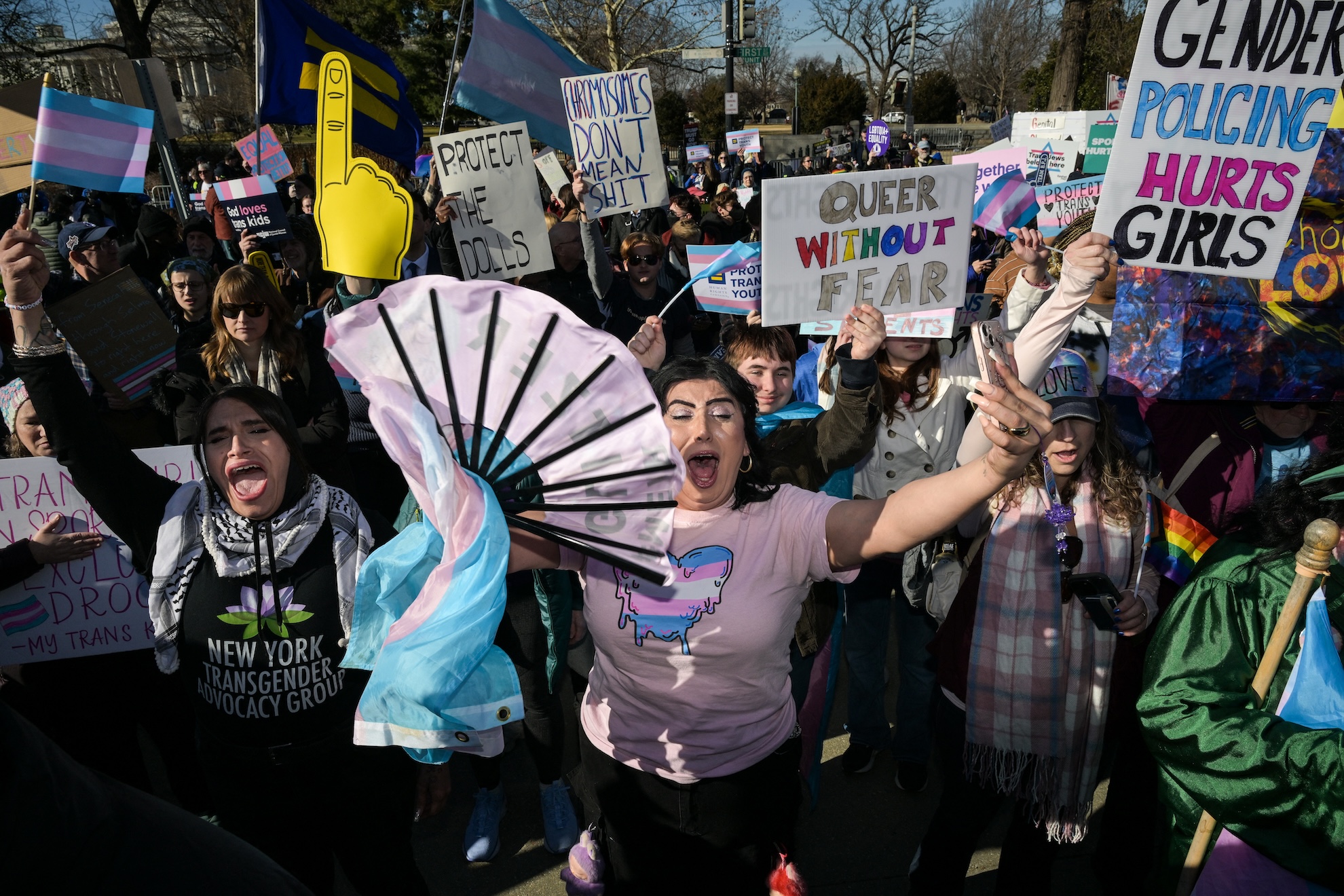
"caption": "LGBTQ+ rights advocates rally outside the U.S. Supreme Court as justices hear arguments in challenges to state bans on transgender athletes in women's sports on Jan. 13, 2026, in Washington, D.C.",
"credit": "Oliver Contreras/AFP via Getty Images",
"altTag": null,
"description": null,
"imgSizes": {
"thumbnail": {
"file": "https://cdn.kqed.org/wp-content/uploads/sites/10/2026/06/GettyImages-2255523853-160x107.jpg",
"width": 160,
"height": 107,
"mimeType": "image/jpeg"
},
"1536x1536": {
"file": "https://cdn.kqed.org/wp-content/uploads/sites/10/2026/06/GettyImages-2255523853-1536x1024.jpg",
"width": 1536,
"height": 1024,
"mimeType": "image/jpeg"
},
"post-thumbnail": {
"file": "https://cdn.kqed.org/wp-content/uploads/sites/10/2026/06/GettyImages-2255523853-672x372.jpg",
"width": 672,
"height": 372,
"mimeType": "image/jpeg"
},
"twentyfourteen-full-width": {
"file": "https://cdn.kqed.org/wp-content/uploads/sites/10/2026/06/GettyImages-2255523853-1038x576.jpg",
"width": 1038,
"height": 576,
"mimeType": "image/jpeg"
},
"npr-cds-wide": {
"file": "https://cdn.kqed.org/wp-content/uploads/sites/10/2026/06/GettyImages-2255523853-1200x675.jpg",
"width": 1200,
"height": 675,
"mimeType": "image/jpeg"
},
"npr-cds-square": {
"file": "https://cdn.kqed.org/wp-content/uploads/sites/10/2026/06/GettyImages-2255523853-600x600.jpg",
"width": 600,
"height": 600,
"mimeType": "image/jpeg"
},
"kqedFullSize": {
"file": "https://cdn.kqed.org/wp-content/uploads/sites/10/2026/06/GettyImages-2255523853.jpg",
"width": 1980,
"height": 1320
}
},
"isLoading": false,
"fetchFailed": false
},
"news_12089016": {
"type": "attachments",
"id": "news_12089016",
"meta": {
"index": "attachments_1716263798",
"site": "news",
"id": "12089016",
"found": true
},
"title": "Chicago Cubs v San Francisco Giants",
"publishDate": 1782495418,
"status": "inherit",
"parent": 12089008,
"modified": 1782495442,
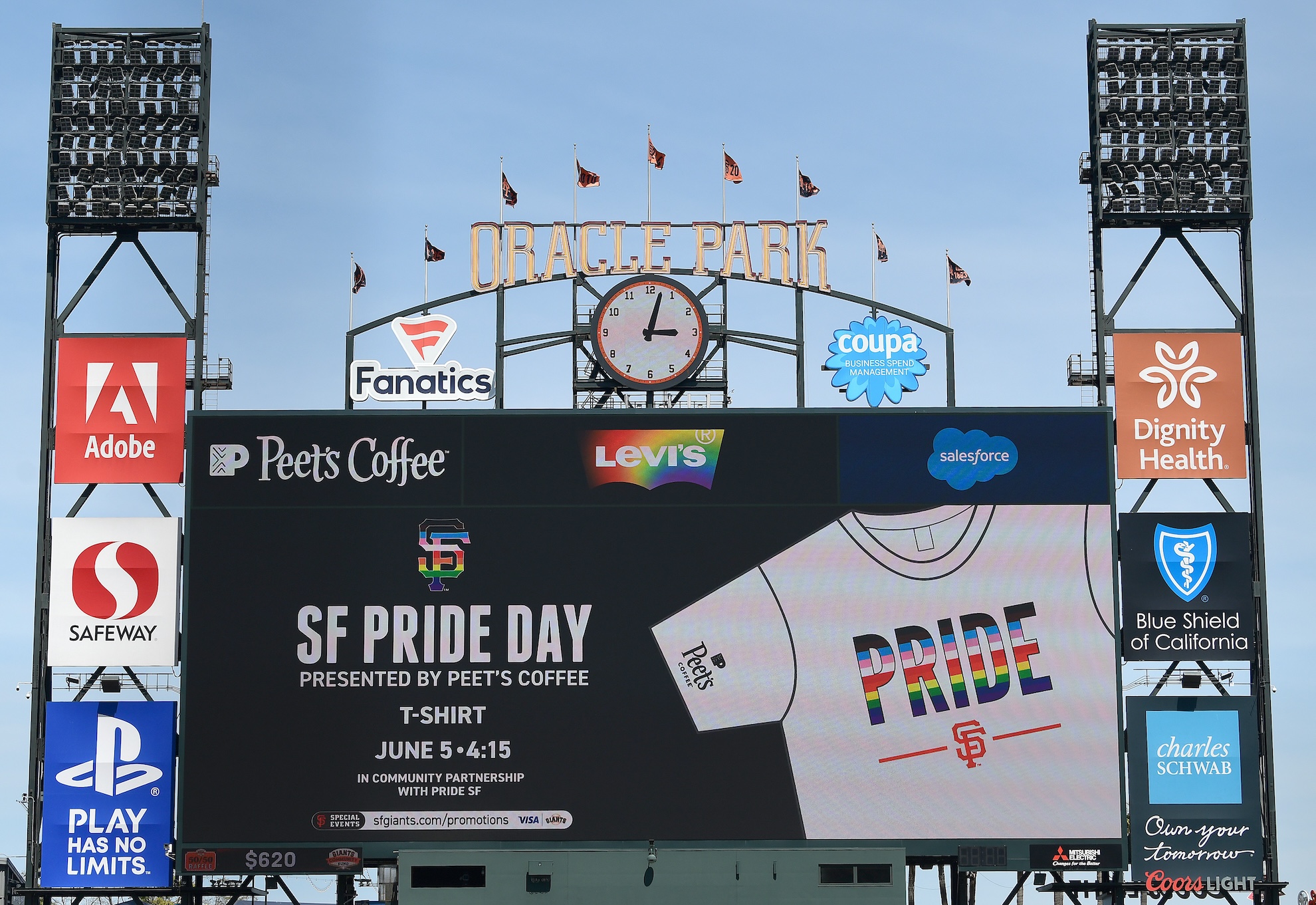
"caption": "A detailed view of the scoreboard inside Oracle Park promoting San Francisco Pride Day prior to the start of the game between the Chicago Cubs and San Francisco Giants at Oracle Park on June 5, 2021 in San Francisco, California. ",
"credit": "Thearon W. Henderson/Getty Images",
"altTag": null,
"description": null,
"imgSizes": {
"thumbnail": {
"file": "https://cdn.kqed.org/wp-content/uploads/sites/10/2026/06/GettyImages-1322007030-160x110.jpg",
"width": 160,
"height": 110,
"mimeType": "image/jpeg"
},
"1536x1536": {
"file": "https://cdn.kqed.org/wp-content/uploads/sites/10/2026/06/GettyImages-1322007030-1536x1056.jpg",
"width": 1536,
"height": 1056,
"mimeType": "image/jpeg"
},
"post-thumbnail": {
"file": "https://cdn.kqed.org/wp-content/uploads/sites/10/2026/06/GettyImages-1322007030-672x372.jpg",
"width": 672,
"height": 372,
"mimeType": "image/jpeg"
},
"twentyfourteen-full-width": {
"file": "https://cdn.kqed.org/wp-content/uploads/sites/10/2026/06/GettyImages-1322007030-1038x576.jpg",
"width": 1038,
"height": 576,
"mimeType": "image/jpeg"
},
"npr-cds-wide": {
"file": "https://cdn.kqed.org/wp-content/uploads/sites/10/2026/06/GettyImages-1322007030-1200x675.jpg",
"width": 1200,
"height": 675,
"mimeType": "image/jpeg"
},
"npr-cds-square": {
"file": "https://cdn.kqed.org/wp-content/uploads/sites/10/2026/06/GettyImages-1322007030-600x600.jpg",
"width": 600,
"height": 600,
"mimeType": "image/jpeg"
},
"kqedFullSize": {
"file": "https://cdn.kqed.org/wp-content/uploads/sites/10/2026/06/GettyImages-1322007030.jpg",
"width": 1980,
"height": 1361
}
},
"isLoading": false,
"fetchFailed": false
},
"news_12088643": {
"type": "attachments",
"id": "news_12088643",
"meta": {
"index": "attachments_1716263798",
"site": "news",
"id": "12088643",
"found": true
},
"title": "CAT_The Sims Part 2_img",
"publishDate": 1782265310,
"status": "inherit",
"parent": 12088640,
"modified": 1782265383,
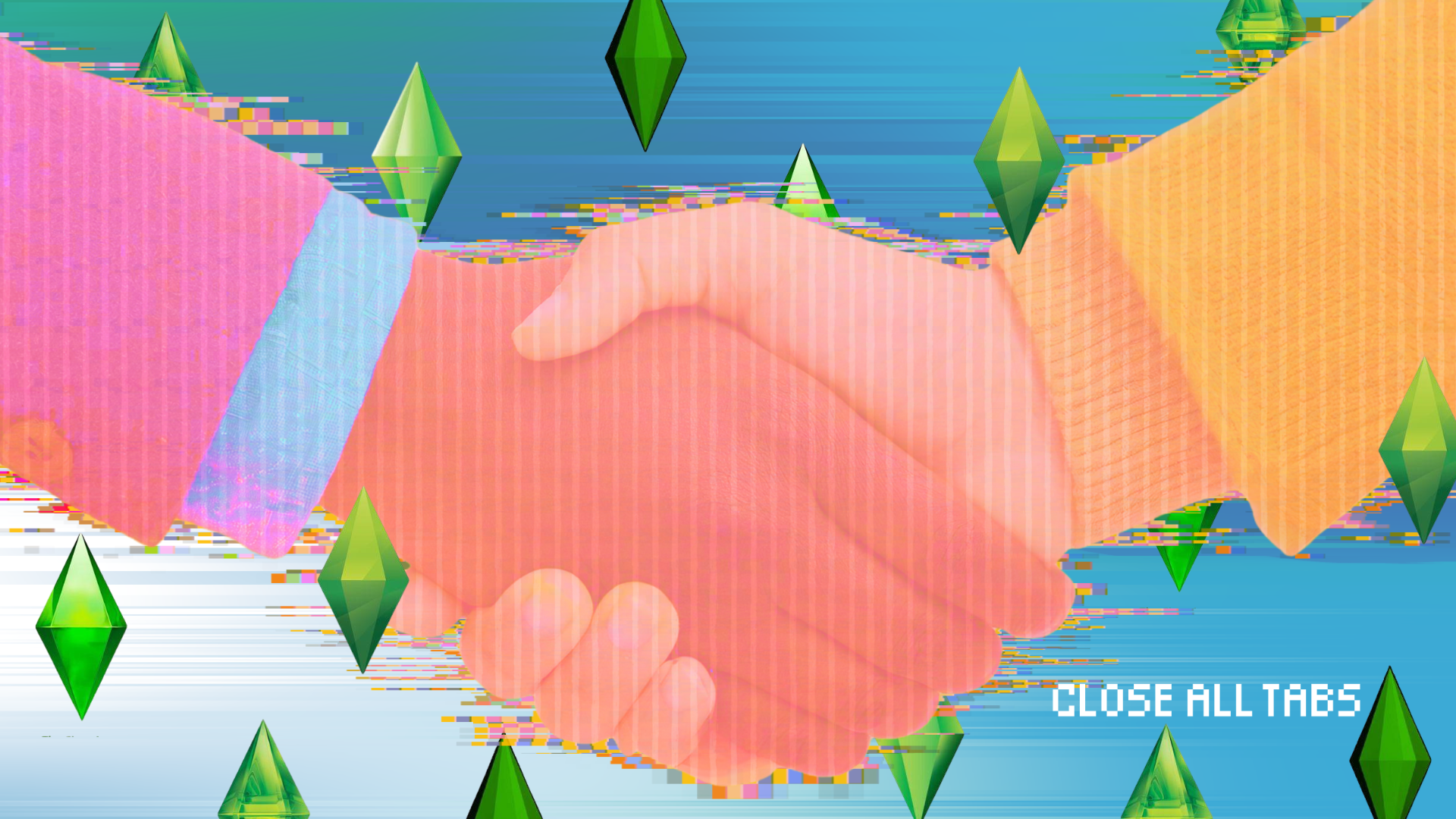
"caption": "A glitchy illustration of a handshake surrounded by “plumbobs,” the iconic green jewels that hover over the heads of characters in The Sims. In September 2025, Electronic Arts — the publisher behind The Sims — agreed to a historic $55 billion buyout.",
"credit": "Composite image by Morgan Sung / Image by Carol Yepes via Getty Images",
"altTag": "A glitchy illustration of a handshake. The two hands are a lighter and darker shade of pink. One arm has a yellow sleeve and the other has a pink and blue sleeve. The Sims green “plumbobs”, the iconic green jewels that hover over the heads of characters in The Sims, are up against a glitchy blue background. The text \"Close All Tabs\" appears in white text in the lower right corner.",
"description": null,
"imgSizes": {
"thumbnail": {
"file": "https://cdn.kqed.org/wp-content/uploads/sites/10/2026/06/CAT_The-Sims-Part-2_img-160x90.png",
"width": 160,
"height": 90,
"mimeType": "image/png"
},
"1536x1536": {
"file": "https://cdn.kqed.org/wp-content/uploads/sites/10/2026/06/CAT_The-Sims-Part-2_img-1536x864.png",
"width": 1536,
"height": 864,
"mimeType": "image/png"
},
"post-thumbnail": {
"file": "https://cdn.kqed.org/wp-content/uploads/sites/10/2026/06/CAT_The-Sims-Part-2_img-672x372.png",
"width": 672,
"height": 372,
"mimeType": "image/png"
},
"twentyfourteen-full-width": {
"file": "https://cdn.kqed.org/wp-content/uploads/sites/10/2026/06/CAT_The-Sims-Part-2_img-1038x576.png",
"width": 1038,
"height": 576,
"mimeType": "image/png"
},
"npr-cds-wide": {
"file": "https://cdn.kqed.org/wp-content/uploads/sites/10/2026/06/CAT_The-Sims-Part-2_img-1200x675.png",
"width": 1200,
"height": 675,
"mimeType": "image/png"
},
"npr-cds-square": {
"file": "https://cdn.kqed.org/wp-content/uploads/sites/10/2026/06/CAT_The-Sims-Part-2_img-600x600.png",
"width": 600,
"height": 600,
"mimeType": "image/png"
},
"kqedFullSize": {
"file": "https://cdn.kqed.org/wp-content/uploads/sites/10/2026/06/CAT_The-Sims-Part-2_img.png",
"width": 1920,
"height": 1080
}
},
"isLoading": false,
"fetchFailed": false
},
"news_12046507": {
"type": "attachments",
"id": "news_12046507",
"meta": {
"index": "attachments_1716263798",
"site": "news",
"id": "12046507",
"found": true
},
"title": "250629-SFPrideParade-30-BL",
"publishDate": 1751233937,
"status": "inherit",
"parent": 0,
"modified": 1781131428,
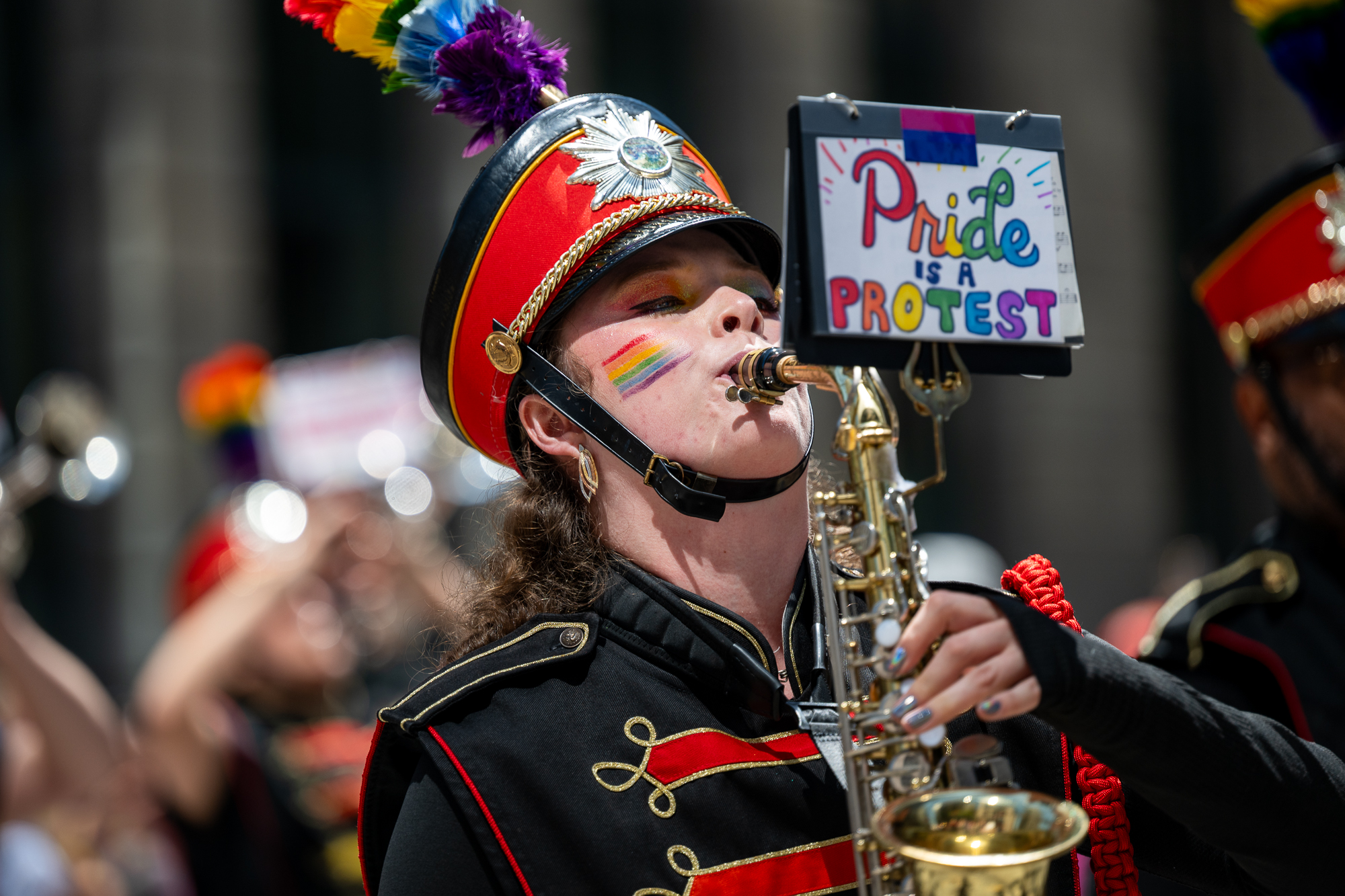
"caption": "A member of the San Francisco Pride Band, founded in 1978, performs in the San Francisco Pride Parade on June 29, 2025.",
"credit": "Beth LaBerge/KQED",
"altTag": "A person wearing a band outfit plays a saxophone with a sign that says Pride.",
"description": null,
"imgSizes": {
"thumbnail": {
"file": "https://cdn.kqed.org/wp-content/uploads/sites/10/2025/06/250629-SFPrideParade-30-BL-160x107.jpg",
"width": 160,
"height": 107,
"mimeType": "image/jpeg"
},
"1536x1536": {
"file": "https://cdn.kqed.org/wp-content/uploads/sites/10/2025/06/250629-SFPrideParade-30-BL-1536x1024.jpg",
"width": 1536,
"height": 1024,
"mimeType": "image/jpeg"
},
"post-thumbnail": {
"file": "https://cdn.kqed.org/wp-content/uploads/sites/10/2025/06/250629-SFPrideParade-30-BL-672x372.jpg",
"width": 672,
"height": 372,
"mimeType": "image/jpeg"
},
"twentyfourteen-full-width": {
"file": "https://cdn.kqed.org/wp-content/uploads/sites/10/2025/06/250629-SFPrideParade-30-BL-1038x576.jpg",
"width": 1038,
"height": 576,
"mimeType": "image/jpeg"
},
"kqedFullSize": {
"file": "https://cdn.kqed.org/wp-content/uploads/sites/10/2025/06/250629-SFPrideParade-30-BL.jpg",
"width": 2000,
"height": 1333
}
},
"isLoading": false,
"fetchFailed": false
},
"news_12088131": {
"type": "attachments",
"id": "news_12088131",
"meta": {
"index": "attachments_1716263798",
"site": "news",
"id": "12088131",
"found": true
},
"title": "Image_ND_Clapping_2+(1)",
"publishDate": 1781806244,
"status": "inherit",
"parent": 12088129,
"modified": 1781806324,
"caption": null,
"credit": "Courtesy of the MCC San Francisco Collection. San Francisco Public Library. ",
"altTag": null,
"description": "Worship and Praise at MCC San Francisco. Date unknown. ",
"imgSizes": {
"thumbnail": {
"file": "https://cdn.kqed.org/wp-content/uploads/sites/10/2026/06/Image_ND_Clapping_21-160x108.png",
"width": 160,
"height": 108,
"mimeType": "image/png"
},
"post-thumbnail": {
"file": "https://cdn.kqed.org/wp-content/uploads/sites/10/2026/06/Image_ND_Clapping_21-672x372.png",
"width": 672,
"height": 372,
"mimeType": "image/png"
},
"twentyfourteen-full-width": {
"file": "https://cdn.kqed.org/wp-content/uploads/sites/10/2026/06/Image_ND_Clapping_21-1000x576.png",
"width": 1000,
"height": 576,
"mimeType": "image/png"
},
"npr-cds-wide": {
"file": "https://cdn.kqed.org/wp-content/uploads/sites/10/2026/06/Image_ND_Clapping_21-1000x675.png",
"width": 1000,
"height": 675,
"mimeType": "image/png"
},
"npr-cds-square": {
"file": "https://cdn.kqed.org/wp-content/uploads/sites/10/2026/06/Image_ND_Clapping_21-600x600.png",
"width": 600,
"height": 600,
"mimeType": "image/png"
},
"kqedFullSize": {
"file": "https://cdn.kqed.org/wp-content/uploads/sites/10/2026/06/Image_ND_Clapping_21.png",
"width": 1000,
"height": 677
}
},
"isLoading": false,
"fetchFailed": false
},
"news_12087918": {
"type": "attachments",
"id": "news_12087918",
"meta": {
"index": "attachments_1716263798",
"site": "news",
"id": "12087918",
"found": true
},
"title": "Chicago Cubs v San Francisco Giants",
"publishDate": 1781714150,
"status": "inherit",
"parent": 12087912,
"modified": 1781714204,
"caption": "Landen Roupp, #65 of the San Francisco Giants, pitches against the Chicago Cubs in the top of the first inning of a major league baseball game at Oracle Park on June 12, 2026, in San Francisco, California. ",
"credit": "Thearon W. Henderson/Getty Images",
"altTag": null,
"description": null,
"imgSizes": {
"thumbnail": {
"file": "https://cdn.kqed.org/wp-content/uploads/sites/10/2026/06/SFGiantsLandenRouppGetty-160x108.jpg",
"width": 160,
"height": 108,
"mimeType": "image/jpeg"
},
"1536x1536": {
"file": "https://cdn.kqed.org/wp-content/uploads/sites/10/2026/06/SFGiantsLandenRouppGetty-1536x1037.jpg",
"width": 1536,
"height": 1037,
"mimeType": "image/jpeg"
},
"post-thumbnail": {
"file": "https://cdn.kqed.org/wp-content/uploads/sites/10/2026/06/SFGiantsLandenRouppGetty-672x372.jpg",
"width": 672,
"height": 372,
"mimeType": "image/jpeg"
},
"twentyfourteen-full-width": {
"file": "https://cdn.kqed.org/wp-content/uploads/sites/10/2026/06/SFGiantsLandenRouppGetty-1038x576.jpg",
"width": 1038,
"height": 576,
"mimeType": "image/jpeg"
},
"npr-cds-wide": {
"file": "https://cdn.kqed.org/wp-content/uploads/sites/10/2026/06/SFGiantsLandenRouppGetty-1200x675.jpg",
"width": 1200,
"height": 675,
"mimeType": "image/jpeg"
},
"npr-cds-square": {
"file": "https://cdn.kqed.org/wp-content/uploads/sites/10/2026/06/SFGiantsLandenRouppGetty-600x600.jpg",
"width": 600,
"height": 600,
"mimeType": "image/jpeg"
},
"kqedFullSize": {
"file": "https://cdn.kqed.org/wp-content/uploads/sites/10/2026/06/SFGiantsLandenRouppGetty.jpg",
"width": 2000,
"height": 1350
}
},
"isLoading": false,
"fetchFailed": false
},
"news_12087899": {
"type": "attachments",
"id": "news_12087899",
"meta": {
"index": "attachments_1716263798",
"site": "news",
"id": "12087899",
"found": true
},
"title": "CAT_The Sims Part 1.img",
"publishDate": 1781670296,
"status": "inherit",
"parent": 12087897,
"modified": 1781670353,
"caption": "A composite image of The Sims avatars on top of a rainbow background.",
"credit": "Composite image by Morgan Sung / Screenshots via Youtube",
"altTag": "A composite image of The Sims avatars on top of a rainbow background. The text \"Close All Tabs\" in white text appears in the lower left corner with The Sims green “plumbob” on top of the text.",
"description": null,
"imgSizes": {
"thumbnail": {
"file": "https://cdn.kqed.org/wp-content/uploads/sites/10/2026/06/CAT_The-Sims-Part-1.img_-160x90.png",
"width": 160,
"height": 90,
"mimeType": "image/png"
},
"1536x1536": {
"file": "https://cdn.kqed.org/wp-content/uploads/sites/10/2026/06/CAT_The-Sims-Part-1.img_-1536x864.png",
"width": 1536,
"height": 864,
"mimeType": "image/png"
},
"post-thumbnail": {
"file": "https://cdn.kqed.org/wp-content/uploads/sites/10/2026/06/CAT_The-Sims-Part-1.img_-672x372.png",
"width": 672,
"height": 372,
"mimeType": "image/png"
},
"twentyfourteen-full-width": {
"file": "https://cdn.kqed.org/wp-content/uploads/sites/10/2026/06/CAT_The-Sims-Part-1.img_-1038x576.png",
"width": 1038,
"height": 576,
"mimeType": "image/png"
},
"npr-cds-wide": {
"file": "https://cdn.kqed.org/wp-content/uploads/sites/10/2026/06/CAT_The-Sims-Part-1.img_-1200x675.png",
"width": 1200,
"height": 675,
"mimeType": "image/png"
},
"npr-cds-square": {
"file": "https://cdn.kqed.org/wp-content/uploads/sites/10/2026/06/CAT_The-Sims-Part-1.img_-600x600.png",
"width": 600,
"height": 600,
"mimeType": "image/png"
},
"kqedFullSize": {
"file": "https://cdn.kqed.org/wp-content/uploads/sites/10/2026/06/CAT_The-Sims-Part-1.img_.png",
"width": 1920,
"height": 1080
}
},
"isLoading": false,
"fetchFailed": false
},
"news_12087488": {
"type": "attachments",
"id": "news_12087488",
"meta": {
"index": "attachments_1716263798",
"site": "news",
"id": "12087488",
"found": true
},
"title": "Trailhead Gays LEDE",
"publishDate": 1781306954,
"status": "inherit",
"parent": 12087471,
"modified": 1781307496,
"caption": "Members of Trailhead Gays gather for their monthly outdoors-oriented adventures. \n",
"credit": "Courtesy of Gio Orantes",
"altTag": null,
"description": null,
"imgSizes": {
"thumbnail": {
"file": "https://cdn.kqed.org/wp-content/uploads/sites/10/2026/06/Trailhead-Gays-LEDE-160x120.jpg",
"width": 160,
"height": 120,
"mimeType": "image/jpeg"
},
"1536x1536": {
"file": "https://cdn.kqed.org/wp-content/uploads/sites/10/2026/06/Trailhead-Gays-LEDE-1536x1152.jpg",
"width": 1536,
"height": 1152,
"mimeType": "image/jpeg"
},
"post-thumbnail": {
"file": "https://cdn.kqed.org/wp-content/uploads/sites/10/2026/06/Trailhead-Gays-LEDE-672x372.jpg",
"width": 672,
"height": 372,
"mimeType": "image/jpeg"
},
"twentyfourteen-full-width": {
"file": "https://cdn.kqed.org/wp-content/uploads/sites/10/2026/06/Trailhead-Gays-LEDE-1038x576.jpg",
"width": 1038,
"height": 576,
"mimeType": "image/jpeg"
},
"npr-cds-wide": {
"file": "https://cdn.kqed.org/wp-content/uploads/sites/10/2026/06/Trailhead-Gays-LEDE-1200x675.jpg",
"width": 1200,
"height": 675,
"mimeType": "image/jpeg"
},
"npr-cds-square": {
"file": "https://cdn.kqed.org/wp-content/uploads/sites/10/2026/06/Trailhead-Gays-LEDE-600x600.jpg",
"width": 600,
"height": 600,
"mimeType": "image/jpeg"
},
"kqedFullSize": {
"file": "https://cdn.kqed.org/wp-content/uploads/sites/10/2026/06/Trailhead-Gays-LEDE.jpg",
"width": 2000,
"height": 1500
}
},
"isLoading": false,
"fetchFailed": false
},
"news_12063820": {
"type": "attachments",
"id": "news_12063820",
"meta": {
"index": "attachments_1716263798",
"site": "news",
"id": "12063820",
"found": true
},
"title": "20251106_TRANSELDERSYOUTH_GC-22-KQED",
"publishDate": 1762973943,
"status": "inherit",
"parent": 12063889,
"modified": 1763414820,
"caption": "Quetzali, left, places their hand on Donna Personna’s hand as Donna speaks about her life, at her home in San Francisco on Nov. 6, 2025.",
"credit": "Gina Castro/KQED",
"altTag": null,
"description": null,
"imgSizes": {
"thumbnail": {
"file": "https://cdn.kqed.org/wp-content/uploads/sites/10/2025/11/20251106_TRANSELDERSYOUTH_GC-22-KQED-160x102.jpg",
"width": 160,
"height": 102,
"mimeType": "image/jpeg"
},
"1536x1536": {
"file": "https://cdn.kqed.org/wp-content/uploads/sites/10/2025/11/20251106_TRANSELDERSYOUTH_GC-22-KQED-1536x975.jpg",
"width": 1536,
"height": 975,
"mimeType": "image/jpeg"
},
"post-thumbnail": {
"file": "https://cdn.kqed.org/wp-content/uploads/sites/10/2025/11/20251106_TRANSELDERSYOUTH_GC-22-KQED-672x372.jpg",
"width": 672,
"height": 372,
"mimeType": "image/jpeg"
},
"twentyfourteen-full-width": {
"file": "https://cdn.kqed.org/wp-content/uploads/sites/10/2025/11/20251106_TRANSELDERSYOUTH_GC-22-KQED-1038x576.jpg",
"width": 1038,
"height": 576,
"mimeType": "image/jpeg"
},
"npr-cds-wide": {
"file": "https://cdn.kqed.org/wp-content/uploads/sites/10/2025/11/20251106_TRANSELDERSYOUTH_GC-22-KQED-1200x675.jpg",
"width": 1200,
"height": 675,
"mimeType": "image/jpeg"
},
"kqedFullSize": {
"file": "https://cdn.kqed.org/wp-content/uploads/sites/10/2025/11/20251106_TRANSELDERSYOUTH_GC-22-KQED.jpg",
"width": 2000,
"height": 1270
}
},
"isLoading": false,
"fetchFailed": false
},
"news_12086196": {
"type": "attachments",
"id": "news_12086196",
"meta": {
"index": "attachments_1716263798",
"site": "news",
"id": "12086196",
"found": true
},
"title": "Parental Rights Rally",
"publishDate": 1780527262,
"status": "inherit",
"parent": 12086044,
"modified": 1780528161,
"caption": "Sonja Shaw, Chino Valley Unified School District Board President, speaks at the California Policy Center and PERK (Protection of the Educational Rights of Kids) event, \"A Line in the Sand A Rally for Parental Rights,\" at Rancho Madera Community Park in Simi Valley, California, on Sept. 26, 2023. ",
"credit": "Myung J. Chun/Los Angeles Times via Getty Images",
"altTag": null,
"description": null,
"imgSizes": {
"thumbnail": {
"file": "https://cdn.kqed.org/wp-content/uploads/sites/10/2026/06/Sonja-Shaw-Getty-1-160x110.jpg",
"width": 160,
"height": 110,
"mimeType": "image/jpeg"
},
"1536x1536": {
"file": "https://cdn.kqed.org/wp-content/uploads/sites/10/2026/06/Sonja-Shaw-Getty-1-1536x1054.jpg",
"width": 1536,
"height": 1054,
"mimeType": "image/jpeg"
},
"post-thumbnail": {
"file": "https://cdn.kqed.org/wp-content/uploads/sites/10/2026/06/Sonja-Shaw-Getty-1-672x372.jpg",
"width": 672,
"height": 372,
"mimeType": "image/jpeg"
},
"twentyfourteen-full-width": {
"file": "https://cdn.kqed.org/wp-content/uploads/sites/10/2026/06/Sonja-Shaw-Getty-1-1038x576.jpg",
"width": 1038,
"height": 576,
"mimeType": "image/jpeg"
},
"npr-cds-wide": {
"file": "https://cdn.kqed.org/wp-content/uploads/sites/10/2026/06/Sonja-Shaw-Getty-1-1200x675.jpg",
"width": 1200,
"height": 675,
"mimeType": "image/jpeg"
},
"npr-cds-square": {
"file": "https://cdn.kqed.org/wp-content/uploads/sites/10/2026/06/Sonja-Shaw-Getty-1-600x600.jpg",
"width": 600,
"height": 600,
"mimeType": "image/jpeg"
},
"kqedFullSize": {
"file": "https://cdn.kqed.org/wp-content/uploads/sites/10/2026/06/Sonja-Shaw-Getty-1.jpg",
"width": 2000,
"height": 1372
}
},
"isLoading": false,
"fetchFailed": false
},
"news_12082936": {
"type": "attachments",
"id": "news_12082936",
"meta": {
"index": "attachments_1716263798",
"site": "news",
"id": "12082936",
"found": true
},
"title": "--",
"publishDate": 1778267804,
"status": "inherit",
"parent": 0,
"modified": 1778267987,
"caption": "(From left) David, Gael Barba-Solis, Haiden Dizon, and Mae walk around a park they like to visit in Hollister, CA on January 20, 2026. Gael, who identifies as a transgender man, says he has found support in his long-time friends and considers them to be like family.",
"credit": null,
"altTag": null,
"description": null,
"imgSizes": {
"thumbnail": {
"file": "https://cdn.kqed.org/wp-content/uploads/sites/10/2026/05/BREA-YOUTH-MENTAL-HEALTH01-KQED-160x107.jpg",
"width": 160,
"height": 107,
"mimeType": "image/jpeg"
},
"1536x1536": {
"file": "https://cdn.kqed.org/wp-content/uploads/sites/10/2026/05/BREA-YOUTH-MENTAL-HEALTH01-KQED-1536x1024.jpg",
"width": 1536,
"height": 1024,
"mimeType": "image/jpeg"
},
"post-thumbnail": {
"file": "https://cdn.kqed.org/wp-content/uploads/sites/10/2026/05/BREA-YOUTH-MENTAL-HEALTH01-KQED-672x372.jpg",
"width": 672,
"height": 372,
"mimeType": "image/jpeg"
},
"twentyfourteen-full-width": {
"file": "https://cdn.kqed.org/wp-content/uploads/sites/10/2026/05/BREA-YOUTH-MENTAL-HEALTH01-KQED-1038x576.jpg",
"width": 1038,
"height": 576,
"mimeType": "image/jpeg"
},
"npr-cds-wide": {
"file": "https://cdn.kqed.org/wp-content/uploads/sites/10/2026/05/BREA-YOUTH-MENTAL-HEALTH01-KQED-1200x675.jpg",
"width": 1200,
"height": 675,
"mimeType": "image/jpeg"
},
"npr-cds-square": {
"file": "https://cdn.kqed.org/wp-content/uploads/sites/10/2026/05/BREA-YOUTH-MENTAL-HEALTH01-KQED-600x600.jpg",
"width": 600,
"height": 600,
"mimeType": "image/jpeg"
},
"kqedFullSize": {
"file": "https://cdn.kqed.org/wp-content/uploads/sites/10/2026/05/BREA-YOUTH-MENTAL-HEALTH01-KQED.jpg",
"width": 2000,
"height": 1333
}
},
"isLoading": false,
"fetchFailed": false
},
"news_12081747": {
"type": "attachments",
"id": "news_12081747",
"meta": {
"index": "attachments_1716263798",
"site": "news",
"id": "12081747",
"found": true
},
"title": "260429-CIF Trans Athletes-01-KQED",
"publishDate": 1777480821,
"status": "inherit",
"parent": 12088215,
"modified": 1782847753,
"caption": "Lily, left, and her father, Trevor Norcross, attend a meeting of the California Interscholastic Federation's executive committee in Oakland on April 24, 2026. ",
"credit": "Desmond Meagley/KQED",
"altTag": null,
"description": null,
"imgSizes": {
"thumbnail": {
"file": "https://cdn.kqed.org/wp-content/uploads/sites/10/2026/04/260429-CIF-Trans-Athletes-01-KQED-160x120.jpg",
"width": 160,
"height": 120,
"mimeType": "image/jpeg"
},
"1536x1536": {
"file": "https://cdn.kqed.org/wp-content/uploads/sites/10/2026/04/260429-CIF-Trans-Athletes-01-KQED-1536x1157.jpg",
"width": 1536,
"height": 1157,
"mimeType": "image/jpeg"
},
"post-thumbnail": {
"file": "https://cdn.kqed.org/wp-content/uploads/sites/10/2026/04/260429-CIF-Trans-Athletes-01-KQED-672x372.jpg",
"width": 672,
"height": 372,
"mimeType": "image/jpeg"
},
"twentyfourteen-full-width": {
"file": "https://cdn.kqed.org/wp-content/uploads/sites/10/2026/04/260429-CIF-Trans-Athletes-01-KQED-1038x576.jpg",
"width": 1038,
"height": 576,
"mimeType": "image/jpeg"
},
"npr-cds-wide": {
"file": "https://cdn.kqed.org/wp-content/uploads/sites/10/2026/04/260429-CIF-Trans-Athletes-01-KQED-1200x675.jpg",
"width": 1200,
"height": 675,
"mimeType": "image/jpeg"
},
"npr-cds-square": {
"file": "https://cdn.kqed.org/wp-content/uploads/sites/10/2026/04/260429-CIF-Trans-Athletes-01-KQED-600x600.jpg",
"width": 600,
"height": 600,
"mimeType": "image/jpeg"
},
"kqedFullSize": {
"file": "https://cdn.kqed.org/wp-content/uploads/sites/10/2026/04/260429-CIF-Trans-Athletes-01-KQED.jpg",
"width": 2000,
"height": 1506
}
},
"isLoading": false,
"fetchFailed": false
}
},
"audioPlayerReducer": {
"postId": "stream_live",
"isPaused": true,
"isPlaying": false,
"pfsActive": false,
"pledgeModalIsOpen": true,
"playerDrawerIsOpen": false,
"liveAudioPlayStartedAt": 0,
"liveAudioPlayContext": ""
},
"authorsReducer": {
"byline_news_12082903": {
"type": "authors",
"id": "byline_news_12082903",
"meta": {
"override": true
},
"slug": "byline_news_12082903",
"name": "Jessica Parga, BenitoLink/Catchlight",
"isLoading": false
},
"carlysevern": {
"type": "authors",
"id": "3243",
"meta": {
"index": "authors_1716337520",
"id": "3243",
"found": true
},
"name": "Carly Severn",
"firstName": "Carly",
"lastName": "Severn",
"slug": "carlysevern",
"email": "csevern@kqed.org",
"display_author_email": false,
"staff_mastheads": [
"news"
],
"title": "Senior Editor, Audience News ",
"bio": "Carly is KQED's Senior Editor of Audience News on the Digital News team, and has reported for the California Report Magazine, Bay Curious and KQED Arts. She's formerly the host of \u003ca href=\"http://ww2.kqed.org/pop/category/the-cooler/\" rel=\"noopener noreferrer\">The Cooler\u003c/a> podcast.",
"avatar": "https://secure.gravatar.com/avatar/54037bf5c128fe678f0ef26cec97a93f2e7f220a22d7285703328f12c42c1b1d?s=600&d=blank&r=g",
"twitter": "teacupinthebay",
"bluesky": null,
"facebook": null,
"instagram": null,
"linkedin": null,
"sites": [
{
"site": "",
"roles": [
"editor"
]
},
{
"site": "arts",
"roles": [
"editor"
]
},
{
"site": "news",
"roles": [
"administrator"
]
},
{
"site": "pop",
"roles": [
"editor"
]
},
{
"site": "futureofyou",
"roles": [
"editor"
]
},
{
"site": "about",
"roles": [
"administrator"
]
},
{
"site": "mindshift",
"roles": [
"editor"
]
},
{
"site": "bayareabites",
"roles": [
"editor"
]
},
{
"site": "stateofhealth",
"roles": [
"editor"
]
},
{
"site": "science",
"roles": [
"editor"
]
},
{
"site": "food",
"roles": [
"contributor"
]
},
{
"site": "forum",
"roles": [
"editor"
]
},
{
"site": "perspectives",
"roles": [
"administrator"
]
},
{
"site": "liveblog",
"roles": [
"editor"
]
}
],
"headData": {
"title": "Carly Severn | KQED",
"description": "Senior Editor, Audience News ",
"ogImgSrc": "https://secure.gravatar.com/avatar/54037bf5c128fe678f0ef26cec97a93f2e7f220a22d7285703328f12c42c1b1d?s=600&d=blank&r=g",
"twImgSrc": "https://secure.gravatar.com/avatar/54037bf5c128fe678f0ef26cec97a93f2e7f220a22d7285703328f12c42c1b1d?s=600&d=blank&r=g"
},
"isLoading": false,
"link": "/author/carlysevern"
},
"ecruzguevarra": {
"type": "authors",
"id": "8654",
"meta": {
"index": "authors_1716337520",
"id": "8654",
"found": true
},
"name": "Ericka Cruz Guevarra",
"firstName": "Ericka",
"lastName": "Cruz Guevarra",
"slug": "ecruzguevarra",
"email": "ecruzguevarra@kqed.org",
"display_author_email": true,
"staff_mastheads": [
"news"
],
"title": "Producer, The Bay Podcast",
"bio": "Ericka Cruz Guevarra is host of \u003ca href=\"https://www.kqed.org/podcasts/thebay\">\u003cem>The Bay\u003c/em>\u003c/a> podcast at KQED. Before host, she was the show’s producer. Her work in that capacity includes a three-part reported series on policing in Vallejo, which won a 2020 excellence in journalism award from the Society of Professional Journalists. Ericka has worked as a breaking news reporter at Oregon Public Broadcasting, helped produce the Code Switch podcast, and was KQED’s inaugural Raul Ramirez Diversity Fund intern. She’s also an alumna of NPR’s Next Generation Radio program. Send her an email if you have strong feelings about whether Fairfield and Suisun City are the Bay. Ericka is represented by SAG-AFTRA.",
"avatar": "https://secure.gravatar.com/avatar/accefc1de4bafc7e234b69bcb9b6f6536c130fd84709bc3069ef11a78787e1bb?s=600&d=blank&r=g",
"twitter": "NotoriousECG",
"bluesky": null,
"facebook": null,
"instagram": null,
"linkedin": null,
"sites": [
{
"site": "arts",
"roles": [
"subscriber"
]
},
{
"site": "news",
"roles": [
"editor",
"manage_categories"
]
},
{
"site": "futureofyou",
"roles": [
"subscriber"
]
},
{
"site": "stateofhealth",
"roles": [
"subscriber"
]
},
{
"site": "science",
"roles": [
"editor"
]
},
{
"site": "forum",
"roles": [
"subscriber"
]
}
],
"headData": {
"title": "Ericka Cruz Guevarra | KQED",
"description": "Producer, The Bay Podcast",
"ogImgSrc": "https://secure.gravatar.com/avatar/accefc1de4bafc7e234b69bcb9b6f6536c130fd84709bc3069ef11a78787e1bb?s=600&d=blank&r=g",
"twImgSrc": "https://secure.gravatar.com/avatar/accefc1de4bafc7e234b69bcb9b6f6536c130fd84709bc3069ef11a78787e1bb?s=600&d=blank&r=g"
},
"isLoading": false,
"link": "/author/ecruzguevarra"
},
"ccabreralomeli": {
"type": "authors",
"id": "11708",
"meta": {
"index": "authors_1716337520",
"id": "11708",
"found": true
},
"name": "Carlos Cabrera-Lomelí",
"firstName": "Carlos",
"lastName": "Cabrera-Lomelí",
"slug": "ccabreralomeli",
"email": "ccabreralomeli@KQED.org",
"display_author_email": true,
"staff_mastheads": [
"news"
],
"title": "Community Reporter",
"bio": "Carlos Cabrera-Lomelí is a community reporter with KQED's digital engagement team. He also reports and co-produces for KQED's bilingual news hub KQED en Español. He grew up in San Francisco's Mission District and has previously worked with Univision, 48 Hills and REFORMA in Mexico City.",
"avatar": "https://secure.gravatar.com/avatar/c309be9665e484f887b818c89e273ecc673004f426f36b24d00a4d813a2e0518?s=600&d=blank&r=g",
"twitter": "@LomeliCabrera",
"bluesky": null,
"facebook": null,
"instagram": null,
"linkedin": null,
"sites": [
{
"site": "arts",
"roles": [
"editor"
]
},
{
"site": "news",
"roles": [
"editor"
]
},
{
"site": "about",
"roles": [
"editor"
]
},
{
"site": "science",
"roles": [
"editor"
]
},
{
"site": "perspectives",
"roles": [
"editor"
]
},
{
"site": "elections",
"roles": [
"editor"
]
},
{
"site": "liveblog",
"roles": [
"contributor"
]
}
],
"headData": {
"title": "Carlos Cabrera-Lomelí | KQED",
"description": "Community Reporter",
"ogImgSrc": "https://secure.gravatar.com/avatar/c309be9665e484f887b818c89e273ecc673004f426f36b24d00a4d813a2e0518?s=600&d=blank&r=g",
"twImgSrc": "https://secure.gravatar.com/avatar/c309be9665e484f887b818c89e273ecc673004f426f36b24d00a4d813a2e0518?s=600&d=blank&r=g"
},
"isLoading": false,
"link": "/author/ccabreralomeli"
},
"chambrick": {
"type": "authors",
"id": "11832",
"meta": {
"index": "authors_1716337520",
"id": "11832",
"found": true
},
"name": "Chris Hambrick",
"firstName": "Chris",
"lastName": "Hambrick",
"slug": "chambrick",
"email": "chambrick@kqed.org",
"display_author_email": false,
"staff_mastheads": [],
"title": "KQED Contributor",
"bio": null,
"avatar": "https://secure.gravatar.com/avatar/23cb83888bc440645af5d36d0d1909e8ecb6cef21f2fdb96abf9a55495bb19d8?s=600&d=blank&r=g",
"twitter": null,
"bluesky": null,
"facebook": null,
"instagram": null,
"linkedin": null,
"sites": [
{
"site": "",
"roles": [
"editor"
]
},
{
"site": "arts",
"roles": [
"editor"
]
},
{
"site": "news",
"roles": [
"editor"
]
},
{
"site": "podcasts",
"roles": [
"editor"
]
}
],
"headData": {
"title": "Chris Hambrick | KQED",
"description": "KQED Contributor",
"ogImgSrc": "https://secure.gravatar.com/avatar/23cb83888bc440645af5d36d0d1909e8ecb6cef21f2fdb96abf9a55495bb19d8?s=600&d=blank&r=g",
"twImgSrc": "https://secure.gravatar.com/avatar/23cb83888bc440645af5d36d0d1909e8ecb6cef21f2fdb96abf9a55495bb19d8?s=600&d=blank&r=g"
},
"isLoading": false,
"link": "/author/chambrick"
},
"nkhan": {
"type": "authors",
"id": "11867",
"meta": {
"index": "authors_1716337520",
"id": "11867",
"found": true
},
"name": "Nisa Khan",
"firstName": "Nisa",
"lastName": "Khan",
"slug": "nkhan",
"email": "nkhan@kqed.org",
"display_author_email": false,
"staff_mastheads": [],
"title": "KQED Contributor",
"bio": "Nisa Khan is a reporter for KQED's Audience News Desk. She was formerly a data reporter at Michigan Radio. She earned a Bachelor of Science in Information from the University of Michigan and a Master of Arts in Communication from Stanford University.",
"avatar": "https://secure.gravatar.com/avatar/8720459eef081ff64582b3506b124d58523e80e120704a0cbd9892533c914991?s=600&d=blank&r=g",
"twitter": "mnisakhan",
"bluesky": null,
"facebook": null,
"instagram": null,
"linkedin": null,
"sites": [
{
"site": "arts",
"roles": [
"editor"
]
},
{
"site": "news",
"roles": [
"editor"
]
},
{
"site": "science",
"roles": [
"editor",
"author"
]
},
{
"site": "forum",
"roles": [
"editor"
]
},
{
"site": "liveblog",
"roles": [
"contributor"
]
}
],
"headData": {
"title": "Nisa Khan | KQED",
"description": "KQED Contributor",
"ogImgSrc": "https://secure.gravatar.com/avatar/8720459eef081ff64582b3506b124d58523e80e120704a0cbd9892533c914991?s=600&d=blank&r=g",
"twImgSrc": "https://secure.gravatar.com/avatar/8720459eef081ff64582b3506b124d58523e80e120704a0cbd9892533c914991?s=600&d=blank&r=g"
},
"isLoading": false,
"link": "/author/nkhan"
},
"cegusa": {
"type": "authors",
"id": "11869",
"meta": {
"index": "authors_1716337520",
"id": "11869",
"found": true
},
"name": "Chris Egusa",
"firstName": "Chris",
"lastName": "Egusa",
"slug": "cegusa",
"email": "cegusa@kqed.org",
"display_author_email": false,
"staff_mastheads": [],
"title": "KQED Contributor",
"bio": null,
"avatar": "https://secure.gravatar.com/avatar/3562ed52747313a4c94017da88ea89f9e85cd901f63ebc056a7d5e0adf4a03da?s=600&d=blank&r=g",
"twitter": null,
"bluesky": null,
"facebook": null,
"instagram": null,
"linkedin": null,
"sites": [
{
"site": "arts",
"roles": [
"editor"
]
},
{
"site": "news",
"roles": [
"editor"
]
}
],
"headData": {
"title": "Chris Egusa | KQED",
"description": "KQED Contributor",
"ogImgSrc": "https://secure.gravatar.com/avatar/3562ed52747313a4c94017da88ea89f9e85cd901f63ebc056a7d5e0adf4a03da?s=600&d=blank&r=g",
"twImgSrc": "https://secure.gravatar.com/avatar/3562ed52747313a4c94017da88ea89f9e85cd901f63ebc056a7d5e0adf4a03da?s=600&d=blank&r=g"
},
"isLoading": false,
"link": "/author/cegusa"
},
"kdebenedetti": {
"type": "authors",
"id": "11913",
"meta": {
"index": "authors_1716337520",
"id": "11913",
"found": true
},
"name": "Katie DeBenedetti",
"firstName": "Katie",
"lastName": "DeBenedetti",
"slug": "kdebenedetti",
"email": "kdebenedetti@kqed.org",
"display_author_email": false,
"staff_mastheads": [
"news",
"science"
],
"title": "KQED Contributor",
"bio": "Katie DeBenedetti is a digital reporter covering daily news for the Express Desk. Prior to joining KQED as a culture reporting intern in January 2024, she covered education and city government for the Napa Valley Register.",
"avatar": "https://secure.gravatar.com/avatar/6e31073cb8f7e4214ab03f42771d0f45?s=600&d=blank&r=g",
"twitter": null,
"facebook": null,
"instagram": null,
"linkedin": null,
"sites": [
{
"site": "news",
"roles": [
"author"
]
},
{
"site": "science",
"roles": [
"author"
]
},
{
"site": "liveblog",
"roles": [
"author"
]
}
],
"headData": {
"title": "Katie DeBenedetti | KQED",
"description": "KQED Contributor",
"ogImgSrc": "https://secure.gravatar.com/avatar/6e31073cb8f7e4214ab03f42771d0f45?s=600&d=blank&r=g",
"twImgSrc": "https://secure.gravatar.com/avatar/6e31073cb8f7e4214ab03f42771d0f45?s=600&d=blank&r=g"
},
"isLoading": false,
"link": "/author/kdebenedetti"
},
"mcueva": {
"type": "authors",
"id": "11943",
"meta": {
"index": "authors_1716337520",
"id": "11943",
"found": true
},
"name": "Maya Cueva",
"firstName": "Maya",
"lastName": "Cueva",
"slug": "mcueva",
"email": "mcueva@kqed.org",
"display_author_email": false,
"staff_mastheads": [],
"title": "KQED Contributor",
"bio": null,
"avatar": "https://secure.gravatar.com/avatar/238c7aba67c4b6b7b891965ba8cc9e9a4928b5dbdeaf4bde6a81c13e87f49b49?s=600&d=blank&r=g",
"twitter": null,
"bluesky": null,
"facebook": null,
"instagram": null,
"linkedin": null,
"sites": [
{
"site": "news",
"roles": [
"editor"
]
}
],
"headData": {
"title": "Maya Cueva | KQED",
"description": "KQED Contributor",
"ogImgSrc": "https://secure.gravatar.com/avatar/238c7aba67c4b6b7b891965ba8cc9e9a4928b5dbdeaf4bde6a81c13e87f49b49?s=600&d=blank&r=g",
"twImgSrc": "https://secure.gravatar.com/avatar/238c7aba67c4b6b7b891965ba8cc9e9a4928b5dbdeaf4bde6a81c13e87f49b49?s=600&d=blank&r=g"
},
"isLoading": false,
"link": "/author/mcueva"
},
"msung": {
"type": "authors",
"id": "11944",
"meta": {
"index": "authors_1716337520",
"id": "11944",
"found": true
},
"name": "Morgan Sung",
"firstName": "Morgan",
"lastName": "Sung",
"slug": "msung",
"email": "msung@kqed.org",
"display_author_email": false,
"staff_mastheads": [],
"title": "Close All Tabs Host",
"bio": null,
"avatar": "https://secure.gravatar.com/avatar/34033b8d232ee6c987ca6f0a1a28f0e5?s=600&d=blank&r=g",
"twitter": null,
"facebook": null,
"instagram": null,
"linkedin": null,
"sites": [
{
"site": "news",
"roles": [
"editor"
]
}
],
"headData": {
"title": "Morgan Sung | KQED",
"description": "Close All Tabs Host",
"ogImgSrc": "https://secure.gravatar.com/avatar/34033b8d232ee6c987ca6f0a1a28f0e5?s=600&d=blank&r=g",
"twImgSrc": "https://secure.gravatar.com/avatar/34033b8d232ee6c987ca6f0a1a28f0e5?s=600&d=blank&r=g"
},
"isLoading": false,
"link": "/author/msung"
},
"sarahwright": {
"type": "authors",
"id": "11956",
"meta": {
"index": "authors_1716337520",
"id": "11956",
"found": true
},
"name": "Sarah Wright",
"firstName": "Sarah",
"lastName": "Wright",
"slug": "sarahwright",
"email": "swright@kqed.org",
"display_author_email": true,
"staff_mastheads": [],
"title": "Outdoors Engagement Reporter",
"bio": "Sarah Wright is KQED's Outdoors Engagement Reporter. Originally from Lake Tahoe, she completed a thru-hike of the Pacific Crest Trail in 2019 and was a U.S. Fulbright Program grantee to Argentina in 2023. Her journalism has appeared in The Guardian, The San Francisco Standard, The Palo Alto Weekly and the Half Moon Bay Review.",
"avatar": "https://secure.gravatar.com/avatar/c161a3d6441865cba25e6db4fa561099ad665799e9432e34da2b84d7e371524c?s=600&d=blank&r=g",
"twitter": null,
"bluesky": null,
"facebook": null,
"instagram": null,
"linkedin": null,
"sites": [
{
"site": "arts",
"roles": [
"editor"
]
},
{
"site": "news",
"roles": [
"editor"
]
},
{
"site": "science",
"roles": [
"contributor",
"author"
]
},
{
"site": "forum",
"roles": [
"editor"
]
}
],
"headData": {
"title": "Sarah Wright | KQED",
"description": "Outdoors Engagement Reporter",
"ogImgSrc": "https://secure.gravatar.com/avatar/c161a3d6441865cba25e6db4fa561099ad665799e9432e34da2b84d7e371524c?s=600&d=blank&r=g",
"twImgSrc": "https://secure.gravatar.com/avatar/c161a3d6441865cba25e6db4fa561099ad665799e9432e34da2b84d7e371524c?s=600&d=blank&r=g"
},
"isLoading": false,
"link": "/author/sarahwright"
},
"dmeagley": {
"type": "authors",
"id": "12002",
"meta": {
"index": "authors_1716337520",
"id": "12002",
"found": true
},
"name": "Desmond Meagley",
"firstName": "Desmond",
"lastName": "Meagley",
"slug": "dmeagley",
"email": "dmeagley@kqed.org",
"display_author_email": false,
"staff_mastheads": [],
"title": "KQED Contributor",
"bio": null,
"avatar": "https://secure.gravatar.com/avatar/16f71d550a6f42fe4d2195a89ee3ac21649feb17ca382d5cd0ad019d930a00ae?s=600&d=blank&r=g",
"twitter": null,
"bluesky": null,
"facebook": null,
"instagram": null,
"linkedin": null,
"sites": [
{
"site": "news",
"roles": [
"author"
]
}
],
"headData": {
"title": "Desmond Meagley | KQED",
"description": "KQED Contributor",
"ogImgSrc": "https://secure.gravatar.com/avatar/16f71d550a6f42fe4d2195a89ee3ac21649feb17ca382d5cd0ad019d930a00ae?s=600&d=blank&r=g",
"twImgSrc": "https://secure.gravatar.com/avatar/16f71d550a6f42fe4d2195a89ee3ac21649feb17ca382d5cd0ad019d930a00ae?s=600&d=blank&r=g"
},
"isLoading": false,
"link": "/author/dmeagley"
}
},
"pagesReducer": {
"news_tag_lgbtq": {
"type": "terms",
"id": "news_20004",
"meta": {
"index": "terms_1716263798",
"site": "news",
"id": "20004",
"score": 8.284364
},
"featImg": null,
"name": "LGBTQ",
"description": null,
"taxonomy": "tag",
"headData": {
"twImgId": null,
"twTitle": null,
"ogTitle": null,
"ogImgId": null,
"twDescription": null,
"description": null,
"title": "LGBTQ Archives | KQED News",
"ogDescription": null
},
"ttid": 20021,
"slug": "lgbtq",
"isLoading": false,
"title": "LGBTQ",
"pageMeta": {
"site": "news",
"WpPageTemplate": "page-topic-editorial",
"currentPage": 2
},
"blocks": [
{
"blockName": "kqed/post-list",
"attrs": {
"layout": "cardArticle2",
"query": "posts/news?tag=lgbtq",
"seeMore": false,
"paginated": true,
"page": 2
}
},
{
"blockName": "kqed/ad"
}
]
}
},
"pfsSessionReducer": {},
"postsReducer": {
"stream_live": {
"type": "live",
"id": "stream_live",
"audioUrl": "https://streams.kqed.org/kqedradio",
"title": "Live Stream",
"excerpt": "Live Stream information currently unavailable.",
"link": "/radio",
"featImg": "",
"label": {
"name": "KQED Live",
"link": "/"
}
},
"stream_kqedNewscast": {
"type": "posts",
"id": "stream_kqedNewscast",
"audioUrl": "https://www.kqed.org/.stream/anon/radio/RDnews/newscast.mp3?_=1",
"title": "KQED Newscast",
"featImg": "",
"label": {
"name": "88.5 FM",
"link": "/"
}
},
"news_12088215": {
"type": "posts",
"id": "news_12088215",
"meta": {
"index": "posts_1716263798",
"site": "news",
"id": "12088215",
"score": null,
"sort": [
1782847529000
]
},
"guestAuthors": [],
"slug": "states-can-ban-trans-girls-from-sports-competition-supreme-court-rules",
"title": "In California, Supreme Court Ruling on Trans Girls Sports Doesn’t Apply. Here’s Why",
"publishDate": 1782847529,
"format": "standard",
"headTitle": "In California, Supreme Court Ruling on Trans Girls Sports Doesn’t Apply. Here’s Why | KQED",
"labelTerm": {
"site": "news"
},
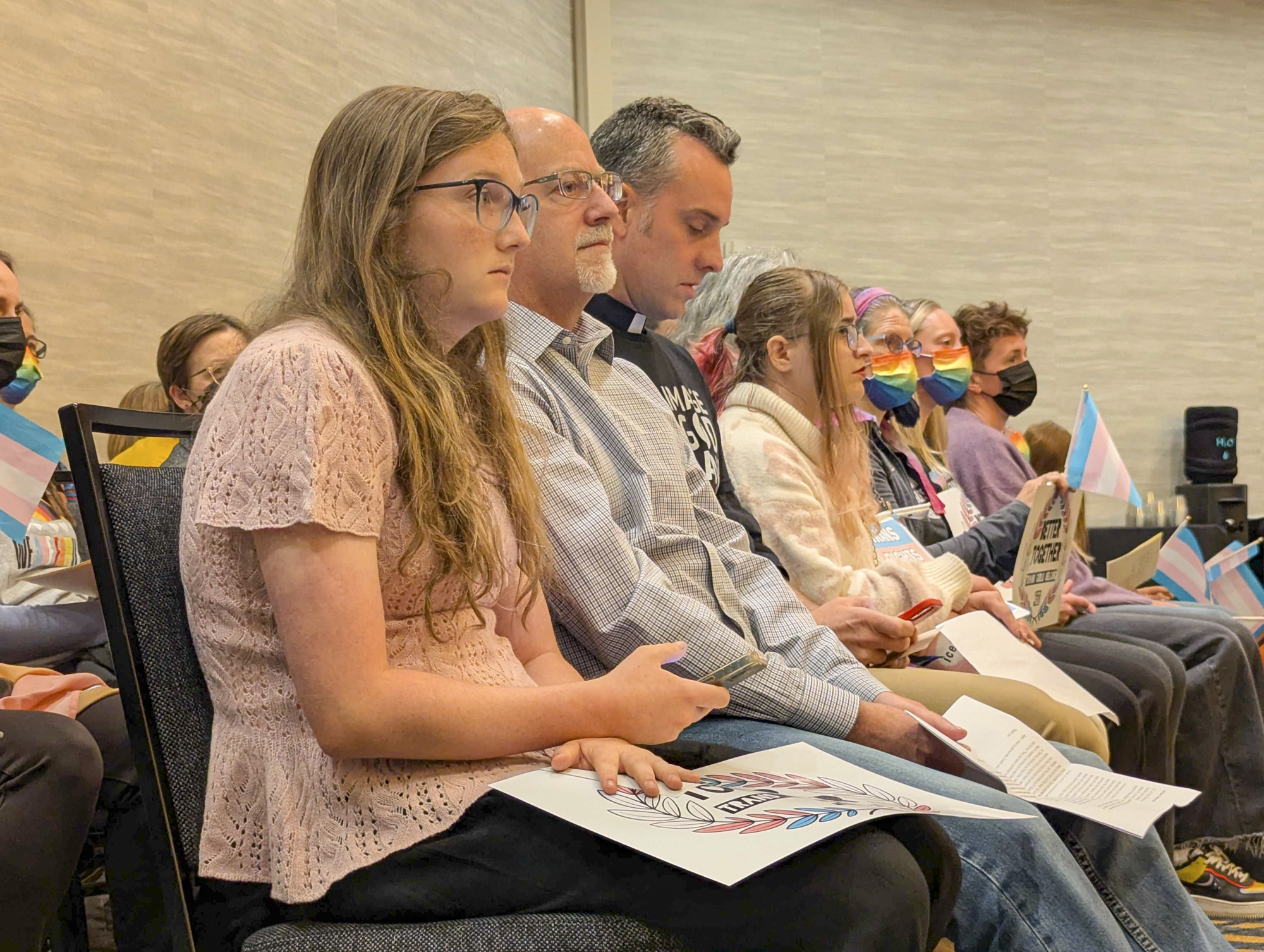
"content": "\u003cp>After the \u003ca href=\"https://www.kqed.org/news/tag/supreme-court-of-the-united-states\">Supreme Court\u003c/a> ruled Tuesday that states can bar transgender people from competing in girls’ and women’s sports, California student-athletes will continue to be allowed to participate on teams that match their gender identity.\u003c/p>\n\u003cp>The decision to uphold a pair of laws in Idaho and West Virginia prohibiting transgender student-athletes’ participation in women and girls’ sports kicks the decision to states. In recent years, 27 have passed laws affirming that Title IX allows schools “to provide separate women’s and men’s sports teams defined by biological sex,” while others, including California, have created protections for trans students.\u003c/p>\n\u003cp>“Today’s decision is heartbreaking for transgender student athletes and their families,” said Tony Hoang, the executive director of Equality California. “At the same time, the court did not give states or schools a blank check to discriminate against transgender people … schools and states like California can continue to adopt inclusive policies that ensure every student is treated with dignity and respect.”\u003c/p>\n\u003cp>[ad fullwidth]\u003c/p>\n\u003cp>The justices ruled that Title IX allows for schools to determine eligibility for women and girls’ sports based on biological sex.\u003c/p>\n\u003cp>“Women and girls should be allowed to compete for those life-changing opportunities on an equal playing field, without fear of physical injury from biological males or being forced to compete against biological males,” wrote Justice Brent Kavanaugh on behalf of the court’s conservative majority.\u003c/p>\n\u003cp>Attorneys for Lindsay Hecox and Becky Pepper-Jackson, transgender student-athletes in Idaho and West Virginia, had argued that the bans violate Title IX of the Education Amendments, which bars sex discrimination in education. Pepper-Jackson also alleged that West Virginia’s law violated the Equal Protection Clause of the 14th Amendment.\u003c/p>\n\u003cfigure id=\"attachment_12089301\" class=\"wp-caption aligncenter\" style=\"max-width: 2000px\">\u003cimg loading=\"lazy\" decoding=\"async\" class=\"wp-image-12089301 size-full\" src=\"https://cdn.kqed.org/wp-content/uploads/sites/10/2026/06/TransgenderAthletesSCOTUSGetty.jpg\" alt=\"\" width=\"2000\" height=\"1333\" srcset=\"https://cdn.kqed.org/wp-content/uploads/sites/10/2026/06/TransgenderAthletesSCOTUSGetty.jpg 2000w, https://cdn.kqed.org/wp-content/uploads/sites/10/2026/06/TransgenderAthletesSCOTUSGetty-160x107.jpg 160w, https://cdn.kqed.org/wp-content/uploads/sites/10/2026/06/TransgenderAthletesSCOTUSGetty-1536x1024.jpg 1536w\" sizes=\"auto, (max-width: 2000px) 100vw, 2000px\">\u003cfigcaption class=\"wp-caption-text\">Defenders of female sports categories gather in front of the U.S. Supreme Court as they wait for rulings on June 30, 2026, in Washington, D.C. Today, the U.S. Supreme Court struck down a ban on birthright citizenship, upheld state restrictions on transgender athletes in female sports, and eliminated federal limits on coordinated campaign spending. \u003ccite>(Alex Wong/Getty Images)\u003c/cite>\u003c/figcaption>\u003c/figure>\n\u003cp>In 2020, Hecox, then a Boise State University student, sued Idaho after it became the first state in the nation to pass a law banning transgender women and girls from participating on girls’ sports teams. She alleged that the ban violated her rights by preventing her from trying out for the university’s NCAA track and cross country teams as a freshman. Hecox’s case was also joined by a cisgender high school athlete, who said she feared that her sex might be “disputed” under the act.\u003c/p>\n\u003cp>Pepper-Jackson, a 15-year-old shot put and discus athlete in West Virginia, sued the state in 2021 over its similar “Save Women in Sports” Law, which prohibited her from joining her middle school’s track and cross country teams.\u003c/p>\n\u003cp>Justices Sonia Sotomayor, Ketanji Brown Jackson and Elena Kagan issued a partial dissent, saying that while Pepper-Jackson’s Title IX claim failed, her challenge under the Equal Protection Clause should be returned to the district court to address “unresolved factual questions.”[aside postID=news_12081357 hero='https://cdn.kqed.org/wp-content/uploads/sites/10/2024/09/USDeptofJusticeGetty-1020x680.jpg']While the case doesn’t overturn state laws protecting transgender student-athletes, it could have ramifications in California, which was\u003ca href=\"https://www.kqed.org/news/12047432/us-sues-california-over-its-refusal-to-ban-transgender-athletes-from-girls-sports\"> sued in 2025 by the Trump administration\u003c/a> over its policies allowing trans students to compete on teams consistent with their gender identity. Already, conservative activists have taken to social media, threatening to push legislation barring transgender athletes from girls’ sports in more states.\u003c/p>\n\u003cp>“Blue states with boys on girls’ podiums … you’re next,” Kristen Waggoner, the CEO of parents’ rights group Alliance Defending Freedom, \u003ca href=\"https://x.com/KristenWaggoner/status/2071958155127382026\">wrote on the social media platform X\u003c/a> on Tuesday.\u003c/p>\n\u003cp>Trevor Norcross, whose transgender daughter is a track and field athlete in the Central Coast town of Arroyo Grande, said he’s afraid Democratic lawmakers could bow to that political pressure.\u003c/p>\n\u003cp>“It’s become a very politically sensitive discussion,” he said. “Our own governor, Governor Newsom, has made some very poorly worded and poorly thought-through comments.”\u003c/p>\n\u003cp>Newsom questioned the fairness of transgender students’ participation on girls’ sports teams in an episode of his podcast in 2025, and later told KQED’s Political Breakdown that he believes there should be \u003ca href=\"https://www.kqed.org/news/12061434/newsom-trump-sending-troops-to-monitor-californias-election-is-a-2026-preview\">changes in state law\u003c/a> clarifying when and how transgender women and girls can compete in women’s sports.\u003c/p>\n\u003cfigure id=\"attachment_12081747\" class=\"wp-caption aligncenter\" style=\"max-width: 2000px\">\u003cimg loading=\"lazy\" decoding=\"async\" class=\"size-full wp-image-12081747\" src=\"https://cdn.kqed.org/wp-content/uploads/sites/10/2026/04/260429-CIF-Trans-Athletes-01-KQED.jpg\" alt=\"\" width=\"2000\" height=\"1506\" srcset=\"https://cdn.kqed.org/wp-content/uploads/sites/10/2026/04/260429-CIF-Trans-Athletes-01-KQED.jpg 2000w, https://cdn.kqed.org/wp-content/uploads/sites/10/2026/04/260429-CIF-Trans-Athletes-01-KQED-160x120.jpg 160w, https://cdn.kqed.org/wp-content/uploads/sites/10/2026/04/260429-CIF-Trans-Athletes-01-KQED-1536x1157.jpg 1536w\" sizes=\"auto, (max-width: 2000px) 100vw, 2000px\">\u003cfigcaption class=\"wp-caption-text\">Lily, left, and her father, Trevor Norcross, attend a meeting of the California Interscholastic Federation’s executive committee in Oakland on April 24, 2026. \u003ccite>(Desmond Meagley/KQED)\u003c/cite>\u003c/figcaption>\u003c/figure>\n\u003cp>Norcross’s daughter, Lily, 17, worries that Newsom could move to do so before his term ends in November. She also said that the state’s likely gubernatorial elect, Xavier Bacerra, “has refused to give a definitive comment on whether or not he will protect trans athletes.”\u003c/p>\n\u003cp>The National Collegiate Athletic Association and U.S. Olympic and Paralympic Committees have also banned transgender women from women’s sports, following an executive order from President Donald Trump \u003ca href=\"https://www.whitehouse.gov/presidential-actions/2025/02/keeping-men-out-of-womens-sports/\" target=\"_blank\" rel=\"noopener\">threatening to withhold federal funding\u003c/a> from educational institutions that allow trans women to compete on girls’ teams.\u003c/p>\n\u003cp>Outside of school sports, the ruling could inform other cases surrounding trans rights — like litigation currently playing out across the country regarding federal funding for schools with protections for transgender students and healthcare centers that offer gender-affirming care.\u003c/p>\n\u003cp>Dale Melchert, an attorney with the Transgender Law Center, said the decision “takes off the table one of the powerful legal tools we have at our disposal to advocate for trans communities.”\u003c/p>\n\u003cp>“If the Supreme Court says that the Constitution doesn’t protect trans people, that is clearly devastating, regardless of whether you live in a state that is supportive or not,” he continued.\u003c/p>\n\u003cp>\u003c/p>\n",
"blocks": [],
"excerpt": "The decision delivers a major blow to LGBTQ+ rights, although student athletes in California are still protected under state laws. ",
"status": "publish",
"parent": 0,
"modified": 1782850460,
"stats": {
"hasAudio": false,
"hasVideo": false,
"hasChartOrMap": false,
"iframeSrcs": [],
"hasGoogleForm": false,
"hasGallery": false,
"hasHearkenModule": false,
"hasPolis": false,
"paragraphCount": 20,
"wordCount": 1020
},
"headData": {
"title": "In California, Supreme Court Ruling on Trans Girls Sports Doesn’t Apply. Here’s Why | KQED",
"description": "The decision delivers a major blow to LGBTQ+ rights, although student athletes in California are still protected under state laws. ",
"ogTitle": "",
"ogDescription": "",
"ogImgId": "",
"twTitle": "",
"twDescription": "",
"twImgId": "",
"schema": {
"@context": "https://schema.org",
"@type": "NewsArticle",
"headline": "In California, Supreme Court Ruling on Trans Girls Sports Doesn’t Apply. Here’s Why",
"datePublished": "2026-06-30T12:25:29-07:00",
"dateModified": "2026-06-30T13:14:20-07:00",
"image": "https://cdn.kqed.org/wp-content/uploads/2020/02/KQED-OG-Image@1x.png",
"isAccessibleForFree": "True",
"publisher": {
"@type": "NewsMediaOrganization",
"@id": "https://www.kqed.org/#organization",
"name": "KQED",
"logo": "https://cdn.kqed.org/wp-content/uploads/2020/02/KQED-OG-Image@1x.png",
"url": "https://www.kqed.org",
"sameAs": [
"https://www.facebook.com/KQED",
"https://twitter.com/KQED",
"https://www.instagram.com/kqed/",
"https://www.tiktok.com/@kqedofficial",
"https://www.linkedin.com/company/kqed",
"https://www.youtube.com/channel/UCeC0IOo7i1P_61zVUWbJ4nw"
]
}
}
},
"primaryCategory": {
"termId": 13,
"slug": "politics",
"name": "Politics"
},
"sticky": false,
"nprStoryId": "kqed-12088215",
"templateType": "standard",
"featuredImageType": "standard",
"excludeFromSiteSearch": "Include",
"articleAge": "0",
"path": "/news/12088215/states-can-ban-trans-girls-from-sports-competition-supreme-court-rules",
"audioTrackLength": null,
"parsedContent": [
{
"type": "contentString",
"content": "\u003cdiv class=\"post-body\">\u003cp>\u003cp>After the \u003ca href=\"https://www.kqed.org/news/tag/supreme-court-of-the-united-states\">Supreme Court\u003c/a> ruled Tuesday that states can bar transgender people from competing in girls’ and women’s sports, California student-athletes will continue to be allowed to participate on teams that match their gender identity.\u003c/p>\n\u003cp>The decision to uphold a pair of laws in Idaho and West Virginia prohibiting transgender student-athletes’ participation in women and girls’ sports kicks the decision to states. In recent years, 27 have passed laws affirming that Title IX allows schools “to provide separate women’s and men’s sports teams defined by biological sex,” while others, including California, have created protections for trans students.\u003c/p>\n\u003cp>“Today’s decision is heartbreaking for transgender student athletes and their families,” said Tony Hoang, the executive director of Equality California. “At the same time, the court did not give states or schools a blank check to discriminate against transgender people … schools and states like California can continue to adopt inclusive policies that ensure every student is treated with dignity and respect.”\u003c/p>\n\u003cp>\u003c/p>\u003c/div>",
"attributes": {
"named": {},
"numeric": []
}
},
{
"type": "component",
"content": "",
"name": "ad",
"attributes": {
"named": {
"label": "fullwidth"
},
"numeric": [
"fullwidth"
]
}
},
{
"type": "contentString",
"content": "\u003cdiv class=\"post-body\">\u003cp>\u003c/p>\n\u003cp>The justices ruled that Title IX allows for schools to determine eligibility for women and girls’ sports based on biological sex.\u003c/p>\n\u003cp>“Women and girls should be allowed to compete for those life-changing opportunities on an equal playing field, without fear of physical injury from biological males or being forced to compete against biological males,” wrote Justice Brent Kavanaugh on behalf of the court’s conservative majority.\u003c/p>\n\u003cp>Attorneys for Lindsay Hecox and Becky Pepper-Jackson, transgender student-athletes in Idaho and West Virginia, had argued that the bans violate Title IX of the Education Amendments, which bars sex discrimination in education. Pepper-Jackson also alleged that West Virginia’s law violated the Equal Protection Clause of the 14th Amendment.\u003c/p>\n\u003cfigure id=\"attachment_12089301\" class=\"wp-caption aligncenter\" style=\"max-width: 2000px\">\u003cimg loading=\"lazy\" decoding=\"async\" class=\"wp-image-12089301 size-full\" src=\"https://cdn.kqed.org/wp-content/uploads/sites/10/2026/06/TransgenderAthletesSCOTUSGetty.jpg\" alt=\"\" width=\"2000\" height=\"1333\" srcset=\"https://cdn.kqed.org/wp-content/uploads/sites/10/2026/06/TransgenderAthletesSCOTUSGetty.jpg 2000w, https://cdn.kqed.org/wp-content/uploads/sites/10/2026/06/TransgenderAthletesSCOTUSGetty-160x107.jpg 160w, https://cdn.kqed.org/wp-content/uploads/sites/10/2026/06/TransgenderAthletesSCOTUSGetty-1536x1024.jpg 1536w\" sizes=\"auto, (max-width: 2000px) 100vw, 2000px\">\u003cfigcaption class=\"wp-caption-text\">Defenders of female sports categories gather in front of the U.S. Supreme Court as they wait for rulings on June 30, 2026, in Washington, D.C. Today, the U.S. Supreme Court struck down a ban on birthright citizenship, upheld state restrictions on transgender athletes in female sports, and eliminated federal limits on coordinated campaign spending. \u003ccite>(Alex Wong/Getty Images)\u003c/cite>\u003c/figcaption>\u003c/figure>\n\u003cp>In 2020, Hecox, then a Boise State University student, sued Idaho after it became the first state in the nation to pass a law banning transgender women and girls from participating on girls’ sports teams. She alleged that the ban violated her rights by preventing her from trying out for the university’s NCAA track and cross country teams as a freshman. Hecox’s case was also joined by a cisgender high school athlete, who said she feared that her sex might be “disputed” under the act.\u003c/p>\n\u003cp>Pepper-Jackson, a 15-year-old shot put and discus athlete in West Virginia, sued the state in 2021 over its similar “Save Women in Sports” Law, which prohibited her from joining her middle school’s track and cross country teams.\u003c/p>\n\u003cp>Justices Sonia Sotomayor, Ketanji Brown Jackson and Elena Kagan issued a partial dissent, saying that while Pepper-Jackson’s Title IX claim failed, her challenge under the Equal Protection Clause should be returned to the district court to address “unresolved factual questions.”\u003c/p>\u003c/div>",
"attributes": {
"named": {},
"numeric": []
}
},
{
"type": "component",
"content": "",
"name": "aside",
"attributes": {
"named": {
"postid": "news_12081357",
"hero": "https://cdn.kqed.org/wp-content/uploads/sites/10/2024/09/USDeptofJusticeGetty-1020x680.jpg",
"label": ""
},
"numeric": []
}
},
{
"type": "contentString",
"content": "\u003cdiv class=\"post-body\">\u003cp>While the case doesn’t overturn state laws protecting transgender student-athletes, it could have ramifications in California, which was\u003ca href=\"https://www.kqed.org/news/12047432/us-sues-california-over-its-refusal-to-ban-transgender-athletes-from-girls-sports\"> sued in 2025 by the Trump administration\u003c/a> over its policies allowing trans students to compete on teams consistent with their gender identity. Already, conservative activists have taken to social media, threatening to push legislation barring transgender athletes from girls’ sports in more states.\u003c/p>\n\u003cp>“Blue states with boys on girls’ podiums … you’re next,” Kristen Waggoner, the CEO of parents’ rights group Alliance Defending Freedom, \u003ca href=\"https://x.com/KristenWaggoner/status/2071958155127382026\">wrote on the social media platform X\u003c/a> on Tuesday.\u003c/p>\n\u003cp>Trevor Norcross, whose transgender daughter is a track and field athlete in the Central Coast town of Arroyo Grande, said he’s afraid Democratic lawmakers could bow to that political pressure.\u003c/p>\n\u003cp>“It’s become a very politically sensitive discussion,” he said. “Our own governor, Governor Newsom, has made some very poorly worded and poorly thought-through comments.”\u003c/p>\n\u003cp>Newsom questioned the fairness of transgender students’ participation on girls’ sports teams in an episode of his podcast in 2025, and later told KQED’s Political Breakdown that he believes there should be \u003ca href=\"https://www.kqed.org/news/12061434/newsom-trump-sending-troops-to-monitor-californias-election-is-a-2026-preview\">changes in state law\u003c/a> clarifying when and how transgender women and girls can compete in women’s sports.\u003c/p>\n\u003cfigure id=\"attachment_12081747\" class=\"wp-caption aligncenter\" style=\"max-width: 2000px\">\u003cimg loading=\"lazy\" decoding=\"async\" class=\"size-full wp-image-12081747\" src=\"https://cdn.kqed.org/wp-content/uploads/sites/10/2026/04/260429-CIF-Trans-Athletes-01-KQED.jpg\" alt=\"\" width=\"2000\" height=\"1506\" srcset=\"https://cdn.kqed.org/wp-content/uploads/sites/10/2026/04/260429-CIF-Trans-Athletes-01-KQED.jpg 2000w, https://cdn.kqed.org/wp-content/uploads/sites/10/2026/04/260429-CIF-Trans-Athletes-01-KQED-160x120.jpg 160w, https://cdn.kqed.org/wp-content/uploads/sites/10/2026/04/260429-CIF-Trans-Athletes-01-KQED-1536x1157.jpg 1536w\" sizes=\"auto, (max-width: 2000px) 100vw, 2000px\">\u003cfigcaption class=\"wp-caption-text\">Lily, left, and her father, Trevor Norcross, attend a meeting of the California Interscholastic Federation’s executive committee in Oakland on April 24, 2026. \u003ccite>(Desmond Meagley/KQED)\u003c/cite>\u003c/figcaption>\u003c/figure>\n\u003cp>Norcross’s daughter, Lily, 17, worries that Newsom could move to do so before his term ends in November. She also said that the state’s likely gubernatorial elect, Xavier Bacerra, “has refused to give a definitive comment on whether or not he will protect trans athletes.”\u003c/p>\n\u003cp>The National Collegiate Athletic Association and U.S. Olympic and Paralympic Committees have also banned transgender women from women’s sports, following an executive order from President Donald Trump \u003ca href=\"https://www.whitehouse.gov/presidential-actions/2025/02/keeping-men-out-of-womens-sports/\" target=\"_blank\" rel=\"noopener\">threatening to withhold federal funding\u003c/a> from educational institutions that allow trans women to compete on girls’ teams.\u003c/p>\n\u003cp>Outside of school sports, the ruling could inform other cases surrounding trans rights — like litigation currently playing out across the country regarding federal funding for schools with protections for transgender students and healthcare centers that offer gender-affirming care.\u003c/p>\n\u003cp>Dale Melchert, an attorney with the Transgender Law Center, said the decision “takes off the table one of the powerful legal tools we have at our disposal to advocate for trans communities.”\u003c/p>\n\u003cp>“If the Supreme Court says that the Constitution doesn’t protect trans people, that is clearly devastating, regardless of whether you live in a state that is supportive or not,” he continued.\u003c/p>\n\u003cp>\u003c/p>\n\u003c/div>\u003c/p>",
"attributes": {
"named": {},
"numeric": []
}
}
],
"link": "/news/12088215/states-can-ban-trans-girls-from-sports-competition-supreme-court-rules",
"authors": [
"11913"
],
"categories": [
"news_31795",
"news_6188",
"news_8",
"news_13"
],
"tags": [
"news_34950",
"news_4750",
"news_1323",
"news_20013",
"news_27626",
"news_20004",
"news_19345",
"news_17968",
"news_34078",
"news_18037",
"news_35615",
"news_35628",
"news_1172",
"news_25293"
],
"featImg": "news_12089186",
"label": "news"
},
"news_12089008": {
"type": "posts",
"id": "news_12089008",
"meta": {
"index": "posts_1716263798",
"site": "news",
"id": "12089008",
"score": null,
"sort": [
1782558057000
]
},
"guestAuthors": [],
"slug": "as-sf-giants-pride-night-fallout-continues-fans-recall-historic-1994-aids-benefit",
"title": "As SF Giants’ Pride Night Fallout Continues, Fans Recall Historic 1994 AIDS Benefit",
"publishDate": 1782558057,
"format": "standard",
"headTitle": "As SF Giants’ Pride Night Fallout Continues, Fans Recall Historic 1994 AIDS Benefit | KQED",
"labelTerm": {
"site": "news"
},
"content": "\u003cp>Thirty-two years ago, Lynn Struiksma attended a momentous \u003ca href=\"https://www.kqed.org/news/tag/giants\">San Francisco Giants\u003c/a> game.\u003c/p>\n\u003cp>A devoted San Diego Padres fan, Struiksma, then a student at San Francisco State University, decided to give Bay Area baseball a chance by buying a ticket for the July 31, 1994, afternoon game against the Colorado Rockies.\u003c/p>\n\u003cp>Only while listening to the radio in the days beforehand did he learn that the game would be observing “Until There’s a Cure Day” — an event founded by a \u003ca href=\"https://www.until.org/about-us.html\">Bay Area-based\u003c/a> national organization that promotes HIV and AIDS awareness.\u003c/p>\n\u003cp>[ad fullwidth]\u003c/p>\n\u003cp>The game, which marked the first time a major professional sports organization hosted a benefit for \u003ca href=\"https://www.mlb.com/giants/history/timeline-1990s\">HIV\u003c/a> \u003ca href=\"https://www.mlb.com/giants/history/timeline-1990s\">and AIDS\u003c/a>, has resurfaced in collective memory over the past few weeks, as the fallout continues from a protest by four pitchers during the \u003ca href=\"https://www.kqed.org/news/12087912/after-sf-giants-pride-night-culture-clash-scott-wiener-claps-back-at-republicans\">team’s Pride Month celebration\u003c/a>.\u003c/p>\n\u003cp>As lawmakers, Major League Baseball, and fans have entered the fray, KQED looked back on the sports history episode to understand how it got started — and how much has changed.\u003c/p>\n\u003ch2>‘A swell of connection’\u003c/h2>\n\u003cp>There were a couple of key figures behind the 1994 “Until There’s a Cure Day.”\u003c/p>\n\u003cp>According to \u003ca href=\"https://www.outsports.com/2020/12/1/21754607/san-francisco-giants-mlb-aids-hiv-awareness-until-theres-a-cure-day/\">OutSports\u003c/a>, one reason is that new owner Peter Magowan wanted to ask the city for a new stadium. In campaigning for the new structure, Magowan made moves to connect with people across the Bay Area through community outreach — and San Francisco was deep in HIV/AIDS advocacy.\u003c/p>\n\u003cp>At the time, \u003ca href=\"https://www.pbs.org/newshour/health/remembering-a-tough-time\">San Franciscans\u003c/a> were reeling from the devastation of the AIDS epidemic, with \u003ca href=\"https://www.pbs.org/newshour/health/remembering-a-tough-time\">around 20,000 city residents dying\u003c/a> during the crisis. Because so many were gay men or part of the LGBTQ+ community, bias and homophobia allowed their suffering to go \u003ca href=\"https://www.aclu.org/podcast/how-act-up-changed-the-face-of-aids-and-activism\">unacknowledged \u003c/a>by governments and medical authorities for years.\u003c/p>\n\u003cfigure id=\"attachment_12089147\" class=\"wp-caption aligncenter\" style=\"max-width: 1443px\">\u003cimg loading=\"lazy\" decoding=\"async\" class=\"wp-image-12089147 size-full\" src=\"https://cdn.kqed.org/wp-content/uploads/sites/10/2026/06/GettyImages-1322405139.jpg\" alt=\"\" width=\"1443\" height=\"931\" srcset=\"https://cdn.kqed.org/wp-content/uploads/sites/10/2026/06/GettyImages-1322405139.jpg 1443w, https://cdn.kqed.org/wp-content/uploads/sites/10/2026/06/GettyImages-1322405139-160x103.jpg 160w\" sizes=\"auto, (max-width: 1443px) 100vw, 1443px\">\u003cfigcaption class=\"wp-caption-text\">From left: Giants President Peter Magowan, Mary Fisher, AIDS activist and keynote speaker, along with her sons, Zachary, 6, and Max, 8, and Giants’ Rod Beck. Max Fisher, 6, slips out the back of his chair during “Until There’s A Cure” pregame ceremonies on July 28, 1996. \u003ccite>(Lea Suzuki/The San Francisco Chronicle via Getty Images)\u003c/cite>\u003c/figcaption>\u003c/figure>\n\u003cp>“This special day will give our fans an opportunity to learn more about the disease, which affects all of us,” Magowan said at the time, according to the \u003cem>Bay Area Reporter. \u003c/em>“This is not a baseball event, it’s a humanitarian event.”\u003c/p>\n\u003cp>According to the Giants’ promotional flyer for the 1994 event, the team vowed to donate $1 from every ticket sold to AIDS research and education. Players would also wear a red ribbon on their uniforms, “which I thought was very cool,” Struiksma said.\u003c/p>\n\u003cp>“It did feel like, ‘Hmm, this is something a little different,’” recalled Struiksma, who now lives in Los Angeles, where he works in the film industry. “‘Something we’re not used to.’”\u003c/p>\n\u003cp>Another major reason was \u003ca href=\"https://www.sfchronicle.com/totalsf/article/giants-rod-beck-aids-19594162.php\">a supportive manager, Dusty Baker\u003c/a>, and the fact that HIV/AIDS advocacy was already being pursued by star Giants player Rod Beck, after being deeply moved by a 1993 documentary about \u003ca href=\"https://www.sfchronicle.com/totalsf/article/giants-rod-beck-aids-19594162.php\">Ryan White\u003c/a>, a young boy living with AIDS.[aside postID=news_12087912 hero='https://cdn.kqed.org/wp-content/uploads/sites/10/2026/06/SFGiantsLandenRouppGetty.jpg']But the lead-up to the event wasn’t without some protest and pushback, according to \u003ca href=\"https://www.washingtonpost.com/archive/sports/1994/08/01/giants-join-fight-vs-aids/ac59ce23-7910-4241-a976-0410c3f094b2/?_pml=1\">the \u003cem>Washington Post\u003c/em>\u003c/a>. Giants vice president for business operations Pat Gallagher noted “some negative phone calls.”\u003c/p>\n\u003cp>The ongoing stigma around HIV and AIDs was apparent. Calling it “a controversial cause,” Magowan told \u003ca href=\"https://www.latimes.com/archives/la-xpm-1994-08-01-sp-22364-story.html\">the \u003cem>LA Times\u003c/em>\u003c/a> in 1994 that “A lot of people associate it with a certain lifestyle — I think incorrectly … AIDS can affect anybody, whatever lifestyle, whatever sex, whatever age.”\u003c/p>\n\u003cp>“I’ve worked here for 18 years, and nothing else we’ve ever done has been universally accepted by everyone in the organization,” Gallagher said\u003cem>. \u003c/em>“Because we live in San Francisco, everyone’s been touched in some way by HIV and AIDS.”\u003c/p>\n\u003cp>“I don’t care how you get it,” said \u003ca href=\"https://www.washingtonpost.com/archive/sports/1994/08/01/giants-join-fight-vs-aids/ac59ce23-7910-4241-a976-0410c3f094b2/?_pml=1\">another player, Todd Benzinger\u003c/a>. “No one deserves it.”\u003c/p>\n\u003cp>But once the game started, the commemoration felt like a natural fit, Struiksma said, “maybe because it’s San Francisco.”\u003c/p>\n\u003cp>Among thousands of fans decked in orange and black, Struiksma sat high up in the stands of Candlestick Park, \u003ca href=\"https://www.kqed.org/news/10583120/watch-the-slow-demolition-of-candlestick-park\">the Giants’ previous home before Oracle Park\u003c/a>. From his vantage point, he got a perfect view of the field where Giants players organized themselves into the shape of a giant ribbon.\u003c/p>\n\u003cp>Then, members of the opposing team that day, the Rockies, were brought onto the field where they, too, joined the formation. Outlets at the time \u003ca href=\"https://www.sfgate.com/news/article/MARK-SIMON-Atlanta-Braves-Join-Giants-AIDS-2972390.php\">reported\u003c/a> that Giants star player Barry Bonds had waved to the Rockies to bring them in.\u003c/p>\n\u003cfigure id=\"attachment_12089146\" class=\"wp-caption aligncenter\" style=\"max-width: 1925px\">\u003cimg loading=\"lazy\" decoding=\"async\" class=\"size-full wp-image-12089146\" src=\"https://cdn.kqed.org/wp-content/uploads/sites/10/2026/06/GettyImages-1195131082.jpg\" alt=\"\" width=\"1925\" height=\"1699\" srcset=\"https://cdn.kqed.org/wp-content/uploads/sites/10/2026/06/GettyImages-1195131082.jpg 1925w, https://cdn.kqed.org/wp-content/uploads/sites/10/2026/06/GettyImages-1195131082-160x141.jpg 160w, https://cdn.kqed.org/wp-content/uploads/sites/10/2026/06/GettyImages-1195131082-1536x1356.jpg 1536w\" sizes=\"auto, (max-width: 1925px) 100vw, 1925px\">\u003cfigcaption class=\"wp-caption-text\">San Francisco Giants left fielder Barry Bonds greets volunteers during a pregame benefit for Until There’s a Cure Day, the sixth annual Aids benefit program sponsored by the Giants Aug. 15, 1999. The Giants played the New York Mets after the benefit. \u003ccite>(Monica Davey/AFP via Getty Images)\u003c/cite>\u003c/figcaption>\u003c/figure>\n\u003cp>“You felt a swell of connection to the team. A connection to community,” Struiksma said. “It really was just one of those games where it’s like, ‘This is amazing, what’s happening right now.’” And over three decades later, “I’m almost getting choked up talking about it now,” he said.\u003c/p>\n\u003cp>At the event, Beck listed the names of children who died of AIDS. Quilts — a longtime way of \u003ca href=\"https://www.aidsmemorial.org/quilt\">memorializing \u003c/a>those lost to AIDS — were \u003ca href=\"https://www.sfchronicle.com/totalsf/article/giants-rod-beck-aids-19594162.php\">laid out \u003c/a>on the field.\u003c/p>\n\u003cp>“This might be the single most significant day since we’ve all heard of this disease,” Beck told the \u003cem>Washington Post \u003c/em>after the event in 1994, which ultimately raised over $100,000.\u003c/p>\n\u003cp>Of course, it was business as usual during the actual game. Struiksma said that he remembered a fight that broke out on the field. “There was a real, like, dichotomy of emotions during the game,” he said.\u003c/p>\n\u003ch2>‘A slap in the face’\u003c/h2>\n\u003cp>Many SF Giants fans have referenced the historic nature of 1994’s “Until There’s a Cure Day” event in recent weeks, after \u003ca href=\"https://www.kqed.org/news/12087912/after-sf-giants-pride-night-culture-clash-scott-wiener-claps-back-at-republicans\">four SF Giants players\u003c/a> staged an apparent protest against the team’s Pride Night on June 12.\u003c/p>\n\u003cp>Three players wrote controversial Bible verses often cited by anti-gay conservative Christians on the team’s rainbow-themed Pride Month caps. The team was \u003ca href=\"https://www.nbcbayarea.com/news/sports/mlb-commissioner-giants-pride-night/4103023/\">not required \u003c/a>to wear them, according to NBC Bay Area. One player opted to wear the standard black-and-orange cap instead.\u003c/p>\n\u003cp>The reaction was swift and strong, with LGBTQ+ \u003ca href=\"https://sfstandard.com/2026/06/24/sf-giants-pride-night-maga-backlash/\">fans and allies \u003c/a>alike protesting the team with Pride and trans flags at Oracle Park.\u003c/p>\n\u003cfigure id=\"attachment_12089153\" class=\"wp-caption aligncenter\" style=\"max-width: 2000px\">\u003cimg loading=\"lazy\" decoding=\"async\" class=\"size-full wp-image-12089153\" src=\"https://cdn.kqed.org/wp-content/uploads/sites/10/2026/06/SFGiantsProtestPrideGetty.jpg\" alt=\"\" width=\"2000\" height=\"1333\" srcset=\"https://cdn.kqed.org/wp-content/uploads/sites/10/2026/06/SFGiantsProtestPrideGetty.jpg 2000w, https://cdn.kqed.org/wp-content/uploads/sites/10/2026/06/SFGiantsProtestPrideGetty-160x107.jpg 160w, https://cdn.kqed.org/wp-content/uploads/sites/10/2026/06/SFGiantsProtestPrideGetty-1536x1024.jpg 1536w\" sizes=\"auto, (max-width: 2000px) 100vw, 2000px\">\u003cfigcaption class=\"wp-caption-text\">From left: Jim Soos, Noah Wallace, Matt Foley and a person who gave their initials as J.P., protest outside Oracle Park ahead of the San Francisco Giants’ MLB game against the Athletics at Oracle Park in San Francisco, on Tuesday, June 23, 2026. A demonstration was held against four Giants pitchers who wrote Bible verses on their caps and opted out of wearing the team’s Pride-themed gear during the Giants’ Pride Night celebration on June 12. \u003ccite>(Santiago Mejia/San Francisco Chronicle via Getty Images)\u003c/cite>\u003c/figcaption>\u003c/figure>\n\u003cp>“I didn’t see them attempting to come out with this pro-Bible rhetoric any other night of the week, so it did feel like a very specific slap in the face for their queer-coded fans,” said Sarah, a one queer Giants fan who called into \u003ca href=\"https://www.kqed.org/forum/2010101914206/sf-giants-pride-night-fallout-amplifies\">KQED Forum earlier this week\u003c/a>.\u003c/p>\n\u003cp>“Across the board, just think it was a giant ‘L’ for the Giants, who don’t need any more help with ‘L’s,’ because their record is doing that for them,” the caller said.\u003c/p>\n\u003cp>Ann Killion, a \u003cem>San Francisco Chronicle \u003c/em>sports columnist, \u003ca href=\"https://www.kqed.org/forum/2010101914206/sf-giants-pride-night-fallout-amplifies\">told Forum\u003c/a> that Giants fans “feel like on a night that was meant to celebrate the joy of inclusiveness, that these players kind of co-opted the whole event and hijacked it — and turned around and basically flipped the metaphorical bird to them.”\u003c/p>\n\u003cp>Killian said fans also felt let down by the response from the Giants’ management, who issued a “kind of both-sides-ing type of statement, full of platitudes, ‘We’re sorry if you’re hurt,’ and then went radio silent,” she said. “They kind of let this thing build and build and build.”\u003c/p>\n\u003cfigure id=\"attachment_12089144\" class=\"wp-caption aligncenter\" style=\"max-width: 1707px\">\u003cimg loading=\"lazy\" decoding=\"async\" class=\"size-full wp-image-12089144\" src=\"https://cdn.kqed.org/wp-content/uploads/sites/10/2026/06/SF-giants-poster-2000-RESIZED-scaled.jpg\" alt=\"\" width=\"1707\" height=\"2560\" srcset=\"https://cdn.kqed.org/wp-content/uploads/sites/10/2026/06/SF-giants-poster-2000-RESIZED-scaled.jpg 1707w, https://cdn.kqed.org/wp-content/uploads/sites/10/2026/06/SF-giants-poster-2000-RESIZED-160x240.jpg 160w, https://cdn.kqed.org/wp-content/uploads/sites/10/2026/06/SF-giants-poster-2000-RESIZED-1024x1536.jpg 1024w, https://cdn.kqed.org/wp-content/uploads/sites/10/2026/06/SF-giants-poster-2000-RESIZED-1366x2048.jpg 1366w\" sizes=\"auto, (max-width: 1707px) 100vw, 1707px\">\u003cfigcaption class=\"wp-caption-text\">A flyer from 1994 promoting the SF Giants’ AIDS awareness night, “Until There’s a Cure Day.” \u003ccite>(Courtesy of the San Francisco GLBT Historical Society)\u003c/cite>\u003c/figcaption>\u003c/figure>\n\u003cp>Major League Baseball issued a warning to the players for writing on their uniforms, which is against uniform regulations. However, the situation quickly escalated, with the Department of Justice under President Donald Trump announcing its intent to launch \u003ca href=\"https://www.kron4.com/sports/doj-to-investigate-mlb-over-giants-pride-night-protest/\">an investigation into the MLB\u003c/a>’s response to the Pride Night protest.\u003c/p>\n\u003cp>Baseball is “probably the most conservative of the big professional team sports in America,” with many players coming from suburbs and smaller towns, Killion said. But a protest like this in San Francisco stung extra hard.\u003c/p>\n\u003cp>“This is where the Giants are honestly hurt by their own good work in the past, because they have been so upfront,” SFGate sports editor Alex Simon said on Forum.\u003c/p>\n\u003cp>An HIV and AIDS awareness night has been a tradition for the Giants since that first event in 1994, and while the Los Angeles Dodgers hosted the first \u003ca href=\"https://www.espn.com/mlb/story?id=9670811&src=desktop\">Pride Night\u003c/a> in 2013, the Giants were the very first team to bring the \u003ca href=\"https://www.greensportsalliance.org/media/giants-to-become-first-mlb-team-to-incorporate-pride-colors-into-on-field-uniforms-in-honor-of-the-lgbtq-community-and-pride-celebrations\">Pride flag \u003c/a>onto the field in 2021. In 2023, when the league adopted \u003ca href=\"https://www.nbcbayarea.com/news/sports/mlb-commissioner-giants-pride-night/4103023/\">a policy\u003c/a> that would stop teams from wearing special uniforms on celebration days, with some exceptions, the Giants and the Dodgers requested to be exempted for Pride.\u003c/p>\n\u003cp>“The fan base is very much more upset at the team and the organization, really beyond what the players themselves have done,” Simon said.\u003c/p>\n\u003ch2>Remembering how far we’ve come\u003c/h2>\n\u003cp>Tiffany Babb, a Southern California writer who runs \u003ca href=\"https://www.thefanfiles.com/\">The Fan Files\u003c/a>, is a queer baseball fan who has been following the SF Giants case closely. Babb has felt a decline in enthusiasm for Pride Nights in sports teams in recent years — something she attributes to the U.S. becoming more conservative in many ways.\u003c/p>\n\u003cp>“I remember like three, four years ago, they kept those [Pride] logos up all month,” she said.\u003c/p>\n\u003cfigure id=\"attachment_12089154\" class=\"wp-caption aligncenter\" style=\"max-width: 2000px\">\u003cimg loading=\"lazy\" decoding=\"async\" class=\"size-full wp-image-12089154\" src=\"https://cdn.kqed.org/wp-content/uploads/sites/10/2026/06/SFGiantsPrideLogoGetty.jpg\" alt=\"\" width=\"2000\" height=\"1333\" srcset=\"https://cdn.kqed.org/wp-content/uploads/sites/10/2026/06/SFGiantsPrideLogoGetty.jpg 2000w, https://cdn.kqed.org/wp-content/uploads/sites/10/2026/06/SFGiantsPrideLogoGetty-160x107.jpg 160w, https://cdn.kqed.org/wp-content/uploads/sites/10/2026/06/SFGiantsPrideLogoGetty-1536x1024.jpg 1536w\" sizes=\"auto, (max-width: 2000px) 100vw, 2000px\">\u003cfigcaption class=\"wp-caption-text\">The San Francisco Giants’ pride logo in right field during a MLB game between the Athletics and the San Francisco Giants on June 23, 2026, at Oracle Park in San Francisco, California. \u003ccite>(Trinity Machan/Icon Sportswire via Getty Images)\u003c/cite>\u003c/figcaption>\u003c/figure>\n\u003cp>And the SF Giants debacle has presented an opportunity for the Trump administration to jump on board with the pushback. On X, Vice President J.D. Vance \u003ca href=\"https://x.com/JDVance/status/2066922921046544396\">wrote:\u003c/a> “Trump won, we don’t have to do this anymore.”\u003c/p>\n\u003cp>“Whether or not the players intended to do this, it is a very popular narrative that ‘Christians are under attack in the United States,’” Babb said. “And it is a very useful narrative for the president.”\u003c/p>\n\u003cp>It’s why, she said, remembering the 1994 “Until There’s A Cure Day” is still important for fans 32 years later.[aside postID=news_12086888 hero='https://cdn.kqed.org/wp-content/uploads/sites/10/2025/06/250629-SFPrideParade-30-BL.jpg']“Not just because of San Francisco’s long history with the queer community, but also because a lot of people like to treat activism in baseball as a brand new thing that was just invented in 2012,” she said. “There’s a long history of this — pretty much since the beginning of baseball.”\u003c/p>\n\u003cp>The Giants’ first event in 1994 “was such a good, earlier example of this kind of conversation, but in a positive way.”\u003c/p>\n\u003cp>For Babbs, it’s about reminding people what — and who — has come before. For example, \u003ca href=\"https://www.espn.com/mlb/story/_/id/48979319/dodgers-honor-gay-trailblazers-burke-bean-stadium-display\">Dodgers icon Glenn Burke, \u003c/a>who died at age 42 in 1995, was among the first major league players to come out as gay.\u003c/p>\n\u003cp>“Glenn Burke — if he hadn’t died of AIDS — he would still be around,” she said. “That generation was not that long ago.”\u003c/p>\n\u003cp>“It’s important for us to keep their memories alive … Because once you start to forget about history, people can twist it into whatever they want.”\u003c/p>\n\u003cp>\u003cem>KQED’s \u003c/em>\u003ca href=\"https://www.kqed.org/author/kdebenedetti\">\u003cem>Katie DeBenedetti\u003c/em>\u003c/a>\u003cem> and \u003c/em>\u003ca href=\"https://www.kqed.org/author/amadrigal\">\u003cem>Alexis Madrigal\u003c/em>\u003c/a>\u003cem> contributed to this report.\u003c/em>\u003c/p>\n\u003cp>[ad floatright]\u003c/p>\n",
"blocks": [],
"excerpt": "As San Francisco’s MLB team faces continued backlash over its Pride Night controversy, fans are revisiting the team's groundbreaking 1994 HIV/AIDS benefit game — the first in pro sports.",
"status": "publish",
"parent": 0,
"modified": 1782757834,
"stats": {
"hasAudio": false,
"hasVideo": false,
"hasChartOrMap": false,
"iframeSrcs": [],
"hasGoogleForm": false,
"hasGallery": false,
"hasHearkenModule": false,
"hasPolis": false,
"paragraphCount": 46,
"wordCount": 2182
},
"headData": {
"title": "As SF Giants’ Pride Night Fallout Continues, Fans Recall Historic 1994 AIDS Benefit | KQED",
"description": "As San Francisco’s MLB team faces continued backlash over its Pride Night controversy, fans are revisiting the team's groundbreaking 1994 HIV/AIDS benefit game — the first in pro sports.",
"ogTitle": "",
"ogDescription": "",
"ogImgId": "",
"twTitle": "",
"twDescription": "",
"twImgId": "",
"schema": {
"@context": "https://schema.org",
"@type": "NewsArticle",
"headline": "As SF Giants’ Pride Night Fallout Continues, Fans Recall Historic 1994 AIDS Benefit",
"datePublished": "2026-06-27T04:00:57-07:00",
"dateModified": "2026-06-29T11:30:34-07:00",
"image": "https://cdn.kqed.org/wp-content/uploads/2020/02/KQED-OG-Image@1x.png",
"isAccessibleForFree": "True",
"publisher": {
"@type": "NewsMediaOrganization",
"@id": "https://www.kqed.org/#organization",
"name": "KQED",
"logo": "https://cdn.kqed.org/wp-content/uploads/2020/02/KQED-OG-Image@1x.png",
"url": "https://www.kqed.org",
"sameAs": [
"https://www.facebook.com/KQED",
"https://twitter.com/KQED",
"https://www.instagram.com/kqed/",
"https://www.tiktok.com/@kqedofficial",
"https://www.linkedin.com/company/kqed",
"https://www.youtube.com/channel/UCeC0IOo7i1P_61zVUWbJ4nw"
]
}
}
},
"primaryCategory": {
"termId": 34168,
"slug": "guides-and-explainers",
"name": "Guides and Explainers"
},
"sticky": false,
"nprStoryId": "kqed-12089008",
"templateType": "standard",
"featuredImageType": "standard",
"excludeFromSiteSearch": "Include",
"articleAge": "0",
"path": "/news/12089008/as-sf-giants-pride-night-fallout-continues-fans-recall-historic-1994-aids-benefit",
"audioTrackLength": null,
"parsedContent": [
{
"type": "contentString",
"content": "\u003cdiv class=\"post-body\">\u003cp>\u003cp>Thirty-two years ago, Lynn Struiksma attended a momentous \u003ca href=\"https://www.kqed.org/news/tag/giants\">San Francisco Giants\u003c/a> game.\u003c/p>\n\u003cp>A devoted San Diego Padres fan, Struiksma, then a student at San Francisco State University, decided to give Bay Area baseball a chance by buying a ticket for the July 31, 1994, afternoon game against the Colorado Rockies.\u003c/p>\n\u003cp>Only while listening to the radio in the days beforehand did he learn that the game would be observing “Until There’s a Cure Day” — an event founded by a \u003ca href=\"https://www.until.org/about-us.html\">Bay Area-based\u003c/a> national organization that promotes HIV and AIDS awareness.\u003c/p>\n\u003cp>\u003c/p>\u003c/div>",
"attributes": {
"named": {},
"numeric": []
}
},
{
"type": "component",
"content": "",
"name": "ad",
"attributes": {
"named": {
"label": "fullwidth"
},
"numeric": [
"fullwidth"
]
}
},
{
"type": "contentString",
"content": "\u003cdiv class=\"post-body\">\u003cp>\u003c/p>\n\u003cp>The game, which marked the first time a major professional sports organization hosted a benefit for \u003ca href=\"https://www.mlb.com/giants/history/timeline-1990s\">HIV\u003c/a> \u003ca href=\"https://www.mlb.com/giants/history/timeline-1990s\">and AIDS\u003c/a>, has resurfaced in collective memory over the past few weeks, as the fallout continues from a protest by four pitchers during the \u003ca href=\"https://www.kqed.org/news/12087912/after-sf-giants-pride-night-culture-clash-scott-wiener-claps-back-at-republicans\">team’s Pride Month celebration\u003c/a>.\u003c/p>\n\u003cp>As lawmakers, Major League Baseball, and fans have entered the fray, KQED looked back on the sports history episode to understand how it got started — and how much has changed.\u003c/p>\n\u003ch2>‘A swell of connection’\u003c/h2>\n\u003cp>There were a couple of key figures behind the 1994 “Until There’s a Cure Day.”\u003c/p>\n\u003cp>According to \u003ca href=\"https://www.outsports.com/2020/12/1/21754607/san-francisco-giants-mlb-aids-hiv-awareness-until-theres-a-cure-day/\">OutSports\u003c/a>, one reason is that new owner Peter Magowan wanted to ask the city for a new stadium. In campaigning for the new structure, Magowan made moves to connect with people across the Bay Area through community outreach — and San Francisco was deep in HIV/AIDS advocacy.\u003c/p>\n\u003cp>At the time, \u003ca href=\"https://www.pbs.org/newshour/health/remembering-a-tough-time\">San Franciscans\u003c/a> were reeling from the devastation of the AIDS epidemic, with \u003ca href=\"https://www.pbs.org/newshour/health/remembering-a-tough-time\">around 20,000 city residents dying\u003c/a> during the crisis. Because so many were gay men or part of the LGBTQ+ community, bias and homophobia allowed their suffering to go \u003ca href=\"https://www.aclu.org/podcast/how-act-up-changed-the-face-of-aids-and-activism\">unacknowledged \u003c/a>by governments and medical authorities for years.\u003c/p>\n\u003cfigure id=\"attachment_12089147\" class=\"wp-caption aligncenter\" style=\"max-width: 1443px\">\u003cimg loading=\"lazy\" decoding=\"async\" class=\"wp-image-12089147 size-full\" src=\"https://cdn.kqed.org/wp-content/uploads/sites/10/2026/06/GettyImages-1322405139.jpg\" alt=\"\" width=\"1443\" height=\"931\" srcset=\"https://cdn.kqed.org/wp-content/uploads/sites/10/2026/06/GettyImages-1322405139.jpg 1443w, https://cdn.kqed.org/wp-content/uploads/sites/10/2026/06/GettyImages-1322405139-160x103.jpg 160w\" sizes=\"auto, (max-width: 1443px) 100vw, 1443px\">\u003cfigcaption class=\"wp-caption-text\">From left: Giants President Peter Magowan, Mary Fisher, AIDS activist and keynote speaker, along with her sons, Zachary, 6, and Max, 8, and Giants’ Rod Beck. Max Fisher, 6, slips out the back of his chair during “Until There’s A Cure” pregame ceremonies on July 28, 1996. \u003ccite>(Lea Suzuki/The San Francisco Chronicle via Getty Images)\u003c/cite>\u003c/figcaption>\u003c/figure>\n\u003cp>“This special day will give our fans an opportunity to learn more about the disease, which affects all of us,” Magowan said at the time, according to the \u003cem>Bay Area Reporter. \u003c/em>“This is not a baseball event, it’s a humanitarian event.”\u003c/p>\n\u003cp>According to the Giants’ promotional flyer for the 1994 event, the team vowed to donate $1 from every ticket sold to AIDS research and education. Players would also wear a red ribbon on their uniforms, “which I thought was very cool,” Struiksma said.\u003c/p>\n\u003cp>“It did feel like, ‘Hmm, this is something a little different,’” recalled Struiksma, who now lives in Los Angeles, where he works in the film industry. “‘Something we’re not used to.’”\u003c/p>\n\u003cp>Another major reason was \u003ca href=\"https://www.sfchronicle.com/totalsf/article/giants-rod-beck-aids-19594162.php\">a supportive manager, Dusty Baker\u003c/a>, and the fact that HIV/AIDS advocacy was already being pursued by star Giants player Rod Beck, after being deeply moved by a 1993 documentary about \u003ca href=\"https://www.sfchronicle.com/totalsf/article/giants-rod-beck-aids-19594162.php\">Ryan White\u003c/a>, a young boy living with AIDS.\u003c/p>\u003c/div>",
"attributes": {
"named": {},
"numeric": []
}
},
{
"type": "component",
"content": "",
"name": "aside",
"attributes": {
"named": {
"postid": "news_12087912",
"hero": "https://cdn.kqed.org/wp-content/uploads/sites/10/2026/06/SFGiantsLandenRouppGetty.jpg",
"label": ""
},
"numeric": []
}
},
{
"type": "contentString",
"content": "\u003cdiv class=\"post-body\">\u003cp>But the lead-up to the event wasn’t without some protest and pushback, according to \u003ca href=\"https://www.washingtonpost.com/archive/sports/1994/08/01/giants-join-fight-vs-aids/ac59ce23-7910-4241-a976-0410c3f094b2/?_pml=1\">the \u003cem>Washington Post\u003c/em>\u003c/a>. Giants vice president for business operations Pat Gallagher noted “some negative phone calls.”\u003c/p>\n\u003cp>The ongoing stigma around HIV and AIDs was apparent. Calling it “a controversial cause,” Magowan told \u003ca href=\"https://www.latimes.com/archives/la-xpm-1994-08-01-sp-22364-story.html\">the \u003cem>LA Times\u003c/em>\u003c/a> in 1994 that “A lot of people associate it with a certain lifestyle — I think incorrectly … AIDS can affect anybody, whatever lifestyle, whatever sex, whatever age.”\u003c/p>\n\u003cp>“I’ve worked here for 18 years, and nothing else we’ve ever done has been universally accepted by everyone in the organization,” Gallagher said\u003cem>. \u003c/em>“Because we live in San Francisco, everyone’s been touched in some way by HIV and AIDS.”\u003c/p>\n\u003cp>“I don’t care how you get it,” said \u003ca href=\"https://www.washingtonpost.com/archive/sports/1994/08/01/giants-join-fight-vs-aids/ac59ce23-7910-4241-a976-0410c3f094b2/?_pml=1\">another player, Todd Benzinger\u003c/a>. “No one deserves it.”\u003c/p>\n\u003cp>But once the game started, the commemoration felt like a natural fit, Struiksma said, “maybe because it’s San Francisco.”\u003c/p>\n\u003cp>Among thousands of fans decked in orange and black, Struiksma sat high up in the stands of Candlestick Park, \u003ca href=\"https://www.kqed.org/news/10583120/watch-the-slow-demolition-of-candlestick-park\">the Giants’ previous home before Oracle Park\u003c/a>. From his vantage point, he got a perfect view of the field where Giants players organized themselves into the shape of a giant ribbon.\u003c/p>\n\u003cp>Then, members of the opposing team that day, the Rockies, were brought onto the field where they, too, joined the formation. Outlets at the time \u003ca href=\"https://www.sfgate.com/news/article/MARK-SIMON-Atlanta-Braves-Join-Giants-AIDS-2972390.php\">reported\u003c/a> that Giants star player Barry Bonds had waved to the Rockies to bring them in.\u003c/p>\n\u003cfigure id=\"attachment_12089146\" class=\"wp-caption aligncenter\" style=\"max-width: 1925px\">\u003cimg loading=\"lazy\" decoding=\"async\" class=\"size-full wp-image-12089146\" src=\"https://cdn.kqed.org/wp-content/uploads/sites/10/2026/06/GettyImages-1195131082.jpg\" alt=\"\" width=\"1925\" height=\"1699\" srcset=\"https://cdn.kqed.org/wp-content/uploads/sites/10/2026/06/GettyImages-1195131082.jpg 1925w, https://cdn.kqed.org/wp-content/uploads/sites/10/2026/06/GettyImages-1195131082-160x141.jpg 160w, https://cdn.kqed.org/wp-content/uploads/sites/10/2026/06/GettyImages-1195131082-1536x1356.jpg 1536w\" sizes=\"auto, (max-width: 1925px) 100vw, 1925px\">\u003cfigcaption class=\"wp-caption-text\">San Francisco Giants left fielder Barry Bonds greets volunteers during a pregame benefit for Until There’s a Cure Day, the sixth annual Aids benefit program sponsored by the Giants Aug. 15, 1999. The Giants played the New York Mets after the benefit. \u003ccite>(Monica Davey/AFP via Getty Images)\u003c/cite>\u003c/figcaption>\u003c/figure>\n\u003cp>“You felt a swell of connection to the team. A connection to community,” Struiksma said. “It really was just one of those games where it’s like, ‘This is amazing, what’s happening right now.’” And over three decades later, “I’m almost getting choked up talking about it now,” he said.\u003c/p>\n\u003cp>At the event, Beck listed the names of children who died of AIDS. Quilts — a longtime way of \u003ca href=\"https://www.aidsmemorial.org/quilt\">memorializing \u003c/a>those lost to AIDS — were \u003ca href=\"https://www.sfchronicle.com/totalsf/article/giants-rod-beck-aids-19594162.php\">laid out \u003c/a>on the field.\u003c/p>\n\u003cp>“This might be the single most significant day since we’ve all heard of this disease,” Beck told the \u003cem>Washington Post \u003c/em>after the event in 1994, which ultimately raised over $100,000.\u003c/p>\n\u003cp>Of course, it was business as usual during the actual game. Struiksma said that he remembered a fight that broke out on the field. “There was a real, like, dichotomy of emotions during the game,” he said.\u003c/p>\n\u003ch2>‘A slap in the face’\u003c/h2>\n\u003cp>Many SF Giants fans have referenced the historic nature of 1994’s “Until There’s a Cure Day” event in recent weeks, after \u003ca href=\"https://www.kqed.org/news/12087912/after-sf-giants-pride-night-culture-clash-scott-wiener-claps-back-at-republicans\">four SF Giants players\u003c/a> staged an apparent protest against the team’s Pride Night on June 12.\u003c/p>\n\u003cp>Three players wrote controversial Bible verses often cited by anti-gay conservative Christians on the team’s rainbow-themed Pride Month caps. The team was \u003ca href=\"https://www.nbcbayarea.com/news/sports/mlb-commissioner-giants-pride-night/4103023/\">not required \u003c/a>to wear them, according to NBC Bay Area. One player opted to wear the standard black-and-orange cap instead.\u003c/p>\n\u003cp>The reaction was swift and strong, with LGBTQ+ \u003ca href=\"https://sfstandard.com/2026/06/24/sf-giants-pride-night-maga-backlash/\">fans and allies \u003c/a>alike protesting the team with Pride and trans flags at Oracle Park.\u003c/p>\n\u003cfigure id=\"attachment_12089153\" class=\"wp-caption aligncenter\" style=\"max-width: 2000px\">\u003cimg loading=\"lazy\" decoding=\"async\" class=\"size-full wp-image-12089153\" src=\"https://cdn.kqed.org/wp-content/uploads/sites/10/2026/06/SFGiantsProtestPrideGetty.jpg\" alt=\"\" width=\"2000\" height=\"1333\" srcset=\"https://cdn.kqed.org/wp-content/uploads/sites/10/2026/06/SFGiantsProtestPrideGetty.jpg 2000w, https://cdn.kqed.org/wp-content/uploads/sites/10/2026/06/SFGiantsProtestPrideGetty-160x107.jpg 160w, https://cdn.kqed.org/wp-content/uploads/sites/10/2026/06/SFGiantsProtestPrideGetty-1536x1024.jpg 1536w\" sizes=\"auto, (max-width: 2000px) 100vw, 2000px\">\u003cfigcaption class=\"wp-caption-text\">From left: Jim Soos, Noah Wallace, Matt Foley and a person who gave their initials as J.P., protest outside Oracle Park ahead of the San Francisco Giants’ MLB game against the Athletics at Oracle Park in San Francisco, on Tuesday, June 23, 2026. A demonstration was held against four Giants pitchers who wrote Bible verses on their caps and opted out of wearing the team’s Pride-themed gear during the Giants’ Pride Night celebration on June 12. \u003ccite>(Santiago Mejia/San Francisco Chronicle via Getty Images)\u003c/cite>\u003c/figcaption>\u003c/figure>\n\u003cp>“I didn’t see them attempting to come out with this pro-Bible rhetoric any other night of the week, so it did feel like a very specific slap in the face for their queer-coded fans,” said Sarah, a one queer Giants fan who called into \u003ca href=\"https://www.kqed.org/forum/2010101914206/sf-giants-pride-night-fallout-amplifies\">KQED Forum earlier this week\u003c/a>.\u003c/p>\n\u003cp>“Across the board, just think it was a giant ‘L’ for the Giants, who don’t need any more help with ‘L’s,’ because their record is doing that for them,” the caller said.\u003c/p>\n\u003cp>Ann Killion, a \u003cem>San Francisco Chronicle \u003c/em>sports columnist, \u003ca href=\"https://www.kqed.org/forum/2010101914206/sf-giants-pride-night-fallout-amplifies\">told Forum\u003c/a> that Giants fans “feel like on a night that was meant to celebrate the joy of inclusiveness, that these players kind of co-opted the whole event and hijacked it — and turned around and basically flipped the metaphorical bird to them.”\u003c/p>\n\u003cp>Killian said fans also felt let down by the response from the Giants’ management, who issued a “kind of both-sides-ing type of statement, full of platitudes, ‘We’re sorry if you’re hurt,’ and then went radio silent,” she said. “They kind of let this thing build and build and build.”\u003c/p>\n\u003cfigure id=\"attachment_12089144\" class=\"wp-caption aligncenter\" style=\"max-width: 1707px\">\u003cimg loading=\"lazy\" decoding=\"async\" class=\"size-full wp-image-12089144\" src=\"https://cdn.kqed.org/wp-content/uploads/sites/10/2026/06/SF-giants-poster-2000-RESIZED-scaled.jpg\" alt=\"\" width=\"1707\" height=\"2560\" srcset=\"https://cdn.kqed.org/wp-content/uploads/sites/10/2026/06/SF-giants-poster-2000-RESIZED-scaled.jpg 1707w, https://cdn.kqed.org/wp-content/uploads/sites/10/2026/06/SF-giants-poster-2000-RESIZED-160x240.jpg 160w, https://cdn.kqed.org/wp-content/uploads/sites/10/2026/06/SF-giants-poster-2000-RESIZED-1024x1536.jpg 1024w, https://cdn.kqed.org/wp-content/uploads/sites/10/2026/06/SF-giants-poster-2000-RESIZED-1366x2048.jpg 1366w\" sizes=\"auto, (max-width: 1707px) 100vw, 1707px\">\u003cfigcaption class=\"wp-caption-text\">A flyer from 1994 promoting the SF Giants’ AIDS awareness night, “Until There’s a Cure Day.” \u003ccite>(Courtesy of the San Francisco GLBT Historical Society)\u003c/cite>\u003c/figcaption>\u003c/figure>\n\u003cp>Major League Baseball issued a warning to the players for writing on their uniforms, which is against uniform regulations. However, the situation quickly escalated, with the Department of Justice under President Donald Trump announcing its intent to launch \u003ca href=\"https://www.kron4.com/sports/doj-to-investigate-mlb-over-giants-pride-night-protest/\">an investigation into the MLB\u003c/a>’s response to the Pride Night protest.\u003c/p>\n\u003cp>Baseball is “probably the most conservative of the big professional team sports in America,” with many players coming from suburbs and smaller towns, Killion said. But a protest like this in San Francisco stung extra hard.\u003c/p>\n\u003cp>“This is where the Giants are honestly hurt by their own good work in the past, because they have been so upfront,” SFGate sports editor Alex Simon said on Forum.\u003c/p>\n\u003cp>An HIV and AIDS awareness night has been a tradition for the Giants since that first event in 1994, and while the Los Angeles Dodgers hosted the first \u003ca href=\"https://www.espn.com/mlb/story?id=9670811&src=desktop\">Pride Night\u003c/a> in 2013, the Giants were the very first team to bring the \u003ca href=\"https://www.greensportsalliance.org/media/giants-to-become-first-mlb-team-to-incorporate-pride-colors-into-on-field-uniforms-in-honor-of-the-lgbtq-community-and-pride-celebrations\">Pride flag \u003c/a>onto the field in 2021. In 2023, when the league adopted \u003ca href=\"https://www.nbcbayarea.com/news/sports/mlb-commissioner-giants-pride-night/4103023/\">a policy\u003c/a> that would stop teams from wearing special uniforms on celebration days, with some exceptions, the Giants and the Dodgers requested to be exempted for Pride.\u003c/p>\n\u003cp>“The fan base is very much more upset at the team and the organization, really beyond what the players themselves have done,” Simon said.\u003c/p>\n\u003ch2>Remembering how far we’ve come\u003c/h2>\n\u003cp>Tiffany Babb, a Southern California writer who runs \u003ca href=\"https://www.thefanfiles.com/\">The Fan Files\u003c/a>, is a queer baseball fan who has been following the SF Giants case closely. Babb has felt a decline in enthusiasm for Pride Nights in sports teams in recent years — something she attributes to the U.S. becoming more conservative in many ways.\u003c/p>\n\u003cp>“I remember like three, four years ago, they kept those [Pride] logos up all month,” she said.\u003c/p>\n\u003cfigure id=\"attachment_12089154\" class=\"wp-caption aligncenter\" style=\"max-width: 2000px\">\u003cimg loading=\"lazy\" decoding=\"async\" class=\"size-full wp-image-12089154\" src=\"https://cdn.kqed.org/wp-content/uploads/sites/10/2026/06/SFGiantsPrideLogoGetty.jpg\" alt=\"\" width=\"2000\" height=\"1333\" srcset=\"https://cdn.kqed.org/wp-content/uploads/sites/10/2026/06/SFGiantsPrideLogoGetty.jpg 2000w, https://cdn.kqed.org/wp-content/uploads/sites/10/2026/06/SFGiantsPrideLogoGetty-160x107.jpg 160w, https://cdn.kqed.org/wp-content/uploads/sites/10/2026/06/SFGiantsPrideLogoGetty-1536x1024.jpg 1536w\" sizes=\"auto, (max-width: 2000px) 100vw, 2000px\">\u003cfigcaption class=\"wp-caption-text\">The San Francisco Giants’ pride logo in right field during a MLB game between the Athletics and the San Francisco Giants on June 23, 2026, at Oracle Park in San Francisco, California. \u003ccite>(Trinity Machan/Icon Sportswire via Getty Images)\u003c/cite>\u003c/figcaption>\u003c/figure>\n\u003cp>And the SF Giants debacle has presented an opportunity for the Trump administration to jump on board with the pushback. On X, Vice President J.D. Vance \u003ca href=\"https://x.com/JDVance/status/2066922921046544396\">wrote:\u003c/a> “Trump won, we don’t have to do this anymore.”\u003c/p>\n\u003cp>“Whether or not the players intended to do this, it is a very popular narrative that ‘Christians are under attack in the United States,’” Babb said. “And it is a very useful narrative for the president.”\u003c/p>\n\u003cp>It’s why, she said, remembering the 1994 “Until There’s A Cure Day” is still important for fans 32 years later.\u003c/p>\u003c/div>",
"attributes": {
"named": {},
"numeric": []
}
},
{
"type": "component",
"content": "",
"name": "aside",
"attributes": {
"named": {
"postid": "news_12086888",
"hero": "https://cdn.kqed.org/wp-content/uploads/sites/10/2025/06/250629-SFPrideParade-30-BL.jpg",
"label": ""
},
"numeric": []
}
},
{
"type": "contentString",
"content": "\u003cdiv class=\"post-body\">\u003cp>“Not just because of San Francisco’s long history with the queer community, but also because a lot of people like to treat activism in baseball as a brand new thing that was just invented in 2012,” she said. “There’s a long history of this — pretty much since the beginning of baseball.”\u003c/p>\n\u003cp>The Giants’ first event in 1994 “was such a good, earlier example of this kind of conversation, but in a positive way.”\u003c/p>\n\u003cp>For Babbs, it’s about reminding people what — and who — has come before. For example, \u003ca href=\"https://www.espn.com/mlb/story/_/id/48979319/dodgers-honor-gay-trailblazers-burke-bean-stadium-display\">Dodgers icon Glenn Burke, \u003c/a>who died at age 42 in 1995, was among the first major league players to come out as gay.\u003c/p>\n\u003cp>“Glenn Burke — if he hadn’t died of AIDS — he would still be around,” she said. “That generation was not that long ago.”\u003c/p>\n\u003cp>“It’s important for us to keep their memories alive … Because once you start to forget about history, people can twist it into whatever they want.”\u003c/p>\n\u003cp>\u003cem>KQED’s \u003c/em>\u003ca href=\"https://www.kqed.org/author/kdebenedetti\">\u003cem>Katie DeBenedetti\u003c/em>\u003c/a>\u003cem> and \u003c/em>\u003ca href=\"https://www.kqed.org/author/amadrigal\">\u003cem>Alexis Madrigal\u003c/em>\u003c/a>\u003cem> contributed to this report.\u003c/em>\u003c/p>\n\u003cp>\u003c/p>\u003c/div>",
"attributes": {
"named": {},
"numeric": []
}
},
{
"type": "component",
"content": "",
"name": "ad",
"attributes": {
"named": {
"label": "floatright"
},
"numeric": [
"floatright"
]
}
},
{
"type": "contentString",
"content": "\u003cdiv class=\"post-body\">\u003cp>\u003c/p>\n\u003c/div>\u003c/p>",
"attributes": {
"named": {},
"numeric": []
}
}
],
"link": "/news/12089008/as-sf-giants-pride-night-fallout-continues-fans-recall-historic-1994-aids-benefit",
"authors": [
"11867"
],
"categories": [
"news_34168",
"news_28250",
"news_8",
"news_10"
],
"tags": [
"news_32707",
"news_1386",
"news_35888",
"news_27626",
"news_138",
"news_34036",
"news_29548",
"news_20004",
"news_23464",
"news_17152",
"news_34078"
],
"featImg": "news_12089016",
"label": "news"
},
"news_12088640": {
"type": "posts",
"id": "news_12088640",
"meta": {
"index": "posts_1716263798",
"site": "news",
"id": "12088640",
"score": null,
"sort": [
1782295232000
]
},
"guestAuthors": [],
"slug": "the-55b-deal-that-has-sims-players-worried",
"title": "The $55B Deal That Has Sims Players Worried",
"publishDate": 1782295232,
"format": "audio",
"headTitle": "The $55B Deal That Has Sims Players Worried | KQED",
"labelTerm": {},
"content": "\u003cp>\u003ca href=\"#episode-transcript\">\u003ci>View the full episode transcript.\u003c/i>\u003c/a>\u003c/p>\n\u003cp>\u003cspan style=\"font-weight: 400\">When shareholders of gaming giant Electronic Arts approved an acquisition of the company by a group that includes Jared Kushner’s private equity firm and the Saudi Public Investment Fund late last year, it rocked the entertainment industry. The sale worth an estimated $55 billion sent the player community of the EA-owned game The Sims scrambling, afraid that a game known as a haven for LGBTQ+ expression might be changed for the worse. In this second part of our exploration of the inclusive history of The Sims franchise, we dive into what the deal might mean for the game, how it’s reshaping the future of the industry, and why a popular Sims streamer is ready to walk away from the game in protest.\u003c/span>\u003c/p>\n\u003cp>\u003c!-- iframe plugin v.4.3 wordpress.org/plugins/iframe/ -->\u003cbr>\n\u003ciframe loading=\"lazy\" frameborder=\"0\" height=\"200\" scrolling=\"no\" src=\"https://playlist.megaphone.fm?e=KQINC7131851733\" width=\"100%\" class=\"iframe-class\">\u003c/iframe>\u003c/p>\n\u003cp>\u003cstrong>Guests:\u003c/strong>\u003c/p>\n\u003cul>\n\u003cli>\u003cspan style=\"font-weight: 400\">\u003ca href=\"https://www.youtube.com/lilsimsie\">Kayla Sims\u003c/a>, Twitch streamer and YouTuber known as “lilsimsie”\u003c/span>\u003c/li>\n\u003cli>\u003cspan style=\"font-weight: 400\">\u003ca href=\"https://www.twitch.tv/zefrine/\">Zefrine\u003c/a>, Twitch streamer and organizer with The Players Alliance\u003c/span>\u003c/li>\n\u003cli>\u003cspan style=\"font-weight: 400\">Loel Phelps, senior game design director at Maxis\u003c/span>\u003c/li>\n\u003cli>\u003cspan style=\"font-weight: 400\">Jessica Croft, senior designer at EA on The Sims 4 \u003c/span>\u003c/li>\n\u003c/ul>\n\u003cp>\u003cb>Further Reading/Listening:\u003c/b>\u003c/p>\n\u003cul>\n\u003cli>\u003ca href=\"https://www.kqed.org/news/12083135/bay-area-gamers-rally-against-electronic-arts-55-billion-acquisition\">\u003cspan style=\"font-weight: 400\">Bay Area Gamers Rally Against Electronic Arts’ $55 Billion Acquisition\u003c/span>\u003c/a>\u003cspan style=\"font-weight: 400\"> — Azul Dahlstrom-Eckman, \u003c/span>\u003ci>\u003cspan style=\"font-weight: 400\">KQED\u003c/span>\u003c/i>\u003c/li>\n\u003cli>\u003cspan style=\"font-weight: 400\">\u003ca href=\"https://www.gamedeveloper.com/business/-gaming-is-the-new-oil-how-the-ea-buyout-diverges-from-the-traditional-playbook-\">‘Gaming is the new oil:’ How the EA buyout ‘diverges from the traditional playbook’\u003c/a> — Nicole Carpenter, \u003ci>Game Developer\u003c/i>\u003c/span>\u003c/li>\n\u003cli>\u003cspan style=\"font-weight: 400\">\u003ca href=\"https://aftermath.site/rep-maxwell-frost-lilsimsie-stream-ea-saudi-arabia-interview/\">Congressman Teams Up With Popular Sims Streamer To Oppose Saudi Purchase Of EA\u003c/a> — Nathan Grayson, \u003ci>\u003ci>Aftermath\u003c/i>\u003c/i>\u003c/span>\u003c/li>\n\u003cli>\u003cspan style=\"font-weight: 400\">\u003ca href=\"https://www.gamedeveloper.com/business/us-representative-maxwell-frost-voices-protest-over-saudi-buyout-of-ea\">US representative Maxwell Frost protests Saudi buyout of EA\u003c/a> — Diego Argüello, \u003ci>\u003ci>\u003ci>Game Developer\u003c/i>\u003c/i>\u003c/i>\u003c/span>\u003c/li>\n\u003cli>\u003cspan style=\"font-weight: 400\">\u003ca href=\"https://www.theverge.com/games/816750/the-sims-ea-buyout-content-creator-program-departures-lilsimsie\">Sims streamers are distancing themselves from EA, but for some the choice is hard\u003c/a> — Ash Parrish\u003ci>\u003ci>\u003ci>,\u003ci> The Verge\u003c/i>\u003c/i>\u003c/i>\u003c/i>\u003c/span>\u003c/li>\n\u003cli>\u003cspan style=\"font-weight: 400\">\u003ca href=\"https://simscommunity.info/2026/06/17/ea-advertisement-brands-history/\">EA Advertisement Isn’t New: A Look Back At The Sims’ History With Brands (And What Comes Next)\u003c/a> — Callum Bowyer,\u003ci>\u003ci>\u003ci>\u003ci>\u003ci> Sims Community\u003c/i>\u003c/i>\u003c/i>\u003c/i>\u003c/i>\u003c/span>\u003c/li>\n\u003cli>\u003ca href=\"https://cepr.net/publications/electronic-arts-and-private-equity/\">Private Equity’s EA Takeover: Corruption, Contradictions, and Exploitation\u003c/a> — Daniel Stone, \u003ci>Center for Economic and Policy Research\u003c/i>\u003c/li>\n\u003c/ul>\n\u003cp>Want to give us feedback on the show? Shoot us an email at \u003ca href=\"mailto:CloseAllTabs@KQED.org\">CloseAllTabs@KQED.org\u003c/a>\u003c/p>\n\u003cp>\u003cspan style=\"font-weight: 400\">Follow us on\u003c/span>\u003ca href=\"https://www.instagram.com/closealltabspod/\"> \u003cspan style=\"font-weight: 400\">Instagram\u003c/span>\u003c/a>\u003cspan style=\"font-weight: 400\"> and\u003c/span>\u003ca href=\"https://www.tiktok.com/@closealltabs\"> \u003cspan style=\"font-weight: 400\">TikTok\u003c/span>\u003c/a>\u003c/p>\n\u003cp>[ad fullwidth]\u003c/p>\n\u003ch2 id=\"episode-transcript\">Episode Transcript\u003c/h2>\n\u003cp>\u003ci>\u003cspan style=\"font-weight: 400\">This is a computer-generated transcript. While our team has reviewed it, there may be errors.\u003c/span>\u003c/i>\u003c/p>\n\u003cp>\u003cb>Morgan Sung: \u003c/b>\u003cspan style=\"font-weight: 400\">Sul Sul! That’s “hello” in Simlish. This is the second part of our deep dive into the queer history of The Sims. Do you like these deep dives? Whether you call yourself a Tabbie or a Tab Head or part of the Tab Hive, if you’re a fan of Close All Tabs, it would be so, so helpful if you could rate and review the show on Spotify, Apple Podcasts, or wherever you’re listening to us! Okay, let’s get to the show. \u003c/span>\u003c/p>\n\u003cp>\u003cb>[Audio from Players Alliance demonstration]: \u003c/b>\u003cspan style=\"font-weight: 400\">There is a med pack in my backpack, so if anyone like, tweaks their ankle or falls or something, in this lower pouch there is a second pouch, you’ll find all sorts of medical stuff in there. \u003c/span>\u003c/p>\n\u003cp>\u003cb>Morgan Sung: \u003c/b>\u003cspan style=\"font-weight: 400\">In early May, a colorful group of gamers assembled in a grocery store parking lot in Redwood City, California — preparing to march on the headquarters of video game giant Electronic Arts. They called it a “raid,” which, in gaming terms, means a big battle with the intention of taking down the boss. \u003c/span>\u003c/p>\n\u003cp>\u003cb>[Audio from Players Alliance demonstration]: \u003c/b>\u003cspan style=\"font-weight: 400\">This has concluded your safety brief. All right, woo! We did it! And then once you’re here, everybody look at me. We’re just going to grab a quick photo. \u003c/span>\u003c/p>\n\u003cp>\u003cb>Morgan Sung: \u003c/b>\u003cspan style=\"font-weight: 400\">It was a small group — maybe a dozen — but passionate. They’re part of an organization called The Players Alliance. They pulled up in elaborate costumes, with some wearing plumbobs, the gems from The Sims. Some wore the more common green ones, which float above the heads of happy Sims. But several in the group donned red plumbobs — typically seen on unhappy Sims, which is an iconic way to express anger toward The Sims’ parent company.\u003c/span>\u003c/p>\n\u003cp>\u003cspan style=\"font-weight: 400\">The group had gathered to protest the $55 billion deal that would take EA private and transfer ownership to a group of investors that includes a firm led by Jared Kushner and Saudi Arabia’s Public Investment Fund. The Players Alliance created an online petition addressed to U.S. Secretary Scott Bessent, calling on him to block the buyout. They had over 70,000 signatures by that point, printed on a comically long scroll. The plan? Rally other players, block the buyout, and, of course, stream the whole thing. Streamer and organizer, Kase Cosgrove, took the mic for much of the demonstration. \u003c/span>\u003c/p>\n\u003cp>\u003cb>Kase Cosgrove: \u003c/b>\u003cspan style=\"font-weight: 400\">Woo! Here we go! Welcome everyone! We are here to… \u003c/span>\u003c/p>\n\u003cp>\u003cb>Morgan Sung: \u003c/b>\u003cspan style=\"font-weight: 400\">They staged a boss fight, which involved taking down giant cardboard heads of the guys in charge of the buyout. Picture a huge Jared Kushner cutout surrounded by disapproving gamers. Then, they turned to a cutout of EA CEO Andrew Wilson. \u003c/span>\u003c/p>\n\u003cp>\u003cb>[Audio from Players Alliance demonstration]: \u003c/b>\u003cspan style=\"font-weight: 400\">Traitor! Traitor! Traitor! He’s betraying you, he’s betraying us, he’s betraying the workers. \u003c/span>\u003c/p>\n\u003cp>\u003cb>Morgan Sung: \u003c/b>\u003cspan style=\"font-weight: 400\">Then came the big finale. The group unfurled the massive roll of paper printed with a portion of the 70,000 signatures. \u003c/span>\u003c/p>\n\u003cp>\u003cb>[Audio from Players Alliance demonstration]: \u003c/b>\u003cspan style=\"font-weight: 400\">This is the gaming community. These are the people that signed their name on the dotted line that joined us. And I need you to know, this isn’t all of them. We have over 70,000 signatures — something we did in two months, not two years. I also want to add that this is 50 feet, a thousand signatures — this would span over a half mile at this size. It’s simply too big. And we’re only growing… \u003c/span>\u003c/p>\n\u003cp>\u003cb>Morgan Sung: \u003c/b>\u003cspan style=\"font-weight: 400\">That’s Rachel… Better known as Zefrine. She’s an organizer and Sims creator who spoke about why she opposes the buyout. \u003c/span>\u003c/p>\n\u003cp>\u003cb>Zefrine: \u003c/b>\u003cspan style=\"font-weight: 400\">The Sims is a game about life and like, that’s everyone. \u003c/span>\u003c/p>\n\u003cp>\u003cb>Kase Cosgrove: \u003c/b>\u003cspan style=\"font-weight: 400\">Sims, the game about life, they should use that. \u003c/span>\u003c/p>\n\u003cp>\u003cb>Zefrine: \u003c/b>\u003cspan style=\"font-weight: 400\">All colors, all walks of life. Yeah, like all of that. And that’s why we’re here today. Like me specifically, for a myriad of reasons, not only for the integrity of the industry, the jobs, the security, and the more that they continue to just treat it like the cash cow that it’s viewed to be by people who don’t care about us — the more that those spaces are going to become inaccessible to people who can no longer afford them. I love this… \u003c/span>\u003c/p>\n\u003cp>\u003cb>Morgan Sung: \u003c/b>\u003cspan style=\"font-weight: 400\">Many gamers are concerned about the EA buyout — fearing employee layoffs, decreasing quality of games, and aggressive monetization. But for Sims players, the threat feels especially personal. \u003c/span>\u003c/p>\n\u003cp>\u003cb>Mivyard: \u003c/b>\u003cspan style=\"font-weight: 400\">As a bisexual, there weren’t a lot of games where you could just have anybody, romance anybody else. \u003c/span>\u003c/p>\n\u003cp>\u003cb>Morgan Sung: \u003c/b>\u003cspan style=\"font-weight: 400\">This is a Sims creator who goes by Mivyard. \u003c/span>\u003c/p>\n\u003cp>\u003cb>Mivyard: \u003c/b>\u003cspan style=\"font-weight: 400\">That was really important for me, especially when I was younger. So this game has a really special place in my heart and just the thought of it being taken over by people who might want to censor that aspect and that representation for the community is really frightening. So, when the news about the buyout dropped, a lot of Simmers and Sims streamers were like, “Oh my god,” like, “What do we do?” Like, what action can we do to actually… have an effect on the situation? \u003c/span>\u003c/p>\n\u003cp>\u003cb>Morgan Sung: \u003c/b>\u003cspan style=\"font-weight: 400\">What does this deal really entail? If it goes through, what are the consequences on the gaming industry and its workers? And, is there anything that can stop it? Last week, we dove into the queer history of The Sims. Today, we’re looking at the present reality of EA and the future of this beloved game. Ready?\u003c/span>\u003c/p>\n\u003cp>\u003cspan style=\"font-weight: 400\">This is Close All Tabs. I’m Morgan Sung, tech journalist, and your chronically online friend, here to open as many browser tabs as it takes to help you understand how the digital world affects our real lives. Let’s get into it.\u003c/span>\u003c/p>\n\u003cp>\u003cspan style=\"font-weight: 400\">Picking up where we left off last week’s deep dive: let’s open another tab. What does The Sims mean to players? How many hours do you have logged on The Sims 4? \u003c/span>\u003c/p>\n\u003cp>\u003cb>Kayla Sims: \u003c/b>\u003cspan style=\"font-weight: 400\">Oh dear, let me open it and I’ll find out. 10,522. And actually, it’s more than that, because I had like 1,700 hours in the Create A Sim demo as well — and then, now they’re all logged with The Sims 4 regular game, but doesn’t count those. So, it’s… \u003c/span>\u003c/p>\n\u003cp>\u003cb>Morgan Sung: \u003c/b>\u003cspan style=\"font-weight: 400\">Oh my god!\u003c/span>\u003c/p>\n\u003cp>\u003cb>Kayla Sims: \u003c/b>\u003cspan style=\"font-weight: 400\">Probably like 12,000, which — yeah. \u003c/span>\u003c/p>\n\u003cp>\u003cb>Morgan Sung: \u003c/b>\u003cspan style=\"font-weight: 400\">Wow. \u003c/span>\u003c/p>\n\u003cp>\u003cb>Kayla Sims: \u003c/b>\u003cspan style=\"font-weight: 400\">Yeah. No, but like it’s my job, right? So it’s totally fine. \u003c/span>\u003c/p>\n\u003cp>\u003cb>Morgan Sung: \u003c/b>\u003cspan style=\"font-weight: 400\">This is Kayla Sims. She’s a Twitch streamer and YouTuber better known as LilSimsie. She has millions of followers. Almost every day, like five to six days a week, viewers tune in to watch her play cozy games. Think: farming sims like Stardew Valley, or social games like Animal Crossing. These are games that revolve more around creativity, slowing down, and exploring. It’s the complete opposite of first-person shooters like Call of Duty and Halo. \u003c/span>\u003c/p>\n\u003cp>\u003cb>[Clip of Kayla Sims playing Animal Crossing from YouTube]: \u003c/b>\u003cspan style=\"font-weight: 400\">We’ve been playing Animal Crossing for a couple of weeks now on this channel and unfortunately my island is still really, really ugly. \u003c/span>\u003c/p>\n\u003cp>\u003cb>Morgan Sung: \u003c/b>\u003cspan style=\"font-weight: 400\">Cozy games aren’t necessarily low stakes. One of the most popular games of the genre is The Sims. It’s a game where a lot can go wrong. \u003c/span>\u003c/p>\n\u003cp>\u003cb>[Clip of Kayla Sims playing The Sims from YouTube]: \u003c/b>\u003cspan style=\"font-weight: 400\">Oh well, we decorated the tree… No!!! Why is this happening? Oh my god, the tree’s on fire! \u003c/span>\u003c/p>\n\u003cp>\u003cb>Morgan Sung: \u003c/b>\u003cspan style=\"font-weight: 400\">The Sims community is so different from other gamer circles online. At the Game Developer Conference in 2023, Phillip Ring, an executive producer for The Sims 4, gave a talk on developing DEI content in games. He cited a demographic study conducted by The Sims team. \u003c/span>\u003c/p>\n\u003cp>\u003cb>[Clip of Phillip Ring from GDC Vault website]: \u003c/b>\u003cspan style=\"font-weight: 400\">43% of our audience identify as members of the LGBTQIA+ community. And 38% of audience are people of color. That’s far exceeding traditional gaming demographics on these dimensions. \u003c/span>\u003c/p>\n\u003cp>\u003cb>Morgan Sung: \u003c/b>\u003cspan style=\"font-weight: 400\">And 64% of Sims players are cis women. 17% are gender fluid or trans. Just over 20% are cis men, which is incredibly rare in gaming, an industry that’s long been marketed to men. \u003c/span>\u003c/p>\n\u003cp>\u003cb>[Clip of Phillip Ring from GDC Vault website]: \u003c/b>\u003cspan style=\"font-weight: 400\">This is a tremendous testament to the progress that we are making towards The Sims being a place where all players can represent themselves and see the world as they imagine it. \u003c/span>\u003c/p>\n\u003cp>\u003cb>Kayla Sims: \u003c/b>\u003cspan style=\"font-weight: 400\">I think that sometimes gaming gets a bad reputation. People think about horrible hate speech being spewed in voice chats and stuff, but The Sims is just not like that. I think that actually a lot of marginalized folks kind of flock to The Sims because it is so welcoming and so accepting. And so, it’s just a really wholesome, wonderful place to be. \u003c/span>\u003c/p>\n\u003cp>\u003cspan style=\"font-weight: 400\">Obviously it’s heavily made up by a lot queer folks, a lot people from the LGBTQ+ community are in The Sims community. There’s a lot of women in The Sims community as well. I think it’s just in general kind of a different demographic from a lot of other really major games titles, especially games titles that have been around for this long. \u003c/span>\u003c/p>\n\u003cp>\u003cb>Morgan Sung: \u003c/b>\u003cspan style=\"font-weight: 400\">What has The Sims meant to you throughout your life? \u003c/span>\u003c/p>\n\u003cp>\u003cb>Kayla Sims: \u003c/b>\u003cspan style=\"font-weight: 400\">It might sound silly, but honestly, The Sims has meant everything to me. When I was a kid, I really had a hard time in middle school and high school. I was kind of having a lot of mental health struggles and then my dad got cancer, and I was really like, going through it when I was in school. And The Sims was a real escape for me back then — not just playing the game, but like the community as a whole. \u003c/span>\u003c/p>\n\u003cp>\u003cspan style=\"font-weight: 400\">It was almost like a utopia, right? Like I could like escape into this game where everything was fine. And it was a creative outlet for me to like, work on building houses and making characters and like, telling stories and stuff. And it’s kind of, I think, shaped me now and shaped my hobbies and my interests to this day. \u003c/span>\u003c/p>\n\u003cp>\u003cb>Morgan Sung: \u003c/b>\u003cspan style=\"font-weight: 400\">Like many Simmers, Kayla started playing The Sims as a kid. \u003c/span>\u003c/p>\n\u003cp>\u003cb>Kayla Sims: \u003c/b>\u003cspan style=\"font-weight: 400\">I finally managed to convince my parents to buy it for me after a long time of begging. I was like, “No, this is like named after us. We need to play it,” you know? “It’s fate.” \u003c/span>\u003c/p>\n\u003cp>\u003cb>Morgan Sung: \u003c/b>\u003cspan style=\"font-weight: 400\">In high school, Kayla started taking video production classes. It was the mid-2010s. Reaction videos and short form content hadn’t taken over yet. This was the golden age of YouTube. Gaming playthroughs and daily vlogs were blowing up. Kayla loved watching them. \u003c/span>\u003c/p>\n\u003cp>\u003cb>Kayla Sims: \u003c/b>\u003cspan style=\"font-weight: 400\">And this is around the time that my dad was diagnosed with cancer. \u003c/span>\u003c/p>\n\u003cp>\u003cb>Morgan Sung: \u003c/b>\u003cspan style=\"font-weight: 400\">After months of being sick, her dad was diagnosed with an aggressive blood cancer. Kayla’s parents went to Tampa for treatment, leaving Kayla and her younger siblings with their grandparents, two hours away. And Kayla felt really alone. \u003c/span>\u003c/p>\n\u003cp>\u003cb>Kayla Sims: \u003c/b>\u003cspan style=\"font-weight: 400\">And so I was really looking, I think, for an outlet, and like, maybe also some community, because I was playing the game alone… And I think I was really like, kind of grasping to see if I could find some people that were like me and make some friends. So I started making videos just for fun and I really poured so much into it. I’ve spent all my free time playing the game and recording it and thinking about it. \u003c/span>\u003c/p>\n\u003cp>\u003cb>Morgan Sung: \u003c/b>\u003cspan style=\"font-weight: 400\">At 16 years old, Kayla started posting videos of her attempt at completing the, “Sims 4: 100 Baby Challenge.” Basically, you have to birth and successfully raise 100 in-game babies. Once your Sim can no longer have babies, you pick an heir, get them pregnant, and keep going. The goal is to build a family tree with all 100 babies. \u003c/span>\u003c/p>\n\u003cp>\u003cb>[Clip of Kayla Sims playing The Sims from YouTube]: \u003c/b>\u003cspan style=\"font-weight: 400\">Hi everybody and welcome back to Part 3… I think? Of Let’s Play The Sims 4: 100 Baby Challenge. \u003c/span>\u003c/p>\n\u003cp>\u003cb>Morgan Sung: \u003c/b>\u003cspan style=\"font-weight: 400\">It took Kayla five years to finish the challenge. To be fair, she was also making other videos about The Sims: reviews, playthroughs, speed builds — but still, it was five years of her life. \u003c/span>\u003c/p>\n\u003cp>\u003cb>[Clip of Kayla Sims playing The Sims from YouTube]: \u003c/b>\u003cspan style=\"font-weight: 400\">I- It’s over. We- It’s done. We did it. Little did I know when I was 16 years old and starting this stupid challenge that I would be 21 when I finished it. \u003c/span>\u003c/p>\n\u003cp>\u003cb>Morgan Sung: \u003c/b>\u003cspan style=\"font-weight: 400\">In the time it took Kayla to raise 100 in-game babies, her dad’s health stabilized, she built a huge following, and she found a community of fellow Simmers. \u003c/span>\u003c/p>\n\u003cp>\u003cb>Kayla Sims: \u003c/b>\u003cspan style=\"font-weight: 400\">I ended up making so many friends that are lifelong friends to this day, 10 years later. I was so shy and so anxious and to meet some of these other girls that were my same age, and they were also really shy and really anxious and having some similar mental health struggles, and they we’re also really into The Sims. And so, it was really, really powerful, I think, for me to make some friends that I felt like I could truly be myself with, because I don’t know if I had that in person and at school. \u003c/span>\u003c/p>\n\u003cp>\u003cb>Morgan Sung: \u003c/b>\u003cspan style=\"font-weight: 400\">As her channel grew, Kayla started doing charity streams, fundraising for various causes. Her big one is an annual, month-long fundraising campaign for St. Jude’s Children’s Research Hospital. Just last month, she raised over a million dollars. \u003c/span>\u003c/p>\n\u003cp>\u003cb>[Clip of Kayla’s livestream from YouTube]: \u003c/b>\u003cspan style=\"font-weight: 400\">999,000! Woo! Oh my god! One million. *screaming*\u003c/span>\u003c/p>\n\u003cp>\u003cb>Morgan Sung: \u003c/b>\u003cspan style=\"font-weight: 400\">Her dad often pops in for those streams. Fans call him PapaSimsie or LilDadsie. And every year, Kayla takes a break from playing The Sims while she and her mom shave her dad’s head, live on stream, as part of the fundraiser. \u003c/span>\u003c/p>\n\u003cp>\u003cb>[Clip of Kayla’s livestream from YouTube]: \u003c/b>\u003cspan style=\"font-weight: 400\">She’s embarrassed. Yeah. \u003cem>[laughing]\u003c/em> Of me? Of bald daddy? \u003cem>[more laughing]\u003c/em>\u003c/span>\u003c/p>\n\u003cp>\u003cb>Kayla Sims: \u003c/b>\u003cspan style=\"font-weight: 400\">My dad’s kind of weird. I mean that in a good way. But, you know, he really hams it up for the camera. And I think that people enjoy that. He’s really gotten involved with some of those things. \u003c/span>\u003c/p>\n\u003cp>\u003cb>[Clip of Kayla’s livestream from YouTube]: \u003c/b>\u003cspan style=\"font-weight: 400\">You can call me bald daddy. Stop!\u003c/span>\u003c/p>\n\u003cp>\u003cb>Morgan Sung: \u003c/b>\u003cspan style=\"font-weight: 400\">So now, the whole Sims family is also involved in Sims content. It’s the Simsie-verse. Over the years, Kayla started working directly with Maxis, which is owned by EA. Back in the day, the company flew out Sims creators to play test games early and give feedback directly to developers. It was mutually beneficial — the creators got early access footage that they got to post, and Maxis got to drum up some promotion for upcoming game content. A symbiotic relationship, if you will. In her reviews, Kayla’s been a pretty harsh critic of the pre-made buildings in the earlier Sims expansion packs. \u003c/span>\u003c/p>\n\u003cp>\u003cb>Kayla Sims: \u003c/b>\u003cspan style=\"font-weight: 400\">There’s one build that just, like, never ceases to amaze me, and it comes in Get Famous. It’s like this celebrity mansion. There’s five bathrooms. No toilets. There’s like space for a toilet. They’ve — clearly, they meant to put it there, and they just didn’t put one. Why?\u003cem> [laughs] \u003c/em>\u003c/span>\u003c/p>\n\u003cp>\u003cb>Morgan Sung: \u003c/b>\u003cspan style=\"font-weight: 400\">The developers at Maxis were definitely keeping tabs on the criticism. So, they asked Kayla to work on a few builds for upcoming releases. She created three buildings for the expansion pack Snowy Escape, which came out in 2020. And then again, for another expansion pack a few years later. \u003c/span>\u003c/p>\n\u003cp>\u003cspan style=\"font-weight: 400\">That’s all to say that Kayla’s life had become completely intertwined with The Sims. I mean, it’s her last name! Her parents were involved. She built a career out of playing this game. These playthroughs and reviews and silly challenges paid her bills. And, she played it in her free time, too. The Sims had become her job, but it was still the safe space that it was for her as an anxious, lonely teenager. Which is why she was so heartbroken when news of the EA buyout went public. \u003c/span>\u003c/p>\n\u003cp>\u003cb>Kayla Sims: \u003c/b>\u003cspan style=\"font-weight: 400\">I couldn’t even believe it, to be honest, and I was so, so sad and scared. I mean, like, tears have been shed over this by me, because I feel like they’re tearing something away from us, you know? It’s really frustrating to have something that has been such a safe space for so long be bought out by people that are not safe. And I think that a lot of Sims players kind of echo that same sentiment. \u003c/span>\u003c/p>\n\u003cp>\u003cb>Morgan Sung: \u003c/b>\u003cspan style=\"font-weight: 400\">Okay, we know that this is a $55 billion deal — a truly unfathomable amount of money. Beyond the staggering price tag… what does this buyout really entail? Game studios are sold and acquired all the time — why are players so concerned about this one in particular? We’re opening a tab on that in just a minute. \u003c/span>\u003c/p>\n\u003cp>\u003cspan style=\"font-weight: 400\">But first, we wanted to remind you that Close All Tabs depends on listeners like you to keep us going. You can support us by becoming a member at donate dot kqed dot org slash podcasts. Okay, after the break: the EA buyouts and The Players Alliance. Stick around. \u003c/span>\u003c/p>\n\u003cp>\u003cspan style=\"font-weight: 400\">We’re back. Time to open a new tab: the EA buyout, explained. In October, Kayla joins other major Sims creators in leaving the EA Creator Network. This is the official partnership program for The Sims, and it opens the doors to huge perks. Creators in the network get early access to game packs, an affiliate code to share with their followers, and invites to beta testing sessions and special events. Some creators in the network even get paid collaborations. Stepping down from the Creator Network means giving up a lot of opportunities for Simmers like Kayla. But, as she learned more about the buyout deal, she knew she couldn’t stay. \u003c/span>\u003c/p>\n\u003cp>\u003cb>Kayla Sims: \u003c/b>\u003cspan style=\"font-weight: 400\">Upon first seeing it, I was like, “I do not want this to happen, I hope that it will not go through, and I want people to be aware of what is going on.” I kind of in good conscience do not want to work with EA directly and like, support them behind the scenes or have any like, contractual obligation to them if this sale goes through. I had hoped that by a large creator like myself and also a bunch of other large Sims creators leaving the network, it would kind of take a huge stand and hopefully send signs to them about how much we do not want this to happen and how strongly we stand against it. \u003c/span>\u003c/p>\n\u003cp>\u003cb>Morgan Sung: \u003c/b>\u003cspan style=\"font-weight: 400\">Let’s talk about the details of this deal. In September last year, EA announced that the brand and its catalog had been sold to an “investor consortium” in a $55 billion deal. This group of investors includes the tech-focused private equity firm Silver Lake, Jared Kushner’s Affinity Partners, and Saudi Arabia’s Public Investment Fund. That’s the Saudi Sovereign Wealth Fund, led by Crown Prince Mohammed bin Salman. \u003c/span>\u003c/p>\n\u003cp>\u003cb>Kayla Sims: \u003c/b>\u003cspan style=\"font-weight: 400\">Like, this deal alone could buy the entire music industry. I think that sometimes we forget just how big gaming is. \u003c/span>\u003c/p>\n\u003cp>\u003cb>Morgan Sung: \u003c/b>\u003cspan style=\"font-weight: 400\">The consortium didn’t publicly disclose the planned ownership breakdown. That part actually came from a filing with Brazil’s antitrust regulators — spotted by the Wall Street Journal. So, once EA is delisted from the NASDAQ, Affinity Partners will own just 1.1%, and Silver Lake will own 5.5%. The Saudi Public Investment Fund will own a whopping 93.4% of the company. \u003c/span>\u003c/p>\n\u003cp>\u003cb>Kayla Sims: \u003c/b>\u003cspan style=\"font-weight: 400\">And there’s a lot of concerns about censorship within The Sims, I think, also, because of those new owners that do not have a great track record with human rights. They actually have a direct track record of criminalizing LGBTQ+ expression. \u003c/span>\u003c/p>\n\u003cp>\u003cb>Morgan Sung: \u003c/b>\u003cspan style=\"font-weight: 400\">In Saudi Arabia, engaging in same-sex relationships is punishable by flogging, and in some cases, death. Gender expression is also criminalized. Multiple human rights reports note that it’s “illegal for men to behave like women,” and “dress in women’s clothes,” and vice versa. Publicly advocating for the rights of LGBTQ people is also illegal, and those who do? They also face arrest and imprisonment. Saudi Arabia’s Public Investment Fund, PIF, already owned almost 10% of EA prior to the buyout. Now, PIF will own the vast majority of EA and its portfolio — including The Sims, a game that’s been a haven for queer players. \u003c/span>\u003c/p>\n\u003cp>\u003cb>Kayla Sims: \u003c/b>\u003cspan style=\"font-weight: 400\">And so a lot of queer players of The Sims are really, really worried about those new owners for that reason too. \u003c/span>\u003c/p>\n\u003cp>\u003cb>Morgan Sung: \u003c/b>\u003cspan style=\"font-weight: 400\">The Sims team has addressed the concerns. In October, they posted a statement to the game’s official channels, thanking players for being part of the community. They said, “Our mission, values, and commitment remain the same. The Sims will always be a space where you can express your authentic self.” \u003c/span>\u003c/p>\n\u003cp>\u003cspan style=\"font-weight: 400\">In our last episode, we talked to Loel Phelps, the senior design director for The Sims 4. As the self-described “shepherd of ideas” for the game, Loel has guided over a decade of updates and expansions to make The Sims more inclusive. I asked him about the concerns over how new ownership could change the game, particularly for queer players who found refuge in The Sims. Here’s what he wants players to know. \u003c/span>\u003c/p>\n\u003cp>\u003cb>Loel Phelps: \u003c/b>\u003cspan style=\"font-weight: 400\">I believe in this team. The sec- like I said, the second I joined, I felt a very welcoming presence. I felt like there was a diverse group of people who are passionate creators, who have very different lived experiences from one another, just like everybody who’s here to play the game. So, inclusivity is foundational. It’s the lifeblood of who we are and the product we build. \u003c/span>\u003c/p>\n\u003cp>\u003cb>Morgan Sung: \u003c/b>\u003cspan style=\"font-weight: 400\">Why would Saudi Arabia, a notoriously repressive country, want anything to do with a company behind the most explicitly queer game on the market? Well… The Sims is just a tiny piece of EA’s portfolio. I mean, EA Sports is its own division. It’s huge. Saudi Arabia has been a major investor in e-sports and video games. By investing in gaming, PIF is diversifying the Saudi economy beyond petroleum, while also buying global cultural relevance. \u003c/span>\u003c/p>\n\u003cp>\u003cspan style=\"font-weight: 400\">As one business professor put it in an interview with the industry news site, Game Developer, “Gaming is the new oil.” The ripple effects go way beyond diversity and inclusion. It could fundamentally change the gaming industry as we know it. Okay, lock in. You’re about to get a lot of details. \u003c/span>\u003c/p>\n\u003cp>\u003cspan style=\"font-weight: 400\">So, the EA deal is the largest leveraged buyout in history. A leveraged buyout means that the buyer uses borrowed funds to acquire a company — almost like a mortgage. The buyer puts down the down payment and the bank finances the rest. Except, the buyer isn’t the one who has to pay it off. The company that was just bought does — using its own assets and revenues to pay off the debt. \u003c/span>\u003c/p>\n\u003cp>\u003cspan style=\"font-weight: 400\">So, $55 billion, right? The investment group that bought EA chipped in a collective $36 billion, but there’s almost $20 billion left. Where does that come from? Now we have a new player, JP Morgan Chase Bank, which financed the remaining $20 billion. Well, who’s going to pay back the bank? EA.\u003c/span>\u003c/p>\n\u003cp>\u003cb>Kayla Sims: \u003c/b>\u003cspan style=\"font-weight: 400\">It’s a massive deal that’s being financed by $20 billion in debt that EA is going to have to carry. \u003c/span>\u003c/p>\n\u003cp>\u003cb>Morgan Sung: \u003c/b>\u003cspan style=\"font-weight: 400\">Now, EA actually makes a ton of money. In the 2025 fiscal year, the company pulled in nearly $7.5 billion of revenue. But their profit — what’s left after paying business costs — was just over $1.1 billion. And as multiple financial experts and market analysts have warned us, EA is probably going to have to make some pretty significant changes to pay off $20 billion. \u003c/span>\u003c/p>\n\u003cp>\u003cb>Kayla Sims: \u003c/b>\u003cspan style=\"font-weight: 400\">So, they’re gonna need to pay that off quickly because the investors wanna make money. And people are really concerned about things like layoffs of a lot of the people that work at EA — possibly replacing them with AI, which would just ruin the heart and soul of the game. And it’s really scary, I think, as a step for the gaming industry as a whole. \u003c/span>\u003c/p>\n\u003cp>\u003cb>Morgan Sung: \u003c/b>\u003cspan style=\"font-weight: 400\">Days after it agreed to the deal, EA published an employee FAQ assuring workers that, quote, “There will be no changes to your job, team, or daily work as a result of this transaction.” This FAQ was actually made public in an SEC filing. Multiple experts have said that EA will likely double down on their existing revenue streams — sports franchises like Madden, cash cow mobile games that revolve around in-app purchases, and microtransactions. \u003c/span>\u003c/p>\n\u003cp>\u003cb>Kayla Sims: \u003c/b>\u003cspan style=\"font-weight: 400\">They’re already pricing a lot of people out. And if we have this new standard set — because now it’s the norm — I really am worried about it getting even worse and preventing people from being able to play these games. I worry about the kids of the future being able play things like this because the prices are just so extreme and it’s only going to get worse. \u003c/span>\u003c/p>\n\u003cp>\u003cb>Morgan Sung: \u003c/b>\u003cspan style=\"font-weight: 400\">Simmers have already complained of changes. In March, The Sims 4 unveiled the Marketplace, a virtual store of Sims custom content created by other players. It essentially gives players a way to sell customized in-game clothes and furniture directly to other players. However, creators only take home 30% of their sales. EA gets the remaining 70%, and when it first launched, players could only buy this stuff using a special currency called “Moola” — which they had to buy with real-world money. Simmers weren’t thrilled about the microtransactions. \u003c/span>\u003c/p>\n\u003cp>\u003cb>[Clip of @goofylilshady playing The Sims 4 from YouTube]: \u003c/b>\u003cspan style=\"font-weight: 400\">Well, if you thought this game was expensive, now guess what? It just got a little bit more expensive! \u003c/span>\u003c/p>\n\u003cp>\u003cb>Morgan Sung: \u003c/b>\u003cspan style=\"font-weight: 400\">And then just this month, EA quietly launched its new Advertising department, which will focus on integrating brand partnerships with other ads directly into gameplay. Now, for The Sims, this could look like brand collabs that the game has already done, like giving players free Coach bags in-game, or free IKEA furniture that looks just like the real IKEA furniture. It could also look like an unskippable pop-up ad that interrupts the game. \u003c/span>\u003c/p>\n\u003cp>\u003cb>Kayla Sims: \u003c/b>\u003cspan style=\"font-weight: 400\">You know, it’s not just about The Sims. Obviously my personal experience is with The Sims, because that’s my favorite game and this thing that I’ve been playing for so long, but it really does affect all games across the entire industry, even beyond just EA games. I think that a private equity buyout of this scale is completely unprecedented and will probably have ripple effects across the entire industry forever. \u003c/span>\u003c/p>\n\u003cp>\u003cspan style=\"font-weight: 400\">This kind of sets the model for future buyouts, future private buyouts. It sets the model for potential mass layoffs and these like really big AI concerns that we have over replacing developers. And I’m really concerned about that aggressive monetization because already, games are so expensive. \u003c/span>\u003c/p>\n\u003cp>\u003cb>Morgan Sung: \u003c/b>\u003cspan style=\"font-weight: 400\">Leaving the Creator Network alone wasn’t enough for Kayla. She wanted to do more. So, she joined The Players Alliance. And, what is that? Well, that brings us back to the protest — and to open a new tab: How are gamers fighting the EA buyout? You’ve actually gone further than just leaving the network and not promoting the new games — you joined The Players Alliance. What is that? What are they trying to achieve? \u003c/span>\u003c/p>\n\u003cp>\u003cb>Kayla Sims: \u003c/b>\u003cspan style=\"font-weight: 400\">So, The Players Alliance is a group of gamers that is working to help fight corporate greed, just in general, in the gaming industry — right now, a lot of talk about the EA buyout and ways that that impacts the gaming industry as a whole. So, that’s kind of a heavy focus of them at this current moment. \u003c/span>\u003c/p>\n\u003cp>\u003cb>Morgan Sung: \u003c/b>\u003cspan style=\"font-weight: 400\">The Players Alliance is trying to gain signatures for its petition to block the deal. They’ve collected over 72,000 signatures so far. \u003c/span>\u003c/p>\n\u003cp>\u003cb>Kayla Sims: \u003c/b>\u003cspan style=\"font-weight: 400\">So, my friend Zefrine and I, we had kind of been talking a little bit about wanting to do something and wanting to do more, and I had been thinking privately about ways that I could try and get involved and do more and not… I didn’t really know where to start. Because I — you know, I’m just one person, like, I don’t know how to do something like this. \u003c/span>\u003c/p>\n\u003cp>\u003cb>Morgan Sung: \u003c/b>\u003cspan style=\"font-weight: 400\">You heard Zefrine at the top of this episode — during the rally outside EA’s headquarters. She’s one of the lead organizers for The Players Alliance, which she describes as a gamers’ union. Her dad was a union guy too, so she grew up among organizers. When she heard about the buyout, she knew she had to get involved and that she could leverage her platform to get the word out. \u003c/span>\u003c/p>\n\u003cp>\u003cb>Zefrine: \u003c/b>\u003cspan style=\"font-weight: 400\">Kayla and I are actually very close friends. And… It kind of gives me chills to talk about it, but we both had a dream the same night that we did a livestream together — like the same night. And then I just decided, I was like, “You know what? I’m just going to see, how stupid can we get? How silly, goofy can we get? Let’s shoot for the stars.” And then we… She said, “Are you kidding me? We have… Like, I had the same dream last night!” \u003c/span>\u003c/p>\n\u003cp>\u003cb>Kayla Sims: \u003c/b>\u003cspan style=\"font-weight: 400\">Zefrine had been working with The Players Alliance, and she kind of had this idea to work with a Congress member, and like, reach out to them and ask them to maybe do a stream with us or like, to speak more openly about this. And fortunately, I have- my congressman, Maxwell Frost, had already signed an open letter in Congress about the deal and so we felt like that was actually a really, kind of kismet opportunity to try and reach out to his team. \u003c/span>\u003c/p>\n\u003cp>\u003cb>Morgan Sung: \u003c/b>\u003cspan style=\"font-weight: 400\">Maxwell Frost is the first Gen Z member of Congress. He’s known for being more… online than his colleagues. He’s more in the know. And it helps that he’s already a gamer himself. \u003c/span>\u003c/p>\n\u003cp>\u003cb>Zefrine: \u003c/b>\u003cspan style=\"font-weight: 400\">I think, what better of a person to reach an audience like that — like, he’s young, he’s in touch, he’s understanding of like, what’s going on with things, and his voice is so powerful. \u003c/span>\u003c/p>\n\u003cp>\u003cb>Morgan Sung: \u003c/b>\u003cspan style=\"font-weight: 400\">With The Players Alliance, they organized a live stream with the Congressman, back in April. Here’s the setup: Zefrine acted as a moderator, taking audience questions and passing them on to Kayla and Maxwell. Like, a guided fireside chat.\u003c/span>\u003c/p>\n\u003cp>\u003cem>[Begin clip of Players Alliance livestream]\u003c/em>\u003c/p>\n\u003cp>\u003cspan style=\"font-weight: 400\">\u003cstrong>Maxwell Frost:\u003c/strong> Saudi Arabia is essentially trying to acquire every part of gaming you can think of. \u003c/span>\u003cspan style=\"font-weight: 400\">It’s going to put us in a really tough position in terms of national security, in terms of censorship and what that government believes, and in terms of the workers who create the games as well. So, I really think the FTC needs to step in here. They can sue to stop the merger. The Department of Justice can also sue to stop the mergers as well. I think there’s so many reasons why they need to do it. \u003c/span>\u003c/p>\n\u003cp>\u003cspan style=\"font-weight: 400\">\u003cstrong>Kayla Sims:\u003c/strong> Yeah. I completely agree. And I hate to interrupt you, but how is your energy looking in the game, and maybe we should go to bed? \u003c/span>\u003c/p>\n\u003cp>\u003cspan style=\"font-weight: 400\">\u003cstrong>Maxwell Frost:\u003c/strong> \u003cem>[laughing]\u003c/em> My energy’s kinda low and it’s really dark. \u003c/span>\u003c/p>\n\u003cp>\u003cem>[End clip]\u003c/em>\u003c/p>\n\u003cp>\u003cb>Morgan Sung: \u003c/b>\u003cspan style=\"font-weight: 400\">And this whole discussion happened while they played Stardew Valley. Zefrine said they picked this game for a reason. \u003c/span>\u003c/p>\n\u003cp>\u003cb>Zefrine: \u003c/b>\u003cspan style=\"font-weight: 400\">Stardew Valley — it’s an indie smash hit, and I think it’s just so comfy and cozy and approachable, and it’s made by one guy. And I think, it’s really important, especially among all this, to highlight the amazing things that can be done. You know, when you let your developers pour their hearts into something. \u003c/span>\u003c/p>\n\u003cp>\u003cb>Kayla Sims: \u003c/b>\u003cspan style=\"font-weight: 400\">We kind of wanted to make it really approachable for the viewer and like, make it something that was similar enough to my regular content that maybe it wouldn’t just be a click-off like, “Oh, who’s this random guy she’s talking to? I don’t need to watch this.”. \u003c/span>\u003c/p>\n\u003cp>\u003cb>Morgan Sung: \u003c/b>\u003cspan style=\"font-weight: 400\">Yeah, I was going to ask like about the livestream itself. It really cracked me up watching Maxwell Frost explain like, how the downfall of democracy with foreign involvement while also trying to break open a geode, because you guys are playing Stardew Valley. \u003c/span>\u003c/p>\n\u003cp>\u003cb>[Clip of the Players Alliance livestream from YouTube]: \u003c/b>\u003cspan style=\"font-weight: 400\">Yeah, can we open the geode? Yeah, okay. If you come back to like where the cabins are, you can follow me, I’ll show you where Clint is. Clint? Clint… Nice, dude, Clint is the guy that opens the geodes? Yeah.\u003c/span>\u003c/p>\n\u003cp>\u003cb>Kayla Sims: \u003c/b>\u003cspan style=\"font-weight: 400\">Leading up to that and going into it, I was like, “I’m not equipped to be talking to a Congress member.” Like, I just play video games. But he is so nice, and he was so excited about the game as well. It’s really funny to watch the video back, and he’s like so locked in, like staring at his screen while he’s talking. It’s really fun. \u003c/span>\u003c/p>\n\u003cp>\u003cspan style=\"font-weight: 400\">But yeah, it was amazing that he offered to join us, and I felt like he had a lot of really great things to say about how it was working and what people can do to get involved. I think that it inspired a lot of people to sign the petition that we’ve been trying to share. \u003c/span>\u003c/p>\n\u003cp>\u003cb>Morgan Sung: \u003c/b>\u003cspan style=\"font-weight: 400\">Yeah. So let’s talk about the petition itself. What is the goal of it? What are you trying to bring awareness to? \u003c/span>\u003c/p>\n\u003cp>\u003cb>Kayla Sims: \u003c/b>\u003cspan style=\"font-weight: 400\">So, the petition itself, is to the Secretary of the Treasury. And the ultimate goal is to hopefully have him stop the deal because he has the power to block it. But I think even beyond that, having a massive petition with so many signatures, really sends signs to EA and to the new buyers about how much the community opposes it. \u003c/span>\u003c/p>\n\u003cp>\u003cspan style=\"font-weight: 400\">I think that because we have so many really valid concerns about national security and data security of Americans — this would be a foreign monarchy having almost complete control over a company that has hundreds of millions of people buying their games, it’s one of the biggest entertainment industries in America — and so the hope is that because of those concerns, we can get the government to help prevent the deal from going through. \u003c/span>\u003c/p>\n\u003cp>\u003cb>Morgan Sung: \u003c/b>\u003cspan style=\"font-weight: 400\">Kayla has hoped that lawmakers will at least be able to stall the deal. Nearly 50 members of Congress signed a letter to FTC Chair Andrew Ferguson — calling for a thorough review into the labor market consequences of the buyout. The House Judiciary Committee opened a probe into Jared Kushner’s quote, “foreign entanglements and staggering conflicts of interests,” AKA, his financial ties to Saudi Arabia. \u003c/span>\u003cspan style=\"font-weight: 400\">So, there’s renewed scrutiny of the buyout now, thanks to his involvement. \u003c/span>\u003c/p>\n\u003cp>\u003cspan style=\"font-weight: 400\">The deal is expected to close by the end of this fiscal quarter — so, sometime this summer, if not by the end of the month. Regardless of whether the deal goes through, Sims creators who continue to promote the game have been bombarded with questions from followers. \u003c/span>\u003c/p>\n\u003cp>\u003cspan style=\"font-weight: 400\">Ahead of the Players Alliance collab with Congressman Frost, the Sims team reached out to members of the EA Creator Network over Discord. The messages were private, but screenshots quickly leaked online. They said the team was aware of the planned livestream and included guidance on how creators could answer their followers’ questions about the buyout. The message also said, quote, “There’s no expectation for you to engage with or respond to this conversation. You will always be free to express your honest opinions, but it’s also completely okay if you’d prefer to step back from the conversation entirely.” \u003c/span>\u003c/p>\n\u003cp>\u003cspan style=\"font-weight: 400\">For months, Simmers like Kayla and Zefrine have been grappling with what it means to disentangle themselves from a game that’s meant so much to them. What does that even look like? Alright, we have time to open one last tab, right? The Sims creator dilemma. Many high-profile Sims creators left the EA Creator Network, but Zefrine decided to stay, even though she’s one of the lead organizers for the Players Alliance. \u003c/span>\u003c/p>\n\u003cp>\u003cb>Zefrine: \u003c/b>\u003cspan style=\"font-weight: 400\">I try to keep them relatively compartmentalized. Obviously, because I have like my contract and I respect that contract — it’s been like this huge goal for me to be in the Creator Network and be a part of that. And I think that in every company, no matter where you are, you still need good people that are willing to advocate for it from within. \u003c/span>\u003c/p>\n\u003cp>\u003cspan style=\"font-weight: 400\">Some people choose to step away because they feel like their power is that way, but I’m not afraid to be noisy or outspoken about certain things. And um, I talk to my community, I see things online, and then I… advocate directly to the people who make the game, and I think that’s a really powerful thing. So that’s personally what I have chosen to do. And I’m still like continuing to play it because it can get quite complicated for like a lot of people, but it’s something I’ve enjoyed since I was eight years old. \u003c/span>\u003c/p>\n\u003cp>\u003cspan style=\"font-weight: 400\">And it truly was like, it saved my life to be fully honest with you. Um, and… It allowed me to discover like, queer representation within myself and like those things like through storytelling or through building. It’s just such a powerful outlet. I’m using my voice and my platform that I’ve been gifted by this community essentially, to make sure that that integrity stays in place. \u003c/span>\u003c/p>\n\u003cp>\u003cb>Morgan Sung: \u003c/b>\u003cspan style=\"font-weight: 400\">While she stayed in the network, Zefrine has also been very involved in organizing protests and collecting signatures. And then there’s Kayla. She’s been criticized for continuing to make Sims content, even after she left the EA network. \u003c/span>\u003c/p>\n\u003cp>\u003cb>Kayla Sims: \u003c/b>\u003cspan style=\"font-weight: 400\">I think that for anyone on YouTube, it’s kind of impossible to just like, quit cold turkey with your bread and butter. Like, I think that that’s really a turnoff to your entire audience and I don’t think that it’s practical. So, from day one, my goal was to start incorporating more other games onto my YouTube channel. \u003c/span>\u003c/p>\n\u003cp>\u003cb>Morgan Sung: \u003c/b>\u003cspan style=\"font-weight: 400\">She plays Stardew Valley and Animal Crossing and a new game called Paralives. It’s an indie game that’s very similar to The Sims. \u003c/span>\u003c/p>\n\u003cp>\u003cb>Kayla Sims: \u003c/b>\u003cspan style=\"font-weight: 400\">It’s been scary, I think, because I was nervous, again, that people wouldn’t care… But it’s been fun for me to experiment a little bit — because I kind of have like a format. I sort of know what it takes to make a good Sims video, but I don’t really know what is takes to make a video about some of these other games. \u003c/span>\u003c/p>\n\u003cp>\u003cb>Morgan Sung: \u003c/b>\u003cspan style=\"font-weight: 400\">But when Kayla does return to The Sims, she follows some new rules she set for her channel. She hasn’t been reviewing or promoting any of the newer packs or game content. In fact, she hasn’t being buying them at all. She’s hesitant to even speak negatively about any of newer stuff because it’ll bring attention to a company that she refuses to financially support. \u003c/span>\u003c/p>\n\u003cp>\u003cspan style=\"font-weight: 400\">It’s like, her current Sims content is a time capsule of Sims releases up until 2025. So much of Kayla’s identity is tied up in The Sims — like fundraising with her dad, working with Maxis, and meeting so many of her best friends through the game. I mean, this is someone who has like, 12,000 hours in the game — her last name is literally Sims. And she admitted that she does really miss it. \u003c/span>\u003c/p>\n\u003cp>\u003cb>Kayla Sims: \u003c/b>\u003cspan style=\"font-weight: 400\">I love The Sims so much and like, seeing this new content come out and like for example, when the most recent expansion pack came out and I chose not to play it and not to review it — that’s the first time in like 15 years that I haven’t played new Sims content and that made me really sad. \u003c/span>\u003c/p>\n\u003cp>\u003cspan style=\"font-weight: 400\">Like, I love the game. I want to continue to play the game, I want continue to support the game, I want The Sims to exist because I think it’s such an important pillar of the gaming community. There’s nothing else like it in the entire world, and it’s so special, and I wish so desperately that I could feel comfortable continuing to support it, but it just feels morally wrong at this point. \u003c/span>\u003c/p>\n\u003cp>\u003cb>Morgan Sung: \u003c/b>\u003cspan style=\"font-weight: 400\">No matter what happens with EA, and the buyout, and the Saudi investment in the gaming industry, the Sims team has made a lot of assurances that the game won’t change. Well, the microtransactions have been amped up, but the game is still as queer and inclusive as it was last year, before EA shareholders approved the buyouts. Last episode, we talked to Jessica Croft, a senior designer for The Sims. When I asked her about the player concerns we laid out in this episode, here’s what she said. \u003c/span>\u003c/p>\n\u003cp>\u003cb>Jessica Croft: \u003c/b>\u003cspan style=\"font-weight: 400\">We’re still the same team we’ve always been. We are the same folks that made the sexual orientation update, that made pronouns update, that fought for diversity and representation throughout our long history. Our values haven’t changed. Like, we still believe the exact same things we’ve always believed. And I could also say that — I could claim this till I’m blue in the face, and you might still not believe me — I would say don’t trust our words, trust our actions. Watch what we do next, watch the next few years of releases, and take from that the understanding that we haven’t changed, we still hold the same values. \u003c/span>\u003c/p>\n\u003cp>\u003cb>Morgan Sung: \u003c/b>\u003cspan style=\"font-weight: 400\">Today, LGBTQ inclusion in games rarely feels revolutionary. It’s a given. Of course you can be a demon-blooded lesbian in Baldur’s Gate. It makes total sense that the main characters in Hades are canonically bisexual. Marry whoever you want in Stardew Valley. The Sims opened the door for these games to be… so gay. The buyout doesn’t change what The Sims has come to mean to so many queer people over the last 26 years. \u003c/span>\u003c/p>\n\u003cp>\u003cspan style=\"font-weight: 400\">From the very first accidental sapphic kiss at E3, this game has been a trailblazer for what it means to actually see yourself in a story. The future of EA may be uncertain, but the queer history of The Sims is undeniable. Will it stay this gay? I really hope so. \u003c/span>\u003c/p>\n\u003cp>\u003cspan style=\"font-weight: 400\">That’s it for this extra deep, deep dive on The Sims. Let me tell you — the tabs on this one almost got out of control. I cannot open another without crashing this episode. But if you’re hungry for more, stick around after the credits for some bonus content. Okay, happy pride. Let’s finally close all of these tabs. \u003c/span>\u003c/p>\n\u003cp>\u003cspan style=\"font-weight: 400\">Close All Tabs is a production of KQED Studios and is reported and hosted by me, Morgan Sung. This episode was produced by Chris Egusa, who also composed our theme song and credits music. This episode was edited by Chris Hambrick. \u003c/span>\u003c/p>\n\u003cp>\u003cspan style=\"font-weight: 400\">The Close All Tabs team also includes producer, Maya Cueva, and audio engineer, Brendan Willard. Additional music by APM. Audience engagement support from Maha Sanad. Jen Chien is our Director of Podcasts, and Ethan Toven-Lindsey is our Editor-in-Chief. Some members of the KQED podcast team are represented by the Screen Actors Guild, American Federation of Television and Radio Artists, San Francisco, Northern California Local. \u003c/span>\u003c/p>\n\u003cp>\u003cspan style=\"font-weight: 400\">This episode’s keyboard sounds were submitted by Alex Tran and recorded on his white Epomaker Hi75 keyboard with Fogruaden red samurai keycaps and gateron milky yellow pro V2 switches. Thanks for listening. \u003c/span>\u003c/p>\n\u003cp>\u003cb>Kayla Sims: \u003c/b>\u003cspan style=\"font-weight: 400\">I remember I was trying to have my Sim adopt a baby, because I realized like, “Oh, you can adopt a baby. That’s cool. I want to try that.” And so, I clicked the button and then nothing happened. And I was like, “That’s weird. Let me do it again.” Nothing happened. \u003c/span>\u003cspan style=\"font-weight: 400\">I thought, “That’s weird. Let me do it again.” \u003c/span>\u003c/p>\n\u003cp>\u003cspan style=\"font-weight: 400\">And so, I adopted like six babies by accident, and then, I didn’t know that you had to take care of them, which, in hindsight is like, “Well, of course you do.” But you know, I was a kid, so I wasn’t taking care of them — and they all got taken away. \u003c/span>\u003c/p>\n\u003cp>\u003cb>Morgan Sung: \u003c/b>\u003cspan style=\"font-weight: 400\">\u003cem>[laughs]\u003c/em> Oh no. \u003c/span>\u003c/p>\n\u003cp>\u003cb>Kayla Sims: \u003c/b>\u003cspan style=\"font-weight: 400\">Um, and I, yeah, I harbored a lot of guilt about that back then. Now I kind of think it’s funny, but I was like, “What is this game? This is a nightmare!” \u003c/span>\u003c/p>\n\u003cp>[ad floatright]\u003c/p>\n",
"blocks": [],
"excerpt": "After a massive buyout, The Sims players fear that a game known for its LGBTQ+ expression might be changed for the worse.",
"status": "publish",
"parent": 0,
"modified": 1784743257,
"stats": {
"hasAudio": true,
"hasVideo": false,
"hasChartOrMap": false,
"iframeSrcs": [],
"hasGoogleForm": false,
"hasGallery": false,
"hasHearkenModule": false,
"hasPolis": false,
"paragraphCount": 152,
"wordCount": 8463
},
"headData": {
"title": "The $55B Deal That Has Sims Players Worried | KQED",
"description": "When shareholders of gaming giant Electronic Arts approved an acquisition of the company by a group that includes Jared Kushner’s private equity firm and the Saudi Public Investment Fund late last year, it rocked the entertainment industry. The sale worth an estimated $55 billion sent the player community of the EA-owned game The Sims scrambling, afraid that a game known as a haven for LGBTQ+ expression might be changed for the worse. In this second part of our exploration of the inclusive history of The Sims franchise, we dive into what the deal might mean for the game, how it’s reshaping the future of the industry, and why a popular Sims streamer is ready to walk away from the game in protest.",
"ogTitle": "",
"ogDescription": "",
"ogImgId": "",
"twTitle": "",
"twDescription": "",
"twImgId": "",
"socialDescription": "When shareholders of gaming giant Electronic Arts approved an acquisition of the company by a group that includes Jared Kushner’s private equity firm and the Saudi Public Investment Fund late last year, it rocked the entertainment industry. The sale worth an estimated $55 billion sent the player community of the EA-owned game The Sims scrambling, afraid that a game known as a haven for LGBTQ+ expression might be changed for the worse. In this second part of our exploration of the inclusive history of The Sims franchise, we dive into what the deal might mean for the game, how it’s reshaping the future of the industry, and why a popular Sims streamer is ready to walk away from the game in protest.",
"schema": {
"@context": "https://schema.org",
"@type": "NewsArticle",
"headline": "The $55B Deal That Has Sims Players Worried",
"datePublished": "2026-06-24T03:00:32-07:00",
"dateModified": "2026-07-22T11:00:57-07:00",
"image": "https://cdn.kqed.org/wp-content/uploads/2020/02/KQED-OG-Image@1x.png",
"isAccessibleForFree": "True",
"publisher": {
"@type": "NewsMediaOrganization",
"@id": "https://www.kqed.org/#organization",
"name": "KQED",
"logo": "https://cdn.kqed.org/wp-content/uploads/2020/02/KQED-OG-Image@1x.png",
"url": "https://www.kqed.org",
"sameAs": [
"https://www.facebook.com/KQED",
"https://twitter.com/KQED",
"https://www.instagram.com/kqed/",
"https://www.tiktok.com/@kqedofficial",
"https://www.linkedin.com/company/kqed",
"https://www.youtube.com/channel/UCeC0IOo7i1P_61zVUWbJ4nw"
]
}
}
},
"primaryCategory": {
"termId": 33520,
"slug": "podcast",
"name": "Podcast"
},
"source": "Close All Tabs",
"sourceUrl": "https://www.kqed.org/podcasts/closealltabs",
"audioUrl": "https://traffic.megaphone.fm/KQINC7131851733.mp3",
"sticky": false,
"nprStoryId": "kqed-12088640",
"templateType": "standard",
"featuredImageType": "standard",
"excludeFromSiteSearch": "Include",
"articleAge": "0",
"path": "/news/12088640/the-55b-deal-that-has-sims-players-worried",
"audioTrackLength": null,
"parsedContent": [
{
"type": "contentString",
"content": "\u003cdiv class=\"post-body\">\u003cp>\u003cp>\u003ca href=\"#episode-transcript\">\u003ci>View the full episode transcript.\u003c/i>\u003c/a>\u003c/p>\n\u003cp>\u003cspan style=\"font-weight: 400\">When shareholders of gaming giant Electronic Arts approved an acquisition of the company by a group that includes Jared Kushner’s private equity firm and the Saudi Public Investment Fund late last year, it rocked the entertainment industry. The sale worth an estimated $55 billion sent the player community of the EA-owned game The Sims scrambling, afraid that a game known as a haven for LGBTQ+ expression might be changed for the worse. In this second part of our exploration of the inclusive history of The Sims franchise, we dive into what the deal might mean for the game, how it’s reshaping the future of the industry, and why a popular Sims streamer is ready to walk away from the game in protest.\u003c/span>\u003c/p>\n\u003cp>\u003c!-- iframe plugin v.4.3 wordpress.org/plugins/iframe/ -->\u003cbr>\n\u003ciframe loading=\"lazy\" frameborder=\"0\" height=\"200\" scrolling=\"no\" src=\"https://playlist.megaphone.fm?e=KQINC7131851733\" width=\"100%\" class=\"iframe-class\">\u003c/iframe>\u003c/p>\n\u003cp>\u003cstrong>Guests:\u003c/strong>\u003c/p>\n\u003cul>\n\u003cli>\u003cspan style=\"font-weight: 400\">\u003ca href=\"https://www.youtube.com/lilsimsie\">Kayla Sims\u003c/a>, Twitch streamer and YouTuber known as “lilsimsie”\u003c/span>\u003c/li>\n\u003cli>\u003cspan style=\"font-weight: 400\">\u003ca href=\"https://www.twitch.tv/zefrine/\">Zefrine\u003c/a>, Twitch streamer and organizer with The Players Alliance\u003c/span>\u003c/li>\n\u003cli>\u003cspan style=\"font-weight: 400\">Loel Phelps, senior game design director at Maxis\u003c/span>\u003c/li>\n\u003cli>\u003cspan style=\"font-weight: 400\">Jessica Croft, senior designer at EA on The Sims 4 \u003c/span>\u003c/li>\n\u003c/ul>\n\u003cp>\u003cb>Further Reading/Listening:\u003c/b>\u003c/p>\n\u003cul>\n\u003cli>\u003ca href=\"https://www.kqed.org/news/12083135/bay-area-gamers-rally-against-electronic-arts-55-billion-acquisition\">\u003cspan style=\"font-weight: 400\">Bay Area Gamers Rally Against Electronic Arts’ $55 Billion Acquisition\u003c/span>\u003c/a>\u003cspan style=\"font-weight: 400\"> — Azul Dahlstrom-Eckman, \u003c/span>\u003ci>\u003cspan style=\"font-weight: 400\">KQED\u003c/span>\u003c/i>\u003c/li>\n\u003cli>\u003cspan style=\"font-weight: 400\">\u003ca href=\"https://www.gamedeveloper.com/business/-gaming-is-the-new-oil-how-the-ea-buyout-diverges-from-the-traditional-playbook-\">‘Gaming is the new oil:’ How the EA buyout ‘diverges from the traditional playbook’\u003c/a> — Nicole Carpenter, \u003ci>Game Developer\u003c/i>\u003c/span>\u003c/li>\n\u003cli>\u003cspan style=\"font-weight: 400\">\u003ca href=\"https://aftermath.site/rep-maxwell-frost-lilsimsie-stream-ea-saudi-arabia-interview/\">Congressman Teams Up With Popular Sims Streamer To Oppose Saudi Purchase Of EA\u003c/a> — Nathan Grayson, \u003ci>\u003ci>Aftermath\u003c/i>\u003c/i>\u003c/span>\u003c/li>\n\u003cli>\u003cspan style=\"font-weight: 400\">\u003ca href=\"https://www.gamedeveloper.com/business/us-representative-maxwell-frost-voices-protest-over-saudi-buyout-of-ea\">US representative Maxwell Frost protests Saudi buyout of EA\u003c/a> — Diego Argüello, \u003ci>\u003ci>\u003ci>Game Developer\u003c/i>\u003c/i>\u003c/i>\u003c/span>\u003c/li>\n\u003cli>\u003cspan style=\"font-weight: 400\">\u003ca href=\"https://www.theverge.com/games/816750/the-sims-ea-buyout-content-creator-program-departures-lilsimsie\">Sims streamers are distancing themselves from EA, but for some the choice is hard\u003c/a> — Ash Parrish\u003ci>\u003ci>\u003ci>,\u003ci> The Verge\u003c/i>\u003c/i>\u003c/i>\u003c/i>\u003c/span>\u003c/li>\n\u003cli>\u003cspan style=\"font-weight: 400\">\u003ca href=\"https://simscommunity.info/2026/06/17/ea-advertisement-brands-history/\">EA Advertisement Isn’t New: A Look Back At The Sims’ History With Brands (And What Comes Next)\u003c/a> — Callum Bowyer,\u003ci>\u003ci>\u003ci>\u003ci>\u003ci> Sims Community\u003c/i>\u003c/i>\u003c/i>\u003c/i>\u003c/i>\u003c/span>\u003c/li>\n\u003cli>\u003ca href=\"https://cepr.net/publications/electronic-arts-and-private-equity/\">Private Equity’s EA Takeover: Corruption, Contradictions, and Exploitation\u003c/a> — Daniel Stone, \u003ci>Center for Economic and Policy Research\u003c/i>\u003c/li>\n\u003c/ul>\n\u003cp>Want to give us feedback on the show? Shoot us an email at \u003ca href=\"mailto:CloseAllTabs@KQED.org\">CloseAllTabs@KQED.org\u003c/a>\u003c/p>\n\u003cp>\u003cspan style=\"font-weight: 400\">Follow us on\u003c/span>\u003ca href=\"https://www.instagram.com/closealltabspod/\"> \u003cspan style=\"font-weight: 400\">Instagram\u003c/span>\u003c/a>\u003cspan style=\"font-weight: 400\"> and\u003c/span>\u003ca href=\"https://www.tiktok.com/@closealltabs\"> \u003cspan style=\"font-weight: 400\">TikTok\u003c/span>\u003c/a>\u003c/p>\n\u003cp>\u003c/p>\u003c/div>",
"attributes": {
"named": {},
"numeric": []
}
},
{
"type": "component",
"content": "",
"name": "ad",
"attributes": {
"named": {
"label": "fullwidth"
},
"numeric": [
"fullwidth"
]
}
},
{
"type": "contentString",
"content": "\u003cdiv class=\"post-body\">\u003c/div>",
"attributes": {
"named": {},
"numeric": []
}
},
{
"type": "contentString",
"content": "\u003cdiv class=\"post-content post-body\">\u003ch2 id=\"episode-transcript\">Episode Transcript\u003c/h2>\n\u003cp>\u003ci>\u003cspan style=\"font-weight: 400\">This is a computer-generated transcript. While our team has reviewed it, there may be errors.\u003c/span>\u003c/i>\u003c/p>\n\u003cp>\u003cb>Morgan Sung: \u003c/b>\u003cspan style=\"font-weight: 400\">Sul Sul! That’s “hello” in Simlish. This is the second part of our deep dive into the queer history of The Sims. Do you like these deep dives? Whether you call yourself a Tabbie or a Tab Head or part of the Tab Hive, if you’re a fan of Close All Tabs, it would be so, so helpful if you could rate and review the show on Spotify, Apple Podcasts, or wherever you’re listening to us! Okay, let’s get to the show. \u003c/span>\u003c/p>\n\u003cp>\u003cb>[Audio from Players Alliance demonstration]: \u003c/b>\u003cspan style=\"font-weight: 400\">There is a med pack in my backpack, so if anyone like, tweaks their ankle or falls or something, in this lower pouch there is a second pouch, you’ll find all sorts of medical stuff in there. \u003c/span>\u003c/p>\n\u003cp>\u003cb>Morgan Sung: \u003c/b>\u003cspan style=\"font-weight: 400\">In early May, a colorful group of gamers assembled in a grocery store parking lot in Redwood City, California — preparing to march on the headquarters of video game giant Electronic Arts. They called it a “raid,” which, in gaming terms, means a big battle with the intention of taking down the boss. \u003c/span>\u003c/p>\n\u003cp>\u003cb>[Audio from Players Alliance demonstration]: \u003c/b>\u003cspan style=\"font-weight: 400\">This has concluded your safety brief. All right, woo! We did it! And then once you’re here, everybody look at me. We’re just going to grab a quick photo. \u003c/span>\u003c/p>\n\u003cp>\u003cb>Morgan Sung: \u003c/b>\u003cspan style=\"font-weight: 400\">It was a small group — maybe a dozen — but passionate. They’re part of an organization called The Players Alliance. They pulled up in elaborate costumes, with some wearing plumbobs, the gems from The Sims. Some wore the more common green ones, which float above the heads of happy Sims. But several in the group donned red plumbobs — typically seen on unhappy Sims, which is an iconic way to express anger toward The Sims’ parent company.\u003c/span>\u003c/p>\n\u003cp>\u003cspan style=\"font-weight: 400\">The group had gathered to protest the $55 billion deal that would take EA private and transfer ownership to a group of investors that includes a firm led by Jared Kushner and Saudi Arabia’s Public Investment Fund. The Players Alliance created an online petition addressed to U.S. Secretary Scott Bessent, calling on him to block the buyout. They had over 70,000 signatures by that point, printed on a comically long scroll. The plan? Rally other players, block the buyout, and, of course, stream the whole thing. Streamer and organizer, Kase Cosgrove, took the mic for much of the demonstration. \u003c/span>\u003c/p>\n\u003cp>\u003cb>Kase Cosgrove: \u003c/b>\u003cspan style=\"font-weight: 400\">Woo! Here we go! Welcome everyone! We are here to… \u003c/span>\u003c/p>\n\u003cp>\u003cb>Morgan Sung: \u003c/b>\u003cspan style=\"font-weight: 400\">They staged a boss fight, which involved taking down giant cardboard heads of the guys in charge of the buyout. Picture a huge Jared Kushner cutout surrounded by disapproving gamers. Then, they turned to a cutout of EA CEO Andrew Wilson. \u003c/span>\u003c/p>\n\u003cp>\u003cb>[Audio from Players Alliance demonstration]: \u003c/b>\u003cspan style=\"font-weight: 400\">Traitor! Traitor! Traitor! He’s betraying you, he’s betraying us, he’s betraying the workers. \u003c/span>\u003c/p>\n\u003cp>\u003cb>Morgan Sung: \u003c/b>\u003cspan style=\"font-weight: 400\">Then came the big finale. The group unfurled the massive roll of paper printed with a portion of the 70,000 signatures. \u003c/span>\u003c/p>\n\u003cp>\u003cb>[Audio from Players Alliance demonstration]: \u003c/b>\u003cspan style=\"font-weight: 400\">This is the gaming community. These are the people that signed their name on the dotted line that joined us. And I need you to know, this isn’t all of them. We have over 70,000 signatures — something we did in two months, not two years. I also want to add that this is 50 feet, a thousand signatures — this would span over a half mile at this size. It’s simply too big. And we’re only growing… \u003c/span>\u003c/p>\n\u003cp>\u003cb>Morgan Sung: \u003c/b>\u003cspan style=\"font-weight: 400\">That’s Rachel… Better known as Zefrine. She’s an organizer and Sims creator who spoke about why she opposes the buyout. \u003c/span>\u003c/p>\n\u003cp>\u003cb>Zefrine: \u003c/b>\u003cspan style=\"font-weight: 400\">The Sims is a game about life and like, that’s everyone. \u003c/span>\u003c/p>\n\u003cp>\u003cb>Kase Cosgrove: \u003c/b>\u003cspan style=\"font-weight: 400\">Sims, the game about life, they should use that. \u003c/span>\u003c/p>\n\u003cp>\u003cb>Zefrine: \u003c/b>\u003cspan style=\"font-weight: 400\">All colors, all walks of life. Yeah, like all of that. And that’s why we’re here today. Like me specifically, for a myriad of reasons, not only for the integrity of the industry, the jobs, the security, and the more that they continue to just treat it like the cash cow that it’s viewed to be by people who don’t care about us — the more that those spaces are going to become inaccessible to people who can no longer afford them. I love this… \u003c/span>\u003c/p>\n\u003cp>\u003cb>Morgan Sung: \u003c/b>\u003cspan style=\"font-weight: 400\">Many gamers are concerned about the EA buyout — fearing employee layoffs, decreasing quality of games, and aggressive monetization. But for Sims players, the threat feels especially personal. \u003c/span>\u003c/p>\n\u003cp>\u003cb>Mivyard: \u003c/b>\u003cspan style=\"font-weight: 400\">As a bisexual, there weren’t a lot of games where you could just have anybody, romance anybody else. \u003c/span>\u003c/p>\n\u003cp>\u003cb>Morgan Sung: \u003c/b>\u003cspan style=\"font-weight: 400\">This is a Sims creator who goes by Mivyard. \u003c/span>\u003c/p>\n\u003cp>\u003cb>Mivyard: \u003c/b>\u003cspan style=\"font-weight: 400\">That was really important for me, especially when I was younger. So this game has a really special place in my heart and just the thought of it being taken over by people who might want to censor that aspect and that representation for the community is really frightening. So, when the news about the buyout dropped, a lot of Simmers and Sims streamers were like, “Oh my god,” like, “What do we do?” Like, what action can we do to actually… have an effect on the situation? \u003c/span>\u003c/p>\n\u003cp>\u003cb>Morgan Sung: \u003c/b>\u003cspan style=\"font-weight: 400\">What does this deal really entail? If it goes through, what are the consequences on the gaming industry and its workers? And, is there anything that can stop it? Last week, we dove into the queer history of The Sims. Today, we’re looking at the present reality of EA and the future of this beloved game. Ready?\u003c/span>\u003c/p>\n\u003cp>\u003cspan style=\"font-weight: 400\">This is Close All Tabs. I’m Morgan Sung, tech journalist, and your chronically online friend, here to open as many browser tabs as it takes to help you understand how the digital world affects our real lives. Let’s get into it.\u003c/span>\u003c/p>\n\u003cp>\u003cspan style=\"font-weight: 400\">Picking up where we left off last week’s deep dive: let’s open another tab. What does The Sims mean to players? How many hours do you have logged on The Sims 4? \u003c/span>\u003c/p>\n\u003cp>\u003cb>Kayla Sims: \u003c/b>\u003cspan style=\"font-weight: 400\">Oh dear, let me open it and I’ll find out. 10,522. And actually, it’s more than that, because I had like 1,700 hours in the Create A Sim demo as well — and then, now they’re all logged with The Sims 4 regular game, but doesn’t count those. So, it’s… \u003c/span>\u003c/p>\n\u003cp>\u003cb>Morgan Sung: \u003c/b>\u003cspan style=\"font-weight: 400\">Oh my god!\u003c/span>\u003c/p>\n\u003cp>\u003cb>Kayla Sims: \u003c/b>\u003cspan style=\"font-weight: 400\">Probably like 12,000, which — yeah. \u003c/span>\u003c/p>\n\u003cp>\u003cb>Morgan Sung: \u003c/b>\u003cspan style=\"font-weight: 400\">Wow. \u003c/span>\u003c/p>\n\u003cp>\u003cb>Kayla Sims: \u003c/b>\u003cspan style=\"font-weight: 400\">Yeah. No, but like it’s my job, right? So it’s totally fine. \u003c/span>\u003c/p>\n\u003cp>\u003cb>Morgan Sung: \u003c/b>\u003cspan style=\"font-weight: 400\">This is Kayla Sims. She’s a Twitch streamer and YouTuber better known as LilSimsie. She has millions of followers. Almost every day, like five to six days a week, viewers tune in to watch her play cozy games. Think: farming sims like Stardew Valley, or social games like Animal Crossing. These are games that revolve more around creativity, slowing down, and exploring. It’s the complete opposite of first-person shooters like Call of Duty and Halo. \u003c/span>\u003c/p>\n\u003cp>\u003cb>[Clip of Kayla Sims playing Animal Crossing from YouTube]: \u003c/b>\u003cspan style=\"font-weight: 400\">We’ve been playing Animal Crossing for a couple of weeks now on this channel and unfortunately my island is still really, really ugly. \u003c/span>\u003c/p>\n\u003cp>\u003cb>Morgan Sung: \u003c/b>\u003cspan style=\"font-weight: 400\">Cozy games aren’t necessarily low stakes. One of the most popular games of the genre is The Sims. It’s a game where a lot can go wrong. \u003c/span>\u003c/p>\n\u003cp>\u003cb>[Clip of Kayla Sims playing The Sims from YouTube]: \u003c/b>\u003cspan style=\"font-weight: 400\">Oh well, we decorated the tree… No!!! Why is this happening? Oh my god, the tree’s on fire! \u003c/span>\u003c/p>\n\u003cp>\u003cb>Morgan Sung: \u003c/b>\u003cspan style=\"font-weight: 400\">The Sims community is so different from other gamer circles online. At the Game Developer Conference in 2023, Phillip Ring, an executive producer for The Sims 4, gave a talk on developing DEI content in games. He cited a demographic study conducted by The Sims team. \u003c/span>\u003c/p>\n\u003cp>\u003cb>[Clip of Phillip Ring from GDC Vault website]: \u003c/b>\u003cspan style=\"font-weight: 400\">43% of our audience identify as members of the LGBTQIA+ community. And 38% of audience are people of color. That’s far exceeding traditional gaming demographics on these dimensions. \u003c/span>\u003c/p>\n\u003cp>\u003cb>Morgan Sung: \u003c/b>\u003cspan style=\"font-weight: 400\">And 64% of Sims players are cis women. 17% are gender fluid or trans. Just over 20% are cis men, which is incredibly rare in gaming, an industry that’s long been marketed to men. \u003c/span>\u003c/p>\n\u003cp>\u003cb>[Clip of Phillip Ring from GDC Vault website]: \u003c/b>\u003cspan style=\"font-weight: 400\">This is a tremendous testament to the progress that we are making towards The Sims being a place where all players can represent themselves and see the world as they imagine it. \u003c/span>\u003c/p>\n\u003cp>\u003cb>Kayla Sims: \u003c/b>\u003cspan style=\"font-weight: 400\">I think that sometimes gaming gets a bad reputation. People think about horrible hate speech being spewed in voice chats and stuff, but The Sims is just not like that. I think that actually a lot of marginalized folks kind of flock to The Sims because it is so welcoming and so accepting. And so, it’s just a really wholesome, wonderful place to be. \u003c/span>\u003c/p>\n\u003cp>\u003cspan style=\"font-weight: 400\">Obviously it’s heavily made up by a lot queer folks, a lot people from the LGBTQ+ community are in The Sims community. There’s a lot of women in The Sims community as well. I think it’s just in general kind of a different demographic from a lot of other really major games titles, especially games titles that have been around for this long. \u003c/span>\u003c/p>\n\u003cp>\u003cb>Morgan Sung: \u003c/b>\u003cspan style=\"font-weight: 400\">What has The Sims meant to you throughout your life? \u003c/span>\u003c/p>\n\u003cp>\u003cb>Kayla Sims: \u003c/b>\u003cspan style=\"font-weight: 400\">It might sound silly, but honestly, The Sims has meant everything to me. When I was a kid, I really had a hard time in middle school and high school. I was kind of having a lot of mental health struggles and then my dad got cancer, and I was really like, going through it when I was in school. And The Sims was a real escape for me back then — not just playing the game, but like the community as a whole. \u003c/span>\u003c/p>\n\u003cp>\u003cspan style=\"font-weight: 400\">It was almost like a utopia, right? Like I could like escape into this game where everything was fine. And it was a creative outlet for me to like, work on building houses and making characters and like, telling stories and stuff. And it’s kind of, I think, shaped me now and shaped my hobbies and my interests to this day. \u003c/span>\u003c/p>\n\u003cp>\u003cb>Morgan Sung: \u003c/b>\u003cspan style=\"font-weight: 400\">Like many Simmers, Kayla started playing The Sims as a kid. \u003c/span>\u003c/p>\n\u003cp>\u003cb>Kayla Sims: \u003c/b>\u003cspan style=\"font-weight: 400\">I finally managed to convince my parents to buy it for me after a long time of begging. I was like, “No, this is like named after us. We need to play it,” you know? “It’s fate.” \u003c/span>\u003c/p>\n\u003cp>\u003cb>Morgan Sung: \u003c/b>\u003cspan style=\"font-weight: 400\">In high school, Kayla started taking video production classes. It was the mid-2010s. Reaction videos and short form content hadn’t taken over yet. This was the golden age of YouTube. Gaming playthroughs and daily vlogs were blowing up. Kayla loved watching them. \u003c/span>\u003c/p>\n\u003cp>\u003cb>Kayla Sims: \u003c/b>\u003cspan style=\"font-weight: 400\">And this is around the time that my dad was diagnosed with cancer. \u003c/span>\u003c/p>\n\u003cp>\u003cb>Morgan Sung: \u003c/b>\u003cspan style=\"font-weight: 400\">After months of being sick, her dad was diagnosed with an aggressive blood cancer. Kayla’s parents went to Tampa for treatment, leaving Kayla and her younger siblings with their grandparents, two hours away. And Kayla felt really alone. \u003c/span>\u003c/p>\n\u003cp>\u003cb>Kayla Sims: \u003c/b>\u003cspan style=\"font-weight: 400\">And so I was really looking, I think, for an outlet, and like, maybe also some community, because I was playing the game alone… And I think I was really like, kind of grasping to see if I could find some people that were like me and make some friends. So I started making videos just for fun and I really poured so much into it. I’ve spent all my free time playing the game and recording it and thinking about it. \u003c/span>\u003c/p>\n\u003cp>\u003cb>Morgan Sung: \u003c/b>\u003cspan style=\"font-weight: 400\">At 16 years old, Kayla started posting videos of her attempt at completing the, “Sims 4: 100 Baby Challenge.” Basically, you have to birth and successfully raise 100 in-game babies. Once your Sim can no longer have babies, you pick an heir, get them pregnant, and keep going. The goal is to build a family tree with all 100 babies. \u003c/span>\u003c/p>\n\u003cp>\u003cb>[Clip of Kayla Sims playing The Sims from YouTube]: \u003c/b>\u003cspan style=\"font-weight: 400\">Hi everybody and welcome back to Part 3… I think? Of Let’s Play The Sims 4: 100 Baby Challenge. \u003c/span>\u003c/p>\n\u003cp>\u003cb>Morgan Sung: \u003c/b>\u003cspan style=\"font-weight: 400\">It took Kayla five years to finish the challenge. To be fair, she was also making other videos about The Sims: reviews, playthroughs, speed builds — but still, it was five years of her life. \u003c/span>\u003c/p>\n\u003cp>\u003cb>[Clip of Kayla Sims playing The Sims from YouTube]: \u003c/b>\u003cspan style=\"font-weight: 400\">I- It’s over. We- It’s done. We did it. Little did I know when I was 16 years old and starting this stupid challenge that I would be 21 when I finished it. \u003c/span>\u003c/p>\n\u003cp>\u003cb>Morgan Sung: \u003c/b>\u003cspan style=\"font-weight: 400\">In the time it took Kayla to raise 100 in-game babies, her dad’s health stabilized, she built a huge following, and she found a community of fellow Simmers. \u003c/span>\u003c/p>\n\u003cp>\u003cb>Kayla Sims: \u003c/b>\u003cspan style=\"font-weight: 400\">I ended up making so many friends that are lifelong friends to this day, 10 years later. I was so shy and so anxious and to meet some of these other girls that were my same age, and they were also really shy and really anxious and having some similar mental health struggles, and they we’re also really into The Sims. And so, it was really, really powerful, I think, for me to make some friends that I felt like I could truly be myself with, because I don’t know if I had that in person and at school. \u003c/span>\u003c/p>\n\u003cp>\u003cb>Morgan Sung: \u003c/b>\u003cspan style=\"font-weight: 400\">As her channel grew, Kayla started doing charity streams, fundraising for various causes. Her big one is an annual, month-long fundraising campaign for St. Jude’s Children’s Research Hospital. Just last month, she raised over a million dollars. \u003c/span>\u003c/p>\n\u003cp>\u003cb>[Clip of Kayla’s livestream from YouTube]: \u003c/b>\u003cspan style=\"font-weight: 400\">999,000! Woo! Oh my god! One million. *screaming*\u003c/span>\u003c/p>\n\u003cp>\u003cb>Morgan Sung: \u003c/b>\u003cspan style=\"font-weight: 400\">Her dad often pops in for those streams. Fans call him PapaSimsie or LilDadsie. And every year, Kayla takes a break from playing The Sims while she and her mom shave her dad’s head, live on stream, as part of the fundraiser. \u003c/span>\u003c/p>\n\u003cp>\u003cb>[Clip of Kayla’s livestream from YouTube]: \u003c/b>\u003cspan style=\"font-weight: 400\">She’s embarrassed. Yeah. \u003cem>[laughing]\u003c/em> Of me? Of bald daddy? \u003cem>[more laughing]\u003c/em>\u003c/span>\u003c/p>\n\u003cp>\u003cb>Kayla Sims: \u003c/b>\u003cspan style=\"font-weight: 400\">My dad’s kind of weird. I mean that in a good way. But, you know, he really hams it up for the camera. And I think that people enjoy that. He’s really gotten involved with some of those things. \u003c/span>\u003c/p>\n\u003cp>\u003cb>[Clip of Kayla’s livestream from YouTube]: \u003c/b>\u003cspan style=\"font-weight: 400\">You can call me bald daddy. Stop!\u003c/span>\u003c/p>\n\u003cp>\u003cb>Morgan Sung: \u003c/b>\u003cspan style=\"font-weight: 400\">So now, the whole Sims family is also involved in Sims content. It’s the Simsie-verse. Over the years, Kayla started working directly with Maxis, which is owned by EA. Back in the day, the company flew out Sims creators to play test games early and give feedback directly to developers. It was mutually beneficial — the creators got early access footage that they got to post, and Maxis got to drum up some promotion for upcoming game content. A symbiotic relationship, if you will. In her reviews, Kayla’s been a pretty harsh critic of the pre-made buildings in the earlier Sims expansion packs. \u003c/span>\u003c/p>\n\u003cp>\u003cb>Kayla Sims: \u003c/b>\u003cspan style=\"font-weight: 400\">There’s one build that just, like, never ceases to amaze me, and it comes in Get Famous. It’s like this celebrity mansion. There’s five bathrooms. No toilets. There’s like space for a toilet. They’ve — clearly, they meant to put it there, and they just didn’t put one. Why?\u003cem> [laughs] \u003c/em>\u003c/span>\u003c/p>\n\u003cp>\u003cb>Morgan Sung: \u003c/b>\u003cspan style=\"font-weight: 400\">The developers at Maxis were definitely keeping tabs on the criticism. So, they asked Kayla to work on a few builds for upcoming releases. She created three buildings for the expansion pack Snowy Escape, which came out in 2020. And then again, for another expansion pack a few years later. \u003c/span>\u003c/p>\n\u003cp>\u003cspan style=\"font-weight: 400\">That’s all to say that Kayla’s life had become completely intertwined with The Sims. I mean, it’s her last name! Her parents were involved. She built a career out of playing this game. These playthroughs and reviews and silly challenges paid her bills. And, she played it in her free time, too. The Sims had become her job, but it was still the safe space that it was for her as an anxious, lonely teenager. Which is why she was so heartbroken when news of the EA buyout went public. \u003c/span>\u003c/p>\n\u003cp>\u003cb>Kayla Sims: \u003c/b>\u003cspan style=\"font-weight: 400\">I couldn’t even believe it, to be honest, and I was so, so sad and scared. I mean, like, tears have been shed over this by me, because I feel like they’re tearing something away from us, you know? It’s really frustrating to have something that has been such a safe space for so long be bought out by people that are not safe. And I think that a lot of Sims players kind of echo that same sentiment. \u003c/span>\u003c/p>\n\u003cp>\u003cb>Morgan Sung: \u003c/b>\u003cspan style=\"font-weight: 400\">Okay, we know that this is a $55 billion deal — a truly unfathomable amount of money. Beyond the staggering price tag… what does this buyout really entail? Game studios are sold and acquired all the time — why are players so concerned about this one in particular? We’re opening a tab on that in just a minute. \u003c/span>\u003c/p>\n\u003cp>\u003cspan style=\"font-weight: 400\">But first, we wanted to remind you that Close All Tabs depends on listeners like you to keep us going. You can support us by becoming a member at donate dot kqed dot org slash podcasts. Okay, after the break: the EA buyouts and The Players Alliance. Stick around. \u003c/span>\u003c/p>\n\u003cp>\u003cspan style=\"font-weight: 400\">We’re back. Time to open a new tab: the EA buyout, explained. In October, Kayla joins other major Sims creators in leaving the EA Creator Network. This is the official partnership program for The Sims, and it opens the doors to huge perks. Creators in the network get early access to game packs, an affiliate code to share with their followers, and invites to beta testing sessions and special events. Some creators in the network even get paid collaborations. Stepping down from the Creator Network means giving up a lot of opportunities for Simmers like Kayla. But, as she learned more about the buyout deal, she knew she couldn’t stay. \u003c/span>\u003c/p>\n\u003cp>\u003cb>Kayla Sims: \u003c/b>\u003cspan style=\"font-weight: 400\">Upon first seeing it, I was like, “I do not want this to happen, I hope that it will not go through, and I want people to be aware of what is going on.” I kind of in good conscience do not want to work with EA directly and like, support them behind the scenes or have any like, contractual obligation to them if this sale goes through. I had hoped that by a large creator like myself and also a bunch of other large Sims creators leaving the network, it would kind of take a huge stand and hopefully send signs to them about how much we do not want this to happen and how strongly we stand against it. \u003c/span>\u003c/p>\n\u003cp>\u003cb>Morgan Sung: \u003c/b>\u003cspan style=\"font-weight: 400\">Let’s talk about the details of this deal. In September last year, EA announced that the brand and its catalog had been sold to an “investor consortium” in a $55 billion deal. This group of investors includes the tech-focused private equity firm Silver Lake, Jared Kushner’s Affinity Partners, and Saudi Arabia’s Public Investment Fund. That’s the Saudi Sovereign Wealth Fund, led by Crown Prince Mohammed bin Salman. \u003c/span>\u003c/p>\n\u003cp>\u003cb>Kayla Sims: \u003c/b>\u003cspan style=\"font-weight: 400\">Like, this deal alone could buy the entire music industry. I think that sometimes we forget just how big gaming is. \u003c/span>\u003c/p>\n\u003cp>\u003cb>Morgan Sung: \u003c/b>\u003cspan style=\"font-weight: 400\">The consortium didn’t publicly disclose the planned ownership breakdown. That part actually came from a filing with Brazil’s antitrust regulators — spotted by the Wall Street Journal. So, once EA is delisted from the NASDAQ, Affinity Partners will own just 1.1%, and Silver Lake will own 5.5%. The Saudi Public Investment Fund will own a whopping 93.4% of the company. \u003c/span>\u003c/p>\n\u003cp>\u003cb>Kayla Sims: \u003c/b>\u003cspan style=\"font-weight: 400\">And there’s a lot of concerns about censorship within The Sims, I think, also, because of those new owners that do not have a great track record with human rights. They actually have a direct track record of criminalizing LGBTQ+ expression. \u003c/span>\u003c/p>\n\u003cp>\u003cb>Morgan Sung: \u003c/b>\u003cspan style=\"font-weight: 400\">In Saudi Arabia, engaging in same-sex relationships is punishable by flogging, and in some cases, death. Gender expression is also criminalized. Multiple human rights reports note that it’s “illegal for men to behave like women,” and “dress in women’s clothes,” and vice versa. Publicly advocating for the rights of LGBTQ people is also illegal, and those who do? They also face arrest and imprisonment. Saudi Arabia’s Public Investment Fund, PIF, already owned almost 10% of EA prior to the buyout. Now, PIF will own the vast majority of EA and its portfolio — including The Sims, a game that’s been a haven for queer players. \u003c/span>\u003c/p>\n\u003cp>\u003cb>Kayla Sims: \u003c/b>\u003cspan style=\"font-weight: 400\">And so a lot of queer players of The Sims are really, really worried about those new owners for that reason too. \u003c/span>\u003c/p>\n\u003cp>\u003cb>Morgan Sung: \u003c/b>\u003cspan style=\"font-weight: 400\">The Sims team has addressed the concerns. In October, they posted a statement to the game’s official channels, thanking players for being part of the community. They said, “Our mission, values, and commitment remain the same. The Sims will always be a space where you can express your authentic self.” \u003c/span>\u003c/p>\n\u003cp>\u003cspan style=\"font-weight: 400\">In our last episode, we talked to Loel Phelps, the senior design director for The Sims 4. As the self-described “shepherd of ideas” for the game, Loel has guided over a decade of updates and expansions to make The Sims more inclusive. I asked him about the concerns over how new ownership could change the game, particularly for queer players who found refuge in The Sims. Here’s what he wants players to know. \u003c/span>\u003c/p>\n\u003cp>\u003cb>Loel Phelps: \u003c/b>\u003cspan style=\"font-weight: 400\">I believe in this team. The sec- like I said, the second I joined, I felt a very welcoming presence. I felt like there was a diverse group of people who are passionate creators, who have very different lived experiences from one another, just like everybody who’s here to play the game. So, inclusivity is foundational. It’s the lifeblood of who we are and the product we build. \u003c/span>\u003c/p>\n\u003cp>\u003cb>Morgan Sung: \u003c/b>\u003cspan style=\"font-weight: 400\">Why would Saudi Arabia, a notoriously repressive country, want anything to do with a company behind the most explicitly queer game on the market? Well… The Sims is just a tiny piece of EA’s portfolio. I mean, EA Sports is its own division. It’s huge. Saudi Arabia has been a major investor in e-sports and video games. By investing in gaming, PIF is diversifying the Saudi economy beyond petroleum, while also buying global cultural relevance. \u003c/span>\u003c/p>\n\u003cp>\u003cspan style=\"font-weight: 400\">As one business professor put it in an interview with the industry news site, Game Developer, “Gaming is the new oil.” The ripple effects go way beyond diversity and inclusion. It could fundamentally change the gaming industry as we know it. Okay, lock in. You’re about to get a lot of details. \u003c/span>\u003c/p>\n\u003cp>\u003cspan style=\"font-weight: 400\">So, the EA deal is the largest leveraged buyout in history. A leveraged buyout means that the buyer uses borrowed funds to acquire a company — almost like a mortgage. The buyer puts down the down payment and the bank finances the rest. Except, the buyer isn’t the one who has to pay it off. The company that was just bought does — using its own assets and revenues to pay off the debt. \u003c/span>\u003c/p>\n\u003cp>\u003cspan style=\"font-weight: 400\">So, $55 billion, right? The investment group that bought EA chipped in a collective $36 billion, but there’s almost $20 billion left. Where does that come from? Now we have a new player, JP Morgan Chase Bank, which financed the remaining $20 billion. Well, who’s going to pay back the bank? EA.\u003c/span>\u003c/p>\n\u003cp>\u003cb>Kayla Sims: \u003c/b>\u003cspan style=\"font-weight: 400\">It’s a massive deal that’s being financed by $20 billion in debt that EA is going to have to carry. \u003c/span>\u003c/p>\n\u003cp>\u003cb>Morgan Sung: \u003c/b>\u003cspan style=\"font-weight: 400\">Now, EA actually makes a ton of money. In the 2025 fiscal year, the company pulled in nearly $7.5 billion of revenue. But their profit — what’s left after paying business costs — was just over $1.1 billion. And as multiple financial experts and market analysts have warned us, EA is probably going to have to make some pretty significant changes to pay off $20 billion. \u003c/span>\u003c/p>\n\u003cp>\u003cb>Kayla Sims: \u003c/b>\u003cspan style=\"font-weight: 400\">So, they’re gonna need to pay that off quickly because the investors wanna make money. And people are really concerned about things like layoffs of a lot of the people that work at EA — possibly replacing them with AI, which would just ruin the heart and soul of the game. And it’s really scary, I think, as a step for the gaming industry as a whole. \u003c/span>\u003c/p>\n\u003cp>\u003cb>Morgan Sung: \u003c/b>\u003cspan style=\"font-weight: 400\">Days after it agreed to the deal, EA published an employee FAQ assuring workers that, quote, “There will be no changes to your job, team, or daily work as a result of this transaction.” This FAQ was actually made public in an SEC filing. Multiple experts have said that EA will likely double down on their existing revenue streams — sports franchises like Madden, cash cow mobile games that revolve around in-app purchases, and microtransactions. \u003c/span>\u003c/p>\n\u003cp>\u003cb>Kayla Sims: \u003c/b>\u003cspan style=\"font-weight: 400\">They’re already pricing a lot of people out. And if we have this new standard set — because now it’s the norm — I really am worried about it getting even worse and preventing people from being able to play these games. I worry about the kids of the future being able play things like this because the prices are just so extreme and it’s only going to get worse. \u003c/span>\u003c/p>\n\u003cp>\u003cb>Morgan Sung: \u003c/b>\u003cspan style=\"font-weight: 400\">Simmers have already complained of changes. In March, The Sims 4 unveiled the Marketplace, a virtual store of Sims custom content created by other players. It essentially gives players a way to sell customized in-game clothes and furniture directly to other players. However, creators only take home 30% of their sales. EA gets the remaining 70%, and when it first launched, players could only buy this stuff using a special currency called “Moola” — which they had to buy with real-world money. Simmers weren’t thrilled about the microtransactions. \u003c/span>\u003c/p>\n\u003cp>\u003cb>[Clip of @goofylilshady playing The Sims 4 from YouTube]: \u003c/b>\u003cspan style=\"font-weight: 400\">Well, if you thought this game was expensive, now guess what? It just got a little bit more expensive! \u003c/span>\u003c/p>\n\u003cp>\u003cb>Morgan Sung: \u003c/b>\u003cspan style=\"font-weight: 400\">And then just this month, EA quietly launched its new Advertising department, which will focus on integrating brand partnerships with other ads directly into gameplay. Now, for The Sims, this could look like brand collabs that the game has already done, like giving players free Coach bags in-game, or free IKEA furniture that looks just like the real IKEA furniture. It could also look like an unskippable pop-up ad that interrupts the game. \u003c/span>\u003c/p>\n\u003cp>\u003cb>Kayla Sims: \u003c/b>\u003cspan style=\"font-weight: 400\">You know, it’s not just about The Sims. Obviously my personal experience is with The Sims, because that’s my favorite game and this thing that I’ve been playing for so long, but it really does affect all games across the entire industry, even beyond just EA games. I think that a private equity buyout of this scale is completely unprecedented and will probably have ripple effects across the entire industry forever. \u003c/span>\u003c/p>\n\u003cp>\u003cspan style=\"font-weight: 400\">This kind of sets the model for future buyouts, future private buyouts. It sets the model for potential mass layoffs and these like really big AI concerns that we have over replacing developers. And I’m really concerned about that aggressive monetization because already, games are so expensive. \u003c/span>\u003c/p>\n\u003cp>\u003cb>Morgan Sung: \u003c/b>\u003cspan style=\"font-weight: 400\">Leaving the Creator Network alone wasn’t enough for Kayla. She wanted to do more. So, she joined The Players Alliance. And, what is that? Well, that brings us back to the protest — and to open a new tab: How are gamers fighting the EA buyout? You’ve actually gone further than just leaving the network and not promoting the new games — you joined The Players Alliance. What is that? What are they trying to achieve? \u003c/span>\u003c/p>\n\u003cp>\u003cb>Kayla Sims: \u003c/b>\u003cspan style=\"font-weight: 400\">So, The Players Alliance is a group of gamers that is working to help fight corporate greed, just in general, in the gaming industry — right now, a lot of talk about the EA buyout and ways that that impacts the gaming industry as a whole. So, that’s kind of a heavy focus of them at this current moment. \u003c/span>\u003c/p>\n\u003cp>\u003cb>Morgan Sung: \u003c/b>\u003cspan style=\"font-weight: 400\">The Players Alliance is trying to gain signatures for its petition to block the deal. They’ve collected over 72,000 signatures so far. \u003c/span>\u003c/p>\n\u003cp>\u003cb>Kayla Sims: \u003c/b>\u003cspan style=\"font-weight: 400\">So, my friend Zefrine and I, we had kind of been talking a little bit about wanting to do something and wanting to do more, and I had been thinking privately about ways that I could try and get involved and do more and not… I didn’t really know where to start. Because I — you know, I’m just one person, like, I don’t know how to do something like this. \u003c/span>\u003c/p>\n\u003cp>\u003cb>Morgan Sung: \u003c/b>\u003cspan style=\"font-weight: 400\">You heard Zefrine at the top of this episode — during the rally outside EA’s headquarters. She’s one of the lead organizers for The Players Alliance, which she describes as a gamers’ union. Her dad was a union guy too, so she grew up among organizers. When she heard about the buyout, she knew she had to get involved and that she could leverage her platform to get the word out. \u003c/span>\u003c/p>\n\u003cp>\u003cb>Zefrine: \u003c/b>\u003cspan style=\"font-weight: 400\">Kayla and I are actually very close friends. And… It kind of gives me chills to talk about it, but we both had a dream the same night that we did a livestream together — like the same night. And then I just decided, I was like, “You know what? I’m just going to see, how stupid can we get? How silly, goofy can we get? Let’s shoot for the stars.” And then we… She said, “Are you kidding me? We have… Like, I had the same dream last night!” \u003c/span>\u003c/p>\n\u003cp>\u003cb>Kayla Sims: \u003c/b>\u003cspan style=\"font-weight: 400\">Zefrine had been working with The Players Alliance, and she kind of had this idea to work with a Congress member, and like, reach out to them and ask them to maybe do a stream with us or like, to speak more openly about this. And fortunately, I have- my congressman, Maxwell Frost, had already signed an open letter in Congress about the deal and so we felt like that was actually a really, kind of kismet opportunity to try and reach out to his team. \u003c/span>\u003c/p>\n\u003cp>\u003cb>Morgan Sung: \u003c/b>\u003cspan style=\"font-weight: 400\">Maxwell Frost is the first Gen Z member of Congress. He’s known for being more… online than his colleagues. He’s more in the know. And it helps that he’s already a gamer himself. \u003c/span>\u003c/p>\n\u003cp>\u003cb>Zefrine: \u003c/b>\u003cspan style=\"font-weight: 400\">I think, what better of a person to reach an audience like that — like, he’s young, he’s in touch, he’s understanding of like, what’s going on with things, and his voice is so powerful. \u003c/span>\u003c/p>\n\u003cp>\u003cb>Morgan Sung: \u003c/b>\u003cspan style=\"font-weight: 400\">With The Players Alliance, they organized a live stream with the Congressman, back in April. Here’s the setup: Zefrine acted as a moderator, taking audience questions and passing them on to Kayla and Maxwell. Like, a guided fireside chat.\u003c/span>\u003c/p>\n\u003cp>\u003cem>[Begin clip of Players Alliance livestream]\u003c/em>\u003c/p>\n\u003cp>\u003cspan style=\"font-weight: 400\">\u003cstrong>Maxwell Frost:\u003c/strong> Saudi Arabia is essentially trying to acquire every part of gaming you can think of. \u003c/span>\u003cspan style=\"font-weight: 400\">It’s going to put us in a really tough position in terms of national security, in terms of censorship and what that government believes, and in terms of the workers who create the games as well. So, I really think the FTC needs to step in here. They can sue to stop the merger. The Department of Justice can also sue to stop the mergers as well. I think there’s so many reasons why they need to do it. \u003c/span>\u003c/p>\n\u003cp>\u003cspan style=\"font-weight: 400\">\u003cstrong>Kayla Sims:\u003c/strong> Yeah. I completely agree. And I hate to interrupt you, but how is your energy looking in the game, and maybe we should go to bed? \u003c/span>\u003c/p>\n\u003cp>\u003cspan style=\"font-weight: 400\">\u003cstrong>Maxwell Frost:\u003c/strong> \u003cem>[laughing]\u003c/em> My energy’s kinda low and it’s really dark. \u003c/span>\u003c/p>\n\u003cp>\u003cem>[End clip]\u003c/em>\u003c/p>\n\u003cp>\u003cb>Morgan Sung: \u003c/b>\u003cspan style=\"font-weight: 400\">And this whole discussion happened while they played Stardew Valley. Zefrine said they picked this game for a reason. \u003c/span>\u003c/p>\n\u003cp>\u003cb>Zefrine: \u003c/b>\u003cspan style=\"font-weight: 400\">Stardew Valley — it’s an indie smash hit, and I think it’s just so comfy and cozy and approachable, and it’s made by one guy. And I think, it’s really important, especially among all this, to highlight the amazing things that can be done. You know, when you let your developers pour their hearts into something. \u003c/span>\u003c/p>\n\u003cp>\u003cb>Kayla Sims: \u003c/b>\u003cspan style=\"font-weight: 400\">We kind of wanted to make it really approachable for the viewer and like, make it something that was similar enough to my regular content that maybe it wouldn’t just be a click-off like, “Oh, who’s this random guy she’s talking to? I don’t need to watch this.”. \u003c/span>\u003c/p>\n\u003cp>\u003cb>Morgan Sung: \u003c/b>\u003cspan style=\"font-weight: 400\">Yeah, I was going to ask like about the livestream itself. It really cracked me up watching Maxwell Frost explain like, how the downfall of democracy with foreign involvement while also trying to break open a geode, because you guys are playing Stardew Valley. \u003c/span>\u003c/p>\n\u003cp>\u003cb>[Clip of the Players Alliance livestream from YouTube]: \u003c/b>\u003cspan style=\"font-weight: 400\">Yeah, can we open the geode? Yeah, okay. If you come back to like where the cabins are, you can follow me, I’ll show you where Clint is. Clint? Clint… Nice, dude, Clint is the guy that opens the geodes? Yeah.\u003c/span>\u003c/p>\n\u003cp>\u003cb>Kayla Sims: \u003c/b>\u003cspan style=\"font-weight: 400\">Leading up to that and going into it, I was like, “I’m not equipped to be talking to a Congress member.” Like, I just play video games. But he is so nice, and he was so excited about the game as well. It’s really funny to watch the video back, and he’s like so locked in, like staring at his screen while he’s talking. It’s really fun. \u003c/span>\u003c/p>\n\u003cp>\u003cspan style=\"font-weight: 400\">But yeah, it was amazing that he offered to join us, and I felt like he had a lot of really great things to say about how it was working and what people can do to get involved. I think that it inspired a lot of people to sign the petition that we’ve been trying to share. \u003c/span>\u003c/p>\n\u003cp>\u003cb>Morgan Sung: \u003c/b>\u003cspan style=\"font-weight: 400\">Yeah. So let’s talk about the petition itself. What is the goal of it? What are you trying to bring awareness to? \u003c/span>\u003c/p>\n\u003cp>\u003cb>Kayla Sims: \u003c/b>\u003cspan style=\"font-weight: 400\">So, the petition itself, is to the Secretary of the Treasury. And the ultimate goal is to hopefully have him stop the deal because he has the power to block it. But I think even beyond that, having a massive petition with so many signatures, really sends signs to EA and to the new buyers about how much the community opposes it. \u003c/span>\u003c/p>\n\u003cp>\u003cspan style=\"font-weight: 400\">I think that because we have so many really valid concerns about national security and data security of Americans — this would be a foreign monarchy having almost complete control over a company that has hundreds of millions of people buying their games, it’s one of the biggest entertainment industries in America — and so the hope is that because of those concerns, we can get the government to help prevent the deal from going through. \u003c/span>\u003c/p>\n\u003cp>\u003cb>Morgan Sung: \u003c/b>\u003cspan style=\"font-weight: 400\">Kayla has hoped that lawmakers will at least be able to stall the deal. Nearly 50 members of Congress signed a letter to FTC Chair Andrew Ferguson — calling for a thorough review into the labor market consequences of the buyout. The House Judiciary Committee opened a probe into Jared Kushner’s quote, “foreign entanglements and staggering conflicts of interests,” AKA, his financial ties to Saudi Arabia. \u003c/span>\u003cspan style=\"font-weight: 400\">So, there’s renewed scrutiny of the buyout now, thanks to his involvement. \u003c/span>\u003c/p>\n\u003cp>\u003cspan style=\"font-weight: 400\">The deal is expected to close by the end of this fiscal quarter — so, sometime this summer, if not by the end of the month. Regardless of whether the deal goes through, Sims creators who continue to promote the game have been bombarded with questions from followers. \u003c/span>\u003c/p>\n\u003cp>\u003cspan style=\"font-weight: 400\">Ahead of the Players Alliance collab with Congressman Frost, the Sims team reached out to members of the EA Creator Network over Discord. The messages were private, but screenshots quickly leaked online. They said the team was aware of the planned livestream and included guidance on how creators could answer their followers’ questions about the buyout. The message also said, quote, “There’s no expectation for you to engage with or respond to this conversation. You will always be free to express your honest opinions, but it’s also completely okay if you’d prefer to step back from the conversation entirely.” \u003c/span>\u003c/p>\n\u003cp>\u003cspan style=\"font-weight: 400\">For months, Simmers like Kayla and Zefrine have been grappling with what it means to disentangle themselves from a game that’s meant so much to them. What does that even look like? Alright, we have time to open one last tab, right? The Sims creator dilemma. Many high-profile Sims creators left the EA Creator Network, but Zefrine decided to stay, even though she’s one of the lead organizers for the Players Alliance. \u003c/span>\u003c/p>\n\u003cp>\u003cb>Zefrine: \u003c/b>\u003cspan style=\"font-weight: 400\">I try to keep them relatively compartmentalized. Obviously, because I have like my contract and I respect that contract — it’s been like this huge goal for me to be in the Creator Network and be a part of that. And I think that in every company, no matter where you are, you still need good people that are willing to advocate for it from within. \u003c/span>\u003c/p>\n\u003cp>\u003cspan style=\"font-weight: 400\">Some people choose to step away because they feel like their power is that way, but I’m not afraid to be noisy or outspoken about certain things. And um, I talk to my community, I see things online, and then I… advocate directly to the people who make the game, and I think that’s a really powerful thing. So that’s personally what I have chosen to do. And I’m still like continuing to play it because it can get quite complicated for like a lot of people, but it’s something I’ve enjoyed since I was eight years old. \u003c/span>\u003c/p>\n\u003cp>\u003cspan style=\"font-weight: 400\">And it truly was like, it saved my life to be fully honest with you. Um, and… It allowed me to discover like, queer representation within myself and like those things like through storytelling or through building. It’s just such a powerful outlet. I’m using my voice and my platform that I’ve been gifted by this community essentially, to make sure that that integrity stays in place. \u003c/span>\u003c/p>\n\u003cp>\u003cb>Morgan Sung: \u003c/b>\u003cspan style=\"font-weight: 400\">While she stayed in the network, Zefrine has also been very involved in organizing protests and collecting signatures. And then there’s Kayla. She’s been criticized for continuing to make Sims content, even after she left the EA network. \u003c/span>\u003c/p>\n\u003cp>\u003cb>Kayla Sims: \u003c/b>\u003cspan style=\"font-weight: 400\">I think that for anyone on YouTube, it’s kind of impossible to just like, quit cold turkey with your bread and butter. Like, I think that that’s really a turnoff to your entire audience and I don’t think that it’s practical. So, from day one, my goal was to start incorporating more other games onto my YouTube channel. \u003c/span>\u003c/p>\n\u003cp>\u003cb>Morgan Sung: \u003c/b>\u003cspan style=\"font-weight: 400\">She plays Stardew Valley and Animal Crossing and a new game called Paralives. It’s an indie game that’s very similar to The Sims. \u003c/span>\u003c/p>\n\u003cp>\u003cb>Kayla Sims: \u003c/b>\u003cspan style=\"font-weight: 400\">It’s been scary, I think, because I was nervous, again, that people wouldn’t care… But it’s been fun for me to experiment a little bit — because I kind of have like a format. I sort of know what it takes to make a good Sims video, but I don’t really know what is takes to make a video about some of these other games. \u003c/span>\u003c/p>\n\u003cp>\u003cb>Morgan Sung: \u003c/b>\u003cspan style=\"font-weight: 400\">But when Kayla does return to The Sims, she follows some new rules she set for her channel. She hasn’t been reviewing or promoting any of the newer packs or game content. In fact, she hasn’t being buying them at all. She’s hesitant to even speak negatively about any of newer stuff because it’ll bring attention to a company that she refuses to financially support. \u003c/span>\u003c/p>\n\u003cp>\u003cspan style=\"font-weight: 400\">It’s like, her current Sims content is a time capsule of Sims releases up until 2025. So much of Kayla’s identity is tied up in The Sims — like fundraising with her dad, working with Maxis, and meeting so many of her best friends through the game. I mean, this is someone who has like, 12,000 hours in the game — her last name is literally Sims. And she admitted that she does really miss it. \u003c/span>\u003c/p>\n\u003cp>\u003cb>Kayla Sims: \u003c/b>\u003cspan style=\"font-weight: 400\">I love The Sims so much and like, seeing this new content come out and like for example, when the most recent expansion pack came out and I chose not to play it and not to review it — that’s the first time in like 15 years that I haven’t played new Sims content and that made me really sad. \u003c/span>\u003c/p>\n\u003cp>\u003cspan style=\"font-weight: 400\">Like, I love the game. I want to continue to play the game, I want continue to support the game, I want The Sims to exist because I think it’s such an important pillar of the gaming community. There’s nothing else like it in the entire world, and it’s so special, and I wish so desperately that I could feel comfortable continuing to support it, but it just feels morally wrong at this point. \u003c/span>\u003c/p>\n\u003cp>\u003cb>Morgan Sung: \u003c/b>\u003cspan style=\"font-weight: 400\">No matter what happens with EA, and the buyout, and the Saudi investment in the gaming industry, the Sims team has made a lot of assurances that the game won’t change. Well, the microtransactions have been amped up, but the game is still as queer and inclusive as it was last year, before EA shareholders approved the buyouts. Last episode, we talked to Jessica Croft, a senior designer for The Sims. When I asked her about the player concerns we laid out in this episode, here’s what she said. \u003c/span>\u003c/p>\n\u003cp>\u003cb>Jessica Croft: \u003c/b>\u003cspan style=\"font-weight: 400\">We’re still the same team we’ve always been. We are the same folks that made the sexual orientation update, that made pronouns update, that fought for diversity and representation throughout our long history. Our values haven’t changed. Like, we still believe the exact same things we’ve always believed. And I could also say that — I could claim this till I’m blue in the face, and you might still not believe me — I would say don’t trust our words, trust our actions. Watch what we do next, watch the next few years of releases, and take from that the understanding that we haven’t changed, we still hold the same values. \u003c/span>\u003c/p>\n\u003cp>\u003cb>Morgan Sung: \u003c/b>\u003cspan style=\"font-weight: 400\">Today, LGBTQ inclusion in games rarely feels revolutionary. It’s a given. Of course you can be a demon-blooded lesbian in Baldur’s Gate. It makes total sense that the main characters in Hades are canonically bisexual. Marry whoever you want in Stardew Valley. The Sims opened the door for these games to be… so gay. The buyout doesn’t change what The Sims has come to mean to so many queer people over the last 26 years. \u003c/span>\u003c/p>\n\u003cp>\u003cspan style=\"font-weight: 400\">From the very first accidental sapphic kiss at E3, this game has been a trailblazer for what it means to actually see yourself in a story. The future of EA may be uncertain, but the queer history of The Sims is undeniable. Will it stay this gay? I really hope so. \u003c/span>\u003c/p>\n\u003cp>\u003cspan style=\"font-weight: 400\">That’s it for this extra deep, deep dive on The Sims. Let me tell you — the tabs on this one almost got out of control. I cannot open another without crashing this episode. But if you’re hungry for more, stick around after the credits for some bonus content. Okay, happy pride. Let’s finally close all of these tabs. \u003c/span>\u003c/p>\n\u003cp>\u003cspan style=\"font-weight: 400\">Close All Tabs is a production of KQED Studios and is reported and hosted by me, Morgan Sung. This episode was produced by Chris Egusa, who also composed our theme song and credits music. This episode was edited by Chris Hambrick. \u003c/span>\u003c/p>\n\u003cp>\u003cspan style=\"font-weight: 400\">The Close All Tabs team also includes producer, Maya Cueva, and audio engineer, Brendan Willard. Additional music by APM. Audience engagement support from Maha Sanad. Jen Chien is our Director of Podcasts, and Ethan Toven-Lindsey is our Editor-in-Chief. Some members of the KQED podcast team are represented by the Screen Actors Guild, American Federation of Television and Radio Artists, San Francisco, Northern California Local. \u003c/span>\u003c/p>\n\u003cp>\u003cspan style=\"font-weight: 400\">This episode’s keyboard sounds were submitted by Alex Tran and recorded on his white Epomaker Hi75 keyboard with Fogruaden red samurai keycaps and gateron milky yellow pro V2 switches. Thanks for listening. \u003c/span>\u003c/p>\n\u003cp>\u003cb>Kayla Sims: \u003c/b>\u003cspan style=\"font-weight: 400\">I remember I was trying to have my Sim adopt a baby, because I realized like, “Oh, you can adopt a baby. That’s cool. I want to try that.” And so, I clicked the button and then nothing happened. And I was like, “That’s weird. Let me do it again.” Nothing happened. \u003c/span>\u003cspan style=\"font-weight: 400\">I thought, “That’s weird. Let me do it again.” \u003c/span>\u003c/p>\n\u003cp>\u003cspan style=\"font-weight: 400\">And so, I adopted like six babies by accident, and then, I didn’t know that you had to take care of them, which, in hindsight is like, “Well, of course you do.” But you know, I was a kid, so I wasn’t taking care of them — and they all got taken away. \u003c/span>\u003c/p>\n\u003cp>\u003cb>Morgan Sung: \u003c/b>\u003cspan style=\"font-weight: 400\">\u003cem>[laughs]\u003c/em> Oh no. \u003c/span>\u003c/p>\n\u003cp>\u003cb>Kayla Sims: \u003c/b>\u003cspan style=\"font-weight: 400\">Um, and I, yeah, I harbored a lot of guilt about that back then. Now I kind of think it’s funny, but I was like, “What is this game? This is a nightmare!” \u003c/span>\u003c/p>\n\u003cp>\u003c/p>\n\u003c/div>"
}
],
"link": "/news/12088640/the-55b-deal-that-has-sims-players-worried",
"authors": [
"11944",
"11869",
"11832",
"11943"
],
"programs": [
"news_35082"
],
"categories": [
"news_33520"
],
"tags": [
"news_22973",
"news_20002",
"news_3137",
"news_34646",
"news_20004",
"news_20003",
"news_3123",
"news_33642",
"news_1631",
"news_5702"
],
"featImg": "news_12088643",
"label": "source_news_12088640"
},
"news_12086888": {
"type": "posts",
"id": "news_12086888",
"meta": {
"index": "posts_1716263798",
"site": "news",
"id": "12086888",
"score": null,
"sort": [
1782236226000
]
},
"guestAuthors": [],
"slug": "sf-pride-2026-parade-route-times-street-closures-parking-safety-lgbtq",
"title": "Going to San Francisco Pride 2026 This Weekend? Parade Times, Maps, Street Closures and Safety Advice",
"publishDate": 1782236226,
"format": "standard",
"headTitle": "Going to San Francisco Pride 2026 This Weekend? Parade Times, Maps, Street Closures and Safety Advice | KQED",
"labelTerm": {
"site": "news"
},
"content": "\u003cp>\u003ca href=\"https://www.kqed.org/news/tag/san-francisco-pride\">San Francisco Pride 2026\u003c/a> — one of the biggest LGBTQ+ celebrations in the world — is just a few days away.\u003c/p>\n\u003cp>Organizers say that the event returns this year stronger than ever after facing some \u003ca href=\"https://www.kqed.org/news/12031588/san-francisco-pride-struggles-secure-sponsorships-ahead-2025-parade\">financial challenges\u003c/a> last year. “San Francisco Pride \u003cem>is \u003c/em>going to happen,” said executive director Suzanne Ford. “Come to San Francisco’s Civic Center for the street fair, the celebration, all the music — and it’s all free.”\u003c/p>\n\u003cp>Ford added that this year’s theme, “Resistance in Action,” will be on display in both the \u003ca href=\"https://sfpride.org/celebration/\">Pride celebration at Civic Center\u003c/a> — which takes place on both Saturday and Sunday — and \u003ca href=\"https://sfpride.org/parade/\">Sunday’s Pride parade\u003c/a> down Market Street.\u003c/p>\n\u003cp>SF Pride has also partnered with the progressive grassroots group \u003ca href=\"https://indivisiblesf.org/\">Indivisible SF\u003c/a>, the organizers behind \u003ca href=\"https://www.thedykemarch.org/\">SF Dyke March\u003c/a> and the \u003ca href=\"https://juanitamore.com/about-peoples-march-rally\">People’s March\u003c/a>, and the motorcycle group \u003ca href=\"https://www.dykesonbikes.org/\">Dykes on Bikes\u003c/a> to host a \u003ca href=\"https://indivisiblesf.org/events/2026/06/27/trans-ally-rally\">Trans Ally Rally\u003c/a> on Saturday morning that will start at Embarcadero Plaza and end at Civic Center.\u003c/p>\n\u003cp>[ad fullwidth]\u003c/p>\n\u003cul>\n\u003cli>\u003cstrong>Jump straight to: \u003ca href=\"#WhendoesSFPride2026start\">When does SF Pride 2026 start?\u003c/a>\u003c/strong>\u003c/li>\n\u003c/ul>\n\u003cp>Pride weekend comes at a time when LGBTQ+ organizations nationwide are continuing to push back against \u003ca href=\"https://www.whitehouse.gov/releases/2026/03/president-trump-ended-democrats-transgender-for-everybody-insanity/\">policies\u003c/a> from President Donald Trump’s administration \u003ca href=\"https://www.kff.org/lgbtq/overview-of-president-trumps-executive-actions-impacting-lgbtq-health/\">targeting\u003c/a> transgender and nonbinary people.\u003c/p>\n\u003cp>Earlier this month, White House officials proposed \u003ca href=\"https://www.regulations.gov/document/OMB-2026-0034-0001\">new rules\u003c/a> that would block federal agencies from funding anything related to transgender people — a move the administration has called “ending government sponsorship of gender ideology.”\u003c/p>\n\u003cfigure id=\"attachment_11992644\" class=\"wp-caption aligncenter\" style=\"max-width: 2000px\">\u003cimg loading=\"lazy\" decoding=\"async\" class=\"size-full wp-image-11992644\" src=\"https://cdn.kqed.org/wp-content/uploads/sites/10/2024/06/20240630_Pride_GC-35-KQED.jpg\" alt='A white person kisses another person on the cheek while holding a smartphone with other people holding signs that say \"Haney\" in rainbow lettering.' width=\"2000\" height=\"1333\" srcset=\"https://cdn.kqed.org/wp-content/uploads/sites/10/2024/06/20240630_Pride_GC-35-KQED.jpg 2000w, https://cdn.kqed.org/wp-content/uploads/sites/10/2024/06/20240630_Pride_GC-35-KQED-800x533.jpg 800w, https://cdn.kqed.org/wp-content/uploads/sites/10/2024/06/20240630_Pride_GC-35-KQED-1020x680.jpg 1020w, https://cdn.kqed.org/wp-content/uploads/sites/10/2024/06/20240630_Pride_GC-35-KQED-160x107.jpg 160w, https://cdn.kqed.org/wp-content/uploads/sites/10/2024/06/20240630_Pride_GC-35-KQED-1536x1024.jpg 1536w, https://cdn.kqed.org/wp-content/uploads/sites/10/2024/06/20240630_Pride_GC-35-KQED-1920x1280.jpg 1920w\" sizes=\"auto, (max-width: 2000px) 100vw, 2000px\">\u003cfigcaption class=\"wp-caption-text\">Two individuals rejoice during the Pride Parade in San Francisco on June 30, 2024. \u003ccite>(Gina Castro/KQED)\u003c/cite>\u003c/figcaption>\u003c/figure>\n\u003cp>“We want allies to come out in the street and show their support for trans people,” Ford said of SF Pride.\u003c/p>\n\u003cp>And all over the Bay Area, there are protests, parties and workshops scheduled throughout the weekend. As you make your Pride plans, keep this guide handy to know what’s happening in downtown San Francisco and elsewhere — and see what public health officials are recommending to stay safe while having fun this weekend.\u003c/p>\n\u003ch2>\u003ca id=\"WhendoesSFPride2026start\">\u003c/a>When is SF Pride 2026?\u003c/h2>\n\u003cp>This year, SF Pride falls on Saturday, June 27 and Sunday, June 28.\u003c/p>\n\u003cp>What’s happening when? The SF Pride Celebration is a free two-day event in the city’s Civic Center that includes several block parties and musical performances from noon–6 p.m. on both days. On Sunday, the main stage will be hosted by political activist and drag performer Honey Mahogany and Sister Roma of the Sisters of Perpetual Indulgence, and will feature performances by Oakland rapper Kamaiyah, the pop duo Aly & AJ and the ballroom collective \u003ca href=\"https://www.kqed.org/arts/13968489/bay-area-ballroom-vogueing-oakland-to-all-ball\">Oakland to All\u003c/a>.\u003c/p>\n\u003cfigure id=\"attachment_12087035\" class=\"wp-caption aligncenter\" style=\"max-width: 2000px\">\u003cimg loading=\"lazy\" decoding=\"async\" class=\"size-full wp-image-12087035\" src=\"https://cdn.kqed.org/wp-content/uploads/sites/10/2026/06/PRIDE-MAP-2026.jpg\" alt=\"\" width=\"2000\" height=\"2182\" srcset=\"https://cdn.kqed.org/wp-content/uploads/sites/10/2026/06/PRIDE-MAP-2026.jpg 2000w, https://cdn.kqed.org/wp-content/uploads/sites/10/2026/06/PRIDE-MAP-2026-160x175.jpg 160w, https://cdn.kqed.org/wp-content/uploads/sites/10/2026/06/PRIDE-MAP-2026-1408x1536.jpg 1408w, https://cdn.kqed.org/wp-content/uploads/sites/10/2026/06/PRIDE-MAP-2026-1877x2048.jpg 1877w\" sizes=\"auto, (max-width: 2000px) 100vw, 2000px\">\u003cfigcaption class=\"wp-caption-text\">A map showing the SF Pride parade route for Sunday, June 28, 2026. \u003ccite>(Courtesy of SF Pride)\u003c/cite>\u003c/figcaption>\u003c/figure>\n\u003cp>SF Pride’s legendary Pride Parade takes place at 10:30 a.m. on Sunday and will move through Market Street. The parade starts at the intersection of Beale and Market streets and ends at Civic Center Plaza. Community members can also be part of the parade by \u003ca href=\"http://docs.google.com/forms/d/e/1FAIpQLSdajgPcR3VBDAqPArT2uHfjc06nkVDus95Ilf_4QZbEhDB8mw/viewform\">joining SF Pride’s “Resistance in Action!” contingent\u003c/a>.\u003c/p>\n\u003cp>Organizers have also planned a \u003ca href=\"https://www.eventbrite.com/e/vip-party-at-asian-art-museum-tickets-1987280776298?aff=oddtdtcreator\">“VIP Party” on Sunday\u003c/a> inside the Asian Art Museum, right in front of Civic Center.\u003c/p>\n\u003cp>Two additional major events taking place in SF Pride week, which aren’t produced by SF Pride: The Trans March \u003ca href=\"https://transmarch.org/\">will take place\u003c/a> on Friday at Dolores Park, and the Dyke March is \u003ca href=\"https://www.thedykemarch.org/\">scheduled for Saturday\u003c/a> and will also start at Dolores Park.\u003c/p>\n\u003ch2>What streets will be closed for the SF Pride parade and celebration?\u003c/h2>\n\u003cp>Multiple street closures will begin even before the celebrations start. On Thursday at 7 p.m., Grove Street will be closed between Polk and Larkin streets, and reopen on Monday at 6 a.m.\u003c/p>\n\u003cp>On Friday, the following streets will be closed and reopen on Monday morning:\u003c/p>\n\u003cul>\n\u003cli>Fulton between Hyde and Larkin\u003c/li>\n\u003cli>Grove between Van Ness and Hyde\u003c/li>\n\u003cli>Starting at 12:01 a.m., Polk between McAllister and Grove, and at 8 p.m., Polk between Golden Gate and Hayes\u003c/li>\n\u003cli>Starting at 12:01 a.m., Larkin between McAllister and Market, and at 8 p.m., Larkin between Golden Gate and Grove\u003c/li>\n\u003cli>Starting at 8 p.m., McAllister between Van Ness and Leavenworth\u003c/li>\n\u003cli>Starting at 8 p.m., Hyde between Golden Gate and Market\u003c/li>\n\u003c/ul>\n\u003cp>The 5 Fulton, 6 Hayes/Parnassus, 19 Polk and 27 Bryant Muni bus lines will also be partially rerouted around the Civic Center area. SFMTA has provided \u003ca href=\"https://www.sfmta.com/travel-updates/san-francisco-pride-festival-weekend-saturday-sunday-june-27-28-2026\">a full list\u003c/a> of which stops will be skipped and where passengers can board their bus instead.\u003c/p>\n\u003ch2>Will I be able to find parking at SF Pride?\u003c/h2>\n\u003cp>If you plan to park near Market Street on Sunday for the SF Pride Parade, you may want to rethink that strategy.\u003c/p>\n\u003cp>Finding\u003ca href=\"https://www.kqed.org/news/12086537/paying-for-parking-in-san-francisco-make-sure-youre-using-the-right-apps\"> a public parking spot in downtown San Francisco\u003c/a> is already difficult on any other day of the year and nearly impossible during Pride. If you’re determined to drive into the city that weekend, there are private parking lots downtown, but bear in mind that they can be pricey, usually charging at least $30-$40 per hour, and likely more during big events.\u003c/p>\n\u003cfigure id=\"attachment_12046509\" class=\"wp-caption aligncenter\" style=\"max-width: 2000px\">\u003cimg loading=\"lazy\" decoding=\"async\" class=\"size-full wp-image-12046509\" src=\"https://cdn.kqed.org/wp-content/uploads/sites/10/2025/06/250629-SFPrideParade-21-BL.jpg\" alt=\"Several people wearing colorful clothing stand next to each other behind a barricade.\" width=\"2000\" height=\"1333\" srcset=\"https://cdn.kqed.org/wp-content/uploads/sites/10/2025/06/250629-SFPrideParade-21-BL.jpg 2000w, https://cdn.kqed.org/wp-content/uploads/sites/10/2025/06/250629-SFPrideParade-21-BL-160x107.jpg 160w, https://cdn.kqed.org/wp-content/uploads/sites/10/2025/06/250629-SFPrideParade-21-BL-1536x1024.jpg 1536w\" sizes=\"auto, (max-width: 2000px) 100vw, 2000px\">\u003cfigcaption class=\"wp-caption-text\">A crowd watches the San Francisco Pride Parade on June 29, 2025. \u003ccite>(Beth LaBerge/KQED)\u003c/cite>\u003c/figcaption>\u003c/figure>\n\u003cp>Alternatively, you may need to drive to pretty far-off neighborhoods to find a spot. Or you can reserve a parking spot ahead of time \u003ca href=\"https://spothero.com/search?kind=address&latitude=37.793301236424945&longitude=-122.39645940189274&%243p=a_hasoffers&%24affiliate_json=http%3A%2F%2Ftracking.spothero.com%2Faff_c%3Foffer_id%3D1%26aff_id%3D1433%26file_id%3D28%26source%3Dsfpridestartline%26aff_sub2%3Dparkingpage%26format%3Djson&_branch_match_id=1326649323374618505&utm_source=Partnerships&utm_campaign=Tune_Platform&utm_medium=paid+advertising&_branch_referrer=H4sIAAAAAAAAA32SwU7EIBCGn6bc7LZA260JMSbq0Yvx3MxSusVlCwI18e0dtnWzrsaEy%2FzDzPzzwRijC7ebTXA2jsrbHJzLjZ4OmxhKR5%2FfX1R5d9BTL6DvvQqBGIg6zr0SrMmblrGipKzmlLe8IsZO%2ByV5U1Kas7bmVcuLctvShpOMcuYEdCMEOwzKh6TAMGijIaruLdhJjOgnY%2FcZfcITPUicvc%2FP7qQ9oo41nczY06lLp%2FuMPZQZrZO8BJwxjLGxWgS6xTDY2UuFURic170KEXzEVdVaGuYdxawDn2Y62KfEYP0RIsrJHZm9OTkMZ4u%2FuCXbZ3LoMaNVWhs7XCyOja%2B8Z82jNFoeVqWgTVNx4JzSpq4L2FY71ZYVg%2B1OFut1G2InZ%2B%2FVJD%2Bx5vXl4SLxAWZOu66Xg5J26sF%2Fdm7eGR3QMiYTlBG68xOs0j%2Bc9hZMgkRJkKM6qoUGGXGk%2BIWCOIij%2BAHkjz9waiko%2BQYiSrI4ENfzyQUk8T8icg1IIB7yA44ovgD2DmjT%2FAIAAA%3D%3D&view=dl\">using SpotHero\u003c/a>.\u003c/p>\n\u003cp>Another option is to drive to a BART station outside the city, park there, and take BART to any of the downtown San Francisco stations on Market Street (Civic Center, Powell, Montgomery and Embarcadero). That way, you’ll avoid the weekend traffic coming into the city on the Bay Bridge or Highway 101.\u003c/p>\n\u003ch2>Are there things I can’t bring to San Francisco Pride?\u003c/h2>\n\u003cp>There are usually security checkpoints to get into both the Pride parade and the celebrations at the Civic Center. Event organizers \u003ca href=\"https://sfpride.org/safety/\">strongly recommend\u003c/a> people travel light and bring their ID, cell phone, sunscreen, and an empty reusable water bottle.\u003c/p>\n\u003cp>SF Pride is discouraging attendees from bringing any kind of bag to speed up entry into the event, but will allow some bags to pass through, including:\u003c/p>\n\u003cul>\n\u003cli>Clear plastic, vinyl, or PVC bags that do not exceed 12″ x 6″ x 12″\u003c/li>\n\u003cli>Small clutch bags or purses no larger than 4.5″ x 6.5″\u003c/li>\n\u003cli>Fanny packs or crossbody bags smaller than 12″ × 6″ × 4″\u003c/li>\n\u003c/ul>\n\u003cp>The following items will not be allowed during Pride weekend:\u003c/p>\n\u003cul>\n\u003cli>Weapons of any kind (regardless of permit)\u003c/li>\n\u003cli>Alcoholic beverages or outside food\u003c/li>\n\u003cli>Drones or remote-control aircraft\u003c/li>\n\u003cli>Bikes or hoverboards\u003c/li>\n\u003cli>Chairs of any kind\u003c/li>\n\u003cli>Selfie sticks or professional camera equipment without media credentials\u003c/li>\n\u003cli>Pets (service animals welcome)\u003c/li>\n\u003c/ul>\n\u003cp>\u003ca href=\"https://sfpride.org/safety/\">Check out the full list of banned items at SF Pride.\u003c/a>\u003c/p>\n\u003ch2>What’s the weather like in San Francisco during Pride weekend?\u003c/h2>\n\u003cp>The National Weather Service has an optimistic forecast for Pride weekend: mostly sunny and temperatures in the high 60s on both Friday and Saturday, and a sunny Sunday in the low 70s.\u003c/p>\n\u003cp>But remember that this is San Francisco, where the weather can change very quickly. Even on a sunny day, it’s normal for the weather to still feel chilly, thanks to the strong winds pushing in from the bay. And nighttime temperatures throughout this week are predicted to be in the 50s — so it’s a good idea to bring a warm jacket along if you’re staying after the celebrations to party some more in the city.\u003c/p>\n\u003ch2>What to know about accessibility at SF Pride\u003c/h2>\n\u003cp>The Pride parade has a free accessible viewing area, which organizers say provides an “unobstructed parade viewing at no cost for you and one guest.”\u003c/p>\n\u003cp>In order to request a spot, you’ll need to \u003ca href=\"https://docs.google.com/forms/d/e/1FAIpQLSfsSAMJ_jH4mwg3hMMClLSsVuwqPqqTEn4kYIA1RIBA11igEQ/viewform\">complete an online form\u003c/a>, but organizers add that space is limited and spots will be assigned on a first-come, first-served basis.\u003c/p>\n\u003cfigure id=\"attachment_12046511\" class=\"wp-caption aligncenter\" style=\"max-width: 2000px\">\u003cimg loading=\"lazy\" decoding=\"async\" class=\"size-full wp-image-12046511\" src=\"https://cdn.kqed.org/wp-content/uploads/sites/10/2025/06/250629-SFPrideParade-22-BL.jpg\" alt=\"A person wearing an elaborate dress walks in the street.\" width=\"2000\" height=\"1333\" srcset=\"https://cdn.kqed.org/wp-content/uploads/sites/10/2025/06/250629-SFPrideParade-22-BL.jpg 2000w, https://cdn.kqed.org/wp-content/uploads/sites/10/2025/06/250629-SFPrideParade-22-BL-160x107.jpg 160w, https://cdn.kqed.org/wp-content/uploads/sites/10/2025/06/250629-SFPrideParade-22-BL-1536x1024.jpg 1536w\" sizes=\"auto, (max-width: 2000px) 100vw, 2000px\">\u003cfigcaption class=\"wp-caption-text\">Siam Phusri, a Thai drag performer, marches in the San Francisco Pride Parade on June 29, 2025. \u003ccite>(Beth LaBerge/KQED)\u003c/cite>\u003c/figcaption>\u003c/figure>\n\u003cp>SF Pride also offers American Sign Language (ASL) interpretation and a special seating platform at the Civic Center celebration on both days. To access this service, you’ll need to pick up a wristband at the SF Pride information booth at Fulton and Larkin streets.\u003c/p>\n\u003cp>And if you’re taking BART to Pride, all BART stations have accessible elevators, but keep in mind that technical issues with these elevators are unfortunately common. You can sign up for BART alerts to be notified if the elevator at your station breaks down, or you can also call 510-834-LIFT to check the status of the elevator at any station.\u003c/p>\n\u003ch2>Keeping each other safe at SF Pride\u003c/h2>\n\u003cp>For decades, Pride in San Francisco has been a time when LGBTQ+ people have come together to \u003ca href=\"https://www.sfaf.org/resource-library/sfaf-history/\">advocate\u003c/a> for the health needs of their community. Part of celebrating Pride is honoring that legacy and protecting our own sexual health and that of our partners.\u003c/p>\n\u003cp>“Talk with your partners and provider about when you last tested for an STI (sexually transmitted infection) and make testing part of your regular health routine,” a spokesperson for the San Francisco Department of Public Health told KQED.[aside postID=news_12061805 hero='https://cdn.kqed.org/wp-content/uploads/sites/10/2025/10/1.png']If you have insurance, call your health care provider and share that you need to know your status ahead of Pride weekend. And if you are uninsured, \u003ca href=\"https://www.kqed.org/news/12082251/after-the-one-big-beautiful-bill-free-clinics-are-stepping-up\">multiple clinics\u003c/a> and LGBTQ+ community centers around the Bay Area offer free or low-cost STI testing, including:\u003c/p>\n\u003cul>\n\u003cli>\u003ca href=\"https://www.sf.gov/cityclinic\">San Francisco City Clinic\u003c/a>\u003c/li>\n\u003cli>\u003ca href=\"https://sffc.org/\">San Francisco Free Clinic\u003c/a>\u003c/li>\n\u003cli>\u003ca href=\"https://www.clinicbythebay.org/\">Clinic by the Bay\u003c/a> (San Francisco)\u003c/li>\n\u003cli>\u003ca href=\"https://www.berkeleyfreeclinic.org/sti-testing\">Berkeley Free Clinic\u003c/a>\u003c/li>\n\u003cli>\u003ca href=\"https://www.defrankcenter.org/hiv-testing\">Billy DeFrank LGBTQ+ Community Center\u003c/a> (San José)\u003c/li>\n\u003cli>\u003ca href=\"https://www.jewishfreeclinic.org/scheduling-hours\">Jewish Community Free Clinic\u003c/a> (Santa Rosa)\u003c/li>\n\u003c/ul>\n\u003cp>Residents of Alameda and Contra Costa counties can also request \u003ca href=\"https://www.ebgtz.org/get-tested-treated/\">at-home HIV tests\u003c/a> mailed to the address of their choice for free.\u003c/p>\n\u003cp>Public health officials also advise that folks learn about doxycycline post-exposure prophylaxis — or \u003ca href=\"https://www.sf.gov/cityclinic-get-doxypep\">doxy-PEP\u003c/a> — an antibiotic taken after sex that research has shown to be highly effective at preventing syphilis and chlamydia. As for HIV prevention, pre-exposure prophylaxis — or PrEP — can help protect folks from an HIV infection and can be taken as a pill or an injection. Vaccines are also available to help prevent hepatitis A, hepatitis B, human papillomavirus (HPV), meningitis, and \u003ca href=\"https://www.kqed.org/news/12080320/mpox-clade-i-san-francisco-2026-symptoms-rash-where-to-find-monkeypox-vaccine\">mpox (formerly known as monkeypox) infections\u003c/a>.\u003c/p>\n\u003cp>\u003cstrong>Preventing a dangerous overdose\u003c/strong>\u003c/p>\n\u003cp>Taking party drugs (molly, cocaine, ketamine or 2C-B, also known as tusi or pink cocaine ) has become more dangerous in recent years, as these drugs are now being laced with fentanyl \u003ca href=\"https://www.npr.org/sections/health-shots/2023/09/14/1199396794/fentanyl-mixed-with-cocaine-or-meth-is-driving-the-4th-wave-of-the-overdose-cris\">more frequently\u003c/a>.\u003c/p>\n\u003cp>Public health advocates recommend that anyone who plans to consume drugs should test them ahead of time for fentanyl. The nonprofit FentCheck provides \u003ca href=\"https://fentcheck.org/check-your-drugs-1\">a list of bars and other community spaces\u003c/a> that offer fentanyl test strips.\u003c/p>\n\u003cp>Something else to consider bringing with you when going out: Narcan, the brand name for a naloxone nasal spray that is administered to someone when they are experiencing an opioid overdose (including from fentanyl).\u003c/p>\n\u003cp>Anyone can buy Narcan at a pharmacy without needing a prescription, and you can also get it \u003ca href=\"https://www.sf.gov/location/behavioral-health-access-center-bhac\">free of charge\u003c/a> at the San Francisco Department of Public Health’s Community Behavioral Health Services pharmacy at 1380 Howard St. The pharmacy is open Monday to Friday from 9 a.m. to 6:30 p.m. and on weekdays from 9 a.m. to 4 p.m.\u003c/p>\n\u003cp>[ad floatright]\u003c/p>\n",
"blocks": [],
"excerpt": "When is SF Pride 2026? Where can I watch the parade? And what parties and events are taking place for SF Pride? Your questions, answered.",
"status": "publish",
"parent": 0,
"modified": 1782236274,
"stats": {
"hasAudio": false,
"hasVideo": false,
"hasChartOrMap": false,
"iframeSrcs": [],
"hasGoogleForm": false,
"hasGallery": false,
"hasHearkenModule": false,
"hasPolis": false,
"paragraphCount": 41,
"wordCount": 1943
},
"headData": {
"title": "Going to San Francisco Pride 2026 This Weekend? Parade Times, Maps, Street Closures and Safety Advice | KQED",
"description": "When is SF Pride 2026? Where can I watch the parade? And what parties and events are taking place for SF Pride? Your questions, answered.",
"ogTitle": "",
"ogDescription": "",
"ogImgId": "",
"twTitle": "",
"twDescription": "",
"twImgId": "",
"schema": {
"@context": "https://schema.org",
"@type": "NewsArticle",
"headline": "Going to San Francisco Pride 2026 This Weekend? Parade Times, Maps, Street Closures and Safety Advice",
"datePublished": "2026-06-23T10:37:06-07:00",
"dateModified": "2026-06-23T10:37:54-07:00",
"image": "https://cdn.kqed.org/wp-content/uploads/2020/02/KQED-OG-Image@1x.png",
"isAccessibleForFree": "True",
"publisher": {
"@type": "NewsMediaOrganization",
"@id": "https://www.kqed.org/#organization",
"name": "KQED",
"logo": "https://cdn.kqed.org/wp-content/uploads/2020/02/KQED-OG-Image@1x.png",
"url": "https://www.kqed.org",
"sameAs": [
"https://www.facebook.com/KQED",
"https://twitter.com/KQED",
"https://www.instagram.com/kqed/",
"https://www.tiktok.com/@kqedofficial",
"https://www.linkedin.com/company/kqed",
"https://www.youtube.com/channel/UCeC0IOo7i1P_61zVUWbJ4nw"
]
}
}
},
"primaryCategory": {
"termId": 34168,
"slug": "guides-and-explainers",
"name": "Guides and Explainers"
},
"sticky": false,
"nprStoryId": "kqed-12086888",
"templateType": "standard",
"featuredImageType": "standard",
"excludeFromSiteSearch": "Include",
"articleAge": "0",
"path": "/news/12086888/sf-pride-2026-parade-route-times-street-closures-parking-safety-lgbtq",
"audioTrackLength": null,
"parsedContent": [
{
"type": "contentString",
"content": "\u003cdiv class=\"post-body\">\u003cp>\u003cp>\u003ca href=\"https://www.kqed.org/news/tag/san-francisco-pride\">San Francisco Pride 2026\u003c/a> — one of the biggest LGBTQ+ celebrations in the world — is just a few days away.\u003c/p>\n\u003cp>Organizers say that the event returns this year stronger than ever after facing some \u003ca href=\"https://www.kqed.org/news/12031588/san-francisco-pride-struggles-secure-sponsorships-ahead-2025-parade\">financial challenges\u003c/a> last year. “San Francisco Pride \u003cem>is \u003c/em>going to happen,” said executive director Suzanne Ford. “Come to San Francisco’s Civic Center for the street fair, the celebration, all the music — and it’s all free.”\u003c/p>\n\u003cp>Ford added that this year’s theme, “Resistance in Action,” will be on display in both the \u003ca href=\"https://sfpride.org/celebration/\">Pride celebration at Civic Center\u003c/a> — which takes place on both Saturday and Sunday — and \u003ca href=\"https://sfpride.org/parade/\">Sunday’s Pride parade\u003c/a> down Market Street.\u003c/p>\n\u003cp>SF Pride has also partnered with the progressive grassroots group \u003ca href=\"https://indivisiblesf.org/\">Indivisible SF\u003c/a>, the organizers behind \u003ca href=\"https://www.thedykemarch.org/\">SF Dyke March\u003c/a> and the \u003ca href=\"https://juanitamore.com/about-peoples-march-rally\">People’s March\u003c/a>, and the motorcycle group \u003ca href=\"https://www.dykesonbikes.org/\">Dykes on Bikes\u003c/a> to host a \u003ca href=\"https://indivisiblesf.org/events/2026/06/27/trans-ally-rally\">Trans Ally Rally\u003c/a> on Saturday morning that will start at Embarcadero Plaza and end at Civic Center.\u003c/p>\n\u003cp>\u003c/p>\u003c/div>",
"attributes": {
"named": {},
"numeric": []
}
},
{
"type": "component",
"content": "",
"name": "ad",
"attributes": {
"named": {
"label": "fullwidth"
},
"numeric": [
"fullwidth"
]
}
},
{
"type": "contentString",
"content": "\u003cdiv class=\"post-body\">\u003cp>\u003c/p>\n\u003cul>\n\u003cli>\u003cstrong>Jump straight to: \u003ca href=\"#WhendoesSFPride2026start\">When does SF Pride 2026 start?\u003c/a>\u003c/strong>\u003c/li>\n\u003c/ul>\n\u003cp>Pride weekend comes at a time when LGBTQ+ organizations nationwide are continuing to push back against \u003ca href=\"https://www.whitehouse.gov/releases/2026/03/president-trump-ended-democrats-transgender-for-everybody-insanity/\">policies\u003c/a> from President Donald Trump’s administration \u003ca href=\"https://www.kff.org/lgbtq/overview-of-president-trumps-executive-actions-impacting-lgbtq-health/\">targeting\u003c/a> transgender and nonbinary people.\u003c/p>\n\u003cp>Earlier this month, White House officials proposed \u003ca href=\"https://www.regulations.gov/document/OMB-2026-0034-0001\">new rules\u003c/a> that would block federal agencies from funding anything related to transgender people — a move the administration has called “ending government sponsorship of gender ideology.”\u003c/p>\n\u003cfigure id=\"attachment_11992644\" class=\"wp-caption aligncenter\" style=\"max-width: 2000px\">\u003cimg loading=\"lazy\" decoding=\"async\" class=\"size-full wp-image-11992644\" src=\"https://cdn.kqed.org/wp-content/uploads/sites/10/2024/06/20240630_Pride_GC-35-KQED.jpg\" alt='A white person kisses another person on the cheek while holding a smartphone with other people holding signs that say \"Haney\" in rainbow lettering.' width=\"2000\" height=\"1333\" srcset=\"https://cdn.kqed.org/wp-content/uploads/sites/10/2024/06/20240630_Pride_GC-35-KQED.jpg 2000w, https://cdn.kqed.org/wp-content/uploads/sites/10/2024/06/20240630_Pride_GC-35-KQED-800x533.jpg 800w, https://cdn.kqed.org/wp-content/uploads/sites/10/2024/06/20240630_Pride_GC-35-KQED-1020x680.jpg 1020w, https://cdn.kqed.org/wp-content/uploads/sites/10/2024/06/20240630_Pride_GC-35-KQED-160x107.jpg 160w, https://cdn.kqed.org/wp-content/uploads/sites/10/2024/06/20240630_Pride_GC-35-KQED-1536x1024.jpg 1536w, https://cdn.kqed.org/wp-content/uploads/sites/10/2024/06/20240630_Pride_GC-35-KQED-1920x1280.jpg 1920w\" sizes=\"auto, (max-width: 2000px) 100vw, 2000px\">\u003cfigcaption class=\"wp-caption-text\">Two individuals rejoice during the Pride Parade in San Francisco on June 30, 2024. \u003ccite>(Gina Castro/KQED)\u003c/cite>\u003c/figcaption>\u003c/figure>\n\u003cp>“We want allies to come out in the street and show their support for trans people,” Ford said of SF Pride.\u003c/p>\n\u003cp>And all over the Bay Area, there are protests, parties and workshops scheduled throughout the weekend. As you make your Pride plans, keep this guide handy to know what’s happening in downtown San Francisco and elsewhere — and see what public health officials are recommending to stay safe while having fun this weekend.\u003c/p>\n\u003ch2>\u003ca id=\"WhendoesSFPride2026start\">\u003c/a>When is SF Pride 2026?\u003c/h2>\n\u003cp>This year, SF Pride falls on Saturday, June 27 and Sunday, June 28.\u003c/p>\n\u003cp>What’s happening when? The SF Pride Celebration is a free two-day event in the city’s Civic Center that includes several block parties and musical performances from noon–6 p.m. on both days. On Sunday, the main stage will be hosted by political activist and drag performer Honey Mahogany and Sister Roma of the Sisters of Perpetual Indulgence, and will feature performances by Oakland rapper Kamaiyah, the pop duo Aly & AJ and the ballroom collective \u003ca href=\"https://www.kqed.org/arts/13968489/bay-area-ballroom-vogueing-oakland-to-all-ball\">Oakland to All\u003c/a>.\u003c/p>\n\u003cfigure id=\"attachment_12087035\" class=\"wp-caption aligncenter\" style=\"max-width: 2000px\">\u003cimg loading=\"lazy\" decoding=\"async\" class=\"size-full wp-image-12087035\" src=\"https://cdn.kqed.org/wp-content/uploads/sites/10/2026/06/PRIDE-MAP-2026.jpg\" alt=\"\" width=\"2000\" height=\"2182\" srcset=\"https://cdn.kqed.org/wp-content/uploads/sites/10/2026/06/PRIDE-MAP-2026.jpg 2000w, https://cdn.kqed.org/wp-content/uploads/sites/10/2026/06/PRIDE-MAP-2026-160x175.jpg 160w, https://cdn.kqed.org/wp-content/uploads/sites/10/2026/06/PRIDE-MAP-2026-1408x1536.jpg 1408w, https://cdn.kqed.org/wp-content/uploads/sites/10/2026/06/PRIDE-MAP-2026-1877x2048.jpg 1877w\" sizes=\"auto, (max-width: 2000px) 100vw, 2000px\">\u003cfigcaption class=\"wp-caption-text\">A map showing the SF Pride parade route for Sunday, June 28, 2026. \u003ccite>(Courtesy of SF Pride)\u003c/cite>\u003c/figcaption>\u003c/figure>\n\u003cp>SF Pride’s legendary Pride Parade takes place at 10:30 a.m. on Sunday and will move through Market Street. The parade starts at the intersection of Beale and Market streets and ends at Civic Center Plaza. Community members can also be part of the parade by \u003ca href=\"http://docs.google.com/forms/d/e/1FAIpQLSdajgPcR3VBDAqPArT2uHfjc06nkVDus95Ilf_4QZbEhDB8mw/viewform\">joining SF Pride’s “Resistance in Action!” contingent\u003c/a>.\u003c/p>\n\u003cp>Organizers have also planned a \u003ca href=\"https://www.eventbrite.com/e/vip-party-at-asian-art-museum-tickets-1987280776298?aff=oddtdtcreator\">“VIP Party” on Sunday\u003c/a> inside the Asian Art Museum, right in front of Civic Center.\u003c/p>\n\u003cp>Two additional major events taking place in SF Pride week, which aren’t produced by SF Pride: The Trans March \u003ca href=\"https://transmarch.org/\">will take place\u003c/a> on Friday at Dolores Park, and the Dyke March is \u003ca href=\"https://www.thedykemarch.org/\">scheduled for Saturday\u003c/a> and will also start at Dolores Park.\u003c/p>\n\u003ch2>What streets will be closed for the SF Pride parade and celebration?\u003c/h2>\n\u003cp>Multiple street closures will begin even before the celebrations start. On Thursday at 7 p.m., Grove Street will be closed between Polk and Larkin streets, and reopen on Monday at 6 a.m.\u003c/p>\n\u003cp>On Friday, the following streets will be closed and reopen on Monday morning:\u003c/p>\n\u003cul>\n\u003cli>Fulton between Hyde and Larkin\u003c/li>\n\u003cli>Grove between Van Ness and Hyde\u003c/li>\n\u003cli>Starting at 12:01 a.m., Polk between McAllister and Grove, and at 8 p.m., Polk between Golden Gate and Hayes\u003c/li>\n\u003cli>Starting at 12:01 a.m., Larkin between McAllister and Market, and at 8 p.m., Larkin between Golden Gate and Grove\u003c/li>\n\u003cli>Starting at 8 p.m., McAllister between Van Ness and Leavenworth\u003c/li>\n\u003cli>Starting at 8 p.m., Hyde between Golden Gate and Market\u003c/li>\n\u003c/ul>\n\u003cp>The 5 Fulton, 6 Hayes/Parnassus, 19 Polk and 27 Bryant Muni bus lines will also be partially rerouted around the Civic Center area. SFMTA has provided \u003ca href=\"https://www.sfmta.com/travel-updates/san-francisco-pride-festival-weekend-saturday-sunday-june-27-28-2026\">a full list\u003c/a> of which stops will be skipped and where passengers can board their bus instead.\u003c/p>\n\u003ch2>Will I be able to find parking at SF Pride?\u003c/h2>\n\u003cp>If you plan to park near Market Street on Sunday for the SF Pride Parade, you may want to rethink that strategy.\u003c/p>\n\u003cp>Finding\u003ca href=\"https://www.kqed.org/news/12086537/paying-for-parking-in-san-francisco-make-sure-youre-using-the-right-apps\"> a public parking spot in downtown San Francisco\u003c/a> is already difficult on any other day of the year and nearly impossible during Pride. If you’re determined to drive into the city that weekend, there are private parking lots downtown, but bear in mind that they can be pricey, usually charging at least $30-$40 per hour, and likely more during big events.\u003c/p>\n\u003cfigure id=\"attachment_12046509\" class=\"wp-caption aligncenter\" style=\"max-width: 2000px\">\u003cimg loading=\"lazy\" decoding=\"async\" class=\"size-full wp-image-12046509\" src=\"https://cdn.kqed.org/wp-content/uploads/sites/10/2025/06/250629-SFPrideParade-21-BL.jpg\" alt=\"Several people wearing colorful clothing stand next to each other behind a barricade.\" width=\"2000\" height=\"1333\" srcset=\"https://cdn.kqed.org/wp-content/uploads/sites/10/2025/06/250629-SFPrideParade-21-BL.jpg 2000w, https://cdn.kqed.org/wp-content/uploads/sites/10/2025/06/250629-SFPrideParade-21-BL-160x107.jpg 160w, https://cdn.kqed.org/wp-content/uploads/sites/10/2025/06/250629-SFPrideParade-21-BL-1536x1024.jpg 1536w\" sizes=\"auto, (max-width: 2000px) 100vw, 2000px\">\u003cfigcaption class=\"wp-caption-text\">A crowd watches the San Francisco Pride Parade on June 29, 2025. \u003ccite>(Beth LaBerge/KQED)\u003c/cite>\u003c/figcaption>\u003c/figure>\n\u003cp>Alternatively, you may need to drive to pretty far-off neighborhoods to find a spot. Or you can reserve a parking spot ahead of time \u003ca href=\"https://spothero.com/search?kind=address&latitude=37.793301236424945&longitude=-122.39645940189274&%243p=a_hasoffers&%24affiliate_json=http%3A%2F%2Ftracking.spothero.com%2Faff_c%3Foffer_id%3D1%26aff_id%3D1433%26file_id%3D28%26source%3Dsfpridestartline%26aff_sub2%3Dparkingpage%26format%3Djson&_branch_match_id=1326649323374618505&utm_source=Partnerships&utm_campaign=Tune_Platform&utm_medium=paid+advertising&_branch_referrer=H4sIAAAAAAAAA32SwU7EIBCGn6bc7LZA260JMSbq0Yvx3MxSusVlCwI18e0dtnWzrsaEy%2FzDzPzzwRijC7ebTXA2jsrbHJzLjZ4OmxhKR5%2FfX1R5d9BTL6DvvQqBGIg6zr0SrMmblrGipKzmlLe8IsZO%2ByV5U1Kas7bmVcuLctvShpOMcuYEdCMEOwzKh6TAMGijIaruLdhJjOgnY%2FcZfcITPUicvc%2FP7qQ9oo41nczY06lLp%2FuMPZQZrZO8BJwxjLGxWgS6xTDY2UuFURic170KEXzEVdVaGuYdxawDn2Y62KfEYP0RIsrJHZm9OTkMZ4u%2FuCXbZ3LoMaNVWhs7XCyOja%2B8Z82jNFoeVqWgTVNx4JzSpq4L2FY71ZYVg%2B1OFut1G2InZ%2B%2FVJD%2Bx5vXl4SLxAWZOu66Xg5J26sF%2Fdm7eGR3QMiYTlBG68xOs0j%2Bc9hZMgkRJkKM6qoUGGXGk%2BIWCOIij%2BAHkjz9waiko%2BQYiSrI4ENfzyQUk8T8icg1IIB7yA44ovgD2DmjT%2FAIAAA%3D%3D&view=dl\">using SpotHero\u003c/a>.\u003c/p>\n\u003cp>Another option is to drive to a BART station outside the city, park there, and take BART to any of the downtown San Francisco stations on Market Street (Civic Center, Powell, Montgomery and Embarcadero). That way, you’ll avoid the weekend traffic coming into the city on the Bay Bridge or Highway 101.\u003c/p>\n\u003ch2>Are there things I can’t bring to San Francisco Pride?\u003c/h2>\n\u003cp>There are usually security checkpoints to get into both the Pride parade and the celebrations at the Civic Center. Event organizers \u003ca href=\"https://sfpride.org/safety/\">strongly recommend\u003c/a> people travel light and bring their ID, cell phone, sunscreen, and an empty reusable water bottle.\u003c/p>\n\u003cp>SF Pride is discouraging attendees from bringing any kind of bag to speed up entry into the event, but will allow some bags to pass through, including:\u003c/p>\n\u003cul>\n\u003cli>Clear plastic, vinyl, or PVC bags that do not exceed 12″ x 6″ x 12″\u003c/li>\n\u003cli>Small clutch bags or purses no larger than 4.5″ x 6.5″\u003c/li>\n\u003cli>Fanny packs or crossbody bags smaller than 12″ × 6″ × 4″\u003c/li>\n\u003c/ul>\n\u003cp>The following items will not be allowed during Pride weekend:\u003c/p>\n\u003cul>\n\u003cli>Weapons of any kind (regardless of permit)\u003c/li>\n\u003cli>Alcoholic beverages or outside food\u003c/li>\n\u003cli>Drones or remote-control aircraft\u003c/li>\n\u003cli>Bikes or hoverboards\u003c/li>\n\u003cli>Chairs of any kind\u003c/li>\n\u003cli>Selfie sticks or professional camera equipment without media credentials\u003c/li>\n\u003cli>Pets (service animals welcome)\u003c/li>\n\u003c/ul>\n\u003cp>\u003ca href=\"https://sfpride.org/safety/\">Check out the full list of banned items at SF Pride.\u003c/a>\u003c/p>\n\u003ch2>What’s the weather like in San Francisco during Pride weekend?\u003c/h2>\n\u003cp>The National Weather Service has an optimistic forecast for Pride weekend: mostly sunny and temperatures in the high 60s on both Friday and Saturday, and a sunny Sunday in the low 70s.\u003c/p>\n\u003cp>But remember that this is San Francisco, where the weather can change very quickly. Even on a sunny day, it’s normal for the weather to still feel chilly, thanks to the strong winds pushing in from the bay. And nighttime temperatures throughout this week are predicted to be in the 50s — so it’s a good idea to bring a warm jacket along if you’re staying after the celebrations to party some more in the city.\u003c/p>\n\u003ch2>What to know about accessibility at SF Pride\u003c/h2>\n\u003cp>The Pride parade has a free accessible viewing area, which organizers say provides an “unobstructed parade viewing at no cost for you and one guest.”\u003c/p>\n\u003cp>In order to request a spot, you’ll need to \u003ca href=\"https://docs.google.com/forms/d/e/1FAIpQLSfsSAMJ_jH4mwg3hMMClLSsVuwqPqqTEn4kYIA1RIBA11igEQ/viewform\">complete an online form\u003c/a>, but organizers add that space is limited and spots will be assigned on a first-come, first-served basis.\u003c/p>\n\u003cfigure id=\"attachment_12046511\" class=\"wp-caption aligncenter\" style=\"max-width: 2000px\">\u003cimg loading=\"lazy\" decoding=\"async\" class=\"size-full wp-image-12046511\" src=\"https://cdn.kqed.org/wp-content/uploads/sites/10/2025/06/250629-SFPrideParade-22-BL.jpg\" alt=\"A person wearing an elaborate dress walks in the street.\" width=\"2000\" height=\"1333\" srcset=\"https://cdn.kqed.org/wp-content/uploads/sites/10/2025/06/250629-SFPrideParade-22-BL.jpg 2000w, https://cdn.kqed.org/wp-content/uploads/sites/10/2025/06/250629-SFPrideParade-22-BL-160x107.jpg 160w, https://cdn.kqed.org/wp-content/uploads/sites/10/2025/06/250629-SFPrideParade-22-BL-1536x1024.jpg 1536w\" sizes=\"auto, (max-width: 2000px) 100vw, 2000px\">\u003cfigcaption class=\"wp-caption-text\">Siam Phusri, a Thai drag performer, marches in the San Francisco Pride Parade on June 29, 2025. \u003ccite>(Beth LaBerge/KQED)\u003c/cite>\u003c/figcaption>\u003c/figure>\n\u003cp>SF Pride also offers American Sign Language (ASL) interpretation and a special seating platform at the Civic Center celebration on both days. To access this service, you’ll need to pick up a wristband at the SF Pride information booth at Fulton and Larkin streets.\u003c/p>\n\u003cp>And if you’re taking BART to Pride, all BART stations have accessible elevators, but keep in mind that technical issues with these elevators are unfortunately common. You can sign up for BART alerts to be notified if the elevator at your station breaks down, or you can also call 510-834-LIFT to check the status of the elevator at any station.\u003c/p>\n\u003ch2>Keeping each other safe at SF Pride\u003c/h2>\n\u003cp>For decades, Pride in San Francisco has been a time when LGBTQ+ people have come together to \u003ca href=\"https://www.sfaf.org/resource-library/sfaf-history/\">advocate\u003c/a> for the health needs of their community. Part of celebrating Pride is honoring that legacy and protecting our own sexual health and that of our partners.\u003c/p>\n\u003cp>“Talk with your partners and provider about when you last tested for an STI (sexually transmitted infection) and make testing part of your regular health routine,” a spokesperson for the San Francisco Department of Public Health told KQED.\u003c/p>\u003c/div>",
"attributes": {
"named": {},
"numeric": []
}
},
{
"type": "component",
"content": "",
"name": "aside",
"attributes": {
"named": {
"postid": "news_12061805",
"hero": "https://cdn.kqed.org/wp-content/uploads/sites/10/2025/10/1.png",
"label": ""
},
"numeric": []
}
},
{
"type": "contentString",
"content": "\u003cdiv class=\"post-body\">\u003cp>If you have insurance, call your health care provider and share that you need to know your status ahead of Pride weekend. And if you are uninsured, \u003ca href=\"https://www.kqed.org/news/12082251/after-the-one-big-beautiful-bill-free-clinics-are-stepping-up\">multiple clinics\u003c/a> and LGBTQ+ community centers around the Bay Area offer free or low-cost STI testing, including:\u003c/p>\n\u003cul>\n\u003cli>\u003ca href=\"https://www.sf.gov/cityclinic\">San Francisco City Clinic\u003c/a>\u003c/li>\n\u003cli>\u003ca href=\"https://sffc.org/\">San Francisco Free Clinic\u003c/a>\u003c/li>\n\u003cli>\u003ca href=\"https://www.clinicbythebay.org/\">Clinic by the Bay\u003c/a> (San Francisco)\u003c/li>\n\u003cli>\u003ca href=\"https://www.berkeleyfreeclinic.org/sti-testing\">Berkeley Free Clinic\u003c/a>\u003c/li>\n\u003cli>\u003ca href=\"https://www.defrankcenter.org/hiv-testing\">Billy DeFrank LGBTQ+ Community Center\u003c/a> (San José)\u003c/li>\n\u003cli>\u003ca href=\"https://www.jewishfreeclinic.org/scheduling-hours\">Jewish Community Free Clinic\u003c/a> (Santa Rosa)\u003c/li>\n\u003c/ul>\n\u003cp>Residents of Alameda and Contra Costa counties can also request \u003ca href=\"https://www.ebgtz.org/get-tested-treated/\">at-home HIV tests\u003c/a> mailed to the address of their choice for free.\u003c/p>\n\u003cp>Public health officials also advise that folks learn about doxycycline post-exposure prophylaxis — or \u003ca href=\"https://www.sf.gov/cityclinic-get-doxypep\">doxy-PEP\u003c/a> — an antibiotic taken after sex that research has shown to be highly effective at preventing syphilis and chlamydia. As for HIV prevention, pre-exposure prophylaxis — or PrEP — can help protect folks from an HIV infection and can be taken as a pill or an injection. Vaccines are also available to help prevent hepatitis A, hepatitis B, human papillomavirus (HPV), meningitis, and \u003ca href=\"https://www.kqed.org/news/12080320/mpox-clade-i-san-francisco-2026-symptoms-rash-where-to-find-monkeypox-vaccine\">mpox (formerly known as monkeypox) infections\u003c/a>.\u003c/p>\n\u003cp>\u003cstrong>Preventing a dangerous overdose\u003c/strong>\u003c/p>\n\u003cp>Taking party drugs (molly, cocaine, ketamine or 2C-B, also known as tusi or pink cocaine ) has become more dangerous in recent years, as these drugs are now being laced with fentanyl \u003ca href=\"https://www.npr.org/sections/health-shots/2023/09/14/1199396794/fentanyl-mixed-with-cocaine-or-meth-is-driving-the-4th-wave-of-the-overdose-cris\">more frequently\u003c/a>.\u003c/p>\n\u003cp>Public health advocates recommend that anyone who plans to consume drugs should test them ahead of time for fentanyl. The nonprofit FentCheck provides \u003ca href=\"https://fentcheck.org/check-your-drugs-1\">a list of bars and other community spaces\u003c/a> that offer fentanyl test strips.\u003c/p>\n\u003cp>Something else to consider bringing with you when going out: Narcan, the brand name for a naloxone nasal spray that is administered to someone when they are experiencing an opioid overdose (including from fentanyl).\u003c/p>\n\u003cp>Anyone can buy Narcan at a pharmacy without needing a prescription, and you can also get it \u003ca href=\"https://www.sf.gov/location/behavioral-health-access-center-bhac\">free of charge\u003c/a> at the San Francisco Department of Public Health’s Community Behavioral Health Services pharmacy at 1380 Howard St. The pharmacy is open Monday to Friday from 9 a.m. to 6:30 p.m. and on weekdays from 9 a.m. to 4 p.m.\u003c/p>\n\u003cp>\u003c/p>\u003c/div>",
"attributes": {
"named": {},
"numeric": []
}
},
{
"type": "component",
"content": "",
"name": "ad",
"attributes": {
"named": {
"label": "floatright"
},
"numeric": [
"floatright"
]
}
},
{
"type": "contentString",
"content": "\u003cdiv class=\"post-body\">\u003cp>\u003c/p>\n\u003c/div>\u003c/p>",
"attributes": {
"named": {},
"numeric": []
}
}
],
"link": "/news/12086888/sf-pride-2026-parade-route-times-street-closures-parking-safety-lgbtq",
"authors": [
"11708",
"11867",
"3243"
],
"categories": [
"news_29992",
"news_223",
"news_31795",
"news_34168",
"news_28250",
"news_8"
],
"tags": [
"news_19133",
"news_32662",
"news_32707",
"news_1386",
"news_18538",
"news_35888",
"news_138",
"news_20004",
"news_20003",
"news_19345",
"news_38",
"news_1579",
"news_1345"
],
"featImg": "news_12046507",
"label": "news"
},
"news_12088129": {
"type": "posts",
"id": "news_12088129",
"meta": {
"index": "posts_1716263798",
"site": "news",
"id": "12088129",
"score": null,
"sort": [
1782122454000
]
},
"guestAuthors": [],
"slug": "how-this-gay-affirming-church-grappled-with-the-aids-crisis",
"title": "When We All Get to Heaven: Inside a Queer SF Church During the AIDS Crisis",
"publishDate": 1782122454,
"format": "audio",
"headTitle": "When We All Get to Heaven: Inside a Queer SF Church During the AIDS Crisis | KQED",
"labelTerm": {},
"content": "\u003cp>The Metropolitan Community Church of San Francisco (MCC-SF) was one of the first gay-positive Christian churches. During the height of the AIDS crisis, it was a place where hundreds of LGBTQ Christians found community, sustenance, and healing as they grappled with the illness and death of the epidemic.\u003c/p>\n\u003cp>\u003ci>When We All Get to Heaven, \u003c/i>a 10-episode audio documentary series produced by Eureka Street Productions and distributed by Slate, follows queer Christians caught between two communities: a religious world that said gays had no place, and a gay rights movement that said God had no place.\u003c/p>\n\u003cp>\u003cb>Links:\u003c/b>\u003c/p>\n\u003cul>\n\u003cli>Listen: \u003ca href=\"https://slate.com/podcasts/when-we-all-get-to-heaven\">When We All Get to Heaven\u003c/a>\u003c/li>\n\u003c/ul>\n\u003cp>\u003c!-- iframe plugin v.4.3 wordpress.org/plugins/iframe/ -->\u003cbr>\n\u003ciframe loading=\"lazy\" frameborder=\"0\" height=\"200\" scrolling=\"no\" src=\"https://playlist.megaphone.fm?e=KQINC8049586568\" width=\"100%\" class=\"iframe-class\">\u003c/iframe>\u003c/p>\n\u003cp>\u003cspan class=\"\" title=\"\">\u003ci>Some members of the KQED podcast team are represented by The Screen Actors Guild, American Federation of Television and Radio Artists, San Francisco-Northern California Local.\u003c/i>\u003c/span>\u003c/p>\n\u003cp>[ad fullwidth]\u003c/p>\u003cp>\u003c/p>\n",
"blocks": [],
"excerpt": "The Metropolitan Community Church of San Francisco (MCC-SF) was one of the first gay-positive Christian churches.",
"status": "publish",
"parent": 0,
"modified": 1782083134,
"stats": {
"hasAudio": true,
"hasVideo": false,
"hasChartOrMap": false,
"iframeSrcs": [],
"hasGoogleForm": false,
"hasGallery": false,
"hasHearkenModule": false,
"hasPolis": false,
"paragraphCount": 7,
"wordCount": 134
},
"headData": {
"title": "When We All Get to Heaven: Inside a Queer SF Church During the AIDS Crisis | KQED",
"description": "The Metropolitan Community Church of San Francisco (MCC-SF) was one of the first gay-positive Christian churches.",
"ogTitle": "",
"ogDescription": "",
"ogImgId": "",
"twTitle": "",
"twDescription": "",
"twImgId": "",
"socialDescription": "The Metropolitan Community Church of San Francisco (MCC-SF) was one of the first gay-positive Christian churches.",
"schema": {
"@context": "https://schema.org",
"@type": "NewsArticle",
"headline": "When We All Get to Heaven: Inside a Queer SF Church During the AIDS Crisis",
"datePublished": "2026-06-22T03:00:54-07:00",
"dateModified": "2026-06-21T16:05:34-07:00",
"image": "https://cdn.kqed.org/wp-content/uploads/2020/02/KQED-OG-Image@1x.png",
"isAccessibleForFree": "True",
"publisher": {
"@type": "NewsMediaOrganization",
"@id": "https://www.kqed.org/#organization",
"name": "KQED",
"logo": "https://cdn.kqed.org/wp-content/uploads/2020/02/KQED-OG-Image@1x.png",
"url": "https://www.kqed.org",
"sameAs": [
"https://www.facebook.com/KQED",
"https://twitter.com/KQED",
"https://www.instagram.com/kqed/",
"https://www.tiktok.com/@kqedofficial",
"https://www.linkedin.com/company/kqed",
"https://www.youtube.com/channel/UCeC0IOo7i1P_61zVUWbJ4nw"
]
}
}
},
"primaryCategory": {
"termId": 33520,
"slug": "podcast",
"name": "Podcast"
},
"source": "The Bay",
"sourceUrl": "https://www.kqed.org/podcasts/thebay",
"audioUrl": "https://www.podtrac.com/pts/redirect.mp3/traffic.megaphone.fm/KQINC8049586568.mp3",
"sticky": false,
"templateType": "standard",
"featuredImageType": "standard",
"excludeFromSiteSearch": "Include",
"articleAge": "0",
"path": "/news/12088129/how-this-gay-affirming-church-grappled-with-the-aids-crisis",
"audioTrackLength": null,
"parsedContent": [
{
"type": "contentString",
"content": "\u003cdiv class=\"post-body\">\u003cp>\u003cp>The Metropolitan Community Church of San Francisco (MCC-SF) was one of the first gay-positive Christian churches. During the height of the AIDS crisis, it was a place where hundreds of LGBTQ Christians found community, sustenance, and healing as they grappled with the illness and death of the epidemic.\u003c/p>\n\u003cp>\u003ci>When We All Get to Heaven, \u003c/i>a 10-episode audio documentary series produced by Eureka Street Productions and distributed by Slate, follows queer Christians caught between two communities: a religious world that said gays had no place, and a gay rights movement that said God had no place.\u003c/p>\n\u003cp>\u003cb>Links:\u003c/b>\u003c/p>\n\u003cul>\n\u003cli>Listen: \u003ca href=\"https://slate.com/podcasts/when-we-all-get-to-heaven\">When We All Get to Heaven\u003c/a>\u003c/li>\n\u003c/ul>\n\u003cp>\u003c!-- iframe plugin v.4.3 wordpress.org/plugins/iframe/ -->\u003cbr>\n\u003ciframe loading=\"lazy\" frameborder=\"0\" height=\"200\" scrolling=\"no\" src=\"https://playlist.megaphone.fm?e=KQINC8049586568\" width=\"100%\" class=\"iframe-class\">\u003c/iframe>\u003c/p>\n\u003cp>\u003cspan class=\"\" title=\"\">\u003ci>Some members of the KQED podcast team are represented by The Screen Actors Guild, American Federation of Television and Radio Artists, San Francisco-Northern California Local.\u003c/i>\u003c/span>\u003c/p>\n\u003cp>\u003c/p>\u003c/div>",
"attributes": {
"named": {},
"numeric": []
}
},
{
"type": "component",
"content": "",
"name": "ad",
"attributes": {
"named": {
"label": "fullwidth"
},
"numeric": [
"fullwidth"
]
}
},
{
"type": "contentString",
"content": "\u003cdiv class=\"post-body\">\u003cp>\u003c/p>\u003cp>\u003c/p>\n\u003c/div>\u003c/p>",
"attributes": {
"named": {},
"numeric": []
}
}
],
"link": "/news/12088129/how-this-gay-affirming-church-grappled-with-the-aids-crisis",
"authors": [
"8654"
],
"categories": [
"news_8",
"news_33520"
],
"tags": [
"news_1510",
"news_5438",
"news_29548",
"news_33812",
"news_20004",
"news_856",
"news_38",
"news_22598"
],
"featImg": "news_12088131",
"label": "source_news_12088129"
},
"news_12087912": {
"type": "posts",
"id": "news_12087912",
"meta": {
"index": "posts_1716263798",
"site": "news",
"id": "12087912",
"score": null,
"sort": [
1781720759000
]
},
"guestAuthors": [],
"slug": "after-sf-giants-pride-night-culture-clash-scott-wiener-claps-back-at-republicans",
"title": "After SF Giants Pride Night Culture Clash, Scott Wiener Claps Back at Republicans",
"publishDate": 1781720759,
"format": "standard",
"headTitle": "After SF Giants Pride Night Culture Clash, Scott Wiener Claps Back at Republicans | KQED",
"labelTerm": {
"site": "news"
},
"content": "\u003cp>\u003ca href=\"https://www.kqed.org/news/tag/giants\">San Francisco Giants\u003c/a> players sparked a culture war storm on social media this week after three pitchers were issued warnings by Major League Baseball for wearing Bible verses on the team’s themed Pride Month caps on Friday.\u003c/p>\n\u003cp>California state Sen. Scott Wiener shot back at conservative leaders who claimed the league discriminated against the players for their faith Tuesday, saying that MLB’s blanket policies don’t have a “homophobia exemption.”\u003c/p>\n\u003cp>“This isn’t an issue of religious freedom,” Wiener said in a \u003ca href=\"https://sd11.senate.ca.gov/news/senator-wiener-maga-homophobic-backlash-against-major-league-baseball\">statement\u003c/a>. “People have a right to whatever religious beliefs they want — even if those beliefs dehumanize other people — but they don’t have a right to hijack their employer to promote those hateful beliefs at a job-related event.”\u003c/p>\n\u003cp>[ad fullwidth]\u003c/p>\n\u003cp>The controversy stems from the team’s series opener against the Chicago Cubs on June 12 at Oracle Park, when the team held a themed celebration in honor of Pride. Giants players donned special caps for the game that featured the team’s “SF” logo in a rainbow colorway.\u003c/p>\n\u003cp>Pitchers Landen Roupp, J.T. Brubaker and Ryan Walker wrote variations of “Gen 9:12-16,” referring to an Old Testament passage about rainbows symbolizing a “covenant between God and every living creature,” on their Pride Night caps. Sam Hentges, another pitcher, wore the team’s classic black and orange cap instead.\u003c/p>\n\u003cp>The protest earned a verbal warning from MLB, which said the players’ actions violated league policy.\u003c/p>\n\u003cfigure id=\"attachment_12087960\" class=\"wp-caption aligncenter\" style=\"max-width: 2000px\">\u003cimg loading=\"lazy\" decoding=\"async\" class=\"size-full wp-image-12087960\" src=\"https://cdn.kqed.org/wp-content/uploads/sites/10/2026/06/SFGiantsGetty2.jpg\" alt=\"\" width=\"2000\" height=\"1333\" srcset=\"https://cdn.kqed.org/wp-content/uploads/sites/10/2026/06/SFGiantsGetty2.jpg 2000w, https://cdn.kqed.org/wp-content/uploads/sites/10/2026/06/SFGiantsGetty2-160x107.jpg 160w, https://cdn.kqed.org/wp-content/uploads/sites/10/2026/06/SFGiantsGetty2-1536x1024.jpg 1536w\" sizes=\"auto, (max-width: 2000px) 100vw, 2000px\">\u003cfigcaption class=\"wp-caption-text\">Bryce Eldridge #8 and Ryan Walker #74 of the San Francisco Giants prepare for the game against the Chicago Cubs at Oracle Park on June 13, 2026, in San Francisco, California. \u003ccite>(Andy Kuno/San Francisco Giants via Getty Images)\u003c/cite>\u003c/figcaption>\u003c/figure>\n\u003cp>“Writing of any kind, with any message, is prohibited per Major League Baseball’s Uniform Regulations, which provides in part that, ‘[a] Player may not write, attach, affix, embroider or otherwise display nicknames or messages on apparel or playing equipment,” the league said in a \u003ca href=\"https://www.nytimes.com/athletic/7364268/2026/06/15/sf-giants-pride-night-caps-bible-verses-mlb-warning/\">widely reported statement\u003c/a> Tuesday.\u003c/p>\n\u003cp>MLB said the players were told not to wear the written-on hats in future games, but that the action was not disciplinary and “had absolutely nothing to do with the content of the message.\u003c/p>\n\u003cp>“We respect players’ right to free expression … We have given the same warning numerous times in the past to players for messages such as ‘Dad,’ ‘Happy Mother’s Day, I Love Mom’ and names of family members,” the statement said.\u003c/p>\n\u003cp>After reports that the players had been chastised, Vice President JD Vance weighed in on the social media platform,\u003ca href=\"https://x.com/jdvance/status/2066922921046544396?s=46\"> X\u003c/a>, saying: “Trump won, we don’t have to do this anymore.”[aside postID=news_12086888 hero='https://cdn.kqed.org/wp-content/uploads/sites/10/2025/06/250629-SFPrideParade-30-BL.jpg']Missouri Republican Sen. Josh Hawley also \u003ca href=\"https://www.hawley.senate.gov/hawley-demands-answers-from-mlb-for-penalizing-christian-players/\">sent a letter\u003c/a> to MLB Commissioner Rob Manfred, demanding an explanation for the league’s “apparent pattern of discriminating against Christians while promoting left-wing ideologies.”\u003c/p>\n\u003cp>“Quoting the Bible? That’s now an employment offense? You’ve got to be kidding me. God bless these players. MLB has some explaining to do,” Hawley said on social media.\u003c/p>\n\u003cp>Wiener fired back at the conservative leaders, writing in \u003ca href=\"https://x.com/Scott_Wiener/status/2066934161773126091\">response to Vance\u003c/a>: “In San Francisco, unlike in the White House, we treat LGBTQ people as full human beings & we think bigotry is bad. Perhaps go back into your cave for a minute to chill out.”\u003c/p>\n\u003cp>He alleged that the backlash was meant to bully MLB out of enforcing its policies.\u003c/p>\n\u003cp>He also called on the Giants to take action over the players’ protest, saying their response was inconsistent with longstanding support for the LGBTQ+ community.\u003c/p>\n\u003cp>\u003ca href=\"https://www.mlb.com/giants/community/diversity\">In 1994\u003c/a>, the Giants were the first professional sports team to host an HIV/AIDS awareness game — now an annual event. The team became the first in the MLB to incorporate Pride colors into on-field uniforms for the Pride game in 2021.\u003c/p>\n\u003cp>In a statement, the Giants said: “The San Francisco Giants are proud to support Pride Night and the LGBTQ+ community … We also respect that individuals may make personal choices about participating in team activations.\u003c/p>\n\u003cp>“We understand the choice by individual players has caused pain and anger to many in the LGBTQ+ community and we are sorry for that. Those choices do not change our organization’s commitment to inclusion, belonging, and creating a welcoming environment for all,” the statement said.\u003c/p>\n\u003cp>\u003c/p>\n",
"blocks": [],
"excerpt": "The California state senator took aim at conservatives who claimed MLB discriminated against the teams’ pitchers for their faith.",
"status": "publish",
"parent": 0,
"modified": 1781721932,
"stats": {
"hasAudio": false,
"hasVideo": false,
"hasChartOrMap": false,
"iframeSrcs": [],
"hasGoogleForm": false,
"hasGallery": false,
"hasHearkenModule": false,
"hasPolis": false,
"paragraphCount": 19,
"wordCount": 784
},
"headData": {
"title": "After SF Giants Pride Night Culture Clash, Scott Wiener Claps Back at Republicans | KQED",
"description": "The California state senator took aim at conservatives who claimed MLB discriminated against the teams’ pitchers for their faith.",
"ogTitle": "",
"ogDescription": "",
"ogImgId": "",
"twTitle": "",
"twDescription": "",
"twImgId": "",
"schema": {
"@context": "https://schema.org",
"@type": "NewsArticle",
"headline": "After SF Giants Pride Night Culture Clash, Scott Wiener Claps Back at Republicans",
"datePublished": "2026-06-17T11:25:59-07:00",
"dateModified": "2026-06-17T11:45:32-07:00",
"image": "https://cdn.kqed.org/wp-content/uploads/2020/02/KQED-OG-Image@1x.png",
"isAccessibleForFree": "True",
"publisher": {
"@type": "NewsMediaOrganization",
"@id": "https://www.kqed.org/#organization",
"name": "KQED",
"logo": "https://cdn.kqed.org/wp-content/uploads/2020/02/KQED-OG-Image@1x.png",
"url": "https://www.kqed.org",
"sameAs": [
"https://www.facebook.com/KQED",
"https://twitter.com/KQED",
"https://www.instagram.com/kqed/",
"https://www.tiktok.com/@kqedofficial",
"https://www.linkedin.com/company/kqed",
"https://www.youtube.com/channel/UCeC0IOo7i1P_61zVUWbJ4nw"
]
}
}
},
"primaryCategory": {
"termId": 28250,
"slug": "local",
"name": "Local"
},
"sticky": false,
"nprStoryId": "kqed-12087912",
"templateType": "standard",
"featuredImageType": "standard",
"excludeFromSiteSearch": "Include",
"articleAge": "0",
"path": "/news/12087912/after-sf-giants-pride-night-culture-clash-scott-wiener-claps-back-at-republicans",
"audioTrackLength": null,
"parsedContent": [
{
"type": "contentString",
"content": "\u003cdiv class=\"post-body\">\u003cp>\u003cp>\u003ca href=\"https://www.kqed.org/news/tag/giants\">San Francisco Giants\u003c/a> players sparked a culture war storm on social media this week after three pitchers were issued warnings by Major League Baseball for wearing Bible verses on the team’s themed Pride Month caps on Friday.\u003c/p>\n\u003cp>California state Sen. Scott Wiener shot back at conservative leaders who claimed the league discriminated against the players for their faith Tuesday, saying that MLB’s blanket policies don’t have a “homophobia exemption.”\u003c/p>\n\u003cp>“This isn’t an issue of religious freedom,” Wiener said in a \u003ca href=\"https://sd11.senate.ca.gov/news/senator-wiener-maga-homophobic-backlash-against-major-league-baseball\">statement\u003c/a>. “People have a right to whatever religious beliefs they want — even if those beliefs dehumanize other people — but they don’t have a right to hijack their employer to promote those hateful beliefs at a job-related event.”\u003c/p>\n\u003cp>\u003c/p>\u003c/div>",
"attributes": {
"named": {},
"numeric": []
}
},
{
"type": "component",
"content": "",
"name": "ad",
"attributes": {
"named": {
"label": "fullwidth"
},
"numeric": [
"fullwidth"
]
}
},
{
"type": "contentString",
"content": "\u003cdiv class=\"post-body\">\u003cp>\u003c/p>\n\u003cp>The controversy stems from the team’s series opener against the Chicago Cubs on June 12 at Oracle Park, when the team held a themed celebration in honor of Pride. Giants players donned special caps for the game that featured the team’s “SF” logo in a rainbow colorway.\u003c/p>\n\u003cp>Pitchers Landen Roupp, J.T. Brubaker and Ryan Walker wrote variations of “Gen 9:12-16,” referring to an Old Testament passage about rainbows symbolizing a “covenant between God and every living creature,” on their Pride Night caps. Sam Hentges, another pitcher, wore the team’s classic black and orange cap instead.\u003c/p>\n\u003cp>The protest earned a verbal warning from MLB, which said the players’ actions violated league policy.\u003c/p>\n\u003cfigure id=\"attachment_12087960\" class=\"wp-caption aligncenter\" style=\"max-width: 2000px\">\u003cimg loading=\"lazy\" decoding=\"async\" class=\"size-full wp-image-12087960\" src=\"https://cdn.kqed.org/wp-content/uploads/sites/10/2026/06/SFGiantsGetty2.jpg\" alt=\"\" width=\"2000\" height=\"1333\" srcset=\"https://cdn.kqed.org/wp-content/uploads/sites/10/2026/06/SFGiantsGetty2.jpg 2000w, https://cdn.kqed.org/wp-content/uploads/sites/10/2026/06/SFGiantsGetty2-160x107.jpg 160w, https://cdn.kqed.org/wp-content/uploads/sites/10/2026/06/SFGiantsGetty2-1536x1024.jpg 1536w\" sizes=\"auto, (max-width: 2000px) 100vw, 2000px\">\u003cfigcaption class=\"wp-caption-text\">Bryce Eldridge #8 and Ryan Walker #74 of the San Francisco Giants prepare for the game against the Chicago Cubs at Oracle Park on June 13, 2026, in San Francisco, California. \u003ccite>(Andy Kuno/San Francisco Giants via Getty Images)\u003c/cite>\u003c/figcaption>\u003c/figure>\n\u003cp>“Writing of any kind, with any message, is prohibited per Major League Baseball’s Uniform Regulations, which provides in part that, ‘[a] Player may not write, attach, affix, embroider or otherwise display nicknames or messages on apparel or playing equipment,” the league said in a \u003ca href=\"https://www.nytimes.com/athletic/7364268/2026/06/15/sf-giants-pride-night-caps-bible-verses-mlb-warning/\">widely reported statement\u003c/a> Tuesday.\u003c/p>\n\u003cp>MLB said the players were told not to wear the written-on hats in future games, but that the action was not disciplinary and “had absolutely nothing to do with the content of the message.\u003c/p>\n\u003cp>“We respect players’ right to free expression … We have given the same warning numerous times in the past to players for messages such as ‘Dad,’ ‘Happy Mother’s Day, I Love Mom’ and names of family members,” the statement said.\u003c/p>\n\u003cp>After reports that the players had been chastised, Vice President JD Vance weighed in on the social media platform,\u003ca href=\"https://x.com/jdvance/status/2066922921046544396?s=46\"> X\u003c/a>, saying: “Trump won, we don’t have to do this anymore.”\u003c/p>\u003c/div>",
"attributes": {
"named": {},
"numeric": []
}
},
{
"type": "component",
"content": "",
"name": "aside",
"attributes": {
"named": {
"postid": "news_12086888",
"hero": "https://cdn.kqed.org/wp-content/uploads/sites/10/2025/06/250629-SFPrideParade-30-BL.jpg",
"label": ""
},
"numeric": []
}
},
{
"type": "contentString",
"content": "\u003cdiv class=\"post-body\">\u003cp>Missouri Republican Sen. Josh Hawley also \u003ca href=\"https://www.hawley.senate.gov/hawley-demands-answers-from-mlb-for-penalizing-christian-players/\">sent a letter\u003c/a> to MLB Commissioner Rob Manfred, demanding an explanation for the league’s “apparent pattern of discriminating against Christians while promoting left-wing ideologies.”\u003c/p>\n\u003cp>“Quoting the Bible? That’s now an employment offense? You’ve got to be kidding me. God bless these players. MLB has some explaining to do,” Hawley said on social media.\u003c/p>\n\u003cp>Wiener fired back at the conservative leaders, writing in \u003ca href=\"https://x.com/Scott_Wiener/status/2066934161773126091\">response to Vance\u003c/a>: “In San Francisco, unlike in the White House, we treat LGBTQ people as full human beings & we think bigotry is bad. Perhaps go back into your cave for a minute to chill out.”\u003c/p>\n\u003cp>He alleged that the backlash was meant to bully MLB out of enforcing its policies.\u003c/p>\n\u003cp>He also called on the Giants to take action over the players’ protest, saying their response was inconsistent with longstanding support for the LGBTQ+ community.\u003c/p>\n\u003cp>\u003ca href=\"https://www.mlb.com/giants/community/diversity\">In 1994\u003c/a>, the Giants were the first professional sports team to host an HIV/AIDS awareness game — now an annual event. The team became the first in the MLB to incorporate Pride colors into on-field uniforms for the Pride game in 2021.\u003c/p>\n\u003cp>In a statement, the Giants said: “The San Francisco Giants are proud to support Pride Night and the LGBTQ+ community … We also respect that individuals may make personal choices about participating in team activations.\u003c/p>\n\u003cp>“We understand the choice by individual players has caused pain and anger to many in the LGBTQ+ community and we are sorry for that. Those choices do not change our organization’s commitment to inclusion, belonging, and creating a welcoming environment for all,” the statement said.\u003c/p>\n\u003cp>\u003c/p>\n\u003c/div>\u003c/p>",
"attributes": {
"named": {},
"numeric": []
}
}
],
"link": "/news/12087912/after-sf-giants-pride-night-culture-clash-scott-wiener-claps-back-at-republicans",
"authors": [
"11913"
],
"categories": [
"news_28250",
"news_8",
"news_10"
],
"tags": [
"news_27626",
"news_138",
"news_20004",
"news_2540",
"news_38",
"news_17152",
"news_1579",
"news_1217",
"news_1345",
"news_34078"
],
"featImg": "news_12087918",
"label": "news"
},
"news_12087897": {
"type": "posts",
"id": "news_12087897",
"meta": {
"index": "posts_1716263798",
"site": "news",
"id": "12087897",
"score": null,
"sort": [
1781690402000
]
},
"guestAuthors": [],
"slug": "a-queer-history-of-the-sims",
"title": "A Queer History of The Sims",
"publishDate": 1781690402,
"format": "audio",
"headTitle": "A Queer History of The Sims | KQED",
"labelTerm": {},
"content": "\u003cp>\u003ca href=\"#episode-transcript\">\u003cem>View the full episode transcript.\u003c/em>\u003c/a>\u003c/p>\n\n\n\n\u003cp>“Did The Sims make you gay?” is a long-running joke among Sims players. For millions, \u003cem>The Sims\u003c/em> has been more than a video game — it’s been a place to experiment, tell stories, and explore identity. Long before LGBTQ representation became common in mainstream games, \u003cem>The Sims\u003c/em> allowed same-sex relationships, helping create a devoted queer fan base that reshaped what players expected from virtual worlds.\u003cbr>\u003cbr>In this episode, Morgan Sung talks with \u003cem>The Sims 4\u003c/em> senior designer Jessica Croft and Electronic Arts’ senior game design director Loel Phelps about the game’s unlikely emergence as one of the most queer-inclusive franchises in gaming. They explore the legendary story of how same-sex romance accidentally made it into the original game, the challenges of translating sexuality and gender into game systems, why so many LGBTQ players discovered their own identities in \u003cem>The Sims\u003c/em> long before they felt safe doing so in real life — and why some players are worried about where the game might be headed.\u003c/p>\n\n\n\n\u003cfigure class=\"wp-block-embed is-type-wp-embed is-provider-megaphone wp-block-embed-megaphone\">\u003cdiv class=\"wp-block-embed__wrapper\">\nhttps://playlist.megaphone.fm/?e=KQINC3392561231\n\u003c/div>\u003c/figure>\n\n\n\n\u003cp>\u003cstrong>Guest: \u003c/strong>\u003c/p>\n\n\n\n\u003cul class=\"wp-block-list\">\n\u003cli>Jessica Croft, senior designer and lead designer at EA on The Sims 4\u003c/li>\n\n\n\n\u003cli>Loel Phelps, senior game design director at Maxis\u003c/li>\n\u003c/ul>\n\n\n\n\u003cp>\u003cstrong>Further Reading/Listening:\u003c/strong>\u003c/p>\n\n\n\n\u003cul class=\"wp-block-list\">\n\u003cli>\u003ca href=\"https://www.newyorker.com/tech/annals-of-technology/the-kiss-that-changed-video-games\">The Kiss That Changed Video Games\u003c/a> — Simon Parkin, \u003cem>The New Yorker\u003c/em>\u003c/li>\n\n\n\n\u003cli>\u003ca href=\"https://www.pcgamer.com/unearthed-the-sims-design-docs-show-the-debate-over-same-sex-relationships/\">Unearthed The Sims design docs show the internal debate over same-sex relationships\u003c/a> — Steven Messner, \u003cem>PC Gamer\u003c/em>\u003c/li>\n\n\n\n\u003cli>\u003ca href=\"https://www.youtube.com/watch?v=Xi-HWyh0Ybk\">Did The Sims make you gay? – a video essay.\u003c/a> — Alexander Avila, \u003cem>YouTube\u003c/em> \u003c/li>\n\n\n\n\u003cli>\u003ca href=\"https://bricksmagazine.co.uk/2020/08/27/the-sims-knew-i-was-queer-before-i-did/\">The Sims Knew I Was Queer Before I Did \u003c/a>— Megan Elliot,\u003cem>BRICKS Magazine\u003c/em>\u003c/li>\n\n\n\n\u003cli>\u003ca href=\"https://www.theguardian.com/games/2022/feb/22/gay-weddings-for-russia-how-the-sims-became-a-battleground-for-the-lgbtq-community\">Gay weddings for Russia: How The Sims became a battleground for the LGBTQ+ community \u003c/a>— Tom Regan, \u003cem>The Guardian\u003c/em>\u003c/li>\n\n\n\n\u003cli>\u003ca href=\"https://frvr.com/blog/news/the-sims-designer-says-that-the-series-diversity-is-critical-especially-at-times-like-now/\">The Sims designer says that the series’ diversity is “critical, especially at times like now” as the games must recognise “the fundamental truths of our humanity” to stay successful \u003c/a>— Lewis White, \u003cem>FIVR\u003c/em>\u003c/li>\n\u003c/ul>\n\n\n\n\u003cp>Want to give us feedback on the show? Shoot us an email at \u003ca href=\"mailto:CloseAllTabs@KQED.org\">CloseAllTabs@KQED.org\u003c/a>\u003c/p>\n\n\n\n\u003cp>Follow us on \u003ca href=\"https://www.instagram.com/closealltabspod/\">Instagram\u003c/a> and\u003ca href=\"https://www.tiktok.com/@closealltabs\">\u003c/a> \u003ca href=\"https://www.tiktok.com/@closealltabs\">TikTok\u003c/a>\u003c/p>\n\n\n\n\u003cp>[ad fullwidth]\u003c/p>\n\n\n\n\u003ch2 class=\"wp-block-heading\" id=\"episode-transcript\">Episode Transcript\u003c/h2>\n\n\n\n\u003cp>\u003cem>\u003cem>\u003cem>This is a computer-generated transcript. While our team has reviewed it, there may be errors.\u003c/em>\u003c/em>\u003c/em>\u003c/p>\n\n\n\n\u003cp>\u003cstrong>Morgan Sung:\u003c/strong> Do you like these deep dives? Whether you call yourself a tabby or a tab head or part of the tab hive, if you’re a fan of Close All Tabs, it would be so, so helpful if you could rate and review the show on Spotify, Apple podcasts, or wherever you’re listening to us. Under our watch, every tab in the land will be closed. Eventually. I mean, I have like 15 open right now. Okay, let’s get to the show.\u003c/p>\n\n\n\n\u003cp>So the other day, I got out of bed and I did my normal morning chores. Fed the chickens, watered my crops, and checked in on my sweet baby cow plant. He ate one of my friends last week, so I’m keeping him on a really strict feeding schedule so he doesn’t try it again. I kissed my wife goodbye before she left for her job as an undertaker, and then I started getting ready for my job as a Grim Reaper. I just got promoted to Soul Slayer, which is a pretty big deal. Lots of responsibility there. But, just as I was about to leave, the gnomes started spawning around my house again. They went around breaking all my stuff, and when I tried to stop them, they had the audacity to strike me with lightning. Just another typical day in The Sims.\u003c/p>\n\n\n\n\u003cp>This franchise has been wildly popular since the first Sims game came out 26 years ago. It’s like a virtual dollhouse. You control these dolls, called Sims, and help them fulfill goals, manage their needs, and interact with their world. I love it. For the last 14 years, my sister and I have shared an account just to play this game. And together, We’ve logged more than 6,000 hours in The Sims 4 alone. I’m kind of scared to check where we clocked in on The Sims 3. The game is constantly evolving and adapting to whatever the current culture is. And in addition to some very silly gameplay, The Sims has become this oasis for diversity and representation. In queer spaces, Sims players, also known as Simmers, love to ask each other this question. Did The Sims make you gay? Why is that, you may ask?\u003c/p>\n\n\n\n\u003cp>\u003cstrong>Jessica Croft:\u003c/strong> Because it made a lot of people gay\u003c/p>\n\n\n\n\u003cp>\u003cstrong>Morgan Sung:\u003c/strong> Jessica Croft is a senior designer for The Sims 4. She’s had a hand in designing some of the features that make the game so unique, like the sexual orientation system. More on that later. The Sims is iconic because of its freedom. It lets players experience the game however they want. That freedom has given rise to a few distinct types of simmers. You might be a builder. Spending hours constructing and decorating complex architectural marvels. Maybe you’re a storyteller who plays the game like an eternal personal soap opera, or a completionist trying to get every possible achievement in the game. And at some point in their life, every Simmer has been a chaos agent, setting things on fire, ruining in-game relationships, even removing the ladder from their Sim’s pool so they get stuck and drown. You know. Playing God.\u003c/p>\n\n\n\n\u003cp>\u003cstrong>Jessica Croft:\u003c/strong> I would say it’s, to me, a storytelling tool. So you’re playing this game about everyday life, and in that game, you’re gonna have stories emerge around the characters you play. But I think ultimately, to try and characterize The Sims as one thing, kind of does it an injustice because it’s so many things to so many people.\u003c/p>\n\n\n\n\u003cp>\u003cstrong>Morgan Sung:\u003c/strong> There are so many ways to play this game, but for a lot of players, including myself, The Sims provided this safe little sandbox to figure out who they were.\u003c/p>\n\n\n\n\u003cp>\u003cstrong>Jessica Croft:\u003c/strong> I think the fact that Sims is about crafting characters that might literally look, act, and have the same life you do has led a lot of folks to exploring who they are through The Sims. And I think it seems like a small thing, it’s just a game, like what’s the big deal? I figured out who I was through seeing myself in media because it let me know that who I am is okay.\u003c/p>\n\n\n\n\u003cp>\u003cstrong>Morgan Sung:\u003c/strong> A few years ago, Jessica led the Sims sexual orientation update. It was huge both for players and for the games industry overall. It allowed players to set specific parameters for who their Sims were attracted to and what kind of relationships they were interested in. But for years before this update ever rolled out, the game had already attracted a dedicated queer player base. In fact, same-sex relationships were possible from the very beginning when The Sims 1 launched in 2000. Jessica says this decision shifted the whole industry.\u003c/p>\n\n\n\n\u003cp>\u003cstrong>Jessica Croft:\u003c/strong> Back then it was pretty rare to have same-sex relationships in the game. And you saw more and more and more coming at that moment until where you are now where it’s actually pretty unusual I would say for a game where you create a character and embody that character to not have the option to have a same-sex relationship.\u003c/p>\n\n\n\n\u003cp>\u003cstrong>Morgan Sung:\u003c/strong> And since those early days, The Sims has grown into the symbol of LGBTQ representation, getting more inclusive with every update. In other words, it’s gotten more gay. Today, The Sims is arguably the most explicitly queer mainstream game ever made. So how did we get here? We’re diving into a topic I love yapping about, The Sims. From the game’s origin story, to the character lore, to the technical snafus involved in coding sexuality, we’re opening a bunch of tabs on how this game became an oasis for LGBTQ representation, and why some players are worried that might change. So, a gay history of The Sims. Ready?\u003c/p>\n\n\n\n\u003cp>This is Close All Tabs. I’m Morgan Sung, tech journalist and your chronically online friend, here to open as many browser tabs as it takes to help you understand how the digital world affects our real lives. Let’s get into it.\u003c/p>\n\n\n\n\u003cp>Okay, let’s open our first tab. The Sims Gay Origin Story. The Sims is the brainchild of Will Wright, co-founder of the legendary game studio, Maxis, and creator of SimCity, SimEarth, and other beloved titles. This story starts in 1991, when Will and his family lost everything in the deadly Oakland Berkeley firestorm. In the aftermath, he and his wife began rebuilding, assessing what they needed and what it actually took to make a home. He had an idea for a life simulator, one that was totally open-ended. Where players start from scratch. Here he is speaking to KQED’s Snap Judgment for an upcoming episode that dives even deeper into this origin story.\u003c/p>\n\n\n\n\u003cp>\u003cstrong>Will Wright: \u003c/strong>The goal is meant to be for the player to choose. So you can play The Sims and say, “Okay, I want my Sims to be super happy,” or “I want them to be top of their career,” or they have the biggest mansion with the most friends or the most babies, whatever. What I’d rather produce is present a series of possible goals. And I think that’s much more meaningful. And it makes it more about you. So, you know, you’re actually pursuing a goal that means something to you and you’re the one kind of measuring your progress.\u003c/p>\n\n\n\n\u003cp>\u003cstrong>Morgan Sung:\u003c/strong> It was a revolutionary idea in gaming at the time, but it had trouble gaining traction. The game had been stuck in development hell since the early 90s. The studio behind the game, Maxis, had been acquired by EA, Electronic Arts, while The Sims was still in development. And it was during this time that the first decisions around sexuality were being made. Will wanted to include same-sex relationships in the game because it was supposed to reflect real life. But it came on the heels of a major scandal in another Maxis game, the 1996 flight simulator, SimCopter.\u003c/p>\n\n\n\n\u003cp>\u003cstrong>[Clip of SimCopter review from YouTube]: \u003c/strong>A bunch of dudes wearing Speedos that start kissing each other loudly. Not only that, but you can jump out and start making out with them yourself.\u003c/p>\n\n\n\n\u003cp>\u003cstrong>Morgan Sung:\u003c/strong> This was a joke programmed into the game by one of the developers, which could be triggered when a player met certain criteria. That developer was later fired for including it. So when it came to The Sims a few years later, the team was understandably worried about backlash. And after a lot of back and forth,\u003c/p>\n\n\n\n\u003cp>\u003cstrong>Jessica Croft:\u003c/strong> The team had decided that they weren’t going to do same-sex relationships in the original Sims game.\u003c/p>\n\n\n\n\u003cp>\u003cstrong>Morgan Sung:\u003c/strong> Jessica was a teenager at the time. She was not working on the game back then. But the lore of the game’s origin has been passed down through generations of developers. That’s because the queer legacy of The Sims, and everything it’s come to mean to LGBTQ players, started with a mistake.\u003c/p>\n\n\n\n\u003cp>\u003cstrong>Jessica Croft:\u003c/strong> The dev who was coding the game was new to the team, and I guess he didn’t get the memo, or didn’t read the design doc, couldn’t be me.\u003c/p>\n\n\n\n\u003cp>\u003cstrong>Morgan Sung:\u003c/strong> That programmer was Patrick Barrett, and according to an interview he did with The New Yorker in 2014, he did read the design document. Just the wrong version. Here’s what happened. It was the late 90s. Soon after Patrick joined the team, the game’s lead programmer went on vacation. Someone handed Patrick the design documents that outlined how all social interactions between characters in the game should be coded. But… He was given a version of the document from before the team decided to exclude gay relationships. So, Patrick wrote up the code for Sim conversations, arguments, and romance. And in Patrick’s version, romances between Sims of the same gender were allowed.\u003c/p>\n\n\n\n\u003cp>No one mentioned it. E3 was coming up, the hottest, most prestigious games industry convention of its time. And this was supposed to be the Sims big debut. Patrick was asked to put together a gameplay demo, which highlighted these different scripted scenarios for The Sims. One of them was a wedding. There were so many Sims attending that Patrick didn’t have time to script all of their interactions. That meant some of the characters would act autonomously.\u003c/p>\n\n\n\n\u003cp>\u003cstrong>Jessica Croft:\u003c/strong> They put everything together, shipped it off, and then at the trade show in front of a gigantic crowd and like one of the biggest trade shows for our industry, in front everybody, two female Sims kissed each other and everyone just went nuts. Like, it was one of those things where the cat was totally out of the bag. There was such buzz coming out of that moment that it had to be part of the game from that point on. And even though we got there by accident, I’m not picky. I’m glad it happened at all. And from that moment, The Sims kind of became the tip of the spear.\u003c/p>\n\n\n\n\u003cp>\u003cstrong>Morgan Sung:\u003c/strong> This blunder at a trade show 27 years ago set something in motion that is still reverberating today. But considering how foundational the story is to Sims lore, I wanted to verify it. Is there anything backing up this story? Consider this our first side quest, tracking down the receipts. This much I can say. There’s no footage of this legendary kiss happening. While working on this episode, I spent days scrubbing through archived forums, interviews with Will Wright, and B-roll from news broadcasts covering the Sims demo. There is a lot of coverage of E3 in 1999.\u003c/p>\n\n\n\n\u003cp>\u003cstrong>[Clip of Lauren Fielder for GameSpot TV from YouTube]: \u003c/strong>Here we are! We’re on the floor of the Electronic Entertainment Expo in Los Angeles, California, with a special edition of GameSpot TV.\u003c/p>\n\n\n\n\u003cp>\u003cstrong>Morgan Sung:\u003c/strong> Some news reports have a sentence or two about The Sims, like a Washington Post write-up that called it, “a quiet little game,” and, “a surprise hit.” But there’s barely any coverage with details about The Sims demo. What I did manage to dig up is from a German DVD showcasing PC games that debuted at E3.\u003c/p>\n\n\n\n\u003cp>\u003cstrong>[Clip of DVD demo in German from YouTube]: \u003c/strong>[Speaking German]\u003c/p>\n\n\n\n\u003cp>\u003cstrong>Morgan Sung:\u003c/strong> The part mentioning the Sims is just 22 seconds long. The fabled kiss does not appear. So I scrubbed through, no joke, hours of show footage from that year’s convention. This is the pre-vlogging era. I’m talking shaky camcorder clips, unedited, capturing these little snippets of what gaming was like in 1999.\u003c/p>\n\n\n\n\u003cp>\u003cstrong>[Clip of E3 convention in 1999 from YouTube]: \u003c/strong>You can be a master if you try! Pokemon! The adventure begins with the TV show…\u003c/p>\n\n\n\n\u003cp>\u003cstrong>Morgan Sung:\u003c/strong> These scenes were lost to time until someone found the tapes, digitized them, and then uploaded them to YouTube decades later. I found a brief flash of the Sims booth in one video, but the camera holder didn’t bother to focus on the screen. On the internet, there’s no mention of this groundbreaking lesbian kiss until 2014, when The New Yorker published the interview with Patrick Barrett. We tried reaching out to the programmer through multiple contact methods, but didn’t get a response. I even friended him on Facebook. But, crickets. Maybe one day, someone will uncover and digitize the grainy camcorder footage of the kiss that changed it all.\u003c/p>\n\n\n\n\u003cp>What we do have is confirmation of an internal struggle at Maxis over whether to include same-sex relationships at all. In 2019, another programmer, Don Hopkins, released the design documents from 1998, months before that infamous E3 game demo. He criticized the prototype’s strictly enforced heterosexuality. In one version, trying to initiate a kiss with a Sim of the same gender would actually result in the Sim getting slapped. Here’s a note that Don left in the document.\u003c/p>\n\n\n\n\u003cp>\u003cstrong>[Dramatic reading of Don’s comment by Chris Egusa]: \u003c/strong>We are going to be expected to do better than that after the SimCopter fiasco and the lip service that Maxis publicly gave in response about not being anti-gay. And anyone offended by that needs to grow up and get a life. And hopefully our game will help them in that quest.\u003c/p>\n\n\n\n\u003cp>\u003cstrong>Morgan Sung:\u003c/strong> The Sims debuted at E3 months later. Gay romance and all. The full game was released the next year.\u003c/p>\n\n\n\n\u003cp>\u003cstrong>Jessica Croft:\u003c/strong> So it’s, it’s 2000, young Jessica is 16. Uh, and I’m reading my PC Mag, because we had physical media back then. And I see this article about this new game, The Sims, and it is not like anything else I’ve ever seen. It’s this quirky little game where instead of like, being a warrior, a wizard, or like flying spaceships, you’re just living a life. And to me I’m like, “How could that possibly be fun?” is my first thought. And then my second thought, “I’m kind of curious.” I want to see why people think this is fun. And I load up, I play it, and it just opened up this whole new space for me. And I’m like, “Huh, this is actually really interesting playing a game about just the everyday life of a character.”\u003c/p>\n\n\n\n\u003cp>\u003cstrong>Morgan Sung:\u003c/strong> The Sims was a hit. Critics praised it for the character customization, the totally unique gameplay, and the storytelling. For a lot of players, the best part was that they could be gay in the game.\u003c/p>\n\n\n\n\u003cp>\u003cstrong>Jessica Croft:\u003c/strong> I think like, so often when you talk about representation, the first of something, the first time you see a same-sex couple in like a major production, the first time you see a trans character in a major like piece of media, that really signals to everyone else that like, “Hey, you know, we can explore these spaces and we can tell these authentic stories and represent folks that are not represented,” and largely, it’s gonna be fine.\u003c/p>\n\n\n\n\u003cp>\u003cstrong>Morgan Sung:\u003c/strong> There were limits. Like, straight Sims could get married, but gay Sims couldn’t. Okay. But, it was 26 years ago. And as cultural norms evolved, so did the game. But video games function based on defined rules. So, how do you fit something as nuanced as sexuality into lines of code? How does introducing human concepts of gender into a game alter non-human characters? And how did these updates affect the beloved Simmer tradition of woohoo-ing the Grim Reaper? (Woohoo-ing, by the way, is the Sims version of sex). We’re opening a tab on that in just a minute. But first, we wanted to remind you that Close All Tabs depends on listeners like you to keep us going. You can support us by becoming a member at donate dot kqed dot org slash podcast. Okay, after the break: more on the gay history of The Sims. Welcome back. Let’s open another tab: a Gay History of the Sims.\u003c/p>\n\n\n\n\u003cp>\u003cstrong>Loel Phelps:\u003c/strong> The game, like, it didn’t say queer or not queer. It was, I was interacting and I chose to kiss a man and the game would be like, “Okay.”\u003c/p>\n\n\n\n\u003cp>\u003cstrong>Morgan Sung:\u003c/strong> Lowell Phelps is a senior game design director at EA, and he’s worked on The Sims for over 15 years. He calls himself “a shepherd of ideas,” for the game. He spends a lot of time researching human psychology and how it can be applied to game design. But for many years before that, he was a college student living in a dorm with five other guys when The Sims 1 came out. How his life turned out today didn’t even seem like a possibility back then.\u003c/p>\n\n\n\n\u003cp>\u003cstrong>Loel Phelps:\u003c/strong> I have a husband, I have child, like this is kind of my culture, even though I hadn’t really explored any of that growing up, but I could with The Sims.\u003c/p>\n\n\n\n\u003cp>\u003cstrong>Morgan Sung:\u003c/strong> Sexuality didn’t necessarily exist in The Sims 1. None of the characters had any sexual preference. If they had a high enough relationship score with the player, it would unlock romantic interactions.\u003c/p>\n\n\n\n\u003cp>\u003cstrong>Loel Phelps:\u003c/strong> Everybody was just default pansexual, right? And that was really fascinating to kind of see how the game chose not to make a choice for me, but waited for me to make that choice and drive the direction of these stories. Like being able to woohoo and kiss and just have dates with other characters in ways that maybe you wouldn’t feel comfortable doing in public.\u003c/p>\n\n\n\n\u003cp>\u003cstrong>Morgan Sung:\u003c/strong> Same-sex couples couldn’t get married like straight Sims couples, but if they moved in together, the game treated them as if they were married anyway. The Sims 2 came out in 2004 and introduced gender preference to the game. It was a weighted system, hidden from players but shifted based on player choices. Think of a scale, tipping one way or the other depending on romantic interactions. So, if a female Sim flirted with a female character, they’d both develop a preference for women, and then autonomously flirt with other female Sims. And then those Sims would autonomously flirt with other female Sims, shifting their preferences. In other words, in The Sims 2, being gay was contagious. And although none of the pre-made characters were explicitly LGBTQ, there were a few that were coded to be queer.\u003c/p>\n\n\n\n\u003cp>\u003cstrong>Loel Phelps:\u003c/strong> I found Sims 2 versions where we’d told stories about queer couples, um, and it was in the text and maybe how we set some of the parameters. I didn’t realize that until I started digging into the actual history. Um, and I kind of learned that the team has started, not started, but has always included the things that allow gender expression to happen in whatever way we felt comfortable, the person setting it up felt comfortable. So you’ll see it in descriptions, you’ll it in stories of the characters.\u003c/p>\n\n\n\n\u003cp>\u003cstrong>Morgan Sung:\u003c/strong> The game also allowed Sims to formally propose to each other and plan weddings, regardless of gender. Players would have to buy a special in-game wedding object: a floral arch. When they clicked on it, if they were in a straight relationship, a bubble would pop up that said, “Get married,” triggering a cutscene where the two Sims would exchange rings and cry.\u003c/p>\n\n\n\n\u003cp>\u003cstrong>[Clip of Sims 2 wedding in Simlish from YouTube]: \u003c/strong>[Speaking Simlish]\u003c/p>\n\n\n\n\u003cp>\u003cstrong>Morgan Sung:\u003c/strong> It was basically the same thing for same-sex couples — but their bubble would say, “Join Union.” Today, that does seem pretty discriminatory. But back then, most states didn’t even offer domestic partnerships or civil unions for same-sex couples. The fact that you could have an in-game gay wedding at all was a pretty big deal.\u003c/p>\n\n\n\n\u003cp>\u003cstrong>Loel Phelps:\u003c/strong> Gay marriage was not a acceptable thing at the time, it was not legally approved. And just being able to have those joined unions, being able actually to have a situation where I can take the stories I’m playing out and have a lesbian couple and a gay couple and have the feeling that they are a family, they’re a collective.\u003c/p>\n\n\n\n\u003cp>\u003cstrong>Morgan Sung:\u003c/strong> And, I’m not gonna lie, as a kid, I used to stay up late on YouTube watching videos of gay weddings in The Sims 2 on the family computer. The scenes were always set to very on-the-nose music, like Katy Perry’s, “I Kissed a Girl,” or the theme song from The L Word. But as a queer preteen, the videos were eye-opening.\u003c/p>\n\n\n\n\u003cp>\u003cstrong>Loel Phelps:\u003c/strong> And The Sims, because of that first kiss, right? From the moment that happened, it felt like both the players and the creators, like the teams that are working on this product, felt a little bit of freedom to do what we needed to do to just express as many versions of life as we could.\u003c/p>\n\n\n\n\u003cp>\u003cstrong>Morgan Sung:\u003c/strong> When The Sims 3 came out in 2009, the United States was at a real inflection point for marriage equality. Obergefell v. Hodges, the landmark Supreme Court ruling that established marriage as a fundamental right for same-sex couples, was still years away. So you could get gay married in The Sims 3, but none of the game’s pre-made characters were officially gay. Pre-made Sims are fully fleshed out characters with backstories and relationships and skills and homes — already established by developers. But, just because characters weren’t explicitly gay doesn’t mean that they didn’t exist. The game included several characters that were heavily implied to be LGBTQ. Like, a household of two women were labeled “roommates,” but they sleep in two beds pushed together in their pre-made house. Or, two guys labeled “best friends” who lived with their adopted daughter who has both of their last names.\u003c/p>\n\n\n\n\u003cp>\u003cstrong>Loel Phelps:\u003c/strong> We create characters that live in the world and have stories that they should be pre-built with. And those stories start by applying their preferences, their traits, their aspirations and their wants. And those tools give us a lot of control to say, “What is this initial starting story that the player might be jumping into if they play with a household that already exists?”\u003c/p>\n\n\n\n\u003cp>\u003cstrong>Morgan Sung:\u003c/strong> The year before The Sims 3 release, Prop 8 passed in California, banning same-sex marriage. A federal court later struck it down, and in June 2013, California Governor Jerry Brown ordered county clerks to resume issuing marriage licenses for gay couples. Which is where we get this meme of then-Attorney General Kamala Harris.\u003c/p>\n\n\n\n\u003cp>\u003cstrong>[Clip of Kamala Harris from X]: \u003c/strong>You must start marriages immediately. You must start the marriages immediately.\u003c/p>\n\n\n\n\u003cp>\u003cstrong>Morgan Sung:\u003c/strong> Later that year, The Sims 3 released an expansion pack called Roaring Heights, and with it, the first explicitly LGBTQ characters.\u003c/p>\n\n\n\n\u003cp>\u003cstrong>Loel Phelps:\u003c/strong> So the Roaring Heights couple, the Dylan and Audrey, was really the first time I think we’d actually put a lesbian couple in a world as an actual family with the correct settings that said, “Hey, we are married, we’re a couple.” And that felt pretty transformative. So, right around the time that Prop 8 got overturned is kind of when we started introducing that as an actual element in the game, so players could experience it.\u003c/p>\n\n\n\n\u003cp>\u003cstrong>Morgan Sung:\u003c/strong> At that point, the next game in the series, The Sims 4, was already in the works. It was released in 2014, and this was the version that really transformed what it means to be represented in games, beyond who can woohoo and marry. In The Sims 4, the team tackled a new frontier: gender. Time for a new tab. Can a cat be non-binary? Two years after The Sims 4 release, the game underwent a major character customization overhaul. So, when you start a new game, you have the option to play as a pre-made household, or customize one yourself. That part is called Create-A-Sim.\u003c/p>\n\n\n\n\u003cp>\u003cstrong>Loel Phelps:\u003c/strong> We started with male/female as the default for base game and we realized that just wasn’t good enough, right? We wanted to be able to allow, again, better representation, more nuance into the choice. So we quickly realized that thinking about maybe masculine or feminine expression is how we wanna actually tackle this.\u003c/p>\n\n\n\n\u003cp>\u003cstrong>Morgan Sung:\u003c/strong> The Sims 4 offers a series of gender-related choices for players to choose from. They can choose whether their Sim has a masculine frame or a feminine frame. And from there, choose whether they prefer masculine clothing or feminine clothing. It actually went further than just appearance. The game is rated T for Teen. Sims never get naked, unless you’re playing with a spicy mod. Wicked Whims players, you know who you are. But for the official game… That limitation, not showing body parts, got the development team to think about gender and expression beyond what’s assigned at birth.\u003c/p>\n\n\n\n\u003cp>\u003cstrong>Loel Phelps:\u003c/strong> Different clothing preferences, regardless of what my physical appearance actually is. Being able to set whether I can get pregnant or not, or I stand up at the toilet instead of sitting down. It’s not about labeling. It’s about thinking about what is the behavior that’s happening and letting players choose what portion of that behavior is important to them. That’s why peeing standing up or using the toilet standing up is the approach instead of saying, “I have a specific body part,” right? That’s less important. It’s about the behavior.\u003c/p>\n\n\n\n\u003cp>\u003cstrong>Morgan Sung:\u003c/strong> This new framing of gender led to the first canonically trans character, the spellcaster Morgyn Ember, who can’t get pregnant, can’t other Sims pregnant, has a masculine frame, and wears feminine clothing. Some players tried to romance Morgyn and were confused about their gender. In 2022, Morgyn’s pronouns were updated to they/them. It was part of a bigger game update that allowed players to set unique pronouns for their Sims. Updating a game like this, which has versions in many different languages, was actually pretty complicated. Only English versions of the game have customizable pronouns, which has been disappointing to some players. Here’s Jessica Croft again.\u003c/p>\n\n\n\n\u003cp>\u003cstrong>Jessica Croft:\u003c/strong> The pronouns update was something that I think was very important to our community, especially obviously non-binary folks within our community. The difficulty there is just simply, language itself is not fully aligned on how to handle things like pronouns. They are heavily gendered and in a way where if you don’t study those things at all you might not realize it’s not just about translating a pronoun, it things like adjectives, articles, even past tense verbs are gendered in these places. And then further, some languages do have gender-neutral words, but they are restricted for objects. So, there’s a certain thing where it’s like, if we use that kind of language, does it cause additional problems?\u003c/p>\n\n\n\n\u003cp>And it’s a cliché saying, but perfect is the enemy of good. We wanted to get something out there that did a lot of good work, that represented a lot folks and made people feel seen, um, as soon as we could. And I think it’s one of those things where if you wait until you get the perfect version of something, where you solve all the problems, where we figure out how to do pronouns in every language, you might never release that thing.\u003c/p>\n\n\n\n\u003cp>\u003cstrong>Morgan Sung:\u003c/strong> This game has been out for 12 years now, and in that time, there have been dozens of additional packs — extra contents that includes new worlds, new features, and new pre-made characters. Every time it gets updated, it affects years of pre-existing game content.\u003c/p>\n\n\n\n\u003cp>\u003cstrong>Loel Phelps:\u003c/strong> The Sims is a little bit weird. We have robots and we have skeletons and we have lots of other things that maybe you can ask yourself, “Do they have gender? Should they have gender?” Cats and dogs, when we did the non-binary update… You can make a cat and a dog non-binary, that’s okay. So really it comes down to character by character and thinking about is it important for this character to have an identity?\u003c/p>\n\n\n\n\u003cp>\u003cstrong>Jessica Croft:\u003c/strong> I think at one point we had non-binary horses in the horse pack, which, I’m sure those players were like, “Well, you should have just kept that,” and like, maybe, but it was definitely unintentional. When you work with a game like The Sims that’s just layers and layers of systems sitting on top of each other, you get these knock-on effects of some choices you make that are occasionally hilarious.\u003c/p>\n\n\n\n\u003cp>\u003cstrong>Morgan Sung:\u003c/strong> After the pronoun update, the Sims 4 unveiled its crown jewel for character customization: a giant overhaul of in-game sexual orientation. Jessica was actually leading the design for an expansion pack all about high school. The development team had been working on fine-tuning Sim sexuality, and Jessica pitched releasing that update with a high school expansion. Why there?\u003c/p>\n\n\n\n\u003cp>\u003cstrong>Jessica Croft:\u003c/strong> It’s a pack about high school that… It’s about being a teenager, it’s about figuring out who you are. That’s where, in real life a lot of folks do figure out who they are and start exploring questions of their sexuality. So it felt like the right place to do it and the team just rallied around that.\u003c/p>\n\n\n\n\u003cp>\u003cstrong>Morgan Sung:\u003c/strong> And, like with a gender update, this wasn’t a simple matter of slapping on some labels and letting players pick one. It had to be functional in gameplay.\u003c/p>\n\n\n\n\u003cp>\u003cstrong>Jessica Croft:\u003c/strong> The space is so nuanced, the definitions folks have for certain words can differ, in ways where painting with a broad brush on what these labels mean can become incredibly divisive. That was one of the things that we discovered really quickly, working with GLAAD and It Gets Better, that fact. So eventually, we got to a spot where we didn’t use labels. It’s just strictly defining the characteristics of who you’re attracted to and the types of things that you’re into, to craft what is effectively a sexual orientation without the label.\u003c/p>\n\n\n\n\u003cp>\u003cstrong>Morgan Sung:\u003c/strong> So instead of picking from a menu of words like: “lesbian,” “gay,” “bi,” “asexual,” players just pick the genders they’re attracted to and whether they’re interested in romantic relationships and woohoo-ing. They also don’t have to make a decision. There’s an option for exploring. Jessica said this was also important to include because figuring it out is also a part of real life sexuality. However, players cannot opt out of this aspect of the game entirely. There’s no way to default set all Sims to be straight. When the update first came out, Jessica wrote this in a blog post.\u003c/p>\n\n\n\n\u003cp>\u003cstrong>Jessica Croft:\u003c/strong> I think something along the lines of, “While we generally give players the option to toggle off certain gameplay elements, LGBTQIA+ identities are a fact of life, and not just a toggle you can switch on and off.” I stand by that statement. I frankly don’t care if you don’t like certain people. You can’t just turn them off, right? In real life or in a game. And I think it’s important to stand on business there. We want to commit to our vision for diversity and representation within The Sims, and that’s not a thing you get to just turn off.\u003c/p>\n\n\n\n\u003cp>\u003cstrong>Morgan Sung:\u003c/strong> The Sims has come so far since the accidental sapphic kiss 27 years ago. It’s way more inclusive, but far from perfect. Despite the expanded framing of gender, the whole system still operates within a binary.\u003c/p>\n\n\n\n\u003cp>\u003cstrong>Jessica Croft:\u003c/strong> When The Sims was originally engineered, in its very core, like, structural bones, there’s a gender binary. And that next step is like, how do we break this game out of this gender binary? It’s a tricky thing. It would require like this foundational rework of like, so many systems. If at some point we’re able to do an update to, to fully break the game out this gender binary like, foundation it has, that would be so meaningful. It would open up a lot of gameplay, too. Again, it’s immensely tricky. It’s like, a thing that would require really re-engineering a good chunk of the foundation of the game to make happen.\u003c/p>\n\n\n\n\u003cp>\u003cstrong>Morgan Sung:\u003c/strong> There have been some workarounds though. Loel talked about this recent feature that he really loves.\u003c/p>\n\n\n\n\u003cp>\u003cstrong>Loel Phelps:\u003c/strong> So, one of my favorite things that we have added were binders and chest, uh… top surgery scars. Um, and those… Sorry, I get a little emotional talking about it. So my husband is trans. Being able to create his character before that transition after he came out, and have a screenshot of our family, my husband, my daughter, and me just in a space was really impactful. So while it didn’t physically bind the chest, just being able to put on a binder is a step in that transition of his story was really impactful. There’s so many different ways in which people live and have transitions. If I can give one little thing to any player that lets them tell those stories, it’s really important. And those little updates just make such an impact on being able to both represent yourself and feel like yourself in this digital world.\u003c/p>\n\n\n\n\u003cp>\u003cstrong>Morgan Sung:\u003c/strong> I’ve been playing The Sims for over half my life, and created so many different lives within the game. I still think about one of my first playthroughs. It was The Sims 3. I moved my Sim to a tropical island, fell in love with a mermaid, and we settled down on a houseboat together. At 13, being openly gay seemed just as fantastical as proposing to a mermaid. The whimsical queer life I built in that save file unfortunately came to an end —when my kitchen caught fire, with my Sims still in it, and instead of helping, my mermaid wife got stuck on a random floor tile and died of dehydration. The whole house boat went down. It was devastating. So, I started another save, and then another, and then probably a couple hundred more. And today, being openly gay isn’t that absurd at all. There’s a reason queer people make up such a large portion of The Sims player base. We reached out to Simmers to hear what this game has meant to them over the years. Here’s what they had to say.\u003c/p>\n\n\n\n\u003cp>\u003cstrong>Plumbella: \u003c/strong>Will be the first Simmer to hold my hands up and say I was a bit too interested in making my Sims kiss Sims of the same sex. And I think that for a lot of queer people, they will also be able to trace their own gameplay in The Sims back and have a lot of things suddenly make sense.\u003c/p>\n\n\n\n\u003cp>\u003cstrong>Owen McHall: \u003c/strong>The Sims was the first game I ever played where I could make the player character trans.\u003c/p>\n\n\n\n\u003cp>\u003cstrong>Stephen Works (SpringSims): \u003c/strong>It felt more like home… It felt like my safe space where I could be who I want, how I want without any fear of judgment. As a queer Black male, I was able to recreate myself authentically from my skin tone to my hair type, to the clothing options. There were so many stories that I have told and created and shaped that I knew it was like, “This is where I wanna be for the rest of my life.”\u003c/p>\n\n\n\n\u003cp>\u003cstrong>Mivyard:\u003c/strong> For me, as a queer kid growing up in a Christian school, I definitely felt like I had to be quiet about who I was and I didn’t see a lot of role models at school. And so, having The Sims as a tool for exploration and expression really helped me find a sense of belonging and it helped me feel confident, and proud of who I was.\u003c/p>\n\n\n\n\u003cp>\u003cstrong>Tonya (Gryphi): \u003c/strong>If I could have two girls kiss and fall in love in this game, then maybe it was okay in real life as well.\u003c/p>\n\n\n\n\u003cp>\u003cstrong>Plumbella: \u003c/strong>Being able to fall in with whoever you wanted might have been an oversight of the developers, it might have an accident that they forgot to write in the code. It’s ended up that in a time where it wasn’t really okay to be anything outside of the norm, The Sims has been a beacon of inclusivity, and that’s just grown over the years.\u003c/p>\n\n\n\n\u003cp>\u003cstrong>Morgan Sung:\u003c/strong> This game has come to mean so much to so many queer players. It’s made such huge strides for LGBTQ inclusion — meaningful representation, without feeling like some kind of corporate pandering. But today, a lot of those players are really, deeply concerned about the future of The Sims. Late last year, Electronic Arts confirmed that the entire brand and its catalog, including The Sims, had been sold to private investors, a cohort that includes Jared Kushner’s firm, Affinity Partners, and Saudi Arabia’s Sovereign Wealth Fund.\u003c/p>\n\n\n\n\u003cp>\u003cstrong>Kayla Sims (LilSimsie): \u003c/strong>It’s also a $55 billion deal, which is completely unprecedented. I mean, it’s hard to even, like, fathom the scale of that, but that actually is more than the entire music industry combined.\u003c/p>\n\n\n\n\u003cp>\u003cstrong>Morgan Sung:\u003c/strong> Kayla Sims, better known online as LilSimsie, is one of the the creators speaking out about this deal.\u003c/p>\n\n\n\n\u003cp>\u003cstrong>Kayla Sims (LilSimsie): \u003c/strong>And there’s a lot of concerns about censorship within The Sims, I think also, because of those new owners that do not have a great track record with human rights. They actually have a direct track record of criminalizing LGBTQ+ expression. And so a lot queer players of The Sims are really, really worried about those new owners for that reason, too.\u003c/p>\n\n\n\n\u003cp>\u003cstrong>Morgan Sung:\u003c/strong> So, we’re extending our deep dive. We have a few more tabs on what this deal really entails, how players are responding, and what The Sims team says about the future of the game. I’m gonna leave these tabs open for now. Come back next week for the second half of the story. And, if you’re dying for more before then, stick around after the credits for some bonus content.\u003c/p>\n\n\n\n\u003cp>Close All Tabs is a production of KQED Studios and is reported and hosted by me, Morgan Sung. This episode was produced by Maya Cueva with production help from Francesca Fenzi. It was edited by Chris Egusa, who also composed our theme song and credits music, and did the dramatic reading for this episode.\u003c/p>\n\n\n\n\u003cp>The Close All Tabs team also includes editor Chris Hambrick and audio engineer Brendan Willard. Additional music by APM. Audience engagement support from Maha Sanad. Jen Chien is our Director of Podcasts and Ethan Toven-Lindsey is our Editor in Chief. Some members of the KQED podcast team are represented by the Screen Actors Guild, American Federation of Television and Radio Artists, San Francisco, Northern California Local.\u003c/p>\n\n\n\n\u003cp>This episode’s keyboard sounds were submitted by Alex Tran, and recorded on his white Epomaker Hi75 keyboard with Fogruaden red samurai keycaps and gateron milky yellow pro V2 switches.\u003c/p>\n\n\n\n\u003cp>Special thanks to the Simmers who contributed voice notes for this episode: Plumbella, Owen McHall, SpringSims, Mivyard, and Griphy. And thank you to John Fecile, senior producer for KQED’s Snap Judgment, for the tape of his interview with Will Wright. Thanks for listening!\u003c/p>\n\n\n\n\u003cp>I remember when the update for, I think it was maybe High School Years, when the sexuality update first came out, people were upset that the Grim Reaper was now asexual. They just really wanted to bang the Grim Reaper.\u003c/p>\n\n\n\n\u003cp>\u003cstrong>Loel Phelps:\u003c/strong> Yeah, and I mean, in Life and Death, we went back and made Grim woohoo-able again. Players have a fascination with our special characters… And at some point, the ownership of the thing becomes the person’s and not the dev team’s. Yeah, so yeah, Grim is an interesting case.\u003c/p>\n\u003cp>[ad floatright]\u003c/p>\n",
"blocks": [
{
"blockName": "core/paragraph",
"attrs": [],
"innerHTML": "\n\u003cp>\u003ca href=\"#episode-transcript\">\u003cem>View the full episode transcript.\u003c/em>\u003c/a>\u003c/p>\n",
"innerContent": [
"\n\u003cp>\u003ca href=\"#episode-transcript\">\u003cem>View the full episode transcript.\u003c/em>\u003c/a>\u003c/p>\n"
],
"innerBlocks": []
},
{
"blockName": "core/paragraph",
"attrs": [],
"innerHTML": "\n\u003cp>“Did The Sims make you gay?” is a long-running joke among Sims players. For millions, \u003cem>The Sims\u003c/em> has been more than a video game — it’s been a place to experiment, tell stories, and explore identity. Long before LGBTQ representation became common in mainstream games, \u003cem>The Sims\u003c/em> allowed same-sex relationships, helping create a devoted queer fan base that reshaped what players expected from virtual worlds.\u003cbr>\u003cbr>In this episode, Morgan Sung talks with \u003cem>The Sims 4\u003c/em> senior designer Jessica Croft and Electronic Arts’ senior game design director Loel Phelps about the game’s unlikely emergence as one of the most queer-inclusive franchises in gaming. They explore the legendary story of how same-sex romance accidentally made it into the original game, the challenges of translating sexuality and gender into game systems, why so many LGBTQ players discovered their own identities in \u003cem>The Sims\u003c/em> long before they felt safe doing so in real life — and why some players are worried about where the game might be headed.\u003c/p>\n",
"innerContent": [
"\n\u003cp>“Did The Sims make you gay?” is a long-running joke among Sims players. For millions, \u003cem>The Sims\u003c/em> has been more than a video game — it’s been a place to experiment, tell stories, and explore identity. Long before LGBTQ representation became common in mainstream games, \u003cem>The Sims\u003c/em> allowed same-sex relationships, helping create a devoted queer fan base that reshaped what players expected from virtual worlds.\u003cbr>\u003cbr>In this episode, Morgan Sung talks with \u003cem>The Sims 4\u003c/em> senior designer Jessica Croft and Electronic Arts’ senior game design director Loel Phelps about the game’s unlikely emergence as one of the most queer-inclusive franchises in gaming. They explore the legendary story of how same-sex romance accidentally made it into the original game, the challenges of translating sexuality and gender into game systems, why so many LGBTQ players discovered their own identities in \u003cem>The Sims\u003c/em> long before they felt safe doing so in real life — and why some players are worried about where the game might be headed.\u003c/p>\n"
],
"innerBlocks": []
},
{
"blockName": "core/embed",
"attrs": {
"url": "https://playlist.megaphone.fm/?e=KQINC3392561231",
"type": "wp-embed",
"providerNameSlug": "megaphone"
},
"innerHTML": "\n\u003cfigure class=\"wp-block-embed is-type-wp-embed is-provider-megaphone wp-block-embed-megaphone\">\u003cdiv class=\"wp-block-embed__wrapper\">\nhttps://playlist.megaphone.fm/?e=KQINC3392561231\n\u003c/div>\u003c/figure>\n",
"innerContent": [
"\n\u003cfigure class=\"wp-block-embed is-type-wp-embed is-provider-megaphone wp-block-embed-megaphone\">\u003cdiv class=\"wp-block-embed__wrapper\">\nhttps://playlist.megaphone.fm/?e=KQINC3392561231\n\u003c/div>\u003c/figure>\n"
],
"innerBlocks": []
},
{
"blockName": "core/paragraph",
"attrs": [],
"innerHTML": "\n\u003cp>\u003cstrong>Guest: \u003c/strong>\u003c/p>\n",
"innerContent": [
"\n\u003cp>\u003cstrong>Guest: \u003c/strong>\u003c/p>\n"
],
"innerBlocks": []
},
{
"blockName": "core/list",
"attrs": {
"items": [
"Jessica Croft, senior designer and lead designer at EA on The Sims 4",
"Loel Phelps, senior game design director at Maxis"
]
},
"innerHTML": "\n\u003cul class=\"wp-block-list\">\n\n\u003c/ul>\n",
"innerContent": [
"\n\u003cul class=\"wp-block-list\">",
null,
"\n\n",
null,
"\u003c/ul>\n"
],
"innerBlocks": [
{
"blockName": "core/list-item",
"attrs": [],
"innerBlocks": [],
"innerHTML": "\n\u003cli>Jessica Croft, senior designer and lead designer at EA on The Sims 4\u003c/li>\n",
"innerContent": [
"\n\u003cli>Jessica Croft, senior designer and lead designer at EA on The Sims 4\u003c/li>\n"
]
},
{
"blockName": "core/list-item",
"attrs": [],
"innerBlocks": [],
"innerHTML": "\n\u003cli>Loel Phelps, senior game design director at Maxis\u003c/li>\n",
"innerContent": [
"\n\u003cli>Loel Phelps, senior game design director at Maxis\u003c/li>\n"
]
}
]
},
{
"blockName": "core/paragraph",
"attrs": [],
"innerHTML": "\n\u003cp>\u003cstrong>Further Reading/Listening:\u003c/strong>\u003c/p>\n",
"innerContent": [
"\n\u003cp>\u003cstrong>Further Reading/Listening:\u003c/strong>\u003c/p>\n"
],
"innerBlocks": []
},
{
"blockName": "core/list",
"attrs": {
"items": [
"The Kiss That Changed Video Games — Simon Parkin, The New Yorker",
"Unearthed The Sims design docs show the internal debate over same-sex relationships — Steven Messner, PC Gamer",
"Did The Sims make you gay? – a video essay. — Alexander Avila, YouTube ",
"The Sims Knew I Was Queer Before I Did — Megan Elliot,BRICKS Magazine",
"Gay weddings for Russia: How The Sims became a battleground for the LGBTQ+ community — Tom Regan, The Guardian",
"The Sims designer says that the series’ diversity is “critical, especially at times like now” as the games must recognise “the fundamental truths of our humanity” to stay successful — Lewis White, FIVR"
]
},
"innerHTML": "\n\u003cul class=\"wp-block-list\">\n\n\n\n\n\n\n\n\n\n\u003c/ul>\n",
"innerContent": [
"\n\u003cul class=\"wp-block-list\">",
null,
"\n\n",
null,
"\n\n",
null,
"\n\n",
null,
"\n\n",
null,
"\n\n",
null,
"\u003c/ul>\n"
],
"innerBlocks": [
{
"blockName": "core/list-item",
"attrs": [],
"innerBlocks": [],
"innerHTML": "\n\u003cli>\u003ca href=\"https://www.newyorker.com/tech/annals-of-technology/the-kiss-that-changed-video-games\">The Kiss That Changed Video Games\u003c/a> — Simon Parkin, \u003cem>The New Yorker\u003c/em>\u003c/li>\n",
"innerContent": [
"\n\u003cli>\u003ca href=\"https://www.newyorker.com/tech/annals-of-technology/the-kiss-that-changed-video-games\">The Kiss That Changed Video Games\u003c/a> — Simon Parkin, \u003cem>The New Yorker\u003c/em>\u003c/li>\n"
]
},
{
"blockName": "core/list-item",
"attrs": [],
"innerBlocks": [],
"innerHTML": "\n\u003cli>\u003ca href=\"https://www.pcgamer.com/unearthed-the-sims-design-docs-show-the-debate-over-same-sex-relationships/\">Unearthed The Sims design docs show the internal debate over same-sex relationships\u003c/a> — Steven Messner, \u003cem>PC Gamer\u003c/em>\u003c/li>\n",
"innerContent": [
"\n\u003cli>\u003ca href=\"https://www.pcgamer.com/unearthed-the-sims-design-docs-show-the-debate-over-same-sex-relationships/\">Unearthed The Sims design docs show the internal debate over same-sex relationships\u003c/a> — Steven Messner, \u003cem>PC Gamer\u003c/em>\u003c/li>\n"
]
},
{
"blockName": "core/list-item",
"attrs": [],
"innerBlocks": [],
"innerHTML": "\n\u003cli>\u003ca href=\"https://www.youtube.com/watch?v=Xi-HWyh0Ybk\">Did The Sims make you gay? – a video essay.\u003c/a> — Alexander Avila, \u003cem>YouTube\u003c/em> \u003c/li>\n",
"innerContent": [
"\n\u003cli>\u003ca href=\"https://www.youtube.com/watch?v=Xi-HWyh0Ybk\">Did The Sims make you gay? – a video essay.\u003c/a> — Alexander Avila, \u003cem>YouTube\u003c/em> \u003c/li>\n"
]
},
{
"blockName": "core/list-item",
"attrs": [],
"innerBlocks": [],
"innerHTML": "\n\u003cli>\u003ca href=\"https://bricksmagazine.co.uk/2020/08/27/the-sims-knew-i-was-queer-before-i-did/\">The Sims Knew I Was Queer Before I Did \u003c/a>— Megan Elliot,\u003cem>BRICKS Magazine\u003c/em>\u003c/li>\n",
"innerContent": [
"\n\u003cli>\u003ca href=\"https://bricksmagazine.co.uk/2020/08/27/the-sims-knew-i-was-queer-before-i-did/\">The Sims Knew I Was Queer Before I Did \u003c/a>— Megan Elliot,\u003cem>BRICKS Magazine\u003c/em>\u003c/li>\n"
]
},
{
"blockName": "core/list-item",
"attrs": [],
"innerBlocks": [],
"innerHTML": "\n\u003cli>\u003ca href=\"https://www.theguardian.com/games/2022/feb/22/gay-weddings-for-russia-how-the-sims-became-a-battleground-for-the-lgbtq-community\">Gay weddings for Russia: How The Sims became a battleground for the LGBTQ+ community \u003c/a>— Tom Regan, \u003cem>The Guardian\u003c/em>\u003c/li>\n",
"innerContent": [
"\n\u003cli>\u003ca href=\"https://www.theguardian.com/games/2022/feb/22/gay-weddings-for-russia-how-the-sims-became-a-battleground-for-the-lgbtq-community\">Gay weddings for Russia: How The Sims became a battleground for the LGBTQ+ community \u003c/a>— Tom Regan, \u003cem>The Guardian\u003c/em>\u003c/li>\n"
]
},
{
"blockName": "core/list-item",
"attrs": [],
"innerBlocks": [],
"innerHTML": "\n\u003cli>\u003ca href=\"https://frvr.com/blog/news/the-sims-designer-says-that-the-series-diversity-is-critical-especially-at-times-like-now/\">The Sims designer says that the series’ diversity is “critical, especially at times like now” as the games must recognise “the fundamental truths of our humanity” to stay successful \u003c/a>— Lewis White, \u003cem>FIVR\u003c/em>\u003c/li>\n",
"innerContent": [
"\n\u003cli>\u003ca href=\"https://frvr.com/blog/news/the-sims-designer-says-that-the-series-diversity-is-critical-especially-at-times-like-now/\">The Sims designer says that the series’ diversity is “critical, especially at times like now” as the games must recognise “the fundamental truths of our humanity” to stay successful \u003c/a>— Lewis White, \u003cem>FIVR\u003c/em>\u003c/li>\n"
]
}
]
},
{
"blockName": "core/paragraph",
"attrs": [],
"innerHTML": "\n\u003cp>Want to give us feedback on the show? Shoot us an email at \u003ca href=\"mailto:CloseAllTabs@KQED.org\">CloseAllTabs@KQED.org\u003c/a>\u003c/p>\n",
"innerContent": [
"\n\u003cp>Want to give us feedback on the show? Shoot us an email at \u003ca href=\"mailto:CloseAllTabs@KQED.org\">CloseAllTabs@KQED.org\u003c/a>\u003c/p>\n"
],
"innerBlocks": []
},
{
"blockName": "kqed/ad",
"attrs": {
"format": "fullwidth"
},
"innerBlocks": [],
"innerHTML": "",
"innerContent": []
},
{
"blockName": "core/paragraph",
"attrs": [],
"innerHTML": "\n\u003cp>Follow us on \u003ca href=\"https://www.instagram.com/closealltabspod/\">Instagram\u003c/a> and\u003ca href=\"https://www.tiktok.com/@closealltabs\">\u003c/a> \u003ca href=\"https://www.tiktok.com/@closealltabs\">TikTok\u003c/a>\u003c/p>\n",
"innerContent": [
"\n\u003cp>Follow us on \u003ca href=\"https://www.instagram.com/closealltabspod/\">Instagram\u003c/a> and\u003ca href=\"https://www.tiktok.com/@closealltabs\">\u003c/a> \u003ca href=\"https://www.tiktok.com/@closealltabs\">TikTok\u003c/a>\u003c/p>\n"
],
"innerBlocks": []
},
{
"blockName": "core/paragraph",
"attrs": [],
"innerHTML": "\n\u003cp>[ad fullwidth]\u003c/p>\n",
"innerContent": [
"\n\u003cp>[ad fullwidth]\u003c/p>\n"
],
"innerBlocks": []
},
{
"blockName": "core/heading",
"attrs": {
"text": "Episode Transcript",
"level": 2
},
"innerHTML": "\n\u003ch2 class=\"wp-block-heading\" id=\"episode-transcript\">Episode Transcript\u003c/h2>\n",
"innerContent": [
"\n\u003ch2 class=\"wp-block-heading\" id=\"episode-transcript\">Episode Transcript\u003c/h2>\n"
],
"innerBlocks": []
},
{
"blockName": "core/paragraph",
"attrs": [],
"innerHTML": "\n\u003cp>\u003cem>\u003cem>\u003cem>This is a computer-generated transcript. While our team has reviewed it, there may be errors.\u003c/em>\u003c/em>\u003c/em>\u003c/p>\n",
"innerContent": [
"\n\u003cp>\u003cem>\u003cem>\u003cem>This is a computer-generated transcript. While our team has reviewed it, there may be errors.\u003c/em>\u003c/em>\u003c/em>\u003c/p>\n"
],
"innerBlocks": []
},
{
"blockName": "core/paragraph",
"attrs": [],
"innerHTML": "\n\u003cp>\u003cstrong>Morgan Sung:\u003c/strong> Do you like these deep dives? Whether you call yourself a tabby or a tab head or part of the tab hive, if you’re a fan of Close All Tabs, it would be so, so helpful if you could rate and review the show on Spotify, Apple podcasts, or wherever you’re listening to us. Under our watch, every tab in the land will be closed. Eventually. I mean, I have like 15 open right now. Okay, let’s get to the show.\u003c/p>\n",
"innerContent": [
"\n\u003cp>\u003cstrong>Morgan Sung:\u003c/strong> Do you like these deep dives? Whether you call yourself a tabby or a tab head or part of the tab hive, if you’re a fan of Close All Tabs, it would be so, so helpful if you could rate and review the show on Spotify, Apple podcasts, or wherever you’re listening to us. Under our watch, every tab in the land will be closed. Eventually. I mean, I have like 15 open right now. Okay, let’s get to the show.\u003c/p>\n"
],
"innerBlocks": []
},
{
"blockName": "core/paragraph",
"attrs": [],
"innerHTML": "\n\u003cp>So the other day, I got out of bed and I did my normal morning chores. Fed the chickens, watered my crops, and checked in on my sweet baby cow plant. He ate one of my friends last week, so I’m keeping him on a really strict feeding schedule so he doesn’t try it again. I kissed my wife goodbye before she left for her job as an undertaker, and then I started getting ready for my job as a Grim Reaper. I just got promoted to Soul Slayer, which is a pretty big deal. Lots of responsibility there. But, just as I was about to leave, the gnomes started spawning around my house again. They went around breaking all my stuff, and when I tried to stop them, they had the audacity to strike me with lightning. Just another typical day in The Sims.\u003c/p>\n",
"innerContent": [
"\n\u003cp>So the other day, I got out of bed and I did my normal morning chores. Fed the chickens, watered my crops, and checked in on my sweet baby cow plant. He ate one of my friends last week, so I’m keeping him on a really strict feeding schedule so he doesn’t try it again. I kissed my wife goodbye before she left for her job as an undertaker, and then I started getting ready for my job as a Grim Reaper. I just got promoted to Soul Slayer, which is a pretty big deal. Lots of responsibility there. But, just as I was about to leave, the gnomes started spawning around my house again. They went around breaking all my stuff, and when I tried to stop them, they had the audacity to strike me with lightning. Just another typical day in The Sims.\u003c/p>\n"
],
"innerBlocks": []
},
{
"blockName": "core/paragraph",
"attrs": [],
"innerHTML": "\n\u003cp>This franchise has been wildly popular since the first Sims game came out 26 years ago. It’s like a virtual dollhouse. You control these dolls, called Sims, and help them fulfill goals, manage their needs, and interact with their world. I love it. For the last 14 years, my sister and I have shared an account just to play this game. And together, We’ve logged more than 6,000 hours in The Sims 4 alone. I’m kind of scared to check where we clocked in on The Sims 3. The game is constantly evolving and adapting to whatever the current culture is. And in addition to some very silly gameplay, The Sims has become this oasis for diversity and representation. In queer spaces, Sims players, also known as Simmers, love to ask each other this question. Did The Sims make you gay? Why is that, you may ask?\u003c/p>\n",
"innerContent": [
"\n\u003cp>This franchise has been wildly popular since the first Sims game came out 26 years ago. It’s like a virtual dollhouse. You control these dolls, called Sims, and help them fulfill goals, manage their needs, and interact with their world. I love it. For the last 14 years, my sister and I have shared an account just to play this game. And together, We’ve logged more than 6,000 hours in The Sims 4 alone. I’m kind of scared to check where we clocked in on The Sims 3. The game is constantly evolving and adapting to whatever the current culture is. And in addition to some very silly gameplay, The Sims has become this oasis for diversity and representation. In queer spaces, Sims players, also known as Simmers, love to ask each other this question. Did The Sims make you gay? Why is that, you may ask?\u003c/p>\n"
],
"innerBlocks": []
},
{
"blockName": "core/paragraph",
"attrs": [],
"innerHTML": "\n\u003cp>\u003cstrong>Jessica Croft:\u003c/strong> Because it made a lot of people gay\u003c/p>\n",
"innerContent": [
"\n\u003cp>\u003cstrong>Jessica Croft:\u003c/strong> Because it made a lot of people gay\u003c/p>\n"
],
"innerBlocks": []
},
{
"blockName": "core/paragraph",
"attrs": [],
"innerHTML": "\n\u003cp>\u003cstrong>Morgan Sung:\u003c/strong> Jessica Croft is a senior designer for The Sims 4. She’s had a hand in designing some of the features that make the game so unique, like the sexual orientation system. More on that later. The Sims is iconic because of its freedom. It lets players experience the game however they want. That freedom has given rise to a few distinct types of simmers. You might be a builder. Spending hours constructing and decorating complex architectural marvels. Maybe you’re a storyteller who plays the game like an eternal personal soap opera, or a completionist trying to get every possible achievement in the game. And at some point in their life, every Simmer has been a chaos agent, setting things on fire, ruining in-game relationships, even removing the ladder from their Sim’s pool so they get stuck and drown. You know. Playing God.\u003c/p>\n",
"innerContent": [
"\n\u003cp>\u003cstrong>Morgan Sung:\u003c/strong> Jessica Croft is a senior designer for The Sims 4. She’s had a hand in designing some of the features that make the game so unique, like the sexual orientation system. More on that later. The Sims is iconic because of its freedom. It lets players experience the game however they want. That freedom has given rise to a few distinct types of simmers. You might be a builder. Spending hours constructing and decorating complex architectural marvels. Maybe you’re a storyteller who plays the game like an eternal personal soap opera, or a completionist trying to get every possible achievement in the game. And at some point in their life, every Simmer has been a chaos agent, setting things on fire, ruining in-game relationships, even removing the ladder from their Sim’s pool so they get stuck and drown. You know. Playing God.\u003c/p>\n"
],
"innerBlocks": []
},
{
"blockName": "core/paragraph",
"attrs": [],
"innerHTML": "\n\u003cp>\u003cstrong>Jessica Croft:\u003c/strong> I would say it’s, to me, a storytelling tool. So you’re playing this game about everyday life, and in that game, you’re gonna have stories emerge around the characters you play. But I think ultimately, to try and characterize The Sims as one thing, kind of does it an injustice because it’s so many things to so many people.\u003c/p>\n",
"innerContent": [
"\n\u003cp>\u003cstrong>Jessica Croft:\u003c/strong> I would say it’s, to me, a storytelling tool. So you’re playing this game about everyday life, and in that game, you’re gonna have stories emerge around the characters you play. But I think ultimately, to try and characterize The Sims as one thing, kind of does it an injustice because it’s so many things to so many people.\u003c/p>\n"
],
"innerBlocks": []
},
{
"blockName": "core/paragraph",
"attrs": [],
"innerHTML": "\n\u003cp>\u003cstrong>Morgan Sung:\u003c/strong> There are so many ways to play this game, but for a lot of players, including myself, The Sims provided this safe little sandbox to figure out who they were.\u003c/p>\n",
"innerContent": [
"\n\u003cp>\u003cstrong>Morgan Sung:\u003c/strong> There are so many ways to play this game, but for a lot of players, including myself, The Sims provided this safe little sandbox to figure out who they were.\u003c/p>\n"
],
"innerBlocks": []
},
{
"blockName": "core/paragraph",
"attrs": [],
"innerHTML": "\n\u003cp>\u003cstrong>Jessica Croft:\u003c/strong> I think the fact that Sims is about crafting characters that might literally look, act, and have the same life you do has led a lot of folks to exploring who they are through The Sims. And I think it seems like a small thing, it’s just a game, like what’s the big deal? I figured out who I was through seeing myself in media because it let me know that who I am is okay.\u003c/p>\n",
"innerContent": [
"\n\u003cp>\u003cstrong>Jessica Croft:\u003c/strong> I think the fact that Sims is about crafting characters that might literally look, act, and have the same life you do has led a lot of folks to exploring who they are through The Sims. And I think it seems like a small thing, it’s just a game, like what’s the big deal? I figured out who I was through seeing myself in media because it let me know that who I am is okay.\u003c/p>\n"
],
"innerBlocks": []
},
{
"blockName": "core/paragraph",
"attrs": [],
"innerHTML": "\n\u003cp>\u003cstrong>Morgan Sung:\u003c/strong> A few years ago, Jessica led the Sims sexual orientation update. It was huge both for players and for the games industry overall. It allowed players to set specific parameters for who their Sims were attracted to and what kind of relationships they were interested in. But for years before this update ever rolled out, the game had already attracted a dedicated queer player base. In fact, same-sex relationships were possible from the very beginning when The Sims 1 launched in 2000. Jessica says this decision shifted the whole industry.\u003c/p>\n",
"innerContent": [
"\n\u003cp>\u003cstrong>Morgan Sung:\u003c/strong> A few years ago, Jessica led the Sims sexual orientation update. It was huge both for players and for the games industry overall. It allowed players to set specific parameters for who their Sims were attracted to and what kind of relationships they were interested in. But for years before this update ever rolled out, the game had already attracted a dedicated queer player base. In fact, same-sex relationships were possible from the very beginning when The Sims 1 launched in 2000. Jessica says this decision shifted the whole industry.\u003c/p>\n"
],
"innerBlocks": []
},
{
"blockName": "core/paragraph",
"attrs": [],
"innerHTML": "\n\u003cp>\u003cstrong>Jessica Croft:\u003c/strong> Back then it was pretty rare to have same-sex relationships in the game. And you saw more and more and more coming at that moment until where you are now where it’s actually pretty unusual I would say for a game where you create a character and embody that character to not have the option to have a same-sex relationship.\u003c/p>\n",
"innerContent": [
"\n\u003cp>\u003cstrong>Jessica Croft:\u003c/strong> Back then it was pretty rare to have same-sex relationships in the game. And you saw more and more and more coming at that moment until where you are now where it’s actually pretty unusual I would say for a game where you create a character and embody that character to not have the option to have a same-sex relationship.\u003c/p>\n"
],
"innerBlocks": []
},
{
"blockName": "core/paragraph",
"attrs": [],
"innerHTML": "\n\u003cp>\u003cstrong>Morgan Sung:\u003c/strong> And since those early days, The Sims has grown into the symbol of LGBTQ representation, getting more inclusive with every update. In other words, it’s gotten more gay. Today, The Sims is arguably the most explicitly queer mainstream game ever made. So how did we get here? We’re diving into a topic I love yapping about, The Sims. From the game’s origin story, to the character lore, to the technical snafus involved in coding sexuality, we’re opening a bunch of tabs on how this game became an oasis for LGBTQ representation, and why some players are worried that might change. So, a gay history of The Sims. Ready?\u003c/p>\n",
"innerContent": [
"\n\u003cp>\u003cstrong>Morgan Sung:\u003c/strong> And since those early days, The Sims has grown into the symbol of LGBTQ representation, getting more inclusive with every update. In other words, it’s gotten more gay. Today, The Sims is arguably the most explicitly queer mainstream game ever made. So how did we get here? We’re diving into a topic I love yapping about, The Sims. From the game’s origin story, to the character lore, to the technical snafus involved in coding sexuality, we’re opening a bunch of tabs on how this game became an oasis for LGBTQ representation, and why some players are worried that might change. So, a gay history of The Sims. Ready?\u003c/p>\n"
],
"innerBlocks": []
},
{
"blockName": "core/paragraph",
"attrs": [],
"innerHTML": "\n\u003cp>This is Close All Tabs. I’m Morgan Sung, tech journalist and your chronically online friend, here to open as many browser tabs as it takes to help you understand how the digital world affects our real lives. Let’s get into it.\u003c/p>\n",
"innerContent": [
"\n\u003cp>This is Close All Tabs. I’m Morgan Sung, tech journalist and your chronically online friend, here to open as many browser tabs as it takes to help you understand how the digital world affects our real lives. Let’s get into it.\u003c/p>\n"
],
"innerBlocks": []
},
{
"blockName": "core/paragraph",
"attrs": [],
"innerHTML": "\n\u003cp>Okay, let’s open our first tab. The Sims Gay Origin Story. The Sims is the brainchild of Will Wright, co-founder of the legendary game studio, Maxis, and creator of SimCity, SimEarth, and other beloved titles. This story starts in 1991, when Will and his family lost everything in the deadly Oakland Berkeley firestorm. In the aftermath, he and his wife began rebuilding, assessing what they needed and what it actually took to make a home. He had an idea for a life simulator, one that was totally open-ended. Where players start from scratch. Here he is speaking to KQED’s Snap Judgment for an upcoming episode that dives even deeper into this origin story.\u003c/p>\n",
"innerContent": [
"\n\u003cp>Okay, let’s open our first tab. The Sims Gay Origin Story. The Sims is the brainchild of Will Wright, co-founder of the legendary game studio, Maxis, and creator of SimCity, SimEarth, and other beloved titles. This story starts in 1991, when Will and his family lost everything in the deadly Oakland Berkeley firestorm. In the aftermath, he and his wife began rebuilding, assessing what they needed and what it actually took to make a home. He had an idea for a life simulator, one that was totally open-ended. Where players start from scratch. Here he is speaking to KQED’s Snap Judgment for an upcoming episode that dives even deeper into this origin story.\u003c/p>\n"
],
"innerBlocks": []
},
{
"blockName": "core/paragraph",
"attrs": [],
"innerHTML": "\n\u003cp>\u003cstrong>Will Wright: \u003c/strong>The goal is meant to be for the player to choose. So you can play The Sims and say, “Okay, I want my Sims to be super happy,” or “I want them to be top of their career,” or they have the biggest mansion with the most friends or the most babies, whatever. What I’d rather produce is present a series of possible goals. And I think that’s much more meaningful. And it makes it more about you. So, you know, you’re actually pursuing a goal that means something to you and you’re the one kind of measuring your progress.\u003c/p>\n",
"innerContent": [
"\n\u003cp>\u003cstrong>Will Wright: \u003c/strong>The goal is meant to be for the player to choose. So you can play The Sims and say, “Okay, I want my Sims to be super happy,” or “I want them to be top of their career,” or they have the biggest mansion with the most friends or the most babies, whatever. What I’d rather produce is present a series of possible goals. And I think that’s much more meaningful. And it makes it more about you. So, you know, you’re actually pursuing a goal that means something to you and you’re the one kind of measuring your progress.\u003c/p>\n"
],
"innerBlocks": []
},
{
"blockName": "core/paragraph",
"attrs": [],
"innerHTML": "\n\u003cp>\u003cstrong>Morgan Sung:\u003c/strong> It was a revolutionary idea in gaming at the time, but it had trouble gaining traction. The game had been stuck in development hell since the early 90s. The studio behind the game, Maxis, had been acquired by EA, Electronic Arts, while The Sims was still in development. And it was during this time that the first decisions around sexuality were being made. Will wanted to include same-sex relationships in the game because it was supposed to reflect real life. But it came on the heels of a major scandal in another Maxis game, the 1996 flight simulator, SimCopter.\u003c/p>\n",
"innerContent": [
"\n\u003cp>\u003cstrong>Morgan Sung:\u003c/strong> It was a revolutionary idea in gaming at the time, but it had trouble gaining traction. The game had been stuck in development hell since the early 90s. The studio behind the game, Maxis, had been acquired by EA, Electronic Arts, while The Sims was still in development. And it was during this time that the first decisions around sexuality were being made. Will wanted to include same-sex relationships in the game because it was supposed to reflect real life. But it came on the heels of a major scandal in another Maxis game, the 1996 flight simulator, SimCopter.\u003c/p>\n"
],
"innerBlocks": []
},
{
"blockName": "core/paragraph",
"attrs": [],
"innerHTML": "\n\u003cp>\u003cstrong>[Clip of SimCopter review from YouTube]: \u003c/strong>A bunch of dudes wearing Speedos that start kissing each other loudly. Not only that, but you can jump out and start making out with them yourself.\u003c/p>\n",
"innerContent": [
"\n\u003cp>\u003cstrong>[Clip of SimCopter review from YouTube]: \u003c/strong>A bunch of dudes wearing Speedos that start kissing each other loudly. Not only that, but you can jump out and start making out with them yourself.\u003c/p>\n"
],
"innerBlocks": []
},
{
"blockName": "core/paragraph",
"attrs": [],
"innerHTML": "\n\u003cp>\u003cstrong>Morgan Sung:\u003c/strong> This was a joke programmed into the game by one of the developers, which could be triggered when a player met certain criteria. That developer was later fired for including it. So when it came to The Sims a few years later, the team was understandably worried about backlash. And after a lot of back and forth,\u003c/p>\n",
"innerContent": [
"\n\u003cp>\u003cstrong>Morgan Sung:\u003c/strong> This was a joke programmed into the game by one of the developers, which could be triggered when a player met certain criteria. That developer was later fired for including it. So when it came to The Sims a few years later, the team was understandably worried about backlash. And after a lot of back and forth,\u003c/p>\n"
],
"innerBlocks": []
},
{
"blockName": "core/paragraph",
"attrs": [],
"innerHTML": "\n\u003cp>\u003cstrong>Jessica Croft:\u003c/strong> The team had decided that they weren’t going to do same-sex relationships in the original Sims game.\u003c/p>\n",
"innerContent": [
"\n\u003cp>\u003cstrong>Jessica Croft:\u003c/strong> The team had decided that they weren’t going to do same-sex relationships in the original Sims game.\u003c/p>\n"
],
"innerBlocks": []
},
{
"blockName": "core/paragraph",
"attrs": [],
"innerHTML": "\n\u003cp>\u003cstrong>Morgan Sung:\u003c/strong> Jessica was a teenager at the time. She was not working on the game back then. But the lore of the game’s origin has been passed down through generations of developers. That’s because the queer legacy of The Sims, and everything it’s come to mean to LGBTQ players, started with a mistake.\u003c/p>\n",
"innerContent": [
"\n\u003cp>\u003cstrong>Morgan Sung:\u003c/strong> Jessica was a teenager at the time. She was not working on the game back then. But the lore of the game’s origin has been passed down through generations of developers. That’s because the queer legacy of The Sims, and everything it’s come to mean to LGBTQ players, started with a mistake.\u003c/p>\n"
],
"innerBlocks": []
},
{
"blockName": "core/paragraph",
"attrs": [],
"innerHTML": "\n\u003cp>\u003cstrong>Jessica Croft:\u003c/strong> The dev who was coding the game was new to the team, and I guess he didn’t get the memo, or didn’t read the design doc, couldn’t be me.\u003c/p>\n",
"innerContent": [
"\n\u003cp>\u003cstrong>Jessica Croft:\u003c/strong> The dev who was coding the game was new to the team, and I guess he didn’t get the memo, or didn’t read the design doc, couldn’t be me.\u003c/p>\n"
],
"innerBlocks": []
},
{
"blockName": "core/paragraph",
"attrs": [],
"innerHTML": "\n\u003cp>\u003cstrong>Morgan Sung:\u003c/strong> That programmer was Patrick Barrett, and according to an interview he did with The New Yorker in 2014, he did read the design document. Just the wrong version. Here’s what happened. It was the late 90s. Soon after Patrick joined the team, the game’s lead programmer went on vacation. Someone handed Patrick the design documents that outlined how all social interactions between characters in the game should be coded. But… He was given a version of the document from before the team decided to exclude gay relationships. So, Patrick wrote up the code for Sim conversations, arguments, and romance. And in Patrick’s version, romances between Sims of the same gender were allowed.\u003c/p>\n",
"innerContent": [
"\n\u003cp>\u003cstrong>Morgan Sung:\u003c/strong> That programmer was Patrick Barrett, and according to an interview he did with The New Yorker in 2014, he did read the design document. Just the wrong version. Here’s what happened. It was the late 90s. Soon after Patrick joined the team, the game’s lead programmer went on vacation. Someone handed Patrick the design documents that outlined how all social interactions between characters in the game should be coded. But… He was given a version of the document from before the team decided to exclude gay relationships. So, Patrick wrote up the code for Sim conversations, arguments, and romance. And in Patrick’s version, romances between Sims of the same gender were allowed.\u003c/p>\n"
],
"innerBlocks": []
},
{
"blockName": "core/paragraph",
"attrs": [],
"innerHTML": "\n\u003cp>No one mentioned it. E3 was coming up, the hottest, most prestigious games industry convention of its time. And this was supposed to be the Sims big debut. Patrick was asked to put together a gameplay demo, which highlighted these different scripted scenarios for The Sims. One of them was a wedding. There were so many Sims attending that Patrick didn’t have time to script all of their interactions. That meant some of the characters would act autonomously.\u003c/p>\n",
"innerContent": [
"\n\u003cp>No one mentioned it. E3 was coming up, the hottest, most prestigious games industry convention of its time. And this was supposed to be the Sims big debut. Patrick was asked to put together a gameplay demo, which highlighted these different scripted scenarios for The Sims. One of them was a wedding. There were so many Sims attending that Patrick didn’t have time to script all of their interactions. That meant some of the characters would act autonomously.\u003c/p>\n"
],
"innerBlocks": []
},
{
"blockName": "core/paragraph",
"attrs": [],
"innerHTML": "\n\u003cp>\u003cstrong>Jessica Croft:\u003c/strong> They put everything together, shipped it off, and then at the trade show in front of a gigantic crowd and like one of the biggest trade shows for our industry, in front everybody, two female Sims kissed each other and everyone just went nuts. Like, it was one of those things where the cat was totally out of the bag. There was such buzz coming out of that moment that it had to be part of the game from that point on. And even though we got there by accident, I’m not picky. I’m glad it happened at all. And from that moment, The Sims kind of became the tip of the spear.\u003c/p>\n",
"innerContent": [
"\n\u003cp>\u003cstrong>Jessica Croft:\u003c/strong> They put everything together, shipped it off, and then at the trade show in front of a gigantic crowd and like one of the biggest trade shows for our industry, in front everybody, two female Sims kissed each other and everyone just went nuts. Like, it was one of those things where the cat was totally out of the bag. There was such buzz coming out of that moment that it had to be part of the game from that point on. And even though we got there by accident, I’m not picky. I’m glad it happened at all. And from that moment, The Sims kind of became the tip of the spear.\u003c/p>\n"
],
"innerBlocks": []
},
{
"blockName": "core/paragraph",
"attrs": [],
"innerHTML": "\n\u003cp>\u003cstrong>Morgan Sung:\u003c/strong> This blunder at a trade show 27 years ago set something in motion that is still reverberating today. But considering how foundational the story is to Sims lore, I wanted to verify it. Is there anything backing up this story? Consider this our first side quest, tracking down the receipts. This much I can say. There’s no footage of this legendary kiss happening. While working on this episode, I spent days scrubbing through archived forums, interviews with Will Wright, and B-roll from news broadcasts covering the Sims demo. There is a lot of coverage of E3 in 1999.\u003c/p>\n",
"innerContent": [
"\n\u003cp>\u003cstrong>Morgan Sung:\u003c/strong> This blunder at a trade show 27 years ago set something in motion that is still reverberating today. But considering how foundational the story is to Sims lore, I wanted to verify it. Is there anything backing up this story? Consider this our first side quest, tracking down the receipts. This much I can say. There’s no footage of this legendary kiss happening. While working on this episode, I spent days scrubbing through archived forums, interviews with Will Wright, and B-roll from news broadcasts covering the Sims demo. There is a lot of coverage of E3 in 1999.\u003c/p>\n"
],
"innerBlocks": []
},
{
"blockName": "core/paragraph",
"attrs": [],
"innerHTML": "\n\u003cp>\u003cstrong>[Clip of Lauren Fielder for GameSpot TV from YouTube]: \u003c/strong>Here we are! We’re on the floor of the Electronic Entertainment Expo in Los Angeles, California, with a special edition of GameSpot TV.\u003c/p>\n",
"innerContent": [
"\n\u003cp>\u003cstrong>[Clip of Lauren Fielder for GameSpot TV from YouTube]: \u003c/strong>Here we are! We’re on the floor of the Electronic Entertainment Expo in Los Angeles, California, with a special edition of GameSpot TV.\u003c/p>\n"
],
"innerBlocks": []
},
{
"blockName": "core/paragraph",
"attrs": [],
"innerHTML": "\n\u003cp>\u003cstrong>Morgan Sung:\u003c/strong> Some news reports have a sentence or two about The Sims, like a Washington Post write-up that called it, “a quiet little game,” and, “a surprise hit.” But there’s barely any coverage with details about The Sims demo. What I did manage to dig up is from a German DVD showcasing PC games that debuted at E3.\u003c/p>\n",
"innerContent": [
"\n\u003cp>\u003cstrong>Morgan Sung:\u003c/strong> Some news reports have a sentence or two about The Sims, like a Washington Post write-up that called it, “a quiet little game,” and, “a surprise hit.” But there’s barely any coverage with details about The Sims demo. What I did manage to dig up is from a German DVD showcasing PC games that debuted at E3.\u003c/p>\n"
],
"innerBlocks": []
},
{
"blockName": "core/paragraph",
"attrs": [],
"innerHTML": "\n\u003cp>\u003cstrong>[Clip of DVD demo in German from YouTube]: \u003c/strong>[Speaking German]\u003c/p>\n",
"innerContent": [
"\n\u003cp>\u003cstrong>[Clip of DVD demo in German from YouTube]: \u003c/strong>[Speaking German]\u003c/p>\n"
],
"innerBlocks": []
},
{
"blockName": "core/paragraph",
"attrs": [],
"innerHTML": "\n\u003cp>\u003cstrong>Morgan Sung:\u003c/strong> The part mentioning the Sims is just 22 seconds long. The fabled kiss does not appear. So I scrubbed through, no joke, hours of show footage from that year’s convention. This is the pre-vlogging era. I’m talking shaky camcorder clips, unedited, capturing these little snippets of what gaming was like in 1999.\u003c/p>\n",
"innerContent": [
"\n\u003cp>\u003cstrong>Morgan Sung:\u003c/strong> The part mentioning the Sims is just 22 seconds long. The fabled kiss does not appear. So I scrubbed through, no joke, hours of show footage from that year’s convention. This is the pre-vlogging era. I’m talking shaky camcorder clips, unedited, capturing these little snippets of what gaming was like in 1999.\u003c/p>\n"
],
"innerBlocks": []
},
{
"blockName": "core/paragraph",
"attrs": [],
"innerHTML": "\n\u003cp>\u003cstrong>[Clip of E3 convention in 1999 from YouTube]: \u003c/strong>You can be a master if you try! Pokemon! The adventure begins with the TV show…\u003c/p>\n",
"innerContent": [
"\n\u003cp>\u003cstrong>[Clip of E3 convention in 1999 from YouTube]: \u003c/strong>You can be a master if you try! Pokemon! The adventure begins with the TV show…\u003c/p>\n"
],
"innerBlocks": []
},
{
"blockName": "core/paragraph",
"attrs": [],
"innerHTML": "\n\u003cp>\u003cstrong>Morgan Sung:\u003c/strong> These scenes were lost to time until someone found the tapes, digitized them, and then uploaded them to YouTube decades later. I found a brief flash of the Sims booth in one video, but the camera holder didn’t bother to focus on the screen. On the internet, there’s no mention of this groundbreaking lesbian kiss until 2014, when The New Yorker published the interview with Patrick Barrett. We tried reaching out to the programmer through multiple contact methods, but didn’t get a response. I even friended him on Facebook. But, crickets. Maybe one day, someone will uncover and digitize the grainy camcorder footage of the kiss that changed it all.\u003c/p>\n",
"innerContent": [
"\n\u003cp>\u003cstrong>Morgan Sung:\u003c/strong> These scenes were lost to time until someone found the tapes, digitized them, and then uploaded them to YouTube decades later. I found a brief flash of the Sims booth in one video, but the camera holder didn’t bother to focus on the screen. On the internet, there’s no mention of this groundbreaking lesbian kiss until 2014, when The New Yorker published the interview with Patrick Barrett. We tried reaching out to the programmer through multiple contact methods, but didn’t get a response. I even friended him on Facebook. But, crickets. Maybe one day, someone will uncover and digitize the grainy camcorder footage of the kiss that changed it all.\u003c/p>\n"
],
"innerBlocks": []
},
{
"blockName": "core/paragraph",
"attrs": [],
"innerHTML": "\n\u003cp>What we do have is confirmation of an internal struggle at Maxis over whether to include same-sex relationships at all. In 2019, another programmer, Don Hopkins, released the design documents from 1998, months before that infamous E3 game demo. He criticized the prototype’s strictly enforced heterosexuality. In one version, trying to initiate a kiss with a Sim of the same gender would actually result in the Sim getting slapped. Here’s a note that Don left in the document.\u003c/p>\n",
"innerContent": [
"\n\u003cp>What we do have is confirmation of an internal struggle at Maxis over whether to include same-sex relationships at all. In 2019, another programmer, Don Hopkins, released the design documents from 1998, months before that infamous E3 game demo. He criticized the prototype’s strictly enforced heterosexuality. In one version, trying to initiate a kiss with a Sim of the same gender would actually result in the Sim getting slapped. Here’s a note that Don left in the document.\u003c/p>\n"
],
"innerBlocks": []
},
{
"blockName": "core/paragraph",
"attrs": [],
"innerHTML": "\n\u003cp>\u003cstrong>[Dramatic reading of Don’s comment by Chris Egusa]: \u003c/strong>We are going to be expected to do better than that after the SimCopter fiasco and the lip service that Maxis publicly gave in response about not being anti-gay. And anyone offended by that needs to grow up and get a life. And hopefully our game will help them in that quest.\u003c/p>\n",
"innerContent": [
"\n\u003cp>\u003cstrong>[Dramatic reading of Don’s comment by Chris Egusa]: \u003c/strong>We are going to be expected to do better than that after the SimCopter fiasco and the lip service that Maxis publicly gave in response about not being anti-gay. And anyone offended by that needs to grow up and get a life. And hopefully our game will help them in that quest.\u003c/p>\n"
],
"innerBlocks": []
},
{
"blockName": "core/paragraph",
"attrs": [],
"innerHTML": "\n\u003cp>\u003cstrong>Morgan Sung:\u003c/strong> The Sims debuted at E3 months later. Gay romance and all. The full game was released the next year.\u003c/p>\n",
"innerContent": [
"\n\u003cp>\u003cstrong>Morgan Sung:\u003c/strong> The Sims debuted at E3 months later. Gay romance and all. The full game was released the next year.\u003c/p>\n"
],
"innerBlocks": []
},
{
"blockName": "core/paragraph",
"attrs": [],
"innerHTML": "\n\u003cp>\u003cstrong>Jessica Croft:\u003c/strong> So it’s, it’s 2000, young Jessica is 16. Uh, and I’m reading my PC Mag, because we had physical media back then. And I see this article about this new game, The Sims, and it is not like anything else I’ve ever seen. It’s this quirky little game where instead of like, being a warrior, a wizard, or like flying spaceships, you’re just living a life. And to me I’m like, “How could that possibly be fun?” is my first thought. And then my second thought, “I’m kind of curious.” I want to see why people think this is fun. And I load up, I play it, and it just opened up this whole new space for me. And I’m like, “Huh, this is actually really interesting playing a game about just the everyday life of a character.”\u003c/p>\n",
"innerContent": [
"\n\u003cp>\u003cstrong>Jessica Croft:\u003c/strong> So it’s, it’s 2000, young Jessica is 16. Uh, and I’m reading my PC Mag, because we had physical media back then. And I see this article about this new game, The Sims, and it is not like anything else I’ve ever seen. It’s this quirky little game where instead of like, being a warrior, a wizard, or like flying spaceships, you’re just living a life. And to me I’m like, “How could that possibly be fun?” is my first thought. And then my second thought, “I’m kind of curious.” I want to see why people think this is fun. And I load up, I play it, and it just opened up this whole new space for me. And I’m like, “Huh, this is actually really interesting playing a game about just the everyday life of a character.”\u003c/p>\n"
],
"innerBlocks": []
},
{
"blockName": "core/paragraph",
"attrs": [],
"innerHTML": "\n\u003cp>\u003cstrong>Morgan Sung:\u003c/strong> The Sims was a hit. Critics praised it for the character customization, the totally unique gameplay, and the storytelling. For a lot of players, the best part was that they could be gay in the game.\u003c/p>\n",
"innerContent": [
"\n\u003cp>\u003cstrong>Morgan Sung:\u003c/strong> The Sims was a hit. Critics praised it for the character customization, the totally unique gameplay, and the storytelling. For a lot of players, the best part was that they could be gay in the game.\u003c/p>\n"
],
"innerBlocks": []
},
{
"blockName": "core/paragraph",
"attrs": [],
"innerHTML": "\n\u003cp>\u003cstrong>Jessica Croft:\u003c/strong> I think like, so often when you talk about representation, the first of something, the first time you see a same-sex couple in like a major production, the first time you see a trans character in a major like piece of media, that really signals to everyone else that like, “Hey, you know, we can explore these spaces and we can tell these authentic stories and represent folks that are not represented,” and largely, it’s gonna be fine.\u003c/p>\n",
"innerContent": [
"\n\u003cp>\u003cstrong>Jessica Croft:\u003c/strong> I think like, so often when you talk about representation, the first of something, the first time you see a same-sex couple in like a major production, the first time you see a trans character in a major like piece of media, that really signals to everyone else that like, “Hey, you know, we can explore these spaces and we can tell these authentic stories and represent folks that are not represented,” and largely, it’s gonna be fine.\u003c/p>\n"
],
"innerBlocks": []
},
{
"blockName": "core/paragraph",
"attrs": [],
"innerHTML": "\n\u003cp>\u003cstrong>Morgan Sung:\u003c/strong> There were limits. Like, straight Sims could get married, but gay Sims couldn’t. Okay. But, it was 26 years ago. And as cultural norms evolved, so did the game. But video games function based on defined rules. So, how do you fit something as nuanced as sexuality into lines of code? How does introducing human concepts of gender into a game alter non-human characters? And how did these updates affect the beloved Simmer tradition of woohoo-ing the Grim Reaper? (Woohoo-ing, by the way, is the Sims version of sex). We’re opening a tab on that in just a minute. But first, we wanted to remind you that Close All Tabs depends on listeners like you to keep us going. You can support us by becoming a member at donate dot kqed dot org slash podcast. Okay, after the break: more on the gay history of The Sims. Welcome back. Let’s open another tab: a Gay History of the Sims.\u003c/p>\n",
"innerContent": [
"\n\u003cp>\u003cstrong>Morgan Sung:\u003c/strong> There were limits. Like, straight Sims could get married, but gay Sims couldn’t. Okay. But, it was 26 years ago. And as cultural norms evolved, so did the game. But video games function based on defined rules. So, how do you fit something as nuanced as sexuality into lines of code? How does introducing human concepts of gender into a game alter non-human characters? And how did these updates affect the beloved Simmer tradition of woohoo-ing the Grim Reaper? (Woohoo-ing, by the way, is the Sims version of sex). We’re opening a tab on that in just a minute. But first, we wanted to remind you that Close All Tabs depends on listeners like you to keep us going. You can support us by becoming a member at donate dot kqed dot org slash podcast. Okay, after the break: more on the gay history of The Sims. Welcome back. Let’s open another tab: a Gay History of the Sims.\u003c/p>\n"
],
"innerBlocks": []
},
{
"blockName": "core/paragraph",
"attrs": [],
"innerHTML": "\n\u003cp>\u003cstrong>Loel Phelps:\u003c/strong> The game, like, it didn’t say queer or not queer. It was, I was interacting and I chose to kiss a man and the game would be like, “Okay.”\u003c/p>\n",
"innerContent": [
"\n\u003cp>\u003cstrong>Loel Phelps:\u003c/strong> The game, like, it didn’t say queer or not queer. It was, I was interacting and I chose to kiss a man and the game would be like, “Okay.”\u003c/p>\n"
],
"innerBlocks": []
},
{
"blockName": "core/paragraph",
"attrs": [],
"innerHTML": "\n\u003cp>\u003cstrong>Morgan Sung:\u003c/strong> Lowell Phelps is a senior game design director at EA, and he’s worked on The Sims for over 15 years. He calls himself “a shepherd of ideas,” for the game. He spends a lot of time researching human psychology and how it can be applied to game design. But for many years before that, he was a college student living in a dorm with five other guys when The Sims 1 came out. How his life turned out today didn’t even seem like a possibility back then.\u003c/p>\n",
"innerContent": [
"\n\u003cp>\u003cstrong>Morgan Sung:\u003c/strong> Lowell Phelps is a senior game design director at EA, and he’s worked on The Sims for over 15 years. He calls himself “a shepherd of ideas,” for the game. He spends a lot of time researching human psychology and how it can be applied to game design. But for many years before that, he was a college student living in a dorm with five other guys when The Sims 1 came out. How his life turned out today didn’t even seem like a possibility back then.\u003c/p>\n"
],
"innerBlocks": []
},
{
"blockName": "core/paragraph",
"attrs": [],
"innerHTML": "\n\u003cp>\u003cstrong>Loel Phelps:\u003c/strong> I have a husband, I have child, like this is kind of my culture, even though I hadn’t really explored any of that growing up, but I could with The Sims.\u003c/p>\n",
"innerContent": [
"\n\u003cp>\u003cstrong>Loel Phelps:\u003c/strong> I have a husband, I have child, like this is kind of my culture, even though I hadn’t really explored any of that growing up, but I could with The Sims.\u003c/p>\n"
],
"innerBlocks": []
},
{
"blockName": "core/paragraph",
"attrs": [],
"innerHTML": "\n\u003cp>\u003cstrong>Morgan Sung:\u003c/strong> Sexuality didn’t necessarily exist in The Sims 1. None of the characters had any sexual preference. If they had a high enough relationship score with the player, it would unlock romantic interactions.\u003c/p>\n",
"innerContent": [
"\n\u003cp>\u003cstrong>Morgan Sung:\u003c/strong> Sexuality didn’t necessarily exist in The Sims 1. None of the characters had any sexual preference. If they had a high enough relationship score with the player, it would unlock romantic interactions.\u003c/p>\n"
],
"innerBlocks": []
},
{
"blockName": "core/paragraph",
"attrs": [],
"innerHTML": "\n\u003cp>\u003cstrong>Loel Phelps:\u003c/strong> Everybody was just default pansexual, right? And that was really fascinating to kind of see how the game chose not to make a choice for me, but waited for me to make that choice and drive the direction of these stories. Like being able to woohoo and kiss and just have dates with other characters in ways that maybe you wouldn’t feel comfortable doing in public.\u003c/p>\n",
"innerContent": [
"\n\u003cp>\u003cstrong>Loel Phelps:\u003c/strong> Everybody was just default pansexual, right? And that was really fascinating to kind of see how the game chose not to make a choice for me, but waited for me to make that choice and drive the direction of these stories. Like being able to woohoo and kiss and just have dates with other characters in ways that maybe you wouldn’t feel comfortable doing in public.\u003c/p>\n"
],
"innerBlocks": []
},
{
"blockName": "core/paragraph",
"attrs": [],
"innerHTML": "\n\u003cp>\u003cstrong>Morgan Sung:\u003c/strong> Same-sex couples couldn’t get married like straight Sims couples, but if they moved in together, the game treated them as if they were married anyway. The Sims 2 came out in 2004 and introduced gender preference to the game. It was a weighted system, hidden from players but shifted based on player choices. Think of a scale, tipping one way or the other depending on romantic interactions. So, if a female Sim flirted with a female character, they’d both develop a preference for women, and then autonomously flirt with other female Sims. And then those Sims would autonomously flirt with other female Sims, shifting their preferences. In other words, in The Sims 2, being gay was contagious. And although none of the pre-made characters were explicitly LGBTQ, there were a few that were coded to be queer.\u003c/p>\n",
"innerContent": [
"\n\u003cp>\u003cstrong>Morgan Sung:\u003c/strong> Same-sex couples couldn’t get married like straight Sims couples, but if they moved in together, the game treated them as if they were married anyway. The Sims 2 came out in 2004 and introduced gender preference to the game. It was a weighted system, hidden from players but shifted based on player choices. Think of a scale, tipping one way or the other depending on romantic interactions. So, if a female Sim flirted with a female character, they’d both develop a preference for women, and then autonomously flirt with other female Sims. And then those Sims would autonomously flirt with other female Sims, shifting their preferences. In other words, in The Sims 2, being gay was contagious. And although none of the pre-made characters were explicitly LGBTQ, there were a few that were coded to be queer.\u003c/p>\n"
],
"innerBlocks": []
},
{
"blockName": "core/paragraph",
"attrs": [],
"innerHTML": "\n\u003cp>\u003cstrong>Loel Phelps:\u003c/strong> I found Sims 2 versions where we’d told stories about queer couples, um, and it was in the text and maybe how we set some of the parameters. I didn’t realize that until I started digging into the actual history. Um, and I kind of learned that the team has started, not started, but has always included the things that allow gender expression to happen in whatever way we felt comfortable, the person setting it up felt comfortable. So you’ll see it in descriptions, you’ll it in stories of the characters.\u003c/p>\n",
"innerContent": [
"\n\u003cp>\u003cstrong>Loel Phelps:\u003c/strong> I found Sims 2 versions where we’d told stories about queer couples, um, and it was in the text and maybe how we set some of the parameters. I didn’t realize that until I started digging into the actual history. Um, and I kind of learned that the team has started, not started, but has always included the things that allow gender expression to happen in whatever way we felt comfortable, the person setting it up felt comfortable. So you’ll see it in descriptions, you’ll it in stories of the characters.\u003c/p>\n"
],
"innerBlocks": []
},
{
"blockName": "core/paragraph",
"attrs": [],
"innerHTML": "\n\u003cp>\u003cstrong>Morgan Sung:\u003c/strong> The game also allowed Sims to formally propose to each other and plan weddings, regardless of gender. Players would have to buy a special in-game wedding object: a floral arch. When they clicked on it, if they were in a straight relationship, a bubble would pop up that said, “Get married,” triggering a cutscene where the two Sims would exchange rings and cry.\u003c/p>\n",
"innerContent": [
"\n\u003cp>\u003cstrong>Morgan Sung:\u003c/strong> The game also allowed Sims to formally propose to each other and plan weddings, regardless of gender. Players would have to buy a special in-game wedding object: a floral arch. When they clicked on it, if they were in a straight relationship, a bubble would pop up that said, “Get married,” triggering a cutscene where the two Sims would exchange rings and cry.\u003c/p>\n"
],
"innerBlocks": []
},
{
"blockName": "core/paragraph",
"attrs": [],
"innerHTML": "\n\u003cp>\u003cstrong>[Clip of Sims 2 wedding in Simlish from YouTube]: \u003c/strong>[Speaking Simlish]\u003c/p>\n",
"innerContent": [
"\n\u003cp>\u003cstrong>[Clip of Sims 2 wedding in Simlish from YouTube]: \u003c/strong>[Speaking Simlish]\u003c/p>\n"
],
"innerBlocks": []
},
{
"blockName": "core/paragraph",
"attrs": [],
"innerHTML": "\n\u003cp>\u003cstrong>Morgan Sung:\u003c/strong> It was basically the same thing for same-sex couples — but their bubble would say, “Join Union.” Today, that does seem pretty discriminatory. But back then, most states didn’t even offer domestic partnerships or civil unions for same-sex couples. The fact that you could have an in-game gay wedding at all was a pretty big deal.\u003c/p>\n",
"innerContent": [
"\n\u003cp>\u003cstrong>Morgan Sung:\u003c/strong> It was basically the same thing for same-sex couples — but their bubble would say, “Join Union.” Today, that does seem pretty discriminatory. But back then, most states didn’t even offer domestic partnerships or civil unions for same-sex couples. The fact that you could have an in-game gay wedding at all was a pretty big deal.\u003c/p>\n"
],
"innerBlocks": []
},
{
"blockName": "core/paragraph",
"attrs": [],
"innerHTML": "\n\u003cp>\u003cstrong>Loel Phelps:\u003c/strong> Gay marriage was not a acceptable thing at the time, it was not legally approved. And just being able to have those joined unions, being able actually to have a situation where I can take the stories I’m playing out and have a lesbian couple and a gay couple and have the feeling that they are a family, they’re a collective.\u003c/p>\n",
"innerContent": [
"\n\u003cp>\u003cstrong>Loel Phelps:\u003c/strong> Gay marriage was not a acceptable thing at the time, it was not legally approved. And just being able to have those joined unions, being able actually to have a situation where I can take the stories I’m playing out and have a lesbian couple and a gay couple and have the feeling that they are a family, they’re a collective.\u003c/p>\n"
],
"innerBlocks": []
},
{
"blockName": "core/paragraph",
"attrs": [],
"innerHTML": "\n\u003cp>\u003cstrong>Morgan Sung:\u003c/strong> And, I’m not gonna lie, as a kid, I used to stay up late on YouTube watching videos of gay weddings in The Sims 2 on the family computer. The scenes were always set to very on-the-nose music, like Katy Perry’s, “I Kissed a Girl,” or the theme song from The L Word. But as a queer preteen, the videos were eye-opening.\u003c/p>\n",
"innerContent": [
"\n\u003cp>\u003cstrong>Morgan Sung:\u003c/strong> And, I’m not gonna lie, as a kid, I used to stay up late on YouTube watching videos of gay weddings in The Sims 2 on the family computer. The scenes were always set to very on-the-nose music, like Katy Perry’s, “I Kissed a Girl,” or the theme song from The L Word. But as a queer preteen, the videos were eye-opening.\u003c/p>\n"
],
"innerBlocks": []
},
{
"blockName": "core/paragraph",
"attrs": [],
"innerHTML": "\n\u003cp>\u003cstrong>Loel Phelps:\u003c/strong> And The Sims, because of that first kiss, right? From the moment that happened, it felt like both the players and the creators, like the teams that are working on this product, felt a little bit of freedom to do what we needed to do to just express as many versions of life as we could.\u003c/p>\n",
"innerContent": [
"\n\u003cp>\u003cstrong>Loel Phelps:\u003c/strong> And The Sims, because of that first kiss, right? From the moment that happened, it felt like both the players and the creators, like the teams that are working on this product, felt a little bit of freedom to do what we needed to do to just express as many versions of life as we could.\u003c/p>\n"
],
"innerBlocks": []
},
{
"blockName": "core/paragraph",
"attrs": [],
"innerHTML": "\n\u003cp>\u003cstrong>Morgan Sung:\u003c/strong> When The Sims 3 came out in 2009, the United States was at a real inflection point for marriage equality. Obergefell v. Hodges, the landmark Supreme Court ruling that established marriage as a fundamental right for same-sex couples, was still years away. So you could get gay married in The Sims 3, but none of the game’s pre-made characters were officially gay. Pre-made Sims are fully fleshed out characters with backstories and relationships and skills and homes — already established by developers. But, just because characters weren’t explicitly gay doesn’t mean that they didn’t exist. The game included several characters that were heavily implied to be LGBTQ. Like, a household of two women were labeled “roommates,” but they sleep in two beds pushed together in their pre-made house. Or, two guys labeled “best friends” who lived with their adopted daughter who has both of their last names.\u003c/p>\n",
"innerContent": [
"\n\u003cp>\u003cstrong>Morgan Sung:\u003c/strong> When The Sims 3 came out in 2009, the United States was at a real inflection point for marriage equality. Obergefell v. Hodges, the landmark Supreme Court ruling that established marriage as a fundamental right for same-sex couples, was still years away. So you could get gay married in The Sims 3, but none of the game’s pre-made characters were officially gay. Pre-made Sims are fully fleshed out characters with backstories and relationships and skills and homes — already established by developers. But, just because characters weren’t explicitly gay doesn’t mean that they didn’t exist. The game included several characters that were heavily implied to be LGBTQ. Like, a household of two women were labeled “roommates,” but they sleep in two beds pushed together in their pre-made house. Or, two guys labeled “best friends” who lived with their adopted daughter who has both of their last names.\u003c/p>\n"
],
"innerBlocks": []
},
{
"blockName": "core/paragraph",
"attrs": [],
"innerHTML": "\n\u003cp>\u003cstrong>Loel Phelps:\u003c/strong> We create characters that live in the world and have stories that they should be pre-built with. And those stories start by applying their preferences, their traits, their aspirations and their wants. And those tools give us a lot of control to say, “What is this initial starting story that the player might be jumping into if they play with a household that already exists?”\u003c/p>\n",
"innerContent": [
"\n\u003cp>\u003cstrong>Loel Phelps:\u003c/strong> We create characters that live in the world and have stories that they should be pre-built with. And those stories start by applying their preferences, their traits, their aspirations and their wants. And those tools give us a lot of control to say, “What is this initial starting story that the player might be jumping into if they play with a household that already exists?”\u003c/p>\n"
],
"innerBlocks": []
},
{
"blockName": "core/paragraph",
"attrs": [],
"innerHTML": "\n\u003cp>\u003cstrong>Morgan Sung:\u003c/strong> The year before The Sims 3 release, Prop 8 passed in California, banning same-sex marriage. A federal court later struck it down, and in June 2013, California Governor Jerry Brown ordered county clerks to resume issuing marriage licenses for gay couples. Which is where we get this meme of then-Attorney General Kamala Harris.\u003c/p>\n",
"innerContent": [
"\n\u003cp>\u003cstrong>Morgan Sung:\u003c/strong> The year before The Sims 3 release, Prop 8 passed in California, banning same-sex marriage. A federal court later struck it down, and in June 2013, California Governor Jerry Brown ordered county clerks to resume issuing marriage licenses for gay couples. Which is where we get this meme of then-Attorney General Kamala Harris.\u003c/p>\n"
],
"innerBlocks": []
},
{
"blockName": "core/paragraph",
"attrs": [],
"innerHTML": "\n\u003cp>\u003cstrong>[Clip of Kamala Harris from X]: \u003c/strong>You must start marriages immediately. You must start the marriages immediately.\u003c/p>\n",
"innerContent": [
"\n\u003cp>\u003cstrong>[Clip of Kamala Harris from X]: \u003c/strong>You must start marriages immediately. You must start the marriages immediately.\u003c/p>\n"
],
"innerBlocks": []
},
{
"blockName": "core/paragraph",
"attrs": [],
"innerHTML": "\n\u003cp>\u003cstrong>Morgan Sung:\u003c/strong> Later that year, The Sims 3 released an expansion pack called Roaring Heights, and with it, the first explicitly LGBTQ characters.\u003c/p>\n",
"innerContent": [
"\n\u003cp>\u003cstrong>Morgan Sung:\u003c/strong> Later that year, The Sims 3 released an expansion pack called Roaring Heights, and with it, the first explicitly LGBTQ characters.\u003c/p>\n"
],
"innerBlocks": []
},
{
"blockName": "core/paragraph",
"attrs": [],
"innerHTML": "\n\u003cp>\u003cstrong>Loel Phelps:\u003c/strong> So the Roaring Heights couple, the Dylan and Audrey, was really the first time I think we’d actually put a lesbian couple in a world as an actual family with the correct settings that said, “Hey, we are married, we’re a couple.” And that felt pretty transformative. So, right around the time that Prop 8 got overturned is kind of when we started introducing that as an actual element in the game, so players could experience it.\u003c/p>\n",
"innerContent": [
"\n\u003cp>\u003cstrong>Loel Phelps:\u003c/strong> So the Roaring Heights couple, the Dylan and Audrey, was really the first time I think we’d actually put a lesbian couple in a world as an actual family with the correct settings that said, “Hey, we are married, we’re a couple.” And that felt pretty transformative. So, right around the time that Prop 8 got overturned is kind of when we started introducing that as an actual element in the game, so players could experience it.\u003c/p>\n"
],
"innerBlocks": []
},
{
"blockName": "core/paragraph",
"attrs": [],
"innerHTML": "\n\u003cp>\u003cstrong>Morgan Sung:\u003c/strong> At that point, the next game in the series, The Sims 4, was already in the works. It was released in 2014, and this was the version that really transformed what it means to be represented in games, beyond who can woohoo and marry. In The Sims 4, the team tackled a new frontier: gender. Time for a new tab. Can a cat be non-binary? Two years after The Sims 4 release, the game underwent a major character customization overhaul. So, when you start a new game, you have the option to play as a pre-made household, or customize one yourself. That part is called Create-A-Sim.\u003c/p>\n",
"innerContent": [
"\n\u003cp>\u003cstrong>Morgan Sung:\u003c/strong> At that point, the next game in the series, The Sims 4, was already in the works. It was released in 2014, and this was the version that really transformed what it means to be represented in games, beyond who can woohoo and marry. In The Sims 4, the team tackled a new frontier: gender. Time for a new tab. Can a cat be non-binary? Two years after The Sims 4 release, the game underwent a major character customization overhaul. So, when you start a new game, you have the option to play as a pre-made household, or customize one yourself. That part is called Create-A-Sim.\u003c/p>\n"
],
"innerBlocks": []
},
{
"blockName": "core/paragraph",
"attrs": [],
"innerHTML": "\n\u003cp>\u003cstrong>Loel Phelps:\u003c/strong> We started with male/female as the default for base game and we realized that just wasn’t good enough, right? We wanted to be able to allow, again, better representation, more nuance into the choice. So we quickly realized that thinking about maybe masculine or feminine expression is how we wanna actually tackle this.\u003c/p>\n",
"innerContent": [
"\n\u003cp>\u003cstrong>Loel Phelps:\u003c/strong> We started with male/female as the default for base game and we realized that just wasn’t good enough, right? We wanted to be able to allow, again, better representation, more nuance into the choice. So we quickly realized that thinking about maybe masculine or feminine expression is how we wanna actually tackle this.\u003c/p>\n"
],
"innerBlocks": []
},
{
"blockName": "core/paragraph",
"attrs": [],
"innerHTML": "\n\u003cp>\u003cstrong>Morgan Sung:\u003c/strong> The Sims 4 offers a series of gender-related choices for players to choose from. They can choose whether their Sim has a masculine frame or a feminine frame. And from there, choose whether they prefer masculine clothing or feminine clothing. It actually went further than just appearance. The game is rated T for Teen. Sims never get naked, unless you’re playing with a spicy mod. Wicked Whims players, you know who you are. But for the official game… That limitation, not showing body parts, got the development team to think about gender and expression beyond what’s assigned at birth.\u003c/p>\n",
"innerContent": [
"\n\u003cp>\u003cstrong>Morgan Sung:\u003c/strong> The Sims 4 offers a series of gender-related choices for players to choose from. They can choose whether their Sim has a masculine frame or a feminine frame. And from there, choose whether they prefer masculine clothing or feminine clothing. It actually went further than just appearance. The game is rated T for Teen. Sims never get naked, unless you’re playing with a spicy mod. Wicked Whims players, you know who you are. But for the official game… That limitation, not showing body parts, got the development team to think about gender and expression beyond what’s assigned at birth.\u003c/p>\n"
],
"innerBlocks": []
},
{
"blockName": "core/paragraph",
"attrs": [],
"innerHTML": "\n\u003cp>\u003cstrong>Loel Phelps:\u003c/strong> Different clothing preferences, regardless of what my physical appearance actually is. Being able to set whether I can get pregnant or not, or I stand up at the toilet instead of sitting down. It’s not about labeling. It’s about thinking about what is the behavior that’s happening and letting players choose what portion of that behavior is important to them. That’s why peeing standing up or using the toilet standing up is the approach instead of saying, “I have a specific body part,” right? That’s less important. It’s about the behavior.\u003c/p>\n",
"innerContent": [
"\n\u003cp>\u003cstrong>Loel Phelps:\u003c/strong> Different clothing preferences, regardless of what my physical appearance actually is. Being able to set whether I can get pregnant or not, or I stand up at the toilet instead of sitting down. It’s not about labeling. It’s about thinking about what is the behavior that’s happening and letting players choose what portion of that behavior is important to them. That’s why peeing standing up or using the toilet standing up is the approach instead of saying, “I have a specific body part,” right? That’s less important. It’s about the behavior.\u003c/p>\n"
],
"innerBlocks": []
},
{
"blockName": "core/paragraph",
"attrs": [],
"innerHTML": "\n\u003cp>\u003cstrong>Morgan Sung:\u003c/strong> This new framing of gender led to the first canonically trans character, the spellcaster Morgyn Ember, who can’t get pregnant, can’t other Sims pregnant, has a masculine frame, and wears feminine clothing. Some players tried to romance Morgyn and were confused about their gender. In 2022, Morgyn’s pronouns were updated to they/them. It was part of a bigger game update that allowed players to set unique pronouns for their Sims. Updating a game like this, which has versions in many different languages, was actually pretty complicated. Only English versions of the game have customizable pronouns, which has been disappointing to some players. Here’s Jessica Croft again.\u003c/p>\n",
"innerContent": [
"\n\u003cp>\u003cstrong>Morgan Sung:\u003c/strong> This new framing of gender led to the first canonically trans character, the spellcaster Morgyn Ember, who can’t get pregnant, can’t other Sims pregnant, has a masculine frame, and wears feminine clothing. Some players tried to romance Morgyn and were confused about their gender. In 2022, Morgyn’s pronouns were updated to they/them. It was part of a bigger game update that allowed players to set unique pronouns for their Sims. Updating a game like this, which has versions in many different languages, was actually pretty complicated. Only English versions of the game have customizable pronouns, which has been disappointing to some players. Here’s Jessica Croft again.\u003c/p>\n"
],
"innerBlocks": []
},
{
"blockName": "core/paragraph",
"attrs": [],
"innerHTML": "\n\u003cp>\u003cstrong>Jessica Croft:\u003c/strong> The pronouns update was something that I think was very important to our community, especially obviously non-binary folks within our community. The difficulty there is just simply, language itself is not fully aligned on how to handle things like pronouns. They are heavily gendered and in a way where if you don’t study those things at all you might not realize it’s not just about translating a pronoun, it things like adjectives, articles, even past tense verbs are gendered in these places. And then further, some languages do have gender-neutral words, but they are restricted for objects. So, there’s a certain thing where it’s like, if we use that kind of language, does it cause additional problems?\u003c/p>\n",
"innerContent": [
"\n\u003cp>\u003cstrong>Jessica Croft:\u003c/strong> The pronouns update was something that I think was very important to our community, especially obviously non-binary folks within our community. The difficulty there is just simply, language itself is not fully aligned on how to handle things like pronouns. They are heavily gendered and in a way where if you don’t study those things at all you might not realize it’s not just about translating a pronoun, it things like adjectives, articles, even past tense verbs are gendered in these places. And then further, some languages do have gender-neutral words, but they are restricted for objects. So, there’s a certain thing where it’s like, if we use that kind of language, does it cause additional problems?\u003c/p>\n"
],
"innerBlocks": []
},
{
"blockName": "core/paragraph",
"attrs": [],
"innerHTML": "\n\u003cp>And it’s a cliché saying, but perfect is the enemy of good. We wanted to get something out there that did a lot of good work, that represented a lot folks and made people feel seen, um, as soon as we could. And I think it’s one of those things where if you wait until you get the perfect version of something, where you solve all the problems, where we figure out how to do pronouns in every language, you might never release that thing.\u003c/p>\n",
"innerContent": [
"\n\u003cp>And it’s a cliché saying, but perfect is the enemy of good. We wanted to get something out there that did a lot of good work, that represented a lot folks and made people feel seen, um, as soon as we could. And I think it’s one of those things where if you wait until you get the perfect version of something, where you solve all the problems, where we figure out how to do pronouns in every language, you might never release that thing.\u003c/p>\n"
],
"innerBlocks": []
},
{
"blockName": "core/paragraph",
"attrs": [],
"innerHTML": "\n\u003cp>\u003cstrong>Morgan Sung:\u003c/strong> This game has been out for 12 years now, and in that time, there have been dozens of additional packs — extra contents that includes new worlds, new features, and new pre-made characters. Every time it gets updated, it affects years of pre-existing game content.\u003c/p>\n",
"innerContent": [
"\n\u003cp>\u003cstrong>Morgan Sung:\u003c/strong> This game has been out for 12 years now, and in that time, there have been dozens of additional packs — extra contents that includes new worlds, new features, and new pre-made characters. Every time it gets updated, it affects years of pre-existing game content.\u003c/p>\n"
],
"innerBlocks": []
},
{
"blockName": "core/paragraph",
"attrs": [],
"innerHTML": "\n\u003cp>\u003cstrong>Loel Phelps:\u003c/strong> The Sims is a little bit weird. We have robots and we have skeletons and we have lots of other things that maybe you can ask yourself, “Do they have gender? Should they have gender?” Cats and dogs, when we did the non-binary update… You can make a cat and a dog non-binary, that’s okay. So really it comes down to character by character and thinking about is it important for this character to have an identity?\u003c/p>\n",
"innerContent": [
"\n\u003cp>\u003cstrong>Loel Phelps:\u003c/strong> The Sims is a little bit weird. We have robots and we have skeletons and we have lots of other things that maybe you can ask yourself, “Do they have gender? Should they have gender?” Cats and dogs, when we did the non-binary update… You can make a cat and a dog non-binary, that’s okay. So really it comes down to character by character and thinking about is it important for this character to have an identity?\u003c/p>\n"
],
"innerBlocks": []
},
{
"blockName": "core/paragraph",
"attrs": [],
"innerHTML": "\n\u003cp>\u003cstrong>Jessica Croft:\u003c/strong> I think at one point we had non-binary horses in the horse pack, which, I’m sure those players were like, “Well, you should have just kept that,” and like, maybe, but it was definitely unintentional. When you work with a game like The Sims that’s just layers and layers of systems sitting on top of each other, you get these knock-on effects of some choices you make that are occasionally hilarious.\u003c/p>\n",
"innerContent": [
"\n\u003cp>\u003cstrong>Jessica Croft:\u003c/strong> I think at one point we had non-binary horses in the horse pack, which, I’m sure those players were like, “Well, you should have just kept that,” and like, maybe, but it was definitely unintentional. When you work with a game like The Sims that’s just layers and layers of systems sitting on top of each other, you get these knock-on effects of some choices you make that are occasionally hilarious.\u003c/p>\n"
],
"innerBlocks": []
},
{
"blockName": "core/paragraph",
"attrs": [],
"innerHTML": "\n\u003cp>\u003cstrong>Morgan Sung:\u003c/strong> After the pronoun update, the Sims 4 unveiled its crown jewel for character customization: a giant overhaul of in-game sexual orientation. Jessica was actually leading the design for an expansion pack all about high school. The development team had been working on fine-tuning Sim sexuality, and Jessica pitched releasing that update with a high school expansion. Why there?\u003c/p>\n",
"innerContent": [
"\n\u003cp>\u003cstrong>Morgan Sung:\u003c/strong> After the pronoun update, the Sims 4 unveiled its crown jewel for character customization: a giant overhaul of in-game sexual orientation. Jessica was actually leading the design for an expansion pack all about high school. The development team had been working on fine-tuning Sim sexuality, and Jessica pitched releasing that update with a high school expansion. Why there?\u003c/p>\n"
],
"innerBlocks": []
},
{
"blockName": "core/paragraph",
"attrs": [],
"innerHTML": "\n\u003cp>\u003cstrong>Jessica Croft:\u003c/strong> It’s a pack about high school that… It’s about being a teenager, it’s about figuring out who you are. That’s where, in real life a lot of folks do figure out who they are and start exploring questions of their sexuality. So it felt like the right place to do it and the team just rallied around that.\u003c/p>\n",
"innerContent": [
"\n\u003cp>\u003cstrong>Jessica Croft:\u003c/strong> It’s a pack about high school that… It’s about being a teenager, it’s about figuring out who you are. That’s where, in real life a lot of folks do figure out who they are and start exploring questions of their sexuality. So it felt like the right place to do it and the team just rallied around that.\u003c/p>\n"
],
"innerBlocks": []
},
{
"blockName": "core/paragraph",
"attrs": [],
"innerHTML": "\n\u003cp>\u003cstrong>Morgan Sung:\u003c/strong> And, like with a gender update, this wasn’t a simple matter of slapping on some labels and letting players pick one. It had to be functional in gameplay.\u003c/p>\n",
"innerContent": [
"\n\u003cp>\u003cstrong>Morgan Sung:\u003c/strong> And, like with a gender update, this wasn’t a simple matter of slapping on some labels and letting players pick one. It had to be functional in gameplay.\u003c/p>\n"
],
"innerBlocks": []
},
{
"blockName": "core/paragraph",
"attrs": [],
"innerHTML": "\n\u003cp>\u003cstrong>Jessica Croft:\u003c/strong> The space is so nuanced, the definitions folks have for certain words can differ, in ways where painting with a broad brush on what these labels mean can become incredibly divisive. That was one of the things that we discovered really quickly, working with GLAAD and It Gets Better, that fact. So eventually, we got to a spot where we didn’t use labels. It’s just strictly defining the characteristics of who you’re attracted to and the types of things that you’re into, to craft what is effectively a sexual orientation without the label.\u003c/p>\n",
"innerContent": [
"\n\u003cp>\u003cstrong>Jessica Croft:\u003c/strong> The space is so nuanced, the definitions folks have for certain words can differ, in ways where painting with a broad brush on what these labels mean can become incredibly divisive. That was one of the things that we discovered really quickly, working with GLAAD and It Gets Better, that fact. So eventually, we got to a spot where we didn’t use labels. It’s just strictly defining the characteristics of who you’re attracted to and the types of things that you’re into, to craft what is effectively a sexual orientation without the label.\u003c/p>\n"
],
"innerBlocks": []
},
{
"blockName": "core/paragraph",
"attrs": [],
"innerHTML": "\n\u003cp>\u003cstrong>Morgan Sung:\u003c/strong> So instead of picking from a menu of words like: “lesbian,” “gay,” “bi,” “asexual,” players just pick the genders they’re attracted to and whether they’re interested in romantic relationships and woohoo-ing. They also don’t have to make a decision. There’s an option for exploring. Jessica said this was also important to include because figuring it out is also a part of real life sexuality. However, players cannot opt out of this aspect of the game entirely. There’s no way to default set all Sims to be straight. When the update first came out, Jessica wrote this in a blog post.\u003c/p>\n",
"innerContent": [
"\n\u003cp>\u003cstrong>Morgan Sung:\u003c/strong> So instead of picking from a menu of words like: “lesbian,” “gay,” “bi,” “asexual,” players just pick the genders they’re attracted to and whether they’re interested in romantic relationships and woohoo-ing. They also don’t have to make a decision. There’s an option for exploring. Jessica said this was also important to include because figuring it out is also a part of real life sexuality. However, players cannot opt out of this aspect of the game entirely. There’s no way to default set all Sims to be straight. When the update first came out, Jessica wrote this in a blog post.\u003c/p>\n"
],
"innerBlocks": []
},
{
"blockName": "core/paragraph",
"attrs": [],
"innerHTML": "\n\u003cp>\u003cstrong>Jessica Croft:\u003c/strong> I think something along the lines of, “While we generally give players the option to toggle off certain gameplay elements, LGBTQIA+ identities are a fact of life, and not just a toggle you can switch on and off.” I stand by that statement. I frankly don’t care if you don’t like certain people. You can’t just turn them off, right? In real life or in a game. And I think it’s important to stand on business there. We want to commit to our vision for diversity and representation within The Sims, and that’s not a thing you get to just turn off.\u003c/p>\n",
"innerContent": [
"\n\u003cp>\u003cstrong>Jessica Croft:\u003c/strong> I think something along the lines of, “While we generally give players the option to toggle off certain gameplay elements, LGBTQIA+ identities are a fact of life, and not just a toggle you can switch on and off.” I stand by that statement. I frankly don’t care if you don’t like certain people. You can’t just turn them off, right? In real life or in a game. And I think it’s important to stand on business there. We want to commit to our vision for diversity and representation within The Sims, and that’s not a thing you get to just turn off.\u003c/p>\n"
],
"innerBlocks": []
},
{
"blockName": "core/paragraph",
"attrs": [],
"innerHTML": "\n\u003cp>\u003cstrong>Morgan Sung:\u003c/strong> The Sims has come so far since the accidental sapphic kiss 27 years ago. It’s way more inclusive, but far from perfect. Despite the expanded framing of gender, the whole system still operates within a binary.\u003c/p>\n",
"innerContent": [
"\n\u003cp>\u003cstrong>Morgan Sung:\u003c/strong> The Sims has come so far since the accidental sapphic kiss 27 years ago. It’s way more inclusive, but far from perfect. Despite the expanded framing of gender, the whole system still operates within a binary.\u003c/p>\n"
],
"innerBlocks": []
},
{
"blockName": "core/paragraph",
"attrs": [],
"innerHTML": "\n\u003cp>\u003cstrong>Jessica Croft:\u003c/strong> When The Sims was originally engineered, in its very core, like, structural bones, there’s a gender binary. And that next step is like, how do we break this game out of this gender binary? It’s a tricky thing. It would require like this foundational rework of like, so many systems. If at some point we’re able to do an update to, to fully break the game out this gender binary like, foundation it has, that would be so meaningful. It would open up a lot of gameplay, too. Again, it’s immensely tricky. It’s like, a thing that would require really re-engineering a good chunk of the foundation of the game to make happen.\u003c/p>\n",
"innerContent": [
"\n\u003cp>\u003cstrong>Jessica Croft:\u003c/strong> When The Sims was originally engineered, in its very core, like, structural bones, there’s a gender binary. And that next step is like, how do we break this game out of this gender binary? It’s a tricky thing. It would require like this foundational rework of like, so many systems. If at some point we’re able to do an update to, to fully break the game out this gender binary like, foundation it has, that would be so meaningful. It would open up a lot of gameplay, too. Again, it’s immensely tricky. It’s like, a thing that would require really re-engineering a good chunk of the foundation of the game to make happen.\u003c/p>\n"
],
"innerBlocks": []
},
{
"blockName": "core/paragraph",
"attrs": [],
"innerHTML": "\n\u003cp>\u003cstrong>Morgan Sung:\u003c/strong> There have been some workarounds though. Loel talked about this recent feature that he really loves.\u003c/p>\n",
"innerContent": [
"\n\u003cp>\u003cstrong>Morgan Sung:\u003c/strong> There have been some workarounds though. Loel talked about this recent feature that he really loves.\u003c/p>\n"
],
"innerBlocks": []
},
{
"blockName": "core/paragraph",
"attrs": [],
"innerHTML": "\n\u003cp>\u003cstrong>Loel Phelps:\u003c/strong> So, one of my favorite things that we have added were binders and chest, uh… top surgery scars. Um, and those… Sorry, I get a little emotional talking about it. So my husband is trans. Being able to create his character before that transition after he came out, and have a screenshot of our family, my husband, my daughter, and me just in a space was really impactful. So while it didn’t physically bind the chest, just being able to put on a binder is a step in that transition of his story was really impactful. There’s so many different ways in which people live and have transitions. If I can give one little thing to any player that lets them tell those stories, it’s really important. And those little updates just make such an impact on being able to both represent yourself and feel like yourself in this digital world.\u003c/p>\n",
"innerContent": [
"\n\u003cp>\u003cstrong>Loel Phelps:\u003c/strong> So, one of my favorite things that we have added were binders and chest, uh… top surgery scars. Um, and those… Sorry, I get a little emotional talking about it. So my husband is trans. Being able to create his character before that transition after he came out, and have a screenshot of our family, my husband, my daughter, and me just in a space was really impactful. So while it didn’t physically bind the chest, just being able to put on a binder is a step in that transition of his story was really impactful. There’s so many different ways in which people live and have transitions. If I can give one little thing to any player that lets them tell those stories, it’s really important. And those little updates just make such an impact on being able to both represent yourself and feel like yourself in this digital world.\u003c/p>\n"
],
"innerBlocks": []
},
{
"blockName": "core/paragraph",
"attrs": [],
"innerHTML": "\n\u003cp>\u003cstrong>Morgan Sung:\u003c/strong> I’ve been playing The Sims for over half my life, and created so many different lives within the game. I still think about one of my first playthroughs. It was The Sims 3. I moved my Sim to a tropical island, fell in love with a mermaid, and we settled down on a houseboat together. At 13, being openly gay seemed just as fantastical as proposing to a mermaid. The whimsical queer life I built in that save file unfortunately came to an end —when my kitchen caught fire, with my Sims still in it, and instead of helping, my mermaid wife got stuck on a random floor tile and died of dehydration. The whole house boat went down. It was devastating. So, I started another save, and then another, and then probably a couple hundred more. And today, being openly gay isn’t that absurd at all. There’s a reason queer people make up such a large portion of The Sims player base. We reached out to Simmers to hear what this game has meant to them over the years. Here’s what they had to say.\u003c/p>\n",
"innerContent": [
"\n\u003cp>\u003cstrong>Morgan Sung:\u003c/strong> I’ve been playing The Sims for over half my life, and created so many different lives within the game. I still think about one of my first playthroughs. It was The Sims 3. I moved my Sim to a tropical island, fell in love with a mermaid, and we settled down on a houseboat together. At 13, being openly gay seemed just as fantastical as proposing to a mermaid. The whimsical queer life I built in that save file unfortunately came to an end —when my kitchen caught fire, with my Sims still in it, and instead of helping, my mermaid wife got stuck on a random floor tile and died of dehydration. The whole house boat went down. It was devastating. So, I started another save, and then another, and then probably a couple hundred more. And today, being openly gay isn’t that absurd at all. There’s a reason queer people make up such a large portion of The Sims player base. We reached out to Simmers to hear what this game has meant to them over the years. Here’s what they had to say.\u003c/p>\n"
],
"innerBlocks": []
},
{
"blockName": "core/paragraph",
"attrs": [],
"innerHTML": "\n\u003cp>\u003cstrong>Plumbella: \u003c/strong>Will be the first Simmer to hold my hands up and say I was a bit too interested in making my Sims kiss Sims of the same sex. And I think that for a lot of queer people, they will also be able to trace their own gameplay in The Sims back and have a lot of things suddenly make sense.\u003c/p>\n",
"innerContent": [
"\n\u003cp>\u003cstrong>Plumbella: \u003c/strong>Will be the first Simmer to hold my hands up and say I was a bit too interested in making my Sims kiss Sims of the same sex. And I think that for a lot of queer people, they will also be able to trace their own gameplay in The Sims back and have a lot of things suddenly make sense.\u003c/p>\n"
],
"innerBlocks": []
},
{
"blockName": "core/paragraph",
"attrs": [],
"innerHTML": "\n\u003cp>\u003cstrong>Owen McHall: \u003c/strong>The Sims was the first game I ever played where I could make the player character trans.\u003c/p>\n",
"innerContent": [
"\n\u003cp>\u003cstrong>Owen McHall: \u003c/strong>The Sims was the first game I ever played where I could make the player character trans.\u003c/p>\n"
],
"innerBlocks": []
},
{
"blockName": "core/paragraph",
"attrs": [],
"innerHTML": "\n\u003cp>\u003cstrong>Stephen Works (SpringSims): \u003c/strong>It felt more like home… It felt like my safe space where I could be who I want, how I want without any fear of judgment. As a queer Black male, I was able to recreate myself authentically from my skin tone to my hair type, to the clothing options. There were so many stories that I have told and created and shaped that I knew it was like, “This is where I wanna be for the rest of my life.”\u003c/p>\n",
"innerContent": [
"\n\u003cp>\u003cstrong>Stephen Works (SpringSims): \u003c/strong>It felt more like home… It felt like my safe space where I could be who I want, how I want without any fear of judgment. As a queer Black male, I was able to recreate myself authentically from my skin tone to my hair type, to the clothing options. There were so many stories that I have told and created and shaped that I knew it was like, “This is where I wanna be for the rest of my life.”\u003c/p>\n"
],
"innerBlocks": []
},
{
"blockName": "core/paragraph",
"attrs": [],
"innerHTML": "\n\u003cp>\u003cstrong>Mivyard:\u003c/strong> For me, as a queer kid growing up in a Christian school, I definitely felt like I had to be quiet about who I was and I didn’t see a lot of role models at school. And so, having The Sims as a tool for exploration and expression really helped me find a sense of belonging and it helped me feel confident, and proud of who I was.\u003c/p>\n",
"innerContent": [
"\n\u003cp>\u003cstrong>Mivyard:\u003c/strong> For me, as a queer kid growing up in a Christian school, I definitely felt like I had to be quiet about who I was and I didn’t see a lot of role models at school. And so, having The Sims as a tool for exploration and expression really helped me find a sense of belonging and it helped me feel confident, and proud of who I was.\u003c/p>\n"
],
"innerBlocks": []
},
{
"blockName": "core/paragraph",
"attrs": [],
"innerHTML": "\n\u003cp>\u003cstrong>Tonya (Gryphi): \u003c/strong>If I could have two girls kiss and fall in love in this game, then maybe it was okay in real life as well.\u003c/p>\n",
"innerContent": [
"\n\u003cp>\u003cstrong>Tonya (Gryphi): \u003c/strong>If I could have two girls kiss and fall in love in this game, then maybe it was okay in real life as well.\u003c/p>\n"
],
"innerBlocks": []
},
{
"blockName": "core/paragraph",
"attrs": [],
"innerHTML": "\n\u003cp>\u003cstrong>Plumbella: \u003c/strong>Being able to fall in with whoever you wanted might have been an oversight of the developers, it might have an accident that they forgot to write in the code. It’s ended up that in a time where it wasn’t really okay to be anything outside of the norm, The Sims has been a beacon of inclusivity, and that’s just grown over the years.\u003c/p>\n",
"innerContent": [
"\n\u003cp>\u003cstrong>Plumbella: \u003c/strong>Being able to fall in with whoever you wanted might have been an oversight of the developers, it might have an accident that they forgot to write in the code. It’s ended up that in a time where it wasn’t really okay to be anything outside of the norm, The Sims has been a beacon of inclusivity, and that’s just grown over the years.\u003c/p>\n"
],
"innerBlocks": []
},
{
"blockName": "core/paragraph",
"attrs": [],
"innerHTML": "\n\u003cp>\u003cstrong>Morgan Sung:\u003c/strong> This game has come to mean so much to so many queer players. It’s made such huge strides for LGBTQ inclusion — meaningful representation, without feeling like some kind of corporate pandering. But today, a lot of those players are really, deeply concerned about the future of The Sims. Late last year, Electronic Arts confirmed that the entire brand and its catalog, including The Sims, had been sold to private investors, a cohort that includes Jared Kushner’s firm, Affinity Partners, and Saudi Arabia’s Sovereign Wealth Fund.\u003c/p>\n",
"innerContent": [
"\n\u003cp>\u003cstrong>Morgan Sung:\u003c/strong> This game has come to mean so much to so many queer players. It’s made such huge strides for LGBTQ inclusion — meaningful representation, without feeling like some kind of corporate pandering. But today, a lot of those players are really, deeply concerned about the future of The Sims. Late last year, Electronic Arts confirmed that the entire brand and its catalog, including The Sims, had been sold to private investors, a cohort that includes Jared Kushner’s firm, Affinity Partners, and Saudi Arabia’s Sovereign Wealth Fund.\u003c/p>\n"
],
"innerBlocks": []
},
{
"blockName": "core/paragraph",
"attrs": [],
"innerHTML": "\n\u003cp>\u003cstrong>Kayla Sims (LilSimsie): \u003c/strong>It’s also a $55 billion deal, which is completely unprecedented. I mean, it’s hard to even, like, fathom the scale of that, but that actually is more than the entire music industry combined.\u003c/p>\n",
"innerContent": [
"\n\u003cp>\u003cstrong>Kayla Sims (LilSimsie): \u003c/strong>It’s also a $55 billion deal, which is completely unprecedented. I mean, it’s hard to even, like, fathom the scale of that, but that actually is more than the entire music industry combined.\u003c/p>\n"
],
"innerBlocks": []
},
{
"blockName": "core/paragraph",
"attrs": [],
"innerHTML": "\n\u003cp>\u003cstrong>Morgan Sung:\u003c/strong> Kayla Sims, better known online as LilSimsie, is one of the the creators speaking out about this deal.\u003c/p>\n",
"innerContent": [
"\n\u003cp>\u003cstrong>Morgan Sung:\u003c/strong> Kayla Sims, better known online as LilSimsie, is one of the the creators speaking out about this deal.\u003c/p>\n"
],
"innerBlocks": []
},
{
"blockName": "core/paragraph",
"attrs": [],
"innerHTML": "\n\u003cp>\u003cstrong>Kayla Sims (LilSimsie): \u003c/strong>And there’s a lot of concerns about censorship within The Sims, I think also, because of those new owners that do not have a great track record with human rights. They actually have a direct track record of criminalizing LGBTQ+ expression. And so a lot queer players of The Sims are really, really worried about those new owners for that reason, too.\u003c/p>\n",
"innerContent": [
"\n\u003cp>\u003cstrong>Kayla Sims (LilSimsie): \u003c/strong>And there’s a lot of concerns about censorship within The Sims, I think also, because of those new owners that do not have a great track record with human rights. They actually have a direct track record of criminalizing LGBTQ+ expression. And so a lot queer players of The Sims are really, really worried about those new owners for that reason, too.\u003c/p>\n"
],
"innerBlocks": []
},
{
"blockName": "core/paragraph",
"attrs": [],
"innerHTML": "\n\u003cp>\u003cstrong>Morgan Sung:\u003c/strong> So, we’re extending our deep dive. We have a few more tabs on what this deal really entails, how players are responding, and what The Sims team says about the future of the game. I’m gonna leave these tabs open for now. Come back next week for the second half of the story. And, if you’re dying for more before then, stick around after the credits for some bonus content.\u003c/p>\n",
"innerContent": [
"\n\u003cp>\u003cstrong>Morgan Sung:\u003c/strong> So, we’re extending our deep dive. We have a few more tabs on what this deal really entails, how players are responding, and what The Sims team says about the future of the game. I’m gonna leave these tabs open for now. Come back next week for the second half of the story. And, if you’re dying for more before then, stick around after the credits for some bonus content.\u003c/p>\n"
],
"innerBlocks": []
},
{
"blockName": "core/paragraph",
"attrs": [],
"innerHTML": "\n\u003cp>Close All Tabs is a production of KQED Studios and is reported and hosted by me, Morgan Sung. This episode was produced by Maya Cueva with production help from Francesca Fenzi. It was edited by Chris Egusa, who also composed our theme song and credits music, and did the dramatic reading for this episode.\u003c/p>\n",
"innerContent": [
"\n\u003cp>Close All Tabs is a production of KQED Studios and is reported and hosted by me, Morgan Sung. This episode was produced by Maya Cueva with production help from Francesca Fenzi. It was edited by Chris Egusa, who also composed our theme song and credits music, and did the dramatic reading for this episode.\u003c/p>\n"
],
"innerBlocks": []
},
{
"blockName": "core/paragraph",
"attrs": [],
"innerHTML": "\n\u003cp>The Close All Tabs team also includes editor Chris Hambrick and audio engineer Brendan Willard. Additional music by APM. Audience engagement support from Maha Sanad. Jen Chien is our Director of Podcasts and Ethan Toven-Lindsey is our Editor in Chief. Some members of the KQED podcast team are represented by the Screen Actors Guild, American Federation of Television and Radio Artists, San Francisco, Northern California Local.\u003c/p>\n",
"innerContent": [
"\n\u003cp>The Close All Tabs team also includes editor Chris Hambrick and audio engineer Brendan Willard. Additional music by APM. Audience engagement support from Maha Sanad. Jen Chien is our Director of Podcasts and Ethan Toven-Lindsey is our Editor in Chief. Some members of the KQED podcast team are represented by the Screen Actors Guild, American Federation of Television and Radio Artists, San Francisco, Northern California Local.\u003c/p>\n"
],
"innerBlocks": []
},
{
"blockName": "core/paragraph",
"attrs": [],
"innerHTML": "\n\u003cp>This episode’s keyboard sounds were submitted by Alex Tran, and recorded on his white Epomaker Hi75 keyboard with Fogruaden red samurai keycaps and gateron milky yellow pro V2 switches.\u003c/p>\n",
"innerContent": [
"\n\u003cp>This episode’s keyboard sounds were submitted by Alex Tran, and recorded on his white Epomaker Hi75 keyboard with Fogruaden red samurai keycaps and gateron milky yellow pro V2 switches.\u003c/p>\n"
],
"innerBlocks": []
},
{
"blockName": "core/paragraph",
"attrs": [],
"innerHTML": "\n\u003cp>Special thanks to the Simmers who contributed voice notes for this episode: Plumbella, Owen McHall, SpringSims, Mivyard, and Griphy. And thank you to John Fecile, senior producer for KQED’s Snap Judgment, for the tape of his interview with Will Wright. Thanks for listening!\u003c/p>\n",
"innerContent": [
"\n\u003cp>Special thanks to the Simmers who contributed voice notes for this episode: Plumbella, Owen McHall, SpringSims, Mivyard, and Griphy. And thank you to John Fecile, senior producer for KQED’s Snap Judgment, for the tape of his interview with Will Wright. Thanks for listening!\u003c/p>\n"
],
"innerBlocks": []
},
{
"blockName": "core/paragraph",
"attrs": [],
"innerHTML": "\n\u003cp>I remember when the update for, I think it was maybe High School Years, when the sexuality update first came out, people were upset that the Grim Reaper was now asexual. They just really wanted to bang the Grim Reaper.\u003c/p>\n",
"innerContent": [
"\n\u003cp>I remember when the update for, I think it was maybe High School Years, when the sexuality update first came out, people were upset that the Grim Reaper was now asexual. They just really wanted to bang the Grim Reaper.\u003c/p>\n"
],
"innerBlocks": []
},
{
"blockName": "kqed/ad",
"attrs": {
"format": "floatright"
},
"innerBlocks": [],
"innerHTML": "",
"innerContent": []
},
{
"blockName": "core/paragraph",
"attrs": [],
"innerHTML": "\n\u003cp>\u003cstrong>Loel Phelps:\u003c/strong> Yeah, and I mean, in Life and Death, we went back and made Grim woohoo-able again. Players have a fascination with our special characters… And at some point, the ownership of the thing becomes the person’s and not the dev team’s. Yeah, so yeah, Grim is an interesting case.\u003c/p>\n",
"innerContent": [
"\n\u003cp>\u003cstrong>Loel Phelps:\u003c/strong> Yeah, and I mean, in Life and Death, we went back and made Grim woohoo-able again. Players have a fascination with our special characters… And at some point, the ownership of the thing becomes the person’s and not the dev team’s. Yeah, so yeah, Grim is an interesting case.\u003c/p>\n"
],
"innerBlocks": []
}
],
"excerpt": "From the very beginning, The Sims garnered a devoted queer fan base that reshaped what players expected of gaming.",
"status": "publish",
"parent": 0,
"modified": 1784756273,
"stats": {
"hasAudio": false,
"hasVideo": false,
"hasChartOrMap": false,
"iframeSrcs": [],
"hasGoogleForm": false,
"hasGallery": false,
"hasHearkenModule": false,
"hasPolis": false,
"paragraphCount": 103,
"wordCount": 7527
},
"headData": {
"title": "A Queer History of The Sims | KQED",
"description": "“Did The Sims make you gay?” is a long-running joke among Sims players. For millions, The Sims has been more than a video game — it’s been a place to experiment, tell stories, and explore identity. Long before LGBTQ representation became common in mainstream games, The Sims allowed same-sex relationships, helping create a devoted queer fan base that reshaped what players expected from virtual worlds. In this episode, Morgan Sung talks with The Sims 4 senior designer Jessica Croft and Electronic Arts’ senior game design director Loel Phelps about the game’s unlikely emergence as one of the most queer-inclusive franchises in gaming. They explore the legendary story of how same-sex romance accidentally made it into the original game, the challenges of translating sexuality and gender into game systems, why so many LGBTQ players discovered their own identities in The Sims long before they felt safe doing so in real life — and why some players are worried about where the game might be headed.",
"ogTitle": "",
"ogDescription": "",
"ogImgId": "",
"twTitle": "",
"twDescription": "",
"twImgId": "",
"socialDescription": "“Did The Sims make you gay?” is a long-running joke among Sims players. For millions, The Sims has been more than a video game — it’s been a place to experiment, tell stories, and explore identity. Long before LGBTQ representation became common in mainstream games, The Sims allowed same-sex relationships, helping create a devoted queer fan base that reshaped what players expected from virtual worlds. In this episode, Morgan Sung talks with The Sims 4 senior designer Jessica Croft and Electronic Arts’ senior game design director Loel Phelps about the game’s unlikely emergence as one of the most queer-inclusive franchises in gaming. They explore the legendary story of how same-sex romance accidentally made it into the original game, the challenges of translating sexuality and gender into game systems, why so many LGBTQ players discovered their own identities in The Sims long before they felt safe doing so in real life — and why some players are worried about where the game might be headed.",
"schema": {
"@context": "https://schema.org",
"@type": "NewsArticle",
"headline": "A Queer History of The Sims",
"datePublished": "2026-06-17T03:00:02-07:00",
"dateModified": "2026-07-22T14:37:53-07:00",
"image": "https://cdn.kqed.org/wp-content/uploads/2020/02/KQED-OG-Image@1x.png",
"isAccessibleForFree": "True",
"publisher": {
"@type": "NewsMediaOrganization",
"@id": "https://www.kqed.org/#organization",
"name": "KQED",
"logo": "https://cdn.kqed.org/wp-content/uploads/2020/02/KQED-OG-Image@1x.png",
"url": "https://www.kqed.org",
"sameAs": [
"https://www.facebook.com/KQED",
"https://twitter.com/KQED",
"https://www.instagram.com/kqed/",
"https://www.tiktok.com/@kqedofficial",
"https://www.linkedin.com/company/kqed",
"https://www.youtube.com/channel/UCeC0IOo7i1P_61zVUWbJ4nw"
]
}
}
},
"primaryCategory": {
"termId": 33520,
"slug": "podcast",
"name": "Podcast"
},
"source": "Close All Tabs",
"sourceUrl": "https://www.kqed.org/podcasts/closealltabs",
"audioUrl": "https://traffic.megaphone.fm/KQINC3392561231.mp3",
"sticky": false,
"nprStoryId": "kqed-12087897",
"templateType": "standard",
"featuredImageType": "standard",
"excludeFromSiteSearch": "Include",
"articleAge": "0",
"path": "/news/12087897/a-queer-history-of-the-sims",
"audioTrackLength": null,
"parsedContent": [
{
"type": "contentString",
"content": "\u003cdiv class=\"post-body\">\u003cp>\u003cp>\u003ca href=\"#episode-transcript\">\u003cem>View the full episode transcript.\u003c/em>\u003c/a>\u003c/p>\n\n\n\n\u003cp>“Did The Sims make you gay?” is a long-running joke among Sims players. For millions, \u003cem>The Sims\u003c/em> has been more than a video game — it’s been a place to experiment, tell stories, and explore identity. Long before LGBTQ representation became common in mainstream games, \u003cem>The Sims\u003c/em> allowed same-sex relationships, helping create a devoted queer fan base that reshaped what players expected from virtual worlds.\u003cbr>\u003cbr>In this episode, Morgan Sung talks with \u003cem>The Sims 4\u003c/em> senior designer Jessica Croft and Electronic Arts’ senior game design director Loel Phelps about the game’s unlikely emergence as one of the most queer-inclusive franchises in gaming. They explore the legendary story of how same-sex romance accidentally made it into the original game, the challenges of translating sexuality and gender into game systems, why so many LGBTQ players discovered their own identities in \u003cem>The Sims\u003c/em> long before they felt safe doing so in real life — and why some players are worried about where the game might be headed.\u003c/p>\n\n\n\n\u003cfigure class=\"wp-block-embed is-type-wp-embed is-provider-megaphone wp-block-embed-megaphone\">\u003cdiv class=\"wp-block-embed__wrapper\">\nhttps://playlist.megaphone.fm/?e=KQINC3392561231\n\u003c/div>\u003c/figure>\n\n\n\n\u003cp>\u003cstrong>Guest: \u003c/strong>\u003c/p>\n\n\n\n\u003cul class=\"wp-block-list\">\n\u003cli>Jessica Croft, senior designer and lead designer at EA on The Sims 4\u003c/li>\n\n\n\n\u003cli>Loel Phelps, senior game design director at Maxis\u003c/li>\n\u003c/ul>\n\n\n\n\u003cp>\u003cstrong>Further Reading/Listening:\u003c/strong>\u003c/p>\n\n\n\n\u003cul class=\"wp-block-list\">\n\u003cli>\u003ca href=\"https://www.newyorker.com/tech/annals-of-technology/the-kiss-that-changed-video-games\">The Kiss That Changed Video Games\u003c/a> — Simon Parkin, \u003cem>The New Yorker\u003c/em>\u003c/li>\n\n\n\n\u003cli>\u003ca href=\"https://www.pcgamer.com/unearthed-the-sims-design-docs-show-the-debate-over-same-sex-relationships/\">Unearthed The Sims design docs show the internal debate over same-sex relationships\u003c/a> — Steven Messner, \u003cem>PC Gamer\u003c/em>\u003c/li>\n\n\n\n\u003cli>\u003ca href=\"https://www.youtube.com/watch?v=Xi-HWyh0Ybk\">Did The Sims make you gay? – a video essay.\u003c/a> — Alexander Avila, \u003cem>YouTube\u003c/em> \u003c/li>\n\n\n\n\u003cli>\u003ca href=\"https://bricksmagazine.co.uk/2020/08/27/the-sims-knew-i-was-queer-before-i-did/\">The Sims Knew I Was Queer Before I Did \u003c/a>— Megan Elliot,\u003cem>BRICKS Magazine\u003c/em>\u003c/li>\n\n\n\n\u003cli>\u003ca href=\"https://www.theguardian.com/games/2022/feb/22/gay-weddings-for-russia-how-the-sims-became-a-battleground-for-the-lgbtq-community\">Gay weddings for Russia: How The Sims became a battleground for the LGBTQ+ community \u003c/a>— Tom Regan, \u003cem>The Guardian\u003c/em>\u003c/li>\n\n\n\n\u003cli>\u003ca href=\"https://frvr.com/blog/news/the-sims-designer-says-that-the-series-diversity-is-critical-especially-at-times-like-now/\">The Sims designer says that the series’ diversity is “critical, especially at times like now” as the games must recognise “the fundamental truths of our humanity” to stay successful \u003c/a>— Lewis White, \u003cem>FIVR\u003c/em>\u003c/li>\n\u003c/ul>\n\n\n\n\u003cp>Want to give us feedback on the show? Shoot us an email at \u003ca href=\"mailto:CloseAllTabs@KQED.org\">CloseAllTabs@KQED.org\u003c/a>\u003c/p>\n\n\n\n\u003cp>Follow us on \u003ca href=\"https://www.instagram.com/closealltabspod/\">Instagram\u003c/a> and\u003ca href=\"https://www.tiktok.com/@closealltabs\">\u003c/a> \u003ca href=\"https://www.tiktok.com/@closealltabs\">TikTok\u003c/a>\u003c/p>\n\n\n\n\u003cp>\u003c/p>\u003c/div>",
"attributes": {
"named": {},
"numeric": []
}
},
{
"type": "component",
"content": "",
"name": "ad",
"attributes": {
"named": {
"label": "fullwidth"
},
"numeric": [
"fullwidth"
]
}
},
{
"type": "contentString",
"content": "\u003cdiv class=\"post-body\">\u003c/div>",
"attributes": {
"named": {},
"numeric": []
}
},
{
"type": "contentString",
"content": "\u003cdiv class=\"post-content post-body\">\u003ch2 class=\"wp-block-heading\" id=\"episode-transcript\">Episode Transcript\u003c/h2>\n\n\n\n\u003cp>\u003cem>\u003cem>\u003cem>This is a computer-generated transcript. While our team has reviewed it, there may be errors.\u003c/em>\u003c/em>\u003c/em>\u003c/p>\n\n\n\n\u003cp>\u003cstrong>Morgan Sung:\u003c/strong> Do you like these deep dives? Whether you call yourself a tabby or a tab head or part of the tab hive, if you’re a fan of Close All Tabs, it would be so, so helpful if you could rate and review the show on Spotify, Apple podcasts, or wherever you’re listening to us. Under our watch, every tab in the land will be closed. Eventually. I mean, I have like 15 open right now. Okay, let’s get to the show.\u003c/p>\n\n\n\n\u003cp>So the other day, I got out of bed and I did my normal morning chores. Fed the chickens, watered my crops, and checked in on my sweet baby cow plant. He ate one of my friends last week, so I’m keeping him on a really strict feeding schedule so he doesn’t try it again. I kissed my wife goodbye before she left for her job as an undertaker, and then I started getting ready for my job as a Grim Reaper. I just got promoted to Soul Slayer, which is a pretty big deal. Lots of responsibility there. But, just as I was about to leave, the gnomes started spawning around my house again. They went around breaking all my stuff, and when I tried to stop them, they had the audacity to strike me with lightning. Just another typical day in The Sims.\u003c/p>\n\n\n\n\u003cp>This franchise has been wildly popular since the first Sims game came out 26 years ago. It’s like a virtual dollhouse. You control these dolls, called Sims, and help them fulfill goals, manage their needs, and interact with their world. I love it. For the last 14 years, my sister and I have shared an account just to play this game. And together, We’ve logged more than 6,000 hours in The Sims 4 alone. I’m kind of scared to check where we clocked in on The Sims 3. The game is constantly evolving and adapting to whatever the current culture is. And in addition to some very silly gameplay, The Sims has become this oasis for diversity and representation. In queer spaces, Sims players, also known as Simmers, love to ask each other this question. Did The Sims make you gay? Why is that, you may ask?\u003c/p>\n\n\n\n\u003cp>\u003cstrong>Jessica Croft:\u003c/strong> Because it made a lot of people gay\u003c/p>\n\n\n\n\u003cp>\u003cstrong>Morgan Sung:\u003c/strong> Jessica Croft is a senior designer for The Sims 4. She’s had a hand in designing some of the features that make the game so unique, like the sexual orientation system. More on that later. The Sims is iconic because of its freedom. It lets players experience the game however they want. That freedom has given rise to a few distinct types of simmers. You might be a builder. Spending hours constructing and decorating complex architectural marvels. Maybe you’re a storyteller who plays the game like an eternal personal soap opera, or a completionist trying to get every possible achievement in the game. And at some point in their life, every Simmer has been a chaos agent, setting things on fire, ruining in-game relationships, even removing the ladder from their Sim’s pool so they get stuck and drown. You know. Playing God.\u003c/p>\n\n\n\n\u003cp>\u003cstrong>Jessica Croft:\u003c/strong> I would say it’s, to me, a storytelling tool. So you’re playing this game about everyday life, and in that game, you’re gonna have stories emerge around the characters you play. But I think ultimately, to try and characterize The Sims as one thing, kind of does it an injustice because it’s so many things to so many people.\u003c/p>\n\n\n\n\u003cp>\u003cstrong>Morgan Sung:\u003c/strong> There are so many ways to play this game, but for a lot of players, including myself, The Sims provided this safe little sandbox to figure out who they were.\u003c/p>\n\n\n\n\u003cp>\u003cstrong>Jessica Croft:\u003c/strong> I think the fact that Sims is about crafting characters that might literally look, act, and have the same life you do has led a lot of folks to exploring who they are through The Sims. And I think it seems like a small thing, it’s just a game, like what’s the big deal? I figured out who I was through seeing myself in media because it let me know that who I am is okay.\u003c/p>\n\n\n\n\u003cp>\u003cstrong>Morgan Sung:\u003c/strong> A few years ago, Jessica led the Sims sexual orientation update. It was huge both for players and for the games industry overall. It allowed players to set specific parameters for who their Sims were attracted to and what kind of relationships they were interested in. But for years before this update ever rolled out, the game had already attracted a dedicated queer player base. In fact, same-sex relationships were possible from the very beginning when The Sims 1 launched in 2000. Jessica says this decision shifted the whole industry.\u003c/p>\n\n\n\n\u003cp>\u003cstrong>Jessica Croft:\u003c/strong> Back then it was pretty rare to have same-sex relationships in the game. And you saw more and more and more coming at that moment until where you are now where it’s actually pretty unusual I would say for a game where you create a character and embody that character to not have the option to have a same-sex relationship.\u003c/p>\n\n\n\n\u003cp>\u003cstrong>Morgan Sung:\u003c/strong> And since those early days, The Sims has grown into the symbol of LGBTQ representation, getting more inclusive with every update. In other words, it’s gotten more gay. Today, The Sims is arguably the most explicitly queer mainstream game ever made. So how did we get here? We’re diving into a topic I love yapping about, The Sims. From the game’s origin story, to the character lore, to the technical snafus involved in coding sexuality, we’re opening a bunch of tabs on how this game became an oasis for LGBTQ representation, and why some players are worried that might change. So, a gay history of The Sims. Ready?\u003c/p>\n\n\n\n\u003cp>This is Close All Tabs. I’m Morgan Sung, tech journalist and your chronically online friend, here to open as many browser tabs as it takes to help you understand how the digital world affects our real lives. Let’s get into it.\u003c/p>\n\n\n\n\u003cp>Okay, let’s open our first tab. The Sims Gay Origin Story. The Sims is the brainchild of Will Wright, co-founder of the legendary game studio, Maxis, and creator of SimCity, SimEarth, and other beloved titles. This story starts in 1991, when Will and his family lost everything in the deadly Oakland Berkeley firestorm. In the aftermath, he and his wife began rebuilding, assessing what they needed and what it actually took to make a home. He had an idea for a life simulator, one that was totally open-ended. Where players start from scratch. Here he is speaking to KQED’s Snap Judgment for an upcoming episode that dives even deeper into this origin story.\u003c/p>\n\n\n\n\u003cp>\u003cstrong>Will Wright: \u003c/strong>The goal is meant to be for the player to choose. So you can play The Sims and say, “Okay, I want my Sims to be super happy,” or “I want them to be top of their career,” or they have the biggest mansion with the most friends or the most babies, whatever. What I’d rather produce is present a series of possible goals. And I think that’s much more meaningful. And it makes it more about you. So, you know, you’re actually pursuing a goal that means something to you and you’re the one kind of measuring your progress.\u003c/p>\n\n\n\n\u003cp>\u003cstrong>Morgan Sung:\u003c/strong> It was a revolutionary idea in gaming at the time, but it had trouble gaining traction. The game had been stuck in development hell since the early 90s. The studio behind the game, Maxis, had been acquired by EA, Electronic Arts, while The Sims was still in development. And it was during this time that the first decisions around sexuality were being made. Will wanted to include same-sex relationships in the game because it was supposed to reflect real life. But it came on the heels of a major scandal in another Maxis game, the 1996 flight simulator, SimCopter.\u003c/p>\n\n\n\n\u003cp>\u003cstrong>[Clip of SimCopter review from YouTube]: \u003c/strong>A bunch of dudes wearing Speedos that start kissing each other loudly. Not only that, but you can jump out and start making out with them yourself.\u003c/p>\n\n\n\n\u003cp>\u003cstrong>Morgan Sung:\u003c/strong> This was a joke programmed into the game by one of the developers, which could be triggered when a player met certain criteria. That developer was later fired for including it. So when it came to The Sims a few years later, the team was understandably worried about backlash. And after a lot of back and forth,\u003c/p>\n\n\n\n\u003cp>\u003cstrong>Jessica Croft:\u003c/strong> The team had decided that they weren’t going to do same-sex relationships in the original Sims game.\u003c/p>\n\n\n\n\u003cp>\u003cstrong>Morgan Sung:\u003c/strong> Jessica was a teenager at the time. She was not working on the game back then. But the lore of the game’s origin has been passed down through generations of developers. That’s because the queer legacy of The Sims, and everything it’s come to mean to LGBTQ players, started with a mistake.\u003c/p>\n\n\n\n\u003cp>\u003cstrong>Jessica Croft:\u003c/strong> The dev who was coding the game was new to the team, and I guess he didn’t get the memo, or didn’t read the design doc, couldn’t be me.\u003c/p>\n\n\n\n\u003cp>\u003cstrong>Morgan Sung:\u003c/strong> That programmer was Patrick Barrett, and according to an interview he did with The New Yorker in 2014, he did read the design document. Just the wrong version. Here’s what happened. It was the late 90s. Soon after Patrick joined the team, the game’s lead programmer went on vacation. Someone handed Patrick the design documents that outlined how all social interactions between characters in the game should be coded. But… He was given a version of the document from before the team decided to exclude gay relationships. So, Patrick wrote up the code for Sim conversations, arguments, and romance. And in Patrick’s version, romances between Sims of the same gender were allowed.\u003c/p>\n\n\n\n\u003cp>No one mentioned it. E3 was coming up, the hottest, most prestigious games industry convention of its time. And this was supposed to be the Sims big debut. Patrick was asked to put together a gameplay demo, which highlighted these different scripted scenarios for The Sims. One of them was a wedding. There were so many Sims attending that Patrick didn’t have time to script all of their interactions. That meant some of the characters would act autonomously.\u003c/p>\n\n\n\n\u003cp>\u003cstrong>Jessica Croft:\u003c/strong> They put everything together, shipped it off, and then at the trade show in front of a gigantic crowd and like one of the biggest trade shows for our industry, in front everybody, two female Sims kissed each other and everyone just went nuts. Like, it was one of those things where the cat was totally out of the bag. There was such buzz coming out of that moment that it had to be part of the game from that point on. And even though we got there by accident, I’m not picky. I’m glad it happened at all. And from that moment, The Sims kind of became the tip of the spear.\u003c/p>\n\n\n\n\u003cp>\u003cstrong>Morgan Sung:\u003c/strong> This blunder at a trade show 27 years ago set something in motion that is still reverberating today. But considering how foundational the story is to Sims lore, I wanted to verify it. Is there anything backing up this story? Consider this our first side quest, tracking down the receipts. This much I can say. There’s no footage of this legendary kiss happening. While working on this episode, I spent days scrubbing through archived forums, interviews with Will Wright, and B-roll from news broadcasts covering the Sims demo. There is a lot of coverage of E3 in 1999.\u003c/p>\n\n\n\n\u003cp>\u003cstrong>[Clip of Lauren Fielder for GameSpot TV from YouTube]: \u003c/strong>Here we are! We’re on the floor of the Electronic Entertainment Expo in Los Angeles, California, with a special edition of GameSpot TV.\u003c/p>\n\n\n\n\u003cp>\u003cstrong>Morgan Sung:\u003c/strong> Some news reports have a sentence or two about The Sims, like a Washington Post write-up that called it, “a quiet little game,” and, “a surprise hit.” But there’s barely any coverage with details about The Sims demo. What I did manage to dig up is from a German DVD showcasing PC games that debuted at E3.\u003c/p>\n\n\n\n\u003cp>\u003cstrong>[Clip of DVD demo in German from YouTube]: \u003c/strong>[Speaking German]\u003c/p>\n\n\n\n\u003cp>\u003cstrong>Morgan Sung:\u003c/strong> The part mentioning the Sims is just 22 seconds long. The fabled kiss does not appear. So I scrubbed through, no joke, hours of show footage from that year’s convention. This is the pre-vlogging era. I’m talking shaky camcorder clips, unedited, capturing these little snippets of what gaming was like in 1999.\u003c/p>\n\n\n\n\u003cp>\u003cstrong>[Clip of E3 convention in 1999 from YouTube]: \u003c/strong>You can be a master if you try! Pokemon! The adventure begins with the TV show…\u003c/p>\n\n\n\n\u003cp>\u003cstrong>Morgan Sung:\u003c/strong> These scenes were lost to time until someone found the tapes, digitized them, and then uploaded them to YouTube decades later. I found a brief flash of the Sims booth in one video, but the camera holder didn’t bother to focus on the screen. On the internet, there’s no mention of this groundbreaking lesbian kiss until 2014, when The New Yorker published the interview with Patrick Barrett. We tried reaching out to the programmer through multiple contact methods, but didn’t get a response. I even friended him on Facebook. But, crickets. Maybe one day, someone will uncover and digitize the grainy camcorder footage of the kiss that changed it all.\u003c/p>\n\n\n\n\u003cp>What we do have is confirmation of an internal struggle at Maxis over whether to include same-sex relationships at all. In 2019, another programmer, Don Hopkins, released the design documents from 1998, months before that infamous E3 game demo. He criticized the prototype’s strictly enforced heterosexuality. In one version, trying to initiate a kiss with a Sim of the same gender would actually result in the Sim getting slapped. Here’s a note that Don left in the document.\u003c/p>\n\n\n\n\u003cp>\u003cstrong>[Dramatic reading of Don’s comment by Chris Egusa]: \u003c/strong>We are going to be expected to do better than that after the SimCopter fiasco and the lip service that Maxis publicly gave in response about not being anti-gay. And anyone offended by that needs to grow up and get a life. And hopefully our game will help them in that quest.\u003c/p>\n\n\n\n\u003cp>\u003cstrong>Morgan Sung:\u003c/strong> The Sims debuted at E3 months later. Gay romance and all. The full game was released the next year.\u003c/p>\n\n\n\n\u003cp>\u003cstrong>Jessica Croft:\u003c/strong> So it’s, it’s 2000, young Jessica is 16. Uh, and I’m reading my PC Mag, because we had physical media back then. And I see this article about this new game, The Sims, and it is not like anything else I’ve ever seen. It’s this quirky little game where instead of like, being a warrior, a wizard, or like flying spaceships, you’re just living a life. And to me I’m like, “How could that possibly be fun?” is my first thought. And then my second thought, “I’m kind of curious.” I want to see why people think this is fun. And I load up, I play it, and it just opened up this whole new space for me. And I’m like, “Huh, this is actually really interesting playing a game about just the everyday life of a character.”\u003c/p>\n\n\n\n\u003cp>\u003cstrong>Morgan Sung:\u003c/strong> The Sims was a hit. Critics praised it for the character customization, the totally unique gameplay, and the storytelling. For a lot of players, the best part was that they could be gay in the game.\u003c/p>\n\n\n\n\u003cp>\u003cstrong>Jessica Croft:\u003c/strong> I think like, so often when you talk about representation, the first of something, the first time you see a same-sex couple in like a major production, the first time you see a trans character in a major like piece of media, that really signals to everyone else that like, “Hey, you know, we can explore these spaces and we can tell these authentic stories and represent folks that are not represented,” and largely, it’s gonna be fine.\u003c/p>\n\n\n\n\u003cp>\u003cstrong>Morgan Sung:\u003c/strong> There were limits. Like, straight Sims could get married, but gay Sims couldn’t. Okay. But, it was 26 years ago. And as cultural norms evolved, so did the game. But video games function based on defined rules. So, how do you fit something as nuanced as sexuality into lines of code? How does introducing human concepts of gender into a game alter non-human characters? And how did these updates affect the beloved Simmer tradition of woohoo-ing the Grim Reaper? (Woohoo-ing, by the way, is the Sims version of sex). We’re opening a tab on that in just a minute. But first, we wanted to remind you that Close All Tabs depends on listeners like you to keep us going. You can support us by becoming a member at donate dot kqed dot org slash podcast. Okay, after the break: more on the gay history of The Sims. Welcome back. Let’s open another tab: a Gay History of the Sims.\u003c/p>\n\n\n\n\u003cp>\u003cstrong>Loel Phelps:\u003c/strong> The game, like, it didn’t say queer or not queer. It was, I was interacting and I chose to kiss a man and the game would be like, “Okay.”\u003c/p>\n\n\n\n\u003cp>\u003cstrong>Morgan Sung:\u003c/strong> Lowell Phelps is a senior game design director at EA, and he’s worked on The Sims for over 15 years. He calls himself “a shepherd of ideas,” for the game. He spends a lot of time researching human psychology and how it can be applied to game design. But for many years before that, he was a college student living in a dorm with five other guys when The Sims 1 came out. How his life turned out today didn’t even seem like a possibility back then.\u003c/p>\n\n\n\n\u003cp>\u003cstrong>Loel Phelps:\u003c/strong> I have a husband, I have child, like this is kind of my culture, even though I hadn’t really explored any of that growing up, but I could with The Sims.\u003c/p>\n\n\n\n\u003cp>\u003cstrong>Morgan Sung:\u003c/strong> Sexuality didn’t necessarily exist in The Sims 1. None of the characters had any sexual preference. If they had a high enough relationship score with the player, it would unlock romantic interactions.\u003c/p>\n\n\n\n\u003cp>\u003cstrong>Loel Phelps:\u003c/strong> Everybody was just default pansexual, right? And that was really fascinating to kind of see how the game chose not to make a choice for me, but waited for me to make that choice and drive the direction of these stories. Like being able to woohoo and kiss and just have dates with other characters in ways that maybe you wouldn’t feel comfortable doing in public.\u003c/p>\n\n\n\n\u003cp>\u003cstrong>Morgan Sung:\u003c/strong> Same-sex couples couldn’t get married like straight Sims couples, but if they moved in together, the game treated them as if they were married anyway. The Sims 2 came out in 2004 and introduced gender preference to the game. It was a weighted system, hidden from players but shifted based on player choices. Think of a scale, tipping one way or the other depending on romantic interactions. So, if a female Sim flirted with a female character, they’d both develop a preference for women, and then autonomously flirt with other female Sims. And then those Sims would autonomously flirt with other female Sims, shifting their preferences. In other words, in The Sims 2, being gay was contagious. And although none of the pre-made characters were explicitly LGBTQ, there were a few that were coded to be queer.\u003c/p>\n\n\n\n\u003cp>\u003cstrong>Loel Phelps:\u003c/strong> I found Sims 2 versions where we’d told stories about queer couples, um, and it was in the text and maybe how we set some of the parameters. I didn’t realize that until I started digging into the actual history. Um, and I kind of learned that the team has started, not started, but has always included the things that allow gender expression to happen in whatever way we felt comfortable, the person setting it up felt comfortable. So you’ll see it in descriptions, you’ll it in stories of the characters.\u003c/p>\n\n\n\n\u003cp>\u003cstrong>Morgan Sung:\u003c/strong> The game also allowed Sims to formally propose to each other and plan weddings, regardless of gender. Players would have to buy a special in-game wedding object: a floral arch. When they clicked on it, if they were in a straight relationship, a bubble would pop up that said, “Get married,” triggering a cutscene where the two Sims would exchange rings and cry.\u003c/p>\n\n\n\n\u003cp>\u003cstrong>[Clip of Sims 2 wedding in Simlish from YouTube]: \u003c/strong>[Speaking Simlish]\u003c/p>\n\n\n\n\u003cp>\u003cstrong>Morgan Sung:\u003c/strong> It was basically the same thing for same-sex couples — but their bubble would say, “Join Union.” Today, that does seem pretty discriminatory. But back then, most states didn’t even offer domestic partnerships or civil unions for same-sex couples. The fact that you could have an in-game gay wedding at all was a pretty big deal.\u003c/p>\n\n\n\n\u003cp>\u003cstrong>Loel Phelps:\u003c/strong> Gay marriage was not a acceptable thing at the time, it was not legally approved. And just being able to have those joined unions, being able actually to have a situation where I can take the stories I’m playing out and have a lesbian couple and a gay couple and have the feeling that they are a family, they’re a collective.\u003c/p>\n\n\n\n\u003cp>\u003cstrong>Morgan Sung:\u003c/strong> And, I’m not gonna lie, as a kid, I used to stay up late on YouTube watching videos of gay weddings in The Sims 2 on the family computer. The scenes were always set to very on-the-nose music, like Katy Perry’s, “I Kissed a Girl,” or the theme song from The L Word. But as a queer preteen, the videos were eye-opening.\u003c/p>\n\n\n\n\u003cp>\u003cstrong>Loel Phelps:\u003c/strong> And The Sims, because of that first kiss, right? From the moment that happened, it felt like both the players and the creators, like the teams that are working on this product, felt a little bit of freedom to do what we needed to do to just express as many versions of life as we could.\u003c/p>\n\n\n\n\u003cp>\u003cstrong>Morgan Sung:\u003c/strong> When The Sims 3 came out in 2009, the United States was at a real inflection point for marriage equality. Obergefell v. Hodges, the landmark Supreme Court ruling that established marriage as a fundamental right for same-sex couples, was still years away. So you could get gay married in The Sims 3, but none of the game’s pre-made characters were officially gay. Pre-made Sims are fully fleshed out characters with backstories and relationships and skills and homes — already established by developers. But, just because characters weren’t explicitly gay doesn’t mean that they didn’t exist. The game included several characters that were heavily implied to be LGBTQ. Like, a household of two women were labeled “roommates,” but they sleep in two beds pushed together in their pre-made house. Or, two guys labeled “best friends” who lived with their adopted daughter who has both of their last names.\u003c/p>\n\n\n\n\u003cp>\u003cstrong>Loel Phelps:\u003c/strong> We create characters that live in the world and have stories that they should be pre-built with. And those stories start by applying their preferences, their traits, their aspirations and their wants. And those tools give us a lot of control to say, “What is this initial starting story that the player might be jumping into if they play with a household that already exists?”\u003c/p>\n\n\n\n\u003cp>\u003cstrong>Morgan Sung:\u003c/strong> The year before The Sims 3 release, Prop 8 passed in California, banning same-sex marriage. A federal court later struck it down, and in June 2013, California Governor Jerry Brown ordered county clerks to resume issuing marriage licenses for gay couples. Which is where we get this meme of then-Attorney General Kamala Harris.\u003c/p>\n\n\n\n\u003cp>\u003cstrong>[Clip of Kamala Harris from X]: \u003c/strong>You must start marriages immediately. You must start the marriages immediately.\u003c/p>\n\n\n\n\u003cp>\u003cstrong>Morgan Sung:\u003c/strong> Later that year, The Sims 3 released an expansion pack called Roaring Heights, and with it, the first explicitly LGBTQ characters.\u003c/p>\n\n\n\n\u003cp>\u003cstrong>Loel Phelps:\u003c/strong> So the Roaring Heights couple, the Dylan and Audrey, was really the first time I think we’d actually put a lesbian couple in a world as an actual family with the correct settings that said, “Hey, we are married, we’re a couple.” And that felt pretty transformative. So, right around the time that Prop 8 got overturned is kind of when we started introducing that as an actual element in the game, so players could experience it.\u003c/p>\n\n\n\n\u003cp>\u003cstrong>Morgan Sung:\u003c/strong> At that point, the next game in the series, The Sims 4, was already in the works. It was released in 2014, and this was the version that really transformed what it means to be represented in games, beyond who can woohoo and marry. In The Sims 4, the team tackled a new frontier: gender. Time for a new tab. Can a cat be non-binary? Two years after The Sims 4 release, the game underwent a major character customization overhaul. So, when you start a new game, you have the option to play as a pre-made household, or customize one yourself. That part is called Create-A-Sim.\u003c/p>\n\n\n\n\u003cp>\u003cstrong>Loel Phelps:\u003c/strong> We started with male/female as the default for base game and we realized that just wasn’t good enough, right? We wanted to be able to allow, again, better representation, more nuance into the choice. So we quickly realized that thinking about maybe masculine or feminine expression is how we wanna actually tackle this.\u003c/p>\n\n\n\n\u003cp>\u003cstrong>Morgan Sung:\u003c/strong> The Sims 4 offers a series of gender-related choices for players to choose from. They can choose whether their Sim has a masculine frame or a feminine frame. And from there, choose whether they prefer masculine clothing or feminine clothing. It actually went further than just appearance. The game is rated T for Teen. Sims never get naked, unless you’re playing with a spicy mod. Wicked Whims players, you know who you are. But for the official game… That limitation, not showing body parts, got the development team to think about gender and expression beyond what’s assigned at birth.\u003c/p>\n\n\n\n\u003cp>\u003cstrong>Loel Phelps:\u003c/strong> Different clothing preferences, regardless of what my physical appearance actually is. Being able to set whether I can get pregnant or not, or I stand up at the toilet instead of sitting down. It’s not about labeling. It’s about thinking about what is the behavior that’s happening and letting players choose what portion of that behavior is important to them. That’s why peeing standing up or using the toilet standing up is the approach instead of saying, “I have a specific body part,” right? That’s less important. It’s about the behavior.\u003c/p>\n\n\n\n\u003cp>\u003cstrong>Morgan Sung:\u003c/strong> This new framing of gender led to the first canonically trans character, the spellcaster Morgyn Ember, who can’t get pregnant, can’t other Sims pregnant, has a masculine frame, and wears feminine clothing. Some players tried to romance Morgyn and were confused about their gender. In 2022, Morgyn’s pronouns were updated to they/them. It was part of a bigger game update that allowed players to set unique pronouns for their Sims. Updating a game like this, which has versions in many different languages, was actually pretty complicated. Only English versions of the game have customizable pronouns, which has been disappointing to some players. Here’s Jessica Croft again.\u003c/p>\n\n\n\n\u003cp>\u003cstrong>Jessica Croft:\u003c/strong> The pronouns update was something that I think was very important to our community, especially obviously non-binary folks within our community. The difficulty there is just simply, language itself is not fully aligned on how to handle things like pronouns. They are heavily gendered and in a way where if you don’t study those things at all you might not realize it’s not just about translating a pronoun, it things like adjectives, articles, even past tense verbs are gendered in these places. And then further, some languages do have gender-neutral words, but they are restricted for objects. So, there’s a certain thing where it’s like, if we use that kind of language, does it cause additional problems?\u003c/p>\n\n\n\n\u003cp>And it’s a cliché saying, but perfect is the enemy of good. We wanted to get something out there that did a lot of good work, that represented a lot folks and made people feel seen, um, as soon as we could. And I think it’s one of those things where if you wait until you get the perfect version of something, where you solve all the problems, where we figure out how to do pronouns in every language, you might never release that thing.\u003c/p>\n\n\n\n\u003cp>\u003cstrong>Morgan Sung:\u003c/strong> This game has been out for 12 years now, and in that time, there have been dozens of additional packs — extra contents that includes new worlds, new features, and new pre-made characters. Every time it gets updated, it affects years of pre-existing game content.\u003c/p>\n\n\n\n\u003cp>\u003cstrong>Loel Phelps:\u003c/strong> The Sims is a little bit weird. We have robots and we have skeletons and we have lots of other things that maybe you can ask yourself, “Do they have gender? Should they have gender?” Cats and dogs, when we did the non-binary update… You can make a cat and a dog non-binary, that’s okay. So really it comes down to character by character and thinking about is it important for this character to have an identity?\u003c/p>\n\n\n\n\u003cp>\u003cstrong>Jessica Croft:\u003c/strong> I think at one point we had non-binary horses in the horse pack, which, I’m sure those players were like, “Well, you should have just kept that,” and like, maybe, but it was definitely unintentional. When you work with a game like The Sims that’s just layers and layers of systems sitting on top of each other, you get these knock-on effects of some choices you make that are occasionally hilarious.\u003c/p>\n\n\n\n\u003cp>\u003cstrong>Morgan Sung:\u003c/strong> After the pronoun update, the Sims 4 unveiled its crown jewel for character customization: a giant overhaul of in-game sexual orientation. Jessica was actually leading the design for an expansion pack all about high school. The development team had been working on fine-tuning Sim sexuality, and Jessica pitched releasing that update with a high school expansion. Why there?\u003c/p>\n\n\n\n\u003cp>\u003cstrong>Jessica Croft:\u003c/strong> It’s a pack about high school that… It’s about being a teenager, it’s about figuring out who you are. That’s where, in real life a lot of folks do figure out who they are and start exploring questions of their sexuality. So it felt like the right place to do it and the team just rallied around that.\u003c/p>\n\n\n\n\u003cp>\u003cstrong>Morgan Sung:\u003c/strong> And, like with a gender update, this wasn’t a simple matter of slapping on some labels and letting players pick one. It had to be functional in gameplay.\u003c/p>\n\n\n\n\u003cp>\u003cstrong>Jessica Croft:\u003c/strong> The space is so nuanced, the definitions folks have for certain words can differ, in ways where painting with a broad brush on what these labels mean can become incredibly divisive. That was one of the things that we discovered really quickly, working with GLAAD and It Gets Better, that fact. So eventually, we got to a spot where we didn’t use labels. It’s just strictly defining the characteristics of who you’re attracted to and the types of things that you’re into, to craft what is effectively a sexual orientation without the label.\u003c/p>\n\n\n\n\u003cp>\u003cstrong>Morgan Sung:\u003c/strong> So instead of picking from a menu of words like: “lesbian,” “gay,” “bi,” “asexual,” players just pick the genders they’re attracted to and whether they’re interested in romantic relationships and woohoo-ing. They also don’t have to make a decision. There’s an option for exploring. Jessica said this was also important to include because figuring it out is also a part of real life sexuality. However, players cannot opt out of this aspect of the game entirely. There’s no way to default set all Sims to be straight. When the update first came out, Jessica wrote this in a blog post.\u003c/p>\n\n\n\n\u003cp>\u003cstrong>Jessica Croft:\u003c/strong> I think something along the lines of, “While we generally give players the option to toggle off certain gameplay elements, LGBTQIA+ identities are a fact of life, and not just a toggle you can switch on and off.” I stand by that statement. I frankly don’t care if you don’t like certain people. You can’t just turn them off, right? In real life or in a game. And I think it’s important to stand on business there. We want to commit to our vision for diversity and representation within The Sims, and that’s not a thing you get to just turn off.\u003c/p>\n\n\n\n\u003cp>\u003cstrong>Morgan Sung:\u003c/strong> The Sims has come so far since the accidental sapphic kiss 27 years ago. It’s way more inclusive, but far from perfect. Despite the expanded framing of gender, the whole system still operates within a binary.\u003c/p>\n\n\n\n\u003cp>\u003cstrong>Jessica Croft:\u003c/strong> When The Sims was originally engineered, in its very core, like, structural bones, there’s a gender binary. And that next step is like, how do we break this game out of this gender binary? It’s a tricky thing. It would require like this foundational rework of like, so many systems. If at some point we’re able to do an update to, to fully break the game out this gender binary like, foundation it has, that would be so meaningful. It would open up a lot of gameplay, too. Again, it’s immensely tricky. It’s like, a thing that would require really re-engineering a good chunk of the foundation of the game to make happen.\u003c/p>\n\n\n\n\u003cp>\u003cstrong>Morgan Sung:\u003c/strong> There have been some workarounds though. Loel talked about this recent feature that he really loves.\u003c/p>\n\n\n\n\u003cp>\u003cstrong>Loel Phelps:\u003c/strong> So, one of my favorite things that we have added were binders and chest, uh… top surgery scars. Um, and those… Sorry, I get a little emotional talking about it. So my husband is trans. Being able to create his character before that transition after he came out, and have a screenshot of our family, my husband, my daughter, and me just in a space was really impactful. So while it didn’t physically bind the chest, just being able to put on a binder is a step in that transition of his story was really impactful. There’s so many different ways in which people live and have transitions. If I can give one little thing to any player that lets them tell those stories, it’s really important. And those little updates just make such an impact on being able to both represent yourself and feel like yourself in this digital world.\u003c/p>\n\n\n\n\u003cp>\u003cstrong>Morgan Sung:\u003c/strong> I’ve been playing The Sims for over half my life, and created so many different lives within the game. I still think about one of my first playthroughs. It was The Sims 3. I moved my Sim to a tropical island, fell in love with a mermaid, and we settled down on a houseboat together. At 13, being openly gay seemed just as fantastical as proposing to a mermaid. The whimsical queer life I built in that save file unfortunately came to an end —when my kitchen caught fire, with my Sims still in it, and instead of helping, my mermaid wife got stuck on a random floor tile and died of dehydration. The whole house boat went down. It was devastating. So, I started another save, and then another, and then probably a couple hundred more. And today, being openly gay isn’t that absurd at all. There’s a reason queer people make up such a large portion of The Sims player base. We reached out to Simmers to hear what this game has meant to them over the years. Here’s what they had to say.\u003c/p>\n\n\n\n\u003cp>\u003cstrong>Plumbella: \u003c/strong>Will be the first Simmer to hold my hands up and say I was a bit too interested in making my Sims kiss Sims of the same sex. And I think that for a lot of queer people, they will also be able to trace their own gameplay in The Sims back and have a lot of things suddenly make sense.\u003c/p>\n\n\n\n\u003cp>\u003cstrong>Owen McHall: \u003c/strong>The Sims was the first game I ever played where I could make the player character trans.\u003c/p>\n\n\n\n\u003cp>\u003cstrong>Stephen Works (SpringSims): \u003c/strong>It felt more like home… It felt like my safe space where I could be who I want, how I want without any fear of judgment. As a queer Black male, I was able to recreate myself authentically from my skin tone to my hair type, to the clothing options. There were so many stories that I have told and created and shaped that I knew it was like, “This is where I wanna be for the rest of my life.”\u003c/p>\n\n\n\n\u003cp>\u003cstrong>Mivyard:\u003c/strong> For me, as a queer kid growing up in a Christian school, I definitely felt like I had to be quiet about who I was and I didn’t see a lot of role models at school. And so, having The Sims as a tool for exploration and expression really helped me find a sense of belonging and it helped me feel confident, and proud of who I was.\u003c/p>\n\n\n\n\u003cp>\u003cstrong>Tonya (Gryphi): \u003c/strong>If I could have two girls kiss and fall in love in this game, then maybe it was okay in real life as well.\u003c/p>\n\n\n\n\u003cp>\u003cstrong>Plumbella: \u003c/strong>Being able to fall in with whoever you wanted might have been an oversight of the developers, it might have an accident that they forgot to write in the code. It’s ended up that in a time where it wasn’t really okay to be anything outside of the norm, The Sims has been a beacon of inclusivity, and that’s just grown over the years.\u003c/p>\n\n\n\n\u003cp>\u003cstrong>Morgan Sung:\u003c/strong> This game has come to mean so much to so many queer players. It’s made such huge strides for LGBTQ inclusion — meaningful representation, without feeling like some kind of corporate pandering. But today, a lot of those players are really, deeply concerned about the future of The Sims. Late last year, Electronic Arts confirmed that the entire brand and its catalog, including The Sims, had been sold to private investors, a cohort that includes Jared Kushner’s firm, Affinity Partners, and Saudi Arabia’s Sovereign Wealth Fund.\u003c/p>\n\n\n\n\u003cp>\u003cstrong>Kayla Sims (LilSimsie): \u003c/strong>It’s also a $55 billion deal, which is completely unprecedented. I mean, it’s hard to even, like, fathom the scale of that, but that actually is more than the entire music industry combined.\u003c/p>\n\n\n\n\u003cp>\u003cstrong>Morgan Sung:\u003c/strong> Kayla Sims, better known online as LilSimsie, is one of the the creators speaking out about this deal.\u003c/p>\n\n\n\n\u003cp>\u003cstrong>Kayla Sims (LilSimsie): \u003c/strong>And there’s a lot of concerns about censorship within The Sims, I think also, because of those new owners that do not have a great track record with human rights. They actually have a direct track record of criminalizing LGBTQ+ expression. And so a lot queer players of The Sims are really, really worried about those new owners for that reason, too.\u003c/p>\n\n\n\n\u003cp>\u003cstrong>Morgan Sung:\u003c/strong> So, we’re extending our deep dive. We have a few more tabs on what this deal really entails, how players are responding, and what The Sims team says about the future of the game. I’m gonna leave these tabs open for now. Come back next week for the second half of the story. And, if you’re dying for more before then, stick around after the credits for some bonus content.\u003c/p>\n\n\n\n\u003cp>Close All Tabs is a production of KQED Studios and is reported and hosted by me, Morgan Sung. This episode was produced by Maya Cueva with production help from Francesca Fenzi. It was edited by Chris Egusa, who also composed our theme song and credits music, and did the dramatic reading for this episode.\u003c/p>\n\n\n\n\u003cp>The Close All Tabs team also includes editor Chris Hambrick and audio engineer Brendan Willard. Additional music by APM. Audience engagement support from Maha Sanad. Jen Chien is our Director of Podcasts and Ethan Toven-Lindsey is our Editor in Chief. Some members of the KQED podcast team are represented by the Screen Actors Guild, American Federation of Television and Radio Artists, San Francisco, Northern California Local.\u003c/p>\n\n\n\n\u003cp>This episode’s keyboard sounds were submitted by Alex Tran, and recorded on his white Epomaker Hi75 keyboard with Fogruaden red samurai keycaps and gateron milky yellow pro V2 switches.\u003c/p>\n\n\n\n\u003cp>Special thanks to the Simmers who contributed voice notes for this episode: Plumbella, Owen McHall, SpringSims, Mivyard, and Griphy. And thank you to John Fecile, senior producer for KQED’s Snap Judgment, for the tape of his interview with Will Wright. Thanks for listening!\u003c/p>\n\n\n\n\u003cp>I remember when the update for, I think it was maybe High School Years, when the sexuality update first came out, people were upset that the Grim Reaper was now asexual. They just really wanted to bang the Grim Reaper.\u003c/p>\n\n\n\n\u003cp>\u003cstrong>Loel Phelps:\u003c/strong> Yeah, and I mean, in Life and Death, we went back and made Grim woohoo-able again. Players have a fascination with our special characters… And at some point, the ownership of the thing becomes the person’s and not the dev team’s. Yeah, so yeah, Grim is an interesting case.\u003c/p>\n\u003cp>\u003c/p>\n\u003c/div>"
}
],
"link": "/news/12087897/a-queer-history-of-the-sims",
"authors": [
"11944",
"11943",
"11869",
"11832"
],
"programs": [
"news_35082"
],
"categories": [
"news_33520"
],
"tags": [
"news_22973",
"news_20002",
"news_2650",
"news_3137",
"news_34646",
"news_20004",
"news_20003",
"news_3123",
"news_33642",
"news_1631",
"news_5702"
],
"featImg": "news_12087899",
"label": "source_news_12087897"
},
"news_12087471": {
"type": "posts",
"id": "news_12087471",
"meta": {
"index": "posts_1716263798",
"site": "news",
"id": "12087471",
"score": null,
"sort": [
1781307755000
]
},
"guestAuthors": [],
"slug": "a-moment-under-the-sun-queer-led-groups-are-getting-outside-this-pride",
"title": "‘A Moment Under the Sun’: Queer-Led Groups Are Getting Outside This Pride",
"publishDate": 1781307755,
"format": "standard",
"headTitle": "‘A Moment Under the Sun’: Queer-Led Groups Are Getting Outside This Pride | KQED",
"labelTerm": {
"site": "news"
},
"content": "\u003cp>Celebrations for Pride Month are happening all June long. And if you’re even a little bit outdoorsy, \u003ca href=\"https://www.kqed.org/news/12043590/pride-2025-outdoor-meetups-lgbtq-hiking-bay-area#FindcommunitythroughBranchingOutAdventures\">there’s no shortage of groups \u003c/a>leading hikes, birding adventures and even surfing celebrations around the Bay Area.\u003c/p>\n\u003cp>“The outdoors, it belongs to everybody,” said Ryan McCauley, spokesperson for the Midpeninsula Regional Open Space District, which hosts yearly Pride events with community groups like Branching Out Adventures to “make sure we have equitable access to our preserves,” he said.\u003c/p>\n\u003cp>This year, the district is hosting its \u003ca href=\"https://volunteer.openspace.org/need/detail/?need_id=1260152\">own habitat restoration volunteer event\u003c/a> on June 26 at the Sierra Azul Preserve’s Cathedral Oaks, which was \u003ca href=\"https://www.numulosgatos.org/uncovering-untold-stories-feedback/the-boys\">home to a South Bay couple\u003c/a>, Frank Ingerson and George Dennison, who created a haven there for the queer community.\u003c/p>\n\u003cp>[ad fullwidth]\u003c/p>\n\u003cp>“They were both big artists and invited artists from across the country to their home,” McCauley said. “So the specific space has a lot of history as well.”\u003c/p>\n\u003cp>Even if you don’t typically consider yourself the outdoorsy type, summer is nonetheless a great time to get outside in the Bay Area, McCauley said — when the birds and other wildlife are particularly active.\u003c/p>\n\u003cul>\n\u003cli>\u003cstrong>Jump straight to: \u003ca href=\"#MoreoutdoorsPrideeventsintheBayAreathisJune\">More outdoors Pride events in the Bay Area this June\u003c/a>\u003c/strong>\u003c/li>\n\u003c/ul>\n\u003cp>One group taking full advantage of the summer weather’s possibilities for creating community is \u003ca href=\"https://trailheadgays.com/\">Trailhead Gays. \u003c/a>Founded by Gio Orantes, the group is a gathering space for gay men interested in exploring the outdoors.\u003c/p>\n\u003cp>Orantes’s collective organizes free events all year round, including hikes, camping, backpacking and other trips, but for Pride month this year, they’re hosting \u003ca href=\"https://trailheadgays.com/experiences/3979f231-e9ba-44ed-8d12-ee483b9e8f38\">a hike around Angel Island\u003c/a> on June 21 and \u003ca href=\"https://trailheadgays.com/experiences/7f3fad5c-f33d-40e2-b76f-64e7a30ffd29\">a daytime campout in Dolores Park\u003c/a> on June 28.\u003c/p>\n\u003cfigure id=\"attachment_12087487\" class=\"wp-caption aligncenter\" style=\"max-width: 2000px\">\u003cimg loading=\"lazy\" decoding=\"async\" class=\"size-full wp-image-12087487\" src=\"https://cdn.kqed.org/wp-content/uploads/sites/10/2026/06/Trailhead-Gays-1.jpg\" alt=\"\" width=\"2000\" height=\"1500\" srcset=\"https://cdn.kqed.org/wp-content/uploads/sites/10/2026/06/Trailhead-Gays-1.jpg 2000w, https://cdn.kqed.org/wp-content/uploads/sites/10/2026/06/Trailhead-Gays-1-160x120.jpg 160w, https://cdn.kqed.org/wp-content/uploads/sites/10/2026/06/Trailhead-Gays-1-1536x1152.jpg 1536w\" sizes=\"auto, (max-width: 2000px) 100vw, 2000px\">\u003cfigcaption class=\"wp-caption-text\">Members of Trailhead Gays gather under redwoods for their monthly outdoors-oriented adventures. \u003ccite>(Courtesy of Gio Orantes)\u003c/cite>\u003c/figcaption>\u003c/figure>\n\u003cp>Orantes, who is originally from Guatemala, said he came out as gay 17 years ago, just three days after moving to San Francisco: “It’s a beautiful city, and with the sense of community, it just felt like the right moment.”\u003c/p>\n\u003cp>After becoming more interested in the outdoors as an alternative to the party scene, Orantes took up sports, joining local leagues and organizing hikes with friends every month. At first, it started with just a few friends, but more and more kept joining. “And suddenly it was like, 50 people hiking,” Orantes said.\u003c/p>\n\u003cp>Many of the participants don’t have cars, so everyone started carpooling — which sealed the deal on building community, he said.[aside postID=news_12043590 hero='https://cdn.kqed.org/wp-content/uploads/sites/10/2025/06/SEASACHI-SWITCH-QUEERSURF-JUNE-7-2025-_23-scaled-e1749590375194.jpg']“Sometimes you are driving for an hour or two hours with people you have never met,” he said. “So it helps us to start creating those friendships and start getting people to connect and get a lot more social and make new friends.”\u003c/p>\n\u003cp>Since then, word about Trailhead Gays has spread throughout the San Francisco LGBTQ+ community, especially among those new to the city. Online interest through Instagram has also resulted in the group’s more unique events, like their upcoming \u003ca href=\"https://trailheadgays.com/experiences/840e3042-0deb-4926-a8d7-5827fcffdb18\">New Year’s camping trip to Death Valley\u003c/a>, attracting people from across the country. Now, he’s hoping to expand the website to serve as a community portal, powered entirely by donations, and even introduce a housing page for those seeking rentals, World Cup watch parties and more.\u003c/p>\n\u003cp>While “San Francisco is so gay in a sense,” Orantes said, there is still “a lot of isolation between gay men.”\u003c/p>\n\u003cp>He said organizing Trailhead Gays felt more urgent than ever last year, when a friend died by suicide.\u003c/p>\n\u003cp>The kind of events the group organizes offer “a moment under the sun with people like them,” Orantes said. “A lot of people come for different reasons, and they keep coming, at the core, I think, because they want to be with their community.”\u003c/p>\n\u003cfigure id=\"attachment_12087492\" class=\"wp-caption aligncenter\" style=\"max-width: 2000px\">\u003cimg loading=\"lazy\" decoding=\"async\" class=\"size-full wp-image-12087492\" src=\"https://cdn.kqed.org/wp-content/uploads/sites/10/2026/06/Trailhead-Gays-3.jpg\" alt=\"\" width=\"2000\" height=\"1500\" srcset=\"https://cdn.kqed.org/wp-content/uploads/sites/10/2026/06/Trailhead-Gays-3.jpg 2000w, https://cdn.kqed.org/wp-content/uploads/sites/10/2026/06/Trailhead-Gays-3-160x120.jpg 160w, https://cdn.kqed.org/wp-content/uploads/sites/10/2026/06/Trailhead-Gays-3-1536x1152.jpg 1536w\" sizes=\"auto, (max-width: 2000px) 100vw, 2000px\">\u003cfigcaption class=\"wp-caption-text\">Members of Trailhead Gays gather for their monthly outdoors-oriented adventures. \u003ccite>(Courtesy of Gio Orantes)\u003c/cite>\u003c/figcaption>\u003c/figure>\n\u003cp>Orantes himself has only grown more and more proud of his identity, with the green stripe on the Pride flag, \u003ca href=\"https://www.hrc.org/resources/lgbtq-pride-flags\">which represents nature\u003c/a>, serving as his inspiration.\u003c/p>\n\u003cp>“[I went] from feeling ‘unnatural’ being gay to now fully embracing myself as a gay man, and understanding that it’s part of nature as well,” he said. “Nature itself just gave me a new outlook on life and a place where I feel like I belong.”\u003c/p>\n\u003cp>Knowing he would probably still be in the closet if he were in Guatemala, “it also feels good to give back to San Francisco,” Orantes said.\u003c/p>\n\u003cp>Anyone interested in joining Trailhead Gays can \u003ca href=\"https://trailheadgays.com/members\">register online for free.\u003c/a>\u003c/p>\n\u003ch2>\u003ca id=\"MoreoutdoorsPrideeventsintheBayAreathisJune\">\u003c/a>More outdoor Bay Area Pride events this month\u003c/h2>\n\u003cp>\u003ca href=\"https://events.humanitix.com/en-plein-air-queer-art-class-at-antonelli-pond\">\u003cstrong>Queer Art Workshop\u003c/strong>\u003c/a>\u003c/p>\n\u003cp>\u003cstrong>June 13 @ 9:30 a.m., hosted by Branching Out Adventures\u003c/strong>\u003c/p>\n\u003cp>Visit Antonelli Pond in Santa Cruz for a workshop on queer art and capturing landscape with artist Taylor Seamount. All skill levels welcome.\u003c/p>\n\u003cp>\u003ca href=\"https://scvbirdalliance.org/event-calendar/field-trip-birding-with-pride-at-ulistac-santa-clara\">\u003cstrong>Birding with Pride\u003c/strong>\u003c/a>\u003c/p>\n\u003cp>\u003cstrong>June 20 @ 8 a.m., hosted by the Santa Clara Valley Bird Alliance\u003c/strong>\u003c/p>\n\u003cp>A leisurely 2-mile visit to Ulistac Natural Area showcases the diversity and resilience of nature in the heart of the Santa Clara Valley.\u003c/p>\n\u003cp>\u003ca href=\"https://sfhiking.com/event-6682718\">\u003cstrong>Queer History Walking Tour\u003c/strong>\u003c/a>\u003c/p>\n\u003cp>\u003cstrong>June 20 @ 9:45 a.m., hosted by San Francisco Hiking Club\u003c/strong>\u003c/p>\n\u003cp>A 5.5-mile hike starting from the Ferry Building brings hikers back in time for a guided walking tour of San Francisco’s queer history.\u003c/p>\n\u003cp>\u003c/p>\n",
"blocks": [],
"excerpt": "June is full of gay-friendly hikes and other outdoor-oriented events. Meet one group building community outdoors. ",
"status": "publish",
"parent": 0,
"modified": 1781312129,
"stats": {
"hasAudio": false,
"hasVideo": false,
"hasChartOrMap": false,
"iframeSrcs": [],
"hasGoogleForm": false,
"hasGallery": false,
"hasHearkenModule": false,
"hasPolis": false,
"paragraphCount": 29,
"wordCount": 948
},
"headData": {
"title": "‘A Moment Under the Sun’: Queer-Led Groups Are Getting Outside This Pride | KQED",
"description": "June is full of gay-friendly hikes and other outdoor-oriented events. Meet one group building community outdoors. ",
"ogTitle": "",
"ogDescription": "",
"ogImgId": "",
"twTitle": "",
"twDescription": "",
"twImgId": "",
"schema": {
"@context": "https://schema.org",
"@type": "NewsArticle",
"headline": "‘A Moment Under the Sun’: Queer-Led Groups Are Getting Outside This Pride",
"datePublished": "2026-06-12T16:42:35-07:00",
"dateModified": "2026-06-12T17:55:29-07:00",
"image": "https://cdn.kqed.org/wp-content/uploads/2020/02/KQED-OG-Image@1x.png",
"isAccessibleForFree": "True",
"publisher": {
"@type": "NewsMediaOrganization",
"@id": "https://www.kqed.org/#organization",
"name": "KQED",
"logo": "https://cdn.kqed.org/wp-content/uploads/2020/02/KQED-OG-Image@1x.png",
"url": "https://www.kqed.org",
"sameAs": [
"https://www.facebook.com/KQED",
"https://twitter.com/KQED",
"https://www.instagram.com/kqed/",
"https://www.tiktok.com/@kqedofficial",
"https://www.linkedin.com/company/kqed",
"https://www.youtube.com/channel/UCeC0IOo7i1P_61zVUWbJ4nw"
]
}
}
},
"primaryCategory": {
"termId": 34168,
"slug": "guides-and-explainers",
"name": "Guides and Explainers"
},
"sticky": false,
"nprStoryId": "kqed-12087471",
"templateType": "standard",
"featuredImageType": "standard",
"excludeFromSiteSearch": "Include",
"articleAge": "0",
"path": "/news/12087471/a-moment-under-the-sun-queer-led-groups-are-getting-outside-this-pride",
"audioTrackLength": null,
"parsedContent": [
{
"type": "contentString",
"content": "\u003cdiv class=\"post-body\">\u003cp>\u003cp>Celebrations for Pride Month are happening all June long. And if you’re even a little bit outdoorsy, \u003ca href=\"https://www.kqed.org/news/12043590/pride-2025-outdoor-meetups-lgbtq-hiking-bay-area#FindcommunitythroughBranchingOutAdventures\">there’s no shortage of groups \u003c/a>leading hikes, birding adventures and even surfing celebrations around the Bay Area.\u003c/p>\n\u003cp>“The outdoors, it belongs to everybody,” said Ryan McCauley, spokesperson for the Midpeninsula Regional Open Space District, which hosts yearly Pride events with community groups like Branching Out Adventures to “make sure we have equitable access to our preserves,” he said.\u003c/p>\n\u003cp>This year, the district is hosting its \u003ca href=\"https://volunteer.openspace.org/need/detail/?need_id=1260152\">own habitat restoration volunteer event\u003c/a> on June 26 at the Sierra Azul Preserve’s Cathedral Oaks, which was \u003ca href=\"https://www.numulosgatos.org/uncovering-untold-stories-feedback/the-boys\">home to a South Bay couple\u003c/a>, Frank Ingerson and George Dennison, who created a haven there for the queer community.\u003c/p>\n\u003cp>\u003c/p>\u003c/div>",
"attributes": {
"named": {},
"numeric": []
}
},
{
"type": "component",
"content": "",
"name": "ad",
"attributes": {
"named": {
"label": "fullwidth"
},
"numeric": [
"fullwidth"
]
}
},
{
"type": "contentString",
"content": "\u003cdiv class=\"post-body\">\u003cp>\u003c/p>\n\u003cp>“They were both big artists and invited artists from across the country to their home,” McCauley said. “So the specific space has a lot of history as well.”\u003c/p>\n\u003cp>Even if you don’t typically consider yourself the outdoorsy type, summer is nonetheless a great time to get outside in the Bay Area, McCauley said — when the birds and other wildlife are particularly active.\u003c/p>\n\u003cul>\n\u003cli>\u003cstrong>Jump straight to: \u003ca href=\"#MoreoutdoorsPrideeventsintheBayAreathisJune\">More outdoors Pride events in the Bay Area this June\u003c/a>\u003c/strong>\u003c/li>\n\u003c/ul>\n\u003cp>One group taking full advantage of the summer weather’s possibilities for creating community is \u003ca href=\"https://trailheadgays.com/\">Trailhead Gays. \u003c/a>Founded by Gio Orantes, the group is a gathering space for gay men interested in exploring the outdoors.\u003c/p>\n\u003cp>Orantes’s collective organizes free events all year round, including hikes, camping, backpacking and other trips, but for Pride month this year, they’re hosting \u003ca href=\"https://trailheadgays.com/experiences/3979f231-e9ba-44ed-8d12-ee483b9e8f38\">a hike around Angel Island\u003c/a> on June 21 and \u003ca href=\"https://trailheadgays.com/experiences/7f3fad5c-f33d-40e2-b76f-64e7a30ffd29\">a daytime campout in Dolores Park\u003c/a> on June 28.\u003c/p>\n\u003cfigure id=\"attachment_12087487\" class=\"wp-caption aligncenter\" style=\"max-width: 2000px\">\u003cimg loading=\"lazy\" decoding=\"async\" class=\"size-full wp-image-12087487\" src=\"https://cdn.kqed.org/wp-content/uploads/sites/10/2026/06/Trailhead-Gays-1.jpg\" alt=\"\" width=\"2000\" height=\"1500\" srcset=\"https://cdn.kqed.org/wp-content/uploads/sites/10/2026/06/Trailhead-Gays-1.jpg 2000w, https://cdn.kqed.org/wp-content/uploads/sites/10/2026/06/Trailhead-Gays-1-160x120.jpg 160w, https://cdn.kqed.org/wp-content/uploads/sites/10/2026/06/Trailhead-Gays-1-1536x1152.jpg 1536w\" sizes=\"auto, (max-width: 2000px) 100vw, 2000px\">\u003cfigcaption class=\"wp-caption-text\">Members of Trailhead Gays gather under redwoods for their monthly outdoors-oriented adventures. \u003ccite>(Courtesy of Gio Orantes)\u003c/cite>\u003c/figcaption>\u003c/figure>\n\u003cp>Orantes, who is originally from Guatemala, said he came out as gay 17 years ago, just three days after moving to San Francisco: “It’s a beautiful city, and with the sense of community, it just felt like the right moment.”\u003c/p>\n\u003cp>After becoming more interested in the outdoors as an alternative to the party scene, Orantes took up sports, joining local leagues and organizing hikes with friends every month. At first, it started with just a few friends, but more and more kept joining. “And suddenly it was like, 50 people hiking,” Orantes said.\u003c/p>\n\u003cp>Many of the participants don’t have cars, so everyone started carpooling — which sealed the deal on building community, he said.\u003c/p>\u003c/div>",
"attributes": {
"named": {},
"numeric": []
}
},
{
"type": "component",
"content": "",
"name": "aside",
"attributes": {
"named": {
"postid": "news_12043590",
"hero": "https://cdn.kqed.org/wp-content/uploads/sites/10/2025/06/SEASACHI-SWITCH-QUEERSURF-JUNE-7-2025-_23-scaled-e1749590375194.jpg",
"label": ""
},
"numeric": []
}
},
{
"type": "contentString",
"content": "\u003cdiv class=\"post-body\">\u003cp>“Sometimes you are driving for an hour or two hours with people you have never met,” he said. “So it helps us to start creating those friendships and start getting people to connect and get a lot more social and make new friends.”\u003c/p>\n\u003cp>Since then, word about Trailhead Gays has spread throughout the San Francisco LGBTQ+ community, especially among those new to the city. Online interest through Instagram has also resulted in the group’s more unique events, like their upcoming \u003ca href=\"https://trailheadgays.com/experiences/840e3042-0deb-4926-a8d7-5827fcffdb18\">New Year’s camping trip to Death Valley\u003c/a>, attracting people from across the country. Now, he’s hoping to expand the website to serve as a community portal, powered entirely by donations, and even introduce a housing page for those seeking rentals, World Cup watch parties and more.\u003c/p>\n\u003cp>While “San Francisco is so gay in a sense,” Orantes said, there is still “a lot of isolation between gay men.”\u003c/p>\n\u003cp>He said organizing Trailhead Gays felt more urgent than ever last year, when a friend died by suicide.\u003c/p>\n\u003cp>The kind of events the group organizes offer “a moment under the sun with people like them,” Orantes said. “A lot of people come for different reasons, and they keep coming, at the core, I think, because they want to be with their community.”\u003c/p>\n\u003cfigure id=\"attachment_12087492\" class=\"wp-caption aligncenter\" style=\"max-width: 2000px\">\u003cimg loading=\"lazy\" decoding=\"async\" class=\"size-full wp-image-12087492\" src=\"https://cdn.kqed.org/wp-content/uploads/sites/10/2026/06/Trailhead-Gays-3.jpg\" alt=\"\" width=\"2000\" height=\"1500\" srcset=\"https://cdn.kqed.org/wp-content/uploads/sites/10/2026/06/Trailhead-Gays-3.jpg 2000w, https://cdn.kqed.org/wp-content/uploads/sites/10/2026/06/Trailhead-Gays-3-160x120.jpg 160w, https://cdn.kqed.org/wp-content/uploads/sites/10/2026/06/Trailhead-Gays-3-1536x1152.jpg 1536w\" sizes=\"auto, (max-width: 2000px) 100vw, 2000px\">\u003cfigcaption class=\"wp-caption-text\">Members of Trailhead Gays gather for their monthly outdoors-oriented adventures. \u003ccite>(Courtesy of Gio Orantes)\u003c/cite>\u003c/figcaption>\u003c/figure>\n\u003cp>Orantes himself has only grown more and more proud of his identity, with the green stripe on the Pride flag, \u003ca href=\"https://www.hrc.org/resources/lgbtq-pride-flags\">which represents nature\u003c/a>, serving as his inspiration.\u003c/p>\n\u003cp>“[I went] from feeling ‘unnatural’ being gay to now fully embracing myself as a gay man, and understanding that it’s part of nature as well,” he said. “Nature itself just gave me a new outlook on life and a place where I feel like I belong.”\u003c/p>\n\u003cp>Knowing he would probably still be in the closet if he were in Guatemala, “it also feels good to give back to San Francisco,” Orantes said.\u003c/p>\n\u003cp>Anyone interested in joining Trailhead Gays can \u003ca href=\"https://trailheadgays.com/members\">register online for free.\u003c/a>\u003c/p>\n\u003ch2>\u003ca id=\"MoreoutdoorsPrideeventsintheBayAreathisJune\">\u003c/a>More outdoor Bay Area Pride events this month\u003c/h2>\n\u003cp>\u003ca href=\"https://events.humanitix.com/en-plein-air-queer-art-class-at-antonelli-pond\">\u003cstrong>Queer Art Workshop\u003c/strong>\u003c/a>\u003c/p>\n\u003cp>\u003cstrong>June 13 @ 9:30 a.m., hosted by Branching Out Adventures\u003c/strong>\u003c/p>\n\u003cp>Visit Antonelli Pond in Santa Cruz for a workshop on queer art and capturing landscape with artist Taylor Seamount. All skill levels welcome.\u003c/p>\n\u003cp>\u003ca href=\"https://scvbirdalliance.org/event-calendar/field-trip-birding-with-pride-at-ulistac-santa-clara\">\u003cstrong>Birding with Pride\u003c/strong>\u003c/a>\u003c/p>\n\u003cp>\u003cstrong>June 20 @ 8 a.m., hosted by the Santa Clara Valley Bird Alliance\u003c/strong>\u003c/p>\n\u003cp>A leisurely 2-mile visit to Ulistac Natural Area showcases the diversity and resilience of nature in the heart of the Santa Clara Valley.\u003c/p>\n\u003cp>\u003ca href=\"https://sfhiking.com/event-6682718\">\u003cstrong>Queer History Walking Tour\u003c/strong>\u003c/a>\u003c/p>\n\u003cp>\u003cstrong>June 20 @ 9:45 a.m., hosted by San Francisco Hiking Club\u003c/strong>\u003c/p>\n\u003cp>A 5.5-mile hike starting from the Ferry Building brings hikers back in time for a guided walking tour of San Francisco’s queer history.\u003c/p>\n\u003cp>\u003c/p>\n\u003c/div>\u003c/p>",
"attributes": {
"named": {},
"numeric": []
}
}
],
"link": "/news/12087471/a-moment-under-the-sun-queer-led-groups-are-getting-outside-this-pride",
"authors": [
"11956"
],
"categories": [
"news_31795",
"news_34168",
"news_28250",
"news_8"
],
"tags": [
"news_32707",
"news_1386",
"news_18352",
"news_35888",
"news_138",
"news_17925",
"news_20004",
"news_20003",
"news_36379",
"news_3123",
"news_21176",
"news_38",
"news_1579",
"news_1345",
"news_21285"
],
"featImg": "news_12087488",
"label": "news"
},
"news_12086402": {
"type": "posts",
"id": "news_12086402",
"meta": {
"index": "posts_1716263798",
"site": "news",
"id": "12086402",
"score": null,
"sort": [
1780912857000
]
},
"guestAuthors": [],
"slug": "conversations-between-trans-kids-and-the-people-who-love-them",
"title": "Conversations Between Trans Kids and the People Who Love Them",
"publishDate": 1780912857,
"format": "audio",
"headTitle": "Conversations Between Trans Kids and the People Who Love Them | KQED",
"labelTerm": {},
"content": "\u003cp>In conversations with loved ones, transgender and non-binary kids from the Bay Area discuss acceptance, trust, and what it looks like to thrive.\u003c/p>\n\u003cp>\u003ci>This episode first aired Dec. 4, 2025.\u003c/i>\u003c/p>\n\u003cp>\u003c!-- iframe plugin v.4.3 wordpress.org/plugins/iframe/ -->\u003cbr>\n\u003ciframe loading=\"lazy\" frameborder=\"0\" height=\"200\" scrolling=\"no\" src=\"https://playlist.megaphone.fm?e=KQINC9957328399\" width=\"100%\" class=\"iframe-class\">\u003c/iframe>\u003c/p>\n\u003cp>\u003cspan class=\"\" title=\"\">\u003ci>Some members of the KQED podcast team are represented by The Screen Actors Guild, American Federation of Television and Radio Artists, San Francisco-Northern California Local.\u003c/i>\u003c/span>\u003c/p>\n\u003cp>[ad fullwidth]\u003c/p>\u003cp>\u003c/p>\n",
"blocks": [],
"excerpt": "In conversations with loved ones, transgender and non-binary kids from the Bay Area discuss acceptance, trust, and what it looks like to thrive. ",
"status": "publish",
"parent": 0,
"modified": 1780686201,
"stats": {
"hasAudio": true,
"hasVideo": false,
"hasChartOrMap": false,
"iframeSrcs": [],
"hasGoogleForm": false,
"hasGallery": false,
"hasHearkenModule": false,
"hasPolis": false,
"paragraphCount": 6,
"wordCount": 59
},
"headData": {
"title": "Conversations Between Trans Kids and the People Who Love Them | KQED",
"description": "In conversations with loved ones, transgender and non-binary kids from the Bay Area discuss acceptance, trust, and what it looks like to thrive. ",
"ogTitle": "",
"ogDescription": "",
"ogImgId": "",
"twTitle": "",
"twDescription": "",
"twImgId": "",
"socialDescription": "In conversations with loved ones, transgender and non-binary kids from the Bay Area discuss acceptance, trust, and what it looks like to thrive. ",
"schema": {
"@context": "https://schema.org",
"@type": "NewsArticle",
"headline": "Conversations Between Trans Kids and the People Who Love Them",
"datePublished": "2026-06-08T03:00:57-07:00",
"dateModified": "2026-06-05T12:03:21-07:00",
"image": "https://cdn.kqed.org/wp-content/uploads/2020/02/KQED-OG-Image@1x.png",
"isAccessibleForFree": "True",
"publisher": {
"@type": "NewsMediaOrganization",
"@id": "https://www.kqed.org/#organization",
"name": "KQED",
"logo": "https://cdn.kqed.org/wp-content/uploads/2020/02/KQED-OG-Image@1x.png",
"url": "https://www.kqed.org",
"sameAs": [
"https://www.facebook.com/KQED",
"https://twitter.com/KQED",
"https://www.instagram.com/kqed/",
"https://www.tiktok.com/@kqedofficial",
"https://www.linkedin.com/company/kqed",
"https://www.youtube.com/channel/UCeC0IOo7i1P_61zVUWbJ4nw"
]
}
}
},
"primaryCategory": {
"termId": 33520,
"slug": "podcast",
"name": "Podcast"
},
"source": "The Bay",
"sourceUrl": "https://www.kqed.org/podcasts/thebay",
"audioUrl": "https://www.podtrac.com/pts/redirect.mp3/traffic.megaphone.fm/KQINC9957328399.mp3",
"sticky": false,
"templateType": "standard",
"featuredImageType": "standard",
"excludeFromSiteSearch": "Include",
"articleAge": "0",
"path": "/news/12086402/conversations-between-trans-kids-and-the-people-who-love-them",
"audioTrackLength": null,
"parsedContent": [
{
"type": "contentString",
"content": "\u003cdiv class=\"post-body\">\u003cp>\u003cp>In conversations with loved ones, transgender and non-binary kids from the Bay Area discuss acceptance, trust, and what it looks like to thrive.\u003c/p>\n\u003cp>\u003ci>This episode first aired Dec. 4, 2025.\u003c/i>\u003c/p>\n\u003cp>\u003c!-- iframe plugin v.4.3 wordpress.org/plugins/iframe/ -->\u003cbr>\n\u003ciframe loading=\"lazy\" frameborder=\"0\" height=\"200\" scrolling=\"no\" src=\"https://playlist.megaphone.fm?e=KQINC9957328399\" width=\"100%\" class=\"iframe-class\">\u003c/iframe>\u003c/p>\n\u003cp>\u003cspan class=\"\" title=\"\">\u003ci>Some members of the KQED podcast team are represented by The Screen Actors Guild, American Federation of Television and Radio Artists, San Francisco-Northern California Local.\u003c/i>\u003c/span>\u003c/p>\n\u003cp>\u003c/p>\u003c/div>",
"attributes": {
"named": {},
"numeric": []
}
},
{
"type": "component",
"content": "",
"name": "ad",
"attributes": {
"named": {
"label": "fullwidth"
},
"numeric": [
"fullwidth"
]
}
},
{
"type": "contentString",
"content": "\u003cdiv class=\"post-body\">\u003cp>\u003c/p>\u003cp>\u003c/p>\n\u003c/div>\u003c/p>",
"attributes": {
"named": {},
"numeric": []
}
}
],
"link": "/news/12086402/conversations-between-trans-kids-and-the-people-who-love-them",
"authors": [
"8654"
],
"categories": [
"news_8",
"news_33520"
],
"tags": [
"news_2043",
"news_33812",
"news_20004",
"news_3123",
"news_22598",
"news_2486"
],
"featImg": "news_12063820",
"label": "source_news_12086402"
},
"news_12086044": {
"type": "posts",
"id": "news_12086044",
"meta": {
"index": "posts_1716263798",
"site": "news",
"id": "12086044",
"score": null,
"sort": [
1780527810000
]
},
"guestAuthors": [],
"slug": "conservative-activist-sonja-shaw-advances-in-state-superintendent-race",
"title": "Conservative Activist Sonja Shaw Advances in State Superintendent Race",
"publishDate": 1780527810,
"format": "standard",
"headTitle": "Conservative Activist Sonja Shaw Advances in State Superintendent Race | KQED",
"labelTerm": {
"site": "news"
},
"content": "\u003cp>Conservative school board president Sonja Shaw, a Trump-aligned Republican known for her role in the high-profile battle over \u003ca href=\"https://www.kqed.org/news/12069570/california-advocates-fearful-as-supreme-court-weighs-bans-of-trans-student-athletes\">transgender athletes in school sports\u003c/a>, has advanced to the November runoff to serve as California’s next \u003ca href=\"https://www.kqed.org/educationnews\">state superintendent\u003c/a> of public instruction.\u003c/p>\n\u003cp>Shaw, president of the Chino Valley Unified School Board, will likely face Richard Barrera, the San Diego school board president, who garnered the largest portion of a splintered Democratic vote.\u003c/p>\n\u003cp>“I feel honored and inspired,” Barrera told KQED on Wednesday. “I’m energized, and I think we’re going to carry this coalition that has a positive unifying vision for what public schools can be in our state … to victory in November.”\u003c/p>\n\u003cp>[ad fullwidth]\u003c/p>\n\u003cp>Shaw, who has \u003ca href=\"https://www.kqed.org/elections/results/california\">amassed 24.8% of votes\u003c/a> in early reporting on Wednesday, rose to notoriety in 2023 after she ousted the current superintendent, Tony Thurmond, from a school board meeting in the Inland Empire. Thurmond said \u003ca href=\"https://x.com/TonyThurmond/status/1682240216491520000\">on social media\u003c/a> that students had invited him to speak in opposition to a proposed policy that would force schools to inform parents if their child identified as transgender, mirroring failed statewide legislation, before the Chino Valley School Board heckled and forcibly removed him.\u003c/p>\n\u003cp>Shaw and Barrera were among 10 candidates in the race for the job of overseeing the state’s 10,000 public schools as they grapple with funding cuts, higher costs and the challenges of AI.\u003c/p>\n\u003cp>Shaw has built her campaign around the culture war issue of transgender rights in schools — particularly opposing transgender girls’ participation on athletic teams that match their gender identity.\u003c/p>\n\u003cfigure id=\"attachment_12086065\" class=\"wp-caption aligncenter\" style=\"max-width: 2000px\">\u003cimg loading=\"lazy\" decoding=\"async\" class=\"wp-image-12086065 size-full\" src=\"https://cdn.kqed.org/wp-content/uploads/sites/10/2026/06/Sonja-Shaw-Getty.jpg\" alt=\"\" width=\"2000\" height=\"1334\" srcset=\"https://cdn.kqed.org/wp-content/uploads/sites/10/2026/06/Sonja-Shaw-Getty.jpg 2000w, https://cdn.kqed.org/wp-content/uploads/sites/10/2026/06/Sonja-Shaw-Getty-160x107.jpg 160w, https://cdn.kqed.org/wp-content/uploads/sites/10/2026/06/Sonja-Shaw-Getty-1536x1025.jpg 1536w\" sizes=\"auto, (max-width: 2000px) 100vw, 2000px\">\u003cfigcaption class=\"wp-caption-text\">California gubernatorial candidate Steve Hilton, left, and California state superintendent candidate Sonja Shaw are seen during a news conference and protest against the participation of a transgender athlete in the 106th California Interscholastic Federation (CIF) State Track & Field Championships outside Veterans Memorial Stadium in Clovis, California, on May 29, 2026. \u003ccite>(Stephen Lam/San Francisco Chronicle via Getty Images)\u003c/cite>\u003c/figcaption>\u003c/figure>\n\u003cp>“Your daughters are in locker rooms with boys all across California,” she \u003ca href=\"https://x.com/realSonjaShaw/status/2060535081199174039\">said\u003c/a> at a press conference days before the election at the California Interscholastic Federation’s Track and Field championships, where \u003ca href=\"https://www.kqed.org/news/12084083/california-quietly-brings-back-controversial-scoring-policy-for-trans-student-athletes\">transgender athlete AB Hernandez\u003c/a> won two state titles. CIF reinstituted a pilot policy launched ahead of the competition that allows an additional girl to compete and medal in any event that includes a transgender athlete.\u003c/p>\n\u003cp>“When are you going to stand up and say no? … Fix it at the ballot box,” Shaw continued, standing alongside Trump-endorsed gubernatorial candidate Steve Hilton.\u003c/p>\n\u003cp>Shaw told KQED on Wednesday that her victory sends a clear message: “Parents and people all throughout California have had enough.”\u003c/p>\n\u003cp>But Barrera, who’s been endorsed by the California Teachers Association and Thurmond, is likely to pick up most of the votes from a slew of Democratic opponents. He currently sits comfortably ahead of the pack with 18.9% of the votes.[aside label=\"Live 2026 Election Results\" link1='https://www.kqed.org/elections/results/california/governor,Learn about the results of the California Governor Election' hero=https://cdn.kqed.org/wp-content/uploads/sites/80/2026/04/Aside-California-Governor-2026-Primary-Election-1200x1200@2x.png]Barrera has been a school board member in San Diego since 2008 and served as board president during San Diego Unified’s rise as one of the\u003ca href=\"https://www.sandiegounified.org/about/newscenter/all_news/2024NAEP\"> top-performing urban districts\u003c/a> in the country.\u003c/p>\n\u003cp>Barrett Snider, an education lobbyist with Capitol Advisors, said he expects the school board president to pick up supporters from educator Wendy Castaneda Leal, Los Angeles Community College District board member Nichelle Henderson and multiple statewide lawmakers, who garnered between 8% and 10% of the vote.\u003c/p>\n\u003cp>“[Shaw] got the most because she was really the only prominent conservative running in that race. And then you had just a large bench of sort of blue candidates,” he told KQED.\u003c/p>\n\u003cp>Snider said that CTA has a long track record of successfully ushering candidates into the state superintendent’s seat. He expects that now that Barrera is presumed to advance to the general election, the union will ramp up opposition to Gov. Gavin Newsom’s proposal to move the Department of Education under his control — changing the nature of the superintendent role.\u003c/p>\n\u003cp>In Newsom’s 2026-27 budget, which suggested overhauling California’s education governance system, the state superintendent would mostly serve as an independent advocate for the state’s public education system.\u003c/p>\n\u003cp>Barrera called the plan to move the Department of Education under the governor’s office “undemocratic.” The state Senate rejected Newsom’s proposal in their version of the budget, and the Assembly has proposed handling the potential restructuring through different legislation. Newsom terms out this year.\u003c/p>\n\u003cfigure id=\"attachment_12086202\" class=\"wp-caption aligncenter\" style=\"max-width: 2000px\">\u003cimg loading=\"lazy\" decoding=\"async\" class=\"wp-image-12086202 size-full\" src=\"https://cdn.kqed.org/wp-content/uploads/sites/10/2026/06/Richard-Barerra-Getty.jpg\" alt=\"\" width=\"2000\" height=\"1333\" srcset=\"https://cdn.kqed.org/wp-content/uploads/sites/10/2026/06/Richard-Barerra-Getty.jpg 2000w, https://cdn.kqed.org/wp-content/uploads/sites/10/2026/06/Richard-Barerra-Getty-160x107.jpg 160w, https://cdn.kqed.org/wp-content/uploads/sites/10/2026/06/Richard-Barerra-Getty-1536x1024.jpg 1536w\" sizes=\"auto, (max-width: 2000px) 100vw, 2000px\">\u003cfigcaption class=\"wp-caption-text\">San Diego Unified Board Member Richard Barrera speaks during a press conference to announce a bill that adds COVID-19 vaccines to California’s list of required inoculations for attending K-12 schools at Arleta High School on Jan. 24, 2022, in Los Angeles, California. \u003ccite>(Dania Maxwell/Los Angeles Times via Getty Images)\u003c/cite>\u003c/figcaption>\u003c/figure>\n\u003cp>Arne Johnson, an advocate with the Bay Area-based transgender rights group Rainbow Family Action, said he wasn’t surprised to see Shaw advance to the general election, but worries that she’ll continue to have a platform for “stunts” and “politically motivated heat” toward transgender children.\u003c/p>\n\u003cp>“She’ll get trounced in the general election,” he said. “It’s just more funding and more time for her to cause damage.”\u003c/p>\n\u003cp>Barrera said he respects that Shaw — as a school board president — brings a local perspective to the race.\u003c/p>\n\u003cp>“What I don’t respect is that she chooses to use her platform and influence to divide her community, and to single out groups of students,” he said. “It’s two very different visions of what California public schools can be. And I’m confident that in the general election, Californians are going to side with a positive unifying vision.”\u003c/p>\n\u003cp>\u003c/p>\n",
"blocks": [],
"excerpt": "A school board president in the Inland Empire, Shaw built her campaign around opposing transgender girls’ participation in school sports.",
"status": "publish",
"parent": 0,
"modified": 1780529025,
"stats": {
"hasAudio": false,
"hasVideo": false,
"hasChartOrMap": false,
"iframeSrcs": [],
"hasGoogleForm": false,
"hasGallery": false,
"hasHearkenModule": false,
"hasPolis": false,
"paragraphCount": 21,
"wordCount": 1026
},
"headData": {
"title": "Conservative Activist Sonja Shaw Advances in State Superintendent Race | KQED",
"description": "A school board president in the Inland Empire, Shaw built her campaign around opposing transgender girls’ participation in school sports.",
"ogTitle": "",
"ogDescription": "",
"ogImgId": "",
"twTitle": "",
"twDescription": "",
"twImgId": "",
"schema": {
"@context": "https://schema.org",
"@type": "NewsArticle",
"headline": "Conservative Activist Sonja Shaw Advances in State Superintendent Race",
"datePublished": "2026-06-03T16:03:30-07:00",
"dateModified": "2026-06-03T16:23:45-07:00",
"image": "https://cdn.kqed.org/wp-content/uploads/2020/02/KQED-OG-Image@1x.png",
"isAccessibleForFree": "True",
"publisher": {
"@type": "NewsMediaOrganization",
"@id": "https://www.kqed.org/#organization",
"name": "KQED",
"logo": "https://cdn.kqed.org/wp-content/uploads/2020/02/KQED-OG-Image@1x.png",
"url": "https://www.kqed.org",
"sameAs": [
"https://www.facebook.com/KQED",
"https://twitter.com/KQED",
"https://www.instagram.com/kqed/",
"https://www.tiktok.com/@kqedofficial",
"https://www.linkedin.com/company/kqed",
"https://www.youtube.com/channel/UCeC0IOo7i1P_61zVUWbJ4nw"
]
}
}
},
"primaryCategory": {
"termId": 13,
"slug": "politics",
"name": "Politics"
},
"sticky": false,
"nprStoryId": "kqed-12086044",
"templateType": "standard",
"featuredImageType": "standard",
"excludeFromSiteSearch": "Include",
"articleAge": "0",
"path": "/news/12086044/conservative-activist-sonja-shaw-advances-in-state-superintendent-race",
"audioTrackLength": null,
"parsedContent": [
{
"type": "contentString",
"content": "\u003cdiv class=\"post-body\">\u003cp>\u003cp>Conservative school board president Sonja Shaw, a Trump-aligned Republican known for her role in the high-profile battle over \u003ca href=\"https://www.kqed.org/news/12069570/california-advocates-fearful-as-supreme-court-weighs-bans-of-trans-student-athletes\">transgender athletes in school sports\u003c/a>, has advanced to the November runoff to serve as California’s next \u003ca href=\"https://www.kqed.org/educationnews\">state superintendent\u003c/a> of public instruction.\u003c/p>\n\u003cp>Shaw, president of the Chino Valley Unified School Board, will likely face Richard Barrera, the San Diego school board president, who garnered the largest portion of a splintered Democratic vote.\u003c/p>\n\u003cp>“I feel honored and inspired,” Barrera told KQED on Wednesday. “I’m energized, and I think we’re going to carry this coalition that has a positive unifying vision for what public schools can be in our state … to victory in November.”\u003c/p>\n\u003cp>\u003c/p>\u003c/div>",
"attributes": {
"named": {},
"numeric": []
}
},
{
"type": "component",
"content": "",
"name": "ad",
"attributes": {
"named": {
"label": "fullwidth"
},
"numeric": [
"fullwidth"
]
}
},
{
"type": "contentString",
"content": "\u003cdiv class=\"post-body\">\u003cp>\u003c/p>\n\u003cp>Shaw, who has \u003ca href=\"https://www.kqed.org/elections/results/california\">amassed 24.8% of votes\u003c/a> in early reporting on Wednesday, rose to notoriety in 2023 after she ousted the current superintendent, Tony Thurmond, from a school board meeting in the Inland Empire. Thurmond said \u003ca href=\"https://x.com/TonyThurmond/status/1682240216491520000\">on social media\u003c/a> that students had invited him to speak in opposition to a proposed policy that would force schools to inform parents if their child identified as transgender, mirroring failed statewide legislation, before the Chino Valley School Board heckled and forcibly removed him.\u003c/p>\n\u003cp>Shaw and Barrera were among 10 candidates in the race for the job of overseeing the state’s 10,000 public schools as they grapple with funding cuts, higher costs and the challenges of AI.\u003c/p>\n\u003cp>Shaw has built her campaign around the culture war issue of transgender rights in schools — particularly opposing transgender girls’ participation on athletic teams that match their gender identity.\u003c/p>\n\u003cfigure id=\"attachment_12086065\" class=\"wp-caption aligncenter\" style=\"max-width: 2000px\">\u003cimg loading=\"lazy\" decoding=\"async\" class=\"wp-image-12086065 size-full\" src=\"https://cdn.kqed.org/wp-content/uploads/sites/10/2026/06/Sonja-Shaw-Getty.jpg\" alt=\"\" width=\"2000\" height=\"1334\" srcset=\"https://cdn.kqed.org/wp-content/uploads/sites/10/2026/06/Sonja-Shaw-Getty.jpg 2000w, https://cdn.kqed.org/wp-content/uploads/sites/10/2026/06/Sonja-Shaw-Getty-160x107.jpg 160w, https://cdn.kqed.org/wp-content/uploads/sites/10/2026/06/Sonja-Shaw-Getty-1536x1025.jpg 1536w\" sizes=\"auto, (max-width: 2000px) 100vw, 2000px\">\u003cfigcaption class=\"wp-caption-text\">California gubernatorial candidate Steve Hilton, left, and California state superintendent candidate Sonja Shaw are seen during a news conference and protest against the participation of a transgender athlete in the 106th California Interscholastic Federation (CIF) State Track & Field Championships outside Veterans Memorial Stadium in Clovis, California, on May 29, 2026. \u003ccite>(Stephen Lam/San Francisco Chronicle via Getty Images)\u003c/cite>\u003c/figcaption>\u003c/figure>\n\u003cp>“Your daughters are in locker rooms with boys all across California,” she \u003ca href=\"https://x.com/realSonjaShaw/status/2060535081199174039\">said\u003c/a> at a press conference days before the election at the California Interscholastic Federation’s Track and Field championships, where \u003ca href=\"https://www.kqed.org/news/12084083/california-quietly-brings-back-controversial-scoring-policy-for-trans-student-athletes\">transgender athlete AB Hernandez\u003c/a> won two state titles. CIF reinstituted a pilot policy launched ahead of the competition that allows an additional girl to compete and medal in any event that includes a transgender athlete.\u003c/p>\n\u003cp>“When are you going to stand up and say no? … Fix it at the ballot box,” Shaw continued, standing alongside Trump-endorsed gubernatorial candidate Steve Hilton.\u003c/p>\n\u003cp>Shaw told KQED on Wednesday that her victory sends a clear message: “Parents and people all throughout California have had enough.”\u003c/p>\n\u003cp>But Barrera, who’s been endorsed by the California Teachers Association and Thurmond, is likely to pick up most of the votes from a slew of Democratic opponents. He currently sits comfortably ahead of the pack with 18.9% of the votes.\u003c/p>\u003c/div>",
"attributes": {
"named": {},
"numeric": []
}
},
{
"type": "component",
"content": "",
"name": "aside",
"attributes": {
"named": {
"label": "Live 2026 Election Results ",
"link1": "https://www.kqed.org/elections/results/california/governor,Learn about the results of the California Governor Election",
"hero": "https://cdn.kqed.org/wp-content/uploads/sites/80/2026/04/Aside-California-Governor-2026-Primary-Election-1200x1200@2x.png"
},
"numeric": []
}
},
{
"type": "contentString",
"content": "\u003cdiv class=\"post-body\">\u003cp>Barrera has been a school board member in San Diego since 2008 and served as board president during San Diego Unified’s rise as one of the\u003ca href=\"https://www.sandiegounified.org/about/newscenter/all_news/2024NAEP\"> top-performing urban districts\u003c/a> in the country.\u003c/p>\n\u003cp>Barrett Snider, an education lobbyist with Capitol Advisors, said he expects the school board president to pick up supporters from educator Wendy Castaneda Leal, Los Angeles Community College District board member Nichelle Henderson and multiple statewide lawmakers, who garnered between 8% and 10% of the vote.\u003c/p>\n\u003cp>“[Shaw] got the most because she was really the only prominent conservative running in that race. And then you had just a large bench of sort of blue candidates,” he told KQED.\u003c/p>\n\u003cp>Snider said that CTA has a long track record of successfully ushering candidates into the state superintendent’s seat. He expects that now that Barrera is presumed to advance to the general election, the union will ramp up opposition to Gov. Gavin Newsom’s proposal to move the Department of Education under his control — changing the nature of the superintendent role.\u003c/p>\n\u003cp>In Newsom’s 2026-27 budget, which suggested overhauling California’s education governance system, the state superintendent would mostly serve as an independent advocate for the state’s public education system.\u003c/p>\n\u003cp>Barrera called the plan to move the Department of Education under the governor’s office “undemocratic.” The state Senate rejected Newsom’s proposal in their version of the budget, and the Assembly has proposed handling the potential restructuring through different legislation. Newsom terms out this year.\u003c/p>\n\u003cfigure id=\"attachment_12086202\" class=\"wp-caption aligncenter\" style=\"max-width: 2000px\">\u003cimg loading=\"lazy\" decoding=\"async\" class=\"wp-image-12086202 size-full\" src=\"https://cdn.kqed.org/wp-content/uploads/sites/10/2026/06/Richard-Barerra-Getty.jpg\" alt=\"\" width=\"2000\" height=\"1333\" srcset=\"https://cdn.kqed.org/wp-content/uploads/sites/10/2026/06/Richard-Barerra-Getty.jpg 2000w, https://cdn.kqed.org/wp-content/uploads/sites/10/2026/06/Richard-Barerra-Getty-160x107.jpg 160w, https://cdn.kqed.org/wp-content/uploads/sites/10/2026/06/Richard-Barerra-Getty-1536x1024.jpg 1536w\" sizes=\"auto, (max-width: 2000px) 100vw, 2000px\">\u003cfigcaption class=\"wp-caption-text\">San Diego Unified Board Member Richard Barrera speaks during a press conference to announce a bill that adds COVID-19 vaccines to California’s list of required inoculations for attending K-12 schools at Arleta High School on Jan. 24, 2022, in Los Angeles, California. \u003ccite>(Dania Maxwell/Los Angeles Times via Getty Images)\u003c/cite>\u003c/figcaption>\u003c/figure>\n\u003cp>Arne Johnson, an advocate with the Bay Area-based transgender rights group Rainbow Family Action, said he wasn’t surprised to see Shaw advance to the general election, but worries that she’ll continue to have a platform for “stunts” and “politically motivated heat” toward transgender children.\u003c/p>\n\u003cp>“She’ll get trounced in the general election,” he said. “It’s just more funding and more time for her to cause damage.”\u003c/p>\n\u003cp>Barrera said he respects that Shaw — as a school board president — brings a local perspective to the race.\u003c/p>\n\u003cp>“What I don’t respect is that she chooses to use her platform and influence to divide her community, and to single out groups of students,” he said. “It’s two very different visions of what California public schools can be. And I’m confident that in the general election, Californians are going to side with a positive unifying vision.”\u003c/p>\n\u003cp>\u003c/p>\n\u003c/div>\u003c/p>",
"attributes": {
"named": {},
"numeric": []
}
}
],
"link": "/news/12086044/conservative-activist-sonja-shaw-advances-in-state-superintendent-race",
"authors": [
"11913"
],
"categories": [
"news_31795",
"news_18540",
"news_8",
"news_13"
],
"tags": [
"news_18538",
"news_3976",
"news_35415",
"news_20013",
"news_27626",
"news_20004",
"news_17968",
"news_386",
"news_4486",
"news_35821",
"news_35628",
"news_36591"
],
"featImg": "news_12086196",
"label": "news"
},
"news_12082903": {
"type": "posts",
"id": "news_12082903",
"meta": {
"index": "posts_1716263798",
"site": "news",
"id": "12082903",
"score": null,
"sort": [
1778421651000
]
},
"guestAuthors": [],
"slug": "california-lgbtq-youth-build-safe-spaces-in-rural-san-benito-county",
"title": "California LGBTQ+ Youth Build Safe Spaces in Rural San Benito County",
"publishDate": 1778421651,
"format": "standard",
"headTitle": "California LGBTQ+ Youth Build Safe Spaces in Rural San Benito County | KQED",
"labelTerm": {},
"content": "\u003cp>\u003cem>This story was produced jointly by \u003ca href=\"https://benitolink.com/\">BenitoLink\u003c/a> and CatchLight as part of the \u003ca href=\"https://www.catchlight.io/mental-health\">mental health visual desk\u003c/a>\u003c/em>. \u003cem>\u003cstrong>Jessica Parga\u003c/strong> wrote and photographed for BenitoLink/CatchLight, with illustrations by \u003cstrong>Brea Spencer\u003c/strong>\u003c/em>.\u003c/p>\n\u003cp>On a winter evening, four friends meet to catch up at a local park. Among them is Gael Barba-Solis, a student who created one of the area’s only LGBTQ+ support spaces. They talk about their Dungeons and Dragons campaigns, their classes and teachers, and rehash old stories. They often walk around this spot in their town as it is one of the few areas they like to meet up outside of school.\u003c/p>\n\u003cp>Barba-Solis, 17, identifies as a trans man and pansexual, someone who is attracted to others regardless of their gender or sex. He said he feels very fluid when it comes to gender expression and started exploring his gender identity in middle school.\u003c/p>\n\u003cp>“As time went on, as I continued being called ‘she,’ being called my dead name, I didn’t like it,” Barba-Solis said. “I thought I was okay with it, but it eventually just sort of created like almost this pit in my stomach whenever I was called it. It was putting me in a dark place.”\u003c/p>\n\u003cp>[ad fullwidth]\u003c/p>\n\u003cp>The road was messy. He said he felt overwhelmed with thoughts of his identity and would spend nights in tears. Accepting himself, he said, felt like the easy part.\u003c/p>\n\u003cp>He shared that his closest friends, Haiden Dizon, Mae Pung and David, who wished to not include his last name to protect his privacy, have been there for him whenever he needed them and have been like a family. He said his older sister, who’s also in the LGBTQ+ community, was the first person in his family to use his preferred name and pronouns. Through her, he found the confidence to start a trans club at his high school, he said.\u003c/p>\n\u003cfigure id=\"attachment_12082937\" class=\"wp-caption aligncenter\" style=\"max-width: 2000px\">\u003cimg loading=\"lazy\" decoding=\"async\" class=\"size-full wp-image-12082937\" src=\"https://cdn.kqed.org/wp-content/uploads/sites/10/2026/05/BREA-YOUTH-MENTAL-HEALTH02-KQED.jpg\" alt=\"\" width=\"2000\" height=\"1333\" srcset=\"https://cdn.kqed.org/wp-content/uploads/sites/10/2026/05/BREA-YOUTH-MENTAL-HEALTH02-KQED.jpg 2000w, https://cdn.kqed.org/wp-content/uploads/sites/10/2026/05/BREA-YOUTH-MENTAL-HEALTH02-KQED-160x107.jpg 160w, https://cdn.kqed.org/wp-content/uploads/sites/10/2026/05/BREA-YOUTH-MENTAL-HEALTH02-KQED-1536x1024.jpg 1536w\" sizes=\"auto, (max-width: 2000px) 100vw, 2000px\">\u003cfigcaption class=\"wp-caption-text\">Founder and President Gael Barba-Solis leads a Mariposa Club meeting at Hollister High School on Jan. 14, 2026. Barba-Solis started the club during his sophomore year of high school to build a transgender community. Students now meet every Wednesday during lunch to discuss trans issues, safe spaces and related topics.\u003c/figcaption>\u003c/figure>\n\u003cp>Barba-Solis said he created the Mariposa Club to support transgender teens at Hollister High School and give them the safe space he didn’t feel he always had. Club meetings focus on education, with topics ranging from how to safely use a chest binder (made for flattening the chest for a more masculine appearance) to LGBTQ+-friendly cities for after graduation.\u003c/p>\n\u003cp>“Now it’s like I have breathing room. I can actually be who I am,” Barba-Solis said. “I have friends who support me and who are there for me, as well as my parents and my sister.”\u003c/p>\n\u003cp>In 2024, California approved behavioral health reform through \u003ca href=\"https://www.dhcs.ca.gov/BHT/Pages/FAQ-Prop1.aspx\">Prop 1\u003c/a>. It consists of two parts: the Behavioral Health Services Act and the commitment of $6.4 billion to fund mental health services through the Behavioral Health Bond. BHSA replaces the Mental Health Services Act of 2004 and focuses on substance use disorders, mental illness and housing.\u003c/p>\n\u003cp>San Benito County will receive funding from Prop. 1 dispersed through multiple agencies, including to Youth Recovery Connections and directly to the county’s Behavioral Health Department. While planning continues, LGBTQ+ youth in the county work to build their own safe spaces.\u003c/p>\n\u003cfigure id=\"attachment_12082938\" class=\"wp-caption aligncenter\" style=\"max-width: 2000px\">\u003cimg loading=\"lazy\" decoding=\"async\" class=\"size-full wp-image-12082938\" src=\"https://cdn.kqed.org/wp-content/uploads/sites/10/2026/05/BREA-YOUTH-MENTAL-HEALTH03-KQED.jpg\" alt=\"\" width=\"2000\" height=\"1333\" srcset=\"https://cdn.kqed.org/wp-content/uploads/sites/10/2026/05/BREA-YOUTH-MENTAL-HEALTH03-KQED.jpg 2000w, https://cdn.kqed.org/wp-content/uploads/sites/10/2026/05/BREA-YOUTH-MENTAL-HEALTH03-KQED-160x107.jpg 160w, https://cdn.kqed.org/wp-content/uploads/sites/10/2026/05/BREA-YOUTH-MENTAL-HEALTH03-KQED-1536x1024.jpg 1536w\" sizes=\"auto, (max-width: 2000px) 100vw, 2000px\">\u003cfigcaption class=\"wp-caption-text\">Haiden Dizon carries Mae Pung’s backpack as they walk to a local Dollar Tree after school in Hollister, Calif., on March 10, 2026. Pung said she was diagnosed with depression around seventh grade, but since meeting Dizon a few years ago, she feels her symptoms have become more manageable.\u003c/figcaption>\u003c/figure>\n\u003cp>When it comes to LGBTQ+ awareness and support, San Benito County is lacking compared to nearby areas, said Maxx D’Elia, a trans man who has worked in mental health supporting students in the county.\u003c/p>\n\u003cp>“I worked with kids where they’d say ‘I want to be a boy because I want to date girls,’ And I’m like, ‘Well, you don’t have to be a boy to date a girl. You could date a girl and be a girl,” said D’Elia. “I think that’s where a lot more education needs to come in. I would also want these kids to know that it’s okay to slow down as well and take that time to just figure it out. There’s no rush. We’re all just figuring out life one day at a time.”\u003c/p>\n\u003cp>From 2018-2024, the county’s Behavioral Health Department funded San Benito+, a safe space for the queer community to gather at the \u003ca href=\"https://www.sanbenitocountyca.gov/departments/behavioral-health/esperanza-center\">Esperanza Center\u003c/a> in downtown Hollister.[aside postID=news_12061805 hero='https://cdn.kqed.org/wp-content/uploads/sites/10/2025/10/IMG_1204-scaled.jpg']“There’s a lot of issues that pop up for this population that may need some specialized care, and usually it’s not addressed quickly and efficiently enough,” Interim Behavioral Health Director Rachel White said regarding the San Benito+ program. “And there’s consequences to that.”\u003c/p>\n\u003cp>In 2024, the program was shut down because of a lack of involvement. White said she recognizes that the program missed the mark and that it was just not reaching its community.\u003c/p>\n\u003cp>“Losing San Benito+ was a true setback in our little community and we currently lack quality gender and sexuality affirming care in this area,” D’Elia wrote in an email in May 2025. “That’s not to say it doesn’t exist, but it’s so far and few between. If you head over to Gilroy and Morgan Hill, they only have an LGBTQ support group that runs twice a month in Gilroy and twice a month in Morgan Hill at the libraries which are run by the LGBTQ Youth Space.”\u003c/p>\n\u003cp>D’Elia, who worked at San Benito+ with a handful of other part-time employees, said the program would do better with a full-time leader that could put in time to build outreach.\u003c/p>\n\u003cp>San Benito County Behavioral Health is working to get feedback from youth on what they need for future resources and, depending on those responses, possibly integrate the queer community’s needs into a Transitional Age Youth program, White said.\u003c/p>\n\u003cp>Behavioral Health created a \u003ca href=\"https://docs.google.com/forms/d/e/1FAIpQLSeyrZUJkWOlW0pRDZG1DKwJyun7H36u_KaFm3C9NjiQvSWtUA/viewform\">public survey\u003c/a> to gather input on a possible youth space. It closes on May 1.\u003c/p>\n\u003cfigure id=\"attachment_12082950\" class=\"wp-caption aligncenter\" style=\"max-width: 2000px\">\u003cimg loading=\"lazy\" decoding=\"async\" class=\"size-full wp-image-12082950\" src=\"https://cdn.kqed.org/wp-content/uploads/sites/10/2026/05/JPARGA-EDIT31-KQED.jpg\" alt=\"\" width=\"2000\" height=\"1333\" srcset=\"https://cdn.kqed.org/wp-content/uploads/sites/10/2026/05/JPARGA-EDIT31-KQED.jpg 2000w, https://cdn.kqed.org/wp-content/uploads/sites/10/2026/05/JPARGA-EDIT31-KQED-160x107.jpg 160w, https://cdn.kqed.org/wp-content/uploads/sites/10/2026/05/JPARGA-EDIT31-KQED-1536x1024.jpg 1536w\" sizes=\"auto, (max-width: 2000px) 100vw, 2000px\">\u003cfigcaption class=\"wp-caption-text\">A cyclist passes the Esperanza Center in Hollister, Calif., on April 21, 2026. From about 2018 to 2024, the San Benito County Behavioral Health Department funded San Benito+, a safe space for the queer community to gather at the downtown center.\u003c/figcaption>\u003c/figure>\n\u003cp>San Benito County Behavioral Health has been allocated an average of $4.5 million annually from BHSA under Prop. 1, which goes into effect July 1.\u003c/p>\n\u003cp>In the meantime, Youth Recovery Connections (YRC), a local organization, was approved for funding through Prop 1 and the Behavioral Health Continuum Infrastructure Program bond.\u003c/p>\n\u003cp>YRC does prevention work focused on substance use and mental health. According to YRC Executive Director Michael Salinas, the group is now working on opening a second site in Hollister with expanded services to include treatment delivered by counselors and clinicians—the only place in the county to do so apart from the Behavioral Health Department.\u003c/p>\n\u003cp>BenitoLink interviewed six youths in the LGBTQ+ community for this article. They talked about their lives, the challenges they face and where they find emotional support, be it community organizations, family or significant others. BenitoLink agreed to allow a few to remain unnamed to protect their identity.\u003c/p>\n\u003cfigure id=\"attachment_12082942\" class=\"wp-caption aligncenter\" style=\"max-width: 1334px\">\u003cimg loading=\"lazy\" decoding=\"async\" class=\"size-full wp-image-12082942\" src=\"https://cdn.kqed.org/wp-content/uploads/sites/10/2026/05/BREA-YOUTH-MENTAL-HEALTH06-KQED.jpg\" alt=\"\" width=\"1334\" height=\"2000\" srcset=\"https://cdn.kqed.org/wp-content/uploads/sites/10/2026/05/BREA-YOUTH-MENTAL-HEALTH06-KQED.jpg 1334w, https://cdn.kqed.org/wp-content/uploads/sites/10/2026/05/BREA-YOUTH-MENTAL-HEALTH06-KQED-160x240.jpg 160w, https://cdn.kqed.org/wp-content/uploads/sites/10/2026/05/BREA-YOUTH-MENTAL-HEALTH06-KQED-1025x1536.jpg 1025w\" sizes=\"auto, (max-width: 1334px) 100vw, 1334px\">\u003cfigcaption class=\"wp-caption-text\">Sarabi Grace Muñoz, 14, holds up a post from her friend’s Instagram profile on April 7, 2026. Muñoz said her friend had been struggling with addiction and recently returned to rehab.\u003c/figcaption>\u003c/figure>\n\u003cp>One anonymous local teen, who identifies as gay, said YRC has had a positive impact on his life, supporting him through the loss of loved ones, addiction, self harm and involvement in the juvenile justice system.\u003c/p>\n\u003cp>Both he and his older sister have struggled with addiction. They agreed to go to rehab at the same time but when he finished his program, he learned that his sister took her own life. YRC paid for her funeral, for which he said he was forever grateful.\u003c/p>\n\u003cp>She was the second person he lost to suicide, he said, following the death two years ago of his best friend, who identified as queer.\u003cbr>\nThe Centers for Disease Control and Prevention reports that 41% of LGBTQ+ students have seriously considered suicide compared to 13% of their cisgender — those whose gender corresponds to their sex assigned at birth — and heterosexual peers.\u003c/p>\n\u003cp>After multiple attempts to follow up with this teen, BenitoLink heard from those close to him that he broke parole and returned to rehab. While reporting this story, he also turned 18, qualifying him as a legal adult and thus possibly facing more serious consequences.\u003c/p>\n\u003cfigure id=\"attachment_12082951\" class=\"wp-caption aligncenter\" style=\"max-width: 2000px\">\u003cimg loading=\"lazy\" decoding=\"async\" class=\"size-full wp-image-12082951\" src=\"https://cdn.kqed.org/wp-content/uploads/sites/10/2026/05/JPARGA-EDIT320A-KQED.jpg\" alt=\"\" width=\"2000\" height=\"1334\" srcset=\"https://cdn.kqed.org/wp-content/uploads/sites/10/2026/05/JPARGA-EDIT320A-KQED.jpg 2000w, https://cdn.kqed.org/wp-content/uploads/sites/10/2026/05/JPARGA-EDIT320A-KQED-160x107.jpg 160w, https://cdn.kqed.org/wp-content/uploads/sites/10/2026/05/JPARGA-EDIT320A-KQED-1536x1025.jpg 1536w\" sizes=\"auto, (max-width: 2000px) 100vw, 2000px\">\u003cfigcaption class=\"wp-caption-text\">Sarabi Grace Muñoz, 14, poses for a portrait at a skate park she considers a safe space for herself on April 8, 2026. Muñoz moved to Hollister from San Jos\u003cspan style=\"font-weight: 400;\">é \u003c/span> last year and still travels out to the city to visit a psychologist for mental health support.\u003c/figcaption>\u003c/figure>\n\u003cp>According to The Trevor Project, a leading LGBTQ+ suicide prevention nonprofit whose research is used in peer-reviewed publications, communities themselves have an impact on a person’s mental health.[aside postID=arts_13977595 hero='https://cdn.kqed.org/wp-content/uploads/sites/10/2025/12/2025.04.14_MIDDLETON_SANDYSTONE_15-KQED.jpg']The project’s 2024 survey of nearly 34,000 youth states that “LGBTQ+ young people who reported living in very accepting communities attempted suicide at less than half the rate of those who reported living in very unaccepting communities.”\u003c/p>\n\u003cp>Sarabi Grace Muñoz, 14, identifies as female and as omnisexual, which falls under the bisexual umbrella of sexual preferences. She moved to Hollister last year after living in San Jose and said she feels like the environment is far less welcoming of queer people.\u003c/p>\n\u003cp>“I’ve been called a faggot more times than I can count,” Muñoz said.\u003c/p>\n\u003cp>She recounted a few memories including one where she was denied entry to a church because of her appearance, noting that she was sporting a Pride pin that day. Another time, an acquaintance found out Muñoz had dated a woman and told her to repent while she still could.\u003c/p>\n\u003cp>“You can’t even really express the judgment and, like, disdain that is pushed upon you until you’re just walking the street with your friend and somebody yells out ‘faggot!’ and tries to hit you with a coke can,” Muñoz said, describing an incident she experienced at a Hollister Farmers Market.\u003c/p>\n\u003cfigure id=\"attachment_12082943\" class=\"wp-caption aligncenter\" style=\"max-width: 2000px\">\u003cimg loading=\"lazy\" decoding=\"async\" class=\"size-full wp-image-12082943\" src=\"https://cdn.kqed.org/wp-content/uploads/sites/10/2026/05/BREA-YOUTH-MENTAL-HEALTH07-KQED.jpg\" alt=\"\" width=\"2000\" height=\"1334\" srcset=\"https://cdn.kqed.org/wp-content/uploads/sites/10/2026/05/BREA-YOUTH-MENTAL-HEALTH07-KQED.jpg 2000w, https://cdn.kqed.org/wp-content/uploads/sites/10/2026/05/BREA-YOUTH-MENTAL-HEALTH07-KQED-160x107.jpg 160w, https://cdn.kqed.org/wp-content/uploads/sites/10/2026/05/BREA-YOUTH-MENTAL-HEALTH07-KQED-1536x1025.jpg 1536w\" sizes=\"auto, (max-width: 2000px) 100vw, 2000px\">\u003cfigcaption class=\"wp-caption-text\">Sarabi Grace MuÒoz, 14, at a skate park she considers a safe space for herself on April 8, 2026.\u003c/figcaption>\u003c/figure>\n\u003cp>Muñoz said she told her mom around the age of nine that she liked girls, and was generally accepted by her immediate family. She said she feels that her identity is complicated and harder to understand for her extended family, who are Catholic immigrants.\u003c/p>\n\u003cp>Her family’s religion factored into her guilt about her sexuality and impacted her mental health, she said. At one time, part of her believed that God didn’t love her, that she had disappointed Him because she was in love with somebody that was not a man.\u003c/p>\n\u003cp>Muñoz said she started therapy around the second grade during a tumultuous childhood. A few years ago, she was diagnosed with major depressive disorder by a psychologist in San Jose. Despite trying to find services in Hollister, she said her family faced limited options and decided to make the 50-mile commute to San Jose for providers.\u003c/p>\n\u003cp>The CDC reports 65% of LGBTQ+ students feeling sad or hopeless compared to 31% of cisgender and heterosexual students.\u003c/p>\n\u003cfigure id=\"attachment_12082944\" class=\"wp-caption aligncenter\" style=\"max-width: 1334px\">\u003cimg loading=\"lazy\" decoding=\"async\" class=\"size-full wp-image-12082944\" src=\"https://cdn.kqed.org/wp-content/uploads/sites/10/2026/05/BREA-YOUTH-MENTAL-HEALTH08-KQED.jpg\" alt=\"\" width=\"1334\" height=\"2000\" srcset=\"https://cdn.kqed.org/wp-content/uploads/sites/10/2026/05/BREA-YOUTH-MENTAL-HEALTH08-KQED.jpg 1334w, https://cdn.kqed.org/wp-content/uploads/sites/10/2026/05/BREA-YOUTH-MENTAL-HEALTH08-KQED-160x240.jpg 160w, https://cdn.kqed.org/wp-content/uploads/sites/10/2026/05/BREA-YOUTH-MENTAL-HEALTH08-KQED-1025x1536.jpg 1025w\" sizes=\"auto, (max-width: 1334px) 100vw, 1334px\">\u003cfigcaption class=\"wp-caption-text\">An anonymous teen who identifies as queer sits for a portrait in California in 2026. He said it felt good to talk about his identity with close friends and to have a space where he felt accepted.\u003c/figcaption>\u003c/figure>\n\u003cp>A teen in San Benito County who identifies as queer asked to remain anonymous for this article so he can come out to his family on his own timeline.\u003c/p>\n\u003cp>He shared that when he was about 12, he realized he’s never only been attracted to girls. A few years later, as a sophomore in high school, he started opening up to friends around him.\u003c/p>\n\u003cp>“It just felt good to talk about it with people because it’s something that I’d never talked about with anyone before,” he said. “I’m the kind of person where it feels good to get thoughts outside of my head and out into the world. It just feels like less mental weight on me.”\u003c/p>\n\u003cp>The teen said that he feels especially safe and comfortable when hanging out with his female friends, as some boys his age have a stigma around queer people.\u003c/p>\n\u003cp>“It’s not that they’re necessarily unaccepting,” he said. “It’s just that they’re kind of like, ‘Do your own thing and I’ll do my thing and I don’t really want to be associated with it.’”\u003c/p>\n\u003cfigure id=\"attachment_12082945\" class=\"wp-caption aligncenter\" style=\"max-width: 2000px\">\u003cimg loading=\"lazy\" decoding=\"async\" class=\"size-full wp-image-12082945\" src=\"https://cdn.kqed.org/wp-content/uploads/sites/10/2026/05/BREA-YOUTH-MENTAL-HEALTH09-KQED.jpg\" alt=\"\" width=\"2000\" height=\"1333\" srcset=\"https://cdn.kqed.org/wp-content/uploads/sites/10/2026/05/BREA-YOUTH-MENTAL-HEALTH09-KQED.jpg 2000w, https://cdn.kqed.org/wp-content/uploads/sites/10/2026/05/BREA-YOUTH-MENTAL-HEALTH09-KQED-160x107.jpg 160w, https://cdn.kqed.org/wp-content/uploads/sites/10/2026/05/BREA-YOUTH-MENTAL-HEALTH09-KQED-1536x1024.jpg 1536w\" sizes=\"auto, (max-width: 2000px) 100vw, 2000px\">\u003cfigcaption class=\"wp-caption-text\">An anonymous teen who identifies as queer stands for a portrait in California in 2026. They said they fear for their safety outside of school because they do not know how others feel about queer people.\u003c/figcaption>\u003c/figure>\n\u003cp>A lingering fear exists for a few of the students interviewed.\u003c/p>\n\u003cp>Another teen interviewed for this article asked to remain anonymous to protect their identity from their parents.\u003c/p>\n\u003cp>“They’re very respectful,” they said about their parents. “There’s just some things they don’t really understand.”\u003c/p>\n\u003cp>As someone who is a part of the queer community, they specifically mentioned they fear for their safety outside of school.\u003c/p>\n\u003cp>“I feel like I always kind of have to assume how people feel about, like, queer identities or especially transgender people,” they said. “It’s just because I don’t know, I think it’s just really a safety thing.”\u003c/p>\n\u003cfigure id=\"attachment_12082939\" class=\"wp-caption aligncenter\" style=\"max-width: 2000px\">\u003cimg loading=\"lazy\" decoding=\"async\" class=\"size-full wp-image-12082939\" src=\"https://cdn.kqed.org/wp-content/uploads/sites/10/2026/05/BREA-YOUTH-MENTAL-HEALTH04-KQED.jpg\" alt=\"\" width=\"2000\" height=\"1334\" srcset=\"https://cdn.kqed.org/wp-content/uploads/sites/10/2026/05/BREA-YOUTH-MENTAL-HEALTH04-KQED.jpg 2000w, https://cdn.kqed.org/wp-content/uploads/sites/10/2026/05/BREA-YOUTH-MENTAL-HEALTH04-KQED-160x107.jpg 160w, https://cdn.kqed.org/wp-content/uploads/sites/10/2026/05/BREA-YOUTH-MENTAL-HEALTH04-KQED-1536x1025.jpg 1536w\" sizes=\"auto, (max-width: 2000px) 100vw, 2000px\">\u003cfigcaption class=\"wp-caption-text\">Gael Barba-Solis attends a rehearsal for \u003cem data-start=\"41\" data-end=\"57\">School of Rock\u003c/em> at Hollister High School on Feb. 27, 2026. One of his tasks that afternoon was recording the cast for a montage that would play during the musical.\u003c/figcaption>\u003c/figure>\n\u003cp>Barba-Solis reported being called slurs in middle school, and just outside of Hollister High a stranger threw apples at his back while he carried an LGBTQ+ flag.\u003c/p>\n\u003cp>“My identity, I’m secure in,” Barba-Solis said. “I know who I am. It’s more of the fear of others, I guess, and sort of kind of like how they would react.”\u003c/p>\n\u003cp>Several teens interviewed said their school is where they feel like they can be most open about their sexuality or gender identity. Clubs, and the friends they’ve made through extracurriculars, plus the occasional school counselor or teacher, make up common safe spaces for students.\u003c/p>\n\u003cp>Notably, the theater departments at both Anzar and Hollister High schools provide welcoming organizations for students.\u003c/p>\n\u003cp>“Transgender and nonbinary young people who had access to gender-affirming clothing, gender-neutral bathrooms at school, and had their pronouns respected by the people they live with, had lower rates of attempted suicide compared to those who did not,” according to the Trevor Project 2024 U.S. National Survey on the Mental Health of LGBTQ+ Young People.\u003c/p>\n\u003cfigure id=\"attachment_12082940\" class=\"wp-caption aligncenter\" style=\"max-width: 2000px\">\u003cimg loading=\"lazy\" decoding=\"async\" class=\"size-full wp-image-12082940\" src=\"https://cdn.kqed.org/wp-content/uploads/sites/10/2026/05/BREA-YOUTH-MENTAL-HEALTH05-KQED.jpg\" alt=\"\" width=\"2000\" height=\"1334\" srcset=\"https://cdn.kqed.org/wp-content/uploads/sites/10/2026/05/BREA-YOUTH-MENTAL-HEALTH05-KQED.jpg 2000w, https://cdn.kqed.org/wp-content/uploads/sites/10/2026/05/BREA-YOUTH-MENTAL-HEALTH05-KQED-160x107.jpg 160w, https://cdn.kqed.org/wp-content/uploads/sites/10/2026/05/BREA-YOUTH-MENTAL-HEALTH05-KQED-1536x1025.jpg 1536w\" sizes=\"auto, (max-width: 2000px) 100vw, 2000px\">\u003cfigcaption class=\"wp-caption-text\">Gael Barba-Solis holds a ladder for his friend Xier Perry as he adds graffiti to the \u003cem data-start=\"85\" data-end=\"101\">School of Rock\u003c/em> set at Hollister High School on Feb. 28, 2026. The workday included building and painting set pieces while show tunes played in the background.\u003c/figcaption>\u003c/figure>\n\u003cfigure id=\"attachment_12082935\" class=\"wp-caption aligncenter\" style=\"max-width: 2000px\">\u003cimg loading=\"lazy\" decoding=\"async\" class=\"size-full wp-image-12082935\" src=\"https://cdn.kqed.org/wp-content/uploads/sites/10/2026/05/20260228-JP-YOUTH-MENTAL-HEALTH221-KQED.jpg\" alt=\"\" width=\"2000\" height=\"1333\" srcset=\"https://cdn.kqed.org/wp-content/uploads/sites/10/2026/05/20260228-JP-YOUTH-MENTAL-HEALTH221-KQED.jpg 2000w, https://cdn.kqed.org/wp-content/uploads/sites/10/2026/05/20260228-JP-YOUTH-MENTAL-HEALTH221-KQED-160x107.jpg 160w, https://cdn.kqed.org/wp-content/uploads/sites/10/2026/05/20260228-JP-YOUTH-MENTAL-HEALTH221-KQED-1536x1024.jpg 1536w\" sizes=\"auto, (max-width: 2000px) 100vw, 2000px\">\u003cfigcaption class=\"wp-caption-text\">Students add graffiti to one of the School of Rock set pieces at Hollister High School on Feb. 28, 2026.\u003c/figcaption>\u003c/figure>\n\u003cfigure id=\"attachment_12082946\" class=\"wp-caption aligncenter\" style=\"max-width: 2000px\">\u003cimg loading=\"lazy\" decoding=\"async\" class=\"size-full wp-image-12082946\" src=\"https://cdn.kqed.org/wp-content/uploads/sites/10/2026/05/BREA-YOUTH-MENTAL-HEALTH10-KQED.jpg\" alt=\"\" width=\"2000\" height=\"1333\" srcset=\"https://cdn.kqed.org/wp-content/uploads/sites/10/2026/05/BREA-YOUTH-MENTAL-HEALTH10-KQED.jpg 2000w, https://cdn.kqed.org/wp-content/uploads/sites/10/2026/05/BREA-YOUTH-MENTAL-HEALTH10-KQED-160x107.jpg 160w, https://cdn.kqed.org/wp-content/uploads/sites/10/2026/05/BREA-YOUTH-MENTAL-HEALTH10-KQED-1536x1024.jpg 1536w\" sizes=\"auto, (max-width: 2000px) 100vw, 2000px\">\u003cfigcaption class=\"wp-caption-text\">Mae Pung, 17, poses for a portrait at Hollister High School on Feb. 12, 2026. Pung, who identifies as bisexual, said coming out to her family was a smooth process because several relatives are also part of the LGBTQ community, making it feel normalized.\u003c/figcaption>\u003c/figure>\n\u003cp>Pung, 17, supports her friend, Barba-Solis as vice president of Mariposa Club.\u003c/p>\n\u003cp>Pung identifies as bisexual but said she feels like her identity isn’t something she’s had to explain to her family. She also takes comfort in knowing she has other family members that identify with the LBGTQ+ community.\u003c/p>\n\u003cp>“I think my parents are already like normalized—normal to it—I guess. So it was relatively just smooth for me to just come out as bisexual,” Pung said.\u003c/p>\n\u003cp>Pung said she has struggled with mental health in the past but feels like it’s affected her less in recent years.\u003c/p>\n\u003cp>“I think I was diagnosed in middle school, but then we lost our insurance to our health care,” Pung said. “I couldn’t go to the doctors anymore. So I couldn’t get my prescription for the antidepressants I was taking. And then I met Haiden [Dizon]. I started dating Haiden and it kind of just went away. I think there are still a little bit of, like, remnants of it there, especially with anxiety occasionally. But for the most part, I’m not too bad.”\u003c/p>\n\u003cp>Dizon and Pung have been dating for just over two years, she said.\u003c/p>\n\u003cfigure id=\"attachment_12082947\" class=\"wp-caption aligncenter\" style=\"max-width: 2000px\">\u003cimg loading=\"lazy\" decoding=\"async\" class=\"size-full wp-image-12082947\" src=\"https://cdn.kqed.org/wp-content/uploads/sites/10/2026/05/BREA-YOUTH-MENTAL-HEALTH11-KQED.jpg\" alt=\"\" width=\"2000\" height=\"1333\" srcset=\"https://cdn.kqed.org/wp-content/uploads/sites/10/2026/05/BREA-YOUTH-MENTAL-HEALTH11-KQED.jpg 2000w, https://cdn.kqed.org/wp-content/uploads/sites/10/2026/05/BREA-YOUTH-MENTAL-HEALTH11-KQED-160x107.jpg 160w, https://cdn.kqed.org/wp-content/uploads/sites/10/2026/05/BREA-YOUTH-MENTAL-HEALTH11-KQED-1536x1024.jpg 1536w\" sizes=\"auto, (max-width: 2000px) 100vw, 2000px\">\u003cfigcaption class=\"wp-caption-text\">Haiden Dizon and Mae Pung sit at Hollister High School after getting snacks on March 10, 2026. Pung said she was diagnosed with depression around seventh grade, but since meeting Dizon a few years ago, she feels her symptoms have become less severe.\u003c/figcaption>\u003c/figure>\n\u003cp>D’Elia said hands-on education for community providers and students would be beneficial.\u003c/p>\n\u003cp>Barba-Solis has given presentations to Hollister High staff to help educate them about the LGBTQ+ community. In March, a joint effort of the Gay Straight Alliance and the Mariposa Club resulted in another staff presentation.\u003c/p>\n\u003cp>Youth Alliance, launched its first LGBTQ+-centered meeting in February. It’s currently working with Barba-Solis and the Mariposa Club to create more safe spaces and opportunities for education. The goal is to create two groups, Barba-Solis said, including one for youth and one for parents.\u003c/p>\n\u003cp>“To find that middle ground and that compromise, it kind of has to be accepted that this is both a journey for you and your parents, because it is,” Barba-Solis said. “It’s to help parents recognize that but also help educate them on how to support their child. Because I know some parents do try. It’s the trouble of understanding and then therefore that leads to miscommunication.”\u003c/p>\n\u003cp>Additional consulting work with community members on the use of resources is documented in the Community Planning Process Report. The BHSA Integrated Plan, outlining the use of funds and a proposed budget for 2026-2029 will be submitted in June to the San Benito County Board of Supervisors.\u003c/p>\n\u003cp>A draft is available for virtual public comment until May 21. A public hearing for final community input is also set for May 21. Currently, YRC Director Salinas says the goal is to have YRC treatment services available to the community in early 2027.\u003c/p>\n\u003cfigure id=\"attachment_12082948\" class=\"wp-caption aligncenter\" style=\"max-width: 2000px\">\u003cimg loading=\"lazy\" decoding=\"async\" class=\"size-full wp-image-12082948\" src=\"https://cdn.kqed.org/wp-content/uploads/sites/10/2026/05/BREA-YOUTH-MENTAL-HEALTH12-KQED.jpg\" alt=\"\" width=\"2000\" height=\"1333\" srcset=\"https://cdn.kqed.org/wp-content/uploads/sites/10/2026/05/BREA-YOUTH-MENTAL-HEALTH12-KQED.jpg 2000w, https://cdn.kqed.org/wp-content/uploads/sites/10/2026/05/BREA-YOUTH-MENTAL-HEALTH12-KQED-160x107.jpg 160w, https://cdn.kqed.org/wp-content/uploads/sites/10/2026/05/BREA-YOUTH-MENTAL-HEALTH12-KQED-1536x1024.jpg 1536w\" sizes=\"auto, (max-width: 2000px) 100vw, 2000px\">\u003cfigcaption class=\"wp-caption-text\">(From top left) Mae Pung, Haiden Dizon, David and Gael Barba-Solis laugh during a portrait in Hollister, Calif., on Jan. 20, 2026. Gael, who identifies as a transgender man, said he has found support in his longtime friends, whom he considers family.\u003c/figcaption>\u003c/figure>\n\u003cp>Looking forward, Barba-Solis said he hopes to see centers for students while supporting those who aren’t “out” with discretion.\u003c/p>\n\u003cp>“If we can just start with support groups or even, like, professionals who do specialize in identities with queer youth, I think that that could be a good start, especially in Hollister.”\u003c/p>\n\u003cp>\u003cem>\u003cstrong>\u003ca href=\"https://california-newsroom.beehiiv.com/\">The California Newsroom\u003c/a>\u003c/strong> is a statewide public media collaboration that includes NPR, CalMatters, KQED in San Francisco, LAist and KCRW in Los Angeles, KPBS in San Diego and other partner stations across California.\u003c/em>\u003c/p>\n\u003cp>\u003cstrong>24/7 crisis and suicide resources\u003c/strong>\u003c/p>\n\u003cp>San Benito County Behavioral Health Crisis Line: (831) 902-2911\u003c/p>\n\u003cp>TrevorLifeline: 1-866-488-7386 for 24/7 support via phone, text, or online instant messaging\u003c/p>\n\u003cp>The National Suicide Prevention Lifeline: 9-8-8 is available via call, text and online chat\u003c/p>\n\u003cp>[ad floatright]\u003c/p>\n",
"blocks": [],
"excerpt": "LGBTQ+ youth in San Benito County are building peer-led safe spaces and advocacy networks as local leaders reassess mental health funding, gender-affirming care and support services under California’s Prop. 1 behavioral health reforms.",
"status": "publish",
"parent": 0,
"modified": 1778433322,
"stats": {
"hasAudio": false,
"hasVideo": false,
"hasChartOrMap": false,
"iframeSrcs": [],
"hasGoogleForm": false,
"hasGallery": false,
"hasHearkenModule": false,
"hasPolis": false,
"paragraphCount": 71,
"wordCount": 3506
},
"headData": {
"title": "California LGBTQ+ Youth Build Safe Spaces in Rural San Benito County | KQED",
"description": "LGBTQ+ youth in San Benito County are building peer-led safe spaces and advocacy networks as local leaders reassess mental health funding, gender-affirming care and support services under California’s Prop. 1 behavioral health reforms.",
"ogTitle": "",
"ogDescription": "",
"ogImgId": "",
"twTitle": "",
"twDescription": "",
"twImgId": "",
"schema": {
"@context": "https://schema.org",
"@type": "NewsArticle",
"headline": "California LGBTQ+ Youth Build Safe Spaces in Rural San Benito County",
"datePublished": "2026-05-10T07:00:51-07:00",
"dateModified": "2026-05-10T10:15:22-07:00",
"image": "https://cdn.kqed.org/wp-content/uploads/2020/02/KQED-OG-Image@1x.png",
"isAccessibleForFree": "True",
"publisher": {
"@type": "NewsMediaOrganization",
"@id": "https://www.kqed.org/#organization",
"name": "KQED",
"logo": "https://cdn.kqed.org/wp-content/uploads/2020/02/KQED-OG-Image@1x.png",
"url": "https://www.kqed.org",
"sameAs": [
"https://www.facebook.com/KQED",
"https://twitter.com/KQED",
"https://www.instagram.com/kqed/",
"https://www.tiktok.com/@kqedofficial",
"https://www.linkedin.com/company/kqed",
"https://www.youtube.com/channel/UCeC0IOo7i1P_61zVUWbJ4nw"
]
}
}
},
"primaryCategory": {
"termId": 31795,
"slug": "california",
"name": "California"
},
"source": "The California Newsroom",
"sourceUrl": "https://california-newsroom.beehiiv.com/",
"sticky": false,
"nprByline": "Jessica Parga, BenitoLink/Catchlight",
"nprStoryId": "kqed-12082903",
"templateType": "standard",
"featuredImageType": "standard",
"excludeFromSiteSearch": "Include",
"showOnAuthorArchivePages": "No",
"articleAge": "0",
"path": "/news/12082903/california-lgbtq-youth-build-safe-spaces-in-rural-san-benito-county",
"audioTrackLength": null,
"parsedContent": [
{
"type": "contentString",
"content": "\u003cdiv class=\"post-body\">\u003cp>\u003cp>\u003cem>This story was produced jointly by \u003ca href=\"https://benitolink.com/\">BenitoLink\u003c/a> and CatchLight as part of the \u003ca href=\"https://www.catchlight.io/mental-health\">mental health visual desk\u003c/a>\u003c/em>. \u003cem>\u003cstrong>Jessica Parga\u003c/strong> wrote and photographed for BenitoLink/CatchLight, with illustrations by \u003cstrong>Brea Spencer\u003c/strong>\u003c/em>.\u003c/p>\n\u003cp>On a winter evening, four friends meet to catch up at a local park. Among them is Gael Barba-Solis, a student who created one of the area’s only LGBTQ+ support spaces. They talk about their Dungeons and Dragons campaigns, their classes and teachers, and rehash old stories. They often walk around this spot in their town as it is one of the few areas they like to meet up outside of school.\u003c/p>\n\u003cp>Barba-Solis, 17, identifies as a trans man and pansexual, someone who is attracted to others regardless of their gender or sex. He said he feels very fluid when it comes to gender expression and started exploring his gender identity in middle school.\u003c/p>\n\u003cp>“As time went on, as I continued being called ‘she,’ being called my dead name, I didn’t like it,” Barba-Solis said. “I thought I was okay with it, but it eventually just sort of created like almost this pit in my stomach whenever I was called it. It was putting me in a dark place.”\u003c/p>\n\u003cp>\u003c/p>\u003c/div>",
"attributes": {
"named": {},
"numeric": []
}
},
{
"type": "component",
"content": "",
"name": "ad",
"attributes": {
"named": {
"label": "fullwidth"
},
"numeric": [
"fullwidth"
]
}
},
{
"type": "contentString",
"content": "\u003cdiv class=\"post-body\">\u003cp>\u003c/p>\n\u003cp>The road was messy. He said he felt overwhelmed with thoughts of his identity and would spend nights in tears. Accepting himself, he said, felt like the easy part.\u003c/p>\n\u003cp>He shared that his closest friends, Haiden Dizon, Mae Pung and David, who wished to not include his last name to protect his privacy, have been there for him whenever he needed them and have been like a family. He said his older sister, who’s also in the LGBTQ+ community, was the first person in his family to use his preferred name and pronouns. Through her, he found the confidence to start a trans club at his high school, he said.\u003c/p>\n\u003cfigure id=\"attachment_12082937\" class=\"wp-caption aligncenter\" style=\"max-width: 2000px\">\u003cimg loading=\"lazy\" decoding=\"async\" class=\"size-full wp-image-12082937\" src=\"https://cdn.kqed.org/wp-content/uploads/sites/10/2026/05/BREA-YOUTH-MENTAL-HEALTH02-KQED.jpg\" alt=\"\" width=\"2000\" height=\"1333\" srcset=\"https://cdn.kqed.org/wp-content/uploads/sites/10/2026/05/BREA-YOUTH-MENTAL-HEALTH02-KQED.jpg 2000w, https://cdn.kqed.org/wp-content/uploads/sites/10/2026/05/BREA-YOUTH-MENTAL-HEALTH02-KQED-160x107.jpg 160w, https://cdn.kqed.org/wp-content/uploads/sites/10/2026/05/BREA-YOUTH-MENTAL-HEALTH02-KQED-1536x1024.jpg 1536w\" sizes=\"auto, (max-width: 2000px) 100vw, 2000px\">\u003cfigcaption class=\"wp-caption-text\">Founder and President Gael Barba-Solis leads a Mariposa Club meeting at Hollister High School on Jan. 14, 2026. Barba-Solis started the club during his sophomore year of high school to build a transgender community. Students now meet every Wednesday during lunch to discuss trans issues, safe spaces and related topics.\u003c/figcaption>\u003c/figure>\n\u003cp>Barba-Solis said he created the Mariposa Club to support transgender teens at Hollister High School and give them the safe space he didn’t feel he always had. Club meetings focus on education, with topics ranging from how to safely use a chest binder (made for flattening the chest for a more masculine appearance) to LGBTQ+-friendly cities for after graduation.\u003c/p>\n\u003cp>“Now it’s like I have breathing room. I can actually be who I am,” Barba-Solis said. “I have friends who support me and who are there for me, as well as my parents and my sister.”\u003c/p>\n\u003cp>In 2024, California approved behavioral health reform through \u003ca href=\"https://www.dhcs.ca.gov/BHT/Pages/FAQ-Prop1.aspx\">Prop 1\u003c/a>. It consists of two parts: the Behavioral Health Services Act and the commitment of $6.4 billion to fund mental health services through the Behavioral Health Bond. BHSA replaces the Mental Health Services Act of 2004 and focuses on substance use disorders, mental illness and housing.\u003c/p>\n\u003cp>San Benito County will receive funding from Prop. 1 dispersed through multiple agencies, including to Youth Recovery Connections and directly to the county’s Behavioral Health Department. While planning continues, LGBTQ+ youth in the county work to build their own safe spaces.\u003c/p>\n\u003cfigure id=\"attachment_12082938\" class=\"wp-caption aligncenter\" style=\"max-width: 2000px\">\u003cimg loading=\"lazy\" decoding=\"async\" class=\"size-full wp-image-12082938\" src=\"https://cdn.kqed.org/wp-content/uploads/sites/10/2026/05/BREA-YOUTH-MENTAL-HEALTH03-KQED.jpg\" alt=\"\" width=\"2000\" height=\"1333\" srcset=\"https://cdn.kqed.org/wp-content/uploads/sites/10/2026/05/BREA-YOUTH-MENTAL-HEALTH03-KQED.jpg 2000w, https://cdn.kqed.org/wp-content/uploads/sites/10/2026/05/BREA-YOUTH-MENTAL-HEALTH03-KQED-160x107.jpg 160w, https://cdn.kqed.org/wp-content/uploads/sites/10/2026/05/BREA-YOUTH-MENTAL-HEALTH03-KQED-1536x1024.jpg 1536w\" sizes=\"auto, (max-width: 2000px) 100vw, 2000px\">\u003cfigcaption class=\"wp-caption-text\">Haiden Dizon carries Mae Pung’s backpack as they walk to a local Dollar Tree after school in Hollister, Calif., on March 10, 2026. Pung said she was diagnosed with depression around seventh grade, but since meeting Dizon a few years ago, she feels her symptoms have become more manageable.\u003c/figcaption>\u003c/figure>\n\u003cp>When it comes to LGBTQ+ awareness and support, San Benito County is lacking compared to nearby areas, said Maxx D’Elia, a trans man who has worked in mental health supporting students in the county.\u003c/p>\n\u003cp>“I worked with kids where they’d say ‘I want to be a boy because I want to date girls,’ And I’m like, ‘Well, you don’t have to be a boy to date a girl. You could date a girl and be a girl,” said D’Elia. “I think that’s where a lot more education needs to come in. I would also want these kids to know that it’s okay to slow down as well and take that time to just figure it out. There’s no rush. We’re all just figuring out life one day at a time.”\u003c/p>\n\u003cp>From 2018-2024, the county’s Behavioral Health Department funded San Benito+, a safe space for the queer community to gather at the \u003ca href=\"https://www.sanbenitocountyca.gov/departments/behavioral-health/esperanza-center\">Esperanza Center\u003c/a> in downtown Hollister.\u003c/p>\u003c/div>",
"attributes": {
"named": {},
"numeric": []
}
},
{
"type": "component",
"content": "",
"name": "aside",
"attributes": {
"named": {
"postid": "news_12061805",
"hero": "https://cdn.kqed.org/wp-content/uploads/sites/10/2025/10/IMG_1204-scaled.jpg",
"label": ""
},
"numeric": []
}
},
{
"type": "contentString",
"content": "\u003cdiv class=\"post-body\">\u003cp>“There’s a lot of issues that pop up for this population that may need some specialized care, and usually it’s not addressed quickly and efficiently enough,” Interim Behavioral Health Director Rachel White said regarding the San Benito+ program. “And there’s consequences to that.”\u003c/p>\n\u003cp>In 2024, the program was shut down because of a lack of involvement. White said she recognizes that the program missed the mark and that it was just not reaching its community.\u003c/p>\n\u003cp>“Losing San Benito+ was a true setback in our little community and we currently lack quality gender and sexuality affirming care in this area,” D’Elia wrote in an email in May 2025. “That’s not to say it doesn’t exist, but it’s so far and few between. If you head over to Gilroy and Morgan Hill, they only have an LGBTQ support group that runs twice a month in Gilroy and twice a month in Morgan Hill at the libraries which are run by the LGBTQ Youth Space.”\u003c/p>\n\u003cp>D’Elia, who worked at San Benito+ with a handful of other part-time employees, said the program would do better with a full-time leader that could put in time to build outreach.\u003c/p>\n\u003cp>San Benito County Behavioral Health is working to get feedback from youth on what they need for future resources and, depending on those responses, possibly integrate the queer community’s needs into a Transitional Age Youth program, White said.\u003c/p>\n\u003cp>Behavioral Health created a \u003ca href=\"https://docs.google.com/forms/d/e/1FAIpQLSeyrZUJkWOlW0pRDZG1DKwJyun7H36u_KaFm3C9NjiQvSWtUA/viewform\">public survey\u003c/a> to gather input on a possible youth space. It closes on May 1.\u003c/p>\n\u003cfigure id=\"attachment_12082950\" class=\"wp-caption aligncenter\" style=\"max-width: 2000px\">\u003cimg loading=\"lazy\" decoding=\"async\" class=\"size-full wp-image-12082950\" src=\"https://cdn.kqed.org/wp-content/uploads/sites/10/2026/05/JPARGA-EDIT31-KQED.jpg\" alt=\"\" width=\"2000\" height=\"1333\" srcset=\"https://cdn.kqed.org/wp-content/uploads/sites/10/2026/05/JPARGA-EDIT31-KQED.jpg 2000w, https://cdn.kqed.org/wp-content/uploads/sites/10/2026/05/JPARGA-EDIT31-KQED-160x107.jpg 160w, https://cdn.kqed.org/wp-content/uploads/sites/10/2026/05/JPARGA-EDIT31-KQED-1536x1024.jpg 1536w\" sizes=\"auto, (max-width: 2000px) 100vw, 2000px\">\u003cfigcaption class=\"wp-caption-text\">A cyclist passes the Esperanza Center in Hollister, Calif., on April 21, 2026. From about 2018 to 2024, the San Benito County Behavioral Health Department funded San Benito+, a safe space for the queer community to gather at the downtown center.\u003c/figcaption>\u003c/figure>\n\u003cp>San Benito County Behavioral Health has been allocated an average of $4.5 million annually from BHSA under Prop. 1, which goes into effect July 1.\u003c/p>\n\u003cp>In the meantime, Youth Recovery Connections (YRC), a local organization, was approved for funding through Prop 1 and the Behavioral Health Continuum Infrastructure Program bond.\u003c/p>\n\u003cp>YRC does prevention work focused on substance use and mental health. According to YRC Executive Director Michael Salinas, the group is now working on opening a second site in Hollister with expanded services to include treatment delivered by counselors and clinicians—the only place in the county to do so apart from the Behavioral Health Department.\u003c/p>\n\u003cp>BenitoLink interviewed six youths in the LGBTQ+ community for this article. They talked about their lives, the challenges they face and where they find emotional support, be it community organizations, family or significant others. BenitoLink agreed to allow a few to remain unnamed to protect their identity.\u003c/p>\n\u003cfigure id=\"attachment_12082942\" class=\"wp-caption aligncenter\" style=\"max-width: 1334px\">\u003cimg loading=\"lazy\" decoding=\"async\" class=\"size-full wp-image-12082942\" src=\"https://cdn.kqed.org/wp-content/uploads/sites/10/2026/05/BREA-YOUTH-MENTAL-HEALTH06-KQED.jpg\" alt=\"\" width=\"1334\" height=\"2000\" srcset=\"https://cdn.kqed.org/wp-content/uploads/sites/10/2026/05/BREA-YOUTH-MENTAL-HEALTH06-KQED.jpg 1334w, https://cdn.kqed.org/wp-content/uploads/sites/10/2026/05/BREA-YOUTH-MENTAL-HEALTH06-KQED-160x240.jpg 160w, https://cdn.kqed.org/wp-content/uploads/sites/10/2026/05/BREA-YOUTH-MENTAL-HEALTH06-KQED-1025x1536.jpg 1025w\" sizes=\"auto, (max-width: 1334px) 100vw, 1334px\">\u003cfigcaption class=\"wp-caption-text\">Sarabi Grace Muñoz, 14, holds up a post from her friend’s Instagram profile on April 7, 2026. Muñoz said her friend had been struggling with addiction and recently returned to rehab.\u003c/figcaption>\u003c/figure>\n\u003cp>One anonymous local teen, who identifies as gay, said YRC has had a positive impact on his life, supporting him through the loss of loved ones, addiction, self harm and involvement in the juvenile justice system.\u003c/p>\n\u003cp>Both he and his older sister have struggled with addiction. They agreed to go to rehab at the same time but when he finished his program, he learned that his sister took her own life. YRC paid for her funeral, for which he said he was forever grateful.\u003c/p>\n\u003cp>She was the second person he lost to suicide, he said, following the death two years ago of his best friend, who identified as queer.\u003cbr>\nThe Centers for Disease Control and Prevention reports that 41% of LGBTQ+ students have seriously considered suicide compared to 13% of their cisgender — those whose gender corresponds to their sex assigned at birth — and heterosexual peers.\u003c/p>\n\u003cp>After multiple attempts to follow up with this teen, BenitoLink heard from those close to him that he broke parole and returned to rehab. While reporting this story, he also turned 18, qualifying him as a legal adult and thus possibly facing more serious consequences.\u003c/p>\n\u003cfigure id=\"attachment_12082951\" class=\"wp-caption aligncenter\" style=\"max-width: 2000px\">\u003cimg loading=\"lazy\" decoding=\"async\" class=\"size-full wp-image-12082951\" src=\"https://cdn.kqed.org/wp-content/uploads/sites/10/2026/05/JPARGA-EDIT320A-KQED.jpg\" alt=\"\" width=\"2000\" height=\"1334\" srcset=\"https://cdn.kqed.org/wp-content/uploads/sites/10/2026/05/JPARGA-EDIT320A-KQED.jpg 2000w, https://cdn.kqed.org/wp-content/uploads/sites/10/2026/05/JPARGA-EDIT320A-KQED-160x107.jpg 160w, https://cdn.kqed.org/wp-content/uploads/sites/10/2026/05/JPARGA-EDIT320A-KQED-1536x1025.jpg 1536w\" sizes=\"auto, (max-width: 2000px) 100vw, 2000px\">\u003cfigcaption class=\"wp-caption-text\">Sarabi Grace Muñoz, 14, poses for a portrait at a skate park she considers a safe space for herself on April 8, 2026. Muñoz moved to Hollister from San Jos\u003cspan style=\"font-weight: 400;\">é \u003c/span> last year and still travels out to the city to visit a psychologist for mental health support.\u003c/figcaption>\u003c/figure>\n\u003cp>According to The Trevor Project, a leading LGBTQ+ suicide prevention nonprofit whose research is used in peer-reviewed publications, communities themselves have an impact on a person’s mental health.\u003c/p>\u003c/div>",
"attributes": {
"named": {},
"numeric": []
}
},
{
"type": "component",
"content": "",
"name": "aside",
"attributes": {
"named": {
"postid": "arts_13977595",
"hero": "https://cdn.kqed.org/wp-content/uploads/sites/10/2025/12/2025.04.14_MIDDLETON_SANDYSTONE_15-KQED.jpg",
"label": ""
},
"numeric": []
}
},
{
"type": "contentString",
"content": "\u003cdiv class=\"post-body\">\u003cp>The project’s 2024 survey of nearly 34,000 youth states that “LGBTQ+ young people who reported living in very accepting communities attempted suicide at less than half the rate of those who reported living in very unaccepting communities.”\u003c/p>\n\u003cp>Sarabi Grace Muñoz, 14, identifies as female and as omnisexual, which falls under the bisexual umbrella of sexual preferences. She moved to Hollister last year after living in San Jose and said she feels like the environment is far less welcoming of queer people.\u003c/p>\n\u003cp>“I’ve been called a faggot more times than I can count,” Muñoz said.\u003c/p>\n\u003cp>She recounted a few memories including one where she was denied entry to a church because of her appearance, noting that she was sporting a Pride pin that day. Another time, an acquaintance found out Muñoz had dated a woman and told her to repent while she still could.\u003c/p>\n\u003cp>“You can’t even really express the judgment and, like, disdain that is pushed upon you until you’re just walking the street with your friend and somebody yells out ‘faggot!’ and tries to hit you with a coke can,” Muñoz said, describing an incident she experienced at a Hollister Farmers Market.\u003c/p>\n\u003cfigure id=\"attachment_12082943\" class=\"wp-caption aligncenter\" style=\"max-width: 2000px\">\u003cimg loading=\"lazy\" decoding=\"async\" class=\"size-full wp-image-12082943\" src=\"https://cdn.kqed.org/wp-content/uploads/sites/10/2026/05/BREA-YOUTH-MENTAL-HEALTH07-KQED.jpg\" alt=\"\" width=\"2000\" height=\"1334\" srcset=\"https://cdn.kqed.org/wp-content/uploads/sites/10/2026/05/BREA-YOUTH-MENTAL-HEALTH07-KQED.jpg 2000w, https://cdn.kqed.org/wp-content/uploads/sites/10/2026/05/BREA-YOUTH-MENTAL-HEALTH07-KQED-160x107.jpg 160w, https://cdn.kqed.org/wp-content/uploads/sites/10/2026/05/BREA-YOUTH-MENTAL-HEALTH07-KQED-1536x1025.jpg 1536w\" sizes=\"auto, (max-width: 2000px) 100vw, 2000px\">\u003cfigcaption class=\"wp-caption-text\">Sarabi Grace MuÒoz, 14, at a skate park she considers a safe space for herself on April 8, 2026.\u003c/figcaption>\u003c/figure>\n\u003cp>Muñoz said she told her mom around the age of nine that she liked girls, and was generally accepted by her immediate family. She said she feels that her identity is complicated and harder to understand for her extended family, who are Catholic immigrants.\u003c/p>\n\u003cp>Her family’s religion factored into her guilt about her sexuality and impacted her mental health, she said. At one time, part of her believed that God didn’t love her, that she had disappointed Him because she was in love with somebody that was not a man.\u003c/p>\n\u003cp>Muñoz said she started therapy around the second grade during a tumultuous childhood. A few years ago, she was diagnosed with major depressive disorder by a psychologist in San Jose. Despite trying to find services in Hollister, she said her family faced limited options and decided to make the 50-mile commute to San Jose for providers.\u003c/p>\n\u003cp>The CDC reports 65% of LGBTQ+ students feeling sad or hopeless compared to 31% of cisgender and heterosexual students.\u003c/p>\n\u003cfigure id=\"attachment_12082944\" class=\"wp-caption aligncenter\" style=\"max-width: 1334px\">\u003cimg loading=\"lazy\" decoding=\"async\" class=\"size-full wp-image-12082944\" src=\"https://cdn.kqed.org/wp-content/uploads/sites/10/2026/05/BREA-YOUTH-MENTAL-HEALTH08-KQED.jpg\" alt=\"\" width=\"1334\" height=\"2000\" srcset=\"https://cdn.kqed.org/wp-content/uploads/sites/10/2026/05/BREA-YOUTH-MENTAL-HEALTH08-KQED.jpg 1334w, https://cdn.kqed.org/wp-content/uploads/sites/10/2026/05/BREA-YOUTH-MENTAL-HEALTH08-KQED-160x240.jpg 160w, https://cdn.kqed.org/wp-content/uploads/sites/10/2026/05/BREA-YOUTH-MENTAL-HEALTH08-KQED-1025x1536.jpg 1025w\" sizes=\"auto, (max-width: 1334px) 100vw, 1334px\">\u003cfigcaption class=\"wp-caption-text\">An anonymous teen who identifies as queer sits for a portrait in California in 2026. He said it felt good to talk about his identity with close friends and to have a space where he felt accepted.\u003c/figcaption>\u003c/figure>\n\u003cp>A teen in San Benito County who identifies as queer asked to remain anonymous for this article so he can come out to his family on his own timeline.\u003c/p>\n\u003cp>He shared that when he was about 12, he realized he’s never only been attracted to girls. A few years later, as a sophomore in high school, he started opening up to friends around him.\u003c/p>\n\u003cp>“It just felt good to talk about it with people because it’s something that I’d never talked about with anyone before,” he said. “I’m the kind of person where it feels good to get thoughts outside of my head and out into the world. It just feels like less mental weight on me.”\u003c/p>\n\u003cp>The teen said that he feels especially safe and comfortable when hanging out with his female friends, as some boys his age have a stigma around queer people.\u003c/p>\n\u003cp>“It’s not that they’re necessarily unaccepting,” he said. “It’s just that they’re kind of like, ‘Do your own thing and I’ll do my thing and I don’t really want to be associated with it.’”\u003c/p>\n\u003cfigure id=\"attachment_12082945\" class=\"wp-caption aligncenter\" style=\"max-width: 2000px\">\u003cimg loading=\"lazy\" decoding=\"async\" class=\"size-full wp-image-12082945\" src=\"https://cdn.kqed.org/wp-content/uploads/sites/10/2026/05/BREA-YOUTH-MENTAL-HEALTH09-KQED.jpg\" alt=\"\" width=\"2000\" height=\"1333\" srcset=\"https://cdn.kqed.org/wp-content/uploads/sites/10/2026/05/BREA-YOUTH-MENTAL-HEALTH09-KQED.jpg 2000w, https://cdn.kqed.org/wp-content/uploads/sites/10/2026/05/BREA-YOUTH-MENTAL-HEALTH09-KQED-160x107.jpg 160w, https://cdn.kqed.org/wp-content/uploads/sites/10/2026/05/BREA-YOUTH-MENTAL-HEALTH09-KQED-1536x1024.jpg 1536w\" sizes=\"auto, (max-width: 2000px) 100vw, 2000px\">\u003cfigcaption class=\"wp-caption-text\">An anonymous teen who identifies as queer stands for a portrait in California in 2026. They said they fear for their safety outside of school because they do not know how others feel about queer people.\u003c/figcaption>\u003c/figure>\n\u003cp>A lingering fear exists for a few of the students interviewed.\u003c/p>\n\u003cp>Another teen interviewed for this article asked to remain anonymous to protect their identity from their parents.\u003c/p>\n\u003cp>“They’re very respectful,” they said about their parents. “There’s just some things they don’t really understand.”\u003c/p>\n\u003cp>As someone who is a part of the queer community, they specifically mentioned they fear for their safety outside of school.\u003c/p>\n\u003cp>“I feel like I always kind of have to assume how people feel about, like, queer identities or especially transgender people,” they said. “It’s just because I don’t know, I think it’s just really a safety thing.”\u003c/p>\n\u003cfigure id=\"attachment_12082939\" class=\"wp-caption aligncenter\" style=\"max-width: 2000px\">\u003cimg loading=\"lazy\" decoding=\"async\" class=\"size-full wp-image-12082939\" src=\"https://cdn.kqed.org/wp-content/uploads/sites/10/2026/05/BREA-YOUTH-MENTAL-HEALTH04-KQED.jpg\" alt=\"\" width=\"2000\" height=\"1334\" srcset=\"https://cdn.kqed.org/wp-content/uploads/sites/10/2026/05/BREA-YOUTH-MENTAL-HEALTH04-KQED.jpg 2000w, https://cdn.kqed.org/wp-content/uploads/sites/10/2026/05/BREA-YOUTH-MENTAL-HEALTH04-KQED-160x107.jpg 160w, https://cdn.kqed.org/wp-content/uploads/sites/10/2026/05/BREA-YOUTH-MENTAL-HEALTH04-KQED-1536x1025.jpg 1536w\" sizes=\"auto, (max-width: 2000px) 100vw, 2000px\">\u003cfigcaption class=\"wp-caption-text\">Gael Barba-Solis attends a rehearsal for \u003cem data-start=\"41\" data-end=\"57\">School of Rock\u003c/em> at Hollister High School on Feb. 27, 2026. One of his tasks that afternoon was recording the cast for a montage that would play during the musical.\u003c/figcaption>\u003c/figure>\n\u003cp>Barba-Solis reported being called slurs in middle school, and just outside of Hollister High a stranger threw apples at his back while he carried an LGBTQ+ flag.\u003c/p>\n\u003cp>“My identity, I’m secure in,” Barba-Solis said. “I know who I am. It’s more of the fear of others, I guess, and sort of kind of like how they would react.”\u003c/p>\n\u003cp>Several teens interviewed said their school is where they feel like they can be most open about their sexuality or gender identity. Clubs, and the friends they’ve made through extracurriculars, plus the occasional school counselor or teacher, make up common safe spaces for students.\u003c/p>\n\u003cp>Notably, the theater departments at both Anzar and Hollister High schools provide welcoming organizations for students.\u003c/p>\n\u003cp>“Transgender and nonbinary young people who had access to gender-affirming clothing, gender-neutral bathrooms at school, and had their pronouns respected by the people they live with, had lower rates of attempted suicide compared to those who did not,” according to the Trevor Project 2024 U.S. National Survey on the Mental Health of LGBTQ+ Young People.\u003c/p>\n\u003cfigure id=\"attachment_12082940\" class=\"wp-caption aligncenter\" style=\"max-width: 2000px\">\u003cimg loading=\"lazy\" decoding=\"async\" class=\"size-full wp-image-12082940\" src=\"https://cdn.kqed.org/wp-content/uploads/sites/10/2026/05/BREA-YOUTH-MENTAL-HEALTH05-KQED.jpg\" alt=\"\" width=\"2000\" height=\"1334\" srcset=\"https://cdn.kqed.org/wp-content/uploads/sites/10/2026/05/BREA-YOUTH-MENTAL-HEALTH05-KQED.jpg 2000w, https://cdn.kqed.org/wp-content/uploads/sites/10/2026/05/BREA-YOUTH-MENTAL-HEALTH05-KQED-160x107.jpg 160w, https://cdn.kqed.org/wp-content/uploads/sites/10/2026/05/BREA-YOUTH-MENTAL-HEALTH05-KQED-1536x1025.jpg 1536w\" sizes=\"auto, (max-width: 2000px) 100vw, 2000px\">\u003cfigcaption class=\"wp-caption-text\">Gael Barba-Solis holds a ladder for his friend Xier Perry as he adds graffiti to the \u003cem data-start=\"85\" data-end=\"101\">School of Rock\u003c/em> set at Hollister High School on Feb. 28, 2026. The workday included building and painting set pieces while show tunes played in the background.\u003c/figcaption>\u003c/figure>\n\u003cfigure id=\"attachment_12082935\" class=\"wp-caption aligncenter\" style=\"max-width: 2000px\">\u003cimg loading=\"lazy\" decoding=\"async\" class=\"size-full wp-image-12082935\" src=\"https://cdn.kqed.org/wp-content/uploads/sites/10/2026/05/20260228-JP-YOUTH-MENTAL-HEALTH221-KQED.jpg\" alt=\"\" width=\"2000\" height=\"1333\" srcset=\"https://cdn.kqed.org/wp-content/uploads/sites/10/2026/05/20260228-JP-YOUTH-MENTAL-HEALTH221-KQED.jpg 2000w, https://cdn.kqed.org/wp-content/uploads/sites/10/2026/05/20260228-JP-YOUTH-MENTAL-HEALTH221-KQED-160x107.jpg 160w, https://cdn.kqed.org/wp-content/uploads/sites/10/2026/05/20260228-JP-YOUTH-MENTAL-HEALTH221-KQED-1536x1024.jpg 1536w\" sizes=\"auto, (max-width: 2000px) 100vw, 2000px\">\u003cfigcaption class=\"wp-caption-text\">Students add graffiti to one of the School of Rock set pieces at Hollister High School on Feb. 28, 2026.\u003c/figcaption>\u003c/figure>\n\u003cfigure id=\"attachment_12082946\" class=\"wp-caption aligncenter\" style=\"max-width: 2000px\">\u003cimg loading=\"lazy\" decoding=\"async\" class=\"size-full wp-image-12082946\" src=\"https://cdn.kqed.org/wp-content/uploads/sites/10/2026/05/BREA-YOUTH-MENTAL-HEALTH10-KQED.jpg\" alt=\"\" width=\"2000\" height=\"1333\" srcset=\"https://cdn.kqed.org/wp-content/uploads/sites/10/2026/05/BREA-YOUTH-MENTAL-HEALTH10-KQED.jpg 2000w, https://cdn.kqed.org/wp-content/uploads/sites/10/2026/05/BREA-YOUTH-MENTAL-HEALTH10-KQED-160x107.jpg 160w, https://cdn.kqed.org/wp-content/uploads/sites/10/2026/05/BREA-YOUTH-MENTAL-HEALTH10-KQED-1536x1024.jpg 1536w\" sizes=\"auto, (max-width: 2000px) 100vw, 2000px\">\u003cfigcaption class=\"wp-caption-text\">Mae Pung, 17, poses for a portrait at Hollister High School on Feb. 12, 2026. Pung, who identifies as bisexual, said coming out to her family was a smooth process because several relatives are also part of the LGBTQ community, making it feel normalized.\u003c/figcaption>\u003c/figure>\n\u003cp>Pung, 17, supports her friend, Barba-Solis as vice president of Mariposa Club.\u003c/p>\n\u003cp>Pung identifies as bisexual but said she feels like her identity isn’t something she’s had to explain to her family. She also takes comfort in knowing she has other family members that identify with the LBGTQ+ community.\u003c/p>\n\u003cp>“I think my parents are already like normalized—normal to it—I guess. So it was relatively just smooth for me to just come out as bisexual,” Pung said.\u003c/p>\n\u003cp>Pung said she has struggled with mental health in the past but feels like it’s affected her less in recent years.\u003c/p>\n\u003cp>“I think I was diagnosed in middle school, but then we lost our insurance to our health care,” Pung said. “I couldn’t go to the doctors anymore. So I couldn’t get my prescription for the antidepressants I was taking. And then I met Haiden [Dizon]. I started dating Haiden and it kind of just went away. I think there are still a little bit of, like, remnants of it there, especially with anxiety occasionally. But for the most part, I’m not too bad.”\u003c/p>\n\u003cp>Dizon and Pung have been dating for just over two years, she said.\u003c/p>\n\u003cfigure id=\"attachment_12082947\" class=\"wp-caption aligncenter\" style=\"max-width: 2000px\">\u003cimg loading=\"lazy\" decoding=\"async\" class=\"size-full wp-image-12082947\" src=\"https://cdn.kqed.org/wp-content/uploads/sites/10/2026/05/BREA-YOUTH-MENTAL-HEALTH11-KQED.jpg\" alt=\"\" width=\"2000\" height=\"1333\" srcset=\"https://cdn.kqed.org/wp-content/uploads/sites/10/2026/05/BREA-YOUTH-MENTAL-HEALTH11-KQED.jpg 2000w, https://cdn.kqed.org/wp-content/uploads/sites/10/2026/05/BREA-YOUTH-MENTAL-HEALTH11-KQED-160x107.jpg 160w, https://cdn.kqed.org/wp-content/uploads/sites/10/2026/05/BREA-YOUTH-MENTAL-HEALTH11-KQED-1536x1024.jpg 1536w\" sizes=\"auto, (max-width: 2000px) 100vw, 2000px\">\u003cfigcaption class=\"wp-caption-text\">Haiden Dizon and Mae Pung sit at Hollister High School after getting snacks on March 10, 2026. Pung said she was diagnosed with depression around seventh grade, but since meeting Dizon a few years ago, she feels her symptoms have become less severe.\u003c/figcaption>\u003c/figure>\n\u003cp>D’Elia said hands-on education for community providers and students would be beneficial.\u003c/p>\n\u003cp>Barba-Solis has given presentations to Hollister High staff to help educate them about the LGBTQ+ community. In March, a joint effort of the Gay Straight Alliance and the Mariposa Club resulted in another staff presentation.\u003c/p>\n\u003cp>Youth Alliance, launched its first LGBTQ+-centered meeting in February. It’s currently working with Barba-Solis and the Mariposa Club to create more safe spaces and opportunities for education. The goal is to create two groups, Barba-Solis said, including one for youth and one for parents.\u003c/p>\n\u003cp>“To find that middle ground and that compromise, it kind of has to be accepted that this is both a journey for you and your parents, because it is,” Barba-Solis said. “It’s to help parents recognize that but also help educate them on how to support their child. Because I know some parents do try. It’s the trouble of understanding and then therefore that leads to miscommunication.”\u003c/p>\n\u003cp>Additional consulting work with community members on the use of resources is documented in the Community Planning Process Report. The BHSA Integrated Plan, outlining the use of funds and a proposed budget for 2026-2029 will be submitted in June to the San Benito County Board of Supervisors.\u003c/p>\n\u003cp>A draft is available for virtual public comment until May 21. A public hearing for final community input is also set for May 21. Currently, YRC Director Salinas says the goal is to have YRC treatment services available to the community in early 2027.\u003c/p>\n\u003cfigure id=\"attachment_12082948\" class=\"wp-caption aligncenter\" style=\"max-width: 2000px\">\u003cimg loading=\"lazy\" decoding=\"async\" class=\"size-full wp-image-12082948\" src=\"https://cdn.kqed.org/wp-content/uploads/sites/10/2026/05/BREA-YOUTH-MENTAL-HEALTH12-KQED.jpg\" alt=\"\" width=\"2000\" height=\"1333\" srcset=\"https://cdn.kqed.org/wp-content/uploads/sites/10/2026/05/BREA-YOUTH-MENTAL-HEALTH12-KQED.jpg 2000w, https://cdn.kqed.org/wp-content/uploads/sites/10/2026/05/BREA-YOUTH-MENTAL-HEALTH12-KQED-160x107.jpg 160w, https://cdn.kqed.org/wp-content/uploads/sites/10/2026/05/BREA-YOUTH-MENTAL-HEALTH12-KQED-1536x1024.jpg 1536w\" sizes=\"auto, (max-width: 2000px) 100vw, 2000px\">\u003cfigcaption class=\"wp-caption-text\">(From top left) Mae Pung, Haiden Dizon, David and Gael Barba-Solis laugh during a portrait in Hollister, Calif., on Jan. 20, 2026. Gael, who identifies as a transgender man, said he has found support in his longtime friends, whom he considers family.\u003c/figcaption>\u003c/figure>\n\u003cp>Looking forward, Barba-Solis said he hopes to see centers for students while supporting those who aren’t “out” with discretion.\u003c/p>\n\u003cp>“If we can just start with support groups or even, like, professionals who do specialize in identities with queer youth, I think that that could be a good start, especially in Hollister.”\u003c/p>\n\u003cp>\u003cem>\u003cstrong>\u003ca href=\"https://california-newsroom.beehiiv.com/\">The California Newsroom\u003c/a>\u003c/strong> is a statewide public media collaboration that includes NPR, CalMatters, KQED in San Francisco, LAist and KCRW in Los Angeles, KPBS in San Diego and other partner stations across California.\u003c/em>\u003c/p>\n\u003cp>\u003cstrong>24/7 crisis and suicide resources\u003c/strong>\u003c/p>\n\u003cp>San Benito County Behavioral Health Crisis Line: (831) 902-2911\u003c/p>\n\u003cp>TrevorLifeline: 1-866-488-7386 for 24/7 support via phone, text, or online instant messaging\u003c/p>\n\u003cp>The National Suicide Prevention Lifeline: 9-8-8 is available via call, text and online chat\u003c/p>\n\u003cp>\u003c/p>\u003c/div>",
"attributes": {
"named": {},
"numeric": []
}
},
{
"type": "component",
"content": "",
"name": "ad",
"attributes": {
"named": {
"label": "floatright"
},
"numeric": [
"floatright"
]
}
},
{
"type": "contentString",
"content": "\u003cdiv class=\"post-body\">\u003cp>\u003c/p>\n\u003c/div>\u003c/p>",
"attributes": {
"named": {},
"numeric": []
}
}
],
"link": "/news/12082903/california-lgbtq-youth-build-safe-spaces-in-rural-san-benito-county",
"authors": [
"byline_news_12082903"
],
"categories": [
"news_31795",
"news_457",
"news_8"
],
"tags": [
"news_18538",
"news_36765",
"news_27626",
"news_17896",
"news_20004",
"news_34993",
"news_34934"
],
"featImg": "news_12082936",
"label": "source_news_12082903"
},
"news_12081357": {
"type": "posts",
"id": "news_12081357",
"meta": {
"index": "posts_1716263798",
"site": "news",
"id": "12081357",
"score": null,
"sort": [
1777481812000
]
},
"guestAuthors": [],
"slug": "they-picked-on-the-wrong-kid-how-families-are-speaking-up-for-trans-athletes",
"title": "‘They Picked on the Wrong Kid’: California Families Speak Up for Trans Athletes",
"publishDate": 1777481812,
"format": "standard",
"headTitle": "‘They Picked on the Wrong Kid’: California Families Speak Up for Trans Athletes | KQED",
"labelTerm": {
"site": "news"
},
"content": "\u003cp>It was last August when \u003ca href=\"https://www.kqed.org/news/12069570/california-advocates-fearful-as-supreme-court-weighs-bans-of-trans-student-athletes\">Trevor Norcross\u003c/a> first made the trip from San Luis Obispo County to Sacramento for the California Interscholastic Federation’s executive committee meeting.\u003c/p>\n\u003cp>During a heated public comment period, dominated by those who were opposed to transgender girls’ participation on sports teams that align with their gender identity, he stood up and spoke.\u003c/p>\n\u003cp>“I started coming to the CIF meetings by myself when I saw that the anti-trans crowd was showing up unopposed,” Norcross told KQED. “I just wanted to be on record that we’re here, we care, and we matter.”\u003c/p>\n\u003cp>Two years earlier, his daughter Lily had come out as transgender just before she entered high school. She joined the track team in her first year and found great joy in competing as a sprinter and long jumper during her first two seasons. But after the Trump administration reentered the White House in 2025, the Norcross family said, it seemed to open the door to a slew of outwardly hateful rhetoric.\u003c/p>\n\u003cp>[ad fullwidth]\u003c/p>\n\u003cp>In their small coastal community of Arroyo Grande, Lily became a target.\u003c/p>\n\u003cp>She said she’s been stalked by a local politician running for state Assembly, targeted by a local church group’s campaign against transgender high school athletes, and is widely known to be “example No. 3” in a U.S. Department of Justice lawsuit filed \u003ca href=\"https://www.kqed.org/news/12047432/us-sues-california-over-its-refusal-to-ban-transgender-athletes-from-girls-sports\">against the California Department of Education and CIF\u003c/a>. The Trump administration’s suit alleges California officials violated Title IX by refusing to sign a resolution agreeing to comply with a federal push to ban transgender athletes from girls’ sports.\u003c/p>\n\u003cp>“I have had people try to dox me. I’ve had people stalk me. I’ve had people threaten to murder me,” Lily told KQED. “I have people just walk up to me and call me slurs during school. Anything that you could imagine, I have dealt with.”\u003c/p>\n\u003cfigure id=\"attachment_12003275\" class=\"wp-caption aligncenter\" style=\"max-width: 2000px\">\u003cimg loading=\"lazy\" decoding=\"async\" class=\"wp-image-12003275 size-full\" src=\"https://cdn.kqed.org/wp-content/uploads/sites/10/2024/09/USDeptofJusticeGetty.jpg\" alt=\"\" width=\"2000\" height=\"1333\" srcset=\"https://cdn.kqed.org/wp-content/uploads/sites/10/2024/09/USDeptofJusticeGetty.jpg 2000w, https://cdn.kqed.org/wp-content/uploads/sites/10/2024/09/USDeptofJusticeGetty-800x533.jpg 800w, https://cdn.kqed.org/wp-content/uploads/sites/10/2024/09/USDeptofJusticeGetty-1020x680.jpg 1020w, https://cdn.kqed.org/wp-content/uploads/sites/10/2024/09/USDeptofJusticeGetty-160x107.jpg 160w, https://cdn.kqed.org/wp-content/uploads/sites/10/2024/09/USDeptofJusticeGetty-1536x1024.jpg 1536w, https://cdn.kqed.org/wp-content/uploads/sites/10/2024/09/USDeptofJusticeGetty-1920x1280.jpg 1920w\" sizes=\"auto, (max-width: 2000px) 100vw, 2000px\">\u003cfigcaption class=\"wp-caption-text\">The U.S. Department of Justice. \u003ccite>(J. David Ake/Getty Images)\u003c/cite>\u003c/figcaption>\u003c/figure>\n\u003cp>Norcross soon discovered that their family’s experience was not unique. Looking through notes from CIF meetings, he found that they had become rife with anti-transgender sentiment. At the first meeting where Norcross spoke, nine people followed him — all opposing teens like Lily being able to participate on school teams that match their gender identity, according to meeting minutes.\u003c/p>\n\u003cp>Since that August meeting in Sacramento, Norcross has attended every one the executive committee has held, plus larger Federated Council meetings, which are rarer and bring together representatives from across the state.\u003c/p>\n\u003cp>At first, he’d show up alone. But over time, Norcross, families of other trans athletes and local advocacy groups have built up a coalition that’s transformed the CIF meeting room.\u003c/p>\n\u003cp>At last week’s executive committee meeting in Oakland, the room was filled wall to wall with transgender rights supporters.\u003c/p>\n\u003cp>“We had 50 people there, and all the speaking slots,” said Arne Johnson, a lead organizer for the Bay Area-based activist group Rainbow Families Action. “We got to take the room ourselves. It was like the first time we got to engage with CIF without feeling gross and having to scrape off some bad feelings after the conversations.”\u003c/p>\n\u003cp>Rainbow Families Action first sent its own representatives to a CIF meeting in October, months after the high school sports governing body \u003ca href=\"https://www.kqed.org/news/12041770/california-tweaks-trans-athlete-rules-after-trump-threatens-to-halt-federal-funding\">piloted new rules\u003c/a> ahead of the state track and field championships that increased the number of girls who could qualify for the finals in events where a transgender athlete was competing.[aside postID=news_12071407 hero='https://cdn.kqed.org/wp-content/uploads/sites/10/2024/11/241120-TransgenderAthletes-01-1020x680.jpg']There, they met Norcross. During the public comment period, he spoke in support of Lily again.\u003c/p>\n\u003cp>“His speech was very moving,” Johnson said. “It just was kind of one of those moments when you suddenly see where you need to be. We just were like, ‘This can’t ever happen again. Trevor can’t come to one of these things by himself.’”\u003c/p>\n\u003cp>Since then, Rainbow Families Action has sent representatives to every CIF meeting, growing their coalition from about a dozen representatives.\u003c/p>\n\u003cp>The group in Oakland included parents, transgender students, a grandmother, multiple clergy members and activists from different trans rights groups.\u003c/p>\n\u003cp>“We’re gaining our momentum,” Norcross said. “The other side came at us hot and heavy, and they intentionally used degrading language on purpose because they want us to be afraid. They want us not to speak out, and we refuse.”\u003c/p>\n\u003cp>Next, he said, he is advocating to meet with Gov. Gavin Newsom, who made headlines last year after he \u003ca href=\"https://www.kqed.org/news/12061591/after-criticism-newsom-urges-clearer-rules-for-trans-girls-in-sports\">called it “deeply unfair”\u003c/a> for transgender athletes to compete in girls sports.\u003c/p>\n\u003cp>Norcross said Newsom has met with activists who oppose transgender athletes’ inclusion and should offer parents like him the same opportunity.\u003c/p>\n\u003cp>In addition to the lack of research proving that trans girls have a biological advantage, Norcross said, “there are all kinds of advantages people have.”\u003c/p>\n\u003cp>“If you can afford a private coach, you’ve got an advantage. One of the things I want to talk to Governor Newsom about is he, like me, is left-handed. He played baseball. Isn’t being left-handed an advantage when you’re playing baseball?” Norcross said.\u003c/p>\n\u003cp>“Entering puberty earlier than others is an advantage. Your birthday, based on cutoffs, is an advantage,” he said. “There’s more research that needs to be done to say if you can statistically prove that those are bigger advantages than being a transgender athlete.”\u003c/p>\n\u003cp>In the meantime, he and Rainbow Families Action plan to continue making their presence known at CIF meetings statewide.\u003c/p>\n\u003cp>“They picked on the wrong kid, and they picked on the wrong family,” Norcross said. They “platformed us, and we will fight back.”\u003c/p>\n\u003cp>\u003c/p>\n",
"blocks": [],
"excerpt": "Public comments at CIF meetings were once dominated by those opposed to transgender students’ participation in girls' sports. A coalition of families and advocates is pushing back.",
"status": "publish",
"parent": 0,
"modified": 1783375338,
"stats": {
"hasAudio": false,
"hasVideo": false,
"hasChartOrMap": false,
"iframeSrcs": [],
"hasGoogleForm": false,
"hasGallery": false,
"hasHearkenModule": false,
"hasPolis": false,
"paragraphCount": 26,
"wordCount": 1015
},
"headData": {
"title": "‘They Picked on the Wrong Kid’: California Families Speak Up for Trans Athletes | KQED",
"description": "Public comments at CIF meetings were once dominated by those opposed to transgender students’ participation in girls' sports. A coalition of families and advocates is pushing back.",
"ogTitle": "",
"ogDescription": "",
"ogImgId": "",
"twTitle": "",
"twDescription": "",
"twImgId": "",
"schema": {
"@context": "https://schema.org",
"@type": "NewsArticle",
"headline": "‘They Picked on the Wrong Kid’: California Families Speak Up for Trans Athletes",
"datePublished": "2026-04-29T09:56:52-07:00",
"dateModified": "2026-07-06T15:02:18-07:00",
"image": "https://cdn.kqed.org/wp-content/uploads/2020/02/KQED-OG-Image@1x.png",
"isAccessibleForFree": "True",
"publisher": {
"@type": "NewsMediaOrganization",
"@id": "https://www.kqed.org/#organization",
"name": "KQED",
"logo": "https://cdn.kqed.org/wp-content/uploads/2020/02/KQED-OG-Image@1x.png",
"url": "https://www.kqed.org",
"sameAs": [
"https://www.facebook.com/KQED",
"https://twitter.com/KQED",
"https://www.instagram.com/kqed/",
"https://www.tiktok.com/@kqedofficial",
"https://www.linkedin.com/company/kqed",
"https://www.youtube.com/channel/UCeC0IOo7i1P_61zVUWbJ4nw"
]
}
}
},
"primaryCategory": {
"termId": 10,
"slug": "sports",
"name": "Sports"
},
"sticky": false,
"nprStoryId": "kqed-12081357",
"templateType": "standard",
"featuredImageType": "standard",
"excludeFromSiteSearch": "Include",
"showOnAuthorArchivePages": "Yes",
"articleAge": "0",
"path": "/news/12081357/they-picked-on-the-wrong-kid-how-families-are-speaking-up-for-trans-athletes",
"audioTrackLength": null,
"parsedContent": [
{
"type": "contentString",
"content": "\u003cdiv class=\"post-body\">\u003cp>\u003cp>It was last August when \u003ca href=\"https://www.kqed.org/news/12069570/california-advocates-fearful-as-supreme-court-weighs-bans-of-trans-student-athletes\">Trevor Norcross\u003c/a> first made the trip from San Luis Obispo County to Sacramento for the California Interscholastic Federation’s executive committee meeting.\u003c/p>\n\u003cp>During a heated public comment period, dominated by those who were opposed to transgender girls’ participation on sports teams that align with their gender identity, he stood up and spoke.\u003c/p>\n\u003cp>“I started coming to the CIF meetings by myself when I saw that the anti-trans crowd was showing up unopposed,” Norcross told KQED. “I just wanted to be on record that we’re here, we care, and we matter.”\u003c/p>\n\u003cp>Two years earlier, his daughter Lily had come out as transgender just before she entered high school. She joined the track team in her first year and found great joy in competing as a sprinter and long jumper during her first two seasons. But after the Trump administration reentered the White House in 2025, the Norcross family said, it seemed to open the door to a slew of outwardly hateful rhetoric.\u003c/p>\n\u003cp>\u003c/p>\u003c/div>",
"attributes": {
"named": {},
"numeric": []
}
},
{
"type": "component",
"content": "",
"name": "ad",
"attributes": {
"named": {
"label": "fullwidth"
},
"numeric": [
"fullwidth"
]
}
},
{
"type": "contentString",
"content": "\u003cdiv class=\"post-body\">\u003cp>\u003c/p>\n\u003cp>In their small coastal community of Arroyo Grande, Lily became a target.\u003c/p>\n\u003cp>She said she’s been stalked by a local politician running for state Assembly, targeted by a local church group’s campaign against transgender high school athletes, and is widely known to be “example No. 3” in a U.S. Department of Justice lawsuit filed \u003ca href=\"https://www.kqed.org/news/12047432/us-sues-california-over-its-refusal-to-ban-transgender-athletes-from-girls-sports\">against the California Department of Education and CIF\u003c/a>. The Trump administration’s suit alleges California officials violated Title IX by refusing to sign a resolution agreeing to comply with a federal push to ban transgender athletes from girls’ sports.\u003c/p>\n\u003cp>“I have had people try to dox me. I’ve had people stalk me. I’ve had people threaten to murder me,” Lily told KQED. “I have people just walk up to me and call me slurs during school. Anything that you could imagine, I have dealt with.”\u003c/p>\n\u003cfigure id=\"attachment_12003275\" class=\"wp-caption aligncenter\" style=\"max-width: 2000px\">\u003cimg loading=\"lazy\" decoding=\"async\" class=\"wp-image-12003275 size-full\" src=\"https://cdn.kqed.org/wp-content/uploads/sites/10/2024/09/USDeptofJusticeGetty.jpg\" alt=\"\" width=\"2000\" height=\"1333\" srcset=\"https://cdn.kqed.org/wp-content/uploads/sites/10/2024/09/USDeptofJusticeGetty.jpg 2000w, https://cdn.kqed.org/wp-content/uploads/sites/10/2024/09/USDeptofJusticeGetty-800x533.jpg 800w, https://cdn.kqed.org/wp-content/uploads/sites/10/2024/09/USDeptofJusticeGetty-1020x680.jpg 1020w, https://cdn.kqed.org/wp-content/uploads/sites/10/2024/09/USDeptofJusticeGetty-160x107.jpg 160w, https://cdn.kqed.org/wp-content/uploads/sites/10/2024/09/USDeptofJusticeGetty-1536x1024.jpg 1536w, https://cdn.kqed.org/wp-content/uploads/sites/10/2024/09/USDeptofJusticeGetty-1920x1280.jpg 1920w\" sizes=\"auto, (max-width: 2000px) 100vw, 2000px\">\u003cfigcaption class=\"wp-caption-text\">The U.S. Department of Justice. \u003ccite>(J. David Ake/Getty Images)\u003c/cite>\u003c/figcaption>\u003c/figure>\n\u003cp>Norcross soon discovered that their family’s experience was not unique. Looking through notes from CIF meetings, he found that they had become rife with anti-transgender sentiment. At the first meeting where Norcross spoke, nine people followed him — all opposing teens like Lily being able to participate on school teams that match their gender identity, according to meeting minutes.\u003c/p>\n\u003cp>Since that August meeting in Sacramento, Norcross has attended every one the executive committee has held, plus larger Federated Council meetings, which are rarer and bring together representatives from across the state.\u003c/p>\n\u003cp>At first, he’d show up alone. But over time, Norcross, families of other trans athletes and local advocacy groups have built up a coalition that’s transformed the CIF meeting room.\u003c/p>\n\u003cp>At last week’s executive committee meeting in Oakland, the room was filled wall to wall with transgender rights supporters.\u003c/p>\n\u003cp>“We had 50 people there, and all the speaking slots,” said Arne Johnson, a lead organizer for the Bay Area-based activist group Rainbow Families Action. “We got to take the room ourselves. It was like the first time we got to engage with CIF without feeling gross and having to scrape off some bad feelings after the conversations.”\u003c/p>\n\u003cp>Rainbow Families Action first sent its own representatives to a CIF meeting in October, months after the high school sports governing body \u003ca href=\"https://www.kqed.org/news/12041770/california-tweaks-trans-athlete-rules-after-trump-threatens-to-halt-federal-funding\">piloted new rules\u003c/a> ahead of the state track and field championships that increased the number of girls who could qualify for the finals in events where a transgender athlete was competing.\u003c/p>\u003c/div>",
"attributes": {
"named": {},
"numeric": []
}
},
{
"type": "component",
"content": "",
"name": "aside",
"attributes": {
"named": {
"postid": "news_12071407",
"hero": "https://cdn.kqed.org/wp-content/uploads/sites/10/2024/11/241120-TransgenderAthletes-01-1020x680.jpg",
"label": ""
},
"numeric": []
}
},
{
"type": "contentString",
"content": "\u003cdiv class=\"post-body\">\u003cp>There, they met Norcross. During the public comment period, he spoke in support of Lily again.\u003c/p>\n\u003cp>“His speech was very moving,” Johnson said. “It just was kind of one of those moments when you suddenly see where you need to be. We just were like, ‘This can’t ever happen again. Trevor can’t come to one of these things by himself.’”\u003c/p>\n\u003cp>Since then, Rainbow Families Action has sent representatives to every CIF meeting, growing their coalition from about a dozen representatives.\u003c/p>\n\u003cp>The group in Oakland included parents, transgender students, a grandmother, multiple clergy members and activists from different trans rights groups.\u003c/p>\n\u003cp>“We’re gaining our momentum,” Norcross said. “The other side came at us hot and heavy, and they intentionally used degrading language on purpose because they want us to be afraid. They want us not to speak out, and we refuse.”\u003c/p>\n\u003cp>Next, he said, he is advocating to meet with Gov. Gavin Newsom, who made headlines last year after he \u003ca href=\"https://www.kqed.org/news/12061591/after-criticism-newsom-urges-clearer-rules-for-trans-girls-in-sports\">called it “deeply unfair”\u003c/a> for transgender athletes to compete in girls sports.\u003c/p>\n\u003cp>Norcross said Newsom has met with activists who oppose transgender athletes’ inclusion and should offer parents like him the same opportunity.\u003c/p>\n\u003cp>In addition to the lack of research proving that trans girls have a biological advantage, Norcross said, “there are all kinds of advantages people have.”\u003c/p>\n\u003cp>“If you can afford a private coach, you’ve got an advantage. One of the things I want to talk to Governor Newsom about is he, like me, is left-handed. He played baseball. Isn’t being left-handed an advantage when you’re playing baseball?” Norcross said.\u003c/p>\n\u003cp>“Entering puberty earlier than others is an advantage. Your birthday, based on cutoffs, is an advantage,” he said. “There’s more research that needs to be done to say if you can statistically prove that those are bigger advantages than being a transgender athlete.”\u003c/p>\n\u003cp>In the meantime, he and Rainbow Families Action plan to continue making their presence known at CIF meetings statewide.\u003c/p>\n\u003cp>“They picked on the wrong kid, and they picked on the wrong family,” Norcross said. They “platformed us, and we will fight back.”\u003c/p>\n\u003cp>\u003c/p>\n\u003c/div>\u003c/p>",
"attributes": {
"named": {},
"numeric": []
}
}
],
"link": "/news/12081357/they-picked-on-the-wrong-kid-how-families-are-speaking-up-for-trans-athletes",
"authors": [
"11913",
"12002"
],
"categories": [
"news_31795",
"news_18540",
"news_6188",
"news_8",
"news_13",
"news_10"
],
"tags": [
"news_18538",
"news_25612",
"news_4750",
"news_20228",
"news_1323",
"news_20013",
"news_17911",
"news_21891",
"news_20004",
"news_19345",
"news_17968",
"news_1405",
"news_5711",
"news_34078",
"news_35615",
"news_2486",
"news_35628",
"news_25293"
],
"featImg": "news_12081747",
"label": "news"
}
},
"podcastsReducer": {
"isFetching": false,
"fetchFailed": false,
"hasFetched": false,
"podcasts": {}
},
"radioProgramsReducer": {
"isFetching": false,
"fetchFailed": false,
"hasFetched": false,
"radioPrograms": {}
},
"radioSearchSegmentsReducer": {},
"programsReducer": {
"all-things-considered": {
"id": "all-things-considered",
"title": "All Things Considered",
"info": "Every weekday, \u003cem>All Things Considered\u003c/em> hosts Robert Siegel, Audie Cornish, Ari Shapiro, and Kelly McEvers present the program's trademark mix of news, interviews, commentaries, reviews, and offbeat features. Michel Martin hosts on the weekends.",
"airtime": "MON-FRI 1pm-2pm, 4:30pm-6:30pm\u003cbr />SAT-SUN 5pm-6pm",
"imageSrc": "https://cdn.kqed.org/wp-content/uploads/2024/04/All-Things-Considered-Podcast-Tile-360x360-1.jpg",
"officialWebsiteLink": "https://www.npr.org/programs/all-things-considered/",
"meta": {
"site": "news",
"source": "npr"
},
"link": "/radio/program/all-things-considered"
},
"american-suburb-podcast": {
"id": "american-suburb-podcast",
"title": "American Suburb: The Podcast",
"tagline": "The flip side of gentrification, told through one town",
"info": "Gentrification is changing cities across America, forcing people from neighborhoods they have long called home. Call them the displaced. Now those priced out of the Bay Area are looking for a better life in an unlikely place. American Suburb follows this migration to one California town along the Delta, 45 miles from San Francisco. But is this once sleepy suburb ready for them?",
"imageSrc": "https://cdn.kqed.org/wp-content/uploads/2024/04/American-Suburb-Podcast-Tile-703x703-1.jpg",
"officialWebsiteLink": "/news/series/american-suburb-podcast",
"meta": {
"site": "news",
"source": "kqed",
"order": 19
},
"link": "/news/series/american-suburb-podcast/",
"subscribe": {
"npr": "https://rpb3r.app.goo.gl/RBrW",
"apple": "https://itunes.apple.com/WebObjects/MZStore.woa/wa/viewPodcast?mt=2&id=1287748328",
"tuneIn": "https://tunein.com/radio/American-Suburb-p1086805/",
"rss": "https://ww2.kqed.org/news/series/american-suburb-podcast/feed/podcast",
"google": "https://podcasts.google.com/feed/aHR0cHM6Ly9mZWVkcy5tZWdhcGhvbmUuZm0vS1FJTkMzMDExODgxNjA5"
}
},
"baycurious": {
"id": "baycurious",
"title": "Bay Curious",
"tagline": "Exploring the Bay Area, one question at a time",
"info": "KQED’s new podcast, Bay Curious, gets to the bottom of the mysteries — both profound and peculiar — that give the Bay Area its unique identity. And we’ll do it with your help! You ask the questions. You decide what Bay Curious investigates. And you join us on the journey to find the answers.",
"imageSrc": "https://cdn.kqed.org/wp-content/uploads/2024/04/Bay-Curious-Podcast-Tile-703x703-1.jpg",
"imageAlt": "KQED Bay Curious",
"officialWebsiteLink": "/news/series/baycurious",
"meta": {
"site": "news",
"source": "kqed",
"order": 3
},
"link": "/podcasts/baycurious",
"subscribe": {
"apple": "https://podcasts.apple.com/us/podcast/bay-curious/id1172473406",
"npr": "https://www.npr.org/podcasts/500557090/bay-curious",
"rss": "https://ww2.kqed.org/news/category/bay-curious-podcast/feed/podcast",
"amazon": "https://music.amazon.com/podcasts/9a90d476-aa04-455d-9a4c-0871ed6216d4/bay-curious",
"stitcher": "https://www.stitcher.com/podcast/kqed/bay-curious",
"spotify": "https://open.spotify.com/show/6O76IdmhixfijmhTZLIJ8k"
}
},
"bbc-world-service": {
"id": "bbc-world-service",
"title": "BBC World Service",
"info": "The day's top stories from BBC News compiled twice daily in the week, once at weekends.",
"airtime": "MON-FRI 9pm-10pm, TUE-FRI 1am-2am",
"imageSrc": "https://cdn.kqed.org/wp-content/uploads/2024/04/BBC-World-Service-Podcast-Tile-360x360-1.jpg",
"officialWebsiteLink": "https://www.bbc.co.uk/sounds/play/live:bbc_world_service",
"meta": {
"site": "news",
"source": "BBC World Service"
},
"link": "/radio/program/bbc-world-service",
"subscribe": {
"apple": "https://itunes.apple.com/us/podcast/global-news-podcast/id135067274?mt=2",
"tuneIn": "https://tunein.com/radio/BBC-World-Service-p455581/",
"rss": "https://podcasts.files.bbci.co.uk/p02nq0gn.rss"
}
},
"californiareport": {
"id": "californiareport",
"title": "The California Report",
"tagline": "California, day by day",
"info": "KQED’s statewide radio news program providing daily coverage of issues, trends and public policy decisions.",
"imageSrc": "https://cdn.kqed.org/wp-content/uploads/2024/04/The-California-Report-Podcast-Tile-703x703-1.jpg",
"imageAlt": "KQED The California Report",
"officialWebsiteLink": "/californiareport",
"meta": {
"site": "news",
"source": "kqed",
"order": 8
},
"link": "/californiareport",
"subscribe": {
"apple": "https://podcasts.apple.com/us/podcast/kqeds-the-california-report/id79681292",
"amazon": "https://music.amazon.com/podcasts/26099305-72af-4542-9dde-ac1807fe36d5/kqed-s-the-california-report",
"npr": "https://www.npr.org/podcasts/432285393/the-california-report",
"stitcher": "https://www.stitcher.com/podcast/kqedfm-kqeds-the-california-report-podcast-8838",
"rss": "https://ww2.kqed.org/news/tag/tcram/feed/podcast"
}
},
"californiareportmagazine": {
"id": "californiareportmagazine",
"title": "The California Report Magazine",
"tagline": "Your state, your stories",
"info": "Every week, The California Report Magazine takes you on a road trip for the ears: to visit the places and meet the people who make California unique. The in-depth storytelling podcast from the California Report.",
"airtime": "FRI 4:30pm-5pm, 6:30pm-7pm, 11pm-11:30pm",
"imageSrc": "https://cdn.kqed.org/wp-content/uploads/2024/04/The-California-Report-Magazine-Podcast-Tile-703x703-1.jpg",
"imageAlt": "KQED The California Report Magazine",
"officialWebsiteLink": "/californiareportmagazine",
"meta": {
"site": "news",
"source": "kqed",
"order": 10
},
"link": "/californiareportmagazine",
"subscribe": {
"apple": "https://podcasts.apple.com/us/podcast/the-california-report-magazine/id1314750545",
"google": "https://podcasts.google.com/feed/aHR0cHM6Ly9mZWVkcy5tZWdhcGhvbmUuZm0vS1FJTkM3NjkwNjk1OTAz",
"npr": "https://www.npr.org/podcasts/564733126/the-california-report-magazine",
"stitcher": "https://www.stitcher.com/podcast/kqed/the-california-report-magazine",
"rss": "https://ww2.kqed.org/news/tag/tcrmag/feed/podcast"
}
},
"city-arts": {
"id": "city-arts",
"title": "City Arts & Lectures",
"info": "A one-hour radio program to hear celebrated writers, artists and thinkers address contemporary ideas and values, often discussing the creative process. Please note: tapes or transcripts are not available",
"imageSrc": "https://ww2.kqed.org/radio/wp-content/uploads/sites/50/2018/05/cityartsandlecture-300x300.jpg",
"officialWebsiteLink": "https://www.cityarts.net/",
"airtime": "SUN 1pm-2pm, TUE 10pm, WED 1am",
"meta": {
"site": "news",
"source": "City Arts & Lectures"
},
"link": "https://www.cityarts.net",
"subscribe": {
"tuneIn": "https://tunein.com/radio/City-Arts-and-Lectures-p692/",
"rss": "https://www.cityarts.net/feed/"
}
},
"closealltabs": {
"id": "closealltabs",
"title": "Close All Tabs",
"tagline": "Your irreverent guide to the trends redefining our world",
"info": "Close All Tabs breaks down how digital culture shapes our world through thoughtful insights and irreverent humor.",
"imageSrc": "https://cdn.kqed.org/wp-content/uploads/2025/02/CAT_2_Tile-scaled.jpg",
"imageAlt": "KQED Close All Tabs",
"officialWebsiteLink": "/podcasts/closealltabs",
"meta": {
"site": "news",
"source": "kqed",
"order": 1
},
"link": "/podcasts/closealltabs",
"subscribe": {
"apple": "https://podcasts.apple.com/us/podcast/close-all-tabs/id214663465",
"rss": "https://feeds.megaphone.fm/KQINC6993880386",
"amazon": "https://music.amazon.com/podcasts/92d9d4ac-67a3-4eed-b10a-fb45d45b1ef2/close-all-tabs",
"spotify": "https://open.spotify.com/show/6LAJFHnGK1pYXYzv6SIol6?si=deb0cae19813417c"
}
},
"code-switch-life-kit": {
"id": "code-switch-life-kit",
"title": "Code Switch / Life Kit",
"info": "\u003cem>Code Switch\u003c/em>, which listeners will hear in the first part of the hour, has fearless and much-needed conversations about race. Hosted by journalists of color, the show tackles the subject of race head-on, exploring how it impacts every part of society — from politics and pop culture to history, sports and more.\u003cbr />\u003cbr />\u003cem>Life Kit\u003c/em>, which will be in the second part of the hour, guides you through spaces and feelings no one prepares you for — from finances to mental health, from workplace microaggressions to imposter syndrome, from relationships to parenting. The show features experts with real world experience and shares their knowledge. Because everyone needs a little help being human.\u003cbr />\u003cbr />\u003ca href=\"https://www.npr.org/podcasts/510312/codeswitch\">\u003cem>Code Switch\u003c/em> offical site and podcast\u003c/a>\u003cbr />\u003ca href=\"https://www.npr.org/lifekit\">\u003cem>Life Kit\u003c/em> offical site and podcast\u003c/a>\u003cbr />",
"airtime": "SUN 9pm-10pm",
"imageSrc": "https://cdn.kqed.org/wp-content/uploads/2024/04/Code-Switch-Life-Kit-Podcast-Tile-360x360-1.jpg",
"meta": {
"site": "radio",
"source": "npr"
},
"link": "/radio/program/code-switch-life-kit",
"subscribe": {
"apple": "https://podcasts.apple.com/podcast/1112190608?mt=2&at=11l79Y&ct=nprdirectory",
"google": "https://podcasts.google.com/feed/aHR0cHM6Ly93d3cubnByLm9yZy9yc3MvcG9kY2FzdC5waHA_aWQ9NTEwMzEy",
"spotify": "https://open.spotify.com/show/3bExJ9JQpkwNhoHvaIIuyV",
"rss": "https://feeds.npr.org/510312/podcast.xml"
}
},
"commonwealth-club": {
"id": "commonwealth-club",
"title": "Commonwealth Club of California Podcast",
"info": "The Commonwealth Club of California is the nation's oldest and largest public affairs forum. As a non-partisan forum, The Club brings to the public airwaves diverse viewpoints on important topics. The Club's weekly radio broadcast - the oldest in the U.S., dating back to 1924 - is carried across the nation on public radio stations and is now podcasting. Our website archive features audio of our recent programs, as well as selected speeches from our long and distinguished history. This podcast feed is usually updated twice a week and is always un-edited.",
"airtime": "THU 10pm, FRI 1am",
"imageSrc": "https://cdn.kqed.org/wp-content/uploads/2024/04/Commonwealth-Club-Podcast-Tile-360x360-1.jpg",
"officialWebsiteLink": "https://www.commonwealthclub.org/podcasts",
"meta": {
"site": "news",
"source": "Commonwealth Club of California"
},
"link": "/radio/program/commonwealth-club",
"subscribe": {
"apple": "https://itunes.apple.com/us/podcast/commonwealth-club-of-california-podcast/id976334034?mt=2",
"google": "https://podcasts.google.com/feed/aHR0cDovL3d3dy5jb21tb253ZWFsdGhjbHViLm9yZy9hdWRpby9wb2RjYXN0L3dlZWtseS54bWw",
"tuneIn": "https://tunein.com/radio/Commonwealth-Club-of-California-p1060/"
}
},
"forum": {
"id": "forum",
"title": "Forum",
"tagline": "The conversation starts here",
"info": "KQED’s live call-in program discussing local, state, national and international issues, as well as in-depth interviews.",
"airtime": "MON-FRI 9am-11am, 10pm-11pm",
"imageSrc": "https://cdn.kqed.org/wp-content/uploads/2024/04/Forum-Podcast-Tile-703x703-1.jpg",
"imageAlt": "KQED Forum with Mina Kim and Alexis Madrigal",
"officialWebsiteLink": "/forum",
"meta": {
"site": "news",
"source": "kqed",
"order": 9
},
"link": "/forum",
"subscribe": {
"apple": "https://podcasts.apple.com/us/podcast/kqeds-forum/id73329719",
"google": "https://podcasts.google.com/feed/aHR0cHM6Ly9mZWVkcy5tZWdhcGhvbmUuZm0vS1FJTkM5NTU3MzgxNjMz",
"npr": "https://www.npr.org/podcasts/432307980/forum",
"stitcher": "https://www.stitcher.com/podcast/kqedfm-kqeds-forum-podcast",
"rss": "https://feeds.megaphone.fm/KQINC9557381633"
}
},
"freakonomics-radio": {
"id": "freakonomics-radio",
"title": "Freakonomics Radio",
"info": "Freakonomics Radio is a one-hour award-winning podcast and public-radio project hosted by Stephen Dubner, with co-author Steve Levitt as a regular guest. It is produced in partnership with WNYC.",
"imageSrc": "https://ww2.kqed.org/news/wp-content/uploads/sites/10/2018/05/freakonomicsRadio.png",
"officialWebsiteLink": "http://freakonomics.com/",
"airtime": "SUN 1am-2am, SAT 3pm-4pm",
"meta": {
"site": "radio",
"source": "WNYC"
},
"link": "/radio/program/freakonomics-radio",
"subscribe": {
"npr": "https://rpb3r.app.goo.gl/4s8b",
"apple": "https://itunes.apple.com/us/podcast/freakonomics-radio/id354668519",
"tuneIn": "https://tunein.com/podcasts/WNYC-Podcasts/Freakonomics-Radio-p272293/",
"rss": "https://feeds.feedburner.com/freakonomicsradio"
}
},
"fresh-air": {
"id": "fresh-air",
"title": "Fresh Air",
"info": "Hosted by Terry Gross, \u003cem>Fresh Air from WHYY\u003c/em> is the Peabody Award-winning weekday magazine of contemporary arts and issues. One of public radio's most popular programs, Fresh Air features intimate conversations with today's biggest luminaries.",
"airtime": "MON-FRI 7pm-8pm",
"imageSrc": "https://cdn.kqed.org/wp-content/uploads/2024/04/Fresh-Air-Podcast-Tile-360x360-1.jpg",
"officialWebsiteLink": "https://www.npr.org/programs/fresh-air/",
"meta": {
"site": "radio",
"source": "npr"
},
"link": "/radio/program/fresh-air",
"subscribe": {
"npr": "https://rpb3r.app.goo.gl/4s8b",
"apple": "https://itunes.apple.com/WebObjects/MZStore.woa/wa/viewPodcast?s=143441&mt=2&id=214089682&at=11l79Y&ct=nprdirectory",
"tuneIn": "https://tunein.com/radio/Fresh-Air-p17/",
"rss": "https://feeds.npr.org/381444908/podcast.xml"
}
},
"here-and-now": {
"id": "here-and-now",
"title": "Here & Now",
"info": "A live production of NPR and WBUR Boston, in collaboration with stations across the country, Here & Now reflects the fluid world of news as it's happening in the middle of the day, with timely, in-depth news, interviews and conversation. Hosted by Robin Young, Jeremy Hobson and Tonya Mosley.",
"airtime": "MON-THU 11am-12pm",
"imageSrc": "https://cdn.kqed.org/wp-content/uploads/2024/04/Here-And-Now-Podcast-Tile-360x360-1.jpg",
"officialWebsiteLink": "http://www.wbur.org/hereandnow",
"meta": {
"site": "news",
"source": "npr"
},
"link": "/radio/program/here-and-now",
"subsdcribe": {
"apple": "https://itunes.apple.com/WebObjects/MZStore.woa/wa/viewPodcast?mt=2&id=426698661",
"tuneIn": "https://tunein.com/radio/Here--Now-p211/",
"rss": "https://feeds.npr.org/510051/podcast.xml"
}
},
"hidden-brain": {
"id": "hidden-brain",
"title": "Hidden Brain",
"info": "Shankar Vedantam uses science and storytelling to reveal the unconscious patterns that drive human behavior, shape our choices and direct our relationships.",
"imageSrc": "https://ww2.kqed.org/radio/wp-content/uploads/sites/50/2018/05/hiddenbrain.jpg",
"officialWebsiteLink": "https://www.npr.org/series/423302056/hidden-brain",
"airtime": "SUN 7pm-8pm",
"meta": {
"site": "news",
"source": "NPR"
},
"link": "/radio/program/hidden-brain",
"subscribe": {
"apple": "https://itunes.apple.com/us/podcast/hidden-brain/id1028908750?mt=2",
"tuneIn": "https://tunein.com/podcasts/Science-Podcasts/Hidden-Brain-p787503/",
"rss": "https://feeds.npr.org/510308/podcast.xml"
}
},
"how-i-built-this": {
"id": "how-i-built-this",
"title": "How I Built This with Guy Raz",
"info": "Guy Raz dives into the stories behind some of the world's best known companies. How I Built This weaves a narrative journey about innovators, entrepreneurs and idealists—and the movements they built.",
"imageSrc": "https://ww2.kqed.org/news/wp-content/uploads/sites/10/2018/05/howIBuiltThis.png",
"officialWebsiteLink": "https://www.npr.org/podcasts/510313/how-i-built-this",
"airtime": "SUN 7:30pm-8pm",
"meta": {
"site": "news",
"source": "npr"
},
"link": "/radio/program/how-i-built-this",
"subscribe": {
"npr": "https://rpb3r.app.goo.gl/3zxy",
"apple": "https://itunes.apple.com/us/podcast/how-i-built-this-with-guy-raz/id1150510297?mt=2",
"tuneIn": "https://tunein.com/podcasts/Arts--Culture-Podcasts/How-I-Built-This-p910896/",
"rss": "https://feeds.npr.org/510313/podcast.xml"
}
},
"hyphenacion": {
"id": "hyphenacion",
"title": "Hyphenación",
"tagline": "Where conversation and cultura meet",
"info": "What kind of no sabo word is Hyphenación? For us, it’s about living within a hyphenation. Like being a third-gen Mexican-American from the Texas border now living that Bay Area Chicano life. Like Xorje! Each week we bring together a couple of hyphenated Latinos to talk all about personal life choices: family, careers, relationships, belonging … everything is on the table. ",
"imageSrc": "https://cdn.kqed.org/wp-content/uploads/2025/03/Hyphenacion_FinalAssets_PodcastTile.png",
"imageAlt": "KQED Hyphenación",
"officialWebsiteLink": "/podcasts/hyphenacion",
"meta": {
"site": "news",
"source": "kqed",
"order": 15
},
"link": "/podcasts/hyphenacion",
"subscribe": {
"apple": "https://podcasts.apple.com/us/podcast/hyphenaci%C3%B3n/id1191591838",
"spotify": "https://open.spotify.com/show/2p3Fifq96nw9BPcmFdIq0o?si=39209f7b25774f38",
"youtube": "https://www.youtube.com/c/kqedarts",
"amazon": "https://music.amazon.com/podcasts/6c3dd23c-93fb-4aab-97ba-1725fa6315f1/hyphenaci%C3%B3n",
"rss": "https://feeds.megaphone.fm/KQINC2275451163"
}
},
"jerrybrown": {
"id": "jerrybrown",
"title": "The Political Mind of Jerry Brown",
"tagline": "Lessons from a lifetime in politics",
"info": "The Political Mind of Jerry Brown brings listeners the wisdom of the former Governor, Mayor, and presidential candidate. Scott Shafer interviewed Brown for more than 40 hours, covering the former governor's life and half-century in the political game – and Brown has some lessons he'd like to share. ",
"imageSrc": "https://cdn.kqed.org/wp-content/uploads/2024/04/The-Political-Mind-of-Jerry-Brown-Podcast-Tile-703x703-1.jpg",
"imageAlt": "KQED The Political Mind of Jerry Brown",
"officialWebsiteLink": "/podcasts/jerrybrown",
"meta": {
"site": "news",
"source": "kqed",
"order": 18
},
"link": "/podcasts/jerrybrown",
"subscribe": {
"npr": "https://www.npr.org/podcasts/790253322/the-political-mind-of-jerry-brown",
"apple": "https://itunes.apple.com/us/podcast/id1492194549",
"rss": "https://ww2.kqed.org/news/series/jerrybrown/feed/podcast/",
"tuneIn": "http://tun.in/pjGcK",
"stitcher": "https://www.stitcher.com/podcast/kqed/the-political-mind-of-jerry-brown",
"spotify": "https://open.spotify.com/show/54C1dmuyFyKMFttY6X2j6r?si=K8SgRCoISNK6ZbjpXrX5-w",
"amazon": "https://music.amazon.com/podcasts/44420f75-3b0e-4301-ab3b-16da6b09e543/the-political-mind-of-jerry-brown"
}
},
"latino-usa": {
"id": "latino-usa",
"title": "Latino USA",
"airtime": "MON 1am-2am, SUN 6pm-7pm",
"info": "Latino USA, the radio journal of news and culture, is the only national, English-language radio program produced from a Latino perspective.",
"imageSrc": "https://ww2.kqed.org/radio/wp-content/uploads/sites/50/2018/04/latinoUsa.jpg",
"officialWebsiteLink": "http://latinousa.org/",
"meta": {
"site": "news",
"source": "npr"
},
"link": "/radio/program/latino-usa",
"subscribe": {
"npr": "https://rpb3r.app.goo.gl/xtTd",
"apple": "https://itunes.apple.com/WebObjects/MZStore.woa/wa/viewPodcast?s=143441&mt=2&id=79681317&at=11l79Y&ct=nprdirectory",
"tuneIn": "https://tunein.com/radio/Latino-USA-p621/",
"rss": "https://feeds.npr.org/510016/podcast.xml"
}
},
"marketplace": {
"id": "marketplace",
"title": "Marketplace",
"info": "Our flagship program, helmed by Kai Ryssdal, examines what the day in money delivered, through stories, conversations, newsworthy numbers and more. Updated Monday through Friday at about 3:30 p.m. PT.",
"airtime": "MON-FRI 4pm-4:30pm, MON-WED 6:30pm-7pm",
"imageSrc": "https://cdn.kqed.org/wp-content/uploads/2024/04/Marketplace-Podcast-Tile-360x360-1.jpg",
"officialWebsiteLink": "https://www.marketplace.org/",
"meta": {
"site": "news",
"source": "American Public Media"
},
"link": "/radio/program/marketplace",
"subscribe": {
"apple": "https://itunes.apple.com/WebObjects/MZStore.woa/wa/viewPodcast?s=143441&mt=2&id=201853034&at=11l79Y&ct=nprdirectory",
"tuneIn": "https://tunein.com/radio/APM-Marketplace-p88/",
"rss": "https://feeds.publicradio.org/public_feeds/marketplace-pm/rss/rss"
}
},
"masters-of-scale": {
"id": "masters-of-scale",
"title": "Masters of Scale",
"info": "Masters of Scale is an original podcast in which LinkedIn co-founder and Greylock Partner Reid Hoffman sets out to describe and prove theories that explain how great entrepreneurs take their companies from zero to a gazillion in ingenious fashion.",
"airtime": "Every other Wednesday June 12 through October 16 at 8pm (repeats Thursdays at 2am)",
"imageSrc": "https://cdn.kqed.org/wp-content/uploads/2024/04/Masters-of-Scale-Podcast-Tile-360x360-1.jpg",
"officialWebsiteLink": "https://mastersofscale.com/",
"meta": {
"site": "radio",
"source": "WaitWhat"
},
"link": "/radio/program/masters-of-scale",
"subscribe": {
"apple": "http://mastersofscale.app.link/",
"rss": "https://rss.art19.com/masters-of-scale"
}
},
"mindshift": {
"id": "mindshift",
"title": "MindShift",
"tagline": "A podcast about the future of learning and how we raise our kids",
"info": "The MindShift podcast explores the innovations in education that are shaping how kids learn. Hosts Ki Sung and Katrina Schwartz introduce listeners to educators, researchers, parents and students who are developing effective ways to improve how kids learn. We cover topics like how fed-up administrators are developing surprising tactics to deal with classroom disruptions; how listening to podcasts are helping kids develop reading skills; the consequences of overparenting; and why interdisciplinary learning can engage students on all ends of the traditional achievement spectrum. This podcast is part of the MindShift education site, a division of KQED News. KQED is an NPR/PBS member station based in San Francisco. You can also visit the MindShift website for episodes and supplemental blog posts or tweet us \u003ca href=\"https://twitter.com/MindShiftKQED\">@MindShiftKQED\u003c/a> or visit us at \u003ca href=\"/mindshift\">MindShift.KQED.org\u003c/a>",
"imageSrc": "https://cdn.kqed.org/wp-content/uploads/2024/04/Mindshift-Podcast-Tile-703x703-1.jpg",
"imageAlt": "KQED MindShift: How We Will Learn",
"officialWebsiteLink": "/mindshift/",
"meta": {
"site": "news",
"source": "kqed",
"order": 12
},
"link": "/podcasts/mindshift",
"subscribe": {
"apple": "https://podcasts.apple.com/us/podcast/mindshift-podcast/id1078765985",
"google": "https://podcasts.google.com/feed/aHR0cHM6Ly9mZWVkcy5tZWdhcGhvbmUuZm0vS1FJTkM1NzY0NjAwNDI5",
"npr": "https://www.npr.org/podcasts/464615685/mind-shift-podcast",
"stitcher": "https://www.stitcher.com/podcast/kqed/stories-teachers-share",
"spotify": "https://open.spotify.com/show/0MxSpNYZKNprFLCl7eEtyx"
}
},
"morning-edition": {
"id": "morning-edition",
"title": "Morning Edition",
"info": "\u003cem>Morning Edition\u003c/em> takes listeners around the country and the world with multi-faceted stories and commentaries every weekday. Hosts Steve Inskeep, David Greene and Rachel Martin bring you the latest breaking news and features to prepare you for the day.",
"airtime": "MON-FRI 3am-9am",
"imageSrc": "https://cdn.kqed.org/wp-content/uploads/2024/04/Morning-Edition-Podcast-Tile-360x360-1.jpg",
"officialWebsiteLink": "https://www.npr.org/programs/morning-edition/",
"meta": {
"site": "news",
"source": "npr"
},
"link": "/radio/program/morning-edition"
},
"onourwatch": {
"id": "onourwatch",
"title": "On Our Watch",
"tagline": "Deeply-reported investigative journalism",
"info": "For decades, the process for how police police themselves has been inconsistent – if not opaque. In some states, like California, these proceedings were completely hidden. After a new police transparency law unsealed scores of internal affairs files, our reporters set out to examine these cases and the shadow world of police discipline. On Our Watch brings listeners into the rooms where officers are questioned and witnesses are interrogated to find out who this system is really protecting. Is it the officers, or the public they've sworn to serve?",
"imageSrc": "https://cdn.kqed.org/wp-content/uploads/2024/04/On-Our-Watch-Podcast-Tile-703x703-1.jpg",
"imageAlt": "On Our Watch from NPR and KQED",
"officialWebsiteLink": "/podcasts/onourwatch",
"meta": {
"site": "news",
"source": "kqed",
"order": 11
},
"link": "/podcasts/onourwatch",
"subscribe": {
"apple": "https://podcasts.apple.com/podcast/id1567098962",
"google": "https://podcasts.google.com/feed/aHR0cHM6Ly9mZWVkcy5ucHIub3JnLzUxMDM2MC9wb2RjYXN0LnhtbD9zYz1nb29nbGVwb2RjYXN0cw",
"npr": "https://rpb3r.app.goo.gl/onourwatch",
"spotify": "https://open.spotify.com/show/0OLWoyizopu6tY1XiuX70x",
"tuneIn": "https://tunein.com/radio/On-Our-Watch-p1436229/",
"stitcher": "https://www.stitcher.com/show/on-our-watch",
"rss": "https://feeds.npr.org/510360/podcast.xml"
}
},
"on-the-media": {
"id": "on-the-media",
"title": "On The Media",
"info": "Our weekly podcast explores how the media 'sausage' is made, casts an incisive eye on fluctuations in the marketplace of ideas, and examines threats to the freedom of information and expression in America and abroad. For one hour a week, the show tries to lift the veil from the process of \"making media,\" especially news media, because it's through that lens that we see the world and the world sees us",
"airtime": "SUN 2pm-3pm, MON 12am-1am",
"imageSrc": "https://ww2.kqed.org/radio/wp-content/uploads/sites/50/2018/04/onTheMedia.png",
"officialWebsiteLink": "https://www.wnycstudios.org/shows/otm",
"meta": {
"site": "news",
"source": "wnyc"
},
"link": "/radio/program/on-the-media",
"subscribe": {
"apple": "https://itunes.apple.com/us/podcast/on-the-media/id73330715?mt=2",
"tuneIn": "https://tunein.com/radio/On-the-Media-p69/",
"rss": "http://feeds.wnyc.org/onthemedia"
}
},
"pbs-newshour": {
"id": "pbs-newshour",
"title": "PBS NewsHour",
"info": "Analysis, background reports and updates from the PBS NewsHour putting today's news in context.",
"airtime": "MON-FRI 3pm-4pm",
"imageSrc": "https://cdn.kqed.org/wp-content/uploads/2024/04/PBS-News-Hour-Podcast-Tile-360x360-1.jpg",
"officialWebsiteLink": "https://www.pbs.org/newshour/",
"meta": {
"site": "news",
"source": "pbs"
},
"link": "/radio/program/pbs-newshour",
"subscribe": {
"apple": "https://itunes.apple.com/us/podcast/pbs-newshour-full-show/id394432287?mt=2",
"tuneIn": "https://tunein.com/radio/PBS-NewsHour---Full-Show-p425698/",
"rss": "https://www.pbs.org/newshour/feeds/rss/podcasts/show"
}
},
"perspectives": {
"id": "perspectives",
"title": "Perspectives",
"tagline": "KQED's series of daily listener commentaries since 1991",
"info": "KQED's series of daily listener commentaries since 1991.",
"imageSrc": "https://cdn.kqed.org/wp-content/uploads/2025/01/Perspectives_Tile_Final.jpg",
"imageAlt": "KQED Perspectives",
"officialWebsiteLink": "/perspectives/",
"meta": {
"site": "radio",
"source": "kqed",
"order": 14
},
"link": "/perspectives",
"subscribe": {
"apple": "https://podcasts.apple.com/us/podcast/id73801135",
"npr": "https://www.npr.org/podcasts/432309616/perspectives",
"rss": "https://ww2.kqed.org/perspectives/category/perspectives/feed/",
"google": "https://podcasts.google.com/feed/aHR0cHM6Ly93dzIua3FlZC5vcmcvcGVyc3BlY3RpdmVzL2NhdGVnb3J5L3BlcnNwZWN0aXZlcy9mZWVkLw"
}
},
"planet-money": {
"id": "planet-money",
"title": "Planet Money",
"info": "The economy explained. Imagine you could call up a friend and say, Meet me at the bar and tell me what's going on with the economy. Now imagine that's actually a fun evening.",
"airtime": "SUN 3pm-4pm",
"imageSrc": "https://ww2.kqed.org/radio/wp-content/uploads/sites/50/2018/04/planetmoney.jpg",
"officialWebsiteLink": "https://www.npr.org/sections/money/",
"meta": {
"site": "news",
"source": "npr"
},
"link": "/radio/program/planet-money",
"subscribe": {
"npr": "https://rpb3r.app.goo.gl/M4f5",
"apple": "https://itunes.apple.com/us/podcast/planet-money/id290783428?mt=2",
"tuneIn": "https://tunein.com/podcasts/Business--Economics-Podcasts/Planet-Money-p164680/",
"rss": "https://feeds.npr.org/510289/podcast.xml"
}
},
"politicalbreakdown": {
"id": "politicalbreakdown",
"title": "Political Breakdown",
"tagline": "Politics from a personal perspective",
"info": "Political Breakdown is a new series that explores the political intersection of California and the nation. Each week hosts Scott Shafer and Marisa Lagos are joined with a new special guest to unpack politics -- with personality — and offer an insider’s glimpse at how politics happens.",
"airtime": "THU 6:30pm-7pm",
"imageSrc": "https://cdn.kqed.org/wp-content/uploads/2024/04/Political-Breakdown-2024-Podcast-Tile-703x703-1.jpg",
"imageAlt": "KQED Political Breakdown",
"officialWebsiteLink": "/podcasts/politicalbreakdown",
"meta": {
"site": "radio",
"source": "kqed",
"order": 5
},
"link": "/podcasts/politicalbreakdown",
"subscribe": {
"apple": "https://podcasts.apple.com/us/podcast/political-breakdown/id1327641087",
"amazon": "https://music.amazon.com/podcasts/e0c2d153-ad36-4c8d-901d-f1da6a724824/political-breakdown",
"npr": "https://www.npr.org/podcasts/572155894/political-breakdown",
"stitcher": "https://www.stitcher.com/podcast/kqed/political-breakdown",
"spotify": "https://open.spotify.com/show/07RVyIjIdk2WDuVehvBMoN",
"rss": "https://ww2.kqed.org/news/tag/political-breakdown/feed/podcast"
}
},
"possible": {
"id": "possible",
"title": "Possible",
"info": "Possible is hosted by entrepreneur Reid Hoffman and writer Aria Finger. Together in Possible, Hoffman and Finger lead enlightening discussions about building a brighter collective future. The show features interviews with visionary guests like Trevor Noah, Sam Altman and Janette Sadik-Khan. Possible paints an optimistic portrait of the world we can create through science, policy, business, art and our shared humanity. It asks: What if everything goes right for once? How can we get there? Each episode also includes a short fiction story generated by advanced AI GPT-4, serving as a thought-provoking springboard to speculate how humanity could leverage technology for good.",
"airtime": "SUN 2pm",
"imageSrc": "https://cdn.kqed.org/wp-content/uploads/2024/04/Possible-Podcast-Tile-360x360-1.jpg",
"officialWebsiteLink": "https://www.possible.fm/",
"meta": {
"site": "news",
"source": "Possible"
},
"link": "/radio/program/possible",
"subscribe": {
"apple": "https://podcasts.apple.com/us/podcast/possible/id1677184070",
"spotify": "https://open.spotify.com/show/730YpdUSNlMyPQwNnyjp4k"
}
},
"pri-the-world": {
"id": "pri-the-world",
"title": "PRI's The World: Latest Edition",
"info": "Each weekday, host Marco Werman and his team of producers bring you the world's most interesting stories in an hour of radio that reminds us just how small our planet really is.",
"airtime": "MON-FRI 2pm-3pm",
"imageSrc": "https://cdn.kqed.org/wp-content/uploads/2024/04/The-World-Podcast-Tile-360x360-1.jpg",
"officialWebsiteLink": "https://www.pri.org/programs/the-world",
"meta": {
"site": "news",
"source": "PRI"
},
"link": "/radio/program/pri-the-world",
"subscribe": {
"apple": "https://itunes.apple.com/us/podcast/pris-the-world-latest-edition/id278196007?mt=2",
"tuneIn": "https://tunein.com/podcasts/News--Politics-Podcasts/PRIs-The-World-p24/",
"rss": "http://feeds.feedburner.com/pri/theworld"
}
},
"radiolab": {
"id": "radiolab",
"title": "Radiolab",
"info": "A two-time Peabody Award-winner, Radiolab is an investigation told through sounds and stories, and centered around one big idea. In the Radiolab world, information sounds like music and science and culture collide. Hosted by Jad Abumrad and Robert Krulwich, the show is designed for listeners who demand skepticism, but appreciate wonder. WNYC Studios is the producer of other leading podcasts including Freakonomics Radio, Death, Sex & Money, On the Media and many more.",
"airtime": "SUN 12am-1am, SAT 2pm-3pm",
"imageSrc": "https://ww2.kqed.org/radio/wp-content/uploads/sites/50/2018/04/radiolab1400.png",
"officialWebsiteLink": "https://www.wnycstudios.org/shows/radiolab/",
"meta": {
"site": "science",
"source": "WNYC"
},
"link": "/radio/program/radiolab",
"subscribe": {
"apple": "https://itunes.apple.com/us/podcast/radiolab/id152249110?mt=2",
"tuneIn": "https://tunein.com/radio/RadioLab-p68032/",
"rss": "https://feeds.wnyc.org/radiolab"
}
},
"reveal": {
"id": "reveal",
"title": "Reveal",
"info": "Created by The Center for Investigative Reporting and PRX, Reveal is public radios first one-hour weekly radio show and podcast dedicated to investigative reporting. Credible, fact based and without a partisan agenda, Reveal combines the power and artistry of driveway moment storytelling with data-rich reporting on critically important issues. The result is stories that inform and inspire, arming our listeners with information to right injustices, hold the powerful accountable and improve lives.Reveal is hosted by Al Letson and showcases the award-winning work of CIR and newsrooms large and small across the nation. In a radio and podcast market crowded with choices, Reveal focuses on important and often surprising stories that illuminate the world for our listeners.",
"airtime": "SAT 4pm-5pm",
"imageSrc": "https://ww2.kqed.org/radio/wp-content/uploads/sites/50/2018/04/reveal300px.png",
"officialWebsiteLink": "https://www.revealnews.org/episodes/",
"meta": {
"site": "news",
"source": "npr"
},
"link": "/radio/program/reveal",
"subscribe": {
"apple": "https://itunes.apple.com/us/podcast/reveal/id886009669",
"tuneIn": "https://tunein.com/radio/Reveal-p679597/",
"rss": "http://feeds.revealradio.org/revealpodcast"
}
},
"rightnowish": {
"id": "rightnowish",
"title": "Rightnowish",
"tagline": "Art is where you find it",
"info": "Rightnowish digs into life in the Bay Area right now… ish. Journalist Pendarvis Harshaw takes us to galleries painted on the sides of liquor stores in West Oakland. We'll dance in warehouses in the Bayview, make smoothies with kids in South Berkeley, and listen to classical music in a 1984 Cutlass Supreme in Richmond. Every week, Pen talks to movers and shakers about how the Bay Area shapes what they create, and how they shape the place we call home.",
"imageSrc": "https://cdn.kqed.org/wp-content/uploads/2024/04/Rightnowish-Podcast-Tile-500x500-1.jpg",
"imageAlt": "KQED Rightnowish with Pendarvis Harshaw",
"officialWebsiteLink": "/podcasts/rightnowish",
"meta": {
"site": "arts",
"source": "kqed",
"order": 16
},
"link": "/podcasts/rightnowish",
"subscribe": {
"npr": "https://www.npr.org/podcasts/721590300/rightnowish",
"rss": "https://ww2.kqed.org/arts/programs/rightnowish/feed/podcast",
"apple": "https://podcasts.apple.com/us/podcast/rightnowish/id1482187648",
"stitcher": "https://www.stitcher.com/podcast/kqed/rightnowish",
"google": "https://podcasts.google.com/feed/aHR0cHM6Ly9mZWVkcy5tZWdhcGhvbmUuZm0vS1FJTkMxMjU5MTY3NDc4",
"spotify": "https://open.spotify.com/show/7kEJuafTzTVan7B78ttz1I"
}
},
"science-friday": {
"id": "science-friday",
"title": "Science Friday",
"info": "Science Friday is a weekly science talk show, broadcast live over public radio stations nationwide. Each week, the show focuses on science topics that are in the news and tries to bring an educated, balanced discussion to bear on the scientific issues at hand. Panels of expert guests join host Ira Flatow, a veteran science journalist, to discuss science and to take questions from listeners during the call-in portion of the program.",
"airtime": "FRI 11am-1pm",
"imageSrc": "https://cdn.kqed.org/wp-content/uploads/2024/04/Science-Friday-Podcast-Tile-360x360-1.jpg",
"officialWebsiteLink": "https://www.wnycstudios.org/shows/science-friday",
"meta": {
"site": "news",
"source": "npr"
},
"link": "/radio/program/science-friday",
"subscribe": {
"apple": "https://itunes.apple.com/WebObjects/MZStore.woa/wa/viewPodcast?s=143441&mt=2&id=73329284&at=11l79Y&ct=nprdirectory",
"tuneIn": "https://tunein.com/radio/Science-Friday-p394/",
"rss": "http://feeds.wnyc.org/science-friday"
}
},
"snap-judgment": {
"id": "snap-judgment",
"title": "Snap Judgment",
"tagline": "Real stories with killer beats",
"info": "The Snap Judgment radio show and podcast mixes real stories with killer beats to produce cinematic, dramatic radio. Snap's musical brand of storytelling dares listeners to see the world through the eyes of another. This is storytelling... with a BEAT!! Snap first aired on public radio stations nationwide in July 2010. Today, Snap Judgment airs on over 450 public radio stations and is brought to the airwaves by KQED & PRX.",
"airtime": "SAT 1pm-2pm, 9pm-10pm",
"imageSrc": "https://cdn.kqed.org/wp-content/uploads/2024/05/Snap-Judgment-Podcast-Tile-703x703-1.jpg",
"imageAlt": "KQED Snap Judgment",
"officialWebsiteLink": "https://snapjudgment.org",
"meta": {
"site": "arts",
"source": "kqed",
"order": 4
},
"link": "https://snapjudgment.org",
"subscribe": {
"apple": "https://podcasts.apple.com/us/podcast/snap-judgment/id283657561",
"npr": "https://www.npr.org/podcasts/449018144/snap-judgment",
"stitcher": "https://www.pandora.com/podcast/snap-judgment/PC:241?source=stitcher-sunset",
"spotify": "https://open.spotify.com/show/3Cct7ZWmxHNAtLgBTqjC5v",
"rss": "https://snap.feed.snapjudgment.org/"
}
},
"soldout": {
"id": "soldout",
"title": "SOLD OUT: Rethinking Housing in America",
"tagline": "A new future for housing",
"info": "Sold Out: Rethinking Housing in America",
"imageSrc": "https://cdn.kqed.org/wp-content/uploads/2024/04/Sold-Out-Podcast-Tile-703x703-1.jpg",
"imageAlt": "KQED Sold Out: Rethinking Housing in America",
"officialWebsiteLink": "/podcasts/soldout",
"meta": {
"site": "news",
"source": "kqed",
"order": 13
},
"link": "/podcasts/soldout",
"subscribe": {
"npr": "https://www.npr.org/podcasts/911586047/s-o-l-d-o-u-t-a-new-future-for-housing",
"apple": "https://podcasts.apple.com/us/podcast/introducing-sold-out-rethinking-housing-in-america/id1531354937",
"rss": "https://feeds.megaphone.fm/soldout",
"spotify": "https://open.spotify.com/show/38dTBSk2ISFoPiyYNoKn1X",
"stitcher": "https://www.stitcher.com/podcast/kqed/sold-out-rethinking-housing-in-america",
"tunein": "https://tunein.com/radio/SOLD-OUT-Rethinking-Housing-in-America-p1365871/"
}
},
"spooked": {
"id": "spooked",
"title": "Spooked",
"tagline": "True-life supernatural stories",
"info": "",
"imageSrc": "https://cdn.kqed.org/wp-content/uploads/2024/10/Spooked-Podcast-Tile-703x703-1.jpg",
"imageAlt": "KQED Spooked",
"officialWebsiteLink": "https://spookedpodcast.org/",
"meta": {
"site": "news",
"source": "kqed",
"order": 7
},
"link": "https://spookedpodcast.org/",
"subscribe": {
"apple": "https://podcasts.apple.com/us/podcast/spooked/id1279361017",
"npr": "https://www.npr.org/podcasts/549547848/snap-judgment-presents-spooked",
"spotify": "https://open.spotify.com/show/76571Rfl3m7PLJQZKQIGCT",
"rss": "https://feeds.simplecast.com/TBotaapn"
}
},
"tech-nation": {
"id": "tech-nation",
"title": "Tech Nation Radio Podcast",
"info": "Tech Nation is a weekly public radio program, hosted by Dr. Moira Gunn. Founded in 1993, it has grown from a simple interview show to a multi-faceted production, featuring conversations with noted technology and science leaders, and a weekly science and technology-related commentary.",
"airtime": "FRI 10pm",
"imageSrc": "https://cdn.kqed.org/wp-content/uploads/2024/04/Tech-Nation-Radio-Podcast-Tile-360x360-1.jpg",
"officialWebsiteLink": "http://technation.podomatic.com/",
"meta": {
"site": "science",
"source": "Tech Nation Media"
},
"link": "/radio/program/tech-nation",
"subscribe": {
"rss": "https://technation.podomatic.com/rss2.xml"
}
},
"ted-radio-hour": {
"id": "ted-radio-hour",
"title": "TED Radio Hour",
"info": "The TED Radio Hour is a journey through fascinating ideas, astonishing inventions, fresh approaches to old problems, and new ways to think and create.",
"airtime": "SUN 3pm-4pm, SAT 10pm-11pm",
"imageSrc": "https://ww2.kqed.org/radio/wp-content/uploads/sites/50/2018/04/tedRadioHour.jpg",
"officialWebsiteLink": "https://www.npr.org/programs/ted-radio-hour/?showDate=2018-06-22",
"meta": {
"site": "news",
"source": "npr"
},
"link": "/radio/program/ted-radio-hour",
"subscribe": {
"npr": "https://rpb3r.app.goo.gl/8vsS",
"apple": "https://itunes.apple.com/WebObjects/MZStore.woa/wa/viewPodcast?s=143441&mt=2&id=523121474&at=11l79Y&ct=nprdirectory",
"tuneIn": "https://tunein.com/radio/TED-Radio-Hour-p418021/",
"rss": "https://feeds.npr.org/510298/podcast.xml"
}
},
"thebay": {
"id": "thebay",
"title": "The Bay",
"tagline": "Local news to keep you rooted",
"info": "Host Devin Katayama walks you through the biggest story of the day with reporters and newsmakers.",
"imageSrc": "https://cdn.kqed.org/wp-content/uploads/2024/04/The-Bay-Podcast-Tile-703x703-1.jpg",
"imageAlt": "KQED The Bay",
"officialWebsiteLink": "/podcasts/thebay",
"meta": {
"site": "radio",
"source": "kqed",
"order": 2
},
"link": "/podcasts/thebay",
"subscribe": {
"apple": "https://podcasts.apple.com/us/podcast/the-bay/id1350043452",
"amazon": "https://music.amazon.com/podcasts/d800ea4c-7a2c-42f2-b861-edaf78a5db0b/the-bay",
"npr": "https://www.npr.org/podcasts/586725995/the-bay",
"stitcher": "https://www.stitcher.com/podcast/kqed/the-bay",
"spotify": "https://open.spotify.com/show/4BIKBKIujizLHlIlBNaAqQ",
"rss": "https://feeds.megaphone.fm/KQINC8259786327"
}
},
"thelatest": {
"id": "thelatest",
"title": "The Latest",
"tagline": "Trusted local news in real time",
"info": "",
"imageSrc": "https://cdn.kqed.org/wp-content/uploads/2025/05/The-Latest-2025-Podcast-Tile-703x703-1.jpg",
"imageAlt": "KQED The Latest",
"officialWebsiteLink": "/thelatest",
"meta": {
"site": "news",
"source": "kqed",
"order": 6
},
"link": "/thelatest",
"subscribe": {
"apple": "https://podcasts.apple.com/us/podcast/the-latest-from-kqed/id1197721799",
"npr": "https://www.npr.org/podcasts/1257949365/the-latest-from-k-q-e-d",
"spotify": "https://open.spotify.com/show/5KIIXMgM9GTi5AepwOYvIZ?si=bd3053fec7244dba",
"rss": "https://feeds.megaphone.fm/KQINC9137121918"
}
},
"theleap": {
"id": "theleap",
"title": "The Leap",
"tagline": "What if you closed your eyes, and jumped?",
"info": "Stories about people making dramatic, risky changes, told by award-winning public radio reporter Judy Campbell.",
"imageSrc": "https://cdn.kqed.org/wp-content/uploads/2024/04/The-Leap-Podcast-Tile-703x703-1.jpg",
"imageAlt": "KQED The Leap",
"officialWebsiteLink": "/podcasts/theleap",
"meta": {
"site": "news",
"source": "kqed",
"order": 17
},
"link": "/podcasts/theleap",
"subscribe": {
"apple": "https://podcasts.apple.com/us/podcast/the-leap/id1046668171",
"npr": "https://www.npr.org/podcasts/447248267/the-leap",
"stitcher": "https://www.stitcher.com/podcast/kqed/the-leap",
"spotify": "https://open.spotify.com/show/3sSlVHHzU0ytLwuGs1SD1U",
"rss": "https://ww2.kqed.org/news/programs/the-leap/feed/podcast"
}
},
"the-moth-radio-hour": {
"id": "the-moth-radio-hour",
"title": "The Moth Radio Hour",
"info": "Since its launch in 1997, The Moth has presented thousands of true stories, told live and without notes, to standing-room-only crowds worldwide. Moth storytellers stand alone, under a spotlight, with only a microphone and a roomful of strangers. The storyteller and the audience embark on a high-wire act of shared experience which is both terrifying and exhilarating. Since 2008, The Moth podcast has featured many of our favorite stories told live on Moth stages around the country. For information on all of our programs and live events, visit themoth.org.",
"airtime": "SAT 8pm-9pm and SUN 11am-12pm",
"imageSrc": "https://ww2.kqed.org/radio/wp-content/uploads/sites/50/2018/04/theMoth.jpg",
"officialWebsiteLink": "https://themoth.org/",
"meta": {
"site": "arts",
"source": "prx"
},
"link": "/radio/program/the-moth-radio-hour",
"subscribe": {
"apple": "https://itunes.apple.com/us/podcast/the-moth-podcast/id275699983?mt=2",
"tuneIn": "https://tunein.com/radio/The-Moth-p273888/",
"rss": "http://feeds.themoth.org/themothpodcast"
}
},
"the-new-yorker-radio-hour": {
"id": "the-new-yorker-radio-hour",
"title": "The New Yorker Radio Hour",
"info": "The New Yorker Radio Hour is a weekly program presented by the magazine's editor, David Remnick, and produced by WNYC Studios and The New Yorker. Each episode features a diverse mix of interviews, profiles, storytelling, and an occasional burst of humor inspired by the magazine, and shaped by its writers, artists, and editors. This isn't a radio version of a magazine, but something all its own, reflecting the rich possibilities of audio storytelling and conversation. Theme music for the show was composed and performed by Merrill Garbus of tUnE-YArDs.",
"airtime": "SAT 10am-11am",
"imageSrc": "https://cdn.kqed.org/wp-content/uploads/2024/04/The-New-Yorker-Podcast-Tile-360x360-1.jpg",
"officialWebsiteLink": "https://www.wnycstudios.org/shows/tnyradiohour",
"meta": {
"site": "arts",
"source": "WNYC"
},
"link": "/radio/program/the-new-yorker-radio-hour",
"subscribe": {
"apple": "https://itunes.apple.com/us/podcast/id1050430296",
"tuneIn": "https://tunein.com/podcasts/WNYC-Podcasts/New-Yorker-Radio-Hour-p803804/",
"rss": "https://feeds.feedburner.com/newyorkerradiohour"
}
},
"the-sam-sanders-show": {
"id": "the-sam-sanders-show",
"title": "The Sam Sanders Show",
"info": "One of public radio's most dynamic voices, Sam Sanders helped launch The NPR Politics Podcast and hosted NPR's hit show It's Been A Minute. Now, the award-winning host returns with something brand new, The Sam Sanders Show. Every week, Sam Sanders and friends dig into the culture that shapes our lives: what's driving the biggest trends, how artists really think, and even the memes you can't stop scrolling past. Sam is beloved for his way of unpacking the world and bringing you up close to fresh currents and engaging conversations. The Sam Sanders Show is smart, funny and always a good time.",
"airtime": "FRI 12-1pm AND SAT 11am-12pm",
"imageSrc": "https://cdn.kqed.org/wp-content/uploads/2025/11/The-Sam-Sanders-Show-Podcast-Tile-400x400-1.jpg",
"officialWebsiteLink": "https://www.kcrw.com/shows/the-sam-sanders-show/latest",
"meta": {
"site": "arts",
"source": "KCRW"
},
"link": "https://www.kcrw.com/shows/the-sam-sanders-show/latest",
"subscribe": {
"rss": "https://feed.cdnstream1.com/zjb/feed/download/ac/28/59/ac28594c-e1d0-4231-8728-61865cdc80e8.xml"
}
},
"the-splendid-table": {
"id": "the-splendid-table",
"title": "The Splendid Table",
"info": "\u003cem>The Splendid Table\u003c/em> hosts our nation's conversations about cooking, sustainability and food culture.",
"imageSrc": "https://cdn.kqed.org/wp-content/uploads/2024/04/The-Splendid-Table-Podcast-Tile-360x360-1.jpg",
"officialWebsiteLink": "https://www.splendidtable.org/",
"airtime": "SUN 10-11 pm",
"meta": {
"site": "radio",
"source": "npr"
},
"link": "/radio/program/the-splendid-table"
},
"this-american-life": {
"id": "this-american-life",
"title": "This American Life",
"info": "This American Life is a weekly public radio show, heard by 2.2 million people on more than 500 stations. Another 2.5 million people download the weekly podcast. It is hosted by Ira Glass, produced in collaboration with Chicago Public Media, delivered to stations by PRX The Public Radio Exchange, and has won all of the major broadcasting awards.",
"airtime": "SAT 12pm-1pm, 7pm-8pm",
"imageSrc": "https://ww2.kqed.org/radio/wp-content/uploads/sites/50/2018/04/thisAmericanLife.png",
"officialWebsiteLink": "https://www.thisamericanlife.org/",
"meta": {
"site": "news",
"source": "wbez"
},
"link": "/radio/program/this-american-life",
"subscribe": {
"apple": "https://itunes.apple.com/WebObjects/MZStore.woa/wa/viewPodcast?s=143441&mt=2&id=201671138&at=11l79Y&ct=nprdirectory",
"rss": "https://www.thisamericanlife.org/podcast/rss.xml"
}
},
"tinydeskradio": {
"id": "tinydeskradio",
"title": "Tiny Desk Radio",
"info": "We're bringing the best of Tiny Desk to the airwaves, only on public radio.",
"airtime": "SUN 8pm and SAT 9pm",
"imageSrc": "https://cdn.kqed.org/wp-content/uploads/2025/04/300x300-For-Member-Station-Logo-Tiny-Desk-Radio-@2x.png",
"officialWebsiteLink": "https://www.npr.org/series/g-s1-52030/tiny-desk-radio",
"meta": {
"site": "news",
"source": "npr"
},
"link": "/radio/program/tinydeskradio",
"subscribe": {
"rss": "https://feeds.npr.org/g-s1-52030/rss.xml"
}
},
"wait-wait-dont-tell-me": {
"id": "wait-wait-dont-tell-me",
"title": "Wait Wait... Don't Tell Me!",
"info": "Peter Sagal and Bill Kurtis host the weekly NPR News quiz show alongside some of the best and brightest news and entertainment personalities.",
"airtime": "SUN 10am-11am, SAT 11am-12pm, SAT 6pm-7pm",
"imageSrc": "https://cdn.kqed.org/wp-content/uploads/2024/04/Wait-Wait-Podcast-Tile-300x300-1.jpg",
"officialWebsiteLink": "https://www.npr.org/programs/wait-wait-dont-tell-me/",
"meta": {
"site": "news",
"source": "npr"
},
"link": "/radio/program/wait-wait-dont-tell-me",
"subscribe": {
"npr": "https://rpb3r.app.goo.gl/Xogv",
"apple": "https://itunes.apple.com/WebObjects/MZStore.woa/wa/viewPodcast?s=143441&mt=2&id=121493804&at=11l79Y&ct=nprdirectory",
"tuneIn": "https://tunein.com/radio/Wait-Wait-Dont-Tell-Me-p46/",
"rss": "https://feeds.npr.org/344098539/podcast.xml"
}
},
"weekend-edition-saturday": {
"id": "weekend-edition-saturday",
"title": "Weekend Edition Saturday",
"info": "Weekend Edition Saturday wraps up the week's news and offers a mix of analysis and features on a wide range of topics, including arts, sports, entertainment, and human interest stories. The two-hour program is hosted by NPR's Peabody Award-winning Scott Simon.",
"airtime": "SAT 5am-10am",
"imageSrc": "https://cdn.kqed.org/wp-content/uploads/2024/04/Weekend-Edition-Podcast-Tile-360x360-1.jpg",
"officialWebsiteLink": "https://www.npr.org/programs/weekend-edition-saturday/",
"meta": {
"site": "news",
"source": "npr"
},
"link": "/radio/program/weekend-edition-saturday"
},
"weekend-edition-sunday": {
"id": "weekend-edition-sunday",
"title": "Weekend Edition Sunday",
"info": "Weekend Edition Sunday features interviews with newsmakers, artists, scientists, politicians, musicians, writers, theologians and historians. The program has covered news events from Nelson Mandela's 1990 release from a South African prison to the capture of Saddam Hussein.",
"airtime": "SUN 5am-10am",
"imageSrc": "https://cdn.kqed.org/wp-content/uploads/2024/04/Weekend-Edition-Podcast-Tile-360x360-1.jpg",
"officialWebsiteLink": "https://www.npr.org/programs/weekend-edition-sunday/",
"meta": {
"site": "news",
"source": "npr"
},
"link": "/radio/program/weekend-edition-sunday"
}
},
"racesReducer": {},
"racesGenElectionReducer": {},
"racesGenElection2026Reducer": {},
"racesGenElection2026PresidentialReducer": {},
"radioSchedulesReducer": {},
"listsReducer": {
"posts/news?tag=lgbtq": {
"isFetching": false,
"latestQuery": {
"from": 12,
"size": 12
},
"vitalsOnly": false,
"totalRequested": 12,
"isLoading": false,
"isLoadingMore": true,
"total": {
"value": 263,
"relation": "eq"
},
"items": [
"news_12088215",
"news_12089008",
"news_12088640",
"news_12086888",
"news_12088129",
"news_12087912",
"news_12087897",
"news_12087471",
"news_12086402",
"news_12086044",
"news_12082903",
"news_12081357"
],
"complete": true
}
},
"recallGuideReducer": {
"intros": {},
"policy": {},
"candidates": {}
},
"savedArticleReducer": {
"articles": [],
"status": {}
},
"newslettersReducer": {
"isFetching": false,
"fetchFailed": false,
"hasFetched": false,
"newsletters": {},
"isSubscribing": false,
"isUnsubscribing": false,
"subscribedNewsletters": {}
},
"termsReducer": {
"about": {
"name": "About",
"type": "terms",
"id": "about",
"slug": "about",
"link": "/about",
"taxonomy": "site"
},
"arts": {
"name": "Arts & Culture",
"grouping": [
"arts",
"pop",
"trulyca"
],
"description": "KQED Arts provides daily in-depth coverage of the Bay Area's music, art, film, performing arts, literature and arts news, as well as cultural commentary and criticism.",
"type": "terms",
"id": "arts",
"slug": "arts",
"link": "/arts",
"taxonomy": "site"
},
"artschool": {
"name": "Art School",
"parent": "arts",
"type": "terms",
"id": "artschool",
"slug": "artschool",
"link": "/artschool",
"taxonomy": "site"
},
"bayareabites": {
"name": "KQED food",
"grouping": [
"food",
"bayareabites",
"checkplease"
],
"parent": "food",
"type": "terms",
"id": "bayareabites",
"slug": "bayareabites",
"link": "/food",
"taxonomy": "site"
},
"bayareahiphop": {
"name": "Bay Area Hiphop",
"type": "terms",
"id": "bayareahiphop",
"slug": "bayareahiphop",
"link": "/bayareahiphop",
"taxonomy": "site"
},
"campaign21": {
"name": "Campaign 21",
"type": "terms",
"id": "campaign21",
"slug": "campaign21",
"link": "/campaign21",
"taxonomy": "site"
},
"careers": {
"name": "Careers",
"type": "terms",
"id": "careers",
"slug": "careers",
"link": "/careers",
"taxonomy": "site"
},
"checkplease": {
"name": "KQED food",
"grouping": [
"food",
"bayareabites",
"checkplease"
],
"parent": "food",
"type": "terms",
"id": "checkplease",
"slug": "checkplease",
"link": "/food",
"taxonomy": "site"
},
"education": {
"name": "Education",
"grouping": [
"education"
],
"type": "terms",
"id": "education",
"slug": "education",
"link": "/education",
"taxonomy": "site"
},
"elections": {
"name": "Elections",
"type": "terms",
"id": "elections",
"slug": "elections",
"link": "/elections",
"taxonomy": "site"
},
"events": {
"name": "Events",
"type": "terms",
"id": "events",
"slug": "events",
"link": "/events",
"taxonomy": "site"
},
"event": {
"name": "Event",
"alias": "events",
"type": "terms",
"id": "event",
"slug": "event",
"link": "/event",
"taxonomy": "site"
},
"filmschoolshorts": {
"name": "Film School Shorts",
"type": "terms",
"id": "filmschoolshorts",
"slug": "filmschoolshorts",
"link": "/filmschoolshorts",
"taxonomy": "site"
},
"food": {
"name": "KQED food",
"grouping": [
"food",
"bayareabites",
"checkplease"
],
"type": "terms",
"id": "food",
"slug": "food",
"link": "/food",
"taxonomy": "site"
},
"forum": {
"name": "Forum",
"relatedContentQuery": "posts/forum?",
"parent": "news",
"type": "terms",
"id": "forum",
"slug": "forum",
"link": "/forum",
"taxonomy": "site"
},
"futureofyou": {
"name": "Future of You",
"grouping": [
"science",
"futureofyou"
],
"parent": "science",
"type": "terms",
"id": "futureofyou",
"slug": "futureofyou",
"link": "/futureofyou",
"taxonomy": "site"
},
"jpepinheart": {
"name": "KQED food",
"relatedContentQuery": "posts/food,bayareabites,checkplease",
"parent": "food",
"type": "terms",
"id": "jpepinheart",
"slug": "jpepinheart",
"link": "/food",
"taxonomy": "site"
},
"liveblog": {
"name": "Live Blog",
"type": "terms",
"id": "liveblog",
"slug": "liveblog",
"link": "/liveblog",
"taxonomy": "site"
},
"livetv": {
"name": "Live TV",
"parent": "tv",
"type": "terms",
"id": "livetv",
"slug": "livetv",
"link": "/livetv",
"taxonomy": "site"
},
"lowdown": {
"name": "The Lowdown",
"relatedContentQuery": "posts/lowdown?",
"parent": "news",
"type": "terms",
"id": "lowdown",
"slug": "lowdown",
"link": "/lowdown",
"taxonomy": "site"
},
"mindshift": {
"name": "Mindshift",
"parent": "news",
"description": "MindShift explores the future of education by highlighting the innovative – and sometimes counterintuitive – ways educators and parents are helping all children succeed.",
"type": "terms",
"id": "mindshift",
"slug": "mindshift",
"link": "/mindshift",
"taxonomy": "site"
},
"news": {
"name": "News",
"grouping": [
"news",
"forum"
],
"type": "terms",
"id": "news",
"slug": "news",
"link": "/news",
"taxonomy": "site"
},
"newsletters": {
"name": "newsletters",
"type": "terms",
"id": "newsletters",
"slug": "newsletters",
"link": "/newsletters",
"taxonomy": "site"
},
"perspectives": {
"name": "Perspectives",
"parent": "radio",
"type": "terms",
"id": "perspectives",
"slug": "perspectives",
"link": "/perspectives",
"taxonomy": "site"
},
"podcasts": {
"name": "Podcasts",
"type": "terms",
"id": "podcasts",
"slug": "podcasts",
"link": "/podcasts",
"taxonomy": "site"
},
"pop": {
"name": "Pop",
"parent": "arts",
"type": "terms",
"id": "pop",
"slug": "pop",
"link": "/pop",
"taxonomy": "site"
},
"pressroom": {
"name": "Pressroom",
"type": "terms",
"id": "pressroom",
"slug": "pressroom",
"link": "/pressroom",
"taxonomy": "site"
},
"quest": {
"name": "Quest",
"parent": "science",
"type": "terms",
"id": "quest",
"slug": "quest",
"link": "/quest",
"taxonomy": "site"
},
"radio": {
"name": "Radio",
"grouping": [
"forum",
"perspectives"
],
"description": "Listen to KQED Public Radio – home of Forum and The California Report – on 88.5 FM in San Francisco, 89.3 FM in Sacramento, 88.3 FM in Santa Rosa and 88.1 FM in Martinez.",
"type": "terms",
"id": "radio",
"slug": "radio",
"link": "/radio",
"taxonomy": "site"
},
"root": {
"name": "KQED",
"image": "https://ww2.kqed.org/app/uploads/2020/02/KQED-OG-Image@1x.png",
"imageWidth": 1200,
"imageHeight": 630,
"headData": {
"title": "KQED | News, Radio, Podcasts, TV | Public Media for Northern California",
"description": "KQED provides public radio, television, and independent reporting on issues that matter to the Bay Area. We’re the NPR and PBS member station for Northern California."
},
"type": "terms",
"id": "root",
"slug": "root",
"link": "/root",
"taxonomy": "site"
},
"science": {
"name": "Science",
"grouping": [
"science",
"futureofyou"
],
"description": "KQED Science brings you award-winning science and environment coverage from the Bay Area and beyond.",
"type": "terms",
"id": "science",
"slug": "science",
"link": "/science",
"taxonomy": "site"
},
"stateofhealth": {
"name": "State of Health",
"parent": "science",
"type": "terms",
"id": "stateofhealth",
"slug": "stateofhealth",
"link": "/stateofhealth",
"taxonomy": "site"
},
"support": {
"name": "Support",
"type": "terms",
"id": "support",
"slug": "support",
"link": "/support",
"taxonomy": "site"
},
"thedolist": {
"name": "The Do List",
"parent": "arts",
"type": "terms",
"id": "thedolist",
"slug": "thedolist",
"link": "/thedolist",
"taxonomy": "site"
},
"trulyca": {
"name": "Truly CA",
"grouping": [
"arts",
"pop",
"trulyca"
],
"parent": "arts",
"type": "terms",
"id": "trulyca",
"slug": "trulyca",
"link": "/trulyca",
"taxonomy": "site"
},
"tv": {
"name": "TV",
"type": "terms",
"id": "tv",
"slug": "tv",
"link": "/tv",
"taxonomy": "site"
},
"voterguide": {
"name": "Voter Guide",
"parent": "elections",
"alias": "elections",
"type": "terms",
"id": "voterguide",
"slug": "voterguide",
"link": "/voterguide",
"taxonomy": "site"
},
"guiaelectoral": {
"name": "Guia Electoral",
"parent": "elections",
"alias": "elections",
"type": "terms",
"id": "guiaelectoral",
"slug": "guiaelectoral",
"link": "/guiaelectoral",
"taxonomy": "site"
},
"news_tag_lgbtq": {
"isLoading": true
},
"news_20004": {
"type": "terms",
"id": "news_20004",
"meta": {
"index": "terms_1716263798",
"site": "news",
"id": "20004",
"found": true
},
"relationships": {},
"featImg": null,
"name": "LGBTQ",
"description": null,
"taxonomy": "tag",
"headData": {
"twImgId": null,
"twTitle": null,
"ogTitle": null,
"ogImgId": null,
"twDescription": null,
"description": null,
"title": "LGBTQ Archives | KQED News",
"ogDescription": null
},
"ttid": 20021,
"slug": "lgbtq",
"isLoading": false,
"link": "/news/tag/lgbtq"
},
"source_news_12088640": {
"type": "terms",
"id": "source_news_12088640",
"meta": {
"override": true
},
"name": "Close All Tabs",
"link": "https://www.kqed.org/podcasts/closealltabs",
"isLoading": false
},
"source_news_12088129": {
"type": "terms",
"id": "source_news_12088129",
"meta": {
"override": true
},
"name": "The Bay",
"link": "https://www.kqed.org/podcasts/thebay",
"isLoading": false
},
"source_news_12087897": {
"type": "terms",
"id": "source_news_12087897",
"meta": {
"override": true
},
"name": "Close All Tabs",
"link": "https://www.kqed.org/podcasts/closealltabs",
"isLoading": false
},
"source_news_12086402": {
"type": "terms",
"id": "source_news_12086402",
"meta": {
"override": true
},
"name": "The Bay",
"link": "https://www.kqed.org/podcasts/thebay",
"isLoading": false
},
"source_news_12082903": {
"type": "terms",
"id": "source_news_12082903",
"meta": {
"override": true
},
"name": "The California Newsroom",
"link": "https://california-newsroom.beehiiv.com/",
"isLoading": false
},
"news_31795": {
"type": "terms",
"id": "news_31795",
"meta": {
"index": "terms_1716263798",
"site": "news",
"id": "31795",
"found": true
},
"relationships": {},
"featImg": null,
"name": "California",
"description": null,
"taxonomy": "category",
"headData": {
"twImgId": null,
"twTitle": null,
"ogTitle": null,
"ogImgId": null,
"twDescription": null,
"description": null,
"title": "California Archives | KQED News",
"ogDescription": null
},
"ttid": 31812,
"slug": "california",
"isLoading": false,
"link": "/news/category/california"
},
"news_6188": {
"type": "terms",
"id": "news_6188",
"meta": {
"index": "terms_1716263798",
"site": "news",
"id": "6188",
"found": true
},
"relationships": {},
"featImg": null,
"name": "Law and Justice",
"description": null,
"taxonomy": "category",
"headData": {
"twImgId": null,
"twTitle": null,
"ogTitle": null,
"ogImgId": null,
"twDescription": null,
"description": null,
"title": "Law and Justice Archives | KQED News",
"ogDescription": null
},
"ttid": 6212,
"slug": "law-and-justice",
"isLoading": false,
"link": "/news/category/law-and-justice"
},
"news_8": {
"type": "terms",
"id": "news_8",
"meta": {
"index": "terms_1716263798",
"site": "news",
"id": "8",
"found": true
},
"relationships": {},
"featImg": null,
"name": "News",
"description": null,
"taxonomy": "category",
"headData": {
"twImgId": null,
"twTitle": null,
"ogTitle": null,
"ogImgId": null,
"twDescription": null,
"description": null,
"title": "News Archives | KQED News",
"ogDescription": null
},
"ttid": 8,
"slug": "news",
"isLoading": false,
"link": "/news/category/news"
},
"news_13": {
"type": "terms",
"id": "news_13",
"meta": {
"index": "terms_1716263798",
"site": "news",
"id": "13",
"found": true
},
"relationships": {},
"name": "Politics",
"slug": "politics",
"taxonomy": "category",
"description": null,
"featImg": null,
"headData": {
"title": "Politics | KQED News",
"description": null,
"ogTitle": null,
"ogDescription": null,
"ogImgId": null,
"twTitle": null,
"twDescription": null,
"twImgId": null
},
"ttid": 13,
"isLoading": false,
"link": "/news/category/politics"
},
"news_34950": {
"type": "terms",
"id": "news_34950",
"meta": {
"index": "terms_1716263798",
"site": "news",
"id": "34950",
"found": true
},
"relationships": {},
"name": "athletes",
"slug": "athletes",
"taxonomy": "tag",
"description": null,
"featImg": null,
"headData": {
"title": "athletes | KQED News",
"description": null,
"ogTitle": null,
"ogDescription": null,
"ogImgId": null,
"twTitle": null,
"twDescription": null,
"twImgId": null
},
"ttid": 34967,
"isLoading": false,
"link": "/news/tag/athletes"
},
"news_4750": {
"type": "terms",
"id": "news_4750",
"meta": {
"index": "terms_1716263798",
"site": "news",
"id": "4750",
"found": true
},
"relationships": {},
"featImg": null,
"name": "civil rights",
"description": null,
"taxonomy": "tag",
"headData": {
"twImgId": null,
"twTitle": null,
"ogTitle": null,
"ogImgId": null,
"twDescription": null,
"description": null,
"title": "civil rights Archives | KQED News",
"ogDescription": null
},
"ttid": 4769,
"slug": "civil-rights",
"isLoading": false,
"link": "/news/tag/civil-rights"
},
"news_1323": {
"type": "terms",
"id": "news_1323",
"meta": {
"index": "terms_1716263798",
"site": "news",
"id": "1323",
"found": true
},
"relationships": {},
"featImg": null,
"name": "Donald Trump",
"description": null,
"taxonomy": "tag",
"headData": {
"twImgId": null,
"twTitle": null,
"ogTitle": null,
"ogImgId": null,
"twDescription": null,
"description": null,
"title": "Donald Trump Archives | KQED News",
"ogDescription": null
},
"ttid": 1335,
"slug": "donald-trump",
"isLoading": false,
"link": "/news/tag/donald-trump"
},
"news_20013": {
"type": "terms",
"id": "news_20013",
"meta": {
"index": "terms_1716263798",
"site": "news",
"id": "20013",
"found": true
},
"relationships": {},
"featImg": null,
"name": "education",
"description": null,
"taxonomy": "tag",
"headData": {
"twImgId": null,
"twTitle": null,
"ogTitle": null,
"ogImgId": null,
"twDescription": null,
"description": null,
"title": "education Archives | KQED News",
"ogDescription": null
},
"ttid": 20030,
"slug": "education",
"isLoading": false,
"link": "/news/tag/education"
},
"news_27626": {
"type": "terms",
"id": "news_27626",
"meta": {
"index": "terms_1716263798",
"site": "news",
"id": "27626",
"found": true
},
"relationships": {},
"featImg": null,
"name": "featured-news",
"description": null,
"taxonomy": "tag",
"headData": {
"twImgId": null,
"twTitle": null,
"ogTitle": null,
"ogImgId": null,
"twDescription": null,
"description": null,
"title": "featured-news Archives | KQED News",
"ogDescription": null
},
"ttid": 27643,
"slug": "featured-news",
"isLoading": false,
"link": "/news/tag/featured-news"
},
"news_19345": {
"type": "terms",
"id": "news_19345",
"meta": {
"index": "terms_1716263798",
"site": "news",
"id": "19345",
"found": true
},
"relationships": {},
"featImg": null,
"name": "LGBTQ rights",
"description": null,
"taxonomy": "tag",
"headData": {
"twImgId": null,
"twTitle": null,
"ogTitle": null,
"ogImgId": null,
"twDescription": null,
"description": null,
"title": "LGBTQ rights Archives | KQED News",
"ogDescription": null
},
"ttid": 19362,
"slug": "lgbtq-rights",
"isLoading": false,
"link": "/news/tag/lgbtq-rights"
},
"news_17968": {
"type": "terms",
"id": "news_17968",
"meta": {
"index": "terms_1716263798",
"site": "news",
"id": "17968",
"found": true
},
"relationships": {},
"name": "Politics",
"slug": "politics",
"taxonomy": "tag",
"description": null,
"featImg": null,
"headData": {
"title": "Politics | KQED News",
"description": null,
"ogTitle": null,
"ogDescription": null,
"ogImgId": null,
"twTitle": null,
"twDescription": null,
"twImgId": null
},
"ttid": 18002,
"isLoading": false,
"link": "/news/tag/politics"
},
"news_34078": {
"type": "terms",
"id": "news_34078",
"meta": {
"index": "terms_1716263798",
"site": "news",
"id": "34078",
"found": true
},
"relationships": {},
"featImg": null,
"name": "sports",
"description": null,
"taxonomy": "tag",
"headData": {
"twImgId": null,
"twTitle": null,
"ogTitle": null,
"ogImgId": null,
"twDescription": null,
"description": null,
"title": "sports Archives | KQED News",
"ogDescription": null
},
"ttid": 34095,
"slug": "sports",
"isLoading": false,
"link": "/news/tag/sports"
},
"news_18037": {
"type": "terms",
"id": "news_18037",
"meta": {
"index": "terms_1716263798",
"site": "news",
"id": "18037",
"found": true
},
"relationships": {},
"featImg": null,
"name": "Supreme Court of the United States",
"description": null,
"taxonomy": "tag",
"headData": {
"twImgId": null,
"twTitle": null,
"ogTitle": null,
"ogImgId": null,
"twDescription": null,
"description": null,
"title": "Supreme Court of the United States Archives | KQED News",
"ogDescription": null
},
"ttid": 18071,
"slug": "supreme-court-of-the-united-states",
"isLoading": false,
"link": "/news/tag/supreme-court-of-the-united-states"
},
"news_35615": {
"type": "terms",
"id": "news_35615",
"meta": {
"index": "terms_1716263798",
"site": "news",
"id": "35615",
"found": true
},
"relationships": {},
"name": "trans athletes",
"slug": "trans-athletes",
"taxonomy": "tag",
"description": null,
"featImg": null,
"headData": {
"title": "trans athletes | KQED News",
"description": null,
"ogTitle": null,
"ogDescription": null,
"ogImgId": null,
"twTitle": null,
"twDescription": null,
"twImgId": null
},
"ttid": 35632,
"isLoading": false,
"link": "/news/tag/trans-athletes"
},
"news_35628": {
"type": "terms",
"id": "news_35628",
"meta": {
"index": "terms_1716263798",
"site": "news",
"id": "35628",
"found": true
},
"relationships": {},
"name": "transgender rights",
"slug": "transgender-rights",
"taxonomy": "tag",
"description": null,
"featImg": null,
"headData": {
"title": "transgender rights | KQED News",
"description": null,
"ogTitle": null,
"ogDescription": null,
"ogImgId": null,
"twTitle": null,
"twDescription": null,
"twImgId": null
},
"ttid": 35645,
"isLoading": false,
"link": "/news/tag/transgender-rights"
},
"news_1172": {
"type": "terms",
"id": "news_1172",
"meta": {
"index": "terms_1716263798",
"site": "news",
"id": "1172",
"found": true
},
"relationships": {},
"featImg": null,
"name": "U.S. Supreme Court",
"description": null,
"taxonomy": "tag",
"headData": {
"twImgId": null,
"twTitle": null,
"ogTitle": null,
"ogImgId": null,
"twDescription": null,
"description": null,
"title": "U.S. Supreme Court Archives | KQED News",
"ogDescription": null
},
"ttid": 1183,
"slug": "u-s-supreme-court",
"isLoading": false,
"link": "/news/tag/u-s-supreme-court"
},
"news_25293": {
"type": "terms",
"id": "news_25293",
"meta": {
"index": "terms_1716263798",
"site": "news",
"id": "25293",
"found": true
},
"relationships": {},
"featImg": null,
"name": "women's sports",
"description": null,
"taxonomy": "tag",
"headData": {
"twImgId": null,
"twTitle": null,
"ogTitle": null,
"ogImgId": null,
"twDescription": null,
"description": null,
"title": "women's sports Archives | KQED News",
"ogDescription": null
},
"ttid": 25310,
"slug": "womens-sports",
"isLoading": false,
"link": "/news/tag/womens-sports"
},
"news_33738": {
"type": "terms",
"id": "news_33738",
"meta": {
"index": "terms_1716263798",
"site": "news",
"id": "33738",
"found": true
},
"relationships": {},
"featImg": null,
"name": "California",
"description": null,
"taxonomy": "interest",
"headData": {
"twImgId": null,
"twTitle": null,
"ogTitle": null,
"ogImgId": null,
"twDescription": null,
"description": null,
"title": "California Archives | KQED News",
"ogDescription": null
},
"ttid": 33755,
"slug": "california",
"isLoading": false,
"link": "/news/interest/california"
},
"news_33734": {
"type": "terms",
"id": "news_33734",
"meta": {
"index": "terms_1716263798",
"site": "news",
"id": "33734",
"found": true
},
"relationships": {},
"featImg": null,
"name": "Local Politics",
"description": null,
"taxonomy": "interest",
"headData": {
"twImgId": null,
"twTitle": null,
"ogTitle": null,
"ogImgId": null,
"twDescription": null,
"description": null,
"title": "Local Politics Archives | KQED News",
"ogDescription": null
},
"ttid": 33751,
"slug": "local-politics",
"isLoading": false,
"link": "/news/interest/local-politics"
},
"news_33733": {
"type": "terms",
"id": "news_33733",
"meta": {
"index": "terms_1716263798",
"site": "news",
"id": "33733",
"found": true
},
"relationships": {},
"featImg": null,
"name": "News",
"description": null,
"taxonomy": "interest",
"headData": {
"twImgId": null,
"twTitle": null,
"ogTitle": null,
"ogImgId": null,
"twDescription": null,
"description": null,
"title": "News Archives | KQED News",
"ogDescription": null
},
"ttid": 33750,
"slug": "news",
"isLoading": false,
"link": "/news/interest/news"
},
"news_34168": {
"type": "terms",
"id": "news_34168",
"meta": {
"index": "terms_1716263798",
"site": "news",
"id": "34168",
"found": true
},
"relationships": {},
"name": "Guides and Explainers",
"slug": "guides-and-explainers",
"taxonomy": "category",
"description": null,
"featImg": null,
"headData": {
"title": "Guides and Explainers Archives | KQED News",
"description": null,
"ogTitle": null,
"ogDescription": null,
"ogImgId": null,
"twTitle": null,
"twDescription": null,
"twImgId": null
},
"ttid": 34185,
"isLoading": false,
"link": "/news/category/guides-and-explainers"
},
"news_28250": {
"type": "terms",
"id": "news_28250",
"meta": {
"index": "terms_1716263798",
"site": "news",
"id": "28250",
"found": true
},
"relationships": {},
"featImg": null,
"name": "Local",
"description": null,
"taxonomy": "category",
"headData": {
"twImgId": null,
"twTitle": null,
"ogTitle": null,
"ogImgId": null,
"twDescription": null,
"description": null,
"title": "Local Archives | KQED News",
"ogDescription": null
},
"ttid": 28267,
"slug": "local",
"isLoading": false,
"link": "/news/category/local"
},
"news_10": {
"type": "terms",
"id": "news_10",
"meta": {
"index": "terms_1716263798",
"site": "news",
"id": "10",
"found": true
},
"relationships": {},
"featImg": null,
"name": "Sports",
"description": null,
"taxonomy": "category",
"headData": {
"twImgId": null,
"twTitle": null,
"ogTitle": null,
"ogImgId": null,
"twDescription": null,
"description": null,
"title": "Sports Archives | KQED News",
"ogDescription": null
},
"ttid": 10,
"slug": "sports",
"isLoading": false,
"link": "/news/category/sports"
},
"news_32707": {
"type": "terms",
"id": "news_32707",
"meta": {
"index": "terms_1716263798",
"site": "news",
"id": "32707",
"found": true
},
"relationships": {},
"featImg": null,
"name": "audience-news",
"description": null,
"taxonomy": "tag",
"headData": {
"twImgId": null,
"twTitle": null,
"ogTitle": null,
"ogImgId": null,
"twDescription": null,
"description": null,
"title": "audience-news Archives | KQED News",
"ogDescription": null
},
"ttid": 32724,
"slug": "audience-news",
"isLoading": false,
"link": "/news/tag/audience-news"
},
"news_1386": {
"type": "terms",
"id": "news_1386",
"meta": {
"index": "terms_1716263798",
"site": "news",
"id": "1386",
"found": true
},
"relationships": {},
"featImg": null,
"name": "Bay Area",
"description": null,
"taxonomy": "tag",
"headData": {
"twImgId": null,
"twTitle": null,
"ogTitle": null,
"ogImgId": null,
"twDescription": null,
"description": null,
"title": "Bay Area Archives | KQED News",
"ogDescription": null
},
"ttid": 1398,
"slug": "bay-area",
"isLoading": false,
"link": "/news/tag/bay-area"
},
"news_35888": {
"type": "terms",
"id": "news_35888",
"meta": {
"index": "terms_1716263798",
"site": "news",
"id": "35888",
"found": true
},
"relationships": {},
"name": "featured-audience-news",
"slug": "featured-audience-news",
"taxonomy": "tag",
"description": null,
"featImg": null,
"headData": {
"title": "featured-audience-news | KQED News",
"description": null,
"ogTitle": null,
"ogDescription": null,
"ogImgId": null,
"twTitle": null,
"twDescription": null,
"twImgId": null
},
"ttid": 35905,
"isLoading": false,
"link": "/news/tag/featured-audience-news"
},
"news_138": {
"type": "terms",
"id": "news_138",
"meta": {
"index": "terms_1716263798",
"site": "news",
"id": "138",
"found": true
},
"relationships": {},
"featImg": null,
"name": "Gay Pride",
"description": null,
"taxonomy": "tag",
"headData": {
"twImgId": null,
"twTitle": null,
"ogTitle": null,
"ogImgId": null,
"twDescription": null,
"description": null,
"title": "Gay Pride Archives | KQED News",
"ogDescription": null
},
"ttid": 142,
"slug": "gay-pride",
"isLoading": false,
"link": "/news/tag/gay-pride"
},
"news_34036": {
"type": "terms",
"id": "news_34036",
"meta": {
"index": "terms_1716263798",
"site": "news",
"id": "34036",
"found": true
},
"relationships": {},
"featImg": null,
"name": "HIV",
"description": null,
"taxonomy": "tag",
"headData": {
"twImgId": null,
"twTitle": null,
"ogTitle": null,
"ogImgId": null,
"twDescription": null,
"description": null,
"title": "HIV Archives | KQED News",
"ogDescription": null
},
"ttid": 34053,
"slug": "hiv",
"isLoading": false,
"link": "/news/tag/hiv"
},
"news_29548": {
"type": "terms",
"id": "news_29548",
"meta": {
"index": "terms_1716263798",
"site": "news",
"id": "29548",
"found": true
},
"relationships": {},
"featImg": null,
"name": "HIV/AIDS",
"description": null,
"taxonomy": "tag",
"headData": {
"twImgId": null,
"twTitle": null,
"ogTitle": null,
"ogImgId": null,
"twDescription": null,
"description": null,
"title": "HIV/AIDS Archives | KQED News",
"ogDescription": null
},
"ttid": 29565,
"slug": "hiv-aids",
"isLoading": false,
"link": "/news/tag/hiv-aids"
},
"news_23464": {
"type": "terms",
"id": "news_23464",
"meta": {
"index": "terms_1716263798",
"site": "news",
"id": "23464",
"found": true
},
"relationships": {},
"name": "Oracle Arena",
"slug": "oracle-arena",
"taxonomy": "tag",
"description": null,
"featImg": null,
"headData": {
"title": "Oracle Arena | KQED News",
"description": null,
"ogTitle": null,
"ogDescription": null,
"ogImgId": null,
"twTitle": null,
"twDescription": null,
"twImgId": null,
"metaRobotsNoIndex": "noindex"
},
"ttid": 23481,
"isLoading": false,
"link": "/news/tag/oracle-arena"
},
"news_17152": {
"type": "terms",
"id": "news_17152",
"meta": {
"index": "terms_1716263798",
"site": "news",
"id": "17152",
"found": true
},
"relationships": {},
"featImg": null,
"name": "San Francisco Giants",
"description": null,
"taxonomy": "tag",
"headData": {
"twImgId": null,
"twTitle": null,
"ogTitle": null,
"ogImgId": null,
"twDescription": null,
"description": null,
"title": "San Francisco Giants Archives | KQED News",
"ogDescription": null
},
"ttid": 17182,
"slug": "san-francisco-giants",
"isLoading": false,
"link": "/news/tag/san-francisco-giants"
},
"news_33747": {
"type": "terms",
"id": "news_33747",
"meta": {
"index": "terms_1716263798",
"site": "news",
"id": "33747",
"found": true
},
"relationships": {},
"featImg": null,
"name": "Health",
"description": null,
"taxonomy": "interest",
"headData": {
"twImgId": null,
"twTitle": null,
"ogTitle": null,
"ogImgId": null,
"twDescription": null,
"description": null,
"title": "Health Archives | KQED News",
"ogDescription": null
},
"ttid": 33764,
"slug": "health",
"isLoading": false,
"link": "/news/interest/health"
},
"news_33729": {
"type": "terms",
"id": "news_33729",
"meta": {
"index": "terms_1716263798",
"site": "news",
"id": "33729",
"found": true
},
"relationships": {},
"featImg": null,
"name": "San Francisco",
"description": null,
"taxonomy": "interest",
"headData": {
"twImgId": null,
"twTitle": null,
"ogTitle": null,
"ogImgId": null,
"twDescription": null,
"description": null,
"title": "San Francisco Archives | KQED News",
"ogDescription": null
},
"ttid": 33746,
"slug": "san-francisco",
"isLoading": false,
"link": "/news/interest/san-francisco"
},
"news_35082": {
"type": "terms",
"id": "news_35082",
"meta": {
"index": "terms_1716263798",
"site": "news",
"id": "35082",
"found": true
},
"relationships": {},
"name": "Close All Tabs",
"slug": "close-all-tabs",
"taxonomy": "program",
"description": null,
"featImg": null,
"headData": {
"title": "Close All Tabs | KQED News",
"description": null,
"ogTitle": null,
"ogDescription": null,
"ogImgId": null,
"twTitle": null,
"twDescription": null,
"twImgId": null
},
"ttid": 35099,
"isLoading": false,
"link": "/news/program/close-all-tabs"
},
"news_33520": {
"type": "terms",
"id": "news_33520",
"meta": {
"index": "terms_1716263798",
"site": "news",
"id": "33520",
"found": true
},
"relationships": {},
"featImg": null,
"name": "Podcast",
"description": null,
"taxonomy": "category",
"headData": {
"twImgId": null,
"twTitle": null,
"ogTitle": null,
"ogImgId": null,
"twDescription": null,
"description": null,
"title": "Podcast Archives | KQED News",
"ogDescription": null
},
"ttid": 33537,
"slug": "podcast",
"isLoading": false,
"link": "/news/category/podcast"
},
"news_22973": {
"type": "terms",
"id": "news_22973",
"meta": {
"index": "terms_1716263798",
"site": "news",
"id": "22973",
"found": true
},
"relationships": {},
"featImg": null,
"name": "culture",
"description": null,
"taxonomy": "tag",
"headData": {
"twImgId": null,
"twTitle": null,
"ogTitle": null,
"ogImgId": null,
"twDescription": null,
"description": null,
"title": "culture Archives | KQED News",
"ogDescription": null
},
"ttid": 22990,
"slug": "culture",
"isLoading": false,
"link": "/news/tag/culture"
},
"news_20002": {
"type": "terms",
"id": "news_20002",
"meta": {
"index": "terms_1716263798",
"site": "news",
"id": "20002",
"found": true
},
"relationships": {},
"featImg": null,
"name": "gaming",
"description": null,
"taxonomy": "tag",
"headData": {
"twImgId": null,
"twTitle": null,
"ogTitle": null,
"ogImgId": null,
"twDescription": null,
"description": null,
"title": "gaming Archives | KQED News",
"ogDescription": null
},
"ttid": 20019,
"slug": "gaming",
"isLoading": false,
"link": "/news/tag/gaming"
},
"news_3137": {
"type": "terms",
"id": "news_3137",
"meta": {
"index": "terms_1716263798",
"site": "news",
"id": "3137",
"found": true
},
"relationships": {},
"featImg": null,
"name": "internet",
"description": null,
"taxonomy": "tag",
"headData": {
"twImgId": null,
"twTitle": null,
"ogTitle": null,
"ogImgId": null,
"twDescription": null,
"description": null,
"title": "internet Archives | KQED News",
"ogDescription": null
},
"ttid": 3155,
"slug": "internet",
"isLoading": false,
"link": "/news/tag/internet"
},
"news_34646": {
"type": "terms",
"id": "news_34646",
"meta": {
"index": "terms_1716263798",
"site": "news",
"id": "34646",
"found": true
},
"relationships": {},
"name": "internet culture",
"slug": "internet-culture",
"taxonomy": "tag",
"description": null,
"featImg": null,
"headData": {
"title": "internet culture | KQED News",
"description": null,
"ogTitle": null,
"ogDescription": null,
"ogImgId": null,
"twTitle": null,
"twDescription": null,
"twImgId": null
},
"ttid": 34663,
"isLoading": false,
"link": "/news/tag/internet-culture"
},
"news_20003": {
"type": "terms",
"id": "news_20003",
"meta": {
"index": "terms_1716263798",
"site": "news",
"id": "20003",
"found": true
},
"relationships": {},
"featImg": null,
"name": "LGBTQ community",
"description": null,
"taxonomy": "tag",
"headData": {
"twImgId": null,
"twTitle": null,
"ogTitle": null,
"ogImgId": null,
"twDescription": null,
"description": null,
"title": "LGBTQ community Archives | KQED News",
"ogDescription": null
},
"ttid": 20020,
"slug": "lgbtq-community",
"isLoading": false,
"link": "/news/tag/lgbtq-community"
},
"news_3123": {
"type": "terms",
"id": "news_3123",
"meta": {
"index": "terms_1716263798",
"site": "news",
"id": "3123",
"found": true
},
"relationships": {},
"featImg": null,
"name": "pride",
"description": null,
"taxonomy": "tag",
"headData": {
"twImgId": null,
"twTitle": null,
"ogTitle": null,
"ogImgId": null,
"twDescription": null,
"description": null,
"title": "pride Archives | KQED News",
"ogDescription": null
},
"ttid": 3141,
"slug": "pride",
"isLoading": false,
"link": "/news/tag/pride"
},
"news_33642": {
"type": "terms",
"id": "news_33642",
"meta": {
"index": "terms_1716263798",
"site": "news",
"id": "33642",
"found": true
},
"relationships": {},
"featImg": null,
"name": "Queer activism",
"description": null,
"taxonomy": "tag",
"headData": {
"twImgId": null,
"twTitle": null,
"ogTitle": null,
"ogImgId": null,
"twDescription": null,
"description": null,
"title": "Queer activism Archives | KQED News",
"ogDescription": null
},
"ttid": 33659,
"slug": "queer-activism",
"isLoading": false,
"link": "/news/tag/queer-activism"
},
"news_1631": {
"type": "terms",
"id": "news_1631",
"meta": {
"index": "terms_1716263798",
"site": "news",
"id": "1631",
"found": true
},
"relationships": {},
"name": "Technology",
"slug": "technology",
"taxonomy": "tag",
"description": null,
"featImg": null,
"headData": {
"title": "Technology | KQED News",
"description": null,
"ogTitle": null,
"ogDescription": null,
"ogImgId": null,
"twTitle": null,
"twDescription": null,
"twImgId": null
},
"ttid": 1643,
"isLoading": false,
"link": "/news/tag/technology"
},
"news_5702": {
"type": "terms",
"id": "news_5702",
"meta": {
"index": "terms_1716263798",
"site": "news",
"id": "5702",
"found": true
},
"relationships": {},
"featImg": null,
"name": "video games",
"description": null,
"taxonomy": "tag",
"headData": {
"twImgId": null,
"twTitle": null,
"ogTitle": null,
"ogImgId": null,
"twDescription": null,
"description": null,
"title": "video games Archives | KQED News",
"ogDescription": null
},
"ttid": 5726,
"slug": "video-games",
"isLoading": false,
"link": "/news/tag/video-games"
},
"news_33732": {
"type": "terms",
"id": "news_33732",
"meta": {
"index": "terms_1716263798",
"site": "news",
"id": "33732",
"found": true
},
"relationships": {},
"featImg": null,
"name": "Technology",
"description": null,
"taxonomy": "interest",
"headData": {
"twImgId": null,
"twTitle": null,
"ogTitle": null,
"ogImgId": null,
"twDescription": null,
"description": null,
"title": "Technology Archives | KQED News",
"ogDescription": null
},
"ttid": 33749,
"slug": "technology",
"isLoading": false,
"link": "/news/interest/technology"
},
"news_29992": {
"type": "terms",
"id": "news_29992",
"meta": {
"index": "terms_1716263798",
"site": "news",
"id": "29992",
"found": true
},
"relationships": {},
"featImg": null,
"name": "Arts",
"description": null,
"taxonomy": "category",
"headData": {
"twImgId": null,
"twTitle": null,
"ogTitle": null,
"ogImgId": null,
"twDescription": null,
"description": null,
"title": "Arts Archives | KQED News",
"ogDescription": null
},
"ttid": 30009,
"slug": "arts",
"isLoading": false,
"link": "/news/category/arts"
},
"news_223": {
"type": "terms",
"id": "news_223",
"meta": {
"index": "terms_1716263798",
"site": "news",
"id": "223",
"found": true
},
"relationships": {},
"featImg": null,
"name": "Arts and Culture",
"description": null,
"taxonomy": "category",
"headData": {
"twImgId": null,
"twTitle": null,
"ogTitle": null,
"ogImgId": null,
"twDescription": null,
"description": null,
"title": "Arts and Culture Archives | KQED News",
"ogDescription": null
},
"ttid": 231,
"slug": "arts-and-culture",
"isLoading": false,
"link": "/news/category/arts-and-culture"
},
"news_19133": {
"type": "terms",
"id": "news_19133",
"meta": {
"index": "terms_1716263798",
"site": "news",
"id": "19133",
"found": true
},
"relationships": {},
"featImg": null,
"name": "Arts",
"description": null,
"taxonomy": "tag",
"headData": {
"twImgId": null,
"twTitle": null,
"ogTitle": null,
"ogImgId": null,
"twDescription": null,
"description": null,
"title": "Arts Archives | KQED News",
"ogDescription": null
},
"ttid": 19150,
"slug": "arts",
"isLoading": false,
"link": "/news/tag/arts"
},
"news_32662": {
"type": "terms",
"id": "news_32662",
"meta": {
"index": "terms_1716263798",
"site": "news",
"id": "32662",
"found": true
},
"relationships": {},
"featImg": null,
"name": "arts and culture",
"description": null,
"taxonomy": "tag",
"headData": {
"twImgId": null,
"twTitle": null,
"ogTitle": null,
"ogImgId": null,
"twDescription": null,
"description": null,
"title": "arts and culture Archives | KQED News",
"ogDescription": null
},
"ttid": 32679,
"slug": "arts-and-culture",
"isLoading": false,
"link": "/news/tag/arts-and-culture"
},
"news_18538": {
"type": "terms",
"id": "news_18538",
"meta": {
"index": "terms_1716263798",
"site": "news",
"id": "18538",
"found": true
},
"relationships": {},
"featImg": null,
"name": "California",
"description": null,
"taxonomy": "tag",
"headData": {
"twImgId": null,
"twTitle": null,
"ogTitle": null,
"ogImgId": null,
"twDescription": null,
"description": null,
"title": "California Archives | KQED News",
"ogDescription": null
},
"ttid": 31,
"slug": "california",
"isLoading": false,
"link": "/news/tag/california"
},
"news_38": {
"type": "terms",
"id": "news_38",
"meta": {
"index": "terms_1716263798",
"site": "news",
"id": "38",
"found": true
},
"relationships": {},
"featImg": null,
"name": "San Francisco",
"description": null,
"taxonomy": "tag",
"headData": {
"twImgId": null,
"twTitle": null,
"ogTitle": null,
"ogImgId": null,
"twDescription": null,
"description": null,
"title": "San Francisco Archives | KQED News",
"ogDescription": null
},
"ttid": 58,
"slug": "san-francisco",
"isLoading": false,
"link": "/news/tag/san-francisco"
},
"news_1579": {
"type": "terms",
"id": "news_1579",
"meta": {
"index": "terms_1716263798",
"site": "news",
"id": "1579",
"found": true
},
"relationships": {},
"featImg": null,
"name": "San Francisco Pride",
"description": null,
"taxonomy": "tag",
"headData": {
"twImgId": null,
"twTitle": null,
"ogTitle": null,
"ogImgId": null,
"twDescription": null,
"description": null,
"title": "San Francisco Pride Archives | KQED News",
"ogDescription": null
},
"ttid": 1591,
"slug": "san-francisco-pride",
"isLoading": false,
"link": "/news/tag/san-francisco-pride"
},
"news_1345": {
"type": "terms",
"id": "news_1345",
"meta": {
"index": "terms_1716263798",
"site": "news",
"id": "1345",
"found": true
},
"relationships": {},
"featImg": null,
"name": "SF Pride",
"description": null,
"taxonomy": "tag",
"headData": {
"twImgId": null,
"twTitle": null,
"ogTitle": null,
"ogImgId": null,
"twDescription": null,
"description": null,
"title": "SF Pride Archives | KQED News",
"ogDescription": null
},
"ttid": 1357,
"slug": "sf-pride",
"isLoading": false,
"link": "/news/tag/sf-pride"
},
"news_33749": {
"type": "terms",
"id": "news_33749",
"meta": {
"index": "terms_1716263798",
"site": "news",
"id": "33749",
"found": true
},
"relationships": {},
"featImg": null,
"name": "Entertainment",
"description": null,
"taxonomy": "interest",
"headData": {
"twImgId": null,
"twTitle": null,
"ogTitle": null,
"ogImgId": null,
"twDescription": null,
"description": null,
"title": "Entertainment Archives | KQED News",
"ogDescription": null
},
"ttid": 33766,
"slug": "entertainment",
"isLoading": false,
"link": "/news/interest/entertainment"
},
"news_33740": {
"type": "terms",
"id": "news_33740",
"meta": {
"index": "terms_1716263798",
"site": "news",
"id": "33740",
"found": true
},
"relationships": {},
"featImg": null,
"name": "Events",
"description": null,
"taxonomy": "interest",
"headData": {
"twImgId": null,
"twTitle": null,
"ogTitle": null,
"ogImgId": null,
"twDescription": null,
"description": null,
"title": "Events Archives | KQED News",
"ogDescription": null
},
"ttid": 33757,
"slug": "events",
"isLoading": false,
"link": "/news/interest/events"
},
"news_1510": {
"type": "terms",
"id": "news_1510",
"meta": {
"index": "terms_1716263798",
"site": "news",
"id": "1510",
"found": true
},
"relationships": {},
"featImg": null,
"name": "AIDS",
"description": null,
"taxonomy": "tag",
"headData": {
"twImgId": null,
"twTitle": null,
"ogTitle": null,
"ogImgId": null,
"twDescription": null,
"description": null,
"title": "AIDS Archives | KQED News",
"ogDescription": null
},
"ttid": 1522,
"slug": "aids",
"isLoading": false,
"link": "/news/tag/aids"
},
"news_5438": {
"type": "terms",
"id": "news_5438",
"meta": {
"index": "terms_1716263798",
"site": "news",
"id": "5438",
"found": true
},
"relationships": {},
"featImg": null,
"name": "gay rights",
"description": null,
"taxonomy": "tag",
"headData": {
"twImgId": null,
"twTitle": null,
"ogTitle": null,
"ogImgId": null,
"twDescription": null,
"description": null,
"title": "gay rights Archives | KQED News",
"ogDescription": null
},
"ttid": 5461,
"slug": "gay-rights",
"isLoading": false,
"link": "/news/tag/gay-rights"
},
"news_33812": {
"type": "terms",
"id": "news_33812",
"meta": {
"index": "terms_1716263798",
"site": "news",
"id": "33812",
"found": true
},
"relationships": {},
"featImg": null,
"name": "Interests",
"description": null,
"taxonomy": "tag",
"headData": {
"twImgId": null,
"twTitle": null,
"ogTitle": null,
"ogImgId": null,
"twDescription": null,
"description": null,
"title": "Interests Archives | KQED News",
"ogDescription": null
},
"ttid": 33829,
"slug": "interests",
"isLoading": false,
"link": "/news/tag/interests"
},
"news_856": {
"type": "terms",
"id": "news_856",
"meta": {
"index": "terms_1716263798",
"site": "news",
"id": "856",
"found": true
},
"relationships": {},
"featImg": null,
"name": "Religion",
"description": null,
"taxonomy": "tag",
"headData": {
"twImgId": null,
"twTitle": null,
"ogTitle": null,
"ogImgId": null,
"twDescription": null,
"description": null,
"title": "Religion Archives | KQED News",
"ogDescription": null
},
"ttid": 866,
"slug": "religion",
"isLoading": false,
"link": "/news/tag/religion"
},
"news_22598": {
"type": "terms",
"id": "news_22598",
"meta": {
"index": "terms_1716263798",
"site": "news",
"id": "22598",
"found": true
},
"relationships": {},
"featImg": null,
"name": "The Bay",
"description": "\u003cimg class=\"alignnone size-medium wp-image-11638190\" src=\"https://ww2.kqed.org/news/wp-content/uploads/sites/10/2018/02/TheBay_1200x6301.png\" alt=\"\" />\r\n\u003cbr/>\r\n\r\nEvery good story starts local. So that’s where we start. \u003ci>The Bay\u003c/i> is storytelling for daily news. KQED host Devin Katayama talks with reporters to help us make sense of what’s happening in the Bay Area. One story. One conversation. One idea.\r\n\r\n\u003cstrong>Subscribe to The Bay:\u003c/strong>\r\n\r\n\u003ca href=\"https://itunes.apple.com/us/podcast/the-bay/id1350043452?mt=2\">\u003cimg src=\"https://ww2.kqed.org/news/wp-content/uploads/sites/10/2018/01/Listen_on_Apple_Podcasts_sRGB_US-e1515635079510.png\" />\u003c/a>",
"taxonomy": "tag",
"headData": {
"twImgId": null,
"twTitle": null,
"ogTitle": null,
"ogImgId": null,
"twDescription": null,
"description": "Every good story starts local. So that’s where we start. The Bay is storytelling for daily news. KQED host Devin Katayama talks with reporters to help us make sense of what’s happening in the Bay Area. One story. One conversation. One idea. Subscribe to The Bay:",
"title": "The Bay Archives | KQED News",
"ogDescription": null
},
"ttid": 22615,
"slug": "the-bay",
"isLoading": false,
"link": "/news/tag/the-bay"
},
"news_2540": {
"type": "terms",
"id": "news_2540",
"meta": {
"index": "terms_1716263798",
"site": "news",
"id": "2540",
"found": true
},
"relationships": {},
"featImg": null,
"name": "MLB",
"description": null,
"taxonomy": "tag",
"headData": {
"twImgId": null,
"twTitle": null,
"ogTitle": null,
"ogImgId": null,
"twDescription": null,
"description": null,
"title": "MLB Archives | KQED News",
"ogDescription": null
},
"ttid": 2555,
"slug": "mlb",
"isLoading": false,
"link": "/news/tag/mlb"
},
"news_1217": {
"type": "terms",
"id": "news_1217",
"meta": {
"index": "terms_1716263798",
"site": "news",
"id": "1217",
"found": true
},
"relationships": {},
"featImg": null,
"name": "Scott Wiener",
"description": null,
"taxonomy": "tag",
"headData": {
"twImgId": null,
"twTitle": null,
"ogTitle": null,
"ogImgId": null,
"twDescription": null,
"description": null,
"title": "Scott Wiener Archives | KQED News",
"ogDescription": null
},
"ttid": 1229,
"slug": "scott-wiener",
"isLoading": false,
"link": "/news/tag/scott-wiener"
},
"news_2650": {
"type": "terms",
"id": "news_2650",
"meta": {
"index": "terms_1716263798",
"site": "news",
"id": "2650",
"found": true
},
"relationships": {},
"featImg": null,
"name": "Gay",
"description": null,
"taxonomy": "tag",
"headData": {
"twImgId": null,
"twTitle": null,
"ogTitle": null,
"ogImgId": null,
"twDescription": null,
"description": null,
"title": "Gay Archives | KQED News",
"ogDescription": null
},
"ttid": 2667,
"slug": "gay",
"isLoading": false,
"link": "/news/tag/gay"
},
"news_18352": {
"type": "terms",
"id": "news_18352",
"meta": {
"index": "terms_1716263798",
"site": "news",
"id": "18352",
"found": true
},
"relationships": {},
"featImg": null,
"name": "East Bay",
"description": null,
"taxonomy": "tag",
"headData": {
"twImgId": null,
"twTitle": null,
"ogTitle": null,
"ogImgId": null,
"twDescription": null,
"description": null,
"title": "East Bay Archives | KQED News",
"ogDescription": null
},
"ttid": 18386,
"slug": "east-bay",
"isLoading": false,
"link": "/news/tag/east-bay"
},
"news_17925": {
"type": "terms",
"id": "news_17925",
"meta": {
"index": "terms_1716263798",
"site": "news",
"id": "17925",
"found": true
},
"relationships": {},
"featImg": null,
"name": "hiking",
"description": null,
"taxonomy": "tag",
"headData": {
"twImgId": null,
"twTitle": null,
"ogTitle": null,
"ogImgId": null,
"twDescription": null,
"description": null,
"title": "hiking Archives | KQED News",
"ogDescription": null
},
"ttid": 17959,
"slug": "hiking",
"isLoading": false,
"link": "/news/tag/hiking"
},
"news_36379": {
"type": "terms",
"id": "news_36379",
"meta": {
"index": "terms_1716263798",
"site": "news",
"id": "36379",
"found": true
},
"relationships": {},
"name": "outdoors",
"slug": "outdoors",
"taxonomy": "tag",
"description": null,
"featImg": null,
"headData": {
"title": "outdoors | KQED News",
"description": null,
"ogTitle": null,
"ogDescription": null,
"ogImgId": null,
"twTitle": null,
"twDescription": null,
"twImgId": null
},
"ttid": 36396,
"isLoading": false,
"link": "/news/tag/outdoors"
},
"news_21176": {
"type": "terms",
"id": "news_21176",
"meta": {
"index": "terms_1716263798",
"site": "news",
"id": "21176",
"found": true
},
"relationships": {},
"featImg": null,
"name": "redwoods",
"description": null,
"taxonomy": "tag",
"headData": {
"twImgId": null,
"twTitle": null,
"ogTitle": null,
"ogImgId": null,
"twDescription": null,
"description": null,
"title": "redwoods Archives | KQED News",
"ogDescription": null
},
"ttid": 21193,
"slug": "redwoods",
"isLoading": false,
"link": "/news/tag/redwoods"
},
"news_21285": {
"type": "terms",
"id": "news_21285",
"meta": {
"index": "terms_1716263798",
"site": "news",
"id": "21285",
"found": true
},
"relationships": {},
"featImg": null,
"name": "South Bay",
"description": null,
"taxonomy": "tag",
"headData": {
"twImgId": null,
"twTitle": null,
"ogTitle": null,
"ogImgId": null,
"twDescription": null,
"description": null,
"title": "South Bay Archives | KQED News",
"ogDescription": null
},
"ttid": 21302,
"slug": "south-bay",
"isLoading": false,
"link": "/news/tag/south-bay"
},
"news_2043": {
"type": "terms",
"id": "news_2043",
"meta": {
"index": "terms_1716263798",
"site": "news",
"id": "2043",
"found": true
},
"relationships": {},
"featImg": null,
"name": "children",
"description": null,
"taxonomy": "tag",
"headData": {
"twImgId": null,
"twTitle": null,
"ogTitle": null,
"ogImgId": null,
"twDescription": null,
"description": null,
"title": "children Archives | KQED News",
"ogDescription": null
},
"ttid": 2058,
"slug": "children",
"isLoading": false,
"link": "/news/tag/children"
},
"news_2486": {
"type": "terms",
"id": "news_2486",
"meta": {
"index": "terms_1716263798",
"site": "news",
"id": "2486",
"found": true
},
"relationships": {},
"featImg": null,
"name": "transgender",
"description": null,
"taxonomy": "tag",
"headData": {
"twImgId": null,
"twTitle": null,
"ogTitle": null,
"ogImgId": null,
"twDescription": null,
"description": null,
"title": "transgender Archives | KQED News",
"ogDescription": null
},
"ttid": 2501,
"slug": "transgender",
"isLoading": false,
"link": "/news/tag/transgender"
},
"news_18540": {
"type": "terms",
"id": "news_18540",
"meta": {
"index": "terms_1716263798",
"site": "news",
"id": "18540",
"found": true
},
"relationships": {},
"featImg": null,
"name": "Education",
"description": null,
"taxonomy": "category",
"headData": {
"twImgId": null,
"twTitle": null,
"ogTitle": null,
"ogImgId": null,
"twDescription": null,
"description": null,
"title": "Education Archives | KQED News",
"ogDescription": null
},
"ttid": 2595,
"slug": "education",
"isLoading": false,
"link": "/news/category/education"
},
"news_3976": {
"type": "terms",
"id": "news_3976",
"meta": {
"index": "terms_1716263798",
"site": "news",
"id": "3976",
"found": true
},
"relationships": {},
"featImg": null,
"name": "California Republicans",
"description": null,
"taxonomy": "tag",
"headData": {
"twImgId": null,
"twTitle": null,
"ogTitle": null,
"ogImgId": null,
"twDescription": null,
"description": null,
"title": "California Republicans Archives | KQED News",
"ogDescription": null
},
"ttid": 3995,
"slug": "california-republicans",
"isLoading": false,
"link": "/news/tag/california-republicans"
},
"news_35415": {
"type": "terms",
"id": "news_35415",
"meta": {
"index": "terms_1716263798",
"site": "news",
"id": "35415",
"found": true
},
"relationships": {},
"name": "Conservative",
"slug": "conservative",
"taxonomy": "tag",
"description": null,
"featImg": null,
"headData": {
"title": "Conservative | KQED News",
"description": null,
"ogTitle": null,
"ogDescription": null,
"ogImgId": null,
"twTitle": null,
"twDescription": null,
"twImgId": null
},
"ttid": 35432,
"isLoading": false,
"link": "/news/tag/conservative"
},
"news_386": {
"type": "terms",
"id": "news_386",
"meta": {
"index": "terms_1716263798",
"site": "news",
"id": "386",
"found": true
},
"relationships": {},
"featImg": null,
"name": "Republicans",
"description": null,
"taxonomy": "tag",
"headData": {
"twImgId": null,
"twTitle": null,
"ogTitle": null,
"ogImgId": null,
"twDescription": null,
"description": null,
"title": "Republicans Archives | KQED News",
"ogDescription": null
},
"ttid": 394,
"slug": "republicans",
"isLoading": false,
"link": "/news/tag/republicans"
},
"news_4486": {
"type": "terms",
"id": "news_4486",
"meta": {
"index": "terms_1716263798",
"site": "news",
"id": "4486",
"found": true
},
"relationships": {},
"featImg": null,
"name": "San Diego",
"description": null,
"taxonomy": "tag",
"headData": {
"twImgId": null,
"twTitle": null,
"ogTitle": null,
"ogImgId": null,
"twDescription": null,
"description": null,
"title": "San Diego Archives | KQED News",
"ogDescription": null
},
"ttid": 4505,
"slug": "san-diego",
"isLoading": false,
"link": "/news/tag/san-diego"
},
"news_35821": {
"type": "terms",
"id": "news_35821",
"meta": {
"index": "terms_1716263798",
"site": "news",
"id": "35821",
"found": true
},
"relationships": {},
"name": "Steve Hilton",
"slug": "steve-hilton",
"taxonomy": "tag",
"description": null,
"featImg": null,
"headData": {
"title": "Steve Hilton | KQED News",
"description": null,
"ogTitle": null,
"ogDescription": null,
"ogImgId": null,
"twTitle": null,
"twDescription": null,
"twImgId": null
},
"ttid": 35838,
"isLoading": false,
"link": "/news/tag/steve-hilton"
},
"news_36591": {
"type": "terms",
"id": "news_36591",
"meta": {
"index": "terms_1716263798",
"site": "news",
"id": "36591",
"found": true
},
"relationships": {},
"name": "transgender students",
"slug": "transgender-students",
"taxonomy": "tag",
"description": null,
"featImg": null,
"headData": {
"title": "transgender students | KQED News",
"description": null,
"ogTitle": null,
"ogDescription": null,
"ogImgId": null,
"twTitle": null,
"twDescription": null,
"twImgId": null
},
"ttid": 36608,
"isLoading": false,
"link": "/news/tag/transgender-students"
},
"news_457": {
"type": "terms",
"id": "news_457",
"meta": {
"index": "terms_1716263798",
"site": "news",
"id": "457",
"found": true
},
"relationships": {},
"featImg": null,
"name": "Health",
"description": null,
"taxonomy": "category",
"headData": {
"twImgId": null,
"twTitle": null,
"ogTitle": null,
"ogImgId": null,
"twDescription": null,
"description": null,
"title": "Health Archives | KQED News",
"ogDescription": null
},
"ttid": 16998,
"slug": "health",
"isLoading": false,
"link": "/news/category/health"
},
"news_36765": {
"type": "terms",
"id": "news_36765",
"meta": {
"index": "terms_1716263798",
"site": "news",
"id": "36765",
"found": true
},
"relationships": {},
"name": "California Newsroom",
"slug": "california-newsroom",
"taxonomy": "tag",
"description": "Tag that will file all California Newsroom-related stories to the California Newsroom landing page.",
"featImg": null,
"headData": {
"title": "California Newsroom | KQED News",
"description": "Tag that will file all California Newsroom-related stories to the California Newsroom landing page.",
"ogTitle": null,
"ogDescription": null,
"ogImgId": null,
"twTitle": null,
"twDescription": null,
"twImgId": null
},
"ttid": 36782,
"isLoading": false,
"link": "/news/tag/california-newsroom"
},
"news_17896": {
"type": "terms",
"id": "news_17896",
"meta": {
"index": "terms_1716263798",
"site": "news",
"id": "17896",
"found": true
},
"relationships": {},
"featImg": null,
"name": "LGBT rights",
"description": null,
"taxonomy": "tag",
"headData": {
"twImgId": null,
"twTitle": null,
"ogTitle": null,
"ogImgId": null,
"twDescription": null,
"description": null,
"title": "LGBT rights Archives | KQED News",
"ogDescription": null
},
"ttid": 17930,
"slug": "lgbt-rights",
"isLoading": false,
"link": "/news/tag/lgbt-rights"
},
"news_34993": {
"type": "terms",
"id": "news_34993",
"meta": {
"index": "terms_1716263798",
"site": "news",
"id": "34993",
"found": true
},
"relationships": {},
"name": "trans",
"slug": "trans",
"taxonomy": "tag",
"description": null,
"featImg": null,
"headData": {
"title": "trans | KQED News",
"description": null,
"ogTitle": null,
"ogDescription": null,
"ogImgId": null,
"twTitle": null,
"twDescription": null,
"twImgId": null
},
"ttid": 35010,
"isLoading": false,
"link": "/news/tag/trans"
},
"news_34934": {
"type": "terms",
"id": "news_34934",
"meta": {
"index": "terms_1716263798",
"site": "news",
"id": "34934",
"found": true
},
"relationships": {},
"name": "trans rights",
"slug": "trans-rights",
"taxonomy": "tag",
"description": null,
"featImg": null,
"headData": {
"title": "trans rights | KQED News",
"description": null,
"ogTitle": null,
"ogDescription": null,
"ogImgId": null,
"twTitle": null,
"twDescription": null,
"twImgId": null
},
"ttid": 34951,
"isLoading": false,
"link": "/news/tag/trans-rights"
},
"news_25612": {
"type": "terms",
"id": "news_25612",
"meta": {
"index": "terms_1716263798",
"site": "news",
"id": "25612",
"found": true
},
"relationships": {},
"featImg": null,
"name": "California Department of Education",
"description": null,
"taxonomy": "tag",
"headData": {
"twImgId": null,
"twTitle": null,
"ogTitle": null,
"ogImgId": null,
"twDescription": null,
"description": null,
"title": "California Department of Education Archives | KQED News",
"ogDescription": null
},
"ttid": 25629,
"slug": "california-department-of-education",
"isLoading": false,
"link": "/news/tag/california-department-of-education"
},
"news_20228": {
"type": "terms",
"id": "news_20228",
"meta": {
"index": "terms_1716263798",
"site": "news",
"id": "20228",
"found": true
},
"relationships": {},
"featImg": null,
"name": "discrimination",
"description": null,
"taxonomy": "tag",
"headData": {
"twImgId": null,
"twTitle": null,
"ogTitle": null,
"ogImgId": null,
"twDescription": null,
"description": null,
"title": "discrimination Archives | KQED News",
"ogDescription": null
},
"ttid": 20245,
"slug": "discrimination",
"isLoading": false,
"link": "/news/tag/discrimination"
},
"news_17911": {
"type": "terms",
"id": "news_17911",
"meta": {
"index": "terms_1716263798",
"site": "news",
"id": "17911",
"found": true
},
"relationships": {},
"featImg": null,
"name": "gender discrimination",
"description": null,
"taxonomy": "tag",
"headData": {
"twImgId": null,
"twTitle": null,
"ogTitle": null,
"ogImgId": null,
"twDescription": null,
"description": null,
"title": "gender discrimination Archives | KQED News",
"ogDescription": null
},
"ttid": 17945,
"slug": "gender-discrimination",
"isLoading": false,
"link": "/news/tag/gender-discrimination"
},
"news_21891": {
"type": "terms",
"id": "news_21891",
"meta": {
"index": "terms_1716263798",
"site": "news",
"id": "21891",
"found": true
},
"relationships": {},
"featImg": null,
"name": "lawsuits",
"description": null,
"taxonomy": "tag",
"headData": {
"twImgId": null,
"twTitle": null,
"ogTitle": null,
"ogImgId": null,
"twDescription": null,
"description": null,
"title": "lawsuits Archives | KQED News",
"ogDescription": null
},
"ttid": 21908,
"slug": "lawsuits",
"isLoading": false,
"link": "/news/tag/lawsuits"
},
"news_1405": {
"type": "terms",
"id": "news_1405",
"meta": {
"index": "terms_1716263798",
"site": "news",
"id": "1405",
"found": true
},
"relationships": {},
"featImg": null,
"name": "San Jose State",
"description": null,
"taxonomy": "tag",
"headData": {
"twImgId": null,
"twTitle": null,
"ogTitle": null,
"ogImgId": null,
"twDescription": null,
"description": null,
"title": "San Jose State Archives | KQED News",
"ogDescription": null
},
"ttid": 1417,
"slug": "san-jose-state",
"isLoading": false,
"link": "/news/tag/san-jose-state"
},
"news_5711": {
"type": "terms",
"id": "news_5711",
"meta": {
"index": "terms_1716263798",
"site": "news",
"id": "5711",
"found": true
},
"relationships": {},
"featImg": null,
"name": "San Jose State University",
"description": null,
"taxonomy": "tag",
"headData": {
"twImgId": null,
"twTitle": null,
"ogTitle": null,
"ogImgId": null,
"twDescription": null,
"description": null,
"title": "San Jose State University Archives | KQED News",
"ogDescription": null
},
"ttid": 5735,
"slug": "san-jose-state-university",
"isLoading": false,
"link": "/news/tag/san-jose-state-university"
}
},
"userPermissionsReducer": {
"wpLoggedIn": false
},
"eventsReducer": {},
"fssReducer": {},
"tvDailyScheduleReducer": {},
"tvWeeklyScheduleReducer": {},
"tvPrimetimeScheduleReducer": {},
"tvMonthlyScheduleReducer": {},
"userAccountReducer": {
"user": {
"email": null,
"emailStatus": "EMAIL_UNVALIDATED",
"loggedStatus": "LOGGED_OUT",
"loggingChecked": false,
"articles": [],
"firstName": null,
"lastName": null,
"phoneNumber": null,
"fetchingMembership": false,
"membershipError": false,
"memberships": [
{
"id": null,
"startDate": null,
"firstName": null,
"lastName": null,
"familyNumber": null,
"memberNumber": null,
"memberSince": null,
"expirationDate": null,
"pfsEligible": false,
"isSustaining": false,
"membershipLevel": "Prospect",
"membershipStatus": "Non Member",
"lastGiftDate": null,
"renewalDate": null,
"lastDonationAmount": null
}
]
},
"authModal": {
"isOpen": false,
"view": "LANDING_VIEW"
},
"error": null
},
"youthMediaReducer": {},
"checkPleaseReducer": {
"filterData": {
"region": {
"key": "Restaurant Region",
"filters": [
"Any Region"
]
},
"cuisine": {
"key": "Restaurant Cuisine",
"filters": [
"Any Cuisine"
]
}
},
"restaurantDataById": {},
"restaurantIdsSorted": [],
"error": null
},
"userAgentReducer": {
"userAgent": "Mozilla/5.0 AppleWebKit/537.36 (KHTML, like Gecko; compatible; ClaudeBot/1.0; +claudebot@anthropic.com)",
"isBot": true
},
"requestOutcomesReducer": {
"notFound": []
}
}