window.__IS_SSR__=true
window.__INITIAL_STATE__={
"attachmentsReducer": {
"audio_0": {
"type": "attachments",
"id": "audio_0",
"imgSizes": {
"kqedFullSize": {
"file": "https://ww2.kqed.org/news/wp-content/themes/KQED-unified/img/audio_bgs/background0.jpg"
}
}
},
"audio_1": {
"type": "attachments",
"id": "audio_1",
"imgSizes": {
"kqedFullSize": {
"file": "https://ww2.kqed.org/news/wp-content/themes/KQED-unified/img/audio_bgs/background1.jpg"
}
}
},
"audio_2": {
"type": "attachments",
"id": "audio_2",
"imgSizes": {
"kqedFullSize": {
"file": "https://ww2.kqed.org/news/wp-content/themes/KQED-unified/img/audio_bgs/background2.jpg"
}
}
},
"audio_3": {
"type": "attachments",
"id": "audio_3",
"imgSizes": {
"kqedFullSize": {
"file": "https://ww2.kqed.org/news/wp-content/themes/KQED-unified/img/audio_bgs/background3.jpg"
}
}
},
"audio_4": {
"type": "attachments",
"id": "audio_4",
"imgSizes": {
"kqedFullSize": {
"file": "https://ww2.kqed.org/news/wp-content/themes/KQED-unified/img/audio_bgs/background4.jpg"
}
}
},
"placeholder": {
"type": "attachments",
"id": "placeholder",
"imgSizes": {
"thumbnail": {
"file": "https://cdn.kqed.org/wp-content/uploads/2024/12/KQED-Default-Image-816638274-2000x1333-1-160x107.jpg",
"width": 160,
"height": 107,
"mimeType": "image/jpeg"
},
"medium": {
"file": "https://cdn.kqed.org/wp-content/uploads/2024/12/KQED-Default-Image-816638274-2000x1333-1-800x533.jpg",
"width": 800,
"height": 533,
"mimeType": "image/jpeg"
},
"medium_large": {
"file": "https://cdn.kqed.org/wp-content/uploads/2024/12/KQED-Default-Image-816638274-2000x1333-1-768x512.jpg",
"width": 768,
"height": 512,
"mimeType": "image/jpeg"
},
"large": {
"file": "https://cdn.kqed.org/wp-content/uploads/2024/12/KQED-Default-Image-816638274-2000x1333-1-1020x680.jpg",
"width": 1020,
"height": 680,
"mimeType": "image/jpeg"
},
"1536x1536": {
"file": "https://cdn.kqed.org/wp-content/uploads/2024/12/KQED-Default-Image-816638274-2000x1333-1-1536x1024.jpg",
"width": 1536,
"height": 1024,
"mimeType": "image/jpeg"
},
"fd-lrg": {
"file": "https://cdn.kqed.org/wp-content/uploads/2024/12/KQED-Default-Image-816638274-2000x1333-1-1536x1024.jpg",
"width": 1536,
"height": 1024,
"mimeType": "image/jpeg"
},
"fd-med": {
"file": "https://cdn.kqed.org/wp-content/uploads/2024/12/KQED-Default-Image-816638274-2000x1333-1-1020x680.jpg",
"width": 1020,
"height": 680,
"mimeType": "image/jpeg"
},
"fd-sm": {
"file": "https://cdn.kqed.org/wp-content/uploads/2024/12/KQED-Default-Image-816638274-2000x1333-1-800x533.jpg",
"width": 800,
"height": 533,
"mimeType": "image/jpeg"
},
"post-thumbnail": {
"file": "https://cdn.kqed.org/wp-content/uploads/2024/12/KQED-Default-Image-816638274-2000x1333-1-672x372.jpg",
"width": 672,
"height": 372,
"mimeType": "image/jpeg"
},
"twentyfourteen-full-width": {
"file": "https://cdn.kqed.org/wp-content/uploads/2024/12/KQED-Default-Image-816638274-2000x1333-1-1038x576.jpg",
"width": 1038,
"height": 576,
"mimeType": "image/jpeg"
},
"xxsmall": {
"file": "https://cdn.kqed.org/wp-content/uploads/2024/12/KQED-Default-Image-816638274-2000x1333-1-160x107.jpg",
"width": 160,
"height": 107,
"mimeType": "image/jpeg"
},
"xsmall": {
"file": "https://cdn.kqed.org/wp-content/uploads/2024/12/KQED-Default-Image-816638274-2000x1333-1-672x372.jpg",
"width": 672,
"height": 372,
"mimeType": "image/jpeg"
},
"small": {
"file": "https://cdn.kqed.org/wp-content/uploads/2024/12/KQED-Default-Image-816638274-2000x1333-1-672x372.jpg",
"width": 672,
"height": 372,
"mimeType": "image/jpeg"
},
"xlarge": {
"file": "https://cdn.kqed.org/wp-content/uploads/2024/12/KQED-Default-Image-816638274-2000x1333-1-1020x680.jpg",
"width": 1020,
"height": 680,
"mimeType": "image/jpeg"
},
"full-width": {
"file": "https://cdn.kqed.org/wp-content/uploads/2024/12/KQED-Default-Image-816638274-2000x1333-1-1920x1280.jpg",
"width": 1920,
"height": 1280,
"mimeType": "image/jpeg"
},
"guest-author-32": {
"file": "https://cdn.kqed.org/wp-content/uploads/2025/01/KQED-Default-Image-816638274-1333x1333-1-160x160.jpg",
"width": 32,
"height": 32,
"mimeType": "image/jpeg"
},
"guest-author-50": {
"file": "https://cdn.kqed.org/wp-content/uploads/2025/01/KQED-Default-Image-816638274-1333x1333-1-160x160.jpg",
"width": 50,
"height": 50,
"mimeType": "image/jpeg"
},
"guest-author-64": {
"file": "https://cdn.kqed.org/wp-content/uploads/2025/01/KQED-Default-Image-816638274-1333x1333-1-160x160.jpg",
"width": 64,
"height": 64,
"mimeType": "image/jpeg"
},
"guest-author-96": {
"file": "https://cdn.kqed.org/wp-content/uploads/2025/01/KQED-Default-Image-816638274-1333x1333-1-160x160.jpg",
"width": 96,
"height": 96,
"mimeType": "image/jpeg"
},
"guest-author-128": {
"file": "https://cdn.kqed.org/wp-content/uploads/2025/01/KQED-Default-Image-816638274-1333x1333-1-160x160.jpg",
"width": 128,
"height": 128,
"mimeType": "image/jpeg"
},
"detail": {
"file": "https://cdn.kqed.org/wp-content/uploads/2025/01/KQED-Default-Image-816638274-1333x1333-1-160x160.jpg",
"width": 160,
"height": 160,
"mimeType": "image/jpeg"
},
"kqedFullSize": {
"file": "https://cdn.kqed.org/wp-content/uploads/2024/12/KQED-Default-Image-816638274-2000x1333-1.jpg",
"width": 2000,
"height": 1333
}
}
},
"news_11987868": {
"type": "attachments",
"id": "news_11987868",
"meta": {
"index": "attachments_1716263798",
"site": "news",
"id": "11987868",
"found": true
},
"title": "UC Santa Cruz Workers Strike Over Treatment Of Pro-Palestinian Protesters",
"publishDate": 1716903554,
"status": "inherit",
"parent": 11987867,
"modified": 1716903860,
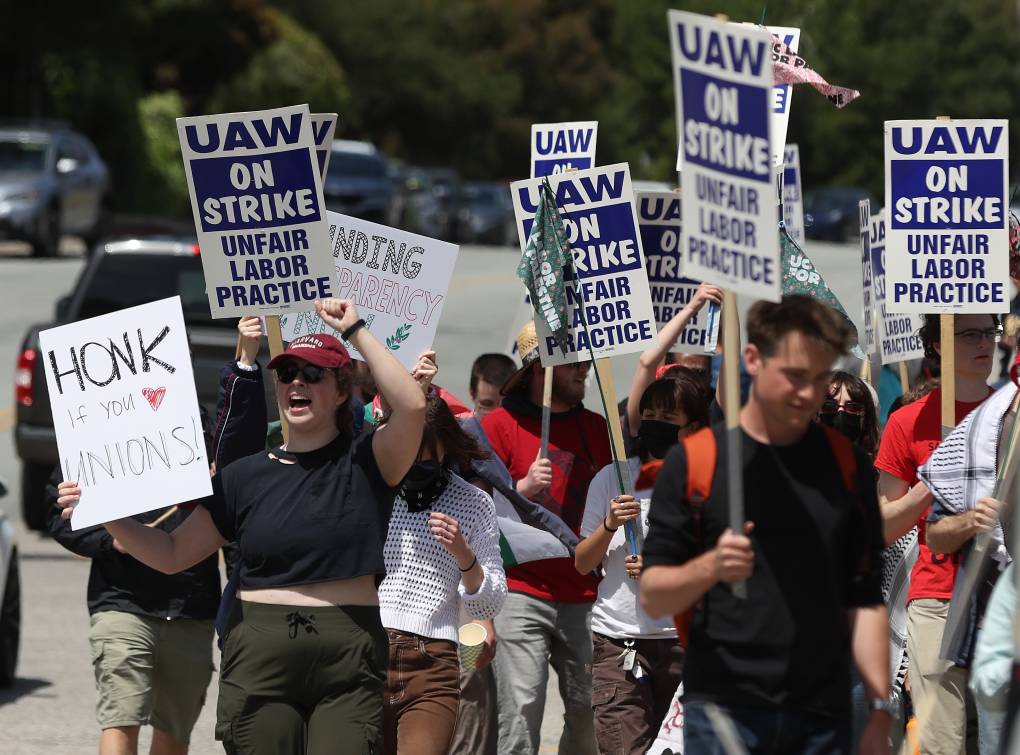
"caption": "SANTA CRUZ, CALIFORNIA - MAY 20: U.C. Santa Cruz workers who are union members of U.A.W. 4811, which is part of the United Auto Workers, carry signs as they picket in front of the U.C. Santa Cruz campus on May 20, 2024 in Santa Cruz, California. Academic workers at the University of California, Santa Cruz walked off the job Monday morning to strike in protest of the U.C. system’s handling of pro-Palestinian demonstrations. Organizers say the walkout will not last beyond June 30. ",
"credit": "Photo by Justin Sullivan/Getty Images",
"altTag": "academic worker strike",
"description": null,
"imgSizes": {
"medium": {
"file": "https://cdn.kqed.org/wp-content/uploads/sites/10/2024/05/GettyImages-2153874194-800x592.jpg",
"width": 800,
"height": 592,
"mimeType": "image/jpeg"
},
"large": {
"file": "https://cdn.kqed.org/wp-content/uploads/sites/10/2024/05/GettyImages-2153874194-1020x755.jpg",
"width": 1020,
"height": 755,
"mimeType": "image/jpeg"
},
"thumbnail": {
"file": "https://cdn.kqed.org/wp-content/uploads/sites/10/2024/05/GettyImages-2153874194-160x118.jpg",
"width": 160,
"height": 118,
"mimeType": "image/jpeg"
},
"1536x1536": {
"file": "https://cdn.kqed.org/wp-content/uploads/sites/10/2024/05/GettyImages-2153874194-1536x1137.jpg",
"width": 1536,
"height": 1137,
"mimeType": "image/jpeg"
},
"2048x2048": {
"file": "https://cdn.kqed.org/wp-content/uploads/sites/10/2024/05/GettyImages-2153874194-2048x1516.jpg",
"width": 2048,
"height": 1516,
"mimeType": "image/jpeg"
},
"post-thumbnail": {
"file": "https://cdn.kqed.org/wp-content/uploads/sites/10/2024/05/GettyImages-2153874194-672x372.jpg",
"width": 672,
"height": 372,
"mimeType": "image/jpeg"
},
"twentyfourteen-full-width": {
"file": "https://cdn.kqed.org/wp-content/uploads/sites/10/2024/05/GettyImages-2153874194-1038x576.jpg",
"width": 1038,
"height": 576,
"mimeType": "image/jpeg"
},
"full-width": {
"file": "https://cdn.kqed.org/wp-content/uploads/sites/10/2024/05/GettyImages-2153874194-1920x1421.jpg",
"width": 1920,
"height": 1421,
"mimeType": "image/jpeg"
},
"kqedFullSize": {
"file": "https://cdn.kqed.org/wp-content/uploads/sites/10/2024/05/GettyImages-2153874194-scaled.jpg",
"width": 2560,
"height": 1895
}
},
"isLoading": false,
"fetchFailed": false
},
"news_11987511": {
"type": "attachments",
"id": "news_11987511",
"meta": {
"index": "attachments_1716263798",
"site": "news",
"id": "11987511",
"found": true
},
"title": "240522-KQEDheadquarters-10-BL_qut",
"publishDate": 1716487818,
"status": "inherit",
"parent": 11987509,
"modified": 1716487863,
"caption": "A KQED sign in the lobby of the organization's headquarters in San Francisco.",
"credit": "Beth LaBerge/KQED",
"altTag": null,
"description": null,
"imgSizes": {
"medium": {
"file": "https://cdn.kqed.org/wp-content/uploads/sites/10/2024/05/240522-KQEDheadquarters-10-BL_qut-800x533.jpg",
"width": 800,
"height": 533,
"mimeType": "image/jpeg"
},
"large": {
"file": "https://cdn.kqed.org/wp-content/uploads/sites/10/2024/05/240522-KQEDheadquarters-10-BL_qut-1020x680.jpg",
"width": 1020,
"height": 680,
"mimeType": "image/jpeg"
},
"thumbnail": {
"file": "https://cdn.kqed.org/wp-content/uploads/sites/10/2024/05/240522-KQEDheadquarters-10-BL_qut-160x107.jpg",
"width": 160,
"height": 107,
"mimeType": "image/jpeg"
},
"1536x1536": {
"file": "https://cdn.kqed.org/wp-content/uploads/sites/10/2024/05/240522-KQEDheadquarters-10-BL_qut-1536x1024.jpg",
"width": 1536,
"height": 1024,
"mimeType": "image/jpeg"
},
"post-thumbnail": {
"file": "https://cdn.kqed.org/wp-content/uploads/sites/10/2024/05/240522-KQEDheadquarters-10-BL_qut-672x372.jpg",
"width": 672,
"height": 372,
"mimeType": "image/jpeg"
},
"twentyfourteen-full-width": {
"file": "https://cdn.kqed.org/wp-content/uploads/sites/10/2024/05/240522-KQEDheadquarters-10-BL_qut-1038x576.jpg",
"width": 1038,
"height": 576,
"mimeType": "image/jpeg"
},
"kqedFullSize": {
"file": "https://cdn.kqed.org/wp-content/uploads/sites/10/2024/05/240522-KQEDheadquarters-10-BL_qut.jpg",
"width": 1920,
"height": 1280
}
},
"isLoading": false,
"fetchFailed": false
},
"news_11987200": {
"type": "attachments",
"id": "news_11987200",
"meta": {
"index": "attachments_1716263798",
"site": "news",
"id": "11987200",
"found": true
},
"title": "KQED_Expansion_web_3_1000x600.jpg",
"publishDate": 1716328792,
"status": "inherit",
"parent": 11987176,
"modified": 1716328857,
"caption": "KQED's renovated headquarters in San Francisco.",
"credit": "Courtesy Jason O'Rear",
"altTag": null,
"description": null,
"imgSizes": {
"medium": {
"file": "https://cdn.kqed.org/wp-content/uploads/sites/10/2024/05/KQED_Expansion_web_3_1000x600.jpg-800x480.png",
"width": 800,
"height": 480,
"mimeType": "image/png"
},
"thumbnail": {
"file": "https://cdn.kqed.org/wp-content/uploads/sites/10/2024/05/KQED_Expansion_web_3_1000x600.jpg-160x96.png",
"width": 160,
"height": 96,
"mimeType": "image/png"
},
"post-thumbnail": {
"file": "https://cdn.kqed.org/wp-content/uploads/sites/10/2024/05/KQED_Expansion_web_3_1000x600.jpg-672x372.png",
"width": 672,
"height": 372,
"mimeType": "image/png"
},
"twentyfourteen-full-width": {
"file": "https://cdn.kqed.org/wp-content/uploads/sites/10/2024/05/KQED_Expansion_web_3_1000x600.jpg-1000x576.png",
"width": 1000,
"height": 576,
"mimeType": "image/png"
},
"kqedFullSize": {
"file": "https://cdn.kqed.org/wp-content/uploads/sites/10/2024/05/KQED_Expansion_web_3_1000x600.jpg.png",
"width": 1000,
"height": 600
}
},
"isLoading": false,
"fetchFailed": false
},
"news_11986331": {
"type": "attachments",
"id": "news_11986331",
"meta": {
"index": "attachments_1716263798",
"site": "news",
"id": "11986331",
"found": true
},
"parent": 0,
"imgSizes": {
"twentyfourteen-full-width": {
"file": "https://cdn.kqed.org/wp-content/uploads/sites/10/2024/05/ELIZABETH-VASQUEZ-KQED-1038x576.jpg",
"width": 1038,
"mimeType": "image/jpeg",
"height": 576
},
"thumbnail": {
"file": "https://cdn.kqed.org/wp-content/uploads/sites/10/2024/05/ELIZABETH-VASQUEZ-KQED-160x107.jpg",
"width": 160,
"mimeType": "image/jpeg",
"height": 107
},
"post-thumbnail": {
"file": "https://cdn.kqed.org/wp-content/uploads/sites/10/2024/05/ELIZABETH-VASQUEZ-KQED-672x372.jpg",
"width": 672,
"mimeType": "image/jpeg",
"height": 372
},
"kqedFullSize": {
"file": "https://cdn.kqed.org/wp-content/uploads/sites/10/2024/05/ELIZABETH-VASQUEZ-KQED.jpg",
"width": 2000,
"height": 1333
},
"large": {
"file": "https://cdn.kqed.org/wp-content/uploads/sites/10/2024/05/ELIZABETH-VASQUEZ-KQED-1020x680.jpg",
"width": 1020,
"mimeType": "image/jpeg",
"height": 680
},
"1536x1536": {
"file": "https://cdn.kqed.org/wp-content/uploads/sites/10/2024/05/ELIZABETH-VASQUEZ-KQED-1536x1024.jpg",
"width": 1536,
"mimeType": "image/jpeg",
"height": 1024
},
"full-width": {
"file": "https://cdn.kqed.org/wp-content/uploads/sites/10/2024/05/ELIZABETH-VASQUEZ-KQED-1920x1280.jpg",
"width": 1920,
"mimeType": "image/jpeg",
"height": 1280
},
"medium": {
"file": "https://cdn.kqed.org/wp-content/uploads/sites/10/2024/05/ELIZABETH-VASQUEZ-KQED-800x533.jpg",
"width": 800,
"mimeType": "image/jpeg",
"height": 533
}
},
"publishDate": 1715798057,
"modified": 1715816088,
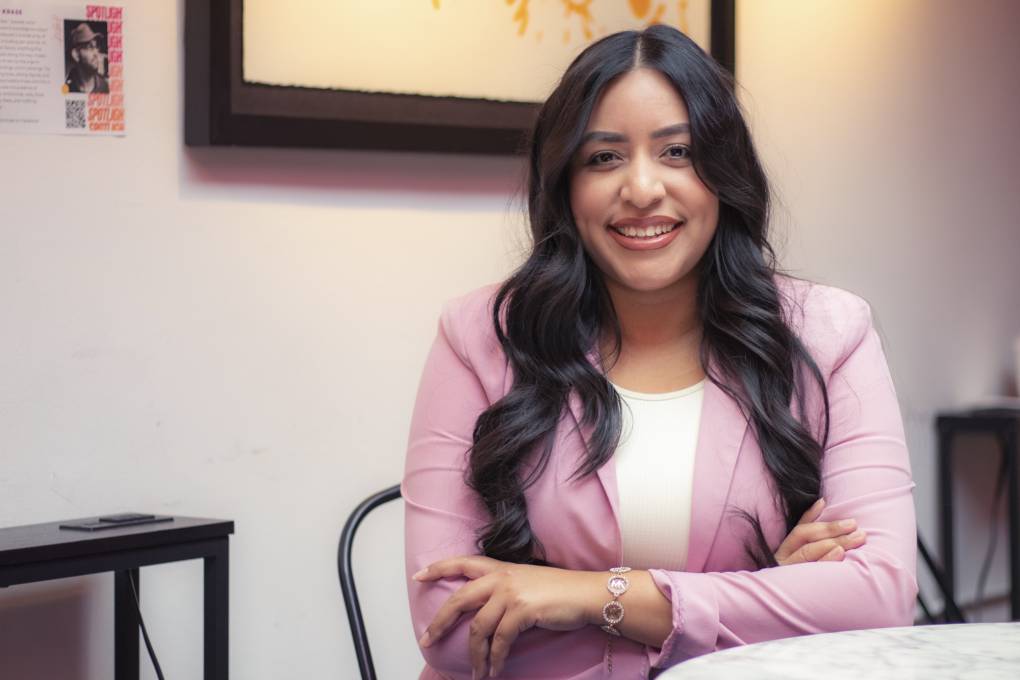
"caption": "San Jose-native Elizabeth Vasquez works in marketing for tech companies and leads the Latinas in Tech Silicon Valley chapter.",
"description": null,
"title": "ELIZABETH VASQUEZ-KQED",
"credit": "Courtesy of Marietta Asemwota",
"status": "inherit",
"altTag": "A Latina woman wearing a pink blazer seated with her arms crossed.",
"isLoading": false,
"fetchFailed": false
},
"news_11985681": {
"type": "attachments",
"id": "news_11985681",
"meta": {
"index": "attachments_1716263798",
"site": "news",
"id": "11985681",
"found": true
},
"parent": 11985677,
"imgSizes": {
"twentyfourteen-full-width": {
"file": "https://cdn.kqed.org/wp-content/uploads/sites/10/2024/05/AP24120732437208-1038x576.jpg",
"width": 1038,
"mimeType": "image/jpeg",
"height": 576
},
"thumbnail": {
"file": "https://cdn.kqed.org/wp-content/uploads/sites/10/2024/05/AP24120732437208-160x128.jpg",
"width": 160,
"mimeType": "image/jpeg",
"height": 128
},
"post-thumbnail": {
"file": "https://cdn.kqed.org/wp-content/uploads/sites/10/2024/05/AP24120732437208-672x372.jpg",
"width": 672,
"mimeType": "image/jpeg",
"height": 372
},
"kqedFullSize": {
"file": "https://cdn.kqed.org/wp-content/uploads/sites/10/2024/05/AP24120732437208.jpg",
"width": 1920,
"height": 1532
},
"large": {
"file": "https://cdn.kqed.org/wp-content/uploads/sites/10/2024/05/AP24120732437208-1020x814.jpg",
"width": 1020,
"mimeType": "image/jpeg",
"height": 814
},
"1536x1536": {
"file": "https://cdn.kqed.org/wp-content/uploads/sites/10/2024/05/AP24120732437208-1536x1226.jpg",
"width": 1536,
"mimeType": "image/jpeg",
"height": 1226
},
"medium": {
"file": "https://cdn.kqed.org/wp-content/uploads/sites/10/2024/05/AP24120732437208-800x638.jpg",
"width": 800,
"mimeType": "image/jpeg",
"height": 638
}
},
"publishDate": 1715361519,
"modified": 1715361582,
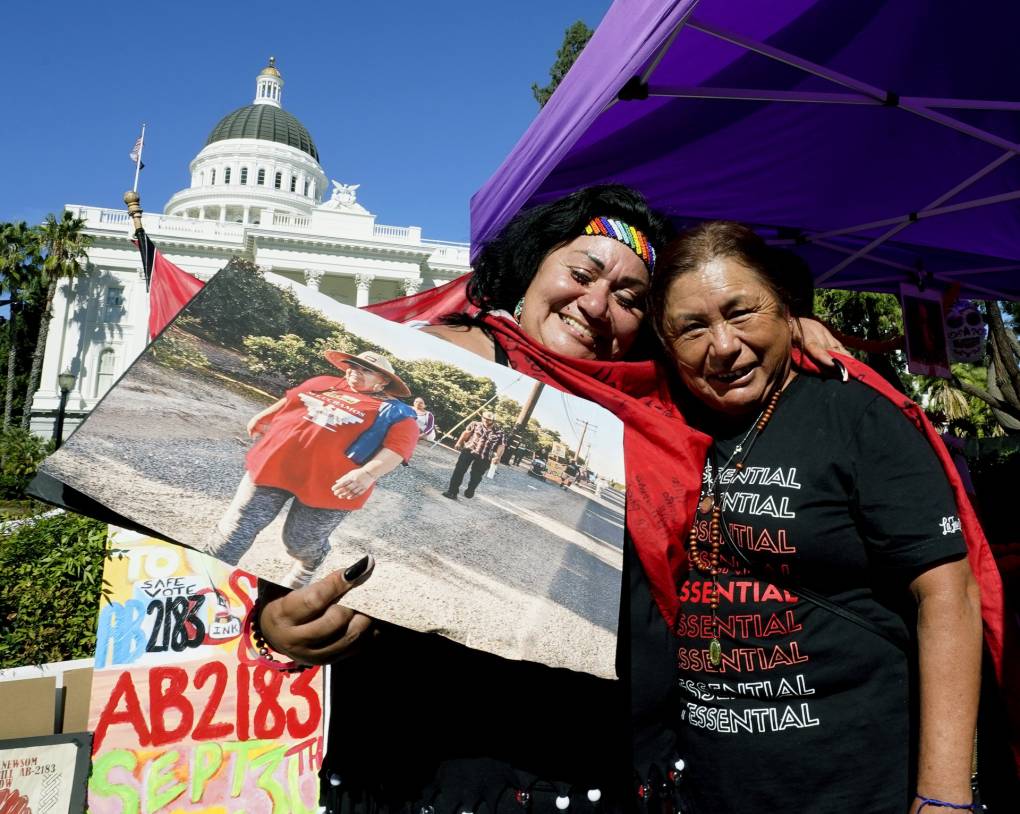
"caption": "Farmworkers Cynthia Burgos, left and Teresa Maldonado, right, hug after Gov. Gavin Newsom signed a bill aimed at making it easier for farmworkers to unionize in Sacramento, Calif., Sept. 28, 2022. A battle between The Wonderful Co. which grows pistachios, pomegranates, citrus and other crops and United Farm Workers is over new rules in California aimed at making it easier for farmworkers to form unions. ",
"description": null,
"title": "California Farmworkers Unions",
"credit": "Rich Pedroncelli/AP Photo",
"status": "inherit",
"altTag": null,
"isLoading": false,
"fetchFailed": false
},
"news_11985705": {
"type": "attachments",
"id": "news_11985705",
"meta": {
"index": "attachments_1716263798",
"site": "news",
"id": "11985705",
"found": true
},
"parent": 11985695,
"imgSizes": {
"twentyfourteen-full-width": {
"file": "https://cdn.kqed.org/wp-content/uploads/sites/10/2024/05/AP24130678077165-1038x576.jpg",
"width": 1038,
"mimeType": "image/jpeg",
"height": 576
},
"thumbnail": {
"file": "https://cdn.kqed.org/wp-content/uploads/sites/10/2024/05/AP24130678077165-160x107.jpg",
"width": 160,
"mimeType": "image/jpeg",
"height": 107
},
"post-thumbnail": {
"file": "https://cdn.kqed.org/wp-content/uploads/sites/10/2024/05/AP24130678077165-672x372.jpg",
"width": 672,
"mimeType": "image/jpeg",
"height": 372
},
"kqedFullSize": {
"file": "https://cdn.kqed.org/wp-content/uploads/sites/10/2024/05/AP24130678077165-scaled.jpg",
"width": 2560,
"height": 1707
},
"2048x2048": {
"file": "https://cdn.kqed.org/wp-content/uploads/sites/10/2024/05/AP24130678077165-2048x1365.jpg",
"width": 2048,
"mimeType": "image/jpeg",
"height": 1365
},
"large": {
"file": "https://cdn.kqed.org/wp-content/uploads/sites/10/2024/05/AP24130678077165-1020x680.jpg",
"width": 1020,
"mimeType": "image/jpeg",
"height": 680
},
"1536x1536": {
"file": "https://cdn.kqed.org/wp-content/uploads/sites/10/2024/05/AP24130678077165-1536x1024.jpg",
"width": 1536,
"mimeType": "image/jpeg",
"height": 1024
},
"full-width": {
"file": "https://cdn.kqed.org/wp-content/uploads/sites/10/2024/05/AP24130678077165-1920x1280.jpg",
"width": 1920,
"mimeType": "image/jpeg",
"height": 1280
},
"medium": {
"file": "https://cdn.kqed.org/wp-content/uploads/sites/10/2024/05/AP24130678077165-800x533.jpg",
"width": 800,
"mimeType": "image/jpeg",
"height": 533
}
},
"publishDate": 1715365561,
"modified": 1715371751,
"caption": "California Gov. Gavin Newsom discusses his budget proposal in Sacramento on Jan. 10, 2024. Newsom released his updated budget proposal on Friday, May 10, 2024.",
"description": null,
"title": "California Budget",
"credit": "Rich Pedroncelli/AP Photo",
"status": "inherit",
"altTag": "A white, middle-aged man speaks behind a lectern with a screen with a graph in the background.",
"isLoading": false,
"fetchFailed": false
},
"news_11984986": {
"type": "attachments",
"id": "news_11984986",
"meta": {
"index": "attachments_1716263798",
"site": "news",
"id": "11984986",
"found": true
},
"parent": 11985277,
"imgSizes": {
"twentyfourteen-full-width": {
"file": "https://cdn.kqed.org/wp-content/uploads/sites/10/2024/05/240501-FAST-FOOD-MIN-WAGE-HIKE-MD-01-KQED-1-1038x576.jpg",
"width": 1038,
"mimeType": "image/jpeg",
"height": 576
},
"thumbnail": {
"file": "https://cdn.kqed.org/wp-content/uploads/sites/10/2024/05/240501-FAST-FOOD-MIN-WAGE-HIKE-MD-01-KQED-1-160x107.jpg",
"width": 160,
"mimeType": "image/jpeg",
"height": 107
},
"post-thumbnail": {
"file": "https://cdn.kqed.org/wp-content/uploads/sites/10/2024/05/240501-FAST-FOOD-MIN-WAGE-HIKE-MD-01-KQED-1-672x372.jpg",
"width": 672,
"mimeType": "image/jpeg",
"height": 372
},
"kqedFullSize": {
"file": "https://cdn.kqed.org/wp-content/uploads/sites/10/2024/05/240501-FAST-FOOD-MIN-WAGE-HIKE-MD-01-KQED-1.jpg",
"width": 2000,
"height": 1333
},
"large": {
"file": "https://cdn.kqed.org/wp-content/uploads/sites/10/2024/05/240501-FAST-FOOD-MIN-WAGE-HIKE-MD-01-KQED-1-1020x680.jpg",
"width": 1020,
"mimeType": "image/jpeg",
"height": 680
},
"1536x1536": {
"file": "https://cdn.kqed.org/wp-content/uploads/sites/10/2024/05/240501-FAST-FOOD-MIN-WAGE-HIKE-MD-01-KQED-1-1536x1024.jpg",
"width": 1536,
"mimeType": "image/jpeg",
"height": 1024
},
"full-width": {
"file": "https://cdn.kqed.org/wp-content/uploads/sites/10/2024/05/240501-FAST-FOOD-MIN-WAGE-HIKE-MD-01-KQED-1-1920x1280.jpg",
"width": 1920,
"mimeType": "image/jpeg",
"height": 1280
},
"medium": {
"file": "https://cdn.kqed.org/wp-content/uploads/sites/10/2024/05/240501-FAST-FOOD-MIN-WAGE-HIKE-MD-01-KQED-1-800x533.jpg",
"width": 800,
"mimeType": "image/jpeg",
"height": 533
}
},
"publishDate": 1714756349,
"modified": 1715189712,
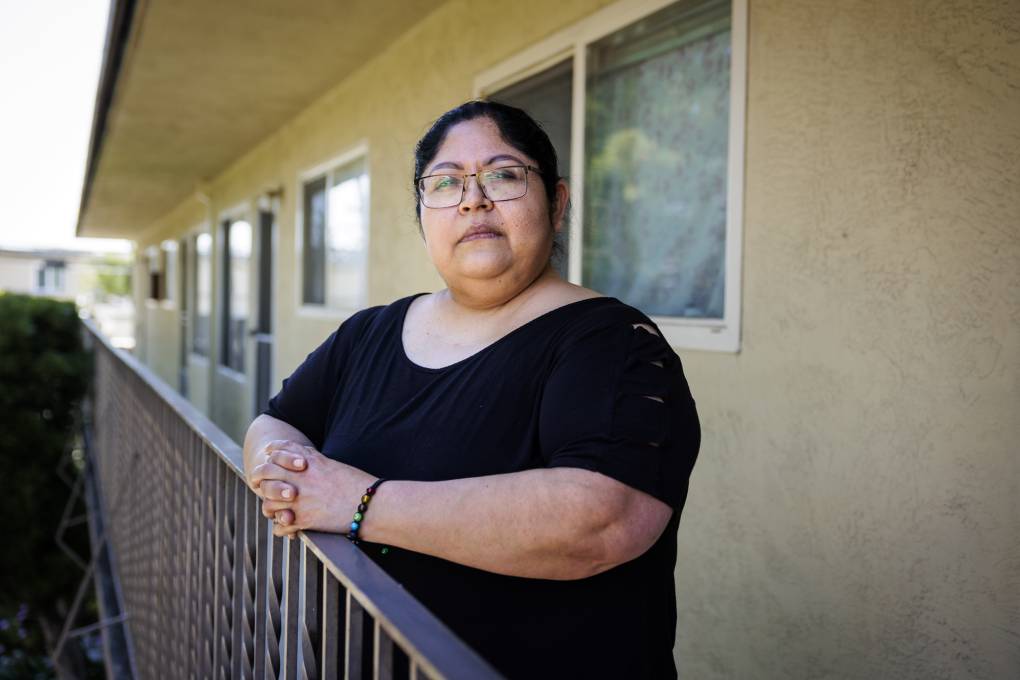
"caption": "Karina Ceballos at her home in Castro Valley on May 2, 2024. Ceballos works at two fast-food restaurants and recently received a pay increase due to California's new higher minimum wage for most fast-food workers.",
"description": null,
"title": "Karina Ceballos at her home in Castro Valley on May 2, 2024.",
"credit": "Martin do Nascimento/KQED",
"status": "inherit",
"altTag": "A Latina woman wearing glasses and a black short-sleeved shirt stands on the balcony of an apartment building with her hands resting on the rails.",
"isLoading": false,
"fetchFailed": false
},
"news_11984655": {
"type": "attachments",
"id": "news_11984655",
"meta": {
"index": "attachments_1716263798",
"site": "news",
"id": "11984655",
"found": true
},
"parent": 0,
"imgSizes": {
"twentyfourteen-full-width": {
"file": "https://cdn.kqed.org/wp-content/uploads/sites/10/2024/05/20240501_MAYDAYRALLY-27-GC-KQED-1038x576.jpg",
"width": 1038,
"mimeType": "image/jpeg",
"height": 576
},
"thumbnail": {
"file": "https://cdn.kqed.org/wp-content/uploads/sites/10/2024/05/20240501_MAYDAYRALLY-27-GC-KQED-160x107.jpg",
"width": 160,
"mimeType": "image/jpeg",
"height": 107
},
"post-thumbnail": {
"file": "https://cdn.kqed.org/wp-content/uploads/sites/10/2024/05/20240501_MAYDAYRALLY-27-GC-KQED-672x372.jpg",
"width": 672,
"mimeType": "image/jpeg",
"height": 372
},
"kqedFullSize": {
"file": "https://cdn.kqed.org/wp-content/uploads/sites/10/2024/05/20240501_MAYDAYRALLY-27-GC-KQED.jpg",
"width": 2000,
"height": 1333
},
"large": {
"file": "https://cdn.kqed.org/wp-content/uploads/sites/10/2024/05/20240501_MAYDAYRALLY-27-GC-KQED-1020x680.jpg",
"width": 1020,
"mimeType": "image/jpeg",
"height": 680
},
"1536x1536": {
"file": "https://cdn.kqed.org/wp-content/uploads/sites/10/2024/05/20240501_MAYDAYRALLY-27-GC-KQED-1536x1024.jpg",
"width": 1536,
"mimeType": "image/jpeg",
"height": 1024
},
"full-width": {
"file": "https://cdn.kqed.org/wp-content/uploads/sites/10/2024/05/20240501_MAYDAYRALLY-27-GC-KQED-1920x1280.jpg",
"width": 1920,
"mimeType": "image/jpeg",
"height": 1280
},
"medium": {
"file": "https://cdn.kqed.org/wp-content/uploads/sites/10/2024/05/20240501_MAYDAYRALLY-27-GC-KQED-800x533.jpg",
"width": 800,
"mimeType": "image/jpeg",
"height": 533
}
},
"publishDate": 1714592618,
"modified": 1714592839,
"caption": "An individual who goes by Ghassan, left, leads demonstrators on Mission Street at the May Day rally during International Worker’s Day on Wednesday, May 1, 2024.",
"description": null,
"title": "20240501_MAYDAYRALLY-27-GC-KQED",
"credit": "Gina Castro/KQED",
"status": "inherit",
"altTag": null,
"isLoading": false,
"fetchFailed": false
},
"news_11984239": {
"type": "attachments",
"id": "news_11984239",
"meta": {
"index": "attachments_1716263798",
"site": "news",
"id": "11984239",
"found": true
},
"title": "20240426_DEPTOFLABORANNOUNCEMENT-22-GC-KQED",
"publishDate": 1714168037,
"status": "inherit",
"parent": 0,
"modified": 1756850534,
"caption": "Former acting Secretary of Labor Julie Su speaks with farmworkers during a press conference in Santa Rosa on Friday, April 26, 2024. ",
"credit": "Gina Castro/KQED",
"altTag": "An older Asian woman in a red suit leans over as she speaks to a woman seen from behind.",
"description": "Acting Secretary of Labor Julie Su speaks with farmworkers during a press conference in Santa Rosa on Friday, April 26, 2024, announcing new protections for H2A immigrant farmworkers to ensure fair labor standards are met in the U.S. agricultural industry.",
"imgSizes": {
"medium": {
"file": "https://cdn.kqed.org/wp-content/uploads/sites/10/2024/04/20240426_DEPTOFLABORANNOUNCEMENT-22-GC-KQED-800x533.jpg",
"width": 800,
"height": 533,
"mimeType": "image/jpeg"
},
"large": {
"file": "https://cdn.kqed.org/wp-content/uploads/sites/10/2024/04/20240426_DEPTOFLABORANNOUNCEMENT-22-GC-KQED-1020x680.jpg",
"width": 1020,
"height": 680,
"mimeType": "image/jpeg"
},
"thumbnail": {
"file": "https://cdn.kqed.org/wp-content/uploads/sites/10/2024/04/20240426_DEPTOFLABORANNOUNCEMENT-22-GC-KQED-160x107.jpg",
"width": 160,
"height": 107,
"mimeType": "image/jpeg"
},
"1536x1536": {
"file": "https://cdn.kqed.org/wp-content/uploads/sites/10/2024/04/20240426_DEPTOFLABORANNOUNCEMENT-22-GC-KQED-1536x1024.jpg",
"width": 1536,
"height": 1024,
"mimeType": "image/jpeg"
},
"post-thumbnail": {
"file": "https://cdn.kqed.org/wp-content/uploads/sites/10/2024/04/20240426_DEPTOFLABORANNOUNCEMENT-22-GC-KQED-672x372.jpg",
"width": 672,
"height": 372,
"mimeType": "image/jpeg"
},
"twentyfourteen-full-width": {
"file": "https://cdn.kqed.org/wp-content/uploads/sites/10/2024/04/20240426_DEPTOFLABORANNOUNCEMENT-22-GC-KQED-1038x576.jpg",
"width": 1038,
"height": 576,
"mimeType": "image/jpeg"
},
"full-width": {
"file": "https://cdn.kqed.org/wp-content/uploads/sites/10/2024/04/20240426_DEPTOFLABORANNOUNCEMENT-22-GC-KQED-1920x1280.jpg",
"width": 1920,
"height": 1280,
"mimeType": "image/jpeg"
},
"kqedFullSize": {
"file": "https://cdn.kqed.org/wp-content/uploads/sites/10/2024/04/20240426_DEPTOFLABORANNOUNCEMENT-22-GC-KQED.jpg",
"width": 2000,
"height": 1333
}
},
"isLoading": false,
"fetchFailed": false
},
"news_11966855": {
"type": "attachments",
"id": "news_11966855",
"meta": {
"index": "attachments_1716263798",
"site": "news",
"id": "11966855",
"found": true
},
"parent": 11966854,
"imgSizes": {
"twentyfourteen-full-width": {
"file": "https://cdn.kqed.org/wp-content/uploads/sites/10/2023/11/GettyImages-1783198811-1038x576.jpg",
"width": 1038,
"mimeType": "image/jpeg",
"height": 576
},
"thumbnail": {
"file": "https://cdn.kqed.org/wp-content/uploads/sites/10/2023/11/GettyImages-1783198811-160x109.jpg",
"width": 160,
"mimeType": "image/jpeg",
"height": 109
},
"post-thumbnail": {
"file": "https://cdn.kqed.org/wp-content/uploads/sites/10/2023/11/GettyImages-1783198811-672x372.jpg",
"width": 672,
"mimeType": "image/jpeg",
"height": 372
},
"kqedFullSize": {
"file": "https://cdn.kqed.org/wp-content/uploads/sites/10/2023/11/GettyImages-1783198811-scaled.jpg",
"width": 2560,
"height": 1741
},
"2048x2048": {
"file": "https://cdn.kqed.org/wp-content/uploads/sites/10/2023/11/GettyImages-1783198811-2048x1393.jpg",
"width": 2048,
"mimeType": "image/jpeg",
"height": 1393
},
"large": {
"file": "https://cdn.kqed.org/wp-content/uploads/sites/10/2023/11/GettyImages-1783198811-1020x694.jpg",
"width": 1020,
"mimeType": "image/jpeg",
"height": 694
},
"1536x1536": {
"file": "https://cdn.kqed.org/wp-content/uploads/sites/10/2023/11/GettyImages-1783198811-1536x1045.jpg",
"width": 1536,
"mimeType": "image/jpeg",
"height": 1045
},
"full-width": {
"file": "https://cdn.kqed.org/wp-content/uploads/sites/10/2023/11/GettyImages-1783198811-1920x1306.jpg",
"width": 1920,
"mimeType": "image/jpeg",
"height": 1306
},
"medium": {
"file": "https://cdn.kqed.org/wp-content/uploads/sites/10/2023/11/GettyImages-1783198811-800x544.jpg",
"width": 800,
"mimeType": "image/jpeg",
"height": 544
}
},
"publishDate": 1699542766,
"modified": 1714006872,
"caption": "Screenwriters in the SAG-AFTRA union rally outside Paramount Studios in Los Angeles on Nov. 8, 2023, the 118th day of their strike against the Hollywood studios.",
"description": null,
"title": "SAG-AFTRA And Studios Inch Closer To Deal After AI Breakthrough",
"credit": "Mario Tama/Getty Images",
"status": "inherit",
"altTag": null,
"isLoading": false,
"fetchFailed": false
},
"news_11982310": {
"type": "attachments",
"id": "news_11982310",
"meta": {
"index": "attachments_1716263798",
"site": "news",
"id": "11982310",
"found": true
},
"parent": 0,
"imgSizes": {
"twentyfourteen-full-width": {
"file": "https://cdn.kqed.org/wp-content/uploads/sites/10/2024/04/240408-UCLAWSF-014-BL-KQED-1038x576.jpg",
"width": 1038,
"mimeType": "image/jpeg",
"height": 576
},
"thumbnail": {
"file": "https://cdn.kqed.org/wp-content/uploads/sites/10/2024/04/240408-UCLAWSF-014-BL-KQED-160x107.jpg",
"width": 160,
"mimeType": "image/jpeg",
"height": 107
},
"post-thumbnail": {
"file": "https://cdn.kqed.org/wp-content/uploads/sites/10/2024/04/240408-UCLAWSF-014-BL-KQED-672x372.jpg",
"width": 672,
"mimeType": "image/jpeg",
"height": 372
},
"kqedFullSize": {
"file": "https://cdn.kqed.org/wp-content/uploads/sites/10/2024/04/240408-UCLAWSF-014-BL-KQED.jpg",
"width": 2000,
"height": 1333
},
"large": {
"file": "https://cdn.kqed.org/wp-content/uploads/sites/10/2024/04/240408-UCLAWSF-014-BL-KQED-1020x680.jpg",
"width": 1020,
"mimeType": "image/jpeg",
"height": 680
},
"1536x1536": {
"file": "https://cdn.kqed.org/wp-content/uploads/sites/10/2024/04/240408-UCLAWSF-014-BL-KQED-1536x1024.jpg",
"width": 1536,
"mimeType": "image/jpeg",
"height": 1024
},
"full-width": {
"file": "https://cdn.kqed.org/wp-content/uploads/sites/10/2024/04/240408-UCLAWSF-014-BL-KQED-1920x1280.jpg",
"width": 1920,
"mimeType": "image/jpeg",
"height": 1280
},
"medium": {
"file": "https://cdn.kqed.org/wp-content/uploads/sites/10/2024/04/240408-UCLAWSF-014-BL-KQED-800x533.jpg",
"width": 800,
"mimeType": "image/jpeg",
"height": 533
}
},
"publishDate": 1712621442,
"modified": 1712688347,
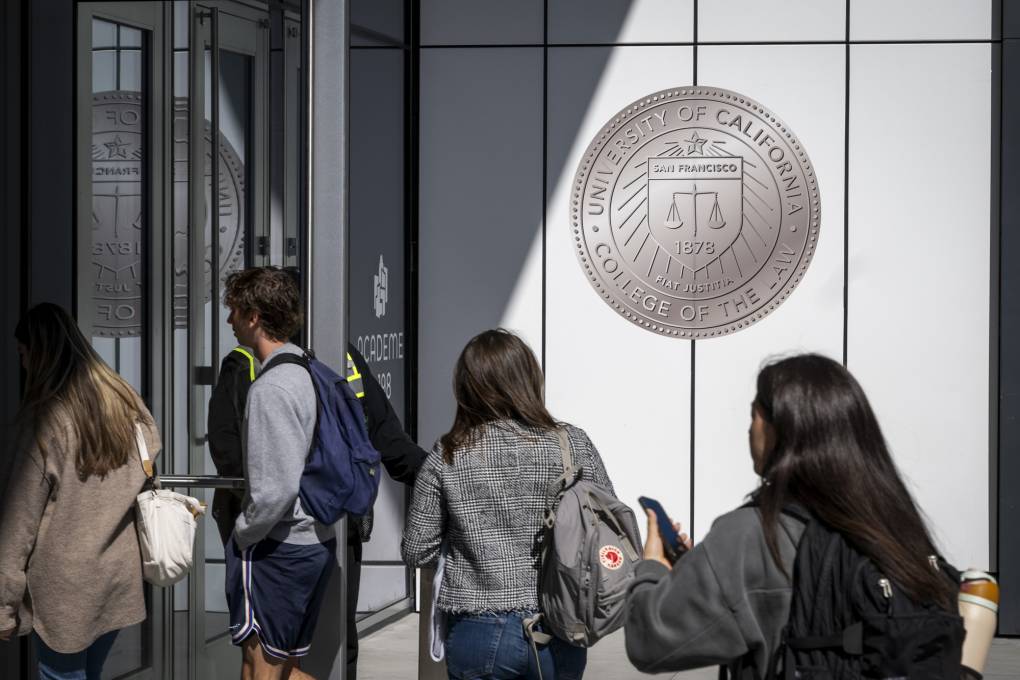
"caption": "Students walk into UC Law San Francisco, formerly known as UC Hastings, on April 8, 2024.",
"description": null,
"title": "240408-UCLAWSF-014-BL-KQED",
"credit": "Beth LaBerge/KQED",
"status": "inherit",
"altTag": null,
"isLoading": false,
"fetchFailed": false
},
"news_11982219": {
"type": "attachments",
"id": "news_11982219",
"meta": {
"index": "attachments_1716263798",
"site": "news",
"id": "11982219",
"found": true
},
"parent": 11982218,
"imgSizes": {
"twentyfourteen-full-width": {
"file": "https://cdn.kqed.org/wp-content/uploads/sites/10/2024/04/CMDoctors01-1038x576.jpg",
"width": 1038,
"mimeType": "image/jpeg",
"height": 576
},
"thumbnail": {
"file": "https://cdn.kqed.org/wp-content/uploads/sites/10/2024/04/CMDoctors01-160x107.jpg",
"width": 160,
"mimeType": "image/jpeg",
"height": 107
},
"post-thumbnail": {
"file": "https://cdn.kqed.org/wp-content/uploads/sites/10/2024/04/CMDoctors01-672x372.jpg",
"width": 672,
"mimeType": "image/jpeg",
"height": 372
},
"kqedFullSize": {
"file": "https://cdn.kqed.org/wp-content/uploads/sites/10/2024/04/CMDoctors01.jpg",
"width": 2000,
"height": 1333
},
"large": {
"file": "https://cdn.kqed.org/wp-content/uploads/sites/10/2024/04/CMDoctors01-1020x680.jpg",
"width": 1020,
"mimeType": "image/jpeg",
"height": 680
},
"1536x1536": {
"file": "https://cdn.kqed.org/wp-content/uploads/sites/10/2024/04/CMDoctors01-1536x1024.jpg",
"width": 1536,
"mimeType": "image/jpeg",
"height": 1024
},
"full-width": {
"file": "https://cdn.kqed.org/wp-content/uploads/sites/10/2024/04/CMDoctors01-1920x1280.jpg",
"width": 1920,
"mimeType": "image/jpeg",
"height": 1280
},
"medium": {
"file": "https://cdn.kqed.org/wp-content/uploads/sites/10/2024/04/CMDoctors01-800x533.jpg",
"width": 800,
"mimeType": "image/jpeg",
"height": 533
}
},
"publishDate": 1712594783,
"modified": 1712594821,
"caption": "Kaiser Permanente employees on strike on Oct. 4, 2023. The workers held a demonstration in front of the Kaiser Permanente South Sacramento location demanding higher wages and more staffing.",
"description": null,
"title": "CMDoctors01",
"credit": "Miguel Gutierrez Jr./CalMatters",
"status": "inherit",
"altTag": null,
"isLoading": false,
"fetchFailed": false
}
},
"audioPlayerReducer": {
"postId": "stream_live",
"isPaused": true,
"isPlaying": false,
"pfsActive": false,
"pledgeModalIsOpen": true,
"playerDrawerIsOpen": false,
"liveAudioPlayStartedAt": 0,
"liveAudioPlayContext": ""
},
"authorsReducer": {
"byline_news_11985677": {
"type": "authors",
"id": "byline_news_11985677",
"meta": {
"override": true
},
"slug": "byline_news_11985677",
"name": "Amy Taxin, The Associated Press",
"isLoading": false
},
"byline_news_11985695": {
"type": "authors",
"id": "byline_news_11985695",
"meta": {
"override": true
},
"slug": "byline_news_11985695",
"name": "Adam Beam\u003cbr>Associated Press",
"isLoading": false
},
"byline_news_11982218": {
"type": "authors",
"id": "byline_news_11982218",
"meta": {
"override": true
},
"slug": "byline_news_11982218",
"name": "\u003ca href=\"https://calmatters.org/author/kristen-hwang/\">Kristen Hwang\u003c/a>",
"isLoading": false
},
"fjhabvala": {
"type": "authors",
"id": "8659",
"meta": {
"index": "authors_1716337520",
"id": "8659",
"found": true
},
"name": "Farida Jhabvala Romero",
"firstName": "Farida",
"lastName": "Jhabvala Romero",
"slug": "fjhabvala",
"email": "fjhabvala@kqed.org",
"display_author_email": true,
"staff_mastheads": [
"news"
],
"title": "KQED Contributor",
"bio": "Farida Jhabvala Romero is a Labor Correspondent for KQED. She previously covered immigration. Farida was \u003ca href=\"https://www.ccnma.org/2022-most-influential-latina-journalists\">named\u003c/a> one of the 10 Most Influential Latina Journalists in California in 2022 by the California Chicano News Media Association. Her work has won awards from the Society of Professional Journalists (Northern California), as well as a national and regional Edward M. Murrow Award for the collaborative reporting projects “Dangerous Air” and “Graying California.” Before joining KQED, Farida worked as a producer at Radio Bilingüe, a national public radio network. Farida earned her master’s degree in journalism from Stanford University.",
"avatar": "https://secure.gravatar.com/avatar/f9f022d4e2609741874222a1e9d41f48fea74011aa7c615eef91d9a50c944ebe?s=600&d=blank&r=g",
"twitter": "FaridaJhabvala",
"bluesky": null,
"facebook": null,
"instagram": null,
"linkedin": "https://www.linkedin.com/in/faridajhabvala/",
"sites": [
{
"site": "news",
"roles": [
"editor"
]
},
{
"site": "stateofhealth",
"roles": [
"author"
]
},
{
"site": "liveblog",
"roles": [
"author"
]
}
],
"headData": {
"title": "Farida Jhabvala Romero | KQED",
"description": "KQED Contributor",
"ogImgSrc": "https://secure.gravatar.com/avatar/f9f022d4e2609741874222a1e9d41f48fea74011aa7c615eef91d9a50c944ebe?s=600&d=blank&r=g",
"twImgSrc": "https://secure.gravatar.com/avatar/f9f022d4e2609741874222a1e9d41f48fea74011aa7c615eef91d9a50c944ebe?s=600&d=blank&r=g"
},
"isLoading": false,
"link": "/author/fjhabvala"
},
"ebaldassari": {
"type": "authors",
"id": "11652",
"meta": {
"index": "authors_1716337520",
"id": "11652",
"found": true
},
"name": "Erin Baldassari",
"firstName": "Erin",
"lastName": "Baldassari",
"slug": "ebaldassari",
"email": "ebaldassari@KQED.org",
"display_author_email": true,
"staff_mastheads": [
"news"
],
"title": "Staff Writer",
"bio": "Erin Baldassari covers housing for KQED. She's a former print journalist and most recently worked as the transportation reporter for the \u003cem>Mercury News\u003c/em> and \u003cem>East Bay Times. \u003c/em>There, she focused on how the Bay Area’s housing shortage has changed the way people move around the region. She also served on the \u003cem>East Bay Times\u003c/em>’ 2017 Pulitzer Prize-winning team for coverage of the Ghost Ship Fire in Oakland. Prior to that, Erin worked as a breaking news and general assignment reporter for a variety of outlets in the Bay Area and the greater Boston area. A Tufts University alumna, Erin grew up in the foothills of the Sierra Nevada mountains and in Sonoma County. She is a life-long KQED listener.",
"avatar": "https://secure.gravatar.com/avatar/5e95cad64a8ca08288082212e199d2b0cbeb4fd8e8ef5339395f361032bbe005?s=600&d=blank&r=g",
"twitter": "e_baldi",
"bluesky": null,
"facebook": null,
"instagram": null,
"linkedin": null,
"sites": [
{
"site": "news",
"roles": [
"edit_others_posts",
"editor"
]
},
{
"site": "science",
"roles": [
"editor"
]
},
{
"site": "liveblog",
"roles": [
"editor"
]
}
],
"headData": {
"title": "Erin Baldassari | KQED",
"description": "Staff Writer",
"ogImgSrc": "https://secure.gravatar.com/avatar/5e95cad64a8ca08288082212e199d2b0cbeb4fd8e8ef5339395f361032bbe005?s=600&d=blank&r=g",
"twImgSrc": "https://secure.gravatar.com/avatar/5e95cad64a8ca08288082212e199d2b0cbeb4fd8e8ef5339395f361032bbe005?s=600&d=blank&r=g"
},
"isLoading": false,
"link": "/author/ebaldassari"
},
"btorres": {
"type": "authors",
"id": "11666",
"meta": {
"index": "authors_1716337520",
"id": "11666",
"found": true
},
"name": "Blanca Torres",
"firstName": "Blanca",
"lastName": "Torres",
"slug": "btorres",
"email": "btorres@kqed.org",
"display_author_email": true,
"staff_mastheads": [
"news"
],
"title": "Producer, Forum",
"bio": "Blanca Torres brings sharp news judgement and keen sense of lively conversation to her work as producer for Forum. She loves producing shows that leave listeners feeling like they heard distinctive voices, learned something new and gained a fresh perspective.\r\n\r\nShe joined KQED in January of 2020 after 16 years of working as a newspaper reporter most recently at the \u003cem>San Francisco Business Times,\u003c/em> where she wrote about real estate and economic development. Before that, she covered a variety of beats including crime, education, retail, workplace, the economy, consumer issues, and small business for the \u003cem>Contra Costa Times, Baltimore Sun\u003c/em> and\u003cem> The Seattle Times\u003c/em>. In addition to reporting, she worked as an editorial writer and columnist for the \u003cem>Seattle Times\u003c/em>. From 2017 to 2020, Blanca won a total of ten awards from the National Association of Real Estate Editors and won first place for land use reporting from the California News Publishers Association two years in a row. She is also a member and former board member for the National Association of Hispanic Journalists.\r\n\r\nA native of the Pacific Northwest, Blanca earned her bachelor's degree from Vanderbilt University in Nashville and a master's in fine arts in creative writing at Mills College. She lives in the East Bay with her family.",
"avatar": "https://secure.gravatar.com/avatar/50b49d19b14a1eed34f26ebf4681152cdd81574ed21851100871ccd29e578cdc?s=600&d=blank&r=g",
"twitter": "@blancawrites",
"bluesky": null,
"facebook": null,
"instagram": null,
"linkedin": null,
"sites": [
{
"site": "arts",
"roles": [
"editor"
]
},
{
"site": "news",
"roles": [
"editor"
]
},
{
"site": "forum",
"roles": [
"editor"
]
}
],
"headData": {
"title": "Blanca Torres | KQED",
"description": "Producer, Forum",
"ogImgSrc": "https://secure.gravatar.com/avatar/50b49d19b14a1eed34f26ebf4681152cdd81574ed21851100871ccd29e578cdc?s=600&d=blank&r=g",
"twImgSrc": "https://secure.gravatar.com/avatar/50b49d19b14a1eed34f26ebf4681152cdd81574ed21851100871ccd29e578cdc?s=600&d=blank&r=g"
},
"isLoading": false,
"link": "/author/btorres"
},
"ccabreralomeli": {
"type": "authors",
"id": "11708",
"meta": {
"index": "authors_1716337520",
"id": "11708",
"found": true
},
"name": "Carlos Cabrera-Lomelí",
"firstName": "Carlos",
"lastName": "Cabrera-Lomelí",
"slug": "ccabreralomeli",
"email": "ccabreralomeli@KQED.org",
"display_author_email": true,
"staff_mastheads": [
"news"
],
"title": "Community Reporter",
"bio": "Carlos Cabrera-Lomelí is a community reporter with KQED's digital engagement team. He also reports and co-produces for KQED's bilingual news hub KQED en Español. He grew up in San Francisco's Mission District and has previously worked with Univision, 48 Hills and REFORMA in Mexico City.",
"avatar": "https://secure.gravatar.com/avatar/c309be9665e484f887b818c89e273ecc673004f426f36b24d00a4d813a2e0518?s=600&d=blank&r=g",
"twitter": "@LomeliCabrera",
"bluesky": null,
"facebook": null,
"instagram": null,
"linkedin": null,
"sites": [
{
"site": "arts",
"roles": [
"editor"
]
},
{
"site": "news",
"roles": [
"editor"
]
},
{
"site": "about",
"roles": [
"editor"
]
},
{
"site": "science",
"roles": [
"editor"
]
},
{
"site": "perspectives",
"roles": [
"editor"
]
},
{
"site": "elections",
"roles": [
"editor"
]
},
{
"site": "liveblog",
"roles": [
"contributor"
]
}
],
"headData": {
"title": "Carlos Cabrera-Lomelí | KQED",
"description": "Community Reporter",
"ogImgSrc": "https://secure.gravatar.com/avatar/c309be9665e484f887b818c89e273ecc673004f426f36b24d00a4d813a2e0518?s=600&d=blank&r=g",
"twImgSrc": "https://secure.gravatar.com/avatar/c309be9665e484f887b818c89e273ecc673004f426f36b24d00a4d813a2e0518?s=600&d=blank&r=g"
},
"isLoading": false,
"link": "/author/ccabreralomeli"
},
"kmizuguchi": {
"type": "authors",
"id": "11739",
"meta": {
"index": "authors_1716337520",
"id": "11739",
"found": true
},
"name": "Keith Mizuguchi",
"firstName": "Keith",
"lastName": "Mizuguchi",
"slug": "kmizuguchi",
"email": "kmizuguchi@kqed.org",
"display_author_email": false,
"staff_mastheads": [],
"title": "KQED Contributor",
"bio": null,
"avatar": "https://secure.gravatar.com/avatar/64d8a7de0723d4099b9fe4e915136103febcc20809abce228ee4415bcb237023?s=600&d=blank&r=g",
"twitter": null,
"bluesky": null,
"facebook": null,
"instagram": null,
"linkedin": null,
"sites": [
{
"site": "news",
"roles": [
"editor"
]
},
{
"site": "science",
"roles": [
"editor"
]
}
],
"headData": {
"title": "Keith Mizuguchi | KQED",
"description": "KQED Contributor",
"ogImgSrc": "https://secure.gravatar.com/avatar/64d8a7de0723d4099b9fe4e915136103febcc20809abce228ee4415bcb237023?s=600&d=blank&r=g",
"twImgSrc": "https://secure.gravatar.com/avatar/64d8a7de0723d4099b9fe4e915136103febcc20809abce228ee4415bcb237023?s=600&d=blank&r=g"
},
"isLoading": false,
"link": "/author/kmizuguchi"
},
"sjohnson": {
"type": "authors",
"id": "11840",
"meta": {
"index": "authors_1716337520",
"id": "11840",
"found": true
},
"name": "Sydney Johnson",
"firstName": "Sydney",
"lastName": "Johnson",
"slug": "sjohnson",
"email": "sjohnson@kqed.org",
"display_author_email": false,
"staff_mastheads": [
"news"
],
"title": "KQED Reporter",
"bio": "Sydney Johnson is a general assignment reporter at KQED. She previously reported on public health and city government at the San Francisco Examiner, and before that, she covered statewide education policy for EdSource. Her reporting has won multiple local, state and national awards. Sydney is a graduate of the University of California, Berkeley and lives in San Francisco.",
"avatar": "https://secure.gravatar.com/avatar/97855f2719b72ad6190b7c535fe642c8?s=600&d=blank&r=g",
"twitter": "sydneyfjohnson",
"facebook": null,
"instagram": null,
"linkedin": null,
"sites": [
{
"site": "news",
"roles": [
"editor"
]
}
],
"headData": {
"title": "Sydney Johnson | KQED",
"description": "KQED Reporter",
"ogImgSrc": "https://secure.gravatar.com/avatar/97855f2719b72ad6190b7c535fe642c8?s=600&d=blank&r=g",
"twImgSrc": "https://secure.gravatar.com/avatar/97855f2719b72ad6190b7c535fe642c8?s=600&d=blank&r=g"
},
"isLoading": false,
"link": "/author/sjohnson"
},
"naltenberg": {
"type": "authors",
"id": "11896",
"meta": {
"index": "authors_1716337520",
"id": "11896",
"found": true
},
"name": "Nik Altenberg",
"firstName": "Nik",
"lastName": "Altenberg",
"slug": "naltenberg",
"email": "naltenberg@kqed.org",
"display_author_email": false,
"staff_mastheads": [],
"title": "KQED Contributor",
"bio": "Nik Altenberg is an on-call reporter for KQED and a copy editor and fact checker for Santa Cruz Local. Nik’s reporting interests include policing, public health, environment, immigration, housing and the places where these issues intersect.",
"avatar": "https://secure.gravatar.com/avatar/e391b3a18ce4a53a7ca3f3065c74418b?s=600&d=blank&r=g",
"twitter": null,
"facebook": null,
"instagram": "https://www.instagram.com/nikaltenberg/",
"linkedin": null,
"sites": [
{
"site": "news",
"roles": []
}
],
"headData": {
"title": "Nik Altenberg | KQED",
"description": "KQED Contributor",
"ogImgSrc": "https://secure.gravatar.com/avatar/e391b3a18ce4a53a7ca3f3065c74418b?s=600&d=blank&r=g",
"twImgSrc": "https://secure.gravatar.com/avatar/e391b3a18ce4a53a7ca3f3065c74418b?s=600&d=blank&r=g"
},
"isLoading": false,
"link": "/author/naltenberg"
}
},
"pagesReducer": {
"news_tag_labor": {
"type": "terms",
"id": "news_19904",
"meta": {
"index": "terms_1716263798",
"site": "news",
"id": "19904",
"score": 8.558133
},
"name": "Labor",
"slug": "labor",
"taxonomy": "tag",
"description": null,
"featImg": null,
"headData": {
"title": "Labor | KQED News",
"description": null,
"ogTitle": null,
"ogDescription": null,
"ogImgId": null,
"twTitle": null,
"twDescription": null,
"twImgId": null
},
"ttid": 19921,
"isLoading": false,
"title": "Labor",
"pageMeta": {
"site": "news",
"WpPageTemplate": "page-topic-editorial",
"currentPage": 33
},
"blocks": [
{
"blockName": "kqed/post-list",
"attrs": {
"layout": "cardArticle2",
"query": "posts/news?tag=labor",
"seeMore": false,
"paginated": true,
"page": 33
}
},
{
"blockName": "kqed/ad"
}
]
}
},
"pfsSessionReducer": {},
"postsReducer": {
"stream_live": {
"type": "live",
"id": "stream_live",
"audioUrl": "https://streams.kqed.org/kqedradio",
"title": "Live Stream",
"excerpt": "Live Stream information currently unavailable.",
"link": "/radio",
"featImg": "",
"label": {
"name": "KQED Live",
"link": "/"
}
},
"stream_kqedNewscast": {
"type": "posts",
"id": "stream_kqedNewscast",
"audioUrl": "https://www.kqed.org/.stream/anon/radio/RDnews/newscast.mp3?_=1",
"title": "KQED Newscast",
"featImg": "",
"label": {
"name": "88.5 FM",
"link": "/"
}
},
"news_11987867": {
"type": "posts",
"id": "news_11987867",
"meta": {
"index": "posts_1716263798",
"site": "news",
"id": "11987867",
"score": null,
"sort": [
1716923831000
]
},
"guestAuthors": [],
"slug": "uaw-strike-expands-to-ucla-uc-davis-campus",
"title": "UAW Strike Expands To UCLA, UC Davis Campus",
"publishDate": 1716923831,
"format": "standard",
"headTitle": "UAW Strike Expands To UCLA, UC Davis Campus | KQED",
"labelTerm": {},
"content": "\u003cp>\u003cb>Here are the morning’s top stories on Tuesday, May 28, 2024: \u003c/b>\u003cb>\u003cbr>\n\u003c/b>\u003c/p>\n\u003cul>\n\u003cli style=\"font-weight: 400\">\u003cspan style=\"font-weight: 400\">On Tuesday at UCLA and UC Davis, unionized student academic workers are \u003c/span>\u003ca href=\"https://www.kqed.org/news/11987737/academic-workers-strike-will-roll-on-as-ucs-request-for-court-order-is-denied\">\u003cspan style=\"font-weight: 400\">going on strike\u003c/span>\u003c/a>\u003cspan style=\"font-weight: 400\">. The workers, members of United Auto Workers Local 4811, are protesting the UC system’s crackdowns on pro-Palestinian demonstrations. They’re also opposed to the arrest and disciplinary actions taken against some students. The university system has argued the strikes are illegal.\u003c/span>\u003c/li>\n\u003cli style=\"font-weight: 400\">\u003cspan style=\"font-weight: 400\">Academic workers at \u003c/span>\u003ca href=\"https://www.kqed.org/news/11987173/uc-academic-workers-strike-is-limited-to-santa-cruz-so-far-heres-why\">\u003cspan style=\"font-weight: 400\">UC Santa Cruz\u003c/span>\u003c/a>\u003cspan style=\"font-weight: 400\"> are starting the second week of their strike. Workers say morale is high as they await word on whether negotiations will start back up between UAW 4811 and UC officials. \u003c/span>\u003c/li>\n\u003cli style=\"font-weight: 400\">\u003cspan style=\"font-weight: 400\">As California faces a budget deficit in the tens of billions of dollars, Governor Gavin Newsom has proposed a number of painful spending cuts and program reductions. But advocates are calling on California lawmakers to save some programs, like one that \u003c/span>\u003ca href=\"https://www.latimes.com/california/story/2024-05-23/california-could-boot-thousands-of-immigrants-from-ihss-program\">\u003cspan style=\"font-weight: 400\">provides In-Home Supportive Services\u003c/span>\u003c/a>\u003cspan style=\"font-weight: 400\"> for undocumented immigrants.\u003c/span>\u003c/li>\n\u003cli>Basketball Hall of Famer Bill Walton \u003ca href=\"https://www.npr.org/2024/05/27/g-s1-1178/bill-walton-dies-ucla-portland-trailblazers-boston-celtics-broadcaster-grateful-dead\">has died at the age of 71\u003c/a> after a prolonged battle with cancer. Walton won two NCAA championships while at UCLA before an NBA career that included winning league MVP in the 1977-78 season and championships in both Portland and Boston.\u003c/li>\n\u003c/ul>\n\u003cp> \u003c/p>\n\u003ch2>\u003ca href=\"https://calmatters.org/education/higher-education/2024/05/uc-strike/\">\u003cb>Academic Workers Begin Strike At UCLA, UC Davis\u003c/b>\u003c/a>\u003c/h2>\n\u003cp>\u003cspan style=\"font-weight: 400\">Graduate student workers at both UCLA and UC Davis are walking off the job on Tuesday over the university system’s handling of pro-Palestinian protests on campuses.\u003c/span>\u003c/p>\n\u003cp>\u003cspan style=\"font-weight: 400\">The union representing 48,000 academic workers, \u003ca href=\"https://www.uaw4811.org/\">United Auto Workers 4811\u003c/a>, called the strike a little more than a week ago. The union says the strike is in response to what it calls “egregious unfair labor practices” on campuses. The main complaint is the \u003c/span>\u003ca href=\"https://www.kqed.org/news/11987499/academic-workers-at-ucla-davis-are-next-to-strike-over-response-to-protests\">\u003cspan style=\"font-weight: 400\">violence by law enforcement\u003c/span>\u003c/a>\u003cspan style=\"font-weight: 400\"> in handling protests and encampments, particularly at UCLA, UC Irvine and UC San Diego.\u003c/span>\u003c/p>\n\u003cp>\u003cspan style=\"font-weight: 400\">The UC system has argued the strikes are illegal and outside the scope of union-labor issues. But efforts \u003c/span>\u003ca href=\"https://www.kqed.org/news/11987737/academic-workers-strike-will-roll-on-as-ucs-request-for-court-order-is-denied\">\u003cspan style=\"font-weight: 400\">to get an injunction were denied\u003c/span>\u003c/a>\u003cspan style=\"font-weight: 400\"> by the state’s Public Relations Employment Board.\u003c/span>\u003c/p>\n\u003ch2>\u003cb>Strike Continues On UC Santa Cruz Campus \u003c/b>\u003c/h2>\n\u003cp>\u003ca href=\"https://www.kqed.org/news/11987173/uc-academic-workers-strike-is-limited-to-santa-cruz-so-far-heres-why\">\u003cspan style=\"font-weight: 400\">Academic workers at UC Santa Cruz\u003c/span>\u003c/a>\u003cspan style=\"font-weight: 400\"> are in the second week of their strike. Members of UAW 4811 on that campus were the first to \u003c/span>\u003ca href=\"https://www.kazu.org/kazu-news/2024-05-21/uc-santa-cruz-student-workers-researchers-strike-over-police-crackdown-at-pro-palestine-protests\">\u003cspan style=\"font-weight: 400\">walk out last week\u003c/span>\u003c/a>\u003cspan style=\"font-weight: 400\">.\u003c/span>\u003c/p>\n\u003cp>[ad fullwidth]\u003c/p>\n\u003cp>\u003cspan style=\"font-weight: 400\">Picketing is taking place near one of the main entrances to campus, and UAW members have been joined by \u003c/span>\u003ca href=\"https://news.ucsc.edu/2024/05/update-campus-disruptions.html\">\u003cspan style=\"font-weight: 400\">an encampment of pro-Palestinian protesters\u003c/span>\u003c/a>\u003cspan style=\"font-weight: 400\">. \u003c/span>\u003c/p>\n\u003ch2>\u003cb>Advocates Push Back Against Budget Cuts For Immigrant Health Program\u003c/b>\u003c/h2>\n\u003cp>\u003cspan style=\"font-weight: 400\">California is facing \u003c/span>\u003ca href=\"https://www.kqed.org/forum/2010101905759/californias-budget-deficit-is-45-billion-whats-newsoms-plan-to-fix-it\">\u003cspan style=\"font-weight: 400\">a massive budget deficit\u003c/span>\u003c/a>\u003cspan style=\"font-weight: 400\"> and will likely have to decide on painful cuts to several different departments.\u003c/span>\u003c/p>\n\u003cp>\u003cspan style=\"font-weight: 400\">Advocates are calling on lawmakers to save one program aimed at helping undocumented immigrants. \u003c/span>\u003ca href=\"https://www.cdss.ca.gov/in-home-supportive-services\">\u003cspan style=\"font-weight: 400\">In-Home Supportive Services\u003c/span>\u003c/a>\u003cspan style=\"font-weight: 400\"> helps eligible low-income blind, disabled and senior Californians take medications and care for themselves at home.\u003c/span>\u003c/p>\n\u003ch2>\u003ca href=\"https://apnews.com/article/bill-walton-dies-nba-1921f95e9b0676bec4cfb6c3ea599472\">\u003cb>Basketball Legend Bill Walton Passes Away\u003c/b>\u003c/a>\u003c/h2>\n\u003cp>\u003cspan style=\"font-weight: 400\"> \u003c/span>\u003cspan style=\"font-weight: 400\">NBA Hall of Famer Bill Walton died Monday at the age of 71 after a prolonged fight with cancer.\u003c/span>\u003c/p>\n\u003cp>\u003c/p>\n\u003cp>\u003cspan style=\"font-weight: 400\">Born in La Mesa in San Diego County, Walton was the NBA’s MVP in the 1977-78 season. He won championships with both the Portland Trail Blazers and Boston Celtics. That followed a legendary college career in which he blossomed while playing under coach John Wooden at UCLA, becoming a three-time national player of the year.\u003c/span>\u003c/p>\n\n",
"blocks": [],
"excerpt": null,
"status": "publish",
"parent": 0,
"modified": 1740182083,
"stats": {
"hasAudio": false,
"hasVideo": false,
"hasChartOrMap": false,
"iframeSrcs": [],
"hasGoogleForm": false,
"hasGallery": false,
"hasHearkenModule": false,
"hasPolis": false,
"paragraphCount": 11,
"wordCount": 558
},
"headData": {
"title": "UAW Strike Expands To UCLA, UC Davis Campus | KQED",
"description": "Here are the morning’s top stories on Tuesday, May 28, 2024: On Tuesday at UCLA and UC Davis, unionized student academic workers are going on strike. The workers, members of United Auto Workers Local 4811, are protesting the UC system’s crackdowns on pro-Palestinian demonstrations. They’re also opposed to the arrest and disciplinary actions taken against some students. The university system has argued the strikes are illegal. Academic workers at UC Santa Cruz are starting the second week of their strike. Workers say morale is high as they await word on whether negotiations will start back up between UAW 4811 and",
"ogTitle": "",
"ogDescription": "",
"ogImgId": "",
"twTitle": "",
"twDescription": "",
"twImgId": "",
"schema": {
"@context": "https://schema.org",
"@type": "NewsArticle",
"headline": "UAW Strike Expands To UCLA, UC Davis Campus",
"datePublished": "2024-05-28T12:17:11-07:00",
"dateModified": "2025-02-21T15:54:43-08:00",
"image": "https://cdn.kqed.org/wp-content/uploads/2020/02/KQED-OG-Image@1x.png",
"isAccessibleForFree": "True",
"publisher": {
"@type": "NewsMediaOrganization",
"@id": "https://www.kqed.org/#organization",
"name": "KQED",
"logo": "https://cdn.kqed.org/wp-content/uploads/2020/02/KQED-OG-Image@1x.png",
"url": "https://www.kqed.org",
"sameAs": [
"https://www.facebook.com/KQED",
"https://twitter.com/KQED",
"https://www.instagram.com/kqed/",
"https://www.tiktok.com/@kqedofficial",
"https://www.linkedin.com/company/kqed",
"https://www.youtube.com/channel/UCeC0IOo7i1P_61zVUWbJ4nw"
]
}
}
},
"source": "Morning Report",
"sourceUrl": "https://www.kqed.org/news/tag/tcrarchive/",
"audioUrl": "https://www.podtrac.com/pts/redirect.mp3/chrt.fm/track/G6C7C3/traffic.megaphone.fm/KQINC1651398136.mp3?updated=1716913002",
"sticky": false,
"nprStoryId": "kqed-11987867",
"excludeFromSiteSearch": "Include",
"articleAge": "0",
"path": "/news/11987867/uaw-strike-expands-to-ucla-uc-davis-campus",
"audioTrackLength": null,
"parsedContent": [
{
"type": "contentString",
"content": "\u003cdiv class=\"post-body\">\u003cp>\u003cp>\u003cb>Here are the morning’s top stories on Tuesday, May 28, 2024: \u003c/b>\u003cb>\u003cbr>\n\u003c/b>\u003c/p>\n\u003cul>\n\u003cli style=\"font-weight: 400\">\u003cspan style=\"font-weight: 400\">On Tuesday at UCLA and UC Davis, unionized student academic workers are \u003c/span>\u003ca href=\"https://www.kqed.org/news/11987737/academic-workers-strike-will-roll-on-as-ucs-request-for-court-order-is-denied\">\u003cspan style=\"font-weight: 400\">going on strike\u003c/span>\u003c/a>\u003cspan style=\"font-weight: 400\">. The workers, members of United Auto Workers Local 4811, are protesting the UC system’s crackdowns on pro-Palestinian demonstrations. They’re also opposed to the arrest and disciplinary actions taken against some students. The university system has argued the strikes are illegal.\u003c/span>\u003c/li>\n\u003cli style=\"font-weight: 400\">\u003cspan style=\"font-weight: 400\">Academic workers at \u003c/span>\u003ca href=\"https://www.kqed.org/news/11987173/uc-academic-workers-strike-is-limited-to-santa-cruz-so-far-heres-why\">\u003cspan style=\"font-weight: 400\">UC Santa Cruz\u003c/span>\u003c/a>\u003cspan style=\"font-weight: 400\"> are starting the second week of their strike. Workers say morale is high as they await word on whether negotiations will start back up between UAW 4811 and UC officials. \u003c/span>\u003c/li>\n\u003cli style=\"font-weight: 400\">\u003cspan style=\"font-weight: 400\">As California faces a budget deficit in the tens of billions of dollars, Governor Gavin Newsom has proposed a number of painful spending cuts and program reductions. But advocates are calling on California lawmakers to save some programs, like one that \u003c/span>\u003ca href=\"https://www.latimes.com/california/story/2024-05-23/california-could-boot-thousands-of-immigrants-from-ihss-program\">\u003cspan style=\"font-weight: 400\">provides In-Home Supportive Services\u003c/span>\u003c/a>\u003cspan style=\"font-weight: 400\"> for undocumented immigrants.\u003c/span>\u003c/li>\n\u003cli>Basketball Hall of Famer Bill Walton \u003ca href=\"https://www.npr.org/2024/05/27/g-s1-1178/bill-walton-dies-ucla-portland-trailblazers-boston-celtics-broadcaster-grateful-dead\">has died at the age of 71\u003c/a> after a prolonged battle with cancer. Walton won two NCAA championships while at UCLA before an NBA career that included winning league MVP in the 1977-78 season and championships in both Portland and Boston.\u003c/li>\n\u003c/ul>\n\u003cp> \u003c/p>\n\u003ch2>\u003ca href=\"https://calmatters.org/education/higher-education/2024/05/uc-strike/\">\u003cb>Academic Workers Begin Strike At UCLA, UC Davis\u003c/b>\u003c/a>\u003c/h2>\n\u003cp>\u003cspan style=\"font-weight: 400\">Graduate student workers at both UCLA and UC Davis are walking off the job on Tuesday over the university system’s handling of pro-Palestinian protests on campuses.\u003c/span>\u003c/p>\n\u003cp>\u003cspan style=\"font-weight: 400\">The union representing 48,000 academic workers, \u003ca href=\"https://www.uaw4811.org/\">United Auto Workers 4811\u003c/a>, called the strike a little more than a week ago. The union says the strike is in response to what it calls “egregious unfair labor practices” on campuses. The main complaint is the \u003c/span>\u003ca href=\"https://www.kqed.org/news/11987499/academic-workers-at-ucla-davis-are-next-to-strike-over-response-to-protests\">\u003cspan style=\"font-weight: 400\">violence by law enforcement\u003c/span>\u003c/a>\u003cspan style=\"font-weight: 400\"> in handling protests and encampments, particularly at UCLA, UC Irvine and UC San Diego.\u003c/span>\u003c/p>\n\u003cp>\u003cspan style=\"font-weight: 400\">The UC system has argued the strikes are illegal and outside the scope of union-labor issues. But efforts \u003c/span>\u003ca href=\"https://www.kqed.org/news/11987737/academic-workers-strike-will-roll-on-as-ucs-request-for-court-order-is-denied\">\u003cspan style=\"font-weight: 400\">to get an injunction were denied\u003c/span>\u003c/a>\u003cspan style=\"font-weight: 400\"> by the state’s Public Relations Employment Board.\u003c/span>\u003c/p>\n\u003ch2>\u003cb>Strike Continues On UC Santa Cruz Campus \u003c/b>\u003c/h2>\n\u003cp>\u003ca href=\"https://www.kqed.org/news/11987173/uc-academic-workers-strike-is-limited-to-santa-cruz-so-far-heres-why\">\u003cspan style=\"font-weight: 400\">Academic workers at UC Santa Cruz\u003c/span>\u003c/a>\u003cspan style=\"font-weight: 400\"> are in the second week of their strike. Members of UAW 4811 on that campus were the first to \u003c/span>\u003ca href=\"https://www.kazu.org/kazu-news/2024-05-21/uc-santa-cruz-student-workers-researchers-strike-over-police-crackdown-at-pro-palestine-protests\">\u003cspan style=\"font-weight: 400\">walk out last week\u003c/span>\u003c/a>\u003cspan style=\"font-weight: 400\">.\u003c/span>\u003c/p>\n\u003cp>\u003c/p>\u003c/div>",
"attributes": {
"named": {},
"numeric": []
}
},
{
"type": "component",
"content": "",
"name": "ad",
"attributes": {
"named": {
"label": "fullwidth"
},
"numeric": [
"fullwidth"
]
}
},
{
"type": "contentString",
"content": "\u003cdiv class=\"post-body\">\u003cp>\u003c/p>\n\u003cp>\u003cspan style=\"font-weight: 400\">Picketing is taking place near one of the main entrances to campus, and UAW members have been joined by \u003c/span>\u003ca href=\"https://news.ucsc.edu/2024/05/update-campus-disruptions.html\">\u003cspan style=\"font-weight: 400\">an encampment of pro-Palestinian protesters\u003c/span>\u003c/a>\u003cspan style=\"font-weight: 400\">. \u003c/span>\u003c/p>\n\u003ch2>\u003cb>Advocates Push Back Against Budget Cuts For Immigrant Health Program\u003c/b>\u003c/h2>\n\u003cp>\u003cspan style=\"font-weight: 400\">California is facing \u003c/span>\u003ca href=\"https://www.kqed.org/forum/2010101905759/californias-budget-deficit-is-45-billion-whats-newsoms-plan-to-fix-it\">\u003cspan style=\"font-weight: 400\">a massive budget deficit\u003c/span>\u003c/a>\u003cspan style=\"font-weight: 400\"> and will likely have to decide on painful cuts to several different departments.\u003c/span>\u003c/p>\n\u003cp>\u003cspan style=\"font-weight: 400\">Advocates are calling on lawmakers to save one program aimed at helping undocumented immigrants. \u003c/span>\u003ca href=\"https://www.cdss.ca.gov/in-home-supportive-services\">\u003cspan style=\"font-weight: 400\">In-Home Supportive Services\u003c/span>\u003c/a>\u003cspan style=\"font-weight: 400\"> helps eligible low-income blind, disabled and senior Californians take medications and care for themselves at home.\u003c/span>\u003c/p>\n\u003ch2>\u003ca href=\"https://apnews.com/article/bill-walton-dies-nba-1921f95e9b0676bec4cfb6c3ea599472\">\u003cb>Basketball Legend Bill Walton Passes Away\u003c/b>\u003c/a>\u003c/h2>\n\u003cp>\u003cspan style=\"font-weight: 400\"> \u003c/span>\u003cspan style=\"font-weight: 400\">NBA Hall of Famer Bill Walton died Monday at the age of 71 after a prolonged fight with cancer.\u003c/span>\u003c/p>\n\u003cp>\u003c/p>\n\u003cp>\u003cspan style=\"font-weight: 400\">Born in La Mesa in San Diego County, Walton was the NBA’s MVP in the 1977-78 season. He won championships with both the Portland Trail Blazers and Boston Celtics. That followed a legendary college career in which he blossomed while playing under coach John Wooden at UCLA, becoming a three-time national player of the year.\u003c/span>\u003c/p>\n\n\u003c/div>\u003c/p>",
"attributes": {
"named": {},
"numeric": []
}
}
],
"link": "/news/11987867/uaw-strike-expands-to-ucla-uc-davis-campus",
"authors": [
"11739"
],
"programs": [
"news_72"
],
"categories": [
"news_33520",
"news_34018"
],
"tags": [
"news_34115",
"news_19904",
"news_2759",
"news_21998",
"news_21268",
"news_34114",
"news_379",
"news_244"
],
"featImg": "news_11987868",
"label": "source_news_11987867"
},
"news_11987509": {
"type": "posts",
"id": "news_11987509",
"meta": {
"index": "posts_1716263798",
"site": "news",
"id": "11987509",
"score": null,
"sort": [
1716493705000
]
},
"guestAuthors": [],
"slug": "kqed-cuts-34-positions-amid-budget-shortfall",
"title": "KQED Cuts 34 Positions Amid Budget Shortfall",
"publishDate": 1716493705,
"format": "standard",
"headTitle": "KQED Cuts 34 Positions Amid Budget Shortfall | KQED",
"labelTerm": {
"site": "news"
},
"content": "\u003cp>\u003cem>Updated, 2:25 p.m. Thursday\u003c/em>\u003c/p>\n\u003cp>KQED, one of the nation’s largest public media organizations, announced Thursday it’s laying off 19 people as part of an 8% overall reduction in staff.\u003c/p>\n\u003cp>President and CEO Michael Isip said the company is eliminating 34 positions. In addition to the employees being laid off, 11 accepted an early retirement or voluntary departure offer and four vacant positions will not be filled.\u003c/p>\n\u003cp>Isip also said KQED would sunset its arts and culture podcast, \u003ca href=\"https://www.kqed.org/podcasts/rightnowish\">\u003cem>Rightnowish\u003c/em>\u003c/a>. Other budget reductions include eliminating on-air television pledge drives beginning in October.\u003c/p>\n\u003cp>The staff cuts were organization-wide, Isip said, impacting television and radio broadcasting operations, membership, live events, audience intelligence, corporate sponsorship development, human resources, digital video and podcasts.\u003c/p>\n\u003cp>[ad fullwidth]\u003c/p>\n\u003cp>“Our top objective was to protect our public service,” Isip said. “Then we looked at the impact on operations, and then we wanted to minimize the scale of any layoffs that we needed to make for staff.”\u003c/p>\n\u003cp>Altogether, Isip said the budget reductions are expected to save the company $4.5 million in annual expenses. KQED is running an $8 million deficit in fiscal year 2024, which ends September 30.\u003c/p>\n\u003cp>The station’s most recent on-air pledge drive generated $500,000 more than its $1.1 million target. However, Isip said that alone wasn’t sufficient to reverse the trajectory of sustained expenses outpacing projected revenues.\u003c/p>\n\u003cp>The budget cuts would enable the media outlet to “rightsize” its deficit, Isip said. He said the company anticipates reaching a balanced budget by fiscal 2027.\u003c/p>\n\u003cp>“Really, what we’re focused on is the next couple of years,” he said. “We found permanent savings. … and based on our revenue projections, the deficit should continue to decrease over the next three years.”\u003c/p>\n\u003cp>Among the many cuts announced was a decision to shift KQED’s television master control to a centralized hub service called CentralCast.\u003c/p>\n\u003cp>The union representing KQED master control employees who face layoffs, the National Association of Broadcast Employees and Technicians, is challenging that move as a violation of its contract.\u003c/p>\n\u003cp>“The transfer of this work done by our engineering members for well over six decades would decimate our engineering bargaining unit,” Carrie Biggs-Adams, president of NABET Local 51, \u003ca href=\"https://files.constantcontact.com/3ab100a1201/0cd39cfa-f46f-4dc0-9724-b466932037dc.pdf\">wrote in a letter (PDF)\u003c/a> to KQED management earlier this week.\u003c/p>\n\u003cp>Molly Lacob, KQED’s deputy general counsel, said the company is “aware of their challenge, and we look forward to working with them on a resolution.”\u003c/p>\n\u003cp>Representatives for the other employee union at KQED — the Screen Actors Guild-American Federation of Television and Radio Artists — did not return a request for comment.\u003c/p>\n\u003cp>[aside postID=news_11987176,news_11832855 label='Related Coverage']Peter Cavagnaro, a KQED spokesperson, said nine of the employees to be laid off have worked for the organization for fewer than six years. The other 10 had worked for the company for seven or more years.\u003c/p>\n\u003cp>\u003ca href=\"https://www.kqed.org/author/jrodriguez\">Joe Fitzgerald Rodriguez\u003c/a>, a politics reporter at KQED and board president of the Society of Professional Journalists’ Northern California chapter, confirmed Wednesday that he was one of the 11 employees who accepted a buyout, which he said was an opportunity to reflect on his 12-year tenure in journalism.\u003c/p>\n\u003cp>“Different people have different levels of stamina for [the job],” he said. “The pace has gotten me to the point where I just needed a little time to rest, and that might mean a month or two. That might mean a year. Who knows?”\u003c/p>\n\u003cp>Fitzgerald Rodriguez first became engaged in journalism in middle school when he was named co-editor of the school paper, the Penguin Press. His father had recently died, and he said he was struggling in school.\u003c/p>\n\u003cp>“But seeing a purpose behind learning, seeing a purpose behind writing, seeing a purpose behind meeting people in your community really gave me a purpose in school,” Fitzgerald Rodriguez said.\u003c/p>\n\u003cp>\u003cem>Rightnowish\u003c/em> host \u003ca href=\"https://www.kqed.org/author/ogpenn\">Pendarvis Harshaw\u003c/a> said he will continue to work for KQED within its arts department. At least one other member of the show’s three-person team will be laid off. The show’s last episode will be on July 18.\u003c/p>\n\u003cp>The podcast has won several awards, including the 2021 Black Podcast Award for \u003ca href=\"https://blackpodawards.com/our-nominees-and-winners/category-winners/our-best-filmtv-podcast-award-winners/\">Best Film and Television Podcast and\u003c/a> the 2020 Black Podcast Award for \u003ca href=\"https://blackpodawards.com/our-nominees-and-winners/category-winners/our-best-culture-podcast-award-winners/#:~:text=2020%20Winner%20Best%20Culture%20Podcast,the%20place%20we%20call%20home.\">Best Culture Podcast\u003c/a>, and in 2023, it was \u003ca href=\"https://www.linkedin.com/posts/kqed_kqed-is-proud-to-announce-that-two-of-our-activity-7113219820174643200-HQ1q/?trk=public_profile_like_view\">named a finalist\u003c/a> in the 2nd Annual Signal Awards’ Individual Episodes category.\u003c/p>\n\u003cp>Harshaw began the show in 2019, transforming what was then a photo series on Twitter into a radio show, which later morphed into a podcast. Last fall, he and the team launched a special series, \u003ca href=\"https://www.kqed.org/arts/13934874/hyphy-kids-got-trauma\">\u003cem>Hyphy Kids Got Trauma\u003c/em>\u003c/a>, an introspective examination of a Bay Area youth culture that swelled into a national hip-hop phenomenon.\u003c/p>\n\u003cp>He said it prompted people to interact with KQED, and by extension, public media, in ways they hadn’t previously.\u003c/p>\n\u003cp>“People really engaged with me and said that they felt seen and heard about the pain that they experienced during the hyphy movement,” Harshaw said. “We talk about diversifying public media. That is part of it.”\u003c/p>\n\u003cp>[aside postID=arts_13934874]But Harshaw said the deep reporting that went into the series wasn’t always possible to sustain with a weekly show.\u003c/p>\n\u003cp>“It’s not easy to convince people — young folks of color, young Black folks — to listen to your public media station,” Harshaw said. “It’s difficult to bring people into a place where they feel like they’ve been told not to go for so long.”\u003c/p>\n\u003cp>Jen Chien, KQED’s director of podcasts, said the show’s audience numbers have seen “an overall downward trend.” The decision to end it is “not a judgment on the quality of the show, or of the capacity or talents of the team that makes it.”\u003c/p>\n\u003cp>“It’s about making strategic decisions during a time of financial distress,” she said.\u003c/p>\n\u003cp>When asked whether canceling \u003cem>Rightnowish\u003c/em> reflected a retreat from KQED’s commitment to representing diverse voices, Isip defended the decision. He pointed to the company’s \u003ca href=\"https://www.kqed.org/pressroom/12194/kqed-acquires-the-snap-judgment-and-spooked-podcasts\">$1.9 million acquisition last year\u003c/a> of \u003ca href=\"https://snapjudgment.org/\">\u003cem>Snap Judgment\u003c/em>\u003c/a>, which produces the podcasts \u003cem>Snap Judgment\u003c/em> and \u003cem>Spooked\u003c/em>, as evidence.\u003c/p>\n\u003cp>“The reality is, we’re investing in productions that will drive audience and growth,” Isip said, “and [Rightnowish] wasn’t hitting our goals.”\u003c/p>\n\u003cp>In an effort to drive digital growth, Isip said the company recently launched the KQED Studios Fund, a $10 million initiative to grow podcasts and online video production that will focus on “stories and programs rooted in the Bay Area.”\u003c/p>\n\u003cp>As KQED looks for ways to monetize its digital content, Isip said the local news outlet is entering “uncharted territory.”\u003c/p>\n\u003cp>“We’re still serving our broadcast audiences, which gives us some financial stability, and that gives us a time to experiment and expand into these digital platforms,” Isip said. “It’s not an all-or-nothing proposition for us.”\u003c/p>\n\u003cp>Other budget cuts include automating overnight radio master control, reducing the maximum amount of paid time off employees can build up and shrinking daytime security staffing by one officer. The company will also not renew its leases for its satellite office and signage in downtown San José, a decision Isip said would not impact the outlet’s South Bay news coverage.\u003c/p>\n\u003cp>The budget reductions come as the station has completed a major \u003ca href=\"https://www.kqed.org/campaign21/463/c21-new-horizons\">$140 million expansion, which \u003c/a>included a \u003ca href=\"https://www.kqed.org/pressroom/11576/kqed-plan-for-opening\">$94 million renovation of its headquarters\u003c/a> in San Francisco and a $45 million investment in its programming and services.\u003c/p>\n\u003cp>It’s the second round of layoffs within four years. The public media nonprofit \u003ca href=\"https://www.kqed.org/news/11832855/kqed-announces-layoffs-blames-coronavirus-pandemic-for-budget-shortfall\">laid off 20 employees in 2020\u003c/a> amid a decline in corporate sponsorship.\u003c/p>\n\u003cp>KQED’s staff cuts announced Thursday were the latest to hit public media outlets across the country. On Wednesday, GBH in Boston \u003ca href=\"https://www.wgbh.org/news/local/2024-05-22/gbh-cuts-staff-and-programming\">announced it would lay off 31 employees\u003c/a>. That follows similar news from \u003ca href=\"https://www.wbez.org/stories/chicago-public-media-lays-off-14-staffers/451b3f28-338c-45bc-98c2-742a7106ecf2\">WBEZ in Chicago\u003c/a>, \u003ca href=\"https://current.org/2024/03/american-public-media-restructures-apm-studios-eliminates-positions/\">American Public Media\u003c/a>, \u003ca href=\"https://www.wbur.org/news/2024/04/24/wbur-cuts-buyouts-layoffs-jobs-boston-media\">WBUR\u003c/a> in Boston, \u003ca href=\"https://www.latimes.com/entertainment-arts/business/story/2024-05-09/laist-layoffs-buyouts-scpr\">KPCC\u003c/a> and \u003ca href=\"https://www.latimes.com/entertainment-arts/story/2024-01-10/kcrw-greater-la-podcast-ending-steve-chiotakis-buyouts-staffing\">KCRW\u003c/a> in Southern California and \u003ca href=\"https://www.cpr.org/2024/03/11/colorado-public-radios-ceo-explains-why-the-company-is-laying-off-15-people/\">Colorado Public Radio\u003c/a>, among \u003ca href=\"https://www.washingtonpost.com/style/media/2024/02/23/wamu-layoffs-dcist-shutdown/\">others\u003c/a>.\u003c/p>\n\u003cp>[ad floatright]\u003c/p>\n\u003cp>\u003cem>This story was reported and written by KQED senior editor Erin Baldassari and edited by KQED’s Dan Brekke. Under KQED’s standard practices for reporting on itself, no member of KQED management or its news executives reviewed this story before it was posted publicly.\u003c/em>\u003c/p>\n\n",
"blocks": [],
"excerpt": "Out of more than 370 employees, KQED is eliminating 30 positions, and four vacant positions will remain unfilled. In total, the reductions represent 8% of staff.",
"status": "publish",
"parent": 0,
"modified": 1716512062,
"stats": {
"hasAudio": false,
"hasVideo": false,
"hasChartOrMap": false,
"iframeSrcs": [],
"hasGoogleForm": false,
"hasGallery": false,
"hasHearkenModule": false,
"hasPolis": false,
"paragraphCount": 41,
"wordCount": 1442
},
"headData": {
"title": "KQED Cuts 34 Positions Amid Budget Shortfall | KQED",
"description": "Out of more than 370 employees, KQED is eliminating 30 positions, and four vacant positions will remain unfilled. In total, the reductions represent 8% of staff.",
"ogTitle": "",
"ogDescription": "",
"ogImgId": "",
"twTitle": "",
"twDescription": "",
"twImgId": "",
"schema": {
"@context": "https://schema.org",
"@type": "NewsArticle",
"headline": "KQED Cuts 34 Positions Amid Budget Shortfall",
"datePublished": "2024-05-23T12:48:25-07:00",
"dateModified": "2024-05-23T17:54:22-07:00",
"image": "https://cdn.kqed.org/wp-content/uploads/2020/02/KQED-OG-Image@1x.png",
"isAccessibleForFree": "True",
"publisher": {
"@type": "NewsMediaOrganization",
"@id": "https://www.kqed.org/#organization",
"name": "KQED",
"logo": "https://cdn.kqed.org/wp-content/uploads/2020/02/KQED-OG-Image@1x.png",
"url": "https://www.kqed.org",
"sameAs": [
"https://www.facebook.com/KQED",
"https://twitter.com/KQED",
"https://www.instagram.com/kqed/",
"https://www.tiktok.com/@kqedofficial",
"https://www.linkedin.com/company/kqed",
"https://www.youtube.com/channel/UCeC0IOo7i1P_61zVUWbJ4nw"
]
}
}
},
"sticky": false,
"nprStoryId": "kqed-11987509",
"excludeFromSiteSearch": "Include",
"articleAge": "0",
"path": "/news/11987509/kqed-cuts-34-positions-amid-budget-shortfall",
"audioTrackLength": null,
"parsedContent": [
{
"type": "contentString",
"content": "\u003cdiv class=\"post-body\">\u003cp>\u003cp>\u003cem>Updated, 2:25 p.m. Thursday\u003c/em>\u003c/p>\n\u003cp>KQED, one of the nation’s largest public media organizations, announced Thursday it’s laying off 19 people as part of an 8% overall reduction in staff.\u003c/p>\n\u003cp>President and CEO Michael Isip said the company is eliminating 34 positions. In addition to the employees being laid off, 11 accepted an early retirement or voluntary departure offer and four vacant positions will not be filled.\u003c/p>\n\u003cp>Isip also said KQED would sunset its arts and culture podcast, \u003ca href=\"https://www.kqed.org/podcasts/rightnowish\">\u003cem>Rightnowish\u003c/em>\u003c/a>. Other budget reductions include eliminating on-air television pledge drives beginning in October.\u003c/p>\n\u003cp>The staff cuts were organization-wide, Isip said, impacting television and radio broadcasting operations, membership, live events, audience intelligence, corporate sponsorship development, human resources, digital video and podcasts.\u003c/p>\n\u003cp>\u003c/p>\u003c/div>",
"attributes": {
"named": {},
"numeric": []
}
},
{
"type": "component",
"content": "",
"name": "ad",
"attributes": {
"named": {
"label": "fullwidth"
},
"numeric": [
"fullwidth"
]
}
},
{
"type": "contentString",
"content": "\u003cdiv class=\"post-body\">\u003cp>\u003c/p>\n\u003cp>“Our top objective was to protect our public service,” Isip said. “Then we looked at the impact on operations, and then we wanted to minimize the scale of any layoffs that we needed to make for staff.”\u003c/p>\n\u003cp>Altogether, Isip said the budget reductions are expected to save the company $4.5 million in annual expenses. KQED is running an $8 million deficit in fiscal year 2024, which ends September 30.\u003c/p>\n\u003cp>The station’s most recent on-air pledge drive generated $500,000 more than its $1.1 million target. However, Isip said that alone wasn’t sufficient to reverse the trajectory of sustained expenses outpacing projected revenues.\u003c/p>\n\u003cp>The budget cuts would enable the media outlet to “rightsize” its deficit, Isip said. He said the company anticipates reaching a balanced budget by fiscal 2027.\u003c/p>\n\u003cp>“Really, what we’re focused on is the next couple of years,” he said. “We found permanent savings. … and based on our revenue projections, the deficit should continue to decrease over the next three years.”\u003c/p>\n\u003cp>Among the many cuts announced was a decision to shift KQED’s television master control to a centralized hub service called CentralCast.\u003c/p>\n\u003cp>The union representing KQED master control employees who face layoffs, the National Association of Broadcast Employees and Technicians, is challenging that move as a violation of its contract.\u003c/p>\n\u003cp>“The transfer of this work done by our engineering members for well over six decades would decimate our engineering bargaining unit,” Carrie Biggs-Adams, president of NABET Local 51, \u003ca href=\"https://files.constantcontact.com/3ab100a1201/0cd39cfa-f46f-4dc0-9724-b466932037dc.pdf\">wrote in a letter (PDF)\u003c/a> to KQED management earlier this week.\u003c/p>\n\u003cp>Molly Lacob, KQED’s deputy general counsel, said the company is “aware of their challenge, and we look forward to working with them on a resolution.”\u003c/p>\n\u003cp>Representatives for the other employee union at KQED — the Screen Actors Guild-American Federation of Television and Radio Artists — did not return a request for comment.\u003c/p>\n\u003cp>\u003c/p>\u003c/div>",
"attributes": {
"named": {},
"numeric": []
}
},
{
"type": "component",
"content": "",
"name": "aside",
"attributes": {
"named": {
"postid": "news_11987176,news_11832855",
"label": "Related Coverage "
},
"numeric": []
}
},
{
"type": "contentString",
"content": "\u003cdiv class=\"post-body\">\u003cp>Peter Cavagnaro, a KQED spokesperson, said nine of the employees to be laid off have worked for the organization for fewer than six years. The other 10 had worked for the company for seven or more years.\u003c/p>\n\u003cp>\u003ca href=\"https://www.kqed.org/author/jrodriguez\">Joe Fitzgerald Rodriguez\u003c/a>, a politics reporter at KQED and board president of the Society of Professional Journalists’ Northern California chapter, confirmed Wednesday that he was one of the 11 employees who accepted a buyout, which he said was an opportunity to reflect on his 12-year tenure in journalism.\u003c/p>\n\u003cp>“Different people have different levels of stamina for [the job],” he said. “The pace has gotten me to the point where I just needed a little time to rest, and that might mean a month or two. That might mean a year. Who knows?”\u003c/p>\n\u003cp>Fitzgerald Rodriguez first became engaged in journalism in middle school when he was named co-editor of the school paper, the Penguin Press. His father had recently died, and he said he was struggling in school.\u003c/p>\n\u003cp>“But seeing a purpose behind learning, seeing a purpose behind writing, seeing a purpose behind meeting people in your community really gave me a purpose in school,” Fitzgerald Rodriguez said.\u003c/p>\n\u003cp>\u003cem>Rightnowish\u003c/em> host \u003ca href=\"https://www.kqed.org/author/ogpenn\">Pendarvis Harshaw\u003c/a> said he will continue to work for KQED within its arts department. At least one other member of the show’s three-person team will be laid off. The show’s last episode will be on July 18.\u003c/p>\n\u003cp>The podcast has won several awards, including the 2021 Black Podcast Award for \u003ca href=\"https://blackpodawards.com/our-nominees-and-winners/category-winners/our-best-filmtv-podcast-award-winners/\">Best Film and Television Podcast and\u003c/a> the 2020 Black Podcast Award for \u003ca href=\"https://blackpodawards.com/our-nominees-and-winners/category-winners/our-best-culture-podcast-award-winners/#:~:text=2020%20Winner%20Best%20Culture%20Podcast,the%20place%20we%20call%20home.\">Best Culture Podcast\u003c/a>, and in 2023, it was \u003ca href=\"https://www.linkedin.com/posts/kqed_kqed-is-proud-to-announce-that-two-of-our-activity-7113219820174643200-HQ1q/?trk=public_profile_like_view\">named a finalist\u003c/a> in the 2nd Annual Signal Awards’ Individual Episodes category.\u003c/p>\n\u003cp>Harshaw began the show in 2019, transforming what was then a photo series on Twitter into a radio show, which later morphed into a podcast. Last fall, he and the team launched a special series, \u003ca href=\"https://www.kqed.org/arts/13934874/hyphy-kids-got-trauma\">\u003cem>Hyphy Kids Got Trauma\u003c/em>\u003c/a>, an introspective examination of a Bay Area youth culture that swelled into a national hip-hop phenomenon.\u003c/p>\n\u003cp>He said it prompted people to interact with KQED, and by extension, public media, in ways they hadn’t previously.\u003c/p>\n\u003cp>“People really engaged with me and said that they felt seen and heard about the pain that they experienced during the hyphy movement,” Harshaw said. “We talk about diversifying public media. That is part of it.”\u003c/p>\n\u003cp>\u003c/p>\u003c/div>",
"attributes": {
"named": {},
"numeric": []
}
},
{
"type": "component",
"content": "",
"name": "aside",
"attributes": {
"named": {
"postid": "arts_13934874",
"label": ""
},
"numeric": []
}
},
{
"type": "contentString",
"content": "\u003cdiv class=\"post-body\">\u003cp>But Harshaw said the deep reporting that went into the series wasn’t always possible to sustain with a weekly show.\u003c/p>\n\u003cp>“It’s not easy to convince people — young folks of color, young Black folks — to listen to your public media station,” Harshaw said. “It’s difficult to bring people into a place where they feel like they’ve been told not to go for so long.”\u003c/p>\n\u003cp>Jen Chien, KQED’s director of podcasts, said the show’s audience numbers have seen “an overall downward trend.” The decision to end it is “not a judgment on the quality of the show, or of the capacity or talents of the team that makes it.”\u003c/p>\n\u003cp>“It’s about making strategic decisions during a time of financial distress,” she said.\u003c/p>\n\u003cp>When asked whether canceling \u003cem>Rightnowish\u003c/em> reflected a retreat from KQED’s commitment to representing diverse voices, Isip defended the decision. He pointed to the company’s \u003ca href=\"https://www.kqed.org/pressroom/12194/kqed-acquires-the-snap-judgment-and-spooked-podcasts\">$1.9 million acquisition last year\u003c/a> of \u003ca href=\"https://snapjudgment.org/\">\u003cem>Snap Judgment\u003c/em>\u003c/a>, which produces the podcasts \u003cem>Snap Judgment\u003c/em> and \u003cem>Spooked\u003c/em>, as evidence.\u003c/p>\n\u003cp>“The reality is, we’re investing in productions that will drive audience and growth,” Isip said, “and [Rightnowish] wasn’t hitting our goals.”\u003c/p>\n\u003cp>In an effort to drive digital growth, Isip said the company recently launched the KQED Studios Fund, a $10 million initiative to grow podcasts and online video production that will focus on “stories and programs rooted in the Bay Area.”\u003c/p>\n\u003cp>As KQED looks for ways to monetize its digital content, Isip said the local news outlet is entering “uncharted territory.”\u003c/p>\n\u003cp>“We’re still serving our broadcast audiences, which gives us some financial stability, and that gives us a time to experiment and expand into these digital platforms,” Isip said. “It’s not an all-or-nothing proposition for us.”\u003c/p>\n\u003cp>Other budget cuts include automating overnight radio master control, reducing the maximum amount of paid time off employees can build up and shrinking daytime security staffing by one officer. The company will also not renew its leases for its satellite office and signage in downtown San José, a decision Isip said would not impact the outlet’s South Bay news coverage.\u003c/p>\n\u003cp>The budget reductions come as the station has completed a major \u003ca href=\"https://www.kqed.org/campaign21/463/c21-new-horizons\">$140 million expansion, which \u003c/a>included a \u003ca href=\"https://www.kqed.org/pressroom/11576/kqed-plan-for-opening\">$94 million renovation of its headquarters\u003c/a> in San Francisco and a $45 million investment in its programming and services.\u003c/p>\n\u003cp>It’s the second round of layoffs within four years. The public media nonprofit \u003ca href=\"https://www.kqed.org/news/11832855/kqed-announces-layoffs-blames-coronavirus-pandemic-for-budget-shortfall\">laid off 20 employees in 2020\u003c/a> amid a decline in corporate sponsorship.\u003c/p>\n\u003cp>KQED’s staff cuts announced Thursday were the latest to hit public media outlets across the country. On Wednesday, GBH in Boston \u003ca href=\"https://www.wgbh.org/news/local/2024-05-22/gbh-cuts-staff-and-programming\">announced it would lay off 31 employees\u003c/a>. That follows similar news from \u003ca href=\"https://www.wbez.org/stories/chicago-public-media-lays-off-14-staffers/451b3f28-338c-45bc-98c2-742a7106ecf2\">WBEZ in Chicago\u003c/a>, \u003ca href=\"https://current.org/2024/03/american-public-media-restructures-apm-studios-eliminates-positions/\">American Public Media\u003c/a>, \u003ca href=\"https://www.wbur.org/news/2024/04/24/wbur-cuts-buyouts-layoffs-jobs-boston-media\">WBUR\u003c/a> in Boston, \u003ca href=\"https://www.latimes.com/entertainment-arts/business/story/2024-05-09/laist-layoffs-buyouts-scpr\">KPCC\u003c/a> and \u003ca href=\"https://www.latimes.com/entertainment-arts/story/2024-01-10/kcrw-greater-la-podcast-ending-steve-chiotakis-buyouts-staffing\">KCRW\u003c/a> in Southern California and \u003ca href=\"https://www.cpr.org/2024/03/11/colorado-public-radios-ceo-explains-why-the-company-is-laying-off-15-people/\">Colorado Public Radio\u003c/a>, among \u003ca href=\"https://www.washingtonpost.com/style/media/2024/02/23/wamu-layoffs-dcist-shutdown/\">others\u003c/a>.\u003c/p>\n\u003cp>\u003c/p>\u003c/div>",
"attributes": {
"named": {},
"numeric": []
}
},
{
"type": "component",
"content": "",
"name": "ad",
"attributes": {
"named": {
"label": "floatright"
},
"numeric": [
"floatright"
]
}
},
{
"type": "contentString",
"content": "\u003cdiv class=\"post-body\">\u003cp>\u003c/p>\n\u003cp>\u003cem>This story was reported and written by KQED senior editor Erin Baldassari and edited by KQED’s Dan Brekke. Under KQED’s standard practices for reporting on itself, no member of KQED management or its news executives reviewed this story before it was posted publicly.\u003c/em>\u003c/p>\n\n\u003c/div>\u003c/p>",
"attributes": {
"named": {},
"numeric": []
}
}
],
"link": "/news/11987509/kqed-cuts-34-positions-amid-budget-shortfall",
"authors": [
"11652"
],
"categories": [
"news_28250",
"news_8"
],
"tags": [
"news_27626",
"news_9",
"news_19904",
"news_352",
"news_205"
],
"featImg": "news_11987511",
"label": "news"
},
"news_11987176": {
"type": "posts",
"id": "news_11987176",
"meta": {
"index": "posts_1716263798",
"site": "news",
"id": "11987176",
"score": null,
"sort": [
1716329479000
]
},
"guestAuthors": [],
"slug": "heres-why-kqed-is-latest-public-media-outlet-to-face-layoffs",
"title": "Here’s Why KQED Is Latest Public Media Outlet to Face Layoffs",
"publishDate": 1716329479,
"format": "standard",
"headTitle": "Here’s Why KQED Is Latest Public Media Outlet to Face Layoffs | KQED",
"labelTerm": {
"site": "news"
},
"content": "\u003cp>\u003cem>Updated 5:15 p.m. Tuesday\u003c/em>\u003c/p>\n\u003cp>This week, KQED is expected to announce it will lay off as many as 25 employees as part of its \u003ca href=\"https://www.kqed.org/news/11832855/kqed-announces-layoffs-blames-coronavirus-pandemic-for-budget-shortfall\">second round of staff cuts\u003c/a> within four years.\u003c/p>\n\u003cp>The layoffs follow voluntary departure offers that at least nine employees accepted and will be coupled with yet-to-be-announced reductions in discretionary spending and services, according to KQED President and CEO Michael Isip.\u003c/p>\n\u003cp>Simply put, the cuts are the result of rapidly rising costs, especially in the area of salaries and benefits, at the same time that revenue from individuals, corporate sponsors and other sources has declined.\u003c/p>\n\u003cp>“It’s painful,” he said. “The people of KQED are what make this organization so special. And when you lose colleagues, it not only impacts your day-to-day work, but it impacts overall morale.”\u003c/p>\n\u003cp>[ad fullwidth]\u003c/p>\n\u003cp>KQED says it currently employs 387 people, including 15 on limited-term contracts. Counting temporary workers and interns, the total is 525.\u003c/p>\n\u003cp>Underlying the decision to shrink its workforce are factors unique to KQED and some common to public media outlets across the country. KQED’s layoff announcement follows similar news from \u003ca href=\"https://www.wbez.org/stories/chicago-public-media-lays-off-14-staffers/451b3f28-338c-45bc-98c2-742a7106ecf2\">WBEZ in Chicago\u003c/a>, \u003ca href=\"https://current.org/2024/03/american-public-media-restructures-apm-studios-eliminates-positions/\">American Public Media\u003c/a>, \u003ca href=\"https://www.wbur.org/news/2024/04/24/wbur-cuts-buyouts-layoffs-jobs-boston-media\">WBUR\u003c/a> in Boston, \u003ca href=\"https://www.latimes.com/entertainment-arts/business/story/2024-05-09/laist-layoffs-buyouts-scpr\">KPCC\u003c/a> and \u003ca href=\"https://www.latimes.com/entertainment-arts/story/2024-01-10/kcrw-greater-la-podcast-ending-steve-chiotakis-buyouts-staffing\">KCRW\u003c/a> in Southern California and \u003ca href=\"https://www.cpr.org/2024/03/11/colorado-public-radios-ceo-explains-why-the-company-is-laying-off-15-people/\">Colorado Public Radio\u003c/a>, among \u003ca href=\"https://www.washingtonpost.com/style/media/2024/02/23/wamu-layoffs-dcist-shutdown/\">others\u003c/a>.\u003c/p>\n\u003cp>The cuts stem, in part, from a bet about future revenue that KQED made in 2013, when it launched its \u003ca href=\"https://www.kqed.org/campaign21/463/c21-new-horizons\">Campaign 21\u003c/a> — a $140 million initiative that raised funds for a \u003ca href=\"https://www.kqed.org/pressroom/11576/kqed-plan-for-opening\">$94 million renovation\u003c/a> of its San Francisco headquarters and for a $45 million investment in digital production, distribution and local news and education services.\u003c/p>\n\u003cp>Isip said the company has no debt associated with the renovation and that the building’s $1.5 million annual maintenance cost “is not a significant driver” of costs.\u003c/p>\n\u003cp>Much of the increase in expenses, Isip said, came from KQED adding 54 new positions funded by the campaign into its operating budget. That was done with the expectation that as content expanded, revenues would grow to cover the added spending.\u003c/p>\n\u003cp>KQED financial reports show that in the company’s 2014 fiscal year, revenue and expenses were virtually identical, each at about $67 million. Revenues rose by about 35% between 2014 and fiscal year 2023, the most recent year for which publicly accessible data is available. But expenses grew even faster during that period, jumping 50%. (KQED’s fiscal year runs from October 1 through September 30.)\u003c/p>\n\u003cp>“The idea at the time was: Grow service. Transform digital. It will grow our audience, and it will grow financial support,” Isip said. “Our revenue has been positive. … But that’s just not matching the expenses.”\u003c/p>\n\u003cp>\u003c!-- iframe plugin v.4.3 wordpress.org/plugins/iframe/ -->\u003cbr>\n\u003ciframe loading=\"lazy\" title=\"KQED's Revenues and Expenses\" aria-label=\"Interactive line chart\" id=\"datawrapper-chart-nlJEv\" src=\"https://datawrapper.dwcdn.net/nlJEv/2/\" scrolling=\"no\" frameborder=\"0\" style=\"width: 0; min-width: 100% !important; border: none;\" height=\"520\" data-external=\"1\" width=\"100%\" class=\"iframe-class\">\u003c/iframe>\u003c/p>\n\u003cp>The company ended the past two fiscal years with deficits: nearly $3 million in 2022 and $10.5 million in 2023. Isip said KQED is anticipating a third year of deficits in 2024. This year’s initial budget forecasted the shortfall at around $6 million, but a review at midyear showed the gap had grown by another $2 million. Isip said that forced the company to pivot to permanent staff reductions.\u003c/p>\n\u003cp>“Unless we were to do something, the deficit would continue to grow,” he said. “We’ve been able to tap our reserves to fill the gap and give us a little bit of time, and that’s just not a sustainable approach.”\u003c/p>\n\u003cp>At least one member of the National Association of Broadcast Employees and Technicians-Communications Workers of America (NABET-CWA) Local 51 Chapter accepted the buyout, chapter President Carrie Biggs-Adams said. As of last week, the union was negotiating on behalf of a second member, she said.\u003c/p>\n\u003cp>The other union representing KQED employees, the Screen Actors Guild-American Federation of Television and Radio Artists (SAG-AFTRA), declined to comment for this story, citing “the ongoing, sensitive nature of the conversations.”\u003c/p>\n\u003cp>Biggs-Adams blasted KQED’s leadership for recent programming decisions, including the elimination last year of the station’s only television news show, \u003ca href=\"https://www.kqed.org/news/11953890/kqed-newsroom-finale-saying-goodbye\">KQED Newsroom\u003c/a>. She characterized the move as short-sighted because, she said, television news is one area that has remained profitable for other stations.\u003c/p>\n\u003cp>“KQED doesn’t know who they are,” Biggs-Adams said. “They really have lost, to my mind, their mission.”\u003c/p>\n\u003cp>Isip defended the decision, saying viewership for the show had dropped to around 15,000 viewers a week.\u003c/p>\n\u003cp>“Honestly, nobody feels as bad about it as I do,” about cutting the show, he said, noting that he came to KQED as the executive producer of \u003ca href=\"https://www.kqed.org/pressroom/category/thisweekinnortherncalifornia\">This Week in Northern California\u003c/a>, the television news show that predated KQED Newsroom. “But the reality is … we need to make some choices. And when we make choices, we look to the audience and see where they’re going for their news and information. And more and more of them are shifting to digital platforms.”\u003c/p>\n\u003cp>Local news outlets across the country are facing similar choices, said UC Berkeley School of Journalism Dean Geeta Anand. The news industry has been in flux for the past 40 years — first as a response to the emergence of the Internet and, more recently, as social media and artificial intelligence have entered the fray.\u003c/p>\n\u003cp>With changes in technology, so, too, have come “changes in how people consume journalism, changes in how the journalism industry gets its revenue, and also changes in how people are able to find and access journalism,” she said.\u003c/p>\n\u003cp>“You have to take risks and make your best bets on things,” Anand said. “Hindsight is 20/20, so maybe some decisions [KQED] made didn’t turn out to be the right ones, but we’re all just figuring out how to chart a course.”\u003c/p>\n\u003cp>National Public Radio, of which KQED is a member station, has seen its weekly listenership decline from 60 million in 2020 to 42 million in 2024 — a roughly 30% drop, \u003ca href=\"https://www.nytimes.com/2024/04/24/business/media/npr-uri-berliner-diversity.html\">according to internal NPR data reported by the \u003cem>New York Times\u003c/em>\u003c/a>.\u003c/p>\n\u003cp class=\"p1\">KQED saw a similar reduction in weekly listeners, which fell from more than 734,000 in June 2021 to just over 546,000 last month — a 26% decline, according to Nielsen Audio,\u003cstrong> \u003c/strong>which tracks broadcast and streaming listenership. The station’s market share was 7.1% last month, a decrease from the 8.7% share held in June 2021 but an increase from last May, when the share dropped to 4.5%.\u003c/p>\n\u003cp>Some of the changes in listening habits can be traced to the pandemic, said Mike Janssen, digital editor at Current, a trade publication that covers public broadcasting. When more people began working from home, fewer people commuted in their cars, where they typically listened to the radio.\u003c/p>\n\u003cp>“Our routines changed, and a decline started in radio listening — not just for public radio but radio overall — that has not bounced back,” Janssen said. “There’s been a bit of a return, but it isn’t back to pre-2020 levels. And public radio is taking a brunt of this pretty badly, as well.”\u003c/p>\n\u003cp>\u003ca href=\"https://www.kqed.org/news/11832855/kqed-announces-layoffs-blames-coronavirus-pandemic-for-budget-shortfall\">KQED laid off 20 employees in 2020\u003c/a>, a roughly 5.5% reduction in staff, amid a steep decline in corporate sponsorship.\u003c/p>\n\u003cp>In fiscal year 2021, KQED received a federal Paycheck Protection Program loan of $8.2 million and saw revenues rebound as more listeners began tuning in for coverage of the presidential election, KQED spokesperson Peter Cavagnaro said. Fundraising revenue benefited from higher donations, and KQED ended the year with a $22 million budget surplus.\u003c/p>\n\u003cp>“We had nearly $60 million in contributions that year,” Cavagnaro said, “a number we have not since matched.”\u003c/p>\n\u003cp>KQED membership peaked that same year at just over 250,000 before falling to 233,000 last year.\u003c/p>\n\u003cp>\u003c!-- iframe plugin v.4.3 wordpress.org/plugins/iframe/ -->\u003cbr>\n\u003ciframe loading=\"lazy\" title=\"KQED Membership\" aria-label=\"Stacked Bars\" id=\"datawrapper-chart-n5AEY\" src=\"https://datawrapper.dwcdn.net/n5AEY/2/\" scrolling=\"no\" frameborder=\"0\" style=\"width: 0; min-width: 100% !important; border: none;\" height=\"401\" data-external=\"1\" width=\"100%\" class=\"iframe-class\">\u003c/iframe>\u003c/p>\n\u003cp>Historically, public radio stations have relied on their on-air pledge drives to fund operations. As listership declines, Janssen said, “Then what’s going to replace that?”\u003c/p>\n\u003cp>“Everyone knows that they need to work harder to monetize digital platforms, but that’s a big lift,” Janssen said. “There aren’t easy answers about how to do that.”\u003c/p>\n\u003cp>A \u003ca href=\"https://www.pewresearch.org/journalism/2024/05/07/americans-changing-relationship-with-local-news/\">Pew Research Center survey\u003c/a> released earlier this month found that people’s consumption of local news has shifted online, with 48% of respondents reporting they accessed their local news online or through social media, up from 37% in 2018. Roughly 9% said they got their local news from a radio station, a number that was virtually unchanged from 2018.\u003c/p>\n\u003cp>As consumption habits change, public radio stations are struggling to keep up, said Tim Eby, who was the general manager of St. Louis Public Radio until 2020 and \u003ca href=\"https://timjeby.substack.com/p/three-things-on-a-public-radio-major?utm_source=profile&utm_medium=reader2\">continues to write\u003c/a> about trends in public media.\u003c/p>\n\u003cp>Part of the problem, he said, is a tension between trying to reach new audiences while still maintaining public radio’s core listenership.\u003c/p>\n\u003cp>“That’s one of the big challenges public radio is facing right now,” Eby said. “It is really creating some tension in terms of both the best way to reach audiences as well as the best way to operate from an efficiency standpoint.”\u003c/p>\n\u003cp>[aside label='Related Coverage' tag='layoffs']Isip said KQED is devoting increased resources to its digital efforts, including expanding the company’s product team, which is responsible for developing its website, apps and other digital services. But, he acknowledged that, like other public radio stations, KQED is still struggling to find ways to monetize its digital content or convert digital readers and social media viewers into paying members.\u003c/p>\n\u003cp>According to the Pew Research Center’s 2024 survey, just 15% of consumers said they paid for a local news outlet subscription in the past year.\u003c/p>\n\u003cp>“Everyone’s just trying to figure out what the monetization approach will be, and we’re just in it right now,” Isip said. “We’re sort of in this transition from a declining but still profitable broadcast model to this emerging digital environment where we don’t really know what the potential is for financial support.”\u003c/p>\n\u003cp>\u003cem>Story updated to include current number of KQED employees. \u003c/em>\u003c/p>\n\u003cp>[ad floatright]\u003c/p>\n\u003cp>\u003cem>This story was reported and written by KQED senior editor Erin Baldassari and edited by KQED’s Dan Brekke, who contributed additional reporting. Under KQED’s standard practices for reporting on itself, no member of KQED management or its news executives reviewed this story before it was posted publicly.\u003c/em>\u003c/p>\n\n",
"blocks": [],
"excerpt": "The station faces steeply rising payroll costs while sponsorships, contributions and other revenue sources are lagging.",
"status": "publish",
"parent": 0,
"modified": 1716484171,
"stats": {
"hasAudio": false,
"hasVideo": false,
"hasChartOrMap": true,
"iframeSrcs": [
"https://datawrapper.dwcdn.net/nlJEv/2/",
"https://datawrapper.dwcdn.net/n5AEY/2/"
],
"hasGoogleForm": false,
"hasGallery": false,
"hasHearkenModule": false,
"hasPolis": false,
"paragraphCount": 45,
"wordCount": 1787
},
"headData": {
"title": "Here’s Why KQED Is Latest Public Media Outlet to Face Layoffs | KQED",
"description": "The station faces steeply rising payroll costs while sponsorships, contributions and other revenue sources are lagging.",
"ogTitle": "",
"ogDescription": "",
"ogImgId": "",
"twTitle": "",
"twDescription": "",
"twImgId": "",
"schema": {
"@context": "https://schema.org",
"@type": "NewsArticle",
"headline": "Here’s Why KQED Is Latest Public Media Outlet to Face Layoffs",
"datePublished": "2024-05-21T15:11:19-07:00",
"dateModified": "2024-05-23T10:09:31-07:00",
"image": "https://cdn.kqed.org/wp-content/uploads/2020/02/KQED-OG-Image@1x.png",
"isAccessibleForFree": "True",
"publisher": {
"@type": "NewsMediaOrganization",
"@id": "https://www.kqed.org/#organization",
"name": "KQED",
"logo": "https://cdn.kqed.org/wp-content/uploads/2020/02/KQED-OG-Image@1x.png",
"url": "https://www.kqed.org",
"sameAs": [
"https://www.facebook.com/KQED",
"https://twitter.com/KQED",
"https://www.instagram.com/kqed/",
"https://www.tiktok.com/@kqedofficial",
"https://www.linkedin.com/company/kqed",
"https://www.youtube.com/channel/UCeC0IOo7i1P_61zVUWbJ4nw"
]
}
}
},
"sticky": false,
"nprStoryId": "kqed-11987176",
"excludeFromSiteSearch": "Include",
"articleAge": "0",
"path": "/news/11987176/heres-why-kqed-is-latest-public-media-outlet-to-face-layoffs",
"audioTrackLength": null,
"parsedContent": [
{
"type": "contentString",
"content": "\u003cdiv class=\"post-body\">\u003cp>\u003cp>\u003cem>Updated 5:15 p.m. Tuesday\u003c/em>\u003c/p>\n\u003cp>This week, KQED is expected to announce it will lay off as many as 25 employees as part of its \u003ca href=\"https://www.kqed.org/news/11832855/kqed-announces-layoffs-blames-coronavirus-pandemic-for-budget-shortfall\">second round of staff cuts\u003c/a> within four years.\u003c/p>\n\u003cp>The layoffs follow voluntary departure offers that at least nine employees accepted and will be coupled with yet-to-be-announced reductions in discretionary spending and services, according to KQED President and CEO Michael Isip.\u003c/p>\n\u003cp>Simply put, the cuts are the result of rapidly rising costs, especially in the area of salaries and benefits, at the same time that revenue from individuals, corporate sponsors and other sources has declined.\u003c/p>\n\u003cp>“It’s painful,” he said. “The people of KQED are what make this organization so special. And when you lose colleagues, it not only impacts your day-to-day work, but it impacts overall morale.”\u003c/p>\n\u003cp>\u003c/p>\u003c/div>",
"attributes": {
"named": {},
"numeric": []
}
},
{
"type": "component",
"content": "",
"name": "ad",
"attributes": {
"named": {
"label": "fullwidth"
},
"numeric": [
"fullwidth"
]
}
},
{
"type": "contentString",
"content": "\u003cdiv class=\"post-body\">\u003cp>\u003c/p>\n\u003cp>KQED says it currently employs 387 people, including 15 on limited-term contracts. Counting temporary workers and interns, the total is 525.\u003c/p>\n\u003cp>Underlying the decision to shrink its workforce are factors unique to KQED and some common to public media outlets across the country. KQED’s layoff announcement follows similar news from \u003ca href=\"https://www.wbez.org/stories/chicago-public-media-lays-off-14-staffers/451b3f28-338c-45bc-98c2-742a7106ecf2\">WBEZ in Chicago\u003c/a>, \u003ca href=\"https://current.org/2024/03/american-public-media-restructures-apm-studios-eliminates-positions/\">American Public Media\u003c/a>, \u003ca href=\"https://www.wbur.org/news/2024/04/24/wbur-cuts-buyouts-layoffs-jobs-boston-media\">WBUR\u003c/a> in Boston, \u003ca href=\"https://www.latimes.com/entertainment-arts/business/story/2024-05-09/laist-layoffs-buyouts-scpr\">KPCC\u003c/a> and \u003ca href=\"https://www.latimes.com/entertainment-arts/story/2024-01-10/kcrw-greater-la-podcast-ending-steve-chiotakis-buyouts-staffing\">KCRW\u003c/a> in Southern California and \u003ca href=\"https://www.cpr.org/2024/03/11/colorado-public-radios-ceo-explains-why-the-company-is-laying-off-15-people/\">Colorado Public Radio\u003c/a>, among \u003ca href=\"https://www.washingtonpost.com/style/media/2024/02/23/wamu-layoffs-dcist-shutdown/\">others\u003c/a>.\u003c/p>\n\u003cp>The cuts stem, in part, from a bet about future revenue that KQED made in 2013, when it launched its \u003ca href=\"https://www.kqed.org/campaign21/463/c21-new-horizons\">Campaign 21\u003c/a> — a $140 million initiative that raised funds for a \u003ca href=\"https://www.kqed.org/pressroom/11576/kqed-plan-for-opening\">$94 million renovation\u003c/a> of its San Francisco headquarters and for a $45 million investment in digital production, distribution and local news and education services.\u003c/p>\n\u003cp>Isip said the company has no debt associated with the renovation and that the building’s $1.5 million annual maintenance cost “is not a significant driver” of costs.\u003c/p>\n\u003cp>Much of the increase in expenses, Isip said, came from KQED adding 54 new positions funded by the campaign into its operating budget. That was done with the expectation that as content expanded, revenues would grow to cover the added spending.\u003c/p>\n\u003cp>KQED financial reports show that in the company’s 2014 fiscal year, revenue and expenses were virtually identical, each at about $67 million. Revenues rose by about 35% between 2014 and fiscal year 2023, the most recent year for which publicly accessible data is available. But expenses grew even faster during that period, jumping 50%. (KQED’s fiscal year runs from October 1 through September 30.)\u003c/p>\n\u003cp>“The idea at the time was: Grow service. Transform digital. It will grow our audience, and it will grow financial support,” Isip said. “Our revenue has been positive. … But that’s just not matching the expenses.”\u003c/p>\n\u003cp>\u003c!-- iframe plugin v.4.3 wordpress.org/plugins/iframe/ -->\u003cbr>\n\u003ciframe loading=\"lazy\" title=\"KQED's Revenues and Expenses\" aria-label=\"Interactive line chart\" id=\"datawrapper-chart-nlJEv\" src=\"https://datawrapper.dwcdn.net/nlJEv/2/\" scrolling=\"no\" frameborder=\"0\" style=\"width: 0; min-width: 100% !important; border: none;\" height=\"520\" data-external=\"1\" width=\"100%\" class=\"iframe-class\">\u003c/iframe>\u003c/p>\n\u003cp>The company ended the past two fiscal years with deficits: nearly $3 million in 2022 and $10.5 million in 2023. Isip said KQED is anticipating a third year of deficits in 2024. This year’s initial budget forecasted the shortfall at around $6 million, but a review at midyear showed the gap had grown by another $2 million. Isip said that forced the company to pivot to permanent staff reductions.\u003c/p>\n\u003cp>“Unless we were to do something, the deficit would continue to grow,” he said. “We’ve been able to tap our reserves to fill the gap and give us a little bit of time, and that’s just not a sustainable approach.”\u003c/p>\n\u003cp>At least one member of the National Association of Broadcast Employees and Technicians-Communications Workers of America (NABET-CWA) Local 51 Chapter accepted the buyout, chapter President Carrie Biggs-Adams said. As of last week, the union was negotiating on behalf of a second member, she said.\u003c/p>\n\u003cp>The other union representing KQED employees, the Screen Actors Guild-American Federation of Television and Radio Artists (SAG-AFTRA), declined to comment for this story, citing “the ongoing, sensitive nature of the conversations.”\u003c/p>\n\u003cp>Biggs-Adams blasted KQED’s leadership for recent programming decisions, including the elimination last year of the station’s only television news show, \u003ca href=\"https://www.kqed.org/news/11953890/kqed-newsroom-finale-saying-goodbye\">KQED Newsroom\u003c/a>. She characterized the move as short-sighted because, she said, television news is one area that has remained profitable for other stations.\u003c/p>\n\u003cp>“KQED doesn’t know who they are,” Biggs-Adams said. “They really have lost, to my mind, their mission.”\u003c/p>\n\u003cp>Isip defended the decision, saying viewership for the show had dropped to around 15,000 viewers a week.\u003c/p>\n\u003cp>“Honestly, nobody feels as bad about it as I do,” about cutting the show, he said, noting that he came to KQED as the executive producer of \u003ca href=\"https://www.kqed.org/pressroom/category/thisweekinnortherncalifornia\">This Week in Northern California\u003c/a>, the television news show that predated KQED Newsroom. “But the reality is … we need to make some choices. And when we make choices, we look to the audience and see where they’re going for their news and information. And more and more of them are shifting to digital platforms.”\u003c/p>\n\u003cp>Local news outlets across the country are facing similar choices, said UC Berkeley School of Journalism Dean Geeta Anand. The news industry has been in flux for the past 40 years — first as a response to the emergence of the Internet and, more recently, as social media and artificial intelligence have entered the fray.\u003c/p>\n\u003cp>With changes in technology, so, too, have come “changes in how people consume journalism, changes in how the journalism industry gets its revenue, and also changes in how people are able to find and access journalism,” she said.\u003c/p>\n\u003cp>“You have to take risks and make your best bets on things,” Anand said. “Hindsight is 20/20, so maybe some decisions [KQED] made didn’t turn out to be the right ones, but we’re all just figuring out how to chart a course.”\u003c/p>\n\u003cp>National Public Radio, of which KQED is a member station, has seen its weekly listenership decline from 60 million in 2020 to 42 million in 2024 — a roughly 30% drop, \u003ca href=\"https://www.nytimes.com/2024/04/24/business/media/npr-uri-berliner-diversity.html\">according to internal NPR data reported by the \u003cem>New York Times\u003c/em>\u003c/a>.\u003c/p>\n\u003cp class=\"p1\">KQED saw a similar reduction in weekly listeners, which fell from more than 734,000 in June 2021 to just over 546,000 last month — a 26% decline, according to Nielsen Audio,\u003cstrong> \u003c/strong>which tracks broadcast and streaming listenership. The station’s market share was 7.1% last month, a decrease from the 8.7% share held in June 2021 but an increase from last May, when the share dropped to 4.5%.\u003c/p>\n\u003cp>Some of the changes in listening habits can be traced to the pandemic, said Mike Janssen, digital editor at Current, a trade publication that covers public broadcasting. When more people began working from home, fewer people commuted in their cars, where they typically listened to the radio.\u003c/p>\n\u003cp>“Our routines changed, and a decline started in radio listening — not just for public radio but radio overall — that has not bounced back,” Janssen said. “There’s been a bit of a return, but it isn’t back to pre-2020 levels. And public radio is taking a brunt of this pretty badly, as well.”\u003c/p>\n\u003cp>\u003ca href=\"https://www.kqed.org/news/11832855/kqed-announces-layoffs-blames-coronavirus-pandemic-for-budget-shortfall\">KQED laid off 20 employees in 2020\u003c/a>, a roughly 5.5% reduction in staff, amid a steep decline in corporate sponsorship.\u003c/p>\n\u003cp>In fiscal year 2021, KQED received a federal Paycheck Protection Program loan of $8.2 million and saw revenues rebound as more listeners began tuning in for coverage of the presidential election, KQED spokesperson Peter Cavagnaro said. Fundraising revenue benefited from higher donations, and KQED ended the year with a $22 million budget surplus.\u003c/p>\n\u003cp>“We had nearly $60 million in contributions that year,” Cavagnaro said, “a number we have not since matched.”\u003c/p>\n\u003cp>KQED membership peaked that same year at just over 250,000 before falling to 233,000 last year.\u003c/p>\n\u003cp>\u003c!-- iframe plugin v.4.3 wordpress.org/plugins/iframe/ -->\u003cbr>\n\u003ciframe loading=\"lazy\" title=\"KQED Membership\" aria-label=\"Stacked Bars\" id=\"datawrapper-chart-n5AEY\" src=\"https://datawrapper.dwcdn.net/n5AEY/2/\" scrolling=\"no\" frameborder=\"0\" style=\"width: 0; min-width: 100% !important; border: none;\" height=\"401\" data-external=\"1\" width=\"100%\" class=\"iframe-class\">\u003c/iframe>\u003c/p>\n\u003cp>Historically, public radio stations have relied on their on-air pledge drives to fund operations. As listership declines, Janssen said, “Then what’s going to replace that?”\u003c/p>\n\u003cp>“Everyone knows that they need to work harder to monetize digital platforms, but that’s a big lift,” Janssen said. “There aren’t easy answers about how to do that.”\u003c/p>\n\u003cp>A \u003ca href=\"https://www.pewresearch.org/journalism/2024/05/07/americans-changing-relationship-with-local-news/\">Pew Research Center survey\u003c/a> released earlier this month found that people’s consumption of local news has shifted online, with 48% of respondents reporting they accessed their local news online or through social media, up from 37% in 2018. Roughly 9% said they got their local news from a radio station, a number that was virtually unchanged from 2018.\u003c/p>\n\u003cp>As consumption habits change, public radio stations are struggling to keep up, said Tim Eby, who was the general manager of St. Louis Public Radio until 2020 and \u003ca href=\"https://timjeby.substack.com/p/three-things-on-a-public-radio-major?utm_source=profile&utm_medium=reader2\">continues to write\u003c/a> about trends in public media.\u003c/p>\n\u003cp>Part of the problem, he said, is a tension between trying to reach new audiences while still maintaining public radio’s core listenership.\u003c/p>\n\u003cp>“That’s one of the big challenges public radio is facing right now,” Eby said. “It is really creating some tension in terms of both the best way to reach audiences as well as the best way to operate from an efficiency standpoint.”\u003c/p>\n\u003cp>\u003c/p>\u003c/div>",
"attributes": {
"named": {},
"numeric": []
}
},
{
"type": "component",
"content": "",
"name": "aside",
"attributes": {
"named": {
"label": "Related Coverage ",
"tag": "layoffs"
},
"numeric": []
}
},
{
"type": "contentString",
"content": "\u003cdiv class=\"post-body\">\u003cp>Isip said KQED is devoting increased resources to its digital efforts, including expanding the company’s product team, which is responsible for developing its website, apps and other digital services. But, he acknowledged that, like other public radio stations, KQED is still struggling to find ways to monetize its digital content or convert digital readers and social media viewers into paying members.\u003c/p>\n\u003cp>According to the Pew Research Center’s 2024 survey, just 15% of consumers said they paid for a local news outlet subscription in the past year.\u003c/p>\n\u003cp>“Everyone’s just trying to figure out what the monetization approach will be, and we’re just in it right now,” Isip said. “We’re sort of in this transition from a declining but still profitable broadcast model to this emerging digital environment where we don’t really know what the potential is for financial support.”\u003c/p>\n\u003cp>\u003cem>Story updated to include current number of KQED employees. \u003c/em>\u003c/p>\n\u003cp>\u003c/p>\u003c/div>",
"attributes": {
"named": {},
"numeric": []
}
},
{
"type": "component",
"content": "",
"name": "ad",
"attributes": {
"named": {
"label": "floatright"
},
"numeric": [
"floatright"
]
}
},
{
"type": "contentString",
"content": "\u003cdiv class=\"post-body\">\u003cp>\u003c/p>\n\u003cp>\u003cem>This story was reported and written by KQED senior editor Erin Baldassari and edited by KQED’s Dan Brekke, who contributed additional reporting. Under KQED’s standard practices for reporting on itself, no member of KQED management or its news executives reviewed this story before it was posted publicly.\u003c/em>\u003c/p>\n\n\u003c/div>\u003c/p>",
"attributes": {
"named": {},
"numeric": []
}
}
],
"link": "/news/11987176/heres-why-kqed-is-latest-public-media-outlet-to-face-layoffs",
"authors": [
"11652"
],
"categories": [
"news_28250",
"news_8"
],
"tags": [
"news_27626",
"news_9",
"news_19904",
"news_352",
"news_205",
"news_1401"
],
"featImg": "news_11987200",
"label": "news"
},
"news_11986455": {
"type": "posts",
"id": "news_11986455",
"meta": {
"index": "posts_1716263798",
"site": "news",
"id": "11986455",
"score": null,
"sort": [
1715886015000
]
},
"guestAuthors": [],
"slug": "for-some-latinas-in-tech-career-growth-still-remains-elusive",
"title": "For Some Latinas in Tech, Career Growth Still Remains Elusive",
"publishDate": 1715886015,
"format": "standard",
"headTitle": "For Some Latinas in Tech, Career Growth Still Remains Elusive | KQED",
"labelTerm": {
"site": "news"
},
"content": "\u003cp>A few days ahead of its annual conference, the Latinas in Tech headquarters in Moraga is flush with tote bags, T-shirts and other swag emblazoned with the word “jefa,” female boss.\u003c/p>\n\u003cp>“Jefa is an attitude, making sure you get what you deserve and are delivering excellent work,” said Rocío van Nierop, co-founder and CEO of Latinas in Tech, which helps with networking and career growth in the U.S. and six other countries.\u003c/p>\n\u003cp>A focus of this year’s conference, which starts Thursday in San Francisco, isn’t just about pushing Latinas to feel like bosses — but to become them.\u003c/p>\n\u003cp>The organization’s latest annual survey data indicates a troubling trend: 64% of its members feel stuck in low-level positions, even though most of those have enough experience to advance.\u003c/p>\n\u003cp>Studies show that Latinas face numerous biases in the tech industry — such as being seen as uncommitted or less competent after having children or coming off as “feisty” instead of authoritative when they speak up, said Joan Williams, director of the Center for WorkLife Law and professor at the University of California, Hastings.\u003c/p>\n\u003cp>[ad fullwidth]\u003c/p>\n\u003cp>According to Williams, women overall receive different treatment than men — who are often promoted based on potential, whereas women have to show more accomplishments. Research has also found that managers tend to give men more high-profile assignments that lead to promotions than they do to women.\u003c/p>\n\u003cfigure id=\"attachment_11986375\" class=\"wp-caption aligncenter\" style=\"max-width: 2000px\">\u003ca href=\"https://cdn.kqed.org/wp-content/uploads/sites/10/2024/05/LIT-SUMMIT-2023-ROCIO-W_-ELLEN-OCHOA-KQED.jpg\">\u003cimg loading=\"lazy\" decoding=\"async\" class=\"size-full wp-image-11986375\" src=\"https://cdn.kqed.org/wp-content/uploads/sites/10/2024/05/LIT-SUMMIT-2023-ROCIO-W_-ELLEN-OCHOA-KQED.jpg\" alt=\"Two Latina women sit on stage with microphones in a large room.\" width=\"2000\" height=\"1333\" srcset=\"https://cdn.kqed.org/wp-content/uploads/sites/10/2024/05/LIT-SUMMIT-2023-ROCIO-W_-ELLEN-OCHOA-KQED.jpg 2000w, https://cdn.kqed.org/wp-content/uploads/sites/10/2024/05/LIT-SUMMIT-2023-ROCIO-W_-ELLEN-OCHOA-KQED-800x533.jpg 800w, https://cdn.kqed.org/wp-content/uploads/sites/10/2024/05/LIT-SUMMIT-2023-ROCIO-W_-ELLEN-OCHOA-KQED-1020x680.jpg 1020w, https://cdn.kqed.org/wp-content/uploads/sites/10/2024/05/LIT-SUMMIT-2023-ROCIO-W_-ELLEN-OCHOA-KQED-160x107.jpg 160w, https://cdn.kqed.org/wp-content/uploads/sites/10/2024/05/LIT-SUMMIT-2023-ROCIO-W_-ELLEN-OCHOA-KQED-1536x1024.jpg 1536w, https://cdn.kqed.org/wp-content/uploads/sites/10/2024/05/LIT-SUMMIT-2023-ROCIO-W_-ELLEN-OCHOA-KQED-1920x1280.jpg 1920w\" sizes=\"auto, (max-width: 2000px) 100vw, 2000px\">\u003c/a>\u003cfigcaption class=\"wp-caption-text\">Rocío van Nierop, CEO of Latinas in Tech, talks with Ellen Ochoa, the first Latina in space and former NASA director, at the Latinas in Tech Summit 2023. \u003ccite>(Courtesy of Priscilla Reyes)\u003c/cite>\u003c/figcaption>\u003c/figure>\n\u003cp>Van Nierop said many of Latinas in Tech’s 33,000 members have experienced those findings firsthand. According to the annual survey, only 17% reported receiving a promotion with a raise in 2023.\u003c/p>\n\u003cp>Entering the industry is hard enough, van Nierop said. Latinas only make up about \u003ca href=\"https://www.devry.edu/newsroom/news/2022/current-realities-of-latinos-in-tech-careers.html#:~:text=They%20remain%20highly%20underrepresented%20in,of%20the%20U.S.%20tech%20workforce.\">2\u003c/a>% of the tech workforce, and the number hasn’t budged in five years.\u003c/p>\n\u003cp>“What we need is hiring managers that are from our community, and there are people that are qualified,” van Nierop said. “People hire people that they get to know in their networks.”\u003c/p>\n\u003cp>[aside postID=\"news_11972955,news_11958548\" label=\"Related Stories\"]Latinas in Tech member Ivonne Mondragon has recruited workers for tech companies, including Meta, the parent company of Facebook, and now Qcells, a solar panel maker. She wants to see a much bigger pipeline of Latinas entering tech, and that process needs to start when they are in high school or college, she said.\u003c/p>\n\u003cp>“Regardless of what company I’ve been with, the talent for the need is just not there. It’s really a numbers game,” Mondragon said. “Speaking for Latinas, we’re starting to get into tech more. But if we knew about it earlier on, at an early age, it would definitely allow for more success.”\u003c/p>\n\u003cp>Elizabeth Vasquez, 30, grew up in San Jose knowing the tech industry was in her backyard, but she didn’t know anyone who worked in tech. A few years into her career in marketing, she decided to give tech a try.\u003c/p>\n\u003cp>She found a job at a medical technology startup, then some big names came calling. The first was Meta, the parent company of Facebook, then LinkedIn, and then Google. Then, in January 2023, Google laid her off amid a wave of job cuts. It took her a year to land a new role as a marketing manager, this time as a contractor for Google.\u003c/p>\n\u003cp>During her year of unemployment, she applied for leadership roles — and was routinely rejected.\u003c/p>\n\u003cp>“I really thought about whether being in the tech space was worth it and something I still wanted,” she said. “I was seeing just how difficult it was for me to land more senior roles that were aligned with the years of experience and the skill sets that I have.”\u003c/p>\n\u003cp>Now that she’s back in the workforce, she said she feels more confident about asking for opportunities to move into management.\u003c/p>\n\u003cp>“This time around, I’m asking for a lot more direct feedback from my manager,” she said. “I definitely want to remain in the tech space. It’s something that I still find joy in and that I have a true passion for.”\u003c/p>\n\u003cp>Oakland resident Joanne da Luz had been teaching high school math at a charter school for over a decade when she decided to pivot to a career in tech.\u003c/p>\n\u003cp>That desire came from a similar place to her desire to teach — to empower kids of color.\u003c/p>\n\u003cp>“I wanted to be the person that looks like you if you want to pursue this,” she said. “Tech opens up so much access and opportunity, especially in the Bay Area. It can change your world financially. ”\u003c/p>\n\u003cp>She earned her MBA from Mills College in 2013 and thought she would easily land a job in educational or financial tech. She was wrong.\u003c/p>\n\u003cp>“I thought, okay, I’m a Latina, I’m a first (generation college graduate), I’m a catch for a tech company,” da Luz said. “I couldn’t even get a ‘hello.’”\u003c/p>\n\u003cp>Getting hired, “was way more difficult than I ever could have anticipated. It was because I didn’t have a network.”\u003c/p>\n\u003cp>She withstood rejection after rejection until some of her classmates from Mills hired her to work at their edtech startup. She loved her work as a product manager but then was laid off — a pattern that repeated itself several times. Finally, in 2022, she landed a role as a senior product manager at Amazon.\u003c/p>\n\u003cp>Two years later, in March, da Luz was laid off again. But, this time, she has a much stronger network she has made through past jobs and through organizations, like Latinas in Tech, which she has been a part of for several years. She looks forward to attending the conference this week.\u003c/p>\n\u003cp>[ad floatright]\u003c/p>\n\u003cp>“It’s like a little dose of fun and of being around people that look like you and sound like you are trying to do the same things,” da Luz said. “It just keeps me going to try to continue to access the opportunities in the tech industry.”\u003c/p>\n\n",
"blocks": [],
"excerpt": "Studies show that Latinas face numerous biases in the tech industry — such as being seen as uncommitted or less competent after having children or coming off as 'feisty' instead of authoritative when they speak up.",
"status": "publish",
"parent": 0,
"modified": 1740181107,
"stats": {
"hasAudio": false,
"hasVideo": false,
"hasChartOrMap": false,
"iframeSrcs": [],
"hasGoogleForm": false,
"hasGallery": false,
"hasHearkenModule": false,
"hasPolis": false,
"paragraphCount": 28,
"wordCount": 1093
},
"headData": {
"title": "For Some Latinas in Tech, Career Growth Still Remains Elusive | KQED",
"description": "Studies show that Latinas face numerous biases in the tech industry — such as being seen as uncommitted or less competent after having children or coming off as 'feisty' instead of authoritative when they speak up.",
"ogTitle": "",
"ogDescription": "",
"ogImgId": "",
"twTitle": "",
"twDescription": "",
"twImgId": "",
"schema": {
"@context": "https://schema.org",
"@type": "NewsArticle",
"headline": "For Some Latinas in Tech, Career Growth Still Remains Elusive",
"datePublished": "2024-05-16T12:00:15-07:00",
"dateModified": "2025-02-21T15:38:27-08:00",
"image": "https://cdn.kqed.org/wp-content/uploads/2020/02/KQED-OG-Image@1x.png",
"isAccessibleForFree": "True",
"publisher": {
"@type": "NewsMediaOrganization",
"@id": "https://www.kqed.org/#organization",
"name": "KQED",
"logo": "https://cdn.kqed.org/wp-content/uploads/2020/02/KQED-OG-Image@1x.png",
"url": "https://www.kqed.org",
"sameAs": [
"https://www.facebook.com/KQED",
"https://twitter.com/KQED",
"https://www.instagram.com/kqed/",
"https://www.tiktok.com/@kqedofficial",
"https://www.linkedin.com/company/kqed",
"https://www.youtube.com/channel/UCeC0IOo7i1P_61zVUWbJ4nw"
]
}
}
},
"audioUrl": "https://traffic.omny.fm/d/clips/0af137ef-751e-4b19-a055-aaef00d2d578/ffca7e9f-6831-4[…]f-aaef00f5a073/184dcdfa-b116-44ec-ba6c-b1730107e7af/audio.mp3",
"sticky": false,
"nprStoryId": "kqed-11986455",
"excludeFromSiteSearch": "Include",
"articleAge": "0",
"path": "/news/11986455/for-some-latinas-in-tech-career-growth-still-remains-elusive",
"audioTrackLength": null,
"parsedContent": [
{
"type": "contentString",
"content": "\u003cdiv class=\"post-body\">\u003cp>\u003cp>A few days ahead of its annual conference, the Latinas in Tech headquarters in Moraga is flush with tote bags, T-shirts and other swag emblazoned with the word “jefa,” female boss.\u003c/p>\n\u003cp>“Jefa is an attitude, making sure you get what you deserve and are delivering excellent work,” said Rocío van Nierop, co-founder and CEO of Latinas in Tech, which helps with networking and career growth in the U.S. and six other countries.\u003c/p>\n\u003cp>A focus of this year’s conference, which starts Thursday in San Francisco, isn’t just about pushing Latinas to feel like bosses — but to become them.\u003c/p>\n\u003cp>The organization’s latest annual survey data indicates a troubling trend: 64% of its members feel stuck in low-level positions, even though most of those have enough experience to advance.\u003c/p>\n\u003cp>Studies show that Latinas face numerous biases in the tech industry — such as being seen as uncommitted or less competent after having children or coming off as “feisty” instead of authoritative when they speak up, said Joan Williams, director of the Center for WorkLife Law and professor at the University of California, Hastings.\u003c/p>\n\u003cp>\u003c/p>\u003c/div>",
"attributes": {
"named": {},
"numeric": []
}
},
{
"type": "component",
"content": "",
"name": "ad",
"attributes": {
"named": {
"label": "fullwidth"
},
"numeric": [
"fullwidth"
]
}
},
{
"type": "contentString",
"content": "\u003cdiv class=\"post-body\">\u003cp>\u003c/p>\n\u003cp>According to Williams, women overall receive different treatment than men — who are often promoted based on potential, whereas women have to show more accomplishments. Research has also found that managers tend to give men more high-profile assignments that lead to promotions than they do to women.\u003c/p>\n\u003cfigure id=\"attachment_11986375\" class=\"wp-caption aligncenter\" style=\"max-width: 2000px\">\u003ca href=\"https://cdn.kqed.org/wp-content/uploads/sites/10/2024/05/LIT-SUMMIT-2023-ROCIO-W_-ELLEN-OCHOA-KQED.jpg\">\u003cimg loading=\"lazy\" decoding=\"async\" class=\"size-full wp-image-11986375\" src=\"https://cdn.kqed.org/wp-content/uploads/sites/10/2024/05/LIT-SUMMIT-2023-ROCIO-W_-ELLEN-OCHOA-KQED.jpg\" alt=\"Two Latina women sit on stage with microphones in a large room.\" width=\"2000\" height=\"1333\" srcset=\"https://cdn.kqed.org/wp-content/uploads/sites/10/2024/05/LIT-SUMMIT-2023-ROCIO-W_-ELLEN-OCHOA-KQED.jpg 2000w, https://cdn.kqed.org/wp-content/uploads/sites/10/2024/05/LIT-SUMMIT-2023-ROCIO-W_-ELLEN-OCHOA-KQED-800x533.jpg 800w, https://cdn.kqed.org/wp-content/uploads/sites/10/2024/05/LIT-SUMMIT-2023-ROCIO-W_-ELLEN-OCHOA-KQED-1020x680.jpg 1020w, https://cdn.kqed.org/wp-content/uploads/sites/10/2024/05/LIT-SUMMIT-2023-ROCIO-W_-ELLEN-OCHOA-KQED-160x107.jpg 160w, https://cdn.kqed.org/wp-content/uploads/sites/10/2024/05/LIT-SUMMIT-2023-ROCIO-W_-ELLEN-OCHOA-KQED-1536x1024.jpg 1536w, https://cdn.kqed.org/wp-content/uploads/sites/10/2024/05/LIT-SUMMIT-2023-ROCIO-W_-ELLEN-OCHOA-KQED-1920x1280.jpg 1920w\" sizes=\"auto, (max-width: 2000px) 100vw, 2000px\">\u003c/a>\u003cfigcaption class=\"wp-caption-text\">Rocío van Nierop, CEO of Latinas in Tech, talks with Ellen Ochoa, the first Latina in space and former NASA director, at the Latinas in Tech Summit 2023. \u003ccite>(Courtesy of Priscilla Reyes)\u003c/cite>\u003c/figcaption>\u003c/figure>\n\u003cp>Van Nierop said many of Latinas in Tech’s 33,000 members have experienced those findings firsthand. According to the annual survey, only 17% reported receiving a promotion with a raise in 2023.\u003c/p>\n\u003cp>Entering the industry is hard enough, van Nierop said. Latinas only make up about \u003ca href=\"https://www.devry.edu/newsroom/news/2022/current-realities-of-latinos-in-tech-careers.html#:~:text=They%20remain%20highly%20underrepresented%20in,of%20the%20U.S.%20tech%20workforce.\">2\u003c/a>% of the tech workforce, and the number hasn’t budged in five years.\u003c/p>\n\u003cp>“What we need is hiring managers that are from our community, and there are people that are qualified,” van Nierop said. “People hire people that they get to know in their networks.”\u003c/p>\n\u003cp>\u003c/p>\u003c/div>",
"attributes": {
"named": {},
"numeric": []
}
},
{
"type": "component",
"content": "",
"name": "aside",
"attributes": {
"named": {
"postid": "news_11972955,news_11958548",
"label": "Related Stories "
},
"numeric": []
}
},
{
"type": "contentString",
"content": "\u003cdiv class=\"post-body\">\u003cp>Latinas in Tech member Ivonne Mondragon has recruited workers for tech companies, including Meta, the parent company of Facebook, and now Qcells, a solar panel maker. She wants to see a much bigger pipeline of Latinas entering tech, and that process needs to start when they are in high school or college, she said.\u003c/p>\n\u003cp>“Regardless of what company I’ve been with, the talent for the need is just not there. It’s really a numbers game,” Mondragon said. “Speaking for Latinas, we’re starting to get into tech more. But if we knew about it earlier on, at an early age, it would definitely allow for more success.”\u003c/p>\n\u003cp>Elizabeth Vasquez, 30, grew up in San Jose knowing the tech industry was in her backyard, but she didn’t know anyone who worked in tech. A few years into her career in marketing, she decided to give tech a try.\u003c/p>\n\u003cp>She found a job at a medical technology startup, then some big names came calling. The first was Meta, the parent company of Facebook, then LinkedIn, and then Google. Then, in January 2023, Google laid her off amid a wave of job cuts. It took her a year to land a new role as a marketing manager, this time as a contractor for Google.\u003c/p>\n\u003cp>During her year of unemployment, she applied for leadership roles — and was routinely rejected.\u003c/p>\n\u003cp>“I really thought about whether being in the tech space was worth it and something I still wanted,” she said. “I was seeing just how difficult it was for me to land more senior roles that were aligned with the years of experience and the skill sets that I have.”\u003c/p>\n\u003cp>Now that she’s back in the workforce, she said she feels more confident about asking for opportunities to move into management.\u003c/p>\n\u003cp>“This time around, I’m asking for a lot more direct feedback from my manager,” she said. “I definitely want to remain in the tech space. It’s something that I still find joy in and that I have a true passion for.”\u003c/p>\n\u003cp>Oakland resident Joanne da Luz had been teaching high school math at a charter school for over a decade when she decided to pivot to a career in tech.\u003c/p>\n\u003cp>That desire came from a similar place to her desire to teach — to empower kids of color.\u003c/p>\n\u003cp>“I wanted to be the person that looks like you if you want to pursue this,” she said. “Tech opens up so much access and opportunity, especially in the Bay Area. It can change your world financially. ”\u003c/p>\n\u003cp>She earned her MBA from Mills College in 2013 and thought she would easily land a job in educational or financial tech. She was wrong.\u003c/p>\n\u003cp>“I thought, okay, I’m a Latina, I’m a first (generation college graduate), I’m a catch for a tech company,” da Luz said. “I couldn’t even get a ‘hello.’”\u003c/p>\n\u003cp>Getting hired, “was way more difficult than I ever could have anticipated. It was because I didn’t have a network.”\u003c/p>\n\u003cp>She withstood rejection after rejection until some of her classmates from Mills hired her to work at their edtech startup. She loved her work as a product manager but then was laid off — a pattern that repeated itself several times. Finally, in 2022, she landed a role as a senior product manager at Amazon.\u003c/p>\n\u003cp>Two years later, in March, da Luz was laid off again. But, this time, she has a much stronger network she has made through past jobs and through organizations, like Latinas in Tech, which she has been a part of for several years. She looks forward to attending the conference this week.\u003c/p>\n\u003cp>\u003c/p>\u003c/div>",
"attributes": {
"named": {},
"numeric": []
}
},
{
"type": "component",
"content": "",
"name": "ad",
"attributes": {
"named": {
"label": "floatright"
},
"numeric": [
"floatright"
]
}
},
{
"type": "contentString",
"content": "\u003cdiv class=\"post-body\">\u003cp>\u003c/p>\n\u003cp>“It’s like a little dose of fun and of being around people that look like you and sound like you are trying to do the same things,” da Luz said. “It just keeps me going to try to continue to access the opportunities in the tech industry.”\u003c/p>\n\n\u003c/div>\u003c/p>",
"attributes": {
"named": {},
"numeric": []
}
}
],
"link": "/news/11986455/for-some-latinas-in-tech-career-growth-still-remains-elusive",
"authors": [
"11666"
],
"categories": [
"news_34551",
"news_8",
"news_248"
],
"tags": [
"news_19904",
"news_31420",
"news_25409",
"news_1631"
],
"featImg": "news_11986331",
"label": "news"
},
"news_11985677": {
"type": "posts",
"id": "news_11985677",
"meta": {
"index": "posts_1716263798",
"site": "news",
"id": "11985677",
"score": null,
"sort": [
1715374826000
]
},
"guestAuthors": [],
"slug": "key-california-ag-giant-and-united-farm-workers-clash-amid-union-drive-efforts",
"title": "Key California Ag Giant and United Farm Workers Clash Amid Union-Drive Efforts",
"publishDate": 1715374826,
"format": "standard",
"headTitle": "Key California Ag Giant and United Farm Workers Clash Amid Union-Drive Efforts | KQED",
"labelTerm": {
"site": "news"
},
"content": "\u003cp>In a meeting room at a hotel in California’s crop-rich Central Valley, a fight is taking place that could help shape the future of farm labor in fields that grow a chunk of the country’s food.\u003c/p>\n\u003cp>The battle between a unit of the Wonderful Co. — one of the state’s most well-known farm companies that grows pistachios, pomegranates and citrus — and United Farm Workers — the country’s biggest farm worker union — comes after California \u003ca style=\"font-weight: var(--font-weight-reg)\" href=\"https://apnews.com/article/biden-business-california-kamala-harris-gavin-newsom-d9ec4ee77d9430c4bf8ec7b17b68c3fc\">passed a law\u003c/a> in 2022 aimed at making it easier for agricultural laborers to organize.\u003c/p>\n\u003cp>Several hundred workers filed papers this year to unionize at Wonderful Nurseries in Wasco, California, a move the company claimed was fraudulent. The allegations are being heard in proceedings that could uphold the newly formed union or revoke its certification.\u003c/p>\n\u003cp>Meanwhile, farmer and labor advocates are watching closely to determine the new law’s impact in a state where most farmworkers are not organized.\u003c/p>\n\u003cp>[ad fullwidth]\u003c/p>\n\u003cp>Four groups of California farmworkers have so far organized under the law, marking the UFW’s first successful attempts at farmworker unionization since 2016, said Elizabeth Strater, the union’s director of strategic campaigns.\u003c/p>\n\u003cp>“We’re going to see a continued rise in California of farmworker organizing because there is a tremendous need,” Strater said. “Every time there’s a union win in the community, that raises the standard for other employers.”\u003c/p>\n\u003cp>Farmworkers aren’t covered by federal rules for labor organizing in the United States. However, California, which harvests much of the country’s produce, enacted a law and created a special board in 1975 to protect their right to unionize.\u003c/p>\n\u003cp>\u003ca href=\"https://apnews.com/article/biden-business-california-kamala-harris-gavin-newsom-d9ec4ee77d9430c4bf8ec7b17b68c3fc\">The 2022 law lets the workers unionize\u003c/a> by collecting a majority of signatures without holding an election at a polling place — a move proponents said would protect workers from union busting and employers said lacked safeguards to prevent fraud.\u003c/p>\n\u003cp>Democratic Gov. Gavin Newsom reluctantly approved the changes with a nudge from the White House after farmworkers led a weekslong march to the state Capitol.[aside label='Related Coverage' tag='immigration']Farmworkers in California are overwhelmingly Latino and among the state’s poorest and most vulnerable residents. Many are seasonal workers, which makes it tough to organize a job site, and many lack legal status in the United States.\u003c/p>\n\u003cp>The new law could lead to a rise in union influence and a resurgence of the UFW, which represented tens of thousands of farmworkers at its peak but has seen its numbers dwindle, said Christian Paiz, a professor of ethnic studies at UC Berkeley.\u003c/p>\n\u003cp>“It is one of the most dangerous jobs in the country,” Paiz said.\u003c/p>\n\u003cp>“There’s an absurdity to the claim these individuals would say, ‘No, I’m cool, I trust my employer.’”\u003c/p>\n\u003cp>Farm industry leaders contend that the lack of a secret ballot makes workers vulnerable to coercion by unions and fraud. They want farmworkers to be able to revoke their signatures if they change their mind about organizing, and they want unions to clarify in writing that a signature essentially constitutes a worker’s vote.\u003c/p>\n\u003cp>Bryan Little, director of labor policy for the California Farm Bureau Federation, said he expects more union filings under the new law.\u003c/p>\n\u003cp>“Our members are very concerned about it,” Little said. “You have a union, and all of a sudden, you have a business partner in effect telling you how to operate your business.”\u003c/p>\n\u003cp>The clash at Wonderful Nurseries began when a group of workers filed in February to organize over concerns about assignments and scheduling, Strater said.\u003c/p>\n\u003cp>A 640-worker unit was certified by the state’s Agricultural Labor Relations Board. But Wonderful filed a complaint saying its workers didn’t want a union and thought cards they signed were to access $600 payments under a federal pandemic relief program the UFW helps administer. The UFW denied it and claimed Wonderful was calling meetings to try to get workers to withdraw their cards.\u003c/p>\n\u003cp>The issue is now before the board with an administrative law judge taking testimony from workers during a weekslong hearing that started in person and continues remotely with lawyers sparring over computer screens while farmworkers speak from a Bakersfield meeting room with help from a Spanish interpreter.\u003c/p>\n\u003cp>Wonderful Nurseries contends the board has failed to ensure an honest process for the unit’s 60 permanent employees and as many as 1,500 seasonal workers.\u003c/p>\n\u003cp>“Our company’s history of working with agricultural workers is rooted in mutual trust, collaboration, and respect, all of which stands in contrast to the UFW actions,” Rob Yraceburu, president of Wonderful Nurseries, said in a statement.\u003c/p>\n\u003cp>The Agricultural Labor Relations Board had no immediate comment on the case but said the hearing would allow all parties to be heard.\u003c/p>\n\u003cp>The push to organize farm labor follows a \u003ca style=\"font-weight: var(--font-weight-reg)\" href=\"https://apnews.com/article/technology-starbucks-corp-labor-unions-amazoncom-inc-business-1d9ce765edef24211b5160d55b3f9c90\">decadeslong decline in union membership\u003c/a> in the United States. However, public support for unions has recently grown, and the National Labor Relations Board, which governs non-farmworkers’ right to organize, reported the \u003ca style=\"font-weight: var(--font-weight-reg)\" href=\"https://apnews.com/article/unions-membership-rates-uaw-government-a3fc7bc50dd59a89f414230e8837d7e6\">highest number of filings\u003c/a> for union representation in eight years during the 2023 fiscal year.\u003c/p>\n\u003cp>Other California companies where farmworkers have organized are much smaller than Wonderful, a $6 billion company founded by Stewart and Lynda Resnick, who have donated to \u003ca style=\"font-weight: var(--font-weight-reg)\" href=\"https://apnews.com/article/biden-farm-workers-union-endorsement-2024-labor-issues-b3259c0bfaede763c122e53c505ffa82\">President Joe Biden\u003c/a> and Newsom.\u003c/p>\n\u003cp>At DMB Packing, Guadalupe Luna said he signed up to form a union because he previously worked at a unionized farm where he earned 5 cents more for each bucket of tomatoes picked. Now, he said a contract may soon be signed.\u003c/p>\n\u003cp>“We think this year things are going to be better for us,” the 55-year-old said. “We want better pay and benefits; that’s what we’re asking the ranchers for, and they seem willing to negotiate with us.”\u003c/p>\n\u003cp>\u003c/p>\n",
"blocks": [],
"excerpt": "In California, a conflict has emerged between the Wonderful Co. and the United Farm Workers over worker organization under a new labor law. Since its enactment, four groups of farm laborers, including those from Wonderful Nurseries in Wasco, have sought to unionize.",
"status": "publish",
"parent": 0,
"modified": 1721145957,
"stats": {
"hasAudio": false,
"hasVideo": false,
"hasChartOrMap": false,
"iframeSrcs": [],
"hasGoogleForm": false,
"hasGallery": false,
"hasHearkenModule": false,
"hasPolis": false,
"paragraphCount": 27,
"wordCount": 1007
},
"headData": {
"title": "Key California Ag Giant and United Farm Workers Clash Amid Union-Drive Efforts | KQED",
"description": "In California, a conflict has emerged between the Wonderful Co. and the United Farm Workers over worker organization under a new labor law. Since its enactment, four groups of farm laborers, including those from Wonderful Nurseries in Wasco, have sought to unionize.",
"ogTitle": "",
"ogDescription": "",
"ogImgId": "",
"twTitle": "",
"twDescription": "",
"twImgId": "",
"schema": {
"@context": "https://schema.org",
"@type": "NewsArticle",
"headline": "Key California Ag Giant and United Farm Workers Clash Amid Union-Drive Efforts",
"datePublished": "2024-05-10T14:00:26-07:00",
"dateModified": "2024-07-16T09:05:57-07:00",
"image": "https://cdn.kqed.org/wp-content/uploads/2020/02/KQED-OG-Image@1x.png",
"isAccessibleForFree": "True",
"publisher": {
"@type": "NewsMediaOrganization",
"@id": "https://www.kqed.org/#organization",
"name": "KQED",
"logo": "https://cdn.kqed.org/wp-content/uploads/2020/02/KQED-OG-Image@1x.png",
"url": "https://www.kqed.org",
"sameAs": [
"https://www.facebook.com/KQED",
"https://twitter.com/KQED",
"https://www.instagram.com/kqed/",
"https://www.tiktok.com/@kqedofficial",
"https://www.linkedin.com/company/kqed",
"https://www.youtube.com/channel/UCeC0IOo7i1P_61zVUWbJ4nw"
]
}
}
},
"sticky": false,
"nprByline": "Amy Taxin, The Associated Press",
"excludeFromSiteSearch": "Include",
"showOnAuthorArchivePages": "No",
"articleAge": "0",
"path": "/news/11985677/key-california-ag-giant-and-united-farm-workers-clash-amid-union-drive-efforts",
"audioTrackLength": null,
"parsedContent": [
{
"type": "contentString",
"content": "\u003cdiv class=\"post-body\">\u003cp>\u003cp>In a meeting room at a hotel in California’s crop-rich Central Valley, a fight is taking place that could help shape the future of farm labor in fields that grow a chunk of the country’s food.\u003c/p>\n\u003cp>The battle between a unit of the Wonderful Co. — one of the state’s most well-known farm companies that grows pistachios, pomegranates and citrus — and United Farm Workers — the country’s biggest farm worker union — comes after California \u003ca style=\"font-weight: var(--font-weight-reg)\" href=\"https://apnews.com/article/biden-business-california-kamala-harris-gavin-newsom-d9ec4ee77d9430c4bf8ec7b17b68c3fc\">passed a law\u003c/a> in 2022 aimed at making it easier for agricultural laborers to organize.\u003c/p>\n\u003cp>Several hundred workers filed papers this year to unionize at Wonderful Nurseries in Wasco, California, a move the company claimed was fraudulent. The allegations are being heard in proceedings that could uphold the newly formed union or revoke its certification.\u003c/p>\n\u003cp>Meanwhile, farmer and labor advocates are watching closely to determine the new law’s impact in a state where most farmworkers are not organized.\u003c/p>\n\u003cp>\u003c/p>\u003c/div>",
"attributes": {
"named": {},
"numeric": []
}
},
{
"type": "component",
"content": "",
"name": "ad",
"attributes": {
"named": {
"label": "fullwidth"
},
"numeric": [
"fullwidth"
]
}
},
{
"type": "contentString",
"content": "\u003cdiv class=\"post-body\">\u003cp>\u003c/p>\n\u003cp>Four groups of California farmworkers have so far organized under the law, marking the UFW’s first successful attempts at farmworker unionization since 2016, said Elizabeth Strater, the union’s director of strategic campaigns.\u003c/p>\n\u003cp>“We’re going to see a continued rise in California of farmworker organizing because there is a tremendous need,” Strater said. “Every time there’s a union win in the community, that raises the standard for other employers.”\u003c/p>\n\u003cp>Farmworkers aren’t covered by federal rules for labor organizing in the United States. However, California, which harvests much of the country’s produce, enacted a law and created a special board in 1975 to protect their right to unionize.\u003c/p>\n\u003cp>\u003ca href=\"https://apnews.com/article/biden-business-california-kamala-harris-gavin-newsom-d9ec4ee77d9430c4bf8ec7b17b68c3fc\">The 2022 law lets the workers unionize\u003c/a> by collecting a majority of signatures without holding an election at a polling place — a move proponents said would protect workers from union busting and employers said lacked safeguards to prevent fraud.\u003c/p>\n\u003cp>Democratic Gov. Gavin Newsom reluctantly approved the changes with a nudge from the White House after farmworkers led a weekslong march to the state Capitol.\u003c/p>\u003c/div>",
"attributes": {
"named": {},
"numeric": []
}
},
{
"type": "component",
"content": "",
"name": "aside",
"attributes": {
"named": {
"label": "Related Coverage ",
"tag": "immigration"
},
"numeric": []
}
},
{
"type": "contentString",
"content": "\u003cdiv class=\"post-body\">\u003cp>Farmworkers in California are overwhelmingly Latino and among the state’s poorest and most vulnerable residents. Many are seasonal workers, which makes it tough to organize a job site, and many lack legal status in the United States.\u003c/p>\n\u003cp>The new law could lead to a rise in union influence and a resurgence of the UFW, which represented tens of thousands of farmworkers at its peak but has seen its numbers dwindle, said Christian Paiz, a professor of ethnic studies at UC Berkeley.\u003c/p>\n\u003cp>“It is one of the most dangerous jobs in the country,” Paiz said.\u003c/p>\n\u003cp>“There’s an absurdity to the claim these individuals would say, ‘No, I’m cool, I trust my employer.’”\u003c/p>\n\u003cp>Farm industry leaders contend that the lack of a secret ballot makes workers vulnerable to coercion by unions and fraud. They want farmworkers to be able to revoke their signatures if they change their mind about organizing, and they want unions to clarify in writing that a signature essentially constitutes a worker’s vote.\u003c/p>\n\u003cp>Bryan Little, director of labor policy for the California Farm Bureau Federation, said he expects more union filings under the new law.\u003c/p>\n\u003cp>“Our members are very concerned about it,” Little said. “You have a union, and all of a sudden, you have a business partner in effect telling you how to operate your business.”\u003c/p>\n\u003cp>The clash at Wonderful Nurseries began when a group of workers filed in February to organize over concerns about assignments and scheduling, Strater said.\u003c/p>\n\u003cp>A 640-worker unit was certified by the state’s Agricultural Labor Relations Board. But Wonderful filed a complaint saying its workers didn’t want a union and thought cards they signed were to access $600 payments under a federal pandemic relief program the UFW helps administer. The UFW denied it and claimed Wonderful was calling meetings to try to get workers to withdraw their cards.\u003c/p>\n\u003cp>The issue is now before the board with an administrative law judge taking testimony from workers during a weekslong hearing that started in person and continues remotely with lawyers sparring over computer screens while farmworkers speak from a Bakersfield meeting room with help from a Spanish interpreter.\u003c/p>\n\u003cp>Wonderful Nurseries contends the board has failed to ensure an honest process for the unit’s 60 permanent employees and as many as 1,500 seasonal workers.\u003c/p>\n\u003cp>“Our company’s history of working with agricultural workers is rooted in mutual trust, collaboration, and respect, all of which stands in contrast to the UFW actions,” Rob Yraceburu, president of Wonderful Nurseries, said in a statement.\u003c/p>\n\u003cp>The Agricultural Labor Relations Board had no immediate comment on the case but said the hearing would allow all parties to be heard.\u003c/p>\n\u003cp>The push to organize farm labor follows a \u003ca style=\"font-weight: var(--font-weight-reg)\" href=\"https://apnews.com/article/technology-starbucks-corp-labor-unions-amazoncom-inc-business-1d9ce765edef24211b5160d55b3f9c90\">decadeslong decline in union membership\u003c/a> in the United States. However, public support for unions has recently grown, and the National Labor Relations Board, which governs non-farmworkers’ right to organize, reported the \u003ca style=\"font-weight: var(--font-weight-reg)\" href=\"https://apnews.com/article/unions-membership-rates-uaw-government-a3fc7bc50dd59a89f414230e8837d7e6\">highest number of filings\u003c/a> for union representation in eight years during the 2023 fiscal year.\u003c/p>\n\u003cp>Other California companies where farmworkers have organized are much smaller than Wonderful, a $6 billion company founded by Stewart and Lynda Resnick, who have donated to \u003ca style=\"font-weight: var(--font-weight-reg)\" href=\"https://apnews.com/article/biden-farm-workers-union-endorsement-2024-labor-issues-b3259c0bfaede763c122e53c505ffa82\">President Joe Biden\u003c/a> and Newsom.\u003c/p>\n\u003cp>At DMB Packing, Guadalupe Luna said he signed up to form a union because he previously worked at a unionized farm where he earned 5 cents more for each bucket of tomatoes picked. Now, he said a contract may soon be signed.\u003c/p>\n\u003cp>“We think this year things are going to be better for us,” the 55-year-old said. “We want better pay and benefits; that’s what we’re asking the ranchers for, and they seem willing to negotiate with us.”\u003c/p>\n\u003cp>\u003c/p>\n\u003c/div>\u003c/p>",
"attributes": {
"named": {},
"numeric": []
}
}
],
"link": "/news/11985677/key-california-ag-giant-and-united-farm-workers-clash-amid-union-drive-efforts",
"authors": [
"byline_news_11985677"
],
"categories": [
"news_31795",
"news_1169",
"news_8"
],
"tags": [
"news_18269",
"news_20202",
"news_19904",
"news_1602"
],
"featImg": "news_11985681",
"label": "news"
},
"news_11985695": {
"type": "posts",
"id": "news_11985695",
"meta": {
"index": "posts_1716263798",
"site": "news",
"id": "11985695",
"score": null,
"sort": [
1715367982000
]
},
"guestAuthors": [],
"slug": "newsom-proposes-cutting-10000-vacant-state-jobs-to-help-close-27-billion-budget",
"title": "Newsom Proposes Cutting 10,000 Vacant State Jobs to Help Close $27 Billion Budget",
"publishDate": 1715367982,
"format": "standard",
"headTitle": "Newsom Proposes Cutting 10,000 Vacant State Jobs to Help Close $27 Billion Budget | KQED",
"labelTerm": {
"site": "news"
},
"content": "\u003cp>California has a budget deficit of $27.6 billion, Gov. Gavin Newsom announced Friday — a gap so wide that he’s proposing eliminating 10,000 vacant state jobs and cutting spending across 260 state programs.\u003c/p>\n\u003cp>The Democratic governor outlined the deficit on Friday as part of his proposed $288 billion state budget for the fiscal year that starts July 1. That’s by far the largest budget of any state.\u003c/p>\n\u003cp>One-time cuts would include $2 billion for broadband that would have expanded broadband connections, $500 million for water storage in the drought-plagued state, and $272 million for employment services for the state’s welfare program.\u003c/p>\n\u003cp>Continuing cuts would save another $81 million by closing housing units with 4,600 beds across 13 state prisons and removing $300 million in pandemic-related help for state and local public health departments. Ongoing spending for a scholarship program for middle-class college students pursuing a teaching credential would be cut by $510 million. He also wants to suspend the widely used net operating loss tax deduction for businesses.\u003c/p>\n\u003cp>“These are programs, propositions that I’ve long advanced — many of them,” Newsom said as he began outlining his budget. “But you’ve got to do it. We have to be responsible. We have to be accountable.”\u003c/p>\n\u003cp>[ad fullwidth]\u003c/p>\n\u003cp>The deficit is smaller than the $38 billion Newsom predicted in January. However, that’s because it doesn’t include $17.3 billion in cuts and other actions he and lawmakers already agreed on to help close it. Otherwise, it would be closer to $45 billion.\u003c/p>\n\u003cp>This is the second year in a row the nation’s most populous state faces a multibillion-dollar shortfall. State revenues have continued to fall amid increasing inflation and a slowdown in the state’s normally robust technology industry. Through the end of April, state tax collections from its three biggest sources — personal income, corporations and sales — dropped more than $6 billion below the previous estimate.\u003c/p>\n\u003cp>Newsom, now in his last term as governor and widely seen as a future presidential candidate, said his plan would address both this year’s deficit and a projected $28.4 billion deficit for the following year. He plans to outline more than $32 billion in cuts to make that happen so that the state Legislature can pass a spending plan by June 15.\u003c/p>\n\u003cp>“It’s, I think, appropriate and prudent for us not to just solve for this year but to also solve for next year,” Newsom said.\u003c/p>\n\u003cp>Newsom and the nonpartisan Legislative Analyst’s Office have disagreed on the true size of the state’s deficit this year. The LAO said in January that the deficit was actually $58 billion when including some reductions in public education spending. The LAO will release its own new estimate next week, and it will likely be larger.\u003c/p>\n\u003cp>In January, Newsom floated the possibility of delaying a minimum wage increase for health care workers, which \u003ca href=\"https://apnews.com/article/california-health-care-workers-minimum-wage-274c712eec29573731a479bc7ef9b452#:~:text=Newsom%20signs%20law%20to%20slowly,%2425%20per%20hour%20%7C%20AP%20News\">Newsom signed into law to much fanfare just last year\u003c/a>.\u003c/p>\n\u003cp>[aside label=\"Related Stories\" postID=\"news_11981977,news_11972196,news_11969301\"]State budgeting is a guessing game, particularly in California, where a progressive tax system means the state gets the bulk of its tax collections from rich people. About half of the state’s income tax collections came from just 1% of the population in 2021, making the state more vulnerable to \u003ca href=\"https://apnews.com/general-news-3b24f287b7214fac91311bfca23ef16c\">swings in the stock market\u003c/a>.\u003c/p>\n\u003cp>If lawmakers and Newsom get revenue projections wrong and the state takes in less than they thought, there’s a shortfall. And unlike the federal government, the California Constitution requires the state to have a balanced budget.\u003c/p>\n\u003cp>Last year, their predictions were way off after a series of destructive storms in January 2023 prompted lengthy delays in tax filing deadlines. Instead of filing their taxes in April, most Californians could wait until November. Lawmakers still had to pass a budget by June despite not knowing how much money they had.\u003c/p>\n\u003cp>This January, Newsom said the state’s revenues for 2022–23 to 2024–25 have been coming in $42.9 billion lower than estimated.\u003c/p>\n\u003cp>Newsom and lawmakers have already \u003ca href=\"https://apnews.com/article/california-budget-deficit-gavin-newsom-09507c2b312e454baa50d38c94218a1d\">agreed to about $17 billion in reductions and deferrals\u003c/a> to reduce the deficit. Plus, Newsom has said he wants to take $13 billion from the state’s various savings accounts to help balance the budget.\u003c/p>\n\u003cp>Corporate tax collections are down 15% from last year, the fourth largest drop in the past 40 years, according to the LAO. And while income taxes are growing thanks to a 20% increase in the stock market since October, which is driving an increase of 8% in total income tax collections this year, the LAO said growth is unlikely to continue. That’s because the broader state economy has not improved — the unemployment rate has risen and investments in California businesses have declined.\u003c/p>\n\u003cp>\u003c/p>\n",
"blocks": [],
"excerpt": "The governor also suggested cutting funding for 260 different state programs as part of his proposed $288 billion state budget for the fiscal year starting July 1.",
"status": "publish",
"parent": 0,
"modified": 1722644046,
"stats": {
"hasAudio": false,
"hasVideo": false,
"hasChartOrMap": false,
"iframeSrcs": [],
"hasGoogleForm": false,
"hasGallery": false,
"hasHearkenModule": false,
"hasPolis": false,
"paragraphCount": 19,
"wordCount": 835
},
"headData": {
"title": "Newsom Proposes Cutting 10,000 Vacant State Jobs to Help Close $27 Billion Budget | KQED",
"description": "The governor also suggested cutting funding for 260 different state programs as part of his proposed $288 billion state budget for the fiscal year starting July 1.",
"ogTitle": "",
"ogDescription": "",
"ogImgId": "",
"twTitle": "",
"twDescription": "",
"twImgId": "",
"schema": {
"@context": "https://schema.org",
"@type": "NewsArticle",
"headline": "Newsom Proposes Cutting 10,000 Vacant State Jobs to Help Close $27 Billion Budget",
"datePublished": "2024-05-10T12:06:22-07:00",
"dateModified": "2024-08-02T17:14:06-07:00",
"image": "https://cdn.kqed.org/wp-content/uploads/2020/02/KQED-OG-Image@1x.png",
"isAccessibleForFree": "True",
"publisher": {
"@type": "NewsMediaOrganization",
"@id": "https://www.kqed.org/#organization",
"name": "KQED",
"logo": "https://cdn.kqed.org/wp-content/uploads/2020/02/KQED-OG-Image@1x.png",
"url": "https://www.kqed.org",
"sameAs": [
"https://www.facebook.com/KQED",
"https://twitter.com/KQED",
"https://www.instagram.com/kqed/",
"https://www.tiktok.com/@kqedofficial",
"https://www.linkedin.com/company/kqed",
"https://www.youtube.com/channel/UCeC0IOo7i1P_61zVUWbJ4nw"
]
}
}
},
"sticky": false,
"nprByline": "Adam Beam\u003cbr>Associated Press",
"nprStoryId": "kqed-11985695",
"excludeFromSiteSearch": "Include",
"showOnAuthorArchivePages": "No",
"articleAge": "0",
"path": "/news/11985695/newsom-proposes-cutting-10000-vacant-state-jobs-to-help-close-27-billion-budget",
"audioTrackLength": null,
"parsedContent": [
{
"type": "contentString",
"content": "\u003cdiv class=\"post-body\">\u003cp>\u003cp>California has a budget deficit of $27.6 billion, Gov. Gavin Newsom announced Friday — a gap so wide that he’s proposing eliminating 10,000 vacant state jobs and cutting spending across 260 state programs.\u003c/p>\n\u003cp>The Democratic governor outlined the deficit on Friday as part of his proposed $288 billion state budget for the fiscal year that starts July 1. That’s by far the largest budget of any state.\u003c/p>\n\u003cp>One-time cuts would include $2 billion for broadband that would have expanded broadband connections, $500 million for water storage in the drought-plagued state, and $272 million for employment services for the state’s welfare program.\u003c/p>\n\u003cp>Continuing cuts would save another $81 million by closing housing units with 4,600 beds across 13 state prisons and removing $300 million in pandemic-related help for state and local public health departments. Ongoing spending for a scholarship program for middle-class college students pursuing a teaching credential would be cut by $510 million. He also wants to suspend the widely used net operating loss tax deduction for businesses.\u003c/p>\n\u003cp>“These are programs, propositions that I’ve long advanced — many of them,” Newsom said as he began outlining his budget. “But you’ve got to do it. We have to be responsible. We have to be accountable.”\u003c/p>\n\u003cp>\u003c/p>\u003c/div>",
"attributes": {
"named": {},
"numeric": []
}
},
{
"type": "component",
"content": "",
"name": "ad",
"attributes": {
"named": {
"label": "fullwidth"
},
"numeric": [
"fullwidth"
]
}
},
{
"type": "contentString",
"content": "\u003cdiv class=\"post-body\">\u003cp>\u003c/p>\n\u003cp>The deficit is smaller than the $38 billion Newsom predicted in January. However, that’s because it doesn’t include $17.3 billion in cuts and other actions he and lawmakers already agreed on to help close it. Otherwise, it would be closer to $45 billion.\u003c/p>\n\u003cp>This is the second year in a row the nation’s most populous state faces a multibillion-dollar shortfall. State revenues have continued to fall amid increasing inflation and a slowdown in the state’s normally robust technology industry. Through the end of April, state tax collections from its three biggest sources — personal income, corporations and sales — dropped more than $6 billion below the previous estimate.\u003c/p>\n\u003cp>Newsom, now in his last term as governor and widely seen as a future presidential candidate, said his plan would address both this year’s deficit and a projected $28.4 billion deficit for the following year. He plans to outline more than $32 billion in cuts to make that happen so that the state Legislature can pass a spending plan by June 15.\u003c/p>\n\u003cp>“It’s, I think, appropriate and prudent for us not to just solve for this year but to also solve for next year,” Newsom said.\u003c/p>\n\u003cp>Newsom and the nonpartisan Legislative Analyst’s Office have disagreed on the true size of the state’s deficit this year. The LAO said in January that the deficit was actually $58 billion when including some reductions in public education spending. The LAO will release its own new estimate next week, and it will likely be larger.\u003c/p>\n\u003cp>In January, Newsom floated the possibility of delaying a minimum wage increase for health care workers, which \u003ca href=\"https://apnews.com/article/california-health-care-workers-minimum-wage-274c712eec29573731a479bc7ef9b452#:~:text=Newsom%20signs%20law%20to%20slowly,%2425%20per%20hour%20%7C%20AP%20News\">Newsom signed into law to much fanfare just last year\u003c/a>.\u003c/p>\n\u003cp>\u003c/p>\u003c/div>",
"attributes": {
"named": {},
"numeric": []
}
},
{
"type": "component",
"content": "",
"name": "aside",
"attributes": {
"named": {
"label": "Related Stories ",
"postid": "news_11981977,news_11972196,news_11969301"
},
"numeric": []
}
},
{
"type": "contentString",
"content": "\u003cdiv class=\"post-body\">\u003cp>State budgeting is a guessing game, particularly in California, where a progressive tax system means the state gets the bulk of its tax collections from rich people. About half of the state’s income tax collections came from just 1% of the population in 2021, making the state more vulnerable to \u003ca href=\"https://apnews.com/general-news-3b24f287b7214fac91311bfca23ef16c\">swings in the stock market\u003c/a>.\u003c/p>\n\u003cp>If lawmakers and Newsom get revenue projections wrong and the state takes in less than they thought, there’s a shortfall. And unlike the federal government, the California Constitution requires the state to have a balanced budget.\u003c/p>\n\u003cp>Last year, their predictions were way off after a series of destructive storms in January 2023 prompted lengthy delays in tax filing deadlines. Instead of filing their taxes in April, most Californians could wait until November. Lawmakers still had to pass a budget by June despite not knowing how much money they had.\u003c/p>\n\u003cp>This January, Newsom said the state’s revenues for 2022–23 to 2024–25 have been coming in $42.9 billion lower than estimated.\u003c/p>\n\u003cp>Newsom and lawmakers have already \u003ca href=\"https://apnews.com/article/california-budget-deficit-gavin-newsom-09507c2b312e454baa50d38c94218a1d\">agreed to about $17 billion in reductions and deferrals\u003c/a> to reduce the deficit. Plus, Newsom has said he wants to take $13 billion from the state’s various savings accounts to help balance the budget.\u003c/p>\n\u003cp>Corporate tax collections are down 15% from last year, the fourth largest drop in the past 40 years, according to the LAO. And while income taxes are growing thanks to a 20% increase in the stock market since October, which is driving an increase of 8% in total income tax collections this year, the LAO said growth is unlikely to continue. That’s because the broader state economy has not improved — the unemployment rate has risen and investments in California businesses have declined.\u003c/p>\n\u003cp>\u003c/p>\n\u003c/div>\u003c/p>",
"attributes": {
"named": {},
"numeric": []
}
}
],
"link": "/news/11985695/newsom-proposes-cutting-10000-vacant-state-jobs-to-help-close-27-billion-budget",
"authors": [
"byline_news_11985695"
],
"categories": [
"news_1758",
"news_8",
"news_13"
],
"tags": [
"news_402",
"news_27626",
"news_16",
"news_19904"
],
"featImg": "news_11985705",
"label": "news"
},
"news_11985277": {
"type": "posts",
"id": "news_11985277",
"meta": {
"index": "posts_1716263798",
"site": "news",
"id": "11985277",
"score": null,
"sort": [
1715166017000
]
},
"parent": 0,
"labelTerm": {
"site": "news"
},
"blocks": [],
"publishDate": 1715166017,
"format": "standard",
"title": "Impact of California Fast Food Worker Wage Increase Still Too Early to Gauge",
"headTitle": "Impact of California Fast Food Worker Wage Increase Still Too Early to Gauge | KQED",
"content": "\u003cp>When Karina Ceballos received her first paycheck reflecting California’s new minimum wage for fast-food workers, she felt a big wave of relief. The single mom said she earned about $400 extra last month, which made it much easier to pay bills and rent for her family’s apartment in Castro Valley.\u003c/p>\n\u003cp>Ceballos’ fridge is now packed with green vegetables, fresh mangoes and other fruits — healthier foods for her kids that she couldn’t buy much of before, she said, even as she worked more than 60 hours weekly holding two fast food jobs at a Jack in the Box and a TOGO’s.\u003c/p>\n\u003cp>“I can really feel the change,” said Ceballos, 43, one of the many workers who has marched and advocated for the wage increase in recent years as state lawmakers weighed the issue. “I feel less stressed out. Before, it was really tight financially. Now, I might be able to even save some money.”\u003c/p>\n\u003cp>About a month after California began requiring most fast food employers to pay their workers \u003ca href=\"https://www.dir.ca.gov/dlse/Fast-Food-Minimum-Wage-FAQ.htm#:~:text=Starting%20April%201%2C%202024%2C%20all,Yes.\">at least $20 an hour\u003c/a>, as compared to the state’s $16 general minimum wage, economists said it’s still too early to determine the wage hike’s broader impact on the industry, particularly in light of changing inflation rates and other economic trends.\u003c/p>\n\u003cp>While some fast food workers, like Ceballos, have reported quality-of-life improvements because of the increase, others said they’ve had their hours cut and actually lost income as quick-service restaurants adjust to more expensive payrolls.\u003c/p>\n\u003cp>Alejandra Aguilar Perez said her employer at a Taco Bell in downtown Los Angeles cut her hours from about full-time to half-time last month, a drastic drop in overall earnings that left her scrambling to support her 7-year-old daughter.\u003c/p>\n\u003cfigure id=\"attachment_11984987\" class=\"wp-caption alignnone\" style=\"max-width: 2000px\">\u003ca href=\"https://cdn.kqed.org/wp-content/uploads/sites/10/2024/05/240501-FAST-FOOD-MIN-WAGE-HIKE-MD-04-KQED-1.jpg\">\u003cimg loading=\"lazy\" decoding=\"async\" class=\"size-full wp-image-11984987\" src=\"https://cdn.kqed.org/wp-content/uploads/sites/10/2024/05/240501-FAST-FOOD-MIN-WAGE-HIKE-MD-04-KQED-1.jpg\" alt=\"An outside view of a Jack in the Box restaurant.\" width=\"2000\" height=\"1333\" srcset=\"https://cdn.kqed.org/wp-content/uploads/sites/10/2024/05/240501-FAST-FOOD-MIN-WAGE-HIKE-MD-04-KQED-1.jpg 2000w, https://cdn.kqed.org/wp-content/uploads/sites/10/2024/05/240501-FAST-FOOD-MIN-WAGE-HIKE-MD-04-KQED-1-800x533.jpg 800w, https://cdn.kqed.org/wp-content/uploads/sites/10/2024/05/240501-FAST-FOOD-MIN-WAGE-HIKE-MD-04-KQED-1-1020x680.jpg 1020w, https://cdn.kqed.org/wp-content/uploads/sites/10/2024/05/240501-FAST-FOOD-MIN-WAGE-HIKE-MD-04-KQED-1-160x107.jpg 160w, https://cdn.kqed.org/wp-content/uploads/sites/10/2024/05/240501-FAST-FOOD-MIN-WAGE-HIKE-MD-04-KQED-1-1536x1024.jpg 1536w, https://cdn.kqed.org/wp-content/uploads/sites/10/2024/05/240501-FAST-FOOD-MIN-WAGE-HIKE-MD-04-KQED-1-1920x1280.jpg 1920w\" sizes=\"(max-width: 2000px) 100vw, 2000px\">\u003c/a>\u003cfigcaption class=\"wp-caption-text\">A Jack in the Box restaurant in Castro Valley on May 1, 2024. \u003ccite>(Martin do Nascimento/KQED)\u003c/cite>\u003c/figcaption>\u003c/figure>\n\u003cp>“I’ve been struggling,” said Aguilar Perez, 28, who is now looking for a second job. “It’s hard to pay bills. It’s hard to pay rent.”\u003c/p>\n\u003cp>Still, Aguilar Perez notes the long lines at the Taco Bell where she works and said she believes the industry will stabilize in the coming months, prompting employers to restore staffing hours.\u003c/p>\n\u003cp>“The bosses right now are mad,” she said. “But eventually, they are going to have to give in, and they are going to have to give us our hours.”\u003c/p>\n\u003cp>The majority of California’s roughly half a million fast food workers are women of color, most of whom previously made close to the state’s $16 an hour minimum wage, according to\u003ca href=\"https://laborcenter.berkeley.edu/fast-recovery-act-will-raise-labor-standards-and-open-new-opportunities-for-fast-food-worker-organizing-in-california/\"> the UC Berkeley Labor Center\u003c/a>.[aside label=\"more on California's fast food industry\" tag=\"fast-food-workers\"]The \u003ca href=\"https://leginfo.legislature.ca.gov/faces/billNavClient.xhtml?bill_id=202320240AB1228\">state law\u003c/a> that instituted the $20 hourly minimum wage, which went into effect last month, also created a first-in-the-nation \u003ca href=\"https://www.dir.ca.gov/AB1228/AB1228.html\">Fast Food Council\u003c/a>, made up of worker and employer representatives, that can keep raising the minimum wage by about 3.5% each year through 2029. The law resulted from a compromise between the industry and labor groups and applies only to large chains with more than 60 establishments nationwide.\u003c/p>\n\u003cp>Most fast food restaurants in the state are franchises, meaning that small business owners pay fees to corporations like McDonald’s to represent their brand. Almost none of the franchisees at the handful of Bay Area fast food restaurants that KQED visited responded to requests for comment.\u003c/p>\n\u003cp>Brian Hom, who owns two San José Vitality Bowls franchise restaurants that sell acai bowls and salads — and the one franchisee who did respond to KQED — said he does not foresee increasing staff hours any time soon.\u003c/p>\n\u003cp>To address higher labor costs, Hom, 66, reduced the morning and late afternoon shifts at one of his restaurants from three to two employees and increased menu prices. He sees the new wage requirement as another challenge for his business, which is navigating higher food costs and expensive Silicon Valley rents.\u003c/p>\n\u003cp>“I’m happy for my employees getting the $20 minimum wage. But they know that if we can’t continue having good sales because of price increases, they may not have a job,” said Hom, a former IBM employee who opened his first restaurant seven years ago. “I’ve talked to my wife. … If things get really bad, we’ll just close the business.”\u003c/p>\n\u003cp>[ad fullwidth]\u003c/p>\n\u003cp>He won’t know if his sales have dropped until a bookkeeper’s report comes later this month, he said. But some customers have told him that the new prices — including $13.99 for a popular acai, strawberry and banana bowl — are getting too high.\u003c/p>\n\u003cp>A spokeswoman for the California Restaurant Association, which represents some franchise owners, pointed to recent headlines chronicling \u003ca href=\"https://www.wsj.com/business/hospitality/california-fast-food-chains-are-now-serving-sticker-shock-64009282\">higher fast food prices\u003c/a> and reduced working hours, which she attributed to the minimum wage increase.\u003c/p>\n\u003cp>“Feedback from our members suggests this has become a breaking point for many small restaurant businesses,” Megan Gamble, a spokesperson for the association, said in a statement.\u003c/p>\n\u003cp>However, economist Michael Reich said it’s still too soon to tell how the wage hike will impact employment or menu prices. Reliable data from the U.S. Bureau of Labor Statistics and other sources will start becoming available in about a month, offering more evidence, he said.\u003c/p>\n\u003cfigure id=\"attachment_11984991\" class=\"wp-caption alignnone\" style=\"max-width: 2000px\">\u003ca href=\"https://cdn.kqed.org/wp-content/uploads/sites/10/2024/05/240501-FAST-FOOD-MIN-WAGE-HIKE-MD-02-KQED-1.jpg\">\u003cimg loading=\"lazy\" decoding=\"async\" class=\"size-full wp-image-11984991\" src=\"https://cdn.kqed.org/wp-content/uploads/sites/10/2024/05/240501-FAST-FOOD-MIN-WAGE-HIKE-MD-02-KQED-1.jpg\" alt=\"A Latina woman wearing glasses and a black short-sleeve shirt stands in front of a kitchen stove cooking eggs. \" width=\"2000\" height=\"1333\" srcset=\"https://cdn.kqed.org/wp-content/uploads/sites/10/2024/05/240501-FAST-FOOD-MIN-WAGE-HIKE-MD-02-KQED-1.jpg 2000w, https://cdn.kqed.org/wp-content/uploads/sites/10/2024/05/240501-FAST-FOOD-MIN-WAGE-HIKE-MD-02-KQED-1-800x533.jpg 800w, https://cdn.kqed.org/wp-content/uploads/sites/10/2024/05/240501-FAST-FOOD-MIN-WAGE-HIKE-MD-02-KQED-1-1020x680.jpg 1020w, https://cdn.kqed.org/wp-content/uploads/sites/10/2024/05/240501-FAST-FOOD-MIN-WAGE-HIKE-MD-02-KQED-1-160x107.jpg 160w, https://cdn.kqed.org/wp-content/uploads/sites/10/2024/05/240501-FAST-FOOD-MIN-WAGE-HIKE-MD-02-KQED-1-1536x1024.jpg 1536w, https://cdn.kqed.org/wp-content/uploads/sites/10/2024/05/240501-FAST-FOOD-MIN-WAGE-HIKE-MD-02-KQED-1-1920x1280.jpg 1920w\" sizes=\"(max-width: 2000px) 100vw, 2000px\">\u003c/a>\u003cfigcaption class=\"wp-caption-text\">Karina Ceballos cooks chorizo with eggs in her home in Castro Valley on May 2, 2024. \u003ccite>(Martin do Nascimento/KQED)\u003c/cite>\u003c/figcaption>\u003c/figure>\n\u003cp>More data — as opposed to anecdotal reports — is also needed to determine the cause of fast food industry shifts, Reich said, particularly amid rising inflation rates and as more restaurants use self-order kiosks and other technologies to save on labor costs.\u003c/p>\n\u003cp>“The cost of food has gone up by 20-something percent in the last three years, so that’s another reason that prices have been going up. It doesn’t mean the minimum wage has caused the price increase,” said Reich, who chairs UC Berkeley’s Center on Wage and Employment Dynamics.\u003c/p>\n\u003cp>The fast food industry has absorbed past state and local minimum wage hikes by moderately raising prices at levels that didn’t scare customers away, he said. Reich’s research on the impact of California’s previous minimum wage increase found no statistically significant cutbacks in hours or jobs in the fast food industry. But a study he’s conducting on the new fast-food minimum wage could yield different results, he added.\u003c/p>\n\u003cp>“Fast Food is the biggest user of low-wage workers, and a minimum wage does what it’s intended to do — to raise their living standards. And it does so, at least at the levels we’ve been studying, without causing job loss,” Reich said. “I’ll be very interested to see what happens with $20.”\u003c/p>\n\u003cp>[ad floatright]\u003c/p>\n",
"stats": {
"hasVideo": false,
"hasChartOrMap": false,
"hasAudio": false,
"hasPolis": false,
"wordCount": 1192,
"hasGoogleForm": false,
"hasGallery": false,
"hasHearkenModule": false,
"iframeSrcs": [],
"paragraphCount": 24
},
"modified": 1715193659,
"excerpt": "A month after most California fast food workers started earning at least $20 an hour, economists say it’s too early to determine industry impact. While some workers report improved quality of life, others see cuts in work hours and less income as employers adjust to more expensive payroll.",
"headData": {
"twImgId": "",
"twTitle": "",
"ogTitle": "",
"ogImgId": "",
"twDescription": "",
"description": "A month after most California fast food workers started earning at least $20 an hour, economists say it’s too early to determine industry impact. While some workers report improved quality of life, others see cuts in work hours and less income as employers adjust to more expensive payroll.",
"title": "Impact of California Fast Food Worker Wage Increase Still Too Early to Gauge | KQED",
"ogDescription": "",
"schema": {
"@context": "https://schema.org",
"@type": "NewsArticle",
"headline": "Impact of California Fast Food Worker Wage Increase Still Too Early to Gauge",
"datePublished": "2024-05-08T04:00:17-07:00",
"dateModified": "2024-05-08T11:40:59-07:00",
"image": "https://cdn.kqed.org/wp-content/uploads/2020/02/KQED-OG-Image@1x.png",
"isAccessibleForFree": "True",
"publisher": {
"@type": "NewsMediaOrganization",
"@id": "https://www.kqed.org/#organization",
"name": "KQED",
"logo": "https://cdn.kqed.org/wp-content/uploads/2020/02/KQED-OG-Image@1x.png",
"url": "https://www.kqed.org",
"sameAs": [
"https://www.facebook.com/KQED",
"https://twitter.com/KQED",
"https://www.instagram.com/kqed/",
"https://www.tiktok.com/@kqedofficial",
"https://www.linkedin.com/company/kqed",
"https://www.youtube.com/channel/UCeC0IOo7i1P_61zVUWbJ4nw"
]
}
}
},
"guestAuthors": [],
"slug": "impact-of-california-fast-food-worker-wage-increase-still-too-early-to-gauge",
"status": "publish",
"audioUrl": "https://traffic.omny.fm/d/clips/0af137ef-751e-4b19-a055-aaef00d2d578/ffca7e9f-6831-41c5-bcaf-aaef00f5a073/6093c868-fb88-43ce-b13e-b16901054df3/audio.mp3",
"excludeFromSiteSearch": "Include",
"sticky": false,
"articleAge": "0",
"nprStoryId": "kqed-11985277",
"path": "/news/11985277/impact-of-california-fast-food-worker-wage-increase-still-too-early-to-gauge",
"audioTrackLength": null,
"parsedContent": [
{
"type": "contentString",
"content": "\u003cdiv class=\"post-body\">\u003cp>\u003cp>When Karina Ceballos received her first paycheck reflecting California’s new minimum wage for fast-food workers, she felt a big wave of relief. The single mom said she earned about $400 extra last month, which made it much easier to pay bills and rent for her family’s apartment in Castro Valley.\u003c/p>\n\u003cp>Ceballos’ fridge is now packed with green vegetables, fresh mangoes and other fruits — healthier foods for her kids that she couldn’t buy much of before, she said, even as she worked more than 60 hours weekly holding two fast food jobs at a Jack in the Box and a TOGO’s.\u003c/p>\n\u003cp>“I can really feel the change,” said Ceballos, 43, one of the many workers who has marched and advocated for the wage increase in recent years as state lawmakers weighed the issue. “I feel less stressed out. Before, it was really tight financially. Now, I might be able to even save some money.”\u003c/p>\n\u003cp>About a month after California began requiring most fast food employers to pay their workers \u003ca href=\"https://www.dir.ca.gov/dlse/Fast-Food-Minimum-Wage-FAQ.htm#:~:text=Starting%20April%201%2C%202024%2C%20all,Yes.\">at least $20 an hour\u003c/a>, as compared to the state’s $16 general minimum wage, economists said it’s still too early to determine the wage hike’s broader impact on the industry, particularly in light of changing inflation rates and other economic trends.\u003c/p>\n\u003cp>While some fast food workers, like Ceballos, have reported quality-of-life improvements because of the increase, others said they’ve had their hours cut and actually lost income as quick-service restaurants adjust to more expensive payrolls.\u003c/p>\n\u003cp>Alejandra Aguilar Perez said her employer at a Taco Bell in downtown Los Angeles cut her hours from about full-time to half-time last month, a drastic drop in overall earnings that left her scrambling to support her 7-year-old daughter.\u003c/p>\n\u003cfigure id=\"attachment_11984987\" class=\"wp-caption alignnone\" style=\"max-width: 2000px\">\u003ca href=\"https://cdn.kqed.org/wp-content/uploads/sites/10/2024/05/240501-FAST-FOOD-MIN-WAGE-HIKE-MD-04-KQED-1.jpg\">\u003cimg loading=\"lazy\" decoding=\"async\" class=\"size-full wp-image-11984987\" src=\"https://cdn.kqed.org/wp-content/uploads/sites/10/2024/05/240501-FAST-FOOD-MIN-WAGE-HIKE-MD-04-KQED-1.jpg\" alt=\"An outside view of a Jack in the Box restaurant.\" width=\"2000\" height=\"1333\" srcset=\"https://cdn.kqed.org/wp-content/uploads/sites/10/2024/05/240501-FAST-FOOD-MIN-WAGE-HIKE-MD-04-KQED-1.jpg 2000w, https://cdn.kqed.org/wp-content/uploads/sites/10/2024/05/240501-FAST-FOOD-MIN-WAGE-HIKE-MD-04-KQED-1-800x533.jpg 800w, https://cdn.kqed.org/wp-content/uploads/sites/10/2024/05/240501-FAST-FOOD-MIN-WAGE-HIKE-MD-04-KQED-1-1020x680.jpg 1020w, https://cdn.kqed.org/wp-content/uploads/sites/10/2024/05/240501-FAST-FOOD-MIN-WAGE-HIKE-MD-04-KQED-1-160x107.jpg 160w, https://cdn.kqed.org/wp-content/uploads/sites/10/2024/05/240501-FAST-FOOD-MIN-WAGE-HIKE-MD-04-KQED-1-1536x1024.jpg 1536w, https://cdn.kqed.org/wp-content/uploads/sites/10/2024/05/240501-FAST-FOOD-MIN-WAGE-HIKE-MD-04-KQED-1-1920x1280.jpg 1920w\" sizes=\"(max-width: 2000px) 100vw, 2000px\">\u003c/a>\u003cfigcaption class=\"wp-caption-text\">A Jack in the Box restaurant in Castro Valley on May 1, 2024. \u003ccite>(Martin do Nascimento/KQED)\u003c/cite>\u003c/figcaption>\u003c/figure>\n\u003cp>“I’ve been struggling,” said Aguilar Perez, 28, who is now looking for a second job. “It’s hard to pay bills. It’s hard to pay rent.”\u003c/p>\n\u003cp>Still, Aguilar Perez notes the long lines at the Taco Bell where she works and said she believes the industry will stabilize in the coming months, prompting employers to restore staffing hours.\u003c/p>\n\u003cp>“The bosses right now are mad,” she said. “But eventually, they are going to have to give in, and they are going to have to give us our hours.”\u003c/p>\n\u003cp>The majority of California’s roughly half a million fast food workers are women of color, most of whom previously made close to the state’s $16 an hour minimum wage, according to\u003ca href=\"https://laborcenter.berkeley.edu/fast-recovery-act-will-raise-labor-standards-and-open-new-opportunities-for-fast-food-worker-organizing-in-california/\"> the UC Berkeley Labor Center\u003c/a>.\u003c/p>\u003c/div>",
"attributes": {
"named": {},
"numeric": []
}
},
{
"type": "component",
"content": "",
"name": "aside",
"attributes": {
"named": {
"label": "more on California's fast food industry ",
"tag": "fast-food-workers"
},
"numeric": []
}
},
{
"type": "contentString",
"content": "\u003cdiv class=\"post-body\">\u003cp>The \u003ca href=\"https://leginfo.legislature.ca.gov/faces/billNavClient.xhtml?bill_id=202320240AB1228\">state law\u003c/a> that instituted the $20 hourly minimum wage, which went into effect last month, also created a first-in-the-nation \u003ca href=\"https://www.dir.ca.gov/AB1228/AB1228.html\">Fast Food Council\u003c/a>, made up of worker and employer representatives, that can keep raising the minimum wage by about 3.5% each year through 2029. The law resulted from a compromise between the industry and labor groups and applies only to large chains with more than 60 establishments nationwide.\u003c/p>\n\u003cp>Most fast food restaurants in the state are franchises, meaning that small business owners pay fees to corporations like McDonald’s to represent their brand. Almost none of the franchisees at the handful of Bay Area fast food restaurants that KQED visited responded to requests for comment.\u003c/p>\n\u003cp>Brian Hom, who owns two San José Vitality Bowls franchise restaurants that sell acai bowls and salads — and the one franchisee who did respond to KQED — said he does not foresee increasing staff hours any time soon.\u003c/p>\n\u003cp>To address higher labor costs, Hom, 66, reduced the morning and late afternoon shifts at one of his restaurants from three to two employees and increased menu prices. He sees the new wage requirement as another challenge for his business, which is navigating higher food costs and expensive Silicon Valley rents.\u003c/p>\n\u003cp>“I’m happy for my employees getting the $20 minimum wage. But they know that if we can’t continue having good sales because of price increases, they may not have a job,” said Hom, a former IBM employee who opened his first restaurant seven years ago. “I’ve talked to my wife. … If things get really bad, we’ll just close the business.”\u003c/p>\n\u003cp>\u003c/p>\u003c/div>",
"attributes": {
"named": {},
"numeric": []
}
},
{
"type": "component",
"content": "",
"name": "ad",
"attributes": {
"named": {
"label": "fullwidth"
},
"numeric": [
"fullwidth"
]
}
},
{
"type": "contentString",
"content": "\u003cdiv class=\"post-body\">\u003cp>\u003c/p>\n\u003cp>He won’t know if his sales have dropped until a bookkeeper’s report comes later this month, he said. But some customers have told him that the new prices — including $13.99 for a popular acai, strawberry and banana bowl — are getting too high.\u003c/p>\n\u003cp>A spokeswoman for the California Restaurant Association, which represents some franchise owners, pointed to recent headlines chronicling \u003ca href=\"https://www.wsj.com/business/hospitality/california-fast-food-chains-are-now-serving-sticker-shock-64009282\">higher fast food prices\u003c/a> and reduced working hours, which she attributed to the minimum wage increase.\u003c/p>\n\u003cp>“Feedback from our members suggests this has become a breaking point for many small restaurant businesses,” Megan Gamble, a spokesperson for the association, said in a statement.\u003c/p>\n\u003cp>However, economist Michael Reich said it’s still too soon to tell how the wage hike will impact employment or menu prices. Reliable data from the U.S. Bureau of Labor Statistics and other sources will start becoming available in about a month, offering more evidence, he said.\u003c/p>\n\u003cfigure id=\"attachment_11984991\" class=\"wp-caption alignnone\" style=\"max-width: 2000px\">\u003ca href=\"https://cdn.kqed.org/wp-content/uploads/sites/10/2024/05/240501-FAST-FOOD-MIN-WAGE-HIKE-MD-02-KQED-1.jpg\">\u003cimg loading=\"lazy\" decoding=\"async\" class=\"size-full wp-image-11984991\" src=\"https://cdn.kqed.org/wp-content/uploads/sites/10/2024/05/240501-FAST-FOOD-MIN-WAGE-HIKE-MD-02-KQED-1.jpg\" alt=\"A Latina woman wearing glasses and a black short-sleeve shirt stands in front of a kitchen stove cooking eggs. \" width=\"2000\" height=\"1333\" srcset=\"https://cdn.kqed.org/wp-content/uploads/sites/10/2024/05/240501-FAST-FOOD-MIN-WAGE-HIKE-MD-02-KQED-1.jpg 2000w, https://cdn.kqed.org/wp-content/uploads/sites/10/2024/05/240501-FAST-FOOD-MIN-WAGE-HIKE-MD-02-KQED-1-800x533.jpg 800w, https://cdn.kqed.org/wp-content/uploads/sites/10/2024/05/240501-FAST-FOOD-MIN-WAGE-HIKE-MD-02-KQED-1-1020x680.jpg 1020w, https://cdn.kqed.org/wp-content/uploads/sites/10/2024/05/240501-FAST-FOOD-MIN-WAGE-HIKE-MD-02-KQED-1-160x107.jpg 160w, https://cdn.kqed.org/wp-content/uploads/sites/10/2024/05/240501-FAST-FOOD-MIN-WAGE-HIKE-MD-02-KQED-1-1536x1024.jpg 1536w, https://cdn.kqed.org/wp-content/uploads/sites/10/2024/05/240501-FAST-FOOD-MIN-WAGE-HIKE-MD-02-KQED-1-1920x1280.jpg 1920w\" sizes=\"(max-width: 2000px) 100vw, 2000px\">\u003c/a>\u003cfigcaption class=\"wp-caption-text\">Karina Ceballos cooks chorizo with eggs in her home in Castro Valley on May 2, 2024. \u003ccite>(Martin do Nascimento/KQED)\u003c/cite>\u003c/figcaption>\u003c/figure>\n\u003cp>More data — as opposed to anecdotal reports — is also needed to determine the cause of fast food industry shifts, Reich said, particularly amid rising inflation rates and as more restaurants use self-order kiosks and other technologies to save on labor costs.\u003c/p>\n\u003cp>“The cost of food has gone up by 20-something percent in the last three years, so that’s another reason that prices have been going up. It doesn’t mean the minimum wage has caused the price increase,” said Reich, who chairs UC Berkeley’s Center on Wage and Employment Dynamics.\u003c/p>\n\u003cp>The fast food industry has absorbed past state and local minimum wage hikes by moderately raising prices at levels that didn’t scare customers away, he said. Reich’s research on the impact of California’s previous minimum wage increase found no statistically significant cutbacks in hours or jobs in the fast food industry. But a study he’s conducting on the new fast-food minimum wage could yield different results, he added.\u003c/p>\n\u003cp>“Fast Food is the biggest user of low-wage workers, and a minimum wage does what it’s intended to do — to raise their living standards. And it does so, at least at the levels we’ve been studying, without causing job loss,” Reich said. “I’ll be very interested to see what happens with $20.”\u003c/p>\n\u003cp>\u003c/p>\u003c/div>",
"attributes": {
"named": {},
"numeric": []
}
},
{
"type": "component",
"content": "",
"name": "ad",
"attributes": {
"named": {
"label": "floatright"
},
"numeric": [
"floatright"
]
}
},
{
"type": "contentString",
"content": "\u003cdiv class=\"post-body\">\u003cp>\u003c/p>\n\u003c/div>\u003c/p>",
"attributes": {
"named": {},
"numeric": []
}
}
],
"link": "/news/11985277/impact-of-california-fast-food-worker-wage-increase-still-too-early-to-gauge",
"authors": [
"8659"
],
"categories": [
"news_8"
],
"tags": [
"news_18545",
"news_31573",
"news_32236",
"news_29044",
"news_27626",
"news_19904"
],
"featImg": "news_11984986",
"label": "news"
},
"news_11984625": {
"type": "posts",
"id": "news_11984625",
"meta": {
"index": "posts_1716263798",
"site": "news",
"id": "11984625",
"score": null,
"sort": [
1714594026000
]
},
"parent": 0,
"labelTerm": {
"site": "news"
},
"blocks": [],
"publishDate": 1714594026,
"format": "standard",
"title": "May Day Rallies Focus on Palestinian Solidarity in San Francisco, Oakland",
"headTitle": "May Day Rallies Focus on Palestinian Solidarity in San Francisco, Oakland | KQED",
"content": "\u003cp>\u003cem>Updated 7:45 p.m. Wednesday\u003c/em>\u003c/p>\n\u003cp>Numerous rallies and marches took place Wednesday for both International Workers Day and in solidarity with ongoing pro-Palestinian protests around the Bay Area.\u003c/p>\n\u003cp>The day of action comes on the heels of dozens of protests around the Bay Area, some of which have led to highway and bridge closures, calling on the U.S. to end military aid to Israel.\u003c/p>\n\u003cp>The steady drumbeat of demonstrations comes as Israel’s war in Gaza has extended into its seventh month. Israel’s assault on Gaza, in response to Hamas’ Oct. 7 attack that killed some 1,200 Israelis and claimed 240 hostages, according to Israeli officials, has caused widespread devastation. At least 34,500 Palestinians, most of them women and children, have since been killed, according to Gaza health officials. Famine is now imminent in Gaza, with 1.1 million people expected to face “catastrophic conditions” by the end of May, \u003ca href=\"https://www.ipcinfo.org/ipcinfo-website/alerts-archive/issue-97/en/\">according to international experts\u003c/a>.\u003c/p>\n\u003cfigure id=\"attachment_11984654\" class=\"wp-caption aligncenter\" style=\"max-width: 2000px\">\u003cimg loading=\"lazy\" decoding=\"async\" class=\"size-full wp-image-11984654\" src=\"https://cdn.kqed.org/wp-content/uploads/sites/10/2024/05/20240501_MAYDAYRALLY-25-GC-KQED.jpg\" alt=\"\" width=\"2000\" height=\"1333\" srcset=\"https://cdn.kqed.org/wp-content/uploads/sites/10/2024/05/20240501_MAYDAYRALLY-25-GC-KQED.jpg 2000w, https://cdn.kqed.org/wp-content/uploads/sites/10/2024/05/20240501_MAYDAYRALLY-25-GC-KQED-800x533.jpg 800w, https://cdn.kqed.org/wp-content/uploads/sites/10/2024/05/20240501_MAYDAYRALLY-25-GC-KQED-1020x680.jpg 1020w, https://cdn.kqed.org/wp-content/uploads/sites/10/2024/05/20240501_MAYDAYRALLY-25-GC-KQED-160x107.jpg 160w, https://cdn.kqed.org/wp-content/uploads/sites/10/2024/05/20240501_MAYDAYRALLY-25-GC-KQED-1536x1024.jpg 1536w, https://cdn.kqed.org/wp-content/uploads/sites/10/2024/05/20240501_MAYDAYRALLY-25-GC-KQED-1920x1280.jpg 1920w\" sizes=\"(max-width: 2000px) 100vw, 2000px\">\u003cfigcaption class=\"wp-caption-text\">Jim Martinez, also known as the protest cheerleader, shouts at the May Day rally during International Worker’s Day in the Mission on Wednesday, May 1, 2024. \u003ccite>(Gina Castro/KQED)\u003c/cite>\u003c/figcaption>\u003c/figure>\n\u003cp>“We’re still fighting for those basic fundamentals for workers all around the globe,” said Norma Gallegos, an auto mechanic worker who was at a protest on Wednesday that kicked off at \u003ca href=\"https://www.indybay.org/newsitems/2024/04/28/18865488.php\">10 a.m. at the 24th Street BART station\u003c/a>. “We are definitely for freeing Palestine and stopping U.S. funding and Israeli funding going toward the genocide of Palestinians. We need to go beyond a cease-fire.”\u003c/p>\n\u003cp>In San Francisco, Gallegos was part of about 450 people who joined a rally and march for economic justice for laborers in the U.S. and the Middle East. Groups such as Dolores Street Community Services, Jobs with Justice SF, San Francisco Living Wage Coalition and others will lead the march and rally, which is expected to wrap up by 2 p.m.\u003c/p>\n\u003cp>Chants of “si se puede” and “free, free Palestine” took over the BART plaza before the group took off to City Hall.\u003c/p>\n\u003cp>[ad fullwidth]\u003c/p>\n\u003cp>Over at the Embarcadero, a separate pro-Palestinian protest also formed at \u003ca href=\"https://www.indybay.org/newsitems/2024/04/05/18864817.php\">Harry Bridges Plaza at 12:30 p.m\u003c/a>.\u003c/p>\n\u003cp>“I don’t think it is in our interest — while there is unemployment, a high cost of living and other difficulties that working people have — to have our taxes sent towards military equipment that will harm other people around the world,” said Ricardo Ortiz, who was at the protest downtown.\u003c/p>\n\u003cp>At 3 p.m., about 1,000 hotel workers with Unite Here Local 2 and janitors with SEIU Local 87 are expected to march through downtown San Francisco, beginning at 415 California St. and ending at Union Square.\u003c/p>\n\u003cp>“We demand tax money be used to house the homeless, guarantee free universal healthcare, quality education, and good paying jobs for all,” the groups’ list of demands reads. “Stop privatization, outsourcing & union busting!”\u003c/p>\n\u003cfigure id=\"attachment_11984650\" class=\"wp-caption aligncenter\" style=\"max-width: 2000px\">\u003cimg loading=\"lazy\" decoding=\"async\" class=\"size-full wp-image-11984650\" src=\"https://cdn.kqed.org/wp-content/uploads/sites/10/2024/05/20240501_MAYDAYRALLY-14-GC-KQED.jpg\" alt=\"\" width=\"2000\" height=\"1333\" srcset=\"https://cdn.kqed.org/wp-content/uploads/sites/10/2024/05/20240501_MAYDAYRALLY-14-GC-KQED.jpg 2000w, https://cdn.kqed.org/wp-content/uploads/sites/10/2024/05/20240501_MAYDAYRALLY-14-GC-KQED-800x533.jpg 800w, https://cdn.kqed.org/wp-content/uploads/sites/10/2024/05/20240501_MAYDAYRALLY-14-GC-KQED-1020x680.jpg 1020w, https://cdn.kqed.org/wp-content/uploads/sites/10/2024/05/20240501_MAYDAYRALLY-14-GC-KQED-160x107.jpg 160w, https://cdn.kqed.org/wp-content/uploads/sites/10/2024/05/20240501_MAYDAYRALLY-14-GC-KQED-1536x1024.jpg 1536w, https://cdn.kqed.org/wp-content/uploads/sites/10/2024/05/20240501_MAYDAYRALLY-14-GC-KQED-1920x1280.jpg 1920w\" sizes=\"(max-width: 2000px) 100vw, 2000px\">\u003cfigcaption class=\"wp-caption-text\">The May Day rally during International Worker’s Day in the Mission in San Francisco on May 1, 2024. \u003ccite>(Gina Castro/KQED)\u003c/cite>\u003c/figcaption>\u003c/figure>\n\u003cp>Many of the people planning to join the protest clean offices for Google, Meta and other major companies, as well as hotel chains like Hilton, Marriott and Hyatt. They are calling for raises, health care and more balanced workloads in their upcoming contract negotiations with their employers.[aside postID=news_11984403 hero='https://cdn.kqed.org/wp-content/uploads/sites/10/2024/04/240429-SFSU-GAZA-ENCAMPMENT-MD-09-KQED-1020x680.jpg']A planned 4 p.m. rally and march calling for an end to U.S. aid in Israel from West Oakland BART to the Port of Oakland was canceled by organizers Wednesday afternoon.\u003c/p>\n\u003cp>Port of Oakland officials say the seaport is closed until Thursday — and activists are calling the closure a victory.\u003c/p>\n\u003cp>“I think it’s a testimony to the power of our movement that the port employers and big businesses who do business at the port would rather lose millions of dollars in profit than face our community mobilized,” said Wassim Hage, an organizer for the Arab Resource and Organizing Center.\u003c/p>\n\u003cp>A port spokesperson said the closure was already scheduled due to a monthly union meeting. A union official said in an email that the meeting normally only stops work for a single shift. A port spokesperson would not confirm that the daylong closure was due to the planned protest.\u003c/p>\n\u003cp>Despite the canceled port protest, hundreds of people still marched through downtown Oakland early Wednesday evening to commemorate the day and continue calls for an end to U.S. aid to Israel. The short but lively demonstration — which included drummers and dancers — made its way to the steps of Oakland City Hall, where organizers demanded the government cease funding foreign wars and invest more in its own working class.\u003c/p>\n\u003cp>Sim Sipin, who participated in the downtown Oakland march, said demonstrators hoped to bring attention to what she called the government’s “mismatched priorities” that have resulted in gross overspending on police and military operations, even as “people are having a harder time just living, just making it day to day.”\u003c/p>\n\u003cp>“We know the money that is funding the war in Gaza, the money that is funding the Israeli military, does not come out of nowhere,” she said. “That money is really from the hard-earned labor of U.S. taxpayers, of workers all around the world.” \u003c/p>\n\u003cp>In addition to the protests on roadways, a growing list of Bay Area college campuses has joined pro-Palestinian movements to call on universities to divest from Israeli weapon manufacturers and other ties.\u003c/p>\n\u003cp>Student and faculty protests have formed at UC Berkeley, Stanford University, San Francisco State, University of San Francisco, Sonoma State and Humboldt State, joining protests at other institutions like Columbia University and the University of Southern California.\u003c/p>\n\u003cp>\u003cem>KQED’s Juan Carlos Lara contributed reporting to this story.\u003c/em>\u003c/p>\n\u003cp>\u003c/p>\n",
"stats": {
"hasVideo": false,
"hasChartOrMap": false,
"hasAudio": false,
"hasPolis": false,
"wordCount": 1020,
"hasGoogleForm": false,
"hasGallery": false,
"hasHearkenModule": false,
"iframeSrcs": [],
"paragraphCount": 23
},
"modified": 1714618152,
"excerpt": "The day of action comes on the heels of dozens of protests around the Bay Area calling for an end to U.S. military aid to Israel.",
"headData": {
"twImgId": "",
"twTitle": "",
"ogTitle": "",
"ogImgId": "",
"twDescription": "",
"description": "The day of action comes on the heels of dozens of protests around the Bay Area calling for an end to U.S. military aid to Israel.",
"title": "May Day Rallies Focus on Palestinian Solidarity in San Francisco, Oakland | KQED",
"ogDescription": "",
"schema": {
"@context": "https://schema.org",
"@type": "NewsArticle",
"headline": "May Day Rallies Focus on Palestinian Solidarity in San Francisco, Oakland",
"datePublished": "2024-05-01T13:07:06-07:00",
"dateModified": "2024-05-01T19:49:12-07:00",
"image": "https://cdn.kqed.org/wp-content/uploads/2020/02/KQED-OG-Image@1x.png",
"isAccessibleForFree": "True",
"publisher": {
"@type": "NewsMediaOrganization",
"@id": "https://www.kqed.org/#organization",
"name": "KQED",
"logo": "https://cdn.kqed.org/wp-content/uploads/2020/02/KQED-OG-Image@1x.png",
"url": "https://www.kqed.org",
"sameAs": [
"https://www.facebook.com/KQED",
"https://twitter.com/KQED",
"https://www.instagram.com/kqed/",
"https://www.tiktok.com/@kqedofficial",
"https://www.linkedin.com/company/kqed",
"https://www.youtube.com/channel/UCeC0IOo7i1P_61zVUWbJ4nw"
]
}
}
},
"guestAuthors": [],
"slug": "may-day-rallies-focus-on-palestinian-solidarity-in-san-francisco-oakland",
"status": "publish",
"excludeFromSiteSearch": "Include",
"sticky": false,
"articleAge": "0",
"nprStoryId": "kqed-11984625",
"path": "/news/11984625/may-day-rallies-focus-on-palestinian-solidarity-in-san-francisco-oakland",
"audioTrackLength": null,
"parsedContent": [
{
"type": "contentString",
"content": "\u003cdiv class=\"post-body\">\u003cp>\u003cp>\u003cem>Updated 7:45 p.m. Wednesday\u003c/em>\u003c/p>\n\u003cp>Numerous rallies and marches took place Wednesday for both International Workers Day and in solidarity with ongoing pro-Palestinian protests around the Bay Area.\u003c/p>\n\u003cp>The day of action comes on the heels of dozens of protests around the Bay Area, some of which have led to highway and bridge closures, calling on the U.S. to end military aid to Israel.\u003c/p>\n\u003cp>The steady drumbeat of demonstrations comes as Israel’s war in Gaza has extended into its seventh month. Israel’s assault on Gaza, in response to Hamas’ Oct. 7 attack that killed some 1,200 Israelis and claimed 240 hostages, according to Israeli officials, has caused widespread devastation. At least 34,500 Palestinians, most of them women and children, have since been killed, according to Gaza health officials. Famine is now imminent in Gaza, with 1.1 million people expected to face “catastrophic conditions” by the end of May, \u003ca href=\"https://www.ipcinfo.org/ipcinfo-website/alerts-archive/issue-97/en/\">according to international experts\u003c/a>.\u003c/p>\n\u003cfigure id=\"attachment_11984654\" class=\"wp-caption aligncenter\" style=\"max-width: 2000px\">\u003cimg loading=\"lazy\" decoding=\"async\" class=\"size-full wp-image-11984654\" src=\"https://cdn.kqed.org/wp-content/uploads/sites/10/2024/05/20240501_MAYDAYRALLY-25-GC-KQED.jpg\" alt=\"\" width=\"2000\" height=\"1333\" srcset=\"https://cdn.kqed.org/wp-content/uploads/sites/10/2024/05/20240501_MAYDAYRALLY-25-GC-KQED.jpg 2000w, https://cdn.kqed.org/wp-content/uploads/sites/10/2024/05/20240501_MAYDAYRALLY-25-GC-KQED-800x533.jpg 800w, https://cdn.kqed.org/wp-content/uploads/sites/10/2024/05/20240501_MAYDAYRALLY-25-GC-KQED-1020x680.jpg 1020w, https://cdn.kqed.org/wp-content/uploads/sites/10/2024/05/20240501_MAYDAYRALLY-25-GC-KQED-160x107.jpg 160w, https://cdn.kqed.org/wp-content/uploads/sites/10/2024/05/20240501_MAYDAYRALLY-25-GC-KQED-1536x1024.jpg 1536w, https://cdn.kqed.org/wp-content/uploads/sites/10/2024/05/20240501_MAYDAYRALLY-25-GC-KQED-1920x1280.jpg 1920w\" sizes=\"(max-width: 2000px) 100vw, 2000px\">\u003cfigcaption class=\"wp-caption-text\">Jim Martinez, also known as the protest cheerleader, shouts at the May Day rally during International Worker’s Day in the Mission on Wednesday, May 1, 2024. \u003ccite>(Gina Castro/KQED)\u003c/cite>\u003c/figcaption>\u003c/figure>\n\u003cp>“We’re still fighting for those basic fundamentals for workers all around the globe,” said Norma Gallegos, an auto mechanic worker who was at a protest on Wednesday that kicked off at \u003ca href=\"https://www.indybay.org/newsitems/2024/04/28/18865488.php\">10 a.m. at the 24th Street BART station\u003c/a>. “We are definitely for freeing Palestine and stopping U.S. funding and Israeli funding going toward the genocide of Palestinians. We need to go beyond a cease-fire.”\u003c/p>\n\u003cp>In San Francisco, Gallegos was part of about 450 people who joined a rally and march for economic justice for laborers in the U.S. and the Middle East. Groups such as Dolores Street Community Services, Jobs with Justice SF, San Francisco Living Wage Coalition and others will lead the march and rally, which is expected to wrap up by 2 p.m.\u003c/p>\n\u003cp>Chants of “si se puede” and “free, free Palestine” took over the BART plaza before the group took off to City Hall.\u003c/p>\n\u003cp>\u003c/p>\u003c/div>",
"attributes": {
"named": {},
"numeric": []
}
},
{
"type": "component",
"content": "",
"name": "ad",
"attributes": {
"named": {
"label": "fullwidth"
},
"numeric": [
"fullwidth"
]
}
},
{
"type": "contentString",
"content": "\u003cdiv class=\"post-body\">\u003cp>\u003c/p>\n\u003cp>Over at the Embarcadero, a separate pro-Palestinian protest also formed at \u003ca href=\"https://www.indybay.org/newsitems/2024/04/05/18864817.php\">Harry Bridges Plaza at 12:30 p.m\u003c/a>.\u003c/p>\n\u003cp>“I don’t think it is in our interest — while there is unemployment, a high cost of living and other difficulties that working people have — to have our taxes sent towards military equipment that will harm other people around the world,” said Ricardo Ortiz, who was at the protest downtown.\u003c/p>\n\u003cp>At 3 p.m., about 1,000 hotel workers with Unite Here Local 2 and janitors with SEIU Local 87 are expected to march through downtown San Francisco, beginning at 415 California St. and ending at Union Square.\u003c/p>\n\u003cp>“We demand tax money be used to house the homeless, guarantee free universal healthcare, quality education, and good paying jobs for all,” the groups’ list of demands reads. “Stop privatization, outsourcing & union busting!”\u003c/p>\n\u003cfigure id=\"attachment_11984650\" class=\"wp-caption aligncenter\" style=\"max-width: 2000px\">\u003cimg loading=\"lazy\" decoding=\"async\" class=\"size-full wp-image-11984650\" src=\"https://cdn.kqed.org/wp-content/uploads/sites/10/2024/05/20240501_MAYDAYRALLY-14-GC-KQED.jpg\" alt=\"\" width=\"2000\" height=\"1333\" srcset=\"https://cdn.kqed.org/wp-content/uploads/sites/10/2024/05/20240501_MAYDAYRALLY-14-GC-KQED.jpg 2000w, https://cdn.kqed.org/wp-content/uploads/sites/10/2024/05/20240501_MAYDAYRALLY-14-GC-KQED-800x533.jpg 800w, https://cdn.kqed.org/wp-content/uploads/sites/10/2024/05/20240501_MAYDAYRALLY-14-GC-KQED-1020x680.jpg 1020w, https://cdn.kqed.org/wp-content/uploads/sites/10/2024/05/20240501_MAYDAYRALLY-14-GC-KQED-160x107.jpg 160w, https://cdn.kqed.org/wp-content/uploads/sites/10/2024/05/20240501_MAYDAYRALLY-14-GC-KQED-1536x1024.jpg 1536w, https://cdn.kqed.org/wp-content/uploads/sites/10/2024/05/20240501_MAYDAYRALLY-14-GC-KQED-1920x1280.jpg 1920w\" sizes=\"(max-width: 2000px) 100vw, 2000px\">\u003cfigcaption class=\"wp-caption-text\">The May Day rally during International Worker’s Day in the Mission in San Francisco on May 1, 2024. \u003ccite>(Gina Castro/KQED)\u003c/cite>\u003c/figcaption>\u003c/figure>\n\u003cp>Many of the people planning to join the protest clean offices for Google, Meta and other major companies, as well as hotel chains like Hilton, Marriott and Hyatt. They are calling for raises, health care and more balanced workloads in their upcoming contract negotiations with their employers.\u003c/p>\u003c/div>",
"attributes": {
"named": {},
"numeric": []
}
},
{
"type": "component",
"content": "",
"name": "aside",
"attributes": {
"named": {
"postid": "news_11984403",
"hero": "https://cdn.kqed.org/wp-content/uploads/sites/10/2024/04/240429-SFSU-GAZA-ENCAMPMENT-MD-09-KQED-1020x680.jpg",
"label": ""
},
"numeric": []
}
},
{
"type": "contentString",
"content": "\u003cdiv class=\"post-body\">\u003cp>A planned 4 p.m. rally and march calling for an end to U.S. aid in Israel from West Oakland BART to the Port of Oakland was canceled by organizers Wednesday afternoon.\u003c/p>\n\u003cp>Port of Oakland officials say the seaport is closed until Thursday — and activists are calling the closure a victory.\u003c/p>\n\u003cp>“I think it’s a testimony to the power of our movement that the port employers and big businesses who do business at the port would rather lose millions of dollars in profit than face our community mobilized,” said Wassim Hage, an organizer for the Arab Resource and Organizing Center.\u003c/p>\n\u003cp>A port spokesperson said the closure was already scheduled due to a monthly union meeting. A union official said in an email that the meeting normally only stops work for a single shift. A port spokesperson would not confirm that the daylong closure was due to the planned protest.\u003c/p>\n\u003cp>Despite the canceled port protest, hundreds of people still marched through downtown Oakland early Wednesday evening to commemorate the day and continue calls for an end to U.S. aid to Israel. The short but lively demonstration — which included drummers and dancers — made its way to the steps of Oakland City Hall, where organizers demanded the government cease funding foreign wars and invest more in its own working class.\u003c/p>\n\u003cp>Sim Sipin, who participated in the downtown Oakland march, said demonstrators hoped to bring attention to what she called the government’s “mismatched priorities” that have resulted in gross overspending on police and military operations, even as “people are having a harder time just living, just making it day to day.”\u003c/p>\n\u003cp>“We know the money that is funding the war in Gaza, the money that is funding the Israeli military, does not come out of nowhere,” she said. “That money is really from the hard-earned labor of U.S. taxpayers, of workers all around the world.” \u003c/p>\n\u003cp>In addition to the protests on roadways, a growing list of Bay Area college campuses has joined pro-Palestinian movements to call on universities to divest from Israeli weapon manufacturers and other ties.\u003c/p>\n\u003cp>Student and faculty protests have formed at UC Berkeley, Stanford University, San Francisco State, University of San Francisco, Sonoma State and Humboldt State, joining protests at other institutions like Columbia University and the University of Southern California.\u003c/p>\n\u003cp>\u003cem>KQED’s Juan Carlos Lara contributed reporting to this story.\u003c/em>\u003c/p>\n\u003cp>\u003c/p>\n\u003c/div>\u003c/p>",
"attributes": {
"named": {},
"numeric": []
}
}
],
"link": "/news/11984625/may-day-rallies-focus-on-palestinian-solidarity-in-san-francisco-oakland",
"authors": [
"11840",
"11896"
],
"categories": [
"news_8"
],
"tags": [
"news_27626",
"news_6631",
"news_33333",
"news_19904",
"news_2494",
"news_38"
],
"featImg": "news_11984655",
"label": "news"
},
"news_11984268": {
"type": "posts",
"id": "news_11984268",
"meta": {
"index": "posts_1716263798",
"site": "news",
"id": "11984268",
"score": null,
"sort": [
1714215656000
]
},
"guestAuthors": [],
"slug": "us-department-of-labor-hails-expanded-protections-for-h-2a-farmworkers-in-santa-rosa",
"title": "US Department of Labor Hails Expanded Protections for H-2A Farmworkers in Santa Rosa",
"publishDate": 1714215656,
"format": "standard",
"headTitle": "US Department of Labor Hails Expanded Protections for H-2A Farmworkers in Santa Rosa | KQED",
"labelTerm": {
"site": "news"
},
"content": "\u003cp>Federal labor officials announced Friday increased protections for the growing number of seasonal foreign workers whom agricultural employers rely upon as they navigate domestic labor shortages.\u003c/p>\n\u003cp>The \u003ca href=\"https://www.dol.gov/agencies/whd/agriculture/h2a/final-rule\">final \u003c/a>rule aims to reduce abuses faced by temporary agricultural laborers with H-2A visas, including human trafficking and wage theft, according to the U.S. Department of Labor.\u003c/p>\n\u003cp>The regulations will help ensure the program treats workers fairly while promoting employer accountability, Acting Labor Secretary Julie Su said during a press conference in Santa Rosa.\u003c/p>\n\u003cp>“We have seen far too often the rights of those workers are violated,” said Su, who previously served as California Labor Secretary. The new rule “both strengthens existing protections and expands some protections. We are also improving the DOL’s ability to enforce the laws that are in place against fraud and bad actors who violated workers’ rights previously.”\u003c/p>\n\u003cp>The \u003ca href=\"https://www.uscis.gov/working-in-the-united-states/temporary-workers/h-2a-temporary-agricultural-workers\">H-2A\u003c/a> program allows U.S. agricultural employers to fill temporary jobs with workers from other countries when they can’t find enough workers in the U.S. The program has \u003ca href=\"https://calag.ucanr.edu/Archive/?article=ca.2021a0020\">quadrupled in size\u003c/a> since 2000, with nearly \u003ca href=\"https://www.dol.gov/sites/dolgov/files/ETA/oflc/pdfs/H-2A_Selected_Statistics_FY2023_Q4.pdf\">380,000 H-2A\u003c/a> positions certified nationwide last year.\u003c/p>\n\u003cp>[ad fullwidth]\u003c/p>\n\u003cp>The farmworkers, many who are from Mexico, depend on employers for their housing and transportation and can be deported if they are fired. That power imbalance often contributes to exploitative job conditions, according to experts who’ve studied the program.\u003c/p>\n\u003cp>H-2A workers “are afraid of retaliation from their employers. They do not raise their voice when working under abusive conditions,” said Maria Casillas, a member of the United Farm Workers Foundation who pushed for the protections. “All farmworkers, including H-2A and American workers, deserve the right to have a voice in the workplace.”\u003c/p>\n\u003cp>The labor department’s wage and hour division found violations in 88% of the H-2A investigations it opened in the last five years. However, most farm employers are never inspected by the agency because it lacks funding and staffing, according to a recent \u003ca href=\"https://www.epi.org/publication/record-low-farm-investigations/\">study\u003c/a> from the Economic Policy Institute.\u003c/p>\n\u003cp>Su said the new regulations, which include clarifying that an employer can only terminate a worker when they fail to comply with outlined job duties or employer policies, are a “significant milestone” in the Biden administration’s pro-worker efforts.\u003c/p>\n\u003cp>California employers requested almost 41,000 H-2A workers last year, making the state the second top user of these visas behind Florida.\u003c/p>\n\u003cp>Agriculture employers in California have argued the regulations would make an already burdensome program more complex and costly as they seek to bridge the gap of growing labor shortages.\u003c/p>\n\u003cfigure id=\"attachment_11984235\" class=\"wp-caption alignnone\" style=\"max-width: 2000px\">\u003cimg loading=\"lazy\" decoding=\"async\" class=\"size-full wp-image-11984235\" src=\"https://cdn.kqed.org/wp-content/uploads/sites/10/2024/04/20240426_DEPTOFLABORANNOUNCEMENT-3-GC-KQED.jpg\" alt=\"\" width=\"2000\" height=\"1247\" srcset=\"https://cdn.kqed.org/wp-content/uploads/sites/10/2024/04/20240426_DEPTOFLABORANNOUNCEMENT-3-GC-KQED.jpg 2000w, https://cdn.kqed.org/wp-content/uploads/sites/10/2024/04/20240426_DEPTOFLABORANNOUNCEMENT-3-GC-KQED-800x499.jpg 800w, https://cdn.kqed.org/wp-content/uploads/sites/10/2024/04/20240426_DEPTOFLABORANNOUNCEMENT-3-GC-KQED-1020x636.jpg 1020w, https://cdn.kqed.org/wp-content/uploads/sites/10/2024/04/20240426_DEPTOFLABORANNOUNCEMENT-3-GC-KQED-160x100.jpg 160w, https://cdn.kqed.org/wp-content/uploads/sites/10/2024/04/20240426_DEPTOFLABORANNOUNCEMENT-3-GC-KQED-1536x958.jpg 1536w, https://cdn.kqed.org/wp-content/uploads/sites/10/2024/04/20240426_DEPTOFLABORANNOUNCEMENT-3-GC-KQED-1920x1197.jpg 1920w\" sizes=\"(max-width: 2000px) 100vw, 2000px\">\u003cfigcaption class=\"wp-caption-text\">Daysi Estrada (right), a farmworker in Sonoma County, speaks next to United Farm Workers President Teresa Romero at a press conference held by Acting Secretary of Labor Julie Su in Santa Rosa on Friday, April 26, 2024. \u003ccite>(Gina Castro/KQED)\u003c/cite>\u003c/figcaption>\u003c/figure>\n\u003cp>The California Farm Bureau Federation, which has nearly 29,000 members, \u003ca href=\"https://www.regulations.gov/comment/ETA-2023-0003-0322\">encouraged\u003c/a> the labor department to drop provisions such as those granting labor groups access to workers at employer-provided housing out of privacy concerns and adding requirements to justify firing a worker.\u003c/p>\n\u003cp>Matthew Viohl, federal policy director for the California Farm Bureau, told KQED that while the organization was still processing the 600-page rule, their initial review “is one of disappointment and concern.”\u003c/p>\n\u003cp>“With the overwhelming majority of H-2A employers acting in good faith, we would ask the Acting Secretary to withdraw this rule and work more closely with industry partners to better improve our guest worker programs in a more sustainable and practical manner,” Viohl said in a statement.\u003c/p>\n\u003cp>“Despite the Department of Labor routinely referencing many of the concerns raised by the agricultural industry, it appears most of those suggestions were ignored in favor of regulatory overreach to the benefit of organized labor groups,” Viohl added.\u003c/p>\n\u003cp>Under the regulations, employers are prohibited from holding or confiscating a worker’s passport, visa or other identification documents, which is a tactic used to exploit workers, according to the labor department.\u003c/p>\n\u003cp>To make the recruitment process more transparent, U.S. employers must also disclose their agreements with agents in Mexico, Central America and elsewhere who solicit prospective H-2A workers. KQED previously \u003ca href=\"https://www.kqed.org/news/11918317/blacklisted-for-speaking-up-how-california-farmworkers-fighting-abuses-are-vulnerable-to-retaliation\">reported\u003c/a> that agents blacklist employees who speak up while employed in the U.S.\u003c/p>\n\u003cp>Most workers pay illegal recruitment fees that put them in debt even before they start working in the U.S., said attorney Daniel Costa, a former senior advisor to the California attorney general on immigration and labor.\u003c/p>\n\u003cp>[aside label=\"Related Stories\" postID=\"news_11982817,forum_2010101892120,news_11918317\"]Costa expects legal challenges to the new rule, but he said the Department of Labor has the authority to make these “modest and reasonable” changes to the H-2A program’s standards.\u003c/p>\n\u003cp>“The law requires that the U.S. government protect labor standards in the H-2A program, so they have a lot of authority to set that program up,” said Costa, director of immigration law and policy research at the Economic Policy Institute. “And I think it’s good to use that authority to have updated protections that reflect the reality for H-2A workers.”\u003c/p>\n\u003cp>The rule is set to be effective on June 28. H-2A applications filed before August 28 will be processed according to the previous standards.\u003c/p>\n\u003cp>Farmworker advocates who attended the press conference in Santa Rosa welcomed the changes, including those that allow workers to decline going to employer-sponsored meetings where they are discouraged from organizing.\u003c/p>\n\u003cp>“They peddle fear and hopelessness and tell workers that you can’t make a difference…and you should just not organize,” said Davida Sotelo Escobedo with North Bay Jobs With Justice. “It’s a matter of workers having the power to step up and hold companies accountable.”\u003c/p>\n\u003cp>\u003c/p>\n",
"blocks": [],
"excerpt": "The new regulations, which go into effect this summer, aim to reduce abuses faced by seasonal foreign farmworkers with H-2A visas. California employers worry the program will become more complex and costly as they deal with U.S. labor shortages.",
"status": "publish",
"parent": 0,
"modified": 1721130267,
"stats": {
"hasAudio": false,
"hasVideo": false,
"hasChartOrMap": false,
"iframeSrcs": [],
"hasGoogleForm": false,
"hasGallery": false,
"hasHearkenModule": false,
"hasPolis": false,
"paragraphCount": 25,
"wordCount": 989
},
"headData": {
"title": "US Department of Labor Hails Expanded Protections for H-2A Farmworkers in Santa Rosa | KQED",
"description": "The new regulations, which go into effect this summer, aim to reduce abuses faced by seasonal foreign farmworkers with H-2A visas. California employers worry the program will become more complex and costly as they deal with U.S. labor shortages.",
"ogTitle": "",
"ogDescription": "",
"ogImgId": "",
"twTitle": "",
"twDescription": "",
"twImgId": "",
"schema": {
"@context": "https://schema.org",
"@type": "NewsArticle",
"headline": "US Department of Labor Hails Expanded Protections for H-2A Farmworkers in Santa Rosa",
"datePublished": "2024-04-27T04:00:56-07:00",
"dateModified": "2024-07-16T04:44:27-07:00",
"image": "https://cdn.kqed.org/wp-content/uploads/2020/02/KQED-OG-Image@1x.png",
"isAccessibleForFree": "True",
"publisher": {
"@type": "NewsMediaOrganization",
"@id": "https://www.kqed.org/#organization",
"name": "KQED",
"logo": "https://cdn.kqed.org/wp-content/uploads/2020/02/KQED-OG-Image@1x.png",
"url": "https://www.kqed.org",
"sameAs": [
"https://www.facebook.com/KQED",
"https://twitter.com/KQED",
"https://www.instagram.com/kqed/",
"https://www.tiktok.com/@kqedofficial",
"https://www.linkedin.com/company/kqed",
"https://www.youtube.com/channel/UCeC0IOo7i1P_61zVUWbJ4nw"
]
}
}
},
"sticky": false,
"nprStoryId": "kqed-11984268",
"excludeFromSiteSearch": "Include",
"articleAge": "0",
"path": "/news/11984268/us-department-of-labor-hails-expanded-protections-for-h-2a-farmworkers-in-santa-rosa",
"audioTrackLength": null,
"parsedContent": [
{
"type": "contentString",
"content": "\u003cdiv class=\"post-body\">\u003cp>\u003cp>Federal labor officials announced Friday increased protections for the growing number of seasonal foreign workers whom agricultural employers rely upon as they navigate domestic labor shortages.\u003c/p>\n\u003cp>The \u003ca href=\"https://www.dol.gov/agencies/whd/agriculture/h2a/final-rule\">final \u003c/a>rule aims to reduce abuses faced by temporary agricultural laborers with H-2A visas, including human trafficking and wage theft, according to the U.S. Department of Labor.\u003c/p>\n\u003cp>The regulations will help ensure the program treats workers fairly while promoting employer accountability, Acting Labor Secretary Julie Su said during a press conference in Santa Rosa.\u003c/p>\n\u003cp>“We have seen far too often the rights of those workers are violated,” said Su, who previously served as California Labor Secretary. The new rule “both strengthens existing protections and expands some protections. We are also improving the DOL’s ability to enforce the laws that are in place against fraud and bad actors who violated workers’ rights previously.”\u003c/p>\n\u003cp>The \u003ca href=\"https://www.uscis.gov/working-in-the-united-states/temporary-workers/h-2a-temporary-agricultural-workers\">H-2A\u003c/a> program allows U.S. agricultural employers to fill temporary jobs with workers from other countries when they can’t find enough workers in the U.S. The program has \u003ca href=\"https://calag.ucanr.edu/Archive/?article=ca.2021a0020\">quadrupled in size\u003c/a> since 2000, with nearly \u003ca href=\"https://www.dol.gov/sites/dolgov/files/ETA/oflc/pdfs/H-2A_Selected_Statistics_FY2023_Q4.pdf\">380,000 H-2A\u003c/a> positions certified nationwide last year.\u003c/p>\n\u003cp>\u003c/p>\u003c/div>",
"attributes": {
"named": {},
"numeric": []
}
},
{
"type": "component",
"content": "",
"name": "ad",
"attributes": {
"named": {
"label": "fullwidth"
},
"numeric": [
"fullwidth"
]
}
},
{
"type": "contentString",
"content": "\u003cdiv class=\"post-body\">\u003cp>\u003c/p>\n\u003cp>The farmworkers, many who are from Mexico, depend on employers for their housing and transportation and can be deported if they are fired. That power imbalance often contributes to exploitative job conditions, according to experts who’ve studied the program.\u003c/p>\n\u003cp>H-2A workers “are afraid of retaliation from their employers. They do not raise their voice when working under abusive conditions,” said Maria Casillas, a member of the United Farm Workers Foundation who pushed for the protections. “All farmworkers, including H-2A and American workers, deserve the right to have a voice in the workplace.”\u003c/p>\n\u003cp>The labor department’s wage and hour division found violations in 88% of the H-2A investigations it opened in the last five years. However, most farm employers are never inspected by the agency because it lacks funding and staffing, according to a recent \u003ca href=\"https://www.epi.org/publication/record-low-farm-investigations/\">study\u003c/a> from the Economic Policy Institute.\u003c/p>\n\u003cp>Su said the new regulations, which include clarifying that an employer can only terminate a worker when they fail to comply with outlined job duties or employer policies, are a “significant milestone” in the Biden administration’s pro-worker efforts.\u003c/p>\n\u003cp>California employers requested almost 41,000 H-2A workers last year, making the state the second top user of these visas behind Florida.\u003c/p>\n\u003cp>Agriculture employers in California have argued the regulations would make an already burdensome program more complex and costly as they seek to bridge the gap of growing labor shortages.\u003c/p>\n\u003cfigure id=\"attachment_11984235\" class=\"wp-caption alignnone\" style=\"max-width: 2000px\">\u003cimg loading=\"lazy\" decoding=\"async\" class=\"size-full wp-image-11984235\" src=\"https://cdn.kqed.org/wp-content/uploads/sites/10/2024/04/20240426_DEPTOFLABORANNOUNCEMENT-3-GC-KQED.jpg\" alt=\"\" width=\"2000\" height=\"1247\" srcset=\"https://cdn.kqed.org/wp-content/uploads/sites/10/2024/04/20240426_DEPTOFLABORANNOUNCEMENT-3-GC-KQED.jpg 2000w, https://cdn.kqed.org/wp-content/uploads/sites/10/2024/04/20240426_DEPTOFLABORANNOUNCEMENT-3-GC-KQED-800x499.jpg 800w, https://cdn.kqed.org/wp-content/uploads/sites/10/2024/04/20240426_DEPTOFLABORANNOUNCEMENT-3-GC-KQED-1020x636.jpg 1020w, https://cdn.kqed.org/wp-content/uploads/sites/10/2024/04/20240426_DEPTOFLABORANNOUNCEMENT-3-GC-KQED-160x100.jpg 160w, https://cdn.kqed.org/wp-content/uploads/sites/10/2024/04/20240426_DEPTOFLABORANNOUNCEMENT-3-GC-KQED-1536x958.jpg 1536w, https://cdn.kqed.org/wp-content/uploads/sites/10/2024/04/20240426_DEPTOFLABORANNOUNCEMENT-3-GC-KQED-1920x1197.jpg 1920w\" sizes=\"(max-width: 2000px) 100vw, 2000px\">\u003cfigcaption class=\"wp-caption-text\">Daysi Estrada (right), a farmworker in Sonoma County, speaks next to United Farm Workers President Teresa Romero at a press conference held by Acting Secretary of Labor Julie Su in Santa Rosa on Friday, April 26, 2024. \u003ccite>(Gina Castro/KQED)\u003c/cite>\u003c/figcaption>\u003c/figure>\n\u003cp>The California Farm Bureau Federation, which has nearly 29,000 members, \u003ca href=\"https://www.regulations.gov/comment/ETA-2023-0003-0322\">encouraged\u003c/a> the labor department to drop provisions such as those granting labor groups access to workers at employer-provided housing out of privacy concerns and adding requirements to justify firing a worker.\u003c/p>\n\u003cp>Matthew Viohl, federal policy director for the California Farm Bureau, told KQED that while the organization was still processing the 600-page rule, their initial review “is one of disappointment and concern.”\u003c/p>\n\u003cp>“With the overwhelming majority of H-2A employers acting in good faith, we would ask the Acting Secretary to withdraw this rule and work more closely with industry partners to better improve our guest worker programs in a more sustainable and practical manner,” Viohl said in a statement.\u003c/p>\n\u003cp>“Despite the Department of Labor routinely referencing many of the concerns raised by the agricultural industry, it appears most of those suggestions were ignored in favor of regulatory overreach to the benefit of organized labor groups,” Viohl added.\u003c/p>\n\u003cp>Under the regulations, employers are prohibited from holding or confiscating a worker’s passport, visa or other identification documents, which is a tactic used to exploit workers, according to the labor department.\u003c/p>\n\u003cp>To make the recruitment process more transparent, U.S. employers must also disclose their agreements with agents in Mexico, Central America and elsewhere who solicit prospective H-2A workers. KQED previously \u003ca href=\"https://www.kqed.org/news/11918317/blacklisted-for-speaking-up-how-california-farmworkers-fighting-abuses-are-vulnerable-to-retaliation\">reported\u003c/a> that agents blacklist employees who speak up while employed in the U.S.\u003c/p>\n\u003cp>Most workers pay illegal recruitment fees that put them in debt even before they start working in the U.S., said attorney Daniel Costa, a former senior advisor to the California attorney general on immigration and labor.\u003c/p>\n\u003cp>\u003c/p>\u003c/div>",
"attributes": {
"named": {},
"numeric": []
}
},
{
"type": "component",
"content": "",
"name": "aside",
"attributes": {
"named": {
"label": "Related Stories ",
"postid": "news_11982817,forum_2010101892120,news_11918317"
},
"numeric": []
}
},
{
"type": "contentString",
"content": "\u003cdiv class=\"post-body\">\u003cp>Costa expects legal challenges to the new rule, but he said the Department of Labor has the authority to make these “modest and reasonable” changes to the H-2A program’s standards.\u003c/p>\n\u003cp>“The law requires that the U.S. government protect labor standards in the H-2A program, so they have a lot of authority to set that program up,” said Costa, director of immigration law and policy research at the Economic Policy Institute. “And I think it’s good to use that authority to have updated protections that reflect the reality for H-2A workers.”\u003c/p>\n\u003cp>The rule is set to be effective on June 28. H-2A applications filed before August 28 will be processed according to the previous standards.\u003c/p>\n\u003cp>Farmworker advocates who attended the press conference in Santa Rosa welcomed the changes, including those that allow workers to decline going to employer-sponsored meetings where they are discouraged from organizing.\u003c/p>\n\u003cp>“They peddle fear and hopelessness and tell workers that you can’t make a difference…and you should just not organize,” said Davida Sotelo Escobedo with North Bay Jobs With Justice. “It’s a matter of workers having the power to step up and hold companies accountable.”\u003c/p>\n\u003cp>\u003c/p>\n\u003c/div>\u003c/p>",
"attributes": {
"named": {},
"numeric": []
}
}
],
"link": "/news/11984268/us-department-of-labor-hails-expanded-protections-for-h-2a-farmworkers-in-santa-rosa",
"authors": [
"8659",
"11708"
],
"categories": [
"news_1169",
"news_8"
],
"tags": [
"news_4092",
"news_18269",
"news_27626",
"news_20202",
"news_19904",
"news_1602",
"news_31320"
],
"featImg": "news_11984239",
"label": "news"
},
"news_11983977": {
"type": "posts",
"id": "news_11983977",
"meta": {
"index": "posts_1716263798",
"site": "news",
"id": "11983977",
"score": null,
"sort": [
1714006266000
]
},
"guestAuthors": [],
"slug": "california-lawmakers-advance-proposal-to-offer-unemployment-insurance-to-striking-workers",
"title": "California Lawmakers Advance Proposal to Offer Unemployment Insurance to Striking Workers",
"publishDate": 1714006266,
"format": "standard",
"headTitle": "California Lawmakers Advance Proposal to Offer Unemployment Insurance to Striking Workers | KQED",
"labelTerm": {
"site": "news"
},
"content": "\u003cp>California lawmakers advanced a bill on Wednesday that would allow workers who go on strike for more than two weeks to receive unemployment insurance benefits.\u003c/p>\n\u003cp>The various unions supporting \u003ca href=\"https://leginfo.legislature.ca.gov/faces/billTextClient.xhtml?bill_id=202320240SB1116\">SB 1116\u003c/a>, introduced by state Sen. Anthony Portantino (D-Burbank), say that walking off the job is a last resort for workers, who forgo their regular pay and often struggle to afford basic necessities as they fight for better wages.\u003c/p>\n\u003cp>However, the 4-to-1 vote by the state Senate’s Labor, Public Employment and Retirement Committee to move the bill forward followed opposition testimony from a long line of business group representatives.\u003c/p>\n\u003cp>“Striking is a negotiating tactic and, of course, a difficult one, and it’s hard on all parties involved. But we view it as fundamentally different from being unemployed,” Robert Moutrie, a senior policy advocate with the California Chamber of Commerce, told the committee.\u003c/p>\n\u003cp>He added that employers, who finance unemployment benefits through a payroll tax, worry they’d be forced to “subsidize” striking workers and pay for additional costs.\u003c/p>\n\u003cp>[ad fullwidth]\u003c/p>\n\u003cp>Last year, California saw dozens of strikes, including at least 15 that involved 1,000 or more workers, \u003ca href=\"https://www.bls.gov/wsp/data/\">according to the U.S. Bureau of Labor Statistics\u003c/a>.\u003c/p>\n\u003cp>The 148-day, high-profile Hollywood screenwriters’ walkout last year inspired \u003ca href=\"https://www.latimes.com/california/story/2023-08-23/labor-unions-business-unemployment-benefits-striking-workers\">a statewide proposal\u003c/a> to offer striking workers up to $450 a week.[aside label=\"more labor coverage\" tag=\"labor-strikes\"]Last year, Gov. Gavin Newsom \u003ca href=\"https://www.gov.ca.gov/wp-content/uploads/2023/09/SB-799-Veto-Message.pdf\">vetoed\u003c/a> that legislation, citing concerns that California’s Unemployment Insurance Fund is about \u003ca href=\"https://edd.ca.gov/siteassets/files/unemployment/pdf/edduiforecastjan24.pdf\">$21 billion\u003c/a> in debt after the state borrowed from the federal government to keep the program solvent during the pandemic.\u003c/p>\n\u003cp>Meagan Subers, a lobbyist on behalf of the Writers Guild of America West, said striking screenwriters depended on second and third jobs, as well as donations, to pay for food, gas and rent.\u003c/p>\n\u003cp>“Corporations rely on the expectation that striking workers will lack the resources to hold out for better wages, fair compensation and job security,” Subers said. “And their strategy is often to wait workers out until they have no choice. One studio executive said the employers’ strategy was to allow things to drag on until union members start losing their apartments and losing their houses.”\u003c/p>\n\u003cp>In testimony before the committee on Wednesday, supporters of the new bill argued the state should address the fund’s long-standing insolvency issues, but also noted that the number of California workers involved in extended trade disputes who would be actually be eligible for the proposed benefits is relatively small.\u003c/p>\n\u003cp>\u003c/p>\n\u003cp>“If you look at other states who offer unemployment insurance for striking workers, we know that it’s doable,” said Lorena Gonzalez, who heads the California Labor Federation, referring to New York and New Jersey, which offer such benefits. “California should be on the forefront of not penalizing workers who go on strike\u003ci>.”\u003c/i>\u003c/p>\n\n",
"blocks": [],
"excerpt": "SB 1116 would offer partial wage replacement to workers who go on strike for longer than two weeks. Gov. Gavin Newsom vetoed a similar proposal last year.",
"status": "publish",
"parent": 0,
"modified": 1721129775,
"stats": {
"hasAudio": false,
"hasVideo": false,
"hasChartOrMap": false,
"iframeSrcs": [],
"hasGoogleForm": false,
"hasGallery": false,
"hasHearkenModule": false,
"hasPolis": false,
"paragraphCount": 13,
"wordCount": 491
},
"headData": {
"title": "California Lawmakers Advance Proposal to Offer Unemployment Insurance to Striking Workers | KQED",
"description": "SB 1116 would offer partial wage replacement to workers who go on strike for longer than two weeks. Gov. Gavin Newsom vetoed a similar proposal last year.",
"ogTitle": "",
"ogDescription": "",
"ogImgId": "",
"twTitle": "",
"twDescription": "",
"twImgId": "",
"schema": {
"@context": "https://schema.org",
"@type": "NewsArticle",
"headline": "California Lawmakers Advance Proposal to Offer Unemployment Insurance to Striking Workers",
"datePublished": "2024-04-24T17:51:06-07:00",
"dateModified": "2024-07-16T04:36:15-07:00",
"image": "https://cdn.kqed.org/wp-content/uploads/2020/02/KQED-OG-Image@1x.png",
"isAccessibleForFree": "True",
"publisher": {
"@type": "NewsMediaOrganization",
"@id": "https://www.kqed.org/#organization",
"name": "KQED",
"logo": "https://cdn.kqed.org/wp-content/uploads/2020/02/KQED-OG-Image@1x.png",
"url": "https://www.kqed.org",
"sameAs": [
"https://www.facebook.com/KQED",
"https://twitter.com/KQED",
"https://www.instagram.com/kqed/",
"https://www.tiktok.com/@kqedofficial",
"https://www.linkedin.com/company/kqed",
"https://www.youtube.com/channel/UCeC0IOo7i1P_61zVUWbJ4nw"
]
}
}
},
"audioUrl": "https://traffic.omny.fm/d/clips/0af137ef-751e-4b19-a055-aaef00d2d578/ffca7e9f-6831-41c5-bcaf-aaef00f5a073/c6cb312d-96cc-4cc3-b26b-b15d00fce50a/audio.mp3",
"sticky": false,
"excludeFromSiteSearch": "Include",
"articleAge": "0",
"path": "/news/11983977/california-lawmakers-advance-proposal-to-offer-unemployment-insurance-to-striking-workers",
"audioTrackLength": null,
"parsedContent": [
{
"type": "contentString",
"content": "\u003cdiv class=\"post-body\">\u003cp>\u003cp>California lawmakers advanced a bill on Wednesday that would allow workers who go on strike for more than two weeks to receive unemployment insurance benefits.\u003c/p>\n\u003cp>The various unions supporting \u003ca href=\"https://leginfo.legislature.ca.gov/faces/billTextClient.xhtml?bill_id=202320240SB1116\">SB 1116\u003c/a>, introduced by state Sen. Anthony Portantino (D-Burbank), say that walking off the job is a last resort for workers, who forgo their regular pay and often struggle to afford basic necessities as they fight for better wages.\u003c/p>\n\u003cp>However, the 4-to-1 vote by the state Senate’s Labor, Public Employment and Retirement Committee to move the bill forward followed opposition testimony from a long line of business group representatives.\u003c/p>\n\u003cp>“Striking is a negotiating tactic and, of course, a difficult one, and it’s hard on all parties involved. But we view it as fundamentally different from being unemployed,” Robert Moutrie, a senior policy advocate with the California Chamber of Commerce, told the committee.\u003c/p>\n\u003cp>He added that employers, who finance unemployment benefits through a payroll tax, worry they’d be forced to “subsidize” striking workers and pay for additional costs.\u003c/p>\n\u003cp>\u003c/p>\u003c/div>",
"attributes": {
"named": {},
"numeric": []
}
},
{
"type": "component",
"content": "",
"name": "ad",
"attributes": {
"named": {
"label": "fullwidth"
},
"numeric": [
"fullwidth"
]
}
},
{
"type": "contentString",
"content": "\u003cdiv class=\"post-body\">\u003cp>\u003c/p>\n\u003cp>Last year, California saw dozens of strikes, including at least 15 that involved 1,000 or more workers, \u003ca href=\"https://www.bls.gov/wsp/data/\">according to the U.S. Bureau of Labor Statistics\u003c/a>.\u003c/p>\n\u003cp>The 148-day, high-profile Hollywood screenwriters’ walkout last year inspired \u003ca href=\"https://www.latimes.com/california/story/2023-08-23/labor-unions-business-unemployment-benefits-striking-workers\">a statewide proposal\u003c/a> to offer striking workers up to $450 a week.\u003c/p>\u003c/div>",
"attributes": {
"named": {},
"numeric": []
}
},
{
"type": "component",
"content": "",
"name": "aside",
"attributes": {
"named": {
"label": "more labor coverage ",
"tag": "labor-strikes"
},
"numeric": []
}
},
{
"type": "contentString",
"content": "\u003cdiv class=\"post-body\">\u003cp>Last year, Gov. Gavin Newsom \u003ca href=\"https://www.gov.ca.gov/wp-content/uploads/2023/09/SB-799-Veto-Message.pdf\">vetoed\u003c/a> that legislation, citing concerns that California’s Unemployment Insurance Fund is about \u003ca href=\"https://edd.ca.gov/siteassets/files/unemployment/pdf/edduiforecastjan24.pdf\">$21 billion\u003c/a> in debt after the state borrowed from the federal government to keep the program solvent during the pandemic.\u003c/p>\n\u003cp>Meagan Subers, a lobbyist on behalf of the Writers Guild of America West, said striking screenwriters depended on second and third jobs, as well as donations, to pay for food, gas and rent.\u003c/p>\n\u003cp>“Corporations rely on the expectation that striking workers will lack the resources to hold out for better wages, fair compensation and job security,” Subers said. “And their strategy is often to wait workers out until they have no choice. One studio executive said the employers’ strategy was to allow things to drag on until union members start losing their apartments and losing their houses.”\u003c/p>\n\u003cp>In testimony before the committee on Wednesday, supporters of the new bill argued the state should address the fund’s long-standing insolvency issues, but also noted that the number of California workers involved in extended trade disputes who would be actually be eligible for the proposed benefits is relatively small.\u003c/p>\n\u003cp>\u003c/p>\n\u003cp>“If you look at other states who offer unemployment insurance for striking workers, we know that it’s doable,” said Lorena Gonzalez, who heads the California Labor Federation, referring to New York and New Jersey, which offer such benefits. “California should be on the forefront of not penalizing workers who go on strike\u003ci>.”\u003c/i>\u003c/p>\n\n\u003c/div>\u003c/p>",
"attributes": {
"named": {},
"numeric": []
}
}
],
"link": "/news/11983977/california-lawmakers-advance-proposal-to-offer-unemployment-insurance-to-striking-workers",
"authors": [
"8659"
],
"categories": [
"news_8"
],
"tags": [
"news_27626",
"news_19904",
"news_24590",
"news_26062"
],
"featImg": "news_11966855",
"label": "news"
},
"news_11982354": {
"type": "posts",
"id": "news_11982354",
"meta": {
"index": "posts_1716263798",
"site": "news",
"id": "11982354",
"score": null,
"sort": [
1712689226000
]
},
"parent": 0,
"labelTerm": {
"site": "news"
},
"blocks": [],
"publishDate": 1712689226,
"format": "standard",
"title": "Student Workers File to Unionize at UC Law San Francisco",
"headTitle": "Student Workers File to Unionize at UC Law San Francisco | KQED",
"content": "\u003cp>A group of approximately 200 graduate student workers at UC Law San Francisco on Tuesday filed to form a union, according to organizers.\u003c/p>\n\u003cp>The new collective bargaining unit, called \u003ca href=\"https://uaw2865.org/uclsf/\">United Legal Educators\u003c/a>, comes as undergraduate and graduate workers have won collective bargaining rights across the state and country in recent years.\u003c/p>\n\u003cp>“It’s been hard for an isolated law school to come together for student workers and get a unified voice. But, luckily, there’s been a lot of effort in this unionization space,” said Stephen Cosenza, a legal research and writing teaching assistant at UC Law San Francisco. “We saw what was happening at other UCs and felt that momentum on our own campus and ran with it.”\u003c/p>\n\u003cp>[ad fullwidth]\u003c/p>\n\u003cp>Organizers with United Legal Educators submitted paperwork with the California Public Employment Relations Board on Tuesday asking the state agency to officially recognize the union, which will represent library workers, admissions workers, teaching assistants, researchers and other student employees at the law school formerly called UC Hastings. Next, state and school officials must verify and recognize the union.\u003c/p>\n\u003cp>Graduate students organizing for better bargaining power at the law school said the two big issues they hope a union will help them address are resolving pay discrepancies and better responding to \u003ca href=\"https://www.kqed.org/news/11949802/uc-law-sf-students-say-complaints-of-racism-and-discrimination-on-campus-were-dismissed\">reports of discrimination\u003c/a>.\u003c/p>\n\u003cp>[aside postID=news_11949802]Organizers like Cosenza cite higher pay at UC Berkeley’s graduate law school, where graduate student workers are represented by UAW 4811.\u003c/p>\n\u003cp>“I’m getting paid like $4 an hour. And we provide such an essential function,” Cosenza said. “We’re just trying to get something that is more equitable, you know, ideally at least on par with minimum wage.”\u003c/p>\n\u003cp>UC Law SF student workers are seeking to be recognized as a new bargaining unit with United Auto Workers, which currently represents more than 36,000 teaching assistants, as well as graduate student instructors, researchers and readers across the University of California system.\u003c/p>\n\u003cp>They will join tens of thousands of student workers across the country. In 2023 alone, 30 new student-worker collective bargaining units formed across the country, more than any year in the last decade, according to a \u003ca href=\"https://slu.cuny.edu/wp-content/uploads/2023/08/Union-Density-2023.pdf\">2023 study\u003c/a> from the CUNY School of Labor and Urban Studies.\u003c/p>\n\u003cp>“It’s thrilling to see over 70% of student workers come together to raise the standards at UC Law SF,” said Mike Miller, director of UAW Region 6, in a press statement. “As these workers join 15,000 other UAW academic workers in the Bay Area and thousands more across the country, they are more than ready to negotiate a strong first contract.”\u003c/p>\n\u003cp>The largest strike in the history of U.S. higher education took place in 2022, when around \u003ca href=\"https://www.insidehighered.com/news/2022/11/15/48000-u-california-student-workers-researchers-strike\">48,000 student workers, researchers, postdoctoral scholars and more walked out of the University of California’s 10 campuses\u003c/a>.\u003c/p>\n\u003cp>“We’re excited to be joining a movement of academic workers forming unions across the country,” said Mikaela Gareeb, a legal research and writing teaching assistant at UC Law SF. “Many of us like our jobs because they give us an opportunity to help our peers build their skills; however, we deserve to be fairly compensated for the work that we put in.”\u003c/p>\n\u003cp>In a statement emailed to KQED, a spokesperson for UC Law SF said the institution supports student workers’ rights to unionize under the law.\u003c/p>\n\u003cp>“UC Law SF supports employees’ rights to decide whether or not they think union representation would be beneficial for them,” said John Kepley Chief Communications Officer for UC Law SF. “We have nothing further to add at this time and will engage with the process set forth by [the Higher Education Employer-Employee Relations Act].”\u003c/p>\n\u003cp>\u003cem>This story has been updated.\u003c/em>\u003c/p>\n\u003cp>\u003c/p>\n",
"stats": {
"hasVideo": false,
"hasChartOrMap": false,
"hasAudio": false,
"hasPolis": false,
"wordCount": 644,
"hasGoogleForm": false,
"hasGallery": false,
"hasHearkenModule": false,
"iframeSrcs": [],
"paragraphCount": 17
},
"modified": 1712698963,
"excerpt": "The move comes as undergraduate and graduate workers have won collective bargaining rights across the country in recent years.",
"headData": {
"twImgId": "",
"twTitle": "",
"ogTitle": "",
"ogImgId": "",
"twDescription": "",
"description": "The move comes as undergraduate and graduate workers have won collective bargaining rights across the country in recent years.",
"title": "Student Workers File to Unionize at UC Law San Francisco | KQED",
"ogDescription": "",
"schema": {
"@context": "https://schema.org",
"@type": "NewsArticle",
"headline": "Student Workers File to Unionize at UC Law San Francisco",
"datePublished": "2024-04-09T12:00:26-07:00",
"dateModified": "2024-04-09T14:42:43-07:00",
"image": "https://cdn.kqed.org/wp-content/uploads/2020/02/KQED-OG-Image@1x.png",
"isAccessibleForFree": "True",
"publisher": {
"@type": "NewsMediaOrganization",
"@id": "https://www.kqed.org/#organization",
"name": "KQED",
"logo": "https://cdn.kqed.org/wp-content/uploads/2020/02/KQED-OG-Image@1x.png",
"url": "https://www.kqed.org",
"sameAs": [
"https://www.facebook.com/KQED",
"https://twitter.com/KQED",
"https://www.instagram.com/kqed/",
"https://www.tiktok.com/@kqedofficial",
"https://www.linkedin.com/company/kqed",
"https://www.youtube.com/channel/UCeC0IOo7i1P_61zVUWbJ4nw"
]
}
}
},
"guestAuthors": [],
"slug": "student-workers-file-to-unionize-at-uc-law-san-francisco",
"status": "publish",
"excludeFromSiteSearch": "Include",
"sticky": false,
"articleAge": "0",
"path": "/news/11982354/student-workers-file-to-unionize-at-uc-law-san-francisco",
"audioTrackLength": null,
"parsedContent": [
{
"type": "contentString",
"content": "\u003cdiv class=\"post-body\">\u003cp>\u003cp>A group of approximately 200 graduate student workers at UC Law San Francisco on Tuesday filed to form a union, according to organizers.\u003c/p>\n\u003cp>The new collective bargaining unit, called \u003ca href=\"https://uaw2865.org/uclsf/\">United Legal Educators\u003c/a>, comes as undergraduate and graduate workers have won collective bargaining rights across the state and country in recent years.\u003c/p>\n\u003cp>“It’s been hard for an isolated law school to come together for student workers and get a unified voice. But, luckily, there’s been a lot of effort in this unionization space,” said Stephen Cosenza, a legal research and writing teaching assistant at UC Law San Francisco. “We saw what was happening at other UCs and felt that momentum on our own campus and ran with it.”\u003c/p>\n\u003cp>\u003c/p>\u003c/div>",
"attributes": {
"named": {},
"numeric": []
}
},
{
"type": "component",
"content": "",
"name": "ad",
"attributes": {
"named": {
"label": "fullwidth"
},
"numeric": [
"fullwidth"
]
}
},
{
"type": "contentString",
"content": "\u003cdiv class=\"post-body\">\u003cp>\u003c/p>\n\u003cp>Organizers with United Legal Educators submitted paperwork with the California Public Employment Relations Board on Tuesday asking the state agency to officially recognize the union, which will represent library workers, admissions workers, teaching assistants, researchers and other student employees at the law school formerly called UC Hastings. Next, state and school officials must verify and recognize the union.\u003c/p>\n\u003cp>Graduate students organizing for better bargaining power at the law school said the two big issues they hope a union will help them address are resolving pay discrepancies and better responding to \u003ca href=\"https://www.kqed.org/news/11949802/uc-law-sf-students-say-complaints-of-racism-and-discrimination-on-campus-were-dismissed\">reports of discrimination\u003c/a>.\u003c/p>\n\u003cp>\u003c/p>\u003c/div>",
"attributes": {
"named": {},
"numeric": []
}
},
{
"type": "component",
"content": "",
"name": "aside",
"attributes": {
"named": {
"postid": "news_11949802",
"label": ""
},
"numeric": []
}
},
{
"type": "contentString",
"content": "\u003cdiv class=\"post-body\">\u003cp>Organizers like Cosenza cite higher pay at UC Berkeley’s graduate law school, where graduate student workers are represented by UAW 4811.\u003c/p>\n\u003cp>“I’m getting paid like $4 an hour. And we provide such an essential function,” Cosenza said. “We’re just trying to get something that is more equitable, you know, ideally at least on par with minimum wage.”\u003c/p>\n\u003cp>UC Law SF student workers are seeking to be recognized as a new bargaining unit with United Auto Workers, which currently represents more than 36,000 teaching assistants, as well as graduate student instructors, researchers and readers across the University of California system.\u003c/p>\n\u003cp>They will join tens of thousands of student workers across the country. In 2023 alone, 30 new student-worker collective bargaining units formed across the country, more than any year in the last decade, according to a \u003ca href=\"https://slu.cuny.edu/wp-content/uploads/2023/08/Union-Density-2023.pdf\">2023 study\u003c/a> from the CUNY School of Labor and Urban Studies.\u003c/p>\n\u003cp>“It’s thrilling to see over 70% of student workers come together to raise the standards at UC Law SF,” said Mike Miller, director of UAW Region 6, in a press statement. “As these workers join 15,000 other UAW academic workers in the Bay Area and thousands more across the country, they are more than ready to negotiate a strong first contract.”\u003c/p>\n\u003cp>The largest strike in the history of U.S. higher education took place in 2022, when around \u003ca href=\"https://www.insidehighered.com/news/2022/11/15/48000-u-california-student-workers-researchers-strike\">48,000 student workers, researchers, postdoctoral scholars and more walked out of the University of California’s 10 campuses\u003c/a>.\u003c/p>\n\u003cp>“We’re excited to be joining a movement of academic workers forming unions across the country,” said Mikaela Gareeb, a legal research and writing teaching assistant at UC Law SF. “Many of us like our jobs because they give us an opportunity to help our peers build their skills; however, we deserve to be fairly compensated for the work that we put in.”\u003c/p>\n\u003cp>In a statement emailed to KQED, a spokesperson for UC Law SF said the institution supports student workers’ rights to unionize under the law.\u003c/p>\n\u003cp>“UC Law SF supports employees’ rights to decide whether or not they think union representation would be beneficial for them,” said John Kepley Chief Communications Officer for UC Law SF. “We have nothing further to add at this time and will engage with the process set forth by [the Higher Education Employer-Employee Relations Act].”\u003c/p>\n\u003cp>\u003cem>This story has been updated.\u003c/em>\u003c/p>\n\u003cp>\u003c/p>\n\u003c/div>\u003c/p>",
"attributes": {
"named": {},
"numeric": []
}
}
],
"link": "/news/11982354/student-workers-file-to-unionize-at-uc-law-san-francisco",
"authors": [
"11840"
],
"categories": [
"news_18540",
"news_8"
],
"tags": [
"news_20013",
"news_19904",
"news_38",
"news_32743",
"news_794"
],
"featImg": "news_11982310",
"label": "news"
},
"news_11982218": {
"type": "posts",
"id": "news_11982218",
"meta": {
"index": "posts_1716263798",
"site": "news",
"id": "11982218",
"score": null,
"sort": [
1712602852000
]
},
"guestAuthors": [],
"slug": "californias-early-career-doctors-unionize-to-fight-80-hour-work-week-low-pay",
"title": "California's Early-Career Doctors Unionize, Demand Fair Pay and Conditions",
"publishDate": 1712602852,
"format": "standard",
"headTitle": "California’s Early-Career Doctors Unionize, Demand Fair Pay and Conditions | KQED",
"labelTerm": {
"term": 18481,
"site": "news"
},
"content": "\u003cp>In some California hospitals, early-career doctors make as little as $16 per hour working \u003ca href=\"https://www.acgme.org/newsroom/2019/1/well-being-and-work-hour-requirements/\">80-hour weeks\u003c/a>. It’s training, known as residency, that every board-certified doctor must complete.\u003c/p>\n\u003cp>The grueling schedules for little pay have been \u003ca href=\"https://www.ncbi.nlm.nih.gov/pmc/articles/PMC4269477/\">contentious in medicine for decades\u003c/a>, and they’re increasingly driving medical residents to form unions. The \u003ca href=\"https://www.acgme.org/programs-and-institutions/programs/common-program-requirements/summary-of-proposed-changes-to-acgme-common-program-requirements-section-vi/\">national accrediting agency for residency programs\u003c/a> limits the average workweek to 80 hours.\u003c/p>\n\u003cp>[pullquote size=\"medium\" align=\"right\" citation=\"Dr. Brandon Anderson, second-year internal medicine resident, Kaiser San Francisco Medical Center\"]‘We’ve become pawns in this giant game of making money for a hospital at the expense of your frontline workers.’[/pullquote]Last week, hundreds of resident physicians and fellows at Kaiser Permanente’s Northern California facilities became the latest to join the wave of medical trainees demanding better pay and working conditions. Their petition \u003ca href=\"https://www.nlrb.gov/case/32-RC-339229\">filed with the National Labor Relations Board\u003c/a> comes after Kaiser Permanente refused to voluntarily recognize the union.\u003c/p>\n\u003cp>Union membership at medical training programs in California has more than doubled since 2020, according to data from the Committee of Interns and Residents, the union that represents most unionized trainee doctors nationally. Residents at Stanford Health Care, Keck Medicine of USC and all six of the University of California academic medical centers have organized labor unions in recent years.\u003c/p>\n\u003cp>Northern California Kaiser staff now must hold a formal vote to finalize unionization. If the vote succeeds, residents could \u003ca href=\"https://calmatters.org/health/2023/10/kaiser-permanente-union-strikes-california-contract/\">join most other Kaiser workers\u003c/a> — including pharmacists, nurses and housekeepers — in gaining union representation at the largest health provider and private employer in the state. More than 9 million Californians get health care through Kaiser.\u003c/p>\n\u003cp>[ad fullwidth]\u003c/p>\n\u003cp>Dr. Brandon Anderson, a second-year internal medicine resident at Kaiser San Francisco Medical Center, said the move to organize was spurred in part by other hospital residents unionizing across the state and country. In an informal vote more than 70% of trainee doctors across Northern California Kaiser facilities supported unionizing, Anderson said.\u003c/p>\n\u003cp>“There is a huge national movement to recognize residents as decent workers,” Anderson said. “We’ve become pawns in this giant game of making money for a hospital at the expense of your frontline workers.”\u003c/p>\n\u003cp>[aside postID=news_11980953 hero='https://cdn.kqed.org/wp-content/uploads/sites/10/2024/03/240208-HospitalViolence-11-BL_qut-1020x680.jpg']Nationally, union membership among medical residents has expanded from 17,000 to more than 32,000 in a little over three years. There are more than \u003ca href=\"https://www.aamc.org/news/america-s-medical-residents-numbers-0#:~:text=The%20number%20of%20active%20medical,medical%20education%20specialty%2C%20and%20gender.\">144,000 doctors in residency programs nationally\u003c/a>, according to the Association of American Medical Colleges. In California, the number of unionized medical residents has grown by 62% since 2020, said Annie Della Fera, a spokesperson for the Committee of Interns and Residents.\u003c/p>\n\u003cp>In a statement, a spokesperson for Kaiser Permanente said the organization is committed to providing a good learning and working environment.\u003c/p>\n\u003cp>“We respect our long-standing relationships with labor unions and the rights of our employees to make decisions about whether they want to be represented by a union,” the statement said.\u003c/p>\n\u003cp>Increased pay, overtime compensation, housing stipends and more manageable schedules are at stake. Unions representing residents have bargained for fertility benefits to support delayed family planning. Dr. Berneen Bal, a third-year psychiatry resident at Kaiser’s Oakland Medical Center, said some colleagues have even traveled out of state where it’s cheaper to freeze eggs.\u003c/p>\n\u003cp>“As more residencies have unionized, it’s put greater criticism on this training structure that we’ve all just accepted for so long,” Bal said.\u003c/p>\n\u003ch2>Pay for medical residents in California\u003c/h2>\n\u003cp>At Kaiser’s eight Northern California hospitals, residents make around $80,000 per year and typically work between 60 to 80 hours a week, getting one day off per week, Anderson said. The pay range for residents at other non-unionized health systems in California is similar or lower. In contrast, starting salaries for full-fledged physicians are nearly $300,000 depending on specialty.\u003c/p>\n\u003cp>Unions represent few certified doctors in California because many employment structures make them business partners and prohibit them from joining a labor organization. Many doctors participate in the politically powerful California Medical Association, which represents their interests in the Capitol.\u003c/p>\n\u003cp>Doctors-in-training have long bemoaned grueling workweeks and little pay, but the pandemic fueled unionization, said Ken Jacobs, co-chair of the UC Berkeley Labor Center.\u003c/p>\n\u003cp>[pullquote size=\"medium\" align=\"right\" citation=\"Dr. Philip Sossenheimer, hospice and palliative medicine fellow, Stanford Medicine\"]‘It was so stark the differences of how we’re treated compared to our colleagues who are doing similar work.’[/pullquote]“\u003ca href=\"https://calmatters.org/category/health/\">In health care\u003c/a> specifically, COVID and the aftermath of COVID have pushed a lot of people into seeing the need for a union and going out and doing the work necessary to win a union election,” Jacobs said.\u003c/p>\n\u003cp>Hospitals relied on residents for surge staff during COVID-19 peaks but didn’t pay them overtime or offer other worker protections, several doctors interviewed for this story said.\u003c/p>\n\u003cp>Stanford Health Care initially excluded residents from eligibility for the \u003ca href=\"https://www.propublica.org/article/only-seven-of-stanfords-first-5-000-vaccines-were-designated-for-medical-residents#:~:text=Update%2C%20Dec.,for%20the%20new%20Pfizer%20vaccine.\">first round of COVID-19 vaccines\u003c/a> in 2020, a breaking point for trainee doctors who unionized there in 2022.\u003c/p>\n\u003cp>“It showed us that they view us as an expendable workforce,” said Dr. Philip Sossenheimer, a hospice and palliative medicine fellow at Stanford Medicine. “It was so stark the differences of how we’re treated compared to our colleagues who are doing similar work.”\u003c/p>\n\u003cp>Sossenheimer said doctors-in-training are especially vulnerable to exploitative employer practices because it is nearly impossible to leave a residency and find another position. They are contractually obligated to complete their residency training if they want to practice medicine. \u003ca href=\"https://www.acgme.org/globalassets/PDFs/ACGMEfactsheet.pdf\">Residencies last between three and seven years (PDF)\u003c/a> with additional time for specialty training known as fellowships.\u003c/p>\n\u003cp>Last year, residents at \u003ca href=\"https://www.cirseiu.org/stanford-resident-physicians-reach-historic-tentative-agreement-after-thirteen-months-of-bargaining/\">Stanford Health Care won additional benefits\u003c/a> and a 21% across-the-board pay increase in their first contract.\u003c/p>\n\u003ch2>Kaiser union could set precedent\u003c/h2>\n\u003cp>Hospitals began adhering to an 80-hour workweek for medical residents 20 years ago. A 2009 Rand Corp. study found that \u003ca href=\"https://www.nejm.org/doi/full/10.1056/NEJMsa0810251\">reducing residents’ workloads\u003c/a> to meet that standard and to prevent fatigue would cost major teaching hospitals more than $4 million a year, expenses driven by hiring substitute providers and additional residents.\u003c/p>\n\u003cp>Hospital executives across the country have been outspoken about \u003ca href=\"https://www.beckershospitalreview.com/nursing/will-rising-nurse-pay-mean-higher-healthcare-costs-its-complicated.html\">increasing labor costs leading to higher prices\u003c/a> for consumers, something which puts pressure on \u003ca href=\"https://calmatters.org/health/2024/02/health-care-costs-cap/\">California’s attempts to tamp down medical costs\u003c/a>. Research shows that \u003ca href=\"https://www.commonwealthfund.org/publications/issue-briefs/2023/oct/high-us-health-care-spending-where-is-it-all-going\">wages contribute to higher health care costs in the U.S\u003c/a>. compared to other countries, but spending on administration and prescription drugs are bigger drivers.\u003c/p>\n\u003cp>Despite the growing appetite for collective action among resident physicians, not every institution has accepted unionization efforts. Residents and fellows at \u003ca href=\"https://www.law360.com/employment-authority/articles/1719304/religious-health-consortium-drops-union-fight-at-dc-circuit\">Loma Linda University Health are locked in a legal battle\u003c/a> over bargaining. The 80-member unit won union representation last June under the Union of American Physicians and Dentists, but the hospital is refusing to bargain citing religious exemptions, according to case documents filed with the National Labor Relations Board.\u003c/p>\n\u003cp>[aside postID=science_1991739 hero='https://cdn.kqed.org/wp-content/uploads/sites/35/2024/02/240209-HOSPITALVIOLENCE-20-BL-KQED-1020x680.jpg']Loma Linda University Health is affiliated with the Seventh-day Adventist Church.\u003c/p>\n\u003cp>Dr. Jessica Muñoz, an emergency medicine resident who led unionization efforts at Loma Linda, said seeing other residents win contracts and move to organize offers hope to her and her colleagues.\u003c/p>\n\u003cp>“No matter what happens here, I’m excited for all of these residents and fellows that are unionizing around California and the country,” Muñoz said.\u003c/p>\n\u003cp>Jacobs with the Berkeley Labor Center said establishing a union among Kaiser residents could have far-reaching impacts given the size of the health care behemoth, often looked at as a leader for worker pay and benefits.\u003c/p>\n\u003cp>“It’s a big deal to take on something the size of Kaiser,” Jacobs said. “What happens here will have an impact and is likely to ripple out.”\u003c/p>\n\u003cp>\u003cem>Supported by the California Health Care Foundation (CHCF), which works to ensure that\u003c/em> \u003cem>people have access to the care they need, when they need it, at a price they can afford. Visit \u003c/em>\u003ca href=\"http://www.chcf.org/\">\u003cem>www.chcf.org\u003c/em>\u003c/a>\u003cem> to learn more.\u003c/em>\u003c/p>\n\u003cp>[ad floatright]\u003c/p>\n",
"blocks": [],
"excerpt": "Medical residents work grueling jobs, typically 60 to 80 hours weekly. Now, they're forming unions across California hospitals as they press for better pay and working conditions.",
"status": "publish",
"parent": 0,
"modified": 1721104979,
"stats": {
"hasAudio": false,
"hasVideo": false,
"hasChartOrMap": false,
"iframeSrcs": [],
"hasGoogleForm": false,
"hasGallery": false,
"hasHearkenModule": false,
"hasPolis": false,
"paragraphCount": 32,
"wordCount": 1428
},
"headData": {
"title": "California's Early-Career Doctors Unionize, Demand Fair Pay and Conditions | KQED",
"description": "Medical residents work grueling jobs, typically 60 to 80 hours weekly. Now, they're forming unions across California hospitals as they press for better pay and working conditions.",
"ogTitle": "",
"ogDescription": "",
"ogImgId": "",
"twTitle": "",
"twDescription": "",
"twImgId": "",
"schema": {
"@context": "https://schema.org",
"@type": "NewsArticle",
"headline": "California's Early-Career Doctors Unionize, Demand Fair Pay and Conditions",
"datePublished": "2024-04-08T12:00:52-07:00",
"dateModified": "2024-07-15T21:42:59-07:00",
"image": "https://cdn.kqed.org/wp-content/uploads/2020/02/KQED-OG-Image@1x.png",
"isAccessibleForFree": "True",
"publisher": {
"@type": "NewsMediaOrganization",
"@id": "https://www.kqed.org/#organization",
"name": "KQED",
"logo": "https://cdn.kqed.org/wp-content/uploads/2020/02/KQED-OG-Image@1x.png",
"url": "https://www.kqed.org",
"sameAs": [
"https://www.facebook.com/KQED",
"https://twitter.com/KQED",
"https://www.instagram.com/kqed/",
"https://www.tiktok.com/@kqedofficial",
"https://www.linkedin.com/company/kqed",
"https://www.youtube.com/channel/UCeC0IOo7i1P_61zVUWbJ4nw"
]
}
}
},
"sticky": false,
"nprByline": "\u003ca href=\"https://calmatters.org/author/kristen-hwang/\">Kristen Hwang\u003c/a>",
"excludeFromSiteSearch": "Include",
"showOnAuthorArchivePages": "No",
"articleAge": "0",
"path": "/news/11982218/californias-early-career-doctors-unionize-to-fight-80-hour-work-week-low-pay",
"audioTrackLength": null,
"parsedContent": [
{
"type": "contentString",
"content": "\u003cdiv class=\"post-body\">\u003cp>\u003cp>In some California hospitals, early-career doctors make as little as $16 per hour working \u003ca href=\"https://www.acgme.org/newsroom/2019/1/well-being-and-work-hour-requirements/\">80-hour weeks\u003c/a>. It’s training, known as residency, that every board-certified doctor must complete.\u003c/p>\n\u003cp>The grueling schedules for little pay have been \u003ca href=\"https://www.ncbi.nlm.nih.gov/pmc/articles/PMC4269477/\">contentious in medicine for decades\u003c/a>, and they’re increasingly driving medical residents to form unions. The \u003ca href=\"https://www.acgme.org/programs-and-institutions/programs/common-program-requirements/summary-of-proposed-changes-to-acgme-common-program-requirements-section-vi/\">national accrediting agency for residency programs\u003c/a> limits the average workweek to 80 hours.\u003c/p>\n\u003cp>\u003c/p>\u003c/div>",
"attributes": {
"named": {},
"numeric": []
}
},
{
"type": "component",
"content": "‘We’ve become pawns in this giant game of making money for a hospital at the expense of your frontline workers.’",
"name": "pullquote",
"attributes": {
"named": {
"size": "medium",
"align": "right",
"citation": "Dr. Brandon Anderson, second-year internal medicine resident, Kaiser San Francisco Medical Center",
"label": ""
},
"numeric": []
}
},
{
"type": "contentString",
"content": "\u003cdiv class=\"post-body\">\u003cp>Last week, hundreds of resident physicians and fellows at Kaiser Permanente’s Northern California facilities became the latest to join the wave of medical trainees demanding better pay and working conditions. Their petition \u003ca href=\"https://www.nlrb.gov/case/32-RC-339229\">filed with the National Labor Relations Board\u003c/a> comes after Kaiser Permanente refused to voluntarily recognize the union.\u003c/p>\n\u003cp>Union membership at medical training programs in California has more than doubled since 2020, according to data from the Committee of Interns and Residents, the union that represents most unionized trainee doctors nationally. Residents at Stanford Health Care, Keck Medicine of USC and all six of the University of California academic medical centers have organized labor unions in recent years.\u003c/p>\n\u003cp>Northern California Kaiser staff now must hold a formal vote to finalize unionization. If the vote succeeds, residents could \u003ca href=\"https://calmatters.org/health/2023/10/kaiser-permanente-union-strikes-california-contract/\">join most other Kaiser workers\u003c/a> — including pharmacists, nurses and housekeepers — in gaining union representation at the largest health provider and private employer in the state. More than 9 million Californians get health care through Kaiser.\u003c/p>\n\u003cp>\u003c/p>\u003c/div>",
"attributes": {
"named": {},
"numeric": []
}
},
{
"type": "component",
"content": "",
"name": "ad",
"attributes": {
"named": {
"label": "fullwidth"
},
"numeric": [
"fullwidth"
]
}
},
{
"type": "contentString",
"content": "\u003cdiv class=\"post-body\">\u003cp>\u003c/p>\n\u003cp>Dr. Brandon Anderson, a second-year internal medicine resident at Kaiser San Francisco Medical Center, said the move to organize was spurred in part by other hospital residents unionizing across the state and country. In an informal vote more than 70% of trainee doctors across Northern California Kaiser facilities supported unionizing, Anderson said.\u003c/p>\n\u003cp>“There is a huge national movement to recognize residents as decent workers,” Anderson said. “We’ve become pawns in this giant game of making money for a hospital at the expense of your frontline workers.”\u003c/p>\n\u003cp>\u003c/p>\u003c/div>",
"attributes": {
"named": {},
"numeric": []
}
},
{
"type": "component",
"content": "",
"name": "aside",
"attributes": {
"named": {
"postid": "news_11980953",
"hero": "https://cdn.kqed.org/wp-content/uploads/sites/10/2024/03/240208-HospitalViolence-11-BL_qut-1020x680.jpg",
"label": ""
},
"numeric": []
}
},
{
"type": "contentString",
"content": "\u003cdiv class=\"post-body\">\u003cp>Nationally, union membership among medical residents has expanded from 17,000 to more than 32,000 in a little over three years. There are more than \u003ca href=\"https://www.aamc.org/news/america-s-medical-residents-numbers-0#:~:text=The%20number%20of%20active%20medical,medical%20education%20specialty%2C%20and%20gender.\">144,000 doctors in residency programs nationally\u003c/a>, according to the Association of American Medical Colleges. In California, the number of unionized medical residents has grown by 62% since 2020, said Annie Della Fera, a spokesperson for the Committee of Interns and Residents.\u003c/p>\n\u003cp>In a statement, a spokesperson for Kaiser Permanente said the organization is committed to providing a good learning and working environment.\u003c/p>\n\u003cp>“We respect our long-standing relationships with labor unions and the rights of our employees to make decisions about whether they want to be represented by a union,” the statement said.\u003c/p>\n\u003cp>Increased pay, overtime compensation, housing stipends and more manageable schedules are at stake. Unions representing residents have bargained for fertility benefits to support delayed family planning. Dr. Berneen Bal, a third-year psychiatry resident at Kaiser’s Oakland Medical Center, said some colleagues have even traveled out of state where it’s cheaper to freeze eggs.\u003c/p>\n\u003cp>“As more residencies have unionized, it’s put greater criticism on this training structure that we’ve all just accepted for so long,” Bal said.\u003c/p>\n\u003ch2>Pay for medical residents in California\u003c/h2>\n\u003cp>At Kaiser’s eight Northern California hospitals, residents make around $80,000 per year and typically work between 60 to 80 hours a week, getting one day off per week, Anderson said. The pay range for residents at other non-unionized health systems in California is similar or lower. In contrast, starting salaries for full-fledged physicians are nearly $300,000 depending on specialty.\u003c/p>\n\u003cp>Unions represent few certified doctors in California because many employment structures make them business partners and prohibit them from joining a labor organization. Many doctors participate in the politically powerful California Medical Association, which represents their interests in the Capitol.\u003c/p>\n\u003cp>Doctors-in-training have long bemoaned grueling workweeks and little pay, but the pandemic fueled unionization, said Ken Jacobs, co-chair of the UC Berkeley Labor Center.\u003c/p>\n\u003cp>\u003c/p>\u003c/div>",
"attributes": {
"named": {},
"numeric": []
}
},
{
"type": "component",
"content": "‘It was so stark the differences of how we’re treated compared to our colleagues who are doing similar work.’",
"name": "pullquote",
"attributes": {
"named": {
"size": "medium",
"align": "right",
"citation": "Dr. Philip Sossenheimer, hospice and palliative medicine fellow, Stanford Medicine",
"label": ""
},
"numeric": []
}
},
{
"type": "contentString",
"content": "\u003cdiv class=\"post-body\">\u003cp>“\u003ca href=\"https://calmatters.org/category/health/\">In health care\u003c/a> specifically, COVID and the aftermath of COVID have pushed a lot of people into seeing the need for a union and going out and doing the work necessary to win a union election,” Jacobs said.\u003c/p>\n\u003cp>Hospitals relied on residents for surge staff during COVID-19 peaks but didn’t pay them overtime or offer other worker protections, several doctors interviewed for this story said.\u003c/p>\n\u003cp>Stanford Health Care initially excluded residents from eligibility for the \u003ca href=\"https://www.propublica.org/article/only-seven-of-stanfords-first-5-000-vaccines-were-designated-for-medical-residents#:~:text=Update%2C%20Dec.,for%20the%20new%20Pfizer%20vaccine.\">first round of COVID-19 vaccines\u003c/a> in 2020, a breaking point for trainee doctors who unionized there in 2022.\u003c/p>\n\u003cp>“It showed us that they view us as an expendable workforce,” said Dr. Philip Sossenheimer, a hospice and palliative medicine fellow at Stanford Medicine. “It was so stark the differences of how we’re treated compared to our colleagues who are doing similar work.”\u003c/p>\n\u003cp>Sossenheimer said doctors-in-training are especially vulnerable to exploitative employer practices because it is nearly impossible to leave a residency and find another position. They are contractually obligated to complete their residency training if they want to practice medicine. \u003ca href=\"https://www.acgme.org/globalassets/PDFs/ACGMEfactsheet.pdf\">Residencies last between three and seven years (PDF)\u003c/a> with additional time for specialty training known as fellowships.\u003c/p>\n\u003cp>Last year, residents at \u003ca href=\"https://www.cirseiu.org/stanford-resident-physicians-reach-historic-tentative-agreement-after-thirteen-months-of-bargaining/\">Stanford Health Care won additional benefits\u003c/a> and a 21% across-the-board pay increase in their first contract.\u003c/p>\n\u003ch2>Kaiser union could set precedent\u003c/h2>\n\u003cp>Hospitals began adhering to an 80-hour workweek for medical residents 20 years ago. A 2009 Rand Corp. study found that \u003ca href=\"https://www.nejm.org/doi/full/10.1056/NEJMsa0810251\">reducing residents’ workloads\u003c/a> to meet that standard and to prevent fatigue would cost major teaching hospitals more than $4 million a year, expenses driven by hiring substitute providers and additional residents.\u003c/p>\n\u003cp>Hospital executives across the country have been outspoken about \u003ca href=\"https://www.beckershospitalreview.com/nursing/will-rising-nurse-pay-mean-higher-healthcare-costs-its-complicated.html\">increasing labor costs leading to higher prices\u003c/a> for consumers, something which puts pressure on \u003ca href=\"https://calmatters.org/health/2024/02/health-care-costs-cap/\">California’s attempts to tamp down medical costs\u003c/a>. Research shows that \u003ca href=\"https://www.commonwealthfund.org/publications/issue-briefs/2023/oct/high-us-health-care-spending-where-is-it-all-going\">wages contribute to higher health care costs in the U.S\u003c/a>. compared to other countries, but spending on administration and prescription drugs are bigger drivers.\u003c/p>\n\u003cp>Despite the growing appetite for collective action among resident physicians, not every institution has accepted unionization efforts. Residents and fellows at \u003ca href=\"https://www.law360.com/employment-authority/articles/1719304/religious-health-consortium-drops-union-fight-at-dc-circuit\">Loma Linda University Health are locked in a legal battle\u003c/a> over bargaining. The 80-member unit won union representation last June under the Union of American Physicians and Dentists, but the hospital is refusing to bargain citing religious exemptions, according to case documents filed with the National Labor Relations Board.\u003c/p>\n\u003cp>\u003c/p>\u003c/div>",
"attributes": {
"named": {},
"numeric": []
}
},
{
"type": "component",
"content": "",
"name": "aside",
"attributes": {
"named": {
"postid": "science_1991739",
"hero": "https://cdn.kqed.org/wp-content/uploads/sites/35/2024/02/240209-HOSPITALVIOLENCE-20-BL-KQED-1020x680.jpg",
"label": ""
},
"numeric": []
}
},
{
"type": "contentString",
"content": "\u003cdiv class=\"post-body\">\u003cp>Loma Linda University Health is affiliated with the Seventh-day Adventist Church.\u003c/p>\n\u003cp>Dr. Jessica Muñoz, an emergency medicine resident who led unionization efforts at Loma Linda, said seeing other residents win contracts and move to organize offers hope to her and her colleagues.\u003c/p>\n\u003cp>“No matter what happens here, I’m excited for all of these residents and fellows that are unionizing around California and the country,” Muñoz said.\u003c/p>\n\u003cp>Jacobs with the Berkeley Labor Center said establishing a union among Kaiser residents could have far-reaching impacts given the size of the health care behemoth, often looked at as a leader for worker pay and benefits.\u003c/p>\n\u003cp>“It’s a big deal to take on something the size of Kaiser,” Jacobs said. “What happens here will have an impact and is likely to ripple out.”\u003c/p>\n\u003cp>\u003cem>Supported by the California Health Care Foundation (CHCF), which works to ensure that\u003c/em> \u003cem>people have access to the care they need, when they need it, at a price they can afford. Visit \u003c/em>\u003ca href=\"http://www.chcf.org/\">\u003cem>www.chcf.org\u003c/em>\u003c/a>\u003cem> to learn more.\u003c/em>\u003c/p>\n\u003cp>\u003c/p>\u003c/div>",
"attributes": {
"named": {},
"numeric": []
}
},
{
"type": "component",
"content": "",
"name": "ad",
"attributes": {
"named": {
"label": "floatright"
},
"numeric": [
"floatright"
]
}
},
{
"type": "contentString",
"content": "\u003cdiv class=\"post-body\">\u003cp>\u003c/p>\n\u003c/div>\u003c/p>",
"attributes": {
"named": {},
"numeric": []
}
}
],
"link": "/news/11982218/californias-early-career-doctors-unionize-to-fight-80-hour-work-week-low-pay",
"authors": [
"byline_news_11982218"
],
"categories": [
"news_8"
],
"tags": [
"news_18538",
"news_32547",
"news_19904",
"news_20482"
],
"affiliates": [
"news_18481"
],
"featImg": "news_11982219",
"label": "news_18481"
}
},
"podcastsReducer": {
"isFetching": false,
"fetchFailed": false,
"hasFetched": false,
"podcasts": {}
},
"radioProgramsReducer": {
"isFetching": false,
"fetchFailed": false,
"hasFetched": false,
"radioPrograms": {}
},
"radioSearchSegmentsReducer": {},
"programsReducer": {
"all-things-considered": {
"id": "all-things-considered",
"title": "All Things Considered",
"info": "Every weekday, \u003cem>All Things Considered\u003c/em> hosts Robert Siegel, Audie Cornish, Ari Shapiro, and Kelly McEvers present the program's trademark mix of news, interviews, commentaries, reviews, and offbeat features. Michel Martin hosts on the weekends.",
"airtime": "MON-FRI 1pm-2pm, 4:30pm-6:30pm\u003cbr />SAT-SUN 5pm-6pm",
"imageSrc": "https://cdn.kqed.org/wp-content/uploads/2024/04/All-Things-Considered-Podcast-Tile-360x360-1.jpg",
"officialWebsiteLink": "https://www.npr.org/programs/all-things-considered/",
"meta": {
"site": "news",
"source": "npr"
},
"link": "/radio/program/all-things-considered"
},
"american-suburb-podcast": {
"id": "american-suburb-podcast",
"title": "American Suburb: The Podcast",
"tagline": "The flip side of gentrification, told through one town",
"info": "Gentrification is changing cities across America, forcing people from neighborhoods they have long called home. Call them the displaced. Now those priced out of the Bay Area are looking for a better life in an unlikely place. American Suburb follows this migration to one California town along the Delta, 45 miles from San Francisco. But is this once sleepy suburb ready for them?",
"imageSrc": "https://cdn.kqed.org/wp-content/uploads/2024/04/American-Suburb-Podcast-Tile-703x703-1.jpg",
"officialWebsiteLink": "/news/series/american-suburb-podcast",
"meta": {
"site": "news",
"source": "kqed",
"order": 19
},
"link": "/news/series/american-suburb-podcast/",
"subscribe": {
"npr": "https://rpb3r.app.goo.gl/RBrW",
"apple": "https://itunes.apple.com/WebObjects/MZStore.woa/wa/viewPodcast?mt=2&id=1287748328",
"tuneIn": "https://tunein.com/radio/American-Suburb-p1086805/",
"rss": "https://ww2.kqed.org/news/series/american-suburb-podcast/feed/podcast",
"google": "https://podcasts.google.com/feed/aHR0cHM6Ly9mZWVkcy5tZWdhcGhvbmUuZm0vS1FJTkMzMDExODgxNjA5"
}
},
"baycurious": {
"id": "baycurious",
"title": "Bay Curious",
"tagline": "Exploring the Bay Area, one question at a time",
"info": "KQED’s new podcast, Bay Curious, gets to the bottom of the mysteries — both profound and peculiar — that give the Bay Area its unique identity. And we’ll do it with your help! You ask the questions. You decide what Bay Curious investigates. And you join us on the journey to find the answers.",
"imageSrc": "https://cdn.kqed.org/wp-content/uploads/2024/04/Bay-Curious-Podcast-Tile-703x703-1.jpg",
"imageAlt": "KQED Bay Curious",
"officialWebsiteLink": "/news/series/baycurious",
"meta": {
"site": "news",
"source": "kqed",
"order": 3
},
"link": "/podcasts/baycurious",
"subscribe": {
"apple": "https://podcasts.apple.com/us/podcast/bay-curious/id1172473406",
"npr": "https://www.npr.org/podcasts/500557090/bay-curious",
"rss": "https://ww2.kqed.org/news/category/bay-curious-podcast/feed/podcast",
"amazon": "https://music.amazon.com/podcasts/9a90d476-aa04-455d-9a4c-0871ed6216d4/bay-curious",
"stitcher": "https://www.stitcher.com/podcast/kqed/bay-curious",
"spotify": "https://open.spotify.com/show/6O76IdmhixfijmhTZLIJ8k"
}
},
"bbc-world-service": {
"id": "bbc-world-service",
"title": "BBC World Service",
"info": "The day's top stories from BBC News compiled twice daily in the week, once at weekends.",
"airtime": "MON-FRI 9pm-10pm, TUE-FRI 1am-2am",
"imageSrc": "https://cdn.kqed.org/wp-content/uploads/2024/04/BBC-World-Service-Podcast-Tile-360x360-1.jpg",
"officialWebsiteLink": "https://www.bbc.co.uk/sounds/play/live:bbc_world_service",
"meta": {
"site": "news",
"source": "BBC World Service"
},
"link": "/radio/program/bbc-world-service",
"subscribe": {
"apple": "https://itunes.apple.com/us/podcast/global-news-podcast/id135067274?mt=2",
"tuneIn": "https://tunein.com/radio/BBC-World-Service-p455581/",
"rss": "https://podcasts.files.bbci.co.uk/p02nq0gn.rss"
}
},
"californiareport": {
"id": "californiareport",
"title": "The California Report",
"tagline": "California, day by day",
"info": "KQED’s statewide radio news program providing daily coverage of issues, trends and public policy decisions.",
"imageSrc": "https://cdn.kqed.org/wp-content/uploads/2024/04/The-California-Report-Podcast-Tile-703x703-1.jpg",
"imageAlt": "KQED The California Report",
"officialWebsiteLink": "/californiareport",
"meta": {
"site": "news",
"source": "kqed",
"order": 8
},
"link": "/californiareport",
"subscribe": {
"apple": "https://podcasts.apple.com/us/podcast/kqeds-the-california-report/id79681292",
"amazon": "https://music.amazon.com/podcasts/26099305-72af-4542-9dde-ac1807fe36d5/kqed-s-the-california-report",
"npr": "https://www.npr.org/podcasts/432285393/the-california-report",
"stitcher": "https://www.stitcher.com/podcast/kqedfm-kqeds-the-california-report-podcast-8838",
"rss": "https://ww2.kqed.org/news/tag/tcram/feed/podcast"
}
},
"californiareportmagazine": {
"id": "californiareportmagazine",
"title": "The California Report Magazine",
"tagline": "Your state, your stories",
"info": "Every week, The California Report Magazine takes you on a road trip for the ears: to visit the places and meet the people who make California unique. The in-depth storytelling podcast from the California Report.",
"airtime": "FRI 4:30pm-5pm, 6:30pm-7pm, 11pm-11:30pm",
"imageSrc": "https://cdn.kqed.org/wp-content/uploads/2024/04/The-California-Report-Magazine-Podcast-Tile-703x703-1.jpg",
"imageAlt": "KQED The California Report Magazine",
"officialWebsiteLink": "/californiareportmagazine",
"meta": {
"site": "news",
"source": "kqed",
"order": 10
},
"link": "/californiareportmagazine",
"subscribe": {
"apple": "https://podcasts.apple.com/us/podcast/the-california-report-magazine/id1314750545",
"google": "https://podcasts.google.com/feed/aHR0cHM6Ly9mZWVkcy5tZWdhcGhvbmUuZm0vS1FJTkM3NjkwNjk1OTAz",
"npr": "https://www.npr.org/podcasts/564733126/the-california-report-magazine",
"stitcher": "https://www.stitcher.com/podcast/kqed/the-california-report-magazine",
"rss": "https://ww2.kqed.org/news/tag/tcrmag/feed/podcast"
}
},
"city-arts": {
"id": "city-arts",
"title": "City Arts & Lectures",
"info": "A one-hour radio program to hear celebrated writers, artists and thinkers address contemporary ideas and values, often discussing the creative process. Please note: tapes or transcripts are not available",
"imageSrc": "https://ww2.kqed.org/radio/wp-content/uploads/sites/50/2018/05/cityartsandlecture-300x300.jpg",
"officialWebsiteLink": "https://www.cityarts.net/",
"airtime": "SUN 1pm-2pm, TUE 10pm, WED 1am",
"meta": {
"site": "news",
"source": "City Arts & Lectures"
},
"link": "https://www.cityarts.net",
"subscribe": {
"tuneIn": "https://tunein.com/radio/City-Arts-and-Lectures-p692/",
"rss": "https://www.cityarts.net/feed/"
}
},
"closealltabs": {
"id": "closealltabs",
"title": "Close All Tabs",
"tagline": "Your irreverent guide to the trends redefining our world",
"info": "Close All Tabs breaks down how digital culture shapes our world through thoughtful insights and irreverent humor.",
"imageSrc": "https://cdn.kqed.org/wp-content/uploads/2025/02/CAT_2_Tile-scaled.jpg",
"imageAlt": "KQED Close All Tabs",
"officialWebsiteLink": "/podcasts/closealltabs",
"meta": {
"site": "news",
"source": "kqed",
"order": 1
},
"link": "/podcasts/closealltabs",
"subscribe": {
"apple": "https://podcasts.apple.com/us/podcast/close-all-tabs/id214663465",
"rss": "https://feeds.megaphone.fm/KQINC6993880386",
"amazon": "https://music.amazon.com/podcasts/92d9d4ac-67a3-4eed-b10a-fb45d45b1ef2/close-all-tabs",
"spotify": "https://open.spotify.com/show/6LAJFHnGK1pYXYzv6SIol6?si=deb0cae19813417c"
}
},
"code-switch-life-kit": {
"id": "code-switch-life-kit",
"title": "Code Switch / Life Kit",
"info": "\u003cem>Code Switch\u003c/em>, which listeners will hear in the first part of the hour, has fearless and much-needed conversations about race. Hosted by journalists of color, the show tackles the subject of race head-on, exploring how it impacts every part of society — from politics and pop culture to history, sports and more.\u003cbr />\u003cbr />\u003cem>Life Kit\u003c/em>, which will be in the second part of the hour, guides you through spaces and feelings no one prepares you for — from finances to mental health, from workplace microaggressions to imposter syndrome, from relationships to parenting. The show features experts with real world experience and shares their knowledge. Because everyone needs a little help being human.\u003cbr />\u003cbr />\u003ca href=\"https://www.npr.org/podcasts/510312/codeswitch\">\u003cem>Code Switch\u003c/em> offical site and podcast\u003c/a>\u003cbr />\u003ca href=\"https://www.npr.org/lifekit\">\u003cem>Life Kit\u003c/em> offical site and podcast\u003c/a>\u003cbr />",
"airtime": "SUN 9pm-10pm",
"imageSrc": "https://cdn.kqed.org/wp-content/uploads/2024/04/Code-Switch-Life-Kit-Podcast-Tile-360x360-1.jpg",
"meta": {
"site": "radio",
"source": "npr"
},
"link": "/radio/program/code-switch-life-kit",
"subscribe": {
"apple": "https://podcasts.apple.com/podcast/1112190608?mt=2&at=11l79Y&ct=nprdirectory",
"google": "https://podcasts.google.com/feed/aHR0cHM6Ly93d3cubnByLm9yZy9yc3MvcG9kY2FzdC5waHA_aWQ9NTEwMzEy",
"spotify": "https://open.spotify.com/show/3bExJ9JQpkwNhoHvaIIuyV",
"rss": "https://feeds.npr.org/510312/podcast.xml"
}
},
"commonwealth-club": {
"id": "commonwealth-club",
"title": "Commonwealth Club of California Podcast",
"info": "The Commonwealth Club of California is the nation's oldest and largest public affairs forum. As a non-partisan forum, The Club brings to the public airwaves diverse viewpoints on important topics. The Club's weekly radio broadcast - the oldest in the U.S., dating back to 1924 - is carried across the nation on public radio stations and is now podcasting. Our website archive features audio of our recent programs, as well as selected speeches from our long and distinguished history. This podcast feed is usually updated twice a week and is always un-edited.",
"airtime": "THU 10pm, FRI 1am",
"imageSrc": "https://cdn.kqed.org/wp-content/uploads/2024/04/Commonwealth-Club-Podcast-Tile-360x360-1.jpg",
"officialWebsiteLink": "https://www.commonwealthclub.org/podcasts",
"meta": {
"site": "news",
"source": "Commonwealth Club of California"
},
"link": "/radio/program/commonwealth-club",
"subscribe": {
"apple": "https://itunes.apple.com/us/podcast/commonwealth-club-of-california-podcast/id976334034?mt=2",
"google": "https://podcasts.google.com/feed/aHR0cDovL3d3dy5jb21tb253ZWFsdGhjbHViLm9yZy9hdWRpby9wb2RjYXN0L3dlZWtseS54bWw",
"tuneIn": "https://tunein.com/radio/Commonwealth-Club-of-California-p1060/"
}
},
"forum": {
"id": "forum",
"title": "Forum",
"tagline": "The conversation starts here",
"info": "KQED’s live call-in program discussing local, state, national and international issues, as well as in-depth interviews.",
"airtime": "MON-FRI 9am-11am, 10pm-11pm",
"imageSrc": "https://cdn.kqed.org/wp-content/uploads/2024/04/Forum-Podcast-Tile-703x703-1.jpg",
"imageAlt": "KQED Forum with Mina Kim and Alexis Madrigal",
"officialWebsiteLink": "/forum",
"meta": {
"site": "news",
"source": "kqed",
"order": 9
},
"link": "/forum",
"subscribe": {
"apple": "https://podcasts.apple.com/us/podcast/kqeds-forum/id73329719",
"google": "https://podcasts.google.com/feed/aHR0cHM6Ly9mZWVkcy5tZWdhcGhvbmUuZm0vS1FJTkM5NTU3MzgxNjMz",
"npr": "https://www.npr.org/podcasts/432307980/forum",
"stitcher": "https://www.stitcher.com/podcast/kqedfm-kqeds-forum-podcast",
"rss": "https://feeds.megaphone.fm/KQINC9557381633"
}
},
"freakonomics-radio": {
"id": "freakonomics-radio",
"title": "Freakonomics Radio",
"info": "Freakonomics Radio is a one-hour award-winning podcast and public-radio project hosted by Stephen Dubner, with co-author Steve Levitt as a regular guest. It is produced in partnership with WNYC.",
"imageSrc": "https://ww2.kqed.org/news/wp-content/uploads/sites/10/2018/05/freakonomicsRadio.png",
"officialWebsiteLink": "http://freakonomics.com/",
"airtime": "SUN 1am-2am, SAT 3pm-4pm",
"meta": {
"site": "radio",
"source": "WNYC"
},
"link": "/radio/program/freakonomics-radio",
"subscribe": {
"npr": "https://rpb3r.app.goo.gl/4s8b",
"apple": "https://itunes.apple.com/us/podcast/freakonomics-radio/id354668519",
"tuneIn": "https://tunein.com/podcasts/WNYC-Podcasts/Freakonomics-Radio-p272293/",
"rss": "https://feeds.feedburner.com/freakonomicsradio"
}
},
"fresh-air": {
"id": "fresh-air",
"title": "Fresh Air",
"info": "Hosted by Terry Gross, \u003cem>Fresh Air from WHYY\u003c/em> is the Peabody Award-winning weekday magazine of contemporary arts and issues. One of public radio's most popular programs, Fresh Air features intimate conversations with today's biggest luminaries.",
"airtime": "MON-FRI 7pm-8pm",
"imageSrc": "https://cdn.kqed.org/wp-content/uploads/2024/04/Fresh-Air-Podcast-Tile-360x360-1.jpg",
"officialWebsiteLink": "https://www.npr.org/programs/fresh-air/",
"meta": {
"site": "radio",
"source": "npr"
},
"link": "/radio/program/fresh-air",
"subscribe": {
"npr": "https://rpb3r.app.goo.gl/4s8b",
"apple": "https://itunes.apple.com/WebObjects/MZStore.woa/wa/viewPodcast?s=143441&mt=2&id=214089682&at=11l79Y&ct=nprdirectory",
"tuneIn": "https://tunein.com/radio/Fresh-Air-p17/",
"rss": "https://feeds.npr.org/381444908/podcast.xml"
}
},
"here-and-now": {
"id": "here-and-now",
"title": "Here & Now",
"info": "A live production of NPR and WBUR Boston, in collaboration with stations across the country, Here & Now reflects the fluid world of news as it's happening in the middle of the day, with timely, in-depth news, interviews and conversation. Hosted by Robin Young, Jeremy Hobson and Tonya Mosley.",
"airtime": "MON-THU 11am-12pm",
"imageSrc": "https://cdn.kqed.org/wp-content/uploads/2024/04/Here-And-Now-Podcast-Tile-360x360-1.jpg",
"officialWebsiteLink": "http://www.wbur.org/hereandnow",
"meta": {
"site": "news",
"source": "npr"
},
"link": "/radio/program/here-and-now",
"subsdcribe": {
"apple": "https://itunes.apple.com/WebObjects/MZStore.woa/wa/viewPodcast?mt=2&id=426698661",
"tuneIn": "https://tunein.com/radio/Here--Now-p211/",
"rss": "https://feeds.npr.org/510051/podcast.xml"
}
},
"hidden-brain": {
"id": "hidden-brain",
"title": "Hidden Brain",
"info": "Shankar Vedantam uses science and storytelling to reveal the unconscious patterns that drive human behavior, shape our choices and direct our relationships.",
"imageSrc": "https://ww2.kqed.org/radio/wp-content/uploads/sites/50/2018/05/hiddenbrain.jpg",
"officialWebsiteLink": "https://www.npr.org/series/423302056/hidden-brain",
"airtime": "SUN 7pm-8pm",
"meta": {
"site": "news",
"source": "NPR"
},
"link": "/radio/program/hidden-brain",
"subscribe": {
"apple": "https://itunes.apple.com/us/podcast/hidden-brain/id1028908750?mt=2",
"tuneIn": "https://tunein.com/podcasts/Science-Podcasts/Hidden-Brain-p787503/",
"rss": "https://feeds.npr.org/510308/podcast.xml"
}
},
"how-i-built-this": {
"id": "how-i-built-this",
"title": "How I Built This with Guy Raz",
"info": "Guy Raz dives into the stories behind some of the world's best known companies. How I Built This weaves a narrative journey about innovators, entrepreneurs and idealists—and the movements they built.",
"imageSrc": "https://ww2.kqed.org/news/wp-content/uploads/sites/10/2018/05/howIBuiltThis.png",
"officialWebsiteLink": "https://www.npr.org/podcasts/510313/how-i-built-this",
"airtime": "SUN 7:30pm-8pm",
"meta": {
"site": "news",
"source": "npr"
},
"link": "/radio/program/how-i-built-this",
"subscribe": {
"npr": "https://rpb3r.app.goo.gl/3zxy",
"apple": "https://itunes.apple.com/us/podcast/how-i-built-this-with-guy-raz/id1150510297?mt=2",
"tuneIn": "https://tunein.com/podcasts/Arts--Culture-Podcasts/How-I-Built-This-p910896/",
"rss": "https://feeds.npr.org/510313/podcast.xml"
}
},
"hyphenacion": {
"id": "hyphenacion",
"title": "Hyphenación",
"tagline": "Where conversation and cultura meet",
"info": "What kind of no sabo word is Hyphenación? For us, it’s about living within a hyphenation. Like being a third-gen Mexican-American from the Texas border now living that Bay Area Chicano life. Like Xorje! Each week we bring together a couple of hyphenated Latinos to talk all about personal life choices: family, careers, relationships, belonging … everything is on the table. ",
"imageSrc": "https://cdn.kqed.org/wp-content/uploads/2025/03/Hyphenacion_FinalAssets_PodcastTile.png",
"imageAlt": "KQED Hyphenación",
"officialWebsiteLink": "/podcasts/hyphenacion",
"meta": {
"site": "news",
"source": "kqed",
"order": 15
},
"link": "/podcasts/hyphenacion",
"subscribe": {
"apple": "https://podcasts.apple.com/us/podcast/hyphenaci%C3%B3n/id1191591838",
"spotify": "https://open.spotify.com/show/2p3Fifq96nw9BPcmFdIq0o?si=39209f7b25774f38",
"youtube": "https://www.youtube.com/c/kqedarts",
"amazon": "https://music.amazon.com/podcasts/6c3dd23c-93fb-4aab-97ba-1725fa6315f1/hyphenaci%C3%B3n",
"rss": "https://feeds.megaphone.fm/KQINC2275451163"
}
},
"jerrybrown": {
"id": "jerrybrown",
"title": "The Political Mind of Jerry Brown",
"tagline": "Lessons from a lifetime in politics",
"info": "The Political Mind of Jerry Brown brings listeners the wisdom of the former Governor, Mayor, and presidential candidate. Scott Shafer interviewed Brown for more than 40 hours, covering the former governor's life and half-century in the political game – and Brown has some lessons he'd like to share. ",
"imageSrc": "https://cdn.kqed.org/wp-content/uploads/2024/04/The-Political-Mind-of-Jerry-Brown-Podcast-Tile-703x703-1.jpg",
"imageAlt": "KQED The Political Mind of Jerry Brown",
"officialWebsiteLink": "/podcasts/jerrybrown",
"meta": {
"site": "news",
"source": "kqed",
"order": 18
},
"link": "/podcasts/jerrybrown",
"subscribe": {
"npr": "https://www.npr.org/podcasts/790253322/the-political-mind-of-jerry-brown",
"apple": "https://itunes.apple.com/us/podcast/id1492194549",
"rss": "https://ww2.kqed.org/news/series/jerrybrown/feed/podcast/",
"tuneIn": "http://tun.in/pjGcK",
"stitcher": "https://www.stitcher.com/podcast/kqed/the-political-mind-of-jerry-brown",
"spotify": "https://open.spotify.com/show/54C1dmuyFyKMFttY6X2j6r?si=K8SgRCoISNK6ZbjpXrX5-w",
"amazon": "https://music.amazon.com/podcasts/44420f75-3b0e-4301-ab3b-16da6b09e543/the-political-mind-of-jerry-brown"
}
},
"latino-usa": {
"id": "latino-usa",
"title": "Latino USA",
"airtime": "MON 1am-2am, SUN 6pm-7pm",
"info": "Latino USA, the radio journal of news and culture, is the only national, English-language radio program produced from a Latino perspective.",
"imageSrc": "https://ww2.kqed.org/radio/wp-content/uploads/sites/50/2018/04/latinoUsa.jpg",
"officialWebsiteLink": "http://latinousa.org/",
"meta": {
"site": "news",
"source": "npr"
},
"link": "/radio/program/latino-usa",
"subscribe": {
"npr": "https://rpb3r.app.goo.gl/xtTd",
"apple": "https://itunes.apple.com/WebObjects/MZStore.woa/wa/viewPodcast?s=143441&mt=2&id=79681317&at=11l79Y&ct=nprdirectory",
"tuneIn": "https://tunein.com/radio/Latino-USA-p621/",
"rss": "https://feeds.npr.org/510016/podcast.xml"
}
},
"marketplace": {
"id": "marketplace",
"title": "Marketplace",
"info": "Our flagship program, helmed by Kai Ryssdal, examines what the day in money delivered, through stories, conversations, newsworthy numbers and more. Updated Monday through Friday at about 3:30 p.m. PT.",
"airtime": "MON-FRI 4pm-4:30pm, MON-WED 6:30pm-7pm",
"imageSrc": "https://cdn.kqed.org/wp-content/uploads/2024/04/Marketplace-Podcast-Tile-360x360-1.jpg",
"officialWebsiteLink": "https://www.marketplace.org/",
"meta": {
"site": "news",
"source": "American Public Media"
},
"link": "/radio/program/marketplace",
"subscribe": {
"apple": "https://itunes.apple.com/WebObjects/MZStore.woa/wa/viewPodcast?s=143441&mt=2&id=201853034&at=11l79Y&ct=nprdirectory",
"tuneIn": "https://tunein.com/radio/APM-Marketplace-p88/",
"rss": "https://feeds.publicradio.org/public_feeds/marketplace-pm/rss/rss"
}
},
"masters-of-scale": {
"id": "masters-of-scale",
"title": "Masters of Scale",
"info": "Masters of Scale is an original podcast in which LinkedIn co-founder and Greylock Partner Reid Hoffman sets out to describe and prove theories that explain how great entrepreneurs take their companies from zero to a gazillion in ingenious fashion.",
"airtime": "Every other Wednesday June 12 through October 16 at 8pm (repeats Thursdays at 2am)",
"imageSrc": "https://cdn.kqed.org/wp-content/uploads/2024/04/Masters-of-Scale-Podcast-Tile-360x360-1.jpg",
"officialWebsiteLink": "https://mastersofscale.com/",
"meta": {
"site": "radio",
"source": "WaitWhat"
},
"link": "/radio/program/masters-of-scale",
"subscribe": {
"apple": "http://mastersofscale.app.link/",
"rss": "https://rss.art19.com/masters-of-scale"
}
},
"mindshift": {
"id": "mindshift",
"title": "MindShift",
"tagline": "A podcast about the future of learning and how we raise our kids",
"info": "The MindShift podcast explores the innovations in education that are shaping how kids learn. Hosts Ki Sung and Katrina Schwartz introduce listeners to educators, researchers, parents and students who are developing effective ways to improve how kids learn. We cover topics like how fed-up administrators are developing surprising tactics to deal with classroom disruptions; how listening to podcasts are helping kids develop reading skills; the consequences of overparenting; and why interdisciplinary learning can engage students on all ends of the traditional achievement spectrum. This podcast is part of the MindShift education site, a division of KQED News. KQED is an NPR/PBS member station based in San Francisco. You can also visit the MindShift website for episodes and supplemental blog posts or tweet us \u003ca href=\"https://twitter.com/MindShiftKQED\">@MindShiftKQED\u003c/a> or visit us at \u003ca href=\"/mindshift\">MindShift.KQED.org\u003c/a>",
"imageSrc": "https://cdn.kqed.org/wp-content/uploads/2024/04/Mindshift-Podcast-Tile-703x703-1.jpg",
"imageAlt": "KQED MindShift: How We Will Learn",
"officialWebsiteLink": "/mindshift/",
"meta": {
"site": "news",
"source": "kqed",
"order": 12
},
"link": "/podcasts/mindshift",
"subscribe": {
"apple": "https://podcasts.apple.com/us/podcast/mindshift-podcast/id1078765985",
"google": "https://podcasts.google.com/feed/aHR0cHM6Ly9mZWVkcy5tZWdhcGhvbmUuZm0vS1FJTkM1NzY0NjAwNDI5",
"npr": "https://www.npr.org/podcasts/464615685/mind-shift-podcast",
"stitcher": "https://www.stitcher.com/podcast/kqed/stories-teachers-share",
"spotify": "https://open.spotify.com/show/0MxSpNYZKNprFLCl7eEtyx"
}
},
"morning-edition": {
"id": "morning-edition",
"title": "Morning Edition",
"info": "\u003cem>Morning Edition\u003c/em> takes listeners around the country and the world with multi-faceted stories and commentaries every weekday. Hosts Steve Inskeep, David Greene and Rachel Martin bring you the latest breaking news and features to prepare you for the day.",
"airtime": "MON-FRI 3am-9am",
"imageSrc": "https://cdn.kqed.org/wp-content/uploads/2024/04/Morning-Edition-Podcast-Tile-360x360-1.jpg",
"officialWebsiteLink": "https://www.npr.org/programs/morning-edition/",
"meta": {
"site": "news",
"source": "npr"
},
"link": "/radio/program/morning-edition"
},
"onourwatch": {
"id": "onourwatch",
"title": "On Our Watch",
"tagline": "Deeply-reported investigative journalism",
"info": "For decades, the process for how police police themselves has been inconsistent – if not opaque. In some states, like California, these proceedings were completely hidden. After a new police transparency law unsealed scores of internal affairs files, our reporters set out to examine these cases and the shadow world of police discipline. On Our Watch brings listeners into the rooms where officers are questioned and witnesses are interrogated to find out who this system is really protecting. Is it the officers, or the public they've sworn to serve?",
"imageSrc": "https://cdn.kqed.org/wp-content/uploads/2024/04/On-Our-Watch-Podcast-Tile-703x703-1.jpg",
"imageAlt": "On Our Watch from NPR and KQED",
"officialWebsiteLink": "/podcasts/onourwatch",
"meta": {
"site": "news",
"source": "kqed",
"order": 11
},
"link": "/podcasts/onourwatch",
"subscribe": {
"apple": "https://podcasts.apple.com/podcast/id1567098962",
"google": "https://podcasts.google.com/feed/aHR0cHM6Ly9mZWVkcy5ucHIub3JnLzUxMDM2MC9wb2RjYXN0LnhtbD9zYz1nb29nbGVwb2RjYXN0cw",
"npr": "https://rpb3r.app.goo.gl/onourwatch",
"spotify": "https://open.spotify.com/show/0OLWoyizopu6tY1XiuX70x",
"tuneIn": "https://tunein.com/radio/On-Our-Watch-p1436229/",
"stitcher": "https://www.stitcher.com/show/on-our-watch",
"rss": "https://feeds.npr.org/510360/podcast.xml"
}
},
"on-the-media": {
"id": "on-the-media",
"title": "On The Media",
"info": "Our weekly podcast explores how the media 'sausage' is made, casts an incisive eye on fluctuations in the marketplace of ideas, and examines threats to the freedom of information and expression in America and abroad. For one hour a week, the show tries to lift the veil from the process of \"making media,\" especially news media, because it's through that lens that we see the world and the world sees us",
"airtime": "SUN 2pm-3pm, MON 12am-1am",
"imageSrc": "https://ww2.kqed.org/radio/wp-content/uploads/sites/50/2018/04/onTheMedia.png",
"officialWebsiteLink": "https://www.wnycstudios.org/shows/otm",
"meta": {
"site": "news",
"source": "wnyc"
},
"link": "/radio/program/on-the-media",
"subscribe": {
"apple": "https://itunes.apple.com/us/podcast/on-the-media/id73330715?mt=2",
"tuneIn": "https://tunein.com/radio/On-the-Media-p69/",
"rss": "http://feeds.wnyc.org/onthemedia"
}
},
"pbs-newshour": {
"id": "pbs-newshour",
"title": "PBS NewsHour",
"info": "Analysis, background reports and updates from the PBS NewsHour putting today's news in context.",
"airtime": "MON-FRI 3pm-4pm",
"imageSrc": "https://cdn.kqed.org/wp-content/uploads/2024/04/PBS-News-Hour-Podcast-Tile-360x360-1.jpg",
"officialWebsiteLink": "https://www.pbs.org/newshour/",
"meta": {
"site": "news",
"source": "pbs"
},
"link": "/radio/program/pbs-newshour",
"subscribe": {
"apple": "https://itunes.apple.com/us/podcast/pbs-newshour-full-show/id394432287?mt=2",
"tuneIn": "https://tunein.com/radio/PBS-NewsHour---Full-Show-p425698/",
"rss": "https://www.pbs.org/newshour/feeds/rss/podcasts/show"
}
},
"perspectives": {
"id": "perspectives",
"title": "Perspectives",
"tagline": "KQED's series of daily listener commentaries since 1991",
"info": "KQED's series of daily listener commentaries since 1991.",
"imageSrc": "https://cdn.kqed.org/wp-content/uploads/2025/01/Perspectives_Tile_Final.jpg",
"imageAlt": "KQED Perspectives",
"officialWebsiteLink": "/perspectives/",
"meta": {
"site": "radio",
"source": "kqed",
"order": 14
},
"link": "/perspectives",
"subscribe": {
"apple": "https://podcasts.apple.com/us/podcast/id73801135",
"npr": "https://www.npr.org/podcasts/432309616/perspectives",
"rss": "https://ww2.kqed.org/perspectives/category/perspectives/feed/",
"google": "https://podcasts.google.com/feed/aHR0cHM6Ly93dzIua3FlZC5vcmcvcGVyc3BlY3RpdmVzL2NhdGVnb3J5L3BlcnNwZWN0aXZlcy9mZWVkLw"
}
},
"planet-money": {
"id": "planet-money",
"title": "Planet Money",
"info": "The economy explained. Imagine you could call up a friend and say, Meet me at the bar and tell me what's going on with the economy. Now imagine that's actually a fun evening.",
"airtime": "SUN 3pm-4pm",
"imageSrc": "https://ww2.kqed.org/radio/wp-content/uploads/sites/50/2018/04/planetmoney.jpg",
"officialWebsiteLink": "https://www.npr.org/sections/money/",
"meta": {
"site": "news",
"source": "npr"
},
"link": "/radio/program/planet-money",
"subscribe": {
"npr": "https://rpb3r.app.goo.gl/M4f5",
"apple": "https://itunes.apple.com/us/podcast/planet-money/id290783428?mt=2",
"tuneIn": "https://tunein.com/podcasts/Business--Economics-Podcasts/Planet-Money-p164680/",
"rss": "https://feeds.npr.org/510289/podcast.xml"
}
},
"politicalbreakdown": {
"id": "politicalbreakdown",
"title": "Political Breakdown",
"tagline": "Politics from a personal perspective",
"info": "Political Breakdown is a new series that explores the political intersection of California and the nation. Each week hosts Scott Shafer and Marisa Lagos are joined with a new special guest to unpack politics -- with personality — and offer an insider’s glimpse at how politics happens.",
"airtime": "THU 6:30pm-7pm",
"imageSrc": "https://cdn.kqed.org/wp-content/uploads/2024/04/Political-Breakdown-2024-Podcast-Tile-703x703-1.jpg",
"imageAlt": "KQED Political Breakdown",
"officialWebsiteLink": "/podcasts/politicalbreakdown",
"meta": {
"site": "radio",
"source": "kqed",
"order": 5
},
"link": "/podcasts/politicalbreakdown",
"subscribe": {
"apple": "https://podcasts.apple.com/us/podcast/political-breakdown/id1327641087",
"amazon": "https://music.amazon.com/podcasts/e0c2d153-ad36-4c8d-901d-f1da6a724824/political-breakdown",
"npr": "https://www.npr.org/podcasts/572155894/political-breakdown",
"stitcher": "https://www.stitcher.com/podcast/kqed/political-breakdown",
"spotify": "https://open.spotify.com/show/07RVyIjIdk2WDuVehvBMoN",
"rss": "https://ww2.kqed.org/news/tag/political-breakdown/feed/podcast"
}
},
"possible": {
"id": "possible",
"title": "Possible",
"info": "Possible is hosted by entrepreneur Reid Hoffman and writer Aria Finger. Together in Possible, Hoffman and Finger lead enlightening discussions about building a brighter collective future. The show features interviews with visionary guests like Trevor Noah, Sam Altman and Janette Sadik-Khan. Possible paints an optimistic portrait of the world we can create through science, policy, business, art and our shared humanity. It asks: What if everything goes right for once? How can we get there? Each episode also includes a short fiction story generated by advanced AI GPT-4, serving as a thought-provoking springboard to speculate how humanity could leverage technology for good.",
"airtime": "SUN 2pm",
"imageSrc": "https://cdn.kqed.org/wp-content/uploads/2024/04/Possible-Podcast-Tile-360x360-1.jpg",
"officialWebsiteLink": "https://www.possible.fm/",
"meta": {
"site": "news",
"source": "Possible"
},
"link": "/radio/program/possible",
"subscribe": {
"apple": "https://podcasts.apple.com/us/podcast/possible/id1677184070",
"spotify": "https://open.spotify.com/show/730YpdUSNlMyPQwNnyjp4k"
}
},
"pri-the-world": {
"id": "pri-the-world",
"title": "PRI's The World: Latest Edition",
"info": "Each weekday, host Marco Werman and his team of producers bring you the world's most interesting stories in an hour of radio that reminds us just how small our planet really is.",
"airtime": "MON-FRI 2pm-3pm",
"imageSrc": "https://cdn.kqed.org/wp-content/uploads/2024/04/The-World-Podcast-Tile-360x360-1.jpg",
"officialWebsiteLink": "https://www.pri.org/programs/the-world",
"meta": {
"site": "news",
"source": "PRI"
},
"link": "/radio/program/pri-the-world",
"subscribe": {
"apple": "https://itunes.apple.com/us/podcast/pris-the-world-latest-edition/id278196007?mt=2",
"tuneIn": "https://tunein.com/podcasts/News--Politics-Podcasts/PRIs-The-World-p24/",
"rss": "http://feeds.feedburner.com/pri/theworld"
}
},
"radiolab": {
"id": "radiolab",
"title": "Radiolab",
"info": "A two-time Peabody Award-winner, Radiolab is an investigation told through sounds and stories, and centered around one big idea. In the Radiolab world, information sounds like music and science and culture collide. Hosted by Jad Abumrad and Robert Krulwich, the show is designed for listeners who demand skepticism, but appreciate wonder. WNYC Studios is the producer of other leading podcasts including Freakonomics Radio, Death, Sex & Money, On the Media and many more.",
"airtime": "SUN 12am-1am, SAT 2pm-3pm",
"imageSrc": "https://ww2.kqed.org/radio/wp-content/uploads/sites/50/2018/04/radiolab1400.png",
"officialWebsiteLink": "https://www.wnycstudios.org/shows/radiolab/",
"meta": {
"site": "science",
"source": "WNYC"
},
"link": "/radio/program/radiolab",
"subscribe": {
"apple": "https://itunes.apple.com/us/podcast/radiolab/id152249110?mt=2",
"tuneIn": "https://tunein.com/radio/RadioLab-p68032/",
"rss": "https://feeds.wnyc.org/radiolab"
}
},
"reveal": {
"id": "reveal",
"title": "Reveal",
"info": "Created by The Center for Investigative Reporting and PRX, Reveal is public radios first one-hour weekly radio show and podcast dedicated to investigative reporting. Credible, fact based and without a partisan agenda, Reveal combines the power and artistry of driveway moment storytelling with data-rich reporting on critically important issues. The result is stories that inform and inspire, arming our listeners with information to right injustices, hold the powerful accountable and improve lives.Reveal is hosted by Al Letson and showcases the award-winning work of CIR and newsrooms large and small across the nation. In a radio and podcast market crowded with choices, Reveal focuses on important and often surprising stories that illuminate the world for our listeners.",
"airtime": "SAT 4pm-5pm",
"imageSrc": "https://ww2.kqed.org/radio/wp-content/uploads/sites/50/2018/04/reveal300px.png",
"officialWebsiteLink": "https://www.revealnews.org/episodes/",
"meta": {
"site": "news",
"source": "npr"
},
"link": "/radio/program/reveal",
"subscribe": {
"apple": "https://itunes.apple.com/us/podcast/reveal/id886009669",
"tuneIn": "https://tunein.com/radio/Reveal-p679597/",
"rss": "http://feeds.revealradio.org/revealpodcast"
}
},
"rightnowish": {
"id": "rightnowish",
"title": "Rightnowish",
"tagline": "Art is where you find it",
"info": "Rightnowish digs into life in the Bay Area right now… ish. Journalist Pendarvis Harshaw takes us to galleries painted on the sides of liquor stores in West Oakland. We'll dance in warehouses in the Bayview, make smoothies with kids in South Berkeley, and listen to classical music in a 1984 Cutlass Supreme in Richmond. Every week, Pen talks to movers and shakers about how the Bay Area shapes what they create, and how they shape the place we call home.",
"imageSrc": "https://cdn.kqed.org/wp-content/uploads/2024/04/Rightnowish-Podcast-Tile-500x500-1.jpg",
"imageAlt": "KQED Rightnowish with Pendarvis Harshaw",
"officialWebsiteLink": "/podcasts/rightnowish",
"meta": {
"site": "arts",
"source": "kqed",
"order": 16
},
"link": "/podcasts/rightnowish",
"subscribe": {
"npr": "https://www.npr.org/podcasts/721590300/rightnowish",
"rss": "https://ww2.kqed.org/arts/programs/rightnowish/feed/podcast",
"apple": "https://podcasts.apple.com/us/podcast/rightnowish/id1482187648",
"stitcher": "https://www.stitcher.com/podcast/kqed/rightnowish",
"google": "https://podcasts.google.com/feed/aHR0cHM6Ly9mZWVkcy5tZWdhcGhvbmUuZm0vS1FJTkMxMjU5MTY3NDc4",
"spotify": "https://open.spotify.com/show/7kEJuafTzTVan7B78ttz1I"
}
},
"science-friday": {
"id": "science-friday",
"title": "Science Friday",
"info": "Science Friday is a weekly science talk show, broadcast live over public radio stations nationwide. Each week, the show focuses on science topics that are in the news and tries to bring an educated, balanced discussion to bear on the scientific issues at hand. Panels of expert guests join host Ira Flatow, a veteran science journalist, to discuss science and to take questions from listeners during the call-in portion of the program.",
"airtime": "FRI 11am-1pm",
"imageSrc": "https://cdn.kqed.org/wp-content/uploads/2024/04/Science-Friday-Podcast-Tile-360x360-1.jpg",
"officialWebsiteLink": "https://www.wnycstudios.org/shows/science-friday",
"meta": {
"site": "news",
"source": "npr"
},
"link": "/radio/program/science-friday",
"subscribe": {
"apple": "https://itunes.apple.com/WebObjects/MZStore.woa/wa/viewPodcast?s=143441&mt=2&id=73329284&at=11l79Y&ct=nprdirectory",
"tuneIn": "https://tunein.com/radio/Science-Friday-p394/",
"rss": "http://feeds.wnyc.org/science-friday"
}
},
"snap-judgment": {
"id": "snap-judgment",
"title": "Snap Judgment",
"tagline": "Real stories with killer beats",
"info": "The Snap Judgment radio show and podcast mixes real stories with killer beats to produce cinematic, dramatic radio. Snap's musical brand of storytelling dares listeners to see the world through the eyes of another. This is storytelling... with a BEAT!! Snap first aired on public radio stations nationwide in July 2010. Today, Snap Judgment airs on over 450 public radio stations and is brought to the airwaves by KQED & PRX.",
"airtime": "SAT 1pm-2pm, 9pm-10pm",
"imageSrc": "https://cdn.kqed.org/wp-content/uploads/2024/05/Snap-Judgment-Podcast-Tile-703x703-1.jpg",
"imageAlt": "KQED Snap Judgment",
"officialWebsiteLink": "https://snapjudgment.org",
"meta": {
"site": "arts",
"source": "kqed",
"order": 4
},
"link": "https://snapjudgment.org",
"subscribe": {
"apple": "https://podcasts.apple.com/us/podcast/snap-judgment/id283657561",
"npr": "https://www.npr.org/podcasts/449018144/snap-judgment",
"stitcher": "https://www.pandora.com/podcast/snap-judgment/PC:241?source=stitcher-sunset",
"spotify": "https://open.spotify.com/show/3Cct7ZWmxHNAtLgBTqjC5v",
"rss": "https://snap.feed.snapjudgment.org/"
}
},
"soldout": {
"id": "soldout",
"title": "SOLD OUT: Rethinking Housing in America",
"tagline": "A new future for housing",
"info": "Sold Out: Rethinking Housing in America",
"imageSrc": "https://cdn.kqed.org/wp-content/uploads/2024/04/Sold-Out-Podcast-Tile-703x703-1.jpg",
"imageAlt": "KQED Sold Out: Rethinking Housing in America",
"officialWebsiteLink": "/podcasts/soldout",
"meta": {
"site": "news",
"source": "kqed",
"order": 13
},
"link": "/podcasts/soldout",
"subscribe": {
"npr": "https://www.npr.org/podcasts/911586047/s-o-l-d-o-u-t-a-new-future-for-housing",
"apple": "https://podcasts.apple.com/us/podcast/introducing-sold-out-rethinking-housing-in-america/id1531354937",
"rss": "https://feeds.megaphone.fm/soldout",
"spotify": "https://open.spotify.com/show/38dTBSk2ISFoPiyYNoKn1X",
"stitcher": "https://www.stitcher.com/podcast/kqed/sold-out-rethinking-housing-in-america",
"tunein": "https://tunein.com/radio/SOLD-OUT-Rethinking-Housing-in-America-p1365871/"
}
},
"spooked": {
"id": "spooked",
"title": "Spooked",
"tagline": "True-life supernatural stories",
"info": "",
"imageSrc": "https://cdn.kqed.org/wp-content/uploads/2024/10/Spooked-Podcast-Tile-703x703-1.jpg",
"imageAlt": "KQED Spooked",
"officialWebsiteLink": "https://spookedpodcast.org/",
"meta": {
"site": "news",
"source": "kqed",
"order": 7
},
"link": "https://spookedpodcast.org/",
"subscribe": {
"apple": "https://podcasts.apple.com/us/podcast/spooked/id1279361017",
"npr": "https://www.npr.org/podcasts/549547848/snap-judgment-presents-spooked",
"spotify": "https://open.spotify.com/show/76571Rfl3m7PLJQZKQIGCT",
"rss": "https://feeds.simplecast.com/TBotaapn"
}
},
"tech-nation": {
"id": "tech-nation",
"title": "Tech Nation Radio Podcast",
"info": "Tech Nation is a weekly public radio program, hosted by Dr. Moira Gunn. Founded in 1993, it has grown from a simple interview show to a multi-faceted production, featuring conversations with noted technology and science leaders, and a weekly science and technology-related commentary.",
"airtime": "FRI 10pm",
"imageSrc": "https://cdn.kqed.org/wp-content/uploads/2024/04/Tech-Nation-Radio-Podcast-Tile-360x360-1.jpg",
"officialWebsiteLink": "http://technation.podomatic.com/",
"meta": {
"site": "science",
"source": "Tech Nation Media"
},
"link": "/radio/program/tech-nation",
"subscribe": {
"rss": "https://technation.podomatic.com/rss2.xml"
}
},
"ted-radio-hour": {
"id": "ted-radio-hour",
"title": "TED Radio Hour",
"info": "The TED Radio Hour is a journey through fascinating ideas, astonishing inventions, fresh approaches to old problems, and new ways to think and create.",
"airtime": "SUN 3pm-4pm, SAT 10pm-11pm",
"imageSrc": "https://ww2.kqed.org/radio/wp-content/uploads/sites/50/2018/04/tedRadioHour.jpg",
"officialWebsiteLink": "https://www.npr.org/programs/ted-radio-hour/?showDate=2018-06-22",
"meta": {
"site": "news",
"source": "npr"
},
"link": "/radio/program/ted-radio-hour",
"subscribe": {
"npr": "https://rpb3r.app.goo.gl/8vsS",
"apple": "https://itunes.apple.com/WebObjects/MZStore.woa/wa/viewPodcast?s=143441&mt=2&id=523121474&at=11l79Y&ct=nprdirectory",
"tuneIn": "https://tunein.com/radio/TED-Radio-Hour-p418021/",
"rss": "https://feeds.npr.org/510298/podcast.xml"
}
},
"thebay": {
"id": "thebay",
"title": "The Bay",
"tagline": "Local news to keep you rooted",
"info": "Host Devin Katayama walks you through the biggest story of the day with reporters and newsmakers.",
"imageSrc": "https://cdn.kqed.org/wp-content/uploads/2024/04/The-Bay-Podcast-Tile-703x703-1.jpg",
"imageAlt": "KQED The Bay",
"officialWebsiteLink": "/podcasts/thebay",
"meta": {
"site": "radio",
"source": "kqed",
"order": 2
},
"link": "/podcasts/thebay",
"subscribe": {
"apple": "https://podcasts.apple.com/us/podcast/the-bay/id1350043452",
"amazon": "https://music.amazon.com/podcasts/d800ea4c-7a2c-42f2-b861-edaf78a5db0b/the-bay",
"npr": "https://www.npr.org/podcasts/586725995/the-bay",
"stitcher": "https://www.stitcher.com/podcast/kqed/the-bay",
"spotify": "https://open.spotify.com/show/4BIKBKIujizLHlIlBNaAqQ",
"rss": "https://feeds.megaphone.fm/KQINC8259786327"
}
},
"thelatest": {
"id": "thelatest",
"title": "The Latest",
"tagline": "Trusted local news in real time",
"info": "",
"imageSrc": "https://cdn.kqed.org/wp-content/uploads/2025/05/The-Latest-2025-Podcast-Tile-703x703-1.jpg",
"imageAlt": "KQED The Latest",
"officialWebsiteLink": "/thelatest",
"meta": {
"site": "news",
"source": "kqed",
"order": 6
},
"link": "/thelatest",
"subscribe": {
"apple": "https://podcasts.apple.com/us/podcast/the-latest-from-kqed/id1197721799",
"npr": "https://www.npr.org/podcasts/1257949365/the-latest-from-k-q-e-d",
"spotify": "https://open.spotify.com/show/5KIIXMgM9GTi5AepwOYvIZ?si=bd3053fec7244dba",
"rss": "https://feeds.megaphone.fm/KQINC9137121918"
}
},
"theleap": {
"id": "theleap",
"title": "The Leap",
"tagline": "What if you closed your eyes, and jumped?",
"info": "Stories about people making dramatic, risky changes, told by award-winning public radio reporter Judy Campbell.",
"imageSrc": "https://cdn.kqed.org/wp-content/uploads/2024/04/The-Leap-Podcast-Tile-703x703-1.jpg",
"imageAlt": "KQED The Leap",
"officialWebsiteLink": "/podcasts/theleap",
"meta": {
"site": "news",
"source": "kqed",
"order": 17
},
"link": "/podcasts/theleap",
"subscribe": {
"apple": "https://podcasts.apple.com/us/podcast/the-leap/id1046668171",
"npr": "https://www.npr.org/podcasts/447248267/the-leap",
"stitcher": "https://www.stitcher.com/podcast/kqed/the-leap",
"spotify": "https://open.spotify.com/show/3sSlVHHzU0ytLwuGs1SD1U",
"rss": "https://ww2.kqed.org/news/programs/the-leap/feed/podcast"
}
},
"the-moth-radio-hour": {
"id": "the-moth-radio-hour",
"title": "The Moth Radio Hour",
"info": "Since its launch in 1997, The Moth has presented thousands of true stories, told live and without notes, to standing-room-only crowds worldwide. Moth storytellers stand alone, under a spotlight, with only a microphone and a roomful of strangers. The storyteller and the audience embark on a high-wire act of shared experience which is both terrifying and exhilarating. Since 2008, The Moth podcast has featured many of our favorite stories told live on Moth stages around the country. For information on all of our programs and live events, visit themoth.org.",
"airtime": "SAT 8pm-9pm and SUN 11am-12pm",
"imageSrc": "https://ww2.kqed.org/radio/wp-content/uploads/sites/50/2018/04/theMoth.jpg",
"officialWebsiteLink": "https://themoth.org/",
"meta": {
"site": "arts",
"source": "prx"
},
"link": "/radio/program/the-moth-radio-hour",
"subscribe": {
"apple": "https://itunes.apple.com/us/podcast/the-moth-podcast/id275699983?mt=2",
"tuneIn": "https://tunein.com/radio/The-Moth-p273888/",
"rss": "http://feeds.themoth.org/themothpodcast"
}
},
"the-new-yorker-radio-hour": {
"id": "the-new-yorker-radio-hour",
"title": "The New Yorker Radio Hour",
"info": "The New Yorker Radio Hour is a weekly program presented by the magazine's editor, David Remnick, and produced by WNYC Studios and The New Yorker. Each episode features a diverse mix of interviews, profiles, storytelling, and an occasional burst of humor inspired by the magazine, and shaped by its writers, artists, and editors. This isn't a radio version of a magazine, but something all its own, reflecting the rich possibilities of audio storytelling and conversation. Theme music for the show was composed and performed by Merrill Garbus of tUnE-YArDs.",
"airtime": "SAT 10am-11am",
"imageSrc": "https://cdn.kqed.org/wp-content/uploads/2024/04/The-New-Yorker-Podcast-Tile-360x360-1.jpg",
"officialWebsiteLink": "https://www.wnycstudios.org/shows/tnyradiohour",
"meta": {
"site": "arts",
"source": "WNYC"
},
"link": "/radio/program/the-new-yorker-radio-hour",
"subscribe": {
"apple": "https://itunes.apple.com/us/podcast/id1050430296",
"tuneIn": "https://tunein.com/podcasts/WNYC-Podcasts/New-Yorker-Radio-Hour-p803804/",
"rss": "https://feeds.feedburner.com/newyorkerradiohour"
}
},
"the-sam-sanders-show": {
"id": "the-sam-sanders-show",
"title": "The Sam Sanders Show",
"info": "One of public radio's most dynamic voices, Sam Sanders helped launch The NPR Politics Podcast and hosted NPR's hit show It's Been A Minute. Now, the award-winning host returns with something brand new, The Sam Sanders Show. Every week, Sam Sanders and friends dig into the culture that shapes our lives: what's driving the biggest trends, how artists really think, and even the memes you can't stop scrolling past. Sam is beloved for his way of unpacking the world and bringing you up close to fresh currents and engaging conversations. The Sam Sanders Show is smart, funny and always a good time.",
"airtime": "FRI 12-1pm AND SAT 11am-12pm",
"imageSrc": "https://cdn.kqed.org/wp-content/uploads/2025/11/The-Sam-Sanders-Show-Podcast-Tile-400x400-1.jpg",
"officialWebsiteLink": "https://www.kcrw.com/shows/the-sam-sanders-show/latest",
"meta": {
"site": "arts",
"source": "KCRW"
},
"link": "https://www.kcrw.com/shows/the-sam-sanders-show/latest",
"subscribe": {
"rss": "https://feed.cdnstream1.com/zjb/feed/download/ac/28/59/ac28594c-e1d0-4231-8728-61865cdc80e8.xml"
}
},
"the-splendid-table": {
"id": "the-splendid-table",
"title": "The Splendid Table",
"info": "\u003cem>The Splendid Table\u003c/em> hosts our nation's conversations about cooking, sustainability and food culture.",
"imageSrc": "https://cdn.kqed.org/wp-content/uploads/2024/04/The-Splendid-Table-Podcast-Tile-360x360-1.jpg",
"officialWebsiteLink": "https://www.splendidtable.org/",
"airtime": "SUN 10-11 pm",
"meta": {
"site": "radio",
"source": "npr"
},
"link": "/radio/program/the-splendid-table"
},
"this-american-life": {
"id": "this-american-life",
"title": "This American Life",
"info": "This American Life is a weekly public radio show, heard by 2.2 million people on more than 500 stations. Another 2.5 million people download the weekly podcast. It is hosted by Ira Glass, produced in collaboration with Chicago Public Media, delivered to stations by PRX The Public Radio Exchange, and has won all of the major broadcasting awards.",
"airtime": "SAT 12pm-1pm, 7pm-8pm",
"imageSrc": "https://ww2.kqed.org/radio/wp-content/uploads/sites/50/2018/04/thisAmericanLife.png",
"officialWebsiteLink": "https://www.thisamericanlife.org/",
"meta": {
"site": "news",
"source": "wbez"
},
"link": "/radio/program/this-american-life",
"subscribe": {
"apple": "https://itunes.apple.com/WebObjects/MZStore.woa/wa/viewPodcast?s=143441&mt=2&id=201671138&at=11l79Y&ct=nprdirectory",
"rss": "https://www.thisamericanlife.org/podcast/rss.xml"
}
},
"tinydeskradio": {
"id": "tinydeskradio",
"title": "Tiny Desk Radio",
"info": "We're bringing the best of Tiny Desk to the airwaves, only on public radio.",
"airtime": "SUN 8pm and SAT 9pm",
"imageSrc": "https://cdn.kqed.org/wp-content/uploads/2025/04/300x300-For-Member-Station-Logo-Tiny-Desk-Radio-@2x.png",
"officialWebsiteLink": "https://www.npr.org/series/g-s1-52030/tiny-desk-radio",
"meta": {
"site": "news",
"source": "npr"
},
"link": "/radio/program/tinydeskradio",
"subscribe": {
"rss": "https://feeds.npr.org/g-s1-52030/rss.xml"
}
},
"wait-wait-dont-tell-me": {
"id": "wait-wait-dont-tell-me",
"title": "Wait Wait... Don't Tell Me!",
"info": "Peter Sagal and Bill Kurtis host the weekly NPR News quiz show alongside some of the best and brightest news and entertainment personalities.",
"airtime": "SUN 10am-11am, SAT 11am-12pm, SAT 6pm-7pm",
"imageSrc": "https://cdn.kqed.org/wp-content/uploads/2024/04/Wait-Wait-Podcast-Tile-300x300-1.jpg",
"officialWebsiteLink": "https://www.npr.org/programs/wait-wait-dont-tell-me/",
"meta": {
"site": "news",
"source": "npr"
},
"link": "/radio/program/wait-wait-dont-tell-me",
"subscribe": {
"npr": "https://rpb3r.app.goo.gl/Xogv",
"apple": "https://itunes.apple.com/WebObjects/MZStore.woa/wa/viewPodcast?s=143441&mt=2&id=121493804&at=11l79Y&ct=nprdirectory",
"tuneIn": "https://tunein.com/radio/Wait-Wait-Dont-Tell-Me-p46/",
"rss": "https://feeds.npr.org/344098539/podcast.xml"
}
},
"weekend-edition-saturday": {
"id": "weekend-edition-saturday",
"title": "Weekend Edition Saturday",
"info": "Weekend Edition Saturday wraps up the week's news and offers a mix of analysis and features on a wide range of topics, including arts, sports, entertainment, and human interest stories. The two-hour program is hosted by NPR's Peabody Award-winning Scott Simon.",
"airtime": "SAT 5am-10am",
"imageSrc": "https://cdn.kqed.org/wp-content/uploads/2024/04/Weekend-Edition-Podcast-Tile-360x360-1.jpg",
"officialWebsiteLink": "https://www.npr.org/programs/weekend-edition-saturday/",
"meta": {
"site": "news",
"source": "npr"
},
"link": "/radio/program/weekend-edition-saturday"
},
"weekend-edition-sunday": {
"id": "weekend-edition-sunday",
"title": "Weekend Edition Sunday",
"info": "Weekend Edition Sunday features interviews with newsmakers, artists, scientists, politicians, musicians, writers, theologians and historians. The program has covered news events from Nelson Mandela's 1990 release from a South African prison to the capture of Saddam Hussein.",
"airtime": "SUN 5am-10am",
"imageSrc": "https://cdn.kqed.org/wp-content/uploads/2024/04/Weekend-Edition-Podcast-Tile-360x360-1.jpg",
"officialWebsiteLink": "https://www.npr.org/programs/weekend-edition-sunday/",
"meta": {
"site": "news",
"source": "npr"
},
"link": "/radio/program/weekend-edition-sunday"
}
},
"racesReducer": {},
"racesGenElectionReducer": {},
"racesGenElection2026Reducer": {},
"radioSchedulesReducer": {},
"listsReducer": {
"posts/news?tag=labor": {
"isFetching": false,
"latestQuery": {
"from": 384,
"size": 12
},
"vitalsOnly": false,
"totalRequested": 12,
"isLoading": false,
"isLoadingMore": true,
"total": {
"value": 1073,
"relation": "eq"
},
"items": [
"news_11987867",
"news_11987509",
"news_11987176",
"news_11986455",
"news_11985677",
"news_11985695",
"news_11985277",
"news_11984625",
"news_11984268",
"news_11983977",
"news_11982354",
"news_11982218"
],
"complete": true
}
},
"recallGuideReducer": {
"intros": {},
"policy": {},
"candidates": {}
},
"savedArticleReducer": {
"articles": [],
"status": {}
},
"newslettersReducer": {
"isFetching": false,
"fetchFailed": false,
"hasFetched": false,
"newsletters": {},
"isSubscribing": false,
"isUnsubscribing": false,
"subscribedNewsletters": {}
},
"termsReducer": {
"about": {
"name": "About",
"type": "terms",
"id": "about",
"slug": "about",
"link": "/about",
"taxonomy": "site"
},
"arts": {
"name": "Arts & Culture",
"grouping": [
"arts",
"pop",
"trulyca"
],
"description": "KQED Arts provides daily in-depth coverage of the Bay Area's music, art, film, performing arts, literature and arts news, as well as cultural commentary and criticism.",
"type": "terms",
"id": "arts",
"slug": "arts",
"link": "/arts",
"taxonomy": "site"
},
"artschool": {
"name": "Art School",
"parent": "arts",
"type": "terms",
"id": "artschool",
"slug": "artschool",
"link": "/artschool",
"taxonomy": "site"
},
"bayareabites": {
"name": "KQED food",
"grouping": [
"food",
"bayareabites",
"checkplease"
],
"parent": "food",
"type": "terms",
"id": "bayareabites",
"slug": "bayareabites",
"link": "/food",
"taxonomy": "site"
},
"bayareahiphop": {
"name": "Bay Area Hiphop",
"type": "terms",
"id": "bayareahiphop",
"slug": "bayareahiphop",
"link": "/bayareahiphop",
"taxonomy": "site"
},
"campaign21": {
"name": "Campaign 21",
"type": "terms",
"id": "campaign21",
"slug": "campaign21",
"link": "/campaign21",
"taxonomy": "site"
},
"careers": {
"name": "Careers",
"type": "terms",
"id": "careers",
"slug": "careers",
"link": "/careers",
"taxonomy": "site"
},
"checkplease": {
"name": "KQED food",
"grouping": [
"food",
"bayareabites",
"checkplease"
],
"parent": "food",
"type": "terms",
"id": "checkplease",
"slug": "checkplease",
"link": "/food",
"taxonomy": "site"
},
"education": {
"name": "Education",
"grouping": [
"education"
],
"type": "terms",
"id": "education",
"slug": "education",
"link": "/education",
"taxonomy": "site"
},
"elections": {
"name": "Elections",
"type": "terms",
"id": "elections",
"slug": "elections",
"link": "/elections",
"taxonomy": "site"
},
"events": {
"name": "Events",
"type": "terms",
"id": "events",
"slug": "events",
"link": "/events",
"taxonomy": "site"
},
"event": {
"name": "Event",
"alias": "events",
"type": "terms",
"id": "event",
"slug": "event",
"link": "/event",
"taxonomy": "site"
},
"filmschoolshorts": {
"name": "Film School Shorts",
"type": "terms",
"id": "filmschoolshorts",
"slug": "filmschoolshorts",
"link": "/filmschoolshorts",
"taxonomy": "site"
},
"food": {
"name": "KQED food",
"grouping": [
"food",
"bayareabites",
"checkplease"
],
"type": "terms",
"id": "food",
"slug": "food",
"link": "/food",
"taxonomy": "site"
},
"forum": {
"name": "Forum",
"relatedContentQuery": "posts/forum?",
"parent": "news",
"type": "terms",
"id": "forum",
"slug": "forum",
"link": "/forum",
"taxonomy": "site"
},
"futureofyou": {
"name": "Future of You",
"grouping": [
"science",
"futureofyou"
],
"parent": "science",
"type": "terms",
"id": "futureofyou",
"slug": "futureofyou",
"link": "/futureofyou",
"taxonomy": "site"
},
"jpepinheart": {
"name": "KQED food",
"relatedContentQuery": "posts/food,bayareabites,checkplease",
"parent": "food",
"type": "terms",
"id": "jpepinheart",
"slug": "jpepinheart",
"link": "/food",
"taxonomy": "site"
},
"liveblog": {
"name": "Live Blog",
"type": "terms",
"id": "liveblog",
"slug": "liveblog",
"link": "/liveblog",
"taxonomy": "site"
},
"livetv": {
"name": "Live TV",
"parent": "tv",
"type": "terms",
"id": "livetv",
"slug": "livetv",
"link": "/livetv",
"taxonomy": "site"
},
"lowdown": {
"name": "The Lowdown",
"relatedContentQuery": "posts/lowdown?",
"parent": "news",
"type": "terms",
"id": "lowdown",
"slug": "lowdown",
"link": "/lowdown",
"taxonomy": "site"
},
"mindshift": {
"name": "Mindshift",
"parent": "news",
"description": "MindShift explores the future of education by highlighting the innovative – and sometimes counterintuitive – ways educators and parents are helping all children succeed.",
"type": "terms",
"id": "mindshift",
"slug": "mindshift",
"link": "/mindshift",
"taxonomy": "site"
},
"news": {
"name": "News",
"grouping": [
"news",
"forum"
],
"type": "terms",
"id": "news",
"slug": "news",
"link": "/news",
"taxonomy": "site"
},
"newsletters": {
"name": "newsletters",
"type": "terms",
"id": "newsletters",
"slug": "newsletters",
"link": "/newsletters",
"taxonomy": "site"
},
"perspectives": {
"name": "Perspectives",
"parent": "radio",
"type": "terms",
"id": "perspectives",
"slug": "perspectives",
"link": "/perspectives",
"taxonomy": "site"
},
"podcasts": {
"name": "Podcasts",
"type": "terms",
"id": "podcasts",
"slug": "podcasts",
"link": "/podcasts",
"taxonomy": "site"
},
"pop": {
"name": "Pop",
"parent": "arts",
"type": "terms",
"id": "pop",
"slug": "pop",
"link": "/pop",
"taxonomy": "site"
},
"pressroom": {
"name": "Pressroom",
"type": "terms",
"id": "pressroom",
"slug": "pressroom",
"link": "/pressroom",
"taxonomy": "site"
},
"quest": {
"name": "Quest",
"parent": "science",
"type": "terms",
"id": "quest",
"slug": "quest",
"link": "/quest",
"taxonomy": "site"
},
"radio": {
"name": "Radio",
"grouping": [
"forum",
"perspectives"
],
"description": "Listen to KQED Public Radio – home of Forum and The California Report – on 88.5 FM in San Francisco, 89.3 FM in Sacramento, 88.3 FM in Santa Rosa and 88.1 FM in Martinez.",
"type": "terms",
"id": "radio",
"slug": "radio",
"link": "/radio",
"taxonomy": "site"
},
"root": {
"name": "KQED",
"image": "https://ww2.kqed.org/app/uploads/2020/02/KQED-OG-Image@1x.png",
"imageWidth": 1200,
"imageHeight": 630,
"headData": {
"title": "KQED | News, Radio, Podcasts, TV | Public Media for Northern California",
"description": "KQED provides public radio, television, and independent reporting on issues that matter to the Bay Area. We’re the NPR and PBS member station for Northern California."
},
"type": "terms",
"id": "root",
"slug": "root",
"link": "/root",
"taxonomy": "site"
},
"science": {
"name": "Science",
"grouping": [
"science",
"futureofyou"
],
"description": "KQED Science brings you award-winning science and environment coverage from the Bay Area and beyond.",
"type": "terms",
"id": "science",
"slug": "science",
"link": "/science",
"taxonomy": "site"
},
"stateofhealth": {
"name": "State of Health",
"parent": "science",
"type": "terms",
"id": "stateofhealth",
"slug": "stateofhealth",
"link": "/stateofhealth",
"taxonomy": "site"
},
"support": {
"name": "Support",
"type": "terms",
"id": "support",
"slug": "support",
"link": "/support",
"taxonomy": "site"
},
"thedolist": {
"name": "The Do List",
"parent": "arts",
"type": "terms",
"id": "thedolist",
"slug": "thedolist",
"link": "/thedolist",
"taxonomy": "site"
},
"trulyca": {
"name": "Truly CA",
"grouping": [
"arts",
"pop",
"trulyca"
],
"parent": "arts",
"type": "terms",
"id": "trulyca",
"slug": "trulyca",
"link": "/trulyca",
"taxonomy": "site"
},
"tv": {
"name": "TV",
"type": "terms",
"id": "tv",
"slug": "tv",
"link": "/tv",
"taxonomy": "site"
},
"voterguide": {
"name": "Voter Guide",
"parent": "elections",
"alias": "elections",
"type": "terms",
"id": "voterguide",
"slug": "voterguide",
"link": "/voterguide",
"taxonomy": "site"
},
"guiaelectoral": {
"name": "Guia Electoral",
"parent": "elections",
"alias": "elections",
"type": "terms",
"id": "guiaelectoral",
"slug": "guiaelectoral",
"link": "/guiaelectoral",
"taxonomy": "site"
},
"news_tag_labor": {
"isLoading": true
},
"news_19904": {
"type": "terms",
"id": "news_19904",
"meta": {
"index": "terms_1716263798",
"site": "news",
"id": "19904",
"found": true
},
"relationships": {},
"name": "Labor",
"slug": "labor",
"taxonomy": "tag",
"description": null,
"featImg": null,
"headData": {
"title": "Labor | KQED News",
"description": null,
"ogTitle": null,
"ogDescription": null,
"ogImgId": null,
"twTitle": null,
"twDescription": null,
"twImgId": null
},
"ttid": 19921,
"isLoading": false,
"link": "/news/tag/labor"
},
"source_news_11987867": {
"type": "terms",
"id": "source_news_11987867",
"meta": {
"override": true
},
"name": "Morning Report",
"link": "https://www.kqed.org/news/tag/tcrarchive/",
"isLoading": false
},
"news_72": {
"type": "terms",
"id": "news_72",
"meta": {
"index": "terms_1716263798",
"site": "news",
"id": "72",
"found": true
},
"relationships": {},
"featImg": "https://ww2.kqed.org/app/uploads/sites/10/2014/10/TCR-2-Logo-Web-Banners-03.png",
"name": "The California Report",
"description": null,
"taxonomy": "program",
"headData": {
"twImgId": null,
"twTitle": null,
"ogTitle": null,
"ogImgId": null,
"twDescription": null,
"description": null,
"title": "The California Report Archives | KQED News",
"ogDescription": null
},
"ttid": 6969,
"slug": "the-california-report",
"isLoading": false,
"link": "/news/program/the-california-report"
},
"news_33520": {
"type": "terms",
"id": "news_33520",
"meta": {
"index": "terms_1716263798",
"site": "news",
"id": "33520",
"found": true
},
"relationships": {},
"featImg": null,
"name": "Podcast",
"description": null,
"taxonomy": "category",
"headData": {
"twImgId": null,
"twTitle": null,
"ogTitle": null,
"ogImgId": null,
"twDescription": null,
"description": null,
"title": "Podcast Archives | KQED News",
"ogDescription": null
},
"ttid": 33537,
"slug": "podcast",
"isLoading": false,
"link": "/news/category/podcast"
},
"news_34018": {
"type": "terms",
"id": "news_34018",
"meta": {
"index": "terms_1716263798",
"site": "news",
"id": "34018",
"found": true
},
"relationships": {},
"featImg": null,
"name": "tcr",
"description": null,
"taxonomy": "category",
"headData": {
"twImgId": null,
"twTitle": null,
"ogTitle": null,
"ogImgId": null,
"twDescription": null,
"description": null,
"title": "tcr Archives | KQED News",
"ogDescription": null
},
"ttid": 34035,
"slug": "tcr",
"isLoading": false,
"link": "/news/category/tcr"
},
"news_34115": {
"type": "terms",
"id": "news_34115",
"meta": {
"index": "terms_1716263798",
"site": "news",
"id": "34115",
"found": true
},
"relationships": {},
"name": "Bill Walton",
"slug": "bill-walton",
"taxonomy": "tag",
"description": null,
"featImg": null,
"headData": {
"title": "Bill Walton | KQED News",
"description": null,
"ogTitle": null,
"ogDescription": null,
"ogImgId": null,
"twTitle": null,
"twDescription": null,
"twImgId": null,
"metaRobotsNoIndex": "noindex"
},
"ttid": 34132,
"isLoading": false,
"link": "/news/tag/bill-walton"
},
"news_2759": {
"type": "terms",
"id": "news_2759",
"meta": {
"index": "terms_1716263798",
"site": "news",
"id": "2759",
"found": true
},
"relationships": {},
"featImg": null,
"name": "Strike",
"description": null,
"taxonomy": "tag",
"headData": {
"twImgId": null,
"twTitle": null,
"ogTitle": null,
"ogImgId": null,
"twDescription": null,
"description": null,
"title": "Strike Archives | KQED News",
"ogDescription": null
},
"ttid": 2777,
"slug": "strike",
"isLoading": false,
"link": "/news/tag/strike"
},
"news_21998": {
"type": "terms",
"id": "news_21998",
"meta": {
"index": "terms_1716263798",
"site": "news",
"id": "21998",
"found": true
},
"relationships": {},
"featImg": null,
"name": "TCRAM",
"description": null,
"taxonomy": "tag",
"headData": {
"twImgId": null,
"twTitle": null,
"ogTitle": null,
"ogImgId": null,
"twDescription": null,
"description": null,
"title": "TCRAM Archives | KQED News",
"ogDescription": null
},
"ttid": 22015,
"slug": "tcram",
"isLoading": false,
"link": "/news/tag/tcram"
},
"news_21268": {
"type": "terms",
"id": "news_21268",
"meta": {
"index": "terms_1716263798",
"site": "news",
"id": "21268",
"found": true
},
"relationships": {},
"featImg": null,
"name": "tcrarchive",
"description": null,
"taxonomy": "tag",
"headData": {
"twImgId": null,
"twTitle": null,
"ogTitle": null,
"ogImgId": null,
"twDescription": null,
"description": null,
"title": "tcrarchive Archives | KQED News",
"ogDescription": null
},
"ttid": 21285,
"slug": "tcrarchive",
"isLoading": false,
"link": "/news/tag/tcrarchive"
},
"news_34114": {
"type": "terms",
"id": "news_34114",
"meta": {
"index": "terms_1716263798",
"site": "news",
"id": "34114",
"found": true
},
"relationships": {},
"name": "UAW 4811",
"slug": "uaw-4811",
"taxonomy": "tag",
"description": null,
"featImg": null,
"headData": {
"title": "UAW 4811 | KQED News",
"description": null,
"ogTitle": null,
"ogDescription": null,
"ogImgId": null,
"twTitle": null,
"twDescription": null,
"twImgId": null,
"metaRobotsNoIndex": "noindex"
},
"ttid": 34131,
"isLoading": false,
"link": "/news/tag/uaw-4811"
},
"news_379": {
"type": "terms",
"id": "news_379",
"meta": {
"index": "terms_1716263798",
"site": "news",
"id": "379",
"found": true
},
"relationships": {},
"featImg": null,
"name": "UC",
"description": null,
"taxonomy": "tag",
"headData": {
"twImgId": null,
"twTitle": null,
"ogTitle": null,
"ogImgId": null,
"twDescription": null,
"description": null,
"title": "UC Archives | KQED News",
"ogDescription": null
},
"ttid": 387,
"slug": "uc",
"isLoading": false,
"link": "/news/tag/uc"
},
"news_244": {
"type": "terms",
"id": "news_244",
"meta": {
"index": "terms_1716263798",
"site": "news",
"id": "244",
"found": true
},
"relationships": {},
"featImg": null,
"name": "undocumented immigrants",
"description": null,
"taxonomy": "tag",
"headData": {
"twImgId": null,
"twTitle": null,
"ogTitle": null,
"ogImgId": null,
"twDescription": null,
"description": null,
"title": "undocumented immigrants Archives | KQED News",
"ogDescription": null
},
"ttid": 252,
"slug": "undocumented-immigrants",
"isLoading": false,
"link": "/news/tag/undocumented-immigrants"
},
"news_28250": {
"type": "terms",
"id": "news_28250",
"meta": {
"index": "terms_1716263798",
"site": "news",
"id": "28250",
"found": true
},
"relationships": {},
"featImg": null,
"name": "Local",
"description": null,
"taxonomy": "category",
"headData": {
"twImgId": null,
"twTitle": null,
"ogTitle": null,
"ogImgId": null,
"twDescription": null,
"description": null,
"title": "Local Archives | KQED News",
"ogDescription": null
},
"ttid": 28267,
"slug": "local",
"isLoading": false,
"link": "/news/category/local"
},
"news_8": {
"type": "terms",
"id": "news_8",
"meta": {
"index": "terms_1716263798",
"site": "news",
"id": "8",
"found": true
},
"relationships": {},
"featImg": null,
"name": "News",
"description": null,
"taxonomy": "category",
"headData": {
"twImgId": null,
"twTitle": null,
"ogTitle": null,
"ogImgId": null,
"twDescription": null,
"description": null,
"title": "News Archives | KQED News",
"ogDescription": null
},
"ttid": 8,
"slug": "news",
"isLoading": false,
"link": "/news/category/news"
},
"news_27626": {
"type": "terms",
"id": "news_27626",
"meta": {
"index": "terms_1716263798",
"site": "news",
"id": "27626",
"found": true
},
"relationships": {},
"featImg": null,
"name": "featured-news",
"description": null,
"taxonomy": "tag",
"headData": {
"twImgId": null,
"twTitle": null,
"ogTitle": null,
"ogImgId": null,
"twDescription": null,
"description": null,
"title": "featured-news Archives | KQED News",
"ogDescription": null
},
"ttid": 27643,
"slug": "featured-news",
"isLoading": false,
"link": "/news/tag/featured-news"
},
"news_9": {
"type": "terms",
"id": "news_9",
"meta": {
"index": "terms_1716263798",
"site": "news",
"id": "9",
"found": true
},
"relationships": {},
"featImg": null,
"name": "KQED",
"description": null,
"taxonomy": "tag",
"headData": {
"twImgId": null,
"twTitle": null,
"ogTitle": null,
"ogImgId": null,
"twDescription": null,
"description": null,
"title": "KQED Archives | KQED News",
"ogDescription": null
},
"ttid": 150,
"slug": "kqed",
"isLoading": false,
"link": "/news/tag/kqed"
},
"news_352": {
"type": "terms",
"id": "news_352",
"meta": {
"index": "terms_1716263798",
"site": "news",
"id": "352",
"found": true
},
"relationships": {},
"featImg": null,
"name": "layoffs",
"description": null,
"taxonomy": "tag",
"headData": {
"twImgId": null,
"twTitle": null,
"ogTitle": null,
"ogImgId": null,
"twDescription": null,
"description": null,
"title": "layoffs Archives | KQED News",
"ogDescription": null
},
"ttid": 360,
"slug": "layoffs",
"isLoading": false,
"link": "/news/tag/layoffs"
},
"news_205": {
"type": "terms",
"id": "news_205",
"meta": {
"index": "terms_1716263798",
"site": "news",
"id": "205",
"found": true
},
"relationships": {},
"featImg": null,
"name": "Media",
"description": null,
"taxonomy": "tag",
"headData": {
"twImgId": null,
"twTitle": null,
"ogTitle": null,
"ogImgId": null,
"twDescription": null,
"description": null,
"title": "Media Archives | KQED News",
"ogDescription": null
},
"ttid": 213,
"slug": "media",
"isLoading": false,
"link": "/news/tag/media"
},
"news_33733": {
"type": "terms",
"id": "news_33733",
"meta": {
"index": "terms_1716263798",
"site": "news",
"id": "33733",
"found": true
},
"relationships": {},
"featImg": null,
"name": "News",
"description": null,
"taxonomy": "interest",
"headData": {
"twImgId": null,
"twTitle": null,
"ogTitle": null,
"ogImgId": null,
"twDescription": null,
"description": null,
"title": "News Archives | KQED News",
"ogDescription": null
},
"ttid": 33750,
"slug": "news",
"isLoading": false,
"link": "/news/interest/news"
},
"news_1401": {
"type": "terms",
"id": "news_1401",
"meta": {
"index": "terms_1716263798",
"site": "news",
"id": "1401",
"found": true
},
"relationships": {},
"featImg": null,
"name": "public media",
"description": null,
"taxonomy": "tag",
"headData": {
"twImgId": null,
"twTitle": null,
"ogTitle": null,
"ogImgId": null,
"twDescription": null,
"description": null,
"title": "public media Archives | KQED News",
"ogDescription": null
},
"ttid": 1413,
"slug": "public-media",
"isLoading": false,
"link": "/news/tag/public-media"
},
"news_34551": {
"type": "terms",
"id": "news_34551",
"meta": {
"index": "terms_1716263798",
"site": "news",
"id": "34551",
"found": true
},
"relationships": {},
"name": "Labor",
"slug": "labor",
"taxonomy": "category",
"description": "We examine worker safety, workplace regulation, employment trends and union organizing.",
"featImg": null,
"headData": {
"title": "Labor | KQED News",
"description": "We examine worker safety, workplace regulation, employment trends and union organizing.",
"ogTitle": null,
"ogDescription": null,
"ogImgId": null,
"twTitle": null,
"twDescription": null,
"twImgId": null
},
"ttid": 34568,
"isLoading": false,
"link": "/news/category/labor"
},
"news_248": {
"type": "terms",
"id": "news_248",
"meta": {
"index": "terms_1716263798",
"site": "news",
"id": "248",
"found": true
},
"relationships": {},
"featImg": null,
"name": "Technology",
"description": null,
"taxonomy": "category",
"headData": {
"twImgId": null,
"twTitle": null,
"ogTitle": null,
"ogImgId": null,
"twDescription": null,
"description": null,
"title": "Technology Archives | KQED News",
"ogDescription": null
},
"ttid": 256,
"slug": "technology",
"isLoading": false,
"link": "/news/category/technology"
},
"news_31420": {
"type": "terms",
"id": "news_31420",
"meta": {
"index": "terms_1716263798",
"site": "news",
"id": "31420",
"found": true
},
"relationships": {},
"featImg": null,
"name": "latino community",
"description": null,
"taxonomy": "tag",
"headData": {
"twImgId": null,
"twTitle": null,
"ogTitle": null,
"ogImgId": null,
"twDescription": null,
"description": null,
"title": "latino community Archives | KQED News",
"ogDescription": null
},
"ttid": 31437,
"slug": "latino-community",
"isLoading": false,
"link": "/news/tag/latino-community"
},
"news_25409": {
"type": "terms",
"id": "news_25409",
"meta": {
"index": "terms_1716263798",
"site": "news",
"id": "25409",
"found": true
},
"relationships": {},
"featImg": null,
"name": "Latinx",
"description": null,
"taxonomy": "tag",
"headData": {
"twImgId": null,
"twTitle": null,
"ogTitle": null,
"ogImgId": null,
"twDescription": null,
"description": null,
"title": "Latinx Archives | KQED News",
"ogDescription": null
},
"ttid": 25426,
"slug": "latinx",
"isLoading": false,
"link": "/news/tag/latinx"
},
"news_1631": {
"type": "terms",
"id": "news_1631",
"meta": {
"index": "terms_1716263798",
"site": "news",
"id": "1631",
"found": true
},
"relationships": {},
"name": "Technology",
"slug": "technology",
"taxonomy": "tag",
"description": null,
"featImg": null,
"headData": {
"title": "Technology | KQED News",
"description": null,
"ogTitle": null,
"ogDescription": null,
"ogImgId": null,
"twTitle": null,
"twDescription": null,
"twImgId": null
},
"ttid": 1643,
"isLoading": false,
"link": "/news/tag/technology"
},
"news_33732": {
"type": "terms",
"id": "news_33732",
"meta": {
"index": "terms_1716263798",
"site": "news",
"id": "33732",
"found": true
},
"relationships": {},
"featImg": null,
"name": "Technology",
"description": null,
"taxonomy": "interest",
"headData": {
"twImgId": null,
"twTitle": null,
"ogTitle": null,
"ogImgId": null,
"twDescription": null,
"description": null,
"title": "Technology Archives | KQED News",
"ogDescription": null
},
"ttid": 33749,
"slug": "technology",
"isLoading": false,
"link": "/news/interest/technology"
},
"news_31795": {
"type": "terms",
"id": "news_31795",
"meta": {
"index": "terms_1716263798",
"site": "news",
"id": "31795",
"found": true
},
"relationships": {},
"featImg": null,
"name": "California",
"description": null,
"taxonomy": "category",
"headData": {
"twImgId": null,
"twTitle": null,
"ogTitle": null,
"ogImgId": null,
"twDescription": null,
"description": null,
"title": "California Archives | KQED News",
"ogDescription": null
},
"ttid": 31812,
"slug": "california",
"isLoading": false,
"link": "/news/category/california"
},
"news_1169": {
"type": "terms",
"id": "news_1169",
"meta": {
"index": "terms_1716263798",
"site": "news",
"id": "1169",
"found": true
},
"relationships": {},
"featImg": null,
"name": "Immigration",
"description": null,
"taxonomy": "category",
"headData": {
"twImgId": null,
"twTitle": null,
"ogTitle": null,
"ogImgId": null,
"twDescription": null,
"description": null,
"title": "Immigration Archives | KQED News",
"ogDescription": null
},
"ttid": 1180,
"slug": "immigration",
"isLoading": false,
"link": "/news/category/immigration"
},
"news_18269": {
"type": "terms",
"id": "news_18269",
"meta": {
"index": "terms_1716263798",
"site": "news",
"id": "18269",
"found": true
},
"relationships": {},
"featImg": null,
"name": "farmworkers",
"description": null,
"taxonomy": "tag",
"headData": {
"twImgId": null,
"twTitle": null,
"ogTitle": null,
"ogImgId": null,
"twDescription": null,
"description": null,
"title": "farmworkers Archives | KQED News",
"ogDescription": null
},
"ttid": 18303,
"slug": "farmworkers",
"isLoading": false,
"link": "/news/tag/farmworkers"
},
"news_20202": {
"type": "terms",
"id": "news_20202",
"meta": {
"index": "terms_1716263798",
"site": "news",
"id": "20202",
"found": true
},
"relationships": {},
"featImg": null,
"name": "immigration",
"description": null,
"taxonomy": "tag",
"headData": {
"twImgId": null,
"twTitle": null,
"ogTitle": null,
"ogImgId": null,
"twDescription": null,
"description": null,
"title": "immigration Archives | KQED News",
"ogDescription": null
},
"ttid": 20219,
"slug": "immigration",
"isLoading": false,
"link": "/news/tag/immigration"
},
"news_1602": {
"type": "terms",
"id": "news_1602",
"meta": {
"index": "terms_1716263798",
"site": "news",
"id": "1602",
"found": true
},
"relationships": {},
"featImg": null,
"name": "united farm workers",
"description": null,
"taxonomy": "tag",
"headData": {
"twImgId": null,
"twTitle": null,
"ogTitle": null,
"ogImgId": null,
"twDescription": null,
"description": null,
"title": "united farm workers Archives | KQED News",
"ogDescription": null
},
"ttid": 1614,
"slug": "united-farm-workers",
"isLoading": false,
"link": "/news/tag/united-farm-workers"
},
"news_33738": {
"type": "terms",
"id": "news_33738",
"meta": {
"index": "terms_1716263798",
"site": "news",
"id": "33738",
"found": true
},
"relationships": {},
"featImg": null,
"name": "California",
"description": null,
"taxonomy": "interest",
"headData": {
"twImgId": null,
"twTitle": null,
"ogTitle": null,
"ogImgId": null,
"twDescription": null,
"description": null,
"title": "California Archives | KQED News",
"ogDescription": null
},
"ttid": 33755,
"slug": "california",
"isLoading": false,
"link": "/news/interest/california"
},
"news_33748": {
"type": "terms",
"id": "news_33748",
"meta": {
"index": "terms_1716263798",
"site": "news",
"id": "33748",
"found": true
},
"relationships": {},
"featImg": null,
"name": "Immigration",
"description": null,
"taxonomy": "interest",
"headData": {
"twImgId": null,
"twTitle": null,
"ogTitle": null,
"ogImgId": null,
"twDescription": null,
"description": null,
"title": "Immigration Archives | KQED News",
"ogDescription": null
},
"ttid": 33765,
"slug": "immigration",
"isLoading": false,
"link": "/news/interest/immigration"
},
"news_1758": {
"type": "terms",
"id": "news_1758",
"meta": {
"index": "terms_1716263798",
"site": "news",
"id": "1758",
"found": true
},
"relationships": {},
"featImg": null,
"name": "Economy",
"description": null,
"taxonomy": "category",
"headData": {
"twImgId": null,
"twTitle": null,
"ogTitle": null,
"ogImgId": null,
"twDescription": null,
"description": "Full coverage of the economy",
"title": "Economy Archives | KQED News",
"ogDescription": null
},
"ttid": 2648,
"slug": "economy",
"isLoading": false,
"link": "/news/category/economy"
},
"news_13": {
"type": "terms",
"id": "news_13",
"meta": {
"index": "terms_1716263798",
"site": "news",
"id": "13",
"found": true
},
"relationships": {},
"name": "Politics",
"slug": "politics",
"taxonomy": "category",
"description": null,
"featImg": null,
"headData": {
"title": "Politics | KQED News",
"description": null,
"ogTitle": null,
"ogDescription": null,
"ogImgId": null,
"twTitle": null,
"twDescription": null,
"twImgId": null
},
"ttid": 13,
"isLoading": false,
"link": "/news/category/politics"
},
"news_402": {
"type": "terms",
"id": "news_402",
"meta": {
"index": "terms_1716263798",
"site": "news",
"id": "402",
"found": true
},
"relationships": {},
"featImg": null,
"name": "California budget",
"description": null,
"taxonomy": "tag",
"headData": {
"twImgId": null,
"twTitle": null,
"ogTitle": null,
"ogImgId": null,
"twDescription": null,
"description": null,
"title": "California budget Archives | KQED News",
"ogDescription": null
},
"ttid": 410,
"slug": "california-budget",
"isLoading": false,
"link": "/news/tag/california-budget"
},
"news_16": {
"type": "terms",
"id": "news_16",
"meta": {
"index": "terms_1716263798",
"site": "news",
"id": "16",
"found": true
},
"relationships": {},
"featImg": null,
"name": "Gavin Newsom",
"description": null,
"taxonomy": "tag",
"headData": {
"twImgId": null,
"twTitle": null,
"ogTitle": null,
"ogImgId": null,
"twDescription": null,
"description": null,
"title": "Gavin Newsom Archives | KQED News",
"ogDescription": null
},
"ttid": 16,
"slug": "gavin-newsom",
"isLoading": false,
"link": "/news/tag/gavin-newsom"
},
"news_18545": {
"type": "terms",
"id": "news_18545",
"meta": {
"index": "terms_1716263798",
"site": "news",
"id": "18545",
"found": true
},
"relationships": {},
"featImg": null,
"name": "Economy",
"description": null,
"taxonomy": "tag",
"headData": {
"twImgId": null,
"twTitle": null,
"ogTitle": null,
"ogImgId": null,
"twDescription": null,
"description": null,
"title": "Economy Archives | KQED News",
"ogDescription": null
},
"ttid": 1771,
"slug": "economy",
"isLoading": false,
"link": "/news/tag/economy"
},
"news_31573": {
"type": "terms",
"id": "news_31573",
"meta": {
"index": "terms_1716263798",
"site": "news",
"id": "31573",
"found": true
},
"relationships": {},
"featImg": null,
"name": "fast food",
"description": null,
"taxonomy": "tag",
"headData": {
"twImgId": null,
"twTitle": null,
"ogTitle": null,
"ogImgId": null,
"twDescription": null,
"description": null,
"title": "fast food Archives | KQED News",
"ogDescription": null
},
"ttid": 31590,
"slug": "fast-food",
"isLoading": false,
"link": "/news/tag/fast-food"
},
"news_32236": {
"type": "terms",
"id": "news_32236",
"meta": {
"index": "terms_1716263798",
"site": "news",
"id": "32236",
"found": true
},
"relationships": {},
"featImg": null,
"name": "fast food wages",
"description": null,
"taxonomy": "tag",
"headData": {
"twImgId": null,
"twTitle": null,
"ogTitle": null,
"ogImgId": null,
"twDescription": null,
"description": null,
"title": "fast food wages Archives | KQED News",
"ogDescription": null
},
"ttid": 32253,
"slug": "fast-food-wages",
"isLoading": false,
"link": "/news/tag/fast-food-wages"
},
"news_29044": {
"type": "terms",
"id": "news_29044",
"meta": {
"index": "terms_1716263798",
"site": "news",
"id": "29044",
"found": true
},
"relationships": {},
"featImg": null,
"name": "fast food workers",
"description": null,
"taxonomy": "tag",
"headData": {
"twImgId": null,
"twTitle": null,
"ogTitle": null,
"ogImgId": null,
"twDescription": null,
"description": null,
"title": "fast food workers Archives | KQED News",
"ogDescription": null
},
"ttid": 29061,
"slug": "fast-food-workers",
"isLoading": false,
"link": "/news/tag/fast-food-workers"
},
"news_6631": {
"type": "terms",
"id": "news_6631",
"meta": {
"index": "terms_1716263798",
"site": "news",
"id": "6631",
"found": true
},
"relationships": {},
"featImg": null,
"name": "Gaza",
"description": null,
"taxonomy": "tag",
"headData": {
"twImgId": null,
"twTitle": null,
"ogTitle": null,
"ogImgId": null,
"twDescription": null,
"description": null,
"title": "Gaza Archives | KQED News",
"ogDescription": null
},
"ttid": 6655,
"slug": "gaza",
"isLoading": false,
"link": "/news/tag/gaza"
},
"news_33333": {
"type": "terms",
"id": "news_33333",
"meta": {
"index": "terms_1716263798",
"site": "news",
"id": "33333",
"found": true
},
"relationships": {},
"featImg": null,
"name": "Israel-Hamas War",
"description": null,
"taxonomy": "tag",
"headData": {
"twImgId": null,
"twTitle": null,
"ogTitle": null,
"ogImgId": null,
"twDescription": null,
"description": null,
"title": "Israel-Hamas War Archives | KQED News",
"ogDescription": null
},
"ttid": 33350,
"slug": "israel-hamas-war",
"isLoading": false,
"link": "/news/tag/israel-hamas-war"
},
"news_2494": {
"type": "terms",
"id": "news_2494",
"meta": {
"index": "terms_1716263798",
"site": "news",
"id": "2494",
"found": true
},
"relationships": {},
"featImg": null,
"name": "May Day",
"description": null,
"taxonomy": "tag",
"headData": {
"twImgId": null,
"twTitle": null,
"ogTitle": null,
"ogImgId": null,
"twDescription": null,
"description": null,
"title": "May Day Archives | KQED News",
"ogDescription": null
},
"ttid": 2509,
"slug": "may-day",
"isLoading": false,
"link": "/news/tag/may-day"
},
"news_38": {
"type": "terms",
"id": "news_38",
"meta": {
"index": "terms_1716263798",
"site": "news",
"id": "38",
"found": true
},
"relationships": {},
"featImg": null,
"name": "San Francisco",
"description": null,
"taxonomy": "tag",
"headData": {
"twImgId": null,
"twTitle": null,
"ogTitle": null,
"ogImgId": null,
"twDescription": null,
"description": null,
"title": "San Francisco Archives | KQED News",
"ogDescription": null
},
"ttid": 58,
"slug": "san-francisco",
"isLoading": false,
"link": "/news/tag/san-francisco"
},
"news_33729": {
"type": "terms",
"id": "news_33729",
"meta": {
"index": "terms_1716263798",
"site": "news",
"id": "33729",
"found": true
},
"relationships": {},
"featImg": null,
"name": "San Francisco",
"description": null,
"taxonomy": "interest",
"headData": {
"twImgId": null,
"twTitle": null,
"ogTitle": null,
"ogImgId": null,
"twDescription": null,
"description": null,
"title": "San Francisco Archives | KQED News",
"ogDescription": null
},
"ttid": 33746,
"slug": "san-francisco",
"isLoading": false,
"link": "/news/interest/san-francisco"
},
"news_4092": {
"type": "terms",
"id": "news_4092",
"meta": {
"index": "terms_1716263798",
"site": "news",
"id": "4092",
"found": true
},
"relationships": {},
"featImg": null,
"name": "agriculture",
"description": null,
"taxonomy": "tag",
"headData": {
"twImgId": null,
"twTitle": null,
"ogTitle": null,
"ogImgId": null,
"twDescription": null,
"description": null,
"title": "agriculture Archives | KQED News",
"ogDescription": null
},
"ttid": 4111,
"slug": "agriculture-2",
"isLoading": false,
"link": "/news/tag/agriculture-2"
},
"news_31320": {
"type": "terms",
"id": "news_31320",
"meta": {
"index": "terms_1716263798",
"site": "news",
"id": "31320",
"found": true
},
"relationships": {},
"name": "visa H-2A",
"slug": "visa-h-2a",
"taxonomy": "tag",
"description": null,
"featImg": null,
"headData": {
"title": "visa H-2A | KQED News",
"description": null,
"ogTitle": null,
"ogDescription": null,
"ogImgId": null,
"twTitle": null,
"twDescription": null,
"twImgId": null,
"metaRobotsNoIndex": "noindex"
},
"ttid": 31337,
"isLoading": false,
"link": "/news/tag/visa-h-2a"
},
"news_24590": {
"type": "terms",
"id": "news_24590",
"meta": {
"index": "terms_1716263798",
"site": "news",
"id": "24590",
"found": true
},
"relationships": {},
"featImg": null,
"name": "labor strikes",
"description": null,
"taxonomy": "tag",
"headData": {
"twImgId": null,
"twTitle": null,
"ogTitle": null,
"ogImgId": null,
"twDescription": null,
"description": null,
"title": "labor strikes Archives | KQED News",
"ogDescription": null
},
"ttid": 24607,
"slug": "labor-strikes",
"isLoading": false,
"link": "/news/tag/labor-strikes"
},
"news_26062": {
"type": "terms",
"id": "news_26062",
"meta": {
"index": "terms_1716263798",
"site": "news",
"id": "26062",
"found": true
},
"relationships": {},
"featImg": null,
"name": "lorena gonzalez",
"description": null,
"taxonomy": "tag",
"headData": {
"twImgId": null,
"twTitle": null,
"ogTitle": null,
"ogImgId": null,
"twDescription": null,
"description": null,
"title": "lorena gonzalez Archives | KQED News",
"ogDescription": null
},
"ttid": 26079,
"slug": "lorena-gonzalez",
"isLoading": false,
"link": "/news/tag/lorena-gonzalez"
},
"news_18540": {
"type": "terms",
"id": "news_18540",
"meta": {
"index": "terms_1716263798",
"site": "news",
"id": "18540",
"found": true
},
"relationships": {},
"featImg": null,
"name": "Education",
"description": null,
"taxonomy": "category",
"headData": {
"twImgId": null,
"twTitle": null,
"ogTitle": null,
"ogImgId": null,
"twDescription": null,
"description": null,
"title": "Education Archives | KQED News",
"ogDescription": null
},
"ttid": 2595,
"slug": "education",
"isLoading": false,
"link": "/news/category/education"
},
"news_20013": {
"type": "terms",
"id": "news_20013",
"meta": {
"index": "terms_1716263798",
"site": "news",
"id": "20013",
"found": true
},
"relationships": {},
"featImg": null,
"name": "education",
"description": null,
"taxonomy": "tag",
"headData": {
"twImgId": null,
"twTitle": null,
"ogTitle": null,
"ogImgId": null,
"twDescription": null,
"description": null,
"title": "education Archives | KQED News",
"ogDescription": null
},
"ttid": 20030,
"slug": "education",
"isLoading": false,
"link": "/news/tag/education"
},
"news_32743": {
"type": "terms",
"id": "news_32743",
"meta": {
"index": "terms_1716263798",
"site": "news",
"id": "32743",
"found": true
},
"relationships": {},
"featImg": null,
"name": "UC Law SF",
"description": null,
"taxonomy": "tag",
"headData": {
"twImgId": null,
"twTitle": null,
"ogTitle": null,
"ogImgId": null,
"twDescription": null,
"description": null,
"title": "UC Law SF Archives | KQED News",
"ogDescription": null
},
"ttid": 32760,
"slug": "uc-law-sf",
"isLoading": false,
"link": "/news/tag/uc-law-sf"
},
"news_794": {
"type": "terms",
"id": "news_794",
"meta": {
"index": "terms_1716263798",
"site": "news",
"id": "794",
"found": true
},
"relationships": {},
"name": "Unions",
"slug": "unions",
"taxonomy": "tag",
"description": null,
"featImg": null,
"headData": {
"title": "Unions | KQED News",
"description": null,
"ogTitle": null,
"ogDescription": null,
"ogImgId": null,
"twTitle": null,
"twDescription": null,
"twImgId": null
},
"ttid": 804,
"isLoading": false,
"link": "/news/tag/unions"
},
"news_18538": {
"type": "terms",
"id": "news_18538",
"meta": {
"index": "terms_1716263798",
"site": "news",
"id": "18538",
"found": true
},
"relationships": {},
"featImg": null,
"name": "California",
"description": null,
"taxonomy": "tag",
"headData": {
"twImgId": null,
"twTitle": null,
"ogTitle": null,
"ogImgId": null,
"twDescription": null,
"description": null,
"title": "California Archives | KQED News",
"ogDescription": null
},
"ttid": 31,
"slug": "california",
"isLoading": false,
"link": "/news/tag/california"
},
"news_32547": {
"type": "terms",
"id": "news_32547",
"meta": {
"index": "terms_1716263798",
"site": "news",
"id": "32547",
"found": true
},
"relationships": {},
"featImg": null,
"name": "California doctors",
"description": null,
"taxonomy": "tag",
"headData": {
"twImgId": null,
"twTitle": null,
"ogTitle": null,
"ogImgId": null,
"twDescription": null,
"description": null,
"title": "California doctors Archives | KQED News",
"ogDescription": null
},
"ttid": 32564,
"slug": "california-doctors",
"isLoading": false,
"link": "/news/tag/california-doctors"
},
"news_20482": {
"type": "terms",
"id": "news_20482",
"meta": {
"index": "terms_1716263798",
"site": "news",
"id": "20482",
"found": true
},
"relationships": {},
"featImg": null,
"name": "labor unions",
"description": null,
"taxonomy": "tag",
"headData": {
"twImgId": null,
"twTitle": null,
"ogTitle": null,
"ogImgId": null,
"twDescription": null,
"description": null,
"title": "labor unions Archives | KQED News",
"ogDescription": null
},
"ttid": 20499,
"slug": "labor-unions",
"isLoading": false,
"link": "/news/tag/labor-unions"
},
"news_18481": {
"type": "terms",
"id": "news_18481",
"meta": {
"index": "terms_1716263798",
"site": "news",
"id": "18481",
"found": true
},
"relationships": {},
"featImg": null,
"name": "CALmatters",
"description": null,
"taxonomy": "affiliate",
"headData": {
"twImgId": null,
"twTitle": null,
"ogTitle": null,
"ogImgId": null,
"twDescription": null,
"description": null,
"title": "CALmatters Archives | KQED Arts",
"ogDescription": null
},
"ttid": 18515,
"slug": "calmatters",
"isLoading": false,
"link": "/news/affiliate/calmatters"
}
},
"userPermissionsReducer": {
"wpLoggedIn": false
},
"eventsReducer": {},
"fssReducer": {},
"tvDailyScheduleReducer": {},
"tvWeeklyScheduleReducer": {},
"tvPrimetimeScheduleReducer": {},
"tvMonthlyScheduleReducer": {},
"userAccountReducer": {
"user": {
"email": null,
"emailStatus": "EMAIL_UNVALIDATED",
"loggedStatus": "LOGGED_OUT",
"loggingChecked": false,
"articles": [],
"firstName": null,
"lastName": null,
"phoneNumber": null,
"fetchingMembership": false,
"membershipError": false,
"memberships": [
{
"id": null,
"startDate": null,
"firstName": null,
"lastName": null,
"familyNumber": null,
"memberNumber": null,
"memberSince": null,
"expirationDate": null,
"pfsEligible": false,
"isSustaining": false,
"membershipLevel": "Prospect",
"membershipStatus": "Non Member",
"lastGiftDate": null,
"renewalDate": null,
"lastDonationAmount": null
}
]
},
"authModal": {
"isOpen": false,
"view": "LANDING_VIEW"
},
"error": null
},
"youthMediaReducer": {},
"checkPleaseReducer": {
"filterData": {
"region": {
"key": "Restaurant Region",
"filters": [
"Any Region"
]
},
"cuisine": {
"key": "Restaurant Cuisine",
"filters": [
"Any Cuisine"
]
}
},
"restaurantDataById": {},
"restaurantIdsSorted": [],
"error": null
},
"userAgentReducer": {
"userAgent": "Mozilla/5.0 AppleWebKit/537.36 (KHTML, like Gecko; compatible; ClaudeBot/1.0; +claudebot@anthropic.com)",
"isBot": true
},
"requestOutcomesReducer": {
"notFound": []
}
}