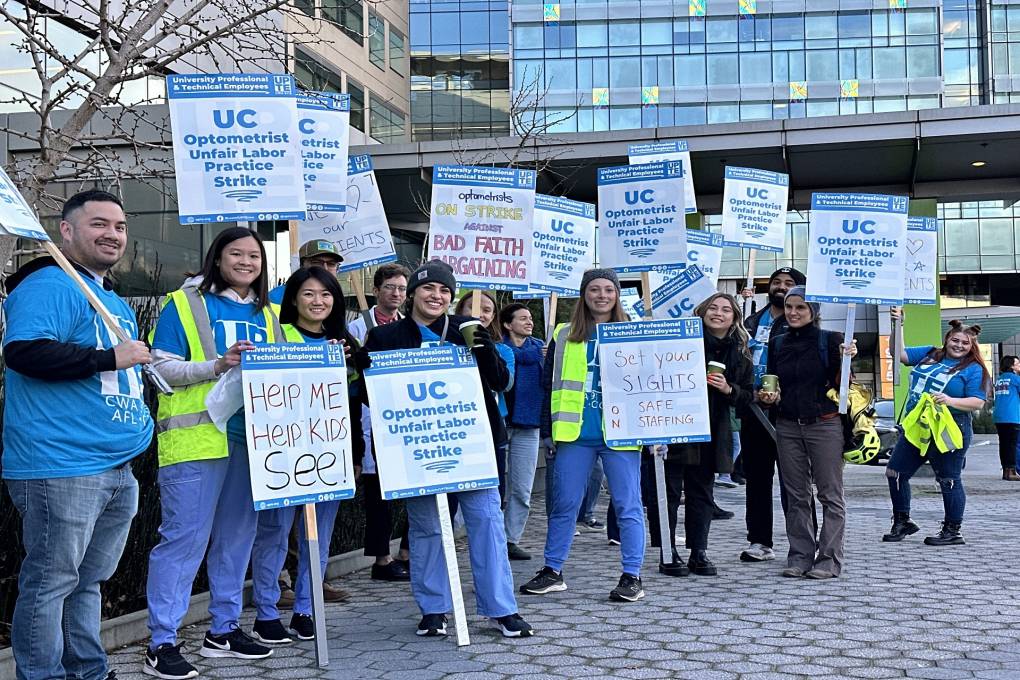
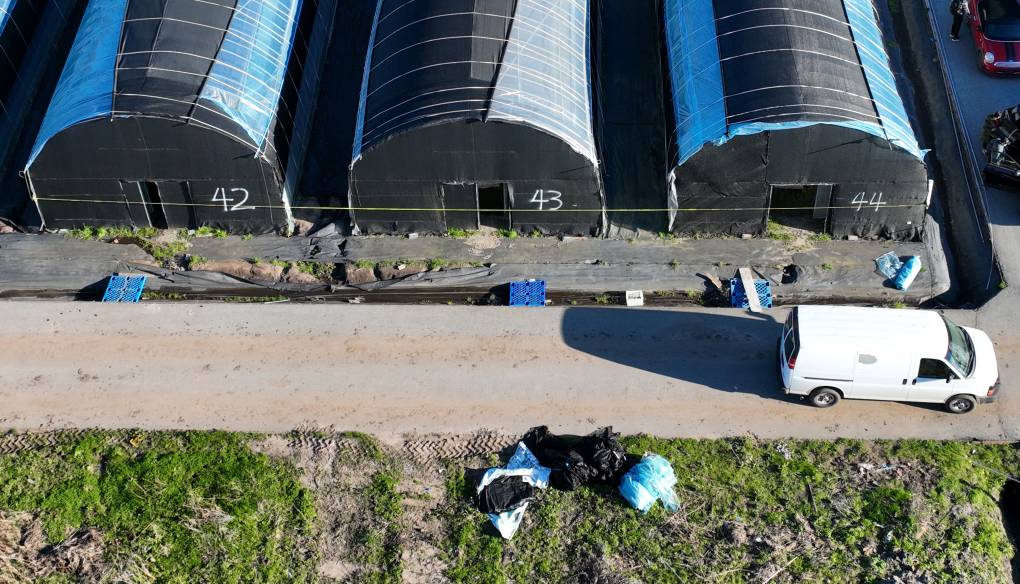
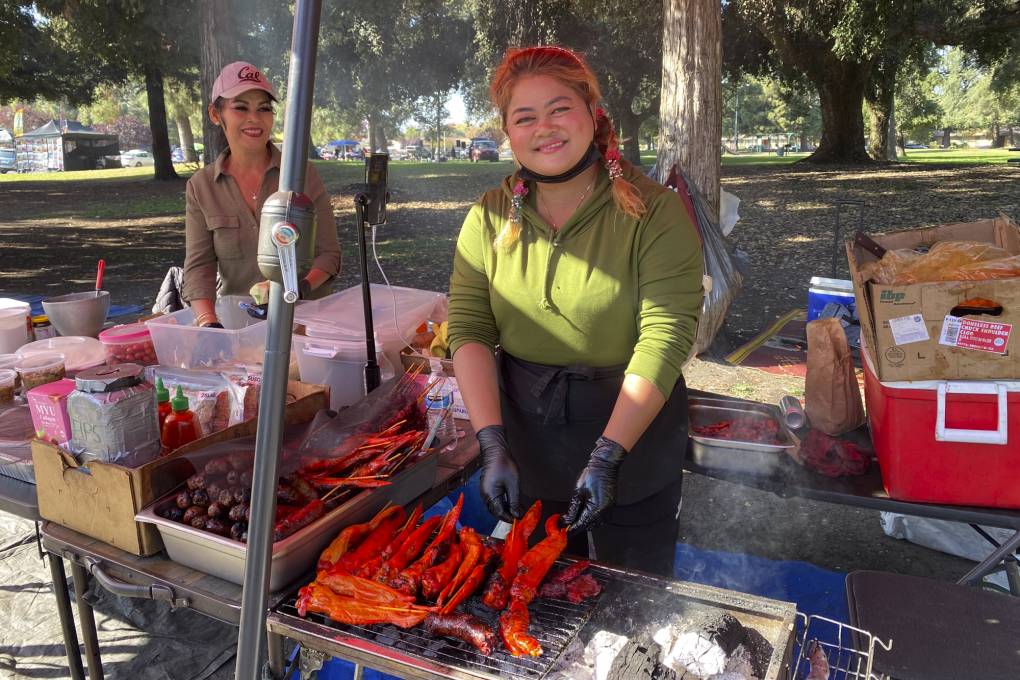
window.__IS_SSR__=true
window.__INITIAL_STATE__={
"attachmentsReducer": {
"audio_0": {
"type": "attachments",
"id": "audio_0",
"imgSizes": {
"kqedFullSize": {
"file": "https://ww2.kqed.org/news/wp-content/themes/KQED-unified/img/audio_bgs/background0.jpg"
}
}
},
"audio_1": {
"type": "attachments",
"id": "audio_1",
"imgSizes": {
"kqedFullSize": {
"file": "https://ww2.kqed.org/news/wp-content/themes/KQED-unified/img/audio_bgs/background1.jpg"
}
}
},
"audio_2": {
"type": "attachments",
"id": "audio_2",
"imgSizes": {
"kqedFullSize": {
"file": "https://ww2.kqed.org/news/wp-content/themes/KQED-unified/img/audio_bgs/background2.jpg"
}
}
},
"audio_3": {
"type": "attachments",
"id": "audio_3",
"imgSizes": {
"kqedFullSize": {
"file": "https://ww2.kqed.org/news/wp-content/themes/KQED-unified/img/audio_bgs/background3.jpg"
}
}
},
"audio_4": {
"type": "attachments",
"id": "audio_4",
"imgSizes": {
"kqedFullSize": {
"file": "https://ww2.kqed.org/news/wp-content/themes/KQED-unified/img/audio_bgs/background4.jpg"
}
}
},
"placeholder": {
"type": "attachments",
"id": "placeholder",
"imgSizes": {
"thumbnail": {
"file": "https://cdn.kqed.org/wp-content/uploads/2024/12/KQED-Default-Image-816638274-2000x1333-1-160x107.jpg",
"width": 160,
"height": 107,
"mimeType": "image/jpeg"
},
"medium": {
"file": "https://cdn.kqed.org/wp-content/uploads/2024/12/KQED-Default-Image-816638274-2000x1333-1-800x533.jpg",
"width": 800,
"height": 533,
"mimeType": "image/jpeg"
},
"medium_large": {
"file": "https://cdn.kqed.org/wp-content/uploads/2024/12/KQED-Default-Image-816638274-2000x1333-1-768x512.jpg",
"width": 768,
"height": 512,
"mimeType": "image/jpeg"
},
"large": {
"file": "https://cdn.kqed.org/wp-content/uploads/2024/12/KQED-Default-Image-816638274-2000x1333-1-1020x680.jpg",
"width": 1020,
"height": 680,
"mimeType": "image/jpeg"
},
"1536x1536": {
"file": "https://cdn.kqed.org/wp-content/uploads/2024/12/KQED-Default-Image-816638274-2000x1333-1-1536x1024.jpg",
"width": 1536,
"height": 1024,
"mimeType": "image/jpeg"
},
"fd-lrg": {
"file": "https://cdn.kqed.org/wp-content/uploads/2024/12/KQED-Default-Image-816638274-2000x1333-1-1536x1024.jpg",
"width": 1536,
"height": 1024,
"mimeType": "image/jpeg"
},
"fd-med": {
"file": "https://cdn.kqed.org/wp-content/uploads/2024/12/KQED-Default-Image-816638274-2000x1333-1-1020x680.jpg",
"width": 1020,
"height": 680,
"mimeType": "image/jpeg"
},
"fd-sm": {
"file": "https://cdn.kqed.org/wp-content/uploads/2024/12/KQED-Default-Image-816638274-2000x1333-1-800x533.jpg",
"width": 800,
"height": 533,
"mimeType": "image/jpeg"
},
"post-thumbnail": {
"file": "https://cdn.kqed.org/wp-content/uploads/2024/12/KQED-Default-Image-816638274-2000x1333-1-672x372.jpg",
"width": 672,
"height": 372,
"mimeType": "image/jpeg"
},
"twentyfourteen-full-width": {
"file": "https://cdn.kqed.org/wp-content/uploads/2024/12/KQED-Default-Image-816638274-2000x1333-1-1038x576.jpg",
"width": 1038,
"height": 576,
"mimeType": "image/jpeg"
},
"xxsmall": {
"file": "https://cdn.kqed.org/wp-content/uploads/2024/12/KQED-Default-Image-816638274-2000x1333-1-160x107.jpg",
"width": 160,
"height": 107,
"mimeType": "image/jpeg"
},
"xsmall": {
"file": "https://cdn.kqed.org/wp-content/uploads/2024/12/KQED-Default-Image-816638274-2000x1333-1-672x372.jpg",
"width": 672,
"height": 372,
"mimeType": "image/jpeg"
},
"small": {
"file": "https://cdn.kqed.org/wp-content/uploads/2024/12/KQED-Default-Image-816638274-2000x1333-1-672x372.jpg",
"width": 672,
"height": 372,
"mimeType": "image/jpeg"
},
"xlarge": {
"file": "https://cdn.kqed.org/wp-content/uploads/2024/12/KQED-Default-Image-816638274-2000x1333-1-1020x680.jpg",
"width": 1020,
"height": 680,
"mimeType": "image/jpeg"
},
"full-width": {
"file": "https://cdn.kqed.org/wp-content/uploads/2024/12/KQED-Default-Image-816638274-2000x1333-1-1920x1280.jpg",
"width": 1920,
"height": 1280,
"mimeType": "image/jpeg"
},
"guest-author-32": {
"file": "https://cdn.kqed.org/wp-content/uploads/2025/01/KQED-Default-Image-816638274-1333x1333-1-160x160.jpg",
"width": 32,
"height": 32,
"mimeType": "image/jpeg"
},
"guest-author-50": {
"file": "https://cdn.kqed.org/wp-content/uploads/2025/01/KQED-Default-Image-816638274-1333x1333-1-160x160.jpg",
"width": 50,
"height": 50,
"mimeType": "image/jpeg"
},
"guest-author-64": {
"file": "https://cdn.kqed.org/wp-content/uploads/2025/01/KQED-Default-Image-816638274-1333x1333-1-160x160.jpg",
"width": 64,
"height": 64,
"mimeType": "image/jpeg"
},
"guest-author-96": {
"file": "https://cdn.kqed.org/wp-content/uploads/2025/01/KQED-Default-Image-816638274-1333x1333-1-160x160.jpg",
"width": 96,
"height": 96,
"mimeType": "image/jpeg"
},
"guest-author-128": {
"file": "https://cdn.kqed.org/wp-content/uploads/2025/01/KQED-Default-Image-816638274-1333x1333-1-160x160.jpg",
"width": 128,
"height": 128,
"mimeType": "image/jpeg"
},
"detail": {
"file": "https://cdn.kqed.org/wp-content/uploads/2025/01/KQED-Default-Image-816638274-1333x1333-1-160x160.jpg",
"width": 160,
"height": 160,
"mimeType": "image/jpeg"
},
"kqedFullSize": {
"file": "https://cdn.kqed.org/wp-content/uploads/2024/12/KQED-Default-Image-816638274-2000x1333-1.jpg",
"width": 2000,
"height": 1333
}
}
},
"news_11982008": {
"type": "attachments",
"id": "news_11982008",
"meta": {
"index": "attachments_1716263798",
"site": "news",
"id": "11982008",
"found": true
},
"parent": 11982005,
"imgSizes": {
"twentyfourteen-full-width": {
"file": "https://cdn.kqed.org/wp-content/uploads/sites/10/2024/04/APAppleLayoffs-1038x576.jpg",
"width": 1038,
"mimeType": "image/jpeg",
"height": 576
},
"thumbnail": {
"file": "https://cdn.kqed.org/wp-content/uploads/sites/10/2024/04/APAppleLayoffs-160x107.jpg",
"width": 160,
"mimeType": "image/jpeg",
"height": 107
},
"post-thumbnail": {
"file": "https://cdn.kqed.org/wp-content/uploads/sites/10/2024/04/APAppleLayoffs-672x372.jpg",
"width": 672,
"mimeType": "image/jpeg",
"height": 372
},
"kqedFullSize": {
"file": "https://cdn.kqed.org/wp-content/uploads/sites/10/2024/04/APAppleLayoffs.jpg",
"width": 1920,
"height": 1280
},
"large": {
"file": "https://cdn.kqed.org/wp-content/uploads/sites/10/2024/04/APAppleLayoffs-1020x680.jpg",
"width": 1020,
"mimeType": "image/jpeg",
"height": 680
},
"1536x1536": {
"file": "https://cdn.kqed.org/wp-content/uploads/sites/10/2024/04/APAppleLayoffs-1536x1024.jpg",
"width": 1536,
"mimeType": "image/jpeg",
"height": 1024
},
"medium": {
"file": "https://cdn.kqed.org/wp-content/uploads/sites/10/2024/04/APAppleLayoffs-800x533.jpg",
"width": 800,
"mimeType": "image/jpeg",
"height": 533
}
},
"publishDate": 1712338668,
"modified": 1712340090,
"caption": "Apple is laying off more than 600 workers in California, marking the company's first big wave of post-pandemic job cuts amid a broader wave of tech industry consolidation. ",
"description": null,
"title": "US Apple Layoffs",
"credit": "Matthias Schrader/AP Photo",
"status": "inherit",
"altTag": "An Apple logo outside a building.",
"isLoading": false,
"fetchFailed": false
},
"news_11981933": {
"type": "attachments",
"id": "news_11981933",
"meta": {
"index": "attachments_1716263798",
"site": "news",
"id": "11981933",
"found": true
},
"parent": 11981932,
"imgSizes": {
"twentyfourteen-full-width": {
"file": "https://cdn.kqed.org/wp-content/uploads/sites/10/2024/04/AP24094816165307-1038x576.jpg",
"width": 1038,
"mimeType": "image/jpeg",
"height": 576
},
"thumbnail": {
"file": "https://cdn.kqed.org/wp-content/uploads/sites/10/2024/04/AP24094816165307-160x107.jpg",
"width": 160,
"mimeType": "image/jpeg",
"height": 107
},
"post-thumbnail": {
"file": "https://cdn.kqed.org/wp-content/uploads/sites/10/2024/04/AP24094816165307-672x372.jpg",
"width": 672,
"mimeType": "image/jpeg",
"height": 372
},
"kqedFullSize": {
"file": "https://cdn.kqed.org/wp-content/uploads/sites/10/2024/04/AP24094816165307-scaled.jpg",
"width": 2560,
"height": 1707
},
"2048x2048": {
"file": "https://cdn.kqed.org/wp-content/uploads/sites/10/2024/04/AP24094816165307-2048x1365.jpg",
"width": 2048,
"mimeType": "image/jpeg",
"height": 1365
},
"large": {
"file": "https://cdn.kqed.org/wp-content/uploads/sites/10/2024/04/AP24094816165307-1020x680.jpg",
"width": 1020,
"mimeType": "image/jpeg",
"height": 680
},
"1536x1536": {
"file": "https://cdn.kqed.org/wp-content/uploads/sites/10/2024/04/AP24094816165307-1536x1024.jpg",
"width": 1536,
"mimeType": "image/jpeg",
"height": 1024
},
"full-width": {
"file": "https://cdn.kqed.org/wp-content/uploads/sites/10/2024/04/AP24094816165307-1920x1280.jpg",
"width": 1920,
"mimeType": "image/jpeg",
"height": 1280
},
"medium": {
"file": "https://cdn.kqed.org/wp-content/uploads/sites/10/2024/04/AP24094816165307-800x533.jpg",
"width": 800,
"mimeType": "image/jpeg",
"height": 533
}
},
"publishDate": 1712258193,
"modified": 1712266688,
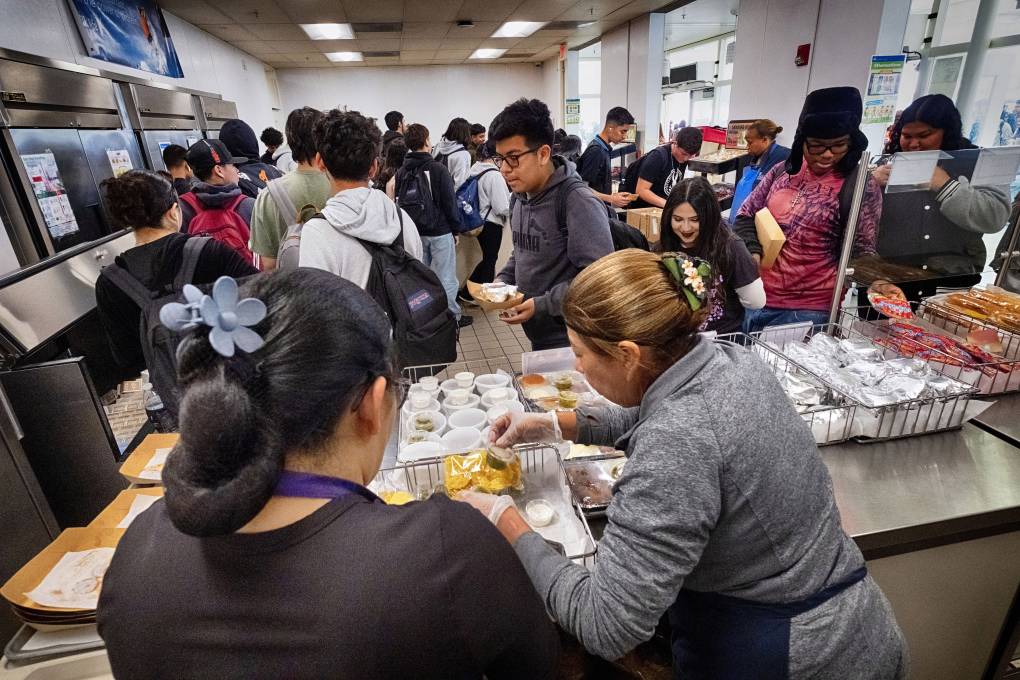
"caption": "Cafeteria workers serve student lunches at Firebaugh High School in Lynwood on Wednesday, April 3, 2024. Demand for school lunches has increased after California guaranteed free meals to all students regardless of their family's income. Now, districts are preparing to compete with the fast-food industry for employees after a new law took effect guaranteeing a $20 minimum wage for fast-food workers. ",
"description": null,
"title": "California School Food Wages",
"credit": "Richard Vogel/The Associated Press",
"status": "inherit",
"altTag": "Two women lean over preparing food as several children holding food trays, and backpacks walk past in a cafeteria.",
"isLoading": false,
"fetchFailed": false
},
"news_11980724": {
"type": "attachments",
"id": "news_11980724",
"meta": {
"index": "attachments_1716263798",
"site": "news",
"id": "11980724",
"found": true
},
"parent": 11980719,
"imgSizes": {
"twentyfourteen-full-width": {
"file": "https://cdn.kqed.org/wp-content/uploads/sites/10/2024/03/DDFFCB43-7864-4C26-AC14-E28A853FAA00-36298-000005FA46EFDD10-1038x576.jpg",
"width": 1038,
"mimeType": "image/jpeg",
"height": 576
},
"thumbnail": {
"file": "https://cdn.kqed.org/wp-content/uploads/sites/10/2024/03/DDFFCB43-7864-4C26-AC14-E28A853FAA00-36298-000005FA46EFDD10-160x107.jpg",
"width": 160,
"mimeType": "image/jpeg",
"height": 107
},
"post-thumbnail": {
"file": "https://cdn.kqed.org/wp-content/uploads/sites/10/2024/03/DDFFCB43-7864-4C26-AC14-E28A853FAA00-36298-000005FA46EFDD10-672x372.jpg",
"width": 672,
"mimeType": "image/jpeg",
"height": 372
},
"kqedFullSize": {
"file": "https://cdn.kqed.org/wp-content/uploads/sites/10/2024/03/DDFFCB43-7864-4C26-AC14-E28A853FAA00-36298-000005FA46EFDD10.jpg",
"width": 1776,
"height": 1184
},
"large": {
"file": "https://cdn.kqed.org/wp-content/uploads/sites/10/2024/03/DDFFCB43-7864-4C26-AC14-E28A853FAA00-36298-000005FA46EFDD10-1020x680.jpg",
"width": 1020,
"mimeType": "image/jpeg",
"height": 680
},
"1536x1536": {
"file": "https://cdn.kqed.org/wp-content/uploads/sites/10/2024/03/DDFFCB43-7864-4C26-AC14-E28A853FAA00-36298-000005FA46EFDD10-1536x1024.jpg",
"width": 1536,
"mimeType": "image/jpeg",
"height": 1024
},
"medium": {
"file": "https://cdn.kqed.org/wp-content/uploads/sites/10/2024/03/DDFFCB43-7864-4C26-AC14-E28A853FAA00-36298-000005FA46EFDD10-800x533.jpg",
"width": 800,
"mimeType": "image/jpeg",
"height": 533
}
},
"publishDate": 1711408597,
"modified": 1711408892,
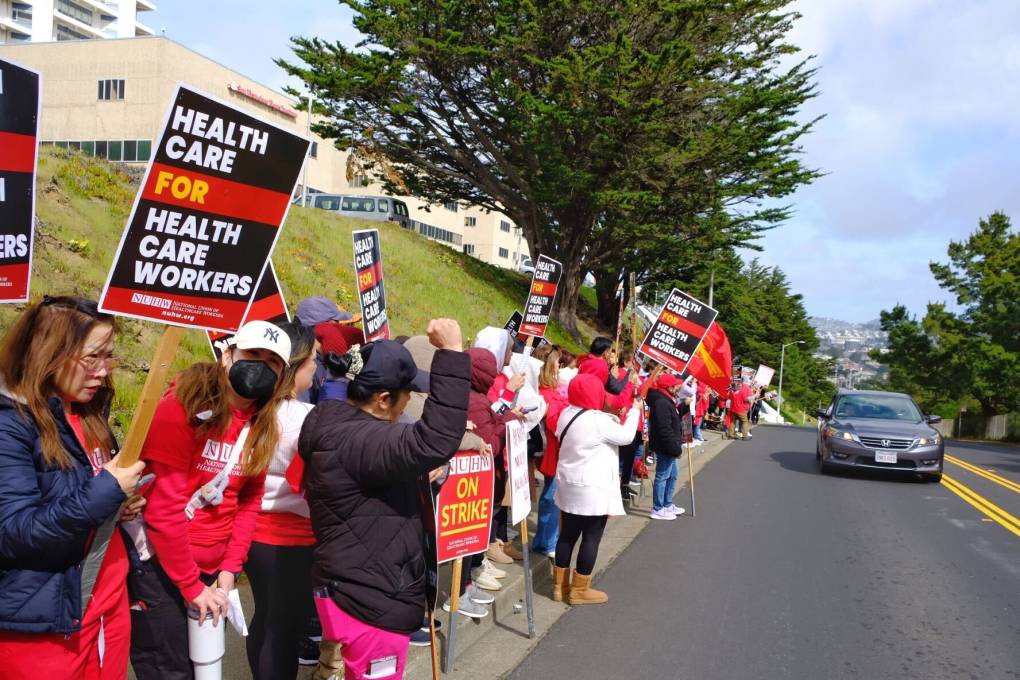
"caption": "Hundreds of Seton Medical Center workers in Daly City took to the picket line on Monday, March 25, 2024, to demand better health care benefits and more resources.",
"description": null,
"title": "DDFFCB43-7864-4C26-AC14-E28A853FAA00-36298-000005FA46EFDD10",
"credit": "Nik Altenberg/KQED",
"status": "inherit",
"altTag": "People stand on the side of the road holding black and red signs that say 'Health care for health care workers.'",
"isLoading": false,
"fetchFailed": false
},
"news_11980502": {
"type": "attachments",
"id": "news_11980502",
"meta": {
"index": "attachments_1716263798",
"site": "news",
"id": "11980502",
"found": true
},
"parent": 0,
"imgSizes": {
"twentyfourteen-full-width": {
"file": "https://cdn.kqed.org/wp-content/uploads/sites/10/2024/03/240322-INDOOR-HEAT-GETTY-02-KQED-1038x576.jpg",
"width": 1038,
"mimeType": "image/jpeg",
"height": 576
},
"thumbnail": {
"file": "https://cdn.kqed.org/wp-content/uploads/sites/10/2024/03/240322-INDOOR-HEAT-GETTY-02-KQED-160x98.jpg",
"width": 160,
"mimeType": "image/jpeg",
"height": 98
},
"post-thumbnail": {
"file": "https://cdn.kqed.org/wp-content/uploads/sites/10/2024/03/240322-INDOOR-HEAT-GETTY-02-KQED-672x372.jpg",
"width": 672,
"mimeType": "image/jpeg",
"height": 372
},
"kqedFullSize": {
"file": "https://cdn.kqed.org/wp-content/uploads/sites/10/2024/03/240322-INDOOR-HEAT-GETTY-02-KQED.jpg",
"width": 2000,
"height": 1221
},
"large": {
"file": "https://cdn.kqed.org/wp-content/uploads/sites/10/2024/03/240322-INDOOR-HEAT-GETTY-02-KQED-1020x623.jpg",
"width": 1020,
"mimeType": "image/jpeg",
"height": 623
},
"1536x1536": {
"file": "https://cdn.kqed.org/wp-content/uploads/sites/10/2024/03/240322-INDOOR-HEAT-GETTY-02-KQED-1536x938.jpg",
"width": 1536,
"mimeType": "image/jpeg",
"height": 938
},
"full-width": {
"file": "https://cdn.kqed.org/wp-content/uploads/sites/10/2024/03/240322-INDOOR-HEAT-GETTY-02-KQED-1920x1172.jpg",
"width": 1920,
"mimeType": "image/jpeg",
"height": 1172
},
"medium": {
"file": "https://cdn.kqed.org/wp-content/uploads/sites/10/2024/03/240322-INDOOR-HEAT-GETTY-02-KQED-800x488.jpg",
"width": 800,
"mimeType": "image/jpeg",
"height": 488
}
},
"publishDate": 1711135860,
"modified": 1711137950,
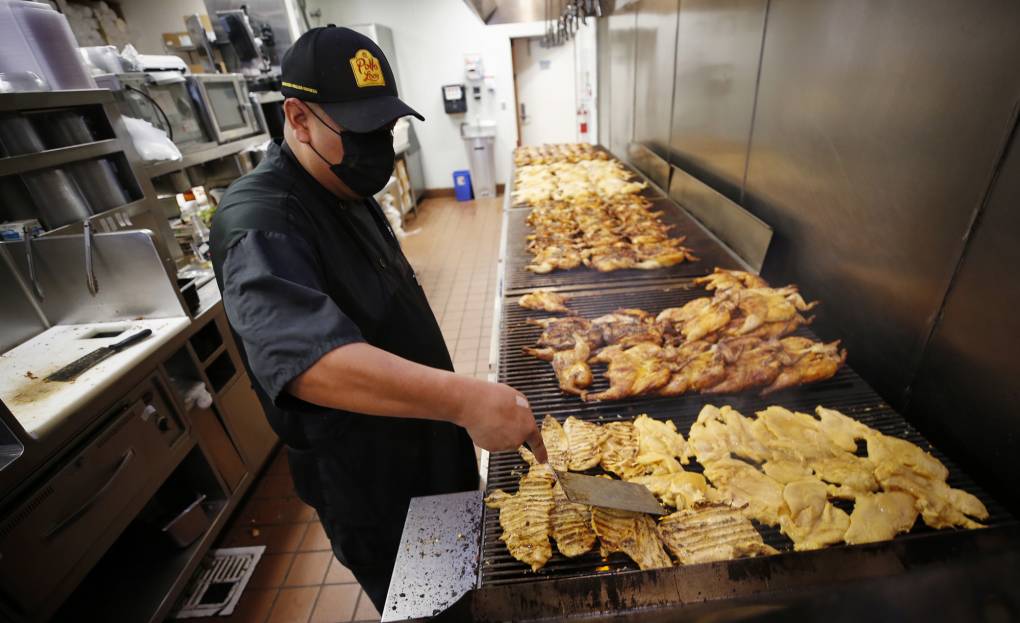
"caption": "Cook Giovanni Gomez preparing chicken on the grill for food orders in the busy kitchen of the El Pollo Loco restaurant in Agoura Hills on Aug. 18, 2021.",
"description": null,
"title": "Michaela Mendelsohn, CEO of Pollo West Corp, an Agoura Hills-based franchise company for Pollo Loco, at her Agoura Hills restaurant on August 18, 2021",
"credit": "Al Seib / Los Angeles Times via Getty Images",
"status": "inherit",
"altTag": null,
"isLoading": false,
"fetchFailed": false
},
"news_11976711": {
"type": "attachments",
"id": "news_11976711",
"meta": {
"index": "attachments_1716263798",
"site": "news",
"id": "11976711",
"found": true
},
"parent": 11976710,
"imgSizes": {
"twentyfourteen-full-width": {
"file": "https://cdn.kqed.org/wp-content/uploads/sites/10/2024/02/021324_Sara-Fee_EF_16-CM-copy-1038x576.jpg",
"width": 1038,
"mimeType": "image/jpeg",
"height": 576
},
"thumbnail": {
"file": "https://cdn.kqed.org/wp-content/uploads/sites/10/2024/02/021324_Sara-Fee_EF_16-CM-copy-160x107.jpg",
"width": 160,
"mimeType": "image/jpeg",
"height": 107
},
"post-thumbnail": {
"file": "https://cdn.kqed.org/wp-content/uploads/sites/10/2024/02/021324_Sara-Fee_EF_16-CM-copy-672x372.jpg",
"width": 672,
"mimeType": "image/jpeg",
"height": 372
},
"kqedFullSize": {
"file": "https://cdn.kqed.org/wp-content/uploads/sites/10/2024/02/021324_Sara-Fee_EF_16-CM-copy.jpg",
"width": 2000,
"height": 1334
},
"large": {
"file": "https://cdn.kqed.org/wp-content/uploads/sites/10/2024/02/021324_Sara-Fee_EF_16-CM-copy-1020x680.jpg",
"width": 1020,
"mimeType": "image/jpeg",
"height": 680
},
"1536x1536": {
"file": "https://cdn.kqed.org/wp-content/uploads/sites/10/2024/02/021324_Sara-Fee_EF_16-CM-copy-1536x1025.jpg",
"width": 1536,
"mimeType": "image/jpeg",
"height": 1025
},
"full-width": {
"file": "https://cdn.kqed.org/wp-content/uploads/sites/10/2024/02/021324_Sara-Fee_EF_16-CM-copy-1920x1281.jpg",
"width": 1920,
"mimeType": "image/jpeg",
"height": 1281
},
"medium": {
"file": "https://cdn.kqed.org/wp-content/uploads/sites/10/2024/02/021324_Sara-Fee_EF_16-CM-copy-800x534.jpg",
"width": 800,
"mimeType": "image/jpeg",
"height": 534
}
},
"publishDate": 1708625402,
"modified": 1708630540,
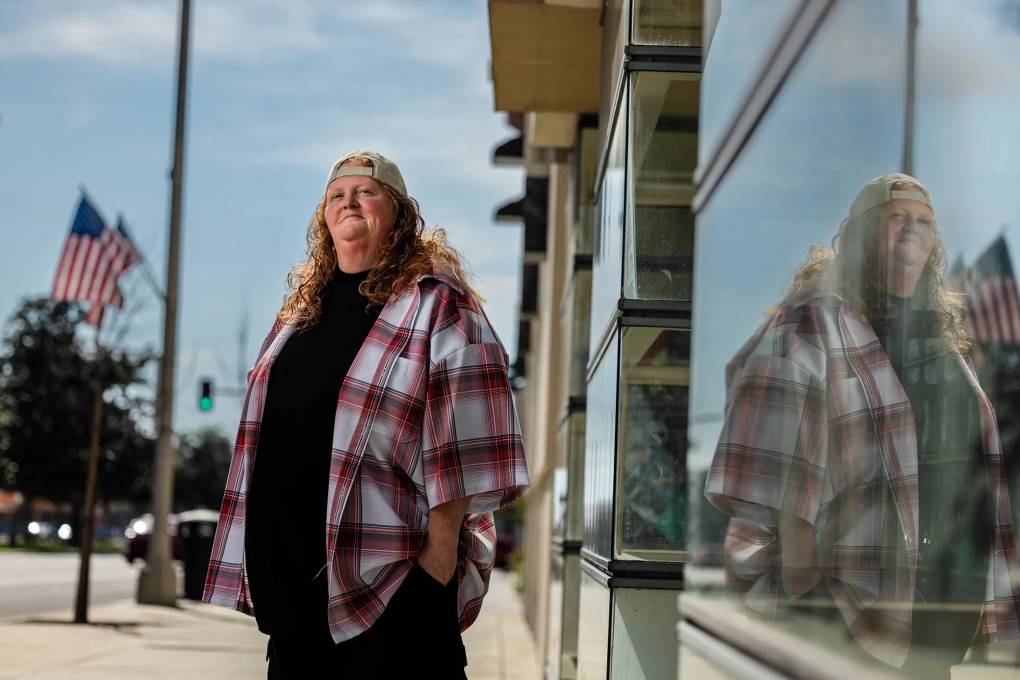
"caption": "Inland Empire Amazon Workers United founder Sara Fee in front of the Warehouse Worker Resource Center in Ontario on Feb. 13, 2024.\n",
"description": null,
"title": "021324_Sara-Fee_EF_16-CM copy",
"credit": "Elisa Ferrari for CalMatters",
"status": "inherit",
"altTag": "An older white woman with a trucker's cap and a plaid shirt stands outside a store on the street, looking away from the camera.",
"isLoading": false,
"fetchFailed": false
},
"news_11975343": {
"type": "attachments",
"id": "news_11975343",
"meta": {
"index": "attachments_1716263798",
"site": "news",
"id": "11975343",
"found": true
},
"parent": 11975340,
"imgSizes": {
"twentyfourteen-full-width": {
"file": "https://cdn.kqed.org/wp-content/uploads/sites/10/2024/02/020924_FAST_FOOD_UNION_JAH_CM_00278-copy-1038x576.jpg",
"width": 1038,
"mimeType": "image/jpeg",
"height": 576
},
"thumbnail": {
"file": "https://cdn.kqed.org/wp-content/uploads/sites/10/2024/02/020924_FAST_FOOD_UNION_JAH_CM_00278-copy-160x107.jpg",
"width": 160,
"mimeType": "image/jpeg",
"height": 107
},
"post-thumbnail": {
"file": "https://cdn.kqed.org/wp-content/uploads/sites/10/2024/02/020924_FAST_FOOD_UNION_JAH_CM_00278-copy-672x372.jpg",
"width": 672,
"mimeType": "image/jpeg",
"height": 372
},
"kqedFullSize": {
"file": "https://cdn.kqed.org/wp-content/uploads/sites/10/2024/02/020924_FAST_FOOD_UNION_JAH_CM_00278-copy.jpg",
"width": 2000,
"height": 1333
},
"large": {
"file": "https://cdn.kqed.org/wp-content/uploads/sites/10/2024/02/020924_FAST_FOOD_UNION_JAH_CM_00278-copy-1020x680.jpg",
"width": 1020,
"mimeType": "image/jpeg",
"height": 680
},
"1536x1536": {
"file": "https://cdn.kqed.org/wp-content/uploads/sites/10/2024/02/020924_FAST_FOOD_UNION_JAH_CM_00278-copy-1536x1024.jpg",
"width": 1536,
"mimeType": "image/jpeg",
"height": 1024
},
"full-width": {
"file": "https://cdn.kqed.org/wp-content/uploads/sites/10/2024/02/020924_FAST_FOOD_UNION_JAH_CM_00278-copy-1920x1280.jpg",
"width": 1920,
"mimeType": "image/jpeg",
"height": 1280
},
"medium": {
"file": "https://cdn.kqed.org/wp-content/uploads/sites/10/2024/02/020924_FAST_FOOD_UNION_JAH_CM_00278-copy-800x533.jpg",
"width": 800,
"mimeType": "image/jpeg",
"height": 533
}
},
"publishDate": 1707593372,
"modified": 1707593432,
"caption": "Crowd participation at the California Fast Food Workers Union membership launch in Los Angeles on Feb. 9, 2024.",
"description": null,
"title": "020924_FAST_FOOD_UNION_JAH_CM_00278 copy",
"credit": "Jules Hotz for CalMatters",
"status": "inherit",
"altTag": "A crowd of people mostly wearing purple shirts and with a mural in the background celebrate and wave flags.",
"isLoading": false,
"fetchFailed": false
},
"news_11974807": {
"type": "attachments",
"id": "news_11974807",
"meta": {
"index": "attachments_1716263798",
"site": "news",
"id": "11974807",
"found": true
},
"parent": 11974782,
"imgSizes": {
"twentyfourteen-full-width": {
"file": "https://cdn.kqed.org/wp-content/uploads/sites/10/2024/02/UCSF-Strike-1038x576.jpg",
"width": 1038,
"mimeType": "image/jpeg",
"height": 576
},
"thumbnail": {
"file": "https://cdn.kqed.org/wp-content/uploads/sites/10/2024/02/UCSF-Strike-160x107.jpg",
"width": 160,
"mimeType": "image/jpeg",
"height": 107
},
"post-thumbnail": {
"file": "https://cdn.kqed.org/wp-content/uploads/sites/10/2024/02/UCSF-Strike-672x372.jpg",
"width": 672,
"mimeType": "image/jpeg",
"height": 372
},
"kqedFullSize": {
"file": "https://cdn.kqed.org/wp-content/uploads/sites/10/2024/02/UCSF-Strike.jpg",
"width": 1920,
"height": 1280
},
"large": {
"file": "https://cdn.kqed.org/wp-content/uploads/sites/10/2024/02/UCSF-Strike-1020x680.jpg",
"width": 1020,
"mimeType": "image/jpeg",
"height": 680
},
"1536x1536": {
"file": "https://cdn.kqed.org/wp-content/uploads/sites/10/2024/02/UCSF-Strike-1536x1024.jpg",
"width": 1536,
"mimeType": "image/jpeg",
"height": 1024
},
"medium": {
"file": "https://cdn.kqed.org/wp-content/uploads/sites/10/2024/02/UCSF-Strike-800x533.jpg",
"width": 800,
"mimeType": "image/jpeg",
"height": 533
}
},
"publishDate": 1707239255,
"modified": 1707243826,
"caption": "UCSF optometrists, who see about 12 to 14 patients daily and are striking for two days, manage a variety of ocular diseases and eye infections in patients often referred to the hospital from as far away as Eureka, Modesto and Stockton.",
"description": null,
"title": "UCSF Strike",
"credit": "Courtesy of University Professional and Technical Employees, Communication Workers of America Local 9119",
"status": "inherit",
"altTag": "UC optometrists are seen holding signs as they strike for better wages and working conditions.",
"isLoading": false,
"fetchFailed": false
},
"news_11940019": {
"type": "attachments",
"id": "news_11940019",
"meta": {
"index": "attachments_1716263798",
"site": "news",
"id": "11940019",
"found": true
},
"title": "California Terra Gardens Mushroom Farm Mass Shooting",
"publishDate": 1675371144,
"status": "inherit",
"parent": 11940017,
"modified": 1706900985,
"caption": "Crime scene tape is seen from this drone view at the California Terra Gardens mushroom farm in Half Moon Bay on Wednesday, Jan. 25, 2023. Farm worker Chunli Zhao, 66, was booked on seven counts of murder after the Jan. 23 shooting. ",
"credit": "Jane Tyska/Digital First Media/East Bay Times via Getty Images",
"altTag": null,
"description": null,
"imgSizes": {
"medium": {
"file": "https://cdn.kqed.org/wp-content/uploads/sites/10/2023/02/GettyImages-1459869829-800x458.jpg",
"width": 800,
"height": 458,
"mimeType": "image/jpeg"
},
"large": {
"file": "https://cdn.kqed.org/wp-content/uploads/sites/10/2023/02/GettyImages-1459869829-1020x584.jpg",
"width": 1020,
"height": 584,
"mimeType": "image/jpeg"
},
"thumbnail": {
"file": "https://cdn.kqed.org/wp-content/uploads/sites/10/2023/02/GettyImages-1459869829-160x92.jpg",
"width": 160,
"height": 92,
"mimeType": "image/jpeg"
},
"1536x1536": {
"file": "https://cdn.kqed.org/wp-content/uploads/sites/10/2023/02/GettyImages-1459869829-1536x880.jpg",
"width": 1536,
"height": 880,
"mimeType": "image/jpeg"
},
"2048x2048": {
"file": "https://cdn.kqed.org/wp-content/uploads/sites/10/2023/02/GettyImages-1459869829-2048x1173.jpg",
"width": 2048,
"height": 1173,
"mimeType": "image/jpeg"
},
"post-thumbnail": {
"file": "https://cdn.kqed.org/wp-content/uploads/sites/10/2023/02/GettyImages-1459869829-672x372.jpg",
"width": 672,
"height": 372,
"mimeType": "image/jpeg"
},
"twentyfourteen-full-width": {
"file": "https://cdn.kqed.org/wp-content/uploads/sites/10/2023/02/GettyImages-1459869829-1038x576.jpg",
"width": 1038,
"height": 576,
"mimeType": "image/jpeg"
},
"full-width": {
"file": "https://cdn.kqed.org/wp-content/uploads/sites/10/2023/02/GettyImages-1459869829-1920x1100.jpg",
"width": 1920,
"height": 1100,
"mimeType": "image/jpeg"
},
"kqedFullSize": {
"file": "https://cdn.kqed.org/wp-content/uploads/sites/10/2023/02/GettyImages-1459869829-scaled-e1776791105481.jpg",
"width": 2000,
"height": 1145
}
},
"isLoading": false,
"fetchFailed": false
},
"news_11972486": {
"type": "attachments",
"id": "news_11972486",
"meta": {
"index": "attachments_1716263798",
"site": "news",
"id": "11972486",
"found": true
},
"parent": 0,
"imgSizes": {
"twentyfourteen-full-width": {
"file": "https://cdn.kqed.org/wp-content/uploads/sites/10/2024/01/240111-ANGEL-CRUZ-PARK-LM-02-KQED-1038x576.jpg",
"width": 1038,
"mimeType": "image/jpeg",
"height": 576
},
"thumbnail": {
"file": "https://cdn.kqed.org/wp-content/uploads/sites/10/2024/01/240111-ANGEL-CRUZ-PARK-LM-02-KQED-160x107.jpg",
"width": 160,
"mimeType": "image/jpeg",
"height": 107
},
"post-thumbnail": {
"file": "https://cdn.kqed.org/wp-content/uploads/sites/10/2024/01/240111-ANGEL-CRUZ-PARK-LM-02-KQED-672x372.jpg",
"width": 672,
"mimeType": "image/jpeg",
"height": 372
},
"kqedFullSize": {
"file": "https://cdn.kqed.org/wp-content/uploads/sites/10/2024/01/240111-ANGEL-CRUZ-PARK-LM-02-KQED.jpg",
"width": 2000,
"height": 1333
},
"large": {
"file": "https://cdn.kqed.org/wp-content/uploads/sites/10/2024/01/240111-ANGEL-CRUZ-PARK-LM-02-KQED-1020x680.jpg",
"width": 1020,
"mimeType": "image/jpeg",
"height": 680
},
"1536x1536": {
"file": "https://cdn.kqed.org/wp-content/uploads/sites/10/2024/01/240111-ANGEL-CRUZ-PARK-LM-02-KQED-1536x1024.jpg",
"width": 1536,
"mimeType": "image/jpeg",
"height": 1024
},
"full-width": {
"file": "https://cdn.kqed.org/wp-content/uploads/sites/10/2024/01/240111-ANGEL-CRUZ-PARK-LM-02-KQED-1920x1280.jpg",
"width": 1920,
"mimeType": "image/jpeg",
"height": 1280
},
"medium": {
"file": "https://cdn.kqed.org/wp-content/uploads/sites/10/2024/01/240111-ANGEL-CRUZ-PARK-LM-02-KQED-800x533.jpg",
"width": 800,
"mimeType": "image/jpeg",
"height": 533
}
},
"publishDate": 1705019361,
"modified": 1706228356,
"caption": "Rotana Lach cooks sausages and beef sticks on a tabletop grill at Angel Cruz Park in Stockton on Nov. 12, 2023. She resisted learning to cook when she was young but had been a vendor at Angel Cruz Park for 15 years.",
"description": null,
"title": "240111-ANGEL CRUZ PARK-LM-02-KQED",
"credit": "Lisa Morehouse/KQED",
"status": "inherit",
"altTag": "A person with long hair smiles while tending to a grill in a park setting.",
"isLoading": false,
"fetchFailed": false
},
"news_11972352": {
"type": "attachments",
"id": "news_11972352",
"meta": {
"index": "attachments_1716263798",
"site": "news",
"id": "11972352",
"found": true
},
"parent": 0,
"imgSizes": {
"twentyfourteen-full-width": {
"file": "https://cdn.kqed.org/wp-content/uploads/sites/10/2024/01/240111-La-Pulga-HD-01-KQED-1038x576.jpg",
"width": 1038,
"mimeType": "image/jpeg",
"height": 576
},
"thumbnail": {
"file": "https://cdn.kqed.org/wp-content/uploads/sites/10/2024/01/240111-La-Pulga-HD-01-KQED-160x90.jpg",
"width": 160,
"mimeType": "image/jpeg",
"height": 90
},
"post-thumbnail": {
"file": "https://cdn.kqed.org/wp-content/uploads/sites/10/2024/01/240111-La-Pulga-HD-01-KQED-672x372.jpg",
"width": 672,
"mimeType": "image/jpeg",
"height": 372
},
"kqedFullSize": {
"file": "https://cdn.kqed.org/wp-content/uploads/sites/10/2024/01/240111-La-Pulga-HD-01-KQED.jpg",
"width": 2000,
"height": 1125
},
"large": {
"file": "https://cdn.kqed.org/wp-content/uploads/sites/10/2024/01/240111-La-Pulga-HD-01-KQED-1020x574.jpg",
"width": 1020,
"mimeType": "image/jpeg",
"height": 574
},
"1536x1536": {
"file": "https://cdn.kqed.org/wp-content/uploads/sites/10/2024/01/240111-La-Pulga-HD-01-KQED-1536x864.jpg",
"width": 1536,
"mimeType": "image/jpeg",
"height": 864
},
"full-width": {
"file": "https://cdn.kqed.org/wp-content/uploads/sites/10/2024/01/240111-La-Pulga-HD-01-KQED-1920x1080.jpg",
"width": 1920,
"mimeType": "image/jpeg",
"height": 1080
},
"medium": {
"file": "https://cdn.kqed.org/wp-content/uploads/sites/10/2024/01/240111-La-Pulga-HD-01-KQED-800x450.jpg",
"width": 800,
"mimeType": "image/jpeg",
"height": 450
}
},
"publishDate": 1705004558,
"modified": 1705092633,
"caption": null,
"description": null,
"title": "240111-La Pulga-HD-01-KQED",
"credit": "Photos by Hiram Alejandro Durán for El Tímpano/CatchLight Local",
"status": "inherit",
"altTag": "A collage of photos depicting various elements from an outdoor market.",
"isLoading": false,
"fetchFailed": false
},
"news_11949742": {
"type": "attachments",
"id": "news_11949742",
"meta": {
"index": "attachments_1716263798",
"site": "news",
"id": "11949742",
"found": true
},
"parent": 11949192,
"imgSizes": {
"twentyfourteen-full-width": {
"file": "https://ww2.kqed.org/app/uploads/sites/10/2023/05/IMG_0196-1-1038x576.jpg",
"width": 1038,
"mimeType": "image/jpeg",
"height": 576
},
"thumbnail": {
"file": "https://ww2.kqed.org/app/uploads/sites/10/2023/05/IMG_0196-1-160x120.jpg",
"width": 160,
"mimeType": "image/jpeg",
"height": 120
},
"post-thumbnail": {
"file": "https://ww2.kqed.org/app/uploads/sites/10/2023/05/IMG_0196-1-672x372.jpg",
"width": 672,
"mimeType": "image/jpeg",
"height": 372
},
"kqedFullSize": {
"file": "https://ww2.kqed.org/app/uploads/sites/10/2023/05/IMG_0196-1.jpg",
"width": 2560,
"height": 1920
},
"2048x2048": {
"file": "https://ww2.kqed.org/app/uploads/sites/10/2023/05/IMG_0196-1-2048x1536.jpg",
"width": 2048,
"mimeType": "image/jpeg",
"height": 1536
},
"large": {
"file": "https://ww2.kqed.org/app/uploads/sites/10/2023/05/IMG_0196-1-1020x765.jpg",
"width": 1020,
"mimeType": "image/jpeg",
"height": 765
},
"1536x1536": {
"file": "https://ww2.kqed.org/app/uploads/sites/10/2023/05/IMG_0196-1-1536x1152.jpg",
"width": 1536,
"mimeType": "image/jpeg",
"height": 1152
},
"full-width": {
"file": "https://ww2.kqed.org/app/uploads/sites/10/2023/05/IMG_0196-1-1920x1440.jpg",
"width": 1920,
"mimeType": "image/jpeg",
"height": 1440
},
"medium": {
"file": "https://ww2.kqed.org/app/uploads/sites/10/2023/05/IMG_0196-1-800x600.jpg",
"width": 800,
"mimeType": "image/jpeg",
"height": 600
}
},
"publishDate": 1684275077,
"modified": 1684275152,
"caption": "What benefits can you apply for after you've been laid off?",
"description": null,
"title": "layoff-benefits",
"credit": "Anna Vignet/KQED",
"status": "inherit",
"altTag": "A yellow and green toned illustration of a human figure wearing a yellow jacket and light coloredpants, striding up a staircase in the middle of an M.C. Escher-style maze",
"isLoading": false,
"fetchFailed": false
},
"news_11969093": {
"type": "attachments",
"id": "news_11969093",
"meta": {
"index": "attachments_1716263798",
"site": "news",
"id": "11969093",
"found": true
},
"parent": 11969109,
"imgSizes": {
"twentyfourteen-full-width": {
"file": "https://cdn.kqed.org/wp-content/uploads/sites/10/2023/12/231205-SFSUFacultyStrike-27-BL-KQED-1038x576.jpg",
"width": 1038,
"mimeType": "image/jpeg",
"height": 576
},
"thumbnail": {
"file": "https://cdn.kqed.org/wp-content/uploads/sites/10/2023/12/231205-SFSUFacultyStrike-27-BL-KQED-160x107.jpg",
"width": 160,
"mimeType": "image/jpeg",
"height": 107
},
"post-thumbnail": {
"file": "https://cdn.kqed.org/wp-content/uploads/sites/10/2023/12/231205-SFSUFacultyStrike-27-BL-KQED-672x372.jpg",
"width": 672,
"mimeType": "image/jpeg",
"height": 372
},
"kqedFullSize": {
"file": "https://cdn.kqed.org/wp-content/uploads/sites/10/2023/12/231205-SFSUFacultyStrike-27-BL-KQED.jpg",
"width": 2000,
"height": 1333
},
"large": {
"file": "https://cdn.kqed.org/wp-content/uploads/sites/10/2023/12/231205-SFSUFacultyStrike-27-BL-KQED-1020x680.jpg",
"width": 1020,
"mimeType": "image/jpeg",
"height": 680
},
"1536x1536": {
"file": "https://cdn.kqed.org/wp-content/uploads/sites/10/2023/12/231205-SFSUFacultyStrike-27-BL-KQED-1536x1024.jpg",
"width": 1536,
"mimeType": "image/jpeg",
"height": 1024
},
"full-width": {
"file": "https://cdn.kqed.org/wp-content/uploads/sites/10/2023/12/231205-SFSUFacultyStrike-27-BL-KQED-1920x1280.jpg",
"width": 1920,
"mimeType": "image/jpeg",
"height": 1280
},
"medium": {
"file": "https://cdn.kqed.org/wp-content/uploads/sites/10/2023/12/231205-SFSUFacultyStrike-27-BL-KQED-800x533.jpg",
"width": 800,
"mimeType": "image/jpeg",
"height": 533
}
},
"publishDate": 1701812939,
"modified": 1701824768,
"caption": "Charles Toombs, president of the California Faculty Association, addresses striking SF State faculty members during a 1-day strike on campus on Dec. 5, 2023. ",
"description": null,
"title": "231205-SFSUFacultyStrike-27-BL-KQED",
"credit": "Beth LaBerge/KQED",
"status": "inherit",
"altTag": "A person in a baseball cap speaks into a microphone in front of a group of people in red shirts carry picket signs in an outdoor setting.",
"isLoading": false,
"fetchFailed": false
}
},
"audioPlayerReducer": {
"postId": "stream_live",
"isPaused": true,
"isPlaying": false,
"pfsActive": false,
"pledgeModalIsOpen": true,
"playerDrawerIsOpen": false,
"liveAudioPlayStartedAt": 0,
"liveAudioPlayContext": ""
},
"authorsReducer": {
"byline_news_11982005": {
"type": "authors",
"id": "byline_news_11982005",
"meta": {
"override": true
},
"slug": "byline_news_11982005",
"name": "\u003ca href=\"https://apnews.com/\">The Associated Press\u003c/a>",
"isLoading": false
},
"byline_news_11981932": {
"type": "authors",
"id": "byline_news_11981932",
"meta": {
"override": true
},
"slug": "byline_news_11981932",
"name": "Adam Beam\u003cbr>Associated Press\u003c/br>",
"isLoading": false
},
"byline_news_11976710": {
"type": "authors",
"id": "byline_news_11976710",
"meta": {
"override": true
},
"slug": "byline_news_11976710",
"name": "\u003ca href=\"https://calmatters.org/author/jeanne-kuang/\">Jeanne Kuang\u003c/a>",
"isLoading": false
},
"byline_news_11975340": {
"type": "authors",
"id": "byline_news_11975340",
"meta": {
"override": true
},
"slug": "byline_news_11975340",
"name": "\u003ca href=\"https://calmatters.org/author/alejandra-reyesvelarde/\">Alejandra Reyes-Velarde\u003c/a>",
"isLoading": false
},
"byline_news_11972507": {
"type": "authors",
"id": "byline_news_11972507",
"meta": {
"override": true
},
"slug": "byline_news_11972507",
"name": "\u003ca href=\"https://www.eltimpano.org/\">El Tímpano\u003c/a>",
"isLoading": false
},
"lmorehouse": {
"type": "authors",
"id": "3229",
"meta": {
"index": "authors_1716337520",
"id": "3229",
"found": true
},
"name": "Lisa Morehouse",
"firstName": "Lisa",
"lastName": "Morehouse",
"slug": "lmorehouse",
"email": "morehouse.lisa@gmail.com",
"display_author_email": false,
"staff_mastheads": [],
"title": "KQED Contributor",
"bio": "Lisa Morehouse is an award-winning public radio and print journalist, who has filed for National Public Radio, American Public Media, KQED Public Radio, Edutopia, and McSweeney’s. Her reporting has taken her from Samoan traveling circuses to Mississippi Delta classrooms to the homes of Lao refugees in rural Iowa. In addition to reporting, she teaches radio production to at-risk youth in the Bay Area. Her series \u003ca href=\"http://afterthegoldrushradio.com/\">After the Gold Rush\u003c/a> featured the changing industries, populations and identities of rural towns throughout California. She’s now producing \u003ca href=\"http://www.californiafoodways.com/\">California Foodways\u003c/a>, a series exploring the intersections of food, culture, economics, history and labor. Follow along on the \u003ca href=\"https://www.facebook.com/californiafoodways?ref=hl\">Facebook page\u003c/a> or on Twitter @cafoodways.",
"avatar": "https://secure.gravatar.com/avatar/dae74b002a6e256f39abb19d6f5acaea?s=600&d=blank&r=g",
"twitter": null,
"facebook": null,
"instagram": null,
"linkedin": null,
"sites": [
{
"site": "",
"roles": [
"editor"
]
},
{
"site": "news",
"roles": [
"author"
]
}
],
"headData": {
"title": "Lisa Morehouse | KQED",
"description": "KQED Contributor",
"ogImgSrc": "https://secure.gravatar.com/avatar/dae74b002a6e256f39abb19d6f5acaea?s=600&d=blank&r=g",
"twImgSrc": "https://secure.gravatar.com/avatar/dae74b002a6e256f39abb19d6f5acaea?s=600&d=blank&r=g"
},
"isLoading": false,
"link": "/author/lmorehouse"
},
"carlysevern": {
"type": "authors",
"id": "3243",
"meta": {
"index": "authors_1716337520",
"id": "3243",
"found": true
},
"name": "Carly Severn",
"firstName": "Carly",
"lastName": "Severn",
"slug": "carlysevern",
"email": "csevern@kqed.org",
"display_author_email": false,
"staff_mastheads": [
"news"
],
"title": "Senior Editor, Audience News ",
"bio": "Carly is KQED's Senior Editor of Audience News on the Digital News team, and has reported for the California Report Magazine, Bay Curious and KQED Arts. She's formerly the host of \u003ca href=\"http://ww2.kqed.org/pop/category/the-cooler/\" rel=\"noopener noreferrer\">The Cooler\u003c/a> podcast.",
"avatar": "https://secure.gravatar.com/avatar/54037bf5c128fe678f0ef26cec97a93f2e7f220a22d7285703328f12c42c1b1d?s=600&d=blank&r=g",
"twitter": "teacupinthebay",
"bluesky": null,
"facebook": null,
"instagram": null,
"linkedin": null,
"sites": [
{
"site": "",
"roles": [
"editor"
]
},
{
"site": "arts",
"roles": [
"editor"
]
},
{
"site": "news",
"roles": [
"administrator"
]
},
{
"site": "pop",
"roles": [
"editor"
]
},
{
"site": "futureofyou",
"roles": [
"editor"
]
},
{
"site": "about",
"roles": [
"administrator"
]
},
{
"site": "mindshift",
"roles": [
"editor"
]
},
{
"site": "bayareabites",
"roles": [
"editor"
]
},
{
"site": "stateofhealth",
"roles": [
"editor"
]
},
{
"site": "science",
"roles": [
"editor"
]
},
{
"site": "food",
"roles": [
"contributor"
]
},
{
"site": "forum",
"roles": [
"editor"
]
},
{
"site": "perspectives",
"roles": [
"administrator"
]
},
{
"site": "liveblog",
"roles": [
"editor"
]
}
],
"headData": {
"title": "Carly Severn | KQED",
"description": "Senior Editor, Audience News ",
"ogImgSrc": "https://secure.gravatar.com/avatar/54037bf5c128fe678f0ef26cec97a93f2e7f220a22d7285703328f12c42c1b1d?s=600&d=blank&r=g",
"twImgSrc": "https://secure.gravatar.com/avatar/54037bf5c128fe678f0ef26cec97a93f2e7f220a22d7285703328f12c42c1b1d?s=600&d=blank&r=g"
},
"isLoading": false,
"link": "/author/carlysevern"
},
"ecruzguevarra": {
"type": "authors",
"id": "8654",
"meta": {
"index": "authors_1716337520",
"id": "8654",
"found": true
},
"name": "Ericka Cruz Guevarra",
"firstName": "Ericka",
"lastName": "Cruz Guevarra",
"slug": "ecruzguevarra",
"email": "ecruzguevarra@kqed.org",
"display_author_email": true,
"staff_mastheads": [
"news"
],
"title": "Producer, The Bay Podcast",
"bio": "Ericka Cruz Guevarra is host of \u003ca href=\"https://www.kqed.org/podcasts/thebay\">\u003cem>The Bay\u003c/em>\u003c/a> podcast at KQED. Before host, she was the show’s producer. Her work in that capacity includes a three-part reported series on policing in Vallejo, which won a 2020 excellence in journalism award from the Society of Professional Journalists. Ericka has worked as a breaking news reporter at Oregon Public Broadcasting, helped produce the Code Switch podcast, and was KQED’s inaugural Raul Ramirez Diversity Fund intern. She’s also an alumna of NPR’s Next Generation Radio program. Send her an email if you have strong feelings about whether Fairfield and Suisun City are the Bay. Ericka is represented by SAG-AFTRA.",
"avatar": "https://secure.gravatar.com/avatar/accefc1de4bafc7e234b69bcb9b6f6536c130fd84709bc3069ef11a78787e1bb?s=600&d=blank&r=g",
"twitter": "NotoriousECG",
"bluesky": null,
"facebook": null,
"instagram": null,
"linkedin": null,
"sites": [
{
"site": "arts",
"roles": [
"subscriber"
]
},
{
"site": "news",
"roles": [
"editor",
"manage_categories"
]
},
{
"site": "futureofyou",
"roles": [
"subscriber"
]
},
{
"site": "stateofhealth",
"roles": [
"subscriber"
]
},
{
"site": "science",
"roles": [
"editor"
]
},
{
"site": "forum",
"roles": [
"subscriber"
]
}
],
"headData": {
"title": "Ericka Cruz Guevarra | KQED",
"description": "Producer, The Bay Podcast",
"ogImgSrc": "https://secure.gravatar.com/avatar/accefc1de4bafc7e234b69bcb9b6f6536c130fd84709bc3069ef11a78787e1bb?s=600&d=blank&r=g",
"twImgSrc": "https://secure.gravatar.com/avatar/accefc1de4bafc7e234b69bcb9b6f6536c130fd84709bc3069ef11a78787e1bb?s=600&d=blank&r=g"
},
"isLoading": false,
"link": "/author/ecruzguevarra"
},
"fjhabvala": {
"type": "authors",
"id": "8659",
"meta": {
"index": "authors_1716337520",
"id": "8659",
"found": true
},
"name": "Farida Jhabvala Romero",
"firstName": "Farida",
"lastName": "Jhabvala Romero",
"slug": "fjhabvala",
"email": "fjhabvala@kqed.org",
"display_author_email": true,
"staff_mastheads": [
"news"
],
"title": "KQED Contributor",
"bio": "Farida Jhabvala Romero is a Labor Correspondent for KQED. She previously covered immigration. Farida was \u003ca href=\"https://www.ccnma.org/2022-most-influential-latina-journalists\">named\u003c/a> one of the 10 Most Influential Latina Journalists in California in 2022 by the California Chicano News Media Association. Her work has won awards from the Society of Professional Journalists (Northern California), as well as a national and regional Edward M. Murrow Award for the collaborative reporting projects “Dangerous Air” and “Graying California.” Before joining KQED, Farida worked as a producer at Radio Bilingüe, a national public radio network. Farida earned her master’s degree in journalism from Stanford University.",
"avatar": "https://secure.gravatar.com/avatar/f9f022d4e2609741874222a1e9d41f48fea74011aa7c615eef91d9a50c944ebe?s=600&d=blank&r=g",
"twitter": "FaridaJhabvala",
"bluesky": null,
"facebook": null,
"instagram": null,
"linkedin": "https://www.linkedin.com/in/faridajhabvala/",
"sites": [
{
"site": "news",
"roles": [
"editor"
]
},
{
"site": "stateofhealth",
"roles": [
"author"
]
},
{
"site": "liveblog",
"roles": [
"author"
]
}
],
"headData": {
"title": "Farida Jhabvala Romero | KQED",
"description": "KQED Contributor",
"ogImgSrc": "https://secure.gravatar.com/avatar/f9f022d4e2609741874222a1e9d41f48fea74011aa7c615eef91d9a50c944ebe?s=600&d=blank&r=g",
"twImgSrc": "https://secure.gravatar.com/avatar/f9f022d4e2609741874222a1e9d41f48fea74011aa7c615eef91d9a50c944ebe?s=600&d=blank&r=g"
},
"isLoading": false,
"link": "/author/fjhabvala"
},
"amontecillo": {
"type": "authors",
"id": "11649",
"meta": {
"index": "authors_1716337520",
"id": "11649",
"found": true
},
"name": "Alan Montecillo",
"firstName": "Alan",
"lastName": "Montecillo",
"slug": "amontecillo",
"email": "amontecillo@kqed.org",
"display_author_email": false,
"staff_mastheads": [
"news"
],
"title": "KQED Contributor",
"bio": "Alan Montecillo is the senior editor of \u003cem>\u003ca href=\"http://kqed.org/thebay\">The Bay\u003c/a>, \u003c/em> KQED's local news podcast. Before moving to the Bay Area, he worked as a senior talk show producer for WILL in Champaign-Urbana, Illinois and at Oregon Public Broadcasting in Portland, Oregon. He has won journalism awards from the Society of Professional Journalists Northern California, the Public Media Journalists Association, The Signal Awards, and has also received a regional Edward R. Murrow award. Alan is a Filipino American from Hong Kong and a graduate of Reed College.",
"avatar": "https://secure.gravatar.com/avatar/268f53a2066899ea9efdd8a5900218b17c822d9862cbc9326cccec53ef41d349?s=600&d=blank&r=g",
"twitter": "alanmontecillo",
"bluesky": null,
"facebook": null,
"instagram": null,
"linkedin": null,
"sites": [
{
"site": "",
"roles": [
"editor"
]
},
{
"site": "news",
"roles": [
"editor",
"manage_categories"
]
}
],
"headData": {
"title": "Alan Montecillo | KQED",
"description": "KQED Contributor",
"ogImgSrc": "https://secure.gravatar.com/avatar/268f53a2066899ea9efdd8a5900218b17c822d9862cbc9326cccec53ef41d349?s=600&d=blank&r=g",
"twImgSrc": "https://secure.gravatar.com/avatar/268f53a2066899ea9efdd8a5900218b17c822d9862cbc9326cccec53ef41d349?s=600&d=blank&r=g"
},
"isLoading": false,
"link": "/author/amontecillo"
},
"jlara": {
"type": "authors",
"id": "11761",
"meta": {
"index": "authors_1716337520",
"id": "11761",
"found": true
},
"name": "Juan Carlos Lara",
"firstName": "Juan Carlos",
"lastName": "Lara",
"slug": "jlara",
"email": "jlara@kqed.org",
"display_author_email": false,
"staff_mastheads": [],
"title": "KQED Contributor",
"bio": null,
"avatar": "https://secure.gravatar.com/avatar/19e2052b9b05657c5ff2af2121846e9c?s=600&d=blank&r=g",
"twitter": null,
"facebook": null,
"instagram": null,
"linkedin": null,
"sites": [
{
"site": "arts",
"roles": [
"editor"
]
},
{
"site": "news",
"roles": [
"editor"
]
},
{
"site": "forum",
"roles": [
"editor"
]
},
{
"site": "liveblog",
"roles": [
"contributor"
]
}
],
"headData": {
"title": "Juan Carlos Lara | KQED",
"description": "KQED Contributor",
"ogImgSrc": "https://secure.gravatar.com/avatar/19e2052b9b05657c5ff2af2121846e9c?s=600&d=blank&r=g",
"twImgSrc": "https://secure.gravatar.com/avatar/19e2052b9b05657c5ff2af2121846e9c?s=600&d=blank&r=g"
},
"isLoading": false,
"link": "/author/jlara"
},
"mesquinca": {
"type": "authors",
"id": "11802",
"meta": {
"index": "authors_1716337520",
"id": "11802",
"found": true
},
"name": "Maria Esquinca",
"firstName": "Maria",
"lastName": "Esquinca",
"slug": "mesquinca",
"email": "mesquinca@kqed.org",
"display_author_email": false,
"staff_mastheads": [],
"title": "Producer, The Bay",
"bio": "María Esquinca is a producer of The Bay. Before that, she was a New York Women’s Foundation IGNITE Fellow at Latino USA. She worked at Radio Bilingue where she covered the San Joaquin Valley. Maria has interned at WLRN, News 21, The New York Times Student Journalism Institute and at Crain’s Detroit Business as a Dow Jones News Fund Business Reporting Intern. She is an MFA graduate from the University of Miami. In 2017, she graduated from the Walter Cronkite School of Journalism and Mass Communication with a Master of Mass Communication. A fronteriza, she was born in Ciudad Juárez, Chihuahua, Mexico and grew up in El Paso, Texas.",
"avatar": "https://secure.gravatar.com/avatar/77cedba18aae91da775038ba06dcd8d0?s=600&d=blank&r=g",
"twitter": "@m_esquinca",
"facebook": null,
"instagram": null,
"linkedin": null,
"sites": [
{
"site": "news",
"roles": []
}
],
"headData": {
"title": "Maria Esquinca | KQED",
"description": "Producer, The Bay",
"ogImgSrc": "https://secure.gravatar.com/avatar/77cedba18aae91da775038ba06dcd8d0?s=600&d=blank&r=g",
"twImgSrc": "https://secure.gravatar.com/avatar/77cedba18aae91da775038ba06dcd8d0?s=600&d=blank&r=g"
},
"isLoading": false,
"link": "/author/mesquinca"
},
"naltenberg": {
"type": "authors",
"id": "11896",
"meta": {
"index": "authors_1716337520",
"id": "11896",
"found": true
},
"name": "Nik Altenberg",
"firstName": "Nik",
"lastName": "Altenberg",
"slug": "naltenberg",
"email": "naltenberg@kqed.org",
"display_author_email": false,
"staff_mastheads": [],
"title": "KQED Contributor",
"bio": "Nik Altenberg is an on-call reporter for KQED and a copy editor and fact checker for Santa Cruz Local. Nik’s reporting interests include policing, public health, environment, immigration, housing and the places where these issues intersect.",
"avatar": "https://secure.gravatar.com/avatar/e391b3a18ce4a53a7ca3f3065c74418b?s=600&d=blank&r=g",
"twitter": null,
"facebook": null,
"instagram": "https://www.instagram.com/nikaltenberg/",
"linkedin": null,
"sites": [
{
"site": "news",
"roles": []
}
],
"headData": {
"title": "Nik Altenberg | KQED",
"description": "KQED Contributor",
"ogImgSrc": "https://secure.gravatar.com/avatar/e391b3a18ce4a53a7ca3f3065c74418b?s=600&d=blank&r=g",
"twImgSrc": "https://secure.gravatar.com/avatar/e391b3a18ce4a53a7ca3f3065c74418b?s=600&d=blank&r=g"
},
"isLoading": false,
"link": "/author/naltenberg"
}
},
"pagesReducer": {
"news_tag_labor": {
"type": "terms",
"id": "news_19904",
"meta": {
"index": "terms_1716263798",
"site": "news",
"id": "19904",
"score": 8.558112
},
"name": "Labor",
"slug": "labor",
"taxonomy": "tag",
"description": null,
"featImg": null,
"headData": {
"title": "Labor | KQED News",
"description": null,
"ogTitle": null,
"ogDescription": null,
"ogImgId": null,
"twTitle": null,
"twDescription": null,
"twImgId": null
},
"ttid": 19921,
"isLoading": false,
"title": "Labor",
"pageMeta": {
"site": "news",
"WpPageTemplate": "page-topic-editorial",
"currentPage": 34
},
"blocks": [
{
"blockName": "kqed/post-list",
"attrs": {
"layout": "cardArticle2",
"query": "posts/news?tag=labor",
"seeMore": false,
"paginated": true,
"page": 34
}
},
{
"blockName": "kqed/ad"
}
]
}
},
"pfsSessionReducer": {},
"postsReducer": {
"stream_live": {
"type": "live",
"id": "stream_live",
"audioUrl": "https://streams.kqed.org/kqedradio",
"title": "Live Stream",
"excerpt": "Live Stream information currently unavailable.",
"link": "/radio",
"featImg": "",
"label": {
"name": "KQED Live",
"link": "/"
}
},
"stream_kqedNewscast": {
"type": "posts",
"id": "stream_kqedNewscast",
"audioUrl": "https://www.kqed.org/.stream/anon/radio/RDnews/newscast.mp3?_=1",
"title": "KQED Newscast",
"featImg": "",
"label": {
"name": "88.5 FM",
"link": "/"
}
},
"news_11982005": {
"type": "posts",
"id": "news_11982005",
"meta": {
"index": "posts_1716263798",
"site": "news",
"id": "11982005",
"score": null,
"sort": [
1712339241000
]
},
"guestAuthors": [],
"slug": "apple-cuts-over-600-california-workers-in-first-post-pandemic-layoff-wave",
"title": "Apple Cuts Over 600 California Workers in First Post-Pandemic Layoff Wave",
"publishDate": 1712339241,
"format": "standard",
"headTitle": "Apple Cuts Over 600 California Workers in First Post-Pandemic Layoff Wave | KQED",
"labelTerm": {
"site": "news"
},
"content": "\u003cp>Apple is laying off more than 600 workers in California, marking the company’s first big wave of post-pandemic job cuts amid a broader wave of tech industry consolidation.\u003c/p>\n\u003cp>The iPhone maker notified 614 workers in multiple offices on March 28 that they were losing their jobs, with the layoffs becoming effective on May 27, according to reports to regional authorities.\u003c/p>\n\u003cp>The workers were cut from eight Santa Clara offices, according to the filings under the state’s Worker Adjustment and Retraining Notification Act, also known as WARN. But it’s unclear which departments or projects the employees were involved in.\u003c/p>\n\u003cp>Apple did not immediately respond to a request for comment early Friday.\u003c/p>\n\u003cp>[ad fullwidth]\u003c/p>\n\u003cp>The Cupertino company had been a notable exception as other tech companies slashed their workforces over the past two years. There was a massive surge in hiring during the COVID-19 pandemic, when people spent more time and money online, and big tech companies are still larger than before the pandemic. Still, as growth slows, companies are focusing on cutting costs. [aside postID=news_11979609 hero='https://cdn.kqed.org/wp-content/uploads/sites/10/2024/03/240313-GAMEINDUSTRY-JY-003-KQED-1020x680.jpg']In a recent regulatory filing, Apple said it had about 161,000 full-time equivalent employees.\u003c/p>\n\u003cp>Earlier this week, Amazon announced a \u003ca style=\"font-weight: var(--font-weight-reg)\" href=\"https://apnews.com/article/amazon-aws-layoffs-cloud-a26feee15793a65dca046b99e780943e#:~:text=In%20addition%20to%20the%20physical,as%20well%20as%20sales%20operations.\">fresh round of layoffs\u003c/a>, this time at its cloud computing business AWS. In recent months, video game maker \u003ca style=\"font-weight: var(--font-weight-reg)\" href=\"https://apnews.com/article/electronic-arts-layoffs-sony-microsoft-8725a896ccbd19c324b48f8c69981677\">Electronic Arts\u003c/a> said it’s cutting about 5% of its workforce, \u003ca style=\"font-weight: var(--font-weight-reg)\" href=\"https://apnews.com/article/sony-interactive-jobs-playstation-1f85ae1c0bdda667bd59ee87ac912000\">Sony\u003c/a> said it is axing about 900 jobs in its PlayStation division, \u003ca style=\"font-weight: var(--font-weight-reg)\" href=\"https://apnews.com/article/cisco-systems-layoffs-technology-trend-artificial-intelligence-28dc2ba343f65151c2187fd3f446ee7e\">Cisco Systems\u003c/a> revealed plans to lay off more than 4,000 workers and social media company Snap, owner of \u003ca style=\"font-weight: var(--font-weight-reg)\" href=\"https://apnews.com/article/snapchat-snap-layoffs-tech-b67df4deb437af7fc1612425a379cdd4\">Snapchat\u003c/a>, announced it is slashing 10% of its global workforce.\u003c/p>\n\u003cp>\u003c/p>\n",
"blocks": [],
"excerpt": "On March 28, the iPhone maker notified 614 employees across 8 Santa Clara offices that they were losing their jobs. ",
"status": "publish",
"parent": 0,
"modified": 1740182224,
"stats": {
"hasAudio": false,
"hasVideo": false,
"hasChartOrMap": false,
"iframeSrcs": [],
"hasGoogleForm": false,
"hasGallery": false,
"hasHearkenModule": false,
"hasPolis": false,
"paragraphCount": 8,
"wordCount": 300
},
"headData": {
"title": "Apple Cuts Over 600 California Workers in First Post-Pandemic Layoff Wave | KQED",
"description": "On March 28, the iPhone maker notified 614 employees across 8 Santa Clara offices that they were losing their jobs. ",
"ogTitle": "",
"ogDescription": "",
"ogImgId": "",
"twTitle": "",
"twDescription": "",
"twImgId": "",
"schema": {
"@context": "https://schema.org",
"@type": "NewsArticle",
"headline": "Apple Cuts Over 600 California Workers in First Post-Pandemic Layoff Wave",
"datePublished": "2024-04-05T10:47:21-07:00",
"dateModified": "2025-02-21T15:57:04-08:00",
"image": "https://cdn.kqed.org/wp-content/uploads/2020/02/KQED-OG-Image@1x.png",
"isAccessibleForFree": "True",
"publisher": {
"@type": "NewsMediaOrganization",
"@id": "https://www.kqed.org/#organization",
"name": "KQED",
"logo": "https://cdn.kqed.org/wp-content/uploads/2020/02/KQED-OG-Image@1x.png",
"url": "https://www.kqed.org",
"sameAs": [
"https://www.facebook.com/KQED",
"https://twitter.com/KQED",
"https://www.instagram.com/kqed/",
"https://www.tiktok.com/@kqedofficial",
"https://www.linkedin.com/company/kqed",
"https://www.youtube.com/channel/UCeC0IOo7i1P_61zVUWbJ4nw"
]
}
}
},
"sticky": false,
"nprByline": "\u003ca href=\"https://apnews.com/\">The Associated Press\u003c/a>",
"excludeFromSiteSearch": "Include",
"showOnAuthorArchivePages": "No",
"articleAge": "0",
"path": "/news/11982005/apple-cuts-over-600-california-workers-in-first-post-pandemic-layoff-wave",
"audioTrackLength": null,
"parsedContent": [
{
"type": "contentString",
"content": "\u003cdiv class=\"post-body\">\u003cp>\u003cp>Apple is laying off more than 600 workers in California, marking the company’s first big wave of post-pandemic job cuts amid a broader wave of tech industry consolidation.\u003c/p>\n\u003cp>The iPhone maker notified 614 workers in multiple offices on March 28 that they were losing their jobs, with the layoffs becoming effective on May 27, according to reports to regional authorities.\u003c/p>\n\u003cp>The workers were cut from eight Santa Clara offices, according to the filings under the state’s Worker Adjustment and Retraining Notification Act, also known as WARN. But it’s unclear which departments or projects the employees were involved in.\u003c/p>\n\u003cp>Apple did not immediately respond to a request for comment early Friday.\u003c/p>\n\u003cp>\u003c/p>\u003c/div>",
"attributes": {
"named": {},
"numeric": []
}
},
{
"type": "component",
"content": "",
"name": "ad",
"attributes": {
"named": {
"label": "fullwidth"
},
"numeric": [
"fullwidth"
]
}
},
{
"type": "contentString",
"content": "\u003cdiv class=\"post-body\">\u003cp>\u003c/p>\n\u003cp>The Cupertino company had been a notable exception as other tech companies slashed their workforces over the past two years. There was a massive surge in hiring during the COVID-19 pandemic, when people spent more time and money online, and big tech companies are still larger than before the pandemic. Still, as growth slows, companies are focusing on cutting costs. \u003c/p>\u003c/div>",
"attributes": {
"named": {},
"numeric": []
}
},
{
"type": "component",
"content": "",
"name": "aside",
"attributes": {
"named": {
"postid": "news_11979609",
"hero": "https://cdn.kqed.org/wp-content/uploads/sites/10/2024/03/240313-GAMEINDUSTRY-JY-003-KQED-1020x680.jpg",
"label": ""
},
"numeric": []
}
},
{
"type": "contentString",
"content": "\u003cdiv class=\"post-body\">\u003cp>In a recent regulatory filing, Apple said it had about 161,000 full-time equivalent employees.\u003c/p>\n\u003cp>Earlier this week, Amazon announced a \u003ca style=\"font-weight: var(--font-weight-reg)\" href=\"https://apnews.com/article/amazon-aws-layoffs-cloud-a26feee15793a65dca046b99e780943e#:~:text=In%20addition%20to%20the%20physical,as%20well%20as%20sales%20operations.\">fresh round of layoffs\u003c/a>, this time at its cloud computing business AWS. In recent months, video game maker \u003ca style=\"font-weight: var(--font-weight-reg)\" href=\"https://apnews.com/article/electronic-arts-layoffs-sony-microsoft-8725a896ccbd19c324b48f8c69981677\">Electronic Arts\u003c/a> said it’s cutting about 5% of its workforce, \u003ca style=\"font-weight: var(--font-weight-reg)\" href=\"https://apnews.com/article/sony-interactive-jobs-playstation-1f85ae1c0bdda667bd59ee87ac912000\">Sony\u003c/a> said it is axing about 900 jobs in its PlayStation division, \u003ca style=\"font-weight: var(--font-weight-reg)\" href=\"https://apnews.com/article/cisco-systems-layoffs-technology-trend-artificial-intelligence-28dc2ba343f65151c2187fd3f446ee7e\">Cisco Systems\u003c/a> revealed plans to lay off more than 4,000 workers and social media company Snap, owner of \u003ca style=\"font-weight: var(--font-weight-reg)\" href=\"https://apnews.com/article/snapchat-snap-layoffs-tech-b67df4deb437af7fc1612425a379cdd4\">Snapchat\u003c/a>, announced it is slashing 10% of its global workforce.\u003c/p>\n\u003cp>\u003c/p>\n\u003c/div>\u003c/p>",
"attributes": {
"named": {},
"numeric": []
}
}
],
"link": "/news/11982005/apple-cuts-over-600-california-workers-in-first-post-pandemic-layoff-wave",
"authors": [
"byline_news_11982005"
],
"categories": [
"news_8"
],
"tags": [
"news_19182",
"news_19904",
"news_352",
"news_1749",
"news_1631"
],
"featImg": "news_11982008",
"label": "news"
},
"news_11981932": {
"type": "posts",
"id": "news_11981932",
"meta": {
"index": "posts_1716263798",
"site": "news",
"id": "11981932",
"score": null,
"sort": [
1712314807000
]
},
"parent": 0,
"labelTerm": {
"site": "news"
},
"blocks": [],
"publishDate": 1712314807,
"format": "standard",
"title": "California Schools May Have to Compete With Fast-Food Industry After Minimum Wage Hike",
"headTitle": "California Schools May Have to Compete With Fast-Food Industry After Minimum Wage Hike | KQED",
"content": "\u003cp>Lost in the hubbub surrounding California’s new \u003ca href=\"https://apnews.com/article/california-minimum-wage-increase-fast-food-newsom-69c26b7f07f2647149c37677446cea30\">$20-per-hour minimum wage\u003c/a> for fast-food workers is how that raise could impact public schools, forcing districts to compete with the likes of McDonald’s and Wendy’s for cafeteria workers amid a state budget crunch.\u003c/p>\n\u003cp>The minimum wage law that \u003ca href=\"https://apnews.com/article/california-fast-food-minimum-wage-a04c2e559b09cbcd26dd5702e0755a83\">took effect Monday\u003c/a> guarantees at least $20 per hour for workers at fast-food restaurant chains that have at least 60 locations nationwide. That doesn’t include school food service workers, historically some of the lowest-paid workers in public education.\u003cbr>\n[pullquote size=\"medium\" align=\"right\" citation=\"Cancy McArn, chief human resources officer, Sacramento Unified School District\"]‘We are looking not only at competing with districts and comparing with districts, we’re also looking at fast-food places.’[/pullquote]Yet demand for school meals is higher than ever in California, the first state to guarantee \u003ca href=\"https://apnews.com/article/business-health-government-and-politics-education-california-b959171f408b549eb46376998c02ac2c\">free meals for all students\u003c/a> regardless of their family’s income. And demand is projected to fuel an increase of more than 70 million extra meals in California schools this year compared to 2018, according to the state Department of Education.\u003c/p>\n\u003cp>But these jobs typically have lots of turnover and are harder to fill. The minimum wage boost for fast-food workers could make that even more difficult.\u003c/p>\n\u003cp>“They are all very worried about it. Most are saying they anticipate it will be harder and harder to hire employees,” said Carrie Bogdanovich, president of the California School Nutrition Association.\u003c/p>\n\u003cp>Statewide, some districts have already taken steps to compete in the new reality. Last year, the Sacramento Unified School District — anticipating the law’s passage — agreed to a 10% increase for its food service workers and other low-paying jobs, followed by another 6% increase July 1 of this year to bump their wages up to $20 per hour.\u003c/p>\n\u003cp>[aside postID=\"news_11975340,news_11977956,news_11974073\" label=\"Related Stories\"]Cancy McArn, the district’s chief human resources officer, said it was the largest single raise in the district in nearly three decades.\u003c/p>\n\u003cp>“We are looking not only at competing with districts and comparing with districts, we’re also looking at fast-food places,” McArn said.\u003c/p>\n\u003cp>In Southern California, San Luis Coastal Unified doubled its food service staff to 40 people after seeing a 52% increase in the number of students eating school meals. The district prepares 8,500 meals daily for 7,600 students across 15 school sites — breakfast, lunch and even supper options for youth in after-school sports and activities.\u003c/p>\n\u003cp>The district has since limited the number of its entry-level positions, which are the hardest to fill, while seeking to hire more for complex roles like “culinary lead” and “central kitchen supervisor” that require more skills and hours — making them more attractive to job seekers.\u003c/p>\n\u003cp>“That’s allowed us to be more competitive,” said Erin Primer, director of food and nutrition services for the San Luis Coastal Unified School District.\u003c/p>\n\u003cp>Tia Orr, executive director of the Services Employees International Union California — which represents both school food service workers and fast-food employees — said school districts and other service industries must consider raising wages because of this new law.\u003c/p>\n\u003cp>“This is a good thing, and it is long overdue,” she said.\u003c/p>\n\u003cp>[ad fullwidth]\u003c/p>\n\u003cp>But some districts are limited in what they can do. In the Lynwood Unified School District in Los Angeles County, the starting salary for food service workers is $17.70 per hour and maxes out at $21.51 per hour, according to Gretchen Janson, the district’s assistant superintendent of business services. She said these workers only work three hours per day, meaning they aren’t eligible for health benefits.\u003c/p>\n\u003cp>Janson says the district is waiting to see how employees react, adding: “We just don’t have the increase in revenue to be able to provide additional funding for staff.”\u003c/p>\n\u003cp>Nuria Alvarenga has worked food service in the Lynwood School District for 20 years. She makes $21 per hour now, but said she could likely earn more in fast food.\u003c/p>\n\u003cp>While she said several co-workers were considering finding other jobs, she hasn’t decided yet what she will do. She normally works at an elementary school, but has been filling in recently at a high school where she enjoys seeing former students recognize her as they stand in line for lunch.\u003c/p>\n\u003cp>“I’m so glad they still remember me,” she said.\u003c/p>\n\u003cp>School food service workers have gotten more support in recent years under a state push to expand school meals and make them more nutritious. That included $720 million in recent years for upgrades to school kitchens to better prepare fresh meals, plus $45 million to create an apprenticeship program to professionalize the industry.\u003c/p>\n\u003cp>It would be difficult for lawmakers to mandate a raise for school food workers given the complexities of the state’s school funding formula. That’s why some advocacy groups, including the Chef Ann Foundation, proposed a state-funded incentive program that would have given school food workers who completed an apprenticeship program a $25,000 bonus payable over five years.\u003c/p>\n\u003cp>That idea didn’t make it into Democratic Gov. Gavin Newsom’s budget proposal released in January. The state is facing a \u003ca href=\"https://apnews.com/article/california-budget-gavin-newsom-public-schools-deficit-f98ad09c8bdf6df07f1998cd057e77c8\">multibillion-dollar budget deficit\u003c/a>, limiting new spending.\u003c/p>\n\u003cp>But pay raises aren’t the only incentives school districts can offer. There’s also health insurance, paid vacation, no night or weekend shifts and a pension that could guarantee a monthly income after retirement. Plus, school food workers have predictable hours, letting them work other jobs if they wish — or in summer when school is out.\u003c/p>\n\u003cp>“Restaurants are laying off employees. They’re cutting hours,” said Eric Span, director of nutrition services for the Sweetwater Union High School District in San Diego County. “I think we should position ourselves to really talk about some stability.”\u003c/p>\n\u003cp>Michael Reich, a labor economics professor at UC Berkeley, said those factors could favor school districts when competing for workers.\u003c/p>\n\u003cp>“Working in a school cafeteria gives you more stability, job security and maybe less stress than in a profit-making institution,” he said. “So there’s a lot of advantages from a community standpoint. But that’s not to say they don’t also want to get more money.”\u003c/p>\n\u003cp>\u003c/p>\n",
"stats": {
"hasVideo": false,
"hasChartOrMap": false,
"hasAudio": false,
"hasPolis": false,
"wordCount": 1096,
"hasGoogleForm": false,
"hasGallery": false,
"hasHearkenModule": false,
"iframeSrcs": [],
"paragraphCount": 26
},
"modified": 1712337485,
"excerpt": "The new law took effect Monday and guarantees $20-per-hour wages for fast-food workers in California. The law does not apply to food service workers at public schools. ",
"headData": {
"twImgId": "",
"twTitle": "",
"ogTitle": "",
"ogImgId": "",
"twDescription": "",
"description": "The new law took effect Monday and guarantees $20-per-hour wages for fast-food workers in California. The law does not apply to food service workers at public schools. ",
"title": "California Schools May Have to Compete With Fast-Food Industry After Minimum Wage Hike | KQED",
"ogDescription": "",
"schema": {
"@context": "https://schema.org",
"@type": "NewsArticle",
"headline": "California Schools May Have to Compete With Fast-Food Industry After Minimum Wage Hike",
"datePublished": "2024-04-05T04:00:07-07:00",
"dateModified": "2024-04-05T10:18:05-07:00",
"image": "https://cdn.kqed.org/wp-content/uploads/2020/02/KQED-OG-Image@1x.png",
"isAccessibleForFree": "True",
"publisher": {
"@type": "NewsMediaOrganization",
"@id": "https://www.kqed.org/#organization",
"name": "KQED",
"logo": "https://cdn.kqed.org/wp-content/uploads/2020/02/KQED-OG-Image@1x.png",
"url": "https://www.kqed.org",
"sameAs": [
"https://www.facebook.com/KQED",
"https://twitter.com/KQED",
"https://www.instagram.com/kqed/",
"https://www.tiktok.com/@kqedofficial",
"https://www.linkedin.com/company/kqed",
"https://www.youtube.com/channel/UCeC0IOo7i1P_61zVUWbJ4nw"
]
}
}
},
"guestAuthors": [],
"slug": "california-schools-may-have-to-compete-with-fast-food-industry-after-minimum-wage-hike",
"status": "publish",
"nprByline": "Adam Beam\u003cbr>Associated Press\u003c/br>",
"excludeFromSiteSearch": "Include",
"sticky": false,
"showOnAuthorArchivePages": "No",
"articleAge": "0",
"path": "/news/11981932/california-schools-may-have-to-compete-with-fast-food-industry-after-minimum-wage-hike",
"audioTrackLength": null,
"parsedContent": [
{
"type": "contentString",
"content": "\u003cdiv class=\"post-body\">\u003cp>\u003cp>Lost in the hubbub surrounding California’s new \u003ca href=\"https://apnews.com/article/california-minimum-wage-increase-fast-food-newsom-69c26b7f07f2647149c37677446cea30\">$20-per-hour minimum wage\u003c/a> for fast-food workers is how that raise could impact public schools, forcing districts to compete with the likes of McDonald’s and Wendy’s for cafeteria workers amid a state budget crunch.\u003c/p>\n\u003cp>The minimum wage law that \u003ca href=\"https://apnews.com/article/california-fast-food-minimum-wage-a04c2e559b09cbcd26dd5702e0755a83\">took effect Monday\u003c/a> guarantees at least $20 per hour for workers at fast-food restaurant chains that have at least 60 locations nationwide. That doesn’t include school food service workers, historically some of the lowest-paid workers in public education.\u003cbr>\n\u003c/p>\u003c/div>",
"attributes": {
"named": {},
"numeric": []
}
},
{
"type": "component",
"content": "‘We are looking not only at competing with districts and comparing with districts, we’re also looking at fast-food places.’",
"name": "pullquote",
"attributes": {
"named": {
"size": "medium",
"align": "right",
"citation": "Cancy McArn, chief human resources officer, Sacramento Unified School District",
"label": ""
},
"numeric": []
}
},
{
"type": "contentString",
"content": "\u003cdiv class=\"post-body\">\u003cp>Yet demand for school meals is higher than ever in California, the first state to guarantee \u003ca href=\"https://apnews.com/article/business-health-government-and-politics-education-california-b959171f408b549eb46376998c02ac2c\">free meals for all students\u003c/a> regardless of their family’s income. And demand is projected to fuel an increase of more than 70 million extra meals in California schools this year compared to 2018, according to the state Department of Education.\u003c/p>\n\u003cp>But these jobs typically have lots of turnover and are harder to fill. The minimum wage boost for fast-food workers could make that even more difficult.\u003c/p>\n\u003cp>“They are all very worried about it. Most are saying they anticipate it will be harder and harder to hire employees,” said Carrie Bogdanovich, president of the California School Nutrition Association.\u003c/p>\n\u003cp>Statewide, some districts have already taken steps to compete in the new reality. Last year, the Sacramento Unified School District — anticipating the law’s passage — agreed to a 10% increase for its food service workers and other low-paying jobs, followed by another 6% increase July 1 of this year to bump their wages up to $20 per hour.\u003c/p>\n\u003cp>\u003c/p>\u003c/div>",
"attributes": {
"named": {},
"numeric": []
}
},
{
"type": "component",
"content": "",
"name": "aside",
"attributes": {
"named": {
"postid": "news_11975340,news_11977956,news_11974073",
"label": "Related Stories "
},
"numeric": []
}
},
{
"type": "contentString",
"content": "\u003cdiv class=\"post-body\">\u003cp>Cancy McArn, the district’s chief human resources officer, said it was the largest single raise in the district in nearly three decades.\u003c/p>\n\u003cp>“We are looking not only at competing with districts and comparing with districts, we’re also looking at fast-food places,” McArn said.\u003c/p>\n\u003cp>In Southern California, San Luis Coastal Unified doubled its food service staff to 40 people after seeing a 52% increase in the number of students eating school meals. The district prepares 8,500 meals daily for 7,600 students across 15 school sites — breakfast, lunch and even supper options for youth in after-school sports and activities.\u003c/p>\n\u003cp>The district has since limited the number of its entry-level positions, which are the hardest to fill, while seeking to hire more for complex roles like “culinary lead” and “central kitchen supervisor” that require more skills and hours — making them more attractive to job seekers.\u003c/p>\n\u003cp>“That’s allowed us to be more competitive,” said Erin Primer, director of food and nutrition services for the San Luis Coastal Unified School District.\u003c/p>\n\u003cp>Tia Orr, executive director of the Services Employees International Union California — which represents both school food service workers and fast-food employees — said school districts and other service industries must consider raising wages because of this new law.\u003c/p>\n\u003cp>“This is a good thing, and it is long overdue,” she said.\u003c/p>\n\u003cp>\u003c/p>\u003c/div>",
"attributes": {
"named": {},
"numeric": []
}
},
{
"type": "component",
"content": "",
"name": "ad",
"attributes": {
"named": {
"label": "fullwidth"
},
"numeric": [
"fullwidth"
]
}
},
{
"type": "contentString",
"content": "\u003cdiv class=\"post-body\">\u003cp>\u003c/p>\n\u003cp>But some districts are limited in what they can do. In the Lynwood Unified School District in Los Angeles County, the starting salary for food service workers is $17.70 per hour and maxes out at $21.51 per hour, according to Gretchen Janson, the district’s assistant superintendent of business services. She said these workers only work three hours per day, meaning they aren’t eligible for health benefits.\u003c/p>\n\u003cp>Janson says the district is waiting to see how employees react, adding: “We just don’t have the increase in revenue to be able to provide additional funding for staff.”\u003c/p>\n\u003cp>Nuria Alvarenga has worked food service in the Lynwood School District for 20 years. She makes $21 per hour now, but said she could likely earn more in fast food.\u003c/p>\n\u003cp>While she said several co-workers were considering finding other jobs, she hasn’t decided yet what she will do. She normally works at an elementary school, but has been filling in recently at a high school where she enjoys seeing former students recognize her as they stand in line for lunch.\u003c/p>\n\u003cp>“I’m so glad they still remember me,” she said.\u003c/p>\n\u003cp>School food service workers have gotten more support in recent years under a state push to expand school meals and make them more nutritious. That included $720 million in recent years for upgrades to school kitchens to better prepare fresh meals, plus $45 million to create an apprenticeship program to professionalize the industry.\u003c/p>\n\u003cp>It would be difficult for lawmakers to mandate a raise for school food workers given the complexities of the state’s school funding formula. That’s why some advocacy groups, including the Chef Ann Foundation, proposed a state-funded incentive program that would have given school food workers who completed an apprenticeship program a $25,000 bonus payable over five years.\u003c/p>\n\u003cp>That idea didn’t make it into Democratic Gov. Gavin Newsom’s budget proposal released in January. The state is facing a \u003ca href=\"https://apnews.com/article/california-budget-gavin-newsom-public-schools-deficit-f98ad09c8bdf6df07f1998cd057e77c8\">multibillion-dollar budget deficit\u003c/a>, limiting new spending.\u003c/p>\n\u003cp>But pay raises aren’t the only incentives school districts can offer. There’s also health insurance, paid vacation, no night or weekend shifts and a pension that could guarantee a monthly income after retirement. Plus, school food workers have predictable hours, letting them work other jobs if they wish — or in summer when school is out.\u003c/p>\n\u003cp>“Restaurants are laying off employees. They’re cutting hours,” said Eric Span, director of nutrition services for the Sweetwater Union High School District in San Diego County. “I think we should position ourselves to really talk about some stability.”\u003c/p>\n\u003cp>Michael Reich, a labor economics professor at UC Berkeley, said those factors could favor school districts when competing for workers.\u003c/p>\n\u003cp>“Working in a school cafeteria gives you more stability, job security and maybe less stress than in a profit-making institution,” he said. “So there’s a lot of advantages from a community standpoint. But that’s not to say they don’t also want to get more money.”\u003c/p>\n\u003cp>\u003c/p>\n\u003c/div>\u003c/p>",
"attributes": {
"named": {},
"numeric": []
}
}
],
"link": "/news/11981932/california-schools-may-have-to-compete-with-fast-food-industry-after-minimum-wage-hike",
"authors": [
"byline_news_11981932"
],
"categories": [
"news_8"
],
"tags": [
"news_30911",
"news_29044",
"news_19904",
"news_2141"
],
"featImg": "news_11981933",
"label": "news"
},
"news_11980719": {
"type": "posts",
"id": "news_11980719",
"meta": {
"index": "posts_1716263798",
"site": "news",
"id": "11980719",
"score": null,
"sort": [
1711409723000
]
},
"guestAuthors": [],
"slug": "health-care-for-health-care-workers-hundreds-stage-2-day-strike-at-daly-city-hospital",
"title": "‘Health Care for Health Care Workers’: Hundreds Stage 2-Day Strike at Daly City Hospital",
"publishDate": 1711409723,
"format": "standard",
"headTitle": "‘Health Care for Health Care Workers’: Hundreds Stage 2-Day Strike at Daly City Hospital | KQED",
"labelTerm": {
"site": "news"
},
"content": "\u003cp>Hundreds of workers at AHMC Seton Medical Center in Daly City walked off the job on Monday as part of a two-day strike to demand the hospital reverse changes it recently made to their health care plans.\u003c/p>\n\u003cp>“We’re striking for better medical benefits, something that actually covers our families, that pays the bills,” said Christina Caridis, an X-ray technician, who was among the throng of hospital staff on the picket line hoisting signs that said “Health Care for Health Care Workers.”\u003c/p>\n\u003cp>“We all have outstanding bills; we’ve gone to collections, and these are bills that they (the hospital) were supposed to pay,” she said.\u003c/p>\n\u003cp>The union representing the workers said the hospital’s administration dramatically changed health care options at the beginning of the year after workers’ previous contract expired, forcing them to pay up to $6,000 a year to maintain their coverage or accept a new plan with limited access to local doctors and hospitals.\u003c/p>\n\u003cp>“I’m worried about my family, my kids not having basic insurance that works,” said Juliya Vinogradsky, a respiratory therapist at Seton, noting that the new, more affordable plan has very few options for local care. “The closest doctors are about 45 minutes to an hour’s drive.”\u003c/p>\n\u003cp>[ad fullwidth]\u003c/p>\n\u003cp>The two-day strike, expected to continue through Tuesday, follows \u003ca href=\"https://www.smdailyjournal.com/news/local/seton-nurses-call-for-better-working-conditions/article_66cb8e32-1eaf-11ed-8290-cfd8dd2926c1.html\">a number of previous labor disputes at the facility\u003c/a> since 2020 when \u003ca href=\"https://www.mercurynews.com/2020/08/14/ahmc-healthcare-finalizes-purchase-of-seton-medical-center/\">AHMC Healthcare purchased the hospital\u003c/a> out of bankruptcy. Since then, the Los Angeles-based company has “gutted patient care services and initiated several rounds of layoffs, cutting non-nurse staffing by nearly 25%,” according to the National Union of Healthcare Workers, which represents more than 400 Seton workers, including nursing assistants, licensed vocational nurses, respiratory therapists, housekeepers and medical technicians.[aside label=\"more health coverage\" tag=\"health\"]The union is still negotiating a new contract with the company and said that while it’s “near agreement” on wages, it won’t consider any deal that doesn’t fully restore workers’ health benefits.\u003c/p>\n\u003cp>“I am mainly here for better health care. This health insurance affects my 6-month-old daughter,” said Rachelle Ortua, a material management technician at Seton, who joined the picket line on Monday. “I’m not even worried about myself. I’m only worried about my daughter.”\u003c/p>\n\u003cp>Ortua said she and her daughter now have to drive at least 45 minutes to see a pediatrician who is covered by her new insurance plan. And the closest hospital with emergency pediatric care, she said, is even further away.\u003c/p>\n\u003cp>“I have chronic asthma, and I’m afraid my daughter has it,” Ortua said. “If she has it and she needs to get admitted, you’re telling me that [with] this health care, I have to travel an hour and a half away for her to be admitted into the hospital? I’m not OK with that.”\u003c/p>\n\u003cp>The union also said it fears that AHMC plans to further drain resources and eventually shutter the safety-net hospital that has primarily served lower-income immigrant communities in northern San Mateo County and San Francisco for generations. When it purchased the hospital in August 2020, the company, in an agreement with the state, committed to keeping it open for at least five and a half years — roughly midway through 2026.\u003c/p>\n\u003cp>But Seton’s administrator said concerns about its commitment to the well-being of its workers and patients are unfounded, calling the strike “unnecessary.” It accused the union of prioritizing “a contract negotiating tactic over patient and community care.”\u003c/p>\n\u003cp>The hospital has offered workers “outstanding wages and extraordinary medical benefits,” including 16% pay increases over three years, the option of free medical benefits for employees and their families, and a generous paid time off package, Seton said in a statement on Monday.\u003c/p>\n\u003cp>Since purchasing Seton in August 2020, when the facility “teetered on the edge of closure,” AMHC has pledged to keep the hospital open and make it financially viable by investing $100 million in repairs and upgrades and undertaking a $75 million seismic retrofit, the statement said.\u003c/p>\n\u003cp>“We have been working diligently to ensure Northern San Mateo County has a community hospital for years to come,” Sarkis Vartanian, the hospital’s head administrator, said in the statement. “My focus has been to provide high-quality, affordable care that meets the needs of our community.”\u003c/p>\n\u003cp>But many workers and local officials said the current state of the hospital suggests otherwise.\u003c/p>\n\u003cp>“They’re supposed to get new equipment and they didn’t get new equipment,” said Daly City Councilmember Pamela DiGiovanni, who joined workers on the picket line on Monday. “One of the doctors told me the bulbs are out in some of the operating rooms. It’s just terrible.”\u003c/p>\n\u003cp>DiGiovanni said she’s been calling Vartanian about these issues “three times a day, and he has not called me back.”\u003c/p>\n\u003cp>The hospital operators have failed to “fix and repair equipment that we need and provide the resources that we need to treat our patients,” Caridis, the X-ray technician, added. “In my personal specialty, I have no equipment to do the procedures that I need to do on a safe basis. We cancel a lot of patients.”\u003c/p>\n\u003cp>Workers like Ortua, the material management technician, acknowledged that the hospital is a business with financial constraints but said penalizing its workers and patients is both unethical and foolhardy.\u003c/p>\n\u003cp>“I understand trying to save money but treating your employees this way, you’ll never save money that way,” she said. “You’re going to lose people and end up losing the hospital. The least you can do is provide us with proper health care.”\u003c/p>\n\u003cp>\u003c/p>\n\u003cp>\u003cem>KQED’s Sydney Johnson and Matthew Green contributed reporting to this story.\u003c/em>\u003c/p>\n\n",
"blocks": [],
"excerpt": "The union representing more than 400 workers at Seton Medical Center is still negotiating a new contract with the hospital and said that while it’s 'near agreement' on wages, it won’t consider any deal that doesn’t fully restore the previous health benefits package. \r\n",
"status": "publish",
"parent": 0,
"modified": 1738186237,
"stats": {
"hasAudio": false,
"hasVideo": false,
"hasChartOrMap": false,
"iframeSrcs": [],
"hasGoogleForm": false,
"hasGallery": false,
"hasHearkenModule": false,
"hasPolis": false,
"paragraphCount": 23,
"wordCount": 1026
},
"headData": {
"title": "‘Health Care for Health Care Workers’: Hundreds Stage 2-Day Strike at Daly City Hospital | KQED",
"description": "The union representing more than 400 workers at Seton Medical Center is still negotiating a new contract with the hospital and said that while it’s 'near agreement' on wages, it won’t consider any deal that doesn’t fully restore the previous health benefits package. \r\n",
"ogTitle": "",
"ogDescription": "",
"ogImgId": "",
"twTitle": "",
"twDescription": "",
"twImgId": "",
"schema": {
"@context": "https://schema.org",
"@type": "NewsArticle",
"headline": "‘Health Care for Health Care Workers’: Hundreds Stage 2-Day Strike at Daly City Hospital",
"datePublished": "2024-03-25T16:35:23-07:00",
"dateModified": "2025-01-29T13:30:37-08:00",
"image": "https://cdn.kqed.org/wp-content/uploads/2020/02/KQED-OG-Image@1x.png",
"isAccessibleForFree": "True",
"publisher": {
"@type": "NewsMediaOrganization",
"@id": "https://www.kqed.org/#organization",
"name": "KQED",
"logo": "https://cdn.kqed.org/wp-content/uploads/2020/02/KQED-OG-Image@1x.png",
"url": "https://www.kqed.org",
"sameAs": [
"https://www.facebook.com/KQED",
"https://twitter.com/KQED",
"https://www.instagram.com/kqed/",
"https://www.tiktok.com/@kqedofficial",
"https://www.linkedin.com/company/kqed",
"https://www.youtube.com/channel/UCeC0IOo7i1P_61zVUWbJ4nw"
]
}
}
},
"audioUrl": "https://traffic.omny.fm/d/clips/0af137ef-751e-4b19-a055-aaef00d2d578/ffca7e9f-6831-41c5-bcaf-aaef00f5a073/2d657529-5e20-43e8-a07f-b13f01796488/audio.mp3",
"sticky": false,
"excludeFromSiteSearch": "Include",
"articleAge": "0",
"path": "/news/11980719/health-care-for-health-care-workers-hundreds-stage-2-day-strike-at-daly-city-hospital",
"audioTrackLength": null,
"parsedContent": [
{
"type": "contentString",
"content": "\u003cdiv class=\"post-body\">\u003cp>\u003cp>Hundreds of workers at AHMC Seton Medical Center in Daly City walked off the job on Monday as part of a two-day strike to demand the hospital reverse changes it recently made to their health care plans.\u003c/p>\n\u003cp>“We’re striking for better medical benefits, something that actually covers our families, that pays the bills,” said Christina Caridis, an X-ray technician, who was among the throng of hospital staff on the picket line hoisting signs that said “Health Care for Health Care Workers.”\u003c/p>\n\u003cp>“We all have outstanding bills; we’ve gone to collections, and these are bills that they (the hospital) were supposed to pay,” she said.\u003c/p>\n\u003cp>The union representing the workers said the hospital’s administration dramatically changed health care options at the beginning of the year after workers’ previous contract expired, forcing them to pay up to $6,000 a year to maintain their coverage or accept a new plan with limited access to local doctors and hospitals.\u003c/p>\n\u003cp>“I’m worried about my family, my kids not having basic insurance that works,” said Juliya Vinogradsky, a respiratory therapist at Seton, noting that the new, more affordable plan has very few options for local care. “The closest doctors are about 45 minutes to an hour’s drive.”\u003c/p>\n\u003cp>\u003c/p>\u003c/div>",
"attributes": {
"named": {},
"numeric": []
}
},
{
"type": "component",
"content": "",
"name": "ad",
"attributes": {
"named": {
"label": "fullwidth"
},
"numeric": [
"fullwidth"
]
}
},
{
"type": "contentString",
"content": "\u003cdiv class=\"post-body\">\u003cp>\u003c/p>\n\u003cp>The two-day strike, expected to continue through Tuesday, follows \u003ca href=\"https://www.smdailyjournal.com/news/local/seton-nurses-call-for-better-working-conditions/article_66cb8e32-1eaf-11ed-8290-cfd8dd2926c1.html\">a number of previous labor disputes at the facility\u003c/a> since 2020 when \u003ca href=\"https://www.mercurynews.com/2020/08/14/ahmc-healthcare-finalizes-purchase-of-seton-medical-center/\">AHMC Healthcare purchased the hospital\u003c/a> out of bankruptcy. Since then, the Los Angeles-based company has “gutted patient care services and initiated several rounds of layoffs, cutting non-nurse staffing by nearly 25%,” according to the National Union of Healthcare Workers, which represents more than 400 Seton workers, including nursing assistants, licensed vocational nurses, respiratory therapists, housekeepers and medical technicians.\u003c/p>\u003c/div>",
"attributes": {
"named": {},
"numeric": []
}
},
{
"type": "component",
"content": "",
"name": "aside",
"attributes": {
"named": {
"label": "more health coverage ",
"tag": "health"
},
"numeric": []
}
},
{
"type": "contentString",
"content": "\u003cdiv class=\"post-body\">\u003cp>The union is still negotiating a new contract with the company and said that while it’s “near agreement” on wages, it won’t consider any deal that doesn’t fully restore workers’ health benefits.\u003c/p>\n\u003cp>“I am mainly here for better health care. This health insurance affects my 6-month-old daughter,” said Rachelle Ortua, a material management technician at Seton, who joined the picket line on Monday. “I’m not even worried about myself. I’m only worried about my daughter.”\u003c/p>\n\u003cp>Ortua said she and her daughter now have to drive at least 45 minutes to see a pediatrician who is covered by her new insurance plan. And the closest hospital with emergency pediatric care, she said, is even further away.\u003c/p>\n\u003cp>“I have chronic asthma, and I’m afraid my daughter has it,” Ortua said. “If she has it and she needs to get admitted, you’re telling me that [with] this health care, I have to travel an hour and a half away for her to be admitted into the hospital? I’m not OK with that.”\u003c/p>\n\u003cp>The union also said it fears that AHMC plans to further drain resources and eventually shutter the safety-net hospital that has primarily served lower-income immigrant communities in northern San Mateo County and San Francisco for generations. When it purchased the hospital in August 2020, the company, in an agreement with the state, committed to keeping it open for at least five and a half years — roughly midway through 2026.\u003c/p>\n\u003cp>But Seton’s administrator said concerns about its commitment to the well-being of its workers and patients are unfounded, calling the strike “unnecessary.” It accused the union of prioritizing “a contract negotiating tactic over patient and community care.”\u003c/p>\n\u003cp>The hospital has offered workers “outstanding wages and extraordinary medical benefits,” including 16% pay increases over three years, the option of free medical benefits for employees and their families, and a generous paid time off package, Seton said in a statement on Monday.\u003c/p>\n\u003cp>Since purchasing Seton in August 2020, when the facility “teetered on the edge of closure,” AMHC has pledged to keep the hospital open and make it financially viable by investing $100 million in repairs and upgrades and undertaking a $75 million seismic retrofit, the statement said.\u003c/p>\n\u003cp>“We have been working diligently to ensure Northern San Mateo County has a community hospital for years to come,” Sarkis Vartanian, the hospital’s head administrator, said in the statement. “My focus has been to provide high-quality, affordable care that meets the needs of our community.”\u003c/p>\n\u003cp>But many workers and local officials said the current state of the hospital suggests otherwise.\u003c/p>\n\u003cp>“They’re supposed to get new equipment and they didn’t get new equipment,” said Daly City Councilmember Pamela DiGiovanni, who joined workers on the picket line on Monday. “One of the doctors told me the bulbs are out in some of the operating rooms. It’s just terrible.”\u003c/p>\n\u003cp>DiGiovanni said she’s been calling Vartanian about these issues “three times a day, and he has not called me back.”\u003c/p>\n\u003cp>The hospital operators have failed to “fix and repair equipment that we need and provide the resources that we need to treat our patients,” Caridis, the X-ray technician, added. “In my personal specialty, I have no equipment to do the procedures that I need to do on a safe basis. We cancel a lot of patients.”\u003c/p>\n\u003cp>Workers like Ortua, the material management technician, acknowledged that the hospital is a business with financial constraints but said penalizing its workers and patients is both unethical and foolhardy.\u003c/p>\n\u003cp>“I understand trying to save money but treating your employees this way, you’ll never save money that way,” she said. “You’re going to lose people and end up losing the hospital. The least you can do is provide us with proper health care.”\u003c/p>\n\u003cp>\u003c/p>\n\u003cp>\u003cem>KQED’s Sydney Johnson and Matthew Green contributed reporting to this story.\u003c/em>\u003c/p>\n\n\u003c/div>\u003c/p>",
"attributes": {
"named": {},
"numeric": []
}
}
],
"link": "/news/11980719/health-care-for-health-care-workers-hundreds-stage-2-day-strike-at-daly-city-hospital",
"authors": [
"11896"
],
"categories": [
"news_457",
"news_34551",
"news_8"
],
"tags": [
"news_18543",
"news_19904",
"news_32652"
],
"featImg": "news_11980724",
"label": "news"
},
"news_11980459": {
"type": "posts",
"id": "news_11980459",
"meta": {
"index": "posts_1716263798",
"site": "news",
"id": "11980459",
"score": null,
"sort": [
1711127451000
]
},
"guestAuthors": [],
"slug": "california-workers-heat-illness-protections",
"title": "'They Are at Risk': California Workers May Wait Longer for Heat-Illness Protections",
"publishDate": 1711127451,
"format": "standard",
"headTitle": "‘They Are at Risk’: California Workers May Wait Longer for Heat-Illness Protections | KQED",
"labelTerm": {
"site": "news"
},
"content": "\u003cp>Gov. Gavin Newsom’s administration withdrew support of new heat-illness protections for indoor workers, which was widely expected to win final approval from state regulators on Thursday.\u003c/p>\n\u003cp>The decision by the Department of Finance, revealed just hours before the scheduled vote, shocked and angered workplace safety advocates who view the proposed requirements as critically urgent for tens of thousands of workers who face heat hazards at warehouses, restaurants, packing houses and other indoor facilities.[pullquote size=\"medium\" align=\"right\" citation=\"Stephen Knight, executive director, Worksafe\"]‘It’s an extraordinary disappointment. It was a moment for the State of California to step into its climate change leadership in a way that could provide relief and support for people at the bottom of the economy.’[/pullquote]The \u003ca href=\"https://www.dir.ca.gov/oshsb/Indoor-Heat.html\">indoor heat rule\u003c/a> would require employers to keep work areas below 87 degrees, if feasible, or reduce hazards by adjusting employees’ shifts or taking other steps. Concerns about compliance costs may delay implementation of the regulations, which have already taken the state years to develop.\u003c/p>\n\u003cp>“It’s an extraordinary disappointment,” Stephen Knight, the executive director of the nonprofit Worksafe, told KQED. “It was a moment for the State of California to step into its climate change leadership in a way that could provide relief and support for people at the bottom of the economy. Instead, the concern is still, ‘When are we going to have heat protections for workers?’”\u003c/p>\n\u003cp>Heat stress \u003ca href=\"https://www.cdc.gov/niosh/topics/heatstress/heatrelillness.html#:~:text=Symptoms%20of%20heat%20syncope%20include,a%20sitting%20or%20lying%20position\">can cause\u003c/a> nausea, fainting, seizures and even death.\u003c/p>\n\u003cp>California has had heat illness \u003ca href=\"https://www.dir.ca.gov/dosh/heatillnessinfo.html\">prevention rules for outdoor\u003c/a> workplaces since 2006, a standard spurred by a string of farmworker deaths the previous year.\u003c/p>\n\u003cp>[ad fullwidth]\u003c/p>\n\u003cp>A \u003ca href=\"https://leginfo.legislature.ca.gov/faces/billNavClient.xhtml?bill_id=201520160SB1167\">2016 law\u003c/a> called on the state to formally propose regulations to minimize heat-related injuries and illnesses at indoor workplaces by 2019. Still, the contentious \u003ca href=\"https://www.dir.ca.gov/dosh/steps-to-develop-an-ohs.html\">rulemaking process\u003c/a> lagged for five more years.\u003c/p>\n\u003cp>Extreme temperatures have become more common due to climate change. Jassy Grewal, legislative director with the United Food and Commercial Workers Western States Council, said additional setbacks would result in sickened or killed indoor workers.[pullquote size=\"medium\" align=\"right\" citation=\"Jassy Grewal, legislative director, United Food and Commercial Workers Western States Council\"]‘By delaying the standard, we are going to harm low-income workers the most. They are at risk.’[/pullquote]“By delaying the standard, we are going to harm low-income workers the most. They are at risk,” Grewal said at Thursday’s occupational safety standards board meeting. “Heat in California is a public health emergency and a worker health emergency and needs to be treated as such.”\u003c/p>\n\u003cp>The hold-up comes as the Department of Finance must review the fiscal impact of major regulations on state agencies before they are approved. The department has already commented on the indoor heat rule through the formal rulemaking process.\u003c/p>\n\u003cp>However, new estimates it received recently signaled that the standard could cost correctional institutions billions of dollars to implement, said H.D. Palmer, a department spokesman. The agency lacked enough time to assess whether those figures were accurate or fiscally responsible at a time when California braces for a budget shortfall, he added.\u003c/p>\n\u003cp>“This wasn’t us trying to say we want to stop this from a policy standpoint,” Palmer told KQED. “It wasn’t a policy-based decision. It was simply that we could not sign off on — late in the game — cost estimates that could potentially be in the billions of dollars.”[aside postID=news_11974555 hero='https://cdn.kqed.org/wp-content/uploads/sites/10/2023/02/GettyImages-1459869829-1020x584.jpg']If the heat standard is not formally adopted by a March 29 administrative deadline, the California Division of Occupational Safety and Health, also known as Cal/OSHA, may have to start the rulemaking process from scratch, according to worker advocates. Cal/OSHA did not immediately return a request for comment to confirm the impact of missing that time limit.\u003c/p>\n\u003cp>At its packed meeting, interrupted by chants from angered workers and advocates, the Occupational Safety & Health Standards Board held a largely symbolic vote on the regulations anyway. It passed unanimously.\u003c/p>\n\u003cp>“We’re in uncharted waters,” Laura Stock, a board member, said. “We just voted for it. We don’t know yet whether that’s going to have any impact whatsoever. We don’t know yet whether there’s going to be any pressure that is able to be put to bear on the Department of Finance.”\u003c/p>\n\u003cp>\u003c/p>\n",
"blocks": [],
"excerpt": "Gov. Gavin Newsom’s administration withdrew support of new heat-illness protections for indoor workers, which was widely expected to win final approval from California regulators on Thursday.",
"status": "publish",
"parent": 0,
"modified": 1740182229,
"stats": {
"hasAudio": false,
"hasVideo": false,
"hasChartOrMap": false,
"iframeSrcs": [],
"hasGoogleForm": false,
"hasGallery": false,
"hasHearkenModule": false,
"hasPolis": false,
"paragraphCount": 14,
"wordCount": 768
},
"headData": {
"title": "'They Are at Risk': California Workers May Wait Longer for Heat-Illness Protections | KQED",
"description": "Gov. Gavin Newsom’s administration withdrew support of new heat-illness protections for indoor workers, which was widely expected to win final approval from California regulators on Thursday.",
"ogTitle": "",
"ogDescription": "",
"ogImgId": "",
"twTitle": "",
"twDescription": "",
"twImgId": "",
"schema": {
"@context": "https://schema.org",
"@type": "NewsArticle",
"headline": "'They Are at Risk': California Workers May Wait Longer for Heat-Illness Protections",
"datePublished": "2024-03-22T10:10:51-07:00",
"dateModified": "2025-02-21T15:57:09-08:00",
"image": "https://cdn.kqed.org/wp-content/uploads/2020/02/KQED-OG-Image@1x.png",
"isAccessibleForFree": "True",
"publisher": {
"@type": "NewsMediaOrganization",
"@id": "https://www.kqed.org/#organization",
"name": "KQED",
"logo": "https://cdn.kqed.org/wp-content/uploads/2020/02/KQED-OG-Image@1x.png",
"url": "https://www.kqed.org",
"sameAs": [
"https://www.facebook.com/KQED",
"https://twitter.com/KQED",
"https://www.instagram.com/kqed/",
"https://www.tiktok.com/@kqedofficial",
"https://www.linkedin.com/company/kqed",
"https://www.youtube.com/channel/UCeC0IOo7i1P_61zVUWbJ4nw"
]
}
}
},
"audioUrl": "https://traffic.omny.fm/d/clips/0af137ef-751e-4b19-a055-aaef00d2d578/ffca7e9f-6831-41c5-bcaf-aaef00f5a073/9bac7d6f-6e51-4750-8f97-b13b00f80939/audio.mp3",
"sticky": false,
"WpOldSlug": "__trashed-7",
"excludeFromSiteSearch": "Include",
"articleAge": "0",
"path": "/news/11980459/california-workers-heat-illness-protections",
"audioTrackLength": null,
"parsedContent": [
{
"type": "contentString",
"content": "\u003cdiv class=\"post-body\">\u003cp>\u003cp>Gov. Gavin Newsom’s administration withdrew support of new heat-illness protections for indoor workers, which was widely expected to win final approval from state regulators on Thursday.\u003c/p>\n\u003cp>The decision by the Department of Finance, revealed just hours before the scheduled vote, shocked and angered workplace safety advocates who view the proposed requirements as critically urgent for tens of thousands of workers who face heat hazards at warehouses, restaurants, packing houses and other indoor facilities.\u003c/p>\u003c/div>",
"attributes": {
"named": {},
"numeric": []
}
},
{
"type": "component",
"content": "‘It’s an extraordinary disappointment. It was a moment for the State of California to step into its climate change leadership in a way that could provide relief and support for people at the bottom of the economy.’",
"name": "pullquote",
"attributes": {
"named": {
"size": "medium",
"align": "right",
"citation": "Stephen Knight, executive director, Worksafe",
"label": ""
},
"numeric": []
}
},
{
"type": "contentString",
"content": "\u003cdiv class=\"post-body\">\u003cp>The \u003ca href=\"https://www.dir.ca.gov/oshsb/Indoor-Heat.html\">indoor heat rule\u003c/a> would require employers to keep work areas below 87 degrees, if feasible, or reduce hazards by adjusting employees’ shifts or taking other steps. Concerns about compliance costs may delay implementation of the regulations, which have already taken the state years to develop.\u003c/p>\n\u003cp>“It’s an extraordinary disappointment,” Stephen Knight, the executive director of the nonprofit Worksafe, told KQED. “It was a moment for the State of California to step into its climate change leadership in a way that could provide relief and support for people at the bottom of the economy. Instead, the concern is still, ‘When are we going to have heat protections for workers?’”\u003c/p>\n\u003cp>Heat stress \u003ca href=\"https://www.cdc.gov/niosh/topics/heatstress/heatrelillness.html#:~:text=Symptoms%20of%20heat%20syncope%20include,a%20sitting%20or%20lying%20position\">can cause\u003c/a> nausea, fainting, seizures and even death.\u003c/p>\n\u003cp>California has had heat illness \u003ca href=\"https://www.dir.ca.gov/dosh/heatillnessinfo.html\">prevention rules for outdoor\u003c/a> workplaces since 2006, a standard spurred by a string of farmworker deaths the previous year.\u003c/p>\n\u003cp>\u003c/p>\u003c/div>",
"attributes": {
"named": {},
"numeric": []
}
},
{
"type": "component",
"content": "",
"name": "ad",
"attributes": {
"named": {
"label": "fullwidth"
},
"numeric": [
"fullwidth"
]
}
},
{
"type": "contentString",
"content": "\u003cdiv class=\"post-body\">\u003cp>\u003c/p>\n\u003cp>A \u003ca href=\"https://leginfo.legislature.ca.gov/faces/billNavClient.xhtml?bill_id=201520160SB1167\">2016 law\u003c/a> called on the state to formally propose regulations to minimize heat-related injuries and illnesses at indoor workplaces by 2019. Still, the contentious \u003ca href=\"https://www.dir.ca.gov/dosh/steps-to-develop-an-ohs.html\">rulemaking process\u003c/a> lagged for five more years.\u003c/p>\n\u003cp>Extreme temperatures have become more common due to climate change. Jassy Grewal, legislative director with the United Food and Commercial Workers Western States Council, said additional setbacks would result in sickened or killed indoor workers.\u003c/p>\u003c/div>",
"attributes": {
"named": {},
"numeric": []
}
},
{
"type": "component",
"content": "‘By delaying the standard, we are going to harm low-income workers the most. They are at risk.’",
"name": "pullquote",
"attributes": {
"named": {
"size": "medium",
"align": "right",
"citation": "Jassy Grewal, legislative director, United Food and Commercial Workers Western States Council",
"label": ""
},
"numeric": []
}
},
{
"type": "contentString",
"content": "\u003cdiv class=\"post-body\">\u003cp>“By delaying the standard, we are going to harm low-income workers the most. They are at risk,” Grewal said at Thursday’s occupational safety standards board meeting. “Heat in California is a public health emergency and a worker health emergency and needs to be treated as such.”\u003c/p>\n\u003cp>The hold-up comes as the Department of Finance must review the fiscal impact of major regulations on state agencies before they are approved. The department has already commented on the indoor heat rule through the formal rulemaking process.\u003c/p>\n\u003cp>However, new estimates it received recently signaled that the standard could cost correctional institutions billions of dollars to implement, said H.D. Palmer, a department spokesman. The agency lacked enough time to assess whether those figures were accurate or fiscally responsible at a time when California braces for a budget shortfall, he added.\u003c/p>\n\u003cp>“This wasn’t us trying to say we want to stop this from a policy standpoint,” Palmer told KQED. “It wasn’t a policy-based decision. It was simply that we could not sign off on — late in the game — cost estimates that could potentially be in the billions of dollars.”\u003c/p>\u003c/div>",
"attributes": {
"named": {},
"numeric": []
}
},
{
"type": "component",
"content": "",
"name": "aside",
"attributes": {
"named": {
"postid": "news_11974555",
"hero": "https://cdn.kqed.org/wp-content/uploads/sites/10/2023/02/GettyImages-1459869829-1020x584.jpg",
"label": ""
},
"numeric": []
}
},
{
"type": "contentString",
"content": "\u003cdiv class=\"post-body\">\u003cp>If the heat standard is not formally adopted by a March 29 administrative deadline, the California Division of Occupational Safety and Health, also known as Cal/OSHA, may have to start the rulemaking process from scratch, according to worker advocates. Cal/OSHA did not immediately return a request for comment to confirm the impact of missing that time limit.\u003c/p>\n\u003cp>At its packed meeting, interrupted by chants from angered workers and advocates, the Occupational Safety & Health Standards Board held a largely symbolic vote on the regulations anyway. It passed unanimously.\u003c/p>\n\u003cp>“We’re in uncharted waters,” Laura Stock, a board member, said. “We just voted for it. We don’t know yet whether that’s going to have any impact whatsoever. We don’t know yet whether there’s going to be any pressure that is able to be put to bear on the Department of Finance.”\u003c/p>\n\u003cp>\u003c/p>\n\u003c/div>\u003c/p>",
"attributes": {
"named": {},
"numeric": []
}
}
],
"link": "/news/11980459/california-workers-heat-illness-protections",
"authors": [
"8659"
],
"categories": [
"news_457",
"news_1169",
"news_8"
],
"tags": [
"news_18269",
"news_29044",
"news_27626",
"news_16",
"news_20202",
"news_19904",
"news_23063"
],
"featImg": "news_11980502",
"label": "news"
},
"news_11976710": {
"type": "posts",
"id": "news_11976710",
"meta": {
"index": "posts_1716263798",
"site": "news",
"id": "11976710",
"score": null,
"sort": [
1708632024000
]
},
"guestAuthors": [],
"slug": "waiting-and-sweltering-why-are-californias-indoor-heat-protections-for-workers-5-years-late",
"title": "Why It's Taken 5 Years for California Workers to Get Indoor Heat Protection",
"publishDate": 1708632024,
"format": "standard",
"headTitle": "Why It’s Taken 5 Years for California Workers to Get Indoor Heat Protection | KQED",
"labelTerm": {
"term": 18481,
"site": "news"
},
"content": "\u003cp>After sorting and loading packages through a 100-plus-degree heat wave at an Inland Empire Amazon air freight hub last July, workers and their advocates called California’s workplace safety agency to complain of unsafe conditions.\u003c/p>\n\u003cp>Cal/OSHA inspectors came out, and in a citation issued in January and announced this week, agreed with the workers: The online retail giant hadn’t done enough to address the heat for those working outside on the tarmac and had committed “serious” safety violations.\u003c/p>\n\u003cp>But workers didn’t get all the accountability they wanted.\u003c/p>\n\u003cp>Cal/OSHA dismissed nearly half their complaints — the ones alleging hot working conditions inside the warehouses. One possible reason: While California requires employers to reduce the risks of heat illness for outdoor workers, a comparable rule still isn’t on the books for indoor workers. And though state lawmakers ordered one in 2016 and set a 2019 deadline, it won’t be until next month when the state is finally expected to adopt a rule to go into effect by the summer.\u003c/p>\n\u003cp>[pullquote align=\"right\" size=\"medium\" citation=\"Shane Gusman, lobbyist who represented the Teamsters and other unions during discussions\"]‘There’s a lot of push and pull between the employers’ and the workers’ side on this. It’s just something at this point in time we need to get in place. Summer’s coming.’[/pullquote]Excessive heat can cause nausea, vomiting, fainting, and, in the most extreme cases, heat stroke, leading to organ damage or death. In California, \u003ca href=\"https://www.rand.org/pubs/working_papers/WRA1386-1.html\">seven workers died\u003c/a> from indoor heat from 2010 through 2017. In recent years, summer temperatures \u003ca href=\"https://ktla.com/news/local-news/these-southern-california-temperatures-are-now-the-highest-ever-recorded/\">across southern California\u003c/a> have broken historical records.\u003c/p>\n\u003cp>Amazon disputed the citation and said it is appealing. It said that its San Bernardino air hub is air-conditioned, workers are encouraged to take breaks, and the company generally supports an indoor heat standard. It declined to comment on the state’s proposed rule. “We’ve seen the positive impacts of an effective heat mitigation program and believe all employers should be held to the same standard as we have proactively set,” company spokesperson Maureen Lynch Vogel wrote in an email.\u003c/p>\n\u003cp>To understand why a state rule has taken so long — even with lives at stake — is to take a journey through the byzantine world of administrative rulemaking in California.\u003c/p>\n\u003cp>A CalMatters review found:\u003c/p>\n\u003cul>\n\u003cli>The 2016 law gave \u003ca href=\"https://www.dir.ca.gov/dosh/\">Cal/OSHA\u003c/a> the option to adopt an indoor heat rule targeted at certain industries, but the agency wrote a broad one, prompting immediate pushback from a wide swath of employers;\u003c/li>\n\u003cli>The Cal/OSHA advisory committee took employer and worker input and drafted a rule by the 2019 deadline, but it had to be submitted to a little-known state workplace safety board for approval;\u003c/li>\n\u003cli>During the pandemic, that safety board, part of the understaffed Department of Industrial Relations, was focused on emergency COVID-19 prevention rules;\u003c/li>\n\u003cli>Before any vote could happen, the rule triggered a requirement in state law for an economic impact study;\u003c/li>\n\u003cli>The state hired two different contractors to complete the economic assessment and didn’t submit the final study until September 2021;\u003c/li>\n\u003cli>After another year-plus of “detailed consultation” with other agencies, the safety board started its own rulemaking process in March 2023. Still, there have been four public comment periods since — more than most other recent regulations.\u003c/li>\n\u003c/ul>\n\u003cp>The \u003ca href=\"https://www.dir.ca.gov/oshsb/oshsb.html\">Occupational Safety and Health Standards Board\u003c/a> is expected to give final approval to the rule at its March 21 meeting, making California the third state with indoor heat protections.\u003c/p>\n\u003cp>[ad fullwidth]\u003c/p>\n\u003cp>Approval would come at the last possible minute:\u003cstrong> \u003c/strong>If there are further amendments and the vote doesn’t happen in March, the workplace safety board’s formal rulemaking process — which can take as long as a year — would have to start over.\u003c/p>\n\u003cp>“There’s a lot of push and pull between the employers’ and the workers’ side on this,” said Shane Gusman, a lobbyist who represented the Teamsters and other unions during the discussions. “It’s just something at this point in time we need to get in place. Summer’s coming.”\u003c/p>\n\u003ch2>What’s in the indoor heat rule\u003c/h2>\n\u003cp>The rule would require employers statewide to provide cooling areas and monitor workers who take cooling breaks for signs of heat illness when indoor workplaces hit 82 degrees.\u003c/p>\n\u003cp>If the temperature hits 87, or if workers wear restrictive clothing or work near a heat source, businesses would have to take further steps: First, to cool the worksite, if feasible. If not, employers must adjust work schedules, slow production, allow more breaks or rotate workers through assignments. They’d have to provide personal fans or cooling vests as a last resort.\u003c/p>\n\u003cp>Industries expected to be most affected include warehouses, manufacturing and restaurants.\u003c/p>\n\u003cp>[pullquote align=\"right\" size=\"medium\" citation=\"Sara Fee, former Amazon air hub employee\"]‘The humidity inside the building was unbearable. You felt heavy in your chest like it was hard to breathe.’[/pullquote]Neither advocates for workers nor employers are satisfied with the proposed rule. Workers want to require lower temperatures. Employers said the rule is too complicated, conflicts with the outdoor heat rule and is too broad to apply to vastly different indoor workplaces.\u003c/p>\n\u003cp>“The hard part about this regulation for California employers has been trying to find language that works equally well for an office building, a restaurant kitchen and a storage shed,” said Rob Moutrie, policy advocate for the California Chamber of Commerce.\u003c/p>\n\u003cp>Workers’ advocates said their top priority now is to get a rule on the books without further delay.\u003c/p>\n\u003cp>Without the indoor rule, workers complaining of heat at the Amazon warehouse last summer asked Cal/OSHA to inspect inside under a general rule requiring safe workplaces.\u003c/p>\n\u003cp>“The humidity inside the building was unbearable,” said former air hub employee Sara Fee, who helped file the complaint along with the San Bernardino-based Warehouse Worker Resource Center, where she now works. “You felt heavy in your chest like it was hard to breathe.”\u003c/p>\n\u003cp>Hauling packages in and out of truck trailers was the hottest task. The metal containers sitting in the sun easily climbed above 100 degrees, Fee said, and even with air conditioners in the warehouse and fans near the trucks, the trailers “feel like a sauna” with workers in “constant motion.”\u003c/p>\n\u003cfigure id=\"attachment_11976716\" class=\"wp-caption alignnone\" style=\"max-width: 1568px\">\u003cimg loading=\"lazy\" decoding=\"async\" class=\"size-full wp-image-11976716\" src=\"https://cdn.kqed.org/wp-content/uploads/sites/10/2024/02/021324_Sara-Fee_EF_04-CM-copy.jpg\" alt=\"An older white woman with a plaid shirt on a black tshirt and a black truckers hat with a map behind her and looking at the camera with a slight smile. \" width=\"1568\" height=\"1046\" srcset=\"https://cdn.kqed.org/wp-content/uploads/sites/10/2024/02/021324_Sara-Fee_EF_04-CM-copy.jpg 1568w, https://cdn.kqed.org/wp-content/uploads/sites/10/2024/02/021324_Sara-Fee_EF_04-CM-copy-800x534.jpg 800w, https://cdn.kqed.org/wp-content/uploads/sites/10/2024/02/021324_Sara-Fee_EF_04-CM-copy-1020x680.jpg 1020w, https://cdn.kqed.org/wp-content/uploads/sites/10/2024/02/021324_Sara-Fee_EF_04-CM-copy-160x107.jpg 160w, https://cdn.kqed.org/wp-content/uploads/sites/10/2024/02/021324_Sara-Fee_EF_04-CM-copy-1536x1025.jpg 1536w\" sizes=\"(max-width: 1568px) 100vw, 1568px\">\u003cfigcaption class=\"wp-caption-text\">Inland Empire Amazon Workers United founder Sara Fee in front of the Warehouse Worker Resource Center in Ontario on Feb 13, 2024. \u003ccite>(Elisa Ferrari for CalMatters)\u003c/cite>\u003c/figcaption>\u003c/figure>\n\u003cp>“The heat that comes from the trailer almost knocks you over,” Fee said. “We had fans you could turn around and face into the trailers, but you might as well be standing there with a straw in your mouth blowing air.”\u003c/p>\n\u003cp>The agency found no evidence of safety violations indoors, according to the citation.\u003c/p>\n\u003cp>Amazon is appealing the outdoor citations and disputed claims about hot working conditions both inside and outside the 660,000-square-foot KSBD facility at San Bernardino International Airport, where about 1,400 workers carry cargo off arriving planes, sort them with the help of large robots and load them onto truck trailers.\u003c/p>\n\u003cp>[pullquote align=\"right\" size=\"medium\" citation=\"Lynch Vogel, spokesperson, Amazon\"]‘There’s simply no truth to claims that KSBD workers are working in extreme temperatures indoors.’[/pullquote]Amazon spokesperson Lynch Vogel said the facility is fully air-conditioned — unlike many others in the distribution industry — and never hotter than 78 degrees inside. “There’s simply no truth to claims that KSBD workers are working in extreme temperatures indoors,” she wrote in a statement.\u003c/p>\n\u003cp>But Tim Shadix, legal director of the Warehouse Worker Resource Center, said he suspects the lack of an indoor heat rule made it more difficult to issue violations inside the warehouse. The prior summer, workers wearing thermometers inside the warehouse and truck trailers reported temperatures of between 75 and 96 degrees and between 80 and 121 on the tarmac — \u003ca href=\"https://www.latimes.com/business/story/2022-09-21/amazon-heat-wave-california-work\">a report that\u003c/a> Amazon also disputed.\u003c/p>\n\u003cp>“Having a clear standard would give more clear indication to employers to take more proactive steps, and if there’s still a need for citations, having explicit standards that are required to be followed will make that process a clearer path for Cal/OSHA,” Shadix said.\u003c/p>\n\u003ch2>A long, hot history\u003c/h2>\n\u003cp>Though recent heat waves have made the \u003ca href=\"https://calmatters.org/california-divide/2023/07/workplace-injuries-rising-temperatures/\">risks of hot workplaces\u003c/a> top-of-mind for policymakers, workers have been pushing for protections for decades.\u003c/p>\n\u003cp>Workers in factories and even libraries in Southern California were petitioning the state for a general heat standard — indoors and outdoors — as early as the 1980s, said Kevin Riley, director of the Labor Occupational Safety and Health Program at UCLA.\u003c/p>\n\u003cp>“The library branches didn’t have air conditioning yet, and (librarians) got sick in the stacks,” he said. “Then in the subsequent decade or two, a lot of those spaces became air-conditioned.”\u003c/p>\n\u003cp>In 2005, the heat-related deaths of four farmworkers prompted California to adopt an outdoor heat illness prevention rule, which requires shade and water when the temperature hits 80 degrees and, for farming and construction work, additional breaks and monitoring when it hits 95. It was the first such rule in the nation; a 2021 study \u003ca href=\"https://docs.iza.org/dp14560.pdf\">suggested it has helped (PDF)\u003c/a> to decrease workplace injuries on hot days.\u003c/p>\n\u003cp>Other workers, such as those in the newly booming warehouses of the High Desert and Inland Empire, took up the cause of an indoor heat rule. In 2011, a union representing workers at a Lancaster warehouse secured heat protections in its contract with Rite Aid, but union president Luisa Gratz said as the climate gets hotter, workers need stronger protections in state law, too.\u003c/p>\n\u003cfigure id=\"attachment_11976719\" class=\"wp-caption alignnone\" style=\"max-width: 1568px\">\u003cimg loading=\"lazy\" decoding=\"async\" class=\"size-full wp-image-11976719\" src=\"https://cdn.kqed.org/wp-content/uploads/sites/10/2024/02/022024-Amazon-Warehouse-REUTERS-SH-CM-copy.jpg\" alt=\"\" width=\"1568\" height=\"1045\" srcset=\"https://cdn.kqed.org/wp-content/uploads/sites/10/2024/02/022024-Amazon-Warehouse-REUTERS-SH-CM-copy.jpg 1568w, https://cdn.kqed.org/wp-content/uploads/sites/10/2024/02/022024-Amazon-Warehouse-REUTERS-SH-CM-copy-800x533.jpg 800w, https://cdn.kqed.org/wp-content/uploads/sites/10/2024/02/022024-Amazon-Warehouse-REUTERS-SH-CM-copy-1020x680.jpg 1020w, https://cdn.kqed.org/wp-content/uploads/sites/10/2024/02/022024-Amazon-Warehouse-REUTERS-SH-CM-copy-160x107.jpg 160w, https://cdn.kqed.org/wp-content/uploads/sites/10/2024/02/022024-Amazon-Warehouse-REUTERS-SH-CM-copy-1536x1024.jpg 1536w\" sizes=\"(max-width: 1568px) 100vw, 1568px\">\u003cfigcaption class=\"wp-caption-text\">Workers load packages into electric trucks at an Amazon facility in Poway on Nov. 16, 2022. \u003ccite>(Sandy Huffaker/REUTERS)\u003c/cite>\u003c/figcaption>\u003c/figure>\n\u003cp>Last year, the Teamsters secured a contract with UPS that averted a nationwide strike and that, besides higher pay, included air conditioning in delivery trucks for drivers and additional fans, ice machines and water fountains in buildings.\u003c/p>\n\u003cp>In California, \u003ca href=\"https://www.rand.org/pubs/working_papers/WRA1386-1.html\">20 workers died\u003c/a> from heat illness between 2010 and 2017, seven of them because of indoor heat, according to the Rand Corp., which analyzed the state’s proposed indoor heat rules. Workers compensation data analyzed by Cal/OSHA show between 2010 and 2018 — the hottest decade on record — an average of 185 workers a year claimed injuries from indoor heat, a figure that was rising, and nearly 20% of all workplace heat injuries.\u003c/p>\n\u003cp>The agency only recently began separately counting safety complaints that mention indoor heat; it received 194 such complaints in 2022 and 549 last year.\u003c/p>\n\u003cp>Those most likely to experience injuries are younger and male, a likely indication of who is working in industries with the most heat exposure, said Amy Heinzerling, chief of the Emerging Workplace Hazards Unit at the California Department of Public Health. Nearly 10% were injured within the first two weeks on the job, Heinzerling found in another study, highlighting the importance of “gradually increasing worker exposure to hot conditions and really keeping a close eye on them for signs of heat illness.”\u003c/p>\n\u003cp>In 2016, former state Sen. \u003ca href=\"https://calmatters.org/legislator-tracker/connie-leyva-1967/\">Connie Leyva\u003c/a>, a labor-friendly Democrat from the Inland Empire, introduced the bill for Cal/OSHA to develop an indoor heat rule. It was a direct response to reports of workers falling ill from heat in warehouses concentrated in her district, she said.\u003c/p>\n\u003cp>She initially wanted the rule to take effect in 2017 and said in a recent interview she “had no idea that it would take this long.”\u003c/p>\n\u003cp>“I did expect it to happen right away,” she said.\u003c/p>\n\u003ch2>Delays in rulemaking\u003c/h2>\n\u003cp>When Cal/OSHA’s indoor heat advisory committee began meeting to draft the rule in February 2017, a wide range of employers pushed back immediately, some questioning the need for an indoor rule at all.\u003c/p>\n\u003cp>The committee met over the next two years, going back and forth on the temperature and whether to consider other factors, such as workers’ activity level and humidity levels in the workplace. Worker advocates wanted an across-the-board 80-degree threshold, while some employers called for stricter protections to kick in only at 95 degrees.\u003c/p>\n\u003cp>In early 2019, the agency had a draft proposal ready for the workplace safety board to kick off formal rulemaking — a process that can be as short as a few months and as long as one year.\u003c/p>\n\u003cp>That’s where the delays really began.\u003c/p>\n\u003cp>Because the rule would have at least $50 million in economic impact, a 2011 state law required a study to be submitted to the Department of Finance. The requirement has irked labor advocates, who argue workplace regulations are already subject to vetting. The Cal/OSHA advisory committee on indoor heat met three times and revised a draft rule seven times before submitting it to the safety board, which also takes comments.\u003c/p>\n\u003cp>[aside label=\"Related Stories\" postID=\"news_11956922,news_11969338,news_11886628\"]Leyva, backed by the California Labor Federation, tried in 2017 and 2021 to exempt Cal/OSHA from conducting economic impact studies, saying they slow down regulations that are needed for workers’ safety. Both times, the bill cleared the Senate and then died. Leyva blamed business interests that were hostile to new regulations.\u003c/p>\n\u003cp>“All the people who were always talking about streamlining things and saying, ‘There’s too much regulation, there’s too many hoops to jump through,’” she said, “We propose a bill that’s going to streamline it, and all of a sudden, ‘Oh, no, we can’t do that.’”\u003c/p>\n\u003cp>In February 2020, the Department of Industrial Relations, which houses Cal/OSHA and the occupational safety board, submitted a draft study to the Department of Finance. While that study was underway, the department put out a second contract. It submitted a final study a year and a half later, using the new contractor.\u003c/p>\n\u003cp>Neither department explained why two contractors were needed. The final economic impact study conducted by the Rand Corp. estimated that the proposed rule would cost employers statewide $215 million in the first year and about $88 million annually afterward, mostly for employers to install AC or fans or provide cool-down areas. The analysis also predicted the rule would cut indoor workplace heat injuries by 40% by 2030.\u003c/p>\n\u003cp>Another year passed. Asked for an explanation for the delay, the Department of Industrial Relations said only that it was talking to other agencies, including the governor’s office, between late 2021 and early 2023. The department responded in a statement Wednesday after weeks of inquiries. It declined to make a representative of the safety board available for an interview.\u003c/p>\n\u003cp>“This was a complex rulemaking that required detailed consultation with subject matter experts at various points, which led to further edits and refinements to the documents,” a department spokesperson said.\u003c/p>\n\u003cp>In November 2022, then-Assembly Labor chairperson \u003ca href=\"https://calmatters.org/legislator-tracker/ash-kalra-1972/\">Ash Kalra\u003c/a>, a San José Democrat, asked an embattled and understaffed Cal/OSHA about why the rule was taking so long. Director Jeff Killip, who \u003ca href=\"https://www.cal-osha.com/flash-report/dosh-chief-resigns/\">left his post in January\u003c/a>, replied that the pandemic had “diverted our focus,” and the standards board would soon be ready to begin formal rulemaking.\u003c/p>\n\u003cp>The board, which the governor appoints, kicked off that process in March 2023. Its vote of approval, along with the Department of Finance’s approval of the economic impact document, is among the last steps that are still needed.\u003c/p>\n\u003cp>[pullquote align=\"right\" size=\"medium\" citation=\"Tim Shadix, legal director, Warehouse Worker Resource Center\"]‘The clock was ticking on the deadline, and of course, the clock is ticking every day for workers in terms of exposure to heat illness. We would like to see it in place for the summer.’[/pullquote]During a public hearing last May, workers pleaded with the board to adopt the rule without further delay. But for the past year, the rule has undergone three more revisions requiring a new public comment period each time, the last of which ended in January.\u003c/p>\n\u003cp>In the past year, employers have pushed to exempt businesses where workers are only briefly inside a truck, trailer or storage shed. Business groups such as the California Farm Bureau remain upset that the latest exemption doesn’t apply if it’s hotter than 95 degrees.\u003c/p>\n\u003cp>“The temperature in those spaces is going to exceed 95 degrees for much of the year,” said the bureau’s director of labor affairs, Bryan Little. “It’s just not going to be very useful.”\u003c/p>\n\u003cp>The number of revisions is unusual compared to the \u003ca href=\"https://www.dir.ca.gov/oshsb/apprvd.html\">dozens of other\u003c/a> workplace safety rules approved since 2017. Of those, which ranged from regulations narrowly targeted at a single industry to a wider COVID-19 prevention standard, only one other rule — on protective equipment for firefighters — has undergone as many board revisions as indoor heat.\u003c/p>\n\u003cp>Workers’ groups are concerned about how the rule will be enforced, with Cal/OSHA currently without a director and suffering vacancy rates of one-third, and the rule only allowing workers’ representatives into unionized worksites.\u003c/p>\n\u003cp>But Shadix of the warehouse workers’ center said he just wants to see a rule adopted.\u003c/p>\n\u003cp>“The clock was ticking on the deadline, and of course, the clock is ticking every day for workers in terms of exposure to heat illness,” he said. “We would like to see it in place for the summer.”\u003c/p>\n\u003cp>[ad floatright]\u003c/p>\n",
"blocks": [],
"excerpt": "In March, the state is finally set to approve rules to protect workers from excessive heat indoors. Officials busted a 2019 deadline — a delay that demonstrates California's byzantine rulemaking process.",
"status": "publish",
"parent": 0,
"modified": 1726000592,
"stats": {
"hasAudio": false,
"hasVideo": false,
"hasChartOrMap": false,
"iframeSrcs": [],
"hasGoogleForm": false,
"hasGallery": false,
"hasHearkenModule": false,
"hasPolis": false,
"paragraphCount": 60,
"wordCount": 3007
},
"headData": {
"title": "Why It's Taken 5 Years for California Workers to Get Indoor Heat Protection | KQED",
"description": "In March, the state is finally set to approve rules to protect workers from excessive heat indoors. Officials busted a 2019 deadline — a delay that demonstrates California's byzantine rulemaking process.",
"ogTitle": "",
"ogDescription": "",
"ogImgId": "",
"twTitle": "",
"twDescription": "",
"twImgId": "",
"schema": {
"@context": "https://schema.org",
"@type": "NewsArticle",
"headline": "Why It's Taken 5 Years for California Workers to Get Indoor Heat Protection",
"datePublished": "2024-02-22T12:00:24-08:00",
"dateModified": "2024-09-10T13:36:32-07:00",
"image": "https://cdn.kqed.org/wp-content/uploads/2020/02/KQED-OG-Image@1x.png",
"isAccessibleForFree": "True",
"publisher": {
"@type": "NewsMediaOrganization",
"@id": "https://www.kqed.org/#organization",
"name": "KQED",
"logo": "https://cdn.kqed.org/wp-content/uploads/2020/02/KQED-OG-Image@1x.png",
"url": "https://www.kqed.org",
"sameAs": [
"https://www.facebook.com/KQED",
"https://twitter.com/KQED",
"https://www.instagram.com/kqed/",
"https://www.tiktok.com/@kqedofficial",
"https://www.linkedin.com/company/kqed",
"https://www.youtube.com/channel/UCeC0IOo7i1P_61zVUWbJ4nw"
]
}
}
},
"sticky": false,
"nprByline": "\u003ca href=\"https://calmatters.org/author/jeanne-kuang/\">Jeanne Kuang\u003c/a>",
"excludeFromSiteSearch": "Include",
"showOnAuthorArchivePages": "No",
"articleAge": "0",
"path": "/news/11976710/waiting-and-sweltering-why-are-californias-indoor-heat-protections-for-workers-5-years-late",
"audioTrackLength": null,
"parsedContent": [
{
"type": "contentString",
"content": "\u003cdiv class=\"post-body\">\u003cp>\u003cp>After sorting and loading packages through a 100-plus-degree heat wave at an Inland Empire Amazon air freight hub last July, workers and their advocates called California’s workplace safety agency to complain of unsafe conditions.\u003c/p>\n\u003cp>Cal/OSHA inspectors came out, and in a citation issued in January and announced this week, agreed with the workers: The online retail giant hadn’t done enough to address the heat for those working outside on the tarmac and had committed “serious” safety violations.\u003c/p>\n\u003cp>But workers didn’t get all the accountability they wanted.\u003c/p>\n\u003cp>Cal/OSHA dismissed nearly half their complaints — the ones alleging hot working conditions inside the warehouses. One possible reason: While California requires employers to reduce the risks of heat illness for outdoor workers, a comparable rule still isn’t on the books for indoor workers. And though state lawmakers ordered one in 2016 and set a 2019 deadline, it won’t be until next month when the state is finally expected to adopt a rule to go into effect by the summer.\u003c/p>\n\u003cp>\u003c/p>\u003c/div>",
"attributes": {
"named": {},
"numeric": []
}
},
{
"type": "component",
"content": "‘There’s a lot of push and pull between the employers’ and the workers’ side on this. It’s just something at this point in time we need to get in place. Summer’s coming.’",
"name": "pullquote",
"attributes": {
"named": {
"align": "right",
"size": "medium",
"citation": "Shane Gusman, lobbyist who represented the Teamsters and other unions during discussions",
"label": ""
},
"numeric": []
}
},
{
"type": "contentString",
"content": "\u003cdiv class=\"post-body\">\u003cp>Excessive heat can cause nausea, vomiting, fainting, and, in the most extreme cases, heat stroke, leading to organ damage or death. In California, \u003ca href=\"https://www.rand.org/pubs/working_papers/WRA1386-1.html\">seven workers died\u003c/a> from indoor heat from 2010 through 2017. In recent years, summer temperatures \u003ca href=\"https://ktla.com/news/local-news/these-southern-california-temperatures-are-now-the-highest-ever-recorded/\">across southern California\u003c/a> have broken historical records.\u003c/p>\n\u003cp>Amazon disputed the citation and said it is appealing. It said that its San Bernardino air hub is air-conditioned, workers are encouraged to take breaks, and the company generally supports an indoor heat standard. It declined to comment on the state’s proposed rule. “We’ve seen the positive impacts of an effective heat mitigation program and believe all employers should be held to the same standard as we have proactively set,” company spokesperson Maureen Lynch Vogel wrote in an email.\u003c/p>\n\u003cp>To understand why a state rule has taken so long — even with lives at stake — is to take a journey through the byzantine world of administrative rulemaking in California.\u003c/p>\n\u003cp>A CalMatters review found:\u003c/p>\n\u003cul>\n\u003cli>The 2016 law gave \u003ca href=\"https://www.dir.ca.gov/dosh/\">Cal/OSHA\u003c/a> the option to adopt an indoor heat rule targeted at certain industries, but the agency wrote a broad one, prompting immediate pushback from a wide swath of employers;\u003c/li>\n\u003cli>The Cal/OSHA advisory committee took employer and worker input and drafted a rule by the 2019 deadline, but it had to be submitted to a little-known state workplace safety board for approval;\u003c/li>\n\u003cli>During the pandemic, that safety board, part of the understaffed Department of Industrial Relations, was focused on emergency COVID-19 prevention rules;\u003c/li>\n\u003cli>Before any vote could happen, the rule triggered a requirement in state law for an economic impact study;\u003c/li>\n\u003cli>The state hired two different contractors to complete the economic assessment and didn’t submit the final study until September 2021;\u003c/li>\n\u003cli>After another year-plus of “detailed consultation” with other agencies, the safety board started its own rulemaking process in March 2023. Still, there have been four public comment periods since — more than most other recent regulations.\u003c/li>\n\u003c/ul>\n\u003cp>The \u003ca href=\"https://www.dir.ca.gov/oshsb/oshsb.html\">Occupational Safety and Health Standards Board\u003c/a> is expected to give final approval to the rule at its March 21 meeting, making California the third state with indoor heat protections.\u003c/p>\n\u003cp>\u003c/p>\u003c/div>",
"attributes": {
"named": {},
"numeric": []
}
},
{
"type": "component",
"content": "",
"name": "ad",
"attributes": {
"named": {
"label": "fullwidth"
},
"numeric": [
"fullwidth"
]
}
},
{
"type": "contentString",
"content": "\u003cdiv class=\"post-body\">\u003cp>\u003c/p>\n\u003cp>Approval would come at the last possible minute:\u003cstrong> \u003c/strong>If there are further amendments and the vote doesn’t happen in March, the workplace safety board’s formal rulemaking process — which can take as long as a year — would have to start over.\u003c/p>\n\u003cp>“There’s a lot of push and pull between the employers’ and the workers’ side on this,” said Shane Gusman, a lobbyist who represented the Teamsters and other unions during the discussions. “It’s just something at this point in time we need to get in place. Summer’s coming.”\u003c/p>\n\u003ch2>What’s in the indoor heat rule\u003c/h2>\n\u003cp>The rule would require employers statewide to provide cooling areas and monitor workers who take cooling breaks for signs of heat illness when indoor workplaces hit 82 degrees.\u003c/p>\n\u003cp>If the temperature hits 87, or if workers wear restrictive clothing or work near a heat source, businesses would have to take further steps: First, to cool the worksite, if feasible. If not, employers must adjust work schedules, slow production, allow more breaks or rotate workers through assignments. They’d have to provide personal fans or cooling vests as a last resort.\u003c/p>\n\u003cp>Industries expected to be most affected include warehouses, manufacturing and restaurants.\u003c/p>\n\u003cp>\u003c/p>\u003c/div>",
"attributes": {
"named": {},
"numeric": []
}
},
{
"type": "component",
"content": "‘The humidity inside the building was unbearable. You felt heavy in your chest like it was hard to breathe.’",
"name": "pullquote",
"attributes": {
"named": {
"align": "right",
"size": "medium",
"citation": "Sara Fee, former Amazon air hub employee",
"label": ""
},
"numeric": []
}
},
{
"type": "contentString",
"content": "\u003cdiv class=\"post-body\">\u003cp>Neither advocates for workers nor employers are satisfied with the proposed rule. Workers want to require lower temperatures. Employers said the rule is too complicated, conflicts with the outdoor heat rule and is too broad to apply to vastly different indoor workplaces.\u003c/p>\n\u003cp>“The hard part about this regulation for California employers has been trying to find language that works equally well for an office building, a restaurant kitchen and a storage shed,” said Rob Moutrie, policy advocate for the California Chamber of Commerce.\u003c/p>\n\u003cp>Workers’ advocates said their top priority now is to get a rule on the books without further delay.\u003c/p>\n\u003cp>Without the indoor rule, workers complaining of heat at the Amazon warehouse last summer asked Cal/OSHA to inspect inside under a general rule requiring safe workplaces.\u003c/p>\n\u003cp>“The humidity inside the building was unbearable,” said former air hub employee Sara Fee, who helped file the complaint along with the San Bernardino-based Warehouse Worker Resource Center, where she now works. “You felt heavy in your chest like it was hard to breathe.”\u003c/p>\n\u003cp>Hauling packages in and out of truck trailers was the hottest task. The metal containers sitting in the sun easily climbed above 100 degrees, Fee said, and even with air conditioners in the warehouse and fans near the trucks, the trailers “feel like a sauna” with workers in “constant motion.”\u003c/p>\n\u003cfigure id=\"attachment_11976716\" class=\"wp-caption alignnone\" style=\"max-width: 1568px\">\u003cimg loading=\"lazy\" decoding=\"async\" class=\"size-full wp-image-11976716\" src=\"https://cdn.kqed.org/wp-content/uploads/sites/10/2024/02/021324_Sara-Fee_EF_04-CM-copy.jpg\" alt=\"An older white woman with a plaid shirt on a black tshirt and a black truckers hat with a map behind her and looking at the camera with a slight smile. \" width=\"1568\" height=\"1046\" srcset=\"https://cdn.kqed.org/wp-content/uploads/sites/10/2024/02/021324_Sara-Fee_EF_04-CM-copy.jpg 1568w, https://cdn.kqed.org/wp-content/uploads/sites/10/2024/02/021324_Sara-Fee_EF_04-CM-copy-800x534.jpg 800w, https://cdn.kqed.org/wp-content/uploads/sites/10/2024/02/021324_Sara-Fee_EF_04-CM-copy-1020x680.jpg 1020w, https://cdn.kqed.org/wp-content/uploads/sites/10/2024/02/021324_Sara-Fee_EF_04-CM-copy-160x107.jpg 160w, https://cdn.kqed.org/wp-content/uploads/sites/10/2024/02/021324_Sara-Fee_EF_04-CM-copy-1536x1025.jpg 1536w\" sizes=\"(max-width: 1568px) 100vw, 1568px\">\u003cfigcaption class=\"wp-caption-text\">Inland Empire Amazon Workers United founder Sara Fee in front of the Warehouse Worker Resource Center in Ontario on Feb 13, 2024. \u003ccite>(Elisa Ferrari for CalMatters)\u003c/cite>\u003c/figcaption>\u003c/figure>\n\u003cp>“The heat that comes from the trailer almost knocks you over,” Fee said. “We had fans you could turn around and face into the trailers, but you might as well be standing there with a straw in your mouth blowing air.”\u003c/p>\n\u003cp>The agency found no evidence of safety violations indoors, according to the citation.\u003c/p>\n\u003cp>Amazon is appealing the outdoor citations and disputed claims about hot working conditions both inside and outside the 660,000-square-foot KSBD facility at San Bernardino International Airport, where about 1,400 workers carry cargo off arriving planes, sort them with the help of large robots and load them onto truck trailers.\u003c/p>\n\u003cp>\u003c/p>\u003c/div>",
"attributes": {
"named": {},
"numeric": []
}
},
{
"type": "component",
"content": "‘There’s simply no truth to claims that KSBD workers are working in extreme temperatures indoors.’",
"name": "pullquote",
"attributes": {
"named": {
"align": "right",
"size": "medium",
"citation": "Lynch Vogel, spokesperson, Amazon",
"label": ""
},
"numeric": []
}
},
{
"type": "contentString",
"content": "\u003cdiv class=\"post-body\">\u003cp>Amazon spokesperson Lynch Vogel said the facility is fully air-conditioned — unlike many others in the distribution industry — and never hotter than 78 degrees inside. “There’s simply no truth to claims that KSBD workers are working in extreme temperatures indoors,” she wrote in a statement.\u003c/p>\n\u003cp>But Tim Shadix, legal director of the Warehouse Worker Resource Center, said he suspects the lack of an indoor heat rule made it more difficult to issue violations inside the warehouse. The prior summer, workers wearing thermometers inside the warehouse and truck trailers reported temperatures of between 75 and 96 degrees and between 80 and 121 on the tarmac — \u003ca href=\"https://www.latimes.com/business/story/2022-09-21/amazon-heat-wave-california-work\">a report that\u003c/a> Amazon also disputed.\u003c/p>\n\u003cp>“Having a clear standard would give more clear indication to employers to take more proactive steps, and if there’s still a need for citations, having explicit standards that are required to be followed will make that process a clearer path for Cal/OSHA,” Shadix said.\u003c/p>\n\u003ch2>A long, hot history\u003c/h2>\n\u003cp>Though recent heat waves have made the \u003ca href=\"https://calmatters.org/california-divide/2023/07/workplace-injuries-rising-temperatures/\">risks of hot workplaces\u003c/a> top-of-mind for policymakers, workers have been pushing for protections for decades.\u003c/p>\n\u003cp>Workers in factories and even libraries in Southern California were petitioning the state for a general heat standard — indoors and outdoors — as early as the 1980s, said Kevin Riley, director of the Labor Occupational Safety and Health Program at UCLA.\u003c/p>\n\u003cp>“The library branches didn’t have air conditioning yet, and (librarians) got sick in the stacks,” he said. “Then in the subsequent decade or two, a lot of those spaces became air-conditioned.”\u003c/p>\n\u003cp>In 2005, the heat-related deaths of four farmworkers prompted California to adopt an outdoor heat illness prevention rule, which requires shade and water when the temperature hits 80 degrees and, for farming and construction work, additional breaks and monitoring when it hits 95. It was the first such rule in the nation; a 2021 study \u003ca href=\"https://docs.iza.org/dp14560.pdf\">suggested it has helped (PDF)\u003c/a> to decrease workplace injuries on hot days.\u003c/p>\n\u003cp>Other workers, such as those in the newly booming warehouses of the High Desert and Inland Empire, took up the cause of an indoor heat rule. In 2011, a union representing workers at a Lancaster warehouse secured heat protections in its contract with Rite Aid, but union president Luisa Gratz said as the climate gets hotter, workers need stronger protections in state law, too.\u003c/p>\n\u003cfigure id=\"attachment_11976719\" class=\"wp-caption alignnone\" style=\"max-width: 1568px\">\u003cimg loading=\"lazy\" decoding=\"async\" class=\"size-full wp-image-11976719\" src=\"https://cdn.kqed.org/wp-content/uploads/sites/10/2024/02/022024-Amazon-Warehouse-REUTERS-SH-CM-copy.jpg\" alt=\"\" width=\"1568\" height=\"1045\" srcset=\"https://cdn.kqed.org/wp-content/uploads/sites/10/2024/02/022024-Amazon-Warehouse-REUTERS-SH-CM-copy.jpg 1568w, https://cdn.kqed.org/wp-content/uploads/sites/10/2024/02/022024-Amazon-Warehouse-REUTERS-SH-CM-copy-800x533.jpg 800w, https://cdn.kqed.org/wp-content/uploads/sites/10/2024/02/022024-Amazon-Warehouse-REUTERS-SH-CM-copy-1020x680.jpg 1020w, https://cdn.kqed.org/wp-content/uploads/sites/10/2024/02/022024-Amazon-Warehouse-REUTERS-SH-CM-copy-160x107.jpg 160w, https://cdn.kqed.org/wp-content/uploads/sites/10/2024/02/022024-Amazon-Warehouse-REUTERS-SH-CM-copy-1536x1024.jpg 1536w\" sizes=\"(max-width: 1568px) 100vw, 1568px\">\u003cfigcaption class=\"wp-caption-text\">Workers load packages into electric trucks at an Amazon facility in Poway on Nov. 16, 2022. \u003ccite>(Sandy Huffaker/REUTERS)\u003c/cite>\u003c/figcaption>\u003c/figure>\n\u003cp>Last year, the Teamsters secured a contract with UPS that averted a nationwide strike and that, besides higher pay, included air conditioning in delivery trucks for drivers and additional fans, ice machines and water fountains in buildings.\u003c/p>\n\u003cp>In California, \u003ca href=\"https://www.rand.org/pubs/working_papers/WRA1386-1.html\">20 workers died\u003c/a> from heat illness between 2010 and 2017, seven of them because of indoor heat, according to the Rand Corp., which analyzed the state’s proposed indoor heat rules. Workers compensation data analyzed by Cal/OSHA show between 2010 and 2018 — the hottest decade on record — an average of 185 workers a year claimed injuries from indoor heat, a figure that was rising, and nearly 20% of all workplace heat injuries.\u003c/p>\n\u003cp>The agency only recently began separately counting safety complaints that mention indoor heat; it received 194 such complaints in 2022 and 549 last year.\u003c/p>\n\u003cp>Those most likely to experience injuries are younger and male, a likely indication of who is working in industries with the most heat exposure, said Amy Heinzerling, chief of the Emerging Workplace Hazards Unit at the California Department of Public Health. Nearly 10% were injured within the first two weeks on the job, Heinzerling found in another study, highlighting the importance of “gradually increasing worker exposure to hot conditions and really keeping a close eye on them for signs of heat illness.”\u003c/p>\n\u003cp>In 2016, former state Sen. \u003ca href=\"https://calmatters.org/legislator-tracker/connie-leyva-1967/\">Connie Leyva\u003c/a>, a labor-friendly Democrat from the Inland Empire, introduced the bill for Cal/OSHA to develop an indoor heat rule. It was a direct response to reports of workers falling ill from heat in warehouses concentrated in her district, she said.\u003c/p>\n\u003cp>She initially wanted the rule to take effect in 2017 and said in a recent interview she “had no idea that it would take this long.”\u003c/p>\n\u003cp>“I did expect it to happen right away,” she said.\u003c/p>\n\u003ch2>Delays in rulemaking\u003c/h2>\n\u003cp>When Cal/OSHA’s indoor heat advisory committee began meeting to draft the rule in February 2017, a wide range of employers pushed back immediately, some questioning the need for an indoor rule at all.\u003c/p>\n\u003cp>The committee met over the next two years, going back and forth on the temperature and whether to consider other factors, such as workers’ activity level and humidity levels in the workplace. Worker advocates wanted an across-the-board 80-degree threshold, while some employers called for stricter protections to kick in only at 95 degrees.\u003c/p>\n\u003cp>In early 2019, the agency had a draft proposal ready for the workplace safety board to kick off formal rulemaking — a process that can be as short as a few months and as long as one year.\u003c/p>\n\u003cp>That’s where the delays really began.\u003c/p>\n\u003cp>Because the rule would have at least $50 million in economic impact, a 2011 state law required a study to be submitted to the Department of Finance. The requirement has irked labor advocates, who argue workplace regulations are already subject to vetting. The Cal/OSHA advisory committee on indoor heat met three times and revised a draft rule seven times before submitting it to the safety board, which also takes comments.\u003c/p>\n\u003cp>\u003c/p>\u003c/div>",
"attributes": {
"named": {},
"numeric": []
}
},
{
"type": "component",
"content": "",
"name": "aside",
"attributes": {
"named": {
"label": "Related Stories ",
"postid": "news_11956922,news_11969338,news_11886628"
},
"numeric": []
}
},
{
"type": "contentString",
"content": "\u003cdiv class=\"post-body\">\u003cp>Leyva, backed by the California Labor Federation, tried in 2017 and 2021 to exempt Cal/OSHA from conducting economic impact studies, saying they slow down regulations that are needed for workers’ safety. Both times, the bill cleared the Senate and then died. Leyva blamed business interests that were hostile to new regulations.\u003c/p>\n\u003cp>“All the people who were always talking about streamlining things and saying, ‘There’s too much regulation, there’s too many hoops to jump through,’” she said, “We propose a bill that’s going to streamline it, and all of a sudden, ‘Oh, no, we can’t do that.’”\u003c/p>\n\u003cp>In February 2020, the Department of Industrial Relations, which houses Cal/OSHA and the occupational safety board, submitted a draft study to the Department of Finance. While that study was underway, the department put out a second contract. It submitted a final study a year and a half later, using the new contractor.\u003c/p>\n\u003cp>Neither department explained why two contractors were needed. The final economic impact study conducted by the Rand Corp. estimated that the proposed rule would cost employers statewide $215 million in the first year and about $88 million annually afterward, mostly for employers to install AC or fans or provide cool-down areas. The analysis also predicted the rule would cut indoor workplace heat injuries by 40% by 2030.\u003c/p>\n\u003cp>Another year passed. Asked for an explanation for the delay, the Department of Industrial Relations said only that it was talking to other agencies, including the governor’s office, between late 2021 and early 2023. The department responded in a statement Wednesday after weeks of inquiries. It declined to make a representative of the safety board available for an interview.\u003c/p>\n\u003cp>“This was a complex rulemaking that required detailed consultation with subject matter experts at various points, which led to further edits and refinements to the documents,” a department spokesperson said.\u003c/p>\n\u003cp>In November 2022, then-Assembly Labor chairperson \u003ca href=\"https://calmatters.org/legislator-tracker/ash-kalra-1972/\">Ash Kalra\u003c/a>, a San José Democrat, asked an embattled and understaffed Cal/OSHA about why the rule was taking so long. Director Jeff Killip, who \u003ca href=\"https://www.cal-osha.com/flash-report/dosh-chief-resigns/\">left his post in January\u003c/a>, replied that the pandemic had “diverted our focus,” and the standards board would soon be ready to begin formal rulemaking.\u003c/p>\n\u003cp>The board, which the governor appoints, kicked off that process in March 2023. Its vote of approval, along with the Department of Finance’s approval of the economic impact document, is among the last steps that are still needed.\u003c/p>\n\u003cp>\u003c/p>\u003c/div>",
"attributes": {
"named": {},
"numeric": []
}
},
{
"type": "component",
"content": "‘The clock was ticking on the deadline, and of course, the clock is ticking every day for workers in terms of exposure to heat illness. We would like to see it in place for the summer.’",
"name": "pullquote",
"attributes": {
"named": {
"align": "right",
"size": "medium",
"citation": "Tim Shadix, legal director, Warehouse Worker Resource Center",
"label": ""
},
"numeric": []
}
},
{
"type": "contentString",
"content": "\u003cdiv class=\"post-body\">\u003cp>During a public hearing last May, workers pleaded with the board to adopt the rule without further delay. But for the past year, the rule has undergone three more revisions requiring a new public comment period each time, the last of which ended in January.\u003c/p>\n\u003cp>In the past year, employers have pushed to exempt businesses where workers are only briefly inside a truck, trailer or storage shed. Business groups such as the California Farm Bureau remain upset that the latest exemption doesn’t apply if it’s hotter than 95 degrees.\u003c/p>\n\u003cp>“The temperature in those spaces is going to exceed 95 degrees for much of the year,” said the bureau’s director of labor affairs, Bryan Little. “It’s just not going to be very useful.”\u003c/p>\n\u003cp>The number of revisions is unusual compared to the \u003ca href=\"https://www.dir.ca.gov/oshsb/apprvd.html\">dozens of other\u003c/a> workplace safety rules approved since 2017. Of those, which ranged from regulations narrowly targeted at a single industry to a wider COVID-19 prevention standard, only one other rule — on protective equipment for firefighters — has undergone as many board revisions as indoor heat.\u003c/p>\n\u003cp>Workers’ groups are concerned about how the rule will be enforced, with Cal/OSHA currently without a director and suffering vacancy rates of one-third, and the rule only allowing workers’ representatives into unionized worksites.\u003c/p>\n\u003cp>But Shadix of the warehouse workers’ center said he just wants to see a rule adopted.\u003c/p>\n\u003cp>“The clock was ticking on the deadline, and of course, the clock is ticking every day for workers in terms of exposure to heat illness,” he said. “We would like to see it in place for the summer.”\u003c/p>\n\u003cp>\u003c/p>\u003c/div>",
"attributes": {
"named": {},
"numeric": []
}
},
{
"type": "component",
"content": "",
"name": "ad",
"attributes": {
"named": {
"label": "floatright"
},
"numeric": [
"floatright"
]
}
},
{
"type": "contentString",
"content": "\u003cdiv class=\"post-body\">\u003cp>\u003c/p>\n\u003c/div>\u003c/p>",
"attributes": {
"named": {},
"numeric": []
}
}
],
"link": "/news/11976710/waiting-and-sweltering-why-are-californias-indoor-heat-protections-for-workers-5-years-late",
"authors": [
"byline_news_11976710"
],
"categories": [
"news_34165",
"news_8"
],
"tags": [
"news_6145",
"news_255",
"news_27626",
"news_2929",
"news_19904",
"news_4569"
],
"affiliates": [
"news_18481"
],
"featImg": "news_11976711",
"label": "news_18481"
},
"news_11975340": {
"type": "posts",
"id": "news_11975340",
"meta": {
"index": "posts_1716263798",
"site": "news",
"id": "11975340",
"score": null,
"sort": [
1707663607000
]
},
"parent": 0,
"labelTerm": {
"site": "news",
"term": 18481
},
"blocks": [],
"publishDate": 1707663607,
"format": "standard",
"title": "California Gains New, First-of-Its-Kind Union to Advocate for Fast-Food Workers",
"headTitle": "California Gains New, First-of-Its-Kind Union to Advocate for Fast-Food Workers | KQED",
"content": "\u003cp>California’s fast-food workers have a new union to advocate for higher pay and safer working conditions, organizers announced Friday.\u003c/p>\n\u003cp>Thousands of workers statewide will be able to join the California Fast Food Workers Union, an organization that will likely represent a small share of workers but advocate for all fast-food employees in the state.\u003c/p>\n\u003cp>The organization doesn’t have the same \u003ca href=\"https://calmatters.org/projects/california-fast-food-bill-tests-labor-laws/\">collective bargaining \u003c/a>power of traditional unions, but it will be affiliated with the Service Employees International Union, a traditional union that represents workers in various industries and for more than a decade has fought to raise pay at fast-food restaurants. Recently it helped secure a \u003ca href=\"https://calmatters.org/california-divide/2023/09/minimum-wage-california/\">$20-an-hour \u003c/a>minimum wage for all fast-food workers in California.\u003c/p>\n\u003cp>[pullquote align=\"right\" size=\"medium\" citation=\"Joseph Bryant, international executive vice president, Service Employees International Union\"]‘Today is a historic day … The idea of it is to really build the voices by bringing hundreds and eventually thousands of workers together to be able to make demands, to be able to ensure they are getting treated with the respect and dignity they deserve.’[/pullquote]“Today is a historic day in the launching of the first-of-its-kind in the U.S. fast-food workers union,” said Joseph Bryant, international executive vice president of the Service Employees International Union. “The idea of it is to really build the voices by bringing hundreds and eventually thousands of workers together to be able to make demands, to be able to ensure they are getting treated with the respect and dignity they deserve.”\u003c/p>\n\u003cp>Workers who join will pay $20 monthly in membership dues.\u003c/p>\n\u003cp>The union won’t be able to negotiate contracts with individual employers, but it will be able to advocate for better working conditions across the industry through a recently created statewide fast-food council in a process similar to typical union bargaining, organizers said.\u003c/p>\n\u003cp>Last year the Service Employees International Union won a \u003ca href=\"https://calmatters.org/politics/2023/09/california-fast-food-deal/\">major victory\u003c/a> with the passage of a law that created a \u003ca href=\"https://calmatters.org/california-divide/2024/01/california-fast-food-council-2/\">fast-food labor council \u003c/a>that will set working conditions and standards in California and increase the minimum wage for fast workers to $20 starting in April. The fast-food council will elect representatives and begin meeting by March 15.\u003c/p>\n\u003cp>State legislative leaders and Gov. Gavin Newsom will appoint 11 representatives to the council, including fast-food workers and restaurant industry representatives.\u003c/p>\n\u003ch2 id=\"h-fast-food-workers-sign-up-in-la\" class=\"wp-block-heading\">Fast-food workers sign up in LA\u003c/h2>\n\u003cp>Hundreds of workers from across the state gathered at the Watts Labor Community Action Committee’s Phoenix Hall on Friday in Los Angeles to learn about their new union, begin the sign-up process and discuss potential priorities.\u003c/p>\n\u003cp>Workers were enthusiastic about how the union could support them in solving a range of issues they deal with, because they’ve already seen change with their involvement in the national Fight for $15 movement.\u003cstrong> \u003c/strong>The Fight for $15 launched in 2012 when 200 fast-food workers walked off the job in New York City to demand $15 an hour and union representation.\u003c/p>\n\u003cp>[ad fullwidth]\u003c/p>\n\u003cp>In many ways the new union is a formalization of the work the Fight for $15 movement has been doing for years, said Ken Jacobs, co-chair of the UC Berkeley Labor Center.\u003c/p>\n\u003cp>Through Fight for $15, workers advocated for the 2016 law that set California on a path to a $15 minimum wage and they pushed to create the fast-food council.\u003c/p>\n\u003cp>“Historically Fight for $15 has used tactics like doing one-day strikes and other actions on employers, as well as pushing for public policy that benefits fast-food workers,” Jacobs said. “I expect the fast-food workers union to do very similar sorts of actions. The change here is to codify this into a membership organization where workers are paying dues. It’s their organization, and they are formally part of the Service Employees International Union.”\u003c/p>\n\u003cp>This type of union, often called a minority union, is not unusual, he said. Another example of a minority union is the Communication Workers of America’s \u003ca href=\"https://cwad9.org/workplaces/t-mobile\">union for T-Mobile workers\u003c/a>, Jacobs said.\u003c/p>\n\u003cp>But the fast-food workers will have a unique opportunity to implement desired changes through the fast-food council, a mechanism that other minority unions don’t have, he added.\u003c/p>\n\u003cfigure id=\"attachment_11975344\" class=\"wp-caption alignnone\" style=\"max-width: 1568px\">\u003cimg loading=\"lazy\" decoding=\"async\" class=\"size-full wp-image-11975344\" src=\"https://cdn.kqed.org/wp-content/uploads/sites/10/2024/02/020924_FAST_FOOD_UNION_JAH_CM_00618-copy.jpg\" alt=\"A crowd wearing mostly purple shirts celebrates and applauds. \" width=\"1568\" height=\"1045\" srcset=\"https://cdn.kqed.org/wp-content/uploads/sites/10/2024/02/020924_FAST_FOOD_UNION_JAH_CM_00618-copy.jpg 1568w, https://cdn.kqed.org/wp-content/uploads/sites/10/2024/02/020924_FAST_FOOD_UNION_JAH_CM_00618-copy-800x533.jpg 800w, https://cdn.kqed.org/wp-content/uploads/sites/10/2024/02/020924_FAST_FOOD_UNION_JAH_CM_00618-copy-1020x680.jpg 1020w, https://cdn.kqed.org/wp-content/uploads/sites/10/2024/02/020924_FAST_FOOD_UNION_JAH_CM_00618-copy-160x107.jpg 160w, https://cdn.kqed.org/wp-content/uploads/sites/10/2024/02/020924_FAST_FOOD_UNION_JAH_CM_00618-copy-1536x1024.jpg 1536w\" sizes=\"(max-width: 1568px) 100vw, 1568px\">\u003cfigcaption class=\"wp-caption-text\">Workers applaud a panel lead by Joseph Bryant, executive vice president of SEIU, at the California Fast Food Workers Union membership launch in Los Angeles on Feb. 9, 2024. \u003ccite>(Jules Hotz for CalMatters)\u003c/cite>\u003c/figcaption>\u003c/figure>\n\u003cp>Maria Rosalva Najera Lopez, a McDonald’s worker, said the new union is the culmination of years of effort. She said her involvement in organizing with the Fight for $15 campaign had already improved conditions at work, and that with the new union, employers will be less likely to retaliate or push back against employees.\u003c/p>\n\u003cp>“Finally we’ve accomplished what we’ve been fighting for for so many years,” she said. “That’s what we’re celebrating.”\u003c/p>\n\u003cp>Chain restaurants are notoriously difficult to unionize because of high employee turnover and because the restaurant corporations are often not direct employers of the workers. Even when restaurants are able to unionize, such as Starbucks stores, corporations often employ delay tactics that make bargaining difficult, like shutting down stores, Jacobs said.\u003c/p>\n\u003cp>[pullquote align=\"right\" size=\"medium\" citation=\"Maria Rosalva Najera Lopez, McDonald’s worker\"]‘Finally we’ve accomplished what we’ve been fighting for for so many years. That’s what we’re celebrating.’[/pullquote]“Is the endgame to build enough power in the industry to try to win collective bargaining, or to build and strengthen the fast-food worker council and ultimately have some form of sectoral bargaining through the state?” Jacobs said.\u003c/p>\n\u003cp>He said gaining and keeping strong union membership will also be challenging.\u003c/p>\n\u003cp>Bryant said the union’s goal is simple: to make restaurants safe and sustainable places to work.\u003c/p>\n\u003cp>“This is an economic justice fight, a racial justice fight,” he said. “We feel today marks a new chapter in being able to lift the standards for so many families throughout California who are primarily Black, Brown and female.”\u003c/p>\n\u003ch2 id=\"h-restaurants-warn-of-higher-costs\" class=\"wp-block-heading\">Restaurants warn of higher costs\u003c/h2>\n\u003cp>Critics say this is a \u003ca href=\"https://www.ocregister.com/2024/02/09/the-seius-fake-fast-food-union/\">publicity stunt\u003c/a> and that the union will struggle to gain members.\u003c/p>\n\u003cp>Michael Saltsman, managing director of the Employment Policies Institute, called the California Fast Food Workers Union a “face-saving exercise” by the Service Employees International Union. The institute, based in Washington DC, has argued for lower minimum wages.\u003c/p>\n\u003cp>[aside label=\"Related Stories\" postID=\"news_11975229,news_11974073,news_11962737\"]The Service Employees International Union “needs something to show for the significant investments it has made in California and nationally, even if this new creation is primarily a lobbying and public relations vehicle,” Saltsman said. “However, it’s unclear who or what this new group speaks for, outside of Service Employees International Union leadership or the small number of aligned employees.”\u003c/p>\n\u003cp>Saltsman added, the union ensures the likelihood that at least four seats on the fast-food council — two seats for workers and two for worker representatives — are controlled by the union.\u003c/p>\n\u003cp>Wage increases for workers will likely lead to higher prices for consumers, said Jeff Hanscom, vice president of state and local government relations for the International Franchise Association, which represents restaurant chains.\u003c/p>\n\u003cp>“Local restaurant owners are pillars of their communities and proud of their commitment to employees, including the new $20/hour wage increase starting April 1,” he said in a statement. “However, that increase will add about $250,000 to the operating cost of each restaurant. Food prices will have to go up, customers will feel it, and restaurant owners will look for other ways to manage the additional cost while also keeping their small businesses afloat.”\u003c/p>\n\u003ch2 id=\"h-what-workers-want\" class=\"wp-block-heading\">What workers want\u003c/h2>\n\u003cp>Despite a strong turnout at Friday’s event, workers said there’s still a lot more work to do to bring other employees on board because many of their colleagues express fears of retaliation.\u003c/p>\n\u003cp>“A lot of people are scared,” Lopez said.\u003c/p>\n\u003cp>Celeste Perez, a Burger King worker in San José, said she signed up to be a union member days ago without thinking twice.\u003c/p>\n\u003cp>“It’s worth it,” she said. “We don’t have anything: health insurance, paid vacation. We don’t see our loved ones enough. We just work all day.”\u003c/p>\n\u003cp>Organizers outlined a few priorities for the union: In addition to annual wage increases and seeking better work schedules, the union plans to introduce local ordinances in San José and Los Angeles to strengthen job protections.\u003c/p>\n\u003cfigure id=\"attachment_11975345\" class=\"wp-caption alignnone\" style=\"max-width: 1568px\">\u003cimg loading=\"lazy\" decoding=\"async\" class=\"size-full wp-image-11975345\" src=\"https://cdn.kqed.org/wp-content/uploads/sites/10/2024/02/020924_FAST_FOOD_UNION_JAH_CM_00113-copy.jpg\" alt='A banner that says \"Fast Food Justice Ahora [Now]\" ' width=\"1568\" height=\"1045\" srcset=\"https://cdn.kqed.org/wp-content/uploads/sites/10/2024/02/020924_FAST_FOOD_UNION_JAH_CM_00113-copy.jpg 1568w, https://cdn.kqed.org/wp-content/uploads/sites/10/2024/02/020924_FAST_FOOD_UNION_JAH_CM_00113-copy-800x533.jpg 800w, https://cdn.kqed.org/wp-content/uploads/sites/10/2024/02/020924_FAST_FOOD_UNION_JAH_CM_00113-copy-1020x680.jpg 1020w, https://cdn.kqed.org/wp-content/uploads/sites/10/2024/02/020924_FAST_FOOD_UNION_JAH_CM_00113-copy-160x107.jpg 160w, https://cdn.kqed.org/wp-content/uploads/sites/10/2024/02/020924_FAST_FOOD_UNION_JAH_CM_00113-copy-1536x1024.jpg 1536w\" sizes=\"(max-width: 1568px) 100vw, 1568px\">\u003cfigcaption class=\"wp-caption-text\">A banner outside the California Fast Food Workers Union membership launch in Los Angeles on Feb. 9, 2024. \u003ccite>(Jules Hotz for CalMatters)\u003c/cite>\u003c/figcaption>\u003c/figure>\n\u003cp>Gloria Gonzalez, a Subway employee, said she feels confident the new union will offer strong support and resources.\u003c/p>\n\u003cp>“If we have violence at work, I know they’re going to support us in the protections we fight for. We have a lot of things we want to accomplish,” she said.\u003c/p>\n\u003cp>Gonzalez said a priority for her will be consistent wage increases. While she’s grateful for the $20 wage increase, she knows it won’t keep up with the rising cost of living in San José.\u003c/p>\n\u003cp>But with a formal union, workers said they’re hopeful their hesitant colleagues will sign up too.\u003c/p>\n\u003cp>“When we started, we were very few,” Gonzalez said. “Maybe people will lose some fear because they see that nothing happens to us when we organize.”\u003c/p>\n\u003cp>[ad floatright]\u003c/p>\n",
"stats": {
"hasVideo": false,
"hasChartOrMap": false,
"hasAudio": false,
"hasPolis": false,
"wordCount": 1654,
"hasGoogleForm": false,
"hasGallery": false,
"hasHearkenModule": false,
"iframeSrcs": [],
"paragraphCount": 40
},
"modified": 1707601422,
"excerpt": "The California Fast Food Workers Union promises to advocate for better conditions and higher pay for all fast-food workers. But some say the union will cause prices to rise.",
"headData": {
"twImgId": "",
"twTitle": "",
"ogTitle": "",
"ogImgId": "",
"twDescription": "",
"description": "The California Fast Food Workers Union promises to advocate for better conditions and higher pay for all fast-food workers. But some say the union will cause prices to rise.",
"title": "California Gains New, First-of-Its-Kind Union to Advocate for Fast-Food Workers | KQED",
"ogDescription": "",
"schema": {
"@context": "https://schema.org",
"@type": "NewsArticle",
"headline": "California Gains New, First-of-Its-Kind Union to Advocate for Fast-Food Workers",
"datePublished": "2024-02-11T07:00:07-08:00",
"dateModified": "2024-02-10T13:43:42-08:00",
"image": "https://cdn.kqed.org/wp-content/uploads/2020/02/KQED-OG-Image@1x.png",
"isAccessibleForFree": "True",
"publisher": {
"@type": "NewsMediaOrganization",
"@id": "https://www.kqed.org/#organization",
"name": "KQED",
"logo": "https://cdn.kqed.org/wp-content/uploads/2020/02/KQED-OG-Image@1x.png",
"url": "https://www.kqed.org",
"sameAs": [
"https://www.facebook.com/KQED",
"https://twitter.com/KQED",
"https://www.instagram.com/kqed/",
"https://www.tiktok.com/@kqedofficial",
"https://www.linkedin.com/company/kqed",
"https://www.youtube.com/channel/UCeC0IOo7i1P_61zVUWbJ4nw"
]
}
}
},
"guestAuthors": [],
"slug": "california-fast-food-workers-gain-new-first-of-its-kind-union-to-represent-them",
"status": "publish",
"nprByline": "\u003ca href=\"https://calmatters.org/author/alejandra-reyesvelarde/\">Alejandra Reyes-Velarde\u003c/a>",
"excludeFromSiteSearch": "Include",
"sticky": false,
"showOnAuthorArchivePages": "No",
"articleAge": "0",
"path": "/news/11975340/california-fast-food-workers-gain-new-first-of-its-kind-union-to-represent-them",
"audioTrackLength": null,
"parsedContent": [
{
"type": "contentString",
"content": "\u003cdiv class=\"post-body\">\u003cp>\u003cp>California’s fast-food workers have a new union to advocate for higher pay and safer working conditions, organizers announced Friday.\u003c/p>\n\u003cp>Thousands of workers statewide will be able to join the California Fast Food Workers Union, an organization that will likely represent a small share of workers but advocate for all fast-food employees in the state.\u003c/p>\n\u003cp>The organization doesn’t have the same \u003ca href=\"https://calmatters.org/projects/california-fast-food-bill-tests-labor-laws/\">collective bargaining \u003c/a>power of traditional unions, but it will be affiliated with the Service Employees International Union, a traditional union that represents workers in various industries and for more than a decade has fought to raise pay at fast-food restaurants. Recently it helped secure a \u003ca href=\"https://calmatters.org/california-divide/2023/09/minimum-wage-california/\">$20-an-hour \u003c/a>minimum wage for all fast-food workers in California.\u003c/p>\n\u003cp>\u003c/p>\u003c/div>",
"attributes": {
"named": {},
"numeric": []
}
},
{
"type": "component",
"content": "‘Today is a historic day … The idea of it is to really build the voices by bringing hundreds and eventually thousands of workers together to be able to make demands, to be able to ensure they are getting treated with the respect and dignity they deserve.’",
"name": "pullquote",
"attributes": {
"named": {
"align": "right",
"size": "medium",
"citation": "Joseph Bryant, international executive vice president, Service Employees International Union",
"label": ""
},
"numeric": []
}
},
{
"type": "contentString",
"content": "\u003cdiv class=\"post-body\">\u003cp>“Today is a historic day in the launching of the first-of-its-kind in the U.S. fast-food workers union,” said Joseph Bryant, international executive vice president of the Service Employees International Union. “The idea of it is to really build the voices by bringing hundreds and eventually thousands of workers together to be able to make demands, to be able to ensure they are getting treated with the respect and dignity they deserve.”\u003c/p>\n\u003cp>Workers who join will pay $20 monthly in membership dues.\u003c/p>\n\u003cp>The union won’t be able to negotiate contracts with individual employers, but it will be able to advocate for better working conditions across the industry through a recently created statewide fast-food council in a process similar to typical union bargaining, organizers said.\u003c/p>\n\u003cp>Last year the Service Employees International Union won a \u003ca href=\"https://calmatters.org/politics/2023/09/california-fast-food-deal/\">major victory\u003c/a> with the passage of a law that created a \u003ca href=\"https://calmatters.org/california-divide/2024/01/california-fast-food-council-2/\">fast-food labor council \u003c/a>that will set working conditions and standards in California and increase the minimum wage for fast workers to $20 starting in April. The fast-food council will elect representatives and begin meeting by March 15.\u003c/p>\n\u003cp>State legislative leaders and Gov. Gavin Newsom will appoint 11 representatives to the council, including fast-food workers and restaurant industry representatives.\u003c/p>\n\u003ch2 id=\"h-fast-food-workers-sign-up-in-la\" class=\"wp-block-heading\">Fast-food workers sign up in LA\u003c/h2>\n\u003cp>Hundreds of workers from across the state gathered at the Watts Labor Community Action Committee’s Phoenix Hall on Friday in Los Angeles to learn about their new union, begin the sign-up process and discuss potential priorities.\u003c/p>\n\u003cp>Workers were enthusiastic about how the union could support them in solving a range of issues they deal with, because they’ve already seen change with their involvement in the national Fight for $15 movement.\u003cstrong> \u003c/strong>The Fight for $15 launched in 2012 when 200 fast-food workers walked off the job in New York City to demand $15 an hour and union representation.\u003c/p>\n\u003cp>\u003c/p>\u003c/div>",
"attributes": {
"named": {},
"numeric": []
}
},
{
"type": "component",
"content": "",
"name": "ad",
"attributes": {
"named": {
"label": "fullwidth"
},
"numeric": [
"fullwidth"
]
}
},
{
"type": "contentString",
"content": "\u003cdiv class=\"post-body\">\u003cp>\u003c/p>\n\u003cp>In many ways the new union is a formalization of the work the Fight for $15 movement has been doing for years, said Ken Jacobs, co-chair of the UC Berkeley Labor Center.\u003c/p>\n\u003cp>Through Fight for $15, workers advocated for the 2016 law that set California on a path to a $15 minimum wage and they pushed to create the fast-food council.\u003c/p>\n\u003cp>“Historically Fight for $15 has used tactics like doing one-day strikes and other actions on employers, as well as pushing for public policy that benefits fast-food workers,” Jacobs said. “I expect the fast-food workers union to do very similar sorts of actions. The change here is to codify this into a membership organization where workers are paying dues. It’s their organization, and they are formally part of the Service Employees International Union.”\u003c/p>\n\u003cp>This type of union, often called a minority union, is not unusual, he said. Another example of a minority union is the Communication Workers of America’s \u003ca href=\"https://cwad9.org/workplaces/t-mobile\">union for T-Mobile workers\u003c/a>, Jacobs said.\u003c/p>\n\u003cp>But the fast-food workers will have a unique opportunity to implement desired changes through the fast-food council, a mechanism that other minority unions don’t have, he added.\u003c/p>\n\u003cfigure id=\"attachment_11975344\" class=\"wp-caption alignnone\" style=\"max-width: 1568px\">\u003cimg loading=\"lazy\" decoding=\"async\" class=\"size-full wp-image-11975344\" src=\"https://cdn.kqed.org/wp-content/uploads/sites/10/2024/02/020924_FAST_FOOD_UNION_JAH_CM_00618-copy.jpg\" alt=\"A crowd wearing mostly purple shirts celebrates and applauds. \" width=\"1568\" height=\"1045\" srcset=\"https://cdn.kqed.org/wp-content/uploads/sites/10/2024/02/020924_FAST_FOOD_UNION_JAH_CM_00618-copy.jpg 1568w, https://cdn.kqed.org/wp-content/uploads/sites/10/2024/02/020924_FAST_FOOD_UNION_JAH_CM_00618-copy-800x533.jpg 800w, https://cdn.kqed.org/wp-content/uploads/sites/10/2024/02/020924_FAST_FOOD_UNION_JAH_CM_00618-copy-1020x680.jpg 1020w, https://cdn.kqed.org/wp-content/uploads/sites/10/2024/02/020924_FAST_FOOD_UNION_JAH_CM_00618-copy-160x107.jpg 160w, https://cdn.kqed.org/wp-content/uploads/sites/10/2024/02/020924_FAST_FOOD_UNION_JAH_CM_00618-copy-1536x1024.jpg 1536w\" sizes=\"(max-width: 1568px) 100vw, 1568px\">\u003cfigcaption class=\"wp-caption-text\">Workers applaud a panel lead by Joseph Bryant, executive vice president of SEIU, at the California Fast Food Workers Union membership launch in Los Angeles on Feb. 9, 2024. \u003ccite>(Jules Hotz for CalMatters)\u003c/cite>\u003c/figcaption>\u003c/figure>\n\u003cp>Maria Rosalva Najera Lopez, a McDonald’s worker, said the new union is the culmination of years of effort. She said her involvement in organizing with the Fight for $15 campaign had already improved conditions at work, and that with the new union, employers will be less likely to retaliate or push back against employees.\u003c/p>\n\u003cp>“Finally we’ve accomplished what we’ve been fighting for for so many years,” she said. “That’s what we’re celebrating.”\u003c/p>\n\u003cp>Chain restaurants are notoriously difficult to unionize because of high employee turnover and because the restaurant corporations are often not direct employers of the workers. Even when restaurants are able to unionize, such as Starbucks stores, corporations often employ delay tactics that make bargaining difficult, like shutting down stores, Jacobs said.\u003c/p>\n\u003cp>\u003c/p>\u003c/div>",
"attributes": {
"named": {},
"numeric": []
}
},
{
"type": "component",
"content": "‘Finally we’ve accomplished what we’ve been fighting for for so many years. That’s what we’re celebrating.’",
"name": "pullquote",
"attributes": {
"named": {
"align": "right",
"size": "medium",
"citation": "Maria Rosalva Najera Lopez, McDonald’s worker",
"label": ""
},
"numeric": []
}
},
{
"type": "contentString",
"content": "\u003cdiv class=\"post-body\">\u003cp>“Is the endgame to build enough power in the industry to try to win collective bargaining, or to build and strengthen the fast-food worker council and ultimately have some form of sectoral bargaining through the state?” Jacobs said.\u003c/p>\n\u003cp>He said gaining and keeping strong union membership will also be challenging.\u003c/p>\n\u003cp>Bryant said the union’s goal is simple: to make restaurants safe and sustainable places to work.\u003c/p>\n\u003cp>“This is an economic justice fight, a racial justice fight,” he said. “We feel today marks a new chapter in being able to lift the standards for so many families throughout California who are primarily Black, Brown and female.”\u003c/p>\n\u003ch2 id=\"h-restaurants-warn-of-higher-costs\" class=\"wp-block-heading\">Restaurants warn of higher costs\u003c/h2>\n\u003cp>Critics say this is a \u003ca href=\"https://www.ocregister.com/2024/02/09/the-seius-fake-fast-food-union/\">publicity stunt\u003c/a> and that the union will struggle to gain members.\u003c/p>\n\u003cp>Michael Saltsman, managing director of the Employment Policies Institute, called the California Fast Food Workers Union a “face-saving exercise” by the Service Employees International Union. The institute, based in Washington DC, has argued for lower minimum wages.\u003c/p>\n\u003cp>\u003c/p>\u003c/div>",
"attributes": {
"named": {},
"numeric": []
}
},
{
"type": "component",
"content": "",
"name": "aside",
"attributes": {
"named": {
"label": "Related Stories ",
"postid": "news_11975229,news_11974073,news_11962737"
},
"numeric": []
}
},
{
"type": "contentString",
"content": "\u003cdiv class=\"post-body\">\u003cp>The Service Employees International Union “needs something to show for the significant investments it has made in California and nationally, even if this new creation is primarily a lobbying and public relations vehicle,” Saltsman said. “However, it’s unclear who or what this new group speaks for, outside of Service Employees International Union leadership or the small number of aligned employees.”\u003c/p>\n\u003cp>Saltsman added, the union ensures the likelihood that at least four seats on the fast-food council — two seats for workers and two for worker representatives — are controlled by the union.\u003c/p>\n\u003cp>Wage increases for workers will likely lead to higher prices for consumers, said Jeff Hanscom, vice president of state and local government relations for the International Franchise Association, which represents restaurant chains.\u003c/p>\n\u003cp>“Local restaurant owners are pillars of their communities and proud of their commitment to employees, including the new $20/hour wage increase starting April 1,” he said in a statement. “However, that increase will add about $250,000 to the operating cost of each restaurant. Food prices will have to go up, customers will feel it, and restaurant owners will look for other ways to manage the additional cost while also keeping their small businesses afloat.”\u003c/p>\n\u003ch2 id=\"h-what-workers-want\" class=\"wp-block-heading\">What workers want\u003c/h2>\n\u003cp>Despite a strong turnout at Friday’s event, workers said there’s still a lot more work to do to bring other employees on board because many of their colleagues express fears of retaliation.\u003c/p>\n\u003cp>“A lot of people are scared,” Lopez said.\u003c/p>\n\u003cp>Celeste Perez, a Burger King worker in San José, said she signed up to be a union member days ago without thinking twice.\u003c/p>\n\u003cp>“It’s worth it,” she said. “We don’t have anything: health insurance, paid vacation. We don’t see our loved ones enough. We just work all day.”\u003c/p>\n\u003cp>Organizers outlined a few priorities for the union: In addition to annual wage increases and seeking better work schedules, the union plans to introduce local ordinances in San José and Los Angeles to strengthen job protections.\u003c/p>\n\u003cfigure id=\"attachment_11975345\" class=\"wp-caption alignnone\" style=\"max-width: 1568px\">\u003cimg loading=\"lazy\" decoding=\"async\" class=\"size-full wp-image-11975345\" src=\"https://cdn.kqed.org/wp-content/uploads/sites/10/2024/02/020924_FAST_FOOD_UNION_JAH_CM_00113-copy.jpg\" alt='A banner that says \"Fast Food Justice Ahora [Now]\" ' width=\"1568\" height=\"1045\" srcset=\"https://cdn.kqed.org/wp-content/uploads/sites/10/2024/02/020924_FAST_FOOD_UNION_JAH_CM_00113-copy.jpg 1568w, https://cdn.kqed.org/wp-content/uploads/sites/10/2024/02/020924_FAST_FOOD_UNION_JAH_CM_00113-copy-800x533.jpg 800w, https://cdn.kqed.org/wp-content/uploads/sites/10/2024/02/020924_FAST_FOOD_UNION_JAH_CM_00113-copy-1020x680.jpg 1020w, https://cdn.kqed.org/wp-content/uploads/sites/10/2024/02/020924_FAST_FOOD_UNION_JAH_CM_00113-copy-160x107.jpg 160w, https://cdn.kqed.org/wp-content/uploads/sites/10/2024/02/020924_FAST_FOOD_UNION_JAH_CM_00113-copy-1536x1024.jpg 1536w\" sizes=\"(max-width: 1568px) 100vw, 1568px\">\u003cfigcaption class=\"wp-caption-text\">A banner outside the California Fast Food Workers Union membership launch in Los Angeles on Feb. 9, 2024. \u003ccite>(Jules Hotz for CalMatters)\u003c/cite>\u003c/figcaption>\u003c/figure>\n\u003cp>Gloria Gonzalez, a Subway employee, said she feels confident the new union will offer strong support and resources.\u003c/p>\n\u003cp>“If we have violence at work, I know they’re going to support us in the protections we fight for. We have a lot of things we want to accomplish,” she said.\u003c/p>\n\u003cp>Gonzalez said a priority for her will be consistent wage increases. While she’s grateful for the $20 wage increase, she knows it won’t keep up with the rising cost of living in San José.\u003c/p>\n\u003cp>But with a formal union, workers said they’re hopeful their hesitant colleagues will sign up too.\u003c/p>\n\u003cp>“When we started, we were very few,” Gonzalez said. “Maybe people will lose some fear because they see that nothing happens to us when we organize.”\u003c/p>\n\u003cp>\u003c/p>\u003c/div>",
"attributes": {
"named": {},
"numeric": []
}
},
{
"type": "component",
"content": "",
"name": "ad",
"attributes": {
"named": {
"label": "floatright"
},
"numeric": [
"floatright"
]
}
},
{
"type": "contentString",
"content": "\u003cdiv class=\"post-body\">\u003cp>\u003c/p>\n\u003c/div>\u003c/p>",
"attributes": {
"named": {},
"numeric": []
}
}
],
"link": "/news/11975340/california-fast-food-workers-gain-new-first-of-its-kind-union-to-represent-them",
"authors": [
"byline_news_11975340"
],
"categories": [
"news_8"
],
"tags": [
"news_31573",
"news_27626",
"news_19904",
"news_20482",
"news_4569"
],
"affiliates": [
"news_18481"
],
"featImg": "news_11975343",
"label": "news_18481"
},
"news_11974782": {
"type": "posts",
"id": "news_11974782",
"meta": {
"index": "posts_1716263798",
"site": "news",
"id": "11974782",
"score": null,
"sort": [
1707237111000
]
},
"guestAuthors": [],
"slug": "uc-optometrists-2-day-strike-could-delay-hundreds-of-patient-appointments",
"title": "UC Optometrists' 2-Day Strike Could Delay Hundreds of Patient Appointments",
"publishDate": 1707237111,
"format": "standard",
"headTitle": "UC Optometrists’ 2-Day Strike Could Delay Hundreds of Patient Appointments | KQED",
"labelTerm": {
"term": 72,
"site": "news"
},
"content": "\u003cp>Optometrists at University of California campuses started a two-day strike on Tuesday over what they call labor law violations by their employer during negotiations for salaries and benefits. Hundreds of patients with appointments this week may have to reschedule.\u003c/p>\n\u003cp>The \u003ca href=\"https://drive.google.com/file/d/1HhlJjh9pipFhzWpXzBHW3VEY4vUUporQ/view\">work stoppage\u003c/a> comes as UC and the University Professional and Technical Employees, Communication Workers of America Local 9119, have failed over a year to agree on the terms of employment for more than 80 optometrists who joined the union in 2022. Both parties have recently filed unfair labor practice charges against each other with state regulators.[pullquote size=\"medium\" align=\"right\" citation=\"Dr. Nicole Mercho, optometrist, UCSF Health\"]‘We love our patients. But it just feels like this strike is the only option that we have left.’[/pullquote]\u003c/p>\n\u003cp>Union representatives said noncompetitive compensation and lack of career growth opportunities contribute to the recruitment of new talent and retention problems.\u003c/p>\n\u003cp>As a result, at UCSF Health, one of the nation’s top-ranked ophthalmology hospitals, some patients wait six to eight months for an appointment, said Dr. Nicole Mercho, 29, who works at the hospital’s Glaucoma Clinic.\u003c/p>\n\u003cp>UCSF optometrists, who see about 12 to 14 patients daily on a regular schedule, manage a variety of ocular diseases and eye infections in patients often referred to the hospital from as far away as Eureka, Modesto and Stockton.\u003c/p>\n\u003cp>“We love our patients. But it just feels like this strike is the only option that we have left,” Mercho said. “It’s very frustrating that UC has not really bargained in good faith. They’re kind of dragging their feet. They are not taking it seriously.”\u003c/p>\n\u003cp>[ad fullwidth]\u003c/p>\n\u003cp>A spokesperson for UC told KQED that each location would handle notifications for impacted patients by the work stoppage.\u003c/p>\n\u003cp>Since January 2023, the union and UC representatives have met nearly a dozen times to work through issues to integrate the newly represented optometrists into an existing contract agreement that covers 6,500 \u003ca href=\"https://ucnet.universityofcalifornia.edu/labor/bargaining-units/hx/index.html\">health care professional unit members\u003c/a>. But that process has come to a standstill, according to union representatives.\u003c/p>\n\u003cp>Last month, the union took its case to the California Public Employment Relations Board, \u003ca href=\"https://drive.google.com/file/d/1L11KqGzxt-O3EyMGns9lsuOCYjhqiPB5/view\">accusing\u003c/a> the university of violations that include refusing to disclose “essential” data for bargaining on wages and withholding contact information for new unit members for months.\u003c/p>\n\u003cfigure id=\"attachment_11974804\" class=\"wp-caption aligncenter\" style=\"max-width: 1920px\">\u003cimg loading=\"lazy\" decoding=\"async\" class=\"size-full wp-image-11974804\" src=\"https://cdn.kqed.org/wp-content/uploads/sites/10/2024/02/UCSFHealth.jpg\" alt=\"The exterior shot of the UCSF Health building in San Francisco.\" width=\"1920\" height=\"1280\" srcset=\"https://cdn.kqed.org/wp-content/uploads/sites/10/2024/02/UCSFHealth.jpg 1920w, https://cdn.kqed.org/wp-content/uploads/sites/10/2024/02/UCSFHealth-800x533.jpg 800w, https://cdn.kqed.org/wp-content/uploads/sites/10/2024/02/UCSFHealth-1020x680.jpg 1020w, https://cdn.kqed.org/wp-content/uploads/sites/10/2024/02/UCSFHealth-160x107.jpg 160w, https://cdn.kqed.org/wp-content/uploads/sites/10/2024/02/UCSFHealth-1536x1024.jpg 1536w\" sizes=\"auto, (max-width: 1920px) 100vw, 1920px\">\u003cfigcaption class=\"wp-caption-text\">The outside of UCSF Health, one of the nation’s top-ranked ophthalmology hospitals. \u003ccite>(Smith Collection/Gado/Getty Images)\u003c/cite>\u003c/figcaption>\u003c/figure>\n\u003cp>Matias Campos, executive vice president at UPTE CWA Local 9119, said UC’s conduct undermines collective bargaining.\u003c/p>\n\u003cp>“We all have an interest in making sure that large public employers like the University of California are conducting themselves in an appropriate manner under labor law,” Campos told KQED. “And if a public institution like the university, that is subject to oversight, [and a] recipient of a tremendous amount of public resources, thinks that they can get away with committing unfair labor practices at the bargaining table, that should be alarming to every worker in California and every taxpayer in California.”[aside tag=\"uc-strike,union\" label=\"More Related Coverage\"]\u003c/p>\n\u003cp>UC responded by filing its own unfair labor practice \u003ca href=\"https://s3.documentcloud.org/documents/24409156/2024-02-02-uc-v-upte-perb.pdf\">charges\u003c/a> against UPTE CWA Local 9119 last week, rejecting the union’s accusations.\u003c/p>\n\u003cp>The university argued that it is simply insisting that the terms of a collective bargaining agreement that already applies to healthcare professionals in the unit also apply to optometrists and that this week’s work stoppage represented an “unlawful pre-impasse strike.”\u003c/p>\n\u003cp>“The University of California respects the rights of employees to organize and is committed to good-faith bargaining across our system with unions, including the University Professional and Technical Employees Union (UPTE),” said a UC spokesperson in a statement. “The University believes the planned UPTE action related to this limited group of employees is an unlawful exercise by the union.”\u003c/p>\n\u003cp>The spokesperson added that the two parties had reached tentative agreements on incentive compensation and other issues during the bargaining process.\u003c/p>\n\u003cp>The San Francisco Board of Supervisors is scheduled to vote Tuesday on \u003ca href=\"https://sfgov.legistar.com/LegislationDetail.aspx?ID=6503388&GUID=DC407C91-30E9-4BAA-A937-277B932BD49A\">a resolution\u003c/a>, sponsored by six members, supporting UPTE-CWA Local 9119 optometrists and urging UC’s administration to swiftly reach an agreement that recognizes the issues raised by the employees.\u003c/p>\n\u003cp>Optometrists plan to hold a picket line outside UC medical centers in San Francisco, Los Angeles, San Diego and Davis. San Francisco Supervisors Dean Preston and Hillary Ronen are expected to speak at a strike rally on Wednesday at UCSF.\u003c/p>\n\u003cp>\u003c/p>\n",
"blocks": [],
"excerpt": "Optometrists at University of California campuses are striking for two days this week over what they call unfair labor practices by their employer during negotiations for salaries and benefits. ",
"status": "publish",
"parent": 0,
"modified": 1740699813,
"stats": {
"hasAudio": false,
"hasVideo": false,
"hasChartOrMap": false,
"iframeSrcs": [],
"hasGoogleForm": false,
"hasGallery": false,
"hasHearkenModule": false,
"hasPolis": false,
"paragraphCount": 19,
"wordCount": 766
},
"headData": {
"title": "UC Optometrists' 2-Day Strike Could Delay Hundreds of Patient Appointments | KQED",
"description": "Optometrists at University of California campuses are striking for two days this week over what they call unfair labor practices by their employer during negotiations for salaries and benefits. ",
"ogTitle": "",
"ogDescription": "",
"ogImgId": "",
"twTitle": "",
"twDescription": "",
"twImgId": "",
"schema": {
"@context": "https://schema.org",
"@type": "NewsArticle",
"headline": "UC Optometrists' 2-Day Strike Could Delay Hundreds of Patient Appointments",
"datePublished": "2024-02-06T08:31:51-08:00",
"dateModified": "2025-02-27T15:43:33-08:00",
"image": "https://cdn.kqed.org/wp-content/uploads/2020/02/KQED-OG-Image@1x.png",
"isAccessibleForFree": "True",
"publisher": {
"@type": "NewsMediaOrganization",
"@id": "https://www.kqed.org/#organization",
"name": "KQED",
"logo": "https://cdn.kqed.org/wp-content/uploads/2020/02/KQED-OG-Image@1x.png",
"url": "https://www.kqed.org",
"sameAs": [
"https://www.facebook.com/KQED",
"https://twitter.com/KQED",
"https://www.instagram.com/kqed/",
"https://www.tiktok.com/@kqedofficial",
"https://www.linkedin.com/company/kqed",
"https://www.youtube.com/channel/UCeC0IOo7i1P_61zVUWbJ4nw"
]
}
}
},
"audioUrl": "https://traffic.omny.fm/d/clips/0af137ef-751e-4b19-a055-aaef00d2d578/ffca7e9f-6831-4[…]f-aaef00f5a073/d5903250-7112-4675-9a57-b10e012b361d/audio.mp3",
"sticky": false,
"excludeFromSiteSearch": "Include",
"articleAge": "0",
"path": "/news/11974782/uc-optometrists-2-day-strike-could-delay-hundreds-of-patient-appointments",
"audioTrackLength": null,
"parsedContent": [
{
"type": "contentString",
"content": "\u003cdiv class=\"post-body\">\u003cp>\u003cp>Optometrists at University of California campuses started a two-day strike on Tuesday over what they call labor law violations by their employer during negotiations for salaries and benefits. Hundreds of patients with appointments this week may have to reschedule.\u003c/p>\n\u003cp>The \u003ca href=\"https://drive.google.com/file/d/1HhlJjh9pipFhzWpXzBHW3VEY4vUUporQ/view\">work stoppage\u003c/a> comes as UC and the University Professional and Technical Employees, Communication Workers of America Local 9119, have failed over a year to agree on the terms of employment for more than 80 optometrists who joined the union in 2022. Both parties have recently filed unfair labor practice charges against each other with state regulators.\u003c/p>\u003c/div>",
"attributes": {
"named": {},
"numeric": []
}
},
{
"type": "component",
"content": "‘We love our patients. But it just feels like this strike is the only option that we have left.’",
"name": "pullquote",
"attributes": {
"named": {
"size": "medium",
"align": "right",
"citation": "Dr. Nicole Mercho, optometrist, UCSF Health",
"label": ""
},
"numeric": []
}
},
{
"type": "contentString",
"content": "\u003cdiv class=\"post-body\">\u003cp>\u003c/p>\n\u003cp>Union representatives said noncompetitive compensation and lack of career growth opportunities contribute to the recruitment of new talent and retention problems.\u003c/p>\n\u003cp>As a result, at UCSF Health, one of the nation’s top-ranked ophthalmology hospitals, some patients wait six to eight months for an appointment, said Dr. Nicole Mercho, 29, who works at the hospital’s Glaucoma Clinic.\u003c/p>\n\u003cp>UCSF optometrists, who see about 12 to 14 patients daily on a regular schedule, manage a variety of ocular diseases and eye infections in patients often referred to the hospital from as far away as Eureka, Modesto and Stockton.\u003c/p>\n\u003cp>“We love our patients. But it just feels like this strike is the only option that we have left,” Mercho said. “It’s very frustrating that UC has not really bargained in good faith. They’re kind of dragging their feet. They are not taking it seriously.”\u003c/p>\n\u003cp>\u003c/p>\u003c/div>",
"attributes": {
"named": {},
"numeric": []
}
},
{
"type": "component",
"content": "",
"name": "ad",
"attributes": {
"named": {
"label": "fullwidth"
},
"numeric": [
"fullwidth"
]
}
},
{
"type": "contentString",
"content": "\u003cdiv class=\"post-body\">\u003cp>\u003c/p>\n\u003cp>A spokesperson for UC told KQED that each location would handle notifications for impacted patients by the work stoppage.\u003c/p>\n\u003cp>Since January 2023, the union and UC representatives have met nearly a dozen times to work through issues to integrate the newly represented optometrists into an existing contract agreement that covers 6,500 \u003ca href=\"https://ucnet.universityofcalifornia.edu/labor/bargaining-units/hx/index.html\">health care professional unit members\u003c/a>. But that process has come to a standstill, according to union representatives.\u003c/p>\n\u003cp>Last month, the union took its case to the California Public Employment Relations Board, \u003ca href=\"https://drive.google.com/file/d/1L11KqGzxt-O3EyMGns9lsuOCYjhqiPB5/view\">accusing\u003c/a> the university of violations that include refusing to disclose “essential” data for bargaining on wages and withholding contact information for new unit members for months.\u003c/p>\n\u003cfigure id=\"attachment_11974804\" class=\"wp-caption aligncenter\" style=\"max-width: 1920px\">\u003cimg loading=\"lazy\" decoding=\"async\" class=\"size-full wp-image-11974804\" src=\"https://cdn.kqed.org/wp-content/uploads/sites/10/2024/02/UCSFHealth.jpg\" alt=\"The exterior shot of the UCSF Health building in San Francisco.\" width=\"1920\" height=\"1280\" srcset=\"https://cdn.kqed.org/wp-content/uploads/sites/10/2024/02/UCSFHealth.jpg 1920w, https://cdn.kqed.org/wp-content/uploads/sites/10/2024/02/UCSFHealth-800x533.jpg 800w, https://cdn.kqed.org/wp-content/uploads/sites/10/2024/02/UCSFHealth-1020x680.jpg 1020w, https://cdn.kqed.org/wp-content/uploads/sites/10/2024/02/UCSFHealth-160x107.jpg 160w, https://cdn.kqed.org/wp-content/uploads/sites/10/2024/02/UCSFHealth-1536x1024.jpg 1536w\" sizes=\"auto, (max-width: 1920px) 100vw, 1920px\">\u003cfigcaption class=\"wp-caption-text\">The outside of UCSF Health, one of the nation’s top-ranked ophthalmology hospitals. \u003ccite>(Smith Collection/Gado/Getty Images)\u003c/cite>\u003c/figcaption>\u003c/figure>\n\u003cp>Matias Campos, executive vice president at UPTE CWA Local 9119, said UC’s conduct undermines collective bargaining.\u003c/p>\n\u003cp>“We all have an interest in making sure that large public employers like the University of California are conducting themselves in an appropriate manner under labor law,” Campos told KQED. “And if a public institution like the university, that is subject to oversight, [and a] recipient of a tremendous amount of public resources, thinks that they can get away with committing unfair labor practices at the bargaining table, that should be alarming to every worker in California and every taxpayer in California.”\u003c/p>\u003c/div>",
"attributes": {
"named": {},
"numeric": []
}
},
{
"type": "component",
"content": "",
"name": "aside",
"attributes": {
"named": {
"tag": "uc-strike,union",
"label": "More Related Coverage "
},
"numeric": []
}
},
{
"type": "contentString",
"content": "\u003cdiv class=\"post-body\">\u003cp>\u003c/p>\n\u003cp>UC responded by filing its own unfair labor practice \u003ca href=\"https://s3.documentcloud.org/documents/24409156/2024-02-02-uc-v-upte-perb.pdf\">charges\u003c/a> against UPTE CWA Local 9119 last week, rejecting the union’s accusations.\u003c/p>\n\u003cp>The university argued that it is simply insisting that the terms of a collective bargaining agreement that already applies to healthcare professionals in the unit also apply to optometrists and that this week’s work stoppage represented an “unlawful pre-impasse strike.”\u003c/p>\n\u003cp>“The University of California respects the rights of employees to organize and is committed to good-faith bargaining across our system with unions, including the University Professional and Technical Employees Union (UPTE),” said a UC spokesperson in a statement. “The University believes the planned UPTE action related to this limited group of employees is an unlawful exercise by the union.”\u003c/p>\n\u003cp>The spokesperson added that the two parties had reached tentative agreements on incentive compensation and other issues during the bargaining process.\u003c/p>\n\u003cp>The San Francisco Board of Supervisors is scheduled to vote Tuesday on \u003ca href=\"https://sfgov.legistar.com/LegislationDetail.aspx?ID=6503388&GUID=DC407C91-30E9-4BAA-A937-277B932BD49A\">a resolution\u003c/a>, sponsored by six members, supporting UPTE-CWA Local 9119 optometrists and urging UC’s administration to swiftly reach an agreement that recognizes the issues raised by the employees.\u003c/p>\n\u003cp>Optometrists plan to hold a picket line outside UC medical centers in San Francisco, Los Angeles, San Diego and Davis. San Francisco Supervisors Dean Preston and Hillary Ronen are expected to speak at a strike rally on Wednesday at UCSF.\u003c/p>\n\u003cp>\u003c/p>\n\u003c/div>\u003c/p>",
"attributes": {
"named": {},
"numeric": []
}
}
],
"link": "/news/11974782/uc-optometrists-2-day-strike-could-delay-hundreds-of-patient-appointments",
"authors": [
"8659"
],
"programs": [
"news_72"
],
"categories": [
"news_18540",
"news_457",
"news_34551",
"news_8",
"news_33520"
],
"tags": [
"news_18545",
"news_20013",
"news_27626",
"news_18543",
"news_19904",
"news_19960",
"news_23180",
"news_794",
"news_3733"
],
"featImg": "news_11974807",
"label": "news_72"
},
"news_11974555": {
"type": "posts",
"id": "news_11974555",
"meta": {
"index": "posts_1716263798",
"site": "news",
"id": "11974555",
"score": null,
"sort": [
1706897770000
]
},
"guestAuthors": [],
"slug": "half-moon-bay-farm-involved-in-shooting-paid-126000-in-workplace-violations",
"title": "Half Moon Bay Farm Involved in Shooting Paid $126,000 in Workplace Violations",
"publishDate": 1706897770,
"format": "standard",
"headTitle": "Half Moon Bay Farm Involved in Shooting Paid $126,000 in Workplace Violations | KQED",
"labelTerm": {
"site": "news"
},
"content": "\u003cp>One of the two businesses where seven farmworkers were fatally shot last year in Half Moon Bay has paid more than $126,000 for workplace violations uncovered after the mass shooting, the U.S. Department of Labor confirmed to KQED.\u003c/p>\n\u003cp>California Terra Garden paid $84,000 in back wages and $42,500 in penalties assessed under federal \u003ca href=\"https://www.dol.gov/agencies/whd/agriculture/mspa\">protections\u003c/a> covering migrant and seasonal agricultural workers. This is in addition to a separate $150,000 \u003ca href=\"https://www.kqed.org/news/11973396/half-moon-bay-commemorates-1-year-anniversary-of-mass-shooting-that-killed-7\">settlement paid\u003c/a> by the business to the California Labor Commissioner’s Office, according to a spokesperson for the agency. [pullquote size=\"medium\" align=\"right\" citation=\"Alberto Raymond, assistant district director, U.S. Department of Labor San José Office\"]‘The Department of Labor will enforce laws that protect all workers, particularly vulnerable workers. And will put every effort to seek justice, to level the playing field.’[/pullquote]A Department of Labor investigation into the second site where the back-to-back shootings occurred, Concord Farms, is ongoing.\u003c/p>\n\u003cp>A team of investigators found California Terra Garden charged dozens of farmworkers to live in “deplorable” housing on-site and failed to notify them in writing about the terms of their employment as required, said Alberto Raymond, assistant district director at the agency’s San José office.\u003c/p>\n\u003cp>“The Department of Labor will enforce laws that protect all workers, particularly vulnerable workers,” Raymond told KQED. “And will put every effort to seek justice, to level the playing field.”\u003c/p>\n\u003cp>California Terra Garden made the full payment to the Department of Labor last summer. The agency has been working to track down 39 workers who are eligible for restitution over two years, according to Raymond.\u003c/p>\n\u003cp>[ad fullwidth]\u003c/p>\n\u003cp>Attempts to reach California Terra Garden representatives for comment were unsuccessful.\u003c/p>\n\u003cp>San Mateo County Supervisor Ray Mueller, who has helped the county take steps to support wage theft victims and to \u003ca href=\"https://www.kqed.org/news/11973396/half-moon-bay-commemorates-1-year-anniversary-of-mass-shooting-that-killed-7\">start developing\u003c/a> more affordable housing units for agricultural workers, welcomed the news. [pullquote size=\"medium\" align=\"right\" citation=\"San Mateo County Supervisor Ray Mueller\"]‘The enforcement and recovery work by the U.S. Department of Labor is another step toward justice for the families affected by the tragedy in Half Moon Bay.’[/pullquote]“The enforcement and recovery work by the U.S. Department of Labor is another step toward justice for the families affected by the tragedy in Half Moon Bay,” Mueller said in a statement. “On the county level, we are making active strides to ensure a safe and healthy future for all agricultural workers.”\u003c/p>\n\u003cp>Deemed an extreme case of \u003ca href=\"https://www.kqed.org/news/11939361/im-afraid-half-moon-bay-shootings-may-have-been-extreme-case-of-workplace-violence\">workplace violence\u003c/a>, the murders on Jan. 23, 2023, at the two mushroom farms exposed very low wages and substandard housing conditions for workers.\u003c/p>\n\u003cp>The day after the shooting, Gov. Gavin Newsom told reporters that the farmworkers lived in “shipping containers” and earned only $9 an hour, far below California’s minimum wage. State and county officials vowed to investigate. [aside label='More on Half Moon Bay' tag='half-moon-bay']One year later, California workplace regulators \u003ca href=\"https://www.kqed.org/news/11973396/half-moon-bay-commemorates-1-year-anniversary-of-mass-shooting-that-killed-7\">accused\u003c/a> the two farm employers of various \u003ca href=\"https://www.dir.ca.gov/DIRNews/2023/2023-46.html\">safety\u003c/a> and labor law violations.\u003c/p>\n\u003cp>A criminal grand jury indicted the alleged gunman, Chunli Zhao, with seven counts of murder, among other charges. The judge in the case scheduled an arraignment for later this month.\u003c/p>\n\u003cp>Zhao allegedly shot five people at California Terra Garden, \u003ca href=\"https://www.kqed.org/news/11966741/culture-cures-accordion-classes-for-half-moon-bay-farmworkers-offer-healing-through-music\">one of whom survived\u003c/a>. The former forklift operator, 66 at the time of the attacks, then shot and killed three more people at nearby Concord Farms, where he used to work.\u003c/p>\n\u003cp>Workers can check if they are owed wages by searching the Department of Labor’s \u003ca href=\"https://protect-us.mimecast.com/s/QLyCC5yWjXS6RzNRuz34vp?domain=webapps.dol.gov\">Workers Owed Wages website\u003c/a>, said an agency spokesperson.\u003c/p>\n\u003cp>They can also call a toll-free helpline at 1-866-487-9243 or contact the \u003ca href=\"https://protect-us.mimecast.com/s/3E5MC680k4syMgwMS6yUM6?domain=dol.gov\">local office\u003c/a> where the case was managed. The California Terra Garden case was handled by the department’s Walnut Creek Area office at 415-625-7720.\u003c/p>\n\u003cp>\u003c/p>\n",
"blocks": [],
"excerpt": "California Terra Garden paid $84,000 in back wages and $42,500 in penalties under federal protections for agricultural workers. A Department of Labor investigation into Concord Farms, the second site of consecutive shootings, is ongoing.",
"status": "publish",
"parent": 0,
"modified": 1721146037,
"stats": {
"hasAudio": false,
"hasVideo": false,
"hasChartOrMap": false,
"iframeSrcs": [],
"hasGoogleForm": false,
"hasGallery": false,
"hasHearkenModule": false,
"hasPolis": false,
"paragraphCount": 15,
"wordCount": 661
},
"headData": {
"title": "Half Moon Bay Farm Involved in Shooting Paid $126,000 in Workplace Violations | KQED",
"description": "California Terra Garden paid $84,000 in back wages and $42,500 in penalties under federal protections for agricultural workers. A Department of Labor investigation into Concord Farms, the second site of consecutive shootings, is ongoing.",
"ogTitle": "",
"ogDescription": "",
"ogImgId": "",
"twTitle": "",
"twDescription": "",
"twImgId": "",
"schema": {
"@context": "https://schema.org",
"@type": "NewsArticle",
"headline": "Half Moon Bay Farm Involved in Shooting Paid $126,000 in Workplace Violations",
"datePublished": "2024-02-02T10:16:10-08:00",
"dateModified": "2024-07-16T09:07:17-07:00",
"image": "https://cdn.kqed.org/wp-content/uploads/2020/02/KQED-OG-Image@1x.png",
"isAccessibleForFree": "True",
"publisher": {
"@type": "NewsMediaOrganization",
"@id": "https://www.kqed.org/#organization",
"name": "KQED",
"logo": "https://cdn.kqed.org/wp-content/uploads/2020/02/KQED-OG-Image@1x.png",
"url": "https://www.kqed.org",
"sameAs": [
"https://www.facebook.com/KQED",
"https://twitter.com/KQED",
"https://www.instagram.com/kqed/",
"https://www.tiktok.com/@kqedofficial",
"https://www.linkedin.com/company/kqed",
"https://www.youtube.com/channel/UCeC0IOo7i1P_61zVUWbJ4nw"
]
}
}
},
"audioUrl": "https://traffic.omny.fm/d/clips/0af137ef-751e-4b19-a055-aaef00d2d578/ffca7e9f-6831-41c5-bcaf-aaef00f5a073/13c3b78c-bafb-46a6-b07e-b10a0101d603/audio.mp3",
"sticky": false,
"excludeFromSiteSearch": "Include",
"articleAge": "0",
"path": "/news/11974555/half-moon-bay-farm-involved-in-shooting-paid-126000-in-workplace-violations",
"audioTrackLength": null,
"parsedContent": [
{
"type": "contentString",
"content": "\u003cdiv class=\"post-body\">\u003cp>\u003cp>One of the two businesses where seven farmworkers were fatally shot last year in Half Moon Bay has paid more than $126,000 for workplace violations uncovered after the mass shooting, the U.S. Department of Labor confirmed to KQED.\u003c/p>\n\u003cp>California Terra Garden paid $84,000 in back wages and $42,500 in penalties assessed under federal \u003ca href=\"https://www.dol.gov/agencies/whd/agriculture/mspa\">protections\u003c/a> covering migrant and seasonal agricultural workers. This is in addition to a separate $150,000 \u003ca href=\"https://www.kqed.org/news/11973396/half-moon-bay-commemorates-1-year-anniversary-of-mass-shooting-that-killed-7\">settlement paid\u003c/a> by the business to the California Labor Commissioner’s Office, according to a spokesperson for the agency. \u003c/p>\u003c/div>",
"attributes": {
"named": {},
"numeric": []
}
},
{
"type": "component",
"content": "‘The Department of Labor will enforce laws that protect all workers, particularly vulnerable workers. And will put every effort to seek justice, to level the playing field.’",
"name": "pullquote",
"attributes": {
"named": {
"size": "medium",
"align": "right",
"citation": "Alberto Raymond, assistant district director, U.S. Department of Labor San José Office",
"label": ""
},
"numeric": []
}
},
{
"type": "contentString",
"content": "\u003cdiv class=\"post-body\">\u003cp>A Department of Labor investigation into the second site where the back-to-back shootings occurred, Concord Farms, is ongoing.\u003c/p>\n\u003cp>A team of investigators found California Terra Garden charged dozens of farmworkers to live in “deplorable” housing on-site and failed to notify them in writing about the terms of their employment as required, said Alberto Raymond, assistant district director at the agency’s San José office.\u003c/p>\n\u003cp>“The Department of Labor will enforce laws that protect all workers, particularly vulnerable workers,” Raymond told KQED. “And will put every effort to seek justice, to level the playing field.”\u003c/p>\n\u003cp>California Terra Garden made the full payment to the Department of Labor last summer. The agency has been working to track down 39 workers who are eligible for restitution over two years, according to Raymond.\u003c/p>\n\u003cp>\u003c/p>\u003c/div>",
"attributes": {
"named": {},
"numeric": []
}
},
{
"type": "component",
"content": "",
"name": "ad",
"attributes": {
"named": {
"label": "fullwidth"
},
"numeric": [
"fullwidth"
]
}
},
{
"type": "contentString",
"content": "\u003cdiv class=\"post-body\">\u003cp>\u003c/p>\n\u003cp>Attempts to reach California Terra Garden representatives for comment were unsuccessful.\u003c/p>\n\u003cp>San Mateo County Supervisor Ray Mueller, who has helped the county take steps to support wage theft victims and to \u003ca href=\"https://www.kqed.org/news/11973396/half-moon-bay-commemorates-1-year-anniversary-of-mass-shooting-that-killed-7\">start developing\u003c/a> more affordable housing units for agricultural workers, welcomed the news. \u003c/p>\u003c/div>",
"attributes": {
"named": {},
"numeric": []
}
},
{
"type": "component",
"content": "‘The enforcement and recovery work by the U.S. Department of Labor is another step toward justice for the families affected by the tragedy in Half Moon Bay.’",
"name": "pullquote",
"attributes": {
"named": {
"size": "medium",
"align": "right",
"citation": "San Mateo County Supervisor Ray Mueller",
"label": ""
},
"numeric": []
}
},
{
"type": "contentString",
"content": "\u003cdiv class=\"post-body\">\u003cp>“The enforcement and recovery work by the U.S. Department of Labor is another step toward justice for the families affected by the tragedy in Half Moon Bay,” Mueller said in a statement. “On the county level, we are making active strides to ensure a safe and healthy future for all agricultural workers.”\u003c/p>\n\u003cp>Deemed an extreme case of \u003ca href=\"https://www.kqed.org/news/11939361/im-afraid-half-moon-bay-shootings-may-have-been-extreme-case-of-workplace-violence\">workplace violence\u003c/a>, the murders on Jan. 23, 2023, at the two mushroom farms exposed very low wages and substandard housing conditions for workers.\u003c/p>\n\u003cp>The day after the shooting, Gov. Gavin Newsom told reporters that the farmworkers lived in “shipping containers” and earned only $9 an hour, far below California’s minimum wage. State and county officials vowed to investigate. \u003c/p>\u003c/div>",
"attributes": {
"named": {},
"numeric": []
}
},
{
"type": "component",
"content": "",
"name": "aside",
"attributes": {
"named": {
"label": "More on Half Moon Bay ",
"tag": "half-moon-bay"
},
"numeric": []
}
},
{
"type": "contentString",
"content": "\u003cdiv class=\"post-body\">\u003cp>One year later, California workplace regulators \u003ca href=\"https://www.kqed.org/news/11973396/half-moon-bay-commemorates-1-year-anniversary-of-mass-shooting-that-killed-7\">accused\u003c/a> the two farm employers of various \u003ca href=\"https://www.dir.ca.gov/DIRNews/2023/2023-46.html\">safety\u003c/a> and labor law violations.\u003c/p>\n\u003cp>A criminal grand jury indicted the alleged gunman, Chunli Zhao, with seven counts of murder, among other charges. The judge in the case scheduled an arraignment for later this month.\u003c/p>\n\u003cp>Zhao allegedly shot five people at California Terra Garden, \u003ca href=\"https://www.kqed.org/news/11966741/culture-cures-accordion-classes-for-half-moon-bay-farmworkers-offer-healing-through-music\">one of whom survived\u003c/a>. The former forklift operator, 66 at the time of the attacks, then shot and killed three more people at nearby Concord Farms, where he used to work.\u003c/p>\n\u003cp>Workers can check if they are owed wages by searching the Department of Labor’s \u003ca href=\"https://protect-us.mimecast.com/s/QLyCC5yWjXS6RzNRuz34vp?domain=webapps.dol.gov\">Workers Owed Wages website\u003c/a>, said an agency spokesperson.\u003c/p>\n\u003cp>They can also call a toll-free helpline at 1-866-487-9243 or contact the \u003ca href=\"https://protect-us.mimecast.com/s/3E5MC680k4syMgwMS6yUM6?domain=dol.gov\">local office\u003c/a> where the case was managed. The California Terra Garden case was handled by the department’s Walnut Creek Area office at 415-625-7720.\u003c/p>\n\u003cp>\u003c/p>\n\u003c/div>\u003c/p>",
"attributes": {
"named": {},
"numeric": []
}
}
],
"link": "/news/11974555/half-moon-bay-farm-involved-in-shooting-paid-126000-in-workplace-violations",
"authors": [
"8659"
],
"categories": [
"news_6188",
"news_8"
],
"tags": [
"news_4092",
"news_18538",
"news_18269",
"news_27626",
"news_1164",
"news_32332",
"news_20202",
"news_19904",
"news_21721",
"news_23074",
"news_31850",
"news_794"
],
"featImg": "news_11940019",
"label": "news"
},
"news_11973699": {
"type": "posts",
"id": "news_11973699",
"meta": {
"index": "posts_1716263798",
"site": "news",
"id": "11973699",
"score": null,
"sort": [
1706283044000
]
},
"guestAuthors": [],
"slug": "this-stockton-park-is-a-weekend-haven-for-hmong-and-cambodian-bites",
"title": "This Stockton Park Is a Weekend Haven for Hmong and Cambodian Bites",
"publishDate": 1706283044,
"format": "standard",
"headTitle": "This Stockton Park Is a Weekend Haven for Hmong and Cambodian Bites | KQED",
"labelTerm": {
"term": 26731,
"site": "news"
},
"content": "\u003cp>At first glance, Angel Cruz Park on the northern end of Stockton doesn’t appear extraordinary — there are tennis courts, a softball field, a playground and picnic tables. But along the southern end, the air is filled with wafts of smoke, the smell of grilled meats and karaoke tracks booming out of speakers.\u003c/p>\n\u003cp>For more than 30 years, especially on weekends, Angel Cruz Park has been a destination for made-to-order dishes created by local food vendors, many of whom are Hmong and Cambodian immigrants. Locals argue over who has the best beef sticks or papaya salad.[pullquote size=\"medium\" align=\"right\" citation=\"Rotana Lach, food vendor, Angel Cruz Park in Stockton\"]‘I make beef stick, chicken stick, sausage, angel wing, stuffed chicken, lao sausage and papaya salad. I make everything by myself.’[/pullquote]The vendors that make this park a food-lovers destination start their days early. Rotana Lach was the first to arrive on a recent Sunday. At 7 a.m., before she even set up her cooking station, she swept the area clean with a tree branch.\u003c/p>\n\u003cp>With a mischievous smile, Lach explained that 15 years ago, when she was first establishing herself as a vendor in this park, she used to show up even earlier, at 2 or 3 in the morning, to stake out this prime spot. That didn’t make her too popular with other vendors.\u003c/p>\n\u003cp>“After that, they get mad at me all the time,” Lach said with a little laugh.\u003c/p>\n\u003cp>She began unloading her car, which was stuffed with folding tables, charcoal and cleaning supplies\u003cem>. \u003c/em>She pulled out coolers full of food she prepped at home in the middle of the night.\u003c/p>\n\u003cp>[ad fullwidth]\u003c/p>\n\u003cp>“I make beef stick, chicken stick, sausage, angel wing, stuffed chicken, lao sausage and papaya salad,” she said. “I make everything by myself.”\u003c/p>\n\u003cp>Lach started cooking as a livelihood in a roundabout way. Growing up in Cambodia, she rejected her family’s efforts to get her to cook, saying it felt too traditional. Born in Battambang in 1974, the chaos of the war in Vietnam and ongoing regional conflicts was all around her.[aside label='More on California Foodways' tag='california-foodways']When she was a little girl, she said, a friend accidentally detonated an explosive near her, leaving her with burn scars that are still painful.\u003c/p>\n\u003cp>“Sometimes, it’s like my head hurts,” Lach said. “I cannot control myself, sometimes.”\u003c/p>\n\u003cp>A few years after the explosion, Lach said her family moved out of the city to cultivate land closer to the Thai border. As she grew older, into her teen years, her family was even more eager for her to learn to cook. They saw it as a necessary skill for her future, but Lach resisted.\u003c/p>\n\u003cp>“I tell my stepmom, ‘No, I don’t want to cook,’” Lach said. “When people ask [about] marriage, tell them your daughter [doesn’t] know how to cook.”\u003c/p>\n\u003cp>Her plan to delay marriage worked for a while; suitors stopped asking to marry her. But Lach said, eventually, she did marry, and her husband brought her to Stockton, \u003ca href=\"https://www.pewresearch.org/social-trends/fact-sheet/asian-americans-cambodians-in-the-u-s/\">home to one of the largest populations of Cambodians in the country.\u003c/a>\u003c/p>\n\u003cfigure id=\"attachment_11972487\" class=\"wp-caption aligncenter\" style=\"max-width: 2000px\">\u003cimg loading=\"lazy\" decoding=\"async\" class=\"size-full wp-image-11972487\" src=\"https://cdn.kqed.org/wp-content/uploads/sites/10/2024/01/240111-ANGEL-CRUZ-PARK-LM-03-KQED.jpg\" alt=\"A person wearing a baseball cap smiles while working with food in an park setting.\" width=\"2000\" height=\"1333\" srcset=\"https://cdn.kqed.org/wp-content/uploads/sites/10/2024/01/240111-ANGEL-CRUZ-PARK-LM-03-KQED.jpg 2000w, https://cdn.kqed.org/wp-content/uploads/sites/10/2024/01/240111-ANGEL-CRUZ-PARK-LM-03-KQED-800x533.jpg 800w, https://cdn.kqed.org/wp-content/uploads/sites/10/2024/01/240111-ANGEL-CRUZ-PARK-LM-03-KQED-1020x680.jpg 1020w, https://cdn.kqed.org/wp-content/uploads/sites/10/2024/01/240111-ANGEL-CRUZ-PARK-LM-03-KQED-160x107.jpg 160w, https://cdn.kqed.org/wp-content/uploads/sites/10/2024/01/240111-ANGEL-CRUZ-PARK-LM-03-KQED-1536x1024.jpg 1536w, https://cdn.kqed.org/wp-content/uploads/sites/10/2024/01/240111-ANGEL-CRUZ-PARK-LM-03-KQED-1920x1280.jpg 1920w\" sizes=\"auto, (max-width: 2000px) 100vw, 2000px\">\u003cfigcaption class=\"wp-caption-text\">Bopha Om works at her cousin Rotana’s side, making papaya salad to order at Angel Cruz Park on Nov. 12, 2023. \u003ccite>(Lisa Morehouse/KQED)\u003c/cite>\u003c/figcaption>\u003c/figure>\n\u003cp>That was 20 years ago, and she’s since divorced that husband. But the difficulty of those early days hasn’t left her. When she arrived in California, she only spoke Khmer.\u003c/p>\n\u003cp>“No writing, no reading,” she said.\u003c/p>\n\u003cp>She didn’t speak any English, so she attended adult school for about five years.\u003c/p>\n\u003cp>Cooking finally caught up to her.\u003c/p>\n\u003cp>With a husband and a growing family, she finally had to learn. At parties, she’d spy on what experienced cooks were doing. She also spent time online watching cooking videos on YouTube.\u003c/p>\n\u003cp>All that work paid off.\u003c/p>\n\u003cp>Now, her stall at the Angel Cruz Park food market earns enough money to support her four kids and to send funds back to relatives in Cambodia.\u003c/p>\n\u003ch2>A multigenerational community\u003c/h2>\n\u003cp>The vendors at this longstanding market represent several different generations within the Southeast Asian community. Many of the longest-standing stalls are run by older folks. Lach falls into the middle category. And then, there are the younger, newer folks, like Steve Kim.\u003c/p>\n\u003cp>“As a Cambodian American, we’re known for using a lemongrass paste,” Kim said. “[It] has like kaffir lime leaf, garlic, longa, turmeric.”\u003c/p>\n\u003cfigure id=\"attachment_11972484\" class=\"wp-caption aligncenter\" style=\"max-width: 2000px\">\u003cimg loading=\"lazy\" decoding=\"async\" class=\"size-full wp-image-11972484\" src=\"https://cdn.kqed.org/wp-content/uploads/sites/10/2024/01/240111-ANGEL-CRUZ-PARK-LM-01-KQED.jpg\" alt=\"A person in a baseball cap smiles while standing under a tent in an park setting.\" width=\"2000\" height=\"1333\" srcset=\"https://cdn.kqed.org/wp-content/uploads/sites/10/2024/01/240111-ANGEL-CRUZ-PARK-LM-01-KQED.jpg 2000w, https://cdn.kqed.org/wp-content/uploads/sites/10/2024/01/240111-ANGEL-CRUZ-PARK-LM-01-KQED-800x533.jpg 800w, https://cdn.kqed.org/wp-content/uploads/sites/10/2024/01/240111-ANGEL-CRUZ-PARK-LM-01-KQED-1020x680.jpg 1020w, https://cdn.kqed.org/wp-content/uploads/sites/10/2024/01/240111-ANGEL-CRUZ-PARK-LM-01-KQED-160x107.jpg 160w, https://cdn.kqed.org/wp-content/uploads/sites/10/2024/01/240111-ANGEL-CRUZ-PARK-LM-01-KQED-1536x1024.jpg 1536w, https://cdn.kqed.org/wp-content/uploads/sites/10/2024/01/240111-ANGEL-CRUZ-PARK-LM-01-KQED-1920x1280.jpg 1920w\" sizes=\"auto, (max-width: 2000px) 100vw, 2000px\">\u003cfigcaption class=\"wp-caption-text\">Steve Kim at his stand at Angel Cruz Park on Nov. 12, 2023. Kim started selling three lemonades at the park in the summer of 2023 and has since added Cambodian food, waffles and boba teas to his menu. \u003ccite>(Lisa Morehouse/KQED)\u003c/cite>\u003c/figcaption>\u003c/figure>\n\u003cp>Kim’s tent is fancier than the others, with laminated images of the items he sells: lemonades, boba tea, Cambodian food and waffles. The 30-year-old said his stomach led him to start cooking.\u003c/p>\n\u003cp>“In the fourth grade, I was like, ‘Hey, mom’s always working. Dad is always working. You know, we come [home] after school [and we’re] starving.’”\u003c/p>\n\u003cp>He asked his mom to teach him some Cambodian basics — and his cooking evolved from there.\u003c/p>\n\u003cp>After managing restaurants for years and making food videos on TikTok, he started selling at Angel Cruz Park in the summer of 2023. He wanted to see if he could build a customer base before jumping into the financial commitment of a full-fledged restaurant. [pullquote size=\"medium\" align=\"right\" citation=\"Steve Kim, food vendor, Angel Cruz Park\"]‘When the Southeast Asians migrated, they decided to showcase their food and their culture. … this park has grown a lot. The food is cheap; it’s made fresh to order. And it’s like a community event.’[/pullquote]“So once I got my business license all set up, my permits and everything, I was like, ‘Hey, let’s just try it out,’” Kim said.\u003c/p>\n\u003cp>He started with three types of lemonade — strawberry, grapefruit and dragonfruit — and then added more items.\u003c/p>\n\u003cp>The Angel Cruz Park market is a Stockton institution, Kim said.\u003c/p>\n\u003cp>“When the Southeast Asians migrated, they decided to showcase their food and their culture,” Kim said. “And since then, this park has grown a lot. The food is cheap; it’s made fresh to order. And it’s like a community event.”\u003c/p>\n\u003cp>He likes that there are multiple generations at the park, elders who established this tradition, and people his age who are expanding on it.\u003c/p>\n\u003cp>“You hear a lot of negativity about Stockton, but once you come here and you see it [with] your own eyes, it’s not like that,” Kim said.\u003c/p>\n\u003cp>[ad floatright]\u003c/p>\n",
"blocks": [],
"excerpt": "For more than 30 years, Angel Cruz Park in Stockton has been a destination for made-to-order dishes created by local food vendors, many of whom are Hmong and Cambodian immigrants. ",
"status": "publish",
"parent": 0,
"modified": 1765232846,
"stats": {
"hasAudio": false,
"hasVideo": false,
"hasChartOrMap": false,
"iframeSrcs": [],
"hasGoogleForm": false,
"hasGallery": false,
"hasHearkenModule": false,
"hasPolis": false,
"paragraphCount": 31,
"wordCount": 1178
},
"headData": {
"title": "This Stockton Park Is a Weekend Haven for Hmong and Cambodian Bites | KQED",
"description": "For more than 30 years, Angel Cruz Park in Stockton has been a destination for made-to-order dishes created by local food vendors, many of whom are Hmong and Cambodian immigrants. ",
"ogTitle": "",
"ogDescription": "",
"ogImgId": "",
"twTitle": "",
"twDescription": "",
"twImgId": "",
"schema": {
"@context": "https://schema.org",
"@type": "NewsArticle",
"headline": "This Stockton Park Is a Weekend Haven for Hmong and Cambodian Bites",
"datePublished": "2024-01-26T07:30:44-08:00",
"dateModified": "2025-12-08T14:27:26-08:00",
"image": "https://cdn.kqed.org/wp-content/uploads/2020/02/KQED-OG-Image@1x.png",
"isAccessibleForFree": "True",
"publisher": {
"@type": "NewsMediaOrganization",
"@id": "https://www.kqed.org/#organization",
"name": "KQED",
"logo": "https://cdn.kqed.org/wp-content/uploads/2020/02/KQED-OG-Image@1x.png",
"url": "https://www.kqed.org",
"sameAs": [
"https://www.facebook.com/KQED",
"https://twitter.com/KQED",
"https://www.instagram.com/kqed/",
"https://www.tiktok.com/@kqedofficial",
"https://www.linkedin.com/company/kqed",
"https://www.youtube.com/channel/UCeC0IOo7i1P_61zVUWbJ4nw"
]
}
}
},
"primaryCategory": {
"termId": 8,
"slug": "news",
"name": "News"
},
"audioUrl": "https://traffic.omny.fm/d/clips/0af137ef-751e-4b19-a055-aaef00d2d578/ffca7e9f-6831-41c5-bcaf-aaef00f5a073/b1229e45-a72d-4988-81aa-b10101815af7/audio.mp3",
"sticky": false,
"excludeFromSiteSearch": "Include",
"articleAge": "0",
"path": "/news/11973699/this-stockton-park-is-a-weekend-haven-for-hmong-and-cambodian-bites",
"audioTrackLength": null,
"parsedContent": [
{
"type": "contentString",
"content": "\u003cdiv class=\"post-body\">\u003cp>\u003cp>At first glance, Angel Cruz Park on the northern end of Stockton doesn’t appear extraordinary — there are tennis courts, a softball field, a playground and picnic tables. But along the southern end, the air is filled with wafts of smoke, the smell of grilled meats and karaoke tracks booming out of speakers.\u003c/p>\n\u003cp>For more than 30 years, especially on weekends, Angel Cruz Park has been a destination for made-to-order dishes created by local food vendors, many of whom are Hmong and Cambodian immigrants. Locals argue over who has the best beef sticks or papaya salad.\u003c/p>\u003c/div>",
"attributes": {
"named": {},
"numeric": []
}
},
{
"type": "component",
"content": "‘I make beef stick, chicken stick, sausage, angel wing, stuffed chicken, lao sausage and papaya salad. I make everything by myself.’",
"name": "pullquote",
"attributes": {
"named": {
"size": "medium",
"align": "right",
"citation": "Rotana Lach, food vendor, Angel Cruz Park in Stockton",
"label": ""
},
"numeric": []
}
},
{
"type": "contentString",
"content": "\u003cdiv class=\"post-body\">\u003cp>The vendors that make this park a food-lovers destination start their days early. Rotana Lach was the first to arrive on a recent Sunday. At 7 a.m., before she even set up her cooking station, she swept the area clean with a tree branch.\u003c/p>\n\u003cp>With a mischievous smile, Lach explained that 15 years ago, when she was first establishing herself as a vendor in this park, she used to show up even earlier, at 2 or 3 in the morning, to stake out this prime spot. That didn’t make her too popular with other vendors.\u003c/p>\n\u003cp>“After that, they get mad at me all the time,” Lach said with a little laugh.\u003c/p>\n\u003cp>She began unloading her car, which was stuffed with folding tables, charcoal and cleaning supplies\u003cem>. \u003c/em>She pulled out coolers full of food she prepped at home in the middle of the night.\u003c/p>\n\u003cp>\u003c/p>\u003c/div>",
"attributes": {
"named": {},
"numeric": []
}
},
{
"type": "component",
"content": "",
"name": "ad",
"attributes": {
"named": {
"label": "fullwidth"
},
"numeric": [
"fullwidth"
]
}
},
{
"type": "contentString",
"content": "\u003cdiv class=\"post-body\">\u003cp>\u003c/p>\n\u003cp>“I make beef stick, chicken stick, sausage, angel wing, stuffed chicken, lao sausage and papaya salad,” she said. “I make everything by myself.”\u003c/p>\n\u003cp>Lach started cooking as a livelihood in a roundabout way. Growing up in Cambodia, she rejected her family’s efforts to get her to cook, saying it felt too traditional. Born in Battambang in 1974, the chaos of the war in Vietnam and ongoing regional conflicts was all around her.\u003c/p>\u003c/div>",
"attributes": {
"named": {},
"numeric": []
}
},
{
"type": "component",
"content": "",
"name": "aside",
"attributes": {
"named": {
"label": "More on California Foodways ",
"tag": "california-foodways"
},
"numeric": []
}
},
{
"type": "contentString",
"content": "\u003cdiv class=\"post-body\">\u003cp>When she was a little girl, she said, a friend accidentally detonated an explosive near her, leaving her with burn scars that are still painful.\u003c/p>\n\u003cp>“Sometimes, it’s like my head hurts,” Lach said. “I cannot control myself, sometimes.”\u003c/p>\n\u003cp>A few years after the explosion, Lach said her family moved out of the city to cultivate land closer to the Thai border. As she grew older, into her teen years, her family was even more eager for her to learn to cook. They saw it as a necessary skill for her future, but Lach resisted.\u003c/p>\n\u003cp>“I tell my stepmom, ‘No, I don’t want to cook,’” Lach said. “When people ask [about] marriage, tell them your daughter [doesn’t] know how to cook.”\u003c/p>\n\u003cp>Her plan to delay marriage worked for a while; suitors stopped asking to marry her. But Lach said, eventually, she did marry, and her husband brought her to Stockton, \u003ca href=\"https://www.pewresearch.org/social-trends/fact-sheet/asian-americans-cambodians-in-the-u-s/\">home to one of the largest populations of Cambodians in the country.\u003c/a>\u003c/p>\n\u003cfigure id=\"attachment_11972487\" class=\"wp-caption aligncenter\" style=\"max-width: 2000px\">\u003cimg loading=\"lazy\" decoding=\"async\" class=\"size-full wp-image-11972487\" src=\"https://cdn.kqed.org/wp-content/uploads/sites/10/2024/01/240111-ANGEL-CRUZ-PARK-LM-03-KQED.jpg\" alt=\"A person wearing a baseball cap smiles while working with food in an park setting.\" width=\"2000\" height=\"1333\" srcset=\"https://cdn.kqed.org/wp-content/uploads/sites/10/2024/01/240111-ANGEL-CRUZ-PARK-LM-03-KQED.jpg 2000w, https://cdn.kqed.org/wp-content/uploads/sites/10/2024/01/240111-ANGEL-CRUZ-PARK-LM-03-KQED-800x533.jpg 800w, https://cdn.kqed.org/wp-content/uploads/sites/10/2024/01/240111-ANGEL-CRUZ-PARK-LM-03-KQED-1020x680.jpg 1020w, https://cdn.kqed.org/wp-content/uploads/sites/10/2024/01/240111-ANGEL-CRUZ-PARK-LM-03-KQED-160x107.jpg 160w, https://cdn.kqed.org/wp-content/uploads/sites/10/2024/01/240111-ANGEL-CRUZ-PARK-LM-03-KQED-1536x1024.jpg 1536w, https://cdn.kqed.org/wp-content/uploads/sites/10/2024/01/240111-ANGEL-CRUZ-PARK-LM-03-KQED-1920x1280.jpg 1920w\" sizes=\"auto, (max-width: 2000px) 100vw, 2000px\">\u003cfigcaption class=\"wp-caption-text\">Bopha Om works at her cousin Rotana’s side, making papaya salad to order at Angel Cruz Park on Nov. 12, 2023. \u003ccite>(Lisa Morehouse/KQED)\u003c/cite>\u003c/figcaption>\u003c/figure>\n\u003cp>That was 20 years ago, and she’s since divorced that husband. But the difficulty of those early days hasn’t left her. When she arrived in California, she only spoke Khmer.\u003c/p>\n\u003cp>“No writing, no reading,” she said.\u003c/p>\n\u003cp>She didn’t speak any English, so she attended adult school for about five years.\u003c/p>\n\u003cp>Cooking finally caught up to her.\u003c/p>\n\u003cp>With a husband and a growing family, she finally had to learn. At parties, she’d spy on what experienced cooks were doing. She also spent time online watching cooking videos on YouTube.\u003c/p>\n\u003cp>All that work paid off.\u003c/p>\n\u003cp>Now, her stall at the Angel Cruz Park food market earns enough money to support her four kids and to send funds back to relatives in Cambodia.\u003c/p>\n\u003ch2>A multigenerational community\u003c/h2>\n\u003cp>The vendors at this longstanding market represent several different generations within the Southeast Asian community. Many of the longest-standing stalls are run by older folks. Lach falls into the middle category. And then, there are the younger, newer folks, like Steve Kim.\u003c/p>\n\u003cp>“As a Cambodian American, we’re known for using a lemongrass paste,” Kim said. “[It] has like kaffir lime leaf, garlic, longa, turmeric.”\u003c/p>\n\u003cfigure id=\"attachment_11972484\" class=\"wp-caption aligncenter\" style=\"max-width: 2000px\">\u003cimg loading=\"lazy\" decoding=\"async\" class=\"size-full wp-image-11972484\" src=\"https://cdn.kqed.org/wp-content/uploads/sites/10/2024/01/240111-ANGEL-CRUZ-PARK-LM-01-KQED.jpg\" alt=\"A person in a baseball cap smiles while standing under a tent in an park setting.\" width=\"2000\" height=\"1333\" srcset=\"https://cdn.kqed.org/wp-content/uploads/sites/10/2024/01/240111-ANGEL-CRUZ-PARK-LM-01-KQED.jpg 2000w, https://cdn.kqed.org/wp-content/uploads/sites/10/2024/01/240111-ANGEL-CRUZ-PARK-LM-01-KQED-800x533.jpg 800w, https://cdn.kqed.org/wp-content/uploads/sites/10/2024/01/240111-ANGEL-CRUZ-PARK-LM-01-KQED-1020x680.jpg 1020w, https://cdn.kqed.org/wp-content/uploads/sites/10/2024/01/240111-ANGEL-CRUZ-PARK-LM-01-KQED-160x107.jpg 160w, https://cdn.kqed.org/wp-content/uploads/sites/10/2024/01/240111-ANGEL-CRUZ-PARK-LM-01-KQED-1536x1024.jpg 1536w, https://cdn.kqed.org/wp-content/uploads/sites/10/2024/01/240111-ANGEL-CRUZ-PARK-LM-01-KQED-1920x1280.jpg 1920w\" sizes=\"auto, (max-width: 2000px) 100vw, 2000px\">\u003cfigcaption class=\"wp-caption-text\">Steve Kim at his stand at Angel Cruz Park on Nov. 12, 2023. Kim started selling three lemonades at the park in the summer of 2023 and has since added Cambodian food, waffles and boba teas to his menu. \u003ccite>(Lisa Morehouse/KQED)\u003c/cite>\u003c/figcaption>\u003c/figure>\n\u003cp>Kim’s tent is fancier than the others, with laminated images of the items he sells: lemonades, boba tea, Cambodian food and waffles. The 30-year-old said his stomach led him to start cooking.\u003c/p>\n\u003cp>“In the fourth grade, I was like, ‘Hey, mom’s always working. Dad is always working. You know, we come [home] after school [and we’re] starving.’”\u003c/p>\n\u003cp>He asked his mom to teach him some Cambodian basics — and his cooking evolved from there.\u003c/p>\n\u003cp>After managing restaurants for years and making food videos on TikTok, he started selling at Angel Cruz Park in the summer of 2023. He wanted to see if he could build a customer base before jumping into the financial commitment of a full-fledged restaurant. \u003c/p>\u003c/div>",
"attributes": {
"named": {},
"numeric": []
}
},
{
"type": "component",
"content": "‘When the Southeast Asians migrated, they decided to showcase their food and their culture. … this park has grown a lot. The food is cheap; it’s made fresh to order. And it’s like a community event.’",
"name": "pullquote",
"attributes": {
"named": {
"size": "medium",
"align": "right",
"citation": "Steve Kim, food vendor, Angel Cruz Park",
"label": ""
},
"numeric": []
}
},
{
"type": "contentString",
"content": "\u003cdiv class=\"post-body\">\u003cp>“So once I got my business license all set up, my permits and everything, I was like, ‘Hey, let’s just try it out,’” Kim said.\u003c/p>\n\u003cp>He started with three types of lemonade — strawberry, grapefruit and dragonfruit — and then added more items.\u003c/p>\n\u003cp>The Angel Cruz Park market is a Stockton institution, Kim said.\u003c/p>\n\u003cp>“When the Southeast Asians migrated, they decided to showcase their food and their culture,” Kim said. “And since then, this park has grown a lot. The food is cheap; it’s made fresh to order. And it’s like a community event.”\u003c/p>\n\u003cp>He likes that there are multiple generations at the park, elders who established this tradition, and people his age who are expanding on it.\u003c/p>\n\u003cp>“You hear a lot of negativity about Stockton, but once you come here and you see it [with] your own eyes, it’s not like that,” Kim said.\u003c/p>\n\u003cp>\u003c/p>\u003c/div>",
"attributes": {
"named": {},
"numeric": []
}
},
{
"type": "component",
"content": "",
"name": "ad",
"attributes": {
"named": {
"label": "floatright"
},
"numeric": [
"floatright"
]
}
},
{
"type": "contentString",
"content": "\u003cdiv class=\"post-body\">\u003cp>\u003c/p>\n\u003c/div>\u003c/p>",
"attributes": {
"named": {},
"numeric": []
}
}
],
"link": "/news/11973699/this-stockton-park-is-a-weekend-haven-for-hmong-and-cambodian-bites",
"authors": [
"3229"
],
"programs": [
"news_72",
"news_26731"
],
"series": [
"news_17045"
],
"categories": [
"news_34551",
"news_8",
"news_33520"
],
"tags": [
"news_17886",
"news_30864",
"news_22973",
"news_27626",
"news_333",
"news_20632",
"news_17708",
"news_19904",
"news_33457",
"news_784"
],
"featImg": "news_11972486",
"label": "news_26731"
},
"news_11972507": {
"type": "posts",
"id": "news_11972507",
"meta": {
"index": "posts_1716263798",
"site": "news",
"id": "11972507",
"score": null,
"sort": [
1705089615000
]
},
"guestAuthors": [],
"slug": "tales-of-celebration-stories-of-survival-at-this-beloved-east-bay-swap-meet",
"title": "Tales of Celebration, Stories of Survival at This Beloved East Bay Swap Meet",
"publishDate": 1705089615,
"format": "standard",
"headTitle": "Tales of Celebration, Stories of Survival at This Beloved East Bay Swap Meet | KQED",
"labelTerm": {
"site": "news"
},
"content": "\u003cp>\u003cem>This story was produced by \u003ca href=\"https://www.eltimpano.org/\">El Tímpano\u003c/a>, a bilingual nonprofit news outlet that amplifies the voices of Latino and Mayan immigrants in Oakland and the wider Bay Area.\u003c/em>\u003c/p>\n\u003cp>Like swap meets throughout the country, the Coliseum Swap Meet, an open-air market known as La Pulga in East Oakland, is a reflection of the community it serves. Here, all are welcome to taste the flavors of Mexico, enjoy a Michelada under the shade, buy household goods, produce, sweets, croc charms, flowers, hardware, clothes, jewelry, cosmetics, electronics and more at a discounted price.\u003c/p>\n\u003cp>Children can run around a playground or ride a colorful choo-choo train that snakes around the aisles. Friends can meet for a beer and dance to live bands that perform on weekend evenings. La Pulga certainly provides.\u003c/p>\n\u003cp>\u003cimg loading=\"lazy\" decoding=\"async\" class=\"aligncenter size-full wp-image-11972354\" src=\"https://cdn.kqed.org/wp-content/uploads/sites/10/2024/01/240111-La-Pulga-HD-03-KQED.jpg\" alt=\"Two photos show a couple dancing and a child riding in a stroller as bubbles float past.\" width=\"2000\" height=\"1333\" srcset=\"https://cdn.kqed.org/wp-content/uploads/sites/10/2024/01/240111-La-Pulga-HD-03-KQED.jpg 2000w, https://cdn.kqed.org/wp-content/uploads/sites/10/2024/01/240111-La-Pulga-HD-03-KQED-800x533.jpg 800w, https://cdn.kqed.org/wp-content/uploads/sites/10/2024/01/240111-La-Pulga-HD-03-KQED-1020x680.jpg 1020w, https://cdn.kqed.org/wp-content/uploads/sites/10/2024/01/240111-La-Pulga-HD-03-KQED-160x107.jpg 160w, https://cdn.kqed.org/wp-content/uploads/sites/10/2024/01/240111-La-Pulga-HD-03-KQED-1536x1024.jpg 1536w, https://cdn.kqed.org/wp-content/uploads/sites/10/2024/01/240111-La-Pulga-HD-03-KQED-1920x1280.jpg 1920w\" sizes=\"(max-width: 2000px) 100vw, 2000px\" />\u003c/p>\n\u003cp>\u003cimg loading=\"lazy\" decoding=\"async\" class=\"alignnone wp-image-11972355 size-full\" src=\"https://cdn.kqed.org/wp-content/uploads/sites/10/2024/01/240111-La-Pulga-HD-04-KQED.jpg\" alt=\"Two photos show people browsing wares in market stalls and a musician singing into a microphone.\" width=\"2000\" height=\"1333\" srcset=\"https://cdn.kqed.org/wp-content/uploads/sites/10/2024/01/240111-La-Pulga-HD-04-KQED.jpg 2000w, https://cdn.kqed.org/wp-content/uploads/sites/10/2024/01/240111-La-Pulga-HD-04-KQED-800x533.jpg 800w, https://cdn.kqed.org/wp-content/uploads/sites/10/2024/01/240111-La-Pulga-HD-04-KQED-1020x680.jpg 1020w, https://cdn.kqed.org/wp-content/uploads/sites/10/2024/01/240111-La-Pulga-HD-04-KQED-160x107.jpg 160w, https://cdn.kqed.org/wp-content/uploads/sites/10/2024/01/240111-La-Pulga-HD-04-KQED-1536x1024.jpg 1536w, https://cdn.kqed.org/wp-content/uploads/sites/10/2024/01/240111-La-Pulga-HD-04-KQED-1920x1280.jpg 1920w\" sizes=\"(max-width: 2000px) 100vw, 2000px\" />\u003c/p>\n\u003cp>For three Saturdays in October, the El Tímpano team set up a booth at La Pulga to engage with the community. We offered instant film portraits for free, and nearly everyone who participated in the portrait session agreed to a recorded interview. Almost 60 patrons and 14 vendors spoke to El Tímpano about how they spend their time and money at La Pulga.\u003c/p>\n\u003cp>We heard tales of celebration, camaraderie, and some of heartbreak, but mostly, we heard stories of survival.\u003c/p>\n\u003cp>\u003cimg loading=\"lazy\" decoding=\"async\" class=\"aligncenter size-full wp-image-11972356\" src=\"https://cdn.kqed.org/wp-content/uploads/sites/10/2024/01/240111-La-Pulga-HD-05-KQED.jpg\" alt=\"Three photos show a person in a cowboy hat, an assortment of jewelry, and two people carrying a large pot.\" width=\"2000\" height=\"1333\" srcset=\"https://cdn.kqed.org/wp-content/uploads/sites/10/2024/01/240111-La-Pulga-HD-05-KQED.jpg 2000w, https://cdn.kqed.org/wp-content/uploads/sites/10/2024/01/240111-La-Pulga-HD-05-KQED-800x533.jpg 800w, https://cdn.kqed.org/wp-content/uploads/sites/10/2024/01/240111-La-Pulga-HD-05-KQED-1020x680.jpg 1020w, https://cdn.kqed.org/wp-content/uploads/sites/10/2024/01/240111-La-Pulga-HD-05-KQED-160x107.jpg 160w, https://cdn.kqed.org/wp-content/uploads/sites/10/2024/01/240111-La-Pulga-HD-05-KQED-1536x1024.jpg 1536w, https://cdn.kqed.org/wp-content/uploads/sites/10/2024/01/240111-La-Pulga-HD-05-KQED-1920x1280.jpg 1920w\" sizes=\"(max-width: 2000px) 100vw, 2000px\" />\u003c/p>\n\u003cp>\u003cimg loading=\"lazy\" decoding=\"async\" class=\"aligncenter size-full wp-image-11972357\" src=\"https://cdn.kqed.org/wp-content/uploads/sites/10/2024/01/240111-La-Pulga-HD-06-KQED.jpg\" alt=\"Three photos showing a large crowd in an outdoor setting.\" width=\"2000\" height=\"843\" srcset=\"https://cdn.kqed.org/wp-content/uploads/sites/10/2024/01/240111-La-Pulga-HD-06-KQED.jpg 2000w, https://cdn.kqed.org/wp-content/uploads/sites/10/2024/01/240111-La-Pulga-HD-06-KQED-800x337.jpg 800w, https://cdn.kqed.org/wp-content/uploads/sites/10/2024/01/240111-La-Pulga-HD-06-KQED-1020x430.jpg 1020w, https://cdn.kqed.org/wp-content/uploads/sites/10/2024/01/240111-La-Pulga-HD-06-KQED-160x67.jpg 160w, https://cdn.kqed.org/wp-content/uploads/sites/10/2024/01/240111-La-Pulga-HD-06-KQED-1536x647.jpg 1536w, https://cdn.kqed.org/wp-content/uploads/sites/10/2024/01/240111-La-Pulga-HD-06-KQED-1920x809.jpg 1920w\" sizes=\"(max-width: 2000px) 100vw, 2000px\" />\u003c/p>\n\u003cp>Nearly every day, Samuelin Martinez, 73, can be found walking the grounds of La Pulga. Martinez calls his laps around the market “prayer walks.”\u003c/p>\n\u003cfigure id=\"attachment_11972359\" class=\"wp-caption aligncenter\" style=\"max-width: 640px\">\u003cimg loading=\"lazy\" decoding=\"async\" class=\"wp-image-11972359 size-large\" src=\"https://cdn.kqed.org/wp-content/uploads/sites/10/2024/01/240111-La-Pulga-HD-08-KQED-1020x1214.jpg\" alt=\"A person with a moustache waves while sitting for a photo.\" width=\"640\" height=\"762\" srcset=\"https://cdn.kqed.org/wp-content/uploads/sites/10/2024/01/240111-La-Pulga-HD-08-KQED-1020x1214.jpg 1020w, https://cdn.kqed.org/wp-content/uploads/sites/10/2024/01/240111-La-Pulga-HD-08-KQED-800x952.jpg 800w, https://cdn.kqed.org/wp-content/uploads/sites/10/2024/01/240111-La-Pulga-HD-08-KQED-160x190.jpg 160w, https://cdn.kqed.org/wp-content/uploads/sites/10/2024/01/240111-La-Pulga-HD-08-KQED-1291x1536.jpg 1291w, https://cdn.kqed.org/wp-content/uploads/sites/10/2024/01/240111-La-Pulga-HD-08-KQED.jpg 1681w\" sizes=\"(max-width: 640px) 100vw, 640px\" />\u003cfigcaption class=\"wp-caption-text\">Samuelin Martínez\u003c/figcaption>\u003c/figure>\n\u003cp>Martinez describes it as if he’s talking about a sacred place. He has long been a community activist and is keenly aware of the area’s history — he used to live in High Street Homes, temporary public housing that once stood near where La Pulga stands now. With the help of his cane, Martinez now spends his days slowly walking among hundreds of booths run mostly by Spanish-speaking vendors. He talks to anyone who crosses his path and greets them with a wide, mustachioed smile.\u003c/p>\n\u003cp>\u003cimg loading=\"lazy\" decoding=\"async\" class=\"aligncenter size-full wp-image-11972444\" src=\"https://cdn.kqed.org/wp-content/uploads/sites/10/2024/01/La-Pulga-Block-1.jpg\" alt=\"Six instant photos including two people wearing cowboy hats, a person with wings tattooed on their back and a band on stage.\" width=\"2500\" height=\"2026\" srcset=\"https://cdn.kqed.org/wp-content/uploads/sites/10/2024/01/La-Pulga-Block-1.jpg 2500w, https://cdn.kqed.org/wp-content/uploads/sites/10/2024/01/La-Pulga-Block-1-800x648.jpg 800w, https://cdn.kqed.org/wp-content/uploads/sites/10/2024/01/La-Pulga-Block-1-1020x827.jpg 1020w, https://cdn.kqed.org/wp-content/uploads/sites/10/2024/01/La-Pulga-Block-1-160x130.jpg 160w, https://cdn.kqed.org/wp-content/uploads/sites/10/2024/01/La-Pulga-Block-1-1536x1245.jpg 1536w, https://cdn.kqed.org/wp-content/uploads/sites/10/2024/01/La-Pulga-Block-1-2048x1660.jpg 2048w, https://cdn.kqed.org/wp-content/uploads/sites/10/2024/01/La-Pulga-Block-1-1920x1556.jpg 1920w\" sizes=\"(max-width: 2500px) 100vw, 2500px\" />\u003c/p>\n\u003cp>Many vendors have found it hard to stay afloat in the aftermath of the COVID-19 pandemic. Inflation has also impacted sales. Many told El Tímpano that the flea market isn’t as large or packed with people as before the pandemic.\u003c/p>\n\u003cfigure id=\"attachment_11972426\" class=\"wp-caption aligncenter\" style=\"max-width: 2000px\">\u003cimg loading=\"lazy\" decoding=\"async\" class=\"wp-image-11972426 size-full\" src=\"https://ww2.kqed.org/app/uploads/sites/10/2024/01/240111-LA-PULGA-MARIA-VILLA-01.jpg\" alt=\"Two photos: on the left, a person stands amidst varied wares in a market stall. On the right, several Día de los Muertos statues on display in a market stall.\" width=\"2000\" height=\"1130\" />\u003cfigcaption class=\"wp-caption-text\">María Villa\u003c/figcaption>\u003c/figure>\n\u003cp>María Villa, 77, an immigrant from Mexico, was a single mother of two. She’s known around La Pulga as “Tía María” and has sold artisan jugs, pots, toys and decorations for 30 years. The sales from her booth helped put her children in college. But, Villa adds, business recently has been slow.\u003c/p>\n\u003cp>\u003cimg loading=\"lazy\" decoding=\"async\" class=\"aligncenter size-full wp-image-11972445\" src=\"https://cdn.kqed.org/wp-content/uploads/sites/10/2024/01/La-Pulga-Block-2.jpg\" alt=\"Six instant photos including two people playing music, an array of baseball caps and a pan standing beside a truck.\" width=\"2500\" height=\"2026\" srcset=\"https://cdn.kqed.org/wp-content/uploads/sites/10/2024/01/La-Pulga-Block-2.jpg 2500w, https://cdn.kqed.org/wp-content/uploads/sites/10/2024/01/La-Pulga-Block-2-800x648.jpg 800w, https://cdn.kqed.org/wp-content/uploads/sites/10/2024/01/La-Pulga-Block-2-1020x827.jpg 1020w, https://cdn.kqed.org/wp-content/uploads/sites/10/2024/01/La-Pulga-Block-2-160x130.jpg 160w, https://cdn.kqed.org/wp-content/uploads/sites/10/2024/01/La-Pulga-Block-2-1536x1245.jpg 1536w, https://cdn.kqed.org/wp-content/uploads/sites/10/2024/01/La-Pulga-Block-2-2048x1660.jpg 2048w, https://cdn.kqed.org/wp-content/uploads/sites/10/2024/01/La-Pulga-Block-2-1920x1556.jpg 1920w\" sizes=\"(max-width: 2500px) 100vw, 2500px\" />\u003c/p>\n\u003cp>Blanca Luna, 62, is an immigrant from Guatemala who has also sold at La Pulga for 30 years. Between the flashy lights of LED signs for sale and the noises coming from the small electronic toys she sells, her booth is hard to miss.\u003c/p>\n\u003cfigure id=\"attachment_11972431\" class=\"wp-caption aligncenter\" style=\"max-width: 640px\">\u003cimg loading=\"lazy\" decoding=\"async\" class=\"wp-image-11972431 size-large\" src=\"https://cdn.kqed.org/wp-content/uploads/sites/10/2024/01/240111-La-Pulga-HD-45-KQED-1020x1224.jpg\" alt=\"A person in sunglasses standing in front of an array of LED signs.\" width=\"640\" height=\"768\" srcset=\"https://cdn.kqed.org/wp-content/uploads/sites/10/2024/01/240111-La-Pulga-HD-45-KQED-1020x1224.jpg 1020w, https://cdn.kqed.org/wp-content/uploads/sites/10/2024/01/240111-La-Pulga-HD-45-KQED-800x960.jpg 800w, https://cdn.kqed.org/wp-content/uploads/sites/10/2024/01/240111-La-Pulga-HD-45-KQED-160x192.jpg 160w, https://cdn.kqed.org/wp-content/uploads/sites/10/2024/01/240111-La-Pulga-HD-45-KQED-1280x1536.jpg 1280w, https://cdn.kqed.org/wp-content/uploads/sites/10/2024/01/240111-La-Pulga-HD-45-KQED.jpg 1667w\" sizes=\"(max-width: 640px) 100vw, 640px\" />\u003cfigcaption class=\"wp-caption-text\">Blanca Luna\u003c/figcaption>\u003c/figure>\n\u003cp>Still, Luna says her profits today are not as good as they were when she first opened up shop. On a good weekend, she says, she might take home between $200–$250.\u003c/p>\n\u003cp>She has noticed that patrons are spending less, and she cannot compete with online sales. On top of that, her booth location will be auctioned in December, and she’s unsure if she can afford to keep it if she is outbid.\u003c/p>\n\u003cp>\u003cimg loading=\"lazy\" decoding=\"async\" class=\"alignnone wp-image-11972447 size-full\" src=\"https://cdn.kqed.org/wp-content/uploads/sites/10/2024/01/La-Pulga-Block-4.jpg\" alt=\"Six instant photos including a couple dancing, a clown playing music and a Pancho Villa sticker on a car bumper.\" width=\"2500\" height=\"2026\" srcset=\"https://cdn.kqed.org/wp-content/uploads/sites/10/2024/01/La-Pulga-Block-4.jpg 2500w, https://cdn.kqed.org/wp-content/uploads/sites/10/2024/01/La-Pulga-Block-4-800x648.jpg 800w, https://cdn.kqed.org/wp-content/uploads/sites/10/2024/01/La-Pulga-Block-4-1020x827.jpg 1020w, https://cdn.kqed.org/wp-content/uploads/sites/10/2024/01/La-Pulga-Block-4-160x130.jpg 160w, https://cdn.kqed.org/wp-content/uploads/sites/10/2024/01/La-Pulga-Block-4-1536x1245.jpg 1536w, https://cdn.kqed.org/wp-content/uploads/sites/10/2024/01/La-Pulga-Block-4-2048x1660.jpg 2048w, https://cdn.kqed.org/wp-content/uploads/sites/10/2024/01/La-Pulga-Block-4-1920x1556.jpg 1920w\" sizes=\"(max-width: 2500px) 100vw, 2500px\" />\u003c/p>\n\u003cp>La Pulga has also made recent headlines. Two men were arrested in August for allegedly selling $85,000 worth of stolen merchandise.\u003c/p>\n\u003cp>On Oct. 21, Omar Oñate Rivas told El Tímpano he was visiting La Pulga for the first time to try to find stolen construction tools that were taken from his friend’s car in San Jose.\u003c/p>\n\u003cfigure id=\"attachment_11972358\" class=\"wp-caption aligncenter\" style=\"max-width: 640px\">\u003cimg loading=\"lazy\" decoding=\"async\" class=\"wp-image-11972358 size-large\" src=\"https://cdn.kqed.org/wp-content/uploads/sites/10/2024/01/240111-La-Pulga-HD-07-KQED-1020x1219.jpg\" alt=\"A person with short hair sits for a photo.\" width=\"640\" height=\"765\" srcset=\"https://cdn.kqed.org/wp-content/uploads/sites/10/2024/01/240111-La-Pulga-HD-07-KQED-1020x1219.jpg 1020w, https://cdn.kqed.org/wp-content/uploads/sites/10/2024/01/240111-La-Pulga-HD-07-KQED-800x956.jpg 800w, https://cdn.kqed.org/wp-content/uploads/sites/10/2024/01/240111-La-Pulga-HD-07-KQED-160x191.jpg 160w, https://cdn.kqed.org/wp-content/uploads/sites/10/2024/01/240111-La-Pulga-HD-07-KQED-1285x1536.jpg 1285w, https://cdn.kqed.org/wp-content/uploads/sites/10/2024/01/240111-La-Pulga-HD-07-KQED.jpg 1673w\" sizes=\"(max-width: 640px) 100vw, 640px\" />\u003cfigcaption class=\"wp-caption-text\">Omar Oñate Rivas\u003c/figcaption>\u003c/figure>\n\u003cp>Though Oñate Rivas didn’t find the stolen items that day, he could purchase budget-friendly construction supplies he could use for his job as a day laborer.\u003c/p>\n\u003cp>\u003cimg loading=\"lazy\" decoding=\"async\" class=\"aligncenter size-full wp-image-11972446\" src=\"https://cdn.kqed.org/wp-content/uploads/sites/10/2024/01/La-Pulga-Block-3.jpg\" alt=\"Six instant photos including a woman singing, a series of children's train cars and an outdoor space filled with shopping stalls.\" width=\"2500\" height=\"2026\" srcset=\"https://cdn.kqed.org/wp-content/uploads/sites/10/2024/01/La-Pulga-Block-3.jpg 2500w, https://cdn.kqed.org/wp-content/uploads/sites/10/2024/01/La-Pulga-Block-3-800x648.jpg 800w, https://cdn.kqed.org/wp-content/uploads/sites/10/2024/01/La-Pulga-Block-3-1020x827.jpg 1020w, https://cdn.kqed.org/wp-content/uploads/sites/10/2024/01/La-Pulga-Block-3-160x130.jpg 160w, https://cdn.kqed.org/wp-content/uploads/sites/10/2024/01/La-Pulga-Block-3-1536x1245.jpg 1536w, https://cdn.kqed.org/wp-content/uploads/sites/10/2024/01/La-Pulga-Block-3-2048x1660.jpg 2048w, https://cdn.kqed.org/wp-content/uploads/sites/10/2024/01/La-Pulga-Block-3-1920x1556.jpg 1920w\" sizes=\"(max-width: 2500px) 100vw, 2500px\" />\u003c/p>\n\u003cp>Though El Tímpano’s goal at La Pulga was not to verify whether goods sold at the market were stolen, we observed a cycle of supply and demand that makes clear how challenging it can be to afford to live in the Bay Area. Immigrants might find work as day laborers or in construction, but they often need to buy their tools — equipment that could amount to hundreds of dollars that they may not have.\u003c/p>\n\u003cp>Cesar, whom El Tímpano is identifying by first name only because he is underage, has sold used construction tools at La Pulga for nearly a year with three partners. Their hundreds of tools for sale are laid out on the floor in chunky rows that resemble farm fields.\u003c/p>\n\u003cfigure id=\"attachment_11972397\" class=\"wp-caption aligncenter\" style=\"max-width: 640px\">\u003cimg loading=\"lazy\" decoding=\"async\" class=\"wp-image-11972397 size-large\" src=\"https://cdn.kqed.org/wp-content/uploads/sites/10/2024/01/240111-La-Pulga-HD-46-KQED-1020x1220.jpg\" alt=\"A person wears a Whitney Houston sweatshirt while standing beside an array of power tools in an outdoor setting.\" width=\"640\" height=\"765\" srcset=\"https://cdn.kqed.org/wp-content/uploads/sites/10/2024/01/240111-La-Pulga-HD-46-KQED-1020x1220.jpg 1020w, https://cdn.kqed.org/wp-content/uploads/sites/10/2024/01/240111-La-Pulga-HD-46-KQED-800x957.jpg 800w, https://cdn.kqed.org/wp-content/uploads/sites/10/2024/01/240111-La-Pulga-HD-46-KQED-160x191.jpg 160w, https://cdn.kqed.org/wp-content/uploads/sites/10/2024/01/240111-La-Pulga-HD-46-KQED-1284x1536.jpg 1284w, https://cdn.kqed.org/wp-content/uploads/sites/10/2024/01/240111-La-Pulga-HD-46-KQED.jpg 1672w\" sizes=\"(max-width: 640px) 100vw, 640px\" />\u003cfigcaption class=\"wp-caption-text\">Cesar\u003c/figcaption>\u003c/figure>\n\u003cp>Ultimately, La Pulga’s ecosystem is a microcosm of life in East Oakland, like a terrarium filled with loud music and the smell of new leather.\u003c/p>\n\u003cp>“This is the only work I’ve been able to invent in order to survive,” says Patricia Beltrán in Spanish. She lost her job during the pandemic and recently separated from her husband. She sells a mish-mash of items, from craft supplies to clothes. At La Pulga, she can bring her children with her so that she doesn’t have to pay for childcare.\u003c/p>\n\u003cfigure id=\"attachment_11972428\" class=\"wp-caption aligncenter\" style=\"max-width: 2000px\">\u003cimg loading=\"lazy\" decoding=\"async\" class=\"wp-image-11972428 size-full\" src=\"https://ww2.kqed.org/app/uploads/sites/10/2024/01/240111-LA-PULGA-PATRICIA-BELTRÁN-01.jpg\" alt=\"Two photos: on the left, person with long hair stands beside a market stall. On the right, the same person with long hair sits for a photo with a child.\" width=\"2000\" height=\"1130\" />\u003cfigcaption class=\"wp-caption-text\">Patricia Beltrán\u003c/figcaption>\u003c/figure>\n\u003cp>“Oakland is a beautiful city … I respect everyone, from the young people who make donuts — you’ve got to be brave to make donuts, you’ve got to be brave for everything,” Beltrán says.\u003c/p>\n\u003cp>\u003ci>This story includes contributions from El Tímpano’s Hiram Durán, Mayra Sierra, Katherine Nagasawa, Luis Ángel Urbina, Jasmine Aguilera, Mayra Sierra, Vanessa Flores, Ximena Loeza, Maye Primera, Martha Calmo Ramirez and Madeleine Bair.\u003c/i>\u003c/p>\n\u003cp>\u003ca href=\"https://www.eltimpano.org/reporting/memories-of-the-market/\"> \u003ci>El Tímpano’s original version of the story — in English and Spanish — can be found here.\u003c/i>\u003c/a>\u003c/p>\n",
"blocks": [],
"excerpt": "Dedicated patrons and vendors at the Coliseum Swap Meet in Oakland, affectionately known as 'La Pulga,' share the market's significance in their daily lives through striking photographs.",
"status": "publish",
"parent": 0,
"modified": 1721157357,
"stats": {
"hasAudio": false,
"hasVideo": false,
"hasChartOrMap": false,
"iframeSrcs": [],
"hasGoogleForm": false,
"hasGallery": false,
"hasHearkenModule": false,
"hasPolis": false,
"paragraphCount": 30,
"wordCount": 952
},
"headData": {
"title": "Tales of Celebration, Stories of Survival at This Beloved East Bay Swap Meet | KQED",
"description": "Dedicated patrons and vendors at the Coliseum Swap Meet in Oakland, affectionately known as 'La Pulga,' share the market's significance in their daily lives through striking photographs.",
"ogTitle": "",
"ogDescription": "",
"ogImgId": "",
"twTitle": "",
"twDescription": "",
"twImgId": "",
"schema": {
"@context": "https://schema.org",
"@type": "NewsArticle",
"headline": "Tales of Celebration, Stories of Survival at This Beloved East Bay Swap Meet",
"datePublished": "2024-01-12T12:00:15-08:00",
"dateModified": "2024-07-16T12:15:57-07:00",
"image": "https://cdn.kqed.org/wp-content/uploads/2020/02/KQED-OG-Image@1x.png",
"isAccessibleForFree": "True",
"publisher": {
"@type": "NewsMediaOrganization",
"@id": "https://www.kqed.org/#organization",
"name": "KQED",
"logo": "https://cdn.kqed.org/wp-content/uploads/2020/02/KQED-OG-Image@1x.png",
"url": "https://www.kqed.org",
"sameAs": [
"https://www.facebook.com/KQED",
"https://twitter.com/KQED",
"https://www.instagram.com/kqed/",
"https://www.tiktok.com/@kqedofficial",
"https://www.linkedin.com/company/kqed",
"https://www.youtube.com/channel/UCeC0IOo7i1P_61zVUWbJ4nw"
]
}
}
},
"sticky": false,
"nprByline": "\u003ca href=\"https://www.eltimpano.org/\">El Tímpano\u003c/a>",
"nprStoryId": "kqed-11972507",
"excludeFromSiteSearch": "Include",
"showOnAuthorArchivePages": "No",
"articleAge": "0",
"path": "/news/11972507/tales-of-celebration-stories-of-survival-at-this-beloved-east-bay-swap-meet",
"audioTrackLength": null,
"parsedContent": [
{
"type": "contentString",
"content": "\u003cdiv class=\"post-body\">\u003cp>\u003cp>\u003cem>This story was produced by \u003ca href=\"https://www.eltimpano.org/\">El Tímpano\u003c/a>, a bilingual nonprofit news outlet that amplifies the voices of Latino and Mayan immigrants in Oakland and the wider Bay Area.\u003c/em>\u003c/p>\n\u003cp>Like swap meets throughout the country, the Coliseum Swap Meet, an open-air market known as La Pulga in East Oakland, is a reflection of the community it serves. Here, all are welcome to taste the flavors of Mexico, enjoy a Michelada under the shade, buy household goods, produce, sweets, croc charms, flowers, hardware, clothes, jewelry, cosmetics, electronics and more at a discounted price.\u003c/p>\n\u003cp>Children can run around a playground or ride a colorful choo-choo train that snakes around the aisles. Friends can meet for a beer and dance to live bands that perform on weekend evenings. La Pulga certainly provides.\u003c/p>\n\u003cp>\u003cimg loading=\"lazy\" decoding=\"async\" class=\"aligncenter size-full wp-image-11972354\" src=\"https://cdn.kqed.org/wp-content/uploads/sites/10/2024/01/240111-La-Pulga-HD-03-KQED.jpg\" alt=\"Two photos show a couple dancing and a child riding in a stroller as bubbles float past.\" width=\"2000\" height=\"1333\" srcset=\"https://cdn.kqed.org/wp-content/uploads/sites/10/2024/01/240111-La-Pulga-HD-03-KQED.jpg 2000w, https://cdn.kqed.org/wp-content/uploads/sites/10/2024/01/240111-La-Pulga-HD-03-KQED-800x533.jpg 800w, https://cdn.kqed.org/wp-content/uploads/sites/10/2024/01/240111-La-Pulga-HD-03-KQED-1020x680.jpg 1020w, https://cdn.kqed.org/wp-content/uploads/sites/10/2024/01/240111-La-Pulga-HD-03-KQED-160x107.jpg 160w, https://cdn.kqed.org/wp-content/uploads/sites/10/2024/01/240111-La-Pulga-HD-03-KQED-1536x1024.jpg 1536w, https://cdn.kqed.org/wp-content/uploads/sites/10/2024/01/240111-La-Pulga-HD-03-KQED-1920x1280.jpg 1920w\" sizes=\"(max-width: 2000px) 100vw, 2000px\" />\u003c/p>\n\u003cp>\u003cimg loading=\"lazy\" decoding=\"async\" class=\"alignnone wp-image-11972355 size-full\" src=\"https://cdn.kqed.org/wp-content/uploads/sites/10/2024/01/240111-La-Pulga-HD-04-KQED.jpg\" alt=\"Two photos show people browsing wares in market stalls and a musician singing into a microphone.\" width=\"2000\" height=\"1333\" srcset=\"https://cdn.kqed.org/wp-content/uploads/sites/10/2024/01/240111-La-Pulga-HD-04-KQED.jpg 2000w, https://cdn.kqed.org/wp-content/uploads/sites/10/2024/01/240111-La-Pulga-HD-04-KQED-800x533.jpg 800w, https://cdn.kqed.org/wp-content/uploads/sites/10/2024/01/240111-La-Pulga-HD-04-KQED-1020x680.jpg 1020w, https://cdn.kqed.org/wp-content/uploads/sites/10/2024/01/240111-La-Pulga-HD-04-KQED-160x107.jpg 160w, https://cdn.kqed.org/wp-content/uploads/sites/10/2024/01/240111-La-Pulga-HD-04-KQED-1536x1024.jpg 1536w, https://cdn.kqed.org/wp-content/uploads/sites/10/2024/01/240111-La-Pulga-HD-04-KQED-1920x1280.jpg 1920w\" sizes=\"(max-width: 2000px) 100vw, 2000px\" />\u003c/p>\n\u003cp>For three Saturdays in October, the El Tímpano team set up a booth at La Pulga to engage with the community. We offered instant film portraits for free, and nearly everyone who participated in the portrait session agreed to a recorded interview. Almost 60 patrons and 14 vendors spoke to El Tímpano about how they spend their time and money at La Pulga.\u003c/p>\n\u003cp>We heard tales of celebration, camaraderie, and some of heartbreak, but mostly, we heard stories of survival.\u003c/p>\n\u003cp>\u003cimg loading=\"lazy\" decoding=\"async\" class=\"aligncenter size-full wp-image-11972356\" src=\"https://cdn.kqed.org/wp-content/uploads/sites/10/2024/01/240111-La-Pulga-HD-05-KQED.jpg\" alt=\"Three photos show a person in a cowboy hat, an assortment of jewelry, and two people carrying a large pot.\" width=\"2000\" height=\"1333\" srcset=\"https://cdn.kqed.org/wp-content/uploads/sites/10/2024/01/240111-La-Pulga-HD-05-KQED.jpg 2000w, https://cdn.kqed.org/wp-content/uploads/sites/10/2024/01/240111-La-Pulga-HD-05-KQED-800x533.jpg 800w, https://cdn.kqed.org/wp-content/uploads/sites/10/2024/01/240111-La-Pulga-HD-05-KQED-1020x680.jpg 1020w, https://cdn.kqed.org/wp-content/uploads/sites/10/2024/01/240111-La-Pulga-HD-05-KQED-160x107.jpg 160w, https://cdn.kqed.org/wp-content/uploads/sites/10/2024/01/240111-La-Pulga-HD-05-KQED-1536x1024.jpg 1536w, https://cdn.kqed.org/wp-content/uploads/sites/10/2024/01/240111-La-Pulga-HD-05-KQED-1920x1280.jpg 1920w\" sizes=\"(max-width: 2000px) 100vw, 2000px\" />\u003c/p>\n\u003cp>\u003cimg loading=\"lazy\" decoding=\"async\" class=\"aligncenter size-full wp-image-11972357\" src=\"https://cdn.kqed.org/wp-content/uploads/sites/10/2024/01/240111-La-Pulga-HD-06-KQED.jpg\" alt=\"Three photos showing a large crowd in an outdoor setting.\" width=\"2000\" height=\"843\" srcset=\"https://cdn.kqed.org/wp-content/uploads/sites/10/2024/01/240111-La-Pulga-HD-06-KQED.jpg 2000w, https://cdn.kqed.org/wp-content/uploads/sites/10/2024/01/240111-La-Pulga-HD-06-KQED-800x337.jpg 800w, https://cdn.kqed.org/wp-content/uploads/sites/10/2024/01/240111-La-Pulga-HD-06-KQED-1020x430.jpg 1020w, https://cdn.kqed.org/wp-content/uploads/sites/10/2024/01/240111-La-Pulga-HD-06-KQED-160x67.jpg 160w, https://cdn.kqed.org/wp-content/uploads/sites/10/2024/01/240111-La-Pulga-HD-06-KQED-1536x647.jpg 1536w, https://cdn.kqed.org/wp-content/uploads/sites/10/2024/01/240111-La-Pulga-HD-06-KQED-1920x809.jpg 1920w\" sizes=\"(max-width: 2000px) 100vw, 2000px\" />\u003c/p>\n\u003cp>Nearly every day, Samuelin Martinez, 73, can be found walking the grounds of La Pulga. Martinez calls his laps around the market “prayer walks.”\u003c/p>\n\u003cfigure id=\"attachment_11972359\" class=\"wp-caption aligncenter\" style=\"max-width: 640px\">\u003cimg loading=\"lazy\" decoding=\"async\" class=\"wp-image-11972359 size-large\" src=\"https://cdn.kqed.org/wp-content/uploads/sites/10/2024/01/240111-La-Pulga-HD-08-KQED-1020x1214.jpg\" alt=\"A person with a moustache waves while sitting for a photo.\" width=\"640\" height=\"762\" srcset=\"https://cdn.kqed.org/wp-content/uploads/sites/10/2024/01/240111-La-Pulga-HD-08-KQED-1020x1214.jpg 1020w, https://cdn.kqed.org/wp-content/uploads/sites/10/2024/01/240111-La-Pulga-HD-08-KQED-800x952.jpg 800w, https://cdn.kqed.org/wp-content/uploads/sites/10/2024/01/240111-La-Pulga-HD-08-KQED-160x190.jpg 160w, https://cdn.kqed.org/wp-content/uploads/sites/10/2024/01/240111-La-Pulga-HD-08-KQED-1291x1536.jpg 1291w, https://cdn.kqed.org/wp-content/uploads/sites/10/2024/01/240111-La-Pulga-HD-08-KQED.jpg 1681w\" sizes=\"(max-width: 640px) 100vw, 640px\" />\u003cfigcaption class=\"wp-caption-text\">Samuelin Martínez\u003c/figcaption>\u003c/figure>\n\u003cp>Martinez describes it as if he’s talking about a sacred place. He has long been a community activist and is keenly aware of the area’s history — he used to live in High Street Homes, temporary public housing that once stood near where La Pulga stands now. With the help of his cane, Martinez now spends his days slowly walking among hundreds of booths run mostly by Spanish-speaking vendors. He talks to anyone who crosses his path and greets them with a wide, mustachioed smile.\u003c/p>\n\u003cp>\u003cimg loading=\"lazy\" decoding=\"async\" class=\"aligncenter size-full wp-image-11972444\" src=\"https://cdn.kqed.org/wp-content/uploads/sites/10/2024/01/La-Pulga-Block-1.jpg\" alt=\"Six instant photos including two people wearing cowboy hats, a person with wings tattooed on their back and a band on stage.\" width=\"2500\" height=\"2026\" srcset=\"https://cdn.kqed.org/wp-content/uploads/sites/10/2024/01/La-Pulga-Block-1.jpg 2500w, https://cdn.kqed.org/wp-content/uploads/sites/10/2024/01/La-Pulga-Block-1-800x648.jpg 800w, https://cdn.kqed.org/wp-content/uploads/sites/10/2024/01/La-Pulga-Block-1-1020x827.jpg 1020w, https://cdn.kqed.org/wp-content/uploads/sites/10/2024/01/La-Pulga-Block-1-160x130.jpg 160w, https://cdn.kqed.org/wp-content/uploads/sites/10/2024/01/La-Pulga-Block-1-1536x1245.jpg 1536w, https://cdn.kqed.org/wp-content/uploads/sites/10/2024/01/La-Pulga-Block-1-2048x1660.jpg 2048w, https://cdn.kqed.org/wp-content/uploads/sites/10/2024/01/La-Pulga-Block-1-1920x1556.jpg 1920w\" sizes=\"(max-width: 2500px) 100vw, 2500px\" />\u003c/p>\n\u003cp>Many vendors have found it hard to stay afloat in the aftermath of the COVID-19 pandemic. Inflation has also impacted sales. Many told El Tímpano that the flea market isn’t as large or packed with people as before the pandemic.\u003c/p>\n\u003cfigure id=\"attachment_11972426\" class=\"wp-caption aligncenter\" style=\"max-width: 2000px\">\u003cimg loading=\"lazy\" decoding=\"async\" class=\"wp-image-11972426 size-full\" src=\"https://ww2.kqed.org/app/uploads/sites/10/2024/01/240111-LA-PULGA-MARIA-VILLA-01.jpg\" alt=\"Two photos: on the left, a person stands amidst varied wares in a market stall. On the right, several Día de los Muertos statues on display in a market stall.\" width=\"2000\" height=\"1130\" />\u003cfigcaption class=\"wp-caption-text\">María Villa\u003c/figcaption>\u003c/figure>\n\u003cp>María Villa, 77, an immigrant from Mexico, was a single mother of two. She’s known around La Pulga as “Tía María” and has sold artisan jugs, pots, toys and decorations for 30 years. The sales from her booth helped put her children in college. But, Villa adds, business recently has been slow.\u003c/p>\n\u003cp>\u003cimg loading=\"lazy\" decoding=\"async\" class=\"aligncenter size-full wp-image-11972445\" src=\"https://cdn.kqed.org/wp-content/uploads/sites/10/2024/01/La-Pulga-Block-2.jpg\" alt=\"Six instant photos including two people playing music, an array of baseball caps and a pan standing beside a truck.\" width=\"2500\" height=\"2026\" srcset=\"https://cdn.kqed.org/wp-content/uploads/sites/10/2024/01/La-Pulga-Block-2.jpg 2500w, https://cdn.kqed.org/wp-content/uploads/sites/10/2024/01/La-Pulga-Block-2-800x648.jpg 800w, https://cdn.kqed.org/wp-content/uploads/sites/10/2024/01/La-Pulga-Block-2-1020x827.jpg 1020w, https://cdn.kqed.org/wp-content/uploads/sites/10/2024/01/La-Pulga-Block-2-160x130.jpg 160w, https://cdn.kqed.org/wp-content/uploads/sites/10/2024/01/La-Pulga-Block-2-1536x1245.jpg 1536w, https://cdn.kqed.org/wp-content/uploads/sites/10/2024/01/La-Pulga-Block-2-2048x1660.jpg 2048w, https://cdn.kqed.org/wp-content/uploads/sites/10/2024/01/La-Pulga-Block-2-1920x1556.jpg 1920w\" sizes=\"(max-width: 2500px) 100vw, 2500px\" />\u003c/p>\n\u003cp>Blanca Luna, 62, is an immigrant from Guatemala who has also sold at La Pulga for 30 years. Between the flashy lights of LED signs for sale and the noises coming from the small electronic toys she sells, her booth is hard to miss.\u003c/p>\n\u003cfigure id=\"attachment_11972431\" class=\"wp-caption aligncenter\" style=\"max-width: 640px\">\u003cimg loading=\"lazy\" decoding=\"async\" class=\"wp-image-11972431 size-large\" src=\"https://cdn.kqed.org/wp-content/uploads/sites/10/2024/01/240111-La-Pulga-HD-45-KQED-1020x1224.jpg\" alt=\"A person in sunglasses standing in front of an array of LED signs.\" width=\"640\" height=\"768\" srcset=\"https://cdn.kqed.org/wp-content/uploads/sites/10/2024/01/240111-La-Pulga-HD-45-KQED-1020x1224.jpg 1020w, https://cdn.kqed.org/wp-content/uploads/sites/10/2024/01/240111-La-Pulga-HD-45-KQED-800x960.jpg 800w, https://cdn.kqed.org/wp-content/uploads/sites/10/2024/01/240111-La-Pulga-HD-45-KQED-160x192.jpg 160w, https://cdn.kqed.org/wp-content/uploads/sites/10/2024/01/240111-La-Pulga-HD-45-KQED-1280x1536.jpg 1280w, https://cdn.kqed.org/wp-content/uploads/sites/10/2024/01/240111-La-Pulga-HD-45-KQED.jpg 1667w\" sizes=\"(max-width: 640px) 100vw, 640px\" />\u003cfigcaption class=\"wp-caption-text\">Blanca Luna\u003c/figcaption>\u003c/figure>\n\u003cp>Still, Luna says her profits today are not as good as they were when she first opened up shop. On a good weekend, she says, she might take home between $200–$250.\u003c/p>\n\u003cp>She has noticed that patrons are spending less, and she cannot compete with online sales. On top of that, her booth location will be auctioned in December, and she’s unsure if she can afford to keep it if she is outbid.\u003c/p>\n\u003cp>\u003cimg loading=\"lazy\" decoding=\"async\" class=\"alignnone wp-image-11972447 size-full\" src=\"https://cdn.kqed.org/wp-content/uploads/sites/10/2024/01/La-Pulga-Block-4.jpg\" alt=\"Six instant photos including a couple dancing, a clown playing music and a Pancho Villa sticker on a car bumper.\" width=\"2500\" height=\"2026\" srcset=\"https://cdn.kqed.org/wp-content/uploads/sites/10/2024/01/La-Pulga-Block-4.jpg 2500w, https://cdn.kqed.org/wp-content/uploads/sites/10/2024/01/La-Pulga-Block-4-800x648.jpg 800w, https://cdn.kqed.org/wp-content/uploads/sites/10/2024/01/La-Pulga-Block-4-1020x827.jpg 1020w, https://cdn.kqed.org/wp-content/uploads/sites/10/2024/01/La-Pulga-Block-4-160x130.jpg 160w, https://cdn.kqed.org/wp-content/uploads/sites/10/2024/01/La-Pulga-Block-4-1536x1245.jpg 1536w, https://cdn.kqed.org/wp-content/uploads/sites/10/2024/01/La-Pulga-Block-4-2048x1660.jpg 2048w, https://cdn.kqed.org/wp-content/uploads/sites/10/2024/01/La-Pulga-Block-4-1920x1556.jpg 1920w\" sizes=\"(max-width: 2500px) 100vw, 2500px\" />\u003c/p>\n\u003cp>La Pulga has also made recent headlines. Two men were arrested in August for allegedly selling $85,000 worth of stolen merchandise.\u003c/p>\n\u003cp>On Oct. 21, Omar Oñate Rivas told El Tímpano he was visiting La Pulga for the first time to try to find stolen construction tools that were taken from his friend’s car in San Jose.\u003c/p>\n\u003cfigure id=\"attachment_11972358\" class=\"wp-caption aligncenter\" style=\"max-width: 640px\">\u003cimg loading=\"lazy\" decoding=\"async\" class=\"wp-image-11972358 size-large\" src=\"https://cdn.kqed.org/wp-content/uploads/sites/10/2024/01/240111-La-Pulga-HD-07-KQED-1020x1219.jpg\" alt=\"A person with short hair sits for a photo.\" width=\"640\" height=\"765\" srcset=\"https://cdn.kqed.org/wp-content/uploads/sites/10/2024/01/240111-La-Pulga-HD-07-KQED-1020x1219.jpg 1020w, https://cdn.kqed.org/wp-content/uploads/sites/10/2024/01/240111-La-Pulga-HD-07-KQED-800x956.jpg 800w, https://cdn.kqed.org/wp-content/uploads/sites/10/2024/01/240111-La-Pulga-HD-07-KQED-160x191.jpg 160w, https://cdn.kqed.org/wp-content/uploads/sites/10/2024/01/240111-La-Pulga-HD-07-KQED-1285x1536.jpg 1285w, https://cdn.kqed.org/wp-content/uploads/sites/10/2024/01/240111-La-Pulga-HD-07-KQED.jpg 1673w\" sizes=\"(max-width: 640px) 100vw, 640px\" />\u003cfigcaption class=\"wp-caption-text\">Omar Oñate Rivas\u003c/figcaption>\u003c/figure>\n\u003cp>Though Oñate Rivas didn’t find the stolen items that day, he could purchase budget-friendly construction supplies he could use for his job as a day laborer.\u003c/p>\n\u003cp>\u003cimg loading=\"lazy\" decoding=\"async\" class=\"aligncenter size-full wp-image-11972446\" src=\"https://cdn.kqed.org/wp-content/uploads/sites/10/2024/01/La-Pulga-Block-3.jpg\" alt=\"Six instant photos including a woman singing, a series of children's train cars and an outdoor space filled with shopping stalls.\" width=\"2500\" height=\"2026\" srcset=\"https://cdn.kqed.org/wp-content/uploads/sites/10/2024/01/La-Pulga-Block-3.jpg 2500w, https://cdn.kqed.org/wp-content/uploads/sites/10/2024/01/La-Pulga-Block-3-800x648.jpg 800w, https://cdn.kqed.org/wp-content/uploads/sites/10/2024/01/La-Pulga-Block-3-1020x827.jpg 1020w, https://cdn.kqed.org/wp-content/uploads/sites/10/2024/01/La-Pulga-Block-3-160x130.jpg 160w, https://cdn.kqed.org/wp-content/uploads/sites/10/2024/01/La-Pulga-Block-3-1536x1245.jpg 1536w, https://cdn.kqed.org/wp-content/uploads/sites/10/2024/01/La-Pulga-Block-3-2048x1660.jpg 2048w, https://cdn.kqed.org/wp-content/uploads/sites/10/2024/01/La-Pulga-Block-3-1920x1556.jpg 1920w\" sizes=\"(max-width: 2500px) 100vw, 2500px\" />\u003c/p>\n\u003cp>Though El Tímpano’s goal at La Pulga was not to verify whether goods sold at the market were stolen, we observed a cycle of supply and demand that makes clear how challenging it can be to afford to live in the Bay Area. Immigrants might find work as day laborers or in construction, but they often need to buy their tools — equipment that could amount to hundreds of dollars that they may not have.\u003c/p>\n\u003cp>Cesar, whom El Tímpano is identifying by first name only because he is underage, has sold used construction tools at La Pulga for nearly a year with three partners. Their hundreds of tools for sale are laid out on the floor in chunky rows that resemble farm fields.\u003c/p>\n\u003cfigure id=\"attachment_11972397\" class=\"wp-caption aligncenter\" style=\"max-width: 640px\">\u003cimg loading=\"lazy\" decoding=\"async\" class=\"wp-image-11972397 size-large\" src=\"https://cdn.kqed.org/wp-content/uploads/sites/10/2024/01/240111-La-Pulga-HD-46-KQED-1020x1220.jpg\" alt=\"A person wears a Whitney Houston sweatshirt while standing beside an array of power tools in an outdoor setting.\" width=\"640\" height=\"765\" srcset=\"https://cdn.kqed.org/wp-content/uploads/sites/10/2024/01/240111-La-Pulga-HD-46-KQED-1020x1220.jpg 1020w, https://cdn.kqed.org/wp-content/uploads/sites/10/2024/01/240111-La-Pulga-HD-46-KQED-800x957.jpg 800w, https://cdn.kqed.org/wp-content/uploads/sites/10/2024/01/240111-La-Pulga-HD-46-KQED-160x191.jpg 160w, https://cdn.kqed.org/wp-content/uploads/sites/10/2024/01/240111-La-Pulga-HD-46-KQED-1284x1536.jpg 1284w, https://cdn.kqed.org/wp-content/uploads/sites/10/2024/01/240111-La-Pulga-HD-46-KQED.jpg 1672w\" sizes=\"(max-width: 640px) 100vw, 640px\" />\u003cfigcaption class=\"wp-caption-text\">Cesar\u003c/figcaption>\u003c/figure>\n\u003cp>Ultimately, La Pulga’s ecosystem is a microcosm of life in East Oakland, like a terrarium filled with loud music and the smell of new leather.\u003c/p>\n\u003cp>“This is the only work I’ve been able to invent in order to survive,” says Patricia Beltrán in Spanish. She lost her job during the pandemic and recently separated from her husband. She sells a mish-mash of items, from craft supplies to clothes. At La Pulga, she can bring her children with her so that she doesn’t have to pay for childcare.\u003c/p>\n\u003cfigure id=\"attachment_11972428\" class=\"wp-caption aligncenter\" style=\"max-width: 2000px\">\u003cimg loading=\"lazy\" decoding=\"async\" class=\"wp-image-11972428 size-full\" src=\"https://ww2.kqed.org/app/uploads/sites/10/2024/01/240111-LA-PULGA-PATRICIA-BELTRÁN-01.jpg\" alt=\"Two photos: on the left, person with long hair stands beside a market stall. On the right, the same person with long hair sits for a photo with a child.\" width=\"2000\" height=\"1130\" />\u003cfigcaption class=\"wp-caption-text\">Patricia Beltrán\u003c/figcaption>\u003c/figure>\n\u003cp>“Oakland is a beautiful city … I respect everyone, from the young people who make donuts — you’ve got to be brave to make donuts, you’ve got to be brave for everything,” Beltrán says.\u003c/p>\n\u003cp>\u003ci>This story includes contributions from El Tímpano’s Hiram Durán, Mayra Sierra, Katherine Nagasawa, Luis Ángel Urbina, Jasmine Aguilera, Mayra Sierra, Vanessa Flores, Ximena Loeza, Maye Primera, Martha Calmo Ramirez and Madeleine Bair.\u003c/i>\u003c/p>\n\u003cp>\u003ca href=\"https://www.eltimpano.org/reporting/memories-of-the-market/\"> \u003ci>El Tímpano’s original version of the story — in English and Spanish — can be found here.\u003c/i>\u003c/a>\u003c/p>\n\u003c/div>\u003c/p>",
"attributes": {
"named": {},
"numeric": []
}
}
],
"link": "/news/11972507/tales-of-celebration-stories-of-survival-at-this-beloved-east-bay-swap-meet",
"authors": [
"byline_news_11972507"
],
"categories": [
"news_223",
"news_8"
],
"tags": [
"news_22973",
"news_18352",
"news_18066",
"news_20013",
"news_27626",
"news_19904",
"news_17596",
"news_2672"
],
"featImg": "news_11972352",
"label": "news"
},
"news_11949192": {
"type": "posts",
"id": "news_11949192",
"meta": {
"index": "posts_1716263798",
"site": "news",
"id": "11949192",
"score": null,
"sort": [
1705007435000
]
},
"guestAuthors": [],
"slug": "layoffs-unemployment-benefits-health-insurance-calfresh",
"title": "What to Do After a Layoff: Unemployment, Health Insurance, and Other Benefits",
"publishDate": 1705007435,
"format": "standard",
"headTitle": "What to Do After a Layoff: Unemployment, Health Insurance, and Other Benefits | KQED",
"labelTerm": {
"site": "news"
},
"content": "\u003cp>\u003cem>This guide is part of the KQED News series \u003cstrong>\u003ca href=\"https://www.kqed.org/news/tag/what-to-do-after-a-layoff\">What to Do After a Layoff.\u003c/a>\u003c/strong>\u003c/em>\u003c/p>\n\u003cp>Knowing what to do when you get laid off can feel like a daunting prospect — especially if losing your job came as a total shock.\u003c/p>\n\u003cp>We’ve compiled a list of the initial steps to take after a layoff, to ensure you’re in as secure a place as possible. Jump straight to:\u003c/p>\n\u003cul>\n\u003cli>\u003cstrong>\u003ca href=\"#unemploymentbenefits\">Applying for unemployment benefits\u003c/a>\u003c/strong>\u003c/li>\n\u003cli>\u003cstrong>\u003ca href=\"#healthinsurance\">Keeping your health insurance\u003c/a>\u003c/strong>\u003c/li>\n\u003cli>\u003cstrong>\u003ca href=\"#otherbenefits\">Other benefits you might not know you’re eligible for\u003c/a>\u003c/strong>\u003c/li>\n\u003c/ul>\n\u003cp>… Or keep reading. As with the instructions for assembling furniture, you might find it helpful to read all this advice start to finish before you embark on these applications — to be prepared for any bumps you might encounter.\u003c/p>\n\u003ch2>Three tips to making applying for benefits after a layoff easier\u003c/h2>\n\u003cp>\u003cb>Your local government may have staff to help you do this\u003c/b>\u003c/p>\n\u003cp>Many cities and counties have their own offices, staff or programs specifically designed for people in your situation right now — which often have physical offices you can visit, or hotlines to call to ask a person your questions. These kinds of local resources can be particularly helpful in navigating the various benefits you could be entitled to, and aiding in the application processes.\u003c/p>\n\u003cp>Some offices, like the Department of Benefits and Family Support within \u003ca href=\"https://www.sfhsa.org/\">San Francisco’s Human Services Agency (SFHSA)\u003c/a>, can take your information in one central application and apply for those benefits on your behalf.\u003c/p>\n\u003cp>Having the help of a city staffer trained in these applications could save you a lot of time and stress, says Bart Ellison, program manager at SFHSA’s Workforce Development Division — not just because the process is streamlined, but because you’ll be able to ask these folks questions either in person or over the phone. It’s their job to help you — let them do it.\u003c/p>\n\u003cul>\n\u003cli>\u003cstrong>\u003ca href=\"#tellus\">Tell us: What else do you need information about right now?\u003c/a>\u003c/strong>\u003c/li>\n\u003c/ul>\n\u003cp>Your city or county may also have a program to help you find new employment, like \u003ca href=\"https://www.sfhsa.org/services/jobs/jobsnow\">SFHSA’s free JobsNOW! program\u003c/a>, which is open to San Francisco job seekers based on their income level, and matches job hunters with roles.\u003c/p>\n\u003cp>\u003ca href=\"https://www.cdss.ca.gov/county-offices\">Find your local social services office in this statewide list.\u003c/a>\u003c/p>\n\u003cp>\u003cb>Don’t feel weird about claiming the benefits you’re owed\u003c/b>\u003c/p>\n\u003cp>When it comes to claiming benefits after a layoff, Ellison wants to remind you that “we all pay for this through our taxes.”\u003c/p>\n\u003cp>“It’s great that if you don’t need it, it’s there. If you do need it, it’s there, and it should be accessed,” Ellison said. “There’s no shame in any of that.”\u003c/p>\n\u003cp>[aside postID=\"news_11957790,news_11970001,news_11967946,news_11968709\" label=\"COVID Resources and Explainers\"]A lot of people also just don’t know about the benefits they could be eligible for, says Ellison, or assume they won’t qualify.\u003c/p>\n\u003cp>He also says that some of the eligible job seekers he and his team work with in San Francisco might fear coming forward to apply if a member of their family is undocumented, because they think it will cause them problems. “We don’t get involved in any of that,” said Ellison. “They should never fear that situation.”\u003c/p>\n\u003cp>\u003cb>Try to be patient with how long the application process could take\u003c/b>\u003c/p>\n\u003cp>Ellison says he and his team “try not to ask a client for documents that we know we already have in the system” — but concedes that sometimes, this process will feel like providing endless documentation. The benefits you’re applying for can be a mix of federal and state funds, so unfortunately “it’s not just as simple as coming in and saying, ‘Hi, I’m Bart, could you sign me up?,’” said Ellison.\u003c/p>\n\u003cp>The more you can follow through with any documentation requests, hopefully the faster and smoother your application process will go. “And if you need more time or need help gathering stuff, that is what the eligibility staff are there for,” said Ellison. “They are there to \u003ci>help \u003c/i>you find some of these things. So you just need to kind of be your own advocate, and speak up.”\u003c/p>\n\u003cul>\n\u003cli>\u003cstrong>Read more layoff advice in our \u003ca href=\"https://www.kqed.org/news/tag/what-to-do-after-a-layoff\">What to Do After a Layoff \u003c/a>series\u003c/strong>\u003c/li>\n\u003c/ul>\n\u003ch2>\u003ca id=\"unemploymentbenefits\">\u003c/a>Step 1: Apply for unemployment benefits\u003c/h2>\n\u003cp>If you’ve been laid off, \u003ca href=\"https://edd.ca.gov/en/unemployment/apply/\">apply for unemployment insurance\u003c/a> (UI, also known just as “unemployment”) from the California Employment Development Department (EDD) as soon as you can. Not only could it take at least three weeks to receive any benefits payments from a successful claim, but your claim begins when you first apply for it — not the day you lose your job. So time is of the essence.\u003c/p>\n\u003cp>\u003cb>Who can claim unemployment benefits?\u003c/b>\u003c/p>\n\u003cp>If you’re reading this and you \u003ci>chose\u003c/i> to leave your job, you usually aren’t eligible to claim unemployment. The exception to this is if you quit your job for what EDD calls “good cause,” which can include unsafe working conditions or a doctor’s advice. Whether or not you’re eligible to still claim UI in this situation will be determined by a phone interview with an EDD representative.\u003c/p>\n\u003cp>When applying for UI, you’ll have to show EDD that you have earned enough wages during the base period of 12 months, are totally or partially unemployed, are “unemployed through no fault of your own,” are physically able to work, are available for work and are ready and willing to accept work immediately.\u003c/p>\n\u003cp>[ad fullwidth]\u003c/p>\n\u003cp>EDD will also ask you to show that you are “in satisfactory immigration status and authorized to work in the United States” not only now, but when you were earning the wages you’re using to establish your claim. EDD also warns that it will verify your immigration status and work authorization through the Department of Homeland Security.\u003c/p>\n\u003cp>You can \u003ca href=\"https://edd.ca.gov/en/unemployment/UI-Calculator/\">calculate the amount of unemployment benefits you can receive using this tool\u003c/a>. Remember that the amount of unemployment you’ll receive is based on your wages over the last 18 months, calculated by EDD from a base period of 12 months within that time — and if you didn’t earn any wages during that period, you won’t qualify for unemployment benefits.\u003c/p>\n\u003cp>\u003ca href=\"https://edd.ca.gov/en/unemployment/FAQ_-_Eligibility/\">See the EDD’s FAQ on who’s eligible to claim unemployment insurance.\u003c/a>\u003c/p>\n\u003cp>\u003cb>Gather your application information\u003c/b>\u003c/p>\n\u003cp>During your online application for UI, you’ll be asked to submit a lot of information — and it’s easiest to have all that gathered and ready, rather than trying to track it down in the middle of the process.\u003c/p>\n\u003cp>In addition to your basic identity information, you’ll need:\u003c/p>\n\u003cul>\n\u003cli>Your Social Security number\u003c/li>\n\u003cli>Your employment authorization information, if you’re not a U.S. citizen\u003c/li>\n\u003cli>A photo ID like a passport or driver’s license (for your ID.me account — more below)\u003c/li>\n\u003c/ul>\n\u003cp>You’ll also need to provide your employment history for the last 18 months, which will include:\u003c/p>\n\u003cul>\n\u003cli>The names of your previous employers\u003c/li>\n\u003cli>Their addresses\u003c/li>\n\u003cli>Their phone numbers\u003c/li>\n\u003cli>The reason each job ended\u003c/li>\n\u003cli>Your gross (total) wages earned\u003c/li>\n\u003cli>Hours worked per week\u003c/li>\n\u003cli>Hourly rate of pay\u003c/li>\n\u003c/ul>\n\u003cfigure id=\"attachment_11946480\" class=\"wp-caption alignnone\" style=\"max-width: 2560px\">\u003cimg loading=\"lazy\" decoding=\"async\" class=\"wp-image-11946480 size-full\" src=\"https://ww2.kqed.org/app/uploads/sites/10/2023/04/GettyImages-1400799758-scaled.jpg\" alt=\"A woman sits at her kitchen table and sifts through documents, looking concerned. Next to her is her opened laptop.\" width=\"2560\" height=\"1708\" srcset=\"https://cdn.kqed.org/wp-content/uploads/sites/10/2023/04/GettyImages-1400799758-scaled.jpg 2560w, https://cdn.kqed.org/wp-content/uploads/sites/10/2023/04/GettyImages-1400799758-800x534.jpg 800w, https://cdn.kqed.org/wp-content/uploads/sites/10/2023/04/GettyImages-1400799758-1020x680.jpg 1020w, https://cdn.kqed.org/wp-content/uploads/sites/10/2023/04/GettyImages-1400799758-160x107.jpg 160w, https://cdn.kqed.org/wp-content/uploads/sites/10/2023/04/GettyImages-1400799758-1536x1025.jpg 1536w, https://cdn.kqed.org/wp-content/uploads/sites/10/2023/04/GettyImages-1400799758-2048x1366.jpg 2048w, https://cdn.kqed.org/wp-content/uploads/sites/10/2023/04/GettyImages-1400799758-1920x1281.jpg 1920w\" sizes=\"auto, (max-width: 2560px) 100vw, 2560px\">\u003cfigcaption class=\"wp-caption-text\">During your online application for UI, you’ll be asked to submit a lot of information — and it’s easiest to have all that gathered and ready, rather than trying to track it down in the middle of the process. \u003ccite>(MoMo Productions/Getty Images)\u003c/cite>\u003c/figcaption>\u003c/figure>\n\u003cp>\u003cb>Make the online accounts you’ll need to apply \u003c/b>\u003c/p>\n\u003cp>To apply for UI for the first time, you’ll need to \u003ca href=\"https://portal.edd.ca.gov/WebApp/Registration\">create a new Benefit Programs Online account\u003c/a>, to enable you to log in and manage your UI claim. (You may already have one of these accounts if you’ve previously applied for UI, disability insurance or paid family leave — in that case, use the same one.)\u003c/p>\n\u003cp>When you give an email address as part of your Benefit Programs Online application, make sure you check for any emails from EDD. When you get an email with a link to complete your registration, make sure you click that link within 48 hours of receiving it — otherwise, you’ll have to start the registration process all over again.\u003c/p>\n\u003cp>When you’ve created your Benefit Programs Online account, \u003ca href=\"https://edd.ca.gov/en/unemployment/ui_online/\">you’ll then register for UI Online\u003c/a>, which is the part of EDD’s online services that allows you to claim and manage your unemployment benefits. Keep reading for how to file your first UI claim.\u003c/p>\n\u003cp>You’ll \u003ci>also\u003c/i> need to \u003ca href=\"https://help.id.me/hc/en-us/articles/202673924-Creating-your-ID-me-account\">have an account with ID.me\u003c/a>, the identity verification EDD uses to make sure you’re really you when you’re claiming benefits. You can create your ID.me account before you create your Benefit Programs Online account, or when prompted during the process of creating it. If you’re creating your ID.me account beforehand, just make sure you keep the login details on hand so that you can sign into ID.me when prompted.\u003c/p>\n\u003cp>You might consider watching the \u003ca href=\"https://www.youtube.com/watch?v=moJ1mokMRgc\">EDD’s short instructional video on YouTube about creating these accounts and filing your first UI claim\u003c/a>, so you know what to expect during the process.\u003c/p>\n\u003cp>\u003cb>File your new UI claim\u003c/b>\u003c/p>\n\u003cp>One big thing: To start using UI Online, you’ll be asked for your “EDD Customer Account Number.” This is a number that’s unique to you, that you can also give instead of your Social Security number on the phone when speaking with an EDD representative. You should receive this number at the preferred email address you gave to EDD — in which case you can start using that EDD Customer Account Number immediately to register for UI Online. It’s also possible to \u003ca href=\"https://edd.ca.gov/en/unemployment/create-account/\">receive this number via mail “10 days after you file your claim,” says EDD\u003c/a>.\u003c/p>\n\u003cp>To file a new claim, \u003ca href=\"https://portal.edd.ca.gov/WebApp/Login?resource_url=https:%2F%2Fportal.edd.ca.gov%2FWebApp%2FHome\">log into your Benefit Programs Online account\u003c/a>, and under “UI Online” select “File New Claim.” Remember you’ll also be asked to briefly sign in to your ID.me account to verify your identity.\u003c/p>\n\u003cp>You can’t apply with UI Online 24/7, unfortunately — \u003ca href=\"https://edd.ca.gov/en/unemployment/ui_online/\">the site has hours of operation\u003c/a> (located on the File and Manage Account tab), which EDD says are currently (all times Pacific Standard Time):\u003c/p>\n\u003cul>\n\u003cli>Sunday: 5 a.m.–8:30 p.m.\u003c/li>\n\u003cli>Monday: 4 a.m.–10 p.m.\u003c/li>\n\u003cli>Tuesday–Friday: 2 a.m.–10 p.m.\u003c/li>\n\u003cli>Saturday: 2 a.m.–8 p.m.\u003c/li>\n\u003c/ul>\n\u003cp>If you need to pause during the UI Online application process, you can hit “Save as draft” to save your application to return to later — unless it’s \u003ci>after \u003c/i>8 p.m. on the Saturday of the week you’ve started the application. If it’s after 8 p.m. on Saturday, or you’re doing this on a Sunday, you won’t be able to save your application, and you will have to start it all over again if you exit.\u003c/p>\n\u003cp>If you’re having issues with UI Online, \u003ca href=\"https://edd.ca.gov/en/unemployment/ui_online/\">EDD recommends that you call their help line\u003c/a> at (833) 978-2511 and select option 1 after the introduction, available 8 a.m.–5 p.m., Monday through Friday. EDD says that Monday morning before 10 a.m. is their busiest call time.\u003c/p>\n\u003cp>\u003cb>Getting — and keeping — your unemployment benefits\u003c/b>\u003c/p>\n\u003cp>Once your application is complete, be aware of \u003ca href=\"https://edd.ca.gov/en/unemployment/After_You_Filed/\">the next steps and further information that EDD will ask of you\u003c/a>.\u003c/p>\n\u003cp>EDD says that \u003ca href=\"https://edd.ca.gov/en/unemployment/After_You_Filed/\">it “takes at least three weeks to process a claim\u003c/a> for unemployment benefits and issue payment to most eligible workers.” You’ll receive a debit card in the mail, which you can activate and then use to access your payments. If you have an old debit card from a previous UI claim, you can still use that one unless it’s expired (in which case you’ll be sent a new one).\u003c/p>\n\u003cp>To keep receiving UI after you first apply, you’ll have to certify for your unemployment benefits again every two weeks to continue receiving payments. You can do this online, by phone or through the mail, but EDD says you’ll get your payments faster if you certify online — and you’ll also get email reminders this way.\u003c/p>\n\u003cp>As part of this certification process every two weeks, you’ll have to \u003ca href=\"https://www.youtube.com/watch?v=3t_RgeoPH_g\">attest that you’re actively seeking employment\u003c/a>. This requirement was paused during the pandemic, but has since been reinstated. You’ll also need to \u003ca href=\"https://edd.ca.gov/en/jobs_and_training/Caljobs/\">register for CalJOBS and post your resume to the site\u003c/a> to keep receiving your UI benefits.\u003c/p>\n\u003cp>If you start doing any work again after losing your job, it’s very important that you report those earnings when you certify for your UI benefits — because those wages have to be deducted from your unemployment benefits. \u003ca href=\"https://edd.ca.gov/en/unemployment/FAQ-claims/#:~:text=Can%20I%20still%20collect%20benefits,deducted%20from%20your%20unemployment%20payments.\">Read more on how EDD will adjust your UI if you start earning money again while claiming unemployment benefits.\u003c/a>\u003c/p>\n\u003cp>And if you’re lucky enough to find a new full-time job, EDD is clear: “If you return to work full time, you will no longer be eligible for unemployment benefits.”\u003c/p>\n\u003cp>\u003ca href=\"https://edd.ca.gov/en/unemployment/certify/\">See EDD’s FAQ on certifying your UI claim every two weeks.\u003c/a>\u003c/p>\n\u003ch2>\u003ca id=\"healthinsurance\">\u003c/a>Step 2: Address your health insurance\u003c/h2>\n\u003cp>If your health insurance was tied to your employment, you need to act swiftly to ensure you’ll still have access to health care after your job ends. The option that’s best for you after your employment ends will depend primarily on how much income your household will now be receiving after you stop working.\u003c/p>\n\u003cp>Remember that if you’ve applied for unemployment benefits, \u003ca href=\"https://www.healthcare.gov/unemployed/\">you’ll need to declare that unemployment compensation as income\u003c/a> when applying for health insurance plans. \u003ca href=\"https://www.healthcare.gov/income-and-household-information/income/\">Get advice on how to estimate your income on your application.\u003c/a>\u003c/p>\n\u003cp>\u003cb>First, check with your employer on when your health benefits will \u003ci>actually\u003c/i> end.\u003c/b>\u003c/p>\n\u003cp>Sometimes a severance package will offer a holdover of benefits, advises the San Francisco’s Human Services Agency’s Bart Ellison. Ask very specific questions of your human resources team, if you have one, about when the last day of your health care will be.\u003c/p>\n\u003cp>\u003cb>See if you can go on a family member’s health care.\u003c/b>\u003c/p>\n\u003cp>Losing your health care because of a job loss will likely qualify as a special enrollment period for joining a family member’s plan, if eligible.\u003c/p>\n\u003cp>If you have a domestic partner, you may be eligible to join their plan. If you’re under 26 years old, \u003ca href=\"https://www.healthcare.gov/young-adults/children-under-26/\">you may be able to join a parent’s plan\u003c/a>.\u003c/p>\n\u003cfigure id=\"attachment_11945872\" class=\"wp-caption alignnone\" style=\"max-width: 1920px\">\u003cimg loading=\"lazy\" decoding=\"async\" class=\"wp-image-11945872 size-full\" src=\"https://ww2.kqed.org/app/uploads/sites/10/2023/04/pexels-cottonbro-studio-4778412.jpg\" alt=\"A person with medium-toned skin sits at a wooden table writing on a notepad, surrounded by books. They are wearing a gray t-shirt and have tattooed forearms. We can't see their face.\" width=\"1920\" height=\"1280\" srcset=\"https://cdn.kqed.org/wp-content/uploads/sites/10/2023/04/pexels-cottonbro-studio-4778412.jpg 1920w, https://cdn.kqed.org/wp-content/uploads/sites/10/2023/04/pexels-cottonbro-studio-4778412-800x533.jpg 800w, https://cdn.kqed.org/wp-content/uploads/sites/10/2023/04/pexels-cottonbro-studio-4778412-1020x680.jpg 1020w, https://cdn.kqed.org/wp-content/uploads/sites/10/2023/04/pexels-cottonbro-studio-4778412-160x107.jpg 160w, https://cdn.kqed.org/wp-content/uploads/sites/10/2023/04/pexels-cottonbro-studio-4778412-1536x1024.jpg 1536w\" sizes=\"auto, (max-width: 1920px) 100vw, 1920px\">\u003cfigcaption class=\"wp-caption-text\">Applying for benefits you’re entitled to can be a time-consuming process. \u003ccite>(cottonbro studio/Pexels)\u003c/cite>\u003c/figcaption>\u003c/figure>\n\u003cp>\u003cb>Medi-Cal\u003c/b>\u003c/p>\n\u003cp>Medi-Cal is California’s version of Medicaid, which offers health care to lower-income folks throughout the state. Eligibility is assessed by your household income, and for many people who qualify, there is no cost of getting health care through Medi-Cal.\u003c/p>\n\u003cp>Laws passed in the last few years in California mean that \u003ca href=\"https://www.dhcs.ca.gov/services/medi-cal/eligibility/Pages/youngadultexp.aspx\">undocumented people age 25 or under\u003c/a> and also \u003ca href=\"https://www.dhcs.ca.gov/services/medi-cal/eligibility/Pages/OlderAdultExpansion.aspx\">undocumented adults age 50 and over\u003c/a> are now eligible to receive Medi-Cal, too.\u003c/p>\n\u003cp>Unlike Covered California, \u003ca href=\"https://www.healthcare.gov/unemployed/\">Medi-Cal has no limited enrollment period\u003c/a> — you can sign up at any time of year if eligible, including if you’ve lost your job. If your children previously were getting health care through your employer’s plan, \u003ca href=\"https://www.insurekidsnow.gov/coverage/ca/index.html\">Medi-Cal — or the Children’s Health Insurance Program — may be able to cover them now\u003c/a>.\u003c/p>\n\u003cp>\u003ca href=\"https://www.dhcs.ca.gov/services/medi-cal/eligibility/Pages/Medi-CalFAQs2014a.aspx#1\">See the state’s FAQ about Medi-Cal.\u003c/a> Medi-Cal and Covered California use the same application portal at \u003ca href=\"https://www.coveredca.com/apply/\">coveredca.com/apply\u003c/a>. Fill out your details, and the site will tell you whether your household income makes you eligible for Medi-Cal or whether you have to choose a private plan from Covered California.\u003c/p>\n\u003cp>\u003cb>Covered California\u003c/b>\u003c/p>\n\u003cp>Covered California is the state’s marketplace that offers private health insurance plans. Depending on your household income, you may qualify for a free or low-cost health plan through Covered California — or you may be eligible to receive financial help through Covered California that could help cover the costs of your premiums and co-pays. As with Medi-Cal, your household income is going to determine what you’re eligible for.\u003c/p>\n\u003cp>Leaving your job for any reason and subsequently \u003ca href=\"https://www.healthcare.gov/unemployed/\">losing your job-based health coverage qualifies for a special enrollment period\u003c/a> for signing up for a marketplace health plan. Usually, you’ll get 60 days from the day you lose your coverage to sign up for a health plan.\u003c/p>\n\u003cp>\u003ca href=\"https://www.dhcs.ca.gov/services/medi-cal/eligibility/Pages/Medi-CalFAQs2014c.aspx#1\">See the state’s FAQ about Covered California.\u003c/a> Remember, Covered California uses the same application portal as Medi-Cal at \u003ca href=\"https://www.coveredca.com/apply/\">coveredca.com/apply\u003c/a>. Fill out your details, and the site will tell you whether your household income makes you eligible for Medi-Cal or whether you have to choose a private plan from Covered California.\u003c/p>\n\u003cp>\u003cb>COBRA\u003c/b>\u003c/p>\n\u003cp>COBRA stands for the federal Consolidated Omnibus Budget Reconciliation Act — and it’s a way of temporarily keeping health care after you leave a job. Instead of opting to sign up for Medi-Cal or a private health insurance plan through Covered California, you can choose so-called “continuation coverage” of your existing health care plan under COBRA, for a certain period of time.\u003c/p>\n\u003cp>\u003ca href=\"https://www.cms.gov/CCIIO/Programs-and-Initiatives/Other-Insurance-Protections/cobra_qna\">Health care through COBRA can be applied retroactively\u003c/a>, if you’re unsure about electing it straightaway. The catch: COBRA is expensive, because it’s the health plan your employer was previously paying part or all of — and now, you’re paying all the costs yourself.\u003c/p>\n\u003cp>\u003cb>Getting back onto health insurance taking a while? Know where your nearest community health center is.\u003c/b>\u003c/p>\n\u003cp>If you aren’t eligible for coverage through Medi-Cal, but signing up for another health plan is proving challenging right now, you can get low-cost health care at a nearby community health center. Make sure you know where your nearest one is, in case you need access to health care quickly. You can \u003ca href=\"https://findahealthcenter.hrsa.gov/\">use this map to find the closest community health center near you\u003c/a>.\u003c/p>\n\u003cp>\u003cb>More resources on finding health care after losing your job:\u003c/b>\u003c/p>\n\u003cul>\n\u003cli>“\u003ca href=\"https://www.coveredca.com/marketing-blog/health-insurance-for-the-unemployed-from-cobra-to-medi-cal/\">Health Insurance for the Unemployed, from COBRA to Medi-Cal\u003c/a>” (from coveredca.com)\u003c/li>\n\u003cli>“\u003ca href=\"https://www.healthcare.gov/unemployed/\">Health coverage options if you’re unemployed\u003c/a>” (from healthcare.gov)\u003c/li>\n\u003c/ul>\n\u003ch2>\u003ca id=\"otherbenefits\">\u003c/a>Step 3: Don’t forget about other benefits you could be entitled to\u003c/h2>\n\u003cp>The quickest way to see what benefits you might be eligible for now is to \u003ca href=\"https://benefitscal.com/ApplyForBenefits/ABOVR\">do one application through the state’s BenefitsCal portal\u003c/a>. This site will review your information and tell you what you may qualify for, including Medi-Cal.\u003c/p>\n\u003cp>The state says this application will take you between 30 minutes and an hour, and if you make an account you can save your progress and return to the application later, rather than having to start again. One catch: Not all counties in California are using this portal yet. \u003ca href=\"https://benefitscal.com/ApplyForBenefits/ABOVR\">Select your county from the drop-down menu\u003c/a> to see whether you have to use another site — \u003ca href=\"https://www.mybenefitscalwin.org/\">mybenefitscalwin.org\u003c/a> — instead.\u003c/p>\n\u003cp>The other benefits you could be entitled to may include:\u003c/p>\n\u003cp>\u003cb>CalFresh (SNAP)\u003c/b>\u003c/p>\n\u003cp>CalFresh is the state’s version of the federal Supplemental Nutrition Assistance Program (SNAP), the food benefits program also known as “food stamps.”\u003c/p>\n\u003cp>[aside postID=\"news_11943420\" hero=\"https://ww2.kqed.org/app/uploads/sites/10/2023/03/GettyImages-1144627849-1020x680.jpg\"]According to the state’s data from March 2023, over 3 million households use these funds to ensure they have access to food. You can \u003ca href=\"https://benefitscal.com/ApplyForBenefits/ABOVR\">apply through benefitscal.com\u003c/a>, which will also show you all other benefits you’re entitled to, or \u003ca href=\"https://www.getcalfresh.org/\">go direct through getcalfresh.org\u003c/a>.\u003c/p>\n\u003cp>\u003cb>CalWORKs (California Work Opportunity and Responsibility to Kids)\u003c/b>\u003c/p>\n\u003cp>If you have at least one child in your home, CalWORKs is a public assistance program that offers cash aid and services to eligible families. \u003ca href=\"https://benefitscal.com/\">See if your family is eligible to receive CalWORKs at benefitscal.com\u003c/a>.\u003c/p>\n\u003cp>\u003cb>WIC (Women, Infants and Children Supplemental Nutrition Program)\u003c/b>\u003c/p>\n\u003cp>WIC provides food assistance to lower-income families who have young children or are expecting a new child. Like CalFresh, it’s federally funded, and you can receive WIC benefits on top of your CalFresh benefits.\u003c/p>\n\u003cp>The program is income-based, and is available to pregnant people, plus new parents and grandparents of young children.\u003ca href=\"https://myfamily.wic.ca.gov/Home/HowCanIGetWIC#howToGetWIC\"> See whether you’re eligible for WIC and apply online.\u003c/a>\u003c/p>\n\u003cp>Make sure to read the rest of our KQED guides about other steps you can take after a layoff to better support yourself and those who depend on you:\u003c/p>\n\u003cul>\n\u003cli>\u003cstrong>\u003ca href=\"https://www.kqed.org/news/11949801/layoffs-how-to-find-a-new-job-jobhunting-tips\">The Best Ways to Find a New Job, According to an Expert\u003c/a>\u003c/strong>\u003c/li>\n\u003cli>\u003cstrong>\u003ca href=\"https://www.kqed.org/news/11949674/layoffs-mental-health-lost-job-self-care\">How to Prioritize Your Mental Health After Losing Your Job, From Telling Family to Self-Care\u003c/a>\u003c/strong>\u003c/li>\n\u003cli>\u003cstrong>\u003ca href=\"https://www.kqed.org/news/11948895/layoffs-how-to-save-more-money-after-losing-your-job\">How to Save More Money After Losing Your Job\u003c/a>\u003c/strong>\u003c/li>\n\u003c/ul>\n\u003ch2>\u003ca id=\"tellus\">\u003c/a>Tell us: What else do you need information about?\u003c/h2>\n\u003cp>At KQED News, we know that it can sometimes be hard to track down the answers to navigate life in the Bay Area. We’ve published \u003ca href=\"https://www.kqed.org/news/tag/coronavirus-resources-and-explainers\">clear, practical explainers and guides about COVID\u003c/a>, \u003ca href=\"https://www.kqed.org/news/11936674/how-to-prepare-for-this-weeks-atmospheric-river-storm-sandbags-emergency-kits-and-more\">how to cope with intense winter weather\u003c/a> and \u003ca href=\"https://www.kqed.org/news/11821950/how-to-safely-attend-a-protest-in-the-bay-area\">how to exercise your right to protest safely\u003c/a>.\u003c/p>\n\u003cp>So tell us: What do you need to know more about? Tell us, and you could see your question answered online or on social media. What you submit will make our reporting stronger, and help us decide what to cover here on our site, and on KQED Public Radio, too.\u003c/p>\n\u003cp>[hearken id=\"10483\" src=\"https://modules.wearehearken.com/kqed/embed/10483.js\"]\u003c/p>\n\u003cp>\u003cem>This story was originally published on May 19, 2023\u003c/em>\u003c/p>\n\u003cp>[ad floatright]\u003c/p>\n",
"blocks": [],
"excerpt": "Knowing what to do when you get laid off can feel daunting — especially if losing your job came as a shock. Check out our list of the initial steps to take after a layoff, to ensure you’re in as secure a place as possible.",
"status": "publish",
"parent": 0,
"modified": 1746537480,
"stats": {
"hasAudio": false,
"hasVideo": false,
"hasChartOrMap": false,
"iframeSrcs": [],
"hasGoogleForm": false,
"hasGallery": false,
"hasHearkenModule": true,
"hasPolis": false,
"paragraphCount": 89,
"wordCount": 3722
},
"headData": {
"title": "Navigating Layoffs: Steps for Benefits & Insurance | KQED",
"description": "Navigate life after a layoff with our guide to applying for unemployment benefits, keeping your health insurance, and accessing other essential support programs.",
"ogTitle": "",
"ogDescription": "",
"ogImgId": "",
"twTitle": "",
"twDescription": "",
"twImgId": "",
"socialTitle": "Navigating Layoffs: Steps for Benefits & Insurance | KQED",
"socialDescription": "Navigate life after a layoff with our guide to applying for unemployment benefits, keeping your health insurance, and accessing other essential support programs.",
"schema": {
"@context": "https://schema.org",
"@type": "NewsArticle",
"headline": "What to Do After a Layoff: Unemployment, Health Insurance, and Other Benefits",
"datePublished": "2024-01-11T13:10:35-08:00",
"dateModified": "2025-05-06T06:18:00-07:00",
"image": "https://cdn.kqed.org/wp-content/uploads/2020/02/KQED-OG-Image@1x.png",
"isAccessibleForFree": "True",
"publisher": {
"@type": "NewsMediaOrganization",
"@id": "https://www.kqed.org/#organization",
"name": "KQED",
"logo": "https://cdn.kqed.org/wp-content/uploads/2020/02/KQED-OG-Image@1x.png",
"url": "https://www.kqed.org",
"sameAs": [
"https://www.facebook.com/KQED",
"https://twitter.com/KQED",
"https://www.instagram.com/kqed/",
"https://www.tiktok.com/@kqedofficial",
"https://www.linkedin.com/company/kqed",
"https://www.youtube.com/channel/UCeC0IOo7i1P_61zVUWbJ4nw"
]
}
}
},
"sticky": false,
"templateType": "standard",
"featuredImageType": "standard",
"excludeFromSiteSearch": "Include",
"articleAge": "0",
"path": "/news/11949192/layoffs-unemployment-benefits-health-insurance-calfresh",
"audioTrackLength": null,
"parsedContent": [
{
"type": "contentString",
"content": "\u003cdiv class=\"post-body\">\u003cp>\u003cp>\u003cem>This guide is part of the KQED News series \u003cstrong>\u003ca href=\"https://www.kqed.org/news/tag/what-to-do-after-a-layoff\">What to Do After a Layoff.\u003c/a>\u003c/strong>\u003c/em>\u003c/p>\n\u003cp>Knowing what to do when you get laid off can feel like a daunting prospect — especially if losing your job came as a total shock.\u003c/p>\n\u003cp>We’ve compiled a list of the initial steps to take after a layoff, to ensure you’re in as secure a place as possible. Jump straight to:\u003c/p>\n\u003cul>\n\u003cli>\u003cstrong>\u003ca href=\"#unemploymentbenefits\">Applying for unemployment benefits\u003c/a>\u003c/strong>\u003c/li>\n\u003cli>\u003cstrong>\u003ca href=\"#healthinsurance\">Keeping your health insurance\u003c/a>\u003c/strong>\u003c/li>\n\u003cli>\u003cstrong>\u003ca href=\"#otherbenefits\">Other benefits you might not know you’re eligible for\u003c/a>\u003c/strong>\u003c/li>\n\u003c/ul>\n\u003cp>… Or keep reading. As with the instructions for assembling furniture, you might find it helpful to read all this advice start to finish before you embark on these applications — to be prepared for any bumps you might encounter.\u003c/p>\n\u003ch2>Three tips to making applying for benefits after a layoff easier\u003c/h2>\n\u003cp>\u003cb>Your local government may have staff to help you do this\u003c/b>\u003c/p>\n\u003cp>Many cities and counties have their own offices, staff or programs specifically designed for people in your situation right now — which often have physical offices you can visit, or hotlines to call to ask a person your questions. These kinds of local resources can be particularly helpful in navigating the various benefits you could be entitled to, and aiding in the application processes.\u003c/p>\n\u003cp>Some offices, like the Department of Benefits and Family Support within \u003ca href=\"https://www.sfhsa.org/\">San Francisco’s Human Services Agency (SFHSA)\u003c/a>, can take your information in one central application and apply for those benefits on your behalf.\u003c/p>\n\u003cp>Having the help of a city staffer trained in these applications could save you a lot of time and stress, says Bart Ellison, program manager at SFHSA’s Workforce Development Division — not just because the process is streamlined, but because you’ll be able to ask these folks questions either in person or over the phone. It’s their job to help you — let them do it.\u003c/p>\n\u003cul>\n\u003cli>\u003cstrong>\u003ca href=\"#tellus\">Tell us: What else do you need information about right now?\u003c/a>\u003c/strong>\u003c/li>\n\u003c/ul>\n\u003cp>Your city or county may also have a program to help you find new employment, like \u003ca href=\"https://www.sfhsa.org/services/jobs/jobsnow\">SFHSA’s free JobsNOW! program\u003c/a>, which is open to San Francisco job seekers based on their income level, and matches job hunters with roles.\u003c/p>\n\u003cp>\u003ca href=\"https://www.cdss.ca.gov/county-offices\">Find your local social services office in this statewide list.\u003c/a>\u003c/p>\n\u003cp>\u003cb>Don’t feel weird about claiming the benefits you’re owed\u003c/b>\u003c/p>\n\u003cp>When it comes to claiming benefits after a layoff, Ellison wants to remind you that “we all pay for this through our taxes.”\u003c/p>\n\u003cp>“It’s great that if you don’t need it, it’s there. If you do need it, it’s there, and it should be accessed,” Ellison said. “There’s no shame in any of that.”\u003c/p>\n\u003cp>\u003c/p>\u003c/div>",
"attributes": {
"named": {},
"numeric": []
}
},
{
"type": "component",
"content": "",
"name": "aside",
"attributes": {
"named": {
"postid": "news_11957790,news_11970001,news_11967946,news_11968709",
"label": "COVID Resources and Explainers "
},
"numeric": []
}
},
{
"type": "contentString",
"content": "\u003cdiv class=\"post-body\">\u003cp>A lot of people also just don’t know about the benefits they could be eligible for, says Ellison, or assume they won’t qualify.\u003c/p>\n\u003cp>He also says that some of the eligible job seekers he and his team work with in San Francisco might fear coming forward to apply if a member of their family is undocumented, because they think it will cause them problems. “We don’t get involved in any of that,” said Ellison. “They should never fear that situation.”\u003c/p>\n\u003cp>\u003cb>Try to be patient with how long the application process could take\u003c/b>\u003c/p>\n\u003cp>Ellison says he and his team “try not to ask a client for documents that we know we already have in the system” — but concedes that sometimes, this process will feel like providing endless documentation. The benefits you’re applying for can be a mix of federal and state funds, so unfortunately “it’s not just as simple as coming in and saying, ‘Hi, I’m Bart, could you sign me up?,’” said Ellison.\u003c/p>\n\u003cp>The more you can follow through with any documentation requests, hopefully the faster and smoother your application process will go. “And if you need more time or need help gathering stuff, that is what the eligibility staff are there for,” said Ellison. “They are there to \u003ci>help \u003c/i>you find some of these things. So you just need to kind of be your own advocate, and speak up.”\u003c/p>\n\u003cul>\n\u003cli>\u003cstrong>Read more layoff advice in our \u003ca href=\"https://www.kqed.org/news/tag/what-to-do-after-a-layoff\">What to Do After a Layoff \u003c/a>series\u003c/strong>\u003c/li>\n\u003c/ul>\n\u003ch2>\u003ca id=\"unemploymentbenefits\">\u003c/a>Step 1: Apply for unemployment benefits\u003c/h2>\n\u003cp>If you’ve been laid off, \u003ca href=\"https://edd.ca.gov/en/unemployment/apply/\">apply for unemployment insurance\u003c/a> (UI, also known just as “unemployment”) from the California Employment Development Department (EDD) as soon as you can. Not only could it take at least three weeks to receive any benefits payments from a successful claim, but your claim begins when you first apply for it — not the day you lose your job. So time is of the essence.\u003c/p>\n\u003cp>\u003cb>Who can claim unemployment benefits?\u003c/b>\u003c/p>\n\u003cp>If you’re reading this and you \u003ci>chose\u003c/i> to leave your job, you usually aren’t eligible to claim unemployment. The exception to this is if you quit your job for what EDD calls “good cause,” which can include unsafe working conditions or a doctor’s advice. Whether or not you’re eligible to still claim UI in this situation will be determined by a phone interview with an EDD representative.\u003c/p>\n\u003cp>When applying for UI, you’ll have to show EDD that you have earned enough wages during the base period of 12 months, are totally or partially unemployed, are “unemployed through no fault of your own,” are physically able to work, are available for work and are ready and willing to accept work immediately.\u003c/p>\n\u003cp>\u003c/p>\u003c/div>",
"attributes": {
"named": {},
"numeric": []
}
},
{
"type": "component",
"content": "",
"name": "ad",
"attributes": {
"named": {
"label": "fullwidth"
},
"numeric": [
"fullwidth"
]
}
},
{
"type": "contentString",
"content": "\u003cdiv class=\"post-body\">\u003cp>\u003c/p>\n\u003cp>EDD will also ask you to show that you are “in satisfactory immigration status and authorized to work in the United States” not only now, but when you were earning the wages you’re using to establish your claim. EDD also warns that it will verify your immigration status and work authorization through the Department of Homeland Security.\u003c/p>\n\u003cp>You can \u003ca href=\"https://edd.ca.gov/en/unemployment/UI-Calculator/\">calculate the amount of unemployment benefits you can receive using this tool\u003c/a>. Remember that the amount of unemployment you’ll receive is based on your wages over the last 18 months, calculated by EDD from a base period of 12 months within that time — and if you didn’t earn any wages during that period, you won’t qualify for unemployment benefits.\u003c/p>\n\u003cp>\u003ca href=\"https://edd.ca.gov/en/unemployment/FAQ_-_Eligibility/\">See the EDD’s FAQ on who’s eligible to claim unemployment insurance.\u003c/a>\u003c/p>\n\u003cp>\u003cb>Gather your application information\u003c/b>\u003c/p>\n\u003cp>During your online application for UI, you’ll be asked to submit a lot of information — and it’s easiest to have all that gathered and ready, rather than trying to track it down in the middle of the process.\u003c/p>\n\u003cp>In addition to your basic identity information, you’ll need:\u003c/p>\n\u003cul>\n\u003cli>Your Social Security number\u003c/li>\n\u003cli>Your employment authorization information, if you’re not a U.S. citizen\u003c/li>\n\u003cli>A photo ID like a passport or driver’s license (for your ID.me account — more below)\u003c/li>\n\u003c/ul>\n\u003cp>You’ll also need to provide your employment history for the last 18 months, which will include:\u003c/p>\n\u003cul>\n\u003cli>The names of your previous employers\u003c/li>\n\u003cli>Their addresses\u003c/li>\n\u003cli>Their phone numbers\u003c/li>\n\u003cli>The reason each job ended\u003c/li>\n\u003cli>Your gross (total) wages earned\u003c/li>\n\u003cli>Hours worked per week\u003c/li>\n\u003cli>Hourly rate of pay\u003c/li>\n\u003c/ul>\n\u003cfigure id=\"attachment_11946480\" class=\"wp-caption alignnone\" style=\"max-width: 2560px\">\u003cimg loading=\"lazy\" decoding=\"async\" class=\"wp-image-11946480 size-full\" src=\"https://ww2.kqed.org/app/uploads/sites/10/2023/04/GettyImages-1400799758-scaled.jpg\" alt=\"A woman sits at her kitchen table and sifts through documents, looking concerned. Next to her is her opened laptop.\" width=\"2560\" height=\"1708\" srcset=\"https://cdn.kqed.org/wp-content/uploads/sites/10/2023/04/GettyImages-1400799758-scaled.jpg 2560w, https://cdn.kqed.org/wp-content/uploads/sites/10/2023/04/GettyImages-1400799758-800x534.jpg 800w, https://cdn.kqed.org/wp-content/uploads/sites/10/2023/04/GettyImages-1400799758-1020x680.jpg 1020w, https://cdn.kqed.org/wp-content/uploads/sites/10/2023/04/GettyImages-1400799758-160x107.jpg 160w, https://cdn.kqed.org/wp-content/uploads/sites/10/2023/04/GettyImages-1400799758-1536x1025.jpg 1536w, https://cdn.kqed.org/wp-content/uploads/sites/10/2023/04/GettyImages-1400799758-2048x1366.jpg 2048w, https://cdn.kqed.org/wp-content/uploads/sites/10/2023/04/GettyImages-1400799758-1920x1281.jpg 1920w\" sizes=\"auto, (max-width: 2560px) 100vw, 2560px\">\u003cfigcaption class=\"wp-caption-text\">During your online application for UI, you’ll be asked to submit a lot of information — and it’s easiest to have all that gathered and ready, rather than trying to track it down in the middle of the process. \u003ccite>(MoMo Productions/Getty Images)\u003c/cite>\u003c/figcaption>\u003c/figure>\n\u003cp>\u003cb>Make the online accounts you’ll need to apply \u003c/b>\u003c/p>\n\u003cp>To apply for UI for the first time, you’ll need to \u003ca href=\"https://portal.edd.ca.gov/WebApp/Registration\">create a new Benefit Programs Online account\u003c/a>, to enable you to log in and manage your UI claim. (You may already have one of these accounts if you’ve previously applied for UI, disability insurance or paid family leave — in that case, use the same one.)\u003c/p>\n\u003cp>When you give an email address as part of your Benefit Programs Online application, make sure you check for any emails from EDD. When you get an email with a link to complete your registration, make sure you click that link within 48 hours of receiving it — otherwise, you’ll have to start the registration process all over again.\u003c/p>\n\u003cp>When you’ve created your Benefit Programs Online account, \u003ca href=\"https://edd.ca.gov/en/unemployment/ui_online/\">you’ll then register for UI Online\u003c/a>, which is the part of EDD’s online services that allows you to claim and manage your unemployment benefits. Keep reading for how to file your first UI claim.\u003c/p>\n\u003cp>You’ll \u003ci>also\u003c/i> need to \u003ca href=\"https://help.id.me/hc/en-us/articles/202673924-Creating-your-ID-me-account\">have an account with ID.me\u003c/a>, the identity verification EDD uses to make sure you’re really you when you’re claiming benefits. You can create your ID.me account before you create your Benefit Programs Online account, or when prompted during the process of creating it. If you’re creating your ID.me account beforehand, just make sure you keep the login details on hand so that you can sign into ID.me when prompted.\u003c/p>\n\u003cp>You might consider watching the \u003ca href=\"https://www.youtube.com/watch?v=moJ1mokMRgc\">EDD’s short instructional video on YouTube about creating these accounts and filing your first UI claim\u003c/a>, so you know what to expect during the process.\u003c/p>\n\u003cp>\u003cb>File your new UI claim\u003c/b>\u003c/p>\n\u003cp>One big thing: To start using UI Online, you’ll be asked for your “EDD Customer Account Number.” This is a number that’s unique to you, that you can also give instead of your Social Security number on the phone when speaking with an EDD representative. You should receive this number at the preferred email address you gave to EDD — in which case you can start using that EDD Customer Account Number immediately to register for UI Online. It’s also possible to \u003ca href=\"https://edd.ca.gov/en/unemployment/create-account/\">receive this number via mail “10 days after you file your claim,” says EDD\u003c/a>.\u003c/p>\n\u003cp>To file a new claim, \u003ca href=\"https://portal.edd.ca.gov/WebApp/Login?resource_url=https:%2F%2Fportal.edd.ca.gov%2FWebApp%2FHome\">log into your Benefit Programs Online account\u003c/a>, and under “UI Online” select “File New Claim.” Remember you’ll also be asked to briefly sign in to your ID.me account to verify your identity.\u003c/p>\n\u003cp>You can’t apply with UI Online 24/7, unfortunately — \u003ca href=\"https://edd.ca.gov/en/unemployment/ui_online/\">the site has hours of operation\u003c/a> (located on the File and Manage Account tab), which EDD says are currently (all times Pacific Standard Time):\u003c/p>\n\u003cul>\n\u003cli>Sunday: 5 a.m.–8:30 p.m.\u003c/li>\n\u003cli>Monday: 4 a.m.–10 p.m.\u003c/li>\n\u003cli>Tuesday–Friday: 2 a.m.–10 p.m.\u003c/li>\n\u003cli>Saturday: 2 a.m.–8 p.m.\u003c/li>\n\u003c/ul>\n\u003cp>If you need to pause during the UI Online application process, you can hit “Save as draft” to save your application to return to later — unless it’s \u003ci>after \u003c/i>8 p.m. on the Saturday of the week you’ve started the application. If it’s after 8 p.m. on Saturday, or you’re doing this on a Sunday, you won’t be able to save your application, and you will have to start it all over again if you exit.\u003c/p>\n\u003cp>If you’re having issues with UI Online, \u003ca href=\"https://edd.ca.gov/en/unemployment/ui_online/\">EDD recommends that you call their help line\u003c/a> at (833) 978-2511 and select option 1 after the introduction, available 8 a.m.–5 p.m., Monday through Friday. EDD says that Monday morning before 10 a.m. is their busiest call time.\u003c/p>\n\u003cp>\u003cb>Getting — and keeping — your unemployment benefits\u003c/b>\u003c/p>\n\u003cp>Once your application is complete, be aware of \u003ca href=\"https://edd.ca.gov/en/unemployment/After_You_Filed/\">the next steps and further information that EDD will ask of you\u003c/a>.\u003c/p>\n\u003cp>EDD says that \u003ca href=\"https://edd.ca.gov/en/unemployment/After_You_Filed/\">it “takes at least three weeks to process a claim\u003c/a> for unemployment benefits and issue payment to most eligible workers.” You’ll receive a debit card in the mail, which you can activate and then use to access your payments. If you have an old debit card from a previous UI claim, you can still use that one unless it’s expired (in which case you’ll be sent a new one).\u003c/p>\n\u003cp>To keep receiving UI after you first apply, you’ll have to certify for your unemployment benefits again every two weeks to continue receiving payments. You can do this online, by phone or through the mail, but EDD says you’ll get your payments faster if you certify online — and you’ll also get email reminders this way.\u003c/p>\n\u003cp>As part of this certification process every two weeks, you’ll have to \u003ca href=\"https://www.youtube.com/watch?v=3t_RgeoPH_g\">attest that you’re actively seeking employment\u003c/a>. This requirement was paused during the pandemic, but has since been reinstated. You’ll also need to \u003ca href=\"https://edd.ca.gov/en/jobs_and_training/Caljobs/\">register for CalJOBS and post your resume to the site\u003c/a> to keep receiving your UI benefits.\u003c/p>\n\u003cp>If you start doing any work again after losing your job, it’s very important that you report those earnings when you certify for your UI benefits — because those wages have to be deducted from your unemployment benefits. \u003ca href=\"https://edd.ca.gov/en/unemployment/FAQ-claims/#:~:text=Can%20I%20still%20collect%20benefits,deducted%20from%20your%20unemployment%20payments.\">Read more on how EDD will adjust your UI if you start earning money again while claiming unemployment benefits.\u003c/a>\u003c/p>\n\u003cp>And if you’re lucky enough to find a new full-time job, EDD is clear: “If you return to work full time, you will no longer be eligible for unemployment benefits.”\u003c/p>\n\u003cp>\u003ca href=\"https://edd.ca.gov/en/unemployment/certify/\">See EDD’s FAQ on certifying your UI claim every two weeks.\u003c/a>\u003c/p>\n\u003ch2>\u003ca id=\"healthinsurance\">\u003c/a>Step 2: Address your health insurance\u003c/h2>\n\u003cp>If your health insurance was tied to your employment, you need to act swiftly to ensure you’ll still have access to health care after your job ends. The option that’s best for you after your employment ends will depend primarily on how much income your household will now be receiving after you stop working.\u003c/p>\n\u003cp>Remember that if you’ve applied for unemployment benefits, \u003ca href=\"https://www.healthcare.gov/unemployed/\">you’ll need to declare that unemployment compensation as income\u003c/a> when applying for health insurance plans. \u003ca href=\"https://www.healthcare.gov/income-and-household-information/income/\">Get advice on how to estimate your income on your application.\u003c/a>\u003c/p>\n\u003cp>\u003cb>First, check with your employer on when your health benefits will \u003ci>actually\u003c/i> end.\u003c/b>\u003c/p>\n\u003cp>Sometimes a severance package will offer a holdover of benefits, advises the San Francisco’s Human Services Agency’s Bart Ellison. Ask very specific questions of your human resources team, if you have one, about when the last day of your health care will be.\u003c/p>\n\u003cp>\u003cb>See if you can go on a family member’s health care.\u003c/b>\u003c/p>\n\u003cp>Losing your health care because of a job loss will likely qualify as a special enrollment period for joining a family member’s plan, if eligible.\u003c/p>\n\u003cp>If you have a domestic partner, you may be eligible to join their plan. If you’re under 26 years old, \u003ca href=\"https://www.healthcare.gov/young-adults/children-under-26/\">you may be able to join a parent’s plan\u003c/a>.\u003c/p>\n\u003cfigure id=\"attachment_11945872\" class=\"wp-caption alignnone\" style=\"max-width: 1920px\">\u003cimg loading=\"lazy\" decoding=\"async\" class=\"wp-image-11945872 size-full\" src=\"https://ww2.kqed.org/app/uploads/sites/10/2023/04/pexels-cottonbro-studio-4778412.jpg\" alt=\"A person with medium-toned skin sits at a wooden table writing on a notepad, surrounded by books. They are wearing a gray t-shirt and have tattooed forearms. We can't see their face.\" width=\"1920\" height=\"1280\" srcset=\"https://cdn.kqed.org/wp-content/uploads/sites/10/2023/04/pexels-cottonbro-studio-4778412.jpg 1920w, https://cdn.kqed.org/wp-content/uploads/sites/10/2023/04/pexels-cottonbro-studio-4778412-800x533.jpg 800w, https://cdn.kqed.org/wp-content/uploads/sites/10/2023/04/pexels-cottonbro-studio-4778412-1020x680.jpg 1020w, https://cdn.kqed.org/wp-content/uploads/sites/10/2023/04/pexels-cottonbro-studio-4778412-160x107.jpg 160w, https://cdn.kqed.org/wp-content/uploads/sites/10/2023/04/pexels-cottonbro-studio-4778412-1536x1024.jpg 1536w\" sizes=\"auto, (max-width: 1920px) 100vw, 1920px\">\u003cfigcaption class=\"wp-caption-text\">Applying for benefits you’re entitled to can be a time-consuming process. \u003ccite>(cottonbro studio/Pexels)\u003c/cite>\u003c/figcaption>\u003c/figure>\n\u003cp>\u003cb>Medi-Cal\u003c/b>\u003c/p>\n\u003cp>Medi-Cal is California’s version of Medicaid, which offers health care to lower-income folks throughout the state. Eligibility is assessed by your household income, and for many people who qualify, there is no cost of getting health care through Medi-Cal.\u003c/p>\n\u003cp>Laws passed in the last few years in California mean that \u003ca href=\"https://www.dhcs.ca.gov/services/medi-cal/eligibility/Pages/youngadultexp.aspx\">undocumented people age 25 or under\u003c/a> and also \u003ca href=\"https://www.dhcs.ca.gov/services/medi-cal/eligibility/Pages/OlderAdultExpansion.aspx\">undocumented adults age 50 and over\u003c/a> are now eligible to receive Medi-Cal, too.\u003c/p>\n\u003cp>Unlike Covered California, \u003ca href=\"https://www.healthcare.gov/unemployed/\">Medi-Cal has no limited enrollment period\u003c/a> — you can sign up at any time of year if eligible, including if you’ve lost your job. If your children previously were getting health care through your employer’s plan, \u003ca href=\"https://www.insurekidsnow.gov/coverage/ca/index.html\">Medi-Cal — or the Children’s Health Insurance Program — may be able to cover them now\u003c/a>.\u003c/p>\n\u003cp>\u003ca href=\"https://www.dhcs.ca.gov/services/medi-cal/eligibility/Pages/Medi-CalFAQs2014a.aspx#1\">See the state’s FAQ about Medi-Cal.\u003c/a> Medi-Cal and Covered California use the same application portal at \u003ca href=\"https://www.coveredca.com/apply/\">coveredca.com/apply\u003c/a>. Fill out your details, and the site will tell you whether your household income makes you eligible for Medi-Cal or whether you have to choose a private plan from Covered California.\u003c/p>\n\u003cp>\u003cb>Covered California\u003c/b>\u003c/p>\n\u003cp>Covered California is the state’s marketplace that offers private health insurance plans. Depending on your household income, you may qualify for a free or low-cost health plan through Covered California — or you may be eligible to receive financial help through Covered California that could help cover the costs of your premiums and co-pays. As with Medi-Cal, your household income is going to determine what you’re eligible for.\u003c/p>\n\u003cp>Leaving your job for any reason and subsequently \u003ca href=\"https://www.healthcare.gov/unemployed/\">losing your job-based health coverage qualifies for a special enrollment period\u003c/a> for signing up for a marketplace health plan. Usually, you’ll get 60 days from the day you lose your coverage to sign up for a health plan.\u003c/p>\n\u003cp>\u003ca href=\"https://www.dhcs.ca.gov/services/medi-cal/eligibility/Pages/Medi-CalFAQs2014c.aspx#1\">See the state’s FAQ about Covered California.\u003c/a> Remember, Covered California uses the same application portal as Medi-Cal at \u003ca href=\"https://www.coveredca.com/apply/\">coveredca.com/apply\u003c/a>. Fill out your details, and the site will tell you whether your household income makes you eligible for Medi-Cal or whether you have to choose a private plan from Covered California.\u003c/p>\n\u003cp>\u003cb>COBRA\u003c/b>\u003c/p>\n\u003cp>COBRA stands for the federal Consolidated Omnibus Budget Reconciliation Act — and it’s a way of temporarily keeping health care after you leave a job. Instead of opting to sign up for Medi-Cal or a private health insurance plan through Covered California, you can choose so-called “continuation coverage” of your existing health care plan under COBRA, for a certain period of time.\u003c/p>\n\u003cp>\u003ca href=\"https://www.cms.gov/CCIIO/Programs-and-Initiatives/Other-Insurance-Protections/cobra_qna\">Health care through COBRA can be applied retroactively\u003c/a>, if you’re unsure about electing it straightaway. The catch: COBRA is expensive, because it’s the health plan your employer was previously paying part or all of — and now, you’re paying all the costs yourself.\u003c/p>\n\u003cp>\u003cb>Getting back onto health insurance taking a while? Know where your nearest community health center is.\u003c/b>\u003c/p>\n\u003cp>If you aren’t eligible for coverage through Medi-Cal, but signing up for another health plan is proving challenging right now, you can get low-cost health care at a nearby community health center. Make sure you know where your nearest one is, in case you need access to health care quickly. You can \u003ca href=\"https://findahealthcenter.hrsa.gov/\">use this map to find the closest community health center near you\u003c/a>.\u003c/p>\n\u003cp>\u003cb>More resources on finding health care after losing your job:\u003c/b>\u003c/p>\n\u003cul>\n\u003cli>“\u003ca href=\"https://www.coveredca.com/marketing-blog/health-insurance-for-the-unemployed-from-cobra-to-medi-cal/\">Health Insurance for the Unemployed, from COBRA to Medi-Cal\u003c/a>” (from coveredca.com)\u003c/li>\n\u003cli>“\u003ca href=\"https://www.healthcare.gov/unemployed/\">Health coverage options if you’re unemployed\u003c/a>” (from healthcare.gov)\u003c/li>\n\u003c/ul>\n\u003ch2>\u003ca id=\"otherbenefits\">\u003c/a>Step 3: Don’t forget about other benefits you could be entitled to\u003c/h2>\n\u003cp>The quickest way to see what benefits you might be eligible for now is to \u003ca href=\"https://benefitscal.com/ApplyForBenefits/ABOVR\">do one application through the state’s BenefitsCal portal\u003c/a>. This site will review your information and tell you what you may qualify for, including Medi-Cal.\u003c/p>\n\u003cp>The state says this application will take you between 30 minutes and an hour, and if you make an account you can save your progress and return to the application later, rather than having to start again. One catch: Not all counties in California are using this portal yet. \u003ca href=\"https://benefitscal.com/ApplyForBenefits/ABOVR\">Select your county from the drop-down menu\u003c/a> to see whether you have to use another site — \u003ca href=\"https://www.mybenefitscalwin.org/\">mybenefitscalwin.org\u003c/a> — instead.\u003c/p>\n\u003cp>The other benefits you could be entitled to may include:\u003c/p>\n\u003cp>\u003cb>CalFresh (SNAP)\u003c/b>\u003c/p>\n\u003cp>CalFresh is the state’s version of the federal Supplemental Nutrition Assistance Program (SNAP), the food benefits program also known as “food stamps.”\u003c/p>\n\u003cp>\u003c/p>\u003c/div>",
"attributes": {
"named": {},
"numeric": []
}
},
{
"type": "component",
"content": "",
"name": "aside",
"attributes": {
"named": {
"postid": "news_11943420",
"hero": "https://ww2.kqed.org/app/uploads/sites/10/2023/03/GettyImages-1144627849-1020x680.jpg",
"label": ""
},
"numeric": []
}
},
{
"type": "contentString",
"content": "\u003cdiv class=\"post-body\">\u003cp>According to the state’s data from March 2023, over 3 million households use these funds to ensure they have access to food. You can \u003ca href=\"https://benefitscal.com/ApplyForBenefits/ABOVR\">apply through benefitscal.com\u003c/a>, which will also show you all other benefits you’re entitled to, or \u003ca href=\"https://www.getcalfresh.org/\">go direct through getcalfresh.org\u003c/a>.\u003c/p>\n\u003cp>\u003cb>CalWORKs (California Work Opportunity and Responsibility to Kids)\u003c/b>\u003c/p>\n\u003cp>If you have at least one child in your home, CalWORKs is a public assistance program that offers cash aid and services to eligible families. \u003ca href=\"https://benefitscal.com/\">See if your family is eligible to receive CalWORKs at benefitscal.com\u003c/a>.\u003c/p>\n\u003cp>\u003cb>WIC (Women, Infants and Children Supplemental Nutrition Program)\u003c/b>\u003c/p>\n\u003cp>WIC provides food assistance to lower-income families who have young children or are expecting a new child. Like CalFresh, it’s federally funded, and you can receive WIC benefits on top of your CalFresh benefits.\u003c/p>\n\u003cp>The program is income-based, and is available to pregnant people, plus new parents and grandparents of young children.\u003ca href=\"https://myfamily.wic.ca.gov/Home/HowCanIGetWIC#howToGetWIC\"> See whether you’re eligible for WIC and apply online.\u003c/a>\u003c/p>\n\u003cp>Make sure to read the rest of our KQED guides about other steps you can take after a layoff to better support yourself and those who depend on you:\u003c/p>\n\u003cul>\n\u003cli>\u003cstrong>\u003ca href=\"https://www.kqed.org/news/11949801/layoffs-how-to-find-a-new-job-jobhunting-tips\">The Best Ways to Find a New Job, According to an Expert\u003c/a>\u003c/strong>\u003c/li>\n\u003cli>\u003cstrong>\u003ca href=\"https://www.kqed.org/news/11949674/layoffs-mental-health-lost-job-self-care\">How to Prioritize Your Mental Health After Losing Your Job, From Telling Family to Self-Care\u003c/a>\u003c/strong>\u003c/li>\n\u003cli>\u003cstrong>\u003ca href=\"https://www.kqed.org/news/11948895/layoffs-how-to-save-more-money-after-losing-your-job\">How to Save More Money After Losing Your Job\u003c/a>\u003c/strong>\u003c/li>\n\u003c/ul>\n\u003ch2>\u003ca id=\"tellus\">\u003c/a>Tell us: What else do you need information about?\u003c/h2>\n\u003cp>At KQED News, we know that it can sometimes be hard to track down the answers to navigate life in the Bay Area. We’ve published \u003ca href=\"https://www.kqed.org/news/tag/coronavirus-resources-and-explainers\">clear, practical explainers and guides about COVID\u003c/a>, \u003ca href=\"https://www.kqed.org/news/11936674/how-to-prepare-for-this-weeks-atmospheric-river-storm-sandbags-emergency-kits-and-more\">how to cope with intense winter weather\u003c/a> and \u003ca href=\"https://www.kqed.org/news/11821950/how-to-safely-attend-a-protest-in-the-bay-area\">how to exercise your right to protest safely\u003c/a>.\u003c/p>\n\u003cp>So tell us: What do you need to know more about? Tell us, and you could see your question answered online or on social media. What you submit will make our reporting stronger, and help us decide what to cover here on our site, and on KQED Public Radio, too.\u003c/p>\n\u003cp>\u003c/p>\u003c/div>",
"attributes": {
"named": {},
"numeric": []
}
},
{
"type": "component",
"content": "",
"name": "hearken",
"attributes": {
"named": {
"id": "10483",
"src": "https://modules.wearehearken.com/kqed/embed/10483.js",
"label": ""
},
"numeric": []
}
},
{
"type": "contentString",
"content": "\u003cdiv class=\"post-body\">\u003cp>\u003c/p>\n\u003cp>\u003cem>This story was originally published on May 19, 2023\u003c/em>\u003c/p>\n\u003cp>\u003c/p>\u003c/div>",
"attributes": {
"named": {},
"numeric": []
}
},
{
"type": "component",
"content": "",
"name": "ad",
"attributes": {
"named": {
"label": "floatright"
},
"numeric": [
"floatright"
]
}
},
{
"type": "contentString",
"content": "\u003cdiv class=\"post-body\">\u003cp>\u003c/p>\n\u003c/div>\u003c/p>",
"attributes": {
"named": {},
"numeric": []
}
}
],
"link": "/news/11949192/layoffs-unemployment-benefits-health-insurance-calfresh",
"authors": [
"3243"
],
"categories": [
"news_34551",
"news_8"
],
"tags": [
"news_32707",
"news_5164",
"news_28339",
"news_27626",
"news_1054",
"news_19904",
"news_352",
"news_2605",
"news_1631",
"news_631",
"news_30130",
"news_32735"
],
"featImg": "news_11949742",
"label": "news"
},
"news_11969289": {
"type": "posts",
"id": "news_11969289",
"meta": {
"index": "posts_1716263798",
"site": "news",
"id": "11969289",
"score": null,
"sort": [
1702033206000
]
},
"guestAuthors": [],
"slug": "cal-state-faculty-hold-a-series-of-one-day-strikes",
"title": "Cal State Faculty Hold a Series of 1-Day Strikes",
"publishDate": 1702033206,
"format": "audio",
"headTitle": "Cal State Faculty Hold a Series of 1-Day Strikes | KQED",
"labelTerm": {},
"content": "\u003cp>\u003ca href=\"#episode-transcript\">\u003ci>\u003cspan style=\"font-weight: 400\">View the full episode transcript.\u003c/span>\u003c/i>\u003c/a>\u003c/p>\n\u003cp>The California State University system is the largest public university system in the nation. This week, faculty at four campuses — Cal Poly Pomona, San Francisco State, Cal State Los Angeles, and Sacramento State — launched a series of one-day strikes. KQED’s Juan Carlos Lara takes us to Tuesday’s strike at SF State, where faculty and staff say they’re fed up with working conditions, low pay, and looming job cuts.\u003c/p>\n\u003cdiv class=\"card card--enclosed grey\">\n\u003cp id=\"embed-code\" class=\"inconsolata\">\n\u003c!-- iframe plugin v.4.3 wordpress.org/plugins/iframe/ -->\u003cbr>\n\u003ciframe loading=\"lazy\" frameborder=\"0\" height=\"200\" scrolling=\"no\" src=\"https://playlist.megaphone.fm/?e=KQINC5061237772&light=true\" width=\"100%\" class=\"iframe-class\">\u003c/iframe>\n\u003c/p>\n\u003ch2 id=\"episode-transcript\">Episode Transcript\u003c/h2>\n\u003cp>\u003ci>\u003cspan style=\"font-weight: 400\">This is a computer-generated transcript. While our team has reviewed it, there may be errors.\u003c/span>\u003c/i>\u003c/p>\n\u003cp>\u003cstrong>Ericka Cruz Guevarra: \u003c/strong>I’m Ericka Cruz Guevarra and welcome to the bay. Local news to keep you rooted. California State University faculty held a series of one day strikes this past week across four campuses, including here in the bay at San Francisco State. The California Faculty Association, which represents 29,000 professors, lecturers, librarians and counselors, says that without better pay and smaller classes, the quality of students education suffers. And at San Francisco State, workers are particularly upset as the university also plans to cut hundreds of jobs and classes next year.\u003c/p>\n\u003cp>\u003cstrong>Ali Kashani: \u003c/strong>We are the engine of this, you know, university. University consists of faculty and students.\u003c/p>\n\u003cp>\u003cstrong>Ericka Cruz Guevarra: \u003c/strong>Today, the Cal State faculty strikes.\u003c/p>\n\u003cp>\u003cstrong>Juan Carlos Lara: \u003c/strong>On Tuesday, I went to San Francisco State University’s campus.\u003c/p>\n\u003cp>\u003cstrong>Ericka Cruz Guevarra: \u003c/strong>Juan Carlos Lara is a reporter for KQED.\u003c/p>\n\u003cp>\u003cstrong>Juan Carlos Lara: \u003c/strong>SF State is one of four CSU campuses that was participating in this series of single day strikes this week provided by the union. So it started with Cal Poly Pomona on Monday, SF State was Tuesday. Then that was followed by CSU, L.A. and Sacramento State was the last day. I’d say the mood was very energized.\u003c/p>\n\u003cp>\u003cstrong>Juan Carlos Lara: \u003c/strong>There were a few hundred people there for the strike. There was a lot of anger and frustration around the stalling in negotiations. But people also seemed pretty hopeful that something productive would come of their collective action, that they could pressure the university to make more movement at the bargaining table.\u003c/p>\n\u003cp>\u003cstrong>Ericka Cruz Guevarra: \u003c/strong>Well, tell me a little bit more about who exactly is on strike across these four campuses.\u003c/p>\n\u003cp>\u003cstrong>Juan Carlos Lara: \u003c/strong>So this strike was held by the California Faculty Association, which represents some 29,000 faculty across the CSU’s 23 campuses. So that would be professors, lecturers, librarians, counselors and coaches. Mm hmm. And joining the CFA on strike for these four days was actually the Teamsters Union, which represents about 1100 skilled trades workers on those campuses. So they have their separate negotiations, but they joined in solidarity for these four days.\u003c/p>\n\u003cp>\u003cstrong>Ericka Cruz Guevarra: \u003c/strong>And why are CSU faculty striking right now?\u003c/p>\n\u003cp>\u003cstrong>Juan Carlos Lara: \u003c/strong>Yeah, I mean, the big thing is, as usual, you know, salary the lowest paid lecturers in the CSU make about 50 4k. So they’re trying to raise that floor to 64. And they’re trying to get a 12% general salary increase for this year for 2023, 2024 school year. They argue that class sizes have been slowly increasing and that decreases the amount of time they’re able to give one on one attention to students.\u003c/p>\n\u003cp>\u003cstrong>Juan Carlos Lara: \u003c/strong>They are also hoping for a full semester of paid parental leave. There are also a few other things, like lactation centers on campuses that are accessible and gender neutral restrooms and other things. Negotiations between the CSU and the faculty union have kind of stalled. So they held these four days of strikes to kind of show the university that they were willing to hold work stoppages to get what they wanted.\u003c/p>\n\u003cp>\u003cstrong>Ericka Cruz Guevarra: \u003c/strong>I know you had a chance to talk with some folks out there at the strike. What do faculty that you spoke with say about what it’s like to work for CSU right now and why they don’t feel like they’re getting what they deserve?\u003c/p>\n\u003cp>\u003cstrong>Ali Kashani: \u003c/strong>Across the board they’re cutting. So all the humanities courses have been cut.\u003c/p>\n\u003cp>\u003cstrong>Juan Carlos Lara: \u003c/strong>Ali Kashani is a senior lecturer of political philosophy at SF State.\u003c/p>\n\u003cp>\u003cstrong>Ali Kashani: \u003c/strong>So if you’re lecturer faculty here, you’re you’re teaching more than two courses. You have a health care. So once you lose that job, you lose your health care automatically. So I think that’s a major impact.\u003c/p>\n\u003cp>\u003cstrong>Juan Carlos Lara: \u003c/strong>He was pretty upset.\u003c/p>\n\u003cp>\u003cstrong>Ali Kashani: \u003c/strong>You know, we’re just barely going to be, you know, dealing with the inflation. It’s not like we’re not asking anything more. You know, we live in a very expensive area. So 12% is nothing.\u003c/p>\n\u003cp>\u003cstrong>Juan Carlos Lara: \u003c/strong>He feels like more money is going towards administrators, campus presidents and chancellors who get paid hundreds of thousands of dollars. While the people are actually teaching these courses and supporting students are kind of struggling to make ends meet.\u003c/p>\n\u003cp>\u003cstrong>Ali Kashani: \u003c/strong>The chancellor, who’s the new chancellor, is making $1 million and all the other, you know, the president’s day. There is no problem giving those people raises. And when it comes to us, we are the engine of this, you know, university. University consists of faculty and students.\u003c/p>\n\u003cp>\u003cstrong>Juan Carlos Lara: \u003c/strong>And I talked to Blanca Misse, who’s an associate professor of French at SF State. They kind of talked about why faculty are so angry and riled up and we’re so ready for this strike.\u003c/p>\n\u003cp>\u003cstrong>Blanca Misse: \u003c/strong>But the reason why it was not very hard to organize a strike at San Francisco State. I mean, it was a lot of organizing work, but it’s because the faculty were ready to go. Because when you’re losing 300 lecturer line faculty for next semester, people who’ve been working here for 20 years, when you see programs are being devastated, decimated students struggling to graduate. I mean, faculty get angry.\u003c/p>\n\u003cp>\u003cstrong>Ericka Cruz Guevarra: \u003c/strong>I want to talk about how CSU is responding so far. How has the university’s system administrators responded to these demands by faculty?\u003c/p>\n\u003cp>\u003cstrong>Juan Carlos Lara: \u003c/strong>University administrators have made some small movement, so they went from their initial proposal of a 4% salary increase for the year to 5%. They were initially suggesting that the salary increases take effect after the contract is signed. The unions pushing for that to be retroactive to the beginning of the year. But in general, the university administration hasn’t really made much movement on these demands. They kind of argue that they’re too expensive and that they can’t afford them.\u003c/p>\n\u003cp>\u003cstrong>Ericka Cruz Guevarra: \u003c/strong>Yeah, I mean, I was going to say 5% offer compared to a 12% demand. I mean, that is a pretty big gap there between the CSU and its faculty. But why do administrators say that CSU doesn’t have enough money to pay these raises? What is their rationale there?\u003c/p>\n\u003cp>\u003cstrong>Juan Carlos Lara: \u003c/strong>Yeah, well, CSU administrators say that if they did agree to a 12% annual pay increase would result in like $380 million a year for them. That’s more than the annual budgets for some of their campuses. They also say that emergency funding that they were getting from the state during the first few years of the pandemic have gone away. The enrollment is kind of on the decline and that they don’t think that agreeing to these pay increases will be sustainable in the long term for them.\u003c/p>\n\u003cp>\u003cstrong>Ericka Cruz Guevarra: \u003c/strong>Coming up, why university administrators at San Francisco State say declining enrollment is going to make it hard for them to give faculty what they want.\u003c/p>\n\u003cp>\u003cstrong>Ericka Cruz Guevarra: \u003c/strong>At that point about declining enrollment is really interesting to me. I’m curious what we know about how CSU’s have been doing in terms of enrollment and what role is that really playing in all of this?\u003c/p>\n\u003cp>\u003cstrong>Juan Carlos Lara: \u003c/strong>This year’s fall undergraduate enrollment for the CSU as a whole is about 6.5% lower than it was in 2019. Obviously, they took a hit at the start of the pandemic, but there hasn’t really seen a full recovery. And it seems like the anticipation is that it won’t be with California’s overall population being in slight decline and and people having kids at slightly slower rates.\u003c/p>\n\u003cp>\u003cstrong>Lynn Mahoney: \u003c/strong>So I have a budget that I build based on two sources.\u003c/p>\n\u003cp>\u003cstrong>Juan Carlos Lara: \u003c/strong>I got to speak to the university’s president, Lynn Mahoney.\u003c/p>\n\u003cp>\u003cstrong>Lynn Mahoney: \u003c/strong>The state allocation, the tax dollars I get and then the tuition I collect from students. And that’s the money I can count on year after year. And that’s what I use to pay my employees.\u003c/p>\n\u003cp>\u003cstrong>Juan Carlos Lara: \u003c/strong>For San Francisco State. Those declines are even worse this year compared to 2019 for undergraduate enrollment has seen a 20% decline and the university says that it needs to adapt to that by making these substantive cuts. So they were looking at about 125 full time equivalent lecture positions and more than 600 classes to be cut.\u003c/p>\n\u003cp>\u003cstrong>Lynn Mahoney: \u003c/strong>We’re down about 5 or 6000 students.\u003c/p>\n\u003cp>\u003cstrong>Juan Carlos Lara: \u003c/strong>Most lecturers aren’t full time. So the union estimates that that would be about more than 300 lecturers that would be laid off. Mahoney said that she understands, but she says tough decisions have to be made and that if enrollment continues to decline, the university has to adjust for that in its staffing levels.\u003c/p>\n\u003cp>\u003cstrong>Lynn Mahoney: \u003c/strong>My role as a university president is to keep the university financially solvent. In the best interests of the graduation rates of our students. But I’ve got to keep it financially solvent.\u003c/p>\n\u003cp>\u003cstrong>Ericka Cruz Guevarra: \u003c/strong>Okay. So CSU says they can’t afford these pay raises that the faculty are demanding. And on top of that, at San Francisco State, there’s also these looming job cuts because of enrollment decline. How is the union responding to those claims by the CSU and the university?\u003c/p>\n\u003cp>\u003cstrong>Juan Carlos Lara: \u003c/strong>The union hired its own financial analyst to look at the university’s finances. That analyst found that the university regularly has surpluses at the end of each year and that its reserves have been growing and are now in the range of $8 billion. So they don’t think that the university even needs to use its reserves to pay for these raises. They think that with the surpluses it sees every year, this is something they can accommodate. Of course, the university denies that.\u003c/p>\n\u003cp>\u003cstrong>Brad Erickson: \u003c/strong>They have been giving us a kind of gloom and doom financial narrative.\u003c/p>\n\u003cp>\u003cstrong>Juan Carlos Lara: \u003c/strong>I spoke with Brad Erickson, who’s the president of the San Francisco State chapter of the faculty Union. He said the university is sort of has a history of not being transparent with its finances and that there look at future financial situations is usually more pessimistic and that it’s in their best interest to kind of keep costs down.\u003c/p>\n\u003cp>\u003cstrong>Brad Erickson: \u003c/strong>Last year was actually the best, the strongest financial year in the CSU and at San Francisco State. So I trust the independent accountant. And and at any rate, it puts a reasonable skepticism. For anyone watching this situation to be skeptical about management’s claims, about both the impact of enrollment decline and their real financial situation.\u003c/p>\n\u003cp>\u003cstrong>Ericka Cruz Guevarra: \u003c/strong>Well, you know, we’ve been talking about a series of one day strikes, but it doesn’t really sound like these issues are going to be resolved any time soon. So are we going to see more of these strikes? Juan Carlos?\u003c/p>\n\u003cp>\u003cstrong>Juan Carlos Lara: \u003c/strong>I think that’s entirely possible, if not likely. These four day strikes were planned as sort of a testing ground so that union officials could start gathering up their support. It’s notable that these strikes weren’t only attended by faculty of those respective campuses. Some faculty kind of went from around the area to the strike nearest them to participate.\u003c/p>\n\u003cp>\u003cstrong>Juan Carlos Lara: \u003c/strong>The union was also sort of motivated by trying to avoid disruptions to students because, of course, we’re in December right now. Students are nearing their finals and the end of the term. So they were hoping that this would kind of push the union to come back to the table with more meaningful proposals. If it doesn’t, which it’s very likely it won’t, They’ll probably plan bigger strikes.\u003c/p>\n\u003cp>\u003cstrong>Blanca Misse: \u003c/strong>And it will not be for one day any more.\u003c/p>\n\u003cp>\u003cstrong>Juan Carlos Lara: \u003c/strong>So for Blanca said that they totally anticipate larger strikes going on for longer and covering more campuses and that in the spring, if there’s no movement at the bargaining.\u003c/p>\n\u003cp>\u003cstrong>Blanca Misse: \u003c/strong>Table so they have a chance to do what they have to do, the CSU, but if they don’t do it, will give them another nudge with more strikes next semester.\u003c/p>\n\u003cp>\u003cstrong>Ericka Cruz Guevarra: \u003c/strong>What do you think this is all going to mean for students at the end of the day? Not just the strikes, but whatever comes out of these negotiations between faculty and the CSU.\u003c/p>\n\u003cp>\u003cstrong>Juan Carlos Lara: \u003c/strong>One of the lines that the faculty union has pushed a lot in these rallies and in these strikes is that faculty working conditions are student learning conditions. I think it’s fair to say that lower class sizes and better compensated faculty, which would translate to lower turnover, would be beneficial to students. So some of these gains could potentially mean. Students have more one on one time with their professors and they see less turnover in the professors that they have. But in the meantime, it might mean disruptions. The beginning of the spring semester might be marked by prolonged strikes, and obviously they won’t be having classes if that becomes the case.\u003c/p>\n\u003cp>\u003cstrong>Ericka Cruz Guevarra: \u003c/strong>Well, Juan Carlos, thank you so much for taking the time to break this down. I really appreciate it.\u003c/p>\n\u003cp>\u003cstrong>Juan Carlos Lara :\u003c/strong>Thank you so much for having me.\u003c/p>\n\u003cp>\u003cstrong>Ericka Cruz Guevarra: \u003c/strong>That was Juan Carlos Lara, a reporter for KQED. This 25 minute conversation with Juan Carlos was cut down and edited by me. Maria Esquinca is our producer. She scored this episode and added all the tape. Our senior editor is Alan Montecillo. Shout out as well to the rest of our podcast team here at KQED.\u003c/p>\n\u003cp>\u003cstrong>Ericka Cruz Guevarra: \u003c/strong>That’s Jen Chien, our director of podcasts. Katie Sprenger, our podcast operations manager, Cesar Saldana, our podcast engagement producer, and Maha Sanad, our podcast engagement intern, and Holly Kernan, our Chief Content Officer. If you aren’t already, make sure you are subscribed to the Bay so that you never miss a beat. I’m Ericka Cruz Guevarra. Thank you so much for listening. Talk to you next week.\u003c/p>\n\u003c/div>\n\u003cp>[ad fullwidth]\u003c/p>\u003cp>[ad floatright]\u003c/p>\n",
"blocks": [],
"excerpt": null,
"status": "publish",
"parent": 0,
"modified": 1721125724,
"stats": {
"hasAudio": true,
"hasVideo": false,
"hasChartOrMap": false,
"iframeSrcs": [],
"hasGoogleForm": false,
"hasGallery": false,
"hasHearkenModule": false,
"hasPolis": false,
"paragraphCount": 58,
"wordCount": 2598
},
"headData": {
"title": "Cal State Faculty Hold a Series of 1-Day Strikes | KQED",
"description": "View the full episode transcript. The California State University system is the largest public university system in the nation. This week, faculty at four campuses — Cal Poly Pomona, San Francisco State, Cal State Los Angeles, and Sacramento State — launched a series of one-day strikes. KQED’s Juan Carlos Lara takes us to Tuesday’s strike",
"ogTitle": "",
"ogDescription": "",
"ogImgId": "",
"twTitle": "",
"twDescription": "",
"twImgId": "",
"schema": {
"@context": "https://schema.org",
"@type": "NewsArticle",
"headline": "Cal State Faculty Hold a Series of 1-Day Strikes",
"datePublished": "2023-12-08T03:00:06-08:00",
"dateModified": "2024-07-16T03:28:44-07:00",
"image": "https://cdn.kqed.org/wp-content/uploads/2020/02/KQED-OG-Image@1x.png",
"isAccessibleForFree": "True",
"publisher": {
"@type": "NewsMediaOrganization",
"@id": "https://www.kqed.org/#organization",
"name": "KQED",
"logo": "https://cdn.kqed.org/wp-content/uploads/2020/02/KQED-OG-Image@1x.png",
"url": "https://www.kqed.org",
"sameAs": [
"https://www.facebook.com/KQED",
"https://twitter.com/KQED",
"https://www.instagram.com/kqed/",
"https://www.tiktok.com/@kqedofficial",
"https://www.linkedin.com/company/kqed",
"https://www.youtube.com/channel/UCeC0IOo7i1P_61zVUWbJ4nw"
]
}
}
},
"source": "The Bay",
"sourceUrl": "https://www.kqed.org/podcasts/thebay",
"audioUrl": "https://www.podtrac.com/pts/redirect.mp3/chrt.fm/track/G6C7C3/traffic.megaphone.fm/KQINC5061237772.mp3?updated=1701982174",
"sticky": false,
"excludeFromSiteSearch": "Include",
"articleAge": "0",
"path": "/news/11969289/cal-state-faculty-hold-a-series-of-one-day-strikes",
"audioTrackLength": null,
"parsedContent": [
{
"type": "contentString",
"content": "\u003cdiv class=\"post-body\">\u003cp>\u003cp>\u003ca href=\"#episode-transcript\">\u003ci>\u003cspan style=\"font-weight: 400\">View the full episode transcript.\u003c/span>\u003c/i>\u003c/a>\u003c/p>\n\u003cp>The California State University system is the largest public university system in the nation. This week, faculty at four campuses — Cal Poly Pomona, San Francisco State, Cal State Los Angeles, and Sacramento State — launched a series of one-day strikes. KQED’s Juan Carlos Lara takes us to Tuesday’s strike at SF State, where faculty and staff say they’re fed up with working conditions, low pay, and looming job cuts.\u003c/p>\n\u003cdiv class=\"card card--enclosed grey\">\n\u003cp id=\"embed-code\" class=\"inconsolata\">\n\u003c!-- iframe plugin v.4.3 wordpress.org/plugins/iframe/ -->\u003cbr>\n\u003ciframe loading=\"lazy\" frameborder=\"0\" height=\"200\" scrolling=\"no\" src=\"https://playlist.megaphone.fm/?e=KQINC5061237772&light=true\" width=\"100%\" class=\"iframe-class\">\u003c/iframe>\u003c/div>",
"attributes": {
"named": {},
"numeric": []
}
},
{
"type": "contentString",
"content": "\u003cdiv class=\"post-content post-body\">\u003ch2 id=\"episode-transcript\">Episode Transcript\u003c/h2>\n\u003cp>\u003ci>\u003cspan style=\"font-weight: 400\">This is a computer-generated transcript. While our team has reviewed it, there may be errors.\u003c/span>\u003c/i>\u003c/p>\n\u003cp>\u003cstrong>Ericka Cruz Guevarra: \u003c/strong>I’m Ericka Cruz Guevarra and welcome to the bay. Local news to keep you rooted. California State University faculty held a series of one day strikes this past week across four campuses, including here in the bay at San Francisco State. The California Faculty Association, which represents 29,000 professors, lecturers, librarians and counselors, says that without better pay and smaller classes, the quality of students education suffers. And at San Francisco State, workers are particularly upset as the university also plans to cut hundreds of jobs and classes next year.\u003c/p>\n\u003cp>\u003cstrong>Ali Kashani: \u003c/strong>We are the engine of this, you know, university. University consists of faculty and students.\u003c/p>\n\u003cp>\u003cstrong>Ericka Cruz Guevarra: \u003c/strong>Today, the Cal State faculty strikes.\u003c/p>\n\u003cp>\u003cstrong>Juan Carlos Lara: \u003c/strong>On Tuesday, I went to San Francisco State University’s campus.\u003c/p>\n\u003cp>\u003cstrong>Ericka Cruz Guevarra: \u003c/strong>Juan Carlos Lara is a reporter for KQED.\u003c/p>\n\u003cp>\u003cstrong>Juan Carlos Lara: \u003c/strong>SF State is one of four CSU campuses that was participating in this series of single day strikes this week provided by the union. So it started with Cal Poly Pomona on Monday, SF State was Tuesday. Then that was followed by CSU, L.A. and Sacramento State was the last day. I’d say the mood was very energized.\u003c/p>\n\u003cp>\u003cstrong>Juan Carlos Lara: \u003c/strong>There were a few hundred people there for the strike. There was a lot of anger and frustration around the stalling in negotiations. But people also seemed pretty hopeful that something productive would come of their collective action, that they could pressure the university to make more movement at the bargaining table.\u003c/p>\n\u003cp>\u003cstrong>Ericka Cruz Guevarra: \u003c/strong>Well, tell me a little bit more about who exactly is on strike across these four campuses.\u003c/p>\n\u003cp>\u003cstrong>Juan Carlos Lara: \u003c/strong>So this strike was held by the California Faculty Association, which represents some 29,000 faculty across the CSU’s 23 campuses. So that would be professors, lecturers, librarians, counselors and coaches. Mm hmm. And joining the CFA on strike for these four days was actually the Teamsters Union, which represents about 1100 skilled trades workers on those campuses. So they have their separate negotiations, but they joined in solidarity for these four days.\u003c/p>\n\u003cp>\u003cstrong>Ericka Cruz Guevarra: \u003c/strong>And why are CSU faculty striking right now?\u003c/p>\n\u003cp>\u003cstrong>Juan Carlos Lara: \u003c/strong>Yeah, I mean, the big thing is, as usual, you know, salary the lowest paid lecturers in the CSU make about 50 4k. So they’re trying to raise that floor to 64. And they’re trying to get a 12% general salary increase for this year for 2023, 2024 school year. They argue that class sizes have been slowly increasing and that decreases the amount of time they’re able to give one on one attention to students.\u003c/p>\n\u003cp>\u003cstrong>Juan Carlos Lara: \u003c/strong>They are also hoping for a full semester of paid parental leave. There are also a few other things, like lactation centers on campuses that are accessible and gender neutral restrooms and other things. Negotiations between the CSU and the faculty union have kind of stalled. So they held these four days of strikes to kind of show the university that they were willing to hold work stoppages to get what they wanted.\u003c/p>\n\u003cp>\u003cstrong>Ericka Cruz Guevarra: \u003c/strong>I know you had a chance to talk with some folks out there at the strike. What do faculty that you spoke with say about what it’s like to work for CSU right now and why they don’t feel like they’re getting what they deserve?\u003c/p>\n\u003cp>\u003cstrong>Ali Kashani: \u003c/strong>Across the board they’re cutting. So all the humanities courses have been cut.\u003c/p>\n\u003cp>\u003cstrong>Juan Carlos Lara: \u003c/strong>Ali Kashani is a senior lecturer of political philosophy at SF State.\u003c/p>\n\u003cp>\u003cstrong>Ali Kashani: \u003c/strong>So if you’re lecturer faculty here, you’re you’re teaching more than two courses. You have a health care. So once you lose that job, you lose your health care automatically. So I think that’s a major impact.\u003c/p>\n\u003cp>\u003cstrong>Juan Carlos Lara: \u003c/strong>He was pretty upset.\u003c/p>\n\u003cp>\u003cstrong>Ali Kashani: \u003c/strong>You know, we’re just barely going to be, you know, dealing with the inflation. It’s not like we’re not asking anything more. You know, we live in a very expensive area. So 12% is nothing.\u003c/p>\n\u003cp>\u003cstrong>Juan Carlos Lara: \u003c/strong>He feels like more money is going towards administrators, campus presidents and chancellors who get paid hundreds of thousands of dollars. While the people are actually teaching these courses and supporting students are kind of struggling to make ends meet.\u003c/p>\n\u003cp>\u003cstrong>Ali Kashani: \u003c/strong>The chancellor, who’s the new chancellor, is making $1 million and all the other, you know, the president’s day. There is no problem giving those people raises. And when it comes to us, we are the engine of this, you know, university. University consists of faculty and students.\u003c/p>\n\u003cp>\u003cstrong>Juan Carlos Lara: \u003c/strong>And I talked to Blanca Misse, who’s an associate professor of French at SF State. They kind of talked about why faculty are so angry and riled up and we’re so ready for this strike.\u003c/p>\n\u003cp>\u003cstrong>Blanca Misse: \u003c/strong>But the reason why it was not very hard to organize a strike at San Francisco State. I mean, it was a lot of organizing work, but it’s because the faculty were ready to go. Because when you’re losing 300 lecturer line faculty for next semester, people who’ve been working here for 20 years, when you see programs are being devastated, decimated students struggling to graduate. I mean, faculty get angry.\u003c/p>\n\u003cp>\u003cstrong>Ericka Cruz Guevarra: \u003c/strong>I want to talk about how CSU is responding so far. How has the university’s system administrators responded to these demands by faculty?\u003c/p>\n\u003cp>\u003cstrong>Juan Carlos Lara: \u003c/strong>University administrators have made some small movement, so they went from their initial proposal of a 4% salary increase for the year to 5%. They were initially suggesting that the salary increases take effect after the contract is signed. The unions pushing for that to be retroactive to the beginning of the year. But in general, the university administration hasn’t really made much movement on these demands. They kind of argue that they’re too expensive and that they can’t afford them.\u003c/p>\n\u003cp>\u003cstrong>Ericka Cruz Guevarra: \u003c/strong>Yeah, I mean, I was going to say 5% offer compared to a 12% demand. I mean, that is a pretty big gap there between the CSU and its faculty. But why do administrators say that CSU doesn’t have enough money to pay these raises? What is their rationale there?\u003c/p>\n\u003cp>\u003cstrong>Juan Carlos Lara: \u003c/strong>Yeah, well, CSU administrators say that if they did agree to a 12% annual pay increase would result in like $380 million a year for them. That’s more than the annual budgets for some of their campuses. They also say that emergency funding that they were getting from the state during the first few years of the pandemic have gone away. The enrollment is kind of on the decline and that they don’t think that agreeing to these pay increases will be sustainable in the long term for them.\u003c/p>\n\u003cp>\u003cstrong>Ericka Cruz Guevarra: \u003c/strong>Coming up, why university administrators at San Francisco State say declining enrollment is going to make it hard for them to give faculty what they want.\u003c/p>\n\u003cp>\u003cstrong>Ericka Cruz Guevarra: \u003c/strong>At that point about declining enrollment is really interesting to me. I’m curious what we know about how CSU’s have been doing in terms of enrollment and what role is that really playing in all of this?\u003c/p>\n\u003cp>\u003cstrong>Juan Carlos Lara: \u003c/strong>This year’s fall undergraduate enrollment for the CSU as a whole is about 6.5% lower than it was in 2019. Obviously, they took a hit at the start of the pandemic, but there hasn’t really seen a full recovery. And it seems like the anticipation is that it won’t be with California’s overall population being in slight decline and and people having kids at slightly slower rates.\u003c/p>\n\u003cp>\u003cstrong>Lynn Mahoney: \u003c/strong>So I have a budget that I build based on two sources.\u003c/p>\n\u003cp>\u003cstrong>Juan Carlos Lara: \u003c/strong>I got to speak to the university’s president, Lynn Mahoney.\u003c/p>\n\u003cp>\u003cstrong>Lynn Mahoney: \u003c/strong>The state allocation, the tax dollars I get and then the tuition I collect from students. And that’s the money I can count on year after year. And that’s what I use to pay my employees.\u003c/p>\n\u003cp>\u003cstrong>Juan Carlos Lara: \u003c/strong>For San Francisco State. Those declines are even worse this year compared to 2019 for undergraduate enrollment has seen a 20% decline and the university says that it needs to adapt to that by making these substantive cuts. So they were looking at about 125 full time equivalent lecture positions and more than 600 classes to be cut.\u003c/p>\n\u003cp>\u003cstrong>Lynn Mahoney: \u003c/strong>We’re down about 5 or 6000 students.\u003c/p>\n\u003cp>\u003cstrong>Juan Carlos Lara: \u003c/strong>Most lecturers aren’t full time. So the union estimates that that would be about more than 300 lecturers that would be laid off. Mahoney said that she understands, but she says tough decisions have to be made and that if enrollment continues to decline, the university has to adjust for that in its staffing levels.\u003c/p>\n\u003cp>\u003cstrong>Lynn Mahoney: \u003c/strong>My role as a university president is to keep the university financially solvent. In the best interests of the graduation rates of our students. But I’ve got to keep it financially solvent.\u003c/p>\n\u003cp>\u003cstrong>Ericka Cruz Guevarra: \u003c/strong>Okay. So CSU says they can’t afford these pay raises that the faculty are demanding. And on top of that, at San Francisco State, there’s also these looming job cuts because of enrollment decline. How is the union responding to those claims by the CSU and the university?\u003c/p>\n\u003cp>\u003cstrong>Juan Carlos Lara: \u003c/strong>The union hired its own financial analyst to look at the university’s finances. That analyst found that the university regularly has surpluses at the end of each year and that its reserves have been growing and are now in the range of $8 billion. So they don’t think that the university even needs to use its reserves to pay for these raises. They think that with the surpluses it sees every year, this is something they can accommodate. Of course, the university denies that.\u003c/p>\n\u003cp>\u003cstrong>Brad Erickson: \u003c/strong>They have been giving us a kind of gloom and doom financial narrative.\u003c/p>\n\u003cp>\u003cstrong>Juan Carlos Lara: \u003c/strong>I spoke with Brad Erickson, who’s the president of the San Francisco State chapter of the faculty Union. He said the university is sort of has a history of not being transparent with its finances and that there look at future financial situations is usually more pessimistic and that it’s in their best interest to kind of keep costs down.\u003c/p>\n\u003cp>\u003cstrong>Brad Erickson: \u003c/strong>Last year was actually the best, the strongest financial year in the CSU and at San Francisco State. So I trust the independent accountant. And and at any rate, it puts a reasonable skepticism. For anyone watching this situation to be skeptical about management’s claims, about both the impact of enrollment decline and their real financial situation.\u003c/p>\n\u003cp>\u003cstrong>Ericka Cruz Guevarra: \u003c/strong>Well, you know, we’ve been talking about a series of one day strikes, but it doesn’t really sound like these issues are going to be resolved any time soon. So are we going to see more of these strikes? Juan Carlos?\u003c/p>\n\u003cp>\u003cstrong>Juan Carlos Lara: \u003c/strong>I think that’s entirely possible, if not likely. These four day strikes were planned as sort of a testing ground so that union officials could start gathering up their support. It’s notable that these strikes weren’t only attended by faculty of those respective campuses. Some faculty kind of went from around the area to the strike nearest them to participate.\u003c/p>\n\u003cp>\u003cstrong>Juan Carlos Lara: \u003c/strong>The union was also sort of motivated by trying to avoid disruptions to students because, of course, we’re in December right now. Students are nearing their finals and the end of the term. So they were hoping that this would kind of push the union to come back to the table with more meaningful proposals. If it doesn’t, which it’s very likely it won’t, They’ll probably plan bigger strikes.\u003c/p>\n\u003cp>\u003cstrong>Blanca Misse: \u003c/strong>And it will not be for one day any more.\u003c/p>\n\u003cp>\u003cstrong>Juan Carlos Lara: \u003c/strong>So for Blanca said that they totally anticipate larger strikes going on for longer and covering more campuses and that in the spring, if there’s no movement at the bargaining.\u003c/p>\n\u003cp>\u003cstrong>Blanca Misse: \u003c/strong>Table so they have a chance to do what they have to do, the CSU, but if they don’t do it, will give them another nudge with more strikes next semester.\u003c/p>\n\u003cp>\u003cstrong>Ericka Cruz Guevarra: \u003c/strong>What do you think this is all going to mean for students at the end of the day? Not just the strikes, but whatever comes out of these negotiations between faculty and the CSU.\u003c/p>\n\u003cp>\u003cstrong>Juan Carlos Lara: \u003c/strong>One of the lines that the faculty union has pushed a lot in these rallies and in these strikes is that faculty working conditions are student learning conditions. I think it’s fair to say that lower class sizes and better compensated faculty, which would translate to lower turnover, would be beneficial to students. So some of these gains could potentially mean. Students have more one on one time with their professors and they see less turnover in the professors that they have. But in the meantime, it might mean disruptions. The beginning of the spring semester might be marked by prolonged strikes, and obviously they won’t be having classes if that becomes the case.\u003c/p>\n\u003cp>\u003cstrong>Ericka Cruz Guevarra: \u003c/strong>Well, Juan Carlos, thank you so much for taking the time to break this down. I really appreciate it.\u003c/p>\n\u003cp>\u003cstrong>Juan Carlos Lara :\u003c/strong>Thank you so much for having me.\u003c/p>\n\u003cp>\u003cstrong>Ericka Cruz Guevarra: \u003c/strong>That was Juan Carlos Lara, a reporter for KQED. This 25 minute conversation with Juan Carlos was cut down and edited by me. Maria Esquinca is our producer. She scored this episode and added all the tape. Our senior editor is Alan Montecillo. Shout out as well to the rest of our podcast team here at KQED.\u003c/p>\n\u003cp>\u003cstrong>Ericka Cruz Guevarra: \u003c/strong>That’s Jen Chien, our director of podcasts. Katie Sprenger, our podcast operations manager, Cesar Saldana, our podcast engagement producer, and Maha Sanad, our podcast engagement intern, and Holly Kernan, our Chief Content Officer. If you aren’t already, make sure you are subscribed to the Bay so that you never miss a beat. I’m Ericka Cruz Guevarra. Thank you so much for listening. Talk to you next week.\u003c/p>\n\u003c/div>\n\u003cp>\u003c/p>\u003cp>\u003c/p>\n\u003c/div>"
}
],
"link": "/news/11969289/cal-state-faculty-hold-a-series-of-one-day-strikes",
"authors": [
"8654",
"11761",
"11802",
"11649"
],
"categories": [
"news_8"
],
"tags": [
"news_2776",
"news_18085",
"news_18738",
"news_20013",
"news_19904",
"news_2200",
"news_2759",
"news_22598"
],
"featImg": "news_11969093",
"label": "source_news_11969289"
}
},
"podcastsReducer": {
"isFetching": false,
"fetchFailed": false,
"hasFetched": false,
"podcasts": {}
},
"radioProgramsReducer": {
"isFetching": false,
"fetchFailed": false,
"hasFetched": false,
"radioPrograms": {}
},
"radioSearchSegmentsReducer": {},
"programsReducer": {
"all-things-considered": {
"id": "all-things-considered",
"title": "All Things Considered",
"info": "Every weekday, \u003cem>All Things Considered\u003c/em> hosts Robert Siegel, Audie Cornish, Ari Shapiro, and Kelly McEvers present the program's trademark mix of news, interviews, commentaries, reviews, and offbeat features. Michel Martin hosts on the weekends.",
"airtime": "MON-FRI 1pm-2pm, 4:30pm-6:30pm\u003cbr />SAT-SUN 5pm-6pm",
"imageSrc": "https://cdn.kqed.org/wp-content/uploads/2024/04/All-Things-Considered-Podcast-Tile-360x360-1.jpg",
"officialWebsiteLink": "https://www.npr.org/programs/all-things-considered/",
"meta": {
"site": "news",
"source": "npr"
},
"link": "/radio/program/all-things-considered"
},
"american-suburb-podcast": {
"id": "american-suburb-podcast",
"title": "American Suburb: The Podcast",
"tagline": "The flip side of gentrification, told through one town",
"info": "Gentrification is changing cities across America, forcing people from neighborhoods they have long called home. Call them the displaced. Now those priced out of the Bay Area are looking for a better life in an unlikely place. American Suburb follows this migration to one California town along the Delta, 45 miles from San Francisco. But is this once sleepy suburb ready for them?",
"imageSrc": "https://cdn.kqed.org/wp-content/uploads/2024/04/American-Suburb-Podcast-Tile-703x703-1.jpg",
"officialWebsiteLink": "/news/series/american-suburb-podcast",
"meta": {
"site": "news",
"source": "kqed",
"order": 19
},
"link": "/news/series/american-suburb-podcast/",
"subscribe": {
"npr": "https://rpb3r.app.goo.gl/RBrW",
"apple": "https://itunes.apple.com/WebObjects/MZStore.woa/wa/viewPodcast?mt=2&id=1287748328",
"tuneIn": "https://tunein.com/radio/American-Suburb-p1086805/",
"rss": "https://ww2.kqed.org/news/series/american-suburb-podcast/feed/podcast",
"google": "https://podcasts.google.com/feed/aHR0cHM6Ly9mZWVkcy5tZWdhcGhvbmUuZm0vS1FJTkMzMDExODgxNjA5"
}
},
"baycurious": {
"id": "baycurious",
"title": "Bay Curious",
"tagline": "Exploring the Bay Area, one question at a time",
"info": "KQED’s new podcast, Bay Curious, gets to the bottom of the mysteries — both profound and peculiar — that give the Bay Area its unique identity. And we’ll do it with your help! You ask the questions. You decide what Bay Curious investigates. And you join us on the journey to find the answers.",
"imageSrc": "https://cdn.kqed.org/wp-content/uploads/2024/04/Bay-Curious-Podcast-Tile-703x703-1.jpg",
"imageAlt": "KQED Bay Curious",
"officialWebsiteLink": "/news/series/baycurious",
"meta": {
"site": "news",
"source": "kqed",
"order": 3
},
"link": "/podcasts/baycurious",
"subscribe": {
"apple": "https://podcasts.apple.com/us/podcast/bay-curious/id1172473406",
"npr": "https://www.npr.org/podcasts/500557090/bay-curious",
"rss": "https://ww2.kqed.org/news/category/bay-curious-podcast/feed/podcast",
"amazon": "https://music.amazon.com/podcasts/9a90d476-aa04-455d-9a4c-0871ed6216d4/bay-curious",
"stitcher": "https://www.stitcher.com/podcast/kqed/bay-curious",
"spotify": "https://open.spotify.com/show/6O76IdmhixfijmhTZLIJ8k"
}
},
"bbc-world-service": {
"id": "bbc-world-service",
"title": "BBC World Service",
"info": "The day's top stories from BBC News compiled twice daily in the week, once at weekends.",
"airtime": "MON-FRI 9pm-10pm, TUE-FRI 1am-2am",
"imageSrc": "https://cdn.kqed.org/wp-content/uploads/2024/04/BBC-World-Service-Podcast-Tile-360x360-1.jpg",
"officialWebsiteLink": "https://www.bbc.co.uk/sounds/play/live:bbc_world_service",
"meta": {
"site": "news",
"source": "BBC World Service"
},
"link": "/radio/program/bbc-world-service",
"subscribe": {
"apple": "https://itunes.apple.com/us/podcast/global-news-podcast/id135067274?mt=2",
"tuneIn": "https://tunein.com/radio/BBC-World-Service-p455581/",
"rss": "https://podcasts.files.bbci.co.uk/p02nq0gn.rss"
}
},
"californiareport": {
"id": "californiareport",
"title": "The California Report",
"tagline": "California, day by day",
"info": "KQED’s statewide radio news program providing daily coverage of issues, trends and public policy decisions.",
"imageSrc": "https://cdn.kqed.org/wp-content/uploads/2024/04/The-California-Report-Podcast-Tile-703x703-1.jpg",
"imageAlt": "KQED The California Report",
"officialWebsiteLink": "/californiareport",
"meta": {
"site": "news",
"source": "kqed",
"order": 8
},
"link": "/californiareport",
"subscribe": {
"apple": "https://podcasts.apple.com/us/podcast/kqeds-the-california-report/id79681292",
"amazon": "https://music.amazon.com/podcasts/26099305-72af-4542-9dde-ac1807fe36d5/kqed-s-the-california-report",
"npr": "https://www.npr.org/podcasts/432285393/the-california-report",
"stitcher": "https://www.stitcher.com/podcast/kqedfm-kqeds-the-california-report-podcast-8838",
"rss": "https://ww2.kqed.org/news/tag/tcram/feed/podcast"
}
},
"californiareportmagazine": {
"id": "californiareportmagazine",
"title": "The California Report Magazine",
"tagline": "Your state, your stories",
"info": "Every week, The California Report Magazine takes you on a road trip for the ears: to visit the places and meet the people who make California unique. The in-depth storytelling podcast from the California Report.",
"airtime": "FRI 4:30pm-5pm, 6:30pm-7pm, 11pm-11:30pm",
"imageSrc": "https://cdn.kqed.org/wp-content/uploads/2024/04/The-California-Report-Magazine-Podcast-Tile-703x703-1.jpg",
"imageAlt": "KQED The California Report Magazine",
"officialWebsiteLink": "/californiareportmagazine",
"meta": {
"site": "news",
"source": "kqed",
"order": 10
},
"link": "/californiareportmagazine",
"subscribe": {
"apple": "https://podcasts.apple.com/us/podcast/the-california-report-magazine/id1314750545",
"google": "https://podcasts.google.com/feed/aHR0cHM6Ly9mZWVkcy5tZWdhcGhvbmUuZm0vS1FJTkM3NjkwNjk1OTAz",
"npr": "https://www.npr.org/podcasts/564733126/the-california-report-magazine",
"stitcher": "https://www.stitcher.com/podcast/kqed/the-california-report-magazine",
"rss": "https://ww2.kqed.org/news/tag/tcrmag/feed/podcast"
}
},
"city-arts": {
"id": "city-arts",
"title": "City Arts & Lectures",
"info": "A one-hour radio program to hear celebrated writers, artists and thinkers address contemporary ideas and values, often discussing the creative process. Please note: tapes or transcripts are not available",
"imageSrc": "https://ww2.kqed.org/radio/wp-content/uploads/sites/50/2018/05/cityartsandlecture-300x300.jpg",
"officialWebsiteLink": "https://www.cityarts.net/",
"airtime": "SUN 1pm-2pm, TUE 10pm, WED 1am",
"meta": {
"site": "news",
"source": "City Arts & Lectures"
},
"link": "https://www.cityarts.net",
"subscribe": {
"tuneIn": "https://tunein.com/radio/City-Arts-and-Lectures-p692/",
"rss": "https://www.cityarts.net/feed/"
}
},
"closealltabs": {
"id": "closealltabs",
"title": "Close All Tabs",
"tagline": "Your irreverent guide to the trends redefining our world",
"info": "Close All Tabs breaks down how digital culture shapes our world through thoughtful insights and irreverent humor.",
"imageSrc": "https://cdn.kqed.org/wp-content/uploads/2025/02/CAT_2_Tile-scaled.jpg",
"imageAlt": "KQED Close All Tabs",
"officialWebsiteLink": "/podcasts/closealltabs",
"meta": {
"site": "news",
"source": "kqed",
"order": 1
},
"link": "/podcasts/closealltabs",
"subscribe": {
"apple": "https://podcasts.apple.com/us/podcast/close-all-tabs/id214663465",
"rss": "https://feeds.megaphone.fm/KQINC6993880386",
"amazon": "https://music.amazon.com/podcasts/92d9d4ac-67a3-4eed-b10a-fb45d45b1ef2/close-all-tabs",
"spotify": "https://open.spotify.com/show/6LAJFHnGK1pYXYzv6SIol6?si=deb0cae19813417c"
}
},
"code-switch-life-kit": {
"id": "code-switch-life-kit",
"title": "Code Switch / Life Kit",
"info": "\u003cem>Code Switch\u003c/em>, which listeners will hear in the first part of the hour, has fearless and much-needed conversations about race. Hosted by journalists of color, the show tackles the subject of race head-on, exploring how it impacts every part of society — from politics and pop culture to history, sports and more.\u003cbr />\u003cbr />\u003cem>Life Kit\u003c/em>, which will be in the second part of the hour, guides you through spaces and feelings no one prepares you for — from finances to mental health, from workplace microaggressions to imposter syndrome, from relationships to parenting. The show features experts with real world experience and shares their knowledge. Because everyone needs a little help being human.\u003cbr />\u003cbr />\u003ca href=\"https://www.npr.org/podcasts/510312/codeswitch\">\u003cem>Code Switch\u003c/em> offical site and podcast\u003c/a>\u003cbr />\u003ca href=\"https://www.npr.org/lifekit\">\u003cem>Life Kit\u003c/em> offical site and podcast\u003c/a>\u003cbr />",
"airtime": "SUN 9pm-10pm",
"imageSrc": "https://cdn.kqed.org/wp-content/uploads/2024/04/Code-Switch-Life-Kit-Podcast-Tile-360x360-1.jpg",
"meta": {
"site": "radio",
"source": "npr"
},
"link": "/radio/program/code-switch-life-kit",
"subscribe": {
"apple": "https://podcasts.apple.com/podcast/1112190608?mt=2&at=11l79Y&ct=nprdirectory",
"google": "https://podcasts.google.com/feed/aHR0cHM6Ly93d3cubnByLm9yZy9yc3MvcG9kY2FzdC5waHA_aWQ9NTEwMzEy",
"spotify": "https://open.spotify.com/show/3bExJ9JQpkwNhoHvaIIuyV",
"rss": "https://feeds.npr.org/510312/podcast.xml"
}
},
"commonwealth-club": {
"id": "commonwealth-club",
"title": "Commonwealth Club of California Podcast",
"info": "The Commonwealth Club of California is the nation's oldest and largest public affairs forum. As a non-partisan forum, The Club brings to the public airwaves diverse viewpoints on important topics. The Club's weekly radio broadcast - the oldest in the U.S., dating back to 1924 - is carried across the nation on public radio stations and is now podcasting. Our website archive features audio of our recent programs, as well as selected speeches from our long and distinguished history. This podcast feed is usually updated twice a week and is always un-edited.",
"airtime": "THU 10pm, FRI 1am",
"imageSrc": "https://cdn.kqed.org/wp-content/uploads/2024/04/Commonwealth-Club-Podcast-Tile-360x360-1.jpg",
"officialWebsiteLink": "https://www.commonwealthclub.org/podcasts",
"meta": {
"site": "news",
"source": "Commonwealth Club of California"
},
"link": "/radio/program/commonwealth-club",
"subscribe": {
"apple": "https://itunes.apple.com/us/podcast/commonwealth-club-of-california-podcast/id976334034?mt=2",
"google": "https://podcasts.google.com/feed/aHR0cDovL3d3dy5jb21tb253ZWFsdGhjbHViLm9yZy9hdWRpby9wb2RjYXN0L3dlZWtseS54bWw",
"tuneIn": "https://tunein.com/radio/Commonwealth-Club-of-California-p1060/"
}
},
"forum": {
"id": "forum",
"title": "Forum",
"tagline": "The conversation starts here",
"info": "KQED’s live call-in program discussing local, state, national and international issues, as well as in-depth interviews.",
"airtime": "MON-FRI 9am-11am, 10pm-11pm",
"imageSrc": "https://cdn.kqed.org/wp-content/uploads/2024/04/Forum-Podcast-Tile-703x703-1.jpg",
"imageAlt": "KQED Forum with Mina Kim and Alexis Madrigal",
"officialWebsiteLink": "/forum",
"meta": {
"site": "news",
"source": "kqed",
"order": 9
},
"link": "/forum",
"subscribe": {
"apple": "https://podcasts.apple.com/us/podcast/kqeds-forum/id73329719",
"google": "https://podcasts.google.com/feed/aHR0cHM6Ly9mZWVkcy5tZWdhcGhvbmUuZm0vS1FJTkM5NTU3MzgxNjMz",
"npr": "https://www.npr.org/podcasts/432307980/forum",
"stitcher": "https://www.stitcher.com/podcast/kqedfm-kqeds-forum-podcast",
"rss": "https://feeds.megaphone.fm/KQINC9557381633"
}
},
"freakonomics-radio": {
"id": "freakonomics-radio",
"title": "Freakonomics Radio",
"info": "Freakonomics Radio is a one-hour award-winning podcast and public-radio project hosted by Stephen Dubner, with co-author Steve Levitt as a regular guest. It is produced in partnership with WNYC.",
"imageSrc": "https://ww2.kqed.org/news/wp-content/uploads/sites/10/2018/05/freakonomicsRadio.png",
"officialWebsiteLink": "http://freakonomics.com/",
"airtime": "SUN 1am-2am, SAT 3pm-4pm",
"meta": {
"site": "radio",
"source": "WNYC"
},
"link": "/radio/program/freakonomics-radio",
"subscribe": {
"npr": "https://rpb3r.app.goo.gl/4s8b",
"apple": "https://itunes.apple.com/us/podcast/freakonomics-radio/id354668519",
"tuneIn": "https://tunein.com/podcasts/WNYC-Podcasts/Freakonomics-Radio-p272293/",
"rss": "https://feeds.feedburner.com/freakonomicsradio"
}
},
"fresh-air": {
"id": "fresh-air",
"title": "Fresh Air",
"info": "Hosted by Terry Gross, \u003cem>Fresh Air from WHYY\u003c/em> is the Peabody Award-winning weekday magazine of contemporary arts and issues. One of public radio's most popular programs, Fresh Air features intimate conversations with today's biggest luminaries.",
"airtime": "MON-FRI 7pm-8pm",
"imageSrc": "https://cdn.kqed.org/wp-content/uploads/2024/04/Fresh-Air-Podcast-Tile-360x360-1.jpg",
"officialWebsiteLink": "https://www.npr.org/programs/fresh-air/",
"meta": {
"site": "radio",
"source": "npr"
},
"link": "/radio/program/fresh-air",
"subscribe": {
"npr": "https://rpb3r.app.goo.gl/4s8b",
"apple": "https://itunes.apple.com/WebObjects/MZStore.woa/wa/viewPodcast?s=143441&mt=2&id=214089682&at=11l79Y&ct=nprdirectory",
"tuneIn": "https://tunein.com/radio/Fresh-Air-p17/",
"rss": "https://feeds.npr.org/381444908/podcast.xml"
}
},
"here-and-now": {
"id": "here-and-now",
"title": "Here & Now",
"info": "A live production of NPR and WBUR Boston, in collaboration with stations across the country, Here & Now reflects the fluid world of news as it's happening in the middle of the day, with timely, in-depth news, interviews and conversation. Hosted by Robin Young, Jeremy Hobson and Tonya Mosley.",
"airtime": "MON-THU 11am-12pm",
"imageSrc": "https://cdn.kqed.org/wp-content/uploads/2024/04/Here-And-Now-Podcast-Tile-360x360-1.jpg",
"officialWebsiteLink": "http://www.wbur.org/hereandnow",
"meta": {
"site": "news",
"source": "npr"
},
"link": "/radio/program/here-and-now",
"subsdcribe": {
"apple": "https://itunes.apple.com/WebObjects/MZStore.woa/wa/viewPodcast?mt=2&id=426698661",
"tuneIn": "https://tunein.com/radio/Here--Now-p211/",
"rss": "https://feeds.npr.org/510051/podcast.xml"
}
},
"hidden-brain": {
"id": "hidden-brain",
"title": "Hidden Brain",
"info": "Shankar Vedantam uses science and storytelling to reveal the unconscious patterns that drive human behavior, shape our choices and direct our relationships.",
"imageSrc": "https://ww2.kqed.org/radio/wp-content/uploads/sites/50/2018/05/hiddenbrain.jpg",
"officialWebsiteLink": "https://www.npr.org/series/423302056/hidden-brain",
"airtime": "SUN 7pm-8pm",
"meta": {
"site": "news",
"source": "NPR"
},
"link": "/radio/program/hidden-brain",
"subscribe": {
"apple": "https://itunes.apple.com/us/podcast/hidden-brain/id1028908750?mt=2",
"tuneIn": "https://tunein.com/podcasts/Science-Podcasts/Hidden-Brain-p787503/",
"rss": "https://feeds.npr.org/510308/podcast.xml"
}
},
"how-i-built-this": {
"id": "how-i-built-this",
"title": "How I Built This with Guy Raz",
"info": "Guy Raz dives into the stories behind some of the world's best known companies. How I Built This weaves a narrative journey about innovators, entrepreneurs and idealists—and the movements they built.",
"imageSrc": "https://ww2.kqed.org/news/wp-content/uploads/sites/10/2018/05/howIBuiltThis.png",
"officialWebsiteLink": "https://www.npr.org/podcasts/510313/how-i-built-this",
"airtime": "SUN 7:30pm-8pm",
"meta": {
"site": "news",
"source": "npr"
},
"link": "/radio/program/how-i-built-this",
"subscribe": {
"npr": "https://rpb3r.app.goo.gl/3zxy",
"apple": "https://itunes.apple.com/us/podcast/how-i-built-this-with-guy-raz/id1150510297?mt=2",
"tuneIn": "https://tunein.com/podcasts/Arts--Culture-Podcasts/How-I-Built-This-p910896/",
"rss": "https://feeds.npr.org/510313/podcast.xml"
}
},
"hyphenacion": {
"id": "hyphenacion",
"title": "Hyphenación",
"tagline": "Where conversation and cultura meet",
"info": "What kind of no sabo word is Hyphenación? For us, it’s about living within a hyphenation. Like being a third-gen Mexican-American from the Texas border now living that Bay Area Chicano life. Like Xorje! Each week we bring together a couple of hyphenated Latinos to talk all about personal life choices: family, careers, relationships, belonging … everything is on the table. ",
"imageSrc": "https://cdn.kqed.org/wp-content/uploads/2025/03/Hyphenacion_FinalAssets_PodcastTile.png",
"imageAlt": "KQED Hyphenación",
"officialWebsiteLink": "/podcasts/hyphenacion",
"meta": {
"site": "news",
"source": "kqed",
"order": 15
},
"link": "/podcasts/hyphenacion",
"subscribe": {
"apple": "https://podcasts.apple.com/us/podcast/hyphenaci%C3%B3n/id1191591838",
"spotify": "https://open.spotify.com/show/2p3Fifq96nw9BPcmFdIq0o?si=39209f7b25774f38",
"youtube": "https://www.youtube.com/c/kqedarts",
"amazon": "https://music.amazon.com/podcasts/6c3dd23c-93fb-4aab-97ba-1725fa6315f1/hyphenaci%C3%B3n",
"rss": "https://feeds.megaphone.fm/KQINC2275451163"
}
},
"jerrybrown": {
"id": "jerrybrown",
"title": "The Political Mind of Jerry Brown",
"tagline": "Lessons from a lifetime in politics",
"info": "The Political Mind of Jerry Brown brings listeners the wisdom of the former Governor, Mayor, and presidential candidate. Scott Shafer interviewed Brown for more than 40 hours, covering the former governor's life and half-century in the political game – and Brown has some lessons he'd like to share. ",
"imageSrc": "https://cdn.kqed.org/wp-content/uploads/2024/04/The-Political-Mind-of-Jerry-Brown-Podcast-Tile-703x703-1.jpg",
"imageAlt": "KQED The Political Mind of Jerry Brown",
"officialWebsiteLink": "/podcasts/jerrybrown",
"meta": {
"site": "news",
"source": "kqed",
"order": 18
},
"link": "/podcasts/jerrybrown",
"subscribe": {
"npr": "https://www.npr.org/podcasts/790253322/the-political-mind-of-jerry-brown",
"apple": "https://itunes.apple.com/us/podcast/id1492194549",
"rss": "https://ww2.kqed.org/news/series/jerrybrown/feed/podcast/",
"tuneIn": "http://tun.in/pjGcK",
"stitcher": "https://www.stitcher.com/podcast/kqed/the-political-mind-of-jerry-brown",
"spotify": "https://open.spotify.com/show/54C1dmuyFyKMFttY6X2j6r?si=K8SgRCoISNK6ZbjpXrX5-w",
"amazon": "https://music.amazon.com/podcasts/44420f75-3b0e-4301-ab3b-16da6b09e543/the-political-mind-of-jerry-brown"
}
},
"latino-usa": {
"id": "latino-usa",
"title": "Latino USA",
"airtime": "MON 1am-2am, SUN 6pm-7pm",
"info": "Latino USA, the radio journal of news and culture, is the only national, English-language radio program produced from a Latino perspective.",
"imageSrc": "https://ww2.kqed.org/radio/wp-content/uploads/sites/50/2018/04/latinoUsa.jpg",
"officialWebsiteLink": "http://latinousa.org/",
"meta": {
"site": "news",
"source": "npr"
},
"link": "/radio/program/latino-usa",
"subscribe": {
"npr": "https://rpb3r.app.goo.gl/xtTd",
"apple": "https://itunes.apple.com/WebObjects/MZStore.woa/wa/viewPodcast?s=143441&mt=2&id=79681317&at=11l79Y&ct=nprdirectory",
"tuneIn": "https://tunein.com/radio/Latino-USA-p621/",
"rss": "https://feeds.npr.org/510016/podcast.xml"
}
},
"marketplace": {
"id": "marketplace",
"title": "Marketplace",
"info": "Our flagship program, helmed by Kai Ryssdal, examines what the day in money delivered, through stories, conversations, newsworthy numbers and more. Updated Monday through Friday at about 3:30 p.m. PT.",
"airtime": "MON-FRI 4pm-4:30pm, MON-WED 6:30pm-7pm",
"imageSrc": "https://cdn.kqed.org/wp-content/uploads/2024/04/Marketplace-Podcast-Tile-360x360-1.jpg",
"officialWebsiteLink": "https://www.marketplace.org/",
"meta": {
"site": "news",
"source": "American Public Media"
},
"link": "/radio/program/marketplace",
"subscribe": {
"apple": "https://itunes.apple.com/WebObjects/MZStore.woa/wa/viewPodcast?s=143441&mt=2&id=201853034&at=11l79Y&ct=nprdirectory",
"tuneIn": "https://tunein.com/radio/APM-Marketplace-p88/",
"rss": "https://feeds.publicradio.org/public_feeds/marketplace-pm/rss/rss"
}
},
"masters-of-scale": {
"id": "masters-of-scale",
"title": "Masters of Scale",
"info": "Masters of Scale is an original podcast in which LinkedIn co-founder and Greylock Partner Reid Hoffman sets out to describe and prove theories that explain how great entrepreneurs take their companies from zero to a gazillion in ingenious fashion.",
"airtime": "Every other Wednesday June 12 through October 16 at 8pm (repeats Thursdays at 2am)",
"imageSrc": "https://cdn.kqed.org/wp-content/uploads/2024/04/Masters-of-Scale-Podcast-Tile-360x360-1.jpg",
"officialWebsiteLink": "https://mastersofscale.com/",
"meta": {
"site": "radio",
"source": "WaitWhat"
},
"link": "/radio/program/masters-of-scale",
"subscribe": {
"apple": "http://mastersofscale.app.link/",
"rss": "https://rss.art19.com/masters-of-scale"
}
},
"mindshift": {
"id": "mindshift",
"title": "MindShift",
"tagline": "A podcast about the future of learning and how we raise our kids",
"info": "The MindShift podcast explores the innovations in education that are shaping how kids learn. Hosts Ki Sung and Katrina Schwartz introduce listeners to educators, researchers, parents and students who are developing effective ways to improve how kids learn. We cover topics like how fed-up administrators are developing surprising tactics to deal with classroom disruptions; how listening to podcasts are helping kids develop reading skills; the consequences of overparenting; and why interdisciplinary learning can engage students on all ends of the traditional achievement spectrum. This podcast is part of the MindShift education site, a division of KQED News. KQED is an NPR/PBS member station based in San Francisco. You can also visit the MindShift website for episodes and supplemental blog posts or tweet us \u003ca href=\"https://twitter.com/MindShiftKQED\">@MindShiftKQED\u003c/a> or visit us at \u003ca href=\"/mindshift\">MindShift.KQED.org\u003c/a>",
"imageSrc": "https://cdn.kqed.org/wp-content/uploads/2024/04/Mindshift-Podcast-Tile-703x703-1.jpg",
"imageAlt": "KQED MindShift: How We Will Learn",
"officialWebsiteLink": "/mindshift/",
"meta": {
"site": "news",
"source": "kqed",
"order": 12
},
"link": "/podcasts/mindshift",
"subscribe": {
"apple": "https://podcasts.apple.com/us/podcast/mindshift-podcast/id1078765985",
"google": "https://podcasts.google.com/feed/aHR0cHM6Ly9mZWVkcy5tZWdhcGhvbmUuZm0vS1FJTkM1NzY0NjAwNDI5",
"npr": "https://www.npr.org/podcasts/464615685/mind-shift-podcast",
"stitcher": "https://www.stitcher.com/podcast/kqed/stories-teachers-share",
"spotify": "https://open.spotify.com/show/0MxSpNYZKNprFLCl7eEtyx"
}
},
"morning-edition": {
"id": "morning-edition",
"title": "Morning Edition",
"info": "\u003cem>Morning Edition\u003c/em> takes listeners around the country and the world with multi-faceted stories and commentaries every weekday. Hosts Steve Inskeep, David Greene and Rachel Martin bring you the latest breaking news and features to prepare you for the day.",
"airtime": "MON-FRI 3am-9am",
"imageSrc": "https://cdn.kqed.org/wp-content/uploads/2024/04/Morning-Edition-Podcast-Tile-360x360-1.jpg",
"officialWebsiteLink": "https://www.npr.org/programs/morning-edition/",
"meta": {
"site": "news",
"source": "npr"
},
"link": "/radio/program/morning-edition"
},
"onourwatch": {
"id": "onourwatch",
"title": "On Our Watch",
"tagline": "Deeply-reported investigative journalism",
"info": "For decades, the process for how police police themselves has been inconsistent – if not opaque. In some states, like California, these proceedings were completely hidden. After a new police transparency law unsealed scores of internal affairs files, our reporters set out to examine these cases and the shadow world of police discipline. On Our Watch brings listeners into the rooms where officers are questioned and witnesses are interrogated to find out who this system is really protecting. Is it the officers, or the public they've sworn to serve?",
"imageSrc": "https://cdn.kqed.org/wp-content/uploads/2024/04/On-Our-Watch-Podcast-Tile-703x703-1.jpg",
"imageAlt": "On Our Watch from NPR and KQED",
"officialWebsiteLink": "/podcasts/onourwatch",
"meta": {
"site": "news",
"source": "kqed",
"order": 11
},
"link": "/podcasts/onourwatch",
"subscribe": {
"apple": "https://podcasts.apple.com/podcast/id1567098962",
"google": "https://podcasts.google.com/feed/aHR0cHM6Ly9mZWVkcy5ucHIub3JnLzUxMDM2MC9wb2RjYXN0LnhtbD9zYz1nb29nbGVwb2RjYXN0cw",
"npr": "https://rpb3r.app.goo.gl/onourwatch",
"spotify": "https://open.spotify.com/show/0OLWoyizopu6tY1XiuX70x",
"tuneIn": "https://tunein.com/radio/On-Our-Watch-p1436229/",
"stitcher": "https://www.stitcher.com/show/on-our-watch",
"rss": "https://feeds.npr.org/510360/podcast.xml"
}
},
"on-the-media": {
"id": "on-the-media",
"title": "On The Media",
"info": "Our weekly podcast explores how the media 'sausage' is made, casts an incisive eye on fluctuations in the marketplace of ideas, and examines threats to the freedom of information and expression in America and abroad. For one hour a week, the show tries to lift the veil from the process of \"making media,\" especially news media, because it's through that lens that we see the world and the world sees us",
"airtime": "SUN 2pm-3pm, MON 12am-1am",
"imageSrc": "https://ww2.kqed.org/radio/wp-content/uploads/sites/50/2018/04/onTheMedia.png",
"officialWebsiteLink": "https://www.wnycstudios.org/shows/otm",
"meta": {
"site": "news",
"source": "wnyc"
},
"link": "/radio/program/on-the-media",
"subscribe": {
"apple": "https://itunes.apple.com/us/podcast/on-the-media/id73330715?mt=2",
"tuneIn": "https://tunein.com/radio/On-the-Media-p69/",
"rss": "http://feeds.wnyc.org/onthemedia"
}
},
"pbs-newshour": {
"id": "pbs-newshour",
"title": "PBS NewsHour",
"info": "Analysis, background reports and updates from the PBS NewsHour putting today's news in context.",
"airtime": "MON-FRI 3pm-4pm",
"imageSrc": "https://cdn.kqed.org/wp-content/uploads/2024/04/PBS-News-Hour-Podcast-Tile-360x360-1.jpg",
"officialWebsiteLink": "https://www.pbs.org/newshour/",
"meta": {
"site": "news",
"source": "pbs"
},
"link": "/radio/program/pbs-newshour",
"subscribe": {
"apple": "https://itunes.apple.com/us/podcast/pbs-newshour-full-show/id394432287?mt=2",
"tuneIn": "https://tunein.com/radio/PBS-NewsHour---Full-Show-p425698/",
"rss": "https://www.pbs.org/newshour/feeds/rss/podcasts/show"
}
},
"perspectives": {
"id": "perspectives",
"title": "Perspectives",
"tagline": "KQED's series of daily listener commentaries since 1991",
"info": "KQED's series of daily listener commentaries since 1991.",
"imageSrc": "https://cdn.kqed.org/wp-content/uploads/2025/01/Perspectives_Tile_Final.jpg",
"imageAlt": "KQED Perspectives",
"officialWebsiteLink": "/perspectives/",
"meta": {
"site": "radio",
"source": "kqed",
"order": 14
},
"link": "/perspectives",
"subscribe": {
"apple": "https://podcasts.apple.com/us/podcast/id73801135",
"npr": "https://www.npr.org/podcasts/432309616/perspectives",
"rss": "https://ww2.kqed.org/perspectives/category/perspectives/feed/",
"google": "https://podcasts.google.com/feed/aHR0cHM6Ly93dzIua3FlZC5vcmcvcGVyc3BlY3RpdmVzL2NhdGVnb3J5L3BlcnNwZWN0aXZlcy9mZWVkLw"
}
},
"planet-money": {
"id": "planet-money",
"title": "Planet Money",
"info": "The economy explained. Imagine you could call up a friend and say, Meet me at the bar and tell me what's going on with the economy. Now imagine that's actually a fun evening.",
"airtime": "SUN 3pm-4pm",
"imageSrc": "https://ww2.kqed.org/radio/wp-content/uploads/sites/50/2018/04/planetmoney.jpg",
"officialWebsiteLink": "https://www.npr.org/sections/money/",
"meta": {
"site": "news",
"source": "npr"
},
"link": "/radio/program/planet-money",
"subscribe": {
"npr": "https://rpb3r.app.goo.gl/M4f5",
"apple": "https://itunes.apple.com/us/podcast/planet-money/id290783428?mt=2",
"tuneIn": "https://tunein.com/podcasts/Business--Economics-Podcasts/Planet-Money-p164680/",
"rss": "https://feeds.npr.org/510289/podcast.xml"
}
},
"politicalbreakdown": {
"id": "politicalbreakdown",
"title": "Political Breakdown",
"tagline": "Politics from a personal perspective",
"info": "Political Breakdown is a new series that explores the political intersection of California and the nation. Each week hosts Scott Shafer and Marisa Lagos are joined with a new special guest to unpack politics -- with personality — and offer an insider’s glimpse at how politics happens.",
"airtime": "THU 6:30pm-7pm",
"imageSrc": "https://cdn.kqed.org/wp-content/uploads/2024/04/Political-Breakdown-2024-Podcast-Tile-703x703-1.jpg",
"imageAlt": "KQED Political Breakdown",
"officialWebsiteLink": "/podcasts/politicalbreakdown",
"meta": {
"site": "radio",
"source": "kqed",
"order": 5
},
"link": "/podcasts/politicalbreakdown",
"subscribe": {
"apple": "https://podcasts.apple.com/us/podcast/political-breakdown/id1327641087",
"amazon": "https://music.amazon.com/podcasts/e0c2d153-ad36-4c8d-901d-f1da6a724824/political-breakdown",
"npr": "https://www.npr.org/podcasts/572155894/political-breakdown",
"stitcher": "https://www.stitcher.com/podcast/kqed/political-breakdown",
"spotify": "https://open.spotify.com/show/07RVyIjIdk2WDuVehvBMoN",
"rss": "https://ww2.kqed.org/news/tag/political-breakdown/feed/podcast"
}
},
"possible": {
"id": "possible",
"title": "Possible",
"info": "Possible is hosted by entrepreneur Reid Hoffman and writer Aria Finger. Together in Possible, Hoffman and Finger lead enlightening discussions about building a brighter collective future. The show features interviews with visionary guests like Trevor Noah, Sam Altman and Janette Sadik-Khan. Possible paints an optimistic portrait of the world we can create through science, policy, business, art and our shared humanity. It asks: What if everything goes right for once? How can we get there? Each episode also includes a short fiction story generated by advanced AI GPT-4, serving as a thought-provoking springboard to speculate how humanity could leverage technology for good.",
"airtime": "SUN 2pm",
"imageSrc": "https://cdn.kqed.org/wp-content/uploads/2024/04/Possible-Podcast-Tile-360x360-1.jpg",
"officialWebsiteLink": "https://www.possible.fm/",
"meta": {
"site": "news",
"source": "Possible"
},
"link": "/radio/program/possible",
"subscribe": {
"apple": "https://podcasts.apple.com/us/podcast/possible/id1677184070",
"spotify": "https://open.spotify.com/show/730YpdUSNlMyPQwNnyjp4k"
}
},
"pri-the-world": {
"id": "pri-the-world",
"title": "PRI's The World: Latest Edition",
"info": "Each weekday, host Marco Werman and his team of producers bring you the world's most interesting stories in an hour of radio that reminds us just how small our planet really is.",
"airtime": "MON-FRI 2pm-3pm",
"imageSrc": "https://cdn.kqed.org/wp-content/uploads/2024/04/The-World-Podcast-Tile-360x360-1.jpg",
"officialWebsiteLink": "https://www.pri.org/programs/the-world",
"meta": {
"site": "news",
"source": "PRI"
},
"link": "/radio/program/pri-the-world",
"subscribe": {
"apple": "https://itunes.apple.com/us/podcast/pris-the-world-latest-edition/id278196007?mt=2",
"tuneIn": "https://tunein.com/podcasts/News--Politics-Podcasts/PRIs-The-World-p24/",
"rss": "http://feeds.feedburner.com/pri/theworld"
}
},
"radiolab": {
"id": "radiolab",
"title": "Radiolab",
"info": "A two-time Peabody Award-winner, Radiolab is an investigation told through sounds and stories, and centered around one big idea. In the Radiolab world, information sounds like music and science and culture collide. Hosted by Jad Abumrad and Robert Krulwich, the show is designed for listeners who demand skepticism, but appreciate wonder. WNYC Studios is the producer of other leading podcasts including Freakonomics Radio, Death, Sex & Money, On the Media and many more.",
"airtime": "SUN 12am-1am, SAT 2pm-3pm",
"imageSrc": "https://ww2.kqed.org/radio/wp-content/uploads/sites/50/2018/04/radiolab1400.png",
"officialWebsiteLink": "https://www.wnycstudios.org/shows/radiolab/",
"meta": {
"site": "science",
"source": "WNYC"
},
"link": "/radio/program/radiolab",
"subscribe": {
"apple": "https://itunes.apple.com/us/podcast/radiolab/id152249110?mt=2",
"tuneIn": "https://tunein.com/radio/RadioLab-p68032/",
"rss": "https://feeds.wnyc.org/radiolab"
}
},
"reveal": {
"id": "reveal",
"title": "Reveal",
"info": "Created by The Center for Investigative Reporting and PRX, Reveal is public radios first one-hour weekly radio show and podcast dedicated to investigative reporting. Credible, fact based and without a partisan agenda, Reveal combines the power and artistry of driveway moment storytelling with data-rich reporting on critically important issues. The result is stories that inform and inspire, arming our listeners with information to right injustices, hold the powerful accountable and improve lives.Reveal is hosted by Al Letson and showcases the award-winning work of CIR and newsrooms large and small across the nation. In a radio and podcast market crowded with choices, Reveal focuses on important and often surprising stories that illuminate the world for our listeners.",
"airtime": "SAT 4pm-5pm",
"imageSrc": "https://ww2.kqed.org/radio/wp-content/uploads/sites/50/2018/04/reveal300px.png",
"officialWebsiteLink": "https://www.revealnews.org/episodes/",
"meta": {
"site": "news",
"source": "npr"
},
"link": "/radio/program/reveal",
"subscribe": {
"apple": "https://itunes.apple.com/us/podcast/reveal/id886009669",
"tuneIn": "https://tunein.com/radio/Reveal-p679597/",
"rss": "http://feeds.revealradio.org/revealpodcast"
}
},
"rightnowish": {
"id": "rightnowish",
"title": "Rightnowish",
"tagline": "Art is where you find it",
"info": "Rightnowish digs into life in the Bay Area right now… ish. Journalist Pendarvis Harshaw takes us to galleries painted on the sides of liquor stores in West Oakland. We'll dance in warehouses in the Bayview, make smoothies with kids in South Berkeley, and listen to classical music in a 1984 Cutlass Supreme in Richmond. Every week, Pen talks to movers and shakers about how the Bay Area shapes what they create, and how they shape the place we call home.",
"imageSrc": "https://cdn.kqed.org/wp-content/uploads/2024/04/Rightnowish-Podcast-Tile-500x500-1.jpg",
"imageAlt": "KQED Rightnowish with Pendarvis Harshaw",
"officialWebsiteLink": "/podcasts/rightnowish",
"meta": {
"site": "arts",
"source": "kqed",
"order": 16
},
"link": "/podcasts/rightnowish",
"subscribe": {
"npr": "https://www.npr.org/podcasts/721590300/rightnowish",
"rss": "https://ww2.kqed.org/arts/programs/rightnowish/feed/podcast",
"apple": "https://podcasts.apple.com/us/podcast/rightnowish/id1482187648",
"stitcher": "https://www.stitcher.com/podcast/kqed/rightnowish",
"google": "https://podcasts.google.com/feed/aHR0cHM6Ly9mZWVkcy5tZWdhcGhvbmUuZm0vS1FJTkMxMjU5MTY3NDc4",
"spotify": "https://open.spotify.com/show/7kEJuafTzTVan7B78ttz1I"
}
},
"science-friday": {
"id": "science-friday",
"title": "Science Friday",
"info": "Science Friday is a weekly science talk show, broadcast live over public radio stations nationwide. Each week, the show focuses on science topics that are in the news and tries to bring an educated, balanced discussion to bear on the scientific issues at hand. Panels of expert guests join host Ira Flatow, a veteran science journalist, to discuss science and to take questions from listeners during the call-in portion of the program.",
"airtime": "FRI 11am-1pm",
"imageSrc": "https://cdn.kqed.org/wp-content/uploads/2024/04/Science-Friday-Podcast-Tile-360x360-1.jpg",
"officialWebsiteLink": "https://www.wnycstudios.org/shows/science-friday",
"meta": {
"site": "news",
"source": "npr"
},
"link": "/radio/program/science-friday",
"subscribe": {
"apple": "https://itunes.apple.com/WebObjects/MZStore.woa/wa/viewPodcast?s=143441&mt=2&id=73329284&at=11l79Y&ct=nprdirectory",
"tuneIn": "https://tunein.com/radio/Science-Friday-p394/",
"rss": "http://feeds.wnyc.org/science-friday"
}
},
"snap-judgment": {
"id": "snap-judgment",
"title": "Snap Judgment",
"tagline": "Real stories with killer beats",
"info": "The Snap Judgment radio show and podcast mixes real stories with killer beats to produce cinematic, dramatic radio. Snap's musical brand of storytelling dares listeners to see the world through the eyes of another. This is storytelling... with a BEAT!! Snap first aired on public radio stations nationwide in July 2010. Today, Snap Judgment airs on over 450 public radio stations and is brought to the airwaves by KQED & PRX.",
"airtime": "SAT 1pm-2pm, 9pm-10pm",
"imageSrc": "https://cdn.kqed.org/wp-content/uploads/2024/05/Snap-Judgment-Podcast-Tile-703x703-1.jpg",
"imageAlt": "KQED Snap Judgment",
"officialWebsiteLink": "https://snapjudgment.org",
"meta": {
"site": "arts",
"source": "kqed",
"order": 4
},
"link": "https://snapjudgment.org",
"subscribe": {
"apple": "https://podcasts.apple.com/us/podcast/snap-judgment/id283657561",
"npr": "https://www.npr.org/podcasts/449018144/snap-judgment",
"stitcher": "https://www.pandora.com/podcast/snap-judgment/PC:241?source=stitcher-sunset",
"spotify": "https://open.spotify.com/show/3Cct7ZWmxHNAtLgBTqjC5v",
"rss": "https://snap.feed.snapjudgment.org/"
}
},
"soldout": {
"id": "soldout",
"title": "SOLD OUT: Rethinking Housing in America",
"tagline": "A new future for housing",
"info": "Sold Out: Rethinking Housing in America",
"imageSrc": "https://cdn.kqed.org/wp-content/uploads/2024/04/Sold-Out-Podcast-Tile-703x703-1.jpg",
"imageAlt": "KQED Sold Out: Rethinking Housing in America",
"officialWebsiteLink": "/podcasts/soldout",
"meta": {
"site": "news",
"source": "kqed",
"order": 13
},
"link": "/podcasts/soldout",
"subscribe": {
"npr": "https://www.npr.org/podcasts/911586047/s-o-l-d-o-u-t-a-new-future-for-housing",
"apple": "https://podcasts.apple.com/us/podcast/introducing-sold-out-rethinking-housing-in-america/id1531354937",
"rss": "https://feeds.megaphone.fm/soldout",
"spotify": "https://open.spotify.com/show/38dTBSk2ISFoPiyYNoKn1X",
"stitcher": "https://www.stitcher.com/podcast/kqed/sold-out-rethinking-housing-in-america",
"tunein": "https://tunein.com/radio/SOLD-OUT-Rethinking-Housing-in-America-p1365871/"
}
},
"spooked": {
"id": "spooked",
"title": "Spooked",
"tagline": "True-life supernatural stories",
"info": "",
"imageSrc": "https://cdn.kqed.org/wp-content/uploads/2024/10/Spooked-Podcast-Tile-703x703-1.jpg",
"imageAlt": "KQED Spooked",
"officialWebsiteLink": "https://spookedpodcast.org/",
"meta": {
"site": "news",
"source": "kqed",
"order": 7
},
"link": "https://spookedpodcast.org/",
"subscribe": {
"apple": "https://podcasts.apple.com/us/podcast/spooked/id1279361017",
"npr": "https://www.npr.org/podcasts/549547848/snap-judgment-presents-spooked",
"spotify": "https://open.spotify.com/show/76571Rfl3m7PLJQZKQIGCT",
"rss": "https://feeds.simplecast.com/TBotaapn"
}
},
"tech-nation": {
"id": "tech-nation",
"title": "Tech Nation Radio Podcast",
"info": "Tech Nation is a weekly public radio program, hosted by Dr. Moira Gunn. Founded in 1993, it has grown from a simple interview show to a multi-faceted production, featuring conversations with noted technology and science leaders, and a weekly science and technology-related commentary.",
"airtime": "FRI 10pm",
"imageSrc": "https://cdn.kqed.org/wp-content/uploads/2024/04/Tech-Nation-Radio-Podcast-Tile-360x360-1.jpg",
"officialWebsiteLink": "http://technation.podomatic.com/",
"meta": {
"site": "science",
"source": "Tech Nation Media"
},
"link": "/radio/program/tech-nation",
"subscribe": {
"rss": "https://technation.podomatic.com/rss2.xml"
}
},
"ted-radio-hour": {
"id": "ted-radio-hour",
"title": "TED Radio Hour",
"info": "The TED Radio Hour is a journey through fascinating ideas, astonishing inventions, fresh approaches to old problems, and new ways to think and create.",
"airtime": "SUN 3pm-4pm, SAT 10pm-11pm",
"imageSrc": "https://ww2.kqed.org/radio/wp-content/uploads/sites/50/2018/04/tedRadioHour.jpg",
"officialWebsiteLink": "https://www.npr.org/programs/ted-radio-hour/?showDate=2018-06-22",
"meta": {
"site": "news",
"source": "npr"
},
"link": "/radio/program/ted-radio-hour",
"subscribe": {
"npr": "https://rpb3r.app.goo.gl/8vsS",
"apple": "https://itunes.apple.com/WebObjects/MZStore.woa/wa/viewPodcast?s=143441&mt=2&id=523121474&at=11l79Y&ct=nprdirectory",
"tuneIn": "https://tunein.com/radio/TED-Radio-Hour-p418021/",
"rss": "https://feeds.npr.org/510298/podcast.xml"
}
},
"thebay": {
"id": "thebay",
"title": "The Bay",
"tagline": "Local news to keep you rooted",
"info": "Host Devin Katayama walks you through the biggest story of the day with reporters and newsmakers.",
"imageSrc": "https://cdn.kqed.org/wp-content/uploads/2024/04/The-Bay-Podcast-Tile-703x703-1.jpg",
"imageAlt": "KQED The Bay",
"officialWebsiteLink": "/podcasts/thebay",
"meta": {
"site": "radio",
"source": "kqed",
"order": 2
},
"link": "/podcasts/thebay",
"subscribe": {
"apple": "https://podcasts.apple.com/us/podcast/the-bay/id1350043452",
"amazon": "https://music.amazon.com/podcasts/d800ea4c-7a2c-42f2-b861-edaf78a5db0b/the-bay",
"npr": "https://www.npr.org/podcasts/586725995/the-bay",
"stitcher": "https://www.stitcher.com/podcast/kqed/the-bay",
"spotify": "https://open.spotify.com/show/4BIKBKIujizLHlIlBNaAqQ",
"rss": "https://feeds.megaphone.fm/KQINC8259786327"
}
},
"thelatest": {
"id": "thelatest",
"title": "The Latest",
"tagline": "Trusted local news in real time",
"info": "",
"imageSrc": "https://cdn.kqed.org/wp-content/uploads/2025/05/The-Latest-2025-Podcast-Tile-703x703-1.jpg",
"imageAlt": "KQED The Latest",
"officialWebsiteLink": "/thelatest",
"meta": {
"site": "news",
"source": "kqed",
"order": 6
},
"link": "/thelatest",
"subscribe": {
"apple": "https://podcasts.apple.com/us/podcast/the-latest-from-kqed/id1197721799",
"npr": "https://www.npr.org/podcasts/1257949365/the-latest-from-k-q-e-d",
"spotify": "https://open.spotify.com/show/5KIIXMgM9GTi5AepwOYvIZ?si=bd3053fec7244dba",
"rss": "https://feeds.megaphone.fm/KQINC9137121918"
}
},
"theleap": {
"id": "theleap",
"title": "The Leap",
"tagline": "What if you closed your eyes, and jumped?",
"info": "Stories about people making dramatic, risky changes, told by award-winning public radio reporter Judy Campbell.",
"imageSrc": "https://cdn.kqed.org/wp-content/uploads/2024/04/The-Leap-Podcast-Tile-703x703-1.jpg",
"imageAlt": "KQED The Leap",
"officialWebsiteLink": "/podcasts/theleap",
"meta": {
"site": "news",
"source": "kqed",
"order": 17
},
"link": "/podcasts/theleap",
"subscribe": {
"apple": "https://podcasts.apple.com/us/podcast/the-leap/id1046668171",
"npr": "https://www.npr.org/podcasts/447248267/the-leap",
"stitcher": "https://www.stitcher.com/podcast/kqed/the-leap",
"spotify": "https://open.spotify.com/show/3sSlVHHzU0ytLwuGs1SD1U",
"rss": "https://ww2.kqed.org/news/programs/the-leap/feed/podcast"
}
},
"the-moth-radio-hour": {
"id": "the-moth-radio-hour",
"title": "The Moth Radio Hour",
"info": "Since its launch in 1997, The Moth has presented thousands of true stories, told live and without notes, to standing-room-only crowds worldwide. Moth storytellers stand alone, under a spotlight, with only a microphone and a roomful of strangers. The storyteller and the audience embark on a high-wire act of shared experience which is both terrifying and exhilarating. Since 2008, The Moth podcast has featured many of our favorite stories told live on Moth stages around the country. For information on all of our programs and live events, visit themoth.org.",
"airtime": "SAT 8pm-9pm and SUN 11am-12pm",
"imageSrc": "https://ww2.kqed.org/radio/wp-content/uploads/sites/50/2018/04/theMoth.jpg",
"officialWebsiteLink": "https://themoth.org/",
"meta": {
"site": "arts",
"source": "prx"
},
"link": "/radio/program/the-moth-radio-hour",
"subscribe": {
"apple": "https://itunes.apple.com/us/podcast/the-moth-podcast/id275699983?mt=2",
"tuneIn": "https://tunein.com/radio/The-Moth-p273888/",
"rss": "http://feeds.themoth.org/themothpodcast"
}
},
"the-new-yorker-radio-hour": {
"id": "the-new-yorker-radio-hour",
"title": "The New Yorker Radio Hour",
"info": "The New Yorker Radio Hour is a weekly program presented by the magazine's editor, David Remnick, and produced by WNYC Studios and The New Yorker. Each episode features a diverse mix of interviews, profiles, storytelling, and an occasional burst of humor inspired by the magazine, and shaped by its writers, artists, and editors. This isn't a radio version of a magazine, but something all its own, reflecting the rich possibilities of audio storytelling and conversation. Theme music for the show was composed and performed by Merrill Garbus of tUnE-YArDs.",
"airtime": "SAT 10am-11am",
"imageSrc": "https://cdn.kqed.org/wp-content/uploads/2024/04/The-New-Yorker-Podcast-Tile-360x360-1.jpg",
"officialWebsiteLink": "https://www.wnycstudios.org/shows/tnyradiohour",
"meta": {
"site": "arts",
"source": "WNYC"
},
"link": "/radio/program/the-new-yorker-radio-hour",
"subscribe": {
"apple": "https://itunes.apple.com/us/podcast/id1050430296",
"tuneIn": "https://tunein.com/podcasts/WNYC-Podcasts/New-Yorker-Radio-Hour-p803804/",
"rss": "https://feeds.feedburner.com/newyorkerradiohour"
}
},
"the-sam-sanders-show": {
"id": "the-sam-sanders-show",
"title": "The Sam Sanders Show",
"info": "One of public radio's most dynamic voices, Sam Sanders helped launch The NPR Politics Podcast and hosted NPR's hit show It's Been A Minute. Now, the award-winning host returns with something brand new, The Sam Sanders Show. Every week, Sam Sanders and friends dig into the culture that shapes our lives: what's driving the biggest trends, how artists really think, and even the memes you can't stop scrolling past. Sam is beloved for his way of unpacking the world and bringing you up close to fresh currents and engaging conversations. The Sam Sanders Show is smart, funny and always a good time.",
"airtime": "FRI 12-1pm AND SAT 11am-12pm",
"imageSrc": "https://cdn.kqed.org/wp-content/uploads/2025/11/The-Sam-Sanders-Show-Podcast-Tile-400x400-1.jpg",
"officialWebsiteLink": "https://www.kcrw.com/shows/the-sam-sanders-show/latest",
"meta": {
"site": "arts",
"source": "KCRW"
},
"link": "https://www.kcrw.com/shows/the-sam-sanders-show/latest",
"subscribe": {
"rss": "https://feed.cdnstream1.com/zjb/feed/download/ac/28/59/ac28594c-e1d0-4231-8728-61865cdc80e8.xml"
}
},
"the-splendid-table": {
"id": "the-splendid-table",
"title": "The Splendid Table",
"info": "\u003cem>The Splendid Table\u003c/em> hosts our nation's conversations about cooking, sustainability and food culture.",
"imageSrc": "https://cdn.kqed.org/wp-content/uploads/2024/04/The-Splendid-Table-Podcast-Tile-360x360-1.jpg",
"officialWebsiteLink": "https://www.splendidtable.org/",
"airtime": "SUN 10-11 pm",
"meta": {
"site": "radio",
"source": "npr"
},
"link": "/radio/program/the-splendid-table"
},
"this-american-life": {
"id": "this-american-life",
"title": "This American Life",
"info": "This American Life is a weekly public radio show, heard by 2.2 million people on more than 500 stations. Another 2.5 million people download the weekly podcast. It is hosted by Ira Glass, produced in collaboration with Chicago Public Media, delivered to stations by PRX The Public Radio Exchange, and has won all of the major broadcasting awards.",
"airtime": "SAT 12pm-1pm, 7pm-8pm",
"imageSrc": "https://ww2.kqed.org/radio/wp-content/uploads/sites/50/2018/04/thisAmericanLife.png",
"officialWebsiteLink": "https://www.thisamericanlife.org/",
"meta": {
"site": "news",
"source": "wbez"
},
"link": "/radio/program/this-american-life",
"subscribe": {
"apple": "https://itunes.apple.com/WebObjects/MZStore.woa/wa/viewPodcast?s=143441&mt=2&id=201671138&at=11l79Y&ct=nprdirectory",
"rss": "https://www.thisamericanlife.org/podcast/rss.xml"
}
},
"tinydeskradio": {
"id": "tinydeskradio",
"title": "Tiny Desk Radio",
"info": "We're bringing the best of Tiny Desk to the airwaves, only on public radio.",
"airtime": "SUN 8pm and SAT 9pm",
"imageSrc": "https://cdn.kqed.org/wp-content/uploads/2025/04/300x300-For-Member-Station-Logo-Tiny-Desk-Radio-@2x.png",
"officialWebsiteLink": "https://www.npr.org/series/g-s1-52030/tiny-desk-radio",
"meta": {
"site": "news",
"source": "npr"
},
"link": "/radio/program/tinydeskradio",
"subscribe": {
"rss": "https://feeds.npr.org/g-s1-52030/rss.xml"
}
},
"wait-wait-dont-tell-me": {
"id": "wait-wait-dont-tell-me",
"title": "Wait Wait... Don't Tell Me!",
"info": "Peter Sagal and Bill Kurtis host the weekly NPR News quiz show alongside some of the best and brightest news and entertainment personalities.",
"airtime": "SUN 10am-11am, SAT 11am-12pm, SAT 6pm-7pm",
"imageSrc": "https://cdn.kqed.org/wp-content/uploads/2024/04/Wait-Wait-Podcast-Tile-300x300-1.jpg",
"officialWebsiteLink": "https://www.npr.org/programs/wait-wait-dont-tell-me/",
"meta": {
"site": "news",
"source": "npr"
},
"link": "/radio/program/wait-wait-dont-tell-me",
"subscribe": {
"npr": "https://rpb3r.app.goo.gl/Xogv",
"apple": "https://itunes.apple.com/WebObjects/MZStore.woa/wa/viewPodcast?s=143441&mt=2&id=121493804&at=11l79Y&ct=nprdirectory",
"tuneIn": "https://tunein.com/radio/Wait-Wait-Dont-Tell-Me-p46/",
"rss": "https://feeds.npr.org/344098539/podcast.xml"
}
},
"weekend-edition-saturday": {
"id": "weekend-edition-saturday",
"title": "Weekend Edition Saturday",
"info": "Weekend Edition Saturday wraps up the week's news and offers a mix of analysis and features on a wide range of topics, including arts, sports, entertainment, and human interest stories. The two-hour program is hosted by NPR's Peabody Award-winning Scott Simon.",
"airtime": "SAT 5am-10am",
"imageSrc": "https://cdn.kqed.org/wp-content/uploads/2024/04/Weekend-Edition-Podcast-Tile-360x360-1.jpg",
"officialWebsiteLink": "https://www.npr.org/programs/weekend-edition-saturday/",
"meta": {
"site": "news",
"source": "npr"
},
"link": "/radio/program/weekend-edition-saturday"
},
"weekend-edition-sunday": {
"id": "weekend-edition-sunday",
"title": "Weekend Edition Sunday",
"info": "Weekend Edition Sunday features interviews with newsmakers, artists, scientists, politicians, musicians, writers, theologians and historians. The program has covered news events from Nelson Mandela's 1990 release from a South African prison to the capture of Saddam Hussein.",
"airtime": "SUN 5am-10am",
"imageSrc": "https://cdn.kqed.org/wp-content/uploads/2024/04/Weekend-Edition-Podcast-Tile-360x360-1.jpg",
"officialWebsiteLink": "https://www.npr.org/programs/weekend-edition-sunday/",
"meta": {
"site": "news",
"source": "npr"
},
"link": "/radio/program/weekend-edition-sunday"
}
},
"racesReducer": {},
"racesGenElectionReducer": {},
"racesGenElection2026Reducer": {},
"radioSchedulesReducer": {},
"listsReducer": {
"posts/news?tag=labor": {
"isFetching": false,
"latestQuery": {
"from": 396,
"size": 12
},
"vitalsOnly": false,
"totalRequested": 12,
"isLoading": false,
"isLoadingMore": true,
"total": {
"value": 1073,
"relation": "eq"
},
"items": [
"news_11982005",
"news_11981932",
"news_11980719",
"news_11980459",
"news_11976710",
"news_11975340",
"news_11974782",
"news_11974555",
"news_11973699",
"news_11972507",
"news_11949192",
"news_11969289"
],
"complete": true
}
},
"recallGuideReducer": {
"intros": {},
"policy": {},
"candidates": {}
},
"savedArticleReducer": {
"articles": [],
"status": {}
},
"newslettersReducer": {
"isFetching": false,
"fetchFailed": false,
"hasFetched": false,
"newsletters": {},
"isSubscribing": false,
"isUnsubscribing": false,
"subscribedNewsletters": {}
},
"termsReducer": {
"about": {
"name": "About",
"type": "terms",
"id": "about",
"slug": "about",
"link": "/about",
"taxonomy": "site"
},
"arts": {
"name": "Arts & Culture",
"grouping": [
"arts",
"pop",
"trulyca"
],
"description": "KQED Arts provides daily in-depth coverage of the Bay Area's music, art, film, performing arts, literature and arts news, as well as cultural commentary and criticism.",
"type": "terms",
"id": "arts",
"slug": "arts",
"link": "/arts",
"taxonomy": "site"
},
"artschool": {
"name": "Art School",
"parent": "arts",
"type": "terms",
"id": "artschool",
"slug": "artschool",
"link": "/artschool",
"taxonomy": "site"
},
"bayareabites": {
"name": "KQED food",
"grouping": [
"food",
"bayareabites",
"checkplease"
],
"parent": "food",
"type": "terms",
"id": "bayareabites",
"slug": "bayareabites",
"link": "/food",
"taxonomy": "site"
},
"bayareahiphop": {
"name": "Bay Area Hiphop",
"type": "terms",
"id": "bayareahiphop",
"slug": "bayareahiphop",
"link": "/bayareahiphop",
"taxonomy": "site"
},
"campaign21": {
"name": "Campaign 21",
"type": "terms",
"id": "campaign21",
"slug": "campaign21",
"link": "/campaign21",
"taxonomy": "site"
},
"careers": {
"name": "Careers",
"type": "terms",
"id": "careers",
"slug": "careers",
"link": "/careers",
"taxonomy": "site"
},
"checkplease": {
"name": "KQED food",
"grouping": [
"food",
"bayareabites",
"checkplease"
],
"parent": "food",
"type": "terms",
"id": "checkplease",
"slug": "checkplease",
"link": "/food",
"taxonomy": "site"
},
"education": {
"name": "Education",
"grouping": [
"education"
],
"type": "terms",
"id": "education",
"slug": "education",
"link": "/education",
"taxonomy": "site"
},
"elections": {
"name": "Elections",
"type": "terms",
"id": "elections",
"slug": "elections",
"link": "/elections",
"taxonomy": "site"
},
"events": {
"name": "Events",
"type": "terms",
"id": "events",
"slug": "events",
"link": "/events",
"taxonomy": "site"
},
"event": {
"name": "Event",
"alias": "events",
"type": "terms",
"id": "event",
"slug": "event",
"link": "/event",
"taxonomy": "site"
},
"filmschoolshorts": {
"name": "Film School Shorts",
"type": "terms",
"id": "filmschoolshorts",
"slug": "filmschoolshorts",
"link": "/filmschoolshorts",
"taxonomy": "site"
},
"food": {
"name": "KQED food",
"grouping": [
"food",
"bayareabites",
"checkplease"
],
"type": "terms",
"id": "food",
"slug": "food",
"link": "/food",
"taxonomy": "site"
},
"forum": {
"name": "Forum",
"relatedContentQuery": "posts/forum?",
"parent": "news",
"type": "terms",
"id": "forum",
"slug": "forum",
"link": "/forum",
"taxonomy": "site"
},
"futureofyou": {
"name": "Future of You",
"grouping": [
"science",
"futureofyou"
],
"parent": "science",
"type": "terms",
"id": "futureofyou",
"slug": "futureofyou",
"link": "/futureofyou",
"taxonomy": "site"
},
"jpepinheart": {
"name": "KQED food",
"relatedContentQuery": "posts/food,bayareabites,checkplease",
"parent": "food",
"type": "terms",
"id": "jpepinheart",
"slug": "jpepinheart",
"link": "/food",
"taxonomy": "site"
},
"liveblog": {
"name": "Live Blog",
"type": "terms",
"id": "liveblog",
"slug": "liveblog",
"link": "/liveblog",
"taxonomy": "site"
},
"livetv": {
"name": "Live TV",
"parent": "tv",
"type": "terms",
"id": "livetv",
"slug": "livetv",
"link": "/livetv",
"taxonomy": "site"
},
"lowdown": {
"name": "The Lowdown",
"relatedContentQuery": "posts/lowdown?",
"parent": "news",
"type": "terms",
"id": "lowdown",
"slug": "lowdown",
"link": "/lowdown",
"taxonomy": "site"
},
"mindshift": {
"name": "Mindshift",
"parent": "news",
"description": "MindShift explores the future of education by highlighting the innovative – and sometimes counterintuitive – ways educators and parents are helping all children succeed.",
"type": "terms",
"id": "mindshift",
"slug": "mindshift",
"link": "/mindshift",
"taxonomy": "site"
},
"news": {
"name": "News",
"grouping": [
"news",
"forum"
],
"type": "terms",
"id": "news",
"slug": "news",
"link": "/news",
"taxonomy": "site"
},
"newsletters": {
"name": "newsletters",
"type": "terms",
"id": "newsletters",
"slug": "newsletters",
"link": "/newsletters",
"taxonomy": "site"
},
"perspectives": {
"name": "Perspectives",
"parent": "radio",
"type": "terms",
"id": "perspectives",
"slug": "perspectives",
"link": "/perspectives",
"taxonomy": "site"
},
"podcasts": {
"name": "Podcasts",
"type": "terms",
"id": "podcasts",
"slug": "podcasts",
"link": "/podcasts",
"taxonomy": "site"
},
"pop": {
"name": "Pop",
"parent": "arts",
"type": "terms",
"id": "pop",
"slug": "pop",
"link": "/pop",
"taxonomy": "site"
},
"pressroom": {
"name": "Pressroom",
"type": "terms",
"id": "pressroom",
"slug": "pressroom",
"link": "/pressroom",
"taxonomy": "site"
},
"quest": {
"name": "Quest",
"parent": "science",
"type": "terms",
"id": "quest",
"slug": "quest",
"link": "/quest",
"taxonomy": "site"
},
"radio": {
"name": "Radio",
"grouping": [
"forum",
"perspectives"
],
"description": "Listen to KQED Public Radio – home of Forum and The California Report – on 88.5 FM in San Francisco, 89.3 FM in Sacramento, 88.3 FM in Santa Rosa and 88.1 FM in Martinez.",
"type": "terms",
"id": "radio",
"slug": "radio",
"link": "/radio",
"taxonomy": "site"
},
"root": {
"name": "KQED",
"image": "https://ww2.kqed.org/app/uploads/2020/02/KQED-OG-Image@1x.png",
"imageWidth": 1200,
"imageHeight": 630,
"headData": {
"title": "KQED | News, Radio, Podcasts, TV | Public Media for Northern California",
"description": "KQED provides public radio, television, and independent reporting on issues that matter to the Bay Area. We’re the NPR and PBS member station for Northern California."
},
"type": "terms",
"id": "root",
"slug": "root",
"link": "/root",
"taxonomy": "site"
},
"science": {
"name": "Science",
"grouping": [
"science",
"futureofyou"
],
"description": "KQED Science brings you award-winning science and environment coverage from the Bay Area and beyond.",
"type": "terms",
"id": "science",
"slug": "science",
"link": "/science",
"taxonomy": "site"
},
"stateofhealth": {
"name": "State of Health",
"parent": "science",
"type": "terms",
"id": "stateofhealth",
"slug": "stateofhealth",
"link": "/stateofhealth",
"taxonomy": "site"
},
"support": {
"name": "Support",
"type": "terms",
"id": "support",
"slug": "support",
"link": "/support",
"taxonomy": "site"
},
"thedolist": {
"name": "The Do List",
"parent": "arts",
"type": "terms",
"id": "thedolist",
"slug": "thedolist",
"link": "/thedolist",
"taxonomy": "site"
},
"trulyca": {
"name": "Truly CA",
"grouping": [
"arts",
"pop",
"trulyca"
],
"parent": "arts",
"type": "terms",
"id": "trulyca",
"slug": "trulyca",
"link": "/trulyca",
"taxonomy": "site"
},
"tv": {
"name": "TV",
"type": "terms",
"id": "tv",
"slug": "tv",
"link": "/tv",
"taxonomy": "site"
},
"voterguide": {
"name": "Voter Guide",
"parent": "elections",
"alias": "elections",
"type": "terms",
"id": "voterguide",
"slug": "voterguide",
"link": "/voterguide",
"taxonomy": "site"
},
"guiaelectoral": {
"name": "Guia Electoral",
"parent": "elections",
"alias": "elections",
"type": "terms",
"id": "guiaelectoral",
"slug": "guiaelectoral",
"link": "/guiaelectoral",
"taxonomy": "site"
},
"news_tag_labor": {
"isLoading": true
},
"news_19904": {
"type": "terms",
"id": "news_19904",
"meta": {
"index": "terms_1716263798",
"site": "news",
"id": "19904",
"found": true
},
"relationships": {},
"name": "Labor",
"slug": "labor",
"taxonomy": "tag",
"description": null,
"featImg": null,
"headData": {
"title": "Labor | KQED News",
"description": null,
"ogTitle": null,
"ogDescription": null,
"ogImgId": null,
"twTitle": null,
"twDescription": null,
"twImgId": null
},
"ttid": 19921,
"isLoading": false,
"link": "/news/tag/labor"
},
"source_news_11969289": {
"type": "terms",
"id": "source_news_11969289",
"meta": {
"override": true
},
"name": "The Bay",
"link": "https://www.kqed.org/podcasts/thebay",
"isLoading": false
},
"news_8": {
"type": "terms",
"id": "news_8",
"meta": {
"index": "terms_1716263798",
"site": "news",
"id": "8",
"found": true
},
"relationships": {},
"featImg": null,
"name": "News",
"description": null,
"taxonomy": "category",
"headData": {
"twImgId": null,
"twTitle": null,
"ogTitle": null,
"ogImgId": null,
"twDescription": null,
"description": null,
"title": "News Archives | KQED News",
"ogDescription": null
},
"ttid": 8,
"slug": "news",
"isLoading": false,
"link": "/news/category/news"
},
"news_19182": {
"type": "terms",
"id": "news_19182",
"meta": {
"index": "terms_1716263798",
"site": "news",
"id": "19182",
"found": true
},
"relationships": {},
"featImg": null,
"name": "Apple",
"description": null,
"taxonomy": "tag",
"headData": {
"twImgId": null,
"twTitle": null,
"ogTitle": null,
"ogImgId": null,
"twDescription": null,
"description": null,
"title": "Apple Archives | KQED News",
"ogDescription": null
},
"ttid": 19199,
"slug": "apple",
"isLoading": false,
"link": "/news/tag/apple"
},
"news_352": {
"type": "terms",
"id": "news_352",
"meta": {
"index": "terms_1716263798",
"site": "news",
"id": "352",
"found": true
},
"relationships": {},
"featImg": null,
"name": "layoffs",
"description": null,
"taxonomy": "tag",
"headData": {
"twImgId": null,
"twTitle": null,
"ogTitle": null,
"ogImgId": null,
"twDescription": null,
"description": null,
"title": "layoffs Archives | KQED News",
"ogDescription": null
},
"ttid": 360,
"slug": "layoffs",
"isLoading": false,
"link": "/news/tag/layoffs"
},
"news_1749": {
"type": "terms",
"id": "news_1749",
"meta": {
"index": "terms_1716263798",
"site": "news",
"id": "1749",
"found": true
},
"relationships": {},
"featImg": null,
"name": "Santa Clara",
"description": null,
"taxonomy": "tag",
"headData": {
"twImgId": null,
"twTitle": null,
"ogTitle": null,
"ogImgId": null,
"twDescription": null,
"description": null,
"title": "Santa Clara Archives | KQED News",
"ogDescription": null
},
"ttid": 1761,
"slug": "santa-clara",
"isLoading": false,
"link": "/news/tag/santa-clara"
},
"news_1631": {
"type": "terms",
"id": "news_1631",
"meta": {
"index": "terms_1716263798",
"site": "news",
"id": "1631",
"found": true
},
"relationships": {},
"name": "Technology",
"slug": "technology",
"taxonomy": "tag",
"description": null,
"featImg": null,
"headData": {
"title": "Technology | KQED News",
"description": null,
"ogTitle": null,
"ogDescription": null,
"ogImgId": null,
"twTitle": null,
"twDescription": null,
"twImgId": null
},
"ttid": 1643,
"isLoading": false,
"link": "/news/tag/technology"
},
"news_33733": {
"type": "terms",
"id": "news_33733",
"meta": {
"index": "terms_1716263798",
"site": "news",
"id": "33733",
"found": true
},
"relationships": {},
"featImg": null,
"name": "News",
"description": null,
"taxonomy": "interest",
"headData": {
"twImgId": null,
"twTitle": null,
"ogTitle": null,
"ogImgId": null,
"twDescription": null,
"description": null,
"title": "News Archives | KQED News",
"ogDescription": null
},
"ttid": 33750,
"slug": "news",
"isLoading": false,
"link": "/news/interest/news"
},
"news_30911": {
"type": "terms",
"id": "news_30911",
"meta": {
"index": "terms_1716263798",
"site": "news",
"id": "30911",
"found": true
},
"relationships": {},
"featImg": null,
"name": "california schools",
"description": null,
"taxonomy": "tag",
"headData": {
"twImgId": null,
"twTitle": null,
"ogTitle": null,
"ogImgId": null,
"twDescription": null,
"description": null,
"title": "california schools Archives | KQED News",
"ogDescription": null
},
"ttid": 30928,
"slug": "california-schools",
"isLoading": false,
"link": "/news/tag/california-schools"
},
"news_29044": {
"type": "terms",
"id": "news_29044",
"meta": {
"index": "terms_1716263798",
"site": "news",
"id": "29044",
"found": true
},
"relationships": {},
"featImg": null,
"name": "fast food workers",
"description": null,
"taxonomy": "tag",
"headData": {
"twImgId": null,
"twTitle": null,
"ogTitle": null,
"ogImgId": null,
"twDescription": null,
"description": null,
"title": "fast food workers Archives | KQED News",
"ogDescription": null
},
"ttid": 29061,
"slug": "fast-food-workers",
"isLoading": false,
"link": "/news/tag/fast-food-workers"
},
"news_2141": {
"type": "terms",
"id": "news_2141",
"meta": {
"index": "terms_1716263798",
"site": "news",
"id": "2141",
"found": true
},
"relationships": {},
"featImg": null,
"name": "minimum wage",
"description": null,
"taxonomy": "tag",
"headData": {
"twImgId": null,
"twTitle": null,
"ogTitle": null,
"ogImgId": null,
"twDescription": null,
"description": null,
"title": "minimum wage Archives | KQED News",
"ogDescription": null
},
"ttid": 2156,
"slug": "minimum-wage",
"isLoading": false,
"link": "/news/tag/minimum-wage"
},
"news_457": {
"type": "terms",
"id": "news_457",
"meta": {
"index": "terms_1716263798",
"site": "news",
"id": "457",
"found": true
},
"relationships": {},
"featImg": null,
"name": "Health",
"description": null,
"taxonomy": "category",
"headData": {
"twImgId": null,
"twTitle": null,
"ogTitle": null,
"ogImgId": null,
"twDescription": null,
"description": null,
"title": "Health Archives | KQED News",
"ogDescription": null
},
"ttid": 16998,
"slug": "health",
"isLoading": false,
"link": "/news/category/health"
},
"news_34551": {
"type": "terms",
"id": "news_34551",
"meta": {
"index": "terms_1716263798",
"site": "news",
"id": "34551",
"found": true
},
"relationships": {},
"name": "Labor",
"slug": "labor",
"taxonomy": "category",
"description": "We examine worker safety, workplace regulation, employment trends and union organizing.",
"featImg": null,
"headData": {
"title": "Labor | KQED News",
"description": "We examine worker safety, workplace regulation, employment trends and union organizing.",
"ogTitle": null,
"ogDescription": null,
"ogImgId": null,
"twTitle": null,
"twDescription": null,
"twImgId": null
},
"ttid": 34568,
"isLoading": false,
"link": "/news/category/labor"
},
"news_18543": {
"type": "terms",
"id": "news_18543",
"meta": {
"index": "terms_1716263798",
"site": "news",
"id": "18543",
"found": true
},
"relationships": {},
"featImg": null,
"name": "Health",
"description": null,
"taxonomy": "tag",
"headData": {
"twImgId": null,
"twTitle": null,
"ogTitle": null,
"ogImgId": null,
"twDescription": null,
"description": null,
"title": "Health Archives | KQED News",
"ogDescription": null
},
"ttid": 466,
"slug": "health",
"isLoading": false,
"link": "/news/tag/health"
},
"news_32652": {
"type": "terms",
"id": "news_32652",
"meta": {
"index": "terms_1716263798",
"site": "news",
"id": "32652",
"found": true
},
"relationships": {},
"name": "labor actions",
"slug": "labor-actions",
"taxonomy": "tag",
"description": null,
"featImg": null,
"headData": {
"title": "labor actions | KQED News",
"description": null,
"ogTitle": null,
"ogDescription": null,
"ogImgId": null,
"twTitle": null,
"twDescription": null,
"twImgId": null,
"metaRobotsNoIndex": "noindex"
},
"ttid": 32669,
"isLoading": false,
"link": "/news/tag/labor-actions"
},
"news_33747": {
"type": "terms",
"id": "news_33747",
"meta": {
"index": "terms_1716263798",
"site": "news",
"id": "33747",
"found": true
},
"relationships": {},
"featImg": null,
"name": "Health",
"description": null,
"taxonomy": "interest",
"headData": {
"twImgId": null,
"twTitle": null,
"ogTitle": null,
"ogImgId": null,
"twDescription": null,
"description": null,
"title": "Health Archives | KQED News",
"ogDescription": null
},
"ttid": 33764,
"slug": "health",
"isLoading": false,
"link": "/news/interest/health"
},
"news_1169": {
"type": "terms",
"id": "news_1169",
"meta": {
"index": "terms_1716263798",
"site": "news",
"id": "1169",
"found": true
},
"relationships": {},
"featImg": null,
"name": "Immigration",
"description": null,
"taxonomy": "category",
"headData": {
"twImgId": null,
"twTitle": null,
"ogTitle": null,
"ogImgId": null,
"twDescription": null,
"description": null,
"title": "Immigration Archives | KQED News",
"ogDescription": null
},
"ttid": 1180,
"slug": "immigration",
"isLoading": false,
"link": "/news/category/immigration"
},
"news_18269": {
"type": "terms",
"id": "news_18269",
"meta": {
"index": "terms_1716263798",
"site": "news",
"id": "18269",
"found": true
},
"relationships": {},
"featImg": null,
"name": "farmworkers",
"description": null,
"taxonomy": "tag",
"headData": {
"twImgId": null,
"twTitle": null,
"ogTitle": null,
"ogImgId": null,
"twDescription": null,
"description": null,
"title": "farmworkers Archives | KQED News",
"ogDescription": null
},
"ttid": 18303,
"slug": "farmworkers",
"isLoading": false,
"link": "/news/tag/farmworkers"
},
"news_27626": {
"type": "terms",
"id": "news_27626",
"meta": {
"index": "terms_1716263798",
"site": "news",
"id": "27626",
"found": true
},
"relationships": {},
"featImg": null,
"name": "featured-news",
"description": null,
"taxonomy": "tag",
"headData": {
"twImgId": null,
"twTitle": null,
"ogTitle": null,
"ogImgId": null,
"twDescription": null,
"description": null,
"title": "featured-news Archives | KQED News",
"ogDescription": null
},
"ttid": 27643,
"slug": "featured-news",
"isLoading": false,
"link": "/news/tag/featured-news"
},
"news_16": {
"type": "terms",
"id": "news_16",
"meta": {
"index": "terms_1716263798",
"site": "news",
"id": "16",
"found": true
},
"relationships": {},
"featImg": null,
"name": "Gavin Newsom",
"description": null,
"taxonomy": "tag",
"headData": {
"twImgId": null,
"twTitle": null,
"ogTitle": null,
"ogImgId": null,
"twDescription": null,
"description": null,
"title": "Gavin Newsom Archives | KQED News",
"ogDescription": null
},
"ttid": 16,
"slug": "gavin-newsom",
"isLoading": false,
"link": "/news/tag/gavin-newsom"
},
"news_20202": {
"type": "terms",
"id": "news_20202",
"meta": {
"index": "terms_1716263798",
"site": "news",
"id": "20202",
"found": true
},
"relationships": {},
"featImg": null,
"name": "immigration",
"description": null,
"taxonomy": "tag",
"headData": {
"twImgId": null,
"twTitle": null,
"ogTitle": null,
"ogImgId": null,
"twDescription": null,
"description": null,
"title": "immigration Archives | KQED News",
"ogDescription": null
},
"ttid": 20219,
"slug": "immigration",
"isLoading": false,
"link": "/news/tag/immigration"
},
"news_23063": {
"type": "terms",
"id": "news_23063",
"meta": {
"index": "terms_1716263798",
"site": "news",
"id": "23063",
"found": true
},
"relationships": {},
"featImg": null,
"name": "workplace safety",
"description": null,
"taxonomy": "tag",
"headData": {
"twImgId": null,
"twTitle": null,
"ogTitle": null,
"ogImgId": null,
"twDescription": null,
"description": null,
"title": "workplace safety Archives | KQED News",
"ogDescription": null
},
"ttid": 23080,
"slug": "workplace-safety",
"isLoading": false,
"link": "/news/tag/workplace-safety"
},
"news_33738": {
"type": "terms",
"id": "news_33738",
"meta": {
"index": "terms_1716263798",
"site": "news",
"id": "33738",
"found": true
},
"relationships": {},
"featImg": null,
"name": "California",
"description": null,
"taxonomy": "interest",
"headData": {
"twImgId": null,
"twTitle": null,
"ogTitle": null,
"ogImgId": null,
"twDescription": null,
"description": null,
"title": "California Archives | KQED News",
"ogDescription": null
},
"ttid": 33755,
"slug": "california",
"isLoading": false,
"link": "/news/interest/california"
},
"news_34165": {
"type": "terms",
"id": "news_34165",
"meta": {
"index": "terms_1716263798",
"site": "news",
"id": "34165",
"found": true
},
"relationships": {},
"name": "Climate",
"slug": "climate",
"taxonomy": "category",
"description": null,
"featImg": null,
"headData": {
"title": "Climate Archives | KQED News",
"description": null,
"ogTitle": null,
"ogDescription": null,
"ogImgId": null,
"twTitle": null,
"twDescription": null,
"twImgId": null
},
"ttid": 34182,
"isLoading": false,
"link": "/news/category/climate"
},
"news_6145": {
"type": "terms",
"id": "news_6145",
"meta": {
"index": "terms_1716263798",
"site": "news",
"id": "6145",
"found": true
},
"relationships": {},
"featImg": null,
"name": "Cal-OSHA",
"description": null,
"taxonomy": "tag",
"headData": {
"twImgId": null,
"twTitle": null,
"ogTitle": null,
"ogImgId": null,
"twDescription": null,
"description": null,
"title": "Cal-OSHA Archives | KQED News",
"ogDescription": null
},
"ttid": 6169,
"slug": "cal-osha",
"isLoading": false,
"link": "/news/tag/cal-osha"
},
"news_255": {
"type": "terms",
"id": "news_255",
"meta": {
"index": "terms_1716263798",
"site": "news",
"id": "255",
"found": true
},
"relationships": {},
"featImg": null,
"name": "climate change",
"description": null,
"taxonomy": "tag",
"headData": {
"twImgId": null,
"twTitle": null,
"ogTitle": null,
"ogImgId": null,
"twDescription": null,
"description": null,
"title": "climate change Archives | KQED News",
"ogDescription": null
},
"ttid": 263,
"slug": "climate-change",
"isLoading": false,
"link": "/news/tag/climate-change"
},
"news_2929": {
"type": "terms",
"id": "news_2929",
"meta": {
"index": "terms_1716263798",
"site": "news",
"id": "2929",
"found": true
},
"relationships": {},
"featImg": null,
"name": "heat",
"description": null,
"taxonomy": "tag",
"headData": {
"twImgId": null,
"twTitle": null,
"ogTitle": null,
"ogImgId": null,
"twDescription": null,
"description": null,
"title": "heat Archives | KQED News",
"ogDescription": null
},
"ttid": 2947,
"slug": "heat",
"isLoading": false,
"link": "/news/tag/heat"
},
"news_4569": {
"type": "terms",
"id": "news_4569",
"meta": {
"index": "terms_1716263798",
"site": "news",
"id": "4569",
"found": true
},
"relationships": {},
"featImg": null,
"name": "Workers",
"description": null,
"taxonomy": "tag",
"headData": {
"twImgId": null,
"twTitle": null,
"ogTitle": null,
"ogImgId": null,
"twDescription": null,
"description": null,
"title": "Workers Archives | KQED News",
"ogDescription": null
},
"ttid": 4588,
"slug": "workers",
"isLoading": false,
"link": "/news/tag/workers"
},
"news_18481": {
"type": "terms",
"id": "news_18481",
"meta": {
"index": "terms_1716263798",
"site": "news",
"id": "18481",
"found": true
},
"relationships": {},
"featImg": null,
"name": "CALmatters",
"description": null,
"taxonomy": "affiliate",
"headData": {
"twImgId": null,
"twTitle": null,
"ogTitle": null,
"ogImgId": null,
"twDescription": null,
"description": null,
"title": "CALmatters Archives | KQED Arts",
"ogDescription": null
},
"ttid": 18515,
"slug": "calmatters",
"isLoading": false,
"link": "/news/affiliate/calmatters"
},
"news_31573": {
"type": "terms",
"id": "news_31573",
"meta": {
"index": "terms_1716263798",
"site": "news",
"id": "31573",
"found": true
},
"relationships": {},
"featImg": null,
"name": "fast food",
"description": null,
"taxonomy": "tag",
"headData": {
"twImgId": null,
"twTitle": null,
"ogTitle": null,
"ogImgId": null,
"twDescription": null,
"description": null,
"title": "fast food Archives | KQED News",
"ogDescription": null
},
"ttid": 31590,
"slug": "fast-food",
"isLoading": false,
"link": "/news/tag/fast-food"
},
"news_20482": {
"type": "terms",
"id": "news_20482",
"meta": {
"index": "terms_1716263798",
"site": "news",
"id": "20482",
"found": true
},
"relationships": {},
"featImg": null,
"name": "labor unions",
"description": null,
"taxonomy": "tag",
"headData": {
"twImgId": null,
"twTitle": null,
"ogTitle": null,
"ogImgId": null,
"twDescription": null,
"description": null,
"title": "labor unions Archives | KQED News",
"ogDescription": null
},
"ttid": 20499,
"slug": "labor-unions",
"isLoading": false,
"link": "/news/tag/labor-unions"
},
"news_72": {
"type": "terms",
"id": "news_72",
"meta": {
"index": "terms_1716263798",
"site": "news",
"id": "72",
"found": true
},
"relationships": {},
"featImg": "https://ww2.kqed.org/app/uploads/sites/10/2014/10/TCR-2-Logo-Web-Banners-03.png",
"name": "The California Report",
"description": null,
"taxonomy": "program",
"headData": {
"twImgId": null,
"twTitle": null,
"ogTitle": null,
"ogImgId": null,
"twDescription": null,
"description": null,
"title": "The California Report Archives | KQED News",
"ogDescription": null
},
"ttid": 6969,
"slug": "the-california-report",
"isLoading": false,
"link": "/news/program/the-california-report"
},
"news_18540": {
"type": "terms",
"id": "news_18540",
"meta": {
"index": "terms_1716263798",
"site": "news",
"id": "18540",
"found": true
},
"relationships": {},
"featImg": null,
"name": "Education",
"description": null,
"taxonomy": "category",
"headData": {
"twImgId": null,
"twTitle": null,
"ogTitle": null,
"ogImgId": null,
"twDescription": null,
"description": null,
"title": "Education Archives | KQED News",
"ogDescription": null
},
"ttid": 2595,
"slug": "education",
"isLoading": false,
"link": "/news/category/education"
},
"news_33520": {
"type": "terms",
"id": "news_33520",
"meta": {
"index": "terms_1716263798",
"site": "news",
"id": "33520",
"found": true
},
"relationships": {},
"featImg": null,
"name": "Podcast",
"description": null,
"taxonomy": "category",
"headData": {
"twImgId": null,
"twTitle": null,
"ogTitle": null,
"ogImgId": null,
"twDescription": null,
"description": null,
"title": "Podcast Archives | KQED News",
"ogDescription": null
},
"ttid": 33537,
"slug": "podcast",
"isLoading": false,
"link": "/news/category/podcast"
},
"news_18545": {
"type": "terms",
"id": "news_18545",
"meta": {
"index": "terms_1716263798",
"site": "news",
"id": "18545",
"found": true
},
"relationships": {},
"featImg": null,
"name": "Economy",
"description": null,
"taxonomy": "tag",
"headData": {
"twImgId": null,
"twTitle": null,
"ogTitle": null,
"ogImgId": null,
"twDescription": null,
"description": null,
"title": "Economy Archives | KQED News",
"ogDescription": null
},
"ttid": 1771,
"slug": "economy",
"isLoading": false,
"link": "/news/tag/economy"
},
"news_20013": {
"type": "terms",
"id": "news_20013",
"meta": {
"index": "terms_1716263798",
"site": "news",
"id": "20013",
"found": true
},
"relationships": {},
"featImg": null,
"name": "education",
"description": null,
"taxonomy": "tag",
"headData": {
"twImgId": null,
"twTitle": null,
"ogTitle": null,
"ogImgId": null,
"twDescription": null,
"description": null,
"title": "education Archives | KQED News",
"ogDescription": null
},
"ttid": 20030,
"slug": "education",
"isLoading": false,
"link": "/news/tag/education"
},
"news_19960": {
"type": "terms",
"id": "news_19960",
"meta": {
"index": "terms_1716263798",
"site": "news",
"id": "19960",
"found": true
},
"relationships": {},
"featImg": null,
"name": "public health",
"description": null,
"taxonomy": "tag",
"headData": {
"twImgId": null,
"twTitle": null,
"ogTitle": null,
"ogImgId": null,
"twDescription": null,
"description": null,
"title": "public health Archives | KQED News",
"ogDescription": null
},
"ttid": 19977,
"slug": "public-health",
"isLoading": false,
"link": "/news/tag/public-health"
},
"news_23180": {
"type": "terms",
"id": "news_23180",
"meta": {
"index": "terms_1716263798",
"site": "news",
"id": "23180",
"found": true
},
"relationships": {},
"featImg": null,
"name": "UC strike",
"description": null,
"taxonomy": "tag",
"headData": {
"twImgId": null,
"twTitle": null,
"ogTitle": null,
"ogImgId": null,
"twDescription": null,
"description": null,
"title": "UC strike Archives | KQED News",
"ogDescription": null
},
"ttid": 23197,
"slug": "uc-strike",
"isLoading": false,
"link": "/news/tag/uc-strike"
},
"news_794": {
"type": "terms",
"id": "news_794",
"meta": {
"index": "terms_1716263798",
"site": "news",
"id": "794",
"found": true
},
"relationships": {},
"name": "Unions",
"slug": "unions",
"taxonomy": "tag",
"description": null,
"featImg": null,
"headData": {
"title": "Unions | KQED News",
"description": null,
"ogTitle": null,
"ogDescription": null,
"ogImgId": null,
"twTitle": null,
"twDescription": null,
"twImgId": null
},
"ttid": 804,
"isLoading": false,
"link": "/news/tag/unions"
},
"news_3733": {
"type": "terms",
"id": "news_3733",
"meta": {
"index": "terms_1716263798",
"site": "news",
"id": "3733",
"found": true
},
"relationships": {},
"featImg": null,
"name": "wages",
"description": null,
"taxonomy": "tag",
"headData": {
"twImgId": null,
"twTitle": null,
"ogTitle": null,
"ogImgId": null,
"twDescription": null,
"description": null,
"title": "wages Archives | KQED News",
"ogDescription": null
},
"ttid": 3751,
"slug": "wages",
"isLoading": false,
"link": "/news/tag/wages"
},
"news_6188": {
"type": "terms",
"id": "news_6188",
"meta": {
"index": "terms_1716263798",
"site": "news",
"id": "6188",
"found": true
},
"relationships": {},
"featImg": null,
"name": "Law and Justice",
"description": null,
"taxonomy": "category",
"headData": {
"twImgId": null,
"twTitle": null,
"ogTitle": null,
"ogImgId": null,
"twDescription": null,
"description": null,
"title": "Law and Justice Archives | KQED News",
"ogDescription": null
},
"ttid": 6212,
"slug": "law-and-justice",
"isLoading": false,
"link": "/news/category/law-and-justice"
},
"news_4092": {
"type": "terms",
"id": "news_4092",
"meta": {
"index": "terms_1716263798",
"site": "news",
"id": "4092",
"found": true
},
"relationships": {},
"featImg": null,
"name": "agriculture",
"description": null,
"taxonomy": "tag",
"headData": {
"twImgId": null,
"twTitle": null,
"ogTitle": null,
"ogImgId": null,
"twDescription": null,
"description": null,
"title": "agriculture Archives | KQED News",
"ogDescription": null
},
"ttid": 4111,
"slug": "agriculture-2",
"isLoading": false,
"link": "/news/tag/agriculture-2"
},
"news_18538": {
"type": "terms",
"id": "news_18538",
"meta": {
"index": "terms_1716263798",
"site": "news",
"id": "18538",
"found": true
},
"relationships": {},
"featImg": null,
"name": "California",
"description": null,
"taxonomy": "tag",
"headData": {
"twImgId": null,
"twTitle": null,
"ogTitle": null,
"ogImgId": null,
"twDescription": null,
"description": null,
"title": "California Archives | KQED News",
"ogDescription": null
},
"ttid": 31,
"slug": "california",
"isLoading": false,
"link": "/news/tag/california"
},
"news_1164": {
"type": "terms",
"id": "news_1164",
"meta": {
"index": "terms_1716263798",
"site": "news",
"id": "1164",
"found": true
},
"relationships": {},
"featImg": null,
"name": "Half Moon Bay",
"description": null,
"taxonomy": "tag",
"headData": {
"twImgId": null,
"twTitle": null,
"ogTitle": null,
"ogImgId": null,
"twDescription": null,
"description": null,
"title": "Half Moon Bay Archives | KQED News",
"ogDescription": null
},
"ttid": 1175,
"slug": "half-moon-bay",
"isLoading": false,
"link": "/news/tag/half-moon-bay"
},
"news_32332": {
"type": "terms",
"id": "news_32332",
"meta": {
"index": "terms_1716263798",
"site": "news",
"id": "32332",
"found": true
},
"relationships": {},
"featImg": null,
"name": "half moon bay shooting",
"description": null,
"taxonomy": "tag",
"headData": {
"twImgId": null,
"twTitle": null,
"ogTitle": null,
"ogImgId": null,
"twDescription": null,
"description": null,
"title": "half moon bay shooting Archives | KQED News",
"ogDescription": null
},
"ttid": 32349,
"slug": "half-moon-bay-shooting",
"isLoading": false,
"link": "/news/tag/half-moon-bay-shooting"
},
"news_21721": {
"type": "terms",
"id": "news_21721",
"meta": {
"index": "terms_1716263798",
"site": "news",
"id": "21721",
"found": true
},
"relationships": {},
"featImg": null,
"name": "mass shooting",
"description": null,
"taxonomy": "tag",
"headData": {
"twImgId": null,
"twTitle": null,
"ogTitle": null,
"ogImgId": null,
"twDescription": null,
"description": null,
"title": "mass shooting Archives | KQED News",
"ogDescription": null
},
"ttid": 21738,
"slug": "mass-shooting",
"isLoading": false,
"link": "/news/tag/mass-shooting"
},
"news_23074": {
"type": "terms",
"id": "news_23074",
"meta": {
"index": "terms_1716263798",
"site": "news",
"id": "23074",
"found": true
},
"relationships": {},
"featImg": null,
"name": "shootings",
"description": null,
"taxonomy": "tag",
"headData": {
"twImgId": null,
"twTitle": null,
"ogTitle": null,
"ogImgId": null,
"twDescription": null,
"description": null,
"title": "shootings Archives | KQED News",
"ogDescription": null
},
"ttid": 23091,
"slug": "shootings",
"isLoading": false,
"link": "/news/tag/shootings"
},
"news_31850": {
"type": "terms",
"id": "news_31850",
"meta": {
"index": "terms_1716263798",
"site": "news",
"id": "31850",
"found": true
},
"relationships": {},
"featImg": null,
"name": "U.S. Department of Labor",
"description": null,
"taxonomy": "tag",
"headData": {
"twImgId": null,
"twTitle": null,
"ogTitle": null,
"ogImgId": null,
"twDescription": null,
"description": null,
"title": "U.S. Department of Labor Archives | KQED News",
"ogDescription": null
},
"ttid": 31867,
"slug": "u-s-department-of-labor",
"isLoading": false,
"link": "/news/tag/u-s-department-of-labor"
},
"news_26731": {
"type": "terms",
"id": "news_26731",
"meta": {
"index": "terms_1716263798",
"site": "news",
"id": "26731",
"found": true
},
"relationships": {},
"featImg": null,
"name": "The California Report Magazine",
"description": null,
"taxonomy": "program",
"headData": {
"twImgId": null,
"twTitle": null,
"ogTitle": null,
"ogImgId": null,
"twDescription": null,
"description": null,
"title": "The California Report Magazine Archives | KQED News",
"ogDescription": null
},
"ttid": 26748,
"slug": "the-california-report-magazine",
"isLoading": false,
"link": "/news/program/the-california-report-magazine"
},
"news_17045": {
"type": "terms",
"id": "news_17045",
"meta": {
"index": "terms_1716263798",
"site": "news",
"id": "17045",
"found": true
},
"relationships": {},
"featImg": null,
"name": "California Foodways",
"description": "\u003ca href=\"http://www.californiafoodways.com/\" target=\"_blank\">California Foodways\u003c/a> is a series by independent producer Lisa Morehouse. She's traveling county by county reporting on people and places at the intersection of food, culture, history and economy.\r\n\r\nFollow the series on \u003ca href=\"https://www.facebook.com/californiafoodways\">Facebook\u003c/a> and Twitter \u003ca href=\"https://twitter.com/cafoodways\">@cafoodways.\r\n\u003c/a>\r\n\u003cem>Funded in part by \u003ca href=\"http://www.calhum.org/\">Cal Humanities\u003c/a>.\u003c/em>",
"taxonomy": "series",
"headData": {
"twImgId": null,
"twTitle": null,
"ogTitle": null,
"ogImgId": null,
"twDescription": null,
"description": "California Foodways is a series by independent producer Lisa Morehouse. She's traveling county by county reporting on people and places at the intersection of food, culture, history and economy. Follow the series on Facebook and Twitter @cafoodways. Funded in part by Cal Humanities.",
"title": "California Foodways Archives | KQED News",
"ogDescription": null
},
"ttid": 17073,
"slug": "california-foodways",
"isLoading": false,
"link": "/news/series/california-foodways"
},
"news_17886": {
"type": "terms",
"id": "news_17886",
"meta": {
"index": "terms_1716263798",
"site": "news",
"id": "17886",
"found": true
},
"relationships": {},
"featImg": null,
"name": "California Foodways",
"description": null,
"taxonomy": "tag",
"headData": {
"twImgId": null,
"twTitle": null,
"ogTitle": null,
"ogImgId": null,
"twDescription": null,
"description": null,
"title": "California Foodways Archives | KQED News",
"ogDescription": null
},
"ttid": 17920,
"slug": "california-foodways",
"isLoading": false,
"link": "/news/tag/california-foodways"
},
"news_30864": {
"type": "terms",
"id": "news_30864",
"meta": {
"index": "terms_1716263798",
"site": "news",
"id": "30864",
"found": true
},
"relationships": {},
"name": "Cambodia",
"slug": "cambodia",
"taxonomy": "tag",
"description": null,
"featImg": null,
"headData": {
"title": "Cambodia | KQED News",
"description": null,
"ogTitle": null,
"ogDescription": null,
"ogImgId": null,
"twTitle": null,
"twDescription": null,
"twImgId": null,
"metaRobotsNoIndex": "noindex"
},
"ttid": 30881,
"isLoading": false,
"link": "/news/tag/cambodia"
},
"news_22973": {
"type": "terms",
"id": "news_22973",
"meta": {
"index": "terms_1716263798",
"site": "news",
"id": "22973",
"found": true
},
"relationships": {},
"featImg": null,
"name": "culture",
"description": null,
"taxonomy": "tag",
"headData": {
"twImgId": null,
"twTitle": null,
"ogTitle": null,
"ogImgId": null,
"twDescription": null,
"description": null,
"title": "culture Archives | KQED News",
"ogDescription": null
},
"ttid": 22990,
"slug": "culture",
"isLoading": false,
"link": "/news/tag/culture"
},
"news_333": {
"type": "terms",
"id": "news_333",
"meta": {
"index": "terms_1716263798",
"site": "news",
"id": "333",
"found": true
},
"relationships": {},
"featImg": null,
"name": "Food",
"description": null,
"taxonomy": "tag",
"headData": {
"twImgId": null,
"twTitle": null,
"ogTitle": null,
"ogImgId": null,
"twDescription": null,
"description": null,
"title": "Food Archives | KQED News",
"ogDescription": null
},
"ttid": 341,
"slug": "food",
"isLoading": false,
"link": "/news/tag/food"
},
"news_20632": {
"type": "terms",
"id": "news_20632",
"meta": {
"index": "terms_1716263798",
"site": "news",
"id": "20632",
"found": true
},
"relationships": {},
"featImg": null,
"name": "Hmong",
"description": null,
"taxonomy": "tag",
"headData": {
"twImgId": null,
"twTitle": null,
"ogTitle": null,
"ogImgId": null,
"twDescription": null,
"description": null,
"title": "Hmong Archives | KQED News",
"ogDescription": null
},
"ttid": 20649,
"slug": "hmong",
"isLoading": false,
"link": "/news/tag/hmong"
},
"news_17708": {
"type": "terms",
"id": "news_17708",
"meta": {
"index": "terms_1716263798",
"site": "news",
"id": "17708",
"found": true
},
"relationships": {},
"featImg": null,
"name": "immigrants",
"description": null,
"taxonomy": "tag",
"headData": {
"twImgId": null,
"twTitle": null,
"ogTitle": null,
"ogImgId": null,
"twDescription": null,
"description": null,
"title": "immigrants Archives | KQED News",
"ogDescription": null
},
"ttid": 17742,
"slug": "immigrants",
"isLoading": false,
"link": "/news/tag/immigrants"
},
"news_33457": {
"type": "terms",
"id": "news_33457",
"meta": {
"index": "terms_1716263798",
"site": "news",
"id": "33457",
"found": true
},
"relationships": {},
"name": "southeast asian refugees",
"slug": "southeast-asian-refugees",
"taxonomy": "tag",
"description": null,
"featImg": null,
"headData": {
"title": "southeast asian refugees | KQED News",
"description": null,
"ogTitle": null,
"ogDescription": null,
"ogImgId": null,
"twTitle": null,
"twDescription": null,
"twImgId": null,
"metaRobotsNoIndex": "noindex"
},
"ttid": 33474,
"isLoading": false,
"link": "/news/tag/southeast-asian-refugees"
},
"news_784": {
"type": "terms",
"id": "news_784",
"meta": {
"index": "terms_1716263798",
"site": "news",
"id": "784",
"found": true
},
"relationships": {},
"featImg": null,
"name": "Stockton",
"description": null,
"taxonomy": "tag",
"headData": {
"twImgId": null,
"twTitle": null,
"ogTitle": null,
"ogImgId": null,
"twDescription": null,
"description": null,
"title": "Stockton Archives | KQED News",
"ogDescription": null
},
"ttid": 794,
"slug": "stockton",
"isLoading": false,
"link": "/news/tag/stockton"
},
"news_223": {
"type": "terms",
"id": "news_223",
"meta": {
"index": "terms_1716263798",
"site": "news",
"id": "223",
"found": true
},
"relationships": {},
"featImg": null,
"name": "Arts and Culture",
"description": null,
"taxonomy": "category",
"headData": {
"twImgId": null,
"twTitle": null,
"ogTitle": null,
"ogImgId": null,
"twDescription": null,
"description": null,
"title": "Arts and Culture Archives | KQED News",
"ogDescription": null
},
"ttid": 231,
"slug": "arts-and-culture",
"isLoading": false,
"link": "/news/category/arts-and-culture"
},
"news_18352": {
"type": "terms",
"id": "news_18352",
"meta": {
"index": "terms_1716263798",
"site": "news",
"id": "18352",
"found": true
},
"relationships": {},
"featImg": null,
"name": "East Bay",
"description": null,
"taxonomy": "tag",
"headData": {
"twImgId": null,
"twTitle": null,
"ogTitle": null,
"ogImgId": null,
"twDescription": null,
"description": null,
"title": "East Bay Archives | KQED News",
"ogDescription": null
},
"ttid": 18386,
"slug": "east-bay",
"isLoading": false,
"link": "/news/tag/east-bay"
},
"news_18066": {
"type": "terms",
"id": "news_18066",
"meta": {
"index": "terms_1716263798",
"site": "news",
"id": "18066",
"found": true
},
"relationships": {},
"featImg": null,
"name": "east oakland",
"description": null,
"taxonomy": "tag",
"headData": {
"twImgId": null,
"twTitle": null,
"ogTitle": null,
"ogImgId": null,
"twDescription": null,
"description": null,
"title": "east oakland Archives | KQED News",
"ogDescription": null
},
"ttid": 18100,
"slug": "east-oakland",
"isLoading": false,
"link": "/news/tag/east-oakland"
},
"news_17596": {
"type": "terms",
"id": "news_17596",
"meta": {
"index": "terms_1716263798",
"site": "news",
"id": "17596",
"found": true
},
"relationships": {},
"featImg": null,
"name": "Oakland Coliseum",
"description": null,
"taxonomy": "tag",
"headData": {
"twImgId": null,
"twTitle": null,
"ogTitle": null,
"ogImgId": null,
"twDescription": null,
"description": null,
"title": "Oakland Coliseum Archives | KQED News",
"ogDescription": null
},
"ttid": 17630,
"slug": "oakland-coliseum",
"isLoading": false,
"link": "/news/tag/oakland-coliseum"
},
"news_2672": {
"type": "terms",
"id": "news_2672",
"meta": {
"index": "terms_1716263798",
"site": "news",
"id": "2672",
"found": true
},
"relationships": {},
"featImg": null,
"name": "Photography",
"description": "Witness the Bay Area through captivating images and compelling narratives. Explore the latest visually-driven storytelling by KQED and immerse yourself in the heart of our community.",
"taxonomy": "tag",
"headData": {
"twImgId": null,
"twTitle": null,
"ogTitle": null,
"ogImgId": null,
"twDescription": null,
"description": "Witness the Bay Area through captivating images and compelling narratives. Explore the latest visually-driven storytelling by KQED and immerse yourself in the heart of our community.",
"title": "Photography Archives | KQED News",
"ogDescription": null
},
"ttid": 2689,
"slug": "photography",
"isLoading": false,
"link": "/news/tag/photography"
},
"news_32707": {
"type": "terms",
"id": "news_32707",
"meta": {
"index": "terms_1716263798",
"site": "news",
"id": "32707",
"found": true
},
"relationships": {},
"featImg": null,
"name": "audience-news",
"description": null,
"taxonomy": "tag",
"headData": {
"twImgId": null,
"twTitle": null,
"ogTitle": null,
"ogImgId": null,
"twDescription": null,
"description": null,
"title": "audience-news Archives | KQED News",
"ogDescription": null
},
"ttid": 32724,
"slug": "audience-news",
"isLoading": false,
"link": "/news/tag/audience-news"
},
"news_5164": {
"type": "terms",
"id": "news_5164",
"meta": {
"index": "terms_1716263798",
"site": "news",
"id": "5164",
"found": true
},
"relationships": {},
"featImg": null,
"name": "Covered California",
"description": null,
"taxonomy": "tag",
"headData": {
"twImgId": null,
"twTitle": null,
"ogTitle": null,
"ogImgId": null,
"twDescription": null,
"description": null,
"title": "Covered California Archives | KQED News",
"ogDescription": null
},
"ttid": 5185,
"slug": "covered-california",
"isLoading": false,
"link": "/news/tag/covered-california"
},
"news_28339": {
"type": "terms",
"id": "news_28339",
"meta": {
"index": "terms_1716263798",
"site": "news",
"id": "28339",
"found": true
},
"relationships": {},
"featImg": null,
"name": "EDD",
"description": null,
"taxonomy": "tag",
"headData": {
"twImgId": null,
"twTitle": null,
"ogTitle": null,
"ogImgId": null,
"twDescription": null,
"description": null,
"title": "EDD Archives | KQED News",
"ogDescription": null
},
"ttid": 28356,
"slug": "edd",
"isLoading": false,
"link": "/news/tag/edd"
},
"news_1054": {
"type": "terms",
"id": "news_1054",
"meta": {
"index": "terms_1716263798",
"site": "news",
"id": "1054",
"found": true
},
"relationships": {},
"featImg": null,
"name": "health insurance",
"description": null,
"taxonomy": "tag",
"headData": {
"twImgId": null,
"twTitle": null,
"ogTitle": null,
"ogImgId": null,
"twDescription": null,
"description": null,
"title": "health insurance Archives | KQED News",
"ogDescription": null
},
"ttid": 1065,
"slug": "health-insurance",
"isLoading": false,
"link": "/news/tag/health-insurance"
},
"news_2605": {
"type": "terms",
"id": "news_2605",
"meta": {
"index": "terms_1716263798",
"site": "news",
"id": "2605",
"found": true
},
"relationships": {},
"featImg": null,
"name": "Medi-Cal",
"description": null,
"taxonomy": "tag",
"headData": {
"twImgId": null,
"twTitle": null,
"ogTitle": null,
"ogImgId": null,
"twDescription": null,
"description": null,
"title": "Medi-Cal Archives | KQED News",
"ogDescription": null
},
"ttid": 2621,
"slug": "medi-cal",
"isLoading": false,
"link": "/news/tag/medi-cal"
},
"news_631": {
"type": "terms",
"id": "news_631",
"meta": {
"index": "terms_1716263798",
"site": "news",
"id": "631",
"found": true
},
"relationships": {},
"featImg": null,
"name": "unemployment",
"description": null,
"taxonomy": "tag",
"headData": {
"twImgId": null,
"twTitle": null,
"ogTitle": null,
"ogImgId": null,
"twDescription": null,
"description": null,
"title": "unemployment Archives | KQED News",
"ogDescription": null
},
"ttid": 640,
"slug": "unemployment",
"isLoading": false,
"link": "/news/tag/unemployment"
},
"news_30130": {
"type": "terms",
"id": "news_30130",
"meta": {
"index": "terms_1716263798",
"site": "news",
"id": "30130",
"found": true
},
"relationships": {},
"featImg": null,
"name": "unemployment benefits",
"description": null,
"taxonomy": "tag",
"headData": {
"twImgId": null,
"twTitle": null,
"ogTitle": null,
"ogImgId": null,
"twDescription": null,
"description": null,
"title": "unemployment benefits Archives | KQED News",
"ogDescription": null
},
"ttid": 30147,
"slug": "unemployment-benefits",
"isLoading": false,
"link": "/news/tag/unemployment-benefits"
},
"news_32735": {
"type": "terms",
"id": "news_32735",
"meta": {
"index": "terms_1716263798",
"site": "news",
"id": "32735",
"found": true
},
"relationships": {},
"name": "What to Do After a Layoff",
"slug": "what-to-do-after-a-layoff",
"taxonomy": "tag",
"description": null,
"featImg": null,
"headData": {
"title": "What to Do After a Layoff | KQED News",
"description": null,
"ogTitle": null,
"ogDescription": null,
"ogImgId": null,
"twTitle": null,
"twDescription": null,
"twImgId": null,
"metaRobotsNoIndex": "noindex"
},
"ttid": 32752,
"isLoading": false,
"link": "/news/tag/what-to-do-after-a-layoff"
},
"news_2776": {
"type": "terms",
"id": "news_2776",
"meta": {
"index": "terms_1716263798",
"site": "news",
"id": "2776",
"found": true
},
"relationships": {},
"featImg": null,
"name": "Cal State",
"description": null,
"taxonomy": "tag",
"headData": {
"twImgId": null,
"twTitle": null,
"ogTitle": null,
"ogImgId": null,
"twDescription": null,
"description": null,
"title": "Cal State Archives | KQED News",
"ogDescription": null
},
"ttid": 2794,
"slug": "cal-state",
"isLoading": false,
"link": "/news/tag/cal-state"
},
"news_18085": {
"type": "terms",
"id": "news_18085",
"meta": {
"index": "terms_1716263798",
"site": "news",
"id": "18085",
"found": true
},
"relationships": {},
"name": "College",
"slug": "college",
"taxonomy": "tag",
"description": null,
"featImg": null,
"headData": {
"title": "College | KQED News",
"description": null,
"ogTitle": null,
"ogDescription": null,
"ogImgId": null,
"twTitle": null,
"twDescription": null,
"twImgId": null
},
"ttid": 18119,
"isLoading": false,
"link": "/news/tag/college"
},
"news_18738": {
"type": "terms",
"id": "news_18738",
"meta": {
"index": "terms_1716263798",
"site": "news",
"id": "18738",
"found": true
},
"relationships": {},
"featImg": null,
"name": "CSU",
"description": null,
"taxonomy": "tag",
"headData": {
"twImgId": null,
"twTitle": null,
"ogTitle": null,
"ogImgId": null,
"twDescription": null,
"description": null,
"title": "CSU Archives | KQED News",
"ogDescription": null
},
"ttid": 18755,
"slug": "csu",
"isLoading": false,
"link": "/news/tag/csu"
},
"news_2200": {
"type": "terms",
"id": "news_2200",
"meta": {
"index": "terms_1716263798",
"site": "news",
"id": "2200",
"found": true
},
"relationships": {},
"featImg": null,
"name": "San Francisco State University",
"description": null,
"taxonomy": "tag",
"headData": {
"twImgId": null,
"twTitle": null,
"ogTitle": null,
"ogImgId": null,
"twDescription": null,
"description": null,
"title": "San Francisco State University Archives | KQED News",
"ogDescription": null
},
"ttid": 2215,
"slug": "san-francisco-state-university",
"isLoading": false,
"link": "/news/tag/san-francisco-state-university"
},
"news_2759": {
"type": "terms",
"id": "news_2759",
"meta": {
"index": "terms_1716263798",
"site": "news",
"id": "2759",
"found": true
},
"relationships": {},
"featImg": null,
"name": "Strike",
"description": null,
"taxonomy": "tag",
"headData": {
"twImgId": null,
"twTitle": null,
"ogTitle": null,
"ogImgId": null,
"twDescription": null,
"description": null,
"title": "Strike Archives | KQED News",
"ogDescription": null
},
"ttid": 2777,
"slug": "strike",
"isLoading": false,
"link": "/news/tag/strike"
},
"news_22598": {
"type": "terms",
"id": "news_22598",
"meta": {
"index": "terms_1716263798",
"site": "news",
"id": "22598",
"found": true
},
"relationships": {},
"featImg": null,
"name": "The Bay",
"description": "\u003cimg class=\"alignnone size-medium wp-image-11638190\" src=\"https://ww2.kqed.org/news/wp-content/uploads/sites/10/2018/02/TheBay_1200x6301.png\" alt=\"\" />\r\n\u003cbr/>\r\n\r\nEvery good story starts local. So that’s where we start. \u003ci>The Bay\u003c/i> is storytelling for daily news. KQED host Devin Katayama talks with reporters to help us make sense of what’s happening in the Bay Area. One story. One conversation. One idea.\r\n\r\n\u003cstrong>Subscribe to The Bay:\u003c/strong>\r\n\r\n\u003ca href=\"https://itunes.apple.com/us/podcast/the-bay/id1350043452?mt=2\">\u003cimg src=\"https://ww2.kqed.org/news/wp-content/uploads/sites/10/2018/01/Listen_on_Apple_Podcasts_sRGB_US-e1515635079510.png\" />\u003c/a>",
"taxonomy": "tag",
"headData": {
"twImgId": null,
"twTitle": null,
"ogTitle": null,
"ogImgId": null,
"twDescription": null,
"description": "Every good story starts local. So that’s where we start. The Bay is storytelling for daily news. KQED host Devin Katayama talks with reporters to help us make sense of what’s happening in the Bay Area. One story. One conversation. One idea. Subscribe to The Bay:",
"title": "The Bay Archives | KQED News",
"ogDescription": null
},
"ttid": 22615,
"slug": "the-bay",
"isLoading": false,
"link": "/news/tag/the-bay"
}
},
"userPermissionsReducer": {
"wpLoggedIn": false
},
"eventsReducer": {},
"fssReducer": {},
"tvDailyScheduleReducer": {},
"tvWeeklyScheduleReducer": {},
"tvPrimetimeScheduleReducer": {},
"tvMonthlyScheduleReducer": {},
"userAccountReducer": {
"user": {
"email": null,
"emailStatus": "EMAIL_UNVALIDATED",
"loggedStatus": "LOGGED_OUT",
"loggingChecked": false,
"articles": [],
"firstName": null,
"lastName": null,
"phoneNumber": null,
"fetchingMembership": false,
"membershipError": false,
"memberships": [
{
"id": null,
"startDate": null,
"firstName": null,
"lastName": null,
"familyNumber": null,
"memberNumber": null,
"memberSince": null,
"expirationDate": null,
"pfsEligible": false,
"isSustaining": false,
"membershipLevel": "Prospect",
"membershipStatus": "Non Member",
"lastGiftDate": null,
"renewalDate": null,
"lastDonationAmount": null
}
]
},
"authModal": {
"isOpen": false,
"view": "LANDING_VIEW"
},
"error": null
},
"youthMediaReducer": {},
"checkPleaseReducer": {
"filterData": {
"region": {
"key": "Restaurant Region",
"filters": [
"Any Region"
]
},
"cuisine": {
"key": "Restaurant Cuisine",
"filters": [
"Any Cuisine"
]
}
},
"restaurantDataById": {},
"restaurantIdsSorted": [],
"error": null
},
"userAgentReducer": {
"userAgent": "Mozilla/5.0 AppleWebKit/537.36 (KHTML, like Gecko; compatible; ClaudeBot/1.0; +claudebot@anthropic.com)",
"isBot": true
},
"requestOutcomesReducer": {
"notFound": []
}
}