window.__IS_SSR__=true
window.__INITIAL_STATE__={
"attachmentsReducer": {
"audio_0": {
"type": "attachments",
"id": "audio_0",
"imgSizes": {
"kqedFullSize": {
"file": "https://ww2.kqed.org/news/wp-content/themes/KQED-unified/img/audio_bgs/background0.jpg"
}
}
},
"audio_1": {
"type": "attachments",
"id": "audio_1",
"imgSizes": {
"kqedFullSize": {
"file": "https://ww2.kqed.org/news/wp-content/themes/KQED-unified/img/audio_bgs/background1.jpg"
}
}
},
"audio_2": {
"type": "attachments",
"id": "audio_2",
"imgSizes": {
"kqedFullSize": {
"file": "https://ww2.kqed.org/news/wp-content/themes/KQED-unified/img/audio_bgs/background2.jpg"
}
}
},
"audio_3": {
"type": "attachments",
"id": "audio_3",
"imgSizes": {
"kqedFullSize": {
"file": "https://ww2.kqed.org/news/wp-content/themes/KQED-unified/img/audio_bgs/background3.jpg"
}
}
},
"audio_4": {
"type": "attachments",
"id": "audio_4",
"imgSizes": {
"kqedFullSize": {
"file": "https://ww2.kqed.org/news/wp-content/themes/KQED-unified/img/audio_bgs/background4.jpg"
}
}
},
"placeholder": {
"type": "attachments",
"id": "placeholder",
"imgSizes": {
"thumbnail": {
"file": "https://cdn.kqed.org/wp-content/uploads/2024/12/KQED-Default-Image-816638274-2000x1333-1-160x107.jpg",
"width": 160,
"height": 107,
"mimeType": "image/jpeg"
},
"medium": {
"file": "https://cdn.kqed.org/wp-content/uploads/2024/12/KQED-Default-Image-816638274-2000x1333-1-800x533.jpg",
"width": 800,
"height": 533,
"mimeType": "image/jpeg"
},
"medium_large": {
"file": "https://cdn.kqed.org/wp-content/uploads/2024/12/KQED-Default-Image-816638274-2000x1333-1-768x512.jpg",
"width": 768,
"height": 512,
"mimeType": "image/jpeg"
},
"large": {
"file": "https://cdn.kqed.org/wp-content/uploads/2024/12/KQED-Default-Image-816638274-2000x1333-1-1020x680.jpg",
"width": 1020,
"height": 680,
"mimeType": "image/jpeg"
},
"1536x1536": {
"file": "https://cdn.kqed.org/wp-content/uploads/2024/12/KQED-Default-Image-816638274-2000x1333-1-1536x1024.jpg",
"width": 1536,
"height": 1024,
"mimeType": "image/jpeg"
},
"fd-lrg": {
"file": "https://cdn.kqed.org/wp-content/uploads/2024/12/KQED-Default-Image-816638274-2000x1333-1-1536x1024.jpg",
"width": 1536,
"height": 1024,
"mimeType": "image/jpeg"
},
"fd-med": {
"file": "https://cdn.kqed.org/wp-content/uploads/2024/12/KQED-Default-Image-816638274-2000x1333-1-1020x680.jpg",
"width": 1020,
"height": 680,
"mimeType": "image/jpeg"
},
"fd-sm": {
"file": "https://cdn.kqed.org/wp-content/uploads/2024/12/KQED-Default-Image-816638274-2000x1333-1-800x533.jpg",
"width": 800,
"height": 533,
"mimeType": "image/jpeg"
},
"post-thumbnail": {
"file": "https://cdn.kqed.org/wp-content/uploads/2024/12/KQED-Default-Image-816638274-2000x1333-1-672x372.jpg",
"width": 672,
"height": 372,
"mimeType": "image/jpeg"
},
"twentyfourteen-full-width": {
"file": "https://cdn.kqed.org/wp-content/uploads/2024/12/KQED-Default-Image-816638274-2000x1333-1-1038x576.jpg",
"width": 1038,
"height": 576,
"mimeType": "image/jpeg"
},
"xxsmall": {
"file": "https://cdn.kqed.org/wp-content/uploads/2024/12/KQED-Default-Image-816638274-2000x1333-1-160x107.jpg",
"width": 160,
"height": 107,
"mimeType": "image/jpeg"
},
"xsmall": {
"file": "https://cdn.kqed.org/wp-content/uploads/2024/12/KQED-Default-Image-816638274-2000x1333-1-672x372.jpg",
"width": 672,
"height": 372,
"mimeType": "image/jpeg"
},
"small": {
"file": "https://cdn.kqed.org/wp-content/uploads/2024/12/KQED-Default-Image-816638274-2000x1333-1-672x372.jpg",
"width": 672,
"height": 372,
"mimeType": "image/jpeg"
},
"xlarge": {
"file": "https://cdn.kqed.org/wp-content/uploads/2024/12/KQED-Default-Image-816638274-2000x1333-1-1020x680.jpg",
"width": 1020,
"height": 680,
"mimeType": "image/jpeg"
},
"full-width": {
"file": "https://cdn.kqed.org/wp-content/uploads/2024/12/KQED-Default-Image-816638274-2000x1333-1-1920x1280.jpg",
"width": 1920,
"height": 1280,
"mimeType": "image/jpeg"
},
"guest-author-32": {
"file": "https://cdn.kqed.org/wp-content/uploads/2025/01/KQED-Default-Image-816638274-1333x1333-1-160x160.jpg",
"width": 32,
"height": 32,
"mimeType": "image/jpeg"
},
"guest-author-50": {
"file": "https://cdn.kqed.org/wp-content/uploads/2025/01/KQED-Default-Image-816638274-1333x1333-1-160x160.jpg",
"width": 50,
"height": 50,
"mimeType": "image/jpeg"
},
"guest-author-64": {
"file": "https://cdn.kqed.org/wp-content/uploads/2025/01/KQED-Default-Image-816638274-1333x1333-1-160x160.jpg",
"width": 64,
"height": 64,
"mimeType": "image/jpeg"
},
"guest-author-96": {
"file": "https://cdn.kqed.org/wp-content/uploads/2025/01/KQED-Default-Image-816638274-1333x1333-1-160x160.jpg",
"width": 96,
"height": 96,
"mimeType": "image/jpeg"
},
"guest-author-128": {
"file": "https://cdn.kqed.org/wp-content/uploads/2025/01/KQED-Default-Image-816638274-1333x1333-1-160x160.jpg",
"width": 128,
"height": 128,
"mimeType": "image/jpeg"
},
"detail": {
"file": "https://cdn.kqed.org/wp-content/uploads/2025/01/KQED-Default-Image-816638274-1333x1333-1-160x160.jpg",
"width": 160,
"height": 160,
"mimeType": "image/jpeg"
},
"kqedFullSize": {
"file": "https://cdn.kqed.org/wp-content/uploads/2024/12/KQED-Default-Image-816638274-2000x1333-1.jpg",
"width": 2000,
"height": 1333
}
}
},
"news_11997303": {
"type": "attachments",
"id": "news_11997303",
"meta": {
"index": "attachments_1716263798",
"site": "news",
"id": "11997303",
"found": true
},
"title": "230810-FeltonInstituteRally-24-BL_qed",
"publishDate": 1721864538,
"status": "inherit",
"parent": 11997210,
"modified": 1721868167,
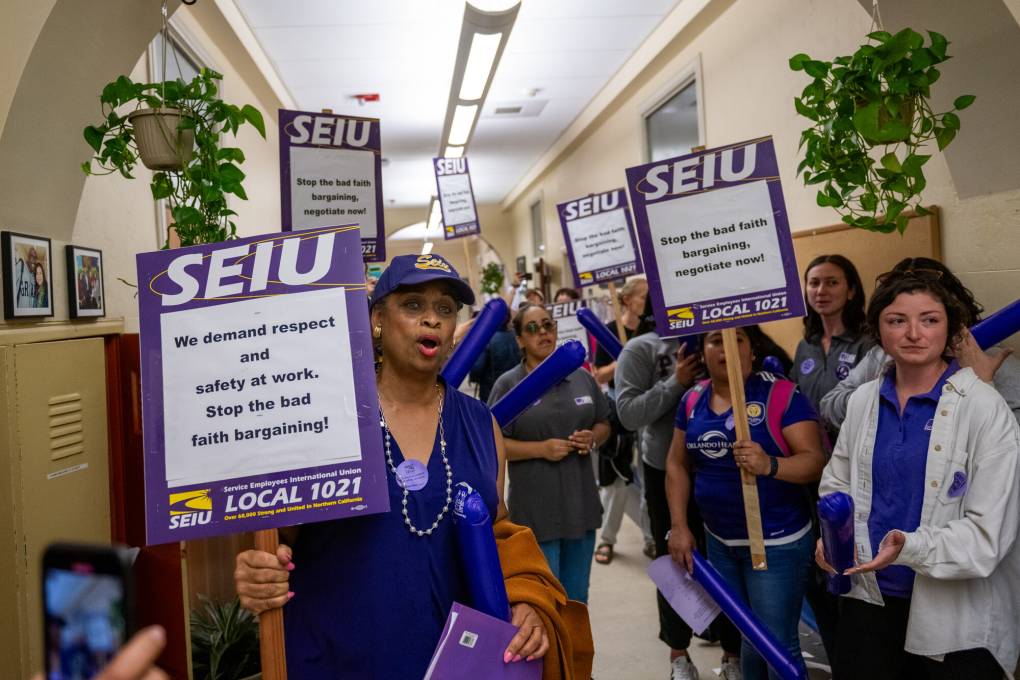
"caption": "Felton Institute employees and union members cheer after delivering their health and safety demands to management during a rally on Aug. 10, 2023, to bring attention to a gas leak employees say went unaddressed for more than a year at Felton's Sunshine Community Center in San Francisco's Mission District. ",
"credit": "Beth LaBerge/KQED",
"altTag": null,
"description": null,
"imgSizes": {
"medium": {
"file": "https://cdn.kqed.org/wp-content/uploads/sites/10/2024/07/230810-FeltonInstituteRally-24-BL_qed-800x533.jpg",
"width": 800,
"height": 533,
"mimeType": "image/jpeg"
},
"large": {
"file": "https://cdn.kqed.org/wp-content/uploads/sites/10/2024/07/230810-FeltonInstituteRally-24-BL_qed-1020x680.jpg",
"width": 1020,
"height": 680,
"mimeType": "image/jpeg"
},
"thumbnail": {
"file": "https://cdn.kqed.org/wp-content/uploads/sites/10/2024/07/230810-FeltonInstituteRally-24-BL_qed-160x107.jpg",
"width": 160,
"height": 107,
"mimeType": "image/jpeg"
},
"1536x1536": {
"file": "https://cdn.kqed.org/wp-content/uploads/sites/10/2024/07/230810-FeltonInstituteRally-24-BL_qed-1536x1024.jpg",
"width": 1536,
"height": 1024,
"mimeType": "image/jpeg"
},
"post-thumbnail": {
"file": "https://cdn.kqed.org/wp-content/uploads/sites/10/2024/07/230810-FeltonInstituteRally-24-BL_qed-672x372.jpg",
"width": 672,
"height": 372,
"mimeType": "image/jpeg"
},
"twentyfourteen-full-width": {
"file": "https://cdn.kqed.org/wp-content/uploads/sites/10/2024/07/230810-FeltonInstituteRally-24-BL_qed-1038x576.jpg",
"width": 1038,
"height": 576,
"mimeType": "image/jpeg"
},
"full-width": {
"file": "https://cdn.kqed.org/wp-content/uploads/sites/10/2024/07/230810-FeltonInstituteRally-24-BL_qed-1920x1280.jpg",
"width": 1920,
"height": 1280,
"mimeType": "image/jpeg"
},
"kqedFullSize": {
"file": "https://cdn.kqed.org/wp-content/uploads/sites/10/2024/07/230810-FeltonInstituteRally-24-BL_qed.jpg",
"width": 2000,
"height": 1333
}
},
"isLoading": false,
"fetchFailed": false
},
"news_11814875": {
"type": "attachments",
"id": "news_11814875",
"meta": {
"index": "attachments_1716263798",
"site": "news",
"id": "11814875",
"found": true
},
"title": "RS42922_003_KQED_SanFrancisco_MarriottMarquis_04262020-qut",
"publishDate": 1588119869,
"status": "inherit",
"parent": 11813671,
"modified": 1721767257,
"caption": "A pedestrian walks past a closed-off entrance to the Mariott Marquis Hotel in San Francisco on April 26, 2020.",
"credit": "Beth LaBerge/KQED",
"altTag": "The front of a building with a barricade closing entry. The front doors are boarded up with wood.",
"description": "A pedestrian walks past a closed off entrance to the Mariott Marquis hotel in San Francisco on April 26, 2020.",
"imgSizes": {
"thumbnail": {
"file": "https://cdn.kqed.org/wp-content/uploads/sites/10/2020/04/RS42922_003_KQED_SanFrancisco_MarriottMarquis_04262020-qut-160x107.jpg",
"width": 160,
"height": 107,
"mimeType": "image/jpeg"
},
"medium": {
"file": "https://cdn.kqed.org/wp-content/uploads/sites/10/2020/04/RS42922_003_KQED_SanFrancisco_MarriottMarquis_04262020-qut-800x533.jpg",
"width": 800,
"height": 533,
"mimeType": "image/jpeg"
},
"large": {
"file": "https://cdn.kqed.org/wp-content/uploads/sites/10/2020/04/RS42922_003_KQED_SanFrancisco_MarriottMarquis_04262020-qut-1020x680.jpg",
"width": 1020,
"height": 680,
"mimeType": "image/jpeg"
},
"post-thumbnail": {
"file": "https://cdn.kqed.org/wp-content/uploads/sites/10/2020/04/RS42922_003_KQED_SanFrancisco_MarriottMarquis_04262020-qut-672x372.jpg",
"width": 672,
"height": 372,
"mimeType": "image/jpeg"
},
"twentyfourteen-full-width": {
"file": "https://cdn.kqed.org/wp-content/uploads/sites/10/2020/04/RS42922_003_KQED_SanFrancisco_MarriottMarquis_04262020-qut-1038x576.jpg",
"width": 1038,
"height": 576,
"mimeType": "image/jpeg"
},
"full-width": {
"file": "https://cdn.kqed.org/wp-content/uploads/sites/10/2020/04/RS42922_003_KQED_SanFrancisco_MarriottMarquis_04262020-qut-1920x1280.jpg",
"width": 1920,
"height": 1280,
"mimeType": "image/jpeg"
},
"apple_news_ca_landscape_12_9": {
"file": "https://cdn.kqed.org/wp-content/uploads/sites/10/2020/04/RS42922_003_KQED_SanFrancisco_MarriottMarquis_04262020-qut-1832x1280.jpg",
"width": 1832,
"height": 1280,
"mimeType": "image/jpeg"
},
"apple_news_ca_landscape_9_7": {
"file": "https://cdn.kqed.org/wp-content/uploads/sites/10/2020/04/RS42922_003_KQED_SanFrancisco_MarriottMarquis_04262020-qut-1376x1032.jpg",
"width": 1376,
"height": 1032,
"mimeType": "image/jpeg"
},
"apple_news_ca_landscape_5_5": {
"file": "https://cdn.kqed.org/wp-content/uploads/sites/10/2020/04/RS42922_003_KQED_SanFrancisco_MarriottMarquis_04262020-qut-1044x783.jpg",
"width": 1044,
"height": 783,
"mimeType": "image/jpeg"
},
"apple_news_ca_landscape_4_7": {
"file": "https://cdn.kqed.org/wp-content/uploads/sites/10/2020/04/RS42922_003_KQED_SanFrancisco_MarriottMarquis_04262020-qut-632x474.jpg",
"width": 632,
"height": 474,
"mimeType": "image/jpeg"
},
"apple_news_ca_landscape_4_0": {
"file": "https://cdn.kqed.org/wp-content/uploads/sites/10/2020/04/RS42922_003_KQED_SanFrancisco_MarriottMarquis_04262020-qut-536x402.jpg",
"width": 536,
"height": 402,
"mimeType": "image/jpeg"
},
"apple_news_ca_portrait_12_9": {
"file": "https://cdn.kqed.org/wp-content/uploads/sites/10/2020/04/RS42922_003_KQED_SanFrancisco_MarriottMarquis_04262020-qut-1122x1280.jpg",
"width": 1122,
"height": 1280,
"mimeType": "image/jpeg"
},
"apple_news_ca_portrait_9_7": {
"file": "https://cdn.kqed.org/wp-content/uploads/sites/10/2020/04/RS42922_003_KQED_SanFrancisco_MarriottMarquis_04262020-qut-840x1120.jpg",
"width": 840,
"height": 1120,
"mimeType": "image/jpeg"
},
"apple_news_ca_portrait_5_5": {
"file": "https://cdn.kqed.org/wp-content/uploads/sites/10/2020/04/RS42922_003_KQED_SanFrancisco_MarriottMarquis_04262020-qut-687x916.jpg",
"width": 687,
"height": 916,
"mimeType": "image/jpeg"
},
"apple_news_ca_portrait_4_7": {
"file": "https://cdn.kqed.org/wp-content/uploads/sites/10/2020/04/RS42922_003_KQED_SanFrancisco_MarriottMarquis_04262020-qut-414x552.jpg",
"width": 414,
"height": 552,
"mimeType": "image/jpeg"
},
"apple_news_ca_portrait_4_0": {
"file": "https://cdn.kqed.org/wp-content/uploads/sites/10/2020/04/RS42922_003_KQED_SanFrancisco_MarriottMarquis_04262020-qut-354x472.jpg",
"width": 354,
"height": 472,
"mimeType": "image/jpeg"
},
"apple_news_ca_square_12_9": {
"file": "https://cdn.kqed.org/wp-content/uploads/sites/10/2020/04/RS42922_003_KQED_SanFrancisco_MarriottMarquis_04262020-qut-1472x1280.jpg",
"width": 1472,
"height": 1280,
"mimeType": "image/jpeg"
},
"apple_news_ca_square_9_7": {
"file": "https://cdn.kqed.org/wp-content/uploads/sites/10/2020/04/RS42922_003_KQED_SanFrancisco_MarriottMarquis_04262020-qut-1104x1104.jpg",
"width": 1104,
"height": 1104,
"mimeType": "image/jpeg"
},
"apple_news_ca_square_5_5": {
"file": "https://cdn.kqed.org/wp-content/uploads/sites/10/2020/04/RS42922_003_KQED_SanFrancisco_MarriottMarquis_04262020-qut-912x912.jpg",
"width": 912,
"height": 912,
"mimeType": "image/jpeg"
},
"apple_news_ca_square_4_7": {
"file": "https://cdn.kqed.org/wp-content/uploads/sites/10/2020/04/RS42922_003_KQED_SanFrancisco_MarriottMarquis_04262020-qut-550x550.jpg",
"width": 550,
"height": 550,
"mimeType": "image/jpeg"
},
"apple_news_ca_square_4_0": {
"file": "https://cdn.kqed.org/wp-content/uploads/sites/10/2020/04/RS42922_003_KQED_SanFrancisco_MarriottMarquis_04262020-qut-470x470.jpg",
"width": 470,
"height": 470,
"mimeType": "image/jpeg"
},
"kqedFullSize": {
"file": "https://cdn.kqed.org/wp-content/uploads/sites/10/2020/04/RS42922_003_KQED_SanFrancisco_MarriottMarquis_04262020-qut.jpg",
"width": 1920,
"height": 1280
}
},
"isLoading": false,
"fetchFailed": false
},
"news_11996005": {
"type": "attachments",
"id": "news_11996005",
"meta": {
"index": "attachments_1716263798",
"site": "news",
"id": "11996005",
"found": true
},
"title": "20240716_SANJOSEHOTELWORKERSMARCH_GC-10-KQED",
"publishDate": 1721233451,
"status": "inherit",
"parent": 0,
"modified": 1721247512,
"caption": "Hundreds of hotel workers marched in downtown San José, calling for better wages, more affordable health care and job security, on July 16, 2024.",
"credit": "Gina Castro/KQED",
"altTag": "Several people walk in the street holding signs.",
"description": null,
"imgSizes": {
"medium": {
"file": "https://cdn.kqed.org/wp-content/uploads/sites/10/2024/07/20240716_SANJOSEHOTELWORKERSMARCH_GC-10-KQED-800x533.jpg",
"width": 800,
"height": 533,
"mimeType": "image/jpeg"
},
"large": {
"file": "https://cdn.kqed.org/wp-content/uploads/sites/10/2024/07/20240716_SANJOSEHOTELWORKERSMARCH_GC-10-KQED-1020x680.jpg",
"width": 1020,
"height": 680,
"mimeType": "image/jpeg"
},
"thumbnail": {
"file": "https://cdn.kqed.org/wp-content/uploads/sites/10/2024/07/20240716_SANJOSEHOTELWORKERSMARCH_GC-10-KQED-160x107.jpg",
"width": 160,
"height": 107,
"mimeType": "image/jpeg"
},
"1536x1536": {
"file": "https://cdn.kqed.org/wp-content/uploads/sites/10/2024/07/20240716_SANJOSEHOTELWORKERSMARCH_GC-10-KQED-1536x1024.jpg",
"width": 1536,
"height": 1024,
"mimeType": "image/jpeg"
},
"post-thumbnail": {
"file": "https://cdn.kqed.org/wp-content/uploads/sites/10/2024/07/20240716_SANJOSEHOTELWORKERSMARCH_GC-10-KQED-672x372.jpg",
"width": 672,
"height": 372,
"mimeType": "image/jpeg"
},
"twentyfourteen-full-width": {
"file": "https://cdn.kqed.org/wp-content/uploads/sites/10/2024/07/20240716_SANJOSEHOTELWORKERSMARCH_GC-10-KQED-1038x576.jpg",
"width": 1038,
"height": 576,
"mimeType": "image/jpeg"
},
"full-width": {
"file": "https://cdn.kqed.org/wp-content/uploads/sites/10/2024/07/20240716_SANJOSEHOTELWORKERSMARCH_GC-10-KQED-1920x1280.jpg",
"width": 1920,
"height": 1280,
"mimeType": "image/jpeg"
},
"kqedFullSize": {
"file": "https://cdn.kqed.org/wp-content/uploads/sites/10/2024/07/20240716_SANJOSEHOTELWORKERSMARCH_GC-10-KQED.jpg",
"width": 2000,
"height": 1333
}
},
"isLoading": false,
"fetchFailed": false
},
"news_11992506": {
"type": "attachments",
"id": "news_11992506",
"meta": {
"index": "attachments_1716263798",
"site": "news",
"id": "11992506",
"found": true
},
"title": "010_KQED_DomesticWorkerSocorroDiaz_01232023_scr",
"publishDate": 1719618778,
"status": "inherit",
"parent": 11992472,
"modified": 1731706433,
"caption": "Across the board, cities are raising the minimum wage by a small percentage. ",
"credit": "Beth LaBerge/KQED",
"altTag": null,
"description": null,
"imgSizes": {
"medium": {
"file": "https://cdn.kqed.org/wp-content/uploads/sites/10/2024/07/010_KQED_DomesticWorkerSocorroDiaz_01232023_scr-800x533.jpg",
"width": 800,
"height": 533,
"mimeType": "image/jpeg"
},
"large": {
"file": "https://cdn.kqed.org/wp-content/uploads/sites/10/2024/07/010_KQED_DomesticWorkerSocorroDiaz_01232023_scr-1020x680.jpg",
"width": 1020,
"height": 680,
"mimeType": "image/jpeg"
},
"thumbnail": {
"file": "https://cdn.kqed.org/wp-content/uploads/sites/10/2024/07/010_KQED_DomesticWorkerSocorroDiaz_01232023_scr-160x107.jpg",
"width": 160,
"height": 107,
"mimeType": "image/jpeg"
},
"post-thumbnail": {
"file": "https://cdn.kqed.org/wp-content/uploads/sites/10/2024/07/010_KQED_DomesticWorkerSocorroDiaz_01232023_scr-672x372.jpg",
"width": 672,
"height": 372,
"mimeType": "image/jpeg"
},
"twentyfourteen-full-width": {
"file": "https://cdn.kqed.org/wp-content/uploads/sites/10/2024/07/010_KQED_DomesticWorkerSocorroDiaz_01232023_scr-1038x576.jpg",
"width": 1038,
"height": 576,
"mimeType": "image/jpeg"
},
"kqedFullSize": {
"file": "https://cdn.kqed.org/wp-content/uploads/sites/10/2024/07/010_KQED_DomesticWorkerSocorroDiaz_01232023_scr.jpg",
"width": 1200,
"height": 800
}
},
"isLoading": false,
"fetchFailed": false
},
"news_11992341": {
"type": "attachments",
"id": "news_11992341",
"meta": {
"index": "attachments_1716263798",
"site": "news",
"id": "11992341",
"found": true
},
"title": "006_KQED_NEWFOLSOMPRISONSACRAMENTO_04132023-KQED",
"publishDate": 1719530043,
"status": "inherit",
"parent": 12088386,
"modified": 1782161688,
"caption": "A watch tower at California State Prison, Sacramento, on April 13, 2023.",
"credit": "Beth LaBerge/KQED",
"altTag": "A watchtower at a prison, with prison walls and barbed wire in the foreground.",
"description": null,
"imgSizes": {
"medium": {
"file": "https://cdn.kqed.org/wp-content/uploads/sites/10/2024/06/006_KQED_NEWFOLSOMPRISONSACRAMENTO_04132023-KQED-800x533.jpg",
"width": 800,
"height": 533,
"mimeType": "image/jpeg"
},
"large": {
"file": "https://cdn.kqed.org/wp-content/uploads/sites/10/2024/06/006_KQED_NEWFOLSOMPRISONSACRAMENTO_04132023-KQED-1020x680.jpg",
"width": 1020,
"height": 680,
"mimeType": "image/jpeg"
},
"thumbnail": {
"file": "https://cdn.kqed.org/wp-content/uploads/sites/10/2024/06/006_KQED_NEWFOLSOMPRISONSACRAMENTO_04132023-KQED-160x107.jpg",
"width": 160,
"height": 107,
"mimeType": "image/jpeg"
},
"1536x1536": {
"file": "https://cdn.kqed.org/wp-content/uploads/sites/10/2024/06/006_KQED_NEWFOLSOMPRISONSACRAMENTO_04132023-KQED-1536x1024.jpg",
"width": 1536,
"height": 1024,
"mimeType": "image/jpeg"
},
"post-thumbnail": {
"file": "https://cdn.kqed.org/wp-content/uploads/sites/10/2024/06/006_KQED_NEWFOLSOMPRISONSACRAMENTO_04132023-KQED-672x372.jpg",
"width": 672,
"height": 372,
"mimeType": "image/jpeg"
},
"twentyfourteen-full-width": {
"file": "https://cdn.kqed.org/wp-content/uploads/sites/10/2024/06/006_KQED_NEWFOLSOMPRISONSACRAMENTO_04132023-KQED-1038x576.jpg",
"width": 1038,
"height": 576,
"mimeType": "image/jpeg"
},
"full-width": {
"file": "https://cdn.kqed.org/wp-content/uploads/sites/10/2024/06/006_KQED_NEWFOLSOMPRISONSACRAMENTO_04132023-KQED-1920x1280.jpg",
"width": 1920,
"height": 1280,
"mimeType": "image/jpeg"
},
"kqedFullSize": {
"file": "https://cdn.kqed.org/wp-content/uploads/sites/10/2024/06/006_KQED_NEWFOLSOMPRISONSACRAMENTO_04132023-KQED.jpg",
"width": 2000,
"height": 1333
}
},
"isLoading": false,
"fetchFailed": false
},
"news_11992295": {
"type": "attachments",
"id": "news_11992295",
"meta": {
"index": "attachments_1716263798",
"site": "news",
"id": "11992295",
"found": true
},
"title": "The entrance to Concord Farms in Half Moon Bay on Jan. 3, 2024.",
"publishDate": 1719517739,
"status": "inherit",
"parent": 11992290,
"modified": 1719517752,
"caption": "The entrance to Concord Farms in Half Moon Bay on Jan. 3, 2024.",
"credit": "Beth LaBerge/KQED",
"altTag": null,
"description": null,
"imgSizes": {
"medium": {
"file": "https://cdn.kqed.org/wp-content/uploads/sites/10/2024/06/240103-HMBFarms-08-BL-800x533.jpg",
"width": 800,
"height": 533,
"mimeType": "image/jpeg"
},
"large": {
"file": "https://cdn.kqed.org/wp-content/uploads/sites/10/2024/06/240103-HMBFarms-08-BL-1020x680.jpg",
"width": 1020,
"height": 680,
"mimeType": "image/jpeg"
},
"thumbnail": {
"file": "https://cdn.kqed.org/wp-content/uploads/sites/10/2024/06/240103-HMBFarms-08-BL-160x107.jpg",
"width": 160,
"height": 107,
"mimeType": "image/jpeg"
},
"1536x1536": {
"file": "https://cdn.kqed.org/wp-content/uploads/sites/10/2024/06/240103-HMBFarms-08-BL-1536x1024.jpg",
"width": 1536,
"height": 1024,
"mimeType": "image/jpeg"
},
"post-thumbnail": {
"file": "https://cdn.kqed.org/wp-content/uploads/sites/10/2024/06/240103-HMBFarms-08-BL-672x372.jpg",
"width": 672,
"height": 372,
"mimeType": "image/jpeg"
},
"twentyfourteen-full-width": {
"file": "https://cdn.kqed.org/wp-content/uploads/sites/10/2024/06/240103-HMBFarms-08-BL-1038x576.jpg",
"width": 1038,
"height": 576,
"mimeType": "image/jpeg"
},
"kqedFullSize": {
"file": "https://cdn.kqed.org/wp-content/uploads/sites/10/2024/06/240103-HMBFarms-08-BL.jpg",
"width": 1920,
"height": 1280
}
},
"isLoading": false,
"fetchFailed": false
},
"news_11991359": {
"type": "attachments",
"id": "news_11991359",
"meta": {
"index": "attachments_1716263798",
"site": "news",
"id": "11991359",
"found": true
},
"title": "240509-MENUDO KING-MD-13-KQED",
"publishDate": 1718922070,
"status": "inherit",
"parent": 0,
"modified": 1718922109,
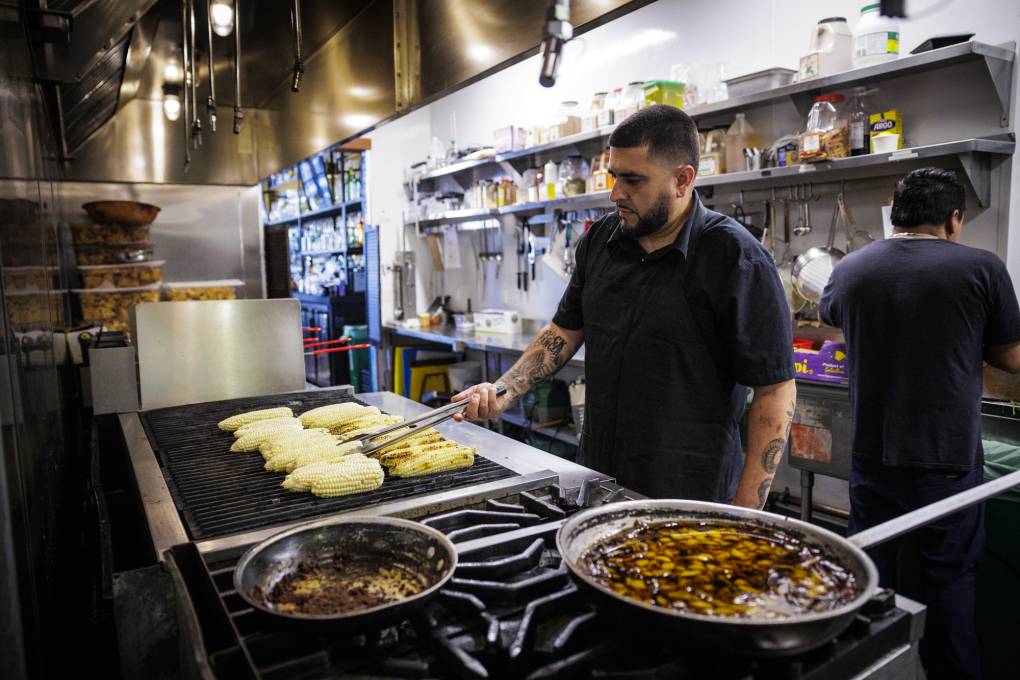
"caption": "Chef Nolberto Martinez grills corn at Todos restaurant in Oakland on May 11, 2024.",
"credit": "Martin do Nascimento/KQED",
"altTag": null,
"description": null,
"imgSizes": {
"medium": {
"file": "https://cdn.kqed.org/wp-content/uploads/sites/10/2024/06/240509-MENUDO-KING-MD-13-KQED-800x533.jpg",
"width": 800,
"height": 533,
"mimeType": "image/jpeg"
},
"large": {
"file": "https://cdn.kqed.org/wp-content/uploads/sites/10/2024/06/240509-MENUDO-KING-MD-13-KQED-1020x680.jpg",
"width": 1020,
"height": 680,
"mimeType": "image/jpeg"
},
"thumbnail": {
"file": "https://cdn.kqed.org/wp-content/uploads/sites/10/2024/06/240509-MENUDO-KING-MD-13-KQED-160x107.jpg",
"width": 160,
"height": 107,
"mimeType": "image/jpeg"
},
"1536x1536": {
"file": "https://cdn.kqed.org/wp-content/uploads/sites/10/2024/06/240509-MENUDO-KING-MD-13-KQED-1536x1024.jpg",
"width": 1536,
"height": 1024,
"mimeType": "image/jpeg"
},
"post-thumbnail": {
"file": "https://cdn.kqed.org/wp-content/uploads/sites/10/2024/06/240509-MENUDO-KING-MD-13-KQED-672x372.jpg",
"width": 672,
"height": 372,
"mimeType": "image/jpeg"
},
"twentyfourteen-full-width": {
"file": "https://cdn.kqed.org/wp-content/uploads/sites/10/2024/06/240509-MENUDO-KING-MD-13-KQED-1038x576.jpg",
"width": 1038,
"height": 576,
"mimeType": "image/jpeg"
},
"full-width": {
"file": "https://cdn.kqed.org/wp-content/uploads/sites/10/2024/06/240509-MENUDO-KING-MD-13-KQED-1920x1280.jpg",
"width": 1920,
"height": 1280,
"mimeType": "image/jpeg"
},
"kqedFullSize": {
"file": "https://cdn.kqed.org/wp-content/uploads/sites/10/2024/06/240509-MENUDO-KING-MD-13-KQED.jpg",
"width": 2000,
"height": 1333
}
},
"isLoading": false,
"fetchFailed": false
},
"news_11991236": {
"type": "attachments",
"id": "news_11991236",
"meta": {
"index": "attachments_1716263798",
"site": "news",
"id": "11991236",
"found": true
},
"title": "AI-Worplace-Discrimination_AH_CM_01",
"publishDate": 1718902045,
"status": "inherit",
"parent": 11991230,
"modified": 1718902141,
"caption": null,
"credit": "Adriana Heldiz/CalMatters; iStock",
"altTag": "A graphic image of a gavel, computer mouse hand, and folders with a personnel logo above the state on California.",
"description": null,
"imgSizes": {
"medium": {
"file": "https://cdn.kqed.org/wp-content/uploads/sites/10/2024/06/AI-Worplace-Discrimination_AH_CM_01-800x533.jpg",
"width": 800,
"height": 533,
"mimeType": "image/jpeg"
},
"large": {
"file": "https://cdn.kqed.org/wp-content/uploads/sites/10/2024/06/AI-Worplace-Discrimination_AH_CM_01-1020x680.jpg",
"width": 1020,
"height": 680,
"mimeType": "image/jpeg"
},
"thumbnail": {
"file": "https://cdn.kqed.org/wp-content/uploads/sites/10/2024/06/AI-Worplace-Discrimination_AH_CM_01-160x107.jpg",
"width": 160,
"height": 107,
"mimeType": "image/jpeg"
},
"1536x1536": {
"file": "https://cdn.kqed.org/wp-content/uploads/sites/10/2024/06/AI-Worplace-Discrimination_AH_CM_01-1536x1024.jpg",
"width": 1536,
"height": 1024,
"mimeType": "image/jpeg"
},
"post-thumbnail": {
"file": "https://cdn.kqed.org/wp-content/uploads/sites/10/2024/06/AI-Worplace-Discrimination_AH_CM_01-672x372.jpg",
"width": 672,
"height": 372,
"mimeType": "image/jpeg"
},
"twentyfourteen-full-width": {
"file": "https://cdn.kqed.org/wp-content/uploads/sites/10/2024/06/AI-Worplace-Discrimination_AH_CM_01-1038x576.jpg",
"width": 1038,
"height": 576,
"mimeType": "image/jpeg"
},
"full-width": {
"file": "https://cdn.kqed.org/wp-content/uploads/sites/10/2024/06/AI-Worplace-Discrimination_AH_CM_01-1920x1280.jpg",
"width": 1920,
"height": 1280,
"mimeType": "image/jpeg"
},
"kqedFullSize": {
"file": "https://cdn.kqed.org/wp-content/uploads/sites/10/2024/06/AI-Worplace-Discrimination_AH_CM_01.jpg",
"width": 2000,
"height": 1333
}
},
"isLoading": false,
"fetchFailed": false
},
"news_11990912": {
"type": "attachments",
"id": "news_11990912",
"meta": {
"index": "attachments_1716263798",
"site": "news",
"id": "11990912",
"found": true
},
"title": "Grand Opening Of Amazon Fulfillment Center Features State Of The Art Technology",
"publishDate": 1718735000,
"status": "inherit",
"parent": 11990881,
"modified": 1718741486,
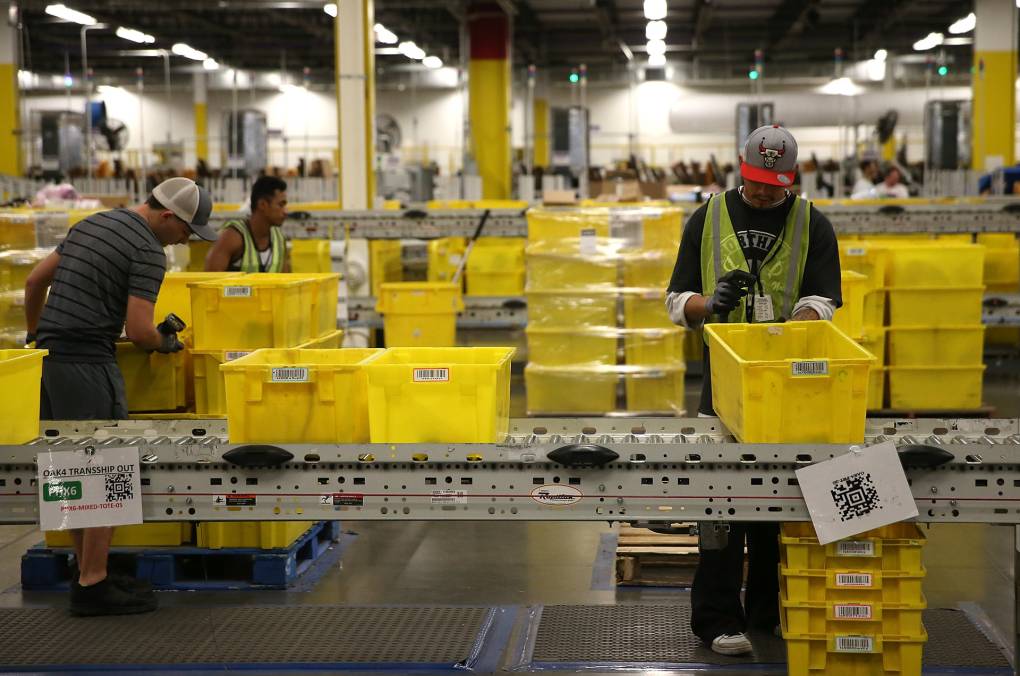
"caption": "Amazon.com workers pack orders at an Amazon fulfillment center on Jan. 20, 2015 in Tracy, California.",
"credit": "Justin Sullivan/Getty Images",
"altTag": null,
"description": null,
"imgSizes": {
"medium": {
"file": "https://cdn.kqed.org/wp-content/uploads/sites/10/2024/06/GettyImages-461843616_qut-800x530.jpg",
"width": 800,
"height": 530,
"mimeType": "image/jpeg"
},
"large": {
"file": "https://cdn.kqed.org/wp-content/uploads/sites/10/2024/06/GettyImages-461843616_qut-1020x676.jpg",
"width": 1020,
"height": 676,
"mimeType": "image/jpeg"
},
"thumbnail": {
"file": "https://cdn.kqed.org/wp-content/uploads/sites/10/2024/06/GettyImages-461843616_qut-160x106.jpg",
"width": 160,
"height": 106,
"mimeType": "image/jpeg"
},
"1536x1536": {
"file": "https://cdn.kqed.org/wp-content/uploads/sites/10/2024/06/GettyImages-461843616_qut-1536x1018.jpg",
"width": 1536,
"height": 1018,
"mimeType": "image/jpeg"
},
"post-thumbnail": {
"file": "https://cdn.kqed.org/wp-content/uploads/sites/10/2024/06/GettyImages-461843616_qut-672x372.jpg",
"width": 672,
"height": 372,
"mimeType": "image/jpeg"
},
"twentyfourteen-full-width": {
"file": "https://cdn.kqed.org/wp-content/uploads/sites/10/2024/06/GettyImages-461843616_qut-1038x576.jpg",
"width": 1038,
"height": 576,
"mimeType": "image/jpeg"
},
"kqedFullSize": {
"file": "https://cdn.kqed.org/wp-content/uploads/sites/10/2024/06/GettyImages-461843616_qut.jpg",
"width": 1920,
"height": 1272
}
},
"isLoading": false,
"fetchFailed": false
},
"news_11990244": {
"type": "attachments",
"id": "news_11990244",
"meta": {
"index": "attachments_1716263798",
"site": "news",
"id": "11990244",
"found": true
},
"title": "005_SanFrancisco_StFrancisER_08262021_qut",
"publishDate": 1718310230,
"status": "inherit",
"parent": 11990215,
"modified": 1718312277,
"caption": "Substance Use Manager Monique Randolph speaks with a doctor at the Saint Francis Emergency Department in San Francisco on Aug. 26, 2021. State initiatives encouraging people to become community health workers, social workers, psychiatrists, nurses and other health professionals could lose roughly $800 million or more through mid-2027, with Gov. Gavin Newsom and lawmakers set to finalize a deal in the coming weeks.",
"credit": "Beth LaBerge/KQED",
"altTag": null,
"description": null,
"imgSizes": {
"medium": {
"file": "https://cdn.kqed.org/wp-content/uploads/sites/10/2024/06/005_SanFrancisco_StFrancisER_08262021_qut-800x533.jpg",
"width": 800,
"height": 533,
"mimeType": "image/jpeg"
},
"large": {
"file": "https://cdn.kqed.org/wp-content/uploads/sites/10/2024/06/005_SanFrancisco_StFrancisER_08262021_qut-1020x680.jpg",
"width": 1020,
"height": 680,
"mimeType": "image/jpeg"
},
"thumbnail": {
"file": "https://cdn.kqed.org/wp-content/uploads/sites/10/2024/06/005_SanFrancisco_StFrancisER_08262021_qut-160x107.jpg",
"width": 160,
"height": 107,
"mimeType": "image/jpeg"
},
"1536x1536": {
"file": "https://cdn.kqed.org/wp-content/uploads/sites/10/2024/06/005_SanFrancisco_StFrancisER_08262021_qut-1536x1024.jpg",
"width": 1536,
"height": 1024,
"mimeType": "image/jpeg"
},
"post-thumbnail": {
"file": "https://cdn.kqed.org/wp-content/uploads/sites/10/2024/06/005_SanFrancisco_StFrancisER_08262021_qut-672x372.jpg",
"width": 672,
"height": 372,
"mimeType": "image/jpeg"
},
"twentyfourteen-full-width": {
"file": "https://cdn.kqed.org/wp-content/uploads/sites/10/2024/06/005_SanFrancisco_StFrancisER_08262021_qut-1038x576.jpg",
"width": 1038,
"height": 576,
"mimeType": "image/jpeg"
},
"kqedFullSize": {
"file": "https://cdn.kqed.org/wp-content/uploads/sites/10/2024/06/005_SanFrancisco_StFrancisER_08262021_qut.jpg",
"width": 1920,
"height": 1280
}
},
"isLoading": false,
"fetchFailed": false
},
"news_11989608": {
"type": "attachments",
"id": "news_11989608",
"meta": {
"index": "attachments_1716263798",
"site": "news",
"id": "11989608",
"found": true
},
"title": "062223-Hotel-Workers-Strike-ZS-CM-22",
"publishDate": 1718041888,
"status": "inherit",
"parent": 11989607,
"modified": 1718051202,
"caption": "Hotel workers and Unite Here Local 11 supporters stage a sit-in during a protest at one of the main entrances to Los Angeles International Airport on June 22, 2023.\n",
"credit": "Zaydee Sanchez/CalMatters",
"altTag": "Protesters sit on the ground, holding signs, outside of Los Angeles International Airport — with LAX in large letters behind them.",
"description": null,
"imgSizes": {
"medium": {
"file": "https://cdn.kqed.org/wp-content/uploads/sites/10/2024/06/062223-Hotel-Workers-Strike-ZS-CM-22-800x533.jpg",
"width": 800,
"height": 533,
"mimeType": "image/jpeg"
},
"large": {
"file": "https://cdn.kqed.org/wp-content/uploads/sites/10/2024/06/062223-Hotel-Workers-Strike-ZS-CM-22-1020x680.jpg",
"width": 1020,
"height": 680,
"mimeType": "image/jpeg"
},
"thumbnail": {
"file": "https://cdn.kqed.org/wp-content/uploads/sites/10/2024/06/062223-Hotel-Workers-Strike-ZS-CM-22-160x107.jpg",
"width": 160,
"height": 107,
"mimeType": "image/jpeg"
},
"1536x1536": {
"file": "https://cdn.kqed.org/wp-content/uploads/sites/10/2024/06/062223-Hotel-Workers-Strike-ZS-CM-22-1536x1024.jpg",
"width": 1536,
"height": 1024,
"mimeType": "image/jpeg"
},
"post-thumbnail": {
"file": "https://cdn.kqed.org/wp-content/uploads/sites/10/2024/06/062223-Hotel-Workers-Strike-ZS-CM-22-672x372.jpg",
"width": 672,
"height": 372,
"mimeType": "image/jpeg"
},
"twentyfourteen-full-width": {
"file": "https://cdn.kqed.org/wp-content/uploads/sites/10/2024/06/062223-Hotel-Workers-Strike-ZS-CM-22-1038x576.jpg",
"width": 1038,
"height": 576,
"mimeType": "image/jpeg"
},
"full-width": {
"file": "https://cdn.kqed.org/wp-content/uploads/sites/10/2024/06/062223-Hotel-Workers-Strike-ZS-CM-22-1920x1280.jpg",
"width": 1920,
"height": 1280,
"mimeType": "image/jpeg"
},
"kqedFullSize": {
"file": "https://cdn.kqed.org/wp-content/uploads/sites/10/2024/06/062223-Hotel-Workers-Strike-ZS-CM-22.jpg",
"width": 2000,
"height": 1333
}
},
"isLoading": false,
"fetchFailed": false
},
"news_11988820": {
"type": "attachments",
"id": "news_11988820",
"meta": {
"index": "attachments_1716263798",
"site": "news",
"id": "11988820",
"found": true
},
"title": "013_KQED_SanJoseInterimHousing_01302023_qut",
"publishDate": 1717454635,
"status": "inherit",
"parent": 11988728,
"modified": 1717454673,
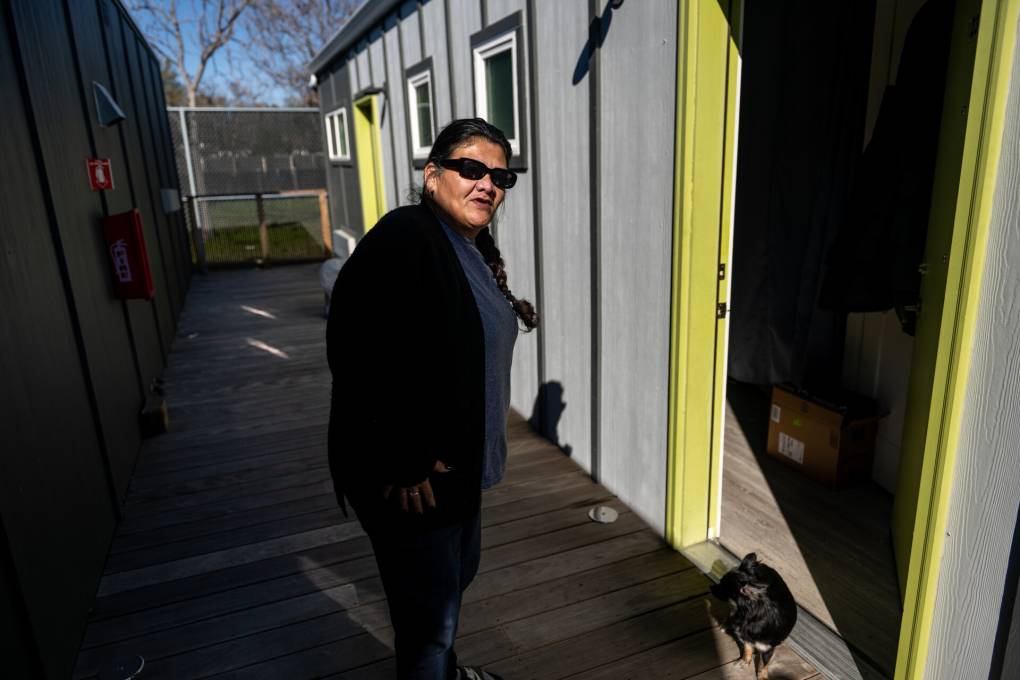
"caption": "Amanda Mora stands outside of her temporary home at Evans Lane housing, an interim housing facility located on city-owned land, in San José on Jan. 30, 2023.",
"credit": "Beth LaBerge/KQED",
"altTag": "A woman wearing sunglasses stands outside the door of a grey tiny home.",
"description": null,
"imgSizes": {
"medium": {
"file": "https://cdn.kqed.org/wp-content/uploads/sites/10/2024/06/013_KQED_SanJoseInterimHousing_01302023_qut-800x533.jpg",
"width": 800,
"height": 533,
"mimeType": "image/jpeg"
},
"large": {
"file": "https://cdn.kqed.org/wp-content/uploads/sites/10/2024/06/013_KQED_SanJoseInterimHousing_01302023_qut-1020x680.jpg",
"width": 1020,
"height": 680,
"mimeType": "image/jpeg"
},
"thumbnail": {
"file": "https://cdn.kqed.org/wp-content/uploads/sites/10/2024/06/013_KQED_SanJoseInterimHousing_01302023_qut-160x107.jpg",
"width": 160,
"height": 107,
"mimeType": "image/jpeg"
},
"1536x1536": {
"file": "https://cdn.kqed.org/wp-content/uploads/sites/10/2024/06/013_KQED_SanJoseInterimHousing_01302023_qut-1536x1024.jpg",
"width": 1536,
"height": 1024,
"mimeType": "image/jpeg"
},
"post-thumbnail": {
"file": "https://cdn.kqed.org/wp-content/uploads/sites/10/2024/06/013_KQED_SanJoseInterimHousing_01302023_qut-672x372.jpg",
"width": 672,
"height": 372,
"mimeType": "image/jpeg"
},
"twentyfourteen-full-width": {
"file": "https://cdn.kqed.org/wp-content/uploads/sites/10/2024/06/013_KQED_SanJoseInterimHousing_01302023_qut-1038x576.jpg",
"width": 1038,
"height": 576,
"mimeType": "image/jpeg"
},
"kqedFullSize": {
"file": "https://cdn.kqed.org/wp-content/uploads/sites/10/2024/06/013_KQED_SanJoseInterimHousing_01302023_qut.jpg",
"width": 1920,
"height": 1280
}
},
"isLoading": false,
"fetchFailed": false
}
},
"audioPlayerReducer": {
"postId": "stream_live",
"isPaused": true,
"isPlaying": false,
"pfsActive": false,
"pledgeModalIsOpen": true,
"playerDrawerIsOpen": false,
"liveAudioPlayStartedAt": 0,
"liveAudioPlayContext": ""
},
"authorsReducer": {
"byline_news_11991230": {
"type": "authors",
"id": "byline_news_11991230",
"meta": {
"override": true
},
"slug": "byline_news_11991230",
"name": "Khari Johnson, CalMatters",
"isLoading": false
},
"byline_news_11989607": {
"type": "authors",
"id": "byline_news_11989607",
"meta": {
"override": true
},
"slug": "byline_news_11989607",
"name": "\u003ca href=\"https://calmatters.org/author/jeanne-kuang/\">Jeanne Kuang\u003c/a>, CalMatters",
"isLoading": false
},
"fjhabvala": {
"type": "authors",
"id": "8659",
"meta": {
"index": "authors_1716337520",
"id": "8659",
"found": true
},
"name": "Farida Jhabvala Romero",
"firstName": "Farida",
"lastName": "Jhabvala Romero",
"slug": "fjhabvala",
"email": "fjhabvala@kqed.org",
"display_author_email": true,
"staff_mastheads": [
"news"
],
"title": "KQED Contributor",
"bio": "Farida Jhabvala Romero is a Labor Correspondent for KQED. She previously covered immigration. Farida was \u003ca href=\"https://www.ccnma.org/2022-most-influential-latina-journalists\">named\u003c/a> one of the 10 Most Influential Latina Journalists in California in 2022 by the California Chicano News Media Association. Her work has won awards from the Society of Professional Journalists (Northern California), as well as a national and regional Edward M. Murrow Award for the collaborative reporting projects “Dangerous Air” and “Graying California.” Before joining KQED, Farida worked as a producer at Radio Bilingüe, a national public radio network. Farida earned her master’s degree in journalism from Stanford University.",
"avatar": "https://secure.gravatar.com/avatar/f9f022d4e2609741874222a1e9d41f48fea74011aa7c615eef91d9a50c944ebe?s=600&d=blank&r=g",
"twitter": "FaridaJhabvala",
"bluesky": null,
"facebook": null,
"instagram": null,
"linkedin": "https://www.linkedin.com/in/faridajhabvala/",
"sites": [
{
"site": "news",
"roles": [
"editor"
]
},
{
"site": "stateofhealth",
"roles": [
"author"
]
},
{
"site": "liveblog",
"roles": [
"author"
]
}
],
"headData": {
"title": "Farida Jhabvala Romero | KQED",
"description": "KQED Contributor",
"ogImgSrc": "https://secure.gravatar.com/avatar/f9f022d4e2609741874222a1e9d41f48fea74011aa7c615eef91d9a50c944ebe?s=600&d=blank&r=g",
"twImgSrc": "https://secure.gravatar.com/avatar/f9f022d4e2609741874222a1e9d41f48fea74011aa7c615eef91d9a50c944ebe?s=600&d=blank&r=g"
},
"isLoading": false,
"link": "/author/fjhabvala"
},
"vrancano": {
"type": "authors",
"id": "11276",
"meta": {
"index": "authors_1716337520",
"id": "11276",
"found": true
},
"name": "Vanessa Rancaño",
"firstName": "Vanessa",
"lastName": "Rancaño",
"slug": "vrancano",
"email": "vrancano@kqed.org",
"display_author_email": false,
"staff_mastheads": [
"news"
],
"title": "Reporter",
"bio": "Vanessa Rancaño is a features reporter for KQED. She’s also covered homelessness and education for the station and reported from the Central Valley. Her work has aired across public radio, from flagship national news shows to longform narrative podcasts. Before taking up a mic, she worked as a freelance print journalist. She’s been recognized with a number of national and regional awards. Vanessa grew up in California's Central Valley. She's a former NPR Kroc Fellow, and a graduate of the UC Berkeley Graduate School of Journalism.",
"avatar": "https://secure.gravatar.com/avatar/b3a383dfb0e7ee1c17568f2cf067904ab654d6e3de9743fc661f3c788ade1bed?s=600&d=blank&r=g",
"twitter": "vanessarancano",
"bluesky": null,
"facebook": null,
"instagram": null,
"linkedin": null,
"sites": [
{
"site": "arts",
"roles": [
"editor"
]
},
{
"site": "news",
"roles": [
"editor"
]
},
{
"site": "liveblog",
"roles": [
"contributor"
]
}
],
"headData": {
"title": "Vanessa Rancaño | KQED",
"description": "Reporter",
"ogImgSrc": "https://secure.gravatar.com/avatar/b3a383dfb0e7ee1c17568f2cf067904ab654d6e3de9743fc661f3c788ade1bed?s=600&d=blank&r=g",
"twImgSrc": "https://secure.gravatar.com/avatar/b3a383dfb0e7ee1c17568f2cf067904ab654d6e3de9743fc661f3c788ade1bed?s=600&d=blank&r=g"
},
"isLoading": false,
"link": "/author/vrancano"
},
"ccabreralomeli": {
"type": "authors",
"id": "11708",
"meta": {
"index": "authors_1716337520",
"id": "11708",
"found": true
},
"name": "Carlos Cabrera-Lomelí",
"firstName": "Carlos",
"lastName": "Cabrera-Lomelí",
"slug": "ccabreralomeli",
"email": "ccabreralomeli@KQED.org",
"display_author_email": true,
"staff_mastheads": [
"news"
],
"title": "Community Reporter",
"bio": "Carlos Cabrera-Lomelí is a community reporter with KQED's digital engagement team. He also reports and co-produces for KQED's bilingual news hub KQED en Español. He grew up in San Francisco's Mission District and has previously worked with Univision, 48 Hills and REFORMA in Mexico City.",
"avatar": "https://secure.gravatar.com/avatar/c309be9665e484f887b818c89e273ecc673004f426f36b24d00a4d813a2e0518?s=600&d=blank&r=g",
"twitter": "@LomeliCabrera",
"bluesky": null,
"facebook": null,
"instagram": null,
"linkedin": null,
"sites": [
{
"site": "arts",
"roles": [
"editor"
]
},
{
"site": "news",
"roles": [
"editor"
]
},
{
"site": "about",
"roles": [
"editor"
]
},
{
"site": "science",
"roles": [
"editor"
]
},
{
"site": "perspectives",
"roles": [
"editor"
]
},
{
"site": "elections",
"roles": [
"editor"
]
},
{
"site": "liveblog",
"roles": [
"contributor"
]
}
],
"headData": {
"title": "Carlos Cabrera-Lomelí | KQED",
"description": "Community Reporter",
"ogImgSrc": "https://secure.gravatar.com/avatar/c309be9665e484f887b818c89e273ecc673004f426f36b24d00a4d813a2e0518?s=600&d=blank&r=g",
"twImgSrc": "https://secure.gravatar.com/avatar/c309be9665e484f887b818c89e273ecc673004f426f36b24d00a4d813a2e0518?s=600&d=blank&r=g"
},
"isLoading": false,
"link": "/author/ccabreralomeli"
},
"kmizuguchi": {
"type": "authors",
"id": "11739",
"meta": {
"index": "authors_1716337520",
"id": "11739",
"found": true
},
"name": "Keith Mizuguchi",
"firstName": "Keith",
"lastName": "Mizuguchi",
"slug": "kmizuguchi",
"email": "kmizuguchi@kqed.org",
"display_author_email": false,
"staff_mastheads": [],
"title": "KQED Contributor",
"bio": null,
"avatar": "https://secure.gravatar.com/avatar/64d8a7de0723d4099b9fe4e915136103febcc20809abce228ee4415bcb237023?s=600&d=blank&r=g",
"twitter": null,
"bluesky": null,
"facebook": null,
"instagram": null,
"linkedin": null,
"sites": [
{
"site": "news",
"roles": [
"editor"
]
},
{
"site": "science",
"roles": [
"editor"
]
}
],
"headData": {
"title": "Keith Mizuguchi | KQED",
"description": "KQED Contributor",
"ogImgSrc": "https://secure.gravatar.com/avatar/64d8a7de0723d4099b9fe4e915136103febcc20809abce228ee4415bcb237023?s=600&d=blank&r=g",
"twImgSrc": "https://secure.gravatar.com/avatar/64d8a7de0723d4099b9fe4e915136103febcc20809abce228ee4415bcb237023?s=600&d=blank&r=g"
},
"isLoading": false,
"link": "/author/kmizuguchi"
},
"afinney": {
"type": "authors",
"id": "11772",
"meta": {
"index": "authors_1716337520",
"id": "11772",
"found": true
},
"name": "Annelise Finney",
"firstName": "Annelise",
"lastName": "Finney",
"slug": "afinney",
"email": "afinney@kqed.org",
"display_author_email": true,
"staff_mastheads": [
"news"
],
"title": "Reporter",
"bio": "Annelise reports on reparations in California and East Bay politics. She co-produced the Sunday Music Drop, a limited-term radio series featuring Bay Area musicians that aired between Sept 2022 and Oct 2024. She joined KQED in 2021 as a general assignment reporter and is an alumna of KALW's Audio Academy. She was born and raised in the East Bay. She is currently away from KQED completing a year-long reporting project in Berlin, Germany as a Alexander Von Humboldt German Chancellor Fellow.",
"avatar": "https://secure.gravatar.com/avatar/5fded66cae47704cdfc5021cde0f3aa4?s=600&d=blank&r=g",
"twitter": null,
"facebook": null,
"instagram": null,
"linkedin": null,
"sites": [
{
"site": "news",
"roles": [
"editor"
]
},
{
"site": "liveblog",
"roles": [
"author"
]
}
],
"headData": {
"title": "Annelise Finney | KQED",
"description": "Reporter",
"ogImgSrc": "https://secure.gravatar.com/avatar/5fded66cae47704cdfc5021cde0f3aa4?s=600&d=blank&r=g",
"twImgSrc": "https://secure.gravatar.com/avatar/5fded66cae47704cdfc5021cde0f3aa4?s=600&d=blank&r=g"
},
"isLoading": false,
"link": "/author/afinney"
},
"jgeha": {
"type": "authors",
"id": "11906",
"meta": {
"index": "authors_1716337520",
"id": "11906",
"found": true
},
"name": "Joseph Geha",
"firstName": "Joseph",
"lastName": "Geha",
"slug": "jgeha",
"email": "jgeha@kqed.org",
"display_author_email": false,
"staff_mastheads": [
"news",
"science"
],
"title": "KQED Contributor",
"bio": null,
"avatar": "https://secure.gravatar.com/avatar/ea84d2b6dd93d6369d453edf19dd583f117cd1759d2d9c9c92f9de77017354fe?s=600&d=blank&r=g",
"twitter": null,
"bluesky": null,
"facebook": null,
"instagram": null,
"linkedin": null,
"sites": [
{
"site": "news",
"roles": [
"editor"
]
},
{
"site": "liveblog",
"roles": [
"author"
]
}
],
"headData": {
"title": "Joseph Geha | KQED",
"description": "KQED Contributor",
"ogImgSrc": "https://secure.gravatar.com/avatar/ea84d2b6dd93d6369d453edf19dd583f117cd1759d2d9c9c92f9de77017354fe?s=600&d=blank&r=g",
"twImgSrc": "https://secure.gravatar.com/avatar/ea84d2b6dd93d6369d453edf19dd583f117cd1759d2d9c9c92f9de77017354fe?s=600&d=blank&r=g"
},
"isLoading": false,
"link": "/author/jgeha"
},
"jzuloaga": {
"type": "authors",
"id": "11916",
"meta": {
"index": "authors_1716337520",
"id": "11916",
"found": true
},
"name": "Joseph Zuloaga",
"firstName": "Joseph",
"lastName": "Zuloaga",
"slug": "jzuloaga",
"email": "jzuloaga@KQED.org",
"display_author_email": false,
"staff_mastheads": [
"news"
],
"title": "KQED Contributor",
"bio": null,
"avatar": "https://secure.gravatar.com/avatar/4502d992d5f0fa0cbf521a71e0bbd16a?s=600&d=blank&r=g",
"twitter": null,
"facebook": null,
"instagram": null,
"linkedin": null,
"sites": [
{
"site": "news",
"roles": [
"author"
]
}
],
"headData": {
"title": "Joseph Zuloaga | KQED",
"description": "KQED Contributor",
"ogImgSrc": "https://secure.gravatar.com/avatar/4502d992d5f0fa0cbf521a71e0bbd16a?s=600&d=blank&r=g",
"twImgSrc": "https://secure.gravatar.com/avatar/4502d992d5f0fa0cbf521a71e0bbd16a?s=600&d=blank&r=g"
},
"isLoading": false,
"link": "/author/jzuloaga"
}
},
"pagesReducer": {
"news_tag_labor": {
"type": "terms",
"id": "news_19904",
"meta": {
"index": "terms_1716263798",
"site": "news",
"id": "19904",
"score": 8.558112
},
"name": "Labor",
"slug": "labor",
"taxonomy": "tag",
"description": null,
"featImg": null,
"headData": {
"title": "Labor | KQED News",
"description": null,
"ogTitle": null,
"ogDescription": null,
"ogImgId": null,
"twTitle": null,
"twDescription": null,
"twImgId": null
},
"ttid": 19921,
"isLoading": false,
"title": "Labor",
"pageMeta": {
"site": "news",
"WpPageTemplate": "page-topic-editorial",
"currentPage": 32
},
"blocks": [
{
"blockName": "kqed/post-list",
"attrs": {
"layout": "cardArticle2",
"query": "posts/news?tag=labor",
"seeMore": false,
"paginated": true,
"page": 32
}
},
{
"blockName": "kqed/ad"
}
]
}
},
"pfsSessionReducer": {},
"postsReducer": {
"stream_live": {
"type": "live",
"id": "stream_live",
"audioUrl": "https://streams.kqed.org/kqedradio",
"title": "Live Stream",
"excerpt": "Live Stream information currently unavailable.",
"link": "/radio",
"featImg": "",
"label": {
"name": "KQED Live",
"link": "/"
}
},
"stream_kqedNewscast": {
"type": "posts",
"id": "stream_kqedNewscast",
"audioUrl": "https://www.kqed.org/.stream/anon/radio/RDnews/newscast.mp3?_=1",
"title": "KQED Newscast",
"featImg": "",
"label": {
"name": "88.5 FM",
"link": "/"
}
},
"news_11997210": {
"type": "posts",
"id": "news_11997210",
"meta": {
"index": "posts_1716263798",
"site": "news",
"id": "11997210",
"score": null,
"sort": [
1721865380000
]
},
"guestAuthors": [],
"slug": "what-does-a-likely-harris-trump-matchup-mean-for-labor",
"title": "What Does a Likely Harris-Trump Matchup Mean for Labor?",
"publishDate": 1721865380,
"format": "standard",
"headTitle": "What Does a Likely Harris-Trump Matchup Mean for Labor? | KQED",
"labelTerm": {
"site": "news"
},
"content": "\u003cp>The likely matchup between Vice President \u003ca href=\"https://www.kqed.org/news/tag/kamala-harris\">Kamala Harris\u003c/a> and former President Donald Trump for the White House presents a stark difference for voters on labor issues, especially on workers’ push for higher wages and safer workplaces.\u003c/p>\n\u003cp>A surging wave of organized labor is backing Harris, second in command to a president often dubbed as the “most pro-union” in history, at a time when Americans’ \u003ca href=\"https://news.gallup.com/poll/510281/unions-strengthening.aspx\">support for unions\u003c/a> has been the highest in decades. She has been endorsed by major unions, including the \u003ca href=\"https://www.seiu.org/2024/07/seius-verrett-seiu-is-all-in-for-kamala-harris-a-leader-who-will-fight-for-workers-and-beat-donald-trump\">Service Employees International Union\u003c/a>, the \u003ca href=\"https://cwa-union.org/news/releases/communications-workers-america-endorses-kamala-harris-president\">Communications Workers of America\u003c/a> and the \u003ca href=\"https://ufw.org/harrisendorsement7212024/\">United Farm Workers\u003c/a>.\u003c/p>\n\u003cp>On the other hand, Trump has garnered no major endorsements from organized labor despite his campaign to appeal to working-class voters with populist messaging. Teamsters President Sean O’Brien spoke at the Republican National Convention last week, but neither he nor the union endorsed Trump — and the speech drew criticism from other labor leaders.\u003c/p>\n\u003cp>[ad fullwidth]\u003c/p>\n\u003ch2>Why does this matter?\u003c/h2>\n\u003cp>Unions’ support may be able to help Harris win over workers in battleground states who are disenchanted with Democrats after foreign trade agreements decimated their lives, said Bill Gould, a former chairman of the National Labor Relations Board who teaches labor and employment law at Stanford University.\u003c/p>\n\u003cfigure id=\"attachment_11996876\" class=\"wp-caption aligncenter\" style=\"max-width: 2560px\">\u003cimg loading=\"lazy\" decoding=\"async\" class=\"size-full wp-image-11996876\" src=\"https://cdn.kqed.org/wp-content/uploads/sites/10/2024/07/ap24204575794832-scaled.jpeg\" alt=\"A woman wearing a business suit stands at a podium and gestures with her right hand with several people in the background.\" width=\"2560\" height=\"1707\" srcset=\"https://cdn.kqed.org/wp-content/uploads/sites/10/2024/07/ap24204575794832-scaled.jpeg 2560w, https://cdn.kqed.org/wp-content/uploads/sites/10/2024/07/ap24204575794832-800x533.jpeg 800w, https://cdn.kqed.org/wp-content/uploads/sites/10/2024/07/ap24204575794832-1020x680.jpeg 1020w, https://cdn.kqed.org/wp-content/uploads/sites/10/2024/07/ap24204575794832-160x107.jpeg 160w, https://cdn.kqed.org/wp-content/uploads/sites/10/2024/07/ap24204575794832-1536x1024.jpeg 1536w, https://cdn.kqed.org/wp-content/uploads/sites/10/2024/07/ap24204575794832-2048x1365.jpeg 2048w, https://cdn.kqed.org/wp-content/uploads/sites/10/2024/07/ap24204575794832-1920x1280.jpeg 1920w\" sizes=\"(max-width: 2560px) 100vw, 2560px\">\u003cfigcaption class=\"wp-caption-text\">Vice President Kamala Harris speaks from the South Lawn of the White House in Washington, D.C., on Monday, July 22, 2024, during an event with NCAA college athletes.\u003c/figcaption>\u003c/figure>\n\u003cp>He noted it will be important for her to tout efforts launched by the Biden administration, including investments to create jobs and uplift manufacturing, such as through the CHIPS and Science Act and the Inflation Reduction Act.\u003c/p>\n\u003cp>Recent polling has shown voters more likely to see Trump and Republicans as stronger options to reduce \u003ca href=\"https://www.newsweek.com/kamala-harris-losing-trump-economy-inflation-poll-1928909\">inflation\u003c/a>, a key economic anxiety weighing on the campaign. With that in mind, unions’ money, organizing prowess and political advocacy could play a key role in the election.\u003c/p>\n\u003ch2>Why have some big unions endorsed Harris?\u003c/h2>\n\u003cp>Those in organized labor who publicly support Harris see her as likely to advance Biden’s agenda.\u003c/p>\n\u003cp>The Biden-Harris administration also tapped outspoken pro-worker former officials from California to lead the U.S. Department of Labor and the Occupational Safety and Health Administration, tasked with protecting workers.[aside postID=news_11996902 hero='https://cdn.kqed.org/wp-content/uploads/sites/10/2020/04/RS42922_003_KQED_SanFrancisco_MarriottMarquis_04262020-qut-1020x680.jpg']Trump’s record during his first presidency points to a more “hostile” approach towards unions and aversion to efforts to address sexual harassment and discrimination in the workplace, Gould said.\u003c/p>\n\u003cp>Trump was “implacably opposed” to legislation raising the federal minimum wage to $7.25, which was last increased \u003ca href=\"https://www.dol.gov/agencies/whd/minimum-wage#:~:text=The%20federal%20minimum%20wage%20provisions,fringe%20benefits)%20may%20be%20filed.&text=YouthRules!\">15 years ago to the day\u003c/a>, Gould noted. He expects Harris to be more receptive to supporting the raise.\u003c/p>\n\u003cp>“Everything we know about the vice president and her involvement in the Biden administration indicates that she would give workers a chance to move forward,” Gould said. “And everything we know about the Trump administration tells us the exact opposite, that they would restrain worker [organizing] and enhance inequality between those who have and those who have not.”\u003c/p>\n\u003ch2>What have unions said?\u003c/h2>\n\u003cp>In statements endorsing Harris, leaders at various unions praised her record in elected office.\u003c/p>\n\u003cp>AFL-CIO President Liz Shuler, whose organization represents dozens of unions and 12.5 million workers nationwide, said Harris had been a “true partner.”\u003c/p>\n\u003cfigure id=\"attachment_11980299\" class=\"wp-caption aligncenter\" style=\"max-width: 2048px\">\u003cimg loading=\"lazy\" decoding=\"async\" class=\"size-full wp-image-11980299\" src=\"https://cdn.kqed.org/wp-content/uploads/sites/10/2024/03/20240320-DSCF5166.jpg\" alt=\"A group of people in purple shirts hold signs while standing in front of a building. One woman speaks into a microphone.\" width=\"2048\" height=\"1365\" srcset=\"https://cdn.kqed.org/wp-content/uploads/sites/10/2024/03/20240320-DSCF5166.jpg 2048w, https://cdn.kqed.org/wp-content/uploads/sites/10/2024/03/20240320-DSCF5166-800x533.jpg 800w, https://cdn.kqed.org/wp-content/uploads/sites/10/2024/03/20240320-DSCF5166-1020x680.jpg 1020w, https://cdn.kqed.org/wp-content/uploads/sites/10/2024/03/20240320-DSCF5166-160x107.jpg 160w, https://cdn.kqed.org/wp-content/uploads/sites/10/2024/03/20240320-DSCF5166-1536x1024.jpg 1536w, https://cdn.kqed.org/wp-content/uploads/sites/10/2024/03/20240320-DSCF5166-1920x1280.jpg 1920w\" sizes=\"(max-width: 2048px) 100vw, 2048px\">\u003cfigcaption class=\"wp-caption-text\">San Francisco Human Services Agency workers, who are members of SEIU Local 1021, rally outside their office in downtown San Francisco on March 20, 2024, to protest a voter-approved measure that may task their short-staffed workforce with additional responsibilities. \u003ccite>(Nik Altenberg/KQED)\u003c/cite>\u003c/figcaption>\u003c/figure>\n\u003cp>“From taking on Wall Street and corporate greed to leading efforts to expand affordable child care and support vulnerable workers, she’s shown time and again that she’s on our side,” Shuler \u003ca href=\"https://aflcio.org/press/releases/afl-cio-unanimously-endorses-kamala-harris-president\">said in a statement\u003c/a>. “At every step in her distinguished career in public office, she’s proven herself a principled and tenacious fighter for working people and a visionary leader we can count on.”\u003c/p>\n\u003cp>SEIU, whose 2 million members include many women of color working in healthcare, government and other industries, said they were “ALL IN” for Harris in a press release.\u003c/p>\n\u003cp>“She has taken action to make homecare and childcare more accessible and affordable, championed new staffing standards for nursing homes, and has always prioritized all service and care workers and the essential work that they do,” SEIU President April Verrett said in the release. “We cannot risk a MAGA future in which corporations and the wealthy are lavishly rewarded with tax breaks and fewer regulations while working people struggle.\u003c/p>\n\u003cp>Hours after Biden dropped out of the presidential race and endorsed Harris on July 21, United Farm Workers President Teresa Romero said that Harris is “the best leader to defeat Donald Trump and to continue the transformative work of the Biden-Harris administration.”\u003c/p>\n\u003cp>“Since the very beginning of her career in California — the nation’s largest agricultural producer — Kamala Harris has proven herself a loyal friend of all working people,” Romero said in a statement. “The United Farm Workers could not be prouder to endorse her for President of the United States. Together, we continue the work of building an America that works for all of its working people.”\u003c/p>\n\u003cp>\u003c/p>\n",
"blocks": [],
"excerpt": "The potential White House matchup between Vice President Kamala Harris and former President Donald Trump highlights stark differences in workers' demands for higher wages and safer workplaces.",
"status": "publish",
"parent": 0,
"modified": 1725490545,
"stats": {
"hasAudio": false,
"hasVideo": false,
"hasChartOrMap": false,
"iframeSrcs": [],
"hasGoogleForm": false,
"hasGallery": false,
"hasHearkenModule": false,
"hasPolis": false,
"paragraphCount": 19,
"wordCount": 917
},
"headData": {
"title": "What Does a Likely Harris-Trump Matchup Mean for Labor? | KQED",
"description": "The potential White House matchup between Vice President Kamala Harris and former President Donald Trump highlights stark differences in workers' demands for higher wages and safer workplaces.",
"ogTitle": "",
"ogDescription": "",
"ogImgId": "",
"twTitle": "",
"twDescription": "",
"twImgId": "",
"schema": {
"@context": "https://schema.org",
"@type": "NewsArticle",
"headline": "What Does a Likely Harris-Trump Matchup Mean for Labor?",
"datePublished": "2024-07-24T16:56:20-07:00",
"dateModified": "2024-09-04T15:55:45-07:00",
"image": "https://cdn.kqed.org/wp-content/uploads/2020/02/KQED-OG-Image@1x.png",
"isAccessibleForFree": "True",
"publisher": {
"@type": "NewsMediaOrganization",
"@id": "https://www.kqed.org/#organization",
"name": "KQED",
"logo": "https://cdn.kqed.org/wp-content/uploads/2020/02/KQED-OG-Image@1x.png",
"url": "https://www.kqed.org",
"sameAs": [
"https://www.facebook.com/KQED",
"https://twitter.com/KQED",
"https://www.instagram.com/kqed/",
"https://www.tiktok.com/@kqedofficial",
"https://www.linkedin.com/company/kqed",
"https://www.youtube.com/channel/UCeC0IOo7i1P_61zVUWbJ4nw"
]
}
}
},
"sticky": false,
"nprStoryId": "kqed-11997210",
"excludeFromSiteSearch": "Include",
"articleAge": "0",
"path": "/news/11997210/what-does-a-likely-harris-trump-matchup-mean-for-labor",
"audioTrackLength": null,
"parsedContent": [
{
"type": "contentString",
"content": "\u003cdiv class=\"post-body\">\u003cp>\u003cp>The likely matchup between Vice President \u003ca href=\"https://www.kqed.org/news/tag/kamala-harris\">Kamala Harris\u003c/a> and former President Donald Trump for the White House presents a stark difference for voters on labor issues, especially on workers’ push for higher wages and safer workplaces.\u003c/p>\n\u003cp>A surging wave of organized labor is backing Harris, second in command to a president often dubbed as the “most pro-union” in history, at a time when Americans’ \u003ca href=\"https://news.gallup.com/poll/510281/unions-strengthening.aspx\">support for unions\u003c/a> has been the highest in decades. She has been endorsed by major unions, including the \u003ca href=\"https://www.seiu.org/2024/07/seius-verrett-seiu-is-all-in-for-kamala-harris-a-leader-who-will-fight-for-workers-and-beat-donald-trump\">Service Employees International Union\u003c/a>, the \u003ca href=\"https://cwa-union.org/news/releases/communications-workers-america-endorses-kamala-harris-president\">Communications Workers of America\u003c/a> and the \u003ca href=\"https://ufw.org/harrisendorsement7212024/\">United Farm Workers\u003c/a>.\u003c/p>\n\u003cp>On the other hand, Trump has garnered no major endorsements from organized labor despite his campaign to appeal to working-class voters with populist messaging. Teamsters President Sean O’Brien spoke at the Republican National Convention last week, but neither he nor the union endorsed Trump — and the speech drew criticism from other labor leaders.\u003c/p>\n\u003cp>\u003c/p>\u003c/div>",
"attributes": {
"named": {},
"numeric": []
}
},
{
"type": "component",
"content": "",
"name": "ad",
"attributes": {
"named": {
"label": "fullwidth"
},
"numeric": [
"fullwidth"
]
}
},
{
"type": "contentString",
"content": "\u003cdiv class=\"post-body\">\u003cp>\u003c/p>\n\u003ch2>Why does this matter?\u003c/h2>\n\u003cp>Unions’ support may be able to help Harris win over workers in battleground states who are disenchanted with Democrats after foreign trade agreements decimated their lives, said Bill Gould, a former chairman of the National Labor Relations Board who teaches labor and employment law at Stanford University.\u003c/p>\n\u003cfigure id=\"attachment_11996876\" class=\"wp-caption aligncenter\" style=\"max-width: 2560px\">\u003cimg loading=\"lazy\" decoding=\"async\" class=\"size-full wp-image-11996876\" src=\"https://cdn.kqed.org/wp-content/uploads/sites/10/2024/07/ap24204575794832-scaled.jpeg\" alt=\"A woman wearing a business suit stands at a podium and gestures with her right hand with several people in the background.\" width=\"2560\" height=\"1707\" srcset=\"https://cdn.kqed.org/wp-content/uploads/sites/10/2024/07/ap24204575794832-scaled.jpeg 2560w, https://cdn.kqed.org/wp-content/uploads/sites/10/2024/07/ap24204575794832-800x533.jpeg 800w, https://cdn.kqed.org/wp-content/uploads/sites/10/2024/07/ap24204575794832-1020x680.jpeg 1020w, https://cdn.kqed.org/wp-content/uploads/sites/10/2024/07/ap24204575794832-160x107.jpeg 160w, https://cdn.kqed.org/wp-content/uploads/sites/10/2024/07/ap24204575794832-1536x1024.jpeg 1536w, https://cdn.kqed.org/wp-content/uploads/sites/10/2024/07/ap24204575794832-2048x1365.jpeg 2048w, https://cdn.kqed.org/wp-content/uploads/sites/10/2024/07/ap24204575794832-1920x1280.jpeg 1920w\" sizes=\"(max-width: 2560px) 100vw, 2560px\">\u003cfigcaption class=\"wp-caption-text\">Vice President Kamala Harris speaks from the South Lawn of the White House in Washington, D.C., on Monday, July 22, 2024, during an event with NCAA college athletes.\u003c/figcaption>\u003c/figure>\n\u003cp>He noted it will be important for her to tout efforts launched by the Biden administration, including investments to create jobs and uplift manufacturing, such as through the CHIPS and Science Act and the Inflation Reduction Act.\u003c/p>\n\u003cp>Recent polling has shown voters more likely to see Trump and Republicans as stronger options to reduce \u003ca href=\"https://www.newsweek.com/kamala-harris-losing-trump-economy-inflation-poll-1928909\">inflation\u003c/a>, a key economic anxiety weighing on the campaign. With that in mind, unions’ money, organizing prowess and political advocacy could play a key role in the election.\u003c/p>\n\u003ch2>Why have some big unions endorsed Harris?\u003c/h2>\n\u003cp>Those in organized labor who publicly support Harris see her as likely to advance Biden’s agenda.\u003c/p>\n\u003cp>The Biden-Harris administration also tapped outspoken pro-worker former officials from California to lead the U.S. Department of Labor and the Occupational Safety and Health Administration, tasked with protecting workers.\u003c/p>\u003c/div>",
"attributes": {
"named": {},
"numeric": []
}
},
{
"type": "component",
"content": "",
"name": "aside",
"attributes": {
"named": {
"postid": "news_11996902",
"hero": "https://cdn.kqed.org/wp-content/uploads/sites/10/2020/04/RS42922_003_KQED_SanFrancisco_MarriottMarquis_04262020-qut-1020x680.jpg",
"label": ""
},
"numeric": []
}
},
{
"type": "contentString",
"content": "\u003cdiv class=\"post-body\">\u003cp>Trump’s record during his first presidency points to a more “hostile” approach towards unions and aversion to efforts to address sexual harassment and discrimination in the workplace, Gould said.\u003c/p>\n\u003cp>Trump was “implacably opposed” to legislation raising the federal minimum wage to $7.25, which was last increased \u003ca href=\"https://www.dol.gov/agencies/whd/minimum-wage#:~:text=The%20federal%20minimum%20wage%20provisions,fringe%20benefits)%20may%20be%20filed.&text=YouthRules!\">15 years ago to the day\u003c/a>, Gould noted. He expects Harris to be more receptive to supporting the raise.\u003c/p>\n\u003cp>“Everything we know about the vice president and her involvement in the Biden administration indicates that she would give workers a chance to move forward,” Gould said. “And everything we know about the Trump administration tells us the exact opposite, that they would restrain worker [organizing] and enhance inequality between those who have and those who have not.”\u003c/p>\n\u003ch2>What have unions said?\u003c/h2>\n\u003cp>In statements endorsing Harris, leaders at various unions praised her record in elected office.\u003c/p>\n\u003cp>AFL-CIO President Liz Shuler, whose organization represents dozens of unions and 12.5 million workers nationwide, said Harris had been a “true partner.”\u003c/p>\n\u003cfigure id=\"attachment_11980299\" class=\"wp-caption aligncenter\" style=\"max-width: 2048px\">\u003cimg loading=\"lazy\" decoding=\"async\" class=\"size-full wp-image-11980299\" src=\"https://cdn.kqed.org/wp-content/uploads/sites/10/2024/03/20240320-DSCF5166.jpg\" alt=\"A group of people in purple shirts hold signs while standing in front of a building. One woman speaks into a microphone.\" width=\"2048\" height=\"1365\" srcset=\"https://cdn.kqed.org/wp-content/uploads/sites/10/2024/03/20240320-DSCF5166.jpg 2048w, https://cdn.kqed.org/wp-content/uploads/sites/10/2024/03/20240320-DSCF5166-800x533.jpg 800w, https://cdn.kqed.org/wp-content/uploads/sites/10/2024/03/20240320-DSCF5166-1020x680.jpg 1020w, https://cdn.kqed.org/wp-content/uploads/sites/10/2024/03/20240320-DSCF5166-160x107.jpg 160w, https://cdn.kqed.org/wp-content/uploads/sites/10/2024/03/20240320-DSCF5166-1536x1024.jpg 1536w, https://cdn.kqed.org/wp-content/uploads/sites/10/2024/03/20240320-DSCF5166-1920x1280.jpg 1920w\" sizes=\"(max-width: 2048px) 100vw, 2048px\">\u003cfigcaption class=\"wp-caption-text\">San Francisco Human Services Agency workers, who are members of SEIU Local 1021, rally outside their office in downtown San Francisco on March 20, 2024, to protest a voter-approved measure that may task their short-staffed workforce with additional responsibilities. \u003ccite>(Nik Altenberg/KQED)\u003c/cite>\u003c/figcaption>\u003c/figure>\n\u003cp>“From taking on Wall Street and corporate greed to leading efforts to expand affordable child care and support vulnerable workers, she’s shown time and again that she’s on our side,” Shuler \u003ca href=\"https://aflcio.org/press/releases/afl-cio-unanimously-endorses-kamala-harris-president\">said in a statement\u003c/a>. “At every step in her distinguished career in public office, she’s proven herself a principled and tenacious fighter for working people and a visionary leader we can count on.”\u003c/p>\n\u003cp>SEIU, whose 2 million members include many women of color working in healthcare, government and other industries, said they were “ALL IN” for Harris in a press release.\u003c/p>\n\u003cp>“She has taken action to make homecare and childcare more accessible and affordable, championed new staffing standards for nursing homes, and has always prioritized all service and care workers and the essential work that they do,” SEIU President April Verrett said in the release. “We cannot risk a MAGA future in which corporations and the wealthy are lavishly rewarded with tax breaks and fewer regulations while working people struggle.\u003c/p>\n\u003cp>Hours after Biden dropped out of the presidential race and endorsed Harris on July 21, United Farm Workers President Teresa Romero said that Harris is “the best leader to defeat Donald Trump and to continue the transformative work of the Biden-Harris administration.”\u003c/p>\n\u003cp>“Since the very beginning of her career in California — the nation’s largest agricultural producer — Kamala Harris has proven herself a loyal friend of all working people,” Romero said in a statement. “The United Farm Workers could not be prouder to endorse her for President of the United States. Together, we continue the work of building an America that works for all of its working people.”\u003c/p>\n\u003cp>\u003c/p>\n\u003c/div>\u003c/p>",
"attributes": {
"named": {},
"numeric": []
}
}
],
"link": "/news/11997210/what-does-a-likely-harris-trump-matchup-mean-for-labor",
"authors": [
"8659"
],
"categories": [
"news_8"
],
"tags": [
"news_20251",
"news_1323",
"news_61",
"news_19904",
"news_17968"
],
"featImg": "news_11997303",
"label": "news"
},
"news_11996902": {
"type": "posts",
"id": "news_11996902",
"meta": {
"index": "posts_1716263798",
"site": "news",
"id": "11996902",
"score": null,
"sort": [
1721765737000
]
},
"guestAuthors": [],
"slug": "thousands-of-san-francisco-hotel-workers-ready-for-strike-vote",
"title": "Thousands of San Francisco Hotel Workers Ready for Strike Vote",
"publishDate": 1721765737,
"format": "standard",
"headTitle": "Thousands of San Francisco Hotel Workers Ready for Strike Vote | KQED",
"labelTerm": {
"site": "news"
},
"content": "\u003cp>After months of contract negotiations have yet to produce a deal, some of San Francisco’s largest hotel brands could have to contend with a strike by thousands of their workers as early as next month.\u003c/p>\n\u003cp>About 3,000 employees at Marriott, Hilton and Hyatt \u003ca href=\"https://www.kqed.org/news/tag/hotels\">hotels\u003c/a> are set to hold a strike authorization vote, their union, Unite Here Local 2, said Tuesday. If it passes, they could walk off the job soon after their contracts expire on Aug. 14.\u003c/p>\n\u003cp>A strike would be the latest disruption for a San Francisco hospitality industry still struggling to recover from the COVID-19 pandemic. It also comes amid a nationwide wave of hotel labor unrest; across the U.S., 40,000 Unite Here workers have contracts set to expire this year, and union locals in cities such as Boston and Providence, Rhode Island, have announced similar strike votes, inching up the heat on employers as they negotiate new contracts.\u003c/p>\n\u003cp>In San Francisco, workers at the eight downtown hotels said they are calling for wage increases and pensions that keep up with the cost of living, as well as fixes to what they see as frequent understaffing during very busy shifts.\u003c/p>\n\u003cp>[ad fullwidth]\u003c/p>\n\u003cp>Management proposals have included smaller raises and cuts to benefits, which most union members consider as “trash” and “unacceptable,” said Bill Fung, who has worked at the Hilton San Francisco Union Square for 29 years.\u003c/p>\n\u003cp>“Nobody wants to go on strike,” said Fung, a 59-year-old carpet cleaner who has sat in recent negotiations. “But the hotels are going too far.”\u003c/p>\n\u003cp>Marriott, Hyatt and Hilton did not immediately respond to a request for comment.\u003c/p>\n\u003cp>Even as tourism in other California cities has \u003ca href=\"https://www.sfchronicle.com/california/article/california-tourism-recovers-pandemic-s-f-beats-19440850.php\">rebounded\u003c/a> from the pandemic, in San Francisco, the hotel industry “is hurting significantly, with some owners surrendering their properties,” said Alex Bastian, president and CEO of the Hotel Council of San Francisco, an industry trade group that is not involved in the contract negotiations.[aside postID=news_11995935 hero='https://cdn.kqed.org/wp-content/uploads/sites/10/2024/07/20240716_SANJOSEHOTELWORKERSMARCH_GC-10-KQED-1020x680.jpg']“The decrease in visitors has led to fewer shifts for workers,” Bastian said in a statement, adding that other challenges include soaring interest rates and inflation. “In the immediate future, we must make tough decisions to sustain the industry. By approaching this year with objectivity and unity, we can overcome these unprecedented obstacles, ensuring our community’s survival.”\u003c/p>\n\u003cp>San Francisco’s hotel sector relies heavily on business tourism and conventions, both of which have been slow to return since the pandemic, said Ted Egan, the city’s chief economist.\u003c/p>\n\u003cp>Hotel occupancy rates remain lower than in 2019, and the city’s hotel tax revenue was $283 million for the 2022–23 fiscal year, down from $414 million in 2018–19, Egan said.\u003c/p>\n\u003cp>Despite the downturn, Marriott International, Hyatt and Hilton are very profitable corporations that can afford to improve conditions for their local housekeepers, cooks, dishwashers, bartenders and other staffers, said Lizzy Tapia, president at Unite Here Local 2.\u003c/p>\n\u003cp>The workers’ proposals “are really about what we need, and not about what we want,” Tapia said. “And the way the companies have responded to us, it’s almost as if they went backwards.”\u003c/p>\n\u003cp>The hotels are “taking advantage” of fluctuating business to keep staffing levels low even when there is a surge of guests, which stresses out workers on the clock while keeping others without a paycheck at home, she said.\u003c/p>\n\u003cp>“What we know for a fact is that business is actually back some of the time,” Tapia told KQED. “When business picks up, will they then staff accordingly? Can we get folks brought back to work when they are actually needed?”\u003c/p>\n\u003cp>The San Francisco hotels where workers announced a strike vote are the Grand Hyatt, Hilton Union Square, Hyatt Regency Embarcadero, Marriott Marquis, Marriott Union Square, Palace Hotel, Parc 55 and Westin St. Francis.\u003c/p>\n\u003cp>\u003c/p>\n",
"blocks": [],
"excerpt": "The union representing about 3,000 employees at Marriott, Hilton and Hyatt hotels is holding a strike authorization vote as contracts are set to expire next month.",
"status": "publish",
"parent": 0,
"modified": 1740182205,
"stats": {
"hasAudio": false,
"hasVideo": false,
"hasChartOrMap": false,
"iframeSrcs": [],
"hasGoogleForm": false,
"hasGallery": false,
"hasHearkenModule": false,
"hasPolis": false,
"paragraphCount": 17,
"wordCount": 684
},
"headData": {
"title": "Thousands of San Francisco Hotel Workers Ready for Strike Vote | KQED",
"description": "The union representing about 3,000 employees at Marriott, Hilton and Hyatt hotels is holding a strike authorization vote as contracts are set to expire next month.",
"ogTitle": "",
"ogDescription": "",
"ogImgId": "",
"twTitle": "",
"twDescription": "",
"twImgId": "",
"schema": {
"@context": "https://schema.org",
"@type": "NewsArticle",
"headline": "Thousands of San Francisco Hotel Workers Ready for Strike Vote",
"datePublished": "2024-07-23T13:15:37-07:00",
"dateModified": "2025-02-21T15:56:45-08:00",
"image": "https://cdn.kqed.org/wp-content/uploads/2020/02/KQED-OG-Image@1x.png",
"isAccessibleForFree": "True",
"publisher": {
"@type": "NewsMediaOrganization",
"@id": "https://www.kqed.org/#organization",
"name": "KQED",
"logo": "https://cdn.kqed.org/wp-content/uploads/2020/02/KQED-OG-Image@1x.png",
"url": "https://www.kqed.org",
"sameAs": [
"https://www.facebook.com/KQED",
"https://twitter.com/KQED",
"https://www.instagram.com/kqed/",
"https://www.tiktok.com/@kqedofficial",
"https://www.linkedin.com/company/kqed",
"https://www.youtube.com/channel/UCeC0IOo7i1P_61zVUWbJ4nw"
]
}
}
},
"sticky": false,
"nprStoryId": "kqed-11996902",
"excludeFromSiteSearch": "Include",
"articleAge": "0",
"path": "/news/11996902/thousands-of-san-francisco-hotel-workers-ready-for-strike-vote",
"audioTrackLength": null,
"parsedContent": [
{
"type": "contentString",
"content": "\u003cdiv class=\"post-body\">\u003cp>\u003cp>After months of contract negotiations have yet to produce a deal, some of San Francisco’s largest hotel brands could have to contend with a strike by thousands of their workers as early as next month.\u003c/p>\n\u003cp>About 3,000 employees at Marriott, Hilton and Hyatt \u003ca href=\"https://www.kqed.org/news/tag/hotels\">hotels\u003c/a> are set to hold a strike authorization vote, their union, Unite Here Local 2, said Tuesday. If it passes, they could walk off the job soon after their contracts expire on Aug. 14.\u003c/p>\n\u003cp>A strike would be the latest disruption for a San Francisco hospitality industry still struggling to recover from the COVID-19 pandemic. It also comes amid a nationwide wave of hotel labor unrest; across the U.S., 40,000 Unite Here workers have contracts set to expire this year, and union locals in cities such as Boston and Providence, Rhode Island, have announced similar strike votes, inching up the heat on employers as they negotiate new contracts.\u003c/p>\n\u003cp>In San Francisco, workers at the eight downtown hotels said they are calling for wage increases and pensions that keep up with the cost of living, as well as fixes to what they see as frequent understaffing during very busy shifts.\u003c/p>\n\u003cp>\u003c/p>\u003c/div>",
"attributes": {
"named": {},
"numeric": []
}
},
{
"type": "component",
"content": "",
"name": "ad",
"attributes": {
"named": {
"label": "fullwidth"
},
"numeric": [
"fullwidth"
]
}
},
{
"type": "contentString",
"content": "\u003cdiv class=\"post-body\">\u003cp>\u003c/p>\n\u003cp>Management proposals have included smaller raises and cuts to benefits, which most union members consider as “trash” and “unacceptable,” said Bill Fung, who has worked at the Hilton San Francisco Union Square for 29 years.\u003c/p>\n\u003cp>“Nobody wants to go on strike,” said Fung, a 59-year-old carpet cleaner who has sat in recent negotiations. “But the hotels are going too far.”\u003c/p>\n\u003cp>Marriott, Hyatt and Hilton did not immediately respond to a request for comment.\u003c/p>\n\u003cp>Even as tourism in other California cities has \u003ca href=\"https://www.sfchronicle.com/california/article/california-tourism-recovers-pandemic-s-f-beats-19440850.php\">rebounded\u003c/a> from the pandemic, in San Francisco, the hotel industry “is hurting significantly, with some owners surrendering their properties,” said Alex Bastian, president and CEO of the Hotel Council of San Francisco, an industry trade group that is not involved in the contract negotiations.\u003c/p>\u003c/div>",
"attributes": {
"named": {},
"numeric": []
}
},
{
"type": "component",
"content": "",
"name": "aside",
"attributes": {
"named": {
"postid": "news_11995935",
"hero": "https://cdn.kqed.org/wp-content/uploads/sites/10/2024/07/20240716_SANJOSEHOTELWORKERSMARCH_GC-10-KQED-1020x680.jpg",
"label": ""
},
"numeric": []
}
},
{
"type": "contentString",
"content": "\u003cdiv class=\"post-body\">\u003cp>“The decrease in visitors has led to fewer shifts for workers,” Bastian said in a statement, adding that other challenges include soaring interest rates and inflation. “In the immediate future, we must make tough decisions to sustain the industry. By approaching this year with objectivity and unity, we can overcome these unprecedented obstacles, ensuring our community’s survival.”\u003c/p>\n\u003cp>San Francisco’s hotel sector relies heavily on business tourism and conventions, both of which have been slow to return since the pandemic, said Ted Egan, the city’s chief economist.\u003c/p>\n\u003cp>Hotel occupancy rates remain lower than in 2019, and the city’s hotel tax revenue was $283 million for the 2022–23 fiscal year, down from $414 million in 2018–19, Egan said.\u003c/p>\n\u003cp>Despite the downturn, Marriott International, Hyatt and Hilton are very profitable corporations that can afford to improve conditions for their local housekeepers, cooks, dishwashers, bartenders and other staffers, said Lizzy Tapia, president at Unite Here Local 2.\u003c/p>\n\u003cp>The workers’ proposals “are really about what we need, and not about what we want,” Tapia said. “And the way the companies have responded to us, it’s almost as if they went backwards.”\u003c/p>\n\u003cp>The hotels are “taking advantage” of fluctuating business to keep staffing levels low even when there is a surge of guests, which stresses out workers on the clock while keeping others without a paycheck at home, she said.\u003c/p>\n\u003cp>“What we know for a fact is that business is actually back some of the time,” Tapia told KQED. “When business picks up, will they then staff accordingly? Can we get folks brought back to work when they are actually needed?”\u003c/p>\n\u003cp>The San Francisco hotels where workers announced a strike vote are the Grand Hyatt, Hilton Union Square, Hyatt Regency Embarcadero, Marriott Marquis, Marriott Union Square, Palace Hotel, Parc 55 and Westin St. Francis.\u003c/p>\n\u003cp>\u003c/p>\n\u003c/div>\u003c/p>",
"attributes": {
"named": {},
"numeric": []
}
}
],
"link": "/news/11996902/thousands-of-san-francisco-hotel-workers-ready-for-strike-vote",
"authors": [
"8659"
],
"categories": [
"news_1169",
"news_34551",
"news_8"
],
"tags": [
"news_32885",
"news_6114",
"news_20202",
"news_19904",
"news_32652",
"news_24590",
"news_23738",
"news_38"
],
"featImg": "news_11814875",
"label": "news"
},
"news_11995935": {
"type": "posts",
"id": "news_11995935",
"meta": {
"index": "posts_1716263798",
"site": "news",
"id": "11995935",
"score": null,
"sort": [
1721249926000
]
},
"guestAuthors": [],
"slug": "san-jose-hotel-workers-rally-downtown-demanding-better-wages-and-benefits",
"title": "San José Hotel Workers Rally Downtown, Demanding Better Wages and Benefits",
"publishDate": 1721249926,
"format": "standard",
"headTitle": "San José Hotel Workers Rally Downtown, Demanding Better Wages and Benefits | KQED",
"labelTerm": {
"site": "news"
},
"content": "\u003cp>Hundreds of hotel workers marched the streets of downtown San José Tuesday evening, calling for increased wages, affordable health care and job security from the chains that employ them.\u003c/p>\n\u003cp>The unionized workers include housekeepers, dishwashers, bellmen, front desk clerks, servers and engineers, among other critical service roles.\u003c/p>\n\u003cp>They are members of a local chapter of the massive hospitality union called Unite Here, which said the contracts for these workers expired in June with the management of five hotels in San José, including ones owned by Hilton, Marriott and Hyatt.\u003c/p>\n\u003cfigure id=\"attachment_11996007\" class=\"wp-caption aligncenter\" style=\"max-width: 2000px\">\u003ca href=\"https://cdn.kqed.org/wp-content/uploads/sites/10/2024/07/20240716_SANJOSEHOTELWORKERSMARCH_GC-25-KQED.jpg\">\u003cimg loading=\"lazy\" decoding=\"async\" class=\"size-full wp-image-11996007\" src=\"https://cdn.kqed.org/wp-content/uploads/sites/10/2024/07/20240716_SANJOSEHOTELWORKERSMARCH_GC-25-KQED.jpg\" alt='Several people hold signs that read \"One Job Should Be Enough\" and \"Respect Our Guests, Respect Our Work.\"' width=\"2000\" height=\"1333\" srcset=\"https://cdn.kqed.org/wp-content/uploads/sites/10/2024/07/20240716_SANJOSEHOTELWORKERSMARCH_GC-25-KQED.jpg 2000w, https://cdn.kqed.org/wp-content/uploads/sites/10/2024/07/20240716_SANJOSEHOTELWORKERSMARCH_GC-25-KQED-800x533.jpg 800w, https://cdn.kqed.org/wp-content/uploads/sites/10/2024/07/20240716_SANJOSEHOTELWORKERSMARCH_GC-25-KQED-1020x680.jpg 1020w, https://cdn.kqed.org/wp-content/uploads/sites/10/2024/07/20240716_SANJOSEHOTELWORKERSMARCH_GC-25-KQED-160x107.jpg 160w, https://cdn.kqed.org/wp-content/uploads/sites/10/2024/07/20240716_SANJOSEHOTELWORKERSMARCH_GC-25-KQED-1536x1024.jpg 1536w, https://cdn.kqed.org/wp-content/uploads/sites/10/2024/07/20240716_SANJOSEHOTELWORKERSMARCH_GC-25-KQED-1920x1280.jpg 1920w\" sizes=\"auto, (max-width: 2000px) 100vw, 2000px\">\u003c/a>\u003cfigcaption class=\"wp-caption-text\">Rosa Lopez (center), a housekeeper of over 20 years, stands in front of the Marriott hotel during a march calling for better wages, more affordable health care and job security in San José on July 16, 2024. \u003ccite>(Gina Castro/KQED)\u003c/cite>\u003c/figcaption>\u003c/figure>\n\u003cp>“I am here because I want a fair contract,” Anamaria Rodriguez told KQED, speaking through a union organizer who translated her words.\u003c/p>\n\u003cp>Rodriguez has worked as a housekeeper at Hilton San José for 23 years, she said, and in recent years, the workload has increased for her, and she has too many rooms to clean each day.\u003c/p>\n\u003cp>[ad fullwidth]\u003c/p>\n\u003cp>“The proposals have been put on the negotiating table, and I want to show the managers that we are here as a union in solidarity,” she said. “I hope that the company is listening to the workers because we are not going to give up.”\u003c/p>\n\u003cfigure id=\"attachment_11996006\" class=\"wp-caption aligncenter\" style=\"max-width: 2000px\">\u003ca href=\"https://cdn.kqed.org/wp-content/uploads/sites/10/2024/07/20240716_SANJOSEHOTELWORKERSMARCH_GC-24-KQED.jpg\">\u003cimg loading=\"lazy\" decoding=\"async\" class=\"size-full wp-image-11996006\" src=\"https://cdn.kqed.org/wp-content/uploads/sites/10/2024/07/20240716_SANJOSEHOTELWORKERSMARCH_GC-24-KQED.jpg\" alt='A man wearing a black t-shirt that says \"Unite Here\" stands in front of a group of people holding signs near a hotel building.' width=\"2000\" height=\"1333\" srcset=\"https://cdn.kqed.org/wp-content/uploads/sites/10/2024/07/20240716_SANJOSEHOTELWORKERSMARCH_GC-24-KQED.jpg 2000w, https://cdn.kqed.org/wp-content/uploads/sites/10/2024/07/20240716_SANJOSEHOTELWORKERSMARCH_GC-24-KQED-800x533.jpg 800w, https://cdn.kqed.org/wp-content/uploads/sites/10/2024/07/20240716_SANJOSEHOTELWORKERSMARCH_GC-24-KQED-1020x680.jpg 1020w, https://cdn.kqed.org/wp-content/uploads/sites/10/2024/07/20240716_SANJOSEHOTELWORKERSMARCH_GC-24-KQED-160x107.jpg 160w, https://cdn.kqed.org/wp-content/uploads/sites/10/2024/07/20240716_SANJOSEHOTELWORKERSMARCH_GC-24-KQED-1536x1024.jpg 1536w, https://cdn.kqed.org/wp-content/uploads/sites/10/2024/07/20240716_SANJOSEHOTELWORKERSMARCH_GC-24-KQED-1920x1280.jpg 1920w\" sizes=\"auto, (max-width: 2000px) 100vw, 2000px\">\u003c/a>\u003cfigcaption class=\"wp-caption-text\">Hundreds of workers march in front of the Marriott hotel. \u003ccite>(Gina Castro/KQED)\u003c/cite>\u003c/figcaption>\u003c/figure>\n\u003cp>Unite Here said there are about 650 workers employed by the San José hotels who are currently negotiating for a new contract. Across the U.S. and Canada, more than 40,000 hotel workers in more than 20 cities also have contracts up for renegotiation.\u003c/p>\n\u003cp>Raquel Alvarez, president of Unite Here Local 19, said the union issued its first proposal to the hotels last week and expects to hear back in the next couple of weeks.\u003c/p>\n\u003cp>The union said many hotels have maintained lower levels of staffing stemming from cuts made at the height of the COVID-19 pandemic, even as profits have rebounded since 2022.\u003c/p>\n\u003cp>The workers are upset about what the union described as heavy workloads, reduced hours, and pay that’s not enough to cover the cost of living in the pricey Bay Area.\u003c/p>\n\u003cp>“Our workers are very proud of the services that they provide. They’re pushing themselves. They love their jobs,” Alvarez said.\u003c/p>\n\u003cp>She said that the march early in the negotiating process will help make sure that the hotel owners “take into consideration all the hard work that the workers do every single day to make sure that the guest is happy when they are here.”\u003c/p>\n\u003cp>One of the union’s biggest asks is for a “substantial” raise for workers. Alvarez said the average worker in their union is currently earning about $27 per hour, about $56,000 annually, while the median rent for a 1-bedroom apartment in the Bay Area is $2,925, according to \u003ca href=\"https://www.zillow.com/rental-manager/market-trends/bay-area-ca/?bedrooms=1\">Zillow\u003c/a>.\u003c/p>\n\u003cp>The group is asking hotels to raise wages, restore pre-COVID staffing levels and guest services and offer protection against future cuts.\u003c/p>\n\u003cp>“Our hotels maintain a cooperative and productive relationship with Unite Here Local 19,” a spokesperson for Hilton told KQED in an emailed statement. “We remain committed to negotiating in good faith to reach a fair and reasonable agreement that is beneficial to both our valued team members and to our hotels.”\u003c/p>\n\u003cp>A roughly 10-month period of multiple strikes by hotel workers in Los Angeles and Orange counties wrapped up \u003ca href=\"https://www.latimes.com/business/story/2024-05-24/more-striking-hotel-workers-edge-toward-finish-line-but-some-dtla-pasadena-hotels-hold-out\">earlier this year\u003c/a>, with as many as 15,000 workers seeking improved contracts from a bevy of hotels in the region.\u003c/p>\n\u003cfigure id=\"attachment_11996003\" class=\"wp-caption aligncenter\" style=\"max-width: 2000px\">\u003ca href=\"https://cdn.kqed.org/wp-content/uploads/sites/10/2024/07/20240716_SANJOSEHOTELWORKERSMARCH_GC-1-KQED.jpg\">\u003cimg loading=\"lazy\" decoding=\"async\" class=\"size-full wp-image-11996003\" src=\"https://cdn.kqed.org/wp-content/uploads/sites/10/2024/07/20240716_SANJOSEHOTELWORKERSMARCH_GC-1-KQED.jpg\" alt='Several people with neon safety vests walk in the street holding signs that say \"Unite Here.\"' width=\"2000\" height=\"1288\" srcset=\"https://cdn.kqed.org/wp-content/uploads/sites/10/2024/07/20240716_SANJOSEHOTELWORKERSMARCH_GC-1-KQED.jpg 2000w, https://cdn.kqed.org/wp-content/uploads/sites/10/2024/07/20240716_SANJOSEHOTELWORKERSMARCH_GC-1-KQED-800x515.jpg 800w, https://cdn.kqed.org/wp-content/uploads/sites/10/2024/07/20240716_SANJOSEHOTELWORKERSMARCH_GC-1-KQED-1020x657.jpg 1020w, https://cdn.kqed.org/wp-content/uploads/sites/10/2024/07/20240716_SANJOSEHOTELWORKERSMARCH_GC-1-KQED-160x103.jpg 160w, https://cdn.kqed.org/wp-content/uploads/sites/10/2024/07/20240716_SANJOSEHOTELWORKERSMARCH_GC-1-KQED-1536x989.jpg 1536w, https://cdn.kqed.org/wp-content/uploads/sites/10/2024/07/20240716_SANJOSEHOTELWORKERSMARCH_GC-1-KQED-1920x1236.jpg 1920w\" sizes=\"auto, (max-width: 2000px) 100vw, 2000px\">\u003c/a>\u003cfigcaption class=\"wp-caption-text\">Workers march in front of the Hilton San José. Unite Here says about 650 workers employed by the San José hotels that are currently negotiating a new contract. \u003ccite>(Gina Castro/KQED)\u003c/cite>\u003c/figcaption>\u003c/figure>\n\u003cp>The Unite Here representatives involved in those negotiations said improved pay and benefits were at the core of newly inked deals, helping workers who keep the industry running.\u003c/p>\n\u003cp>The U.S. hotel industry saw big rebounds in 2022 and subsequent years coming out of the pandemic. While occupancy rates overall were still below 2019 levels, the average daily room rates and revenue per available room were the highest for any year on record in 2022, according to data from Smith Travel Research.\u003c/p>\n\u003cp>The research group noted that even though the recovery for hotels has been uneven and not linear, the industry also saw year-over-year growth in 2023.\u003c/p>\n\u003cp>In San José, demand is at 95% of pre-pandemic levels, according to Frances Wong, the director of marketing for Team San José, a nonprofit tourism bureau for the city.\u003c/p>\n\u003cfigure id=\"attachment_11996004\" class=\"wp-caption aligncenter\" style=\"max-width: 2000px\">\u003ca href=\"https://cdn.kqed.org/wp-content/uploads/sites/10/2024/07/20240716_SANJOSEHOTELWORKERSMARCH_GC-3-KQED.jpg\">\u003cimg loading=\"lazy\" decoding=\"async\" class=\"size-full wp-image-11996004\" src=\"https://cdn.kqed.org/wp-content/uploads/sites/10/2024/07/20240716_SANJOSEHOTELWORKERSMARCH_GC-3-KQED.jpg\" alt=\"Several people walk on a sidewalk in front of a building holding signs.\" width=\"2000\" height=\"1333\" srcset=\"https://cdn.kqed.org/wp-content/uploads/sites/10/2024/07/20240716_SANJOSEHOTELWORKERSMARCH_GC-3-KQED.jpg 2000w, https://cdn.kqed.org/wp-content/uploads/sites/10/2024/07/20240716_SANJOSEHOTELWORKERSMARCH_GC-3-KQED-800x533.jpg 800w, https://cdn.kqed.org/wp-content/uploads/sites/10/2024/07/20240716_SANJOSEHOTELWORKERSMARCH_GC-3-KQED-1020x680.jpg 1020w, https://cdn.kqed.org/wp-content/uploads/sites/10/2024/07/20240716_SANJOSEHOTELWORKERSMARCH_GC-3-KQED-160x107.jpg 160w, https://cdn.kqed.org/wp-content/uploads/sites/10/2024/07/20240716_SANJOSEHOTELWORKERSMARCH_GC-3-KQED-1536x1024.jpg 1536w, https://cdn.kqed.org/wp-content/uploads/sites/10/2024/07/20240716_SANJOSEHOTELWORKERSMARCH_GC-3-KQED-1920x1280.jpg 1920w\" sizes=\"auto, (max-width: 2000px) 100vw, 2000px\">\u003c/a>\u003cfigcaption class=\"wp-caption-text\">Workers march in front of the Hilton San José as hotel guests watch from above. \u003ccite>(Gina Castro/KQED)\u003c/cite>\u003c/figcaption>\u003c/figure>\n\u003cp>Wong said more new hotels have recently opened outside of the downtown core, while full-service downtown hotel room inventory has contracted somewhat. While weekend demand is almost fully recovered, weekday bookings are still lagging due to slowdowns in business travel.\u003c/p>\n\u003cp>“We are seeing rapid improvements year after year,” Wong said, noting San Jose is a top performer in Bay Area hotel demand.\u003c/p>\n\u003cp>Jorge Zamudio has worked at the former Fairmont Hotel, now Signia by Hilton, for nearly 36 years. He’s currently a server for banquets and other events.\u003c/p>\n\u003cp>“I love my work, but I’m very concerned,” Zamudio said. He lived in San José for many years before moving to Modesto because it is more affordable.\u003c/p>\n\u003cp>He still rents a room in San José some nights so he can get to work more easily, and plans to retire in December. But he said he is marching for his colleagues who are struggling to afford high rents and other necessities for their families.\u003c/p>\n\u003cp>\u003c/p>\n\u003cp>“The hotels charge a lot for banquets, and they charge good money on the rooms. So the (staff) deserves better salary and better benefits,” Zamudio said. “Everything is getting expensive in San José, and it’s very hard for the people.”\u003c/p>\n\n",
"blocks": [],
"excerpt": "Hundreds of hotel workers are calling for higher wages and more affordable healthcare to help make ends meet in the pricey Silicon Valley region. ",
"status": "publish",
"parent": 0,
"modified": 1740182211,
"stats": {
"hasAudio": false,
"hasVideo": false,
"hasChartOrMap": false,
"iframeSrcs": [],
"hasGoogleForm": false,
"hasGallery": false,
"hasHearkenModule": false,
"hasPolis": false,
"paragraphCount": 28,
"wordCount": 1049
},
"headData": {
"title": "San José Hotel Workers Rally Downtown, Demanding Better Wages and Benefits | KQED",
"description": "Hundreds of hotel workers are calling for higher wages and more affordable healthcare to help make ends meet in the pricey Silicon Valley region. ",
"ogTitle": "",
"ogDescription": "",
"ogImgId": "",
"twTitle": "",
"twDescription": "",
"twImgId": "",
"schema": {
"@context": "https://schema.org",
"@type": "NewsArticle",
"headline": "San José Hotel Workers Rally Downtown, Demanding Better Wages and Benefits",
"datePublished": "2024-07-17T13:58:46-07:00",
"dateModified": "2025-02-21T15:56:51-08:00",
"image": "https://cdn.kqed.org/wp-content/uploads/2020/02/KQED-OG-Image@1x.png",
"isAccessibleForFree": "True",
"publisher": {
"@type": "NewsMediaOrganization",
"@id": "https://www.kqed.org/#organization",
"name": "KQED",
"logo": "https://cdn.kqed.org/wp-content/uploads/2020/02/KQED-OG-Image@1x.png",
"url": "https://www.kqed.org",
"sameAs": [
"https://www.facebook.com/KQED",
"https://twitter.com/KQED",
"https://www.instagram.com/kqed/",
"https://www.tiktok.com/@kqedofficial",
"https://www.linkedin.com/company/kqed",
"https://www.youtube.com/channel/UCeC0IOo7i1P_61zVUWbJ4nw"
]
}
}
},
"sticky": false,
"nprStoryId": "kqed-11995935",
"excludeFromSiteSearch": "Include",
"articleAge": "0",
"path": "/news/11995935/san-jose-hotel-workers-rally-downtown-demanding-better-wages-and-benefits",
"audioTrackLength": null,
"parsedContent": [
{
"type": "contentString",
"content": "\u003cdiv class=\"post-body\">\u003cp>\u003cp>Hundreds of hotel workers marched the streets of downtown San José Tuesday evening, calling for increased wages, affordable health care and job security from the chains that employ them.\u003c/p>\n\u003cp>The unionized workers include housekeepers, dishwashers, bellmen, front desk clerks, servers and engineers, among other critical service roles.\u003c/p>\n\u003cp>They are members of a local chapter of the massive hospitality union called Unite Here, which said the contracts for these workers expired in June with the management of five hotels in San José, including ones owned by Hilton, Marriott and Hyatt.\u003c/p>\n\u003cfigure id=\"attachment_11996007\" class=\"wp-caption aligncenter\" style=\"max-width: 2000px\">\u003ca href=\"https://cdn.kqed.org/wp-content/uploads/sites/10/2024/07/20240716_SANJOSEHOTELWORKERSMARCH_GC-25-KQED.jpg\">\u003cimg loading=\"lazy\" decoding=\"async\" class=\"size-full wp-image-11996007\" src=\"https://cdn.kqed.org/wp-content/uploads/sites/10/2024/07/20240716_SANJOSEHOTELWORKERSMARCH_GC-25-KQED.jpg\" alt='Several people hold signs that read \"One Job Should Be Enough\" and \"Respect Our Guests, Respect Our Work.\"' width=\"2000\" height=\"1333\" srcset=\"https://cdn.kqed.org/wp-content/uploads/sites/10/2024/07/20240716_SANJOSEHOTELWORKERSMARCH_GC-25-KQED.jpg 2000w, https://cdn.kqed.org/wp-content/uploads/sites/10/2024/07/20240716_SANJOSEHOTELWORKERSMARCH_GC-25-KQED-800x533.jpg 800w, https://cdn.kqed.org/wp-content/uploads/sites/10/2024/07/20240716_SANJOSEHOTELWORKERSMARCH_GC-25-KQED-1020x680.jpg 1020w, https://cdn.kqed.org/wp-content/uploads/sites/10/2024/07/20240716_SANJOSEHOTELWORKERSMARCH_GC-25-KQED-160x107.jpg 160w, https://cdn.kqed.org/wp-content/uploads/sites/10/2024/07/20240716_SANJOSEHOTELWORKERSMARCH_GC-25-KQED-1536x1024.jpg 1536w, https://cdn.kqed.org/wp-content/uploads/sites/10/2024/07/20240716_SANJOSEHOTELWORKERSMARCH_GC-25-KQED-1920x1280.jpg 1920w\" sizes=\"auto, (max-width: 2000px) 100vw, 2000px\">\u003c/a>\u003cfigcaption class=\"wp-caption-text\">Rosa Lopez (center), a housekeeper of over 20 years, stands in front of the Marriott hotel during a march calling for better wages, more affordable health care and job security in San José on July 16, 2024. \u003ccite>(Gina Castro/KQED)\u003c/cite>\u003c/figcaption>\u003c/figure>\n\u003cp>“I am here because I want a fair contract,” Anamaria Rodriguez told KQED, speaking through a union organizer who translated her words.\u003c/p>\n\u003cp>Rodriguez has worked as a housekeeper at Hilton San José for 23 years, she said, and in recent years, the workload has increased for her, and she has too many rooms to clean each day.\u003c/p>\n\u003cp>\u003c/p>\u003c/div>",
"attributes": {
"named": {},
"numeric": []
}
},
{
"type": "component",
"content": "",
"name": "ad",
"attributes": {
"named": {
"label": "fullwidth"
},
"numeric": [
"fullwidth"
]
}
},
{
"type": "contentString",
"content": "\u003cdiv class=\"post-body\">\u003cp>\u003c/p>\n\u003cp>“The proposals have been put on the negotiating table, and I want to show the managers that we are here as a union in solidarity,” she said. “I hope that the company is listening to the workers because we are not going to give up.”\u003c/p>\n\u003cfigure id=\"attachment_11996006\" class=\"wp-caption aligncenter\" style=\"max-width: 2000px\">\u003ca href=\"https://cdn.kqed.org/wp-content/uploads/sites/10/2024/07/20240716_SANJOSEHOTELWORKERSMARCH_GC-24-KQED.jpg\">\u003cimg loading=\"lazy\" decoding=\"async\" class=\"size-full wp-image-11996006\" src=\"https://cdn.kqed.org/wp-content/uploads/sites/10/2024/07/20240716_SANJOSEHOTELWORKERSMARCH_GC-24-KQED.jpg\" alt='A man wearing a black t-shirt that says \"Unite Here\" stands in front of a group of people holding signs near a hotel building.' width=\"2000\" height=\"1333\" srcset=\"https://cdn.kqed.org/wp-content/uploads/sites/10/2024/07/20240716_SANJOSEHOTELWORKERSMARCH_GC-24-KQED.jpg 2000w, https://cdn.kqed.org/wp-content/uploads/sites/10/2024/07/20240716_SANJOSEHOTELWORKERSMARCH_GC-24-KQED-800x533.jpg 800w, https://cdn.kqed.org/wp-content/uploads/sites/10/2024/07/20240716_SANJOSEHOTELWORKERSMARCH_GC-24-KQED-1020x680.jpg 1020w, https://cdn.kqed.org/wp-content/uploads/sites/10/2024/07/20240716_SANJOSEHOTELWORKERSMARCH_GC-24-KQED-160x107.jpg 160w, https://cdn.kqed.org/wp-content/uploads/sites/10/2024/07/20240716_SANJOSEHOTELWORKERSMARCH_GC-24-KQED-1536x1024.jpg 1536w, https://cdn.kqed.org/wp-content/uploads/sites/10/2024/07/20240716_SANJOSEHOTELWORKERSMARCH_GC-24-KQED-1920x1280.jpg 1920w\" sizes=\"auto, (max-width: 2000px) 100vw, 2000px\">\u003c/a>\u003cfigcaption class=\"wp-caption-text\">Hundreds of workers march in front of the Marriott hotel. \u003ccite>(Gina Castro/KQED)\u003c/cite>\u003c/figcaption>\u003c/figure>\n\u003cp>Unite Here said there are about 650 workers employed by the San José hotels who are currently negotiating for a new contract. Across the U.S. and Canada, more than 40,000 hotel workers in more than 20 cities also have contracts up for renegotiation.\u003c/p>\n\u003cp>Raquel Alvarez, president of Unite Here Local 19, said the union issued its first proposal to the hotels last week and expects to hear back in the next couple of weeks.\u003c/p>\n\u003cp>The union said many hotels have maintained lower levels of staffing stemming from cuts made at the height of the COVID-19 pandemic, even as profits have rebounded since 2022.\u003c/p>\n\u003cp>The workers are upset about what the union described as heavy workloads, reduced hours, and pay that’s not enough to cover the cost of living in the pricey Bay Area.\u003c/p>\n\u003cp>“Our workers are very proud of the services that they provide. They’re pushing themselves. They love their jobs,” Alvarez said.\u003c/p>\n\u003cp>She said that the march early in the negotiating process will help make sure that the hotel owners “take into consideration all the hard work that the workers do every single day to make sure that the guest is happy when they are here.”\u003c/p>\n\u003cp>One of the union’s biggest asks is for a “substantial” raise for workers. Alvarez said the average worker in their union is currently earning about $27 per hour, about $56,000 annually, while the median rent for a 1-bedroom apartment in the Bay Area is $2,925, according to \u003ca href=\"https://www.zillow.com/rental-manager/market-trends/bay-area-ca/?bedrooms=1\">Zillow\u003c/a>.\u003c/p>\n\u003cp>The group is asking hotels to raise wages, restore pre-COVID staffing levels and guest services and offer protection against future cuts.\u003c/p>\n\u003cp>“Our hotels maintain a cooperative and productive relationship with Unite Here Local 19,” a spokesperson for Hilton told KQED in an emailed statement. “We remain committed to negotiating in good faith to reach a fair and reasonable agreement that is beneficial to both our valued team members and to our hotels.”\u003c/p>\n\u003cp>A roughly 10-month period of multiple strikes by hotel workers in Los Angeles and Orange counties wrapped up \u003ca href=\"https://www.latimes.com/business/story/2024-05-24/more-striking-hotel-workers-edge-toward-finish-line-but-some-dtla-pasadena-hotels-hold-out\">earlier this year\u003c/a>, with as many as 15,000 workers seeking improved contracts from a bevy of hotels in the region.\u003c/p>\n\u003cfigure id=\"attachment_11996003\" class=\"wp-caption aligncenter\" style=\"max-width: 2000px\">\u003ca href=\"https://cdn.kqed.org/wp-content/uploads/sites/10/2024/07/20240716_SANJOSEHOTELWORKERSMARCH_GC-1-KQED.jpg\">\u003cimg loading=\"lazy\" decoding=\"async\" class=\"size-full wp-image-11996003\" src=\"https://cdn.kqed.org/wp-content/uploads/sites/10/2024/07/20240716_SANJOSEHOTELWORKERSMARCH_GC-1-KQED.jpg\" alt='Several people with neon safety vests walk in the street holding signs that say \"Unite Here.\"' width=\"2000\" height=\"1288\" srcset=\"https://cdn.kqed.org/wp-content/uploads/sites/10/2024/07/20240716_SANJOSEHOTELWORKERSMARCH_GC-1-KQED.jpg 2000w, https://cdn.kqed.org/wp-content/uploads/sites/10/2024/07/20240716_SANJOSEHOTELWORKERSMARCH_GC-1-KQED-800x515.jpg 800w, https://cdn.kqed.org/wp-content/uploads/sites/10/2024/07/20240716_SANJOSEHOTELWORKERSMARCH_GC-1-KQED-1020x657.jpg 1020w, https://cdn.kqed.org/wp-content/uploads/sites/10/2024/07/20240716_SANJOSEHOTELWORKERSMARCH_GC-1-KQED-160x103.jpg 160w, https://cdn.kqed.org/wp-content/uploads/sites/10/2024/07/20240716_SANJOSEHOTELWORKERSMARCH_GC-1-KQED-1536x989.jpg 1536w, https://cdn.kqed.org/wp-content/uploads/sites/10/2024/07/20240716_SANJOSEHOTELWORKERSMARCH_GC-1-KQED-1920x1236.jpg 1920w\" sizes=\"auto, (max-width: 2000px) 100vw, 2000px\">\u003c/a>\u003cfigcaption class=\"wp-caption-text\">Workers march in front of the Hilton San José. Unite Here says about 650 workers employed by the San José hotels that are currently negotiating a new contract. \u003ccite>(Gina Castro/KQED)\u003c/cite>\u003c/figcaption>\u003c/figure>\n\u003cp>The Unite Here representatives involved in those negotiations said improved pay and benefits were at the core of newly inked deals, helping workers who keep the industry running.\u003c/p>\n\u003cp>The U.S. hotel industry saw big rebounds in 2022 and subsequent years coming out of the pandemic. While occupancy rates overall were still below 2019 levels, the average daily room rates and revenue per available room were the highest for any year on record in 2022, according to data from Smith Travel Research.\u003c/p>\n\u003cp>The research group noted that even though the recovery for hotels has been uneven and not linear, the industry also saw year-over-year growth in 2023.\u003c/p>\n\u003cp>In San José, demand is at 95% of pre-pandemic levels, according to Frances Wong, the director of marketing for Team San José, a nonprofit tourism bureau for the city.\u003c/p>\n\u003cfigure id=\"attachment_11996004\" class=\"wp-caption aligncenter\" style=\"max-width: 2000px\">\u003ca href=\"https://cdn.kqed.org/wp-content/uploads/sites/10/2024/07/20240716_SANJOSEHOTELWORKERSMARCH_GC-3-KQED.jpg\">\u003cimg loading=\"lazy\" decoding=\"async\" class=\"size-full wp-image-11996004\" src=\"https://cdn.kqed.org/wp-content/uploads/sites/10/2024/07/20240716_SANJOSEHOTELWORKERSMARCH_GC-3-KQED.jpg\" alt=\"Several people walk on a sidewalk in front of a building holding signs.\" width=\"2000\" height=\"1333\" srcset=\"https://cdn.kqed.org/wp-content/uploads/sites/10/2024/07/20240716_SANJOSEHOTELWORKERSMARCH_GC-3-KQED.jpg 2000w, https://cdn.kqed.org/wp-content/uploads/sites/10/2024/07/20240716_SANJOSEHOTELWORKERSMARCH_GC-3-KQED-800x533.jpg 800w, https://cdn.kqed.org/wp-content/uploads/sites/10/2024/07/20240716_SANJOSEHOTELWORKERSMARCH_GC-3-KQED-1020x680.jpg 1020w, https://cdn.kqed.org/wp-content/uploads/sites/10/2024/07/20240716_SANJOSEHOTELWORKERSMARCH_GC-3-KQED-160x107.jpg 160w, https://cdn.kqed.org/wp-content/uploads/sites/10/2024/07/20240716_SANJOSEHOTELWORKERSMARCH_GC-3-KQED-1536x1024.jpg 1536w, https://cdn.kqed.org/wp-content/uploads/sites/10/2024/07/20240716_SANJOSEHOTELWORKERSMARCH_GC-3-KQED-1920x1280.jpg 1920w\" sizes=\"auto, (max-width: 2000px) 100vw, 2000px\">\u003c/a>\u003cfigcaption class=\"wp-caption-text\">Workers march in front of the Hilton San José as hotel guests watch from above. \u003ccite>(Gina Castro/KQED)\u003c/cite>\u003c/figcaption>\u003c/figure>\n\u003cp>Wong said more new hotels have recently opened outside of the downtown core, while full-service downtown hotel room inventory has contracted somewhat. While weekend demand is almost fully recovered, weekday bookings are still lagging due to slowdowns in business travel.\u003c/p>\n\u003cp>“We are seeing rapid improvements year after year,” Wong said, noting San Jose is a top performer in Bay Area hotel demand.\u003c/p>\n\u003cp>Jorge Zamudio has worked at the former Fairmont Hotel, now Signia by Hilton, for nearly 36 years. He’s currently a server for banquets and other events.\u003c/p>\n\u003cp>“I love my work, but I’m very concerned,” Zamudio said. He lived in San José for many years before moving to Modesto because it is more affordable.\u003c/p>\n\u003cp>He still rents a room in San José some nights so he can get to work more easily, and plans to retire in December. But he said he is marching for his colleagues who are struggling to afford high rents and other necessities for their families.\u003c/p>\n\u003cp>\u003c/p>\n\u003cp>“The hotels charge a lot for banquets, and they charge good money on the rooms. So the (staff) deserves better salary and better benefits,” Zamudio said. “Everything is getting expensive in San José, and it’s very hard for the people.”\u003c/p>\n\n\u003c/div>\u003c/p>",
"attributes": {
"named": {},
"numeric": []
}
}
],
"link": "/news/11995935/san-jose-hotel-workers-rally-downtown-demanding-better-wages-and-benefits",
"authors": [
"11906"
],
"categories": [
"news_8"
],
"tags": [
"news_32885",
"news_6114",
"news_19904",
"news_34293",
"news_18541"
],
"featImg": "news_11996005",
"label": "news"
},
"news_11992472": {
"type": "posts",
"id": "news_11992472",
"meta": {
"index": "posts_1716263798",
"site": "news",
"id": "11992472",
"score": null,
"sort": [
1719863835000
]
},
"guestAuthors": [],
"slug": "these-california-cities-just-raised-the-minimum-wage-make-sure-youre-getting-paid-the-right-amount",
"title": "These California Cities Just Raised The Minimum Wage. Make Sure You’re Getting Paid the Right Amount",
"publishDate": 1719863835,
"format": "standard",
"headTitle": "These California Cities Just Raised The Minimum Wage. Make Sure You’re Getting Paid the Right Amount | KQED",
"labelTerm": {
"site": "news"
},
"content": "\u003cp>The minimum wage went up in several cities across California on Monday, just as inflation \u003ca href=\"https://www.kqed.org/news/11978394/californians-face-higher-costs-for-goods-and-services-despite-slowing-inflation\">keeps elevating the prices of goods and services\u003c/a> in an already very expensive place to live. One Bay Area city, Emeryville, has raised its minimum wage to $19.36 an hour, making it the city with the highest minimum wage in the state.\u003c/p>\n\u003cp>As of July 1, five other cities in the Bay Area also increased their minimum wage:\u003c/p>\n\u003cul>\n\u003cli>\u003cb>Alameda:\u003c/b> $17.00 an hour (previously $16.52)\u003c/li>\n\u003cli>\u003cb>Berkeley:\u003c/b> $18.67 an hour (previously $18.07)\u003c/li>\n\u003cli>\u003cb>Fremont:\u003c/b> $17.30 an hour (previously $16.80)\u003c/li>\n\u003cli>\u003cb>Milpitas:\u003c/b> $17.70 an hour (previously $17.20)\u003c/li>\n\u003cli>\u003cb>San Francisco:\u003c/b> $18.67 an hour (previously $18.07)\u003c/li>\n\u003c/ul>\n\u003cp>In Southern California, several cities also boosted their minimum wage standards, including \u003cb>Los Angeles\u003c/b> (now $17.28/hour), \u003cb>Pasadena\u003c/b> (now $17.50/hour) and \u003cb>Santa Monica\u003c/b> (now $17.27/hour). Other cities, like \u003cb>West Hollywood\u003c/b>, \u003ca href=\"https://www.weho.org/business/operate-your-business/minimum-wage\">only changed the rate for employees in the hotel industry\u003c/a>.\u003c/p>\n\u003cp>If you work in a fast food restaurant, however, you need to be getting paid more. As of April 1, California \u003ca href=\"https://www.kqed.org/news/11985277/impact-of-california-fast-food-worker-wage-increase-still-too-early-to-gauge\">requires fast food restaurants with more than 60 establishments to pay employees at least $20 per hour\u003c/a>.\u003c/p>\n\u003ch2>How big are the changes to local minimum wages?\u003c/h2>\n\u003cp>Across the board, cities are raising the minimum wage by a small percentage. In San Francisco, for example, the jump from $18.07 to $18.67 represents a 3.3% increase. However, labor advocates say that these small increases are part of an ongoing fight for better wages and working conditions and that workers must ensure their employers follow the new regulations.\u003c/p>\n\u003cp>[ad fullwidth]\u003c/p>\n\u003cp>Wage theft is when an employer withholds any kind of compensation, said Juan Villalvazo, labor rights attorney at La Raza Centro Legal, a legal aid organization in San Francisco. That can include situations where your employer continues to pay you last year’s rate, even after July 1.\u003c/p>\n\u003cp>In the case of workers in San Francisco, who should now be getting paid $18.67, he explained, “Let’s say for some reason your employer decides that they will pay you only $18.60 — that’s wage theft, right down to the last penny.”\u003c/p>\n\u003cp>And even a few cents taken from your wages can make a big impact over time, Villalvazo adds. “I know it doesn’t sound like a lot, but assuming you work at least 40 hours a week, 52 weeks a year, that’s over a thousand dollars,” he said, “I myself wouldn’t want to give up a thousand dollars.”[aside postID=news_11985277 hero='https://cdn.kqed.org/wp-content/uploads/sites/10/2024/05/240501-FAST-FOOD-MIN-WAGE-HIKE-MD-01-KQED-1-1020x680.jpg']Something important to make clear: minimum wage increases apply to all jobs, with some exceptions. So it doesn’t matter if you are undocumented, working without a formal employment contract or getting paid in cash — your employer must pay you at least the minimum wage, as defined by the city or county where your job is located.\u003c/p>\n\u003cp>“The only exceptions are usually independent contractors or close relatives that work for a family business, among others,” Villalvazo said.\u003c/p>\n\u003ch2>How can I make sure I’m getting paid the right amount?\u003c/h2>\n\u003cp>Check your pay stubs. Many employers use automatic payroll services that usually keep up with minimum wage changes, but it’s still a good idea to check the listed hourly rate to make sure it doesn’t list the outdated minimum wage or any lesser amount.\u003c/p>\n\u003cp>If you receive your wages through automatic deposit and don’t receive physical pay stubs, you can contact your human resources or payroll department — or, in much smaller business, your boss directly — and ask for your most recent pay stub to confirm that what you got in your account is correct.\u003c/p>\n\u003cp>In some cases, you can get this information yourself if your employer has a digital employee portal (the place where you can review other information, like your schedule or insurance benefits).\u003c/p>\n\u003cp>And something else to keep in mind: although the new minimum wage comes into effect July 1, that doesn’t mean that the check or deposit you’ll get paid on July 1 will be bigger. If your employer pays you every two weeks, your wages on July 1 are for the hours you worked for the second half of June. You won’t (?) see a change until you get paid again in mid-July.\u003c/p>\n\u003ch2>What if I get paid in cash?\u003c/h2>\n\u003cp>Remind your employer about the new minimum wage and ask them to count your payment in front of you — to make sure each hour is compensated at the new rate.\u003c/p>\n\u003cp>Villalvazo adds that even if your employer is not keeping track of the hours you work, it’s still a good idea for you to keep a written record on your end.\u003c/p>\n\u003cp>“It’s really important that you maintain contemporaneous records,” he said. “So track every day and create some sort of time stamp for what hours you worked, when you entered the job site, when you left the job site.”\u003c/p>\n\u003cfigure id=\"attachment_11992505\" class=\"wp-caption aligncenter\" style=\"max-width: 1200px\">\u003cimg loading=\"lazy\" decoding=\"async\" class=\"size-full wp-image-11992505\" src=\"https://cdn.kqed.org/wp-content/uploads/sites/10/2024/07/009_KQED_DomesticWorkerSocorroDiaz_01232023_scr-1.jpg\" alt=\"\" width=\"1200\" height=\"800\" srcset=\"https://cdn.kqed.org/wp-content/uploads/sites/10/2024/07/009_KQED_DomesticWorkerSocorroDiaz_01232023_scr-1.jpg 1200w, https://cdn.kqed.org/wp-content/uploads/sites/10/2024/07/009_KQED_DomesticWorkerSocorroDiaz_01232023_scr-1-800x533.jpg 800w, https://cdn.kqed.org/wp-content/uploads/sites/10/2024/07/009_KQED_DomesticWorkerSocorroDiaz_01232023_scr-1-1020x680.jpg 1020w, https://cdn.kqed.org/wp-content/uploads/sites/10/2024/07/009_KQED_DomesticWorkerSocorroDiaz_01232023_scr-1-160x107.jpg 160w\" sizes=\"auto, (max-width: 1200px) 100vw, 1200px\">\u003cfigcaption class=\"wp-caption-text\">Across California, cities are increasing their minimum wages starting July 1.\u003c/figcaption>\u003c/figure>\n\u003ch2>I think my employer is paying me less than the minimum wage. What can I do?\u003c/h2>\n\u003cp>Talk to your coworkers first, Villalvazo said, and check in with them if they think they’re also getting underpaid. “If all of you are getting paid below what you need to be paid, talk together with your employer. I think that gives you a little more force,” he said.\u003c/p>\n\u003cp>Some people might feel nervous in these situations — either because they are afraid of losing their jobs or because their immigration situation is complicated. However, making sure you are getting paid what the law requires is a right protected by the state of California, regardless of your job or immigration status.\u003c/p>\n\u003cp>“Your employer cannot fire you for trying to enforce your rights under the law, and if they do, they are subject to severe penalties,” Villalvazo said.\u003c/p>\n\u003cp>Another option is talking to your boss about this via email or text. In your message, let your employer know in writing:\u003c/p>\n\u003cul>\n\u003cli>The hourly rate you are being paid\u003c/li>\n\u003cli>The correct minimum wage you should get paid\u003c/li>\n\u003cli>How long you’ve been paid the incorrect amount (if this applies to you)\u003c/li>\n\u003c/ul>\n\u003cp>You can also send a link to (or a screenshot of) your city government’s website stating the new minimum wage — \u003ca href=\"https://www.sf.gov/sites/default/files/2024-03/July2024%20Minimum%20Wage%20Poster.pdf\">like this poster from the city of San Francisco stating the city’s new minimum wage\u003c/a>.\u003c/p>\n\u003cp>“Not every employer is necessarily a bad faith actor,” Villalvazo said. “Try to negotiate directly with your employer to get them to be in compliance with local law in regards to minimum wage.”\u003c/p>\n\u003cp>If your employer doesn’t keep a record of your hours worked, this is a good time to pull up any documentation you’ve kept that shows how much time you’ve worked. “Text messages, emails, those are honestly the best because they have a time stamp,” Villalvazo said, “so it would be really hard to refute what is said in the text message or email when it did happen.”\u003c/p>\n\u003cp>And after the conversation, send your boss an email or text confirming you had a conversation about your pay and what you agreed upon (or didn’t). That way, you have a record of what you talked about in case the same situation repeats itself in the future.\u003c/p>\n\u003ch2>I spoke to my employer about my wages, but they are not doing anything about it. What can I do now?\u003c/h2>\n\u003cp>If your employer still refuses to change your wages so you are getting paid the minimum wage, you have several options.\u003c/p>\n\u003cp>One option is to \u003ca href=\"https://www.dir.ca.gov/dlse/dlseSupportingDocs.html\">file a wage theft claim with the state’s Labor Commissioner’s Office\u003c/a> (also known as the Division of Labor Standards Enforcement), which investigates employers accused of wage theft. However, the Labor Commissioner’s Office continues to struggle with understaffing, and KQED has published multiple investigations showing \u003ca href=\"https://www.kqed.org/news/11913910/despite-record-budget-surplus-california-unlikely-to-fix-massive-wage-theft-claim-delays-anytime-soon\">how workers who file wage theft claims may have to wait years to get a result\u003c/a>.[aside postID=news_11992165 hero='https://cdn.kqed.org/wp-content/uploads/sites/10/2024/06/240617-HEALTHCAREMINWAGE-07-BL-KQED-1020x680.jpg']Another option that could be more efficient is to contact the office of your city’s government that deals with labor standards.\u003c/p>\n\u003cp>In \u003cb>San Francisco\u003c/b>, for example, you can contact the SF Office of Labor Standards Enforcement at 415-554-6292 or via email at \u003ca href=\"mailto:mwo@sfgov.org\">mwo@sfgov.org\u003c/a>. This team is tasked with ensuring employers keep up with the minimum wage. Let them know about your situation and have both your pay stubs — if you have them — and the written records of your conversations with your employer ready.\u003c/p>\n\u003cp>If you work in \u003cb>San José\u003c/b> or \u003cb>Milpitas\u003c/b>, you can contact the Office of Equity Assurance City of San José at 408-535-8430 at \u003ca href=\"mailto:MyWage@sanjoseca.gov\">MyWage@sanjoseca.gov\u003c/a>.\u003c/p>\n\u003cp>If you work in \u003cb>Fremont\u003c/b>, contact the city directly at \u003ca href=\"mailto:minwage@fremont.gov\">minwage@fremont.gov\u003c/a> or 510-284-4000.\u003c/p>\n\u003cp>If you work in \u003cb>Berkeley\u003c/b>, contact the Health, Housing, and Community Services Department at 510-981-5400.\u003c/p>\n\u003cp>[ad floatright]\u003c/p>\n\u003cp>If you work in the city of \u003cb>Alameda\u003c/b>, contact the Base, Reuse and Economic Development Department at 510-747-6890 or \u003ca href=\"mailto:minimumwage@alamedaca.gov\">minimumwage@alamedaca.gov\u003c/a>.\u003c/p>\n\n",
"blocks": [],
"excerpt": "One Bay Area city now has the highest minimum wage in the state and others are not far behind. Labor advocates are encouraging workers to take action to make sure their pay stubs reflect these changes.",
"status": "publish",
"parent": 0,
"modified": 1740182214,
"stats": {
"hasAudio": false,
"hasVideo": false,
"hasChartOrMap": false,
"iframeSrcs": [],
"hasGoogleForm": false,
"hasGallery": false,
"hasHearkenModule": false,
"hasPolis": false,
"paragraphCount": 33,
"wordCount": 1614
},
"headData": {
"title": "These California Cities Just Raised The Minimum Wage. Make Sure You’re Getting Paid the Right Amount | KQED",
"description": "One Bay Area city now has the highest minimum wage in the state and others are not far behind. Labor advocates are encouraging workers to take action to make sure their pay stubs reflect these changes.",
"ogTitle": "",
"ogDescription": "",
"ogImgId": "",
"twTitle": "",
"twDescription": "",
"twImgId": "",
"schema": {
"@context": "https://schema.org",
"@type": "NewsArticle",
"headline": "These California Cities Just Raised The Minimum Wage. Make Sure You’re Getting Paid the Right Amount",
"datePublished": "2024-07-01T12:57:15-07:00",
"dateModified": "2025-02-21T15:56:54-08:00",
"image": "https://cdn.kqed.org/wp-content/uploads/2020/02/KQED-OG-Image@1x.png",
"isAccessibleForFree": "True",
"publisher": {
"@type": "NewsMediaOrganization",
"@id": "https://www.kqed.org/#organization",
"name": "KQED",
"logo": "https://cdn.kqed.org/wp-content/uploads/2020/02/KQED-OG-Image@1x.png",
"url": "https://www.kqed.org",
"sameAs": [
"https://www.facebook.com/KQED",
"https://twitter.com/KQED",
"https://www.instagram.com/kqed/",
"https://www.tiktok.com/@kqedofficial",
"https://www.linkedin.com/company/kqed",
"https://www.youtube.com/channel/UCeC0IOo7i1P_61zVUWbJ4nw"
]
}
}
},
"sticky": false,
"excludeFromSiteSearch": "Include",
"articleAge": "0",
"path": "/news/11992472/these-california-cities-just-raised-the-minimum-wage-make-sure-youre-getting-paid-the-right-amount",
"audioTrackLength": null,
"parsedContent": [
{
"type": "contentString",
"content": "\u003cdiv class=\"post-body\">\u003cp>\u003cp>The minimum wage went up in several cities across California on Monday, just as inflation \u003ca href=\"https://www.kqed.org/news/11978394/californians-face-higher-costs-for-goods-and-services-despite-slowing-inflation\">keeps elevating the prices of goods and services\u003c/a> in an already very expensive place to live. One Bay Area city, Emeryville, has raised its minimum wage to $19.36 an hour, making it the city with the highest minimum wage in the state.\u003c/p>\n\u003cp>As of July 1, five other cities in the Bay Area also increased their minimum wage:\u003c/p>\n\u003cul>\n\u003cli>\u003cb>Alameda:\u003c/b> $17.00 an hour (previously $16.52)\u003c/li>\n\u003cli>\u003cb>Berkeley:\u003c/b> $18.67 an hour (previously $18.07)\u003c/li>\n\u003cli>\u003cb>Fremont:\u003c/b> $17.30 an hour (previously $16.80)\u003c/li>\n\u003cli>\u003cb>Milpitas:\u003c/b> $17.70 an hour (previously $17.20)\u003c/li>\n\u003cli>\u003cb>San Francisco:\u003c/b> $18.67 an hour (previously $18.07)\u003c/li>\n\u003c/ul>\n\u003cp>In Southern California, several cities also boosted their minimum wage standards, including \u003cb>Los Angeles\u003c/b> (now $17.28/hour), \u003cb>Pasadena\u003c/b> (now $17.50/hour) and \u003cb>Santa Monica\u003c/b> (now $17.27/hour). Other cities, like \u003cb>West Hollywood\u003c/b>, \u003ca href=\"https://www.weho.org/business/operate-your-business/minimum-wage\">only changed the rate for employees in the hotel industry\u003c/a>.\u003c/p>\n\u003cp>If you work in a fast food restaurant, however, you need to be getting paid more. As of April 1, California \u003ca href=\"https://www.kqed.org/news/11985277/impact-of-california-fast-food-worker-wage-increase-still-too-early-to-gauge\">requires fast food restaurants with more than 60 establishments to pay employees at least $20 per hour\u003c/a>.\u003c/p>\n\u003ch2>How big are the changes to local minimum wages?\u003c/h2>\n\u003cp>Across the board, cities are raising the minimum wage by a small percentage. In San Francisco, for example, the jump from $18.07 to $18.67 represents a 3.3% increase. However, labor advocates say that these small increases are part of an ongoing fight for better wages and working conditions and that workers must ensure their employers follow the new regulations.\u003c/p>\n\u003cp>\u003c/p>\u003c/div>",
"attributes": {
"named": {},
"numeric": []
}
},
{
"type": "component",
"content": "",
"name": "ad",
"attributes": {
"named": {
"label": "fullwidth"
},
"numeric": [
"fullwidth"
]
}
},
{
"type": "contentString",
"content": "\u003cdiv class=\"post-body\">\u003cp>\u003c/p>\n\u003cp>Wage theft is when an employer withholds any kind of compensation, said Juan Villalvazo, labor rights attorney at La Raza Centro Legal, a legal aid organization in San Francisco. That can include situations where your employer continues to pay you last year’s rate, even after July 1.\u003c/p>\n\u003cp>In the case of workers in San Francisco, who should now be getting paid $18.67, he explained, “Let’s say for some reason your employer decides that they will pay you only $18.60 — that’s wage theft, right down to the last penny.”\u003c/p>\n\u003cp>And even a few cents taken from your wages can make a big impact over time, Villalvazo adds. “I know it doesn’t sound like a lot, but assuming you work at least 40 hours a week, 52 weeks a year, that’s over a thousand dollars,” he said, “I myself wouldn’t want to give up a thousand dollars.”\u003c/p>\u003c/div>",
"attributes": {
"named": {},
"numeric": []
}
},
{
"type": "component",
"content": "",
"name": "aside",
"attributes": {
"named": {
"postid": "news_11985277",
"hero": "https://cdn.kqed.org/wp-content/uploads/sites/10/2024/05/240501-FAST-FOOD-MIN-WAGE-HIKE-MD-01-KQED-1-1020x680.jpg",
"label": ""
},
"numeric": []
}
},
{
"type": "contentString",
"content": "\u003cdiv class=\"post-body\">\u003cp>Something important to make clear: minimum wage increases apply to all jobs, with some exceptions. So it doesn’t matter if you are undocumented, working without a formal employment contract or getting paid in cash — your employer must pay you at least the minimum wage, as defined by the city or county where your job is located.\u003c/p>\n\u003cp>“The only exceptions are usually independent contractors or close relatives that work for a family business, among others,” Villalvazo said.\u003c/p>\n\u003ch2>How can I make sure I’m getting paid the right amount?\u003c/h2>\n\u003cp>Check your pay stubs. Many employers use automatic payroll services that usually keep up with minimum wage changes, but it’s still a good idea to check the listed hourly rate to make sure it doesn’t list the outdated minimum wage or any lesser amount.\u003c/p>\n\u003cp>If you receive your wages through automatic deposit and don’t receive physical pay stubs, you can contact your human resources or payroll department — or, in much smaller business, your boss directly — and ask for your most recent pay stub to confirm that what you got in your account is correct.\u003c/p>\n\u003cp>In some cases, you can get this information yourself if your employer has a digital employee portal (the place where you can review other information, like your schedule or insurance benefits).\u003c/p>\n\u003cp>And something else to keep in mind: although the new minimum wage comes into effect July 1, that doesn’t mean that the check or deposit you’ll get paid on July 1 will be bigger. If your employer pays you every two weeks, your wages on July 1 are for the hours you worked for the second half of June. You won’t (?) see a change until you get paid again in mid-July.\u003c/p>\n\u003ch2>What if I get paid in cash?\u003c/h2>\n\u003cp>Remind your employer about the new minimum wage and ask them to count your payment in front of you — to make sure each hour is compensated at the new rate.\u003c/p>\n\u003cp>Villalvazo adds that even if your employer is not keeping track of the hours you work, it’s still a good idea for you to keep a written record on your end.\u003c/p>\n\u003cp>“It’s really important that you maintain contemporaneous records,” he said. “So track every day and create some sort of time stamp for what hours you worked, when you entered the job site, when you left the job site.”\u003c/p>\n\u003cfigure id=\"attachment_11992505\" class=\"wp-caption aligncenter\" style=\"max-width: 1200px\">\u003cimg loading=\"lazy\" decoding=\"async\" class=\"size-full wp-image-11992505\" src=\"https://cdn.kqed.org/wp-content/uploads/sites/10/2024/07/009_KQED_DomesticWorkerSocorroDiaz_01232023_scr-1.jpg\" alt=\"\" width=\"1200\" height=\"800\" srcset=\"https://cdn.kqed.org/wp-content/uploads/sites/10/2024/07/009_KQED_DomesticWorkerSocorroDiaz_01232023_scr-1.jpg 1200w, https://cdn.kqed.org/wp-content/uploads/sites/10/2024/07/009_KQED_DomesticWorkerSocorroDiaz_01232023_scr-1-800x533.jpg 800w, https://cdn.kqed.org/wp-content/uploads/sites/10/2024/07/009_KQED_DomesticWorkerSocorroDiaz_01232023_scr-1-1020x680.jpg 1020w, https://cdn.kqed.org/wp-content/uploads/sites/10/2024/07/009_KQED_DomesticWorkerSocorroDiaz_01232023_scr-1-160x107.jpg 160w\" sizes=\"auto, (max-width: 1200px) 100vw, 1200px\">\u003cfigcaption class=\"wp-caption-text\">Across California, cities are increasing their minimum wages starting July 1.\u003c/figcaption>\u003c/figure>\n\u003ch2>I think my employer is paying me less than the minimum wage. What can I do?\u003c/h2>\n\u003cp>Talk to your coworkers first, Villalvazo said, and check in with them if they think they’re also getting underpaid. “If all of you are getting paid below what you need to be paid, talk together with your employer. I think that gives you a little more force,” he said.\u003c/p>\n\u003cp>Some people might feel nervous in these situations — either because they are afraid of losing their jobs or because their immigration situation is complicated. However, making sure you are getting paid what the law requires is a right protected by the state of California, regardless of your job or immigration status.\u003c/p>\n\u003cp>“Your employer cannot fire you for trying to enforce your rights under the law, and if they do, they are subject to severe penalties,” Villalvazo said.\u003c/p>\n\u003cp>Another option is talking to your boss about this via email or text. In your message, let your employer know in writing:\u003c/p>\n\u003cul>\n\u003cli>The hourly rate you are being paid\u003c/li>\n\u003cli>The correct minimum wage you should get paid\u003c/li>\n\u003cli>How long you’ve been paid the incorrect amount (if this applies to you)\u003c/li>\n\u003c/ul>\n\u003cp>You can also send a link to (or a screenshot of) your city government’s website stating the new minimum wage — \u003ca href=\"https://www.sf.gov/sites/default/files/2024-03/July2024%20Minimum%20Wage%20Poster.pdf\">like this poster from the city of San Francisco stating the city’s new minimum wage\u003c/a>.\u003c/p>\n\u003cp>“Not every employer is necessarily a bad faith actor,” Villalvazo said. “Try to negotiate directly with your employer to get them to be in compliance with local law in regards to minimum wage.”\u003c/p>\n\u003cp>If your employer doesn’t keep a record of your hours worked, this is a good time to pull up any documentation you’ve kept that shows how much time you’ve worked. “Text messages, emails, those are honestly the best because they have a time stamp,” Villalvazo said, “so it would be really hard to refute what is said in the text message or email when it did happen.”\u003c/p>\n\u003cp>And after the conversation, send your boss an email or text confirming you had a conversation about your pay and what you agreed upon (or didn’t). That way, you have a record of what you talked about in case the same situation repeats itself in the future.\u003c/p>\n\u003ch2>I spoke to my employer about my wages, but they are not doing anything about it. What can I do now?\u003c/h2>\n\u003cp>If your employer still refuses to change your wages so you are getting paid the minimum wage, you have several options.\u003c/p>\n\u003cp>One option is to \u003ca href=\"https://www.dir.ca.gov/dlse/dlseSupportingDocs.html\">file a wage theft claim with the state’s Labor Commissioner’s Office\u003c/a> (also known as the Division of Labor Standards Enforcement), which investigates employers accused of wage theft. However, the Labor Commissioner’s Office continues to struggle with understaffing, and KQED has published multiple investigations showing \u003ca href=\"https://www.kqed.org/news/11913910/despite-record-budget-surplus-california-unlikely-to-fix-massive-wage-theft-claim-delays-anytime-soon\">how workers who file wage theft claims may have to wait years to get a result\u003c/a>.\u003c/p>\u003c/div>",
"attributes": {
"named": {},
"numeric": []
}
},
{
"type": "component",
"content": "",
"name": "aside",
"attributes": {
"named": {
"postid": "news_11992165",
"hero": "https://cdn.kqed.org/wp-content/uploads/sites/10/2024/06/240617-HEALTHCAREMINWAGE-07-BL-KQED-1020x680.jpg",
"label": ""
},
"numeric": []
}
},
{
"type": "contentString",
"content": "\u003cdiv class=\"post-body\">\u003cp>Another option that could be more efficient is to contact the office of your city’s government that deals with labor standards.\u003c/p>\n\u003cp>In \u003cb>San Francisco\u003c/b>, for example, you can contact the SF Office of Labor Standards Enforcement at 415-554-6292 or via email at \u003ca href=\"mailto:mwo@sfgov.org\">mwo@sfgov.org\u003c/a>. This team is tasked with ensuring employers keep up with the minimum wage. Let them know about your situation and have both your pay stubs — if you have them — and the written records of your conversations with your employer ready.\u003c/p>\n\u003cp>If you work in \u003cb>San José\u003c/b> or \u003cb>Milpitas\u003c/b>, you can contact the Office of Equity Assurance City of San José at 408-535-8430 at \u003ca href=\"mailto:MyWage@sanjoseca.gov\">MyWage@sanjoseca.gov\u003c/a>.\u003c/p>\n\u003cp>If you work in \u003cb>Fremont\u003c/b>, contact the city directly at \u003ca href=\"mailto:minwage@fremont.gov\">minwage@fremont.gov\u003c/a> or 510-284-4000.\u003c/p>\n\u003cp>If you work in \u003cb>Berkeley\u003c/b>, contact the Health, Housing, and Community Services Department at 510-981-5400.\u003c/p>\n\u003cp>\u003c/p>\u003c/div>",
"attributes": {
"named": {},
"numeric": []
}
},
{
"type": "component",
"content": "",
"name": "ad",
"attributes": {
"named": {
"label": "floatright"
},
"numeric": [
"floatright"
]
}
},
{
"type": "contentString",
"content": "\u003cdiv class=\"post-body\">\u003cp>\u003c/p>\n\u003cp>If you work in the city of \u003cb>Alameda\u003c/b>, contact the Base, Reuse and Economic Development Department at 510-747-6890 or \u003ca href=\"mailto:minimumwage@alamedaca.gov\">minimumwage@alamedaca.gov\u003c/a>.\u003c/p>\n\n\u003c/div>\u003c/p>",
"attributes": {
"named": {},
"numeric": []
}
}
],
"link": "/news/11992472/these-california-cities-just-raised-the-minimum-wage-make-sure-youre-getting-paid-the-right-amount",
"authors": [
"11708"
],
"categories": [
"news_31795",
"news_1758",
"news_34551",
"news_8"
],
"tags": [
"news_17611",
"news_18545",
"news_27626",
"news_19904",
"news_2141"
],
"featImg": "news_11992506",
"label": "news"
},
"news_11992329": {
"type": "posts",
"id": "news_11992329",
"meta": {
"index": "posts_1716263798",
"site": "news",
"id": "11992329",
"score": null,
"sort": [
1719531143000
]
},
"guestAuthors": [],
"slug": "californians-will-vote-on-whether-to-end-forced-prison-labor-this-november",
"title": "Californians Will Vote on Whether to End Forced Prison Labor This November",
"publishDate": 1719531143,
"format": "standard",
"headTitle": "Californians Will Vote on Whether to End Forced Prison Labor This November | KQED",
"labelTerm": {
"term": 34369,
"site": "news"
},
"content": "\u003cp>California’s Senate voted Thursday to end forced labor in the state’s prisons and jails. The state constitutional amendment will go to voters for final approval in November. If passed, the change would mark \u003ca href=\"https://www.kqed.org/news/11986615/state-assembly-passes-bill-apologizing-for-californias-role-in-supporting-slavery\">another win\u003c/a> for the state’s first-in-the-nation effort to \u003ca href=\"https://www.kqed.org/reparations\">provide state-level reparations to Black residents\u003c/a>.\u003c/p>\n\u003cp>Assembly Constitutional Amendment 8 is one of the \u003ca href=\"https://www.kqed.org/news/11981271/track-the-success-of-californias-14-reparations-bills-for-black-residents\">California Legislative Black Caucus’ 14 reparations bills\u003c/a> moving through the Legislature this year. The bills draw on recommendations made by the \u003ca href=\"https://oag.ca.gov/ab3121/report\">state’s reparations task force last June\u003c/a>.\u003c/p>\n\u003cp>“Slavery takes a modern form in involuntary servitude, including forced labor in prisons,” former task force member Sen. Steven Bradford (D-Gardena) said on the Senate floor. “Slavery is wrong in all forms, and California should be clear in denouncing that in our Constitution.”\u003c/p>\n\u003cp>The task force defined reparations not only as compensation for past discriminatory policies but also as efforts to end ongoing practices that disproportionately harm Black residents.\u003c/p>\n\u003cp>[ad fullwidth]\u003c/p>\n\u003cp>The amendment would close a loophole in the state constitution that bans involuntary servitude, except as punishment for a crime. Though only 5% of the state population, Black Californians make up 28% of the prison population, which means the state’s involuntary servitude exception disproportionately impacts Black Californians.\u003c/p>\n\u003cp>If approved, the amendment would prevent the Department of Corrections and Rehabilitation from disciplining an incarcerated person who refuses a work assignment.\u003c/p>\n\u003cp>“As we do the work of reparations, we refer to slavery as a relic of the past. But as I stand here today, we have thousands of indentured servants in our penal system,” caucus member Sen. Lola Smallwood-Cuevas (D-Los Angeles) said, speaking in support of the amendment before the vote on the Senate floor. “When you have folks in a prison who are making 2 and 5 and 8 cents an hour, it undermines everyone’s ability to earn a living wage in California.”\u003c/p>\n\u003cp>After the bill’s passage in the Senate on Thursday, applause and cheering broke out in the gallery, and Smallwood-Cuevas raised a fist in celebration. The amendment, endorsed by the California Democratic Party, received some bipartisan support in both houses. Republicans cast all votes against the bill.\u003c/p>\n\u003cp>In 2022, a similar proposal was voted down, in part, over concerns that the \u003ca href=\"https://apnews.com/article/prisons-california-gavin-newsom-minimum-wage-slavery-a0aed840fc6dc54c7eb0da98d0f6bb05\">end of involuntary servitude would require wage increases\u003c/a> for prison labor, adding significant costs to the state prison system, according to analysts with the state Department of Finance. This year, the bill was amended to allow CDCR to provide credits instead of pay for voluntary work in state prisons.\u003c/p>\n\u003cp>Last week, the state set aside \u003ca href=\"https://www.sacbee.com/news/politics-government/capitol-alert/article289463820.html\">$12 million in its budget\u003c/a> to support reparations programs passed by the Legislature this year.\u003c/p>\n\u003cp>California is one of only 16 states with an exception clause for involuntary servitude in its constitution. Most recently, voters in Alabama, Oregon, Tennessee and Vermont removed involuntary servitude language from their state’s constitution.\u003c/p>\n\u003cp>\u003c/p>\n",
"blocks": [],
"excerpt": "Assembly Constitutional Amendment 8 is one of the California Legislative Black Caucus’ 14 reparations bills moving through the Legislature this year. ",
"status": "publish",
"parent": 0,
"modified": 1738778748,
"stats": {
"hasAudio": false,
"hasVideo": false,
"hasChartOrMap": false,
"iframeSrcs": [],
"hasGoogleForm": false,
"hasGallery": false,
"hasHearkenModule": false,
"hasPolis": false,
"paragraphCount": 13,
"wordCount": 502
},
"headData": {
"title": "Californians Will Vote on Whether to End Forced Prison Labor This November | KQED",
"description": "Assembly Constitutional Amendment 8 is one of the California Legislative Black Caucus’ 14 reparations bills moving through the Legislature this year. ",
"ogTitle": "",
"ogDescription": "",
"ogImgId": "",
"twTitle": "",
"twDescription": "",
"twImgId": "",
"schema": {
"@context": "https://schema.org",
"@type": "NewsArticle",
"headline": "Californians Will Vote on Whether to End Forced Prison Labor This November",
"datePublished": "2024-06-27T16:32:23-07:00",
"dateModified": "2025-02-05T10:05:48-08:00",
"image": "https://cdn.kqed.org/wp-content/uploads/2020/02/KQED-OG-Image@1x.png",
"isAccessibleForFree": "True",
"publisher": {
"@type": "NewsMediaOrganization",
"@id": "https://www.kqed.org/#organization",
"name": "KQED",
"logo": "https://cdn.kqed.org/wp-content/uploads/2020/02/KQED-OG-Image@1x.png",
"url": "https://www.kqed.org",
"sameAs": [
"https://www.facebook.com/KQED",
"https://twitter.com/KQED",
"https://www.instagram.com/kqed/",
"https://www.tiktok.com/@kqedofficial",
"https://www.linkedin.com/company/kqed",
"https://www.youtube.com/channel/UCeC0IOo7i1P_61zVUWbJ4nw"
]
}
}
},
"sticky": false,
"nprStoryId": "kqed-11992329",
"excludeFromSiteSearch": "Include",
"articleAge": "0",
"path": "/news/11992329/californians-will-vote-on-whether-to-end-forced-prison-labor-this-november",
"audioTrackLength": null,
"parsedContent": [
{
"type": "contentString",
"content": "\u003cdiv class=\"post-body\">\u003cp>\u003cp>California’s Senate voted Thursday to end forced labor in the state’s prisons and jails. The state constitutional amendment will go to voters for final approval in November. If passed, the change would mark \u003ca href=\"https://www.kqed.org/news/11986615/state-assembly-passes-bill-apologizing-for-californias-role-in-supporting-slavery\">another win\u003c/a> for the state’s first-in-the-nation effort to \u003ca href=\"https://www.kqed.org/reparations\">provide state-level reparations to Black residents\u003c/a>.\u003c/p>\n\u003cp>Assembly Constitutional Amendment 8 is one of the \u003ca href=\"https://www.kqed.org/news/11981271/track-the-success-of-californias-14-reparations-bills-for-black-residents\">California Legislative Black Caucus’ 14 reparations bills\u003c/a> moving through the Legislature this year. The bills draw on recommendations made by the \u003ca href=\"https://oag.ca.gov/ab3121/report\">state’s reparations task force last June\u003c/a>.\u003c/p>\n\u003cp>“Slavery takes a modern form in involuntary servitude, including forced labor in prisons,” former task force member Sen. Steven Bradford (D-Gardena) said on the Senate floor. “Slavery is wrong in all forms, and California should be clear in denouncing that in our Constitution.”\u003c/p>\n\u003cp>The task force defined reparations not only as compensation for past discriminatory policies but also as efforts to end ongoing practices that disproportionately harm Black residents.\u003c/p>\n\u003cp>\u003c/p>\u003c/div>",
"attributes": {
"named": {},
"numeric": []
}
},
{
"type": "component",
"content": "",
"name": "ad",
"attributes": {
"named": {
"label": "fullwidth"
},
"numeric": [
"fullwidth"
]
}
},
{
"type": "contentString",
"content": "\u003cdiv class=\"post-body\">\u003cp>\u003c/p>\n\u003cp>The amendment would close a loophole in the state constitution that bans involuntary servitude, except as punishment for a crime. Though only 5% of the state population, Black Californians make up 28% of the prison population, which means the state’s involuntary servitude exception disproportionately impacts Black Californians.\u003c/p>\n\u003cp>If approved, the amendment would prevent the Department of Corrections and Rehabilitation from disciplining an incarcerated person who refuses a work assignment.\u003c/p>\n\u003cp>“As we do the work of reparations, we refer to slavery as a relic of the past. But as I stand here today, we have thousands of indentured servants in our penal system,” caucus member Sen. Lola Smallwood-Cuevas (D-Los Angeles) said, speaking in support of the amendment before the vote on the Senate floor. “When you have folks in a prison who are making 2 and 5 and 8 cents an hour, it undermines everyone’s ability to earn a living wage in California.”\u003c/p>\n\u003cp>After the bill’s passage in the Senate on Thursday, applause and cheering broke out in the gallery, and Smallwood-Cuevas raised a fist in celebration. The amendment, endorsed by the California Democratic Party, received some bipartisan support in both houses. Republicans cast all votes against the bill.\u003c/p>\n\u003cp>In 2022, a similar proposal was voted down, in part, over concerns that the \u003ca href=\"https://apnews.com/article/prisons-california-gavin-newsom-minimum-wage-slavery-a0aed840fc6dc54c7eb0da98d0f6bb05\">end of involuntary servitude would require wage increases\u003c/a> for prison labor, adding significant costs to the state prison system, according to analysts with the state Department of Finance. This year, the bill was amended to allow CDCR to provide credits instead of pay for voluntary work in state prisons.\u003c/p>\n\u003cp>Last week, the state set aside \u003ca href=\"https://www.sacbee.com/news/politics-government/capitol-alert/article289463820.html\">$12 million in its budget\u003c/a> to support reparations programs passed by the Legislature this year.\u003c/p>\n\u003cp>California is one of only 16 states with an exception clause for involuntary servitude in its constitution. Most recently, voters in Alabama, Oregon, Tennessee and Vermont removed involuntary servitude language from their state’s constitution.\u003c/p>\n\u003cp>\u003c/p>\n\u003c/div>\u003c/p>",
"attributes": {
"named": {},
"numeric": []
}
}
],
"link": "/news/11992329/californians-will-vote-on-whether-to-end-forced-prison-labor-this-november",
"authors": [
"11772"
],
"series": [
"news_34369"
],
"categories": [
"news_34551",
"news_6188",
"news_8",
"news_34199"
],
"tags": [
"news_30345",
"news_30652",
"news_28654",
"news_19904",
"news_1471",
"news_2923",
"news_22493"
],
"featImg": "news_11992341",
"label": "news_34369"
},
"news_11992290": {
"type": "posts",
"id": "news_11992290",
"meta": {
"index": "posts_1716263798",
"site": "news",
"id": "11992290",
"score": null,
"sort": [
1719518098000
]
},
"guestAuthors": [],
"slug": "half-moon-bay-farmworker-housing-to-go-forward-after-council-rejects-appeals",
"title": "Half Moon Bay Farmworker Housing to Go Forward After Council Rejects Appeals",
"publishDate": 1719518098,
"format": "standard",
"headTitle": "Half Moon Bay Farmworker Housing to Go Forward After Council Rejects Appeals | KQED",
"labelTerm": {
"site": "news"
},
"content": "\u003cp>\u003cem>Updated 2:30 p.m. Thursday\u003c/em>\u003c/p>\n\u003cp>\u003ca href=\"https://www.kqed.org/news/tag/half-moon-bay\">Half Moon Bay\u003c/a> officials cleared the way for an embattled affordable housing project for farmworkers to move forward, a year after a mass shooting at a mushroom farm in the city put a spotlight on the wretched living conditions of many of the area’s agricultural workers.\u003c/p>\n\u003cp>On Wednesday, the City Council unanimously approved the 40-unit development that will house about 100 very low-income senior farmworkers, rejecting appeals that sought to block the project after \u003ca href=\"https://www.kqed.org/news/11986281/half-moon-bay-farmworker-housing-gains-approval-after-push-by-newsom\">city planning commissioners initially approved it in May\u003c/a>.\u003c/p>\n\u003cp>“We really were holding our breath going into this meeting,” said Belinda Hernández-Arriaga, executive director of the community organization Ayudando Latinos A Soñar (ALAS), which worked with the nonprofit developer Mercy Housing to design the project. “We’re just so grateful, and we’re extremely happy today because this changes the lives of our senior farm workers.”\u003c/p>\n\u003cp>[ad fullwidth]\u003c/p>\n\u003cp>The plan’s initial approval last month came after extensive public wrangling led Gov. Gavin Newsom \u003ca href=\"https://www.kqed.org/news/11985585/newsom-threatens-half-moon-bay-with-legal-action-over-delays-in-approving-farmworker-housing\">to intercede on behalf of the project\u003c/a>, calling the delay “egregious” and \u003ca href=\"https://www.gov.ca.gov/2024/05/09/governor-newsom-calls-on-half-moon-bay-to-approve-housing-for-farmworkers-following-mass-shooting/\">threatening to sic\u003c/a> the state’s Housing Accountability Unit on the city if leaders didn’t go ahead with development.\u003c/p>\n\u003cp>However, within days of the planning commissioners’ vote, opponents \u003ca href=\"https://www.half-moon-bay.ca.us/845/555-Kelly-Avenue---Affordable-Housing\">filed three appeals\u003c/a>, challenging the approval process and arguing that the project violated local policies and state law.\u003c/p>\n\u003cp>The City Council heard arguments from supporters and detractors on Wednesday before deciding. Objectors said the \u003ca href=\"https://legistarweb-production.s3.amazonaws.com/uploads/attachment/pdf/2615131/11._Public_Comments_05.09.2024_thru_05.10.2024.pdf\">development threatens the city’s small-town appeal\u003c/a>, citing traffic congestion and raising concerns it would strain the area’s already-limited parking.\u003c/p>\n\u003cp>The five-story apartment building is one of two low-income developments for farmworkers the city has pursued since the shooting. The other \u003ca href=\"https://www.kqed.org/news/11982817/half-moon-bay-prepares-to-break-ground-on-farmworker-housing\">consists of 47 manufactured homes\u003c/a> for very low-income families, including those displaced from the mushroom farms.\u003c/p>\n\u003cp>The drawn-out approval process for the senior housing has pushed back the completion timeline significantly, said Kelly Hollywood, an associate director of real estate development at Mercy Housing. Without the final OK, developers couldn’t apply for crucial sources of funding, some of which only become available a couple of times a year.\u003c/p>\n\u003cp>“With these approvals, we can work towards those other local and state sources,” Hollywood said. She expects to be able to apply for vital tax credits from the state in mid-2025. “We’re thankful that the determination of the community and the spirit allowed us to continue to move forward.”\u003c/p>\n\u003cp>Construction is set to start in mid-2026 and wrap up in late 2027 at the earliest. The building is expected to cost $43 million and will include a farmworker resource center run by ALAS.\u003c/p>\n\u003cp>Though the farmworker population is difficult to count, \u003ca href=\"https://www.siliconvalleycf.org/assets/files/publications/housing-smcs-farmworkers-final-june-2024.pdf\">a report\u003c/a> commissioned after last year’s shooting estimated that 1,300 to 1,600 farmworkers live in San Mateo County. \u003ca href=\"https://www.smcgov.org/media/31031/download?inline=\">A 2016 assessment \u003c/a>estimated San Mateo County needs over 1,000 affordable housing units for farmworkers, finding that “a key reason for the county’s shrinking farm labor pool is the lack of available housing.”\u003c/p>\n\u003cp>Though this project only meets a fraction of the need, Hernández-Arriaga said she hopes it will serve as a model of “what housing should look like for senior farmworkers across California and if not across the country,” noting that farmworkers, particularly seniors, are often relegated to city outskirts. “Taking them out of the shadows, bringing them into the main streets of our downtowns, [in] housing that is vibrant, that allows them to not be isolated, not be hidden, to be in and with the community.”\u003c/p>\n\u003cp>\u003c/p>\n",
"blocks": [],
"excerpt": "A year after a mass shooting at a mushroom farm in the city brought scrutiny to living conditions for the area’s agricultural workers, advocates are celebrating the progress but say there’s more to do.",
"status": "publish",
"parent": 0,
"modified": 1725921819,
"stats": {
"hasAudio": false,
"hasVideo": false,
"hasChartOrMap": false,
"iframeSrcs": [],
"hasGoogleForm": false,
"hasGallery": false,
"hasHearkenModule": false,
"hasPolis": false,
"paragraphCount": 15,
"wordCount": 631
},
"headData": {
"title": "Half Moon Bay Farmworker Housing to Go Forward After Council Rejects Appeals | KQED",
"description": "A year after a mass shooting at a mushroom farm in the city brought scrutiny to living conditions for the area’s agricultural workers, advocates are celebrating the progress but say there’s more to do.",
"ogTitle": "",
"ogDescription": "",
"ogImgId": "",
"twTitle": "",
"twDescription": "",
"twImgId": "",
"schema": {
"@context": "https://schema.org",
"@type": "NewsArticle",
"headline": "Half Moon Bay Farmworker Housing to Go Forward After Council Rejects Appeals",
"datePublished": "2024-06-27T12:54:58-07:00",
"dateModified": "2024-09-09T15:43:39-07:00",
"image": "https://cdn.kqed.org/wp-content/uploads/2020/02/KQED-OG-Image@1x.png",
"isAccessibleForFree": "True",
"publisher": {
"@type": "NewsMediaOrganization",
"@id": "https://www.kqed.org/#organization",
"name": "KQED",
"logo": "https://cdn.kqed.org/wp-content/uploads/2020/02/KQED-OG-Image@1x.png",
"url": "https://www.kqed.org",
"sameAs": [
"https://www.facebook.com/KQED",
"https://twitter.com/KQED",
"https://www.instagram.com/kqed/",
"https://www.tiktok.com/@kqedofficial",
"https://www.linkedin.com/company/kqed",
"https://www.youtube.com/channel/UCeC0IOo7i1P_61zVUWbJ4nw"
]
}
}
},
"sticky": false,
"nprStoryId": "kqed-11992290",
"excludeFromSiteSearch": "Include",
"articleAge": "0",
"path": "/news/11992290/half-moon-bay-farmworker-housing-to-go-forward-after-council-rejects-appeals",
"audioTrackLength": null,
"parsedContent": [
{
"type": "contentString",
"content": "\u003cdiv class=\"post-body\">\u003cp>\u003cp>\u003cem>Updated 2:30 p.m. Thursday\u003c/em>\u003c/p>\n\u003cp>\u003ca href=\"https://www.kqed.org/news/tag/half-moon-bay\">Half Moon Bay\u003c/a> officials cleared the way for an embattled affordable housing project for farmworkers to move forward, a year after a mass shooting at a mushroom farm in the city put a spotlight on the wretched living conditions of many of the area’s agricultural workers.\u003c/p>\n\u003cp>On Wednesday, the City Council unanimously approved the 40-unit development that will house about 100 very low-income senior farmworkers, rejecting appeals that sought to block the project after \u003ca href=\"https://www.kqed.org/news/11986281/half-moon-bay-farmworker-housing-gains-approval-after-push-by-newsom\">city planning commissioners initially approved it in May\u003c/a>.\u003c/p>\n\u003cp>“We really were holding our breath going into this meeting,” said Belinda Hernández-Arriaga, executive director of the community organization Ayudando Latinos A Soñar (ALAS), which worked with the nonprofit developer Mercy Housing to design the project. “We’re just so grateful, and we’re extremely happy today because this changes the lives of our senior farm workers.”\u003c/p>\n\u003cp>\u003c/p>\u003c/div>",
"attributes": {
"named": {},
"numeric": []
}
},
{
"type": "component",
"content": "",
"name": "ad",
"attributes": {
"named": {
"label": "fullwidth"
},
"numeric": [
"fullwidth"
]
}
},
{
"type": "contentString",
"content": "\u003cdiv class=\"post-body\">\u003cp>\u003c/p>\n\u003cp>The plan’s initial approval last month came after extensive public wrangling led Gov. Gavin Newsom \u003ca href=\"https://www.kqed.org/news/11985585/newsom-threatens-half-moon-bay-with-legal-action-over-delays-in-approving-farmworker-housing\">to intercede on behalf of the project\u003c/a>, calling the delay “egregious” and \u003ca href=\"https://www.gov.ca.gov/2024/05/09/governor-newsom-calls-on-half-moon-bay-to-approve-housing-for-farmworkers-following-mass-shooting/\">threatening to sic\u003c/a> the state’s Housing Accountability Unit on the city if leaders didn’t go ahead with development.\u003c/p>\n\u003cp>However, within days of the planning commissioners’ vote, opponents \u003ca href=\"https://www.half-moon-bay.ca.us/845/555-Kelly-Avenue---Affordable-Housing\">filed three appeals\u003c/a>, challenging the approval process and arguing that the project violated local policies and state law.\u003c/p>\n\u003cp>The City Council heard arguments from supporters and detractors on Wednesday before deciding. Objectors said the \u003ca href=\"https://legistarweb-production.s3.amazonaws.com/uploads/attachment/pdf/2615131/11._Public_Comments_05.09.2024_thru_05.10.2024.pdf\">development threatens the city’s small-town appeal\u003c/a>, citing traffic congestion and raising concerns it would strain the area’s already-limited parking.\u003c/p>\n\u003cp>The five-story apartment building is one of two low-income developments for farmworkers the city has pursued since the shooting. The other \u003ca href=\"https://www.kqed.org/news/11982817/half-moon-bay-prepares-to-break-ground-on-farmworker-housing\">consists of 47 manufactured homes\u003c/a> for very low-income families, including those displaced from the mushroom farms.\u003c/p>\n\u003cp>The drawn-out approval process for the senior housing has pushed back the completion timeline significantly, said Kelly Hollywood, an associate director of real estate development at Mercy Housing. Without the final OK, developers couldn’t apply for crucial sources of funding, some of which only become available a couple of times a year.\u003c/p>\n\u003cp>“With these approvals, we can work towards those other local and state sources,” Hollywood said. She expects to be able to apply for vital tax credits from the state in mid-2025. “We’re thankful that the determination of the community and the spirit allowed us to continue to move forward.”\u003c/p>\n\u003cp>Construction is set to start in mid-2026 and wrap up in late 2027 at the earliest. The building is expected to cost $43 million and will include a farmworker resource center run by ALAS.\u003c/p>\n\u003cp>Though the farmworker population is difficult to count, \u003ca href=\"https://www.siliconvalleycf.org/assets/files/publications/housing-smcs-farmworkers-final-june-2024.pdf\">a report\u003c/a> commissioned after last year’s shooting estimated that 1,300 to 1,600 farmworkers live in San Mateo County. \u003ca href=\"https://www.smcgov.org/media/31031/download?inline=\">A 2016 assessment \u003c/a>estimated San Mateo County needs over 1,000 affordable housing units for farmworkers, finding that “a key reason for the county’s shrinking farm labor pool is the lack of available housing.”\u003c/p>\n\u003cp>Though this project only meets a fraction of the need, Hernández-Arriaga said she hopes it will serve as a model of “what housing should look like for senior farmworkers across California and if not across the country,” noting that farmworkers, particularly seniors, are often relegated to city outskirts. “Taking them out of the shadows, bringing them into the main streets of our downtowns, [in] housing that is vibrant, that allows them to not be isolated, not be hidden, to be in and with the community.”\u003c/p>\n\u003cp>\u003c/p>\n\u003c/div>\u003c/p>",
"attributes": {
"named": {},
"numeric": []
}
}
],
"link": "/news/11992290/half-moon-bay-farmworker-housing-to-go-forward-after-council-rejects-appeals",
"authors": [
"11276"
],
"categories": [
"news_6266",
"news_8"
],
"tags": [
"news_3921",
"news_1386",
"news_27626",
"news_1164",
"news_32332",
"news_1775",
"news_32889",
"news_20202",
"news_19904",
"news_21721"
],
"featImg": "news_11992295",
"label": "news"
},
"news_11991314": {
"type": "posts",
"id": "news_11991314",
"meta": {
"index": "posts_1716263798",
"site": "news",
"id": "11991314",
"score": null,
"sort": [
1718922569000
]
},
"guestAuthors": [],
"slug": "california-board-approves-long-awaited-heat-protections-for-most-indoor-workers",
"title": "California Board Approves Long-Awaited Heat Protections for Most Indoor Workers",
"publishDate": 1718922569,
"format": "standard",
"headTitle": "California Board Approves Long-Awaited Heat Protections for Most Indoor Workers | KQED",
"labelTerm": {
"site": "news"
},
"content": "\u003cp>California regulators approved new protections from dangerous heat for millions of workers in indoor places of employment, capping a contentious rulemaking process that dragged on for years.\u003c/p>\n\u003cp>The unanimous vote on Thursday by the Occupational Safety and Health Standards Board comes as the state faces what is forecast to be a hotter-than-average summer. With heat hazards for workers in California and beyond expected to intensify due to climate change, workplace safety advocates said the protections were critically urgent.\u003c/p>\n\u003cp>Under the new indoor heat \u003ca href=\"https://www.dir.ca.gov/oshsb/documents/Indoor-Heat-updated-txtbrdconsider.pdf\">regulations\u003c/a>, which will take effect after review by the Office of Administrative Law, most employers must keep workplace temperatures below 87 degrees when feasible. If it’s not feasible, workers’ heat exposure should be reduced by using protective equipment or changing employees’ shifts.\u003c/p>\n\u003cp>[ad fullwidth]\u003c/p>\n\u003cp>California has required employers of outdoor workers to take heat-illness prevention steps for nearly two decades. But a standard that applied to warehouses, restaurants and other indoor workplaces, which should have been proposed by 2019 under a \u003ca href=\"https://leginfo.legislature.ca.gov/faces/billNavClient.xhtml?bill_id=201520160SB1167\">2016 law\u003c/a>, was delayed for years.\u003c/p>\n\u003cp>Excessive heat indoors can be deadly for workers. At least \u003ca href=\"https://www.rand.org/pubs/working_papers/WRA1386-1.html\">seven indoor workers\u003c/a> died in California between 2010 and 2017 from causes related to heat, which can lead to strokes as well as fainting, nausea, cramps and other symptoms.\u003c/p>\n\u003cp>State prisons, employees teleworking at a place of their choice, and emergency operations directly involved in the protection of life and property will not be covered by the new rules.\u003c/p>\n\u003cp>Correctional facilities were exempted after it was revealed in March that Gov. Gavin Newsom’s administration had \u003ca href=\"https://www.kqed.org/news/11980459/california-workers-heat-illness-protections\">withdrawn its support\u003c/a> for the indoor heat rules due to implementation costs, which it said hovered in the billions of dollars.\u003c/p>\n\u003cp>Employers concerned about the extra costs of complying with the standard decried the move as unfair during a public meeting of the workplace safety board the following month.[aside postID=news_11989975 hero='https://cdn.kqed.org/wp-content/uploads/sites/10/2024/06/TacoBellWalkOutSanJose01-1020x765.jpg']“How does an evaluation and analysis from the lens of one employer and one work environment weigh heavier than the rest of us?” asked business advisor Helen Cleary, who directs the Phylmar Regulatory Roundtable. “The implementation burden of the requirements impacts all employers and are not exclusive to state prisons.”\u003c/p>\n\u003cp>Business associations have also contended that some requirements, such as access to “cool-down areas” when temperatures reach 82 degrees or higher, could be too burdensome for very small restaurants and other businesses.\u003c/p>\n\u003cp>Earlier this month, \u003ca href=\"https://www.kqed.org/news/11989885/newsom-dismisses-workplace-safety-regulator-ahead-of-important-vote\">Newsom dismissed\u003c/a> an occupational safety board member and demoted another one from the chairman position. Laura Stock and David Thomas had openly criticized the administration at the board’s meeting in March for seemingly derailing a final vote on the indoor heat standard.\u003c/p>\n\u003cp>During Thursday’s meeting, several members of the public expressed appreciation for Stocks’ and Thomas’ service as well as disappointment at Newsom’s move.\u003c/p>\n\u003cp>“We hope that this decision does not dampen the board’s willingness to continue standing up for workers,” one speaker said.\u003c/p>\n\u003cp>After the standards board’s approval on Thursday, the Office of Administrative Law has 30 working days to review the regulations. The rules could take effect as early as August, according to the board.\u003c/p>\n\u003cp>\u003c/p>\n",
"blocks": [],
"excerpt": "The rules, which were required by a state law passed in 2016, aim to protect millions of indoor workers from dangerous heat as hazards are expected to intensify due to climate change.",
"status": "publish",
"parent": 0,
"modified": 1726004346,
"stats": {
"hasAudio": false,
"hasVideo": false,
"hasChartOrMap": false,
"iframeSrcs": [],
"hasGoogleForm": false,
"hasGallery": false,
"hasHearkenModule": false,
"hasPolis": false,
"paragraphCount": 15,
"wordCount": 554
},
"headData": {
"title": "California Board Approves Long-Awaited Heat Protections for Most Indoor Workers | KQED",
"description": "The rules, which were required by a state law passed in 2016, aim to protect millions of indoor workers from dangerous heat as hazards are expected to intensify due to climate change.",
"ogTitle": "",
"ogDescription": "",
"ogImgId": "",
"twTitle": "",
"twDescription": "",
"twImgId": "",
"schema": {
"@context": "https://schema.org",
"@type": "NewsArticle",
"headline": "California Board Approves Long-Awaited Heat Protections for Most Indoor Workers",
"datePublished": "2024-06-20T15:29:29-07:00",
"dateModified": "2024-09-10T14:39:06-07:00",
"image": "https://cdn.kqed.org/wp-content/uploads/2020/02/KQED-OG-Image@1x.png",
"isAccessibleForFree": "True",
"publisher": {
"@type": "NewsMediaOrganization",
"@id": "https://www.kqed.org/#organization",
"name": "KQED",
"logo": "https://cdn.kqed.org/wp-content/uploads/2020/02/KQED-OG-Image@1x.png",
"url": "https://www.kqed.org",
"sameAs": [
"https://www.facebook.com/KQED",
"https://twitter.com/KQED",
"https://www.instagram.com/kqed/",
"https://www.tiktok.com/@kqedofficial",
"https://www.linkedin.com/company/kqed",
"https://www.youtube.com/channel/UCeC0IOo7i1P_61zVUWbJ4nw"
]
}
}
},
"sticky": false,
"nprStoryId": "kqed-11991314",
"excludeFromSiteSearch": "Include",
"showOnAuthorArchivePages": "No",
"articleAge": "0",
"path": "/news/11991314/california-board-approves-long-awaited-heat-protections-for-most-indoor-workers",
"audioTrackLength": null,
"parsedContent": [
{
"type": "contentString",
"content": "\u003cdiv class=\"post-body\">\u003cp>\u003cp>California regulators approved new protections from dangerous heat for millions of workers in indoor places of employment, capping a contentious rulemaking process that dragged on for years.\u003c/p>\n\u003cp>The unanimous vote on Thursday by the Occupational Safety and Health Standards Board comes as the state faces what is forecast to be a hotter-than-average summer. With heat hazards for workers in California and beyond expected to intensify due to climate change, workplace safety advocates said the protections were critically urgent.\u003c/p>\n\u003cp>Under the new indoor heat \u003ca href=\"https://www.dir.ca.gov/oshsb/documents/Indoor-Heat-updated-txtbrdconsider.pdf\">regulations\u003c/a>, which will take effect after review by the Office of Administrative Law, most employers must keep workplace temperatures below 87 degrees when feasible. If it’s not feasible, workers’ heat exposure should be reduced by using protective equipment or changing employees’ shifts.\u003c/p>\n\u003cp>\u003c/p>\u003c/div>",
"attributes": {
"named": {},
"numeric": []
}
},
{
"type": "component",
"content": "",
"name": "ad",
"attributes": {
"named": {
"label": "fullwidth"
},
"numeric": [
"fullwidth"
]
}
},
{
"type": "contentString",
"content": "\u003cdiv class=\"post-body\">\u003cp>\u003c/p>\n\u003cp>California has required employers of outdoor workers to take heat-illness prevention steps for nearly two decades. But a standard that applied to warehouses, restaurants and other indoor workplaces, which should have been proposed by 2019 under a \u003ca href=\"https://leginfo.legislature.ca.gov/faces/billNavClient.xhtml?bill_id=201520160SB1167\">2016 law\u003c/a>, was delayed for years.\u003c/p>\n\u003cp>Excessive heat indoors can be deadly for workers. At least \u003ca href=\"https://www.rand.org/pubs/working_papers/WRA1386-1.html\">seven indoor workers\u003c/a> died in California between 2010 and 2017 from causes related to heat, which can lead to strokes as well as fainting, nausea, cramps and other symptoms.\u003c/p>\n\u003cp>State prisons, employees teleworking at a place of their choice, and emergency operations directly involved in the protection of life and property will not be covered by the new rules.\u003c/p>\n\u003cp>Correctional facilities were exempted after it was revealed in March that Gov. Gavin Newsom’s administration had \u003ca href=\"https://www.kqed.org/news/11980459/california-workers-heat-illness-protections\">withdrawn its support\u003c/a> for the indoor heat rules due to implementation costs, which it said hovered in the billions of dollars.\u003c/p>\n\u003cp>Employers concerned about the extra costs of complying with the standard decried the move as unfair during a public meeting of the workplace safety board the following month.\u003c/p>\u003c/div>",
"attributes": {
"named": {},
"numeric": []
}
},
{
"type": "component",
"content": "",
"name": "aside",
"attributes": {
"named": {
"postid": "news_11989975",
"hero": "https://cdn.kqed.org/wp-content/uploads/sites/10/2024/06/TacoBellWalkOutSanJose01-1020x765.jpg",
"label": ""
},
"numeric": []
}
},
{
"type": "contentString",
"content": "\u003cdiv class=\"post-body\">\u003cp>“How does an evaluation and analysis from the lens of one employer and one work environment weigh heavier than the rest of us?” asked business advisor Helen Cleary, who directs the Phylmar Regulatory Roundtable. “The implementation burden of the requirements impacts all employers and are not exclusive to state prisons.”\u003c/p>\n\u003cp>Business associations have also contended that some requirements, such as access to “cool-down areas” when temperatures reach 82 degrees or higher, could be too burdensome for very small restaurants and other businesses.\u003c/p>\n\u003cp>Earlier this month, \u003ca href=\"https://www.kqed.org/news/11989885/newsom-dismisses-workplace-safety-regulator-ahead-of-important-vote\">Newsom dismissed\u003c/a> an occupational safety board member and demoted another one from the chairman position. Laura Stock and David Thomas had openly criticized the administration at the board’s meeting in March for seemingly derailing a final vote on the indoor heat standard.\u003c/p>\n\u003cp>During Thursday’s meeting, several members of the public expressed appreciation for Stocks’ and Thomas’ service as well as disappointment at Newsom’s move.\u003c/p>\n\u003cp>“We hope that this decision does not dampen the board’s willingness to continue standing up for workers,” one speaker said.\u003c/p>\n\u003cp>After the standards board’s approval on Thursday, the Office of Administrative Law has 30 working days to review the regulations. The rules could take effect as early as August, according to the board.\u003c/p>\n\u003cp>\u003c/p>\n\u003c/div>\u003c/p>",
"attributes": {
"named": {},
"numeric": []
}
}
],
"link": "/news/11991314/california-board-approves-long-awaited-heat-protections-for-most-indoor-workers",
"authors": [
"8659",
"11916"
],
"categories": [
"news_457",
"news_8"
],
"tags": [
"news_18538",
"news_30069",
"news_29044",
"news_18543",
"news_31551",
"news_19904",
"news_22714",
"news_23063"
],
"featImg": "news_11991359",
"label": "news"
},
"news_11991230": {
"type": "posts",
"id": "news_11991230",
"meta": {
"index": "posts_1716263798",
"site": "news",
"id": "11991230",
"score": null,
"sort": [
1718910048000
]
},
"guestAuthors": [],
"slug": "could-ai-reject-your-resume-california-takes-action-to-protect-job-applicants",
"title": "Could AI Reject Your Resume? California Takes Action to Protect Job Applicants",
"publishDate": 1718910048,
"format": "standard",
"headTitle": "Could AI Reject Your Resume? California Takes Action to Protect Job Applicants | KQED",
"labelTerm": {
"term": 18481,
"site": "news"
},
"content": "\u003cp>California regulators are moving to restrict how employers can use artificial intelligence to screen workers and job applicants — warning that using AI to measure tone of voice, facial expressions and reaction times may run afoul of the law.\u003c/p>\n\u003cp>The draft regulations say that if companies use automated systems to limit or prioritize applicants based on pregnancy, national origin, religion or criminal history, that’s discrimination.\u003c/p>\n\u003cp>Members of the public have until July 18 to comment on the \u003ca href=\"https://calcivilrights.ca.gov/wp-content/uploads/sites/32/2024/05/Automated-Decision-System-Regulations-Proposed-Text.pdf\">proposed rules\u003c/a>. After that, regulators in the California Civil Rights Department may amend and will eventually approve them, subject to final review by an administrative law judge, capping off a process that began three years ago.\u003c/p>\n\u003cp>The rules govern so-called “automated decision systems” — artificial intelligence and other computerized processes, including quizzes, games, resume screening, and even advertising placement. The regulations say using such systems to analyze physical characteristics or reaction times may constitute illegal discrimination. The systems may not be used at all, the new rules say, if they have an “adverse impact” on candidates based on certain protected characteristics.\u003c/p>\n\u003cp>The draft rules also require companies that sell predictive services to employers to keep records for four years in order to respond to discrimination claims.\u003c/p>\n\u003cp>[ad fullwidth]\u003c/p>\n\u003cp>A crackdown is necessary in part because while businesses want to automate parts of the hiring process, “this new technology can obscure responsibility and make it harder to discern who’s responsible when a person is subjected to discriminatory decision-making,” said Ken Wang, a policy associate with the California Employment Lawyers Association.\u003c/p>\n\u003cp>The draft regulations make it clear that third-party service providers are agents of the employer and hold employers responsible.\u003c/p>\n\u003cp>The California Civil Rights Department started exploring how algorithms, a type of automated decision system, can impact job opportunities and automate discrimination in the workplace \u003ca href=\"https://calcivilrights.ca.gov/2021/05/06/dfeh-holds-civil-rights-hearing-on-algorithms-and-bias/\">in April 2021\u003c/a>. Back then, \u003ca href=\"https://autismandrace.com/\">Autistic People of Color Fund\u003c/a> founder Lydia X. Z. Brown warned the agency about the harm that hiring algorithms can inflict on people with disabilities. Brown told CalMatters that whether the new draft rules offer meaningful protection depends on how they’re implemented and enforced.\u003c/p>\n\u003cp>Researchers, advocates and journalists have amassed a body of evidence that AI models can automate discrimination, including in the workplace. Last month, the American Civil Liberties Union filed a complaint with the Federal Trade Commission alleging that resume screening software made by the company \u003ca href=\"https://www.bloomberg.com/news/articles/2024-05-30/aclu-says-in-ftc-complaint-that-aon-s-ai-tools-discriminatory\">Aon discriminates against people based on race and disability \u003c/a>despite the company’s claim that its AI is “bias-free.” An evaluation of leading artificial intelligence firm OpenAI’s GPT-3.5 technology found that the large language model \u003ca href=\"https://www.bloomberg.com/graphics/2024-openai-gpt-hiring-racial-discrimination\">can exhibit racial bias when used to automatically sift through the resumes of job applicants\u003c/a>. Though the company uses filters to prevent the language model from producing toxic language, \u003ca href=\"https://venturebeat.com/ai/openai-debuts-gigantic-gpt-3-language-model-with-175-billion-parameters/\">internal tests of GPT-3\u003c/a> also surfaced race, gender, and religious bias.\u003c/p>\n\u003cp>[aside postID=\"news_11988031,news_11987803,news_11976097\" label=\"Related Stories\"]Protecting people from automated bias understandably attracts a lot of attention, but sometimes hiring software that’s marketed as smart makes dumb decisions. Wearing glasses or a headscarf or having a bookshelf in the background of a video job interview can \u003ca href=\"https://interaktiv.br.de/ki-bewerbung/en/\">skew personality predictions\u003c/a>, according to an investigative report by German public broadcast station Bayerischer Rundfunk. So can \u003ca href=\"https://www.wired.com/story/movement-hold-ai-accountable-gains-steam/\">the font a job applicant chooses\u003c/a> when submitting a resume, according to researchers at New York University.\u003c/p>\n\u003cp>California’s proposed regulations are the latest in a series of initiatives to protect workers from businesses using harmful forms of AI.\u003c/p>\n\u003cp>In 2021, New York City lawmakers passed a law to protect job applicants from algorithmic discrimination in hiring, although researchers from Cornell University and Consumer Reports recently concluded that the law \u003ca href=\"https://innovation.consumerreports.org/new-research-nyc-algorithmic-transparency-law-is-falling-short-of-its-goals/\">has been ineffective\u003c/a>. And in 2022, the Equal Employment Opportunity Commission and the U.S. Justice Department clarified that employers \u003ca href=\"https://www.wired.com/story/ai-hiring-bias-doj-eecc-guidance/\">must comply with the Americans with Disabilities Act when using automation during hiring\u003c/a>.\u003c/p>\n\u003cp>The California Privacy Protection Agency, meanwhile, is \u003ca href=\"https://calmatters.org/economy/technology/2024/03/california-ai-rules-business/\">considering draft rules\u003c/a> that, among other things, define what information employers can collect on contractors, job applicants, and workers, allowing them to see what data employers collect and to opt out from such collection or request human review.\u003c/p>\n\u003cp>Pending legislation would further empower the source of the draft revisions, the California Civil Rights Department. \u003ca href=\"https://calmatters.org/economy/technology/2024/05/ca-eu-ai-regulation/\">Assembly Bill 2930\u003c/a> would allow the department to demand impact assessments from businesses and state agencies that use AI in order to protect against automated discrimination.\u003c/p>\n\u003cp>\u003c/p>\n\u003cp>Outside of government, union leaders now increasingly argue that rank-and-file workers should be able to weigh in on the effectiveness and harms of AI in order to protect the public. Labor representatives have had conversations with California officials about specific projects as they \u003ca href=\"https://calmatters.org/economy/technology/2024/02/cdtfa-generative-ai/\">experiment with how to use AI\u003c/a>.\u003c/p>\n\n",
"blocks": [],
"excerpt": "State regulators propose rules on evaluating workers and job applicants with AI.",
"status": "publish",
"parent": 0,
"modified": 1740182221,
"stats": {
"hasAudio": false,
"hasVideo": false,
"hasChartOrMap": false,
"iframeSrcs": [],
"hasGoogleForm": false,
"hasGallery": false,
"hasHearkenModule": false,
"hasPolis": false,
"paragraphCount": 17,
"wordCount": 802
},
"headData": {
"title": "Could AI Reject Your Resume? California Takes Action to Protect Job Applicants | KQED",
"description": "State regulators propose rules on evaluating workers and job applicants with AI.",
"ogTitle": "",
"ogDescription": "",
"ogImgId": "",
"twTitle": "",
"twDescription": "",
"twImgId": "",
"schema": {
"@context": "https://schema.org",
"@type": "NewsArticle",
"headline": "Could AI Reject Your Resume? California Takes Action to Protect Job Applicants",
"datePublished": "2024-06-20T12:00:48-07:00",
"dateModified": "2025-02-21T15:57:01-08:00",
"image": "https://cdn.kqed.org/wp-content/uploads/2020/02/KQED-OG-Image@1x.png",
"isAccessibleForFree": "True",
"publisher": {
"@type": "NewsMediaOrganization",
"@id": "https://www.kqed.org/#organization",
"name": "KQED",
"logo": "https://cdn.kqed.org/wp-content/uploads/2020/02/KQED-OG-Image@1x.png",
"url": "https://www.kqed.org",
"sameAs": [
"https://www.facebook.com/KQED",
"https://twitter.com/KQED",
"https://www.instagram.com/kqed/",
"https://www.tiktok.com/@kqedofficial",
"https://www.linkedin.com/company/kqed",
"https://www.youtube.com/channel/UCeC0IOo7i1P_61zVUWbJ4nw"
]
}
}
},
"sticky": false,
"nprByline": "Khari Johnson, CalMatters",
"nprStoryId": "kqed-11991230",
"excludeFromSiteSearch": "Include",
"showOnAuthorArchivePages": "No",
"articleAge": "0",
"path": "/news/11991230/could-ai-reject-your-resume-california-takes-action-to-protect-job-applicants",
"audioTrackLength": null,
"parsedContent": [
{
"type": "contentString",
"content": "\u003cdiv class=\"post-body\">\u003cp>\u003cp>California regulators are moving to restrict how employers can use artificial intelligence to screen workers and job applicants — warning that using AI to measure tone of voice, facial expressions and reaction times may run afoul of the law.\u003c/p>\n\u003cp>The draft regulations say that if companies use automated systems to limit or prioritize applicants based on pregnancy, national origin, religion or criminal history, that’s discrimination.\u003c/p>\n\u003cp>Members of the public have until July 18 to comment on the \u003ca href=\"https://calcivilrights.ca.gov/wp-content/uploads/sites/32/2024/05/Automated-Decision-System-Regulations-Proposed-Text.pdf\">proposed rules\u003c/a>. After that, regulators in the California Civil Rights Department may amend and will eventually approve them, subject to final review by an administrative law judge, capping off a process that began three years ago.\u003c/p>\n\u003cp>The rules govern so-called “automated decision systems” — artificial intelligence and other computerized processes, including quizzes, games, resume screening, and even advertising placement. The regulations say using such systems to analyze physical characteristics or reaction times may constitute illegal discrimination. The systems may not be used at all, the new rules say, if they have an “adverse impact” on candidates based on certain protected characteristics.\u003c/p>\n\u003cp>The draft rules also require companies that sell predictive services to employers to keep records for four years in order to respond to discrimination claims.\u003c/p>\n\u003cp>\u003c/p>\u003c/div>",
"attributes": {
"named": {},
"numeric": []
}
},
{
"type": "component",
"content": "",
"name": "ad",
"attributes": {
"named": {
"label": "fullwidth"
},
"numeric": [
"fullwidth"
]
}
},
{
"type": "contentString",
"content": "\u003cdiv class=\"post-body\">\u003cp>\u003c/p>\n\u003cp>A crackdown is necessary in part because while businesses want to automate parts of the hiring process, “this new technology can obscure responsibility and make it harder to discern who’s responsible when a person is subjected to discriminatory decision-making,” said Ken Wang, a policy associate with the California Employment Lawyers Association.\u003c/p>\n\u003cp>The draft regulations make it clear that third-party service providers are agents of the employer and hold employers responsible.\u003c/p>\n\u003cp>The California Civil Rights Department started exploring how algorithms, a type of automated decision system, can impact job opportunities and automate discrimination in the workplace \u003ca href=\"https://calcivilrights.ca.gov/2021/05/06/dfeh-holds-civil-rights-hearing-on-algorithms-and-bias/\">in April 2021\u003c/a>. Back then, \u003ca href=\"https://autismandrace.com/\">Autistic People of Color Fund\u003c/a> founder Lydia X. Z. Brown warned the agency about the harm that hiring algorithms can inflict on people with disabilities. Brown told CalMatters that whether the new draft rules offer meaningful protection depends on how they’re implemented and enforced.\u003c/p>\n\u003cp>Researchers, advocates and journalists have amassed a body of evidence that AI models can automate discrimination, including in the workplace. Last month, the American Civil Liberties Union filed a complaint with the Federal Trade Commission alleging that resume screening software made by the company \u003ca href=\"https://www.bloomberg.com/news/articles/2024-05-30/aclu-says-in-ftc-complaint-that-aon-s-ai-tools-discriminatory\">Aon discriminates against people based on race and disability \u003c/a>despite the company’s claim that its AI is “bias-free.” An evaluation of leading artificial intelligence firm OpenAI’s GPT-3.5 technology found that the large language model \u003ca href=\"https://www.bloomberg.com/graphics/2024-openai-gpt-hiring-racial-discrimination\">can exhibit racial bias when used to automatically sift through the resumes of job applicants\u003c/a>. Though the company uses filters to prevent the language model from producing toxic language, \u003ca href=\"https://venturebeat.com/ai/openai-debuts-gigantic-gpt-3-language-model-with-175-billion-parameters/\">internal tests of GPT-3\u003c/a> also surfaced race, gender, and religious bias.\u003c/p>\n\u003cp>\u003c/p>\u003c/div>",
"attributes": {
"named": {},
"numeric": []
}
},
{
"type": "component",
"content": "",
"name": "aside",
"attributes": {
"named": {
"postid": "news_11988031,news_11987803,news_11976097",
"label": "Related Stories "
},
"numeric": []
}
},
{
"type": "contentString",
"content": "\u003cdiv class=\"post-body\">\u003cp>Protecting people from automated bias understandably attracts a lot of attention, but sometimes hiring software that’s marketed as smart makes dumb decisions. Wearing glasses or a headscarf or having a bookshelf in the background of a video job interview can \u003ca href=\"https://interaktiv.br.de/ki-bewerbung/en/\">skew personality predictions\u003c/a>, according to an investigative report by German public broadcast station Bayerischer Rundfunk. So can \u003ca href=\"https://www.wired.com/story/movement-hold-ai-accountable-gains-steam/\">the font a job applicant chooses\u003c/a> when submitting a resume, according to researchers at New York University.\u003c/p>\n\u003cp>California’s proposed regulations are the latest in a series of initiatives to protect workers from businesses using harmful forms of AI.\u003c/p>\n\u003cp>In 2021, New York City lawmakers passed a law to protect job applicants from algorithmic discrimination in hiring, although researchers from Cornell University and Consumer Reports recently concluded that the law \u003ca href=\"https://innovation.consumerreports.org/new-research-nyc-algorithmic-transparency-law-is-falling-short-of-its-goals/\">has been ineffective\u003c/a>. And in 2022, the Equal Employment Opportunity Commission and the U.S. Justice Department clarified that employers \u003ca href=\"https://www.wired.com/story/ai-hiring-bias-doj-eecc-guidance/\">must comply with the Americans with Disabilities Act when using automation during hiring\u003c/a>.\u003c/p>\n\u003cp>The California Privacy Protection Agency, meanwhile, is \u003ca href=\"https://calmatters.org/economy/technology/2024/03/california-ai-rules-business/\">considering draft rules\u003c/a> that, among other things, define what information employers can collect on contractors, job applicants, and workers, allowing them to see what data employers collect and to opt out from such collection or request human review.\u003c/p>\n\u003cp>Pending legislation would further empower the source of the draft revisions, the California Civil Rights Department. \u003ca href=\"https://calmatters.org/economy/technology/2024/05/ca-eu-ai-regulation/\">Assembly Bill 2930\u003c/a> would allow the department to demand impact assessments from businesses and state agencies that use AI in order to protect against automated discrimination.\u003c/p>\n\u003cp>\u003c/p>\n\u003cp>Outside of government, union leaders now increasingly argue that rank-and-file workers should be able to weigh in on the effectiveness and harms of AI in order to protect the public. Labor representatives have had conversations with California officials about specific projects as they \u003ca href=\"https://calmatters.org/economy/technology/2024/02/cdtfa-generative-ai/\">experiment with how to use AI\u003c/a>.\u003c/p>\n\n\u003c/div>\u003c/p>",
"attributes": {
"named": {},
"numeric": []
}
}
],
"link": "/news/11991230/could-ai-reject-your-resume-california-takes-action-to-protect-job-applicants",
"authors": [
"byline_news_11991230"
],
"categories": [
"news_8"
],
"tags": [
"news_25184",
"news_20228",
"news_1760",
"news_19904"
],
"affiliates": [
"news_18481"
],
"featImg": "news_11991236",
"label": "news_18481"
},
"news_11990881": {
"type": "posts",
"id": "news_11990881",
"meta": {
"index": "posts_1716263798",
"site": "news",
"id": "11990881",
"score": null,
"sort": [
1718741331000
]
},
"guestAuthors": [],
"slug": "california-fines-amazon-nearly-6-million-for-breaking-warehouse-worker-safety-rules",
"title": "California Fines Amazon Nearly $6 Million for Breaking Warehouse Worker Safety Rules",
"publishDate": 1718741331,
"format": "standard",
"headTitle": "California Fines Amazon Nearly $6 Million for Breaking Warehouse Worker Safety Rules | KQED",
"labelTerm": {
"site": "news"
},
"content": "\u003cp>California cited \u003ca href=\"https://www.kqed.org/news/tag/amazon\">Amazon\u003c/a> $5.9 million for violating labor protections that aim to reduce worker injuries in the warehousing industry, state regulators \u003ca href=\"https://www.dir.ca.gov/DIRNews/2024/2024-46.html\">announced\u003c/a> Tuesday.\u003c/p>\n\u003cp>The online retail giant failed to give thousands of employees at two Inland Empire fulfillment centers written descriptions of production quotas, as required by state law, according to citations issued by the California Labor Commissioner’s Office.\u003c/p>\n\u003cp>Uncertainty among workers about how fast they are expected to complete tasks fuels a competitive and hurried environment that increases the risk of repetitive motion and other injuries, according to safety advocates.\u003c/p>\n\u003cp>[ad fullwidth]\u003c/p>\n\u003cp>Labor Commissioner Lilia García-Brower said the citations resulted from an industry-wide operation in which her agency communicated with more than 1,000 employers and gave those out of compliance with the quota law an opportunity to correct their practices. But Amazon “declined to engage,” she added.\u003c/p>\n\u003cp>“We are not playing a game of ‘gotcha’ here,” García-Brower said during a press conference where she stood alongside Amazon warehouse workers who aided the investigation. “Workers have unfortunately been exposed to unsafe working conditions in the violations of [the law], which only reiterates the importance for workers to understand you’re not alone.\u003cem>”\u003c/em>\u003c/p>\n\u003cp>Since 2022, California has \u003ca href=\"https://leginfo.legislature.ca.gov/faces/billNavClient.xhtml?bill_id=202120220AB701\">required\u003c/a> large warehouse employers to provide workers with information about quotas and the potential consequences if they fail to meet them. Under the regulation, work speeds must not be dangerous or prevent employees from using the bathroom or taking meal and rest breaks.[aside postID=news_11989975 hero='https://cdn.kqed.org/wp-content/uploads/sites/10/2024/06/TacoBellWalkOutSanJose01-1020x765.jpg']New York, Oregon and Washington are among the states that have since adopted similar regulations. A federal \u003ca href=\"https://www.congress.gov/bill/118th-congress/senate-bill/4260/text?s=1&r=1&q=%7B%22search%22%3A%22Warehouse+Worker+protection+Act%22%7D\">bill\u003c/a> introduced in Congress last month would extend the protections to warehouse workers nationwide.\u003c/p>\n\u003cp>Investigators with the California Labor Commissioner found violations at the Amazon.com Services LLC facilities in Moreno Valley and Redlands, impacting nearly 3,000 workers between October 2023 and March 2024. The agency assessed penalties against the company in May for $4.7 million and $1.2 million for the two warehouses.\u003c/p>\n\u003cp>Amazon has appealed the proposed penalties and is awaiting a hearing.\u003c/p>\n\u003cp>“The truth is, we don’t have fixed quotas. At Amazon, individual performance is evaluated over a long period of time in relation to how the entire site’s team is performing,” Amazon spokesperson Maureen Lynch Vogel said in a statement. “Employees can — and are encouraged to — review their performance whenever they wish. They can always talk to a manager if they’re having trouble finding the information.”\u003c/p>\n\u003cp>García-Brower countered that Amazon’s \u003ca href=\"https://www.aboutamazon.com/news/workplace/amazon-fulfillment-centers-employee-safety-well-being\">peer-to-peer evaluation\u003c/a> system is “exactly the kind of system that the warehouse quotas law was put in place to prevent.”\u003c/p>\n\u003cp>In 2021, then-CEO Jeff Bezos announced Amazon would try to become the “\u003ca href=\"https://www.aboutamazon.com/news/operations/update-on-our-vision-to-be-earths-best-employer-and-earths-safest-place-to-work\">Earth’s Safest Place to Work\u003c/a>.” The latest California citations, however, signal the company is falling short of its goal, Mindy Acevedo, an attorney with the Warehouse Worker Resource Center, told KQED.\u003c/p>\n\u003cp>“They keep pushing for faster and faster delivery windows, and they have not actually addressed what’s causing such high injury rates,” said Acevedo, who helped workers alert state authorities about quota concerns. “If they’re not complying with just the notices, then what does that say about their compliance with the rest of the law? Like, can we really trust that their quotas are safe enough?”\u003c/p>\n\u003cp>Studies have shown that workers at Amazon, the largest warehouse employer nationwide, face more dangerous conditions than other companies.\u003c/p>\n\u003cp>In 2023, Amazon employed 35% of all U.S. warehouse workers but was responsible for 53% of all serious injuries in the industry, according to an \u003ca href=\"https://thesoc.org/wp-content/uploads/2024/05/SOC_Same-Day-Injury-Report-May-2024.pdf\">analysis\u003c/a> by the Strategic Organizing Center. The union-backed center found that injury levels spiked during the company’s busiest periods, such as Prime Day and the holiday shopping season.\u003c/p>\n\u003cp>During the press conference on Tuesday, Amazon employees said they worked in fear of losing their jobs if they didn’t move fast enough but were often unaware of what production targets they were expected to meet.\u003c/p>\n\u003cp>“We are humans. Our safety is important to us. But they treat us like one of their robots,” said Nannette Plascencia, 46, who works at the Moreno Valley facility moving large amounts of freight. “These citations give me hope that it is possible to hold Amazon accountable to the people who make their corporation so successful.\u003cem>”\u003c/em>\u003c/p>\n\u003cp>\u003c/p>\n",
"blocks": [],
"excerpt": "In 2021, then-CEO Jeff Bezos announced Amazon would try to become the ‘Earth’s Safest Place to Work.’ But labor advocates say the latest California citations signal the nation’s largest warehouse employer is falling short of its goal.",
"status": "publish",
"parent": 0,
"modified": 1727903291,
"stats": {
"hasAudio": false,
"hasVideo": false,
"hasChartOrMap": false,
"iframeSrcs": [],
"hasGoogleForm": false,
"hasGallery": false,
"hasHearkenModule": false,
"hasPolis": false,
"paragraphCount": 18,
"wordCount": 778
},
"headData": {
"title": "California Fines Amazon Nearly $6 Million for Breaking Warehouse Worker Safety Rules | KQED",
"description": "In 2021, then-CEO Jeff Bezos announced Amazon would try to become the ‘Earth’s Safest Place to Work.’ But labor advocates say the latest California citations signal the nation’s largest warehouse employer is falling short of its goal.",
"ogTitle": "",
"ogDescription": "",
"ogImgId": "",
"twTitle": "",
"twDescription": "",
"twImgId": "",
"schema": {
"@context": "https://schema.org",
"@type": "NewsArticle",
"headline": "California Fines Amazon Nearly $6 Million for Breaking Warehouse Worker Safety Rules",
"datePublished": "2024-06-18T13:08:51-07:00",
"dateModified": "2024-10-02T14:08:11-07:00",
"image": "https://cdn.kqed.org/wp-content/uploads/2020/02/KQED-OG-Image@1x.png",
"isAccessibleForFree": "True",
"publisher": {
"@type": "NewsMediaOrganization",
"@id": "https://www.kqed.org/#organization",
"name": "KQED",
"logo": "https://cdn.kqed.org/wp-content/uploads/2020/02/KQED-OG-Image@1x.png",
"url": "https://www.kqed.org",
"sameAs": [
"https://www.facebook.com/KQED",
"https://twitter.com/KQED",
"https://www.instagram.com/kqed/",
"https://www.tiktok.com/@kqedofficial",
"https://www.linkedin.com/company/kqed",
"https://www.youtube.com/channel/UCeC0IOo7i1P_61zVUWbJ4nw"
]
}
}
},
"sticky": false,
"nprStoryId": "kqed-11990881",
"excludeFromSiteSearch": "Include",
"articleAge": "0",
"path": "/news/11990881/california-fines-amazon-nearly-6-million-for-breaking-warehouse-worker-safety-rules",
"audioTrackLength": null,
"parsedContent": [
{
"type": "contentString",
"content": "\u003cdiv class=\"post-body\">\u003cp>\u003cp>California cited \u003ca href=\"https://www.kqed.org/news/tag/amazon\">Amazon\u003c/a> $5.9 million for violating labor protections that aim to reduce worker injuries in the warehousing industry, state regulators \u003ca href=\"https://www.dir.ca.gov/DIRNews/2024/2024-46.html\">announced\u003c/a> Tuesday.\u003c/p>\n\u003cp>The online retail giant failed to give thousands of employees at two Inland Empire fulfillment centers written descriptions of production quotas, as required by state law, according to citations issued by the California Labor Commissioner’s Office.\u003c/p>\n\u003cp>Uncertainty among workers about how fast they are expected to complete tasks fuels a competitive and hurried environment that increases the risk of repetitive motion and other injuries, according to safety advocates.\u003c/p>\n\u003cp>\u003c/p>\u003c/div>",
"attributes": {
"named": {},
"numeric": []
}
},
{
"type": "component",
"content": "",
"name": "ad",
"attributes": {
"named": {
"label": "fullwidth"
},
"numeric": [
"fullwidth"
]
}
},
{
"type": "contentString",
"content": "\u003cdiv class=\"post-body\">\u003cp>\u003c/p>\n\u003cp>Labor Commissioner Lilia García-Brower said the citations resulted from an industry-wide operation in which her agency communicated with more than 1,000 employers and gave those out of compliance with the quota law an opportunity to correct their practices. But Amazon “declined to engage,” she added.\u003c/p>\n\u003cp>“We are not playing a game of ‘gotcha’ here,” García-Brower said during a press conference where she stood alongside Amazon warehouse workers who aided the investigation. “Workers have unfortunately been exposed to unsafe working conditions in the violations of [the law], which only reiterates the importance for workers to understand you’re not alone.\u003cem>”\u003c/em>\u003c/p>\n\u003cp>Since 2022, California has \u003ca href=\"https://leginfo.legislature.ca.gov/faces/billNavClient.xhtml?bill_id=202120220AB701\">required\u003c/a> large warehouse employers to provide workers with information about quotas and the potential consequences if they fail to meet them. Under the regulation, work speeds must not be dangerous or prevent employees from using the bathroom or taking meal and rest breaks.\u003c/p>\u003c/div>",
"attributes": {
"named": {},
"numeric": []
}
},
{
"type": "component",
"content": "",
"name": "aside",
"attributes": {
"named": {
"postid": "news_11989975",
"hero": "https://cdn.kqed.org/wp-content/uploads/sites/10/2024/06/TacoBellWalkOutSanJose01-1020x765.jpg",
"label": ""
},
"numeric": []
}
},
{
"type": "contentString",
"content": "\u003cdiv class=\"post-body\">\u003cp>New York, Oregon and Washington are among the states that have since adopted similar regulations. A federal \u003ca href=\"https://www.congress.gov/bill/118th-congress/senate-bill/4260/text?s=1&r=1&q=%7B%22search%22%3A%22Warehouse+Worker+protection+Act%22%7D\">bill\u003c/a> introduced in Congress last month would extend the protections to warehouse workers nationwide.\u003c/p>\n\u003cp>Investigators with the California Labor Commissioner found violations at the Amazon.com Services LLC facilities in Moreno Valley and Redlands, impacting nearly 3,000 workers between October 2023 and March 2024. The agency assessed penalties against the company in May for $4.7 million and $1.2 million for the two warehouses.\u003c/p>\n\u003cp>Amazon has appealed the proposed penalties and is awaiting a hearing.\u003c/p>\n\u003cp>“The truth is, we don’t have fixed quotas. At Amazon, individual performance is evaluated over a long period of time in relation to how the entire site’s team is performing,” Amazon spokesperson Maureen Lynch Vogel said in a statement. “Employees can — and are encouraged to — review their performance whenever they wish. They can always talk to a manager if they’re having trouble finding the information.”\u003c/p>\n\u003cp>García-Brower countered that Amazon’s \u003ca href=\"https://www.aboutamazon.com/news/workplace/amazon-fulfillment-centers-employee-safety-well-being\">peer-to-peer evaluation\u003c/a> system is “exactly the kind of system that the warehouse quotas law was put in place to prevent.”\u003c/p>\n\u003cp>In 2021, then-CEO Jeff Bezos announced Amazon would try to become the “\u003ca href=\"https://www.aboutamazon.com/news/operations/update-on-our-vision-to-be-earths-best-employer-and-earths-safest-place-to-work\">Earth’s Safest Place to Work\u003c/a>.” The latest California citations, however, signal the company is falling short of its goal, Mindy Acevedo, an attorney with the Warehouse Worker Resource Center, told KQED.\u003c/p>\n\u003cp>“They keep pushing for faster and faster delivery windows, and they have not actually addressed what’s causing such high injury rates,” said Acevedo, who helped workers alert state authorities about quota concerns. “If they’re not complying with just the notices, then what does that say about their compliance with the rest of the law? Like, can we really trust that their quotas are safe enough?”\u003c/p>\n\u003cp>Studies have shown that workers at Amazon, the largest warehouse employer nationwide, face more dangerous conditions than other companies.\u003c/p>\n\u003cp>In 2023, Amazon employed 35% of all U.S. warehouse workers but was responsible for 53% of all serious injuries in the industry, according to an \u003ca href=\"https://thesoc.org/wp-content/uploads/2024/05/SOC_Same-Day-Injury-Report-May-2024.pdf\">analysis\u003c/a> by the Strategic Organizing Center. The union-backed center found that injury levels spiked during the company’s busiest periods, such as Prime Day and the holiday shopping season.\u003c/p>\n\u003cp>During the press conference on Tuesday, Amazon employees said they worked in fear of losing their jobs if they didn’t move fast enough but were often unaware of what production targets they were expected to meet.\u003c/p>\n\u003cp>“We are humans. Our safety is important to us. But they treat us like one of their robots,” said Nannette Plascencia, 46, who works at the Moreno Valley facility moving large amounts of freight. “These citations give me hope that it is possible to hold Amazon accountable to the people who make their corporation so successful.\u003cem>”\u003c/em>\u003c/p>\n\u003cp>\u003c/p>\n\u003c/div>\u003c/p>",
"attributes": {
"named": {},
"numeric": []
}
}
],
"link": "/news/11990881/california-fines-amazon-nearly-6-million-for-breaking-warehouse-worker-safety-rules",
"authors": [
"8659"
],
"categories": [
"news_8"
],
"tags": [
"news_1611",
"news_18538",
"news_27626",
"news_18180",
"news_19904",
"news_21308",
"news_5556",
"news_3733",
"news_23063"
],
"featImg": "news_11990912",
"label": "news"
},
"news_11990215": {
"type": "posts",
"id": "news_11990215",
"meta": {
"index": "posts_1716263798",
"site": "news",
"id": "11990215",
"score": null,
"sort": [
1718310819000
]
},
"guestAuthors": [],
"slug": "california-poised-to-slash-health-care-workforce-funding-amid-labor-shortages",
"title": "California Poised to Slash Health Care Workforce Funding Amid Labor Shortages",
"publishDate": 1718310819,
"format": "standard",
"headTitle": "California Poised to Slash Health Care Workforce Funding Amid Labor Shortages | KQED",
"labelTerm": {
"site": "news"
},
"content": "\u003cp>Facing a steep budget deficit, California lawmakers advanced a spending plan on Thursday. The expected cuts include slashing funds for health care workforce programs that aim to ease labor shortages that intensified during the COVID-19 pandemic.\u003c/p>\n\u003cp>State initiatives encouraging people to become community health workers, social workers, psychiatrists, nurses and other health professionals could lose roughly $800 million or more through mid-2027. Gov. Gavin Newsom and lawmakers are slated to hammer out a final deal in the coming weeks.\u003c/p>\n\u003cp>Janet Coffman, a professor at the Healthforce Center at UCSF, said the cuts could set the state back on its efforts to grow the workforce it needs to improve patient access to timely care, particularly in vulnerable communities.\u003c/p>\n\u003cp>[ad fullwidth]\u003c/p>\n\u003cp>“I don’t think ‘devastating’ is too strong of a word,” Coffman said of the reductions if enacted. “This can have an impact on your access to care … It also has the potential to exacerbate increases in labor costs because we won’t be increasing supply in some of these occupations.”\u003c/p>\n\u003cp>In May, Gov. Newsom proposed roughly\u003ca href=\"https://sbud.senate.ca.gov/sites/sbud.senate.ca.gov/files/Part_B_Health_May_20.pdf\"> $1 billion\u003c/a> in cuts to health care workforce grants, loan repayment, training, certification and other kinds of support at the Department of Health Care Access and Information.\u003c/p>\n\u003cp>Lawmakers countered with \u003ca href=\"https://abgt.assembly.ca.gov/system/files/2024-05/subcommittee-no-1-health-actions-taken-2024-25.pdf\">an offer\u003c/a> to restore $125 million to maintain awards already issued for physician and nursing residencies, psychiatry loan repayments and efforts to increase diversity among doctors and other occupations. [aside postID=news_11989597 hero='https://cdn.kqed.org/wp-content/uploads/sites/10/2024/06/240208-HospitalViolence-09-BL_qut-1020x680.jpg']About half a billion of those budget reductions would hit efforts to build up staff for behavioral, mental health and substance abuse services, which are already seeing severe workforce shortages, said Tara Gamboa-Eastman, who directs government affairs with the Steinberg Institute, a nonprofit public policy organization.\u003c/p>\n\u003cp>Since the pandemic, California has made significant investments in children’s mental health services and new infrastructure to address mental illness and substance abuse, including for those experiencing homelessness, she added.\u003c/p>\n\u003cp>“To be successful in our rollout of these incredible reforms that we’ve done, and to really meet the needs of everyday Californians, we have to build up our workforce,” Gamboa-Eastman said. “And if we don’t, we will fall short of meeting our goals.”\u003c/p>\n\u003cp>California will need to add \u003ca href=\"https://steinberginstitute.org/californias-budget-deficit-puts-momentum-to-rebuild-californias-behavioral-health-workforce-at-risk/#:~:text=Unfortunately%2C%20California%20is%20already%20facing,and%20future%20demand%20for%20services.\">375,000 behavioral health providers\u003c/a> in the next decade to meet the demand for services, according to a Steinberg Institute estimate.\u003c/p>\n\u003cp>Psychologist Le Ondra Clark Harvey highlighted that her training and work with underserved children in Los Angeles were made possible through programs that are at risk of losing funding. She’s now CEO of the California Council of Community Behavioral Health Agencies.\u003c/p>\n\u003cp>“I know firsthand how important those funds can be to building the pipeline of workforce, especially those that are serving the public behavioral health system,” Clark Harvey said. “We’ve worked so hard to increase our pipeline. And it feels like we are going backwards.”\u003c/p>\n\u003cp>On July 1, California is set to \u003ca href=\"https://www.kqed.org/news/11986998/first-of-californias-healthcare-minimum-wage-hikes-likely-to-be-delayed\">start \u003c/a>raising the minimum hourly wage to $25 for close to half a million workers in the industry to increase retention and recruitment. However, that impact could be curtailed by workforce training and support budget cuts.\u003c/p>\n\u003cp>\u003c/p>\n",
"blocks": [],
"excerpt": "California initiatives that encourage people to enter health care occupations like social workers, psychiatrists and nurses are expected to be cut by hundreds of millions of dollars.",
"status": "publish",
"parent": 0,
"modified": 1738186195,
"stats": {
"hasAudio": false,
"hasVideo": false,
"hasChartOrMap": false,
"iframeSrcs": [],
"hasGoogleForm": false,
"hasGallery": false,
"hasHearkenModule": false,
"hasPolis": false,
"paragraphCount": 14,
"wordCount": 560
},
"headData": {
"title": "California Poised to Slash Health Care Workforce Funding Amid Labor Shortages | KQED",
"description": "California initiatives that encourage people to enter health care occupations like social workers, psychiatrists and nurses are expected to be cut by hundreds of millions of dollars.",
"ogTitle": "",
"ogDescription": "",
"ogImgId": "",
"twTitle": "",
"twDescription": "",
"twImgId": "",
"schema": {
"@context": "https://schema.org",
"@type": "NewsArticle",
"headline": "California Poised to Slash Health Care Workforce Funding Amid Labor Shortages",
"datePublished": "2024-06-13T13:33:39-07:00",
"dateModified": "2025-01-29T13:29:55-08:00",
"image": "https://cdn.kqed.org/wp-content/uploads/2020/02/KQED-OG-Image@1x.png",
"isAccessibleForFree": "True",
"publisher": {
"@type": "NewsMediaOrganization",
"@id": "https://www.kqed.org/#organization",
"name": "KQED",
"logo": "https://cdn.kqed.org/wp-content/uploads/2020/02/KQED-OG-Image@1x.png",
"url": "https://www.kqed.org",
"sameAs": [
"https://www.facebook.com/KQED",
"https://twitter.com/KQED",
"https://www.instagram.com/kqed/",
"https://www.tiktok.com/@kqedofficial",
"https://www.linkedin.com/company/kqed",
"https://www.youtube.com/channel/UCeC0IOo7i1P_61zVUWbJ4nw"
]
}
}
},
"sticky": false,
"nprStoryId": "kqed-11990215",
"excludeFromSiteSearch": "Include",
"articleAge": "0",
"path": "/news/11990215/california-poised-to-slash-health-care-workforce-funding-amid-labor-shortages",
"audioTrackLength": null,
"parsedContent": [
{
"type": "contentString",
"content": "\u003cdiv class=\"post-body\">\u003cp>\u003cp>Facing a steep budget deficit, California lawmakers advanced a spending plan on Thursday. The expected cuts include slashing funds for health care workforce programs that aim to ease labor shortages that intensified during the COVID-19 pandemic.\u003c/p>\n\u003cp>State initiatives encouraging people to become community health workers, social workers, psychiatrists, nurses and other health professionals could lose roughly $800 million or more through mid-2027. Gov. Gavin Newsom and lawmakers are slated to hammer out a final deal in the coming weeks.\u003c/p>\n\u003cp>Janet Coffman, a professor at the Healthforce Center at UCSF, said the cuts could set the state back on its efforts to grow the workforce it needs to improve patient access to timely care, particularly in vulnerable communities.\u003c/p>\n\u003cp>\u003c/p>\u003c/div>",
"attributes": {
"named": {},
"numeric": []
}
},
{
"type": "component",
"content": "",
"name": "ad",
"attributes": {
"named": {
"label": "fullwidth"
},
"numeric": [
"fullwidth"
]
}
},
{
"type": "contentString",
"content": "\u003cdiv class=\"post-body\">\u003cp>\u003c/p>\n\u003cp>“I don’t think ‘devastating’ is too strong of a word,” Coffman said of the reductions if enacted. “This can have an impact on your access to care … It also has the potential to exacerbate increases in labor costs because we won’t be increasing supply in some of these occupations.”\u003c/p>\n\u003cp>In May, Gov. Newsom proposed roughly\u003ca href=\"https://sbud.senate.ca.gov/sites/sbud.senate.ca.gov/files/Part_B_Health_May_20.pdf\"> $1 billion\u003c/a> in cuts to health care workforce grants, loan repayment, training, certification and other kinds of support at the Department of Health Care Access and Information.\u003c/p>\n\u003cp>Lawmakers countered with \u003ca href=\"https://abgt.assembly.ca.gov/system/files/2024-05/subcommittee-no-1-health-actions-taken-2024-25.pdf\">an offer\u003c/a> to restore $125 million to maintain awards already issued for physician and nursing residencies, psychiatry loan repayments and efforts to increase diversity among doctors and other occupations. \u003c/p>\u003c/div>",
"attributes": {
"named": {},
"numeric": []
}
},
{
"type": "component",
"content": "",
"name": "aside",
"attributes": {
"named": {
"postid": "news_11989597",
"hero": "https://cdn.kqed.org/wp-content/uploads/sites/10/2024/06/240208-HospitalViolence-09-BL_qut-1020x680.jpg",
"label": ""
},
"numeric": []
}
},
{
"type": "contentString",
"content": "\u003cdiv class=\"post-body\">\u003cp>About half a billion of those budget reductions would hit efforts to build up staff for behavioral, mental health and substance abuse services, which are already seeing severe workforce shortages, said Tara Gamboa-Eastman, who directs government affairs with the Steinberg Institute, a nonprofit public policy organization.\u003c/p>\n\u003cp>Since the pandemic, California has made significant investments in children’s mental health services and new infrastructure to address mental illness and substance abuse, including for those experiencing homelessness, she added.\u003c/p>\n\u003cp>“To be successful in our rollout of these incredible reforms that we’ve done, and to really meet the needs of everyday Californians, we have to build up our workforce,” Gamboa-Eastman said. “And if we don’t, we will fall short of meeting our goals.”\u003c/p>\n\u003cp>California will need to add \u003ca href=\"https://steinberginstitute.org/californias-budget-deficit-puts-momentum-to-rebuild-californias-behavioral-health-workforce-at-risk/#:~:text=Unfortunately%2C%20California%20is%20already%20facing,and%20future%20demand%20for%20services.\">375,000 behavioral health providers\u003c/a> in the next decade to meet the demand for services, according to a Steinberg Institute estimate.\u003c/p>\n\u003cp>Psychologist Le Ondra Clark Harvey highlighted that her training and work with underserved children in Los Angeles were made possible through programs that are at risk of losing funding. She’s now CEO of the California Council of Community Behavioral Health Agencies.\u003c/p>\n\u003cp>“I know firsthand how important those funds can be to building the pipeline of workforce, especially those that are serving the public behavioral health system,” Clark Harvey said. “We’ve worked so hard to increase our pipeline. And it feels like we are going backwards.”\u003c/p>\n\u003cp>On July 1, California is set to \u003ca href=\"https://www.kqed.org/news/11986998/first-of-californias-healthcare-minimum-wage-hikes-likely-to-be-delayed\">start \u003c/a>raising the minimum hourly wage to $25 for close to half a million workers in the industry to increase retention and recruitment. However, that impact could be curtailed by workforce training and support budget cuts.\u003c/p>\n\u003cp>\u003c/p>\n\u003c/div>\u003c/p>",
"attributes": {
"named": {},
"numeric": []
}
}
],
"link": "/news/11990215/california-poised-to-slash-health-care-workforce-funding-amid-labor-shortages",
"authors": [
"8659"
],
"categories": [
"news_457",
"news_34551",
"news_8"
],
"tags": [
"news_3854",
"news_18543",
"news_24939",
"news_19904",
"news_21789",
"news_6557",
"news_30212"
],
"featImg": "news_11990244",
"label": "news"
},
"news_11989607": {
"type": "posts",
"id": "news_11989607",
"meta": {
"index": "posts_1716263798",
"site": "news",
"id": "11989607",
"score": null,
"sort": [
1718047901000
]
},
"guestAuthors": [],
"slug": "california-is-sitting-on-millions-of-dollars-that-could-be-used-to-boost-wage-theft-response",
"title": "California Is Sitting on Millions of Dollars That Could Be Used to Boost Wage Theft Response",
"publishDate": 1718047901,
"format": "standard",
"headTitle": "California Is Sitting on Millions of Dollars That Could Be Used to Boost Wage Theft Response | KQED",
"labelTerm": {
"term": 18481,
"site": "news"
},
"content": "\u003cp>Despite \u003ca href=\"https://calmatters.org/series/unpaid-wages-california-workers/\">reports of severe understaffing at California’s labor agency\u003c/a> that has hampered its ability to respond to a rise in complaints about wage theft and other labor violations, millions of dollars reserved for enforcing state labor laws still go unspent each year.\u003c/p>\n\u003cp>That pool of unused money comes from the state’s cut of the settlements and fines that businesses pay in response to lawsuits stemming from a unique California labor law — known as the \u003ca href=\"https://calmatters.org/politics/2024/02/paga-california-labor-law/\">Private Attorneys General Act\u003c/a> (PAGA) — that allows workers to sue their bosses.\u003c/p>\n\u003cp>For years, the fund has grown faster than lawmakers and Gov. Gavin Newsom has directed it to be spent, CalMatters’ analysis of state budget documents shows. In 2022–23, they left $197 million in the fund unspent; the 2023–24 budget leaves $170 million unspent.\u003c/p>\n\u003cp>The state draws from the fund each year for portions of the Labor Commissioner’s budget. And the fund has paid for some worker outreach and enforcement. Those programs include $8.6 million in \u003ca href=\"https://www.dir.ca.gov/DIRNews/2024/2024-38.html\">recent grants to 17 local prosecutors\u003c/a> to pursue criminal charges in wage theft cases and a pandemic-era partnership with community groups to inform workers in 42 different languages\u003cstrong> \u003c/strong>about workplace rights.\u003c/p>\n\u003cp>However, the fund’s single biggest use in the past five years has been to shore up the state budget. In 2020, the state borrowed $107 million from the labor fund for uses other than direct labor enforcement. In April, \u003ca href=\"https://abgt.assembly.ca.gov/system/files/2024-04/early-action-summary-thursday-april-4-2024.pdf\">an early budget deal\u003c/a> between Newsom and legislative leaders allowed the state to borrow another $125 million as they sought to reduce a record shortfall.\u003c/p>\n\u003cp>[ad fullwidth]\u003c/p>\n\u003cp>Neither of these loans needs to be repaid until at least 2027\u003cstrong>. \u003c/strong>The administration has proposed to leave $119 million in the fund unused in the 2024–25 budget that it’s \u003ca href=\"https://calmatters.org/politics/capitol/2024/05/california-budget-deficit-legislature-democrats/\">negotiating with lawmakers this month\u003c/a> as part of an effort to cover the remaining $28 billion shortfall.\u003c/p>\n\u003cp>The state’s use of the fund has frustrated businesses and labor groups alike, who say the state should spend much more of the money to help the Labor Commissioner’s Office hire or retain more staff needed to process a record number of workers’ wage theft claims.\u003c/p>\n\u003cp>In response to questions from CalMatters, Department of Industrial Relations spokesperson Erika Monterroza wrote in an email that the loans are not unusual during budget deficits and only come from money that’s not being used. She said $7.6 million from the fund is already allocated this year to processing wage claims.[aside label=\"more labor coverage\" tag=\"wage-theft\"]But the department has struggled to fill those new positions. A \u003ca href=\"https://calmatters.org/california-divide/2024/05/california-wage-theft-audit-labor-commissioner/\">state audit released in May\u003c/a> found that a slow hiring process and lower salaries than some comparable state and local government jobs partly cause the staff shortages.\u003c/p>\n\u003cp>Monterroza said it’s out of her department’s hands whether the money could be used to increase salaries or speed up hiring, saying that must be bargained with state employee unions. Newsom’s office declined to comment, referring questions to the department.\u003c/p>\n\u003cp>How the fund is used is a key issue in ongoing negotiations between labor and business groups over changes to PAGA. Business groups, who backed a November \u003ca href=\"https://oag.ca.gov/system/files/initiatives/pdfs/21-0027A1%20%28Employee%20Civil%20Action%29.pdf\">ballot measure to repeal the law\u003c/a>, say they will take the measure off the ballot if substantial changes can be agreed on.\u003c/p>\n\u003cp>Recent polling suggests voters support a legislative fix over a ballot measure. The sides face a June 27 deadline for the Legislature to approve changes.\u003c/p>\n\u003cp>Any deal to avert the costly ballot measure will likely address how to spend the enforcement fund.\u003c/p>\n\u003cp>“The Labor Commissioner’s Office has hundreds of millions currently available,” said Kathy Fairbanks, a spokesperson for the coalition of employers sponsoring the ballot measure. “We strongly support using these funds to quickly hire and train staff to help resolve employee claims.”\u003c/p>\n\u003cp>Between 30,000 and 40,000 workers file wage theft claims with the office annually. The \u003ca href=\"https://www.auditor.ca.gov/reports/the-california-labor-commissioners-office/\">state audit found\u003c/a> chronic understaffing has led to a backlog of 47,000 cases, and the claims regularly take six times longer to resolve than state law allows.\u003c/p>\n\u003cp>Lorena Gonzalez, leader of the California Labor Federation and a former state assemblymember, said labor groups have advocated in past budgets to allow Labor Commissioner Lilia García-Brower to use the money to address the backlogs.\u003c/p>\n\u003cp>“Obviously, we have a crisis, and we have been asking and pushing the Legislature and the governor to beef up spending to hire up,” Gonzalez told CalMatters. “We were having a hard time getting attention. It’s one of many examples that it’s not a priority to process wage theft claims.”\u003c/p>\n\u003cp>The Assembly’s current and former labor committee chairpersons, San José Democrat \u003ca href=\"https://digitaldemocracy.calmatters.org/legislators/ash-kalra-100938\">Ash Kalra\u003c/a> and Hayward Democrat \u003ca href=\"https://digitaldemocracy.calmatters.org/legislators/liz-ortega-165416\">Liz Ortega\u003c/a>, both declined to comment. State Sen. \u003ca href=\"https://digitaldemocracy.calmatters.org/legislators/lola-smallwood-cuevas-113915\">Lola Smallwood-Cuevas\u003c/a>, a Los Angeles Democrat who leads the Senate labor committee, could not be reached for comment last week.\u003c/p>\n\u003cp>California Chamber of Commerce CEO Jennifer Barrera also said she supported using available money to increase staff.\u003c/p>\n\u003cp>Still, an agreement for the state to appropriate the funds depends on broader negotiations about the scope of the PAGA law.\u003c/p>\n\u003cp>[ad floatright]\u003c/p>\n\u003cp>The two-decade-old state law allows the Labor Commissioner’s Office \u003ca href=\"https://calmatters.org/economy/2022/04/california-labor-law/\">to outsource the role of suing employers\u003c/a> over alleged labor violations to private attorneys, with a worker standing in as plaintiff on behalf of the state and their coworkers. Most suits are \u003ca href=\"https://www.labor.ucla.edu/wp-content/uploads/2020/02/UCLA-Labor-Center-Report_WEB.pdf\">brought over wage theft claims\u003c/a>, according to a UCLA Labor Center report.\u003c/p>\n\u003cdiv class=\"wp-block-newspack-blocks-homepage-articles cm-inline-recirc-hppb wpnbha show-image image-alignleft ts-3 is-1 is-landscape cm-inline-recirc-hppb has-text-align-left\">\n\u003cdiv data-posts=\"\" data-current-post-id=\"428099\">\n\u003cp>Business groups have pushed to repeal it for years, arguing it primarily enriches lawyers while subjecting businesses to frivolous cases over technical violations. Their ballot measure would direct cases back to the Labor Commissioner’s Office, where Fairbanks said workers stand to keep more money if they win individual wage theft claims.\u003c/p>\n\u003cp>Labor advocates say that would only worsen the backlogs at the Labor Commissioner’s Office and remove the option for workers to bring workplace-wide suits against problem employers.\u003c/p>\n\u003cp>Gonzalez said even if the enforcement funds are spent on beefing up the labor agency’s staff, the law should still stand. The May state audit concluded the office would need nearly 900 employees to efficiently process all wage claims. That’s almost triple the positions currently approved for the office — and a third of those are vacant.\u003c/p>\n\u003cp>“The Labor Commissioner itself is not equipped to handle all the cases we’re seeing in California today,” Gonzalez said. “We’re not fine with taking away the right of employees to sue.”\u003c/p>\n\u003c/div>\n\u003c/div>\n\n",
"blocks": [],
"excerpt": "A fund reserved for enforcing state labor laws — including wage theft claims — has grown faster than lawmakers and the governor have directed it to be used, with hundreds of millions of dollars left unspent in recent years.",
"status": "publish",
"parent": 0,
"modified": 1718051209,
"stats": {
"hasAudio": false,
"hasVideo": false,
"hasChartOrMap": false,
"iframeSrcs": [],
"hasGoogleForm": false,
"hasGallery": false,
"hasHearkenModule": false,
"hasPolis": false,
"paragraphCount": 26,
"wordCount": 1139
},
"headData": {
"title": "California Is Sitting on Millions of Dollars That Could Be Used to Boost Wage Theft Response | KQED",
"description": "A fund reserved for enforcing state labor laws — including wage theft claims — has grown faster than lawmakers and the governor have directed it to be used, with hundreds of millions of dollars left unspent in recent years.",
"ogTitle": "",
"ogDescription": "",
"ogImgId": "",
"twTitle": "",
"twDescription": "",
"twImgId": "",
"schema": {
"@context": "https://schema.org",
"@type": "NewsArticle",
"headline": "California Is Sitting on Millions of Dollars That Could Be Used to Boost Wage Theft Response",
"datePublished": "2024-06-10T12:31:41-07:00",
"dateModified": "2024-06-10T13:26:49-07:00",
"image": "https://cdn.kqed.org/wp-content/uploads/2020/02/KQED-OG-Image@1x.png",
"isAccessibleForFree": "True",
"publisher": {
"@type": "NewsMediaOrganization",
"@id": "https://www.kqed.org/#organization",
"name": "KQED",
"logo": "https://cdn.kqed.org/wp-content/uploads/2020/02/KQED-OG-Image@1x.png",
"url": "https://www.kqed.org",
"sameAs": [
"https://www.facebook.com/KQED",
"https://twitter.com/KQED",
"https://www.instagram.com/kqed/",
"https://www.tiktok.com/@kqedofficial",
"https://www.linkedin.com/company/kqed",
"https://www.youtube.com/channel/UCeC0IOo7i1P_61zVUWbJ4nw"
]
}
}
},
"sticky": false,
"nprByline": "\u003ca href=\"https://calmatters.org/author/jeanne-kuang/\">Jeanne Kuang\u003c/a>, CalMatters",
"nprStoryId": "kqed-11989607",
"excludeFromSiteSearch": "Include",
"showOnAuthorArchivePages": "No",
"articleAge": "0",
"path": "/news/11989607/california-is-sitting-on-millions-of-dollars-that-could-be-used-to-boost-wage-theft-response",
"audioTrackLength": null,
"parsedContent": [
{
"type": "contentString",
"content": "\u003cdiv class=\"post-body\">\u003cp>\u003cp>Despite \u003ca href=\"https://calmatters.org/series/unpaid-wages-california-workers/\">reports of severe understaffing at California’s labor agency\u003c/a> that has hampered its ability to respond to a rise in complaints about wage theft and other labor violations, millions of dollars reserved for enforcing state labor laws still go unspent each year.\u003c/p>\n\u003cp>That pool of unused money comes from the state’s cut of the settlements and fines that businesses pay in response to lawsuits stemming from a unique California labor law — known as the \u003ca href=\"https://calmatters.org/politics/2024/02/paga-california-labor-law/\">Private Attorneys General Act\u003c/a> (PAGA) — that allows workers to sue their bosses.\u003c/p>\n\u003cp>For years, the fund has grown faster than lawmakers and Gov. Gavin Newsom has directed it to be spent, CalMatters’ analysis of state budget documents shows. In 2022–23, they left $197 million in the fund unspent; the 2023–24 budget leaves $170 million unspent.\u003c/p>\n\u003cp>The state draws from the fund each year for portions of the Labor Commissioner’s budget. And the fund has paid for some worker outreach and enforcement. Those programs include $8.6 million in \u003ca href=\"https://www.dir.ca.gov/DIRNews/2024/2024-38.html\">recent grants to 17 local prosecutors\u003c/a> to pursue criminal charges in wage theft cases and a pandemic-era partnership with community groups to inform workers in 42 different languages\u003cstrong> \u003c/strong>about workplace rights.\u003c/p>\n\u003cp>However, the fund’s single biggest use in the past five years has been to shore up the state budget. In 2020, the state borrowed $107 million from the labor fund for uses other than direct labor enforcement. In April, \u003ca href=\"https://abgt.assembly.ca.gov/system/files/2024-04/early-action-summary-thursday-april-4-2024.pdf\">an early budget deal\u003c/a> between Newsom and legislative leaders allowed the state to borrow another $125 million as they sought to reduce a record shortfall.\u003c/p>\n\u003cp>\u003c/p>\u003c/div>",
"attributes": {
"named": {},
"numeric": []
}
},
{
"type": "component",
"content": "",
"name": "ad",
"attributes": {
"named": {
"label": "fullwidth"
},
"numeric": [
"fullwidth"
]
}
},
{
"type": "contentString",
"content": "\u003cdiv class=\"post-body\">\u003cp>\u003c/p>\n\u003cp>Neither of these loans needs to be repaid until at least 2027\u003cstrong>. \u003c/strong>The administration has proposed to leave $119 million in the fund unused in the 2024–25 budget that it’s \u003ca href=\"https://calmatters.org/politics/capitol/2024/05/california-budget-deficit-legislature-democrats/\">negotiating with lawmakers this month\u003c/a> as part of an effort to cover the remaining $28 billion shortfall.\u003c/p>\n\u003cp>The state’s use of the fund has frustrated businesses and labor groups alike, who say the state should spend much more of the money to help the Labor Commissioner’s Office hire or retain more staff needed to process a record number of workers’ wage theft claims.\u003c/p>\n\u003cp>In response to questions from CalMatters, Department of Industrial Relations spokesperson Erika Monterroza wrote in an email that the loans are not unusual during budget deficits and only come from money that’s not being used. She said $7.6 million from the fund is already allocated this year to processing wage claims.\u003c/p>\u003c/div>",
"attributes": {
"named": {},
"numeric": []
}
},
{
"type": "component",
"content": "",
"name": "aside",
"attributes": {
"named": {
"label": "more labor coverage ",
"tag": "wage-theft"
},
"numeric": []
}
},
{
"type": "contentString",
"content": "\u003cdiv class=\"post-body\">\u003cp>But the department has struggled to fill those new positions. A \u003ca href=\"https://calmatters.org/california-divide/2024/05/california-wage-theft-audit-labor-commissioner/\">state audit released in May\u003c/a> found that a slow hiring process and lower salaries than some comparable state and local government jobs partly cause the staff shortages.\u003c/p>\n\u003cp>Monterroza said it’s out of her department’s hands whether the money could be used to increase salaries or speed up hiring, saying that must be bargained with state employee unions. Newsom’s office declined to comment, referring questions to the department.\u003c/p>\n\u003cp>How the fund is used is a key issue in ongoing negotiations between labor and business groups over changes to PAGA. Business groups, who backed a November \u003ca href=\"https://oag.ca.gov/system/files/initiatives/pdfs/21-0027A1%20%28Employee%20Civil%20Action%29.pdf\">ballot measure to repeal the law\u003c/a>, say they will take the measure off the ballot if substantial changes can be agreed on.\u003c/p>\n\u003cp>Recent polling suggests voters support a legislative fix over a ballot measure. The sides face a June 27 deadline for the Legislature to approve changes.\u003c/p>\n\u003cp>Any deal to avert the costly ballot measure will likely address how to spend the enforcement fund.\u003c/p>\n\u003cp>“The Labor Commissioner’s Office has hundreds of millions currently available,” said Kathy Fairbanks, a spokesperson for the coalition of employers sponsoring the ballot measure. “We strongly support using these funds to quickly hire and train staff to help resolve employee claims.”\u003c/p>\n\u003cp>Between 30,000 and 40,000 workers file wage theft claims with the office annually. The \u003ca href=\"https://www.auditor.ca.gov/reports/the-california-labor-commissioners-office/\">state audit found\u003c/a> chronic understaffing has led to a backlog of 47,000 cases, and the claims regularly take six times longer to resolve than state law allows.\u003c/p>\n\u003cp>Lorena Gonzalez, leader of the California Labor Federation and a former state assemblymember, said labor groups have advocated in past budgets to allow Labor Commissioner Lilia García-Brower to use the money to address the backlogs.\u003c/p>\n\u003cp>“Obviously, we have a crisis, and we have been asking and pushing the Legislature and the governor to beef up spending to hire up,” Gonzalez told CalMatters. “We were having a hard time getting attention. It’s one of many examples that it’s not a priority to process wage theft claims.”\u003c/p>\n\u003cp>The Assembly’s current and former labor committee chairpersons, San José Democrat \u003ca href=\"https://digitaldemocracy.calmatters.org/legislators/ash-kalra-100938\">Ash Kalra\u003c/a> and Hayward Democrat \u003ca href=\"https://digitaldemocracy.calmatters.org/legislators/liz-ortega-165416\">Liz Ortega\u003c/a>, both declined to comment. State Sen. \u003ca href=\"https://digitaldemocracy.calmatters.org/legislators/lola-smallwood-cuevas-113915\">Lola Smallwood-Cuevas\u003c/a>, a Los Angeles Democrat who leads the Senate labor committee, could not be reached for comment last week.\u003c/p>\n\u003cp>California Chamber of Commerce CEO Jennifer Barrera also said she supported using available money to increase staff.\u003c/p>\n\u003cp>Still, an agreement for the state to appropriate the funds depends on broader negotiations about the scope of the PAGA law.\u003c/p>\n\u003cp>\u003c/p>\u003c/div>",
"attributes": {
"named": {},
"numeric": []
}
},
{
"type": "component",
"content": "",
"name": "ad",
"attributes": {
"named": {
"label": "floatright"
},
"numeric": [
"floatright"
]
}
},
{
"type": "contentString",
"content": "\u003cdiv class=\"post-body\">\u003cp>\u003c/p>\n\u003cp>The two-decade-old state law allows the Labor Commissioner’s Office \u003ca href=\"https://calmatters.org/economy/2022/04/california-labor-law/\">to outsource the role of suing employers\u003c/a> over alleged labor violations to private attorneys, with a worker standing in as plaintiff on behalf of the state and their coworkers. Most suits are \u003ca href=\"https://www.labor.ucla.edu/wp-content/uploads/2020/02/UCLA-Labor-Center-Report_WEB.pdf\">brought over wage theft claims\u003c/a>, according to a UCLA Labor Center report.\u003c/p>\n\u003cdiv class=\"wp-block-newspack-blocks-homepage-articles cm-inline-recirc-hppb wpnbha show-image image-alignleft ts-3 is-1 is-landscape cm-inline-recirc-hppb has-text-align-left\">\n\u003cdiv data-posts=\"\" data-current-post-id=\"428099\">\n\u003cp>Business groups have pushed to repeal it for years, arguing it primarily enriches lawyers while subjecting businesses to frivolous cases over technical violations. Their ballot measure would direct cases back to the Labor Commissioner’s Office, where Fairbanks said workers stand to keep more money if they win individual wage theft claims.\u003c/p>\n\u003cp>Labor advocates say that would only worsen the backlogs at the Labor Commissioner’s Office and remove the option for workers to bring workplace-wide suits against problem employers.\u003c/p>\n\u003cp>Gonzalez said even if the enforcement funds are spent on beefing up the labor agency’s staff, the law should still stand. The May state audit concluded the office would need nearly 900 employees to efficiently process all wage claims. That’s almost triple the positions currently approved for the office — and a third of those are vacant.\u003c/p>\n\u003cp>“The Labor Commissioner itself is not equipped to handle all the cases we’re seeing in California today,” Gonzalez said. “We’re not fine with taking away the right of employees to sue.”\u003c/p>\n\u003c/div>\n\u003c/div>\n\n\u003c/div>\u003c/p>",
"attributes": {
"named": {},
"numeric": []
}
}
],
"link": "/news/11989607/california-is-sitting-on-millions-of-dollars-that-could-be-used-to-boost-wage-theft-response",
"authors": [
"byline_news_11989607"
],
"categories": [
"news_8"
],
"tags": [
"news_19904",
"news_33039",
"news_29865",
"news_18208"
],
"affiliates": [
"news_18481"
],
"featImg": "news_11989608",
"label": "news_18481"
},
"news_11988775": {
"type": "posts",
"id": "news_11988775",
"meta": {
"index": "posts_1716263798",
"site": "news",
"id": "11988775",
"score": null,
"sort": [
1717527619000
]
},
"guestAuthors": [],
"slug": "are-tiny-homes-a-viable-solution-to-help-with-homelessness-crisis",
"title": "Are Tiny Homes A Viable Solution To Help With Homelessness Crisis?",
"publishDate": 1717527619,
"format": "audio",
"headTitle": "Are Tiny Homes A Viable Solution To Help With Homelessness Crisis? | KQED",
"labelTerm": {},
"content": "\u003cp>\u003cb>Here are the morning’s top stories on Tuesday, June 4, 2024:\u003c/b>\u003c/p>\n\u003cul>\n\u003cli style=\"font-weight: 400\">\u003cspan style=\"font-weight: 400\">The city of San Jose has embraced the idea of tiny homes as a way of getting more unhoused people off the street. There’s no statewide data tallying these homes — the term has become shorthand for everything from rudimentary sheds to multi-story modular housing — but cities across California, from \u003c/span>\u003ca href=\"https://app.powerbi.com/view?r=eyJrIjoiMzVmZDBjYTctNjQ0OS00ZDE3LTg2ODAtNGM2MjkwMDgzODY1IiwidCI6IjBiYWU1NDliLTUyZDgtNGEzYi1hYTE5LWQ1MDY2MmIzMDg5NyIsImMiOjZ9&pageName=ReportSection\">\u003cspan style=\"font-weight: 400\">Los Angeles\u003c/span>\u003c/a>\u003cspan style=\"font-weight: 400\"> to Sacramento to \u003c/span>\u003ca href=\"https://www.oaklandca.gov/news/city-of-oakland-opens-100-bed-cabin-shelter-program-at-wood-street\">\u003cspan style=\"font-weight: 400\">Oakland\u003c/span>\u003c/a>\u003cspan style=\"font-weight: 400\">, have each added scores of them in recent years. But should the state do the same?\u003c/span>\u003c/li>\n\u003cli style=\"font-weight: 400\">\u003cspan style=\"font-weight: 400\">For the second time in recent weeks, the state’s Public Employment Relations Board has \u003c/span>\u003ca href=\"https://www.kqed.org/news/11988823/state-board-upholds-uc-workers-right-to-strike-over-response-to-campus-protests\">\u003cspan style=\"font-weight: 400\">denied a request\u003c/span>\u003c/a>\u003cspan style=\"font-weight: 400\"> from the University of California, for an injunction against an ongoing strike by graduate students and other academic workers. UC maintains the strike is illegal. A statement from the union says, quote – “it’s time for UC to face reality” and negotiate with the union on issues relating to campus protests and free speech.\u003c/span>\u003c/li>\n\u003cli>California’s newest congressman has been \u003ca href=\"https://www.kvpr.org/live-updates/kvpr-news-headlines#vince-fong-officially-becomes-member-of-congress\">sworn in\u003c/a>. Vince Fong took the oath of office on the House floor Monday. He’s serving the remainder of the term of former House Speaker \u003ca href=\"https://www.kqed.org/news/11969228/kevin-mccarthy-surprise-resignation-sets-off-mad-scramble-to-replace-him\">Kevin McCarthy\u003c/a> in the 20th Congressional District.\u003c/li>\n\u003c/ul>\n\u003ch2>\u003ca href=\"https://www.kqed.org/news/11988728/should-california-double-down-on-building-tiny-homes-for-people-experiencing-homelessness\">\u003cb>Should California Double Down on Building Tiny Homes for People Experiencing Homelessness?\u003c/b>\u003c/a>\u003c/h2>\n\u003cp>\u003cspan style=\"font-weight: 400\">More than 1,600 people have lived in a tiny home in San Jose — a city that has embraced this type of temporary housing more aggressively than nearly any other in the state. There’s no statewide data tallying the homes — the term has become shorthand for everything from rudimentary sheds to multi-story modular housing — but cities across California, from \u003c/span>\u003ca href=\"https://app.powerbi.com/view?r=eyJrIjoiMzVmZDBjYTctNjQ0OS00ZDE3LTg2ODAtNGM2MjkwMDgzODY1IiwidCI6IjBiYWU1NDliLTUyZDgtNGEzYi1hYTE5LWQ1MDY2MmIzMDg5NyIsImMiOjZ9&pageName=ReportSection\">\u003cspan style=\"font-weight: 400\">Los Angeles\u003c/span>\u003c/a>\u003cspan style=\"font-weight: 400\"> to Sacramento to \u003c/span>\u003ca href=\"https://www.oaklandca.gov/news/city-of-oakland-opens-100-bed-cabin-shelter-program-at-wood-street\">\u003cspan style=\"font-weight: 400\">Oakland\u003c/span>\u003c/a>\u003cspan style=\"font-weight: 400\">, have each added scores of them in recent years.\u003c/span>\u003c/p>\n\u003cp>\u003cspan style=\"font-weight: 400\">Last year, Gov. Gavin Newsom signaled his support for the approach when \u003c/span>\u003ca href=\"https://www.kqed.org/news/11987494/newsom-promised-1200-tiny-homes-for-unhoused-californians-but-a-year-later-none-have-opened\">\u003cspan style=\"font-weight: 400\">he promised\u003c/span>\u003c/a>\u003cspan style=\"font-weight: 400\"> to distribute 1,200 more to select cities, including San Jose. But that promise \u003c/span>\u003ca href=\"https://calmatters.org/housing/homelessness/2024/05/tiny-homes-not-filled/\">\u003cspan style=\"font-weight: 400\">has not come to fruition.\u003c/span>\u003c/a>\u003c/p>\n\u003cp>\u003cspan style=\"font-weight: 400\">Now lawmakers are considering a plan to expedite their construction. A \u003c/span>\u003ca href=\"https://leginfo.legislature.ca.gov/faces/billTextClient.xhtml?bill_id=202320240SB1395\">\u003cspan style=\"font-weight: 400\">proposed state law\u003c/span>\u003c/a>\u003cspan style=\"font-weight: 400\">, SB 1395, would make it easier to build tiny home villages by clearing some of the red tape that slows new projects.\u003c/span>\u003c/p>\n\u003ch2>\u003ca href=\"https://www.kqed.org/news/11988823/state-board-upholds-uc-workers-right-to-strike-over-response-to-campus-protests\">\u003cb>State Board Upholds UC Workers’ Right to Strike Over Response to Campus Protest\u003c/b>\u003c/a>\u003cb>s\u003c/b>\u003c/h2>\n\u003cp>\u003cspan style=\"font-weight: 400\">State regulators denied the University of California’s claim that recent academic workers’ strikes are illegal, clearing the way for thousands of graduate teaching assistants, researchers and others to continue walking off the job as the union expands its strikes this week.\u003c/span>\u003c/p>\n\u003cp>[ad fullwidth]\u003c/p>\n\u003cp>\u003cspan style=\"font-weight: 400\">The decision by the California Public Employment Relations Board, or PERB, found the UC did not demonstrate “sufficient grounds” for bringing its complaint, the \u003c/span>\u003ca href=\"https://www.kqed.org/news/11987737/academic-workers-strike-will-roll-on-as-ucs-request-for-court-order-is-denied\">\u003cspan style=\"font-weight: 400\">second time in recent weeks\u003c/span>\u003c/a>\u003cspan style=\"font-weight: 400\"> that it declined to order an immediate end to the strike.\u003c/span>\u003c/p>\n\u003cp>Before this week, academic workers were already striking at UC Santa Cruz, \u003ca href=\"https://www.kqed.org/news/11987499/academic-workers-at-ucla-davis-are-next-to-strike-over-response-to-protests\">UCLA and UC Davis\u003c/a>. UC Santa Barbara and UC San Diego followed suit on Monday and UC Irvine is expected to join the strike on Wednesday.\u003c/p>\n\u003ch2>\u003cb>Republican Vince Fong Takes Oath Of Office To Complete McCarthy’s Term\u003c/b>\u003c/h2>\n\u003cp>\u003cspan style=\"font-weight: 400\">Republican Vince Fong of California was sworn into Congress on Monday after winning a special election to complete the remainder of the term of deposed \u003c/span>\u003ca href=\"https://www.kqed.org/news/11963286/kevin-mccarthy-becomes-first-speaker-removed-by-us-house-vote\">\u003cspan style=\"font-weight: 400\">former U.S. House Speaker Kevin McCarthy\u003c/span>\u003c/a>\u003cspan style=\"font-weight: 400\">.\u003c/span>\u003c/p>\n\u003cp>\u003cspan style=\"font-weight: 400\">Fong was a member of the California State Assembly before running for the House. He was backed by former President Donald Trump and McCarthy, who watched the ceremony in person from the House floor. Fong’s swearing-in gives Republicans a 218-213 majority.\u003c/span>\u003c/p>\n\u003cp>\u003c/p>\n\u003cp>\u003cspan style=\"font-weight: 400\">Fong said that as he has traveled his Central Valley-based congressional district, he heard that Congress must do more to address the U.S.-Mexico border, stop the rising cost of everyday essentials and work to keep communities safe, among other priorities.\u003c/span>\u003c/p>\n\n",
"blocks": [],
"excerpt": null,
"status": "publish",
"parent": 0,
"modified": 1740517028,
"stats": {
"hasAudio": false,
"hasVideo": false,
"hasChartOrMap": false,
"iframeSrcs": [],
"hasGoogleForm": false,
"hasGallery": false,
"hasHearkenModule": false,
"hasPolis": false,
"paragraphCount": 12,
"wordCount": 642
},
"headData": {
"title": "Are Tiny Homes A Viable Solution To Help With Homelessness Crisis? | KQED",
"description": "Here are the morning's top stories on Tuesday, June 4, 2024: The city of San Jose has embraced the idea of tiny homes as a way of getting more unhoused people off the street. There’s no statewide data tallying these homes — the term has become shorthand for everything from rudimentary sheds to multi-story modular housing — but cities across California, from Los Angeles to Sacramento to Oakland, have each added scores of them in recent years. But should the state do the same? For the second time in recent weeks, the state's Public Employment Relations Board has denied a",
"ogTitle": "",
"ogDescription": "",
"ogImgId": "",
"twTitle": "",
"twDescription": "",
"twImgId": "",
"schema": {
"@context": "https://schema.org",
"@type": "NewsArticle",
"headline": "Are Tiny Homes A Viable Solution To Help With Homelessness Crisis?",
"datePublished": "2024-06-04T12:00:19-07:00",
"dateModified": "2025-02-25T12:57:08-08:00",
"image": "https://cdn.kqed.org/wp-content/uploads/2020/02/KQED-OG-Image@1x.png",
"isAccessibleForFree": "True",
"publisher": {
"@type": "NewsMediaOrganization",
"@id": "https://www.kqed.org/#organization",
"name": "KQED",
"logo": "https://cdn.kqed.org/wp-content/uploads/2020/02/KQED-OG-Image@1x.png",
"url": "https://www.kqed.org",
"sameAs": [
"https://www.facebook.com/KQED",
"https://twitter.com/KQED",
"https://www.instagram.com/kqed/",
"https://www.tiktok.com/@kqedofficial",
"https://www.linkedin.com/company/kqed",
"https://www.youtube.com/channel/UCeC0IOo7i1P_61zVUWbJ4nw"
]
}
}
},
"source": "Morning Report",
"sourceUrl": "https://www.kqed.org/news/tag/tcrarchive/",
"audioUrl": "https://www.podtrac.com/pts/redirect.mp3/chrt.fm/track/G6C7C3/traffic.megaphone.fm/KQINC3995740433.mp3?updated=1717512011",
"sticky": false,
"nprStoryId": "kqed-11988775",
"excludeFromSiteSearch": "Include",
"articleAge": "0",
"path": "/news/11988775/are-tiny-homes-a-viable-solution-to-help-with-homelessness-crisis",
"audioTrackLength": null,
"parsedContent": [
{
"type": "contentString",
"content": "\u003cdiv class=\"post-body\">\u003cp>\u003cp>\u003cb>Here are the morning’s top stories on Tuesday, June 4, 2024:\u003c/b>\u003c/p>\n\u003cul>\n\u003cli style=\"font-weight: 400\">\u003cspan style=\"font-weight: 400\">The city of San Jose has embraced the idea of tiny homes as a way of getting more unhoused people off the street. There’s no statewide data tallying these homes — the term has become shorthand for everything from rudimentary sheds to multi-story modular housing — but cities across California, from \u003c/span>\u003ca href=\"https://app.powerbi.com/view?r=eyJrIjoiMzVmZDBjYTctNjQ0OS00ZDE3LTg2ODAtNGM2MjkwMDgzODY1IiwidCI6IjBiYWU1NDliLTUyZDgtNGEzYi1hYTE5LWQ1MDY2MmIzMDg5NyIsImMiOjZ9&pageName=ReportSection\">\u003cspan style=\"font-weight: 400\">Los Angeles\u003c/span>\u003c/a>\u003cspan style=\"font-weight: 400\"> to Sacramento to \u003c/span>\u003ca href=\"https://www.oaklandca.gov/news/city-of-oakland-opens-100-bed-cabin-shelter-program-at-wood-street\">\u003cspan style=\"font-weight: 400\">Oakland\u003c/span>\u003c/a>\u003cspan style=\"font-weight: 400\">, have each added scores of them in recent years. But should the state do the same?\u003c/span>\u003c/li>\n\u003cli style=\"font-weight: 400\">\u003cspan style=\"font-weight: 400\">For the second time in recent weeks, the state’s Public Employment Relations Board has \u003c/span>\u003ca href=\"https://www.kqed.org/news/11988823/state-board-upholds-uc-workers-right-to-strike-over-response-to-campus-protests\">\u003cspan style=\"font-weight: 400\">denied a request\u003c/span>\u003c/a>\u003cspan style=\"font-weight: 400\"> from the University of California, for an injunction against an ongoing strike by graduate students and other academic workers. UC maintains the strike is illegal. A statement from the union says, quote – “it’s time for UC to face reality” and negotiate with the union on issues relating to campus protests and free speech.\u003c/span>\u003c/li>\n\u003cli>California’s newest congressman has been \u003ca href=\"https://www.kvpr.org/live-updates/kvpr-news-headlines#vince-fong-officially-becomes-member-of-congress\">sworn in\u003c/a>. Vince Fong took the oath of office on the House floor Monday. He’s serving the remainder of the term of former House Speaker \u003ca href=\"https://www.kqed.org/news/11969228/kevin-mccarthy-surprise-resignation-sets-off-mad-scramble-to-replace-him\">Kevin McCarthy\u003c/a> in the 20th Congressional District.\u003c/li>\n\u003c/ul>\n\u003ch2>\u003ca href=\"https://www.kqed.org/news/11988728/should-california-double-down-on-building-tiny-homes-for-people-experiencing-homelessness\">\u003cb>Should California Double Down on Building Tiny Homes for People Experiencing Homelessness?\u003c/b>\u003c/a>\u003c/h2>\n\u003cp>\u003cspan style=\"font-weight: 400\">More than 1,600 people have lived in a tiny home in San Jose — a city that has embraced this type of temporary housing more aggressively than nearly any other in the state. There’s no statewide data tallying the homes — the term has become shorthand for everything from rudimentary sheds to multi-story modular housing — but cities across California, from \u003c/span>\u003ca href=\"https://app.powerbi.com/view?r=eyJrIjoiMzVmZDBjYTctNjQ0OS00ZDE3LTg2ODAtNGM2MjkwMDgzODY1IiwidCI6IjBiYWU1NDliLTUyZDgtNGEzYi1hYTE5LWQ1MDY2MmIzMDg5NyIsImMiOjZ9&pageName=ReportSection\">\u003cspan style=\"font-weight: 400\">Los Angeles\u003c/span>\u003c/a>\u003cspan style=\"font-weight: 400\"> to Sacramento to \u003c/span>\u003ca href=\"https://www.oaklandca.gov/news/city-of-oakland-opens-100-bed-cabin-shelter-program-at-wood-street\">\u003cspan style=\"font-weight: 400\">Oakland\u003c/span>\u003c/a>\u003cspan style=\"font-weight: 400\">, have each added scores of them in recent years.\u003c/span>\u003c/p>\n\u003cp>\u003cspan style=\"font-weight: 400\">Last year, Gov. Gavin Newsom signaled his support for the approach when \u003c/span>\u003ca href=\"https://www.kqed.org/news/11987494/newsom-promised-1200-tiny-homes-for-unhoused-californians-but-a-year-later-none-have-opened\">\u003cspan style=\"font-weight: 400\">he promised\u003c/span>\u003c/a>\u003cspan style=\"font-weight: 400\"> to distribute 1,200 more to select cities, including San Jose. But that promise \u003c/span>\u003ca href=\"https://calmatters.org/housing/homelessness/2024/05/tiny-homes-not-filled/\">\u003cspan style=\"font-weight: 400\">has not come to fruition.\u003c/span>\u003c/a>\u003c/p>\n\u003cp>\u003cspan style=\"font-weight: 400\">Now lawmakers are considering a plan to expedite their construction. A \u003c/span>\u003ca href=\"https://leginfo.legislature.ca.gov/faces/billTextClient.xhtml?bill_id=202320240SB1395\">\u003cspan style=\"font-weight: 400\">proposed state law\u003c/span>\u003c/a>\u003cspan style=\"font-weight: 400\">, SB 1395, would make it easier to build tiny home villages by clearing some of the red tape that slows new projects.\u003c/span>\u003c/p>\n\u003ch2>\u003ca href=\"https://www.kqed.org/news/11988823/state-board-upholds-uc-workers-right-to-strike-over-response-to-campus-protests\">\u003cb>State Board Upholds UC Workers’ Right to Strike Over Response to Campus Protest\u003c/b>\u003c/a>\u003cb>s\u003c/b>\u003c/h2>\n\u003cp>\u003cspan style=\"font-weight: 400\">State regulators denied the University of California’s claim that recent academic workers’ strikes are illegal, clearing the way for thousands of graduate teaching assistants, researchers and others to continue walking off the job as the union expands its strikes this week.\u003c/span>\u003c/p>\n\u003cp>\u003c/p>\u003c/div>",
"attributes": {
"named": {},
"numeric": []
}
},
{
"type": "component",
"content": "",
"name": "ad",
"attributes": {
"named": {
"label": "fullwidth"
},
"numeric": [
"fullwidth"
]
}
},
{
"type": "contentString",
"content": "\u003cdiv class=\"post-body\">\u003cp>\u003c/p>\n\u003cp>\u003cspan style=\"font-weight: 400\">The decision by the California Public Employment Relations Board, or PERB, found the UC did not demonstrate “sufficient grounds” for bringing its complaint, the \u003c/span>\u003ca href=\"https://www.kqed.org/news/11987737/academic-workers-strike-will-roll-on-as-ucs-request-for-court-order-is-denied\">\u003cspan style=\"font-weight: 400\">second time in recent weeks\u003c/span>\u003c/a>\u003cspan style=\"font-weight: 400\"> that it declined to order an immediate end to the strike.\u003c/span>\u003c/p>\n\u003cp>Before this week, academic workers were already striking at UC Santa Cruz, \u003ca href=\"https://www.kqed.org/news/11987499/academic-workers-at-ucla-davis-are-next-to-strike-over-response-to-protests\">UCLA and UC Davis\u003c/a>. UC Santa Barbara and UC San Diego followed suit on Monday and UC Irvine is expected to join the strike on Wednesday.\u003c/p>\n\u003ch2>\u003cb>Republican Vince Fong Takes Oath Of Office To Complete McCarthy’s Term\u003c/b>\u003c/h2>\n\u003cp>\u003cspan style=\"font-weight: 400\">Republican Vince Fong of California was sworn into Congress on Monday after winning a special election to complete the remainder of the term of deposed \u003c/span>\u003ca href=\"https://www.kqed.org/news/11963286/kevin-mccarthy-becomes-first-speaker-removed-by-us-house-vote\">\u003cspan style=\"font-weight: 400\">former U.S. House Speaker Kevin McCarthy\u003c/span>\u003c/a>\u003cspan style=\"font-weight: 400\">.\u003c/span>\u003c/p>\n\u003cp>\u003cspan style=\"font-weight: 400\">Fong was a member of the California State Assembly before running for the House. He was backed by former President Donald Trump and McCarthy, who watched the ceremony in person from the House floor. Fong’s swearing-in gives Republicans a 218-213 majority.\u003c/span>\u003c/p>\n\u003cp>\u003c/p>\n\u003cp>\u003cspan style=\"font-weight: 400\">Fong said that as he has traveled his Central Valley-based congressional district, he heard that Congress must do more to address the U.S.-Mexico border, stop the rising cost of everyday essentials and work to keep communities safe, among other priorities.\u003c/span>\u003c/p>\n\n\u003c/div>\u003c/p>",
"attributes": {
"named": {},
"numeric": []
}
}
],
"link": "/news/11988775/are-tiny-homes-a-viable-solution-to-help-with-homelessness-crisis",
"authors": [
"11739"
],
"programs": [
"news_72"
],
"categories": [
"news_33520",
"news_34018"
],
"tags": [
"news_4020",
"news_19904",
"news_18541",
"news_2759",
"news_21998",
"news_21268",
"news_22864",
"news_379",
"news_34086"
],
"featImg": "news_11988820",
"label": "source_news_11988775"
}
},
"podcastsReducer": {
"isFetching": false,
"fetchFailed": false,
"hasFetched": false,
"podcasts": {}
},
"radioProgramsReducer": {
"isFetching": false,
"fetchFailed": false,
"hasFetched": false,
"radioPrograms": {}
},
"radioSearchSegmentsReducer": {},
"programsReducer": {
"all-things-considered": {
"id": "all-things-considered",
"title": "All Things Considered",
"info": "Every weekday, \u003cem>All Things Considered\u003c/em> hosts Robert Siegel, Audie Cornish, Ari Shapiro, and Kelly McEvers present the program's trademark mix of news, interviews, commentaries, reviews, and offbeat features. Michel Martin hosts on the weekends.",
"airtime": "MON-FRI 1pm-2pm, 4:30pm-6:30pm\u003cbr />SAT-SUN 5pm-6pm",
"imageSrc": "https://cdn.kqed.org/wp-content/uploads/2024/04/All-Things-Considered-Podcast-Tile-360x360-1.jpg",
"officialWebsiteLink": "https://www.npr.org/programs/all-things-considered/",
"meta": {
"site": "news",
"source": "npr"
},
"link": "/radio/program/all-things-considered"
},
"american-suburb-podcast": {
"id": "american-suburb-podcast",
"title": "American Suburb: The Podcast",
"tagline": "The flip side of gentrification, told through one town",
"info": "Gentrification is changing cities across America, forcing people from neighborhoods they have long called home. Call them the displaced. Now those priced out of the Bay Area are looking for a better life in an unlikely place. American Suburb follows this migration to one California town along the Delta, 45 miles from San Francisco. But is this once sleepy suburb ready for them?",
"imageSrc": "https://cdn.kqed.org/wp-content/uploads/2024/04/American-Suburb-Podcast-Tile-703x703-1.jpg",
"officialWebsiteLink": "/news/series/american-suburb-podcast",
"meta": {
"site": "news",
"source": "kqed",
"order": 19
},
"link": "/news/series/american-suburb-podcast/",
"subscribe": {
"npr": "https://rpb3r.app.goo.gl/RBrW",
"apple": "https://itunes.apple.com/WebObjects/MZStore.woa/wa/viewPodcast?mt=2&id=1287748328",
"tuneIn": "https://tunein.com/radio/American-Suburb-p1086805/",
"rss": "https://ww2.kqed.org/news/series/american-suburb-podcast/feed/podcast",
"google": "https://podcasts.google.com/feed/aHR0cHM6Ly9mZWVkcy5tZWdhcGhvbmUuZm0vS1FJTkMzMDExODgxNjA5"
}
},
"baycurious": {
"id": "baycurious",
"title": "Bay Curious",
"tagline": "Exploring the Bay Area, one question at a time",
"info": "KQED’s new podcast, Bay Curious, gets to the bottom of the mysteries — both profound and peculiar — that give the Bay Area its unique identity. And we’ll do it with your help! You ask the questions. You decide what Bay Curious investigates. And you join us on the journey to find the answers.",
"imageSrc": "https://cdn.kqed.org/wp-content/uploads/2024/04/Bay-Curious-Podcast-Tile-703x703-1.jpg",
"imageAlt": "KQED Bay Curious",
"officialWebsiteLink": "/news/series/baycurious",
"meta": {
"site": "news",
"source": "kqed",
"order": 3
},
"link": "/podcasts/baycurious",
"subscribe": {
"apple": "https://podcasts.apple.com/us/podcast/bay-curious/id1172473406",
"npr": "https://www.npr.org/podcasts/500557090/bay-curious",
"rss": "https://ww2.kqed.org/news/category/bay-curious-podcast/feed/podcast",
"amazon": "https://music.amazon.com/podcasts/9a90d476-aa04-455d-9a4c-0871ed6216d4/bay-curious",
"stitcher": "https://www.stitcher.com/podcast/kqed/bay-curious",
"spotify": "https://open.spotify.com/show/6O76IdmhixfijmhTZLIJ8k"
}
},
"bbc-world-service": {
"id": "bbc-world-service",
"title": "BBC World Service",
"info": "The day's top stories from BBC News compiled twice daily in the week, once at weekends.",
"airtime": "MON-FRI 9pm-10pm, TUE-FRI 1am-2am",
"imageSrc": "https://cdn.kqed.org/wp-content/uploads/2024/04/BBC-World-Service-Podcast-Tile-360x360-1.jpg",
"officialWebsiteLink": "https://www.bbc.co.uk/sounds/play/live:bbc_world_service",
"meta": {
"site": "news",
"source": "BBC World Service"
},
"link": "/radio/program/bbc-world-service",
"subscribe": {
"apple": "https://itunes.apple.com/us/podcast/global-news-podcast/id135067274?mt=2",
"tuneIn": "https://tunein.com/radio/BBC-World-Service-p455581/",
"rss": "https://podcasts.files.bbci.co.uk/p02nq0gn.rss"
}
},
"californiareport": {
"id": "californiareport",
"title": "The California Report",
"tagline": "California, day by day",
"info": "KQED’s statewide radio news program providing daily coverage of issues, trends and public policy decisions.",
"imageSrc": "https://cdn.kqed.org/wp-content/uploads/2024/04/The-California-Report-Podcast-Tile-703x703-1.jpg",
"imageAlt": "KQED The California Report",
"officialWebsiteLink": "/californiareport",
"meta": {
"site": "news",
"source": "kqed",
"order": 8
},
"link": "/californiareport",
"subscribe": {
"apple": "https://podcasts.apple.com/us/podcast/kqeds-the-california-report/id79681292",
"amazon": "https://music.amazon.com/podcasts/26099305-72af-4542-9dde-ac1807fe36d5/kqed-s-the-california-report",
"npr": "https://www.npr.org/podcasts/432285393/the-california-report",
"stitcher": "https://www.stitcher.com/podcast/kqedfm-kqeds-the-california-report-podcast-8838",
"rss": "https://ww2.kqed.org/news/tag/tcram/feed/podcast"
}
},
"californiareportmagazine": {
"id": "californiareportmagazine",
"title": "The California Report Magazine",
"tagline": "Your state, your stories",
"info": "Every week, The California Report Magazine takes you on a road trip for the ears: to visit the places and meet the people who make California unique. The in-depth storytelling podcast from the California Report.",
"airtime": "FRI 4:30pm-5pm, 6:30pm-7pm, 11pm-11:30pm",
"imageSrc": "https://cdn.kqed.org/wp-content/uploads/2024/04/The-California-Report-Magazine-Podcast-Tile-703x703-1.jpg",
"imageAlt": "KQED The California Report Magazine",
"officialWebsiteLink": "/californiareportmagazine",
"meta": {
"site": "news",
"source": "kqed",
"order": 10
},
"link": "/californiareportmagazine",
"subscribe": {
"apple": "https://podcasts.apple.com/us/podcast/the-california-report-magazine/id1314750545",
"google": "https://podcasts.google.com/feed/aHR0cHM6Ly9mZWVkcy5tZWdhcGhvbmUuZm0vS1FJTkM3NjkwNjk1OTAz",
"npr": "https://www.npr.org/podcasts/564733126/the-california-report-magazine",
"stitcher": "https://www.stitcher.com/podcast/kqed/the-california-report-magazine",
"rss": "https://ww2.kqed.org/news/tag/tcrmag/feed/podcast"
}
},
"city-arts": {
"id": "city-arts",
"title": "City Arts & Lectures",
"info": "A one-hour radio program to hear celebrated writers, artists and thinkers address contemporary ideas and values, often discussing the creative process. Please note: tapes or transcripts are not available",
"imageSrc": "https://ww2.kqed.org/radio/wp-content/uploads/sites/50/2018/05/cityartsandlecture-300x300.jpg",
"officialWebsiteLink": "https://www.cityarts.net/",
"airtime": "SUN 1pm-2pm, TUE 10pm, WED 1am",
"meta": {
"site": "news",
"source": "City Arts & Lectures"
},
"link": "https://www.cityarts.net",
"subscribe": {
"tuneIn": "https://tunein.com/radio/City-Arts-and-Lectures-p692/",
"rss": "https://www.cityarts.net/feed/"
}
},
"closealltabs": {
"id": "closealltabs",
"title": "Close All Tabs",
"tagline": "Your irreverent guide to the trends redefining our world",
"info": "Close All Tabs breaks down how digital culture shapes our world through thoughtful insights and irreverent humor.",
"imageSrc": "https://cdn.kqed.org/wp-content/uploads/2025/02/CAT_2_Tile-scaled.jpg",
"imageAlt": "KQED Close All Tabs",
"officialWebsiteLink": "/podcasts/closealltabs",
"meta": {
"site": "news",
"source": "kqed",
"order": 1
},
"link": "/podcasts/closealltabs",
"subscribe": {
"apple": "https://podcasts.apple.com/us/podcast/close-all-tabs/id214663465",
"rss": "https://feeds.megaphone.fm/KQINC6993880386",
"amazon": "https://music.amazon.com/podcasts/92d9d4ac-67a3-4eed-b10a-fb45d45b1ef2/close-all-tabs",
"spotify": "https://open.spotify.com/show/6LAJFHnGK1pYXYzv6SIol6?si=deb0cae19813417c"
}
},
"code-switch-life-kit": {
"id": "code-switch-life-kit",
"title": "Code Switch / Life Kit",
"info": "\u003cem>Code Switch\u003c/em>, which listeners will hear in the first part of the hour, has fearless and much-needed conversations about race. Hosted by journalists of color, the show tackles the subject of race head-on, exploring how it impacts every part of society — from politics and pop culture to history, sports and more.\u003cbr />\u003cbr />\u003cem>Life Kit\u003c/em>, which will be in the second part of the hour, guides you through spaces and feelings no one prepares you for — from finances to mental health, from workplace microaggressions to imposter syndrome, from relationships to parenting. The show features experts with real world experience and shares their knowledge. Because everyone needs a little help being human.\u003cbr />\u003cbr />\u003ca href=\"https://www.npr.org/podcasts/510312/codeswitch\">\u003cem>Code Switch\u003c/em> offical site and podcast\u003c/a>\u003cbr />\u003ca href=\"https://www.npr.org/lifekit\">\u003cem>Life Kit\u003c/em> offical site and podcast\u003c/a>\u003cbr />",
"airtime": "SUN 9pm-10pm",
"imageSrc": "https://cdn.kqed.org/wp-content/uploads/2024/04/Code-Switch-Life-Kit-Podcast-Tile-360x360-1.jpg",
"meta": {
"site": "radio",
"source": "npr"
},
"link": "/radio/program/code-switch-life-kit",
"subscribe": {
"apple": "https://podcasts.apple.com/podcast/1112190608?mt=2&at=11l79Y&ct=nprdirectory",
"google": "https://podcasts.google.com/feed/aHR0cHM6Ly93d3cubnByLm9yZy9yc3MvcG9kY2FzdC5waHA_aWQ9NTEwMzEy",
"spotify": "https://open.spotify.com/show/3bExJ9JQpkwNhoHvaIIuyV",
"rss": "https://feeds.npr.org/510312/podcast.xml"
}
},
"commonwealth-club": {
"id": "commonwealth-club",
"title": "Commonwealth Club of California Podcast",
"info": "The Commonwealth Club of California is the nation's oldest and largest public affairs forum. As a non-partisan forum, The Club brings to the public airwaves diverse viewpoints on important topics. The Club's weekly radio broadcast - the oldest in the U.S., dating back to 1924 - is carried across the nation on public radio stations and is now podcasting. Our website archive features audio of our recent programs, as well as selected speeches from our long and distinguished history. This podcast feed is usually updated twice a week and is always un-edited.",
"airtime": "THU 10pm, FRI 1am",
"imageSrc": "https://cdn.kqed.org/wp-content/uploads/2024/04/Commonwealth-Club-Podcast-Tile-360x360-1.jpg",
"officialWebsiteLink": "https://www.commonwealthclub.org/podcasts",
"meta": {
"site": "news",
"source": "Commonwealth Club of California"
},
"link": "/radio/program/commonwealth-club",
"subscribe": {
"apple": "https://itunes.apple.com/us/podcast/commonwealth-club-of-california-podcast/id976334034?mt=2",
"google": "https://podcasts.google.com/feed/aHR0cDovL3d3dy5jb21tb253ZWFsdGhjbHViLm9yZy9hdWRpby9wb2RjYXN0L3dlZWtseS54bWw",
"tuneIn": "https://tunein.com/radio/Commonwealth-Club-of-California-p1060/"
}
},
"forum": {
"id": "forum",
"title": "Forum",
"tagline": "The conversation starts here",
"info": "KQED’s live call-in program discussing local, state, national and international issues, as well as in-depth interviews.",
"airtime": "MON-FRI 9am-11am, 10pm-11pm",
"imageSrc": "https://cdn.kqed.org/wp-content/uploads/2024/04/Forum-Podcast-Tile-703x703-1.jpg",
"imageAlt": "KQED Forum with Mina Kim and Alexis Madrigal",
"officialWebsiteLink": "/forum",
"meta": {
"site": "news",
"source": "kqed",
"order": 9
},
"link": "/forum",
"subscribe": {
"apple": "https://podcasts.apple.com/us/podcast/kqeds-forum/id73329719",
"google": "https://podcasts.google.com/feed/aHR0cHM6Ly9mZWVkcy5tZWdhcGhvbmUuZm0vS1FJTkM5NTU3MzgxNjMz",
"npr": "https://www.npr.org/podcasts/432307980/forum",
"stitcher": "https://www.stitcher.com/podcast/kqedfm-kqeds-forum-podcast",
"rss": "https://feeds.megaphone.fm/KQINC9557381633"
}
},
"freakonomics-radio": {
"id": "freakonomics-radio",
"title": "Freakonomics Radio",
"info": "Freakonomics Radio is a one-hour award-winning podcast and public-radio project hosted by Stephen Dubner, with co-author Steve Levitt as a regular guest. It is produced in partnership with WNYC.",
"imageSrc": "https://ww2.kqed.org/news/wp-content/uploads/sites/10/2018/05/freakonomicsRadio.png",
"officialWebsiteLink": "http://freakonomics.com/",
"airtime": "SUN 1am-2am, SAT 3pm-4pm",
"meta": {
"site": "radio",
"source": "WNYC"
},
"link": "/radio/program/freakonomics-radio",
"subscribe": {
"npr": "https://rpb3r.app.goo.gl/4s8b",
"apple": "https://itunes.apple.com/us/podcast/freakonomics-radio/id354668519",
"tuneIn": "https://tunein.com/podcasts/WNYC-Podcasts/Freakonomics-Radio-p272293/",
"rss": "https://feeds.feedburner.com/freakonomicsradio"
}
},
"fresh-air": {
"id": "fresh-air",
"title": "Fresh Air",
"info": "Hosted by Terry Gross, \u003cem>Fresh Air from WHYY\u003c/em> is the Peabody Award-winning weekday magazine of contemporary arts and issues. One of public radio's most popular programs, Fresh Air features intimate conversations with today's biggest luminaries.",
"airtime": "MON-FRI 7pm-8pm",
"imageSrc": "https://cdn.kqed.org/wp-content/uploads/2024/04/Fresh-Air-Podcast-Tile-360x360-1.jpg",
"officialWebsiteLink": "https://www.npr.org/programs/fresh-air/",
"meta": {
"site": "radio",
"source": "npr"
},
"link": "/radio/program/fresh-air",
"subscribe": {
"npr": "https://rpb3r.app.goo.gl/4s8b",
"apple": "https://itunes.apple.com/WebObjects/MZStore.woa/wa/viewPodcast?s=143441&mt=2&id=214089682&at=11l79Y&ct=nprdirectory",
"tuneIn": "https://tunein.com/radio/Fresh-Air-p17/",
"rss": "https://feeds.npr.org/381444908/podcast.xml"
}
},
"here-and-now": {
"id": "here-and-now",
"title": "Here & Now",
"info": "A live production of NPR and WBUR Boston, in collaboration with stations across the country, Here & Now reflects the fluid world of news as it's happening in the middle of the day, with timely, in-depth news, interviews and conversation. Hosted by Robin Young, Jeremy Hobson and Tonya Mosley.",
"airtime": "MON-THU 11am-12pm",
"imageSrc": "https://cdn.kqed.org/wp-content/uploads/2024/04/Here-And-Now-Podcast-Tile-360x360-1.jpg",
"officialWebsiteLink": "http://www.wbur.org/hereandnow",
"meta": {
"site": "news",
"source": "npr"
},
"link": "/radio/program/here-and-now",
"subsdcribe": {
"apple": "https://itunes.apple.com/WebObjects/MZStore.woa/wa/viewPodcast?mt=2&id=426698661",
"tuneIn": "https://tunein.com/radio/Here--Now-p211/",
"rss": "https://feeds.npr.org/510051/podcast.xml"
}
},
"hidden-brain": {
"id": "hidden-brain",
"title": "Hidden Brain",
"info": "Shankar Vedantam uses science and storytelling to reveal the unconscious patterns that drive human behavior, shape our choices and direct our relationships.",
"imageSrc": "https://ww2.kqed.org/radio/wp-content/uploads/sites/50/2018/05/hiddenbrain.jpg",
"officialWebsiteLink": "https://www.npr.org/series/423302056/hidden-brain",
"airtime": "SUN 7pm-8pm",
"meta": {
"site": "news",
"source": "NPR"
},
"link": "/radio/program/hidden-brain",
"subscribe": {
"apple": "https://itunes.apple.com/us/podcast/hidden-brain/id1028908750?mt=2",
"tuneIn": "https://tunein.com/podcasts/Science-Podcasts/Hidden-Brain-p787503/",
"rss": "https://feeds.npr.org/510308/podcast.xml"
}
},
"how-i-built-this": {
"id": "how-i-built-this",
"title": "How I Built This with Guy Raz",
"info": "Guy Raz dives into the stories behind some of the world's best known companies. How I Built This weaves a narrative journey about innovators, entrepreneurs and idealists—and the movements they built.",
"imageSrc": "https://ww2.kqed.org/news/wp-content/uploads/sites/10/2018/05/howIBuiltThis.png",
"officialWebsiteLink": "https://www.npr.org/podcasts/510313/how-i-built-this",
"airtime": "SUN 7:30pm-8pm",
"meta": {
"site": "news",
"source": "npr"
},
"link": "/radio/program/how-i-built-this",
"subscribe": {
"npr": "https://rpb3r.app.goo.gl/3zxy",
"apple": "https://itunes.apple.com/us/podcast/how-i-built-this-with-guy-raz/id1150510297?mt=2",
"tuneIn": "https://tunein.com/podcasts/Arts--Culture-Podcasts/How-I-Built-This-p910896/",
"rss": "https://feeds.npr.org/510313/podcast.xml"
}
},
"hyphenacion": {
"id": "hyphenacion",
"title": "Hyphenación",
"tagline": "Where conversation and cultura meet",
"info": "What kind of no sabo word is Hyphenación? For us, it’s about living within a hyphenation. Like being a third-gen Mexican-American from the Texas border now living that Bay Area Chicano life. Like Xorje! Each week we bring together a couple of hyphenated Latinos to talk all about personal life choices: family, careers, relationships, belonging … everything is on the table. ",
"imageSrc": "https://cdn.kqed.org/wp-content/uploads/2025/03/Hyphenacion_FinalAssets_PodcastTile.png",
"imageAlt": "KQED Hyphenación",
"officialWebsiteLink": "/podcasts/hyphenacion",
"meta": {
"site": "news",
"source": "kqed",
"order": 15
},
"link": "/podcasts/hyphenacion",
"subscribe": {
"apple": "https://podcasts.apple.com/us/podcast/hyphenaci%C3%B3n/id1191591838",
"spotify": "https://open.spotify.com/show/2p3Fifq96nw9BPcmFdIq0o?si=39209f7b25774f38",
"youtube": "https://www.youtube.com/c/kqedarts",
"amazon": "https://music.amazon.com/podcasts/6c3dd23c-93fb-4aab-97ba-1725fa6315f1/hyphenaci%C3%B3n",
"rss": "https://feeds.megaphone.fm/KQINC2275451163"
}
},
"jerrybrown": {
"id": "jerrybrown",
"title": "The Political Mind of Jerry Brown",
"tagline": "Lessons from a lifetime in politics",
"info": "The Political Mind of Jerry Brown brings listeners the wisdom of the former Governor, Mayor, and presidential candidate. Scott Shafer interviewed Brown for more than 40 hours, covering the former governor's life and half-century in the political game – and Brown has some lessons he'd like to share. ",
"imageSrc": "https://cdn.kqed.org/wp-content/uploads/2024/04/The-Political-Mind-of-Jerry-Brown-Podcast-Tile-703x703-1.jpg",
"imageAlt": "KQED The Political Mind of Jerry Brown",
"officialWebsiteLink": "/podcasts/jerrybrown",
"meta": {
"site": "news",
"source": "kqed",
"order": 18
},
"link": "/podcasts/jerrybrown",
"subscribe": {
"npr": "https://www.npr.org/podcasts/790253322/the-political-mind-of-jerry-brown",
"apple": "https://itunes.apple.com/us/podcast/id1492194549",
"rss": "https://ww2.kqed.org/news/series/jerrybrown/feed/podcast/",
"tuneIn": "http://tun.in/pjGcK",
"stitcher": "https://www.stitcher.com/podcast/kqed/the-political-mind-of-jerry-brown",
"spotify": "https://open.spotify.com/show/54C1dmuyFyKMFttY6X2j6r?si=K8SgRCoISNK6ZbjpXrX5-w",
"amazon": "https://music.amazon.com/podcasts/44420f75-3b0e-4301-ab3b-16da6b09e543/the-political-mind-of-jerry-brown"
}
},
"latino-usa": {
"id": "latino-usa",
"title": "Latino USA",
"airtime": "MON 1am-2am, SUN 6pm-7pm",
"info": "Latino USA, the radio journal of news and culture, is the only national, English-language radio program produced from a Latino perspective.",
"imageSrc": "https://ww2.kqed.org/radio/wp-content/uploads/sites/50/2018/04/latinoUsa.jpg",
"officialWebsiteLink": "http://latinousa.org/",
"meta": {
"site": "news",
"source": "npr"
},
"link": "/radio/program/latino-usa",
"subscribe": {
"npr": "https://rpb3r.app.goo.gl/xtTd",
"apple": "https://itunes.apple.com/WebObjects/MZStore.woa/wa/viewPodcast?s=143441&mt=2&id=79681317&at=11l79Y&ct=nprdirectory",
"tuneIn": "https://tunein.com/radio/Latino-USA-p621/",
"rss": "https://feeds.npr.org/510016/podcast.xml"
}
},
"marketplace": {
"id": "marketplace",
"title": "Marketplace",
"info": "Our flagship program, helmed by Kai Ryssdal, examines what the day in money delivered, through stories, conversations, newsworthy numbers and more. Updated Monday through Friday at about 3:30 p.m. PT.",
"airtime": "MON-FRI 4pm-4:30pm, MON-WED 6:30pm-7pm",
"imageSrc": "https://cdn.kqed.org/wp-content/uploads/2024/04/Marketplace-Podcast-Tile-360x360-1.jpg",
"officialWebsiteLink": "https://www.marketplace.org/",
"meta": {
"site": "news",
"source": "American Public Media"
},
"link": "/radio/program/marketplace",
"subscribe": {
"apple": "https://itunes.apple.com/WebObjects/MZStore.woa/wa/viewPodcast?s=143441&mt=2&id=201853034&at=11l79Y&ct=nprdirectory",
"tuneIn": "https://tunein.com/radio/APM-Marketplace-p88/",
"rss": "https://feeds.publicradio.org/public_feeds/marketplace-pm/rss/rss"
}
},
"masters-of-scale": {
"id": "masters-of-scale",
"title": "Masters of Scale",
"info": "Masters of Scale is an original podcast in which LinkedIn co-founder and Greylock Partner Reid Hoffman sets out to describe and prove theories that explain how great entrepreneurs take their companies from zero to a gazillion in ingenious fashion.",
"airtime": "Every other Wednesday June 12 through October 16 at 8pm (repeats Thursdays at 2am)",
"imageSrc": "https://cdn.kqed.org/wp-content/uploads/2024/04/Masters-of-Scale-Podcast-Tile-360x360-1.jpg",
"officialWebsiteLink": "https://mastersofscale.com/",
"meta": {
"site": "radio",
"source": "WaitWhat"
},
"link": "/radio/program/masters-of-scale",
"subscribe": {
"apple": "http://mastersofscale.app.link/",
"rss": "https://rss.art19.com/masters-of-scale"
}
},
"mindshift": {
"id": "mindshift",
"title": "MindShift",
"tagline": "A podcast about the future of learning and how we raise our kids",
"info": "The MindShift podcast explores the innovations in education that are shaping how kids learn. Hosts Ki Sung and Katrina Schwartz introduce listeners to educators, researchers, parents and students who are developing effective ways to improve how kids learn. We cover topics like how fed-up administrators are developing surprising tactics to deal with classroom disruptions; how listening to podcasts are helping kids develop reading skills; the consequences of overparenting; and why interdisciplinary learning can engage students on all ends of the traditional achievement spectrum. This podcast is part of the MindShift education site, a division of KQED News. KQED is an NPR/PBS member station based in San Francisco. You can also visit the MindShift website for episodes and supplemental blog posts or tweet us \u003ca href=\"https://twitter.com/MindShiftKQED\">@MindShiftKQED\u003c/a> or visit us at \u003ca href=\"/mindshift\">MindShift.KQED.org\u003c/a>",
"imageSrc": "https://cdn.kqed.org/wp-content/uploads/2024/04/Mindshift-Podcast-Tile-703x703-1.jpg",
"imageAlt": "KQED MindShift: How We Will Learn",
"officialWebsiteLink": "/mindshift/",
"meta": {
"site": "news",
"source": "kqed",
"order": 12
},
"link": "/podcasts/mindshift",
"subscribe": {
"apple": "https://podcasts.apple.com/us/podcast/mindshift-podcast/id1078765985",
"google": "https://podcasts.google.com/feed/aHR0cHM6Ly9mZWVkcy5tZWdhcGhvbmUuZm0vS1FJTkM1NzY0NjAwNDI5",
"npr": "https://www.npr.org/podcasts/464615685/mind-shift-podcast",
"stitcher": "https://www.stitcher.com/podcast/kqed/stories-teachers-share",
"spotify": "https://open.spotify.com/show/0MxSpNYZKNprFLCl7eEtyx"
}
},
"morning-edition": {
"id": "morning-edition",
"title": "Morning Edition",
"info": "\u003cem>Morning Edition\u003c/em> takes listeners around the country and the world with multi-faceted stories and commentaries every weekday. Hosts Steve Inskeep, David Greene and Rachel Martin bring you the latest breaking news and features to prepare you for the day.",
"airtime": "MON-FRI 3am-9am",
"imageSrc": "https://cdn.kqed.org/wp-content/uploads/2024/04/Morning-Edition-Podcast-Tile-360x360-1.jpg",
"officialWebsiteLink": "https://www.npr.org/programs/morning-edition/",
"meta": {
"site": "news",
"source": "npr"
},
"link": "/radio/program/morning-edition"
},
"onourwatch": {
"id": "onourwatch",
"title": "On Our Watch",
"tagline": "Deeply-reported investigative journalism",
"info": "For decades, the process for how police police themselves has been inconsistent – if not opaque. In some states, like California, these proceedings were completely hidden. After a new police transparency law unsealed scores of internal affairs files, our reporters set out to examine these cases and the shadow world of police discipline. On Our Watch brings listeners into the rooms where officers are questioned and witnesses are interrogated to find out who this system is really protecting. Is it the officers, or the public they've sworn to serve?",
"imageSrc": "https://cdn.kqed.org/wp-content/uploads/2024/04/On-Our-Watch-Podcast-Tile-703x703-1.jpg",
"imageAlt": "On Our Watch from NPR and KQED",
"officialWebsiteLink": "/podcasts/onourwatch",
"meta": {
"site": "news",
"source": "kqed",
"order": 11
},
"link": "/podcasts/onourwatch",
"subscribe": {
"apple": "https://podcasts.apple.com/podcast/id1567098962",
"google": "https://podcasts.google.com/feed/aHR0cHM6Ly9mZWVkcy5ucHIub3JnLzUxMDM2MC9wb2RjYXN0LnhtbD9zYz1nb29nbGVwb2RjYXN0cw",
"npr": "https://rpb3r.app.goo.gl/onourwatch",
"spotify": "https://open.spotify.com/show/0OLWoyizopu6tY1XiuX70x",
"tuneIn": "https://tunein.com/radio/On-Our-Watch-p1436229/",
"stitcher": "https://www.stitcher.com/show/on-our-watch",
"rss": "https://feeds.npr.org/510360/podcast.xml"
}
},
"on-the-media": {
"id": "on-the-media",
"title": "On The Media",
"info": "Our weekly podcast explores how the media 'sausage' is made, casts an incisive eye on fluctuations in the marketplace of ideas, and examines threats to the freedom of information and expression in America and abroad. For one hour a week, the show tries to lift the veil from the process of \"making media,\" especially news media, because it's through that lens that we see the world and the world sees us",
"airtime": "SUN 2pm-3pm, MON 12am-1am",
"imageSrc": "https://ww2.kqed.org/radio/wp-content/uploads/sites/50/2018/04/onTheMedia.png",
"officialWebsiteLink": "https://www.wnycstudios.org/shows/otm",
"meta": {
"site": "news",
"source": "wnyc"
},
"link": "/radio/program/on-the-media",
"subscribe": {
"apple": "https://itunes.apple.com/us/podcast/on-the-media/id73330715?mt=2",
"tuneIn": "https://tunein.com/radio/On-the-Media-p69/",
"rss": "http://feeds.wnyc.org/onthemedia"
}
},
"pbs-newshour": {
"id": "pbs-newshour",
"title": "PBS NewsHour",
"info": "Analysis, background reports and updates from the PBS NewsHour putting today's news in context.",
"airtime": "MON-FRI 3pm-4pm",
"imageSrc": "https://cdn.kqed.org/wp-content/uploads/2024/04/PBS-News-Hour-Podcast-Tile-360x360-1.jpg",
"officialWebsiteLink": "https://www.pbs.org/newshour/",
"meta": {
"site": "news",
"source": "pbs"
},
"link": "/radio/program/pbs-newshour",
"subscribe": {
"apple": "https://itunes.apple.com/us/podcast/pbs-newshour-full-show/id394432287?mt=2",
"tuneIn": "https://tunein.com/radio/PBS-NewsHour---Full-Show-p425698/",
"rss": "https://www.pbs.org/newshour/feeds/rss/podcasts/show"
}
},
"perspectives": {
"id": "perspectives",
"title": "Perspectives",
"tagline": "KQED's series of daily listener commentaries since 1991",
"info": "KQED's series of daily listener commentaries since 1991.",
"imageSrc": "https://cdn.kqed.org/wp-content/uploads/2025/01/Perspectives_Tile_Final.jpg",
"imageAlt": "KQED Perspectives",
"officialWebsiteLink": "/perspectives/",
"meta": {
"site": "radio",
"source": "kqed",
"order": 14
},
"link": "/perspectives",
"subscribe": {
"apple": "https://podcasts.apple.com/us/podcast/id73801135",
"npr": "https://www.npr.org/podcasts/432309616/perspectives",
"rss": "https://ww2.kqed.org/perspectives/category/perspectives/feed/",
"google": "https://podcasts.google.com/feed/aHR0cHM6Ly93dzIua3FlZC5vcmcvcGVyc3BlY3RpdmVzL2NhdGVnb3J5L3BlcnNwZWN0aXZlcy9mZWVkLw"
}
},
"planet-money": {
"id": "planet-money",
"title": "Planet Money",
"info": "The economy explained. Imagine you could call up a friend and say, Meet me at the bar and tell me what's going on with the economy. Now imagine that's actually a fun evening.",
"airtime": "SUN 3pm-4pm",
"imageSrc": "https://ww2.kqed.org/radio/wp-content/uploads/sites/50/2018/04/planetmoney.jpg",
"officialWebsiteLink": "https://www.npr.org/sections/money/",
"meta": {
"site": "news",
"source": "npr"
},
"link": "/radio/program/planet-money",
"subscribe": {
"npr": "https://rpb3r.app.goo.gl/M4f5",
"apple": "https://itunes.apple.com/us/podcast/planet-money/id290783428?mt=2",
"tuneIn": "https://tunein.com/podcasts/Business--Economics-Podcasts/Planet-Money-p164680/",
"rss": "https://feeds.npr.org/510289/podcast.xml"
}
},
"politicalbreakdown": {
"id": "politicalbreakdown",
"title": "Political Breakdown",
"tagline": "Politics from a personal perspective",
"info": "Political Breakdown is a new series that explores the political intersection of California and the nation. Each week hosts Scott Shafer and Marisa Lagos are joined with a new special guest to unpack politics -- with personality — and offer an insider’s glimpse at how politics happens.",
"airtime": "THU 6:30pm-7pm",
"imageSrc": "https://cdn.kqed.org/wp-content/uploads/2024/04/Political-Breakdown-2024-Podcast-Tile-703x703-1.jpg",
"imageAlt": "KQED Political Breakdown",
"officialWebsiteLink": "/podcasts/politicalbreakdown",
"meta": {
"site": "radio",
"source": "kqed",
"order": 5
},
"link": "/podcasts/politicalbreakdown",
"subscribe": {
"apple": "https://podcasts.apple.com/us/podcast/political-breakdown/id1327641087",
"amazon": "https://music.amazon.com/podcasts/e0c2d153-ad36-4c8d-901d-f1da6a724824/political-breakdown",
"npr": "https://www.npr.org/podcasts/572155894/political-breakdown",
"stitcher": "https://www.stitcher.com/podcast/kqed/political-breakdown",
"spotify": "https://open.spotify.com/show/07RVyIjIdk2WDuVehvBMoN",
"rss": "https://ww2.kqed.org/news/tag/political-breakdown/feed/podcast"
}
},
"possible": {
"id": "possible",
"title": "Possible",
"info": "Possible is hosted by entrepreneur Reid Hoffman and writer Aria Finger. Together in Possible, Hoffman and Finger lead enlightening discussions about building a brighter collective future. The show features interviews with visionary guests like Trevor Noah, Sam Altman and Janette Sadik-Khan. Possible paints an optimistic portrait of the world we can create through science, policy, business, art and our shared humanity. It asks: What if everything goes right for once? How can we get there? Each episode also includes a short fiction story generated by advanced AI GPT-4, serving as a thought-provoking springboard to speculate how humanity could leverage technology for good.",
"airtime": "SUN 2pm",
"imageSrc": "https://cdn.kqed.org/wp-content/uploads/2024/04/Possible-Podcast-Tile-360x360-1.jpg",
"officialWebsiteLink": "https://www.possible.fm/",
"meta": {
"site": "news",
"source": "Possible"
},
"link": "/radio/program/possible",
"subscribe": {
"apple": "https://podcasts.apple.com/us/podcast/possible/id1677184070",
"spotify": "https://open.spotify.com/show/730YpdUSNlMyPQwNnyjp4k"
}
},
"pri-the-world": {
"id": "pri-the-world",
"title": "PRI's The World: Latest Edition",
"info": "Each weekday, host Marco Werman and his team of producers bring you the world's most interesting stories in an hour of radio that reminds us just how small our planet really is.",
"airtime": "MON-FRI 2pm-3pm",
"imageSrc": "https://cdn.kqed.org/wp-content/uploads/2024/04/The-World-Podcast-Tile-360x360-1.jpg",
"officialWebsiteLink": "https://www.pri.org/programs/the-world",
"meta": {
"site": "news",
"source": "PRI"
},
"link": "/radio/program/pri-the-world",
"subscribe": {
"apple": "https://itunes.apple.com/us/podcast/pris-the-world-latest-edition/id278196007?mt=2",
"tuneIn": "https://tunein.com/podcasts/News--Politics-Podcasts/PRIs-The-World-p24/",
"rss": "http://feeds.feedburner.com/pri/theworld"
}
},
"radiolab": {
"id": "radiolab",
"title": "Radiolab",
"info": "A two-time Peabody Award-winner, Radiolab is an investigation told through sounds and stories, and centered around one big idea. In the Radiolab world, information sounds like music and science and culture collide. Hosted by Jad Abumrad and Robert Krulwich, the show is designed for listeners who demand skepticism, but appreciate wonder. WNYC Studios is the producer of other leading podcasts including Freakonomics Radio, Death, Sex & Money, On the Media and many more.",
"airtime": "SUN 12am-1am, SAT 2pm-3pm",
"imageSrc": "https://ww2.kqed.org/radio/wp-content/uploads/sites/50/2018/04/radiolab1400.png",
"officialWebsiteLink": "https://www.wnycstudios.org/shows/radiolab/",
"meta": {
"site": "science",
"source": "WNYC"
},
"link": "/radio/program/radiolab",
"subscribe": {
"apple": "https://itunes.apple.com/us/podcast/radiolab/id152249110?mt=2",
"tuneIn": "https://tunein.com/radio/RadioLab-p68032/",
"rss": "https://feeds.wnyc.org/radiolab"
}
},
"reveal": {
"id": "reveal",
"title": "Reveal",
"info": "Created by The Center for Investigative Reporting and PRX, Reveal is public radios first one-hour weekly radio show and podcast dedicated to investigative reporting. Credible, fact based and without a partisan agenda, Reveal combines the power and artistry of driveway moment storytelling with data-rich reporting on critically important issues. The result is stories that inform and inspire, arming our listeners with information to right injustices, hold the powerful accountable and improve lives.Reveal is hosted by Al Letson and showcases the award-winning work of CIR and newsrooms large and small across the nation. In a radio and podcast market crowded with choices, Reveal focuses on important and often surprising stories that illuminate the world for our listeners.",
"airtime": "SAT 4pm-5pm",
"imageSrc": "https://ww2.kqed.org/radio/wp-content/uploads/sites/50/2018/04/reveal300px.png",
"officialWebsiteLink": "https://www.revealnews.org/episodes/",
"meta": {
"site": "news",
"source": "npr"
},
"link": "/radio/program/reveal",
"subscribe": {
"apple": "https://itunes.apple.com/us/podcast/reveal/id886009669",
"tuneIn": "https://tunein.com/radio/Reveal-p679597/",
"rss": "http://feeds.revealradio.org/revealpodcast"
}
},
"rightnowish": {
"id": "rightnowish",
"title": "Rightnowish",
"tagline": "Art is where you find it",
"info": "Rightnowish digs into life in the Bay Area right now… ish. Journalist Pendarvis Harshaw takes us to galleries painted on the sides of liquor stores in West Oakland. We'll dance in warehouses in the Bayview, make smoothies with kids in South Berkeley, and listen to classical music in a 1984 Cutlass Supreme in Richmond. Every week, Pen talks to movers and shakers about how the Bay Area shapes what they create, and how they shape the place we call home.",
"imageSrc": "https://cdn.kqed.org/wp-content/uploads/2024/04/Rightnowish-Podcast-Tile-500x500-1.jpg",
"imageAlt": "KQED Rightnowish with Pendarvis Harshaw",
"officialWebsiteLink": "/podcasts/rightnowish",
"meta": {
"site": "arts",
"source": "kqed",
"order": 16
},
"link": "/podcasts/rightnowish",
"subscribe": {
"npr": "https://www.npr.org/podcasts/721590300/rightnowish",
"rss": "https://ww2.kqed.org/arts/programs/rightnowish/feed/podcast",
"apple": "https://podcasts.apple.com/us/podcast/rightnowish/id1482187648",
"stitcher": "https://www.stitcher.com/podcast/kqed/rightnowish",
"google": "https://podcasts.google.com/feed/aHR0cHM6Ly9mZWVkcy5tZWdhcGhvbmUuZm0vS1FJTkMxMjU5MTY3NDc4",
"spotify": "https://open.spotify.com/show/7kEJuafTzTVan7B78ttz1I"
}
},
"science-friday": {
"id": "science-friday",
"title": "Science Friday",
"info": "Science Friday is a weekly science talk show, broadcast live over public radio stations nationwide. Each week, the show focuses on science topics that are in the news and tries to bring an educated, balanced discussion to bear on the scientific issues at hand. Panels of expert guests join host Ira Flatow, a veteran science journalist, to discuss science and to take questions from listeners during the call-in portion of the program.",
"airtime": "FRI 11am-1pm",
"imageSrc": "https://cdn.kqed.org/wp-content/uploads/2024/04/Science-Friday-Podcast-Tile-360x360-1.jpg",
"officialWebsiteLink": "https://www.wnycstudios.org/shows/science-friday",
"meta": {
"site": "news",
"source": "npr"
},
"link": "/radio/program/science-friday",
"subscribe": {
"apple": "https://itunes.apple.com/WebObjects/MZStore.woa/wa/viewPodcast?s=143441&mt=2&id=73329284&at=11l79Y&ct=nprdirectory",
"tuneIn": "https://tunein.com/radio/Science-Friday-p394/",
"rss": "http://feeds.wnyc.org/science-friday"
}
},
"snap-judgment": {
"id": "snap-judgment",
"title": "Snap Judgment",
"tagline": "Real stories with killer beats",
"info": "The Snap Judgment radio show and podcast mixes real stories with killer beats to produce cinematic, dramatic radio. Snap's musical brand of storytelling dares listeners to see the world through the eyes of another. This is storytelling... with a BEAT!! Snap first aired on public radio stations nationwide in July 2010. Today, Snap Judgment airs on over 450 public radio stations and is brought to the airwaves by KQED & PRX.",
"airtime": "SAT 1pm-2pm, 9pm-10pm",
"imageSrc": "https://cdn.kqed.org/wp-content/uploads/2024/05/Snap-Judgment-Podcast-Tile-703x703-1.jpg",
"imageAlt": "KQED Snap Judgment",
"officialWebsiteLink": "https://snapjudgment.org",
"meta": {
"site": "arts",
"source": "kqed",
"order": 4
},
"link": "https://snapjudgment.org",
"subscribe": {
"apple": "https://podcasts.apple.com/us/podcast/snap-judgment/id283657561",
"npr": "https://www.npr.org/podcasts/449018144/snap-judgment",
"stitcher": "https://www.pandora.com/podcast/snap-judgment/PC:241?source=stitcher-sunset",
"spotify": "https://open.spotify.com/show/3Cct7ZWmxHNAtLgBTqjC5v",
"rss": "https://snap.feed.snapjudgment.org/"
}
},
"soldout": {
"id": "soldout",
"title": "SOLD OUT: Rethinking Housing in America",
"tagline": "A new future for housing",
"info": "Sold Out: Rethinking Housing in America",
"imageSrc": "https://cdn.kqed.org/wp-content/uploads/2024/04/Sold-Out-Podcast-Tile-703x703-1.jpg",
"imageAlt": "KQED Sold Out: Rethinking Housing in America",
"officialWebsiteLink": "/podcasts/soldout",
"meta": {
"site": "news",
"source": "kqed",
"order": 13
},
"link": "/podcasts/soldout",
"subscribe": {
"npr": "https://www.npr.org/podcasts/911586047/s-o-l-d-o-u-t-a-new-future-for-housing",
"apple": "https://podcasts.apple.com/us/podcast/introducing-sold-out-rethinking-housing-in-america/id1531354937",
"rss": "https://feeds.megaphone.fm/soldout",
"spotify": "https://open.spotify.com/show/38dTBSk2ISFoPiyYNoKn1X",
"stitcher": "https://www.stitcher.com/podcast/kqed/sold-out-rethinking-housing-in-america",
"tunein": "https://tunein.com/radio/SOLD-OUT-Rethinking-Housing-in-America-p1365871/"
}
},
"spooked": {
"id": "spooked",
"title": "Spooked",
"tagline": "True-life supernatural stories",
"info": "",
"imageSrc": "https://cdn.kqed.org/wp-content/uploads/2024/10/Spooked-Podcast-Tile-703x703-1.jpg",
"imageAlt": "KQED Spooked",
"officialWebsiteLink": "https://spookedpodcast.org/",
"meta": {
"site": "news",
"source": "kqed",
"order": 7
},
"link": "https://spookedpodcast.org/",
"subscribe": {
"apple": "https://podcasts.apple.com/us/podcast/spooked/id1279361017",
"npr": "https://www.npr.org/podcasts/549547848/snap-judgment-presents-spooked",
"spotify": "https://open.spotify.com/show/76571Rfl3m7PLJQZKQIGCT",
"rss": "https://feeds.simplecast.com/TBotaapn"
}
},
"tech-nation": {
"id": "tech-nation",
"title": "Tech Nation Radio Podcast",
"info": "Tech Nation is a weekly public radio program, hosted by Dr. Moira Gunn. Founded in 1993, it has grown from a simple interview show to a multi-faceted production, featuring conversations with noted technology and science leaders, and a weekly science and technology-related commentary.",
"airtime": "FRI 10pm",
"imageSrc": "https://cdn.kqed.org/wp-content/uploads/2024/04/Tech-Nation-Radio-Podcast-Tile-360x360-1.jpg",
"officialWebsiteLink": "http://technation.podomatic.com/",
"meta": {
"site": "science",
"source": "Tech Nation Media"
},
"link": "/radio/program/tech-nation",
"subscribe": {
"rss": "https://technation.podomatic.com/rss2.xml"
}
},
"ted-radio-hour": {
"id": "ted-radio-hour",
"title": "TED Radio Hour",
"info": "The TED Radio Hour is a journey through fascinating ideas, astonishing inventions, fresh approaches to old problems, and new ways to think and create.",
"airtime": "SUN 3pm-4pm, SAT 10pm-11pm",
"imageSrc": "https://ww2.kqed.org/radio/wp-content/uploads/sites/50/2018/04/tedRadioHour.jpg",
"officialWebsiteLink": "https://www.npr.org/programs/ted-radio-hour/?showDate=2018-06-22",
"meta": {
"site": "news",
"source": "npr"
},
"link": "/radio/program/ted-radio-hour",
"subscribe": {
"npr": "https://rpb3r.app.goo.gl/8vsS",
"apple": "https://itunes.apple.com/WebObjects/MZStore.woa/wa/viewPodcast?s=143441&mt=2&id=523121474&at=11l79Y&ct=nprdirectory",
"tuneIn": "https://tunein.com/radio/TED-Radio-Hour-p418021/",
"rss": "https://feeds.npr.org/510298/podcast.xml"
}
},
"thebay": {
"id": "thebay",
"title": "The Bay",
"tagline": "Local news to keep you rooted",
"info": "Host Devin Katayama walks you through the biggest story of the day with reporters and newsmakers.",
"imageSrc": "https://cdn.kqed.org/wp-content/uploads/2024/04/The-Bay-Podcast-Tile-703x703-1.jpg",
"imageAlt": "KQED The Bay",
"officialWebsiteLink": "/podcasts/thebay",
"meta": {
"site": "radio",
"source": "kqed",
"order": 2
},
"link": "/podcasts/thebay",
"subscribe": {
"apple": "https://podcasts.apple.com/us/podcast/the-bay/id1350043452",
"amazon": "https://music.amazon.com/podcasts/d800ea4c-7a2c-42f2-b861-edaf78a5db0b/the-bay",
"npr": "https://www.npr.org/podcasts/586725995/the-bay",
"stitcher": "https://www.stitcher.com/podcast/kqed/the-bay",
"spotify": "https://open.spotify.com/show/4BIKBKIujizLHlIlBNaAqQ",
"rss": "https://feeds.megaphone.fm/KQINC8259786327"
}
},
"thelatest": {
"id": "thelatest",
"title": "The Latest",
"tagline": "Trusted local news in real time",
"info": "",
"imageSrc": "https://cdn.kqed.org/wp-content/uploads/2025/05/The-Latest-2025-Podcast-Tile-703x703-1.jpg",
"imageAlt": "KQED The Latest",
"officialWebsiteLink": "/thelatest",
"meta": {
"site": "news",
"source": "kqed",
"order": 6
},
"link": "/thelatest",
"subscribe": {
"apple": "https://podcasts.apple.com/us/podcast/the-latest-from-kqed/id1197721799",
"npr": "https://www.npr.org/podcasts/1257949365/the-latest-from-k-q-e-d",
"spotify": "https://open.spotify.com/show/5KIIXMgM9GTi5AepwOYvIZ?si=bd3053fec7244dba",
"rss": "https://feeds.megaphone.fm/KQINC9137121918"
}
},
"theleap": {
"id": "theleap",
"title": "The Leap",
"tagline": "What if you closed your eyes, and jumped?",
"info": "Stories about people making dramatic, risky changes, told by award-winning public radio reporter Judy Campbell.",
"imageSrc": "https://cdn.kqed.org/wp-content/uploads/2024/04/The-Leap-Podcast-Tile-703x703-1.jpg",
"imageAlt": "KQED The Leap",
"officialWebsiteLink": "/podcasts/theleap",
"meta": {
"site": "news",
"source": "kqed",
"order": 17
},
"link": "/podcasts/theleap",
"subscribe": {
"apple": "https://podcasts.apple.com/us/podcast/the-leap/id1046668171",
"npr": "https://www.npr.org/podcasts/447248267/the-leap",
"stitcher": "https://www.stitcher.com/podcast/kqed/the-leap",
"spotify": "https://open.spotify.com/show/3sSlVHHzU0ytLwuGs1SD1U",
"rss": "https://ww2.kqed.org/news/programs/the-leap/feed/podcast"
}
},
"the-moth-radio-hour": {
"id": "the-moth-radio-hour",
"title": "The Moth Radio Hour",
"info": "Since its launch in 1997, The Moth has presented thousands of true stories, told live and without notes, to standing-room-only crowds worldwide. Moth storytellers stand alone, under a spotlight, with only a microphone and a roomful of strangers. The storyteller and the audience embark on a high-wire act of shared experience which is both terrifying and exhilarating. Since 2008, The Moth podcast has featured many of our favorite stories told live on Moth stages around the country. For information on all of our programs and live events, visit themoth.org.",
"airtime": "SAT 8pm-9pm and SUN 11am-12pm",
"imageSrc": "https://ww2.kqed.org/radio/wp-content/uploads/sites/50/2018/04/theMoth.jpg",
"officialWebsiteLink": "https://themoth.org/",
"meta": {
"site": "arts",
"source": "prx"
},
"link": "/radio/program/the-moth-radio-hour",
"subscribe": {
"apple": "https://itunes.apple.com/us/podcast/the-moth-podcast/id275699983?mt=2",
"tuneIn": "https://tunein.com/radio/The-Moth-p273888/",
"rss": "http://feeds.themoth.org/themothpodcast"
}
},
"the-new-yorker-radio-hour": {
"id": "the-new-yorker-radio-hour",
"title": "The New Yorker Radio Hour",
"info": "The New Yorker Radio Hour is a weekly program presented by the magazine's editor, David Remnick, and produced by WNYC Studios and The New Yorker. Each episode features a diverse mix of interviews, profiles, storytelling, and an occasional burst of humor inspired by the magazine, and shaped by its writers, artists, and editors. This isn't a radio version of a magazine, but something all its own, reflecting the rich possibilities of audio storytelling and conversation. Theme music for the show was composed and performed by Merrill Garbus of tUnE-YArDs.",
"airtime": "SAT 10am-11am",
"imageSrc": "https://cdn.kqed.org/wp-content/uploads/2024/04/The-New-Yorker-Podcast-Tile-360x360-1.jpg",
"officialWebsiteLink": "https://www.wnycstudios.org/shows/tnyradiohour",
"meta": {
"site": "arts",
"source": "WNYC"
},
"link": "/radio/program/the-new-yorker-radio-hour",
"subscribe": {
"apple": "https://itunes.apple.com/us/podcast/id1050430296",
"tuneIn": "https://tunein.com/podcasts/WNYC-Podcasts/New-Yorker-Radio-Hour-p803804/",
"rss": "https://feeds.feedburner.com/newyorkerradiohour"
}
},
"the-sam-sanders-show": {
"id": "the-sam-sanders-show",
"title": "The Sam Sanders Show",
"info": "One of public radio's most dynamic voices, Sam Sanders helped launch The NPR Politics Podcast and hosted NPR's hit show It's Been A Minute. Now, the award-winning host returns with something brand new, The Sam Sanders Show. Every week, Sam Sanders and friends dig into the culture that shapes our lives: what's driving the biggest trends, how artists really think, and even the memes you can't stop scrolling past. Sam is beloved for his way of unpacking the world and bringing you up close to fresh currents and engaging conversations. The Sam Sanders Show is smart, funny and always a good time.",
"airtime": "FRI 12-1pm AND SAT 11am-12pm",
"imageSrc": "https://cdn.kqed.org/wp-content/uploads/2025/11/The-Sam-Sanders-Show-Podcast-Tile-400x400-1.jpg",
"officialWebsiteLink": "https://www.kcrw.com/shows/the-sam-sanders-show/latest",
"meta": {
"site": "arts",
"source": "KCRW"
},
"link": "https://www.kcrw.com/shows/the-sam-sanders-show/latest",
"subscribe": {
"rss": "https://feed.cdnstream1.com/zjb/feed/download/ac/28/59/ac28594c-e1d0-4231-8728-61865cdc80e8.xml"
}
},
"the-splendid-table": {
"id": "the-splendid-table",
"title": "The Splendid Table",
"info": "\u003cem>The Splendid Table\u003c/em> hosts our nation's conversations about cooking, sustainability and food culture.",
"imageSrc": "https://cdn.kqed.org/wp-content/uploads/2024/04/The-Splendid-Table-Podcast-Tile-360x360-1.jpg",
"officialWebsiteLink": "https://www.splendidtable.org/",
"airtime": "SUN 10-11 pm",
"meta": {
"site": "radio",
"source": "npr"
},
"link": "/radio/program/the-splendid-table"
},
"this-american-life": {
"id": "this-american-life",
"title": "This American Life",
"info": "This American Life is a weekly public radio show, heard by 2.2 million people on more than 500 stations. Another 2.5 million people download the weekly podcast. It is hosted by Ira Glass, produced in collaboration with Chicago Public Media, delivered to stations by PRX The Public Radio Exchange, and has won all of the major broadcasting awards.",
"airtime": "SAT 12pm-1pm, 7pm-8pm",
"imageSrc": "https://ww2.kqed.org/radio/wp-content/uploads/sites/50/2018/04/thisAmericanLife.png",
"officialWebsiteLink": "https://www.thisamericanlife.org/",
"meta": {
"site": "news",
"source": "wbez"
},
"link": "/radio/program/this-american-life",
"subscribe": {
"apple": "https://itunes.apple.com/WebObjects/MZStore.woa/wa/viewPodcast?s=143441&mt=2&id=201671138&at=11l79Y&ct=nprdirectory",
"rss": "https://www.thisamericanlife.org/podcast/rss.xml"
}
},
"tinydeskradio": {
"id": "tinydeskradio",
"title": "Tiny Desk Radio",
"info": "We're bringing the best of Tiny Desk to the airwaves, only on public radio.",
"airtime": "SUN 8pm and SAT 9pm",
"imageSrc": "https://cdn.kqed.org/wp-content/uploads/2025/04/300x300-For-Member-Station-Logo-Tiny-Desk-Radio-@2x.png",
"officialWebsiteLink": "https://www.npr.org/series/g-s1-52030/tiny-desk-radio",
"meta": {
"site": "news",
"source": "npr"
},
"link": "/radio/program/tinydeskradio",
"subscribe": {
"rss": "https://feeds.npr.org/g-s1-52030/rss.xml"
}
},
"wait-wait-dont-tell-me": {
"id": "wait-wait-dont-tell-me",
"title": "Wait Wait... Don't Tell Me!",
"info": "Peter Sagal and Bill Kurtis host the weekly NPR News quiz show alongside some of the best and brightest news and entertainment personalities.",
"airtime": "SUN 10am-11am, SAT 11am-12pm, SAT 6pm-7pm",
"imageSrc": "https://cdn.kqed.org/wp-content/uploads/2024/04/Wait-Wait-Podcast-Tile-300x300-1.jpg",
"officialWebsiteLink": "https://www.npr.org/programs/wait-wait-dont-tell-me/",
"meta": {
"site": "news",
"source": "npr"
},
"link": "/radio/program/wait-wait-dont-tell-me",
"subscribe": {
"npr": "https://rpb3r.app.goo.gl/Xogv",
"apple": "https://itunes.apple.com/WebObjects/MZStore.woa/wa/viewPodcast?s=143441&mt=2&id=121493804&at=11l79Y&ct=nprdirectory",
"tuneIn": "https://tunein.com/radio/Wait-Wait-Dont-Tell-Me-p46/",
"rss": "https://feeds.npr.org/344098539/podcast.xml"
}
},
"weekend-edition-saturday": {
"id": "weekend-edition-saturday",
"title": "Weekend Edition Saturday",
"info": "Weekend Edition Saturday wraps up the week's news and offers a mix of analysis and features on a wide range of topics, including arts, sports, entertainment, and human interest stories. The two-hour program is hosted by NPR's Peabody Award-winning Scott Simon.",
"airtime": "SAT 5am-10am",
"imageSrc": "https://cdn.kqed.org/wp-content/uploads/2024/04/Weekend-Edition-Podcast-Tile-360x360-1.jpg",
"officialWebsiteLink": "https://www.npr.org/programs/weekend-edition-saturday/",
"meta": {
"site": "news",
"source": "npr"
},
"link": "/radio/program/weekend-edition-saturday"
},
"weekend-edition-sunday": {
"id": "weekend-edition-sunday",
"title": "Weekend Edition Sunday",
"info": "Weekend Edition Sunday features interviews with newsmakers, artists, scientists, politicians, musicians, writers, theologians and historians. The program has covered news events from Nelson Mandela's 1990 release from a South African prison to the capture of Saddam Hussein.",
"airtime": "SUN 5am-10am",
"imageSrc": "https://cdn.kqed.org/wp-content/uploads/2024/04/Weekend-Edition-Podcast-Tile-360x360-1.jpg",
"officialWebsiteLink": "https://www.npr.org/programs/weekend-edition-sunday/",
"meta": {
"site": "news",
"source": "npr"
},
"link": "/radio/program/weekend-edition-sunday"
}
},
"racesReducer": {},
"racesGenElectionReducer": {},
"racesGenElection2026Reducer": {},
"radioSchedulesReducer": {},
"listsReducer": {
"posts/news?tag=labor": {
"isFetching": false,
"latestQuery": {
"from": 372,
"size": 12
},
"vitalsOnly": false,
"totalRequested": 12,
"isLoading": false,
"isLoadingMore": true,
"total": {
"value": 1073,
"relation": "eq"
},
"items": [
"news_11997210",
"news_11996902",
"news_11995935",
"news_11992472",
"news_11992329",
"news_11992290",
"news_11991314",
"news_11991230",
"news_11990881",
"news_11990215",
"news_11989607",
"news_11988775"
],
"complete": true
}
},
"recallGuideReducer": {
"intros": {},
"policy": {},
"candidates": {}
},
"savedArticleReducer": {
"articles": [],
"status": {}
},
"newslettersReducer": {
"isFetching": false,
"fetchFailed": false,
"hasFetched": false,
"newsletters": {},
"isSubscribing": false,
"isUnsubscribing": false,
"subscribedNewsletters": {}
},
"termsReducer": {
"about": {
"name": "About",
"type": "terms",
"id": "about",
"slug": "about",
"link": "/about",
"taxonomy": "site"
},
"arts": {
"name": "Arts & Culture",
"grouping": [
"arts",
"pop",
"trulyca"
],
"description": "KQED Arts provides daily in-depth coverage of the Bay Area's music, art, film, performing arts, literature and arts news, as well as cultural commentary and criticism.",
"type": "terms",
"id": "arts",
"slug": "arts",
"link": "/arts",
"taxonomy": "site"
},
"artschool": {
"name": "Art School",
"parent": "arts",
"type": "terms",
"id": "artschool",
"slug": "artschool",
"link": "/artschool",
"taxonomy": "site"
},
"bayareabites": {
"name": "KQED food",
"grouping": [
"food",
"bayareabites",
"checkplease"
],
"parent": "food",
"type": "terms",
"id": "bayareabites",
"slug": "bayareabites",
"link": "/food",
"taxonomy": "site"
},
"bayareahiphop": {
"name": "Bay Area Hiphop",
"type": "terms",
"id": "bayareahiphop",
"slug": "bayareahiphop",
"link": "/bayareahiphop",
"taxonomy": "site"
},
"campaign21": {
"name": "Campaign 21",
"type": "terms",
"id": "campaign21",
"slug": "campaign21",
"link": "/campaign21",
"taxonomy": "site"
},
"careers": {
"name": "Careers",
"type": "terms",
"id": "careers",
"slug": "careers",
"link": "/careers",
"taxonomy": "site"
},
"checkplease": {
"name": "KQED food",
"grouping": [
"food",
"bayareabites",
"checkplease"
],
"parent": "food",
"type": "terms",
"id": "checkplease",
"slug": "checkplease",
"link": "/food",
"taxonomy": "site"
},
"education": {
"name": "Education",
"grouping": [
"education"
],
"type": "terms",
"id": "education",
"slug": "education",
"link": "/education",
"taxonomy": "site"
},
"elections": {
"name": "Elections",
"type": "terms",
"id": "elections",
"slug": "elections",
"link": "/elections",
"taxonomy": "site"
},
"events": {
"name": "Events",
"type": "terms",
"id": "events",
"slug": "events",
"link": "/events",
"taxonomy": "site"
},
"event": {
"name": "Event",
"alias": "events",
"type": "terms",
"id": "event",
"slug": "event",
"link": "/event",
"taxonomy": "site"
},
"filmschoolshorts": {
"name": "Film School Shorts",
"type": "terms",
"id": "filmschoolshorts",
"slug": "filmschoolshorts",
"link": "/filmschoolshorts",
"taxonomy": "site"
},
"food": {
"name": "KQED food",
"grouping": [
"food",
"bayareabites",
"checkplease"
],
"type": "terms",
"id": "food",
"slug": "food",
"link": "/food",
"taxonomy": "site"
},
"forum": {
"name": "Forum",
"relatedContentQuery": "posts/forum?",
"parent": "news",
"type": "terms",
"id": "forum",
"slug": "forum",
"link": "/forum",
"taxonomy": "site"
},
"futureofyou": {
"name": "Future of You",
"grouping": [
"science",
"futureofyou"
],
"parent": "science",
"type": "terms",
"id": "futureofyou",
"slug": "futureofyou",
"link": "/futureofyou",
"taxonomy": "site"
},
"jpepinheart": {
"name": "KQED food",
"relatedContentQuery": "posts/food,bayareabites,checkplease",
"parent": "food",
"type": "terms",
"id": "jpepinheart",
"slug": "jpepinheart",
"link": "/food",
"taxonomy": "site"
},
"liveblog": {
"name": "Live Blog",
"type": "terms",
"id": "liveblog",
"slug": "liveblog",
"link": "/liveblog",
"taxonomy": "site"
},
"livetv": {
"name": "Live TV",
"parent": "tv",
"type": "terms",
"id": "livetv",
"slug": "livetv",
"link": "/livetv",
"taxonomy": "site"
},
"lowdown": {
"name": "The Lowdown",
"relatedContentQuery": "posts/lowdown?",
"parent": "news",
"type": "terms",
"id": "lowdown",
"slug": "lowdown",
"link": "/lowdown",
"taxonomy": "site"
},
"mindshift": {
"name": "Mindshift",
"parent": "news",
"description": "MindShift explores the future of education by highlighting the innovative – and sometimes counterintuitive – ways educators and parents are helping all children succeed.",
"type": "terms",
"id": "mindshift",
"slug": "mindshift",
"link": "/mindshift",
"taxonomy": "site"
},
"news": {
"name": "News",
"grouping": [
"news",
"forum"
],
"type": "terms",
"id": "news",
"slug": "news",
"link": "/news",
"taxonomy": "site"
},
"newsletters": {
"name": "newsletters",
"type": "terms",
"id": "newsletters",
"slug": "newsletters",
"link": "/newsletters",
"taxonomy": "site"
},
"perspectives": {
"name": "Perspectives",
"parent": "radio",
"type": "terms",
"id": "perspectives",
"slug": "perspectives",
"link": "/perspectives",
"taxonomy": "site"
},
"podcasts": {
"name": "Podcasts",
"type": "terms",
"id": "podcasts",
"slug": "podcasts",
"link": "/podcasts",
"taxonomy": "site"
},
"pop": {
"name": "Pop",
"parent": "arts",
"type": "terms",
"id": "pop",
"slug": "pop",
"link": "/pop",
"taxonomy": "site"
},
"pressroom": {
"name": "Pressroom",
"type": "terms",
"id": "pressroom",
"slug": "pressroom",
"link": "/pressroom",
"taxonomy": "site"
},
"quest": {
"name": "Quest",
"parent": "science",
"type": "terms",
"id": "quest",
"slug": "quest",
"link": "/quest",
"taxonomy": "site"
},
"radio": {
"name": "Radio",
"grouping": [
"forum",
"perspectives"
],
"description": "Listen to KQED Public Radio – home of Forum and The California Report – on 88.5 FM in San Francisco, 89.3 FM in Sacramento, 88.3 FM in Santa Rosa and 88.1 FM in Martinez.",
"type": "terms",
"id": "radio",
"slug": "radio",
"link": "/radio",
"taxonomy": "site"
},
"root": {
"name": "KQED",
"image": "https://ww2.kqed.org/app/uploads/2020/02/KQED-OG-Image@1x.png",
"imageWidth": 1200,
"imageHeight": 630,
"headData": {
"title": "KQED | News, Radio, Podcasts, TV | Public Media for Northern California",
"description": "KQED provides public radio, television, and independent reporting on issues that matter to the Bay Area. We’re the NPR and PBS member station for Northern California."
},
"type": "terms",
"id": "root",
"slug": "root",
"link": "/root",
"taxonomy": "site"
},
"science": {
"name": "Science",
"grouping": [
"science",
"futureofyou"
],
"description": "KQED Science brings you award-winning science and environment coverage from the Bay Area and beyond.",
"type": "terms",
"id": "science",
"slug": "science",
"link": "/science",
"taxonomy": "site"
},
"stateofhealth": {
"name": "State of Health",
"parent": "science",
"type": "terms",
"id": "stateofhealth",
"slug": "stateofhealth",
"link": "/stateofhealth",
"taxonomy": "site"
},
"support": {
"name": "Support",
"type": "terms",
"id": "support",
"slug": "support",
"link": "/support",
"taxonomy": "site"
},
"thedolist": {
"name": "The Do List",
"parent": "arts",
"type": "terms",
"id": "thedolist",
"slug": "thedolist",
"link": "/thedolist",
"taxonomy": "site"
},
"trulyca": {
"name": "Truly CA",
"grouping": [
"arts",
"pop",
"trulyca"
],
"parent": "arts",
"type": "terms",
"id": "trulyca",
"slug": "trulyca",
"link": "/trulyca",
"taxonomy": "site"
},
"tv": {
"name": "TV",
"type": "terms",
"id": "tv",
"slug": "tv",
"link": "/tv",
"taxonomy": "site"
},
"voterguide": {
"name": "Voter Guide",
"parent": "elections",
"alias": "elections",
"type": "terms",
"id": "voterguide",
"slug": "voterguide",
"link": "/voterguide",
"taxonomy": "site"
},
"guiaelectoral": {
"name": "Guia Electoral",
"parent": "elections",
"alias": "elections",
"type": "terms",
"id": "guiaelectoral",
"slug": "guiaelectoral",
"link": "/guiaelectoral",
"taxonomy": "site"
},
"news_tag_labor": {
"isLoading": true
},
"news_19904": {
"type": "terms",
"id": "news_19904",
"meta": {
"index": "terms_1716263798",
"site": "news",
"id": "19904",
"found": true
},
"relationships": {},
"name": "Labor",
"slug": "labor",
"taxonomy": "tag",
"description": null,
"featImg": null,
"headData": {
"title": "Labor | KQED News",
"description": null,
"ogTitle": null,
"ogDescription": null,
"ogImgId": null,
"twTitle": null,
"twDescription": null,
"twImgId": null
},
"ttid": 19921,
"isLoading": false,
"link": "/news/tag/labor"
},
"source_news_11988775": {
"type": "terms",
"id": "source_news_11988775",
"meta": {
"override": true
},
"name": "Morning Report",
"link": "https://www.kqed.org/news/tag/tcrarchive/",
"isLoading": false
},
"news_8": {
"type": "terms",
"id": "news_8",
"meta": {
"index": "terms_1716263798",
"site": "news",
"id": "8",
"found": true
},
"relationships": {},
"featImg": null,
"name": "News",
"description": null,
"taxonomy": "category",
"headData": {
"twImgId": null,
"twTitle": null,
"ogTitle": null,
"ogImgId": null,
"twDescription": null,
"description": null,
"title": "News Archives | KQED News",
"ogDescription": null
},
"ttid": 8,
"slug": "news",
"isLoading": false,
"link": "/news/category/news"
},
"news_20251": {
"type": "terms",
"id": "news_20251",
"meta": {
"index": "terms_1716263798",
"site": "news",
"id": "20251",
"found": true
},
"relationships": {},
"featImg": null,
"name": "California Democrats",
"description": null,
"taxonomy": "tag",
"headData": {
"twImgId": null,
"twTitle": null,
"ogTitle": null,
"ogImgId": null,
"twDescription": null,
"description": null,
"title": "California Democrats Archives | KQED News",
"ogDescription": null
},
"ttid": 20268,
"slug": "california-democrats",
"isLoading": false,
"link": "/news/tag/california-democrats"
},
"news_1323": {
"type": "terms",
"id": "news_1323",
"meta": {
"index": "terms_1716263798",
"site": "news",
"id": "1323",
"found": true
},
"relationships": {},
"featImg": null,
"name": "Donald Trump",
"description": null,
"taxonomy": "tag",
"headData": {
"twImgId": null,
"twTitle": null,
"ogTitle": null,
"ogImgId": null,
"twDescription": null,
"description": null,
"title": "Donald Trump Archives | KQED News",
"ogDescription": null
},
"ttid": 1335,
"slug": "donald-trump",
"isLoading": false,
"link": "/news/tag/donald-trump"
},
"news_61": {
"type": "terms",
"id": "news_61",
"meta": {
"index": "terms_1716263798",
"site": "news",
"id": "61",
"found": true
},
"relationships": {},
"name": "Kamala Harris",
"slug": "kamala-harris",
"taxonomy": "tag",
"description": "Browse all our stories on Vice President Kamala Harris, including archive coverage of her accomplishments — and controversies — during her time in Bay Area and California politics before 2020.\r\n\r\nThe Oakland-born, Berkeley-raised Harris was San Francisco district attorney from 2004–10, California attorney general from 2011–17 and United States senator for California from 2017–21. In 2020, she became the first woman, the first Black woman and the first South Asian woman to be elected to vice president.",
"featImg": null,
"headData": {
"title": "Kamala Harris Archives | KQED News",
"description": "Browse all our stories on Vice President Kamala Harris, including archive coverage of her accomplishments — and controversies — during her time in Bay Area and California politics before 2020. The Oakland-born, Berkeley-raised Harris was San Francisco district attorney from 2004–10, California attorney general from 2011–17 and United States senator for California from 2017–21. In 2020, she became the first woman, the first Black woman and the first South Asian woman to be elected to vice president.",
"ogTitle": null,
"ogDescription": null,
"ogImgId": null,
"twTitle": null,
"twDescription": null,
"twImgId": null
},
"ttid": 62,
"isLoading": false,
"link": "/news/tag/kamala-harris"
},
"news_17968": {
"type": "terms",
"id": "news_17968",
"meta": {
"index": "terms_1716263798",
"site": "news",
"id": "17968",
"found": true
},
"relationships": {},
"name": "Politics",
"slug": "politics",
"taxonomy": "tag",
"description": null,
"featImg": null,
"headData": {
"title": "Politics | KQED News",
"description": null,
"ogTitle": null,
"ogDescription": null,
"ogImgId": null,
"twTitle": null,
"twDescription": null,
"twImgId": null
},
"ttid": 18002,
"isLoading": false,
"link": "/news/tag/politics"
},
"news_33738": {
"type": "terms",
"id": "news_33738",
"meta": {
"index": "terms_1716263798",
"site": "news",
"id": "33738",
"found": true
},
"relationships": {},
"featImg": null,
"name": "California",
"description": null,
"taxonomy": "interest",
"headData": {
"twImgId": null,
"twTitle": null,
"ogTitle": null,
"ogImgId": null,
"twDescription": null,
"description": null,
"title": "California Archives | KQED News",
"ogDescription": null
},
"ttid": 33755,
"slug": "california",
"isLoading": false,
"link": "/news/interest/california"
},
"news_33734": {
"type": "terms",
"id": "news_33734",
"meta": {
"index": "terms_1716263798",
"site": "news",
"id": "33734",
"found": true
},
"relationships": {},
"featImg": null,
"name": "Local Politics",
"description": null,
"taxonomy": "interest",
"headData": {
"twImgId": null,
"twTitle": null,
"ogTitle": null,
"ogImgId": null,
"twDescription": null,
"description": null,
"title": "Local Politics Archives | KQED News",
"ogDescription": null
},
"ttid": 33751,
"slug": "local-politics",
"isLoading": false,
"link": "/news/interest/local-politics"
},
"news_33733": {
"type": "terms",
"id": "news_33733",
"meta": {
"index": "terms_1716263798",
"site": "news",
"id": "33733",
"found": true
},
"relationships": {},
"featImg": null,
"name": "News",
"description": null,
"taxonomy": "interest",
"headData": {
"twImgId": null,
"twTitle": null,
"ogTitle": null,
"ogImgId": null,
"twDescription": null,
"description": null,
"title": "News Archives | KQED News",
"ogDescription": null
},
"ttid": 33750,
"slug": "news",
"isLoading": false,
"link": "/news/interest/news"
},
"news_1169": {
"type": "terms",
"id": "news_1169",
"meta": {
"index": "terms_1716263798",
"site": "news",
"id": "1169",
"found": true
},
"relationships": {},
"featImg": null,
"name": "Immigration",
"description": null,
"taxonomy": "category",
"headData": {
"twImgId": null,
"twTitle": null,
"ogTitle": null,
"ogImgId": null,
"twDescription": null,
"description": null,
"title": "Immigration Archives | KQED News",
"ogDescription": null
},
"ttid": 1180,
"slug": "immigration",
"isLoading": false,
"link": "/news/category/immigration"
},
"news_34551": {
"type": "terms",
"id": "news_34551",
"meta": {
"index": "terms_1716263798",
"site": "news",
"id": "34551",
"found": true
},
"relationships": {},
"name": "Labor",
"slug": "labor",
"taxonomy": "category",
"description": "We examine worker safety, workplace regulation, employment trends and union organizing.",
"featImg": null,
"headData": {
"title": "Labor | KQED News",
"description": "We examine worker safety, workplace regulation, employment trends and union organizing.",
"ogTitle": null,
"ogDescription": null,
"ogImgId": null,
"twTitle": null,
"twDescription": null,
"twImgId": null
},
"ttid": 34568,
"isLoading": false,
"link": "/news/category/labor"
},
"news_32885": {
"type": "terms",
"id": "news_32885",
"meta": {
"index": "terms_1716263798",
"site": "news",
"id": "32885",
"found": true
},
"relationships": {},
"featImg": null,
"name": "higher wages",
"description": null,
"taxonomy": "tag",
"headData": {
"twImgId": null,
"twTitle": null,
"ogTitle": null,
"ogImgId": null,
"twDescription": null,
"description": null,
"title": "higher wages Archives | KQED News",
"ogDescription": null
},
"ttid": 32902,
"slug": "higher-wages",
"isLoading": false,
"link": "/news/tag/higher-wages"
},
"news_6114": {
"type": "terms",
"id": "news_6114",
"meta": {
"index": "terms_1716263798",
"site": "news",
"id": "6114",
"found": true
},
"relationships": {},
"featImg": null,
"name": "hotels",
"description": null,
"taxonomy": "tag",
"headData": {
"twImgId": null,
"twTitle": null,
"ogTitle": null,
"ogImgId": null,
"twDescription": null,
"description": null,
"title": "hotels Archives | KQED News",
"ogDescription": null
},
"ttid": 6138,
"slug": "hotels",
"isLoading": false,
"link": "/news/tag/hotels"
},
"news_20202": {
"type": "terms",
"id": "news_20202",
"meta": {
"index": "terms_1716263798",
"site": "news",
"id": "20202",
"found": true
},
"relationships": {},
"featImg": null,
"name": "immigration",
"description": null,
"taxonomy": "tag",
"headData": {
"twImgId": null,
"twTitle": null,
"ogTitle": null,
"ogImgId": null,
"twDescription": null,
"description": null,
"title": "immigration Archives | KQED News",
"ogDescription": null
},
"ttid": 20219,
"slug": "immigration",
"isLoading": false,
"link": "/news/tag/immigration"
},
"news_32652": {
"type": "terms",
"id": "news_32652",
"meta": {
"index": "terms_1716263798",
"site": "news",
"id": "32652",
"found": true
},
"relationships": {},
"name": "labor actions",
"slug": "labor-actions",
"taxonomy": "tag",
"description": null,
"featImg": null,
"headData": {
"title": "labor actions | KQED News",
"description": null,
"ogTitle": null,
"ogDescription": null,
"ogImgId": null,
"twTitle": null,
"twDescription": null,
"twImgId": null,
"metaRobotsNoIndex": "noindex"
},
"ttid": 32669,
"isLoading": false,
"link": "/news/tag/labor-actions"
},
"news_24590": {
"type": "terms",
"id": "news_24590",
"meta": {
"index": "terms_1716263798",
"site": "news",
"id": "24590",
"found": true
},
"relationships": {},
"featImg": null,
"name": "labor strikes",
"description": null,
"taxonomy": "tag",
"headData": {
"twImgId": null,
"twTitle": null,
"ogTitle": null,
"ogImgId": null,
"twDescription": null,
"description": null,
"title": "labor strikes Archives | KQED News",
"ogDescription": null
},
"ttid": 24607,
"slug": "labor-strikes",
"isLoading": false,
"link": "/news/tag/labor-strikes"
},
"news_23738": {
"type": "terms",
"id": "news_23738",
"meta": {
"index": "terms_1716263798",
"site": "news",
"id": "23738",
"found": true
},
"relationships": {},
"featImg": null,
"name": "marriott",
"description": null,
"taxonomy": "tag",
"headData": {
"twImgId": null,
"twTitle": null,
"ogTitle": null,
"ogImgId": null,
"twDescription": null,
"description": null,
"title": "marriott Archives | KQED News",
"ogDescription": null
},
"ttid": 23755,
"slug": "marriott",
"isLoading": false,
"link": "/news/tag/marriott"
},
"news_38": {
"type": "terms",
"id": "news_38",
"meta": {
"index": "terms_1716263798",
"site": "news",
"id": "38",
"found": true
},
"relationships": {},
"featImg": null,
"name": "San Francisco",
"description": null,
"taxonomy": "tag",
"headData": {
"twImgId": null,
"twTitle": null,
"ogTitle": null,
"ogImgId": null,
"twDescription": null,
"description": null,
"title": "San Francisco Archives | KQED News",
"ogDescription": null
},
"ttid": 58,
"slug": "san-francisco",
"isLoading": false,
"link": "/news/tag/san-francisco"
},
"news_33729": {
"type": "terms",
"id": "news_33729",
"meta": {
"index": "terms_1716263798",
"site": "news",
"id": "33729",
"found": true
},
"relationships": {},
"featImg": null,
"name": "San Francisco",
"description": null,
"taxonomy": "interest",
"headData": {
"twImgId": null,
"twTitle": null,
"ogTitle": null,
"ogImgId": null,
"twDescription": null,
"description": null,
"title": "San Francisco Archives | KQED News",
"ogDescription": null
},
"ttid": 33746,
"slug": "san-francisco",
"isLoading": false,
"link": "/news/interest/san-francisco"
},
"news_34293": {
"type": "terms",
"id": "news_34293",
"meta": {
"index": "terms_1716263798",
"site": "news",
"id": "34293",
"found": true
},
"relationships": {},
"name": "march",
"slug": "march",
"taxonomy": "tag",
"description": null,
"featImg": null,
"headData": {
"title": "march | KQED News",
"description": null,
"ogTitle": null,
"ogDescription": null,
"ogImgId": null,
"twTitle": null,
"twDescription": null,
"twImgId": null,
"metaRobotsNoIndex": "noindex"
},
"ttid": 34310,
"isLoading": false,
"link": "/news/tag/march"
},
"news_18541": {
"type": "terms",
"id": "news_18541",
"meta": {
"index": "terms_1716263798",
"site": "news",
"id": "18541",
"found": true
},
"relationships": {},
"featImg": null,
"name": "San Jose",
"description": null,
"taxonomy": "tag",
"headData": {
"twImgId": null,
"twTitle": null,
"ogTitle": null,
"ogImgId": null,
"twDescription": null,
"description": null,
"title": "San Jose Archives | KQED News",
"ogDescription": null
},
"ttid": 91,
"slug": "san-jose",
"isLoading": false,
"link": "/news/tag/san-jose"
},
"news_33731": {
"type": "terms",
"id": "news_33731",
"meta": {
"index": "terms_1716263798",
"site": "news",
"id": "33731",
"found": true
},
"relationships": {},
"featImg": null,
"name": "South Bay",
"description": null,
"taxonomy": "interest",
"headData": {
"twImgId": null,
"twTitle": null,
"ogTitle": null,
"ogImgId": null,
"twDescription": null,
"description": null,
"title": "South Bay Archives | KQED News",
"ogDescription": null
},
"ttid": 33748,
"slug": "south-bay",
"isLoading": false,
"link": "/news/interest/south-bay"
},
"news_31795": {
"type": "terms",
"id": "news_31795",
"meta": {
"index": "terms_1716263798",
"site": "news",
"id": "31795",
"found": true
},
"relationships": {},
"featImg": null,
"name": "California",
"description": null,
"taxonomy": "category",
"headData": {
"twImgId": null,
"twTitle": null,
"ogTitle": null,
"ogImgId": null,
"twDescription": null,
"description": null,
"title": "California Archives | KQED News",
"ogDescription": null
},
"ttid": 31812,
"slug": "california",
"isLoading": false,
"link": "/news/category/california"
},
"news_1758": {
"type": "terms",
"id": "news_1758",
"meta": {
"index": "terms_1716263798",
"site": "news",
"id": "1758",
"found": true
},
"relationships": {},
"featImg": null,
"name": "Economy",
"description": null,
"taxonomy": "category",
"headData": {
"twImgId": null,
"twTitle": null,
"ogTitle": null,
"ogImgId": null,
"twDescription": null,
"description": "Full coverage of the economy",
"title": "Economy Archives | KQED News",
"ogDescription": null
},
"ttid": 2648,
"slug": "economy",
"isLoading": false,
"link": "/news/category/economy"
},
"news_17611": {
"type": "terms",
"id": "news_17611",
"meta": {
"index": "terms_1716263798",
"site": "news",
"id": "17611",
"found": true
},
"relationships": {},
"featImg": null,
"name": "business",
"description": null,
"taxonomy": "tag",
"headData": {
"twImgId": null,
"twTitle": null,
"ogTitle": null,
"ogImgId": null,
"twDescription": null,
"description": null,
"title": "business Archives | KQED News",
"ogDescription": null
},
"ttid": 17645,
"slug": "business",
"isLoading": false,
"link": "/news/tag/business"
},
"news_18545": {
"type": "terms",
"id": "news_18545",
"meta": {
"index": "terms_1716263798",
"site": "news",
"id": "18545",
"found": true
},
"relationships": {},
"featImg": null,
"name": "Economy",
"description": null,
"taxonomy": "tag",
"headData": {
"twImgId": null,
"twTitle": null,
"ogTitle": null,
"ogImgId": null,
"twDescription": null,
"description": null,
"title": "Economy Archives | KQED News",
"ogDescription": null
},
"ttid": 1771,
"slug": "economy",
"isLoading": false,
"link": "/news/tag/economy"
},
"news_27626": {
"type": "terms",
"id": "news_27626",
"meta": {
"index": "terms_1716263798",
"site": "news",
"id": "27626",
"found": true
},
"relationships": {},
"featImg": null,
"name": "featured-news",
"description": null,
"taxonomy": "tag",
"headData": {
"twImgId": null,
"twTitle": null,
"ogTitle": null,
"ogImgId": null,
"twDescription": null,
"description": null,
"title": "featured-news Archives | KQED News",
"ogDescription": null
},
"ttid": 27643,
"slug": "featured-news",
"isLoading": false,
"link": "/news/tag/featured-news"
},
"news_2141": {
"type": "terms",
"id": "news_2141",
"meta": {
"index": "terms_1716263798",
"site": "news",
"id": "2141",
"found": true
},
"relationships": {},
"featImg": null,
"name": "minimum wage",
"description": null,
"taxonomy": "tag",
"headData": {
"twImgId": null,
"twTitle": null,
"ogTitle": null,
"ogImgId": null,
"twDescription": null,
"description": null,
"title": "minimum wage Archives | KQED News",
"ogDescription": null
},
"ttid": 2156,
"slug": "minimum-wage",
"isLoading": false,
"link": "/news/tag/minimum-wage"
},
"news_33745": {
"type": "terms",
"id": "news_33745",
"meta": {
"index": "terms_1716263798",
"site": "news",
"id": "33745",
"found": true
},
"relationships": {},
"featImg": null,
"name": "Criminal Justice",
"description": null,
"taxonomy": "interest",
"headData": {
"twImgId": null,
"twTitle": null,
"ogTitle": null,
"ogImgId": null,
"twDescription": null,
"description": null,
"title": "Criminal Justice Archives | KQED News",
"ogDescription": null
},
"ttid": 33762,
"slug": "criminal-justice",
"isLoading": false,
"link": "/news/interest/criminal-justice"
},
"news_34369": {
"type": "terms",
"id": "news_34369",
"meta": {
"index": "terms_1716263798",
"site": "news",
"id": "34369",
"found": true
},
"relationships": {},
"name": "Reparations",
"slug": "reparations",
"taxonomy": "series",
"description": null,
"featImg": null,
"headData": {
"title": "Reparations Archives | KQED News",
"description": null,
"ogTitle": null,
"ogDescription": null,
"ogImgId": null,
"twTitle": null,
"twDescription": null,
"twImgId": null
},
"ttid": 34386,
"isLoading": false,
"link": "/news/series/reparations"
},
"news_6188": {
"type": "terms",
"id": "news_6188",
"meta": {
"index": "terms_1716263798",
"site": "news",
"id": "6188",
"found": true
},
"relationships": {},
"featImg": null,
"name": "Law and Justice",
"description": null,
"taxonomy": "category",
"headData": {
"twImgId": null,
"twTitle": null,
"ogTitle": null,
"ogImgId": null,
"twDescription": null,
"description": null,
"title": "Law and Justice Archives | KQED News",
"ogDescription": null
},
"ttid": 6212,
"slug": "law-and-justice",
"isLoading": false,
"link": "/news/category/law-and-justice"
},
"news_34199": {
"type": "terms",
"id": "news_34199",
"meta": {
"index": "terms_1716263798",
"site": "news",
"id": "34199",
"found": true
},
"relationships": {},
"name": "Reparations",
"slug": "reparations",
"taxonomy": "category",
"description": null,
"featImg": null,
"headData": {
"title": "Reparations Archives | KQED News",
"description": null,
"ogTitle": null,
"ogDescription": null,
"ogImgId": null,
"twTitle": null,
"twDescription": null,
"twImgId": null
},
"ttid": 34216,
"isLoading": false,
"link": "/news/category/reparations"
},
"news_30345": {
"type": "terms",
"id": "news_30345",
"meta": {
"index": "terms_1716263798",
"site": "news",
"id": "30345",
"found": true
},
"relationships": {},
"featImg": null,
"name": "California reparations task force",
"description": null,
"taxonomy": "tag",
"headData": {
"twImgId": null,
"twTitle": null,
"ogTitle": null,
"ogImgId": null,
"twDescription": null,
"description": null,
"title": "California reparations task force Archives | KQED News",
"ogDescription": null
},
"ttid": 30362,
"slug": "california-reparations-task-force",
"isLoading": false,
"link": "/news/tag/california-reparations-task-force"
},
"news_30652": {
"type": "terms",
"id": "news_30652",
"meta": {
"index": "terms_1716263798",
"site": "news",
"id": "30652",
"found": true
},
"relationships": {},
"featImg": null,
"name": "california-reparations",
"description": null,
"taxonomy": "tag",
"headData": {
"twImgId": null,
"twTitle": null,
"ogTitle": null,
"ogImgId": null,
"twDescription": null,
"description": null,
"title": "california-reparations Archives | KQED News",
"ogDescription": null
},
"ttid": 30669,
"slug": "california-reparations",
"isLoading": false,
"link": "/news/tag/california-reparations"
},
"news_28654": {
"type": "terms",
"id": "news_28654",
"meta": {
"index": "terms_1716263798",
"site": "news",
"id": "28654",
"found": true
},
"relationships": {},
"featImg": null,
"name": "incarcerated",
"description": null,
"taxonomy": "tag",
"headData": {
"twImgId": null,
"twTitle": null,
"ogTitle": null,
"ogImgId": null,
"twDescription": null,
"description": null,
"title": "incarcerated Archives | KQED News",
"ogDescription": null
},
"ttid": 28671,
"slug": "incarcerated",
"isLoading": false,
"link": "/news/tag/incarcerated"
},
"news_1471": {
"type": "terms",
"id": "news_1471",
"meta": {
"index": "terms_1716263798",
"site": "news",
"id": "1471",
"found": true
},
"relationships": {},
"featImg": null,
"name": "prisons",
"description": null,
"taxonomy": "tag",
"headData": {
"twImgId": null,
"twTitle": null,
"ogTitle": null,
"ogImgId": null,
"twDescription": null,
"description": null,
"title": "prisons Archives | KQED News",
"ogDescription": null
},
"ttid": 1483,
"slug": "prisons",
"isLoading": false,
"link": "/news/tag/prisons"
},
"news_2923": {
"type": "terms",
"id": "news_2923",
"meta": {
"index": "terms_1716263798",
"site": "news",
"id": "2923",
"found": true
},
"relationships": {},
"featImg": null,
"name": "reparations",
"description": null,
"taxonomy": "tag",
"headData": {
"twImgId": null,
"twTitle": null,
"ogTitle": null,
"ogImgId": null,
"twDescription": null,
"description": null,
"title": "reparations Archives | KQED News",
"ogDescription": null
},
"ttid": 2941,
"slug": "reparations",
"isLoading": false,
"link": "/news/tag/reparations"
},
"news_22493": {
"type": "terms",
"id": "news_22493",
"meta": {
"index": "terms_1716263798",
"site": "news",
"id": "22493",
"found": true
},
"relationships": {},
"featImg": null,
"name": "Slavery",
"description": null,
"taxonomy": "tag",
"headData": {
"twImgId": null,
"twTitle": null,
"ogTitle": null,
"ogImgId": null,
"twDescription": null,
"description": null,
"title": "Slavery Archives | KQED News",
"ogDescription": null
},
"ttid": 22510,
"slug": "slavery",
"isLoading": false,
"link": "/news/tag/slavery"
},
"news_6266": {
"type": "terms",
"id": "news_6266",
"meta": {
"index": "terms_1716263798",
"site": "news",
"id": "6266",
"found": true
},
"relationships": {},
"featImg": null,
"name": "Housing",
"description": null,
"taxonomy": "category",
"headData": {
"twImgId": null,
"twTitle": null,
"ogTitle": null,
"ogImgId": null,
"twDescription": null,
"description": null,
"title": "Housing Archives | KQED News",
"ogDescription": null
},
"ttid": 6290,
"slug": "housing",
"isLoading": false,
"link": "/news/category/housing"
},
"news_3921": {
"type": "terms",
"id": "news_3921",
"meta": {
"index": "terms_1716263798",
"site": "news",
"id": "3921",
"found": true
},
"relationships": {},
"featImg": null,
"name": "affordable housing",
"description": null,
"taxonomy": "tag",
"headData": {
"twImgId": null,
"twTitle": null,
"ogTitle": null,
"ogImgId": null,
"twDescription": null,
"description": null,
"title": "affordable housing Archives | KQED News",
"ogDescription": null
},
"ttid": 3940,
"slug": "affordable-housing",
"isLoading": false,
"link": "/news/tag/affordable-housing"
},
"news_1386": {
"type": "terms",
"id": "news_1386",
"meta": {
"index": "terms_1716263798",
"site": "news",
"id": "1386",
"found": true
},
"relationships": {},
"featImg": null,
"name": "Bay Area",
"description": null,
"taxonomy": "tag",
"headData": {
"twImgId": null,
"twTitle": null,
"ogTitle": null,
"ogImgId": null,
"twDescription": null,
"description": null,
"title": "Bay Area Archives | KQED News",
"ogDescription": null
},
"ttid": 1398,
"slug": "bay-area",
"isLoading": false,
"link": "/news/tag/bay-area"
},
"news_1164": {
"type": "terms",
"id": "news_1164",
"meta": {
"index": "terms_1716263798",
"site": "news",
"id": "1164",
"found": true
},
"relationships": {},
"featImg": null,
"name": "Half Moon Bay",
"description": null,
"taxonomy": "tag",
"headData": {
"twImgId": null,
"twTitle": null,
"ogTitle": null,
"ogImgId": null,
"twDescription": null,
"description": null,
"title": "Half Moon Bay Archives | KQED News",
"ogDescription": null
},
"ttid": 1175,
"slug": "half-moon-bay",
"isLoading": false,
"link": "/news/tag/half-moon-bay"
},
"news_32332": {
"type": "terms",
"id": "news_32332",
"meta": {
"index": "terms_1716263798",
"site": "news",
"id": "32332",
"found": true
},
"relationships": {},
"featImg": null,
"name": "half moon bay shooting",
"description": null,
"taxonomy": "tag",
"headData": {
"twImgId": null,
"twTitle": null,
"ogTitle": null,
"ogImgId": null,
"twDescription": null,
"description": null,
"title": "half moon bay shooting Archives | KQED News",
"ogDescription": null
},
"ttid": 32349,
"slug": "half-moon-bay-shooting",
"isLoading": false,
"link": "/news/tag/half-moon-bay-shooting"
},
"news_1775": {
"type": "terms",
"id": "news_1775",
"meta": {
"index": "terms_1716263798",
"site": "news",
"id": "1775",
"found": true
},
"relationships": {},
"featImg": null,
"name": "housing",
"description": null,
"taxonomy": "tag",
"headData": {
"twImgId": null,
"twTitle": null,
"ogTitle": null,
"ogImgId": null,
"twDescription": null,
"description": null,
"title": "housing Archives | KQED News",
"ogDescription": null
},
"ttid": 1790,
"slug": "housing",
"isLoading": false,
"link": "/news/tag/housing"
},
"news_32889": {
"type": "terms",
"id": "news_32889",
"meta": {
"index": "terms_1716263798",
"site": "news",
"id": "32889",
"found": true
},
"relationships": {},
"featImg": null,
"name": "immigrant farmworkers",
"description": null,
"taxonomy": "tag",
"headData": {
"twImgId": null,
"twTitle": null,
"ogTitle": null,
"ogImgId": null,
"twDescription": null,
"description": null,
"title": "immigrant farmworkers Archives | KQED News",
"ogDescription": null
},
"ttid": 32906,
"slug": "immigrant-farmworkers",
"isLoading": false,
"link": "/news/tag/immigrant-farmworkers"
},
"news_21721": {
"type": "terms",
"id": "news_21721",
"meta": {
"index": "terms_1716263798",
"site": "news",
"id": "21721",
"found": true
},
"relationships": {},
"featImg": null,
"name": "mass shooting",
"description": null,
"taxonomy": "tag",
"headData": {
"twImgId": null,
"twTitle": null,
"ogTitle": null,
"ogImgId": null,
"twDescription": null,
"description": null,
"title": "mass shooting Archives | KQED News",
"ogDescription": null
},
"ttid": 21738,
"slug": "mass-shooting",
"isLoading": false,
"link": "/news/tag/mass-shooting"
},
"news_33739": {
"type": "terms",
"id": "news_33739",
"meta": {
"index": "terms_1716263798",
"site": "news",
"id": "33739",
"found": true
},
"relationships": {},
"featImg": null,
"name": "Housing",
"description": null,
"taxonomy": "interest",
"headData": {
"twImgId": null,
"twTitle": null,
"ogTitle": null,
"ogImgId": null,
"twDescription": null,
"description": null,
"title": "Housing Archives | KQED News",
"ogDescription": null
},
"ttid": 33756,
"slug": "housing",
"isLoading": false,
"link": "/news/interest/housing"
},
"news_33748": {
"type": "terms",
"id": "news_33748",
"meta": {
"index": "terms_1716263798",
"site": "news",
"id": "33748",
"found": true
},
"relationships": {},
"featImg": null,
"name": "Immigration",
"description": null,
"taxonomy": "interest",
"headData": {
"twImgId": null,
"twTitle": null,
"ogTitle": null,
"ogImgId": null,
"twDescription": null,
"description": null,
"title": "Immigration Archives | KQED News",
"ogDescription": null
},
"ttid": 33765,
"slug": "immigration",
"isLoading": false,
"link": "/news/interest/immigration"
},
"news_457": {
"type": "terms",
"id": "news_457",
"meta": {
"index": "terms_1716263798",
"site": "news",
"id": "457",
"found": true
},
"relationships": {},
"featImg": null,
"name": "Health",
"description": null,
"taxonomy": "category",
"headData": {
"twImgId": null,
"twTitle": null,
"ogTitle": null,
"ogImgId": null,
"twDescription": null,
"description": null,
"title": "Health Archives | KQED News",
"ogDescription": null
},
"ttid": 16998,
"slug": "health",
"isLoading": false,
"link": "/news/category/health"
},
"news_18538": {
"type": "terms",
"id": "news_18538",
"meta": {
"index": "terms_1716263798",
"site": "news",
"id": "18538",
"found": true
},
"relationships": {},
"featImg": null,
"name": "California",
"description": null,
"taxonomy": "tag",
"headData": {
"twImgId": null,
"twTitle": null,
"ogTitle": null,
"ogImgId": null,
"twDescription": null,
"description": null,
"title": "California Archives | KQED News",
"ogDescription": null
},
"ttid": 31,
"slug": "california",
"isLoading": false,
"link": "/news/tag/california"
},
"news_30069": {
"type": "terms",
"id": "news_30069",
"meta": {
"index": "terms_1716263798",
"site": "news",
"id": "30069",
"found": true
},
"relationships": {},
"featImg": null,
"name": "california law",
"description": null,
"taxonomy": "tag",
"headData": {
"twImgId": null,
"twTitle": null,
"ogTitle": null,
"ogImgId": null,
"twDescription": null,
"description": null,
"title": "california law Archives | KQED News",
"ogDescription": null
},
"ttid": 30086,
"slug": "california-law",
"isLoading": false,
"link": "/news/tag/california-law"
},
"news_29044": {
"type": "terms",
"id": "news_29044",
"meta": {
"index": "terms_1716263798",
"site": "news",
"id": "29044",
"found": true
},
"relationships": {},
"featImg": null,
"name": "fast food workers",
"description": null,
"taxonomy": "tag",
"headData": {
"twImgId": null,
"twTitle": null,
"ogTitle": null,
"ogImgId": null,
"twDescription": null,
"description": null,
"title": "fast food workers Archives | KQED News",
"ogDescription": null
},
"ttid": 29061,
"slug": "fast-food-workers",
"isLoading": false,
"link": "/news/tag/fast-food-workers"
},
"news_18543": {
"type": "terms",
"id": "news_18543",
"meta": {
"index": "terms_1716263798",
"site": "news",
"id": "18543",
"found": true
},
"relationships": {},
"featImg": null,
"name": "Health",
"description": null,
"taxonomy": "tag",
"headData": {
"twImgId": null,
"twTitle": null,
"ogTitle": null,
"ogImgId": null,
"twDescription": null,
"description": null,
"title": "Health Archives | KQED News",
"ogDescription": null
},
"ttid": 466,
"slug": "health",
"isLoading": false,
"link": "/news/tag/health"
},
"news_31551": {
"type": "terms",
"id": "news_31551",
"meta": {
"index": "terms_1716263798",
"site": "news",
"id": "31551",
"found": true
},
"relationships": {},
"featImg": null,
"name": "heat illness",
"description": null,
"taxonomy": "tag",
"headData": {
"twImgId": null,
"twTitle": null,
"ogTitle": null,
"ogImgId": null,
"twDescription": null,
"description": null,
"title": "heat illness Archives | KQED News",
"ogDescription": null
},
"ttid": 31568,
"slug": "heat-illness",
"isLoading": false,
"link": "/news/tag/heat-illness"
},
"news_22714": {
"type": "terms",
"id": "news_22714",
"meta": {
"index": "terms_1716263798",
"site": "news",
"id": "22714",
"found": true
},
"relationships": {},
"featImg": null,
"name": "restaurants",
"description": null,
"taxonomy": "tag",
"headData": {
"twImgId": null,
"twTitle": null,
"ogTitle": null,
"ogImgId": null,
"twDescription": null,
"description": null,
"title": "restaurants Archives | KQED News",
"ogDescription": null
},
"ttid": 22731,
"slug": "restaurants",
"isLoading": false,
"link": "/news/tag/restaurants"
},
"news_23063": {
"type": "terms",
"id": "news_23063",
"meta": {
"index": "terms_1716263798",
"site": "news",
"id": "23063",
"found": true
},
"relationships": {},
"featImg": null,
"name": "workplace safety",
"description": null,
"taxonomy": "tag",
"headData": {
"twImgId": null,
"twTitle": null,
"ogTitle": null,
"ogImgId": null,
"twDescription": null,
"description": null,
"title": "workplace safety Archives | KQED News",
"ogDescription": null
},
"ttid": 23080,
"slug": "workplace-safety",
"isLoading": false,
"link": "/news/tag/workplace-safety"
},
"news_33747": {
"type": "terms",
"id": "news_33747",
"meta": {
"index": "terms_1716263798",
"site": "news",
"id": "33747",
"found": true
},
"relationships": {},
"featImg": null,
"name": "Health",
"description": null,
"taxonomy": "interest",
"headData": {
"twImgId": null,
"twTitle": null,
"ogTitle": null,
"ogImgId": null,
"twDescription": null,
"description": null,
"title": "Health Archives | KQED News",
"ogDescription": null
},
"ttid": 33764,
"slug": "health",
"isLoading": false,
"link": "/news/interest/health"
},
"news_25184": {
"type": "terms",
"id": "news_25184",
"meta": {
"index": "terms_1716263798",
"site": "news",
"id": "25184",
"found": true
},
"relationships": {},
"featImg": null,
"name": "AI",
"description": null,
"taxonomy": "tag",
"headData": {
"twImgId": null,
"twTitle": null,
"ogTitle": null,
"ogImgId": null,
"twDescription": null,
"description": null,
"title": "AI Archives | KQED News",
"ogDescription": null
},
"ttid": 25201,
"slug": "ai",
"isLoading": false,
"link": "/news/tag/ai"
},
"news_20228": {
"type": "terms",
"id": "news_20228",
"meta": {
"index": "terms_1716263798",
"site": "news",
"id": "20228",
"found": true
},
"relationships": {},
"featImg": null,
"name": "discrimination",
"description": null,
"taxonomy": "tag",
"headData": {
"twImgId": null,
"twTitle": null,
"ogTitle": null,
"ogImgId": null,
"twDescription": null,
"description": null,
"title": "discrimination Archives | KQED News",
"ogDescription": null
},
"ttid": 20245,
"slug": "discrimination",
"isLoading": false,
"link": "/news/tag/discrimination"
},
"news_1760": {
"type": "terms",
"id": "news_1760",
"meta": {
"index": "terms_1716263798",
"site": "news",
"id": "1760",
"found": true
},
"relationships": {},
"featImg": null,
"name": "Jobs",
"description": null,
"taxonomy": "tag",
"headData": {
"twImgId": null,
"twTitle": null,
"ogTitle": null,
"ogImgId": null,
"twDescription": null,
"description": null,
"title": "Jobs Archives | KQED News",
"ogDescription": null
},
"ttid": 1773,
"slug": "jobs",
"isLoading": false,
"link": "/news/tag/jobs"
},
"news_18481": {
"type": "terms",
"id": "news_18481",
"meta": {
"index": "terms_1716263798",
"site": "news",
"id": "18481",
"found": true
},
"relationships": {},
"featImg": null,
"name": "CALmatters",
"description": null,
"taxonomy": "affiliate",
"headData": {
"twImgId": null,
"twTitle": null,
"ogTitle": null,
"ogImgId": null,
"twDescription": null,
"description": null,
"title": "CALmatters Archives | KQED Arts",
"ogDescription": null
},
"ttid": 18515,
"slug": "calmatters",
"isLoading": false,
"link": "/news/affiliate/calmatters"
},
"news_33732": {
"type": "terms",
"id": "news_33732",
"meta": {
"index": "terms_1716263798",
"site": "news",
"id": "33732",
"found": true
},
"relationships": {},
"featImg": null,
"name": "Technology",
"description": null,
"taxonomy": "interest",
"headData": {
"twImgId": null,
"twTitle": null,
"ogTitle": null,
"ogImgId": null,
"twDescription": null,
"description": null,
"title": "Technology Archives | KQED News",
"ogDescription": null
},
"ttid": 33749,
"slug": "technology",
"isLoading": false,
"link": "/news/interest/technology"
},
"news_1611": {
"type": "terms",
"id": "news_1611",
"meta": {
"index": "terms_1716263798",
"site": "news",
"id": "1611",
"found": true
},
"relationships": {},
"featImg": null,
"name": "Amazon",
"description": null,
"taxonomy": "tag",
"headData": {
"twImgId": null,
"twTitle": null,
"ogTitle": null,
"ogImgId": null,
"twDescription": null,
"description": null,
"title": "Amazon Archives | KQED News",
"ogDescription": null
},
"ttid": 1623,
"slug": "amazon",
"isLoading": false,
"link": "/news/tag/amazon"
},
"news_18180": {
"type": "terms",
"id": "news_18180",
"meta": {
"index": "terms_1716263798",
"site": "news",
"id": "18180",
"found": true
},
"relationships": {},
"featImg": null,
"name": "Inland Empire",
"description": null,
"taxonomy": "tag",
"headData": {
"twImgId": null,
"twTitle": null,
"ogTitle": null,
"ogImgId": null,
"twDescription": null,
"description": null,
"title": "Inland Empire Archives | KQED News",
"ogDescription": null
},
"ttid": 18214,
"slug": "inland-empire",
"isLoading": false,
"link": "/news/tag/inland-empire"
},
"news_21308": {
"type": "terms",
"id": "news_21308",
"meta": {
"index": "terms_1716263798",
"site": "news",
"id": "21308",
"found": true
},
"relationships": {},
"featImg": null,
"name": "low-income",
"description": null,
"taxonomy": "tag",
"headData": {
"twImgId": null,
"twTitle": null,
"ogTitle": null,
"ogImgId": null,
"twDescription": null,
"description": null,
"title": "low-income Archives | KQED News",
"ogDescription": null
},
"ttid": 21325,
"slug": "low-income",
"isLoading": false,
"link": "/news/tag/low-income"
},
"news_5556": {
"type": "terms",
"id": "news_5556",
"meta": {
"index": "terms_1716263798",
"site": "news",
"id": "5556",
"found": true
},
"relationships": {},
"name": "wage law",
"slug": "wage-law",
"taxonomy": "tag",
"description": null,
"featImg": null,
"headData": {
"title": "wage law | KQED News",
"description": null,
"ogTitle": null,
"ogDescription": null,
"ogImgId": null,
"twTitle": null,
"twDescription": null,
"twImgId": null,
"metaRobotsNoIndex": "noindex"
},
"ttid": 5579,
"isLoading": false,
"link": "/news/tag/wage-law"
},
"news_3733": {
"type": "terms",
"id": "news_3733",
"meta": {
"index": "terms_1716263798",
"site": "news",
"id": "3733",
"found": true
},
"relationships": {},
"featImg": null,
"name": "wages",
"description": null,
"taxonomy": "tag",
"headData": {
"twImgId": null,
"twTitle": null,
"ogTitle": null,
"ogImgId": null,
"twDescription": null,
"description": null,
"title": "wages Archives | KQED News",
"ogDescription": null
},
"ttid": 3751,
"slug": "wages",
"isLoading": false,
"link": "/news/tag/wages"
},
"news_3854": {
"type": "terms",
"id": "news_3854",
"meta": {
"index": "terms_1716263798",
"site": "news",
"id": "3854",
"found": true
},
"relationships": {},
"featImg": null,
"name": "budget cuts",
"description": null,
"taxonomy": "tag",
"headData": {
"twImgId": null,
"twTitle": null,
"ogTitle": null,
"ogImgId": null,
"twDescription": null,
"description": null,
"title": "budget cuts Archives | KQED News",
"ogDescription": null
},
"ttid": 3873,
"slug": "budget-cuts",
"isLoading": false,
"link": "/news/tag/budget-cuts"
},
"news_24939": {
"type": "terms",
"id": "news_24939",
"meta": {
"index": "terms_1716263798",
"site": "news",
"id": "24939",
"found": true
},
"relationships": {},
"featImg": null,
"name": "health care workers",
"description": null,
"taxonomy": "tag",
"headData": {
"twImgId": null,
"twTitle": null,
"ogTitle": null,
"ogImgId": null,
"twDescription": null,
"description": null,
"title": "health care workers Archives | KQED News",
"ogDescription": null
},
"ttid": 24956,
"slug": "health-care-workers",
"isLoading": false,
"link": "/news/tag/health-care-workers"
},
"news_21789": {
"type": "terms",
"id": "news_21789",
"meta": {
"index": "terms_1716263798",
"site": "news",
"id": "21789",
"found": true
},
"relationships": {},
"featImg": null,
"name": "nurses",
"description": null,
"taxonomy": "tag",
"headData": {
"twImgId": null,
"twTitle": null,
"ogTitle": null,
"ogImgId": null,
"twDescription": null,
"description": null,
"title": "nurses Archives | KQED News",
"ogDescription": null
},
"ttid": 21806,
"slug": "nurses",
"isLoading": false,
"link": "/news/tag/nurses"
},
"news_6557": {
"type": "terms",
"id": "news_6557",
"meta": {
"index": "terms_1716263798",
"site": "news",
"id": "6557",
"found": true
},
"relationships": {},
"name": "psychiatry",
"slug": "psychiatry",
"taxonomy": "tag",
"description": null,
"featImg": null,
"headData": {
"title": "psychiatry | KQED News",
"description": null,
"ogTitle": null,
"ogDescription": null,
"ogImgId": null,
"twTitle": null,
"twDescription": null,
"twImgId": null,
"metaRobotsNoIndex": "noindex"
},
"ttid": 6581,
"isLoading": false,
"link": "/news/tag/psychiatry"
},
"news_30212": {
"type": "terms",
"id": "news_30212",
"meta": {
"index": "terms_1716263798",
"site": "news",
"id": "30212",
"found": true
},
"relationships": {},
"featImg": null,
"name": "social services",
"description": null,
"taxonomy": "tag",
"headData": {
"twImgId": null,
"twTitle": null,
"ogTitle": null,
"ogImgId": null,
"twDescription": null,
"description": null,
"title": "social services Archives | KQED News",
"ogDescription": null
},
"ttid": 30229,
"slug": "social-services",
"isLoading": false,
"link": "/news/tag/social-services"
},
"news_33039": {
"type": "terms",
"id": "news_33039",
"meta": {
"index": "terms_1716263798",
"site": "news",
"id": "33039",
"found": true
},
"relationships": {},
"name": "Labor Commissioner’s Office",
"slug": "labor-commissioners-office",
"taxonomy": "tag",
"description": null,
"featImg": null,
"headData": {
"title": "Labor Commissioner’s Office | KQED News",
"description": null,
"ogTitle": null,
"ogDescription": null,
"ogImgId": null,
"twTitle": null,
"twDescription": null,
"twImgId": null,
"metaRobotsNoIndex": "noindex"
},
"ttid": 33056,
"isLoading": false,
"link": "/news/tag/labor-commissioners-office"
},
"news_29865": {
"type": "terms",
"id": "news_29865",
"meta": {
"index": "terms_1716263798",
"site": "news",
"id": "29865",
"found": true
},
"relationships": {},
"featImg": null,
"name": "labor rights",
"description": null,
"taxonomy": "tag",
"headData": {
"twImgId": null,
"twTitle": null,
"ogTitle": null,
"ogImgId": null,
"twDescription": null,
"description": null,
"title": "labor rights Archives | KQED News",
"ogDescription": null
},
"ttid": 29882,
"slug": "labor-rights",
"isLoading": false,
"link": "/news/tag/labor-rights"
},
"news_18208": {
"type": "terms",
"id": "news_18208",
"meta": {
"index": "terms_1716263798",
"site": "news",
"id": "18208",
"found": true
},
"relationships": {},
"featImg": null,
"name": "wage theft",
"description": null,
"taxonomy": "tag",
"headData": {
"twImgId": null,
"twTitle": null,
"ogTitle": null,
"ogImgId": null,
"twDescription": null,
"description": null,
"title": "wage theft Archives | KQED News",
"ogDescription": null
},
"ttid": 18242,
"slug": "wage-theft",
"isLoading": false,
"link": "/news/tag/wage-theft"
},
"news_72": {
"type": "terms",
"id": "news_72",
"meta": {
"index": "terms_1716263798",
"site": "news",
"id": "72",
"found": true
},
"relationships": {},
"featImg": "https://ww2.kqed.org/app/uploads/sites/10/2014/10/TCR-2-Logo-Web-Banners-03.png",
"name": "The California Report",
"description": null,
"taxonomy": "program",
"headData": {
"twImgId": null,
"twTitle": null,
"ogTitle": null,
"ogImgId": null,
"twDescription": null,
"description": null,
"title": "The California Report Archives | KQED News",
"ogDescription": null
},
"ttid": 6969,
"slug": "the-california-report",
"isLoading": false,
"link": "/news/program/the-california-report"
},
"news_33520": {
"type": "terms",
"id": "news_33520",
"meta": {
"index": "terms_1716263798",
"site": "news",
"id": "33520",
"found": true
},
"relationships": {},
"featImg": null,
"name": "Podcast",
"description": null,
"taxonomy": "category",
"headData": {
"twImgId": null,
"twTitle": null,
"ogTitle": null,
"ogImgId": null,
"twDescription": null,
"description": null,
"title": "Podcast Archives | KQED News",
"ogDescription": null
},
"ttid": 33537,
"slug": "podcast",
"isLoading": false,
"link": "/news/category/podcast"
},
"news_34018": {
"type": "terms",
"id": "news_34018",
"meta": {
"index": "terms_1716263798",
"site": "news",
"id": "34018",
"found": true
},
"relationships": {},
"featImg": null,
"name": "tcr",
"description": null,
"taxonomy": "category",
"headData": {
"twImgId": null,
"twTitle": null,
"ogTitle": null,
"ogImgId": null,
"twDescription": null,
"description": null,
"title": "tcr Archives | KQED News",
"ogDescription": null
},
"ttid": 34035,
"slug": "tcr",
"isLoading": false,
"link": "/news/category/tcr"
},
"news_4020": {
"type": "terms",
"id": "news_4020",
"meta": {
"index": "terms_1716263798",
"site": "news",
"id": "4020",
"found": true
},
"relationships": {},
"name": "Homelessness",
"slug": "homelessness",
"taxonomy": "tag",
"description": null,
"featImg": null,
"headData": {
"title": "Homelessness | KQED News",
"description": null,
"ogTitle": null,
"ogDescription": null,
"ogImgId": null,
"twTitle": null,
"twDescription": null,
"twImgId": null,
"metaRobotsNoIndex": "index"
},
"ttid": 4039,
"isLoading": false,
"link": "/news/tag/homelessness"
},
"news_2759": {
"type": "terms",
"id": "news_2759",
"meta": {
"index": "terms_1716263798",
"site": "news",
"id": "2759",
"found": true
},
"relationships": {},
"featImg": null,
"name": "Strike",
"description": null,
"taxonomy": "tag",
"headData": {
"twImgId": null,
"twTitle": null,
"ogTitle": null,
"ogImgId": null,
"twDescription": null,
"description": null,
"title": "Strike Archives | KQED News",
"ogDescription": null
},
"ttid": 2777,
"slug": "strike",
"isLoading": false,
"link": "/news/tag/strike"
},
"news_21998": {
"type": "terms",
"id": "news_21998",
"meta": {
"index": "terms_1716263798",
"site": "news",
"id": "21998",
"found": true
},
"relationships": {},
"featImg": null,
"name": "TCRAM",
"description": null,
"taxonomy": "tag",
"headData": {
"twImgId": null,
"twTitle": null,
"ogTitle": null,
"ogImgId": null,
"twDescription": null,
"description": null,
"title": "TCRAM Archives | KQED News",
"ogDescription": null
},
"ttid": 22015,
"slug": "tcram",
"isLoading": false,
"link": "/news/tag/tcram"
},
"news_21268": {
"type": "terms",
"id": "news_21268",
"meta": {
"index": "terms_1716263798",
"site": "news",
"id": "21268",
"found": true
},
"relationships": {},
"featImg": null,
"name": "tcrarchive",
"description": null,
"taxonomy": "tag",
"headData": {
"twImgId": null,
"twTitle": null,
"ogTitle": null,
"ogImgId": null,
"twDescription": null,
"description": null,
"title": "tcrarchive Archives | KQED News",
"ogDescription": null
},
"ttid": 21285,
"slug": "tcrarchive",
"isLoading": false,
"link": "/news/tag/tcrarchive"
},
"news_22864": {
"type": "terms",
"id": "news_22864",
"meta": {
"index": "terms_1716263798",
"site": "news",
"id": "22864",
"found": true
},
"relationships": {},
"featImg": null,
"name": "Tiny Homes",
"description": null,
"taxonomy": "tag",
"headData": {
"twImgId": null,
"twTitle": null,
"ogTitle": null,
"ogImgId": null,
"twDescription": null,
"description": null,
"title": "Tiny Homes Archives | KQED News",
"ogDescription": null
},
"ttid": 22881,
"slug": "tiny-homes",
"isLoading": false,
"link": "/news/tag/tiny-homes"
},
"news_379": {
"type": "terms",
"id": "news_379",
"meta": {
"index": "terms_1716263798",
"site": "news",
"id": "379",
"found": true
},
"relationships": {},
"featImg": null,
"name": "UC",
"description": null,
"taxonomy": "tag",
"headData": {
"twImgId": null,
"twTitle": null,
"ogTitle": null,
"ogImgId": null,
"twDescription": null,
"description": null,
"title": "UC Archives | KQED News",
"ogDescription": null
},
"ttid": 387,
"slug": "uc",
"isLoading": false,
"link": "/news/tag/uc"
},
"news_34086": {
"type": "terms",
"id": "news_34086",
"meta": {
"index": "terms_1716263798",
"site": "news",
"id": "34086",
"found": true
},
"relationships": {},
"name": "Vince Fong",
"slug": "vince-fong",
"taxonomy": "tag",
"description": null,
"featImg": null,
"headData": {
"title": "Vince Fong | KQED News",
"description": null,
"ogTitle": null,
"ogDescription": null,
"ogImgId": null,
"twTitle": null,
"twDescription": null,
"twImgId": null,
"metaRobotsNoIndex": "noindex"
},
"ttid": 34103,
"isLoading": false,
"link": "/news/tag/vince-fong"
}
},
"userPermissionsReducer": {
"wpLoggedIn": false
},
"eventsReducer": {},
"fssReducer": {},
"tvDailyScheduleReducer": {},
"tvWeeklyScheduleReducer": {},
"tvPrimetimeScheduleReducer": {},
"tvMonthlyScheduleReducer": {},
"userAccountReducer": {
"user": {
"email": null,
"emailStatus": "EMAIL_UNVALIDATED",
"loggedStatus": "LOGGED_OUT",
"loggingChecked": false,
"articles": [],
"firstName": null,
"lastName": null,
"phoneNumber": null,
"fetchingMembership": false,
"membershipError": false,
"memberships": [
{
"id": null,
"startDate": null,
"firstName": null,
"lastName": null,
"familyNumber": null,
"memberNumber": null,
"memberSince": null,
"expirationDate": null,
"pfsEligible": false,
"isSustaining": false,
"membershipLevel": "Prospect",
"membershipStatus": "Non Member",
"lastGiftDate": null,
"renewalDate": null,
"lastDonationAmount": null
}
]
},
"authModal": {
"isOpen": false,
"view": "LANDING_VIEW"
},
"error": null
},
"youthMediaReducer": {},
"checkPleaseReducer": {
"filterData": {
"region": {
"key": "Restaurant Region",
"filters": [
"Any Region"
]
},
"cuisine": {
"key": "Restaurant Cuisine",
"filters": [
"Any Cuisine"
]
}
},
"restaurantDataById": {},
"restaurantIdsSorted": [],
"error": null
},
"userAgentReducer": {
"userAgent": "Mozilla/5.0 AppleWebKit/537.36 (KHTML, like Gecko; compatible; ClaudeBot/1.0; +claudebot@anthropic.com)",
"isBot": true
},
"requestOutcomesReducer": {
"notFound": []
}
}