window.__IS_SSR__=true
window.__INITIAL_STATE__={
"attachmentsReducer": {
"audio_0": {
"type": "attachments",
"id": "audio_0",
"imgSizes": {
"kqedFullSize": {
"file": "https://ww2.kqed.org/news/wp-content/themes/KQED-unified/img/audio_bgs/background0.jpg"
}
}
},
"audio_1": {
"type": "attachments",
"id": "audio_1",
"imgSizes": {
"kqedFullSize": {
"file": "https://ww2.kqed.org/news/wp-content/themes/KQED-unified/img/audio_bgs/background1.jpg"
}
}
},
"audio_2": {
"type": "attachments",
"id": "audio_2",
"imgSizes": {
"kqedFullSize": {
"file": "https://ww2.kqed.org/news/wp-content/themes/KQED-unified/img/audio_bgs/background2.jpg"
}
}
},
"audio_3": {
"type": "attachments",
"id": "audio_3",
"imgSizes": {
"kqedFullSize": {
"file": "https://ww2.kqed.org/news/wp-content/themes/KQED-unified/img/audio_bgs/background3.jpg"
}
}
},
"audio_4": {
"type": "attachments",
"id": "audio_4",
"imgSizes": {
"kqedFullSize": {
"file": "https://ww2.kqed.org/news/wp-content/themes/KQED-unified/img/audio_bgs/background4.jpg"
}
}
},
"placeholder": {
"type": "attachments",
"id": "placeholder",
"imgSizes": {
"thumbnail": {
"file": "https://cdn.kqed.org/wp-content/uploads/2024/12/KQED-Default-Image-816638274-2000x1333-1-160x107.jpg",
"width": 160,
"height": 107,
"mimeType": "image/jpeg"
},
"medium": {
"file": "https://cdn.kqed.org/wp-content/uploads/2024/12/KQED-Default-Image-816638274-2000x1333-1-800x533.jpg",
"width": 800,
"height": 533,
"mimeType": "image/jpeg"
},
"medium_large": {
"file": "https://cdn.kqed.org/wp-content/uploads/2024/12/KQED-Default-Image-816638274-2000x1333-1-768x512.jpg",
"width": 768,
"height": 512,
"mimeType": "image/jpeg"
},
"large": {
"file": "https://cdn.kqed.org/wp-content/uploads/2024/12/KQED-Default-Image-816638274-2000x1333-1-1020x680.jpg",
"width": 1020,
"height": 680,
"mimeType": "image/jpeg"
},
"1536x1536": {
"file": "https://cdn.kqed.org/wp-content/uploads/2024/12/KQED-Default-Image-816638274-2000x1333-1-1536x1024.jpg",
"width": 1536,
"height": 1024,
"mimeType": "image/jpeg"
},
"fd-lrg": {
"file": "https://cdn.kqed.org/wp-content/uploads/2024/12/KQED-Default-Image-816638274-2000x1333-1-1536x1024.jpg",
"width": 1536,
"height": 1024,
"mimeType": "image/jpeg"
},
"fd-med": {
"file": "https://cdn.kqed.org/wp-content/uploads/2024/12/KQED-Default-Image-816638274-2000x1333-1-1020x680.jpg",
"width": 1020,
"height": 680,
"mimeType": "image/jpeg"
},
"fd-sm": {
"file": "https://cdn.kqed.org/wp-content/uploads/2024/12/KQED-Default-Image-816638274-2000x1333-1-800x533.jpg",
"width": 800,
"height": 533,
"mimeType": "image/jpeg"
},
"post-thumbnail": {
"file": "https://cdn.kqed.org/wp-content/uploads/2024/12/KQED-Default-Image-816638274-2000x1333-1-672x372.jpg",
"width": 672,
"height": 372,
"mimeType": "image/jpeg"
},
"twentyfourteen-full-width": {
"file": "https://cdn.kqed.org/wp-content/uploads/2024/12/KQED-Default-Image-816638274-2000x1333-1-1038x576.jpg",
"width": 1038,
"height": 576,
"mimeType": "image/jpeg"
},
"xxsmall": {
"file": "https://cdn.kqed.org/wp-content/uploads/2024/12/KQED-Default-Image-816638274-2000x1333-1-160x107.jpg",
"width": 160,
"height": 107,
"mimeType": "image/jpeg"
},
"xsmall": {
"file": "https://cdn.kqed.org/wp-content/uploads/2024/12/KQED-Default-Image-816638274-2000x1333-1-672x372.jpg",
"width": 672,
"height": 372,
"mimeType": "image/jpeg"
},
"small": {
"file": "https://cdn.kqed.org/wp-content/uploads/2024/12/KQED-Default-Image-816638274-2000x1333-1-672x372.jpg",
"width": 672,
"height": 372,
"mimeType": "image/jpeg"
},
"xlarge": {
"file": "https://cdn.kqed.org/wp-content/uploads/2024/12/KQED-Default-Image-816638274-2000x1333-1-1020x680.jpg",
"width": 1020,
"height": 680,
"mimeType": "image/jpeg"
},
"full-width": {
"file": "https://cdn.kqed.org/wp-content/uploads/2024/12/KQED-Default-Image-816638274-2000x1333-1-1920x1280.jpg",
"width": 1920,
"height": 1280,
"mimeType": "image/jpeg"
},
"guest-author-32": {
"file": "https://cdn.kqed.org/wp-content/uploads/2025/01/KQED-Default-Image-816638274-1333x1333-1-160x160.jpg",
"width": 32,
"height": 32,
"mimeType": "image/jpeg"
},
"guest-author-50": {
"file": "https://cdn.kqed.org/wp-content/uploads/2025/01/KQED-Default-Image-816638274-1333x1333-1-160x160.jpg",
"width": 50,
"height": 50,
"mimeType": "image/jpeg"
},
"guest-author-64": {
"file": "https://cdn.kqed.org/wp-content/uploads/2025/01/KQED-Default-Image-816638274-1333x1333-1-160x160.jpg",
"width": 64,
"height": 64,
"mimeType": "image/jpeg"
},
"guest-author-96": {
"file": "https://cdn.kqed.org/wp-content/uploads/2025/01/KQED-Default-Image-816638274-1333x1333-1-160x160.jpg",
"width": 96,
"height": 96,
"mimeType": "image/jpeg"
},
"guest-author-128": {
"file": "https://cdn.kqed.org/wp-content/uploads/2025/01/KQED-Default-Image-816638274-1333x1333-1-160x160.jpg",
"width": 128,
"height": 128,
"mimeType": "image/jpeg"
},
"detail": {
"file": "https://cdn.kqed.org/wp-content/uploads/2025/01/KQED-Default-Image-816638274-1333x1333-1-160x160.jpg",
"width": 160,
"height": 160,
"mimeType": "image/jpeg"
},
"kqedFullSize": {
"file": "https://cdn.kqed.org/wp-content/uploads/2024/12/KQED-Default-Image-816638274-2000x1333-1.jpg",
"width": 2000,
"height": 1333
}
}
},
"news_11973262": {
"type": "attachments",
"id": "news_11973262",
"meta": {
"index": "attachments_1716263798",
"site": "news",
"id": "11973262",
"found": true
},
"parent": 0,
"imgSizes": {
"twentyfourteen-full-width": {
"file": "https://cdn.kqed.org/wp-content/uploads/sites/10/2024/01/240122-CSUEastBayStrike-23-BL-1038x576.jpg",
"width": 1038,
"mimeType": "image/jpeg",
"height": 576
},
"thumbnail": {
"file": "https://cdn.kqed.org/wp-content/uploads/sites/10/2024/01/240122-CSUEastBayStrike-23-BL-160x107.jpg",
"width": 160,
"mimeType": "image/jpeg",
"height": 107
},
"post-thumbnail": {
"file": "https://cdn.kqed.org/wp-content/uploads/sites/10/2024/01/240122-CSUEastBayStrike-23-BL-672x372.jpg",
"width": 672,
"mimeType": "image/jpeg",
"height": 372
},
"kqedFullSize": {
"file": "https://cdn.kqed.org/wp-content/uploads/sites/10/2024/01/240122-CSUEastBayStrike-23-BL.jpg",
"width": 1920,
"height": 1280
},
"large": {
"file": "https://cdn.kqed.org/wp-content/uploads/sites/10/2024/01/240122-CSUEastBayStrike-23-BL-1020x680.jpg",
"width": 1020,
"mimeType": "image/jpeg",
"height": 680
},
"1536x1536": {
"file": "https://cdn.kqed.org/wp-content/uploads/sites/10/2024/01/240122-CSUEastBayStrike-23-BL-1536x1024.jpg",
"width": 1536,
"mimeType": "image/jpeg",
"height": 1024
},
"medium": {
"file": "https://cdn.kqed.org/wp-content/uploads/sites/10/2024/01/240122-CSUEastBayStrike-23-BL-800x533.jpg",
"width": 800,
"mimeType": "image/jpeg",
"height": 533
}
},
"publishDate": 1705952501,
"modified": 1705967316,
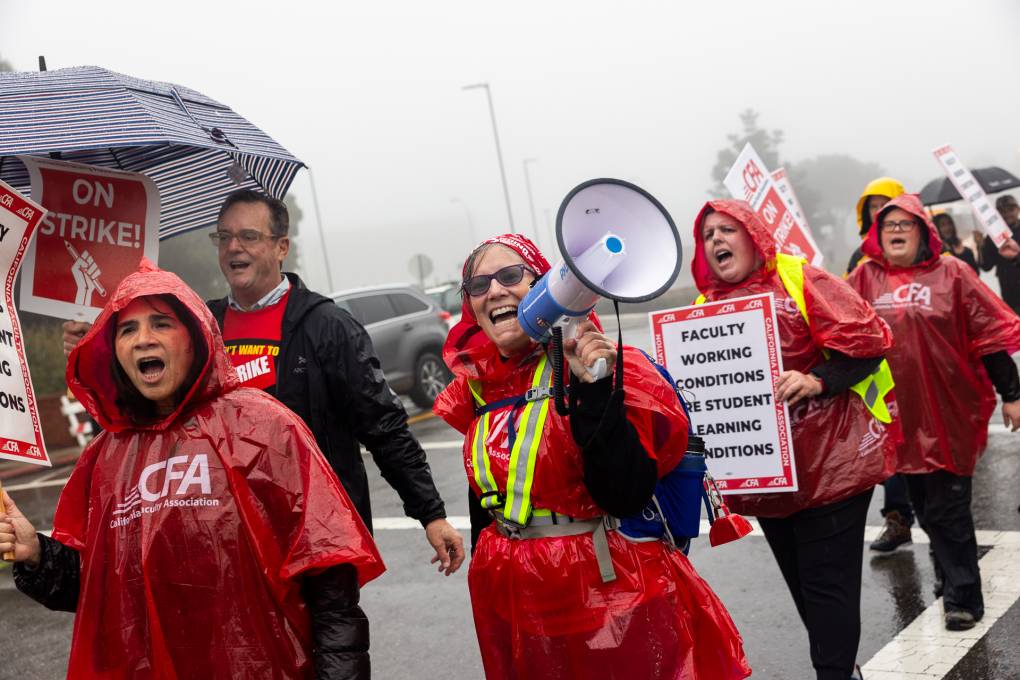
"caption": "Faculty and staff at California State University, East Bay, strike outside the university in Hayward on Jan. 22, 2024, over wages and working conditions.",
"description": null,
"title": "240122-CSUEastBayStrike-23-BL",
"credit": "Beth LaBerge/KQED",
"status": "inherit",
"altTag": null,
"isLoading": false,
"fetchFailed": false
},
"news_11967487": {
"type": "attachments",
"id": "news_11967487",
"meta": {
"index": "attachments_1716263798",
"site": "news",
"id": "11967487",
"found": true
},
"parent": 11967471,
"imgSizes": {
"twentyfourteen-full-width": {
"file": "https://ww2.kqed.org/app/uploads/sites/10/2023/11/231115-IMG_1846-02-1038x576.jpg",
"width": 1038,
"mimeType": "image/jpeg",
"height": 576
},
"thumbnail": {
"file": "https://ww2.kqed.org/app/uploads/sites/10/2023/11/231115-IMG_1846-02-160x107.jpg",
"width": 160,
"mimeType": "image/jpeg",
"height": 107
},
"post-thumbnail": {
"file": "https://ww2.kqed.org/app/uploads/sites/10/2023/11/231115-IMG_1846-02-672x372.jpg",
"width": 672,
"mimeType": "image/jpeg",
"height": 372
},
"kqedFullSize": {
"file": "https://ww2.kqed.org/app/uploads/sites/10/2023/11/231115-IMG_1846-02.jpg",
"width": 1920,
"height": 1280
},
"large": {
"file": "https://ww2.kqed.org/app/uploads/sites/10/2023/11/231115-IMG_1846-02-1020x680.jpg",
"width": 1020,
"mimeType": "image/jpeg",
"height": 680
},
"1536x1536": {
"file": "https://ww2.kqed.org/app/uploads/sites/10/2023/11/231115-IMG_1846-02-1536x1024.jpg",
"width": 1536,
"mimeType": "image/jpeg",
"height": 1024
},
"medium": {
"file": "https://ww2.kqed.org/app/uploads/sites/10/2023/11/231115-IMG_1846-02-800x533.jpg",
"width": 800,
"mimeType": "image/jpeg",
"height": 533
}
},
"publishDate": 1700093879,
"modified": 1700093953,
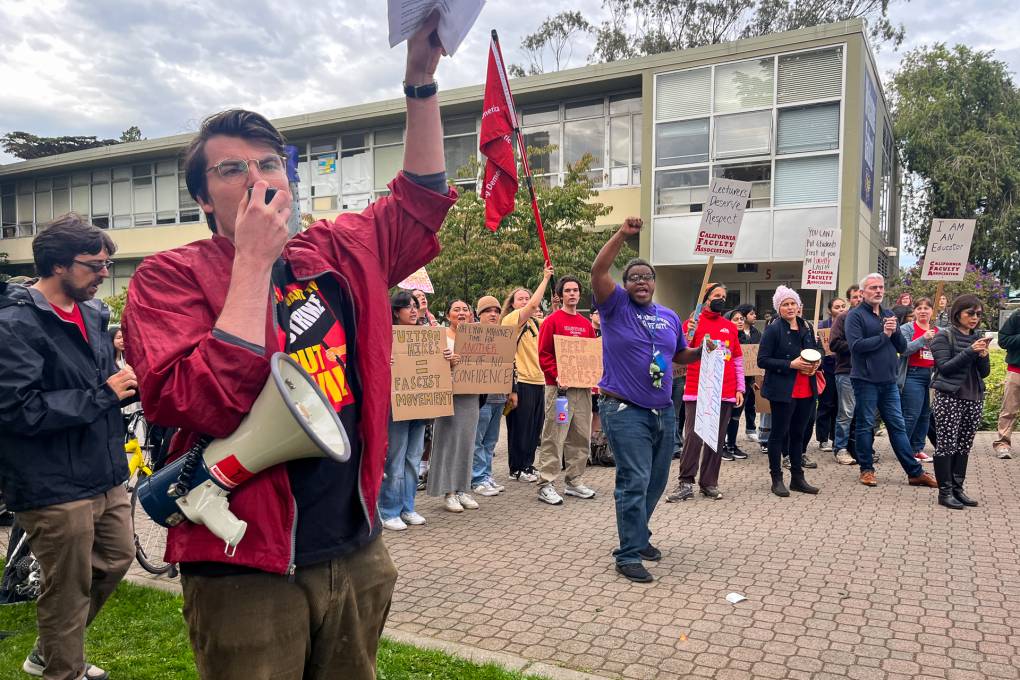
"caption": "Student Dan Buschmeyer (left) leads a group of SF State students and faculty in chants of “When lecturer lives are under attack, what do we do? Stand up fight back” on the school's campus on Wednesday.\n",
"description": null,
"title": "231115-IMG_1846-02",
"credit": "Juan Carlos Lara/KQED",
"status": "inherit",
"altTag": null,
"isLoading": false,
"fetchFailed": false
},
"news_11964381": {
"type": "attachments",
"id": "news_11964381",
"meta": {
"index": "attachments_1716263798",
"site": "news",
"id": "11964381",
"found": true
},
"parent": 0,
"imgSizes": {
"twentyfourteen-full-width": {
"file": "https://ww2.kqed.org/app/uploads/sites/10/2023/10/AP23286504550196-1038x576.jpg",
"width": 1038,
"mimeType": "image/jpeg",
"height": 576
},
"thumbnail": {
"file": "https://ww2.kqed.org/app/uploads/sites/10/2023/10/AP23286504550196-160x107.jpg",
"width": 160,
"mimeType": "image/jpeg",
"height": 107
},
"post-thumbnail": {
"file": "https://ww2.kqed.org/app/uploads/sites/10/2023/10/AP23286504550196-672x372.jpg",
"width": 672,
"mimeType": "image/jpeg",
"height": 372
},
"kqedFullSize": {
"file": "https://ww2.kqed.org/app/uploads/sites/10/2023/10/AP23286504550196-scaled.jpg",
"width": 2560,
"height": 1707
},
"2048x2048": {
"file": "https://ww2.kqed.org/app/uploads/sites/10/2023/10/AP23286504550196-2048x1366.jpg",
"width": 2048,
"mimeType": "image/jpeg",
"height": 1366
},
"large": {
"file": "https://ww2.kqed.org/app/uploads/sites/10/2023/10/AP23286504550196-1020x680.jpg",
"width": 1020,
"mimeType": "image/jpeg",
"height": 680
},
"1536x1536": {
"file": "https://ww2.kqed.org/app/uploads/sites/10/2023/10/AP23286504550196-1536x1024.jpg",
"width": 1536,
"mimeType": "image/jpeg",
"height": 1024
},
"full-width": {
"file": "https://ww2.kqed.org/app/uploads/sites/10/2023/10/AP23286504550196-1920x1280.jpg",
"width": 1920,
"mimeType": "image/jpeg",
"height": 1280
},
"medium": {
"file": "https://ww2.kqed.org/app/uploads/sites/10/2023/10/AP23286504550196-800x533.jpg",
"width": 800,
"mimeType": "image/jpeg",
"height": 533
}
},
"publishDate": 1697216239,
"modified": 1697216361,
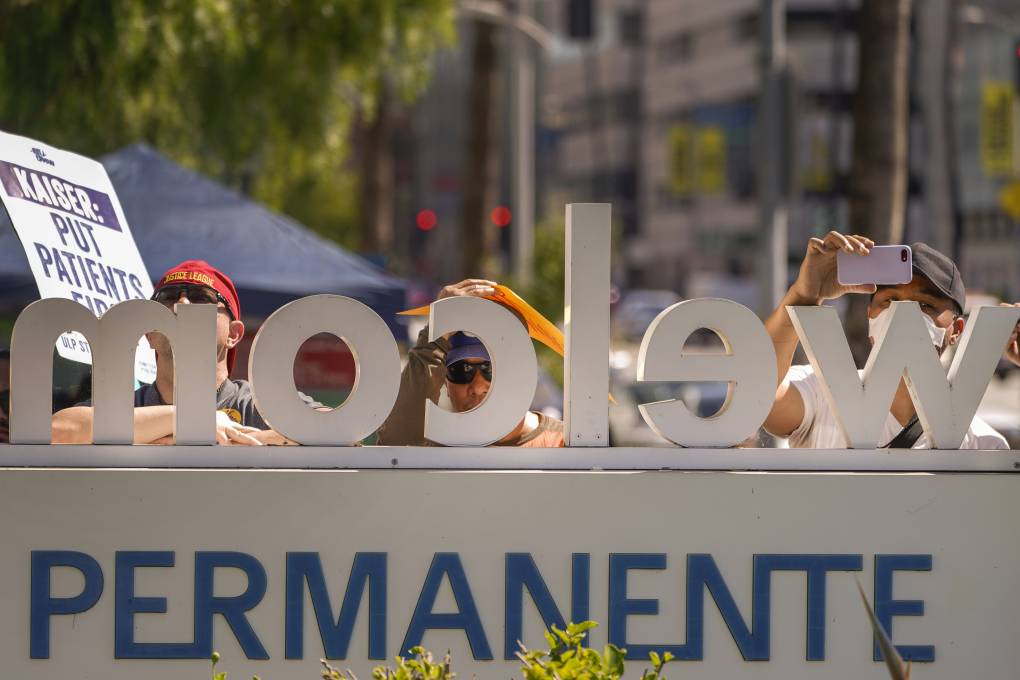
"caption": "Kaiser Permanente frontline health care workers picket outside the Kaiser Permanente Los Angeles Medical Center in Los Angeles on Friday, Oct. 6, 2023. Unions representing 75,000 health care workers who recently held a strike against industry giant Kaiser Permanente over wages and staffing shortages have reached a tentative agreement with the company. ",
"description": null,
"title": "Hospital Strike",
"credit": "Damian Dovarganes/AP ",
"status": "inherit",
"altTag": "Protestors outside of a Kaiser Permanente in Los Angeles stand behind the medical center's sign holding signs.",
"isLoading": false,
"fetchFailed": false
},
"news_11962560": {
"type": "attachments",
"id": "news_11962560",
"meta": {
"index": "attachments_1716263798",
"site": "news",
"id": "11962560",
"found": true
},
"parent": 0,
"imgSizes": {
"twentyfourteen-full-width": {
"file": "https://ww2.kqed.org/app/uploads/sites/10/2023/09/AP23269815213247-1038x576.jpg",
"width": 1038,
"mimeType": "image/jpeg",
"height": 576
},
"thumbnail": {
"file": "https://ww2.kqed.org/app/uploads/sites/10/2023/09/AP23269815213247-160x110.jpg",
"width": 160,
"mimeType": "image/jpeg",
"height": 110
},
"post-thumbnail": {
"file": "https://ww2.kqed.org/app/uploads/sites/10/2023/09/AP23269815213247-672x372.jpg",
"width": 672,
"mimeType": "image/jpeg",
"height": 372
},
"kqedFullSize": {
"file": "https://ww2.kqed.org/app/uploads/sites/10/2023/09/AP23269815213247-scaled.jpg",
"width": 2560,
"height": 1764
},
"2048x2048": {
"file": "https://ww2.kqed.org/app/uploads/sites/10/2023/09/AP23269815213247-2048x1411.jpg",
"width": 2048,
"mimeType": "image/jpeg",
"height": 1411
},
"large": {
"file": "https://ww2.kqed.org/app/uploads/sites/10/2023/09/AP23269815213247-1020x703.jpg",
"width": 1020,
"mimeType": "image/jpeg",
"height": 703
},
"1536x1536": {
"file": "https://ww2.kqed.org/app/uploads/sites/10/2023/09/AP23269815213247-1536x1059.jpg",
"width": 1536,
"mimeType": "image/jpeg",
"height": 1059
},
"full-width": {
"file": "https://ww2.kqed.org/app/uploads/sites/10/2023/09/AP23269815213247-1920x1323.jpg",
"width": 1920,
"mimeType": "image/jpeg",
"height": 1323
},
"medium": {
"file": "https://ww2.kqed.org/app/uploads/sites/10/2023/09/AP23269815213247-800x551.jpg",
"width": 800,
"mimeType": "image/jpeg",
"height": 551
}
},
"publishDate": 1695837035,
"modified": 1695840064,
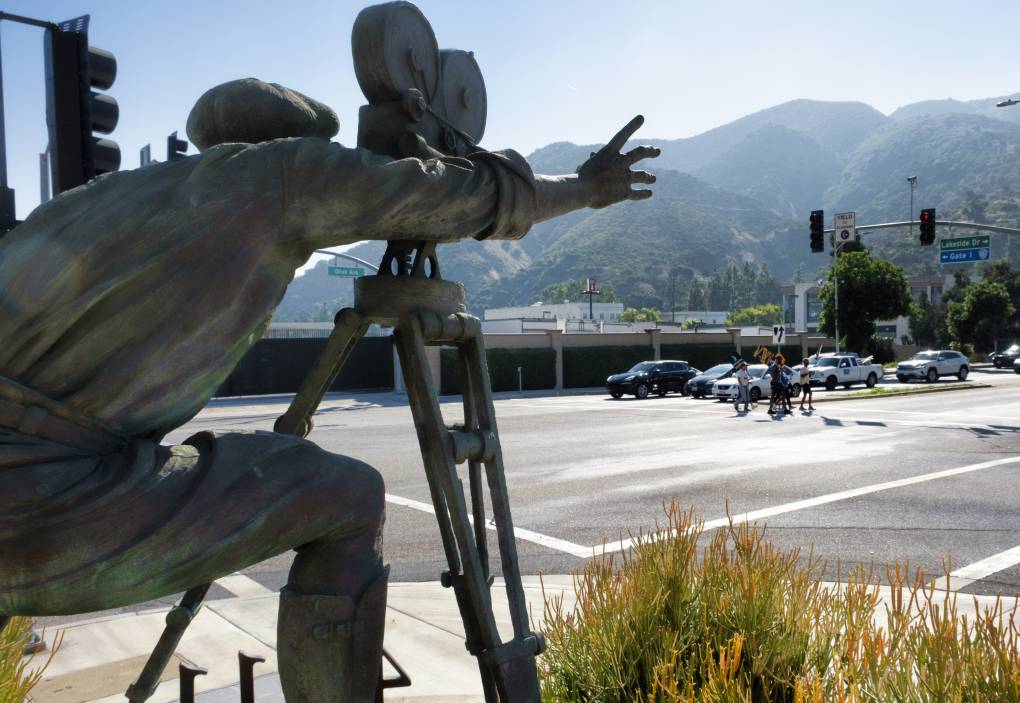
"caption": "With a statue of a cameraperson in the foreground, SAG-AFTRA picketers carrying signs cross a street near the gates of Warner Bros. Studios in Burbank, Los Angeles County, Tuesday, Sep. 26, 2023. ",
"description": null,
"title": "Hollywood Strikes",
"credit": "Richard Vogel/AP Photo",
"status": "inherit",
"altTag": "A statue of a cameraman in Burbank, California.",
"isLoading": false,
"fetchFailed": false
},
"news_11959570": {
"type": "attachments",
"id": "news_11959570",
"meta": {
"index": "attachments_1716263798",
"site": "news",
"id": "11959570",
"found": true
},
"parent": 0,
"imgSizes": {
"twentyfourteen-full-width": {
"file": "https://ww2.kqed.org/app/uploads/sites/10/2023/08/230830-Hollywood-Food-Stylist-LM-01-KQED-1038x576.jpg",
"width": 1038,
"mimeType": "image/jpeg",
"height": 576
},
"thumbnail": {
"file": "https://ww2.kqed.org/app/uploads/sites/10/2023/08/230830-Hollywood-Food-Stylist-LM-01-KQED-160x107.jpg",
"width": 160,
"mimeType": "image/jpeg",
"height": 107
},
"post-thumbnail": {
"file": "https://ww2.kqed.org/app/uploads/sites/10/2023/08/230830-Hollywood-Food-Stylist-LM-01-KQED-672x372.jpg",
"width": 672,
"mimeType": "image/jpeg",
"height": 372
},
"kqedFullSize": {
"file": "https://ww2.kqed.org/app/uploads/sites/10/2023/08/230830-Hollywood-Food-Stylist-LM-01-KQED.jpg",
"width": 2000,
"height": 1333
},
"large": {
"file": "https://ww2.kqed.org/app/uploads/sites/10/2023/08/230830-Hollywood-Food-Stylist-LM-01-KQED-1020x680.jpg",
"width": 1020,
"mimeType": "image/jpeg",
"height": 680
},
"1536x1536": {
"file": "https://ww2.kqed.org/app/uploads/sites/10/2023/08/230830-Hollywood-Food-Stylist-LM-01-KQED-1536x1024.jpg",
"width": 1536,
"mimeType": "image/jpeg",
"height": 1024
},
"full-width": {
"file": "https://ww2.kqed.org/app/uploads/sites/10/2023/08/230830-Hollywood-Food-Stylist-LM-01-KQED-1920x1280.jpg",
"width": 1920,
"mimeType": "image/jpeg",
"height": 1280
},
"medium": {
"file": "https://ww2.kqed.org/app/uploads/sites/10/2023/08/230830-Hollywood-Food-Stylist-LM-01-KQED-800x533.jpg",
"width": 800,
"mimeType": "image/jpeg",
"height": 533
}
},
"publishDate": 1693414137,
"modified": 1693426424,
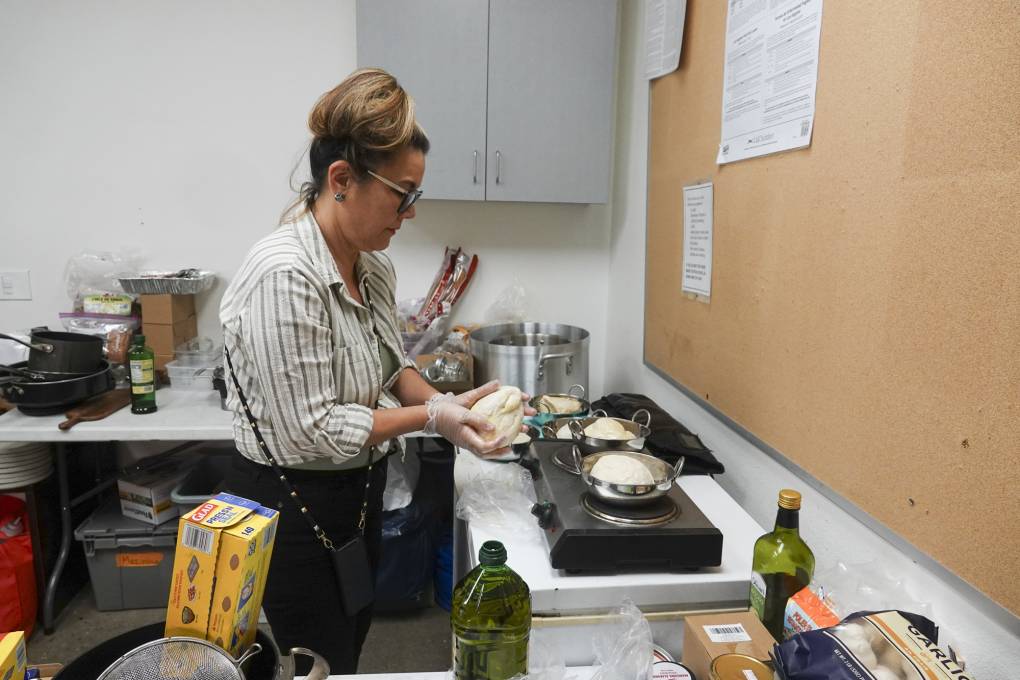
"caption": "Hollywood food stylist, Melissa McSorley, preps pizza dough in her work kitchen on the set of the Hulu television series 'Good Trouble.'",
"description": null,
"title": "230830-Hollywood Food Stylist-LM-01-KQED",
"credit": "Lisa Morehouse/KQED",
"status": "inherit",
"altTag": "A woman with her hair tied up in a bun, preps pizza dough in her hands in a commercial kitchen.",
"isLoading": false,
"fetchFailed": false
},
"news_11955262": {
"type": "attachments",
"id": "news_11955262",
"meta": {
"index": "attachments_1716263798",
"site": "news",
"id": "11955262",
"found": true
},
"parent": 0,
"imgSizes": {
"twentyfourteen-full-width": {
"file": "https://ww2.kqed.org/app/uploads/sites/10/2023/07/SJC-Rally-1-1038x576.png",
"width": 1038,
"mimeType": "image/png",
"height": 576
},
"thumbnail": {
"file": "https://ww2.kqed.org/app/uploads/sites/10/2023/07/SJC-Rally-1-160x96.png",
"width": 160,
"mimeType": "image/png",
"height": 96
},
"post-thumbnail": {
"file": "https://ww2.kqed.org/app/uploads/sites/10/2023/07/SJC-Rally-1-672x372.png",
"width": 672,
"mimeType": "image/png",
"height": 372
},
"kqedFullSize": {
"file": "https://ww2.kqed.org/app/uploads/sites/10/2023/07/SJC-Rally-1.png",
"width": 1796,
"height": 1076
},
"large": {
"file": "https://ww2.kqed.org/app/uploads/sites/10/2023/07/SJC-Rally-1-1020x611.png",
"width": 1020,
"mimeType": "image/png",
"height": 611
},
"1536x1536": {
"file": "https://ww2.kqed.org/app/uploads/sites/10/2023/07/SJC-Rally-1-1536x920.png",
"width": 1536,
"mimeType": "image/png",
"height": 920
},
"medium": {
"file": "https://ww2.kqed.org/app/uploads/sites/10/2023/07/SJC-Rally-1-800x479.png",
"width": 800,
"mimeType": "image/png",
"height": 479
}
},
"publishDate": 1688845733,
"modified": 1689015392,
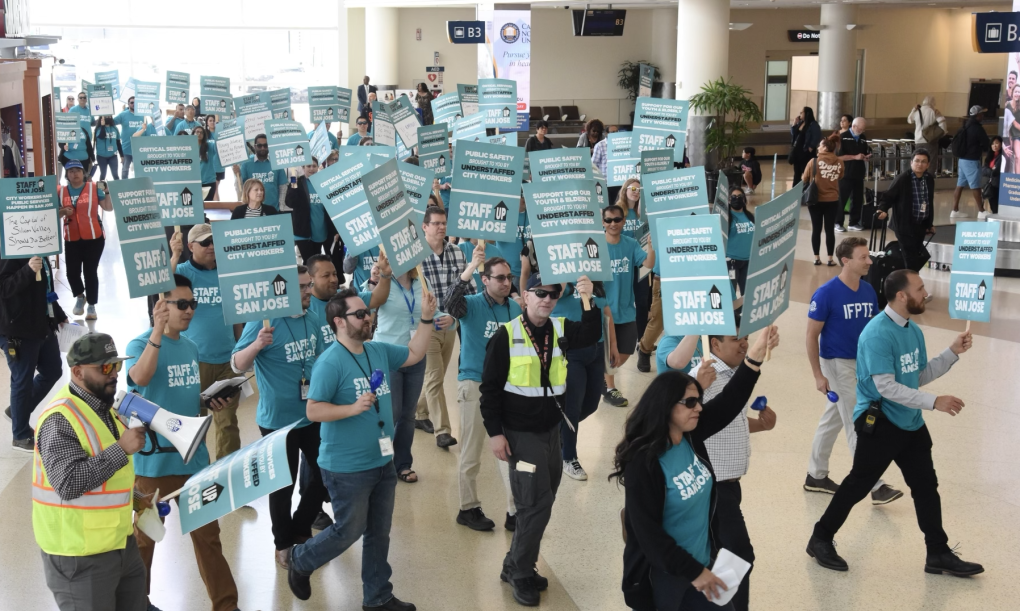
"caption": "Workers rallied at major city worksites including City Hall, San José Mineta International Airport, Happy Hollow Park and Zoo and other locations during actions in June. Image from rally on June 13, 2023.",
"description": null,
"title": "SJC Rally 1",
"credit": "Courtesy of Staff Up San Jose Union Coalition",
"status": "inherit",
"altTag": "Protestors holding signs and chanting inside City Hall in San José.",
"isLoading": false,
"fetchFailed": false
},
"news_11957564": {
"type": "attachments",
"id": "news_11957564",
"meta": {
"index": "attachments_1716263798",
"site": "news",
"id": "11957564",
"found": true
},
"parent": 0,
"imgSizes": {
"twentyfourteen-full-width": {
"file": "https://ww2.kqed.org/app/uploads/sites/10/2023/08/RS67541_20230801-SJCityHall-21-JY-KQED-1038x576.jpg",
"width": 1038,
"mimeType": "image/jpeg",
"height": 576
},
"thumbnail": {
"file": "https://ww2.kqed.org/app/uploads/sites/10/2023/08/RS67541_20230801-SJCityHall-21-JY-KQED-160x107.jpg",
"width": 160,
"mimeType": "image/jpeg",
"height": 107
},
"post-thumbnail": {
"file": "https://ww2.kqed.org/app/uploads/sites/10/2023/08/RS67541_20230801-SJCityHall-21-JY-KQED-672x372.jpg",
"width": 672,
"mimeType": "image/jpeg",
"height": 372
},
"kqedFullSize": {
"file": "https://ww2.kqed.org/app/uploads/sites/10/2023/08/RS67541_20230801-SJCityHall-21-JY-KQED.jpg",
"width": 2000,
"height": 1333
},
"large": {
"file": "https://ww2.kqed.org/app/uploads/sites/10/2023/08/RS67541_20230801-SJCityHall-21-JY-KQED-1020x680.jpg",
"width": 1020,
"mimeType": "image/jpeg",
"height": 680
},
"1536x1536": {
"file": "https://ww2.kqed.org/app/uploads/sites/10/2023/08/RS67541_20230801-SJCityHall-21-JY-KQED-1536x1024.jpg",
"width": 1536,
"mimeType": "image/jpeg",
"height": 1024
},
"full-width": {
"file": "https://ww2.kqed.org/app/uploads/sites/10/2023/08/RS67541_20230801-SJCityHall-21-JY-KQED-1920x1280.jpg",
"width": 1920,
"mimeType": "image/jpeg",
"height": 1280
},
"medium": {
"file": "https://ww2.kqed.org/app/uploads/sites/10/2023/08/RS67541_20230801-SJCityHall-21-JY-KQED-800x533.jpg",
"width": 800,
"mimeType": "image/jpeg",
"height": 533
}
},
"publishDate": 1691431362,
"modified": 1691514274,
"caption": "City Hall in San José on Tuesday, Aug. 1, 2023.",
"description": null,
"title": "RS67541_20230801-SJCityHall-21-JY-KQED",
"credit": "Juliana Yamada/KQED",
"status": "inherit",
"altTag": "A large modern building beside an open courtyard.",
"isLoading": false,
"fetchFailed": false
},
"news_11949300": {
"type": "attachments",
"id": "news_11949300",
"meta": {
"index": "attachments_1716263798",
"site": "news",
"id": "11949300",
"found": true
},
"parent": 0,
"imgSizes": {
"twentyfourteen-full-width": {
"file": "https://ww2.kqed.org/app/uploads/sites/10/2023/05/718AB56C-461F-4399-BBEE-75AFC9BE9D84-1038x576.jpg",
"width": 1038,
"mimeType": "image/jpeg",
"height": 576
},
"thumbnail": {
"file": "https://ww2.kqed.org/app/uploads/sites/10/2023/05/718AB56C-461F-4399-BBEE-75AFC9BE9D84-160x107.jpg",
"width": 160,
"mimeType": "image/jpeg",
"height": 107
},
"post-thumbnail": {
"file": "https://ww2.kqed.org/app/uploads/sites/10/2023/05/718AB56C-461F-4399-BBEE-75AFC9BE9D84-672x372.jpg",
"width": 672,
"mimeType": "image/jpeg",
"height": 372
},
"kqedFullSize": {
"file": "https://ww2.kqed.org/app/uploads/sites/10/2023/05/718AB56C-461F-4399-BBEE-75AFC9BE9D84.jpg",
"width": 1620,
"height": 1080
},
"large": {
"file": "https://ww2.kqed.org/app/uploads/sites/10/2023/05/718AB56C-461F-4399-BBEE-75AFC9BE9D84-1020x680.jpg",
"width": 1020,
"mimeType": "image/jpeg",
"height": 680
},
"1536x1536": {
"file": "https://ww2.kqed.org/app/uploads/sites/10/2023/05/718AB56C-461F-4399-BBEE-75AFC9BE9D84-1536x1024.jpg",
"width": 1536,
"mimeType": "image/jpeg",
"height": 1024
},
"medium": {
"file": "https://ww2.kqed.org/app/uploads/sites/10/2023/05/718AB56C-461F-4399-BBEE-75AFC9BE9D84-800x533.jpg",
"width": 800,
"mimeType": "image/jpeg",
"height": 533
}
},
"publishDate": 1683914467,
"modified": 1683922577,
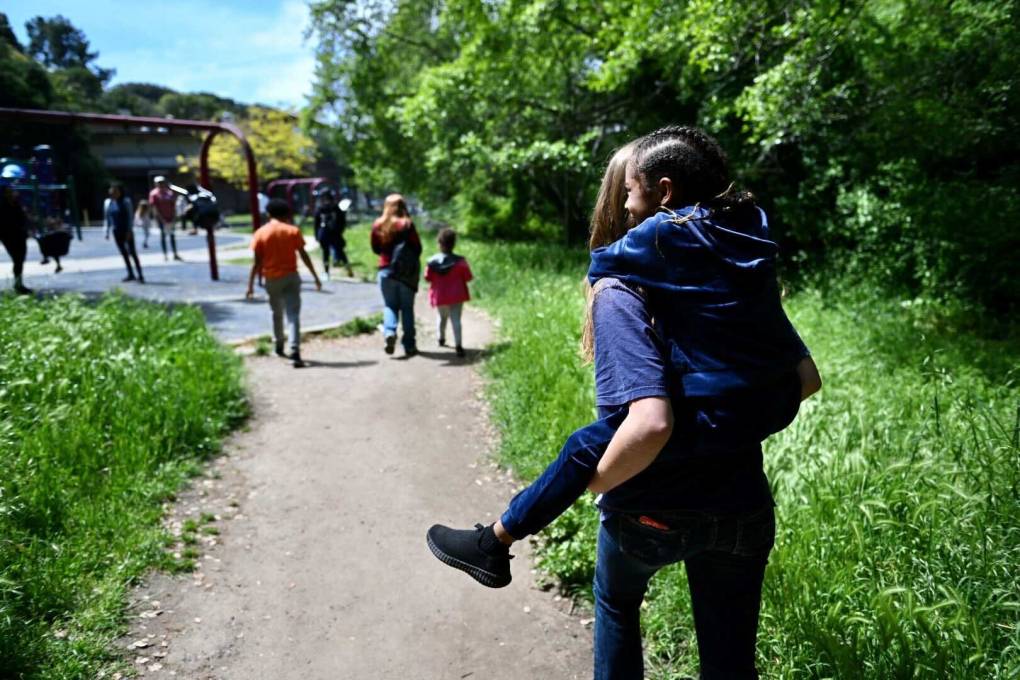
"caption": "Oakland Unified high school student Ruby Mechanic carries a student during a nature walk at a 'solidarity school' in Dimond Park, Oakland, on May 11, 2023, during a teachers' strike in the district.",
"description": null,
"title": "718AB56C-461F-4399-BBEE-75AFC9BE9D84",
"credit": "Beth LaBerge/KQED",
"status": "inherit",
"altTag": "A teenage girl carries an elementary student on her back in a playful way as they walk down a dirt trail with lush grass on either side, along with green trees. A swing set and many parents and children are playing in the background.",
"isLoading": false,
"fetchFailed": false
},
"news_11933319": {
"type": "attachments",
"id": "news_11933319",
"meta": {
"index": "attachments_1716263798",
"site": "news",
"id": "11933319",
"found": true
},
"parent": 11933284,
"imgSizes": {
"twentyfourteen-full-width": {
"file": "https://ww2.kqed.org/app/uploads/sites/10/2022/11/GettyImages-1244836327-1024x576.jpg",
"width": 1024,
"mimeType": "image/jpeg",
"height": 576
},
"thumbnail": {
"file": "https://ww2.kqed.org/app/uploads/sites/10/2022/11/GettyImages-1244836327-160x107.jpg",
"width": 160,
"mimeType": "image/jpeg",
"height": 107
},
"post-thumbnail": {
"file": "https://ww2.kqed.org/app/uploads/sites/10/2022/11/GettyImages-1244836327-672x372.jpg",
"width": 672,
"mimeType": "image/jpeg",
"height": 372
},
"kqedFullSize": {
"file": "https://ww2.kqed.org/app/uploads/sites/10/2022/11/GettyImages-1244836327.jpg",
"width": 1024,
"height": 683
},
"large": {
"file": "https://ww2.kqed.org/app/uploads/sites/10/2022/11/GettyImages-1244836327-1020x680.jpg",
"width": 1020,
"mimeType": "image/jpeg",
"height": 680
},
"medium": {
"file": "https://ww2.kqed.org/app/uploads/sites/10/2022/11/GettyImages-1244836327-800x534.jpg",
"width": 800,
"mimeType": "image/jpeg",
"height": 534
}
},
"publishDate": 1669671157,
"modified": 1669686604,
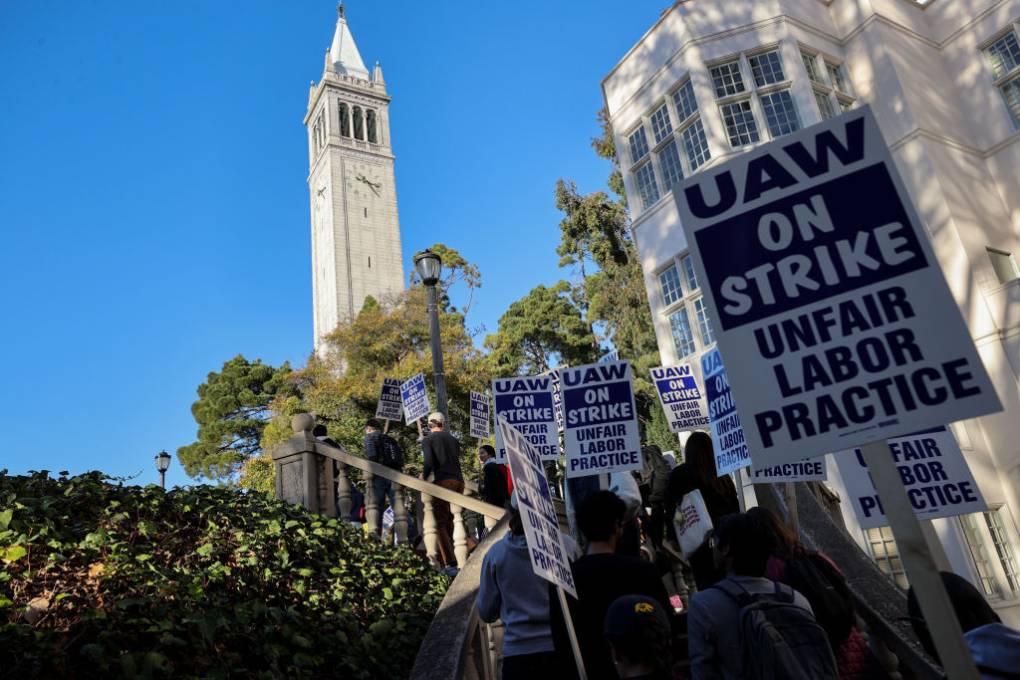
"caption": "Academic workers strike at UC Berkeley on Nov. 16, 2022. Nearly 48,000 unionized academic workers across the University of California's 10 campuses who perform much of the teaching and research at the state's premier higher-education system walked off the job on Nov. 14, calling for better pay and benefits.",
"description": null,
"title": "Academic workers strike for better pay and benefits at UC Berkeley",
"credit": "Tayfun Coskun/Anadolu Agency via Getty Images",
"status": "inherit",
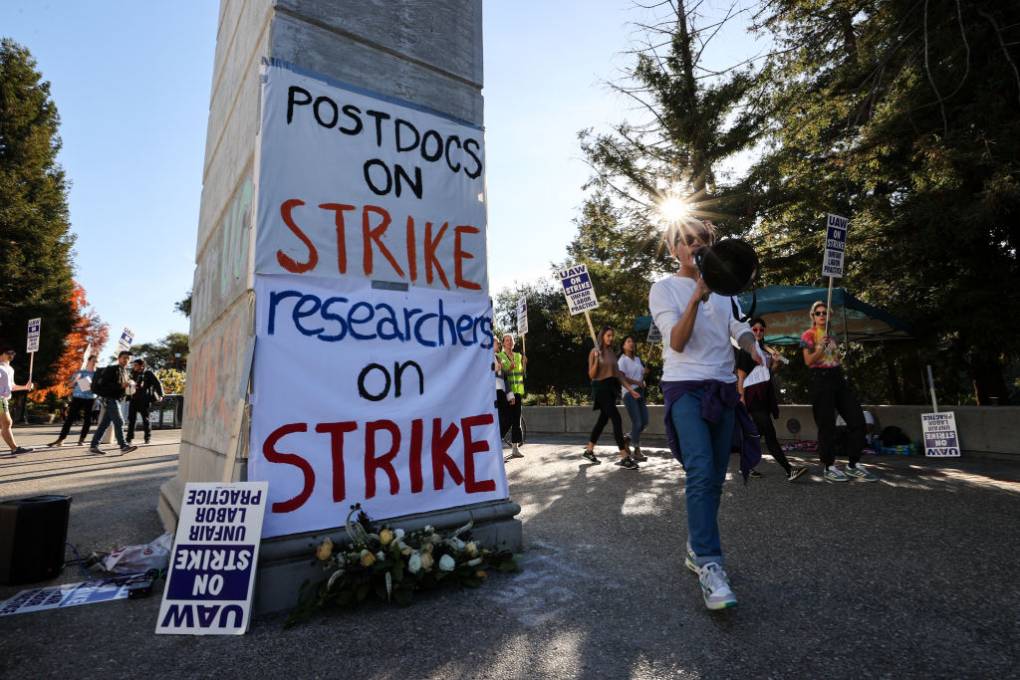
"altTag": "a sign that reads 'UAW On Strike, Unfair Labor Practices' is held during a strike in front of UC Berkeley's campanile tower",
"isLoading": false,
"fetchFailed": false
},
"news_11932772": {
"type": "attachments",
"id": "news_11932772",
"meta": {
"index": "attachments_1716263798",
"site": "news",
"id": "11932772",
"found": true
},
"parent": 11932746,
"imgSizes": {
"twentyfourteen-full-width": {
"file": "https://ww2.kqed.org/app/uploads/sites/10/2022/11/GettyImages-1244836347-1024x576.jpg",
"width": 1024,
"mimeType": "image/jpeg",
"height": 576
},
"thumbnail": {
"file": "https://ww2.kqed.org/app/uploads/sites/10/2022/11/GettyImages-1244836347-160x107.jpg",
"width": 160,
"mimeType": "image/jpeg",
"height": 107
},
"post-thumbnail": {
"file": "https://ww2.kqed.org/app/uploads/sites/10/2022/11/GettyImages-1244836347-672x372.jpg",
"width": 672,
"mimeType": "image/jpeg",
"height": 372
},
"kqedFullSize": {
"file": "https://ww2.kqed.org/app/uploads/sites/10/2022/11/GettyImages-1244836347.jpg",
"width": 1024,
"height": 683
},
"large": {
"file": "https://ww2.kqed.org/app/uploads/sites/10/2022/11/GettyImages-1244836347-1020x680.jpg",
"width": 1020,
"mimeType": "image/jpeg",
"height": 680
},
"medium": {
"file": "https://ww2.kqed.org/app/uploads/sites/10/2022/11/GettyImages-1244836347-800x534.jpg",
"width": 800,
"mimeType": "image/jpeg",
"height": 534
}
},
"publishDate": 1668819376,
"modified": 1669899968,
"caption": null,
"description": "Academic workers strike at UC Berkeley on Nov. 16, 2022. About 48,000 unionized academic workers across the University of California's 10 campuses, who perform much of the teaching and research at the state's premier higher-education system, walked off the job Monday morning, Nov. 14, calling for better pay and benefits. (Tayfun Coskun/Anadolu Agency via Getty Images)",
"title": "Academic workers strike for better pay and benefits at UC Berkeley",
"credit": "Tayfun Coskun/Anadolu Agency via Getty Images",
"status": "inherit",
"altTag": "a person in jeans with a blowhorn stands in front of signs that say 'postdocs on strike' and 'researchers on strike' at a college campus",
"isLoading": false,
"fetchFailed": false
},
"news_11932720": {
"type": "attachments",
"id": "news_11932720",
"meta": {
"index": "attachments_1716263798",
"site": "news",
"id": "11932720",
"found": true
},
"parent": 11932703,
"imgSizes": {
"twentyfourteen-full-width": {
"file": "https://ww2.kqed.org/app/uploads/sites/10/2022/11/GettyImages-450371259-1024x576.jpg",
"width": 1024,
"mimeType": "image/jpeg",
"height": 576
},
"thumbnail": {
"file": "https://ww2.kqed.org/app/uploads/sites/10/2022/11/GettyImages-450371259-160x107.jpg",
"width": 160,
"mimeType": "image/jpeg",
"height": 107
},
"post-thumbnail": {
"file": "https://ww2.kqed.org/app/uploads/sites/10/2022/11/GettyImages-450371259-672x372.jpg",
"width": 672,
"mimeType": "image/jpeg",
"height": 372
},
"kqedFullSize": {
"file": "https://ww2.kqed.org/app/uploads/sites/10/2022/11/GettyImages-450371259.jpg",
"width": 1024,
"height": 686
},
"large": {
"file": "https://ww2.kqed.org/app/uploads/sites/10/2022/11/GettyImages-450371259-1020x683.jpg",
"width": 1020,
"mimeType": "image/jpeg",
"height": 683
},
"medium": {
"file": "https://ww2.kqed.org/app/uploads/sites/10/2022/11/GettyImages-450371259-800x536.jpg",
"width": 800,
"mimeType": "image/jpeg",
"height": 536
}
},
"publishDate": 1668804101,
"modified": 1668811846,
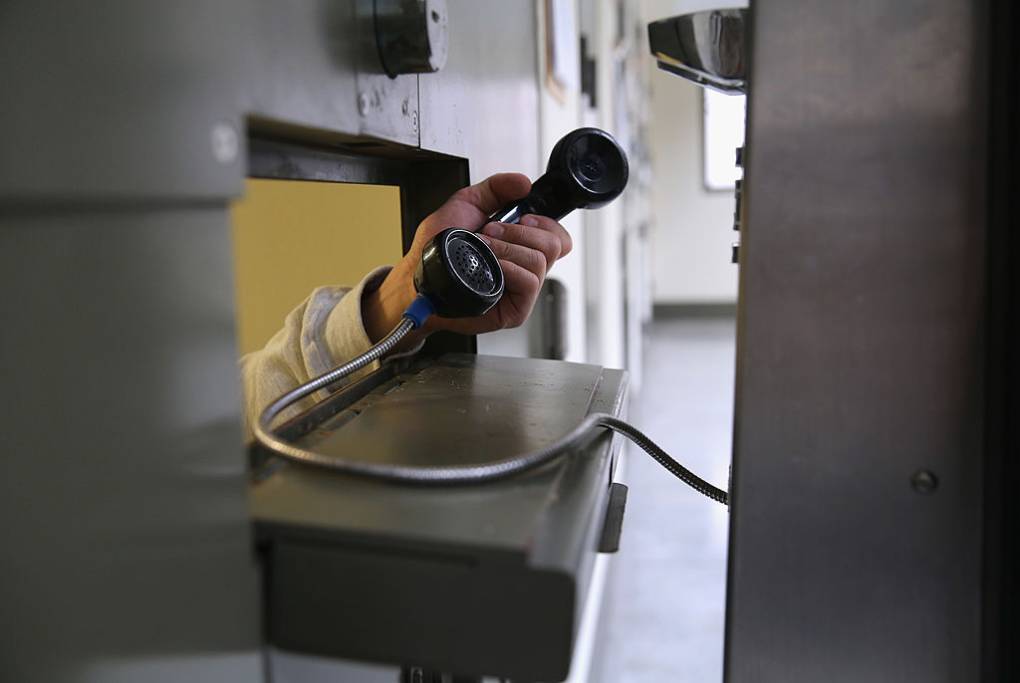
"caption": "An immigrant detainee makes a call from his 'segregation cell' at the Adelanto ICE Processing Center, which is owned and operated by The GEO Group. Detainees have been striking for several months at two other for-profit detention centers owned by the company, and some say they've been retaliated against with solitary confinement.",
"description": null,
"title": "ICE Holds Immigrants At Adelanto Detention Facility",
"credit": "John Moore/Getty Images",
"status": "inherit",
"altTag": "a hand reaches out of a solitary confinement cell to hold a black telephone",
"isLoading": false,
"fetchFailed": false
},
"news_11928366": {
"type": "attachments",
"id": "news_11928366",
"meta": {
"index": "attachments_1716263798",
"site": "news",
"id": "11928366",
"found": true
},
"parent": 11928262,
"imgSizes": {
"twentyfourteen-full-width": {
"file": "https://ww2.kqed.org/app/uploads/sites/10/2022/10/RS57440_031_KQED_TenderloinHousingClinicStrike_07272022-qut-1038x576.jpg",
"width": 1038,
"mimeType": "image/jpeg",
"height": 576
},
"thumbnail": {
"file": "https://ww2.kqed.org/app/uploads/sites/10/2022/10/RS57440_031_KQED_TenderloinHousingClinicStrike_07272022-qut-160x107.jpg",
"width": 160,
"mimeType": "image/jpeg",
"height": 107
},
"post-thumbnail": {
"file": "https://ww2.kqed.org/app/uploads/sites/10/2022/10/RS57440_031_KQED_TenderloinHousingClinicStrike_07272022-qut-672x372.jpg",
"width": 672,
"mimeType": "image/jpeg",
"height": 372
},
"kqedFullSize": {
"file": "https://ww2.kqed.org/app/uploads/sites/10/2022/10/RS57440_031_KQED_TenderloinHousingClinicStrike_07272022-qut.jpg",
"width": 1920,
"height": 1278
},
"large": {
"file": "https://ww2.kqed.org/app/uploads/sites/10/2022/10/RS57440_031_KQED_TenderloinHousingClinicStrike_07272022-qut-1020x679.jpg",
"width": 1020,
"mimeType": "image/jpeg",
"height": 679
},
"1536x1536": {
"file": "https://ww2.kqed.org/app/uploads/sites/10/2022/10/RS57440_031_KQED_TenderloinHousingClinicStrike_07272022-qut-1536x1022.jpg",
"width": 1536,
"mimeType": "image/jpeg",
"height": 1022
},
"medium": {
"file": "https://ww2.kqed.org/app/uploads/sites/10/2022/10/RS57440_031_KQED_TenderloinHousingClinicStrike_07272022-qut-800x533.jpg",
"width": 800,
"mimeType": "image/jpeg",
"height": 533
}
},
"publishDate": 1665443156,
"modified": 1665543713,
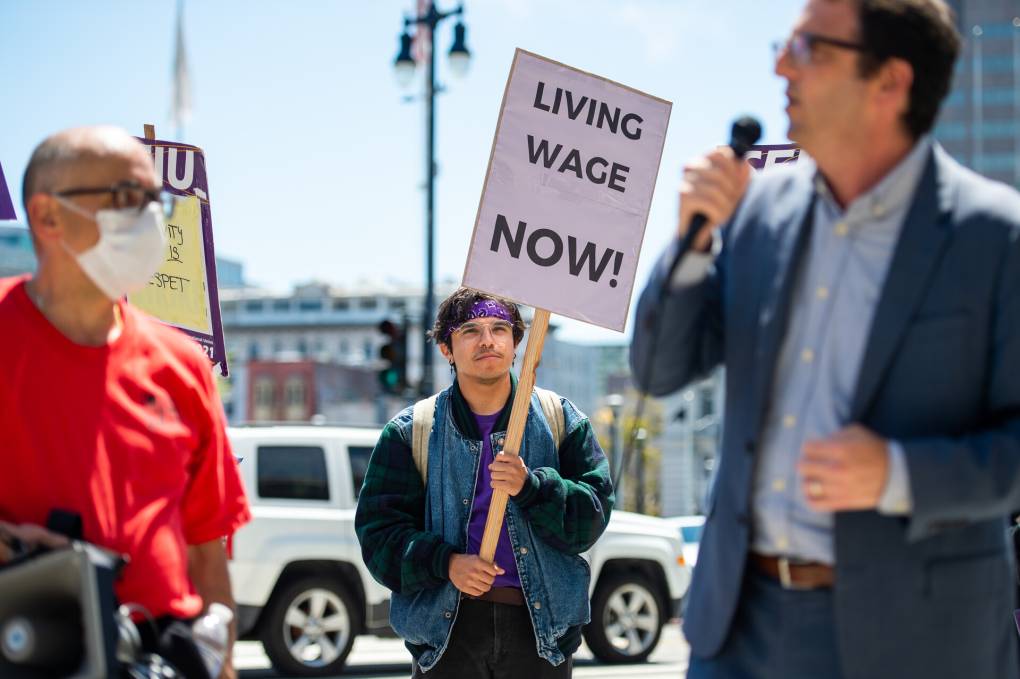
"caption": "Tenderloin Housing Clinic workers rally for a new contract and higher wages in San Francisco on July 27, 2022. The workers support SRO hotels and include caseworkers, janitors, maintenance staff and desk workers.",
"description": null,
"title": "RS57440_031_KQED_TenderloinHousingClinicStrike_07272022-qut",
"credit": "Beth LaBerge/KQED",
"status": "inherit",
"altTag": "three people at a rally, with one holding a sign that reads 'living wage now!' and one speaking into a microphone",
"isLoading": false,
"fetchFailed": false
}
},
"audioPlayerReducer": {
"postId": "stream_live",
"isPaused": true,
"isPlaying": false,
"pfsActive": false,
"pledgeModalIsOpen": true,
"playerDrawerIsOpen": false,
"liveAudioPlayStartedAt": 0,
"liveAudioPlayContext": ""
},
"authorsReducer": {
"byline_news_11973267": {
"type": "authors",
"id": "byline_news_11973267",
"meta": {
"override": true
},
"slug": "byline_news_11973267",
"name": "Olga R. Rodriguez\u003cbr>The Associated Press",
"isLoading": false
},
"byline_news_11964377": {
"type": "authors",
"id": "byline_news_11964377",
"meta": {
"override": true
},
"slug": "byline_news_11964377",
"name": "The Associated Press",
"isLoading": false
},
"byline_news_11962547": {
"type": "authors",
"id": "byline_news_11962547",
"meta": {
"override": true
},
"slug": "byline_news_11962547",
"name": "\u003ca href=\"https://twitter.com/andyjamesdalton\">Andrew Dalton\u003c/a>\u003cbr>The Associated Press",
"isLoading": false
},
"gmarzorati": {
"type": "authors",
"id": "227",
"meta": {
"index": "authors_1716337520",
"id": "227",
"found": true
},
"name": "Guy Marzorati",
"firstName": "Guy",
"lastName": "Marzorati",
"slug": "gmarzorati",
"email": "gmarzorati@KQED.org",
"display_author_email": true,
"staff_mastheads": [
"news"
],
"title": "Correspondent",
"bio": "Guy Marzorati is a correspondent on KQED's California Politics and Government Desk, based in San Jose. A graduate of Santa Clara University, Guy joined KQED in 2013. He reports on state and local politics and produces KQED's digital voter guide.",
"avatar": "https://secure.gravatar.com/avatar/e7038b8dbfd55b104369b76b1cd0b9de?s=600&d=blank&r=g",
"twitter": "guymarzorati",
"facebook": null,
"instagram": null,
"linkedin": null,
"sites": [
{
"site": "",
"roles": [
"editor"
]
},
{
"site": "news",
"roles": [
"editor"
]
},
{
"site": "science",
"roles": [
"editor"
]
},
{
"site": "forum",
"roles": [
"editor"
]
},
{
"site": "elections",
"roles": [
"editor"
]
},
{
"site": "liveblog",
"roles": [
"editor"
]
}
],
"headData": {
"title": "Guy Marzorati | KQED",
"description": "Correspondent",
"ogImgSrc": "https://secure.gravatar.com/avatar/e7038b8dbfd55b104369b76b1cd0b9de?s=600&d=blank&r=g",
"twImgSrc": "https://secure.gravatar.com/avatar/e7038b8dbfd55b104369b76b1cd0b9de?s=600&d=blank&r=g"
},
"isLoading": false,
"link": "/author/gmarzorati"
},
"kqed": {
"type": "authors",
"id": "236",
"meta": {
"index": "authors_1716337520",
"id": "236",
"found": true
},
"name": "KQED News Staff",
"firstName": "KQED News Staff",
"lastName": null,
"slug": "kqed",
"email": "faq@kqed.org",
"display_author_email": false,
"staff_mastheads": [],
"title": null,
"bio": null,
"avatar": "https://secure.gravatar.com/avatar/ef0e801a68c4c54afa9180db14084167?s=600&d=blank&r=g",
"twitter": null,
"facebook": null,
"instagram": null,
"linkedin": null,
"sites": [
{
"site": "arts",
"roles": [
"contributor"
]
},
{
"site": "news",
"roles": [
"editor"
]
},
{
"site": "futureofyou",
"roles": [
"author"
]
}
],
"headData": {
"title": "KQED News Staff | KQED",
"description": null,
"ogImgSrc": "https://secure.gravatar.com/avatar/ef0e801a68c4c54afa9180db14084167?s=600&d=blank&r=g",
"twImgSrc": "https://secure.gravatar.com/avatar/ef0e801a68c4c54afa9180db14084167?s=600&d=blank&r=g"
},
"isLoading": false,
"link": "/author/kqed"
},
"lmorehouse": {
"type": "authors",
"id": "3229",
"meta": {
"index": "authors_1716337520",
"id": "3229",
"found": true
},
"name": "Lisa Morehouse",
"firstName": "Lisa",
"lastName": "Morehouse",
"slug": "lmorehouse",
"email": "morehouse.lisa@gmail.com",
"display_author_email": false,
"staff_mastheads": [],
"title": "KQED Contributor",
"bio": "Lisa Morehouse is an award-winning public radio and print journalist, who has filed for National Public Radio, American Public Media, KQED Public Radio, Edutopia, and McSweeney’s. Her reporting has taken her from Samoan traveling circuses to Mississippi Delta classrooms to the homes of Lao refugees in rural Iowa. In addition to reporting, she teaches radio production to at-risk youth in the Bay Area. Her series \u003ca href=\"http://afterthegoldrushradio.com/\">After the Gold Rush\u003c/a> featured the changing industries, populations and identities of rural towns throughout California. She’s now producing \u003ca href=\"http://www.californiafoodways.com/\">California Foodways\u003c/a>, a series exploring the intersections of food, culture, economics, history and labor. Follow along on the \u003ca href=\"https://www.facebook.com/californiafoodways?ref=hl\">Facebook page\u003c/a> or on Twitter @cafoodways.",
"avatar": "https://secure.gravatar.com/avatar/dae74b002a6e256f39abb19d6f5acaea?s=600&d=blank&r=g",
"twitter": null,
"facebook": null,
"instagram": null,
"linkedin": null,
"sites": [
{
"site": "",
"roles": [
"editor"
]
},
{
"site": "news",
"roles": [
"author"
]
}
],
"headData": {
"title": "Lisa Morehouse | KQED",
"description": "KQED Contributor",
"ogImgSrc": "https://secure.gravatar.com/avatar/dae74b002a6e256f39abb19d6f5acaea?s=600&d=blank&r=g",
"twImgSrc": "https://secure.gravatar.com/avatar/dae74b002a6e256f39abb19d6f5acaea?s=600&d=blank&r=g"
},
"isLoading": false,
"link": "/author/lmorehouse"
},
"esilvers": {
"type": "authors",
"id": "7237",
"meta": {
"index": "authors_1716337520",
"id": "7237",
"found": true
},
"name": "Emma Silvers",
"firstName": "Emma",
"lastName": "Silvers",
"slug": "esilvers",
"email": "esilvers@kqed.org",
"display_author_email": false,
"staff_mastheads": [],
"title": "KQED Contributor",
"bio": "Emma Silvers is an editor at KQED Arts and a former digital producer at KQED News. Born and raised in the Bay Area, she has previously been an arts and entertainment editor at the \u003cem>San Francisco Chronicle\u003c/em>, \u003cem>SF Weekly\u003c/em> and the \u003cem>San Francisco Bay Guardian.\u003c/em> \u003ca href=\"https://www.emmasilvers.com\">Her work\u003c/a> has also appeared in \u003cem>Rolling Stone\u003c/em>, Pitchfork and \u003cem>Mother Jones\u003c/em>. In 2017 she was the recipient of the Society of Professional Journalists-Northern California's award for arts and culture reporting. In 1993 she \u003ca href=\"https://www.kqed.org/pop/16759/wait-what-my-coworker-was-a-voice-over-hyperventilator-for-jurassic-park\">hyperventilated in \u003cem>Jurassic Park\u003c/em>\u003c/a>.",
"avatar": "https://secure.gravatar.com/avatar/247beada39b88ea5759db1f51dba05cf?s=600&d=blank&r=g",
"twitter": "emmaruthless",
"facebook": null,
"instagram": null,
"linkedin": null,
"sites": [
{
"site": "arts",
"roles": [
"editor"
]
},
{
"site": "news",
"roles": [
"editor"
]
},
{
"site": "pop",
"roles": [
"contributor"
]
},
{
"site": "bayareabites",
"roles": [
"editor"
]
},
{
"site": "food",
"roles": [
"contributor"
]
},
{
"site": "liveblog",
"roles": [
"editor"
]
}
],
"headData": {
"title": "Emma Silvers | KQED",
"description": "KQED Contributor",
"ogImgSrc": "https://secure.gravatar.com/avatar/247beada39b88ea5759db1f51dba05cf?s=600&d=blank&r=g",
"twImgSrc": "https://secure.gravatar.com/avatar/247beada39b88ea5759db1f51dba05cf?s=600&d=blank&r=g"
},
"isLoading": false,
"link": "/author/esilvers"
},
"ecruzguevarra": {
"type": "authors",
"id": "8654",
"meta": {
"index": "authors_1716337520",
"id": "8654",
"found": true
},
"name": "Ericka Cruz Guevarra",
"firstName": "Ericka",
"lastName": "Cruz Guevarra",
"slug": "ecruzguevarra",
"email": "ecruzguevarra@kqed.org",
"display_author_email": true,
"staff_mastheads": [
"news"
],
"title": "Producer, The Bay Podcast",
"bio": "Ericka Cruz Guevarra is host of \u003ca href=\"https://www.kqed.org/podcasts/thebay\">\u003cem>The Bay\u003c/em>\u003c/a> podcast at KQED. Before host, she was the show’s producer. Her work in that capacity includes a three-part reported series on policing in Vallejo, which won a 2020 excellence in journalism award from the Society of Professional Journalists. Ericka has worked as a breaking news reporter at Oregon Public Broadcasting, helped produce the Code Switch podcast, and was KQED’s inaugural Raul Ramirez Diversity Fund intern. She’s also an alumna of NPR’s Next Generation Radio program. Send her an email if you have strong feelings about whether Fairfield and Suisun City are the Bay. Ericka is represented by SAG-AFTRA.",
"avatar": "https://secure.gravatar.com/avatar/accefc1de4bafc7e234b69bcb9b6f6536c130fd84709bc3069ef11a78787e1bb?s=600&d=blank&r=g",
"twitter": "NotoriousECG",
"bluesky": null,
"facebook": null,
"instagram": null,
"linkedin": null,
"sites": [
{
"site": "arts",
"roles": [
"subscriber"
]
},
{
"site": "news",
"roles": [
"editor",
"manage_categories"
]
},
{
"site": "futureofyou",
"roles": [
"subscriber"
]
},
{
"site": "stateofhealth",
"roles": [
"subscriber"
]
},
{
"site": "science",
"roles": [
"editor"
]
},
{
"site": "forum",
"roles": [
"subscriber"
]
}
],
"headData": {
"title": "Ericka Cruz Guevarra | KQED",
"description": "Producer, The Bay Podcast",
"ogImgSrc": "https://secure.gravatar.com/avatar/accefc1de4bafc7e234b69bcb9b6f6536c130fd84709bc3069ef11a78787e1bb?s=600&d=blank&r=g",
"twImgSrc": "https://secure.gravatar.com/avatar/accefc1de4bafc7e234b69bcb9b6f6536c130fd84709bc3069ef11a78787e1bb?s=600&d=blank&r=g"
},
"isLoading": false,
"link": "/author/ecruzguevarra"
},
"fjhabvala": {
"type": "authors",
"id": "8659",
"meta": {
"index": "authors_1716337520",
"id": "8659",
"found": true
},
"name": "Farida Jhabvala Romero",
"firstName": "Farida",
"lastName": "Jhabvala Romero",
"slug": "fjhabvala",
"email": "fjhabvala@kqed.org",
"display_author_email": true,
"staff_mastheads": [
"news"
],
"title": "KQED Contributor",
"bio": "Farida Jhabvala Romero is a Labor Correspondent for KQED. She previously covered immigration. Farida was \u003ca href=\"https://www.ccnma.org/2022-most-influential-latina-journalists\">named\u003c/a> one of the 10 Most Influential Latina Journalists in California in 2022 by the California Chicano News Media Association. Her work has won awards from the Society of Professional Journalists (Northern California), as well as a national and regional Edward M. Murrow Award for the collaborative reporting projects “Dangerous Air” and “Graying California.” Before joining KQED, Farida worked as a producer at Radio Bilingüe, a national public radio network. Farida earned her master’s degree in journalism from Stanford University.",
"avatar": "https://secure.gravatar.com/avatar/f9f022d4e2609741874222a1e9d41f48fea74011aa7c615eef91d9a50c944ebe?s=600&d=blank&r=g",
"twitter": "FaridaJhabvala",
"bluesky": null,
"facebook": null,
"instagram": null,
"linkedin": "https://www.linkedin.com/in/faridajhabvala/",
"sites": [
{
"site": "news",
"roles": [
"editor"
]
},
{
"site": "stateofhealth",
"roles": [
"author"
]
},
{
"site": "liveblog",
"roles": [
"author"
]
}
],
"headData": {
"title": "Farida Jhabvala Romero | KQED",
"description": "KQED Contributor",
"ogImgSrc": "https://secure.gravatar.com/avatar/f9f022d4e2609741874222a1e9d41f48fea74011aa7c615eef91d9a50c944ebe?s=600&d=blank&r=g",
"twImgSrc": "https://secure.gravatar.com/avatar/f9f022d4e2609741874222a1e9d41f48fea74011aa7c615eef91d9a50c944ebe?s=600&d=blank&r=g"
},
"isLoading": false,
"link": "/author/fjhabvala"
},
"hmcdede": {
"type": "authors",
"id": "11635",
"meta": {
"index": "authors_1716337520",
"id": "11635",
"found": true
},
"name": "Holly McDede",
"firstName": "Holly",
"lastName": "McDede",
"slug": "hmcdede",
"email": "hmcdede@KQED.org",
"display_author_email": false,
"staff_mastheads": [],
"title": "KQED Contributor",
"bio": null,
"avatar": "https://secure.gravatar.com/avatar/999d9bf31bb3a2f0511932d99526cb3e?s=600&d=blank&r=g",
"twitter": null,
"facebook": null,
"instagram": null,
"linkedin": null,
"sites": [
{
"site": "arts",
"roles": [
"editor"
]
},
{
"site": "news",
"roles": [
"edit_others_posts",
"editor"
]
},
{
"site": "science",
"roles": [
"editor"
]
},
{
"site": "forum",
"roles": [
"editor"
]
},
{
"site": "perspectives",
"roles": [
"administrator"
]
}
],
"headData": {
"title": "Holly McDede | KQED",
"description": "KQED Contributor",
"ogImgSrc": "https://secure.gravatar.com/avatar/999d9bf31bb3a2f0511932d99526cb3e?s=600&d=blank&r=g",
"twImgSrc": "https://secure.gravatar.com/avatar/999d9bf31bb3a2f0511932d99526cb3e?s=600&d=blank&r=g"
},
"isLoading": false,
"link": "/author/hmcdede"
},
"amontecillo": {
"type": "authors",
"id": "11649",
"meta": {
"index": "authors_1716337520",
"id": "11649",
"found": true
},
"name": "Alan Montecillo",
"firstName": "Alan",
"lastName": "Montecillo",
"slug": "amontecillo",
"email": "amontecillo@kqed.org",
"display_author_email": false,
"staff_mastheads": [
"news"
],
"title": "KQED Contributor",
"bio": "Alan Montecillo is the senior editor of \u003cem>\u003ca href=\"http://kqed.org/thebay\">The Bay\u003c/a>, \u003c/em> KQED's local news podcast. Before moving to the Bay Area, he worked as a senior talk show producer for WILL in Champaign-Urbana, Illinois and at Oregon Public Broadcasting in Portland, Oregon. He has won journalism awards from the Society of Professional Journalists Northern California, the Public Media Journalists Association, The Signal Awards, and has also received a regional Edward R. Murrow award. Alan is a Filipino American from Hong Kong and a graduate of Reed College.",
"avatar": "https://secure.gravatar.com/avatar/268f53a2066899ea9efdd8a5900218b17c822d9862cbc9326cccec53ef41d349?s=600&d=blank&r=g",
"twitter": "alanmontecillo",
"bluesky": null,
"facebook": null,
"instagram": null,
"linkedin": null,
"sites": [
{
"site": "",
"roles": [
"editor"
]
},
{
"site": "news",
"roles": [
"editor",
"manage_categories"
]
}
],
"headData": {
"title": "Alan Montecillo | KQED",
"description": "KQED Contributor",
"ogImgSrc": "https://secure.gravatar.com/avatar/268f53a2066899ea9efdd8a5900218b17c822d9862cbc9326cccec53ef41d349?s=600&d=blank&r=g",
"twImgSrc": "https://secure.gravatar.com/avatar/268f53a2066899ea9efdd8a5900218b17c822d9862cbc9326cccec53ef41d349?s=600&d=blank&r=g"
},
"isLoading": false,
"link": "/author/amontecillo"
},
"jlara": {
"type": "authors",
"id": "11761",
"meta": {
"index": "authors_1716337520",
"id": "11761",
"found": true
},
"name": "Juan Carlos Lara",
"firstName": "Juan Carlos",
"lastName": "Lara",
"slug": "jlara",
"email": "jlara@kqed.org",
"display_author_email": false,
"staff_mastheads": [],
"title": "KQED Contributor",
"bio": null,
"avatar": "https://secure.gravatar.com/avatar/19e2052b9b05657c5ff2af2121846e9c?s=600&d=blank&r=g",
"twitter": null,
"facebook": null,
"instagram": null,
"linkedin": null,
"sites": [
{
"site": "arts",
"roles": [
"editor"
]
},
{
"site": "news",
"roles": [
"editor"
]
},
{
"site": "forum",
"roles": [
"editor"
]
},
{
"site": "liveblog",
"roles": [
"contributor"
]
}
],
"headData": {
"title": "Juan Carlos Lara | KQED",
"description": "KQED Contributor",
"ogImgSrc": "https://secure.gravatar.com/avatar/19e2052b9b05657c5ff2af2121846e9c?s=600&d=blank&r=g",
"twImgSrc": "https://secure.gravatar.com/avatar/19e2052b9b05657c5ff2af2121846e9c?s=600&d=blank&r=g"
},
"isLoading": false,
"link": "/author/jlara"
},
"mesquinca": {
"type": "authors",
"id": "11802",
"meta": {
"index": "authors_1716337520",
"id": "11802",
"found": true
},
"name": "Maria Esquinca",
"firstName": "Maria",
"lastName": "Esquinca",
"slug": "mesquinca",
"email": "mesquinca@kqed.org",
"display_author_email": false,
"staff_mastheads": [],
"title": "Producer, The Bay",
"bio": "María Esquinca is a producer of The Bay. Before that, she was a New York Women’s Foundation IGNITE Fellow at Latino USA. She worked at Radio Bilingue where she covered the San Joaquin Valley. Maria has interned at WLRN, News 21, The New York Times Student Journalism Institute and at Crain’s Detroit Business as a Dow Jones News Fund Business Reporting Intern. She is an MFA graduate from the University of Miami. In 2017, she graduated from the Walter Cronkite School of Journalism and Mass Communication with a Master of Mass Communication. A fronteriza, she was born in Ciudad Juárez, Chihuahua, Mexico and grew up in El Paso, Texas.",
"avatar": "https://secure.gravatar.com/avatar/77cedba18aae91da775038ba06dcd8d0?s=600&d=blank&r=g",
"twitter": "@m_esquinca",
"facebook": null,
"instagram": null,
"linkedin": null,
"sites": [
{
"site": "news",
"roles": []
}
],
"headData": {
"title": "Maria Esquinca | KQED",
"description": "Producer, The Bay",
"ogImgSrc": "https://secure.gravatar.com/avatar/77cedba18aae91da775038ba06dcd8d0?s=600&d=blank&r=g",
"twImgSrc": "https://secure.gravatar.com/avatar/77cedba18aae91da775038ba06dcd8d0?s=600&d=blank&r=g"
},
"isLoading": false,
"link": "/author/mesquinca"
},
"rpalmer": {
"type": "authors",
"id": "11880",
"meta": {
"index": "authors_1716337520",
"id": "11880",
"found": true
},
"name": "Riley Palmer",
"firstName": "Riley",
"lastName": "Palmer",
"slug": "rpalmer",
"email": "rpalmer@KQED.org",
"display_author_email": true,
"staff_mastheads": [],
"title": "KQED Contributor",
"bio": "Riley Palmer is a North Bay Native who stayed close in order to report on the community she calls home. She is a Santa Rosa Junior College and UC Berkeley alum. Palmer started working at KQED as a radio newscast intern in January 2023. Since then she has reported on school safety, education, and mobile home tenancy rights along with other general assignments. She lives in Oakland, CA.",
"avatar": "https://secure.gravatar.com/avatar/28824e9d4a299de4200bd003607bee3a?s=600&d=blank&r=g",
"twitter": "ReporterRileyp",
"facebook": null,
"instagram": null,
"linkedin": null,
"sites": [
{
"site": "news",
"roles": []
}
],
"headData": {
"title": "Riley Palmer | KQED",
"description": "KQED Contributor",
"ogImgSrc": "https://secure.gravatar.com/avatar/28824e9d4a299de4200bd003607bee3a?s=600&d=blank&r=g",
"twImgSrc": "https://secure.gravatar.com/avatar/28824e9d4a299de4200bd003607bee3a?s=600&d=blank&r=g"
},
"isLoading": false,
"link": "/author/rpalmer"
}
},
"pagesReducer": {
"news_tag_labor-strikes": {
"type": "terms",
"id": "news_24590",
"meta": {
"index": "terms_1716263798",
"site": "news",
"id": "24590",
"score": 10.403249
},
"featImg": null,
"name": "labor strikes",
"description": null,
"taxonomy": "tag",
"headData": {
"twImgId": null,
"twTitle": null,
"ogTitle": null,
"ogImgId": null,
"twDescription": null,
"description": null,
"title": "labor strikes Archives | KQED News",
"ogDescription": null
},
"ttid": 24607,
"slug": "labor-strikes",
"isLoading": false,
"title": "labor strikes",
"pageMeta": {
"site": "news",
"WpPageTemplate": "page-topic-editorial",
"currentPage": 7
},
"blocks": [
{
"blockName": "kqed/post-list",
"attrs": {
"layout": "cardArticle2",
"query": "posts/news?tag=labor-strikes",
"seeMore": false,
"paginated": true,
"page": 7
}
},
{
"blockName": "kqed/ad"
}
]
}
},
"pfsSessionReducer": {},
"postsReducer": {
"stream_live": {
"type": "live",
"id": "stream_live",
"audioUrl": "https://streams.kqed.org/kqedradio",
"title": "Live Stream",
"excerpt": "Live Stream information currently unavailable.",
"link": "/radio",
"featImg": "",
"label": {
"name": "KQED Live",
"link": "/"
}
},
"stream_kqedNewscast": {
"type": "posts",
"id": "stream_kqedNewscast",
"audioUrl": "https://www.kqed.org/.stream/anon/radio/RDnews/newscast.mp3?_=1",
"title": "KQED Newscast",
"featImg": "",
"label": {
"name": "88.5 FM",
"link": "/"
}
},
"news_11973267": {
"type": "posts",
"id": "news_11973267",
"meta": {
"index": "posts_1716263798",
"site": "news",
"id": "11973267",
"score": null,
"sort": [
1705973088000
]
},
"parent": 0,
"labelTerm": {
"site": "news"
},
"blocks": [],
"publishDate": 1705973088,
"format": "standard",
"title": "CSU Faculty and Staff Reach Tentative Agreement. Here's What it Includes",
"headTitle": "CSU Faculty and Staff Reach Tentative Agreement. Here’s What it Includes | KQED",
"content": "\u003cp>\u003cem>Updated 4:30 p.m. Tuesday\u003c/em>\u003c/p>\n\u003cp>California State University faculty reached a tentative contract agreement with the university system late Monday, after just one day of a planned five-day strike for higher wages.\u003c/p>\n\u003cp>The roughly 29,000 professors, librarians, coaches and other workers across the nation’s largest university system who walked off the job Monday returned to work Tuesday morning.\u003c/p>\n\u003cp>The deal, which still needs to be ratified by the union members, “reflects the solidarity displayed by faculty, staff, and students across all 23 campuses,” the association statement said. “To all the hard-working faculty who have been organizing on the street and on campus, your efforts have earned this victory.”\u003c/p>\n\u003cp>“It caught everyone by surprise that a deal was made so soon,” said Kevin Pina, a lecturer for the Department of Communication at CSU East Bay and the California Faculty Association East Bay Lecturer Council Representative.\u003c/p>\n\u003cp>Pina said the deal includes the following:\u003c/p>\n\u003cul>\n\u003cli>A 5% general salary increase for all faculty, retroactive to July 1st, 2023.\u003c/li>\n\u003cli>A 5% general salary increase for all faculty on July 1st of this year, contingent on the state not reducing the base funding to the CSU.\u003c/li>\n\u003cli>A salary step increase of 2.65% (from 2024 through 2025).\u003c/li>\n\u003cli>Increase in paid parental leave from 6 to 10 weeks.\u003c/li>\n\u003c/ul>\n\u003cp>It also increases the minimum wage for the lowest-paid faculty, according to the union statement. CSU Chancellor Mildred García praised the agreement.\u003c/p>\n\u003cp>“I am extremely pleased and deeply appreciative that we have reached common ground with CFA that will end the strike immediately,” García said in a statement. “The agreement enables the CSU to fairly compensate its valued, world-class faculty while protecting the university system’s long-term financial sustainability.”\u003c/p>\n\u003cp>Kevin Wehr, a professor of sociology at CSU Sacramento and chair of the bargaining team for the CFA called it “an extraordinary and historic contract, settlement after a historic, system-wide 23-campus strike.”\u003c/p>\n\u003cp>He also emphasized the importance of raising the salary floor for some of the lowest-paid colleagues. If someone is working full time in the lowest range, they’re paid $55,000 a year, he said. But, most people working in this category are part-time employees. For those people, average pay is around $35,000 a year. “It’s a matter of economic justice. It’s a matter of equity. And it’s also a matter of getting the best faculty for the students of California,” Wehr said. “I’m incredibly proud that we were able to win this victory for our most precarious colleagues.”\u003c/p>\n\u003cp>Not everyone is content. “I would say that our campus is trending against,” said Brad Erickson, chapter president of the CFA at San Francisco State. Of the 254 people at today’s Zoom meeting, he said more than three-quarters were against it, about 20% were undecided, and just a couple of people were planning to vote yes.\u003c/p>\n\u003cp>“A raise of less than 10% is effectively a pay cut because of how much we’ve lost relative to rising cost of living,” Erickson said. “It feels like we hadn’t reached our power yet.” He heard from several members that they gave in too easily.\u003c/p>\n\u003cp>Many CSU faculty also took quickly to X (formerly Twitter) to lambast the deal, arguing it fell woefully short of what the union had been pushing for, and urging members to vote it down.\u003c/p>\n\u003cp>“5% is a paycut. This is a terrible ‘deal,’” Josh Davis, an SF State journalism professor, said in response to the union’s post announcing the agreement. “CSU faculty deserves stronger leadership.”\u003c/p>\n\u003cp>For Pina, the CFA East Bay Lecturer Council Representative, it was “more a question of the recognition of the strength that we had, the numbers that we had, and the large number of faculty who respected the strike and did not teach.” After the pandemic “derailed a lot of what we considered normal,” he sees this as “a glimmer of hope.”\u003c/p>\n\u003cp>“Do I feel as if my union betrayed me? No. Could we have gotten a better deal? Who knows? We didn’t go there,” Pina said.\u003c/p>\n\u003cp>Pina also added that there are larger structural problems the union can’t solve, “The biggest problem is that the board of trustees that oversee the policymaking for the 23 campus system are political appointees,” he said. “You’ve got people who are business managers running a public institution.”\u003c/p>\n\u003cp>Monday’s massive walkout came two weeks after \u003ca style=\"font-weight: var(--font-weight-reg)\" href=\"https://apnews.com/article/california-state-university-faculty-strike-58c2a46fb4f532992c1a3c4754e1f7de\">CSU officials ended contract negotiations\u003c/a> with a unilateral offer starting with a 5% pay raise this year, effective Jan. 31, far below the 12% hike that the union was seeking.[pullquote size=\"medium\" align=\"right\" citation=\"Victoria Wilson, political science lecturer, Cal State Northridge in Los Angeles\"]‘We’re just hoping for a better contract to ensure better pay and also the working conditions here on campus.’[/pullquote]Victoria Wilson, a part-time political science lecturer who picketed in the rain at Cal State Northridge in Los Angeles, said her salary fluctuates from semester to semester, which impedes her long-term financial goals.\u003c/p>\n\u003cp>“We’re just hoping for a better contract to ensure better pay and also the working conditions here on campus,” Wilson said.\u003c/p>\n\u003cp>Another 1,100 CSU plumbers, electricians and other skilled trades workers represented by the Teamsters Local 2010 had planned to join the striking faculty but reached their own agreement with the university late Friday.\u003c/p>\n\u003cp>Some students joined the picket lines on Monday to show their support.\u003c/p>\n\u003cfigure id=\"attachment_11973266\" class=\"wp-caption aligncenter\" style=\"max-width: 1920px\">\u003cimg loading=\"lazy\" decoding=\"async\" class=\"size-full wp-image-11973266\" src=\"https://cdn.kqed.org/wp-content/uploads/sites/10/2024/01/240122-CSUEastBayStrike-33-BL.jpg\" alt=\"\" width=\"1920\" height=\"1280\" srcset=\"https://cdn.kqed.org/wp-content/uploads/sites/10/2024/01/240122-CSUEastBayStrike-33-BL.jpg 1920w, https://cdn.kqed.org/wp-content/uploads/sites/10/2024/01/240122-CSUEastBayStrike-33-BL-800x533.jpg 800w, https://cdn.kqed.org/wp-content/uploads/sites/10/2024/01/240122-CSUEastBayStrike-33-BL-1020x680.jpg 1020w, https://cdn.kqed.org/wp-content/uploads/sites/10/2024/01/240122-CSUEastBayStrike-33-BL-160x107.jpg 160w, https://cdn.kqed.org/wp-content/uploads/sites/10/2024/01/240122-CSUEastBayStrike-33-BL-1536x1024.jpg 1536w\" sizes=\"(max-width: 1920px) 100vw, 1920px\">\u003cfigcaption class=\"wp-caption-text\">Faculty and staff at California State University, East Bay, strike outside the university in Hayward on Jan. 22, 2024.\u003c/figcaption>\u003c/figure>\n\u003cp>Cal State Long Beach student Gabriela Alvarez said she joined the demonstration outside the university to support her professors and to reject \u003ca style=\"font-weight: var(--font-weight-reg)\" href=\"https://apnews.com/article/california-state-university-deficit-tuition-hike-billion-2e8fc00c9cf88f11e910932a09f336df#:~:text=The%20university's%20governing%20board%20voted,students%20will%20be%20paying%20%247%2C682.\">tuition hikes that will start this fall\u003c/a>.\u003c/p>\n\u003cp>“It’s important for our professors to be treated right, we need more student resources here, we’re trying to lower tuition prices,” Alvarez said. [pullquote size=\"medium\" align=\"right\" citation=\"Gabriela Alvarez, student, Cal State Long Beach\"]‘It’s important for our professors to be treated right, we need more student resources here, we’re trying to lower tuition prices.’[/pullquote]“I’m not going to be able to afford next semester if they go through with the tuition spikes,” she added.\u003c/p>\n\u003cp>Senior Roxanne Washington is a little worried about catching up with her in-person classes, but like Eng and Alvarez, she supports the teachers’ demand for a 12% wage increase.\u003c/p>\n\u003cp>“Honestly, I think that it’s good for the professors and themselves,” Washington said. “But for the students, I think that if they were planning on doing the strike, they could have prepared a little bit better, like assigning homework or classwork ahead of time.”\u003c/p>\n\u003cp>Cal State Chancellor Mildred Garcia said Friday in a video call with journalists that the university system had sought to avoid a strike, but the union’s salary demands were simply not viable.\u003c/p>\n\u003cp>“We must work within our financial reality,” she said.\u003c/p>\n\u003cfigure id=\"attachment_11973263\" class=\"wp-caption aligncenter\" style=\"max-width: 1920px\">\u003cimg loading=\"lazy\" decoding=\"async\" class=\"size-full wp-image-11973263\" src=\"https://cdn.kqed.org/wp-content/uploads/sites/10/2024/01/240122-CSUEastBayStrike-21-BL.jpg\" alt=\"\" width=\"1920\" height=\"1280\" srcset=\"https://cdn.kqed.org/wp-content/uploads/sites/10/2024/01/240122-CSUEastBayStrike-21-BL.jpg 1920w, https://cdn.kqed.org/wp-content/uploads/sites/10/2024/01/240122-CSUEastBayStrike-21-BL-800x533.jpg 800w, https://cdn.kqed.org/wp-content/uploads/sites/10/2024/01/240122-CSUEastBayStrike-21-BL-1020x680.jpg 1020w, https://cdn.kqed.org/wp-content/uploads/sites/10/2024/01/240122-CSUEastBayStrike-21-BL-160x107.jpg 160w, https://cdn.kqed.org/wp-content/uploads/sites/10/2024/01/240122-CSUEastBayStrike-21-BL-1536x1024.jpg 1536w\" sizes=\"(max-width: 1920px) 100vw, 1920px\">\u003cfigcaption class=\"wp-caption-text\">Student Clay Magbojos joins faculty and staff at California State University, East Bay, to strike outside the university in Hayward on Jan. 22, 2024, over wages and working conditions. \u003ccite>(Beth LaBerge/KQED)\u003c/cite>\u003c/figcaption>\u003c/figure>\n\u003cp>In December, CFA members staged \u003ca style=\"font-weight: var(--font-weight-reg)\" href=\"https://apnews.com/article/california-strike-universities-faculty-wages-f20ad3909f7c8360f6fb371a81b5d717\">one-day walkouts on four campuses\u003c/a> in Los Angeles, Pomona, Sacramento and San Francisco to press for higher pay, more manageable workloads and increased parental leave.\u003c/p>\n\u003cp>The union insisted the university has money in its “flush reserve accounts” and could afford the salary increases with funds from operating cash surpluses.\u003c/p>\n\u003cp>Whether the university system can go higher has also been a topic of debate. A financial analyst hired by the union to independently assess the university’s finances found that CSU had regular annual surpluses, high levels of reserves and a commitment from the state government to increase annual funding through 2025.\u003c/p>\n\u003cp>University administrators, however, argue that the analysis was flawed. They say the majority of funds identified by the analyst have to be allocated to specific purposes and cannot be rerouted to salaries.\u003c/p>\n\u003cp>“We have about $766 million in emergency reserves,” said Leora Freedman, the CSU’s vice chancellor for human resources, during a press conference last week. “These emergency reserves could keep our campuses in operation for about 30 days. That is far below the university’s board policy and national best practices on reserves, which is that a university should have enough funds to cover at least three to six months of operations.”\u003c/p>\n\u003cp>The increase the union is seeking would cost the system $380 million in new recurring spending, which the university can’t afford, Freedman said. [aside postID=news_11972719 hero='https://cdn.kqed.org/wp-content/uploads/sites/10/2024/01/Cuesta_College_LEOPO-1352-CM-copy-1020x680.jpg']Meanwhile, Cal State Los Angeles student Katerina Navarro said she supports the strike. Monday was the first day of classes in her nursing program, and she was surprised her classes were not canceled.\u003c/p>\n\u003cp>“Some more money needs to be invested in salaries and educational resources because people in education are severely underpaid for the work they do,” said Navarro, who noted she was underpaid when she worked as a teacher abroad. Both her mother and sister are teachers.\u003c/p>\n\u003cp>The past year has seen lots of labor activity in the country as \u003ca style=\"font-weight: var(--font-weight-reg)\" href=\"https://apnews.com/article/kaiser-health-care-workers-strike-b8b40ce8c082c0b8c4f1c0fb7ec38741\">health care professionals\u003c/a>, \u003ca style=\"font-weight: var(--font-weight-reg)\" href=\"https://apnews.com/article/actors-strike-ends-hollywood-5769ab584bca99fe708c67d00d2ec241\">Hollywood actors and writers\u003c/a>, and \u003ca style=\"font-weight: var(--font-weight-reg)\" href=\"https://apnews.com/article/general-motors-ford-stellantis-uaw-strike-34f6f0d7ca32a671783594722b20fb24\">auto workers\u003c/a> picketed for better pay and working conditions.\u003c/p>\n\u003cp>In California, new laws have granted workers \u003ca style=\"font-weight: var(--font-weight-reg)\" href=\"https://apnews.com/article/california-paid-sick-days-manual-vote-counts-1fa0896084e3873efd365b447e87d140\">more paid sick leave\u003c/a> as well as increased wages for \u003ca style=\"font-weight: var(--font-weight-reg)\" href=\"https://apnews.com/article/california-health-care-workers-minimum-wage-274c712eec29573731a479bc7ef9b452\">health care\u003c/a> and \u003ca style=\"font-weight: var(--font-weight-reg)\" href=\"https://apnews.com/article/california-minimum-wage-increase-fast-food-newsom-69c26b7f07f2647149c37677446cea30\">fast food workers\u003c/a>.\u003c/p>\n\u003cp>In 2022, teaching assistants and graduate student workers in the \u003ca style=\"font-weight: var(--font-weight-reg)\" href=\"https://apnews.com/article/business-education-california-strikes-16a970385bf508a119ac4e0722b00422\">University of California System\u003c/a> went on strike for a month, disrupting classes as the fall semester ended.\u003c/p>\n\u003cp>\u003cem>KQED’s \u003ca href=\"https://www.kqed.org/author/shossaini\">Sara Hossaini\u003c/a> and \u003ca href=\"https://www.kqed.org/author/jlara\">Juan Carlos Lara\u003c/a> contributed to this report.\u003c/em>\u003cbr>\n[ad fullwidth]\u003c/p>\n\u003cp>[ad floatright]\u003c/p>\n",
"stats": {
"hasVideo": false,
"hasChartOrMap": false,
"hasAudio": false,
"hasPolis": false,
"wordCount": 1735,
"hasGoogleForm": false,
"hasGallery": false,
"hasHearkenModule": false,
"iframeSrcs": [],
"paragraphCount": 39
},
"modified": 1706060669,
"excerpt": "The unexpected agreement cut short the planned five-day strike, just one day after roughly 29,000 professors, librarians, coaches and other workers at the nation's largest university system walked off the job in a bid for higher wages.",
"headData": {
"twImgId": "",
"twTitle": "",
"ogTitle": "",
"ogImgId": "",
"twDescription": "",
"description": "The unexpected agreement cut short the planned five-day strike, just one day after roughly 29,000 professors, librarians, coaches and other workers at the nation's largest university system walked off the job in a bid for higher wages.",
"title": "CSU Faculty and Staff Reach Tentative Agreement. Here's What it Includes | KQED",
"ogDescription": "",
"schema": {
"@context": "https://schema.org",
"@type": "NewsArticle",
"headline": "CSU Faculty and Staff Reach Tentative Agreement. Here's What it Includes",
"datePublished": "2024-01-22T17:24:48-08:00",
"dateModified": "2024-01-23T17:44:29-08:00",
"image": "https://cdn.kqed.org/wp-content/uploads/2020/02/KQED-OG-Image@1x.png",
"isAccessibleForFree": "True",
"publisher": {
"@type": "NewsMediaOrganization",
"@id": "https://www.kqed.org/#organization",
"name": "KQED",
"logo": "https://cdn.kqed.org/wp-content/uploads/2020/02/KQED-OG-Image@1x.png",
"url": "https://www.kqed.org",
"sameAs": [
"https://www.facebook.com/KQED",
"https://twitter.com/KQED",
"https://www.instagram.com/kqed/",
"https://www.tiktok.com/@kqedofficial",
"https://www.linkedin.com/company/kqed",
"https://www.youtube.com/channel/UCeC0IOo7i1P_61zVUWbJ4nw"
]
}
}
},
"guestAuthors": [],
"slug": "csu-faculty-start-weeklong-strike-across-23-campuses-heres-what-to-know",
"status": "publish",
"nprByline": "Olga R. Rodriguez\u003cbr>The Associated Press",
"excludeFromSiteSearch": "Include",
"sticky": false,
"showOnAuthorArchivePages": "No",
"articleAge": "0",
"path": "/news/11973267/csu-faculty-start-weeklong-strike-across-23-campuses-heres-what-to-know",
"audioTrackLength": null,
"parsedContent": [
{
"type": "contentString",
"content": "\u003cdiv class=\"post-body\">\u003cp>\u003cp>\u003cem>Updated 4:30 p.m. Tuesday\u003c/em>\u003c/p>\n\u003cp>California State University faculty reached a tentative contract agreement with the university system late Monday, after just one day of a planned five-day strike for higher wages.\u003c/p>\n\u003cp>The roughly 29,000 professors, librarians, coaches and other workers across the nation’s largest university system who walked off the job Monday returned to work Tuesday morning.\u003c/p>\n\u003cp>The deal, which still needs to be ratified by the union members, “reflects the solidarity displayed by faculty, staff, and students across all 23 campuses,” the association statement said. “To all the hard-working faculty who have been organizing on the street and on campus, your efforts have earned this victory.”\u003c/p>\n\u003cp>“It caught everyone by surprise that a deal was made so soon,” said Kevin Pina, a lecturer for the Department of Communication at CSU East Bay and the California Faculty Association East Bay Lecturer Council Representative.\u003c/p>\n\u003cp>Pina said the deal includes the following:\u003c/p>\n\u003cul>\n\u003cli>A 5% general salary increase for all faculty, retroactive to July 1st, 2023.\u003c/li>\n\u003cli>A 5% general salary increase for all faculty on July 1st of this year, contingent on the state not reducing the base funding to the CSU.\u003c/li>\n\u003cli>A salary step increase of 2.65% (from 2024 through 2025).\u003c/li>\n\u003cli>Increase in paid parental leave from 6 to 10 weeks.\u003c/li>\n\u003c/ul>\n\u003cp>It also increases the minimum wage for the lowest-paid faculty, according to the union statement. CSU Chancellor Mildred García praised the agreement.\u003c/p>\n\u003cp>“I am extremely pleased and deeply appreciative that we have reached common ground with CFA that will end the strike immediately,” García said in a statement. “The agreement enables the CSU to fairly compensate its valued, world-class faculty while protecting the university system’s long-term financial sustainability.”\u003c/p>\n\u003cp>Kevin Wehr, a professor of sociology at CSU Sacramento and chair of the bargaining team for the CFA called it “an extraordinary and historic contract, settlement after a historic, system-wide 23-campus strike.”\u003c/p>\n\u003cp>He also emphasized the importance of raising the salary floor for some of the lowest-paid colleagues. If someone is working full time in the lowest range, they’re paid $55,000 a year, he said. But, most people working in this category are part-time employees. For those people, average pay is around $35,000 a year. “It’s a matter of economic justice. It’s a matter of equity. And it’s also a matter of getting the best faculty for the students of California,” Wehr said. “I’m incredibly proud that we were able to win this victory for our most precarious colleagues.”\u003c/p>\n\u003cp>Not everyone is content. “I would say that our campus is trending against,” said Brad Erickson, chapter president of the CFA at San Francisco State. Of the 254 people at today’s Zoom meeting, he said more than three-quarters were against it, about 20% were undecided, and just a couple of people were planning to vote yes.\u003c/p>\n\u003cp>“A raise of less than 10% is effectively a pay cut because of how much we’ve lost relative to rising cost of living,” Erickson said. “It feels like we hadn’t reached our power yet.” He heard from several members that they gave in too easily.\u003c/p>\n\u003cp>Many CSU faculty also took quickly to X (formerly Twitter) to lambast the deal, arguing it fell woefully short of what the union had been pushing for, and urging members to vote it down.\u003c/p>\n\u003cp>“5% is a paycut. This is a terrible ‘deal,’” Josh Davis, an SF State journalism professor, said in response to the union’s post announcing the agreement. “CSU faculty deserves stronger leadership.”\u003c/p>\n\u003cp>For Pina, the CFA East Bay Lecturer Council Representative, it was “more a question of the recognition of the strength that we had, the numbers that we had, and the large number of faculty who respected the strike and did not teach.” After the pandemic “derailed a lot of what we considered normal,” he sees this as “a glimmer of hope.”\u003c/p>\n\u003cp>“Do I feel as if my union betrayed me? No. Could we have gotten a better deal? Who knows? We didn’t go there,” Pina said.\u003c/p>\n\u003cp>Pina also added that there are larger structural problems the union can’t solve, “The biggest problem is that the board of trustees that oversee the policymaking for the 23 campus system are political appointees,” he said. “You’ve got people who are business managers running a public institution.”\u003c/p>\n\u003cp>Monday’s massive walkout came two weeks after \u003ca style=\"font-weight: var(--font-weight-reg)\" href=\"https://apnews.com/article/california-state-university-faculty-strike-58c2a46fb4f532992c1a3c4754e1f7de\">CSU officials ended contract negotiations\u003c/a> with a unilateral offer starting with a 5% pay raise this year, effective Jan. 31, far below the 12% hike that the union was seeking.\u003c/p>\u003c/div>",
"attributes": {
"named": {},
"numeric": []
}
},
{
"type": "component",
"content": "‘We’re just hoping for a better contract to ensure better pay and also the working conditions here on campus.’",
"name": "pullquote",
"attributes": {
"named": {
"size": "medium",
"align": "right",
"citation": "Victoria Wilson, political science lecturer, Cal State Northridge in Los Angeles",
"label": ""
},
"numeric": []
}
},
{
"type": "contentString",
"content": "\u003cdiv class=\"post-body\">\u003cp>Victoria Wilson, a part-time political science lecturer who picketed in the rain at Cal State Northridge in Los Angeles, said her salary fluctuates from semester to semester, which impedes her long-term financial goals.\u003c/p>\n\u003cp>“We’re just hoping for a better contract to ensure better pay and also the working conditions here on campus,” Wilson said.\u003c/p>\n\u003cp>Another 1,100 CSU plumbers, electricians and other skilled trades workers represented by the Teamsters Local 2010 had planned to join the striking faculty but reached their own agreement with the university late Friday.\u003c/p>\n\u003cp>Some students joined the picket lines on Monday to show their support.\u003c/p>\n\u003cfigure id=\"attachment_11973266\" class=\"wp-caption aligncenter\" style=\"max-width: 1920px\">\u003cimg loading=\"lazy\" decoding=\"async\" class=\"size-full wp-image-11973266\" src=\"https://cdn.kqed.org/wp-content/uploads/sites/10/2024/01/240122-CSUEastBayStrike-33-BL.jpg\" alt=\"\" width=\"1920\" height=\"1280\" srcset=\"https://cdn.kqed.org/wp-content/uploads/sites/10/2024/01/240122-CSUEastBayStrike-33-BL.jpg 1920w, https://cdn.kqed.org/wp-content/uploads/sites/10/2024/01/240122-CSUEastBayStrike-33-BL-800x533.jpg 800w, https://cdn.kqed.org/wp-content/uploads/sites/10/2024/01/240122-CSUEastBayStrike-33-BL-1020x680.jpg 1020w, https://cdn.kqed.org/wp-content/uploads/sites/10/2024/01/240122-CSUEastBayStrike-33-BL-160x107.jpg 160w, https://cdn.kqed.org/wp-content/uploads/sites/10/2024/01/240122-CSUEastBayStrike-33-BL-1536x1024.jpg 1536w\" sizes=\"(max-width: 1920px) 100vw, 1920px\">\u003cfigcaption class=\"wp-caption-text\">Faculty and staff at California State University, East Bay, strike outside the university in Hayward on Jan. 22, 2024.\u003c/figcaption>\u003c/figure>\n\u003cp>Cal State Long Beach student Gabriela Alvarez said she joined the demonstration outside the university to support her professors and to reject \u003ca style=\"font-weight: var(--font-weight-reg)\" href=\"https://apnews.com/article/california-state-university-deficit-tuition-hike-billion-2e8fc00c9cf88f11e910932a09f336df#:~:text=The%20university's%20governing%20board%20voted,students%20will%20be%20paying%20%247%2C682.\">tuition hikes that will start this fall\u003c/a>.\u003c/p>\n\u003cp>“It’s important for our professors to be treated right, we need more student resources here, we’re trying to lower tuition prices,” Alvarez said. \u003c/p>\u003c/div>",
"attributes": {
"named": {},
"numeric": []
}
},
{
"type": "component",
"content": "‘It’s important for our professors to be treated right, we need more student resources here, we’re trying to lower tuition prices.’",
"name": "pullquote",
"attributes": {
"named": {
"size": "medium",
"align": "right",
"citation": "Gabriela Alvarez, student, Cal State Long Beach",
"label": ""
},
"numeric": []
}
},
{
"type": "contentString",
"content": "\u003cdiv class=\"post-body\">\u003cp>“I’m not going to be able to afford next semester if they go through with the tuition spikes,” she added.\u003c/p>\n\u003cp>Senior Roxanne Washington is a little worried about catching up with her in-person classes, but like Eng and Alvarez, she supports the teachers’ demand for a 12% wage increase.\u003c/p>\n\u003cp>“Honestly, I think that it’s good for the professors and themselves,” Washington said. “But for the students, I think that if they were planning on doing the strike, they could have prepared a little bit better, like assigning homework or classwork ahead of time.”\u003c/p>\n\u003cp>Cal State Chancellor Mildred Garcia said Friday in a video call with journalists that the university system had sought to avoid a strike, but the union’s salary demands were simply not viable.\u003c/p>\n\u003cp>“We must work within our financial reality,” she said.\u003c/p>\n\u003cfigure id=\"attachment_11973263\" class=\"wp-caption aligncenter\" style=\"max-width: 1920px\">\u003cimg loading=\"lazy\" decoding=\"async\" class=\"size-full wp-image-11973263\" src=\"https://cdn.kqed.org/wp-content/uploads/sites/10/2024/01/240122-CSUEastBayStrike-21-BL.jpg\" alt=\"\" width=\"1920\" height=\"1280\" srcset=\"https://cdn.kqed.org/wp-content/uploads/sites/10/2024/01/240122-CSUEastBayStrike-21-BL.jpg 1920w, https://cdn.kqed.org/wp-content/uploads/sites/10/2024/01/240122-CSUEastBayStrike-21-BL-800x533.jpg 800w, https://cdn.kqed.org/wp-content/uploads/sites/10/2024/01/240122-CSUEastBayStrike-21-BL-1020x680.jpg 1020w, https://cdn.kqed.org/wp-content/uploads/sites/10/2024/01/240122-CSUEastBayStrike-21-BL-160x107.jpg 160w, https://cdn.kqed.org/wp-content/uploads/sites/10/2024/01/240122-CSUEastBayStrike-21-BL-1536x1024.jpg 1536w\" sizes=\"(max-width: 1920px) 100vw, 1920px\">\u003cfigcaption class=\"wp-caption-text\">Student Clay Magbojos joins faculty and staff at California State University, East Bay, to strike outside the university in Hayward on Jan. 22, 2024, over wages and working conditions. \u003ccite>(Beth LaBerge/KQED)\u003c/cite>\u003c/figcaption>\u003c/figure>\n\u003cp>In December, CFA members staged \u003ca style=\"font-weight: var(--font-weight-reg)\" href=\"https://apnews.com/article/california-strike-universities-faculty-wages-f20ad3909f7c8360f6fb371a81b5d717\">one-day walkouts on four campuses\u003c/a> in Los Angeles, Pomona, Sacramento and San Francisco to press for higher pay, more manageable workloads and increased parental leave.\u003c/p>\n\u003cp>The union insisted the university has money in its “flush reserve accounts” and could afford the salary increases with funds from operating cash surpluses.\u003c/p>\n\u003cp>Whether the university system can go higher has also been a topic of debate. A financial analyst hired by the union to independently assess the university’s finances found that CSU had regular annual surpluses, high levels of reserves and a commitment from the state government to increase annual funding through 2025.\u003c/p>\n\u003cp>University administrators, however, argue that the analysis was flawed. They say the majority of funds identified by the analyst have to be allocated to specific purposes and cannot be rerouted to salaries.\u003c/p>\n\u003cp>“We have about $766 million in emergency reserves,” said Leora Freedman, the CSU’s vice chancellor for human resources, during a press conference last week. “These emergency reserves could keep our campuses in operation for about 30 days. That is far below the university’s board policy and national best practices on reserves, which is that a university should have enough funds to cover at least three to six months of operations.”\u003c/p>\n\u003cp>The increase the union is seeking would cost the system $380 million in new recurring spending, which the university can’t afford, Freedman said. \u003c/p>\u003c/div>",
"attributes": {
"named": {},
"numeric": []
}
},
{
"type": "component",
"content": "",
"name": "aside",
"attributes": {
"named": {
"postid": "news_11972719",
"hero": "https://cdn.kqed.org/wp-content/uploads/sites/10/2024/01/Cuesta_College_LEOPO-1352-CM-copy-1020x680.jpg",
"label": ""
},
"numeric": []
}
},
{
"type": "contentString",
"content": "\u003cdiv class=\"post-body\">\u003cp>Meanwhile, Cal State Los Angeles student Katerina Navarro said she supports the strike. Monday was the first day of classes in her nursing program, and she was surprised her classes were not canceled.\u003c/p>\n\u003cp>“Some more money needs to be invested in salaries and educational resources because people in education are severely underpaid for the work they do,” said Navarro, who noted she was underpaid when she worked as a teacher abroad. Both her mother and sister are teachers.\u003c/p>\n\u003cp>The past year has seen lots of labor activity in the country as \u003ca style=\"font-weight: var(--font-weight-reg)\" href=\"https://apnews.com/article/kaiser-health-care-workers-strike-b8b40ce8c082c0b8c4f1c0fb7ec38741\">health care professionals\u003c/a>, \u003ca style=\"font-weight: var(--font-weight-reg)\" href=\"https://apnews.com/article/actors-strike-ends-hollywood-5769ab584bca99fe708c67d00d2ec241\">Hollywood actors and writers\u003c/a>, and \u003ca style=\"font-weight: var(--font-weight-reg)\" href=\"https://apnews.com/article/general-motors-ford-stellantis-uaw-strike-34f6f0d7ca32a671783594722b20fb24\">auto workers\u003c/a> picketed for better pay and working conditions.\u003c/p>\n\u003cp>In California, new laws have granted workers \u003ca style=\"font-weight: var(--font-weight-reg)\" href=\"https://apnews.com/article/california-paid-sick-days-manual-vote-counts-1fa0896084e3873efd365b447e87d140\">more paid sick leave\u003c/a> as well as increased wages for \u003ca style=\"font-weight: var(--font-weight-reg)\" href=\"https://apnews.com/article/california-health-care-workers-minimum-wage-274c712eec29573731a479bc7ef9b452\">health care\u003c/a> and \u003ca style=\"font-weight: var(--font-weight-reg)\" href=\"https://apnews.com/article/california-minimum-wage-increase-fast-food-newsom-69c26b7f07f2647149c37677446cea30\">fast food workers\u003c/a>.\u003c/p>\n\u003cp>In 2022, teaching assistants and graduate student workers in the \u003ca style=\"font-weight: var(--font-weight-reg)\" href=\"https://apnews.com/article/business-education-california-strikes-16a970385bf508a119ac4e0722b00422\">University of California System\u003c/a> went on strike for a month, disrupting classes as the fall semester ended.\u003c/p>\n\u003cp>\u003cem>KQED’s \u003ca href=\"https://www.kqed.org/author/shossaini\">Sara Hossaini\u003c/a> and \u003ca href=\"https://www.kqed.org/author/jlara\">Juan Carlos Lara\u003c/a> contributed to this report.\u003c/em>\u003cbr>\n\u003c/p>\u003c/div>",
"attributes": {
"named": {},
"numeric": []
}
},
{
"type": "component",
"content": "",
"name": "ad",
"attributes": {
"named": {
"label": "fullwidth"
},
"numeric": [
"fullwidth"
]
}
},
{
"type": "contentString",
"content": "\u003cdiv class=\"post-body\">\u003cp>\u003c/p>\n\u003cp>\u003c/p>\u003c/div>",
"attributes": {
"named": {},
"numeric": []
}
},
{
"type": "component",
"content": "",
"name": "ad",
"attributes": {
"named": {
"label": "floatright"
},
"numeric": [
"floatright"
]
}
},
{
"type": "contentString",
"content": "\u003cdiv class=\"post-body\">\u003cp>\u003c/p>\n\u003c/div>\u003c/p>",
"attributes": {
"named": {},
"numeric": []
}
}
],
"link": "/news/11973267/csu-faculty-start-weeklong-strike-across-23-campuses-heres-what-to-know",
"authors": [
"byline_news_11973267"
],
"categories": [
"news_18540",
"news_8"
],
"tags": [
"news_18738",
"news_20013",
"news_27626",
"news_32885",
"news_24590"
],
"featImg": "news_11973262",
"label": "news"
},
"news_11967471": {
"type": "posts",
"id": "news_11967471",
"meta": {
"index": "posts_1716263798",
"site": "news",
"id": "11967471",
"score": null,
"sort": [
1700095502000
]
},
"guestAuthors": [],
"slug": "sf-state-faculty-and-students-rally-against-layoffs-class-cuts-planned-for-spring",
"title": "SF State Faculty and Students Rally Against Layoffs, Class Cuts Planned for Spring",
"publishDate": 1700095502,
"format": "standard",
"headTitle": "SF State Faculty and Students Rally Against Layoffs, Class Cuts Planned for Spring | KQED",
"labelTerm": {
"site": "news"
},
"content": "\u003cp>Dozens of San Francisco State University faculty members and students rallied on campus on Wednesday in opposition to widespread layoffs and class cuts anticipated this spring.\u003c/p>\n\u003cp>In an \u003ca href=\"https://adminfin.sfsu.edu/sites/default/files/documents/UBC%20Presentation%20August%202023%20complete%20slideshow%20v2.1.pdf\">August presentation\u003c/a> to the university’s budget committee, administrators estimated they would need to cut the equivalent of 125 full-time positions and hundreds of classes by early 2024 to make up for a projected budget shortfall. The staff cuts would mostly impact lecturers and result in the layoff of about 325 of the university’s 1,084 largely part-time lecturers, according to the California Faculty Association, the union representing staff across the state’s CSU campuses.\u003c/p>\n\u003cp>“That’s devastating,” said Brad Erickson, a lecturer in the School of Liberal Studies and the SF State union chapter president. “It represents about 655 courses that won’t be taught. It represents slowing students’ path to graduation by not being able to get the courses they need. It also means increased workloads for the remaining faculty, who will be teaching more students in larger classes.”\u003c/p>\n\u003cp>Juliana van Olphen, chair of the Department of Public Health, said students and faculty will bear the brunt of the cuts.\u003c/p>\n\u003cp>“They may say, ‘If I can’t take it this semester, then I’ll have to be here an extra semester… I need this to graduate,’” van Olphen said. “The university claims to be focused on student success, yet widespread cuts to classes and layoffs of our valued colleagues break our spirit and will have a devastating impact on student success.”\u003c/p>\n\u003cp>[ad fullwidth]\u003c/p>\n\u003cp>University officials said the cuts are in response to declining enrollment, which is a main contributor to the expected budget shortfall. Fall enrollment figures have fallen every year since 2018, and this year were roughly 20% lower than those in 2018. Across the California State University system, fall enrollment rates fell roughly 5% between 2018 and 2022.\u003c/p>\n\u003cp>SF State President Lynn Mahoney noted similar declining enrollment rates across the nation and specifically among educational institutions in California amid changing demographic patterns.\u003c/p>\n\u003cp>“When you look at the college-going-age population across California, it has shrunk. And when you look at where it has shrunk, it has largely shrunk in Northern California,” Mahoney said.\u003c/p>\n\u003cp>But union members at SF State contend that the planned cuts are not proportional to enrollment declines and said the university should instead look toward its administrative budget, which grew by roughly a third across the CSU between 2006 and 2018, according to the union.\u003c/p>\n\u003cp>“There’s one manager for every 100 students, but only one counselor for every 1,800 students. This represents really skewed priorities,” Erickson said.\u003c/p>\n\u003cfigure id=\"attachment_11967486\" class=\"wp-caption aligncenter\" style=\"max-width: 1920px\">\u003cimg loading=\"lazy\" decoding=\"async\" class=\"size-full wp-image-11967486\" src=\"https://ww2.kqed.org/app/uploads/sites/10/2023/11/231115-IMG_1844-01.jpg\" alt=\"\" width=\"1920\" height=\"1280\" srcset=\"https://cdn.kqed.org/wp-content/uploads/sites/10/2023/11/231115-IMG_1844-01.jpg 1920w, https://cdn.kqed.org/wp-content/uploads/sites/10/2023/11/231115-IMG_1844-01-800x533.jpg 800w, https://cdn.kqed.org/wp-content/uploads/sites/10/2023/11/231115-IMG_1844-01-1020x680.jpg 1020w, https://cdn.kqed.org/wp-content/uploads/sites/10/2023/11/231115-IMG_1844-01-160x107.jpg 160w, https://cdn.kqed.org/wp-content/uploads/sites/10/2023/11/231115-IMG_1844-01-1536x1024.jpg 1536w\" sizes=\"(max-width: 1920px) 100vw, 1920px\">\u003cfigcaption class=\"wp-caption-text\">Brad Erickson, a lecturer in the School of Liberal Arts and SF State union chapter president, condemns what he calls a two-tier system that separates tenure-line faculty from lecturers. \u003ccite>(Juan Carlos Lara/KQED)\u003c/cite>\u003c/figcaption>\u003c/figure>\n\u003cp>Mahoney said the university and the union continued to disagree on the financial figures and pushed back on what she called the demonization of administrators. She added that the cuts are a means of adapting to a new baseline for the university.\u003c/p>\n\u003cp>“Because of the enrollment decline statewide and nationwide, we’ll never get to our old numbers, but we will eventually level off and then start to increase a little,” Mahoney said. “We’ve lost $36 million in tuition revenue, so we can’t keep spending money we don’t have. And the CSU has said that starting next year, they’re going to reduce our state allocation.”\u003c/p>\n\u003cp>[aside postID=news_11830384 label='SF State History']Erickson, the union chapter president, said any cuts could happen more gradually rather than the very dramatic cuts for next semester, which he said is causing chaos.\u003c/p>\n\u003cp>“We’re not going to put up with this. This is not going to stand. There will be consequences,” he said.\u003c/p>\n\u003cp>The ongoing budget crisis is also occurring as the union and CSU officials renegotiate their contract. Union members are pushing for 12% raises, while CSU officials have thus far only agreed to 5%.\u003c/p>\n\u003cp>Union officials declared an impasse in negotiations in August, triggering the assignment of a mediator. After that failed to produce results, a fact-finding panel was assembled, including members of both sides and an impartial third party, to assess the latest proposals and issue recommended terms.\u003c/p>\n\u003cp>\u003c/p>\n\u003cp>The fact-finding panel’s recommendations are expected to be released before the end of the month, according to union officials. They have also announced planned single-day strikes at four campuses across the state in early December if a deal is not reached before then. San Francisco State is one of the campuses planning to strike.\u003c/p>\n\n",
"blocks": [],
"excerpt": "Layoffs would likely mean the loss of nearly one-third of the university’s largely part-time lecturers, according to the union representing staff across the state’s CSU campuses.",
"status": "publish",
"parent": 0,
"modified": 1721127561,
"stats": {
"hasAudio": false,
"hasVideo": false,
"hasChartOrMap": false,
"iframeSrcs": [],
"hasGoogleForm": false,
"hasGallery": false,
"hasHearkenModule": false,
"hasPolis": false,
"paragraphCount": 19,
"wordCount": 810
},
"headData": {
"title": "SF State Faculty and Students Rally Against Layoffs, Class Cuts Planned for Spring | KQED",
"description": "Layoffs would likely mean the loss of nearly one-third of the university’s largely part-time lecturers, according to the union representing staff across the state’s CSU campuses.",
"ogTitle": "",
"ogDescription": "",
"ogImgId": "",
"twTitle": "",
"twDescription": "",
"twImgId": "",
"schema": {
"@context": "https://schema.org",
"@type": "NewsArticle",
"headline": "SF State Faculty and Students Rally Against Layoffs, Class Cuts Planned for Spring",
"datePublished": "2023-11-15T16:45:02-08:00",
"dateModified": "2024-07-16T03:59:21-07:00",
"image": "https://cdn.kqed.org/wp-content/uploads/2020/02/KQED-OG-Image@1x.png",
"isAccessibleForFree": "True",
"publisher": {
"@type": "NewsMediaOrganization",
"@id": "https://www.kqed.org/#organization",
"name": "KQED",
"logo": "https://cdn.kqed.org/wp-content/uploads/2020/02/KQED-OG-Image@1x.png",
"url": "https://www.kqed.org",
"sameAs": [
"https://www.facebook.com/KQED",
"https://twitter.com/KQED",
"https://www.instagram.com/kqed/",
"https://www.tiktok.com/@kqedofficial",
"https://www.linkedin.com/company/kqed",
"https://www.youtube.com/channel/UCeC0IOo7i1P_61zVUWbJ4nw"
]
}
}
},
"sticky": false,
"excludeFromSiteSearch": "Include",
"articleAge": "0",
"path": "/news/11967471/sf-state-faculty-and-students-rally-against-layoffs-class-cuts-planned-for-spring",
"audioTrackLength": null,
"parsedContent": [
{
"type": "contentString",
"content": "\u003cdiv class=\"post-body\">\u003cp>\u003cp>Dozens of San Francisco State University faculty members and students rallied on campus on Wednesday in opposition to widespread layoffs and class cuts anticipated this spring.\u003c/p>\n\u003cp>In an \u003ca href=\"https://adminfin.sfsu.edu/sites/default/files/documents/UBC%20Presentation%20August%202023%20complete%20slideshow%20v2.1.pdf\">August presentation\u003c/a> to the university’s budget committee, administrators estimated they would need to cut the equivalent of 125 full-time positions and hundreds of classes by early 2024 to make up for a projected budget shortfall. The staff cuts would mostly impact lecturers and result in the layoff of about 325 of the university’s 1,084 largely part-time lecturers, according to the California Faculty Association, the union representing staff across the state’s CSU campuses.\u003c/p>\n\u003cp>“That’s devastating,” said Brad Erickson, a lecturer in the School of Liberal Studies and the SF State union chapter president. “It represents about 655 courses that won’t be taught. It represents slowing students’ path to graduation by not being able to get the courses they need. It also means increased workloads for the remaining faculty, who will be teaching more students in larger classes.”\u003c/p>\n\u003cp>Juliana van Olphen, chair of the Department of Public Health, said students and faculty will bear the brunt of the cuts.\u003c/p>\n\u003cp>“They may say, ‘If I can’t take it this semester, then I’ll have to be here an extra semester… I need this to graduate,’” van Olphen said. “The university claims to be focused on student success, yet widespread cuts to classes and layoffs of our valued colleagues break our spirit and will have a devastating impact on student success.”\u003c/p>\n\u003cp>\u003c/p>\u003c/div>",
"attributes": {
"named": {},
"numeric": []
}
},
{
"type": "component",
"content": "",
"name": "ad",
"attributes": {
"named": {
"label": "fullwidth"
},
"numeric": [
"fullwidth"
]
}
},
{
"type": "contentString",
"content": "\u003cdiv class=\"post-body\">\u003cp>\u003c/p>\n\u003cp>University officials said the cuts are in response to declining enrollment, which is a main contributor to the expected budget shortfall. Fall enrollment figures have fallen every year since 2018, and this year were roughly 20% lower than those in 2018. Across the California State University system, fall enrollment rates fell roughly 5% between 2018 and 2022.\u003c/p>\n\u003cp>SF State President Lynn Mahoney noted similar declining enrollment rates across the nation and specifically among educational institutions in California amid changing demographic patterns.\u003c/p>\n\u003cp>“When you look at the college-going-age population across California, it has shrunk. And when you look at where it has shrunk, it has largely shrunk in Northern California,” Mahoney said.\u003c/p>\n\u003cp>But union members at SF State contend that the planned cuts are not proportional to enrollment declines and said the university should instead look toward its administrative budget, which grew by roughly a third across the CSU between 2006 and 2018, according to the union.\u003c/p>\n\u003cp>“There’s one manager for every 100 students, but only one counselor for every 1,800 students. This represents really skewed priorities,” Erickson said.\u003c/p>\n\u003cfigure id=\"attachment_11967486\" class=\"wp-caption aligncenter\" style=\"max-width: 1920px\">\u003cimg loading=\"lazy\" decoding=\"async\" class=\"size-full wp-image-11967486\" src=\"https://ww2.kqed.org/app/uploads/sites/10/2023/11/231115-IMG_1844-01.jpg\" alt=\"\" width=\"1920\" height=\"1280\" srcset=\"https://cdn.kqed.org/wp-content/uploads/sites/10/2023/11/231115-IMG_1844-01.jpg 1920w, https://cdn.kqed.org/wp-content/uploads/sites/10/2023/11/231115-IMG_1844-01-800x533.jpg 800w, https://cdn.kqed.org/wp-content/uploads/sites/10/2023/11/231115-IMG_1844-01-1020x680.jpg 1020w, https://cdn.kqed.org/wp-content/uploads/sites/10/2023/11/231115-IMG_1844-01-160x107.jpg 160w, https://cdn.kqed.org/wp-content/uploads/sites/10/2023/11/231115-IMG_1844-01-1536x1024.jpg 1536w\" sizes=\"(max-width: 1920px) 100vw, 1920px\">\u003cfigcaption class=\"wp-caption-text\">Brad Erickson, a lecturer in the School of Liberal Arts and SF State union chapter president, condemns what he calls a two-tier system that separates tenure-line faculty from lecturers. \u003ccite>(Juan Carlos Lara/KQED)\u003c/cite>\u003c/figcaption>\u003c/figure>\n\u003cp>Mahoney said the university and the union continued to disagree on the financial figures and pushed back on what she called the demonization of administrators. She added that the cuts are a means of adapting to a new baseline for the university.\u003c/p>\n\u003cp>“Because of the enrollment decline statewide and nationwide, we’ll never get to our old numbers, but we will eventually level off and then start to increase a little,” Mahoney said. “We’ve lost $36 million in tuition revenue, so we can’t keep spending money we don’t have. And the CSU has said that starting next year, they’re going to reduce our state allocation.”\u003c/p>\n\u003cp>\u003c/p>\u003c/div>",
"attributes": {
"named": {},
"numeric": []
}
},
{
"type": "component",
"content": "",
"name": "aside",
"attributes": {
"named": {
"postid": "news_11830384",
"label": "SF State History "
},
"numeric": []
}
},
{
"type": "contentString",
"content": "\u003cdiv class=\"post-body\">\u003cp>Erickson, the union chapter president, said any cuts could happen more gradually rather than the very dramatic cuts for next semester, which he said is causing chaos.\u003c/p>\n\u003cp>“We’re not going to put up with this. This is not going to stand. There will be consequences,” he said.\u003c/p>\n\u003cp>The ongoing budget crisis is also occurring as the union and CSU officials renegotiate their contract. Union members are pushing for 12% raises, while CSU officials have thus far only agreed to 5%.\u003c/p>\n\u003cp>Union officials declared an impasse in negotiations in August, triggering the assignment of a mediator. After that failed to produce results, a fact-finding panel was assembled, including members of both sides and an impartial third party, to assess the latest proposals and issue recommended terms.\u003c/p>\n\u003cp>\u003c/p>\n\u003cp>The fact-finding panel’s recommendations are expected to be released before the end of the month, according to union officials. They have also announced planned single-day strikes at four campuses across the state in early December if a deal is not reached before then. San Francisco State is one of the campuses planning to strike.\u003c/p>\n\n\u003c/div>\u003c/p>",
"attributes": {
"named": {},
"numeric": []
}
}
],
"link": "/news/11967471/sf-state-faculty-and-students-rally-against-layoffs-class-cuts-planned-for-spring",
"authors": [
"11761"
],
"categories": [
"news_18540",
"news_8"
],
"tags": [
"news_20013",
"news_19904",
"news_24590",
"news_2200"
],
"featImg": "news_11967487",
"label": "news"
},
"news_11964377": {
"type": "posts",
"id": "news_11964377",
"meta": {
"index": "posts_1716263798",
"site": "news",
"id": "11964377",
"score": null,
"sort": [
1697217165000
]
},
"guestAuthors": [],
"slug": "kaiser-permanente-reaches-tentative-deal-with-unions-following-3-day-strike",
"title": "Kaiser Permanente Reaches Tentative Deal With Unions Following Massive 3-Day Strike",
"publishDate": 1697217165,
"format": "standard",
"headTitle": "Kaiser Permanente Reaches Tentative Deal With Unions Following Massive 3-Day Strike | KQED",
"labelTerm": {
"site": "news"
},
"content": "\u003cp>Unions representing 85,000 health care workers have reached a tentative agreement with industry giant Kaiser Permanente following a strike over wages and staffing levels, the parties announced Friday.\u003c/p>\n\u003cp>The deal includes setting minimum hourly wages at $25 in California, where most of Kaiser’s facilities are located, and $23 in other states. Workers will also see a 21% wage increase over four years. The ratification process is scheduled to begin next week.\u003c/p>\n\u003cp>[pullquote size=\"medium\" align=\"right\" citation=\"Yvonne Esquivel, Kaiser pediatric medical assistant in Gilroy\"]‘This deal is life-changing for frontline health care workers like me, and life-saving for our patients.’[/pullquote]Both sides said they prioritized patient health care during their talks. Steve Shields, Kaiser’s senior vice president of labor relations, said the deal will not affect rates.\u003c/p>\n\u003cp>The \u003ca href=\"https://apnews.com/article/kaiser-health-care-workers-strike-b8b40ce8c082c0b8c4f1c0fb7ec38741\">three-day strike\u003c/a> last week involving tens of thousands of workers in multiple states officially ended last Saturday and workers returned to their jobs in Kaiser’s hospitals and clinics that serve nearly 13 million Americans. Union members said understaffing is boosting the hospital system’s profits but hurting patients, and that executives had been bargaining in bad faith during negotiations.\u003c/p>\n\u003cp>“Millions of Americans are safer today because tens of thousands of dedicated healthcare workers fought for and won the critical resources they need and that patients need,” said Caroline Lucas, executive director of the Coalition of Kaiser Permanente Unions, in a statement Friday. “This historic agreement will set a higher standard for the healthcare industry nationwide.”\u003c/p>\n\u003cp>[ad fullwidth]\u003c/p>\n\u003cp>The tentative agreement also includes protective terms around subcontracting and outsourcing, as well as initiatives to invest in the current workforce and address the staffing crisis. The workers’ last contract was negotiated in 2019, before the COVID-19 pandemic.\u003c/p>\n\u003cp>“We have an interest in helping build the health care workforce of the future,” Shields said during a news briefing Friday with both sides.\u003c/p>\n\u003cp>The coalition of unions \u003ca href=\"https://www.kqed.org/news/11963708/kaiser-workers-could-reauthorize-strike-if-negotiations-break-down\">had given the company notice\u003c/a> that another strike, from Nov. 1 to Nov. 8, was possible if the latest round of negotiations fell through. It also said the Oct. 31 expiration of a contract covering the Seattle area would enable another 3,000 workers to join picket lines.\u003c/p>\n\u003cp>“What the parties have achieved here in Oakland demonstrates, once again, that collective bargaining works,” said acting Secretary of Labor Julie A. Su, who helped mediate negotiations this week. “When workers have a voice and a seat at the table, it can result in historic gains for workers, their employer and our country.”\u003c/p>\n\u003cp>Kaiser Permanente, based in Oakland, confirmed the deal in a \u003ca href=\"https://twitter.com/aboutKP/status/1712889965095670195\">social media post\u003c/a> on Friday, noting that the strike notice for November “has been canceled.”\u003c/p>\n\u003cp>https://twitter.com/seiu_uhw/status/1712787147978321951\u003c/p>\n\u003cp>President Joe Biden applauded the tentative deal in a statement Friday, echoing his support for the health care unions. The president last month joined \u003ca href=\"https://apnews.com/article/president-joe-biden-strike-united-auto-workers-8ecc84eeca15c99673f31bdac6921f7b\">picketing United Auto Workers in Michigan\u003c/a> on the 12th day of their strike against major carmakers, becoming the first known sitting president in U.S. history to join an active picket line.\u003c/p>\n\u003cp>“We owe a tremendous debt to health care workers and the hard-working men and women who make their work possible,” Biden said in a statement. “Health care workers and support staff kept our hospitals — and our nation — going during the dark months of the pandemic. They had our backs during one of our nation’s toughest times. We must continue to have theirs.”\u003c/p>\n\u003cp>Last week’s three-day strike at facilities in California, Colorado, Oregon and Washington state was a last resort after Kaiser executives ignored the short-staffing crisis worsened by the coronavirus pandemic, union officials said.\u003c/p>\n\u003cp>[aside label='More on Kaiser Permanente' tag='kaiser-permanente']“This deal is life-changing for frontline health care workers like me, and life-saving for our patients,” said Yvonne Esquivel, a pediatric medical assistant at Kaiser Permanente in Gilroy.\u003c/p>\n\u003cp>Their goal was to bring the problems to the public’s consciousness for support, according to the Coalition of Kaiser Permanente Unions.\u003c/p>\n\u003cp>“The new [four-year] agreement will offer Coalition-represented employees competitive wages, excellent benefits, generous retirement income plans, and valuable job training opportunities that support their economic well-being, advance our shared mission, and keep Kaiser Permanente a best place to work and receive care,” read a joint-statement from Kaiser Permanente and the Coalition of Kaiser Permanente Unions, on Friday.\u003c/p>\n\u003cp>The strikers include licensed vocational nurses, home health aides and ultrasound sonographers, as well as technicians in the radiology, X-ray, surgical, pharmacy and emergency departments.\u003c/p>\n\u003cp>“No health care worker wants to go on strike,” Caroline Lucas, the coalition’s executive director, said Thursday. “I hope that the last few days have helped escalate this issue.”\u003c/p>\n\u003cp>The company warned the work stoppage could cause delays in people getting appointments and scheduling non-urgent procedures.\u003c/p>\n\u003cp>Unions representing Kaiser workers in August asked for a $25 hourly minimum wage, as well as increases of 7% each year in the first two years and 6.25% each year in the two years afterward.\u003c/p>\n\u003cp>Kaiser, which turned a $2.1 billion profit for the quarter, said in a statement last week that it proposed minimum hourly wages between $21 and $23 depending on the location. The company said it also completed hiring 10,000 more people, adding to the 51,000 workers the hospital system has brought on board since 2022.\u003c/p>\n\u003cp>\u003c/p>\n\u003cp>The deal comes a day after Kaiser \u003ca href=\"https://calmatters.org/health/2023/10/kaiser-permanente-california-behavioral-health-settlement/\">agreed to pay a $50 million fine\u003c/a> as part of a larger settlement with the state of California, which found major deficiencies in its delivery of behavioral health care services. The settlement requires the health care giant to provide its patients with more timely access to behavioral health care, among other improvements, and to invest an additional $150 million in those programs over the next five years.\u003c/p>\n\n",
"blocks": [],
"excerpt": "Unions representing some 85,000 Kaiser frontline health care workers, who demanded wage hikes and more robust staffing, reached a tentative agreement with the industry giant, averting the threat of a longer strike next month.",
"status": "publish",
"parent": 0,
"modified": 1738186297,
"stats": {
"hasAudio": false,
"hasVideo": false,
"hasChartOrMap": false,
"iframeSrcs": [],
"hasGoogleForm": false,
"hasGallery": false,
"hasHearkenModule": false,
"hasPolis": false,
"paragraphCount": 24,
"wordCount": 1011
},
"headData": {
"title": "Kaiser Permanente Reaches Tentative Deal With Unions Following Massive 3-Day Strike | KQED",
"description": "Unions representing some 85,000 Kaiser frontline health care workers, who demanded wage hikes and more robust staffing, reached a tentative agreement with the industry giant, averting the threat of a longer strike next month.",
"ogTitle": "",
"ogDescription": "",
"ogImgId": "",
"twTitle": "",
"twDescription": "",
"twImgId": "",
"schema": {
"@context": "https://schema.org",
"@type": "NewsArticle",
"headline": "Kaiser Permanente Reaches Tentative Deal With Unions Following Massive 3-Day Strike",
"datePublished": "2023-10-13T10:12:45-07:00",
"dateModified": "2025-01-29T13:31:37-08:00",
"image": "https://cdn.kqed.org/wp-content/uploads/2020/02/KQED-OG-Image@1x.png",
"isAccessibleForFree": "True",
"publisher": {
"@type": "NewsMediaOrganization",
"@id": "https://www.kqed.org/#organization",
"name": "KQED",
"logo": "https://cdn.kqed.org/wp-content/uploads/2020/02/KQED-OG-Image@1x.png",
"url": "https://www.kqed.org",
"sameAs": [
"https://www.facebook.com/KQED",
"https://twitter.com/KQED",
"https://www.instagram.com/kqed/",
"https://www.tiktok.com/@kqedofficial",
"https://www.linkedin.com/company/kqed",
"https://www.youtube.com/channel/UCeC0IOo7i1P_61zVUWbJ4nw"
]
}
}
},
"sticky": false,
"nprByline": "The Associated Press",
"excludeFromSiteSearch": "Include",
"showOnAuthorArchivePages": "No",
"articleAge": "0",
"path": "/news/11964377/kaiser-permanente-reaches-tentative-deal-with-unions-following-3-day-strike",
"audioTrackLength": null,
"parsedContent": [
{
"type": "contentString",
"content": "\u003cdiv class=\"post-body\">\u003cp>\u003cp>Unions representing 85,000 health care workers have reached a tentative agreement with industry giant Kaiser Permanente following a strike over wages and staffing levels, the parties announced Friday.\u003c/p>\n\u003cp>The deal includes setting minimum hourly wages at $25 in California, where most of Kaiser’s facilities are located, and $23 in other states. Workers will also see a 21% wage increase over four years. The ratification process is scheduled to begin next week.\u003c/p>\n\u003cp>\u003c/p>\u003c/div>",
"attributes": {
"named": {},
"numeric": []
}
},
{
"type": "component",
"content": "‘This deal is life-changing for frontline health care workers like me, and life-saving for our patients.’",
"name": "pullquote",
"attributes": {
"named": {
"size": "medium",
"align": "right",
"citation": "Yvonne Esquivel, Kaiser pediatric medical assistant in Gilroy",
"label": ""
},
"numeric": []
}
},
{
"type": "contentString",
"content": "\u003cdiv class=\"post-body\">\u003cp>Both sides said they prioritized patient health care during their talks. Steve Shields, Kaiser’s senior vice president of labor relations, said the deal will not affect rates.\u003c/p>\n\u003cp>The \u003ca href=\"https://apnews.com/article/kaiser-health-care-workers-strike-b8b40ce8c082c0b8c4f1c0fb7ec38741\">three-day strike\u003c/a> last week involving tens of thousands of workers in multiple states officially ended last Saturday and workers returned to their jobs in Kaiser’s hospitals and clinics that serve nearly 13 million Americans. Union members said understaffing is boosting the hospital system’s profits but hurting patients, and that executives had been bargaining in bad faith during negotiations.\u003c/p>\n\u003cp>“Millions of Americans are safer today because tens of thousands of dedicated healthcare workers fought for and won the critical resources they need and that patients need,” said Caroline Lucas, executive director of the Coalition of Kaiser Permanente Unions, in a statement Friday. “This historic agreement will set a higher standard for the healthcare industry nationwide.”\u003c/p>\n\u003cp>\u003c/p>\u003c/div>",
"attributes": {
"named": {},
"numeric": []
}
},
{
"type": "component",
"content": "",
"name": "ad",
"attributes": {
"named": {
"label": "fullwidth"
},
"numeric": [
"fullwidth"
]
}
},
{
"type": "contentString",
"content": "\u003cdiv class=\"post-body\">\u003cp>\u003c/p>\n\u003cp>The tentative agreement also includes protective terms around subcontracting and outsourcing, as well as initiatives to invest in the current workforce and address the staffing crisis. The workers’ last contract was negotiated in 2019, before the COVID-19 pandemic.\u003c/p>\n\u003cp>“We have an interest in helping build the health care workforce of the future,” Shields said during a news briefing Friday with both sides.\u003c/p>\n\u003cp>The coalition of unions \u003ca href=\"https://www.kqed.org/news/11963708/kaiser-workers-could-reauthorize-strike-if-negotiations-break-down\">had given the company notice\u003c/a> that another strike, from Nov. 1 to Nov. 8, was possible if the latest round of negotiations fell through. It also said the Oct. 31 expiration of a contract covering the Seattle area would enable another 3,000 workers to join picket lines.\u003c/p>\n\u003cp>“What the parties have achieved here in Oakland demonstrates, once again, that collective bargaining works,” said acting Secretary of Labor Julie A. Su, who helped mediate negotiations this week. “When workers have a voice and a seat at the table, it can result in historic gains for workers, their employer and our country.”\u003c/p>\n\u003cp>Kaiser Permanente, based in Oakland, confirmed the deal in a \u003ca href=\"https://twitter.com/aboutKP/status/1712889965095670195\">social media post\u003c/a> on Friday, noting that the strike notice for November “has been canceled.”\u003c/p>\u003c/p>\u003c/div>",
"attributes": {
"named": {},
"numeric": []
}
},
{
"type": "component",
"content": "",
"name": "singleTwitterStatus",
"attributes": {
"named": {
"id": "1712787147978321951"
},
"numeric": []
}
},
{
"type": "contentString",
"content": "\u003cdiv class=\"post-body\">\u003cp>\n\u003cp>President Joe Biden applauded the tentative deal in a statement Friday, echoing his support for the health care unions. The president last month joined \u003ca href=\"https://apnews.com/article/president-joe-biden-strike-united-auto-workers-8ecc84eeca15c99673f31bdac6921f7b\">picketing United Auto Workers in Michigan\u003c/a> on the 12th day of their strike against major carmakers, becoming the first known sitting president in U.S. history to join an active picket line.\u003c/p>\n\u003cp>“We owe a tremendous debt to health care workers and the hard-working men and women who make their work possible,” Biden said in a statement. “Health care workers and support staff kept our hospitals — and our nation — going during the dark months of the pandemic. They had our backs during one of our nation’s toughest times. We must continue to have theirs.”\u003c/p>\n\u003cp>Last week’s three-day strike at facilities in California, Colorado, Oregon and Washington state was a last resort after Kaiser executives ignored the short-staffing crisis worsened by the coronavirus pandemic, union officials said.\u003c/p>\n\u003cp>\u003c/p>\u003c/div>",
"attributes": {
"named": {},
"numeric": []
}
},
{
"type": "component",
"content": "",
"name": "aside",
"attributes": {
"named": {
"label": "More on Kaiser Permanente ",
"tag": "kaiser-permanente"
},
"numeric": []
}
},
{
"type": "contentString",
"content": "\u003cdiv class=\"post-body\">\u003cp>“This deal is life-changing for frontline health care workers like me, and life-saving for our patients,” said Yvonne Esquivel, a pediatric medical assistant at Kaiser Permanente in Gilroy.\u003c/p>\n\u003cp>Their goal was to bring the problems to the public’s consciousness for support, according to the Coalition of Kaiser Permanente Unions.\u003c/p>\n\u003cp>“The new [four-year] agreement will offer Coalition-represented employees competitive wages, excellent benefits, generous retirement income plans, and valuable job training opportunities that support their economic well-being, advance our shared mission, and keep Kaiser Permanente a best place to work and receive care,” read a joint-statement from Kaiser Permanente and the Coalition of Kaiser Permanente Unions, on Friday.\u003c/p>\n\u003cp>The strikers include licensed vocational nurses, home health aides and ultrasound sonographers, as well as technicians in the radiology, X-ray, surgical, pharmacy and emergency departments.\u003c/p>\n\u003cp>“No health care worker wants to go on strike,” Caroline Lucas, the coalition’s executive director, said Thursday. “I hope that the last few days have helped escalate this issue.”\u003c/p>\n\u003cp>The company warned the work stoppage could cause delays in people getting appointments and scheduling non-urgent procedures.\u003c/p>\n\u003cp>Unions representing Kaiser workers in August asked for a $25 hourly minimum wage, as well as increases of 7% each year in the first two years and 6.25% each year in the two years afterward.\u003c/p>\n\u003cp>Kaiser, which turned a $2.1 billion profit for the quarter, said in a statement last week that it proposed minimum hourly wages between $21 and $23 depending on the location. The company said it also completed hiring 10,000 more people, adding to the 51,000 workers the hospital system has brought on board since 2022.\u003c/p>\n\u003cp>\u003c/p>\n\u003cp>The deal comes a day after Kaiser \u003ca href=\"https://calmatters.org/health/2023/10/kaiser-permanente-california-behavioral-health-settlement/\">agreed to pay a $50 million fine\u003c/a> as part of a larger settlement with the state of California, which found major deficiencies in its delivery of behavioral health care services. The settlement requires the health care giant to provide its patients with more timely access to behavioral health care, among other improvements, and to invest an additional $150 million in those programs over the next five years.\u003c/p>\n\n\u003c/div>\u003c/p>",
"attributes": {
"named": {},
"numeric": []
}
}
],
"link": "/news/11964377/kaiser-permanente-reaches-tentative-deal-with-unions-following-3-day-strike",
"authors": [
"byline_news_11964377"
],
"categories": [
"news_457",
"news_34551",
"news_8"
],
"tags": [
"news_27626",
"news_18543",
"news_24939",
"news_32885",
"news_421",
"news_19904",
"news_24590",
"news_1901"
],
"featImg": "news_11964381",
"label": "news"
},
"news_11962547": {
"type": "posts",
"id": "news_11962547",
"meta": {
"index": "posts_1716263798",
"site": "news",
"id": "11962547",
"score": null,
"sort": [
1695840863000
]
},
"guestAuthors": [],
"slug": "late-night-tv-shows-announce-return-after-hollywood-writers-strike-ends",
"title": "Late-Night TV Shows Announce Return After Hollywood Writers Strike Ends",
"publishDate": 1695840863,
"format": "standard",
"headTitle": "Late-Night TV Shows Announce Return After Hollywood Writers Strike Ends | KQED",
"labelTerm": {
"site": "news"
},
"content": "\u003cp>Hollywood’s writers’ strike was declared over after nearly five months Tuesday night when board members from their union approved a \u003ca href=\"https://www.kqed.org/news/11962299/writers-studios-reach-tentative-deal\">contract agreement with studios\u003c/a>, bringing the industry at least partly back from a historic halt in production.\u003c/p>\n\u003cp>The governing boards of the eastern and western branches of the Writers Guild of America and their joint negotiating committee all voted to accept the deal, two days after the tentative agreement was reached with a coalition of Hollywood’s biggest studios, streaming services and production companies. After the vote, they declared that the strike would be over and writers would be free to start on scripts at 12:01 a.m. Wednesday.\u003c/p>\n\u003cp>TV’s late-night hosts planned to return to their evening sketches and monologues by next week, reinstating the flow of topical humor silenced for five months by \u003ca href=\"https://apnews.com/article/writers-strike-deal-hollywood-vote-actors-d3119d670a4fd3449773bf8f4026fb2b\">the newly-ended Hollywood writers’ strike\u003c/a>.\u003c/p>\n\u003cp>Bill Maher led the charge back to work by announcing early Wednesday that his HBO show \u003cem>Real Time with Bill Maher\u003c/em> would be back on the air Friday. By mid-morning, the hosts of NBC’s \u003cem>The Tonight Show Starring Jimmy Fallon\u003c/em> and \u003cem>Late Night with Seth Meyers\u003c/em>, ABC’s \u003cem>Jimmy Kimmel Live\u003c/em>, and \u003cem>The Late Show With Stephen Colbert\u003c/em> on CBS had announced they’d also return, all by Monday. \u003cem>Last Week Tonight\u003c/em> with John Oliver was slated to return to the air on Sunday.\u003c/p>\n\u003cp>[ad fullwidth]\u003c/p>\n\u003cp>Fallon, Meyers, Kimmel, Colbert and Oliver had spent the latter part of the strike teaming up for a popular podcast called \u003ca href=\"https://apnews.com/article/latenight-hosts-podcast-strike-force-five-f57d2b60642ded98799c4b57c627e5d6\">Strike Force Five\u003c/a> — named after their personal text chain and with all proceeds benefiting their out-of-work writers. On Instagram on Wednesday, \u003ca href=\"https://www.instagram.com/p/CxsxO2QrU-6/\">they announced “their mission complete.”\u003c/a>\u003c/p>\n\u003cp>The writers still have to vote to ratify the contract themselves in early October, but lifting the strike will allow them to work during that process, the guild told members in an email.\u003c/p>\n\u003cp>After Tuesday’s board votes, the contracts were released for the first time to the writers, who had not yet been given any details on the deal, which their leaders called “exceptional.”\u003c/p>\n\u003cp>The three-year agreement includes significant wins in the main areas writers had fought for — compensation, length of employment, size of staffs and \u003ca href=\"https://apnews.com/article/artificial-intelligence-hollywood-strikes-explained-writers-actors-e872bd63ab52c3ea9f7d6e825240a202\">control of artificial intelligence\u003c/a> — matching or nearly equaling what they had sought at the outset of the strike.\u003c/p>\n\u003cp>The union had sought minimum increases in pay and future residual earnings from shows of between 5% and 6%, depending on the position of the writer. The studios had wanted between 2% and 4%. The compromise deal was a raise of between 3.5% and 5%.\u003c/p>\n\u003cfigure id=\"attachment_11962300\" class=\"wp-caption aligncenter\" style=\"max-width: 2560px\">\u003cimg loading=\"lazy\" decoding=\"async\" class=\"size-full wp-image-11962300\" src=\"https://ww2.kqed.org/app/uploads/sites/10/2023/09/GettyImages-1696594985-scaled.jpg\" alt=\"writer's strike\" width=\"2560\" height=\"1994\" srcset=\"https://cdn.kqed.org/wp-content/uploads/sites/10/2023/09/GettyImages-1696594985-scaled.jpg 2560w, https://cdn.kqed.org/wp-content/uploads/sites/10/2023/09/GettyImages-1696594985-800x623.jpg 800w, https://cdn.kqed.org/wp-content/uploads/sites/10/2023/09/GettyImages-1696594985-1020x794.jpg 1020w, https://cdn.kqed.org/wp-content/uploads/sites/10/2023/09/GettyImages-1696594985-160x125.jpg 160w, https://cdn.kqed.org/wp-content/uploads/sites/10/2023/09/GettyImages-1696594985-1536x1196.jpg 1536w, https://cdn.kqed.org/wp-content/uploads/sites/10/2023/09/GettyImages-1696594985-2048x1595.jpg 2048w, https://cdn.kqed.org/wp-content/uploads/sites/10/2023/09/GettyImages-1696594985-1920x1495.jpg 1920w\" sizes=\"(max-width: 2560px) 100vw, 2560px\">\u003cfigcaption class=\"wp-caption-text\">The governing boards of the eastern and western branches of the Writers Guild of America and their joint negotiating committee all voted to accept the deal, 2 days after the tentative agreement was reached with a coalition of Hollywood’s biggest studios, streaming services and production companies. \u003ccite>(Albert L. Ortega/Getty Images)\u003c/cite>\u003c/figcaption>\u003c/figure>\n\u003cp>The guild also negotiated new residual payments based on the popularity of streaming shows, where writers will get bonuses for being a part of the most popular shows on Netflix, Max and other services, a proposal studios initially rejected. Many writers on picket lines had complained that they weren’t properly paid for helping create heavily watched properties.\u003c/p>\n\u003cp>The writers also got the requirement they sought that shows intended to run at least 13 episodes will have at least six writers on staff, with the numbers shifting based on the number of episodes. They did not get their desire for guaranteed staffs of six on shows that had not yet been ordered to series, settling instead for a guaranteed three.\u003c/p>\n\u003cp>Writers also got a guarantee that staff on shows in initial development will be employed for at least 10 weeks and that staff on shows that go to air will be employed for three weeks per episode.\u003c/p>\n\u003cp>On artificial intelligence, the writers got the regulation and control of the emerging technology they had sought. Under the contract, raw, AI-generated storylines will not be regarded as “literary material” — a term in their contracts for scripts and other story forms a screenwriter produces. This means they won’t be competing with computers for screen credits. Nor will AI-generated stories be considered “source” material, their contractual language for the novels, video games or other works that writers may adapt into scripts.\u003c/p>\n\u003cp>Writers have the right under the deal to use AI in their process if the company they are working for agrees and other conditions are met. But companies cannot require a writer to use AI.\u003c/p>\n\u003cp>[pullquote size=\"medium\" align=\"right\" citation=\"Marissa Cuevas, actor, ‘Kung Fu’ and ‘The Big Bang Theory’\"]‘For a hot second, I really thought that this was going to go on until next year. Knowing that at least one of us has gotten a good deal gives a lot of hope that we will also get a good deal.’[/pullquote]Still-striking members of the Screen Actors Guild-American Federation of Television and Radio Artists returned to the picket lines earlier Tuesday for the first time since the writers struck their tentative deal, and they were animated by a new spirit of optimism.\u003c/p>\n\u003cp>“For a hot second, I really thought that this was going to go on until next year,” said Marissa Cuevas, an actor who has appeared on the TV series \u003cem>Kung Fu\u003c/em> and \u003cem>The Big Bang Theory\u003c/em>. “Knowing that at least one of us has gotten a good deal gives a lot of hope that we will also get a good deal.”\u003c/p>\n\u003cp>Writers’ picket lines had been suspended, but they were encouraged to walk in solidarity with actors, and many were on the lines Tuesday, including \u003cem>Mad Men\u003c/em> creator Matthew Weiner, who picketed alongside friend and \u003cem>ER\u003c/em> actor Noah Wyle as he has throughout the strikes.\u003c/p>\n\u003cp>“We would never have had the leverage we had if SAG had not gone out,” Weiner said. “They were very brave to do it.”\u003c/p>\n\u003cp>The Alliance of Motion Picture and Television Producers, which represents the studios in negotiations, chose to deal with the longer-striking writers first, and leaders of SAG-AFTRA said they had received no overtures on resuming talks. That’s likely to change soon.\u003c/p>\n\u003cp>\u003ca href=\"https://apnews.com/hub/hollywood-strikes/\">Actors\u003c/a> also voted to authorize their leadership to potentially expand their walkout to include the lucrative video game market, a step that could put new pressure on Hollywood studios to make a deal with the performers who provide voices and stunts for games.\u003c/p>\n\u003cp>SAG-AFTRA announced the move late Monday, saying that 98% of its members voted to go on strike against video game companies if ongoing negotiations are not successful.\u003c/p>\n\u003cp>Acting in video games can include a variety of roles, from voice performances to motion capture work as well as stunts.\u003c/p>\n\u003cp>[aside postID=news_11961243 hero='https://ww2.kqed.org/app/uploads/sites/10/2023/09/GettyImages-1645167120-1020x681.jpg']Some of the same issues are at play in the video game negotiations as in the film and TV strike, including wages, safety measures and protections on the use of artificial intelligence. The companies involved include gaming giants Activision, Electronic Arts, Epic Games, Take 2 Productions as well as Disney and Warner Bros.’ video game divisions.\u003c/p>\n\u003cp>“It’s time for the video game companies to stop playing games and get serious about reaching an agreement on this contract,” SAG-AFTRA President Fran Drescher said in a statement.\u003c/p>\n\u003cp>Audrey Cooling, a spokesperson for video game producers, said they are “continuing to negotiate in good faith” and have reached tentative agreements on more than half of the proposals on the table.\u003c/p>\n\u003cp>\u003cem>Associated Press video journalists Leslie Ambriz and Krysta Fauria in Los Angeles contributed to this report.\u003c/em>\u003c/p>\n\u003cp>[ad floatright]\u003c/p>\n",
"blocks": [],
"excerpt": "Late-night talk shows are likely the first shows to resume. Scripted series will take longer to return with actors still on strike and no negotiations on the horizon.",
"status": "publish",
"parent": 0,
"modified": 1721113636,
"stats": {
"hasAudio": false,
"hasVideo": false,
"hasChartOrMap": false,
"iframeSrcs": [],
"hasGoogleForm": false,
"hasGallery": false,
"hasHearkenModule": false,
"hasPolis": false,
"paragraphCount": 28,
"wordCount": 1335
},
"headData": {
"title": "Late-Night TV Shows Announce Return After Hollywood Writers Strike Ends | KQED",
"description": "Late-night talk shows are likely the first shows to resume. Scripted series will take longer to return with actors still on strike and no negotiations on the horizon.",
"ogTitle": "",
"ogDescription": "",
"ogImgId": "",
"twTitle": "",
"twDescription": "",
"twImgId": "",
"schema": {
"@context": "https://schema.org",
"@type": "NewsArticle",
"headline": "Late-Night TV Shows Announce Return After Hollywood Writers Strike Ends",
"datePublished": "2023-09-27T11:54:23-07:00",
"dateModified": "2024-07-16T00:07:16-07:00",
"image": "https://cdn.kqed.org/wp-content/uploads/2020/02/KQED-OG-Image@1x.png",
"isAccessibleForFree": "True",
"publisher": {
"@type": "NewsMediaOrganization",
"@id": "https://www.kqed.org/#organization",
"name": "KQED",
"logo": "https://cdn.kqed.org/wp-content/uploads/2020/02/KQED-OG-Image@1x.png",
"url": "https://www.kqed.org",
"sameAs": [
"https://www.facebook.com/KQED",
"https://twitter.com/KQED",
"https://www.instagram.com/kqed/",
"https://www.tiktok.com/@kqedofficial",
"https://www.linkedin.com/company/kqed",
"https://www.youtube.com/channel/UCeC0IOo7i1P_61zVUWbJ4nw"
]
}
}
},
"sticky": false,
"nprByline": "\u003ca href=\"https://twitter.com/andyjamesdalton\">Andrew Dalton\u003c/a>\u003cbr>The Associated Press",
"excludeFromSiteSearch": "Include",
"showOnAuthorArchivePages": "No",
"articleAge": "0",
"path": "/news/11962547/late-night-tv-shows-announce-return-after-hollywood-writers-strike-ends",
"audioTrackLength": null,
"parsedContent": [
{
"type": "contentString",
"content": "\u003cdiv class=\"post-body\">\u003cp>\u003cp>Hollywood’s writers’ strike was declared over after nearly five months Tuesday night when board members from their union approved a \u003ca href=\"https://www.kqed.org/news/11962299/writers-studios-reach-tentative-deal\">contract agreement with studios\u003c/a>, bringing the industry at least partly back from a historic halt in production.\u003c/p>\n\u003cp>The governing boards of the eastern and western branches of the Writers Guild of America and their joint negotiating committee all voted to accept the deal, two days after the tentative agreement was reached with a coalition of Hollywood’s biggest studios, streaming services and production companies. After the vote, they declared that the strike would be over and writers would be free to start on scripts at 12:01 a.m. Wednesday.\u003c/p>\n\u003cp>TV’s late-night hosts planned to return to their evening sketches and monologues by next week, reinstating the flow of topical humor silenced for five months by \u003ca href=\"https://apnews.com/article/writers-strike-deal-hollywood-vote-actors-d3119d670a4fd3449773bf8f4026fb2b\">the newly-ended Hollywood writers’ strike\u003c/a>.\u003c/p>\n\u003cp>Bill Maher led the charge back to work by announcing early Wednesday that his HBO show \u003cem>Real Time with Bill Maher\u003c/em> would be back on the air Friday. By mid-morning, the hosts of NBC’s \u003cem>The Tonight Show Starring Jimmy Fallon\u003c/em> and \u003cem>Late Night with Seth Meyers\u003c/em>, ABC’s \u003cem>Jimmy Kimmel Live\u003c/em>, and \u003cem>The Late Show With Stephen Colbert\u003c/em> on CBS had announced they’d also return, all by Monday. \u003cem>Last Week Tonight\u003c/em> with John Oliver was slated to return to the air on Sunday.\u003c/p>\n\u003cp>\u003c/p>\u003c/div>",
"attributes": {
"named": {},
"numeric": []
}
},
{
"type": "component",
"content": "",
"name": "ad",
"attributes": {
"named": {
"label": "fullwidth"
},
"numeric": [
"fullwidth"
]
}
},
{
"type": "contentString",
"content": "\u003cdiv class=\"post-body\">\u003cp>\u003c/p>\n\u003cp>Fallon, Meyers, Kimmel, Colbert and Oliver had spent the latter part of the strike teaming up for a popular podcast called \u003ca href=\"https://apnews.com/article/latenight-hosts-podcast-strike-force-five-f57d2b60642ded98799c4b57c627e5d6\">Strike Force Five\u003c/a> — named after their personal text chain and with all proceeds benefiting their out-of-work writers. On Instagram on Wednesday, \u003ca href=\"https://www.instagram.com/p/CxsxO2QrU-6/\">they announced “their mission complete.”\u003c/a>\u003c/p>\n\u003cp>The writers still have to vote to ratify the contract themselves in early October, but lifting the strike will allow them to work during that process, the guild told members in an email.\u003c/p>\n\u003cp>After Tuesday’s board votes, the contracts were released for the first time to the writers, who had not yet been given any details on the deal, which their leaders called “exceptional.”\u003c/p>\n\u003cp>The three-year agreement includes significant wins in the main areas writers had fought for — compensation, length of employment, size of staffs and \u003ca href=\"https://apnews.com/article/artificial-intelligence-hollywood-strikes-explained-writers-actors-e872bd63ab52c3ea9f7d6e825240a202\">control of artificial intelligence\u003c/a> — matching or nearly equaling what they had sought at the outset of the strike.\u003c/p>\n\u003cp>The union had sought minimum increases in pay and future residual earnings from shows of between 5% and 6%, depending on the position of the writer. The studios had wanted between 2% and 4%. The compromise deal was a raise of between 3.5% and 5%.\u003c/p>\n\u003cfigure id=\"attachment_11962300\" class=\"wp-caption aligncenter\" style=\"max-width: 2560px\">\u003cimg loading=\"lazy\" decoding=\"async\" class=\"size-full wp-image-11962300\" src=\"https://ww2.kqed.org/app/uploads/sites/10/2023/09/GettyImages-1696594985-scaled.jpg\" alt=\"writer's strike\" width=\"2560\" height=\"1994\" srcset=\"https://cdn.kqed.org/wp-content/uploads/sites/10/2023/09/GettyImages-1696594985-scaled.jpg 2560w, https://cdn.kqed.org/wp-content/uploads/sites/10/2023/09/GettyImages-1696594985-800x623.jpg 800w, https://cdn.kqed.org/wp-content/uploads/sites/10/2023/09/GettyImages-1696594985-1020x794.jpg 1020w, https://cdn.kqed.org/wp-content/uploads/sites/10/2023/09/GettyImages-1696594985-160x125.jpg 160w, https://cdn.kqed.org/wp-content/uploads/sites/10/2023/09/GettyImages-1696594985-1536x1196.jpg 1536w, https://cdn.kqed.org/wp-content/uploads/sites/10/2023/09/GettyImages-1696594985-2048x1595.jpg 2048w, https://cdn.kqed.org/wp-content/uploads/sites/10/2023/09/GettyImages-1696594985-1920x1495.jpg 1920w\" sizes=\"(max-width: 2560px) 100vw, 2560px\">\u003cfigcaption class=\"wp-caption-text\">The governing boards of the eastern and western branches of the Writers Guild of America and their joint negotiating committee all voted to accept the deal, 2 days after the tentative agreement was reached with a coalition of Hollywood’s biggest studios, streaming services and production companies. \u003ccite>(Albert L. Ortega/Getty Images)\u003c/cite>\u003c/figcaption>\u003c/figure>\n\u003cp>The guild also negotiated new residual payments based on the popularity of streaming shows, where writers will get bonuses for being a part of the most popular shows on Netflix, Max and other services, a proposal studios initially rejected. Many writers on picket lines had complained that they weren’t properly paid for helping create heavily watched properties.\u003c/p>\n\u003cp>The writers also got the requirement they sought that shows intended to run at least 13 episodes will have at least six writers on staff, with the numbers shifting based on the number of episodes. They did not get their desire for guaranteed staffs of six on shows that had not yet been ordered to series, settling instead for a guaranteed three.\u003c/p>\n\u003cp>Writers also got a guarantee that staff on shows in initial development will be employed for at least 10 weeks and that staff on shows that go to air will be employed for three weeks per episode.\u003c/p>\n\u003cp>On artificial intelligence, the writers got the regulation and control of the emerging technology they had sought. Under the contract, raw, AI-generated storylines will not be regarded as “literary material” — a term in their contracts for scripts and other story forms a screenwriter produces. This means they won’t be competing with computers for screen credits. Nor will AI-generated stories be considered “source” material, their contractual language for the novels, video games or other works that writers may adapt into scripts.\u003c/p>\n\u003cp>Writers have the right under the deal to use AI in their process if the company they are working for agrees and other conditions are met. But companies cannot require a writer to use AI.\u003c/p>\n\u003cp>\u003c/p>\u003c/div>",
"attributes": {
"named": {},
"numeric": []
}
},
{
"type": "component",
"content": "‘For a hot second, I really thought that this was going to go on until next year. Knowing that at least one of us has gotten a good deal gives a lot of hope that we will also get a good deal.’",
"name": "pullquote",
"attributes": {
"named": {
"size": "medium",
"align": "right",
"citation": "Marissa Cuevas, actor, ‘Kung Fu’ and ‘The Big Bang Theory’",
"label": ""
},
"numeric": []
}
},
{
"type": "contentString",
"content": "\u003cdiv class=\"post-body\">\u003cp>Still-striking members of the Screen Actors Guild-American Federation of Television and Radio Artists returned to the picket lines earlier Tuesday for the first time since the writers struck their tentative deal, and they were animated by a new spirit of optimism.\u003c/p>\n\u003cp>“For a hot second, I really thought that this was going to go on until next year,” said Marissa Cuevas, an actor who has appeared on the TV series \u003cem>Kung Fu\u003c/em> and \u003cem>The Big Bang Theory\u003c/em>. “Knowing that at least one of us has gotten a good deal gives a lot of hope that we will also get a good deal.”\u003c/p>\n\u003cp>Writers’ picket lines had been suspended, but they were encouraged to walk in solidarity with actors, and many were on the lines Tuesday, including \u003cem>Mad Men\u003c/em> creator Matthew Weiner, who picketed alongside friend and \u003cem>ER\u003c/em> actor Noah Wyle as he has throughout the strikes.\u003c/p>\n\u003cp>“We would never have had the leverage we had if SAG had not gone out,” Weiner said. “They were very brave to do it.”\u003c/p>\n\u003cp>The Alliance of Motion Picture and Television Producers, which represents the studios in negotiations, chose to deal with the longer-striking writers first, and leaders of SAG-AFTRA said they had received no overtures on resuming talks. That’s likely to change soon.\u003c/p>\n\u003cp>\u003ca href=\"https://apnews.com/hub/hollywood-strikes/\">Actors\u003c/a> also voted to authorize their leadership to potentially expand their walkout to include the lucrative video game market, a step that could put new pressure on Hollywood studios to make a deal with the performers who provide voices and stunts for games.\u003c/p>\n\u003cp>SAG-AFTRA announced the move late Monday, saying that 98% of its members voted to go on strike against video game companies if ongoing negotiations are not successful.\u003c/p>\n\u003cp>Acting in video games can include a variety of roles, from voice performances to motion capture work as well as stunts.\u003c/p>\n\u003cp>\u003c/p>\u003c/div>",
"attributes": {
"named": {},
"numeric": []
}
},
{
"type": "component",
"content": "",
"name": "aside",
"attributes": {
"named": {
"postid": "news_11961243",
"hero": "https://ww2.kqed.org/app/uploads/sites/10/2023/09/GettyImages-1645167120-1020x681.jpg",
"label": ""
},
"numeric": []
}
},
{
"type": "contentString",
"content": "\u003cdiv class=\"post-body\">\u003cp>Some of the same issues are at play in the video game negotiations as in the film and TV strike, including wages, safety measures and protections on the use of artificial intelligence. The companies involved include gaming giants Activision, Electronic Arts, Epic Games, Take 2 Productions as well as Disney and Warner Bros.’ video game divisions.\u003c/p>\n\u003cp>“It’s time for the video game companies to stop playing games and get serious about reaching an agreement on this contract,” SAG-AFTRA President Fran Drescher said in a statement.\u003c/p>\n\u003cp>Audrey Cooling, a spokesperson for video game producers, said they are “continuing to negotiate in good faith” and have reached tentative agreements on more than half of the proposals on the table.\u003c/p>\n\u003cp>\u003cem>Associated Press video journalists Leslie Ambriz and Krysta Fauria in Los Angeles contributed to this report.\u003c/em>\u003c/p>\n\u003cp>\u003c/p>\u003c/div>",
"attributes": {
"named": {},
"numeric": []
}
},
{
"type": "component",
"content": "",
"name": "ad",
"attributes": {
"named": {
"label": "floatright"
},
"numeric": [
"floatright"
]
}
},
{
"type": "contentString",
"content": "\u003cdiv class=\"post-body\">\u003cp>\u003c/p>\n\u003c/div>\u003c/p>",
"attributes": {
"named": {},
"numeric": []
}
}
],
"link": "/news/11962547/late-night-tv-shows-announce-return-after-hollywood-writers-strike-ends",
"authors": [
"byline_news_11962547"
],
"categories": [
"news_29992",
"news_8"
],
"tags": [
"news_19133",
"news_24590",
"news_472",
"news_33254"
],
"featImg": "news_11962560",
"label": "news"
},
"news_11959359": {
"type": "posts",
"id": "news_11959359",
"meta": {
"index": "posts_1716263798",
"site": "news",
"id": "11959359",
"score": null,
"sort": [
1693576825000
]
},
"guestAuthors": [],
"slug": "hulus-good-trouble-hired-this-hollywood-food-stylist-to-make-18-pizzas",
"title": "The Hollywood Food Stylist Behind the Scenes of Popular Films and TV",
"publishDate": 1693576825,
"format": "standard",
"headTitle": "The Hollywood Food Stylist Behind the Scenes of Popular Films and TV | KQED",
"labelTerm": {},
"content": "\u003cp>Making engaging movies or TV shows is all about creating a convincing fantasy. Take the show \u003ca href=\"https://www.imdb.com/title/tt0804503/\">\u003cem>Mad Men\u003c/em>\u003c/a> for example: The mid-century furniture, soundtrack and clothes all work together to create a mood.\u003c/p>\n\u003cp>Perhaps less obvious, but no less important, is the food seen on screen — tomato aspic, salmon mousse or cocktail party weenies in grape jelly that take us right back to the 1960s.\u003c/p>\n\u003cp>Behind every dish on screen, there’s a person or a team of people researching it, cooking it and keeping it fresh on set take after take. It may seem simple, but food styling requires a unique combination of organizational skills, culinary expertise and creativity.\u003c/p>\n\u003cp>While much of the \u003ca href=\"https://www.washingtonpost.com/lifestyle/2023/08/27/hollywood-writers-strike-issues-studios/\">media attention is focused on the Hollywood writers and actors strike\u003c/a>, thousands of \u003ca href=\"https://www.kcrw.com/news/shows/press-play-with-madeleine-brand/hollywood-indictment-crypto-space/wga-sag-aftra-economic-costs\">other movie industry workers are impacted\u003c/a> by the work stoppage. People like food stylist Melissa McSorley, whose work is often invisible.\u003c/p>\n\u003cp>[ad fullwidth]\u003c/p>\n\u003ch2>Behind the scenes with Hollywood’s food stylist\u003c/h2>\n\u003cp>On an early morning in March, well before the strikes began, McSorley pulled into the parking lot of a distinctly unglamorous part of Santa Clarita — an industrial-park-turned-soundstage.\u003c/p>\n\u003cp>She unloaded her SUV, packed as tightly as a perfectly played Tetris game, pulling out electric burners and what looked like a contractor’s tool bag. Instead of hammers and drills, it held hundreds of kitchen utensils, from tongs and torches to measuring cups and cutting boards.\u003c/p>\n\u003cp>McSorley moves around a lot, working on different sets most days, so she carries all her tools with her. On this particular set, she was assigned a designated space for her work kitchen — a treat — because the show, Hulu’s \u003ca href=\"https://www.imdb.com/title/tt7820906/?ref_=fn_al_tt_1\">\u003cem>Good Trouble\u003c/em>\u003c/a>, features a character who is opening a restaurant. Food is central to the show’s plot.[aside postID=news_11954383 hero='https://ww2.kqed.org/app/uploads/sites/10/2023/06/20230626-SAUCY-CHICK-05-KQED-1020x816.jpg']Before they started filming, the space was an empty shell with ceiling insulation exposed, McSorley said. But crews built a half-dozen huge plywood boxes that each hold a completely realistic room, like an office or a den.\u003c/p>\n\u003cp>“So many people touched all of this before you could even think about putting food into this set,” McSorley said, with awe.\u003cem> \u003c/em>\u003c/p>\n\u003cp>She made sure everything on the commercial kitchen set was perfect before filming began the next day when actors were expected to flip burgers and stir polenta. The set was incredibly realistic, from rubber mats covering the floor to food containers labeled with blue painter’s tape. Except, it wasn’t a real kitchen.\u003c/p>\n\u003cp>“One thing about a set, it doesn’t have practical lighting,” McSorley said. “Any light switches you see don’t really work.”\u003c/p>\n\u003cp>She had to use the flashlight on her phone to complete her inspection.\u003c/p>\n\u003ch2>An unlikely career\u003c/h2>\n\u003cp>Food styling is not the job McSorley thought she’d have.\u003c/p>\n\u003cp>She grew up in Burbank, home to many studios, but her family wasn’t involved in entertainment at all.\u003c/p>\n\u003cp>“My mom had office jobs,” McSorley said. “In fact, when I was little, she was a telephone operator. I don’t even think that exists anymore.”\u003c/p>\n\u003cp>Her stepfather owned a printing company in North Hollywood. But the entertainment industry was all around. As a girl, she remembers driving past fans lining up to watch \u003cem>The Tonight Show\u003c/em> being taped.\u003c/p>\n\u003cp>“There was [an actors’] strike that happened when I was in high school, and it affected a lot of the families that I grew up with,” she said.\u003c/p>\n\u003cp>That’s when she told her family that she would never work in entertainment.\u003c/p>\n\u003cp>“I never wanted to work in an industry where people were so expendable,” she said. “Nobody cared how many lives these strikes could disrupt. And so, I was never, ever, ever going to be in this industry.”\u003c/p>\n\u003cp>Melissa was a kid with a creative streak, growing up in a structured home.\u003c/p>\n\u003cp>“When I was in high school, I actually wanted to go to school for photography, and my parents said that I could do that as a hobby any time I wanted,” she said.[pullquote size=\"medium\" align=\"right\" citation=\"Melissa McSorley, Hollywood food stylist\"]‘I decided I was just going to do it part-time for a little while before I decided what I really wanted to do. It turned out that I loved it. And here I am, almost 20 years later.’[/pullquote]They expected her to pursue a degree that would lead to a stable career.\u003c/p>\n\u003cp>“Culinary arts falls under the term ‘arts,’ and it would not have been acceptable to my parents,” she said.\u003c/p>\n\u003cp>So she studied biology and psychology. She learned the basics of cooking as a kid by whipping up casseroles for her hungry siblings when her mom was working.\u003c/p>\n\u003cp>After college, she started taking cooking courses in her spare time. She cycled through several different careers, working at an electrical engineering company, drawing blood and producing commercials at an advertising agency.\u003c/p>\n\u003cp>But she yearned for more creative work. While working at the ad agency, she encountered her first “food stylist.”\u003c/p>\n\u003cp>“I decided I was just going to do it part-time for a little while before I decided what I really wanted to do,” McSorley said. “It turned out that I loved it. And here I am, almost 20 years later.”\u003c/p>\n\u003ch2>Not home cooking\u003c/h2>\n\u003cp>In her work kitchen on the set of \u003cem>Good Trouble\u003c/em>, McSorley demonstrated how cooking for the screen is a lot different than cooking at home. For example, in one scene an actor makes a pizza. To pull that off, she needed to prep at least 18 pizzas so the crew could shoot the actor in all stages of pizza-making.\u003c/p>\n\u003cp>“So you’ll see her grab a dough ball, that’s been proofed and looks amazing,” McSorley said.[pullquote size=\"medium\" align=\"right\" citation=\"Melissa McSorley, Hollywood food stylist\"]‘Then, you might see her start to sauce it. Then, you might see it finished, but uncooked. At the very, very end of the scene, she’ll pull out that perfect pizza.’[/pullquote]McSorley will then swap out that dough for another that’s been perfectly shaped.\u003c/p>\n\u003cp>“Then, you might see her start to sauce it. Then, you might see it finished, but uncooked,” she said. “At the very, very end of the scene, she’ll pull out that perfect pizza.”\u003c/p>\n\u003cp>And to make sure that shot is just right, McSorley will have three or four perfect pizzas prepped — just in case.\u003c/p>\n\u003cp>Her job depends on making sure that food looks as delicious as possible, and that it looks identical, take after take.\u003c/p>\n\u003ch2>A bizarre set of skills\u003c/h2>\n\u003cp>What’s clear is that a Hollywood food stylist needs an eclectic array of skills that go way beyond cooking.\u003c/p>\n\u003cp>First, they have to be organized. Even the simplest scene has many moving parts. One pivotal scene in the \u003ca href=\"https://www.imdb.com/title/tt2279339/\">2015 film \u003cem>Love the Coopers\u003c/em>\u003c/a>, for example, took place around a Christmas dinner table.\u003c/p>\n\u003cfigure id=\"attachment_11959571\" class=\"wp-caption aligncenter\" style=\"max-width: 2000px\">\u003cimg loading=\"lazy\" decoding=\"async\" class=\"size-full wp-image-11959571\" src=\"https://ww2.kqed.org/app/uploads/sites/10/2023/08/230830-Hollywood-Food-Stylist-LM-02-KQED.jpg\" alt=\"A woman with light-brown hair and black glasses holds a clipboard in one hand, a pen in the other, as she stands in front of a large refrigerator filled with food.\" width=\"2000\" height=\"1333\" srcset=\"https://cdn.kqed.org/wp-content/uploads/sites/10/2023/08/230830-Hollywood-Food-Stylist-LM-02-KQED.jpg 2000w, https://cdn.kqed.org/wp-content/uploads/sites/10/2023/08/230830-Hollywood-Food-Stylist-LM-02-KQED-800x533.jpg 800w, https://cdn.kqed.org/wp-content/uploads/sites/10/2023/08/230830-Hollywood-Food-Stylist-LM-02-KQED-1020x680.jpg 1020w, https://cdn.kqed.org/wp-content/uploads/sites/10/2023/08/230830-Hollywood-Food-Stylist-LM-02-KQED-160x107.jpg 160w, https://cdn.kqed.org/wp-content/uploads/sites/10/2023/08/230830-Hollywood-Food-Stylist-LM-02-KQED-1536x1024.jpg 1536w, https://cdn.kqed.org/wp-content/uploads/sites/10/2023/08/230830-Hollywood-Food-Stylist-LM-02-KQED-1920x1280.jpg 1920w\" sizes=\"auto, (max-width: 2000px) 100vw, 2000px\">\u003cfigcaption class=\"wp-caption-text\">Food stylist Melissa McSorley checks the set refrigerator for ingredients needed for the next day’s shooting on the set of the Hulu series ‘Good Trouble.’ \u003ccite>(Lisa Morehouse/KQED)\u003c/cite>\u003c/figcaption>\u003c/figure>\n\u003cp>McSorley said the scene took nine days to shoot and in that time they went through more than 50 turkeys. There were full, perfect turkeys, turkeys staged just for carving, turkeys that fell on the floor, turkeys that the dog came too close to, and even turkeys in the oven. McSorley had to find them, buy them, store them and cook them.\u003c/p>\n\u003cp>“There were a lot of turkeys,” she said, shaking her head.\u003c/p>\n\u003cp>Second, a food stylist needs to be a nutritionist — and a problem-solver. In that same scene in \u003cem>Love the Coopers\u003c/em>, stars like Diane Keaton, John Goodman, Marisa Tomei and Alan Arkin all sat together.[aside postID=news_11958720 hero='https://ww2.kqed.org/app/uploads/sites/10/2023/06/RS66538_230623-wahpepahs-kitchen-05-ks-KQED-1020x679.jpg']“When you went around the table, there was a vegetarian who loves cheese; a vegan that also doesn’t do sugar or sugar substitutes; [and] other people who ate no carbs,” McSorley said. “You have to make sure that you’ve made something that everybody can eat.”\u003c/p>\n\u003cp>Third, food stylists are often technical advisors, making sure kitchens on set seem real to viewers. They’ll organize a fictional restaurant’s fridge according to safety regulations, with raw meat on the bottom level, not sitting on top of produce, for instance.\u003c/p>\n\u003ch2>Amplifying scenes with food\u003c/h2>\n\u003cp>“The highlights of my career are the times when I’ve been able to do something that is, like, so amplified,” McSorley said.\u003c/p>\n\u003cp>Like the time she dug into research for a period-perfect meal in \u003cem>Mad Men\u003c/em> or \u003cem>Perry Mason\u003c/em> or making food for imaginary worlds.\u003c/p>\n\u003cp>On \u003ca href=\"https://www.imdb.com/title/tt0844441/?ref_=fn_al_tt_1\">the vampire drama \u003cem>True Blood\u003c/em>\u003c/a>, McSorley’s first task was to concoct a substance worthy of the show’s title — a drink that actors could gulp down, that also looked and functioned like blood, not juice.\u003c/p>\n\u003cp>“It had to leave a trail when it went down the glass,” she said, “And so, that was a lot of fun, using a little bit of wheatgrass to give it the opaqueness that it needed, and then to add a little bit of methyl cellulose to get the viscosity that it needed.”\u003c/p>\n\u003cp>She added pomegranate-cherry juice to get the right color and to lend it a decent taste.\u003c/p>\n\u003cp>“It was like a little chemistry experiment in the kitchen,” she said.\u003cstrong> \u003c/strong>\u003c/p>\n\u003cp>McSorley also created the food seen in science-fiction shows like \u003ca href=\"https://www.imdb.com/title/tt8806524/?ref_=nv_sr_srsg_0_tt_2_nm_6_q_picard\">\u003cem>Star Trek:\u003c/em> \u003cem>Picard\u003c/em>\u003c/a> or \u003ca href=\"https://www.imdb.com/title/tt13668894/?ref_=nv_sr_srsg_0_tt_8_nm_0_q_boba%2520fett\">\u003cem>The Book of\u003c/em> \u003cem>Boba Fett\u003c/em>\u003c/a>. And that’s not as simple as it might seem.[pullquote size=\"medium\" align=\"right\" citation=\"Melissa McSorley, Hollywood food stylist\"]‘I was able to work with the prop master to come up with a \u003cem>nuna\u003c/em> skeleton and skin that I could work with. Then, I filled it with turkey meat so that it looked like the meat was just coming off in layers.’[/pullquote]“The food couldn’t look like anything that we’ve seen here,” McSorley said. “Was it a planet that actually had an environment: air, water to it? Was it a dry planet that maybe everything would have been from root vegetables? And then, you just figure out what exists in the edible world that you can make look like that.”\u003c/p>\n\u003cp>For one scene in \u003cem>Boba Fett\u003c/em>, McSorley helped fill a 30-foot-long table for a feast. One element was a roasted \u003cem>nuna\u003c/em>, a swamp turkey from the planet Naboo.\u003c/p>\n\u003cp>“And it was really awesome because I was able to work with the prop master to come up with a \u003cem>nuna\u003c/em> skeleton and skin that I could work with,” she said. “Then, I filled it with turkey meat so that it looked like the meat was just coming off in layers. And you really get the idea that these came from another planet.”\u003c/p>\n\u003cp>In the hands of a stylist like McSorley, food becomes a character on screen. It can help set the mood with party food, home cooking or upscale bites.\u003c/p>\n\u003cp>It can mirror the personality of a character — like a meticulous assassin who also bakes with precision. One glance at a plate and the viewer should get a sense of the person in the scene with it.\u003c/p>\n\u003cp>It takes a lot of labor to make the shimmering fantasy that Hollywood sells to the world. There are a lot of behind-the-scenes industry people like Melissa whose work is largely invisible — and they’re all feeling the impact of recent labor disputes.\u003c/p>\n\u003cp>“I guess I wish people knew that the job existed, that the food didn’t just miraculously appear on the plate,” she said.\u003c/p>\n\u003cp>\u003cem>Lisa Morehouse’s series \u003c/em>\u003ca href=\"https://californiafoodways.com/\">\u003cem>California Foodways\u003c/em>\u003c/a>\u003cem> is supported by California Humanities, a nonprofit partner of the National Endowment for the Humanities.\u003c/em>\u003c/p>\n\u003cp>[ad floatright]\u003c/p>\n",
"blocks": [],
"excerpt": "Hollywood writers and actors are on strike. But these work stoppages also affect other creative people in the business, including food stylists for TV and film.",
"status": "publish",
"parent": 0,
"modified": 1765232806,
"stats": {
"hasAudio": false,
"hasVideo": false,
"hasChartOrMap": false,
"iframeSrcs": [],
"hasGoogleForm": false,
"hasGallery": false,
"hasHearkenModule": false,
"hasPolis": false,
"paragraphCount": 52,
"wordCount": 2083
},
"headData": {
"title": "The Hollywood Food Stylist Behind the Scenes of Popular Films and TV | KQED",
"description": "Hollywood writers and actors are on strike. But these work stoppages also affect other creative people in the business, including food stylists for TV and film.",
"ogTitle": "",
"ogDescription": "",
"ogImgId": "",
"twTitle": "",
"twDescription": "",
"twImgId": "",
"schema": {
"@context": "https://schema.org",
"@type": "NewsArticle",
"headline": "The Hollywood Food Stylist Behind the Scenes of Popular Films and TV",
"datePublished": "2023-09-01T07:00:25-07:00",
"dateModified": "2025-12-08T14:26:46-08:00",
"image": "https://cdn.kqed.org/wp-content/uploads/2020/02/KQED-OG-Image@1x.png",
"isAccessibleForFree": "True",
"publisher": {
"@type": "NewsMediaOrganization",
"@id": "https://www.kqed.org/#organization",
"name": "KQED",
"logo": "https://cdn.kqed.org/wp-content/uploads/2020/02/KQED-OG-Image@1x.png",
"url": "https://www.kqed.org",
"sameAs": [
"https://www.facebook.com/KQED",
"https://twitter.com/KQED",
"https://www.instagram.com/kqed/",
"https://www.tiktok.com/@kqedofficial",
"https://www.linkedin.com/company/kqed",
"https://www.youtube.com/channel/UCeC0IOo7i1P_61zVUWbJ4nw"
]
}
}
},
"primaryCategory": {
"termId": 8,
"slug": "news",
"name": "News"
},
"source": "Food",
"sourceUrl": "https://www.kqed.org/food/",
"audioUrl": "https://traffic.omny.fm/d/clips/0af137ef-751e-4b19-a055-aaef00d2d578/ffca7e9f-6831-41c5-bcaf-aaef00f5a073/e712bbfc-a3f5-4276-a764-b06e01610b66/audio.mp3",
"sticky": false,
"templateType": "standard",
"featuredImageType": "standard",
"excludeFromSiteSearch": "Include",
"articleAge": "0",
"path": "/news/11959359/hulus-good-trouble-hired-this-hollywood-food-stylist-to-make-18-pizzas",
"audioTrackLength": null,
"parsedContent": [
{
"type": "contentString",
"content": "\u003cdiv class=\"post-body\">\u003cp>\u003cp>Making engaging movies or TV shows is all about creating a convincing fantasy. Take the show \u003ca href=\"https://www.imdb.com/title/tt0804503/\">\u003cem>Mad Men\u003c/em>\u003c/a> for example: The mid-century furniture, soundtrack and clothes all work together to create a mood.\u003c/p>\n\u003cp>Perhaps less obvious, but no less important, is the food seen on screen — tomato aspic, salmon mousse or cocktail party weenies in grape jelly that take us right back to the 1960s.\u003c/p>\n\u003cp>Behind every dish on screen, there’s a person or a team of people researching it, cooking it and keeping it fresh on set take after take. It may seem simple, but food styling requires a unique combination of organizational skills, culinary expertise and creativity.\u003c/p>\n\u003cp>While much of the \u003ca href=\"https://www.washingtonpost.com/lifestyle/2023/08/27/hollywood-writers-strike-issues-studios/\">media attention is focused on the Hollywood writers and actors strike\u003c/a>, thousands of \u003ca href=\"https://www.kcrw.com/news/shows/press-play-with-madeleine-brand/hollywood-indictment-crypto-space/wga-sag-aftra-economic-costs\">other movie industry workers are impacted\u003c/a> by the work stoppage. People like food stylist Melissa McSorley, whose work is often invisible.\u003c/p>\n\u003cp>\u003c/p>\u003c/div>",
"attributes": {
"named": {},
"numeric": []
}
},
{
"type": "component",
"content": "",
"name": "ad",
"attributes": {
"named": {
"label": "fullwidth"
},
"numeric": [
"fullwidth"
]
}
},
{
"type": "contentString",
"content": "\u003cdiv class=\"post-body\">\u003cp>\u003c/p>\n\u003ch2>Behind the scenes with Hollywood’s food stylist\u003c/h2>\n\u003cp>On an early morning in March, well before the strikes began, McSorley pulled into the parking lot of a distinctly unglamorous part of Santa Clarita — an industrial-park-turned-soundstage.\u003c/p>\n\u003cp>She unloaded her SUV, packed as tightly as a perfectly played Tetris game, pulling out electric burners and what looked like a contractor’s tool bag. Instead of hammers and drills, it held hundreds of kitchen utensils, from tongs and torches to measuring cups and cutting boards.\u003c/p>\n\u003cp>McSorley moves around a lot, working on different sets most days, so she carries all her tools with her. On this particular set, she was assigned a designated space for her work kitchen — a treat — because the show, Hulu’s \u003ca href=\"https://www.imdb.com/title/tt7820906/?ref_=fn_al_tt_1\">\u003cem>Good Trouble\u003c/em>\u003c/a>, features a character who is opening a restaurant. Food is central to the show’s plot.\u003c/p>\u003c/div>",
"attributes": {
"named": {},
"numeric": []
}
},
{
"type": "component",
"content": "",
"name": "aside",
"attributes": {
"named": {
"postid": "news_11954383",
"hero": "https://ww2.kqed.org/app/uploads/sites/10/2023/06/20230626-SAUCY-CHICK-05-KQED-1020x816.jpg",
"label": ""
},
"numeric": []
}
},
{
"type": "contentString",
"content": "\u003cdiv class=\"post-body\">\u003cp>Before they started filming, the space was an empty shell with ceiling insulation exposed, McSorley said. But crews built a half-dozen huge plywood boxes that each hold a completely realistic room, like an office or a den.\u003c/p>\n\u003cp>“So many people touched all of this before you could even think about putting food into this set,” McSorley said, with awe.\u003cem> \u003c/em>\u003c/p>\n\u003cp>She made sure everything on the commercial kitchen set was perfect before filming began the next day when actors were expected to flip burgers and stir polenta. The set was incredibly realistic, from rubber mats covering the floor to food containers labeled with blue painter’s tape. Except, it wasn’t a real kitchen.\u003c/p>\n\u003cp>“One thing about a set, it doesn’t have practical lighting,” McSorley said. “Any light switches you see don’t really work.”\u003c/p>\n\u003cp>She had to use the flashlight on her phone to complete her inspection.\u003c/p>\n\u003ch2>An unlikely career\u003c/h2>\n\u003cp>Food styling is not the job McSorley thought she’d have.\u003c/p>\n\u003cp>She grew up in Burbank, home to many studios, but her family wasn’t involved in entertainment at all.\u003c/p>\n\u003cp>“My mom had office jobs,” McSorley said. “In fact, when I was little, she was a telephone operator. I don’t even think that exists anymore.”\u003c/p>\n\u003cp>Her stepfather owned a printing company in North Hollywood. But the entertainment industry was all around. As a girl, she remembers driving past fans lining up to watch \u003cem>The Tonight Show\u003c/em> being taped.\u003c/p>\n\u003cp>“There was [an actors’] strike that happened when I was in high school, and it affected a lot of the families that I grew up with,” she said.\u003c/p>\n\u003cp>That’s when she told her family that she would never work in entertainment.\u003c/p>\n\u003cp>“I never wanted to work in an industry where people were so expendable,” she said. “Nobody cared how many lives these strikes could disrupt. And so, I was never, ever, ever going to be in this industry.”\u003c/p>\n\u003cp>Melissa was a kid with a creative streak, growing up in a structured home.\u003c/p>\n\u003cp>“When I was in high school, I actually wanted to go to school for photography, and my parents said that I could do that as a hobby any time I wanted,” she said.\u003c/p>\u003c/div>",
"attributes": {
"named": {},
"numeric": []
}
},
{
"type": "component",
"content": "‘I decided I was just going to do it part-time for a little while before I decided what I really wanted to do. It turned out that I loved it. And here I am, almost 20 years later.’",
"name": "pullquote",
"attributes": {
"named": {
"size": "medium",
"align": "right",
"citation": "Melissa McSorley, Hollywood food stylist",
"label": ""
},
"numeric": []
}
},
{
"type": "contentString",
"content": "\u003cdiv class=\"post-body\">\u003cp>They expected her to pursue a degree that would lead to a stable career.\u003c/p>\n\u003cp>“Culinary arts falls under the term ‘arts,’ and it would not have been acceptable to my parents,” she said.\u003c/p>\n\u003cp>So she studied biology and psychology. She learned the basics of cooking as a kid by whipping up casseroles for her hungry siblings when her mom was working.\u003c/p>\n\u003cp>After college, she started taking cooking courses in her spare time. She cycled through several different careers, working at an electrical engineering company, drawing blood and producing commercials at an advertising agency.\u003c/p>\n\u003cp>But she yearned for more creative work. While working at the ad agency, she encountered her first “food stylist.”\u003c/p>\n\u003cp>“I decided I was just going to do it part-time for a little while before I decided what I really wanted to do,” McSorley said. “It turned out that I loved it. And here I am, almost 20 years later.”\u003c/p>\n\u003ch2>Not home cooking\u003c/h2>\n\u003cp>In her work kitchen on the set of \u003cem>Good Trouble\u003c/em>, McSorley demonstrated how cooking for the screen is a lot different than cooking at home. For example, in one scene an actor makes a pizza. To pull that off, she needed to prep at least 18 pizzas so the crew could shoot the actor in all stages of pizza-making.\u003c/p>\n\u003cp>“So you’ll see her grab a dough ball, that’s been proofed and looks amazing,” McSorley said.\u003c/p>\u003c/div>",
"attributes": {
"named": {},
"numeric": []
}
},
{
"type": "component",
"content": "‘Then, you might see her start to sauce it. Then, you might see it finished, but uncooked. At the very, very end of the scene, she’ll pull out that perfect pizza.’",
"name": "pullquote",
"attributes": {
"named": {
"size": "medium",
"align": "right",
"citation": "Melissa McSorley, Hollywood food stylist",
"label": ""
},
"numeric": []
}
},
{
"type": "contentString",
"content": "\u003cdiv class=\"post-body\">\u003cp>McSorley will then swap out that dough for another that’s been perfectly shaped.\u003c/p>\n\u003cp>“Then, you might see her start to sauce it. Then, you might see it finished, but uncooked,” she said. “At the very, very end of the scene, she’ll pull out that perfect pizza.”\u003c/p>\n\u003cp>And to make sure that shot is just right, McSorley will have three or four perfect pizzas prepped — just in case.\u003c/p>\n\u003cp>Her job depends on making sure that food looks as delicious as possible, and that it looks identical, take after take.\u003c/p>\n\u003ch2>A bizarre set of skills\u003c/h2>\n\u003cp>What’s clear is that a Hollywood food stylist needs an eclectic array of skills that go way beyond cooking.\u003c/p>\n\u003cp>First, they have to be organized. Even the simplest scene has many moving parts. One pivotal scene in the \u003ca href=\"https://www.imdb.com/title/tt2279339/\">2015 film \u003cem>Love the Coopers\u003c/em>\u003c/a>, for example, took place around a Christmas dinner table.\u003c/p>\n\u003cfigure id=\"attachment_11959571\" class=\"wp-caption aligncenter\" style=\"max-width: 2000px\">\u003cimg loading=\"lazy\" decoding=\"async\" class=\"size-full wp-image-11959571\" src=\"https://ww2.kqed.org/app/uploads/sites/10/2023/08/230830-Hollywood-Food-Stylist-LM-02-KQED.jpg\" alt=\"A woman with light-brown hair and black glasses holds a clipboard in one hand, a pen in the other, as she stands in front of a large refrigerator filled with food.\" width=\"2000\" height=\"1333\" srcset=\"https://cdn.kqed.org/wp-content/uploads/sites/10/2023/08/230830-Hollywood-Food-Stylist-LM-02-KQED.jpg 2000w, https://cdn.kqed.org/wp-content/uploads/sites/10/2023/08/230830-Hollywood-Food-Stylist-LM-02-KQED-800x533.jpg 800w, https://cdn.kqed.org/wp-content/uploads/sites/10/2023/08/230830-Hollywood-Food-Stylist-LM-02-KQED-1020x680.jpg 1020w, https://cdn.kqed.org/wp-content/uploads/sites/10/2023/08/230830-Hollywood-Food-Stylist-LM-02-KQED-160x107.jpg 160w, https://cdn.kqed.org/wp-content/uploads/sites/10/2023/08/230830-Hollywood-Food-Stylist-LM-02-KQED-1536x1024.jpg 1536w, https://cdn.kqed.org/wp-content/uploads/sites/10/2023/08/230830-Hollywood-Food-Stylist-LM-02-KQED-1920x1280.jpg 1920w\" sizes=\"auto, (max-width: 2000px) 100vw, 2000px\">\u003cfigcaption class=\"wp-caption-text\">Food stylist Melissa McSorley checks the set refrigerator for ingredients needed for the next day’s shooting on the set of the Hulu series ‘Good Trouble.’ \u003ccite>(Lisa Morehouse/KQED)\u003c/cite>\u003c/figcaption>\u003c/figure>\n\u003cp>McSorley said the scene took nine days to shoot and in that time they went through more than 50 turkeys. There were full, perfect turkeys, turkeys staged just for carving, turkeys that fell on the floor, turkeys that the dog came too close to, and even turkeys in the oven. McSorley had to find them, buy them, store them and cook them.\u003c/p>\n\u003cp>“There were a lot of turkeys,” she said, shaking her head.\u003c/p>\n\u003cp>Second, a food stylist needs to be a nutritionist — and a problem-solver. In that same scene in \u003cem>Love the Coopers\u003c/em>, stars like Diane Keaton, John Goodman, Marisa Tomei and Alan Arkin all sat together.\u003c/p>\u003c/div>",
"attributes": {
"named": {},
"numeric": []
}
},
{
"type": "component",
"content": "",
"name": "aside",
"attributes": {
"named": {
"postid": "news_11958720",
"hero": "https://ww2.kqed.org/app/uploads/sites/10/2023/06/RS66538_230623-wahpepahs-kitchen-05-ks-KQED-1020x679.jpg",
"label": ""
},
"numeric": []
}
},
{
"type": "contentString",
"content": "\u003cdiv class=\"post-body\">\u003cp>“When you went around the table, there was a vegetarian who loves cheese; a vegan that also doesn’t do sugar or sugar substitutes; [and] other people who ate no carbs,” McSorley said. “You have to make sure that you’ve made something that everybody can eat.”\u003c/p>\n\u003cp>Third, food stylists are often technical advisors, making sure kitchens on set seem real to viewers. They’ll organize a fictional restaurant’s fridge according to safety regulations, with raw meat on the bottom level, not sitting on top of produce, for instance.\u003c/p>\n\u003ch2>Amplifying scenes with food\u003c/h2>\n\u003cp>“The highlights of my career are the times when I’ve been able to do something that is, like, so amplified,” McSorley said.\u003c/p>\n\u003cp>Like the time she dug into research for a period-perfect meal in \u003cem>Mad Men\u003c/em> or \u003cem>Perry Mason\u003c/em> or making food for imaginary worlds.\u003c/p>\n\u003cp>On \u003ca href=\"https://www.imdb.com/title/tt0844441/?ref_=fn_al_tt_1\">the vampire drama \u003cem>True Blood\u003c/em>\u003c/a>, McSorley’s first task was to concoct a substance worthy of the show’s title — a drink that actors could gulp down, that also looked and functioned like blood, not juice.\u003c/p>\n\u003cp>“It had to leave a trail when it went down the glass,” she said, “And so, that was a lot of fun, using a little bit of wheatgrass to give it the opaqueness that it needed, and then to add a little bit of methyl cellulose to get the viscosity that it needed.”\u003c/p>\n\u003cp>She added pomegranate-cherry juice to get the right color and to lend it a decent taste.\u003c/p>\n\u003cp>“It was like a little chemistry experiment in the kitchen,” she said.\u003cstrong> \u003c/strong>\u003c/p>\n\u003cp>McSorley also created the food seen in science-fiction shows like \u003ca href=\"https://www.imdb.com/title/tt8806524/?ref_=nv_sr_srsg_0_tt_2_nm_6_q_picard\">\u003cem>Star Trek:\u003c/em> \u003cem>Picard\u003c/em>\u003c/a> or \u003ca href=\"https://www.imdb.com/title/tt13668894/?ref_=nv_sr_srsg_0_tt_8_nm_0_q_boba%2520fett\">\u003cem>The Book of\u003c/em> \u003cem>Boba Fett\u003c/em>\u003c/a>. And that’s not as simple as it might seem.\u003c/p>\u003c/div>",
"attributes": {
"named": {},
"numeric": []
}
},
{
"type": "component",
"content": "‘I was able to work with the prop master to come up with a \u003cem>nuna\u003c/em> skeleton and skin that I could work with. Then, I filled it with turkey meat so that it looked like the meat was just coming off in layers.’",
"name": "pullquote",
"attributes": {
"named": {
"size": "medium",
"align": "right",
"citation": "Melissa McSorley, Hollywood food stylist",
"label": ""
},
"numeric": []
}
},
{
"type": "contentString",
"content": "\u003cdiv class=\"post-body\">\u003cp>“The food couldn’t look like anything that we’ve seen here,” McSorley said. “Was it a planet that actually had an environment: air, water to it? Was it a dry planet that maybe everything would have been from root vegetables? And then, you just figure out what exists in the edible world that you can make look like that.”\u003c/p>\n\u003cp>For one scene in \u003cem>Boba Fett\u003c/em>, McSorley helped fill a 30-foot-long table for a feast. One element was a roasted \u003cem>nuna\u003c/em>, a swamp turkey from the planet Naboo.\u003c/p>\n\u003cp>“And it was really awesome because I was able to work with the prop master to come up with a \u003cem>nuna\u003c/em> skeleton and skin that I could work with,” she said. “Then, I filled it with turkey meat so that it looked like the meat was just coming off in layers. And you really get the idea that these came from another planet.”\u003c/p>\n\u003cp>In the hands of a stylist like McSorley, food becomes a character on screen. It can help set the mood with party food, home cooking or upscale bites.\u003c/p>\n\u003cp>It can mirror the personality of a character — like a meticulous assassin who also bakes with precision. One glance at a plate and the viewer should get a sense of the person in the scene with it.\u003c/p>\n\u003cp>It takes a lot of labor to make the shimmering fantasy that Hollywood sells to the world. There are a lot of behind-the-scenes industry people like Melissa whose work is largely invisible — and they’re all feeling the impact of recent labor disputes.\u003c/p>\n\u003cp>“I guess I wish people knew that the job existed, that the food didn’t just miraculously appear on the plate,” she said.\u003c/p>\n\u003cp>\u003cem>Lisa Morehouse’s series \u003c/em>\u003ca href=\"https://californiafoodways.com/\">\u003cem>California Foodways\u003c/em>\u003c/a>\u003cem> is supported by California Humanities, a nonprofit partner of the National Endowment for the Humanities.\u003c/em>\u003c/p>\n\u003cp>\u003c/p>\u003c/div>",
"attributes": {
"named": {},
"numeric": []
}
},
{
"type": "component",
"content": "",
"name": "ad",
"attributes": {
"named": {
"label": "floatright"
},
"numeric": [
"floatright"
]
}
},
{
"type": "contentString",
"content": "\u003cdiv class=\"post-body\">\u003cp>\u003c/p>\n\u003c/div>\u003c/p>",
"attributes": {
"named": {},
"numeric": []
}
}
],
"link": "/news/11959359/hulus-good-trouble-hired-this-hollywood-food-stylist-to-make-18-pizzas",
"authors": [
"3229"
],
"programs": [
"news_72",
"news_26731"
],
"series": [
"news_17045"
],
"categories": [
"news_223",
"news_24114",
"news_8",
"news_33520"
],
"tags": [
"news_18538",
"news_17719",
"news_333",
"news_5396",
"news_2254",
"news_24590",
"news_701",
"news_472"
],
"featImg": "news_11959570",
"label": "source_news_11959359"
},
"news_11957679": {
"type": "posts",
"id": "news_11957679",
"meta": {
"index": "posts_1716263798",
"site": "news",
"id": "11957679",
"score": null,
"sort": [
1691575206000
]
},
"parent": 0,
"labelTerm": {},
"blocks": [],
"publishDate": 1691575206,
"format": "audio",
"title": "San José City Workers Are About to Go on Strike",
"headTitle": "San José City Workers Are About to Go on Strike | KQED",
"content": "\u003cp>\u003ca href=\"#episode-transcript\">\u003ci>\u003cspan style=\"font-weight: 400\">View the full episode transcript.\u003c/span>\u003c/i>\u003c/a>\u003c/p>\n\u003cp>\u003cspan style=\"font-weight: 400\">Next Tuesday, nearly 4,500 San José city workers are planning to walk off the job for three days. Garbage, fire, and police won’t be affected, but many critical services like the airport, libraries, and housing construction will be. KQED’s Guy Marzorati explains how we got here, and what could happen next. \u003c/span>\u003c/p>\n\u003cp id=\"embed-code\" class=\"inconsolata\">\n\u003c!-- iframe plugin v.4.3 wordpress.org/plugins/iframe/ -->\u003cbr>\n\u003ciframe loading=\"lazy\" frameborder=\"0\" height=\"200\" scrolling=\"no\" src=\"https://playlist.megaphone.fm/?e=KQINC4929729158&light=true\" width=\"100%\" class=\"iframe-class\">\u003c/iframe>\n\u003c/p>\n\u003ch2 id=\"episode-transcript\">Episode Transcript\u003c/h2>\n\u003cp>\u003ci>\u003cspan style=\"font-weight: 400\">This is a computer-generated transcript. While our team has reviewed it, there may be errors.\u003c/span>\u003c/i>\u003c/p>\n\u003cp style=\"font-weight: 400\">\u003cstrong>Ericka Cruz Guevarra: \u003c/strong>I’m Ericka Cruz Guevarra. And welcome to The Bay. Local news to Keep You Rooted. Nearly 4500 employees with the city of San Jose are about to go on a three day strike starting next week after contract negotiations over higher pay fell through. Workers from the housing department to the zoo say they plan to walk off the job until the city agrees to pay up.\u003c/p>\n\u003cp>[ad fullwidth]\u003c/p>\n\u003cp style=\"font-weight: 400\">\u003cstrong>David Nerhood: \u003c/strong>I’m in a little bit of a daze. I’m happy it’s where we need to go. But I’m thinking it’s a shame it had to come to this. I would really prefer not to strike. I had a lot of nervous nights around it. I was on the negotiating team, but there’s this aura here. There’s this aura about good things are going to happen.\u003c/p>\n\u003cp style=\"font-weight: 400\">\u003cstrong>Ericka Cruz Guevarra: \u003c/strong>But 4500 people whose literal job is to keep the city running, there’s a lot of people. So what do all these employees say they want from the city that they aren’t getting? And what’s a strike going to mean for all the crucial services they provide? That’s coming up right after this.\u003c/p>\n\u003cp style=\"font-weight: 400\">\u003cstrong>Guy Marzorati: \u003c/strong>We’re talking about a lot of workers. I mean, this is nearly 4500 employees in jobs all across the city.\u003c/p>\n\u003cp style=\"font-weight: 400\">\u003cstrong>Ericka Cruz Guevarra: \u003c/strong>Guy Marzorati is a politics and government correspondent for KQED, who’s based in San Jose.\u003c/p>\n\u003cp style=\"font-weight: 400\">\u003cstrong>Guy Marzorati: \u003c/strong>Literally from A to Z, you have airport employees at San Jose Mineta. You have the zoo workers at Happy Hollow. In between that, you have, you know, code inspectors, people managing city parks, librarians, city planners, all of these employees had their contract expire on June 30th and are now, you know, potentially going to be striking next week. And the plan is a work stoppage that’s set to begin six in the morning on Tuesday, August 15th, and last until six in the morning on Friday, August 18th. That does not include, however, police and fire. They’re not allowed to strike in California. And besides that, they are separate unions that have their own existing contracts with the city.\u003c/p>\n\u003cp style=\"font-weight: 400\">\u003cstrong>Ericka Cruz Guevarra: \u003c/strong>Why is this happening? Like, how did we get here?\u003c/p>\n\u003cp style=\"font-weight: 400\">\u003cstrong>Guy Marzorati: \u003c/strong>Yeah, well, one huge piece of this is San Jose’s tax base. I mean, historically, it’s been the only major city in the U.S. that has a smaller daytime population than a nighttime population. And what that basically means is there’s not a lot of jobs here. Historically, people live in this city, but go to work for companies that are located elsewhere in the bay. And that’s led to a lot of challenges with the tax base. So on a per capita basis, San Jose is getting, you know, lower property tax revenue, lower sales tax revenue than its neighbors. And then what that translates to is a lack of funding for city services.\u003c/p>\n\u003cp style=\"font-weight: 400\">\u003cstrong>Michael Jun: \u003c/strong>I think it’s kind of well understood that we are underpaid compared to other municipalities.\u003c/p>\n\u003cp style=\"font-weight: 400\">\u003cstrong>Guy Marzorati: \u003c/strong>So Michael Jun:works on residential development in the city’s housing department. He talks a lot about making up the gap between what he’s paid and kind of what he thinks he deserves.\u003c/p>\n\u003cp style=\"font-weight: 400\">\u003cstrong>Michael Jun: \u003c/strong>What we’re hoping for is a little bit of kind of just trying to make up the gap between what we feel we deserve and what we feel is required to provide the level of services our residents deserve and what the city right now is willing to give.\u003c/p>\n\u003cp style=\"font-weight: 400\">\u003cstrong>Guy Marzorati: \u003c/strong>He mentioned anecdotally at least he sees colleagues leaving.\u003c/p>\n\u003cp style=\"font-weight: 400\">\u003cstrong>Michael Jun: \u003c/strong>I don’t know. Just like last month, we had several closings and new construction groundbreaking. But if we had more people, we could have built more affordable housing and quicker.\u003c/p>\n\u003cp style=\"font-weight: 400\">\u003cstrong>Guy Marzorati: \u003c/strong>So I also talked to a city employee named David Nerhood.\u003c/p>\n\u003cp style=\"font-weight: 400\">\u003cstrong>David Nerhood: \u003c/strong>I’m a 22-year veteran of the city of San Jose. I work the first.\u003c/p>\n\u003cp style=\"font-weight: 400\">\u003cstrong>Guy Marzorati: \u003c/strong>He’s a financial analyst with the Department of Transportation. Before that, he worked with the Department of Public Works.\u003c/p>\n\u003cp style=\"font-weight: 400\">\u003cstrong>David Nerhood: \u003c/strong>I’m in a little bit of a daze. I’m happy It’s where we need to go. But I’m thinking it’s a shame it had to come to this. I would really prefer not to strike. I had a lot of nervous nights around it. I was on the negotiating team. So I know that we weren’t where we needed to be. So I’m fully in favor of it. And I think the nervousness.\u003c/p>\n\u003cp style=\"font-weight: 400\">\u003cstrong>Guy Marzorati: \u003c/strong>He used this word. Training ground. He that’s how he described San Jose.\u003c/p>\n\u003cp style=\"font-weight: 400\">\u003cstrong>David Nerhood: \u003c/strong>So you get these kids coming out of college, and I’ve worked with so many of them, and they’re some of the most capable young kids that I meet. And I’m getting excited.\u003c/p>\n\u003cp style=\"font-weight: 400\">\u003cstrong>Guy Marzorati: \u003c/strong>You talked about all these experiences he’s had with young planners or young engineers that he’s helped train in his department who have then, you know, in a year or maybe two years, they call him, say, you know, David, thanks for everything, but I’ve got a better job offer in Fremont, in Santa Clara, somewhere else. And he loses that kind of budding talent.\u003c/p>\n\u003cp style=\"font-weight: 400\">\u003cstrong>David Nerhood: \u003c/strong>They’ll get paid better with probably a less complicated workload. I don’t know the word to use for doing the same exact work at that other place.\u003c/p>\n\u003cp style=\"font-weight: 400\">\u003cstrong>Ericka Cruz Guevarra: \u003c/strong>The unions want a pay increase over the next three fiscal years. In their most recent offer. Workers would get a 7% increase this year, 6% the following, and 5% after that. The city is offered a 5%, 4% and 3% raise over that same period. And the city says that’s because they can’t really afford to go any higher. I know you talked with Mayor Matt Mehan. How has he responded to these demands to pay workers more?\u003c/p>\n\u003cp style=\"font-weight: 400\">\u003cstrong>Guy Marzorati: \u003c/strong>Yes. I’ll start by noting that the unions are actually negotiating with officials in the city manager’s office, not the mayor’s office. So in this setup, may hands just one vote on the council. The council can meet with the city manager and give direction on what can be offered. But all that said, Mahen has been kind of the de facto spokesperson for the city side of bargaining.\u003c/p>\n\u003cp style=\"font-weight: 400\">\u003cstrong>Matt Mahan: \u003c/strong>So we have limited resources. We’re always trying to strike a fair balance for both residents and city workers.\u003c/p>\n\u003cp style=\"font-weight: 400\">\u003cstrong>Guy Marzorati: \u003c/strong>He’s basically made the argument that the fiscal year already started. The council, if they offer more than 5%, they’re going to go back into the budget that they approved in June and find cuts.\u003c/p>\n\u003cp style=\"font-weight: 400\">\u003cstrong>Matt Mahan: \u003c/strong>The math is very clear, and I certainly don’t want to see and won’t support cuts to police or fire staffing, library hours, any other essential services. At the margins, there may be ways to be creative, but we have to find ongoing funding for wage increases.\u003c/p>\n\u003cp style=\"font-weight: 400\">\u003cstrong>Guy Marzorati: \u003c/strong>So far, Macon’s kind of stuck to that argument. That being said, he hasn’t really gone on the offensive against the unions, and that’s something I’m going to be watching in the days to come. Now that we’re edging towards this massive work stoppage, does he like kind of heat up his rhetoric and even go as far as like attacking the unions, attacking city workers?\u003c/p>\n\u003cp style=\"font-weight: 400\">\u003cstrong>Ericka Cruz Guevarra: \u003c/strong>I mean, what do we make of that idea guy that, like there isn’t enough money to raise wages by the amount that the union wants? I mean, they feel like that’s sort of something we hear often. Like what do we make of that idea that it would require cuts to other things that people probably won’t be happy about?\u003c/p>\n\u003cp style=\"font-weight: 400\">\u003cstrong>Guy Marzorati: \u003c/strong>Yeah. So I think, you know, that all of that remains to be seen. Like it’s impossible to know until the council would be pressed in that situation if they had to go above whatever they allocated for raises in this fiscal year to go back and amend the budget. And, you know, you often do get into kind of accounting tricks where you budget something based on excess funds that you think you might have at the end of the year. Mehan wants to avoid that. Union leaders have made the argument that the city often ends up with this kind of excess funds and that that might be a place to look in the unions opinions for ways to get the existing city employees higher wages in the short term.\u003c/p>\n\u003cp style=\"font-weight: 400\">\u003cstrong>Ericka Cruz Guevarra: \u003c/strong>Well, I mean, 4500 city workers going on strike. That’s pretty significant. Is the city prepared?\u003c/p>\n\u003cp style=\"font-weight: 400\">\u003cstrong>Guy Marzorati: \u003c/strong>No. I mean, you can prepare, but there is no way you can completely mitigate the effects. I mean, San Jose has about 7000 employees. We’re talking about unions representing 4500 people. Now, it would be a huge impact. And the city acknowledges that.\u003c/p>\n\u003cp style=\"font-weight: 400\">\u003cstrong>Guy Marzorati:\u003c/strong>Well, there are likely to be disruptions and a lot of that will depend on how many people adhere to the strike itself.\u003c/p>\n\u003cp style=\"font-weight: 400\">\u003cstrong>Guy Marzorati: \u003c/strong>But I talked with Kip Harkness. He’s a deputy city manager. He said with the caveat that, you know, it’s impossible to know the full effect of a strike until we see how many people wake up that morning and hit the picket lines. But he expects libraries, community centers to be among the places that residents would really notice a drop off in service.\u003c/p>\n\u003cp style=\"font-weight: 400\">\u003cstrong>Guy Marzorati:\u003c/strong>Where there would be service difficulties. We have plans for workers, contractors to continue the work.\u003c/p>\n\u003cp style=\"font-weight: 400\">\u003cstrong>Guy Marzorati: \u003c/strong>Got it. So it’d be bringing in contractors to maybe fill some of those positions.\u003c/p>\n\u003cp style=\"font-weight: 400\">\u003cstrong>Guy Marzorati: \u003c/strong>Perhaps contractors to fill some of those positions, as well as for certain positions that are critical to public health and safety. Those can be prohibited from striking garbage.\u003c/p>\n\u003cp style=\"font-weight: 400\">\u003cstrong>Guy Marzorati: \u003c/strong>Recycling services are contracted out, so they’re not going to be affected by a strike. But outside of that, union officials have warned of really broad impacts. I mentioned the airport. They say there could be flight delays, youth summer camps getting canceled. So starting next week, over the course of those three days, residents could notice, you know, a lot of changes.\u003c/p>\n\u003cp style=\"font-weight: 400\">\u003cstrong>Ericka Cruz Guevarra: \u003c/strong>There is still time between now and the start of the strike, right, guys? So does that mean that things could take a turn before the strike even happens?\u003c/p>\n\u003cp style=\"font-weight: 400\">\u003cstrong>Guy Marzorati: \u003c/strong>Yeah, there’s still definitely the possibility that a deal gets reached. The city council met Tuesday with the city manager in closed session. Again, they could kind of give direction to raise the offer. There’s also this possibility that Megan floated when I talked with him about the second and third years of the contract. So maybe there’s ways to increase those raises based on how much tax revenue comes in.\u003c/p>\n\u003cp style=\"font-weight: 400\">\u003cstrong>Matt Mahan: \u003c/strong>If our revenue comes in higher than expected, I think it would be appropriate for us to have a modest increase that’s automatically triggered if there’s more money. If we have the money there, I would be perfectly happy with increasing wages.\u003c/p>\n\u003cp style=\"font-weight: 400\">\u003cstrong>Guy Marzorati: \u003c/strong>Or even just build those raises in. And then you go into the next budget process knowing that you have to account for those. I think what the what Mehan and like minded city officials are really concerned about is this current fiscal year where they’ve already passed the budget. That process is done. They’re worried about having to go revisit those numbers.\u003c/p>\n\u003cp style=\"font-weight: 400\">\u003cstrong>Ericka Cruz Guevarra: \u003c/strong>How would you maybe sum up this moment in San Jose? Like, why do you think this is happening now?\u003c/p>\n\u003cp style=\"font-weight: 400\">\u003cstrong>Guy Marzorati: \u003c/strong>Well, I’d say the mood is probably, you know, a bit uncertain. There hasn’t been a major strike in the city like this since 1981. So this whole experience is going to be new for a lot of residents, even a lot of city officials. I mean, they’ve never experienced something like that. As to why this is happening now, I mean, we are in the hot Labor Summer, I guess, and we’re seeing this kind of extend to the municipal sector, not just in San Jose, L.A., too. There was a one day strike on Tuesday by thousands of city employees there. And it’s the same story you hear in the private sector, right? The cost of living has skyrocketed with inflation. And again, when you’re only able to bargain or negotiate these wages on a set timetable over the span of this contract that expired on June 30th, that’s when we’ve seen this major inflation occur in the country. So there hasn’t been an opportunity for a lot of workers to go to the table and in their mind, kind of catch up to all the rising prices that have been baked in over the last few years. You may only get this one chance every few years to secure a boost like this. The stakes are magnified by inflation, and I think that’s why you’re seeing this standoff.\u003c/p>\n\u003cp style=\"font-weight: 400\">\u003cstrong>Ericka Cruz Guevarra: \u003c/strong>Guy, thanks.\u003c/p>\n\u003cp style=\"font-weight: 400\">\u003cstrong>Guy Marzorati: \u003c/strong>Thank you.\u003c/p>\n\u003cp style=\"font-weight: 400\">\u003cstrong>Ericka Cruz Guevarra: \u003c/strong>That was Guy Marzorati, a politics and government correspondent for KQED, who’s based in San Jose. Guy’s also the producer of the Political Breakdown podcast, which you can find wherever you found the Bay. This episode was cut down and edited by senior editor Alan Montecillo. Maria Esquinca is our producer. She scored this episode and added of the tape extra production support from me. If you like this episode, consider sharing it with a friend. And I’m Ericka Cruz Guevarra. Thanks so much for listening. Talk to you next time.\u003c/p>\n\u003cp style=\"font-weight: 400\">\u003cstrong>Ericka Cruz Guevarra: \u003c/strong>Hot Labor Summer. Did you make that up?\u003c/p>\n\u003cp style=\"font-weight: 400\">\u003cstrong>Guy Marzorati: \u003c/strong>No, I did not. Okay. But on top of hot Labor Summer, it’s also just a hot summer. Can I say that, too? This is all, you know, taking place in just a hot South Bay summer as well.\u003c/p>\n\u003cp>[ad floatright]\u003c/p>\n\u003cp style=\"font-weight: 400\">\n\u003c/p>\n",
"stats": {
"hasVideo": false,
"hasChartOrMap": false,
"hasAudio": true,
"hasPolis": false,
"wordCount": 2610,
"hasGoogleForm": false,
"hasGallery": false,
"hasHearkenModule": false,
"iframeSrcs": [],
"paragraphCount": 5
},
"modified": 1700689210,
"excerpt": "Next Tuesday, nearly 4,500 San Jose city workers are planning to walk off the job for 3 days. ",
"headData": {
"twImgId": "",
"twTitle": "",
"ogTitle": "",
"ogImgId": "",
"twDescription": "",
"description": "Next Tuesday, nearly 4,500 San Jose city workers are planning to walk off the job for 3 days. ",
"title": "San José City Workers Are About to Go on Strike | KQED",
"ogDescription": "",
"schema": {
"@context": "https://schema.org",
"@type": "NewsArticle",
"headline": "San José City Workers Are About to Go on Strike",
"datePublished": "2023-08-09T03:00:06-07:00",
"dateModified": "2023-11-22T13:40:10-08:00",
"image": "https://cdn.kqed.org/wp-content/uploads/2020/02/KQED-OG-Image@1x.png",
"isAccessibleForFree": "True",
"publisher": {
"@type": "NewsMediaOrganization",
"@id": "https://www.kqed.org/#organization",
"name": "KQED",
"logo": "https://cdn.kqed.org/wp-content/uploads/2020/02/KQED-OG-Image@1x.png",
"url": "https://www.kqed.org",
"sameAs": [
"https://www.facebook.com/KQED",
"https://twitter.com/KQED",
"https://www.instagram.com/kqed/",
"https://www.tiktok.com/@kqedofficial",
"https://www.linkedin.com/company/kqed",
"https://www.youtube.com/channel/UCeC0IOo7i1P_61zVUWbJ4nw"
]
}
}
},
"guestAuthors": [],
"slug": "4500-san-jose-city-workers-are-about-to-go-on-strike",
"status": "publish",
"sourceUrl": "https://www.kqed.org/podcasts/thebay",
"audioUrl": "https://www.podtrac.com/pts/redirect.mp3/chrt.fm/track/G6C7C3/traffic.megaphone.fm/KQINC4929729158.mp3?updated=1691533787",
"excludeFromSiteSearch": "Include",
"source": "The Bay",
"articleAge": "0",
"path": "/news/11957679/4500-san-jose-city-workers-are-about-to-go-on-strike",
"audioTrackLength": null,
"parsedContent": [
{
"type": "contentString",
"content": "\u003cdiv class=\"post-body\">\u003cp>\u003cp>\u003ca href=\"#episode-transcript\">\u003ci>\u003cspan style=\"font-weight: 400\">View the full episode transcript.\u003c/span>\u003c/i>\u003c/a>\u003c/p>\n\u003cp>\u003cspan style=\"font-weight: 400\">Next Tuesday, nearly 4,500 San José city workers are planning to walk off the job for three days. Garbage, fire, and police won’t be affected, but many critical services like the airport, libraries, and housing construction will be. KQED’s Guy Marzorati explains how we got here, and what could happen next. \u003c/span>\u003c/p>\n\u003cp id=\"embed-code\" class=\"inconsolata\">\n\u003c!-- iframe plugin v.4.3 wordpress.org/plugins/iframe/ -->\u003cbr>\n\u003ciframe loading=\"lazy\" frameborder=\"0\" height=\"200\" scrolling=\"no\" src=\"https://playlist.megaphone.fm/?e=KQINC4929729158&light=true\" width=\"100%\" class=\"iframe-class\">\u003c/iframe>\u003c/div>",
"attributes": {
"named": {},
"numeric": []
}
},
{
"type": "contentString",
"content": "\u003cdiv class=\"post-content post-body\">\u003ch2 id=\"episode-transcript\">Episode Transcript\u003c/h2>\n\u003cp>\u003ci>\u003cspan style=\"font-weight: 400\">This is a computer-generated transcript. While our team has reviewed it, there may be errors.\u003c/span>\u003c/i>\u003c/p>\n\u003cp style=\"font-weight: 400\">\u003cstrong>Ericka Cruz Guevarra: \u003c/strong>I’m Ericka Cruz Guevarra. And welcome to The Bay. Local news to Keep You Rooted. Nearly 4500 employees with the city of San Jose are about to go on a three day strike starting next week after contract negotiations over higher pay fell through. Workers from the housing department to the zoo say they plan to walk off the job until the city agrees to pay up.\u003c/p>\n\u003cp>\u003c/p>\n\u003cp style=\"font-weight: 400\">\u003cstrong>David Nerhood: \u003c/strong>I’m in a little bit of a daze. I’m happy it’s where we need to go. But I’m thinking it’s a shame it had to come to this. I would really prefer not to strike. I had a lot of nervous nights around it. I was on the negotiating team, but there’s this aura here. There’s this aura about good things are going to happen.\u003c/p>\n\u003cp style=\"font-weight: 400\">\u003cstrong>Ericka Cruz Guevarra: \u003c/strong>But 4500 people whose literal job is to keep the city running, there’s a lot of people. So what do all these employees say they want from the city that they aren’t getting? And what’s a strike going to mean for all the crucial services they provide? That’s coming up right after this.\u003c/p>\n\u003cp style=\"font-weight: 400\">\u003cstrong>Guy Marzorati: \u003c/strong>We’re talking about a lot of workers. I mean, this is nearly 4500 employees in jobs all across the city.\u003c/p>\n\u003cp style=\"font-weight: 400\">\u003cstrong>Ericka Cruz Guevarra: \u003c/strong>Guy Marzorati is a politics and government correspondent for KQED, who’s based in San Jose.\u003c/p>\n\u003cp style=\"font-weight: 400\">\u003cstrong>Guy Marzorati: \u003c/strong>Literally from A to Z, you have airport employees at San Jose Mineta. You have the zoo workers at Happy Hollow. In between that, you have, you know, code inspectors, people managing city parks, librarians, city planners, all of these employees had their contract expire on June 30th and are now, you know, potentially going to be striking next week. And the plan is a work stoppage that’s set to begin six in the morning on Tuesday, August 15th, and last until six in the morning on Friday, August 18th. That does not include, however, police and fire. They’re not allowed to strike in California. And besides that, they are separate unions that have their own existing contracts with the city.\u003c/p>\n\u003cp style=\"font-weight: 400\">\u003cstrong>Ericka Cruz Guevarra: \u003c/strong>Why is this happening? Like, how did we get here?\u003c/p>\n\u003cp style=\"font-weight: 400\">\u003cstrong>Guy Marzorati: \u003c/strong>Yeah, well, one huge piece of this is San Jose’s tax base. I mean, historically, it’s been the only major city in the U.S. that has a smaller daytime population than a nighttime population. And what that basically means is there’s not a lot of jobs here. Historically, people live in this city, but go to work for companies that are located elsewhere in the bay. And that’s led to a lot of challenges with the tax base. So on a per capita basis, San Jose is getting, you know, lower property tax revenue, lower sales tax revenue than its neighbors. And then what that translates to is a lack of funding for city services.\u003c/p>\n\u003cp style=\"font-weight: 400\">\u003cstrong>Michael Jun: \u003c/strong>I think it’s kind of well understood that we are underpaid compared to other municipalities.\u003c/p>\n\u003cp style=\"font-weight: 400\">\u003cstrong>Guy Marzorati: \u003c/strong>So Michael Jun:works on residential development in the city’s housing department. He talks a lot about making up the gap between what he’s paid and kind of what he thinks he deserves.\u003c/p>\n\u003cp style=\"font-weight: 400\">\u003cstrong>Michael Jun: \u003c/strong>What we’re hoping for is a little bit of kind of just trying to make up the gap between what we feel we deserve and what we feel is required to provide the level of services our residents deserve and what the city right now is willing to give.\u003c/p>\n\u003cp style=\"font-weight: 400\">\u003cstrong>Guy Marzorati: \u003c/strong>He mentioned anecdotally at least he sees colleagues leaving.\u003c/p>\n\u003cp style=\"font-weight: 400\">\u003cstrong>Michael Jun: \u003c/strong>I don’t know. Just like last month, we had several closings and new construction groundbreaking. But if we had more people, we could have built more affordable housing and quicker.\u003c/p>\n\u003cp style=\"font-weight: 400\">\u003cstrong>Guy Marzorati: \u003c/strong>So I also talked to a city employee named David Nerhood.\u003c/p>\n\u003cp style=\"font-weight: 400\">\u003cstrong>David Nerhood: \u003c/strong>I’m a 22-year veteran of the city of San Jose. I work the first.\u003c/p>\n\u003cp style=\"font-weight: 400\">\u003cstrong>Guy Marzorati: \u003c/strong>He’s a financial analyst with the Department of Transportation. Before that, he worked with the Department of Public Works.\u003c/p>\n\u003cp style=\"font-weight: 400\">\u003cstrong>David Nerhood: \u003c/strong>I’m in a little bit of a daze. I’m happy It’s where we need to go. But I’m thinking it’s a shame it had to come to this. I would really prefer not to strike. I had a lot of nervous nights around it. I was on the negotiating team. So I know that we weren’t where we needed to be. So I’m fully in favor of it. And I think the nervousness.\u003c/p>\n\u003cp style=\"font-weight: 400\">\u003cstrong>Guy Marzorati: \u003c/strong>He used this word. Training ground. He that’s how he described San Jose.\u003c/p>\n\u003cp style=\"font-weight: 400\">\u003cstrong>David Nerhood: \u003c/strong>So you get these kids coming out of college, and I’ve worked with so many of them, and they’re some of the most capable young kids that I meet. And I’m getting excited.\u003c/p>\n\u003cp style=\"font-weight: 400\">\u003cstrong>Guy Marzorati: \u003c/strong>You talked about all these experiences he’s had with young planners or young engineers that he’s helped train in his department who have then, you know, in a year or maybe two years, they call him, say, you know, David, thanks for everything, but I’ve got a better job offer in Fremont, in Santa Clara, somewhere else. And he loses that kind of budding talent.\u003c/p>\n\u003cp style=\"font-weight: 400\">\u003cstrong>David Nerhood: \u003c/strong>They’ll get paid better with probably a less complicated workload. I don’t know the word to use for doing the same exact work at that other place.\u003c/p>\n\u003cp style=\"font-weight: 400\">\u003cstrong>Ericka Cruz Guevarra: \u003c/strong>The unions want a pay increase over the next three fiscal years. In their most recent offer. Workers would get a 7% increase this year, 6% the following, and 5% after that. The city is offered a 5%, 4% and 3% raise over that same period. And the city says that’s because they can’t really afford to go any higher. I know you talked with Mayor Matt Mehan. How has he responded to these demands to pay workers more?\u003c/p>\n\u003cp style=\"font-weight: 400\">\u003cstrong>Guy Marzorati: \u003c/strong>Yes. I’ll start by noting that the unions are actually negotiating with officials in the city manager’s office, not the mayor’s office. So in this setup, may hands just one vote on the council. The council can meet with the city manager and give direction on what can be offered. But all that said, Mahen has been kind of the de facto spokesperson for the city side of bargaining.\u003c/p>\n\u003cp style=\"font-weight: 400\">\u003cstrong>Matt Mahan: \u003c/strong>So we have limited resources. We’re always trying to strike a fair balance for both residents and city workers.\u003c/p>\n\u003cp style=\"font-weight: 400\">\u003cstrong>Guy Marzorati: \u003c/strong>He’s basically made the argument that the fiscal year already started. The council, if they offer more than 5%, they’re going to go back into the budget that they approved in June and find cuts.\u003c/p>\n\u003cp style=\"font-weight: 400\">\u003cstrong>Matt Mahan: \u003c/strong>The math is very clear, and I certainly don’t want to see and won’t support cuts to police or fire staffing, library hours, any other essential services. At the margins, there may be ways to be creative, but we have to find ongoing funding for wage increases.\u003c/p>\n\u003cp style=\"font-weight: 400\">\u003cstrong>Guy Marzorati: \u003c/strong>So far, Macon’s kind of stuck to that argument. That being said, he hasn’t really gone on the offensive against the unions, and that’s something I’m going to be watching in the days to come. Now that we’re edging towards this massive work stoppage, does he like kind of heat up his rhetoric and even go as far as like attacking the unions, attacking city workers?\u003c/p>\n\u003cp style=\"font-weight: 400\">\u003cstrong>Ericka Cruz Guevarra: \u003c/strong>I mean, what do we make of that idea guy that, like there isn’t enough money to raise wages by the amount that the union wants? I mean, they feel like that’s sort of something we hear often. Like what do we make of that idea that it would require cuts to other things that people probably won’t be happy about?\u003c/p>\n\u003cp style=\"font-weight: 400\">\u003cstrong>Guy Marzorati: \u003c/strong>Yeah. So I think, you know, that all of that remains to be seen. Like it’s impossible to know until the council would be pressed in that situation if they had to go above whatever they allocated for raises in this fiscal year to go back and amend the budget. And, you know, you often do get into kind of accounting tricks where you budget something based on excess funds that you think you might have at the end of the year. Mehan wants to avoid that. Union leaders have made the argument that the city often ends up with this kind of excess funds and that that might be a place to look in the unions opinions for ways to get the existing city employees higher wages in the short term.\u003c/p>\n\u003cp style=\"font-weight: 400\">\u003cstrong>Ericka Cruz Guevarra: \u003c/strong>Well, I mean, 4500 city workers going on strike. That’s pretty significant. Is the city prepared?\u003c/p>\n\u003cp style=\"font-weight: 400\">\u003cstrong>Guy Marzorati: \u003c/strong>No. I mean, you can prepare, but there is no way you can completely mitigate the effects. I mean, San Jose has about 7000 employees. We’re talking about unions representing 4500 people. Now, it would be a huge impact. And the city acknowledges that.\u003c/p>\n\u003cp style=\"font-weight: 400\">\u003cstrong>Guy Marzorati:\u003c/strong>Well, there are likely to be disruptions and a lot of that will depend on how many people adhere to the strike itself.\u003c/p>\n\u003cp style=\"font-weight: 400\">\u003cstrong>Guy Marzorati: \u003c/strong>But I talked with Kip Harkness. He’s a deputy city manager. He said with the caveat that, you know, it’s impossible to know the full effect of a strike until we see how many people wake up that morning and hit the picket lines. But he expects libraries, community centers to be among the places that residents would really notice a drop off in service.\u003c/p>\n\u003cp style=\"font-weight: 400\">\u003cstrong>Guy Marzorati:\u003c/strong>Where there would be service difficulties. We have plans for workers, contractors to continue the work.\u003c/p>\n\u003cp style=\"font-weight: 400\">\u003cstrong>Guy Marzorati: \u003c/strong>Got it. So it’d be bringing in contractors to maybe fill some of those positions.\u003c/p>\n\u003cp style=\"font-weight: 400\">\u003cstrong>Guy Marzorati: \u003c/strong>Perhaps contractors to fill some of those positions, as well as for certain positions that are critical to public health and safety. Those can be prohibited from striking garbage.\u003c/p>\n\u003cp style=\"font-weight: 400\">\u003cstrong>Guy Marzorati: \u003c/strong>Recycling services are contracted out, so they’re not going to be affected by a strike. But outside of that, union officials have warned of really broad impacts. I mentioned the airport. They say there could be flight delays, youth summer camps getting canceled. So starting next week, over the course of those three days, residents could notice, you know, a lot of changes.\u003c/p>\n\u003cp style=\"font-weight: 400\">\u003cstrong>Ericka Cruz Guevarra: \u003c/strong>There is still time between now and the start of the strike, right, guys? So does that mean that things could take a turn before the strike even happens?\u003c/p>\n\u003cp style=\"font-weight: 400\">\u003cstrong>Guy Marzorati: \u003c/strong>Yeah, there’s still definitely the possibility that a deal gets reached. The city council met Tuesday with the city manager in closed session. Again, they could kind of give direction to raise the offer. There’s also this possibility that Megan floated when I talked with him about the second and third years of the contract. So maybe there’s ways to increase those raises based on how much tax revenue comes in.\u003c/p>\n\u003cp style=\"font-weight: 400\">\u003cstrong>Matt Mahan: \u003c/strong>If our revenue comes in higher than expected, I think it would be appropriate for us to have a modest increase that’s automatically triggered if there’s more money. If we have the money there, I would be perfectly happy with increasing wages.\u003c/p>\n\u003cp style=\"font-weight: 400\">\u003cstrong>Guy Marzorati: \u003c/strong>Or even just build those raises in. And then you go into the next budget process knowing that you have to account for those. I think what the what Mehan and like minded city officials are really concerned about is this current fiscal year where they’ve already passed the budget. That process is done. They’re worried about having to go revisit those numbers.\u003c/p>\n\u003cp style=\"font-weight: 400\">\u003cstrong>Ericka Cruz Guevarra: \u003c/strong>How would you maybe sum up this moment in San Jose? Like, why do you think this is happening now?\u003c/p>\n\u003cp style=\"font-weight: 400\">\u003cstrong>Guy Marzorati: \u003c/strong>Well, I’d say the mood is probably, you know, a bit uncertain. There hasn’t been a major strike in the city like this since 1981. So this whole experience is going to be new for a lot of residents, even a lot of city officials. I mean, they’ve never experienced something like that. As to why this is happening now, I mean, we are in the hot Labor Summer, I guess, and we’re seeing this kind of extend to the municipal sector, not just in San Jose, L.A., too. There was a one day strike on Tuesday by thousands of city employees there. And it’s the same story you hear in the private sector, right? The cost of living has skyrocketed with inflation. And again, when you’re only able to bargain or negotiate these wages on a set timetable over the span of this contract that expired on June 30th, that’s when we’ve seen this major inflation occur in the country. So there hasn’t been an opportunity for a lot of workers to go to the table and in their mind, kind of catch up to all the rising prices that have been baked in over the last few years. You may only get this one chance every few years to secure a boost like this. The stakes are magnified by inflation, and I think that’s why you’re seeing this standoff.\u003c/p>\n\u003cp style=\"font-weight: 400\">\u003cstrong>Ericka Cruz Guevarra: \u003c/strong>Guy, thanks.\u003c/p>\n\u003cp style=\"font-weight: 400\">\u003cstrong>Guy Marzorati: \u003c/strong>Thank you.\u003c/p>\n\u003cp style=\"font-weight: 400\">\u003cstrong>Ericka Cruz Guevarra: \u003c/strong>That was Guy Marzorati, a politics and government correspondent for KQED, who’s based in San Jose. Guy’s also the producer of the Political Breakdown podcast, which you can find wherever you found the Bay. This episode was cut down and edited by senior editor Alan Montecillo. Maria Esquinca is our producer. She scored this episode and added of the tape extra production support from me. If you like this episode, consider sharing it with a friend. And I’m Ericka Cruz Guevarra. Thanks so much for listening. Talk to you next time.\u003c/p>\n\u003cp style=\"font-weight: 400\">\u003cstrong>Ericka Cruz Guevarra: \u003c/strong>Hot Labor Summer. Did you make that up?\u003c/p>\n\u003cp style=\"font-weight: 400\">\u003cstrong>Guy Marzorati: \u003c/strong>No, I did not. Okay. But on top of hot Labor Summer, it’s also just a hot summer. Can I say that, too? This is all, you know, taking place in just a hot South Bay summer as well.\u003c/p>\n\u003cp>\u003c/p>\n\u003cp style=\"font-weight: 400\">\n\u003c/p>\n\u003c/div>"
}
],
"link": "/news/11957679/4500-san-jose-city-workers-are-about-to-go-on-strike",
"authors": [
"8654",
"227",
"11649",
"11802"
],
"programs": [
"news_28779"
],
"categories": [
"news_8",
"news_33520"
],
"tags": [
"news_24590",
"news_18541",
"news_22598"
],
"featImg": "news_11955262",
"label": "source_news_11957679"
},
"news_11957602": {
"type": "posts",
"id": "news_11957602",
"meta": {
"index": "posts_1716263798",
"site": "news",
"id": "11957602",
"score": null,
"sort": [
1691452843000
]
},
"guestAuthors": [],
"slug": "san-joses-looming-city-worker-strike-would-be-largest-in-42-years",
"title": "San José’s Looming City Worker Strike Would Be Largest in 42 Years",
"publishDate": 1691452843,
"format": "standard",
"headTitle": "San José’s Looming City Worker Strike Would Be Largest in 42 Years | KQED",
"labelTerm": {
"site": "news"
},
"content": "\u003cp>Thousands of San José city employees voted to strike next week, union leaders announced Monday, moving the city closer to a \u003ca href=\"https://www.kqed.org/news/11957086/san-jose-city-workers-strike-what-residents-can-expect-if-municipal-employees-walk-out\">historic work stoppage over municipal employee pay\u003c/a>.\u003c/p>\n\u003cp>In an overwhelming vote, workers in four bargaining units represented by unions MEF-AFSCME Local 101 and IFPTE Local 21 authorized a three-day strike beginning Aug. 15. The move ratchets up the pressure on union leaders and the City Council to avoid a work stoppage that could limit service at libraries, community centers and even San José Mineta International Airport.\u003c/p>\n\u003cp>“Striking is a last resort,” said Kyle Wong, a transportation specialist. “Our hope is that city councilmembers and Mayor Mahan will finally listen to us and address the understaffing crises impacting libraries, the airport, affordable housing, response times and more.”\u003c/p>\n\u003cp>[ad fullwidth]\u003c/p>\n\u003cp>Mayor Matt Mahan and officials in the City Manager’s office, which leads negotiations with employee unions, counter that San José’s vacancy rate is in line with cities like Oakland and Fremont — and that the city can’t afford the wage increases that workers demand.\u003c/p>\n\u003cp>The latest public ask from the bargaining units, which represent roughly 4,500 employees, amounts to a 7% wage increase in the current fiscal year and raises of 6% and 5% in the following two years. The city offered a 5% pay bump, followed by 4% and 3% increases.[pullquote size=\"medium\" align=\"right\" citation=\"Kyle Wong, transportation specialist, San José\"]‘Our hope is that city councilmembers and Mayor Mahan will finally listen to us and address the understaffing crises impacting libraries, the airport, affordable housing, response times and more.’[/pullquote]David Nerhood, a financial analyst with the Department of Transportation, said colleagues can often find better pay in neighboring cities for jobs with the same or lighter workload.\u003c/p>\n\u003cp>“San José has become what we call a training ground,” Nerhood said. “What inevitably happens is we train people in doing whatever they’re doing for this particular city, and it’s great training … it’s complicated work and we’re not getting benefits or pay commensurate with these other positions.”\u003c/p>\n\u003cp>Last week, the City Council returned from summer recess earlier than expected to hear an update on the negotiations from City Manager Jennifer Maguire, who has led bargaining with the unions.\u003c/p>\n\u003cp>Mahan said San José is constrained by its tax base, which is smaller on a per-capita basis than most neighboring cities. A 7% wage increase in the current fiscal year would require changes to the budget passed by the council in June, Mahan told KQED.\u003c/p>\n\u003cp>“If any of my colleagues want to go higher than a 5% raise in this fiscal year, they’re going to have to point in the budget to what they want to cut,” Mahan said.\u003c/p>\n\u003cp>The mayor left the door open to one-time bonuses or higher raises for union members tied to the city’s revenue in 2024–25 and 2025–26.\u003c/p>\n\u003cp>“In years two and three, if our revenue comes in higher than expected, I think it would be appropriate for us to have a modest increase that’s automatically triggered if there’s more money,” Mahan said.\u003c/p>\n\u003cp>On Tuesday, the council could authorize the city manager to increase or amend the city’s offer. Attorneys working for the city estimate that the cost of a 1% wage increase to the four bargaining units is $3.56 million. [aside label='More on San José' tag='san-jose'] “It’s my hope that the offer does increase,” said Councilmember Peter Ortiz. “It’s my hope that we are able to provide staff members here at the city of San José a wage increase and a contract that honors their commitment to the residents.”\u003c/p>\n\u003cp>If no agreement is reached, the unions have scheduled the strike to begin on Tuesday, Aug. 15 at 6 a.m. and last until Friday, Aug. 18 at 5:59 a.m., with picket lines planned for City Hall, the airport and Dr. Martin Luther King, Jr. Library.\u003c/p>\n\u003cp>The work stoppage would be the city’s largest since 1981 when AFSCME workers hit the picket lines for nine days to advocate for equal pay for women workers.\u003c/p>\n\u003cp>Union leaders say striking workers could result in flight delays, building permit holdups and the cancellation of city summer camps for kids.\u003c/p>\n\u003cp>The City Manager’s office has acknowledged that service interruptions could be felt at libraries and community centers, but cautioned that the strike impact would depend on the number of workers participating.\u003c/p>\n\u003cp>\u003c/p>\n",
"blocks": [],
"excerpt": "San José librarians, airport workers and planners are among those who could hit the picket line next week.",
"status": "publish",
"parent": 0,
"modified": 1728425474,
"stats": {
"hasAudio": false,
"hasVideo": false,
"hasChartOrMap": false,
"iframeSrcs": [],
"hasGoogleForm": false,
"hasGallery": false,
"hasHearkenModule": false,
"hasPolis": false,
"paragraphCount": 18,
"wordCount": 795
},
"headData": {
"title": "San José’s Looming City Worker Strike Would Be Largest in 42 Years | KQED",
"description": "San José librarians, airport workers and planners are among those who could hit the picket line next week.",
"ogTitle": "",
"ogDescription": "",
"ogImgId": "",
"twTitle": "",
"twDescription": "",
"twImgId": "",
"schema": {
"@context": "https://schema.org",
"@type": "NewsArticle",
"headline": "San José’s Looming City Worker Strike Would Be Largest in 42 Years",
"datePublished": "2023-08-07T17:00:43-07:00",
"dateModified": "2024-10-08T15:11:14-07:00",
"image": "https://cdn.kqed.org/wp-content/uploads/2020/02/KQED-OG-Image@1x.png",
"isAccessibleForFree": "True",
"publisher": {
"@type": "NewsMediaOrganization",
"@id": "https://www.kqed.org/#organization",
"name": "KQED",
"logo": "https://cdn.kqed.org/wp-content/uploads/2020/02/KQED-OG-Image@1x.png",
"url": "https://www.kqed.org",
"sameAs": [
"https://www.facebook.com/KQED",
"https://twitter.com/KQED",
"https://www.instagram.com/kqed/",
"https://www.tiktok.com/@kqedofficial",
"https://www.linkedin.com/company/kqed",
"https://www.youtube.com/channel/UCeC0IOo7i1P_61zVUWbJ4nw"
]
}
}
},
"sticky": false,
"excludeFromSiteSearch": "Include",
"articleAge": "0",
"path": "/news/11957602/san-joses-looming-city-worker-strike-would-be-largest-in-42-years",
"audioTrackLength": null,
"parsedContent": [
{
"type": "contentString",
"content": "\u003cdiv class=\"post-body\">\u003cp>\u003cp>Thousands of San José city employees voted to strike next week, union leaders announced Monday, moving the city closer to a \u003ca href=\"https://www.kqed.org/news/11957086/san-jose-city-workers-strike-what-residents-can-expect-if-municipal-employees-walk-out\">historic work stoppage over municipal employee pay\u003c/a>.\u003c/p>\n\u003cp>In an overwhelming vote, workers in four bargaining units represented by unions MEF-AFSCME Local 101 and IFPTE Local 21 authorized a three-day strike beginning Aug. 15. The move ratchets up the pressure on union leaders and the City Council to avoid a work stoppage that could limit service at libraries, community centers and even San José Mineta International Airport.\u003c/p>\n\u003cp>“Striking is a last resort,” said Kyle Wong, a transportation specialist. “Our hope is that city councilmembers and Mayor Mahan will finally listen to us and address the understaffing crises impacting libraries, the airport, affordable housing, response times and more.”\u003c/p>\n\u003cp>\u003c/p>\u003c/div>",
"attributes": {
"named": {},
"numeric": []
}
},
{
"type": "component",
"content": "",
"name": "ad",
"attributes": {
"named": {
"label": "fullwidth"
},
"numeric": [
"fullwidth"
]
}
},
{
"type": "contentString",
"content": "\u003cdiv class=\"post-body\">\u003cp>\u003c/p>\n\u003cp>Mayor Matt Mahan and officials in the City Manager’s office, which leads negotiations with employee unions, counter that San José’s vacancy rate is in line with cities like Oakland and Fremont — and that the city can’t afford the wage increases that workers demand.\u003c/p>\n\u003cp>The latest public ask from the bargaining units, which represent roughly 4,500 employees, amounts to a 7% wage increase in the current fiscal year and raises of 6% and 5% in the following two years. The city offered a 5% pay bump, followed by 4% and 3% increases.\u003c/p>\u003c/div>",
"attributes": {
"named": {},
"numeric": []
}
},
{
"type": "component",
"content": "‘Our hope is that city councilmembers and Mayor Mahan will finally listen to us and address the understaffing crises impacting libraries, the airport, affordable housing, response times and more.’",
"name": "pullquote",
"attributes": {
"named": {
"size": "medium",
"align": "right",
"citation": "Kyle Wong, transportation specialist, San José",
"label": ""
},
"numeric": []
}
},
{
"type": "contentString",
"content": "\u003cdiv class=\"post-body\">\u003cp>David Nerhood, a financial analyst with the Department of Transportation, said colleagues can often find better pay in neighboring cities for jobs with the same or lighter workload.\u003c/p>\n\u003cp>“San José has become what we call a training ground,” Nerhood said. “What inevitably happens is we train people in doing whatever they’re doing for this particular city, and it’s great training … it’s complicated work and we’re not getting benefits or pay commensurate with these other positions.”\u003c/p>\n\u003cp>Last week, the City Council returned from summer recess earlier than expected to hear an update on the negotiations from City Manager Jennifer Maguire, who has led bargaining with the unions.\u003c/p>\n\u003cp>Mahan said San José is constrained by its tax base, which is smaller on a per-capita basis than most neighboring cities. A 7% wage increase in the current fiscal year would require changes to the budget passed by the council in June, Mahan told KQED.\u003c/p>\n\u003cp>“If any of my colleagues want to go higher than a 5% raise in this fiscal year, they’re going to have to point in the budget to what they want to cut,” Mahan said.\u003c/p>\n\u003cp>The mayor left the door open to one-time bonuses or higher raises for union members tied to the city’s revenue in 2024–25 and 2025–26.\u003c/p>\n\u003cp>“In years two and three, if our revenue comes in higher than expected, I think it would be appropriate for us to have a modest increase that’s automatically triggered if there’s more money,” Mahan said.\u003c/p>\n\u003cp>On Tuesday, the council could authorize the city manager to increase or amend the city’s offer. Attorneys working for the city estimate that the cost of a 1% wage increase to the four bargaining units is $3.56 million. \u003c/p>\u003c/div>",
"attributes": {
"named": {},
"numeric": []
}
},
{
"type": "component",
"content": "",
"name": "aside",
"attributes": {
"named": {
"label": "More on San José ",
"tag": "san-jose"
},
"numeric": []
}
},
{
"type": "contentString",
"content": "\u003cdiv class=\"post-body\">\u003cp> “It’s my hope that the offer does increase,” said Councilmember Peter Ortiz. “It’s my hope that we are able to provide staff members here at the city of San José a wage increase and a contract that honors their commitment to the residents.”\u003c/p>\n\u003cp>If no agreement is reached, the unions have scheduled the strike to begin on Tuesday, Aug. 15 at 6 a.m. and last until Friday, Aug. 18 at 5:59 a.m., with picket lines planned for City Hall, the airport and Dr. Martin Luther King, Jr. Library.\u003c/p>\n\u003cp>The work stoppage would be the city’s largest since 1981 when AFSCME workers hit the picket lines for nine days to advocate for equal pay for women workers.\u003c/p>\n\u003cp>Union leaders say striking workers could result in flight delays, building permit holdups and the cancellation of city summer camps for kids.\u003c/p>\n\u003cp>The City Manager’s office has acknowledged that service interruptions could be felt at libraries and community centers, but cautioned that the strike impact would depend on the number of workers participating.\u003c/p>\n\u003cp>\u003c/p>\n\u003c/div>\u003c/p>",
"attributes": {
"named": {},
"numeric": []
}
}
],
"link": "/news/11957602/san-joses-looming-city-worker-strike-would-be-largest-in-42-years",
"authors": [
"227"
],
"categories": [
"news_8",
"news_13"
],
"tags": [
"news_18538",
"news_24590",
"news_17968",
"news_18541",
"news_32925"
],
"featImg": "news_11957564",
"label": "news"
},
"news_11949281": {
"type": "posts",
"id": "news_11949281",
"meta": {
"index": "posts_1716263798",
"site": "news",
"id": "11949281",
"score": null,
"sort": [
1683922911000
]
},
"guestAuthors": [],
"slug": "oakland-students-parents-keep-kids-learning-at-solidarity-schools-during-teachers-strike",
"title": "Oakland Students, Parents Keep Kids Learning at 'Solidarity Schools' During Teachers' Strike",
"publishDate": 1683922911,
"format": "standard",
"headTitle": "Oakland Students, Parents Keep Kids Learning at ‘Solidarity Schools’ During Teachers’ Strike | KQED",
"labelTerm": {
"site": "news"
},
"content": "\u003cp>On Wednesday morning, as her \u003ca href=\"https://www.kqed.org/news/11948465/oakland-teachers-to-go-on-strike-thursday-amid-deadlock-with-district\">teachers hit the picket lines\u003c/a> for the fifth day of a district-wide strike, 17-year-old Noemi Grascoeur arrived at the picnic area of Dimond Park to help look after a group of Oakland elementary school students.\u003c/p>\n\u003cp>“We’re playing frisbee with them, drawing with them, teaching them how to share, which is odd because I’ve never had to do that before. I don’t have experience with kids,” said the Oakland Tech senior.\u003c/p>\n\u003cp>“What else do I have to do?” she added. “I could go to the picket line or I can come and change these kids’ lives because, ultimately, we make a huge difference for these kids.”\u003c/p>\n\u003cfigure id=\"attachment_11949298\" class=\"wp-caption aligncenter\" style=\"max-width: 1455px\">\u003cimg loading=\"lazy\" decoding=\"async\" class=\"size-full wp-image-11949298\" src=\"https://ww2.kqed.org/app/uploads/sites/10/2023/05/4D019DC6-33FE-4B0F-9326-F41794B0ECB9.jpg\" alt='A black sign with pink and blue writing sits on a table at a park. The sign reads, \"OEA Strike Solidarity School.\" It also reads, \"Free meals, arts and crafts, and a safe place to stand in solidarity with our teachers and staff!\" There is a single apple on the table, along with blue and white, three-ring binders. A white pastry box and a bottle of hand sanitizer are also on the table. Parents and children are blurry in the background.' width=\"1455\" height=\"970\" srcset=\"https://cdn.kqed.org/wp-content/uploads/sites/10/2023/05/4D019DC6-33FE-4B0F-9326-F41794B0ECB9.jpg 1455w, https://cdn.kqed.org/wp-content/uploads/sites/10/2023/05/4D019DC6-33FE-4B0F-9326-F41794B0ECB9-800x533.jpg 800w, https://cdn.kqed.org/wp-content/uploads/sites/10/2023/05/4D019DC6-33FE-4B0F-9326-F41794B0ECB9-1020x680.jpg 1020w, https://cdn.kqed.org/wp-content/uploads/sites/10/2023/05/4D019DC6-33FE-4B0F-9326-F41794B0ECB9-160x107.jpg 160w\" sizes=\"auto, (max-width: 1455px) 100vw, 1455px\">\u003cfigcaption class=\"wp-caption-text\">A sign for the OEA strike solidarity school sits on a picnic table in Dimond Park on May 11, 2023. \u003ccite>(Beth LaBerge/KQED)\u003c/cite>\u003c/figcaption>\u003c/figure>\n\u003cp>The pop-up child care program, known as a “solidarity school,” offers parents who don’t want to cross the picket line a safe place to drop off their kids for the day. The teachers union and parent volunteers have operated a handful of these across the city since schools emptied out last week.\u003c/p>\n\u003cp>Anna Beliel, whose daughter is a kindergartner at Manzanita Seed Elementary in East Oakland, is running the temporary child care center at Dimond Park.[pullquote size=\"medium\" align=\"right\" citation=\"Anna Beliel, parent and solidarity school volunteer\"]‘[T]he hardest part is that I didn’t expect nearly as many kids as we ended up getting. This is all just parent-run, so one of the hardest parts … is financially trying to fund it. But, we’re making that work, too.’[/pullquote]“I think the hardest part is that I didn’t expect nearly as many kids as we ended up getting,” she said. “This is all just parent-run, so one of the hardest parts I think is financially trying to fund it. But, we’re making that work, too.”\u003c/p>\n\u003cp>When it opened last Thursday, on the first day of the Oakland teachers’ strike, only two students showed up.\u003c/p>\n\u003cp>“Ever since, it’s evolved,” said Grascouer, who has come every day to volunteer. “Like now, we have over 50 kids and we just spend our days playing with them.”\u003c/p>\n\u003cp>As the students drop their backpacks on a wooden bench and sprint for the grass, Ruby Mechanic, a fellow Oakland Tech senior, heads to the line of picnic tables that are overflowing with backpacks, snacks and art supplies.\u003c/p>\n\u003cfigure id=\"attachment_11949297\" class=\"wp-caption aligncenter\" style=\"max-width: 1620px\">\u003cimg loading=\"lazy\" decoding=\"async\" class=\"size-full wp-image-11949297\" src=\"https://ww2.kqed.org/app/uploads/sites/10/2023/05/8138DCC0-E68A-42EE-BC51-73B3DE2AE9B8.jpg\" alt=\"A blonde, teenage girl looks over students at a park. A pop-up canopy is seen in the background, along with many parents and little kids.\" width=\"1620\" height=\"1080\" srcset=\"https://cdn.kqed.org/wp-content/uploads/sites/10/2023/05/8138DCC0-E68A-42EE-BC51-73B3DE2AE9B8.jpg 1620w, https://cdn.kqed.org/wp-content/uploads/sites/10/2023/05/8138DCC0-E68A-42EE-BC51-73B3DE2AE9B8-800x533.jpg 800w, https://cdn.kqed.org/wp-content/uploads/sites/10/2023/05/8138DCC0-E68A-42EE-BC51-73B3DE2AE9B8-1020x680.jpg 1020w, https://cdn.kqed.org/wp-content/uploads/sites/10/2023/05/8138DCC0-E68A-42EE-BC51-73B3DE2AE9B8-160x107.jpg 160w, https://cdn.kqed.org/wp-content/uploads/sites/10/2023/05/8138DCC0-E68A-42EE-BC51-73B3DE2AE9B8-1536x1024.jpg 1536w\" sizes=\"auto, (max-width: 1620px) 100vw, 1620px\">\u003cfigcaption class=\"wp-caption-text\">Oakland Unified high school student Ruby Mechanic helps hand out lunch to OUSD students at a ‘solidarity school’ in Dimond Park. \u003ccite>(Beth LaBerge/KQED)\u003c/cite>\u003c/figcaption>\u003c/figure>\n\u003cp>“I think we spend most of our time running around, getting energy out, because with this many kids and these few volunteers, it’s definitely a high ratio of energy,” she said.\u003c/p>\n\u003cp>Mechanic found out about this opportunity from her old elementary school teacher, whom she’s kept in touch with over the years.\u003c/p>\n\u003cp>[ad fullwidth]\u003c/p>\n\u003cp>“I think it’s important that there’s a place for these kids, and that we’re here,” she said.\u003c/p>\n\u003cp>But with just over two weeks left in their high school careers, both Mechanic and Grascouer are struggling with the uncertainty of this moment, and don’t know whether they’ll actually get a chance to return to their school.\u003c/p>\n\u003cfigure id=\"attachment_11949293\" class=\"wp-caption aligncenter\" style=\"max-width: 1375px\">\u003cimg loading=\"lazy\" decoding=\"async\" class=\"size-full wp-image-11949293\" src=\"https://ww2.kqed.org/app/uploads/sites/10/2023/05/4A3FD665-2737-44A9-8FE3-2554B45C63CB.jpg\" alt=\"A boy in an orange T-shirt and short, dark hair does a handshake with a teenage girl who is watching him at the park. The two sit at a wooden picnic table talking. Green grass and large trees are in the background, along with parents and children playing.\" width=\"1375\" height=\"917\" srcset=\"https://cdn.kqed.org/wp-content/uploads/sites/10/2023/05/4A3FD665-2737-44A9-8FE3-2554B45C63CB.jpg 1375w, https://cdn.kqed.org/wp-content/uploads/sites/10/2023/05/4A3FD665-2737-44A9-8FE3-2554B45C63CB-800x534.jpg 800w, https://cdn.kqed.org/wp-content/uploads/sites/10/2023/05/4A3FD665-2737-44A9-8FE3-2554B45C63CB-1020x680.jpg 1020w, https://cdn.kqed.org/wp-content/uploads/sites/10/2023/05/4A3FD665-2737-44A9-8FE3-2554B45C63CB-160x107.jpg 160w\" sizes=\"auto, (max-width: 1375px) 100vw, 1375px\">\u003cfigcaption class=\"wp-caption-text\">High school student Noemi Grascoeur hangs with students at a ‘solidarity school’ in Dimond Park. \u003ccite>(Beth LaBerge/KQED)\u003c/cite>\u003c/figcaption>\u003c/figure>\n\u003cp>“I didn’t finish my graduation project,” Grascouer said. “I feel kind of weird because I didn’t say bye to any teacher. I didn’t say bye to any friends. Like, I’m done with high school more or less.”\u003c/p>\n\u003cp>She added, “I just think we’re kind of stuck. We don’t know if our high school experience is over or if we have to go back.”\u003c/p>\n\u003cp>While Mechanic was able to finish her final senior project, she’s disappointed her classmates won’t be able to see it.\u003c/p>\n\u003cfigure id=\"attachment_11949296\" class=\"wp-caption aligncenter\" style=\"max-width: 1620px\">\u003cimg loading=\"lazy\" decoding=\"async\" class=\"size-full wp-image-11949296\" src=\"https://ww2.kqed.org/app/uploads/sites/10/2023/05/9AFA50B6-E57B-4FD9-A2B7-2373A90DE8AC.jpg\" alt=\"A close-up shot of a grown-up's hand, handing a wrapped snack to a child's hand. A box of red apples and a box of tangerines, along with pallets of water bottles and juice boxes are pictured in the background placed on a park picnic table.\" width=\"1620\" height=\"1080\" srcset=\"https://cdn.kqed.org/wp-content/uploads/sites/10/2023/05/9AFA50B6-E57B-4FD9-A2B7-2373A90DE8AC.jpg 1620w, https://cdn.kqed.org/wp-content/uploads/sites/10/2023/05/9AFA50B6-E57B-4FD9-A2B7-2373A90DE8AC-800x533.jpg 800w, https://cdn.kqed.org/wp-content/uploads/sites/10/2023/05/9AFA50B6-E57B-4FD9-A2B7-2373A90DE8AC-1020x680.jpg 1020w, https://cdn.kqed.org/wp-content/uploads/sites/10/2023/05/9AFA50B6-E57B-4FD9-A2B7-2373A90DE8AC-160x107.jpg 160w, https://cdn.kqed.org/wp-content/uploads/sites/10/2023/05/9AFA50B6-E57B-4FD9-A2B7-2373A90DE8AC-1536x1024.jpg 1536w\" sizes=\"auto, (max-width: 1620px) 100vw, 1620px\">\u003cfigcaption class=\"wp-caption-text\">Oakland Unified students pick up lunch at a ‘solidarity school’ in Dimond Park. \u003ccite>(Beth LaBerge/KQED)\u003c/cite>\u003c/figcaption>\u003c/figure>\n\u003cp>“It’s a goal of our entire high school experience that would be nice to complete and present before we go,” she said.\u003c/p>\n\u003cp>Advanced placement testing, which was scheduled for this week, has also been a challenge — it’s forced students to cross picket lines to enter their schools where the exams are administered.\u003c/p>\n\u003cp>“I’ve had to cross the picket line twice,” Grascouer said. “The teachers have been really nice about it. They’ve been supporting us.”\u003c/p>\n\u003cp>For seniors, the strike has also complicated many quintessential end-of-high school events. Senior prom, for instance, is on Friday, and students have to pick up their tickets at school.\u003c/p>\n\u003cfigure id=\"attachment_11949295\" class=\"wp-caption aligncenter\" style=\"max-width: 1620px\">\u003cimg loading=\"lazy\" decoding=\"async\" class=\"size-full wp-image-11949295\" src=\"https://ww2.kqed.org/app/uploads/sites/10/2023/05/B9D5ABF9-88DE-4A08-B2AA-756617549DF4.jpg\" alt='A man wears a black jacket with a white patch with red and black print that reads,\"Strike for a fair contract.\" He stands next to a boy wearing a green T-shirt. The two are in front of a green picnic table that has many snacks and juice boxes on top of it. Many children and parents are seen in the background, along with a blue playground structure shaded by lush trees.' width=\"1620\" height=\"1080\" srcset=\"https://cdn.kqed.org/wp-content/uploads/sites/10/2023/05/B9D5ABF9-88DE-4A08-B2AA-756617549DF4.jpg 1620w, https://cdn.kqed.org/wp-content/uploads/sites/10/2023/05/B9D5ABF9-88DE-4A08-B2AA-756617549DF4-800x533.jpg 800w, https://cdn.kqed.org/wp-content/uploads/sites/10/2023/05/B9D5ABF9-88DE-4A08-B2AA-756617549DF4-1020x680.jpg 1020w, https://cdn.kqed.org/wp-content/uploads/sites/10/2023/05/B9D5ABF9-88DE-4A08-B2AA-756617549DF4-160x107.jpg 160w, https://cdn.kqed.org/wp-content/uploads/sites/10/2023/05/B9D5ABF9-88DE-4A08-B2AA-756617549DF4-1536x1024.jpg 1536w\" sizes=\"auto, (max-width: 1620px) 100vw, 1620px\">\u003cfigcaption class=\"wp-caption-text\">Parents, teachers and high school students hand out lunch to Oakland Unified students. \u003ccite>(Beth LaBerge/KQED)\u003c/cite>\u003c/figcaption>\u003c/figure>\n\u003cp>Mechanic said that her striking teachers are sympathetic and have tried to make it as easy as possible for their students.\u003cspan style=\"font-weight: 400\">[aside label='More on Education' tag='education']\u003c/span>“I think the teachers are doing their best to make it possible for us to get those prom tickets and to finish our few tests without feeling ashamed for crossing the picket line,” she said. “They opened the entrance on the side of the school so we didn’t have to go through the front.”\u003c/p>\n\u003cp>With many unknowns between now and their graduation on May 24, Grascouer and Mechanic both said working at the solidarity school is a good way to stay busy and fill an important need.\u003c/p>\n\u003cp>On Wednesday, the two spent the morning playing basketball with fifth graders at the park and tricking children into capturing dummy squirrels made out of wood chips.\u003c/p>\n\u003cp>“Even though I’m talking about how I’m done with high school and I’m going on to college next year, I’m acting like a little kid today and this past week,” Grascouer said, “and I’ve absolutely loved it.”\u003c/p>\n\u003cp>\u003c/p>\n",
"blocks": [],
"excerpt": "Oakland's Dimond Park has doubled as a solidarity school run by parent and student volunteers to care for OUSD students during the ongoing teachers' strike.",
"status": "publish",
"parent": 0,
"modified": 1740613341,
"stats": {
"hasAudio": false,
"hasVideo": false,
"hasChartOrMap": false,
"iframeSrcs": [],
"hasGoogleForm": false,
"hasGallery": false,
"hasHearkenModule": false,
"hasPolis": false,
"paragraphCount": 25,
"wordCount": 1072
},
"headData": {
"title": "Oakland Students, Parents Keep Kids Learning at 'Solidarity Schools' During Teachers' Strike | KQED",
"description": "Oakland's Dimond Park has doubled as a solidarity school run by parent and student volunteers to care for OUSD students during the ongoing teachers' strike.",
"ogTitle": "",
"ogDescription": "",
"ogImgId": "",
"twTitle": "",
"twDescription": "",
"twImgId": "",
"schema": {
"@context": "https://schema.org",
"@type": "NewsArticle",
"headline": "Oakland Students, Parents Keep Kids Learning at 'Solidarity Schools' During Teachers' Strike",
"datePublished": "2023-05-12T13:21:51-07:00",
"dateModified": "2025-02-26T15:42:21-08:00",
"image": "https://cdn.kqed.org/wp-content/uploads/2020/02/KQED-OG-Image@1x.png",
"isAccessibleForFree": "True",
"publisher": {
"@type": "NewsMediaOrganization",
"@id": "https://www.kqed.org/#organization",
"name": "KQED",
"logo": "https://cdn.kqed.org/wp-content/uploads/2020/02/KQED-OG-Image@1x.png",
"url": "https://www.kqed.org",
"sameAs": [
"https://www.facebook.com/KQED",
"https://twitter.com/KQED",
"https://www.instagram.com/kqed/",
"https://www.tiktok.com/@kqedofficial",
"https://www.linkedin.com/company/kqed",
"https://www.youtube.com/channel/UCeC0IOo7i1P_61zVUWbJ4nw"
]
}
}
},
"audioUrl": "https://traffic.omny.fm/d/clips/0af137ef-751e-4b19-a055-aaef00d2d578/ffca7e9f-6831-4[…]f-aaef00f5a073/e58a9b5e-7264-43df-834c-b00001510527/audio.mp3",
"sticky": false,
"excludeFromSiteSearch": "Include",
"showOnAuthorArchivePages": "No",
"articleAge": "0",
"path": "/news/11949281/oakland-students-parents-keep-kids-learning-at-solidarity-schools-during-teachers-strike",
"audioTrackLength": null,
"parsedContent": [
{
"type": "contentString",
"content": "\u003cdiv class=\"post-body\">\u003cp>\u003cp>On Wednesday morning, as her \u003ca href=\"https://www.kqed.org/news/11948465/oakland-teachers-to-go-on-strike-thursday-amid-deadlock-with-district\">teachers hit the picket lines\u003c/a> for the fifth day of a district-wide strike, 17-year-old Noemi Grascoeur arrived at the picnic area of Dimond Park to help look after a group of Oakland elementary school students.\u003c/p>\n\u003cp>“We’re playing frisbee with them, drawing with them, teaching them how to share, which is odd because I’ve never had to do that before. I don’t have experience with kids,” said the Oakland Tech senior.\u003c/p>\n\u003cp>“What else do I have to do?” she added. “I could go to the picket line or I can come and change these kids’ lives because, ultimately, we make a huge difference for these kids.”\u003c/p>\n\u003cfigure id=\"attachment_11949298\" class=\"wp-caption aligncenter\" style=\"max-width: 1455px\">\u003cimg loading=\"lazy\" decoding=\"async\" class=\"size-full wp-image-11949298\" src=\"https://ww2.kqed.org/app/uploads/sites/10/2023/05/4D019DC6-33FE-4B0F-9326-F41794B0ECB9.jpg\" alt='A black sign with pink and blue writing sits on a table at a park. The sign reads, \"OEA Strike Solidarity School.\" It also reads, \"Free meals, arts and crafts, and a safe place to stand in solidarity with our teachers and staff!\" There is a single apple on the table, along with blue and white, three-ring binders. A white pastry box and a bottle of hand sanitizer are also on the table. Parents and children are blurry in the background.' width=\"1455\" height=\"970\" srcset=\"https://cdn.kqed.org/wp-content/uploads/sites/10/2023/05/4D019DC6-33FE-4B0F-9326-F41794B0ECB9.jpg 1455w, https://cdn.kqed.org/wp-content/uploads/sites/10/2023/05/4D019DC6-33FE-4B0F-9326-F41794B0ECB9-800x533.jpg 800w, https://cdn.kqed.org/wp-content/uploads/sites/10/2023/05/4D019DC6-33FE-4B0F-9326-F41794B0ECB9-1020x680.jpg 1020w, https://cdn.kqed.org/wp-content/uploads/sites/10/2023/05/4D019DC6-33FE-4B0F-9326-F41794B0ECB9-160x107.jpg 160w\" sizes=\"auto, (max-width: 1455px) 100vw, 1455px\">\u003cfigcaption class=\"wp-caption-text\">A sign for the OEA strike solidarity school sits on a picnic table in Dimond Park on May 11, 2023. \u003ccite>(Beth LaBerge/KQED)\u003c/cite>\u003c/figcaption>\u003c/figure>\n\u003cp>The pop-up child care program, known as a “solidarity school,” offers parents who don’t want to cross the picket line a safe place to drop off their kids for the day. The teachers union and parent volunteers have operated a handful of these across the city since schools emptied out last week.\u003c/p>\n\u003cp>Anna Beliel, whose daughter is a kindergartner at Manzanita Seed Elementary in East Oakland, is running the temporary child care center at Dimond Park.\u003c/p>\u003c/div>",
"attributes": {
"named": {},
"numeric": []
}
},
{
"type": "component",
"content": "‘[T]he hardest part is that I didn’t expect nearly as many kids as we ended up getting. This is all just parent-run, so one of the hardest parts … is financially trying to fund it. But, we’re making that work, too.’",
"name": "pullquote",
"attributes": {
"named": {
"size": "medium",
"align": "right",
"citation": "Anna Beliel, parent and solidarity school volunteer",
"label": ""
},
"numeric": []
}
},
{
"type": "contentString",
"content": "\u003cdiv class=\"post-body\">\u003cp>“I think the hardest part is that I didn’t expect nearly as many kids as we ended up getting,” she said. “This is all just parent-run, so one of the hardest parts I think is financially trying to fund it. But, we’re making that work, too.”\u003c/p>\n\u003cp>When it opened last Thursday, on the first day of the Oakland teachers’ strike, only two students showed up.\u003c/p>\n\u003cp>“Ever since, it’s evolved,” said Grascouer, who has come every day to volunteer. “Like now, we have over 50 kids and we just spend our days playing with them.”\u003c/p>\n\u003cp>As the students drop their backpacks on a wooden bench and sprint for the grass, Ruby Mechanic, a fellow Oakland Tech senior, heads to the line of picnic tables that are overflowing with backpacks, snacks and art supplies.\u003c/p>\n\u003cfigure id=\"attachment_11949297\" class=\"wp-caption aligncenter\" style=\"max-width: 1620px\">\u003cimg loading=\"lazy\" decoding=\"async\" class=\"size-full wp-image-11949297\" src=\"https://ww2.kqed.org/app/uploads/sites/10/2023/05/8138DCC0-E68A-42EE-BC51-73B3DE2AE9B8.jpg\" alt=\"A blonde, teenage girl looks over students at a park. A pop-up canopy is seen in the background, along with many parents and little kids.\" width=\"1620\" height=\"1080\" srcset=\"https://cdn.kqed.org/wp-content/uploads/sites/10/2023/05/8138DCC0-E68A-42EE-BC51-73B3DE2AE9B8.jpg 1620w, https://cdn.kqed.org/wp-content/uploads/sites/10/2023/05/8138DCC0-E68A-42EE-BC51-73B3DE2AE9B8-800x533.jpg 800w, https://cdn.kqed.org/wp-content/uploads/sites/10/2023/05/8138DCC0-E68A-42EE-BC51-73B3DE2AE9B8-1020x680.jpg 1020w, https://cdn.kqed.org/wp-content/uploads/sites/10/2023/05/8138DCC0-E68A-42EE-BC51-73B3DE2AE9B8-160x107.jpg 160w, https://cdn.kqed.org/wp-content/uploads/sites/10/2023/05/8138DCC0-E68A-42EE-BC51-73B3DE2AE9B8-1536x1024.jpg 1536w\" sizes=\"auto, (max-width: 1620px) 100vw, 1620px\">\u003cfigcaption class=\"wp-caption-text\">Oakland Unified high school student Ruby Mechanic helps hand out lunch to OUSD students at a ‘solidarity school’ in Dimond Park. \u003ccite>(Beth LaBerge/KQED)\u003c/cite>\u003c/figcaption>\u003c/figure>\n\u003cp>“I think we spend most of our time running around, getting energy out, because with this many kids and these few volunteers, it’s definitely a high ratio of energy,” she said.\u003c/p>\n\u003cp>Mechanic found out about this opportunity from her old elementary school teacher, whom she’s kept in touch with over the years.\u003c/p>\n\u003cp>\u003c/p>\u003c/div>",
"attributes": {
"named": {},
"numeric": []
}
},
{
"type": "component",
"content": "",
"name": "ad",
"attributes": {
"named": {
"label": "fullwidth"
},
"numeric": [
"fullwidth"
]
}
},
{
"type": "contentString",
"content": "\u003cdiv class=\"post-body\">\u003cp>\u003c/p>\n\u003cp>“I think it’s important that there’s a place for these kids, and that we’re here,” she said.\u003c/p>\n\u003cp>But with just over two weeks left in their high school careers, both Mechanic and Grascouer are struggling with the uncertainty of this moment, and don’t know whether they’ll actually get a chance to return to their school.\u003c/p>\n\u003cfigure id=\"attachment_11949293\" class=\"wp-caption aligncenter\" style=\"max-width: 1375px\">\u003cimg loading=\"lazy\" decoding=\"async\" class=\"size-full wp-image-11949293\" src=\"https://ww2.kqed.org/app/uploads/sites/10/2023/05/4A3FD665-2737-44A9-8FE3-2554B45C63CB.jpg\" alt=\"A boy in an orange T-shirt and short, dark hair does a handshake with a teenage girl who is watching him at the park. The two sit at a wooden picnic table talking. Green grass and large trees are in the background, along with parents and children playing.\" width=\"1375\" height=\"917\" srcset=\"https://cdn.kqed.org/wp-content/uploads/sites/10/2023/05/4A3FD665-2737-44A9-8FE3-2554B45C63CB.jpg 1375w, https://cdn.kqed.org/wp-content/uploads/sites/10/2023/05/4A3FD665-2737-44A9-8FE3-2554B45C63CB-800x534.jpg 800w, https://cdn.kqed.org/wp-content/uploads/sites/10/2023/05/4A3FD665-2737-44A9-8FE3-2554B45C63CB-1020x680.jpg 1020w, https://cdn.kqed.org/wp-content/uploads/sites/10/2023/05/4A3FD665-2737-44A9-8FE3-2554B45C63CB-160x107.jpg 160w\" sizes=\"auto, (max-width: 1375px) 100vw, 1375px\">\u003cfigcaption class=\"wp-caption-text\">High school student Noemi Grascoeur hangs with students at a ‘solidarity school’ in Dimond Park. \u003ccite>(Beth LaBerge/KQED)\u003c/cite>\u003c/figcaption>\u003c/figure>\n\u003cp>“I didn’t finish my graduation project,” Grascouer said. “I feel kind of weird because I didn’t say bye to any teacher. I didn’t say bye to any friends. Like, I’m done with high school more or less.”\u003c/p>\n\u003cp>She added, “I just think we’re kind of stuck. We don’t know if our high school experience is over or if we have to go back.”\u003c/p>\n\u003cp>While Mechanic was able to finish her final senior project, she’s disappointed her classmates won’t be able to see it.\u003c/p>\n\u003cfigure id=\"attachment_11949296\" class=\"wp-caption aligncenter\" style=\"max-width: 1620px\">\u003cimg loading=\"lazy\" decoding=\"async\" class=\"size-full wp-image-11949296\" src=\"https://ww2.kqed.org/app/uploads/sites/10/2023/05/9AFA50B6-E57B-4FD9-A2B7-2373A90DE8AC.jpg\" alt=\"A close-up shot of a grown-up's hand, handing a wrapped snack to a child's hand. A box of red apples and a box of tangerines, along with pallets of water bottles and juice boxes are pictured in the background placed on a park picnic table.\" width=\"1620\" height=\"1080\" srcset=\"https://cdn.kqed.org/wp-content/uploads/sites/10/2023/05/9AFA50B6-E57B-4FD9-A2B7-2373A90DE8AC.jpg 1620w, https://cdn.kqed.org/wp-content/uploads/sites/10/2023/05/9AFA50B6-E57B-4FD9-A2B7-2373A90DE8AC-800x533.jpg 800w, https://cdn.kqed.org/wp-content/uploads/sites/10/2023/05/9AFA50B6-E57B-4FD9-A2B7-2373A90DE8AC-1020x680.jpg 1020w, https://cdn.kqed.org/wp-content/uploads/sites/10/2023/05/9AFA50B6-E57B-4FD9-A2B7-2373A90DE8AC-160x107.jpg 160w, https://cdn.kqed.org/wp-content/uploads/sites/10/2023/05/9AFA50B6-E57B-4FD9-A2B7-2373A90DE8AC-1536x1024.jpg 1536w\" sizes=\"auto, (max-width: 1620px) 100vw, 1620px\">\u003cfigcaption class=\"wp-caption-text\">Oakland Unified students pick up lunch at a ‘solidarity school’ in Dimond Park. \u003ccite>(Beth LaBerge/KQED)\u003c/cite>\u003c/figcaption>\u003c/figure>\n\u003cp>“It’s a goal of our entire high school experience that would be nice to complete and present before we go,” she said.\u003c/p>\n\u003cp>Advanced placement testing, which was scheduled for this week, has also been a challenge — it’s forced students to cross picket lines to enter their schools where the exams are administered.\u003c/p>\n\u003cp>“I’ve had to cross the picket line twice,” Grascouer said. “The teachers have been really nice about it. They’ve been supporting us.”\u003c/p>\n\u003cp>For seniors, the strike has also complicated many quintessential end-of-high school events. Senior prom, for instance, is on Friday, and students have to pick up their tickets at school.\u003c/p>\n\u003cfigure id=\"attachment_11949295\" class=\"wp-caption aligncenter\" style=\"max-width: 1620px\">\u003cimg loading=\"lazy\" decoding=\"async\" class=\"size-full wp-image-11949295\" src=\"https://ww2.kqed.org/app/uploads/sites/10/2023/05/B9D5ABF9-88DE-4A08-B2AA-756617549DF4.jpg\" alt='A man wears a black jacket with a white patch with red and black print that reads,\"Strike for a fair contract.\" He stands next to a boy wearing a green T-shirt. The two are in front of a green picnic table that has many snacks and juice boxes on top of it. Many children and parents are seen in the background, along with a blue playground structure shaded by lush trees.' width=\"1620\" height=\"1080\" srcset=\"https://cdn.kqed.org/wp-content/uploads/sites/10/2023/05/B9D5ABF9-88DE-4A08-B2AA-756617549DF4.jpg 1620w, https://cdn.kqed.org/wp-content/uploads/sites/10/2023/05/B9D5ABF9-88DE-4A08-B2AA-756617549DF4-800x533.jpg 800w, https://cdn.kqed.org/wp-content/uploads/sites/10/2023/05/B9D5ABF9-88DE-4A08-B2AA-756617549DF4-1020x680.jpg 1020w, https://cdn.kqed.org/wp-content/uploads/sites/10/2023/05/B9D5ABF9-88DE-4A08-B2AA-756617549DF4-160x107.jpg 160w, https://cdn.kqed.org/wp-content/uploads/sites/10/2023/05/B9D5ABF9-88DE-4A08-B2AA-756617549DF4-1536x1024.jpg 1536w\" sizes=\"auto, (max-width: 1620px) 100vw, 1620px\">\u003cfigcaption class=\"wp-caption-text\">Parents, teachers and high school students hand out lunch to Oakland Unified students. \u003ccite>(Beth LaBerge/KQED)\u003c/cite>\u003c/figcaption>\u003c/figure>\n\u003cp>Mechanic said that her striking teachers are sympathetic and have tried to make it as easy as possible for their students.\u003cspan style=\"font-weight: 400\">\u003c/p>\u003c/div>",
"attributes": {
"named": {},
"numeric": []
}
},
{
"type": "component",
"content": "",
"name": "aside",
"attributes": {
"named": {
"label": "More on Education ",
"tag": "education"
},
"numeric": []
}
},
{
"type": "contentString",
"content": "\u003cdiv class=\"post-body\">\u003cp>\u003c/span>“I think the teachers are doing their best to make it possible for us to get those prom tickets and to finish our few tests without feeling ashamed for crossing the picket line,” she said. “They opened the entrance on the side of the school so we didn’t have to go through the front.”\u003c/p>\n\u003cp>With many unknowns between now and their graduation on May 24, Grascouer and Mechanic both said working at the solidarity school is a good way to stay busy and fill an important need.\u003c/p>\n\u003cp>On Wednesday, the two spent the morning playing basketball with fifth graders at the park and tricking children into capturing dummy squirrels made out of wood chips.\u003c/p>\n\u003cp>“Even though I’m talking about how I’m done with high school and I’m going on to college next year, I’m acting like a little kid today and this past week,” Grascouer said, “and I’ve absolutely loved it.”\u003c/p>\n\u003cp>\u003c/p>\n\u003c/div>\u003c/p>",
"attributes": {
"named": {},
"numeric": []
}
}
],
"link": "/news/11949281/oakland-students-parents-keep-kids-learning-at-solidarity-schools-during-teachers-strike",
"authors": [
"11880"
],
"categories": [
"news_18540",
"news_8"
],
"tags": [
"news_20013",
"news_27626",
"news_24590",
"news_2432",
"news_24851",
"news_31016",
"news_1826",
"news_3457",
"news_21221"
],
"featImg": "news_11949300",
"label": "news"
},
"news_11933284": {
"type": "posts",
"id": "news_11933284",
"meta": {
"index": "posts_1716263798",
"site": "news",
"id": "11933284",
"score": null,
"sort": [
1669748434000
]
},
"guestAuthors": [],
"slug": "unconscionable-academic-workers-accuse-uc-of-stalling-as-strike-enters-third-week",
"title": "Striking Academic Researchers and Postdocs Reach 'Historic' Tentative Agreement With UC",
"publishDate": 1669748434,
"format": "standard",
"headTitle": "Striking Academic Researchers and Postdocs Reach ‘Historic’ Tentative Agreement With UC | KQED",
"labelTerm": {
"site": "news"
},
"content": "\u003cp>\u003cstrong>Update, 10 a.m. Tuesday:\u003c/strong> University of California academic researchers and postdoctoral scholars agreed on a tentative contract with the university system, 15 days into a massive, statewide strike, union leaders announced Tuesday morning.\u003c/p>\n\u003cp>The proposed five-year deal, reached after midnight, addresses workers’ key demands, including significant cost-of-living wage increases — of up to $12,000 by next year — as well as paid family leave and stronger job security, according to a union press release.\u003c/p>\n\u003cp>Neal Sweeney, president of United Auto Workers Local 5810, which represents the two bargaining units involved, called the concessions “historic,” saying they would amount to “the largest salary increase of a postdoctoral scholars’ union contract that I’ve seen.”\u003c/p>\n\u003cp>“These two contracts and the contracts that will come hopefully in a short number of days [for the other bargaining units] really set the standard,” Sweeney said. “I think it’s the start of a reconsideration of how university researchers are treated across the country.”\u003c/p>\n\u003cp>https://twitter.com/stealyrcarbon/status/1597626560005038080\u003c/p>\n\u003cp>The roughly 12,000 workers who would be covered under the agreement make up just about a quarter of the nearly 48,000 academic workers striking statewide. Those still in negotiations with UC include some 19,000 part-time graduate student instructors and teaching assistants and about 17,000 student researchers.\u003c/p>\n\u003cp>Sweeney said the postdoctoral scholars and academic researchers his union represents plan to remain on the picket line until the agreement is ratified — possibly by next week — and are pledging to continue striking in solidarity with the remaining 36,000 academic workers still seeking a deal.\u003c/p>\n\u003cp>“We’re calling on the university to seriously come to the table, make serious proposals to academic student employees and student researchers who are still bargaining, and to make sure that they can reach fair agreements to recognize the contributions that our colleagues make,” Sweeney said.\u003c/p>\n\u003cp>In a statement, UC officials called the workers “vital to UC’s research activities,” and said the terms of the agreement “uphold our tradition of supporting these employees with compensation and benefits packages that are among the best in the country.”\u003c/p>\n\u003cp>For most postdoctoral scholars, the tentative agreement includes:\u003c/p>\n\u003cul>\n\u003cli>A 20%–23% salary increase (of up to $12,000) by October 2023, with the lowest-paid postdoctoral workers slated to receive a 57% bump over five years.\u003c/li>\n\u003cli>Annual increases of 3% to 7.2% for most postdoctoral workers.\u003c/li>\n\u003cli>Eight weeks of paid parental and family leave (up from the current four weeks), paid at 100%.\u003c/li>\n\u003cli>New child care subsidies starting at $2,500 annually and increasing to $2,800.\u003c/li>\n\u003cli>Longer appointments to improve job security, and stronger protections against bullying and to support workers with disabilities.\u003c/li>\n\u003cli>Transportation benefits, including a commitment for free transit passes within three years and an e-bike discount of at least 15%.\u003c/li>\n\u003c/ul>\n\u003cp>For academic researchers, the agreement includes similar enhanced job-protection and family-leave benefits, as well as an average 29% salary increase over the five-year contract.\u003c/p>\n\u003cp>\u003cstrong>Original story, 6 p.m. Monday:\u003c/strong>\u003cbr>\nThe strike by University of California academic workers is now entering its third week, continuing what organizers have called the largest higher-education labor action in U.S. history.\u003c/p>\n\u003cp>With final exams and the end-of-semester grading period looming, nearly 48,000 graduate students, post-docs and researchers from across the system’s 10 campuses have continued to participate in the work stoppage, which began Nov. 14. Union organizers say little progress has been made in meeting \u003ca href=\"https://www.fairucnow.org/cola/\">their key demands\u003c/a>, which include significant wage increases tied to the cost of housing; transportation and child care subsidies; and guaranteed accommodations for workers with disabilities.[aside label=\"Related Stories\" postID=\"news_11932746,forum_2010101891301,news_11932147\"]“It’s been 11 days now since the university bargained with us at all over the most important thing right now, which is compensation and generally the economic portions of our contract. So the university is just choosing to stall us out at the moment, and we find that unconscionable,” said Tanzil Chowdhury, a graduate student research assistant at the Lawrence Berkeley National Laboratory and a bargaining team member for Student Researchers United, one of the four academic worker bargaining units represented by the United Auto Workers.\u003c/p>\n\u003cp>“It shows that they’re willing to put just about everything that this university stands for at risk,” he added. “The research that we do [and] the teaching that we provide are very important to the functioning of the university and, I think, to the whole state.”\u003c/p>\n\u003cp>In an emailed statement, a representative for the university system said that there had been a pause in negotiations after Nov. 23 for the Thanksgiving break, and that talks were scheduled to resume this week. Ryan King, associate director of media relations at UC’s Office of the President, emphasized that there have been more than 50 bargaining sessions with union leaders since last spring that have yielded 95 tentative agreements “on issues ranging from workplace accessibility, to respectful work environments, to nondiscrimination in employment.”\u003c/p>\n\u003cp>However, “the union’s proposal to tie wages and pay increases to housing rents would have a large-scale and unpredictable financial impact on the University,” King said in the email. He added that “the rents assessed to graduate and undergraduate students for University housing are already 20-25 percent below market rates, with some campuses providing even deeper discounts.”\u003c/p>\n\u003cp>UAW has accused UC of unfair bargaining practices, alleging that UC has improperly withheld information about wages and stipends on some campuses — in one case for two years. Another allegation stems from UC San Francisco, where the union says the university unilaterally changed wages without bargaining. The state’s Public Employment Relations Board reported that it has issued seven complaints against the university since the strike began on Nov. 14. UC officials have repeatedly denied the allegations.\u003c/p>\n\u003cp>UC officials have also called for a private third-party mediator to join negotiations, a move the union has so far rejected.\u003c/p>\n\u003cp>“Theoretically we’re not opposed to anything that could help us get a deal done, but at this stage … [when] the university is refusing to sit down and talk to us, we think that the path forward right now is open, face-to-face negotiations,” said Chowdhury, noting that his team has been ready to bargain “at all times of day.”\u003c/p>\n\u003cfigure id=\"attachment_11933355\" class=\"wp-caption alignnone\" style=\"max-width: 800px\">\u003ca href=\"https://ww2.kqed.org/app/uploads/sites/10/2022/11/GettyImages-1441767222.jpg\">\u003cimg loading=\"lazy\" decoding=\"async\" class=\"size-medium wp-image-11933355\" src=\"https://ww2.kqed.org/app/uploads/sites/10/2022/11/GettyImages-1441767222-800x523.jpg\" alt=\"a labor strike at UCLA, with people marching and holding signs\" width=\"800\" height=\"523\" srcset=\"https://cdn.kqed.org/wp-content/uploads/sites/10/2022/11/GettyImages-1441767222-800x523.jpg 800w, https://cdn.kqed.org/wp-content/uploads/sites/10/2022/11/GettyImages-1441767222-1020x666.jpg 1020w, https://cdn.kqed.org/wp-content/uploads/sites/10/2022/11/GettyImages-1441767222-160x105.jpg 160w, https://cdn.kqed.org/wp-content/uploads/sites/10/2022/11/GettyImages-1441767222.jpg 1024w\" sizes=\"auto, (max-width: 800px) 100vw, 800px\">\u003c/a>\u003cfigcaption class=\"wp-caption-text\">Union academic workers and supporters march and picket at the UCLA campus amid a statewide strike by nearly 48,000 University of California unionized workers on Nov. 15, 2022. Strikers are calling for improved wages and benefits at the 10 UC public university campuses across California. \u003ccite>(Mario Tama/Getty Images)\u003c/cite>\u003c/figcaption>\u003c/figure>\n\u003cp>As the strike drags on, a growing number of professors across the UC system have voiced support for the workers: As of Monday, around 300 faculty members have signed a \u003ca href=\"https://sites.google.com/view/ucfacultypledgeofsolidarity/home\">solidarity pledge\u003c/a> promising to honor the workers’ picket lines by, among other actions, “withdrawing our instructional labor, including teaching classes (with or without TA’s; virtual or in-person), advising, and grading, for as long as the strike endures.”\u003c/p>\n\u003cp>The list of signatories includes notable names such as renowned activist Angela Davis, who teaches at UC Santa Cruz, and philosopher and gender theorist Judith Butler, of UC Berkeley, as well as UCSF doctor and musician \u003ca href=\"https://www.kqed.org/arts/13855177/doctor-musician-and-activist-rupa-marya-offers-a-healing-balm-on-new-april-fishes-album\">Rupa Marya\u003c/a>.\u003c/p>\n\u003cp>Chowdhury said the striking workers have received “overwhelmingly positive” support from undergraduate students as well.\u003c/p>\n\u003cp>“I think undergrads know how critical we are to the mission of the university,” he said. “I think they understand that the working conditions we face result in worse learning conditions for them. I’ve heard of classes where students have to wait three-plus hours to get some one-on-one time with a teaching assistant, to get their homework done, because the university just does not fully fund staff [or] pay enough workers enough to actually be doing those jobs.”\u003c/p>\n\u003cp>With final exams just weeks away, the absence of academic workers will be felt even more severely, Chowdhury added.\u003c/p>\n\u003cp>“We love our students. We want to make sure that we have the best universities for all of us, not just for ourselves,” he said. “But I think the longer the university drags this out, the more serious the impact is going to become.”\u003c/p>\n\u003cp>Chowdhury said the ball is in the university’s court. “The university could come and bargain fairly with us and settle their contracts at any time,” he said. “So I’m hoping they come to their senses and do that. But if not, we’re prepared to be out here for as long as it takes.”\u003c/p>\n\u003cp>In his emailed statement, Ryan King said UC has “appropriate measures in place to ensure instructional continuity and are encouraging faculty departments and academic units to provide additional support and resources for student learning.”\u003c/p>\n\u003cp>Campuses, he added, “will be prepared for contingencies in the event a strike impacts the conclusion of the academic term.”\u003c/p>\n\u003cp>\u003ci>KQED’s Matthew Green contributed additional reporting to this story.\u003c/i>\u003cbr>\n[ad fullwidth]\u003c/p>\n\u003cp>[ad floatright]\u003c/p>\n",
"blocks": [],
"excerpt": "The tentative agreement, which includes significant wage increases, would cover roughly a quarter of the nearly 48,000 academic workers who are now into the third week of a statewide strike.",
"status": "publish",
"parent": 0,
"modified": 1740182105,
"stats": {
"hasAudio": false,
"hasVideo": false,
"hasChartOrMap": false,
"iframeSrcs": [],
"hasGoogleForm": false,
"hasGallery": false,
"hasHearkenModule": false,
"hasPolis": false,
"paragraphCount": 29,
"wordCount": 1570
},
"headData": {
"title": "Striking Academic Researchers and Postdocs Reach 'Historic' Tentative Agreement With UC | KQED",
"description": "The tentative agreement, which includes significant wage increases, would cover roughly a quarter of the nearly 48,000 academic workers who are now into the third week of a statewide strike.",
"ogTitle": "",
"ogDescription": "",
"ogImgId": "",
"twTitle": "",
"twDescription": "",
"twImgId": "",
"schema": {
"@context": "https://schema.org",
"@type": "NewsArticle",
"headline": "Striking Academic Researchers and Postdocs Reach 'Historic' Tentative Agreement With UC",
"datePublished": "2022-11-29T11:00:34-08:00",
"dateModified": "2025-02-21T15:55:05-08:00",
"image": "https://cdn.kqed.org/wp-content/uploads/2020/02/KQED-OG-Image@1x.png",
"isAccessibleForFree": "True",
"publisher": {
"@type": "NewsMediaOrganization",
"@id": "https://www.kqed.org/#organization",
"name": "KQED",
"logo": "https://cdn.kqed.org/wp-content/uploads/2020/02/KQED-OG-Image@1x.png",
"url": "https://www.kqed.org",
"sameAs": [
"https://www.facebook.com/KQED",
"https://twitter.com/KQED",
"https://www.instagram.com/kqed/",
"https://www.tiktok.com/@kqedofficial",
"https://www.linkedin.com/company/kqed",
"https://www.youtube.com/channel/UCeC0IOo7i1P_61zVUWbJ4nw"
]
}
}
},
"sticky": false,
"excludeFromSiteSearch": "Include",
"path": "/news/11933284/unconscionable-academic-workers-accuse-uc-of-stalling-as-strike-enters-third-week",
"audioTrackLength": null,
"parsedContent": [
{
"type": "contentString",
"content": "\u003cdiv class=\"post-body\">\u003cp>\u003cp>\u003cstrong>Update, 10 a.m. Tuesday:\u003c/strong> University of California academic researchers and postdoctoral scholars agreed on a tentative contract with the university system, 15 days into a massive, statewide strike, union leaders announced Tuesday morning.\u003c/p>\n\u003cp>The proposed five-year deal, reached after midnight, addresses workers’ key demands, including significant cost-of-living wage increases — of up to $12,000 by next year — as well as paid family leave and stronger job security, according to a union press release.\u003c/p>\n\u003cp>Neal Sweeney, president of United Auto Workers Local 5810, which represents the two bargaining units involved, called the concessions “historic,” saying they would amount to “the largest salary increase of a postdoctoral scholars’ union contract that I’ve seen.”\u003c/p>\n\u003cp>“These two contracts and the contracts that will come hopefully in a short number of days [for the other bargaining units] really set the standard,” Sweeney said. “I think it’s the start of a reconsideration of how university researchers are treated across the country.”\u003c/p>\u003c/p>\u003c/div>",
"attributes": {
"named": {},
"numeric": []
}
},
{
"type": "component",
"content": "",
"name": "singleTwitterStatus",
"attributes": {
"named": {
"id": "1597626560005038080"
},
"numeric": []
}
},
{
"type": "contentString",
"content": "\u003cdiv class=\"post-body\">\u003cp>\n\u003cp>The roughly 12,000 workers who would be covered under the agreement make up just about a quarter of the nearly 48,000 academic workers striking statewide. Those still in negotiations with UC include some 19,000 part-time graduate student instructors and teaching assistants and about 17,000 student researchers.\u003c/p>\n\u003cp>Sweeney said the postdoctoral scholars and academic researchers his union represents plan to remain on the picket line until the agreement is ratified — possibly by next week — and are pledging to continue striking in solidarity with the remaining 36,000 academic workers still seeking a deal.\u003c/p>\n\u003cp>“We’re calling on the university to seriously come to the table, make serious proposals to academic student employees and student researchers who are still bargaining, and to make sure that they can reach fair agreements to recognize the contributions that our colleagues make,” Sweeney said.\u003c/p>\n\u003cp>In a statement, UC officials called the workers “vital to UC’s research activities,” and said the terms of the agreement “uphold our tradition of supporting these employees with compensation and benefits packages that are among the best in the country.”\u003c/p>\n\u003cp>For most postdoctoral scholars, the tentative agreement includes:\u003c/p>\n\u003cul>\n\u003cli>A 20%–23% salary increase (of up to $12,000) by October 2023, with the lowest-paid postdoctoral workers slated to receive a 57% bump over five years.\u003c/li>\n\u003cli>Annual increases of 3% to 7.2% for most postdoctoral workers.\u003c/li>\n\u003cli>Eight weeks of paid parental and family leave (up from the current four weeks), paid at 100%.\u003c/li>\n\u003cli>New child care subsidies starting at $2,500 annually and increasing to $2,800.\u003c/li>\n\u003cli>Longer appointments to improve job security, and stronger protections against bullying and to support workers with disabilities.\u003c/li>\n\u003cli>Transportation benefits, including a commitment for free transit passes within three years and an e-bike discount of at least 15%.\u003c/li>\n\u003c/ul>\n\u003cp>For academic researchers, the agreement includes similar enhanced job-protection and family-leave benefits, as well as an average 29% salary increase over the five-year contract.\u003c/p>\n\u003cp>\u003cstrong>Original story, 6 p.m. Monday:\u003c/strong>\u003cbr>\nThe strike by University of California academic workers is now entering its third week, continuing what organizers have called the largest higher-education labor action in U.S. history.\u003c/p>\n\u003cp>With final exams and the end-of-semester grading period looming, nearly 48,000 graduate students, post-docs and researchers from across the system’s 10 campuses have continued to participate in the work stoppage, which began Nov. 14. Union organizers say little progress has been made in meeting \u003ca href=\"https://www.fairucnow.org/cola/\">their key demands\u003c/a>, which include significant wage increases tied to the cost of housing; transportation and child care subsidies; and guaranteed accommodations for workers with disabilities.\u003c/p>\u003c/div>",
"attributes": {
"named": {},
"numeric": []
}
},
{
"type": "component",
"content": "",
"name": "aside",
"attributes": {
"named": {
"label": "Related Stories ",
"postid": "news_11932746,forum_2010101891301,news_11932147"
},
"numeric": []
}
},
{
"type": "contentString",
"content": "\u003cdiv class=\"post-body\">\u003cp>“It’s been 11 days now since the university bargained with us at all over the most important thing right now, which is compensation and generally the economic portions of our contract. So the university is just choosing to stall us out at the moment, and we find that unconscionable,” said Tanzil Chowdhury, a graduate student research assistant at the Lawrence Berkeley National Laboratory and a bargaining team member for Student Researchers United, one of the four academic worker bargaining units represented by the United Auto Workers.\u003c/p>\n\u003cp>“It shows that they’re willing to put just about everything that this university stands for at risk,” he added. “The research that we do [and] the teaching that we provide are very important to the functioning of the university and, I think, to the whole state.”\u003c/p>\n\u003cp>In an emailed statement, a representative for the university system said that there had been a pause in negotiations after Nov. 23 for the Thanksgiving break, and that talks were scheduled to resume this week. Ryan King, associate director of media relations at UC’s Office of the President, emphasized that there have been more than 50 bargaining sessions with union leaders since last spring that have yielded 95 tentative agreements “on issues ranging from workplace accessibility, to respectful work environments, to nondiscrimination in employment.”\u003c/p>\n\u003cp>However, “the union’s proposal to tie wages and pay increases to housing rents would have a large-scale and unpredictable financial impact on the University,” King said in the email. He added that “the rents assessed to graduate and undergraduate students for University housing are already 20-25 percent below market rates, with some campuses providing even deeper discounts.”\u003c/p>\n\u003cp>UAW has accused UC of unfair bargaining practices, alleging that UC has improperly withheld information about wages and stipends on some campuses — in one case for two years. Another allegation stems from UC San Francisco, where the union says the university unilaterally changed wages without bargaining. The state’s Public Employment Relations Board reported that it has issued seven complaints against the university since the strike began on Nov. 14. UC officials have repeatedly denied the allegations.\u003c/p>\n\u003cp>UC officials have also called for a private third-party mediator to join negotiations, a move the union has so far rejected.\u003c/p>\n\u003cp>“Theoretically we’re not opposed to anything that could help us get a deal done, but at this stage … [when] the university is refusing to sit down and talk to us, we think that the path forward right now is open, face-to-face negotiations,” said Chowdhury, noting that his team has been ready to bargain “at all times of day.”\u003c/p>\n\u003cfigure id=\"attachment_11933355\" class=\"wp-caption alignnone\" style=\"max-width: 800px\">\u003ca href=\"https://ww2.kqed.org/app/uploads/sites/10/2022/11/GettyImages-1441767222.jpg\">\u003cimg loading=\"lazy\" decoding=\"async\" class=\"size-medium wp-image-11933355\" src=\"https://ww2.kqed.org/app/uploads/sites/10/2022/11/GettyImages-1441767222-800x523.jpg\" alt=\"a labor strike at UCLA, with people marching and holding signs\" width=\"800\" height=\"523\" srcset=\"https://cdn.kqed.org/wp-content/uploads/sites/10/2022/11/GettyImages-1441767222-800x523.jpg 800w, https://cdn.kqed.org/wp-content/uploads/sites/10/2022/11/GettyImages-1441767222-1020x666.jpg 1020w, https://cdn.kqed.org/wp-content/uploads/sites/10/2022/11/GettyImages-1441767222-160x105.jpg 160w, https://cdn.kqed.org/wp-content/uploads/sites/10/2022/11/GettyImages-1441767222.jpg 1024w\" sizes=\"auto, (max-width: 800px) 100vw, 800px\">\u003c/a>\u003cfigcaption class=\"wp-caption-text\">Union academic workers and supporters march and picket at the UCLA campus amid a statewide strike by nearly 48,000 University of California unionized workers on Nov. 15, 2022. Strikers are calling for improved wages and benefits at the 10 UC public university campuses across California. \u003ccite>(Mario Tama/Getty Images)\u003c/cite>\u003c/figcaption>\u003c/figure>\n\u003cp>As the strike drags on, a growing number of professors across the UC system have voiced support for the workers: As of Monday, around 300 faculty members have signed a \u003ca href=\"https://sites.google.com/view/ucfacultypledgeofsolidarity/home\">solidarity pledge\u003c/a> promising to honor the workers’ picket lines by, among other actions, “withdrawing our instructional labor, including teaching classes (with or without TA’s; virtual or in-person), advising, and grading, for as long as the strike endures.”\u003c/p>\n\u003cp>The list of signatories includes notable names such as renowned activist Angela Davis, who teaches at UC Santa Cruz, and philosopher and gender theorist Judith Butler, of UC Berkeley, as well as UCSF doctor and musician \u003ca href=\"https://www.kqed.org/arts/13855177/doctor-musician-and-activist-rupa-marya-offers-a-healing-balm-on-new-april-fishes-album\">Rupa Marya\u003c/a>.\u003c/p>\n\u003cp>Chowdhury said the striking workers have received “overwhelmingly positive” support from undergraduate students as well.\u003c/p>\n\u003cp>“I think undergrads know how critical we are to the mission of the university,” he said. “I think they understand that the working conditions we face result in worse learning conditions for them. I’ve heard of classes where students have to wait three-plus hours to get some one-on-one time with a teaching assistant, to get their homework done, because the university just does not fully fund staff [or] pay enough workers enough to actually be doing those jobs.”\u003c/p>\n\u003cp>With final exams just weeks away, the absence of academic workers will be felt even more severely, Chowdhury added.\u003c/p>\n\u003cp>“We love our students. We want to make sure that we have the best universities for all of us, not just for ourselves,” he said. “But I think the longer the university drags this out, the more serious the impact is going to become.”\u003c/p>\n\u003cp>Chowdhury said the ball is in the university’s court. “The university could come and bargain fairly with us and settle their contracts at any time,” he said. “So I’m hoping they come to their senses and do that. But if not, we’re prepared to be out here for as long as it takes.”\u003c/p>\n\u003cp>In his emailed statement, Ryan King said UC has “appropriate measures in place to ensure instructional continuity and are encouraging faculty departments and academic units to provide additional support and resources for student learning.”\u003c/p>\n\u003cp>Campuses, he added, “will be prepared for contingencies in the event a strike impacts the conclusion of the academic term.”\u003c/p>\n\u003cp>\u003ci>KQED’s Matthew Green contributed additional reporting to this story.\u003c/i>\u003cbr>\n\u003c/p>\u003c/div>",
"attributes": {
"named": {},
"numeric": []
}
},
{
"type": "component",
"content": "",
"name": "ad",
"attributes": {
"named": {
"label": "fullwidth"
},
"numeric": [
"fullwidth"
]
}
},
{
"type": "contentString",
"content": "\u003cdiv class=\"post-body\">\u003cp>\u003c/p>\n\u003cp>\u003c/p>\u003c/div>",
"attributes": {
"named": {},
"numeric": []
}
},
{
"type": "component",
"content": "",
"name": "ad",
"attributes": {
"named": {
"label": "floatright"
},
"numeric": [
"floatright"
]
}
},
{
"type": "contentString",
"content": "\u003cdiv class=\"post-body\">\u003cp>\u003c/p>\n\u003c/div>\u003c/p>",
"attributes": {
"named": {},
"numeric": []
}
}
],
"link": "/news/11933284/unconscionable-academic-workers-accuse-uc-of-stalling-as-strike-enters-third-week",
"authors": [
"7237"
],
"categories": [
"news_31795",
"news_18540",
"news_8"
],
"tags": [
"news_27626",
"news_19904",
"news_24590",
"news_20482",
"news_794",
"news_206"
],
"featImg": "news_11933319",
"label": "news"
},
"news_11932746": {
"type": "posts",
"id": "news_11932746",
"meta": {
"index": "posts_1716263798",
"site": "news",
"id": "11932746",
"score": null,
"sort": [
1668884431000
]
},
"guestAuthors": [],
"slug": "why-uc-berkeley-academic-workers-are-striking",
"title": "Why UC Berkeley Academic Workers Are Striking",
"publishDate": 1668884431,
"format": "standard",
"headTitle": "Why UC Berkeley Academic Workers Are Striking | KQED",
"labelTerm": {
"site": "news"
},
"content": "\u003cp>Saturday marks day six of what labor leaders are calling the largest strike in the history of U.S. higher education. Nearly 48,000 University of California academic workers — including graduate students, post-docs and researchers across the university’s 10 campuses — walked off the job Nov. 14 to demand better pay and benefits and an end to what they describe as unfair negotiating tactics by the UC. The strike has disrupted instruction across the university system, just weeks ahead of final exams.\u003c/p>\n\u003cp>University leaders say they have bargained in good faith and that they have made generous offers. On Wednesday afternoon, one UC senior leader also warned that certain union demands were financially unfeasible for the university to consider.\u003c/p>\n\u003ch2>Why are academic workers striking?\u003c/h2>\n\u003cp>The majority of UC graduate students spend more than a third of their income on rent, according to a union survey, with an average income of around $24,000 a year — hardly enough to make ends meet in cities like Berkeley, Los Angeles or San Diego.\u003c/p>\n\u003cp>Demonstrators are demanding a minimum annual salary of $54,000 for graduate workers and $70,000 for postdoctoral workers, and a 14% pay bump for academic researchers, which they say would reflect the cost-of-living increase in the state. The union is also pushing UC to offer child care subsidies, better health care for dependents, public-transit passes, better accessibility for workers with disabilities and lower tuition costs for international scholars.[aside label=\"Related Stories\" postID=\"news_11932147,news_11932471,forum_2010101891301\"]Neal Sweeney, a postdoctoral scholar in molecular biology at UC Santa Cruz, is the president of UAW 5810, the union that represents postdocs and academic researchers. But up until taking his union position, said Sweeney, he and his family were struggling to get by while he was working between 50 and 60 hours each week.\u003c/p>\n\u003cp>“The salary was so low that every month I really had to think about if I would make it through that month,” Sweeney \u003ca href=\"https://www.kqed.org/forum/2010101891301/48000-academic-workers-strike-across-university-of-california-campuse\">told KQED Forum\u003c/a>. “Just getting coffee — I had to think about every single expense. I had two small children. My partner was a full-time student. We lived in campus family housing, and we went to the campus food bank every month due to make sure we had food.”\u003c/p>\n\u003cp>Meanwhile, he notes, “My research was bringing in millions of dollars in funding for the university.”\u003c/p>\n\u003cp>Among teaching assistants and other academic student employees — who are represented by a different local, UAW 2865 — it’s not uncommon to hear stories of graduate students resorting to three or more jobs, or even experiencing homelessness, said Sweeney, pointing to a UCLA teaching assistant, Bernard Rumley, who lived out of his car for the 2018-19 academic year. A doctoral student at UC Riverside, Jacob Kemner, supplements his $28,000 annual salary with twice-weekly blood plasma donations for an extra $200.\u003c/p>\n\u003cp>Demonstrators are also protesting what they’ve called unfair bargaining tactics by the university over the course of negotiations, which began in the spring of 2021. UAW has filed at least 25 unfair labor practice claims against the university with California’s Public Employment Relations Board, and the board has issued complaints in six cases, according to \u003ca href=\"https://www.latimes.com/california/story/2022-11-14/university-of-california-strike-academic-workers-graduate-students\">The Los Angeles Times\u003c/a>. The university has denied these allegations.\u003cstrong> \u003c/strong>\u003c/p>\n\u003ch2>How has the university responded?\u003c/h2>\n\u003cp>In negotiations, the university has \u003ca href=\"https://www.universityofcalifornia.edu/UAW#offers\">offered academic workers a $2,500 reimbursement for child care\u003c/a>, expanded parental leave, a pre-tax commuter benefit and multiyear pay increases that vary per bargaining unit.\u003c/p>\n\u003cp>In a letter to the \u003ca href=\"https://www.documentcloud.org/documents/23309878-provostletter\">system’s 10 chancellors (PDF)\u003c/a>, released Wednesday, UC Provost Michael T. Brown said “I respect their choice” to strike, and acknowledged the “significant challenge” that California’s soaring housing costs create for students and employees. But he said that the union demand to tie compensation to housing costs “could have overwhelming financial impacts on the University.”\u003c/p>\n\u003cp>Letitia Silas, executive director of systemwide labor relations for UC’s Office of the President, echoed that on KQED Forum.\u003c/p>\n\u003cp>“We are in negotiations and we will proceed as we have for the last year in good faith. [But] we talk about housing and tying wages to rental rates, that is very dangerous,” she said. “That could have an overwhelming financial impact on the university … as you know, the UC does not control rental rates for non-UC housing, and the UC can’t predict nor responsibly budget for such subsidies.”\u003c/p>\n\u003cfigure id=\"attachment_11932491\" class=\"wp-caption aligncenter\" style=\"max-width: 800px\">\u003ca href=\"https://ww2.kqed.org/app/uploads/sites/10/2022/11/Screen-Shot-2022-11-16-at-2.44.42-PM.png\">\u003cimg loading=\"lazy\" decoding=\"async\" class=\"wp-image-11932491 size-medium\" src=\"https://ww2.kqed.org/app/uploads/sites/10/2022/11/Screen-Shot-2022-11-16-at-2.44.42-PM-800x494.png\" alt='A variety of smiling, mostly young, multiethnic people wearing casual clothing march in a line holding white and blue signs affixed to wooden poles that say \"UAW On Strike, Unfair Labor Practice,\" along a city sidewalk in the dappled shade of large trees.' width=\"800\" height=\"494\" srcset=\"https://cdn.kqed.org/wp-content/uploads/sites/10/2022/11/Screen-Shot-2022-11-16-at-2.44.42-PM-800x494.png 800w, https://cdn.kqed.org/wp-content/uploads/sites/10/2022/11/Screen-Shot-2022-11-16-at-2.44.42-PM-1020x630.png 1020w, https://cdn.kqed.org/wp-content/uploads/sites/10/2022/11/Screen-Shot-2022-11-16-at-2.44.42-PM-160x99.png 160w, https://cdn.kqed.org/wp-content/uploads/sites/10/2022/11/Screen-Shot-2022-11-16-at-2.44.42-PM.png 1176w\" sizes=\"auto, (max-width: 800px) 100vw, 800px\">\u003c/a>\u003cfigcaption class=\"wp-caption-text\">Workers form a picket line at UC Berkeley on Nov. 15, 2022. \u003ccite>(Andrew Reed/EdSource)\u003c/cite>\u003c/figcaption>\u003c/figure>\n\u003cp>“Tying wages to rental rates could have the unintended consequence of subsidizing private landlords and companies and further exacerbating rental costs for other Californians,” she said. “So we’re mindful of all these factors as we have continued to propose fair wage increases for these employees.”\u003c/p>\n\u003cp>Silas also emphasized that many teaching assistants are working part-time, at 20 hours per week.\u003c/p>\n\u003cp>In his letter, Brown pushed back against the demand to waive out-of-state tuition for international scholars. “If we were to provide remission of out-of state supplemental tuition, non-California student employees would in effect receive a larger compensation package than California resident student employees for doing the same work,” he said.\u003c/p>\n\u003cp>Brown noted that the university’s offer of multiyear pay raises includes up to 10% increases within the first year of employment.\u003c/p>\n\u003cp>But those raises fall far short of the increases the union is pushing for. Organizers argue their demands are essential for academic workers to earn a living wage, and would total no more than 3% of UC’s entire $44 billion budget.\u003c/p>\n\u003cp>“It’s the money that we need to be able to address the cost of living and housing in California,” said Sweeney.\u003c/p>\n\u003ch2>How have undergraduate students been affected?\u003c/h2>\n\u003cp>UC officials have told students they should plan to continue attending their classes, but warned that some could be canceled depending on how many people participate in the strike.\u003c/p>\n\u003cp>“Department chairs and faculty will work together to ensure the least amount of disruption to the delivery of instruction and grading, as well as research,” UC Berkeley wrote in an email to its students.\u003c/p>\n\u003cp>On some campuses, students joined in solidarity. Lex Von Klark, a 22-year-old political science student at UCLA, was among several hundred people on campus holding signs and participating in the picket line on Monday, the first day of the strike.\u003c/p>\n\u003cp>“I am out here primarily because these people are my teachers, and their working conditions are my learning conditions,” he said. “Basically, if my teachers are getting paid less than a living wage and have to work multiple jobs, it makes it hard for me to get a high-end education.”[pullquote align=\"right\" size=\"medium\" citation=\"John Logan, director, Labor and Employment Studies department, SFSU\"]‘I think there’s going to be tremendous pressure from a whole variety of quarters on university administration to get serious and to resume bargaining in good faith and to come to an agreement that’s acceptable to both parties.’[/pullquote]At UC Davis, some undergraduates appeared to have mixed feelings about the strike, \u003ca href=\"https://www.kqed.org/news/11932471/uc-undergraduate-students-divided-in-reaction-to-strike\">according to EdSource\u003c/a>, but many were supportive.\u003c/p>\n\u003cp>Solan Castro, a first-year undergraduate studying public health and molecular cell biology, joined the picket line on Wednesday instead of attending class. He said that even with finals coming up, he’s not worried about how the strike might affect his grades. “A lot of professors have opened up more office hours, also in solidarity with the graduate student instructors,” he said, noting that he believes graduate student teaching assistants are often key to undergraduates’ success.\u003c/p>\n\u003ch2>Is this part of a wider trend?\u003c/h2>\n\u003cp>The UC academic workers’ strike comes on the heels of a surge of high-profile labor actions and union organizing this year, both in California and across the country, as demand for workers in multiple industries has spiked. In recent months, the Bay Area has been a hotbed of labor activism, particularly among nurses and other health care workers.\u003c/p>\n\u003cp>But according to John Logan, director of the Labor and Employment Studies department at San Francisco State University, it’s part of a groundswell of organizing in education as well. “I think it’s important to understand that this is part of a national trend that’s been happening for a number of decades now,” Logan told KQED Forum, noting that unionization began at Berkeley in the 1980s, but the union only began bargaining in 2000.\u003c/p>\n\u003cp>Under the Obama administration, the National Labor Relations Board in 2016 allowed private university graduate students to organize as well, leading to unions in recent years at Harvard, M.I.T., Columbia, New York University, Brown University, Georgetown, the University of Chicago and Boston University, he said.\u003c/p>\n\u003cp>“So we’re now talking about upwards of 100,000 unionized graduate students, employees throughout the country. And the issues, quite frankly, are similar,” said Logan. “I think they’re more severe in California because of the astronomical living costs and particularly the housing costs … and so [there’s a] huge gulf that exists between what the university is offering in terms of pay and other benefits and what the graduate students say is necessary for absolute basic quality of life and livable wage.”\u003c/p>\n\u003cp>“If over 90% of graduate student employees are paying more than 30% of their income on housing costs, it’s simply not sustainable,” he said.\u003c/p>\n\u003ch2>What happens next?\u003c/h2>\n\u003cp>Negotiations are expected to continue between the UC and the union over the coming week. SFSU’s Logan said he expects the university to ultimately revise their offer in the student workers’ favor.\u003c/p>\n\u003cp>“I think there’s going to be tremendous pressure from a whole variety of quarters on university administration to get serious and to resume bargaining in good faith and to come to an agreement that’s acceptable to both parties,” he said. “They’re very far apart at the moment, but they cannot operate without the labor of these people, and I don’t think they can win this dispute. I think the graduate student workers will get a significant part of what they’re asking for.”\u003c/p>\n\u003cp>\u003cem>KQED’s Emma Silvers and Matthew Green contributed to this report.\u003c/em>\u003c/p>\n\u003cp>[ad fullwidth]\u003c/p>\n\u003cp>[ad floatright]\u003c/p>\n",
"blocks": [],
"excerpt": "The largest higher education strike in US history and the biggest strike of the year enters day six as 48,000 academic workers demand wage increases from UC with no resolution in sight.",
"status": "publish",
"parent": 0,
"modified": 1740612707,
"stats": {
"hasAudio": false,
"hasVideo": false,
"hasChartOrMap": false,
"iframeSrcs": [],
"hasGoogleForm": false,
"hasGallery": false,
"hasHearkenModule": false,
"hasPolis": false,
"paragraphCount": 33,
"wordCount": 1788
},
"headData": {
"title": "Why UC Berkeley Academic Workers Are Striking | KQED",
"description": "The largest higher education strike in US history and the biggest strike of the year enters day six as 48,000 academic workers demand wage increases from UC with no resolution in sight.",
"ogTitle": "",
"ogDescription": "",
"ogImgId": "",
"twTitle": "",
"twDescription": "",
"twImgId": "",
"schema": {
"@context": "https://schema.org",
"@type": "NewsArticle",
"headline": "Why UC Berkeley Academic Workers Are Striking",
"datePublished": "2022-11-19T11:00:31-08:00",
"dateModified": "2025-02-26T15:31:47-08:00",
"image": "https://cdn.kqed.org/wp-content/uploads/2020/02/KQED-OG-Image@1x.png",
"isAccessibleForFree": "True",
"publisher": {
"@type": "NewsMediaOrganization",
"@id": "https://www.kqed.org/#organization",
"name": "KQED",
"logo": "https://cdn.kqed.org/wp-content/uploads/2020/02/KQED-OG-Image@1x.png",
"url": "https://www.kqed.org",
"sameAs": [
"https://www.facebook.com/KQED",
"https://twitter.com/KQED",
"https://www.instagram.com/kqed/",
"https://www.tiktok.com/@kqedofficial",
"https://www.linkedin.com/company/kqed",
"https://www.youtube.com/channel/UCeC0IOo7i1P_61zVUWbJ4nw"
]
}
}
},
"sticky": false,
"excludeFromSiteSearch": "Include",
"path": "/news/11932746/why-uc-berkeley-academic-workers-are-striking",
"audioTrackLength": null,
"parsedContent": [
{
"type": "contentString",
"content": "\u003cdiv class=\"post-body\">\u003cp>\u003cp>Saturday marks day six of what labor leaders are calling the largest strike in the history of U.S. higher education. Nearly 48,000 University of California academic workers — including graduate students, post-docs and researchers across the university’s 10 campuses — walked off the job Nov. 14 to demand better pay and benefits and an end to what they describe as unfair negotiating tactics by the UC. The strike has disrupted instruction across the university system, just weeks ahead of final exams.\u003c/p>\n\u003cp>University leaders say they have bargained in good faith and that they have made generous offers. On Wednesday afternoon, one UC senior leader also warned that certain union demands were financially unfeasible for the university to consider.\u003c/p>\n\u003ch2>Why are academic workers striking?\u003c/h2>\n\u003cp>The majority of UC graduate students spend more than a third of their income on rent, according to a union survey, with an average income of around $24,000 a year — hardly enough to make ends meet in cities like Berkeley, Los Angeles or San Diego.\u003c/p>\n\u003cp>Demonstrators are demanding a minimum annual salary of $54,000 for graduate workers and $70,000 for postdoctoral workers, and a 14% pay bump for academic researchers, which they say would reflect the cost-of-living increase in the state. The union is also pushing UC to offer child care subsidies, better health care for dependents, public-transit passes, better accessibility for workers with disabilities and lower tuition costs for international scholars.\u003c/p>\u003c/div>",
"attributes": {
"named": {},
"numeric": []
}
},
{
"type": "component",
"content": "",
"name": "aside",
"attributes": {
"named": {
"label": "Related Stories ",
"postid": "news_11932147,news_11932471,forum_2010101891301"
},
"numeric": []
}
},
{
"type": "contentString",
"content": "\u003cdiv class=\"post-body\">\u003cp>Neal Sweeney, a postdoctoral scholar in molecular biology at UC Santa Cruz, is the president of UAW 5810, the union that represents postdocs and academic researchers. But up until taking his union position, said Sweeney, he and his family were struggling to get by while he was working between 50 and 60 hours each week.\u003c/p>\n\u003cp>“The salary was so low that every month I really had to think about if I would make it through that month,” Sweeney \u003ca href=\"https://www.kqed.org/forum/2010101891301/48000-academic-workers-strike-across-university-of-california-campuse\">told KQED Forum\u003c/a>. “Just getting coffee — I had to think about every single expense. I had two small children. My partner was a full-time student. We lived in campus family housing, and we went to the campus food bank every month due to make sure we had food.”\u003c/p>\n\u003cp>Meanwhile, he notes, “My research was bringing in millions of dollars in funding for the university.”\u003c/p>\n\u003cp>Among teaching assistants and other academic student employees — who are represented by a different local, UAW 2865 — it’s not uncommon to hear stories of graduate students resorting to three or more jobs, or even experiencing homelessness, said Sweeney, pointing to a UCLA teaching assistant, Bernard Rumley, who lived out of his car for the 2018-19 academic year. A doctoral student at UC Riverside, Jacob Kemner, supplements his $28,000 annual salary with twice-weekly blood plasma donations for an extra $200.\u003c/p>\n\u003cp>Demonstrators are also protesting what they’ve called unfair bargaining tactics by the university over the course of negotiations, which began in the spring of 2021. UAW has filed at least 25 unfair labor practice claims against the university with California’s Public Employment Relations Board, and the board has issued complaints in six cases, according to \u003ca href=\"https://www.latimes.com/california/story/2022-11-14/university-of-california-strike-academic-workers-graduate-students\">The Los Angeles Times\u003c/a>. The university has denied these allegations.\u003cstrong> \u003c/strong>\u003c/p>\n\u003ch2>How has the university responded?\u003c/h2>\n\u003cp>In negotiations, the university has \u003ca href=\"https://www.universityofcalifornia.edu/UAW#offers\">offered academic workers a $2,500 reimbursement for child care\u003c/a>, expanded parental leave, a pre-tax commuter benefit and multiyear pay increases that vary per bargaining unit.\u003c/p>\n\u003cp>In a letter to the \u003ca href=\"https://www.documentcloud.org/documents/23309878-provostletter\">system’s 10 chancellors (PDF)\u003c/a>, released Wednesday, UC Provost Michael T. Brown said “I respect their choice” to strike, and acknowledged the “significant challenge” that California’s soaring housing costs create for students and employees. But he said that the union demand to tie compensation to housing costs “could have overwhelming financial impacts on the University.”\u003c/p>\n\u003cp>Letitia Silas, executive director of systemwide labor relations for UC’s Office of the President, echoed that on KQED Forum.\u003c/p>\n\u003cp>“We are in negotiations and we will proceed as we have for the last year in good faith. [But] we talk about housing and tying wages to rental rates, that is very dangerous,” she said. “That could have an overwhelming financial impact on the university … as you know, the UC does not control rental rates for non-UC housing, and the UC can’t predict nor responsibly budget for such subsidies.”\u003c/p>\n\u003cfigure id=\"attachment_11932491\" class=\"wp-caption aligncenter\" style=\"max-width: 800px\">\u003ca href=\"https://ww2.kqed.org/app/uploads/sites/10/2022/11/Screen-Shot-2022-11-16-at-2.44.42-PM.png\">\u003cimg loading=\"lazy\" decoding=\"async\" class=\"wp-image-11932491 size-medium\" src=\"https://ww2.kqed.org/app/uploads/sites/10/2022/11/Screen-Shot-2022-11-16-at-2.44.42-PM-800x494.png\" alt='A variety of smiling, mostly young, multiethnic people wearing casual clothing march in a line holding white and blue signs affixed to wooden poles that say \"UAW On Strike, Unfair Labor Practice,\" along a city sidewalk in the dappled shade of large trees.' width=\"800\" height=\"494\" srcset=\"https://cdn.kqed.org/wp-content/uploads/sites/10/2022/11/Screen-Shot-2022-11-16-at-2.44.42-PM-800x494.png 800w, https://cdn.kqed.org/wp-content/uploads/sites/10/2022/11/Screen-Shot-2022-11-16-at-2.44.42-PM-1020x630.png 1020w, https://cdn.kqed.org/wp-content/uploads/sites/10/2022/11/Screen-Shot-2022-11-16-at-2.44.42-PM-160x99.png 160w, https://cdn.kqed.org/wp-content/uploads/sites/10/2022/11/Screen-Shot-2022-11-16-at-2.44.42-PM.png 1176w\" sizes=\"auto, (max-width: 800px) 100vw, 800px\">\u003c/a>\u003cfigcaption class=\"wp-caption-text\">Workers form a picket line at UC Berkeley on Nov. 15, 2022. \u003ccite>(Andrew Reed/EdSource)\u003c/cite>\u003c/figcaption>\u003c/figure>\n\u003cp>“Tying wages to rental rates could have the unintended consequence of subsidizing private landlords and companies and further exacerbating rental costs for other Californians,” she said. “So we’re mindful of all these factors as we have continued to propose fair wage increases for these employees.”\u003c/p>\n\u003cp>Silas also emphasized that many teaching assistants are working part-time, at 20 hours per week.\u003c/p>\n\u003cp>In his letter, Brown pushed back against the demand to waive out-of-state tuition for international scholars. “If we were to provide remission of out-of state supplemental tuition, non-California student employees would in effect receive a larger compensation package than California resident student employees for doing the same work,” he said.\u003c/p>\n\u003cp>Brown noted that the university’s offer of multiyear pay raises includes up to 10% increases within the first year of employment.\u003c/p>\n\u003cp>But those raises fall far short of the increases the union is pushing for. Organizers argue their demands are essential for academic workers to earn a living wage, and would total no more than 3% of UC’s entire $44 billion budget.\u003c/p>\n\u003cp>“It’s the money that we need to be able to address the cost of living and housing in California,” said Sweeney.\u003c/p>\n\u003ch2>How have undergraduate students been affected?\u003c/h2>\n\u003cp>UC officials have told students they should plan to continue attending their classes, but warned that some could be canceled depending on how many people participate in the strike.\u003c/p>\n\u003cp>“Department chairs and faculty will work together to ensure the least amount of disruption to the delivery of instruction and grading, as well as research,” UC Berkeley wrote in an email to its students.\u003c/p>\n\u003cp>On some campuses, students joined in solidarity. Lex Von Klark, a 22-year-old political science student at UCLA, was among several hundred people on campus holding signs and participating in the picket line on Monday, the first day of the strike.\u003c/p>\n\u003cp>“I am out here primarily because these people are my teachers, and their working conditions are my learning conditions,” he said. “Basically, if my teachers are getting paid less than a living wage and have to work multiple jobs, it makes it hard for me to get a high-end education.”\u003c/p>\u003c/div>",
"attributes": {
"named": {},
"numeric": []
}
},
{
"type": "component",
"content": "‘I think there’s going to be tremendous pressure from a whole variety of quarters on university administration to get serious and to resume bargaining in good faith and to come to an agreement that’s acceptable to both parties.’",
"name": "pullquote",
"attributes": {
"named": {
"align": "right",
"size": "medium",
"citation": "John Logan, director, Labor and Employment Studies department, SFSU",
"label": ""
},
"numeric": []
}
},
{
"type": "contentString",
"content": "\u003cdiv class=\"post-body\">\u003cp>At UC Davis, some undergraduates appeared to have mixed feelings about the strike, \u003ca href=\"https://www.kqed.org/news/11932471/uc-undergraduate-students-divided-in-reaction-to-strike\">according to EdSource\u003c/a>, but many were supportive.\u003c/p>\n\u003cp>Solan Castro, a first-year undergraduate studying public health and molecular cell biology, joined the picket line on Wednesday instead of attending class. He said that even with finals coming up, he’s not worried about how the strike might affect his grades. “A lot of professors have opened up more office hours, also in solidarity with the graduate student instructors,” he said, noting that he believes graduate student teaching assistants are often key to undergraduates’ success.\u003c/p>\n\u003ch2>Is this part of a wider trend?\u003c/h2>\n\u003cp>The UC academic workers’ strike comes on the heels of a surge of high-profile labor actions and union organizing this year, both in California and across the country, as demand for workers in multiple industries has spiked. In recent months, the Bay Area has been a hotbed of labor activism, particularly among nurses and other health care workers.\u003c/p>\n\u003cp>But according to John Logan, director of the Labor and Employment Studies department at San Francisco State University, it’s part of a groundswell of organizing in education as well. “I think it’s important to understand that this is part of a national trend that’s been happening for a number of decades now,” Logan told KQED Forum, noting that unionization began at Berkeley in the 1980s, but the union only began bargaining in 2000.\u003c/p>\n\u003cp>Under the Obama administration, the National Labor Relations Board in 2016 allowed private university graduate students to organize as well, leading to unions in recent years at Harvard, M.I.T., Columbia, New York University, Brown University, Georgetown, the University of Chicago and Boston University, he said.\u003c/p>\n\u003cp>“So we’re now talking about upwards of 100,000 unionized graduate students, employees throughout the country. And the issues, quite frankly, are similar,” said Logan. “I think they’re more severe in California because of the astronomical living costs and particularly the housing costs … and so [there’s a] huge gulf that exists between what the university is offering in terms of pay and other benefits and what the graduate students say is necessary for absolute basic quality of life and livable wage.”\u003c/p>\n\u003cp>“If over 90% of graduate student employees are paying more than 30% of their income on housing costs, it’s simply not sustainable,” he said.\u003c/p>\n\u003ch2>What happens next?\u003c/h2>\n\u003cp>Negotiations are expected to continue between the UC and the union over the coming week. SFSU’s Logan said he expects the university to ultimately revise their offer in the student workers’ favor.\u003c/p>\n\u003cp>“I think there’s going to be tremendous pressure from a whole variety of quarters on university administration to get serious and to resume bargaining in good faith and to come to an agreement that’s acceptable to both parties,” he said. “They’re very far apart at the moment, but they cannot operate without the labor of these people, and I don’t think they can win this dispute. I think the graduate student workers will get a significant part of what they’re asking for.”\u003c/p>\n\u003cp>\u003cem>KQED’s Emma Silvers and Matthew Green contributed to this report.\u003c/em>\u003c/p>\n\u003cp>\u003c/p>\u003c/div>",
"attributes": {
"named": {},
"numeric": []
}
},
{
"type": "component",
"content": "",
"name": "ad",
"attributes": {
"named": {
"label": "fullwidth"
},
"numeric": [
"fullwidth"
]
}
},
{
"type": "contentString",
"content": "\u003cdiv class=\"post-body\">\u003cp>\u003c/p>\n\u003cp>\u003c/p>\u003c/div>",
"attributes": {
"named": {},
"numeric": []
}
},
{
"type": "component",
"content": "",
"name": "ad",
"attributes": {
"named": {
"label": "floatright"
},
"numeric": [
"floatright"
]
}
},
{
"type": "contentString",
"content": "\u003cdiv class=\"post-body\">\u003cp>\u003c/p>\n\u003c/div>\u003c/p>",
"attributes": {
"named": {},
"numeric": []
}
}
],
"link": "/news/11932746/why-uc-berkeley-academic-workers-are-striking",
"authors": [
"236"
],
"categories": [
"news_18540",
"news_8"
],
"tags": [
"news_20013",
"news_19904",
"news_24590",
"news_17597",
"news_794"
],
"featImg": "news_11932772",
"label": "news"
},
"news_11932703": {
"type": "posts",
"id": "news_11932703",
"meta": {
"index": "posts_1716263798",
"site": "news",
"id": "11932703",
"score": null,
"sort": [
1668812347000
]
},
"guestAuthors": [],
"slug": "immigrant-detainees-continue-strike-over-slavery-wages-of-1-a-day-report-retaliation",
"title": "Immigrant Detainees Continue Strike Over 'Slavery' Wages of $1 a Day, Report Retaliation",
"publishDate": 1668812347,
"format": "standard",
"headTitle": "Immigrant Detainees Continue Strike Over ‘Slavery’ Wages of $1 a Day, Report Retaliation | KQED",
"labelTerm": {
"term": 72,
"site": "news"
},
"content": "\u003cp>\u003cem>Immigrant advocates say more than 90 detainees are continuing to strike at the for-profit Mesa Verde and Golden State Annex detention centers near Bakersfield. The work stoppage has reached the six-month mark at one facility. On this week’s California Report Magazine, host Sasha Khokha checks in with KQED labor correspondent Farida Jhabvala Romero, who has been speaking to striking detainees from inside the facilities, even when some have been held in solitary confinement.\u003c/em>\u003c/p>\n\u003cp>Detainees at Mesa Verde and Golden State Annex detention centers are demanding California’s minimum wage for jobs like folding laundry, scrubbing toilets and working as barbers inside the detention facilities. Currently, they make only $1 a day, even when working a full-time shift.\u003c/p>\n\u003cp>[aside label=\"Related Stories\" postID=\"news_11919161,news_11919749,news_11923753\"]“I stand up against unfair treatment. It’s like that slavery rate of $1 a day,” said Mohammed Mousa, 41, an immigrant from Egypt who said detention center staff held him in solitary confinement for more than 40 days for supporting the strike.\u003c/p>\n\u003cp>In an official civil liberties complaint and \u003ca href=\"https://www.kqed.org/news/11919749/ice-detainees-making-1-a-day-sue-over-alleged-wage-theft\">a lawsuit\u003c/a>, some strikers alleged The GEO Group, the private company operating the detention centers, retaliated against them, including subjecting them to \u003ca href=\"https://www.kqed.org/news/11919161/ice-detainees-protested-1-a-day-wage-now-theyre-in-solitary-confinement\">solitary confinement\u003c/a>.\u003c/p>\n\u003cp>“This is what they’re doing to retaliate against people who speak up. This is what they’re doing to intimidate us,” Pedro Figueroa, 34, told KQED by phone from solitary confinement. Records show guards moved him to segregation shortly after he and other people in his dormitory joined the work stoppage.\u003c/p>\n\u003cp>[ad fullwidth]\u003c/p>\n\u003cp>Figueroa said he spent 40 hours a week scrubbing floors and cleaning bathrooms inside the Mesa Verde ICE Processing Facility in Bakersfield. “I chose not to work and voice my opinion respectfully, and that’s within my right,” he said.\u003c/p>\n\u003cp>The legal challenge by Figueroa and eight other detainees charges the multinational prison company The GEO Group with “systematic and unlawful wage theft, unjust enrichment and forced labor” at Mesa Verde and the nearby Golden State Annex in McFarland.\u003c/p>\n\u003cp>U.S. District Judge Ana de Alba is set to hear the case in federal court in Fresno next month. Additional lawsuits in Washington and other states also claim GEO, which reported \u003ca href=\"https://www.businesswire.com/news/home/20220216006284/en/The-GEO-Group-Reports-Fourth-Quarter-and-Full-Year-2021-Results\">revenues of $2.26 billion last year\u003c/a>, should pay detained workers minimum wage or more.\u003c/p>\n\u003cp>[pullquote align=\"right\" size=\"medium\" citation=\"Pedro Figueroa, detainee, who was moved to solitary confinement after participating in a work stoppage\"]‘This is what they’re doing to retaliate against people who speak up. This is what they’re doing to intimidate us.’[/pullquote]A GEO spokesperson declined an interview with KQED, but strongly rejected allegations of retaliation. He said the company is meeting all federal detention standards while committing to ensuring a humane and safe environment at their facilities.\u003c/p>\n\u003cp>The spokesperson has repeatedly denied that a labor strike is taking place at Mesa Verde and Golden State Annex, as the work program is deemed voluntary and established under federal detention guidelines.\u003c/p>\n\u003cp>“We firmly deny any allegations of retaliation, direct or indirect, against persons housed at the centers for any reason whatsoever,” he said in a statement. “Under no circumstances are any detainees forced to participate in the Voluntary Work Program.”\u003c/p>\n\u003cp>The Office of the Immigration Detention Ombudsman, to whom detainees submitted a complaint, confirmed that \u003ca href=\"http://www.dhs.gov/oido\">a staff member is regularly visiting Mesa Verde and Golden State Annex\u003c/a>, but declined to comment on any investigation.\u003c/p>\n\u003cp>In September, more than a dozen members of Congress from California \u003ca href=\"https://www.kqed.org/news/11925791/california-lawmakers-call-for-investigation-into-detainee-complaints-of-solitary-confinement\">requested top federal immigration officials investigate\u003c/a> reports of “disturbing conditions and abusive and retaliatory behavior towards detainees.”\u003c/p>\n\u003cp>South Bay Rep. Zoe Lofgren, chair of the House Immigration and Citizenship Subcommittee, told KQED that if the complaints of retaliation are found valid, Immigration and Customs Enforcement should terminate its contracts with GEO for these facilities.\u003c/p>\n\u003cp>As of this week, the Departments of Homeland Security and Immigration and Customs Enforcement have not responded to the \u003ca href=\"https://lofgren.house.gov/media/press-releases/lofgren-padilla-correa-ca-dems-call-dhs-investigation-ca-detention-centers\">lawmakers’ request\u003c/a>, according to Lofgren’s office.\u003c/p>\n\u003cp>DHS declined requests for comment. An ICE spokesperson said the agency will respond to congressional correspondence “through official channels and by appropriate officials at the agency.”\u003c/p>\n\u003cp>ICE detention guidelines establish that detainees volunteering to work must be paid “at least” $1 per day. The low wage rate has operated with the blessing of Congress, which has the authority to increase pay but has not done so for decades.\u003c/p>\n\u003cp>Meanwhile, Figueroa and other detainees at Mesa Verde said some conditions have worsened since the strike began and guards are now more frequently frisking them with invasive pat-downs whenever they leave their dormitory. GEO and ICE declined to comment directly on those allegations.\u003c/p>\n\u003cp>“It’s a constant invasion of privacy,” said Figueroa. “And we are not prisoners, we shouldn’t be treated as prisoners.”\u003c/p>\n\u003cp>That argument is key to why detainees are asking for minimum wage. While people incarcerated in federal or state prisons often earn very low wages for jobs inside those facilities, immigration detention is classified as a civil — not criminal — matter and is not intended to be punitive.\u003c/p>\n\u003cp>\u003c/p>\n\u003cp>ICE officials say they determine on a case-by-case basis whether to jail immigrants while they fight deportation proceedings in court.\u003c/p>\n\n",
"blocks": [],
"excerpt": "Six months into a work stoppage inside two for-profit detention centers near Bakersfield, immigrant detainees say they're being retaliated against for participating — including being subjected to solitary confinement.",
"status": "publish",
"parent": 0,
"modified": 1721128159,
"stats": {
"hasAudio": false,
"hasVideo": false,
"hasChartOrMap": false,
"iframeSrcs": [],
"hasGoogleForm": false,
"hasGallery": false,
"hasHearkenModule": false,
"hasPolis": false,
"paragraphCount": 23,
"wordCount": 899
},
"headData": {
"title": "Immigrant Detainees Continue Strike Over 'Slavery' Wages of $1 a Day, Report Retaliation | KQED",
"description": "Six months into a work stoppage inside two for-profit detention centers near Bakersfield, immigrant detainees say they're being retaliated against for participating — including being subjected to solitary confinement.",
"ogTitle": "",
"ogDescription": "",
"ogImgId": "",
"twTitle": "",
"twDescription": "",
"twImgId": "",
"schema": {
"@context": "https://schema.org",
"@type": "NewsArticle",
"headline": "Immigrant Detainees Continue Strike Over 'Slavery' Wages of $1 a Day, Report Retaliation",
"datePublished": "2022-11-18T14:59:07-08:00",
"dateModified": "2024-07-16T04:09:19-07:00",
"image": "https://cdn.kqed.org/wp-content/uploads/2020/02/KQED-OG-Image@1x.png",
"isAccessibleForFree": "True",
"publisher": {
"@type": "NewsMediaOrganization",
"@id": "https://www.kqed.org/#organization",
"name": "KQED",
"logo": "https://cdn.kqed.org/wp-content/uploads/2020/02/KQED-OG-Image@1x.png",
"url": "https://www.kqed.org",
"sameAs": [
"https://www.facebook.com/KQED",
"https://twitter.com/KQED",
"https://www.instagram.com/kqed/",
"https://www.tiktok.com/@kqedofficial",
"https://www.linkedin.com/company/kqed",
"https://www.youtube.com/channel/UCeC0IOo7i1P_61zVUWbJ4nw"
]
}
}
},
"audioUrl": "https://traffic.omny.fm/d/clips/0af137ef-751e-4b19-a055-aaef00d2d578/ffca7e9f-6831-41c5-bcaf-aaef00f5a073/b1ad6218-bdf9-4d9f-88b5-af5001794016/audio.mp3",
"sticky": false,
"excludeFromSiteSearch": "Include",
"path": "/news/11932703/immigrant-detainees-continue-strike-over-slavery-wages-of-1-a-day-report-retaliation",
"audioTrackLength": null,
"parsedContent": [
{
"type": "contentString",
"content": "\u003cdiv class=\"post-body\">\u003cp>\u003cp>\u003cem>Immigrant advocates say more than 90 detainees are continuing to strike at the for-profit Mesa Verde and Golden State Annex detention centers near Bakersfield. The work stoppage has reached the six-month mark at one facility. On this week’s California Report Magazine, host Sasha Khokha checks in with KQED labor correspondent Farida Jhabvala Romero, who has been speaking to striking detainees from inside the facilities, even when some have been held in solitary confinement.\u003c/em>\u003c/p>\n\u003cp>Detainees at Mesa Verde and Golden State Annex detention centers are demanding California’s minimum wage for jobs like folding laundry, scrubbing toilets and working as barbers inside the detention facilities. Currently, they make only $1 a day, even when working a full-time shift.\u003c/p>\n\u003cp>\u003c/p>\u003c/div>",
"attributes": {
"named": {},
"numeric": []
}
},
{
"type": "component",
"content": "",
"name": "aside",
"attributes": {
"named": {
"label": "Related Stories ",
"postid": "news_11919161,news_11919749,news_11923753"
},
"numeric": []
}
},
{
"type": "contentString",
"content": "\u003cdiv class=\"post-body\">\u003cp>“I stand up against unfair treatment. It’s like that slavery rate of $1 a day,” said Mohammed Mousa, 41, an immigrant from Egypt who said detention center staff held him in solitary confinement for more than 40 days for supporting the strike.\u003c/p>\n\u003cp>In an official civil liberties complaint and \u003ca href=\"https://www.kqed.org/news/11919749/ice-detainees-making-1-a-day-sue-over-alleged-wage-theft\">a lawsuit\u003c/a>, some strikers alleged The GEO Group, the private company operating the detention centers, retaliated against them, including subjecting them to \u003ca href=\"https://www.kqed.org/news/11919161/ice-detainees-protested-1-a-day-wage-now-theyre-in-solitary-confinement\">solitary confinement\u003c/a>.\u003c/p>\n\u003cp>“This is what they’re doing to retaliate against people who speak up. This is what they’re doing to intimidate us,” Pedro Figueroa, 34, told KQED by phone from solitary confinement. Records show guards moved him to segregation shortly after he and other people in his dormitory joined the work stoppage.\u003c/p>\n\u003cp>\u003c/p>\u003c/div>",
"attributes": {
"named": {},
"numeric": []
}
},
{
"type": "component",
"content": "",
"name": "ad",
"attributes": {
"named": {
"label": "fullwidth"
},
"numeric": [
"fullwidth"
]
}
},
{
"type": "contentString",
"content": "\u003cdiv class=\"post-body\">\u003cp>\u003c/p>\n\u003cp>Figueroa said he spent 40 hours a week scrubbing floors and cleaning bathrooms inside the Mesa Verde ICE Processing Facility in Bakersfield. “I chose not to work and voice my opinion respectfully, and that’s within my right,” he said.\u003c/p>\n\u003cp>The legal challenge by Figueroa and eight other detainees charges the multinational prison company The GEO Group with “systematic and unlawful wage theft, unjust enrichment and forced labor” at Mesa Verde and the nearby Golden State Annex in McFarland.\u003c/p>\n\u003cp>U.S. District Judge Ana de Alba is set to hear the case in federal court in Fresno next month. Additional lawsuits in Washington and other states also claim GEO, which reported \u003ca href=\"https://www.businesswire.com/news/home/20220216006284/en/The-GEO-Group-Reports-Fourth-Quarter-and-Full-Year-2021-Results\">revenues of $2.26 billion last year\u003c/a>, should pay detained workers minimum wage or more.\u003c/p>\n\u003cp>\u003c/p>\u003c/div>",
"attributes": {
"named": {},
"numeric": []
}
},
{
"type": "component",
"content": "‘This is what they’re doing to retaliate against people who speak up. This is what they’re doing to intimidate us.’",
"name": "pullquote",
"attributes": {
"named": {
"align": "right",
"size": "medium",
"citation": "Pedro Figueroa, detainee, who was moved to solitary confinement after participating in a work stoppage",
"label": ""
},
"numeric": []
}
},
{
"type": "contentString",
"content": "\u003cdiv class=\"post-body\">\u003cp>A GEO spokesperson declined an interview with KQED, but strongly rejected allegations of retaliation. He said the company is meeting all federal detention standards while committing to ensuring a humane and safe environment at their facilities.\u003c/p>\n\u003cp>The spokesperson has repeatedly denied that a labor strike is taking place at Mesa Verde and Golden State Annex, as the work program is deemed voluntary and established under federal detention guidelines.\u003c/p>\n\u003cp>“We firmly deny any allegations of retaliation, direct or indirect, against persons housed at the centers for any reason whatsoever,” he said in a statement. “Under no circumstances are any detainees forced to participate in the Voluntary Work Program.”\u003c/p>\n\u003cp>The Office of the Immigration Detention Ombudsman, to whom detainees submitted a complaint, confirmed that \u003ca href=\"http://www.dhs.gov/oido\">a staff member is regularly visiting Mesa Verde and Golden State Annex\u003c/a>, but declined to comment on any investigation.\u003c/p>\n\u003cp>In September, more than a dozen members of Congress from California \u003ca href=\"https://www.kqed.org/news/11925791/california-lawmakers-call-for-investigation-into-detainee-complaints-of-solitary-confinement\">requested top federal immigration officials investigate\u003c/a> reports of “disturbing conditions and abusive and retaliatory behavior towards detainees.”\u003c/p>\n\u003cp>South Bay Rep. Zoe Lofgren, chair of the House Immigration and Citizenship Subcommittee, told KQED that if the complaints of retaliation are found valid, Immigration and Customs Enforcement should terminate its contracts with GEO for these facilities.\u003c/p>\n\u003cp>As of this week, the Departments of Homeland Security and Immigration and Customs Enforcement have not responded to the \u003ca href=\"https://lofgren.house.gov/media/press-releases/lofgren-padilla-correa-ca-dems-call-dhs-investigation-ca-detention-centers\">lawmakers’ request\u003c/a>, according to Lofgren’s office.\u003c/p>\n\u003cp>DHS declined requests for comment. An ICE spokesperson said the agency will respond to congressional correspondence “through official channels and by appropriate officials at the agency.”\u003c/p>\n\u003cp>ICE detention guidelines establish that detainees volunteering to work must be paid “at least” $1 per day. The low wage rate has operated with the blessing of Congress, which has the authority to increase pay but has not done so for decades.\u003c/p>\n\u003cp>Meanwhile, Figueroa and other detainees at Mesa Verde said some conditions have worsened since the strike began and guards are now more frequently frisking them with invasive pat-downs whenever they leave their dormitory. GEO and ICE declined to comment directly on those allegations.\u003c/p>\n\u003cp>“It’s a constant invasion of privacy,” said Figueroa. “And we are not prisoners, we shouldn’t be treated as prisoners.”\u003c/p>\n\u003cp>That argument is key to why detainees are asking for minimum wage. While people incarcerated in federal or state prisons often earn very low wages for jobs inside those facilities, immigration detention is classified as a civil — not criminal — matter and is not intended to be punitive.\u003c/p>\n\u003cp>\u003c/p>\n\u003cp>ICE officials say they determine on a case-by-case basis whether to jail immigrants while they fight deportation proceedings in court.\u003c/p>\n\n\u003c/div>\u003c/p>",
"attributes": {
"named": {},
"numeric": []
}
}
],
"link": "/news/11932703/immigrant-detainees-continue-strike-over-slavery-wages-of-1-a-day-report-retaliation",
"authors": [
"8659"
],
"programs": [
"news_72"
],
"categories": [
"news_1169",
"news_6188",
"news_8"
],
"tags": [
"news_6884",
"news_23687",
"news_22215",
"news_19904",
"news_24590"
],
"featImg": "news_11932720",
"label": "news_72"
},
"news_11928262": {
"type": "posts",
"id": "news_11928262",
"meta": {
"index": "posts_1716263798",
"site": "news",
"id": "11928262",
"score": null,
"sort": [
1665544114000
]
},
"guestAuthors": [],
"slug": "they-cant-live-on-their-desire-to-serve-others-more-bay-area-nonprofit-workers-are-joining-the-labor-movement",
"title": "'They Can't Live on Their Desire to Serve Others': More Bay Area Nonprofit Workers Are Joining the Labor Movement",
"publishDate": 1665544114,
"format": "standard",
"headTitle": "‘They Can’t Live on Their Desire to Serve Others’: More Bay Area Nonprofit Workers Are Joining the Labor Movement | KQED",
"labelTerm": {
"site": "news"
},
"content": "\u003cp>A growing number of Bay Area nonprofit workers have gone on strike or joined unions in recent months — a surge of labor organizing by the people who serve some of the region’s most marginalized residents.\u003c/p>\n\u003cp>Staff at Glide Foundation last week submitted a letter of intent to management stating that they planned to form a union, becoming the latest in a string of nonprofit employee groups to organize to ensure worker protections and a living wage. In doing so, workers at the nonprofit, which serves San Francisco’s unhoused community, joined their counterparts at Hamilton Families, Impact Justice and Episcopal Community Services, all Bay Area nonprofits that unionized with the Office and Professional Employees International Union (OPEIU) Local 29.\u003c/p>\n\u003cp>[aside label=\"Related Stories\" postID=\"news_11920638,news_11927383,news_11926218\"]Last month, employees of the Tenderloin Housing Clinic — already members of Service Employees International Union (SEIU) Local 1021 — ratified a new contract that included an average 22% pay raise following nine months of bargaining and a first-of-its-kind, \u003ca href=\"https://www.kqed.org/news/11920638/tenderloin-housing-clinic-workers-strike-in-demand-for-higher-wages\">24-hour strike\u003c/a>.\u003c/p>\n\u003cp>Jane Bosio, union representative with OPEIU Local 29, said nonprofit workers have long been underpaid. That’s not only compared with employees in the private sector, she said, but also with city employees with whom these workers often collaborate to serve unhoused and otherwise marginalized populations.\u003c/p>\n\u003cp>The current movement, Bosio said, is a result of nonprofit staff taking a stand against being treated like “second-class employees,” and demanding their employers — and the cities they contract with — pay more attention to the welfare of workers who are providing vital services.\u003c/p>\n\u003cp>“Workers are coming to realize that they’re in this work because they care about it, they care about the community … but they can’t live just on their desire to serve others,” she said. “They have to pay rent. They have to feed their kids. They have to be able to pay for gas and transit to get to work. And so they understand that they need a living wage.”\u003c/p>\n\u003cp>Staff at Glide and other nonprofits have reached out to workers at the San Francisco-Marin Food Bank — who joined OPEIU Local 29 in 2019 — for guidance as they jump-start their own organizing efforts.\u003c/p>\n\u003cp>Emily Citraro, a veteran employee of the food bank who now serves as a union steward, said staff there began to organize following a growing consensus that the organization’s institutional problems were being ignored by management.\u003c/p>\n\u003cp>“People were just burnt out. There was tremendous turnover. It’s one thing when people leave, and it’s another thing when people just sit there and cry,” she said. “It was just such an unstable, unsustainable situation.”\u003c/p>\n\u003cfigure id=\"attachment_11928374\" class=\"wp-caption aligncenter\" style=\"max-width: 800px\">\u003ca href=\"https://ww2.kqed.org/app/uploads/sites/10/2022/10/RS42171_005_KQED_SanFranciscoMarinFoodBank_03182020_9168-qut.jpg\">\u003cimg loading=\"lazy\" decoding=\"async\" class=\"size-medium wp-image-11928374\" src=\"https://ww2.kqed.org/app/uploads/sites/10/2022/10/RS42171_005_KQED_SanFranciscoMarinFoodBank_03182020_9168-qut-800x533.jpg\" alt=\"a volunteer sorts donated food for the SF Marin food bank\" width=\"800\" height=\"533\" srcset=\"https://cdn.kqed.org/wp-content/uploads/sites/10/2022/10/RS42171_005_KQED_SanFranciscoMarinFoodBank_03182020_9168-qut-800x533.jpg 800w, https://cdn.kqed.org/wp-content/uploads/sites/10/2022/10/RS42171_005_KQED_SanFranciscoMarinFoodBank_03182020_9168-qut-1020x680.jpg 1020w, https://cdn.kqed.org/wp-content/uploads/sites/10/2022/10/RS42171_005_KQED_SanFranciscoMarinFoodBank_03182020_9168-qut-160x107.jpg 160w, https://cdn.kqed.org/wp-content/uploads/sites/10/2022/10/RS42171_005_KQED_SanFranciscoMarinFoodBank_03182020_9168-qut-1536x1024.jpg 1536w, https://cdn.kqed.org/wp-content/uploads/sites/10/2022/10/RS42171_005_KQED_SanFranciscoMarinFoodBank_03182020_9168-qut.jpg 1920w\" sizes=\"(max-width: 800px) 100vw, 800px\">\u003c/a>\u003cfigcaption class=\"wp-caption-text\">Volunteers sort donated apples at the San Francisco-Marin Food Bank. The organization’s workers voted to unionize in 2020, winning raises and worker protections, following a growing sense among employees that management was ignoring institutional problems. \u003ccite>(Beth LaBerge/KQED)\u003c/cite>\u003c/figcaption>\u003c/figure>\n\u003cp>Since workers at the food bank ratified their contract, “people are really seeing that they have the ability to bring [an issue] to one of the stewards, and the stewards will escalate it and then they have the full force of the union behind them,” Citraro said. “And you just didn’t have any protection if you tried to do that before. There was always the chance that you would just be retaliated against.”\u003c/p>\n\u003cp>In July, San Francisco approved a budget that includes $27 million in discretionary general fund money to be used for a cost-of-living adjustment for nonprofit workers — including caseworkers, property managers and maintenance workers — and to lower case manager-to-client ratios.\u003c/p>\n\u003cp>[pullquote align=\"right\" size=\"medium\" citation=\"Amy Huntley, case manager, Compass Family Services\"]‘Our workers aren’t getting paid enough … Basically anybody that works at this organization could end up in the situation that our clients end up in.’[/pullquote]But some nonprofit workers said the city’s efforts barely scratch the surface of their needs. Sam Meredith, a social worker with the Tenderloin Housing Clinic, said in July that the raise ranges presented by the city “still don’t really address what we’re fighting for.”\u003c/p>\n\u003cp>He said it took the strike to get the city’s attention and their demands met. The contract that THC workers ratified in September included an average raise of 22%.\u003c/p>\n\u003cp>Employees at Compass Family Services, another nonprofit that helps San Francisco residents find stable housing and economic stability, will vote in November on whether to form a union.\u003c/p>\n\u003cp>“Our workers aren’t getting paid enough [and don’t have] good enough health benefits, child care and all that kind of stuff,” said Amy Huntley, a case manager at the organization. “Basically anybody that works [at] this organization could end up in the situation that our clients end up in.” She added that management has been discouraging workers from voting to unionize, arguing that a union would add an extra layer to the organization and drastically change how the organization works.\u003c/p>\n\u003cp>Saba Mwine, managing director at USC’s Homelessness Policy Research Institute, said many of the people who work in social service nonprofits also have experienced homelessness themselves.\u003c/p>\n\u003cp>“Folks working in this field are already going above and beyond. Just the fact that conditions are such that folks are needing to also organize on top of the work they’re doing is unfortunate for us as a society,” said Mwine. “We ideally would really support their work robustly, because without that community of workers, there’s no way that we’re going to be able to end or even meaningfully address our homelessness crisis.”\u003c/p>\n\u003cfigure id=\"attachment_11928380\" class=\"wp-caption aligncenter\" style=\"max-width: 800px\">\u003ca href=\"https://ww2.kqed.org/app/uploads/sites/10/2022/10/RS4660_homeless-scaled.jpg\">\u003cimg loading=\"lazy\" decoding=\"async\" class=\"size-medium wp-image-11928380\" src=\"https://ww2.kqed.org/app/uploads/sites/10/2022/10/RS4660_homeless-800x533.jpg\" alt=\"A worker in a yellow jacket looks on at an unhoused person sleeping in a cardboard box on the street\" width=\"800\" height=\"533\" srcset=\"https://cdn.kqed.org/wp-content/uploads/sites/10/2022/10/RS4660_homeless-800x533.jpg 800w, https://cdn.kqed.org/wp-content/uploads/sites/10/2022/10/RS4660_homeless-1020x680.jpg 1020w, https://cdn.kqed.org/wp-content/uploads/sites/10/2022/10/RS4660_homeless-160x107.jpg 160w, https://cdn.kqed.org/wp-content/uploads/sites/10/2022/10/RS4660_homeless-1536x1024.jpg 1536w, https://cdn.kqed.org/wp-content/uploads/sites/10/2022/10/RS4660_homeless-2048x1365.jpg 2048w, https://cdn.kqed.org/wp-content/uploads/sites/10/2022/10/RS4660_homeless-1920x1280.jpg 1920w\" sizes=\"(max-width: 800px) 100vw, 800px\">\u003c/a>\u003cfigcaption class=\"wp-caption-text\">A Glide employee tries to speak with a man who fell asleep on the street while waiting in line for a bed at the organization’s shelter in San Francisco. \u003ccite>(Deborah Svoboda/KQED)\u003c/cite>\u003c/figcaption>\u003c/figure>\n\u003cp>People working on the front lines of the homelessness crisis can experience “secondary trauma” from the stories they hear and situations they witness, she added. Many workers also have valid concerns about their own physical safety and “a lack of training, professional development and advancement,” said Mwine, pointing to \u003ca href=\"https://homeforgoodla.org/app/uploads/2022/09/UW-Current-State-Assessment_-Deliverable-2_8.26.22.pdf\">a recent report about conditions and retention issues\u003c/a> at organizations that serve the unhoused population in Los Angeles. “I think there’s a sort of psychic weight, because you feel the weight of the fact that homelessness is increasing despite your everyday efforts.”\u003c/p>\n\u003cp>Locally, nonprofit workers’ efforts align with several recent organized labor actions in the private sector. \u003ca href=\"https://www.kqed.org/news/11928188/mass-janitor-layoffs-at-meta-offices-trigger-open-ended-strike\">J\u003c/a>\u003ca href=\"https://www.kqed.org/news/11928188/mass-janitor-layoffs-at-meta-offices-trigger-open-ended-strike\">anitors at Meta went on strike\u003c/a> last week in response to mass layoffs, while restaurant employees at San Francisco International Airport successfully won a $5 raise and family health care following their \u003ca href=\"https://www.kqed.org/news/11927383/pressure-from-sf-supes-helped-striking-sfo-restaurant-workers-win-a-deal\">three-day strike in September\u003c/a>. At Kaiser Permanente, some mental health care workers are entering Week 9 of \u003ca href=\"https://www.kqed.org/news/11925882/one-month-into-grinding-strike-negotiations-break-down-between-kaiser-permanente-and-mental-health-workers\">an open-ended strike\u003c/a> over what union representatives call an unsustainable workload and unsafe therapist-to-client ratios.\u003c/p>\n\u003cp>Those actions are in line with a resurgence of labor organizing nationwide, including high-profile efforts at major corporations like Amazon and \u003ca href=\"https://www.npr.org/2022/10/02/1124680518/starbucks-union-busting-howard-schultz-nlrb\">Starbucks\u003c/a>. The National Labor Relations Board reported that workers filed more than 2,500 new union representation petitions in 2022 — a 53% spike from the 1,638 petitions filed by workers in 2021 and the highest number since 2016. And a recent Gallup poll found that \u003ca href=\"https://www.npr.org/2022/08/31/1120111276/labor-union-support-in-us\">support for unions in the U.S. is at a 57-year high\u003c/a>, with 71% of Americans stating they support labor unions, up from 64% in 2019.\u003c/p>\n\u003cp>[ad fullwidth]\u003c/p>\n\u003cp>[ad floatright]\u003c/p>\n",
"blocks": [],
"excerpt": "Staff at organizations like Glide, the Tenderloin Housing Clinic and the SF-Marin Food Bank — nonprofits that serve marginalized populations — all have formed unions or gone on strike in recent months, demanding a living wage and better worker protections.",
"status": "publish",
"parent": 0,
"modified": 1725925219,
"stats": {
"hasAudio": false,
"hasVideo": false,
"hasChartOrMap": false,
"iframeSrcs": [],
"hasGoogleForm": false,
"hasGallery": false,
"hasHearkenModule": false,
"hasPolis": false,
"paragraphCount": 22,
"wordCount": 1304
},
"headData": {
"title": "'They Can't Live on Their Desire to Serve Others': More Bay Area Nonprofit Workers Are Joining the Labor Movement | KQED",
"description": "Staff at organizations like Glide, the Tenderloin Housing Clinic and the SF-Marin Food Bank — nonprofits that serve marginalized populations — all have formed unions or gone on strike in recent months, demanding a living wage and better worker protections.",
"ogTitle": "",
"ogDescription": "",
"ogImgId": "",
"twTitle": "",
"twDescription": "",
"twImgId": "",
"schema": {
"@context": "https://schema.org",
"@type": "NewsArticle",
"headline": "'They Can't Live on Their Desire to Serve Others': More Bay Area Nonprofit Workers Are Joining the Labor Movement",
"datePublished": "2022-10-11T20:08:34-07:00",
"dateModified": "2024-09-09T16:40:19-07:00",
"image": "https://cdn.kqed.org/wp-content/uploads/2020/02/KQED-OG-Image@1x.png",
"isAccessibleForFree": "True",
"publisher": {
"@type": "NewsMediaOrganization",
"@id": "https://www.kqed.org/#organization",
"name": "KQED",
"logo": "https://cdn.kqed.org/wp-content/uploads/2020/02/KQED-OG-Image@1x.png",
"url": "https://www.kqed.org",
"sameAs": [
"https://www.facebook.com/KQED",
"https://twitter.com/KQED",
"https://www.instagram.com/kqed/",
"https://www.tiktok.com/@kqedofficial",
"https://www.linkedin.com/company/kqed",
"https://www.youtube.com/channel/UCeC0IOo7i1P_61zVUWbJ4nw"
]
}
}
},
"audioUrl": "https://traffic.omny.fm/d/clips/0af137ef-751e-4b19-a055-aaef00d2d578/ffca7e9f-6831-41c5-bcaf-aaef00f5a073/b30ae41b-11fa-433e-bfc6-af2a0141fbae/audio.mp3",
"sticky": false,
"excludeFromSiteSearch": "Include",
"path": "/news/11928262/they-cant-live-on-their-desire-to-serve-others-more-bay-area-nonprofit-workers-are-joining-the-labor-movement",
"audioTrackLength": null,
"parsedContent": [
{
"type": "contentString",
"content": "\u003cdiv class=\"post-body\">\u003cp>\u003cp>A growing number of Bay Area nonprofit workers have gone on strike or joined unions in recent months — a surge of labor organizing by the people who serve some of the region’s most marginalized residents.\u003c/p>\n\u003cp>Staff at Glide Foundation last week submitted a letter of intent to management stating that they planned to form a union, becoming the latest in a string of nonprofit employee groups to organize to ensure worker protections and a living wage. In doing so, workers at the nonprofit, which serves San Francisco’s unhoused community, joined their counterparts at Hamilton Families, Impact Justice and Episcopal Community Services, all Bay Area nonprofits that unionized with the Office and Professional Employees International Union (OPEIU) Local 29.\u003c/p>\n\u003cp>\u003c/p>\u003c/div>",
"attributes": {
"named": {},
"numeric": []
}
},
{
"type": "component",
"content": "",
"name": "aside",
"attributes": {
"named": {
"label": "Related Stories ",
"postid": "news_11920638,news_11927383,news_11926218"
},
"numeric": []
}
},
{
"type": "contentString",
"content": "\u003cdiv class=\"post-body\">\u003cp>Last month, employees of the Tenderloin Housing Clinic — already members of Service Employees International Union (SEIU) Local 1021 — ratified a new contract that included an average 22% pay raise following nine months of bargaining and a first-of-its-kind, \u003ca href=\"https://www.kqed.org/news/11920638/tenderloin-housing-clinic-workers-strike-in-demand-for-higher-wages\">24-hour strike\u003c/a>.\u003c/p>\n\u003cp>Jane Bosio, union representative with OPEIU Local 29, said nonprofit workers have long been underpaid. That’s not only compared with employees in the private sector, she said, but also with city employees with whom these workers often collaborate to serve unhoused and otherwise marginalized populations.\u003c/p>\n\u003cp>The current movement, Bosio said, is a result of nonprofit staff taking a stand against being treated like “second-class employees,” and demanding their employers — and the cities they contract with — pay more attention to the welfare of workers who are providing vital services.\u003c/p>\n\u003cp>“Workers are coming to realize that they’re in this work because they care about it, they care about the community … but they can’t live just on their desire to serve others,” she said. “They have to pay rent. They have to feed their kids. They have to be able to pay for gas and transit to get to work. And so they understand that they need a living wage.”\u003c/p>\n\u003cp>Staff at Glide and other nonprofits have reached out to workers at the San Francisco-Marin Food Bank — who joined OPEIU Local 29 in 2019 — for guidance as they jump-start their own organizing efforts.\u003c/p>\n\u003cp>Emily Citraro, a veteran employee of the food bank who now serves as a union steward, said staff there began to organize following a growing consensus that the organization’s institutional problems were being ignored by management.\u003c/p>\n\u003cp>“People were just burnt out. There was tremendous turnover. It’s one thing when people leave, and it’s another thing when people just sit there and cry,” she said. “It was just such an unstable, unsustainable situation.”\u003c/p>\n\u003cfigure id=\"attachment_11928374\" class=\"wp-caption aligncenter\" style=\"max-width: 800px\">\u003ca href=\"https://ww2.kqed.org/app/uploads/sites/10/2022/10/RS42171_005_KQED_SanFranciscoMarinFoodBank_03182020_9168-qut.jpg\">\u003cimg loading=\"lazy\" decoding=\"async\" class=\"size-medium wp-image-11928374\" src=\"https://ww2.kqed.org/app/uploads/sites/10/2022/10/RS42171_005_KQED_SanFranciscoMarinFoodBank_03182020_9168-qut-800x533.jpg\" alt=\"a volunteer sorts donated food for the SF Marin food bank\" width=\"800\" height=\"533\" srcset=\"https://cdn.kqed.org/wp-content/uploads/sites/10/2022/10/RS42171_005_KQED_SanFranciscoMarinFoodBank_03182020_9168-qut-800x533.jpg 800w, https://cdn.kqed.org/wp-content/uploads/sites/10/2022/10/RS42171_005_KQED_SanFranciscoMarinFoodBank_03182020_9168-qut-1020x680.jpg 1020w, https://cdn.kqed.org/wp-content/uploads/sites/10/2022/10/RS42171_005_KQED_SanFranciscoMarinFoodBank_03182020_9168-qut-160x107.jpg 160w, https://cdn.kqed.org/wp-content/uploads/sites/10/2022/10/RS42171_005_KQED_SanFranciscoMarinFoodBank_03182020_9168-qut-1536x1024.jpg 1536w, https://cdn.kqed.org/wp-content/uploads/sites/10/2022/10/RS42171_005_KQED_SanFranciscoMarinFoodBank_03182020_9168-qut.jpg 1920w\" sizes=\"(max-width: 800px) 100vw, 800px\">\u003c/a>\u003cfigcaption class=\"wp-caption-text\">Volunteers sort donated apples at the San Francisco-Marin Food Bank. The organization’s workers voted to unionize in 2020, winning raises and worker protections, following a growing sense among employees that management was ignoring institutional problems. \u003ccite>(Beth LaBerge/KQED)\u003c/cite>\u003c/figcaption>\u003c/figure>\n\u003cp>Since workers at the food bank ratified their contract, “people are really seeing that they have the ability to bring [an issue] to one of the stewards, and the stewards will escalate it and then they have the full force of the union behind them,” Citraro said. “And you just didn’t have any protection if you tried to do that before. There was always the chance that you would just be retaliated against.”\u003c/p>\n\u003cp>In July, San Francisco approved a budget that includes $27 million in discretionary general fund money to be used for a cost-of-living adjustment for nonprofit workers — including caseworkers, property managers and maintenance workers — and to lower case manager-to-client ratios.\u003c/p>\n\u003cp>\u003c/p>\u003c/div>",
"attributes": {
"named": {},
"numeric": []
}
},
{
"type": "component",
"content": "‘Our workers aren’t getting paid enough … Basically anybody that works at this organization could end up in the situation that our clients end up in.’",
"name": "pullquote",
"attributes": {
"named": {
"align": "right",
"size": "medium",
"citation": "Amy Huntley, case manager, Compass Family Services",
"label": ""
},
"numeric": []
}
},
{
"type": "contentString",
"content": "\u003cdiv class=\"post-body\">\u003cp>But some nonprofit workers said the city’s efforts barely scratch the surface of their needs. Sam Meredith, a social worker with the Tenderloin Housing Clinic, said in July that the raise ranges presented by the city “still don’t really address what we’re fighting for.”\u003c/p>\n\u003cp>He said it took the strike to get the city’s attention and their demands met. The contract that THC workers ratified in September included an average raise of 22%.\u003c/p>\n\u003cp>Employees at Compass Family Services, another nonprofit that helps San Francisco residents find stable housing and economic stability, will vote in November on whether to form a union.\u003c/p>\n\u003cp>“Our workers aren’t getting paid enough [and don’t have] good enough health benefits, child care and all that kind of stuff,” said Amy Huntley, a case manager at the organization. “Basically anybody that works [at] this organization could end up in the situation that our clients end up in.” She added that management has been discouraging workers from voting to unionize, arguing that a union would add an extra layer to the organization and drastically change how the organization works.\u003c/p>\n\u003cp>Saba Mwine, managing director at USC’s Homelessness Policy Research Institute, said many of the people who work in social service nonprofits also have experienced homelessness themselves.\u003c/p>\n\u003cp>“Folks working in this field are already going above and beyond. Just the fact that conditions are such that folks are needing to also organize on top of the work they’re doing is unfortunate for us as a society,” said Mwine. “We ideally would really support their work robustly, because without that community of workers, there’s no way that we’re going to be able to end or even meaningfully address our homelessness crisis.”\u003c/p>\n\u003cfigure id=\"attachment_11928380\" class=\"wp-caption aligncenter\" style=\"max-width: 800px\">\u003ca href=\"https://ww2.kqed.org/app/uploads/sites/10/2022/10/RS4660_homeless-scaled.jpg\">\u003cimg loading=\"lazy\" decoding=\"async\" class=\"size-medium wp-image-11928380\" src=\"https://ww2.kqed.org/app/uploads/sites/10/2022/10/RS4660_homeless-800x533.jpg\" alt=\"A worker in a yellow jacket looks on at an unhoused person sleeping in a cardboard box on the street\" width=\"800\" height=\"533\" srcset=\"https://cdn.kqed.org/wp-content/uploads/sites/10/2022/10/RS4660_homeless-800x533.jpg 800w, https://cdn.kqed.org/wp-content/uploads/sites/10/2022/10/RS4660_homeless-1020x680.jpg 1020w, https://cdn.kqed.org/wp-content/uploads/sites/10/2022/10/RS4660_homeless-160x107.jpg 160w, https://cdn.kqed.org/wp-content/uploads/sites/10/2022/10/RS4660_homeless-1536x1024.jpg 1536w, https://cdn.kqed.org/wp-content/uploads/sites/10/2022/10/RS4660_homeless-2048x1365.jpg 2048w, https://cdn.kqed.org/wp-content/uploads/sites/10/2022/10/RS4660_homeless-1920x1280.jpg 1920w\" sizes=\"(max-width: 800px) 100vw, 800px\">\u003c/a>\u003cfigcaption class=\"wp-caption-text\">A Glide employee tries to speak with a man who fell asleep on the street while waiting in line for a bed at the organization’s shelter in San Francisco. \u003ccite>(Deborah Svoboda/KQED)\u003c/cite>\u003c/figcaption>\u003c/figure>\n\u003cp>People working on the front lines of the homelessness crisis can experience “secondary trauma” from the stories they hear and situations they witness, she added. Many workers also have valid concerns about their own physical safety and “a lack of training, professional development and advancement,” said Mwine, pointing to \u003ca href=\"https://homeforgoodla.org/app/uploads/2022/09/UW-Current-State-Assessment_-Deliverable-2_8.26.22.pdf\">a recent report about conditions and retention issues\u003c/a> at organizations that serve the unhoused population in Los Angeles. “I think there’s a sort of psychic weight, because you feel the weight of the fact that homelessness is increasing despite your everyday efforts.”\u003c/p>\n\u003cp>Locally, nonprofit workers’ efforts align with several recent organized labor actions in the private sector. \u003ca href=\"https://www.kqed.org/news/11928188/mass-janitor-layoffs-at-meta-offices-trigger-open-ended-strike\">J\u003c/a>\u003ca href=\"https://www.kqed.org/news/11928188/mass-janitor-layoffs-at-meta-offices-trigger-open-ended-strike\">anitors at Meta went on strike\u003c/a> last week in response to mass layoffs, while restaurant employees at San Francisco International Airport successfully won a $5 raise and family health care following their \u003ca href=\"https://www.kqed.org/news/11927383/pressure-from-sf-supes-helped-striking-sfo-restaurant-workers-win-a-deal\">three-day strike in September\u003c/a>. At Kaiser Permanente, some mental health care workers are entering Week 9 of \u003ca href=\"https://www.kqed.org/news/11925882/one-month-into-grinding-strike-negotiations-break-down-between-kaiser-permanente-and-mental-health-workers\">an open-ended strike\u003c/a> over what union representatives call an unsustainable workload and unsafe therapist-to-client ratios.\u003c/p>\n\u003cp>Those actions are in line with a resurgence of labor organizing nationwide, including high-profile efforts at major corporations like Amazon and \u003ca href=\"https://www.npr.org/2022/10/02/1124680518/starbucks-union-busting-howard-schultz-nlrb\">Starbucks\u003c/a>. The National Labor Relations Board reported that workers filed more than 2,500 new union representation petitions in 2022 — a 53% spike from the 1,638 petitions filed by workers in 2021 and the highest number since 2016. And a recent Gallup poll found that \u003ca href=\"https://www.npr.org/2022/08/31/1120111276/labor-union-support-in-us\">support for unions in the U.S. is at a 57-year high\u003c/a>, with 71% of Americans stating they support labor unions, up from 64% in 2019.\u003c/p>\n\u003cp>\u003c/p>\u003c/div>",
"attributes": {
"named": {},
"numeric": []
}
},
{
"type": "component",
"content": "",
"name": "ad",
"attributes": {
"named": {
"label": "fullwidth"
},
"numeric": [
"fullwidth"
]
}
},
{
"type": "contentString",
"content": "\u003cdiv class=\"post-body\">\u003cp>\u003c/p>\n\u003cp>\u003c/p>\u003c/div>",
"attributes": {
"named": {},
"numeric": []
}
},
{
"type": "component",
"content": "",
"name": "ad",
"attributes": {
"named": {
"label": "floatright"
},
"numeric": [
"floatright"
]
}
},
{
"type": "contentString",
"content": "\u003cdiv class=\"post-body\">\u003cp>\u003c/p>\n\u003c/div>\u003c/p>",
"attributes": {
"named": {},
"numeric": []
}
}
],
"link": "/news/11928262/they-cant-live-on-their-desire-to-serve-others-more-bay-area-nonprofit-workers-are-joining-the-labor-movement",
"authors": [
"11635",
"7237"
],
"categories": [
"news_6266",
"news_8"
],
"tags": [
"news_27626",
"news_4020",
"news_19904",
"news_24590",
"news_3424",
"news_794"
],
"featImg": "news_11928366",
"label": "news"
}
},
"podcastsReducer": {
"isFetching": false,
"fetchFailed": false,
"hasFetched": false,
"podcasts": {}
},
"radioProgramsReducer": {
"isFetching": false,
"fetchFailed": false,
"hasFetched": false,
"radioPrograms": {}
},
"radioSearchSegmentsReducer": {},
"programsReducer": {
"all-things-considered": {
"id": "all-things-considered",
"title": "All Things Considered",
"info": "Every weekday, \u003cem>All Things Considered\u003c/em> hosts Robert Siegel, Audie Cornish, Ari Shapiro, and Kelly McEvers present the program's trademark mix of news, interviews, commentaries, reviews, and offbeat features. Michel Martin hosts on the weekends.",
"airtime": "MON-FRI 1pm-2pm, 4:30pm-6:30pm\u003cbr />SAT-SUN 5pm-6pm",
"imageSrc": "https://cdn.kqed.org/wp-content/uploads/2024/04/All-Things-Considered-Podcast-Tile-360x360-1.jpg",
"officialWebsiteLink": "https://www.npr.org/programs/all-things-considered/",
"meta": {
"site": "news",
"source": "npr"
},
"link": "/radio/program/all-things-considered"
},
"american-suburb-podcast": {
"id": "american-suburb-podcast",
"title": "American Suburb: The Podcast",
"tagline": "The flip side of gentrification, told through one town",
"info": "Gentrification is changing cities across America, forcing people from neighborhoods they have long called home. Call them the displaced. Now those priced out of the Bay Area are looking for a better life in an unlikely place. American Suburb follows this migration to one California town along the Delta, 45 miles from San Francisco. But is this once sleepy suburb ready for them?",
"imageSrc": "https://cdn.kqed.org/wp-content/uploads/2024/04/American-Suburb-Podcast-Tile-703x703-1.jpg",
"officialWebsiteLink": "/news/series/american-suburb-podcast",
"meta": {
"site": "news",
"source": "kqed",
"order": 19
},
"link": "/news/series/american-suburb-podcast/",
"subscribe": {
"npr": "https://rpb3r.app.goo.gl/RBrW",
"apple": "https://itunes.apple.com/WebObjects/MZStore.woa/wa/viewPodcast?mt=2&id=1287748328",
"tuneIn": "https://tunein.com/radio/American-Suburb-p1086805/",
"rss": "https://ww2.kqed.org/news/series/american-suburb-podcast/feed/podcast",
"google": "https://podcasts.google.com/feed/aHR0cHM6Ly9mZWVkcy5tZWdhcGhvbmUuZm0vS1FJTkMzMDExODgxNjA5"
}
},
"baycurious": {
"id": "baycurious",
"title": "Bay Curious",
"tagline": "Exploring the Bay Area, one question at a time",
"info": "KQED’s new podcast, Bay Curious, gets to the bottom of the mysteries — both profound and peculiar — that give the Bay Area its unique identity. And we’ll do it with your help! You ask the questions. You decide what Bay Curious investigates. And you join us on the journey to find the answers.",
"imageSrc": "https://cdn.kqed.org/wp-content/uploads/2024/04/Bay-Curious-Podcast-Tile-703x703-1.jpg",
"imageAlt": "KQED Bay Curious",
"officialWebsiteLink": "/news/series/baycurious",
"meta": {
"site": "news",
"source": "kqed",
"order": 3
},
"link": "/podcasts/baycurious",
"subscribe": {
"apple": "https://podcasts.apple.com/us/podcast/bay-curious/id1172473406",
"npr": "https://www.npr.org/podcasts/500557090/bay-curious",
"rss": "https://ww2.kqed.org/news/category/bay-curious-podcast/feed/podcast",
"amazon": "https://music.amazon.com/podcasts/9a90d476-aa04-455d-9a4c-0871ed6216d4/bay-curious",
"stitcher": "https://www.stitcher.com/podcast/kqed/bay-curious",
"spotify": "https://open.spotify.com/show/6O76IdmhixfijmhTZLIJ8k"
}
},
"bbc-world-service": {
"id": "bbc-world-service",
"title": "BBC World Service",
"info": "The day's top stories from BBC News compiled twice daily in the week, once at weekends.",
"airtime": "MON-FRI 9pm-10pm, TUE-FRI 1am-2am",
"imageSrc": "https://cdn.kqed.org/wp-content/uploads/2024/04/BBC-World-Service-Podcast-Tile-360x360-1.jpg",
"officialWebsiteLink": "https://www.bbc.co.uk/sounds/play/live:bbc_world_service",
"meta": {
"site": "news",
"source": "BBC World Service"
},
"link": "/radio/program/bbc-world-service",
"subscribe": {
"apple": "https://itunes.apple.com/us/podcast/global-news-podcast/id135067274?mt=2",
"tuneIn": "https://tunein.com/radio/BBC-World-Service-p455581/",
"rss": "https://podcasts.files.bbci.co.uk/p02nq0gn.rss"
}
},
"californiareport": {
"id": "californiareport",
"title": "The California Report",
"tagline": "California, day by day",
"info": "KQED’s statewide radio news program providing daily coverage of issues, trends and public policy decisions.",
"imageSrc": "https://cdn.kqed.org/wp-content/uploads/2024/04/The-California-Report-Podcast-Tile-703x703-1.jpg",
"imageAlt": "KQED The California Report",
"officialWebsiteLink": "/californiareport",
"meta": {
"site": "news",
"source": "kqed",
"order": 8
},
"link": "/californiareport",
"subscribe": {
"apple": "https://podcasts.apple.com/us/podcast/kqeds-the-california-report/id79681292",
"amazon": "https://music.amazon.com/podcasts/26099305-72af-4542-9dde-ac1807fe36d5/kqed-s-the-california-report",
"npr": "https://www.npr.org/podcasts/432285393/the-california-report",
"stitcher": "https://www.stitcher.com/podcast/kqedfm-kqeds-the-california-report-podcast-8838",
"rss": "https://ww2.kqed.org/news/tag/tcram/feed/podcast"
}
},
"californiareportmagazine": {
"id": "californiareportmagazine",
"title": "The California Report Magazine",
"tagline": "Your state, your stories",
"info": "Every week, The California Report Magazine takes you on a road trip for the ears: to visit the places and meet the people who make California unique. The in-depth storytelling podcast from the California Report.",
"airtime": "FRI 4:30pm-5pm, 6:30pm-7pm, 11pm-11:30pm",
"imageSrc": "https://cdn.kqed.org/wp-content/uploads/2024/04/The-California-Report-Magazine-Podcast-Tile-703x703-1.jpg",
"imageAlt": "KQED The California Report Magazine",
"officialWebsiteLink": "/californiareportmagazine",
"meta": {
"site": "news",
"source": "kqed",
"order": 10
},
"link": "/californiareportmagazine",
"subscribe": {
"apple": "https://podcasts.apple.com/us/podcast/the-california-report-magazine/id1314750545",
"google": "https://podcasts.google.com/feed/aHR0cHM6Ly9mZWVkcy5tZWdhcGhvbmUuZm0vS1FJTkM3NjkwNjk1OTAz",
"npr": "https://www.npr.org/podcasts/564733126/the-california-report-magazine",
"stitcher": "https://www.stitcher.com/podcast/kqed/the-california-report-magazine",
"rss": "https://ww2.kqed.org/news/tag/tcrmag/feed/podcast"
}
},
"city-arts": {
"id": "city-arts",
"title": "City Arts & Lectures",
"info": "A one-hour radio program to hear celebrated writers, artists and thinkers address contemporary ideas and values, often discussing the creative process. Please note: tapes or transcripts are not available",
"imageSrc": "https://ww2.kqed.org/radio/wp-content/uploads/sites/50/2018/05/cityartsandlecture-300x300.jpg",
"officialWebsiteLink": "https://www.cityarts.net/",
"airtime": "SUN 1pm-2pm, TUE 10pm, WED 1am",
"meta": {
"site": "news",
"source": "City Arts & Lectures"
},
"link": "https://www.cityarts.net",
"subscribe": {
"tuneIn": "https://tunein.com/radio/City-Arts-and-Lectures-p692/",
"rss": "https://www.cityarts.net/feed/"
}
},
"closealltabs": {
"id": "closealltabs",
"title": "Close All Tabs",
"tagline": "Your irreverent guide to the trends redefining our world",
"info": "Close All Tabs breaks down how digital culture shapes our world through thoughtful insights and irreverent humor.",
"imageSrc": "https://cdn.kqed.org/wp-content/uploads/2025/02/CAT_2_Tile-scaled.jpg",
"imageAlt": "KQED Close All Tabs",
"officialWebsiteLink": "/podcasts/closealltabs",
"meta": {
"site": "news",
"source": "kqed",
"order": 1
},
"link": "/podcasts/closealltabs",
"subscribe": {
"apple": "https://podcasts.apple.com/us/podcast/close-all-tabs/id214663465",
"rss": "https://feeds.megaphone.fm/KQINC6993880386",
"amazon": "https://music.amazon.com/podcasts/92d9d4ac-67a3-4eed-b10a-fb45d45b1ef2/close-all-tabs",
"spotify": "https://open.spotify.com/show/6LAJFHnGK1pYXYzv6SIol6?si=deb0cae19813417c"
}
},
"code-switch-life-kit": {
"id": "code-switch-life-kit",
"title": "Code Switch / Life Kit",
"info": "\u003cem>Code Switch\u003c/em>, which listeners will hear in the first part of the hour, has fearless and much-needed conversations about race. Hosted by journalists of color, the show tackles the subject of race head-on, exploring how it impacts every part of society — from politics and pop culture to history, sports and more.\u003cbr />\u003cbr />\u003cem>Life Kit\u003c/em>, which will be in the second part of the hour, guides you through spaces and feelings no one prepares you for — from finances to mental health, from workplace microaggressions to imposter syndrome, from relationships to parenting. The show features experts with real world experience and shares their knowledge. Because everyone needs a little help being human.\u003cbr />\u003cbr />\u003ca href=\"https://www.npr.org/podcasts/510312/codeswitch\">\u003cem>Code Switch\u003c/em> offical site and podcast\u003c/a>\u003cbr />\u003ca href=\"https://www.npr.org/lifekit\">\u003cem>Life Kit\u003c/em> offical site and podcast\u003c/a>\u003cbr />",
"airtime": "SUN 9pm-10pm",
"imageSrc": "https://cdn.kqed.org/wp-content/uploads/2024/04/Code-Switch-Life-Kit-Podcast-Tile-360x360-1.jpg",
"meta": {
"site": "radio",
"source": "npr"
},
"link": "/radio/program/code-switch-life-kit",
"subscribe": {
"apple": "https://podcasts.apple.com/podcast/1112190608?mt=2&at=11l79Y&ct=nprdirectory",
"google": "https://podcasts.google.com/feed/aHR0cHM6Ly93d3cubnByLm9yZy9yc3MvcG9kY2FzdC5waHA_aWQ9NTEwMzEy",
"spotify": "https://open.spotify.com/show/3bExJ9JQpkwNhoHvaIIuyV",
"rss": "https://feeds.npr.org/510312/podcast.xml"
}
},
"commonwealth-club": {
"id": "commonwealth-club",
"title": "Commonwealth Club of California Podcast",
"info": "The Commonwealth Club of California is the nation's oldest and largest public affairs forum. As a non-partisan forum, The Club brings to the public airwaves diverse viewpoints on important topics. The Club's weekly radio broadcast - the oldest in the U.S., dating back to 1924 - is carried across the nation on public radio stations and is now podcasting. Our website archive features audio of our recent programs, as well as selected speeches from our long and distinguished history. This podcast feed is usually updated twice a week and is always un-edited.",
"airtime": "THU 10pm, FRI 1am",
"imageSrc": "https://cdn.kqed.org/wp-content/uploads/2024/04/Commonwealth-Club-Podcast-Tile-360x360-1.jpg",
"officialWebsiteLink": "https://www.commonwealthclub.org/podcasts",
"meta": {
"site": "news",
"source": "Commonwealth Club of California"
},
"link": "/radio/program/commonwealth-club",
"subscribe": {
"apple": "https://itunes.apple.com/us/podcast/commonwealth-club-of-california-podcast/id976334034?mt=2",
"google": "https://podcasts.google.com/feed/aHR0cDovL3d3dy5jb21tb253ZWFsdGhjbHViLm9yZy9hdWRpby9wb2RjYXN0L3dlZWtseS54bWw",
"tuneIn": "https://tunein.com/radio/Commonwealth-Club-of-California-p1060/"
}
},
"forum": {
"id": "forum",
"title": "Forum",
"tagline": "The conversation starts here",
"info": "KQED’s live call-in program discussing local, state, national and international issues, as well as in-depth interviews.",
"airtime": "MON-FRI 9am-11am, 10pm-11pm",
"imageSrc": "https://cdn.kqed.org/wp-content/uploads/2024/04/Forum-Podcast-Tile-703x703-1.jpg",
"imageAlt": "KQED Forum with Mina Kim and Alexis Madrigal",
"officialWebsiteLink": "/forum",
"meta": {
"site": "news",
"source": "kqed",
"order": 9
},
"link": "/forum",
"subscribe": {
"apple": "https://podcasts.apple.com/us/podcast/kqeds-forum/id73329719",
"google": "https://podcasts.google.com/feed/aHR0cHM6Ly9mZWVkcy5tZWdhcGhvbmUuZm0vS1FJTkM5NTU3MzgxNjMz",
"npr": "https://www.npr.org/podcasts/432307980/forum",
"stitcher": "https://www.stitcher.com/podcast/kqedfm-kqeds-forum-podcast",
"rss": "https://feeds.megaphone.fm/KQINC9557381633"
}
},
"freakonomics-radio": {
"id": "freakonomics-radio",
"title": "Freakonomics Radio",
"info": "Freakonomics Radio is a one-hour award-winning podcast and public-radio project hosted by Stephen Dubner, with co-author Steve Levitt as a regular guest. It is produced in partnership with WNYC.",
"imageSrc": "https://ww2.kqed.org/news/wp-content/uploads/sites/10/2018/05/freakonomicsRadio.png",
"officialWebsiteLink": "http://freakonomics.com/",
"airtime": "SUN 1am-2am, SAT 3pm-4pm",
"meta": {
"site": "radio",
"source": "WNYC"
},
"link": "/radio/program/freakonomics-radio",
"subscribe": {
"npr": "https://rpb3r.app.goo.gl/4s8b",
"apple": "https://itunes.apple.com/us/podcast/freakonomics-radio/id354668519",
"tuneIn": "https://tunein.com/podcasts/WNYC-Podcasts/Freakonomics-Radio-p272293/",
"rss": "https://feeds.feedburner.com/freakonomicsradio"
}
},
"fresh-air": {
"id": "fresh-air",
"title": "Fresh Air",
"info": "Hosted by Terry Gross, \u003cem>Fresh Air from WHYY\u003c/em> is the Peabody Award-winning weekday magazine of contemporary arts and issues. One of public radio's most popular programs, Fresh Air features intimate conversations with today's biggest luminaries.",
"airtime": "MON-FRI 7pm-8pm",
"imageSrc": "https://cdn.kqed.org/wp-content/uploads/2024/04/Fresh-Air-Podcast-Tile-360x360-1.jpg",
"officialWebsiteLink": "https://www.npr.org/programs/fresh-air/",
"meta": {
"site": "radio",
"source": "npr"
},
"link": "/radio/program/fresh-air",
"subscribe": {
"npr": "https://rpb3r.app.goo.gl/4s8b",
"apple": "https://itunes.apple.com/WebObjects/MZStore.woa/wa/viewPodcast?s=143441&mt=2&id=214089682&at=11l79Y&ct=nprdirectory",
"tuneIn": "https://tunein.com/radio/Fresh-Air-p17/",
"rss": "https://feeds.npr.org/381444908/podcast.xml"
}
},
"here-and-now": {
"id": "here-and-now",
"title": "Here & Now",
"info": "A live production of NPR and WBUR Boston, in collaboration with stations across the country, Here & Now reflects the fluid world of news as it's happening in the middle of the day, with timely, in-depth news, interviews and conversation. Hosted by Robin Young, Jeremy Hobson and Tonya Mosley.",
"airtime": "MON-THU 11am-12pm",
"imageSrc": "https://cdn.kqed.org/wp-content/uploads/2024/04/Here-And-Now-Podcast-Tile-360x360-1.jpg",
"officialWebsiteLink": "http://www.wbur.org/hereandnow",
"meta": {
"site": "news",
"source": "npr"
},
"link": "/radio/program/here-and-now",
"subsdcribe": {
"apple": "https://itunes.apple.com/WebObjects/MZStore.woa/wa/viewPodcast?mt=2&id=426698661",
"tuneIn": "https://tunein.com/radio/Here--Now-p211/",
"rss": "https://feeds.npr.org/510051/podcast.xml"
}
},
"hidden-brain": {
"id": "hidden-brain",
"title": "Hidden Brain",
"info": "Shankar Vedantam uses science and storytelling to reveal the unconscious patterns that drive human behavior, shape our choices and direct our relationships.",
"imageSrc": "https://ww2.kqed.org/radio/wp-content/uploads/sites/50/2018/05/hiddenbrain.jpg",
"officialWebsiteLink": "https://www.npr.org/series/423302056/hidden-brain",
"airtime": "SUN 7pm-8pm",
"meta": {
"site": "news",
"source": "NPR"
},
"link": "/radio/program/hidden-brain",
"subscribe": {
"apple": "https://itunes.apple.com/us/podcast/hidden-brain/id1028908750?mt=2",
"tuneIn": "https://tunein.com/podcasts/Science-Podcasts/Hidden-Brain-p787503/",
"rss": "https://feeds.npr.org/510308/podcast.xml"
}
},
"how-i-built-this": {
"id": "how-i-built-this",
"title": "How I Built This with Guy Raz",
"info": "Guy Raz dives into the stories behind some of the world's best known companies. How I Built This weaves a narrative journey about innovators, entrepreneurs and idealists—and the movements they built.",
"imageSrc": "https://ww2.kqed.org/news/wp-content/uploads/sites/10/2018/05/howIBuiltThis.png",
"officialWebsiteLink": "https://www.npr.org/podcasts/510313/how-i-built-this",
"airtime": "SUN 7:30pm-8pm",
"meta": {
"site": "news",
"source": "npr"
},
"link": "/radio/program/how-i-built-this",
"subscribe": {
"npr": "https://rpb3r.app.goo.gl/3zxy",
"apple": "https://itunes.apple.com/us/podcast/how-i-built-this-with-guy-raz/id1150510297?mt=2",
"tuneIn": "https://tunein.com/podcasts/Arts--Culture-Podcasts/How-I-Built-This-p910896/",
"rss": "https://feeds.npr.org/510313/podcast.xml"
}
},
"hyphenacion": {
"id": "hyphenacion",
"title": "Hyphenación",
"tagline": "Where conversation and cultura meet",
"info": "What kind of no sabo word is Hyphenación? For us, it’s about living within a hyphenation. Like being a third-gen Mexican-American from the Texas border now living that Bay Area Chicano life. Like Xorje! Each week we bring together a couple of hyphenated Latinos to talk all about personal life choices: family, careers, relationships, belonging … everything is on the table. ",
"imageSrc": "https://cdn.kqed.org/wp-content/uploads/2025/03/Hyphenacion_FinalAssets_PodcastTile.png",
"imageAlt": "KQED Hyphenación",
"officialWebsiteLink": "/podcasts/hyphenacion",
"meta": {
"site": "news",
"source": "kqed",
"order": 15
},
"link": "/podcasts/hyphenacion",
"subscribe": {
"apple": "https://podcasts.apple.com/us/podcast/hyphenaci%C3%B3n/id1191591838",
"spotify": "https://open.spotify.com/show/2p3Fifq96nw9BPcmFdIq0o?si=39209f7b25774f38",
"youtube": "https://www.youtube.com/c/kqedarts",
"amazon": "https://music.amazon.com/podcasts/6c3dd23c-93fb-4aab-97ba-1725fa6315f1/hyphenaci%C3%B3n",
"rss": "https://feeds.megaphone.fm/KQINC2275451163"
}
},
"jerrybrown": {
"id": "jerrybrown",
"title": "The Political Mind of Jerry Brown",
"tagline": "Lessons from a lifetime in politics",
"info": "The Political Mind of Jerry Brown brings listeners the wisdom of the former Governor, Mayor, and presidential candidate. Scott Shafer interviewed Brown for more than 40 hours, covering the former governor's life and half-century in the political game – and Brown has some lessons he'd like to share. ",
"imageSrc": "https://cdn.kqed.org/wp-content/uploads/2024/04/The-Political-Mind-of-Jerry-Brown-Podcast-Tile-703x703-1.jpg",
"imageAlt": "KQED The Political Mind of Jerry Brown",
"officialWebsiteLink": "/podcasts/jerrybrown",
"meta": {
"site": "news",
"source": "kqed",
"order": 18
},
"link": "/podcasts/jerrybrown",
"subscribe": {
"npr": "https://www.npr.org/podcasts/790253322/the-political-mind-of-jerry-brown",
"apple": "https://itunes.apple.com/us/podcast/id1492194549",
"rss": "https://ww2.kqed.org/news/series/jerrybrown/feed/podcast/",
"tuneIn": "http://tun.in/pjGcK",
"stitcher": "https://www.stitcher.com/podcast/kqed/the-political-mind-of-jerry-brown",
"spotify": "https://open.spotify.com/show/54C1dmuyFyKMFttY6X2j6r?si=K8SgRCoISNK6ZbjpXrX5-w",
"amazon": "https://music.amazon.com/podcasts/44420f75-3b0e-4301-ab3b-16da6b09e543/the-political-mind-of-jerry-brown"
}
},
"latino-usa": {
"id": "latino-usa",
"title": "Latino USA",
"airtime": "MON 1am-2am, SUN 6pm-7pm",
"info": "Latino USA, the radio journal of news and culture, is the only national, English-language radio program produced from a Latino perspective.",
"imageSrc": "https://ww2.kqed.org/radio/wp-content/uploads/sites/50/2018/04/latinoUsa.jpg",
"officialWebsiteLink": "http://latinousa.org/",
"meta": {
"site": "news",
"source": "npr"
},
"link": "/radio/program/latino-usa",
"subscribe": {
"npr": "https://rpb3r.app.goo.gl/xtTd",
"apple": "https://itunes.apple.com/WebObjects/MZStore.woa/wa/viewPodcast?s=143441&mt=2&id=79681317&at=11l79Y&ct=nprdirectory",
"tuneIn": "https://tunein.com/radio/Latino-USA-p621/",
"rss": "https://feeds.npr.org/510016/podcast.xml"
}
},
"marketplace": {
"id": "marketplace",
"title": "Marketplace",
"info": "Our flagship program, helmed by Kai Ryssdal, examines what the day in money delivered, through stories, conversations, newsworthy numbers and more. Updated Monday through Friday at about 3:30 p.m. PT.",
"airtime": "MON-FRI 4pm-4:30pm, MON-WED 6:30pm-7pm",
"imageSrc": "https://cdn.kqed.org/wp-content/uploads/2024/04/Marketplace-Podcast-Tile-360x360-1.jpg",
"officialWebsiteLink": "https://www.marketplace.org/",
"meta": {
"site": "news",
"source": "American Public Media"
},
"link": "/radio/program/marketplace",
"subscribe": {
"apple": "https://itunes.apple.com/WebObjects/MZStore.woa/wa/viewPodcast?s=143441&mt=2&id=201853034&at=11l79Y&ct=nprdirectory",
"tuneIn": "https://tunein.com/radio/APM-Marketplace-p88/",
"rss": "https://feeds.publicradio.org/public_feeds/marketplace-pm/rss/rss"
}
},
"masters-of-scale": {
"id": "masters-of-scale",
"title": "Masters of Scale",
"info": "Masters of Scale is an original podcast in which LinkedIn co-founder and Greylock Partner Reid Hoffman sets out to describe and prove theories that explain how great entrepreneurs take their companies from zero to a gazillion in ingenious fashion.",
"airtime": "Every other Wednesday June 12 through October 16 at 8pm (repeats Thursdays at 2am)",
"imageSrc": "https://cdn.kqed.org/wp-content/uploads/2024/04/Masters-of-Scale-Podcast-Tile-360x360-1.jpg",
"officialWebsiteLink": "https://mastersofscale.com/",
"meta": {
"site": "radio",
"source": "WaitWhat"
},
"link": "/radio/program/masters-of-scale",
"subscribe": {
"apple": "http://mastersofscale.app.link/",
"rss": "https://rss.art19.com/masters-of-scale"
}
},
"mindshift": {
"id": "mindshift",
"title": "MindShift",
"tagline": "A podcast about the future of learning and how we raise our kids",
"info": "The MindShift podcast explores the innovations in education that are shaping how kids learn. Hosts Ki Sung and Katrina Schwartz introduce listeners to educators, researchers, parents and students who are developing effective ways to improve how kids learn. We cover topics like how fed-up administrators are developing surprising tactics to deal with classroom disruptions; how listening to podcasts are helping kids develop reading skills; the consequences of overparenting; and why interdisciplinary learning can engage students on all ends of the traditional achievement spectrum. This podcast is part of the MindShift education site, a division of KQED News. KQED is an NPR/PBS member station based in San Francisco. You can also visit the MindShift website for episodes and supplemental blog posts or tweet us \u003ca href=\"https://twitter.com/MindShiftKQED\">@MindShiftKQED\u003c/a> or visit us at \u003ca href=\"/mindshift\">MindShift.KQED.org\u003c/a>",
"imageSrc": "https://cdn.kqed.org/wp-content/uploads/2024/04/Mindshift-Podcast-Tile-703x703-1.jpg",
"imageAlt": "KQED MindShift: How We Will Learn",
"officialWebsiteLink": "/mindshift/",
"meta": {
"site": "news",
"source": "kqed",
"order": 12
},
"link": "/podcasts/mindshift",
"subscribe": {
"apple": "https://podcasts.apple.com/us/podcast/mindshift-podcast/id1078765985",
"google": "https://podcasts.google.com/feed/aHR0cHM6Ly9mZWVkcy5tZWdhcGhvbmUuZm0vS1FJTkM1NzY0NjAwNDI5",
"npr": "https://www.npr.org/podcasts/464615685/mind-shift-podcast",
"stitcher": "https://www.stitcher.com/podcast/kqed/stories-teachers-share",
"spotify": "https://open.spotify.com/show/0MxSpNYZKNprFLCl7eEtyx"
}
},
"morning-edition": {
"id": "morning-edition",
"title": "Morning Edition",
"info": "\u003cem>Morning Edition\u003c/em> takes listeners around the country and the world with multi-faceted stories and commentaries every weekday. Hosts Steve Inskeep, David Greene and Rachel Martin bring you the latest breaking news and features to prepare you for the day.",
"airtime": "MON-FRI 3am-9am",
"imageSrc": "https://cdn.kqed.org/wp-content/uploads/2024/04/Morning-Edition-Podcast-Tile-360x360-1.jpg",
"officialWebsiteLink": "https://www.npr.org/programs/morning-edition/",
"meta": {
"site": "news",
"source": "npr"
},
"link": "/radio/program/morning-edition"
},
"onourwatch": {
"id": "onourwatch",
"title": "On Our Watch",
"tagline": "Deeply-reported investigative journalism",
"info": "For decades, the process for how police police themselves has been inconsistent – if not opaque. In some states, like California, these proceedings were completely hidden. After a new police transparency law unsealed scores of internal affairs files, our reporters set out to examine these cases and the shadow world of police discipline. On Our Watch brings listeners into the rooms where officers are questioned and witnesses are interrogated to find out who this system is really protecting. Is it the officers, or the public they've sworn to serve?",
"imageSrc": "https://cdn.kqed.org/wp-content/uploads/2024/04/On-Our-Watch-Podcast-Tile-703x703-1.jpg",
"imageAlt": "On Our Watch from NPR and KQED",
"officialWebsiteLink": "/podcasts/onourwatch",
"meta": {
"site": "news",
"source": "kqed",
"order": 11
},
"link": "/podcasts/onourwatch",
"subscribe": {
"apple": "https://podcasts.apple.com/podcast/id1567098962",
"google": "https://podcasts.google.com/feed/aHR0cHM6Ly9mZWVkcy5ucHIub3JnLzUxMDM2MC9wb2RjYXN0LnhtbD9zYz1nb29nbGVwb2RjYXN0cw",
"npr": "https://rpb3r.app.goo.gl/onourwatch",
"spotify": "https://open.spotify.com/show/0OLWoyizopu6tY1XiuX70x",
"tuneIn": "https://tunein.com/radio/On-Our-Watch-p1436229/",
"stitcher": "https://www.stitcher.com/show/on-our-watch",
"rss": "https://feeds.npr.org/510360/podcast.xml"
}
},
"on-the-media": {
"id": "on-the-media",
"title": "On The Media",
"info": "Our weekly podcast explores how the media 'sausage' is made, casts an incisive eye on fluctuations in the marketplace of ideas, and examines threats to the freedom of information and expression in America and abroad. For one hour a week, the show tries to lift the veil from the process of \"making media,\" especially news media, because it's through that lens that we see the world and the world sees us",
"airtime": "SUN 2pm-3pm, MON 12am-1am",
"imageSrc": "https://ww2.kqed.org/radio/wp-content/uploads/sites/50/2018/04/onTheMedia.png",
"officialWebsiteLink": "https://www.wnycstudios.org/shows/otm",
"meta": {
"site": "news",
"source": "wnyc"
},
"link": "/radio/program/on-the-media",
"subscribe": {
"apple": "https://itunes.apple.com/us/podcast/on-the-media/id73330715?mt=2",
"tuneIn": "https://tunein.com/radio/On-the-Media-p69/",
"rss": "http://feeds.wnyc.org/onthemedia"
}
},
"pbs-newshour": {
"id": "pbs-newshour",
"title": "PBS NewsHour",
"info": "Analysis, background reports and updates from the PBS NewsHour putting today's news in context.",
"airtime": "MON-FRI 3pm-4pm",
"imageSrc": "https://cdn.kqed.org/wp-content/uploads/2024/04/PBS-News-Hour-Podcast-Tile-360x360-1.jpg",
"officialWebsiteLink": "https://www.pbs.org/newshour/",
"meta": {
"site": "news",
"source": "pbs"
},
"link": "/radio/program/pbs-newshour",
"subscribe": {
"apple": "https://itunes.apple.com/us/podcast/pbs-newshour-full-show/id394432287?mt=2",
"tuneIn": "https://tunein.com/radio/PBS-NewsHour---Full-Show-p425698/",
"rss": "https://www.pbs.org/newshour/feeds/rss/podcasts/show"
}
},
"perspectives": {
"id": "perspectives",
"title": "Perspectives",
"tagline": "KQED's series of daily listener commentaries since 1991",
"info": "KQED's series of daily listener commentaries since 1991.",
"imageSrc": "https://cdn.kqed.org/wp-content/uploads/2025/01/Perspectives_Tile_Final.jpg",
"imageAlt": "KQED Perspectives",
"officialWebsiteLink": "/perspectives/",
"meta": {
"site": "radio",
"source": "kqed",
"order": 14
},
"link": "/perspectives",
"subscribe": {
"apple": "https://podcasts.apple.com/us/podcast/id73801135",
"npr": "https://www.npr.org/podcasts/432309616/perspectives",
"rss": "https://ww2.kqed.org/perspectives/category/perspectives/feed/",
"google": "https://podcasts.google.com/feed/aHR0cHM6Ly93dzIua3FlZC5vcmcvcGVyc3BlY3RpdmVzL2NhdGVnb3J5L3BlcnNwZWN0aXZlcy9mZWVkLw"
}
},
"planet-money": {
"id": "planet-money",
"title": "Planet Money",
"info": "The economy explained. Imagine you could call up a friend and say, Meet me at the bar and tell me what's going on with the economy. Now imagine that's actually a fun evening.",
"airtime": "SUN 3pm-4pm",
"imageSrc": "https://ww2.kqed.org/radio/wp-content/uploads/sites/50/2018/04/planetmoney.jpg",
"officialWebsiteLink": "https://www.npr.org/sections/money/",
"meta": {
"site": "news",
"source": "npr"
},
"link": "/radio/program/planet-money",
"subscribe": {
"npr": "https://rpb3r.app.goo.gl/M4f5",
"apple": "https://itunes.apple.com/us/podcast/planet-money/id290783428?mt=2",
"tuneIn": "https://tunein.com/podcasts/Business--Economics-Podcasts/Planet-Money-p164680/",
"rss": "https://feeds.npr.org/510289/podcast.xml"
}
},
"politicalbreakdown": {
"id": "politicalbreakdown",
"title": "Political Breakdown",
"tagline": "Politics from a personal perspective",
"info": "Political Breakdown is a new series that explores the political intersection of California and the nation. Each week hosts Scott Shafer and Marisa Lagos are joined with a new special guest to unpack politics -- with personality — and offer an insider’s glimpse at how politics happens.",
"airtime": "THU 6:30pm-7pm",
"imageSrc": "https://cdn.kqed.org/wp-content/uploads/2024/04/Political-Breakdown-2024-Podcast-Tile-703x703-1.jpg",
"imageAlt": "KQED Political Breakdown",
"officialWebsiteLink": "/podcasts/politicalbreakdown",
"meta": {
"site": "radio",
"source": "kqed",
"order": 5
},
"link": "/podcasts/politicalbreakdown",
"subscribe": {
"apple": "https://podcasts.apple.com/us/podcast/political-breakdown/id1327641087",
"amazon": "https://music.amazon.com/podcasts/e0c2d153-ad36-4c8d-901d-f1da6a724824/political-breakdown",
"npr": "https://www.npr.org/podcasts/572155894/political-breakdown",
"stitcher": "https://www.stitcher.com/podcast/kqed/political-breakdown",
"spotify": "https://open.spotify.com/show/07RVyIjIdk2WDuVehvBMoN",
"rss": "https://ww2.kqed.org/news/tag/political-breakdown/feed/podcast"
}
},
"possible": {
"id": "possible",
"title": "Possible",
"info": "Possible is hosted by entrepreneur Reid Hoffman and writer Aria Finger. Together in Possible, Hoffman and Finger lead enlightening discussions about building a brighter collective future. The show features interviews with visionary guests like Trevor Noah, Sam Altman and Janette Sadik-Khan. Possible paints an optimistic portrait of the world we can create through science, policy, business, art and our shared humanity. It asks: What if everything goes right for once? How can we get there? Each episode also includes a short fiction story generated by advanced AI GPT-4, serving as a thought-provoking springboard to speculate how humanity could leverage technology for good.",
"airtime": "SUN 2pm",
"imageSrc": "https://cdn.kqed.org/wp-content/uploads/2024/04/Possible-Podcast-Tile-360x360-1.jpg",
"officialWebsiteLink": "https://www.possible.fm/",
"meta": {
"site": "news",
"source": "Possible"
},
"link": "/radio/program/possible",
"subscribe": {
"apple": "https://podcasts.apple.com/us/podcast/possible/id1677184070",
"spotify": "https://open.spotify.com/show/730YpdUSNlMyPQwNnyjp4k"
}
},
"pri-the-world": {
"id": "pri-the-world",
"title": "PRI's The World: Latest Edition",
"info": "Each weekday, host Marco Werman and his team of producers bring you the world's most interesting stories in an hour of radio that reminds us just how small our planet really is.",
"airtime": "MON-FRI 2pm-3pm",
"imageSrc": "https://cdn.kqed.org/wp-content/uploads/2024/04/The-World-Podcast-Tile-360x360-1.jpg",
"officialWebsiteLink": "https://www.pri.org/programs/the-world",
"meta": {
"site": "news",
"source": "PRI"
},
"link": "/radio/program/pri-the-world",
"subscribe": {
"apple": "https://itunes.apple.com/us/podcast/pris-the-world-latest-edition/id278196007?mt=2",
"tuneIn": "https://tunein.com/podcasts/News--Politics-Podcasts/PRIs-The-World-p24/",
"rss": "http://feeds.feedburner.com/pri/theworld"
}
},
"radiolab": {
"id": "radiolab",
"title": "Radiolab",
"info": "A two-time Peabody Award-winner, Radiolab is an investigation told through sounds and stories, and centered around one big idea. In the Radiolab world, information sounds like music and science and culture collide. Hosted by Jad Abumrad and Robert Krulwich, the show is designed for listeners who demand skepticism, but appreciate wonder. WNYC Studios is the producer of other leading podcasts including Freakonomics Radio, Death, Sex & Money, On the Media and many more.",
"airtime": "SUN 12am-1am, SAT 2pm-3pm",
"imageSrc": "https://ww2.kqed.org/radio/wp-content/uploads/sites/50/2018/04/radiolab1400.png",
"officialWebsiteLink": "https://www.wnycstudios.org/shows/radiolab/",
"meta": {
"site": "science",
"source": "WNYC"
},
"link": "/radio/program/radiolab",
"subscribe": {
"apple": "https://itunes.apple.com/us/podcast/radiolab/id152249110?mt=2",
"tuneIn": "https://tunein.com/radio/RadioLab-p68032/",
"rss": "https://feeds.wnyc.org/radiolab"
}
},
"reveal": {
"id": "reveal",
"title": "Reveal",
"info": "Created by The Center for Investigative Reporting and PRX, Reveal is public radios first one-hour weekly radio show and podcast dedicated to investigative reporting. Credible, fact based and without a partisan agenda, Reveal combines the power and artistry of driveway moment storytelling with data-rich reporting on critically important issues. The result is stories that inform and inspire, arming our listeners with information to right injustices, hold the powerful accountable and improve lives.Reveal is hosted by Al Letson and showcases the award-winning work of CIR and newsrooms large and small across the nation. In a radio and podcast market crowded with choices, Reveal focuses on important and often surprising stories that illuminate the world for our listeners.",
"airtime": "SAT 4pm-5pm",
"imageSrc": "https://ww2.kqed.org/radio/wp-content/uploads/sites/50/2018/04/reveal300px.png",
"officialWebsiteLink": "https://www.revealnews.org/episodes/",
"meta": {
"site": "news",
"source": "npr"
},
"link": "/radio/program/reveal",
"subscribe": {
"apple": "https://itunes.apple.com/us/podcast/reveal/id886009669",
"tuneIn": "https://tunein.com/radio/Reveal-p679597/",
"rss": "http://feeds.revealradio.org/revealpodcast"
}
},
"rightnowish": {
"id": "rightnowish",
"title": "Rightnowish",
"tagline": "Art is where you find it",
"info": "Rightnowish digs into life in the Bay Area right now… ish. Journalist Pendarvis Harshaw takes us to galleries painted on the sides of liquor stores in West Oakland. We'll dance in warehouses in the Bayview, make smoothies with kids in South Berkeley, and listen to classical music in a 1984 Cutlass Supreme in Richmond. Every week, Pen talks to movers and shakers about how the Bay Area shapes what they create, and how they shape the place we call home.",
"imageSrc": "https://cdn.kqed.org/wp-content/uploads/2024/04/Rightnowish-Podcast-Tile-500x500-1.jpg",
"imageAlt": "KQED Rightnowish with Pendarvis Harshaw",
"officialWebsiteLink": "/podcasts/rightnowish",
"meta": {
"site": "arts",
"source": "kqed",
"order": 16
},
"link": "/podcasts/rightnowish",
"subscribe": {
"npr": "https://www.npr.org/podcasts/721590300/rightnowish",
"rss": "https://ww2.kqed.org/arts/programs/rightnowish/feed/podcast",
"apple": "https://podcasts.apple.com/us/podcast/rightnowish/id1482187648",
"stitcher": "https://www.stitcher.com/podcast/kqed/rightnowish",
"google": "https://podcasts.google.com/feed/aHR0cHM6Ly9mZWVkcy5tZWdhcGhvbmUuZm0vS1FJTkMxMjU5MTY3NDc4",
"spotify": "https://open.spotify.com/show/7kEJuafTzTVan7B78ttz1I"
}
},
"science-friday": {
"id": "science-friday",
"title": "Science Friday",
"info": "Science Friday is a weekly science talk show, broadcast live over public radio stations nationwide. Each week, the show focuses on science topics that are in the news and tries to bring an educated, balanced discussion to bear on the scientific issues at hand. Panels of expert guests join host Ira Flatow, a veteran science journalist, to discuss science and to take questions from listeners during the call-in portion of the program.",
"airtime": "FRI 11am-1pm",
"imageSrc": "https://cdn.kqed.org/wp-content/uploads/2024/04/Science-Friday-Podcast-Tile-360x360-1.jpg",
"officialWebsiteLink": "https://www.wnycstudios.org/shows/science-friday",
"meta": {
"site": "news",
"source": "npr"
},
"link": "/radio/program/science-friday",
"subscribe": {
"apple": "https://itunes.apple.com/WebObjects/MZStore.woa/wa/viewPodcast?s=143441&mt=2&id=73329284&at=11l79Y&ct=nprdirectory",
"tuneIn": "https://tunein.com/radio/Science-Friday-p394/",
"rss": "http://feeds.wnyc.org/science-friday"
}
},
"snap-judgment": {
"id": "snap-judgment",
"title": "Snap Judgment",
"tagline": "Real stories with killer beats",
"info": "The Snap Judgment radio show and podcast mixes real stories with killer beats to produce cinematic, dramatic radio. Snap's musical brand of storytelling dares listeners to see the world through the eyes of another. This is storytelling... with a BEAT!! Snap first aired on public radio stations nationwide in July 2010. Today, Snap Judgment airs on over 450 public radio stations and is brought to the airwaves by KQED & PRX.",
"airtime": "SAT 1pm-2pm, 9pm-10pm",
"imageSrc": "https://cdn.kqed.org/wp-content/uploads/2024/05/Snap-Judgment-Podcast-Tile-703x703-1.jpg",
"imageAlt": "KQED Snap Judgment",
"officialWebsiteLink": "https://snapjudgment.org",
"meta": {
"site": "arts",
"source": "kqed",
"order": 4
},
"link": "https://snapjudgment.org",
"subscribe": {
"apple": "https://podcasts.apple.com/us/podcast/snap-judgment/id283657561",
"npr": "https://www.npr.org/podcasts/449018144/snap-judgment",
"stitcher": "https://www.pandora.com/podcast/snap-judgment/PC:241?source=stitcher-sunset",
"spotify": "https://open.spotify.com/show/3Cct7ZWmxHNAtLgBTqjC5v",
"rss": "https://snap.feed.snapjudgment.org/"
}
},
"soldout": {
"id": "soldout",
"title": "SOLD OUT: Rethinking Housing in America",
"tagline": "A new future for housing",
"info": "Sold Out: Rethinking Housing in America",
"imageSrc": "https://cdn.kqed.org/wp-content/uploads/2024/04/Sold-Out-Podcast-Tile-703x703-1.jpg",
"imageAlt": "KQED Sold Out: Rethinking Housing in America",
"officialWebsiteLink": "/podcasts/soldout",
"meta": {
"site": "news",
"source": "kqed",
"order": 13
},
"link": "/podcasts/soldout",
"subscribe": {
"npr": "https://www.npr.org/podcasts/911586047/s-o-l-d-o-u-t-a-new-future-for-housing",
"apple": "https://podcasts.apple.com/us/podcast/introducing-sold-out-rethinking-housing-in-america/id1531354937",
"rss": "https://feeds.megaphone.fm/soldout",
"spotify": "https://open.spotify.com/show/38dTBSk2ISFoPiyYNoKn1X",
"stitcher": "https://www.stitcher.com/podcast/kqed/sold-out-rethinking-housing-in-america",
"tunein": "https://tunein.com/radio/SOLD-OUT-Rethinking-Housing-in-America-p1365871/"
}
},
"spooked": {
"id": "spooked",
"title": "Spooked",
"tagline": "True-life supernatural stories",
"info": "",
"imageSrc": "https://cdn.kqed.org/wp-content/uploads/2024/10/Spooked-Podcast-Tile-703x703-1.jpg",
"imageAlt": "KQED Spooked",
"officialWebsiteLink": "https://spookedpodcast.org/",
"meta": {
"site": "news",
"source": "kqed",
"order": 7
},
"link": "https://spookedpodcast.org/",
"subscribe": {
"apple": "https://podcasts.apple.com/us/podcast/spooked/id1279361017",
"npr": "https://www.npr.org/podcasts/549547848/snap-judgment-presents-spooked",
"spotify": "https://open.spotify.com/show/76571Rfl3m7PLJQZKQIGCT",
"rss": "https://feeds.simplecast.com/TBotaapn"
}
},
"tech-nation": {
"id": "tech-nation",
"title": "Tech Nation Radio Podcast",
"info": "Tech Nation is a weekly public radio program, hosted by Dr. Moira Gunn. Founded in 1993, it has grown from a simple interview show to a multi-faceted production, featuring conversations with noted technology and science leaders, and a weekly science and technology-related commentary.",
"airtime": "FRI 10pm",
"imageSrc": "https://cdn.kqed.org/wp-content/uploads/2024/04/Tech-Nation-Radio-Podcast-Tile-360x360-1.jpg",
"officialWebsiteLink": "http://technation.podomatic.com/",
"meta": {
"site": "science",
"source": "Tech Nation Media"
},
"link": "/radio/program/tech-nation",
"subscribe": {
"rss": "https://technation.podomatic.com/rss2.xml"
}
},
"ted-radio-hour": {
"id": "ted-radio-hour",
"title": "TED Radio Hour",
"info": "The TED Radio Hour is a journey through fascinating ideas, astonishing inventions, fresh approaches to old problems, and new ways to think and create.",
"airtime": "SUN 3pm-4pm, SAT 10pm-11pm",
"imageSrc": "https://ww2.kqed.org/radio/wp-content/uploads/sites/50/2018/04/tedRadioHour.jpg",
"officialWebsiteLink": "https://www.npr.org/programs/ted-radio-hour/?showDate=2018-06-22",
"meta": {
"site": "news",
"source": "npr"
},
"link": "/radio/program/ted-radio-hour",
"subscribe": {
"npr": "https://rpb3r.app.goo.gl/8vsS",
"apple": "https://itunes.apple.com/WebObjects/MZStore.woa/wa/viewPodcast?s=143441&mt=2&id=523121474&at=11l79Y&ct=nprdirectory",
"tuneIn": "https://tunein.com/radio/TED-Radio-Hour-p418021/",
"rss": "https://feeds.npr.org/510298/podcast.xml"
}
},
"thebay": {
"id": "thebay",
"title": "The Bay",
"tagline": "Local news to keep you rooted",
"info": "Host Devin Katayama walks you through the biggest story of the day with reporters and newsmakers.",
"imageSrc": "https://cdn.kqed.org/wp-content/uploads/2024/04/The-Bay-Podcast-Tile-703x703-1.jpg",
"imageAlt": "KQED The Bay",
"officialWebsiteLink": "/podcasts/thebay",
"meta": {
"site": "radio",
"source": "kqed",
"order": 2
},
"link": "/podcasts/thebay",
"subscribe": {
"apple": "https://podcasts.apple.com/us/podcast/the-bay/id1350043452",
"amazon": "https://music.amazon.com/podcasts/d800ea4c-7a2c-42f2-b861-edaf78a5db0b/the-bay",
"npr": "https://www.npr.org/podcasts/586725995/the-bay",
"stitcher": "https://www.stitcher.com/podcast/kqed/the-bay",
"spotify": "https://open.spotify.com/show/4BIKBKIujizLHlIlBNaAqQ",
"rss": "https://feeds.megaphone.fm/KQINC8259786327"
}
},
"thelatest": {
"id": "thelatest",
"title": "The Latest",
"tagline": "Trusted local news in real time",
"info": "",
"imageSrc": "https://cdn.kqed.org/wp-content/uploads/2025/05/The-Latest-2025-Podcast-Tile-703x703-1.jpg",
"imageAlt": "KQED The Latest",
"officialWebsiteLink": "/thelatest",
"meta": {
"site": "news",
"source": "kqed",
"order": 6
},
"link": "/thelatest",
"subscribe": {
"apple": "https://podcasts.apple.com/us/podcast/the-latest-from-kqed/id1197721799",
"npr": "https://www.npr.org/podcasts/1257949365/the-latest-from-k-q-e-d",
"spotify": "https://open.spotify.com/show/5KIIXMgM9GTi5AepwOYvIZ?si=bd3053fec7244dba",
"rss": "https://feeds.megaphone.fm/KQINC9137121918"
}
},
"theleap": {
"id": "theleap",
"title": "The Leap",
"tagline": "What if you closed your eyes, and jumped?",
"info": "Stories about people making dramatic, risky changes, told by award-winning public radio reporter Judy Campbell.",
"imageSrc": "https://cdn.kqed.org/wp-content/uploads/2024/04/The-Leap-Podcast-Tile-703x703-1.jpg",
"imageAlt": "KQED The Leap",
"officialWebsiteLink": "/podcasts/theleap",
"meta": {
"site": "news",
"source": "kqed",
"order": 17
},
"link": "/podcasts/theleap",
"subscribe": {
"apple": "https://podcasts.apple.com/us/podcast/the-leap/id1046668171",
"npr": "https://www.npr.org/podcasts/447248267/the-leap",
"stitcher": "https://www.stitcher.com/podcast/kqed/the-leap",
"spotify": "https://open.spotify.com/show/3sSlVHHzU0ytLwuGs1SD1U",
"rss": "https://ww2.kqed.org/news/programs/the-leap/feed/podcast"
}
},
"the-moth-radio-hour": {
"id": "the-moth-radio-hour",
"title": "The Moth Radio Hour",
"info": "Since its launch in 1997, The Moth has presented thousands of true stories, told live and without notes, to standing-room-only crowds worldwide. Moth storytellers stand alone, under a spotlight, with only a microphone and a roomful of strangers. The storyteller and the audience embark on a high-wire act of shared experience which is both terrifying and exhilarating. Since 2008, The Moth podcast has featured many of our favorite stories told live on Moth stages around the country. For information on all of our programs and live events, visit themoth.org.",
"airtime": "SAT 8pm-9pm and SUN 11am-12pm",
"imageSrc": "https://ww2.kqed.org/radio/wp-content/uploads/sites/50/2018/04/theMoth.jpg",
"officialWebsiteLink": "https://themoth.org/",
"meta": {
"site": "arts",
"source": "prx"
},
"link": "/radio/program/the-moth-radio-hour",
"subscribe": {
"apple": "https://itunes.apple.com/us/podcast/the-moth-podcast/id275699983?mt=2",
"tuneIn": "https://tunein.com/radio/The-Moth-p273888/",
"rss": "http://feeds.themoth.org/themothpodcast"
}
},
"the-new-yorker-radio-hour": {
"id": "the-new-yorker-radio-hour",
"title": "The New Yorker Radio Hour",
"info": "The New Yorker Radio Hour is a weekly program presented by the magazine's editor, David Remnick, and produced by WNYC Studios and The New Yorker. Each episode features a diverse mix of interviews, profiles, storytelling, and an occasional burst of humor inspired by the magazine, and shaped by its writers, artists, and editors. This isn't a radio version of a magazine, but something all its own, reflecting the rich possibilities of audio storytelling and conversation. Theme music for the show was composed and performed by Merrill Garbus of tUnE-YArDs.",
"airtime": "SAT 10am-11am",
"imageSrc": "https://cdn.kqed.org/wp-content/uploads/2024/04/The-New-Yorker-Podcast-Tile-360x360-1.jpg",
"officialWebsiteLink": "https://www.wnycstudios.org/shows/tnyradiohour",
"meta": {
"site": "arts",
"source": "WNYC"
},
"link": "/radio/program/the-new-yorker-radio-hour",
"subscribe": {
"apple": "https://itunes.apple.com/us/podcast/id1050430296",
"tuneIn": "https://tunein.com/podcasts/WNYC-Podcasts/New-Yorker-Radio-Hour-p803804/",
"rss": "https://feeds.feedburner.com/newyorkerradiohour"
}
},
"the-sam-sanders-show": {
"id": "the-sam-sanders-show",
"title": "The Sam Sanders Show",
"info": "One of public radio's most dynamic voices, Sam Sanders helped launch The NPR Politics Podcast and hosted NPR's hit show It's Been A Minute. Now, the award-winning host returns with something brand new, The Sam Sanders Show. Every week, Sam Sanders and friends dig into the culture that shapes our lives: what's driving the biggest trends, how artists really think, and even the memes you can't stop scrolling past. Sam is beloved for his way of unpacking the world and bringing you up close to fresh currents and engaging conversations. The Sam Sanders Show is smart, funny and always a good time.",
"airtime": "FRI 12-1pm AND SAT 11am-12pm",
"imageSrc": "https://cdn.kqed.org/wp-content/uploads/2025/11/The-Sam-Sanders-Show-Podcast-Tile-400x400-1.jpg",
"officialWebsiteLink": "https://www.kcrw.com/shows/the-sam-sanders-show/latest",
"meta": {
"site": "arts",
"source": "KCRW"
},
"link": "https://www.kcrw.com/shows/the-sam-sanders-show/latest",
"subscribe": {
"rss": "https://feed.cdnstream1.com/zjb/feed/download/ac/28/59/ac28594c-e1d0-4231-8728-61865cdc80e8.xml"
}
},
"the-splendid-table": {
"id": "the-splendid-table",
"title": "The Splendid Table",
"info": "\u003cem>The Splendid Table\u003c/em> hosts our nation's conversations about cooking, sustainability and food culture.",
"imageSrc": "https://cdn.kqed.org/wp-content/uploads/2024/04/The-Splendid-Table-Podcast-Tile-360x360-1.jpg",
"officialWebsiteLink": "https://www.splendidtable.org/",
"airtime": "SUN 10-11 pm",
"meta": {
"site": "radio",
"source": "npr"
},
"link": "/radio/program/the-splendid-table"
},
"this-american-life": {
"id": "this-american-life",
"title": "This American Life",
"info": "This American Life is a weekly public radio show, heard by 2.2 million people on more than 500 stations. Another 2.5 million people download the weekly podcast. It is hosted by Ira Glass, produced in collaboration with Chicago Public Media, delivered to stations by PRX The Public Radio Exchange, and has won all of the major broadcasting awards.",
"airtime": "SAT 12pm-1pm, 7pm-8pm",
"imageSrc": "https://ww2.kqed.org/radio/wp-content/uploads/sites/50/2018/04/thisAmericanLife.png",
"officialWebsiteLink": "https://www.thisamericanlife.org/",
"meta": {
"site": "news",
"source": "wbez"
},
"link": "/radio/program/this-american-life",
"subscribe": {
"apple": "https://itunes.apple.com/WebObjects/MZStore.woa/wa/viewPodcast?s=143441&mt=2&id=201671138&at=11l79Y&ct=nprdirectory",
"rss": "https://www.thisamericanlife.org/podcast/rss.xml"
}
},
"tinydeskradio": {
"id": "tinydeskradio",
"title": "Tiny Desk Radio",
"info": "We're bringing the best of Tiny Desk to the airwaves, only on public radio.",
"airtime": "SUN 8pm and SAT 9pm",
"imageSrc": "https://cdn.kqed.org/wp-content/uploads/2025/04/300x300-For-Member-Station-Logo-Tiny-Desk-Radio-@2x.png",
"officialWebsiteLink": "https://www.npr.org/series/g-s1-52030/tiny-desk-radio",
"meta": {
"site": "news",
"source": "npr"
},
"link": "/radio/program/tinydeskradio",
"subscribe": {
"rss": "https://feeds.npr.org/g-s1-52030/rss.xml"
}
},
"wait-wait-dont-tell-me": {
"id": "wait-wait-dont-tell-me",
"title": "Wait Wait... Don't Tell Me!",
"info": "Peter Sagal and Bill Kurtis host the weekly NPR News quiz show alongside some of the best and brightest news and entertainment personalities.",
"airtime": "SUN 10am-11am, SAT 11am-12pm, SAT 6pm-7pm",
"imageSrc": "https://cdn.kqed.org/wp-content/uploads/2024/04/Wait-Wait-Podcast-Tile-300x300-1.jpg",
"officialWebsiteLink": "https://www.npr.org/programs/wait-wait-dont-tell-me/",
"meta": {
"site": "news",
"source": "npr"
},
"link": "/radio/program/wait-wait-dont-tell-me",
"subscribe": {
"npr": "https://rpb3r.app.goo.gl/Xogv",
"apple": "https://itunes.apple.com/WebObjects/MZStore.woa/wa/viewPodcast?s=143441&mt=2&id=121493804&at=11l79Y&ct=nprdirectory",
"tuneIn": "https://tunein.com/radio/Wait-Wait-Dont-Tell-Me-p46/",
"rss": "https://feeds.npr.org/344098539/podcast.xml"
}
},
"weekend-edition-saturday": {
"id": "weekend-edition-saturday",
"title": "Weekend Edition Saturday",
"info": "Weekend Edition Saturday wraps up the week's news and offers a mix of analysis and features on a wide range of topics, including arts, sports, entertainment, and human interest stories. The two-hour program is hosted by NPR's Peabody Award-winning Scott Simon.",
"airtime": "SAT 5am-10am",
"imageSrc": "https://cdn.kqed.org/wp-content/uploads/2024/04/Weekend-Edition-Podcast-Tile-360x360-1.jpg",
"officialWebsiteLink": "https://www.npr.org/programs/weekend-edition-saturday/",
"meta": {
"site": "news",
"source": "npr"
},
"link": "/radio/program/weekend-edition-saturday"
},
"weekend-edition-sunday": {
"id": "weekend-edition-sunday",
"title": "Weekend Edition Sunday",
"info": "Weekend Edition Sunday features interviews with newsmakers, artists, scientists, politicians, musicians, writers, theologians and historians. The program has covered news events from Nelson Mandela's 1990 release from a South African prison to the capture of Saddam Hussein.",
"airtime": "SUN 5am-10am",
"imageSrc": "https://cdn.kqed.org/wp-content/uploads/2024/04/Weekend-Edition-Podcast-Tile-360x360-1.jpg",
"officialWebsiteLink": "https://www.npr.org/programs/weekend-edition-sunday/",
"meta": {
"site": "news",
"source": "npr"
},
"link": "/radio/program/weekend-edition-sunday"
}
},
"racesReducer": {},
"racesGenElectionReducer": {},
"racesGenElection2026Reducer": {},
"radioSchedulesReducer": {},
"listsReducer": {
"posts/news?tag=labor-strikes": {
"isFetching": false,
"latestQuery": {
"from": 72,
"size": 12
},
"vitalsOnly": false,
"totalRequested": 12,
"isLoading": false,
"isLoadingMore": true,
"total": {
"value": 96,
"relation": "eq"
},
"items": [
"news_11973267",
"news_11967471",
"news_11964377",
"news_11962547",
"news_11959359",
"news_11957679",
"news_11957602",
"news_11949281",
"news_11933284",
"news_11932746",
"news_11932703",
"news_11928262"
],
"complete": true
}
},
"recallGuideReducer": {
"intros": {},
"policy": {},
"candidates": {}
},
"savedArticleReducer": {
"articles": [],
"status": {}
},
"newslettersReducer": {
"isFetching": false,
"fetchFailed": false,
"hasFetched": false,
"newsletters": {},
"isSubscribing": false,
"isUnsubscribing": false,
"subscribedNewsletters": {}
},
"termsReducer": {
"about": {
"name": "About",
"type": "terms",
"id": "about",
"slug": "about",
"link": "/about",
"taxonomy": "site"
},
"arts": {
"name": "Arts & Culture",
"grouping": [
"arts",
"pop",
"trulyca"
],
"description": "KQED Arts provides daily in-depth coverage of the Bay Area's music, art, film, performing arts, literature and arts news, as well as cultural commentary and criticism.",
"type": "terms",
"id": "arts",
"slug": "arts",
"link": "/arts",
"taxonomy": "site"
},
"artschool": {
"name": "Art School",
"parent": "arts",
"type": "terms",
"id": "artschool",
"slug": "artschool",
"link": "/artschool",
"taxonomy": "site"
},
"bayareabites": {
"name": "KQED food",
"grouping": [
"food",
"bayareabites",
"checkplease"
],
"parent": "food",
"type": "terms",
"id": "bayareabites",
"slug": "bayareabites",
"link": "/food",
"taxonomy": "site"
},
"bayareahiphop": {
"name": "Bay Area Hiphop",
"type": "terms",
"id": "bayareahiphop",
"slug": "bayareahiphop",
"link": "/bayareahiphop",
"taxonomy": "site"
},
"campaign21": {
"name": "Campaign 21",
"type": "terms",
"id": "campaign21",
"slug": "campaign21",
"link": "/campaign21",
"taxonomy": "site"
},
"careers": {
"name": "Careers",
"type": "terms",
"id": "careers",
"slug": "careers",
"link": "/careers",
"taxonomy": "site"
},
"checkplease": {
"name": "KQED food",
"grouping": [
"food",
"bayareabites",
"checkplease"
],
"parent": "food",
"type": "terms",
"id": "checkplease",
"slug": "checkplease",
"link": "/food",
"taxonomy": "site"
},
"education": {
"name": "Education",
"grouping": [
"education"
],
"type": "terms",
"id": "education",
"slug": "education",
"link": "/education",
"taxonomy": "site"
},
"elections": {
"name": "Elections",
"type": "terms",
"id": "elections",
"slug": "elections",
"link": "/elections",
"taxonomy": "site"
},
"events": {
"name": "Events",
"type": "terms",
"id": "events",
"slug": "events",
"link": "/events",
"taxonomy": "site"
},
"event": {
"name": "Event",
"alias": "events",
"type": "terms",
"id": "event",
"slug": "event",
"link": "/event",
"taxonomy": "site"
},
"filmschoolshorts": {
"name": "Film School Shorts",
"type": "terms",
"id": "filmschoolshorts",
"slug": "filmschoolshorts",
"link": "/filmschoolshorts",
"taxonomy": "site"
},
"food": {
"name": "KQED food",
"grouping": [
"food",
"bayareabites",
"checkplease"
],
"type": "terms",
"id": "food",
"slug": "food",
"link": "/food",
"taxonomy": "site"
},
"forum": {
"name": "Forum",
"relatedContentQuery": "posts/forum?",
"parent": "news",
"type": "terms",
"id": "forum",
"slug": "forum",
"link": "/forum",
"taxonomy": "site"
},
"futureofyou": {
"name": "Future of You",
"grouping": [
"science",
"futureofyou"
],
"parent": "science",
"type": "terms",
"id": "futureofyou",
"slug": "futureofyou",
"link": "/futureofyou",
"taxonomy": "site"
},
"jpepinheart": {
"name": "KQED food",
"relatedContentQuery": "posts/food,bayareabites,checkplease",
"parent": "food",
"type": "terms",
"id": "jpepinheart",
"slug": "jpepinheart",
"link": "/food",
"taxonomy": "site"
},
"liveblog": {
"name": "Live Blog",
"type": "terms",
"id": "liveblog",
"slug": "liveblog",
"link": "/liveblog",
"taxonomy": "site"
},
"livetv": {
"name": "Live TV",
"parent": "tv",
"type": "terms",
"id": "livetv",
"slug": "livetv",
"link": "/livetv",
"taxonomy": "site"
},
"lowdown": {
"name": "The Lowdown",
"relatedContentQuery": "posts/lowdown?",
"parent": "news",
"type": "terms",
"id": "lowdown",
"slug": "lowdown",
"link": "/lowdown",
"taxonomy": "site"
},
"mindshift": {
"name": "Mindshift",
"parent": "news",
"description": "MindShift explores the future of education by highlighting the innovative – and sometimes counterintuitive – ways educators and parents are helping all children succeed.",
"type": "terms",
"id": "mindshift",
"slug": "mindshift",
"link": "/mindshift",
"taxonomy": "site"
},
"news": {
"name": "News",
"grouping": [
"news",
"forum"
],
"type": "terms",
"id": "news",
"slug": "news",
"link": "/news",
"taxonomy": "site"
},
"newsletters": {
"name": "newsletters",
"type": "terms",
"id": "newsletters",
"slug": "newsletters",
"link": "/newsletters",
"taxonomy": "site"
},
"perspectives": {
"name": "Perspectives",
"parent": "radio",
"type": "terms",
"id": "perspectives",
"slug": "perspectives",
"link": "/perspectives",
"taxonomy": "site"
},
"podcasts": {
"name": "Podcasts",
"type": "terms",
"id": "podcasts",
"slug": "podcasts",
"link": "/podcasts",
"taxonomy": "site"
},
"pop": {
"name": "Pop",
"parent": "arts",
"type": "terms",
"id": "pop",
"slug": "pop",
"link": "/pop",
"taxonomy": "site"
},
"pressroom": {
"name": "Pressroom",
"type": "terms",
"id": "pressroom",
"slug": "pressroom",
"link": "/pressroom",
"taxonomy": "site"
},
"quest": {
"name": "Quest",
"parent": "science",
"type": "terms",
"id": "quest",
"slug": "quest",
"link": "/quest",
"taxonomy": "site"
},
"radio": {
"name": "Radio",
"grouping": [
"forum",
"perspectives"
],
"description": "Listen to KQED Public Radio – home of Forum and The California Report – on 88.5 FM in San Francisco, 89.3 FM in Sacramento, 88.3 FM in Santa Rosa and 88.1 FM in Martinez.",
"type": "terms",
"id": "radio",
"slug": "radio",
"link": "/radio",
"taxonomy": "site"
},
"root": {
"name": "KQED",
"image": "https://ww2.kqed.org/app/uploads/2020/02/KQED-OG-Image@1x.png",
"imageWidth": 1200,
"imageHeight": 630,
"headData": {
"title": "KQED | News, Radio, Podcasts, TV | Public Media for Northern California",
"description": "KQED provides public radio, television, and independent reporting on issues that matter to the Bay Area. We’re the NPR and PBS member station for Northern California."
},
"type": "terms",
"id": "root",
"slug": "root",
"link": "/root",
"taxonomy": "site"
},
"science": {
"name": "Science",
"grouping": [
"science",
"futureofyou"
],
"description": "KQED Science brings you award-winning science and environment coverage from the Bay Area and beyond.",
"type": "terms",
"id": "science",
"slug": "science",
"link": "/science",
"taxonomy": "site"
},
"stateofhealth": {
"name": "State of Health",
"parent": "science",
"type": "terms",
"id": "stateofhealth",
"slug": "stateofhealth",
"link": "/stateofhealth",
"taxonomy": "site"
},
"support": {
"name": "Support",
"type": "terms",
"id": "support",
"slug": "support",
"link": "/support",
"taxonomy": "site"
},
"thedolist": {
"name": "The Do List",
"parent": "arts",
"type": "terms",
"id": "thedolist",
"slug": "thedolist",
"link": "/thedolist",
"taxonomy": "site"
},
"trulyca": {
"name": "Truly CA",
"grouping": [
"arts",
"pop",
"trulyca"
],
"parent": "arts",
"type": "terms",
"id": "trulyca",
"slug": "trulyca",
"link": "/trulyca",
"taxonomy": "site"
},
"tv": {
"name": "TV",
"type": "terms",
"id": "tv",
"slug": "tv",
"link": "/tv",
"taxonomy": "site"
},
"voterguide": {
"name": "Voter Guide",
"parent": "elections",
"alias": "elections",
"type": "terms",
"id": "voterguide",
"slug": "voterguide",
"link": "/voterguide",
"taxonomy": "site"
},
"guiaelectoral": {
"name": "Guia Electoral",
"parent": "elections",
"alias": "elections",
"type": "terms",
"id": "guiaelectoral",
"slug": "guiaelectoral",
"link": "/guiaelectoral",
"taxonomy": "site"
},
"news_tag_labor-strikes": {
"isLoading": true
},
"news_24590": {
"type": "terms",
"id": "news_24590",
"meta": {
"index": "terms_1716263798",
"site": "news",
"id": "24590",
"found": true
},
"relationships": {},
"featImg": null,
"name": "labor strikes",
"description": null,
"taxonomy": "tag",
"headData": {
"twImgId": null,
"twTitle": null,
"ogTitle": null,
"ogImgId": null,
"twDescription": null,
"description": null,
"title": "labor strikes Archives | KQED News",
"ogDescription": null
},
"ttid": 24607,
"slug": "labor-strikes",
"isLoading": false,
"link": "/news/tag/labor-strikes"
},
"source_news_11959359": {
"type": "terms",
"id": "source_news_11959359",
"meta": {
"override": true
},
"name": "Food",
"link": "https://www.kqed.org/food/",
"isLoading": false
},
"source_news_11957679": {
"type": "terms",
"id": "source_news_11957679",
"meta": {
"override": true
},
"name": "The Bay",
"link": "https://www.kqed.org/podcasts/thebay",
"isLoading": false
},
"news_18540": {
"type": "terms",
"id": "news_18540",
"meta": {
"index": "terms_1716263798",
"site": "news",
"id": "18540",
"found": true
},
"relationships": {},
"featImg": null,
"name": "Education",
"description": null,
"taxonomy": "category",
"headData": {
"twImgId": null,
"twTitle": null,
"ogTitle": null,
"ogImgId": null,
"twDescription": null,
"description": null,
"title": "Education Archives | KQED News",
"ogDescription": null
},
"ttid": 2595,
"slug": "education",
"isLoading": false,
"link": "/news/category/education"
},
"news_8": {
"type": "terms",
"id": "news_8",
"meta": {
"index": "terms_1716263798",
"site": "news",
"id": "8",
"found": true
},
"relationships": {},
"featImg": null,
"name": "News",
"description": null,
"taxonomy": "category",
"headData": {
"twImgId": null,
"twTitle": null,
"ogTitle": null,
"ogImgId": null,
"twDescription": null,
"description": null,
"title": "News Archives | KQED News",
"ogDescription": null
},
"ttid": 8,
"slug": "news",
"isLoading": false,
"link": "/news/category/news"
},
"news_18738": {
"type": "terms",
"id": "news_18738",
"meta": {
"index": "terms_1716263798",
"site": "news",
"id": "18738",
"found": true
},
"relationships": {},
"featImg": null,
"name": "CSU",
"description": null,
"taxonomy": "tag",
"headData": {
"twImgId": null,
"twTitle": null,
"ogTitle": null,
"ogImgId": null,
"twDescription": null,
"description": null,
"title": "CSU Archives | KQED News",
"ogDescription": null
},
"ttid": 18755,
"slug": "csu",
"isLoading": false,
"link": "/news/tag/csu"
},
"news_20013": {
"type": "terms",
"id": "news_20013",
"meta": {
"index": "terms_1716263798",
"site": "news",
"id": "20013",
"found": true
},
"relationships": {},
"featImg": null,
"name": "education",
"description": null,
"taxonomy": "tag",
"headData": {
"twImgId": null,
"twTitle": null,
"ogTitle": null,
"ogImgId": null,
"twDescription": null,
"description": null,
"title": "education Archives | KQED News",
"ogDescription": null
},
"ttid": 20030,
"slug": "education",
"isLoading": false,
"link": "/news/tag/education"
},
"news_27626": {
"type": "terms",
"id": "news_27626",
"meta": {
"index": "terms_1716263798",
"site": "news",
"id": "27626",
"found": true
},
"relationships": {},
"featImg": null,
"name": "featured-news",
"description": null,
"taxonomy": "tag",
"headData": {
"twImgId": null,
"twTitle": null,
"ogTitle": null,
"ogImgId": null,
"twDescription": null,
"description": null,
"title": "featured-news Archives | KQED News",
"ogDescription": null
},
"ttid": 27643,
"slug": "featured-news",
"isLoading": false,
"link": "/news/tag/featured-news"
},
"news_32885": {
"type": "terms",
"id": "news_32885",
"meta": {
"index": "terms_1716263798",
"site": "news",
"id": "32885",
"found": true
},
"relationships": {},
"featImg": null,
"name": "higher wages",
"description": null,
"taxonomy": "tag",
"headData": {
"twImgId": null,
"twTitle": null,
"ogTitle": null,
"ogImgId": null,
"twDescription": null,
"description": null,
"title": "higher wages Archives | KQED News",
"ogDescription": null
},
"ttid": 32902,
"slug": "higher-wages",
"isLoading": false,
"link": "/news/tag/higher-wages"
},
"news_19904": {
"type": "terms",
"id": "news_19904",
"meta": {
"index": "terms_1716263798",
"site": "news",
"id": "19904",
"found": true
},
"relationships": {},
"name": "Labor",
"slug": "labor",
"taxonomy": "tag",
"description": null,
"featImg": null,
"headData": {
"title": "Labor | KQED News",
"description": null,
"ogTitle": null,
"ogDescription": null,
"ogImgId": null,
"twTitle": null,
"twDescription": null,
"twImgId": null
},
"ttid": 19921,
"isLoading": false,
"link": "/news/tag/labor"
},
"news_2200": {
"type": "terms",
"id": "news_2200",
"meta": {
"index": "terms_1716263798",
"site": "news",
"id": "2200",
"found": true
},
"relationships": {},
"featImg": null,
"name": "San Francisco State University",
"description": null,
"taxonomy": "tag",
"headData": {
"twImgId": null,
"twTitle": null,
"ogTitle": null,
"ogImgId": null,
"twDescription": null,
"description": null,
"title": "San Francisco State University Archives | KQED News",
"ogDescription": null
},
"ttid": 2215,
"slug": "san-francisco-state-university",
"isLoading": false,
"link": "/news/tag/san-francisco-state-university"
},
"news_457": {
"type": "terms",
"id": "news_457",
"meta": {
"index": "terms_1716263798",
"site": "news",
"id": "457",
"found": true
},
"relationships": {},
"featImg": null,
"name": "Health",
"description": null,
"taxonomy": "category",
"headData": {
"twImgId": null,
"twTitle": null,
"ogTitle": null,
"ogImgId": null,
"twDescription": null,
"description": null,
"title": "Health Archives | KQED News",
"ogDescription": null
},
"ttid": 16998,
"slug": "health",
"isLoading": false,
"link": "/news/category/health"
},
"news_34551": {
"type": "terms",
"id": "news_34551",
"meta": {
"index": "terms_1716263798",
"site": "news",
"id": "34551",
"found": true
},
"relationships": {},
"name": "Labor",
"slug": "labor",
"taxonomy": "category",
"description": "We examine worker safety, workplace regulation, employment trends and union organizing.",
"featImg": null,
"headData": {
"title": "Labor | KQED News",
"description": "We examine worker safety, workplace regulation, employment trends and union organizing.",
"ogTitle": null,
"ogDescription": null,
"ogImgId": null,
"twTitle": null,
"twDescription": null,
"twImgId": null
},
"ttid": 34568,
"isLoading": false,
"link": "/news/category/labor"
},
"news_18543": {
"type": "terms",
"id": "news_18543",
"meta": {
"index": "terms_1716263798",
"site": "news",
"id": "18543",
"found": true
},
"relationships": {},
"featImg": null,
"name": "Health",
"description": null,
"taxonomy": "tag",
"headData": {
"twImgId": null,
"twTitle": null,
"ogTitle": null,
"ogImgId": null,
"twDescription": null,
"description": null,
"title": "Health Archives | KQED News",
"ogDescription": null
},
"ttid": 466,
"slug": "health",
"isLoading": false,
"link": "/news/tag/health"
},
"news_24939": {
"type": "terms",
"id": "news_24939",
"meta": {
"index": "terms_1716263798",
"site": "news",
"id": "24939",
"found": true
},
"relationships": {},
"featImg": null,
"name": "health care workers",
"description": null,
"taxonomy": "tag",
"headData": {
"twImgId": null,
"twTitle": null,
"ogTitle": null,
"ogImgId": null,
"twDescription": null,
"description": null,
"title": "health care workers Archives | KQED News",
"ogDescription": null
},
"ttid": 24956,
"slug": "health-care-workers",
"isLoading": false,
"link": "/news/tag/health-care-workers"
},
"news_421": {
"type": "terms",
"id": "news_421",
"meta": {
"index": "terms_1716263798",
"site": "news",
"id": "421",
"found": true
},
"relationships": {},
"featImg": null,
"name": "Kaiser Permanente",
"description": null,
"taxonomy": "tag",
"headData": {
"twImgId": null,
"twTitle": null,
"ogTitle": null,
"ogImgId": null,
"twDescription": null,
"description": null,
"title": "Kaiser Permanente Archives | KQED News",
"ogDescription": null
},
"ttid": 430,
"slug": "kaiser-permanente",
"isLoading": false,
"link": "/news/tag/kaiser-permanente"
},
"news_1901": {
"type": "terms",
"id": "news_1901",
"meta": {
"index": "terms_1716263798",
"site": "news",
"id": "1901",
"found": true
},
"relationships": {},
"featImg": null,
"name": "nurses strike",
"description": null,
"taxonomy": "tag",
"headData": {
"twImgId": null,
"twTitle": null,
"ogTitle": null,
"ogImgId": null,
"twDescription": null,
"description": null,
"title": "nurses strike Archives | KQED News",
"ogDescription": null
},
"ttid": 1916,
"slug": "nurses-strike",
"isLoading": false,
"link": "/news/tag/nurses-strike"
},
"news_29992": {
"type": "terms",
"id": "news_29992",
"meta": {
"index": "terms_1716263798",
"site": "news",
"id": "29992",
"found": true
},
"relationships": {},
"featImg": null,
"name": "Arts",
"description": null,
"taxonomy": "category",
"headData": {
"twImgId": null,
"twTitle": null,
"ogTitle": null,
"ogImgId": null,
"twDescription": null,
"description": null,
"title": "Arts Archives | KQED News",
"ogDescription": null
},
"ttid": 30009,
"slug": "arts",
"isLoading": false,
"link": "/news/category/arts"
},
"news_19133": {
"type": "terms",
"id": "news_19133",
"meta": {
"index": "terms_1716263798",
"site": "news",
"id": "19133",
"found": true
},
"relationships": {},
"featImg": null,
"name": "Arts",
"description": null,
"taxonomy": "tag",
"headData": {
"twImgId": null,
"twTitle": null,
"ogTitle": null,
"ogImgId": null,
"twDescription": null,
"description": null,
"title": "Arts Archives | KQED News",
"ogDescription": null
},
"ttid": 19150,
"slug": "arts",
"isLoading": false,
"link": "/news/tag/arts"
},
"news_472": {
"type": "terms",
"id": "news_472",
"meta": {
"index": "terms_1716263798",
"site": "news",
"id": "472",
"found": true
},
"relationships": {},
"featImg": null,
"name": "television",
"description": null,
"taxonomy": "tag",
"headData": {
"twImgId": null,
"twTitle": null,
"ogTitle": null,
"ogImgId": null,
"twDescription": null,
"description": null,
"title": "television Archives | KQED News",
"ogDescription": null
},
"ttid": 481,
"slug": "television",
"isLoading": false,
"link": "/news/tag/television"
},
"news_33254": {
"type": "terms",
"id": "news_33254",
"meta": {
"index": "terms_1716263798",
"site": "news",
"id": "33254",
"found": true
},
"relationships": {},
"name": "writers strike",
"slug": "writers-strike",
"taxonomy": "tag",
"description": null,
"featImg": null,
"headData": {
"title": "writers strike | KQED News",
"description": null,
"ogTitle": null,
"ogDescription": null,
"ogImgId": null,
"twTitle": null,
"twDescription": null,
"twImgId": null,
"metaRobotsNoIndex": "noindex"
},
"ttid": 33271,
"isLoading": false,
"link": "/news/tag/writers-strike"
},
"news_72": {
"type": "terms",
"id": "news_72",
"meta": {
"index": "terms_1716263798",
"site": "news",
"id": "72",
"found": true
},
"relationships": {},
"featImg": "https://ww2.kqed.org/app/uploads/sites/10/2014/10/TCR-2-Logo-Web-Banners-03.png",
"name": "The California Report",
"description": null,
"taxonomy": "program",
"headData": {
"twImgId": null,
"twTitle": null,
"ogTitle": null,
"ogImgId": null,
"twDescription": null,
"description": null,
"title": "The California Report Archives | KQED News",
"ogDescription": null
},
"ttid": 6969,
"slug": "the-california-report",
"isLoading": false,
"link": "/news/program/the-california-report"
},
"news_26731": {
"type": "terms",
"id": "news_26731",
"meta": {
"index": "terms_1716263798",
"site": "news",
"id": "26731",
"found": true
},
"relationships": {},
"featImg": null,
"name": "The California Report Magazine",
"description": null,
"taxonomy": "program",
"headData": {
"twImgId": null,
"twTitle": null,
"ogTitle": null,
"ogImgId": null,
"twDescription": null,
"description": null,
"title": "The California Report Magazine Archives | KQED News",
"ogDescription": null
},
"ttid": 26748,
"slug": "the-california-report-magazine",
"isLoading": false,
"link": "/news/program/the-california-report-magazine"
},
"news_17045": {
"type": "terms",
"id": "news_17045",
"meta": {
"index": "terms_1716263798",
"site": "news",
"id": "17045",
"found": true
},
"relationships": {},
"featImg": null,
"name": "California Foodways",
"description": "\u003ca href=\"http://www.californiafoodways.com/\" target=\"_blank\">California Foodways\u003c/a> is a series by independent producer Lisa Morehouse. She's traveling county by county reporting on people and places at the intersection of food, culture, history and economy.\r\n\r\nFollow the series on \u003ca href=\"https://www.facebook.com/californiafoodways\">Facebook\u003c/a> and Twitter \u003ca href=\"https://twitter.com/cafoodways\">@cafoodways.\r\n\u003c/a>\r\n\u003cem>Funded in part by \u003ca href=\"http://www.calhum.org/\">Cal Humanities\u003c/a>.\u003c/em>",
"taxonomy": "series",
"headData": {
"twImgId": null,
"twTitle": null,
"ogTitle": null,
"ogImgId": null,
"twDescription": null,
"description": "California Foodways is a series by independent producer Lisa Morehouse. She's traveling county by county reporting on people and places at the intersection of food, culture, history and economy. Follow the series on Facebook and Twitter @cafoodways. Funded in part by Cal Humanities.",
"title": "California Foodways Archives | KQED News",
"ogDescription": null
},
"ttid": 17073,
"slug": "california-foodways",
"isLoading": false,
"link": "/news/series/california-foodways"
},
"news_223": {
"type": "terms",
"id": "news_223",
"meta": {
"index": "terms_1716263798",
"site": "news",
"id": "223",
"found": true
},
"relationships": {},
"featImg": null,
"name": "Arts and Culture",
"description": null,
"taxonomy": "category",
"headData": {
"twImgId": null,
"twTitle": null,
"ogTitle": null,
"ogImgId": null,
"twDescription": null,
"description": null,
"title": "Arts and Culture Archives | KQED News",
"ogDescription": null
},
"ttid": 231,
"slug": "arts-and-culture",
"isLoading": false,
"link": "/news/category/arts-and-culture"
},
"news_24114": {
"type": "terms",
"id": "news_24114",
"meta": {
"index": "terms_1716263798",
"site": "news",
"id": "24114",
"found": true
},
"relationships": {},
"featImg": null,
"name": "Food",
"description": null,
"taxonomy": "category",
"headData": {
"twImgId": null,
"twTitle": null,
"ogTitle": null,
"ogImgId": null,
"twDescription": null,
"description": null,
"title": "Food Archives | KQED News",
"ogDescription": null
},
"ttid": 24131,
"slug": "food",
"isLoading": false,
"link": "/news/category/food"
},
"news_33520": {
"type": "terms",
"id": "news_33520",
"meta": {
"index": "terms_1716263798",
"site": "news",
"id": "33520",
"found": true
},
"relationships": {},
"featImg": null,
"name": "Podcast",
"description": null,
"taxonomy": "category",
"headData": {
"twImgId": null,
"twTitle": null,
"ogTitle": null,
"ogImgId": null,
"twDescription": null,
"description": null,
"title": "Podcast Archives | KQED News",
"ogDescription": null
},
"ttid": 33537,
"slug": "podcast",
"isLoading": false,
"link": "/news/category/podcast"
},
"news_18538": {
"type": "terms",
"id": "news_18538",
"meta": {
"index": "terms_1716263798",
"site": "news",
"id": "18538",
"found": true
},
"relationships": {},
"featImg": null,
"name": "California",
"description": null,
"taxonomy": "tag",
"headData": {
"twImgId": null,
"twTitle": null,
"ogTitle": null,
"ogImgId": null,
"twDescription": null,
"description": null,
"title": "California Archives | KQED News",
"ogDescription": null
},
"ttid": 31,
"slug": "california",
"isLoading": false,
"link": "/news/tag/california"
},
"news_17719": {
"type": "terms",
"id": "news_17719",
"meta": {
"index": "terms_1716263798",
"site": "news",
"id": "17719",
"found": true
},
"relationships": {},
"featImg": null,
"name": "film",
"description": null,
"taxonomy": "tag",
"headData": {
"twImgId": null,
"twTitle": null,
"ogTitle": null,
"ogImgId": null,
"twDescription": null,
"description": null,
"title": "film Archives | KQED News",
"ogDescription": null
},
"ttid": 17753,
"slug": "film",
"isLoading": false,
"link": "/news/tag/film"
},
"news_333": {
"type": "terms",
"id": "news_333",
"meta": {
"index": "terms_1716263798",
"site": "news",
"id": "333",
"found": true
},
"relationships": {},
"featImg": null,
"name": "Food",
"description": null,
"taxonomy": "tag",
"headData": {
"twImgId": null,
"twTitle": null,
"ogTitle": null,
"ogImgId": null,
"twDescription": null,
"description": null,
"title": "Food Archives | KQED News",
"ogDescription": null
},
"ttid": 341,
"slug": "food",
"isLoading": false,
"link": "/news/tag/food"
},
"news_5396": {
"type": "terms",
"id": "news_5396",
"meta": {
"index": "terms_1716263798",
"site": "news",
"id": "5396",
"found": true
},
"relationships": {},
"featImg": null,
"name": "hollywood",
"description": null,
"taxonomy": "tag",
"headData": {
"twImgId": null,
"twTitle": null,
"ogTitle": null,
"ogImgId": null,
"twDescription": null,
"description": null,
"title": "hollywood Archives | KQED News",
"ogDescription": null
},
"ttid": 5419,
"slug": "hollywood",
"isLoading": false,
"link": "/news/tag/hollywood"
},
"news_2254": {
"type": "terms",
"id": "news_2254",
"meta": {
"index": "terms_1716263798",
"site": "news",
"id": "2254",
"found": true
},
"relationships": {},
"name": "Hulu",
"slug": "hulu",
"taxonomy": "tag",
"description": null,
"featImg": null,
"headData": {
"title": "Hulu | KQED News",
"description": null,
"ogTitle": null,
"ogDescription": null,
"ogImgId": null,
"twTitle": null,
"twDescription": null,
"twImgId": null,
"metaRobotsNoIndex": "noindex"
},
"ttid": 2269,
"isLoading": false,
"link": "/news/tag/hulu"
},
"news_701": {
"type": "terms",
"id": "news_701",
"meta": {
"index": "terms_1716263798",
"site": "news",
"id": "701",
"found": true
},
"relationships": {},
"featImg": null,
"name": "movies",
"description": null,
"taxonomy": "tag",
"headData": {
"twImgId": null,
"twTitle": null,
"ogTitle": null,
"ogImgId": null,
"twDescription": null,
"description": null,
"title": "movies Archives | KQED News",
"ogDescription": null
},
"ttid": 710,
"slug": "movies",
"isLoading": false,
"link": "/news/tag/movies"
},
"news_28779": {
"type": "terms",
"id": "news_28779",
"meta": {
"index": "terms_1716263798",
"site": "news",
"id": "28779",
"found": true
},
"relationships": {},
"featImg": null,
"name": "The Bay",
"description": null,
"taxonomy": "program",
"headData": {
"twImgId": null,
"twTitle": null,
"ogTitle": null,
"ogImgId": null,
"twDescription": null,
"description": "The Bay is a daily news and culture program from KQED that covers the latest headlines, trends, and stories that matter to the Bay Area.",
"title": "The Bay Area Archives | KQED",
"ogDescription": null
},
"ttid": 28796,
"slug": "the-bay",
"isLoading": false,
"link": "/news/program/the-bay"
},
"news_18541": {
"type": "terms",
"id": "news_18541",
"meta": {
"index": "terms_1716263798",
"site": "news",
"id": "18541",
"found": true
},
"relationships": {},
"featImg": null,
"name": "San Jose",
"description": null,
"taxonomy": "tag",
"headData": {
"twImgId": null,
"twTitle": null,
"ogTitle": null,
"ogImgId": null,
"twDescription": null,
"description": null,
"title": "San Jose Archives | KQED News",
"ogDescription": null
},
"ttid": 91,
"slug": "san-jose",
"isLoading": false,
"link": "/news/tag/san-jose"
},
"news_22598": {
"type": "terms",
"id": "news_22598",
"meta": {
"index": "terms_1716263798",
"site": "news",
"id": "22598",
"found": true
},
"relationships": {},
"featImg": null,
"name": "The Bay",
"description": "\u003cimg class=\"alignnone size-medium wp-image-11638190\" src=\"https://ww2.kqed.org/news/wp-content/uploads/sites/10/2018/02/TheBay_1200x6301.png\" alt=\"\" />\r\n\u003cbr/>\r\n\r\nEvery good story starts local. So that’s where we start. \u003ci>The Bay\u003c/i> is storytelling for daily news. KQED host Devin Katayama talks with reporters to help us make sense of what’s happening in the Bay Area. One story. One conversation. One idea.\r\n\r\n\u003cstrong>Subscribe to The Bay:\u003c/strong>\r\n\r\n\u003ca href=\"https://itunes.apple.com/us/podcast/the-bay/id1350043452?mt=2\">\u003cimg src=\"https://ww2.kqed.org/news/wp-content/uploads/sites/10/2018/01/Listen_on_Apple_Podcasts_sRGB_US-e1515635079510.png\" />\u003c/a>",
"taxonomy": "tag",
"headData": {
"twImgId": null,
"twTitle": null,
"ogTitle": null,
"ogImgId": null,
"twDescription": null,
"description": "Every good story starts local. So that’s where we start. The Bay is storytelling for daily news. KQED host Devin Katayama talks with reporters to help us make sense of what’s happening in the Bay Area. One story. One conversation. One idea. Subscribe to The Bay:",
"title": "The Bay Archives | KQED News",
"ogDescription": null
},
"ttid": 22615,
"slug": "the-bay",
"isLoading": false,
"link": "/news/tag/the-bay"
},
"news_13": {
"type": "terms",
"id": "news_13",
"meta": {
"index": "terms_1716263798",
"site": "news",
"id": "13",
"found": true
},
"relationships": {},
"name": "Politics",
"slug": "politics",
"taxonomy": "category",
"description": null,
"featImg": null,
"headData": {
"title": "Politics | KQED News",
"description": null,
"ogTitle": null,
"ogDescription": null,
"ogImgId": null,
"twTitle": null,
"twDescription": null,
"twImgId": null
},
"ttid": 13,
"isLoading": false,
"link": "/news/category/politics"
},
"news_17968": {
"type": "terms",
"id": "news_17968",
"meta": {
"index": "terms_1716263798",
"site": "news",
"id": "17968",
"found": true
},
"relationships": {},
"name": "Politics",
"slug": "politics",
"taxonomy": "tag",
"description": null,
"featImg": null,
"headData": {
"title": "Politics | KQED News",
"description": null,
"ogTitle": null,
"ogDescription": null,
"ogImgId": null,
"twTitle": null,
"twDescription": null,
"twImgId": null
},
"ttid": 18002,
"isLoading": false,
"link": "/news/tag/politics"
},
"news_32925": {
"type": "terms",
"id": "news_32925",
"meta": {
"index": "terms_1716263798",
"site": "news",
"id": "32925",
"found": true
},
"relationships": {},
"featImg": null,
"name": "san jose city workers",
"description": null,
"taxonomy": "tag",
"headData": {
"twImgId": null,
"twTitle": null,
"ogTitle": null,
"ogImgId": null,
"twDescription": null,
"description": null,
"title": "san jose city workers Archives | KQED News",
"ogDescription": null
},
"ttid": 32942,
"slug": "san-jose-city-workers",
"isLoading": false,
"link": "/news/tag/san-jose-city-workers"
},
"news_2432": {
"type": "terms",
"id": "news_2432",
"meta": {
"index": "terms_1716263798",
"site": "news",
"id": "2432",
"found": true
},
"relationships": {},
"featImg": null,
"name": "Oakland Education Association",
"description": null,
"taxonomy": "tag",
"headData": {
"twImgId": null,
"twTitle": null,
"ogTitle": null,
"ogImgId": null,
"twDescription": null,
"description": null,
"title": "Oakland Education Association Archives | KQED News",
"ogDescription": null
},
"ttid": 2447,
"slug": "oakland-education-association",
"isLoading": false,
"link": "/news/tag/oakland-education-association"
},
"news_24851": {
"type": "terms",
"id": "news_24851",
"meta": {
"index": "terms_1716263798",
"site": "news",
"id": "24851",
"found": true
},
"relationships": {},
"featImg": null,
"name": "Oakland teachers",
"description": null,
"taxonomy": "tag",
"headData": {
"twImgId": null,
"twTitle": null,
"ogTitle": null,
"ogImgId": null,
"twDescription": null,
"description": null,
"title": "Oakland teachers Archives | KQED News",
"ogDescription": null
},
"ttid": 24868,
"slug": "oakland-teachers",
"isLoading": false,
"link": "/news/tag/oakland-teachers"
},
"news_31016": {
"type": "terms",
"id": "news_31016",
"meta": {
"index": "terms_1716263798",
"site": "news",
"id": "31016",
"found": true
},
"relationships": {},
"featImg": null,
"name": "oakland teachers strike",
"description": null,
"taxonomy": "tag",
"headData": {
"twImgId": null,
"twTitle": null,
"ogTitle": null,
"ogImgId": null,
"twDescription": null,
"description": null,
"title": "oakland teachers strike Archives | KQED News",
"ogDescription": null
},
"ttid": 31033,
"slug": "oakland-teachers-strike",
"isLoading": false,
"link": "/news/tag/oakland-teachers-strike"
},
"news_1826": {
"type": "terms",
"id": "news_1826",
"meta": {
"index": "terms_1716263798",
"site": "news",
"id": "1826",
"found": true
},
"relationships": {},
"featImg": null,
"name": "Oakland Unified School District",
"description": null,
"taxonomy": "tag",
"headData": {
"twImgId": null,
"twTitle": null,
"ogTitle": null,
"ogImgId": null,
"twDescription": null,
"description": null,
"title": "Oakland Unified School District Archives | KQED News",
"ogDescription": null
},
"ttid": 1841,
"slug": "oakland-unified-school-district",
"isLoading": false,
"link": "/news/tag/oakland-unified-school-district"
},
"news_3457": {
"type": "terms",
"id": "news_3457",
"meta": {
"index": "terms_1716263798",
"site": "news",
"id": "3457",
"found": true
},
"relationships": {},
"name": "Students",
"slug": "students",
"taxonomy": "tag",
"description": null,
"featImg": null,
"headData": {
"title": "Students | KQED News",
"description": null,
"ogTitle": null,
"ogDescription": null,
"ogImgId": null,
"twTitle": null,
"twDescription": null,
"twImgId": null
},
"ttid": 3475,
"isLoading": false,
"link": "/news/tag/students"
},
"news_21221": {
"type": "terms",
"id": "news_21221",
"meta": {
"index": "terms_1716263798",
"site": "news",
"id": "21221",
"found": true
},
"relationships": {},
"featImg": null,
"name": "volunteers",
"description": null,
"taxonomy": "tag",
"headData": {
"twImgId": null,
"twTitle": null,
"ogTitle": null,
"ogImgId": null,
"twDescription": null,
"description": null,
"title": "volunteers Archives | KQED News",
"ogDescription": null
},
"ttid": 21238,
"slug": "volunteers",
"isLoading": false,
"link": "/news/tag/volunteers"
},
"news_31795": {
"type": "terms",
"id": "news_31795",
"meta": {
"index": "terms_1716263798",
"site": "news",
"id": "31795",
"found": true
},
"relationships": {},
"featImg": null,
"name": "California",
"description": null,
"taxonomy": "category",
"headData": {
"twImgId": null,
"twTitle": null,
"ogTitle": null,
"ogImgId": null,
"twDescription": null,
"description": null,
"title": "California Archives | KQED News",
"ogDescription": null
},
"ttid": 31812,
"slug": "california",
"isLoading": false,
"link": "/news/category/california"
},
"news_20482": {
"type": "terms",
"id": "news_20482",
"meta": {
"index": "terms_1716263798",
"site": "news",
"id": "20482",
"found": true
},
"relationships": {},
"featImg": null,
"name": "labor unions",
"description": null,
"taxonomy": "tag",
"headData": {
"twImgId": null,
"twTitle": null,
"ogTitle": null,
"ogImgId": null,
"twDescription": null,
"description": null,
"title": "labor unions Archives | KQED News",
"ogDescription": null
},
"ttid": 20499,
"slug": "labor-unions",
"isLoading": false,
"link": "/news/tag/labor-unions"
},
"news_794": {
"type": "terms",
"id": "news_794",
"meta": {
"index": "terms_1716263798",
"site": "news",
"id": "794",
"found": true
},
"relationships": {},
"name": "Unions",
"slug": "unions",
"taxonomy": "tag",
"description": null,
"featImg": null,
"headData": {
"title": "Unions | KQED News",
"description": null,
"ogTitle": null,
"ogDescription": null,
"ogImgId": null,
"twTitle": null,
"twDescription": null,
"twImgId": null
},
"ttid": 804,
"isLoading": false,
"link": "/news/tag/unions"
},
"news_206": {
"type": "terms",
"id": "news_206",
"meta": {
"index": "terms_1716263798",
"site": "news",
"id": "206",
"found": true
},
"relationships": {},
"featImg": null,
"name": "University of California",
"description": null,
"taxonomy": "tag",
"headData": {
"twImgId": null,
"twTitle": null,
"ogTitle": null,
"ogImgId": null,
"twDescription": null,
"description": null,
"title": "University of California Archives | KQED News",
"ogDescription": null
},
"ttid": 214,
"slug": "university-of-california",
"isLoading": false,
"link": "/news/tag/university-of-california"
},
"news_17597": {
"type": "terms",
"id": "news_17597",
"meta": {
"index": "terms_1716263798",
"site": "news",
"id": "17597",
"found": true
},
"relationships": {},
"featImg": null,
"name": "UC Berkeley",
"description": null,
"taxonomy": "tag",
"headData": {
"twImgId": null,
"twTitle": null,
"ogTitle": null,
"ogImgId": null,
"twDescription": null,
"description": null,
"title": "UC Berkeley Archives | KQED News",
"ogDescription": null
},
"ttid": 17631,
"slug": "uc-berkeley",
"isLoading": false,
"link": "/news/tag/uc-berkeley"
},
"news_1169": {
"type": "terms",
"id": "news_1169",
"meta": {
"index": "terms_1716263798",
"site": "news",
"id": "1169",
"found": true
},
"relationships": {},
"featImg": null,
"name": "Immigration",
"description": null,
"taxonomy": "category",
"headData": {
"twImgId": null,
"twTitle": null,
"ogTitle": null,
"ogImgId": null,
"twDescription": null,
"description": null,
"title": "Immigration Archives | KQED News",
"ogDescription": null
},
"ttid": 1180,
"slug": "immigration",
"isLoading": false,
"link": "/news/category/immigration"
},
"news_6188": {
"type": "terms",
"id": "news_6188",
"meta": {
"index": "terms_1716263798",
"site": "news",
"id": "6188",
"found": true
},
"relationships": {},
"featImg": null,
"name": "Law and Justice",
"description": null,
"taxonomy": "category",
"headData": {
"twImgId": null,
"twTitle": null,
"ogTitle": null,
"ogImgId": null,
"twDescription": null,
"description": null,
"title": "Law and Justice Archives | KQED News",
"ogDescription": null
},
"ttid": 6212,
"slug": "law-and-justice",
"isLoading": false,
"link": "/news/category/law-and-justice"
},
"news_6884": {
"type": "terms",
"id": "news_6884",
"meta": {
"index": "terms_1716263798",
"site": "news",
"id": "6884",
"found": true
},
"relationships": {},
"featImg": null,
"name": "ICE detention",
"description": null,
"taxonomy": "tag",
"headData": {
"twImgId": null,
"twTitle": null,
"ogTitle": null,
"ogImgId": null,
"twDescription": null,
"description": null,
"title": "ICE detention Archives | KQED News",
"ogDescription": null
},
"ttid": 6908,
"slug": "ice-detention",
"isLoading": false,
"link": "/news/tag/ice-detention"
},
"news_23687": {
"type": "terms",
"id": "news_23687",
"meta": {
"index": "terms_1716263798",
"site": "news",
"id": "23687",
"found": true
},
"relationships": {},
"featImg": null,
"name": "immigrant detention",
"description": null,
"taxonomy": "tag",
"headData": {
"twImgId": null,
"twTitle": null,
"ogTitle": null,
"ogImgId": null,
"twDescription": null,
"description": null,
"title": "immigrant detention Archives | KQED News",
"ogDescription": null
},
"ttid": 23704,
"slug": "immigrant-detention",
"isLoading": false,
"link": "/news/tag/immigrant-detention"
},
"news_22215": {
"type": "terms",
"id": "news_22215",
"meta": {
"index": "terms_1716263798",
"site": "news",
"id": "22215",
"found": true
},
"relationships": {},
"featImg": null,
"name": "immigrant detention centers",
"description": null,
"taxonomy": "tag",
"headData": {
"twImgId": null,
"twTitle": null,
"ogTitle": null,
"ogImgId": null,
"twDescription": null,
"description": null,
"title": "immigrant detention centers Archives | KQED News",
"ogDescription": null
},
"ttid": 22232,
"slug": "immigrant-detention-centers",
"isLoading": false,
"link": "/news/tag/immigrant-detention-centers"
},
"news_6266": {
"type": "terms",
"id": "news_6266",
"meta": {
"index": "terms_1716263798",
"site": "news",
"id": "6266",
"found": true
},
"relationships": {},
"featImg": null,
"name": "Housing",
"description": null,
"taxonomy": "category",
"headData": {
"twImgId": null,
"twTitle": null,
"ogTitle": null,
"ogImgId": null,
"twDescription": null,
"description": null,
"title": "Housing Archives | KQED News",
"ogDescription": null
},
"ttid": 6290,
"slug": "housing",
"isLoading": false,
"link": "/news/category/housing"
},
"news_4020": {
"type": "terms",
"id": "news_4020",
"meta": {
"index": "terms_1716263798",
"site": "news",
"id": "4020",
"found": true
},
"relationships": {},
"name": "Homelessness",
"slug": "homelessness",
"taxonomy": "tag",
"description": null,
"featImg": null,
"headData": {
"title": "Homelessness | KQED News",
"description": null,
"ogTitle": null,
"ogDescription": null,
"ogImgId": null,
"twTitle": null,
"twDescription": null,
"twImgId": null,
"metaRobotsNoIndex": "index"
},
"ttid": 4039,
"isLoading": false,
"link": "/news/tag/homelessness"
},
"news_3424": {
"type": "terms",
"id": "news_3424",
"meta": {
"index": "terms_1716263798",
"site": "news",
"id": "3424",
"found": true
},
"relationships": {},
"featImg": null,
"name": "nonprofits",
"description": null,
"taxonomy": "tag",
"headData": {
"twImgId": null,
"twTitle": null,
"ogTitle": null,
"ogImgId": null,
"twDescription": null,
"description": null,
"title": "nonprofits Archives | KQED News",
"ogDescription": null
},
"ttid": 3442,
"slug": "nonprofits",
"isLoading": false,
"link": "/news/tag/nonprofits"
}
},
"userPermissionsReducer": {
"wpLoggedIn": false
},
"eventsReducer": {},
"fssReducer": {},
"tvDailyScheduleReducer": {},
"tvWeeklyScheduleReducer": {},
"tvPrimetimeScheduleReducer": {},
"tvMonthlyScheduleReducer": {},
"userAccountReducer": {
"user": {
"email": null,
"emailStatus": "EMAIL_UNVALIDATED",
"loggedStatus": "LOGGED_OUT",
"loggingChecked": false,
"articles": [],
"firstName": null,
"lastName": null,
"phoneNumber": null,
"fetchingMembership": false,
"membershipError": false,
"memberships": [
{
"id": null,
"startDate": null,
"firstName": null,
"lastName": null,
"familyNumber": null,
"memberNumber": null,
"memberSince": null,
"expirationDate": null,
"pfsEligible": false,
"isSustaining": false,
"membershipLevel": "Prospect",
"membershipStatus": "Non Member",
"lastGiftDate": null,
"renewalDate": null,
"lastDonationAmount": null
}
]
},
"authModal": {
"isOpen": false,
"view": "LANDING_VIEW"
},
"error": null
},
"youthMediaReducer": {},
"checkPleaseReducer": {
"filterData": {
"region": {
"key": "Restaurant Region",
"filters": [
"Any Region"
]
},
"cuisine": {
"key": "Restaurant Cuisine",
"filters": [
"Any Cuisine"
]
}
},
"restaurantDataById": {},
"restaurantIdsSorted": [],
"error": null
},
"userAgentReducer": {
"userAgent": "Mozilla/5.0 AppleWebKit/537.36 (KHTML, like Gecko; compatible; ClaudeBot/1.0; +claudebot@anthropic.com)",
"isBot": true
},
"requestOutcomesReducer": {
"notFound": []
}
}