window.__IS_SSR__=true
window.__INITIAL_STATE__={
"attachmentsReducer": {
"audio_0": {
"type": "attachments",
"id": "audio_0",
"imgSizes": {
"kqedFullSize": {
"file": "https://ww2.kqed.org/news/wp-content/themes/KQED-unified/img/audio_bgs/background0.jpg"
}
}
},
"audio_1": {
"type": "attachments",
"id": "audio_1",
"imgSizes": {
"kqedFullSize": {
"file": "https://ww2.kqed.org/news/wp-content/themes/KQED-unified/img/audio_bgs/background1.jpg"
}
}
},
"audio_2": {
"type": "attachments",
"id": "audio_2",
"imgSizes": {
"kqedFullSize": {
"file": "https://ww2.kqed.org/news/wp-content/themes/KQED-unified/img/audio_bgs/background2.jpg"
}
}
},
"audio_3": {
"type": "attachments",
"id": "audio_3",
"imgSizes": {
"kqedFullSize": {
"file": "https://ww2.kqed.org/news/wp-content/themes/KQED-unified/img/audio_bgs/background3.jpg"
}
}
},
"audio_4": {
"type": "attachments",
"id": "audio_4",
"imgSizes": {
"kqedFullSize": {
"file": "https://ww2.kqed.org/news/wp-content/themes/KQED-unified/img/audio_bgs/background4.jpg"
}
}
},
"placeholder": {
"type": "attachments",
"id": "placeholder",
"imgSizes": {
"thumbnail": {
"file": "https://cdn.kqed.org/wp-content/uploads/2024/12/KQED-Default-Image-816638274-2000x1333-1-160x107.jpg",
"width": 160,
"height": 107,
"mimeType": "image/jpeg"
},
"medium": {
"file": "https://cdn.kqed.org/wp-content/uploads/2024/12/KQED-Default-Image-816638274-2000x1333-1-800x533.jpg",
"width": 800,
"height": 533,
"mimeType": "image/jpeg"
},
"medium_large": {
"file": "https://cdn.kqed.org/wp-content/uploads/2024/12/KQED-Default-Image-816638274-2000x1333-1-768x512.jpg",
"width": 768,
"height": 512,
"mimeType": "image/jpeg"
},
"large": {
"file": "https://cdn.kqed.org/wp-content/uploads/2024/12/KQED-Default-Image-816638274-2000x1333-1-1020x680.jpg",
"width": 1020,
"height": 680,
"mimeType": "image/jpeg"
},
"1536x1536": {
"file": "https://cdn.kqed.org/wp-content/uploads/2024/12/KQED-Default-Image-816638274-2000x1333-1-1536x1024.jpg",
"width": 1536,
"height": 1024,
"mimeType": "image/jpeg"
},
"fd-lrg": {
"file": "https://cdn.kqed.org/wp-content/uploads/2024/12/KQED-Default-Image-816638274-2000x1333-1-1536x1024.jpg",
"width": 1536,
"height": 1024,
"mimeType": "image/jpeg"
},
"fd-med": {
"file": "https://cdn.kqed.org/wp-content/uploads/2024/12/KQED-Default-Image-816638274-2000x1333-1-1020x680.jpg",
"width": 1020,
"height": 680,
"mimeType": "image/jpeg"
},
"fd-sm": {
"file": "https://cdn.kqed.org/wp-content/uploads/2024/12/KQED-Default-Image-816638274-2000x1333-1-800x533.jpg",
"width": 800,
"height": 533,
"mimeType": "image/jpeg"
},
"post-thumbnail": {
"file": "https://cdn.kqed.org/wp-content/uploads/2024/12/KQED-Default-Image-816638274-2000x1333-1-672x372.jpg",
"width": 672,
"height": 372,
"mimeType": "image/jpeg"
},
"twentyfourteen-full-width": {
"file": "https://cdn.kqed.org/wp-content/uploads/2024/12/KQED-Default-Image-816638274-2000x1333-1-1038x576.jpg",
"width": 1038,
"height": 576,
"mimeType": "image/jpeg"
},
"xxsmall": {
"file": "https://cdn.kqed.org/wp-content/uploads/2024/12/KQED-Default-Image-816638274-2000x1333-1-160x107.jpg",
"width": 160,
"height": 107,
"mimeType": "image/jpeg"
},
"xsmall": {
"file": "https://cdn.kqed.org/wp-content/uploads/2024/12/KQED-Default-Image-816638274-2000x1333-1-672x372.jpg",
"width": 672,
"height": 372,
"mimeType": "image/jpeg"
},
"small": {
"file": "https://cdn.kqed.org/wp-content/uploads/2024/12/KQED-Default-Image-816638274-2000x1333-1-672x372.jpg",
"width": 672,
"height": 372,
"mimeType": "image/jpeg"
},
"xlarge": {
"file": "https://cdn.kqed.org/wp-content/uploads/2024/12/KQED-Default-Image-816638274-2000x1333-1-1020x680.jpg",
"width": 1020,
"height": 680,
"mimeType": "image/jpeg"
},
"full-width": {
"file": "https://cdn.kqed.org/wp-content/uploads/2024/12/KQED-Default-Image-816638274-2000x1333-1-1920x1280.jpg",
"width": 1920,
"height": 1280,
"mimeType": "image/jpeg"
},
"guest-author-32": {
"file": "https://cdn.kqed.org/wp-content/uploads/2025/01/KQED-Default-Image-816638274-1333x1333-1-160x160.jpg",
"width": 32,
"height": 32,
"mimeType": "image/jpeg"
},
"guest-author-50": {
"file": "https://cdn.kqed.org/wp-content/uploads/2025/01/KQED-Default-Image-816638274-1333x1333-1-160x160.jpg",
"width": 50,
"height": 50,
"mimeType": "image/jpeg"
},
"guest-author-64": {
"file": "https://cdn.kqed.org/wp-content/uploads/2025/01/KQED-Default-Image-816638274-1333x1333-1-160x160.jpg",
"width": 64,
"height": 64,
"mimeType": "image/jpeg"
},
"guest-author-96": {
"file": "https://cdn.kqed.org/wp-content/uploads/2025/01/KQED-Default-Image-816638274-1333x1333-1-160x160.jpg",
"width": 96,
"height": 96,
"mimeType": "image/jpeg"
},
"guest-author-128": {
"file": "https://cdn.kqed.org/wp-content/uploads/2025/01/KQED-Default-Image-816638274-1333x1333-1-160x160.jpg",
"width": 128,
"height": 128,
"mimeType": "image/jpeg"
},
"detail": {
"file": "https://cdn.kqed.org/wp-content/uploads/2025/01/KQED-Default-Image-816638274-1333x1333-1-160x160.jpg",
"width": 160,
"height": 160,
"mimeType": "image/jpeg"
},
"kqedFullSize": {
"file": "https://cdn.kqed.org/wp-content/uploads/2024/12/KQED-Default-Image-816638274-2000x1333-1.jpg",
"width": 2000,
"height": 1333
}
}
},
"news_11955693": {
"type": "attachments",
"id": "news_11955693",
"meta": {
"index": "attachments_1716263798",
"site": "news",
"id": "11955693",
"found": true
},
"parent": 11955680,
"imgSizes": {
"twentyfourteen-full-width": {
"file": "https://ww2.kqed.org/app/uploads/sites/10/2023/07/GettyImages-180517172-1038x576.jpg",
"width": 1038,
"mimeType": "image/jpeg",
"height": 576
},
"thumbnail": {
"file": "https://ww2.kqed.org/app/uploads/sites/10/2023/07/GettyImages-180517172-160x107.jpg",
"width": 160,
"mimeType": "image/jpeg",
"height": 107
},
"post-thumbnail": {
"file": "https://ww2.kqed.org/app/uploads/sites/10/2023/07/GettyImages-180517172-672x372.jpg",
"width": 672,
"mimeType": "image/jpeg",
"height": 372
},
"kqedFullSize": {
"file": "https://ww2.kqed.org/app/uploads/sites/10/2023/07/GettyImages-180517172-scaled.jpg",
"width": 2560,
"height": 1707
},
"2048x2048": {
"file": "https://ww2.kqed.org/app/uploads/sites/10/2023/07/GettyImages-180517172-2048x1365.jpg",
"width": 2048,
"mimeType": "image/jpeg",
"height": 1365
},
"large": {
"file": "https://ww2.kqed.org/app/uploads/sites/10/2023/07/GettyImages-180517172-1020x680.jpg",
"width": 1020,
"mimeType": "image/jpeg",
"height": 680
},
"1536x1536": {
"file": "https://ww2.kqed.org/app/uploads/sites/10/2023/07/GettyImages-180517172-1536x1024.jpg",
"width": 1536,
"mimeType": "image/jpeg",
"height": 1024
},
"full-width": {
"file": "https://ww2.kqed.org/app/uploads/sites/10/2023/07/GettyImages-180517172-1920x1280.jpg",
"width": 1920,
"mimeType": "image/jpeg",
"height": 1280
},
"medium": {
"file": "https://ww2.kqed.org/app/uploads/sites/10/2023/07/GettyImages-180517172-800x533.jpg",
"width": 800,
"mimeType": "image/jpeg",
"height": 533
}
},
"publishDate": 1689298370,
"modified": 1689356122,
"caption": "In a defeat for gay rights, the Supreme Court's conservative majority ruled that a Christian graphic artist who wants to design wedding websites can refuse to work with same-sex couples. Here's what you can expect in the short and long term.",
"description": null,
"title": "Flags in the Castro",
"credit": "Manakin/Getty Images",
"status": "inherit",
"altTag": "Two flags hang from the bay window of a home. One flag is the California state flag with the rainbow flag on the lower half and the other flag is the US flag with the stripes replaced with a rainbow.",
"isLoading": false,
"fetchFailed": false
},
"news_11955043": {
"type": "attachments",
"id": "news_11955043",
"meta": {
"index": "attachments_1716263798",
"site": "news",
"id": "11955043",
"found": true
},
"parent": 11955006,
"imgSizes": {
"twentyfourteen-full-width": {
"file": "https://ww2.kqed.org/app/uploads/sites/10/2023/07/GettyImages-1501211574-1038x576.jpg",
"width": 1038,
"mimeType": "image/jpeg",
"height": 576
},
"thumbnail": {
"file": "https://ww2.kqed.org/app/uploads/sites/10/2023/07/GettyImages-1501211574-160x107.jpg",
"width": 160,
"mimeType": "image/jpeg",
"height": 107
},
"post-thumbnail": {
"file": "https://ww2.kqed.org/app/uploads/sites/10/2023/07/GettyImages-1501211574-672x372.jpg",
"width": 672,
"mimeType": "image/jpeg",
"height": 372
},
"kqedFullSize": {
"file": "https://ww2.kqed.org/app/uploads/sites/10/2023/07/GettyImages-1501211574-scaled.jpg",
"width": 2560,
"height": 1707
},
"2048x2048": {
"file": "https://ww2.kqed.org/app/uploads/sites/10/2023/07/GettyImages-1501211574-2048x1365.jpg",
"width": 2048,
"mimeType": "image/jpeg",
"height": 1365
},
"large": {
"file": "https://ww2.kqed.org/app/uploads/sites/10/2023/07/GettyImages-1501211574-1020x680.jpg",
"width": 1020,
"mimeType": "image/jpeg",
"height": 680
},
"1536x1536": {
"file": "https://ww2.kqed.org/app/uploads/sites/10/2023/07/GettyImages-1501211574-1536x1024.jpg",
"width": 1536,
"mimeType": "image/jpeg",
"height": 1024
},
"full-width": {
"file": "https://ww2.kqed.org/app/uploads/sites/10/2023/07/GettyImages-1501211574-1920x1280.jpg",
"width": 1920,
"mimeType": "image/jpeg",
"height": 1280
},
"medium": {
"file": "https://ww2.kqed.org/app/uploads/sites/10/2023/07/GettyImages-1501211574-800x533.jpg",
"width": 800,
"mimeType": "image/jpeg",
"height": 533
}
},
"publishDate": 1688595739,
"modified": 1688597892,
"caption": "Regardless of where you live, tenants have rights, and many groups in the Bay Area can help you communicate with your landlord.",
"description": null,
"title": "Financial consultant giving to sign new insurance agreement to client",
"credit": "JulPo",
"status": "inherit",
"altTag": "A woman sits on one side of a desk having a serious conversation with someone else that is off camera. In front of her, is a notebook.",
"isLoading": false,
"fetchFailed": false
},
"news_11676953": {
"type": "attachments",
"id": "news_11676953",
"meta": {
"index": "attachments_1716263798",
"site": "news",
"id": "11676953",
"found": true
},
"parent": 11676842,
"imgSizes": {
"small": {
"file": "https://ww2.kqed.org/app/uploads/sites/10/2018/06/RS31561_62418_AW_Pride_09-qut-520x347.jpg",
"width": 520,
"mimeType": "image/jpeg",
"height": 347
},
"twentyfourteen-full-width": {
"file": "https://ww2.kqed.org/app/uploads/sites/10/2018/06/RS31561_62418_AW_Pride_09-qut-1038x576.jpg",
"width": 1038,
"mimeType": "image/jpeg",
"height": 576
},
"thumbnail": {
"file": "https://ww2.kqed.org/app/uploads/sites/10/2018/06/RS31561_62418_AW_Pride_09-qut-160x107.jpg",
"width": 160,
"mimeType": "image/jpeg",
"height": 107
},
"fd-sm": {
"file": "https://ww2.kqed.org/app/uploads/sites/10/2018/06/RS31561_62418_AW_Pride_09-qut-960x640.jpg",
"width": 960,
"mimeType": "image/jpeg",
"height": 640
},
"post-thumbnail": {
"file": "https://ww2.kqed.org/app/uploads/sites/10/2018/06/RS31561_62418_AW_Pride_09-qut-672x372.jpg",
"width": 672,
"mimeType": "image/jpeg",
"height": 372
},
"xsmall": {
"file": "https://ww2.kqed.org/app/uploads/sites/10/2018/06/RS31561_62418_AW_Pride_09-qut-375x250.jpg",
"width": 375,
"mimeType": "image/jpeg",
"height": 250
},
"kqedFullSize": {
"file": "https://ww2.kqed.org/app/uploads/sites/10/2018/06/RS31561_62418_AW_Pride_09-qut.jpg",
"width": 1920,
"height": 1280
},
"large": {
"file": "https://ww2.kqed.org/app/uploads/sites/10/2018/06/RS31561_62418_AW_Pride_09-qut-1020x680.jpg",
"width": 1020,
"mimeType": "image/jpeg",
"height": 680
},
"xlarge": {
"file": "https://ww2.kqed.org/app/uploads/sites/10/2018/06/RS31561_62418_AW_Pride_09-qut-1180x787.jpg",
"width": 1180,
"mimeType": "image/jpeg",
"height": 787
},
"complete_open_graph": {
"file": "https://ww2.kqed.org/app/uploads/sites/10/2018/06/RS31561_62418_AW_Pride_09-qut-1200x800.jpg",
"width": 1200,
"mimeType": "image/jpeg",
"height": 800
},
"guest-author-50": {
"file": "https://ww2.kqed.org/app/uploads/sites/10/2018/06/RS31561_62418_AW_Pride_09-qut-50x50.jpg",
"width": 50,
"mimeType": "image/jpeg",
"height": 50
},
"guest-author-96": {
"file": "https://ww2.kqed.org/app/uploads/sites/10/2018/06/RS31561_62418_AW_Pride_09-qut-96x96.jpg",
"width": 96,
"mimeType": "image/jpeg",
"height": 96
},
"medium": {
"file": "https://ww2.kqed.org/app/uploads/sites/10/2018/06/RS31561_62418_AW_Pride_09-qut-800x533.jpg",
"width": 800,
"mimeType": "image/jpeg",
"height": 533
},
"guest-author-64": {
"file": "https://ww2.kqed.org/app/uploads/sites/10/2018/06/RS31561_62418_AW_Pride_09-qut-64x64.jpg",
"width": 64,
"mimeType": "image/jpeg",
"height": 64
},
"guest-author-32": {
"file": "https://ww2.kqed.org/app/uploads/sites/10/2018/06/RS31561_62418_AW_Pride_09-qut-32x32.jpg",
"width": 32,
"mimeType": "image/jpeg",
"height": 32
},
"fd-lrg": {
"file": "https://ww2.kqed.org/app/uploads/sites/10/2018/06/RS31561_62418_AW_Pride_09-qut-1920x1280.jpg",
"width": 1920,
"mimeType": "image/jpeg",
"height": 1280
},
"fd-med": {
"file": "https://ww2.kqed.org/app/uploads/sites/10/2018/06/RS31561_62418_AW_Pride_09-qut-1180x787.jpg",
"width": 1180,
"mimeType": "image/jpeg",
"height": 787
},
"full-width": {
"file": "https://ww2.kqed.org/app/uploads/sites/10/2018/06/RS31561_62418_AW_Pride_09-qut-1920x1280.jpg",
"width": 1920,
"mimeType": "image/jpeg",
"height": 1280
},
"detail": {
"file": "https://ww2.kqed.org/app/uploads/sites/10/2018/06/RS31561_62418_AW_Pride_09-qut-150x150.jpg",
"width": 150,
"mimeType": "image/jpeg",
"height": 150
},
"guest-author-128": {
"file": "https://ww2.kqed.org/app/uploads/sites/10/2018/06/RS31561_62418_AW_Pride_09-qut-128x128.jpg",
"width": 128,
"mimeType": "image/jpeg",
"height": 128
},
"xxsmall": {
"file": "https://ww2.kqed.org/app/uploads/sites/10/2018/06/RS31561_62418_AW_Pride_09-qut-240x160.jpg",
"width": 240,
"mimeType": "image/jpeg",
"height": 160
}
},
"publishDate": 1529887986,
"modified": 1687467006,
"caption": "Organizers estimated 50,000 people participated in the San Francisco Pride Parade on June 24, 2018, in addition to 100,000 who watched from the sidelines.",
"description": "Organizers estimate 50,000 people participated in Sunday's San Francisco Pride Parade, in addition to 100,000 who watched from the sidelines.",
"title": "RS31561_62418_AW_Pride_09-qut",
"credit": "Anne Wernikoff/KQED",
"status": "inherit",
"altTag": "A scene of the Pride parade on Market Street in San Francisco. In the foreground is a white woman wearing rose-colored glasses and holding a rainbow flag with both hands above her head. She is surrounded by other marchers and towers of green and orange balloons. It is sunny, and this is a joyful scene, as the woman is smiling broadly.",
"isLoading": false,
"fetchFailed": false
},
"news_11950446": {
"type": "attachments",
"id": "news_11950446",
"meta": {
"index": "attachments_1716263798",
"site": "news",
"id": "11950446",
"found": true
},
"title": "antigen-testing-2025",
"publishDate": 1684804155,
"status": "inherit",
"parent": 11950386,
"modified": 1754669457,
"caption": "What to know about COVID symptoms, testing and incubation in 2025. ",
"credit": "Tang Ming Tung/Getty Images",
"altTag": "A man squeezes the sample liquid on a test strip while carrying out a COVID-19 rapid self test at home.",
"description": null,
"imgSizes": {
"medium": {
"file": "https://cdn.kqed.org/wp-content/uploads/sites/10/2023/05/GettyImages-1369841386-800x533.jpg",
"width": 800,
"height": 533,
"mimeType": "image/jpeg"
},
"large": {
"file": "https://cdn.kqed.org/wp-content/uploads/sites/10/2023/05/GettyImages-1369841386-1020x680.jpg",
"width": 1020,
"height": 680,
"mimeType": "image/jpeg"
},
"thumbnail": {
"file": "https://cdn.kqed.org/wp-content/uploads/sites/10/2023/05/GettyImages-1369841386-160x107.jpg",
"width": 160,
"height": 107,
"mimeType": "image/jpeg"
},
"1536x1536": {
"file": "https://cdn.kqed.org/wp-content/uploads/sites/10/2023/05/GettyImages-1369841386-1536x1024.jpg",
"width": 1536,
"height": 1024,
"mimeType": "image/jpeg"
},
"2048x2048": {
"file": "https://cdn.kqed.org/wp-content/uploads/sites/10/2023/05/GettyImages-1369841386-2048x1365.jpg",
"width": 2048,
"height": 1365,
"mimeType": "image/jpeg"
},
"post-thumbnail": {
"file": "https://cdn.kqed.org/wp-content/uploads/sites/10/2023/05/GettyImages-1369841386-672x372.jpg",
"width": 672,
"height": 372,
"mimeType": "image/jpeg"
},
"twentyfourteen-full-width": {
"file": "https://cdn.kqed.org/wp-content/uploads/sites/10/2023/05/GettyImages-1369841386-1038x576.jpg",
"width": 1038,
"height": 576,
"mimeType": "image/jpeg"
},
"full-width": {
"file": "https://cdn.kqed.org/wp-content/uploads/sites/10/2023/05/GettyImages-1369841386-1920x1280.jpg",
"width": 1920,
"height": 1280,
"mimeType": "image/jpeg"
},
"kqedFullSize": {
"file": "https://cdn.kqed.org/wp-content/uploads/sites/10/2023/05/GettyImages-1369841386-scaled.jpg",
"width": 2560,
"height": 1707
}
},
"isLoading": false,
"fetchFailed": false
},
"news_11948803": {
"type": "attachments",
"id": "news_11948803",
"meta": {
"index": "attachments_1716263798",
"site": "news",
"id": "11948803",
"found": true
},
"parent": 11948773,
"imgSizes": {
"twentyfourteen-full-width": {
"file": "https://ww2.kqed.org/app/uploads/sites/10/2023/05/day-care-kids-at-are-table-1020x576.jpg",
"width": 1020,
"mimeType": "image/jpeg",
"height": 576
},
"thumbnail": {
"file": "https://ww2.kqed.org/app/uploads/sites/10/2023/05/day-care-kids-at-are-table-160x107.jpg",
"width": 160,
"mimeType": "image/jpeg",
"height": 107
},
"post-thumbnail": {
"file": "https://ww2.kqed.org/app/uploads/sites/10/2023/05/day-care-kids-at-are-table-672x372.jpg",
"width": 672,
"mimeType": "image/jpeg",
"height": 372
},
"kqedFullSize": {
"file": "https://ww2.kqed.org/app/uploads/sites/10/2023/05/day-care-kids-at-are-table.jpg",
"width": 1020,
"height": 680
},
"medium": {
"file": "https://ww2.kqed.org/app/uploads/sites/10/2023/05/day-care-kids-at-are-table-800x533.jpg",
"width": 800,
"mimeType": "image/jpeg",
"height": 533
}
},
"publishDate": 1683573072,
"modified": 1683573092,
"caption": "Yolanda Thomas trabaja en un proyecto de arte con los niños de su guardería en su casa de Pittsburg el 14 de diciembre de 2022. A partir del 1 de julio de 2023, muchos padres que dependen de guarderías subvencionadas podrían tener que empezar a pagar cuotas por primera vez desde 2020.",
"description": null,
"title": "day care kids at are table",
"credit": "Beth LaBerge/KQED",
"status": "inherit",
"altTag": null,
"isLoading": false,
"fetchFailed": false
},
"news_11949859": {
"type": "attachments",
"id": "news_11949859",
"meta": {
"index": "attachments_1716263798",
"site": "news",
"id": "11949859",
"found": true
},
"parent": 11949801,
"imgSizes": {
"twentyfourteen-full-width": {
"file": "https://ww2.kqed.org/app/uploads/sites/10/2023/05/IMG_0213-1038x576.jpg",
"width": 1038,
"mimeType": "image/jpeg",
"height": 576
},
"thumbnail": {
"file": "https://ww2.kqed.org/app/uploads/sites/10/2023/05/IMG_0213-160x120.jpg",
"width": 160,
"mimeType": "image/jpeg",
"height": 120
},
"post-thumbnail": {
"file": "https://ww2.kqed.org/app/uploads/sites/10/2023/05/IMG_0213-672x372.jpg",
"width": 672,
"mimeType": "image/jpeg",
"height": 372
},
"kqedFullSize": {
"file": "https://ww2.kqed.org/app/uploads/sites/10/2023/05/IMG_0213.jpg",
"width": 2560,
"height": 1920
},
"2048x2048": {
"file": "https://ww2.kqed.org/app/uploads/sites/10/2023/05/IMG_0213-2048x1536.jpg",
"width": 2048,
"mimeType": "image/jpeg",
"height": 1536
},
"large": {
"file": "https://ww2.kqed.org/app/uploads/sites/10/2023/05/IMG_0213-1020x765.jpg",
"width": 1020,
"mimeType": "image/jpeg",
"height": 765
},
"1536x1536": {
"file": "https://ww2.kqed.org/app/uploads/sites/10/2023/05/IMG_0213-1536x1152.jpg",
"width": 1536,
"mimeType": "image/jpeg",
"height": 1152
},
"full-width": {
"file": "https://ww2.kqed.org/app/uploads/sites/10/2023/05/IMG_0213-1920x1440.jpg",
"width": 1920,
"mimeType": "image/jpeg",
"height": 1440
},
"medium": {
"file": "https://ww2.kqed.org/app/uploads/sites/10/2023/05/IMG_0213-800x600.jpg",
"width": 800,
"mimeType": "image/jpeg",
"height": 600
}
},
"publishDate": 1684350890,
"modified": 1684438933,
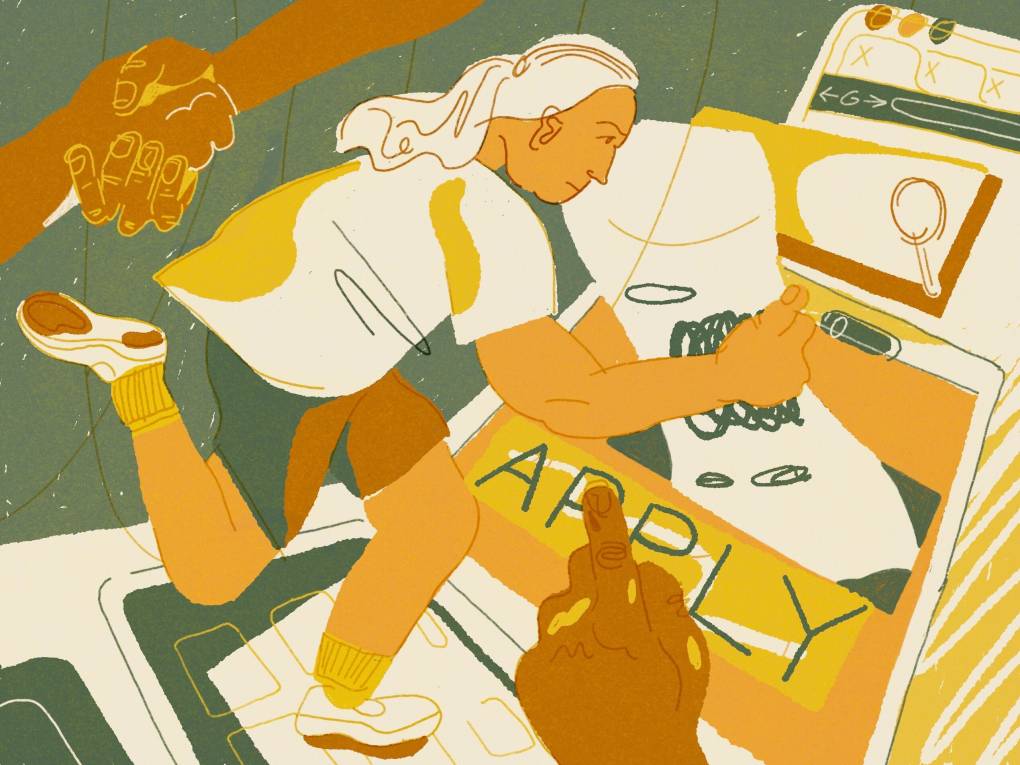
"caption": "We spoke to Bay Area-based career coach Horst Govin to learn best practices for updating your résumé and reaching out to your network about job opportunities.",
"description": null,
"title": "IMG_0213",
"credit": "Anna Vignet/KQED",
"status": "inherit",
"altTag": "An illustration that shows someone feeding their resumes into a computer screen, which reads \"Apply.\"",
"isLoading": false,
"fetchFailed": false
},
"news_11949130": {
"type": "attachments",
"id": "news_11949130",
"meta": {
"index": "attachments_1716263798",
"site": "news",
"id": "11949130",
"found": true
},
"parent": 11948895,
"imgSizes": {
"twentyfourteen-full-width": {
"file": "https://ww2.kqed.org/app/uploads/sites/10/2023/05/IMG_0193-1038x576.jpg",
"width": 1038,
"mimeType": "image/jpeg",
"height": 576
},
"thumbnail": {
"file": "https://ww2.kqed.org/app/uploads/sites/10/2023/05/IMG_0193-160x120.jpg",
"width": 160,
"mimeType": "image/jpeg",
"height": 120
},
"post-thumbnail": {
"file": "https://ww2.kqed.org/app/uploads/sites/10/2023/05/IMG_0193-672x372.jpg",
"width": 672,
"mimeType": "image/jpeg",
"height": 372
},
"kqedFullSize": {
"file": "https://ww2.kqed.org/app/uploads/sites/10/2023/05/IMG_0193.jpg",
"width": 2560,
"height": 1920
},
"2048x2048": {
"file": "https://ww2.kqed.org/app/uploads/sites/10/2023/05/IMG_0193-2048x1536.jpg",
"width": 2048,
"mimeType": "image/jpeg",
"height": 1536
},
"large": {
"file": "https://ww2.kqed.org/app/uploads/sites/10/2023/05/IMG_0193-1020x765.jpg",
"width": 1020,
"mimeType": "image/jpeg",
"height": 765
},
"1536x1536": {
"file": "https://ww2.kqed.org/app/uploads/sites/10/2023/05/IMG_0193-1536x1152.jpg",
"width": 1536,
"mimeType": "image/jpeg",
"height": 1152
},
"full-width": {
"file": "https://ww2.kqed.org/app/uploads/sites/10/2023/05/IMG_0193-1920x1440.jpg",
"width": 1920,
"mimeType": "image/jpeg",
"height": 1440
},
"medium": {
"file": "https://ww2.kqed.org/app/uploads/sites/10/2023/05/IMG_0193-800x600.jpg",
"width": 800,
"mimeType": "image/jpeg",
"height": 600
}
},
"publishDate": 1683823269,
"modified": 1684192838,
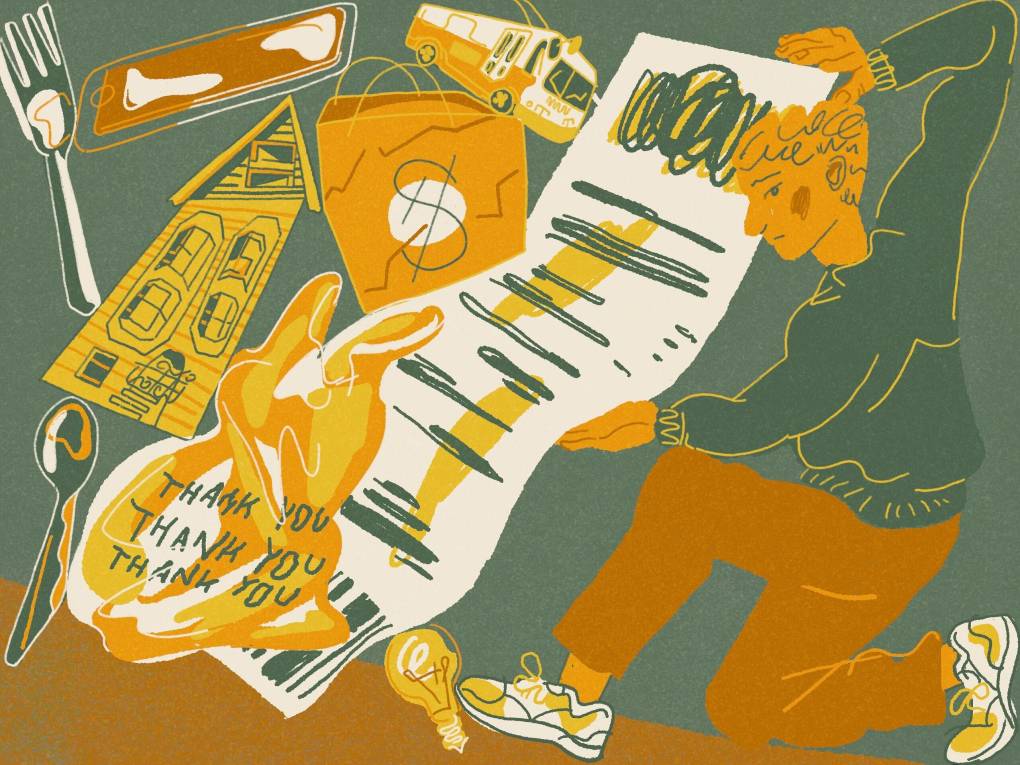
"caption": "After an unexpected job loss, knowing how to start saving money fast can feel overwhelming. We asked an expert what to do.",
"description": null,
"title": "laid-off-save-money-bills",
"credit": "Anna Vignet/KQED",
"status": "inherit",
"altTag": "A green and yellow toned illustration of a crouched figure holding massive expense sheet that's as big as they are, while a number of other objects swirl around them.",
"isLoading": false,
"fetchFailed": false
},
"news_11947674": {
"type": "attachments",
"id": "news_11947674",
"meta": {
"index": "attachments_1716263798",
"site": "news",
"id": "11947674",
"found": true
},
"parent": 11947586,
"imgSizes": {
"twentyfourteen-full-width": {
"file": "https://ww2.kqed.org/app/uploads/sites/10/2023/04/RS61650_006_KQED_DaycareYolandaThomas_12142022-qut-1020x680-1-1020x576.jpg",
"width": 1020,
"mimeType": "image/jpeg",
"height": 576
},
"thumbnail": {
"file": "https://ww2.kqed.org/app/uploads/sites/10/2023/04/RS61650_006_KQED_DaycareYolandaThomas_12142022-qut-1020x680-1-160x107.jpg",
"width": 160,
"mimeType": "image/jpeg",
"height": 107
},
"post-thumbnail": {
"file": "https://ww2.kqed.org/app/uploads/sites/10/2023/04/RS61650_006_KQED_DaycareYolandaThomas_12142022-qut-1020x680-1-672x372.jpg",
"width": 672,
"mimeType": "image/jpeg",
"height": 372
},
"kqedFullSize": {
"file": "https://ww2.kqed.org/app/uploads/sites/10/2023/04/RS61650_006_KQED_DaycareYolandaThomas_12142022-qut-1020x680-1.jpg",
"width": 1020,
"height": 680
},
"medium": {
"file": "https://ww2.kqed.org/app/uploads/sites/10/2023/04/RS61650_006_KQED_DaycareYolandaThomas_12142022-qut-1020x680-1-800x533.jpg",
"width": 800,
"mimeType": "image/jpeg",
"height": 533
}
},
"publishDate": 1682461649,
"modified": 1682480132,
"caption": "Yolanda Thomas works on an art project with the children at her day care at her home in Pittsburg on Dec. 14, 2022. Starting July 1, 2023, many parents who depend on subsidized child care may have to start paying fees for the first time since 2020.",
"description": "Yolanda Thomas works on an art project with the children at her daycare at her home in Pittsburg on Dec. 14, 2022.",
"title": "RS61650_006_KQED_DaycareYolandaThomas_12142022-qut-1020x680",
"credit": "Beth LaBerge/KQED",
"status": "inherit",
"altTag": "A group of small children sit around a table in a child care center. Two are playing a game with colorful, plastic toys and another one is drawing on a piece of paper, with the help of an adult instructor who is sitting next to her and is wearing a face mask.",
"isLoading": false,
"fetchFailed": false
},
"news_11949273": {
"type": "attachments",
"id": "news_11949273",
"meta": {
"index": "attachments_1716263798",
"site": "news",
"id": "11949273",
"found": true
},
"parent": 11949180,
"imgSizes": {
"twentyfourteen-full-width": {
"file": "https://ww2.kqed.org/app/uploads/sites/10/2023/05/RS65506_GettyImages-1428290091-1-qut-1038x576.jpg",
"width": 1038,
"mimeType": "image/jpeg",
"height": 576
},
"thumbnail": {
"file": "https://ww2.kqed.org/app/uploads/sites/10/2023/05/RS65506_GettyImages-1428290091-1-qut-160x127.jpg",
"width": 160,
"mimeType": "image/jpeg",
"height": 127
},
"post-thumbnail": {
"file": "https://ww2.kqed.org/app/uploads/sites/10/2023/05/RS65506_GettyImages-1428290091-1-qut-672x372.jpg",
"width": 672,
"mimeType": "image/jpeg",
"height": 372
},
"kqedFullSize": {
"file": "https://ww2.kqed.org/app/uploads/sites/10/2023/05/RS65506_GettyImages-1428290091-1-qut.jpg",
"width": 1920,
"height": 1523
},
"large": {
"file": "https://ww2.kqed.org/app/uploads/sites/10/2023/05/RS65506_GettyImages-1428290091-1-qut-1020x809.jpg",
"width": 1020,
"mimeType": "image/jpeg",
"height": 809
},
"1536x1536": {
"file": "https://ww2.kqed.org/app/uploads/sites/10/2023/05/RS65506_GettyImages-1428290091-1-qut-1536x1218.jpg",
"width": 1536,
"mimeType": "image/jpeg",
"height": 1218
},
"medium": {
"file": "https://ww2.kqed.org/app/uploads/sites/10/2023/05/RS65506_GettyImages-1428290091-1-qut-800x635.jpg",
"width": 800,
"mimeType": "image/jpeg",
"height": 635
}
},
"publishDate": 1683903141,
"modified": 1687395979,
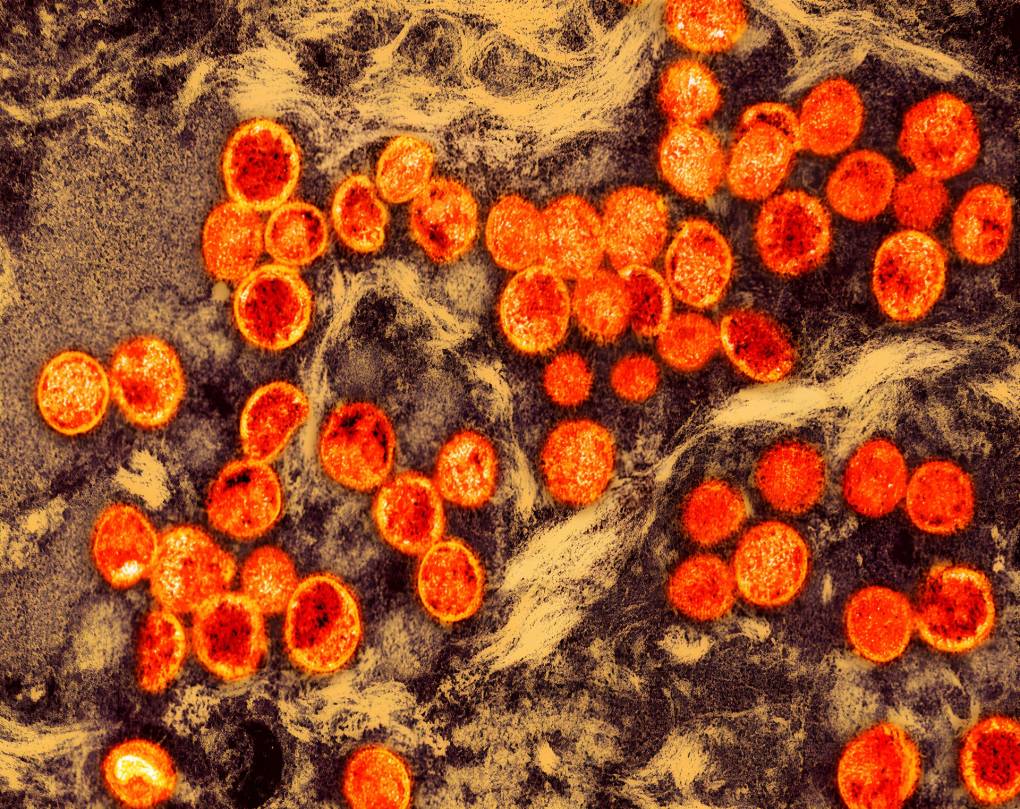
"caption": "Colorized transmission electron micrograph of mpox virus particles (orange) found within an infected cell (brown), cultured in a laboratory.",
"description": null,
"title": "mpox-monkeypox-virus",
"credit": "NIH-NIAID/Image Point FR/BSIP/Universal Images Group via Getty Images",
"status": "inherit",
"altTag": "Small circular patterns float in a dense, thick brown substance.",
"isLoading": false,
"fetchFailed": false
},
"news_11946480": {
"type": "attachments",
"id": "news_11946480",
"meta": {
"index": "attachments_1716263798",
"site": "news",
"id": "11946480",
"found": true
},
"title": "Woman paying bills using her laptop at her kitchen table",
"publishDate": 1681326684,
"status": "inherit",
"parent": 11946379,
"modified": 1681326875,
"caption": "Most Californians have received an automatic extension from the IRS to file and pay their taxes. The deadline has been extended to Oct. 16, which also includes state taxes.",
"credit": "MoMo Productions/Getty Images",
"altTag": "A woman sits at her kitchen table and sifts through documents, looking concerned. Next to her is her opened laptop.",
"description": null,
"imgSizes": {
"medium": {
"file": "https://cdn.kqed.org/wp-content/uploads/sites/10/2023/04/GettyImages-1400799758-800x534.jpg",
"width": 800,
"height": 534,
"mimeType": "image/jpeg"
},
"large": {
"file": "https://cdn.kqed.org/wp-content/uploads/sites/10/2023/04/GettyImages-1400799758-1020x680.jpg",
"width": 1020,
"height": 680,
"mimeType": "image/jpeg"
},
"thumbnail": {
"file": "https://cdn.kqed.org/wp-content/uploads/sites/10/2023/04/GettyImages-1400799758-160x107.jpg",
"width": 160,
"height": 107,
"mimeType": "image/jpeg"
},
"1536x1536": {
"file": "https://cdn.kqed.org/wp-content/uploads/sites/10/2023/04/GettyImages-1400799758-1536x1025.jpg",
"width": 1536,
"height": 1025,
"mimeType": "image/jpeg"
},
"2048x2048": {
"file": "https://cdn.kqed.org/wp-content/uploads/sites/10/2023/04/GettyImages-1400799758-2048x1366.jpg",
"width": 2048,
"height": 1366,
"mimeType": "image/jpeg"
},
"post-thumbnail": {
"file": "https://cdn.kqed.org/wp-content/uploads/sites/10/2023/04/GettyImages-1400799758-672x372.jpg",
"width": 672,
"height": 372,
"mimeType": "image/jpeg"
},
"twentyfourteen-full-width": {
"file": "https://cdn.kqed.org/wp-content/uploads/sites/10/2023/04/GettyImages-1400799758-1038x576.jpg",
"width": 1038,
"height": 576,
"mimeType": "image/jpeg"
},
"full-width": {
"file": "https://cdn.kqed.org/wp-content/uploads/sites/10/2023/04/GettyImages-1400799758-1920x1281.jpg",
"width": 1920,
"height": 1281,
"mimeType": "image/jpeg"
},
"kqedFullSize": {
"file": "https://cdn.kqed.org/wp-content/uploads/sites/10/2023/04/GettyImages-1400799758-scaled-e1779405949186.jpg",
"width": 2000,
"height": 1334
}
},
"isLoading": false,
"fetchFailed": false
},
"news_11945073": {
"type": "attachments",
"id": "news_11945073",
"meta": {
"index": "attachments_1716263798",
"site": "news",
"id": "11945073",
"found": true
},
"parent": 11944877,
"imgSizes": {
"twentyfourteen-full-width": {
"file": "https://ww2.kqed.org/app/uploads/sites/10/2023/03/RS64017_GettyImages-734164671-qut-1038x576.jpg",
"width": 1038,
"mimeType": "image/jpeg",
"height": 576
},
"thumbnail": {
"file": "https://ww2.kqed.org/app/uploads/sites/10/2023/03/RS64017_GettyImages-734164671-qut-160x107.jpg",
"width": 160,
"mimeType": "image/jpeg",
"height": 107
},
"post-thumbnail": {
"file": "https://ww2.kqed.org/app/uploads/sites/10/2023/03/RS64017_GettyImages-734164671-qut-672x372.jpg",
"width": 672,
"mimeType": "image/jpeg",
"height": 372
},
"kqedFullSize": {
"file": "https://ww2.kqed.org/app/uploads/sites/10/2023/03/RS64017_GettyImages-734164671-qut.jpg",
"width": 1920,
"height": 1280
},
"large": {
"file": "https://ww2.kqed.org/app/uploads/sites/10/2023/03/RS64017_GettyImages-734164671-qut-1020x680.jpg",
"width": 1020,
"mimeType": "image/jpeg",
"height": 680
},
"1536x1536": {
"file": "https://ww2.kqed.org/app/uploads/sites/10/2023/03/RS64017_GettyImages-734164671-qut-1536x1024.jpg",
"width": 1536,
"mimeType": "image/jpeg",
"height": 1024
},
"medium": {
"file": "https://ww2.kqed.org/app/uploads/sites/10/2023/03/RS64017_GettyImages-734164671-qut-800x533.jpg",
"width": 800,
"mimeType": "image/jpeg",
"height": 533
}
},
"publishDate": 1680111304,
"modified": 1680117321,
"caption": "If you've lost food because you lost power, you may have options for claiming back those costs.",
"description": null,
"title": "Man holding egg carton by refrigerator in kitchen",
"credit": "Getty Images",
"status": "inherit",
"altTag": "A person photographed from behind their head, looking in a fridge and holding some eggs in their hands.",
"isLoading": false,
"fetchFailed": false
},
"news_11943822": {
"type": "attachments",
"id": "news_11943822",
"meta": {
"index": "attachments_1716263798",
"site": "news",
"id": "11943822",
"found": true
},
"title": "Young Asian father with cute little daughter grocery shopping for fresh organic vegetables in supermarket",
"publishDate": 1679006512,
"status": "inherit",
"parent": 11943420,
"modified": 1679089855,
"caption": "In April, millions of households across California will see their CalFresh food stamp benefits drop due to a change in federal funding. Here's what to do if you're affected.",
"credit": "d3sign/Getty Images",
"altTag": "A young Asian man with short dark hair and round glasses carries a 1-year-old girl, with tiny black pigtails, in a harness on his chest, with the girl facing out. They stand in the light of a vegetable display in a supermarket. The man holds a plastic container full of green vegetables, maybe cucumbers, smiling as his daughter reaches out to touch the box.",
"description": "In April, millions of households across California will see their CalFresh food stamps benefits drop due to a change in federal funding. Here's what to do if you're affected.",
"imgSizes": {
"medium": {
"file": "https://cdn.kqed.org/wp-content/uploads/sites/10/2023/03/GettyImages-1144627849-800x533.jpg",
"width": 800,
"height": 533,
"mimeType": "image/jpeg"
},
"large": {
"file": "https://cdn.kqed.org/wp-content/uploads/sites/10/2023/03/GettyImages-1144627849-1020x680.jpg",
"width": 1020,
"height": 680,
"mimeType": "image/jpeg"
},
"thumbnail": {
"file": "https://cdn.kqed.org/wp-content/uploads/sites/10/2023/03/GettyImages-1144627849-160x107.jpg",
"width": 160,
"height": 107,
"mimeType": "image/jpeg"
},
"1536x1536": {
"file": "https://cdn.kqed.org/wp-content/uploads/sites/10/2023/03/GettyImages-1144627849-1536x1024.jpg",
"width": 1536,
"height": 1024,
"mimeType": "image/jpeg"
},
"2048x2048": {
"file": "https://cdn.kqed.org/wp-content/uploads/sites/10/2023/03/GettyImages-1144627849-2048x1365.jpg",
"width": 2048,
"height": 1365,
"mimeType": "image/jpeg"
},
"post-thumbnail": {
"file": "https://cdn.kqed.org/wp-content/uploads/sites/10/2023/03/GettyImages-1144627849-672x372.jpg",
"width": 672,
"height": 372,
"mimeType": "image/jpeg"
},
"twentyfourteen-full-width": {
"file": "https://cdn.kqed.org/wp-content/uploads/sites/10/2023/03/GettyImages-1144627849-1038x576.jpg",
"width": 1038,
"height": 576,
"mimeType": "image/jpeg"
},
"full-width": {
"file": "https://cdn.kqed.org/wp-content/uploads/sites/10/2023/03/GettyImages-1144627849-1920x1280.jpg",
"width": 1920,
"height": 1280,
"mimeType": "image/jpeg"
},
"kqedFullSize": {
"file": "https://cdn.kqed.org/wp-content/uploads/sites/10/2023/03/GettyImages-1144627849-scaled-e1764880413771.jpg",
"width": 2000,
"height": 1334
}
},
"isLoading": false,
"fetchFailed": false
}
},
"audioPlayerReducer": {
"postId": "stream_live",
"isPaused": true,
"isPlaying": false,
"pfsActive": false,
"pledgeModalIsOpen": true,
"playerDrawerIsOpen": false,
"liveAudioPlayStartedAt": 0,
"liveAudioPlayContext": ""
},
"authorsReducer": {
"byline_news_11955006": {
"type": "authors",
"id": "byline_news_11955006",
"meta": {
"override": true
},
"slug": "byline_news_11955006",
"name": "\u003ca href=\"https://www.npr.org/people/776533008/andee-tagle\">Andee Tagle\u003c/a>",
"isLoading": false
},
"carlysevern": {
"type": "authors",
"id": "3243",
"meta": {
"index": "authors_1716337520",
"id": "3243",
"found": true
},
"name": "Carly Severn",
"firstName": "Carly",
"lastName": "Severn",
"slug": "carlysevern",
"email": "csevern@kqed.org",
"display_author_email": false,
"staff_mastheads": [
"news"
],
"title": "Senior Editor, Audience News ",
"bio": "Carly is KQED's Senior Editor of Audience News on the Digital News team, and has reported for the California Report Magazine, Bay Curious and KQED Arts. She's formerly the host of \u003ca href=\"http://ww2.kqed.org/pop/category/the-cooler/\" rel=\"noopener noreferrer\">The Cooler\u003c/a> podcast.",
"avatar": "https://secure.gravatar.com/avatar/2d8d6765f186e64c798cf7f0c8088a41?s=600&d=blank&r=g",
"twitter": "teacupinthebay",
"facebook": null,
"instagram": null,
"linkedin": null,
"sites": [
{
"site": "",
"roles": [
"editor"
]
},
{
"site": "arts",
"roles": [
"editor"
]
},
{
"site": "news",
"roles": [
"administrator"
]
},
{
"site": "pop",
"roles": [
"editor"
]
},
{
"site": "futureofyou",
"roles": [
"editor"
]
},
{
"site": "about",
"roles": [
"administrator"
]
},
{
"site": "mindshift",
"roles": [
"editor"
]
},
{
"site": "bayareabites",
"roles": [
"editor"
]
},
{
"site": "stateofhealth",
"roles": [
"editor"
]
},
{
"site": "science",
"roles": [
"editor"
]
},
{
"site": "food",
"roles": [
"contributor"
]
},
{
"site": "forum",
"roles": [
"editor"
]
},
{
"site": "perspectives",
"roles": [
"administrator"
]
},
{
"site": "liveblog",
"roles": [
"editor"
]
}
],
"headData": {
"title": "Carly Severn | KQED",
"description": "Senior Editor, Audience News ",
"ogImgSrc": "https://secure.gravatar.com/avatar/2d8d6765f186e64c798cf7f0c8088a41?s=600&d=blank&r=g",
"twImgSrc": "https://secure.gravatar.com/avatar/2d8d6765f186e64c798cf7f0c8088a41?s=600&d=blank&r=g"
},
"isLoading": false,
"link": "/author/carlysevern"
},
"ccabreralomeli": {
"type": "authors",
"id": "11708",
"meta": {
"index": "authors_1716337520",
"id": "11708",
"found": true
},
"name": "Carlos Cabrera-Lomelí",
"firstName": "Carlos",
"lastName": "Cabrera-Lomelí",
"slug": "ccabreralomeli",
"email": "ccabreralomeli@KQED.org",
"display_author_email": true,
"staff_mastheads": [
"news"
],
"title": "Community Reporter",
"bio": "Carlos Cabrera-Lomelí is a community reporter with KQED's digital engagement team. He also reports and co-produces for KQED's bilingual news hub KQED en Español. He grew up in San Francisco's Mission District and has previously worked with Univision, 48 Hills and REFORMA in Mexico City.",
"avatar": "https://secure.gravatar.com/avatar/e95ff80bb2eaf18a8f2af4dcf7ffb54b?s=600&d=mm&r=g",
"twitter": "@LomeliCabrera",
"facebook": null,
"instagram": null,
"linkedin": null,
"sites": [
{
"site": "arts",
"roles": [
"editor"
]
},
{
"site": "news",
"roles": [
"editor"
]
},
{
"site": "about",
"roles": [
"editor"
]
},
{
"site": "science",
"roles": [
"editor"
]
},
{
"site": "perspectives",
"roles": [
"editor"
]
},
{
"site": "elections",
"roles": [
"editor"
]
},
{
"site": "liveblog",
"roles": [
"contributor"
]
}
],
"headData": {
"title": "Carlos Cabrera-Lomelí | KQED",
"description": "Community Reporter",
"ogImgSrc": "https://secure.gravatar.com/avatar/e95ff80bb2eaf18a8f2af4dcf7ffb54b?s=600&d=mm&r=g",
"twImgSrc": "https://secure.gravatar.com/avatar/e95ff80bb2eaf18a8f2af4dcf7ffb54b?s=600&d=mm&r=g"
},
"isLoading": false,
"link": "/author/ccabreralomeli"
},
"daisynguyen": {
"type": "authors",
"id": "11829",
"meta": {
"index": "authors_1716337520",
"id": "11829",
"found": true
},
"name": "Daisy Nguyen",
"firstName": "Daisy",
"lastName": "Nguyen",
"slug": "daisynguyen",
"email": "daisynguyen@kqed.org",
"display_author_email": true,
"staff_mastheads": [
"news"
],
"title": "KQED Contributor",
"bio": "I have covered early childhood education and child care for KQED since 2022. I focus on policies aimed at increasing access to early care and education and how they shape individual lives. I've been a journalist for more than two decades, with most of that time devoted to covering breaking news throughout California for The Associated Press. I grew up in San Francisco and studied at UC Davis and Columbia University's Graduate School of Journalism. I live in Oakland with my husband and two kids.",
"avatar": "https://secure.gravatar.com/avatar/2da2127c27f7143b53ebd419800fd55f?s=600&d=blank&r=g",
"twitter": null,
"facebook": null,
"instagram": null,
"linkedin": "https://www.linkedin.com/in/daisynguyen/",
"sites": [
{
"site": "news",
"roles": [
"author"
]
},
{
"site": "liveblog",
"roles": [
"author"
]
}
],
"headData": {
"title": "Daisy Nguyen | KQED",
"description": "KQED Contributor",
"ogImgSrc": "https://secure.gravatar.com/avatar/2da2127c27f7143b53ebd419800fd55f?s=600&d=blank&r=g",
"twImgSrc": "https://secure.gravatar.com/avatar/2da2127c27f7143b53ebd419800fd55f?s=600&d=blank&r=g"
},
"isLoading": false,
"link": "/author/daisynguyen"
},
"sjohnson": {
"type": "authors",
"id": "11840",
"meta": {
"index": "authors_1716337520",
"id": "11840",
"found": true
},
"name": "Sydney Johnson",
"firstName": "Sydney",
"lastName": "Johnson",
"slug": "sjohnson",
"email": "sjohnson@kqed.org",
"display_author_email": false,
"staff_mastheads": [
"news"
],
"title": "KQED Reporter",
"bio": "Sydney Johnson is a general assignment reporter at KQED. She previously reported on public health and city government at the San Francisco Examiner, and before that, she covered statewide education policy for EdSource. Her reporting has won multiple local, state and national awards. Sydney is a graduate of the University of California, Berkeley and lives in San Francisco.",
"avatar": "https://secure.gravatar.com/avatar/97855f2719b72ad6190b7c535fe642c8?s=600&d=blank&r=g",
"twitter": "sydneyfjohnson",
"facebook": null,
"instagram": null,
"linkedin": null,
"sites": [
{
"site": "news",
"roles": [
"editor"
]
}
],
"headData": {
"title": "Sydney Johnson | KQED",
"description": "KQED Reporter",
"ogImgSrc": "https://secure.gravatar.com/avatar/97855f2719b72ad6190b7c535fe642c8?s=600&d=blank&r=g",
"twImgSrc": "https://secure.gravatar.com/avatar/97855f2719b72ad6190b7c535fe642c8?s=600&d=blank&r=g"
},
"isLoading": false,
"link": "/author/sjohnson"
}
},
"pagesReducer": {
"news_tag_kqed-guides": {
"type": "terms",
"id": "news_26702",
"meta": {
"index": "terms_1716263798",
"site": "news",
"id": "26702",
"score": 10.400978
},
"featImg": null,
"name": "KQED guides",
"description": null,
"taxonomy": "tag",
"headData": {
"twImgId": null,
"twTitle": null,
"ogTitle": null,
"ogImgId": null,
"twDescription": null,
"description": null,
"title": "KQED guides Archives | KQED News",
"ogDescription": null
},
"ttid": 26719,
"slug": "kqed-guides",
"isLoading": false,
"title": "KQED guides",
"pageMeta": {
"site": "news",
"WpPageTemplate": "page-topic-editorial",
"currentPage": 5
},
"blocks": [
{
"blockName": "kqed/post-list",
"attrs": {
"layout": "cardArticle2",
"query": "posts/news?tag=kqed-guides",
"seeMore": false,
"paginated": true,
"page": 5
}
},
{
"blockName": "kqed/ad"
}
]
}
},
"pfsSessionReducer": {},
"postsReducer": {
"stream_live": {
"type": "live",
"id": "stream_live",
"audioUrl": "https://streams.kqed.org/kqedradio",
"title": "Live Stream",
"excerpt": "Live Stream information currently unavailable.",
"link": "/radio",
"featImg": "",
"label": {
"name": "KQED Live",
"link": "/"
}
},
"stream_kqedNewscast": {
"type": "posts",
"id": "stream_kqedNewscast",
"audioUrl": "https://www.kqed.org/.stream/anon/radio/RDnews/newscast.mp3?_=1",
"title": "KQED Newscast",
"featImg": "",
"label": {
"name": "88.5 FM",
"link": "/"
}
},
"news_11955680": {
"type": "posts",
"id": "news_11955680",
"meta": {
"index": "posts_1716263798",
"site": "news",
"id": "11955680",
"score": null,
"sort": [
1689356205000
]
},
"guestAuthors": [],
"slug": "explaining-303-creative-decision",
"title": "303 Creative: When Free Speech and LGBTQ+ Rights Collide",
"publishDate": 1689356205,
"format": "standard",
"headTitle": "303 Creative: When Free Speech and LGBTQ+ Rights Collide | KQED",
"labelTerm": {
"site": "news"
},
"content": "\u003cp>In the last days of June, \u003ca href=\"https://www.kqed.org/news/11954612/u-s-supreme-court-strikes-down-affirmative-action-barring-california-private-universities-from-considering-race-in-admissions\">the Supreme Court struck down affirmative action\u003c/a>, opened the door to LGBTQ+ discrimination and \u003ca href=\"https://www.kqed.org/news/11954741/supreme-court-student-loan-decision-how-affects-you\">outlawed the Biden administration’s plan to forgive student loans\u003c/a>. These are monumental rulings that directly affect people of color, queer folks, prospective college students and the 43 million Americans with federal student loans — leaving many devastated and fearful for the future.\u003c/p>\n\u003cp>In \u003ca href=\"https://www.kqed.org/news/tag/explaining-the-supreme-court\">our series explaining this summer’s Supreme Court decisions\u003c/a>, we’re unpacking how these rulings will affect you — and what can be done now. This explainer focuses on the case 303 Creative LLC v. Elenis — which saw the court rule in favor of a web designer who refused to make wedding websites for gay couples — and what it could mean for discrimination against LGBTQ+ folks in the United States.\u003c/p>\n\u003cp>KQED gathered legal and judicial insight on this ruling at a panel hosted at Manny’s, a community space in San Francisco. On this panel were:\u003c/p>\n\u003cul>\n\u003cli>\u003ca href=\"https://www.keker.com/Lawyers/courtney-j-liss\">Courtney Liss\u003c/a>, associate at San Francisco law firm Keker, Van Nest and Peters\u003c/li>\n\u003cli>\u003ca href=\"https://www.keker.com/Lawyers/Harris-Cody\">Cody Harris\u003c/a>, partner at Keker, Van Nest and Peters\u003c/li>\n\u003cli>\u003ca href=\"https://www.uchastings.edu/people/matt-coles/\">Matthew Coles\u003c/a>, professor of practice at UC Law San Francisco (formerly UC Hastings)\u003c/li>\n\u003c/ul>\n\u003ch2>What was the Supreme Court’s decision about LGBTQ+ discrimination?\u003c/h2>\n\u003cp>In a defeat for gay rights, the Supreme Court’s conservative majority ruled in 303 Creative LLC v. Elenis that a Christian graphic artist who designs wedding websites can refuse to work with same-sex couples.\u003c/p>\n\u003cul>\n\u003cli>\u003ca href=\"#tellus\">\u003cstrong>Tell us: What else do you need information about right now?\u003c/strong>\u003c/a>\u003c/li>\n\u003c/ul>\n\u003cp>Justice Sonia Sotomayor, one of the court’s liberal justices, wrote in a dissent that the decision’s effect is to “mark gays and lesbians for second-class status” and that the ruling opens the door to further discrimination. \u003ca href=\"https://www.npr.org/2023/06/30/1182121291/colorado-supreme-court-same-sex-marriage-decision\">Read more about the case from NPR\u003c/a> or read \u003ca href=\"https://www.supremecourt.gov/opinions/22pdf/21-476_c185.pdf\">the Supreme Court’s ruling (PDF)\u003c/a> for yourself.\u003c/p>\n\u003ch2>What will change for queer people in the US after this case?\u003c/h2>\n\u003cp>This ruling has opened the door for LGBTQ+ people to be discriminated against when requesting services from certain professionals, says UC Law San Francisco’s Coles, specifically in situations involving the use of words or the creation of images and films.\u003c/p>\n\u003cp>Why? Smith \u003ca href=\"https://www.supremecourt.gov/opinions/22pdf/21-476_c185.pdf\">framed her website services as “expressive in nature” (PDF)\u003c/a> because she designed them to be customized, original and intended “to communicate a particular message.” Consequently, other professionals operating what could be termed an “expressive business” could use this ruling to deny service to LGBTQ+ people as well.[aside label='Unpacking the Recent Supreme Court Decisions' tag='explaining-the-supreme-court']Coles’ advice to folks in the community? “Find out in advance whether this business has said that it doesn’t want to serve [queer people],” he said.\u003c/p>\n\u003cp>Practically, the website case now means that someone like Lorie Smith, the Colorado graphic designer, can refuse service to LGBTQ+ folks “without fear of government sanction on them,” said Harris of Keker, Van Nest and Peters.\u003c/p>\n\u003cp>Harris adds that hate speech laws as most people think of them — those that would make it a crime to say something hateful — don’t really exist. Hate speech is “awful and odious, and it makes me angry,” he said, “but it’s constitutional.”\u003c/p>\n\u003cp>[ad fullwidth]\u003c/p>\n\u003ch2>How was this case even won?\u003c/h2>\n\u003cp>Lorie Smith, the web designer involved in the case, was challenging her home state of Colorado’s public accommodations law — the type of law that, in most states, bars discrimination based on sexual orientation. Her claim was that the state was unconstitutionally forcing her to create a message she opposes because she can’t deny service to same-sex couples. The Supreme Court sided with Smith, ruling that forcing her to create websites for queer couples would violate her free speech rights under the Constitution’s First Amendment.\u003c/p>\n\u003cp>Smith should have lost her case on several fronts, said Coles — just one being that her website work “is commercial speech,” and not personal expression (free speech), because Smith “was being paid to write words for somebody else.” And it’s well-established, says Coles, that commercial speech is not as protected as other forms of speech.\u003c/p>\n\u003cp>The court ignored this analysis of the First Amendment in its ruling, says Coles. A majority of the justices, he adds, believe that if Smith created websites for same-sex couples, she would be forced to use words to celebrate things she does not want to celebrate.\u003c/p>\n\u003cp>Responding to \u003ca href=\"https://www.independent.co.uk/news/world/americas/us-politics/supreme-court-web-designer-fake-case-b2370226.html\">lingering questions over the legitimacy of this case\u003c/a> — namely, whether the web designer in question had ever really been asked to design a site for a gay wedding — Coles said he didn’t think it’s “a fake case.” The real question, he said, is whether the designer has taken steps to “start working on websites or not — and the answer is yes. She made a pretty decent showing in the court that she’d done a lot of research. She had models together.”\u003c/p>\n\u003cp>Notions of this being a “fake case” get away from the point, says Liss, of Van Nest and Peters. She stresses that this case is “an important door,” one that this court has chosen to open and go through by taking up the case in the first place.\u003c/p>\n\u003cfigure id=\"attachment_11955692\" class=\"wp-caption aligncenter\" style=\"max-width: 2560px\">\u003cimg loading=\"lazy\" decoding=\"async\" class=\"size-full wp-image-11955692\" src=\"https://ww2.kqed.org/app/uploads/sites/10/2023/07/GettyImages-972695008-scaled.jpg\" alt=\"A rainbow flag hangs over a government building.\" width=\"2560\" height=\"1707\">\u003cfigcaption class=\"wp-caption-text\">San Francisco-based attorney Courtney Liss advises businesses to make it very clear that they \u003cem>do\u003c/em> want to provide services to LGBTQ+ communities, with signs and clear website notices. ‘I personally do not want to go anywhere where I’m not welcome,’ she said. \u003ccite>(JasonDoiy/Getty Images)\u003c/cite>\u003c/figcaption>\u003c/figure>\n\u003ch2>What could the long-term ramifications of this case be?\u003c/h2>\n\u003cp>Coles says that what surprised him about the Supreme Court’s decision was that it did not draw upon the clause in the Constitution that protects people’s right to practice their religion. Instead, the ruling draws upon the free speech clause, “because [Lorie Smith] was involved in expressive conduct.”\u003c/p>\n\u003cp>Coles believes that the Court’s conservative justices disagree on how to interpret the free exercise-of-religion clause. But he cautions that there may come a day when the conservative justices privilege religious exemptions in their rulings. “And that religious exception to nondiscrimination laws is not going to be limited to expressive businesses,” he said.\u003c/p>\n\u003cp>“Run through the list of everything that we’ve managed to cover with our civil rights laws,” Coles said, referring to protections for race, religion, gender and disability. By itself, he said, 303 Creative LLC v. Elenis is “not going to completely eviscerate discrimination laws,” but he believes it “portends something in the future, which is a good deal worse.”\u003c/p>\n\u003ch2>How can you voice your opposition to this ruling?\u003c/h2>\n\u003cp>The Supreme Court’s recent raft of rulings against LGBTQ+ rights, affirmative action and student loan forgiveness has drawn vehement criticism sharply focused on the Court’s conservative supermajority. For example, in speaking out against the student loan decision, \u003ca href=\"https://www.kqed.org/news/11954741/supreme-court-student-loan-decision-how-affects-you\">U.S Rep. Barbara Lee (D-Calif.) called the body a “corrupt, right-wing court.”\u003c/a>\u003c/p>\n\u003cp>Criticism of the court’s rulings has also come from within, with Justice Sonia Sotomayor saying that the website designer ruling saw the Supreme Court “taking steps backward.”\u003c/p>\n\u003cp>“Today is a sad day in American constitutional law and in the lives of LGBT people,” she added. “The immediate, symbolic effect of the decision is to mark gays and lesbians for second-class status.”\u003c/p>\n\u003cp>[aside label='More Guides from KQED' tag='kqed-guides']Coles notes that at the end of the student loan decision, Justice Elena Kagan’s dissent features a “very pointed dialogue” that strongly criticizes the Supreme Court for what she sees as violations of the separation of powers in their ruling — and that Justice John Roberts’ reply bristles at the suggestion that the court is not legitimate.\u003c/p>\n\u003cp>“So I think they’re beginning to get sensitive to the notion that there’s a wide, ever-growing public belief that some of what they’re doing is not legitimate,” said Coles of the conservative justices. “It’s really important if you think what they’re doing is not legitimate, to keep voicing that.”\u003c/p>\n\u003cp>Liss urged people to “call your congresspeople and your other elected representatives” to express that, if so. You might also feel like this “legitimacy crisis” is sharpened, she says, by “\u003ca href=\"https://www.propublica.org/article/clarence-thomas-scotus-undisclosed-luxury-travel-gifts-crow\">the lack of standards that the Supreme Court holds themselves to in terms of accepting gifts\u003c/a>.”\u003c/p>\n\u003cp>On an everyday scale, Liss advises businesses to make it very clear that they \u003cem>do\u003c/em> want to provide services to LGBTQ+ communities, with signs and clear website notices.\u003c/p>\n\u003cp>“I personally do not want to go anywhere where I’m not welcome,” said Liss. “I don’t want to give a single dollar to someone who wouldn’t be excited to take my very gay dollar.”\u003c/p>\n\u003cp>\u003cem>This story contains reporting from The Associated Press.\u003c/em>\u003c/p>\n\u003ch2>\u003ca id=\"tellus\">\u003c/a>Tell us: What else do you need information about?\u003c/h2>\n\u003cp>At KQED News, we know that it can sometimes be hard to track down the answers to navigate life in the Bay Area in 2023. We’ve published \u003ca href=\"https://www.kqed.org/news/tag/coronavirus-resources-and-explainers\">clear, practical explainers and guides about COVID\u003c/a>, \u003ca href=\"https://www.kqed.org/news/11936674/how-to-prepare-for-this-weeks-atmospheric-river-storm-sandbags-emergency-kits-and-more\">how to cope with intense winter weather\u003c/a> and \u003ca href=\"https://www.kqed.org/news/11821950/how-to-safely-attend-a-protest-in-the-bay-area\">how to exercise your right to protest safely\u003c/a>.\u003c/p>\n\u003cp>So tell us: What do you need to know more about? Tell us, and you could see your question answered online or on social media. What you submit will make our reporting stronger, and help us decide what to cover here on our site, and on KQED Public Radio, too.\u003c/p>\n\u003cp>[hearken id=\"10483\" src=\"https://modules.wearehearken.com/kqed/embed/10483.js\"]\u003c/p>\n\u003cp>[ad fullwidth]\u003c/p>\n\u003cp>[ad floatright]\u003c/p>\n",
"blocks": [],
"excerpt": "What protections do LGBTQ+ people have in the US against discrimination after the latest Supreme Court ruling? The answers — and what to do about them — are in our guide.",
"status": "publish",
"parent": 0,
"modified": 1746618611,
"stats": {
"hasAudio": false,
"hasVideo": false,
"hasChartOrMap": false,
"iframeSrcs": [],
"hasGoogleForm": false,
"hasGallery": false,
"hasHearkenModule": true,
"hasPolis": false,
"paragraphCount": 32,
"wordCount": 1693
},
"headData": {
"title": "303 Creative Decision: LGBTQ+ Rights & Free Speech | KQED",
"description": "What does the 303 Creative decision mean for LGBTQ+ rights? We break down the ruling and its potential effects on discrimination and free speech.",
"ogTitle": "",
"ogDescription": "",
"ogImgId": "",
"twTitle": "",
"twDescription": "",
"twImgId": "",
"socialTitle": "303 Creative Decision: LGBTQ+ Rights & Free Speech | KQED",
"socialDescription": "What does the 303 Creative decision mean for LGBTQ+ rights? We break down the ruling and its potential effects on discrimination and free speech.",
"schema": {
"@context": "https://schema.org",
"@type": "NewsArticle",
"headline": "303 Creative: When Free Speech and LGBTQ+ Rights Collide",
"datePublished": "2023-07-14T10:36:45-07:00",
"dateModified": "2025-05-07T04:50:11-07:00",
"image": "https://cdn.kqed.org/wp-content/uploads/2020/02/KQED-OG-Image@1x.png",
"isAccessibleForFree": "True",
"publisher": {
"@type": "NewsMediaOrganization",
"@id": "https://www.kqed.org/#organization",
"name": "KQED",
"logo": "https://cdn.kqed.org/wp-content/uploads/2020/02/KQED-OG-Image@1x.png",
"url": "https://www.kqed.org",
"sameAs": [
"https://www.facebook.com/KQED",
"https://twitter.com/KQED",
"https://www.instagram.com/kqed/",
"https://www.tiktok.com/@kqedofficial",
"https://www.linkedin.com/company/kqed",
"https://www.youtube.com/channel/UCeC0IOo7i1P_61zVUWbJ4nw"
]
}
}
},
"sticky": false,
"templateType": "standard",
"featuredImageType": "standard",
"excludeFromSiteSearch": "Include",
"articleAge": "0",
"path": "/news/11955680/explaining-303-creative-decision",
"audioTrackLength": null,
"parsedContent": [
{
"type": "contentString",
"content": "\u003cdiv class=\"post-body\">\u003cp>\u003cp>In the last days of June, \u003ca href=\"https://www.kqed.org/news/11954612/u-s-supreme-court-strikes-down-affirmative-action-barring-california-private-universities-from-considering-race-in-admissions\">the Supreme Court struck down affirmative action\u003c/a>, opened the door to LGBTQ+ discrimination and \u003ca href=\"https://www.kqed.org/news/11954741/supreme-court-student-loan-decision-how-affects-you\">outlawed the Biden administration’s plan to forgive student loans\u003c/a>. These are monumental rulings that directly affect people of color, queer folks, prospective college students and the 43 million Americans with federal student loans — leaving many devastated and fearful for the future.\u003c/p>\n\u003cp>In \u003ca href=\"https://www.kqed.org/news/tag/explaining-the-supreme-court\">our series explaining this summer’s Supreme Court decisions\u003c/a>, we’re unpacking how these rulings will affect you — and what can be done now. This explainer focuses on the case 303 Creative LLC v. Elenis — which saw the court rule in favor of a web designer who refused to make wedding websites for gay couples — and what it could mean for discrimination against LGBTQ+ folks in the United States.\u003c/p>\n\u003cp>KQED gathered legal and judicial insight on this ruling at a panel hosted at Manny’s, a community space in San Francisco. On this panel were:\u003c/p>\n\u003cul>\n\u003cli>\u003ca href=\"https://www.keker.com/Lawyers/courtney-j-liss\">Courtney Liss\u003c/a>, associate at San Francisco law firm Keker, Van Nest and Peters\u003c/li>\n\u003cli>\u003ca href=\"https://www.keker.com/Lawyers/Harris-Cody\">Cody Harris\u003c/a>, partner at Keker, Van Nest and Peters\u003c/li>\n\u003cli>\u003ca href=\"https://www.uchastings.edu/people/matt-coles/\">Matthew Coles\u003c/a>, professor of practice at UC Law San Francisco (formerly UC Hastings)\u003c/li>\n\u003c/ul>\n\u003ch2>What was the Supreme Court’s decision about LGBTQ+ discrimination?\u003c/h2>\n\u003cp>In a defeat for gay rights, the Supreme Court’s conservative majority ruled in 303 Creative LLC v. Elenis that a Christian graphic artist who designs wedding websites can refuse to work with same-sex couples.\u003c/p>\n\u003cul>\n\u003cli>\u003ca href=\"#tellus\">\u003cstrong>Tell us: What else do you need information about right now?\u003c/strong>\u003c/a>\u003c/li>\n\u003c/ul>\n\u003cp>Justice Sonia Sotomayor, one of the court’s liberal justices, wrote in a dissent that the decision’s effect is to “mark gays and lesbians for second-class status” and that the ruling opens the door to further discrimination. \u003ca href=\"https://www.npr.org/2023/06/30/1182121291/colorado-supreme-court-same-sex-marriage-decision\">Read more about the case from NPR\u003c/a> or read \u003ca href=\"https://www.supremecourt.gov/opinions/22pdf/21-476_c185.pdf\">the Supreme Court’s ruling (PDF)\u003c/a> for yourself.\u003c/p>\n\u003ch2>What will change for queer people in the US after this case?\u003c/h2>\n\u003cp>This ruling has opened the door for LGBTQ+ people to be discriminated against when requesting services from certain professionals, says UC Law San Francisco’s Coles, specifically in situations involving the use of words or the creation of images and films.\u003c/p>\n\u003cp>Why? Smith \u003ca href=\"https://www.supremecourt.gov/opinions/22pdf/21-476_c185.pdf\">framed her website services as “expressive in nature” (PDF)\u003c/a> because she designed them to be customized, original and intended “to communicate a particular message.” Consequently, other professionals operating what could be termed an “expressive business” could use this ruling to deny service to LGBTQ+ people as well.\u003c/p>\u003c/div>",
"attributes": {
"named": {},
"numeric": []
}
},
{
"type": "component",
"content": "",
"name": "aside",
"attributes": {
"named": {
"label": "Unpacking the Recent Supreme Court Decisions ",
"tag": "explaining-the-supreme-court"
},
"numeric": []
}
},
{
"type": "contentString",
"content": "\u003cdiv class=\"post-body\">\u003cp>Coles’ advice to folks in the community? “Find out in advance whether this business has said that it doesn’t want to serve [queer people],” he said.\u003c/p>\n\u003cp>Practically, the website case now means that someone like Lorie Smith, the Colorado graphic designer, can refuse service to LGBTQ+ folks “without fear of government sanction on them,” said Harris of Keker, Van Nest and Peters.\u003c/p>\n\u003cp>Harris adds that hate speech laws as most people think of them — those that would make it a crime to say something hateful — don’t really exist. Hate speech is “awful and odious, and it makes me angry,” he said, “but it’s constitutional.”\u003c/p>\n\u003cp>\u003c/p>\u003c/div>",
"attributes": {
"named": {},
"numeric": []
}
},
{
"type": "component",
"content": "",
"name": "ad",
"attributes": {
"named": {
"label": "fullwidth"
},
"numeric": [
"fullwidth"
]
}
},
{
"type": "contentString",
"content": "\u003cdiv class=\"post-body\">\u003cp>\u003c/p>\n\u003ch2>How was this case even won?\u003c/h2>\n\u003cp>Lorie Smith, the web designer involved in the case, was challenging her home state of Colorado’s public accommodations law — the type of law that, in most states, bars discrimination based on sexual orientation. Her claim was that the state was unconstitutionally forcing her to create a message she opposes because she can’t deny service to same-sex couples. The Supreme Court sided with Smith, ruling that forcing her to create websites for queer couples would violate her free speech rights under the Constitution’s First Amendment.\u003c/p>\n\u003cp>Smith should have lost her case on several fronts, said Coles — just one being that her website work “is commercial speech,” and not personal expression (free speech), because Smith “was being paid to write words for somebody else.” And it’s well-established, says Coles, that commercial speech is not as protected as other forms of speech.\u003c/p>\n\u003cp>The court ignored this analysis of the First Amendment in its ruling, says Coles. A majority of the justices, he adds, believe that if Smith created websites for same-sex couples, she would be forced to use words to celebrate things she does not want to celebrate.\u003c/p>\n\u003cp>Responding to \u003ca href=\"https://www.independent.co.uk/news/world/americas/us-politics/supreme-court-web-designer-fake-case-b2370226.html\">lingering questions over the legitimacy of this case\u003c/a> — namely, whether the web designer in question had ever really been asked to design a site for a gay wedding — Coles said he didn’t think it’s “a fake case.” The real question, he said, is whether the designer has taken steps to “start working on websites or not — and the answer is yes. She made a pretty decent showing in the court that she’d done a lot of research. She had models together.”\u003c/p>\n\u003cp>Notions of this being a “fake case” get away from the point, says Liss, of Van Nest and Peters. She stresses that this case is “an important door,” one that this court has chosen to open and go through by taking up the case in the first place.\u003c/p>\n\u003cfigure id=\"attachment_11955692\" class=\"wp-caption aligncenter\" style=\"max-width: 2560px\">\u003cimg loading=\"lazy\" decoding=\"async\" class=\"size-full wp-image-11955692\" src=\"https://ww2.kqed.org/app/uploads/sites/10/2023/07/GettyImages-972695008-scaled.jpg\" alt=\"A rainbow flag hangs over a government building.\" width=\"2560\" height=\"1707\">\u003cfigcaption class=\"wp-caption-text\">San Francisco-based attorney Courtney Liss advises businesses to make it very clear that they \u003cem>do\u003c/em> want to provide services to LGBTQ+ communities, with signs and clear website notices. ‘I personally do not want to go anywhere where I’m not welcome,’ she said. \u003ccite>(JasonDoiy/Getty Images)\u003c/cite>\u003c/figcaption>\u003c/figure>\n\u003ch2>What could the long-term ramifications of this case be?\u003c/h2>\n\u003cp>Coles says that what surprised him about the Supreme Court’s decision was that it did not draw upon the clause in the Constitution that protects people’s right to practice their religion. Instead, the ruling draws upon the free speech clause, “because [Lorie Smith] was involved in expressive conduct.”\u003c/p>\n\u003cp>Coles believes that the Court’s conservative justices disagree on how to interpret the free exercise-of-religion clause. But he cautions that there may come a day when the conservative justices privilege religious exemptions in their rulings. “And that religious exception to nondiscrimination laws is not going to be limited to expressive businesses,” he said.\u003c/p>\n\u003cp>“Run through the list of everything that we’ve managed to cover with our civil rights laws,” Coles said, referring to protections for race, religion, gender and disability. By itself, he said, 303 Creative LLC v. Elenis is “not going to completely eviscerate discrimination laws,” but he believes it “portends something in the future, which is a good deal worse.”\u003c/p>\n\u003ch2>How can you voice your opposition to this ruling?\u003c/h2>\n\u003cp>The Supreme Court’s recent raft of rulings against LGBTQ+ rights, affirmative action and student loan forgiveness has drawn vehement criticism sharply focused on the Court’s conservative supermajority. For example, in speaking out against the student loan decision, \u003ca href=\"https://www.kqed.org/news/11954741/supreme-court-student-loan-decision-how-affects-you\">U.S Rep. Barbara Lee (D-Calif.) called the body a “corrupt, right-wing court.”\u003c/a>\u003c/p>\n\u003cp>Criticism of the court’s rulings has also come from within, with Justice Sonia Sotomayor saying that the website designer ruling saw the Supreme Court “taking steps backward.”\u003c/p>\n\u003cp>“Today is a sad day in American constitutional law and in the lives of LGBT people,” she added. “The immediate, symbolic effect of the decision is to mark gays and lesbians for second-class status.”\u003c/p>\n\u003cp>\u003c/p>\u003c/div>",
"attributes": {
"named": {},
"numeric": []
}
},
{
"type": "component",
"content": "",
"name": "aside",
"attributes": {
"named": {
"label": "More Guides from KQED ",
"tag": "kqed-guides"
},
"numeric": []
}
},
{
"type": "contentString",
"content": "\u003cdiv class=\"post-body\">\u003cp>Coles notes that at the end of the student loan decision, Justice Elena Kagan’s dissent features a “very pointed dialogue” that strongly criticizes the Supreme Court for what she sees as violations of the separation of powers in their ruling — and that Justice John Roberts’ reply bristles at the suggestion that the court is not legitimate.\u003c/p>\n\u003cp>“So I think they’re beginning to get sensitive to the notion that there’s a wide, ever-growing public belief that some of what they’re doing is not legitimate,” said Coles of the conservative justices. “It’s really important if you think what they’re doing is not legitimate, to keep voicing that.”\u003c/p>\n\u003cp>Liss urged people to “call your congresspeople and your other elected representatives” to express that, if so. You might also feel like this “legitimacy crisis” is sharpened, she says, by “\u003ca href=\"https://www.propublica.org/article/clarence-thomas-scotus-undisclosed-luxury-travel-gifts-crow\">the lack of standards that the Supreme Court holds themselves to in terms of accepting gifts\u003c/a>.”\u003c/p>\n\u003cp>On an everyday scale, Liss advises businesses to make it very clear that they \u003cem>do\u003c/em> want to provide services to LGBTQ+ communities, with signs and clear website notices.\u003c/p>\n\u003cp>“I personally do not want to go anywhere where I’m not welcome,” said Liss. “I don’t want to give a single dollar to someone who wouldn’t be excited to take my very gay dollar.”\u003c/p>\n\u003cp>\u003cem>This story contains reporting from The Associated Press.\u003c/em>\u003c/p>\n\u003ch2>\u003ca id=\"tellus\">\u003c/a>Tell us: What else do you need information about?\u003c/h2>\n\u003cp>At KQED News, we know that it can sometimes be hard to track down the answers to navigate life in the Bay Area in 2023. We’ve published \u003ca href=\"https://www.kqed.org/news/tag/coronavirus-resources-and-explainers\">clear, practical explainers and guides about COVID\u003c/a>, \u003ca href=\"https://www.kqed.org/news/11936674/how-to-prepare-for-this-weeks-atmospheric-river-storm-sandbags-emergency-kits-and-more\">how to cope with intense winter weather\u003c/a> and \u003ca href=\"https://www.kqed.org/news/11821950/how-to-safely-attend-a-protest-in-the-bay-area\">how to exercise your right to protest safely\u003c/a>.\u003c/p>\n\u003cp>So tell us: What do you need to know more about? Tell us, and you could see your question answered online or on social media. What you submit will make our reporting stronger, and help us decide what to cover here on our site, and on KQED Public Radio, too.\u003c/p>\n\u003cp>\u003c/p>\u003c/div>",
"attributes": {
"named": {},
"numeric": []
}
},
{
"type": "component",
"content": "",
"name": "hearken",
"attributes": {
"named": {
"id": "10483",
"src": "https://modules.wearehearken.com/kqed/embed/10483.js",
"label": ""
},
"numeric": []
}
},
{
"type": "contentString",
"content": "\u003cdiv class=\"post-body\">\u003cp>\u003c/p>\n\u003cp>\u003c/p>\u003c/div>",
"attributes": {
"named": {},
"numeric": []
}
},
{
"type": "component",
"content": "",
"name": "ad",
"attributes": {
"named": {
"label": "fullwidth"
},
"numeric": [
"fullwidth"
]
}
},
{
"type": "contentString",
"content": "\u003cdiv class=\"post-body\">\u003cp>\u003c/p>\n\u003cp>\u003c/p>\u003c/div>",
"attributes": {
"named": {},
"numeric": []
}
},
{
"type": "component",
"content": "",
"name": "ad",
"attributes": {
"named": {
"label": "floatright"
},
"numeric": [
"floatright"
]
}
},
{
"type": "contentString",
"content": "\u003cdiv class=\"post-body\">\u003cp>\u003c/p>\n\u003c/div>\u003c/p>",
"attributes": {
"named": {},
"numeric": []
}
}
],
"link": "/news/11955680/explaining-303-creative-decision",
"authors": [
"3243"
],
"categories": [
"news_34167",
"news_6188",
"news_8",
"news_13"
],
"tags": [
"news_32707",
"news_17725",
"news_32909",
"news_27626",
"news_26702",
"news_82",
"news_17896",
"news_20004",
"news_20003",
"news_201",
"news_932",
"news_18037"
],
"featImg": "news_11955693",
"label": "news"
},
"news_11955006": {
"type": "posts",
"id": "news_11955006",
"meta": {
"index": "posts_1716263798",
"site": "news",
"id": "11955006",
"score": null,
"sort": [
1688648437000
]
},
"guestAuthors": [],
"slug": "your-renters-rights",
"title": "Your Renters' Rights: What California Tenants Need to Know",
"publishDate": 1688648437,
"format": "standard",
"headTitle": "Your Renters’ Rights: What California Tenants Need to Know | KQED",
"labelTerm": {
"term": 253,
"site": "news"
},
"content": "\u003cp>Renters headed about \u003ca href=\"https://www.pewresearch.org/short-reads/2021/08/02/as-national-eviction-ban-expires-a-look-at-who-rents-and-who-owns-in-the-u-s/\">36% of the nation’s 122.8 million households in 2019\u003c/a>. If you’re one of them, whether you’re renting a single-family house in a small town or a studio apartment in an urban 300-unit high-rise, you might feel like you’re at a disadvantage.\u003c/p>\n\u003cp>“In general in our country, we’re very oriented toward property ownership,” says \u003ca href=\"https://www.pdx.edu/profile/lisa-bates\">Lisa Bates\u003c/a>, a professor at the Toulan School of Urban Studies and Planning at Portland State University in Oregon. “Renters face an uphill battle in policy and in law because they’re always considered subordinate in terms of their rights in the space.”\u003c/p>\n\u003cp>But not owning your home shouldn’t mean you experience unstable living conditions, she says.\u003c/p>\n\u003cp>“No tenant is alone,” says Nina Rosenblatt, the know your rights training coordinator for the California-based tenants’ rights coalition, Tenants Together. “All tenants in all states have some extent of rights.”\u003c/p>\n\u003cp>This is true regardless of disability, family status, immigration status or age but regulations and resources vary depending on which state — \u003ca href=\"https://www.huduser.gov/portal/datasets/fmr/smallarea/index.html\">and even zip code\u003c/a> — you live in, so it’s important to understand your specific rights.\u003c/p>\n\u003cp>To start, here are some tips to help you become a more empowered renter regardless of where you live:\u003c/p>\n\u003ch2>Learn to read your lease agreement\u003c/h2>\n\u003cp>There is \u003ca href=\"https://www.nolo.com/legal-encyclopedia/free-books/renters-rights-book/chapter2-4.html\">no standard rental agreement\u003c/a>. So it’s critical to look at the unique contours of your lease and note any additions or omissions that might affect your standard of living or that might be outside local laws.\u003c/p>\n\u003cp>Look closely at any fees on top of monthly rent. If there’s a late rent fee, Rosenblatt says that number should be \u003ca href=\"https://www.nolo.com/legal-encyclopedia/free-books/renters-rights-book/chapter3-6.html\">no more than about 5% of your monthly rent\u003c/a>. And if a lease doesn’t specifically list a fee, know your landlord can’t tack on an arbitrary fee after the lease has been signed.\u003c/p>\n\u003cul>\n\u003cli>\u003cstrong>\u003ca href=\"#tellus\">Tell us: What else do you need information about right now?\u003c/a>\u003c/strong>\u003c/li>\n\u003c/ul>\n\u003cp>Rosenblatt says she’s also seen things like expensive application fees and move-in fees charged to new tenants for things like fresh paint, key fobs or the use of a freight elevator. So make sure any additional costs seem reasonable and affordable to you. If you feel something might be off, try and look at other local rental applications and lease agreements, or ask friends and family about their experiences renting in the area.\u003c/p>\n\u003cp>Also, look out for vague timelines and overly broad language. “Most states have a law which specifies that the landlord is responsible for making any appropriate and necessary repairs,” says Rosenblatt. So watch out for phrases like “the tenant is responsible for all damages and repairs” or “this lease can be amended at any time during the year of tenancy.” Phrases like these could be a landlord’s attempt to transfer responsibility to a tenant unfairly.\u003c/p>\n\u003cp>If you realize after signing your lease that some language or a clause seems fishy, \u003ca href=\"https://law.shu.edu/faculty/full-time/paula-franzese.cfm\">Paula Franzese\u003c/a>, legal scholar and professor of property law at the Seton Hall University School of Law, says fear not. Any clause deemed “unconscionable” or “oppressive” would be unenforceable if you sought legal action.\u003c/p>\n\u003cp>[ad fullwidth]\u003c/p>\n\u003ch2>Keep your receipts\u003c/h2>\n\u003cp>When it comes to a healthy relationship with your landlord, thorough documentation and ongoing communication are key — starting as soon as you move into a new place.\u003c/p>\n\u003cp>Rosenblatt says, “Keep in mind the conditions of the unit and have documentation of what it looks like, especially in its initial condition.”\u003c/p>\n\u003cp>Off-kilter ceiling fan, missing blinds or stains on the carpet?\u003c/p>\n\u003cp>[aside label='More Guides from KQED' tag='audience-news']Take a picture or video, says Rosenblatt. Don’t get your deposit dinged for issues that came before you. Make sure to send documentation to the landlord with a date and timestamp included.\u003c/p>\n\u003cp>Opt for email or text messages when contacting your landlord. “It is really important that all communication is written,” says Rosenblatt. If you talk over the phone, make sure there are “follow-up emails summarizing what was spoken about.” She says to include a timeline in the email of when a repair will be fixed by, for example, so there’s documentation of that agreement.\u003c/p>\n\u003cp>And if you have a persistent problem and receive inconsistent communication from your landlord — document that, too. “It’s important to keep records of the number of phone calls made,” says Franzese.\u003c/p>\n\u003ch2>Learn some powerful words to resolve conflicts with landlords\u003c/h2>\n\u003cp>Oftentimes, says Lisa Bates, the key to quickly resolving a rental dispute requires knowing what she calls “magic words” — phrases, often legal, that signal to a landlord you’re aware of your rights and can exercise them if needed.\u003c/p>\n\u003cp>For example: if your landlord is unresponsive to a repair request for something like mold or pests, the magic words might be city inspection or code enforcement.[aside postID=\"news_11938251\" hero=\"https://ww2.kqed.org/app/uploads/sites/10/2023/01/RS62026_GettyImages-1455813510-qut-1536x1024.jpg\"]Rosenblatt says you could try saying something like: “I want to work collaboratively with you on finding a solution. But if not, I’d like to request a city inspection, or I plan on going to code enforcement and getting them to come in and check out these conditions.”\u003c/p>\n\u003cp>This sort of language will often encourage landlords to take action because going through a city or county can be more time intensive and costly than just addressing the issue themselves, says Rosenblatt.\u003c/p>\n\u003ch2>If you have a problem, don’t go it alone\u003c/h2>\n\u003cp>Get to know your neighbors. Our experts say seeking out community and working towards joint solutions is a critical tool for renters who want to make a difference in their housing situation.\u003c/p>\n\u003cp>Especially if you live in a building with a lot of other units — the problems you’re dealing with likely affect more than just you. “If you have roaches, somebody else has roaches,” says Bates.[pullquote align=\"right\" size=\"medium\" citation=\"Nina Rosenblatt, Tenants Together\"]‘It’s really important to not make decisions based on fear or panic … instead, [make] decisions based on tenant’s rights knowledge.’[/pullquote]Connecting with fellow tenants can give you context for your issues, help you prepare if something like a rent increase is coming down the pipeline and give you strength in numbers when requesting action from a property owner.\u003c/p>\n\u003cp>Then, if your building doesn’t already have one, \u003ca href=\"https://www.tenantstogether.org/resources/form-tenants-union\">find or form a local tenant union\u003c/a>. These organizations can provide writing templates, legal advice and other collective action options to help with difficult landlords.\u003c/p>\n\u003cp>And what’s more, they can help you act from a place of empowerment instead of intimidation. “It’s really important to not make decisions based on fear or panic,” says Rosenblatt. “Instead, [make] decisions based on tenant’s rights knowledge.”\u003c/p>\n\u003ch2>\u003ca id=\"tellus\">\u003c/a>Tell us: What else do you need information about?\u003c/h2>\n\u003cp>At KQED News, we know that it can sometimes be hard to track down the answers to navigate life in the Bay Area in 2023. We’ve published \u003ca href=\"https://www.kqed.org/news/tag/coronavirus-resources-and-explainers\">clear, practical explainers and guides about COVID\u003c/a>, \u003ca href=\"https://www.kqed.org/news/11936674/how-to-prepare-for-this-weeks-atmospheric-river-storm-sandbags-emergency-kits-and-more\">how to cope with intense winter weather\u003c/a> and \u003ca href=\"https://www.kqed.org/news/11821950/how-to-safely-attend-a-protest-in-the-bay-area\">how to exercise your right to protest safely\u003c/a>.\u003c/p>\n\u003cp>So tell us: What do you need to know more about? Tell us, and you could see your question answered online or on social media. What you submit will make our reporting stronger, and help us decide what to cover here on our site, and on KQED Public Radio, too.\u003c/p>\n\u003cp>[hearken id=\"10483\" src=\"https://modules.wearehearken.com/kqed/embed/10483.js\"]\u003c/p>\n\u003cp>[ad fullwidth]\u003c/p>\n\u003cp>[ad floatright]\u003c/p>\n",
"blocks": [],
"excerpt": "From understanding your lease agreement to resolving conflicts with your landlord, tenants always have rights. Learn what yours are.",
"status": "publish",
"parent": 0,
"modified": 1746619162,
"stats": {
"hasAudio": false,
"hasVideo": false,
"hasChartOrMap": false,
"iframeSrcs": [],
"hasGoogleForm": false,
"hasGallery": false,
"hasHearkenModule": true,
"hasPolis": false,
"paragraphCount": 30,
"wordCount": 1329
},
"headData": {
"title": "California Renters' Rights: Know Your Protections | KQED",
"description": "Don't get caught unaware! Find out your essential renters' rights in California. Learn about evictions, security deposits, and fair housing laws.",
"ogTitle": "",
"ogDescription": "",
"ogImgId": "",
"twTitle": "",
"twDescription": "",
"twImgId": "",
"socialTitle": "California Renters' Rights: Know Your Protections | KQED",
"socialDescription": "Don't get caught unaware! Find out your essential renters' rights in California. Learn about evictions, security deposits, and fair housing laws.",
"schema": {
"@context": "https://schema.org",
"@type": "NewsArticle",
"headline": "Your Renters' Rights: What California Tenants Need to Know",
"datePublished": "2023-07-06T06:00:37-07:00",
"dateModified": "2025-05-07T04:59:22-07:00",
"image": "https://cdn.kqed.org/wp-content/uploads/2020/02/KQED-OG-Image@1x.png",
"isAccessibleForFree": "True",
"publisher": {
"@type": "NewsMediaOrganization",
"@id": "https://www.kqed.org/#organization",
"name": "KQED",
"logo": "https://cdn.kqed.org/wp-content/uploads/2020/02/KQED-OG-Image@1x.png",
"url": "https://www.kqed.org",
"sameAs": [
"https://www.facebook.com/KQED",
"https://twitter.com/KQED",
"https://www.instagram.com/kqed/",
"https://www.tiktok.com/@kqedofficial",
"https://www.linkedin.com/company/kqed",
"https://www.youtube.com/channel/UCeC0IOo7i1P_61zVUWbJ4nw"
]
}
}
},
"sticky": false,
"nprByline": "\u003ca href=\"https://www.npr.org/people/776533008/andee-tagle\">Andee Tagle\u003c/a>",
"templateType": "standard",
"featuredImageType": "standard",
"excludeFromSiteSearch": "Include",
"showOnAuthorArchivePages": "No",
"articleAge": "0",
"path": "/news/11955006/your-renters-rights",
"audioTrackLength": null,
"parsedContent": [
{
"type": "contentString",
"content": "\u003cdiv class=\"post-body\">\u003cp>\u003cp>Renters headed about \u003ca href=\"https://www.pewresearch.org/short-reads/2021/08/02/as-national-eviction-ban-expires-a-look-at-who-rents-and-who-owns-in-the-u-s/\">36% of the nation’s 122.8 million households in 2019\u003c/a>. If you’re one of them, whether you’re renting a single-family house in a small town or a studio apartment in an urban 300-unit high-rise, you might feel like you’re at a disadvantage.\u003c/p>\n\u003cp>“In general in our country, we’re very oriented toward property ownership,” says \u003ca href=\"https://www.pdx.edu/profile/lisa-bates\">Lisa Bates\u003c/a>, a professor at the Toulan School of Urban Studies and Planning at Portland State University in Oregon. “Renters face an uphill battle in policy and in law because they’re always considered subordinate in terms of their rights in the space.”\u003c/p>\n\u003cp>But not owning your home shouldn’t mean you experience unstable living conditions, she says.\u003c/p>\n\u003cp>“No tenant is alone,” says Nina Rosenblatt, the know your rights training coordinator for the California-based tenants’ rights coalition, Tenants Together. “All tenants in all states have some extent of rights.”\u003c/p>\n\u003cp>This is true regardless of disability, family status, immigration status or age but regulations and resources vary depending on which state — \u003ca href=\"https://www.huduser.gov/portal/datasets/fmr/smallarea/index.html\">and even zip code\u003c/a> — you live in, so it’s important to understand your specific rights.\u003c/p>\n\u003cp>To start, here are some tips to help you become a more empowered renter regardless of where you live:\u003c/p>\n\u003ch2>Learn to read your lease agreement\u003c/h2>\n\u003cp>There is \u003ca href=\"https://www.nolo.com/legal-encyclopedia/free-books/renters-rights-book/chapter2-4.html\">no standard rental agreement\u003c/a>. So it’s critical to look at the unique contours of your lease and note any additions or omissions that might affect your standard of living or that might be outside local laws.\u003c/p>\n\u003cp>Look closely at any fees on top of monthly rent. If there’s a late rent fee, Rosenblatt says that number should be \u003ca href=\"https://www.nolo.com/legal-encyclopedia/free-books/renters-rights-book/chapter3-6.html\">no more than about 5% of your monthly rent\u003c/a>. And if a lease doesn’t specifically list a fee, know your landlord can’t tack on an arbitrary fee after the lease has been signed.\u003c/p>\n\u003cul>\n\u003cli>\u003cstrong>\u003ca href=\"#tellus\">Tell us: What else do you need information about right now?\u003c/a>\u003c/strong>\u003c/li>\n\u003c/ul>\n\u003cp>Rosenblatt says she’s also seen things like expensive application fees and move-in fees charged to new tenants for things like fresh paint, key fobs or the use of a freight elevator. So make sure any additional costs seem reasonable and affordable to you. If you feel something might be off, try and look at other local rental applications and lease agreements, or ask friends and family about their experiences renting in the area.\u003c/p>\n\u003cp>Also, look out for vague timelines and overly broad language. “Most states have a law which specifies that the landlord is responsible for making any appropriate and necessary repairs,” says Rosenblatt. So watch out for phrases like “the tenant is responsible for all damages and repairs” or “this lease can be amended at any time during the year of tenancy.” Phrases like these could be a landlord’s attempt to transfer responsibility to a tenant unfairly.\u003c/p>\n\u003cp>If you realize after signing your lease that some language or a clause seems fishy, \u003ca href=\"https://law.shu.edu/faculty/full-time/paula-franzese.cfm\">Paula Franzese\u003c/a>, legal scholar and professor of property law at the Seton Hall University School of Law, says fear not. Any clause deemed “unconscionable” or “oppressive” would be unenforceable if you sought legal action.\u003c/p>\n\u003cp>\u003c/p>\u003c/div>",
"attributes": {
"named": {},
"numeric": []
}
},
{
"type": "component",
"content": "",
"name": "ad",
"attributes": {
"named": {
"label": "fullwidth"
},
"numeric": [
"fullwidth"
]
}
},
{
"type": "contentString",
"content": "\u003cdiv class=\"post-body\">\u003cp>\u003c/p>\n\u003ch2>Keep your receipts\u003c/h2>\n\u003cp>When it comes to a healthy relationship with your landlord, thorough documentation and ongoing communication are key — starting as soon as you move into a new place.\u003c/p>\n\u003cp>Rosenblatt says, “Keep in mind the conditions of the unit and have documentation of what it looks like, especially in its initial condition.”\u003c/p>\n\u003cp>Off-kilter ceiling fan, missing blinds or stains on the carpet?\u003c/p>\n\u003cp>\u003c/p>\u003c/div>",
"attributes": {
"named": {},
"numeric": []
}
},
{
"type": "component",
"content": "",
"name": "aside",
"attributes": {
"named": {
"label": "More Guides from KQED ",
"tag": "audience-news"
},
"numeric": []
}
},
{
"type": "contentString",
"content": "\u003cdiv class=\"post-body\">\u003cp>Take a picture or video, says Rosenblatt. Don’t get your deposit dinged for issues that came before you. Make sure to send documentation to the landlord with a date and timestamp included.\u003c/p>\n\u003cp>Opt for email or text messages when contacting your landlord. “It is really important that all communication is written,” says Rosenblatt. If you talk over the phone, make sure there are “follow-up emails summarizing what was spoken about.” She says to include a timeline in the email of when a repair will be fixed by, for example, so there’s documentation of that agreement.\u003c/p>\n\u003cp>And if you have a persistent problem and receive inconsistent communication from your landlord — document that, too. “It’s important to keep records of the number of phone calls made,” says Franzese.\u003c/p>\n\u003ch2>Learn some powerful words to resolve conflicts with landlords\u003c/h2>\n\u003cp>Oftentimes, says Lisa Bates, the key to quickly resolving a rental dispute requires knowing what she calls “magic words” — phrases, often legal, that signal to a landlord you’re aware of your rights and can exercise them if needed.\u003c/p>\n\u003cp>For example: if your landlord is unresponsive to a repair request for something like mold or pests, the magic words might be city inspection or code enforcement.\u003c/p>\u003c/div>",
"attributes": {
"named": {},
"numeric": []
}
},
{
"type": "component",
"content": "",
"name": "aside",
"attributes": {
"named": {
"postid": "news_11938251",
"hero": "https://ww2.kqed.org/app/uploads/sites/10/2023/01/RS62026_GettyImages-1455813510-qut-1536x1024.jpg",
"label": ""
},
"numeric": []
}
},
{
"type": "contentString",
"content": "\u003cdiv class=\"post-body\">\u003cp>Rosenblatt says you could try saying something like: “I want to work collaboratively with you on finding a solution. But if not, I’d like to request a city inspection, or I plan on going to code enforcement and getting them to come in and check out these conditions.”\u003c/p>\n\u003cp>This sort of language will often encourage landlords to take action because going through a city or county can be more time intensive and costly than just addressing the issue themselves, says Rosenblatt.\u003c/p>\n\u003ch2>If you have a problem, don’t go it alone\u003c/h2>\n\u003cp>Get to know your neighbors. Our experts say seeking out community and working towards joint solutions is a critical tool for renters who want to make a difference in their housing situation.\u003c/p>\n\u003cp>Especially if you live in a building with a lot of other units — the problems you’re dealing with likely affect more than just you. “If you have roaches, somebody else has roaches,” says Bates.\u003c/p>\u003c/div>",
"attributes": {
"named": {},
"numeric": []
}
},
{
"type": "component",
"content": "‘It’s really important to not make decisions based on fear or panic … instead, [make] decisions based on tenant’s rights knowledge.’",
"name": "pullquote",
"attributes": {
"named": {
"align": "right",
"size": "medium",
"citation": "Nina Rosenblatt, Tenants Together",
"label": ""
},
"numeric": []
}
},
{
"type": "contentString",
"content": "\u003cdiv class=\"post-body\">\u003cp>Connecting with fellow tenants can give you context for your issues, help you prepare if something like a rent increase is coming down the pipeline and give you strength in numbers when requesting action from a property owner.\u003c/p>\n\u003cp>Then, if your building doesn’t already have one, \u003ca href=\"https://www.tenantstogether.org/resources/form-tenants-union\">find or form a local tenant union\u003c/a>. These organizations can provide writing templates, legal advice and other collective action options to help with difficult landlords.\u003c/p>\n\u003cp>And what’s more, they can help you act from a place of empowerment instead of intimidation. “It’s really important to not make decisions based on fear or panic,” says Rosenblatt. “Instead, [make] decisions based on tenant’s rights knowledge.”\u003c/p>\n\u003ch2>\u003ca id=\"tellus\">\u003c/a>Tell us: What else do you need information about?\u003c/h2>\n\u003cp>At KQED News, we know that it can sometimes be hard to track down the answers to navigate life in the Bay Area in 2023. We’ve published \u003ca href=\"https://www.kqed.org/news/tag/coronavirus-resources-and-explainers\">clear, practical explainers and guides about COVID\u003c/a>, \u003ca href=\"https://www.kqed.org/news/11936674/how-to-prepare-for-this-weeks-atmospheric-river-storm-sandbags-emergency-kits-and-more\">how to cope with intense winter weather\u003c/a> and \u003ca href=\"https://www.kqed.org/news/11821950/how-to-safely-attend-a-protest-in-the-bay-area\">how to exercise your right to protest safely\u003c/a>.\u003c/p>\n\u003cp>So tell us: What do you need to know more about? Tell us, and you could see your question answered online or on social media. What you submit will make our reporting stronger, and help us decide what to cover here on our site, and on KQED Public Radio, too.\u003c/p>\n\u003cp>\u003c/p>\u003c/div>",
"attributes": {
"named": {},
"numeric": []
}
},
{
"type": "component",
"content": "",
"name": "hearken",
"attributes": {
"named": {
"id": "10483",
"src": "https://modules.wearehearken.com/kqed/embed/10483.js",
"label": ""
},
"numeric": []
}
},
{
"type": "contentString",
"content": "\u003cdiv class=\"post-body\">\u003cp>\u003c/p>\n\u003cp>\u003c/p>\u003c/div>",
"attributes": {
"named": {},
"numeric": []
}
},
{
"type": "component",
"content": "",
"name": "ad",
"attributes": {
"named": {
"label": "fullwidth"
},
"numeric": [
"fullwidth"
]
}
},
{
"type": "contentString",
"content": "\u003cdiv class=\"post-body\">\u003cp>\u003c/p>\n\u003cp>\u003c/p>\u003c/div>",
"attributes": {
"named": {},
"numeric": []
}
},
{
"type": "component",
"content": "",
"name": "ad",
"attributes": {
"named": {
"label": "floatright"
},
"numeric": [
"floatright"
]
}
},
{
"type": "contentString",
"content": "\u003cdiv class=\"post-body\">\u003cp>\u003c/p>\n\u003c/div>\u003c/p>",
"attributes": {
"named": {},
"numeric": []
}
}
],
"link": "/news/11955006/your-renters-rights",
"authors": [
"byline_news_11955006"
],
"categories": [
"news_6266",
"news_8"
],
"tags": [
"news_3921",
"news_32707",
"news_1775",
"news_26702",
"news_27707"
],
"affiliates": [
"news_253"
],
"featImg": "news_11955043",
"label": "news_253"
},
"news_11953672": {
"type": "posts",
"id": "news_11953672",
"meta": {
"index": "posts_1716263798",
"site": "news",
"id": "11953672",
"score": null,
"sort": [
1687463002000
]
},
"guestAuthors": [],
"slug": "pride-2023",
"title": "SF Pride 2023: Celebrating the LGBTQ+ Community and Activism",
"publishDate": 1687463002,
"format": "standard",
"headTitle": "SF Pride 2023: Celebrating the LGBTQ+ Community and Activism | KQED",
"labelTerm": {
"site": "news"
},
"content": "\u003cp>San Francisco Pride 2023 is here. And with Pride comes \u003ca href=\"https://www.kqed.org/arts/13930587/drag-dance-and-liberation-5-parties-for-your-2023-sf-pride-weekend\">parties, shows and the chance to meet new people\u003c/a>. But we can’t gloss over the fact that with certain activities sometimes comes risks.\u003c/p>\n\u003cp>What you do this weekend is your business, so we want to make sure that you have the information you need to take care of yourself and those around you. This guide includes when and where everything is happening at this year’s celebration in San Francisco’s Civic Center. But it also includes advice from experts on how to protect yourself from COVID-19 risks, take care of your sexual health and avoid being exposed to fentanyl if you’re planning to use heavier drugs.\u003c/p>\n\u003cp>And one thing to keep in mind: Pride is a time to celebrate the progress and achievements of the LGBTQ+ community, but as many advocates point out, it’s also a time to continue pushing for better protections of queer people across the country. Making sure you and those around you are safe this weekend is part of that work.\u003c/p>\n\u003cp>\u003cb>Jump straight to:\u003c/b>\u003c/p>\n\u003cul>\n\u003cli>\u003cstrong>\u003ca href=\"#paradeschedule\">Pride 2023 parade schedule, route and map\u003c/a>\u003c/strong>\u003c/li>\n\u003cli>\u003cstrong>\u003ca href=\"#drugs\">What to know about drugs this weekend\u003c/a>\u003c/strong>\u003c/li>\n\u003cli>\u003cstrong>\u003ca href=\"#mpox\">Mpox (formerly known as monkeypox) and Pride\u003c/a>\u003c/strong>\u003c/li>\n\u003cli>\u003cstrong>\u003ca href=\"#covid\">COVID considerations at Pride\u003c/a>\u003c/strong>\u003c/li>\n\u003c/ul>\n\u003ch2>\u003ca id=\"paradeschedule\">\u003c/a>Heading to the Pride parade? Know the logistics\u003c/h2>\n\u003cp>Sunday’s Pride parade is not the only way to enjoy Pride, but it definitely is one of the most emblematic Pride celebrations in the country, bringing together hundreds of groups and organizations, along with tens of thousands of people, with hours of music and dancing down Market Street.\u003c/p>\n\u003cp>If you’re not feeling the parade this year, there’s a whole universe of events and parties happening across the Bay Area this weekend: See \u003ca href=\"https://www.kqed.org/arts/13930587/drag-dance-and-liberation-5-parties-for-your-2023-sf-pride-weekend\">KQED Arts’ guide to some of the best Pride parties\u003c/a>, and look for other online guides to the myriad cultural and celebratory events going on, like \u003ca href=\"https://48hills.org/2023/06/ultimate-pride-guide-2023-more-more-more/\">48 Hills’ Ultimate Pride Guide 2023\u003c/a>.\u003c/p>\n\u003cp>And if you are planning to head over to the parade, here’s a quick breakdown of what to expect:\u003c/p>\n\u003cp>\u003cb>When is the Pride parade? And what’s the Pride parade route?\u003c/b>\u003c/p>\n\u003cp>The schedule for the Pride parade on Sunday, June 25:\u003c/p>\n\u003cul>\n\u003cli>Starts at 10:30 a.m. at Market and Beale streets (closest BART station: Embarcadero)\u003c/li>\n\u003cli>Ends at Market and 8th streets (closest BART station: Civic Center)\u003c/li>\n\u003c/ul>\n\u003cp>Save this Pride map to your phone’s camera roll, in case you’re in an area with poor or slow cellphone service:\u003c/p>\n\u003cp>\u003ca href=\"https://ww2.kqed.org/app/uploads/sites/10/2023/06/Screenshot-2023-06-21-at-4.21.30-PM.png\">\u003cimg loading=\"lazy\" decoding=\"async\" class=\"aligncenter size-medium wp-image-11953704\" src=\"https://ww2.kqed.org/app/uploads/sites/10/2023/06/Screenshot-2023-06-21-at-4.21.30-PM-800x791.png\" alt='A mag that reads \"San Francisco Pride\" in the top left corner.' width=\"800\" height=\"791\" srcset=\"https://cdn.kqed.org/wp-content/uploads/sites/10/2023/06/Screenshot-2023-06-21-at-4.21.30-PM-800x791.png 800w, https://cdn.kqed.org/wp-content/uploads/sites/10/2023/06/Screenshot-2023-06-21-at-4.21.30-PM-1020x1009.png 1020w, https://cdn.kqed.org/wp-content/uploads/sites/10/2023/06/Screenshot-2023-06-21-at-4.21.30-PM-160x158.png 160w, https://cdn.kqed.org/wp-content/uploads/sites/10/2023/06/Screenshot-2023-06-21-at-4.21.30-PM.png 1484w\" sizes=\"auto, (max-width: 800px) 100vw, 800px\">\u003c/a>\u003c/p>\n\u003cp>\u003cb>Check the weather forecast — and stay hydrated\u003c/b>\u003c/p>\n\u003cp>Currently, \u003ca href=\"https://forecast.weather.gov/MapClick.php?CityName=San+Francisco&state=CA&site=MTR&textField1=37.775&textField2=-122.418&e=0\">the National Weather Service forecasts mild temperatures for San Francisco this weekend\u003c/a>, with highs around the low-to-mid-60s. SF’s weather is nothing if not changeable, though, so keep an eye on the forecast, pack your sunscreen (you can get surprisingly sunburned even on a cloudy day) and remember to bring a lot of water. (Although, remember that \u003ca href=\"https://sfpride.org/security/\">the official Pride parade prohibits water bottles, “sealed or not,”\u003c/a> and only allows you to bring empty plastic water bottles inside the parade area.)\u003cbr>\n[ad fullwidth]\u003cbr>\n\u003cb>Check the prohibited items list if you’re planning to attend the Sunday Pride parade\u003c/b>\u003c/p>\n\u003cp>There’s a high chance any bag you bring will be searched at Sunday’s Pride parade upon entry, so pack accordingly. Organizers have a description of \u003ca href=\"https://sfpride.org/security/\">the kinds and sizes of bags allowed at the parade\u003c/a> on the Pride site. Be sure to look over the list of\u003ca href=\"https://sfpride.org/security/\"> items that are prohibited\u003c/a>, which include:\u003c/p>\n\u003cul>\n\u003cli>Weapons, regardless of permit\u003c/li>\n\u003cli>Umbrellas\u003c/li>\n\u003cli>Cans, thermoses and glass bottles\u003c/li>\n\u003cli>Any water bottle, even if sealed (although empty plastic water bottles are allowed)\u003c/li>\n\u003cli>Outside food and beverages, including alcohol\u003c/li>\n\u003cli>Narcotics and marijuana\u003c/li>\n\u003cli>Hard-sided coolers\u003c/li>\n\u003cli>Chairs of any kind\u003c/li>\n\u003cli>Drones\u003c/li>\n\u003cli>Pets (except service animals)\u003c/li>\n\u003cli>Bicycles\u003c/li>\n\u003c/ul>\n\u003cp>Speaking of prohibited items, \u003ca href=\"https://www.sanfranciscopolice.org/stay-safe/safety-tips/pride-safety-tips\">the San Francisco Police Department says there will be “a significant police presence during Pride activities,”\u003c/a> and that “both uniformed and plainclothes officers” will be present. SFPD’s Pride advisory also says that because there is “no organized event taking place Saturday in the Castro District” and no street closures, “laws prohibiting possession of open containers of alcoholic beverages and drinking in public will be strictly enforced.”[aside postID=arts_13930587 hero='https://ww2.kqed.org/app/uploads/sites/2/2023/06/Pink-Block-2022-1020x678.png']\u003c/p>\n\u003cp>\u003cb>Know your public transit options (and how you’ll get home)\u003c/b>\u003c/p>\n\u003cp>Your regular bus or train home may be rerouted or disrupted by Pride, so make a plan for getting around and getting home safely before you head out. (See a \u003ca href=\"https://www.sfmta.com/travel-transit-updates\">list of Muni routes disrupted or closed by Pride setup and celebrations all this week\u003c/a>.)\u003c/p>\n\u003cp>\u003ca href=\"https://www.bart.gov/news/articles/2023/news20230609\">BART officials say there will be more service for this year’s Pride Sunday\u003c/a> than for any previous year, opening at 8 a.m. that day and running a five-line service until 9 p.m. “with added special event trains as ridership warrants.” After 9 p.m., that service will be reduced to a three-line service.\u003c/p>\n\u003cp>Expect crowding at BART stations near the parade, as well as in the train carriages (a reason you might consider bringing an N95 mask along). BART recommends using Montgomery Street and Powell Street stations instead of Civic Center or Embarcadero stations, for this reason.\u003c/p>\n\u003ch2>What to know about accessibility at Pride\u003c/h2>\n\u003cp>\u003cb>Accessible viewing areas at Pride\u003c/b>\u003c/p>\n\u003cp>Sunday’s Pride parade has an \u003ca href=\"https://sfpride.org/accessibility/\">accessible parade viewing area\u003c/a>, which organizers say provides “unobstructed parade viewing” for free, for individuals plus one guest. This seated parade viewing area at the parade grandstands also has accessible restroom facilities. You can \u003ca href=\"https://docs.google.com/forms/d/e/1FAIpQLSfsSAMJ_jH4mwg3hMMClLSsVuwqPqqTEn4kYIA1RIBA11igEQ/viewform\">request a spot for you and a guest using this Google Form\u003c/a>.\u003c/p>\n\u003cp>Pride organizers say the parade’s main stage also has a seated viewing platform with ASL interpretation, and that wristbands for this area will be available at the Pride information booth on Fulton Street at Larkin Street. \u003ca href=\"https://sfpride.org/accessibility/\">Find more information about accessibility at Pride.\u003c/a>\u003c/p>\n\u003cp>\u003cb>BART and accessibility\u003c/b>\u003c/p>\n\u003cp>\u003ca href=\"https://www.bart.gov/guide/accessibility/mobility\">All BART stations have accessible elevators\u003c/a>, but being prepared for issues with those elevators is a good idea. You can \u003ca href=\"https://www.bart.gov/news/alerts\">sign up for BART alerts\u003c/a> to be notified if there’s an issue with the elevator at the station you’re planning to use to attend Pride, or check the status of elevator operations at any station by calling (510) 834-LIFT or (888) 2-ELEVAT.\u003c/p>\n\u003cp>If you discover that an elevator is not working at a particular station you’re planning to use, call the BART Transit Information Center to get information about transit alternatives at (510) 465-2278 from 8 a.m. to 6 p.m., Monday to Friday.\u003c/p>\n\u003cp>In a statement about accessibility, Pride organizers say the event has a “zero-tolerance policy for harassment, discrimination, or any form of violence,” and that Pride security personnel, “in collaboration with law enforcement, will be vigilant in enforcing these guidelines and addressing any inappropriate behavior.”\u003c/p>\n\u003cfigure id=\"attachment_11947462\" class=\"wp-caption aligncenter\" style=\"max-width: 1920px\">\u003cimg loading=\"lazy\" decoding=\"async\" class=\"size-full wp-image-11947462\" src=\"https://ww2.kqed.org/app/uploads/sites/10/2023/04/RS64551_011_KQED_MothershipHarmReduction_04112023-qut.jpg\" alt=\"A wooden box hanging on a bar wall is open, with medication, cups, instructions inside.\" width=\"1920\" height=\"1280\" srcset=\"https://cdn.kqed.org/wp-content/uploads/sites/10/2023/04/RS64551_011_KQED_MothershipHarmReduction_04112023-qut.jpg 1920w, https://cdn.kqed.org/wp-content/uploads/sites/10/2023/04/RS64551_011_KQED_MothershipHarmReduction_04112023-qut-800x533.jpg 800w, https://cdn.kqed.org/wp-content/uploads/sites/10/2023/04/RS64551_011_KQED_MothershipHarmReduction_04112023-qut-1020x680.jpg 1020w, https://cdn.kqed.org/wp-content/uploads/sites/10/2023/04/RS64551_011_KQED_MothershipHarmReduction_04112023-qut-160x107.jpg 160w, https://cdn.kqed.org/wp-content/uploads/sites/10/2023/04/RS64551_011_KQED_MothershipHarmReduction_04112023-qut-1536x1024.jpg 1536w\" sizes=\"auto, (max-width: 1920px) 100vw, 1920px\">\u003cfigcaption class=\"wp-caption-text\">A harm-reduction box created by Josh Yule hangs on the wall at Mothership bar in San Francisco on April 11, 2023. The boxes include Narcan and instructions on how to administer it, along with fentanyl test strips. \u003ccite>(Beth LaBerge/KQED)\u003c/cite>\u003c/figcaption>\u003c/figure>\n\u003ch2>\u003ca id=\"drugs\">\u003c/a>Always test your drugs\u003c/h2>\n\u003cp>In the past few years, there’s been a spike nationwide of accidental fentanyl overdoses. Many party drugs, including cocaine and molly, are increasingly laced with fentanyl. Just in San Francisco, \u003ca href=\"https://www.kqed.org/news/11947448/there-to-save-a-life-san-francisco-bars-fight-fentanyl-overdoses-with-narcan\">hundreds of people have already lost their lives this year due to fentanyl overdoses\u003c/a>.\u003c/p>\n\u003cp>Kate Franza, who leads the behavioral health services team at the \u003ca href=\"https://sfcommunityhealth.org/\">San Francisco Community Health Center\u003c/a> in the city’s Tenderloin District, says it is very common nowadays to find other drugs laced with fentanyl and that if someone is going to consume drugs like cocaine or molly, they should very much consider the possibility that there may be fentanyl present.\u003c/p>\n\u003cp>“We don’t want folks to be anxious,” she said, “but we want folks to know that there’s ways that they can prepare themselves and do things to be safe so that they can check if their drugs have fentanyl in them and then make an informed decision.”\u003c/p>\n\u003cp>\u003cstrong>Consider testing ahead of time\u003c/strong>\u003c/p>\n\u003cp>If you know you will be taking drugs this weekend, Franza says one way to reduce the risk of being exposed to fentanyl is bringing your own substances that you have already tested and know are free of fentanyl. That way, you avoid consuming from unknown sources at places, like a crowded party, where it might be harder to test.\u003c/p>\n\u003cp>Testing, Franza says, is critical. “Because if your drugs are cut with fentanyl, you can die. It can trigger an overdose. It can trigger death,” she said. “And if folks feel shame or embarrassment, they can test privately as long as they have the strips.”\u003c/p>\n\u003cul>\n\u003cli>The nonprofit FentCheck provides bars and other community spaces with fentanyl test strips and Narcan. \u003ca href=\"https://fentcheck.org/check-your-drugs-1\">Find locations with free fentanyl strips here\u003c/a>, and review a \u003ca href=\"https://fentcheck.org/check-your-drugs-2\">step-by-step tutorial from FentCheck on how to use test strips here\u003c/a>.\u003c/li>\n\u003c/ul>\n\u003cp>\u003cstrong>Know about Narcan\u003c/strong>\u003c/p>\n\u003cp>Franza also recommends bringing your own water and a Narcan kit. Narcan is the brand name for a naloxone nasal spray that is administered to someone when they are experiencing an opioid overdose (that includes fentanyl).\u003c/p>\n\u003cp>Anyone can buy and apply Narcan. You can buy a Narcan kit at a pharmacy without needing a prescription, and you can also get it free of charge at the San Francisco Department of Public Health’s Community Behavioral Health Services pharmacy at 1380 Howard Street. The pharmacy is open Monday to Friday from 9 a.m. to 6:30 p.m., and on weekdays from 9 a.m. to 4:30 p.m.\u003c/p>\n\u003cul>\n\u003cli>Watch this video training from the National Harm Reduction Coalition: \u003ca href=\"https://www.youtube.com/watch?v=01mIImI85lM\">How to safely administer Narcan to someone experiencing an opioid overdose\u003c/a>\u003c/li>\n\u003c/ul>\n\u003cp>“Mixing various substances increases the risk of access to fentanyl, but [also] overdose with uppers and downers,” said Franza. “Be mindful of making decisions as best as you can about what drugs you want to do and minimize mixing.”\u003c/p>\n\u003cp>\u003cstrong>Set up a buddy system\u003c/strong>\u003c/p>\n\u003cp>Your friends are key in keeping you safe, especially when you’re taking harder drugs, adds Franza. She recommends setting up a buddy system where each person reminds the other to test whatever you will be taking, drinking enough water and having emergency contacts ready if additional help is needed. Additionally, if you made a plan for the weekend, including specific limits of what you will consume and when, a friend can help you remember this information when you may not be sober.\u003c/p>\n\u003cp>“If you’re planning on going out a lot during Pride, you may want to set some limitations because each time you do it, it’s harder on your body,” Franza said. “Another strategy is buying less. The likelihood of you doing more if you have it on you is higher. So if you buy less, it’s essentially one step further to have to purchase more.”\u003c/p>\n\u003ch2>\u003ca id=\"mpox\">\u003c/a>What to know about Pride and mpox\u003c/h2>\n\u003cp>\u003cb>What is mpox, and why should you be vigilant for it?\u003c/b>\u003c/p>\n\u003cp>In the summer and fall of 2022, \u003ca href=\"https://www.kqed.org/news/11919070/monkeypox-in-the-bay-area-from-symptoms-to-how-to-find-a-vaccine-heres-what-we-know\">an outbreak of the mpox virus\u003c/a> — \u003ca href=\"https://www.who.int/news/item/28-11-2022-who-recommends-new-name-for-monkeypox-disease\">formerly known as monkeypox\u003c/a> — hit the United States. This virus particularly affected gay and bisexual men, as well as trans and nonbinary people who have sex with men, in California.\u003c/p>\n\u003cp>After \u003ca href=\"https://www.kqed.org/news/11939819/when-mpox-hit-community-clinics-stepped-in-why-hasnt-the-government-paid-them-back-yet\">a mass vaccination effort led both by organizers from the LGBTQ+ community\u003c/a> and public health officials, the rate of mpox infections dropped to virtually zero in California. But in May, with Pride around the corner, \u003ca href=\"https://www.cbsnews.com/news/mpox-resurgence-dozens-new-cases-nationwide-cdc-investigating/\">an outbreak in Chicago that resulted in 13 suspected or confirmed cases\u003c/a> prompted Bay Area health officials to once again urge local communities to be vigilant for the virus ahead of Pride — and to seek out the free mpox vaccine.[aside label='More Guides from KQED' tag='audience-news']\u003c/p>\n\u003cp>Cases of mpox have remained low in the Bay Area since last summer’s outbreak, and health officials in the city aren’t seeing any rise that’s giving them cause for concern, says Dr. Stephanie Cohen, director of HIV prevention for the Population Health Division at SFDPH. But with a huge number of gatherings and celebrations planned — not just over Pride weekend but well into the summer and fall — and also the volume of visitors to the city arriving for these celebrations from other parts of the state and the country, Cohen stresses that she and her colleagues in Bay Area public health will be remaining vigilant and cautious about mpox.\u003c/p>\n\u003cfigure id=\"attachment_11949273\" class=\"wp-caption aligncenter\" style=\"max-width: 1920px\">\u003cimg loading=\"lazy\" decoding=\"async\" class=\"wp-image-11949273 size-full\" src=\"https://ww2.kqed.org/app/uploads/sites/10/2023/05/RS65506_GettyImages-1428290091-1-qut.jpg\" alt=\"Small orange discs appear to float in a dense, thick brown substance.\" width=\"1920\" height=\"1523\" srcset=\"https://cdn.kqed.org/wp-content/uploads/sites/10/2023/05/RS65506_GettyImages-1428290091-1-qut.jpg 1920w, https://cdn.kqed.org/wp-content/uploads/sites/10/2023/05/RS65506_GettyImages-1428290091-1-qut-800x635.jpg 800w, https://cdn.kqed.org/wp-content/uploads/sites/10/2023/05/RS65506_GettyImages-1428290091-1-qut-1020x809.jpg 1020w, https://cdn.kqed.org/wp-content/uploads/sites/10/2023/05/RS65506_GettyImages-1428290091-1-qut-160x127.jpg 160w, https://cdn.kqed.org/wp-content/uploads/sites/10/2023/05/RS65506_GettyImages-1428290091-1-qut-1536x1218.jpg 1536w\" sizes=\"auto, (max-width: 1920px) 100vw, 1920px\">\u003cfigcaption class=\"wp-caption-text\">Colorized transmission electron micrograph of mpox virus particles (orange) found within an infected cell (brown), cultured in a laboratory. \u003ccite>(NIH-NIAID/Image Point FR/BSIP/Universal Images Group via Getty Images)\u003c/cite>\u003c/figcaption>\u003c/figure>\n\u003cp>\u003cb>If I haven’t got an mpox vaccine, is it too late?\u003c/b>\u003c/p>\n\u003cp>It’s definitely not too late, and you should “absolutely” get a free mpox vaccine if you want one, says SFDPH’s Cohen — even if your first dose is coming just days or even hours before Pride.\u003c/p>\n\u003cp>“The body will start producing the antibodies really soon after the vaccine is given,” said Cohen. “And some protection against mpox is definitely better than no protection against mpox.” Cohen also points out that although the vaccine doesn’t offer 100% protection against contracting mpox, “what we’re seeing is that people who got infected with mpox after having been vaccinated … have a much less severe illness.”\u003c/p>\n\u003cp>Dr. Peter Chin-Hong, infectious disease expert at UCSF, echoes this recommendation to get your mpox vaccine to keep yourself and the community safer — noting that not only does immunity start building quickly, but that the virus also has a longer incubation period than say, COVID.\u003c/p>\n\u003cul>\n\u003cli>\u003ca href=\"#covid\">\u003cstrong>Jump to: Reducing the risk of COVID-19 during Pride\u003c/strong>\u003c/a>\u003c/li>\n\u003c/ul>\n\u003cp>This means that even if you get your vaccine within just a few days of exposure, “your body starts making immune cells that start to work,” said Chin-Hong — and \u003ca href=\"https://www.cdc.gov/poxvirus/mpox/interim-considerations/overview.html\">the mpox vaccine can also “be used in a post-exposure prophylaxis situation (PEP\u003c/a>), not just for pre-exposure prophylaxis (PREP).” And while your immediate thoughts may be on mpox exposure during Pride weekend, there are multiple Pride events happening all over the Bay Area for many months. “So think of it as an insurance policy beyond Pride in SF,” he advised.\u003c/p>\n\u003cp>\u003cb>Where can I find an mpox vaccine?\u003c/b>\u003c/p>\n\u003cp>There are several places across the Bay Area to find a free mpox vaccine, which comes in two doses one month apart. \u003ca href=\"https://www.kqed.org/news/11949180/mpox-and-the-bay-area-why-health-officials-are-again-urging-vigilance-and-vaccines#mpoxvaccinenearme\">Find an mpox vaccination clinic near you.\u003c/a>\u003c/p>\n\u003cp>There are no longer any limitations on who can get an mpox vaccine: In 2022 public health officials were originally only offering vaccines to people who’d been exposed, or were categorized as higher risk, but all those eligibility criteria are no longer in effect. If you want an mpox vaccine, you can get one — free.\u003c/p>\n\u003cp>[aside postID=\"news_11939819\" hero=\"https://ww2.kqed.org/app/uploads/sites/10/2023/01/082422_MonkeyPoxClinicFresno_LV__012-CM-1-1020x680.jpg\"]By getting an mpox vaccine, you’ll be joining many folks locally who have done the same. Cohen says that after SFDPH’s awareness campaign in May, the number of mpox vaccines being given in San Francisco every week has “about doubled.” Although some of these vaccinations are for people getting their second dose, Cohen said that “most of them are actually people getting their first dose.”\u003c/p>\n\u003cp>\u003cb>How does mpox spread?\u003c/b>\u003c/p>\n\u003cp>\u003ca href=\"https://sf.gov/information/monkeypox\">Mpox is a disease that is caused when a person is infected with the mpox virus.\u003c/a> As the name might suggest, the virus is related to the smallpox virus but is generally less severe and “much less contagious” than smallpox, according to the California Department of Public Health.\u003c/p>\n\u003cp>Mpox is not strictly a sexually transmitted infection. The virus can spread through close, skin-to-skin contact and through \u003ca href=\"https://www.cdc.gov/poxvirus/monkeypox/symptoms.html\">coming into contact with objects and fabrics used by somebody infected with mpox\u003c/a>. This includes coming into contact with the rashes and sores that can develop on an infected person’s skin and even inside their mouth. The virus can also spread through respiratory droplets and saliva.\u003c/p>\n\u003cp>This makes it possible for mpox to spread during sex and other intimate actions, like kissing and cuddling. But it can also spread through nonsexual behavior, like using a towel or bedsheets previously used by an infected person that have not been washed yet.\u003c/p>\n\u003cp>\u003cb>What are the symptoms of mpox?\u003c/b>\u003c/p>\n\u003cp>\u003ca href=\"https://www.who.int/news-room/fact-sheets/detail/monkeypox\">The incubation period for mpox\u003c/a> — the amount of time between exposure and developing symptoms and becoming contagious — is usually between six and 13 days, according to the Centers for Disease Control and Prevention. It can, however, range from five to 21 days.\u003c/p>\n\u003cp>Mpox symptoms often start as flu-like symptoms, says SFDPH, but the virus also appears as a rash, or sores or spots that can resemble pimples or blisters on the skin anywhere on the body, especially around your genitals. These spots often start as “red, flat spots, and then become bumps,” says SFDPH, before the bumps become filled with pus, and turn into scabs when they break. \u003ca href=\"https://sf.gov/information/mpox\">See the full list of mpox symptoms from SFDPH.\u003c/a>\u003c/p>\n\u003cp>[aside postID=\"news_11949180\" hero=\"https://ww2.kqed.org/app/uploads/sites/10/2022/08/RS57502_007_KQED_MonkeypoxVaccineLineSFGen_08012022-qut.jpg\"]“It’s really important that if someone develops a rash that they think might be related to pox, even if it’s subtle, to come in and see their doctor and get checked out and get tested,” urged Cohen. “And that can help us prevent the spread of transmission in the community.” \u003ca href=\"https://sf.gov/information/mpox\">See more on what to do if you suspect you have mpox.\u003c/a>\u003c/p>\n\u003ch2>\u003cb>Take care of your personal and sexual health\u003c/b>\u003c/h2>\n\u003cp>It goes without saying that taking care of your individual health and that of your partners involves practicing safer sex, and making sure you bring protection like condoms to Pride.\u003c/p>\n\u003cp>SFDPH’s Dr. Stephanie Cohen says that in addition to having a presence at stages at Friday’s Trans March and Sunday’s Pride parade, the department will also be marching in the parade on Sunday and handing out “harm-reduction supply” (such as condoms).\u003c/p>\n\u003cp>You can also find free HIV and hepatitis C screenings at the following events this weekend:\u003c/p>\n\u003cul>\n\u003cli>\u003cb>Trans March SF, Friday, June\u003c/b> \u003cstrong>23:\u003c/strong> The march will include a resource fair at Dolores Park from 3 p.m. to 6 p.m., which will include free screenings.\u003c/li>\n\u003cli>\u003cb>Trans stage at SF Pride, Saturday, June 24:\u003c/b> Screenings will be offered at the Trans Thrive booth on the corner of Golden Gate Avenue and Polk Street, from 12 p.m. to 6 p.m.\u003c/li>\n\u003cli>\u003cb>A&PI LGBT Community Stage at SF Pride, Sunday, June 25:\u003c/b> Screenings will be offered at the the corner of Golden Gate Avenue and Polk Street from 10 a.m. to 6 p.m.\u003c/li>\n\u003c/ul>\n\u003cp>If you need to get tested after Pride, your county may offer free or low-cost screenings. For example, \u003ca href=\"https://www.sfcityclinic.org/services/sti-and-hiv-testing\">San Francisco City Clinic offers low-cost STI testing\u003c/a>, diagnosis and treatment on a walk-in basis, whether you’re insured or not. They also offer free condoms, and you can get at-home tests delivered via City Clinic in discreet packaging including screening kits for HIV and STIs.\u003c/p>\n\u003cfigure id=\"attachment_11950446\" class=\"wp-caption aligncenter\" style=\"max-width: 2560px\">\u003cimg loading=\"lazy\" decoding=\"async\" class=\"wp-image-11950446 size-full\" src=\"https://ww2.kqed.org/app/uploads/sites/10/2023/05/GettyImages-1369841386-scaled.jpg\" alt=\"A young Asian man with glasses and a moustache and goatee squeezes the sample liquid on a test strip while carrying out a COVID-19 rapid self test at home.\" width=\"2560\" height=\"1707\" srcset=\"https://cdn.kqed.org/wp-content/uploads/sites/10/2023/05/GettyImages-1369841386-scaled.jpg 2560w, https://cdn.kqed.org/wp-content/uploads/sites/10/2023/05/GettyImages-1369841386-800x533.jpg 800w, https://cdn.kqed.org/wp-content/uploads/sites/10/2023/05/GettyImages-1369841386-1020x680.jpg 1020w, https://cdn.kqed.org/wp-content/uploads/sites/10/2023/05/GettyImages-1369841386-160x107.jpg 160w, https://cdn.kqed.org/wp-content/uploads/sites/10/2023/05/GettyImages-1369841386-1536x1024.jpg 1536w, https://cdn.kqed.org/wp-content/uploads/sites/10/2023/05/GettyImages-1369841386-2048x1365.jpg 2048w, https://cdn.kqed.org/wp-content/uploads/sites/10/2023/05/GettyImages-1369841386-1920x1280.jpg 1920w\" sizes=\"auto, (max-width: 2560px) 100vw, 2560px\">\u003cfigcaption class=\"wp-caption-text\">According to the most recent FDA data, antigen tests are effective in detecting arcturus and other omicron subvariants. \u003ccite>(Tang Ming Tung/Getty Images)\u003c/cite>\u003c/figcaption>\u003c/figure>\n\u003ch2>\u003ca id=\"covid\">\u003c/a>Pride and COVID-19\u003c/h2>\n\u003cp>\u003cb>Consider bringing an N95 mask with you\u003c/b>\u003c/p>\n\u003cp>While \u003ca href=\"https://data.wastewaterscan.org/tracker/?charts=CiIQACABSABSBjM3NDMwYVoGTiBHZW5leKwBigEGNjdiODZi&selectedChartId=67b86b\">the presence of COVID in San Francisco wastewater\u003c/a> has steadily fallen after a spike in March, a huge amount of folks will be traveling into the city from other parts of the Bay Area, the state, the country and even the world — meaning it’s impossible to know just how many COVID-positive people will be present in the same crowded indoor space as you.\u003c/p>\n\u003cp>Even if you \u003ci>really \u003c/i>don’t want to wear a mask at a party or inside a bar, you might want to slip one on when using a busy bathroom (or “well-worn” Porta Potty), on public transit or in a crowded store on a supply run — and carrying one in your back pocket or purse at least gives you this option. And since Pride is for everyone, if you’re going to a celebration that’s primarily attended by disabled folks or people who are otherwise at a higher risk for severe illness from COVID, you might be outright asked to wear a mask.\u003c/p>\n\u003cp>\u003cb>Stay home if you’re not feeling well (even if it’s not COVID)\u003c/b>\u003c/p>\n\u003cp>If you’re experiencing any of \u003ca href=\"https://www.cdc.gov/coronavirus/2019-ncov/symptoms-testing/symptoms.html\">the symptoms of COVID\u003c/a> — which, with the arcturus variant, can include pink eye — seek out a test, and stay home if you’re positive. If you’re negative, but still feeling sick, consider staying home regardless. Missing the celebrations will hurt, but you’ll be keeping your community safer — even if it’s not COVID.\u003c/p>\n\u003cp>\u003cb>Feeling sick a couple days after Pride? Seek out a COVID test\u003c/b>\u003c/p>\n\u003cp>Unfortunately, finding a quick, free COVID test — whether an at-home antigen test or a PCR test — has gotten progressively harder at this stage of the pandemic, as more sites and services have been shuttered for good. As of June 1, the federal government has also ended its \u003ca href=\"https://www.covid.gov/tests\"> free at-home COVID-test-ordering service\u003c/a> through USPS. But you still have options: \u003ca href=\"https://www.kqed.org/news/11940562/how-to-find-a-free-covid-test-near-you-in-2023-because-its-getting-harder\">Find a free or low-cost test near you with our guide\u003c/a>, or use \u003ca href=\"https://testinglocator.cdc.gov/Search\">the CDC’s COVID test locator\u003c/a> — and read \u003ca href=\"https://www.kqed.org/news/11950386/at-home-covid-tests-are-still-effective-in-2023-and-you-can-still-get-them-for-free\">our guide to using at-home antigen tests in 2023\u003c/a>.\u003c/p>\n\u003cp>How long should you wait after a potential COVID exposure to take a test? If you’ve heard that incubation times for the virus are getting shorter, you’re not wrong — people really are testing positive for COVID more quickly than they were in 2020, when the average incubation period was five days. That’s because “the incubation period is definitely changing with the variants,” said UCSF’s Chin-Hong, and the period keeps going down somewhat with every new variant.\u003c/p>\n\u003cp>Given this trend, even with a lack of studies on the arcturus variant, it “makes sense that if someone has symptoms as quickly as two days after exposure, they should test rather than waiting the full five days,” advised Chin-Hong. “But if [you test] negative at two to three days, rinse and repeat.” In other words: If you’re feeling sick as soon as two days after a Pride party, don’t assume it’s just a cold or you’re rundown after the celebrations — it could very well be COVID.\u003c/p>\n\u003ch2>\u003cb>Lastly, remember: You don’t have to stick to the main Sunday parade\u003c/b>\u003c/h2>\n\u003cp>The presence of large corporations in the Pride parade can be jarring for some, who may not feel comfortable celebrating in this particular environment.\u003c/p>\n\u003cp>But there’ll be a huge amount of gatherings, celebrations, parties and safe spaces around Pride weekend — truly, something for everyone.\u003c/p>\n\u003cp>\u003ca href=\"https://www.transmarch.org/trans-march-2023/\">The 2023 Trans March\u003c/a> and accompanying events will kick off Pride weekend on Friday, June 23, starting at 11 a.m. with the Señora Felicia Flames Intergenerational Brunch, and the march itself is at 6 p.m. The following day, on Saturday, June 24, \u003ca href=\"https://www.thedykemarch.org/\">the 2023 Dyke March\u003c/a> begins at 5 p.m., starting from Dolores and 18th streets.\u003c/p>\n\u003cp>\u003ca href=\"https://www.kqed.org/arts/13930587/drag-dance-and-liberation-5-parties-for-your-2023-sf-pride-weekend\">KQED Arts has a guide to several Pride parties taking place over the weekend.\u003c/a>\u003c/p>\n\u003ch2>\u003ca id=\"tellus\">\u003c/a>Tell us: What else do you need information about?\u003c/h2>\n\u003cp>At KQED News, we know that it can sometimes be hard to track down the answers to navigate life in the Bay Area in 2023. We’ve published \u003ca href=\"https://www.kqed.org/news/tag/coronavirus-resources-and-explainers\">clear, helpful explainers and guides about issues like COVID\u003c/a>, \u003ca href=\"https://www.kqed.org/news/11936674/how-to-prepare-for-this-weeks-atmospheric-river-storm-sandbags-emergency-kits-and-more\">how to cope with intense winter weather\u003c/a> and \u003ca href=\"https://www.kqed.org/news/11821950/how-to-safely-attend-a-protest-in-the-bay-area\">how to exercise your right to protest safely\u003c/a>.\u003c/p>\n\u003cp>So tell us: What do you need to know more about? Tell us, and you could see your question answered online or on social media. What you submit will make our reporting stronger, and help us decide what to cover here on our site, and on KQED Public Radio, too.\u003c/p>\n\u003cp>[hearken id=\"10483\" src=\"https://modules.wearehearken.com/kqed/embed/10483.js\"]\u003c/p>\n\u003cp>[ad floatright]\u003c/p>\n",
"blocks": [],
"excerpt": "From the Pride schedule and route map to testing your drugs and finding an mpox vaccine, here's everything you need to know about staying safer at Pride this year.",
"status": "publish",
"parent": 0,
"modified": 1746546870,
"stats": {
"hasAudio": false,
"hasVideo": false,
"hasChartOrMap": false,
"iframeSrcs": [],
"hasGoogleForm": false,
"hasGallery": false,
"hasHearkenModule": true,
"hasPolis": false,
"paragraphCount": 81,
"wordCount": 4169
},
"headData": {
"title": "SF Pride: Safely Celebrate the Vibrant Festivities | KQED",
"description": "Explore SF Pride 2023 with the latest on LGBTQ+ celebrations, community events, and inspiring stories of activism. Stay informed and join the movement.",
"ogTitle": "",
"ogDescription": "",
"ogImgId": "",
"twTitle": "",
"twDescription": "",
"twImgId": "",
"socialTitle": "SF Pride: Safely Celebrate the Vibrant Festivities | KQED",
"socialDescription": "Explore SF Pride 2023 with the latest on LGBTQ+ celebrations, community events, and inspiring stories of activism. Stay informed and join the movement.",
"schema": {
"@context": "https://schema.org",
"@type": "NewsArticle",
"headline": "SF Pride 2023: Celebrating the LGBTQ+ Community and Activism",
"datePublished": "2023-06-22T12:43:22-07:00",
"dateModified": "2025-05-06T08:54:30-07:00",
"image": "https://cdn.kqed.org/wp-content/uploads/2020/02/KQED-OG-Image@1x.png",
"isAccessibleForFree": "True",
"publisher": {
"@type": "NewsMediaOrganization",
"@id": "https://www.kqed.org/#organization",
"name": "KQED",
"logo": "https://cdn.kqed.org/wp-content/uploads/2020/02/KQED-OG-Image@1x.png",
"url": "https://www.kqed.org",
"sameAs": [
"https://www.facebook.com/KQED",
"https://twitter.com/KQED",
"https://www.instagram.com/kqed/",
"https://www.tiktok.com/@kqedofficial",
"https://www.linkedin.com/company/kqed",
"https://www.youtube.com/channel/UCeC0IOo7i1P_61zVUWbJ4nw"
]
}
}
},
"sticky": false,
"templateType": "standard",
"featuredImageType": "standard",
"excludeFromSiteSearch": "Include",
"articleAge": "0",
"path": "/news/11953672/pride-2023",
"audioTrackLength": null,
"parsedContent": [
{
"type": "contentString",
"content": "\u003cdiv class=\"post-body\">\u003cp>\u003cp>San Francisco Pride 2023 is here. And with Pride comes \u003ca href=\"https://www.kqed.org/arts/13930587/drag-dance-and-liberation-5-parties-for-your-2023-sf-pride-weekend\">parties, shows and the chance to meet new people\u003c/a>. But we can’t gloss over the fact that with certain activities sometimes comes risks.\u003c/p>\n\u003cp>What you do this weekend is your business, so we want to make sure that you have the information you need to take care of yourself and those around you. This guide includes when and where everything is happening at this year’s celebration in San Francisco’s Civic Center. But it also includes advice from experts on how to protect yourself from COVID-19 risks, take care of your sexual health and avoid being exposed to fentanyl if you’re planning to use heavier drugs.\u003c/p>\n\u003cp>And one thing to keep in mind: Pride is a time to celebrate the progress and achievements of the LGBTQ+ community, but as many advocates point out, it’s also a time to continue pushing for better protections of queer people across the country. Making sure you and those around you are safe this weekend is part of that work.\u003c/p>\n\u003cp>\u003cb>Jump straight to:\u003c/b>\u003c/p>\n\u003cul>\n\u003cli>\u003cstrong>\u003ca href=\"#paradeschedule\">Pride 2023 parade schedule, route and map\u003c/a>\u003c/strong>\u003c/li>\n\u003cli>\u003cstrong>\u003ca href=\"#drugs\">What to know about drugs this weekend\u003c/a>\u003c/strong>\u003c/li>\n\u003cli>\u003cstrong>\u003ca href=\"#mpox\">Mpox (formerly known as monkeypox) and Pride\u003c/a>\u003c/strong>\u003c/li>\n\u003cli>\u003cstrong>\u003ca href=\"#covid\">COVID considerations at Pride\u003c/a>\u003c/strong>\u003c/li>\n\u003c/ul>\n\u003ch2>\u003ca id=\"paradeschedule\">\u003c/a>Heading to the Pride parade? Know the logistics\u003c/h2>\n\u003cp>Sunday’s Pride parade is not the only way to enjoy Pride, but it definitely is one of the most emblematic Pride celebrations in the country, bringing together hundreds of groups and organizations, along with tens of thousands of people, with hours of music and dancing down Market Street.\u003c/p>\n\u003cp>If you’re not feeling the parade this year, there’s a whole universe of events and parties happening across the Bay Area this weekend: See \u003ca href=\"https://www.kqed.org/arts/13930587/drag-dance-and-liberation-5-parties-for-your-2023-sf-pride-weekend\">KQED Arts’ guide to some of the best Pride parties\u003c/a>, and look for other online guides to the myriad cultural and celebratory events going on, like \u003ca href=\"https://48hills.org/2023/06/ultimate-pride-guide-2023-more-more-more/\">48 Hills’ Ultimate Pride Guide 2023\u003c/a>.\u003c/p>\n\u003cp>And if you are planning to head over to the parade, here’s a quick breakdown of what to expect:\u003c/p>\n\u003cp>\u003cb>When is the Pride parade? And what’s the Pride parade route?\u003c/b>\u003c/p>\n\u003cp>The schedule for the Pride parade on Sunday, June 25:\u003c/p>\n\u003cul>\n\u003cli>Starts at 10:30 a.m. at Market and Beale streets (closest BART station: Embarcadero)\u003c/li>\n\u003cli>Ends at Market and 8th streets (closest BART station: Civic Center)\u003c/li>\n\u003c/ul>\n\u003cp>Save this Pride map to your phone’s camera roll, in case you’re in an area with poor or slow cellphone service:\u003c/p>\n\u003cp>\u003ca href=\"https://ww2.kqed.org/app/uploads/sites/10/2023/06/Screenshot-2023-06-21-at-4.21.30-PM.png\">\u003cimg loading=\"lazy\" decoding=\"async\" class=\"aligncenter size-medium wp-image-11953704\" src=\"https://ww2.kqed.org/app/uploads/sites/10/2023/06/Screenshot-2023-06-21-at-4.21.30-PM-800x791.png\" alt='A mag that reads \"San Francisco Pride\" in the top left corner.' width=\"800\" height=\"791\" srcset=\"https://cdn.kqed.org/wp-content/uploads/sites/10/2023/06/Screenshot-2023-06-21-at-4.21.30-PM-800x791.png 800w, https://cdn.kqed.org/wp-content/uploads/sites/10/2023/06/Screenshot-2023-06-21-at-4.21.30-PM-1020x1009.png 1020w, https://cdn.kqed.org/wp-content/uploads/sites/10/2023/06/Screenshot-2023-06-21-at-4.21.30-PM-160x158.png 160w, https://cdn.kqed.org/wp-content/uploads/sites/10/2023/06/Screenshot-2023-06-21-at-4.21.30-PM.png 1484w\" sizes=\"auto, (max-width: 800px) 100vw, 800px\">\u003c/a>\u003c/p>\n\u003cp>\u003cb>Check the weather forecast — and stay hydrated\u003c/b>\u003c/p>\n\u003cp>Currently, \u003ca href=\"https://forecast.weather.gov/MapClick.php?CityName=San+Francisco&state=CA&site=MTR&textField1=37.775&textField2=-122.418&e=0\">the National Weather Service forecasts mild temperatures for San Francisco this weekend\u003c/a>, with highs around the low-to-mid-60s. SF’s weather is nothing if not changeable, though, so keep an eye on the forecast, pack your sunscreen (you can get surprisingly sunburned even on a cloudy day) and remember to bring a lot of water. (Although, remember that \u003ca href=\"https://sfpride.org/security/\">the official Pride parade prohibits water bottles, “sealed or not,”\u003c/a> and only allows you to bring empty plastic water bottles inside the parade area.)\u003cbr>\n\u003c/p>\u003c/div>",
"attributes": {
"named": {},
"numeric": []
}
},
{
"type": "component",
"content": "",
"name": "ad",
"attributes": {
"named": {
"label": "fullwidth"
},
"numeric": [
"fullwidth"
]
}
},
{
"type": "contentString",
"content": "\u003cdiv class=\"post-body\">\u003cp>\u003cbr>\n\u003cb>Check the prohibited items list if you’re planning to attend the Sunday Pride parade\u003c/b>\u003c/p>\n\u003cp>There’s a high chance any bag you bring will be searched at Sunday’s Pride parade upon entry, so pack accordingly. Organizers have a description of \u003ca href=\"https://sfpride.org/security/\">the kinds and sizes of bags allowed at the parade\u003c/a> on the Pride site. Be sure to look over the list of\u003ca href=\"https://sfpride.org/security/\"> items that are prohibited\u003c/a>, which include:\u003c/p>\n\u003cul>\n\u003cli>Weapons, regardless of permit\u003c/li>\n\u003cli>Umbrellas\u003c/li>\n\u003cli>Cans, thermoses and glass bottles\u003c/li>\n\u003cli>Any water bottle, even if sealed (although empty plastic water bottles are allowed)\u003c/li>\n\u003cli>Outside food and beverages, including alcohol\u003c/li>\n\u003cli>Narcotics and marijuana\u003c/li>\n\u003cli>Hard-sided coolers\u003c/li>\n\u003cli>Chairs of any kind\u003c/li>\n\u003cli>Drones\u003c/li>\n\u003cli>Pets (except service animals)\u003c/li>\n\u003cli>Bicycles\u003c/li>\n\u003c/ul>\n\u003cp>Speaking of prohibited items, \u003ca href=\"https://www.sanfranciscopolice.org/stay-safe/safety-tips/pride-safety-tips\">the San Francisco Police Department says there will be “a significant police presence during Pride activities,”\u003c/a> and that “both uniformed and plainclothes officers” will be present. SFPD’s Pride advisory also says that because there is “no organized event taking place Saturday in the Castro District” and no street closures, “laws prohibiting possession of open containers of alcoholic beverages and drinking in public will be strictly enforced.”\u003c/p>\u003c/div>",
"attributes": {
"named": {},
"numeric": []
}
},
{
"type": "component",
"content": "",
"name": "aside",
"attributes": {
"named": {
"postid": "arts_13930587",
"hero": "https://ww2.kqed.org/app/uploads/sites/2/2023/06/Pink-Block-2022-1020x678.png",
"label": ""
},
"numeric": []
}
},
{
"type": "contentString",
"content": "\u003cdiv class=\"post-body\">\u003cp>\u003c/p>\n\u003cp>\u003cb>Know your public transit options (and how you’ll get home)\u003c/b>\u003c/p>\n\u003cp>Your regular bus or train home may be rerouted or disrupted by Pride, so make a plan for getting around and getting home safely before you head out. (See a \u003ca href=\"https://www.sfmta.com/travel-transit-updates\">list of Muni routes disrupted or closed by Pride setup and celebrations all this week\u003c/a>.)\u003c/p>\n\u003cp>\u003ca href=\"https://www.bart.gov/news/articles/2023/news20230609\">BART officials say there will be more service for this year’s Pride Sunday\u003c/a> than for any previous year, opening at 8 a.m. that day and running a five-line service until 9 p.m. “with added special event trains as ridership warrants.” After 9 p.m., that service will be reduced to a three-line service.\u003c/p>\n\u003cp>Expect crowding at BART stations near the parade, as well as in the train carriages (a reason you might consider bringing an N95 mask along). BART recommends using Montgomery Street and Powell Street stations instead of Civic Center or Embarcadero stations, for this reason.\u003c/p>\n\u003ch2>What to know about accessibility at Pride\u003c/h2>\n\u003cp>\u003cb>Accessible viewing areas at Pride\u003c/b>\u003c/p>\n\u003cp>Sunday’s Pride parade has an \u003ca href=\"https://sfpride.org/accessibility/\">accessible parade viewing area\u003c/a>, which organizers say provides “unobstructed parade viewing” for free, for individuals plus one guest. This seated parade viewing area at the parade grandstands also has accessible restroom facilities. You can \u003ca href=\"https://docs.google.com/forms/d/e/1FAIpQLSfsSAMJ_jH4mwg3hMMClLSsVuwqPqqTEn4kYIA1RIBA11igEQ/viewform\">request a spot for you and a guest using this Google Form\u003c/a>.\u003c/p>\n\u003cp>Pride organizers say the parade’s main stage also has a seated viewing platform with ASL interpretation, and that wristbands for this area will be available at the Pride information booth on Fulton Street at Larkin Street. \u003ca href=\"https://sfpride.org/accessibility/\">Find more information about accessibility at Pride.\u003c/a>\u003c/p>\n\u003cp>\u003cb>BART and accessibility\u003c/b>\u003c/p>\n\u003cp>\u003ca href=\"https://www.bart.gov/guide/accessibility/mobility\">All BART stations have accessible elevators\u003c/a>, but being prepared for issues with those elevators is a good idea. You can \u003ca href=\"https://www.bart.gov/news/alerts\">sign up for BART alerts\u003c/a> to be notified if there’s an issue with the elevator at the station you’re planning to use to attend Pride, or check the status of elevator operations at any station by calling (510) 834-LIFT or (888) 2-ELEVAT.\u003c/p>\n\u003cp>If you discover that an elevator is not working at a particular station you’re planning to use, call the BART Transit Information Center to get information about transit alternatives at (510) 465-2278 from 8 a.m. to 6 p.m., Monday to Friday.\u003c/p>\n\u003cp>In a statement about accessibility, Pride organizers say the event has a “zero-tolerance policy for harassment, discrimination, or any form of violence,” and that Pride security personnel, “in collaboration with law enforcement, will be vigilant in enforcing these guidelines and addressing any inappropriate behavior.”\u003c/p>\n\u003cfigure id=\"attachment_11947462\" class=\"wp-caption aligncenter\" style=\"max-width: 1920px\">\u003cimg loading=\"lazy\" decoding=\"async\" class=\"size-full wp-image-11947462\" src=\"https://ww2.kqed.org/app/uploads/sites/10/2023/04/RS64551_011_KQED_MothershipHarmReduction_04112023-qut.jpg\" alt=\"A wooden box hanging on a bar wall is open, with medication, cups, instructions inside.\" width=\"1920\" height=\"1280\" srcset=\"https://cdn.kqed.org/wp-content/uploads/sites/10/2023/04/RS64551_011_KQED_MothershipHarmReduction_04112023-qut.jpg 1920w, https://cdn.kqed.org/wp-content/uploads/sites/10/2023/04/RS64551_011_KQED_MothershipHarmReduction_04112023-qut-800x533.jpg 800w, https://cdn.kqed.org/wp-content/uploads/sites/10/2023/04/RS64551_011_KQED_MothershipHarmReduction_04112023-qut-1020x680.jpg 1020w, https://cdn.kqed.org/wp-content/uploads/sites/10/2023/04/RS64551_011_KQED_MothershipHarmReduction_04112023-qut-160x107.jpg 160w, https://cdn.kqed.org/wp-content/uploads/sites/10/2023/04/RS64551_011_KQED_MothershipHarmReduction_04112023-qut-1536x1024.jpg 1536w\" sizes=\"auto, (max-width: 1920px) 100vw, 1920px\">\u003cfigcaption class=\"wp-caption-text\">A harm-reduction box created by Josh Yule hangs on the wall at Mothership bar in San Francisco on April 11, 2023. The boxes include Narcan and instructions on how to administer it, along with fentanyl test strips. \u003ccite>(Beth LaBerge/KQED)\u003c/cite>\u003c/figcaption>\u003c/figure>\n\u003ch2>\u003ca id=\"drugs\">\u003c/a>Always test your drugs\u003c/h2>\n\u003cp>In the past few years, there’s been a spike nationwide of accidental fentanyl overdoses. Many party drugs, including cocaine and molly, are increasingly laced with fentanyl. Just in San Francisco, \u003ca href=\"https://www.kqed.org/news/11947448/there-to-save-a-life-san-francisco-bars-fight-fentanyl-overdoses-with-narcan\">hundreds of people have already lost their lives this year due to fentanyl overdoses\u003c/a>.\u003c/p>\n\u003cp>Kate Franza, who leads the behavioral health services team at the \u003ca href=\"https://sfcommunityhealth.org/\">San Francisco Community Health Center\u003c/a> in the city’s Tenderloin District, says it is very common nowadays to find other drugs laced with fentanyl and that if someone is going to consume drugs like cocaine or molly, they should very much consider the possibility that there may be fentanyl present.\u003c/p>\n\u003cp>“We don’t want folks to be anxious,” she said, “but we want folks to know that there’s ways that they can prepare themselves and do things to be safe so that they can check if their drugs have fentanyl in them and then make an informed decision.”\u003c/p>\n\u003cp>\u003cstrong>Consider testing ahead of time\u003c/strong>\u003c/p>\n\u003cp>If you know you will be taking drugs this weekend, Franza says one way to reduce the risk of being exposed to fentanyl is bringing your own substances that you have already tested and know are free of fentanyl. That way, you avoid consuming from unknown sources at places, like a crowded party, where it might be harder to test.\u003c/p>\n\u003cp>Testing, Franza says, is critical. “Because if your drugs are cut with fentanyl, you can die. It can trigger an overdose. It can trigger death,” she said. “And if folks feel shame or embarrassment, they can test privately as long as they have the strips.”\u003c/p>\n\u003cul>\n\u003cli>The nonprofit FentCheck provides bars and other community spaces with fentanyl test strips and Narcan. \u003ca href=\"https://fentcheck.org/check-your-drugs-1\">Find locations with free fentanyl strips here\u003c/a>, and review a \u003ca href=\"https://fentcheck.org/check-your-drugs-2\">step-by-step tutorial from FentCheck on how to use test strips here\u003c/a>.\u003c/li>\n\u003c/ul>\n\u003cp>\u003cstrong>Know about Narcan\u003c/strong>\u003c/p>\n\u003cp>Franza also recommends bringing your own water and a Narcan kit. Narcan is the brand name for a naloxone nasal spray that is administered to someone when they are experiencing an opioid overdose (that includes fentanyl).\u003c/p>\n\u003cp>Anyone can buy and apply Narcan. You can buy a Narcan kit at a pharmacy without needing a prescription, and you can also get it free of charge at the San Francisco Department of Public Health’s Community Behavioral Health Services pharmacy at 1380 Howard Street. The pharmacy is open Monday to Friday from 9 a.m. to 6:30 p.m., and on weekdays from 9 a.m. to 4:30 p.m.\u003c/p>\n\u003cul>\n\u003cli>Watch this video training from the National Harm Reduction Coalition: \u003ca href=\"https://www.youtube.com/watch?v=01mIImI85lM\">How to safely administer Narcan to someone experiencing an opioid overdose\u003c/a>\u003c/li>\n\u003c/ul>\n\u003cp>“Mixing various substances increases the risk of access to fentanyl, but [also] overdose with uppers and downers,” said Franza. “Be mindful of making decisions as best as you can about what drugs you want to do and minimize mixing.”\u003c/p>\n\u003cp>\u003cstrong>Set up a buddy system\u003c/strong>\u003c/p>\n\u003cp>Your friends are key in keeping you safe, especially when you’re taking harder drugs, adds Franza. She recommends setting up a buddy system where each person reminds the other to test whatever you will be taking, drinking enough water and having emergency contacts ready if additional help is needed. Additionally, if you made a plan for the weekend, including specific limits of what you will consume and when, a friend can help you remember this information when you may not be sober.\u003c/p>\n\u003cp>“If you’re planning on going out a lot during Pride, you may want to set some limitations because each time you do it, it’s harder on your body,” Franza said. “Another strategy is buying less. The likelihood of you doing more if you have it on you is higher. So if you buy less, it’s essentially one step further to have to purchase more.”\u003c/p>\n\u003ch2>\u003ca id=\"mpox\">\u003c/a>What to know about Pride and mpox\u003c/h2>\n\u003cp>\u003cb>What is mpox, and why should you be vigilant for it?\u003c/b>\u003c/p>\n\u003cp>In the summer and fall of 2022, \u003ca href=\"https://www.kqed.org/news/11919070/monkeypox-in-the-bay-area-from-symptoms-to-how-to-find-a-vaccine-heres-what-we-know\">an outbreak of the mpox virus\u003c/a> — \u003ca href=\"https://www.who.int/news/item/28-11-2022-who-recommends-new-name-for-monkeypox-disease\">formerly known as monkeypox\u003c/a> — hit the United States. This virus particularly affected gay and bisexual men, as well as trans and nonbinary people who have sex with men, in California.\u003c/p>\n\u003cp>After \u003ca href=\"https://www.kqed.org/news/11939819/when-mpox-hit-community-clinics-stepped-in-why-hasnt-the-government-paid-them-back-yet\">a mass vaccination effort led both by organizers from the LGBTQ+ community\u003c/a> and public health officials, the rate of mpox infections dropped to virtually zero in California. But in May, with Pride around the corner, \u003ca href=\"https://www.cbsnews.com/news/mpox-resurgence-dozens-new-cases-nationwide-cdc-investigating/\">an outbreak in Chicago that resulted in 13 suspected or confirmed cases\u003c/a> prompted Bay Area health officials to once again urge local communities to be vigilant for the virus ahead of Pride — and to seek out the free mpox vaccine.\u003c/p>\u003c/div>",
"attributes": {
"named": {},
"numeric": []
}
},
{
"type": "component",
"content": "",
"name": "aside",
"attributes": {
"named": {
"label": "More Guides from KQED ",
"tag": "audience-news"
},
"numeric": []
}
},
{
"type": "contentString",
"content": "\u003cdiv class=\"post-body\">\u003cp>\u003c/p>\n\u003cp>Cases of mpox have remained low in the Bay Area since last summer’s outbreak, and health officials in the city aren’t seeing any rise that’s giving them cause for concern, says Dr. Stephanie Cohen, director of HIV prevention for the Population Health Division at SFDPH. But with a huge number of gatherings and celebrations planned — not just over Pride weekend but well into the summer and fall — and also the volume of visitors to the city arriving for these celebrations from other parts of the state and the country, Cohen stresses that she and her colleagues in Bay Area public health will be remaining vigilant and cautious about mpox.\u003c/p>\n\u003cfigure id=\"attachment_11949273\" class=\"wp-caption aligncenter\" style=\"max-width: 1920px\">\u003cimg loading=\"lazy\" decoding=\"async\" class=\"wp-image-11949273 size-full\" src=\"https://ww2.kqed.org/app/uploads/sites/10/2023/05/RS65506_GettyImages-1428290091-1-qut.jpg\" alt=\"Small orange discs appear to float in a dense, thick brown substance.\" width=\"1920\" height=\"1523\" srcset=\"https://cdn.kqed.org/wp-content/uploads/sites/10/2023/05/RS65506_GettyImages-1428290091-1-qut.jpg 1920w, https://cdn.kqed.org/wp-content/uploads/sites/10/2023/05/RS65506_GettyImages-1428290091-1-qut-800x635.jpg 800w, https://cdn.kqed.org/wp-content/uploads/sites/10/2023/05/RS65506_GettyImages-1428290091-1-qut-1020x809.jpg 1020w, https://cdn.kqed.org/wp-content/uploads/sites/10/2023/05/RS65506_GettyImages-1428290091-1-qut-160x127.jpg 160w, https://cdn.kqed.org/wp-content/uploads/sites/10/2023/05/RS65506_GettyImages-1428290091-1-qut-1536x1218.jpg 1536w\" sizes=\"auto, (max-width: 1920px) 100vw, 1920px\">\u003cfigcaption class=\"wp-caption-text\">Colorized transmission electron micrograph of mpox virus particles (orange) found within an infected cell (brown), cultured in a laboratory. \u003ccite>(NIH-NIAID/Image Point FR/BSIP/Universal Images Group via Getty Images)\u003c/cite>\u003c/figcaption>\u003c/figure>\n\u003cp>\u003cb>If I haven’t got an mpox vaccine, is it too late?\u003c/b>\u003c/p>\n\u003cp>It’s definitely not too late, and you should “absolutely” get a free mpox vaccine if you want one, says SFDPH’s Cohen — even if your first dose is coming just days or even hours before Pride.\u003c/p>\n\u003cp>“The body will start producing the antibodies really soon after the vaccine is given,” said Cohen. “And some protection against mpox is definitely better than no protection against mpox.” Cohen also points out that although the vaccine doesn’t offer 100% protection against contracting mpox, “what we’re seeing is that people who got infected with mpox after having been vaccinated … have a much less severe illness.”\u003c/p>\n\u003cp>Dr. Peter Chin-Hong, infectious disease expert at UCSF, echoes this recommendation to get your mpox vaccine to keep yourself and the community safer — noting that not only does immunity start building quickly, but that the virus also has a longer incubation period than say, COVID.\u003c/p>\n\u003cul>\n\u003cli>\u003ca href=\"#covid\">\u003cstrong>Jump to: Reducing the risk of COVID-19 during Pride\u003c/strong>\u003c/a>\u003c/li>\n\u003c/ul>\n\u003cp>This means that even if you get your vaccine within just a few days of exposure, “your body starts making immune cells that start to work,” said Chin-Hong — and \u003ca href=\"https://www.cdc.gov/poxvirus/mpox/interim-considerations/overview.html\">the mpox vaccine can also “be used in a post-exposure prophylaxis situation (PEP\u003c/a>), not just for pre-exposure prophylaxis (PREP).” And while your immediate thoughts may be on mpox exposure during Pride weekend, there are multiple Pride events happening all over the Bay Area for many months. “So think of it as an insurance policy beyond Pride in SF,” he advised.\u003c/p>\n\u003cp>\u003cb>Where can I find an mpox vaccine?\u003c/b>\u003c/p>\n\u003cp>There are several places across the Bay Area to find a free mpox vaccine, which comes in two doses one month apart. \u003ca href=\"https://www.kqed.org/news/11949180/mpox-and-the-bay-area-why-health-officials-are-again-urging-vigilance-and-vaccines#mpoxvaccinenearme\">Find an mpox vaccination clinic near you.\u003c/a>\u003c/p>\n\u003cp>There are no longer any limitations on who can get an mpox vaccine: In 2022 public health officials were originally only offering vaccines to people who’d been exposed, or were categorized as higher risk, but all those eligibility criteria are no longer in effect. If you want an mpox vaccine, you can get one — free.\u003c/p>\n\u003cp>\u003c/p>\u003c/div>",
"attributes": {
"named": {},
"numeric": []
}
},
{
"type": "component",
"content": "",
"name": "aside",
"attributes": {
"named": {
"postid": "news_11939819",
"hero": "https://ww2.kqed.org/app/uploads/sites/10/2023/01/082422_MonkeyPoxClinicFresno_LV__012-CM-1-1020x680.jpg",
"label": ""
},
"numeric": []
}
},
{
"type": "contentString",
"content": "\u003cdiv class=\"post-body\">\u003cp>By getting an mpox vaccine, you’ll be joining many folks locally who have done the same. Cohen says that after SFDPH’s awareness campaign in May, the number of mpox vaccines being given in San Francisco every week has “about doubled.” Although some of these vaccinations are for people getting their second dose, Cohen said that “most of them are actually people getting their first dose.”\u003c/p>\n\u003cp>\u003cb>How does mpox spread?\u003c/b>\u003c/p>\n\u003cp>\u003ca href=\"https://sf.gov/information/monkeypox\">Mpox is a disease that is caused when a person is infected with the mpox virus.\u003c/a> As the name might suggest, the virus is related to the smallpox virus but is generally less severe and “much less contagious” than smallpox, according to the California Department of Public Health.\u003c/p>\n\u003cp>Mpox is not strictly a sexually transmitted infection. The virus can spread through close, skin-to-skin contact and through \u003ca href=\"https://www.cdc.gov/poxvirus/monkeypox/symptoms.html\">coming into contact with objects and fabrics used by somebody infected with mpox\u003c/a>. This includes coming into contact with the rashes and sores that can develop on an infected person’s skin and even inside their mouth. The virus can also spread through respiratory droplets and saliva.\u003c/p>\n\u003cp>This makes it possible for mpox to spread during sex and other intimate actions, like kissing and cuddling. But it can also spread through nonsexual behavior, like using a towel or bedsheets previously used by an infected person that have not been washed yet.\u003c/p>\n\u003cp>\u003cb>What are the symptoms of mpox?\u003c/b>\u003c/p>\n\u003cp>\u003ca href=\"https://www.who.int/news-room/fact-sheets/detail/monkeypox\">The incubation period for mpox\u003c/a> — the amount of time between exposure and developing symptoms and becoming contagious — is usually between six and 13 days, according to the Centers for Disease Control and Prevention. It can, however, range from five to 21 days.\u003c/p>\n\u003cp>Mpox symptoms often start as flu-like symptoms, says SFDPH, but the virus also appears as a rash, or sores or spots that can resemble pimples or blisters on the skin anywhere on the body, especially around your genitals. These spots often start as “red, flat spots, and then become bumps,” says SFDPH, before the bumps become filled with pus, and turn into scabs when they break. \u003ca href=\"https://sf.gov/information/mpox\">See the full list of mpox symptoms from SFDPH.\u003c/a>\u003c/p>\n\u003cp>\u003c/p>\u003c/div>",
"attributes": {
"named": {},
"numeric": []
}
},
{
"type": "component",
"content": "",
"name": "aside",
"attributes": {
"named": {
"postid": "news_11949180",
"hero": "https://ww2.kqed.org/app/uploads/sites/10/2022/08/RS57502_007_KQED_MonkeypoxVaccineLineSFGen_08012022-qut.jpg",
"label": ""
},
"numeric": []
}
},
{
"type": "contentString",
"content": "\u003cdiv class=\"post-body\">\u003cp>“It’s really important that if someone develops a rash that they think might be related to pox, even if it’s subtle, to come in and see their doctor and get checked out and get tested,” urged Cohen. “And that can help us prevent the spread of transmission in the community.” \u003ca href=\"https://sf.gov/information/mpox\">See more on what to do if you suspect you have mpox.\u003c/a>\u003c/p>\n\u003ch2>\u003cb>Take care of your personal and sexual health\u003c/b>\u003c/h2>\n\u003cp>It goes without saying that taking care of your individual health and that of your partners involves practicing safer sex, and making sure you bring protection like condoms to Pride.\u003c/p>\n\u003cp>SFDPH’s Dr. Stephanie Cohen says that in addition to having a presence at stages at Friday’s Trans March and Sunday’s Pride parade, the department will also be marching in the parade on Sunday and handing out “harm-reduction supply” (such as condoms).\u003c/p>\n\u003cp>You can also find free HIV and hepatitis C screenings at the following events this weekend:\u003c/p>\n\u003cul>\n\u003cli>\u003cb>Trans March SF, Friday, June\u003c/b> \u003cstrong>23:\u003c/strong> The march will include a resource fair at Dolores Park from 3 p.m. to 6 p.m., which will include free screenings.\u003c/li>\n\u003cli>\u003cb>Trans stage at SF Pride, Saturday, June 24:\u003c/b> Screenings will be offered at the Trans Thrive booth on the corner of Golden Gate Avenue and Polk Street, from 12 p.m. to 6 p.m.\u003c/li>\n\u003cli>\u003cb>A&PI LGBT Community Stage at SF Pride, Sunday, June 25:\u003c/b> Screenings will be offered at the the corner of Golden Gate Avenue and Polk Street from 10 a.m. to 6 p.m.\u003c/li>\n\u003c/ul>\n\u003cp>If you need to get tested after Pride, your county may offer free or low-cost screenings. For example, \u003ca href=\"https://www.sfcityclinic.org/services/sti-and-hiv-testing\">San Francisco City Clinic offers low-cost STI testing\u003c/a>, diagnosis and treatment on a walk-in basis, whether you’re insured or not. They also offer free condoms, and you can get at-home tests delivered via City Clinic in discreet packaging including screening kits for HIV and STIs.\u003c/p>\n\u003cfigure id=\"attachment_11950446\" class=\"wp-caption aligncenter\" style=\"max-width: 2560px\">\u003cimg loading=\"lazy\" decoding=\"async\" class=\"wp-image-11950446 size-full\" src=\"https://ww2.kqed.org/app/uploads/sites/10/2023/05/GettyImages-1369841386-scaled.jpg\" alt=\"A young Asian man with glasses and a moustache and goatee squeezes the sample liquid on a test strip while carrying out a COVID-19 rapid self test at home.\" width=\"2560\" height=\"1707\" srcset=\"https://cdn.kqed.org/wp-content/uploads/sites/10/2023/05/GettyImages-1369841386-scaled.jpg 2560w, https://cdn.kqed.org/wp-content/uploads/sites/10/2023/05/GettyImages-1369841386-800x533.jpg 800w, https://cdn.kqed.org/wp-content/uploads/sites/10/2023/05/GettyImages-1369841386-1020x680.jpg 1020w, https://cdn.kqed.org/wp-content/uploads/sites/10/2023/05/GettyImages-1369841386-160x107.jpg 160w, https://cdn.kqed.org/wp-content/uploads/sites/10/2023/05/GettyImages-1369841386-1536x1024.jpg 1536w, https://cdn.kqed.org/wp-content/uploads/sites/10/2023/05/GettyImages-1369841386-2048x1365.jpg 2048w, https://cdn.kqed.org/wp-content/uploads/sites/10/2023/05/GettyImages-1369841386-1920x1280.jpg 1920w\" sizes=\"auto, (max-width: 2560px) 100vw, 2560px\">\u003cfigcaption class=\"wp-caption-text\">According to the most recent FDA data, antigen tests are effective in detecting arcturus and other omicron subvariants. \u003ccite>(Tang Ming Tung/Getty Images)\u003c/cite>\u003c/figcaption>\u003c/figure>\n\u003ch2>\u003ca id=\"covid\">\u003c/a>Pride and COVID-19\u003c/h2>\n\u003cp>\u003cb>Consider bringing an N95 mask with you\u003c/b>\u003c/p>\n\u003cp>While \u003ca href=\"https://data.wastewaterscan.org/tracker/?charts=CiIQACABSABSBjM3NDMwYVoGTiBHZW5leKwBigEGNjdiODZi&selectedChartId=67b86b\">the presence of COVID in San Francisco wastewater\u003c/a> has steadily fallen after a spike in March, a huge amount of folks will be traveling into the city from other parts of the Bay Area, the state, the country and even the world — meaning it’s impossible to know just how many COVID-positive people will be present in the same crowded indoor space as you.\u003c/p>\n\u003cp>Even if you \u003ci>really \u003c/i>don’t want to wear a mask at a party or inside a bar, you might want to slip one on when using a busy bathroom (or “well-worn” Porta Potty), on public transit or in a crowded store on a supply run — and carrying one in your back pocket or purse at least gives you this option. And since Pride is for everyone, if you’re going to a celebration that’s primarily attended by disabled folks or people who are otherwise at a higher risk for severe illness from COVID, you might be outright asked to wear a mask.\u003c/p>\n\u003cp>\u003cb>Stay home if you’re not feeling well (even if it’s not COVID)\u003c/b>\u003c/p>\n\u003cp>If you’re experiencing any of \u003ca href=\"https://www.cdc.gov/coronavirus/2019-ncov/symptoms-testing/symptoms.html\">the symptoms of COVID\u003c/a> — which, with the arcturus variant, can include pink eye — seek out a test, and stay home if you’re positive. If you’re negative, but still feeling sick, consider staying home regardless. Missing the celebrations will hurt, but you’ll be keeping your community safer — even if it’s not COVID.\u003c/p>\n\u003cp>\u003cb>Feeling sick a couple days after Pride? Seek out a COVID test\u003c/b>\u003c/p>\n\u003cp>Unfortunately, finding a quick, free COVID test — whether an at-home antigen test or a PCR test — has gotten progressively harder at this stage of the pandemic, as more sites and services have been shuttered for good. As of June 1, the federal government has also ended its \u003ca href=\"https://www.covid.gov/tests\"> free at-home COVID-test-ordering service\u003c/a> through USPS. But you still have options: \u003ca href=\"https://www.kqed.org/news/11940562/how-to-find-a-free-covid-test-near-you-in-2023-because-its-getting-harder\">Find a free or low-cost test near you with our guide\u003c/a>, or use \u003ca href=\"https://testinglocator.cdc.gov/Search\">the CDC’s COVID test locator\u003c/a> — and read \u003ca href=\"https://www.kqed.org/news/11950386/at-home-covid-tests-are-still-effective-in-2023-and-you-can-still-get-them-for-free\">our guide to using at-home antigen tests in 2023\u003c/a>.\u003c/p>\n\u003cp>How long should you wait after a potential COVID exposure to take a test? If you’ve heard that incubation times for the virus are getting shorter, you’re not wrong — people really are testing positive for COVID more quickly than they were in 2020, when the average incubation period was five days. That’s because “the incubation period is definitely changing with the variants,” said UCSF’s Chin-Hong, and the period keeps going down somewhat with every new variant.\u003c/p>\n\u003cp>Given this trend, even with a lack of studies on the arcturus variant, it “makes sense that if someone has symptoms as quickly as two days after exposure, they should test rather than waiting the full five days,” advised Chin-Hong. “But if [you test] negative at two to three days, rinse and repeat.” In other words: If you’re feeling sick as soon as two days after a Pride party, don’t assume it’s just a cold or you’re rundown after the celebrations — it could very well be COVID.\u003c/p>\n\u003ch2>\u003cb>Lastly, remember: You don’t have to stick to the main Sunday parade\u003c/b>\u003c/h2>\n\u003cp>The presence of large corporations in the Pride parade can be jarring for some, who may not feel comfortable celebrating in this particular environment.\u003c/p>\n\u003cp>But there’ll be a huge amount of gatherings, celebrations, parties and safe spaces around Pride weekend — truly, something for everyone.\u003c/p>\n\u003cp>\u003ca href=\"https://www.transmarch.org/trans-march-2023/\">The 2023 Trans March\u003c/a> and accompanying events will kick off Pride weekend on Friday, June 23, starting at 11 a.m. with the Señora Felicia Flames Intergenerational Brunch, and the march itself is at 6 p.m. The following day, on Saturday, June 24, \u003ca href=\"https://www.thedykemarch.org/\">the 2023 Dyke March\u003c/a> begins at 5 p.m., starting from Dolores and 18th streets.\u003c/p>\n\u003cp>\u003ca href=\"https://www.kqed.org/arts/13930587/drag-dance-and-liberation-5-parties-for-your-2023-sf-pride-weekend\">KQED Arts has a guide to several Pride parties taking place over the weekend.\u003c/a>\u003c/p>\n\u003ch2>\u003ca id=\"tellus\">\u003c/a>Tell us: What else do you need information about?\u003c/h2>\n\u003cp>At KQED News, we know that it can sometimes be hard to track down the answers to navigate life in the Bay Area in 2023. We’ve published \u003ca href=\"https://www.kqed.org/news/tag/coronavirus-resources-and-explainers\">clear, helpful explainers and guides about issues like COVID\u003c/a>, \u003ca href=\"https://www.kqed.org/news/11936674/how-to-prepare-for-this-weeks-atmospheric-river-storm-sandbags-emergency-kits-and-more\">how to cope with intense winter weather\u003c/a> and \u003ca href=\"https://www.kqed.org/news/11821950/how-to-safely-attend-a-protest-in-the-bay-area\">how to exercise your right to protest safely\u003c/a>.\u003c/p>\n\u003cp>So tell us: What do you need to know more about? Tell us, and you could see your question answered online or on social media. What you submit will make our reporting stronger, and help us decide what to cover here on our site, and on KQED Public Radio, too.\u003c/p>\n\u003cp>\u003c/p>\u003c/div>",
"attributes": {
"named": {},
"numeric": []
}
},
{
"type": "component",
"content": "",
"name": "hearken",
"attributes": {
"named": {
"id": "10483",
"src": "https://modules.wearehearken.com/kqed/embed/10483.js",
"label": ""
},
"numeric": []
}
},
{
"type": "contentString",
"content": "\u003cdiv class=\"post-body\">\u003cp>\u003c/p>\n\u003cp>\u003c/p>\u003c/div>",
"attributes": {
"named": {},
"numeric": []
}
},
{
"type": "component",
"content": "",
"name": "ad",
"attributes": {
"named": {
"label": "floatright"
},
"numeric": [
"floatright"
]
}
},
{
"type": "contentString",
"content": "\u003cdiv class=\"post-body\">\u003cp>\u003c/p>\n\u003c/div>\u003c/p>",
"attributes": {
"named": {},
"numeric": []
}
}
],
"link": "/news/11953672/pride-2023",
"authors": [
"3243",
"11708"
],
"categories": [
"news_28250",
"news_8"
],
"tags": [
"news_21167",
"news_32707",
"news_27350",
"news_27989",
"news_2587",
"news_23051",
"news_138",
"news_29548",
"news_26702",
"news_20004",
"news_31133",
"news_32353",
"news_1579",
"news_2486"
],
"featImg": "news_11676953",
"label": "news"
},
"news_11950386": {
"type": "posts",
"id": "news_11950386",
"meta": {
"index": "posts_1716263798",
"site": "news",
"id": "11950386",
"score": null,
"sort": [
1684867720000
]
},
"guestAuthors": [],
"slug": "at-home-covid-tests-are-still-effective-in-2023-and-you-can-still-get-them-for-free",
"title": "Free At-Home COVID Tests Remain Effective in 2023",
"publishDate": 1684867720,
"format": "standard",
"headTitle": "Free At-Home COVID Tests Remain Effective in 2023 | KQED",
"labelTerm": {
"site": "news"
},
"content": "\u003cp>\u003cstrong>Update, June 20: As of June 1, you can no longer \u003ca href=\"https://covidtests.gov/\">order free COVID-19 tests from the federal government and USPS\u003c/a>. A message on the \u003ca href=\"https://covidtests.gov/\">covidtests.gov site\u003c/a> says that ordering has “been suspended to preserve remaining supply.” \u003c/strong>\u003c/p>\n\u003cp>As a new COVID-19 variant rapidly emerges, many are wondering how tools such as at-home testing will fare against the latest virus evolutions.\u003c/p>\n\u003cp>The good news is that testing, along with vaccines and post-infection treatments, are still readily available, and infectious disease experts say these remain some of our best defenses against the spread of COVID-19.\u003c/p>\n\u003ch2>Do at-home antigen tests work with the latest COVID-19 variant?\u003c/h2>\n\u003cp>Yes! There is little evidence showing that at-home COVID-19 antigen tests work any differently with the newer strains of the virus, including XBB.1.16, also known as arcturus.\u003c/p>\n\u003cp>“The FDA data suggests the antigen tests currently in use are as effective in detecting arcturus as they are with other subvariants of omicron,” said Dr. John Swartzberg, clinical professor emeritus of the Infectious Diseases and Vaccinology division at UC Berkeley.[pullquote align=\"right\" size=\"medium\" citation=\"Dr. John Swartzberg, clinical professor emeritus, UC Berkeley\"]‘The FDA data suggests the antigen tests currently in use are as effective in detecting arcturus as they are with other subvariants of omicron.’[/pullquote]In general, rapid antigen tests are less sensitive and therefore less likely to detect an infection compared with polymerase chain reaction (PCR) tests. PCR tests look for viral genetic material, according to the Centers for Disease Control and Prevention, whereas antigen tests detect proteins on the surface of the virus.\u003c/p>\n\u003ch2>When (and how) should I use an antigen rapid test to get the most accurate result?\u003c/h2>\n\u003cp>If you were exposed to someone with COVID-19, but are not experiencing symptoms, or your symptoms are mild, one rule of thumb is to test five days after the exposure, according to Dr. Peter Chin-Hong, an infectious disease expert and professor at UCSF.\u003c/p>\n\u003cp>If you’re looking to test before a large event or before visiting someone who may be particularly vulnerable to COVID-19, test right before the visit to get the most accurate read.\u003c/p>\n\u003cp>“Test just before the visit if you’re going to check before seeing Grandma,” Chin-Hong said.\u003c/p>\n\u003cp>And, if you have COVID symptoms and test negative, “take precautions as if you have COVID and repeat the test every one to two days,” Swartzberg said.\u003cbr>\n[ad fullwidth]\u003c/p>\n\u003ch2>What about false positives or negatives?\u003c/h2>\n\u003cp>Overall, hospitalizations and deaths stemming from COVID-19 are near their lowest since the start of the pandemic. During lulls like this, there is a higher likelihood that an antigen test could yield a false positive.\u003c/p>\n\u003cp>“The lower it is in the community, the higher the chance you might get a false positive. If you get a positive out of the blue, try to track down a PCR,” said Chin-Hong.\u003c/p>\n\u003cp>However, false positives are still quite rare. “If the antigen test is positive, it is very likely you have COVID,” said Swartzberg. “If it is negative, you cannot feel confident you do not have COVID,” he added, saying that many tests will show up negative in the early stages of infection.[aside label='More Guides from KQED' tag='layoffs']Improving your sample collection for at-home tests will also improve your chances of getting an accurate result. For example, when swabbing the nostril, scrape the inner lining of the nose rather than just the snot and boogers hanging about. That’s why antigen tests generally recommend you blow your nose before swabbing.\u003c/p>\n\u003cp>“Make sure you’re not just swabbing snot but you’re swabbing the cells in your nose. You have to swab relatively hard,” Chin-Hong said.\u003c/p>\n\u003cp>Some but not all doctors recommend swabbing the inside of the throat also, especially if a sore throat is presenting as a symptom.\u003c/p>\n\u003cp>Also important when buying at-home tests is to make sure the tests have not expired (more on that below) and that they are not counterfeit. Most major pharmacies carry only FDA-approved antigen tests. If you’re not sure, check for a few indicators like misspellings or lack of an expiration date.\u003c/p>\n\u003cp>\u003ca href=\"https://www.fda.gov/medical-devices/coronavirus-covid-19-and-medical-devices/home-otc-covid-19-diagnostic-tests\">A full list of FDA-approved tests can be found here.\u003c/a>\u003c/p>\n\u003ch2>Can I still get free antigen tests anywhere?\u003c/h2>\n\u003cp>There’s no getting around this fact: In 2023, finding free or low-cost antigen COVID tests is much harder than in previous years of the pandemic. And certainly, the days when packs of antigen COVID tests were given out for free are gone.\u003c/p>\n\u003cp>Here’s how to keep getting free or low-cost antigen tests:\u003c/p>\n\u003cp>\u003cstrong>Order your (last) four free tests from the White House via USPS\u003c/strong>\u003c/p>\n\u003cp>The White House website \u003ca href=\"https://www.covid.gov/tests\">covid.gov/tests\u003c/a> has been offering separate orders of free COVID antigen tests for each household during the pandemic. This program looks to be continuing after the federal public health emergency ended on May 11, but it’s unclear how much longer it’ll last. So if your household hasn’t ordered any free tests since Dec. 15, 2022, consider placing your order for another four free COVID tests ASAP — in case the program ends abruptly.\u003c/p>\n\u003cp>\u003cstrong>If you have health insurance, get eight antigen tests reimbursed per month\u003c/strong>\u003c/p>\n\u003cp>In other states, the recent end of the federal public health emergency for COVID means insurers no longer have to keep covering the costs of up to eight over-the-counter antigen tests a month.\u003c/p>\n\u003cp>But California has enacted laws that \u003ca href=\"https://www.kqed.org/news/11948759/how-to-access-covid-care-in-california-as-u-s-public-health-emergency-ends\">force insurers to keep reimbursing their members for the costs of eight tests each month (as well as Paxlovid)\u003c/a>. This also applies to people on Medi-Cal, but this is \u003ca href=\"https://www.latimes.com/california/story/2023-02-07/with-covid-emergency-ending-will-i-have-to-pay-for-tests\">only in effect until Nov. 11\u003c/a>. Read about \u003ca href=\"https://www.kqed.org/news/11902122/at-home-covid-test-reimbursement-from-blue-shield-to-kaiser-how-to-get-your-health-insurance-to-pay-you-back\">how to get reimbursed for COVID tests by your insurer\u003c/a>.\u003c/p>\n\u003cp>If you’re on Medicare Part B (medical insurance), \u003ca href=\"https://www.medicare.gov/medicare-coronavirus\">you can keep getting eight free over-the-counter COVID tests after May 11\u003c/a>. However, people on Medicare Part A (hospital insurance) have lost access to those free tests.\u003c/p>\n\u003cp>\u003cstrong>For free testing, consider getting a PCR test instead\u003c/strong>\u003c/p>\n\u003cp>PCR testing is more accurate than an antigen test — because it’s more sensitive at picking up traces of the coronavirus in your body — but it may take longer to get your results than with an at-home test, which could affect your ability to source a prescription for Paxlovid quickly (see below).\u003c/p>\n\u003cp>Currently, there are still some sites offering free COVID testing around the state; go to \u003ca href=\"https://myturn.ca.gov/testing.html\">myturn.ca.gov/testing\u003c/a> and apply the “Free Sites” filter from the drop-down menu. It’s not yet clear how many of these sites will continue operating in the coming months after the end of the federal public health emergency. If you have health insurance, you may be able to get a PCR test ordered by your health care provider with the costs covered.\u003c/p>\n\u003cp>\u003ca href=\"https://www.kqed.org/news/11940562/how-to-find-a-free-covid-test-near-you-in-2023-because-its-getting-harder\">For more ideas on how to find a free or low-cost COVID test near you, see the KQED guide.\u003c/a>\u003c/p>\n\u003ch2>Another key use for antigen tests: Getting Paxlovid in time\u003c/h2>\n\u003cp>As of Feb. 2023, you no longer need proof of a positive COVID test \u003ca href=\"https://www.kqed.org/news/11942172/should-everyone-be-trying-to-get-paxlovid-for-covid-now-yes-basically\">to get a prescription for Paxlovid, the powerful antiviral COVID treatment\u003c/a>.\u003c/p>\n\u003cp>But for it to be effective, health officials recommend starting a course of Paxlovid within five days of a positive test. This means it is still very important to take a test as soon as you suspect you have COVID — and a big part of that is having swift access to a test. Now that there’s no shortage of Paxlovid, the drug is no longer reserved for people most at risk of severe illness from COVID, and everyone is encouraged to contact a health care provider to see whether they qualify.[aside postID=\"news_11942172\" hero=\"https://ww2.kqed.org/app/uploads/sites/10/2023/03/RS63490_GettyImages-1407371840-qut-1038x576.jpg\"]Since results from PCR tests can take longer, and some testing sites may not be available at certain times you need the test — like evenings and weekends — consider using the methods listed above to make sure you have access to at least one antigen test available at home if you begin to feel the symptoms of COVID.\u003c/p>\n\u003ch2>How to check whether your antigen tests have expired — or had their shelf life extended\u003c/h2>\n\u003cp>You may be lucky enough to have an existing supply of antigen tests from a while back — but it’s important to check that using those tests will still give you an accurate COVID test result.\u003c/p>\n\u003cp>Check the expiration date on the box, but don’t panic if it’s passed. Before you toss the box, \u003ca href=\"https://www.fda.gov/medical-devices/coronavirus-covid-19-and-medical-devices/home-otc-covid-19-diagnostic-tests#list\">check the FDA’s list of antigen test types to see whether the one you’re holding has had its shelf life extended by the manufacturer\u003c/a>. The FDA says that if a test’s shelf life has been extended, it’s because the manufacturer has given the agency enough “data showing that the shelf-life is longer than was known when the test was first authorized.” In other words, it’s still OK to use that test.\u003c/p>\n\u003cp>[ad fullwidth]\u003c/p>\n\u003cp>[ad floatright]\u003c/p>\n",
"blocks": [],
"excerpt": "Testing, along with vaccines and post-infection treatments, are still readily available, and infectious disease experts say these remain some of our best defenses against the spread of COVID-19.",
"status": "publish",
"parent": 0,
"modified": 1746548425,
"stats": {
"hasAudio": false,
"hasVideo": false,
"hasChartOrMap": false,
"iframeSrcs": [],
"hasGoogleForm": false,
"hasGallery": false,
"hasHearkenModule": false,
"hasPolis": false,
"paragraphCount": 34,
"wordCount": 1580
},
"headData": {
"title": "Free At-Home COVID Tests Still Effective in 2023 | KQED",
"description": "Discover how at-home COVID tests remain effective in 2023 and learn how you can still obtain them for free. Stay informed and protected with easy access.",
"ogTitle": "",
"ogDescription": "",
"ogImgId": "",
"twTitle": "",
"twDescription": "",
"twImgId": "",
"socialTitle": "Free At-Home COVID Tests Still Effective in 2023 | KQED",
"socialDescription": "Discover how at-home COVID tests remain effective in 2023 and learn how you can still obtain them for free. Stay informed and protected with easy access.",
"schema": {
"@context": "https://schema.org",
"@type": "NewsArticle",
"headline": "Free At-Home COVID Tests Remain Effective in 2023",
"datePublished": "2023-05-23T11:48:40-07:00",
"dateModified": "2025-05-06T09:20:25-07:00",
"image": "https://cdn.kqed.org/wp-content/uploads/2020/02/KQED-OG-Image@1x.png",
"isAccessibleForFree": "True",
"publisher": {
"@type": "NewsMediaOrganization",
"@id": "https://www.kqed.org/#organization",
"name": "KQED",
"logo": "https://cdn.kqed.org/wp-content/uploads/2020/02/KQED-OG-Image@1x.png",
"url": "https://www.kqed.org",
"sameAs": [
"https://www.facebook.com/KQED",
"https://twitter.com/KQED",
"https://www.instagram.com/kqed/",
"https://www.tiktok.com/@kqedofficial",
"https://www.linkedin.com/company/kqed",
"https://www.youtube.com/channel/UCeC0IOo7i1P_61zVUWbJ4nw"
]
}
}
},
"sticky": false,
"templateType": "standard",
"featuredImageType": "standard",
"excludeFromSiteSearch": "Include",
"articleAge": "0",
"path": "/news/11950386/at-home-covid-tests-are-still-effective-in-2023-and-you-can-still-get-them-for-free",
"audioTrackLength": null,
"parsedContent": [
{
"type": "contentString",
"content": "\u003cdiv class=\"post-body\">\u003cp>\u003cp>\u003cstrong>Update, June 20: As of June 1, you can no longer \u003ca href=\"https://covidtests.gov/\">order free COVID-19 tests from the federal government and USPS\u003c/a>. A message on the \u003ca href=\"https://covidtests.gov/\">covidtests.gov site\u003c/a> says that ordering has “been suspended to preserve remaining supply.” \u003c/strong>\u003c/p>\n\u003cp>As a new COVID-19 variant rapidly emerges, many are wondering how tools such as at-home testing will fare against the latest virus evolutions.\u003c/p>\n\u003cp>The good news is that testing, along with vaccines and post-infection treatments, are still readily available, and infectious disease experts say these remain some of our best defenses against the spread of COVID-19.\u003c/p>\n\u003ch2>Do at-home antigen tests work with the latest COVID-19 variant?\u003c/h2>\n\u003cp>Yes! There is little evidence showing that at-home COVID-19 antigen tests work any differently with the newer strains of the virus, including XBB.1.16, also known as arcturus.\u003c/p>\n\u003cp>“The FDA data suggests the antigen tests currently in use are as effective in detecting arcturus as they are with other subvariants of omicron,” said Dr. John Swartzberg, clinical professor emeritus of the Infectious Diseases and Vaccinology division at UC Berkeley.\u003c/p>\u003c/div>",
"attributes": {
"named": {},
"numeric": []
}
},
{
"type": "component",
"content": "‘The FDA data suggests the antigen tests currently in use are as effective in detecting arcturus as they are with other subvariants of omicron.’",
"name": "pullquote",
"attributes": {
"named": {
"align": "right",
"size": "medium",
"citation": "Dr. John Swartzberg, clinical professor emeritus, UC Berkeley",
"label": ""
},
"numeric": []
}
},
{
"type": "contentString",
"content": "\u003cdiv class=\"post-body\">\u003cp>In general, rapid antigen tests are less sensitive and therefore less likely to detect an infection compared with polymerase chain reaction (PCR) tests. PCR tests look for viral genetic material, according to the Centers for Disease Control and Prevention, whereas antigen tests detect proteins on the surface of the virus.\u003c/p>\n\u003ch2>When (and how) should I use an antigen rapid test to get the most accurate result?\u003c/h2>\n\u003cp>If you were exposed to someone with COVID-19, but are not experiencing symptoms, or your symptoms are mild, one rule of thumb is to test five days after the exposure, according to Dr. Peter Chin-Hong, an infectious disease expert and professor at UCSF.\u003c/p>\n\u003cp>If you’re looking to test before a large event or before visiting someone who may be particularly vulnerable to COVID-19, test right before the visit to get the most accurate read.\u003c/p>\n\u003cp>“Test just before the visit if you’re going to check before seeing Grandma,” Chin-Hong said.\u003c/p>\n\u003cp>And, if you have COVID symptoms and test negative, “take precautions as if you have COVID and repeat the test every one to two days,” Swartzberg said.\u003cbr>\n\u003c/p>\u003c/div>",
"attributes": {
"named": {},
"numeric": []
}
},
{
"type": "component",
"content": "",
"name": "ad",
"attributes": {
"named": {
"label": "fullwidth"
},
"numeric": [
"fullwidth"
]
}
},
{
"type": "contentString",
"content": "\u003cdiv class=\"post-body\">\u003cp>\u003c/p>\n\u003ch2>What about false positives or negatives?\u003c/h2>\n\u003cp>Overall, hospitalizations and deaths stemming from COVID-19 are near their lowest since the start of the pandemic. During lulls like this, there is a higher likelihood that an antigen test could yield a false positive.\u003c/p>\n\u003cp>“The lower it is in the community, the higher the chance you might get a false positive. If you get a positive out of the blue, try to track down a PCR,” said Chin-Hong.\u003c/p>\n\u003cp>However, false positives are still quite rare. “If the antigen test is positive, it is very likely you have COVID,” said Swartzberg. “If it is negative, you cannot feel confident you do not have COVID,” he added, saying that many tests will show up negative in the early stages of infection.\u003c/p>\u003c/div>",
"attributes": {
"named": {},
"numeric": []
}
},
{
"type": "component",
"content": "",
"name": "aside",
"attributes": {
"named": {
"label": "More Guides from KQED ",
"tag": "layoffs"
},
"numeric": []
}
},
{
"type": "contentString",
"content": "\u003cdiv class=\"post-body\">\u003cp>Improving your sample collection for at-home tests will also improve your chances of getting an accurate result. For example, when swabbing the nostril, scrape the inner lining of the nose rather than just the snot and boogers hanging about. That’s why antigen tests generally recommend you blow your nose before swabbing.\u003c/p>\n\u003cp>“Make sure you’re not just swabbing snot but you’re swabbing the cells in your nose. You have to swab relatively hard,” Chin-Hong said.\u003c/p>\n\u003cp>Some but not all doctors recommend swabbing the inside of the throat also, especially if a sore throat is presenting as a symptom.\u003c/p>\n\u003cp>Also important when buying at-home tests is to make sure the tests have not expired (more on that below) and that they are not counterfeit. Most major pharmacies carry only FDA-approved antigen tests. If you’re not sure, check for a few indicators like misspellings or lack of an expiration date.\u003c/p>\n\u003cp>\u003ca href=\"https://www.fda.gov/medical-devices/coronavirus-covid-19-and-medical-devices/home-otc-covid-19-diagnostic-tests\">A full list of FDA-approved tests can be found here.\u003c/a>\u003c/p>\n\u003ch2>Can I still get free antigen tests anywhere?\u003c/h2>\n\u003cp>There’s no getting around this fact: In 2023, finding free or low-cost antigen COVID tests is much harder than in previous years of the pandemic. And certainly, the days when packs of antigen COVID tests were given out for free are gone.\u003c/p>\n\u003cp>Here’s how to keep getting free or low-cost antigen tests:\u003c/p>\n\u003cp>\u003cstrong>Order your (last) four free tests from the White House via USPS\u003c/strong>\u003c/p>\n\u003cp>The White House website \u003ca href=\"https://www.covid.gov/tests\">covid.gov/tests\u003c/a> has been offering separate orders of free COVID antigen tests for each household during the pandemic. This program looks to be continuing after the federal public health emergency ended on May 11, but it’s unclear how much longer it’ll last. So if your household hasn’t ordered any free tests since Dec. 15, 2022, consider placing your order for another four free COVID tests ASAP — in case the program ends abruptly.\u003c/p>\n\u003cp>\u003cstrong>If you have health insurance, get eight antigen tests reimbursed per month\u003c/strong>\u003c/p>\n\u003cp>In other states, the recent end of the federal public health emergency for COVID means insurers no longer have to keep covering the costs of up to eight over-the-counter antigen tests a month.\u003c/p>\n\u003cp>But California has enacted laws that \u003ca href=\"https://www.kqed.org/news/11948759/how-to-access-covid-care-in-california-as-u-s-public-health-emergency-ends\">force insurers to keep reimbursing their members for the costs of eight tests each month (as well as Paxlovid)\u003c/a>. This also applies to people on Medi-Cal, but this is \u003ca href=\"https://www.latimes.com/california/story/2023-02-07/with-covid-emergency-ending-will-i-have-to-pay-for-tests\">only in effect until Nov. 11\u003c/a>. Read about \u003ca href=\"https://www.kqed.org/news/11902122/at-home-covid-test-reimbursement-from-blue-shield-to-kaiser-how-to-get-your-health-insurance-to-pay-you-back\">how to get reimbursed for COVID tests by your insurer\u003c/a>.\u003c/p>\n\u003cp>If you’re on Medicare Part B (medical insurance), \u003ca href=\"https://www.medicare.gov/medicare-coronavirus\">you can keep getting eight free over-the-counter COVID tests after May 11\u003c/a>. However, people on Medicare Part A (hospital insurance) have lost access to those free tests.\u003c/p>\n\u003cp>\u003cstrong>For free testing, consider getting a PCR test instead\u003c/strong>\u003c/p>\n\u003cp>PCR testing is more accurate than an antigen test — because it’s more sensitive at picking up traces of the coronavirus in your body — but it may take longer to get your results than with an at-home test, which could affect your ability to source a prescription for Paxlovid quickly (see below).\u003c/p>\n\u003cp>Currently, there are still some sites offering free COVID testing around the state; go to \u003ca href=\"https://myturn.ca.gov/testing.html\">myturn.ca.gov/testing\u003c/a> and apply the “Free Sites” filter from the drop-down menu. It’s not yet clear how many of these sites will continue operating in the coming months after the end of the federal public health emergency. If you have health insurance, you may be able to get a PCR test ordered by your health care provider with the costs covered.\u003c/p>\n\u003cp>\u003ca href=\"https://www.kqed.org/news/11940562/how-to-find-a-free-covid-test-near-you-in-2023-because-its-getting-harder\">For more ideas on how to find a free or low-cost COVID test near you, see the KQED guide.\u003c/a>\u003c/p>\n\u003ch2>Another key use for antigen tests: Getting Paxlovid in time\u003c/h2>\n\u003cp>As of Feb. 2023, you no longer need proof of a positive COVID test \u003ca href=\"https://www.kqed.org/news/11942172/should-everyone-be-trying-to-get-paxlovid-for-covid-now-yes-basically\">to get a prescription for Paxlovid, the powerful antiviral COVID treatment\u003c/a>.\u003c/p>\n\u003cp>But for it to be effective, health officials recommend starting a course of Paxlovid within five days of a positive test. This means it is still very important to take a test as soon as you suspect you have COVID — and a big part of that is having swift access to a test. Now that there’s no shortage of Paxlovid, the drug is no longer reserved for people most at risk of severe illness from COVID, and everyone is encouraged to contact a health care provider to see whether they qualify.\u003c/p>\u003c/div>",
"attributes": {
"named": {},
"numeric": []
}
},
{
"type": "component",
"content": "",
"name": "aside",
"attributes": {
"named": {
"postid": "news_11942172",
"hero": "https://ww2.kqed.org/app/uploads/sites/10/2023/03/RS63490_GettyImages-1407371840-qut-1038x576.jpg",
"label": ""
},
"numeric": []
}
},
{
"type": "contentString",
"content": "\u003cdiv class=\"post-body\">\u003cp>Since results from PCR tests can take longer, and some testing sites may not be available at certain times you need the test — like evenings and weekends — consider using the methods listed above to make sure you have access to at least one antigen test available at home if you begin to feel the symptoms of COVID.\u003c/p>\n\u003ch2>How to check whether your antigen tests have expired — or had their shelf life extended\u003c/h2>\n\u003cp>You may be lucky enough to have an existing supply of antigen tests from a while back — but it’s important to check that using those tests will still give you an accurate COVID test result.\u003c/p>\n\u003cp>Check the expiration date on the box, but don’t panic if it’s passed. Before you toss the box, \u003ca href=\"https://www.fda.gov/medical-devices/coronavirus-covid-19-and-medical-devices/home-otc-covid-19-diagnostic-tests#list\">check the FDA’s list of antigen test types to see whether the one you’re holding has had its shelf life extended by the manufacturer\u003c/a>. The FDA says that if a test’s shelf life has been extended, it’s because the manufacturer has given the agency enough “data showing that the shelf-life is longer than was known when the test was first authorized.” In other words, it’s still OK to use that test.\u003c/p>\n\u003cp>\u003c/p>\u003c/div>",
"attributes": {
"named": {},
"numeric": []
}
},
{
"type": "component",
"content": "",
"name": "ad",
"attributes": {
"named": {
"label": "fullwidth"
},
"numeric": [
"fullwidth"
]
}
},
{
"type": "contentString",
"content": "\u003cdiv class=\"post-body\">\u003cp>\u003c/p>\n\u003cp>\u003c/p>\u003c/div>",
"attributes": {
"named": {},
"numeric": []
}
},
{
"type": "component",
"content": "",
"name": "ad",
"attributes": {
"named": {
"label": "floatright"
},
"numeric": [
"floatright"
]
}
},
{
"type": "contentString",
"content": "\u003cdiv class=\"post-body\">\u003cp>\u003c/p>\n\u003c/div>\u003c/p>",
"attributes": {
"named": {},
"numeric": []
}
}
],
"link": "/news/11950386/at-home-covid-tests-are-still-effective-in-2023-and-you-can-still-get-them-for-free",
"authors": [
"11840",
"3243"
],
"categories": [
"news_457",
"news_8"
],
"tags": [
"news_32707",
"news_27350",
"news_27646",
"news_27989",
"news_27504",
"news_27626",
"news_18543",
"news_26702"
],
"featImg": "news_11950446",
"label": "news"
},
"news_11948773": {
"type": "posts",
"id": "news_11948773",
"meta": {
"index": "posts_1716263798",
"site": "news",
"id": "11948773",
"score": null,
"sort": [
1684760433000
]
},
"guestAuthors": [],
"slug": "guarderias-en-california-cuotas-familiares",
"title": "Alzas de cuotas de guarderías en California",
"publishDate": 1684760433,
"format": "standard",
"headTitle": "Alzas de cuotas de guarderías en California | KQED",
"labelTerm": {},
"content": "\u003cp>\u003ca href=\"https://www.kqed.org/news/11947683/subsidized-child-care-fees-could-be-going-up-in-july-heres-what-to-know\">\u003cem>Read in English\u003c/em>\u003c/a>\u003c/p>\n\u003cp>Durante la pandemia, California dejó de cobrar las cuotas mensuales de varios programas para el cuidado de niños, con el próposito de ayudar a las familias con menos ingresos acceder al cuidado infantil.\u003c/p>\n\u003cp>Pero a partir del 30 de septiembre, estos subsidios estatales desaparecerán, lo que significa que estas familias tendrán que pagar mucho más para porder seguir llevando a sus pequeños a la guardería.\u003c/p>\n\u003cp>Anteriormente, las cuotas para las guarderías subvencionadas por el estado iban a regresar el 30 de junio, pero el gobernador Gavin Newsom llegó a un acuerdo la semana pasada para extender hasta el 30 de septiembre el programa de ayuda financiera que ha congelado estas tarifas. Newsom anunció que el estado usará 29.4 millones de dólares para extender esta ayuda a familias de bajos ingresos que necesitan cuidado infantil, pero todavía se desconoce qué pasará después del 30 de septiembre.\u003c/p>\n\u003cp>Esta es una situación complicada y cambiante, y para complicarla aún más, estos cambios podrían verse frenados por una o varias medidas legales en curso.\u003c/p>\n\u003cp>Así que si usted o alguien que conoce depende del cuidado infantil subsidiado por el estado, siga leyendo para saber cómo podría verse afectado, qué puede hacer ahora para prepararse para un posible aumento de los costos, y qué están haciendo las autoridades en respuesta a esta situación. Seguiremos actualizando esta guía a medida que sepamos más.\u003c/p>\n\u003cp>Ir directamente a:\u003c/p>\n\u003cul>\n\u003cli>\u003ca href=\"#familias\">\u003cstrong>¿Qué pueden hacer ahora las familias si regresan estas cuotas?\u003c/strong>\u003c/a>\u003c/li>\n\u003c/ul>\n\u003ch3>\u003cstrong>¿Por qué está subiendo el costo de las guarderías subvencionadas en California?\u003c/strong>\u003c/h3>\n\u003cp>Desde 1998, las familias que participan en programas de asistencia para el cuidado de niños en California \u003ca href=\"https://www.cdss.ca.gov/inforesources/calworks-child-care/program-eligibility\">tienen que pagar una cuota mensual\u003c/a>, también llamada copago, la cual es determinada por su nivel de ingresos. Estas cuotas mensuales se conocen como “cuotas familiares”, y van desde $36 a $600 dólares al mes.\u003c/p>\n\u003cp>[pullquote size='medium' align='right']Las ‘cuotas familiares’ son tarifas mensuales que familias tienen que pagar cada mes si es que tienen a sus niños en programas de cuidado infantil subvencionados por el estado de California.[/pullquote]Al inicio de la pandemia, California recibió permiso del gobierno federal para no cobrar las cuotas familiares y dejó de cobrarlas temporalmente a las familias que ya recibían subsidios para las guarderías a tiempo parcial o completo.\u003c/p>\n\u003cp>California pudo detener la recolección de estas cuotas gracias a fondos federales asignados durante la pandemia. Pero esta ayuda del gobierno federal se está agotando. Esto significa que, a partir del 1 de octubre, las familias volverán a tener que aportar las cuotas familiares, a menos que las autoridades estatales tomen acción.\u003cbr>\n[ad fullwidth]\u003c/p>\n\u003ch3>\u003cstrong>Si regresan las cuotas familiares a partir del 1 de octubre, ¿cuáles familias son las que tendrían que pagar por la guardería?\u003c/strong>\u003c/h3>\n\u003cp>Las normas federales permiten a los estados \u003ca href=\"https://childcareta.acf.hhs.gov/sites/default/files/family_co-payment_brief_0.pdf#:~:text=While%20the%20definition%20did%20not%20change%2C%20the%20Administration,access%20section%20of%20the%20CCDF%20Final%203%20Rule.\">fijar sus propias cuotas familiares, en función del tamaño de la familia y sus ingresos\u003c/a>, siempre y cuando estas sean asequibles y no se conviertan en un obstáculo para que las familias reciban asistencia.\u003c/p>\n\u003cp>En la actualidad, para tener derecho a una guardería subvencionada por el estado, una familia debe ganar el 85 por ciento o menos del ingreso promedio del estado. En California, esa cantidad sería de 82 mil 102 dólares anuales para una familia de tres miembros, y de 95 mil 289 dólares para una familia de cuatro.\u003c/p>\n\u003cp>Quienes ganan menos del 40 por ciento de esa cantidad no pagan nada por la guardería. Las familias que ganan \u003ca href=\"https://calmatters.org/wp-content/uploads/2022/06/CDSS_Famfeeschedule_SubChildCare_FY2022-23.pdf\">entre el 40 por ciento y el 85 por ciento de los ingresos promedios del estado pagan una cuota a la guardería que se calcula según una escala variable\u003c/a>. Esta tarifa puede llegar a ser hasta al 10 por ciento de los ingresos de una familia.\u003c/p>\n\u003cp>Sin embargo, el Departamento de Servicios Sociales de California ha reiterado que las familias que ganan el 39 por ciento o menos de los ingresos medios del estado, y las familias que reciben ayuda CalWORKS, no tendrán que pagar cuotas después del 1 de octubre. Además, las familias que reciben ayuda de los Servicios de Protección Infantil pueden quedar exentas de las cuotas familiares durante otros 12 meses.[pullquote align=\"right\" size=\"medium\"]Las familias que ganan el 39 por ciento o menos del ingreso promedio estatal, y las familias que reciben ayuda de CalWORKS, no tendrán que pagar cuotas después del 1 de octubre, según funcionarios estatales.[/pullquote]Usted puede utilizar la \u003cstrong>\u003ca href=\"https://ccffrc.ccdd.dss.ca.gov/\">Calculadora de Cuotas Familiares de Cuidado Infantil\u003c/a>\u003c/strong> (enlace disponible sólo en inglés) del Departamento de Servicios Sociales de California para ver cuánto tendría que pagar por cuidado infantil subvencionado, en función del número de personas de su familia y de sus ingresos mensuales.\u003c/p>\n\u003cp>¿Tiene problemas para calcular los ingresos mensuales de su familia? Puede utilizar \u003ca href=\"https://ccffrc.ccdd.dss.ca.gov/FeeRate2021/CalculationWorksheet\">\u003cstrong>esta hoja de cálculo\u003c/strong>\u003c/a> (enlace disponible sólo en inglés), que también proporciona instrucciones sobre cómo sumar con exactitud los ingresos procedentes de trabajos irregulares o estacionales. También encontrará instrucciones sobre cómo incluir otras fuentes de ingresos mensuales, incluidas las ayudas públicas, las prestaciones por discapacidad o desempleo y la manutención por parte de su pareja.\u003c/p>\n\u003cfigure id=\"attachment_11948805\" class=\"wp-caption aligncenter\" style=\"max-width: 1536px\">\u003cimg loading=\"lazy\" decoding=\"async\" class=\"size-full wp-image-11948805\" src=\"https://ww2.kqed.org/app/uploads/sites/10/2023/05/dad-with-daughter-on-dark-couch.jpg\" alt=\"\" width=\"1536\" height=\"1025\" srcset=\"https://cdn.kqed.org/wp-content/uploads/sites/10/2023/05/dad-with-daughter-on-dark-couch.jpg 1536w, https://cdn.kqed.org/wp-content/uploads/sites/10/2023/05/dad-with-daughter-on-dark-couch-800x534.jpg 800w, https://cdn.kqed.org/wp-content/uploads/sites/10/2023/05/dad-with-daughter-on-dark-couch-1020x681.jpg 1020w, https://cdn.kqed.org/wp-content/uploads/sites/10/2023/05/dad-with-daughter-on-dark-couch-160x107.jpg 160w\" sizes=\"auto, (max-width: 1536px) 100vw, 1536px\">\u003cfigcaption class=\"wp-caption-text\">Los defensores de los programas de educación infantil y guardería recomiendan a los padres que empiecen a ahorrar dinero, si pueden, para prepararse para el posible regreso de las cuotas familiares el 1 de julio. \u003ccite>(Cavan Images/Getty Images)\u003c/cite>\u003c/figcaption>\u003c/figure>\n\u003ch3>\u003ca id=\"familias\">\u003c/a>¿Qué pueden hacer ahora las familias en medio de esta incertidumbre?\u003c/h3>\n\u003cp>\u003cstrong>No haga cambios grandes en el cuidado de su hijo\u003c/strong>\u003c/p>\n\u003cp>Nina Buthee, directora ejecutiva de la organización sin fines de lucro \u003ca href=\"https://www.everychildca.org/\">EveryChild California\u003c/a>, dice que su mensaje a las familias en este momento es mantenerse firmes en estos momentos, aunque las cosas puedan parecer inciertas.\u003c/p>\n\u003cp>“No se precipite ni saque a su hijo de ningún programa, independientemente de lo que diga este papel en términos de cuotas”, afirma Buthee, cuya organización defiende los programas de atención y educación infantil.\u003c/p>\n\u003cp>Buthee también cree que es muy probable que el estado reduzca las cuotas, incluso sin el apoyo del gobierno federal, algo por lo que EveryChild California, junto con otros, está abogando. Vea a continuación más información sobre las medidas legales que podrían cambiar la situación de las cuotas familiares en los próximos meses.\u003c/p>\n\u003cp>\u003cstrong>Ahorre lo que pueda ante el posible retorno de las cuotas familiares\u003c/strong>\u003c/p>\n\u003cp>Buthee recomienda que si su familia puede “ahorrar algo de dinero”, lo haga.\u003c/p>\n\u003cp>Y mientras ahorra, si es que puede, “sepa que hay activistas y legisladores que están trabajando muy, muy duro para asegurarse de que las cuotas familiares queden exentas al menos hasta el 1 de octubre, y además, esperamos conseguir que se reduzcan durante el resto del año”, dijo Buthee.[aside postID=\"news_11941448\" hero=\"https://ww2.kqed.org/app/uploads/sites/10/2023/02/FARMWORKETS-SHOVELING-DIRT-YELLOW-RAINGEAR.jpg\"]\u003c/p>\n\u003cp>\u003cstrong>Asegúrese de que su familia está recibiendo todas las prestaciones a las que califica\u003c/strong>\u003c/p>\n\u003cp>Si su hogar \u003ca href=\"https://www.kqed.org/news/11943420/your-calfresh-benefits-will-drop-in-april-heres-what-you-can-do\">califica para recibir estampillas de comida de CalFresh\u003c/a>, asegúrese de que está recibiendo los fondos a los que tiene derecho. Si sus ingresos han disminuido o sus gastos han aumentado este año, puede solicitar más fondos. Si esta es su situación, \u003ca href=\"https://www.cdss.ca.gov/county-offices\">póngase en contacto con su oficina local de servicios sociales\u003c/a>. \u003ca href=\"https://www.cdss.ca.gov/Portals/9/CalFreshOutreach/Brochures/Income_Inserts_FFY2023-English.pdf?ver=2022-09-27-105231-437\">Consulte los requisitos de ingresos y las asignaciones mensuales máximas de CalFresh\u003c/a> vigentes hasta el 30 de septiembre de 2023.\u003c/p>\n\u003cp>Si está recibiendo su asignación completa de CalFresh y tiene problemas para conseguir alimentos, \u003ca href=\"https://www.kqed.org/news/11943420/your-calfresh-benefits-will-drop-in-april-heres-what-you-can-do#foodsupport\">consulte nuestra lista de fuentes alternativas de asistencia alimentaria, incluidos bancos de alimentos \u003c/a>(enlace disponible sólo en inglés).\u003c/p>\n\u003cp>También tenga en cuenta que si su familia utiliza Medi-Cal, \u003ca href=\"https://www.kqed.org/news/11944543/on-medi-cal-eligibility-changes-starting-in-april-could-mean-you-lose-coverage-heres-what-to-do\">a partir de abril tendrá que volver a certificar su elegibilidad para mantener su cobertura de Medi-Cal\u003c/a>, lo cual ocurre por primera vez desde que comenzó la pandemia. Asegúrese de que su oficina local de servicios sociales tenga su información de contacto más actualizada, especialmente si se ha mudado durante la pandemia.\u003c/p>\n\u003ch3>\u003cstrong>¿Qué podría cambiar la situación con las cuotas familiares?\u003c/strong>\u003c/h3>\n\u003cp>De momento, el gobernador Gavin Newsom no ha incluido una propuesta para mantener las cuota familiar congeladas en su presupuesto para 2023-2024. Pero hay dos medidas legales en marcha que podrían cambiar esta situación.\u003c/p>\n\u003cp>La primera es a nivel estatal: La líder de la Asamblea de California, Eloise Gómez Reyes, \u003ca href=\"https://a50.asmdc.org/press-releases/20230209-assembly-majority-leader-reyes-and-senator-senator-limon-introduce-child\">propone suspender el cobro de estas cuotas hasta que el estado implemente un nuevo sistema de tarifas más equitativo\u003c/a>. Su legislación también abordaría la forma en que se reembolsa a los trabajadores de guarderías por proporcionar cuidados subvencionados.\u003c/p>\n\u003cp>[aside label='Más en español' tag='kqed-en-espanol']En cuanto a la situación actual de esta legislación, fue aprobada por unanimidad por la Comisión de Servicios Humanos de la Asamblea el mes pasado y ahora se está estudiando en la Comisión de Educación.\u003c/p>\n\u003cp>Reyes dijo a KQED que las familias de California están pagando “hasta el 25 por ciento de sus ingresos” en estas cuotas y afirma que estas familias ya han demostrado que cumplen con los requisitos para recibir cuidado infantil subsidiado. “Y sin embargo estamos diciendo, sí, usted tiene que pagar casi $600 dólares al mes para el cuidado de su niño”, dijo Reyes.\u003c/p>\n\u003cp>El año pasado, Newsom vetó un proyecto de ley de Reyes \u003ca href=\"https://leginfo.legislature.ca.gov/faces/billTextClient.xhtml?bill_id=202120220AB92\">para reducir las cuotas a partir del 1 de julio\u003c/a>.\u003c/p>\n\u003cp>La segunda gran novedad que podría afectar a las cuotas familiares es que el 18 de abril, el Presidente Joe Biden firmó \u003ca href=\"https://www.whitehouse.gov/briefing-room/statements-releases/2023/04/18/fact-sheet-biden-harris-administration-announces-most-sweeping-set-of-executive-actions-to-improve-care-in-history/\">una serie de órdenes ejecutivas destinadas a mejorar el acceso a la cuidado infantil\u003c/a>.\u003c/p>\n\u003cp>Una de las órdenes de Biden dirige al Departamento de Salud y Servicios Humanos de EE.UU. que estudie medidas para reducir o eliminar las cuotas para las familias que ya reciben ayuda financiera del programa federal ‘Child Care and Development Block Grant’ (CCDBG, por sus siglas en inglés).\u003c/p>\n\u003cp>Buthee, de EveryChild California, dijo que la orden ejecutiva de Biden anima a los estados a no imponer cuotas a quienes ganan el 75 por ciento o menos de la renta familiar media del estado. En el caso de las familias que ganen más del 75 por ciento, seguirán pagando las cuotas según una escala variable, pero la orden de Biden establece que las cuotas no superen el 7 por ciento de los ingresos familiares. Esto se debe a que el gobierno federal ha determinado que las guarderías que cuestan más del 7 por ciento del presupuesto familiar no son asequibles.\u003c/p>\n\u003cp>[aside postID=\"news_11947683\" label=\"Read this story in English\" hero=\"https://ww2.kqed.org/app/uploads/sites/10/2023/04/RS61650_006_KQED_DaycareYolandaThomas_12142022-qut-1020x680-1.jpg\"]El motivo por el que la orden ejecutiva de Biden es tan importante es que el reloj sigue corriendo en California: a fines de abril, el Departamento de Servicios Sociales y el Departamento de Educación del estado enviaron a los proveedores la nueva tabla de cuotas familiares que entraría en vigor a partir del 1 de julio (cuando comienza el nuevo año fiscal en California) porque las familias necesitan al menos un preaviso de 60 días. Dicho esto, aún no está claro cuándo podría cambiar el gobierno federal las normas relativas a estas cuotas.\u003c/p>\n\u003cp>Mientras tanto, los defensores del cuidado infantil en California y legisladores como Reyes han instado al estado a solicitar una prórroga federal para continuar eximiendo las cuotas hasta el 30 de septiembre, utilizando los fondos no gastados de la Ley de Asignaciones Suplementarias de Respuesta y Alivio del Coronavirus, que originalmente permitió la exención de tarifas familiares. Esto daría al estado más tiempo hasta que comience el año fiscal federal el 1 de octubre, cuando se espera que el gobierno federal cambie las regulaciones de los programas de cuidado de niños como el CCDBG.\u003c/p>\n\u003cp>El 25 de abril, un portavoz del Departamento de Servicios Sociales de California dijo a KQED en un correo electrónico que “actualmente, California no tiene una propuesta o solicitud pendiente con el gobierno federal en relación con las cuotas familiares.”\u003c/p>\n\u003cp>En resumen, es cuestión de esperar.\u003c/p>\n\u003cp>\u003cstrong>Una actualización:\u003c/strong> El 26 de abril, el Senado estatal señaló su apoyo al proyecto de Reyes al incluir en su propuesta la financiación del \u003ca href=\"https://sbud.senate.ca.gov/sites/sbud.senate.ca.gov/files/Protect%20Our%20Progress%20Senate%20Budget%20Plan.pdf\">presupuesto 2023-24\u003c/a> para revisar la estructura de cuotas familiares “para evitar que las familias de bajos ingresos pierdan el acceso al cuidado infantil porque no pueden pagar las cuotas”.\u003c/p>\n\u003ch3>\u003cstrong>Si regresan las cuotas familiares, ¿cómo se verían afectadas las familias californianas?\u003c/strong>\u003c/h3>\n\u003cp>El portavoz del Departamento de Servicios Sociales de California, Scott Murray, dijo a CalMatters \u003ca href=\"https://calmatters.org/children-and-youth/2022/10/subsidized-child-care/\">que más de 26 mil familias en varios programas de asistencia de cuidado infantil pueden haberse beneficiado de las exenciones de cuotas familiares en el año fiscal 2021-22\u003c/a>.\u003c/p>\n\u003cp>En una encuesta realizada en 2023 por EveryChild California a padres y tutores con hijos en guarderías subvencionadas por el estado, el 56 por ciento de los encuestados afirmó que no podrían mantener a sus hijos en su programa actual si se llegaran a restablecer las cuotas familiares.\u003c/p>\n\u003cp>Rachel Church, madre soltera de San Francisco que trabaja en el sector de atención al cliente, dice que depende de una guardería subvencionada para poder cuidar a su hijo de 6 años. Antes de la pandemia, pagaba 200 dólares al mes por las cuotas familiares de la guardería. “Tengo estampillas de comida y trabajo tiempo completo, y sólo tengo lo suficiente para llegar a fin de mes, vivo de cheque en cheque, la cuota familiar sería una carga”, dijo Church.\u003c/p>\n\u003cp>“Cuando he tenido que pagar, es todo un reto tener que hacer ese pago, incluso con un horario a tiempo completo”, dijo.\u003c/p>\n\u003cp>Tener que volver a pagar las cuotas “nos dejaría definitivamente, yo creo, sin comida”, dijo Church. “Es lo primero que se me viene a la mente”.\u003c/p>\n\u003chr>\n\u003cp>\u003cem>Este artículo fue traducido por la periodista \u003ca href=\"https://www.kqed.org/author/mpena/\">María Peña\u003c/a> y editado por el periodista \u003ca href=\"https://www.kqed.org/author/ccabreralomeli\">Carlos Cabrera-Lomelí\u003c/a>.\u003c/em>\u003c/p>\n\u003cp>[ad fullwidth]\u003c/p>\n\u003cp>[ad floatright]\u003c/p>\n",
"blocks": [],
"excerpt": "¿Tiene a sus hijos en una guardería subsidiada por el estado de California? Durante la pandemia, las tarifas por estas guarderías fueron congeladas, pero es posible que padres tengan que pagarlas de nuevo este año.",
"status": "publish",
"parent": 0,
"modified": 1746531370,
"stats": {
"hasAudio": false,
"hasVideo": false,
"hasChartOrMap": false,
"iframeSrcs": [],
"hasGoogleForm": false,
"hasGallery": false,
"hasHearkenModule": false,
"hasPolis": false,
"paragraphCount": 47,
"wordCount": 2680
},
"headData": {
"title": "Alzas en cuotas de guarderías en California | KQED",
"description": "Averigua sobre el alza de las cuotas de las guarderías en California. Descubre consejos y recomendaciones para mantener el cuidado de tus hijos.",
"ogTitle": "",
"ogDescription": "",
"ogImgId": "",
"twTitle": "",
"twDescription": "",
"twImgId": "",
"socialTitle": "Alzas en cuotas de guarderías en California | KQED",
"socialDescription": "Averigua sobre el alza de las cuotas de las guarderías en California. Descubre consejos y recomendaciones para mantener el cuidado de tus hijos.",
"schema": {
"@context": "https://schema.org",
"@type": "NewsArticle",
"headline": "Alzas de cuotas de guarderías en California",
"datePublished": "2023-05-22T06:00:33-07:00",
"dateModified": "2025-05-06T04:36:10-07:00",
"image": "https://cdn.kqed.org/wp-content/uploads/2020/02/KQED-OG-Image@1x.png",
"isAccessibleForFree": "True",
"publisher": {
"@type": "NewsMediaOrganization",
"@id": "https://www.kqed.org/#organization",
"name": "KQED",
"logo": "https://cdn.kqed.org/wp-content/uploads/2020/02/KQED-OG-Image@1x.png",
"url": "https://www.kqed.org",
"sameAs": [
"https://www.facebook.com/KQED",
"https://twitter.com/KQED",
"https://www.instagram.com/kqed/",
"https://www.tiktok.com/@kqedofficial",
"https://www.linkedin.com/company/kqed",
"https://www.youtube.com/channel/UCeC0IOo7i1P_61zVUWbJ4nw"
]
}
}
},
"source": "KQED en Español",
"sourceUrl": "https://www.kqed.org/kqedenespanol",
"sticky": false,
"templateType": "standard",
"featuredImageType": "standard",
"excludeFromSiteSearch": "Include",
"articleAge": "0",
"path": "/news/11948773/guarderias-en-california-cuotas-familiares",
"audioTrackLength": null,
"parsedContent": [
{
"type": "contentString",
"content": "\u003cdiv class=\"post-body\">\u003cp>\u003cp>\u003ca href=\"https://www.kqed.org/news/11947683/subsidized-child-care-fees-could-be-going-up-in-july-heres-what-to-know\">\u003cem>Read in English\u003c/em>\u003c/a>\u003c/p>\n\u003cp>Durante la pandemia, California dejó de cobrar las cuotas mensuales de varios programas para el cuidado de niños, con el próposito de ayudar a las familias con menos ingresos acceder al cuidado infantil.\u003c/p>\n\u003cp>Pero a partir del 30 de septiembre, estos subsidios estatales desaparecerán, lo que significa que estas familias tendrán que pagar mucho más para porder seguir llevando a sus pequeños a la guardería.\u003c/p>\n\u003cp>Anteriormente, las cuotas para las guarderías subvencionadas por el estado iban a regresar el 30 de junio, pero el gobernador Gavin Newsom llegó a un acuerdo la semana pasada para extender hasta el 30 de septiembre el programa de ayuda financiera que ha congelado estas tarifas. Newsom anunció que el estado usará 29.4 millones de dólares para extender esta ayuda a familias de bajos ingresos que necesitan cuidado infantil, pero todavía se desconoce qué pasará después del 30 de septiembre.\u003c/p>\n\u003cp>Esta es una situación complicada y cambiante, y para complicarla aún más, estos cambios podrían verse frenados por una o varias medidas legales en curso.\u003c/p>\n\u003cp>Así que si usted o alguien que conoce depende del cuidado infantil subsidiado por el estado, siga leyendo para saber cómo podría verse afectado, qué puede hacer ahora para prepararse para un posible aumento de los costos, y qué están haciendo las autoridades en respuesta a esta situación. Seguiremos actualizando esta guía a medida que sepamos más.\u003c/p>\n\u003cp>Ir directamente a:\u003c/p>\n\u003cul>\n\u003cli>\u003ca href=\"#familias\">\u003cstrong>¿Qué pueden hacer ahora las familias si regresan estas cuotas?\u003c/strong>\u003c/a>\u003c/li>\n\u003c/ul>\n\u003ch3>\u003cstrong>¿Por qué está subiendo el costo de las guarderías subvencionadas en California?\u003c/strong>\u003c/h3>\n\u003cp>Desde 1998, las familias que participan en programas de asistencia para el cuidado de niños en California \u003ca href=\"https://www.cdss.ca.gov/inforesources/calworks-child-care/program-eligibility\">tienen que pagar una cuota mensual\u003c/a>, también llamada copago, la cual es determinada por su nivel de ingresos. Estas cuotas mensuales se conocen como “cuotas familiares”, y van desde $36 a $600 dólares al mes.\u003c/p>\n\u003cp>\u003c/p>\u003c/div>",
"attributes": {
"named": {},
"numeric": []
}
},
{
"type": "component",
"content": "Las ‘cuotas familiares’ son tarifas mensuales que familias tienen que pagar cada mes si es que tienen a sus niños en programas de cuidado infantil subvencionados por el estado de California.",
"name": "pullquote",
"attributes": {
"named": {
"size": "medium",
"align": "right",
"label": ""
},
"numeric": []
}
},
{
"type": "contentString",
"content": "\u003cdiv class=\"post-body\">\u003cp>Al inicio de la pandemia, California recibió permiso del gobierno federal para no cobrar las cuotas familiares y dejó de cobrarlas temporalmente a las familias que ya recibían subsidios para las guarderías a tiempo parcial o completo.\u003c/p>\n\u003cp>California pudo detener la recolección de estas cuotas gracias a fondos federales asignados durante la pandemia. Pero esta ayuda del gobierno federal se está agotando. Esto significa que, a partir del 1 de octubre, las familias volverán a tener que aportar las cuotas familiares, a menos que las autoridades estatales tomen acción.\u003cbr>\n\u003c/p>\u003c/div>",
"attributes": {
"named": {},
"numeric": []
}
},
{
"type": "component",
"content": "",
"name": "ad",
"attributes": {
"named": {
"label": "fullwidth"
},
"numeric": [
"fullwidth"
]
}
},
{
"type": "contentString",
"content": "\u003cdiv class=\"post-body\">\u003cp>\u003c/p>\n\u003ch3>\u003cstrong>Si regresan las cuotas familiares a partir del 1 de octubre, ¿cuáles familias son las que tendrían que pagar por la guardería?\u003c/strong>\u003c/h3>\n\u003cp>Las normas federales permiten a los estados \u003ca href=\"https://childcareta.acf.hhs.gov/sites/default/files/family_co-payment_brief_0.pdf#:~:text=While%20the%20definition%20did%20not%20change%2C%20the%20Administration,access%20section%20of%20the%20CCDF%20Final%203%20Rule.\">fijar sus propias cuotas familiares, en función del tamaño de la familia y sus ingresos\u003c/a>, siempre y cuando estas sean asequibles y no se conviertan en un obstáculo para que las familias reciban asistencia.\u003c/p>\n\u003cp>En la actualidad, para tener derecho a una guardería subvencionada por el estado, una familia debe ganar el 85 por ciento o menos del ingreso promedio del estado. En California, esa cantidad sería de 82 mil 102 dólares anuales para una familia de tres miembros, y de 95 mil 289 dólares para una familia de cuatro.\u003c/p>\n\u003cp>Quienes ganan menos del 40 por ciento de esa cantidad no pagan nada por la guardería. Las familias que ganan \u003ca href=\"https://calmatters.org/wp-content/uploads/2022/06/CDSS_Famfeeschedule_SubChildCare_FY2022-23.pdf\">entre el 40 por ciento y el 85 por ciento de los ingresos promedios del estado pagan una cuota a la guardería que se calcula según una escala variable\u003c/a>. Esta tarifa puede llegar a ser hasta al 10 por ciento de los ingresos de una familia.\u003c/p>\n\u003cp>Sin embargo, el Departamento de Servicios Sociales de California ha reiterado que las familias que ganan el 39 por ciento o menos de los ingresos medios del estado, y las familias que reciben ayuda CalWORKS, no tendrán que pagar cuotas después del 1 de octubre. Además, las familias que reciben ayuda de los Servicios de Protección Infantil pueden quedar exentas de las cuotas familiares durante otros 12 meses.\u003c/p>\u003c/div>",
"attributes": {
"named": {},
"numeric": []
}
},
{
"type": "component",
"content": "Las familias que ganan el 39 por ciento o menos del ingreso promedio estatal, y las familias que reciben ayuda de CalWORKS, no tendrán que pagar cuotas después del 1 de octubre, según funcionarios estatales.",
"name": "pullquote",
"attributes": {
"named": {
"align": "right",
"size": "medium",
"label": ""
},
"numeric": []
}
},
{
"type": "contentString",
"content": "\u003cdiv class=\"post-body\">\u003cp>Usted puede utilizar la \u003cstrong>\u003ca href=\"https://ccffrc.ccdd.dss.ca.gov/\">Calculadora de Cuotas Familiares de Cuidado Infantil\u003c/a>\u003c/strong> (enlace disponible sólo en inglés) del Departamento de Servicios Sociales de California para ver cuánto tendría que pagar por cuidado infantil subvencionado, en función del número de personas de su familia y de sus ingresos mensuales.\u003c/p>\n\u003cp>¿Tiene problemas para calcular los ingresos mensuales de su familia? Puede utilizar \u003ca href=\"https://ccffrc.ccdd.dss.ca.gov/FeeRate2021/CalculationWorksheet\">\u003cstrong>esta hoja de cálculo\u003c/strong>\u003c/a> (enlace disponible sólo en inglés), que también proporciona instrucciones sobre cómo sumar con exactitud los ingresos procedentes de trabajos irregulares o estacionales. También encontrará instrucciones sobre cómo incluir otras fuentes de ingresos mensuales, incluidas las ayudas públicas, las prestaciones por discapacidad o desempleo y la manutención por parte de su pareja.\u003c/p>\n\u003cfigure id=\"attachment_11948805\" class=\"wp-caption aligncenter\" style=\"max-width: 1536px\">\u003cimg loading=\"lazy\" decoding=\"async\" class=\"size-full wp-image-11948805\" src=\"https://ww2.kqed.org/app/uploads/sites/10/2023/05/dad-with-daughter-on-dark-couch.jpg\" alt=\"\" width=\"1536\" height=\"1025\" srcset=\"https://cdn.kqed.org/wp-content/uploads/sites/10/2023/05/dad-with-daughter-on-dark-couch.jpg 1536w, https://cdn.kqed.org/wp-content/uploads/sites/10/2023/05/dad-with-daughter-on-dark-couch-800x534.jpg 800w, https://cdn.kqed.org/wp-content/uploads/sites/10/2023/05/dad-with-daughter-on-dark-couch-1020x681.jpg 1020w, https://cdn.kqed.org/wp-content/uploads/sites/10/2023/05/dad-with-daughter-on-dark-couch-160x107.jpg 160w\" sizes=\"auto, (max-width: 1536px) 100vw, 1536px\">\u003cfigcaption class=\"wp-caption-text\">Los defensores de los programas de educación infantil y guardería recomiendan a los padres que empiecen a ahorrar dinero, si pueden, para prepararse para el posible regreso de las cuotas familiares el 1 de julio. \u003ccite>(Cavan Images/Getty Images)\u003c/cite>\u003c/figcaption>\u003c/figure>\n\u003ch3>\u003ca id=\"familias\">\u003c/a>¿Qué pueden hacer ahora las familias en medio de esta incertidumbre?\u003c/h3>\n\u003cp>\u003cstrong>No haga cambios grandes en el cuidado de su hijo\u003c/strong>\u003c/p>\n\u003cp>Nina Buthee, directora ejecutiva de la organización sin fines de lucro \u003ca href=\"https://www.everychildca.org/\">EveryChild California\u003c/a>, dice que su mensaje a las familias en este momento es mantenerse firmes en estos momentos, aunque las cosas puedan parecer inciertas.\u003c/p>\n\u003cp>“No se precipite ni saque a su hijo de ningún programa, independientemente de lo que diga este papel en términos de cuotas”, afirma Buthee, cuya organización defiende los programas de atención y educación infantil.\u003c/p>\n\u003cp>Buthee también cree que es muy probable que el estado reduzca las cuotas, incluso sin el apoyo del gobierno federal, algo por lo que EveryChild California, junto con otros, está abogando. Vea a continuación más información sobre las medidas legales que podrían cambiar la situación de las cuotas familiares en los próximos meses.\u003c/p>\n\u003cp>\u003cstrong>Ahorre lo que pueda ante el posible retorno de las cuotas familiares\u003c/strong>\u003c/p>\n\u003cp>Buthee recomienda que si su familia puede “ahorrar algo de dinero”, lo haga.\u003c/p>\n\u003cp>Y mientras ahorra, si es que puede, “sepa que hay activistas y legisladores que están trabajando muy, muy duro para asegurarse de que las cuotas familiares queden exentas al menos hasta el 1 de octubre, y además, esperamos conseguir que se reduzcan durante el resto del año”, dijo Buthee.\u003c/p>\u003c/div>",
"attributes": {
"named": {},
"numeric": []
}
},
{
"type": "component",
"content": "",
"name": "aside",
"attributes": {
"named": {
"postid": "news_11941448",
"hero": "https://ww2.kqed.org/app/uploads/sites/10/2023/02/FARMWORKETS-SHOVELING-DIRT-YELLOW-RAINGEAR.jpg",
"label": ""
},
"numeric": []
}
},
{
"type": "contentString",
"content": "\u003cdiv class=\"post-body\">\u003cp>\u003c/p>\n\u003cp>\u003cstrong>Asegúrese de que su familia está recibiendo todas las prestaciones a las que califica\u003c/strong>\u003c/p>\n\u003cp>Si su hogar \u003ca href=\"https://www.kqed.org/news/11943420/your-calfresh-benefits-will-drop-in-april-heres-what-you-can-do\">califica para recibir estampillas de comida de CalFresh\u003c/a>, asegúrese de que está recibiendo los fondos a los que tiene derecho. Si sus ingresos han disminuido o sus gastos han aumentado este año, puede solicitar más fondos. Si esta es su situación, \u003ca href=\"https://www.cdss.ca.gov/county-offices\">póngase en contacto con su oficina local de servicios sociales\u003c/a>. \u003ca href=\"https://www.cdss.ca.gov/Portals/9/CalFreshOutreach/Brochures/Income_Inserts_FFY2023-English.pdf?ver=2022-09-27-105231-437\">Consulte los requisitos de ingresos y las asignaciones mensuales máximas de CalFresh\u003c/a> vigentes hasta el 30 de septiembre de 2023.\u003c/p>\n\u003cp>Si está recibiendo su asignación completa de CalFresh y tiene problemas para conseguir alimentos, \u003ca href=\"https://www.kqed.org/news/11943420/your-calfresh-benefits-will-drop-in-april-heres-what-you-can-do#foodsupport\">consulte nuestra lista de fuentes alternativas de asistencia alimentaria, incluidos bancos de alimentos \u003c/a>(enlace disponible sólo en inglés).\u003c/p>\n\u003cp>También tenga en cuenta que si su familia utiliza Medi-Cal, \u003ca href=\"https://www.kqed.org/news/11944543/on-medi-cal-eligibility-changes-starting-in-april-could-mean-you-lose-coverage-heres-what-to-do\">a partir de abril tendrá que volver a certificar su elegibilidad para mantener su cobertura de Medi-Cal\u003c/a>, lo cual ocurre por primera vez desde que comenzó la pandemia. Asegúrese de que su oficina local de servicios sociales tenga su información de contacto más actualizada, especialmente si se ha mudado durante la pandemia.\u003c/p>\n\u003ch3>\u003cstrong>¿Qué podría cambiar la situación con las cuotas familiares?\u003c/strong>\u003c/h3>\n\u003cp>De momento, el gobernador Gavin Newsom no ha incluido una propuesta para mantener las cuota familiar congeladas en su presupuesto para 2023-2024. Pero hay dos medidas legales en marcha que podrían cambiar esta situación.\u003c/p>\n\u003cp>La primera es a nivel estatal: La líder de la Asamblea de California, Eloise Gómez Reyes, \u003ca href=\"https://a50.asmdc.org/press-releases/20230209-assembly-majority-leader-reyes-and-senator-senator-limon-introduce-child\">propone suspender el cobro de estas cuotas hasta que el estado implemente un nuevo sistema de tarifas más equitativo\u003c/a>. Su legislación también abordaría la forma en que se reembolsa a los trabajadores de guarderías por proporcionar cuidados subvencionados.\u003c/p>\n\u003cp>\u003c/p>\u003c/div>",
"attributes": {
"named": {},
"numeric": []
}
},
{
"type": "component",
"content": "",
"name": "aside",
"attributes": {
"named": {
"label": "Más en español ",
"tag": "kqed-en-espanol"
},
"numeric": []
}
},
{
"type": "contentString",
"content": "\u003cdiv class=\"post-body\">\u003cp>En cuanto a la situación actual de esta legislación, fue aprobada por unanimidad por la Comisión de Servicios Humanos de la Asamblea el mes pasado y ahora se está estudiando en la Comisión de Educación.\u003c/p>\n\u003cp>Reyes dijo a KQED que las familias de California están pagando “hasta el 25 por ciento de sus ingresos” en estas cuotas y afirma que estas familias ya han demostrado que cumplen con los requisitos para recibir cuidado infantil subsidiado. “Y sin embargo estamos diciendo, sí, usted tiene que pagar casi $600 dólares al mes para el cuidado de su niño”, dijo Reyes.\u003c/p>\n\u003cp>El año pasado, Newsom vetó un proyecto de ley de Reyes \u003ca href=\"https://leginfo.legislature.ca.gov/faces/billTextClient.xhtml?bill_id=202120220AB92\">para reducir las cuotas a partir del 1 de julio\u003c/a>.\u003c/p>\n\u003cp>La segunda gran novedad que podría afectar a las cuotas familiares es que el 18 de abril, el Presidente Joe Biden firmó \u003ca href=\"https://www.whitehouse.gov/briefing-room/statements-releases/2023/04/18/fact-sheet-biden-harris-administration-announces-most-sweeping-set-of-executive-actions-to-improve-care-in-history/\">una serie de órdenes ejecutivas destinadas a mejorar el acceso a la cuidado infantil\u003c/a>.\u003c/p>\n\u003cp>Una de las órdenes de Biden dirige al Departamento de Salud y Servicios Humanos de EE.UU. que estudie medidas para reducir o eliminar las cuotas para las familias que ya reciben ayuda financiera del programa federal ‘Child Care and Development Block Grant’ (CCDBG, por sus siglas en inglés).\u003c/p>\n\u003cp>Buthee, de EveryChild California, dijo que la orden ejecutiva de Biden anima a los estados a no imponer cuotas a quienes ganan el 75 por ciento o menos de la renta familiar media del estado. En el caso de las familias que ganen más del 75 por ciento, seguirán pagando las cuotas según una escala variable, pero la orden de Biden establece que las cuotas no superen el 7 por ciento de los ingresos familiares. Esto se debe a que el gobierno federal ha determinado que las guarderías que cuestan más del 7 por ciento del presupuesto familiar no son asequibles.\u003c/p>\n\u003cp>\u003c/p>\u003c/div>",
"attributes": {
"named": {},
"numeric": []
}
},
{
"type": "component",
"content": "",
"name": "aside",
"attributes": {
"named": {
"postid": "news_11947683",
"label": "Read this story in English ",
"hero": "https://ww2.kqed.org/app/uploads/sites/10/2023/04/RS61650_006_KQED_DaycareYolandaThomas_12142022-qut-1020x680-1.jpg"
},
"numeric": []
}
},
{
"type": "contentString",
"content": "\u003cdiv class=\"post-body\">\u003cp>El motivo por el que la orden ejecutiva de Biden es tan importante es que el reloj sigue corriendo en California: a fines de abril, el Departamento de Servicios Sociales y el Departamento de Educación del estado enviaron a los proveedores la nueva tabla de cuotas familiares que entraría en vigor a partir del 1 de julio (cuando comienza el nuevo año fiscal en California) porque las familias necesitan al menos un preaviso de 60 días. Dicho esto, aún no está claro cuándo podría cambiar el gobierno federal las normas relativas a estas cuotas.\u003c/p>\n\u003cp>Mientras tanto, los defensores del cuidado infantil en California y legisladores como Reyes han instado al estado a solicitar una prórroga federal para continuar eximiendo las cuotas hasta el 30 de septiembre, utilizando los fondos no gastados de la Ley de Asignaciones Suplementarias de Respuesta y Alivio del Coronavirus, que originalmente permitió la exención de tarifas familiares. Esto daría al estado más tiempo hasta que comience el año fiscal federal el 1 de octubre, cuando se espera que el gobierno federal cambie las regulaciones de los programas de cuidado de niños como el CCDBG.\u003c/p>\n\u003cp>El 25 de abril, un portavoz del Departamento de Servicios Sociales de California dijo a KQED en un correo electrónico que “actualmente, California no tiene una propuesta o solicitud pendiente con el gobierno federal en relación con las cuotas familiares.”\u003c/p>\n\u003cp>En resumen, es cuestión de esperar.\u003c/p>\n\u003cp>\u003cstrong>Una actualización:\u003c/strong> El 26 de abril, el Senado estatal señaló su apoyo al proyecto de Reyes al incluir en su propuesta la financiación del \u003ca href=\"https://sbud.senate.ca.gov/sites/sbud.senate.ca.gov/files/Protect%20Our%20Progress%20Senate%20Budget%20Plan.pdf\">presupuesto 2023-24\u003c/a> para revisar la estructura de cuotas familiares “para evitar que las familias de bajos ingresos pierdan el acceso al cuidado infantil porque no pueden pagar las cuotas”.\u003c/p>\n\u003ch3>\u003cstrong>Si regresan las cuotas familiares, ¿cómo se verían afectadas las familias californianas?\u003c/strong>\u003c/h3>\n\u003cp>El portavoz del Departamento de Servicios Sociales de California, Scott Murray, dijo a CalMatters \u003ca href=\"https://calmatters.org/children-and-youth/2022/10/subsidized-child-care/\">que más de 26 mil familias en varios programas de asistencia de cuidado infantil pueden haberse beneficiado de las exenciones de cuotas familiares en el año fiscal 2021-22\u003c/a>.\u003c/p>\n\u003cp>En una encuesta realizada en 2023 por EveryChild California a padres y tutores con hijos en guarderías subvencionadas por el estado, el 56 por ciento de los encuestados afirmó que no podrían mantener a sus hijos en su programa actual si se llegaran a restablecer las cuotas familiares.\u003c/p>\n\u003cp>Rachel Church, madre soltera de San Francisco que trabaja en el sector de atención al cliente, dice que depende de una guardería subvencionada para poder cuidar a su hijo de 6 años. Antes de la pandemia, pagaba 200 dólares al mes por las cuotas familiares de la guardería. “Tengo estampillas de comida y trabajo tiempo completo, y sólo tengo lo suficiente para llegar a fin de mes, vivo de cheque en cheque, la cuota familiar sería una carga”, dijo Church.\u003c/p>\n\u003cp>“Cuando he tenido que pagar, es todo un reto tener que hacer ese pago, incluso con un horario a tiempo completo”, dijo.\u003c/p>\n\u003cp>Tener que volver a pagar las cuotas “nos dejaría definitivamente, yo creo, sin comida”, dijo Church. “Es lo primero que se me viene a la mente”.\u003c/p>\n\u003chr>\n\u003cp>\u003cem>Este artículo fue traducido por la periodista \u003ca href=\"https://www.kqed.org/author/mpena/\">María Peña\u003c/a> y editado por el periodista \u003ca href=\"https://www.kqed.org/author/ccabreralomeli\">Carlos Cabrera-Lomelí\u003c/a>.\u003c/em>\u003c/p>\n\u003cp>\u003c/p>\u003c/div>",
"attributes": {
"named": {},
"numeric": []
}
},
{
"type": "component",
"content": "",
"name": "ad",
"attributes": {
"named": {
"label": "fullwidth"
},
"numeric": [
"fullwidth"
]
}
},
{
"type": "contentString",
"content": "\u003cdiv class=\"post-body\">\u003cp>\u003c/p>\n\u003cp>\u003c/p>\u003c/div>",
"attributes": {
"named": {},
"numeric": []
}
},
{
"type": "component",
"content": "",
"name": "ad",
"attributes": {
"named": {
"label": "floatright"
},
"numeric": [
"floatright"
]
}
},
{
"type": "contentString",
"content": "\u003cdiv class=\"post-body\">\u003cp>\u003c/p>\n\u003c/div>\u003c/p>",
"attributes": {
"named": {},
"numeric": []
}
}
],
"link": "/news/11948773/guarderias-en-california-cuotas-familiares",
"authors": [
"11829",
"3243"
],
"categories": [
"news_18540",
"news_28523",
"news_8"
],
"tags": [
"news_32707",
"news_20754",
"news_27735",
"news_28586",
"news_21405",
"news_16",
"news_30152",
"news_26702",
"news_28444"
],
"featImg": "news_11948803",
"label": "source_news_11948773"
},
"news_11949801": {
"type": "posts",
"id": "news_11949801",
"meta": {
"index": "posts_1716263798",
"site": "news",
"id": "11949801",
"score": null,
"sort": [
1684503025000
]
},
"guestAuthors": [],
"slug": "layoffs-the-best-ways-to-find-a-new-job-according-to-an-expert",
"title": "Layoffs: The Best Ways to Find a New Job, According to an Expert",
"publishDate": 1684503025,
"format": "standard",
"headTitle": "Layoffs: The Best Ways to Find a New Job, According to an Expert | KQED",
"labelTerm": {
"site": "news"
},
"content": "\u003cp>\u003cem>This guide is part of the KQED News series \u003cstrong>\u003ca href=\"https://www.kqed.org/news/tag/what-to-do-after-a-layoff\">What to Do After a Layoff.\u003c/a>\u003c/strong>\u003c/em>\u003c/p>\n\u003cp>If you’ve just been laid off, how can you embark on finding a new job — especially if it’s been a while? How fast should you move, and where should you look?\u003c/p>\n\u003cp>Along with \u003ca href=\"https://www.kqed.org/news/11949192/layoffs-unemployment-benefits-health-insurance-calfresh\">how to apply for unemployment benefits\u003c/a> and \u003ca href=\"https://www.kqed.org/news/11948895/layoffs-how-to-save-more-money-after-losing-your-job\">how to save money\u003c/a>, how to find a new job — preferably one you’ll actually enjoy — is top of mind for many people after a layoff. But it’s not always easy.\u003c/p>\n\u003cp>So, KQED spoke to \u003ca href=\"https://jobhuntbootcamp.com/\">Bay Area-based career coach Horst Govin\u003c/a>, who runs the job-hunting program Job Hunt Bootcamp, about the most effective, productive ways to find your next job, how to approach updating your résumé and the best methods for reaching out to other people about job opportunities — plus how to retain your peace during what can be an often-frustrating process.\u003c/p>\n\u003cp>\u003cstrong>Jump straight to:\u003c/strong>\u003c/p>\n\u003cul>\n\u003cli>\u003ca href=\"#resume\">\u003cstrong>How to tackle your résumé\u003c/strong>\u003c/a>\u003c/li>\n\u003cli>\u003ca href=\"#networks\">\u003cstrong>How to activate your networks (without spamming people)\u003c/strong>\u003c/a>\u003c/li>\n\u003cli>\u003ca href=\"#scrolling\">\u003cstrong>Why endlessly scrolling job listings probably won’t work\u003c/strong>\u003c/a>\u003c/li>\n\u003c/ul>\n\u003ch2>Don’t take it personally\u003c/h2>\n\u003cp>If getting laid off has you truly freaked out, Govin says it’s important to know this is a completely natural reaction. “For a lot of people, and especially for people who it’s their first experience being laid off, \u003ca href=\"https://www.kqed.org/news/11949674/layoffs-mental-health-lost-job-self-care\">the initial reaction is, ‘Oh, my God, what did I do wrong?\u003c/a> What’s wrong with me? How can I let this happen to myself?’” he said.\u003c/p>\n\u003cp>As hard as it might initially feel, you \u003cem>have\u003c/em> to let go of this feeling to be able to move forward effectively and find that next job, Govin said: “This has nothing to do with you. This is a decision that was made at a much higher level.”\u003c/p>\n\u003cp>As horrible as a layoff feels, “this is a routine matter in business,” stressed Govin. “It happens all the time, and it happens to a lot of people.” So blaming yourself, or thinking this means you were bad at your job, is just not accurate, he said: “Sometimes businesses grow too quickly. Sometimes businesses don’t plan appropriately.”\u003c/p>\n\u003cul>\n\u003cli>\u003cstrong>\u003ca href=\"#tellus\">Tell us: What else do you need information about right now?\u003c/a>\u003c/strong>\u003c/li>\n\u003c/ul>\n\u003cp>“And in many cases, the decision to lay off is made by somebody who made a mistake prior to the layoff and now is correcting that mistake with the layoff,” said Govin. “Or it’s the remains of a situation that’s out of anyone’s control — like the market.”\u003c/p>\n\u003cp>Realizing this doesn’t bring your job back, of course, or change the fact that other folks kept their jobs and you didn’t. But if you’re able to ground yourself, and truly understand that this wasn’t something you caused, “you can come back to where you are, from a place of security and confidence,” said Govin — and be in a much stronger position to make your next career move.\u003c/p>\n\u003cfigure id=\"attachment_11949809\" class=\"wp-caption aligncenter\" style=\"max-width: 2560px\">\u003cimg loading=\"lazy\" decoding=\"async\" class=\"size-full wp-image-11949809\" src=\"https://ww2.kqed.org/app/uploads/sites/10/2023/05/GettyImages-867421140-scaled.jpg\" alt=\"Young businesswoman looks at a computer screen thoughtfully.\" width=\"2560\" height=\"1707\" srcset=\"https://cdn.kqed.org/wp-content/uploads/sites/10/2023/05/GettyImages-867421140-scaled.jpg 2560w, https://cdn.kqed.org/wp-content/uploads/sites/10/2023/05/GettyImages-867421140-800x533.jpg 800w, https://cdn.kqed.org/wp-content/uploads/sites/10/2023/05/GettyImages-867421140-1020x680.jpg 1020w, https://cdn.kqed.org/wp-content/uploads/sites/10/2023/05/GettyImages-867421140-160x107.jpg 160w, https://cdn.kqed.org/wp-content/uploads/sites/10/2023/05/GettyImages-867421140-1536x1024.jpg 1536w, https://cdn.kqed.org/wp-content/uploads/sites/10/2023/05/GettyImages-867421140-2048x1365.jpg 2048w, https://cdn.kqed.org/wp-content/uploads/sites/10/2023/05/GettyImages-867421140-1920x1280.jpg 1920w\" sizes=\"(max-width: 2560px) 100vw, 2560px\">\u003cfigcaption class=\"wp-caption-text\">If you can give yourself some time before starting the job search, reflect on where you’ve been and where you want to go next in your career. \u003ccite>(Luis Alvarez/Getty Images)\u003c/cite>\u003c/figcaption>\u003c/figure>\n\u003ch2>Pause — if you can — and take control of your search\u003c/h2>\n\u003cp>When you lose your job, you may feel like you have to start looking for a new one immediately. But if you’re at all able to “just hit the pause button” at this moment, said Govin, you should — and use this as an opportunity to work out where you are, and “do whatever you need to do.”\u003c/p>\n\u003cp>For some, that might be taking some time to properly deal with the emotional fallout of losing a job. “If you’re having a hard time, take some time and try to reconcile what’s happened,” advised Govin.\u003c/p>\n\u003cp>For others, this might be a time to consider the unexpected upsides of what’s happened — even if this situation wasn’t exactly of your own choosing.[pullquote align=\"right\" size=\"medium\" citation=\"Horst Govin, career coach\"]‘If you’ve always been dreaming about pursuing something, either a slight step up or slightly different, now’s the perfect time to do that.’[/pullquote]\u003c/p>\n\u003cp>“In some cases, a layoff can be a blessing in disguise,” said Govin. “I’ve worked with people who have told me that it was the best thing that could have happened to them, because they realized that they weren’t doing exactly what they wanted to — and this gave them the opportunity, and it gave them a reason to look for something better.”\u003c/p>\n\u003cul>\n\u003cli>\u003cstrong>Read more layoff advice in our \u003ca href=\"https://www.kqed.org/news/tag/what-to-do-after-a-layoff\">What to Do After a Layoff \u003c/a>series\u003c/strong>\u003c/li>\n\u003c/ul>\n\u003cp>If you received a severance package, “consider this a gift,” said Govin. “You’ve got some time, and you can use that time to reflect on where you’ve been, what you’ve been doing, and also to think about where you want to go next.” While Govin says this kind of reflection is important for everyone who’s been affected by a layoff, having received a severance package is going to make this even more possible — because of the extra financial flexibility this could offer you.\u003c/p>\n\u003cp>Ultimately — even though “you’ve been forced to think about this now,” acknowledged Govin — this could be a moment to decide what next step feels right for you, and what you’d like to happen next in your career. Govin advises asking yourself: “What’s the trajectory that you’re on, and what’s the next best step for you? What makes sense?”\u003c/p>\n\u003cp>“If you’ve always been dreaming about pursuing something, either a slight step up or slightly different, now’s the perfect time to do that,” he added.\u003cbr>\n[ad fullwidth]\u003c/p>\n\u003ch2>\u003ca id=\"resume\">\u003c/a>Don’t stress if your résumé isn’t recently updated\u003c/h2>\n\u003cp>You’ve probably heard the career advice that it’s a good idea to always keep your résumé up to date — something that came up several times on \u003ca href=\"https://www.reddit.com/r/bayarea/comments/11rexqm/layoffs_what_do_you_wish_you_knew_what_advice_do/\">our Reddit thread about layoff advice\u003c/a>.\u003c/p>\n\u003cp>But Govin says his personal “résumé philosophy” actually goes against this common advice, to an extent — and that you shouldn’t necessarily feel bad if you’re starting a job hunt with a résumé that’s gathered a little dust. For him, “the reality is, your résumé is going to look different every time you need it — so it’s actually not a bad thing to create your résumé from scratch when you need it.”\u003c/p>\n\u003cp>[aside label='More Guides from KQED' tag='kqed-guides']After you’ve taken time to reflect on your next career move, making a fresh résumé — rather than refreshing an old one — will allow you to “design your résumé and target it towards what you want to do next,” advised Govin. “And it might not be what you’re doing now. It might be slightly different.” This way, he said, “you create it with where you are now, and where you want to go next, as the basis.”\u003c/p>\n\u003cp>This isn’t to say that keeping your résumé fairly up to date is bad advice, Govin said, but you might find it even more helpful to see it more as keeping “a record of all the things that you’ve done in your career” as an ongoing list, not necessarily in the format of a résumé.\u003c/p>\n\u003cp>“It can just be a simple … bulleted list of all of your accomplishments that you can refer to, and remind yourself of all the things that you’ve accomplished,” he explained. This confidence-boosting approach will also send you into your job hunt with clear objectives, and make you feel like more of an active participant in the process.\u003c/p>\n\u003ch2>Decide whether you can afford to wait for the ‘perfect’ new job — or whether you need to start earning quickly\u003c/h2>\n\u003cp>Not everyone can afford to take a break from working while they look for the right new full-time opportunity.\u003c/p>\n\u003cp>If you’re in this position, and you need to start making money again right now, Govin recommended you work to find \u003cem>something\u003c/em> that lets you do that — “whether it’s a consulting job, contract work or freelance work.”\u003c/p>\n\u003cp>And don’t overthink it: “Find something to close the gap so that you can get income coming in, so you don’t have to worry,” said Govin. “It can be very detrimental in your job hunt if you are constantly worried about when you’re going to get your next job, when the money’s going to start coming back in.”\u003c/p>\n\u003cp>Stay realistic in this situation: Your stop-gap earning opportunity “doesn’t have to be your final job, doesn’t have to be your dream job,” said Govin. It just has to be “something to close the gap, so that then you can focus on finding your full-time job without the stress that comes with being worried about the money.” \u003ca href=\"https://www.kqed.org/news/11948895/layoffs-how-to-save-more-money-after-losing-your-job\">Read more about how to save money after a layoff.\u003c/a>\u003c/p>\n\u003cfigure id=\"attachment_11949833\" class=\"wp-caption aligncenter\" style=\"max-width: 2560px\">\u003cimg loading=\"lazy\" decoding=\"async\" class=\"size-full wp-image-11949833\" src=\"https://ww2.kqed.org/app/uploads/sites/10/2023/05/GettyImages-924872486-scaled.jpg\" alt=\"A man wearing construction gear stands in the street, near a work area, and talks to another man that is sitting inside a truck.\" width=\"2560\" height=\"1707\" srcset=\"https://cdn.kqed.org/wp-content/uploads/sites/10/2023/05/GettyImages-924872486-scaled.jpg 2560w, https://cdn.kqed.org/wp-content/uploads/sites/10/2023/05/GettyImages-924872486-800x533.jpg 800w, https://cdn.kqed.org/wp-content/uploads/sites/10/2023/05/GettyImages-924872486-1020x680.jpg 1020w, https://cdn.kqed.org/wp-content/uploads/sites/10/2023/05/GettyImages-924872486-160x107.jpg 160w, https://cdn.kqed.org/wp-content/uploads/sites/10/2023/05/GettyImages-924872486-1536x1024.jpg 1536w, https://cdn.kqed.org/wp-content/uploads/sites/10/2023/05/GettyImages-924872486-2048x1365.jpg 2048w, https://cdn.kqed.org/wp-content/uploads/sites/10/2023/05/GettyImages-924872486-1920x1280.jpg 1920w\" sizes=\"(max-width: 2560px) 100vw, 2560px\">\u003cfigcaption class=\"wp-caption-text\">If you’re reaching out to your friends and former colleagues to look for job opportunities, it may be best to contact people individually to explain what you’re looking for. \u003ccite>(Markus Bernhard/Getty Images)\u003c/cite>\u003c/figcaption>\u003c/figure>\n\u003ch2>\u003ca id=\"networks\">\u003c/a>Activate your networks (without spamming people)\u003c/h2>\n\u003cp>This is another piece of common job-hunting advice you might have heard before: Immediately let your friends and professional networks know you’re looking for a new job. But how can you do this in a way that actually works — and doesn’t put the people you know in an uncomfortable position?\u003c/p>\n\u003cp>First, says Govin, don’t reach out to anyone until you’ve done that internal work of establishing what you want your next job to look like. Next, he recommended that instead of “blasting out a message on social media, whether it’s LinkedIn or elsewhere, saying, ‘Hey, I’m looking for a job,’” a more effective way might be to reach out to people individually.\u003c/p>\n\u003cp>He recommends that you lead with honesty and clarity in these messages — especially if this is the first time you’re reaching out to people in a while — and tell them:\u003c/p>\n\u003cul>\n\u003cli>You’re on the market for a new job, and are actively seeking new opportunities.\u003c/li>\n\u003cli>What kind of opportunities you’re looking for.\u003c/li>\n\u003cli>You’d love to hear back from them if they know of any opportunities that match.\u003c/li>\n\u003c/ul>\n\u003cp>Get in touch with as many people as you can one-on-one, says Govin — and remember that most of them will \u003cem>want\u003c/em> to be of assistance. “You likely have a lot of friends and former colleagues that are more than happy to help you, and keep an eye out and an ear out for opportunities,” he said.\u003c/p>\n\u003ch2>Speaking of networks: Form a support group\u003c/h2>\n\u003cp>If you were part of a larger layoff, you just became one of many people going through the same situation. “Take advantage of that,” advised Govin. “Use them as support. Use them as part of your community, and help each other out as you’re going through the next step in your career.”\u003c/p>\n\u003cp>Not only is this kind of community key for potentially connecting you with new opportunities, but it can also offer you invaluable \u003ca href=\"https://www.kqed.org/news/11949674/layoffs-mental-health-lost-job-self-care\">emotional support and boost your morale\u003c/a> — proving you’re not alone in this. It can also be empowering to give back this kind of support to others in the same situation.\u003c/p>\n\u003cp>Leaning on a support group of people in the same boat will also relieve some of the pressure from within your personal life, says Govin. “There’s only so much that your family and your friends want to hear about your job hunt,” he said, “so find a group of people who really can relate and who are there to support you and guide you through the process.”\u003c/p>\n\u003cfigure id=\"attachment_11949839\" class=\"wp-caption aligncenter\" style=\"max-width: 2560px\">\u003cimg loading=\"lazy\" decoding=\"async\" class=\"size-full wp-image-11949839\" src=\"https://ww2.kqed.org/app/uploads/sites/10/2023/05/GettyImages-1084167994-scaled.jpg\" alt=\"Man with beard and glasses looks at his phone screen while sitting next to a desk.\" width=\"2560\" height=\"1709\" srcset=\"https://cdn.kqed.org/wp-content/uploads/sites/10/2023/05/GettyImages-1084167994-scaled.jpg 2560w, https://cdn.kqed.org/wp-content/uploads/sites/10/2023/05/GettyImages-1084167994-800x534.jpg 800w, https://cdn.kqed.org/wp-content/uploads/sites/10/2023/05/GettyImages-1084167994-1020x681.jpg 1020w, https://cdn.kqed.org/wp-content/uploads/sites/10/2023/05/GettyImages-1084167994-160x107.jpg 160w, https://cdn.kqed.org/wp-content/uploads/sites/10/2023/05/GettyImages-1084167994-1536x1025.jpg 1536w, https://cdn.kqed.org/wp-content/uploads/sites/10/2023/05/GettyImages-1084167994-2048x1367.jpg 2048w, https://cdn.kqed.org/wp-content/uploads/sites/10/2023/05/GettyImages-1084167994-1920x1281.jpg 1920w\" sizes=\"(max-width: 2560px) 100vw, 2560px\">\u003cfigcaption class=\"wp-caption-text\">‘Treat the job hunt like a marathon, not a sprint,’ said career coach Horst Govin, adding that it’s important to set time aside to do the things that fulfill you. \u003ccite>(10'000 Hours/Getty Images)\u003c/cite>\u003c/figcaption>\u003c/figure>\n\u003ch2>\u003ca id=\"scrolling\">\u003c/a>Endlessly scrolling job listings online isn’t good for you — or your search\u003c/h2>\n\u003cp>Govin says he advises his clients \u003cem>against\u003c/em> searching for jobs every single day. While new jobs get posted constantly, “it’s not productive to be spending all of your time poring through posted jobs on job boards or LinkedIn or other sites,” he said.\u003c/p>\n\u003cp>Instead, Govin advised that you “dedicate a lot of time once a week to do that.” He suggests Thursdays as a good day for this, in which you can set aside a few hours and review all the new postings that have come online since the previous Thursday. “That way,” he said, “you’re batching all that effort into one time a week,” and containing it to two or three hours.\u003c/p>\n\u003cp>[pullquote align=\"right\" size=\"medium\" citation=\"Horst Govin, career coach\"]‘Treat the job hunt like a marathon, not a sprint … you really need to preserve your energy and your time.’[/pullquote]Not only can this approach be beneficial to your emotional health — rather than overwhelming you with endlessly scrolling job posts — but it also frees up the rest of your week to focus on other types of job search activities, said Govin. “Responding to job ads is only one way of looking for a job — and in many cases, it’s the least effective, because there are so many other applicants that you’re competing with.”\u003c/p>\n\u003cp>A more “diversified job search strategy” might also encompass “leveraging your network, reaching out to contacts, being very targeted and looking for very specific roles at companies that you’re interested in or working with people that you want to work with,” recommended Govin.\u003c/p>\n\u003cp>“Treat the job hunt like a marathon, not a sprint,” he said. “You really need to preserve your energy and your time.” Treating your job hunt like a job also means fully logging off once you’ve done your part for the day, and doing the things that fulfill you: spending time with loved ones, hobbies, exercise or spending time outdoors.\u003c/p>\n\u003cp>This period of job hunting is temporary, and has an end point: when you finally find your next opportunity. But until then, “you have to pace yourself. You have to take time out to do things that will nurture you,” said Govin, adding that you’ll want to “do whatever you can to just keep every other aspect of your life on a positive level.” \u003ca href=\"https://www.kqed.org/news/11949674/layoffs-mental-health-lost-job-self-care\">Read more tips for taking care of your mental health during a job search. \u003c/a>\u003c/p>\n\u003ch2>Finally, keep perspective — the job market is ‘a numbers game’\u003c/h2>\n\u003cp>You’re going to get frustrated with applying to jobs you never hear back about, said Govin, and that’s all part of the process. Like many people who have been laid off recently, you’re getting back out there — which means you’re now one of a lot of people on the job market.\u003c/p>\n\u003cp>Even if you’ve spent a long time polishing your résumé and crafting a killer application, the truth, said Govin, “is when you submit an application, you’re basically dropping an envelope in a black box. And sometimes that black box turns into a black hole — and it’s gone.”\u003c/p>\n\u003cp>So how do you keep moving forward when it feels like you’re not moving forward in your job search? Just like it’s important to realize that getting laid off wasn’t your fault, you need to also acknowledge that not hearing back from job applications “has nothing to do with you,” said Govin.\u003c/p>\n\u003cp>[pullquote align=\"right\" size=\"medium\" citation=\"Horst Govin, career coach\"]‘Keep playing the numbers game — until you find the opportunity where \u003cem>you\u003c/em> become the one who gets the job.’[/pullquote]“There might be 500 other people applying for the same job,” he said, meaning that the hiring manager on the other end has “an incredible, Herculean task” to sort through them all. “I wouldn’t want to be in that role, either, because how do you sort through that?” said Govin. “How do you find the one or two or three people who are perfect for that job?”\u003c/p>\n\u003cp>“I always tell my clients: The job hunt is a numbers game,” he said. “For every job out there, if there are a hundred applicants, only one person is going to get the job. And 99 people are not going to get the job. And in most cases, you’re going to be one of the 99 people.”\u003c/p>\n\u003cp>So as tiring as it feels, he said, “you have to keep playing the numbers game — until you find the opportunity where \u003cem>you\u003c/em> become the one who gets the job.”\u003c/p>\n\u003cp>Make sure to read the rest of our KQED guides about other steps you can take after a layoff to better support yourself and those who depend on you:\u003c/p>\n\u003cul>\n\u003cli>\u003cstrong>\u003ca href=\"https://www.kqed.org/news/11949674/layoffs-mental-health-lost-job-self-care\">How to Prioritize Your Mental Health After Losing Your Job, From Telling Family to Self-Care\u003c/a>\u003c/strong>\u003c/li>\n\u003cli>\u003cstrong>\u003ca href=\"https://www.kqed.org/news/11949192/layoffs-unemployment-benefits-health-insurance-calfresh\">From Unemployment Benefits to Health Insurance, the Steps to Take ASAP\u003c/a>\u003c/strong>\u003c/li>\n\u003cli>\u003cstrong>\u003ca href=\"https://www.kqed.org/news/11948895/layoffs-how-to-save-more-money-after-losing-your-job\">How to Save More Money After Losing Your Job\u003c/a>\u003c/strong>\u003c/li>\n\u003c/ul>\n\u003ch2>\u003ca id=\"tellus\">\u003c/a>Tell us: What else do you need information about?\u003c/h2>\n\u003cp>At KQED News, we know that it can sometimes be hard to track down the answers to navigate life in the Bay Area in 2023. We’ve published \u003ca href=\"https://www.kqed.org/news/tag/coronavirus-resources-and-explainers\">clear, helpful explainers and guides about issues like COVID\u003c/a>, \u003ca href=\"https://www.kqed.org/news/11936674/how-to-prepare-for-this-weeks-atmospheric-river-storm-sandbags-emergency-kits-and-more\">how to cope with intense winter weather\u003c/a> and \u003ca href=\"https://www.kqed.org/news/11821950/how-to-safely-attend-a-protest-in-the-bay-area\">how to exercise your right to protest safely\u003c/a>.\u003c/p>\n\u003cp>So tell us: What do you need to know more about? Tell us, and you could see your question answered online or on social media. What you submit will make our reporting stronger, and help us decide what to cover here on our site, and on KQED Public Radio, too.\u003c/p>\n\u003cp>[hearken id=\"10483\" src=\"https://modules.wearehearken.com/kqed/embed/10483.js\"]\u003c/p>\n\u003cp>[ad fullwidth]\u003c/p>\n\u003cp>[ad floatright]\u003c/p>\n",
"blocks": [],
"excerpt": "Finding a new job can be exhausting, but there are some things you can do to boost your chances of finding your next opportunity faster.",
"status": "publish",
"parent": 0,
"modified": 1721135870,
"stats": {
"hasAudio": false,
"hasVideo": false,
"hasChartOrMap": false,
"iframeSrcs": [],
"hasGoogleForm": false,
"hasGallery": false,
"hasHearkenModule": true,
"hasPolis": false,
"paragraphCount": 51,
"wordCount": 3254
},
"headData": {
"title": "Layoffs: The Best Ways to Find a New Job, According to an Expert | KQED",
"description": "Finding a new job can be exhausting, but there are some things you can do to boost your chances of finding your next opportunity faster.",
"ogTitle": "",
"ogDescription": "",
"ogImgId": "",
"twTitle": "",
"twDescription": "",
"twImgId": "",
"schema": {
"@context": "https://schema.org",
"@type": "NewsArticle",
"headline": "Layoffs: The Best Ways to Find a New Job, According to an Expert",
"datePublished": "2023-05-19T06:30:25-07:00",
"dateModified": "2024-07-16T06:17:50-07:00",
"image": "https://cdn.kqed.org/wp-content/uploads/2020/02/KQED-OG-Image@1x.png",
"isAccessibleForFree": "True",
"publisher": {
"@type": "NewsMediaOrganization",
"@id": "https://www.kqed.org/#organization",
"name": "KQED",
"logo": "https://cdn.kqed.org/wp-content/uploads/2020/02/KQED-OG-Image@1x.png",
"url": "https://www.kqed.org",
"sameAs": [
"https://www.facebook.com/KQED",
"https://twitter.com/KQED",
"https://www.instagram.com/kqed/",
"https://www.tiktok.com/@kqedofficial",
"https://www.linkedin.com/company/kqed",
"https://www.youtube.com/channel/UCeC0IOo7i1P_61zVUWbJ4nw"
]
}
}
},
"sticky": false,
"excludeFromSiteSearch": "Include",
"articleAge": "0",
"path": "/news/11949801/layoffs-the-best-ways-to-find-a-new-job-according-to-an-expert",
"audioTrackLength": null,
"parsedContent": [
{
"type": "contentString",
"content": "\u003cdiv class=\"post-body\">\u003cp>\u003cp>\u003cem>This guide is part of the KQED News series \u003cstrong>\u003ca href=\"https://www.kqed.org/news/tag/what-to-do-after-a-layoff\">What to Do After a Layoff.\u003c/a>\u003c/strong>\u003c/em>\u003c/p>\n\u003cp>If you’ve just been laid off, how can you embark on finding a new job — especially if it’s been a while? How fast should you move, and where should you look?\u003c/p>\n\u003cp>Along with \u003ca href=\"https://www.kqed.org/news/11949192/layoffs-unemployment-benefits-health-insurance-calfresh\">how to apply for unemployment benefits\u003c/a> and \u003ca href=\"https://www.kqed.org/news/11948895/layoffs-how-to-save-more-money-after-losing-your-job\">how to save money\u003c/a>, how to find a new job — preferably one you’ll actually enjoy — is top of mind for many people after a layoff. But it’s not always easy.\u003c/p>\n\u003cp>So, KQED spoke to \u003ca href=\"https://jobhuntbootcamp.com/\">Bay Area-based career coach Horst Govin\u003c/a>, who runs the job-hunting program Job Hunt Bootcamp, about the most effective, productive ways to find your next job, how to approach updating your résumé and the best methods for reaching out to other people about job opportunities — plus how to retain your peace during what can be an often-frustrating process.\u003c/p>\n\u003cp>\u003cstrong>Jump straight to:\u003c/strong>\u003c/p>\n\u003cul>\n\u003cli>\u003ca href=\"#resume\">\u003cstrong>How to tackle your résumé\u003c/strong>\u003c/a>\u003c/li>\n\u003cli>\u003ca href=\"#networks\">\u003cstrong>How to activate your networks (without spamming people)\u003c/strong>\u003c/a>\u003c/li>\n\u003cli>\u003ca href=\"#scrolling\">\u003cstrong>Why endlessly scrolling job listings probably won’t work\u003c/strong>\u003c/a>\u003c/li>\n\u003c/ul>\n\u003ch2>Don’t take it personally\u003c/h2>\n\u003cp>If getting laid off has you truly freaked out, Govin says it’s important to know this is a completely natural reaction. “For a lot of people, and especially for people who it’s their first experience being laid off, \u003ca href=\"https://www.kqed.org/news/11949674/layoffs-mental-health-lost-job-self-care\">the initial reaction is, ‘Oh, my God, what did I do wrong?\u003c/a> What’s wrong with me? How can I let this happen to myself?’” he said.\u003c/p>\n\u003cp>As hard as it might initially feel, you \u003cem>have\u003c/em> to let go of this feeling to be able to move forward effectively and find that next job, Govin said: “This has nothing to do with you. This is a decision that was made at a much higher level.”\u003c/p>\n\u003cp>As horrible as a layoff feels, “this is a routine matter in business,” stressed Govin. “It happens all the time, and it happens to a lot of people.” So blaming yourself, or thinking this means you were bad at your job, is just not accurate, he said: “Sometimes businesses grow too quickly. Sometimes businesses don’t plan appropriately.”\u003c/p>\n\u003cul>\n\u003cli>\u003cstrong>\u003ca href=\"#tellus\">Tell us: What else do you need information about right now?\u003c/a>\u003c/strong>\u003c/li>\n\u003c/ul>\n\u003cp>“And in many cases, the decision to lay off is made by somebody who made a mistake prior to the layoff and now is correcting that mistake with the layoff,” said Govin. “Or it’s the remains of a situation that’s out of anyone’s control — like the market.”\u003c/p>\n\u003cp>Realizing this doesn’t bring your job back, of course, or change the fact that other folks kept their jobs and you didn’t. But if you’re able to ground yourself, and truly understand that this wasn’t something you caused, “you can come back to where you are, from a place of security and confidence,” said Govin — and be in a much stronger position to make your next career move.\u003c/p>\n\u003cfigure id=\"attachment_11949809\" class=\"wp-caption aligncenter\" style=\"max-width: 2560px\">\u003cimg loading=\"lazy\" decoding=\"async\" class=\"size-full wp-image-11949809\" src=\"https://ww2.kqed.org/app/uploads/sites/10/2023/05/GettyImages-867421140-scaled.jpg\" alt=\"Young businesswoman looks at a computer screen thoughtfully.\" width=\"2560\" height=\"1707\" srcset=\"https://cdn.kqed.org/wp-content/uploads/sites/10/2023/05/GettyImages-867421140-scaled.jpg 2560w, https://cdn.kqed.org/wp-content/uploads/sites/10/2023/05/GettyImages-867421140-800x533.jpg 800w, https://cdn.kqed.org/wp-content/uploads/sites/10/2023/05/GettyImages-867421140-1020x680.jpg 1020w, https://cdn.kqed.org/wp-content/uploads/sites/10/2023/05/GettyImages-867421140-160x107.jpg 160w, https://cdn.kqed.org/wp-content/uploads/sites/10/2023/05/GettyImages-867421140-1536x1024.jpg 1536w, https://cdn.kqed.org/wp-content/uploads/sites/10/2023/05/GettyImages-867421140-2048x1365.jpg 2048w, https://cdn.kqed.org/wp-content/uploads/sites/10/2023/05/GettyImages-867421140-1920x1280.jpg 1920w\" sizes=\"(max-width: 2560px) 100vw, 2560px\">\u003cfigcaption class=\"wp-caption-text\">If you can give yourself some time before starting the job search, reflect on where you’ve been and where you want to go next in your career. \u003ccite>(Luis Alvarez/Getty Images)\u003c/cite>\u003c/figcaption>\u003c/figure>\n\u003ch2>Pause — if you can — and take control of your search\u003c/h2>\n\u003cp>When you lose your job, you may feel like you have to start looking for a new one immediately. But if you’re at all able to “just hit the pause button” at this moment, said Govin, you should — and use this as an opportunity to work out where you are, and “do whatever you need to do.”\u003c/p>\n\u003cp>For some, that might be taking some time to properly deal with the emotional fallout of losing a job. “If you’re having a hard time, take some time and try to reconcile what’s happened,” advised Govin.\u003c/p>\n\u003cp>For others, this might be a time to consider the unexpected upsides of what’s happened — even if this situation wasn’t exactly of your own choosing.\u003c/p>\u003c/div>",
"attributes": {
"named": {},
"numeric": []
}
},
{
"type": "component",
"content": "‘If you’ve always been dreaming about pursuing something, either a slight step up or slightly different, now’s the perfect time to do that.’",
"name": "pullquote",
"attributes": {
"named": {
"align": "right",
"size": "medium",
"citation": "Horst Govin, career coach",
"label": ""
},
"numeric": []
}
},
{
"type": "contentString",
"content": "\u003cdiv class=\"post-body\">\u003cp>\u003c/p>\n\u003cp>“In some cases, a layoff can be a blessing in disguise,” said Govin. “I’ve worked with people who have told me that it was the best thing that could have happened to them, because they realized that they weren’t doing exactly what they wanted to — and this gave them the opportunity, and it gave them a reason to look for something better.”\u003c/p>\n\u003cul>\n\u003cli>\u003cstrong>Read more layoff advice in our \u003ca href=\"https://www.kqed.org/news/tag/what-to-do-after-a-layoff\">What to Do After a Layoff \u003c/a>series\u003c/strong>\u003c/li>\n\u003c/ul>\n\u003cp>If you received a severance package, “consider this a gift,” said Govin. “You’ve got some time, and you can use that time to reflect on where you’ve been, what you’ve been doing, and also to think about where you want to go next.” While Govin says this kind of reflection is important for everyone who’s been affected by a layoff, having received a severance package is going to make this even more possible — because of the extra financial flexibility this could offer you.\u003c/p>\n\u003cp>Ultimately — even though “you’ve been forced to think about this now,” acknowledged Govin — this could be a moment to decide what next step feels right for you, and what you’d like to happen next in your career. Govin advises asking yourself: “What’s the trajectory that you’re on, and what’s the next best step for you? What makes sense?”\u003c/p>\n\u003cp>“If you’ve always been dreaming about pursuing something, either a slight step up or slightly different, now’s the perfect time to do that,” he added.\u003cbr>\n\u003c/p>\u003c/div>",
"attributes": {
"named": {},
"numeric": []
}
},
{
"type": "component",
"content": "",
"name": "ad",
"attributes": {
"named": {
"label": "fullwidth"
},
"numeric": [
"fullwidth"
]
}
},
{
"type": "contentString",
"content": "\u003cdiv class=\"post-body\">\u003cp>\u003c/p>\n\u003ch2>\u003ca id=\"resume\">\u003c/a>Don’t stress if your résumé isn’t recently updated\u003c/h2>\n\u003cp>You’ve probably heard the career advice that it’s a good idea to always keep your résumé up to date — something that came up several times on \u003ca href=\"https://www.reddit.com/r/bayarea/comments/11rexqm/layoffs_what_do_you_wish_you_knew_what_advice_do/\">our Reddit thread about layoff advice\u003c/a>.\u003c/p>\n\u003cp>But Govin says his personal “résumé philosophy” actually goes against this common advice, to an extent — and that you shouldn’t necessarily feel bad if you’re starting a job hunt with a résumé that’s gathered a little dust. For him, “the reality is, your résumé is going to look different every time you need it — so it’s actually not a bad thing to create your résumé from scratch when you need it.”\u003c/p>\n\u003cp>\u003c/p>\u003c/div>",
"attributes": {
"named": {},
"numeric": []
}
},
{
"type": "component",
"content": "",
"name": "aside",
"attributes": {
"named": {
"label": "More Guides from KQED ",
"tag": "kqed-guides"
},
"numeric": []
}
},
{
"type": "contentString",
"content": "\u003cdiv class=\"post-body\">\u003cp>After you’ve taken time to reflect on your next career move, making a fresh résumé — rather than refreshing an old one — will allow you to “design your résumé and target it towards what you want to do next,” advised Govin. “And it might not be what you’re doing now. It might be slightly different.” This way, he said, “you create it with where you are now, and where you want to go next, as the basis.”\u003c/p>\n\u003cp>This isn’t to say that keeping your résumé fairly up to date is bad advice, Govin said, but you might find it even more helpful to see it more as keeping “a record of all the things that you’ve done in your career” as an ongoing list, not necessarily in the format of a résumé.\u003c/p>\n\u003cp>“It can just be a simple … bulleted list of all of your accomplishments that you can refer to, and remind yourself of all the things that you’ve accomplished,” he explained. This confidence-boosting approach will also send you into your job hunt with clear objectives, and make you feel like more of an active participant in the process.\u003c/p>\n\u003ch2>Decide whether you can afford to wait for the ‘perfect’ new job — or whether you need to start earning quickly\u003c/h2>\n\u003cp>Not everyone can afford to take a break from working while they look for the right new full-time opportunity.\u003c/p>\n\u003cp>If you’re in this position, and you need to start making money again right now, Govin recommended you work to find \u003cem>something\u003c/em> that lets you do that — “whether it’s a consulting job, contract work or freelance work.”\u003c/p>\n\u003cp>And don’t overthink it: “Find something to close the gap so that you can get income coming in, so you don’t have to worry,” said Govin. “It can be very detrimental in your job hunt if you are constantly worried about when you’re going to get your next job, when the money’s going to start coming back in.”\u003c/p>\n\u003cp>Stay realistic in this situation: Your stop-gap earning opportunity “doesn’t have to be your final job, doesn’t have to be your dream job,” said Govin. It just has to be “something to close the gap, so that then you can focus on finding your full-time job without the stress that comes with being worried about the money.” \u003ca href=\"https://www.kqed.org/news/11948895/layoffs-how-to-save-more-money-after-losing-your-job\">Read more about how to save money after a layoff.\u003c/a>\u003c/p>\n\u003cfigure id=\"attachment_11949833\" class=\"wp-caption aligncenter\" style=\"max-width: 2560px\">\u003cimg loading=\"lazy\" decoding=\"async\" class=\"size-full wp-image-11949833\" src=\"https://ww2.kqed.org/app/uploads/sites/10/2023/05/GettyImages-924872486-scaled.jpg\" alt=\"A man wearing construction gear stands in the street, near a work area, and talks to another man that is sitting inside a truck.\" width=\"2560\" height=\"1707\" srcset=\"https://cdn.kqed.org/wp-content/uploads/sites/10/2023/05/GettyImages-924872486-scaled.jpg 2560w, https://cdn.kqed.org/wp-content/uploads/sites/10/2023/05/GettyImages-924872486-800x533.jpg 800w, https://cdn.kqed.org/wp-content/uploads/sites/10/2023/05/GettyImages-924872486-1020x680.jpg 1020w, https://cdn.kqed.org/wp-content/uploads/sites/10/2023/05/GettyImages-924872486-160x107.jpg 160w, https://cdn.kqed.org/wp-content/uploads/sites/10/2023/05/GettyImages-924872486-1536x1024.jpg 1536w, https://cdn.kqed.org/wp-content/uploads/sites/10/2023/05/GettyImages-924872486-2048x1365.jpg 2048w, https://cdn.kqed.org/wp-content/uploads/sites/10/2023/05/GettyImages-924872486-1920x1280.jpg 1920w\" sizes=\"(max-width: 2560px) 100vw, 2560px\">\u003cfigcaption class=\"wp-caption-text\">If you’re reaching out to your friends and former colleagues to look for job opportunities, it may be best to contact people individually to explain what you’re looking for. \u003ccite>(Markus Bernhard/Getty Images)\u003c/cite>\u003c/figcaption>\u003c/figure>\n\u003ch2>\u003ca id=\"networks\">\u003c/a>Activate your networks (without spamming people)\u003c/h2>\n\u003cp>This is another piece of common job-hunting advice you might have heard before: Immediately let your friends and professional networks know you’re looking for a new job. But how can you do this in a way that actually works — and doesn’t put the people you know in an uncomfortable position?\u003c/p>\n\u003cp>First, says Govin, don’t reach out to anyone until you’ve done that internal work of establishing what you want your next job to look like. Next, he recommended that instead of “blasting out a message on social media, whether it’s LinkedIn or elsewhere, saying, ‘Hey, I’m looking for a job,’” a more effective way might be to reach out to people individually.\u003c/p>\n\u003cp>He recommends that you lead with honesty and clarity in these messages — especially if this is the first time you’re reaching out to people in a while — and tell them:\u003c/p>\n\u003cul>\n\u003cli>You’re on the market for a new job, and are actively seeking new opportunities.\u003c/li>\n\u003cli>What kind of opportunities you’re looking for.\u003c/li>\n\u003cli>You’d love to hear back from them if they know of any opportunities that match.\u003c/li>\n\u003c/ul>\n\u003cp>Get in touch with as many people as you can one-on-one, says Govin — and remember that most of them will \u003cem>want\u003c/em> to be of assistance. “You likely have a lot of friends and former colleagues that are more than happy to help you, and keep an eye out and an ear out for opportunities,” he said.\u003c/p>\n\u003ch2>Speaking of networks: Form a support group\u003c/h2>\n\u003cp>If you were part of a larger layoff, you just became one of many people going through the same situation. “Take advantage of that,” advised Govin. “Use them as support. Use them as part of your community, and help each other out as you’re going through the next step in your career.”\u003c/p>\n\u003cp>Not only is this kind of community key for potentially connecting you with new opportunities, but it can also offer you invaluable \u003ca href=\"https://www.kqed.org/news/11949674/layoffs-mental-health-lost-job-self-care\">emotional support and boost your morale\u003c/a> — proving you’re not alone in this. It can also be empowering to give back this kind of support to others in the same situation.\u003c/p>\n\u003cp>Leaning on a support group of people in the same boat will also relieve some of the pressure from within your personal life, says Govin. “There’s only so much that your family and your friends want to hear about your job hunt,” he said, “so find a group of people who really can relate and who are there to support you and guide you through the process.”\u003c/p>\n\u003cfigure id=\"attachment_11949839\" class=\"wp-caption aligncenter\" style=\"max-width: 2560px\">\u003cimg loading=\"lazy\" decoding=\"async\" class=\"size-full wp-image-11949839\" src=\"https://ww2.kqed.org/app/uploads/sites/10/2023/05/GettyImages-1084167994-scaled.jpg\" alt=\"Man with beard and glasses looks at his phone screen while sitting next to a desk.\" width=\"2560\" height=\"1709\" srcset=\"https://cdn.kqed.org/wp-content/uploads/sites/10/2023/05/GettyImages-1084167994-scaled.jpg 2560w, https://cdn.kqed.org/wp-content/uploads/sites/10/2023/05/GettyImages-1084167994-800x534.jpg 800w, https://cdn.kqed.org/wp-content/uploads/sites/10/2023/05/GettyImages-1084167994-1020x681.jpg 1020w, https://cdn.kqed.org/wp-content/uploads/sites/10/2023/05/GettyImages-1084167994-160x107.jpg 160w, https://cdn.kqed.org/wp-content/uploads/sites/10/2023/05/GettyImages-1084167994-1536x1025.jpg 1536w, https://cdn.kqed.org/wp-content/uploads/sites/10/2023/05/GettyImages-1084167994-2048x1367.jpg 2048w, https://cdn.kqed.org/wp-content/uploads/sites/10/2023/05/GettyImages-1084167994-1920x1281.jpg 1920w\" sizes=\"(max-width: 2560px) 100vw, 2560px\">\u003cfigcaption class=\"wp-caption-text\">‘Treat the job hunt like a marathon, not a sprint,’ said career coach Horst Govin, adding that it’s important to set time aside to do the things that fulfill you. \u003ccite>(10'000 Hours/Getty Images)\u003c/cite>\u003c/figcaption>\u003c/figure>\n\u003ch2>\u003ca id=\"scrolling\">\u003c/a>Endlessly scrolling job listings online isn’t good for you — or your search\u003c/h2>\n\u003cp>Govin says he advises his clients \u003cem>against\u003c/em> searching for jobs every single day. While new jobs get posted constantly, “it’s not productive to be spending all of your time poring through posted jobs on job boards or LinkedIn or other sites,” he said.\u003c/p>\n\u003cp>Instead, Govin advised that you “dedicate a lot of time once a week to do that.” He suggests Thursdays as a good day for this, in which you can set aside a few hours and review all the new postings that have come online since the previous Thursday. “That way,” he said, “you’re batching all that effort into one time a week,” and containing it to two or three hours.\u003c/p>\n\u003cp>\u003c/p>\u003c/div>",
"attributes": {
"named": {},
"numeric": []
}
},
{
"type": "component",
"content": "‘Treat the job hunt like a marathon, not a sprint … you really need to preserve your energy and your time.’",
"name": "pullquote",
"attributes": {
"named": {
"align": "right",
"size": "medium",
"citation": "Horst Govin, career coach",
"label": ""
},
"numeric": []
}
},
{
"type": "contentString",
"content": "\u003cdiv class=\"post-body\">\u003cp>Not only can this approach be beneficial to your emotional health — rather than overwhelming you with endlessly scrolling job posts — but it also frees up the rest of your week to focus on other types of job search activities, said Govin. “Responding to job ads is only one way of looking for a job — and in many cases, it’s the least effective, because there are so many other applicants that you’re competing with.”\u003c/p>\n\u003cp>A more “diversified job search strategy” might also encompass “leveraging your network, reaching out to contacts, being very targeted and looking for very specific roles at companies that you’re interested in or working with people that you want to work with,” recommended Govin.\u003c/p>\n\u003cp>“Treat the job hunt like a marathon, not a sprint,” he said. “You really need to preserve your energy and your time.” Treating your job hunt like a job also means fully logging off once you’ve done your part for the day, and doing the things that fulfill you: spending time with loved ones, hobbies, exercise or spending time outdoors.\u003c/p>\n\u003cp>This period of job hunting is temporary, and has an end point: when you finally find your next opportunity. But until then, “you have to pace yourself. You have to take time out to do things that will nurture you,” said Govin, adding that you’ll want to “do whatever you can to just keep every other aspect of your life on a positive level.” \u003ca href=\"https://www.kqed.org/news/11949674/layoffs-mental-health-lost-job-self-care\">Read more tips for taking care of your mental health during a job search. \u003c/a>\u003c/p>\n\u003ch2>Finally, keep perspective — the job market is ‘a numbers game’\u003c/h2>\n\u003cp>You’re going to get frustrated with applying to jobs you never hear back about, said Govin, and that’s all part of the process. Like many people who have been laid off recently, you’re getting back out there — which means you’re now one of a lot of people on the job market.\u003c/p>\n\u003cp>Even if you’ve spent a long time polishing your résumé and crafting a killer application, the truth, said Govin, “is when you submit an application, you’re basically dropping an envelope in a black box. And sometimes that black box turns into a black hole — and it’s gone.”\u003c/p>\n\u003cp>So how do you keep moving forward when it feels like you’re not moving forward in your job search? Just like it’s important to realize that getting laid off wasn’t your fault, you need to also acknowledge that not hearing back from job applications “has nothing to do with you,” said Govin.\u003c/p>\n\u003cp>\u003c/p>\u003c/div>",
"attributes": {
"named": {},
"numeric": []
}
},
{
"type": "component",
"content": "‘Keep playing the numbers game — until you find the opportunity where \u003cem>you\u003c/em> become the one who gets the job.’",
"name": "pullquote",
"attributes": {
"named": {
"align": "right",
"size": "medium",
"citation": "Horst Govin, career coach",
"label": ""
},
"numeric": []
}
},
{
"type": "contentString",
"content": "\u003cdiv class=\"post-body\">\u003cp>“There might be 500 other people applying for the same job,” he said, meaning that the hiring manager on the other end has “an incredible, Herculean task” to sort through them all. “I wouldn’t want to be in that role, either, because how do you sort through that?” said Govin. “How do you find the one or two or three people who are perfect for that job?”\u003c/p>\n\u003cp>“I always tell my clients: The job hunt is a numbers game,” he said. “For every job out there, if there are a hundred applicants, only one person is going to get the job. And 99 people are not going to get the job. And in most cases, you’re going to be one of the 99 people.”\u003c/p>\n\u003cp>So as tiring as it feels, he said, “you have to keep playing the numbers game — until you find the opportunity where \u003cem>you\u003c/em> become the one who gets the job.”\u003c/p>\n\u003cp>Make sure to read the rest of our KQED guides about other steps you can take after a layoff to better support yourself and those who depend on you:\u003c/p>\n\u003cul>\n\u003cli>\u003cstrong>\u003ca href=\"https://www.kqed.org/news/11949674/layoffs-mental-health-lost-job-self-care\">How to Prioritize Your Mental Health After Losing Your Job, From Telling Family to Self-Care\u003c/a>\u003c/strong>\u003c/li>\n\u003cli>\u003cstrong>\u003ca href=\"https://www.kqed.org/news/11949192/layoffs-unemployment-benefits-health-insurance-calfresh\">From Unemployment Benefits to Health Insurance, the Steps to Take ASAP\u003c/a>\u003c/strong>\u003c/li>\n\u003cli>\u003cstrong>\u003ca href=\"https://www.kqed.org/news/11948895/layoffs-how-to-save-more-money-after-losing-your-job\">How to Save More Money After Losing Your Job\u003c/a>\u003c/strong>\u003c/li>\n\u003c/ul>\n\u003ch2>\u003ca id=\"tellus\">\u003c/a>Tell us: What else do you need information about?\u003c/h2>\n\u003cp>At KQED News, we know that it can sometimes be hard to track down the answers to navigate life in the Bay Area in 2023. We’ve published \u003ca href=\"https://www.kqed.org/news/tag/coronavirus-resources-and-explainers\">clear, helpful explainers and guides about issues like COVID\u003c/a>, \u003ca href=\"https://www.kqed.org/news/11936674/how-to-prepare-for-this-weeks-atmospheric-river-storm-sandbags-emergency-kits-and-more\">how to cope with intense winter weather\u003c/a> and \u003ca href=\"https://www.kqed.org/news/11821950/how-to-safely-attend-a-protest-in-the-bay-area\">how to exercise your right to protest safely\u003c/a>.\u003c/p>\n\u003cp>So tell us: What do you need to know more about? Tell us, and you could see your question answered online or on social media. What you submit will make our reporting stronger, and help us decide what to cover here on our site, and on KQED Public Radio, too.\u003c/p>\n\u003cp>\u003c/p>\u003c/div>",
"attributes": {
"named": {},
"numeric": []
}
},
{
"type": "component",
"content": "",
"name": "hearken",
"attributes": {
"named": {
"id": "10483",
"src": "https://modules.wearehearken.com/kqed/embed/10483.js",
"label": ""
},
"numeric": []
}
},
{
"type": "contentString",
"content": "\u003cdiv class=\"post-body\">\u003cp>\u003c/p>\n\u003cp>\u003c/p>\u003c/div>",
"attributes": {
"named": {},
"numeric": []
}
},
{
"type": "component",
"content": "",
"name": "ad",
"attributes": {
"named": {
"label": "fullwidth"
},
"numeric": [
"fullwidth"
]
}
},
{
"type": "contentString",
"content": "\u003cdiv class=\"post-body\">\u003cp>\u003c/p>\n\u003cp>\u003c/p>\u003c/div>",
"attributes": {
"named": {},
"numeric": []
}
},
{
"type": "component",
"content": "",
"name": "ad",
"attributes": {
"named": {
"label": "floatright"
},
"numeric": [
"floatright"
]
}
},
{
"type": "contentString",
"content": "\u003cdiv class=\"post-body\">\u003cp>\u003c/p>\n\u003c/div>\u003c/p>",
"attributes": {
"named": {},
"numeric": []
}
}
],
"link": "/news/11949801/layoffs-the-best-ways-to-find-a-new-job-according-to-an-expert",
"authors": [
"3243"
],
"categories": [
"news_1758",
"news_8"
],
"tags": [
"news_32707",
"news_28339",
"news_26702",
"news_19904",
"news_352",
"news_631",
"news_32735"
],
"featImg": "news_11949859",
"label": "news"
},
"news_11948895": {
"type": "posts",
"id": "news_11948895",
"meta": {
"index": "posts_1716263798",
"site": "news",
"id": "11948895",
"score": null,
"sort": [
1684503020000
]
},
"guestAuthors": [],
"slug": "layoffs-how-to-save-more-money-after-losing-your-job",
"title": "Layoffs: How to Save More Money After Losing Your Job",
"publishDate": 1684503020,
"format": "standard",
"headTitle": "Layoffs: How to Save More Money After Losing Your Job | KQED",
"labelTerm": {
"site": "news"
},
"content": "\u003cp>\u003cem>This guide is part of the KQED News series \u003cstrong>\u003ca href=\"https://www.kqed.org/news/tag/what-to-do-after-a-layoff\">What to Do After a Layoff.\u003c/a>\u003c/strong>\u003c/em>\u003c/p>\n\u003cp>After a layoff, some of your friends or family members may start quizzing you about your “next moves” around job hunting. And in some cases, a person can use this next period as a chance to take a break — especially if they’ve been offered a severance package.\u003c/p>\n\u003cp>But for many folks, the primary concern after a layoff is still around how to save money — as fast as possible — without a regular source of steady income.\u003c/p>\n\u003cp>KQED spoke to \u003ca href=\"https://andreaworoch.com/\">money-saving expert Andrea Woroch\u003c/a> — whose personal finance advice for families has appeared on CNN and \u003cem>Good Morning America\u003c/em> and in \u003cem>The New York Times\u003c/em> and \u003cem>Forbes\u003c/em> — about the various ways Bay Area residents can lower their household spending.\u003c/p>\n\u003cp>Keep reading for the practical steps you can take immediately to cut your expenses after losing your job — including some you might not expect. The advice below might look like a lot — or feel especially overwhelming when you’re also trying to deal with other practical and emotional fallouts that come with losing a job. But remember: Hopefully this period will be a short one. Try tackling one tip or approach at a time.\u003c/p>\n\u003cul>\n\u003cli>\u003cstrong>\u003ca href=\"#tellus\">Tell us: What else do you need information about right now?\u003c/a>\u003c/strong>\u003c/li>\n\u003c/ul>\n\u003cfigure id=\"attachment_11948899\" class=\"wp-caption aligncenter\" style=\"max-width: 2560px\">\u003cimg loading=\"lazy\" decoding=\"async\" class=\"wp-image-11948899 size-full\" src=\"https://ww2.kqed.org/app/uploads/sites/10/2023/05/GettyImages-1391441687-scaled.jpg\" alt=\"White woman and African American man sit at kitchen counter working together with a pen, paper and laptop.\" width=\"2560\" height=\"1707\" srcset=\"https://cdn.kqed.org/wp-content/uploads/sites/10/2023/05/GettyImages-1391441687-scaled.jpg 2560w, https://cdn.kqed.org/wp-content/uploads/sites/10/2023/05/GettyImages-1391441687-800x534.jpg 800w, https://cdn.kqed.org/wp-content/uploads/sites/10/2023/05/GettyImages-1391441687-1020x680.jpg 1020w, https://cdn.kqed.org/wp-content/uploads/sites/10/2023/05/GettyImages-1391441687-160x107.jpg 160w, https://cdn.kqed.org/wp-content/uploads/sites/10/2023/05/GettyImages-1391441687-1536x1024.jpg 1536w, https://cdn.kqed.org/wp-content/uploads/sites/10/2023/05/GettyImages-1391441687-2048x1366.jpg 2048w, https://cdn.kqed.org/wp-content/uploads/sites/10/2023/05/GettyImages-1391441687-1920x1281.jpg 1920w\" sizes=\"(max-width: 2560px) 100vw, 2560px\">\u003cfigcaption class=\"wp-caption-text\">One recommendation from experts: If you can track where your money is going every month, you’ll be better able to identify the areas where you could start cutting back immediately. \u003ccite>(Lock Stock/Getty Images)\u003c/cite>\u003c/figcaption>\u003c/figure>\n\u003ch2>1. Take stock of your spending\u003c/h2>\n\u003cp>“A lot of people really don’t have a dialed-in budget” for their household spending, said Woroch. If that’s you, and you’ve been affected by a job loss, “the first step you really need to take is to assess your spending,” she advised.\u003c/p>\n\u003cp>By figuring out where your money is going every month, you’ll be better able to identify the areas where you could start cutting back straightaway, says Woroch. To do this, grab your credit card and bank statements for the last few months, and make a list of the recurring purchases.\u003c/p>\n\u003cp>For “fluctuating expenses, like food, entertainment and gas,” Woroch recommended you make an estimate of how much you’re spending on those things. (An effective way is to find the total you spent on a certain type of expense — for example, eating out — and then divide that by the number of times you did it in the month.)\u003c/p>\n\u003cp>Consider using a free platform like Google Sheets to make a simple budget document that can add up your expenses. “This is going to give you a clear picture of where your money is going,” said Woroch. “And now, you can create an action plan to start cutting costs.”\u003c/p>\n\u003ch2>2. Work out where you can possibly lower your expenses\u003c/h2>\n\u003cp>To make the process of establishing a budget feel manageable, says Woroch, focus first on the nonessentials: Think expenses like entertainment (movie tickets, eating out) or clothing. By removing those — while you’re in this post-layoff situation — you’ll land on “more of a bare-bones budget, of just your essentials.”\u003c/p>\n\u003cul>\n\u003cli>\u003cstrong>Read more layoff advice in our \u003ca href=\"https://www.kqed.org/news/tag/what-to-do-after-a-layoff\">What to Do After a Layoff \u003c/a>series\u003c/strong>\u003c/li>\n\u003c/ul>\n\u003cp>But once you have that reduced budget, says Woroch, you may still find areas within your slimmed-down budget where you can save. “I think a lot of people focus most on cutting out those discretionary purchases and maybe limiting the impulse shopping and the ‘for fun’ purchases,” said Woroch, “but even on the essentials there are things that you can do. So now that you have everything outlined, you want to start making your cuts.”\u003c/p>\n\u003cp>Don’t overwhelm yourself by trying to do this all at once, cautioned Woroch: “It’s not like you have to do it all in the same day.” If you’re finding yourself feeling deluged by this process, “maybe spread it out and try to tackle one category each day,” she said.\u003cbr>\n[ad fullwidth]\u003c/p>\n\u003ch2>3. Zone in on your household bills — and subscriptions\u003c/h2>\n\u003cp>“This is actually an area [for] a saving opportunity that a lot of people don’t think about,” said Woroch, “even on those essential bills.”\u003c/p>\n\u003cp>Zone in on those recurring bills, she says, and be on the lookout for services you just don’t need, or need right now. “Look [at] your cable plan,” she explained. “Maybe this is the time to get rid of those premium movie channels, get rid of extra DVR and cable boxes in the spare bedrooms and such.”\u003c/p>\n\u003cp>Even though these savings might not seem huge, “maybe only $5 or $10 savings here and there,” Woroch said, they will all add up in your mission to cut costs during this post-layoff period.\u003c/p>\n\u003cp>[aside label='More Money-Saving Guides from KQED' tag='kqed-guides']Your next opportunity: Looking at your subscription services. An efficient way to do this is to look over the last couple of months of your credit and/or debit card statements for the company names of your subscriptions. (If you pay for any subscriptions with a money transfer service like PayPal, don’t forget to look there, too.)\u003c/p>\n\u003cp>Identify any services you don’t need and cut them, says Woroch — there might be some stuff in there you didn’t even know you’d been automatically enrolled in, perhaps after a free trial ended. “Or maybe your kids signed up for something you didn’t know about, which has happened to me,” said Woroch.\u003c/p>\n\u003cp>Your cellphone plan is a potential source of cost-cutting opportunities too. “If you have unlimited data, chances are you really don’t need it,” said Woroch — especially when you can access Wi-Fi at home, or for free at places you’re in, like malls or the airport. You can also consider switching to an online-only, low-cost wireless provider.\u003c/p>\n\u003cfigure id=\"attachment_11948898\" class=\"wp-caption aligncenter\" style=\"max-width: 2560px\">\u003cimg loading=\"lazy\" decoding=\"async\" class=\"size-full wp-image-11948898\" src=\"https://ww2.kqed.org/app/uploads/sites/10/2023/05/GettyImages-1407860632-scaled.jpg\" alt=\"A person's hand is shown unplugging an electric power cord from the wall.\" width=\"2560\" height=\"1707\" srcset=\"https://cdn.kqed.org/wp-content/uploads/sites/10/2023/05/GettyImages-1407860632-scaled.jpg 2560w, https://cdn.kqed.org/wp-content/uploads/sites/10/2023/05/GettyImages-1407860632-800x533.jpg 800w, https://cdn.kqed.org/wp-content/uploads/sites/10/2023/05/GettyImages-1407860632-1020x680.jpg 1020w, https://cdn.kqed.org/wp-content/uploads/sites/10/2023/05/GettyImages-1407860632-160x107.jpg 160w, https://cdn.kqed.org/wp-content/uploads/sites/10/2023/05/GettyImages-1407860632-1536x1024.jpg 1536w, https://cdn.kqed.org/wp-content/uploads/sites/10/2023/05/GettyImages-1407860632-2048x1365.jpg 2048w, https://cdn.kqed.org/wp-content/uploads/sites/10/2023/05/GettyImages-1407860632-1920x1280.jpg 1920w\" sizes=\"(max-width: 2560px) 100vw, 2560px\">\u003cfigcaption class=\"wp-caption-text\">Some utility companies, including PG&E, offer rate plans that offer discounts for customers who reduce their energy consumption during peak hours. \u003ccite>(portostock/Getty Images)\u003c/cite>\u003c/figcaption>\u003c/figure>\n\u003ch2>4. Lower your usage to lower your bills\u003c/h2>\n\u003cp>With energy bills, you’ll usually be paying for what you use — so finding ways to reduce your usage, even temporarily, can add up to savings.\u003c/p>\n\u003cp>Woroch recommends getting into the habit of unplugging any gadgets you’re not using and only plugging them back in to use them. Doing this, she said, “can actually cut your bill by 10%.”\u003c/p>\n\u003cp>Try to run any major household appliances outside peak hours, advised Woroch — “early in the morning, late at night.” PG&E offers Time-of-Use rate plans: \u003ca href=\"https://www.pge.com/en_US/residential/rate-plans/rate-plan-options/time-of-use-base-plan/time-of-use-plan.page\">How much you pay is based on how much energy you use, and when you use it\u003c/a>.\u003c/p>\n\u003cp>Another idea: If you have a washing machine in your home, only wash your clothing in cold water, for further savings on energy. If you have a dryer, consider switching to air-drying your clothes in a warm sunny spot indoors or outdoors. Try turning down your water heater, too.\u003c/p>\n\u003ch2>5. Look at your insurance bills\u003c/h2>\n\u003cp>A lot of people only shop around for auto insurance when they first buy a car, said Woroch, but you can get in the habit of what she calls “comparison shopping” even when that’s not the case.\u003c/p>\n\u003cp>“The reality is, rates change — they’re up now more than ever,” said Woroch, “and you could be overpaying, missing out on a cheaper option at a different provider” by not comparing what you could get elsewhere. Woroch recommends investigating insurance comparison tools online (but remember, if you sign up for a free trial to access a comparison service, just make sure you cancel it before you’re charged).\u003c/p>\n\u003cp>Woroch also notes that increasing your insurance deductible and bundling certain insurance services could also offer you savings on your plan.\u003c/p>\n\u003cp>You can also call your insurer, says Woroch, and negotiate for a lower plan by asking about:\u003c/p>\n\u003cul>\n\u003cli>Available discounts on autopay, or e-billing\u003c/li>\n\u003cli>Any new promotions on offer\u003c/li>\n\u003cli>Possible deals for being a loyal customer\u003c/li>\n\u003c/ul>\n\u003cp>By first obtaining a few speculative quotes from your insurer’s competitors, you’ll also gain information to use in the negotiation process. Yes, this might take a little time, but lowering your insurance bills will also save you money in the longer term, beyond this period after a layoff.\u003c/p>\n\u003ch2>6. Turn to secondhand for purchases\u003c/h2>\n\u003cp>After a layoff, remember to limit your impulse purchases, says Woroch. But for the things you really do need, “you really want to get savvy about how you shop,” she advised. That means thinking outside regular retail, or the places you’d normally buy something, and:\u003c/p>\n\u003cul>\n\u003cli>Consider finding the item on an online resale site, like Facebook Marketplace or Craiglist.\u003c/li>\n\u003cli>Look in a Buy Nothing group on Facebook for free items.\u003c/li>\n\u003cli>For household appliances like electronics, consider either holding off temporarily or looking at certified refurbished options if it’s a necessary purchase.\u003c/li>\n\u003cli>Look for coupons: There are sites that aggregate coupons that will usually require you to sign up first.\u003c/li>\n\u003c/ul>\n\u003cfigure id=\"attachment_11948897\" class=\"wp-caption aligncenter\" style=\"max-width: 2560px\">\u003cimg loading=\"lazy\" decoding=\"async\" class=\"size-full wp-image-11948897\" src=\"https://ww2.kqed.org/app/uploads/sites/10/2023/05/GettyImages-1390327468-scaled.jpg\" alt=\"Young woman looking up in shopping aisle whilst holding her phone\" width=\"2560\" height=\"1703\" srcset=\"https://cdn.kqed.org/wp-content/uploads/sites/10/2023/05/GettyImages-1390327468-scaled.jpg 2560w, https://cdn.kqed.org/wp-content/uploads/sites/10/2023/05/GettyImages-1390327468-800x532.jpg 800w, https://cdn.kqed.org/wp-content/uploads/sites/10/2023/05/GettyImages-1390327468-1020x679.jpg 1020w, https://cdn.kqed.org/wp-content/uploads/sites/10/2023/05/GettyImages-1390327468-160x106.jpg 160w, https://cdn.kqed.org/wp-content/uploads/sites/10/2023/05/GettyImages-1390327468-1536x1022.jpg 1536w, https://cdn.kqed.org/wp-content/uploads/sites/10/2023/05/GettyImages-1390327468-2048x1363.jpg 2048w, https://cdn.kqed.org/wp-content/uploads/sites/10/2023/05/GettyImages-1390327468-1920x1277.jpg 1920w\" sizes=\"(max-width: 2560px) 100vw, 2560px\">\u003cfigcaption class=\"wp-caption-text\">Some supermarkets will mark down prices for food products that are approaching their expiration dates, says savings expert Andrea Woroch. \u003ccite>(Smile/Getty Images)\u003c/cite>\u003c/figcaption>\u003c/figure>\n\u003ch2>7. Find savings on food and groceries\u003c/h2>\n\u003cp>Imposing a temporary pause on all takeout — or at least limiting it — is one way to reduce your food costs quickly after a layoff.\u003c/p>\n\u003cp>At the grocery store, at a time when food prices are higher because of inflation, one of the most effective ways to save is by limiting your impulse to over-buy, says Woroch. Even though buying in bulk may feel more cost-effective sometimes, “what’s going to happen is some of that food is going to end up in the trash — and every time you throw away any food, it’s like throwing your hard-earned dollars in the trash,” she said.\u003c/p>\n\u003cp>Instead, she advises that you plan out your meals for the week wherever possible, and “look for recipes that use overlapping ingredients — meaning they use the same ingredients so that nothing goes to waste,” Woroch said.[aside postID=\"news_11943420\" hero=\"https://ww2.kqed.org/app/uploads/sites/10/2023/03/GettyImages-1144627849-1020x680.jpg\"]“Once you have your meal plan set up, write out your shopping list, look to see what you already have at home in your fridge, freezer or pantry so you don’t double up,” she said. “And now you can figure out which grocery stores in your area have the best deals for the item on your list.”\u003c/p>\n\u003cp>Woroch also recommends what she calls “reverse meal planning” — that is, being vigilant at the store about which fresh foods are approaching their expiration dates. “A lot of stores will mark down meat, fish, poultry, even dairy that’s nearing its expiration date,” she said. And when you’ve acquired markdown food, you can then use a cooking app — or just do an online search — for recipes and meals that use those ingredients.\u003c/p>\n\u003ch2>8. Lastly, apply for the benefits you’re entitled to\u003c/h2>\n\u003cp>Remember, if your household income has been greatly reduced by you losing your job, you may be entitled to certain government benefits during this time.\u003c/p>\n\u003cp>For example, if you’re having trouble buying food, \u003ca href=\"https://www.getcalfresh.org/\">see whether you qualify for CalFresh food benefits\u003c/a> (also known as SNAP or food stamps) to support your household. If you’re already using CalFresh, a reduction in your income might make you eligible for increased monthly benefits. If that’s your situation, \u003ca href=\"https://www.cdss.ca.gov/county-offices\">contact your local social services office\u003c/a>.\u003c/p>\n\u003cp>Make sure to read the rest of our KQED guides about other steps you can take after a layoff to better support yourself and those who depend on you:\u003c/p>\n\u003cul>\n\u003cli>\u003cstrong>\u003ca href=\"https://www.kqed.org/news/11949801/layoffs-how-to-find-a-new-job-jobhunting-tips\">The Best Ways to Find a New Job, According to an Expert\u003c/a>\u003c/strong>\u003c/li>\n\u003cli>\u003cstrong>\u003ca href=\"https://www.kqed.org/news/11949674/layoffs-mental-health-lost-job-self-care\">How to Prioritize Your Mental Health After Losing Your Job, From Telling Family to Self-Care\u003c/a>\u003c/strong>\u003c/li>\n\u003cli>\u003cstrong>\u003ca href=\"https://www.kqed.org/news/11949192/layoffs-unemployment-benefits-health-insurance-calfresh\">From Unemployment Benefits to Health Insurance, the Steps to Take ASAP\u003c/a>\u003c/strong>\u003c/li>\n\u003cli>\u003cstrong>\u003ca href=\"https://www.kqed.org/news/11948895/layoffs-how-to-save-more-money-after-losing-your-job\">How to Save More Money After Losing Your Job\u003c/a>\u003c/strong>\u003c/li>\n\u003c/ul>\n\u003ch2>\u003ca id=\"tellus\">\u003c/a>Tell us: What else do you need information about?\u003c/h2>\n\u003cp>At KQED News, we know that it can sometimes be hard to track down the answers to navigate life in the Bay Area in 2023. We’ve published \u003ca href=\"https://www.kqed.org/news/tag/coronavirus-resources-and-explainers\">clear, helpful explainers and guides about issues like COVID\u003c/a>, \u003ca href=\"https://www.kqed.org/news/11936674/how-to-prepare-for-this-weeks-atmospheric-river-storm-sandbags-emergency-kits-and-more\">how to cope with intense winter weather\u003c/a> and \u003ca href=\"https://www.kqed.org/news/11821950/how-to-safely-attend-a-protest-in-the-bay-area\">how to exercise your right to protest safely\u003c/a>.\u003c/p>\n\u003cp>So tell us: What do you need to know more about? Tell us, and you could see your question answered online or on social media. What you submit will make our reporting stronger, and help us decide what to cover here on our site, and on KQED Public Radio, too.\u003c/p>\n\u003cp>[hearken id=\"10483\" src=\"https://modules.wearehearken.com/kqed/embed/10483.js\"]\u003cbr>\n[ad fullwidth]\u003c/p>\n\u003cp>[ad floatright]\u003c/p>\n",
"blocks": [],
"excerpt": "After losing your job, what are some ways you can start saving money? KQED spoke to experts to understand how folks can spend less while they look for their next job.",
"status": "publish",
"parent": 0,
"modified": 1721135875,
"stats": {
"hasAudio": false,
"hasVideo": false,
"hasChartOrMap": false,
"iframeSrcs": [],
"hasGoogleForm": false,
"hasGallery": false,
"hasHearkenModule": true,
"hasPolis": false,
"paragraphCount": 39,
"wordCount": 2256
},
"headData": {
"title": "Layoffs: How to Save More Money After Losing Your Job | KQED",
"description": "After losing your job, what are some ways you can start saving money? KQED spoke to experts to understand how folks can spend less while they look for their next job.",
"ogTitle": "",
"ogDescription": "",
"ogImgId": "",
"twTitle": "",
"twDescription": "",
"twImgId": "",
"schema": {
"@context": "https://schema.org",
"@type": "NewsArticle",
"headline": "Layoffs: How to Save More Money After Losing Your Job",
"datePublished": "2023-05-19T06:30:20-07:00",
"dateModified": "2024-07-16T06:17:55-07:00",
"image": "https://cdn.kqed.org/wp-content/uploads/2020/02/KQED-OG-Image@1x.png",
"isAccessibleForFree": "True",
"publisher": {
"@type": "NewsMediaOrganization",
"@id": "https://www.kqed.org/#organization",
"name": "KQED",
"logo": "https://cdn.kqed.org/wp-content/uploads/2020/02/KQED-OG-Image@1x.png",
"url": "https://www.kqed.org",
"sameAs": [
"https://www.facebook.com/KQED",
"https://twitter.com/KQED",
"https://www.instagram.com/kqed/",
"https://www.tiktok.com/@kqedofficial",
"https://www.linkedin.com/company/kqed",
"https://www.youtube.com/channel/UCeC0IOo7i1P_61zVUWbJ4nw"
]
}
}
},
"sticky": false,
"excludeFromSiteSearch": "Include",
"articleAge": "0",
"path": "/news/11948895/layoffs-how-to-save-more-money-after-losing-your-job",
"audioTrackLength": null,
"parsedContent": [
{
"type": "contentString",
"content": "\u003cdiv class=\"post-body\">\u003cp>\u003cp>\u003cem>This guide is part of the KQED News series \u003cstrong>\u003ca href=\"https://www.kqed.org/news/tag/what-to-do-after-a-layoff\">What to Do After a Layoff.\u003c/a>\u003c/strong>\u003c/em>\u003c/p>\n\u003cp>After a layoff, some of your friends or family members may start quizzing you about your “next moves” around job hunting. And in some cases, a person can use this next period as a chance to take a break — especially if they’ve been offered a severance package.\u003c/p>\n\u003cp>But for many folks, the primary concern after a layoff is still around how to save money — as fast as possible — without a regular source of steady income.\u003c/p>\n\u003cp>KQED spoke to \u003ca href=\"https://andreaworoch.com/\">money-saving expert Andrea Woroch\u003c/a> — whose personal finance advice for families has appeared on CNN and \u003cem>Good Morning America\u003c/em> and in \u003cem>The New York Times\u003c/em> and \u003cem>Forbes\u003c/em> — about the various ways Bay Area residents can lower their household spending.\u003c/p>\n\u003cp>Keep reading for the practical steps you can take immediately to cut your expenses after losing your job — including some you might not expect. The advice below might look like a lot — or feel especially overwhelming when you’re also trying to deal with other practical and emotional fallouts that come with losing a job. But remember: Hopefully this period will be a short one. Try tackling one tip or approach at a time.\u003c/p>\n\u003cul>\n\u003cli>\u003cstrong>\u003ca href=\"#tellus\">Tell us: What else do you need information about right now?\u003c/a>\u003c/strong>\u003c/li>\n\u003c/ul>\n\u003cfigure id=\"attachment_11948899\" class=\"wp-caption aligncenter\" style=\"max-width: 2560px\">\u003cimg loading=\"lazy\" decoding=\"async\" class=\"wp-image-11948899 size-full\" src=\"https://ww2.kqed.org/app/uploads/sites/10/2023/05/GettyImages-1391441687-scaled.jpg\" alt=\"White woman and African American man sit at kitchen counter working together with a pen, paper and laptop.\" width=\"2560\" height=\"1707\" srcset=\"https://cdn.kqed.org/wp-content/uploads/sites/10/2023/05/GettyImages-1391441687-scaled.jpg 2560w, https://cdn.kqed.org/wp-content/uploads/sites/10/2023/05/GettyImages-1391441687-800x534.jpg 800w, https://cdn.kqed.org/wp-content/uploads/sites/10/2023/05/GettyImages-1391441687-1020x680.jpg 1020w, https://cdn.kqed.org/wp-content/uploads/sites/10/2023/05/GettyImages-1391441687-160x107.jpg 160w, https://cdn.kqed.org/wp-content/uploads/sites/10/2023/05/GettyImages-1391441687-1536x1024.jpg 1536w, https://cdn.kqed.org/wp-content/uploads/sites/10/2023/05/GettyImages-1391441687-2048x1366.jpg 2048w, https://cdn.kqed.org/wp-content/uploads/sites/10/2023/05/GettyImages-1391441687-1920x1281.jpg 1920w\" sizes=\"(max-width: 2560px) 100vw, 2560px\">\u003cfigcaption class=\"wp-caption-text\">One recommendation from experts: If you can track where your money is going every month, you’ll be better able to identify the areas where you could start cutting back immediately. \u003ccite>(Lock Stock/Getty Images)\u003c/cite>\u003c/figcaption>\u003c/figure>\n\u003ch2>1. Take stock of your spending\u003c/h2>\n\u003cp>“A lot of people really don’t have a dialed-in budget” for their household spending, said Woroch. If that’s you, and you’ve been affected by a job loss, “the first step you really need to take is to assess your spending,” she advised.\u003c/p>\n\u003cp>By figuring out where your money is going every month, you’ll be better able to identify the areas where you could start cutting back straightaway, says Woroch. To do this, grab your credit card and bank statements for the last few months, and make a list of the recurring purchases.\u003c/p>\n\u003cp>For “fluctuating expenses, like food, entertainment and gas,” Woroch recommended you make an estimate of how much you’re spending on those things. (An effective way is to find the total you spent on a certain type of expense — for example, eating out — and then divide that by the number of times you did it in the month.)\u003c/p>\n\u003cp>Consider using a free platform like Google Sheets to make a simple budget document that can add up your expenses. “This is going to give you a clear picture of where your money is going,” said Woroch. “And now, you can create an action plan to start cutting costs.”\u003c/p>\n\u003ch2>2. Work out where you can possibly lower your expenses\u003c/h2>\n\u003cp>To make the process of establishing a budget feel manageable, says Woroch, focus first on the nonessentials: Think expenses like entertainment (movie tickets, eating out) or clothing. By removing those — while you’re in this post-layoff situation — you’ll land on “more of a bare-bones budget, of just your essentials.”\u003c/p>\n\u003cul>\n\u003cli>\u003cstrong>Read more layoff advice in our \u003ca href=\"https://www.kqed.org/news/tag/what-to-do-after-a-layoff\">What to Do After a Layoff \u003c/a>series\u003c/strong>\u003c/li>\n\u003c/ul>\n\u003cp>But once you have that reduced budget, says Woroch, you may still find areas within your slimmed-down budget where you can save. “I think a lot of people focus most on cutting out those discretionary purchases and maybe limiting the impulse shopping and the ‘for fun’ purchases,” said Woroch, “but even on the essentials there are things that you can do. So now that you have everything outlined, you want to start making your cuts.”\u003c/p>\n\u003cp>Don’t overwhelm yourself by trying to do this all at once, cautioned Woroch: “It’s not like you have to do it all in the same day.” If you’re finding yourself feeling deluged by this process, “maybe spread it out and try to tackle one category each day,” she said.\u003cbr>\n\u003c/p>\u003c/div>",
"attributes": {
"named": {},
"numeric": []
}
},
{
"type": "component",
"content": "",
"name": "ad",
"attributes": {
"named": {
"label": "fullwidth"
},
"numeric": [
"fullwidth"
]
}
},
{
"type": "contentString",
"content": "\u003cdiv class=\"post-body\">\u003cp>\u003c/p>\n\u003ch2>3. Zone in on your household bills — and subscriptions\u003c/h2>\n\u003cp>“This is actually an area [for] a saving opportunity that a lot of people don’t think about,” said Woroch, “even on those essential bills.”\u003c/p>\n\u003cp>Zone in on those recurring bills, she says, and be on the lookout for services you just don’t need, or need right now. “Look [at] your cable plan,” she explained. “Maybe this is the time to get rid of those premium movie channels, get rid of extra DVR and cable boxes in the spare bedrooms and such.”\u003c/p>\n\u003cp>Even though these savings might not seem huge, “maybe only $5 or $10 savings here and there,” Woroch said, they will all add up in your mission to cut costs during this post-layoff period.\u003c/p>\n\u003cp>\u003c/p>\u003c/div>",
"attributes": {
"named": {},
"numeric": []
}
},
{
"type": "component",
"content": "",
"name": "aside",
"attributes": {
"named": {
"label": "More Money-Saving Guides from KQED ",
"tag": "kqed-guides"
},
"numeric": []
}
},
{
"type": "contentString",
"content": "\u003cdiv class=\"post-body\">\u003cp>Your next opportunity: Looking at your subscription services. An efficient way to do this is to look over the last couple of months of your credit and/or debit card statements for the company names of your subscriptions. (If you pay for any subscriptions with a money transfer service like PayPal, don’t forget to look there, too.)\u003c/p>\n\u003cp>Identify any services you don’t need and cut them, says Woroch — there might be some stuff in there you didn’t even know you’d been automatically enrolled in, perhaps after a free trial ended. “Or maybe your kids signed up for something you didn’t know about, which has happened to me,” said Woroch.\u003c/p>\n\u003cp>Your cellphone plan is a potential source of cost-cutting opportunities too. “If you have unlimited data, chances are you really don’t need it,” said Woroch — especially when you can access Wi-Fi at home, or for free at places you’re in, like malls or the airport. You can also consider switching to an online-only, low-cost wireless provider.\u003c/p>\n\u003cfigure id=\"attachment_11948898\" class=\"wp-caption aligncenter\" style=\"max-width: 2560px\">\u003cimg loading=\"lazy\" decoding=\"async\" class=\"size-full wp-image-11948898\" src=\"https://ww2.kqed.org/app/uploads/sites/10/2023/05/GettyImages-1407860632-scaled.jpg\" alt=\"A person's hand is shown unplugging an electric power cord from the wall.\" width=\"2560\" height=\"1707\" srcset=\"https://cdn.kqed.org/wp-content/uploads/sites/10/2023/05/GettyImages-1407860632-scaled.jpg 2560w, https://cdn.kqed.org/wp-content/uploads/sites/10/2023/05/GettyImages-1407860632-800x533.jpg 800w, https://cdn.kqed.org/wp-content/uploads/sites/10/2023/05/GettyImages-1407860632-1020x680.jpg 1020w, https://cdn.kqed.org/wp-content/uploads/sites/10/2023/05/GettyImages-1407860632-160x107.jpg 160w, https://cdn.kqed.org/wp-content/uploads/sites/10/2023/05/GettyImages-1407860632-1536x1024.jpg 1536w, https://cdn.kqed.org/wp-content/uploads/sites/10/2023/05/GettyImages-1407860632-2048x1365.jpg 2048w, https://cdn.kqed.org/wp-content/uploads/sites/10/2023/05/GettyImages-1407860632-1920x1280.jpg 1920w\" sizes=\"(max-width: 2560px) 100vw, 2560px\">\u003cfigcaption class=\"wp-caption-text\">Some utility companies, including PG&E, offer rate plans that offer discounts for customers who reduce their energy consumption during peak hours. \u003ccite>(portostock/Getty Images)\u003c/cite>\u003c/figcaption>\u003c/figure>\n\u003ch2>4. Lower your usage to lower your bills\u003c/h2>\n\u003cp>With energy bills, you’ll usually be paying for what you use — so finding ways to reduce your usage, even temporarily, can add up to savings.\u003c/p>\n\u003cp>Woroch recommends getting into the habit of unplugging any gadgets you’re not using and only plugging them back in to use them. Doing this, she said, “can actually cut your bill by 10%.”\u003c/p>\n\u003cp>Try to run any major household appliances outside peak hours, advised Woroch — “early in the morning, late at night.” PG&E offers Time-of-Use rate plans: \u003ca href=\"https://www.pge.com/en_US/residential/rate-plans/rate-plan-options/time-of-use-base-plan/time-of-use-plan.page\">How much you pay is based on how much energy you use, and when you use it\u003c/a>.\u003c/p>\n\u003cp>Another idea: If you have a washing machine in your home, only wash your clothing in cold water, for further savings on energy. If you have a dryer, consider switching to air-drying your clothes in a warm sunny spot indoors or outdoors. Try turning down your water heater, too.\u003c/p>\n\u003ch2>5. Look at your insurance bills\u003c/h2>\n\u003cp>A lot of people only shop around for auto insurance when they first buy a car, said Woroch, but you can get in the habit of what she calls “comparison shopping” even when that’s not the case.\u003c/p>\n\u003cp>“The reality is, rates change — they’re up now more than ever,” said Woroch, “and you could be overpaying, missing out on a cheaper option at a different provider” by not comparing what you could get elsewhere. Woroch recommends investigating insurance comparison tools online (but remember, if you sign up for a free trial to access a comparison service, just make sure you cancel it before you’re charged).\u003c/p>\n\u003cp>Woroch also notes that increasing your insurance deductible and bundling certain insurance services could also offer you savings on your plan.\u003c/p>\n\u003cp>You can also call your insurer, says Woroch, and negotiate for a lower plan by asking about:\u003c/p>\n\u003cul>\n\u003cli>Available discounts on autopay, or e-billing\u003c/li>\n\u003cli>Any new promotions on offer\u003c/li>\n\u003cli>Possible deals for being a loyal customer\u003c/li>\n\u003c/ul>\n\u003cp>By first obtaining a few speculative quotes from your insurer’s competitors, you’ll also gain information to use in the negotiation process. Yes, this might take a little time, but lowering your insurance bills will also save you money in the longer term, beyond this period after a layoff.\u003c/p>\n\u003ch2>6. Turn to secondhand for purchases\u003c/h2>\n\u003cp>After a layoff, remember to limit your impulse purchases, says Woroch. But for the things you really do need, “you really want to get savvy about how you shop,” she advised. That means thinking outside regular retail, or the places you’d normally buy something, and:\u003c/p>\n\u003cul>\n\u003cli>Consider finding the item on an online resale site, like Facebook Marketplace or Craiglist.\u003c/li>\n\u003cli>Look in a Buy Nothing group on Facebook for free items.\u003c/li>\n\u003cli>For household appliances like electronics, consider either holding off temporarily or looking at certified refurbished options if it’s a necessary purchase.\u003c/li>\n\u003cli>Look for coupons: There are sites that aggregate coupons that will usually require you to sign up first.\u003c/li>\n\u003c/ul>\n\u003cfigure id=\"attachment_11948897\" class=\"wp-caption aligncenter\" style=\"max-width: 2560px\">\u003cimg loading=\"lazy\" decoding=\"async\" class=\"size-full wp-image-11948897\" src=\"https://ww2.kqed.org/app/uploads/sites/10/2023/05/GettyImages-1390327468-scaled.jpg\" alt=\"Young woman looking up in shopping aisle whilst holding her phone\" width=\"2560\" height=\"1703\" srcset=\"https://cdn.kqed.org/wp-content/uploads/sites/10/2023/05/GettyImages-1390327468-scaled.jpg 2560w, https://cdn.kqed.org/wp-content/uploads/sites/10/2023/05/GettyImages-1390327468-800x532.jpg 800w, https://cdn.kqed.org/wp-content/uploads/sites/10/2023/05/GettyImages-1390327468-1020x679.jpg 1020w, https://cdn.kqed.org/wp-content/uploads/sites/10/2023/05/GettyImages-1390327468-160x106.jpg 160w, https://cdn.kqed.org/wp-content/uploads/sites/10/2023/05/GettyImages-1390327468-1536x1022.jpg 1536w, https://cdn.kqed.org/wp-content/uploads/sites/10/2023/05/GettyImages-1390327468-2048x1363.jpg 2048w, https://cdn.kqed.org/wp-content/uploads/sites/10/2023/05/GettyImages-1390327468-1920x1277.jpg 1920w\" sizes=\"(max-width: 2560px) 100vw, 2560px\">\u003cfigcaption class=\"wp-caption-text\">Some supermarkets will mark down prices for food products that are approaching their expiration dates, says savings expert Andrea Woroch. \u003ccite>(Smile/Getty Images)\u003c/cite>\u003c/figcaption>\u003c/figure>\n\u003ch2>7. Find savings on food and groceries\u003c/h2>\n\u003cp>Imposing a temporary pause on all takeout — or at least limiting it — is one way to reduce your food costs quickly after a layoff.\u003c/p>\n\u003cp>At the grocery store, at a time when food prices are higher because of inflation, one of the most effective ways to save is by limiting your impulse to over-buy, says Woroch. Even though buying in bulk may feel more cost-effective sometimes, “what’s going to happen is some of that food is going to end up in the trash — and every time you throw away any food, it’s like throwing your hard-earned dollars in the trash,” she said.\u003c/p>\n\u003cp>Instead, she advises that you plan out your meals for the week wherever possible, and “look for recipes that use overlapping ingredients — meaning they use the same ingredients so that nothing goes to waste,” Woroch said.\u003c/p>\u003c/div>",
"attributes": {
"named": {},
"numeric": []
}
},
{
"type": "component",
"content": "",
"name": "aside",
"attributes": {
"named": {
"postid": "news_11943420",
"hero": "https://ww2.kqed.org/app/uploads/sites/10/2023/03/GettyImages-1144627849-1020x680.jpg",
"label": ""
},
"numeric": []
}
},
{
"type": "contentString",
"content": "\u003cdiv class=\"post-body\">\u003cp>“Once you have your meal plan set up, write out your shopping list, look to see what you already have at home in your fridge, freezer or pantry so you don’t double up,” she said. “And now you can figure out which grocery stores in your area have the best deals for the item on your list.”\u003c/p>\n\u003cp>Woroch also recommends what she calls “reverse meal planning” — that is, being vigilant at the store about which fresh foods are approaching their expiration dates. “A lot of stores will mark down meat, fish, poultry, even dairy that’s nearing its expiration date,” she said. And when you’ve acquired markdown food, you can then use a cooking app — or just do an online search — for recipes and meals that use those ingredients.\u003c/p>\n\u003ch2>8. Lastly, apply for the benefits you’re entitled to\u003c/h2>\n\u003cp>Remember, if your household income has been greatly reduced by you losing your job, you may be entitled to certain government benefits during this time.\u003c/p>\n\u003cp>For example, if you’re having trouble buying food, \u003ca href=\"https://www.getcalfresh.org/\">see whether you qualify for CalFresh food benefits\u003c/a> (also known as SNAP or food stamps) to support your household. If you’re already using CalFresh, a reduction in your income might make you eligible for increased monthly benefits. If that’s your situation, \u003ca href=\"https://www.cdss.ca.gov/county-offices\">contact your local social services office\u003c/a>.\u003c/p>\n\u003cp>Make sure to read the rest of our KQED guides about other steps you can take after a layoff to better support yourself and those who depend on you:\u003c/p>\n\u003cul>\n\u003cli>\u003cstrong>\u003ca href=\"https://www.kqed.org/news/11949801/layoffs-how-to-find-a-new-job-jobhunting-tips\">The Best Ways to Find a New Job, According to an Expert\u003c/a>\u003c/strong>\u003c/li>\n\u003cli>\u003cstrong>\u003ca href=\"https://www.kqed.org/news/11949674/layoffs-mental-health-lost-job-self-care\">How to Prioritize Your Mental Health After Losing Your Job, From Telling Family to Self-Care\u003c/a>\u003c/strong>\u003c/li>\n\u003cli>\u003cstrong>\u003ca href=\"https://www.kqed.org/news/11949192/layoffs-unemployment-benefits-health-insurance-calfresh\">From Unemployment Benefits to Health Insurance, the Steps to Take ASAP\u003c/a>\u003c/strong>\u003c/li>\n\u003cli>\u003cstrong>\u003ca href=\"https://www.kqed.org/news/11948895/layoffs-how-to-save-more-money-after-losing-your-job\">How to Save More Money After Losing Your Job\u003c/a>\u003c/strong>\u003c/li>\n\u003c/ul>\n\u003ch2>\u003ca id=\"tellus\">\u003c/a>Tell us: What else do you need information about?\u003c/h2>\n\u003cp>At KQED News, we know that it can sometimes be hard to track down the answers to navigate life in the Bay Area in 2023. We’ve published \u003ca href=\"https://www.kqed.org/news/tag/coronavirus-resources-and-explainers\">clear, helpful explainers and guides about issues like COVID\u003c/a>, \u003ca href=\"https://www.kqed.org/news/11936674/how-to-prepare-for-this-weeks-atmospheric-river-storm-sandbags-emergency-kits-and-more\">how to cope with intense winter weather\u003c/a> and \u003ca href=\"https://www.kqed.org/news/11821950/how-to-safely-attend-a-protest-in-the-bay-area\">how to exercise your right to protest safely\u003c/a>.\u003c/p>\n\u003cp>So tell us: What do you need to know more about? Tell us, and you could see your question answered online or on social media. What you submit will make our reporting stronger, and help us decide what to cover here on our site, and on KQED Public Radio, too.\u003c/p>\n\u003cp>\u003c/p>\u003c/div>",
"attributes": {
"named": {},
"numeric": []
}
},
{
"type": "component",
"content": "",
"name": "hearken",
"attributes": {
"named": {
"id": "10483",
"src": "https://modules.wearehearken.com/kqed/embed/10483.js",
"label": ""
},
"numeric": []
}
},
{
"type": "contentString",
"content": "\u003cdiv class=\"post-body\">\u003cp>\u003cbr>\n\u003c/p>\u003c/div>",
"attributes": {
"named": {},
"numeric": []
}
},
{
"type": "component",
"content": "",
"name": "ad",
"attributes": {
"named": {
"label": "fullwidth"
},
"numeric": [
"fullwidth"
]
}
},
{
"type": "contentString",
"content": "\u003cdiv class=\"post-body\">\u003cp>\u003c/p>\n\u003cp>\u003c/p>\u003c/div>",
"attributes": {
"named": {},
"numeric": []
}
},
{
"type": "component",
"content": "",
"name": "ad",
"attributes": {
"named": {
"label": "floatright"
},
"numeric": [
"floatright"
]
}
},
{
"type": "contentString",
"content": "\u003cdiv class=\"post-body\">\u003cp>\u003c/p>\n\u003c/div>\u003c/p>",
"attributes": {
"named": {},
"numeric": []
}
}
],
"link": "/news/11948895/layoffs-how-to-save-more-money-after-losing-your-job",
"authors": [
"3243"
],
"categories": [
"news_28250",
"news_8"
],
"tags": [
"news_32707",
"news_18538",
"news_23333",
"news_26702",
"news_19904",
"news_352",
"news_631",
"news_32735"
],
"featImg": "news_11949130",
"label": "news"
},
"news_11947683": {
"type": "posts",
"id": "news_11947683",
"meta": {
"index": "posts_1716263798",
"site": "news",
"id": "11947683",
"score": null,
"sort": [
1683917086000
]
},
"guestAuthors": [],
"slug": "subsidized-child-care-fees-could-be-going-up-in-july-heres-what-to-know",
"title": "Pandemic Aid for Child Care 'Family Fees' Extended for 3 Months",
"publishDate": 1683917086,
"format": "standard",
"headTitle": "Pandemic Aid for Child Care ‘Family Fees’ Extended for 3 Months | KQED",
"labelTerm": {
"site": "news"
},
"content": "\u003cp>\u003ca href=\"https://www.kqed.org/news/11948773/guarderias-en-california-cuotas-familiares\">\u003cem>Leer en español\u003c/em>\u003c/a>\u003c/p>\n\u003cp>\u003cstrong>Update 11:20 a.m., Friday: \u003c/strong>If you’re a parent or caregiver who’s had your monthly fees for child care assistance programs waived during the pandemic, those fees will now continue to be waived until Sept. 30.\u003c/p>\n\u003cp>Gov. Gavin Newsom has agreed to extend financial aid for lower-income families who receive subsidies for child care for at least another three months. As federal pandemic aid for these programs begins to expire, that relief was originally scheduled to go away starting July 1.\u003c/p>\n\u003cp>However, Gov. Newsom announced Thursday in his revised budget proposal for 2023–24 that the state will use $29.4 million in available federal funds to continue waiving these “family fees ” through September.\u003c/p>\n\u003cp>Legislators have sent the governor two bills that propose to establish a new sliding-scale fee structure, and Newsom has until May 19 to sign them.\u003c/p>\n\u003cp>\u003cstrong>Original story, \u003cb>April 26, 2023\u003c/b>:\u003c/strong> During the pandemic, California made it easier for lower-income families to access child care by waiving monthly fees for numerous child care assistance programs. But starting July 1, that relief is scheduled to go away — which means these families may have to pay a lot more to keep their child care.\u003c/p>\n\u003cp>This is a complicated, evolving situation — and to make it even more complex, \u003ca href=\"#familyfeespossiblechange\">these changes could be halted by one or more legal measures in the works\u003c/a>.\u003c/p>\n\u003cp>So if you or someone you know depends on state-subsidized child care, keep reading for how you could be affected, what you can do now to prepare for a potential increase in costs and what officials are doing in response to this situation. We’ll keep updating this guide as we know more.\u003c/p>\n\u003cul>\n\u003cli>\u003ca href=\"#prepare\">\u003cstrong>Jump straight to: What you can do if you’d be affected by the return of these fees\u003c/strong>\u003c/a>\u003c/li>\n\u003c/ul>\n\u003ch2>Why is the cost of state-subsidized child care going up in California?\u003c/h2>\n\u003cp>Since 1998, families who participate in various child care assistance programs in California \u003ca href=\"https://www.cdss.ca.gov/inforesources/calworks-child-care/program-eligibility\">have had to chip in a monthly fee\u003c/a> — also called a co-payment — that is determined by their income level. These monthly fees are known as “family fees,” and they range from $36 per month to almost $600 per month.\u003c/p>\n\u003cp>At the start of the pandemic, California received permission from the federal government to waive family fees and temporarily stopped collecting them from families who already received subsidies for part-time or full-time child care.\u003c/p>\n\u003cp>California was able to waive these fees thanks to funds from the Coronavirus Response and Relief Supplemental Appropriations Act. That aid, however, is running out and the fee waiver is set to expire on June 30.\u003c/p>\n\u003cp>This means that starting July 1, families will once again have to pay this co-payment — \u003ca href=\"#familyfeespossiblechange\">unless the state extends the fee waiver, or changes the law around family fees\u003c/a>.\u003cbr>\n[ad fullwidth]\u003c/p>\n\u003ch2>If child care fees return on July 1, which families would have to pay?\u003c/h2>\n\u003cp>Federal rules allow states to \u003ca href=\"https://childcareta.acf.hhs.gov/sites/default/files/family_co-payment_brief_0.pdf#:~:text=While%20the%20definition%20did%20not%20change%2C%20the%20Administration,access%20section%20of%20the%20CCDF%20Final%203%20Rule.\">set their own fees based on family size and income (PDF)\u003c/a>, so long as they’re affordable and don’t become a barrier to families receiving assistance.\u003c/p>\n\u003cp>Currently, to qualify for state-subsidized child care, a family must earn 85% or less of the state median household income. That’s an annual income of $82,102 for a family of three, and a $95,289 annual income for a family of four.\u003c/p>\n\u003cp>Those who earn less than 40% of that amount pay nothing for child care. Families earning \u003ca href=\"https://calmatters.org/wp-content/uploads/2022/06/CDSS_Famfeeschedule_SubChildCare_FY2022-23.pdf\">between 40% and 85% of the state median income pay child care fees on a sliding scale (PDF)\u003c/a> that could be as much as 10% of their household income.[pullquote size='medium' align='right']Families who earn 39% or below of the state median income, and families who receive CalWORKS cash aid, will not be required to pay fees after July 1, according to state officials.[/pullquote]The California Department of Social Services has reiterated, however, that families who earn 39% or below of the state median income, and families who receive CalWORKS cash aid, will not be required to pay fees after July 1. Families that are involved in Child Protective Services can have their family fees waived for another 12 months.\u003c/p>\n\u003cp>You can use the California Department of Social Service’s \u003ca href=\"https://ccffrc.ccdd.dss.ca.gov/\">Child Care Family Fee Rate Calculator\u003c/a> to see how much the monthly co-payment for state-subsidized child care would be, based on the number of people in your family and your monthly income.\u003c/p>\n\u003cp>Having trouble calculating your family’s monthly income? You can use \u003ca href=\"https://ccffrc.ccdd.dss.ca.gov/FeeRate2021/CalculationWorksheet\">this calculation worksheet\u003c/a>, which also provides instructions for how to accurately add up income from irregular or seasonal work. You’ll also find instructions on how to include other sources of monthly income, including public assistance, disability or unemployment benefits and spousal support.\u003c/p>\n\u003cfigure id=\"attachment_11947673\" class=\"wp-caption aligncenter\" style=\"max-width: 2560px\">\u003cimg loading=\"lazy\" decoding=\"async\" class=\"wp-image-11947673 size-full\" src=\"https://ww2.kqed.org/app/uploads/sites/10/2023/04/GettyImages-1202273101-1-scaled.jpg\" alt=\"A father sits with his infant daughter on a couch. The father kisses his daughter on the forehead and the daughter smiles at the camera.\" width=\"2560\" height=\"1709\" srcset=\"https://cdn.kqed.org/wp-content/uploads/sites/10/2023/04/GettyImages-1202273101-1-scaled.jpg 2560w, https://cdn.kqed.org/wp-content/uploads/sites/10/2023/04/GettyImages-1202273101-1-800x534.jpg 800w, https://cdn.kqed.org/wp-content/uploads/sites/10/2023/04/GettyImages-1202273101-1-1020x681.jpg 1020w, https://cdn.kqed.org/wp-content/uploads/sites/10/2023/04/GettyImages-1202273101-1-160x107.jpg 160w, https://cdn.kqed.org/wp-content/uploads/sites/10/2023/04/GettyImages-1202273101-1-1536x1025.jpg 1536w, https://cdn.kqed.org/wp-content/uploads/sites/10/2023/04/GettyImages-1202273101-1-2048x1367.jpg 2048w, https://cdn.kqed.org/wp-content/uploads/sites/10/2023/04/GettyImages-1202273101-1-1920x1282.jpg 1920w\" sizes=\"(max-width: 2560px) 100vw, 2560px\">\u003cfigcaption class=\"wp-caption-text\">Advocates for child care and early education programs are recommending that parents start saving money, if they can, to prepare for the potential return of family fees on July 1. \u003ccite>(Cavan Images/Getty Images)\u003c/cite>\u003c/figcaption>\u003c/figure>\n\u003ch2>\u003ca id=\"prepare\">\u003c/a>What can families do right now amid this uncertainty?\u003c/h2>\n\u003cp>\u003cstrong>Don’t make any big changes regarding your child’s care\u003c/strong>\u003c/p>\n\u003cp>Nina Buthee, executive director of nonprofit organization \u003ca href=\"https://www.everychildca.org/\">EveryChild California\u003c/a>, says her message to families right now is “definitely hang in there” and sit tight — even though things may feel insecure.\u003c/p>\n\u003cp>“Don’t make any rash movement or move your child out of any program whatsoever, regardless of what this piece of paper says in terms of fees,” said Buthee, whose organization advocates for early care and education programs.\u003c/p>\n\u003cp>Buthee also believes it is very likely the state will reduce the fees, even without the support from the federal government — something EveryChild California, with others, is advocating for. See below for \u003ca href=\"#familyfeespossiblechange\">more information on the legal measures that could change the family fee situation in the next few months\u003c/a>.\u003c/p>\n\u003cp>\u003cstrong>Consider saving what money you can to prepare for the potential return of family fees\u003c/strong>\u003c/p>\n\u003cp>Buthee recommends that if your family is able to “save some money,” you should do so.\u003c/p>\n\u003cp>And while you’re saving — if you’re able — “know that advocates and the Legislature are working very, very hard to make sure that family fees are waived at least until October 1 — and in addition, we’re hoping to get those reduced for the rest of the year,” said Buthee.\u003c/p>\n\u003cp>\u003cstrong>Make sure your family is getting all the benefits you’re entitled to\u003c/strong>\u003c/p>\n\u003cp>If your household \u003ca href=\"https://www.kqed.org/news/11943420/your-calfresh-benefits-will-drop-in-april-heres-what-you-can-do\">is eligible to receive CalFresh food benefits\u003c/a>, make sure you’re getting the funds you’re entitled to. You could qualify for more funds, especially if your income has gone down or your expenses have gone up. If this is your situation, \u003ca href=\"https://www.cdss.ca.gov/county-offices\">contact your local social services office\u003c/a>. \u003ca href=\"https://www.cdss.ca.gov/Portals/9/CalFreshOutreach/Brochures/Income_Inserts_FFY2023-English.pdf?ver=2022-09-27-105231-437\">See the income thresholds and maximum CalFresh monthly allotments (PDF)\u003c/a> currently in effect through Sept. 30, 2023.\u003c/p>\n\u003cp>[aside postID=\"news_11943420\" hero=\"https://ww2.kqed.org/app/uploads/sites/10/2023/03/GettyImages-1144627849-1020x680.jpg\"]If you’re getting your full CalFresh allotment and are having problems securing food for your family now that the extra monthly pandemic payments have gone away, \u003ca href=\"https://www.kqed.org/news/11943420/your-calfresh-benefits-will-drop-in-april-heres-what-you-can-do#foodsupport\">consult our list of alternative food assistance sources, including food banks and grocery box options\u003c/a>.\u003c/p>\n\u003cp>Also be aware that if your family uses Medi-Cal, \u003ca href=\"https://www.kqed.org/news/11944543/on-medi-cal-eligibility-changes-starting-in-april-could-mean-you-lose-coverage-heres-what-to-do\">as of April you’ll need to recertify your eligibility to keep your Medi-Cal coverage\u003c/a> for the first time since the pandemic began. Make sure your local social services office has your most up-to-date contact information, especially if you’ve moved during the pandemic. \u003ca href=\"https://www.kqed.org/news/11944543/on-medi-cal-eligibility-changes-starting-in-april-could-mean-you-lose-coverage-heres-what-to-do\">Read more about how to make sure you keep your Medi-Cal coverage.\u003c/a>\u003c/p>\n\u003ch2>\u003ca id=\"familyfeespossiblechange\">\u003c/a>What might change the situation with family fees?\u003c/h2>\n\u003cp>Right now, Gov. Gavin Newsom has not included a proposal to continue waiving the family fee in his 2023–2024 budget. But there are two legal measures in the works that could change this situation.\u003c/p>\n\u003cp>The first is at the state level: California Assembly Leader Eloise Gómez Reyes \u003ca href=\"https://a50.asmdc.org/press-releases/20230209-assembly-majority-leader-reyes-and-senator-senator-limon-introduce-child\">proposes to suspend collecting these fees until the state implements an equitable sliding scale\u003c/a>. This legislation would also address the way child care workers get reimbursed for providing subsidized care.\u003c/p>\n\u003cp>As for where this legislation currently stands, it was passed unanimously by the Assembly Committee on Human Services last month and is now being considered in the Committee on Education.\u003c/p>\n\u003cp>[aside postID=\"news_11941863\" hero=\"https://ww2.kqed.org/app/uploads/sites/10/2023/02/RS63080_02172023_ksuzuki_tkprogress-121-qut-1-1020x678.jpg\"]Reyes told KQED that California families are paying “up to 25% of their income” on these co-payments — families that have proven they meet the income thresholds to receive subsidized child care in the first place. “And yet we’re saying, yes, but you have to pay almost $600 a month per child to have your child taken care of,” said Reyes.\u003c/p>\n\u003cp>A previous bill by Reyes \u003ca href=\"https://leginfo.legislature.ca.gov/faces/billTextClient.xhtml?bill_id=202120220AB92\">to lower the fees outright starting July 1\u003c/a> was vetoed by Newsom last year.\u003c/p>\n\u003cp>The second big development that could affect family fees is that on April 18, President Joe Biden signed \u003ca href=\"https://www.whitehouse.gov/briefing-room/statements-releases/2023/04/18/fact-sheet-biden-harris-administration-announces-most-sweeping-set-of-executive-actions-to-improve-care-in-history/\">a series of executive orders aimed at improving access to child care\u003c/a> — and they include directing the U.S. Department of Health and Human Services to consider actions to reduce or eliminate co-payments for families benefiting from the federal Child Care and Development Block Grant (CCDBG) program.\u003c/p>\n\u003cp>Buthee of EveryChild California said the executive order is encouraging states to not impose fees upon those who earn 75% or less of the state median household income. For families who are above the 75th percentile, family fees would still be paid on a sliding scale — but Biden’s order states that the fees cannot exceed 7% of their household income. That’s because the federal government determined that child care that costs more than 7% of a household budget is considered unaffordable.[aside label='More Explainers from KQED' tag='kqed-guides']The reason Biden’s executive order is so significant is that the clock is ticking in California: Last week, the state Department of Social Services and the Department of Education issued to providers the new family fee schedule that would go into effect starting July 1 (when California’s new fiscal year begins) because families need at least a 60-day notice. That said, it’s still unclear when the federal government could change the rules regarding these co-payments.\u003c/p>\n\u003cp>In the meantime, California child care advocates and lawmakers like Reyes have urged the state to request a federal extension to continue waiving the fees until Sept. 30, using any unspent funding from the Coronavirus Response and Relief Supplemental Appropriations Act, which originally enabled the family fee waiver. This would buy the state more time until the federal fiscal year begins on October 1, when the U.S. government may change the regulation regarding fees associated with child care programs such as the CCDBG.\u003c/p>\n\u003cp>On April 25, a spokesperson for the California Department of Social Services told KQED in an email that “[c]urrently, California does not have a pending proposal or request with the federal government regarding family fees.”\u003c/p>\n\u003cp>In short, it’s a waiting game. One update: On Wednesday, the state Senate signaled its support for Reyes’ bill by including in its\u003ca href=\"https://sbud.senate.ca.gov/sites/sbud.senate.ca.gov/files/Protect%20Our%20Progress%20Senate%20Budget%20Plan.pdf\"> 2023-24 budget proposal\u003c/a> funding to overhaul the family fee structure “to prevent low-income families from losing access to child care because they cannot afford fees”.\u003c/p>\n\u003ch2>If these fees return, how would California families be affected?\u003c/h2>\n\u003cp>California Department of Social Services spokesperson Scott Murray told CalMatters that \u003ca href=\"https://calmatters.org/children-and-youth/2022/10/subsidized-child-care/\">more than 26,000 families in various child care assistance programs “may have benefited from family fee waivers in the 2021-22 fiscal year.”\u003c/a>\u003c/p>\n\u003cp>In a 2023 survey from EveryChild California of parents and guardians with children enrolled in state-subsidized child care, 56% of respondents said they would not be able to keep their child in their current program if family fees were reinstated.\u003c/p>\n\u003cp>Rachel Church, a single parent in San Francisco who works in customer service, depends on state-subsidized child care for her 6-year-old. She shared that before the pandemic, she was paying $200 a month on child care family fees. “I have food stamps and I work full time, and just making ends meet and living paycheck to paycheck, the family fee does become a burden,” said Church.\u003c/p>\n\u003cp>“When I have had to pay, it’s really, really challenging, even with a full-time schedule, having to make that payment,” she said.\u003c/p>\n\u003cp>Having to pay fees again “would definitely leave us without, I would think, food,” said Church. “Like, that’s the first thing that comes to mind.”\u003c/p>\n\u003ch2>\u003ca id=\"tellus\">\u003c/a>Tell us: What else do you need information about?\u003c/h2>\n\u003cp>At KQED News, we know that it can sometimes be hard to track down the answers to navigate life in the Bay Area in 2023. We’ve published \u003ca href=\"https://www.kqed.org/news/tag/coronavirus-resources-and-explainers\">clear, helpful explainers and guides about issues like COVID\u003c/a>, \u003ca href=\"https://www.kqed.org/news/11936674/how-to-prepare-for-this-weeks-atmospheric-river-storm-sandbags-emergency-kits-and-more\">how to cope with intense winter weather\u003c/a> and \u003ca href=\"https://www.kqed.org/news/11821950/how-to-safely-attend-a-protest-in-the-bay-area\">how to exercise your right to protest safely\u003c/a>.\u003c/p>\n\u003cp>So tell us: What do you need to know more about? Tell us, and you could see your question answered online or on social media. What you submit will make our reporting stronger, and help us decide what to cover here on our site, and on KQED Public Radio, too\u003c/p>\n\u003cp>[hearken id=\"10483\" src=\"https://modules.wearehearken.com/kqed/embed/10483.js\"]\u003c/p>\n\u003cp>[ad fullwidth]\u003c/p>\n\u003cp>[ad floatright]\u003c/p>\n",
"blocks": [],
"excerpt": "If you’re a parent or caregiver who’s had your monthly 'family fees' waived during the pandemic, those fees will now continue to be waived until Sept. 30.",
"status": "publish",
"parent": 0,
"modified": 1721133008,
"stats": {
"hasAudio": false,
"hasVideo": false,
"hasChartOrMap": false,
"iframeSrcs": [],
"hasGoogleForm": false,
"hasGallery": false,
"hasHearkenModule": true,
"hasPolis": false,
"paragraphCount": 48,
"wordCount": 2314
},
"headData": {
"title": "Pandemic Aid for Child Care 'Family Fees' Extended for 3 Months | KQED",
"description": "If you’re a parent or caregiver who’s had your monthly 'family fees' waived during the pandemic, those fees will now continue to be waived until Sept. 30.",
"ogTitle": "",
"ogDescription": "",
"ogImgId": "",
"twTitle": "",
"twDescription": "",
"twImgId": "",
"schema": {
"@context": "https://schema.org",
"@type": "NewsArticle",
"headline": "Pandemic Aid for Child Care 'Family Fees' Extended for 3 Months",
"datePublished": "2023-05-12T11:44:46-07:00",
"dateModified": "2024-07-16T05:30:08-07:00",
"image": "https://cdn.kqed.org/wp-content/uploads/2020/02/KQED-OG-Image@1x.png",
"isAccessibleForFree": "True",
"publisher": {
"@type": "NewsMediaOrganization",
"@id": "https://www.kqed.org/#organization",
"name": "KQED",
"logo": "https://cdn.kqed.org/wp-content/uploads/2020/02/KQED-OG-Image@1x.png",
"url": "https://www.kqed.org",
"sameAs": [
"https://www.facebook.com/KQED",
"https://twitter.com/KQED",
"https://www.instagram.com/kqed/",
"https://www.tiktok.com/@kqedofficial",
"https://www.linkedin.com/company/kqed",
"https://www.youtube.com/channel/UCeC0IOo7i1P_61zVUWbJ4nw"
]
}
}
},
"sticky": false,
"excludeFromSiteSearch": "Include",
"articleAge": "0",
"path": "/news/11947683/subsidized-child-care-fees-could-be-going-up-in-july-heres-what-to-know",
"audioTrackLength": null,
"parsedContent": [
{
"type": "contentString",
"content": "\u003cdiv class=\"post-body\">\u003cp>\u003cp>\u003ca href=\"https://www.kqed.org/news/11948773/guarderias-en-california-cuotas-familiares\">\u003cem>Leer en español\u003c/em>\u003c/a>\u003c/p>\n\u003cp>\u003cstrong>Update 11:20 a.m., Friday: \u003c/strong>If you’re a parent or caregiver who’s had your monthly fees for child care assistance programs waived during the pandemic, those fees will now continue to be waived until Sept. 30.\u003c/p>\n\u003cp>Gov. Gavin Newsom has agreed to extend financial aid for lower-income families who receive subsidies for child care for at least another three months. As federal pandemic aid for these programs begins to expire, that relief was originally scheduled to go away starting July 1.\u003c/p>\n\u003cp>However, Gov. Newsom announced Thursday in his revised budget proposal for 2023–24 that the state will use $29.4 million in available federal funds to continue waiving these “family fees ” through September.\u003c/p>\n\u003cp>Legislators have sent the governor two bills that propose to establish a new sliding-scale fee structure, and Newsom has until May 19 to sign them.\u003c/p>\n\u003cp>\u003cstrong>Original story, \u003cb>April 26, 2023\u003c/b>:\u003c/strong> During the pandemic, California made it easier for lower-income families to access child care by waiving monthly fees for numerous child care assistance programs. But starting July 1, that relief is scheduled to go away — which means these families may have to pay a lot more to keep their child care.\u003c/p>\n\u003cp>This is a complicated, evolving situation — and to make it even more complex, \u003ca href=\"#familyfeespossiblechange\">these changes could be halted by one or more legal measures in the works\u003c/a>.\u003c/p>\n\u003cp>So if you or someone you know depends on state-subsidized child care, keep reading for how you could be affected, what you can do now to prepare for a potential increase in costs and what officials are doing in response to this situation. We’ll keep updating this guide as we know more.\u003c/p>\n\u003cul>\n\u003cli>\u003ca href=\"#prepare\">\u003cstrong>Jump straight to: What you can do if you’d be affected by the return of these fees\u003c/strong>\u003c/a>\u003c/li>\n\u003c/ul>\n\u003ch2>Why is the cost of state-subsidized child care going up in California?\u003c/h2>\n\u003cp>Since 1998, families who participate in various child care assistance programs in California \u003ca href=\"https://www.cdss.ca.gov/inforesources/calworks-child-care/program-eligibility\">have had to chip in a monthly fee\u003c/a> — also called a co-payment — that is determined by their income level. These monthly fees are known as “family fees,” and they range from $36 per month to almost $600 per month.\u003c/p>\n\u003cp>At the start of the pandemic, California received permission from the federal government to waive family fees and temporarily stopped collecting them from families who already received subsidies for part-time or full-time child care.\u003c/p>\n\u003cp>California was able to waive these fees thanks to funds from the Coronavirus Response and Relief Supplemental Appropriations Act. That aid, however, is running out and the fee waiver is set to expire on June 30.\u003c/p>\n\u003cp>This means that starting July 1, families will once again have to pay this co-payment — \u003ca href=\"#familyfeespossiblechange\">unless the state extends the fee waiver, or changes the law around family fees\u003c/a>.\u003cbr>\n\u003c/p>\u003c/div>",
"attributes": {
"named": {},
"numeric": []
}
},
{
"type": "component",
"content": "",
"name": "ad",
"attributes": {
"named": {
"label": "fullwidth"
},
"numeric": [
"fullwidth"
]
}
},
{
"type": "contentString",
"content": "\u003cdiv class=\"post-body\">\u003cp>\u003c/p>\n\u003ch2>If child care fees return on July 1, which families would have to pay?\u003c/h2>\n\u003cp>Federal rules allow states to \u003ca href=\"https://childcareta.acf.hhs.gov/sites/default/files/family_co-payment_brief_0.pdf#:~:text=While%20the%20definition%20did%20not%20change%2C%20the%20Administration,access%20section%20of%20the%20CCDF%20Final%203%20Rule.\">set their own fees based on family size and income (PDF)\u003c/a>, so long as they’re affordable and don’t become a barrier to families receiving assistance.\u003c/p>\n\u003cp>Currently, to qualify for state-subsidized child care, a family must earn 85% or less of the state median household income. That’s an annual income of $82,102 for a family of three, and a $95,289 annual income for a family of four.\u003c/p>\n\u003cp>Those who earn less than 40% of that amount pay nothing for child care. Families earning \u003ca href=\"https://calmatters.org/wp-content/uploads/2022/06/CDSS_Famfeeschedule_SubChildCare_FY2022-23.pdf\">between 40% and 85% of the state median income pay child care fees on a sliding scale (PDF)\u003c/a> that could be as much as 10% of their household income.\u003c/p>\u003c/div>",
"attributes": {
"named": {},
"numeric": []
}
},
{
"type": "component",
"content": "Families who earn 39% or below of the state median income, and families who receive CalWORKS cash aid, will not be required to pay fees after July 1, according to state officials.",
"name": "pullquote",
"attributes": {
"named": {
"size": "medium",
"align": "right",
"label": ""
},
"numeric": []
}
},
{
"type": "contentString",
"content": "\u003cdiv class=\"post-body\">\u003cp>The California Department of Social Services has reiterated, however, that families who earn 39% or below of the state median income, and families who receive CalWORKS cash aid, will not be required to pay fees after July 1. Families that are involved in Child Protective Services can have their family fees waived for another 12 months.\u003c/p>\n\u003cp>You can use the California Department of Social Service’s \u003ca href=\"https://ccffrc.ccdd.dss.ca.gov/\">Child Care Family Fee Rate Calculator\u003c/a> to see how much the monthly co-payment for state-subsidized child care would be, based on the number of people in your family and your monthly income.\u003c/p>\n\u003cp>Having trouble calculating your family’s monthly income? You can use \u003ca href=\"https://ccffrc.ccdd.dss.ca.gov/FeeRate2021/CalculationWorksheet\">this calculation worksheet\u003c/a>, which also provides instructions for how to accurately add up income from irregular or seasonal work. You’ll also find instructions on how to include other sources of monthly income, including public assistance, disability or unemployment benefits and spousal support.\u003c/p>\n\u003cfigure id=\"attachment_11947673\" class=\"wp-caption aligncenter\" style=\"max-width: 2560px\">\u003cimg loading=\"lazy\" decoding=\"async\" class=\"wp-image-11947673 size-full\" src=\"https://ww2.kqed.org/app/uploads/sites/10/2023/04/GettyImages-1202273101-1-scaled.jpg\" alt=\"A father sits with his infant daughter on a couch. The father kisses his daughter on the forehead and the daughter smiles at the camera.\" width=\"2560\" height=\"1709\" srcset=\"https://cdn.kqed.org/wp-content/uploads/sites/10/2023/04/GettyImages-1202273101-1-scaled.jpg 2560w, https://cdn.kqed.org/wp-content/uploads/sites/10/2023/04/GettyImages-1202273101-1-800x534.jpg 800w, https://cdn.kqed.org/wp-content/uploads/sites/10/2023/04/GettyImages-1202273101-1-1020x681.jpg 1020w, https://cdn.kqed.org/wp-content/uploads/sites/10/2023/04/GettyImages-1202273101-1-160x107.jpg 160w, https://cdn.kqed.org/wp-content/uploads/sites/10/2023/04/GettyImages-1202273101-1-1536x1025.jpg 1536w, https://cdn.kqed.org/wp-content/uploads/sites/10/2023/04/GettyImages-1202273101-1-2048x1367.jpg 2048w, https://cdn.kqed.org/wp-content/uploads/sites/10/2023/04/GettyImages-1202273101-1-1920x1282.jpg 1920w\" sizes=\"(max-width: 2560px) 100vw, 2560px\">\u003cfigcaption class=\"wp-caption-text\">Advocates for child care and early education programs are recommending that parents start saving money, if they can, to prepare for the potential return of family fees on July 1. \u003ccite>(Cavan Images/Getty Images)\u003c/cite>\u003c/figcaption>\u003c/figure>\n\u003ch2>\u003ca id=\"prepare\">\u003c/a>What can families do right now amid this uncertainty?\u003c/h2>\n\u003cp>\u003cstrong>Don’t make any big changes regarding your child’s care\u003c/strong>\u003c/p>\n\u003cp>Nina Buthee, executive director of nonprofit organization \u003ca href=\"https://www.everychildca.org/\">EveryChild California\u003c/a>, says her message to families right now is “definitely hang in there” and sit tight — even though things may feel insecure.\u003c/p>\n\u003cp>“Don’t make any rash movement or move your child out of any program whatsoever, regardless of what this piece of paper says in terms of fees,” said Buthee, whose organization advocates for early care and education programs.\u003c/p>\n\u003cp>Buthee also believes it is very likely the state will reduce the fees, even without the support from the federal government — something EveryChild California, with others, is advocating for. See below for \u003ca href=\"#familyfeespossiblechange\">more information on the legal measures that could change the family fee situation in the next few months\u003c/a>.\u003c/p>\n\u003cp>\u003cstrong>Consider saving what money you can to prepare for the potential return of family fees\u003c/strong>\u003c/p>\n\u003cp>Buthee recommends that if your family is able to “save some money,” you should do so.\u003c/p>\n\u003cp>And while you’re saving — if you’re able — “know that advocates and the Legislature are working very, very hard to make sure that family fees are waived at least until October 1 — and in addition, we’re hoping to get those reduced for the rest of the year,” said Buthee.\u003c/p>\n\u003cp>\u003cstrong>Make sure your family is getting all the benefits you’re entitled to\u003c/strong>\u003c/p>\n\u003cp>If your household \u003ca href=\"https://www.kqed.org/news/11943420/your-calfresh-benefits-will-drop-in-april-heres-what-you-can-do\">is eligible to receive CalFresh food benefits\u003c/a>, make sure you’re getting the funds you’re entitled to. You could qualify for more funds, especially if your income has gone down or your expenses have gone up. If this is your situation, \u003ca href=\"https://www.cdss.ca.gov/county-offices\">contact your local social services office\u003c/a>. \u003ca href=\"https://www.cdss.ca.gov/Portals/9/CalFreshOutreach/Brochures/Income_Inserts_FFY2023-English.pdf?ver=2022-09-27-105231-437\">See the income thresholds and maximum CalFresh monthly allotments (PDF)\u003c/a> currently in effect through Sept. 30, 2023.\u003c/p>\n\u003cp>\u003c/p>\u003c/div>",
"attributes": {
"named": {},
"numeric": []
}
},
{
"type": "component",
"content": "",
"name": "aside",
"attributes": {
"named": {
"postid": "news_11943420",
"hero": "https://ww2.kqed.org/app/uploads/sites/10/2023/03/GettyImages-1144627849-1020x680.jpg",
"label": ""
},
"numeric": []
}
},
{
"type": "contentString",
"content": "\u003cdiv class=\"post-body\">\u003cp>If you’re getting your full CalFresh allotment and are having problems securing food for your family now that the extra monthly pandemic payments have gone away, \u003ca href=\"https://www.kqed.org/news/11943420/your-calfresh-benefits-will-drop-in-april-heres-what-you-can-do#foodsupport\">consult our list of alternative food assistance sources, including food banks and grocery box options\u003c/a>.\u003c/p>\n\u003cp>Also be aware that if your family uses Medi-Cal, \u003ca href=\"https://www.kqed.org/news/11944543/on-medi-cal-eligibility-changes-starting-in-april-could-mean-you-lose-coverage-heres-what-to-do\">as of April you’ll need to recertify your eligibility to keep your Medi-Cal coverage\u003c/a> for the first time since the pandemic began. Make sure your local social services office has your most up-to-date contact information, especially if you’ve moved during the pandemic. \u003ca href=\"https://www.kqed.org/news/11944543/on-medi-cal-eligibility-changes-starting-in-april-could-mean-you-lose-coverage-heres-what-to-do\">Read more about how to make sure you keep your Medi-Cal coverage.\u003c/a>\u003c/p>\n\u003ch2>\u003ca id=\"familyfeespossiblechange\">\u003c/a>What might change the situation with family fees?\u003c/h2>\n\u003cp>Right now, Gov. Gavin Newsom has not included a proposal to continue waiving the family fee in his 2023–2024 budget. But there are two legal measures in the works that could change this situation.\u003c/p>\n\u003cp>The first is at the state level: California Assembly Leader Eloise Gómez Reyes \u003ca href=\"https://a50.asmdc.org/press-releases/20230209-assembly-majority-leader-reyes-and-senator-senator-limon-introduce-child\">proposes to suspend collecting these fees until the state implements an equitable sliding scale\u003c/a>. This legislation would also address the way child care workers get reimbursed for providing subsidized care.\u003c/p>\n\u003cp>As for where this legislation currently stands, it was passed unanimously by the Assembly Committee on Human Services last month and is now being considered in the Committee on Education.\u003c/p>\n\u003cp>\u003c/p>\u003c/div>",
"attributes": {
"named": {},
"numeric": []
}
},
{
"type": "component",
"content": "",
"name": "aside",
"attributes": {
"named": {
"postid": "news_11941863",
"hero": "https://ww2.kqed.org/app/uploads/sites/10/2023/02/RS63080_02172023_ksuzuki_tkprogress-121-qut-1-1020x678.jpg",
"label": ""
},
"numeric": []
}
},
{
"type": "contentString",
"content": "\u003cdiv class=\"post-body\">\u003cp>Reyes told KQED that California families are paying “up to 25% of their income” on these co-payments — families that have proven they meet the income thresholds to receive subsidized child care in the first place. “And yet we’re saying, yes, but you have to pay almost $600 a month per child to have your child taken care of,” said Reyes.\u003c/p>\n\u003cp>A previous bill by Reyes \u003ca href=\"https://leginfo.legislature.ca.gov/faces/billTextClient.xhtml?bill_id=202120220AB92\">to lower the fees outright starting July 1\u003c/a> was vetoed by Newsom last year.\u003c/p>\n\u003cp>The second big development that could affect family fees is that on April 18, President Joe Biden signed \u003ca href=\"https://www.whitehouse.gov/briefing-room/statements-releases/2023/04/18/fact-sheet-biden-harris-administration-announces-most-sweeping-set-of-executive-actions-to-improve-care-in-history/\">a series of executive orders aimed at improving access to child care\u003c/a> — and they include directing the U.S. Department of Health and Human Services to consider actions to reduce or eliminate co-payments for families benefiting from the federal Child Care and Development Block Grant (CCDBG) program.\u003c/p>\n\u003cp>Buthee of EveryChild California said the executive order is encouraging states to not impose fees upon those who earn 75% or less of the state median household income. For families who are above the 75th percentile, family fees would still be paid on a sliding scale — but Biden’s order states that the fees cannot exceed 7% of their household income. That’s because the federal government determined that child care that costs more than 7% of a household budget is considered unaffordable.\u003c/p>\u003c/div>",
"attributes": {
"named": {},
"numeric": []
}
},
{
"type": "component",
"content": "",
"name": "aside",
"attributes": {
"named": {
"label": "More Explainers from KQED ",
"tag": "kqed-guides"
},
"numeric": []
}
},
{
"type": "contentString",
"content": "\u003cdiv class=\"post-body\">\u003cp>The reason Biden’s executive order is so significant is that the clock is ticking in California: Last week, the state Department of Social Services and the Department of Education issued to providers the new family fee schedule that would go into effect starting July 1 (when California’s new fiscal year begins) because families need at least a 60-day notice. That said, it’s still unclear when the federal government could change the rules regarding these co-payments.\u003c/p>\n\u003cp>In the meantime, California child care advocates and lawmakers like Reyes have urged the state to request a federal extension to continue waiving the fees until Sept. 30, using any unspent funding from the Coronavirus Response and Relief Supplemental Appropriations Act, which originally enabled the family fee waiver. This would buy the state more time until the federal fiscal year begins on October 1, when the U.S. government may change the regulation regarding fees associated with child care programs such as the CCDBG.\u003c/p>\n\u003cp>On April 25, a spokesperson for the California Department of Social Services told KQED in an email that “[c]urrently, California does not have a pending proposal or request with the federal government regarding family fees.”\u003c/p>\n\u003cp>In short, it’s a waiting game. One update: On Wednesday, the state Senate signaled its support for Reyes’ bill by including in its\u003ca href=\"https://sbud.senate.ca.gov/sites/sbud.senate.ca.gov/files/Protect%20Our%20Progress%20Senate%20Budget%20Plan.pdf\"> 2023-24 budget proposal\u003c/a> funding to overhaul the family fee structure “to prevent low-income families from losing access to child care because they cannot afford fees”.\u003c/p>\n\u003ch2>If these fees return, how would California families be affected?\u003c/h2>\n\u003cp>California Department of Social Services spokesperson Scott Murray told CalMatters that \u003ca href=\"https://calmatters.org/children-and-youth/2022/10/subsidized-child-care/\">more than 26,000 families in various child care assistance programs “may have benefited from family fee waivers in the 2021-22 fiscal year.”\u003c/a>\u003c/p>\n\u003cp>In a 2023 survey from EveryChild California of parents and guardians with children enrolled in state-subsidized child care, 56% of respondents said they would not be able to keep their child in their current program if family fees were reinstated.\u003c/p>\n\u003cp>Rachel Church, a single parent in San Francisco who works in customer service, depends on state-subsidized child care for her 6-year-old. She shared that before the pandemic, she was paying $200 a month on child care family fees. “I have food stamps and I work full time, and just making ends meet and living paycheck to paycheck, the family fee does become a burden,” said Church.\u003c/p>\n\u003cp>“When I have had to pay, it’s really, really challenging, even with a full-time schedule, having to make that payment,” she said.\u003c/p>\n\u003cp>Having to pay fees again “would definitely leave us without, I would think, food,” said Church. “Like, that’s the first thing that comes to mind.”\u003c/p>\n\u003ch2>\u003ca id=\"tellus\">\u003c/a>Tell us: What else do you need information about?\u003c/h2>\n\u003cp>At KQED News, we know that it can sometimes be hard to track down the answers to navigate life in the Bay Area in 2023. We’ve published \u003ca href=\"https://www.kqed.org/news/tag/coronavirus-resources-and-explainers\">clear, helpful explainers and guides about issues like COVID\u003c/a>, \u003ca href=\"https://www.kqed.org/news/11936674/how-to-prepare-for-this-weeks-atmospheric-river-storm-sandbags-emergency-kits-and-more\">how to cope with intense winter weather\u003c/a> and \u003ca href=\"https://www.kqed.org/news/11821950/how-to-safely-attend-a-protest-in-the-bay-area\">how to exercise your right to protest safely\u003c/a>.\u003c/p>\n\u003cp>So tell us: What do you need to know more about? Tell us, and you could see your question answered online or on social media. What you submit will make our reporting stronger, and help us decide what to cover here on our site, and on KQED Public Radio, too\u003c/p>\n\u003cp>\u003c/p>\u003c/div>",
"attributes": {
"named": {},
"numeric": []
}
},
{
"type": "component",
"content": "",
"name": "hearken",
"attributes": {
"named": {
"id": "10483",
"src": "https://modules.wearehearken.com/kqed/embed/10483.js",
"label": ""
},
"numeric": []
}
},
{
"type": "contentString",
"content": "\u003cdiv class=\"post-body\">\u003cp>\u003c/p>\n\u003cp>\u003c/p>\u003c/div>",
"attributes": {
"named": {},
"numeric": []
}
},
{
"type": "component",
"content": "",
"name": "ad",
"attributes": {
"named": {
"label": "fullwidth"
},
"numeric": [
"fullwidth"
]
}
},
{
"type": "contentString",
"content": "\u003cdiv class=\"post-body\">\u003cp>\u003c/p>\n\u003cp>\u003c/p>\u003c/div>",
"attributes": {
"named": {},
"numeric": []
}
},
{
"type": "component",
"content": "",
"name": "ad",
"attributes": {
"named": {
"label": "floatright"
},
"numeric": [
"floatright"
]
}
},
{
"type": "contentString",
"content": "\u003cdiv class=\"post-body\">\u003cp>\u003c/p>\n\u003c/div>\u003c/p>",
"attributes": {
"named": {},
"numeric": []
}
}
],
"link": "/news/11947683/subsidized-child-care-fees-could-be-going-up-in-july-heres-what-to-know",
"authors": [
"11829",
"3243"
],
"categories": [
"news_8"
],
"tags": [
"news_25647",
"news_32707",
"news_18538",
"news_20754",
"news_25966",
"news_20013",
"news_23333",
"news_27626",
"news_26702"
],
"featImg": "news_11947674",
"label": "news"
},
"news_11949180": {
"type": "posts",
"id": "news_11949180",
"meta": {
"index": "posts_1716263798",
"site": "news",
"id": "11949180",
"score": null,
"sort": [
1683915632000
]
},
"guestAuthors": [],
"slug": "mpox-and-the-bay-area-why-health-officials-are-again-urging-vigilance-and-vaccines",
"title": "Mpox and the Bay Area: Why Health Officials Are Again Urging Vigilance and Vaccines",
"publishDate": 1683915632,
"format": "standard",
"headTitle": "Mpox and the Bay Area: Why Health Officials Are Again Urging Vigilance and Vaccines | KQED",
"labelTerm": {
"site": "news"
},
"content": "\u003cp>In the summer and fall of 2022, \u003ca href=\"https://www.kqed.org/news/11919070/monkeypox-in-the-bay-area-from-symptoms-to-how-to-find-a-vaccine-heres-what-we-know\">an outbreak of the mpox virus\u003c/a> — \u003ca href=\"https://www.who.int/news/item/28-11-2022-who-recommends-new-name-for-monkeypox-disease\">formerly known as monkeypox\u003c/a> — hit the United States, particularly affecting gay and bisexual men, as well as trans and nonbinary people who have sex with men, in California.\u003c/p>\n\u003cp>After \u003ca href=\"https://www.kqed.org/news/11939819/when-mpox-hit-community-clinics-stepped-in-why-hasnt-the-government-paid-them-back-yet\">a mass vaccination effort led both by organizers from the LGBTQ+ community\u003c/a> and public health officials, the rate of mpox infections dropped to virtually zero in California. But after \u003ca href=\"https://www.cbsnews.com/news/mpox-resurgence-dozens-new-cases-nationwide-cdc-investigating/\">an outbreak in Chicago in the last week resulted in 13 suspected or confirmed cases\u003c/a>, Bay Area health officials are once again urging local communities to be vigilant for the virus ahead of Pride festivities next month, and to seek out the free mpox vaccine — even though there hasn’t been another outbreak here so far.\u003c/p>\n\u003cp>Keep reading for what we know about mpox in the Bay Area, the precautions local public health officials are recommending ahead of Pride month, and where you can find an mpox vaccine in the Bay Area — including at \u003ca href=\"https://sf.gov/news/san-francisco-encourages-mpox-vaccinations-advance-summer-season-and-pride-celebrations\">a special mpox vaccination event in San Francisco on Saturday.\u003c/a>\u003c/p>\n\u003cp>\u003cstrong>Jump straight to:\u003c/strong>\u003c/p>\n\u003cul>\n\u003cli>\u003cstrong>\u003ca href=\"#mpoxvaccinenearme\">Where can I find an mpox vaccine?\u003c/a>\u003c/strong>\u003c/li>\n\u003cli>\u003cstrong>\u003ca href=\"#mpoxsymptoms\">How does mpox spread, and what are the symptoms?\u003c/a>\u003c/strong>\u003c/li>\n\u003c/ul>\n\u003ch2>Do I need to worry about mpox again in the Bay Area?\u003c/h2>\n\u003cp>The good news: “Over the last five, six months, cases of mpox in the United States and in San Francisco have been low,” said Dr. Stephanie Cohen, director of HIV prevention for the Population Health Division at the San Francisco Department of Public Health (SFDPH). San Francisco hadn’t seen any mpox cases at \u003cem>all\u003c/em> since January 2023, said Cohen — with the exception of one lone case in April.\u003c/p>\n\u003cp>But Cohen says that the United States has started to see an uptick in cases nationally — including the recent outbreak in Chicago — and city health officials are “remaining vigilant and [encouraging] everyone who wants to get fully protected against mpox to get the vaccine.”\u003c/p>\n\u003cp>\u003cstrong>How mpox cases are tracked around the country:\u003c/strong>\u003c/p>\n\u003cul>\n\u003cli>\u003ca href=\"https://www.cdph.ca.gov/Programs/CID/DCDC/Pages/Mpox-Data.aspx\">Mpox case data for California\u003c/a>, via the California Department of Public Health (CDPH)\u003c/li>\n\u003cli>\u003ca href=\"https://sf.gov/information/monkeypox-cases\">Mpox case data for San Francisco\u003c/a>, via SFDPH\u003c/li>\n\u003cli>\u003ca href=\"https://www.cdc.gov/poxvirus/monkeypox/response/2022/us-map.html\">Mpox case data for the United States\u003c/a>, via the Centers for Disease Control and Prevention (CDC)\u003c/li>\n\u003c/ul>\n\u003cp>[ad fullwidth]\u003cbr>\nIf mpox cases are still very low, why is SFPDH recommending awareness? One big reason: The city’s Pride celebrations are just around the corner in June, and it’s a time when many folks are gathering and also arriving into the region from other parts of the United States, says Cohen.\u003c/p>\n\u003cp>“Last year we saw that the mpox outbreak really was fueled during the spring and summer season,” Cohen said, “and we think that that was largely related to a lot more travel — as well as large gatherings — with many people coming together from different parts of the country, and the world.” In the realm of infectious diseases, Cohen said, that’s “a time when things can spread more quickly.”\u003c/p>\n\u003cul>\n\u003cli>\u003cstrong>\u003ca href=\"#tellus\">Tell us: What else do you need to know about right now?\u003c/a>\u003c/strong>\u003c/li>\n\u003c/ul>\n\u003cp>Another reason: Last year’s mpox outbreak starting in the spring and the summer makes public health officials think that “it’s also possible there is a seasonal nature to mpox,” said Cohen — as there is with many viruses. “There’s a lot we still are learning about mpox.”\u003c/p>\n\u003ch2>Who is most at risk?\u003c/h2>\n\u003cp>SFDPH says that the 2022 mpox outbreak predominantly affected communities of gay and bisexual men, and men who have sex with men (MSM), as well as trans and nonbinary people who have sex with men.\u003c/p>\n\u003cp>This 2022 outbreak was “unique compared to what had been known about mpox previously,” said Cohen, because the virus “really seemed to spread through sexual transmission, and [was] associated with sexual activities.” \u003ca href=\"#mpoxsymptoms\">Read more about how mpox spreads. \u003c/a>\u003c/p>\n\u003cp>“When you look at our national data, almost 97% of cases in the U.S. were in people who are cis men,” said Cohen. “There were very, very few cases in cisgender women and also very few cases — about 0.08% — in children under the age of 16.”\u003c/p>\n\u003ch2>Should I get the mpox vaccine?\u003c/h2>\n\u003cp>The mpox is a two-dose vaccine series, with roughly a month between doses. So …\u003c/p>\n\u003cp>\u003cstrong>If you got both doses of the mpox vaccine in 2022:\u003c/strong>\u003c/p>\n\u003cp>You’re all up to date — and you don’t need to get another mpox vaccine in 2023. There’s no recommendation at this time to get an mpox booster, says Cohen.\u003c/p>\n\u003cp>\u003cstrong>If you \u003cem>didn’t\u003c/em> get the mpox vaccine in 2022:\u003c/strong>\u003c/p>\n\u003cp>Go ahead and get your first dose as soon as possible, and get your second dose around 28 days later. A good reason to move quickly to get your first dose: “If you receive your first dose on May 13, you will be eligible for your second dose by the Saturday, June 10 event and will receive maximum immunity before Pride,” stated SFDPH in a recent statement regarding \u003ca href=\"#mpoxvaccinenearme\">an upcoming mpox vaccination event taking place in San Francisco on Saturday, May 13\u003c/a>.\u003c/p>\n\u003cp>\u003cstrong>If you got \u003cem>only your first dose\u003c/em> of the mpox vaccine in 2022, or more than 28 days ago:\u003c/strong>\u003c/p>\n\u003cp>Get your second dose as soon as possible, says Cohen. “Getting both doses of the vaccine is very critical for protection,” she said.\u003c/p>\n\u003cp>\u003cstrong>Reminder: The mpox vaccine is available for everyone.\u003c/strong>\u003c/p>\n\u003cp>In 2022 public health officials were originally only offering vaccines to people who’d been exposed to mpox, or were categorized as being in a specific group more at risk from mpox. \u003cstrong>Those eligibility criteria are no longer in effect, and anyone who wants an mpox vaccine can get one in San Francisco, and in many other areas of California. \u003c/strong>\u003c/p>\n\u003cp>“Right now there are no limitations on supply,” said Cohen. “So I think that that is really going to help us with our response this summer.”\u003c/p>\n\u003ch2>\u003ca id=\"mpoxvaccinenearme\">\u003c/a>Where can I find the mpox vaccine?\u003c/h2>\n\u003cp>Your mpox vaccine will be 100% free, and you don’t need health insurance to receive one. As with the COVID vaccine, receiving an mpox vaccine won’t make you a public charge or affect any future immigration processes you may enter into, and you won’t be asked about your immigration status to receive the mpox vaccine.\u003c/p>\n\u003cp>You can schedule an appointment for an mpox vaccine, or choose a walk-in clinic.\u003c/p>\n\u003cp>\u003cstrong>If you live in or near San Francisco:\u003c/strong>\u003c/p>\n\u003cp>To be fully vaccinated against mpox in time for Pride, SFDPH recommends going to this weekend’s vaccination event, held in partnership with Folsom Street Events and the Leather and LGBTQ Cultural District. First and second doses of the mpox vaccine will be available at the May and June SOMA Second Saturday events:\u003c/p>\n\u003cp>\u003cstrong>Dates:\u003c/strong> Saturday, May 13 and Saturday, June 10\u003c/p>\n\u003cp>\u003cstrong>Location:\u003c/strong> 12th Street between Folsom and Harrison streets\u003c/p>\n\u003cp>\u003cstrong>Time:\u003c/strong> 12 p.m. to 5 p.m.\u003c/p>\n\u003cp>See \u003ca href=\"https://sf.gov/information/mpox-vaccine\">a full list of mpox vaccine sites near you in San Francisco\u003c/a>. Cohen confirms that you don’t have to be a city resident to get vaccinated for mpox in San Francisco.\u003c/p>\n\u003cp>\u003cstrong>Mpox vaccination sites elsewhere in the Bay Area and California:\u003c/strong>\u003c/p>\n\u003cul>\n\u003cli>Find an mpox vaccine clinic near you using \u003ca href=\"https://npin.cdc.gov/DynWidgets/index.html?chost=www.cdc.gov&cpath=/lgbthealth/summer/index.html&csearch=&chash=&ctitle=Get%20Healthy%20and%20Ready%20for%20Summer%20%7C%20LGBT%20Health%20%7C%20CDC&wn=DynWidgets&wf=/DynWidgets/&wid=DynWidgets1&mMode=widget&mPage=&mChannel=&componentName=MpoxLocator#/\">the CDC’s Vaccine Locator\u003c/a>.\u003c/li>\n\u003cli>Find an mpox vaccine clinic near you using \u003ca href=\"https://myturn.ca.gov/\">the state’s myturn.ca.gov site\u003c/a>.\u003c/li>\n\u003c/ul>\n\u003ch2>How effective is the mpox vaccine?\u003c/h2>\n\u003cp>“We’re still learning about the durability of protection after a vaccine or after [an mpox] infection itself,” said Cohen. No vaccine is 100% effective, she stresses, and the mpox vaccine is no exception — but several analyses by the CDC show that “it looks like it provides about 69% reduction in risk with the full two dose series.” So while protection from mpox isn’t 100%, it’s still “really good protection,” said Cohen.\u003c/p>\n\u003cp>Another reason to get an mpox vaccine: It could help reduce your symptoms — which can be painful — if you \u003cem>do\u003c/em> still get infected, said Cohen.\u003c/p>\n\u003cp>“That’s, of course, really a good outcome of the vaccine — because we did see some pretty severe cases of mpox last summer in unvaccinated individuals,” said Cohen. “And we really don’t want people to experience the distressing and painful symptoms that occurred at the same time.”\u003c/p>\n\u003ch2>\u003ca id=\"mpoxsymptoms\">\u003c/a>What you need to know about mpox\u003c/h2>\n\u003cp>\u003cstrong>How does mpox spread?\u003c/strong>\u003c/p>\n\u003cp>\u003ca href=\"https://sf.gov/information/monkeypox\">Mpox is a disease that is caused when a person is infected with the mpox virus.\u003c/a> As the name might suggest, the virus is related to the smallpox virus but is generally less severe and “much less contagious” than smallpox, according to CDPH.\u003c/p>\n\u003cp>\u003ca href=\"https://sf.gov/information/mpox\">Mpox spreads through “prolonged skin to skin contact,”\u003c/a> says SFDPH, which can include sex, kissing and sharing bedding or clothing.\u003c/p>\n\u003cp>\u003cstrong>What are the symptoms of mpox?\u003c/strong>\u003c/p>\n\u003cp>The symptoms of mpox often start as flu-like symptoms, says SFPDH, but the virus also appears as a rash or sores or spots that can resemble pimples or blisters on the skin anywhere on the body, especially around your genitals. These spot often start as “red, flat spots, and then become bumps,” says SFDPH, before the bumps become filled with pus, and turn into scabs when they break. \u003ca href=\"https://sf.gov/information/mpox\">See the full list of mpox symptoms from SFDPH.\u003c/a>\u003c/p>\n\u003cp>[aside label='More Guides from KQED' tag='kqed-guides']“It’s really important that if someone develops a rash that they think might be related to pox, even if it’s subtle, to come in and see their doctor and get checked out and get tested,” urged Cohen. “And that can help us prevent the spread of transmission in the community.” \u003ca href=\"https://sf.gov/information/mpox\">See more on what to do if you suspect you have mpox.\u003c/a>\u003c/p>\n\u003cp>\u003cstrong>Is mpox the same as monkeypox?\u003c/strong>\u003c/p>\n\u003cp>Yes. In 2022, the World Health Organization \u003ca href=\"https://www.ems1.com/infectious-diseases/articles/monkeypox-gets-new-name-after-racist-and-stigmatizing-language-health-officials-say-i1djjhzOPR7VCJrC/#:~:text=%E2%80%9CWhen%20the%20outbreak%20of%20monkeypox,monkeypox%20worldwide%20as%20of%20Nov.\">announced it would adopt the new, preferred term “mpox” as a synonym for monkeypox\u003c/a>, in the light of the “racist and stigmatizing language online, in other settings and in some communities” that the agency said it had observed during the outbreak earlier that year.\u003c/p>\n\u003cp>You may have also seen the virus referred to as MPX, which was the name originally adopted by SFDPH.\u003c/p>\n\u003ch2>\u003ca id=\"tellus\">\u003c/a>Tell us: What else do you need information about?\u003c/h2>\n\u003cp>At KQED News, we know that it can sometimes be hard to track down the answers to navigate life in the Bay Area in 2023. We’ve published \u003ca href=\"https://www.kqed.org/news/tag/coronavirus-resources-and-explainers\">clear, practical explainers and guides about COVID\u003c/a>, \u003ca href=\"https://www.kqed.org/news/11936674/how-to-prepare-for-this-weeks-atmospheric-river-storm-sandbags-emergency-kits-and-more\">how to cope with intense winter weather\u003c/a> and \u003ca href=\"https://www.kqed.org/news/11821950/how-to-safely-attend-a-protest-in-the-bay-area\">how to exercise your right to protest safely\u003c/a>.\u003c/p>\n\u003cp>So tell us: What do you need to know more about? Tell us, and you could see your question answered online or on social media. What you submit will make our reporting stronger, and help us decide what to cover here on our site, and on KQED Public Radio, too.\u003c/p>\n\u003cp>[hearken id=\"10483\" src=\"https://modules.wearehearken.com/kqed/embed/10483.js\"]\u003c/p>\n\u003cp>[ad fullwidth]\u003c/p>\n\u003cp>[ad floatright]\u003c/p>\n",
"blocks": [],
"excerpt": "What do you need to know about mpox (formerly known as monkeypox) in the Bay Area right now, ahead of Pride celebrations in San Francisco and beyond?",
"status": "publish",
"parent": 0,
"modified": 1721134776,
"stats": {
"hasAudio": false,
"hasVideo": false,
"hasChartOrMap": false,
"iframeSrcs": [],
"hasGoogleForm": false,
"hasGallery": false,
"hasHearkenModule": true,
"hasPolis": false,
"paragraphCount": 49,
"wordCount": 1890
},
"headData": {
"title": "Mpox and the Bay Area: Why Health Officials Are Again Urging Vigilance and Vaccines | KQED",
"description": "What do you need to know about mpox (formerly known as monkeypox) in the Bay Area right now, ahead of Pride celebrations in San Francisco and beyond?",
"ogTitle": "",
"ogDescription": "",
"ogImgId": "",
"twTitle": "",
"twDescription": "",
"twImgId": "",
"schema": {
"@context": "https://schema.org",
"@type": "NewsArticle",
"headline": "Mpox and the Bay Area: Why Health Officials Are Again Urging Vigilance and Vaccines",
"datePublished": "2023-05-12T11:20:32-07:00",
"dateModified": "2024-07-16T05:59:36-07:00",
"image": "https://cdn.kqed.org/wp-content/uploads/2020/02/KQED-OG-Image@1x.png",
"isAccessibleForFree": "True",
"publisher": {
"@type": "NewsMediaOrganization",
"@id": "https://www.kqed.org/#organization",
"name": "KQED",
"logo": "https://cdn.kqed.org/wp-content/uploads/2020/02/KQED-OG-Image@1x.png",
"url": "https://www.kqed.org",
"sameAs": [
"https://www.facebook.com/KQED",
"https://twitter.com/KQED",
"https://www.instagram.com/kqed/",
"https://www.tiktok.com/@kqedofficial",
"https://www.linkedin.com/company/kqed",
"https://www.youtube.com/channel/UCeC0IOo7i1P_61zVUWbJ4nw"
]
}
}
},
"sticky": false,
"excludeFromSiteSearch": "Include",
"articleAge": "0",
"path": "/news/11949180/mpox-and-the-bay-area-why-health-officials-are-again-urging-vigilance-and-vaccines",
"audioTrackLength": null,
"parsedContent": [
{
"type": "contentString",
"content": "\u003cdiv class=\"post-body\">\u003cp>\u003cp>In the summer and fall of 2022, \u003ca href=\"https://www.kqed.org/news/11919070/monkeypox-in-the-bay-area-from-symptoms-to-how-to-find-a-vaccine-heres-what-we-know\">an outbreak of the mpox virus\u003c/a> — \u003ca href=\"https://www.who.int/news/item/28-11-2022-who-recommends-new-name-for-monkeypox-disease\">formerly known as monkeypox\u003c/a> — hit the United States, particularly affecting gay and bisexual men, as well as trans and nonbinary people who have sex with men, in California.\u003c/p>\n\u003cp>After \u003ca href=\"https://www.kqed.org/news/11939819/when-mpox-hit-community-clinics-stepped-in-why-hasnt-the-government-paid-them-back-yet\">a mass vaccination effort led both by organizers from the LGBTQ+ community\u003c/a> and public health officials, the rate of mpox infections dropped to virtually zero in California. But after \u003ca href=\"https://www.cbsnews.com/news/mpox-resurgence-dozens-new-cases-nationwide-cdc-investigating/\">an outbreak in Chicago in the last week resulted in 13 suspected or confirmed cases\u003c/a>, Bay Area health officials are once again urging local communities to be vigilant for the virus ahead of Pride festivities next month, and to seek out the free mpox vaccine — even though there hasn’t been another outbreak here so far.\u003c/p>\n\u003cp>Keep reading for what we know about mpox in the Bay Area, the precautions local public health officials are recommending ahead of Pride month, and where you can find an mpox vaccine in the Bay Area — including at \u003ca href=\"https://sf.gov/news/san-francisco-encourages-mpox-vaccinations-advance-summer-season-and-pride-celebrations\">a special mpox vaccination event in San Francisco on Saturday.\u003c/a>\u003c/p>\n\u003cp>\u003cstrong>Jump straight to:\u003c/strong>\u003c/p>\n\u003cul>\n\u003cli>\u003cstrong>\u003ca href=\"#mpoxvaccinenearme\">Where can I find an mpox vaccine?\u003c/a>\u003c/strong>\u003c/li>\n\u003cli>\u003cstrong>\u003ca href=\"#mpoxsymptoms\">How does mpox spread, and what are the symptoms?\u003c/a>\u003c/strong>\u003c/li>\n\u003c/ul>\n\u003ch2>Do I need to worry about mpox again in the Bay Area?\u003c/h2>\n\u003cp>The good news: “Over the last five, six months, cases of mpox in the United States and in San Francisco have been low,” said Dr. Stephanie Cohen, director of HIV prevention for the Population Health Division at the San Francisco Department of Public Health (SFDPH). San Francisco hadn’t seen any mpox cases at \u003cem>all\u003c/em> since January 2023, said Cohen — with the exception of one lone case in April.\u003c/p>\n\u003cp>But Cohen says that the United States has started to see an uptick in cases nationally — including the recent outbreak in Chicago — and city health officials are “remaining vigilant and [encouraging] everyone who wants to get fully protected against mpox to get the vaccine.”\u003c/p>\n\u003cp>\u003cstrong>How mpox cases are tracked around the country:\u003c/strong>\u003c/p>\n\u003cul>\n\u003cli>\u003ca href=\"https://www.cdph.ca.gov/Programs/CID/DCDC/Pages/Mpox-Data.aspx\">Mpox case data for California\u003c/a>, via the California Department of Public Health (CDPH)\u003c/li>\n\u003cli>\u003ca href=\"https://sf.gov/information/monkeypox-cases\">Mpox case data for San Francisco\u003c/a>, via SFDPH\u003c/li>\n\u003cli>\u003ca href=\"https://www.cdc.gov/poxvirus/monkeypox/response/2022/us-map.html\">Mpox case data for the United States\u003c/a>, via the Centers for Disease Control and Prevention (CDC)\u003c/li>\n\u003c/ul>\n\u003cp>\u003c/p>\u003c/div>",
"attributes": {
"named": {},
"numeric": []
}
},
{
"type": "component",
"content": "",
"name": "ad",
"attributes": {
"named": {
"label": "fullwidth"
},
"numeric": [
"fullwidth"
]
}
},
{
"type": "contentString",
"content": "\u003cdiv class=\"post-body\">\u003cp>\u003cbr>\nIf mpox cases are still very low, why is SFPDH recommending awareness? One big reason: The city’s Pride celebrations are just around the corner in June, and it’s a time when many folks are gathering and also arriving into the region from other parts of the United States, says Cohen.\u003c/p>\n\u003cp>“Last year we saw that the mpox outbreak really was fueled during the spring and summer season,” Cohen said, “and we think that that was largely related to a lot more travel — as well as large gatherings — with many people coming together from different parts of the country, and the world.” In the realm of infectious diseases, Cohen said, that’s “a time when things can spread more quickly.”\u003c/p>\n\u003cul>\n\u003cli>\u003cstrong>\u003ca href=\"#tellus\">Tell us: What else do you need to know about right now?\u003c/a>\u003c/strong>\u003c/li>\n\u003c/ul>\n\u003cp>Another reason: Last year’s mpox outbreak starting in the spring and the summer makes public health officials think that “it’s also possible there is a seasonal nature to mpox,” said Cohen — as there is with many viruses. “There’s a lot we still are learning about mpox.”\u003c/p>\n\u003ch2>Who is most at risk?\u003c/h2>\n\u003cp>SFDPH says that the 2022 mpox outbreak predominantly affected communities of gay and bisexual men, and men who have sex with men (MSM), as well as trans and nonbinary people who have sex with men.\u003c/p>\n\u003cp>This 2022 outbreak was “unique compared to what had been known about mpox previously,” said Cohen, because the virus “really seemed to spread through sexual transmission, and [was] associated with sexual activities.” \u003ca href=\"#mpoxsymptoms\">Read more about how mpox spreads. \u003c/a>\u003c/p>\n\u003cp>“When you look at our national data, almost 97% of cases in the U.S. were in people who are cis men,” said Cohen. “There were very, very few cases in cisgender women and also very few cases — about 0.08% — in children under the age of 16.”\u003c/p>\n\u003ch2>Should I get the mpox vaccine?\u003c/h2>\n\u003cp>The mpox is a two-dose vaccine series, with roughly a month between doses. So …\u003c/p>\n\u003cp>\u003cstrong>If you got both doses of the mpox vaccine in 2022:\u003c/strong>\u003c/p>\n\u003cp>You’re all up to date — and you don’t need to get another mpox vaccine in 2023. There’s no recommendation at this time to get an mpox booster, says Cohen.\u003c/p>\n\u003cp>\u003cstrong>If you \u003cem>didn’t\u003c/em> get the mpox vaccine in 2022:\u003c/strong>\u003c/p>\n\u003cp>Go ahead and get your first dose as soon as possible, and get your second dose around 28 days later. A good reason to move quickly to get your first dose: “If you receive your first dose on May 13, you will be eligible for your second dose by the Saturday, June 10 event and will receive maximum immunity before Pride,” stated SFDPH in a recent statement regarding \u003ca href=\"#mpoxvaccinenearme\">an upcoming mpox vaccination event taking place in San Francisco on Saturday, May 13\u003c/a>.\u003c/p>\n\u003cp>\u003cstrong>If you got \u003cem>only your first dose\u003c/em> of the mpox vaccine in 2022, or more than 28 days ago:\u003c/strong>\u003c/p>\n\u003cp>Get your second dose as soon as possible, says Cohen. “Getting both doses of the vaccine is very critical for protection,” she said.\u003c/p>\n\u003cp>\u003cstrong>Reminder: The mpox vaccine is available for everyone.\u003c/strong>\u003c/p>\n\u003cp>In 2022 public health officials were originally only offering vaccines to people who’d been exposed to mpox, or were categorized as being in a specific group more at risk from mpox. \u003cstrong>Those eligibility criteria are no longer in effect, and anyone who wants an mpox vaccine can get one in San Francisco, and in many other areas of California. \u003c/strong>\u003c/p>\n\u003cp>“Right now there are no limitations on supply,” said Cohen. “So I think that that is really going to help us with our response this summer.”\u003c/p>\n\u003ch2>\u003ca id=\"mpoxvaccinenearme\">\u003c/a>Where can I find the mpox vaccine?\u003c/h2>\n\u003cp>Your mpox vaccine will be 100% free, and you don’t need health insurance to receive one. As with the COVID vaccine, receiving an mpox vaccine won’t make you a public charge or affect any future immigration processes you may enter into, and you won’t be asked about your immigration status to receive the mpox vaccine.\u003c/p>\n\u003cp>You can schedule an appointment for an mpox vaccine, or choose a walk-in clinic.\u003c/p>\n\u003cp>\u003cstrong>If you live in or near San Francisco:\u003c/strong>\u003c/p>\n\u003cp>To be fully vaccinated against mpox in time for Pride, SFDPH recommends going to this weekend’s vaccination event, held in partnership with Folsom Street Events and the Leather and LGBTQ Cultural District. First and second doses of the mpox vaccine will be available at the May and June SOMA Second Saturday events:\u003c/p>\n\u003cp>\u003cstrong>Dates:\u003c/strong> Saturday, May 13 and Saturday, June 10\u003c/p>\n\u003cp>\u003cstrong>Location:\u003c/strong> 12th Street between Folsom and Harrison streets\u003c/p>\n\u003cp>\u003cstrong>Time:\u003c/strong> 12 p.m. to 5 p.m.\u003c/p>\n\u003cp>See \u003ca href=\"https://sf.gov/information/mpox-vaccine\">a full list of mpox vaccine sites near you in San Francisco\u003c/a>. Cohen confirms that you don’t have to be a city resident to get vaccinated for mpox in San Francisco.\u003c/p>\n\u003cp>\u003cstrong>Mpox vaccination sites elsewhere in the Bay Area and California:\u003c/strong>\u003c/p>\n\u003cul>\n\u003cli>Find an mpox vaccine clinic near you using \u003ca href=\"https://npin.cdc.gov/DynWidgets/index.html?chost=www.cdc.gov&cpath=/lgbthealth/summer/index.html&csearch=&chash=&ctitle=Get%20Healthy%20and%20Ready%20for%20Summer%20%7C%20LGBT%20Health%20%7C%20CDC&wn=DynWidgets&wf=/DynWidgets/&wid=DynWidgets1&mMode=widget&mPage=&mChannel=&componentName=MpoxLocator#/\">the CDC’s Vaccine Locator\u003c/a>.\u003c/li>\n\u003cli>Find an mpox vaccine clinic near you using \u003ca href=\"https://myturn.ca.gov/\">the state’s myturn.ca.gov site\u003c/a>.\u003c/li>\n\u003c/ul>\n\u003ch2>How effective is the mpox vaccine?\u003c/h2>\n\u003cp>“We’re still learning about the durability of protection after a vaccine or after [an mpox] infection itself,” said Cohen. No vaccine is 100% effective, she stresses, and the mpox vaccine is no exception — but several analyses by the CDC show that “it looks like it provides about 69% reduction in risk with the full two dose series.” So while protection from mpox isn’t 100%, it’s still “really good protection,” said Cohen.\u003c/p>\n\u003cp>Another reason to get an mpox vaccine: It could help reduce your symptoms — which can be painful — if you \u003cem>do\u003c/em> still get infected, said Cohen.\u003c/p>\n\u003cp>“That’s, of course, really a good outcome of the vaccine — because we did see some pretty severe cases of mpox last summer in unvaccinated individuals,” said Cohen. “And we really don’t want people to experience the distressing and painful symptoms that occurred at the same time.”\u003c/p>\n\u003ch2>\u003ca id=\"mpoxsymptoms\">\u003c/a>What you need to know about mpox\u003c/h2>\n\u003cp>\u003cstrong>How does mpox spread?\u003c/strong>\u003c/p>\n\u003cp>\u003ca href=\"https://sf.gov/information/monkeypox\">Mpox is a disease that is caused when a person is infected with the mpox virus.\u003c/a> As the name might suggest, the virus is related to the smallpox virus but is generally less severe and “much less contagious” than smallpox, according to CDPH.\u003c/p>\n\u003cp>\u003ca href=\"https://sf.gov/information/mpox\">Mpox spreads through “prolonged skin to skin contact,”\u003c/a> says SFDPH, which can include sex, kissing and sharing bedding or clothing.\u003c/p>\n\u003cp>\u003cstrong>What are the symptoms of mpox?\u003c/strong>\u003c/p>\n\u003cp>The symptoms of mpox often start as flu-like symptoms, says SFPDH, but the virus also appears as a rash or sores or spots that can resemble pimples or blisters on the skin anywhere on the body, especially around your genitals. These spot often start as “red, flat spots, and then become bumps,” says SFDPH, before the bumps become filled with pus, and turn into scabs when they break. \u003ca href=\"https://sf.gov/information/mpox\">See the full list of mpox symptoms from SFDPH.\u003c/a>\u003c/p>\n\u003cp>\u003c/p>\u003c/div>",
"attributes": {
"named": {},
"numeric": []
}
},
{
"type": "component",
"content": "",
"name": "aside",
"attributes": {
"named": {
"label": "More Guides from KQED ",
"tag": "kqed-guides"
},
"numeric": []
}
},
{
"type": "contentString",
"content": "\u003cdiv class=\"post-body\">\u003cp>“It’s really important that if someone develops a rash that they think might be related to pox, even if it’s subtle, to come in and see their doctor and get checked out and get tested,” urged Cohen. “And that can help us prevent the spread of transmission in the community.” \u003ca href=\"https://sf.gov/information/mpox\">See more on what to do if you suspect you have mpox.\u003c/a>\u003c/p>\n\u003cp>\u003cstrong>Is mpox the same as monkeypox?\u003c/strong>\u003c/p>\n\u003cp>Yes. In 2022, the World Health Organization \u003ca href=\"https://www.ems1.com/infectious-diseases/articles/monkeypox-gets-new-name-after-racist-and-stigmatizing-language-health-officials-say-i1djjhzOPR7VCJrC/#:~:text=%E2%80%9CWhen%20the%20outbreak%20of%20monkeypox,monkeypox%20worldwide%20as%20of%20Nov.\">announced it would adopt the new, preferred term “mpox” as a synonym for monkeypox\u003c/a>, in the light of the “racist and stigmatizing language online, in other settings and in some communities” that the agency said it had observed during the outbreak earlier that year.\u003c/p>\n\u003cp>You may have also seen the virus referred to as MPX, which was the name originally adopted by SFDPH.\u003c/p>\n\u003ch2>\u003ca id=\"tellus\">\u003c/a>Tell us: What else do you need information about?\u003c/h2>\n\u003cp>At KQED News, we know that it can sometimes be hard to track down the answers to navigate life in the Bay Area in 2023. We’ve published \u003ca href=\"https://www.kqed.org/news/tag/coronavirus-resources-and-explainers\">clear, practical explainers and guides about COVID\u003c/a>, \u003ca href=\"https://www.kqed.org/news/11936674/how-to-prepare-for-this-weeks-atmospheric-river-storm-sandbags-emergency-kits-and-more\">how to cope with intense winter weather\u003c/a> and \u003ca href=\"https://www.kqed.org/news/11821950/how-to-safely-attend-a-protest-in-the-bay-area\">how to exercise your right to protest safely\u003c/a>.\u003c/p>\n\u003cp>So tell us: What do you need to know more about? Tell us, and you could see your question answered online or on social media. What you submit will make our reporting stronger, and help us decide what to cover here on our site, and on KQED Public Radio, too.\u003c/p>\n\u003cp>\u003c/p>\u003c/div>",
"attributes": {
"named": {},
"numeric": []
}
},
{
"type": "component",
"content": "",
"name": "hearken",
"attributes": {
"named": {
"id": "10483",
"src": "https://modules.wearehearken.com/kqed/embed/10483.js",
"label": ""
},
"numeric": []
}
},
{
"type": "contentString",
"content": "\u003cdiv class=\"post-body\">\u003cp>\u003c/p>\n\u003cp>\u003c/p>\u003c/div>",
"attributes": {
"named": {},
"numeric": []
}
},
{
"type": "component",
"content": "",
"name": "ad",
"attributes": {
"named": {
"label": "fullwidth"
},
"numeric": [
"fullwidth"
]
}
},
{
"type": "contentString",
"content": "\u003cdiv class=\"post-body\">\u003cp>\u003c/p>\n\u003cp>\u003c/p>\u003c/div>",
"attributes": {
"named": {},
"numeric": []
}
},
{
"type": "component",
"content": "",
"name": "ad",
"attributes": {
"named": {
"label": "floatright"
},
"numeric": [
"floatright"
]
}
},
{
"type": "contentString",
"content": "\u003cdiv class=\"post-body\">\u003cp>\u003c/p>\n\u003c/div>\u003c/p>",
"attributes": {
"named": {},
"numeric": []
}
}
],
"link": "/news/11949180/mpox-and-the-bay-area-why-health-officials-are-again-urging-vigilance-and-vaccines",
"authors": [
"3243"
],
"categories": [
"news_457",
"news_8"
],
"tags": [
"news_32707",
"news_26702",
"news_82",
"news_20004",
"news_31133",
"news_32353",
"news_19960"
],
"featImg": "news_11949273",
"label": "news"
},
"news_11946379": {
"type": "posts",
"id": "news_11946379",
"meta": {
"index": "posts_1716263798",
"site": "news",
"id": "11946379",
"score": null,
"sort": [
1681332491000
]
},
"guestAuthors": [],
"slug": "tax-deadline-2023-california-bay-area-extension",
"title": "Bay Area Tax Deadline: Yes, It's Been Extended to Oct. 16 (and Here's the Proof)",
"publishDate": 1681332491,
"format": "standard",
"headTitle": "Bay Area Tax Deadline: Yes, It’s Been Extended to Oct. 16 (and Here’s the Proof) | KQED",
"labelTerm": {
"site": "news"
},
"content": "\u003cp>\u003cem>Updated 4:10 p.m. Friday\u003c/em>\u003c/p>\n\u003cp>Yes, for most Americans, Tax Day this year falls on Tuesday, April 18.\u003c/p>\n\u003cp>But if you live or own a business in the Bay Area, \u003ca href=\"https://www.kqed.org/news/11941996/federal-tax-deadline-moved-to-oct-16-for-california-disaster-areas-including-all-bay-area-counties\">the deadline to file and pay both your federal and state taxes has been extended to Oct. 16\u003c/a>.\u003c/p>\n\u003cp>Not everyone is aware that the federal and state tax deadlines have been extended for the majority of California counties, including all nine Bay Area counties. So if you’re feeling nervous because there are only a few days left till April 18, keep reading for everything you need to know about the 2023 tax deadline extension — including why you’re not alone if you had no idea you could benefit from this extension.\u003c/p>\n\u003cp>(And when you’re done, why not send this to someone else, so they know about the extension, too?)\u003c/p>\n\u003cul>\n\u003cli>\u003cstrong>Jump to: \u003ca href=\"#taxdeadline\">Why you might choose to file your taxes as soon as possible anyway, regardless of the extension\u003c/a>\u003c/strong>\u003c/li>\n\u003c/ul>\n\u003ch2>Why is the Bay Area getting this tax deadline extension?\u003c/h2>\n\u003cp>In short, it’s because of \u003ca href=\"https://www.kqed.org/news/11941996/federal-tax-deadline-moved-to-oct-16-for-california-disaster-areas-including-all-bay-area-counties\">the severe winter storms that hit California from late December to early January\u003c/a>.\u003c/p>\n\u003cp>Many Californians had their homes and belongings devastated by these storms and by the flooding, landslides, mudslides and evacuations they caused. A \u003cem>Los Angeles Times\u003c/em> report estimated that \u003ca href=\"https://www.latimes.com/california/story/2023-01-10/california-storm-costs-could-add-up-to-nations-first-billion-dollar-disaster-of-2023#:~:text=California%20storm%20costs%20could%20add,floodwaters%20Tuesday%20in%20Merced%2C%20Calif.&text=As%20severe%20storms%20continue%20to,in%20excess%20of%20%241%20billion.\">this year’s winter storms have caused nearly $1 billion in damage\u003c/a>. This extension is intended as a form of tax relief for the majority of Californians, in light of those severe weather events.\u003c/p>\n\u003cp>For your reassurance, here are the three IRS announcements on the federal tax deadline extension that includes the Bay Area. After each serious storm event, the IRS listed the California counties that were affected each time. If a county was named in any of these three IRS announcements — as every one of the nine counties in the Bay Area was — it remains eligible for the federal tax extension:\u003c/p>\n\u003cul>\n\u003cli>\u003cstrong>Link: \u003ca href=\"https://www.irs.gov/newsroom/irs-announces-tax-relief-for-victims-of-severe-winter-storms-flooding-and-mudslides-in-california\">IRS announces tax relief for victims of severe winter storms, flooding, and mudslides in California (Jan. 10)\u003c/a>\u003c/strong>\u003c/li>\n\u003cli>\u003cstrong>Link: \u003ca href=\"https://www.irs.gov/newsroom/irs-announces-tax-relief-for-victims-of-severe-winter-storms-flooding-landslides-and-mudslides-in-california\">IRS announces tax relief for victims of severe winter storms, flooding, landslides, and mudslides in California (Jan. 24)\u003c/a>\u003c/strong>\u003c/li>\n\u003cli>\u003cstrong>Link: \u003ca href=\"https://www.irs.gov/newsroom/irs-provides-tax-relief-for-victims-of-severe-winter-storms-flooding-landslides-and-mudslides-in-california\">IRS provides tax relief for victims of severe winter storms, flooding, landslides and mudslides in California (March 17)\u003c/a>\u003c/strong>\u003c/li>\n\u003c/ul>\n\u003cp>As for state taxes, here is the information from the California Franchise Tax Board on the state tax deadline extension for those California counties named in those IRS announcements, including the Bay Area:\u003c/p>\n\u003cul>\n\u003cli>\u003cstrong>Link: \u003ca href=\"https://www.ftb.ca.gov/file/when-to-file/Emergency-tax-relief.html\">Emergency tax relief: Tax relief for disasters\u003c/a> \u003c/strong>\u003c/li>\n\u003c/ul>\n\u003cp>Gov. Gavin Newsom also explicitly named the nine Bay Area counties in \u003ca href=\"https://www.gov.ca.gov/2023/03/02/more-time-to-file-state-taxes-for-californians-impacted-by-december-and-january-winter-storms/\">his March 2 statement that California would be extending the filing and payment deadline\u003c/a> for state taxes as well as federal taxes, “aligning with the IRS.”\u003c/p>\n\u003ch2>What Bay Area counties get this automatic extension to file and pay their federal and state taxes?\u003c/h2>\n\u003cp>All of them: Every county in the nine-county Bay Area region will get this extension. That means if you live or own a business in one of the following Bay Area counties, you’ll automatically get the extension:\u003c/p>\n\u003cul>\n\u003cli>Alameda\u003c/li>\n\u003cli>Contra Costa\u003c/li>\n\u003cli>San Francisco\u003c/li>\n\u003cli>Marin\u003c/li>\n\u003cli>Napa\u003c/li>\n\u003cli>Santa Clara\u003c/li>\n\u003cli>San Mateo\u003c/li>\n\u003cli>Solano\u003c/li>\n\u003cli>Sonoma\u003c/li>\n\u003c/ul>\n\u003cp>And if you’re reading this outside the Bay Area, the full alphabetical list of California counties in which residents and businesses can receive an automatic extension is:\u003c/p>\n\u003cp>\u003ci>Alameda, Alpine, Amador, Butte, Calaveras, Colusa, Contra Costa, Del Norte, El Dorado, Fresno, Glenn, Humboldt, Imperial, Inyo, Kern, Kings, Lake, Los Angeles, Madera, Marin, Mariposa, Mendocino, Merced, Mono, Monterey, Napa, Nevada, Orange, Placer, Plumas, Riverside, Sacramento, San Benito, San Bernardino, San Diego, San Francisco, San Joaquin, San Luis Obispo, San Mateo, Santa Barbara, Santa Clara, Santa Cruz, Sierra, Siskiyou, Solano, Sonoma, Stanislaus, Sutter, Tehama, Trinity, Tulare, Tuolumne, Ventura, Yolo, Yuba\u003c/i>\u003c/p>\n\u003cp>[aside postID=\"news_11943464\" hero=\"https://ww2.kqed.org/app/uploads/sites/10/2023/03/pexels-emma-bauso-2253879-1020x681.jpg\"]Another way of looking at it: \u003ca href=\"https://www.ftb.ca.gov/file/when-to-file/Emergency-tax-relief.html\">The only California counties that \u003cem>aren’t\u003c/em> getting that extension\u003c/a> are Lassen, Modoc and Shasta.\u003c/p>\n\u003cp>Because the extension is granted automatically to everyone in the affected areas, there’s no application to fill out: The IRS and the state of California know where you live or own a business, so they will use that information to extend this relief to you. That said, \u003ca href=\"https://www.irs.gov/newsroom/irs-may-15-tax-deadline-extended-to-oct-16-for-disaster-area-taxpayers-in-california-alabama-and-georgia\">if you do get a late filing or a late payment notice from the IRS before Oct. 16\u003c/a> and you live in an area that’s receiving the automatic extension, don’t panic. Just call the telephone number that’s on the notice, and the IRS says you can get the penalty wiped.\u003c/p>\n\u003cp>[ad fullwidth]\u003c/p>\n\u003ch2>Do I get this automatic extension even if I didn’t lose anything in the winter storms?\u003c/h2>\n\u003cp>Yes — you don’t need to have been directly affected by the winter storms to get this extension on your federal and state taxes, even though the storms are the reason for the extension.\u003c/p>\n\u003cp>This means that even if your home or your documents weren’t damaged during a storm, you still get the extension.\u003c/p>\n\u003cp>Despite this, Amy Spivey, visiting assistant professor and clinic director at UC College of the Law, San Francisco’s \u003ca href=\"https://www.uchastings.edu/academics/experiential-learning-opportunities/clinical-programs/low-income-taxpayer-clinic/\">Low-Income Taxpayer Clinic\u003c/a> says she hears a certain misconception a lot: people thinking that you have to be directly “affected” by the winter storms to benefit from the extension. “For example, their records were not personally lost or delayed by the storms, so they believe they were not ‘affected’ by the storms,” she said.\u003c/p>\n\u003cp>This, however, is false: Just by living in or owning a business in one of the nine Bay Area counties, federal and state authorities will count you as being “affected” by the storms. You won’t need to provide any evidence at the time of filing that you were affected by these storms.\u003c/p>\n\u003ch2>I had no idea there was an extension this year. When did this happen?\u003c/h2>\n\u003cp>\u003ca href=\"https://www.irs.gov/newsroom/irs-may-15-tax-deadline-extended-to-oct-16-for-disaster-area-taxpayers-in-california-alabama-and-georgia\">The IRS announced the Oct. 16 extension for filing and paying federal taxes\u003c/a> for certain United States counties affected by winter storms — including the nine Bay Area counties — on Feb. 24. (Back in January, \u003ca href=\"https://www.irs.gov/newsroom/irs-announces-tax-relief-for-victims-of-severe-winter-storms-flooding-and-mudslides-in-california\">the IRS had initially only extended the deadline to May 15\u003c/a>.)\u003c/p>\n\u003cp>On March 2, Newsom’s office announced that California would follow the IRS’ lead and offer \u003ca href=\"https://www.gov.ca.gov/2023/03/02/more-time-to-file-state-taxes-for-californians-impacted-by-december-and-january-winter-storms/\">a similar extension for filing and paying state taxes\u003c/a> for residents and business owners in those same counties. On March 17, \u003ca href=\"https://www.irs.gov/newsroom/irs-provides-tax-relief-for-victims-of-severe-winter-storms-flooding-landslides-and-mudslides-in-california\">the IRS added more California counties to the list of affected areas\u003c/a> that were now eligible for the extension, bringing the total to 55 counties out of 58.\u003c/p>\n\u003cul>\n\u003cli>\u003cstrong>\u003ca href=\"#tellus\">Tell us: What else do you need information about right now?\u003c/a>\u003c/strong>\u003c/li>\n\u003c/ul>\n\u003cp>The IRS also has confirmed that if you live in one of the affected areas, \u003ca href=\"https://www.irs.gov/newsroom/irs-may-15-tax-deadline-extended-to-oct-16-for-disaster-area-taxpayers-in-california-alabama-and-georgia\">you have until Oct. 16 to make 2022 contributions to your IRAs and health savings accounts\u003c/a>.\u003c/p>\n\u003cp>But if you didn’t know that the Bay Area was getting an extension on filing and paying taxes this year, you’re not alone. In fact, “we are seeing this a lot,” said Spivey.\u003c/p>\n\u003cp>Spivey says that not only are many people in the Bay Area unaware that the deadline to both file and pay their federal and state taxes has been extended, but also those who do know are unaware it’s automatic and requires no action or application to receive it.\u003c/p>\n\u003ch2>\u003ca id=\"taxdeadline\">\u003c/a>I haven’t filed my taxes yet. What are the pros of filing by April 18, even though I can get the extension?\u003c/h2>\n\u003cp>One big reason you might consider filing and paying your taxes by April 18: Doing so will make it possible to receive your refund earlier, if you’re eligible for one, says Spivey.\u003c/p>\n\u003cp>You may also be planning to apply for other credits, financial aid programs or benefits, which still require you to have filed your taxes by the original Tax Day of April 18, even if you qualify for the deadline extension. That said, some programs may have also recently changed their key dates to align with the federal and state tax extension (like San Francisco’s \u003ca href=\"https://www.sfhsa.org/services/financial-assistance/free-tax-help/working-families-credit-wfc\">working families credit for residents\u003c/a>, which has moved its application date to Oct. 16.)\u003c/p>\n\u003cp>And if you’ve already applied or are planning to apply for any financial aid programs in 2023 — like the \u003ca href=\"https://studentaid.gov/h/apply-for-aid/fafsa\">Free Application for Federal Student Aid (FAFSA)\u003c/a>, for example — be sure that waiting until Oct. 16 to file your taxes won’t interfere with your application.\u003c/p>\n\u003cp>One more reason you might consider filing by the original Tax Day: Spivey points out that many free \u003ca href=\"https://www.uchastings.edu/academics/pro-bono/vita/\">Volunteer Income Tax Assistance (VITA) clinics\u003c/a>, including hers at UC College of the Law, San Francisco, are scheduled to close after April 18, meaning that “your options to get free filing help may be more limited if you wait” until after that date. To find free tax help after that date, Spivey recommends you visit:\u003c/p>\n\u003cul>\n\u003cli>\u003ca href=\"http://earnitkeepitsaveit.org\">\u003cstrong>United Way Bay Area’s Free Tax Help portal\u003c/strong>\u003c/a>\u003c/li>\n\u003cli>\u003ca href=\"https://www.irs.gov/individuals/free-tax-return-preparation-for-qualifying-taxpayers\">\u003cstrong>The VITA site locator tool from the IRS\u003c/strong>\u003c/a>\u003c/li>\n\u003c/ul>\n\u003ch2>\u003ca id=\"tellus\">\u003c/a>Tell us: What else do you need information about?\u003c/h2>\n\u003cp>At KQED News, we know that it can sometimes be hard to track down the answers to navigate life in the Bay Area in 2023. We’ve published \u003ca href=\"https://www.kqed.org/news/tag/coronavirus-resources-and-explainers\">clear, practical explainers and guides about COVID\u003c/a>, \u003ca href=\"https://www.kqed.org/news/11936674/how-to-prepare-for-this-weeks-atmospheric-river-storm-sandbags-emergency-kits-and-more\">how to cope with intense winter weather\u003c/a> and \u003ca href=\"https://www.kqed.org/news/11821950/how-to-safely-attend-a-protest-in-the-bay-area\">how to exercise your right to protest safely\u003c/a>.\u003c/p>\n\u003cp>So tell us: What do you need to know more about? Tell us, and you could see your question answered online or on social media. What you submit will make our reporting stronger, and help us decide what to cover here on our site, and on KQED Public Radio, too.\u003c/p>\n\u003cp>[hearken id=\"10483\" src=\"https://modules.wearehearken.com/kqed/embed/10483.js\"]\u003c/p>\n\u003cp>\u003cem>This story has been updated to reflect the IRS’s multiple announcements listing the California counties that will receive the Oct. 16 extension on filing and paying state and federal taxes, and that the only remaining counties that will not receive this extension are Lassen, Modoc, and Shasta. \u003c/em>\u003c/p>\n\u003cp>[ad floatright]\u003c/p>\n",
"blocks": [],
"excerpt": "The 2023 federal and state tax deadlines have been extended if you live or own a business in most California counties. Here's everything you need to know about the extension, and what you need to do.",
"status": "publish",
"parent": 0,
"modified": 1721146075,
"stats": {
"hasAudio": false,
"hasVideo": false,
"hasChartOrMap": false,
"iframeSrcs": [],
"hasGoogleForm": false,
"hasGallery": false,
"hasHearkenModule": true,
"hasPolis": false,
"paragraphCount": 34,
"wordCount": 1713
},
"headData": {
"title": "Bay Area Tax Deadline: Yes, It's Been Extended to Oct. 16 (and Here's the Proof) | KQED",
"description": "The 2023 federal and state tax deadlines have been extended if you live or own a business in most California counties. Here's everything you need to know about the extension, and what you need to do.",
"ogTitle": "",
"ogDescription": "",
"ogImgId": "",
"twTitle": "",
"twDescription": "",
"twImgId": "",
"schema": {
"@context": "https://schema.org",
"@type": "NewsArticle",
"headline": "Bay Area Tax Deadline: Yes, It's Been Extended to Oct. 16 (and Here's the Proof)",
"datePublished": "2023-04-12T13:48:11-07:00",
"dateModified": "2024-07-16T09:07:55-07:00",
"image": "https://cdn.kqed.org/wp-content/uploads/2020/02/KQED-OG-Image@1x.png",
"isAccessibleForFree": "True",
"publisher": {
"@type": "NewsMediaOrganization",
"@id": "https://www.kqed.org/#organization",
"name": "KQED",
"logo": "https://cdn.kqed.org/wp-content/uploads/2020/02/KQED-OG-Image@1x.png",
"url": "https://www.kqed.org",
"sameAs": [
"https://www.facebook.com/KQED",
"https://twitter.com/KQED",
"https://www.instagram.com/kqed/",
"https://www.tiktok.com/@kqedofficial",
"https://www.linkedin.com/company/kqed",
"https://www.youtube.com/channel/UCeC0IOo7i1P_61zVUWbJ4nw"
]
}
}
},
"sticky": false,
"excludeFromSiteSearch": "Include",
"articleAge": "0",
"path": "/news/11946379/tax-deadline-2023-california-bay-area-extension",
"audioTrackLength": null,
"parsedContent": [
{
"type": "contentString",
"content": "\u003cdiv class=\"post-body\">\u003cp>\u003cp>\u003cem>Updated 4:10 p.m. Friday\u003c/em>\u003c/p>\n\u003cp>Yes, for most Americans, Tax Day this year falls on Tuesday, April 18.\u003c/p>\n\u003cp>But if you live or own a business in the Bay Area, \u003ca href=\"https://www.kqed.org/news/11941996/federal-tax-deadline-moved-to-oct-16-for-california-disaster-areas-including-all-bay-area-counties\">the deadline to file and pay both your federal and state taxes has been extended to Oct. 16\u003c/a>.\u003c/p>\n\u003cp>Not everyone is aware that the federal and state tax deadlines have been extended for the majority of California counties, including all nine Bay Area counties. So if you’re feeling nervous because there are only a few days left till April 18, keep reading for everything you need to know about the 2023 tax deadline extension — including why you’re not alone if you had no idea you could benefit from this extension.\u003c/p>\n\u003cp>(And when you’re done, why not send this to someone else, so they know about the extension, too?)\u003c/p>\n\u003cul>\n\u003cli>\u003cstrong>Jump to: \u003ca href=\"#taxdeadline\">Why you might choose to file your taxes as soon as possible anyway, regardless of the extension\u003c/a>\u003c/strong>\u003c/li>\n\u003c/ul>\n\u003ch2>Why is the Bay Area getting this tax deadline extension?\u003c/h2>\n\u003cp>In short, it’s because of \u003ca href=\"https://www.kqed.org/news/11941996/federal-tax-deadline-moved-to-oct-16-for-california-disaster-areas-including-all-bay-area-counties\">the severe winter storms that hit California from late December to early January\u003c/a>.\u003c/p>\n\u003cp>Many Californians had their homes and belongings devastated by these storms and by the flooding, landslides, mudslides and evacuations they caused. A \u003cem>Los Angeles Times\u003c/em> report estimated that \u003ca href=\"https://www.latimes.com/california/story/2023-01-10/california-storm-costs-could-add-up-to-nations-first-billion-dollar-disaster-of-2023#:~:text=California%20storm%20costs%20could%20add,floodwaters%20Tuesday%20in%20Merced%2C%20Calif.&text=As%20severe%20storms%20continue%20to,in%20excess%20of%20%241%20billion.\">this year’s winter storms have caused nearly $1 billion in damage\u003c/a>. This extension is intended as a form of tax relief for the majority of Californians, in light of those severe weather events.\u003c/p>\n\u003cp>For your reassurance, here are the three IRS announcements on the federal tax deadline extension that includes the Bay Area. After each serious storm event, the IRS listed the California counties that were affected each time. If a county was named in any of these three IRS announcements — as every one of the nine counties in the Bay Area was — it remains eligible for the federal tax extension:\u003c/p>\n\u003cul>\n\u003cli>\u003cstrong>Link: \u003ca href=\"https://www.irs.gov/newsroom/irs-announces-tax-relief-for-victims-of-severe-winter-storms-flooding-and-mudslides-in-california\">IRS announces tax relief for victims of severe winter storms, flooding, and mudslides in California (Jan. 10)\u003c/a>\u003c/strong>\u003c/li>\n\u003cli>\u003cstrong>Link: \u003ca href=\"https://www.irs.gov/newsroom/irs-announces-tax-relief-for-victims-of-severe-winter-storms-flooding-landslides-and-mudslides-in-california\">IRS announces tax relief for victims of severe winter storms, flooding, landslides, and mudslides in California (Jan. 24)\u003c/a>\u003c/strong>\u003c/li>\n\u003cli>\u003cstrong>Link: \u003ca href=\"https://www.irs.gov/newsroom/irs-provides-tax-relief-for-victims-of-severe-winter-storms-flooding-landslides-and-mudslides-in-california\">IRS provides tax relief for victims of severe winter storms, flooding, landslides and mudslides in California (March 17)\u003c/a>\u003c/strong>\u003c/li>\n\u003c/ul>\n\u003cp>As for state taxes, here is the information from the California Franchise Tax Board on the state tax deadline extension for those California counties named in those IRS announcements, including the Bay Area:\u003c/p>\n\u003cul>\n\u003cli>\u003cstrong>Link: \u003ca href=\"https://www.ftb.ca.gov/file/when-to-file/Emergency-tax-relief.html\">Emergency tax relief: Tax relief for disasters\u003c/a> \u003c/strong>\u003c/li>\n\u003c/ul>\n\u003cp>Gov. Gavin Newsom also explicitly named the nine Bay Area counties in \u003ca href=\"https://www.gov.ca.gov/2023/03/02/more-time-to-file-state-taxes-for-californians-impacted-by-december-and-january-winter-storms/\">his March 2 statement that California would be extending the filing and payment deadline\u003c/a> for state taxes as well as federal taxes, “aligning with the IRS.”\u003c/p>\n\u003ch2>What Bay Area counties get this automatic extension to file and pay their federal and state taxes?\u003c/h2>\n\u003cp>All of them: Every county in the nine-county Bay Area region will get this extension. That means if you live or own a business in one of the following Bay Area counties, you’ll automatically get the extension:\u003c/p>\n\u003cul>\n\u003cli>Alameda\u003c/li>\n\u003cli>Contra Costa\u003c/li>\n\u003cli>San Francisco\u003c/li>\n\u003cli>Marin\u003c/li>\n\u003cli>Napa\u003c/li>\n\u003cli>Santa Clara\u003c/li>\n\u003cli>San Mateo\u003c/li>\n\u003cli>Solano\u003c/li>\n\u003cli>Sonoma\u003c/li>\n\u003c/ul>\n\u003cp>And if you’re reading this outside the Bay Area, the full alphabetical list of California counties in which residents and businesses can receive an automatic extension is:\u003c/p>\n\u003cp>\u003ci>Alameda, Alpine, Amador, Butte, Calaveras, Colusa, Contra Costa, Del Norte, El Dorado, Fresno, Glenn, Humboldt, Imperial, Inyo, Kern, Kings, Lake, Los Angeles, Madera, Marin, Mariposa, Mendocino, Merced, Mono, Monterey, Napa, Nevada, Orange, Placer, Plumas, Riverside, Sacramento, San Benito, San Bernardino, San Diego, San Francisco, San Joaquin, San Luis Obispo, San Mateo, Santa Barbara, Santa Clara, Santa Cruz, Sierra, Siskiyou, Solano, Sonoma, Stanislaus, Sutter, Tehama, Trinity, Tulare, Tuolumne, Ventura, Yolo, Yuba\u003c/i>\u003c/p>\n\u003cp>\u003c/p>\u003c/div>",
"attributes": {
"named": {},
"numeric": []
}
},
{
"type": "component",
"content": "",
"name": "aside",
"attributes": {
"named": {
"postid": "news_11943464",
"hero": "https://ww2.kqed.org/app/uploads/sites/10/2023/03/pexels-emma-bauso-2253879-1020x681.jpg",
"label": ""
},
"numeric": []
}
},
{
"type": "contentString",
"content": "\u003cdiv class=\"post-body\">\u003cp>Another way of looking at it: \u003ca href=\"https://www.ftb.ca.gov/file/when-to-file/Emergency-tax-relief.html\">The only California counties that \u003cem>aren’t\u003c/em> getting that extension\u003c/a> are Lassen, Modoc and Shasta.\u003c/p>\n\u003cp>Because the extension is granted automatically to everyone in the affected areas, there’s no application to fill out: The IRS and the state of California know where you live or own a business, so they will use that information to extend this relief to you. That said, \u003ca href=\"https://www.irs.gov/newsroom/irs-may-15-tax-deadline-extended-to-oct-16-for-disaster-area-taxpayers-in-california-alabama-and-georgia\">if you do get a late filing or a late payment notice from the IRS before Oct. 16\u003c/a> and you live in an area that’s receiving the automatic extension, don’t panic. Just call the telephone number that’s on the notice, and the IRS says you can get the penalty wiped.\u003c/p>\n\u003cp>\u003c/p>\u003c/div>",
"attributes": {
"named": {},
"numeric": []
}
},
{
"type": "component",
"content": "",
"name": "ad",
"attributes": {
"named": {
"label": "fullwidth"
},
"numeric": [
"fullwidth"
]
}
},
{
"type": "contentString",
"content": "\u003cdiv class=\"post-body\">\u003cp>\u003c/p>\n\u003ch2>Do I get this automatic extension even if I didn’t lose anything in the winter storms?\u003c/h2>\n\u003cp>Yes — you don’t need to have been directly affected by the winter storms to get this extension on your federal and state taxes, even though the storms are the reason for the extension.\u003c/p>\n\u003cp>This means that even if your home or your documents weren’t damaged during a storm, you still get the extension.\u003c/p>\n\u003cp>Despite this, Amy Spivey, visiting assistant professor and clinic director at UC College of the Law, San Francisco’s \u003ca href=\"https://www.uchastings.edu/academics/experiential-learning-opportunities/clinical-programs/low-income-taxpayer-clinic/\">Low-Income Taxpayer Clinic\u003c/a> says she hears a certain misconception a lot: people thinking that you have to be directly “affected” by the winter storms to benefit from the extension. “For example, their records were not personally lost or delayed by the storms, so they believe they were not ‘affected’ by the storms,” she said.\u003c/p>\n\u003cp>This, however, is false: Just by living in or owning a business in one of the nine Bay Area counties, federal and state authorities will count you as being “affected” by the storms. You won’t need to provide any evidence at the time of filing that you were affected by these storms.\u003c/p>\n\u003ch2>I had no idea there was an extension this year. When did this happen?\u003c/h2>\n\u003cp>\u003ca href=\"https://www.irs.gov/newsroom/irs-may-15-tax-deadline-extended-to-oct-16-for-disaster-area-taxpayers-in-california-alabama-and-georgia\">The IRS announced the Oct. 16 extension for filing and paying federal taxes\u003c/a> for certain United States counties affected by winter storms — including the nine Bay Area counties — on Feb. 24. (Back in January, \u003ca href=\"https://www.irs.gov/newsroom/irs-announces-tax-relief-for-victims-of-severe-winter-storms-flooding-and-mudslides-in-california\">the IRS had initially only extended the deadline to May 15\u003c/a>.)\u003c/p>\n\u003cp>On March 2, Newsom’s office announced that California would follow the IRS’ lead and offer \u003ca href=\"https://www.gov.ca.gov/2023/03/02/more-time-to-file-state-taxes-for-californians-impacted-by-december-and-january-winter-storms/\">a similar extension for filing and paying state taxes\u003c/a> for residents and business owners in those same counties. On March 17, \u003ca href=\"https://www.irs.gov/newsroom/irs-provides-tax-relief-for-victims-of-severe-winter-storms-flooding-landslides-and-mudslides-in-california\">the IRS added more California counties to the list of affected areas\u003c/a> that were now eligible for the extension, bringing the total to 55 counties out of 58.\u003c/p>\n\u003cul>\n\u003cli>\u003cstrong>\u003ca href=\"#tellus\">Tell us: What else do you need information about right now?\u003c/a>\u003c/strong>\u003c/li>\n\u003c/ul>\n\u003cp>The IRS also has confirmed that if you live in one of the affected areas, \u003ca href=\"https://www.irs.gov/newsroom/irs-may-15-tax-deadline-extended-to-oct-16-for-disaster-area-taxpayers-in-california-alabama-and-georgia\">you have until Oct. 16 to make 2022 contributions to your IRAs and health savings accounts\u003c/a>.\u003c/p>\n\u003cp>But if you didn’t know that the Bay Area was getting an extension on filing and paying taxes this year, you’re not alone. In fact, “we are seeing this a lot,” said Spivey.\u003c/p>\n\u003cp>Spivey says that not only are many people in the Bay Area unaware that the deadline to both file and pay their federal and state taxes has been extended, but also those who do know are unaware it’s automatic and requires no action or application to receive it.\u003c/p>\n\u003ch2>\u003ca id=\"taxdeadline\">\u003c/a>I haven’t filed my taxes yet. What are the pros of filing by April 18, even though I can get the extension?\u003c/h2>\n\u003cp>One big reason you might consider filing and paying your taxes by April 18: Doing so will make it possible to receive your refund earlier, if you’re eligible for one, says Spivey.\u003c/p>\n\u003cp>You may also be planning to apply for other credits, financial aid programs or benefits, which still require you to have filed your taxes by the original Tax Day of April 18, even if you qualify for the deadline extension. That said, some programs may have also recently changed their key dates to align with the federal and state tax extension (like San Francisco’s \u003ca href=\"https://www.sfhsa.org/services/financial-assistance/free-tax-help/working-families-credit-wfc\">working families credit for residents\u003c/a>, which has moved its application date to Oct. 16.)\u003c/p>\n\u003cp>And if you’ve already applied or are planning to apply for any financial aid programs in 2023 — like the \u003ca href=\"https://studentaid.gov/h/apply-for-aid/fafsa\">Free Application for Federal Student Aid (FAFSA)\u003c/a>, for example — be sure that waiting until Oct. 16 to file your taxes won’t interfere with your application.\u003c/p>\n\u003cp>One more reason you might consider filing by the original Tax Day: Spivey points out that many free \u003ca href=\"https://www.uchastings.edu/academics/pro-bono/vita/\">Volunteer Income Tax Assistance (VITA) clinics\u003c/a>, including hers at UC College of the Law, San Francisco, are scheduled to close after April 18, meaning that “your options to get free filing help may be more limited if you wait” until after that date. To find free tax help after that date, Spivey recommends you visit:\u003c/p>\n\u003cul>\n\u003cli>\u003ca href=\"http://earnitkeepitsaveit.org\">\u003cstrong>United Way Bay Area’s Free Tax Help portal\u003c/strong>\u003c/a>\u003c/li>\n\u003cli>\u003ca href=\"https://www.irs.gov/individuals/free-tax-return-preparation-for-qualifying-taxpayers\">\u003cstrong>The VITA site locator tool from the IRS\u003c/strong>\u003c/a>\u003c/li>\n\u003c/ul>\n\u003ch2>\u003ca id=\"tellus\">\u003c/a>Tell us: What else do you need information about?\u003c/h2>\n\u003cp>At KQED News, we know that it can sometimes be hard to track down the answers to navigate life in the Bay Area in 2023. We’ve published \u003ca href=\"https://www.kqed.org/news/tag/coronavirus-resources-and-explainers\">clear, practical explainers and guides about COVID\u003c/a>, \u003ca href=\"https://www.kqed.org/news/11936674/how-to-prepare-for-this-weeks-atmospheric-river-storm-sandbags-emergency-kits-and-more\">how to cope with intense winter weather\u003c/a> and \u003ca href=\"https://www.kqed.org/news/11821950/how-to-safely-attend-a-protest-in-the-bay-area\">how to exercise your right to protest safely\u003c/a>.\u003c/p>\n\u003cp>So tell us: What do you need to know more about? Tell us, and you could see your question answered online or on social media. What you submit will make our reporting stronger, and help us decide what to cover here on our site, and on KQED Public Radio, too.\u003c/p>\n\u003cp>\u003c/p>\u003c/div>",
"attributes": {
"named": {},
"numeric": []
}
},
{
"type": "component",
"content": "",
"name": "hearken",
"attributes": {
"named": {
"id": "10483",
"src": "https://modules.wearehearken.com/kqed/embed/10483.js",
"label": ""
},
"numeric": []
}
},
{
"type": "contentString",
"content": "\u003cdiv class=\"post-body\">\u003cp>\u003c/p>\n\u003cp>\u003cem>This story has been updated to reflect the IRS’s multiple announcements listing the California counties that will receive the Oct. 16 extension on filing and paying state and federal taxes, and that the only remaining counties that will not receive this extension are Lassen, Modoc, and Shasta. \u003c/em>\u003c/p>\n\u003cp>\u003c/p>\u003c/div>",
"attributes": {
"named": {},
"numeric": []
}
},
{
"type": "component",
"content": "",
"name": "ad",
"attributes": {
"named": {
"label": "floatright"
},
"numeric": [
"floatright"
]
}
},
{
"type": "contentString",
"content": "\u003cdiv class=\"post-body\">\u003cp>\u003c/p>\n\u003c/div>\u003c/p>",
"attributes": {
"named": {},
"numeric": []
}
}
],
"link": "/news/11946379/tax-deadline-2023-california-bay-area-extension",
"authors": [
"3243"
],
"categories": [
"news_31795",
"news_8"
],
"tags": [
"news_32707",
"news_18538",
"news_29235",
"news_29029",
"news_25694",
"news_25464",
"news_26702",
"news_423"
],
"featImg": "news_11946480",
"label": "news"
},
"news_11944877": {
"type": "posts",
"id": "news_11944877",
"meta": {
"index": "posts_1716263798",
"site": "news",
"id": "11944877",
"score": null,
"sort": [
1680118929000
]
},
"guestAuthors": [],
"slug": "power-outages-claim-lost-food",
"title": "I Lost Power and My Food Spoiled. Can I Get Reimbursed?",
"publishDate": 1680118929,
"format": "standard",
"headTitle": "I Lost Power and My Food Spoiled. Can I Get Reimbursed? | KQED",
"labelTerm": {
"site": "news"
},
"content": "\u003cul>\n\u003cli>\u003cstrong>Jump straight to: \u003ca href=\"#claimoutage\">How to get reimbursed after a power outage\u003c/a>\u003c/strong>\u003c/li>\n\u003c/ul>\n\u003cp>This \u003ca href=\"https://www.kqed.org/news/11936674/how-to-prepare-for-this-weeks-atmospheric-river-storm-sandbags-emergency-kits-and-more\">recent run of storms in the Bay Area\u003c/a> has brought high winds and downed trees — which has meant a \u003cem>lot\u003c/em> of power outages for people across the region.\u003c/p>\n\u003cp>One big way that losing power can affect you, your household \u003cem>and\u003c/em> your finances: When your fridge and your freezer shut down for an extended period, much of your fresh food ends up spoiled and unsafe to eat. \u003ca href=\"https://www.usda.gov/media/blog/2021/08/18/avoid-foodborne-illness-during-temporary-power-outages#:~:text=4%2DHour%20Window%3A%20Your%20refrigerator,food%20to%20determine%20its%20safety.\">Food safety guidelines from the U.S. Department of Agriculture\u003c/a> explicitly state that a refrigerator without power will only keep food safe to eat for up to four hours during a power outage, and that after that you should “discard refrigerated perishable food,” specifically meat, poultry, fish, eggs and leftovers.\u003c/p>\n\u003cp>At a time when food costs keep rising and \u003ca href=\"https://www.kqed.org/news/11943420/your-calfresh-benefits-will-drop-in-april-heres-what-you-can-do\">food benefits are about to drop\u003c/a>, losing a fridge or freezer’s worth of food can mean a serious loss for a home that’s trying to make every dollar stretch. If this happened to you, you’re by no means alone, says Mark Toney, executive director of \u003ca href=\"https://www.turn.org/\">The Utility Reform Network (TURN)\u003c/a>.\u003c/p>\n\u003cul>\n\u003cli>\u003cstrong>\u003ca href=\"#tellus\">Tell us: What else do you need to know right now?\u003c/a>\u003c/strong>\u003c/li>\n\u003c/ul>\n\u003cp>“We’ve heard a lot of complaints from people who, because of these storms, because the electricity lines have been brought down by trees, that absolutely — they were without power for a day, two days, and lost everything in their refrigerator,” said Toney. “What’s hard is … [holding] the utility company responsible for some of these weather events.”\u003c/p>\n\u003cp>But the good news is, there \u003cem>are\u003c/em> avenues available to potentially claim back the costs of food you lost due to a shutoff.\u003c/p>\n\u003cp>The not-so-good news: These routes aren’t always simple or guaranteed to work. But they do exist, so keep reading for what you should know about trying to claim compensation for spoiled food.\u003c/p>\n\u003ch2>What you need to know about claiming the costs of spoiled food\u003c/h2>\n\u003cp>You can try to clam compensation from two sources:\u003c/p>\n\u003cul>\n\u003cli>PG&E, your utility provider; or,\u003c/li>\n\u003cli>Your insurance provider, if you have one.\u003c/li>\n\u003c/ul>\n\u003cp>For claiming compensation, it matters what kind of outage you were affected by — that is:\u003c/p>\n\u003cul>\n\u003cli>What caused the outage: whether it was a weather event, like a storm, or a mistake by PG&E; and,\u003c/li>\n\u003cli>How long the outage was.\u003c/li>\n\u003c/ul>\n\u003cp>In any case, seeking compensation from either PG&E or your insurance provider may prove time-consuming and potentially confusing, and isn’t necessarily guaranteed to result in a payment. But this doesn’t mean you shouldn’t try. Keep reading for the details.\u003c/p>\n\u003ch2>\u003ca id=\"claimoutage\">\u003c/a>How to claim compensation directly from PG&E\u003c/h2>\n\u003cp>PG&E generally has \u003ca href=\"https://www.pge.com/en_US/residential/outages/current-outages/report-view-an-electric-outage/additional-resources/extended-outage-compensation/faq/outage-compensation-faqs.page\">two routes for getting compensated\u003c/a> for lost food during an outage: the company’s \u003ca href=\"https://www.pge.com/en_US/residential/customer-service/help/claims/claims.page?WT.mc_id=Vanity_claim\">regular claims process\u003c/a>, and their \u003ca href=\"https://www.pge.com/en_US/residential/outages/current-outages/report-view-an-electric-outage/additional-resources/extended-outage-compensation/extended-outage-compensation.page\">Safety Net program\u003c/a>, which automatically provides Storm Inconvenience Payments. The process you choose depends on what caused your outage and how long you were without power.\u003c/p>\n\u003cp>\u003cstrong>Seeking compensation through Storm Inconvenience Payments from PG&E’s Safety Net program\u003c/strong>\u003c/p>\n\u003cp>According to PG&E, the Safety Net program is intended to compensate customers who experience outages caused by weather, through an automatic Storm Inconvenience Payment — but the outage \u003cem>must\u003c/em> have lasted 48 hours or more.\u003c/p>\n\u003cp>How it’s meant to work: PG&E says that if your household is affected by a power outage that lasts for two days or longer, its Safety Net program will pay “$25 to $100 automatically 60 to 120 days after the outage.”[pullquote size='medium' align='right']Tip: If you were affected by an outage of 48 hours or more, put a reminder on your calendar for four months’ time — by that time you should have received an automatic PG&E Storm Inconvenience Payment.[/pullquote]\u003c/p>\n\u003cp>You should not have to do anything to receive this payment, or actively make a claim, but if four months have passed with no sign of your Storm Inconvenience Payment, you can call PG&E’s extended outage line at (888) PGE-4PGE (1-888-743-4743).\u003c/p>\n\u003cp>The payment is tiered according to how long your outage lasted, and your bill will be credited $25 for every 24-hour period you’ve been without power — but only after you’ve been without power for 24 hours:\u003c/p>\n\u003cul>\n\u003cli>48–72 hours (i.e., 2–3 days): $25 payment\u003c/li>\n\u003cli>72–96 hours (i.e., 3–4 days): $50 payment\u003c/li>\n\u003cli>96–120 hours (i.e., 4–5 days): $75 payment\u003c/li>\n\u003cli>120 hours or more (i.e., 5 days or longer): $100 payment, maximum\u003c/li>\n\u003c/ul>\n\u003cp>Businesses, agricultural accounts, multifamily-building common areas, streetlights “and all other non-residential accounts” are not eligible to receive Storm Inconvenience Payments, even if the outage was 48 hour or longer. Clients who experienced what PG&E call a public safety power shutoff (PSPS) during a period of high wildfire risk also don’t qualify for these payments. \u003ca href=\"https://www.pge.com/en_US/residential/outages/current-outages/report-view-an-electric-outage/additional-resources/extended-outage-compensation/extended-outage-compensation.page\">Read more about what’s \u003cem>not\u003c/em> covered by a Storm Inconvenience Payment\u003c/a> under PG&E’s Safety Net program.\u003c/p>\n\u003cp>\u003cstrong>Claiming compensation through PG&E’s regular claims process\u003c/strong>\u003c/p>\n\u003cp>You can \u003ca href=\"https://www.pge.com/pge_global/common/pdfs/customer-service/help/claims/form_lossclaim.pdf\">file a compensation claim for specific damages caused by a power outage using the form linked here (PDF)\u003c/a>. You can claim back the costs of spoiled food but also expenses related to a personal injury, property damage and lost wages. But according to PG&E, the outage \u003cem>cannot\u003c/em> have been caused by weather.\u003c/p>\n\u003cp>This form states that “generally speaking, PG&E is responsible for damages that result from its negligence” but also adds that the company is “not responsible for damages that we do not cause or that are the result of forces beyond our control.”\u003c/p>\n\u003cp>What’s beyond PG&E’s control? According to the utility company, outages that are “caused by earthquakes [or] weather conditions (such as lightning, floods, heavy storms, extreme heat or winds).”\u003c/p>\n\u003cp>[aside label='More Guides from KQED' tag='kqed-guides']\u003ca href=\"https://www.pge.com/en_US/residential/customer-service/help/claims/claims.page?WT.mc_id=Vanity_claim\">You can submit a claim to PG&E online, by email, by fax or by mail.\u003c/a> This process will ask you for a lot of documentation, including photographs of the spoiled food, so be sure to take photos before you toss anything. You’ll also be asked for receipts for the food. If you do not have receipts for all the food you lost, you \u003cem>could\u003c/em> try to submit the following:\u003c/p>\n\u003cul>\n\u003cli>Receipts for any replacement food you had to buy.\u003c/li>\n\u003cli>Screenshots from your grocery’s store website that shows the specific food items lost with their prices.\u003c/li>\n\u003cli>An online receipt, if you have a membership or an account with the store you purchased your food from that tracks your purchases (for example, Target Circle).\u003c/li>\n\u003c/ul>\n\u003cp>PG&E says they assess food spoilage complaints based on the \u003ca href=\"https://www.pge.com/en_US/residential/customer-service/help/claims/claims.page?WT.mc_id=Vanity_claim\">USDA guidelines regarding how long food stays cold\u003c/a>. Those guidelines say:\u003c/p>\n\u003cul>\n\u003cli>Fully stocked freezers usually keep food frozen for two days after losing power.\u003c/li>\n\u003cli>Half-full freezers usually keep food frozen for about one day.\u003c/li>\n\u003cli>Refrigerators usually keep food cold for up to four hours if the door remains unopened.\u003c/li>\n\u003c/ul>\n\u003cp>This means that you probably won’t be able to claim compensation for, say, a half-full freezer that had no power for half a day — or for the contents of a fully stocked freezer that lost power for one day.\u003c/p>\n\u003cp>\u003cstrong>The outage that spoiled my food was during the storms, but it lasted less than 48 hours. What do I do?\u003c/strong>\u003c/p>\n\u003cp>In this case, PG&E does not provide a clear option for claiming compensation — even though those \u003ca href=\"https://www.usda.gov/media/blog/2021/08/18/avoid-foodborne-illness-during-temporary-power-outages#:~:text=4%2DHour%20Window%3A%20Your%20refrigerator,food%20to%20determine%20its%20safety.\">USDA food safety guidelines make clear that food in a refrigerator that’s been without power for over four hours\u003c/a> is no longer safe to eat, and perishable foods should be discarded.\u003c/p>\n\u003cp>That said, when asked to clarify whether someone affected by storm-related food spoilage should \u003cem>only\u003c/em> wait for a Storm Inconvenience Payment and not \u003ca href=\"https://www.pge.com/en_US/residential/customer-service/help/claims/claims.page?WT.mc_id=Vanity_claim\">apply for compensation through PG&E’s claims portal\u003c/a>, PG&E spokesperson Tamar Sarkissian told KQED in an email that “[w]e look at each and every claim that comes through, and make decisions on an individual basis.”\u003c/p>\n\u003cp>With this in mind, you may decide to \u003ca href=\"https://www.pge.com/en_US/residential/customer-service/help/claims/claims.page?WT.mc_id=Vanity_claim\">file a claim directly through PG&E’s claims portal anyway\u003c/a>.\u003c/p>\n\u003cp>[ad fullwidth]\u003c/p>\n\u003ch2>How to claim compensation directly from your insurer\u003c/h2>\n\u003cp>If you have renters insurance or homeowners insurance, your policy \u003cem>may\u003c/em> cover the loss of food due to an outage. Like \u003ca href=\"https://www.pge.com/en_US/residential/customer-service/help/claims/claims.page?WT.mc_id=Vanity_claim\">filing a claim directly through PG&E\u003c/a>, you’ll most likely have to provide documentation and evidence of food spoilage, so take photos of your food before you throw it away.\u003c/p>\n\u003cp>But this isn’t guaranteed, and you’ll need to either contact your insurer directly to inquire, or consult your policy details.[pullquote size='medium' align='right']Tip: Before you throw out food, be sure to take photos of it, in your fridge and outside it.[/pullquote]Mark Toney of \u003ca href=\"https://www.turn.org/\">TURN\u003c/a> also recommends being aware of the potential consequences of claiming for spoiled food on your insurance: Make sure you’re aware of the amount of the deductible you’d have to pay to receive a payout.\u003c/p>\n\u003cp>Not only that, but “just remember that there’s a trade-off,” cautions Toney. “Insurance companies have been known to increase premiums after a claim.\u003ci>“\u003c/i>\u003c/p>\n\u003ch2>If you’ve lost your food due to outages and can’t buy more right now\u003c/h2>\n\u003cp>If your food has spoiled in your fridge or your freezer, and you are finding it difficult to replace it and secure food for your household, you have options.\u003c/p>\n\u003cp>See \u003ca href=\"https://www.kqed.org/news/11943420/your-calfresh-benefits-will-drop-in-april-heres-what-you-can-do#foodsupport\">our guide to finding food assistance near you\u003c/a>, from food banks and community pantries to options for picking up free or low-cost groceries in your county. You can also call 211, 24 hours a day, if you are in immediate need of food assistance.\u003c/p>\n\u003ch2>\u003ca id=\"tellus\">\u003c/a>Tell us: What else do you need information about?\u003c/h2>\n\u003cp>At KQED News, we know that it can sometimes be hard to track down the answers to navigate life in the Bay Area in 2023. We’ve published \u003ca href=\"https://www.kqed.org/news/tag/coronavirus-resources-and-explainers\">clear, helpful explainers and guides about issues like COVID\u003c/a>, \u003ca href=\"https://www.kqed.org/news/11936674/how-to-prepare-for-this-weeks-atmospheric-river-storm-sandbags-emergency-kits-and-more\">how to cope with intense winter weather\u003c/a> and \u003ca href=\"https://www.kqed.org/news/11821950/how-to-safely-attend-a-protest-in-the-bay-area\">how to exercise your right to protest safely\u003c/a>.\u003c/p>\n\u003cp>So tell us: What do you need to know more about? Tell us, and you could see your question answered online or on social media. What you submit will make our reporting stronger, and help us decide what to cover here on our site, and on KQED Public Radio, too.\u003c/p>\n\u003cp>[hearken id=\"10483\" src=\"https://modules.wearehearken.com/kqed/embed/10483.js\"]\u003cbr>\n[ad fullwidth]\u003c/p>\n\u003cp>[ad floatright]\u003c/p>\n",
"blocks": [],
"excerpt": "When does food become unsafe to eat? During a power outage, it's a lot sooner than you think. Here are your options for making a claim from PG&E or your insurer for spoiled food.",
"status": "publish",
"parent": 0,
"modified": 1738793944,
"stats": {
"hasAudio": false,
"hasVideo": false,
"hasChartOrMap": false,
"iframeSrcs": [],
"hasGoogleForm": false,
"hasGallery": false,
"hasHearkenModule": true,
"hasPolis": false,
"paragraphCount": 37,
"wordCount": 1847
},
"headData": {
"title": "I Lost Power and My Food Spoiled. Can I Get Reimbursed? | KQED",
"description": "When does food become unsafe to eat? During a power outage, it's a lot sooner than you think. Here are your options for making a claim from PG&E or your insurer for spoiled food.",
"ogTitle": "",
"ogDescription": "",
"ogImgId": "",
"twTitle": "",
"twDescription": "",
"twImgId": "",
"schema": {
"@context": "https://schema.org",
"@type": "NewsArticle",
"headline": "I Lost Power and My Food Spoiled. Can I Get Reimbursed?",
"datePublished": "2023-03-29T12:42:09-07:00",
"dateModified": "2025-02-05T14:19:04-08:00",
"image": "https://cdn.kqed.org/wp-content/uploads/2020/02/KQED-OG-Image@1x.png",
"isAccessibleForFree": "True",
"publisher": {
"@type": "NewsMediaOrganization",
"@id": "https://www.kqed.org/#organization",
"name": "KQED",
"logo": "https://cdn.kqed.org/wp-content/uploads/2020/02/KQED-OG-Image@1x.png",
"url": "https://www.kqed.org",
"sameAs": [
"https://www.facebook.com/KQED",
"https://twitter.com/KQED",
"https://www.instagram.com/kqed/",
"https://www.tiktok.com/@kqedofficial",
"https://www.linkedin.com/company/kqed",
"https://www.youtube.com/channel/UCeC0IOo7i1P_61zVUWbJ4nw"
]
}
}
},
"sticky": false,
"excludeFromSiteSearch": "Include",
"articleAge": "0",
"path": "/news/11944877/power-outages-claim-lost-food",
"audioTrackLength": null,
"parsedContent": [
{
"type": "contentString",
"content": "\u003cdiv class=\"post-body\">\u003cp>\u003cul>\n\u003cli>\u003cstrong>Jump straight to: \u003ca href=\"#claimoutage\">How to get reimbursed after a power outage\u003c/a>\u003c/strong>\u003c/li>\n\u003c/ul>\n\u003cp>This \u003ca href=\"https://www.kqed.org/news/11936674/how-to-prepare-for-this-weeks-atmospheric-river-storm-sandbags-emergency-kits-and-more\">recent run of storms in the Bay Area\u003c/a> has brought high winds and downed trees — which has meant a \u003cem>lot\u003c/em> of power outages for people across the region.\u003c/p>\n\u003cp>One big way that losing power can affect you, your household \u003cem>and\u003c/em> your finances: When your fridge and your freezer shut down for an extended period, much of your fresh food ends up spoiled and unsafe to eat. \u003ca href=\"https://www.usda.gov/media/blog/2021/08/18/avoid-foodborne-illness-during-temporary-power-outages#:~:text=4%2DHour%20Window%3A%20Your%20refrigerator,food%20to%20determine%20its%20safety.\">Food safety guidelines from the U.S. Department of Agriculture\u003c/a> explicitly state that a refrigerator without power will only keep food safe to eat for up to four hours during a power outage, and that after that you should “discard refrigerated perishable food,” specifically meat, poultry, fish, eggs and leftovers.\u003c/p>\n\u003cp>At a time when food costs keep rising and \u003ca href=\"https://www.kqed.org/news/11943420/your-calfresh-benefits-will-drop-in-april-heres-what-you-can-do\">food benefits are about to drop\u003c/a>, losing a fridge or freezer’s worth of food can mean a serious loss for a home that’s trying to make every dollar stretch. If this happened to you, you’re by no means alone, says Mark Toney, executive director of \u003ca href=\"https://www.turn.org/\">The Utility Reform Network (TURN)\u003c/a>.\u003c/p>\n\u003cul>\n\u003cli>\u003cstrong>\u003ca href=\"#tellus\">Tell us: What else do you need to know right now?\u003c/a>\u003c/strong>\u003c/li>\n\u003c/ul>\n\u003cp>“We’ve heard a lot of complaints from people who, because of these storms, because the electricity lines have been brought down by trees, that absolutely — they were without power for a day, two days, and lost everything in their refrigerator,” said Toney. “What’s hard is … [holding] the utility company responsible for some of these weather events.”\u003c/p>\n\u003cp>But the good news is, there \u003cem>are\u003c/em> avenues available to potentially claim back the costs of food you lost due to a shutoff.\u003c/p>\n\u003cp>The not-so-good news: These routes aren’t always simple or guaranteed to work. But they do exist, so keep reading for what you should know about trying to claim compensation for spoiled food.\u003c/p>\n\u003ch2>What you need to know about claiming the costs of spoiled food\u003c/h2>\n\u003cp>You can try to clam compensation from two sources:\u003c/p>\n\u003cul>\n\u003cli>PG&E, your utility provider; or,\u003c/li>\n\u003cli>Your insurance provider, if you have one.\u003c/li>\n\u003c/ul>\n\u003cp>For claiming compensation, it matters what kind of outage you were affected by — that is:\u003c/p>\n\u003cul>\n\u003cli>What caused the outage: whether it was a weather event, like a storm, or a mistake by PG&E; and,\u003c/li>\n\u003cli>How long the outage was.\u003c/li>\n\u003c/ul>\n\u003cp>In any case, seeking compensation from either PG&E or your insurance provider may prove time-consuming and potentially confusing, and isn’t necessarily guaranteed to result in a payment. But this doesn’t mean you shouldn’t try. Keep reading for the details.\u003c/p>\n\u003ch2>\u003ca id=\"claimoutage\">\u003c/a>How to claim compensation directly from PG&E\u003c/h2>\n\u003cp>PG&E generally has \u003ca href=\"https://www.pge.com/en_US/residential/outages/current-outages/report-view-an-electric-outage/additional-resources/extended-outage-compensation/faq/outage-compensation-faqs.page\">two routes for getting compensated\u003c/a> for lost food during an outage: the company’s \u003ca href=\"https://www.pge.com/en_US/residential/customer-service/help/claims/claims.page?WT.mc_id=Vanity_claim\">regular claims process\u003c/a>, and their \u003ca href=\"https://www.pge.com/en_US/residential/outages/current-outages/report-view-an-electric-outage/additional-resources/extended-outage-compensation/extended-outage-compensation.page\">Safety Net program\u003c/a>, which automatically provides Storm Inconvenience Payments. The process you choose depends on what caused your outage and how long you were without power.\u003c/p>\n\u003cp>\u003cstrong>Seeking compensation through Storm Inconvenience Payments from PG&E’s Safety Net program\u003c/strong>\u003c/p>\n\u003cp>According to PG&E, the Safety Net program is intended to compensate customers who experience outages caused by weather, through an automatic Storm Inconvenience Payment — but the outage \u003cem>must\u003c/em> have lasted 48 hours or more.\u003c/p>\n\u003cp>How it’s meant to work: PG&E says that if your household is affected by a power outage that lasts for two days or longer, its Safety Net program will pay “$25 to $100 automatically 60 to 120 days after the outage.”\u003c/p>\u003c/div>",
"attributes": {
"named": {},
"numeric": []
}
},
{
"type": "component",
"content": "Tip: If you were affected by an outage of 48 hours or more, put a reminder on your calendar for four months’ time — by that time you should have received an automatic PG&E Storm Inconvenience Payment.",
"name": "pullquote",
"attributes": {
"named": {
"size": "medium",
"align": "right",
"label": ""
},
"numeric": []
}
},
{
"type": "contentString",
"content": "\u003cdiv class=\"post-body\">\u003cp>\u003c/p>\n\u003cp>You should not have to do anything to receive this payment, or actively make a claim, but if four months have passed with no sign of your Storm Inconvenience Payment, you can call PG&E’s extended outage line at (888) PGE-4PGE (1-888-743-4743).\u003c/p>\n\u003cp>The payment is tiered according to how long your outage lasted, and your bill will be credited $25 for every 24-hour period you’ve been without power — but only after you’ve been without power for 24 hours:\u003c/p>\n\u003cul>\n\u003cli>48–72 hours (i.e., 2–3 days): $25 payment\u003c/li>\n\u003cli>72–96 hours (i.e., 3–4 days): $50 payment\u003c/li>\n\u003cli>96–120 hours (i.e., 4–5 days): $75 payment\u003c/li>\n\u003cli>120 hours or more (i.e., 5 days or longer): $100 payment, maximum\u003c/li>\n\u003c/ul>\n\u003cp>Businesses, agricultural accounts, multifamily-building common areas, streetlights “and all other non-residential accounts” are not eligible to receive Storm Inconvenience Payments, even if the outage was 48 hour or longer. Clients who experienced what PG&E call a public safety power shutoff (PSPS) during a period of high wildfire risk also don’t qualify for these payments. \u003ca href=\"https://www.pge.com/en_US/residential/outages/current-outages/report-view-an-electric-outage/additional-resources/extended-outage-compensation/extended-outage-compensation.page\">Read more about what’s \u003cem>not\u003c/em> covered by a Storm Inconvenience Payment\u003c/a> under PG&E’s Safety Net program.\u003c/p>\n\u003cp>\u003cstrong>Claiming compensation through PG&E’s regular claims process\u003c/strong>\u003c/p>\n\u003cp>You can \u003ca href=\"https://www.pge.com/pge_global/common/pdfs/customer-service/help/claims/form_lossclaim.pdf\">file a compensation claim for specific damages caused by a power outage using the form linked here (PDF)\u003c/a>. You can claim back the costs of spoiled food but also expenses related to a personal injury, property damage and lost wages. But according to PG&E, the outage \u003cem>cannot\u003c/em> have been caused by weather.\u003c/p>\n\u003cp>This form states that “generally speaking, PG&E is responsible for damages that result from its negligence” but also adds that the company is “not responsible for damages that we do not cause or that are the result of forces beyond our control.”\u003c/p>\n\u003cp>What’s beyond PG&E’s control? According to the utility company, outages that are “caused by earthquakes [or] weather conditions (such as lightning, floods, heavy storms, extreme heat or winds).”\u003c/p>\n\u003cp>\u003c/p>\u003c/div>",
"attributes": {
"named": {},
"numeric": []
}
},
{
"type": "component",
"content": "",
"name": "aside",
"attributes": {
"named": {
"label": "More Guides from KQED ",
"tag": "kqed-guides"
},
"numeric": []
}
},
{
"type": "contentString",
"content": "\u003cdiv class=\"post-body\">\u003cp>\u003ca href=\"https://www.pge.com/en_US/residential/customer-service/help/claims/claims.page?WT.mc_id=Vanity_claim\">You can submit a claim to PG&E online, by email, by fax or by mail.\u003c/a> This process will ask you for a lot of documentation, including photographs of the spoiled food, so be sure to take photos before you toss anything. You’ll also be asked for receipts for the food. If you do not have receipts for all the food you lost, you \u003cem>could\u003c/em> try to submit the following:\u003c/p>\n\u003cul>\n\u003cli>Receipts for any replacement food you had to buy.\u003c/li>\n\u003cli>Screenshots from your grocery’s store website that shows the specific food items lost with their prices.\u003c/li>\n\u003cli>An online receipt, if you have a membership or an account with the store you purchased your food from that tracks your purchases (for example, Target Circle).\u003c/li>\n\u003c/ul>\n\u003cp>PG&E says they assess food spoilage complaints based on the \u003ca href=\"https://www.pge.com/en_US/residential/customer-service/help/claims/claims.page?WT.mc_id=Vanity_claim\">USDA guidelines regarding how long food stays cold\u003c/a>. Those guidelines say:\u003c/p>\n\u003cul>\n\u003cli>Fully stocked freezers usually keep food frozen for two days after losing power.\u003c/li>\n\u003cli>Half-full freezers usually keep food frozen for about one day.\u003c/li>\n\u003cli>Refrigerators usually keep food cold for up to four hours if the door remains unopened.\u003c/li>\n\u003c/ul>\n\u003cp>This means that you probably won’t be able to claim compensation for, say, a half-full freezer that had no power for half a day — or for the contents of a fully stocked freezer that lost power for one day.\u003c/p>\n\u003cp>\u003cstrong>The outage that spoiled my food was during the storms, but it lasted less than 48 hours. What do I do?\u003c/strong>\u003c/p>\n\u003cp>In this case, PG&E does not provide a clear option for claiming compensation — even though those \u003ca href=\"https://www.usda.gov/media/blog/2021/08/18/avoid-foodborne-illness-during-temporary-power-outages#:~:text=4%2DHour%20Window%3A%20Your%20refrigerator,food%20to%20determine%20its%20safety.\">USDA food safety guidelines make clear that food in a refrigerator that’s been without power for over four hours\u003c/a> is no longer safe to eat, and perishable foods should be discarded.\u003c/p>\n\u003cp>That said, when asked to clarify whether someone affected by storm-related food spoilage should \u003cem>only\u003c/em> wait for a Storm Inconvenience Payment and not \u003ca href=\"https://www.pge.com/en_US/residential/customer-service/help/claims/claims.page?WT.mc_id=Vanity_claim\">apply for compensation through PG&E’s claims portal\u003c/a>, PG&E spokesperson Tamar Sarkissian told KQED in an email that “[w]e look at each and every claim that comes through, and make decisions on an individual basis.”\u003c/p>\n\u003cp>With this in mind, you may decide to \u003ca href=\"https://www.pge.com/en_US/residential/customer-service/help/claims/claims.page?WT.mc_id=Vanity_claim\">file a claim directly through PG&E’s claims portal anyway\u003c/a>.\u003c/p>\n\u003cp>\u003c/p>\u003c/div>",
"attributes": {
"named": {},
"numeric": []
}
},
{
"type": "component",
"content": "",
"name": "ad",
"attributes": {
"named": {
"label": "fullwidth"
},
"numeric": [
"fullwidth"
]
}
},
{
"type": "contentString",
"content": "\u003cdiv class=\"post-body\">\u003cp>\u003c/p>\n\u003ch2>How to claim compensation directly from your insurer\u003c/h2>\n\u003cp>If you have renters insurance or homeowners insurance, your policy \u003cem>may\u003c/em> cover the loss of food due to an outage. Like \u003ca href=\"https://www.pge.com/en_US/residential/customer-service/help/claims/claims.page?WT.mc_id=Vanity_claim\">filing a claim directly through PG&E\u003c/a>, you’ll most likely have to provide documentation and evidence of food spoilage, so take photos of your food before you throw it away.\u003c/p>\n\u003cp>But this isn’t guaranteed, and you’ll need to either contact your insurer directly to inquire, or consult your policy details.\u003c/p>\u003c/div>",
"attributes": {
"named": {},
"numeric": []
}
},
{
"type": "component",
"content": "Tip: Before you throw out food, be sure to take photos of it, in your fridge and outside it.",
"name": "pullquote",
"attributes": {
"named": {
"size": "medium",
"align": "right",
"label": ""
},
"numeric": []
}
},
{
"type": "contentString",
"content": "\u003cdiv class=\"post-body\">\u003cp>Mark Toney of \u003ca href=\"https://www.turn.org/\">TURN\u003c/a> also recommends being aware of the potential consequences of claiming for spoiled food on your insurance: Make sure you’re aware of the amount of the deductible you’d have to pay to receive a payout.\u003c/p>\n\u003cp>Not only that, but “just remember that there’s a trade-off,” cautions Toney. “Insurance companies have been known to increase premiums after a claim.\u003ci>“\u003c/i>\u003c/p>\n\u003ch2>If you’ve lost your food due to outages and can’t buy more right now\u003c/h2>\n\u003cp>If your food has spoiled in your fridge or your freezer, and you are finding it difficult to replace it and secure food for your household, you have options.\u003c/p>\n\u003cp>See \u003ca href=\"https://www.kqed.org/news/11943420/your-calfresh-benefits-will-drop-in-april-heres-what-you-can-do#foodsupport\">our guide to finding food assistance near you\u003c/a>, from food banks and community pantries to options for picking up free or low-cost groceries in your county. You can also call 211, 24 hours a day, if you are in immediate need of food assistance.\u003c/p>\n\u003ch2>\u003ca id=\"tellus\">\u003c/a>Tell us: What else do you need information about?\u003c/h2>\n\u003cp>At KQED News, we know that it can sometimes be hard to track down the answers to navigate life in the Bay Area in 2023. We’ve published \u003ca href=\"https://www.kqed.org/news/tag/coronavirus-resources-and-explainers\">clear, helpful explainers and guides about issues like COVID\u003c/a>, \u003ca href=\"https://www.kqed.org/news/11936674/how-to-prepare-for-this-weeks-atmospheric-river-storm-sandbags-emergency-kits-and-more\">how to cope with intense winter weather\u003c/a> and \u003ca href=\"https://www.kqed.org/news/11821950/how-to-safely-attend-a-protest-in-the-bay-area\">how to exercise your right to protest safely\u003c/a>.\u003c/p>\n\u003cp>So tell us: What do you need to know more about? Tell us, and you could see your question answered online or on social media. What you submit will make our reporting stronger, and help us decide what to cover here on our site, and on KQED Public Radio, too.\u003c/p>\n\u003cp>\u003c/p>\u003c/div>",
"attributes": {
"named": {},
"numeric": []
}
},
{
"type": "component",
"content": "",
"name": "hearken",
"attributes": {
"named": {
"id": "10483",
"src": "https://modules.wearehearken.com/kqed/embed/10483.js",
"label": ""
},
"numeric": []
}
},
{
"type": "contentString",
"content": "\u003cdiv class=\"post-body\">\u003cp>\u003cbr>\n\u003c/p>\u003c/div>",
"attributes": {
"named": {},
"numeric": []
}
},
{
"type": "component",
"content": "",
"name": "ad",
"attributes": {
"named": {
"label": "fullwidth"
},
"numeric": [
"fullwidth"
]
}
},
{
"type": "contentString",
"content": "\u003cdiv class=\"post-body\">\u003cp>\u003c/p>\n\u003cp>\u003c/p>\u003c/div>",
"attributes": {
"named": {},
"numeric": []
}
},
{
"type": "component",
"content": "",
"name": "ad",
"attributes": {
"named": {
"label": "floatright"
},
"numeric": [
"floatright"
]
}
},
{
"type": "contentString",
"content": "\u003cdiv class=\"post-body\">\u003cp>\u003c/p>\n\u003c/div>\u003c/p>",
"attributes": {
"named": {},
"numeric": []
}
}
],
"link": "/news/11944877/power-outages-claim-lost-food",
"authors": [
"3243"
],
"categories": [
"news_6266",
"news_28250",
"news_8"
],
"tags": [
"news_32707",
"news_31961",
"news_3431",
"news_26702",
"news_140",
"news_26815",
"news_1084",
"news_26823",
"news_26802",
"news_3"
],
"featImg": "news_11945073",
"label": "news"
},
"news_11943420": {
"type": "posts",
"id": "news_11943420",
"meta": {
"index": "posts_1716263798",
"site": "news",
"id": "11943420",
"score": null,
"sort": [
1679014937000
]
},
"guestAuthors": [],
"slug": "your-calfresh-benefits-will-drop-in-april-heres-what-you-can-do",
"title": "Your CalFresh Benefits Will Drop in April. Here's What You Can Do",
"publishDate": 1679014937,
"format": "standard",
"headTitle": "Your CalFresh Benefits Will Drop in April. Here’s What You Can Do | KQED",
"labelTerm": {
"site": "news"
},
"content": "\u003cp>\u003cem>This story was updated at 1:40 p.m., Thursday, April 6.\u003c/em>\u003c/p>\n\u003cul>\n\u003cli>\u003cstrong>Jump straight to: \u003c/strong>\u003ca href=\"#foodsupport\">\u003cstrong>Where to find additional money and food support if your CalFresh benefits are dropping\u003c/strong>\u003c/a>\u003c/li>\n\u003c/ul>\n\u003cp>\u003ca href=\"https://www.cdss.ca.gov/inforesources/data-portal/research-and-data/calfresh-data-dashboard\">Over 3 million households around California use CalFresh\u003c/a>, the state’s version of the federal Supplemental Nutrition Assistance Program (SNAP), the food benefits program also known as “food stamps.” According to \u003ca href=\"https://www.cdss.ca.gov/inforesources/data-portal/research-and-data/calfresh-data-dashboard\">the state’s most recent data from January 2023\u003c/a>, that’s more than 5 million people using these funds to ensure they have access to food.\u003c/p>\n\u003cp>During the pandemic, folks using CalFresh have been receiving extra funds, called “emergency allotments,” in recognition of the extreme challenges the COVID pandemic has been causing to people’s lives and jobs. This increase was at least $95 in CalFresh benefits per month.\u003c/p>\n\u003cp>But starting in April, CalFresh users will notice a big drop in their food benefits. That’s because \u003ca href=\"https://cdss.ca.gov/calfreshcovid19\">those extra CalFresh pandemic funds were discontinued on Feb. 28\u003c/a>, making March the last month the emergency allotments will appear in your CalFresh benefits.\u003c/p>\n\u003cp>Keep reading to find out why this is happening, or jump straight to \u003ca href=\"#foodsupport\">where you can find additional food support and benefits\u003c/a> if you’re going to be affected by this drop in CalFresh.\u003c/p>\n\u003cp>Are you a student on CalFresh? \u003ca href=\"https://www.kqed.org/news/11945814/college-students-your-calfresh-eligibility-is-about-to-change-heres-what-to-do\">Read more about how your eligibility for food benefits is also changing starting June 10.\u003c/a>\u003c/p>\n\u003cul>\n\u003cli>\u003cstrong>\u003ca href=\"#tellus\">Tell us: What else do you need information about right now?\u003c/a>\u003c/strong>\u003c/li>\n\u003c/ul>\n\u003ch2>Why is this drop in my CalFresh benefits happening?\u003c/h2>\n\u003cp>The sharp reduction in CalFresh funds is due to federal funding changes for SNAP programs across the whole United States — not because of a change in California law.\u003c/p>\n\u003cp>In March 2020, the U.S. Department of Agriculture (USDA) — the federal agency that oversees SNAP programs nationwide — gave states extra funding so they could increase food benefits for people using SNAP. The increase allowed California to up the amount CalFresh users received every month, either to the maximum amount allowed or by adding a $95 increase for the people already getting the maximum.\u003c/p>\n\u003cp>But now, a 2023 Congressional spending bill — the Consolidated Appropriations Act of 2023 — has ended the pandemic-era release of these extra funds to households across the U.S.\u003c/p>\n\u003ch2>So how much money in CalFresh benefits will I now lose?\u003c/h2>\n\u003cp>Starting in April, your CalFresh benefits will go back down to their pre-pandemic levels, according to what you’re currently eligible for.\u003c/p>\n\u003cp>These emergency allotments were $95 \u003cem>minimum\u003c/em>. So the end of these extra funds means that a person using CalFresh \u003cem>at the very least\u003c/em> is losing $95 each month in their food benefits.\u003c/p>\n\u003cp>\u003ca href=\"https://www.cdss.ca.gov/Portals/9/CalFreshOutreach/Brochures/Income_Inserts_FFY2023-English.pdf?ver=2022-09-27-105231-437\">Both your regular CalFresh benefits and how much emergency allotment you’ve been receiving are calculated based on your personal circumstances (PDF)\u003c/a>, which includes how many people are in your household, what your income is and what tax deductions you claim. The bigger your household and the lower your income, the larger your CalFresh benefits will be.\u003c/p>\n\u003cul>\n\u003cli>\u003cstrong>Jump straight to: \u003c/strong>\u003ca href=\"#foodsupport\">\u003cstrong>Where to find additional money and food support if your CalFresh benefits are dropping\u003c/strong>\u003c/a>\u003c/li>\n\u003c/ul>\n\u003cp>\u003ca href=\"https://www.cdss.ca.gov/Portals/9/CalFreshOutreach/Brochures/Income_Inserts_FFY2023-English.pdf?ver=2022-09-27-105231-437\">You can go here to see the income thresholds and maximum CalFresh monthly allotments (PDF)\u003c/a> that are currently in effect through Sept. 30, 2023. But remember that the dollar amounts for regular CalFresh allotments shown in the table below represent the \u003cem>absolute maximum amount\u003c/em> available to a household based on their circumstances, not the average. \u003ca href=\"https://www.fns.usda.gov/snap/fy-2023-cola\">The minimum CalFresh allotment available is $23.\u003c/a>\u003c/p>\n\u003cfigure id=\"attachment_11943797\" class=\"wp-caption alignnone\" style=\"max-width: 1242px\">\u003cimg loading=\"lazy\" decoding=\"async\" class=\"size-full wp-image-11943797\" src=\"https://ww2.kqed.org/app/uploads/sites/10/2023/03/calfresh-elig2.png\" alt=\"A table that shows Maximum Monthly allotments for CalFresh users\" width=\"1242\" height=\"817\" srcset=\"https://cdn.kqed.org/wp-content/uploads/sites/10/2023/03/calfresh-elig2.png 1242w, https://cdn.kqed.org/wp-content/uploads/sites/10/2023/03/calfresh-elig2-800x526.png 800w, https://cdn.kqed.org/wp-content/uploads/sites/10/2023/03/calfresh-elig2-1020x671.png 1020w, https://cdn.kqed.org/wp-content/uploads/sites/10/2023/03/calfresh-elig2-160x105.png 160w\" sizes=\"(max-width: 1242px) 100vw, 1242px\">\u003cfigcaption class=\"wp-caption-text\">A table that shows maximum monthly allotments for CalFresh users. \u003ccite>(California Department of Social Services)\u003c/cite>\u003c/figcaption>\u003c/figure>\n\u003ch2>How will this affect Californians using CalFresh?\u003c/h2>\n\u003cp>CalMatters has reported that since November, \u003ca href=\"https://calmatters.org/california-divide/2023/02/calfresh-emergency-allotments-ending/\">the extra emergency allotment boosts have amounted to more than $500 million a month\u003c/a> in additional food stamps for lower-income Californians, according to USDA data. Becky Silva, government relations director at the California Association of Food Banks, told CalMatters that a single-person household could see their food aid drop from $281 a month to as low as $23 in April.\u003c/p>\n\u003cp>In San Francisco alone, officials at the city’s Human Services Agency (SFHSA) estimated in a March 1 press conference that around 70,000 households receiving CalFresh — more than 96,000 individuals — will lose an average of $160 per month, totaling a loss of $11.5 million citywide. The SFHSA estimates that older people, people with disabilities and families with multiple children will be most affected by these CalFresh changes.\u003c/p>\n\u003cp>The California Department of Social Services (CDSS), the agency that administers CalFresh, says that it’s been using “many methods of communication” to alert CalFresh users about the imminent drop in funds, including texts, social media, automated phone calls and a January mailer sent to all people using CalFresh. This messaging, the agency says, has been translated into Spanish, Vietnamese, Armenian and Cantonese.\u003c/p>\n\u003cp>In its \u003ca href=\"https://cdss.ca.gov/Portals/13/CFF-COVID/emergency-allotment-flyer-english.pdf\">official flyer warning of the CalFresh funding changes (PDF)\u003c/a>, CDSS advises people being hit by this sudden drop in food benefits in April that they can “get free food from your local food bank” as an “additional food resource.” The agency notes that both the state and the USDA also have made more funding available to food banks recently.\u003c/p>\n\u003cp>However, many advocates are deeply concerned about the impact on hunger in California. Particularly concerned are food bank representatives, whose organizations have already seen huge demand during the pandemic, and are themselves being squeezed by the food inflation that’s affecting the people that food banks serve.\u003c/p>\n\u003cp>\u003ca href=\"https://calmatters.org/california-divide/2023/02/calfresh-emergency-allotments-ending/\">“There’s no way to overstate how devastating this is going to be,”\u003c/a> Silva from the California Association of Food Banks told CalMatters. “Families are going to see a dramatic and sudden drop in their food benefits at a time when food price inflation and the cost of living in California especially is through the roof.”\u003c/p>\n\u003cp>Mike Altfest, Alameda County Community Food Bank’s director of community engagement, says that the loss in Alameda County alone will amount to more than 3 million meals in the county per month. “Our food bank can’t make up 3.1 million meals,” Altfest said. “It’s physically impossible.”\u003c/p>\n\u003cp>“We’re going to see a huge jump in demand,” he said. “And I think food banks across the country are going to struggle to make this up.”\u003c/p>\n\u003cp>Altfest says that many food banks across the state are joining forces with lawmakers and “working on a number of bills and proposals that we’ve been lobbying for.” These measures not only \u003ca href=\"https://www.latimes.com/california/story/2023-03-02/millions-of-californians-see-catastrophic-end-of-covid-19-food-benefits-as-inflation-climbs\">advocate for increased state funding for food banks, but also for the state to augment federal SNAP benefits\u003c/a>.\u003c/p>\n\u003ch2>\u003ca id=\"foodsupport\">\u003c/a>Where can I find additional money and support if my CalFresh benefits are dropping?\u003c/h2>\n\u003cp>\u003cstrong>First, make sure you’re getting all the CalFresh benefits you’re entitled to\u003c/strong>\u003c/p>\n\u003cp>If your income has gone down, or stopped because you’ve lost your job or your expenses have risen, you may be eligible for more CalFresh benefits. (\u003ca href=\"https://www.cdss.ca.gov/Portals/9/CalFreshOutreach/Brochures/Income_Inserts_FFY2023-English.pdf?ver=2022-09-27-105231-437\">See the income thresholds and maximum CalFresh monthly allotments [PDF]\u003c/a> that are currently in effect through Sept. 30, 2023.)\u003c/p>\n\u003cp>If that’s your situation, you should contact your local social services office. \u003ca href=\"https://www.cdss.ca.gov/county-offices\">Find your local social services office.\u003c/a>\u003c/p>\n\u003cp>[ad fullwidth]\u003c/p>\n\u003cp>\u003cstrong>Call 211\u003c/strong>\u003c/p>\n\u003cp>CalFresh officials say that if you are in “immediate need of food assistance,” you can dial 211 and speak with someone about food services that are available in your area.\u003c/p>\n\u003cp>This hotline is open 24 hours a day, but they warn that “not all areas provide 211 phone support.”\u003c/p>\n\u003cp>Alternatively, the CalFresh Info Line can be reached at (877) 847-3663. The California Department of Social Services Helpline is (888) 445-1955, which CalFresh says can also offer information and assistance.\u003c/p>\n\u003cp>\u003cstrong>Use your county’s food access programs\u003c/strong>\u003c/p>\n\u003cp>These are food assistance options that are separate from food banks, although sometimes they work together. Your county may provide locations where you can pick up free food, or offer other ways of getting free or low-cost meals that include delivery.\u003c/p>\n\u003cp>\u003cem>Food assistance options in the city and county of San Francisco:\u003c/em>\u003c/p>\n\u003cul>\n\u003cli>\u003ca href=\"https://www.sfhsa.org/services/food/free-food-locations\">Free food locations offering both groceries and meals\u003c/a>\u003c/li>\n\u003cli>\u003ca href=\"https://www.sfhsa.org/services/disability-aging-services/groceries-meals\">Options for having meals delivered to your home\u003c/a>\u003c/li>\n\u003cli>\u003ca href=\"https://www.sfhsa.org/sites/default/files/Directory_Community%20meals%202022-23.pdf\">Locations where you can find a community meal (PDF)\u003c/a>\u003c/li>\n\u003cli>\u003ca href=\"https://www.sfchampss.org/our-program/\">Choosing Healthy Appetizing Meal Plan Solution for Seniors (CHAMPSS)\u003c/a>, a restaurant partnership that offers adults age 60 and older ways to eat subsidized meals at designated restaurants in San Francisco, with a suggested (optional) contribution of $4\u003c/li>\n\u003c/ul>\n\u003cp>\u003cem>Food assistance options in Contra Costa County:\u003c/em>\u003c/p>\n\u003cul>\n\u003cli>\u003ca href=\"https://cchealth.org/foodsecurity/everyone.php\">A food assistance program\u003c/a> that provides one member of lower-income households in the county a box of food every month\u003c/li>\n\u003cli>\u003ca href=\"https://cchealth.org/foodsecurity/everyone.php\">The Community Produce Program\u003c/a> that offers one member of each household one or two bags of fresh fruits and vegetables, twice a month (own bag is required)\u003c/li>\n\u003c/ul>\n\u003cp>Contra Costa County residents can call (855) 309-FOOD (3663) for more information.\u003c/p>\n\u003cp>\u003cem>Food assistance options in Alameda County:\u003c/em>\u003c/p>\n\u003cul>\n\u003cli>\u003ca href=\"https://foodnow.net/\">FoodNow\u003c/a>: A site managed with the Alameda County Community Food Bank that connects county residents to different food sources, including emergency groceries\u003c/li>\n\u003cli>\u003ca href=\"http://www.acgov.org/maps/food-services.htm\">Map of food services and distribution locations in Alameda County\u003c/a>\u003c/li>\n\u003cli>\u003ca href=\"https://covid-19.acgov.org/covid19-assets/docs/food-housing-finance/food-access-resource-list-2021.06.21.pdf\">List of food services and distribution locations in Alameda County (PDF)\u003c/a>\u003c/li>\n\u003cli>\u003ca href=\"https://www.alamedacountysocialservices.org/ex/our-services/Work-and-Money/General-Assistance/index\">General Assistance\u003c/a>: Cash aid for certain residents of Alameda County\u003c/li>\n\u003c/ul>\n\u003cp>\u003cem>Food assistance options in Marin County:\u003c/em>\u003c/p>\n\u003cul>\n\u003cli>\u003ca href=\"https://www.marinhhs.org/resources/Food/Congregate-Meals\">Congregate meal options in Marin County\u003c/a>\u003c/li>\n\u003cli>\u003ca href=\"https://www.marinhhs.org/resources/Food/Food-Pantries\">Food pantry and distribution options in Marin County\u003c/a>\u003c/li>\n\u003cli>\u003ca href=\"https://www.marinhhs.org/resources/Food/Home-Delivered-Meals%2C-Food\">Home-delivered meals in Marin County\u003c/a>\u003c/li>\n\u003c/ul>\n\u003cp>\u003cem>Food assistance options in San Mateo County:\u003c/em>\u003c/p>\n\u003cul>\n\u003cli>\u003ca href=\"https://www.smcgov.org/food\">Food assistance resources\u003c/a>, including details of meals for K–12 students and college students\u003c/li>\n\u003c/ul>\n\u003cp>\u003cem>Food assistance options in Napa County:\u003c/em>\u003c/p>\n\u003cul>\n\u003cli>\u003ca href=\"https://fifnv.org/wp-content/uploads/FoodResources.pdf\">A list of food services and distribution locations, including groceries, in Napa County (PDF)\u003c/a>\u003c/li>\n\u003cli>\u003ca href=\"https://fifnv.org/events\">A list of food services and distribution locations, including groceries, in Napa County (calendar view)\u003c/a>\u003c/li>\n\u003c/ul>\n\u003cp>\u003cem>Food assistance options in Solano County:\u003c/em>\u003c/p>\n\u003cul>\n\u003cli>\u003ca href=\"https://www.solanocounty.com/emergencies/emfood.asp\">Resources for emergency food assistance in Solano County\u003c/a>\u003c/li>\n\u003c/ul>\n\u003cp>\u003cem>Food assistance options in Sonoma County:\u003c/em>\u003c/p>\n\u003cul>\n\u003cli>\u003ca href=\"https://sonomacounty.ca.gov/health-and-human-services/human-services/divisions-and-services/economic-assistance/food-and-nutrition-benefits/other-food-programs\">Meals and food service resources in Sonoma County\u003c/a>\u003c/li>\n\u003c/ul>\n\u003cp>\u003cem>Food assistance options in Santa Clara County:\u003c/em>\u003c/p>\n\u003cul>\n\u003cli>\u003ca href=\"https://socialservices.sccgov.org/food-assistance\">Food resources, including delivery, for older adults in Santa Clara County\u003c/a>\u003c/li>\n\u003c/ul>\n\u003cp>\u003cstrong>Get free produce at a farmers market that’s participating in California’s Fruit and Vegetable EBT pilot \u003c/strong>\u003c/p>\n\u003cp>The state’s Fruit and Vegetable EBT pilot provides CalFresh participants with up to $60 per month in rebates when they use their EBT card to pay for California-grown produce at a limited number of farmers markets and grocery stores statewide.\u003c/p>\n\u003cp>How it works: If you have funds on your EBT card and use them to pay for eligible produce at a participating location, you’ll instantly get a rebate for the cost of that produce — effectively making it free at the point of sale.\u003c/p>\n\u003cp>More stores will be participating in this pilot program in 2023. But right now, you can get up to $60 worth of California-grown produce with your EBT card at the following farmers markets and stores in the wider Bay Area:\u003c/p>\n\u003cp>\u003ca href=\"https://napafarmersmarket.org/\">\u003cem>Napa Farmers Market\u003c/em>\u003c/a>\u003c/p>\n\u003cul>\n\u003cli>110 West Street, Napa, CA 94559 (already in effect at the Saturday market; starts April 4 at the Tuesday market)\u003c/li>\n\u003c/ul>\n\u003cp>\u003ca href=\"https://splashpad.org/farmers-market/\">\u003cem>Grand Lake Farmers Market\u003c/em>\u003c/a>\u003c/p>\n\u003cul>\n\u003cli>746 Grand Avenue, Oakland, CA 94610 (starting April 8)\u003c/li>\n\u003c/ul>\n\u003cp>\u003cem>\u003ca href=\"https://marketlocations.com/\">Country Club Plaza Farmers Market\u003c/a>\u003c/em>\u003c/p>\n\u003cul>\n\u003cli>2405 Butano Drive, Sacramento, CA 95828\u003c/li>\n\u003c/ul>\n\u003cp>See the \u003ca href=\"https://www.cdss.ca.gov/inforesources/ebt/california-fruit-vegetable-ebt-pilot-project\">full list of stores and farmers markets that are already participating in the Fruit and Vegetables EBT pilot\u003c/a>, as well as the Bay Area locations that will start participating in April 2023 (dates TBD).\u003c/p>\n\u003cp>\u003cstrong>Apply for WIC\u003c/strong>\u003c/p>\n\u003cp>The Women, Infants and Children Supplemental Nutrition Program (WIC) provides food assistance to lower-income families who have young children or are expecting a new child. Like CalFresh, it’s federally funded, and you can receive WIC benefits on top of your CalFresh benefits.\u003c/p>\n\u003cp>The program is income-based, and is available to pregnant people, plus new parents and grandparents of young children. \u003ca href=\"https://myfamily.wic.ca.gov/Home/HowCanIGetWIC#howToGetWIC\">See whether you’re eligible for WIC and apply online.\u003c/a>\u003c/p>\n\u003cp>\u003cstrong>Use Market Match to double your CalFresh or WIC dollars at a farmers market\u003c/strong>\u003c/p>\n\u003cp>\u003ca href=\"https://marketmatch.org/\">Market Match\u003c/a> is a statewide program that enables you to double your CalFresh or Women, Infants and Children Supplemental Nutrition Program (WIC) funds at certain farmers markets and farm-direct locations near you.\u003c/p>\n\u003cp>How it works: Use the Market Match map to \u003ca href=\"http://ecologycenter.org/fmfinder/\">find a participating farmers market or other farm-direct location near you\u003c/a>, and when you arrive during operating hours, go to that market’s information booth with your EBT card and ask for Market Match. \u003ca href=\"https://marketmatch.org/about/how-it-works/\">Your EBT card will be swiped for a dollar amount of your choice\u003c/a>, and in return you’ll receive tokens for double that dollar amount to spend at the market. (Another way of looking at it: Market Match effectively gives you 50% off produce you buy at participating farmers markets.)\u003c/p>\n\u003cp>Some markets will have a limit on the amount of CalFresh or WIC dollars you can have matched (often $10); others have no limit. Consider watching \u003ca href=\"https://marketmatch.org/about/how-it-works/\">Market Match’s short “how it works” video\u003c/a> before using Market Match for the first time at a farmers market.\u003c/p>\n\u003cp>\u003cstrong>Find a food bank or community pantry near you\u003c/strong>\u003c/p>\n\u003cp>You can \u003ca href=\"https://www.cafoodbanks.org/our-members/\">find a local foodbank through the California Association of Food Banks\u003c/a>, or keep scrolling for a list of food banks and community kitchens, pantries and more near you:\u003c/p>\n\u003cp>\u003cem>San Francisco:\u003c/em>\u003c/p>\n\u003cul>\n\u003cli>\u003ca href=\"https://www.sfmfoodbank.org/\">SF-Marin Food Bank\u003c/a>\u003c/li>\n\u003cli>\u003ca href=\"https://www.stanthonysf.org/\">St. Anthony Foundation\u003c/a>\u003c/li>\n\u003cli>\u003ca href=\"http://www.glide.org/\">Glide Memorial Church\u003c/a>\u003c/li>\n\u003cli>\u003ca href=\"https://www.sfcityimpact.com/programs/#hunger\">San Francisco City Impact\u003c/a>\u003c/li>\n\u003cli>\u003ca href=\"https://www.foodrunners.org/\">Food Runners\u003c/a>\u003c/li>\n\u003cli>\u003ca href=\"https://www.oldfirst.org/volunteer.html\">Old First Presbyterian Church Inter-Faith Food Pantry\u003c/a>\u003c/li>\n\u003c/ul>\n\u003cp>\u003cem>East Bay:\u003c/em>\u003c/p>\n\u003cul>\n\u003cli>\u003ca href=\"http://www.accfb.org/\">Alameda County Community Food Bank\u003c/a> (and \u003ca href=\"https://www.accfb.org/get-involved/volunteer-community/\">ACCFB’s partner organizations\u003c/a>)\u003c/li>\n\u003cli>\u003ca href=\"http://www.loavesfishescc.org/\">Loaves and Fishes of Contra Costa\u003c/a>\u003c/li>\n\u003cli>\u003ca href=\"https://www.berkeleyfoodpantry.org/\">Berkeley Food Pantry\u003c/a>\u003c/li>\n\u003cli>\u003ca href=\"https://www.edfufoundation.org/bay-area-street-pantry.html\">Bay Area Street Pantry\u003c/a>\u003c/li>\n\u003cli>\u003ca href=\"https://unitycouncil.org/program/food-distribution/\">Unity Council’s Food Security Project\u003c/a>\u003c/li>\n\u003cli>\u003ca href=\"https://trivalleyhaven.org/homeless-and-family-support/food-pantry/\">Tri-Valley Haven Food Pantry\u003c/a>\u003c/li>\n\u003cli>\u003ca href=\"http://www.refp.org/\">Richmond Emergency Food Pantry\u003c/a>\u003c/li>\n\u003cli>\u003ca href=\"https://tmcoakland.org/\">Telegraph Community Ministry Center\u003c/a>\u003c/li>\n\u003c/ul>\n\u003cp>\u003cem>North Bay:\u003c/em>\u003c/p>\n\u003cul>\n\u003cli>\u003ca href=\"http://www.vinnies.org/\">St. Vincent de Paul Society of Marin County\u003c/a>\u003c/li>\n\u003cli>\u003ca href=\"https://www.sfmfoodbank.org/\">SF-Marin Food Bank\u003c/a>\u003c/li>\n\u003cli>\u003ca href=\"http://canv.org/\">Community Action of Napa Valley Food Bank\u003c/a>\u003c/li>\n\u003cli>\u003ca href=\"http://www.refb.org/\">Redwood Empire Food Bank\u003c/a>\u003c/li>\n\u003c/ul>\n\u003cp>\u003cem>South Bay:\u003c/em>\u003c/p>\n\u003cul>\n\u003cli>\u003ca href=\"https://www.shfb.org/\">Second Harvest of Silicon Valley\u003c/a>\u003c/li>\n\u003cli>\u003ca href=\"http://www.marthas-kitchen.org/\">Martha’s Kitchen\u003c/a>\u003c/li>\n\u003cli>\u003ca href=\"https://www.sacredheartcs.org/\">Sacred Heart Community Service\u003c/a>\u003c/li>\n\u003cli>\u003ca href=\"https://rolfusa.org/food-pantry-more\">River of Life Foundation Food Pantry\u003c/a>\u003c/li>\n\u003c/ul>\n\u003cp>Other, smaller food banks and community fridges may be operating in your area.\u003c/p>\n\u003ch2>\u003ca id=\"tellus\">\u003c/a>Tell us: What else do you need information about?\u003c/h2>\n\u003cp>At KQED News, we know that it can sometimes be hard to track down the answers to navigate life in the Bay Area in 2023. We’ve published \u003ca href=\"https://www.kqed.org/news/tag/coronavirus-resources-and-explainers\">clear, helpful explainers and guides about issues like COVID\u003c/a>, \u003ca href=\"https://www.kqed.org/news/11936674/how-to-prepare-for-this-weeks-atmospheric-river-storm-sandbags-emergency-kits-and-more\">how to cope with intense winter weather\u003c/a> and \u003ca href=\"https://www.kqed.org/news/11821950/how-to-safely-attend-a-protest-in-the-bay-area\">how to exercise your right to protest safely\u003c/a>.\u003c/p>\n\u003cp>So tell us: What do you need to know more about? Tell us, and you could see your question answered online or on social media. What you submit will make our reporting stronger, and help us decide what to cover here on our site, and on KQED Public Radio, too.\u003c/p>\n\u003cp>[hearken id=\"10483\" src=\"https://modules.wearehearken.com/kqed/embed/10483.js\"]\u003c/p>\n\u003cp>\u003cem>This story contains additional reporting by KQED’s Sara Hossaini, and has been updated to include the latest numbers from the California Department of Social Services on how many people statewide use CalFresh.\u003c/em>\u003c/p>\n\u003cp>[ad floatright]\u003c/p>\n",
"blocks": [],
"excerpt": "In April, millions of households across California will see their CalFresh food stamps benefits drop due to a change in federal funding. Here's what to do if you're affected.",
"status": "publish",
"parent": 0,
"modified": 1721134192,
"stats": {
"hasAudio": false,
"hasVideo": false,
"hasChartOrMap": false,
"iframeSrcs": [],
"hasGoogleForm": false,
"hasGallery": false,
"hasHearkenModule": true,
"hasPolis": false,
"paragraphCount": 69,
"wordCount": 2537
},
"headData": {
"title": "Your CalFresh Benefits Will Drop in April. Here's What You Can Do | KQED",
"description": "In April, millions of households across California will see their CalFresh food stamps benefits drop due to a change in federal funding. Here's what to do if you're affected.",
"ogTitle": "",
"ogDescription": "",
"ogImgId": "",
"twTitle": "",
"twDescription": "",
"twImgId": "",
"schema": {
"@context": "https://schema.org",
"@type": "NewsArticle",
"headline": "Your CalFresh Benefits Will Drop in April. Here's What You Can Do",
"datePublished": "2023-03-16T18:02:17-07:00",
"dateModified": "2024-07-16T05:49:52-07:00",
"image": "https://cdn.kqed.org/wp-content/uploads/2020/02/KQED-OG-Image@1x.png",
"isAccessibleForFree": "True",
"publisher": {
"@type": "NewsMediaOrganization",
"@id": "https://www.kqed.org/#organization",
"name": "KQED",
"logo": "https://cdn.kqed.org/wp-content/uploads/2020/02/KQED-OG-Image@1x.png",
"url": "https://www.kqed.org",
"sameAs": [
"https://www.facebook.com/KQED",
"https://twitter.com/KQED",
"https://www.instagram.com/kqed/",
"https://www.tiktok.com/@kqedofficial",
"https://www.linkedin.com/company/kqed",
"https://www.youtube.com/channel/UCeC0IOo7i1P_61zVUWbJ4nw"
]
}
}
},
"sticky": false,
"excludeFromSiteSearch": "Include",
"articleAge": "0",
"path": "/news/11943420/your-calfresh-benefits-will-drop-in-april-heres-what-you-can-do",
"audioTrackLength": null,
"parsedContent": [
{
"type": "contentString",
"content": "\u003cdiv class=\"post-body\">\u003cp>\u003cp>\u003cem>This story was updated at 1:40 p.m., Thursday, April 6.\u003c/em>\u003c/p>\n\u003cul>\n\u003cli>\u003cstrong>Jump straight to: \u003c/strong>\u003ca href=\"#foodsupport\">\u003cstrong>Where to find additional money and food support if your CalFresh benefits are dropping\u003c/strong>\u003c/a>\u003c/li>\n\u003c/ul>\n\u003cp>\u003ca href=\"https://www.cdss.ca.gov/inforesources/data-portal/research-and-data/calfresh-data-dashboard\">Over 3 million households around California use CalFresh\u003c/a>, the state’s version of the federal Supplemental Nutrition Assistance Program (SNAP), the food benefits program also known as “food stamps.” According to \u003ca href=\"https://www.cdss.ca.gov/inforesources/data-portal/research-and-data/calfresh-data-dashboard\">the state’s most recent data from January 2023\u003c/a>, that’s more than 5 million people using these funds to ensure they have access to food.\u003c/p>\n\u003cp>During the pandemic, folks using CalFresh have been receiving extra funds, called “emergency allotments,” in recognition of the extreme challenges the COVID pandemic has been causing to people’s lives and jobs. This increase was at least $95 in CalFresh benefits per month.\u003c/p>\n\u003cp>But starting in April, CalFresh users will notice a big drop in their food benefits. That’s because \u003ca href=\"https://cdss.ca.gov/calfreshcovid19\">those extra CalFresh pandemic funds were discontinued on Feb. 28\u003c/a>, making March the last month the emergency allotments will appear in your CalFresh benefits.\u003c/p>\n\u003cp>Keep reading to find out why this is happening, or jump straight to \u003ca href=\"#foodsupport\">where you can find additional food support and benefits\u003c/a> if you’re going to be affected by this drop in CalFresh.\u003c/p>\n\u003cp>Are you a student on CalFresh? \u003ca href=\"https://www.kqed.org/news/11945814/college-students-your-calfresh-eligibility-is-about-to-change-heres-what-to-do\">Read more about how your eligibility for food benefits is also changing starting June 10.\u003c/a>\u003c/p>\n\u003cul>\n\u003cli>\u003cstrong>\u003ca href=\"#tellus\">Tell us: What else do you need information about right now?\u003c/a>\u003c/strong>\u003c/li>\n\u003c/ul>\n\u003ch2>Why is this drop in my CalFresh benefits happening?\u003c/h2>\n\u003cp>The sharp reduction in CalFresh funds is due to federal funding changes for SNAP programs across the whole United States — not because of a change in California law.\u003c/p>\n\u003cp>In March 2020, the U.S. Department of Agriculture (USDA) — the federal agency that oversees SNAP programs nationwide — gave states extra funding so they could increase food benefits for people using SNAP. The increase allowed California to up the amount CalFresh users received every month, either to the maximum amount allowed or by adding a $95 increase for the people already getting the maximum.\u003c/p>\n\u003cp>But now, a 2023 Congressional spending bill — the Consolidated Appropriations Act of 2023 — has ended the pandemic-era release of these extra funds to households across the U.S.\u003c/p>\n\u003ch2>So how much money in CalFresh benefits will I now lose?\u003c/h2>\n\u003cp>Starting in April, your CalFresh benefits will go back down to their pre-pandemic levels, according to what you’re currently eligible for.\u003c/p>\n\u003cp>These emergency allotments were $95 \u003cem>minimum\u003c/em>. So the end of these extra funds means that a person using CalFresh \u003cem>at the very least\u003c/em> is losing $95 each month in their food benefits.\u003c/p>\n\u003cp>\u003ca href=\"https://www.cdss.ca.gov/Portals/9/CalFreshOutreach/Brochures/Income_Inserts_FFY2023-English.pdf?ver=2022-09-27-105231-437\">Both your regular CalFresh benefits and how much emergency allotment you’ve been receiving are calculated based on your personal circumstances (PDF)\u003c/a>, which includes how many people are in your household, what your income is and what tax deductions you claim. The bigger your household and the lower your income, the larger your CalFresh benefits will be.\u003c/p>\n\u003cul>\n\u003cli>\u003cstrong>Jump straight to: \u003c/strong>\u003ca href=\"#foodsupport\">\u003cstrong>Where to find additional money and food support if your CalFresh benefits are dropping\u003c/strong>\u003c/a>\u003c/li>\n\u003c/ul>\n\u003cp>\u003ca href=\"https://www.cdss.ca.gov/Portals/9/CalFreshOutreach/Brochures/Income_Inserts_FFY2023-English.pdf?ver=2022-09-27-105231-437\">You can go here to see the income thresholds and maximum CalFresh monthly allotments (PDF)\u003c/a> that are currently in effect through Sept. 30, 2023. But remember that the dollar amounts for regular CalFresh allotments shown in the table below represent the \u003cem>absolute maximum amount\u003c/em> available to a household based on their circumstances, not the average. \u003ca href=\"https://www.fns.usda.gov/snap/fy-2023-cola\">The minimum CalFresh allotment available is $23.\u003c/a>\u003c/p>\n\u003cfigure id=\"attachment_11943797\" class=\"wp-caption alignnone\" style=\"max-width: 1242px\">\u003cimg loading=\"lazy\" decoding=\"async\" class=\"size-full wp-image-11943797\" src=\"https://ww2.kqed.org/app/uploads/sites/10/2023/03/calfresh-elig2.png\" alt=\"A table that shows Maximum Monthly allotments for CalFresh users\" width=\"1242\" height=\"817\" srcset=\"https://cdn.kqed.org/wp-content/uploads/sites/10/2023/03/calfresh-elig2.png 1242w, https://cdn.kqed.org/wp-content/uploads/sites/10/2023/03/calfresh-elig2-800x526.png 800w, https://cdn.kqed.org/wp-content/uploads/sites/10/2023/03/calfresh-elig2-1020x671.png 1020w, https://cdn.kqed.org/wp-content/uploads/sites/10/2023/03/calfresh-elig2-160x105.png 160w\" sizes=\"(max-width: 1242px) 100vw, 1242px\">\u003cfigcaption class=\"wp-caption-text\">A table that shows maximum monthly allotments for CalFresh users. \u003ccite>(California Department of Social Services)\u003c/cite>\u003c/figcaption>\u003c/figure>\n\u003ch2>How will this affect Californians using CalFresh?\u003c/h2>\n\u003cp>CalMatters has reported that since November, \u003ca href=\"https://calmatters.org/california-divide/2023/02/calfresh-emergency-allotments-ending/\">the extra emergency allotment boosts have amounted to more than $500 million a month\u003c/a> in additional food stamps for lower-income Californians, according to USDA data. Becky Silva, government relations director at the California Association of Food Banks, told CalMatters that a single-person household could see their food aid drop from $281 a month to as low as $23 in April.\u003c/p>\n\u003cp>In San Francisco alone, officials at the city’s Human Services Agency (SFHSA) estimated in a March 1 press conference that around 70,000 households receiving CalFresh — more than 96,000 individuals — will lose an average of $160 per month, totaling a loss of $11.5 million citywide. The SFHSA estimates that older people, people with disabilities and families with multiple children will be most affected by these CalFresh changes.\u003c/p>\n\u003cp>The California Department of Social Services (CDSS), the agency that administers CalFresh, says that it’s been using “many methods of communication” to alert CalFresh users about the imminent drop in funds, including texts, social media, automated phone calls and a January mailer sent to all people using CalFresh. This messaging, the agency says, has been translated into Spanish, Vietnamese, Armenian and Cantonese.\u003c/p>\n\u003cp>In its \u003ca href=\"https://cdss.ca.gov/Portals/13/CFF-COVID/emergency-allotment-flyer-english.pdf\">official flyer warning of the CalFresh funding changes (PDF)\u003c/a>, CDSS advises people being hit by this sudden drop in food benefits in April that they can “get free food from your local food bank” as an “additional food resource.” The agency notes that both the state and the USDA also have made more funding available to food banks recently.\u003c/p>\n\u003cp>However, many advocates are deeply concerned about the impact on hunger in California. Particularly concerned are food bank representatives, whose organizations have already seen huge demand during the pandemic, and are themselves being squeezed by the food inflation that’s affecting the people that food banks serve.\u003c/p>\n\u003cp>\u003ca href=\"https://calmatters.org/california-divide/2023/02/calfresh-emergency-allotments-ending/\">“There’s no way to overstate how devastating this is going to be,”\u003c/a> Silva from the California Association of Food Banks told CalMatters. “Families are going to see a dramatic and sudden drop in their food benefits at a time when food price inflation and the cost of living in California especially is through the roof.”\u003c/p>\n\u003cp>Mike Altfest, Alameda County Community Food Bank’s director of community engagement, says that the loss in Alameda County alone will amount to more than 3 million meals in the county per month. “Our food bank can’t make up 3.1 million meals,” Altfest said. “It’s physically impossible.”\u003c/p>\n\u003cp>“We’re going to see a huge jump in demand,” he said. “And I think food banks across the country are going to struggle to make this up.”\u003c/p>\n\u003cp>Altfest says that many food banks across the state are joining forces with lawmakers and “working on a number of bills and proposals that we’ve been lobbying for.” These measures not only \u003ca href=\"https://www.latimes.com/california/story/2023-03-02/millions-of-californians-see-catastrophic-end-of-covid-19-food-benefits-as-inflation-climbs\">advocate for increased state funding for food banks, but also for the state to augment federal SNAP benefits\u003c/a>.\u003c/p>\n\u003ch2>\u003ca id=\"foodsupport\">\u003c/a>Where can I find additional money and support if my CalFresh benefits are dropping?\u003c/h2>\n\u003cp>\u003cstrong>First, make sure you’re getting all the CalFresh benefits you’re entitled to\u003c/strong>\u003c/p>\n\u003cp>If your income has gone down, or stopped because you’ve lost your job or your expenses have risen, you may be eligible for more CalFresh benefits. (\u003ca href=\"https://www.cdss.ca.gov/Portals/9/CalFreshOutreach/Brochures/Income_Inserts_FFY2023-English.pdf?ver=2022-09-27-105231-437\">See the income thresholds and maximum CalFresh monthly allotments [PDF]\u003c/a> that are currently in effect through Sept. 30, 2023.)\u003c/p>\n\u003cp>If that’s your situation, you should contact your local social services office. \u003ca href=\"https://www.cdss.ca.gov/county-offices\">Find your local social services office.\u003c/a>\u003c/p>\n\u003cp>\u003c/p>\u003c/div>",
"attributes": {
"named": {},
"numeric": []
}
},
{
"type": "component",
"content": "",
"name": "ad",
"attributes": {
"named": {
"label": "fullwidth"
},
"numeric": [
"fullwidth"
]
}
},
{
"type": "contentString",
"content": "\u003cdiv class=\"post-body\">\u003cp>\u003c/p>\n\u003cp>\u003cstrong>Call 211\u003c/strong>\u003c/p>\n\u003cp>CalFresh officials say that if you are in “immediate need of food assistance,” you can dial 211 and speak with someone about food services that are available in your area.\u003c/p>\n\u003cp>This hotline is open 24 hours a day, but they warn that “not all areas provide 211 phone support.”\u003c/p>\n\u003cp>Alternatively, the CalFresh Info Line can be reached at (877) 847-3663. The California Department of Social Services Helpline is (888) 445-1955, which CalFresh says can also offer information and assistance.\u003c/p>\n\u003cp>\u003cstrong>Use your county’s food access programs\u003c/strong>\u003c/p>\n\u003cp>These are food assistance options that are separate from food banks, although sometimes they work together. Your county may provide locations where you can pick up free food, or offer other ways of getting free or low-cost meals that include delivery.\u003c/p>\n\u003cp>\u003cem>Food assistance options in the city and county of San Francisco:\u003c/em>\u003c/p>\n\u003cul>\n\u003cli>\u003ca href=\"https://www.sfhsa.org/services/food/free-food-locations\">Free food locations offering both groceries and meals\u003c/a>\u003c/li>\n\u003cli>\u003ca href=\"https://www.sfhsa.org/services/disability-aging-services/groceries-meals\">Options for having meals delivered to your home\u003c/a>\u003c/li>\n\u003cli>\u003ca href=\"https://www.sfhsa.org/sites/default/files/Directory_Community%20meals%202022-23.pdf\">Locations where you can find a community meal (PDF)\u003c/a>\u003c/li>\n\u003cli>\u003ca href=\"https://www.sfchampss.org/our-program/\">Choosing Healthy Appetizing Meal Plan Solution for Seniors (CHAMPSS)\u003c/a>, a restaurant partnership that offers adults age 60 and older ways to eat subsidized meals at designated restaurants in San Francisco, with a suggested (optional) contribution of $4\u003c/li>\n\u003c/ul>\n\u003cp>\u003cem>Food assistance options in Contra Costa County:\u003c/em>\u003c/p>\n\u003cul>\n\u003cli>\u003ca href=\"https://cchealth.org/foodsecurity/everyone.php\">A food assistance program\u003c/a> that provides one member of lower-income households in the county a box of food every month\u003c/li>\n\u003cli>\u003ca href=\"https://cchealth.org/foodsecurity/everyone.php\">The Community Produce Program\u003c/a> that offers one member of each household one or two bags of fresh fruits and vegetables, twice a month (own bag is required)\u003c/li>\n\u003c/ul>\n\u003cp>Contra Costa County residents can call (855) 309-FOOD (3663) for more information.\u003c/p>\n\u003cp>\u003cem>Food assistance options in Alameda County:\u003c/em>\u003c/p>\n\u003cul>\n\u003cli>\u003ca href=\"https://foodnow.net/\">FoodNow\u003c/a>: A site managed with the Alameda County Community Food Bank that connects county residents to different food sources, including emergency groceries\u003c/li>\n\u003cli>\u003ca href=\"http://www.acgov.org/maps/food-services.htm\">Map of food services and distribution locations in Alameda County\u003c/a>\u003c/li>\n\u003cli>\u003ca href=\"https://covid-19.acgov.org/covid19-assets/docs/food-housing-finance/food-access-resource-list-2021.06.21.pdf\">List of food services and distribution locations in Alameda County (PDF)\u003c/a>\u003c/li>\n\u003cli>\u003ca href=\"https://www.alamedacountysocialservices.org/ex/our-services/Work-and-Money/General-Assistance/index\">General Assistance\u003c/a>: Cash aid for certain residents of Alameda County\u003c/li>\n\u003c/ul>\n\u003cp>\u003cem>Food assistance options in Marin County:\u003c/em>\u003c/p>\n\u003cul>\n\u003cli>\u003ca href=\"https://www.marinhhs.org/resources/Food/Congregate-Meals\">Congregate meal options in Marin County\u003c/a>\u003c/li>\n\u003cli>\u003ca href=\"https://www.marinhhs.org/resources/Food/Food-Pantries\">Food pantry and distribution options in Marin County\u003c/a>\u003c/li>\n\u003cli>\u003ca href=\"https://www.marinhhs.org/resources/Food/Home-Delivered-Meals%2C-Food\">Home-delivered meals in Marin County\u003c/a>\u003c/li>\n\u003c/ul>\n\u003cp>\u003cem>Food assistance options in San Mateo County:\u003c/em>\u003c/p>\n\u003cul>\n\u003cli>\u003ca href=\"https://www.smcgov.org/food\">Food assistance resources\u003c/a>, including details of meals for K–12 students and college students\u003c/li>\n\u003c/ul>\n\u003cp>\u003cem>Food assistance options in Napa County:\u003c/em>\u003c/p>\n\u003cul>\n\u003cli>\u003ca href=\"https://fifnv.org/wp-content/uploads/FoodResources.pdf\">A list of food services and distribution locations, including groceries, in Napa County (PDF)\u003c/a>\u003c/li>\n\u003cli>\u003ca href=\"https://fifnv.org/events\">A list of food services and distribution locations, including groceries, in Napa County (calendar view)\u003c/a>\u003c/li>\n\u003c/ul>\n\u003cp>\u003cem>Food assistance options in Solano County:\u003c/em>\u003c/p>\n\u003cul>\n\u003cli>\u003ca href=\"https://www.solanocounty.com/emergencies/emfood.asp\">Resources for emergency food assistance in Solano County\u003c/a>\u003c/li>\n\u003c/ul>\n\u003cp>\u003cem>Food assistance options in Sonoma County:\u003c/em>\u003c/p>\n\u003cul>\n\u003cli>\u003ca href=\"https://sonomacounty.ca.gov/health-and-human-services/human-services/divisions-and-services/economic-assistance/food-and-nutrition-benefits/other-food-programs\">Meals and food service resources in Sonoma County\u003c/a>\u003c/li>\n\u003c/ul>\n\u003cp>\u003cem>Food assistance options in Santa Clara County:\u003c/em>\u003c/p>\n\u003cul>\n\u003cli>\u003ca href=\"https://socialservices.sccgov.org/food-assistance\">Food resources, including delivery, for older adults in Santa Clara County\u003c/a>\u003c/li>\n\u003c/ul>\n\u003cp>\u003cstrong>Get free produce at a farmers market that’s participating in California’s Fruit and Vegetable EBT pilot \u003c/strong>\u003c/p>\n\u003cp>The state’s Fruit and Vegetable EBT pilot provides CalFresh participants with up to $60 per month in rebates when they use their EBT card to pay for California-grown produce at a limited number of farmers markets and grocery stores statewide.\u003c/p>\n\u003cp>How it works: If you have funds on your EBT card and use them to pay for eligible produce at a participating location, you’ll instantly get a rebate for the cost of that produce — effectively making it free at the point of sale.\u003c/p>\n\u003cp>More stores will be participating in this pilot program in 2023. But right now, you can get up to $60 worth of California-grown produce with your EBT card at the following farmers markets and stores in the wider Bay Area:\u003c/p>\n\u003cp>\u003ca href=\"https://napafarmersmarket.org/\">\u003cem>Napa Farmers Market\u003c/em>\u003c/a>\u003c/p>\n\u003cul>\n\u003cli>110 West Street, Napa, CA 94559 (already in effect at the Saturday market; starts April 4 at the Tuesday market)\u003c/li>\n\u003c/ul>\n\u003cp>\u003ca href=\"https://splashpad.org/farmers-market/\">\u003cem>Grand Lake Farmers Market\u003c/em>\u003c/a>\u003c/p>\n\u003cul>\n\u003cli>746 Grand Avenue, Oakland, CA 94610 (starting April 8)\u003c/li>\n\u003c/ul>\n\u003cp>\u003cem>\u003ca href=\"https://marketlocations.com/\">Country Club Plaza Farmers Market\u003c/a>\u003c/em>\u003c/p>\n\u003cul>\n\u003cli>2405 Butano Drive, Sacramento, CA 95828\u003c/li>\n\u003c/ul>\n\u003cp>See the \u003ca href=\"https://www.cdss.ca.gov/inforesources/ebt/california-fruit-vegetable-ebt-pilot-project\">full list of stores and farmers markets that are already participating in the Fruit and Vegetables EBT pilot\u003c/a>, as well as the Bay Area locations that will start participating in April 2023 (dates TBD).\u003c/p>\n\u003cp>\u003cstrong>Apply for WIC\u003c/strong>\u003c/p>\n\u003cp>The Women, Infants and Children Supplemental Nutrition Program (WIC) provides food assistance to lower-income families who have young children or are expecting a new child. Like CalFresh, it’s federally funded, and you can receive WIC benefits on top of your CalFresh benefits.\u003c/p>\n\u003cp>The program is income-based, and is available to pregnant people, plus new parents and grandparents of young children. \u003ca href=\"https://myfamily.wic.ca.gov/Home/HowCanIGetWIC#howToGetWIC\">See whether you’re eligible for WIC and apply online.\u003c/a>\u003c/p>\n\u003cp>\u003cstrong>Use Market Match to double your CalFresh or WIC dollars at a farmers market\u003c/strong>\u003c/p>\n\u003cp>\u003ca href=\"https://marketmatch.org/\">Market Match\u003c/a> is a statewide program that enables you to double your CalFresh or Women, Infants and Children Supplemental Nutrition Program (WIC) funds at certain farmers markets and farm-direct locations near you.\u003c/p>\n\u003cp>How it works: Use the Market Match map to \u003ca href=\"http://ecologycenter.org/fmfinder/\">find a participating farmers market or other farm-direct location near you\u003c/a>, and when you arrive during operating hours, go to that market’s information booth with your EBT card and ask for Market Match. \u003ca href=\"https://marketmatch.org/about/how-it-works/\">Your EBT card will be swiped for a dollar amount of your choice\u003c/a>, and in return you’ll receive tokens for double that dollar amount to spend at the market. (Another way of looking at it: Market Match effectively gives you 50% off produce you buy at participating farmers markets.)\u003c/p>\n\u003cp>Some markets will have a limit on the amount of CalFresh or WIC dollars you can have matched (often $10); others have no limit. Consider watching \u003ca href=\"https://marketmatch.org/about/how-it-works/\">Market Match’s short “how it works” video\u003c/a> before using Market Match for the first time at a farmers market.\u003c/p>\n\u003cp>\u003cstrong>Find a food bank or community pantry near you\u003c/strong>\u003c/p>\n\u003cp>You can \u003ca href=\"https://www.cafoodbanks.org/our-members/\">find a local foodbank through the California Association of Food Banks\u003c/a>, or keep scrolling for a list of food banks and community kitchens, pantries and more near you:\u003c/p>\n\u003cp>\u003cem>San Francisco:\u003c/em>\u003c/p>\n\u003cul>\n\u003cli>\u003ca href=\"https://www.sfmfoodbank.org/\">SF-Marin Food Bank\u003c/a>\u003c/li>\n\u003cli>\u003ca href=\"https://www.stanthonysf.org/\">St. Anthony Foundation\u003c/a>\u003c/li>\n\u003cli>\u003ca href=\"http://www.glide.org/\">Glide Memorial Church\u003c/a>\u003c/li>\n\u003cli>\u003ca href=\"https://www.sfcityimpact.com/programs/#hunger\">San Francisco City Impact\u003c/a>\u003c/li>\n\u003cli>\u003ca href=\"https://www.foodrunners.org/\">Food Runners\u003c/a>\u003c/li>\n\u003cli>\u003ca href=\"https://www.oldfirst.org/volunteer.html\">Old First Presbyterian Church Inter-Faith Food Pantry\u003c/a>\u003c/li>\n\u003c/ul>\n\u003cp>\u003cem>East Bay:\u003c/em>\u003c/p>\n\u003cul>\n\u003cli>\u003ca href=\"http://www.accfb.org/\">Alameda County Community Food Bank\u003c/a> (and \u003ca href=\"https://www.accfb.org/get-involved/volunteer-community/\">ACCFB’s partner organizations\u003c/a>)\u003c/li>\n\u003cli>\u003ca href=\"http://www.loavesfishescc.org/\">Loaves and Fishes of Contra Costa\u003c/a>\u003c/li>\n\u003cli>\u003ca href=\"https://www.berkeleyfoodpantry.org/\">Berkeley Food Pantry\u003c/a>\u003c/li>\n\u003cli>\u003ca href=\"https://www.edfufoundation.org/bay-area-street-pantry.html\">Bay Area Street Pantry\u003c/a>\u003c/li>\n\u003cli>\u003ca href=\"https://unitycouncil.org/program/food-distribution/\">Unity Council’s Food Security Project\u003c/a>\u003c/li>\n\u003cli>\u003ca href=\"https://trivalleyhaven.org/homeless-and-family-support/food-pantry/\">Tri-Valley Haven Food Pantry\u003c/a>\u003c/li>\n\u003cli>\u003ca href=\"http://www.refp.org/\">Richmond Emergency Food Pantry\u003c/a>\u003c/li>\n\u003cli>\u003ca href=\"https://tmcoakland.org/\">Telegraph Community Ministry Center\u003c/a>\u003c/li>\n\u003c/ul>\n\u003cp>\u003cem>North Bay:\u003c/em>\u003c/p>\n\u003cul>\n\u003cli>\u003ca href=\"http://www.vinnies.org/\">St. Vincent de Paul Society of Marin County\u003c/a>\u003c/li>\n\u003cli>\u003ca href=\"https://www.sfmfoodbank.org/\">SF-Marin Food Bank\u003c/a>\u003c/li>\n\u003cli>\u003ca href=\"http://canv.org/\">Community Action of Napa Valley Food Bank\u003c/a>\u003c/li>\n\u003cli>\u003ca href=\"http://www.refb.org/\">Redwood Empire Food Bank\u003c/a>\u003c/li>\n\u003c/ul>\n\u003cp>\u003cem>South Bay:\u003c/em>\u003c/p>\n\u003cul>\n\u003cli>\u003ca href=\"https://www.shfb.org/\">Second Harvest of Silicon Valley\u003c/a>\u003c/li>\n\u003cli>\u003ca href=\"http://www.marthas-kitchen.org/\">Martha’s Kitchen\u003c/a>\u003c/li>\n\u003cli>\u003ca href=\"https://www.sacredheartcs.org/\">Sacred Heart Community Service\u003c/a>\u003c/li>\n\u003cli>\u003ca href=\"https://rolfusa.org/food-pantry-more\">River of Life Foundation Food Pantry\u003c/a>\u003c/li>\n\u003c/ul>\n\u003cp>Other, smaller food banks and community fridges may be operating in your area.\u003c/p>\n\u003ch2>\u003ca id=\"tellus\">\u003c/a>Tell us: What else do you need information about?\u003c/h2>\n\u003cp>At KQED News, we know that it can sometimes be hard to track down the answers to navigate life in the Bay Area in 2023. We’ve published \u003ca href=\"https://www.kqed.org/news/tag/coronavirus-resources-and-explainers\">clear, helpful explainers and guides about issues like COVID\u003c/a>, \u003ca href=\"https://www.kqed.org/news/11936674/how-to-prepare-for-this-weeks-atmospheric-river-storm-sandbags-emergency-kits-and-more\">how to cope with intense winter weather\u003c/a> and \u003ca href=\"https://www.kqed.org/news/11821950/how-to-safely-attend-a-protest-in-the-bay-area\">how to exercise your right to protest safely\u003c/a>.\u003c/p>\n\u003cp>So tell us: What do you need to know more about? Tell us, and you could see your question answered online or on social media. What you submit will make our reporting stronger, and help us decide what to cover here on our site, and on KQED Public Radio, too.\u003c/p>\n\u003cp>\u003c/p>\u003c/div>",
"attributes": {
"named": {},
"numeric": []
}
},
{
"type": "component",
"content": "",
"name": "hearken",
"attributes": {
"named": {
"id": "10483",
"src": "https://modules.wearehearken.com/kqed/embed/10483.js",
"label": ""
},
"numeric": []
}
},
{
"type": "contentString",
"content": "\u003cdiv class=\"post-body\">\u003cp>\u003c/p>\n\u003cp>\u003cem>This story contains additional reporting by KQED’s Sara Hossaini, and has been updated to include the latest numbers from the California Department of Social Services on how many people statewide use CalFresh.\u003c/em>\u003c/p>\n\u003cp>\u003c/p>\u003c/div>",
"attributes": {
"named": {},
"numeric": []
}
},
{
"type": "component",
"content": "",
"name": "ad",
"attributes": {
"named": {
"label": "floatright"
},
"numeric": [
"floatright"
]
}
},
{
"type": "contentString",
"content": "\u003cdiv class=\"post-body\">\u003cp>\u003c/p>\n\u003c/div>\u003c/p>",
"attributes": {
"named": {},
"numeric": []
}
}
],
"link": "/news/11943420/your-calfresh-benefits-will-drop-in-april-heres-what-you-can-do",
"authors": [
"3243"
],
"categories": [
"news_28250",
"news_8"
],
"tags": [
"news_22578",
"news_29029",
"news_20013",
"news_23333",
"news_333",
"news_23122",
"news_20337",
"news_19994",
"news_26702",
"news_22992"
],
"featImg": "news_11943822",
"label": "news"
}
},
"podcastsReducer": {
"isFetching": false,
"fetchFailed": false,
"hasFetched": false,
"podcasts": {}
},
"radioProgramsReducer": {
"isFetching": false,
"fetchFailed": false,
"hasFetched": false,
"radioPrograms": {}
},
"programsReducer": {
"all-things-considered": {
"id": "all-things-considered",
"title": "All Things Considered",
"info": "Every weekday, \u003cem>All Things Considered\u003c/em> hosts Robert Siegel, Audie Cornish, Ari Shapiro, and Kelly McEvers present the program's trademark mix of news, interviews, commentaries, reviews, and offbeat features. Michel Martin hosts on the weekends.",
"airtime": "MON-FRI 1pm-2pm, 4:30pm-6:30pm\u003cbr />SAT-SUN 5pm-6pm",
"imageSrc": "https://cdn.kqed.org/wp-content/uploads/2024/04/All-Things-Considered-Podcast-Tile-360x360-1.jpg",
"officialWebsiteLink": "https://www.npr.org/programs/all-things-considered/",
"meta": {
"site": "news",
"source": "npr"
},
"link": "/radio/program/all-things-considered"
},
"american-suburb-podcast": {
"id": "american-suburb-podcast",
"title": "American Suburb: The Podcast",
"tagline": "The flip side of gentrification, told through one town",
"info": "Gentrification is changing cities across America, forcing people from neighborhoods they have long called home. Call them the displaced. Now those priced out of the Bay Area are looking for a better life in an unlikely place. American Suburb follows this migration to one California town along the Delta, 45 miles from San Francisco. But is this once sleepy suburb ready for them?",
"imageSrc": "https://cdn.kqed.org/wp-content/uploads/2024/04/American-Suburb-Podcast-Tile-703x703-1.jpg",
"officialWebsiteLink": "/news/series/american-suburb-podcast",
"meta": {
"site": "news",
"source": "kqed",
"order": 19
},
"link": "/news/series/american-suburb-podcast/",
"subscribe": {
"npr": "https://rpb3r.app.goo.gl/RBrW",
"apple": "https://itunes.apple.com/WebObjects/MZStore.woa/wa/viewPodcast?mt=2&id=1287748328",
"tuneIn": "https://tunein.com/radio/American-Suburb-p1086805/",
"rss": "https://ww2.kqed.org/news/series/american-suburb-podcast/feed/podcast",
"google": "https://podcasts.google.com/feed/aHR0cHM6Ly9mZWVkcy5tZWdhcGhvbmUuZm0vS1FJTkMzMDExODgxNjA5"
}
},
"baycurious": {
"id": "baycurious",
"title": "Bay Curious",
"tagline": "Exploring the Bay Area, one question at a time",
"info": "KQED’s new podcast, Bay Curious, gets to the bottom of the mysteries — both profound and peculiar — that give the Bay Area its unique identity. And we’ll do it with your help! You ask the questions. You decide what Bay Curious investigates. And you join us on the journey to find the answers.",
"imageSrc": "https://cdn.kqed.org/wp-content/uploads/2024/04/Bay-Curious-Podcast-Tile-703x703-1.jpg",
"imageAlt": "KQED Bay Curious",
"officialWebsiteLink": "/news/series/baycurious",
"meta": {
"site": "news",
"source": "kqed",
"order": 3
},
"link": "/podcasts/baycurious",
"subscribe": {
"apple": "https://podcasts.apple.com/us/podcast/bay-curious/id1172473406",
"npr": "https://www.npr.org/podcasts/500557090/bay-curious",
"rss": "https://ww2.kqed.org/news/category/bay-curious-podcast/feed/podcast",
"amazon": "https://music.amazon.com/podcasts/9a90d476-aa04-455d-9a4c-0871ed6216d4/bay-curious",
"stitcher": "https://www.stitcher.com/podcast/kqed/bay-curious",
"spotify": "https://open.spotify.com/show/6O76IdmhixfijmhTZLIJ8k"
}
},
"bbc-world-service": {
"id": "bbc-world-service",
"title": "BBC World Service",
"info": "The day's top stories from BBC News compiled twice daily in the week, once at weekends.",
"airtime": "MON-FRI 9pm-10pm, TUE-FRI 1am-2am",
"imageSrc": "https://cdn.kqed.org/wp-content/uploads/2024/04/BBC-World-Service-Podcast-Tile-360x360-1.jpg",
"officialWebsiteLink": "https://www.bbc.co.uk/sounds/play/live:bbc_world_service",
"meta": {
"site": "news",
"source": "BBC World Service"
},
"link": "/radio/program/bbc-world-service",
"subscribe": {
"apple": "https://itunes.apple.com/us/podcast/global-news-podcast/id135067274?mt=2",
"tuneIn": "https://tunein.com/radio/BBC-World-Service-p455581/",
"rss": "https://podcasts.files.bbci.co.uk/p02nq0gn.rss"
}
},
"californiareport": {
"id": "californiareport",
"title": "The California Report",
"tagline": "California, day by day",
"info": "KQED’s statewide radio news program providing daily coverage of issues, trends and public policy decisions.",
"imageSrc": "https://cdn.kqed.org/wp-content/uploads/2024/04/The-California-Report-Podcast-Tile-703x703-1.jpg",
"imageAlt": "KQED The California Report",
"officialWebsiteLink": "/californiareport",
"meta": {
"site": "news",
"source": "kqed",
"order": 8
},
"link": "/californiareport",
"subscribe": {
"apple": "https://podcasts.apple.com/us/podcast/kqeds-the-california-report/id79681292",
"amazon": "https://music.amazon.com/podcasts/26099305-72af-4542-9dde-ac1807fe36d5/kqed-s-the-california-report",
"npr": "https://www.npr.org/podcasts/432285393/the-california-report",
"stitcher": "https://www.stitcher.com/podcast/kqedfm-kqeds-the-california-report-podcast-8838",
"rss": "https://ww2.kqed.org/news/tag/tcram/feed/podcast"
}
},
"californiareportmagazine": {
"id": "californiareportmagazine",
"title": "The California Report Magazine",
"tagline": "Your state, your stories",
"info": "Every week, The California Report Magazine takes you on a road trip for the ears: to visit the places and meet the people who make California unique. The in-depth storytelling podcast from the California Report.",
"airtime": "FRI 4:30pm-5pm, 6:30pm-7pm, 11pm-11:30pm",
"imageSrc": "https://cdn.kqed.org/wp-content/uploads/2024/04/The-California-Report-Magazine-Podcast-Tile-703x703-1.jpg",
"imageAlt": "KQED The California Report Magazine",
"officialWebsiteLink": "/californiareportmagazine",
"meta": {
"site": "news",
"source": "kqed",
"order": 10
},
"link": "/californiareportmagazine",
"subscribe": {
"apple": "https://podcasts.apple.com/us/podcast/the-california-report-magazine/id1314750545",
"google": "https://podcasts.google.com/feed/aHR0cHM6Ly9mZWVkcy5tZWdhcGhvbmUuZm0vS1FJTkM3NjkwNjk1OTAz",
"npr": "https://www.npr.org/podcasts/564733126/the-california-report-magazine",
"stitcher": "https://www.stitcher.com/podcast/kqed/the-california-report-magazine",
"rss": "https://ww2.kqed.org/news/tag/tcrmag/feed/podcast"
}
},
"city-arts": {
"id": "city-arts",
"title": "City Arts & Lectures",
"info": "A one-hour radio program to hear celebrated writers, artists and thinkers address contemporary ideas and values, often discussing the creative process. Please note: tapes or transcripts are not available",
"imageSrc": "https://ww2.kqed.org/radio/wp-content/uploads/sites/50/2018/05/cityartsandlecture-300x300.jpg",
"officialWebsiteLink": "https://www.cityarts.net/",
"airtime": "SUN 1pm-2pm, TUE 10pm, WED 1am",
"meta": {
"site": "news",
"source": "City Arts & Lectures"
},
"link": "https://www.cityarts.net",
"subscribe": {
"tuneIn": "https://tunein.com/radio/City-Arts-and-Lectures-p692/",
"rss": "https://www.cityarts.net/feed/"
}
},
"closealltabs": {
"id": "closealltabs",
"title": "Close All Tabs",
"tagline": "Your irreverent guide to the trends redefining our world",
"info": "Close All Tabs breaks down how digital culture shapes our world through thoughtful insights and irreverent humor.",
"imageSrc": "https://cdn.kqed.org/wp-content/uploads/2025/02/CAT_2_Tile-scaled.jpg",
"imageAlt": "KQED Close All Tabs",
"officialWebsiteLink": "/podcasts/closealltabs",
"meta": {
"site": "news",
"source": "kqed",
"order": 1
},
"link": "/podcasts/closealltabs",
"subscribe": {
"apple": "https://podcasts.apple.com/us/podcast/close-all-tabs/id214663465",
"rss": "https://feeds.megaphone.fm/KQINC6993880386",
"amazon": "https://music.amazon.com/podcasts/92d9d4ac-67a3-4eed-b10a-fb45d45b1ef2/close-all-tabs",
"spotify": "https://open.spotify.com/show/6LAJFHnGK1pYXYzv6SIol6?si=deb0cae19813417c"
}
},
"code-switch-life-kit": {
"id": "code-switch-life-kit",
"title": "Code Switch / Life Kit",
"info": "\u003cem>Code Switch\u003c/em>, which listeners will hear in the first part of the hour, has fearless and much-needed conversations about race. Hosted by journalists of color, the show tackles the subject of race head-on, exploring how it impacts every part of society — from politics and pop culture to history, sports and more.\u003cbr />\u003cbr />\u003cem>Life Kit\u003c/em>, which will be in the second part of the hour, guides you through spaces and feelings no one prepares you for — from finances to mental health, from workplace microaggressions to imposter syndrome, from relationships to parenting. The show features experts with real world experience and shares their knowledge. Because everyone needs a little help being human.\u003cbr />\u003cbr />\u003ca href=\"https://www.npr.org/podcasts/510312/codeswitch\">\u003cem>Code Switch\u003c/em> offical site and podcast\u003c/a>\u003cbr />\u003ca href=\"https://www.npr.org/lifekit\">\u003cem>Life Kit\u003c/em> offical site and podcast\u003c/a>\u003cbr />",
"airtime": "SUN 9pm-10pm",
"imageSrc": "https://cdn.kqed.org/wp-content/uploads/2024/04/Code-Switch-Life-Kit-Podcast-Tile-360x360-1.jpg",
"meta": {
"site": "radio",
"source": "npr"
},
"link": "/radio/program/code-switch-life-kit",
"subscribe": {
"apple": "https://podcasts.apple.com/podcast/1112190608?mt=2&at=11l79Y&ct=nprdirectory",
"google": "https://podcasts.google.com/feed/aHR0cHM6Ly93d3cubnByLm9yZy9yc3MvcG9kY2FzdC5waHA_aWQ9NTEwMzEy",
"spotify": "https://open.spotify.com/show/3bExJ9JQpkwNhoHvaIIuyV",
"rss": "https://feeds.npr.org/510312/podcast.xml"
}
},
"commonwealth-club": {
"id": "commonwealth-club",
"title": "Commonwealth Club of California Podcast",
"info": "The Commonwealth Club of California is the nation's oldest and largest public affairs forum. As a non-partisan forum, The Club brings to the public airwaves diverse viewpoints on important topics. The Club's weekly radio broadcast - the oldest in the U.S., dating back to 1924 - is carried across the nation on public radio stations and is now podcasting. Our website archive features audio of our recent programs, as well as selected speeches from our long and distinguished history. This podcast feed is usually updated twice a week and is always un-edited.",
"airtime": "THU 10pm, FRI 1am",
"imageSrc": "https://cdn.kqed.org/wp-content/uploads/2024/04/Commonwealth-Club-Podcast-Tile-360x360-1.jpg",
"officialWebsiteLink": "https://www.commonwealthclub.org/podcasts",
"meta": {
"site": "news",
"source": "Commonwealth Club of California"
},
"link": "/radio/program/commonwealth-club",
"subscribe": {
"apple": "https://itunes.apple.com/us/podcast/commonwealth-club-of-california-podcast/id976334034?mt=2",
"google": "https://podcasts.google.com/feed/aHR0cDovL3d3dy5jb21tb253ZWFsdGhjbHViLm9yZy9hdWRpby9wb2RjYXN0L3dlZWtseS54bWw",
"tuneIn": "https://tunein.com/radio/Commonwealth-Club-of-California-p1060/"
}
},
"forum": {
"id": "forum",
"title": "Forum",
"tagline": "The conversation starts here",
"info": "KQED’s live call-in program discussing local, state, national and international issues, as well as in-depth interviews.",
"airtime": "MON-FRI 9am-11am, 10pm-11pm",
"imageSrc": "https://cdn.kqed.org/wp-content/uploads/2024/04/Forum-Podcast-Tile-703x703-1.jpg",
"imageAlt": "KQED Forum with Mina Kim and Alexis Madrigal",
"officialWebsiteLink": "/forum",
"meta": {
"site": "news",
"source": "kqed",
"order": 9
},
"link": "/forum",
"subscribe": {
"apple": "https://podcasts.apple.com/us/podcast/kqeds-forum/id73329719",
"google": "https://podcasts.google.com/feed/aHR0cHM6Ly9mZWVkcy5tZWdhcGhvbmUuZm0vS1FJTkM5NTU3MzgxNjMz",
"npr": "https://www.npr.org/podcasts/432307980/forum",
"stitcher": "https://www.stitcher.com/podcast/kqedfm-kqeds-forum-podcast",
"rss": "https://feeds.megaphone.fm/KQINC9557381633"
}
},
"freakonomics-radio": {
"id": "freakonomics-radio",
"title": "Freakonomics Radio",
"info": "Freakonomics Radio is a one-hour award-winning podcast and public-radio project hosted by Stephen Dubner, with co-author Steve Levitt as a regular guest. It is produced in partnership with WNYC.",
"imageSrc": "https://ww2.kqed.org/news/wp-content/uploads/sites/10/2018/05/freakonomicsRadio.png",
"officialWebsiteLink": "http://freakonomics.com/",
"airtime": "SUN 1am-2am, SAT 3pm-4pm",
"meta": {
"site": "radio",
"source": "WNYC"
},
"link": "/radio/program/freakonomics-radio",
"subscribe": {
"npr": "https://rpb3r.app.goo.gl/4s8b",
"apple": "https://itunes.apple.com/us/podcast/freakonomics-radio/id354668519",
"tuneIn": "https://tunein.com/podcasts/WNYC-Podcasts/Freakonomics-Radio-p272293/",
"rss": "https://feeds.feedburner.com/freakonomicsradio"
}
},
"fresh-air": {
"id": "fresh-air",
"title": "Fresh Air",
"info": "Hosted by Terry Gross, \u003cem>Fresh Air from WHYY\u003c/em> is the Peabody Award-winning weekday magazine of contemporary arts and issues. One of public radio's most popular programs, Fresh Air features intimate conversations with today's biggest luminaries.",
"airtime": "MON-FRI 7pm-8pm",
"imageSrc": "https://cdn.kqed.org/wp-content/uploads/2024/04/Fresh-Air-Podcast-Tile-360x360-1.jpg",
"officialWebsiteLink": "https://www.npr.org/programs/fresh-air/",
"meta": {
"site": "radio",
"source": "npr"
},
"link": "/radio/program/fresh-air",
"subscribe": {
"npr": "https://rpb3r.app.goo.gl/4s8b",
"apple": "https://itunes.apple.com/WebObjects/MZStore.woa/wa/viewPodcast?s=143441&mt=2&id=214089682&at=11l79Y&ct=nprdirectory",
"tuneIn": "https://tunein.com/radio/Fresh-Air-p17/",
"rss": "https://feeds.npr.org/381444908/podcast.xml"
}
},
"here-and-now": {
"id": "here-and-now",
"title": "Here & Now",
"info": "A live production of NPR and WBUR Boston, in collaboration with stations across the country, Here & Now reflects the fluid world of news as it's happening in the middle of the day, with timely, in-depth news, interviews and conversation. Hosted by Robin Young, Jeremy Hobson and Tonya Mosley.",
"airtime": "MON-THU 11am-12pm",
"imageSrc": "https://cdn.kqed.org/wp-content/uploads/2024/04/Here-And-Now-Podcast-Tile-360x360-1.jpg",
"officialWebsiteLink": "http://www.wbur.org/hereandnow",
"meta": {
"site": "news",
"source": "npr"
},
"link": "/radio/program/here-and-now",
"subsdcribe": {
"apple": "https://itunes.apple.com/WebObjects/MZStore.woa/wa/viewPodcast?mt=2&id=426698661",
"tuneIn": "https://tunein.com/radio/Here--Now-p211/",
"rss": "https://feeds.npr.org/510051/podcast.xml"
}
},
"hidden-brain": {
"id": "hidden-brain",
"title": "Hidden Brain",
"info": "Shankar Vedantam uses science and storytelling to reveal the unconscious patterns that drive human behavior, shape our choices and direct our relationships.",
"imageSrc": "https://ww2.kqed.org/radio/wp-content/uploads/sites/50/2018/05/hiddenbrain.jpg",
"officialWebsiteLink": "https://www.npr.org/series/423302056/hidden-brain",
"airtime": "SUN 7pm-8pm",
"meta": {
"site": "news",
"source": "NPR"
},
"link": "/radio/program/hidden-brain",
"subscribe": {
"apple": "https://itunes.apple.com/us/podcast/hidden-brain/id1028908750?mt=2",
"tuneIn": "https://tunein.com/podcasts/Science-Podcasts/Hidden-Brain-p787503/",
"rss": "https://feeds.npr.org/510308/podcast.xml"
}
},
"how-i-built-this": {
"id": "how-i-built-this",
"title": "How I Built This with Guy Raz",
"info": "Guy Raz dives into the stories behind some of the world's best known companies. How I Built This weaves a narrative journey about innovators, entrepreneurs and idealists—and the movements they built.",
"imageSrc": "https://ww2.kqed.org/news/wp-content/uploads/sites/10/2018/05/howIBuiltThis.png",
"officialWebsiteLink": "https://www.npr.org/podcasts/510313/how-i-built-this",
"airtime": "SUN 7:30pm-8pm",
"meta": {
"site": "news",
"source": "npr"
},
"link": "/radio/program/how-i-built-this",
"subscribe": {
"npr": "https://rpb3r.app.goo.gl/3zxy",
"apple": "https://itunes.apple.com/us/podcast/how-i-built-this-with-guy-raz/id1150510297?mt=2",
"tuneIn": "https://tunein.com/podcasts/Arts--Culture-Podcasts/How-I-Built-This-p910896/",
"rss": "https://feeds.npr.org/510313/podcast.xml"
}
},
"hyphenacion": {
"id": "hyphenacion",
"title": "Hyphenación",
"tagline": "Where conversation and cultura meet",
"info": "What kind of no sabo word is Hyphenación? For us, it’s about living within a hyphenation. Like being a third-gen Mexican-American from the Texas border now living that Bay Area Chicano life. Like Xorje! Each week we bring together a couple of hyphenated Latinos to talk all about personal life choices: family, careers, relationships, belonging … everything is on the table. ",
"imageSrc": "https://cdn.kqed.org/wp-content/uploads/2025/03/Hyphenacion_FinalAssets_PodcastTile.png",
"imageAlt": "KQED Hyphenación",
"officialWebsiteLink": "/podcasts/hyphenacion",
"meta": {
"site": "news",
"source": "kqed",
"order": 15
},
"link": "/podcasts/hyphenacion",
"subscribe": {
"apple": "https://podcasts.apple.com/us/podcast/hyphenaci%C3%B3n/id1191591838",
"spotify": "https://open.spotify.com/show/2p3Fifq96nw9BPcmFdIq0o?si=39209f7b25774f38",
"youtube": "https://www.youtube.com/c/kqedarts",
"amazon": "https://music.amazon.com/podcasts/6c3dd23c-93fb-4aab-97ba-1725fa6315f1/hyphenaci%C3%B3n",
"rss": "https://feeds.megaphone.fm/KQINC2275451163"
}
},
"jerrybrown": {
"id": "jerrybrown",
"title": "The Political Mind of Jerry Brown",
"tagline": "Lessons from a lifetime in politics",
"info": "The Political Mind of Jerry Brown brings listeners the wisdom of the former Governor, Mayor, and presidential candidate. Scott Shafer interviewed Brown for more than 40 hours, covering the former governor's life and half-century in the political game – and Brown has some lessons he'd like to share. ",
"imageSrc": "https://cdn.kqed.org/wp-content/uploads/2024/04/The-Political-Mind-of-Jerry-Brown-Podcast-Tile-703x703-1.jpg",
"imageAlt": "KQED The Political Mind of Jerry Brown",
"officialWebsiteLink": "/podcasts/jerrybrown",
"meta": {
"site": "news",
"source": "kqed",
"order": 18
},
"link": "/podcasts/jerrybrown",
"subscribe": {
"npr": "https://www.npr.org/podcasts/790253322/the-political-mind-of-jerry-brown",
"apple": "https://itunes.apple.com/us/podcast/id1492194549",
"rss": "https://ww2.kqed.org/news/series/jerrybrown/feed/podcast/",
"tuneIn": "http://tun.in/pjGcK",
"stitcher": "https://www.stitcher.com/podcast/kqed/the-political-mind-of-jerry-brown",
"spotify": "https://open.spotify.com/show/54C1dmuyFyKMFttY6X2j6r?si=K8SgRCoISNK6ZbjpXrX5-w",
"amazon": "https://music.amazon.com/podcasts/44420f75-3b0e-4301-ab3b-16da6b09e543/the-political-mind-of-jerry-brown"
}
},
"latino-usa": {
"id": "latino-usa",
"title": "Latino USA",
"airtime": "MON 1am-2am, SUN 6pm-7pm",
"info": "Latino USA, the radio journal of news and culture, is the only national, English-language radio program produced from a Latino perspective.",
"imageSrc": "https://ww2.kqed.org/radio/wp-content/uploads/sites/50/2018/04/latinoUsa.jpg",
"officialWebsiteLink": "http://latinousa.org/",
"meta": {
"site": "news",
"source": "npr"
},
"link": "/radio/program/latino-usa",
"subscribe": {
"npr": "https://rpb3r.app.goo.gl/xtTd",
"apple": "https://itunes.apple.com/WebObjects/MZStore.woa/wa/viewPodcast?s=143441&mt=2&id=79681317&at=11l79Y&ct=nprdirectory",
"tuneIn": "https://tunein.com/radio/Latino-USA-p621/",
"rss": "https://feeds.npr.org/510016/podcast.xml"
}
},
"marketplace": {
"id": "marketplace",
"title": "Marketplace",
"info": "Our flagship program, helmed by Kai Ryssdal, examines what the day in money delivered, through stories, conversations, newsworthy numbers and more. Updated Monday through Friday at about 3:30 p.m. PT.",
"airtime": "MON-FRI 4pm-4:30pm, MON-WED 6:30pm-7pm",
"imageSrc": "https://cdn.kqed.org/wp-content/uploads/2024/04/Marketplace-Podcast-Tile-360x360-1.jpg",
"officialWebsiteLink": "https://www.marketplace.org/",
"meta": {
"site": "news",
"source": "American Public Media"
},
"link": "/radio/program/marketplace",
"subscribe": {
"apple": "https://itunes.apple.com/WebObjects/MZStore.woa/wa/viewPodcast?s=143441&mt=2&id=201853034&at=11l79Y&ct=nprdirectory",
"tuneIn": "https://tunein.com/radio/APM-Marketplace-p88/",
"rss": "https://feeds.publicradio.org/public_feeds/marketplace-pm/rss/rss"
}
},
"masters-of-scale": {
"id": "masters-of-scale",
"title": "Masters of Scale",
"info": "Masters of Scale is an original podcast in which LinkedIn co-founder and Greylock Partner Reid Hoffman sets out to describe and prove theories that explain how great entrepreneurs take their companies from zero to a gazillion in ingenious fashion.",
"airtime": "Every other Wednesday June 12 through October 16 at 8pm (repeats Thursdays at 2am)",
"imageSrc": "https://cdn.kqed.org/wp-content/uploads/2024/04/Masters-of-Scale-Podcast-Tile-360x360-1.jpg",
"officialWebsiteLink": "https://mastersofscale.com/",
"meta": {
"site": "radio",
"source": "WaitWhat"
},
"link": "/radio/program/masters-of-scale",
"subscribe": {
"apple": "http://mastersofscale.app.link/",
"rss": "https://rss.art19.com/masters-of-scale"
}
},
"mindshift": {
"id": "mindshift",
"title": "MindShift",
"tagline": "A podcast about the future of learning and how we raise our kids",
"info": "The MindShift podcast explores the innovations in education that are shaping how kids learn. Hosts Ki Sung and Katrina Schwartz introduce listeners to educators, researchers, parents and students who are developing effective ways to improve how kids learn. We cover topics like how fed-up administrators are developing surprising tactics to deal with classroom disruptions; how listening to podcasts are helping kids develop reading skills; the consequences of overparenting; and why interdisciplinary learning can engage students on all ends of the traditional achievement spectrum. This podcast is part of the MindShift education site, a division of KQED News. KQED is an NPR/PBS member station based in San Francisco. You can also visit the MindShift website for episodes and supplemental blog posts or tweet us \u003ca href=\"https://twitter.com/MindShiftKQED\">@MindShiftKQED\u003c/a> or visit us at \u003ca href=\"/mindshift\">MindShift.KQED.org\u003c/a>",
"imageSrc": "https://cdn.kqed.org/wp-content/uploads/2024/04/Mindshift-Podcast-Tile-703x703-1.jpg",
"imageAlt": "KQED MindShift: How We Will Learn",
"officialWebsiteLink": "/mindshift/",
"meta": {
"site": "news",
"source": "kqed",
"order": 12
},
"link": "/podcasts/mindshift",
"subscribe": {
"apple": "https://podcasts.apple.com/us/podcast/mindshift-podcast/id1078765985",
"google": "https://podcasts.google.com/feed/aHR0cHM6Ly9mZWVkcy5tZWdhcGhvbmUuZm0vS1FJTkM1NzY0NjAwNDI5",
"npr": "https://www.npr.org/podcasts/464615685/mind-shift-podcast",
"stitcher": "https://www.stitcher.com/podcast/kqed/stories-teachers-share",
"spotify": "https://open.spotify.com/show/0MxSpNYZKNprFLCl7eEtyx"
}
},
"morning-edition": {
"id": "morning-edition",
"title": "Morning Edition",
"info": "\u003cem>Morning Edition\u003c/em> takes listeners around the country and the world with multi-faceted stories and commentaries every weekday. Hosts Steve Inskeep, David Greene and Rachel Martin bring you the latest breaking news and features to prepare you for the day.",
"airtime": "MON-FRI 3am-9am",
"imageSrc": "https://cdn.kqed.org/wp-content/uploads/2024/04/Morning-Edition-Podcast-Tile-360x360-1.jpg",
"officialWebsiteLink": "https://www.npr.org/programs/morning-edition/",
"meta": {
"site": "news",
"source": "npr"
},
"link": "/radio/program/morning-edition"
},
"onourwatch": {
"id": "onourwatch",
"title": "On Our Watch",
"tagline": "Deeply-reported investigative journalism",
"info": "For decades, the process for how police police themselves has been inconsistent – if not opaque. In some states, like California, these proceedings were completely hidden. After a new police transparency law unsealed scores of internal affairs files, our reporters set out to examine these cases and the shadow world of police discipline. On Our Watch brings listeners into the rooms where officers are questioned and witnesses are interrogated to find out who this system is really protecting. Is it the officers, or the public they've sworn to serve?",
"imageSrc": "https://cdn.kqed.org/wp-content/uploads/2024/04/On-Our-Watch-Podcast-Tile-703x703-1.jpg",
"imageAlt": "On Our Watch from NPR and KQED",
"officialWebsiteLink": "/podcasts/onourwatch",
"meta": {
"site": "news",
"source": "kqed",
"order": 11
},
"link": "/podcasts/onourwatch",
"subscribe": {
"apple": "https://podcasts.apple.com/podcast/id1567098962",
"google": "https://podcasts.google.com/feed/aHR0cHM6Ly9mZWVkcy5ucHIub3JnLzUxMDM2MC9wb2RjYXN0LnhtbD9zYz1nb29nbGVwb2RjYXN0cw",
"npr": "https://rpb3r.app.goo.gl/onourwatch",
"spotify": "https://open.spotify.com/show/0OLWoyizopu6tY1XiuX70x",
"tuneIn": "https://tunein.com/radio/On-Our-Watch-p1436229/",
"stitcher": "https://www.stitcher.com/show/on-our-watch",
"rss": "https://feeds.npr.org/510360/podcast.xml"
}
},
"on-the-media": {
"id": "on-the-media",
"title": "On The Media",
"info": "Our weekly podcast explores how the media 'sausage' is made, casts an incisive eye on fluctuations in the marketplace of ideas, and examines threats to the freedom of information and expression in America and abroad. For one hour a week, the show tries to lift the veil from the process of \"making media,\" especially news media, because it's through that lens that we see the world and the world sees us",
"airtime": "SUN 2pm-3pm, MON 12am-1am",
"imageSrc": "https://ww2.kqed.org/radio/wp-content/uploads/sites/50/2018/04/onTheMedia.png",
"officialWebsiteLink": "https://www.wnycstudios.org/shows/otm",
"meta": {
"site": "news",
"source": "wnyc"
},
"link": "/radio/program/on-the-media",
"subscribe": {
"apple": "https://itunes.apple.com/us/podcast/on-the-media/id73330715?mt=2",
"tuneIn": "https://tunein.com/radio/On-the-Media-p69/",
"rss": "http://feeds.wnyc.org/onthemedia"
}
},
"pbs-newshour": {
"id": "pbs-newshour",
"title": "PBS NewsHour",
"info": "Analysis, background reports and updates from the PBS NewsHour putting today's news in context.",
"airtime": "MON-FRI 3pm-4pm",
"imageSrc": "https://cdn.kqed.org/wp-content/uploads/2024/04/PBS-News-Hour-Podcast-Tile-360x360-1.jpg",
"officialWebsiteLink": "https://www.pbs.org/newshour/",
"meta": {
"site": "news",
"source": "pbs"
},
"link": "/radio/program/pbs-newshour",
"subscribe": {
"apple": "https://itunes.apple.com/us/podcast/pbs-newshour-full-show/id394432287?mt=2",
"tuneIn": "https://tunein.com/radio/PBS-NewsHour---Full-Show-p425698/",
"rss": "https://www.pbs.org/newshour/feeds/rss/podcasts/show"
}
},
"perspectives": {
"id": "perspectives",
"title": "Perspectives",
"tagline": "KQED's series of daily listener commentaries since 1991",
"info": "KQED's series of daily listener commentaries since 1991.",
"imageSrc": "https://cdn.kqed.org/wp-content/uploads/2025/01/Perspectives_Tile_Final.jpg",
"imageAlt": "KQED Perspectives",
"officialWebsiteLink": "/perspectives/",
"meta": {
"site": "radio",
"source": "kqed",
"order": 14
},
"link": "/perspectives",
"subscribe": {
"apple": "https://podcasts.apple.com/us/podcast/id73801135",
"npr": "https://www.npr.org/podcasts/432309616/perspectives",
"rss": "https://ww2.kqed.org/perspectives/category/perspectives/feed/",
"google": "https://podcasts.google.com/feed/aHR0cHM6Ly93dzIua3FlZC5vcmcvcGVyc3BlY3RpdmVzL2NhdGVnb3J5L3BlcnNwZWN0aXZlcy9mZWVkLw"
}
},
"planet-money": {
"id": "planet-money",
"title": "Planet Money",
"info": "The economy explained. Imagine you could call up a friend and say, Meet me at the bar and tell me what's going on with the economy. Now imagine that's actually a fun evening.",
"airtime": "SUN 3pm-4pm",
"imageSrc": "https://ww2.kqed.org/radio/wp-content/uploads/sites/50/2018/04/planetmoney.jpg",
"officialWebsiteLink": "https://www.npr.org/sections/money/",
"meta": {
"site": "news",
"source": "npr"
},
"link": "/radio/program/planet-money",
"subscribe": {
"npr": "https://rpb3r.app.goo.gl/M4f5",
"apple": "https://itunes.apple.com/us/podcast/planet-money/id290783428?mt=2",
"tuneIn": "https://tunein.com/podcasts/Business--Economics-Podcasts/Planet-Money-p164680/",
"rss": "https://feeds.npr.org/510289/podcast.xml"
}
},
"politicalbreakdown": {
"id": "politicalbreakdown",
"title": "Political Breakdown",
"tagline": "Politics from a personal perspective",
"info": "Political Breakdown is a new series that explores the political intersection of California and the nation. Each week hosts Scott Shafer and Marisa Lagos are joined with a new special guest to unpack politics -- with personality — and offer an insider’s glimpse at how politics happens.",
"airtime": "THU 6:30pm-7pm",
"imageSrc": "https://cdn.kqed.org/wp-content/uploads/2024/04/Political-Breakdown-2024-Podcast-Tile-703x703-1.jpg",
"imageAlt": "KQED Political Breakdown",
"officialWebsiteLink": "/podcasts/politicalbreakdown",
"meta": {
"site": "radio",
"source": "kqed",
"order": 5
},
"link": "/podcasts/politicalbreakdown",
"subscribe": {
"apple": "https://podcasts.apple.com/us/podcast/political-breakdown/id1327641087",
"amazon": "https://music.amazon.com/podcasts/e0c2d153-ad36-4c8d-901d-f1da6a724824/political-breakdown",
"npr": "https://www.npr.org/podcasts/572155894/political-breakdown",
"stitcher": "https://www.stitcher.com/podcast/kqed/political-breakdown",
"spotify": "https://open.spotify.com/show/07RVyIjIdk2WDuVehvBMoN",
"rss": "https://ww2.kqed.org/news/tag/political-breakdown/feed/podcast"
}
},
"possible": {
"id": "possible",
"title": "Possible",
"info": "Possible is hosted by entrepreneur Reid Hoffman and writer Aria Finger. Together in Possible, Hoffman and Finger lead enlightening discussions about building a brighter collective future. The show features interviews with visionary guests like Trevor Noah, Sam Altman and Janette Sadik-Khan. Possible paints an optimistic portrait of the world we can create through science, policy, business, art and our shared humanity. It asks: What if everything goes right for once? How can we get there? Each episode also includes a short fiction story generated by advanced AI GPT-4, serving as a thought-provoking springboard to speculate how humanity could leverage technology for good.",
"airtime": "SUN 2pm",
"imageSrc": "https://cdn.kqed.org/wp-content/uploads/2024/04/Possible-Podcast-Tile-360x360-1.jpg",
"officialWebsiteLink": "https://www.possible.fm/",
"meta": {
"site": "news",
"source": "Possible"
},
"link": "/radio/program/possible",
"subscribe": {
"apple": "https://podcasts.apple.com/us/podcast/possible/id1677184070",
"spotify": "https://open.spotify.com/show/730YpdUSNlMyPQwNnyjp4k"
}
},
"pri-the-world": {
"id": "pri-the-world",
"title": "PRI's The World: Latest Edition",
"info": "Each weekday, host Marco Werman and his team of producers bring you the world's most interesting stories in an hour of radio that reminds us just how small our planet really is.",
"airtime": "MON-FRI 2pm-3pm",
"imageSrc": "https://cdn.kqed.org/wp-content/uploads/2024/04/The-World-Podcast-Tile-360x360-1.jpg",
"officialWebsiteLink": "https://www.pri.org/programs/the-world",
"meta": {
"site": "news",
"source": "PRI"
},
"link": "/radio/program/pri-the-world",
"subscribe": {
"apple": "https://itunes.apple.com/us/podcast/pris-the-world-latest-edition/id278196007?mt=2",
"tuneIn": "https://tunein.com/podcasts/News--Politics-Podcasts/PRIs-The-World-p24/",
"rss": "http://feeds.feedburner.com/pri/theworld"
}
},
"radiolab": {
"id": "radiolab",
"title": "Radiolab",
"info": "A two-time Peabody Award-winner, Radiolab is an investigation told through sounds and stories, and centered around one big idea. In the Radiolab world, information sounds like music and science and culture collide. Hosted by Jad Abumrad and Robert Krulwich, the show is designed for listeners who demand skepticism, but appreciate wonder. WNYC Studios is the producer of other leading podcasts including Freakonomics Radio, Death, Sex & Money, On the Media and many more.",
"airtime": "SUN 12am-1am, SAT 2pm-3pm",
"imageSrc": "https://ww2.kqed.org/radio/wp-content/uploads/sites/50/2018/04/radiolab1400.png",
"officialWebsiteLink": "https://www.wnycstudios.org/shows/radiolab/",
"meta": {
"site": "science",
"source": "WNYC"
},
"link": "/radio/program/radiolab",
"subscribe": {
"apple": "https://itunes.apple.com/us/podcast/radiolab/id152249110?mt=2",
"tuneIn": "https://tunein.com/radio/RadioLab-p68032/",
"rss": "https://feeds.wnyc.org/radiolab"
}
},
"reveal": {
"id": "reveal",
"title": "Reveal",
"info": "Created by The Center for Investigative Reporting and PRX, Reveal is public radios first one-hour weekly radio show and podcast dedicated to investigative reporting. Credible, fact based and without a partisan agenda, Reveal combines the power and artistry of driveway moment storytelling with data-rich reporting on critically important issues. The result is stories that inform and inspire, arming our listeners with information to right injustices, hold the powerful accountable and improve lives.Reveal is hosted by Al Letson and showcases the award-winning work of CIR and newsrooms large and small across the nation. In a radio and podcast market crowded with choices, Reveal focuses on important and often surprising stories that illuminate the world for our listeners.",
"airtime": "SAT 4pm-5pm",
"imageSrc": "https://ww2.kqed.org/radio/wp-content/uploads/sites/50/2018/04/reveal300px.png",
"officialWebsiteLink": "https://www.revealnews.org/episodes/",
"meta": {
"site": "news",
"source": "npr"
},
"link": "/radio/program/reveal",
"subscribe": {
"apple": "https://itunes.apple.com/us/podcast/reveal/id886009669",
"tuneIn": "https://tunein.com/radio/Reveal-p679597/",
"rss": "http://feeds.revealradio.org/revealpodcast"
}
},
"rightnowish": {
"id": "rightnowish",
"title": "Rightnowish",
"tagline": "Art is where you find it",
"info": "Rightnowish digs into life in the Bay Area right now… ish. Journalist Pendarvis Harshaw takes us to galleries painted on the sides of liquor stores in West Oakland. We'll dance in warehouses in the Bayview, make smoothies with kids in South Berkeley, and listen to classical music in a 1984 Cutlass Supreme in Richmond. Every week, Pen talks to movers and shakers about how the Bay Area shapes what they create, and how they shape the place we call home.",
"imageSrc": "https://cdn.kqed.org/wp-content/uploads/2024/04/Rightnowish-Podcast-Tile-500x500-1.jpg",
"imageAlt": "KQED Rightnowish with Pendarvis Harshaw",
"officialWebsiteLink": "/podcasts/rightnowish",
"meta": {
"site": "arts",
"source": "kqed",
"order": 16
},
"link": "/podcasts/rightnowish",
"subscribe": {
"npr": "https://www.npr.org/podcasts/721590300/rightnowish",
"rss": "https://ww2.kqed.org/arts/programs/rightnowish/feed/podcast",
"apple": "https://podcasts.apple.com/us/podcast/rightnowish/id1482187648",
"stitcher": "https://www.stitcher.com/podcast/kqed/rightnowish",
"google": "https://podcasts.google.com/feed/aHR0cHM6Ly9mZWVkcy5tZWdhcGhvbmUuZm0vS1FJTkMxMjU5MTY3NDc4",
"spotify": "https://open.spotify.com/show/7kEJuafTzTVan7B78ttz1I"
}
},
"science-friday": {
"id": "science-friday",
"title": "Science Friday",
"info": "Science Friday is a weekly science talk show, broadcast live over public radio stations nationwide. Each week, the show focuses on science topics that are in the news and tries to bring an educated, balanced discussion to bear on the scientific issues at hand. Panels of expert guests join host Ira Flatow, a veteran science journalist, to discuss science and to take questions from listeners during the call-in portion of the program.",
"airtime": "FRI 11am-1pm",
"imageSrc": "https://cdn.kqed.org/wp-content/uploads/2024/04/Science-Friday-Podcast-Tile-360x360-1.jpg",
"officialWebsiteLink": "https://www.wnycstudios.org/shows/science-friday",
"meta": {
"site": "news",
"source": "npr"
},
"link": "/radio/program/science-friday",
"subscribe": {
"apple": "https://itunes.apple.com/WebObjects/MZStore.woa/wa/viewPodcast?s=143441&mt=2&id=73329284&at=11l79Y&ct=nprdirectory",
"tuneIn": "https://tunein.com/radio/Science-Friday-p394/",
"rss": "http://feeds.wnyc.org/science-friday"
}
},
"snap-judgment": {
"id": "snap-judgment",
"title": "Snap Judgment",
"tagline": "Real stories with killer beats",
"info": "The Snap Judgment radio show and podcast mixes real stories with killer beats to produce cinematic, dramatic radio. Snap's musical brand of storytelling dares listeners to see the world through the eyes of another. This is storytelling... with a BEAT!! Snap first aired on public radio stations nationwide in July 2010. Today, Snap Judgment airs on over 450 public radio stations and is brought to the airwaves by KQED & PRX.",
"airtime": "SAT 1pm-2pm, 9pm-10pm",
"imageSrc": "https://cdn.kqed.org/wp-content/uploads/2024/05/Snap-Judgment-Podcast-Tile-703x703-1.jpg",
"imageAlt": "KQED Snap Judgment",
"officialWebsiteLink": "https://snapjudgment.org",
"meta": {
"site": "arts",
"source": "kqed",
"order": 4
},
"link": "https://snapjudgment.org",
"subscribe": {
"apple": "https://podcasts.apple.com/us/podcast/snap-judgment/id283657561",
"npr": "https://www.npr.org/podcasts/449018144/snap-judgment",
"stitcher": "https://www.pandora.com/podcast/snap-judgment/PC:241?source=stitcher-sunset",
"spotify": "https://open.spotify.com/show/3Cct7ZWmxHNAtLgBTqjC5v",
"rss": "https://snap.feed.snapjudgment.org/"
}
},
"soldout": {
"id": "soldout",
"title": "SOLD OUT: Rethinking Housing in America",
"tagline": "A new future for housing",
"info": "Sold Out: Rethinking Housing in America",
"imageSrc": "https://cdn.kqed.org/wp-content/uploads/2024/04/Sold-Out-Podcast-Tile-703x703-1.jpg",
"imageAlt": "KQED Sold Out: Rethinking Housing in America",
"officialWebsiteLink": "/podcasts/soldout",
"meta": {
"site": "news",
"source": "kqed",
"order": 13
},
"link": "/podcasts/soldout",
"subscribe": {
"npr": "https://www.npr.org/podcasts/911586047/s-o-l-d-o-u-t-a-new-future-for-housing",
"apple": "https://podcasts.apple.com/us/podcast/introducing-sold-out-rethinking-housing-in-america/id1531354937",
"rss": "https://feeds.megaphone.fm/soldout",
"spotify": "https://open.spotify.com/show/38dTBSk2ISFoPiyYNoKn1X",
"stitcher": "https://www.stitcher.com/podcast/kqed/sold-out-rethinking-housing-in-america",
"tunein": "https://tunein.com/radio/SOLD-OUT-Rethinking-Housing-in-America-p1365871/"
}
},
"spooked": {
"id": "spooked",
"title": "Spooked",
"tagline": "True-life supernatural stories",
"info": "",
"imageSrc": "https://cdn.kqed.org/wp-content/uploads/2024/10/Spooked-Podcast-Tile-703x703-1.jpg",
"imageAlt": "KQED Spooked",
"officialWebsiteLink": "https://spookedpodcast.org/",
"meta": {
"site": "news",
"source": "kqed",
"order": 7
},
"link": "https://spookedpodcast.org/",
"subscribe": {
"apple": "https://podcasts.apple.com/us/podcast/spooked/id1279361017",
"npr": "https://www.npr.org/podcasts/549547848/snap-judgment-presents-spooked",
"spotify": "https://open.spotify.com/show/76571Rfl3m7PLJQZKQIGCT",
"rss": "https://feeds.simplecast.com/TBotaapn"
}
},
"tech-nation": {
"id": "tech-nation",
"title": "Tech Nation Radio Podcast",
"info": "Tech Nation is a weekly public radio program, hosted by Dr. Moira Gunn. Founded in 1993, it has grown from a simple interview show to a multi-faceted production, featuring conversations with noted technology and science leaders, and a weekly science and technology-related commentary.",
"airtime": "FRI 10pm",
"imageSrc": "https://cdn.kqed.org/wp-content/uploads/2024/04/Tech-Nation-Radio-Podcast-Tile-360x360-1.jpg",
"officialWebsiteLink": "http://technation.podomatic.com/",
"meta": {
"site": "science",
"source": "Tech Nation Media"
},
"link": "/radio/program/tech-nation",
"subscribe": {
"rss": "https://technation.podomatic.com/rss2.xml"
}
},
"ted-radio-hour": {
"id": "ted-radio-hour",
"title": "TED Radio Hour",
"info": "The TED Radio Hour is a journey through fascinating ideas, astonishing inventions, fresh approaches to old problems, and new ways to think and create.",
"airtime": "SUN 3pm-4pm, SAT 10pm-11pm",
"imageSrc": "https://ww2.kqed.org/radio/wp-content/uploads/sites/50/2018/04/tedRadioHour.jpg",
"officialWebsiteLink": "https://www.npr.org/programs/ted-radio-hour/?showDate=2018-06-22",
"meta": {
"site": "news",
"source": "npr"
},
"link": "/radio/program/ted-radio-hour",
"subscribe": {
"npr": "https://rpb3r.app.goo.gl/8vsS",
"apple": "https://itunes.apple.com/WebObjects/MZStore.woa/wa/viewPodcast?s=143441&mt=2&id=523121474&at=11l79Y&ct=nprdirectory",
"tuneIn": "https://tunein.com/radio/TED-Radio-Hour-p418021/",
"rss": "https://feeds.npr.org/510298/podcast.xml"
}
},
"thebay": {
"id": "thebay",
"title": "The Bay",
"tagline": "Local news to keep you rooted",
"info": "Host Devin Katayama walks you through the biggest story of the day with reporters and newsmakers.",
"imageSrc": "https://cdn.kqed.org/wp-content/uploads/2024/04/The-Bay-Podcast-Tile-703x703-1.jpg",
"imageAlt": "KQED The Bay",
"officialWebsiteLink": "/podcasts/thebay",
"meta": {
"site": "radio",
"source": "kqed",
"order": 2
},
"link": "/podcasts/thebay",
"subscribe": {
"apple": "https://podcasts.apple.com/us/podcast/the-bay/id1350043452",
"amazon": "https://music.amazon.com/podcasts/d800ea4c-7a2c-42f2-b861-edaf78a5db0b/the-bay",
"npr": "https://www.npr.org/podcasts/586725995/the-bay",
"stitcher": "https://www.stitcher.com/podcast/kqed/the-bay",
"spotify": "https://open.spotify.com/show/4BIKBKIujizLHlIlBNaAqQ",
"rss": "https://feeds.megaphone.fm/KQINC8259786327"
}
},
"thelatest": {
"id": "thelatest",
"title": "The Latest",
"tagline": "Trusted local news in real time",
"info": "",
"imageSrc": "https://cdn.kqed.org/wp-content/uploads/2025/05/The-Latest-2025-Podcast-Tile-703x703-1.jpg",
"imageAlt": "KQED The Latest",
"officialWebsiteLink": "/thelatest",
"meta": {
"site": "news",
"source": "kqed",
"order": 6
},
"link": "/thelatest",
"subscribe": {
"apple": "https://podcasts.apple.com/us/podcast/the-latest-from-kqed/id1197721799",
"npr": "https://www.npr.org/podcasts/1257949365/the-latest-from-k-q-e-d",
"spotify": "https://open.spotify.com/show/5KIIXMgM9GTi5AepwOYvIZ?si=bd3053fec7244dba",
"rss": "https://feeds.megaphone.fm/KQINC9137121918"
}
},
"theleap": {
"id": "theleap",
"title": "The Leap",
"tagline": "What if you closed your eyes, and jumped?",
"info": "Stories about people making dramatic, risky changes, told by award-winning public radio reporter Judy Campbell.",
"imageSrc": "https://cdn.kqed.org/wp-content/uploads/2024/04/The-Leap-Podcast-Tile-703x703-1.jpg",
"imageAlt": "KQED The Leap",
"officialWebsiteLink": "/podcasts/theleap",
"meta": {
"site": "news",
"source": "kqed",
"order": 17
},
"link": "/podcasts/theleap",
"subscribe": {
"apple": "https://podcasts.apple.com/us/podcast/the-leap/id1046668171",
"npr": "https://www.npr.org/podcasts/447248267/the-leap",
"stitcher": "https://www.stitcher.com/podcast/kqed/the-leap",
"spotify": "https://open.spotify.com/show/3sSlVHHzU0ytLwuGs1SD1U",
"rss": "https://ww2.kqed.org/news/programs/the-leap/feed/podcast"
}
},
"the-moth-radio-hour": {
"id": "the-moth-radio-hour",
"title": "The Moth Radio Hour",
"info": "Since its launch in 1997, The Moth has presented thousands of true stories, told live and without notes, to standing-room-only crowds worldwide. Moth storytellers stand alone, under a spotlight, with only a microphone and a roomful of strangers. The storyteller and the audience embark on a high-wire act of shared experience which is both terrifying and exhilarating. Since 2008, The Moth podcast has featured many of our favorite stories told live on Moth stages around the country. For information on all of our programs and live events, visit themoth.org.",
"airtime": "SAT 8pm-9pm and SUN 11am-12pm",
"imageSrc": "https://ww2.kqed.org/radio/wp-content/uploads/sites/50/2018/04/theMoth.jpg",
"officialWebsiteLink": "https://themoth.org/",
"meta": {
"site": "arts",
"source": "prx"
},
"link": "/radio/program/the-moth-radio-hour",
"subscribe": {
"apple": "https://itunes.apple.com/us/podcast/the-moth-podcast/id275699983?mt=2",
"tuneIn": "https://tunein.com/radio/The-Moth-p273888/",
"rss": "http://feeds.themoth.org/themothpodcast"
}
},
"the-new-yorker-radio-hour": {
"id": "the-new-yorker-radio-hour",
"title": "The New Yorker Radio Hour",
"info": "The New Yorker Radio Hour is a weekly program presented by the magazine's editor, David Remnick, and produced by WNYC Studios and The New Yorker. Each episode features a diverse mix of interviews, profiles, storytelling, and an occasional burst of humor inspired by the magazine, and shaped by its writers, artists, and editors. This isn't a radio version of a magazine, but something all its own, reflecting the rich possibilities of audio storytelling and conversation. Theme music for the show was composed and performed by Merrill Garbus of tUnE-YArDs.",
"airtime": "SAT 10am-11am",
"imageSrc": "https://cdn.kqed.org/wp-content/uploads/2024/04/The-New-Yorker-Podcast-Tile-360x360-1.jpg",
"officialWebsiteLink": "https://www.wnycstudios.org/shows/tnyradiohour",
"meta": {
"site": "arts",
"source": "WNYC"
},
"link": "/radio/program/the-new-yorker-radio-hour",
"subscribe": {
"apple": "https://itunes.apple.com/us/podcast/id1050430296",
"tuneIn": "https://tunein.com/podcasts/WNYC-Podcasts/New-Yorker-Radio-Hour-p803804/",
"rss": "https://feeds.feedburner.com/newyorkerradiohour"
}
},
"the-sam-sanders-show": {
"id": "the-sam-sanders-show",
"title": "The Sam Sanders Show",
"info": "One of public radio's most dynamic voices, Sam Sanders helped launch The NPR Politics Podcast and hosted NPR's hit show It's Been A Minute. Now, the award-winning host returns with something brand new, The Sam Sanders Show. Every week, Sam Sanders and friends dig into the culture that shapes our lives: what's driving the biggest trends, how artists really think, and even the memes you can't stop scrolling past. Sam is beloved for his way of unpacking the world and bringing you up close to fresh currents and engaging conversations. The Sam Sanders Show is smart, funny and always a good time.",
"airtime": "FRI 12-1pm AND SAT 11am-12pm",
"imageSrc": "https://cdn.kqed.org/wp-content/uploads/2025/11/The-Sam-Sanders-Show-Podcast-Tile-400x400-1.jpg",
"officialWebsiteLink": "https://www.kcrw.com/shows/the-sam-sanders-show/latest",
"meta": {
"site": "arts",
"source": "KCRW"
},
"link": "https://www.kcrw.com/shows/the-sam-sanders-show/latest",
"subscribe": {
"rss": "https://feed.cdnstream1.com/zjb/feed/download/ac/28/59/ac28594c-e1d0-4231-8728-61865cdc80e8.xml"
}
},
"the-splendid-table": {
"id": "the-splendid-table",
"title": "The Splendid Table",
"info": "\u003cem>The Splendid Table\u003c/em> hosts our nation's conversations about cooking, sustainability and food culture.",
"imageSrc": "https://cdn.kqed.org/wp-content/uploads/2024/04/The-Splendid-Table-Podcast-Tile-360x360-1.jpg",
"officialWebsiteLink": "https://www.splendidtable.org/",
"airtime": "SUN 10-11 pm",
"meta": {
"site": "radio",
"source": "npr"
},
"link": "/radio/program/the-splendid-table"
},
"this-american-life": {
"id": "this-american-life",
"title": "This American Life",
"info": "This American Life is a weekly public radio show, heard by 2.2 million people on more than 500 stations. Another 2.5 million people download the weekly podcast. It is hosted by Ira Glass, produced in collaboration with Chicago Public Media, delivered to stations by PRX The Public Radio Exchange, and has won all of the major broadcasting awards.",
"airtime": "SAT 12pm-1pm, 7pm-8pm",
"imageSrc": "https://ww2.kqed.org/radio/wp-content/uploads/sites/50/2018/04/thisAmericanLife.png",
"officialWebsiteLink": "https://www.thisamericanlife.org/",
"meta": {
"site": "news",
"source": "wbez"
},
"link": "/radio/program/this-american-life",
"subscribe": {
"apple": "https://itunes.apple.com/WebObjects/MZStore.woa/wa/viewPodcast?s=143441&mt=2&id=201671138&at=11l79Y&ct=nprdirectory",
"rss": "https://www.thisamericanlife.org/podcast/rss.xml"
}
},
"tinydeskradio": {
"id": "tinydeskradio",
"title": "Tiny Desk Radio",
"info": "We're bringing the best of Tiny Desk to the airwaves, only on public radio.",
"airtime": "SUN 8pm and SAT 9pm",
"imageSrc": "https://cdn.kqed.org/wp-content/uploads/2025/04/300x300-For-Member-Station-Logo-Tiny-Desk-Radio-@2x.png",
"officialWebsiteLink": "https://www.npr.org/series/g-s1-52030/tiny-desk-radio",
"meta": {
"site": "news",
"source": "npr"
},
"link": "/radio/program/tinydeskradio",
"subscribe": {
"rss": "https://feeds.npr.org/g-s1-52030/rss.xml"
}
},
"wait-wait-dont-tell-me": {
"id": "wait-wait-dont-tell-me",
"title": "Wait Wait... Don't Tell Me!",
"info": "Peter Sagal and Bill Kurtis host the weekly NPR News quiz show alongside some of the best and brightest news and entertainment personalities.",
"airtime": "SUN 10am-11am, SAT 11am-12pm, SAT 6pm-7pm",
"imageSrc": "https://cdn.kqed.org/wp-content/uploads/2024/04/Wait-Wait-Podcast-Tile-300x300-1.jpg",
"officialWebsiteLink": "https://www.npr.org/programs/wait-wait-dont-tell-me/",
"meta": {
"site": "news",
"source": "npr"
},
"link": "/radio/program/wait-wait-dont-tell-me",
"subscribe": {
"npr": "https://rpb3r.app.goo.gl/Xogv",
"apple": "https://itunes.apple.com/WebObjects/MZStore.woa/wa/viewPodcast?s=143441&mt=2&id=121493804&at=11l79Y&ct=nprdirectory",
"tuneIn": "https://tunein.com/radio/Wait-Wait-Dont-Tell-Me-p46/",
"rss": "https://feeds.npr.org/344098539/podcast.xml"
}
},
"weekend-edition-saturday": {
"id": "weekend-edition-saturday",
"title": "Weekend Edition Saturday",
"info": "Weekend Edition Saturday wraps up the week's news and offers a mix of analysis and features on a wide range of topics, including arts, sports, entertainment, and human interest stories. The two-hour program is hosted by NPR's Peabody Award-winning Scott Simon.",
"airtime": "SAT 5am-10am",
"imageSrc": "https://cdn.kqed.org/wp-content/uploads/2024/04/Weekend-Edition-Podcast-Tile-360x360-1.jpg",
"officialWebsiteLink": "https://www.npr.org/programs/weekend-edition-saturday/",
"meta": {
"site": "news",
"source": "npr"
},
"link": "/radio/program/weekend-edition-saturday"
},
"weekend-edition-sunday": {
"id": "weekend-edition-sunday",
"title": "Weekend Edition Sunday",
"info": "Weekend Edition Sunday features interviews with newsmakers, artists, scientists, politicians, musicians, writers, theologians and historians. The program has covered news events from Nelson Mandela's 1990 release from a South African prison to the capture of Saddam Hussein.",
"airtime": "SUN 5am-10am",
"imageSrc": "https://cdn.kqed.org/wp-content/uploads/2024/04/Weekend-Edition-Podcast-Tile-360x360-1.jpg",
"officialWebsiteLink": "https://www.npr.org/programs/weekend-edition-sunday/",
"meta": {
"site": "news",
"source": "npr"
},
"link": "/radio/program/weekend-edition-sunday"
}
},
"racesReducer": {},
"racesGenElectionReducer": {},
"racesGenElection2026Reducer": {},
"radioSchedulesReducer": {},
"listsReducer": {
"posts/news?tag=kqed-guides": {
"isFetching": false,
"latestQuery": {
"from": 48,
"size": 12
},
"vitalsOnly": false,
"totalRequested": 12,
"isLoading": false,
"isLoadingMore": true,
"total": {
"value": 74,
"relation": "eq"
},
"items": [
"news_11955680",
"news_11955006",
"news_11953672",
"news_11950386",
"news_11948773",
"news_11949801",
"news_11948895",
"news_11947683",
"news_11949180",
"news_11946379",
"news_11944877",
"news_11943420"
],
"complete": true
}
},
"recallGuideReducer": {
"intros": {},
"policy": {},
"candidates": {}
},
"savedArticleReducer": {
"articles": [],
"status": {}
},
"newslettersReducer": {
"isFetching": false,
"fetchFailed": false,
"hasFetched": false,
"newsletters": {},
"isSubscribing": false,
"isUnsubscribing": false,
"subscribedNewsletters": {}
},
"termsReducer": {
"about": {
"name": "About",
"type": "terms",
"id": "about",
"slug": "about",
"link": "/about",
"taxonomy": "site"
},
"arts": {
"name": "Arts & Culture",
"grouping": [
"arts",
"pop",
"trulyca"
],
"description": "KQED Arts provides daily in-depth coverage of the Bay Area's music, art, film, performing arts, literature and arts news, as well as cultural commentary and criticism.",
"type": "terms",
"id": "arts",
"slug": "arts",
"link": "/arts",
"taxonomy": "site"
},
"artschool": {
"name": "Art School",
"parent": "arts",
"type": "terms",
"id": "artschool",
"slug": "artschool",
"link": "/artschool",
"taxonomy": "site"
},
"bayareabites": {
"name": "KQED food",
"grouping": [
"food",
"bayareabites",
"checkplease"
],
"parent": "food",
"type": "terms",
"id": "bayareabites",
"slug": "bayareabites",
"link": "/food",
"taxonomy": "site"
},
"bayareahiphop": {
"name": "Bay Area Hiphop",
"type": "terms",
"id": "bayareahiphop",
"slug": "bayareahiphop",
"link": "/bayareahiphop",
"taxonomy": "site"
},
"campaign21": {
"name": "Campaign 21",
"type": "terms",
"id": "campaign21",
"slug": "campaign21",
"link": "/campaign21",
"taxonomy": "site"
},
"careers": {
"name": "Careers",
"type": "terms",
"id": "careers",
"slug": "careers",
"link": "/careers",
"taxonomy": "site"
},
"checkplease": {
"name": "KQED food",
"grouping": [
"food",
"bayareabites",
"checkplease"
],
"parent": "food",
"type": "terms",
"id": "checkplease",
"slug": "checkplease",
"link": "/food",
"taxonomy": "site"
},
"education": {
"name": "Education",
"grouping": [
"education"
],
"type": "terms",
"id": "education",
"slug": "education",
"link": "/education",
"taxonomy": "site"
},
"elections": {
"name": "Elections",
"type": "terms",
"id": "elections",
"slug": "elections",
"link": "/elections",
"taxonomy": "site"
},
"events": {
"name": "Events",
"type": "terms",
"id": "events",
"slug": "events",
"link": "/events",
"taxonomy": "site"
},
"event": {
"name": "Event",
"alias": "events",
"type": "terms",
"id": "event",
"slug": "event",
"link": "/event",
"taxonomy": "site"
},
"filmschoolshorts": {
"name": "Film School Shorts",
"type": "terms",
"id": "filmschoolshorts",
"slug": "filmschoolshorts",
"link": "/filmschoolshorts",
"taxonomy": "site"
},
"food": {
"name": "KQED food",
"grouping": [
"food",
"bayareabites",
"checkplease"
],
"type": "terms",
"id": "food",
"slug": "food",
"link": "/food",
"taxonomy": "site"
},
"forum": {
"name": "Forum",
"relatedContentQuery": "posts/forum?",
"parent": "news",
"type": "terms",
"id": "forum",
"slug": "forum",
"link": "/forum",
"taxonomy": "site"
},
"futureofyou": {
"name": "Future of You",
"grouping": [
"science",
"futureofyou"
],
"parent": "science",
"type": "terms",
"id": "futureofyou",
"slug": "futureofyou",
"link": "/futureofyou",
"taxonomy": "site"
},
"jpepinheart": {
"name": "KQED food",
"relatedContentQuery": "posts/food,bayareabites,checkplease",
"parent": "food",
"type": "terms",
"id": "jpepinheart",
"slug": "jpepinheart",
"link": "/food",
"taxonomy": "site"
},
"liveblog": {
"name": "Live Blog",
"type": "terms",
"id": "liveblog",
"slug": "liveblog",
"link": "/liveblog",
"taxonomy": "site"
},
"livetv": {
"name": "Live TV",
"parent": "tv",
"type": "terms",
"id": "livetv",
"slug": "livetv",
"link": "/livetv",
"taxonomy": "site"
},
"lowdown": {
"name": "The Lowdown",
"relatedContentQuery": "posts/lowdown?",
"parent": "news",
"type": "terms",
"id": "lowdown",
"slug": "lowdown",
"link": "/lowdown",
"taxonomy": "site"
},
"mindshift": {
"name": "Mindshift",
"parent": "news",
"description": "MindShift explores the future of education by highlighting the innovative – and sometimes counterintuitive – ways educators and parents are helping all children succeed.",
"type": "terms",
"id": "mindshift",
"slug": "mindshift",
"link": "/mindshift",
"taxonomy": "site"
},
"news": {
"name": "News",
"grouping": [
"news",
"forum"
],
"type": "terms",
"id": "news",
"slug": "news",
"link": "/news",
"taxonomy": "site"
},
"newsletters": {
"name": "newsletters",
"type": "terms",
"id": "newsletters",
"slug": "newsletters",
"link": "/newsletters",
"taxonomy": "site"
},
"perspectives": {
"name": "Perspectives",
"parent": "radio",
"type": "terms",
"id": "perspectives",
"slug": "perspectives",
"link": "/perspectives",
"taxonomy": "site"
},
"podcasts": {
"name": "Podcasts",
"type": "terms",
"id": "podcasts",
"slug": "podcasts",
"link": "/podcasts",
"taxonomy": "site"
},
"pop": {
"name": "Pop",
"parent": "arts",
"type": "terms",
"id": "pop",
"slug": "pop",
"link": "/pop",
"taxonomy": "site"
},
"pressroom": {
"name": "Pressroom",
"type": "terms",
"id": "pressroom",
"slug": "pressroom",
"link": "/pressroom",
"taxonomy": "site"
},
"quest": {
"name": "Quest",
"parent": "science",
"type": "terms",
"id": "quest",
"slug": "quest",
"link": "/quest",
"taxonomy": "site"
},
"radio": {
"name": "Radio",
"grouping": [
"forum",
"perspectives"
],
"description": "Listen to KQED Public Radio – home of Forum and The California Report – on 88.5 FM in San Francisco, 89.3 FM in Sacramento, 88.3 FM in Santa Rosa and 88.1 FM in Martinez.",
"type": "terms",
"id": "radio",
"slug": "radio",
"link": "/radio",
"taxonomy": "site"
},
"root": {
"name": "KQED",
"image": "https://ww2.kqed.org/app/uploads/2020/02/KQED-OG-Image@1x.png",
"imageWidth": 1200,
"imageHeight": 630,
"headData": {
"title": "KQED | News, Radio, Podcasts, TV | Public Media for Northern California",
"description": "KQED provides public radio, television, and independent reporting on issues that matter to the Bay Area. We’re the NPR and PBS member station for Northern California."
},
"type": "terms",
"id": "root",
"slug": "root",
"link": "/root",
"taxonomy": "site"
},
"science": {
"name": "Science",
"grouping": [
"science",
"futureofyou"
],
"description": "KQED Science brings you award-winning science and environment coverage from the Bay Area and beyond.",
"type": "terms",
"id": "science",
"slug": "science",
"link": "/science",
"taxonomy": "site"
},
"stateofhealth": {
"name": "State of Health",
"parent": "science",
"type": "terms",
"id": "stateofhealth",
"slug": "stateofhealth",
"link": "/stateofhealth",
"taxonomy": "site"
},
"support": {
"name": "Support",
"type": "terms",
"id": "support",
"slug": "support",
"link": "/support",
"taxonomy": "site"
},
"thedolist": {
"name": "The Do List",
"parent": "arts",
"type": "terms",
"id": "thedolist",
"slug": "thedolist",
"link": "/thedolist",
"taxonomy": "site"
},
"trulyca": {
"name": "Truly CA",
"grouping": [
"arts",
"pop",
"trulyca"
],
"parent": "arts",
"type": "terms",
"id": "trulyca",
"slug": "trulyca",
"link": "/trulyca",
"taxonomy": "site"
},
"tv": {
"name": "TV",
"type": "terms",
"id": "tv",
"slug": "tv",
"link": "/tv",
"taxonomy": "site"
},
"voterguide": {
"name": "Voter Guide",
"parent": "elections",
"alias": "elections",
"type": "terms",
"id": "voterguide",
"slug": "voterguide",
"link": "/voterguide",
"taxonomy": "site"
},
"guiaelectoral": {
"name": "Guia Electoral",
"parent": "elections",
"alias": "elections",
"type": "terms",
"id": "guiaelectoral",
"slug": "guiaelectoral",
"link": "/guiaelectoral",
"taxonomy": "site"
},
"news_tag_kqed-guides": {
"isLoading": true
},
"news_26702": {
"type": "terms",
"id": "news_26702",
"meta": {
"index": "terms_1716263798",
"site": "news",
"id": "26702",
"found": true
},
"relationships": {},
"featImg": null,
"name": "KQED guides",
"description": null,
"taxonomy": "tag",
"headData": {
"twImgId": null,
"twTitle": null,
"ogTitle": null,
"ogImgId": null,
"twDescription": null,
"description": null,
"title": "KQED guides Archives | KQED News",
"ogDescription": null
},
"ttid": 26719,
"slug": "kqed-guides",
"isLoading": false,
"link": "/news/tag/kqed-guides"
},
"source_news_11948773": {
"type": "terms",
"id": "source_news_11948773",
"meta": {
"override": true
},
"name": "KQED en Español",
"link": "https://www.kqed.org/kqedenespanol",
"isLoading": false
},
"news_34167": {
"type": "terms",
"id": "news_34167",
"meta": {
"index": "terms_1716263798",
"site": "news",
"id": "34167",
"found": true
},
"relationships": {},
"name": "Criminal Justice",
"slug": "criminal-justice",
"taxonomy": "category",
"description": null,
"featImg": null,
"headData": {
"title": "Criminal Justice Archives | KQED News",
"description": null,
"ogTitle": null,
"ogDescription": null,
"ogImgId": null,
"twTitle": null,
"twDescription": null,
"twImgId": null
},
"ttid": 34184,
"isLoading": false,
"link": "/news/category/criminal-justice"
},
"news_6188": {
"type": "terms",
"id": "news_6188",
"meta": {
"index": "terms_1716263798",
"site": "news",
"id": "6188",
"found": true
},
"relationships": {},
"featImg": null,
"name": "Law and Justice",
"description": null,
"taxonomy": "category",
"headData": {
"twImgId": null,
"twTitle": null,
"ogTitle": null,
"ogImgId": null,
"twDescription": null,
"description": null,
"title": "Law and Justice Archives | KQED News",
"ogDescription": null
},
"ttid": 6212,
"slug": "law-and-justice",
"isLoading": false,
"link": "/news/category/law-and-justice"
},
"news_8": {
"type": "terms",
"id": "news_8",
"meta": {
"index": "terms_1716263798",
"site": "news",
"id": "8",
"found": true
},
"relationships": {},
"featImg": null,
"name": "News",
"description": null,
"taxonomy": "category",
"headData": {
"twImgId": null,
"twTitle": null,
"ogTitle": null,
"ogImgId": null,
"twDescription": null,
"description": null,
"title": "News Archives | KQED News",
"ogDescription": null
},
"ttid": 8,
"slug": "news",
"isLoading": false,
"link": "/news/category/news"
},
"news_13": {
"type": "terms",
"id": "news_13",
"meta": {
"index": "terms_1716263798",
"site": "news",
"id": "13",
"found": true
},
"relationships": {},
"name": "Politics",
"slug": "politics",
"taxonomy": "category",
"description": null,
"featImg": null,
"headData": {
"title": "Politics | KQED News",
"description": null,
"ogTitle": null,
"ogDescription": null,
"ogImgId": null,
"twTitle": null,
"twDescription": null,
"twImgId": null
},
"ttid": 13,
"isLoading": false,
"link": "/news/category/politics"
},
"news_32707": {
"type": "terms",
"id": "news_32707",
"meta": {
"index": "terms_1716263798",
"site": "news",
"id": "32707",
"found": true
},
"relationships": {},
"featImg": null,
"name": "audience-news",
"description": null,
"taxonomy": "tag",
"headData": {
"twImgId": null,
"twTitle": null,
"ogTitle": null,
"ogImgId": null,
"twDescription": null,
"description": null,
"title": "audience-news Archives | KQED News",
"ogDescription": null
},
"ttid": 32724,
"slug": "audience-news",
"isLoading": false,
"link": "/news/tag/audience-news"
},
"news_17725": {
"type": "terms",
"id": "news_17725",
"meta": {
"index": "terms_1716263798",
"site": "news",
"id": "17725",
"found": true
},
"relationships": {},
"featImg": null,
"name": "criminal justice",
"description": null,
"taxonomy": "tag",
"headData": {
"twImgId": null,
"twTitle": null,
"ogTitle": null,
"ogImgId": null,
"twDescription": null,
"description": null,
"title": "criminal justice Archives | KQED News",
"ogDescription": null
},
"ttid": 17759,
"slug": "criminal-justice",
"isLoading": false,
"link": "/news/tag/criminal-justice"
},
"news_32909": {
"type": "terms",
"id": "news_32909",
"meta": {
"index": "terms_1716263798",
"site": "news",
"id": "32909",
"found": true
},
"relationships": {},
"name": "Explaining the Supreme Court",
"slug": "explaining-the-supreme-court",
"taxonomy": "tag",
"description": null,
"featImg": null,
"headData": {
"title": "Explaining the Supreme Court | KQED News",
"description": null,
"ogTitle": null,
"ogDescription": null,
"ogImgId": null,
"twTitle": null,
"twDescription": null,
"twImgId": null,
"metaRobotsNoIndex": "noindex"
},
"ttid": 32926,
"isLoading": false,
"link": "/news/tag/explaining-the-supreme-court"
},
"news_27626": {
"type": "terms",
"id": "news_27626",
"meta": {
"index": "terms_1716263798",
"site": "news",
"id": "27626",
"found": true
},
"relationships": {},
"featImg": null,
"name": "featured-news",
"description": null,
"taxonomy": "tag",
"headData": {
"twImgId": null,
"twTitle": null,
"ogTitle": null,
"ogImgId": null,
"twDescription": null,
"description": null,
"title": "featured-news Archives | KQED News",
"ogDescription": null
},
"ttid": 27643,
"slug": "featured-news",
"isLoading": false,
"link": "/news/tag/featured-news"
},
"news_82": {
"type": "terms",
"id": "news_82",
"meta": {
"index": "terms_1716263798",
"site": "news",
"id": "82",
"found": true
},
"relationships": {},
"featImg": null,
"name": "LGBT",
"description": null,
"taxonomy": "tag",
"headData": {
"twImgId": null,
"twTitle": null,
"ogTitle": null,
"ogImgId": null,
"twDescription": null,
"description": null,
"title": "LGBT Archives | KQED News",
"ogDescription": null
},
"ttid": 83,
"slug": "lgbt",
"isLoading": false,
"link": "/news/tag/lgbt"
},
"news_17896": {
"type": "terms",
"id": "news_17896",
"meta": {
"index": "terms_1716263798",
"site": "news",
"id": "17896",
"found": true
},
"relationships": {},
"featImg": null,
"name": "LGBT rights",
"description": null,
"taxonomy": "tag",
"headData": {
"twImgId": null,
"twTitle": null,
"ogTitle": null,
"ogImgId": null,
"twDescription": null,
"description": null,
"title": "LGBT rights Archives | KQED News",
"ogDescription": null
},
"ttid": 17930,
"slug": "lgbt-rights",
"isLoading": false,
"link": "/news/tag/lgbt-rights"
},
"news_20004": {
"type": "terms",
"id": "news_20004",
"meta": {
"index": "terms_1716263798",
"site": "news",
"id": "20004",
"found": true
},
"relationships": {},
"featImg": null,
"name": "LGBTQ",
"description": null,
"taxonomy": "tag",
"headData": {
"twImgId": null,
"twTitle": null,
"ogTitle": null,
"ogImgId": null,
"twDescription": null,
"description": null,
"title": "LGBTQ Archives | KQED News",
"ogDescription": null
},
"ttid": 20021,
"slug": "lgbtq",
"isLoading": false,
"link": "/news/tag/lgbtq"
},
"news_20003": {
"type": "terms",
"id": "news_20003",
"meta": {
"index": "terms_1716263798",
"site": "news",
"id": "20003",
"found": true
},
"relationships": {},
"featImg": null,
"name": "LGBTQ community",
"description": null,
"taxonomy": "tag",
"headData": {
"twImgId": null,
"twTitle": null,
"ogTitle": null,
"ogImgId": null,
"twDescription": null,
"description": null,
"title": "LGBTQ community Archives | KQED News",
"ogDescription": null
},
"ttid": 20020,
"slug": "lgbtq-community",
"isLoading": false,
"link": "/news/tag/lgbtq-community"
},
"news_201": {
"type": "terms",
"id": "news_201",
"meta": {
"index": "terms_1716263798",
"site": "news",
"id": "201",
"found": true
},
"relationships": {},
"featImg": null,
"name": "SCOTUS",
"description": null,
"taxonomy": "tag",
"headData": {
"twImgId": null,
"twTitle": null,
"ogTitle": null,
"ogImgId": null,
"twDescription": null,
"description": null,
"title": "SCOTUS Archives | KQED News",
"ogDescription": null
},
"ttid": 209,
"slug": "scotus",
"isLoading": false,
"link": "/news/tag/scotus"
},
"news_932": {
"type": "terms",
"id": "news_932",
"meta": {
"index": "terms_1716263798",
"site": "news",
"id": "932",
"found": true
},
"relationships": {},
"featImg": null,
"name": "supreme court",
"description": null,
"taxonomy": "tag",
"headData": {
"twImgId": null,
"twTitle": null,
"ogTitle": null,
"ogImgId": null,
"twDescription": null,
"description": null,
"title": "supreme court Archives | KQED News",
"ogDescription": null
},
"ttid": 942,
"slug": "supreme-court",
"isLoading": false,
"link": "/news/tag/supreme-court"
},
"news_18037": {
"type": "terms",
"id": "news_18037",
"meta": {
"index": "terms_1716263798",
"site": "news",
"id": "18037",
"found": true
},
"relationships": {},
"featImg": null,
"name": "Supreme Court of the United States",
"description": null,
"taxonomy": "tag",
"headData": {
"twImgId": null,
"twTitle": null,
"ogTitle": null,
"ogImgId": null,
"twDescription": null,
"description": null,
"title": "Supreme Court of the United States Archives | KQED News",
"ogDescription": null
},
"ttid": 18071,
"slug": "supreme-court-of-the-united-states",
"isLoading": false,
"link": "/news/tag/supreme-court-of-the-united-states"
},
"news_6266": {
"type": "terms",
"id": "news_6266",
"meta": {
"index": "terms_1716263798",
"site": "news",
"id": "6266",
"found": true
},
"relationships": {},
"featImg": null,
"name": "Housing",
"description": null,
"taxonomy": "category",
"headData": {
"twImgId": null,
"twTitle": null,
"ogTitle": null,
"ogImgId": null,
"twDescription": null,
"description": null,
"title": "Housing Archives | KQED News",
"ogDescription": null
},
"ttid": 6290,
"slug": "housing",
"isLoading": false,
"link": "/news/category/housing"
},
"news_3921": {
"type": "terms",
"id": "news_3921",
"meta": {
"index": "terms_1716263798",
"site": "news",
"id": "3921",
"found": true
},
"relationships": {},
"featImg": null,
"name": "affordable housing",
"description": null,
"taxonomy": "tag",
"headData": {
"twImgId": null,
"twTitle": null,
"ogTitle": null,
"ogImgId": null,
"twDescription": null,
"description": null,
"title": "affordable housing Archives | KQED News",
"ogDescription": null
},
"ttid": 3940,
"slug": "affordable-housing",
"isLoading": false,
"link": "/news/tag/affordable-housing"
},
"news_1775": {
"type": "terms",
"id": "news_1775",
"meta": {
"index": "terms_1716263798",
"site": "news",
"id": "1775",
"found": true
},
"relationships": {},
"featImg": null,
"name": "housing",
"description": null,
"taxonomy": "tag",
"headData": {
"twImgId": null,
"twTitle": null,
"ogTitle": null,
"ogImgId": null,
"twDescription": null,
"description": null,
"title": "housing Archives | KQED News",
"ogDescription": null
},
"ttid": 1790,
"slug": "housing",
"isLoading": false,
"link": "/news/tag/housing"
},
"news_27707": {
"type": "terms",
"id": "news_27707",
"meta": {
"index": "terms_1716263798",
"site": "news",
"id": "27707",
"found": true
},
"relationships": {},
"featImg": null,
"name": "tenants",
"description": null,
"taxonomy": "tag",
"headData": {
"twImgId": null,
"twTitle": null,
"ogTitle": null,
"ogImgId": null,
"twDescription": null,
"description": null,
"title": "tenants Archives | KQED News",
"ogDescription": null
},
"ttid": 27724,
"slug": "tenants",
"isLoading": false,
"link": "/news/tag/tenants"
},
"news_253": {
"type": "terms",
"id": "news_253",
"meta": {
"index": "terms_1716263798",
"site": "news",
"id": "253",
"found": true
},
"relationships": {},
"featImg": null,
"name": "NPR",
"description": null,
"taxonomy": "affiliate",
"headData": {
"twImgId": null,
"twTitle": null,
"ogTitle": null,
"ogImgId": null,
"twDescription": null,
"description": "KQED is the NPR station for the Bay Area, providing award-winning news, programming, and community engagement.",
"title": "NPR Archives - Get the Latest News and Reports from California | KQED",
"ogDescription": null
},
"ttid": 7083,
"slug": "npr",
"isLoading": false,
"link": "/news/affiliate/npr"
},
"news_28250": {
"type": "terms",
"id": "news_28250",
"meta": {
"index": "terms_1716263798",
"site": "news",
"id": "28250",
"found": true
},
"relationships": {},
"featImg": null,
"name": "Local",
"description": null,
"taxonomy": "category",
"headData": {
"twImgId": null,
"twTitle": null,
"ogTitle": null,
"ogImgId": null,
"twDescription": null,
"description": null,
"title": "Local Archives | KQED News",
"ogDescription": null
},
"ttid": 28267,
"slug": "local",
"isLoading": false,
"link": "/news/category/local"
},
"news_21167": {
"type": "terms",
"id": "news_21167",
"meta": {
"index": "terms_1716263798",
"site": "news",
"id": "21167",
"found": true
},
"relationships": {},
"name": "Affordable Health Care Act",
"slug": "affordable-health-care-act",
"taxonomy": "tag",
"description": null,
"featImg": null,
"headData": {
"title": "Affordable Health Care Act | KQED News",
"description": null,
"ogTitle": null,
"ogDescription": null,
"ogImgId": null,
"twTitle": null,
"twDescription": null,
"twImgId": null,
"metaRobotsNoIndex": "noindex"
},
"ttid": 21184,
"isLoading": false,
"link": "/news/tag/affordable-health-care-act"
},
"news_27350": {
"type": "terms",
"id": "news_27350",
"meta": {
"index": "terms_1716263798",
"site": "news",
"id": "27350",
"found": true
},
"relationships": {},
"featImg": null,
"name": "coronavirus",
"description": null,
"taxonomy": "tag",
"headData": {
"twImgId": null,
"twTitle": null,
"ogTitle": null,
"ogImgId": null,
"twDescription": null,
"description": null,
"title": "coronavirus Archives | KQED News",
"ogDescription": null
},
"ttid": 27367,
"slug": "coronavirus",
"isLoading": false,
"link": "/news/tag/coronavirus"
},
"news_27989": {
"type": "terms",
"id": "news_27989",
"meta": {
"index": "terms_1716263798",
"site": "news",
"id": "27989",
"found": true
},
"relationships": {},
"featImg": null,
"name": "covid",
"description": null,
"taxonomy": "tag",
"headData": {
"twImgId": null,
"twTitle": null,
"ogTitle": null,
"ogImgId": null,
"twDescription": null,
"description": null,
"title": "covid Archives | KQED News",
"ogDescription": null
},
"ttid": 28006,
"slug": "covid",
"isLoading": false,
"link": "/news/tag/covid"
},
"news_2587": {
"type": "terms",
"id": "news_2587",
"meta": {
"index": "terms_1716263798",
"site": "news",
"id": "2587",
"found": true
},
"relationships": {},
"featImg": null,
"name": "drugs",
"description": null,
"taxonomy": "tag",
"headData": {
"twImgId": null,
"twTitle": null,
"ogTitle": null,
"ogImgId": null,
"twDescription": null,
"description": null,
"title": "drugs Archives | KQED News",
"ogDescription": null
},
"ttid": 2603,
"slug": "drugs",
"isLoading": false,
"link": "/news/tag/drugs"
},
"news_23051": {
"type": "terms",
"id": "news_23051",
"meta": {
"index": "terms_1716263798",
"site": "news",
"id": "23051",
"found": true
},
"relationships": {},
"featImg": null,
"name": "fentanyl",
"description": null,
"taxonomy": "tag",
"headData": {
"twImgId": null,
"twTitle": null,
"ogTitle": null,
"ogImgId": null,
"twDescription": null,
"description": null,
"title": "fentanyl Archives | KQED News",
"ogDescription": null
},
"ttid": 23068,
"slug": "fentanyl",
"isLoading": false,
"link": "/news/tag/fentanyl"
},
"news_138": {
"type": "terms",
"id": "news_138",
"meta": {
"index": "terms_1716263798",
"site": "news",
"id": "138",
"found": true
},
"relationships": {},
"featImg": null,
"name": "Gay Pride",
"description": null,
"taxonomy": "tag",
"headData": {
"twImgId": null,
"twTitle": null,
"ogTitle": null,
"ogImgId": null,
"twDescription": null,
"description": null,
"title": "Gay Pride Archives | KQED News",
"ogDescription": null
},
"ttid": 142,
"slug": "gay-pride",
"isLoading": false,
"link": "/news/tag/gay-pride"
},
"news_29548": {
"type": "terms",
"id": "news_29548",
"meta": {
"index": "terms_1716263798",
"site": "news",
"id": "29548",
"found": true
},
"relationships": {},
"featImg": null,
"name": "HIV/AIDS",
"description": null,
"taxonomy": "tag",
"headData": {
"twImgId": null,
"twTitle": null,
"ogTitle": null,
"ogImgId": null,
"twDescription": null,
"description": null,
"title": "HIV/AIDS Archives | KQED News",
"ogDescription": null
},
"ttid": 29565,
"slug": "hiv-aids",
"isLoading": false,
"link": "/news/tag/hiv-aids"
},
"news_31133": {
"type": "terms",
"id": "news_31133",
"meta": {
"index": "terms_1716263798",
"site": "news",
"id": "31133",
"found": true
},
"relationships": {},
"featImg": null,
"name": "Monkeypox",
"description": null,
"taxonomy": "tag",
"headData": {
"twImgId": null,
"twTitle": null,
"ogTitle": null,
"ogImgId": null,
"twDescription": null,
"description": null,
"title": "Monkeypox Archives | KQED News",
"ogDescription": null
},
"ttid": 31150,
"slug": "monkeypox",
"isLoading": false,
"link": "/news/tag/monkeypox"
},
"news_32353": {
"type": "terms",
"id": "news_32353",
"meta": {
"index": "terms_1716263798",
"site": "news",
"id": "32353",
"found": true
},
"relationships": {},
"featImg": null,
"name": "mpox",
"description": null,
"taxonomy": "tag",
"headData": {
"twImgId": null,
"twTitle": null,
"ogTitle": null,
"ogImgId": null,
"twDescription": null,
"description": null,
"title": "mpox Archives | KQED News",
"ogDescription": null
},
"ttid": 32370,
"slug": "mpox",
"isLoading": false,
"link": "/news/tag/mpox"
},
"news_1579": {
"type": "terms",
"id": "news_1579",
"meta": {
"index": "terms_1716263798",
"site": "news",
"id": "1579",
"found": true
},
"relationships": {},
"featImg": null,
"name": "San Francisco Pride",
"description": null,
"taxonomy": "tag",
"headData": {
"twImgId": null,
"twTitle": null,
"ogTitle": null,
"ogImgId": null,
"twDescription": null,
"description": null,
"title": "San Francisco Pride Archives | KQED News",
"ogDescription": null
},
"ttid": 1591,
"slug": "san-francisco-pride",
"isLoading": false,
"link": "/news/tag/san-francisco-pride"
},
"news_2486": {
"type": "terms",
"id": "news_2486",
"meta": {
"index": "terms_1716263798",
"site": "news",
"id": "2486",
"found": true
},
"relationships": {},
"featImg": null,
"name": "transgender",
"description": null,
"taxonomy": "tag",
"headData": {
"twImgId": null,
"twTitle": null,
"ogTitle": null,
"ogImgId": null,
"twDescription": null,
"description": null,
"title": "transgender Archives | KQED News",
"ogDescription": null
},
"ttid": 2501,
"slug": "transgender",
"isLoading": false,
"link": "/news/tag/transgender"
},
"news_457": {
"type": "terms",
"id": "news_457",
"meta": {
"index": "terms_1716263798",
"site": "news",
"id": "457",
"found": true
},
"relationships": {},
"featImg": null,
"name": "Health",
"description": null,
"taxonomy": "category",
"headData": {
"twImgId": null,
"twTitle": null,
"ogTitle": null,
"ogImgId": null,
"twDescription": null,
"description": null,
"title": "Health Archives | KQED News",
"ogDescription": null
},
"ttid": 16998,
"slug": "health",
"isLoading": false,
"link": "/news/category/health"
},
"news_27646": {
"type": "terms",
"id": "news_27646",
"meta": {
"index": "terms_1716263798",
"site": "news",
"id": "27646",
"found": true
},
"relationships": {},
"featImg": null,
"name": "coronavirus testing",
"description": null,
"taxonomy": "tag",
"headData": {
"twImgId": null,
"twTitle": null,
"ogTitle": null,
"ogImgId": null,
"twDescription": null,
"description": null,
"title": "coronavirus testing Archives | KQED News",
"ogDescription": null
},
"ttid": 27663,
"slug": "coronavirus-testing",
"isLoading": false,
"link": "/news/tag/coronavirus-testing"
},
"news_27504": {
"type": "terms",
"id": "news_27504",
"meta": {
"index": "terms_1716263798",
"site": "news",
"id": "27504",
"found": true
},
"relationships": {},
"featImg": null,
"name": "covid-19",
"description": null,
"taxonomy": "tag",
"headData": {
"twImgId": null,
"twTitle": null,
"ogTitle": null,
"ogImgId": null,
"twDescription": null,
"description": null,
"title": "covid-19 Archives | KQED News",
"ogDescription": null
},
"ttid": 27521,
"slug": "covid-19",
"isLoading": false,
"link": "/news/tag/covid-19"
},
"news_18543": {
"type": "terms",
"id": "news_18543",
"meta": {
"index": "terms_1716263798",
"site": "news",
"id": "18543",
"found": true
},
"relationships": {},
"featImg": null,
"name": "Health",
"description": null,
"taxonomy": "tag",
"headData": {
"twImgId": null,
"twTitle": null,
"ogTitle": null,
"ogImgId": null,
"twDescription": null,
"description": null,
"title": "Health Archives | KQED News",
"ogDescription": null
},
"ttid": 466,
"slug": "health",
"isLoading": false,
"link": "/news/tag/health"
},
"news_18540": {
"type": "terms",
"id": "news_18540",
"meta": {
"index": "terms_1716263798",
"site": "news",
"id": "18540",
"found": true
},
"relationships": {},
"featImg": null,
"name": "Education",
"description": null,
"taxonomy": "category",
"headData": {
"twImgId": null,
"twTitle": null,
"ogTitle": null,
"ogImgId": null,
"twDescription": null,
"description": null,
"title": "Education Archives | KQED News",
"ogDescription": null
},
"ttid": 2595,
"slug": "education",
"isLoading": false,
"link": "/news/category/education"
},
"news_28523": {
"type": "terms",
"id": "news_28523",
"meta": {
"index": "terms_1716263798",
"site": "news",
"id": "28523",
"found": true
},
"relationships": {},
"featImg": null,
"name": "KQED en Español",
"description": null,
"taxonomy": "category",
"headData": {
"twImgId": null,
"twTitle": null,
"ogTitle": null,
"ogImgId": null,
"twDescription": null,
"description": null,
"title": "KQED en Español Archives | KQED News",
"ogDescription": null
},
"ttid": 28540,
"slug": "kqed-en-espanol",
"isLoading": false,
"link": "/news/category/kqed-en-espanol"
},
"news_20754": {
"type": "terms",
"id": "news_20754",
"meta": {
"index": "terms_1716263798",
"site": "news",
"id": "20754",
"found": true
},
"relationships": {},
"featImg": null,
"name": "child care",
"description": null,
"taxonomy": "tag",
"headData": {
"twImgId": null,
"twTitle": null,
"ogTitle": null,
"ogImgId": null,
"twDescription": null,
"description": null,
"title": "child care Archives | KQED News",
"ogDescription": null
},
"ttid": 20771,
"slug": "child-care",
"isLoading": false,
"link": "/news/tag/child-care"
},
"news_27735": {
"type": "terms",
"id": "news_27735",
"meta": {
"index": "terms_1716263798",
"site": "news",
"id": "27735",
"found": true
},
"relationships": {},
"featImg": null,
"name": "elcoronavirus",
"description": null,
"taxonomy": "tag",
"headData": {
"twImgId": null,
"twTitle": null,
"ogTitle": null,
"ogImgId": null,
"twDescription": null,
"description": null,
"title": "elcoronavirus Archives | KQED News",
"ogDescription": null
},
"ttid": 27752,
"slug": "elcoronavirus",
"isLoading": false,
"link": "/news/tag/elcoronavirus"
},
"news_28586": {
"type": "terms",
"id": "news_28586",
"meta": {
"index": "terms_1716263798",
"site": "news",
"id": "28586",
"found": true
},
"relationships": {},
"featImg": null,
"name": "en español",
"description": null,
"taxonomy": "tag",
"headData": {
"twImgId": null,
"twTitle": null,
"ogTitle": null,
"ogImgId": null,
"twDescription": null,
"description": null,
"title": "en español Archives | KQED News",
"ogDescription": null
},
"ttid": 28603,
"slug": "en-espanol",
"isLoading": false,
"link": "/news/tag/en-espanol"
},
"news_21405": {
"type": "terms",
"id": "news_21405",
"meta": {
"index": "terms_1716263798",
"site": "news",
"id": "21405",
"found": true
},
"relationships": {},
"featImg": null,
"name": "equity",
"description": null,
"taxonomy": "tag",
"headData": {
"twImgId": null,
"twTitle": null,
"ogTitle": null,
"ogImgId": null,
"twDescription": null,
"description": null,
"title": "equity Archives | KQED News",
"ogDescription": null
},
"ttid": 21422,
"slug": "equity",
"isLoading": false,
"link": "/news/tag/equity"
},
"news_16": {
"type": "terms",
"id": "news_16",
"meta": {
"index": "terms_1716263798",
"site": "news",
"id": "16",
"found": true
},
"relationships": {},
"featImg": null,
"name": "Gavin Newsom",
"description": null,
"taxonomy": "tag",
"headData": {
"twImgId": null,
"twTitle": null,
"ogTitle": null,
"ogImgId": null,
"twDescription": null,
"description": null,
"title": "Gavin Newsom Archives | KQED News",
"ogDescription": null
},
"ttid": 16,
"slug": "gavin-newsom",
"isLoading": false,
"link": "/news/tag/gavin-newsom"
},
"news_30152": {
"type": "terms",
"id": "news_30152",
"meta": {
"index": "terms_1716263798",
"site": "news",
"id": "30152",
"found": true
},
"relationships": {},
"featImg": null,
"name": "guías de KQED",
"description": null,
"taxonomy": "tag",
"headData": {
"twImgId": null,
"twTitle": null,
"ogTitle": null,
"ogImgId": null,
"twDescription": null,
"description": null,
"title": "guías de KQED Archives | KQED News",
"ogDescription": null
},
"ttid": 30169,
"slug": "guias-de-kqed",
"isLoading": false,
"link": "/news/tag/guias-de-kqed"
},
"news_28444": {
"type": "terms",
"id": "news_28444",
"meta": {
"index": "terms_1716263798",
"site": "news",
"id": "28444",
"found": true
},
"relationships": {},
"featImg": null,
"name": "kqedenespanol",
"description": null,
"taxonomy": "tag",
"headData": {
"twImgId": null,
"twTitle": null,
"ogTitle": null,
"ogImgId": null,
"twDescription": null,
"description": null,
"title": "kqedenespanol Archives | KQED News",
"ogDescription": null
},
"ttid": 28461,
"slug": "kqedenespanol",
"isLoading": false,
"link": "/news/tag/kqedenespanol"
},
"news_1758": {
"type": "terms",
"id": "news_1758",
"meta": {
"index": "terms_1716263798",
"site": "news",
"id": "1758",
"found": true
},
"relationships": {},
"featImg": null,
"name": "Economy",
"description": null,
"taxonomy": "category",
"headData": {
"twImgId": null,
"twTitle": null,
"ogTitle": null,
"ogImgId": null,
"twDescription": null,
"description": "Full coverage of the economy",
"title": "Economy Archives | KQED News",
"ogDescription": null
},
"ttid": 2648,
"slug": "economy",
"isLoading": false,
"link": "/news/category/economy"
},
"news_28339": {
"type": "terms",
"id": "news_28339",
"meta": {
"index": "terms_1716263798",
"site": "news",
"id": "28339",
"found": true
},
"relationships": {},
"featImg": null,
"name": "EDD",
"description": null,
"taxonomy": "tag",
"headData": {
"twImgId": null,
"twTitle": null,
"ogTitle": null,
"ogImgId": null,
"twDescription": null,
"description": null,
"title": "EDD Archives | KQED News",
"ogDescription": null
},
"ttid": 28356,
"slug": "edd",
"isLoading": false,
"link": "/news/tag/edd"
},
"news_19904": {
"type": "terms",
"id": "news_19904",
"meta": {
"index": "terms_1716263798",
"site": "news",
"id": "19904",
"found": true
},
"relationships": {},
"name": "Labor",
"slug": "labor",
"taxonomy": "tag",
"description": null,
"featImg": null,
"headData": {
"title": "Labor | KQED News",
"description": null,
"ogTitle": null,
"ogDescription": null,
"ogImgId": null,
"twTitle": null,
"twDescription": null,
"twImgId": null
},
"ttid": 19921,
"isLoading": false,
"link": "/news/tag/labor"
},
"news_352": {
"type": "terms",
"id": "news_352",
"meta": {
"index": "terms_1716263798",
"site": "news",
"id": "352",
"found": true
},
"relationships": {},
"featImg": null,
"name": "layoffs",
"description": null,
"taxonomy": "tag",
"headData": {
"twImgId": null,
"twTitle": null,
"ogTitle": null,
"ogImgId": null,
"twDescription": null,
"description": null,
"title": "layoffs Archives | KQED News",
"ogDescription": null
},
"ttid": 360,
"slug": "layoffs",
"isLoading": false,
"link": "/news/tag/layoffs"
},
"news_631": {
"type": "terms",
"id": "news_631",
"meta": {
"index": "terms_1716263798",
"site": "news",
"id": "631",
"found": true
},
"relationships": {},
"featImg": null,
"name": "unemployment",
"description": null,
"taxonomy": "tag",
"headData": {
"twImgId": null,
"twTitle": null,
"ogTitle": null,
"ogImgId": null,
"twDescription": null,
"description": null,
"title": "unemployment Archives | KQED News",
"ogDescription": null
},
"ttid": 640,
"slug": "unemployment",
"isLoading": false,
"link": "/news/tag/unemployment"
},
"news_32735": {
"type": "terms",
"id": "news_32735",
"meta": {
"index": "terms_1716263798",
"site": "news",
"id": "32735",
"found": true
},
"relationships": {},
"name": "What to Do After a Layoff",
"slug": "what-to-do-after-a-layoff",
"taxonomy": "tag",
"description": null,
"featImg": null,
"headData": {
"title": "What to Do After a Layoff | KQED News",
"description": null,
"ogTitle": null,
"ogDescription": null,
"ogImgId": null,
"twTitle": null,
"twDescription": null,
"twImgId": null,
"metaRobotsNoIndex": "noindex"
},
"ttid": 32752,
"isLoading": false,
"link": "/news/tag/what-to-do-after-a-layoff"
},
"news_18538": {
"type": "terms",
"id": "news_18538",
"meta": {
"index": "terms_1716263798",
"site": "news",
"id": "18538",
"found": true
},
"relationships": {},
"featImg": null,
"name": "California",
"description": null,
"taxonomy": "tag",
"headData": {
"twImgId": null,
"twTitle": null,
"ogTitle": null,
"ogImgId": null,
"twDescription": null,
"description": null,
"title": "California Archives | KQED News",
"ogDescription": null
},
"ttid": 31,
"slug": "california",
"isLoading": false,
"link": "/news/tag/california"
},
"news_23333": {
"type": "terms",
"id": "news_23333",
"meta": {
"index": "terms_1716263798",
"site": "news",
"id": "23333",
"found": true
},
"relationships": {},
"featImg": null,
"name": "families",
"description": null,
"taxonomy": "tag",
"headData": {
"twImgId": null,
"twTitle": null,
"ogTitle": null,
"ogImgId": null,
"twDescription": null,
"description": null,
"title": "families Archives | KQED News",
"ogDescription": null
},
"ttid": 23350,
"slug": "families",
"isLoading": false,
"link": "/news/tag/families"
},
"news_25647": {
"type": "terms",
"id": "news_25647",
"meta": {
"index": "terms_1716263798",
"site": "news",
"id": "25647",
"found": true
},
"relationships": {},
"name": "affordable child care",
"slug": "affordable-child-care",
"taxonomy": "tag",
"description": null,
"featImg": null,
"headData": {
"title": "affordable child care | KQED News",
"description": null,
"ogTitle": null,
"ogDescription": null,
"ogImgId": null,
"twTitle": null,
"twDescription": null,
"twImgId": null,
"metaRobotsNoIndex": "noindex"
},
"ttid": 25664,
"isLoading": false,
"link": "/news/tag/affordable-child-care"
},
"news_25966": {
"type": "terms",
"id": "news_25966",
"meta": {
"index": "terms_1716263798",
"site": "news",
"id": "25966",
"found": true
},
"relationships": {},
"featImg": null,
"name": "child care providers",
"description": null,
"taxonomy": "tag",
"headData": {
"twImgId": null,
"twTitle": null,
"ogTitle": null,
"ogImgId": null,
"twDescription": null,
"description": null,
"title": "child care providers Archives | KQED News",
"ogDescription": null
},
"ttid": 25983,
"slug": "child-care-providers",
"isLoading": false,
"link": "/news/tag/child-care-providers"
},
"news_20013": {
"type": "terms",
"id": "news_20013",
"meta": {
"index": "terms_1716263798",
"site": "news",
"id": "20013",
"found": true
},
"relationships": {},
"featImg": null,
"name": "education",
"description": null,
"taxonomy": "tag",
"headData": {
"twImgId": null,
"twTitle": null,
"ogTitle": null,
"ogImgId": null,
"twDescription": null,
"description": null,
"title": "education Archives | KQED News",
"ogDescription": null
},
"ttid": 20030,
"slug": "education",
"isLoading": false,
"link": "/news/tag/education"
},
"news_19960": {
"type": "terms",
"id": "news_19960",
"meta": {
"index": "terms_1716263798",
"site": "news",
"id": "19960",
"found": true
},
"relationships": {},
"featImg": null,
"name": "public health",
"description": null,
"taxonomy": "tag",
"headData": {
"twImgId": null,
"twTitle": null,
"ogTitle": null,
"ogImgId": null,
"twDescription": null,
"description": null,
"title": "public health Archives | KQED News",
"ogDescription": null
},
"ttid": 19977,
"slug": "public-health",
"isLoading": false,
"link": "/news/tag/public-health"
},
"news_31795": {
"type": "terms",
"id": "news_31795",
"meta": {
"index": "terms_1716263798",
"site": "news",
"id": "31795",
"found": true
},
"relationships": {},
"featImg": null,
"name": "California",
"description": null,
"taxonomy": "category",
"headData": {
"twImgId": null,
"twTitle": null,
"ogTitle": null,
"ogImgId": null,
"twDescription": null,
"description": null,
"title": "California Archives | KQED News",
"ogDescription": null
},
"ttid": 31812,
"slug": "california",
"isLoading": false,
"link": "/news/category/california"
},
"news_29235": {
"type": "terms",
"id": "news_29235",
"meta": {
"index": "terms_1716263798",
"site": "news",
"id": "29235",
"found": true
},
"relationships": {},
"featImg": null,
"name": "child tax credit",
"description": null,
"taxonomy": "tag",
"headData": {
"twImgId": null,
"twTitle": null,
"ogTitle": null,
"ogImgId": null,
"twDescription": null,
"description": null,
"title": "child tax credit Archives | KQED News",
"ogDescription": null
},
"ttid": 29252,
"slug": "child-tax-credit",
"isLoading": false,
"link": "/news/tag/child-tax-credit"
},
"news_29029": {
"type": "terms",
"id": "news_29029",
"meta": {
"index": "terms_1716263798",
"site": "news",
"id": "29029",
"found": true
},
"relationships": {},
"featImg": null,
"name": "Coronavirus Resources and Explainers",
"description": null,
"taxonomy": "tag",
"headData": {
"twImgId": null,
"twTitle": null,
"ogTitle": null,
"ogImgId": null,
"twDescription": null,
"description": null,
"title": "Coronavirus Resources and Explainers Archives | KQED News",
"ogDescription": null
},
"ttid": 29046,
"slug": "coronavirus-resources-and-explainers",
"isLoading": false,
"link": "/news/tag/coronavirus-resources-and-explainers"
},
"news_25694": {
"type": "terms",
"id": "news_25694",
"meta": {
"index": "terms_1716263798",
"site": "news",
"id": "25694",
"found": true
},
"relationships": {},
"featImg": null,
"name": "income taxes",
"description": null,
"taxonomy": "tag",
"headData": {
"twImgId": null,
"twTitle": null,
"ogTitle": null,
"ogImgId": null,
"twDescription": null,
"description": null,
"title": "income taxes Archives | KQED News",
"ogDescription": null
},
"ttid": 25711,
"slug": "income-taxes",
"isLoading": false,
"link": "/news/tag/income-taxes"
},
"news_25464": {
"type": "terms",
"id": "news_25464",
"meta": {
"index": "terms_1716263798",
"site": "news",
"id": "25464",
"found": true
},
"relationships": {},
"featImg": null,
"name": "IRS",
"description": null,
"taxonomy": "tag",
"headData": {
"twImgId": null,
"twTitle": null,
"ogTitle": null,
"ogImgId": null,
"twDescription": null,
"description": null,
"title": "IRS Archives | KQED News",
"ogDescription": null
},
"ttid": 25481,
"slug": "irs",
"isLoading": false,
"link": "/news/tag/irs"
},
"news_423": {
"type": "terms",
"id": "news_423",
"meta": {
"index": "terms_1716263798",
"site": "news",
"id": "423",
"found": true
},
"relationships": {},
"featImg": null,
"name": "taxes",
"description": null,
"taxonomy": "tag",
"headData": {
"twImgId": null,
"twTitle": null,
"ogTitle": null,
"ogImgId": null,
"twDescription": null,
"description": null,
"title": "taxes Archives | KQED News",
"ogDescription": null
},
"ttid": 432,
"slug": "taxes",
"isLoading": false,
"link": "/news/tag/taxes"
},
"news_31961": {
"type": "terms",
"id": "news_31961",
"meta": {
"index": "terms_1716263798",
"site": "news",
"id": "31961",
"found": true
},
"relationships": {},
"featImg": null,
"name": "California storm",
"description": null,
"taxonomy": "tag",
"headData": {
"twImgId": null,
"twTitle": null,
"ogTitle": null,
"ogImgId": null,
"twDescription": null,
"description": null,
"title": "California storm Archives | KQED News",
"ogDescription": null
},
"ttid": 31978,
"slug": "california-storm",
"isLoading": false,
"link": "/news/tag/california-storm"
},
"news_3431": {
"type": "terms",
"id": "news_3431",
"meta": {
"index": "terms_1716263798",
"site": "news",
"id": "3431",
"found": true
},
"relationships": {},
"name": "Flooding",
"slug": "flooding",
"taxonomy": "tag",
"description": null,
"featImg": null,
"headData": {
"title": "Flooding | KQED News",
"description": null,
"ogTitle": null,
"ogDescription": null,
"ogImgId": null,
"twTitle": null,
"twDescription": null,
"twImgId": null
},
"ttid": 3449,
"isLoading": false,
"link": "/news/tag/flooding"
},
"news_140": {
"type": "terms",
"id": "news_140",
"meta": {
"index": "terms_1716263798",
"site": "news",
"id": "140",
"found": true
},
"relationships": {},
"featImg": null,
"name": "PG&E",
"description": null,
"taxonomy": "tag",
"headData": {
"twImgId": null,
"twTitle": null,
"ogTitle": null,
"ogImgId": null,
"twDescription": null,
"description": null,
"title": "PG&E Archives | KQED News",
"ogDescription": null
},
"ttid": 144,
"slug": "pge",
"isLoading": false,
"link": "/news/tag/pge"
},
"news_26815": {
"type": "terms",
"id": "news_26815",
"meta": {
"index": "terms_1716263798",
"site": "news",
"id": "26815",
"found": true
},
"relationships": {},
"featImg": null,
"name": "pg&e blackouts",
"description": null,
"taxonomy": "tag",
"headData": {
"twImgId": null,
"twTitle": null,
"ogTitle": null,
"ogImgId": null,
"twDescription": null,
"description": null,
"title": "pg&e blackouts Archives | KQED News",
"ogDescription": null
},
"ttid": 26832,
"slug": "pge-blackouts",
"isLoading": false,
"link": "/news/tag/pge-blackouts"
},
"news_1084": {
"type": "terms",
"id": "news_1084",
"meta": {
"index": "terms_1716263798",
"site": "news",
"id": "1084",
"found": true
},
"relationships": {},
"featImg": null,
"name": "power outage",
"description": null,
"taxonomy": "tag",
"headData": {
"twImgId": null,
"twTitle": null,
"ogTitle": null,
"ogImgId": null,
"twDescription": null,
"description": null,
"title": "power outage Archives | KQED News",
"ogDescription": null
},
"ttid": 1095,
"slug": "power-outage",
"isLoading": false,
"link": "/news/tag/power-outage"
},
"news_26823": {
"type": "terms",
"id": "news_26823",
"meta": {
"index": "terms_1716263798",
"site": "news",
"id": "26823",
"found": true
},
"relationships": {},
"featImg": null,
"name": "power outages",
"description": null,
"taxonomy": "tag",
"headData": {
"twImgId": null,
"twTitle": null,
"ogTitle": null,
"ogImgId": null,
"twDescription": null,
"description": null,
"title": "power outages Archives | KQED News",
"ogDescription": null
},
"ttid": 26840,
"slug": "power-outages",
"isLoading": false,
"link": "/news/tag/power-outages"
},
"news_26802": {
"type": "terms",
"id": "news_26802",
"meta": {
"index": "terms_1716263798",
"site": "news",
"id": "26802",
"found": true
},
"relationships": {},
"featImg": null,
"name": "power shutoffs",
"description": null,
"taxonomy": "tag",
"headData": {
"twImgId": null,
"twTitle": null,
"ogTitle": null,
"ogImgId": null,
"twDescription": null,
"description": null,
"title": "power shutoffs Archives | KQED News",
"ogDescription": null
},
"ttid": 26819,
"slug": "power-shutoffs",
"isLoading": false,
"link": "/news/tag/power-shutoffs"
},
"news_3": {
"type": "terms",
"id": "news_3",
"meta": {
"index": "terms_1716263798",
"site": "news",
"id": "3",
"found": true
},
"relationships": {},
"featImg": null,
"name": "weather",
"description": null,
"taxonomy": "tag",
"headData": {
"twImgId": null,
"twTitle": null,
"ogTitle": null,
"ogImgId": null,
"twDescription": null,
"description": null,
"title": "weather Archives | KQED News",
"ogDescription": null
},
"ttid": 3,
"slug": "weather",
"isLoading": false,
"link": "/news/tag/weather"
},
"news_22578": {
"type": "terms",
"id": "news_22578",
"meta": {
"index": "terms_1716263798",
"site": "news",
"id": "22578",
"found": true
},
"relationships": {},
"featImg": null,
"name": "CalFresh",
"description": null,
"taxonomy": "tag",
"headData": {
"twImgId": null,
"twTitle": null,
"ogTitle": null,
"ogImgId": null,
"twDescription": null,
"description": null,
"title": "CalFresh Archives | KQED News",
"ogDescription": null
},
"ttid": 22595,
"slug": "calfresh",
"isLoading": false,
"link": "/news/tag/calfresh"
},
"news_333": {
"type": "terms",
"id": "news_333",
"meta": {
"index": "terms_1716263798",
"site": "news",
"id": "333",
"found": true
},
"relationships": {},
"featImg": null,
"name": "Food",
"description": null,
"taxonomy": "tag",
"headData": {
"twImgId": null,
"twTitle": null,
"ogTitle": null,
"ogImgId": null,
"twDescription": null,
"description": null,
"title": "Food Archives | KQED News",
"ogDescription": null
},
"ttid": 341,
"slug": "food",
"isLoading": false,
"link": "/news/tag/food"
},
"news_23122": {
"type": "terms",
"id": "news_23122",
"meta": {
"index": "terms_1716263798",
"site": "news",
"id": "23122",
"found": true
},
"relationships": {},
"featImg": null,
"name": "food assistance",
"description": null,
"taxonomy": "tag",
"headData": {
"twImgId": null,
"twTitle": null,
"ogTitle": null,
"ogImgId": null,
"twDescription": null,
"description": null,
"title": "food assistance Archives | KQED News",
"ogDescription": null
},
"ttid": 23139,
"slug": "food-assistance",
"isLoading": false,
"link": "/news/tag/food-assistance"
},
"news_20337": {
"type": "terms",
"id": "news_20337",
"meta": {
"index": "terms_1716263798",
"site": "news",
"id": "20337",
"found": true
},
"relationships": {},
"featImg": null,
"name": "food banks",
"description": null,
"taxonomy": "tag",
"headData": {
"twImgId": null,
"twTitle": null,
"ogTitle": null,
"ogImgId": null,
"twDescription": null,
"description": null,
"title": "food banks Archives | KQED News",
"ogDescription": null
},
"ttid": 20354,
"slug": "food-banks",
"isLoading": false,
"link": "/news/tag/food-banks"
},
"news_19994": {
"type": "terms",
"id": "news_19994",
"meta": {
"index": "terms_1716263798",
"site": "news",
"id": "19994",
"found": true
},
"relationships": {},
"featImg": null,
"name": "food stamps",
"description": null,
"taxonomy": "tag",
"headData": {
"twImgId": null,
"twTitle": null,
"ogTitle": null,
"ogImgId": null,
"twDescription": null,
"description": null,
"title": "food stamps Archives | KQED News",
"ogDescription": null
},
"ttid": 20011,
"slug": "food-stamps",
"isLoading": false,
"link": "/news/tag/food-stamps"
},
"news_22992": {
"type": "terms",
"id": "news_22992",
"meta": {
"index": "terms_1716263798",
"site": "news",
"id": "22992",
"found": true
},
"relationships": {},
"featImg": null,
"name": "snap",
"description": null,
"taxonomy": "tag",
"headData": {
"twImgId": null,
"twTitle": null,
"ogTitle": null,
"ogImgId": null,
"twDescription": null,
"description": null,
"title": "snap Archives | KQED News",
"ogDescription": null
},
"ttid": 23009,
"slug": "snap",
"isLoading": false,
"link": "/news/tag/snap"
}
},
"userPermissionsReducer": {
"wpLoggedIn": false
},
"eventsReducer": {},
"fssReducer": {},
"tvDailyScheduleReducer": {},
"tvWeeklyScheduleReducer": {},
"tvPrimetimeScheduleReducer": {},
"tvMonthlyScheduleReducer": {},
"userAccountReducer": {
"user": {
"email": null,
"emailStatus": "EMAIL_UNVALIDATED",
"loggedStatus": "LOGGED_OUT",
"loggingChecked": false,
"articles": [],
"firstName": null,
"lastName": null,
"phoneNumber": null,
"fetchingMembership": false,
"membershipError": false,
"memberships": [
{
"id": null,
"startDate": null,
"firstName": null,
"lastName": null,
"familyNumber": null,
"memberNumber": null,
"memberSince": null,
"expirationDate": null,
"pfsEligible": false,
"isSustaining": false,
"membershipLevel": "Prospect",
"membershipStatus": "Non Member",
"lastGiftDate": null,
"renewalDate": null,
"lastDonationAmount": null
}
]
},
"authModal": {
"isOpen": false,
"view": "LANDING_VIEW"
},
"error": null
},
"youthMediaReducer": {},
"checkPleaseReducer": {
"filterData": {
"region": {
"key": "Restaurant Region",
"filters": [
"Any Region"
]
},
"cuisine": {
"key": "Restaurant Cuisine",
"filters": [
"Any Cuisine"
]
}
},
"restaurantDataById": {},
"restaurantIdsSorted": [],
"error": null
},
"userAgentReducer": {
"userAgent": "Mozilla/5.0 AppleWebKit/537.36 (KHTML, like Gecko; compatible; ClaudeBot/1.0; +claudebot@anthropic.com)",
"isBot": true
}
}