window.__IS_SSR__=true
window.__INITIAL_STATE__={
"attachmentsReducer": {
"audio_0": {
"type": "attachments",
"id": "audio_0",
"imgSizes": {
"kqedFullSize": {
"file": "https://ww2.kqed.org/news/wp-content/themes/KQED-unified/img/audio_bgs/background0.jpg"
}
}
},
"audio_1": {
"type": "attachments",
"id": "audio_1",
"imgSizes": {
"kqedFullSize": {
"file": "https://ww2.kqed.org/news/wp-content/themes/KQED-unified/img/audio_bgs/background1.jpg"
}
}
},
"audio_2": {
"type": "attachments",
"id": "audio_2",
"imgSizes": {
"kqedFullSize": {
"file": "https://ww2.kqed.org/news/wp-content/themes/KQED-unified/img/audio_bgs/background2.jpg"
}
}
},
"audio_3": {
"type": "attachments",
"id": "audio_3",
"imgSizes": {
"kqedFullSize": {
"file": "https://ww2.kqed.org/news/wp-content/themes/KQED-unified/img/audio_bgs/background3.jpg"
}
}
},
"audio_4": {
"type": "attachments",
"id": "audio_4",
"imgSizes": {
"kqedFullSize": {
"file": "https://ww2.kqed.org/news/wp-content/themes/KQED-unified/img/audio_bgs/background4.jpg"
}
}
},
"placeholder": {
"type": "attachments",
"id": "placeholder",
"imgSizes": {
"thumbnail": {
"file": "https://cdn.kqed.org/wp-content/uploads/2024/12/KQED-Default-Image-816638274-2000x1333-1-160x107.jpg",
"width": 160,
"height": 107,
"mimeType": "image/jpeg"
},
"medium": {
"file": "https://cdn.kqed.org/wp-content/uploads/2024/12/KQED-Default-Image-816638274-2000x1333-1-800x533.jpg",
"width": 800,
"height": 533,
"mimeType": "image/jpeg"
},
"medium_large": {
"file": "https://cdn.kqed.org/wp-content/uploads/2024/12/KQED-Default-Image-816638274-2000x1333-1-768x512.jpg",
"width": 768,
"height": 512,
"mimeType": "image/jpeg"
},
"large": {
"file": "https://cdn.kqed.org/wp-content/uploads/2024/12/KQED-Default-Image-816638274-2000x1333-1-1020x680.jpg",
"width": 1020,
"height": 680,
"mimeType": "image/jpeg"
},
"1536x1536": {
"file": "https://cdn.kqed.org/wp-content/uploads/2024/12/KQED-Default-Image-816638274-2000x1333-1-1536x1024.jpg",
"width": 1536,
"height": 1024,
"mimeType": "image/jpeg"
},
"fd-lrg": {
"file": "https://cdn.kqed.org/wp-content/uploads/2024/12/KQED-Default-Image-816638274-2000x1333-1-1536x1024.jpg",
"width": 1536,
"height": 1024,
"mimeType": "image/jpeg"
},
"fd-med": {
"file": "https://cdn.kqed.org/wp-content/uploads/2024/12/KQED-Default-Image-816638274-2000x1333-1-1020x680.jpg",
"width": 1020,
"height": 680,
"mimeType": "image/jpeg"
},
"fd-sm": {
"file": "https://cdn.kqed.org/wp-content/uploads/2024/12/KQED-Default-Image-816638274-2000x1333-1-800x533.jpg",
"width": 800,
"height": 533,
"mimeType": "image/jpeg"
},
"post-thumbnail": {
"file": "https://cdn.kqed.org/wp-content/uploads/2024/12/KQED-Default-Image-816638274-2000x1333-1-672x372.jpg",
"width": 672,
"height": 372,
"mimeType": "image/jpeg"
},
"twentyfourteen-full-width": {
"file": "https://cdn.kqed.org/wp-content/uploads/2024/12/KQED-Default-Image-816638274-2000x1333-1-1038x576.jpg",
"width": 1038,
"height": 576,
"mimeType": "image/jpeg"
},
"xxsmall": {
"file": "https://cdn.kqed.org/wp-content/uploads/2024/12/KQED-Default-Image-816638274-2000x1333-1-160x107.jpg",
"width": 160,
"height": 107,
"mimeType": "image/jpeg"
},
"xsmall": {
"file": "https://cdn.kqed.org/wp-content/uploads/2024/12/KQED-Default-Image-816638274-2000x1333-1-672x372.jpg",
"width": 672,
"height": 372,
"mimeType": "image/jpeg"
},
"small": {
"file": "https://cdn.kqed.org/wp-content/uploads/2024/12/KQED-Default-Image-816638274-2000x1333-1-672x372.jpg",
"width": 672,
"height": 372,
"mimeType": "image/jpeg"
},
"xlarge": {
"file": "https://cdn.kqed.org/wp-content/uploads/2024/12/KQED-Default-Image-816638274-2000x1333-1-1020x680.jpg",
"width": 1020,
"height": 680,
"mimeType": "image/jpeg"
},
"full-width": {
"file": "https://cdn.kqed.org/wp-content/uploads/2024/12/KQED-Default-Image-816638274-2000x1333-1-1920x1280.jpg",
"width": 1920,
"height": 1280,
"mimeType": "image/jpeg"
},
"guest-author-32": {
"file": "https://cdn.kqed.org/wp-content/uploads/2025/01/KQED-Default-Image-816638274-1333x1333-1-160x160.jpg",
"width": 32,
"height": 32,
"mimeType": "image/jpeg"
},
"guest-author-50": {
"file": "https://cdn.kqed.org/wp-content/uploads/2025/01/KQED-Default-Image-816638274-1333x1333-1-160x160.jpg",
"width": 50,
"height": 50,
"mimeType": "image/jpeg"
},
"guest-author-64": {
"file": "https://cdn.kqed.org/wp-content/uploads/2025/01/KQED-Default-Image-816638274-1333x1333-1-160x160.jpg",
"width": 64,
"height": 64,
"mimeType": "image/jpeg"
},
"guest-author-96": {
"file": "https://cdn.kqed.org/wp-content/uploads/2025/01/KQED-Default-Image-816638274-1333x1333-1-160x160.jpg",
"width": 96,
"height": 96,
"mimeType": "image/jpeg"
},
"guest-author-128": {
"file": "https://cdn.kqed.org/wp-content/uploads/2025/01/KQED-Default-Image-816638274-1333x1333-1-160x160.jpg",
"width": 128,
"height": 128,
"mimeType": "image/jpeg"
},
"detail": {
"file": "https://cdn.kqed.org/wp-content/uploads/2025/01/KQED-Default-Image-816638274-1333x1333-1-160x160.jpg",
"width": 160,
"height": 160,
"mimeType": "image/jpeg"
},
"kqedFullSize": {
"file": "https://cdn.kqed.org/wp-content/uploads/2024/12/KQED-Default-Image-816638274-2000x1333-1.jpg",
"width": 2000,
"height": 1333
}
}
},
"news_12042829": {
"type": "attachments",
"id": "news_12042829",
"meta": {
"index": "attachments_1716263798",
"site": "news",
"id": "12042829",
"found": true
},
"title": "farmworkers with signs",
"publishDate": 1749099532,
"status": "inherit",
"parent": 12042828,
"modified": 1749099566,
"caption": "José Alejandro Cuevas Fuentes (centro) habla en una conferencia de prensa después de que él y otros seis trabajadores agrícolas recibieran casi 34 mil dólares como indemnización por una denuncia presentada por la Junta de Relaciones Laborales Agrícolas contra Redwood Empire Vineyard Management por represalias ilegales y coacción, en Healdsburg Plaza, Healdsburg, el 28 de mayo de 2025.",
"credit": "Gina Castro/KQED",
"altTag": null,
"description": null,
"imgSizes": {
"medium": {
"file": "https://cdn.kqed.org/wp-content/uploads/sites/10/2025/06/farmworkers-with-signs-800x533.jpg",
"width": 800,
"height": 533,
"mimeType": "image/jpeg"
},
"thumbnail": {
"file": "https://cdn.kqed.org/wp-content/uploads/sites/10/2025/06/farmworkers-with-signs-160x107.jpg",
"width": 160,
"height": 107,
"mimeType": "image/jpeg"
},
"post-thumbnail": {
"file": "https://cdn.kqed.org/wp-content/uploads/sites/10/2025/06/farmworkers-with-signs-672x372.jpg",
"width": 672,
"height": 372,
"mimeType": "image/jpeg"
},
"twentyfourteen-full-width": {
"file": "https://cdn.kqed.org/wp-content/uploads/sites/10/2025/06/farmworkers-with-signs-1020x576.jpg",
"width": 1020,
"height": 576,
"mimeType": "image/jpeg"
},
"kqedFullSize": {
"file": "https://cdn.kqed.org/wp-content/uploads/sites/10/2025/06/farmworkers-with-signs.jpg",
"width": 1020,
"height": 680
}
},
"isLoading": false,
"fetchFailed": false
},
"news_12042765": {
"type": "attachments",
"id": "news_12042765",
"meta": {
"index": "attachments_1716263798",
"site": "news",
"id": "12042765",
"found": true
},
"title": "Stern Grove Festival",
"publishDate": 1749071874,
"status": "inherit",
"parent": 12042763,
"modified": 1749083196,
"caption": "Yvette Marie Stevens, known as Chaka Khan, performs for thousands during the final day of the Stern Grove Festival in San Francisco on Sunday, Aug. 25, 2024. ",
"credit": "Photo by Brontë Wittpenn/San Francisco Chronicle via Getty Images",
"altTag": null,
"description": null,
"imgSizes": {
"medium": {
"file": "https://cdn.kqed.org/wp-content/uploads/sites/10/2025/06/GettyImages-2167750287-800x533.jpg",
"width": 800,
"height": 533,
"mimeType": "image/jpeg"
},
"large": {
"file": "https://cdn.kqed.org/wp-content/uploads/sites/10/2025/06/GettyImages-2167750287-1020x680.jpg",
"width": 1020,
"height": 680,
"mimeType": "image/jpeg"
},
"thumbnail": {
"file": "https://cdn.kqed.org/wp-content/uploads/sites/10/2025/06/GettyImages-2167750287-160x107.jpg",
"width": 160,
"height": 107,
"mimeType": "image/jpeg"
},
"1536x1536": {
"file": "https://cdn.kqed.org/wp-content/uploads/sites/10/2025/06/GettyImages-2167750287-1536x1024.jpg",
"width": 1536,
"height": 1024,
"mimeType": "image/jpeg"
},
"2048x2048": {
"file": "https://cdn.kqed.org/wp-content/uploads/sites/10/2025/06/GettyImages-2167750287-2048x1365.jpg",
"width": 2048,
"height": 1365,
"mimeType": "image/jpeg"
},
"post-thumbnail": {
"file": "https://cdn.kqed.org/wp-content/uploads/sites/10/2025/06/GettyImages-2167750287-672x372.jpg",
"width": 672,
"height": 372,
"mimeType": "image/jpeg"
},
"twentyfourteen-full-width": {
"file": "https://cdn.kqed.org/wp-content/uploads/sites/10/2025/06/GettyImages-2167750287-1038x576.jpg",
"width": 1038,
"height": 576,
"mimeType": "image/jpeg"
},
"full-width": {
"file": "https://cdn.kqed.org/wp-content/uploads/sites/10/2025/06/GettyImages-2167750287-1920x1280.jpg",
"width": 1920,
"height": 1280,
"mimeType": "image/jpeg"
},
"kqedFullSize": {
"file": "https://cdn.kqed.org/wp-content/uploads/sites/10/2025/06/GettyImages-2167750287-scaled.jpg",
"width": 2560,
"height": 1707
}
},
"isLoading": false,
"fetchFailed": false
},
"news_11987833": {
"type": "attachments",
"id": "news_11987833",
"meta": {
"index": "attachments_1716263798",
"site": "news",
"id": "11987833",
"found": true
},
"title": "240526-CarnavalParade-08-BL",
"publishDate": 1716765430,
"status": "inherit",
"parent": 12083297,
"modified": 1778612809,
"caption": "A performer in the Carnaval Grand Parade in San Francisco's Mission District on May 26, 2024.",
"credit": "Beth LaBerge/KQED",
"altTag": "A woman dressed in a colorful costume walks during a parade.",
"description": null,
"imgSizes": {
"medium": {
"file": "https://cdn.kqed.org/wp-content/uploads/sites/10/2024/05/240526-CarnavalParade-08-BL-800x533.jpg",
"width": 800,
"height": 533,
"mimeType": "image/jpeg"
},
"large": {
"file": "https://cdn.kqed.org/wp-content/uploads/sites/10/2024/05/240526-CarnavalParade-08-BL-1020x680.jpg",
"width": 1020,
"height": 680,
"mimeType": "image/jpeg"
},
"thumbnail": {
"file": "https://cdn.kqed.org/wp-content/uploads/sites/10/2024/05/240526-CarnavalParade-08-BL-160x107.jpg",
"width": 160,
"height": 107,
"mimeType": "image/jpeg"
},
"1536x1536": {
"file": "https://cdn.kqed.org/wp-content/uploads/sites/10/2024/05/240526-CarnavalParade-08-BL-1536x1024.jpg",
"width": 1536,
"height": 1024,
"mimeType": "image/jpeg"
},
"post-thumbnail": {
"file": "https://cdn.kqed.org/wp-content/uploads/sites/10/2024/05/240526-CarnavalParade-08-BL-672x372.jpg",
"width": 672,
"height": 372,
"mimeType": "image/jpeg"
},
"twentyfourteen-full-width": {
"file": "https://cdn.kqed.org/wp-content/uploads/sites/10/2024/05/240526-CarnavalParade-08-BL-1038x576.jpg",
"width": 1038,
"height": 576,
"mimeType": "image/jpeg"
},
"full-width": {
"file": "https://cdn.kqed.org/wp-content/uploads/sites/10/2024/05/240526-CarnavalParade-08-BL-1920x1280.jpg",
"width": 1920,
"height": 1280,
"mimeType": "image/jpeg"
},
"kqedFullSize": {
"file": "https://cdn.kqed.org/wp-content/uploads/sites/10/2024/05/240526-CarnavalParade-08-BL.jpg",
"width": 2000,
"height": 1333
}
},
"isLoading": false,
"fetchFailed": false
},
"news_12040548": {
"type": "attachments",
"id": "news_12040548",
"meta": {
"index": "attachments_1716263798",
"site": "news",
"id": "12040548",
"found": true
},
"title": "WestJet aircraft taxis at Denver International Airport",
"publishDate": 1747424548,
"status": "inherit",
"parent": 12040535,
"modified": 1747426321,
"caption": "A Canadian WestJet Airlines Boeing 737 passenger aircraft taxis at Denver International Airport in Denver, Colorado, on June 20, 2019. WestJet recently announced it was suspending nine routes to U.S. cities due to low demand as Canadians avoid traveling to the U.S.",
"credit": "Robert Alexander/Getty Images",
"altTag": null,
"description": null,
"imgSizes": {
"medium": {
"file": "https://cdn.kqed.org/wp-content/uploads/sites/10/2025/05/GettyImages-1159429805-800x529.jpg",
"width": 800,
"height": 529,
"mimeType": "image/jpeg"
},
"large": {
"file": "https://cdn.kqed.org/wp-content/uploads/sites/10/2025/05/GettyImages-1159429805-1020x674.jpg",
"width": 1020,
"height": 674,
"mimeType": "image/jpeg"
},
"thumbnail": {
"file": "https://cdn.kqed.org/wp-content/uploads/sites/10/2025/05/GettyImages-1159429805-160x106.jpg",
"width": 160,
"height": 106,
"mimeType": "image/jpeg"
},
"post-thumbnail": {
"file": "https://cdn.kqed.org/wp-content/uploads/sites/10/2025/05/GettyImages-1159429805-672x372.jpg",
"width": 672,
"height": 372,
"mimeType": "image/jpeg"
},
"twentyfourteen-full-width": {
"file": "https://cdn.kqed.org/wp-content/uploads/sites/10/2025/05/GettyImages-1159429805-1024x576.jpg",
"width": 1024,
"height": 576,
"mimeType": "image/jpeg"
},
"kqedFullSize": {
"file": "https://cdn.kqed.org/wp-content/uploads/sites/10/2025/05/GettyImages-1159429805.jpg",
"width": 1024,
"height": 677
}
},
"isLoading": false,
"fetchFailed": false
},
"news_12033935": {
"type": "attachments",
"id": "news_12033935",
"meta": {
"index": "attachments_1716263798",
"site": "news",
"id": "12033935",
"found": true
},
"title": "LADY WITH CALCULATOR",
"publishDate": 1743478816,
"status": "inherit",
"parent": 12033934,
"modified": 1743478848,
"caption": "La fecha límite para reclamar el cheque de estímulo de 1400 dólares se acerca rápidamente. El día de los Impuestos de 2025, que es el 15 de abril, es el último día para presentar su declaración de impuestos de 2021.",
"credit": "diego_cervo/Getty Images",
"altTag": null,
"description": null,
"imgSizes": {
"medium": {
"file": "https://cdn.kqed.org/wp-content/uploads/sites/10/2025/03/LADY-WITH-CALCULATOR-800x422.jpg",
"width": 800,
"height": 422,
"mimeType": "image/jpeg"
},
"thumbnail": {
"file": "https://cdn.kqed.org/wp-content/uploads/sites/10/2025/03/LADY-WITH-CALCULATOR-160x84.jpg",
"width": 160,
"height": 84,
"mimeType": "image/jpeg"
},
"post-thumbnail": {
"file": "https://cdn.kqed.org/wp-content/uploads/sites/10/2025/03/LADY-WITH-CALCULATOR-672x372.jpg",
"width": 672,
"height": 372,
"mimeType": "image/jpeg"
},
"kqedFullSize": {
"file": "https://cdn.kqed.org/wp-content/uploads/sites/10/2025/03/LADY-WITH-CALCULATOR.jpg",
"width": 1020,
"height": 538
}
},
"isLoading": false,
"fetchFailed": false
},
"news_12034374": {
"type": "attachments",
"id": "news_12034374",
"meta": {
"index": "attachments_1716263798",
"site": "news",
"id": "12034374",
"found": true
},
"title": "IMG_0970",
"publishDate": 1743636615,
"status": "inherit",
"parent": 12033977,
"modified": 1743636639,
"caption": null,
"credit": "Illustration by Anna Vignet/KQED",
"altTag": null,
"description": null,
"imgSizes": {
"medium": {
"file": "https://cdn.kqed.org/wp-content/uploads/sites/10/2025/04/IMG_0970-800x600.jpg",
"width": 800,
"height": 600,
"mimeType": "image/jpeg"
},
"large": {
"file": "https://cdn.kqed.org/wp-content/uploads/sites/10/2025/04/IMG_0970-1020x765.jpg",
"width": 1020,
"height": 765,
"mimeType": "image/jpeg"
},
"thumbnail": {
"file": "https://cdn.kqed.org/wp-content/uploads/sites/10/2025/04/IMG_0970-160x120.jpg",
"width": 160,
"height": 120,
"mimeType": "image/jpeg"
},
"1536x1536": {
"file": "https://cdn.kqed.org/wp-content/uploads/sites/10/2025/04/IMG_0970-1536x1152.jpg",
"width": 1536,
"height": 1152,
"mimeType": "image/jpeg"
},
"2048x2048": {
"file": "https://cdn.kqed.org/wp-content/uploads/sites/10/2025/04/IMG_0970-2048x1536.jpg",
"width": 2048,
"height": 1536,
"mimeType": "image/jpeg"
},
"post-thumbnail": {
"file": "https://cdn.kqed.org/wp-content/uploads/sites/10/2025/04/IMG_0970-672x372.jpg",
"width": 672,
"height": 372,
"mimeType": "image/jpeg"
},
"twentyfourteen-full-width": {
"file": "https://cdn.kqed.org/wp-content/uploads/sites/10/2025/04/IMG_0970-1038x576.jpg",
"width": 1038,
"height": 576,
"mimeType": "image/jpeg"
},
"full-width": {
"file": "https://cdn.kqed.org/wp-content/uploads/sites/10/2025/04/IMG_0970-1920x1440.jpg",
"width": 1920,
"height": 1440,
"mimeType": "image/jpeg"
},
"kqedFullSize": {
"file": "https://cdn.kqed.org/wp-content/uploads/sites/10/2025/04/IMG_0970.jpg",
"width": 2560,
"height": 1920
}
},
"isLoading": false,
"fetchFailed": false
},
"news_12031851": {
"type": "attachments",
"id": "news_12031851",
"meta": {
"index": "attachments_1716263798",
"site": "news",
"id": "12031851",
"found": true
},
"title": "Department Of Education Plans To Lay Off Half Of Its Staff",
"publishDate": 1742322731,
"status": "inherit",
"parent": 12031831,
"modified": 1745958272,
"caption": "The headquarters of the Department of Education are shown on March 12, 2025 in Washington, DC. ",
"credit": "Win McNamee/Getty Images",
"altTag": null,
"description": null,
"imgSizes": {
"medium": {
"file": "https://cdn.kqed.org/wp-content/uploads/sites/10/2025/03/GettyImages-2204718967-800x534.jpg",
"width": 800,
"height": 534,
"mimeType": "image/jpeg"
},
"large": {
"file": "https://cdn.kqed.org/wp-content/uploads/sites/10/2025/03/GettyImages-2204718967-1020x680.jpg",
"width": 1020,
"height": 680,
"mimeType": "image/jpeg"
},
"thumbnail": {
"file": "https://cdn.kqed.org/wp-content/uploads/sites/10/2025/03/GettyImages-2204718967-160x107.jpg",
"width": 160,
"height": 107,
"mimeType": "image/jpeg"
},
"post-thumbnail": {
"file": "https://cdn.kqed.org/wp-content/uploads/sites/10/2025/03/GettyImages-2204718967-672x372.jpg",
"width": 672,
"height": 372,
"mimeType": "image/jpeg"
},
"twentyfourteen-full-width": {
"file": "https://cdn.kqed.org/wp-content/uploads/sites/10/2025/03/GettyImages-2204718967-1024x576.jpg",
"width": 1024,
"height": 576,
"mimeType": "image/jpeg"
},
"kqedFullSize": {
"file": "https://cdn.kqed.org/wp-content/uploads/sites/10/2025/03/GettyImages-2204718967.jpg",
"width": 1024,
"height": 683
}
},
"isLoading": false,
"fetchFailed": false
},
"news_12030973": {
"type": "attachments",
"id": "news_12030973",
"meta": {
"index": "attachments_1716263798",
"site": "news",
"id": "12030973",
"found": true
},
"title": "People gathering together celebrating a Holi party in the outdoor with happiness expressions and covered with vivid colors.",
"publishDate": 1741802968,
"status": "inherit",
"parent": 12030746,
"modified": 1741803167,
"caption": "The Holi celebration — sometimes referred to as the Festival of Colors — is a Hindu festival celebrating the start of spring, and is now celebrated worldwide in the Indian diaspora and beyond. ",
"credit": "Artur Debat/Getty Images",
"altTag": null,
"description": null,
"imgSizes": {
"medium": {
"file": "https://cdn.kqed.org/wp-content/uploads/sites/10/2025/03/GettyImages-544639336-800x520.jpg",
"width": 800,
"height": 520,
"mimeType": "image/jpeg"
},
"large": {
"file": "https://cdn.kqed.org/wp-content/uploads/sites/10/2025/03/GettyImages-544639336-1020x662.jpg",
"width": 1020,
"height": 662,
"mimeType": "image/jpeg"
},
"thumbnail": {
"file": "https://cdn.kqed.org/wp-content/uploads/sites/10/2025/03/GettyImages-544639336-160x104.jpg",
"width": 160,
"height": 104,
"mimeType": "image/jpeg"
},
"1536x1536": {
"file": "https://cdn.kqed.org/wp-content/uploads/sites/10/2025/03/GettyImages-544639336-1536x998.jpg",
"width": 1536,
"height": 998,
"mimeType": "image/jpeg"
},
"2048x2048": {
"file": "https://cdn.kqed.org/wp-content/uploads/sites/10/2025/03/GettyImages-544639336-2048x1330.jpg",
"width": 2048,
"height": 1330,
"mimeType": "image/jpeg"
},
"post-thumbnail": {
"file": "https://cdn.kqed.org/wp-content/uploads/sites/10/2025/03/GettyImages-544639336-672x372.jpg",
"width": 672,
"height": 372,
"mimeType": "image/jpeg"
},
"twentyfourteen-full-width": {
"file": "https://cdn.kqed.org/wp-content/uploads/sites/10/2025/03/GettyImages-544639336-1038x576.jpg",
"width": 1038,
"height": 576,
"mimeType": "image/jpeg"
},
"full-width": {
"file": "https://cdn.kqed.org/wp-content/uploads/sites/10/2025/03/GettyImages-544639336-1920x1247.jpg",
"width": 1920,
"height": 1247,
"mimeType": "image/jpeg"
},
"kqedFullSize": {
"file": "https://cdn.kqed.org/wp-content/uploads/sites/10/2025/03/GettyImages-544639336.jpg",
"width": 2148,
"height": 1395
}
},
"isLoading": false,
"fetchFailed": false
},
"news_12020873": {
"type": "attachments",
"id": "news_12020873",
"meta": {
"index": "attachments_1716263798",
"site": "news",
"id": "12020873",
"found": true
},
"title": "la-fires-eaton-fire-palisades-pasadena",
"publishDate": 1736369424,
"status": "inherit",
"parent": 12020872,
"modified": 1736373909,
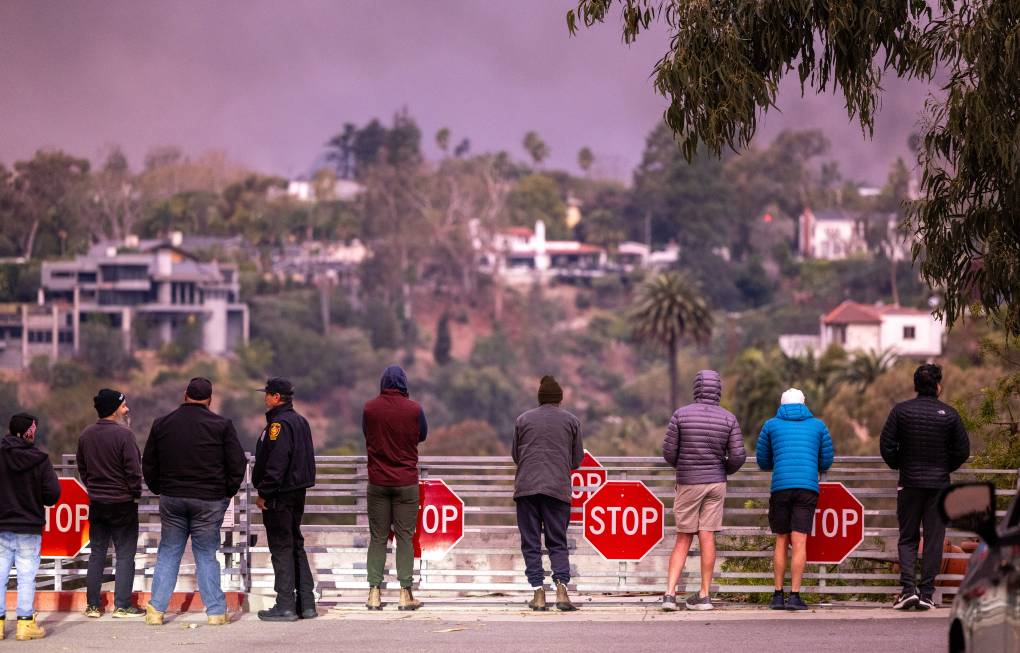
"caption": "People watch the smoke and flames from the Palisades Fire on Jan. 8, 2025, in Santa Monica, California. Fueled by intense Santa Ana Winds, the Palisades Fire has grown to over 2,900 acres and 30,000 people have been ordered to evacuate while a second major fire has emerged near Eaton Canyon and Altadena. ",
"credit": "Tiffany Rose/Getty Images",
"altTag": null,
"description": null,
"imgSizes": {
"medium": {
"file": "https://cdn.kqed.org/wp-content/uploads/sites/10/2025/01/GettyImages-2193000280-800x512.jpg",
"width": 800,
"height": 512,
"mimeType": "image/jpeg"
},
"large": {
"file": "https://cdn.kqed.org/wp-content/uploads/sites/10/2025/01/GettyImages-2193000280-1020x653.jpg",
"width": 1020,
"height": 653,
"mimeType": "image/jpeg"
},
"thumbnail": {
"file": "https://cdn.kqed.org/wp-content/uploads/sites/10/2025/01/GettyImages-2193000280-160x102.jpg",
"width": 160,
"height": 102,
"mimeType": "image/jpeg"
},
"1536x1536": {
"file": "https://cdn.kqed.org/wp-content/uploads/sites/10/2025/01/GettyImages-2193000280-1536x983.jpg",
"width": 1536,
"height": 983,
"mimeType": "image/jpeg"
},
"2048x2048": {
"file": "https://cdn.kqed.org/wp-content/uploads/sites/10/2025/01/GettyImages-2193000280-2048x1311.jpg",
"width": 2048,
"height": 1311,
"mimeType": "image/jpeg"
},
"post-thumbnail": {
"file": "https://cdn.kqed.org/wp-content/uploads/sites/10/2025/01/GettyImages-2193000280-672x372.jpg",
"width": 672,
"height": 372,
"mimeType": "image/jpeg"
},
"twentyfourteen-full-width": {
"file": "https://cdn.kqed.org/wp-content/uploads/sites/10/2025/01/GettyImages-2193000280-1038x576.jpg",
"width": 1038,
"height": 576,
"mimeType": "image/jpeg"
},
"full-width": {
"file": "https://cdn.kqed.org/wp-content/uploads/sites/10/2025/01/GettyImages-2193000280-1920x1229.jpg",
"width": 1920,
"height": 1229,
"mimeType": "image/jpeg"
},
"kqedFullSize": {
"file": "https://cdn.kqed.org/wp-content/uploads/sites/10/2025/01/GettyImages-2193000280-scaled.jpg",
"width": 2560,
"height": 1639
}
},
"isLoading": false,
"fetchFailed": false
},
"news_12018248": {
"type": "attachments",
"id": "news_12018248",
"meta": {
"index": "attachments_1716263798",
"site": "news",
"id": "12018248",
"found": true
},
"title": "proliferation of e-bikes in the South Bay",
"publishDate": 1734126874,
"status": "inherit",
"parent": 12018160,
"modified": 1744932692,
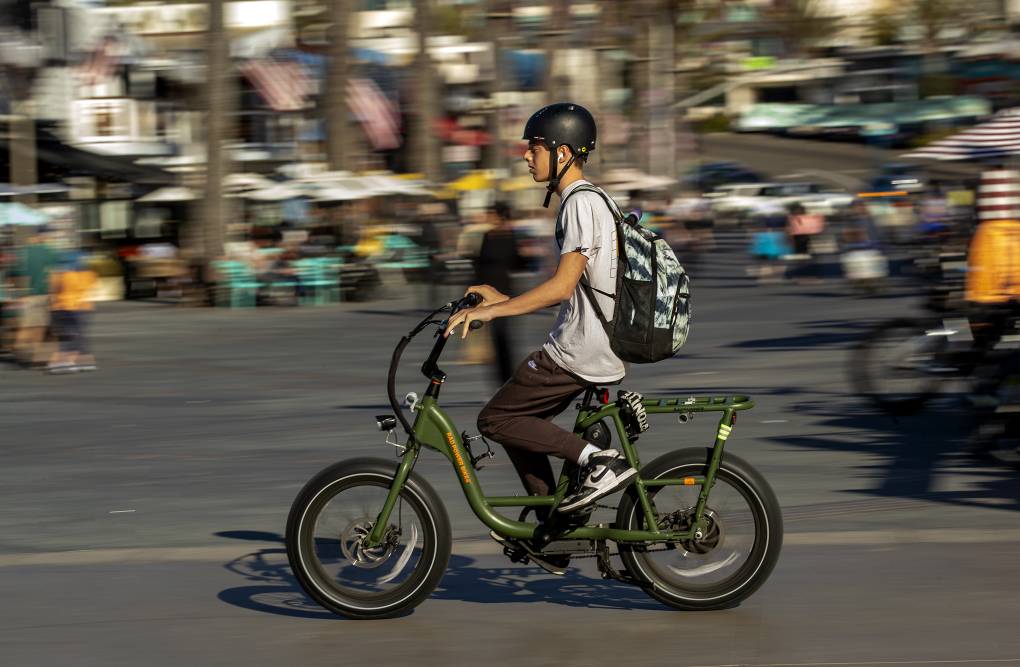
"caption": "A person rides his e-bike on the Strand in Hermosa Beach. In Hermosa Beach, it's against city code to use electric power on the Strand, but many e-bike riders do so anyway.",
"credit": "Mel Melcon/Los Angeles Times via Getty Images",
"altTag": null,
"description": null,
"imgSizes": {
"medium": {
"file": "https://cdn.kqed.org/wp-content/uploads/sites/10/2024/12/GettyImages-1782799957-800x523.jpg",
"width": 800,
"height": 523,
"mimeType": "image/jpeg"
},
"large": {
"file": "https://cdn.kqed.org/wp-content/uploads/sites/10/2024/12/GettyImages-1782799957-1020x667.jpg",
"width": 1020,
"height": 667,
"mimeType": "image/jpeg"
},
"thumbnail": {
"file": "https://cdn.kqed.org/wp-content/uploads/sites/10/2024/12/GettyImages-1782799957-160x105.jpg",
"width": 160,
"height": 105,
"mimeType": "image/jpeg"
},
"1536x1536": {
"file": "https://cdn.kqed.org/wp-content/uploads/sites/10/2024/12/GettyImages-1782799957-1536x1004.jpg",
"width": 1536,
"height": 1004,
"mimeType": "image/jpeg"
},
"2048x2048": {
"file": "https://cdn.kqed.org/wp-content/uploads/sites/10/2024/12/GettyImages-1782799957-2048x1338.jpg",
"width": 2048,
"height": 1338,
"mimeType": "image/jpeg"
},
"post-thumbnail": {
"file": "https://cdn.kqed.org/wp-content/uploads/sites/10/2024/12/GettyImages-1782799957-672x372.jpg",
"width": 672,
"height": 372,
"mimeType": "image/jpeg"
},
"twentyfourteen-full-width": {
"file": "https://cdn.kqed.org/wp-content/uploads/sites/10/2024/12/GettyImages-1782799957-1038x576.jpg",
"width": 1038,
"height": 576,
"mimeType": "image/jpeg"
},
"full-width": {
"file": "https://cdn.kqed.org/wp-content/uploads/sites/10/2024/12/GettyImages-1782799957-1920x1255.jpg",
"width": 1920,
"height": 1255,
"mimeType": "image/jpeg"
},
"kqedFullSize": {
"file": "https://cdn.kqed.org/wp-content/uploads/sites/10/2024/12/GettyImages-1782799957-scaled.jpg",
"width": 2560,
"height": 1673
}
},
"isLoading": false,
"fetchFailed": false
},
"news_12016911": {
"type": "attachments",
"id": "news_12016911",
"meta": {
"index": "attachments_1716263798",
"site": "news",
"id": "12016911",
"found": true
},
"title": "Billie Eilish HIT ME HARD AND SOFT: THE TOUR New York",
"publishDate": 1733437928,
"status": "inherit",
"parent": 12015849,
"modified": 1733438033,
"caption": "Billie Eilish greets fans during Billie Eilish HIT ME HARD AND SOFT: THE TOUR at Madison Square Garden on October 16, 2024 in New York City.",
"credit": "Kevin Mazur/Getty Images for Live Nation",
"altTag": null,
"description": null,
"imgSizes": {
"medium": {
"file": "https://cdn.kqed.org/wp-content/uploads/sites/10/2024/12/GettyImages-2178840758-800x533.jpg",
"width": 800,
"height": 533,
"mimeType": "image/jpeg"
},
"large": {
"file": "https://cdn.kqed.org/wp-content/uploads/sites/10/2024/12/GettyImages-2178840758-1020x680.jpg",
"width": 1020,
"height": 680,
"mimeType": "image/jpeg"
},
"thumbnail": {
"file": "https://cdn.kqed.org/wp-content/uploads/sites/10/2024/12/GettyImages-2178840758-160x107.jpg",
"width": 160,
"height": 107,
"mimeType": "image/jpeg"
},
"1536x1536": {
"file": "https://cdn.kqed.org/wp-content/uploads/sites/10/2024/12/GettyImages-2178840758-1536x1024.jpg",
"width": 1536,
"height": 1024,
"mimeType": "image/jpeg"
},
"2048x2048": {
"file": "https://cdn.kqed.org/wp-content/uploads/sites/10/2024/12/GettyImages-2178840758-2048x1365.jpg",
"width": 2048,
"height": 1365,
"mimeType": "image/jpeg"
},
"post-thumbnail": {
"file": "https://cdn.kqed.org/wp-content/uploads/sites/10/2024/12/GettyImages-2178840758-672x372.jpg",
"width": 672,
"height": 372,
"mimeType": "image/jpeg"
},
"twentyfourteen-full-width": {
"file": "https://cdn.kqed.org/wp-content/uploads/sites/10/2024/12/GettyImages-2178840758-1038x576.jpg",
"width": 1038,
"height": 576,
"mimeType": "image/jpeg"
},
"full-width": {
"file": "https://cdn.kqed.org/wp-content/uploads/sites/10/2024/12/GettyImages-2178840758-1920x1280.jpg",
"width": 1920,
"height": 1280,
"mimeType": "image/jpeg"
},
"kqedFullSize": {
"file": "https://cdn.kqed.org/wp-content/uploads/sites/10/2024/12/GettyImages-2178840758-scaled.jpg",
"width": 2560,
"height": 1707
}
},
"isLoading": false,
"fetchFailed": false
},
"news_12015923": {
"type": "attachments",
"id": "news_12015923",
"meta": {
"index": "attachments_1716263798",
"site": "news",
"id": "12015923",
"found": true
},
"title": "111918_AW_SoupKitchen_09_qed",
"publishDate": 1732645045,
"status": "inherit",
"parent": 12015914,
"modified": 1732646682,
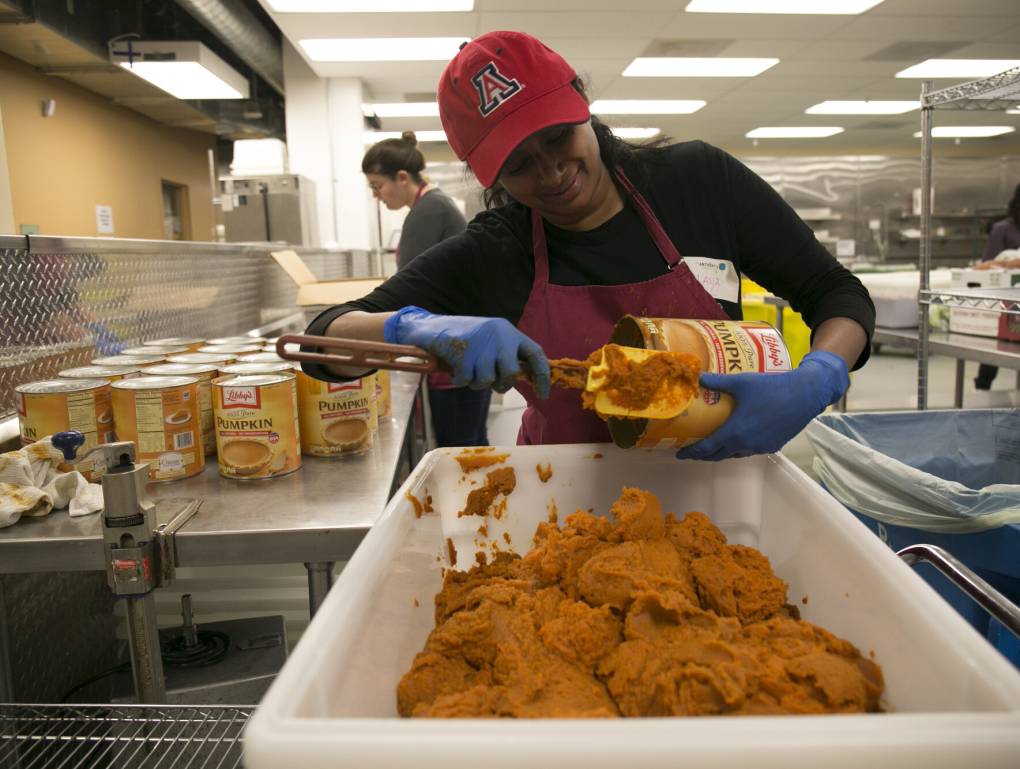
"caption": "Volunteer Maya Sankaran scoops pumpkin from a can into a container at Saint Anthony's Dining Room on Nov. 19, 2018, in preparation for Thanksgiving.",
"credit": "Anne Wernikoff/KQED",
"altTag": null,
"description": null,
"imgSizes": {
"medium": {
"file": "https://cdn.kqed.org/wp-content/uploads/sites/10/2024/11/111918_AW_SoupKitchen_09_qed-800x603.jpg",
"width": 800,
"height": 603,
"mimeType": "image/jpeg"
},
"large": {
"file": "https://cdn.kqed.org/wp-content/uploads/sites/10/2024/11/111918_AW_SoupKitchen_09_qed-1020x769.jpg",
"width": 1020,
"height": 769,
"mimeType": "image/jpeg"
},
"thumbnail": {
"file": "https://cdn.kqed.org/wp-content/uploads/sites/10/2024/11/111918_AW_SoupKitchen_09_qed-160x121.jpg",
"width": 160,
"height": 121,
"mimeType": "image/jpeg"
},
"1536x1536": {
"file": "https://cdn.kqed.org/wp-content/uploads/sites/10/2024/11/111918_AW_SoupKitchen_09_qed-1536x1157.jpg",
"width": 1536,
"height": 1157,
"mimeType": "image/jpeg"
},
"post-thumbnail": {
"file": "https://cdn.kqed.org/wp-content/uploads/sites/10/2024/11/111918_AW_SoupKitchen_09_qed-672x372.jpg",
"width": 672,
"height": 372,
"mimeType": "image/jpeg"
},
"twentyfourteen-full-width": {
"file": "https://cdn.kqed.org/wp-content/uploads/sites/10/2024/11/111918_AW_SoupKitchen_09_qed-1038x576.jpg",
"width": 1038,
"height": 576,
"mimeType": "image/jpeg"
},
"kqedFullSize": {
"file": "https://cdn.kqed.org/wp-content/uploads/sites/10/2024/11/111918_AW_SoupKitchen_09_qed.jpg",
"width": 1769,
"height": 1333
}
},
"isLoading": false,
"fetchFailed": false
}
},
"audioPlayerReducer": {
"postId": "stream_live",
"isPaused": true,
"isPlaying": false,
"pfsActive": false,
"pledgeModalIsOpen": true,
"playerDrawerIsOpen": false,
"liveAudioPlayStartedAt": 0,
"liveAudioPlayContext": ""
},
"authorsReducer": {
"minakim": {
"type": "authors",
"id": "243",
"meta": {
"index": "authors_1716337520",
"id": "243",
"found": true
},
"name": "Mina Kim",
"firstName": "Mina",
"lastName": "Kim",
"slug": "minakim",
"email": "mkim@kqed.org",
"display_author_email": false,
"staff_mastheads": [
"news"
],
"title": "Host, Forum",
"bio": "Mina Kim is host of the 10 a.m. statewide hour of Forum; a live daily talk show for curious Californians on issues that matter to the state and nation, with a particular emphasis on race and equity.\r\n\r\nBefore joining the Forum team, Mina was KQED’s evening news anchor, and health reporter for The California Report. Her award-winning work has included natural disasters in Napa and gun violence in Oakland. Mina grew up in St. John’s, Newfoundland.",
"avatar": "https://secure.gravatar.com/avatar/145ce657a2d08cb86d93686beb958982?s=600&d=blank&r=g",
"twitter": "mkimreporter",
"facebook": null,
"instagram": null,
"linkedin": null,
"sites": [
{
"site": "news",
"roles": [
"contributor"
]
},
{
"site": "stateofhealth",
"roles": [
"author"
]
},
{
"site": "forum",
"roles": [
"editor"
]
}
],
"headData": {
"title": "Mina Kim | KQED",
"description": "Host, Forum",
"ogImgSrc": "https://secure.gravatar.com/avatar/145ce657a2d08cb86d93686beb958982?s=600&d=blank&r=g",
"twImgSrc": "https://secure.gravatar.com/avatar/145ce657a2d08cb86d93686beb958982?s=600&d=blank&r=g"
},
"isLoading": false,
"link": "/author/minakim"
},
"carlysevern": {
"type": "authors",
"id": "3243",
"meta": {
"index": "authors_1716337520",
"id": "3243",
"found": true
},
"name": "Carly Severn",
"firstName": "Carly",
"lastName": "Severn",
"slug": "carlysevern",
"email": "csevern@kqed.org",
"display_author_email": false,
"staff_mastheads": [
"news"
],
"title": "Senior Editor, Audience News ",
"bio": "Carly is KQED's Senior Editor of Audience News on the Digital News team, and has reported for the California Report Magazine, Bay Curious and KQED Arts. She's formerly the host of \u003ca href=\"http://ww2.kqed.org/pop/category/the-cooler/\" rel=\"noopener noreferrer\">The Cooler\u003c/a> podcast.",
"avatar": "https://secure.gravatar.com/avatar/2d8d6765f186e64c798cf7f0c8088a41?s=600&d=blank&r=g",
"twitter": "teacupinthebay",
"facebook": null,
"instagram": null,
"linkedin": null,
"sites": [
{
"site": "",
"roles": [
"editor"
]
},
{
"site": "arts",
"roles": [
"editor"
]
},
{
"site": "news",
"roles": [
"administrator"
]
},
{
"site": "pop",
"roles": [
"editor"
]
},
{
"site": "futureofyou",
"roles": [
"editor"
]
},
{
"site": "about",
"roles": [
"administrator"
]
},
{
"site": "mindshift",
"roles": [
"editor"
]
},
{
"site": "bayareabites",
"roles": [
"editor"
]
},
{
"site": "stateofhealth",
"roles": [
"editor"
]
},
{
"site": "science",
"roles": [
"editor"
]
},
{
"site": "food",
"roles": [
"contributor"
]
},
{
"site": "forum",
"roles": [
"editor"
]
},
{
"site": "perspectives",
"roles": [
"administrator"
]
},
{
"site": "liveblog",
"roles": [
"editor"
]
}
],
"headData": {
"title": "Carly Severn | KQED",
"description": "Senior Editor, Audience News ",
"ogImgSrc": "https://secure.gravatar.com/avatar/2d8d6765f186e64c798cf7f0c8088a41?s=600&d=blank&r=g",
"twImgSrc": "https://secure.gravatar.com/avatar/2d8d6765f186e64c798cf7f0c8088a41?s=600&d=blank&r=g"
},
"isLoading": false,
"link": "/author/carlysevern"
},
"ccabreralomeli": {
"type": "authors",
"id": "11708",
"meta": {
"index": "authors_1716337520",
"id": "11708",
"found": true
},
"name": "Carlos Cabrera-Lomelí",
"firstName": "Carlos",
"lastName": "Cabrera-Lomelí",
"slug": "ccabreralomeli",
"email": "ccabreralomeli@KQED.org",
"display_author_email": true,
"staff_mastheads": [
"news"
],
"title": "Community Reporter",
"bio": "Carlos Cabrera-Lomelí is a community reporter with KQED's digital engagement team. He also reports and co-produces for KQED's bilingual news hub KQED en Español. He grew up in San Francisco's Mission District and has previously worked with Univision, 48 Hills and REFORMA in Mexico City.",
"avatar": "https://secure.gravatar.com/avatar/e95ff80bb2eaf18a8f2af4dcf7ffb54b?s=600&d=mm&r=g",
"twitter": "@LomeliCabrera",
"facebook": null,
"instagram": null,
"linkedin": null,
"sites": [
{
"site": "arts",
"roles": [
"editor"
]
},
{
"site": "news",
"roles": [
"editor"
]
},
{
"site": "about",
"roles": [
"editor"
]
},
{
"site": "science",
"roles": [
"editor"
]
},
{
"site": "perspectives",
"roles": [
"editor"
]
},
{
"site": "elections",
"roles": [
"editor"
]
},
{
"site": "liveblog",
"roles": [
"contributor"
]
}
],
"headData": {
"title": "Carlos Cabrera-Lomelí | KQED",
"description": "Community Reporter",
"ogImgSrc": "https://secure.gravatar.com/avatar/e95ff80bb2eaf18a8f2af4dcf7ffb54b?s=600&d=mm&r=g",
"twImgSrc": "https://secure.gravatar.com/avatar/e95ff80bb2eaf18a8f2af4dcf7ffb54b?s=600&d=mm&r=g"
},
"isLoading": false,
"link": "/author/ccabreralomeli"
},
"nkhan": {
"type": "authors",
"id": "11867",
"meta": {
"index": "authors_1716337520",
"id": "11867",
"found": true
},
"name": "Nisa Khan",
"firstName": "Nisa",
"lastName": "Khan",
"slug": "nkhan",
"email": "nkhan@kqed.org",
"display_author_email": false,
"staff_mastheads": [],
"title": "KQED Contributor",
"bio": "Nisa Khan is a reporter for KQED's Audience News Desk. She was formerly a data reporter at Michigan Radio. She earned a Bachelor of Science in Information from the University of Michigan and a Master of Arts in Communication from Stanford University.",
"avatar": "https://secure.gravatar.com/avatar/a3bf1efcfbe7658d13a434cc54d0b2e3?s=600&d=blank&r=g",
"twitter": "mnisakhan",
"bluesky": null,
"facebook": null,
"instagram": null,
"linkedin": null,
"sites": [
{
"site": "arts",
"roles": [
"editor"
]
},
{
"site": "news",
"roles": [
"editor"
]
},
{
"site": "science",
"roles": [
"editor",
"author"
]
},
{
"site": "forum",
"roles": [
"editor"
]
},
{
"site": "liveblog",
"roles": [
"contributor"
]
}
],
"headData": {
"title": "Nisa Khan | KQED",
"description": "KQED Contributor",
"ogImgSrc": "https://secure.gravatar.com/avatar/a3bf1efcfbe7658d13a434cc54d0b2e3?s=600&d=blank&r=g",
"twImgSrc": "https://secure.gravatar.com/avatar/a3bf1efcfbe7658d13a434cc54d0b2e3?s=600&d=blank&r=g"
},
"isLoading": false,
"link": "/author/nkhan"
}
},
"pagesReducer": {
"news_tag_kqed-guides": {
"type": "terms",
"id": "news_26702",
"meta": {
"index": "terms_1716263798",
"site": "news",
"id": "26702",
"score": 10.400978
},
"featImg": null,
"name": "KQED guides",
"description": null,
"taxonomy": "tag",
"headData": {
"twImgId": null,
"twTitle": null,
"ogTitle": null,
"ogImgId": null,
"twDescription": null,
"description": null,
"title": "KQED guides Archives | KQED News",
"ogDescription": null
},
"ttid": 26719,
"slug": "kqed-guides",
"isLoading": false,
"title": "KQED guides",
"pageMeta": {
"site": "news",
"WpPageTemplate": "page-topic-editorial",
"currentPage": 3
},
"blocks": [
{
"blockName": "kqed/post-list",
"attrs": {
"layout": "cardArticle2",
"query": "posts/news?tag=kqed-guides",
"seeMore": false,
"paginated": true,
"page": 3
}
},
{
"blockName": "kqed/ad"
}
]
}
},
"pfsSessionReducer": {},
"postsReducer": {
"stream_live": {
"type": "live",
"id": "stream_live",
"audioUrl": "https://streams.kqed.org/kqedradio",
"title": "Live Stream",
"excerpt": "Live Stream information currently unavailable.",
"link": "/radio",
"featImg": "",
"label": {
"name": "KQED Live",
"link": "/"
}
},
"stream_kqedNewscast": {
"type": "posts",
"id": "stream_kqedNewscast",
"audioUrl": "https://www.kqed.org/.stream/anon/radio/RDnews/newscast.mp3?_=1",
"title": "KQED Newscast",
"featImg": "",
"label": {
"name": "88.5 FM",
"link": "/"
}
},
"news_12042828": {
"type": "posts",
"id": "news_12042828",
"meta": {
"index": "posts_1716263798",
"site": "news",
"id": "12042828",
"score": null,
"sort": [
1749160929000
]
},
"guestAuthors": [],
"slug": "campesinos-sonoma-logran-acuerdo-tras-sufrir-represalias",
"title": "Estos campesinos de Sonoma pidieron un aumento y perdieron su empleo. Pero no se quedaron callados",
"publishDate": 1749160929,
"format": "standard",
"headTitle": "Estos campesinos de Sonoma pidieron un aumento y perdieron su empleo. Pero no se quedaron callados | KQED",
"labelTerm": {},
"content": "\u003cp>\u003ca href=\"https://www.kqed.org/news/12042012/farmworkers-in-sonoma-county-win-settlement-after-alleged-retaliation\">\u003cem>Read in English\u003c/em>\u003c/a>\u003c/p>\n\u003cp>A sólo unos metros de hoteles de lujo y salas de degustación, trabajadores agrícolas y activistas laborales se manifestaron el 28 de mayo en Healdsburg, el núcleo de la multimillonaria industria vinícola del condado de Sonoma, para anunciar un acuerdo con Redwood Empire Vineyard Management (o REVM por sus siglas en inglés), una empresa de gestión de viñedos con sede en Geyserville.\u003c/p>\n\u003cp>“¿Tienen miedo? ¡No! ¿Están cansados? ¡No!”, gritaban los trabajadores.\u003c/p>\n\u003cp>REVM pagará 33 mil 548 dólares a siete empleados después de que la Junta de Relaciones Laborales Agrícolas (o ALRB por sus siglas en inglés) del estado determinara que la empresa se negó a ofrecerles trabajo por haber formado parte de iniciativas para mejorar las condiciones laborales. La ALRB también descubrió que REVM obligó a los trabajadores agrícolas el año pasado a firmar un contrato en el que se comprometían a ser despedidos inmediatamente si intentaban renegociar su sueldo.\u003c/p>\n\u003cul>\n\u003cli>\u003ca href=\"#algo\">\u003cstrong>Ir directo a: Qué hacer si le ocurre algo similar\u003c/strong>\u003c/a>\u003c/li>\n\u003c/ul>\n\u003cp>Según funcionarios estatales, las acciones de la empresa se consideran prácticas laborales injustas que violan la \u003ca href=\"https://www.alrb.ca.gov/forms-publications/faqs-and-guidance/fact-sheet-english/\">Ley de Relaciones Laborales Agrícolas de California\u003c/a>.\u003c/p>\n\u003cp>“Todos tenemos derecho a organizarnos con nuestros compañeros de trabajo para exigir mejores condiciones laborales y no sufrir represalias”, afirmó Yesenia De Luna, directora regional de la ALRB. “En este caso, los trabajadores asistían a protestas y marchas para exigir mejores salarios. Eso es una condición laboral”.\u003c/p>\n\u003cp>REVM no respondió a las múltiples solicitudes de comentarios por parte de KQED.\u003c/p>\n\u003cfigure id=\"attachment_12042830\" class=\"wp-caption aligncenter\" style=\"max-width: 800px\">\u003cimg loading=\"lazy\" decoding=\"async\" class=\"size-full wp-image-12042830\" src=\"https://cdn.kqed.org/wp-content/uploads/sites/10/2025/06/pic-of-Jesenia-de-Luna-with-megaphone.jpg\" alt=\"\" width=\"800\" height=\"533\" srcset=\"https://cdn.kqed.org/wp-content/uploads/sites/10/2025/06/pic-of-Jesenia-de-Luna-with-megaphone.jpg 800w, https://cdn.kqed.org/wp-content/uploads/sites/10/2025/06/pic-of-Jesenia-de-Luna-with-megaphone-160x107.jpg 160w\" sizes=\"auto, (max-width: 800px) 100vw, 800px\">\u003cfigcaption class=\"wp-caption-text\">Yesenia De Luna, directora regional de la Junta de Relaciones Laborales Agrícolas de California (ALRB), habla en una conferencia de prensa después de que siete trabajadores agrícolas recibieran casi 34 mil dólares como indemnización por una denuncia presentada por la ALRB por represalias y acciones ilegales por parte de la gerencia, esto en Healdsburg Plaza, en Healdsburg, el 28 de mayo de 2025. \u003ccite>(Gina Castro/KQED)\u003c/cite>\u003c/figcaption>\u003c/figure>\n\u003cp>José Alejandro Cuevas Fuentes y Yolanda Prida González son algunos de los trabajadores agrícolas que colaboraron con la investigación de la ALRB. Ambos trabajaron para REVM durante varios años, ayudando a cuidar y cosechar los numerosos viñedos que la empresa gestiona en la región. Pero las cosas cambiaron cuando asistieron a \u003ca href=\"https://www.kqed.org/news/11997877/farmworkers-remain-in-the-fields-during-wildfires-now-theyre-marching-for-hazard-pay\">una marcha el 28 de julio en Healdsburg\u003c/a>, cuando cientos trabajadores agrícolas salieron a las calles a reclamar salarios más altos que tomen en cuenta los riesgos que corren durante la temporada de incendios forestales.\u003c/p>\n\u003cp>“Ahí fue cuando las cosas empezaron a ponerse feas”, dijo Cuevas Fuentes, y añadió que un compañero le avisó de que los jefes \u003ca href=\"https://www.pressdemocrat.com/article/news/farmworkers-march-wages-healdsburg/?artslide=10\">habían visto una foto suya en la marcha\u003c/a> tomada por el periódico The Press Democrat. El 14 de agosto, Cuevas Fuentes intentó asistir a una reunión organizada por REVM para quienes iban a trabajar en la cosecha del otoño de 2024, pero fue impedido por la dirección de la empresa, que le señaló que su nombre ya no aparecía en la lista del equipo de trabajo a pesar de sus años de experiencia en la cosecha.\u003c/p>\n\u003cp>“Cuando Alejandro me dijo que lo habían rechazado para la cosecha, Ese fue el impacto para mí que me dio la depresión”, dijo Prida González, pareja de Cuevas Fuentes. Juntos están criando a dos hijas. Para entonces, ella también había sido despedida por REVM. “Estaba muy decepcionada con mis jefes porque había trabajado con ellos durante muchos años, pero lo único que recibí de ellos fue su rechazo e indiferencia”, dijo.\u003c/p>\n\u003cp>Con la ayuda del grupo de derechos laborales North Bay Jobs With Justice, la pareja, junto con cinco compañeros de trabajo, presentaron denuncias ante la ALRB, que inició una investigación de varios meses que incluyó entrevistas con empleados y directivos de REVM. La pareja aún tenía que encontrar una forma de pagar las facturas y mantener a sus hijas mientras continuaba la investigación.\u003c/p>\n\u003cp>[ad fullwidth]\u003c/p>\n\u003cp>“Todo esto hizo que mi depresión fuera mucho más difícil. No quiero que los compañeros sufran lo mismo”, dijo Prida González. “Quiero que todos mis compañeros comprendan que tienen estos derechos y que dejen de lado el miedo a alzar la voz”.\u003c/p>\n\u003cp>El miedo, la falta de información y la \u003ca href=\"https://www.kqed.org/news/11919450/trabajar-con-una-visa-h-2a-en-estados-unidos-represalias-derechos\">intimidación por parte de la dirección\u003c/a> son factores que dificultan enormemente que los trabajadores agrícolas busquen ayuda, según Armando Elenes, secretario tesorero de United Farm Workers, quien habla con trabajadores de todo el estado sobre sus derechos.\u003c/p>\n\u003cp>Aunque California cuenta con mecanismos para exigir a los empleadores que sigan la ley, Elenes añadió: “Muchos trabajadores simplemente aceptan las represalias y se van a otro empleador”.\u003c/p>\n\u003cp>“Cuantos más trabajadores se unan y formen sindicatos o emprendan acciones conjuntas, más podremos hacer frente a estos problemas”, afirmó. “La clave está en que los trabajadores participen y formen parte del proceso, eso es lo que hace que todo lo demás funcione”.\u003c/p>\n\u003cp>Como parte del acuerdo, REVM ya no exigirá a los empleados que firmen un contrato con cláusulas que amenacen con el despido por solicitar salarios más altos. Además, la empresa se ha comprometido con la ALRB a respetar los derechos de sus empleados a organizarse para mejorar sus condiciones laborales. En las próximas semanas, funcionarios de la ALRB hablarán con los trabajadores agrícolas de REVM sobre los derechos que les protegen y cómo identificar posibles represalias.\u003c/p>\n\u003cp>Los siete trabajadores del caso también tienen la oportunidad de volver a REVM. Por el momento, Cuevas Fuentes no volverá, pero Prida González sí ha regresado para asegurarse de que la empresa cumple su parte del acuerdo.\u003c/p>\n\u003cp>“Los trabajadores necesitamos ver cambios”, afirmó, y añadió que cree que su regreso a la empresa demostrará a sus compañeros que arriesgarse a alzar la voz tiene resultados. “Las cosas tienen que mejorar”.\u003c/p>\n\u003cfigure id=\"attachment_12042831\" class=\"wp-caption aligncenter\" style=\"max-width: 800px\">\u003cimg loading=\"lazy\" decoding=\"async\" class=\"size-full wp-image-12042831\" src=\"https://cdn.kqed.org/wp-content/uploads/sites/10/2025/06/people-with-signs-on-the-grassy-ground.jpg\" alt=\"\" width=\"800\" height=\"533\" srcset=\"https://cdn.kqed.org/wp-content/uploads/sites/10/2025/06/people-with-signs-on-the-grassy-ground.jpg 800w, https://cdn.kqed.org/wp-content/uploads/sites/10/2025/06/people-with-signs-on-the-grassy-ground-160x107.jpg 160w\" sizes=\"auto, (max-width: 800px) 100vw, 800px\">\u003cfigcaption class=\"wp-caption-text\">Vecinos y activistas laborales asisten a una conferencia de prensa después de que siete trabajadores agrícolas recibieran casi 34 mil dólares como indemnización por una denuncia presentada por la Junta de Relaciones Laborales Agrícolas contra Redwood Empire Vineyard Management por represalias, en Healdsburg Plaza, en Healdsburg, el 28 de mayo de 2025. \u003ccite>(Gina Castro/KQED)\u003c/cite>\u003c/figcaption>\u003c/figure>\n\u003ch3>\u003ca id=\"algo\">\u003c/a>¿Qué pasaría si a usted le ocurre algo similar en su trabajo?\u003c/h3>\n\u003cp>KQED tiene \u003ca href=\"https://www.kqed.org/news/11960536/trabaja-en-los-campos-de-california-que-hacer-si-sufre-represalias\">una guía disponible sobre qué hacer si usted es trabajador agrícola\u003c/a> y su empleador ha tomado represalias contra usted por denunciar sus condiciones laborales.\u003c/p>\n\u003cp>Si no es trabajador agrícola, siga leyendo para conocer la opinión de abogados expertos en derecho laboral en California y saber qué derechos y protecciones tienen todos los trabajadores cuando solicitan un aumento salarial.\u003c/p>\n\u003ch3>\u003cstrong>Los riesgos de hacer algo por su cuenta\u003c/strong>\u003c/h3>\n\u003cp>¿Quiere hablar con su jefe sobre cuánto le pagan? Por lo general, estará más protegido si lo hace junto con sus compañeros de trabajo, según Juan Villalvazo, abogado especializado en derechos laborales de La Raza Centro Legal, un grupo de asistencia jurídica en San Francisco.\u003c/p>\n\u003cp>Si se dirige a su jefe por su cuenta con el único objetivo de hablar sobre su salario, la situación podría ser muy diferente, afirma Villalvazo. En California, \u003ca href=\"https://www.dir.ca.gov/dlse/TerminationOfEmployment.pdf\">tener un trabajo se considera de “voluntad propia”\u003c/a>, lo que significa que un empleador puede despedir a un trabajador en cualquier momento. Por supuesto, el empleo de voluntad propia también significa que un empleado puede renunciar en cualquier momento, pero le da “al empleador mucha deferencia y protección”, dice Villalvazo, y “su empleador tiene derecho a despedirlo por cualquier motivo, siempre y cuando el motivo subyacente no sea ilegal”.[aside label='Más en español' tag='kqed-en-espanol']¿Qué sería ilegal en este caso? Un empleador podría tener problemas si el motivo por el que despide a alguien es discriminatorio (por motivos de raza, religión, género, discapacidad, orientación sexual u otra categoría protegida) o para tomar represalias contra un empleado que haya participado en una “actividad protegida”, como denunciar \u003ca href=\"https://www.kqed.org/news/12002744/trabaja-en-interiores-durante-una-ola-de-calor-descubra-como-le-protegen-las-leyes-de-california\">condiciones de trabajo inseguras\u003c/a>.\u003c/p>\n\u003cp>Pero cuando la conversación que quiera tener con su jefe es solo sobre su salario individual, la ley le da a su empleador mucho más poder. Podría acudir a su jefe y pedirle un aumento, dijo Villalvazo, pero “no solo no están obligados a concedérselo, sino que podrían despedirle y decirle: ‘Bueno, voy a contratar a alguien que esté contento con el salario'”.\u003c/p>\n\u003cp>Michael Palmer, socio de Sanford Heisler Sharp McKnight, un bufete que ofrece servicios jurídicos a los trabajadores, coincidió en que los empleados son más vulnerables cuando actúan solos.\u003c/p>\n\u003cp>“Los empleados se encuentran en una posición mucho más sólida desde el punto de vista jurídico si plantean sus preocupaciones sobre su sueldo, no solo en nombre propio, sino también en nombre de los demás”, afirmó.\u003c/p>\n\u003cfigure id=\"attachment_12042832\" class=\"wp-caption aligncenter\" style=\"max-width: 800px\">\u003cimg loading=\"lazy\" decoding=\"async\" class=\"size-full wp-image-12042832\" src=\"https://cdn.kqed.org/wp-content/uploads/sites/10/2025/06/protestors-on-bridge.jpg\" alt=\"\" width=\"800\" height=\"533\" srcset=\"https://cdn.kqed.org/wp-content/uploads/sites/10/2025/06/protestors-on-bridge.jpg 800w, https://cdn.kqed.org/wp-content/uploads/sites/10/2025/06/protestors-on-bridge-160x107.jpg 160w\" sizes=\"auto, (max-width: 800px) 100vw, 800px\">\u003cfigcaption class=\"wp-caption-text\">Cientos de trabajadores agrícolas de North Bay Jobs With Justice y simpatizantes de la comunidad marchan por el puente Healdsburg Memorial Bridge para exigir salarios más altos y pagos por desastre, el 28 de julio de 2024. \u003ccite>(Gina Castro/KQED)\u003c/cite>\u003c/figcaption>\u003c/figure>\n\u003ch3>\u003cstrong>La unión hace la fuerza\u003c/strong>\u003c/h3>\n\u003cp>Acudir a su jefe para hablar sobre el salario, esta vez acompañado de sus compañeros de trabajo que tienen las mismas preocupaciones sobre su propia remuneración, no solo le coloca en una posición más fuerte para negociar, sino que también le proporciona una capa de protección legal, afirma Palmer.\u003c/p>\n\u003cp>Esto se debe a que las leyes estatales y federales protegen el derecho de los trabajadores a participar en “actividades concertadas”, lo que se define como cualquier acción emprendida por los empleados en nombre de un grupo, no solo en nombre propio, explica Palmer. “Puede tratarse de una acción emprendida como grupo, o puede ser un individuo que toma la iniciativa y plantea las inquietudes en nombre de otras personas”, afirma.\u003c/p>\n\u003cp>Un ejemplo muy conocido de actividad concertada es la formación de un sindicato por parte de los trabajadores. Sin embargo, la \u003ca href=\"https://www.nlrb.gov/espanol\">Ley Nacional de Relaciones Laborales\u003c/a> protege los derechos de todos los empleados a buscar mejores condiciones, no solo los que forman parte de un sindicato. La \u003ca href=\"https://www.nlrb.gov/es\">Ley nacional de relaciones laborales\u003c/a>, aprobada por el Congreso tras \u003ca href=\"https://www.archives.gov/milestone-documents/national-labor-relations-act\">décadas de organización liderada por los trabajadores\u003c/a>, protege el derecho de los trabajadores a:\u003c/p>\n\u003cul>\n\u003cli>Hablar entre sí sobre sus salarios y condiciones laborales.\u003c/li>\n\u003cli>Hacer circular una petición para solicitar mejores horarios.\u003c/li>\n\u003cli>Participar en un rechazo colectivo a trabajar en condiciones inseguras.\u003c/li>\n\u003cli>Hablar, junto con sus compañeros de trabajo, con su empleador, con organismos gubernamentales o con los medios de comunicación sobre los problemas en su lugar de trabajo.\u003c/li>\n\u003c/ul>\n\u003cp>La Junta Nacional de Relaciones Laborales, que vela por el cumplimiento de las leyes laborales a nivel federal, advierte que los empleados \u003ca href=\"https://www.nlrb.gov/es\">podrían perder sus protecciones\u003c/a> si se comunican con su empleador de una manera que pueda considerarse “gravemente ofensiva o deliberadamente falsa” o si “desprestigian públicamente” los productos del empleador de una manera que no esté relacionada con los asuntos laborales.\u003c/p>\n\u003cp>Por eso, Palmer recomienda a los empleados que siempre “planteen sus inquietudes con respeto” pero a la misma vez, “con seguridad”.\u003c/p>\n\u003cfigure id=\"attachment_12042833\" class=\"wp-caption aligncenter\" style=\"max-width: 800px\">\u003cimg loading=\"lazy\" decoding=\"async\" class=\"size-full wp-image-12042833\" src=\"https://cdn.kqed.org/wp-content/uploads/sites/10/2025/06/la-union-hace-la-fuerza-signs.jpg\" alt=\"\" width=\"800\" height=\"533\" srcset=\"https://cdn.kqed.org/wp-content/uploads/sites/10/2025/06/la-union-hace-la-fuerza-signs.jpg 800w, https://cdn.kqed.org/wp-content/uploads/sites/10/2025/06/la-union-hace-la-fuerza-signs-160x107.jpg 160w\" sizes=\"auto, (max-width: 800px) 100vw, 800px\">\u003cfigcaption class=\"wp-caption-text\">Trabajadores sostienen carteles en español en una rueda de prensa organizada por North Bay Jobs with Justice en Healdsburg Plaza, en Healdsburg, el 28 de mayo de 2025. \u003ccite>(Gina Castro/KQED)\u003c/cite>\u003c/figcaption>\u003c/figure>\n\u003ch3>\u003cstrong>¿Puede un contrato prohibirle hablar sobre un aumento salarial?\u003c/strong>\u003c/h3>\n\u003cp>En el caso de los trabajadores agrícolas del condado de Sonoma, su empleador incluyó una cláusula en su contrato que amenazaba con el despido inmediato si los empleados hablaban sobre sus salarios. Los funcionarios de la ARLB determinaron que la cláusula violaba la ley estatal que protege los derechos de los trabajadores agrícolas a negociar colectivamente.\u003c/p>\n\u003cp>“Ese contrato básicamente les impide siquiera empezar a organizarse o hablar sobre ello”, dijo De Luna, de la ALRB.[aside postID=\"news_12002744\" hero=\"https://ww2.kqed.org/app/uploads/sites/10/2024/09/Cooks-in-Kitchen.jpg\"]Pero si usted trabaja en otro sector que no es el agrícola, ¿puede su empleador añadir una cláusula en su contrato de trabajo que le impida a usted o a sus compañeros pedir un aumento de sueldo?\u003c/p>\n\u003cp>Eso seguiría siendo una violación de la ley, afirmó Villavalzo, de La Raza Centro Legal. “Como grupo, tienen derecho a discutir entre ustedes los salarios, las prestaciones y las condiciones en el lugar de trabajo”, afirmó.\u003c/p>\n\u003cp>Palmer, de Sanford Heisler Sharp McKnight, dijo que el contrato que REVM ofreció a los trabajadores en 2024 restringe a los empleados la posibilidad de participar en una amplia gama de acciones, incluidas las actividades en grupo.\u003c/p>\n\u003cp>“Es un intento claro de impedir que los empleados se comuniquen con sus compañeros sobre las preocupaciones que tienen”, afirmó Palmer. Si bien los empleadores pueden despedir a los trabajadores que inician peleas o crean un entorno de trabajo inseguro, “eso no es lo que pretende este tipo de disposición”, señaló. En cambio, “se trata simplemente de una exigencia clara de que los empleados no participen en ningún tipo de actividad concertada ni se comuniquen sobre las condiciones de trabajo”.\u003c/p>\n\u003ch3>\u003cstrong>Cómo hablar con su jefe sobre el sueldo: lo que sugieren los expertos legales\u003c/strong>\u003c/h3>\n\u003cp>Según Palmer, es importante que los trabajadores se sientan cómodos expresando “que conocen su valor”, pero afirma que “siempre existe un riesgo” al pedir un aumento.\u003c/p>\n\u003cp>Si usted y otros compañeros creen que lo que se les paga no equivale el trabajo que realizan y piensan que tienen argumentos sólidos, hay cosas que pueden hacer para protegerse durante y después de las conversaciones con su empleador.\u003c/p>\n\u003cp>En primer lugar, recuerde que estará más protegido si solicita un aumento “como parte de una acción concertada en la que hace la solicitud junto con otros”, dijo Palmer. Pero también es una buena idea comprobar con antelación qué remuneración reciben otras personas por realizar un trabajo similar en otros lugares, añadió.\u003c/p>\n\u003cp>Villalvazo destaca la importancia de mantener buenas relaciones con los compañeros de trabajo. “Si es amigo de sus compañeros de trabajo, será más fácil trabajar en equipo”, afirma.\u003c/p>\n\u003cp>Villalvazo también recomienda llevar un registro escrito de las conversaciones que mantenga con sus compañeros de trabajo, cuando decidan entre todos qué solicitar, y con su empleador cuando presente la solicitud. La comunicación escrita no tiene por qué ser muy formal, afirma, “puede ser simplemente un mensaje de texto”.\u003c/p>\n\u003cp>Si utiliza WhatsApp para hablar de asuntos laborales, tenga en cuenta que la aplicación permite a un usuario individual eliminar mensajes y chats para todas las demás personas que forman parte del grupo. Puede considerar la posibilidad de hacer capturas de pantalla del chat para mantener un registro de las conversaciones, o incluso proponer a sus compañeros que se comuniquen a través de otra aplicación.\u003c/p>\n\u003cp>Villalvazo señala que, en muchos lugares de trabajo de California, algunos empleados trabajan con un estatus migratorio legal, mientras que otros pueden no tenerlo. “Mantenga la solidaridad con todos sus compañeros de trabajo, independientemente de su estatus migratorio, porque al fin y al cabo, todos ustedes \u003ca href=\"https://legalaidatwork.org/es/factsheet/immigration-related-retaliation-in-the-workplace/\">comparten muchos de los mismos derechos\u003c/a>”, afirma.\u003c/p>\n\u003cp>Y si usted y sus colegas creen que su empleador les redujo el salario o los despidió por solicitar un aumento de manera colectiva, pueden presentar una queja ante la Oficina del Comisionado Laboral del estado. \u003ca href=\"https://www.dir.ca.gov/dlse/howtofileretaliationcomplaint.htm\">Puede presentar una queja por represalias en línea\u003c/a> o llamando al 714-558-4913.\u003c/p>\n\u003cp>Aunque puede tomar varios meses para que una queja sea procesada por la Oficina del Comisionado de Trabajo, la agencia tiene la autoridad para investigar a los empleadores, imponer sanciones y restituir a ciertos trabajadores sus salarios perdidos o sus empleos.\u003c/p>\n\u003chr>\n\u003cp>\u003cem>Este artículo fue traducido por la periodista \u003ca href=\"https://www.kqed.org/author/mpena/\">María Peña\u003c/a> y esa traducción fue editada por el periodista \u003ca href=\"https://www.kqed.org/author/ccabreralomeli\">Carlos Cabrera-Lomelí\u003c/a>.\u003c/em>\u003c/p>\n\u003cp>[ad fullwidth]\u003c/p>\n\u003cp>[ad floatright]\u003c/p>\n",
"blocks": [],
"excerpt": "Un grupo de trabajadores campesinos inmigrantes logró reportar a su empleador que estaba actuando en contra de las leyes de California. Además, explicamos qué derechos tiene cuando va pedir a su jefe un aumento.",
"status": "publish",
"parent": 0,
"modified": 1749161026,
"stats": {
"hasAudio": false,
"hasVideo": false,
"hasChartOrMap": false,
"iframeSrcs": [],
"hasGoogleForm": false,
"hasGallery": false,
"hasHearkenModule": false,
"hasPolis": false,
"paragraphCount": 48,
"wordCount": 3069
},
"headData": {
"title": "Estos campesinos de Sonoma pidieron un aumento y perdieron su empleo. Pero no se quedaron callados | KQED",
"description": "Un grupo de trabajadores campesinos inmigrantes logró reportar a su empleador que estaba actuando en contra de las leyes de California. Además, explicamos qué derechos tiene cuando va pedir a su jefe un aumento.",
"ogTitle": "",
"ogDescription": "",
"ogImgId": "",
"twTitle": "",
"twDescription": "",
"twImgId": "",
"schema": {
"@context": "https://schema.org",
"@type": "NewsArticle",
"headline": "Estos campesinos de Sonoma pidieron un aumento y perdieron su empleo. Pero no se quedaron callados",
"datePublished": "2025-06-05T15:02:09-07:00",
"dateModified": "2025-06-05T15:03:46-07:00",
"image": "https://cdn.kqed.org/wp-content/uploads/2020/02/KQED-OG-Image@1x.png",
"isAccessibleForFree": "True",
"publisher": {
"@type": "NewsMediaOrganization",
"@id": "https://www.kqed.org/#organization",
"name": "KQED",
"logo": "https://cdn.kqed.org/wp-content/uploads/2020/02/KQED-OG-Image@1x.png",
"url": "https://www.kqed.org",
"sameAs": [
"https://www.facebook.com/KQED",
"https://twitter.com/KQED",
"https://www.instagram.com/kqed/",
"https://www.tiktok.com/@kqedofficial",
"https://www.linkedin.com/company/kqed",
"https://www.youtube.com/channel/UCeC0IOo7i1P_61zVUWbJ4nw"
]
}
}
},
"source": "KQED en Español",
"sourceUrl": "https://kqed.org/kqedenespanol",
"sticky": false,
"nprStoryId": "kqed-12042828",
"templateType": "standard",
"featuredImageType": "standard",
"excludeFromSiteSearch": "Include",
"articleAge": "0",
"path": "/news/12042828/campesinos-sonoma-logran-acuerdo-tras-sufrir-represalias",
"audioTrackLength": null,
"parsedContent": [
{
"type": "contentString",
"content": "\u003cdiv class=\"post-body\">\u003cp>\u003cp>\u003ca href=\"https://www.kqed.org/news/12042012/farmworkers-in-sonoma-county-win-settlement-after-alleged-retaliation\">\u003cem>Read in English\u003c/em>\u003c/a>\u003c/p>\n\u003cp>A sólo unos metros de hoteles de lujo y salas de degustación, trabajadores agrícolas y activistas laborales se manifestaron el 28 de mayo en Healdsburg, el núcleo de la multimillonaria industria vinícola del condado de Sonoma, para anunciar un acuerdo con Redwood Empire Vineyard Management (o REVM por sus siglas en inglés), una empresa de gestión de viñedos con sede en Geyserville.\u003c/p>\n\u003cp>“¿Tienen miedo? ¡No! ¿Están cansados? ¡No!”, gritaban los trabajadores.\u003c/p>\n\u003cp>REVM pagará 33 mil 548 dólares a siete empleados después de que la Junta de Relaciones Laborales Agrícolas (o ALRB por sus siglas en inglés) del estado determinara que la empresa se negó a ofrecerles trabajo por haber formado parte de iniciativas para mejorar las condiciones laborales. La ALRB también descubrió que REVM obligó a los trabajadores agrícolas el año pasado a firmar un contrato en el que se comprometían a ser despedidos inmediatamente si intentaban renegociar su sueldo.\u003c/p>\n\u003cul>\n\u003cli>\u003ca href=\"#algo\">\u003cstrong>Ir directo a: Qué hacer si le ocurre algo similar\u003c/strong>\u003c/a>\u003c/li>\n\u003c/ul>\n\u003cp>Según funcionarios estatales, las acciones de la empresa se consideran prácticas laborales injustas que violan la \u003ca href=\"https://www.alrb.ca.gov/forms-publications/faqs-and-guidance/fact-sheet-english/\">Ley de Relaciones Laborales Agrícolas de California\u003c/a>.\u003c/p>\n\u003cp>“Todos tenemos derecho a organizarnos con nuestros compañeros de trabajo para exigir mejores condiciones laborales y no sufrir represalias”, afirmó Yesenia De Luna, directora regional de la ALRB. “En este caso, los trabajadores asistían a protestas y marchas para exigir mejores salarios. Eso es una condición laboral”.\u003c/p>\n\u003cp>REVM no respondió a las múltiples solicitudes de comentarios por parte de KQED.\u003c/p>\n\u003cfigure id=\"attachment_12042830\" class=\"wp-caption aligncenter\" style=\"max-width: 800px\">\u003cimg loading=\"lazy\" decoding=\"async\" class=\"size-full wp-image-12042830\" src=\"https://cdn.kqed.org/wp-content/uploads/sites/10/2025/06/pic-of-Jesenia-de-Luna-with-megaphone.jpg\" alt=\"\" width=\"800\" height=\"533\" srcset=\"https://cdn.kqed.org/wp-content/uploads/sites/10/2025/06/pic-of-Jesenia-de-Luna-with-megaphone.jpg 800w, https://cdn.kqed.org/wp-content/uploads/sites/10/2025/06/pic-of-Jesenia-de-Luna-with-megaphone-160x107.jpg 160w\" sizes=\"auto, (max-width: 800px) 100vw, 800px\">\u003cfigcaption class=\"wp-caption-text\">Yesenia De Luna, directora regional de la Junta de Relaciones Laborales Agrícolas de California (ALRB), habla en una conferencia de prensa después de que siete trabajadores agrícolas recibieran casi 34 mil dólares como indemnización por una denuncia presentada por la ALRB por represalias y acciones ilegales por parte de la gerencia, esto en Healdsburg Plaza, en Healdsburg, el 28 de mayo de 2025. \u003ccite>(Gina Castro/KQED)\u003c/cite>\u003c/figcaption>\u003c/figure>\n\u003cp>José Alejandro Cuevas Fuentes y Yolanda Prida González son algunos de los trabajadores agrícolas que colaboraron con la investigación de la ALRB. Ambos trabajaron para REVM durante varios años, ayudando a cuidar y cosechar los numerosos viñedos que la empresa gestiona en la región. Pero las cosas cambiaron cuando asistieron a \u003ca href=\"https://www.kqed.org/news/11997877/farmworkers-remain-in-the-fields-during-wildfires-now-theyre-marching-for-hazard-pay\">una marcha el 28 de julio en Healdsburg\u003c/a>, cuando cientos trabajadores agrícolas salieron a las calles a reclamar salarios más altos que tomen en cuenta los riesgos que corren durante la temporada de incendios forestales.\u003c/p>\n\u003cp>“Ahí fue cuando las cosas empezaron a ponerse feas”, dijo Cuevas Fuentes, y añadió que un compañero le avisó de que los jefes \u003ca href=\"https://www.pressdemocrat.com/article/news/farmworkers-march-wages-healdsburg/?artslide=10\">habían visto una foto suya en la marcha\u003c/a> tomada por el periódico The Press Democrat. El 14 de agosto, Cuevas Fuentes intentó asistir a una reunión organizada por REVM para quienes iban a trabajar en la cosecha del otoño de 2024, pero fue impedido por la dirección de la empresa, que le señaló que su nombre ya no aparecía en la lista del equipo de trabajo a pesar de sus años de experiencia en la cosecha.\u003c/p>\n\u003cp>“Cuando Alejandro me dijo que lo habían rechazado para la cosecha, Ese fue el impacto para mí que me dio la depresión”, dijo Prida González, pareja de Cuevas Fuentes. Juntos están criando a dos hijas. Para entonces, ella también había sido despedida por REVM. “Estaba muy decepcionada con mis jefes porque había trabajado con ellos durante muchos años, pero lo único que recibí de ellos fue su rechazo e indiferencia”, dijo.\u003c/p>\n\u003cp>Con la ayuda del grupo de derechos laborales North Bay Jobs With Justice, la pareja, junto con cinco compañeros de trabajo, presentaron denuncias ante la ALRB, que inició una investigación de varios meses que incluyó entrevistas con empleados y directivos de REVM. La pareja aún tenía que encontrar una forma de pagar las facturas y mantener a sus hijas mientras continuaba la investigación.\u003c/p>\n\u003cp>\u003c/p>\u003c/div>",
"attributes": {
"named": {},
"numeric": []
}
},
{
"type": "component",
"content": "",
"name": "ad",
"attributes": {
"named": {
"label": "fullwidth"
},
"numeric": [
"fullwidth"
]
}
},
{
"type": "contentString",
"content": "\u003cdiv class=\"post-body\">\u003cp>\u003c/p>\n\u003cp>“Todo esto hizo que mi depresión fuera mucho más difícil. No quiero que los compañeros sufran lo mismo”, dijo Prida González. “Quiero que todos mis compañeros comprendan que tienen estos derechos y que dejen de lado el miedo a alzar la voz”.\u003c/p>\n\u003cp>El miedo, la falta de información y la \u003ca href=\"https://www.kqed.org/news/11919450/trabajar-con-una-visa-h-2a-en-estados-unidos-represalias-derechos\">intimidación por parte de la dirección\u003c/a> son factores que dificultan enormemente que los trabajadores agrícolas busquen ayuda, según Armando Elenes, secretario tesorero de United Farm Workers, quien habla con trabajadores de todo el estado sobre sus derechos.\u003c/p>\n\u003cp>Aunque California cuenta con mecanismos para exigir a los empleadores que sigan la ley, Elenes añadió: “Muchos trabajadores simplemente aceptan las represalias y se van a otro empleador”.\u003c/p>\n\u003cp>“Cuantos más trabajadores se unan y formen sindicatos o emprendan acciones conjuntas, más podremos hacer frente a estos problemas”, afirmó. “La clave está en que los trabajadores participen y formen parte del proceso, eso es lo que hace que todo lo demás funcione”.\u003c/p>\n\u003cp>Como parte del acuerdo, REVM ya no exigirá a los empleados que firmen un contrato con cláusulas que amenacen con el despido por solicitar salarios más altos. Además, la empresa se ha comprometido con la ALRB a respetar los derechos de sus empleados a organizarse para mejorar sus condiciones laborales. En las próximas semanas, funcionarios de la ALRB hablarán con los trabajadores agrícolas de REVM sobre los derechos que les protegen y cómo identificar posibles represalias.\u003c/p>\n\u003cp>Los siete trabajadores del caso también tienen la oportunidad de volver a REVM. Por el momento, Cuevas Fuentes no volverá, pero Prida González sí ha regresado para asegurarse de que la empresa cumple su parte del acuerdo.\u003c/p>\n\u003cp>“Los trabajadores necesitamos ver cambios”, afirmó, y añadió que cree que su regreso a la empresa demostrará a sus compañeros que arriesgarse a alzar la voz tiene resultados. “Las cosas tienen que mejorar”.\u003c/p>\n\u003cfigure id=\"attachment_12042831\" class=\"wp-caption aligncenter\" style=\"max-width: 800px\">\u003cimg loading=\"lazy\" decoding=\"async\" class=\"size-full wp-image-12042831\" src=\"https://cdn.kqed.org/wp-content/uploads/sites/10/2025/06/people-with-signs-on-the-grassy-ground.jpg\" alt=\"\" width=\"800\" height=\"533\" srcset=\"https://cdn.kqed.org/wp-content/uploads/sites/10/2025/06/people-with-signs-on-the-grassy-ground.jpg 800w, https://cdn.kqed.org/wp-content/uploads/sites/10/2025/06/people-with-signs-on-the-grassy-ground-160x107.jpg 160w\" sizes=\"auto, (max-width: 800px) 100vw, 800px\">\u003cfigcaption class=\"wp-caption-text\">Vecinos y activistas laborales asisten a una conferencia de prensa después de que siete trabajadores agrícolas recibieran casi 34 mil dólares como indemnización por una denuncia presentada por la Junta de Relaciones Laborales Agrícolas contra Redwood Empire Vineyard Management por represalias, en Healdsburg Plaza, en Healdsburg, el 28 de mayo de 2025. \u003ccite>(Gina Castro/KQED)\u003c/cite>\u003c/figcaption>\u003c/figure>\n\u003ch3>\u003ca id=\"algo\">\u003c/a>¿Qué pasaría si a usted le ocurre algo similar en su trabajo?\u003c/h3>\n\u003cp>KQED tiene \u003ca href=\"https://www.kqed.org/news/11960536/trabaja-en-los-campos-de-california-que-hacer-si-sufre-represalias\">una guía disponible sobre qué hacer si usted es trabajador agrícola\u003c/a> y su empleador ha tomado represalias contra usted por denunciar sus condiciones laborales.\u003c/p>\n\u003cp>Si no es trabajador agrícola, siga leyendo para conocer la opinión de abogados expertos en derecho laboral en California y saber qué derechos y protecciones tienen todos los trabajadores cuando solicitan un aumento salarial.\u003c/p>\n\u003ch3>\u003cstrong>Los riesgos de hacer algo por su cuenta\u003c/strong>\u003c/h3>\n\u003cp>¿Quiere hablar con su jefe sobre cuánto le pagan? Por lo general, estará más protegido si lo hace junto con sus compañeros de trabajo, según Juan Villalvazo, abogado especializado en derechos laborales de La Raza Centro Legal, un grupo de asistencia jurídica en San Francisco.\u003c/p>\n\u003cp>Si se dirige a su jefe por su cuenta con el único objetivo de hablar sobre su salario, la situación podría ser muy diferente, afirma Villalvazo. En California, \u003ca href=\"https://www.dir.ca.gov/dlse/TerminationOfEmployment.pdf\">tener un trabajo se considera de “voluntad propia”\u003c/a>, lo que significa que un empleador puede despedir a un trabajador en cualquier momento. Por supuesto, el empleo de voluntad propia también significa que un empleado puede renunciar en cualquier momento, pero le da “al empleador mucha deferencia y protección”, dice Villalvazo, y “su empleador tiene derecho a despedirlo por cualquier motivo, siempre y cuando el motivo subyacente no sea ilegal”.\u003c/p>\u003c/div>",
"attributes": {
"named": {},
"numeric": []
}
},
{
"type": "component",
"content": "",
"name": "aside",
"attributes": {
"named": {
"label": "Más en español ",
"tag": "kqed-en-espanol"
},
"numeric": []
}
},
{
"type": "contentString",
"content": "\u003cdiv class=\"post-body\">\u003cp>¿Qué sería ilegal en este caso? Un empleador podría tener problemas si el motivo por el que despide a alguien es discriminatorio (por motivos de raza, religión, género, discapacidad, orientación sexual u otra categoría protegida) o para tomar represalias contra un empleado que haya participado en una “actividad protegida”, como denunciar \u003ca href=\"https://www.kqed.org/news/12002744/trabaja-en-interiores-durante-una-ola-de-calor-descubra-como-le-protegen-las-leyes-de-california\">condiciones de trabajo inseguras\u003c/a>.\u003c/p>\n\u003cp>Pero cuando la conversación que quiera tener con su jefe es solo sobre su salario individual, la ley le da a su empleador mucho más poder. Podría acudir a su jefe y pedirle un aumento, dijo Villalvazo, pero “no solo no están obligados a concedérselo, sino que podrían despedirle y decirle: ‘Bueno, voy a contratar a alguien que esté contento con el salario'”.\u003c/p>\n\u003cp>Michael Palmer, socio de Sanford Heisler Sharp McKnight, un bufete que ofrece servicios jurídicos a los trabajadores, coincidió en que los empleados son más vulnerables cuando actúan solos.\u003c/p>\n\u003cp>“Los empleados se encuentran en una posición mucho más sólida desde el punto de vista jurídico si plantean sus preocupaciones sobre su sueldo, no solo en nombre propio, sino también en nombre de los demás”, afirmó.\u003c/p>\n\u003cfigure id=\"attachment_12042832\" class=\"wp-caption aligncenter\" style=\"max-width: 800px\">\u003cimg loading=\"lazy\" decoding=\"async\" class=\"size-full wp-image-12042832\" src=\"https://cdn.kqed.org/wp-content/uploads/sites/10/2025/06/protestors-on-bridge.jpg\" alt=\"\" width=\"800\" height=\"533\" srcset=\"https://cdn.kqed.org/wp-content/uploads/sites/10/2025/06/protestors-on-bridge.jpg 800w, https://cdn.kqed.org/wp-content/uploads/sites/10/2025/06/protestors-on-bridge-160x107.jpg 160w\" sizes=\"auto, (max-width: 800px) 100vw, 800px\">\u003cfigcaption class=\"wp-caption-text\">Cientos de trabajadores agrícolas de North Bay Jobs With Justice y simpatizantes de la comunidad marchan por el puente Healdsburg Memorial Bridge para exigir salarios más altos y pagos por desastre, el 28 de julio de 2024. \u003ccite>(Gina Castro/KQED)\u003c/cite>\u003c/figcaption>\u003c/figure>\n\u003ch3>\u003cstrong>La unión hace la fuerza\u003c/strong>\u003c/h3>\n\u003cp>Acudir a su jefe para hablar sobre el salario, esta vez acompañado de sus compañeros de trabajo que tienen las mismas preocupaciones sobre su propia remuneración, no solo le coloca en una posición más fuerte para negociar, sino que también le proporciona una capa de protección legal, afirma Palmer.\u003c/p>\n\u003cp>Esto se debe a que las leyes estatales y federales protegen el derecho de los trabajadores a participar en “actividades concertadas”, lo que se define como cualquier acción emprendida por los empleados en nombre de un grupo, no solo en nombre propio, explica Palmer. “Puede tratarse de una acción emprendida como grupo, o puede ser un individuo que toma la iniciativa y plantea las inquietudes en nombre de otras personas”, afirma.\u003c/p>\n\u003cp>Un ejemplo muy conocido de actividad concertada es la formación de un sindicato por parte de los trabajadores. Sin embargo, la \u003ca href=\"https://www.nlrb.gov/espanol\">Ley Nacional de Relaciones Laborales\u003c/a> protege los derechos de todos los empleados a buscar mejores condiciones, no solo los que forman parte de un sindicato. La \u003ca href=\"https://www.nlrb.gov/es\">Ley nacional de relaciones laborales\u003c/a>, aprobada por el Congreso tras \u003ca href=\"https://www.archives.gov/milestone-documents/national-labor-relations-act\">décadas de organización liderada por los trabajadores\u003c/a>, protege el derecho de los trabajadores a:\u003c/p>\n\u003cul>\n\u003cli>Hablar entre sí sobre sus salarios y condiciones laborales.\u003c/li>\n\u003cli>Hacer circular una petición para solicitar mejores horarios.\u003c/li>\n\u003cli>Participar en un rechazo colectivo a trabajar en condiciones inseguras.\u003c/li>\n\u003cli>Hablar, junto con sus compañeros de trabajo, con su empleador, con organismos gubernamentales o con los medios de comunicación sobre los problemas en su lugar de trabajo.\u003c/li>\n\u003c/ul>\n\u003cp>La Junta Nacional de Relaciones Laborales, que vela por el cumplimiento de las leyes laborales a nivel federal, advierte que los empleados \u003ca href=\"https://www.nlrb.gov/es\">podrían perder sus protecciones\u003c/a> si se comunican con su empleador de una manera que pueda considerarse “gravemente ofensiva o deliberadamente falsa” o si “desprestigian públicamente” los productos del empleador de una manera que no esté relacionada con los asuntos laborales.\u003c/p>\n\u003cp>Por eso, Palmer recomienda a los empleados que siempre “planteen sus inquietudes con respeto” pero a la misma vez, “con seguridad”.\u003c/p>\n\u003cfigure id=\"attachment_12042833\" class=\"wp-caption aligncenter\" style=\"max-width: 800px\">\u003cimg loading=\"lazy\" decoding=\"async\" class=\"size-full wp-image-12042833\" src=\"https://cdn.kqed.org/wp-content/uploads/sites/10/2025/06/la-union-hace-la-fuerza-signs.jpg\" alt=\"\" width=\"800\" height=\"533\" srcset=\"https://cdn.kqed.org/wp-content/uploads/sites/10/2025/06/la-union-hace-la-fuerza-signs.jpg 800w, https://cdn.kqed.org/wp-content/uploads/sites/10/2025/06/la-union-hace-la-fuerza-signs-160x107.jpg 160w\" sizes=\"auto, (max-width: 800px) 100vw, 800px\">\u003cfigcaption class=\"wp-caption-text\">Trabajadores sostienen carteles en español en una rueda de prensa organizada por North Bay Jobs with Justice en Healdsburg Plaza, en Healdsburg, el 28 de mayo de 2025. \u003ccite>(Gina Castro/KQED)\u003c/cite>\u003c/figcaption>\u003c/figure>\n\u003ch3>\u003cstrong>¿Puede un contrato prohibirle hablar sobre un aumento salarial?\u003c/strong>\u003c/h3>\n\u003cp>En el caso de los trabajadores agrícolas del condado de Sonoma, su empleador incluyó una cláusula en su contrato que amenazaba con el despido inmediato si los empleados hablaban sobre sus salarios. Los funcionarios de la ARLB determinaron que la cláusula violaba la ley estatal que protege los derechos de los trabajadores agrícolas a negociar colectivamente.\u003c/p>\n\u003cp>“Ese contrato básicamente les impide siquiera empezar a organizarse o hablar sobre ello”, dijo De Luna, de la ALRB.\u003c/p>\u003c/div>",
"attributes": {
"named": {},
"numeric": []
}
},
{
"type": "component",
"content": "",
"name": "aside",
"attributes": {
"named": {
"postid": "news_12002744",
"hero": "https://ww2.kqed.org/app/uploads/sites/10/2024/09/Cooks-in-Kitchen.jpg",
"label": ""
},
"numeric": []
}
},
{
"type": "contentString",
"content": "\u003cdiv class=\"post-body\">\u003cp>Pero si usted trabaja en otro sector que no es el agrícola, ¿puede su empleador añadir una cláusula en su contrato de trabajo que le impida a usted o a sus compañeros pedir un aumento de sueldo?\u003c/p>\n\u003cp>Eso seguiría siendo una violación de la ley, afirmó Villavalzo, de La Raza Centro Legal. “Como grupo, tienen derecho a discutir entre ustedes los salarios, las prestaciones y las condiciones en el lugar de trabajo”, afirmó.\u003c/p>\n\u003cp>Palmer, de Sanford Heisler Sharp McKnight, dijo que el contrato que REVM ofreció a los trabajadores en 2024 restringe a los empleados la posibilidad de participar en una amplia gama de acciones, incluidas las actividades en grupo.\u003c/p>\n\u003cp>“Es un intento claro de impedir que los empleados se comuniquen con sus compañeros sobre las preocupaciones que tienen”, afirmó Palmer. Si bien los empleadores pueden despedir a los trabajadores que inician peleas o crean un entorno de trabajo inseguro, “eso no es lo que pretende este tipo de disposición”, señaló. En cambio, “se trata simplemente de una exigencia clara de que los empleados no participen en ningún tipo de actividad concertada ni se comuniquen sobre las condiciones de trabajo”.\u003c/p>\n\u003ch3>\u003cstrong>Cómo hablar con su jefe sobre el sueldo: lo que sugieren los expertos legales\u003c/strong>\u003c/h3>\n\u003cp>Según Palmer, es importante que los trabajadores se sientan cómodos expresando “que conocen su valor”, pero afirma que “siempre existe un riesgo” al pedir un aumento.\u003c/p>\n\u003cp>Si usted y otros compañeros creen que lo que se les paga no equivale el trabajo que realizan y piensan que tienen argumentos sólidos, hay cosas que pueden hacer para protegerse durante y después de las conversaciones con su empleador.\u003c/p>\n\u003cp>En primer lugar, recuerde que estará más protegido si solicita un aumento “como parte de una acción concertada en la que hace la solicitud junto con otros”, dijo Palmer. Pero también es una buena idea comprobar con antelación qué remuneración reciben otras personas por realizar un trabajo similar en otros lugares, añadió.\u003c/p>\n\u003cp>Villalvazo destaca la importancia de mantener buenas relaciones con los compañeros de trabajo. “Si es amigo de sus compañeros de trabajo, será más fácil trabajar en equipo”, afirma.\u003c/p>\n\u003cp>Villalvazo también recomienda llevar un registro escrito de las conversaciones que mantenga con sus compañeros de trabajo, cuando decidan entre todos qué solicitar, y con su empleador cuando presente la solicitud. La comunicación escrita no tiene por qué ser muy formal, afirma, “puede ser simplemente un mensaje de texto”.\u003c/p>\n\u003cp>Si utiliza WhatsApp para hablar de asuntos laborales, tenga en cuenta que la aplicación permite a un usuario individual eliminar mensajes y chats para todas las demás personas que forman parte del grupo. Puede considerar la posibilidad de hacer capturas de pantalla del chat para mantener un registro de las conversaciones, o incluso proponer a sus compañeros que se comuniquen a través de otra aplicación.\u003c/p>\n\u003cp>Villalvazo señala que, en muchos lugares de trabajo de California, algunos empleados trabajan con un estatus migratorio legal, mientras que otros pueden no tenerlo. “Mantenga la solidaridad con todos sus compañeros de trabajo, independientemente de su estatus migratorio, porque al fin y al cabo, todos ustedes \u003ca href=\"https://legalaidatwork.org/es/factsheet/immigration-related-retaliation-in-the-workplace/\">comparten muchos de los mismos derechos\u003c/a>”, afirma.\u003c/p>\n\u003cp>Y si usted y sus colegas creen que su empleador les redujo el salario o los despidió por solicitar un aumento de manera colectiva, pueden presentar una queja ante la Oficina del Comisionado Laboral del estado. \u003ca href=\"https://www.dir.ca.gov/dlse/howtofileretaliationcomplaint.htm\">Puede presentar una queja por represalias en línea\u003c/a> o llamando al 714-558-4913.\u003c/p>\n\u003cp>Aunque puede tomar varios meses para que una queja sea procesada por la Oficina del Comisionado de Trabajo, la agencia tiene la autoridad para investigar a los empleadores, imponer sanciones y restituir a ciertos trabajadores sus salarios perdidos o sus empleos.\u003c/p>\n\u003chr>\n\u003cp>\u003cem>Este artículo fue traducido por la periodista \u003ca href=\"https://www.kqed.org/author/mpena/\">María Peña\u003c/a> y esa traducción fue editada por el periodista \u003ca href=\"https://www.kqed.org/author/ccabreralomeli\">Carlos Cabrera-Lomelí\u003c/a>.\u003c/em>\u003c/p>\n\u003cp>\u003c/p>\u003c/div>",
"attributes": {
"named": {},
"numeric": []
}
},
{
"type": "component",
"content": "",
"name": "ad",
"attributes": {
"named": {
"label": "fullwidth"
},
"numeric": [
"fullwidth"
]
}
},
{
"type": "contentString",
"content": "\u003cdiv class=\"post-body\">\u003cp>\u003c/p>\n\u003cp>\u003c/p>\u003c/div>",
"attributes": {
"named": {},
"numeric": []
}
},
{
"type": "component",
"content": "",
"name": "ad",
"attributes": {
"named": {
"label": "floatright"
},
"numeric": [
"floatright"
]
}
},
{
"type": "contentString",
"content": "\u003cdiv class=\"post-body\">\u003cp>\u003c/p>\n\u003c/div>\u003c/p>",
"attributes": {
"named": {},
"numeric": []
}
}
],
"link": "/news/12042828/campesinos-sonoma-logran-acuerdo-tras-sufrir-represalias",
"authors": [
"11708"
],
"categories": [
"news_31795",
"news_1169",
"news_28523",
"news_34551",
"news_6188",
"news_8"
],
"tags": [
"news_32707",
"news_28586",
"news_18269",
"news_30152",
"news_4338",
"news_27775",
"news_26702",
"news_28444",
"news_4981"
],
"featImg": "news_12042829",
"label": "source_news_12042828"
},
"news_12042763": {
"type": "posts",
"id": "news_12042763",
"meta": {
"index": "posts_1716263798",
"site": "news",
"id": "12042763",
"score": null,
"sort": [
1749121248000
]
},
"guestAuthors": [],
"slug": "stern-grove-festival-2025-from-tickets-to-schedules-to-transit",
"title": "Stern Grove Festival 2025: What to Know About New Lottery System, Schedules and Transit",
"publishDate": 1749121248,
"format": "standard",
"headTitle": "Stern Grove Festival 2025: What to Know About New Lottery System, Schedules and Transit | KQED",
"labelTerm": {
"site": "news"
},
"content": "\u003cp>It’s summer, and that means Stern Grove — San Francisco’s long-running free concert series — is coming back with \u003ca href=\"https://www.kqed.org/arts/13974214/stern-grove-2025-lineup-free-concerts-diana-ross-san-francisco\">the legendary Diana Ross as the headliner\u003c/a>.\u003c/p>\n\u003cp>But this year, the festival is doing things differently. While entrance is still free, Stern Grove is operating on \u003ca href=\"https://www.sterngrove.org/lottery-howto\">a lottery system\u003c/a> when distributing tickets this year. Festival goers will have to sign up through an online system six weeks before a certain show.\u003c/p>\n\u003cp>“I’m not a fan,” admits KQED’s own mid-level giving manager — and Stern Grove expert — Rachel Gelbmann. She said she missed out on securing tickets for some of her first-pick shows.\u003c/p>\n\u003cp>[ad fullwidth]\u003c/p>\n\u003cp>“With the new system, you have a week to enter a lottery system and you either will or won’t get awarded tickets,” she said, but added that despite these changes, she’s still making an effort to see her favorites, which include Ross, the California Honey Drops and Damien and Stephen Marley.\u003c/p>\n\u003cp>Since Gelbmann is a Stern Grove regular and concert enthusiast, we naturally turned to her for any tips on how to navigate this year’s festival. With the \u003ca href=\"https://www.nytimes.com/2025/03/05/business/gen-z-concert-tickets-taylor-swift-beyonce.html\">price of concert tickets nowadays\u003c/a>, any event promising free music is almost guaranteed to attract a huge crowd, and Gelbmann tells us how to secure tickets, enter the venue and other key tips.\u003c/p>\n\u003cfigure id=\"attachment_12042767\" class=\"wp-caption aligncenter\" style=\"max-width: 2000px\">\u003ca href=\"https://cdn.kqed.org/wp-content/uploads/sites/10/2025/06/GettyImages-1628523574-scaled-e1749072539649.jpg\">\u003cimg loading=\"lazy\" decoding=\"async\" class=\"size-full wp-image-12042767\" src=\"https://cdn.kqed.org/wp-content/uploads/sites/10/2025/06/GettyImages-1628523574-scaled-e1749072539649.jpg\" alt=\"\" width=\"2000\" height=\"1334\">\u003c/a>\u003cfigcaption class=\"wp-caption-text\">The Flaming Lips perform at the Stern Grove festival on Aug. 20, 2023, in San Francisco, California. \u003ccite>(Photo by Miikka Skaffari/Getty Images)\u003c/cite>\u003c/figcaption>\u003c/figure>\n\u003ch2>First things first: What is the new Stern Grove ticketing system?\u003c/h2>\n\u003cp>There will be \u003ca href=\"https://www.sterngrove.org/lineup\">eleven concerts for Stern Grove\u003c/a>: the first one — featuring The California Honeydrops — is scheduled for June 15 and there will be concerts every following weekend leading up to the two-day weekend picnic on Aug. 16 and 17. You can check out the lineup on \u003ca href=\"https://www.kqed.org/arts/13974214/stern-grove-2025-lineup-free-concerts-diana-ross-san-francisco\">KQED Arts\u003c/a> or \u003ca href=\"https://www.sterngrove.org/lineup\">Stern Grove’s website\u003c/a>.\u003c/p>\n\u003cp>Six weeks \u003cem>before\u003c/em> each concert date, the online ticket lottery opens up, which can be found \u003ca href=\"https://www.sterngrove.org/lineup\">under each artist’s name\u003c/a> or on the artist’s individual page on the festival’s website. The lottery will ask for your name, zip code, demographic information and how many tickets you want. You can request up to four tickets.\u003c/p>\n\u003cp>Children two years or younger do not need tickets. (Stern Grove also has \u003ca href=\"https://www.sterngrove.org/experiencekidzone\">weekly programming for children\u003c/a>, from 12:30 p.m. to 3 p.m., that includes face painting, a petting zoo and games.)\u003c/p>\n\u003cp>Once the lottery for a concert opens up, you will have a week to enter your name. So if you are trying to watch \u003ca href=\"https://www.sterngrove.org/phantogram\">Phantogram on July 13\u003c/a>, the sign-up for the lottery is from June 1 to June 8.\u003c/p>\n\u003cp>“We understand the nostalgia for the “just show up” days of the past, but evolving safety standards and insurance requirements make it impossible to return to that model,” \u003ca href=\"https://www.sterngrove.org/ticket-info\">Stern Grove’s website reads\u003c/a>.\u003c/p>\n\u003cp>After a week, Stern Grove will send out an email (from \u003ca href=\"mailto:orders@sterngrove.org\">orders@sterngrove.org\u003c/a>) to those who have won the lottery. You will have 72 hours to confirm with the festival and secure your tickets. (The website highlights that the message with your tickets comes with a claim button — which works only once!)\u003c/p>\n\u003cp>The tickets will be emailed to you.\u003c/p>\n\u003ch2>What if you don’t get tickets?\u003c/h2>\n\u003cp>If you are unable to get tickets through the lottery, there are some other ways to catch the show.\u003c/p>\n\u003cp>The day before each show, Stern Grove will \u003ca href=\"https://www.sterngrove.org/community-box-offices\">distribute a thousand tickets on a first-come, first-served basis\u003c/a>. They will hand out two tickets per person.\u003c/p>\n\u003cp>The locations where to pick up these tickets vary, and you can check them out at \u003ca href=\"https://www.sterngrove.org/community-box-offices\">Stern Grove’s map\u003c/a>.[aside postID=arts_13974214 hero='https://cdn.kqed.org/wp-content/uploads/sites/2/2025/04/GettyImages-2159811667-1020x728.jpg']For example, if you want to see Phantogram, you would have to wait for tickets at China Basin Park on July 12 at 12 p.m.\u003c/p>\n\u003cp>Stern Grove also provides \u003ca href=\"https://secure.qgiv.com/for/fy25tablesales/event/934138/embed/79176/\">a (very pricey) option of reserving tables\u003c/a> for \u003ca href=\"https://secure.qgiv.com/for/fy25tablesales/event/934159/embed/79178/\">large groups of ten to forty people\u003c/a>. For example, for Orville Peck on July 27, a table for ten with expedited entrance and parking spots \u003ca href=\"https://secure.qgiv.com/for/fy25tablesales/event/934159/embed/79178/\">costs around $2,000\u003c/a>.\u003c/p>\n\u003cp>DoTheBay also has \u003ca href=\"https://dothebay.com/\">a ticket giveaway\u003c/a> for each concert in the festival. You can enter using a \u003ca href=\"https://dothebay.com/events/2025/6/15/stern-grove-festival-2025-golden-ticket-giveaway-tickets\">form\u003c/a> on Do The Bay’s website.\u003c/p>\n\u003cp>People can also \u003ca href=\"https://www.sterngrove.org/volunteer\">consider volunteering for Stern Grove\u003c/a> to be able to get a spot at a show. Volunteering can include cleaning up and breaking down the setup after the concert. With only a couple of weeks left before the start of the festival, Gelbmann has noticed spots going quickly and advised people to try signing up sooner rather than later.\u003c/p>\n\u003cp>Volunteers can get \u003ca href=\"https://www.sterngrove.org/volunteer\">two free tickets to a show of their choosing\u003c/a> \u003cem>after\u003c/em> they complete their shift.\u003c/p>\n\u003cp>Volunteers sign up through \u003ca href=\"https://volunteer.bloomerang.co/web-admin/app/#/join-party?k=68b5x7vgyhxdfi\">a website called Bloomerang\u003c/a>. You can choose a day you are available, and \u003ca href=\"https://volunteer.bloomerang.co/web-admin/app/#/join-party?k=ynahnr5166kodb\">one of the four shifts\u003c/a>: Setup Crew (8 a.m. to 12 p.m.), Welcome Crew (10 a.m. to 2 p.m.), Festival Flow Crew (12 p.m. to 4 p.m.) and Breakdown Crew (2 p.m. to 6 p.m.).\u003c/p>\n\u003cp>According to Gelbmann, “the best shift is the early morning one, where you’re done by noon. Because then you can have first dibs on the best place to sit in the park.”\u003c/p>\n\u003cp>“You would also get your volunteering out of the way so you could enjoy your lunch and then enjoy the music,” she added. “You can also volunteer for leader shifts, but you might be kind of working during the music acts.”\u003c/p>\n\u003cfigure id=\"attachment_12042768\" class=\"wp-caption aligncenter\" style=\"max-width: 2000px\">\u003ca href=\"https://cdn.kqed.org/wp-content/uploads/sites/10/2025/06/GettyImages-827121516-scaled-e1749072873169.jpg\">\u003cimg loading=\"lazy\" decoding=\"async\" class=\"size-full wp-image-12042768\" src=\"https://cdn.kqed.org/wp-content/uploads/sites/10/2025/06/GettyImages-827121516-scaled-e1749072873169.jpg\" alt=\"\" width=\"2000\" height=\"1334\">\u003c/a>\u003cfigcaption class=\"wp-caption-text\">Sarah Barthel of Phantogram performs on Day 3 of the Osheaga Music and Art Festival at Parc Jean-Drapeau on Aug. 6, 2017, in Montreal, Canada. Phantogram is playing Stern Grove on July 13, 2025. \u003ccite>(Photo by Mark Horton/WireImage)\u003c/cite>\u003c/figcaption>\u003c/figure>\n\u003ch2>When and where does the show start?\u003c/h2>\n\u003cp>Stern Grove shows \u003ca href=\"https://www.sterngrove.org/getting-here\">take place\u003c/a> at 19th Avenue and Sloat Boulevard in San Francisco. The concert is down a hill, and you \u003cem>do\u003c/em> have to climb down a hill to get to the concert, and then up that same hill when heading out. (\u003cstrong>\u003ca href=\"#JumpaheadtowhataccessibilityoptionsareavailableatSternGrove\">Jump ahead to what accessibility options are available at Stern Grove.\u003c/a>\u003c/strong>)\u003c/p>\n\u003cp>The two general admission entrances are 23rd and Wawona and 19th and Sloat.\u003c/p>\n\u003cp>The usual schedule is: lines open at 10 a.m., gates open at 12 p.m., DJ spinning at 1 p.m., and the show starts at 2 p.m. The \u003ca href=\"https://www.sterngrove.org/getting-here\">concert usually ends\u003c/a> at 4:30 or 5 p.m.\u003c/p>\n\u003cp>“Although it’s a free show, you have to be strategic about it,” Gelbmann said. “It’s a whole day thing.”\u003c/p>\n\u003cp>If you want a good spot, Gelbmann suggested getting in line around 9 or 9:30 a.m.[aside postID=arts_13975778 hero='https://cdn.kqed.org/wp-content/uploads/sites/2/2024/08/240811_OutsideLands__EG_040-1536x1024.jpg'](Stern Grove officials say that overnight camping is not allowed.)\u003c/p>\n\u003cp>“We typically pack like breakfast burritos and our comfy seats for the show and just park ourselves on the sidewalk, and hang out with our burritos and something to read,” she said.\u003c/p>\n\u003cp>Gelbmann said when the gates open, sometimes there is a “mad rush” to get the best spots since \u003ca href=\"https://www.sterngrove.org/seating-areas\">it is first-come, first-served\u003c/a>.\u003c/p>\n\u003cp>“Others can be a little territorial and not so nice,” she said. “I would just recommend being prepared for that.”\u003c/p>\n\u003cp>The seating areas include:\u003c/p>\n\u003cul>\n\u003cli>Concert Meadow\u003c/li>\n\u003cli>Hillside\u003c/li>\n\u003cli>West Meadow (includes a screen to watch the concert)\u003c/li>\n\u003cli>ADA, senior and wheelchair seating\u003c/li>\n\u003c/ul>\n\u003cp>But no worries, because in her experience, “90% of the people that do go to Stern Grove come with a good attitude and are friendly to people.”\u003c/p>\n\u003cfigure id=\"attachment_12042771\" class=\"wp-caption aligncenter\" style=\"max-width: 1000px\">\u003ca href=\"https://cdn.kqed.org/wp-content/uploads/sites/10/2025/06/2025SternGroveFestivalVenueMap_PublicForWeb.jpg\">\u003cimg loading=\"lazy\" decoding=\"async\" class=\"size-full wp-image-12042771\" src=\"https://cdn.kqed.org/wp-content/uploads/sites/10/2025/06/2025SternGroveFestivalVenueMap_PublicForWeb.jpg\" alt=\"\" width=\"1000\" height=\"652\" srcset=\"https://cdn.kqed.org/wp-content/uploads/sites/10/2025/06/2025SternGroveFestivalVenueMap_PublicForWeb.jpg 1000w, https://cdn.kqed.org/wp-content/uploads/sites/10/2025/06/2025SternGroveFestivalVenueMap_PublicForWeb-800x522.jpg 800w, https://cdn.kqed.org/wp-content/uploads/sites/10/2025/06/2025SternGroveFestivalVenueMap_PublicForWeb-160x104.jpg 160w\" sizes=\"auto, (max-width: 1000px) 100vw, 1000px\">\u003c/a>\u003cfigcaption class=\"wp-caption-text\">A map of the 2025 Stern Grove Festival. \u003ccite>(Courtesy of Stern Grove Festival.)\u003c/cite>\u003c/figcaption>\u003c/figure>\n\u003ch2>How do I get to Stern Grove?\u003c/h2>\n\u003cp>Stern Grove organizers \u003ca href=\"https://www.sterngrove.org/getting-here\">highly recommend that visitors take public transportation\u003c/a> or rideshares to the festival, since there is no public parking available.\u003c/p>\n\u003cp>People who bought picnic tables do get parking spaces, and information will be emailed to them. More about accessible parking below.\u003c/p>\n\u003cp>“Street parking in the surrounding neighborhood is extremely limited,” the website reads. “Illegally parked cars — including those blocking driveways — may be ticketed and towed.”\u003c/p>\n\u003ch2>Public transportation\u003c/h2>\n\u003cp>Visitors can use \u003ca href=\"http://511.org\">511.org\u003c/a> to plan out their route.\u003c/p>\n\u003cp>For the \u003ca href=\"https://www.sterngrove.org/getting-here\">Muni Metro\u003c/a>: “Take lines M Ocean View or the K Ingleside and exit at the St. Francis Circle stop. Walk west one block to the park entrance at 19th Avenue and Sloat Boulevard.”\u003c/p>\n\u003cp>For \u003ca href=\"https://www.sterngrove.org/getting-here\">Muni bus service\u003c/a>: “Lines 23-Monterey and 28-19th Avenue stop right at 19th Avenue and Sloat Boulevard.”\u003c/p>\n\u003cp>For \u003ca href=\"https://www.sterngrove.org/getting-here\">BART\u003c/a>: Take a train to Civic Center and transfer to Muni Metro M Ocean View or the K Ingleside. You can also take \u003ca href=\"https://www.sterngrove.org/getting-here\">BART\u003c/a> to Glen Park Station and transfer to MUNI bus 23-Monterey and \u003ca href=\"https://www.sterngrove.org/getting-here\">BART\u003c/a> to Daly City and transfer to MUNI bus 28-19th Avenue.\u003c/p>\n\u003ch2>Bikes\u003c/h2>\n\u003cp>While bikes are not allowed in the venue, bikes can be stored with the valet located at 21st and Wowona. This storage space is open from noon to one hour after the concert ends.\u003c/p>\n\u003ch2>\u003ca id=\"JumpaheadtowhataccessibilityoptionsareavailableatSternGrove\">\u003c/a>Accessibility\u003c/h2>\n\u003cp>When selecting a ticket, you can mention if you need accessibility services during your concert. This does not guarantee accessibility seating, as it is \u003ca href=\"https://www.sterngrove.org/accessibility-ada\">first-come, first-served\u003c/a>.[aside postID=arts_13970908 hero='https://cdn.kqed.org/wp-content/uploads/sites/2/2021/08/Stage_COVER-1020x765.jpg']But it’s still worth letting organizers know that you need accessible seating when signing up, because Stern Grove may reach out \u003ca href=\"https://www.sterngrove.org/accessibility-ada\">four weeks before the concert\u003c/a> to communicate possible arrangements.\u003c/p>\n\u003cp>\u003ca href=\"https://www.sterngrove.org/getting-here\">Accessible parking\u003c/a> is also first-come, first-served along the North side of Sloat Blvd between 19th Ave and 22nd Ave.”\u003c/p>\n\u003cp>There is also a shuttle that does a round trip from the 19th and Sloat Entrance and the Concert Meadow. Hours for the shuttle are 11:00 a.m. to 5:30 p.m.\u003c/p>\n\u003cp>Gelbmann used the bus system last year, when she was pregnant, and mentioned that it can be slow.\u003c/p>\n\u003cp>“It’s one small bus and it does shifts,” she explained. “If you’re in that first load of people, you’ll get in pretty early, but you have to be pretty patient.”\u003c/p>\n\u003ch2>What can I bring? What can I not bring?\u003c/h2>\n\u003cp>\u003ca href=\"https://www.sterngrove.org/what-can-i-bring\">You can bring\u003c/a>:\u003c/p>\n\u003cul>\n\u003cli>Blankets under 5 x 7 ft\u003c/li>\n\u003cli>Low-profile lawn chairs\u003c/li>\n\u003cli>Picnics and coolers\u003c/li>\n\u003cli>Your own food and drinks\u003c/li>\n\u003cli>Alcohol\u003c/li>\n\u003cli>Strollers are allowed, if they can be folded down and not block pathways\u003c/li>\n\u003c/ul>\n\u003cp>You cannot bring:\u003c/p>\n\u003cul>\n\u003cli>Tarps\u003c/li>\n\u003cli>Large blankets\u003c/li>\n\u003cli>Pets. \u003ca href=\"https://archive.ada.gov/regs2010/service_animal_qa.pdf\">Service or support animals\u003c/a> \u003cem>are \u003c/em>allowed\u003c/li>\n\u003cli>Sharp knives with a blade longer than 4 inches.\u003c/li>\n\u003cli>High-backed, standard folding chairs\u003c/li>\n\u003cli>Large or tall tables\u003c/li>\n\u003cli>Tents\u003c/li>\n\u003cli>Umbrellas\u003c/li>\n\u003cli>Shade structures\u003c/li>\n\u003cli>Barbecues/grills or any item with open flame.\u003c/li>\n\u003cli>Video or audio recording equipment, like drones or professional still camera equipment with a detachable lens longer than two inches or tripods.\u003c/li>\n\u003cli>Skateboards, scooters, hoverboards or any personal motorized vehicles\u003c/li>\n\u003cli>Firearms or weapons of any kind\u003c/li>\n\u003cli>Fireworks and explosives or any item with open flame\u003c/li>\n\u003cli>Illegal substances (including narcotics) or drug paraphernalia\u003c/li>\n\u003cli>Amplified sound, bullhorns or speakers\u003c/li>\n\u003cli>Cigarettes/smoking\u003c/li>\n\u003c/ul>\n\u003cfigure id=\"attachment_12042816\" class=\"wp-caption aligncenter\" style=\"max-width: 2000px\">\u003ca href=\"https://cdn.kqed.org/wp-content/uploads/sites/10/2025/06/GettyImages-1628529491-scaled-e1749080290450.jpg\">\u003cimg loading=\"lazy\" decoding=\"async\" class=\"size-full wp-image-12042816\" src=\"https://cdn.kqed.org/wp-content/uploads/sites/10/2025/06/GettyImages-1628529491-scaled-e1749080290450.jpg\" alt=\"\" width=\"2000\" height=\"1334\">\u003c/a>\u003cfigcaption class=\"wp-caption-text\">Festival attendees grab a bite at the Stern Grove festival on Aug. 20, 2023. \u003ccite>(Photo by Miikka Skaffari/Getty Images)\u003c/cite>\u003c/figcaption>\u003c/figure>\n\u003ch2>Food\u003c/h2>\n\u003cp>There are food trucks, drinks and alcohol available at the venue. But you are also able to bring \u003ca href=\"https://www.sterngrove.org/experiencefooddrink\">your own picnic supplies\u003c/a>.\u003c/p>\n\u003cp>“We have breakfast and lunch there. And by the time we leave, it’s usually almost dinnertime,” Gelbmann said.\u003c/p>\n\u003ch2>Weather\u003c/h2>\n\u003cp>It’s summertime in San Francisco. So remember — layer up. That means jackets and extra shirts, as well as sunscreen and hats.\u003c/p>\n\u003cp>“It could be freezing, or it could be hot and sweaty and sunny,” Gelbmann said. “It could be all those things in one day.”\u003c/p>\n\u003cp>[ad floatright]\u003c/p>\n",
"blocks": [],
"excerpt": "Here’s what you need to know about accessing this year’s beloved, free San Francisco festival.",
"status": "publish",
"parent": 0,
"modified": 1749085883,
"stats": {
"hasAudio": false,
"hasVideo": false,
"hasChartOrMap": false,
"iframeSrcs": [],
"hasGoogleForm": false,
"hasGallery": false,
"hasHearkenModule": false,
"hasPolis": false,
"paragraphCount": 53,
"wordCount": 2037
},
"headData": {
"title": "Stern Grove Festival 2025: What to Know About New Lottery System, Schedules and Transit | KQED",
"description": "Here’s what you need to know about accessing this year’s beloved, free San Francisco festival.",
"ogTitle": "",
"ogDescription": "",
"ogImgId": "",
"twTitle": "",
"twDescription": "",
"twImgId": "",
"schema": {
"@context": "https://schema.org",
"@type": "NewsArticle",
"headline": "Stern Grove Festival 2025: What to Know About New Lottery System, Schedules and Transit",
"datePublished": "2025-06-05T04:00:48-07:00",
"dateModified": "2025-06-04T18:11:23-07:00",
"image": "https://cdn.kqed.org/wp-content/uploads/2020/02/KQED-OG-Image@1x.png",
"isAccessibleForFree": "True",
"publisher": {
"@type": "NewsMediaOrganization",
"@id": "https://www.kqed.org/#organization",
"name": "KQED",
"logo": "https://cdn.kqed.org/wp-content/uploads/2020/02/KQED-OG-Image@1x.png",
"url": "https://www.kqed.org",
"sameAs": [
"https://www.facebook.com/KQED",
"https://twitter.com/KQED",
"https://www.instagram.com/kqed/",
"https://www.tiktok.com/@kqedofficial",
"https://www.linkedin.com/company/kqed",
"https://www.youtube.com/channel/UCeC0IOo7i1P_61zVUWbJ4nw"
]
}
}
},
"sticky": false,
"templateType": "standard",
"featuredImageType": "standard",
"excludeFromSiteSearch": "Include",
"articleAge": "0",
"path": "/news/12042763/stern-grove-festival-2025-from-tickets-to-schedules-to-transit",
"audioTrackLength": null,
"parsedContent": [
{
"type": "contentString",
"content": "\u003cdiv class=\"post-body\">\u003cp>\u003cp>It’s summer, and that means Stern Grove — San Francisco’s long-running free concert series — is coming back with \u003ca href=\"https://www.kqed.org/arts/13974214/stern-grove-2025-lineup-free-concerts-diana-ross-san-francisco\">the legendary Diana Ross as the headliner\u003c/a>.\u003c/p>\n\u003cp>But this year, the festival is doing things differently. While entrance is still free, Stern Grove is operating on \u003ca href=\"https://www.sterngrove.org/lottery-howto\">a lottery system\u003c/a> when distributing tickets this year. Festival goers will have to sign up through an online system six weeks before a certain show.\u003c/p>\n\u003cp>“I’m not a fan,” admits KQED’s own mid-level giving manager — and Stern Grove expert — Rachel Gelbmann. She said she missed out on securing tickets for some of her first-pick shows.\u003c/p>\n\u003cp>\u003c/p>\u003c/div>",
"attributes": {
"named": {},
"numeric": []
}
},
{
"type": "component",
"content": "",
"name": "ad",
"attributes": {
"named": {
"label": "fullwidth"
},
"numeric": [
"fullwidth"
]
}
},
{
"type": "contentString",
"content": "\u003cdiv class=\"post-body\">\u003cp>\u003c/p>\n\u003cp>“With the new system, you have a week to enter a lottery system and you either will or won’t get awarded tickets,” she said, but added that despite these changes, she’s still making an effort to see her favorites, which include Ross, the California Honey Drops and Damien and Stephen Marley.\u003c/p>\n\u003cp>Since Gelbmann is a Stern Grove regular and concert enthusiast, we naturally turned to her for any tips on how to navigate this year’s festival. With the \u003ca href=\"https://www.nytimes.com/2025/03/05/business/gen-z-concert-tickets-taylor-swift-beyonce.html\">price of concert tickets nowadays\u003c/a>, any event promising free music is almost guaranteed to attract a huge crowd, and Gelbmann tells us how to secure tickets, enter the venue and other key tips.\u003c/p>\n\u003cfigure id=\"attachment_12042767\" class=\"wp-caption aligncenter\" style=\"max-width: 2000px\">\u003ca href=\"https://cdn.kqed.org/wp-content/uploads/sites/10/2025/06/GettyImages-1628523574-scaled-e1749072539649.jpg\">\u003cimg loading=\"lazy\" decoding=\"async\" class=\"size-full wp-image-12042767\" src=\"https://cdn.kqed.org/wp-content/uploads/sites/10/2025/06/GettyImages-1628523574-scaled-e1749072539649.jpg\" alt=\"\" width=\"2000\" height=\"1334\">\u003c/a>\u003cfigcaption class=\"wp-caption-text\">The Flaming Lips perform at the Stern Grove festival on Aug. 20, 2023, in San Francisco, California. \u003ccite>(Photo by Miikka Skaffari/Getty Images)\u003c/cite>\u003c/figcaption>\u003c/figure>\n\u003ch2>First things first: What is the new Stern Grove ticketing system?\u003c/h2>\n\u003cp>There will be \u003ca href=\"https://www.sterngrove.org/lineup\">eleven concerts for Stern Grove\u003c/a>: the first one — featuring The California Honeydrops — is scheduled for June 15 and there will be concerts every following weekend leading up to the two-day weekend picnic on Aug. 16 and 17. You can check out the lineup on \u003ca href=\"https://www.kqed.org/arts/13974214/stern-grove-2025-lineup-free-concerts-diana-ross-san-francisco\">KQED Arts\u003c/a> or \u003ca href=\"https://www.sterngrove.org/lineup\">Stern Grove’s website\u003c/a>.\u003c/p>\n\u003cp>Six weeks \u003cem>before\u003c/em> each concert date, the online ticket lottery opens up, which can be found \u003ca href=\"https://www.sterngrove.org/lineup\">under each artist’s name\u003c/a> or on the artist’s individual page on the festival’s website. The lottery will ask for your name, zip code, demographic information and how many tickets you want. You can request up to four tickets.\u003c/p>\n\u003cp>Children two years or younger do not need tickets. (Stern Grove also has \u003ca href=\"https://www.sterngrove.org/experiencekidzone\">weekly programming for children\u003c/a>, from 12:30 p.m. to 3 p.m., that includes face painting, a petting zoo and games.)\u003c/p>\n\u003cp>Once the lottery for a concert opens up, you will have a week to enter your name. So if you are trying to watch \u003ca href=\"https://www.sterngrove.org/phantogram\">Phantogram on July 13\u003c/a>, the sign-up for the lottery is from June 1 to June 8.\u003c/p>\n\u003cp>“We understand the nostalgia for the “just show up” days of the past, but evolving safety standards and insurance requirements make it impossible to return to that model,” \u003ca href=\"https://www.sterngrove.org/ticket-info\">Stern Grove’s website reads\u003c/a>.\u003c/p>\n\u003cp>After a week, Stern Grove will send out an email (from \u003ca href=\"mailto:orders@sterngrove.org\">orders@sterngrove.org\u003c/a>) to those who have won the lottery. You will have 72 hours to confirm with the festival and secure your tickets. (The website highlights that the message with your tickets comes with a claim button — which works only once!)\u003c/p>\n\u003cp>The tickets will be emailed to you.\u003c/p>\n\u003ch2>What if you don’t get tickets?\u003c/h2>\n\u003cp>If you are unable to get tickets through the lottery, there are some other ways to catch the show.\u003c/p>\n\u003cp>The day before each show, Stern Grove will \u003ca href=\"https://www.sterngrove.org/community-box-offices\">distribute a thousand tickets on a first-come, first-served basis\u003c/a>. They will hand out two tickets per person.\u003c/p>\n\u003cp>The locations where to pick up these tickets vary, and you can check them out at \u003ca href=\"https://www.sterngrove.org/community-box-offices\">Stern Grove’s map\u003c/a>.\u003c/p>\u003c/div>",
"attributes": {
"named": {},
"numeric": []
}
},
{
"type": "component",
"content": "",
"name": "aside",
"attributes": {
"named": {
"postid": "arts_13974214",
"hero": "https://cdn.kqed.org/wp-content/uploads/sites/2/2025/04/GettyImages-2159811667-1020x728.jpg",
"label": ""
},
"numeric": []
}
},
{
"type": "contentString",
"content": "\u003cdiv class=\"post-body\">\u003cp>For example, if you want to see Phantogram, you would have to wait for tickets at China Basin Park on July 12 at 12 p.m.\u003c/p>\n\u003cp>Stern Grove also provides \u003ca href=\"https://secure.qgiv.com/for/fy25tablesales/event/934138/embed/79176/\">a (very pricey) option of reserving tables\u003c/a> for \u003ca href=\"https://secure.qgiv.com/for/fy25tablesales/event/934159/embed/79178/\">large groups of ten to forty people\u003c/a>. For example, for Orville Peck on July 27, a table for ten with expedited entrance and parking spots \u003ca href=\"https://secure.qgiv.com/for/fy25tablesales/event/934159/embed/79178/\">costs around $2,000\u003c/a>.\u003c/p>\n\u003cp>DoTheBay also has \u003ca href=\"https://dothebay.com/\">a ticket giveaway\u003c/a> for each concert in the festival. You can enter using a \u003ca href=\"https://dothebay.com/events/2025/6/15/stern-grove-festival-2025-golden-ticket-giveaway-tickets\">form\u003c/a> on Do The Bay’s website.\u003c/p>\n\u003cp>People can also \u003ca href=\"https://www.sterngrove.org/volunteer\">consider volunteering for Stern Grove\u003c/a> to be able to get a spot at a show. Volunteering can include cleaning up and breaking down the setup after the concert. With only a couple of weeks left before the start of the festival, Gelbmann has noticed spots going quickly and advised people to try signing up sooner rather than later.\u003c/p>\n\u003cp>Volunteers can get \u003ca href=\"https://www.sterngrove.org/volunteer\">two free tickets to a show of their choosing\u003c/a> \u003cem>after\u003c/em> they complete their shift.\u003c/p>\n\u003cp>Volunteers sign up through \u003ca href=\"https://volunteer.bloomerang.co/web-admin/app/#/join-party?k=68b5x7vgyhxdfi\">a website called Bloomerang\u003c/a>. You can choose a day you are available, and \u003ca href=\"https://volunteer.bloomerang.co/web-admin/app/#/join-party?k=ynahnr5166kodb\">one of the four shifts\u003c/a>: Setup Crew (8 a.m. to 12 p.m.), Welcome Crew (10 a.m. to 2 p.m.), Festival Flow Crew (12 p.m. to 4 p.m.) and Breakdown Crew (2 p.m. to 6 p.m.).\u003c/p>\n\u003cp>According to Gelbmann, “the best shift is the early morning one, where you’re done by noon. Because then you can have first dibs on the best place to sit in the park.”\u003c/p>\n\u003cp>“You would also get your volunteering out of the way so you could enjoy your lunch and then enjoy the music,” she added. “You can also volunteer for leader shifts, but you might be kind of working during the music acts.”\u003c/p>\n\u003cfigure id=\"attachment_12042768\" class=\"wp-caption aligncenter\" style=\"max-width: 2000px\">\u003ca href=\"https://cdn.kqed.org/wp-content/uploads/sites/10/2025/06/GettyImages-827121516-scaled-e1749072873169.jpg\">\u003cimg loading=\"lazy\" decoding=\"async\" class=\"size-full wp-image-12042768\" src=\"https://cdn.kqed.org/wp-content/uploads/sites/10/2025/06/GettyImages-827121516-scaled-e1749072873169.jpg\" alt=\"\" width=\"2000\" height=\"1334\">\u003c/a>\u003cfigcaption class=\"wp-caption-text\">Sarah Barthel of Phantogram performs on Day 3 of the Osheaga Music and Art Festival at Parc Jean-Drapeau on Aug. 6, 2017, in Montreal, Canada. Phantogram is playing Stern Grove on July 13, 2025. \u003ccite>(Photo by Mark Horton/WireImage)\u003c/cite>\u003c/figcaption>\u003c/figure>\n\u003ch2>When and where does the show start?\u003c/h2>\n\u003cp>Stern Grove shows \u003ca href=\"https://www.sterngrove.org/getting-here\">take place\u003c/a> at 19th Avenue and Sloat Boulevard in San Francisco. The concert is down a hill, and you \u003cem>do\u003c/em> have to climb down a hill to get to the concert, and then up that same hill when heading out. (\u003cstrong>\u003ca href=\"#JumpaheadtowhataccessibilityoptionsareavailableatSternGrove\">Jump ahead to what accessibility options are available at Stern Grove.\u003c/a>\u003c/strong>)\u003c/p>\n\u003cp>The two general admission entrances are 23rd and Wawona and 19th and Sloat.\u003c/p>\n\u003cp>The usual schedule is: lines open at 10 a.m., gates open at 12 p.m., DJ spinning at 1 p.m., and the show starts at 2 p.m. The \u003ca href=\"https://www.sterngrove.org/getting-here\">concert usually ends\u003c/a> at 4:30 or 5 p.m.\u003c/p>\n\u003cp>“Although it’s a free show, you have to be strategic about it,” Gelbmann said. “It’s a whole day thing.”\u003c/p>\n\u003cp>If you want a good spot, Gelbmann suggested getting in line around 9 or 9:30 a.m.\u003c/p>\u003c/div>",
"attributes": {
"named": {},
"numeric": []
}
},
{
"type": "component",
"content": "",
"name": "aside",
"attributes": {
"named": {
"postid": "arts_13975778",
"hero": "https://cdn.kqed.org/wp-content/uploads/sites/2/2024/08/240811_OutsideLands__EG_040-1536x1024.jpg",
"label": ""
},
"numeric": []
}
},
{
"type": "contentString",
"content": "\u003cdiv class=\"post-body\">\u003cp>(Stern Grove officials say that overnight camping is not allowed.)\u003c/p>\n\u003cp>“We typically pack like breakfast burritos and our comfy seats for the show and just park ourselves on the sidewalk, and hang out with our burritos and something to read,” she said.\u003c/p>\n\u003cp>Gelbmann said when the gates open, sometimes there is a “mad rush” to get the best spots since \u003ca href=\"https://www.sterngrove.org/seating-areas\">it is first-come, first-served\u003c/a>.\u003c/p>\n\u003cp>“Others can be a little territorial and not so nice,” she said. “I would just recommend being prepared for that.”\u003c/p>\n\u003cp>The seating areas include:\u003c/p>\n\u003cul>\n\u003cli>Concert Meadow\u003c/li>\n\u003cli>Hillside\u003c/li>\n\u003cli>West Meadow (includes a screen to watch the concert)\u003c/li>\n\u003cli>ADA, senior and wheelchair seating\u003c/li>\n\u003c/ul>\n\u003cp>But no worries, because in her experience, “90% of the people that do go to Stern Grove come with a good attitude and are friendly to people.”\u003c/p>\n\u003cfigure id=\"attachment_12042771\" class=\"wp-caption aligncenter\" style=\"max-width: 1000px\">\u003ca href=\"https://cdn.kqed.org/wp-content/uploads/sites/10/2025/06/2025SternGroveFestivalVenueMap_PublicForWeb.jpg\">\u003cimg loading=\"lazy\" decoding=\"async\" class=\"size-full wp-image-12042771\" src=\"https://cdn.kqed.org/wp-content/uploads/sites/10/2025/06/2025SternGroveFestivalVenueMap_PublicForWeb.jpg\" alt=\"\" width=\"1000\" height=\"652\" srcset=\"https://cdn.kqed.org/wp-content/uploads/sites/10/2025/06/2025SternGroveFestivalVenueMap_PublicForWeb.jpg 1000w, https://cdn.kqed.org/wp-content/uploads/sites/10/2025/06/2025SternGroveFestivalVenueMap_PublicForWeb-800x522.jpg 800w, https://cdn.kqed.org/wp-content/uploads/sites/10/2025/06/2025SternGroveFestivalVenueMap_PublicForWeb-160x104.jpg 160w\" sizes=\"auto, (max-width: 1000px) 100vw, 1000px\">\u003c/a>\u003cfigcaption class=\"wp-caption-text\">A map of the 2025 Stern Grove Festival. \u003ccite>(Courtesy of Stern Grove Festival.)\u003c/cite>\u003c/figcaption>\u003c/figure>\n\u003ch2>How do I get to Stern Grove?\u003c/h2>\n\u003cp>Stern Grove organizers \u003ca href=\"https://www.sterngrove.org/getting-here\">highly recommend that visitors take public transportation\u003c/a> or rideshares to the festival, since there is no public parking available.\u003c/p>\n\u003cp>People who bought picnic tables do get parking spaces, and information will be emailed to them. More about accessible parking below.\u003c/p>\n\u003cp>“Street parking in the surrounding neighborhood is extremely limited,” the website reads. “Illegally parked cars — including those blocking driveways — may be ticketed and towed.”\u003c/p>\n\u003ch2>Public transportation\u003c/h2>\n\u003cp>Visitors can use \u003ca href=\"http://511.org\">511.org\u003c/a> to plan out their route.\u003c/p>\n\u003cp>For the \u003ca href=\"https://www.sterngrove.org/getting-here\">Muni Metro\u003c/a>: “Take lines M Ocean View or the K Ingleside and exit at the St. Francis Circle stop. Walk west one block to the park entrance at 19th Avenue and Sloat Boulevard.”\u003c/p>\n\u003cp>For \u003ca href=\"https://www.sterngrove.org/getting-here\">Muni bus service\u003c/a>: “Lines 23-Monterey and 28-19th Avenue stop right at 19th Avenue and Sloat Boulevard.”\u003c/p>\n\u003cp>For \u003ca href=\"https://www.sterngrove.org/getting-here\">BART\u003c/a>: Take a train to Civic Center and transfer to Muni Metro M Ocean View or the K Ingleside. You can also take \u003ca href=\"https://www.sterngrove.org/getting-here\">BART\u003c/a> to Glen Park Station and transfer to MUNI bus 23-Monterey and \u003ca href=\"https://www.sterngrove.org/getting-here\">BART\u003c/a> to Daly City and transfer to MUNI bus 28-19th Avenue.\u003c/p>\n\u003ch2>Bikes\u003c/h2>\n\u003cp>While bikes are not allowed in the venue, bikes can be stored with the valet located at 21st and Wowona. This storage space is open from noon to one hour after the concert ends.\u003c/p>\n\u003ch2>\u003ca id=\"JumpaheadtowhataccessibilityoptionsareavailableatSternGrove\">\u003c/a>Accessibility\u003c/h2>\n\u003cp>When selecting a ticket, you can mention if you need accessibility services during your concert. This does not guarantee accessibility seating, as it is \u003ca href=\"https://www.sterngrove.org/accessibility-ada\">first-come, first-served\u003c/a>.\u003c/p>\u003c/div>",
"attributes": {
"named": {},
"numeric": []
}
},
{
"type": "component",
"content": "",
"name": "aside",
"attributes": {
"named": {
"postid": "arts_13970908",
"hero": "https://cdn.kqed.org/wp-content/uploads/sites/2/2021/08/Stage_COVER-1020x765.jpg",
"label": ""
},
"numeric": []
}
},
{
"type": "contentString",
"content": "\u003cdiv class=\"post-body\">\u003cp>But it’s still worth letting organizers know that you need accessible seating when signing up, because Stern Grove may reach out \u003ca href=\"https://www.sterngrove.org/accessibility-ada\">four weeks before the concert\u003c/a> to communicate possible arrangements.\u003c/p>\n\u003cp>\u003ca href=\"https://www.sterngrove.org/getting-here\">Accessible parking\u003c/a> is also first-come, first-served along the North side of Sloat Blvd between 19th Ave and 22nd Ave.”\u003c/p>\n\u003cp>There is also a shuttle that does a round trip from the 19th and Sloat Entrance and the Concert Meadow. Hours for the shuttle are 11:00 a.m. to 5:30 p.m.\u003c/p>\n\u003cp>Gelbmann used the bus system last year, when she was pregnant, and mentioned that it can be slow.\u003c/p>\n\u003cp>“It’s one small bus and it does shifts,” she explained. “If you’re in that first load of people, you’ll get in pretty early, but you have to be pretty patient.”\u003c/p>\n\u003ch2>What can I bring? What can I not bring?\u003c/h2>\n\u003cp>\u003ca href=\"https://www.sterngrove.org/what-can-i-bring\">You can bring\u003c/a>:\u003c/p>\n\u003cul>\n\u003cli>Blankets under 5 x 7 ft\u003c/li>\n\u003cli>Low-profile lawn chairs\u003c/li>\n\u003cli>Picnics and coolers\u003c/li>\n\u003cli>Your own food and drinks\u003c/li>\n\u003cli>Alcohol\u003c/li>\n\u003cli>Strollers are allowed, if they can be folded down and not block pathways\u003c/li>\n\u003c/ul>\n\u003cp>You cannot bring:\u003c/p>\n\u003cul>\n\u003cli>Tarps\u003c/li>\n\u003cli>Large blankets\u003c/li>\n\u003cli>Pets. \u003ca href=\"https://archive.ada.gov/regs2010/service_animal_qa.pdf\">Service or support animals\u003c/a> \u003cem>are \u003c/em>allowed\u003c/li>\n\u003cli>Sharp knives with a blade longer than 4 inches.\u003c/li>\n\u003cli>High-backed, standard folding chairs\u003c/li>\n\u003cli>Large or tall tables\u003c/li>\n\u003cli>Tents\u003c/li>\n\u003cli>Umbrellas\u003c/li>\n\u003cli>Shade structures\u003c/li>\n\u003cli>Barbecues/grills or any item with open flame.\u003c/li>\n\u003cli>Video or audio recording equipment, like drones or professional still camera equipment with a detachable lens longer than two inches or tripods.\u003c/li>\n\u003cli>Skateboards, scooters, hoverboards or any personal motorized vehicles\u003c/li>\n\u003cli>Firearms or weapons of any kind\u003c/li>\n\u003cli>Fireworks and explosives or any item with open flame\u003c/li>\n\u003cli>Illegal substances (including narcotics) or drug paraphernalia\u003c/li>\n\u003cli>Amplified sound, bullhorns or speakers\u003c/li>\n\u003cli>Cigarettes/smoking\u003c/li>\n\u003c/ul>\n\u003cfigure id=\"attachment_12042816\" class=\"wp-caption aligncenter\" style=\"max-width: 2000px\">\u003ca href=\"https://cdn.kqed.org/wp-content/uploads/sites/10/2025/06/GettyImages-1628529491-scaled-e1749080290450.jpg\">\u003cimg loading=\"lazy\" decoding=\"async\" class=\"size-full wp-image-12042816\" src=\"https://cdn.kqed.org/wp-content/uploads/sites/10/2025/06/GettyImages-1628529491-scaled-e1749080290450.jpg\" alt=\"\" width=\"2000\" height=\"1334\">\u003c/a>\u003cfigcaption class=\"wp-caption-text\">Festival attendees grab a bite at the Stern Grove festival on Aug. 20, 2023. \u003ccite>(Photo by Miikka Skaffari/Getty Images)\u003c/cite>\u003c/figcaption>\u003c/figure>\n\u003ch2>Food\u003c/h2>\n\u003cp>There are food trucks, drinks and alcohol available at the venue. But you are also able to bring \u003ca href=\"https://www.sterngrove.org/experiencefooddrink\">your own picnic supplies\u003c/a>.\u003c/p>\n\u003cp>“We have breakfast and lunch there. And by the time we leave, it’s usually almost dinnertime,” Gelbmann said.\u003c/p>\n\u003ch2>Weather\u003c/h2>\n\u003cp>It’s summertime in San Francisco. So remember — layer up. That means jackets and extra shirts, as well as sunscreen and hats.\u003c/p>\n\u003cp>“It could be freezing, or it could be hot and sweaty and sunny,” Gelbmann said. “It could be all those things in one day.”\u003c/p>\n\u003cp>\u003c/p>\u003c/div>",
"attributes": {
"named": {},
"numeric": []
}
},
{
"type": "component",
"content": "",
"name": "ad",
"attributes": {
"named": {
"label": "floatright"
},
"numeric": [
"floatright"
]
}
},
{
"type": "contentString",
"content": "\u003cdiv class=\"post-body\">\u003cp>\u003c/p>\n\u003c/div>\u003c/p>",
"attributes": {
"named": {},
"numeric": []
}
}
],
"link": "/news/12042763/stern-grove-festival-2025-from-tickets-to-schedules-to-transit",
"authors": [
"11867"
],
"categories": [
"news_223",
"news_31795",
"news_8"
],
"tags": [
"news_19133",
"news_32662",
"news_32707",
"news_1386",
"news_18538",
"news_3772",
"news_27626",
"news_333",
"news_26702",
"news_29577",
"news_38"
],
"featImg": "news_12042765",
"label": "news"
},
"news_12040516": {
"type": "posts",
"id": "news_12040516",
"meta": {
"index": "posts_1716263798",
"site": "news",
"id": "12040516",
"score": null,
"sort": [
1747940712000
]
},
"guestAuthors": [],
"slug": "carnaval-san-francisco-2025-parade-route-map-parking-headliners-mexican-institute-of-sound-wampi-muni-street-closures",
"title": "Carnaval San Francisco 2025: From the Parade Route to Parking and Street Closures, What to Know",
"publishDate": 1747940712,
"format": "standard",
"headTitle": "Carnaval San Francisco 2025: From the Parade Route to Parking and Street Closures, What to Know | KQED",
"labelTerm": {
"site": "news"
},
"content": "\u003cp>In just a few days, Carnaval San Francisco will take over \u003ca href=\"https://www.kqed.org/news/tag/mission-district\">the streets of San Francisco’s Mission District\u003c/a>, bringing a flurry of colors, feathers and sequins moving to the beats of samba, cumbia and reggaeton.\u003c/p>\n\u003cp>This community celebration, now in its 47th year, will fall on Memorial\u003c/p>\n\u003chr>\n\u003cp>Day weekend: Saturday, May 24 and Sunday, May 25. With \u003ca href=\"https://carnavalsanfrancisco.org/festival/\">a two-day festival\u003c/a> featuring headliners \u003ca href=\"https://english.elpais.com/international/2023-07-09/mexican-institute-of-sound-mexico-flourishes-when-everything-seems-darkest.html\">Mexican Institute of Sound\u003c/a> and Cuban rising star \u003ca href=\"https://www.grammy.com/news/cuban-reparto-artists-to-know-el-taiger-wampi\">Wampi\u003c/a>, and a \u003ca href=\"https://carnavalsanfrancisco.org/parade/\">Grand Parade on Sunday\u003c/a> featuring over 70 different contingents, Carnaval is one of San Francisco’s most emblematic celebrations — and it’s all completely free.\u003c/p>\n\u003cp>\u003cstrong>Jump straight to:\u003c/strong>\u003c/p>\n\u003cul>\n\u003cli>\u003cstrong>\u003ca href=\"#when-is-carnaval-2025-sf\">What time does Carnaval San Francisco start on Memorial Day weekend?\u003c/a>\u003c/strong>\u003c/li>\n\u003cli>\u003cstrong>\u003ca href=\"#map-carnaval-parade-sf\">MAP: Where can I watch the Carnaval San Francisco Grand Parade?\u003c/a>\u003c/strong>\u003c/li>\n\u003cli>\u003cstrong>\u003ca href=\"#street-closures-carnaval\">What streets will be closed for Carnaval?\u003c/a>\u003c/strong>\u003c/li>\n\u003cli>\u003cstrong>\u003ca href=\"#what-bands-headliner-carnaval-mexican-institute-sound-wampi\">Who’s playing at Carnaval San Francisco this year?\u003c/a>\u003c/strong>\u003c/li>\n\u003cli>\u003cstrong>\u003ca href=\"#parking-muni-sf-carnaval\">What’s the parking situation at Carnaval San Francisco?\u003c/a>\u003c/strong>\u003c/li>\n\u003c/ul>\n\u003cp>Never seen the Grand Parade before? Picture Mission Street not full of the usual commuter traffic and Muni buses — but instead brimming with beautifully decorated floats accompanied by thousands of dancers and musicians representing the many cultures of Latin America and the Caribbean.\u003c/p>\n\u003cp>And that’s only Sunday. With over 3,000 dancers, musicians and artists sharing their work throughout the weekend, you’ll never run out of things to do. Keep reading for all the information you need to make the most of Carnaval 2025.\u003c/p>\n\u003cp>[ad fullwidth]\u003c/p>\n\u003ch2>\u003cstrong>Carnaval 2025: An ode to the African diaspora of the Americas\u003c/strong>\u003c/h2>\n\u003cp>Back in 1979, Carnaval was first held in SF’s Precita Park as part of an effort by artists and organizers to pay homage to the historic Carnaval celebrations across Latin America and the Caribbean — while giving a platform for local musicians and dancers to come together and pass on traditions. This community celebration has now grown to include over twenty blocks of the Mission District, making it one of the biggest celebrations of its kind on the West Coast.\u003c/p>\n\u003cp>The culture and history of the African diaspora have always been integral to Carnaval, Carnaval Executive Director Rodrigo Durán said. “This year, we are highlighting the contributions and the gifts that the folks from the African diaspora have given us in the Americas — from Alaska all the way down to Patagonia,” he said.\u003c/p>\n\u003cp>So much of the music you usually hear at Carnaval — \u003ca href=\"https://hearingtheamericas.org/s/the-americas/page/samba\">samba\u003c/a>, \u003ca href=\"https://www.nps.gov/articles/000/oiste-listening-to-the-salsa-stories-of-afro-latin-music.htm\">salsa\u003c/a>, \u003ca href=\"https://latv.com/bachatas-african-roots/\">bachata\u003c/a>, \u003ca href=\"https://www.latinousa.org/loudthehistoryofreggaeton/\">reggaeton\u003c/a> and \u003ca href=\"https://www.npr.org/2020/10/16/924409951/cumbia-the-musical-backbone-of-latin-america\">cumbia\u003c/a> — was created by enslaved African people brought to the Americas and their descendants. While there will be plenty of opportunities to hear these genres at Carnaval 2025, you’ll also get to explore even more music from the African diaspora that’s not as widely heard in the United States. (Jump to: \u003ca href=\"#what-bands-headliner-carnaval-mexican-institute-sound-wampi\">Who’s playing at Carnaval San Francisco this year?\u003c/a>)\u003c/p>\n\u003cfigure id=\"attachment_12019080\" class=\"wp-caption aligncenter\" style=\"max-width: 2560px\">\u003cimg loading=\"lazy\" decoding=\"async\" class=\"size-full wp-image-12019080\" src=\"https://cdn.kqed.org/wp-content/uploads/sites/10/2024/12/23_240526-CarnavalParade-14-BL-scaled.jpg\" alt=\"\" width=\"2560\" height=\"1707\" srcset=\"https://cdn.kqed.org/wp-content/uploads/sites/10/2024/12/23_240526-CarnavalParade-14-BL-scaled.jpg 2560w, https://cdn.kqed.org/wp-content/uploads/sites/10/2024/12/23_240526-CarnavalParade-14-BL-800x533.jpg 800w, https://cdn.kqed.org/wp-content/uploads/sites/10/2024/12/23_240526-CarnavalParade-14-BL-1020x680.jpg 1020w, https://cdn.kqed.org/wp-content/uploads/sites/10/2024/12/23_240526-CarnavalParade-14-BL-160x107.jpg 160w, https://cdn.kqed.org/wp-content/uploads/sites/10/2024/12/23_240526-CarnavalParade-14-BL-1536x1024.jpg 1536w, https://cdn.kqed.org/wp-content/uploads/sites/10/2024/12/23_240526-CarnavalParade-14-BL-2048x1365.jpg 2048w, https://cdn.kqed.org/wp-content/uploads/sites/10/2024/12/23_240526-CarnavalParade-14-BL-1920x1280.jpg 1920w\" sizes=\"auto, (max-width: 2560px) 100vw, 2560px\">\u003cfigcaption class=\"wp-caption-text\">Cathedral City High School Ballet Folklórico performs during the Carnaval Grand Parade in San Francisco’s Mission District on May 26, 2024. \u003ccite>(Beth LaBerge/KQED)\u003c/cite>\u003c/figcaption>\u003c/figure>\n\u003ch2>\u003cstrong>\u003ca id=\"when-is-carnaval-2025-sf\">\u003c/a>Where is Carnaval San Francisco, and what’s the schedule?\u003c/strong>\u003c/h2>\n\u003cp>Carnaval has two main components: the festival and Sunday’s Grand Parade.\u003c/p>\n\u003cp>The festival happens on Saturday and Sunday: on both days, gates open at 11 a.m. and festivities wrap up by 6 p.m. (Jump to: \u003ca href=\"#map-carnaval-parade-sf\">Informational about Carnaval San Francisco Grand Parade.\u003c/a>)\u003c/p>\n\u003cfigure id=\"attachment_12040527\" class=\"wp-caption aligncenter\" style=\"max-width: 791px\">\u003ca href=\"https://cdn.kqed.org/wp-content/uploads/sites/10/2025/05/CSF25-Festival-Map-v2-copy.jpg\">\u003cimg loading=\"lazy\" decoding=\"async\" class=\"size-full wp-image-12040527\" src=\"https://cdn.kqed.org/wp-content/uploads/sites/10/2025/05/CSF25-Festival-Map-v2-copy.jpg\" alt=\"\" width=\"791\" height=\"1024\" srcset=\"https://cdn.kqed.org/wp-content/uploads/sites/10/2025/05/CSF25-Festival-Map-v2-copy.jpg 791w, https://cdn.kqed.org/wp-content/uploads/sites/10/2025/05/CSF25-Festival-Map-v2-copy-160x207.jpg 160w\" sizes=\"auto, (max-width: 791px) 100vw, 791px\">\u003c/a>\u003cfigcaption class=\"wp-caption-text\">The 2025 SF Carnaval map.\u003c/figcaption>\u003c/figure>\n\u003cp>The festival will take place on Harrison Street, from 16th to 24th streets. Hundreds of artisans and food vendors fill up this space, with DJs jamming out at block parties on 18th, 19th, 20th and 22nd streets.\u003c/p>\n\u003cp>Four stages will be set up throughout Harrison Street, featuring performances from headliners \u003ca href=\"https://www.grammy.com/news/cuban-reparto-artists-to-know-el-taiger-wampi\">Wampi\u003c/a> and the \u003ca href=\"https://english.elpais.com/international/2023-07-09/mexican-institute-of-sound-mexico-flourishes-when-everything-seems-darkest.html\">Mexican Institute of Sound\u003c/a>, along with dozens of other artists like \u003ca href=\"https://www.bululusf.com/\">Bululú\u003c/a>, \u003ca href=\"https://www.bayarealatinjazzfestival.com/index.php/edgardo-cambon\">Edgardo Cambón & his Salsa Orchestra\u003c/a> and \u003ca href=\"https://ensambles-sf.com/\">Ballet Folklorico de San Francisco\u003c/a>. There’ll also be freestyle rap battles in Spanish offered by \u003ca href=\"https://www.redbull.com/int-en/event-series/red-bull-batalla\">Red Bull Batalla\u003c/a>: the largest freestyle competition in the world. \u003ca href=\"https://carnavalsanfrancisco.org/festival/\">Check out the full Carnaval 2025 festival lineup.\u003c/a>\u003c/p>\n\u003cp>Throughout the weekend, \u003ca href=\"https://carnavalsanfrancisco.org/festival/\">there will also be five different block parties\u003c/a>, each with live DJs hitting different musical styles. One of those block parties — Colores de Amor on Harrison and 20th — will feature drag performances on Sunday by \u003ca href=\"https://www.instagram.com/per_sia/\">Per Sia\u003c/a> and \u003ca href=\"https://www.instagram.com/sweetestmilksf/\">Dulce De Leche\u003c/a>, along with DJ sets from \u003ca href=\"https://www.instagram.com/djbrownangel/\">Brown Angel\u003c/a>.\u003c/p>\n\u003cfigure id=\"attachment_11987826\" class=\"wp-caption aligncenter\" style=\"max-width: 2000px\">\u003cimg loading=\"lazy\" decoding=\"async\" class=\"size-full wp-image-11987826\" src=\"https://cdn.kqed.org/wp-content/uploads/sites/10/2024/05/240526-CarnavalParade-02-BL.jpg\" alt=\"Two women dressed in decorative attire for a parade look at each other outside.\" width=\"2000\" height=\"1333\" srcset=\"https://cdn.kqed.org/wp-content/uploads/sites/10/2024/05/240526-CarnavalParade-02-BL.jpg 2000w, https://cdn.kqed.org/wp-content/uploads/sites/10/2024/05/240526-CarnavalParade-02-BL-800x533.jpg 800w, https://cdn.kqed.org/wp-content/uploads/sites/10/2024/05/240526-CarnavalParade-02-BL-1020x680.jpg 1020w, https://cdn.kqed.org/wp-content/uploads/sites/10/2024/05/240526-CarnavalParade-02-BL-160x107.jpg 160w, https://cdn.kqed.org/wp-content/uploads/sites/10/2024/05/240526-CarnavalParade-02-BL-1536x1024.jpg 1536w, https://cdn.kqed.org/wp-content/uploads/sites/10/2024/05/240526-CarnavalParade-02-BL-1920x1280.jpg 1920w\" sizes=\"auto, (max-width: 2000px) 100vw, 2000px\">\u003cfigcaption class=\"wp-caption-text\">Alma Mejia (left) and Sandra Sandoval, from the group Xiuhcoatl Danza Azteca, talk before the Carnaval Grand Parade in San Francisco’s Mission District. \u003ccite>(Beth LaBerge/KQED)\u003c/cite>\u003c/figcaption>\u003c/figure>\n\u003ch2>\u003cstrong>Where are the entrances to the Carnaval 2025 festival?\u003c/strong>\u003c/h2>\n\u003cp>You’ll find free entrances (and exits) on every street from 16th to 24th streets, located at:\u003c/p>\n\u003cul>\n\u003cli>16th and Harrison\u003c/li>\n\u003cli>17th and Alabama\u003c/li>\n\u003cli>18th and Folsom\u003c/li>\n\u003cli>19th and Alabama\u003c/li>\n\u003cli>20th and Folsom\u003c/li>\n\u003cli>21st and Folsom\u003c/li>\n\u003cli>21st and Alabama\u003c/li>\n\u003cli>23rd and Folsom\u003c/li>\n\u003cli>24th and Harrison.\u003c/li>\n\u003c/ul>\n\u003cp>Security staff will be present at each entrance to check bags.\u003c/p>\n\u003cp>Consuming alcohol is allowed in the festival, but only in specific enclosed areas, requiring visitors to provide identification for access.\u003c/p>\n\u003cfigure id=\"attachment_11987817\" class=\"wp-caption aligncenter\" style=\"max-width: 2000px\">\u003cimg loading=\"lazy\" decoding=\"async\" class=\"size-full wp-image-11987817\" src=\"https://cdn.kqed.org/wp-content/uploads/sites/10/2024/05/240526-CarnavalParade-04-BL.jpg\" alt=\"A woman wearing colorful clothing adjusts the hat of another woman.\" width=\"2000\" height=\"1333\" srcset=\"https://cdn.kqed.org/wp-content/uploads/sites/10/2024/05/240526-CarnavalParade-04-BL.jpg 2000w, https://cdn.kqed.org/wp-content/uploads/sites/10/2024/05/240526-CarnavalParade-04-BL-800x533.jpg 800w, https://cdn.kqed.org/wp-content/uploads/sites/10/2024/05/240526-CarnavalParade-04-BL-1020x680.jpg 1020w, https://cdn.kqed.org/wp-content/uploads/sites/10/2024/05/240526-CarnavalParade-04-BL-160x107.jpg 160w, https://cdn.kqed.org/wp-content/uploads/sites/10/2024/05/240526-CarnavalParade-04-BL-1536x1024.jpg 1536w, https://cdn.kqed.org/wp-content/uploads/sites/10/2024/05/240526-CarnavalParade-04-BL-1920x1280.jpg 1920w\" sizes=\"auto, (max-width: 2000px) 100vw, 2000px\">\u003cfigcaption class=\"wp-caption-text\">San Simón Cochabamba Filial California members Stephanie Nonalaya help Kasandra Barrientos with her hat before dancing in the Carnaval Grand Parade in San Francisco’s Mission District on May 26, 2024. \u003ccite>(Beth LaBerge/KQED)\u003c/cite>\u003c/figcaption>\u003c/figure>\n\u003ch2>\u003cstrong>\u003ca id=\"map-carnaval-parade-sf\">\u003c/a>When does the Carnaval Grand Parade start, and what’s the parade route?\u003c/strong>\u003c/h2>\n\u003cp>The Carnaval Grand Parade takes place on Sunday, May 25, starting at 10 a.m., and features dozens of floats and hundreds of dancers moving through the entire neighborhood.\u003c/p>\n\u003cp>The Carnaval parade route begins at Bryant and 24th streets, then moves through 24th Street, takes a right on Mission Street, stays on that street all the way to 15th Street, and wraps up at Harrison and 15th Street. The dancers and musicians in the parade perform nonstop the whole way, which is a particularly impressive feat when you consider that some of the most elaborate outfits can weigh up to 40 pounds.\u003c/p>\n\u003cfigure id=\"attachment_12040531\" class=\"wp-caption aligncenter\" style=\"max-width: 792px\">\u003ca href=\"https://cdn.kqed.org/wp-content/uploads/sites/10/2025/05/CSF25-ParadeMap_kpix-r5prmqeqref9h1lflzuoo3lzamh5efqb3qllrmyjq2-copy.jpg\">\u003cimg loading=\"lazy\" decoding=\"async\" class=\"size-full wp-image-12040531\" src=\"https://cdn.kqed.org/wp-content/uploads/sites/10/2025/05/CSF25-ParadeMap_kpix-r5prmqeqref9h1lflzuoo3lzamh5efqb3qllrmyjq2-copy.jpg\" alt=\"\" width=\"792\" height=\"1024\" srcset=\"https://cdn.kqed.org/wp-content/uploads/sites/10/2025/05/CSF25-ParadeMap_kpix-r5prmqeqref9h1lflzuoo3lzamh5efqb3qllrmyjq2-copy.jpg 792w, https://cdn.kqed.org/wp-content/uploads/sites/10/2025/05/CSF25-ParadeMap_kpix-r5prmqeqref9h1lflzuoo3lzamh5efqb3qllrmyjq2-copy-160x207.jpg 160w\" sizes=\"auto, (max-width: 792px) 100vw, 792px\">\u003c/a>\u003cfigcaption class=\"wp-caption-text\">Carnaval SF parade route.\u003c/figcaption>\u003c/figure>\n\u003cp>On top of that, there’s a contest element — as contingents, or comparsas, compete against each other in multiple categories. Judges will rank each comparsa on originality, choreography and production design.\u003c/p>\n\u003cp>If you can’t make it exactly at the 10 a.m. parade start time, don’t worry: The parade goes on for hours before finally wrapping up at 2 p.m.\u003c/p>\n\u003cp>Can’t make it in person at all? \u003ca href=\"https://www.cbsnews.com/sanfrancisco/live/\">KPIX will be streaming the parade online.\u003c/a>\u003c/p>\n\u003ch2>\u003ca id=\"street-closures-carnaval\">\u003c/a>What streets will be closed for Carnaval 2025?\u003c/h2>\n\u003cp>Street closures in the Mission District will begin as early as Friday afternoon, when crews begin setting up the festival space along Harrison Street.\u003c/p>\n\u003cp>From 4 p.m. to Monday 2 a.m., cars will not be able to circulate in the areas between 16th and 24th streets and between Folsom and Alabama streets.\u003c/p>\n\u003cp>On Sunday, a bigger part of the neighborhood will be blocked off from 9 a.m. to 4 p.m. due to the Grand Parade:\u003c/p>\n\u003cul>\n\u003cli>Mission Street between 15th and 24th streets\u003c/li>\n\u003cli>15th Street between Mission and Alabama streets\u003c/li>\n\u003cli>24th Street between York and Mission streets\u003c/li>\n\u003cli>Bryant Street between 17th and Cesar Chavez streets\u003c/li>\n\u003cli>Harrison Street between 15th and 16th streets\u003c/li>\n\u003cli>Treat Avenue between Harrison and Alameda streets.\u003c/li>\n\u003c/ul>\n\u003cp>Many parking spots usually available for residents in this area will also be off-limits. If you live on any of the streets that’ll be taken over by Carnaval this weekend and need to move your car in or out of your garage, look for a Carnaval staff member so they can escort your vehicle through the emergency access lanes.\u003c/p>\n\u003ch2>\u003cstrong>A few things to look for at the Carnaval San Francisco Grand Parade\u003c/strong>\u003c/h2>\n\u003cp>What makes San Francisco’s Carnaval distinct from other Carnaval celebrations you may see in Rio de Janeiro or Barranquilla: the way it reflects not just one national culture, but instead brings together the diversity and histories of California’s Latin American and Caribbean diasporas.\u003c/p>\n\u003cp>This is exemplified by this year’s grand marshals, who’ll be leading the parade: Brazilian-born musician, dancer and teacher \u003ca href=\"https://www.instagram.com/dandhadahora/\">Dandha Da Hora\u003c/a>, and seven-time Grammy-nominated percussionist and bandleader \u003ca href=\"https://johnsantosofficial.com/bio\">John Santos\u003c/a>, born in San Francisco to a Puerto Rican and Cape Verdean family.\u003c/p>\n\u003cp>Who are the King and Queen of Carnaval? This year, German Tike, originally from Colombia, and Zoel Esperanza, an Afro-Mexican dancer and musician now settled in New York, will wear the crowns during the parade.\u003c/p>\n\u003cp>The 70 different comparsas that make up this year’s parade include long-standing groups like Flavaz of D’ Caribbean, who’ve won multiple Carnaval categories year after year with high-energy choreography representing the music of Trinidad and Tobago. You’ll also find first-time groups like Karimba Afrikans, which will feature uniquely Afro-Colombian musical traditions like \u003ca href=\"https://colombiaone.com/2025/03/02/barranquilla-carnival-dances/#:~:text=Son%20de%20Negros,powerful%20cultural%20expression%20of%20resistance.\">mapalé and son de negro\u003c/a>, with many dancers flying in from Barranquilla, Colombia just to perform at Carnaval.\u003c/p>\n\u003cp>And while you dance to the music, make sure to pay close attention to what the performers are wearing — as many comparsas start preparing their parade outfits months in advance. Dancers with \u003ca href=\"https://www.kqed.org/news/11987673/carnaval-putleco-brings-a-oaxacan-festival-of-colors-to-the-bay-area\">Carnaval Putleco, a comparsa which honors the culture of Putla, Oaxaca\u003c/a>, will be wearing tiliches: incredibly colorful and elaborate full-body suits made out of hundreds of ribbons, shells and beads.\u003c/p>\n\u003cp>\u003ca href=\"https://carnavalsanfrancisco.org/parade/\">See the full list of participating comparsas at Carnaval San Francisco.\u003c/a>\u003c/p>\n\u003cfigure id=\"attachment_11987821\" class=\"wp-caption aligncenter\" style=\"max-width: 2000px\">\u003cimg loading=\"lazy\" decoding=\"async\" class=\"size-full wp-image-11987821\" src=\"https://cdn.kqed.org/wp-content/uploads/sites/10/2024/05/240526-CarnavalParade-23-BL.jpg\" alt=\"Several people dressed in decorative attire walk down the street during a parade.\" width=\"2000\" height=\"1333\" srcset=\"https://cdn.kqed.org/wp-content/uploads/sites/10/2024/05/240526-CarnavalParade-23-BL.jpg 2000w, https://cdn.kqed.org/wp-content/uploads/sites/10/2024/05/240526-CarnavalParade-23-BL-800x533.jpg 800w, https://cdn.kqed.org/wp-content/uploads/sites/10/2024/05/240526-CarnavalParade-23-BL-1020x680.jpg 1020w, https://cdn.kqed.org/wp-content/uploads/sites/10/2024/05/240526-CarnavalParade-23-BL-160x107.jpg 160w, https://cdn.kqed.org/wp-content/uploads/sites/10/2024/05/240526-CarnavalParade-23-BL-1536x1024.jpg 1536w, https://cdn.kqed.org/wp-content/uploads/sites/10/2024/05/240526-CarnavalParade-23-BL-1920x1280.jpg 1920w\" sizes=\"auto, (max-width: 2000px) 100vw, 2000px\">\u003cfigcaption class=\"wp-caption-text\">Groups from Oaxaca dance on Mission Street during the Carnaval Grand Parade in San Francisco’s Mission District on May 26, 2024.\u003c/figcaption>\u003c/figure>\n\u003ch2>\u003cstrong>If the Carnaval San Francisco Grand Parade is free, can I just show up?\u003c/strong>\u003c/h2>\n\u003cp>Yes: no tickets or registration required. Just show up anywhere along the parade route and enjoy the show.\u003c/p>\n\u003cp>However, if you want a unique vantage point, \u003ca href=\"https://givebutter.com/2025GrandParade\">you can purchase special Grand Stand seats for the Carnaval parade\u003c/a>. These elevated bleachers, located along Mission Street between 22nd and 23rd streets, are next to the judges’ tables, where each contingent will pause and perform for an extra amount of time. Keep in mind that Grand Stand tickets will only be available before the parade and will not be sold day of.\u003c/p>\n\u003cp>There are no truly bad spots from which to watch the parade, but if you post up at 24th Street, you’ll be much closer to the performers — albeit a bit more cramped with foot traffic. If you’re on Mission Street, you’ll definitely have a lot more room to move around.\u003c/p>\n\u003cfigure id=\"attachment_11987831\" class=\"wp-caption aligncenter\" style=\"max-width: 2000px\">\u003cimg loading=\"lazy\" decoding=\"async\" class=\"size-full wp-image-11987831\" src=\"https://cdn.kqed.org/wp-content/uploads/sites/10/2024/05/CarnavalDiptych2.jpg\" alt=\"Side-by-side images of women dressed in elaborate attire for a parade.\" width=\"2000\" height=\"1334\" srcset=\"https://cdn.kqed.org/wp-content/uploads/sites/10/2024/05/CarnavalDiptych2.jpg 2000w, https://cdn.kqed.org/wp-content/uploads/sites/10/2024/05/CarnavalDiptych2-800x534.jpg 800w, https://cdn.kqed.org/wp-content/uploads/sites/10/2024/05/CarnavalDiptych2-1020x680.jpg 1020w, https://cdn.kqed.org/wp-content/uploads/sites/10/2024/05/CarnavalDiptych2-160x107.jpg 160w, https://cdn.kqed.org/wp-content/uploads/sites/10/2024/05/CarnavalDiptych2-1536x1025.jpg 1536w, https://cdn.kqed.org/wp-content/uploads/sites/10/2024/05/CarnavalDiptych2-1920x1281.jpg 1920w\" sizes=\"auto, (max-width: 2000px) 100vw, 2000px\">\u003cfigcaption class=\"wp-caption-text\">Left: Jediah Pratt, 15, dances with Loco Bloco in the Carnaval Grand Parade. Right: Loco Bloco dancers perform. \u003ccite>(Beth LaBerge/KQED)\u003c/cite>\u003c/figcaption>\u003c/figure>\n\u003ch2>\u003cstrong>\u003ca id=\"what-bands-headliner-carnaval-mexican-institute-sound-wampi\">\u003c/a>Who’s headlining this year at Carnaval San Francisco?\u003c/strong>\u003c/h2>\n\u003cp>Over 50 musicians, DJs and dance groups will perform throughout the weekend across the four stages and five block parties located throughout Harrison Street. This year’s headliners are:\u003c/p>\n\u003cp>\u003cstrong>Mexican Institute of Sound:\u003c/strong> Led by Grammy-nominated Camilo Lara, Mexican Institute of Sound \u003ca href=\"https://www.npr.org/2021/02/17/968638797/the-man-running-an-entire-nations-institute-of-sound\">has transformed Mexico City’s electronic music scene\u003c/a>, deftly combining cumbia, electronica, rock and mambo. The group’s work is even featured on the Grand Theft Auto V soundtrack. \u003cem>Performing on Saturday at 5 p.m. on the 17th and Harrison Street stage.\u003c/em>\u003c/p>\n\u003cp>\u003cstrong>Wampi:\u003c/strong> Currently residing in Cuba, Wampi specializes in a distinctly Cuban genre: \u003ca href=\"https://www.grammy.com/news/cuban-reparto-artists-to-know-el-taiger-wampi\">reparto\u003c/a>, which evolved in the late 2000s and mixes reggaeton, hip hop and the more traditional \u003ca href=\"https://www.kennedy-center.org/artists/t/ta-tn/-timba-street/#:~:text=Timba%20is%20the%20fusion%20of,Soul%2C%20and%20Go%2DGo.\">timba\u003c/a>. “He really is a trailblazer with what he’s doing,” Carnaval Executive Director Durán said, adding reparto’s popularity has grown all over the Caribbean — and that it’s time for it to flourish in California. \u003cem>Performing on Saturday at 5 p.m. on the 22nd and Harrison Street stage.\u003c/em>\u003c/p>\n\u003cp>\u003ca href=\"https://carnavalsanfrancisco.org/festival/\">See the full list of performers at Carnaval San Francisco.\u003c/a>\u003c/p>\n\u003cfigure id=\"attachment_11987823\" class=\"wp-caption aligncenter\" style=\"max-width: 2000px\">\u003cimg loading=\"lazy\" decoding=\"async\" class=\"size-full wp-image-11987823\" src=\"https://cdn.kqed.org/wp-content/uploads/sites/10/2024/05/240526-CarnavalParade-11-BL-1.jpg\" alt=\"Several people dressed in red walk down the street during a parade.\" width=\"2000\" height=\"1333\" srcset=\"https://cdn.kqed.org/wp-content/uploads/sites/10/2024/05/240526-CarnavalParade-11-BL-1.jpg 2000w, https://cdn.kqed.org/wp-content/uploads/sites/10/2024/05/240526-CarnavalParade-11-BL-1-800x533.jpg 800w, https://cdn.kqed.org/wp-content/uploads/sites/10/2024/05/240526-CarnavalParade-11-BL-1-1020x680.jpg 1020w, https://cdn.kqed.org/wp-content/uploads/sites/10/2024/05/240526-CarnavalParade-11-BL-1-160x107.jpg 160w, https://cdn.kqed.org/wp-content/uploads/sites/10/2024/05/240526-CarnavalParade-11-BL-1-1536x1024.jpg 1536w, https://cdn.kqed.org/wp-content/uploads/sites/10/2024/05/240526-CarnavalParade-11-BL-1-1920x1280.jpg 1920w\" sizes=\"auto, (max-width: 2000px) 100vw, 2000px\">\u003cfigcaption class=\"wp-caption-text\">Danza Mestiza celebrates Selena during the Carnaval Grand Parade in San Francisco’s Mission District on May 26, 2024. \u003ccite>(Beth LaBerge/KQED)\u003c/cite>\u003c/figcaption>\u003c/figure>\n\u003ch2>\u003cstrong>Is Carnaval San Francisco family-friendly?\u003c/strong>\u003c/h2>\n\u003cp>Yes: For many Bay Area families, going to Carnaval with the kids, teens and grandparents is a decades-long tradition. In the festival space, organizers have set up a Kids Zone at Harrison and 18th Street where families can paint, dance and play drums.\u003c/p>\n\u003cp>And this year, Durán said, “the Smurfs are coming to Carnaval.”\u003c/p>\n\u003cp>The upcoming release of Paramount Pictures’ \u003cem>Smurfs\u003c/em> movie means there’ll be Smurfs characters with giveaways and photo opportunities at the Kids Zone on Harrison Street, and at the nearby Casa de Carnaval at 683 Florida St. throughout the weekend.\u003c/p>\n\u003cp>You’ll also find an area set up for skateboarding on 23rd and Treat, next to a health and wellness pavilion offering testing for both COVID-19 and blood pressure.\u003c/p>\n\u003cp>Event staff will be present at several points throughout the festival, including an information booth on 19th and Harrison.\u003c/p>\n\u003ch2>\u003cstrong>\u003ca id=\"parking-muni-sf-carnaval\">\u003c/a>How do I get to Carnaval San Francisco? What about parking?\u003c/strong>\u003c/h2>\n\u003cp>If you’re planning to drive into the Mission during Carnaval weekend, it’s not going to be easy.\u003c/p>\n\u003cp>The areas surrounding Harrison Street, from 16th to 24th streets, will be closed off to cars the whole weekend, which means a lot of the neighborhood’s parking spots will be off-limits. Even residents will have to move their cars to make way for the festival, so there’ll be a lot of competition for the few remaining spots left.\u003c/p>\n\u003cp>“Driving in is not the best idea,” said Carnaval’s Durán, who recommends that folks instead use public transit or a ridesharing app to get to the celebrations. But if you do need to drive, he suggested looking for a spot to the west of Harrison Street (past Valencia Street) as the streets on the eastern half of the Mission District will see the most competition for parking.\u003c/p>\n\u003cp>On Sunday, all cars parked along the Grand Parade route will have to move, including Mission Street from 24th Street to 15th Street, chunks of 24th and 15th streets as well, and sections of Bryant Street.\u003c/p>\n\u003cp>Remember, if you live on any of the streets that’ll be taken over by Carnaval this weekend and need to move your car in or out of your garage, look for a Carnaval staff member so they can escort your vehicle through the emergency access lanes.\u003c/p>\n\u003cfigure id=\"attachment_11750066\" class=\"wp-caption aligncenter\" style=\"max-width: 1920px\">\u003cimg loading=\"lazy\" decoding=\"async\" class=\"size-full wp-image-11750066\" src=\"https://cdn.kqed.org/wp-content/uploads/sites/10/2019/05/IMG_1603-e1558922311567.jpg\" alt=\"\" width=\"1920\" height=\"1280\">\u003cfigcaption class=\"wp-caption-text\">More than 400 members of Karibbean Vibrationz celebrate the group’s 10-year anniversary at Carnaval with a performance titled, ‘Evolution to Epicness.’ \u003ccite>(Audrey Garces/KQED)\u003c/cite>\u003c/figcaption>\u003c/figure>\n\u003ch2>\u003cstrong>Taking public transit to Carnaval San Francisco\u003c/strong>\u003c/h2>\n\u003cp>BART will continue operating with a weekday schedule at both 16th and 24th Mission stations. On Saturday, you can ride the 22, 33, 55 and 48 Muni bus routes, which will pass near the festival entrances, and the 9, 12, 14, 14R and 49 bus lines can drop you off a few blocks away. Prepare for your trip on Muni \u003ca href=\"https://www.sfmta.com/trip-planner\">using SFMTA’s online planning tool\u003c/a>.\u003c/p>\n\u003cp>SFMTA officials confirmed with KQED that the complete list of Muni services affected by the festival and parade will be available a few days ahead of Carnaval.\u003c/p>\n\u003cp>If you want to avoid congestion caused by all the changes to Muni service, your best bet would be to take BART to either the 16th or 24th Mission BART stations. Prepare for your trip on BART \u003ca href=\"https://www.bart.gov/planner\">using the agency’s online planning tool\u003c/a>.\u003c/p>\n\u003cp>[ad floatright]\u003c/p>\n",
"blocks": [],
"excerpt": "The Mission District’s biggest party is almost here. Where to park, how to watch the parade, who’s headlining and what family activities are available.",
"status": "publish",
"parent": 0,
"modified": 1747940545,
"stats": {
"hasAudio": false,
"hasVideo": false,
"hasChartOrMap": false,
"iframeSrcs": [],
"hasGoogleForm": false,
"hasGallery": false,
"hasHearkenModule": false,
"hasPolis": false,
"paragraphCount": 54,
"wordCount": 2589
},
"headData": {
"title": "Carnaval San Francisco 2025: From the Parade Route to Parking and Street Closures, What to Know | KQED",
"description": "The Mission District’s biggest party is almost here. Where to park, how to watch the parade, who’s headlining and what family activities are available.",
"ogTitle": "",
"ogDescription": "",
"ogImgId": "",
"twTitle": "",
"twDescription": "",
"twImgId": "",
"schema": {
"@context": "https://schema.org",
"@type": "NewsArticle",
"headline": "Carnaval San Francisco 2025: From the Parade Route to Parking and Street Closures, What to Know",
"datePublished": "2025-05-22T12:05:12-07:00",
"dateModified": "2025-05-22T12:02:25-07:00",
"image": "https://cdn.kqed.org/wp-content/uploads/2020/02/KQED-OG-Image@1x.png",
"isAccessibleForFree": "True",
"publisher": {
"@type": "NewsMediaOrganization",
"@id": "https://www.kqed.org/#organization",
"name": "KQED",
"logo": "https://cdn.kqed.org/wp-content/uploads/2020/02/KQED-OG-Image@1x.png",
"url": "https://www.kqed.org",
"sameAs": [
"https://www.facebook.com/KQED",
"https://twitter.com/KQED",
"https://www.instagram.com/kqed/",
"https://www.tiktok.com/@kqedofficial",
"https://www.linkedin.com/company/kqed",
"https://www.youtube.com/channel/UCeC0IOo7i1P_61zVUWbJ4nw"
]
}
}
},
"sticky": false,
"nprStoryId": "kqed-12040516",
"templateType": "standard",
"featuredImageType": "standard",
"excludeFromSiteSearch": "Include",
"articleAge": "0",
"path": "/news/12040516/carnaval-san-francisco-2025-parade-route-map-parking-headliners-mexican-institute-of-sound-wampi-muni-street-closures",
"audioTrackLength": null,
"parsedContent": [
{
"type": "contentString",
"content": "\u003cdiv class=\"post-body\">\u003cp>\u003cp>In just a few days, Carnaval San Francisco will take over \u003ca href=\"https://www.kqed.org/news/tag/mission-district\">the streets of San Francisco’s Mission District\u003c/a>, bringing a flurry of colors, feathers and sequins moving to the beats of samba, cumbia and reggaeton.\u003c/p>\n\u003cp>This community celebration, now in its 47th year, will fall on Memorial\u003c/p>\n\u003chr>\n\u003cp>Day weekend: Saturday, May 24 and Sunday, May 25. With \u003ca href=\"https://carnavalsanfrancisco.org/festival/\">a two-day festival\u003c/a> featuring headliners \u003ca href=\"https://english.elpais.com/international/2023-07-09/mexican-institute-of-sound-mexico-flourishes-when-everything-seems-darkest.html\">Mexican Institute of Sound\u003c/a> and Cuban rising star \u003ca href=\"https://www.grammy.com/news/cuban-reparto-artists-to-know-el-taiger-wampi\">Wampi\u003c/a>, and a \u003ca href=\"https://carnavalsanfrancisco.org/parade/\">Grand Parade on Sunday\u003c/a> featuring over 70 different contingents, Carnaval is one of San Francisco’s most emblematic celebrations — and it’s all completely free.\u003c/p>\n\u003cp>\u003cstrong>Jump straight to:\u003c/strong>\u003c/p>\n\u003cul>\n\u003cli>\u003cstrong>\u003ca href=\"#when-is-carnaval-2025-sf\">What time does Carnaval San Francisco start on Memorial Day weekend?\u003c/a>\u003c/strong>\u003c/li>\n\u003cli>\u003cstrong>\u003ca href=\"#map-carnaval-parade-sf\">MAP: Where can I watch the Carnaval San Francisco Grand Parade?\u003c/a>\u003c/strong>\u003c/li>\n\u003cli>\u003cstrong>\u003ca href=\"#street-closures-carnaval\">What streets will be closed for Carnaval?\u003c/a>\u003c/strong>\u003c/li>\n\u003cli>\u003cstrong>\u003ca href=\"#what-bands-headliner-carnaval-mexican-institute-sound-wampi\">Who’s playing at Carnaval San Francisco this year?\u003c/a>\u003c/strong>\u003c/li>\n\u003cli>\u003cstrong>\u003ca href=\"#parking-muni-sf-carnaval\">What’s the parking situation at Carnaval San Francisco?\u003c/a>\u003c/strong>\u003c/li>\n\u003c/ul>\n\u003cp>Never seen the Grand Parade before? Picture Mission Street not full of the usual commuter traffic and Muni buses — but instead brimming with beautifully decorated floats accompanied by thousands of dancers and musicians representing the many cultures of Latin America and the Caribbean.\u003c/p>\n\u003cp>And that’s only Sunday. With over 3,000 dancers, musicians and artists sharing their work throughout the weekend, you’ll never run out of things to do. Keep reading for all the information you need to make the most of Carnaval 2025.\u003c/p>\n\u003cp>\u003c/p>\u003c/div>",
"attributes": {
"named": {},
"numeric": []
}
},
{
"type": "component",
"content": "",
"name": "ad",
"attributes": {
"named": {
"label": "fullwidth"
},
"numeric": [
"fullwidth"
]
}
},
{
"type": "contentString",
"content": "\u003cdiv class=\"post-body\">\u003cp>\u003c/p>\n\u003ch2>\u003cstrong>Carnaval 2025: An ode to the African diaspora of the Americas\u003c/strong>\u003c/h2>\n\u003cp>Back in 1979, Carnaval was first held in SF’s Precita Park as part of an effort by artists and organizers to pay homage to the historic Carnaval celebrations across Latin America and the Caribbean — while giving a platform for local musicians and dancers to come together and pass on traditions. This community celebration has now grown to include over twenty blocks of the Mission District, making it one of the biggest celebrations of its kind on the West Coast.\u003c/p>\n\u003cp>The culture and history of the African diaspora have always been integral to Carnaval, Carnaval Executive Director Rodrigo Durán said. “This year, we are highlighting the contributions and the gifts that the folks from the African diaspora have given us in the Americas — from Alaska all the way down to Patagonia,” he said.\u003c/p>\n\u003cp>So much of the music you usually hear at Carnaval — \u003ca href=\"https://hearingtheamericas.org/s/the-americas/page/samba\">samba\u003c/a>, \u003ca href=\"https://www.nps.gov/articles/000/oiste-listening-to-the-salsa-stories-of-afro-latin-music.htm\">salsa\u003c/a>, \u003ca href=\"https://latv.com/bachatas-african-roots/\">bachata\u003c/a>, \u003ca href=\"https://www.latinousa.org/loudthehistoryofreggaeton/\">reggaeton\u003c/a> and \u003ca href=\"https://www.npr.org/2020/10/16/924409951/cumbia-the-musical-backbone-of-latin-america\">cumbia\u003c/a> — was created by enslaved African people brought to the Americas and their descendants. While there will be plenty of opportunities to hear these genres at Carnaval 2025, you’ll also get to explore even more music from the African diaspora that’s not as widely heard in the United States. (Jump to: \u003ca href=\"#what-bands-headliner-carnaval-mexican-institute-sound-wampi\">Who’s playing at Carnaval San Francisco this year?\u003c/a>)\u003c/p>\n\u003cfigure id=\"attachment_12019080\" class=\"wp-caption aligncenter\" style=\"max-width: 2560px\">\u003cimg loading=\"lazy\" decoding=\"async\" class=\"size-full wp-image-12019080\" src=\"https://cdn.kqed.org/wp-content/uploads/sites/10/2024/12/23_240526-CarnavalParade-14-BL-scaled.jpg\" alt=\"\" width=\"2560\" height=\"1707\" srcset=\"https://cdn.kqed.org/wp-content/uploads/sites/10/2024/12/23_240526-CarnavalParade-14-BL-scaled.jpg 2560w, https://cdn.kqed.org/wp-content/uploads/sites/10/2024/12/23_240526-CarnavalParade-14-BL-800x533.jpg 800w, https://cdn.kqed.org/wp-content/uploads/sites/10/2024/12/23_240526-CarnavalParade-14-BL-1020x680.jpg 1020w, https://cdn.kqed.org/wp-content/uploads/sites/10/2024/12/23_240526-CarnavalParade-14-BL-160x107.jpg 160w, https://cdn.kqed.org/wp-content/uploads/sites/10/2024/12/23_240526-CarnavalParade-14-BL-1536x1024.jpg 1536w, https://cdn.kqed.org/wp-content/uploads/sites/10/2024/12/23_240526-CarnavalParade-14-BL-2048x1365.jpg 2048w, https://cdn.kqed.org/wp-content/uploads/sites/10/2024/12/23_240526-CarnavalParade-14-BL-1920x1280.jpg 1920w\" sizes=\"auto, (max-width: 2560px) 100vw, 2560px\">\u003cfigcaption class=\"wp-caption-text\">Cathedral City High School Ballet Folklórico performs during the Carnaval Grand Parade in San Francisco’s Mission District on May 26, 2024. \u003ccite>(Beth LaBerge/KQED)\u003c/cite>\u003c/figcaption>\u003c/figure>\n\u003ch2>\u003cstrong>\u003ca id=\"when-is-carnaval-2025-sf\">\u003c/a>Where is Carnaval San Francisco, and what’s the schedule?\u003c/strong>\u003c/h2>\n\u003cp>Carnaval has two main components: the festival and Sunday’s Grand Parade.\u003c/p>\n\u003cp>The festival happens on Saturday and Sunday: on both days, gates open at 11 a.m. and festivities wrap up by 6 p.m. (Jump to: \u003ca href=\"#map-carnaval-parade-sf\">Informational about Carnaval San Francisco Grand Parade.\u003c/a>)\u003c/p>\n\u003cfigure id=\"attachment_12040527\" class=\"wp-caption aligncenter\" style=\"max-width: 791px\">\u003ca href=\"https://cdn.kqed.org/wp-content/uploads/sites/10/2025/05/CSF25-Festival-Map-v2-copy.jpg\">\u003cimg loading=\"lazy\" decoding=\"async\" class=\"size-full wp-image-12040527\" src=\"https://cdn.kqed.org/wp-content/uploads/sites/10/2025/05/CSF25-Festival-Map-v2-copy.jpg\" alt=\"\" width=\"791\" height=\"1024\" srcset=\"https://cdn.kqed.org/wp-content/uploads/sites/10/2025/05/CSF25-Festival-Map-v2-copy.jpg 791w, https://cdn.kqed.org/wp-content/uploads/sites/10/2025/05/CSF25-Festival-Map-v2-copy-160x207.jpg 160w\" sizes=\"auto, (max-width: 791px) 100vw, 791px\">\u003c/a>\u003cfigcaption class=\"wp-caption-text\">The 2025 SF Carnaval map.\u003c/figcaption>\u003c/figure>\n\u003cp>The festival will take place on Harrison Street, from 16th to 24th streets. Hundreds of artisans and food vendors fill up this space, with DJs jamming out at block parties on 18th, 19th, 20th and 22nd streets.\u003c/p>\n\u003cp>Four stages will be set up throughout Harrison Street, featuring performances from headliners \u003ca href=\"https://www.grammy.com/news/cuban-reparto-artists-to-know-el-taiger-wampi\">Wampi\u003c/a> and the \u003ca href=\"https://english.elpais.com/international/2023-07-09/mexican-institute-of-sound-mexico-flourishes-when-everything-seems-darkest.html\">Mexican Institute of Sound\u003c/a>, along with dozens of other artists like \u003ca href=\"https://www.bululusf.com/\">Bululú\u003c/a>, \u003ca href=\"https://www.bayarealatinjazzfestival.com/index.php/edgardo-cambon\">Edgardo Cambón & his Salsa Orchestra\u003c/a> and \u003ca href=\"https://ensambles-sf.com/\">Ballet Folklorico de San Francisco\u003c/a>. There’ll also be freestyle rap battles in Spanish offered by \u003ca href=\"https://www.redbull.com/int-en/event-series/red-bull-batalla\">Red Bull Batalla\u003c/a>: the largest freestyle competition in the world. \u003ca href=\"https://carnavalsanfrancisco.org/festival/\">Check out the full Carnaval 2025 festival lineup.\u003c/a>\u003c/p>\n\u003cp>Throughout the weekend, \u003ca href=\"https://carnavalsanfrancisco.org/festival/\">there will also be five different block parties\u003c/a>, each with live DJs hitting different musical styles. One of those block parties — Colores de Amor on Harrison and 20th — will feature drag performances on Sunday by \u003ca href=\"https://www.instagram.com/per_sia/\">Per Sia\u003c/a> and \u003ca href=\"https://www.instagram.com/sweetestmilksf/\">Dulce De Leche\u003c/a>, along with DJ sets from \u003ca href=\"https://www.instagram.com/djbrownangel/\">Brown Angel\u003c/a>.\u003c/p>\n\u003cfigure id=\"attachment_11987826\" class=\"wp-caption aligncenter\" style=\"max-width: 2000px\">\u003cimg loading=\"lazy\" decoding=\"async\" class=\"size-full wp-image-11987826\" src=\"https://cdn.kqed.org/wp-content/uploads/sites/10/2024/05/240526-CarnavalParade-02-BL.jpg\" alt=\"Two women dressed in decorative attire for a parade look at each other outside.\" width=\"2000\" height=\"1333\" srcset=\"https://cdn.kqed.org/wp-content/uploads/sites/10/2024/05/240526-CarnavalParade-02-BL.jpg 2000w, https://cdn.kqed.org/wp-content/uploads/sites/10/2024/05/240526-CarnavalParade-02-BL-800x533.jpg 800w, https://cdn.kqed.org/wp-content/uploads/sites/10/2024/05/240526-CarnavalParade-02-BL-1020x680.jpg 1020w, https://cdn.kqed.org/wp-content/uploads/sites/10/2024/05/240526-CarnavalParade-02-BL-160x107.jpg 160w, https://cdn.kqed.org/wp-content/uploads/sites/10/2024/05/240526-CarnavalParade-02-BL-1536x1024.jpg 1536w, https://cdn.kqed.org/wp-content/uploads/sites/10/2024/05/240526-CarnavalParade-02-BL-1920x1280.jpg 1920w\" sizes=\"auto, (max-width: 2000px) 100vw, 2000px\">\u003cfigcaption class=\"wp-caption-text\">Alma Mejia (left) and Sandra Sandoval, from the group Xiuhcoatl Danza Azteca, talk before the Carnaval Grand Parade in San Francisco’s Mission District. \u003ccite>(Beth LaBerge/KQED)\u003c/cite>\u003c/figcaption>\u003c/figure>\n\u003ch2>\u003cstrong>Where are the entrances to the Carnaval 2025 festival?\u003c/strong>\u003c/h2>\n\u003cp>You’ll find free entrances (and exits) on every street from 16th to 24th streets, located at:\u003c/p>\n\u003cul>\n\u003cli>16th and Harrison\u003c/li>\n\u003cli>17th and Alabama\u003c/li>\n\u003cli>18th and Folsom\u003c/li>\n\u003cli>19th and Alabama\u003c/li>\n\u003cli>20th and Folsom\u003c/li>\n\u003cli>21st and Folsom\u003c/li>\n\u003cli>21st and Alabama\u003c/li>\n\u003cli>23rd and Folsom\u003c/li>\n\u003cli>24th and Harrison.\u003c/li>\n\u003c/ul>\n\u003cp>Security staff will be present at each entrance to check bags.\u003c/p>\n\u003cp>Consuming alcohol is allowed in the festival, but only in specific enclosed areas, requiring visitors to provide identification for access.\u003c/p>\n\u003cfigure id=\"attachment_11987817\" class=\"wp-caption aligncenter\" style=\"max-width: 2000px\">\u003cimg loading=\"lazy\" decoding=\"async\" class=\"size-full wp-image-11987817\" src=\"https://cdn.kqed.org/wp-content/uploads/sites/10/2024/05/240526-CarnavalParade-04-BL.jpg\" alt=\"A woman wearing colorful clothing adjusts the hat of another woman.\" width=\"2000\" height=\"1333\" srcset=\"https://cdn.kqed.org/wp-content/uploads/sites/10/2024/05/240526-CarnavalParade-04-BL.jpg 2000w, https://cdn.kqed.org/wp-content/uploads/sites/10/2024/05/240526-CarnavalParade-04-BL-800x533.jpg 800w, https://cdn.kqed.org/wp-content/uploads/sites/10/2024/05/240526-CarnavalParade-04-BL-1020x680.jpg 1020w, https://cdn.kqed.org/wp-content/uploads/sites/10/2024/05/240526-CarnavalParade-04-BL-160x107.jpg 160w, https://cdn.kqed.org/wp-content/uploads/sites/10/2024/05/240526-CarnavalParade-04-BL-1536x1024.jpg 1536w, https://cdn.kqed.org/wp-content/uploads/sites/10/2024/05/240526-CarnavalParade-04-BL-1920x1280.jpg 1920w\" sizes=\"auto, (max-width: 2000px) 100vw, 2000px\">\u003cfigcaption class=\"wp-caption-text\">San Simón Cochabamba Filial California members Stephanie Nonalaya help Kasandra Barrientos with her hat before dancing in the Carnaval Grand Parade in San Francisco’s Mission District on May 26, 2024. \u003ccite>(Beth LaBerge/KQED)\u003c/cite>\u003c/figcaption>\u003c/figure>\n\u003ch2>\u003cstrong>\u003ca id=\"map-carnaval-parade-sf\">\u003c/a>When does the Carnaval Grand Parade start, and what’s the parade route?\u003c/strong>\u003c/h2>\n\u003cp>The Carnaval Grand Parade takes place on Sunday, May 25, starting at 10 a.m., and features dozens of floats and hundreds of dancers moving through the entire neighborhood.\u003c/p>\n\u003cp>The Carnaval parade route begins at Bryant and 24th streets, then moves through 24th Street, takes a right on Mission Street, stays on that street all the way to 15th Street, and wraps up at Harrison and 15th Street. The dancers and musicians in the parade perform nonstop the whole way, which is a particularly impressive feat when you consider that some of the most elaborate outfits can weigh up to 40 pounds.\u003c/p>\n\u003cfigure id=\"attachment_12040531\" class=\"wp-caption aligncenter\" style=\"max-width: 792px\">\u003ca href=\"https://cdn.kqed.org/wp-content/uploads/sites/10/2025/05/CSF25-ParadeMap_kpix-r5prmqeqref9h1lflzuoo3lzamh5efqb3qllrmyjq2-copy.jpg\">\u003cimg loading=\"lazy\" decoding=\"async\" class=\"size-full wp-image-12040531\" src=\"https://cdn.kqed.org/wp-content/uploads/sites/10/2025/05/CSF25-ParadeMap_kpix-r5prmqeqref9h1lflzuoo3lzamh5efqb3qllrmyjq2-copy.jpg\" alt=\"\" width=\"792\" height=\"1024\" srcset=\"https://cdn.kqed.org/wp-content/uploads/sites/10/2025/05/CSF25-ParadeMap_kpix-r5prmqeqref9h1lflzuoo3lzamh5efqb3qllrmyjq2-copy.jpg 792w, https://cdn.kqed.org/wp-content/uploads/sites/10/2025/05/CSF25-ParadeMap_kpix-r5prmqeqref9h1lflzuoo3lzamh5efqb3qllrmyjq2-copy-160x207.jpg 160w\" sizes=\"auto, (max-width: 792px) 100vw, 792px\">\u003c/a>\u003cfigcaption class=\"wp-caption-text\">Carnaval SF parade route.\u003c/figcaption>\u003c/figure>\n\u003cp>On top of that, there’s a contest element — as contingents, or comparsas, compete against each other in multiple categories. Judges will rank each comparsa on originality, choreography and production design.\u003c/p>\n\u003cp>If you can’t make it exactly at the 10 a.m. parade start time, don’t worry: The parade goes on for hours before finally wrapping up at 2 p.m.\u003c/p>\n\u003cp>Can’t make it in person at all? \u003ca href=\"https://www.cbsnews.com/sanfrancisco/live/\">KPIX will be streaming the parade online.\u003c/a>\u003c/p>\n\u003ch2>\u003ca id=\"street-closures-carnaval\">\u003c/a>What streets will be closed for Carnaval 2025?\u003c/h2>\n\u003cp>Street closures in the Mission District will begin as early as Friday afternoon, when crews begin setting up the festival space along Harrison Street.\u003c/p>\n\u003cp>From 4 p.m. to Monday 2 a.m., cars will not be able to circulate in the areas between 16th and 24th streets and between Folsom and Alabama streets.\u003c/p>\n\u003cp>On Sunday, a bigger part of the neighborhood will be blocked off from 9 a.m. to 4 p.m. due to the Grand Parade:\u003c/p>\n\u003cul>\n\u003cli>Mission Street between 15th and 24th streets\u003c/li>\n\u003cli>15th Street between Mission and Alabama streets\u003c/li>\n\u003cli>24th Street between York and Mission streets\u003c/li>\n\u003cli>Bryant Street between 17th and Cesar Chavez streets\u003c/li>\n\u003cli>Harrison Street between 15th and 16th streets\u003c/li>\n\u003cli>Treat Avenue between Harrison and Alameda streets.\u003c/li>\n\u003c/ul>\n\u003cp>Many parking spots usually available for residents in this area will also be off-limits. If you live on any of the streets that’ll be taken over by Carnaval this weekend and need to move your car in or out of your garage, look for a Carnaval staff member so they can escort your vehicle through the emergency access lanes.\u003c/p>\n\u003ch2>\u003cstrong>A few things to look for at the Carnaval San Francisco Grand Parade\u003c/strong>\u003c/h2>\n\u003cp>What makes San Francisco’s Carnaval distinct from other Carnaval celebrations you may see in Rio de Janeiro or Barranquilla: the way it reflects not just one national culture, but instead brings together the diversity and histories of California’s Latin American and Caribbean diasporas.\u003c/p>\n\u003cp>This is exemplified by this year’s grand marshals, who’ll be leading the parade: Brazilian-born musician, dancer and teacher \u003ca href=\"https://www.instagram.com/dandhadahora/\">Dandha Da Hora\u003c/a>, and seven-time Grammy-nominated percussionist and bandleader \u003ca href=\"https://johnsantosofficial.com/bio\">John Santos\u003c/a>, born in San Francisco to a Puerto Rican and Cape Verdean family.\u003c/p>\n\u003cp>Who are the King and Queen of Carnaval? This year, German Tike, originally from Colombia, and Zoel Esperanza, an Afro-Mexican dancer and musician now settled in New York, will wear the crowns during the parade.\u003c/p>\n\u003cp>The 70 different comparsas that make up this year’s parade include long-standing groups like Flavaz of D’ Caribbean, who’ve won multiple Carnaval categories year after year with high-energy choreography representing the music of Trinidad and Tobago. You’ll also find first-time groups like Karimba Afrikans, which will feature uniquely Afro-Colombian musical traditions like \u003ca href=\"https://colombiaone.com/2025/03/02/barranquilla-carnival-dances/#:~:text=Son%20de%20Negros,powerful%20cultural%20expression%20of%20resistance.\">mapalé and son de negro\u003c/a>, with many dancers flying in from Barranquilla, Colombia just to perform at Carnaval.\u003c/p>\n\u003cp>And while you dance to the music, make sure to pay close attention to what the performers are wearing — as many comparsas start preparing their parade outfits months in advance. Dancers with \u003ca href=\"https://www.kqed.org/news/11987673/carnaval-putleco-brings-a-oaxacan-festival-of-colors-to-the-bay-area\">Carnaval Putleco, a comparsa which honors the culture of Putla, Oaxaca\u003c/a>, will be wearing tiliches: incredibly colorful and elaborate full-body suits made out of hundreds of ribbons, shells and beads.\u003c/p>\n\u003cp>\u003ca href=\"https://carnavalsanfrancisco.org/parade/\">See the full list of participating comparsas at Carnaval San Francisco.\u003c/a>\u003c/p>\n\u003cfigure id=\"attachment_11987821\" class=\"wp-caption aligncenter\" style=\"max-width: 2000px\">\u003cimg loading=\"lazy\" decoding=\"async\" class=\"size-full wp-image-11987821\" src=\"https://cdn.kqed.org/wp-content/uploads/sites/10/2024/05/240526-CarnavalParade-23-BL.jpg\" alt=\"Several people dressed in decorative attire walk down the street during a parade.\" width=\"2000\" height=\"1333\" srcset=\"https://cdn.kqed.org/wp-content/uploads/sites/10/2024/05/240526-CarnavalParade-23-BL.jpg 2000w, https://cdn.kqed.org/wp-content/uploads/sites/10/2024/05/240526-CarnavalParade-23-BL-800x533.jpg 800w, https://cdn.kqed.org/wp-content/uploads/sites/10/2024/05/240526-CarnavalParade-23-BL-1020x680.jpg 1020w, https://cdn.kqed.org/wp-content/uploads/sites/10/2024/05/240526-CarnavalParade-23-BL-160x107.jpg 160w, https://cdn.kqed.org/wp-content/uploads/sites/10/2024/05/240526-CarnavalParade-23-BL-1536x1024.jpg 1536w, https://cdn.kqed.org/wp-content/uploads/sites/10/2024/05/240526-CarnavalParade-23-BL-1920x1280.jpg 1920w\" sizes=\"auto, (max-width: 2000px) 100vw, 2000px\">\u003cfigcaption class=\"wp-caption-text\">Groups from Oaxaca dance on Mission Street during the Carnaval Grand Parade in San Francisco’s Mission District on May 26, 2024.\u003c/figcaption>\u003c/figure>\n\u003ch2>\u003cstrong>If the Carnaval San Francisco Grand Parade is free, can I just show up?\u003c/strong>\u003c/h2>\n\u003cp>Yes: no tickets or registration required. Just show up anywhere along the parade route and enjoy the show.\u003c/p>\n\u003cp>However, if you want a unique vantage point, \u003ca href=\"https://givebutter.com/2025GrandParade\">you can purchase special Grand Stand seats for the Carnaval parade\u003c/a>. These elevated bleachers, located along Mission Street between 22nd and 23rd streets, are next to the judges’ tables, where each contingent will pause and perform for an extra amount of time. Keep in mind that Grand Stand tickets will only be available before the parade and will not be sold day of.\u003c/p>\n\u003cp>There are no truly bad spots from which to watch the parade, but if you post up at 24th Street, you’ll be much closer to the performers — albeit a bit more cramped with foot traffic. If you’re on Mission Street, you’ll definitely have a lot more room to move around.\u003c/p>\n\u003cfigure id=\"attachment_11987831\" class=\"wp-caption aligncenter\" style=\"max-width: 2000px\">\u003cimg loading=\"lazy\" decoding=\"async\" class=\"size-full wp-image-11987831\" src=\"https://cdn.kqed.org/wp-content/uploads/sites/10/2024/05/CarnavalDiptych2.jpg\" alt=\"Side-by-side images of women dressed in elaborate attire for a parade.\" width=\"2000\" height=\"1334\" srcset=\"https://cdn.kqed.org/wp-content/uploads/sites/10/2024/05/CarnavalDiptych2.jpg 2000w, https://cdn.kqed.org/wp-content/uploads/sites/10/2024/05/CarnavalDiptych2-800x534.jpg 800w, https://cdn.kqed.org/wp-content/uploads/sites/10/2024/05/CarnavalDiptych2-1020x680.jpg 1020w, https://cdn.kqed.org/wp-content/uploads/sites/10/2024/05/CarnavalDiptych2-160x107.jpg 160w, https://cdn.kqed.org/wp-content/uploads/sites/10/2024/05/CarnavalDiptych2-1536x1025.jpg 1536w, https://cdn.kqed.org/wp-content/uploads/sites/10/2024/05/CarnavalDiptych2-1920x1281.jpg 1920w\" sizes=\"auto, (max-width: 2000px) 100vw, 2000px\">\u003cfigcaption class=\"wp-caption-text\">Left: Jediah Pratt, 15, dances with Loco Bloco in the Carnaval Grand Parade. Right: Loco Bloco dancers perform. \u003ccite>(Beth LaBerge/KQED)\u003c/cite>\u003c/figcaption>\u003c/figure>\n\u003ch2>\u003cstrong>\u003ca id=\"what-bands-headliner-carnaval-mexican-institute-sound-wampi\">\u003c/a>Who’s headlining this year at Carnaval San Francisco?\u003c/strong>\u003c/h2>\n\u003cp>Over 50 musicians, DJs and dance groups will perform throughout the weekend across the four stages and five block parties located throughout Harrison Street. This year’s headliners are:\u003c/p>\n\u003cp>\u003cstrong>Mexican Institute of Sound:\u003c/strong> Led by Grammy-nominated Camilo Lara, Mexican Institute of Sound \u003ca href=\"https://www.npr.org/2021/02/17/968638797/the-man-running-an-entire-nations-institute-of-sound\">has transformed Mexico City’s electronic music scene\u003c/a>, deftly combining cumbia, electronica, rock and mambo. The group’s work is even featured on the Grand Theft Auto V soundtrack. \u003cem>Performing on Saturday at 5 p.m. on the 17th and Harrison Street stage.\u003c/em>\u003c/p>\n\u003cp>\u003cstrong>Wampi:\u003c/strong> Currently residing in Cuba, Wampi specializes in a distinctly Cuban genre: \u003ca href=\"https://www.grammy.com/news/cuban-reparto-artists-to-know-el-taiger-wampi\">reparto\u003c/a>, which evolved in the late 2000s and mixes reggaeton, hip hop and the more traditional \u003ca href=\"https://www.kennedy-center.org/artists/t/ta-tn/-timba-street/#:~:text=Timba%20is%20the%20fusion%20of,Soul%2C%20and%20Go%2DGo.\">timba\u003c/a>. “He really is a trailblazer with what he’s doing,” Carnaval Executive Director Durán said, adding reparto’s popularity has grown all over the Caribbean — and that it’s time for it to flourish in California. \u003cem>Performing on Saturday at 5 p.m. on the 22nd and Harrison Street stage.\u003c/em>\u003c/p>\n\u003cp>\u003ca href=\"https://carnavalsanfrancisco.org/festival/\">See the full list of performers at Carnaval San Francisco.\u003c/a>\u003c/p>\n\u003cfigure id=\"attachment_11987823\" class=\"wp-caption aligncenter\" style=\"max-width: 2000px\">\u003cimg loading=\"lazy\" decoding=\"async\" class=\"size-full wp-image-11987823\" src=\"https://cdn.kqed.org/wp-content/uploads/sites/10/2024/05/240526-CarnavalParade-11-BL-1.jpg\" alt=\"Several people dressed in red walk down the street during a parade.\" width=\"2000\" height=\"1333\" srcset=\"https://cdn.kqed.org/wp-content/uploads/sites/10/2024/05/240526-CarnavalParade-11-BL-1.jpg 2000w, https://cdn.kqed.org/wp-content/uploads/sites/10/2024/05/240526-CarnavalParade-11-BL-1-800x533.jpg 800w, https://cdn.kqed.org/wp-content/uploads/sites/10/2024/05/240526-CarnavalParade-11-BL-1-1020x680.jpg 1020w, https://cdn.kqed.org/wp-content/uploads/sites/10/2024/05/240526-CarnavalParade-11-BL-1-160x107.jpg 160w, https://cdn.kqed.org/wp-content/uploads/sites/10/2024/05/240526-CarnavalParade-11-BL-1-1536x1024.jpg 1536w, https://cdn.kqed.org/wp-content/uploads/sites/10/2024/05/240526-CarnavalParade-11-BL-1-1920x1280.jpg 1920w\" sizes=\"auto, (max-width: 2000px) 100vw, 2000px\">\u003cfigcaption class=\"wp-caption-text\">Danza Mestiza celebrates Selena during the Carnaval Grand Parade in San Francisco’s Mission District on May 26, 2024. \u003ccite>(Beth LaBerge/KQED)\u003c/cite>\u003c/figcaption>\u003c/figure>\n\u003ch2>\u003cstrong>Is Carnaval San Francisco family-friendly?\u003c/strong>\u003c/h2>\n\u003cp>Yes: For many Bay Area families, going to Carnaval with the kids, teens and grandparents is a decades-long tradition. In the festival space, organizers have set up a Kids Zone at Harrison and 18th Street where families can paint, dance and play drums.\u003c/p>\n\u003cp>And this year, Durán said, “the Smurfs are coming to Carnaval.”\u003c/p>\n\u003cp>The upcoming release of Paramount Pictures’ \u003cem>Smurfs\u003c/em> movie means there’ll be Smurfs characters with giveaways and photo opportunities at the Kids Zone on Harrison Street, and at the nearby Casa de Carnaval at 683 Florida St. throughout the weekend.\u003c/p>\n\u003cp>You’ll also find an area set up for skateboarding on 23rd and Treat, next to a health and wellness pavilion offering testing for both COVID-19 and blood pressure.\u003c/p>\n\u003cp>Event staff will be present at several points throughout the festival, including an information booth on 19th and Harrison.\u003c/p>\n\u003ch2>\u003cstrong>\u003ca id=\"parking-muni-sf-carnaval\">\u003c/a>How do I get to Carnaval San Francisco? What about parking?\u003c/strong>\u003c/h2>\n\u003cp>If you’re planning to drive into the Mission during Carnaval weekend, it’s not going to be easy.\u003c/p>\n\u003cp>The areas surrounding Harrison Street, from 16th to 24th streets, will be closed off to cars the whole weekend, which means a lot of the neighborhood’s parking spots will be off-limits. Even residents will have to move their cars to make way for the festival, so there’ll be a lot of competition for the few remaining spots left.\u003c/p>\n\u003cp>“Driving in is not the best idea,” said Carnaval’s Durán, who recommends that folks instead use public transit or a ridesharing app to get to the celebrations. But if you do need to drive, he suggested looking for a spot to the west of Harrison Street (past Valencia Street) as the streets on the eastern half of the Mission District will see the most competition for parking.\u003c/p>\n\u003cp>On Sunday, all cars parked along the Grand Parade route will have to move, including Mission Street from 24th Street to 15th Street, chunks of 24th and 15th streets as well, and sections of Bryant Street.\u003c/p>\n\u003cp>Remember, if you live on any of the streets that’ll be taken over by Carnaval this weekend and need to move your car in or out of your garage, look for a Carnaval staff member so they can escort your vehicle through the emergency access lanes.\u003c/p>\n\u003cfigure id=\"attachment_11750066\" class=\"wp-caption aligncenter\" style=\"max-width: 1920px\">\u003cimg loading=\"lazy\" decoding=\"async\" class=\"size-full wp-image-11750066\" src=\"https://cdn.kqed.org/wp-content/uploads/sites/10/2019/05/IMG_1603-e1558922311567.jpg\" alt=\"\" width=\"1920\" height=\"1280\">\u003cfigcaption class=\"wp-caption-text\">More than 400 members of Karibbean Vibrationz celebrate the group’s 10-year anniversary at Carnaval with a performance titled, ‘Evolution to Epicness.’ \u003ccite>(Audrey Garces/KQED)\u003c/cite>\u003c/figcaption>\u003c/figure>\n\u003ch2>\u003cstrong>Taking public transit to Carnaval San Francisco\u003c/strong>\u003c/h2>\n\u003cp>BART will continue operating with a weekday schedule at both 16th and 24th Mission stations. On Saturday, you can ride the 22, 33, 55 and 48 Muni bus routes, which will pass near the festival entrances, and the 9, 12, 14, 14R and 49 bus lines can drop you off a few blocks away. Prepare for your trip on Muni \u003ca href=\"https://www.sfmta.com/trip-planner\">using SFMTA’s online planning tool\u003c/a>.\u003c/p>\n\u003cp>SFMTA officials confirmed with KQED that the complete list of Muni services affected by the festival and parade will be available a few days ahead of Carnaval.\u003c/p>\n\u003cp>If you want to avoid congestion caused by all the changes to Muni service, your best bet would be to take BART to either the 16th or 24th Mission BART stations. Prepare for your trip on BART \u003ca href=\"https://www.bart.gov/planner\">using the agency’s online planning tool\u003c/a>.\u003c/p>\n\u003cp>\u003c/p>\u003c/div>",
"attributes": {
"named": {},
"numeric": []
}
},
{
"type": "component",
"content": "",
"name": "ad",
"attributes": {
"named": {
"label": "floatright"
},
"numeric": [
"floatright"
]
}
},
{
"type": "contentString",
"content": "\u003cdiv class=\"post-body\">\u003cp>\u003c/p>\n\u003c/div>\u003c/p>",
"attributes": {
"named": {},
"numeric": []
}
}
],
"link": "/news/12040516/carnaval-san-francisco-2025-parade-route-map-parking-headliners-mexican-institute-of-sound-wampi-muni-street-closures",
"authors": [
"11708"
],
"categories": [
"news_223",
"news_34168",
"news_28250",
"news_8"
],
"tags": [
"news_32707",
"news_1500",
"news_27626",
"news_26702",
"news_38"
],
"featImg": "news_11987833",
"label": "news"
},
"news_12040535": {
"type": "posts",
"id": "news_12040535",
"meta": {
"index": "posts_1716263798",
"site": "news",
"id": "12040535",
"score": null,
"sort": [
1747479605000
]
},
"guestAuthors": [],
"slug": "canadians-tourists-say-they-are-avoiding-the-united-states-due-to-fear",
"title": "Why Tourism Experts Fear International Visitors Will Avoid the US — Especially Canadians",
"publishDate": 1747479605,
"format": "standard",
"headTitle": "Why Tourism Experts Fear International Visitors Will Avoid the US — Especially Canadians | KQED",
"labelTerm": {
"site": "news"
},
"content": "\u003cp>In April, \u003ca href=\"https://www.kqed.org/news/tag/gavin-newsom\">Gov. Gavin Newsom\u003c/a> released \u003ca href=\"https://www.youtube.com/shorts/6b_p6TMduT8\">a cheery California tourism campaign\u003c/a> aimed at “our neighbors up north”: Canadians.\u003c/p>\n\u003cp>“\u003ca href=\"https://www.kqed.org/forum/2010101909820/california-braces-for-decline-in-international-tourists\">Sure, you-know-who’s trying to stir things up back in D.C.\u003c/a>, but don’t let that ruin your beach plans,” Newsom proclaimed in the video, calling California “the ultimate playground — 2,000 miles from Washington and a world away in mindset.”\u003c/p>\n\u003cp>https://twitter.com/CAgovernor/status/1911936383784296813\u003c/p>\n\u003cp>But Canadians \u003ca href=\"https://www.youtube.com/watch?v=CTTCDL2i_Rc\">were not convinced\u003c/a>.\u003c/p>\n\u003cp>Online, a flood of comments pushed back against the commercial, fueled by headlines focusing on \u003ca href=\"https://www.kqed.org/news/12034742/california-students-visa-cancellations-sue-trump-administration\">denials of visas to international students\u003c/a>, \u003ca href=\"https://www.the-independent.com/travel/news-and-advice/usa-travel-advice-visa-ice-b2737431.html\">detention of tourists to the U.S.\u003c/a> and \u003ca href=\"https://www.cbsnews.com/news/what-records-show-about-migrants-sent-to-salvadoran-prison-60-minutes-transcript/\">deportations of immigrants\u003c/a> — and even \u003ca href=\"https://www.bbc.com/news/articles/c4g8yj2n33yo\">some U.S. citizens\u003c/a> — which have\u003ca href=\"https://www.kqed.org/news/12034703/what-should-international-students-on-visas-and-green-cards-know-right-now\"> more people feeling anxious\u003c/a> about \u003ca href=\"https://www.kqed.org/news/12038914/what-can-you-do-if-cbp-asks-to-see-your-phone\">entering the United States under President Donald Trump’s second administration\u003c/a>.\u003c/p>\n\u003cp>Of particular national relevance to Canadians was the two-week detention of a Vancouver resident by the U.S. Immigration and Customs Enforcement, which \u003ca href=\"https://www.npr.org/2025/04/02/nx-s1-5341465/jasmine-mooney-canadian-actress-ice-detention\">made international news\u003c/a>. In her essay in \u003cem>The\u003c/em> \u003cem>Guardian, \u003c/em>Jasmine Mooney, who had been attempting to renew a U.S. work visa at the San Diego border, said she’d \u003ca href=\"https://www.theguardian.com/us-news/2025/mar/19/canadian-detained-us-immigration-jasmine-mooney\">“felt like I had been kidnapped.”\u003c/a>\u003c/p>\n\u003cp>[ad fullwidth]\u003c/p>\n\u003cp>“Can you guarantee ICE won’t detain or jail a Canadian for their posts & comments on their phones or tablets?” \u003ca href=\"https://x.com/definingf8/status/1912026226107039845?s=46&t=7BBzFwo6eYLzJIVfAlumEQ\">one user posted in reply to Newsom’s video\u003c/a> on social media platform X. “Bro sorry but it’s not worth risking getting ‘accidentally’ deported to an off country gulag just to be told ‘Too bad’ when ordered brought back by a judge,” \u003ca href=\"https://x.com/darkcobrabws/status/1911977181598593485?s=46&t=7BBzFwo6eYLzJIVfAlumEQ\">another wrote\u003c/a>, in reference to the case of \u003ca href=\"https://www.npr.org/2025/04/18/1245530806/alien-enemies-act-kilmar-abrego-garcia-deportation-constitutional-crisis\">Maryland resident\u003c/a> \u003ca href=\"https://www.npr.org/2025/04/18/1245530806/alien-enemies-act-kilmar-abrego-garcia-deportation-constitutional-crisis\">Kilmar Ábrego García,\u003c/a> an immigrant who was \u003ca href=\"https://www.npr.org/2025/04/15/nx-s1-5364887/kilmar-abrego-garcia-trump-court-order\">deported to an El Salvador megaprison\u003c/a> without due process in what the White House called an “administrative error.”\u003c/p>\n\u003cp>[aside postID=arts_13976000 hero='https://cdn.kqed.org/wp-content/uploads/sites/2/2025/05/3-images-1-1020x574.jpeg']\u003c/p>\n\u003cp>“I love your state so much (and the fact it’s blue),” \u003ca href=\"https://x.com/hellostephano/status/1911989652212597097?s=46&t=7BBzFwo6eYLzJIVfAlumEQ\">another social media post\u003c/a> read. “[B]ut there’s no chance I’m stepping foot in any part of America due to your president.”\u003c/p>\n\u003ch2>\u003cstrong>‘Please still come down’\u003c/strong>\u003c/h2>\n\u003cp>Visit California, a nonprofit organization that works closely with the state’s Office of Tourism, projects that there may be \u003ca href=\"https://www.kqed.org/news/12038735/california-tourism-expected-to-fall-for-the-1st-time-since-the-pandemic\">a 9% decrease in international visitors\u003c/a> in 2025. The biggest expected declines come from Canadian and Mexican tourists, \u003ca href=\"https://assets.visitcalifornia.com/media/?mediaId=87E7742F-52F7-4B5C-B9096B03163245D7&viewType=grid\">who visit California \u003c/a>\u003ca href=\"https://assets.visitcalifornia.com/media/?mediaId=6D8CEA36-1DEB-4D0D-A52DCEDCC0A3747C&viewType=grid\">more — and spend more here\u003c/a> — than other international visitors.\u003c/p>\n\u003cp>“On a personal level, I thought [Newsom’s] ad was quite refreshing,” said McKenzie McMillan, a travel adviser with The Travel Group, a Vancouver-based agency.\u003c/p>\n\u003cp>“We have obviously seen a significant amount of outreach from suppliers in the United States saying, ‘We love Canada and we love Canadians, please still come down,” McMillan said. “Unfortunately, I don’t think it’s going to move the needle that much.”\u003c/p>\n\u003cp>\u003c!-- iframe plugin v.4.3 wordpress.org/plugins/iframe/ -->\u003cbr>\n\u003ciframe loading=\"lazy\" title=\"Percent change of international visitors to California\" aria-label=\"Interactive line chart\" id=\"datawrapper-chart-blJUf\" src=\"https://datawrapper.dwcdn.net/blJUf/2/\" scrolling=\"no\" frameborder=\"0\" style=\"border: none;\" width=\"800\" height=\"500\" data-external=\"1\" class=\"iframe-class\">\u003c/iframe>\u003c/p>\n\u003cp>\u003ca href=\"https://www.kqed.org/forum/2010101909820/california-braces-for-decline-in-international-tourists\">KQED \u003cem>Forum\u003c/em>\u003c/a> spoke with McMillan and other figures in the world of tourism about what they’re seeing on the ground — and the scale of the potential impact on California, especially.\u003c/p>\n\u003cp>\u003cem>This interview has been edited for brevity and clarity.\u003c/em>\u003c/p>\n\u003ch2>\u003cstrong>Canadians in California: How it started…\u003c/strong>\u003c/h2>\n\u003cp>\u003cstrong>McMillan: \u003c/strong>We generally see a huge influx of travel to the U.S., especially between British Columbia and California, going into the summer.\u003c/p>\n\u003cp>From Vancouver alone in the summer, we have around 30 \u003cem>daily \u003c/em>flights between five to six California destinations. San Francisco, Los Angeles, Palm Springs, San Diego, Sacramento, Orange County. Those are all places where we’re having multiple daily flights and those flights would be sold out … So this is a seismic shift in consumer patterns for California.[aside postID=news_12039912 hero='https://cdn.kqed.org/wp-content/uploads/sites/10/2023/08/230828-ROB-BONTA-AP-MJS-KQED-1020x680.jpg']Also, for people in places like Vancouver, there is a feeling of sort of a shared cultural connection, and that extends to other coastal states — Oregon and Washington — as well. It’s a comfortable place, it’s a safe place for people to travel.\u003c/p>\n\u003ch2>\u003cstrong>… and how it’s going\u003c/strong>\u003c/h2>\n\u003cp>\u003cstrong>McMillan: \u003c/strong>[The worry] really began in about February. We had started to kind of hear from travelers who were a little bit apprehensive about visiting the United States. And then … we saw a pretty much near-complete collapse of all future bookings to California and throughout the entire United States. We saw about 30% of our business cancel that had already been booked. And then about a 90% drop in all future bookings.\u003c/p>\n\u003cp>We’re now starting to see both [AirCanada and WestJet, the country’s two largest airlines] either reducing service or dropping routes into the United States … The news just came out that \u003ca href=\"https://www.cbc.ca/news/business/westjet-suspends-nine-routes-1.7529746\">WestJet dropped nine of the routes they were anticipating for the summer. \u003c/a>\u003c/p>\n\u003cp>There’s two main reasons that we’re hearing: The first reason is a general anger towards the U.S. government, towards \u003ca href=\"https://www.npr.org/2025/05/06/nx-s1-5387465/trump-carney-canada-tariffs\">the comments about a 51st state\u003c/a>, about annexing Canada, as well as the tariff threat.\u003c/p>\n\u003cp>What we’re seeing now is a lot more fear-based and a lot of clients are very concerned about just the act of crossing the border due to \u003ca href=\"https://www.kqed.org/news/12038914/what-can-you-do-if-cbp-asks-to-see-your-phone\">increased scrutiny at the border at both airports and at the land crossings\u003c/a> for Canadians: either based on their immigration status … but also about their personal views towards the U.S. government and [if] that that could deem them inadmissible to the country.\u003c/p>\n\u003cp>That second reason is also causing a bit of a reduction in our corporate travel … being here in Vancouver, we have a huge amount of business between British Columbia and California, whether it’s the tech sector into the Bay Area or the entertainment sector into Los Angeles. And we’re starting to see now that many companies are choosing not to allow their employees to travel, due to the fear of issues that they could have at the border.\u003c/p>\n\u003cp>\u003cstrong>Hailey Branson-Potts, staff writer for the \u003cem>Los Angeles Times\u003c/em>:\u003c/strong> There’s just kind of an international distaste right now for President Trump’s economic policies. Canada — they \u003ca href=\"https://www.cntraveler.com/story/which-countries-have-issued-travel-advisories-for-the-us-1\">actually updated their travel warnings\u003c/a> to visitors a couple [of] weeks ago. They warned that border agents have the ability to \u003ca href=\"https://www.kqed.org/news/12038914/what-can-you-do-if-cbp-asks-to-see-your-phone\">search people’s personal devices, to request passwords. \u003c/a>[aside postID=news_12038914 hero='https://cdn.kqed.org/wp-content/uploads/sites/10/2025/02/ICE-three-agents.jpg']There’s \u003ca href=\"https://www.npr.org/2025/03/22/nx-s1-5336792/european-countries-canada-travel-warnings-us\">been a lot of this concern in Germany as well\u003c/a>. Reports of people who’ve not been allowed to enter [the U.S.] despite having valid visas.\u003c/p>\n\u003ch2>\u003cstrong>The blow to California’s tourism industry\u003c/strong>\u003c/h2>\n\u003cp>\u003cstrong>Branson-Potts: \u003c/strong>[Visit California and the governor’s office] are predicting in 2025, \u003ca href=\"https://www.kqed.org/news/12038735/california-tourism-expected-to-fall-for-the-1st-time-since-the-pandemic\">a 9% decline in international visits compared with last year\u003c/a>. So that brings us down to about 15 million people.\u003c/p>\n\u003cp>We are still recovering from a big drop in international visitation and visitation overall since the pandemic. So this is a big blow.\u003c/p>\n\u003cp>\u003cstrong>Pete Hillan, spokesperson for the California Hotel and Lodging Association: \u003c/strong>It’s huge. There’s no doubt that it’s one of the key economic sectors for the state, and to some degree for the nation. We’re \u003ca href=\"https://www.gov.ca.gov/2025/04/23/california-is-now-the-4th-largest-economy-in-the-world/\">the fourth [largest] economic engine in the globe\u003c/a>. You look at that proportionally in what travel, tourism, hospitality really mean as a foundation for the state. It’s hugely significant.\u003c/p>\n\u003cp>\u003cstrong>Kenny Cassady, director of business development, Acme House Company in Palm Springs: \u003c/strong>We are experiencing [Canadian] guests who may have been coming to us … who may be coming to Palm Springs for years, decades even — we’re experiencing those folks not booking their return travel for next season.\u003c/p>\n\u003cp>\u003cstrong>Hillan\u003c/strong>: International travelers are far more desirable because they tend to stay longer and they tend to spend more. They’re traveling a longer distance.\u003c/p>\n\u003cp>[Domestic tourism] is likely not going to make up for that difference.[aside postID=news_12038735 hero='https://cdn.kqed.org/wp-content/uploads/sites/10/2024/12/039_KQED_SanFrancisco_Coronavirus_03132020_7340_qed-1020x680.jpg']During the pandemic, we were shut down for about 18 months. When you have that kind of impact, it doesn’t rebound overnight, and so we were just getting back to the level of tourism it was pre-pandemic … And now to have this sort of unforced error, if you will … It’s a significant hit.\u003c/p>\n\u003ch2>\u003cstrong>The local impact on the ground\u003c/strong>\u003c/h2>\n\u003cp>\u003cstrong>Hillan: \u003c/strong>Hotels have what’s called a TOT tax, which stands for \u003ca href=\"https://sftreasurer.org/business/taxes-fees/transient-occupancy-tax-tot\">transient occupancy tax\u003c/a>. That goes only to the municipality — it is not shared like other taxes. So when a city’s budget has a deficit, which many of our cities do, unfortunately, right now, they are very dependent on that tax. When we don’t have as many visitors, it impacts the services — and to some degree, the tax status of our municipalities.\u003c/p>\n\u003cp>\u003cstrong>Cassady: \u003c/strong>When any travelers are here, whether they’re snowbirds or domestic or from Los Angeles or San Diego travelers, they’re dining in the restaurants, attending shows and events, going to fundraisers and donating to nonprofit organizations. They’re participating just like a local would because they’re here for such a long period of time.\u003c/p>\n\u003cp>And I think without those folks being here, it’s going to ripple out into sales tax and support for local organizations. And there are definitely jobs that are probably on the line. If a restaurant is not going to be as busy, they’re not gonna need as much staff.\u003c/p>\n\u003cp>\u003cstrong>Branson-Potts: \u003c/strong>There are small towns there that are also relying upon this tourism, and they are very, very scared.\u003c/p>\n\u003cp>Palm Springs Mayor Ron deHarte, just like Newsom, posted \u003ca href=\"https://www.youtube.com/watch?v=1756jfdRIC8\">his own social video a couple of days ago, addressing Canadians\u003c/a>. And he said, “Please know that you’re welcome and appreciated here.” So this is being taken very, very seriously.\u003c/p>\n\u003cp>https://www.youtube.com/watch?v=1756jfdRIC8\u003c/p>\n\u003cp>\u003cstrong>Hillan: \u003c/strong>In 2026, we have \u003ca href=\"https://www.fifa.com/en/tournaments/mens/worldcup/canadamexicousa2026/host-cities\">the World Cup coming\u003c/a>, and then in 2028, \u003ca href=\"https://www.olympics.com/en/olympic-games/los-angeles-2028\">we have the Olympics\u003c/a>.\u003c/p>\n\u003cp>And so I think the reason we remain optimistic, even though it’s a difficult period right now, is because those are huge international events, and are going to attract visitors from across the globe — visitors that will be staying for a long time.\u003c/p>\n\u003cp>[ad floatright]\u003c/p>\n",
"blocks": [],
"excerpt": "A California nonprofit that works closely with the state’s Office of Tourism projects there may be a 9% decrease in international visitors in 2025, despite California's efforts to distance itself from Washington, D.C.",
"status": "publish",
"parent": 0,
"modified": 1747681114,
"stats": {
"hasAudio": false,
"hasVideo": true,
"hasChartOrMap": true,
"iframeSrcs": [
"https://datawrapper.dwcdn.net/blJUf/2/"
],
"hasGoogleForm": false,
"hasGallery": false,
"hasHearkenModule": false,
"hasPolis": false,
"paragraphCount": 37,
"wordCount": 1802
},
"headData": {
"title": "Why Tourism Experts Fear International Visitors Will Avoid the US — Especially Canadians | KQED",
"description": "A California nonprofit that works closely with the state’s Office of Tourism projects there may be a 9% decrease in international visitors in 2025, despite California's efforts to distance itself from Washington, D.C.",
"ogTitle": "",
"ogDescription": "",
"ogImgId": "",
"twTitle": "",
"twDescription": "",
"twImgId": "",
"schema": {
"@context": "https://schema.org",
"@type": "NewsArticle",
"headline": "Why Tourism Experts Fear International Visitors Will Avoid the US — Especially Canadians",
"datePublished": "2025-05-17T04:00:05-07:00",
"dateModified": "2025-05-19T11:58:34-07:00",
"image": "https://cdn.kqed.org/wp-content/uploads/2020/02/KQED-OG-Image@1x.png",
"isAccessibleForFree": "True",
"publisher": {
"@type": "NewsMediaOrganization",
"@id": "https://www.kqed.org/#organization",
"name": "KQED",
"logo": "https://cdn.kqed.org/wp-content/uploads/2020/02/KQED-OG-Image@1x.png",
"url": "https://www.kqed.org",
"sameAs": [
"https://www.facebook.com/KQED",
"https://twitter.com/KQED",
"https://www.instagram.com/kqed/",
"https://www.tiktok.com/@kqedofficial",
"https://www.linkedin.com/company/kqed",
"https://www.youtube.com/channel/UCeC0IOo7i1P_61zVUWbJ4nw"
]
}
}
},
"sticky": false,
"nprStoryId": "kqed-12040535",
"templateType": "standard",
"featuredImageType": "standard",
"excludeFromSiteSearch": "Include",
"articleAge": "0",
"path": "/news/12040535/canadians-tourists-say-they-are-avoiding-the-united-states-due-to-fear",
"audioTrackLength": null,
"parsedContent": [
{
"type": "contentString",
"content": "\u003cdiv class=\"post-body\">\u003cp>\u003cp>In April, \u003ca href=\"https://www.kqed.org/news/tag/gavin-newsom\">Gov. Gavin Newsom\u003c/a> released \u003ca href=\"https://www.youtube.com/shorts/6b_p6TMduT8\">a cheery California tourism campaign\u003c/a> aimed at “our neighbors up north”: Canadians.\u003c/p>\n\u003cp>“\u003ca href=\"https://www.kqed.org/forum/2010101909820/california-braces-for-decline-in-international-tourists\">Sure, you-know-who’s trying to stir things up back in D.C.\u003c/a>, but don’t let that ruin your beach plans,” Newsom proclaimed in the video, calling California “the ultimate playground — 2,000 miles from Washington and a world away in mindset.”\u003c/p>\u003c/p>\u003c/div>",
"attributes": {
"named": {},
"numeric": []
}
},
{
"type": "component",
"content": "",
"name": "singleTwitterStatus",
"attributes": {
"named": {
"id": "1911936383784296813"
},
"numeric": []
}
},
{
"type": "contentString",
"content": "\u003cdiv class=\"post-body\">\u003cp>\n\u003cp>But Canadians \u003ca href=\"https://www.youtube.com/watch?v=CTTCDL2i_Rc\">were not convinced\u003c/a>.\u003c/p>\n\u003cp>Online, a flood of comments pushed back against the commercial, fueled by headlines focusing on \u003ca href=\"https://www.kqed.org/news/12034742/california-students-visa-cancellations-sue-trump-administration\">denials of visas to international students\u003c/a>, \u003ca href=\"https://www.the-independent.com/travel/news-and-advice/usa-travel-advice-visa-ice-b2737431.html\">detention of tourists to the U.S.\u003c/a> and \u003ca href=\"https://www.cbsnews.com/news/what-records-show-about-migrants-sent-to-salvadoran-prison-60-minutes-transcript/\">deportations of immigrants\u003c/a> — and even \u003ca href=\"https://www.bbc.com/news/articles/c4g8yj2n33yo\">some U.S. citizens\u003c/a> — which have\u003ca href=\"https://www.kqed.org/news/12034703/what-should-international-students-on-visas-and-green-cards-know-right-now\"> more people feeling anxious\u003c/a> about \u003ca href=\"https://www.kqed.org/news/12038914/what-can-you-do-if-cbp-asks-to-see-your-phone\">entering the United States under President Donald Trump’s second administration\u003c/a>.\u003c/p>\n\u003cp>Of particular national relevance to Canadians was the two-week detention of a Vancouver resident by the U.S. Immigration and Customs Enforcement, which \u003ca href=\"https://www.npr.org/2025/04/02/nx-s1-5341465/jasmine-mooney-canadian-actress-ice-detention\">made international news\u003c/a>. In her essay in \u003cem>The\u003c/em> \u003cem>Guardian, \u003c/em>Jasmine Mooney, who had been attempting to renew a U.S. work visa at the San Diego border, said she’d \u003ca href=\"https://www.theguardian.com/us-news/2025/mar/19/canadian-detained-us-immigration-jasmine-mooney\">“felt like I had been kidnapped.”\u003c/a>\u003c/p>\n\u003cp>\u003c/p>\u003c/div>",
"attributes": {
"named": {},
"numeric": []
}
},
{
"type": "component",
"content": "",
"name": "ad",
"attributes": {
"named": {
"label": "fullwidth"
},
"numeric": [
"fullwidth"
]
}
},
{
"type": "contentString",
"content": "\u003cdiv class=\"post-body\">\u003cp>\u003c/p>\n\u003cp>“Can you guarantee ICE won’t detain or jail a Canadian for their posts & comments on their phones or tablets?” \u003ca href=\"https://x.com/definingf8/status/1912026226107039845?s=46&t=7BBzFwo6eYLzJIVfAlumEQ\">one user posted in reply to Newsom’s video\u003c/a> on social media platform X. “Bro sorry but it’s not worth risking getting ‘accidentally’ deported to an off country gulag just to be told ‘Too bad’ when ordered brought back by a judge,” \u003ca href=\"https://x.com/darkcobrabws/status/1911977181598593485?s=46&t=7BBzFwo6eYLzJIVfAlumEQ\">another wrote\u003c/a>, in reference to the case of \u003ca href=\"https://www.npr.org/2025/04/18/1245530806/alien-enemies-act-kilmar-abrego-garcia-deportation-constitutional-crisis\">Maryland resident\u003c/a> \u003ca href=\"https://www.npr.org/2025/04/18/1245530806/alien-enemies-act-kilmar-abrego-garcia-deportation-constitutional-crisis\">Kilmar Ábrego García,\u003c/a> an immigrant who was \u003ca href=\"https://www.npr.org/2025/04/15/nx-s1-5364887/kilmar-abrego-garcia-trump-court-order\">deported to an El Salvador megaprison\u003c/a> without due process in what the White House called an “administrative error.”\u003c/p>\n\u003cp>\u003c/p>\u003c/div>",
"attributes": {
"named": {},
"numeric": []
}
},
{
"type": "component",
"content": "",
"name": "aside",
"attributes": {
"named": {
"postid": "arts_13976000",
"hero": "https://cdn.kqed.org/wp-content/uploads/sites/2/2025/05/3-images-1-1020x574.jpeg",
"label": ""
},
"numeric": []
}
},
{
"type": "contentString",
"content": "\u003cdiv class=\"post-body\">\u003cp>\u003c/p>\n\u003cp>“I love your state so much (and the fact it’s blue),” \u003ca href=\"https://x.com/hellostephano/status/1911989652212597097?s=46&t=7BBzFwo6eYLzJIVfAlumEQ\">another social media post\u003c/a> read. “[B]ut there’s no chance I’m stepping foot in any part of America due to your president.”\u003c/p>\n\u003ch2>\u003cstrong>‘Please still come down’\u003c/strong>\u003c/h2>\n\u003cp>Visit California, a nonprofit organization that works closely with the state’s Office of Tourism, projects that there may be \u003ca href=\"https://www.kqed.org/news/12038735/california-tourism-expected-to-fall-for-the-1st-time-since-the-pandemic\">a 9% decrease in international visitors\u003c/a> in 2025. The biggest expected declines come from Canadian and Mexican tourists, \u003ca href=\"https://assets.visitcalifornia.com/media/?mediaId=87E7742F-52F7-4B5C-B9096B03163245D7&viewType=grid\">who visit California \u003c/a>\u003ca href=\"https://assets.visitcalifornia.com/media/?mediaId=6D8CEA36-1DEB-4D0D-A52DCEDCC0A3747C&viewType=grid\">more — and spend more here\u003c/a> — than other international visitors.\u003c/p>\n\u003cp>“On a personal level, I thought [Newsom’s] ad was quite refreshing,” said McKenzie McMillan, a travel adviser with The Travel Group, a Vancouver-based agency.\u003c/p>\n\u003cp>“We have obviously seen a significant amount of outreach from suppliers in the United States saying, ‘We love Canada and we love Canadians, please still come down,” McMillan said. “Unfortunately, I don’t think it’s going to move the needle that much.”\u003c/p>\n\u003cp>\u003c!-- iframe plugin v.4.3 wordpress.org/plugins/iframe/ -->\u003cbr>\n\u003ciframe loading=\"lazy\" title=\"Percent change of international visitors to California\" aria-label=\"Interactive line chart\" id=\"datawrapper-chart-blJUf\" src=\"https://datawrapper.dwcdn.net/blJUf/2/\" scrolling=\"no\" frameborder=\"0\" style=\"border: none;\" width=\"800\" height=\"500\" data-external=\"1\" class=\"iframe-class\">\u003c/iframe>\u003c/p>\n\u003cp>\u003ca href=\"https://www.kqed.org/forum/2010101909820/california-braces-for-decline-in-international-tourists\">KQED \u003cem>Forum\u003c/em>\u003c/a> spoke with McMillan and other figures in the world of tourism about what they’re seeing on the ground — and the scale of the potential impact on California, especially.\u003c/p>\n\u003cp>\u003cem>This interview has been edited for brevity and clarity.\u003c/em>\u003c/p>\n\u003ch2>\u003cstrong>Canadians in California: How it started…\u003c/strong>\u003c/h2>\n\u003cp>\u003cstrong>McMillan: \u003c/strong>We generally see a huge influx of travel to the U.S., especially between British Columbia and California, going into the summer.\u003c/p>\n\u003cp>From Vancouver alone in the summer, we have around 30 \u003cem>daily \u003c/em>flights between five to six California destinations. San Francisco, Los Angeles, Palm Springs, San Diego, Sacramento, Orange County. Those are all places where we’re having multiple daily flights and those flights would be sold out … So this is a seismic shift in consumer patterns for California.\u003c/p>\u003c/div>",
"attributes": {
"named": {},
"numeric": []
}
},
{
"type": "component",
"content": "",
"name": "aside",
"attributes": {
"named": {
"postid": "news_12039912",
"hero": "https://cdn.kqed.org/wp-content/uploads/sites/10/2023/08/230828-ROB-BONTA-AP-MJS-KQED-1020x680.jpg",
"label": ""
},
"numeric": []
}
},
{
"type": "contentString",
"content": "\u003cdiv class=\"post-body\">\u003cp>Also, for people in places like Vancouver, there is a feeling of sort of a shared cultural connection, and that extends to other coastal states — Oregon and Washington — as well. It’s a comfortable place, it’s a safe place for people to travel.\u003c/p>\n\u003ch2>\u003cstrong>… and how it’s going\u003c/strong>\u003c/h2>\n\u003cp>\u003cstrong>McMillan: \u003c/strong>[The worry] really began in about February. We had started to kind of hear from travelers who were a little bit apprehensive about visiting the United States. And then … we saw a pretty much near-complete collapse of all future bookings to California and throughout the entire United States. We saw about 30% of our business cancel that had already been booked. And then about a 90% drop in all future bookings.\u003c/p>\n\u003cp>We’re now starting to see both [AirCanada and WestJet, the country’s two largest airlines] either reducing service or dropping routes into the United States … The news just came out that \u003ca href=\"https://www.cbc.ca/news/business/westjet-suspends-nine-routes-1.7529746\">WestJet dropped nine of the routes they were anticipating for the summer. \u003c/a>\u003c/p>\n\u003cp>There’s two main reasons that we’re hearing: The first reason is a general anger towards the U.S. government, towards \u003ca href=\"https://www.npr.org/2025/05/06/nx-s1-5387465/trump-carney-canada-tariffs\">the comments about a 51st state\u003c/a>, about annexing Canada, as well as the tariff threat.\u003c/p>\n\u003cp>What we’re seeing now is a lot more fear-based and a lot of clients are very concerned about just the act of crossing the border due to \u003ca href=\"https://www.kqed.org/news/12038914/what-can-you-do-if-cbp-asks-to-see-your-phone\">increased scrutiny at the border at both airports and at the land crossings\u003c/a> for Canadians: either based on their immigration status … but also about their personal views towards the U.S. government and [if] that that could deem them inadmissible to the country.\u003c/p>\n\u003cp>That second reason is also causing a bit of a reduction in our corporate travel … being here in Vancouver, we have a huge amount of business between British Columbia and California, whether it’s the tech sector into the Bay Area or the entertainment sector into Los Angeles. And we’re starting to see now that many companies are choosing not to allow their employees to travel, due to the fear of issues that they could have at the border.\u003c/p>\n\u003cp>\u003cstrong>Hailey Branson-Potts, staff writer for the \u003cem>Los Angeles Times\u003c/em>:\u003c/strong> There’s just kind of an international distaste right now for President Trump’s economic policies. Canada — they \u003ca href=\"https://www.cntraveler.com/story/which-countries-have-issued-travel-advisories-for-the-us-1\">actually updated their travel warnings\u003c/a> to visitors a couple [of] weeks ago. They warned that border agents have the ability to \u003ca href=\"https://www.kqed.org/news/12038914/what-can-you-do-if-cbp-asks-to-see-your-phone\">search people’s personal devices, to request passwords. \u003c/a>\u003c/p>\u003c/div>",
"attributes": {
"named": {},
"numeric": []
}
},
{
"type": "component",
"content": "",
"name": "aside",
"attributes": {
"named": {
"postid": "news_12038914",
"hero": "https://cdn.kqed.org/wp-content/uploads/sites/10/2025/02/ICE-three-agents.jpg",
"label": ""
},
"numeric": []
}
},
{
"type": "contentString",
"content": "\u003cdiv class=\"post-body\">\u003cp>There’s \u003ca href=\"https://www.npr.org/2025/03/22/nx-s1-5336792/european-countries-canada-travel-warnings-us\">been a lot of this concern in Germany as well\u003c/a>. Reports of people who’ve not been allowed to enter [the U.S.] despite having valid visas.\u003c/p>\n\u003ch2>\u003cstrong>The blow to California’s tourism industry\u003c/strong>\u003c/h2>\n\u003cp>\u003cstrong>Branson-Potts: \u003c/strong>[Visit California and the governor’s office] are predicting in 2025, \u003ca href=\"https://www.kqed.org/news/12038735/california-tourism-expected-to-fall-for-the-1st-time-since-the-pandemic\">a 9% decline in international visits compared with last year\u003c/a>. So that brings us down to about 15 million people.\u003c/p>\n\u003cp>We are still recovering from a big drop in international visitation and visitation overall since the pandemic. So this is a big blow.\u003c/p>\n\u003cp>\u003cstrong>Pete Hillan, spokesperson for the California Hotel and Lodging Association: \u003c/strong>It’s huge. There’s no doubt that it’s one of the key economic sectors for the state, and to some degree for the nation. We’re \u003ca href=\"https://www.gov.ca.gov/2025/04/23/california-is-now-the-4th-largest-economy-in-the-world/\">the fourth [largest] economic engine in the globe\u003c/a>. You look at that proportionally in what travel, tourism, hospitality really mean as a foundation for the state. It’s hugely significant.\u003c/p>\n\u003cp>\u003cstrong>Kenny Cassady, director of business development, Acme House Company in Palm Springs: \u003c/strong>We are experiencing [Canadian] guests who may have been coming to us … who may be coming to Palm Springs for years, decades even — we’re experiencing those folks not booking their return travel for next season.\u003c/p>\n\u003cp>\u003cstrong>Hillan\u003c/strong>: International travelers are far more desirable because they tend to stay longer and they tend to spend more. They’re traveling a longer distance.\u003c/p>\n\u003cp>[Domestic tourism] is likely not going to make up for that difference.\u003c/p>\u003c/div>",
"attributes": {
"named": {},
"numeric": []
}
},
{
"type": "component",
"content": "",
"name": "aside",
"attributes": {
"named": {
"postid": "news_12038735",
"hero": "https://cdn.kqed.org/wp-content/uploads/sites/10/2024/12/039_KQED_SanFrancisco_Coronavirus_03132020_7340_qed-1020x680.jpg",
"label": ""
},
"numeric": []
}
},
{
"type": "contentString",
"content": "\u003cdiv class=\"post-body\">\u003cp>During the pandemic, we were shut down for about 18 months. When you have that kind of impact, it doesn’t rebound overnight, and so we were just getting back to the level of tourism it was pre-pandemic … And now to have this sort of unforced error, if you will … It’s a significant hit.\u003c/p>\n\u003ch2>\u003cstrong>The local impact on the ground\u003c/strong>\u003c/h2>\n\u003cp>\u003cstrong>Hillan: \u003c/strong>Hotels have what’s called a TOT tax, which stands for \u003ca href=\"https://sftreasurer.org/business/taxes-fees/transient-occupancy-tax-tot\">transient occupancy tax\u003c/a>. That goes only to the municipality — it is not shared like other taxes. So when a city’s budget has a deficit, which many of our cities do, unfortunately, right now, they are very dependent on that tax. When we don’t have as many visitors, it impacts the services — and to some degree, the tax status of our municipalities.\u003c/p>\n\u003cp>\u003cstrong>Cassady: \u003c/strong>When any travelers are here, whether they’re snowbirds or domestic or from Los Angeles or San Diego travelers, they’re dining in the restaurants, attending shows and events, going to fundraisers and donating to nonprofit organizations. They’re participating just like a local would because they’re here for such a long period of time.\u003c/p>\n\u003cp>And I think without those folks being here, it’s going to ripple out into sales tax and support for local organizations. And there are definitely jobs that are probably on the line. If a restaurant is not going to be as busy, they’re not gonna need as much staff.\u003c/p>\n\u003cp>\u003cstrong>Branson-Potts: \u003c/strong>There are small towns there that are also relying upon this tourism, and they are very, very scared.\u003c/p>\n\u003cp>Palm Springs Mayor Ron deHarte, just like Newsom, posted \u003ca href=\"https://www.youtube.com/watch?v=1756jfdRIC8\">his own social video a couple of days ago, addressing Canadians\u003c/a>. And he said, “Please know that you’re welcome and appreciated here.” So this is being taken very, very seriously.\u003c/p>\u003c/p>\u003cp>\u003cspan class='utils-parseShortcode-shortcodes-__youtubeShortcode__embedYoutube'>\n \u003cspan class='utils-parseShortcode-shortcodes-__youtubeShortcode__embedYoutubeInside'>\n \u003ciframe\n loading='lazy'\n class='utils-parseShortcode-shortcodes-__youtubeShortcode__youtubePlayer'\n type='text/html'\n src='//www.youtube.com/embed/1756jfdRIC8'\n title='//www.youtube.com/embed/1756jfdRIC8'\n allowfullscreen='true'\n style='border:0;'>\u003c/iframe>\n \u003c/span>\n \u003c/span>\u003c/p>\u003cp>\u003cp>\u003cstrong>Hillan: \u003c/strong>In 2026, we have \u003ca href=\"https://www.fifa.com/en/tournaments/mens/worldcup/canadamexicousa2026/host-cities\">the World Cup coming\u003c/a>, and then in 2028, \u003ca href=\"https://www.olympics.com/en/olympic-games/los-angeles-2028\">we have the Olympics\u003c/a>.\u003c/p>\n\u003cp>And so I think the reason we remain optimistic, even though it’s a difficult period right now, is because those are huge international events, and are going to attract visitors from across the globe — visitors that will be staying for a long time.\u003c/p>\n\u003cp>\u003c/p>\u003c/div>",
"attributes": {
"named": {},
"numeric": []
}
},
{
"type": "component",
"content": "",
"name": "ad",
"attributes": {
"named": {
"label": "floatright"
},
"numeric": [
"floatright"
]
}
},
{
"type": "contentString",
"content": "\u003cdiv class=\"post-body\">\u003cp>\u003c/p>\n\u003c/div>\u003c/p>",
"attributes": {
"named": {},
"numeric": []
}
}
],
"link": "/news/12040535/canadians-tourists-say-they-are-avoiding-the-united-states-due-to-fear",
"authors": [
"11867",
"243"
],
"categories": [
"news_34168",
"news_1169",
"news_8",
"news_13"
],
"tags": [
"news_32707",
"news_20189",
"news_24736",
"news_1323",
"news_26702",
"news_1855",
"news_23744",
"news_20529"
],
"featImg": "news_12040548",
"label": "news"
},
"news_12033934": {
"type": "posts",
"id": "news_12033934",
"meta": {
"index": "posts_1716263798",
"site": "news",
"id": "12033934",
"score": null,
"sort": [
1743714006000
]
},
"guestAuthors": [],
"slug": "como-recibir-tercer-cheque-de-estimulo",
"title": "Tercer cheque de estímulo: Cómo reclamar este dinero si nunca lo recibió en 2021",
"publishDate": 1743714006,
"format": "standard",
"headTitle": "Tercer cheque de estímulo: Cómo reclamar este dinero si nunca lo recibió en 2021 | KQED",
"labelTerm": {},
"content": "\u003cp>\u003cem>\u003ca href=\"https://www.kqed.org/news/12030754/tax-day-2025-is-your-last-chance-to-claim-a-3rd-stimulus-check\">Read in English\u003c/a>\u003c/em>\u003c/p>\n\u003cp>Para algunos de nosotros, el 2021 se siente como si fuera ayer, en lugar de hace cuatro años. En el segundo año de la pandemia, \u003ca href=\"https://www.kqed.org/news/11856006/cuando-y-donde-puede-vacunarse-contra-covid-19-en-el-area-de-la-bahia-aqui-tiene-las-respuestas\">millones de personas recibieron su vacuna contra el COVID-19\u003c/a> y el gobierno federal aprobó el \u003ca href=\"https://bidenwhitehouse.archives.gov/briefing-room/blog/2021/03/10/the-american-rescue-plan-passed-now-what/\">Plan de Rescate Estadounidense\u003c/a>, que incluía una \u003ca href=\"https://www.pandemicoversight.gov/data-interactive-tools/data-stories/update-three-rounds-stimulus-checks-see-how-many-went-out-and\">tercera ronda de cheques de estímulo\u003c/a>: mil 400 dólares para la mayoría de los contribuyentes en EE. UU., junto con mil 400 dólares adicionales para cada uno de sus dependientes.\u003c/p>\n\u003cp>El gobierno federal comenzó a distribuir estos cheques de estímulo en marzo de 2021, y para recibir estos fondos, un hogar tendría que haber presentado su declaración de impuestos en 2020 o 2019. Esto se debe a que el gobierno federal analizó las declaraciones de impuestos para determinar cuántas personas vivían en ese hogar y, por lo tanto, cuál debería ser el monto de su pago. Por ejemplo, si usted y su cónyuge presentaron una declaración conjunta e incluyeron a dos hijos como dependientes, su hogar habría recibido un cheque de estímulo de 5 mil 600 dólares (lo que equivale a mil 400 dólares multiplicado por cuatro) en 2021.\u003cbr>\n[ad fullwidth]\u003cbr>\nSi un hogar no presentó su declaración de impuestos de 2019 o 2020 en el momento en que el Servicio de Rentas Internas (o IRS por sus siglas en inglés) estaba emitiendo los cheques de estímulo, no recibió ese dinero. Sin embargo, el IRS creó el \u003ca href=\"https://www.irs.gov/es/coronavirus/economic-impact-payments\">Crédito de recuperación de reembolso\u003c/a> para que esas mismas personas puedan reclamar estos fondos, con el requisito siendo que presenten sus impuestos de 2021 si aún no lo habían hecho.\u003c/p>\n\u003cp>Sin embargo, la fecha límite para presentar los impuestos de 2021 y reclamar este dinero del Crédito de Recuperación de Descuento se acerca rápidamente: el 15 de abril. El IRS estima que, a partir del 11 de marzo, \u003ca href=\"https://www.irs.gov/es/newsroom/taxpayers-should-act-now-to-claim-more-than-1-billion-in-refunds-for-tax-year-2021-with-the-april-15-deadline-fast-approaching\">más de 116 mil californianos tienen reembolsos no reclamados correspondientes al año tributario 2021\u003c/a>, lo que representa millones de dólares en fondos no reclamados.[aside label='Más en español' tag='kqed-en-espanol']“Hemos hablado con muchas personas que no han presentado la declaración y no sabían que esto seguía siendo una opción”, dijo Amy Spivey, profesora de la Facultad de Derecho en la Universidad de California en San Francisco. “Así que si no ha presentado la declaración de 2021 y aún no ha recibido los mil 400 dólares, presente la declaración antes del 15 de abril para conservar su derecho a recibir ese reembolso”.\u003c/p>\n\u003cp>Siga leyendo para saber qué debe hacer para presentar su declaración de impuestos de 2021 si aún no lo ha hecho y cómo podría ayudarle a obtener el Crédito de Recuperación de Reembolso. Tenga en cuenta que la situación fiscal de cada persona es diferente y que siempre es una buena idea buscar asesoramiento profesional si tiene dudas. \u003ca href=\"https://uwba.org/what-we-do/free-tax-help/es/\">Vea dónde encontrar servicios de preparación de impuestos gratuitos o de bajo costo cerca de usted\u003c/a> (enlace sólo en inglés).\u003c/p>\n\u003ch2>¿Cómo es posible que un crédito tributario de 2021 siga disponible en 2025?\u003c/h2>\n\u003cp>La fecha límite original para presentar la declaración de impuestos de 2021 fue el 18 de abril de 2022. Sin embargo, todavía existe una prórroga para quienes aún no han cumplido con esta responsabilidad de cada contribuyente.\u003c/p>\n\u003cp>Esta última prórroga es el 15 de abril, 2025. Esto es posible porque las normas del IRS dan a los contribuyentes tres años para presentar sus impuestos a partir de la fecha de vencimiento original para reclamar cualquier reembolso o crédito de ese año.\u003c/p>\n\u003cp>Ese período de prórroga de tres años para presentar la declaración “expira el 15 de abril de 2025”, dijo Spivey. “Así que, siempre que se haya enviado por correo antes del 15 de abril de 2025 … habrá conservado su derecho a reclamar ese crédito”.\u003c/p>\n\u003ch2>¿Quién califica para el Crédito de recuperación de reembolso en 2025?\u003c/h2>\n\u003cp>Según el IRS, \u003ca href=\"https://www.irs.gov/es/newsroom/2021-recovery-rebate-credit-topic-c-eligibility-for-claiming-a-recovery-rebate-credit-on-a-2021-tax-return\">usted es elegible para el Crédito de recuperación de reembolso si\u003c/a>:\u003c/p>\n\u003cul>\n\u003cli>Usted era ciudadano estadounidense o extranjero residente en EE. UU. durante el año fiscal 2021\u003c/li>\n\u003cli>Usted no fue reclamado como dependiente de otro contribuyente en 2021\u003c/li>\n\u003cli>Tiene un número de Seguro Social (o SSN por sus siglas en inglés) válido o presenta la declaración de forma conjunta con un cónyuge que lo tiene, o declara a un dependiente que tiene un SSN válido o un número de identificación fiscal de adopción.\u003c/li>\n\u003c/ul>\n\u003cp>Incluso si no tuvo ingresos en 2021 o recibió prestaciones por desempleo durante la mayor parte de ese año, puede seguir teniendo derecho a este crédito, pero tendrá que presentar la declaración de impuestos de 2021.\u003c/p>\n\u003cp>Sin embargo, \u003ca href=\"https://www.irs.gov/es/newsroom/2021-recovery-rebate-credit-topic-c-eligibility-for-claiming-a-recovery-rebate-credit-on-a-2021-tax-return\">hay algunas cosas que le descalificarían para recibir el crédito\u003c/a>, entre ellas:\u003c/p>\n\u003cul>\n\u003cli>\u003cstrong>Residencia\u003c/strong>: Actualmente es un extranjero no residente sin un SSN (y presenta sus impuestos utilizando un Número de Identificación Personal del Contribuyente, o ITIN)\u003c/li>\n\u003cli>\u003cstrong>Límites de ingresos\u003c/strong>: si es soltero y su ingreso bruto ajustado (o AGI por sus siglas en inglés) en 2021 fue superior a 80 mil dólares, no recibirá el crédito. El límite de AGI para las parejas casadas que presentan una declaración conjunta es de 160 mil dólares, y para aquellos que presentan una declaración como cabeza de familia, el limite es de 112 quinientos dólares.\u003c/li>\n\u003c/ul>\n\u003cfigure id=\"attachment_12033936\" class=\"wp-caption aligncenter\" style=\"max-width: 1020px\">\u003cimg loading=\"lazy\" decoding=\"async\" class=\"size-full wp-image-12033936\" src=\"https://cdn.kqed.org/wp-content/uploads/sites/10/2025/03/1040-TAX-FORM.jpg\" alt=\"Un formulario para presentar impuestos 1040 sobre una mesa, y a lado un bolígrafo.\" width=\"1020\" height=\"681\" srcset=\"https://cdn.kqed.org/wp-content/uploads/sites/10/2025/03/1040-TAX-FORM.jpg 1020w, https://cdn.kqed.org/wp-content/uploads/sites/10/2025/03/1040-TAX-FORM-800x534.jpg 800w, https://cdn.kqed.org/wp-content/uploads/sites/10/2025/03/1040-TAX-FORM-160x107.jpg 160w\" sizes=\"auto, (max-width: 1020px) 100vw, 1020px\">\u003cfigcaption class=\"wp-caption-text\">Ese período de prórroga de tres años para presentar la declaración vence el 15 de abril de 2025. \u003ccite>(Nora Carol Photography/Getty Images)\u003c/cite>\u003c/figcaption>\u003c/figure>\n\u003ch2>¿Tendré que pagar una multa si presento mis impuestos de 2021 en 2025?\u003c/h2>\n\u003cp>Eso depende. El IRS solo le cobrará una multa por presentar tarde si sus declaraciones de 2021 muestran que les debe dinero.\u003c/p>\n\u003cp>Pero si le deben un reembolso, dijo Spivey de UC Law, “no se le cobra una multa por la presentación tardía de las declaraciones de impuestos”.\u003c/p>\n\u003cp>“Por ejemplo, si no debe ningún impuesto, simplemente está reclamando su cheque de estímulo y va a recibir un reembolso de mil 400 dólares, entonces no habría ninguna multa asociada a eso”, añadió.[aside label='Guías en inglés' tag='audience-news']Sin embargo, supongamos que sí debe dinero al IRS en sus impuestos. Por ejemplo, supongamos que usted trabajó en 2021 y pidió a su empleador que no dedujera los impuestos federales de su nómina mensual. Debido a esta decisión, se espera que usted pague un porcentaje de esos ingresos de 2021 al presentar sus impuestos de ese año, y si usted está presentando esos impuestos ahora, todavía le debe al IRS ese porcentaje en 2025.\u003c/p>\n\u003cp>“[Una multa por presentar tarde] sería un porcentaje de cuánto se debía en la parte inferior de su reembolso”, dijo Spivey. Pero ella dijo que “todavía podría valer la pena” presentar su declaración de impuestos de 2021 antes del 15 de abril, incluso si debe dinero “porque todavía obtendrá crédito por esos mil 400 dólares … para reducir cuánto debe en esa declaración de impuestos.”\u003c/p>\n\u003cp>Otra cosa a tener en cuenta: el IRS advierte que los contribuyentes que soliciten su devolución de impuestos de 2021 podrían no recibirla \u003ca href=\"https://www.irs.gov/es/newsroom/taxpayers-should-act-now-to-claim-more-than-1-billion-in-refunds-for-tax-year-2021-with-the-april-15-deadline-fast-approaching\">si aún no han presentado sus declaraciones de impuestos de 2022 y 2023\u003c/a>. Pero si hacer trámites con el IRS parece difícil o intimidante, Spivey recuerda a la gente que no está sola en este proceso, y que si el papeleo le resulta complicado o le han denegado el Crédito de recuperación de reembolso incluso después de presentar sus impuestos de 2021, \u003ca href=\"https://uwba.org/what-we-do/free-tax-help/es/\">puede ponerse en contacto con un centro de asesoramiento fiscal gratuito\u003c/a>.\u003c/p>\n\u003cp>“Si hay algún problema”, dijo, “una clínica de contribuyentes de bajos ingresos podría ayudarle a obtener esos fondos”.\u003c/p>\n\u003chr>\n\u003cp>\u003cem>Este artículo fue traducido por la periodista \u003ca href=\"https://www.kqed.org/author/mpena/\">María Peña\u003c/a> y esa traducción fue editada por el periodista \u003ca href=\"https://www.kqed.org/author/ccabreralomeli\">Carlos Cabrera-Lomelí\u003c/a>.\u003c/em>\u003c/p>\n\u003cp>[ad fullwidth]\u003c/p>\n\u003cp>[ad floatright]\u003c/p>\n",
"blocks": [],
"excerpt": "La fecha límite para recibir estos fondos es el 15 de abril, 2025. Cada familia puede recibir mil 400 dólares por cada persona que viva en su hogar.",
"status": "publish",
"parent": 0,
"modified": 1743716532,
"stats": {
"hasAudio": false,
"hasVideo": false,
"hasChartOrMap": false,
"iframeSrcs": [],
"hasGoogleForm": false,
"hasGallery": false,
"hasHearkenModule": false,
"hasPolis": false,
"paragraphCount": 20,
"wordCount": 1609
},
"headData": {
"title": "Tercer cheque de estímulo: Cómo reclamar este dinero si nunca lo recibió en 2021 | KQED",
"description": "La fecha límite para recibir estos fondos es el 15 de abril, 2025. Cada familia puede recibir mil 400 dólares por cada persona que viva en su hogar.",
"ogTitle": "",
"ogDescription": "",
"ogImgId": "",
"twTitle": "",
"twDescription": "",
"twImgId": "",
"schema": {
"@context": "https://schema.org",
"@type": "NewsArticle",
"headline": "Tercer cheque de estímulo: Cómo reclamar este dinero si nunca lo recibió en 2021",
"datePublished": "2025-04-03T14:00:06-07:00",
"dateModified": "2025-04-03T14:42:12-07:00",
"image": "https://cdn.kqed.org/wp-content/uploads/2020/02/KQED-OG-Image@1x.png",
"isAccessibleForFree": "True",
"publisher": {
"@type": "NewsMediaOrganization",
"@id": "https://www.kqed.org/#organization",
"name": "KQED",
"logo": "https://cdn.kqed.org/wp-content/uploads/2020/02/KQED-OG-Image@1x.png",
"url": "https://www.kqed.org",
"sameAs": [
"https://www.facebook.com/KQED",
"https://twitter.com/KQED",
"https://www.instagram.com/kqed/",
"https://www.tiktok.com/@kqedofficial",
"https://www.linkedin.com/company/kqed",
"https://www.youtube.com/channel/UCeC0IOo7i1P_61zVUWbJ4nw"
]
}
}
},
"source": "KQED en Español",
"sourceUrl": "https://www.kqed.org/kqedenespanol",
"sticky": false,
"nprStoryId": "kqed-12033934",
"templateType": "standard",
"featuredImageType": "standard",
"excludeFromSiteSearch": "Include",
"articleAge": "0",
"path": "/news/12033934/como-recibir-tercer-cheque-de-estimulo",
"audioTrackLength": null,
"parsedContent": [
{
"type": "contentString",
"content": "\u003cdiv class=\"post-body\">\u003cp>\u003cp>\u003cem>\u003ca href=\"https://www.kqed.org/news/12030754/tax-day-2025-is-your-last-chance-to-claim-a-3rd-stimulus-check\">Read in English\u003c/a>\u003c/em>\u003c/p>\n\u003cp>Para algunos de nosotros, el 2021 se siente como si fuera ayer, en lugar de hace cuatro años. En el segundo año de la pandemia, \u003ca href=\"https://www.kqed.org/news/11856006/cuando-y-donde-puede-vacunarse-contra-covid-19-en-el-area-de-la-bahia-aqui-tiene-las-respuestas\">millones de personas recibieron su vacuna contra el COVID-19\u003c/a> y el gobierno federal aprobó el \u003ca href=\"https://bidenwhitehouse.archives.gov/briefing-room/blog/2021/03/10/the-american-rescue-plan-passed-now-what/\">Plan de Rescate Estadounidense\u003c/a>, que incluía una \u003ca href=\"https://www.pandemicoversight.gov/data-interactive-tools/data-stories/update-three-rounds-stimulus-checks-see-how-many-went-out-and\">tercera ronda de cheques de estímulo\u003c/a>: mil 400 dólares para la mayoría de los contribuyentes en EE. UU., junto con mil 400 dólares adicionales para cada uno de sus dependientes.\u003c/p>\n\u003cp>El gobierno federal comenzó a distribuir estos cheques de estímulo en marzo de 2021, y para recibir estos fondos, un hogar tendría que haber presentado su declaración de impuestos en 2020 o 2019. Esto se debe a que el gobierno federal analizó las declaraciones de impuestos para determinar cuántas personas vivían en ese hogar y, por lo tanto, cuál debería ser el monto de su pago. Por ejemplo, si usted y su cónyuge presentaron una declaración conjunta e incluyeron a dos hijos como dependientes, su hogar habría recibido un cheque de estímulo de 5 mil 600 dólares (lo que equivale a mil 400 dólares multiplicado por cuatro) en 2021.\u003cbr>\n\u003c/p>\u003c/div>",
"attributes": {
"named": {},
"numeric": []
}
},
{
"type": "component",
"content": "",
"name": "ad",
"attributes": {
"named": {
"label": "fullwidth"
},
"numeric": [
"fullwidth"
]
}
},
{
"type": "contentString",
"content": "\u003cdiv class=\"post-body\">\u003cp>\u003cbr>\nSi un hogar no presentó su declaración de impuestos de 2019 o 2020 en el momento en que el Servicio de Rentas Internas (o IRS por sus siglas en inglés) estaba emitiendo los cheques de estímulo, no recibió ese dinero. Sin embargo, el IRS creó el \u003ca href=\"https://www.irs.gov/es/coronavirus/economic-impact-payments\">Crédito de recuperación de reembolso\u003c/a> para que esas mismas personas puedan reclamar estos fondos, con el requisito siendo que presenten sus impuestos de 2021 si aún no lo habían hecho.\u003c/p>\n\u003cp>Sin embargo, la fecha límite para presentar los impuestos de 2021 y reclamar este dinero del Crédito de Recuperación de Descuento se acerca rápidamente: el 15 de abril. El IRS estima que, a partir del 11 de marzo, \u003ca href=\"https://www.irs.gov/es/newsroom/taxpayers-should-act-now-to-claim-more-than-1-billion-in-refunds-for-tax-year-2021-with-the-april-15-deadline-fast-approaching\">más de 116 mil californianos tienen reembolsos no reclamados correspondientes al año tributario 2021\u003c/a>, lo que representa millones de dólares en fondos no reclamados.\u003c/p>\u003c/div>",
"attributes": {
"named": {},
"numeric": []
}
},
{
"type": "component",
"content": "",
"name": "aside",
"attributes": {
"named": {
"label": "Más en español ",
"tag": "kqed-en-espanol"
},
"numeric": []
}
},
{
"type": "contentString",
"content": "\u003cdiv class=\"post-body\">\u003cp>“Hemos hablado con muchas personas que no han presentado la declaración y no sabían que esto seguía siendo una opción”, dijo Amy Spivey, profesora de la Facultad de Derecho en la Universidad de California en San Francisco. “Así que si no ha presentado la declaración de 2021 y aún no ha recibido los mil 400 dólares, presente la declaración antes del 15 de abril para conservar su derecho a recibir ese reembolso”.\u003c/p>\n\u003cp>Siga leyendo para saber qué debe hacer para presentar su declaración de impuestos de 2021 si aún no lo ha hecho y cómo podría ayudarle a obtener el Crédito de Recuperación de Reembolso. Tenga en cuenta que la situación fiscal de cada persona es diferente y que siempre es una buena idea buscar asesoramiento profesional si tiene dudas. \u003ca href=\"https://uwba.org/what-we-do/free-tax-help/es/\">Vea dónde encontrar servicios de preparación de impuestos gratuitos o de bajo costo cerca de usted\u003c/a> (enlace sólo en inglés).\u003c/p>\n\u003ch2>¿Cómo es posible que un crédito tributario de 2021 siga disponible en 2025?\u003c/h2>\n\u003cp>La fecha límite original para presentar la declaración de impuestos de 2021 fue el 18 de abril de 2022. Sin embargo, todavía existe una prórroga para quienes aún no han cumplido con esta responsabilidad de cada contribuyente.\u003c/p>\n\u003cp>Esta última prórroga es el 15 de abril, 2025. Esto es posible porque las normas del IRS dan a los contribuyentes tres años para presentar sus impuestos a partir de la fecha de vencimiento original para reclamar cualquier reembolso o crédito de ese año.\u003c/p>\n\u003cp>Ese período de prórroga de tres años para presentar la declaración “expira el 15 de abril de 2025”, dijo Spivey. “Así que, siempre que se haya enviado por correo antes del 15 de abril de 2025 … habrá conservado su derecho a reclamar ese crédito”.\u003c/p>\n\u003ch2>¿Quién califica para el Crédito de recuperación de reembolso en 2025?\u003c/h2>\n\u003cp>Según el IRS, \u003ca href=\"https://www.irs.gov/es/newsroom/2021-recovery-rebate-credit-topic-c-eligibility-for-claiming-a-recovery-rebate-credit-on-a-2021-tax-return\">usted es elegible para el Crédito de recuperación de reembolso si\u003c/a>:\u003c/p>\n\u003cul>\n\u003cli>Usted era ciudadano estadounidense o extranjero residente en EE. UU. durante el año fiscal 2021\u003c/li>\n\u003cli>Usted no fue reclamado como dependiente de otro contribuyente en 2021\u003c/li>\n\u003cli>Tiene un número de Seguro Social (o SSN por sus siglas en inglés) válido o presenta la declaración de forma conjunta con un cónyuge que lo tiene, o declara a un dependiente que tiene un SSN válido o un número de identificación fiscal de adopción.\u003c/li>\n\u003c/ul>\n\u003cp>Incluso si no tuvo ingresos en 2021 o recibió prestaciones por desempleo durante la mayor parte de ese año, puede seguir teniendo derecho a este crédito, pero tendrá que presentar la declaración de impuestos de 2021.\u003c/p>\n\u003cp>Sin embargo, \u003ca href=\"https://www.irs.gov/es/newsroom/2021-recovery-rebate-credit-topic-c-eligibility-for-claiming-a-recovery-rebate-credit-on-a-2021-tax-return\">hay algunas cosas que le descalificarían para recibir el crédito\u003c/a>, entre ellas:\u003c/p>\n\u003cul>\n\u003cli>\u003cstrong>Residencia\u003c/strong>: Actualmente es un extranjero no residente sin un SSN (y presenta sus impuestos utilizando un Número de Identificación Personal del Contribuyente, o ITIN)\u003c/li>\n\u003cli>\u003cstrong>Límites de ingresos\u003c/strong>: si es soltero y su ingreso bruto ajustado (o AGI por sus siglas en inglés) en 2021 fue superior a 80 mil dólares, no recibirá el crédito. El límite de AGI para las parejas casadas que presentan una declaración conjunta es de 160 mil dólares, y para aquellos que presentan una declaración como cabeza de familia, el limite es de 112 quinientos dólares.\u003c/li>\n\u003c/ul>\n\u003cfigure id=\"attachment_12033936\" class=\"wp-caption aligncenter\" style=\"max-width: 1020px\">\u003cimg loading=\"lazy\" decoding=\"async\" class=\"size-full wp-image-12033936\" src=\"https://cdn.kqed.org/wp-content/uploads/sites/10/2025/03/1040-TAX-FORM.jpg\" alt=\"Un formulario para presentar impuestos 1040 sobre una mesa, y a lado un bolígrafo.\" width=\"1020\" height=\"681\" srcset=\"https://cdn.kqed.org/wp-content/uploads/sites/10/2025/03/1040-TAX-FORM.jpg 1020w, https://cdn.kqed.org/wp-content/uploads/sites/10/2025/03/1040-TAX-FORM-800x534.jpg 800w, https://cdn.kqed.org/wp-content/uploads/sites/10/2025/03/1040-TAX-FORM-160x107.jpg 160w\" sizes=\"auto, (max-width: 1020px) 100vw, 1020px\">\u003cfigcaption class=\"wp-caption-text\">Ese período de prórroga de tres años para presentar la declaración vence el 15 de abril de 2025. \u003ccite>(Nora Carol Photography/Getty Images)\u003c/cite>\u003c/figcaption>\u003c/figure>\n\u003ch2>¿Tendré que pagar una multa si presento mis impuestos de 2021 en 2025?\u003c/h2>\n\u003cp>Eso depende. El IRS solo le cobrará una multa por presentar tarde si sus declaraciones de 2021 muestran que les debe dinero.\u003c/p>\n\u003cp>Pero si le deben un reembolso, dijo Spivey de UC Law, “no se le cobra una multa por la presentación tardía de las declaraciones de impuestos”.\u003c/p>\n\u003cp>“Por ejemplo, si no debe ningún impuesto, simplemente está reclamando su cheque de estímulo y va a recibir un reembolso de mil 400 dólares, entonces no habría ninguna multa asociada a eso”, añadió.\u003c/p>\u003c/div>",
"attributes": {
"named": {},
"numeric": []
}
},
{
"type": "component",
"content": "",
"name": "aside",
"attributes": {
"named": {
"label": "Guías en inglés ",
"tag": "audience-news"
},
"numeric": []
}
},
{
"type": "contentString",
"content": "\u003cdiv class=\"post-body\">\u003cp>Sin embargo, supongamos que sí debe dinero al IRS en sus impuestos. Por ejemplo, supongamos que usted trabajó en 2021 y pidió a su empleador que no dedujera los impuestos federales de su nómina mensual. Debido a esta decisión, se espera que usted pague un porcentaje de esos ingresos de 2021 al presentar sus impuestos de ese año, y si usted está presentando esos impuestos ahora, todavía le debe al IRS ese porcentaje en 2025.\u003c/p>\n\u003cp>“[Una multa por presentar tarde] sería un porcentaje de cuánto se debía en la parte inferior de su reembolso”, dijo Spivey. Pero ella dijo que “todavía podría valer la pena” presentar su declaración de impuestos de 2021 antes del 15 de abril, incluso si debe dinero “porque todavía obtendrá crédito por esos mil 400 dólares … para reducir cuánto debe en esa declaración de impuestos.”\u003c/p>\n\u003cp>Otra cosa a tener en cuenta: el IRS advierte que los contribuyentes que soliciten su devolución de impuestos de 2021 podrían no recibirla \u003ca href=\"https://www.irs.gov/es/newsroom/taxpayers-should-act-now-to-claim-more-than-1-billion-in-refunds-for-tax-year-2021-with-the-april-15-deadline-fast-approaching\">si aún no han presentado sus declaraciones de impuestos de 2022 y 2023\u003c/a>. Pero si hacer trámites con el IRS parece difícil o intimidante, Spivey recuerda a la gente que no está sola en este proceso, y que si el papeleo le resulta complicado o le han denegado el Crédito de recuperación de reembolso incluso después de presentar sus impuestos de 2021, \u003ca href=\"https://uwba.org/what-we-do/free-tax-help/es/\">puede ponerse en contacto con un centro de asesoramiento fiscal gratuito\u003c/a>.\u003c/p>\n\u003cp>“Si hay algún problema”, dijo, “una clínica de contribuyentes de bajos ingresos podría ayudarle a obtener esos fondos”.\u003c/p>\n\u003chr>\n\u003cp>\u003cem>Este artículo fue traducido por la periodista \u003ca href=\"https://www.kqed.org/author/mpena/\">María Peña\u003c/a> y esa traducción fue editada por el periodista \u003ca href=\"https://www.kqed.org/author/ccabreralomeli\">Carlos Cabrera-Lomelí\u003c/a>.\u003c/em>\u003c/p>\n\u003cp>\u003c/p>\u003c/div>",
"attributes": {
"named": {},
"numeric": []
}
},
{
"type": "component",
"content": "",
"name": "ad",
"attributes": {
"named": {
"label": "fullwidth"
},
"numeric": [
"fullwidth"
]
}
},
{
"type": "contentString",
"content": "\u003cdiv class=\"post-body\">\u003cp>\u003c/p>\n\u003cp>\u003c/p>\u003c/div>",
"attributes": {
"named": {},
"numeric": []
}
},
{
"type": "component",
"content": "",
"name": "ad",
"attributes": {
"named": {
"label": "floatright"
},
"numeric": [
"floatright"
]
}
},
{
"type": "contentString",
"content": "\u003cdiv class=\"post-body\">\u003cp>\u003c/p>\n\u003c/div>\u003c/p>",
"attributes": {
"named": {},
"numeric": []
}
}
],
"link": "/news/12033934/como-recibir-tercer-cheque-de-estimulo",
"authors": [
"11708"
],
"series": [
"news_28487"
],
"categories": [
"news_1758",
"news_34168",
"news_28523",
"news_8"
],
"tags": [
"news_32707",
"news_18545",
"news_28586",
"news_27775",
"news_26702",
"news_28444",
"news_397"
],
"featImg": "news_12033935",
"label": "source_news_12033934"
},
"news_12033977": {
"type": "posts",
"id": "news_12033977",
"meta": {
"index": "posts_1716263798",
"site": "news",
"id": "12033977",
"score": null,
"sort": [
1743678056000
]
},
"guestAuthors": [],
"slug": "if-your-employer-demands-a-return-to-the-office-what-options-do-you-have",
"title": "If Your Employer Demands a Return to the Office, What Options Do You Have?",
"publishDate": 1743678056,
"format": "standard",
"headTitle": "If Your Employer Demands a Return to the Office, What Options Do You Have? | KQED",
"labelTerm": {
"site": "news"
},
"content": "\u003cp>Five years ago this month, millions of Americans began\u003ca href=\"https://www.kqed.org/forum/2010101876368/working-from-home-in-the-coronavirus-era\"> working from home\u003c/a> as companies adapted to the sudden realities of the\u003ca href=\"https://www.bbc.com/worklife/article/20200312-coronavirus-covid-19-update-work-from-home-in-a-pandemic\"> COVID-19 pandemic\u003c/a>.\u003c/p>\n\u003cp>As the coronavirus spread nationwide, individual states — \u003ca href=\"https://calmatters.org/health/coronavirus/2020/03/california-essential-worker-coronavirus-lockdown/\">including California\u003c/a> — ordered residents to stay in their homes to minimize infections. And while some exceptions were made for workers considered “essential,” by April 2020, a Gallup poll found that 62% of employed Americans had begun \u003ca href=\"https://news.gallup.com/poll/306695/workers-discovering-affinity-remote-work.aspx\">working from home\u003c/a>.\u003c/p>\n\u003cul>\n\u003cli>\u003cb>\u003ca href=\"#A\">Tell us: How has a return-to-office mandate affected you?\u003c/a>\u003c/b>\u003c/li>\n\u003c/ul>\n\u003cp>However, even as remote work swiftly became a new normal for many employees, the shift to widespread “working from home” was not permanent. As soon as the strictest\u003ca href=\"https://www.kqed.org/news/11874669/californias-june-15-reopening-will-scrap-social-distancing-and-capacity-requirements\"> public health restrictions \u003c/a>were lifted, some companies around the country began calling their employees back to the office, while others instituted hybrid schedules where staff could mix in-office work with remote work.\u003c/p>\n\u003cp>And now, in recent months, several major employers are changing or abandoning those hybrid schedules completely — with companies like Meta, Amazon, Salesforce and JPMorgan ordering their staff to increase their\u003ca href=\"https://www.axios.com/2025/01/01/back-to-work-office-companies\"> in-office attendance\u003c/a>. On March 3, Gov. Gavin Newsom signed an \u003ca href=\"https://www.gov.ca.gov/wp-content/uploads/2025/03/RTO-EO-3.3.25_-GGN-signed.pdf\">executive order (PDF)\u003c/a> ordering most state employees to work in-person at least four days a week starting July 1, stating that “When we work together, collaboration improves, innovation thrives, and accountability increases.”\u003c/p>\n\u003cp>[ad fullwidth]\u003c/p>\n\u003cp>However, going into the office more often can be a major adjustment for many reasons. These include the length — and expense — of commuting and losing flexibility that remote work can afford people with personal responsibilities like raising a child, taking care of a loved one or dealing with their own health issues. This flexibility, advocates say, has allowed working mothers to be \u003ca href=\"https://www.nytimes.com/2023/11/12/business/women-work-remote-flexible-careers.html\">more involved in their careers \u003c/a>while they balance child-raising and granted more job opportunities to folks living with\u003ca href=\"https://www.washingtonpost.com/technology/2022/06/30/return-to-office-inequity/\"> disabilities and chronic health conditions\u003c/a>.\u003c/p>\n\u003cp>So if your employer suddenly demands that you increase your in-office hours, what can you do — and what rights do employees even have when it comes to return-to-office mandates? We spoke to several legal experts who focus on employment law to understand what options remote or hybrid employees have in 2025 if they are asked to come to the office more — and how to best advocate for your particular needs.\u003c/p>\n\u003ch2>When it comes to return-to-office mandates, your employer has the upper hand\u003c/h2>\n\u003cp>“The employer always has the right to set the terms and conditions of employment,” said Christine Long, partner at Berliner Cohen, a San José-based law firm that provides employers with legal representation — “as long as the employee is given notice in advance of those things.” Adequate notice, Long said, “is usually considered a pay period in advance.”\u003c/p>\n\u003cp>Even if you moved to another region — or even another state — during the pandemic, your employer can still require that you come into the office any number of days during the week. And if you were hired during the pandemic \u003cem>while\u003c/em> you were living in another state, it’s likely your employer can also ask for you to move to California. The employer usually has the right to change the terms of employment, Long told KQED.\u003c/p>\n\u003cp>[aside postID=forum_2010101909031 hero='https://cdn.kqed.org/wp-content/uploads/sites/43/2025/02/GettyImages-2197268386-1-1020x574.jpg']\u003c/p>\n\u003cp>Ella Zheng, managing partner at the San Francisco and Palo Alto offices of Sanford Heisler Sharp McKnight — a firm that offers legal services to workers — agrees that businesses have the upper hand here. Ultimately, “the employer has the discretion to set how many days they require their employees to go back to work,” she said.\u003c/p>\n\u003cp>Zheng acknowledges that going to the office more could absolutely make it harder for employees to maintain a work-life balance — particularly caregivers. “If they’re raising a child, especially a young child,” she said, “If the employee is caring for an elder at home potentially with medical conditions, they would have concerns about returning to work.”\u003c/p>\n\u003cp>However, at the state level, there is still no law in place that requires employers to set up hybrid work schedules for parents or caregivers. During the pandemic, Long said, “there was no order that said ‘you must work from home.’ The order was that you are not to be out unless you’re performing essential services.”\u003c/p>\n\u003cp>There is one state law that does allow employees to request accommodations, including working from home in very specific circumstances. In 1959, California passed the \u003ca href=\"https://www.dor.ca.gov/Home/FairEmploymentAct\">Fair Employment and Housing Act (FEHA)\u003c/a>, which states that employers cannot discriminate against employees based on several factors, including a medical condition or a physical or mental disability.\u003c/p>\n\u003cp>Being a parent or a caregiver, however, is not one of these factors — and “just getting your kid to and from school or needing child care in the afternoon, those are not accommodations,” Long said. (In San Francisco, however, employees who are parents or caregivers \u003cem>are \u003c/em>afforded some additional protections thanks to the city’s \u003ca href=\"https://www.sf.gov/information--family-friendly-workplace-ordinance\">Family Friendly Workplace Ordinance [FFWO]\u003c/a> — more on that in the next section.)\u003c/p>\n\u003cp>If you do plan to request certain accommodations from your employer due to your health or disability, keep in mind that while your employer is not allowed to ask for a diagnosis, they can ask you for a medical note from your healthcare provider confirming that you have a disability and listing the ways in which it limits you. You can contact\u003ca href=\"https://www.dor.ca.gov/Home/FairEmploymentAct\"> California’s Department of Rehabilitation \u003c/a>to better understand which disabilities and health conditions are included under FEHA\u003ca href=\"https://www.dor.ca.gov/Home/FairEmploymentAct\">.\u003c/a>\u003c/p>\n\u003cp>If you are granted accommodations under FEHA, Zheng said that your employer needs to make sure you will not be adversely impacted in the workplace as a result. Employees, she said, “should not get excluded from important projects or assignments and not be retaliated against because they have this reasonable accommodation.”\u003c/p>\n\u003cfigure id=\"attachment_12034008\" class=\"wp-caption aligncenter\" style=\"max-width: 1989px\">\u003cimg loading=\"lazy\" decoding=\"async\" class=\"size-full wp-image-12034008\" src=\"https://cdn.kqed.org/wp-content/uploads/sites/10/2025/04/bartnostrike20130804_qed.jpg\" alt=\"\" width=\"1989\" height=\"1333\" srcset=\"https://cdn.kqed.org/wp-content/uploads/sites/10/2025/04/bartnostrike20130804_qed.jpg 1989w, https://cdn.kqed.org/wp-content/uploads/sites/10/2025/04/bartnostrike20130804_qed-800x536.jpg 800w, https://cdn.kqed.org/wp-content/uploads/sites/10/2025/04/bartnostrike20130804_qed-1020x684.jpg 1020w, https://cdn.kqed.org/wp-content/uploads/sites/10/2025/04/bartnostrike20130804_qed-160x107.jpg 160w, https://cdn.kqed.org/wp-content/uploads/sites/10/2025/04/bartnostrike20130804_qed-1536x1029.jpg 1536w, https://cdn.kqed.org/wp-content/uploads/sites/10/2025/04/bartnostrike20130804_qed-1920x1287.jpg 1920w\" sizes=\"auto, (max-width: 1989px) 100vw, 1989px\">\u003cfigcaption class=\"wp-caption-text\">Bay Area Rapid Transit commuters stand on the platform as a train pulls into the Powell Street station in San Francisco. \u003ccite>(Justin Sullivan/Getty Images)\u003c/cite>\u003c/figcaption>\u003c/figure>\n\u003ch2>If you work in San Francisco, you may have more ability to push back against return-to-work mandates\u003c/h2>\n\u003cp>In 2022, San Francisco expanded its \u003ca href=\"https://www.sf.gov/information--family-friendly-workplace-ordinance\">Family Friendly Workplace Ordinance\u003c/a> (FFWO), which sets up rules for SF-based employers with 20 or more employees. “The ordinance allows people to make requests of their employer to help them with parenting, family caregiving or caring for an older adult in their family,” said Katherine Wutchiett, senior staff attorney at Legal Aid at Work, a San Francisco-based legal aid office that offers services across California.\u003c/p>\n\u003cp>“People can request things like adjusting their schedule to make it possible to do daycare pickup, or requesting to be on projects that have more predictable hours,” she said. “There’s not a set list of what people can ask for, but it’s just changes that would allow them to be able to take care of their family.”\u003c/p>\n\u003cp>To qualify for \u003ca href=\"https://www.sf.gov/sites/default/files/2022-12/Family%20Friendly%20Workplace%20Poster%202022_0.pdf\">accommodations under FFWO\u003c/a>, you must:\u003c/p>\n\u003cul>\n\u003cli>work in San Francisco, or be assigned to your employer’s San Francisco office (you don’t need to live in San Francisco);\u003c/li>\n\u003cli>work for a company that has at least 20 or more employees;\u003c/li>\n\u003cli>work with this employer at least eight hours per week on a regular basis, for at least six months;\u003c/li>\n\u003cli>be responsible for the care of either a child (your own or a child you’re a guardian of), a family member with a serious health condition, or a family member 65 or older.\u003c/li>\n\u003c/ul>\n\u003cp>You must submit the FFWO request for accommodations to your employer in writing. If you’re unsure how to get started, San Francisco city officials have created \u003ca href=\"https://www.sf.gov/sites/default/files/2024-02/FFWO%20Sample%20Request%20Form%20-%20August%202022%20%28English%29.pdf\">a sample FFWO form (PDF) \u003c/a>that you can complete yourself and submit to your employer.[aside postID=news_12030376 hero='https://cdn.kqed.org/wp-content/uploads/sites/10/2025/03/M6A0745_qed-1020x680.jpg']“Using the [sample] form can be a great way to make the request because there are some employers that don’t know that this law exists,” Wutchiett said. “It educates the employer that this is actually a San Francisco city ordinance.”\u003c/p>\n\u003cp>An employer \u003cem>can\u003c/em> deny your request, but \u003ca href=\"https://www.sf.gov/sites/default/files/2022-12/Family%20Friendly%20Workplace%20Poster%202022_0.pdf\">according to city notices (PDF)\u003c/a>, your employer can only deny your request once they have met with you to discuss alternatives — and they must also show that accommodating your request would cause them \u003ca href=\"https://www.sf.gov/reports--may-2023--reasonable-accommodation-policy\">“undue hardship.”\u003c/a> Your employer must provide you an explanation in writing and you have the right to file a complaint with the city’s Office of Labor Standards Enforcement (OLSE).\u003c/p>\n\u003cp>If you believe that your employer has ignored your request — or is not following the terms of the FFWO — \u003ca href=\"https://www.sf.gov/information--contact-office-labor-standards-enforcement\">you can contact OLSE directly\u003c/a>.\u003c/p>\n\u003ch2>You can still try to advocate for yourself in the face of an employer’s return-to-office announcement\u003c/h2>\n\u003cp>If you don’t work in San Francisco and aren’t therefore covered by the city’s \u003ca href=\"https://www.sf.gov/information--family-friendly-workplace-ordinance\">Family Friendly Workplace Ordinance\u003c/a>, you frankly have fewer options available to push back against an employer who’s demanding that you come into the office more.\u003c/p>\n\u003cp>And even though it’s possible to still talk to your employer to propose alternatives, the legal experts KQED spoke to recommend that you exercise a degree of caution when trying this — to make sure you don’t accidentally jeopardize your job.\u003c/p>\n\u003cp>“People can certainly talk to their employer about standards and ask questions,” said Wutchiett from Legal Aid at Work. But, “they should be careful knowing that if they say to their employer, ‘I absolutely cannot come to work more than two days a week in person,’ and their employer wants to set a four day in-person requirement, that might make it difficult for them to continue in their job,” she warned.\u003c/p>\n\u003cp>You also want to be proactive in initiating any conversation like this with your employer, recommended Zheng from Sanford Heisler Sharp McKnight. “As soon as [employees] learn about the change in the in-office workday policy, they should start thinking about raising the accommodation request with the employer, and they need to do that as soon as possible,” she said. “They can’t be sitting on the policy for a long time and not say anything until the last minute.”\u003c/p>\n\u003cp>Make sure you know the right person to talk about your company’s policies, Zheng adds — whether that’s your direct supervisor or the human resources department — and then communicate with that person in writing, whether that’s email or text. If you end up having an in-person conversation, make sure to send an email or another type of written message to who you met — confirming what you discussed and potentially agreed to.\u003c/p>\n\u003cp>“That way it’s very clear as to who said what, and it’s really the best way for employees to protect themselves,” Zheng said.\u003c/p>\n\u003cp>When talking to your employer, Wutchiett also suggests highlighting how remote working or a hybrid schedule has helped you become a more productive worker — ideally with concrete examples.\u003c/p>\n\u003cp>“One thing we learned from the pandemic is that a lot of people are able to work really successfully from home,” she said. “Think through the ways that you’ve been successful over the last couple of years, how you’ve been able to accomplish your employer’s needs while still working from your home and being able to point out that in the ways it benefits both the employer and yourself.”\u003c/p>\n\u003cp>“That can be a way to have a friendlier conversation about what that transition to go back might look like,” she added.\u003c/p>\n\u003cp>And if you’re planning to request for an accommodation under California’s \u003ca href=\"https://www.dor.ca.gov/Home/FairEmploymentAct\">Fair Employment and Housing Act\u003c/a> (FEHA), remember that there is a process both you and your employer must follow.\u003c/p>\n\u003cp>“Once you make that [FEHA] request, your employer has an obligation to engage in a good faith interactive process with you, to determine how they can accommodate you,” Wutchiett said. Employers are required to provide reasonable accommodations that would allow you to fulfill your essential functions at work, she explained, unless they can show that it would cause them “an undue hardship.”\u003c/p>\n\u003ch2>If you’re part of a union, check in with them about your employer’s return-to-office mandate ASAP\u003c/h2>\n\u003cp>According to 2023 data from UC Berkeley’s Labor Center, 16.2% of working Californians form \u003ca href=\"https://laborcenter.berkeley.edu/wp-content/uploads/2023/08/California-Union-Membership-and-Coverage-2023-Chartboook.pdf\">part of a labor union (PDF)\u003c/a>. If you’re one of them, your union could well be an additional resource when talking with your employer about returning to the office.\u003c/p>\n\u003cp>“It is always important to seek out your shop steward, your union leadership, and try to get the help that they can provide for you,” said Lorena Gonzalez, president of the California Labor Federation. She adds that union leadership can walk you through the finer details of the collective bargaining agreement that exists between workers, the union and the employer.\u003c/p>\n\u003cp>“If you have a collective bargaining agreement with your employer, it’s really important to know the conditions of it,” she said. “Some things were bargained for during and after COVID that have to be taken into consideration.”\u003c/p>\n\u003cp>Unions and employers re-negotiate their collective bargaining agreements every few years and if negotiations are coming up at your workplace, remote working options could be something you tell your union that you’re interested in being considered for negotiations.\u003c/p>\n\u003cp>Returning to the office “absolutely something that could be collectively bargained,” Gonzalez said. “It’s usually up to the union and the membership of the union what the priorities are at the bargaining table.”\u003c/p>\n\u003cp>And even if contract negotiations are not scheduled for the near future, she stressed the support that a union can offer its members in these kinds of labor matters. She points to the organizing and legal efforts led by SEIU Local 1000, which represents tens of thousands of state employees, \u003ca href=\"https://www.abc10.com/article/news/local/state-workers-protest-newsom-return-to-office-order/103-29575fa6-02d2-4d35-959c-872e2b8e05ec#:~:text=SACRAMENTO%2C%20Calif.,they%20call%20an%20unfair%20mandate.\">as they push back \u003c/a>against Gov. Newsom’s return-to-office mandate.\u003c/p>\n\u003cp>“When we work collectively with the union, we’re able to have a much stronger voice,” Gonzalez said — “and we’re able to force employers to deal with issues that otherwise they would like to just mandate.”\u003c/p>\n\u003ch2>\u003cb>\u003ca id=\"A\">\u003c/a>Tell us: How has a return-to-office mandate affected you?\u003c/b>\u003c/h2>\n\u003cp>\u003cspan style=\"font-weight: 400\">Do you work for an employer that “went remote” during the height of the pandemic but has since requested that employees return to in-person work?\u003c/span>\u003c/p>\n\u003cp>\u003cspan style=\"font-weight: 400\">If you’ve experienced a return-to-office mandate, we’d like to hear from you. How did having to work in the office more days a week affect your daily life, your family or your commute — and how do you feel about it all? What positive effects, if any, has returning to the office had for you, personally or professionally? \u003c/span>\u003c/p>\n\u003cp>\u003cspan style=\"font-weight: 400\">Also, if you feel like you’ve finally made in-person work for you again, we’d like to hear your advice. How would you recommend others adapt to the shift away from remote work and back to the office? And if you worked out an understanding with your employer concerning a return-to-office mandate, what strategies worked for you?\u003c/span>\u003c/p>\n\u003cp>\u003cspan style=\"font-weight: 400\">You can use the form below to share your thoughts with us, and what you tell us could be shared in a future KQED story. You don’t have to name your employer if you don’t want to, but it will be helpful to hear about when your employer began mandating more days in the office, where your office is based and where you live.\u003c/span>\u003c/p>\n\u003cp>\u003cspan style=\"font-weight: 400\">We may use any contact information you provide to get in touch with you to ask a few follow-up questions, but we’ll never share your information outside of KQED without your permission. We won’t be able to reply to everyone who submits a question, but what you tell us will make our reporting stronger on KQED.org, KQED Public Radio and our social media channels.\u003c/span>\u003c/p>\n\u003cp>https://docs.google.com/forms/d/e/1FAIpQLSeF6RelNW1w7veJkDblmQFXeX-eeH4PiQGGHdodqSbAWHmqfw/viewform?embedded=true\u003c/p>\n\u003cp>[ad floatright]\u003c/p>\n",
"blocks": [],
"excerpt": "In the light of Newsom's RTO (Return to Office) mandate for state workers, what rights do you have if your employer demands a return to office?",
"status": "publish",
"parent": 0,
"modified": 1743785463,
"stats": {
"hasAudio": false,
"hasVideo": false,
"hasChartOrMap": false,
"iframeSrcs": [],
"hasGoogleForm": true,
"hasGallery": false,
"hasHearkenModule": false,
"hasPolis": false,
"paragraphCount": 47,
"wordCount": 2798
},
"headData": {
"title": "If Your Employer Demands a Return to the Office, What Options Do You Have? | KQED",
"description": "In the light of Newsom's RTO (Return to Office) mandate for state workers, what rights do you have if your employer demands a return to office?",
"ogTitle": "",
"ogDescription": "",
"ogImgId": "",
"twTitle": "",
"twDescription": "",
"twImgId": "",
"schema": {
"@context": "https://schema.org",
"@type": "NewsArticle",
"headline": "If Your Employer Demands a Return to the Office, What Options Do You Have?",
"datePublished": "2025-04-03T04:00:56-07:00",
"dateModified": "2025-04-04T09:51:03-07:00",
"image": "https://cdn.kqed.org/wp-content/uploads/2020/02/KQED-OG-Image@1x.png",
"isAccessibleForFree": "True",
"publisher": {
"@type": "NewsMediaOrganization",
"@id": "https://www.kqed.org/#organization",
"name": "KQED",
"logo": "https://cdn.kqed.org/wp-content/uploads/2020/02/KQED-OG-Image@1x.png",
"url": "https://www.kqed.org",
"sameAs": [
"https://www.facebook.com/KQED",
"https://twitter.com/KQED",
"https://www.instagram.com/kqed/",
"https://www.tiktok.com/@kqedofficial",
"https://www.linkedin.com/company/kqed",
"https://www.youtube.com/channel/UCeC0IOo7i1P_61zVUWbJ4nw"
]
}
}
},
"sticky": false,
"nprStoryId": "kqed-12033977",
"templateType": "standard",
"featuredImageType": "standard",
"excludeFromSiteSearch": "Include",
"articleAge": "0",
"path": "/news/12033977/if-your-employer-demands-a-return-to-the-office-what-options-do-you-have",
"audioTrackLength": null,
"parsedContent": [
{
"type": "contentString",
"content": "\u003cdiv class=\"post-body\">\u003cp>\u003cp>Five years ago this month, millions of Americans began\u003ca href=\"https://www.kqed.org/forum/2010101876368/working-from-home-in-the-coronavirus-era\"> working from home\u003c/a> as companies adapted to the sudden realities of the\u003ca href=\"https://www.bbc.com/worklife/article/20200312-coronavirus-covid-19-update-work-from-home-in-a-pandemic\"> COVID-19 pandemic\u003c/a>.\u003c/p>\n\u003cp>As the coronavirus spread nationwide, individual states — \u003ca href=\"https://calmatters.org/health/coronavirus/2020/03/california-essential-worker-coronavirus-lockdown/\">including California\u003c/a> — ordered residents to stay in their homes to minimize infections. And while some exceptions were made for workers considered “essential,” by April 2020, a Gallup poll found that 62% of employed Americans had begun \u003ca href=\"https://news.gallup.com/poll/306695/workers-discovering-affinity-remote-work.aspx\">working from home\u003c/a>.\u003c/p>\n\u003cul>\n\u003cli>\u003cb>\u003ca href=\"#A\">Tell us: How has a return-to-office mandate affected you?\u003c/a>\u003c/b>\u003c/li>\n\u003c/ul>\n\u003cp>However, even as remote work swiftly became a new normal for many employees, the shift to widespread “working from home” was not permanent. As soon as the strictest\u003ca href=\"https://www.kqed.org/news/11874669/californias-june-15-reopening-will-scrap-social-distancing-and-capacity-requirements\"> public health restrictions \u003c/a>were lifted, some companies around the country began calling their employees back to the office, while others instituted hybrid schedules where staff could mix in-office work with remote work.\u003c/p>\n\u003cp>And now, in recent months, several major employers are changing or abandoning those hybrid schedules completely — with companies like Meta, Amazon, Salesforce and JPMorgan ordering their staff to increase their\u003ca href=\"https://www.axios.com/2025/01/01/back-to-work-office-companies\"> in-office attendance\u003c/a>. On March 3, Gov. Gavin Newsom signed an \u003ca href=\"https://www.gov.ca.gov/wp-content/uploads/2025/03/RTO-EO-3.3.25_-GGN-signed.pdf\">executive order (PDF)\u003c/a> ordering most state employees to work in-person at least four days a week starting July 1, stating that “When we work together, collaboration improves, innovation thrives, and accountability increases.”\u003c/p>\n\u003cp>\u003c/p>\u003c/div>",
"attributes": {
"named": {},
"numeric": []
}
},
{
"type": "component",
"content": "",
"name": "ad",
"attributes": {
"named": {
"label": "fullwidth"
},
"numeric": [
"fullwidth"
]
}
},
{
"type": "contentString",
"content": "\u003cdiv class=\"post-body\">\u003cp>\u003c/p>\n\u003cp>However, going into the office more often can be a major adjustment for many reasons. These include the length — and expense — of commuting and losing flexibility that remote work can afford people with personal responsibilities like raising a child, taking care of a loved one or dealing with their own health issues. This flexibility, advocates say, has allowed working mothers to be \u003ca href=\"https://www.nytimes.com/2023/11/12/business/women-work-remote-flexible-careers.html\">more involved in their careers \u003c/a>while they balance child-raising and granted more job opportunities to folks living with\u003ca href=\"https://www.washingtonpost.com/technology/2022/06/30/return-to-office-inequity/\"> disabilities and chronic health conditions\u003c/a>.\u003c/p>\n\u003cp>So if your employer suddenly demands that you increase your in-office hours, what can you do — and what rights do employees even have when it comes to return-to-office mandates? We spoke to several legal experts who focus on employment law to understand what options remote or hybrid employees have in 2025 if they are asked to come to the office more — and how to best advocate for your particular needs.\u003c/p>\n\u003ch2>When it comes to return-to-office mandates, your employer has the upper hand\u003c/h2>\n\u003cp>“The employer always has the right to set the terms and conditions of employment,” said Christine Long, partner at Berliner Cohen, a San José-based law firm that provides employers with legal representation — “as long as the employee is given notice in advance of those things.” Adequate notice, Long said, “is usually considered a pay period in advance.”\u003c/p>\n\u003cp>Even if you moved to another region — or even another state — during the pandemic, your employer can still require that you come into the office any number of days during the week. And if you were hired during the pandemic \u003cem>while\u003c/em> you were living in another state, it’s likely your employer can also ask for you to move to California. The employer usually has the right to change the terms of employment, Long told KQED.\u003c/p>\n\u003cp>\u003c/p>\u003c/div>",
"attributes": {
"named": {},
"numeric": []
}
},
{
"type": "component",
"content": "",
"name": "aside",
"attributes": {
"named": {
"postid": "forum_2010101909031",
"hero": "https://cdn.kqed.org/wp-content/uploads/sites/43/2025/02/GettyImages-2197268386-1-1020x574.jpg",
"label": ""
},
"numeric": []
}
},
{
"type": "contentString",
"content": "\u003cdiv class=\"post-body\">\u003cp>\u003c/p>\n\u003cp>Ella Zheng, managing partner at the San Francisco and Palo Alto offices of Sanford Heisler Sharp McKnight — a firm that offers legal services to workers — agrees that businesses have the upper hand here. Ultimately, “the employer has the discretion to set how many days they require their employees to go back to work,” she said.\u003c/p>\n\u003cp>Zheng acknowledges that going to the office more could absolutely make it harder for employees to maintain a work-life balance — particularly caregivers. “If they’re raising a child, especially a young child,” she said, “If the employee is caring for an elder at home potentially with medical conditions, they would have concerns about returning to work.”\u003c/p>\n\u003cp>However, at the state level, there is still no law in place that requires employers to set up hybrid work schedules for parents or caregivers. During the pandemic, Long said, “there was no order that said ‘you must work from home.’ The order was that you are not to be out unless you’re performing essential services.”\u003c/p>\n\u003cp>There is one state law that does allow employees to request accommodations, including working from home in very specific circumstances. In 1959, California passed the \u003ca href=\"https://www.dor.ca.gov/Home/FairEmploymentAct\">Fair Employment and Housing Act (FEHA)\u003c/a>, which states that employers cannot discriminate against employees based on several factors, including a medical condition or a physical or mental disability.\u003c/p>\n\u003cp>Being a parent or a caregiver, however, is not one of these factors — and “just getting your kid to and from school or needing child care in the afternoon, those are not accommodations,” Long said. (In San Francisco, however, employees who are parents or caregivers \u003cem>are \u003c/em>afforded some additional protections thanks to the city’s \u003ca href=\"https://www.sf.gov/information--family-friendly-workplace-ordinance\">Family Friendly Workplace Ordinance [FFWO]\u003c/a> — more on that in the next section.)\u003c/p>\n\u003cp>If you do plan to request certain accommodations from your employer due to your health or disability, keep in mind that while your employer is not allowed to ask for a diagnosis, they can ask you for a medical note from your healthcare provider confirming that you have a disability and listing the ways in which it limits you. You can contact\u003ca href=\"https://www.dor.ca.gov/Home/FairEmploymentAct\"> California’s Department of Rehabilitation \u003c/a>to better understand which disabilities and health conditions are included under FEHA\u003ca href=\"https://www.dor.ca.gov/Home/FairEmploymentAct\">.\u003c/a>\u003c/p>\n\u003cp>If you are granted accommodations under FEHA, Zheng said that your employer needs to make sure you will not be adversely impacted in the workplace as a result. Employees, she said, “should not get excluded from important projects or assignments and not be retaliated against because they have this reasonable accommodation.”\u003c/p>\n\u003cfigure id=\"attachment_12034008\" class=\"wp-caption aligncenter\" style=\"max-width: 1989px\">\u003cimg loading=\"lazy\" decoding=\"async\" class=\"size-full wp-image-12034008\" src=\"https://cdn.kqed.org/wp-content/uploads/sites/10/2025/04/bartnostrike20130804_qed.jpg\" alt=\"\" width=\"1989\" height=\"1333\" srcset=\"https://cdn.kqed.org/wp-content/uploads/sites/10/2025/04/bartnostrike20130804_qed.jpg 1989w, https://cdn.kqed.org/wp-content/uploads/sites/10/2025/04/bartnostrike20130804_qed-800x536.jpg 800w, https://cdn.kqed.org/wp-content/uploads/sites/10/2025/04/bartnostrike20130804_qed-1020x684.jpg 1020w, https://cdn.kqed.org/wp-content/uploads/sites/10/2025/04/bartnostrike20130804_qed-160x107.jpg 160w, https://cdn.kqed.org/wp-content/uploads/sites/10/2025/04/bartnostrike20130804_qed-1536x1029.jpg 1536w, https://cdn.kqed.org/wp-content/uploads/sites/10/2025/04/bartnostrike20130804_qed-1920x1287.jpg 1920w\" sizes=\"auto, (max-width: 1989px) 100vw, 1989px\">\u003cfigcaption class=\"wp-caption-text\">Bay Area Rapid Transit commuters stand on the platform as a train pulls into the Powell Street station in San Francisco. \u003ccite>(Justin Sullivan/Getty Images)\u003c/cite>\u003c/figcaption>\u003c/figure>\n\u003ch2>If you work in San Francisco, you may have more ability to push back against return-to-work mandates\u003c/h2>\n\u003cp>In 2022, San Francisco expanded its \u003ca href=\"https://www.sf.gov/information--family-friendly-workplace-ordinance\">Family Friendly Workplace Ordinance\u003c/a> (FFWO), which sets up rules for SF-based employers with 20 or more employees. “The ordinance allows people to make requests of their employer to help them with parenting, family caregiving or caring for an older adult in their family,” said Katherine Wutchiett, senior staff attorney at Legal Aid at Work, a San Francisco-based legal aid office that offers services across California.\u003c/p>\n\u003cp>“People can request things like adjusting their schedule to make it possible to do daycare pickup, or requesting to be on projects that have more predictable hours,” she said. “There’s not a set list of what people can ask for, but it’s just changes that would allow them to be able to take care of their family.”\u003c/p>\n\u003cp>To qualify for \u003ca href=\"https://www.sf.gov/sites/default/files/2022-12/Family%20Friendly%20Workplace%20Poster%202022_0.pdf\">accommodations under FFWO\u003c/a>, you must:\u003c/p>\n\u003cul>\n\u003cli>work in San Francisco, or be assigned to your employer’s San Francisco office (you don’t need to live in San Francisco);\u003c/li>\n\u003cli>work for a company that has at least 20 or more employees;\u003c/li>\n\u003cli>work with this employer at least eight hours per week on a regular basis, for at least six months;\u003c/li>\n\u003cli>be responsible for the care of either a child (your own or a child you’re a guardian of), a family member with a serious health condition, or a family member 65 or older.\u003c/li>\n\u003c/ul>\n\u003cp>You must submit the FFWO request for accommodations to your employer in writing. If you’re unsure how to get started, San Francisco city officials have created \u003ca href=\"https://www.sf.gov/sites/default/files/2024-02/FFWO%20Sample%20Request%20Form%20-%20August%202022%20%28English%29.pdf\">a sample FFWO form (PDF) \u003c/a>that you can complete yourself and submit to your employer.\u003c/p>\u003c/div>",
"attributes": {
"named": {},
"numeric": []
}
},
{
"type": "component",
"content": "",
"name": "aside",
"attributes": {
"named": {
"postid": "news_12030376",
"hero": "https://cdn.kqed.org/wp-content/uploads/sites/10/2025/03/M6A0745_qed-1020x680.jpg",
"label": ""
},
"numeric": []
}
},
{
"type": "contentString",
"content": "\u003cdiv class=\"post-body\">\u003cp>“Using the [sample] form can be a great way to make the request because there are some employers that don’t know that this law exists,” Wutchiett said. “It educates the employer that this is actually a San Francisco city ordinance.”\u003c/p>\n\u003cp>An employer \u003cem>can\u003c/em> deny your request, but \u003ca href=\"https://www.sf.gov/sites/default/files/2022-12/Family%20Friendly%20Workplace%20Poster%202022_0.pdf\">according to city notices (PDF)\u003c/a>, your employer can only deny your request once they have met with you to discuss alternatives — and they must also show that accommodating your request would cause them \u003ca href=\"https://www.sf.gov/reports--may-2023--reasonable-accommodation-policy\">“undue hardship.”\u003c/a> Your employer must provide you an explanation in writing and you have the right to file a complaint with the city’s Office of Labor Standards Enforcement (OLSE).\u003c/p>\n\u003cp>If you believe that your employer has ignored your request — or is not following the terms of the FFWO — \u003ca href=\"https://www.sf.gov/information--contact-office-labor-standards-enforcement\">you can contact OLSE directly\u003c/a>.\u003c/p>\n\u003ch2>You can still try to advocate for yourself in the face of an employer’s return-to-office announcement\u003c/h2>\n\u003cp>If you don’t work in San Francisco and aren’t therefore covered by the city’s \u003ca href=\"https://www.sf.gov/information--family-friendly-workplace-ordinance\">Family Friendly Workplace Ordinance\u003c/a>, you frankly have fewer options available to push back against an employer who’s demanding that you come into the office more.\u003c/p>\n\u003cp>And even though it’s possible to still talk to your employer to propose alternatives, the legal experts KQED spoke to recommend that you exercise a degree of caution when trying this — to make sure you don’t accidentally jeopardize your job.\u003c/p>\n\u003cp>“People can certainly talk to their employer about standards and ask questions,” said Wutchiett from Legal Aid at Work. But, “they should be careful knowing that if they say to their employer, ‘I absolutely cannot come to work more than two days a week in person,’ and their employer wants to set a four day in-person requirement, that might make it difficult for them to continue in their job,” she warned.\u003c/p>\n\u003cp>You also want to be proactive in initiating any conversation like this with your employer, recommended Zheng from Sanford Heisler Sharp McKnight. “As soon as [employees] learn about the change in the in-office workday policy, they should start thinking about raising the accommodation request with the employer, and they need to do that as soon as possible,” she said. “They can’t be sitting on the policy for a long time and not say anything until the last minute.”\u003c/p>\n\u003cp>Make sure you know the right person to talk about your company’s policies, Zheng adds — whether that’s your direct supervisor or the human resources department — and then communicate with that person in writing, whether that’s email or text. If you end up having an in-person conversation, make sure to send an email or another type of written message to who you met — confirming what you discussed and potentially agreed to.\u003c/p>\n\u003cp>“That way it’s very clear as to who said what, and it’s really the best way for employees to protect themselves,” Zheng said.\u003c/p>\n\u003cp>When talking to your employer, Wutchiett also suggests highlighting how remote working or a hybrid schedule has helped you become a more productive worker — ideally with concrete examples.\u003c/p>\n\u003cp>“One thing we learned from the pandemic is that a lot of people are able to work really successfully from home,” she said. “Think through the ways that you’ve been successful over the last couple of years, how you’ve been able to accomplish your employer’s needs while still working from your home and being able to point out that in the ways it benefits both the employer and yourself.”\u003c/p>\n\u003cp>“That can be a way to have a friendlier conversation about what that transition to go back might look like,” she added.\u003c/p>\n\u003cp>And if you’re planning to request for an accommodation under California’s \u003ca href=\"https://www.dor.ca.gov/Home/FairEmploymentAct\">Fair Employment and Housing Act\u003c/a> (FEHA), remember that there is a process both you and your employer must follow.\u003c/p>\n\u003cp>“Once you make that [FEHA] request, your employer has an obligation to engage in a good faith interactive process with you, to determine how they can accommodate you,” Wutchiett said. Employers are required to provide reasonable accommodations that would allow you to fulfill your essential functions at work, she explained, unless they can show that it would cause them “an undue hardship.”\u003c/p>\n\u003ch2>If you’re part of a union, check in with them about your employer’s return-to-office mandate ASAP\u003c/h2>\n\u003cp>According to 2023 data from UC Berkeley’s Labor Center, 16.2% of working Californians form \u003ca href=\"https://laborcenter.berkeley.edu/wp-content/uploads/2023/08/California-Union-Membership-and-Coverage-2023-Chartboook.pdf\">part of a labor union (PDF)\u003c/a>. If you’re one of them, your union could well be an additional resource when talking with your employer about returning to the office.\u003c/p>\n\u003cp>“It is always important to seek out your shop steward, your union leadership, and try to get the help that they can provide for you,” said Lorena Gonzalez, president of the California Labor Federation. She adds that union leadership can walk you through the finer details of the collective bargaining agreement that exists between workers, the union and the employer.\u003c/p>\n\u003cp>“If you have a collective bargaining agreement with your employer, it’s really important to know the conditions of it,” she said. “Some things were bargained for during and after COVID that have to be taken into consideration.”\u003c/p>\n\u003cp>Unions and employers re-negotiate their collective bargaining agreements every few years and if negotiations are coming up at your workplace, remote working options could be something you tell your union that you’re interested in being considered for negotiations.\u003c/p>\n\u003cp>Returning to the office “absolutely something that could be collectively bargained,” Gonzalez said. “It’s usually up to the union and the membership of the union what the priorities are at the bargaining table.”\u003c/p>\n\u003cp>And even if contract negotiations are not scheduled for the near future, she stressed the support that a union can offer its members in these kinds of labor matters. She points to the organizing and legal efforts led by SEIU Local 1000, which represents tens of thousands of state employees, \u003ca href=\"https://www.abc10.com/article/news/local/state-workers-protest-newsom-return-to-office-order/103-29575fa6-02d2-4d35-959c-872e2b8e05ec#:~:text=SACRAMENTO%2C%20Calif.,they%20call%20an%20unfair%20mandate.\">as they push back \u003c/a>against Gov. Newsom’s return-to-office mandate.\u003c/p>\n\u003cp>“When we work collectively with the union, we’re able to have a much stronger voice,” Gonzalez said — “and we’re able to force employers to deal with issues that otherwise they would like to just mandate.”\u003c/p>\n\u003ch2>\u003cb>\u003ca id=\"A\">\u003c/a>Tell us: How has a return-to-office mandate affected you?\u003c/b>\u003c/h2>\n\u003cp>\u003cspan style=\"font-weight: 400\">Do you work for an employer that “went remote” during the height of the pandemic but has since requested that employees return to in-person work?\u003c/span>\u003c/p>\n\u003cp>\u003cspan style=\"font-weight: 400\">If you’ve experienced a return-to-office mandate, we’d like to hear from you. How did having to work in the office more days a week affect your daily life, your family or your commute — and how do you feel about it all? What positive effects, if any, has returning to the office had for you, personally or professionally? \u003c/span>\u003c/p>\n\u003cp>\u003cspan style=\"font-weight: 400\">Also, if you feel like you’ve finally made in-person work for you again, we’d like to hear your advice. How would you recommend others adapt to the shift away from remote work and back to the office? And if you worked out an understanding with your employer concerning a return-to-office mandate, what strategies worked for you?\u003c/span>\u003c/p>\n\u003cp>\u003cspan style=\"font-weight: 400\">You can use the form below to share your thoughts with us, and what you tell us could be shared in a future KQED story. You don’t have to name your employer if you don’t want to, but it will be helpful to hear about when your employer began mandating more days in the office, where your office is based and where you live.\u003c/span>\u003c/p>\n\u003cp>\u003cspan style=\"font-weight: 400\">We may use any contact information you provide to get in touch with you to ask a few follow-up questions, but we’ll never share your information outside of KQED without your permission. We won’t be able to reply to everyone who submits a question, but what you tell us will make our reporting stronger on KQED.org, KQED Public Radio and our social media channels.\u003c/span>\u003c/p>\u003c/p>\u003cp>\u003cdiv class='utils-parseShortcode-shortcodes-__shortcodes__shortcodeWrapper'>\n \u003ciframe\n src='https://docs.google.com/forms/d/e/1FAIpQLSeF6RelNW1w7veJkDblmQFXeX-eeH4PiQGGHdodqSbAWHmqfw/viewform?embedded=true?embedded=true'\n title='https://docs.google.com/forms/d/e/1FAIpQLSeF6RelNW1w7veJkDblmQFXeX-eeH4PiQGGHdodqSbAWHmqfw/viewform?embedded=true'\n width='760' height='500'\n frameborder='0'\n marginheight='0' marginwidth='0'>\u003c/iframe>\u003c/div>\u003c/p>\u003cp>\u003cp>\u003c/p>\u003c/div>",
"attributes": {
"named": {},
"numeric": []
}
},
{
"type": "component",
"content": "",
"name": "ad",
"attributes": {
"named": {
"label": "floatright"
},
"numeric": [
"floatright"
]
}
},
{
"type": "contentString",
"content": "\u003cdiv class=\"post-body\">\u003cp>\u003c/p>\n\u003c/div>\u003c/p>",
"attributes": {
"named": {},
"numeric": []
}
}
],
"link": "/news/12033977/if-your-employer-demands-a-return-to-the-office-what-options-do-you-have",
"authors": [
"11708"
],
"categories": [
"news_31795",
"news_34168",
"news_34551",
"news_8"
],
"tags": [
"news_32707",
"news_30731",
"news_16",
"news_26702",
"news_19904",
"news_5555",
"news_121"
],
"featImg": "news_12034374",
"label": "news"
},
"news_12031831": {
"type": "posts",
"id": "news_12031831",
"meta": {
"index": "posts_1716263798",
"site": "news",
"id": "12031831",
"score": null,
"sort": [
1742391053000
]
},
"guestAuthors": [],
"slug": "i-have-student-loans-what-should-i-do-during-these-department-of-education-cuts",
"title": "Got Student Loans? Here’s What to Know During These Department of Education Cuts",
"publishDate": 1742391053,
"format": "standard",
"headTitle": "Got Student Loans? Here’s What to Know During These Department of Education Cuts | KQED",
"labelTerm": {
"site": "news"
},
"content": "\u003cp>\u003cem>\u003cb data-stringify-type=\"bold\">Update, 11 a.m. March 31: \u003c/b>\u003c/em>\u003cem>As of March 26, the income-driven repayment plans Pay As You Earn (PAYE) and Income-Contingent Repayment (ICR) are \u003ca href=\"https://www.npr.org/2025/03/31/nx-s1-5343770/trump-student-loan-forgiveness\">now open to enrollment again\u003c/a>. Borrowers can also now \u003ca href=\"https://studentaid.gov/loan-consolidation/\">apply for loan consolidation online\u003c/a>.\u003c/em>\u003c/p>\n\u003cp>On March 11, President Donald Trump’s administration\u003ca href=\"https://www.kqed.org/news/12030839/us-education-department-says-it-is-cutting-nearly-half-of-all-staff\"> announced plans to \u003c/a>cut half of the \u003ca href=\"https://www.kqed.org/news/12030839/us-education-department-says-it-is-cutting-nearly-half-of-all-staff\">Department of Education’s workforce\u003c/a> starting Friday, fulfilling parts of a long-held\u003ca href=\"https://www.kqed.org/forum/2010101909180/what-trumps-threatened-education-cuts-mean-for-students-schools\"> conservative mission\u003c/a> to\u003ca href=\"https://www.nea.org/nea-today/all-news-articles/how-project-2025-would-devastate-public-education\"> weaken the agency\u003c/a>. More than 1,300 positions will be eliminated, according to the announcement, and around 600 more employees accepted voluntary resignations or retired over the last two months.\u003c/p>\n\u003cp>The Department of Education administers student loans and aid programs and many of the layoffs occurred within \u003ca href=\"https://www.npr.org/2025/03/12/nx-s1-5325854/trump-education-department-layoffs-civil-rights-student-loans\">the Federal Student Aid\u003c/a> department. One in four adults under 40 in the United States \u003ca href=\"https://www.pewresearch.org/short-reads/2024/09/18/facts-about-student-loans/\">has student loan debt,\u003c/a> and Americans owed about $1.6 trillion in student loans as of June 2024, according to a Pew Research Center analysis.\u003c/p>\n\u003cp>In\u003ca href=\"https://www.ed.gov/about/news/press-release/us-department-of-education-initiates-reduction-force\"> a statement\u003c/a>, the Department of Education said it would “continue to deliver on all statutory programs that fall under the agency’s purview,” including student loans and \u003ca href=\"https://studentaid.gov/understand-aid/types/grants/pell\">Pell Grants\u003c/a>.\u003c/p>\n\u003cul>\n\u003cli style=\"list-style-type: none\">\n\u003cul>\n\u003cli>\u003cstrong>\u003ca href=\"#A\">Jump straight to: I have student loans. Should I be backing up my payment records?\u003c/a>\u003c/strong>\u003c/li>\n\u003c/ul>\n\u003c/li>\n\u003c/ul>\n\u003cp>Beth Maglione, the interim president and CEO of the National Association of Student Financial Aid Administrators, called the idea that services will not be interrupted “at best, naive and, at worst, \u003ca href=\"https://www.nasfaa.org/news-item/35826/Trump_s_Plan_to_Dismantle_the_Department_of_Education_Is_Officially_Underway\">deliberately misleading\u003c/a>.”\u003c/p>\n\u003cp>According to \u003cem>Inside Higher Ed\u003c/em>, many of the dismissed employees within the Federal Student Aid department assisted with the technical administration of student loans, including working on \u003ca href=\"https://www.insidehighered.com/news/government/student-aid-policy/2025/03/13/how-education-department-layoffs-could-affect-higher\">functionalities for \u003c/a>the Free Application for Federal Student Aid (FAFSA), which was hit hard during its \u003ca href=\"https://www.kqed.org/news/11979367/fafsa-2024-the-big-error-affecting-mixed-status-families-and-what-to-do-if-youre-an-affected-student\">troubled revamp\u003c/a> last year. The planned cuts also include staffers who answered FAFSA questions for students and parents and who handle disputes between \u003ca href=\"https://www.forbes.com/sites/adamminsky/2025/03/12/yes-your-student-loans-will-be-impacted-by-the-mass-department-of-education-layoffs/\">borrowers and loan services\u003c/a>.\u003c/p>\n\u003cp>[ad fullwidth]\u003c/p>\n\u003cp>“One of the big themes that I noticed is that a lot of the helpers are gone,” said Betsy Mayotte, the founder of the nonprofit \u003ca href=\"https://freestudentloanadvice.org/\">Institute of Student Loan Advisors\u003c/a>. “Borrowers need more help, not less.”\u003c/p>\n\u003cp>California quickly joined other states \u003ca href=\"https://www.kqed.org/news/12031176/california-other-states-gear-up-fight-department-educations-dismantling\">in a lawsuit\u003c/a> to fight the cuts, but the Department of Education’s precarious situation is now coupled with ongoing uncertainty around repayment plans. Eight million student loan borrowers were enrolled in former President Joe Biden’s SAVE income-driven repayment plan in hopes of cheaper payments and a shorter \u003ca href=\"https://www.businessinsider.com/save-plan-permanently-struck-down-student-loan-borrowers-lose-relief-2025-1\">loan repayment timeline\u003c/a>, but the Eighth Circuit Court of Appeals blocked the plan in February in a decision that also prevented borrowers from enrolling in other \u003ca href=\"https://www.bankrate.com/loans/student-loans/court-decision-blocks-save-plan-and-idr-access/\">income-driven repayment plans\u003c/a> for their student loans.\u003c/p>\n\u003cp>All this has left the 42.7 million Americans who have \u003ca href=\"https://educationdata.org/student-loan-debt-statistics\">federal loan debt\u003c/a> with little clarity on what will happen to their current debt, said Adam S. Minsky, a\u003ca href=\"https://minsky-law.com/\"> lawyer specializing\u003c/a> in student loans.\u003c/p>\n\u003cp>“It’s very difficult right now for borrowers to be able to make informed decisions because there is so much uncertainty and volatility right now,” Minsky said. “We don’t know what the landscape is going to look like in a month or six months or a year.”\u003c/p>\n\u003cp>So, if you have student loans, what \u003cem>do \u003c/em>we know right now? KQED spoke to Minsky and Mayotte about what borrowers should know in the immediate aftermath of the Department of Education cuts and what practical actions they can take right now amid so much confusion. You can also regularly check \u003ca href=\"http://studentaid.gov\">studentaid.gov\u003c/a> for the latest official updates.\u003c/p>\n\u003ch2>\u003cstrong>At a glance: What different types of student loan borrowers should know \u003c/strong>\u003c/h2>\n\u003cp>If you’re a borrower, make sure you know what kind of \u003ca href=\"https://studentaid.gov/manage-loans/repayment/plans/income-driven\">income-driven repayment plan\u003c/a> you’re enrolled in for your student loan debt:\u003c/p>\n\u003cul>\n\u003cli>Pay As You Earn (PAYE) Repayment Plan\u003c/li>\n\u003cli>New Income-Based Repayment (IBR) Plan\u003c/li>\n\u003cli>Old Income-Based Repayment (IBR) Plan\u003c/li>\n\u003cli>Income-Contingent Repayment (ICR) Plan\u003c/li>\n\u003cli>Saving on a Valuable Education (SAVE) Plan\u003c/li>\n\u003c/ul>\n\u003cp>Unless you are on SAVE, you should be making your payments, Mayotte said.\u003c/p>\n\u003cp>The Trump administration’s cuts to the Department of Education and \u003ca href=\"https://www.npr.org/2025/01/08/nx-s1-5250031/federal-student-loan-borrowers-await-court-decision-on-repayment-plan\">SAVE court orders\u003c/a> mean that borrowers could be at the mercy of potential changes to their income-driven payment plans, said Minsky. Some borrowers may see their monthly payments increase. Other borrowers may no longer qualify for certain types of forgiveness programs.\u003c/p>\n\u003cp>“It is possible that borrowers could see some very tangible, possibly negative changes as a result of what’s going on right now with student loans,” Minsky said.\u003c/p>\n\u003cp>If you are currently unable to afford your payments, Mayotte said you can ask your servicer \u003ca href=\"https://studentaid.gov/manage-loans/lower-payments/get-temporary-relief/forbearance\">for a “forbearance\u003c/a>” — which is the chance to pause payments temporarily. Keep in mind that this is a move you can only make a limited number of times, and interest does accrue during this period.\u003c/p>\n\u003cfigure id=\"attachment_12031854\" class=\"wp-caption aligncenter\" style=\"max-width: 1024px\">\u003cimg loading=\"lazy\" decoding=\"async\" class=\"size-full wp-image-12031854\" src=\"https://cdn.kqed.org/wp-content/uploads/sites/10/2025/03/GettyImages-2204396329.jpg\" alt=\"\" width=\"1024\" height=\"683\" srcset=\"https://cdn.kqed.org/wp-content/uploads/sites/10/2025/03/GettyImages-2204396329.jpg 1024w, https://cdn.kqed.org/wp-content/uploads/sites/10/2025/03/GettyImages-2204396329-800x534.jpg 800w, https://cdn.kqed.org/wp-content/uploads/sites/10/2025/03/GettyImages-2204396329-1020x680.jpg 1020w, https://cdn.kqed.org/wp-content/uploads/sites/10/2025/03/GettyImages-2204396329-160x107.jpg 160w\" sizes=\"auto, (max-width: 1024px) 100vw, 1024px\">\u003cfigcaption class=\"wp-caption-text\">Demonstrators gather outside of the offices of the US Department of Education in Washington, DC on March 13, 2025 to protest against mass layoffs and budget cuts at the agency, initiated by the Trump administration and DOGE. \u003ccite>(Bryan Dozier/Middle East Images / Middle East Images via AFP)\u003c/cite>\u003c/figcaption>\u003c/figure>\n\u003ch2>\u003cstrong>If you are on the SAVE plan, look for alternatives\u003c/strong>\u003c/h2>\n\u003cp>The SAVE program was meant to serve as \u003ca href=\"https://www.pbs.org/newshour/politics/despite-collapse-of-his-forgiveness-plan-millions-had-student-loans-canceled-under-biden\">Biden’s victory lap\u003c/a> in fulfilling a campaign promise. However, the courts have now more or less sunk SAVE, said Mayotte,\u003ca href=\"https://www.studentloanplanner.com/doge-access-save-injunction/\"> forcing millions of Americans\u003c/a> into\u003ca href=\"https://studentaid.gov/manage-loans/lower-payments/get-temporary-relief/forbearance\"> forbearance\u003c/a>.\u003c/p>\n\u003cp>People enrolled in SAVE\u003ca href=\"https://www.bankrate.com/loans/student-loans/court-decision-blocks-save-plan-and-idr-access/\"> do not need to make payments\u003c/a> and interest does not apply. They will need to wait to see when the other income-driven payment programs open enrollment in order to switch to those plans. However, \u003ca href=\"https://studentaid.gov/manage-loans/forgiveness-cancellation/public-service/public-service-loan-forgiveness-buyback\">in most cases\u003c/a>, time in this forbearance does not count toward other payment programs.\u003c/p>\n\u003cp>It “might be a good idea” for borrowers to “start exploring what your alternative repayment plan options are going to look like” so they are not unprepared for when the change comes, Minsky added.\u003c/p>\n\u003ch2>\u003cstrong>If you are on ICR or PAYE, you may run into restrictions\u003c/strong>\u003c/h2>\n\u003cp>Some of the other repayment plans like\u003ca href=\"https://www.bankrate.com/loans/student-loans/court-decision-blocks-save-plan-and-idr-access/\"> Pay As You Earn (PAYE) and Income Contingent Repayment (ICR)\u003c/a> also got caught up in \u003ca href=\"https://www.nasfaa.org/news-item/35688/Court_Ruling_Affirms_Blocking_of_SAVE_Plan_While_Next_Steps_for_the_Program_Remain_Uncertain\">SAVE’s legal challenges\u003c/a> — and after the February court ruling, the Department of Education is now barring people from new enrollment or recertifying their income. You can still enroll in the \u003ca href=\"https://studentaid.gov/manage-loans/repayment/plans/extended\">\u003cem>non-\u003c/em>income-driven plans\u003c/a> for the chance of having a lower monthly payment.\u003c/p>\n\u003cp>If you are already enrolled in these plans, you can and should still make your payments.\u003c/p>\n\u003cp>If you cannot recertify your income,\u003ca href=\"https://studentaid.gov/manage-loans/repayment/plans/income-driven\"> you will not be kicked off\u003c/a> your PAYE or ICR plan. There is a chance that the Department of Education will extend the deadline for recertifying, but that has not been announced yet, said Mayotte. According to the federal student aid website, your required monthly payment amount “will be the amount you would pay under a\u003ca href=\"https://studentaid.gov/manage-loans/repayment/plans/standard\"> Standard Repayment Plan with a 10-year repayment period\u003c/a>, based on the loan amount you owed when you initially entered the income-driven repayment plan.”\u003c/p>\n\u003cp>If you completed your required number of months under PAYE, you would be placed in a forbearance.\u003c/p>\n\u003cp>But in general, it is unknown when recertification of income or new enrollment for these plans may resume.\u003c/p>\n\u003cp>“We’re hoping that whatever this pause is, it’s temporary and that processing will resume soon,” Minsky said. “It’s still fairly new, so we’ll have to see what happens.”\u003c/p>\n\u003cp>Mayotte predicts that these repayment programs — except for SAVE — “are going to come back.”\u003c/p>\n\u003cp>Acknowledging that it “can be really difficult” not to panic, Mayotte urged borrowers not to “make any rash decisions based on something that happened today.”\u003c/p>\n\u003cp>“I’ve never seen the chaos that we’re experiencing today, but I do think that in the end, a lot of this is going to shake out,” she said. “Just sort of take a deep breath, keep yourself educated [on the latest updates] and wait and see.”\u003c/p>\n\u003cp>According to the Department of Education, “payments on PAYE, SAVE, and ICR are counted toward \u003ca href=\"https://studentaid.gov/announcements-events/save-court-actions\">IBR Plan forgiveness\u003c/a> if the borrower enrolls in IBR.”\u003c/p>\n\u003ch2>\u003cstrong>You can’t submit online applications for consolidation\u003c/strong>\u003c/h2>\n\u003cp>Consolidation allows you to combine your different loan types into one large single loan.\u003c/p>\n\u003cp>However, because of the \u003ca href=\"https://www.nasfaa.org/news-item/35688/Court_Ruling_Affirms_Blocking_of_SAVE_Plan_While_Next_Steps_for_the_Program_Remain_Uncertain\">SAVE court block\u003c/a>, you are currently unable to apply for this online. You can file a \u003ca href=\"https://studentaid.gov/announcements-events/save-court-actions\">paper application and mail it\u003c/a> to loan servicer Aidvantage.\u003c/p>\n\u003cfigure id=\"attachment_12031869\" class=\"wp-caption aligncenter\" style=\"max-width: 2121px\">\u003cimg loading=\"lazy\" decoding=\"async\" class=\"size-full wp-image-12031869\" src=\"https://cdn.kqed.org/wp-content/uploads/sites/10/2025/03/GettyImages-1403066184.jpg\" alt=\"\" width=\"2121\" height=\"1414\" srcset=\"https://cdn.kqed.org/wp-content/uploads/sites/10/2025/03/GettyImages-1403066184.jpg 2121w, https://cdn.kqed.org/wp-content/uploads/sites/10/2025/03/GettyImages-1403066184-800x533.jpg 800w, https://cdn.kqed.org/wp-content/uploads/sites/10/2025/03/GettyImages-1403066184-1020x680.jpg 1020w, https://cdn.kqed.org/wp-content/uploads/sites/10/2025/03/GettyImages-1403066184-160x107.jpg 160w, https://cdn.kqed.org/wp-content/uploads/sites/10/2025/03/GettyImages-1403066184-1536x1024.jpg 1536w, https://cdn.kqed.org/wp-content/uploads/sites/10/2025/03/GettyImages-1403066184-2048x1365.jpg 2048w, https://cdn.kqed.org/wp-content/uploads/sites/10/2025/03/GettyImages-1403066184-1920x1280.jpg 1920w\" sizes=\"auto, (max-width: 2121px) 100vw, 2121px\">\u003cfigcaption class=\"wp-caption-text\">Avoid online misinformation and get your information straight from the source itself, from sites like \u003ca href=\"https://studentaid.gov/\">studentaid.gov\u003c/a> or the \u003ca href=\"https://dfpi.ca.gov/consumers/student-loans/\">Department of Financial Innovation and Protection (DFPI)\u003c/a>. \u003ccite>(Carol Yepes/Getty Images)\u003c/cite>\u003c/figcaption>\u003c/figure>\n\u003ch2>\u003cstrong>Download copies of your Public Service Loan Forgiveness progress \u003c/strong>\u003c/h2>\n\u003cp>More than\u003ca href=\"https://www.epi.org/policywatch/executive-order-on-restoring-public-service-loan-forgiveness/#:~:text=Impact%3A%20More%20than%202%20million,organizations%20qualify%20for%20the%20program.\"> two million Americans\u003c/a> qualify for the\u003ca href=\"https://studentaid.gov/manage-loans/forgiveness-cancellation/public-service\"> Public Service Loan Forgiveness \u003c/a>(PSLF) program, which wipes out your debt when you work for a nonprofit and make 120 monthly payments while at a nonprofit.\u003c/p>\n\u003cp>Minsky advised that if you are in the program, take screenshots of your progress by heading to “Track Your PSLF Progress” on your online dashboard and certify your employment if you haven’t in a while. Borrowers on the PSLF program need to enroll their employer on the website so their payments can be counted successfully.\u003c/p>\n\u003cp>Trump issued an executive order \u003ca href=\"https://www.businessinsider.com/public-service-student-loan-forgiveness-pslf-not-changing-today-trump-2025-3\">to limit the program\u003c/a> to exclude employees working for\u003ca href=\"https://www.whitehouse.gov/presidential-actions/2025/03/restoring-public-service-loan-forgiveness/\"> certain nonprofits\u003c/a>, like organizations the order deems to be “supporting terrorism” and offering “\u003ca href=\"https://www.kqed.org/news/12023784/after-trumps-order-on-two-genders-trans-rights-groups-taking-action\">so-called transgender sanctuary\u003c/a>.” However, those changes are not happening any time soon, according to Federal Student Aid, which is part of the Department of Education. “The PSLF Program is not changing today, and borrowers do not need to take any action,” the agency wrote on\u003ca href=\"https://x.com/FAFSA/status/1899103979549667522\"> social media\u003c/a>.\u003c/p>\n\u003cp>“Several advocacy groups for student loan borrowers have said that the proposed changes would likely be illegal or unconstitutional,” Minsky said. “And so depending on when they get implemented and what the final regulations look like, there might be legal challenges.\u003c/p>\n\u003cp>“Programs that were created by Congress typically would require Congress to fundamentally change or repeal.”\u003c/p>\n\u003ch2>\u003cstrong>\u003ca id=\"A\">\u003c/a>How can student loan borrowers back up their records?\u003c/strong>\u003c/h2>\n\u003cp>“Anytime you have a debt, it never hurts to keep good records on that debt,” said Mayotte.\u003c/p>\n\u003cp>In an \u003ca href=\"https://www.forbes.com/sites/adamminsky/2025/02/05/student-loan-borrowers-do-these-7-things-as-the-department-of-education-faces-uncertain-future/\">article for \u003cem>Forbes\u003c/em>\u003c/a>, Minsky detailed several ways borrowers should save their loan information in case of any changes the federal government may make, like taking down agency websites. (Several digital archivist groups, like the Wayback Machine, have already been attempting to\u003ca href=\"https://www.vox.com/culture/400705/internet-purge-offline-government-website-archive-trump\"> save records\u003c/a> of these shuttered websites, and Minsky suggested you may \u003ca href=\"https://www.forbes.com/sites/adamminsky/2025/02/05/student-loan-borrowers-do-these-7-things-as-the-department-of-education-faces-uncertain-future/\">consider taking screenshots\u003c/a> of the details of your plan on the Department of Education website.)\u003c/p>\n\u003cp>Minsky advises you to consider:\u003c/p>\n\u003cp>\u003cstrong>Taking screenshots of your student loan dashboard on studentaid.org\u003c/strong>\u003c/p>\n\u003cp>Include any progress you may have made on income-driven repayment plans.\u003cstrong> \u003c/strong>\u003c/p>\n\u003cp>\u003cstrong>Downloading your federal student loan data \u003c/strong>\u003c/p>\n\u003cp>Log into your studentaid.org account on your computer, which may make this process easier than navigating on mobile. Click on “View Details” on your dash and then select “My Aid.” There should be a “Download My Aid Data” in the top right corner. This will result in a raw file downloaded to your computer.\u003cstrong> \u003c/strong>\u003c/p>\n\u003cp>\u003cstrong>Downloading your student loan record from your loan servicers\u003c/strong>\u003c/p>\n\u003cp>Use studentaid.org to find out if your loan servicer is either MOHELA, EdFinancial, Aidvantage or Nelnet. You can then check your account directly with these services and download your loan data to complement the data you downloaded straight from studentaid.org.\u003c/p>\n\u003ch2>\u003cstrong>How to add extra security to your student aid account\u003c/strong>\u003c/h2>\n\u003cp>In late February, \u003ca href=\"https://www.nbclosangeles.com/news/business/money-report/federal-judge-blocks-musks-doge-from-access-to-student-loan-borrowers-personal-data/3639469/?os=v%5B0%5D&ref=app\">a judge blocked efforts\u003c/a> by billionaire Elon Musk and staffers at the unofficial Department of Government Efficiency (\u003ca href=\"https://apnews.com/article/trump-musk-doge-congress-4e0c025629e8a0c758d13dc916ab4f43\">DOGE)\u003c/a> to \u003ca href=\"https://apnews.com/article/trump-musk-doge-congress-4e0c025629e8a0c758d13dc916ab4f43\">gain access\u003c/a> to student loan data. This came after labor unions like the American Federation of Teachers sued agencies for allowing Musk to have access to the data in the first place, stating\u003ca href=\"https://apnews.com/article/education-department-trump-doge-8c5bba3883b3d924b28114a4f291bec4\"> concerns about\u003c/a> the privacy of millions of borrowers.\u003c/p>\n\u003cp>While Minsky noted there has been “\u003ca href=\"https://archive.ph/WMXai#selection-887.135-887.299\">no clear indication\u003c/a>” of widespread danger to borrower accounts, he wrote that it could be helpful for Americans to update the passwords on their studentaid.gov account and enable two-factor authentication (also known as 2FA), which will send a code to your phone or email that you would then use to access your dashboard.\u003c/p>\n\u003ch2>\u003cstrong>How to recognize misinformation about student loans right now \u003c/strong>\u003c/h2>\n\u003cp>Mayotte stressed that “wrong” and “damaging” rumors about student loans have spread far and wide on TikTok and Facebook. “So be wary where you’re getting your student loan information,” she said.\u003c/p>\n\u003cp>Mayotte said posts she’s already debunked from other borrowers include:\u003c/p>\n\u003cp>\u003cstrong>False: Current events may mean your loans could be wiped out\u003c/strong>\u003c/p>\n\u003cp>Online, some hopeful borrowers posted — perhaps in an ironic vein — that if the Department of Education is gone, so are student loans.\u003c/p>\n\u003cp>But Minsky said even with cuts at the agency, “it doesn’t fundamentally change the nature of the debt that folks owe. It doesn’t mean that you don’t have to repay their loans. It doesn’t mean that loans disappear.”\u003c/p>\n\u003cp>\u003cstrong>False: Your loans could change — or be reduced — by being moved into another part of the federal government.\u003c/strong>\u003c/p>\n\u003cp>Even if a person’s student loan portfolio \u003cem>was \u003c/em>moved out of the Department of Education and into another office like \u003ca href=\"https://time.com/7265794/what-will-happen-to-student-loans-if-department-of-education-closes/\">the Treasury\u003c/a>, as Trump has proposed, “it would just mean that a different agency was performing the oversight,” said Mayotte. “Terms and conditions of the loans aren’t going to change, the servicers aren’t going to change.”\u003c/p>\n\u003cp>\u003cstrong>False: Student loans can be forgiven because of Musk getting access to data \u003c/strong>\u003c/p>\n\u003cp>A judge issued a \u003ca href=\"https://www.cnbc.com/2025/02/24/federal-judge-blocks-musks-doge-access-to-student-loan-borrowers-data.html\">temporary restraining order\u003c/a> that stopped Musk’s DOGE staffers from accessing student loan data due to privacy concerns.\u003c/p>\n\u003cp>However, even if Musk and his affiliates were found to have isolated the Family Educational Rights and Privacy Act (FERPA), students would not be able to have their loans forgiven despite what circulating social media posts may claim.\u003c/p>\n\u003cp>Mayotte said this has not historically ever been a way to \u003ca href=\"https://www.studentloanplanner.com/doge-access-save-injunction/\">rectify a FERPA violation\u003c/a>.\u003c/p>\n\u003ch2>\u003cstrong>Where can I find information and guidance about my student loans?\u003c/strong>\u003c/h2>\n\u003cp>The best information comes straight from the source itself —\u003ca href=\"http://studentaid.gov\"> studentaid.gov\u003c/a>, said Mayotte. But Californians also have a \u003ca href=\"https://dfpi.ca.gov/consumers/student-loans/\">student loan ombudsman\u003c/a> that they can reach out to for questions or be reminded \u003ca href=\"https://dfpi.ca.gov/consumers/student-loans/rights/\">of their rights\u003c/a>. Questions can be sent to Celina.Damian@dfpi.ca.gov.\u003c/p>\n\u003cp>https://www.youtube.com/watch?v=ApJrmMwZAt4\u003c/p>\n\u003cp>If you have an issue with your loan servicer, you can file a complaint with the state’s \u003ca href=\"https://dfpi.ca.gov/submit-a-complaint/\">Department of Financial Protection and Innovation\u003c/a> (DFPI). You can also reach out to DPFI by email at ask.DFPI@dfpi.ca.gov and by phone at 866-275-2677.\u003c/p>\n\u003cp>Other places to get updates on student loans include:\u003c/p>\n\u003cul>\n\u003cli>\u003ca href=\"https://www.studentloanplanner.com/\">Student Loan Planner\u003c/a>\u003c/li>\n\u003cli>\u003ca href=\"https://freestudentloanadvice.org/about_us/our-staff/\">The Institute of Student Loan Advisors\u003c/a>\u003c/li>\n\u003cli>\u003ca href=\"https://www.savingforcollege.com/authors/mark-kantrowitz\">Saving for College\u003c/a>\u003c/li>\n\u003c/ul>\n\u003ch2>\u003cstrong>Lastly, don’t forget to keep paying your student loans\u003c/strong>\u003c/h2>\n\u003cp>Mayotte added that what has been buried under the latest news concerning the Department of Education layoffs is that many Americans’ credit sources have been going down due to not paying their student loans on time.\u003c/p>\n\u003cp>For the first time in over four years, said Mayotte, borrowers are “at risk of having their loans affect their credit reports for being 90 days or more delinquent. And I am seeing borrowers that were caught off guard by that.”\u003c/p>\n\u003cp>She said many borrowers have been used to \u003ca href=\"https://studentaid.gov/debt-relief-announcement\">pauses on payments\u003c/a> during the height of the pandemic. However, those\u003ca href=\"https://www.attigo.com/news-and-insights/borrower-protections-from-missed-student-loan-payments-expired\"> COVID-era \u003c/a>protections are \u003ca href=\"https://www.attigo.com/news-and-insights/borrower-protections-from-missed-student-loan-payments-expired\">more or less gone\u003c/a>, and Mayotte urged people to check their repayment schedule on studentaid.org to see if they need to resume their monthly payments.\u003c/p>\n\u003cp>She said people should check on what payment plans work best for them and try to reach out to a loan servicer if they need help.\u003c/p>\n\u003cp>“Most people — unless you’re on the SAVE plan or you’re in school — you’re due for payment now. If you become 90 days past due or more, it is going to affect your credit,” she warned.\u003c/p>\n\u003cp>[ad floatright]\u003c/p>\n",
"blocks": [],
"excerpt": "Amid looming federal education cuts, it’s important to keep calm and know where to find reliable information. We talked to the experts about how to manage your student loans in uncertain times.",
"status": "publish",
"parent": 0,
"modified": 1743444232,
"stats": {
"hasAudio": false,
"hasVideo": true,
"hasChartOrMap": false,
"iframeSrcs": [],
"hasGoogleForm": false,
"hasGallery": false,
"hasHearkenModule": false,
"hasPolis": false,
"paragraphCount": 68,
"wordCount": 2761
},
"headData": {
"title": "Got Student Loans? Here’s What to Know During These Department of Education Cuts | KQED",
"description": "Amid looming federal education cuts, it’s important to keep calm and know where to find reliable information. We talked to the experts about how to manage your student loans in uncertain times.",
"ogTitle": "",
"ogDescription": "",
"ogImgId": "",
"twTitle": "",
"twDescription": "",
"twImgId": "",
"schema": {
"@context": "https://schema.org",
"@type": "NewsArticle",
"headline": "Got Student Loans? Here’s What to Know During These Department of Education Cuts",
"datePublished": "2025-03-19T06:30:53-07:00",
"dateModified": "2025-03-31T11:03:52-07:00",
"image": "https://cdn.kqed.org/wp-content/uploads/2020/02/KQED-OG-Image@1x.png",
"isAccessibleForFree": "True",
"publisher": {
"@type": "NewsMediaOrganization",
"@id": "https://www.kqed.org/#organization",
"name": "KQED",
"logo": "https://cdn.kqed.org/wp-content/uploads/2020/02/KQED-OG-Image@1x.png",
"url": "https://www.kqed.org",
"sameAs": [
"https://www.facebook.com/KQED",
"https://twitter.com/KQED",
"https://www.instagram.com/kqed/",
"https://www.tiktok.com/@kqedofficial",
"https://www.linkedin.com/company/kqed",
"https://www.youtube.com/channel/UCeC0IOo7i1P_61zVUWbJ4nw"
]
}
}
},
"sticky": false,
"nprStoryId": "kqed-12031831",
"templateType": "standard",
"featuredImageType": "standard",
"excludeFromSiteSearch": "Include",
"articleAge": "0",
"path": "/news/12031831/i-have-student-loans-what-should-i-do-during-these-department-of-education-cuts",
"audioTrackLength": null,
"parsedContent": [
{
"type": "contentString",
"content": "\u003cdiv class=\"post-body\">\u003cp>\u003cp>\u003cem>\u003cb data-stringify-type=\"bold\">Update, 11 a.m. March 31: \u003c/b>\u003c/em>\u003cem>As of March 26, the income-driven repayment plans Pay As You Earn (PAYE) and Income-Contingent Repayment (ICR) are \u003ca href=\"https://www.npr.org/2025/03/31/nx-s1-5343770/trump-student-loan-forgiveness\">now open to enrollment again\u003c/a>. Borrowers can also now \u003ca href=\"https://studentaid.gov/loan-consolidation/\">apply for loan consolidation online\u003c/a>.\u003c/em>\u003c/p>\n\u003cp>On March 11, President Donald Trump’s administration\u003ca href=\"https://www.kqed.org/news/12030839/us-education-department-says-it-is-cutting-nearly-half-of-all-staff\"> announced plans to \u003c/a>cut half of the \u003ca href=\"https://www.kqed.org/news/12030839/us-education-department-says-it-is-cutting-nearly-half-of-all-staff\">Department of Education’s workforce\u003c/a> starting Friday, fulfilling parts of a long-held\u003ca href=\"https://www.kqed.org/forum/2010101909180/what-trumps-threatened-education-cuts-mean-for-students-schools\"> conservative mission\u003c/a> to\u003ca href=\"https://www.nea.org/nea-today/all-news-articles/how-project-2025-would-devastate-public-education\"> weaken the agency\u003c/a>. More than 1,300 positions will be eliminated, according to the announcement, and around 600 more employees accepted voluntary resignations or retired over the last two months.\u003c/p>\n\u003cp>The Department of Education administers student loans and aid programs and many of the layoffs occurred within \u003ca href=\"https://www.npr.org/2025/03/12/nx-s1-5325854/trump-education-department-layoffs-civil-rights-student-loans\">the Federal Student Aid\u003c/a> department. One in four adults under 40 in the United States \u003ca href=\"https://www.pewresearch.org/short-reads/2024/09/18/facts-about-student-loans/\">has student loan debt,\u003c/a> and Americans owed about $1.6 trillion in student loans as of June 2024, according to a Pew Research Center analysis.\u003c/p>\n\u003cp>In\u003ca href=\"https://www.ed.gov/about/news/press-release/us-department-of-education-initiates-reduction-force\"> a statement\u003c/a>, the Department of Education said it would “continue to deliver on all statutory programs that fall under the agency’s purview,” including student loans and \u003ca href=\"https://studentaid.gov/understand-aid/types/grants/pell\">Pell Grants\u003c/a>.\u003c/p>\n\u003cul>\n\u003cli style=\"list-style-type: none\">\n\u003cul>\n\u003cli>\u003cstrong>\u003ca href=\"#A\">Jump straight to: I have student loans. Should I be backing up my payment records?\u003c/a>\u003c/strong>\u003c/li>\n\u003c/ul>\n\u003c/li>\n\u003c/ul>\n\u003cp>Beth Maglione, the interim president and CEO of the National Association of Student Financial Aid Administrators, called the idea that services will not be interrupted “at best, naive and, at worst, \u003ca href=\"https://www.nasfaa.org/news-item/35826/Trump_s_Plan_to_Dismantle_the_Department_of_Education_Is_Officially_Underway\">deliberately misleading\u003c/a>.”\u003c/p>\n\u003cp>According to \u003cem>Inside Higher Ed\u003c/em>, many of the dismissed employees within the Federal Student Aid department assisted with the technical administration of student loans, including working on \u003ca href=\"https://www.insidehighered.com/news/government/student-aid-policy/2025/03/13/how-education-department-layoffs-could-affect-higher\">functionalities for \u003c/a>the Free Application for Federal Student Aid (FAFSA), which was hit hard during its \u003ca href=\"https://www.kqed.org/news/11979367/fafsa-2024-the-big-error-affecting-mixed-status-families-and-what-to-do-if-youre-an-affected-student\">troubled revamp\u003c/a> last year. The planned cuts also include staffers who answered FAFSA questions for students and parents and who handle disputes between \u003ca href=\"https://www.forbes.com/sites/adamminsky/2025/03/12/yes-your-student-loans-will-be-impacted-by-the-mass-department-of-education-layoffs/\">borrowers and loan services\u003c/a>.\u003c/p>\n\u003cp>\u003c/p>\u003c/div>",
"attributes": {
"named": {},
"numeric": []
}
},
{
"type": "component",
"content": "",
"name": "ad",
"attributes": {
"named": {
"label": "fullwidth"
},
"numeric": [
"fullwidth"
]
}
},
{
"type": "contentString",
"content": "\u003cdiv class=\"post-body\">\u003cp>\u003c/p>\n\u003cp>“One of the big themes that I noticed is that a lot of the helpers are gone,” said Betsy Mayotte, the founder of the nonprofit \u003ca href=\"https://freestudentloanadvice.org/\">Institute of Student Loan Advisors\u003c/a>. “Borrowers need more help, not less.”\u003c/p>\n\u003cp>California quickly joined other states \u003ca href=\"https://www.kqed.org/news/12031176/california-other-states-gear-up-fight-department-educations-dismantling\">in a lawsuit\u003c/a> to fight the cuts, but the Department of Education’s precarious situation is now coupled with ongoing uncertainty around repayment plans. Eight million student loan borrowers were enrolled in former President Joe Biden’s SAVE income-driven repayment plan in hopes of cheaper payments and a shorter \u003ca href=\"https://www.businessinsider.com/save-plan-permanently-struck-down-student-loan-borrowers-lose-relief-2025-1\">loan repayment timeline\u003c/a>, but the Eighth Circuit Court of Appeals blocked the plan in February in a decision that also prevented borrowers from enrolling in other \u003ca href=\"https://www.bankrate.com/loans/student-loans/court-decision-blocks-save-plan-and-idr-access/\">income-driven repayment plans\u003c/a> for their student loans.\u003c/p>\n\u003cp>All this has left the 42.7 million Americans who have \u003ca href=\"https://educationdata.org/student-loan-debt-statistics\">federal loan debt\u003c/a> with little clarity on what will happen to their current debt, said Adam S. Minsky, a\u003ca href=\"https://minsky-law.com/\"> lawyer specializing\u003c/a> in student loans.\u003c/p>\n\u003cp>“It’s very difficult right now for borrowers to be able to make informed decisions because there is so much uncertainty and volatility right now,” Minsky said. “We don’t know what the landscape is going to look like in a month or six months or a year.”\u003c/p>\n\u003cp>So, if you have student loans, what \u003cem>do \u003c/em>we know right now? KQED spoke to Minsky and Mayotte about what borrowers should know in the immediate aftermath of the Department of Education cuts and what practical actions they can take right now amid so much confusion. You can also regularly check \u003ca href=\"http://studentaid.gov\">studentaid.gov\u003c/a> for the latest official updates.\u003c/p>\n\u003ch2>\u003cstrong>At a glance: What different types of student loan borrowers should know \u003c/strong>\u003c/h2>\n\u003cp>If you’re a borrower, make sure you know what kind of \u003ca href=\"https://studentaid.gov/manage-loans/repayment/plans/income-driven\">income-driven repayment plan\u003c/a> you’re enrolled in for your student loan debt:\u003c/p>\n\u003cul>\n\u003cli>Pay As You Earn (PAYE) Repayment Plan\u003c/li>\n\u003cli>New Income-Based Repayment (IBR) Plan\u003c/li>\n\u003cli>Old Income-Based Repayment (IBR) Plan\u003c/li>\n\u003cli>Income-Contingent Repayment (ICR) Plan\u003c/li>\n\u003cli>Saving on a Valuable Education (SAVE) Plan\u003c/li>\n\u003c/ul>\n\u003cp>Unless you are on SAVE, you should be making your payments, Mayotte said.\u003c/p>\n\u003cp>The Trump administration’s cuts to the Department of Education and \u003ca href=\"https://www.npr.org/2025/01/08/nx-s1-5250031/federal-student-loan-borrowers-await-court-decision-on-repayment-plan\">SAVE court orders\u003c/a> mean that borrowers could be at the mercy of potential changes to their income-driven payment plans, said Minsky. Some borrowers may see their monthly payments increase. Other borrowers may no longer qualify for certain types of forgiveness programs.\u003c/p>\n\u003cp>“It is possible that borrowers could see some very tangible, possibly negative changes as a result of what’s going on right now with student loans,” Minsky said.\u003c/p>\n\u003cp>If you are currently unable to afford your payments, Mayotte said you can ask your servicer \u003ca href=\"https://studentaid.gov/manage-loans/lower-payments/get-temporary-relief/forbearance\">for a “forbearance\u003c/a>” — which is the chance to pause payments temporarily. Keep in mind that this is a move you can only make a limited number of times, and interest does accrue during this period.\u003c/p>\n\u003cfigure id=\"attachment_12031854\" class=\"wp-caption aligncenter\" style=\"max-width: 1024px\">\u003cimg loading=\"lazy\" decoding=\"async\" class=\"size-full wp-image-12031854\" src=\"https://cdn.kqed.org/wp-content/uploads/sites/10/2025/03/GettyImages-2204396329.jpg\" alt=\"\" width=\"1024\" height=\"683\" srcset=\"https://cdn.kqed.org/wp-content/uploads/sites/10/2025/03/GettyImages-2204396329.jpg 1024w, https://cdn.kqed.org/wp-content/uploads/sites/10/2025/03/GettyImages-2204396329-800x534.jpg 800w, https://cdn.kqed.org/wp-content/uploads/sites/10/2025/03/GettyImages-2204396329-1020x680.jpg 1020w, https://cdn.kqed.org/wp-content/uploads/sites/10/2025/03/GettyImages-2204396329-160x107.jpg 160w\" sizes=\"auto, (max-width: 1024px) 100vw, 1024px\">\u003cfigcaption class=\"wp-caption-text\">Demonstrators gather outside of the offices of the US Department of Education in Washington, DC on March 13, 2025 to protest against mass layoffs and budget cuts at the agency, initiated by the Trump administration and DOGE. \u003ccite>(Bryan Dozier/Middle East Images / Middle East Images via AFP)\u003c/cite>\u003c/figcaption>\u003c/figure>\n\u003ch2>\u003cstrong>If you are on the SAVE plan, look for alternatives\u003c/strong>\u003c/h2>\n\u003cp>The SAVE program was meant to serve as \u003ca href=\"https://www.pbs.org/newshour/politics/despite-collapse-of-his-forgiveness-plan-millions-had-student-loans-canceled-under-biden\">Biden’s victory lap\u003c/a> in fulfilling a campaign promise. However, the courts have now more or less sunk SAVE, said Mayotte,\u003ca href=\"https://www.studentloanplanner.com/doge-access-save-injunction/\"> forcing millions of Americans\u003c/a> into\u003ca href=\"https://studentaid.gov/manage-loans/lower-payments/get-temporary-relief/forbearance\"> forbearance\u003c/a>.\u003c/p>\n\u003cp>People enrolled in SAVE\u003ca href=\"https://www.bankrate.com/loans/student-loans/court-decision-blocks-save-plan-and-idr-access/\"> do not need to make payments\u003c/a> and interest does not apply. They will need to wait to see when the other income-driven payment programs open enrollment in order to switch to those plans. However, \u003ca href=\"https://studentaid.gov/manage-loans/forgiveness-cancellation/public-service/public-service-loan-forgiveness-buyback\">in most cases\u003c/a>, time in this forbearance does not count toward other payment programs.\u003c/p>\n\u003cp>It “might be a good idea” for borrowers to “start exploring what your alternative repayment plan options are going to look like” so they are not unprepared for when the change comes, Minsky added.\u003c/p>\n\u003ch2>\u003cstrong>If you are on ICR or PAYE, you may run into restrictions\u003c/strong>\u003c/h2>\n\u003cp>Some of the other repayment plans like\u003ca href=\"https://www.bankrate.com/loans/student-loans/court-decision-blocks-save-plan-and-idr-access/\"> Pay As You Earn (PAYE) and Income Contingent Repayment (ICR)\u003c/a> also got caught up in \u003ca href=\"https://www.nasfaa.org/news-item/35688/Court_Ruling_Affirms_Blocking_of_SAVE_Plan_While_Next_Steps_for_the_Program_Remain_Uncertain\">SAVE’s legal challenges\u003c/a> — and after the February court ruling, the Department of Education is now barring people from new enrollment or recertifying their income. You can still enroll in the \u003ca href=\"https://studentaid.gov/manage-loans/repayment/plans/extended\">\u003cem>non-\u003c/em>income-driven plans\u003c/a> for the chance of having a lower monthly payment.\u003c/p>\n\u003cp>If you are already enrolled in these plans, you can and should still make your payments.\u003c/p>\n\u003cp>If you cannot recertify your income,\u003ca href=\"https://studentaid.gov/manage-loans/repayment/plans/income-driven\"> you will not be kicked off\u003c/a> your PAYE or ICR plan. There is a chance that the Department of Education will extend the deadline for recertifying, but that has not been announced yet, said Mayotte. According to the federal student aid website, your required monthly payment amount “will be the amount you would pay under a\u003ca href=\"https://studentaid.gov/manage-loans/repayment/plans/standard\"> Standard Repayment Plan with a 10-year repayment period\u003c/a>, based on the loan amount you owed when you initially entered the income-driven repayment plan.”\u003c/p>\n\u003cp>If you completed your required number of months under PAYE, you would be placed in a forbearance.\u003c/p>\n\u003cp>But in general, it is unknown when recertification of income or new enrollment for these plans may resume.\u003c/p>\n\u003cp>“We’re hoping that whatever this pause is, it’s temporary and that processing will resume soon,” Minsky said. “It’s still fairly new, so we’ll have to see what happens.”\u003c/p>\n\u003cp>Mayotte predicts that these repayment programs — except for SAVE — “are going to come back.”\u003c/p>\n\u003cp>Acknowledging that it “can be really difficult” not to panic, Mayotte urged borrowers not to “make any rash decisions based on something that happened today.”\u003c/p>\n\u003cp>“I’ve never seen the chaos that we’re experiencing today, but I do think that in the end, a lot of this is going to shake out,” she said. “Just sort of take a deep breath, keep yourself educated [on the latest updates] and wait and see.”\u003c/p>\n\u003cp>According to the Department of Education, “payments on PAYE, SAVE, and ICR are counted toward \u003ca href=\"https://studentaid.gov/announcements-events/save-court-actions\">IBR Plan forgiveness\u003c/a> if the borrower enrolls in IBR.”\u003c/p>\n\u003ch2>\u003cstrong>You can’t submit online applications for consolidation\u003c/strong>\u003c/h2>\n\u003cp>Consolidation allows you to combine your different loan types into one large single loan.\u003c/p>\n\u003cp>However, because of the \u003ca href=\"https://www.nasfaa.org/news-item/35688/Court_Ruling_Affirms_Blocking_of_SAVE_Plan_While_Next_Steps_for_the_Program_Remain_Uncertain\">SAVE court block\u003c/a>, you are currently unable to apply for this online. You can file a \u003ca href=\"https://studentaid.gov/announcements-events/save-court-actions\">paper application and mail it\u003c/a> to loan servicer Aidvantage.\u003c/p>\n\u003cfigure id=\"attachment_12031869\" class=\"wp-caption aligncenter\" style=\"max-width: 2121px\">\u003cimg loading=\"lazy\" decoding=\"async\" class=\"size-full wp-image-12031869\" src=\"https://cdn.kqed.org/wp-content/uploads/sites/10/2025/03/GettyImages-1403066184.jpg\" alt=\"\" width=\"2121\" height=\"1414\" srcset=\"https://cdn.kqed.org/wp-content/uploads/sites/10/2025/03/GettyImages-1403066184.jpg 2121w, https://cdn.kqed.org/wp-content/uploads/sites/10/2025/03/GettyImages-1403066184-800x533.jpg 800w, https://cdn.kqed.org/wp-content/uploads/sites/10/2025/03/GettyImages-1403066184-1020x680.jpg 1020w, https://cdn.kqed.org/wp-content/uploads/sites/10/2025/03/GettyImages-1403066184-160x107.jpg 160w, https://cdn.kqed.org/wp-content/uploads/sites/10/2025/03/GettyImages-1403066184-1536x1024.jpg 1536w, https://cdn.kqed.org/wp-content/uploads/sites/10/2025/03/GettyImages-1403066184-2048x1365.jpg 2048w, https://cdn.kqed.org/wp-content/uploads/sites/10/2025/03/GettyImages-1403066184-1920x1280.jpg 1920w\" sizes=\"auto, (max-width: 2121px) 100vw, 2121px\">\u003cfigcaption class=\"wp-caption-text\">Avoid online misinformation and get your information straight from the source itself, from sites like \u003ca href=\"https://studentaid.gov/\">studentaid.gov\u003c/a> or the \u003ca href=\"https://dfpi.ca.gov/consumers/student-loans/\">Department of Financial Innovation and Protection (DFPI)\u003c/a>. \u003ccite>(Carol Yepes/Getty Images)\u003c/cite>\u003c/figcaption>\u003c/figure>\n\u003ch2>\u003cstrong>Download copies of your Public Service Loan Forgiveness progress \u003c/strong>\u003c/h2>\n\u003cp>More than\u003ca href=\"https://www.epi.org/policywatch/executive-order-on-restoring-public-service-loan-forgiveness/#:~:text=Impact%3A%20More%20than%202%20million,organizations%20qualify%20for%20the%20program.\"> two million Americans\u003c/a> qualify for the\u003ca href=\"https://studentaid.gov/manage-loans/forgiveness-cancellation/public-service\"> Public Service Loan Forgiveness \u003c/a>(PSLF) program, which wipes out your debt when you work for a nonprofit and make 120 monthly payments while at a nonprofit.\u003c/p>\n\u003cp>Minsky advised that if you are in the program, take screenshots of your progress by heading to “Track Your PSLF Progress” on your online dashboard and certify your employment if you haven’t in a while. Borrowers on the PSLF program need to enroll their employer on the website so their payments can be counted successfully.\u003c/p>\n\u003cp>Trump issued an executive order \u003ca href=\"https://www.businessinsider.com/public-service-student-loan-forgiveness-pslf-not-changing-today-trump-2025-3\">to limit the program\u003c/a> to exclude employees working for\u003ca href=\"https://www.whitehouse.gov/presidential-actions/2025/03/restoring-public-service-loan-forgiveness/\"> certain nonprofits\u003c/a>, like organizations the order deems to be “supporting terrorism” and offering “\u003ca href=\"https://www.kqed.org/news/12023784/after-trumps-order-on-two-genders-trans-rights-groups-taking-action\">so-called transgender sanctuary\u003c/a>.” However, those changes are not happening any time soon, according to Federal Student Aid, which is part of the Department of Education. “The PSLF Program is not changing today, and borrowers do not need to take any action,” the agency wrote on\u003ca href=\"https://x.com/FAFSA/status/1899103979549667522\"> social media\u003c/a>.\u003c/p>\n\u003cp>“Several advocacy groups for student loan borrowers have said that the proposed changes would likely be illegal or unconstitutional,” Minsky said. “And so depending on when they get implemented and what the final regulations look like, there might be legal challenges.\u003c/p>\n\u003cp>“Programs that were created by Congress typically would require Congress to fundamentally change or repeal.”\u003c/p>\n\u003ch2>\u003cstrong>\u003ca id=\"A\">\u003c/a>How can student loan borrowers back up their records?\u003c/strong>\u003c/h2>\n\u003cp>“Anytime you have a debt, it never hurts to keep good records on that debt,” said Mayotte.\u003c/p>\n\u003cp>In an \u003ca href=\"https://www.forbes.com/sites/adamminsky/2025/02/05/student-loan-borrowers-do-these-7-things-as-the-department-of-education-faces-uncertain-future/\">article for \u003cem>Forbes\u003c/em>\u003c/a>, Minsky detailed several ways borrowers should save their loan information in case of any changes the federal government may make, like taking down agency websites. (Several digital archivist groups, like the Wayback Machine, have already been attempting to\u003ca href=\"https://www.vox.com/culture/400705/internet-purge-offline-government-website-archive-trump\"> save records\u003c/a> of these shuttered websites, and Minsky suggested you may \u003ca href=\"https://www.forbes.com/sites/adamminsky/2025/02/05/student-loan-borrowers-do-these-7-things-as-the-department-of-education-faces-uncertain-future/\">consider taking screenshots\u003c/a> of the details of your plan on the Department of Education website.)\u003c/p>\n\u003cp>Minsky advises you to consider:\u003c/p>\n\u003cp>\u003cstrong>Taking screenshots of your student loan dashboard on studentaid.org\u003c/strong>\u003c/p>\n\u003cp>Include any progress you may have made on income-driven repayment plans.\u003cstrong> \u003c/strong>\u003c/p>\n\u003cp>\u003cstrong>Downloading your federal student loan data \u003c/strong>\u003c/p>\n\u003cp>Log into your studentaid.org account on your computer, which may make this process easier than navigating on mobile. Click on “View Details” on your dash and then select “My Aid.” There should be a “Download My Aid Data” in the top right corner. This will result in a raw file downloaded to your computer.\u003cstrong> \u003c/strong>\u003c/p>\n\u003cp>\u003cstrong>Downloading your student loan record from your loan servicers\u003c/strong>\u003c/p>\n\u003cp>Use studentaid.org to find out if your loan servicer is either MOHELA, EdFinancial, Aidvantage or Nelnet. You can then check your account directly with these services and download your loan data to complement the data you downloaded straight from studentaid.org.\u003c/p>\n\u003ch2>\u003cstrong>How to add extra security to your student aid account\u003c/strong>\u003c/h2>\n\u003cp>In late February, \u003ca href=\"https://www.nbclosangeles.com/news/business/money-report/federal-judge-blocks-musks-doge-from-access-to-student-loan-borrowers-personal-data/3639469/?os=v%5B0%5D&ref=app\">a judge blocked efforts\u003c/a> by billionaire Elon Musk and staffers at the unofficial Department of Government Efficiency (\u003ca href=\"https://apnews.com/article/trump-musk-doge-congress-4e0c025629e8a0c758d13dc916ab4f43\">DOGE)\u003c/a> to \u003ca href=\"https://apnews.com/article/trump-musk-doge-congress-4e0c025629e8a0c758d13dc916ab4f43\">gain access\u003c/a> to student loan data. This came after labor unions like the American Federation of Teachers sued agencies for allowing Musk to have access to the data in the first place, stating\u003ca href=\"https://apnews.com/article/education-department-trump-doge-8c5bba3883b3d924b28114a4f291bec4\"> concerns about\u003c/a> the privacy of millions of borrowers.\u003c/p>\n\u003cp>While Minsky noted there has been “\u003ca href=\"https://archive.ph/WMXai#selection-887.135-887.299\">no clear indication\u003c/a>” of widespread danger to borrower accounts, he wrote that it could be helpful for Americans to update the passwords on their studentaid.gov account and enable two-factor authentication (also known as 2FA), which will send a code to your phone or email that you would then use to access your dashboard.\u003c/p>\n\u003ch2>\u003cstrong>How to recognize misinformation about student loans right now \u003c/strong>\u003c/h2>\n\u003cp>Mayotte stressed that “wrong” and “damaging” rumors about student loans have spread far and wide on TikTok and Facebook. “So be wary where you’re getting your student loan information,” she said.\u003c/p>\n\u003cp>Mayotte said posts she’s already debunked from other borrowers include:\u003c/p>\n\u003cp>\u003cstrong>False: Current events may mean your loans could be wiped out\u003c/strong>\u003c/p>\n\u003cp>Online, some hopeful borrowers posted — perhaps in an ironic vein — that if the Department of Education is gone, so are student loans.\u003c/p>\n\u003cp>But Minsky said even with cuts at the agency, “it doesn’t fundamentally change the nature of the debt that folks owe. It doesn’t mean that you don’t have to repay their loans. It doesn’t mean that loans disappear.”\u003c/p>\n\u003cp>\u003cstrong>False: Your loans could change — or be reduced — by being moved into another part of the federal government.\u003c/strong>\u003c/p>\n\u003cp>Even if a person’s student loan portfolio \u003cem>was \u003c/em>moved out of the Department of Education and into another office like \u003ca href=\"https://time.com/7265794/what-will-happen-to-student-loans-if-department-of-education-closes/\">the Treasury\u003c/a>, as Trump has proposed, “it would just mean that a different agency was performing the oversight,” said Mayotte. “Terms and conditions of the loans aren’t going to change, the servicers aren’t going to change.”\u003c/p>\n\u003cp>\u003cstrong>False: Student loans can be forgiven because of Musk getting access to data \u003c/strong>\u003c/p>\n\u003cp>A judge issued a \u003ca href=\"https://www.cnbc.com/2025/02/24/federal-judge-blocks-musks-doge-access-to-student-loan-borrowers-data.html\">temporary restraining order\u003c/a> that stopped Musk’s DOGE staffers from accessing student loan data due to privacy concerns.\u003c/p>\n\u003cp>However, even if Musk and his affiliates were found to have isolated the Family Educational Rights and Privacy Act (FERPA), students would not be able to have their loans forgiven despite what circulating social media posts may claim.\u003c/p>\n\u003cp>Mayotte said this has not historically ever been a way to \u003ca href=\"https://www.studentloanplanner.com/doge-access-save-injunction/\">rectify a FERPA violation\u003c/a>.\u003c/p>\n\u003ch2>\u003cstrong>Where can I find information and guidance about my student loans?\u003c/strong>\u003c/h2>\n\u003cp>The best information comes straight from the source itself —\u003ca href=\"http://studentaid.gov\"> studentaid.gov\u003c/a>, said Mayotte. But Californians also have a \u003ca href=\"https://dfpi.ca.gov/consumers/student-loans/\">student loan ombudsman\u003c/a> that they can reach out to for questions or be reminded \u003ca href=\"https://dfpi.ca.gov/consumers/student-loans/rights/\">of their rights\u003c/a>. Questions can be sent to Celina.Damian@dfpi.ca.gov.\u003c/p>\u003c/p>\u003cp>\u003cspan class='utils-parseShortcode-shortcodes-__youtubeShortcode__embedYoutube'>\n \u003cspan class='utils-parseShortcode-shortcodes-__youtubeShortcode__embedYoutubeInside'>\n \u003ciframe\n loading='lazy'\n class='utils-parseShortcode-shortcodes-__youtubeShortcode__youtubePlayer'\n type='text/html'\n src='//www.youtube.com/embed/ApJrmMwZAt4'\n title='//www.youtube.com/embed/ApJrmMwZAt4'\n allowfullscreen='true'\n style='border:0;'>\u003c/iframe>\n \u003c/span>\n \u003c/span>\u003c/p>\u003cp>\u003cp>If you have an issue with your loan servicer, you can file a complaint with the state’s \u003ca href=\"https://dfpi.ca.gov/submit-a-complaint/\">Department of Financial Protection and Innovation\u003c/a> (DFPI). You can also reach out to DPFI by email at ask.DFPI@dfpi.ca.gov and by phone at 866-275-2677.\u003c/p>\n\u003cp>Other places to get updates on student loans include:\u003c/p>\n\u003cul>\n\u003cli>\u003ca href=\"https://www.studentloanplanner.com/\">Student Loan Planner\u003c/a>\u003c/li>\n\u003cli>\u003ca href=\"https://freestudentloanadvice.org/about_us/our-staff/\">The Institute of Student Loan Advisors\u003c/a>\u003c/li>\n\u003cli>\u003ca href=\"https://www.savingforcollege.com/authors/mark-kantrowitz\">Saving for College\u003c/a>\u003c/li>\n\u003c/ul>\n\u003ch2>\u003cstrong>Lastly, don’t forget to keep paying your student loans\u003c/strong>\u003c/h2>\n\u003cp>Mayotte added that what has been buried under the latest news concerning the Department of Education layoffs is that many Americans’ credit sources have been going down due to not paying their student loans on time.\u003c/p>\n\u003cp>For the first time in over four years, said Mayotte, borrowers are “at risk of having their loans affect their credit reports for being 90 days or more delinquent. And I am seeing borrowers that were caught off guard by that.”\u003c/p>\n\u003cp>She said many borrowers have been used to \u003ca href=\"https://studentaid.gov/debt-relief-announcement\">pauses on payments\u003c/a> during the height of the pandemic. However, those\u003ca href=\"https://www.attigo.com/news-and-insights/borrower-protections-from-missed-student-loan-payments-expired\"> COVID-era \u003c/a>protections are \u003ca href=\"https://www.attigo.com/news-and-insights/borrower-protections-from-missed-student-loan-payments-expired\">more or less gone\u003c/a>, and Mayotte urged people to check their repayment schedule on studentaid.org to see if they need to resume their monthly payments.\u003c/p>\n\u003cp>She said people should check on what payment plans work best for them and try to reach out to a loan servicer if they need help.\u003c/p>\n\u003cp>“Most people — unless you’re on the SAVE plan or you’re in school — you’re due for payment now. If you become 90 days past due or more, it is going to affect your credit,” she warned.\u003c/p>\n\u003cp>\u003c/p>\u003c/div>",
"attributes": {
"named": {},
"numeric": []
}
},
{
"type": "component",
"content": "",
"name": "ad",
"attributes": {
"named": {
"label": "floatright"
},
"numeric": [
"floatright"
]
}
},
{
"type": "contentString",
"content": "\u003cdiv class=\"post-body\">\u003cp>\u003c/p>\n\u003c/div>\u003c/p>",
"attributes": {
"named": {},
"numeric": []
}
}
],
"link": "/news/12031831/i-have-student-loans-what-should-i-do-during-these-department-of-education-cuts",
"authors": [
"11867"
],
"categories": [
"news_18540",
"news_34168",
"news_8"
],
"tags": [
"news_32707",
"news_20382",
"news_34975",
"news_1323",
"news_20013",
"news_3897",
"news_31715",
"news_27626",
"news_26702",
"news_25523",
"news_21567"
],
"featImg": "news_12031851",
"label": "news"
},
"news_12030746": {
"type": "posts",
"id": "news_12030746",
"meta": {
"index": "posts_1716263798",
"site": "news",
"id": "12030746",
"score": null,
"sort": [
1741813240000
]
},
"guestAuthors": [],
"slug": "holi-2025-bay-area-events-parties-near-me",
"title": "Celebrate Holi in the Bay Area: Top Events and Festivals",
"publishDate": 1741813240,
"format": "standard",
"headTitle": "Celebrate Holi in the Bay Area: Top Events and Festivals | KQED",
"labelTerm": {},
"content": "\u003cp>\u003ca href=\"https://www.kqed.org/perspectives/201601143154/jiya-gupta-holi\">Holi\u003c/a> arrives this week, and there are a ton of parties across the Bay Area over the coming days that will leave you covered head-to-toe in the colorful powder special to this Hindu celebration.\u003c/p>\n\u003cp>Holi — also known as the\u003ca href=\"https://apnews.com/article/holi-hindu-festival-of-colors-india-d929d95ebb7ce98f23375b3eeb20753a\"> Festival of Colors\u003c/a> — is widely celebrated in South Asian countries and among its diaspora as a joyous start to spring.\u003c/p>\n\u003cp>The major highlight of any Holi celebration is when the attendees — who often wear white or light-colored clothing — throw kaleidoscopic powder at each other. (If this is your first Holi, a tip: consider wearing clothes you don’t mind being a \u003cem>little \u003c/em>less white after a wash.)\u003c/p>\n\u003cp>While Holi itself this year is scheduled to fall on Thursday, March 13, and Friday, March 14, many events will take place over the coming weekends, so be sure to double-check the date before buying any tickets.\u003c/p>\n\u003cp>[ad fullwidth]\u003c/p>\n\u003ch2>\u003cstrong>Holi events in the Bay Area\u003c/strong>\u003c/h2>\n\u003cp>It’s best to get your tickets quickly since some popular events — like\u003ca href=\"https://www.eventbrite.com/e/rang-barse-sfos-biggest-holi-cruise-party-tickets-1246606205719\"> a Holi celebration on a cruise\u003c/a> — are already sold out. Some ticket prices may also rise closer to the event.\u003c/p>\n\u003cp>\u003cstrong>Daytime Holi celebrations\u003c/strong>\u003c/p>\n\u003cul>\n\u003cli>\u003cstrong>Friday, March 14:\u003ca href=\"https://burlingame.libcal.com/event/14119893\"> Holi Watercolor\u003c/a> \u003c/strong>for children, Burlingame (free)\u003c/li>\n\u003cli>\u003cstrong>Saturday, March 15:\u003ca href=\"https://www.eventbrite.com/e/mar-15-holi-party-color-festival-2025-day-mela-san-jose-downtown-tickets-1256098306849\"> Holi Party\u003c/a>\u003c/strong>, San José (tickets start at $6.11)\u003c/li>\n\u003cli>\u003cstrong>Saturday, March 15:\u003ca href=\"https://www.aiaevents.org/\"> Holi Fest\u003c/a>\u003c/strong>, San José (tickets are $10, free for children under 7)\u003c/li>\n\u003cli>\u003cstrong>Saturday, March 15:\u003ca href=\"https://www.eventbrite.com/e/non-stop-bhangra-holi-festival-of-colors-all-ages-tickets-1215717225949?aff=oddtdtcreator\"> Non-Stop Bhangra, Holi Festival of Colors\u003c/a>\u003c/strong>, Oakland (tickets start at $23.18)\u003c/li>\n\u003cli>\u003cstrong>Saturday, March 15:\u003ca href=\"https://www.gcabayarea.org/eventview/?label=Mqgfq2rKOw19810\"> Gujarati Cultural Association’s Holi\u003c/a>\u003c/strong>, Fremont (tickets start at $3)\u003c/li>\n\u003cli>\u003cstrong>Saturday, March 15:\u003ca href=\"https://eventmozo.com/event/fog-holi-festival-of-colors-563701735800807\"> FOG Holi — Festival of Colors\u003c/a>\u003c/strong>, Fremont (tickets start at $6)\u003c/li>\n\u003cli>\u003cstrong>Saturday, March 22:\u003ca href=\"https://www.eventbrite.com/e/rooftop-holi-music-festival-in-san-francisco-on-march-22nd-tickets-1246917386469\"> Rooftop Holi Music Festival\u003c/a>\u003c/strong>, San Francisco (tickets start at $28.52)\u003c/li>\n\u003cli>\u003cstrong>Saturday, March 22:\u003ca href=\"https://www.eventbrite.com/e/celebrate-the-festival-of-colors-holi-at-mission-dolores-manor-garden-tickets-1210153444529\"> Holi at Mission Dolores Manor Garden\u003c/a>\u003c/strong>, San Francisco (tickets start at $39.19)\u003c/li>\n\u003cli>\u003cstrong>Saturday, March 22:\u003ca href=\"https://www.facebook.com/events/1160019089012598/?acontext=%7B%22event_action_history%22%3A%5b%7B%22extra_data%22%3A%22%22%2C%22mechanism%22%3A%22unknown%22%2C%22surface%22%3A%22external_search_engine%22%7D%2C%7B%22extra_data%22%3A%22%22%2C%22mechanism%22%3A%22attachment_media%22%2C%22surface%22%3A%22newsfeed%22%7D%2C%7B%22extra_data%22%3A%22%22%2C%22mechanism%22%3A%22attachment%22%2C%22surface%22%3A%22newsfeed%22%7D%5d%2C%22ref_notif_type%22%3Anull%7D\"> Holi: Festival of Colors\u003c/a>\u003c/strong>, Foster City (free)\u003c/li>\n\u003cli>\u003cstrong>Saturday, March 22:\u003ca href=\"https://www.facebook.com/events/mountain-house-central-park/poorbas-holi-2025/980500924129712/\"> Poorba’s Holi\u003c/a>\u003c/strong>, San Joaquin (tickets start at $12.65)\u003c/li>\n\u003cli>\u003cstrong>Saturday, March 23:\u003ca href=\"https://events.sulekha.com/upma-holi-carnival-nyc-s-dj-dharak_event-in_san-jose-ca_383532\"> Holi Carnival\u003c/a>\u003c/strong>, San José (tickets start at $9)\u003c/li>\n\u003cli>\u003cstrong>Saturday, March 22:\u003ca href=\"https://baybasi.us/\"> Holi Festival\u003c/a>\u003c/strong>, Foster City (free)\u003c/li>\n\u003cli>\u003cstrong>Sunday, March 23:\u003ca href=\"https://citycenterbishopranch.com/events/holi/\"> Holi Celebration\u003c/a>\u003c/strong>, San Ramon (free)\u003c/li>\n\u003cli>\u003cstrong>Saturday, March 29:\u003ca href=\"https://www.eventbrite.com/e/holi-pool-party-bollywood-oasis-pool-corinthian-sanjose-mar-29-tickets-1254049548959\"> Holi Pool Party\u003c/a>\u003c/strong>, San José tickets start at $12.51)\u003c/li>\n\u003cli>\u003cstrong>Saturday, April 5:\u003ca href=\"https://www.eventbrite.com/e/holi-dayger-californias-biggest-color-festival-with-sukhbir-dholis-tickets-1221728545969\"> Holi Dayger\u003c/a>\u003c/strong>, San José (tickets start at $18.90)\u003c/li>\n\u003c/ul>\n\u003cfigure id=\"attachment_12030957\" class=\"wp-caption aligncenter\" style=\"max-width: 2120px\">\u003cimg loading=\"lazy\" decoding=\"async\" class=\"size-full wp-image-12030957\" src=\"https://cdn.kqed.org/wp-content/uploads/sites/10/2025/03/GettyImages-2059555762.jpg\" alt=\"\" width=\"2120\" height=\"1414\" srcset=\"https://cdn.kqed.org/wp-content/uploads/sites/10/2025/03/GettyImages-2059555762.jpg 2120w, https://cdn.kqed.org/wp-content/uploads/sites/10/2025/03/GettyImages-2059555762-800x534.jpg 800w, https://cdn.kqed.org/wp-content/uploads/sites/10/2025/03/GettyImages-2059555762-1020x680.jpg 1020w, https://cdn.kqed.org/wp-content/uploads/sites/10/2025/03/GettyImages-2059555762-160x107.jpg 160w, https://cdn.kqed.org/wp-content/uploads/sites/10/2025/03/GettyImages-2059555762-1536x1024.jpg 1536w, https://cdn.kqed.org/wp-content/uploads/sites/10/2025/03/GettyImages-2059555762-2048x1366.jpg 2048w, https://cdn.kqed.org/wp-content/uploads/sites/10/2025/03/GettyImages-2059555762-1920x1281.jpg 1920w\" sizes=\"auto, (max-width: 2120px) 100vw, 2120px\">\u003cfigcaption class=\"wp-caption-text\">Holi Festival homemade Thandai and falooda drink, traditional Indian festival food snacks, and abir/gulal colors. \u003ccite>(Uma Shankar Sharma/Getty Images)\u003c/cite>\u003c/figcaption>\u003c/figure>\n\u003cp>\u003cstrong>Holi parties at night\u003c/strong>\u003c/p>\n\u003cul>\n\u003cli>\u003cstrong>Saturday, March 15:\u003ca href=\"https://www.eventbrite.com/e/holi-sundowner-rooftop-bollywood-party-tickets-1252543223499?aff=ebdssbdestsearch\"> Holi Sundowner Rooftop Party\u003c/a>\u003c/strong>, San Francisco (tickets start at $23.18)\u003c/li>\n\u003cli>\u003cstrong>Saturday, March 15:\u003ca href=\"https://www.eventbrite.com/e/holi-night-party-with-colorsbollywood-myth-lounge-sanjose-mar-15-tickets-1259129473149\"> Holi Night Party\u003c/a>\u003c/strong>, San José (tickets start at $17.85)\u003c/li>\n\u003cli>\u003cstrong>Sunday, March 16:\u003ca href=\"https://www.eventbrite.com/e/18-bollywood-holi-party-at-club-cali-berkeley-tickets-1273417659499\"> Bollywood Holi Party\u003c/a>\u003c/strong>, Berkeley (tickets start at $9.31)\u003c/li>\n\u003cli>\u003cstrong>Friday, March 21:\u003ca href=\"https://www.eventbrite.com/e/neon-holi-rave-glow-party-in-sf-dj-prashant-bollywood-more-bay-area-tickets-1271526673509\"> Neon Holi Rave Glow Party\u003c/a>\u003c/strong>, San Francisco (tickets start at $16.49)\u003c/li>\n\u003cli>\u003cstrong>Friday, March 28:\u003ca href=\"https://www.eventbrite.com/e/holi-rave-neon-holi-bollywood-party-on-march-28-temple-nightclub-sf-tickets-1238116242009\"> Neon Holi Bollywood Party\u003c/a>\u003c/strong>, San Francisco (tickets start at $17.85)\u003c/li>\n\u003cli>\u003cstrong>Sunday, March 30:\u003c/strong>\u003ca href=\"https://www.eventbrite.com/e/holi-at-shosha-restaurant-tickets-1278196091919\">\u003cstrong> Holi at Shosha Restaurant\u003c/strong>\u003c/a>, Sunnyvale, including a five-course meal (tickets start at $32.78 for children and $65.87 for adults.)\u003c/li>\n\u003c/ul>\n\u003cp>\u003c/p>\n",
"blocks": [],
"excerpt": "A roundup of parties and events to celebrate the colorful Hindu holiday of Holi in the Bay Area.",
"status": "publish",
"parent": 0,
"modified": 1749133366,
"stats": {
"hasAudio": false,
"hasVideo": false,
"hasChartOrMap": false,
"iframeSrcs": [],
"hasGoogleForm": false,
"hasGallery": false,
"hasHearkenModule": false,
"hasPolis": false,
"paragraphCount": 9,
"wordCount": 510
},
"headData": {
"title": "Where to Celebrate Holi Across the Bay Area | KQED",
"description": "Looking for Holi fun near you? Find Bay Area events with music, color throwing, food, and community gatherings for all ages.",
"ogTitle": "",
"ogDescription": "",
"ogImgId": "",
"twTitle": "",
"twDescription": "",
"twImgId": "",
"socialTitle": "Where to Celebrate Holi Across the Bay Area | KQED",
"socialDescription": "Looking for Holi fun near you? Find Bay Area events with music, color throwing, food, and community gatherings for all ages.",
"schema": {
"@context": "https://schema.org",
"@type": "NewsArticle",
"headline": "Celebrate Holi in the Bay Area: Top Events and Festivals",
"datePublished": "2025-03-12T14:00:40-07:00",
"dateModified": "2025-06-05T07:22:46-07:00",
"image": "https://cdn.kqed.org/wp-content/uploads/2020/02/KQED-OG-Image@1x.png",
"isAccessibleForFree": "True",
"publisher": {
"@type": "NewsMediaOrganization",
"@id": "https://www.kqed.org/#organization",
"name": "KQED",
"logo": "https://cdn.kqed.org/wp-content/uploads/2020/02/KQED-OG-Image@1x.png",
"url": "https://www.kqed.org",
"sameAs": [
"https://www.facebook.com/KQED",
"https://twitter.com/KQED",
"https://www.instagram.com/kqed/",
"https://www.tiktok.com/@kqedofficial",
"https://www.linkedin.com/company/kqed",
"https://www.youtube.com/channel/UCeC0IOo7i1P_61zVUWbJ4nw"
]
}
}
},
"source": "Food",
"sourceUrl": "https://www.kqed.org/food",
"sticky": false,
"nprStoryId": "kqed-12030746",
"templateType": "standard",
"featuredImageType": "standard",
"excludeFromSiteSearch": "Include",
"articleAge": "0",
"path": "/news/12030746/holi-2025-bay-area-events-parties-near-me",
"audioTrackLength": null,
"parsedContent": [
{
"type": "contentString",
"content": "\u003cdiv class=\"post-body\">\u003cp>\u003cp>\u003ca href=\"https://www.kqed.org/perspectives/201601143154/jiya-gupta-holi\">Holi\u003c/a> arrives this week, and there are a ton of parties across the Bay Area over the coming days that will leave you covered head-to-toe in the colorful powder special to this Hindu celebration.\u003c/p>\n\u003cp>Holi — also known as the\u003ca href=\"https://apnews.com/article/holi-hindu-festival-of-colors-india-d929d95ebb7ce98f23375b3eeb20753a\"> Festival of Colors\u003c/a> — is widely celebrated in South Asian countries and among its diaspora as a joyous start to spring.\u003c/p>\n\u003cp>The major highlight of any Holi celebration is when the attendees — who often wear white or light-colored clothing — throw kaleidoscopic powder at each other. (If this is your first Holi, a tip: consider wearing clothes you don’t mind being a \u003cem>little \u003c/em>less white after a wash.)\u003c/p>\n\u003cp>While Holi itself this year is scheduled to fall on Thursday, March 13, and Friday, March 14, many events will take place over the coming weekends, so be sure to double-check the date before buying any tickets.\u003c/p>\n\u003cp>\u003c/p>\u003c/div>",
"attributes": {
"named": {},
"numeric": []
}
},
{
"type": "component",
"content": "",
"name": "ad",
"attributes": {
"named": {
"label": "fullwidth"
},
"numeric": [
"fullwidth"
]
}
},
{
"type": "contentString",
"content": "\u003cdiv class=\"post-body\">\u003cp>\u003c/p>\n\u003ch2>\u003cstrong>Holi events in the Bay Area\u003c/strong>\u003c/h2>\n\u003cp>It’s best to get your tickets quickly since some popular events — like\u003ca href=\"https://www.eventbrite.com/e/rang-barse-sfos-biggest-holi-cruise-party-tickets-1246606205719\"> a Holi celebration on a cruise\u003c/a> — are already sold out. Some ticket prices may also rise closer to the event.\u003c/p>\n\u003cp>\u003cstrong>Daytime Holi celebrations\u003c/strong>\u003c/p>\n\u003cul>\n\u003cli>\u003cstrong>Friday, March 14:\u003ca href=\"https://burlingame.libcal.com/event/14119893\"> Holi Watercolor\u003c/a> \u003c/strong>for children, Burlingame (free)\u003c/li>\n\u003cli>\u003cstrong>Saturday, March 15:\u003ca href=\"https://www.eventbrite.com/e/mar-15-holi-party-color-festival-2025-day-mela-san-jose-downtown-tickets-1256098306849\"> Holi Party\u003c/a>\u003c/strong>, San José (tickets start at $6.11)\u003c/li>\n\u003cli>\u003cstrong>Saturday, March 15:\u003ca href=\"https://www.aiaevents.org/\"> Holi Fest\u003c/a>\u003c/strong>, San José (tickets are $10, free for children under 7)\u003c/li>\n\u003cli>\u003cstrong>Saturday, March 15:\u003ca href=\"https://www.eventbrite.com/e/non-stop-bhangra-holi-festival-of-colors-all-ages-tickets-1215717225949?aff=oddtdtcreator\"> Non-Stop Bhangra, Holi Festival of Colors\u003c/a>\u003c/strong>, Oakland (tickets start at $23.18)\u003c/li>\n\u003cli>\u003cstrong>Saturday, March 15:\u003ca href=\"https://www.gcabayarea.org/eventview/?label=Mqgfq2rKOw19810\"> Gujarati Cultural Association’s Holi\u003c/a>\u003c/strong>, Fremont (tickets start at $3)\u003c/li>\n\u003cli>\u003cstrong>Saturday, March 15:\u003ca href=\"https://eventmozo.com/event/fog-holi-festival-of-colors-563701735800807\"> FOG Holi — Festival of Colors\u003c/a>\u003c/strong>, Fremont (tickets start at $6)\u003c/li>\n\u003cli>\u003cstrong>Saturday, March 22:\u003ca href=\"https://www.eventbrite.com/e/rooftop-holi-music-festival-in-san-francisco-on-march-22nd-tickets-1246917386469\"> Rooftop Holi Music Festival\u003c/a>\u003c/strong>, San Francisco (tickets start at $28.52)\u003c/li>\n\u003cli>\u003cstrong>Saturday, March 22:\u003ca href=\"https://www.eventbrite.com/e/celebrate-the-festival-of-colors-holi-at-mission-dolores-manor-garden-tickets-1210153444529\"> Holi at Mission Dolores Manor Garden\u003c/a>\u003c/strong>, San Francisco (tickets start at $39.19)\u003c/li>\n\u003cli>\u003cstrong>Saturday, March 22:\u003ca href=\"https://www.facebook.com/events/1160019089012598/?acontext=%7B%22event_action_history%22%3A%5b%7B%22extra_data%22%3A%22%22%2C%22mechanism%22%3A%22unknown%22%2C%22surface%22%3A%22external_search_engine%22%7D%2C%7B%22extra_data%22%3A%22%22%2C%22mechanism%22%3A%22attachment_media%22%2C%22surface%22%3A%22newsfeed%22%7D%2C%7B%22extra_data%22%3A%22%22%2C%22mechanism%22%3A%22attachment%22%2C%22surface%22%3A%22newsfeed%22%7D%5d%2C%22ref_notif_type%22%3Anull%7D\"> Holi: Festival of Colors\u003c/a>\u003c/strong>, Foster City (free)\u003c/li>\n\u003cli>\u003cstrong>Saturday, March 22:\u003ca href=\"https://www.facebook.com/events/mountain-house-central-park/poorbas-holi-2025/980500924129712/\"> Poorba’s Holi\u003c/a>\u003c/strong>, San Joaquin (tickets start at $12.65)\u003c/li>\n\u003cli>\u003cstrong>Saturday, March 23:\u003ca href=\"https://events.sulekha.com/upma-holi-carnival-nyc-s-dj-dharak_event-in_san-jose-ca_383532\"> Holi Carnival\u003c/a>\u003c/strong>, San José (tickets start at $9)\u003c/li>\n\u003cli>\u003cstrong>Saturday, March 22:\u003ca href=\"https://baybasi.us/\"> Holi Festival\u003c/a>\u003c/strong>, Foster City (free)\u003c/li>\n\u003cli>\u003cstrong>Sunday, March 23:\u003ca href=\"https://citycenterbishopranch.com/events/holi/\"> Holi Celebration\u003c/a>\u003c/strong>, San Ramon (free)\u003c/li>\n\u003cli>\u003cstrong>Saturday, March 29:\u003ca href=\"https://www.eventbrite.com/e/holi-pool-party-bollywood-oasis-pool-corinthian-sanjose-mar-29-tickets-1254049548959\"> Holi Pool Party\u003c/a>\u003c/strong>, San José tickets start at $12.51)\u003c/li>\n\u003cli>\u003cstrong>Saturday, April 5:\u003ca href=\"https://www.eventbrite.com/e/holi-dayger-californias-biggest-color-festival-with-sukhbir-dholis-tickets-1221728545969\"> Holi Dayger\u003c/a>\u003c/strong>, San José (tickets start at $18.90)\u003c/li>\n\u003c/ul>\n\u003cfigure id=\"attachment_12030957\" class=\"wp-caption aligncenter\" style=\"max-width: 2120px\">\u003cimg loading=\"lazy\" decoding=\"async\" class=\"size-full wp-image-12030957\" src=\"https://cdn.kqed.org/wp-content/uploads/sites/10/2025/03/GettyImages-2059555762.jpg\" alt=\"\" width=\"2120\" height=\"1414\" srcset=\"https://cdn.kqed.org/wp-content/uploads/sites/10/2025/03/GettyImages-2059555762.jpg 2120w, https://cdn.kqed.org/wp-content/uploads/sites/10/2025/03/GettyImages-2059555762-800x534.jpg 800w, https://cdn.kqed.org/wp-content/uploads/sites/10/2025/03/GettyImages-2059555762-1020x680.jpg 1020w, https://cdn.kqed.org/wp-content/uploads/sites/10/2025/03/GettyImages-2059555762-160x107.jpg 160w, https://cdn.kqed.org/wp-content/uploads/sites/10/2025/03/GettyImages-2059555762-1536x1024.jpg 1536w, https://cdn.kqed.org/wp-content/uploads/sites/10/2025/03/GettyImages-2059555762-2048x1366.jpg 2048w, https://cdn.kqed.org/wp-content/uploads/sites/10/2025/03/GettyImages-2059555762-1920x1281.jpg 1920w\" sizes=\"auto, (max-width: 2120px) 100vw, 2120px\">\u003cfigcaption class=\"wp-caption-text\">Holi Festival homemade Thandai and falooda drink, traditional Indian festival food snacks, and abir/gulal colors. \u003ccite>(Uma Shankar Sharma/Getty Images)\u003c/cite>\u003c/figcaption>\u003c/figure>\n\u003cp>\u003cstrong>Holi parties at night\u003c/strong>\u003c/p>\n\u003cul>\n\u003cli>\u003cstrong>Saturday, March 15:\u003ca href=\"https://www.eventbrite.com/e/holi-sundowner-rooftop-bollywood-party-tickets-1252543223499?aff=ebdssbdestsearch\"> Holi Sundowner Rooftop Party\u003c/a>\u003c/strong>, San Francisco (tickets start at $23.18)\u003c/li>\n\u003cli>\u003cstrong>Saturday, March 15:\u003ca href=\"https://www.eventbrite.com/e/holi-night-party-with-colorsbollywood-myth-lounge-sanjose-mar-15-tickets-1259129473149\"> Holi Night Party\u003c/a>\u003c/strong>, San José (tickets start at $17.85)\u003c/li>\n\u003cli>\u003cstrong>Sunday, March 16:\u003ca href=\"https://www.eventbrite.com/e/18-bollywood-holi-party-at-club-cali-berkeley-tickets-1273417659499\"> Bollywood Holi Party\u003c/a>\u003c/strong>, Berkeley (tickets start at $9.31)\u003c/li>\n\u003cli>\u003cstrong>Friday, March 21:\u003ca href=\"https://www.eventbrite.com/e/neon-holi-rave-glow-party-in-sf-dj-prashant-bollywood-more-bay-area-tickets-1271526673509\"> Neon Holi Rave Glow Party\u003c/a>\u003c/strong>, San Francisco (tickets start at $16.49)\u003c/li>\n\u003cli>\u003cstrong>Friday, March 28:\u003ca href=\"https://www.eventbrite.com/e/holi-rave-neon-holi-bollywood-party-on-march-28-temple-nightclub-sf-tickets-1238116242009\"> Neon Holi Bollywood Party\u003c/a>\u003c/strong>, San Francisco (tickets start at $17.85)\u003c/li>\n\u003cli>\u003cstrong>Sunday, March 30:\u003c/strong>\u003ca href=\"https://www.eventbrite.com/e/holi-at-shosha-restaurant-tickets-1278196091919\">\u003cstrong> Holi at Shosha Restaurant\u003c/strong>\u003c/a>, Sunnyvale, including a five-course meal (tickets start at $32.78 for children and $65.87 for adults.)\u003c/li>\n\u003c/ul>\n\u003cp>\u003c/p>\n\u003c/div>\u003c/p>",
"attributes": {
"named": {},
"numeric": []
}
}
],
"link": "/news/12030746/holi-2025-bay-area-events-parties-near-me",
"authors": [
"11867"
],
"categories": [
"news_223",
"news_24114",
"news_34168",
"news_8"
],
"tags": [
"news_32707",
"news_1620",
"news_31316",
"news_20138",
"news_33978",
"news_26702"
],
"featImg": "news_12030973",
"label": "source_news_12030746"
},
"news_12020872": {
"type": "posts",
"id": "news_12020872",
"meta": {
"index": "posts_1716263798",
"site": "news",
"id": "12020872",
"score": null,
"sort": [
1736373098000
]
},
"guestAuthors": [],
"slug": "la-fires-eaton-fire-palisades-pasadena-wildfire-resources-air-quality",
"title": "Got Loved Ones Affected by LA Fires? These Wildfire Resources May Help",
"publishDate": 1736373098,
"format": "standard",
"headTitle": "Got Loved Ones Affected by LA Fires? These Wildfire Resources May Help | KQED",
"labelTerm": {
"site": "news"
},
"content": "\u003cp>For many of us with family or friends in the Los Angeles area, it’s a scary time right now.\u003c/p>\n\u003cp>\u003ca href=\"https://www.kqed.org/news/12020765/thousands-flee-los-angeles-area-as-wildfires-burn-out-of-control-destroying-homes\">The major wildfires devastating L.A. County communities\u003c/a> have already claimed at least two lives, destroyed more than a thousand homes and buildings and forced at least 70,000 people to evacuate. As the largest fires — the Palisades, Eaton and Hurst — continue to grow, fanned by strong Santa Ana winds, a fourth fire began on Wednesday morning, and Gov. Gavin Newsom has declared a state of emergency.\u003c/p>\n\u003cp>It’s easy to feel helpless when disaster hits the people you care about — especially if you’re far away. But if you’ve got loved ones in the L.A. area who have already been impacted by these fires or who you’re worried could be affected soon, we’ve collected these guides below to coping in a wildfire situation that you can send your family and friends in Southern California. You can also use these guides to familiarize yourself with what happens during an active wildfire situation so you can advise your loved ones if they’re in a tough spot right now.\u003c/p>\n\u003cp>Another thing you can do: Make sure your loved ones are signed up for their county’s emergency alerts right now. Our friends at LAist have a \u003ca href=\"https://laist.com/news/climate-environment/evacuation-orders-warnings-what-they-mean-emergency-wildfire-earthquake\">comprehensive list of emergency alert sign-up links\u003c/a> in their guide to the wildfires raging in Los Angeles County right now. They can also \u003ca href=\"https://www.npr.org/2024/09/25/g-s1-24534/wildfire-app-watch-duty-firefighting\">download the free Watch Duty app\u003c/a> to monitor where fires are burning near them.\u003c/p>\n\u003cp>\u003cstrong>Jump straight to:\u003c/strong>\u003c/p>\n\u003cul>\n\u003cli>\u003cstrong>\u003ca href=\"#emergency-bag-la-fires\">What to pack in an emergency bag\u003c/a>\u003c/strong>\u003c/li>\n\u003cli>\u003cstrong>\u003ca href=\"#air-quality-la-fires\">How to protect yourself from toxic wildfire smoke\u003c/a>\u003c/strong>\u003c/li>\n\u003cli>\u003cstrong>\u003ca href=\"#why-does-my-phone-not-work\">Why our phones can stop working during wildfires\u003c/a>\u003c/strong>\u003c/li>\n\u003c/ul>\n\u003ch2>\u003ca href=\"https://www.kqed.org/news/11834901/fire-evacuation-what-actually-happens-and-how-can-you-plan\">GUIDE: How does fire evacuation work — and how can you plan for it?\u003c/a>\u003c/h2>\n\u003cp>Having to evacuate your home due to the threat of wildfire is a scary prospect — especially if you’ve never had to do it before. Tens of thousands have already evacuated their homes in L.A. County, but fire can travel in highly unpredictable ways, affecting communities that would never have suspected themselves to be under threat of wildfires or evacuation.\u003c/p>\n\u003cp>Even if your loved ones in L.A. haven’t yet had to evacuate or think they’re too far away to be affected, it’s really important that they still know the best procedures for safely leaving their home and to be prepared ahead of time to actually do it. According to L.A. County Fire Chief Anthony Marrone, there have already been “a high number of significant injuries to residents who did not evacuate.”\u003c/p>\n\u003cp>Some of the takeaways:\u003c/p>\n\u003cul>\n\u003cli>An evacuation warning comes before an evacuation order and is a warning that you might need to evacuate soon — that’s the time to prep your emergency bags. The evacuation order is mandatory, i.e., “go time.”\u003c/li>\n\u003cli>Cal Fire recommends that you dress to cover your skin to protect against heat and flying embers while evacuation and says 100% cotton is preferable: long pants, a long sleeve shirt, heavy shoes/boots, a cap, a dry bandana for a face cover and goggles or glasses.\u003c/li>\n\u003cli>If you’re anticipating evacuation, put your emergency bag and supplies in your car, if you have one, then back your car into your driveway with all doors and windows closed — and then carry your car keys with you at all times.\u003c/li>\n\u003c/ul>\n\u003cp>\u003ca href=\"https://www.kqed.org/news/11834901/fire-evacuation-what-actually-happens-and-how-can-you-plan\">Read the full guide to how to evacuate from a wildfire\u003c/a>.\u003c/p>\n\u003cp>\u003c!-- iframe plugin v.4.3 wordpress.org/plugins/iframe/ -->\u003cbr>\n\u003ciframe loading=\"lazy\" src=\"https://kqedsf.maps.arcgis.com/apps/instant/basic/index.html?appid=c7285ba9ce524bbba6c689e96d013112\" width=\"1000\" height=\"700\" scrolling=\"yes\" class=\"iframe-class\" frameborder=\"0\">\u003c/iframe>\u003c/p>\n\u003cp>\u003cem>A map of wildfires currently burning in the Los Angeles area\u003c/em>\u003c/p>\n\u003ch2>\u003ca id=\"emergency-bag-la-fires\">\u003c/a>\u003ca href=\"https://www.kqed.org/news/11833686/what-to-pack-in-your-emergency-bag-with-covid-19-in-mind\">GUIDE: What to pack in your emergency bag to prepare for a wildfire\u003c/a>\u003c/h2>\n\u003cp>A crucial part of being ready to evacuate is having a “go bag” ready. Experts advise keeping such a bag by the front door — or inside a car — so a person can easily grab it and go. If your L.A.-based loved ones do wind up evacuating, they may have to walk to safety and should so choose a bag that’s durable and easy to carry, such as a backpack or duffle bag. For heavier items, such as food and water, using a tub or chest on wheels may make it easier to transport — but they should make sure it’s still light enough to lift.\u003c/p>\n\u003cp>We have comprehensive checklists for an emergency bag — including medications, food and items for pets — \u003ca href=\"https://www.kqed.org/news/11833686/what-to-pack-in-your-emergency-bag-with-covid-19-in-mind\">in this story\u003c/a>, but the personal safety essential items include:\u003c/p>\n\u003cul>\n\u003cli>An extra set of keys to the home\u003c/li>\n\u003cli>Eyeglasses or contact lenses\u003c/li>\n\u003cli>Flashlight\u003c/li>\n\u003cli>A copy of ID and other important documents (birth certificates, passports, etc.)\u003c/li>\n\u003cli>A change of clothes\u003c/li>\n\u003cli>Cash, ideally in small bills\u003c/li>\n\u003cli>A map marked with at least two evacuation routes from your home\u003c/li>\n\u003c/ul>\n\u003cp>\u003ca href=\"https://www.kqed.org/news/11833686/what-to-pack-in-your-emergency-bag-with-covid-19-in-mind\">Read the full guide to preparing an emergency evacuation bag.\u003c/a>\u003c/p>\n\u003cfigure id=\"attachment_12020902\" class=\"wp-caption alignnone\" style=\"max-width: 1920px\">\u003cimg loading=\"lazy\" decoding=\"async\" class=\"size-full wp-image-12020902\" src=\"https://cdn.kqed.org/wp-content/uploads/sites/10/2025/01/GettyImages-2192874110_resize.jpg\" alt=\"\" width=\"1920\" height=\"1280\" srcset=\"https://cdn.kqed.org/wp-content/uploads/sites/10/2025/01/GettyImages-2192874110_resize.jpg 1920w, https://cdn.kqed.org/wp-content/uploads/sites/10/2025/01/GettyImages-2192874110_resize-800x533.jpg 800w, https://cdn.kqed.org/wp-content/uploads/sites/10/2025/01/GettyImages-2192874110_resize-1020x680.jpg 1020w, https://cdn.kqed.org/wp-content/uploads/sites/10/2025/01/GettyImages-2192874110_resize-160x107.jpg 160w, https://cdn.kqed.org/wp-content/uploads/sites/10/2025/01/GettyImages-2192874110_resize-1536x1024.jpg 1536w\" sizes=\"auto, (max-width: 1920px) 100vw, 1920px\">\u003cfigcaption class=\"wp-caption-text\">Residents evacuate their home as a brush fire, pushed by gusting Santa Ana winds, burns on Jan. 7, 2025, in Pacific Palisades, Los Angeles, California. A fire in the Pacific Palisades area of Los Angeles has forced some residents to evacuate amid “life-threatening and destructive” winds.\u003c/figcaption>\u003c/figure>\n\u003ch2>\u003ca id=\"air-quality-la-fires\">\u003c/a>\u003ca href=\"https://www.kqed.org/science/1926793/protecting-your-health-from-toxic-wildfire-smoke\">GUIDE: Why protecting yourself from toxic wildfire smoke is so important — and how to do it\u003c/a>\u003c/h2>\n\u003cp>Even brief exposure to wildfire smoke can cause potentially serious health problems for everyone. What we call “wildfire smoke” is actually an ever-changing mix of particles and gasses and many of these compounds are toxic. But the most dangerous thing for your health in wildfire smoke is the fine particulate matter: that is, the tiny pieces of soot and ash that are invisible to the naked eye. These particles — also known as PM 2.5 — are so small and light that they can travel huge distances from a raging wildfire and then cause damage to your body just by entering it, setting off inflammatory reactions that can make breathing difficult.\u003c/p>\n\u003cp>In serious cases, these reactions can even trigger a heart attack or stroke in people already at risk of those events. The particles can travel deep into your lungs, and within a few days, the damage they cause can result in bronchitis or pneumonia. So it’s crucial for your loved ones in L.A. to protect themselves against smoke right now, even if they’re not super close to the fire areas.\u003c/p>\n\u003cp>Some of the takeaways:\u003c/p>\n\u003cul>\n\u003cli>N95 or KN95 masks — the kind you may have stocked up on due to COVID-19 — are still the best option for protecting you against smoke\u003c/li>\n\u003cli>The least effective options are cloth masks and one‐strap paper dust masks or surgical masks that hook around your ears — they don’t protect against inhaling fine particles\u003c/li>\n\u003cli>When it’s smoky from fires, run a portable air purifier indoors if you have one, ideally in a “clean air room” you create. The link to a guide to making your own DIY air purifier is below.\u003c/li>\n\u003c/ul>\n\u003cp>\u003ca href=\"https://www.kqed.org/science/1926793/protecting-your-health-from-toxic-wildfire-smoke\">Read the full guide to protecting yourself against wildfire smoke\u003c/a>.\u003c/p>\n\u003cp>[ad fullwidth]\u003c/p>\n\u003ch2>\u003ca id=\"why-does-my-phone-not-work\">\u003c/a>\u003ca href=\"https://www.kqed.org/news/11840047/during-a-disaster-your-phone-might-stop-working-how-can-you-communicate\">GUIDE: Why our phones can stop working during wildfires — and how to communicate when they do\u003c/a>\u003c/h2>\n\u003cp>Phone service can be reduced or vanish altogether during emergencies, as cell towers go down amid power shutoffs or when overhead fiber lines on utility poles are damaged by fire itself.\u003c/p>\n\u003cp>You may have already encountered these kinds of phone blackouts with your loved ones in L.A., and it’s scary when that happens. Service interruptions like these stop people from being able to get in touch with family and friends to confirm their safety and also prevent them from receiving \u003ca href=\"https://laist.com/news/climate-environment/evacuation-orders-warnings-what-they-mean-emergency-wildfire-earthquake\">the very emergency alerts they’re relying on for evacuation updates\u003c/a>.\u003c/p>\n\u003cp>Some of the takeaways:\u003c/p>\n\u003cul>\n\u003cli>In wildfire situations, damaged phone lines will mean calls won’t go through, but texts (which place less demand on cell towers) might\u003c/li>\n\u003cli>Conversely, outages because of power shutoffs mean that smaller cell towers might not get power from the system’s battery backup, meaning cellphone data clogs up and texts can’t get through\u003c/li>\n\u003cli>If neither calls nor texts are working, seek Wi-Fi at places like large stores (think Walmart) or coffee shops, where you’ll be able to pick up the signal outside in the parking lot — or evacuation centers\u003c/li>\n\u003cli>Change your cellphone settings to allow voice calls over Wi-Fi (we have a guide in this link) or make calls using social media apps like Instagram\u003c/li>\n\u003cli>Change your voicemail welcome recording when you get cell or Wi-Fi service, and use it to let anyone who calls know your safety status — even when their calls can’t get through to you.\u003c/li>\n\u003cli>If you spot a payphone, give it a try, as buried landlines are typically more resilient to natural disasters than cell phone towers.\u003c/li>\n\u003c/ul>\n\u003cp>\u003ca href=\"https://www.kqed.org/news/11840047/during-a-disaster-your-phone-might-stop-working-how-can-you-communicate\">Read the full guide to how to make your phone work during a wildfire\u003c/a>.\u003c/p>\n\u003cp>[ad floatright]\u003c/p>\n",
"blocks": [],
"excerpt": "From the Eaton fire in Pasadena to the Palisades Fire, devastating wildfires in L.A. have many preparing to evacuate. What you need to know about air quality, evacuation protocol and more.",
"status": "publish",
"parent": 0,
"modified": 1736376757,
"stats": {
"hasAudio": false,
"hasVideo": false,
"hasChartOrMap": true,
"iframeSrcs": [
"https://kqedsf.maps.arcgis.com/apps/instant/basic/index.html"
],
"hasGoogleForm": false,
"hasGallery": false,
"hasHearkenModule": false,
"hasPolis": false,
"paragraphCount": 24,
"wordCount": 1511
},
"headData": {
"title": "Got Loved Ones Affected by LA Fires? These Wildfire Resources May Help | KQED",
"description": "From the Eaton fire in Pasadena to the Palisades Fire, devastating wildfires in L.A. have many preparing to evacuate. What you need to know about air quality, evacuation protocol and more.",
"ogTitle": "",
"ogDescription": "",
"ogImgId": "",
"twTitle": "",
"twDescription": "",
"twImgId": "",
"schema": {
"@context": "https://schema.org",
"@type": "NewsArticle",
"headline": "Got Loved Ones Affected by LA Fires? These Wildfire Resources May Help",
"datePublished": "2025-01-08T13:51:38-08:00",
"dateModified": "2025-01-08T14:52:37-08:00",
"image": "https://cdn.kqed.org/wp-content/uploads/2020/02/KQED-OG-Image@1x.png",
"isAccessibleForFree": "True",
"publisher": {
"@type": "NewsMediaOrganization",
"@id": "https://www.kqed.org/#organization",
"name": "KQED",
"logo": "https://cdn.kqed.org/wp-content/uploads/2020/02/KQED-OG-Image@1x.png",
"url": "https://www.kqed.org",
"sameAs": [
"https://www.facebook.com/KQED",
"https://twitter.com/KQED",
"https://www.instagram.com/kqed/",
"https://www.tiktok.com/@kqedofficial",
"https://www.linkedin.com/company/kqed",
"https://www.youtube.com/channel/UCeC0IOo7i1P_61zVUWbJ4nw"
]
}
}
},
"sticky": false,
"nprStoryId": "kqed-12020872",
"excludeFromSiteSearch": "Include",
"articleAge": "0",
"path": "/news/12020872/la-fires-eaton-fire-palisades-pasadena-wildfire-resources-air-quality",
"audioTrackLength": null,
"parsedContent": [
{
"type": "contentString",
"content": "\u003cdiv class=\"post-body\">\u003cp>\u003cp>For many of us with family or friends in the Los Angeles area, it’s a scary time right now.\u003c/p>\n\u003cp>\u003ca href=\"https://www.kqed.org/news/12020765/thousands-flee-los-angeles-area-as-wildfires-burn-out-of-control-destroying-homes\">The major wildfires devastating L.A. County communities\u003c/a> have already claimed at least two lives, destroyed more than a thousand homes and buildings and forced at least 70,000 people to evacuate. As the largest fires — the Palisades, Eaton and Hurst — continue to grow, fanned by strong Santa Ana winds, a fourth fire began on Wednesday morning, and Gov. Gavin Newsom has declared a state of emergency.\u003c/p>\n\u003cp>It’s easy to feel helpless when disaster hits the people you care about — especially if you’re far away. But if you’ve got loved ones in the L.A. area who have already been impacted by these fires or who you’re worried could be affected soon, we’ve collected these guides below to coping in a wildfire situation that you can send your family and friends in Southern California. You can also use these guides to familiarize yourself with what happens during an active wildfire situation so you can advise your loved ones if they’re in a tough spot right now.\u003c/p>\n\u003cp>Another thing you can do: Make sure your loved ones are signed up for their county’s emergency alerts right now. Our friends at LAist have a \u003ca href=\"https://laist.com/news/climate-environment/evacuation-orders-warnings-what-they-mean-emergency-wildfire-earthquake\">comprehensive list of emergency alert sign-up links\u003c/a> in their guide to the wildfires raging in Los Angeles County right now. They can also \u003ca href=\"https://www.npr.org/2024/09/25/g-s1-24534/wildfire-app-watch-duty-firefighting\">download the free Watch Duty app\u003c/a> to monitor where fires are burning near them.\u003c/p>\n\u003cp>\u003cstrong>Jump straight to:\u003c/strong>\u003c/p>\n\u003cul>\n\u003cli>\u003cstrong>\u003ca href=\"#emergency-bag-la-fires\">What to pack in an emergency bag\u003c/a>\u003c/strong>\u003c/li>\n\u003cli>\u003cstrong>\u003ca href=\"#air-quality-la-fires\">How to protect yourself from toxic wildfire smoke\u003c/a>\u003c/strong>\u003c/li>\n\u003cli>\u003cstrong>\u003ca href=\"#why-does-my-phone-not-work\">Why our phones can stop working during wildfires\u003c/a>\u003c/strong>\u003c/li>\n\u003c/ul>\n\u003ch2>\u003ca href=\"https://www.kqed.org/news/11834901/fire-evacuation-what-actually-happens-and-how-can-you-plan\">GUIDE: How does fire evacuation work — and how can you plan for it?\u003c/a>\u003c/h2>\n\u003cp>Having to evacuate your home due to the threat of wildfire is a scary prospect — especially if you’ve never had to do it before. Tens of thousands have already evacuated their homes in L.A. County, but fire can travel in highly unpredictable ways, affecting communities that would never have suspected themselves to be under threat of wildfires or evacuation.\u003c/p>\n\u003cp>Even if your loved ones in L.A. haven’t yet had to evacuate or think they’re too far away to be affected, it’s really important that they still know the best procedures for safely leaving their home and to be prepared ahead of time to actually do it. According to L.A. County Fire Chief Anthony Marrone, there have already been “a high number of significant injuries to residents who did not evacuate.”\u003c/p>\n\u003cp>Some of the takeaways:\u003c/p>\n\u003cul>\n\u003cli>An evacuation warning comes before an evacuation order and is a warning that you might need to evacuate soon — that’s the time to prep your emergency bags. The evacuation order is mandatory, i.e., “go time.”\u003c/li>\n\u003cli>Cal Fire recommends that you dress to cover your skin to protect against heat and flying embers while evacuation and says 100% cotton is preferable: long pants, a long sleeve shirt, heavy shoes/boots, a cap, a dry bandana for a face cover and goggles or glasses.\u003c/li>\n\u003cli>If you’re anticipating evacuation, put your emergency bag and supplies in your car, if you have one, then back your car into your driveway with all doors and windows closed — and then carry your car keys with you at all times.\u003c/li>\n\u003c/ul>\n\u003cp>\u003ca href=\"https://www.kqed.org/news/11834901/fire-evacuation-what-actually-happens-and-how-can-you-plan\">Read the full guide to how to evacuate from a wildfire\u003c/a>.\u003c/p>\n\u003cp>\u003c!-- iframe plugin v.4.3 wordpress.org/plugins/iframe/ -->\u003cbr>\n\u003ciframe loading=\"lazy\" src=\"https://kqedsf.maps.arcgis.com/apps/instant/basic/index.html?appid=c7285ba9ce524bbba6c689e96d013112\" width=\"1000\" height=\"700\" scrolling=\"yes\" class=\"iframe-class\" frameborder=\"0\">\u003c/iframe>\u003c/p>\n\u003cp>\u003cem>A map of wildfires currently burning in the Los Angeles area\u003c/em>\u003c/p>\n\u003ch2>\u003ca id=\"emergency-bag-la-fires\">\u003c/a>\u003ca href=\"https://www.kqed.org/news/11833686/what-to-pack-in-your-emergency-bag-with-covid-19-in-mind\">GUIDE: What to pack in your emergency bag to prepare for a wildfire\u003c/a>\u003c/h2>\n\u003cp>A crucial part of being ready to evacuate is having a “go bag” ready. Experts advise keeping such a bag by the front door — or inside a car — so a person can easily grab it and go. If your L.A.-based loved ones do wind up evacuating, they may have to walk to safety and should so choose a bag that’s durable and easy to carry, such as a backpack or duffle bag. For heavier items, such as food and water, using a tub or chest on wheels may make it easier to transport — but they should make sure it’s still light enough to lift.\u003c/p>\n\u003cp>We have comprehensive checklists for an emergency bag — including medications, food and items for pets — \u003ca href=\"https://www.kqed.org/news/11833686/what-to-pack-in-your-emergency-bag-with-covid-19-in-mind\">in this story\u003c/a>, but the personal safety essential items include:\u003c/p>\n\u003cul>\n\u003cli>An extra set of keys to the home\u003c/li>\n\u003cli>Eyeglasses or contact lenses\u003c/li>\n\u003cli>Flashlight\u003c/li>\n\u003cli>A copy of ID and other important documents (birth certificates, passports, etc.)\u003c/li>\n\u003cli>A change of clothes\u003c/li>\n\u003cli>Cash, ideally in small bills\u003c/li>\n\u003cli>A map marked with at least two evacuation routes from your home\u003c/li>\n\u003c/ul>\n\u003cp>\u003ca href=\"https://www.kqed.org/news/11833686/what-to-pack-in-your-emergency-bag-with-covid-19-in-mind\">Read the full guide to preparing an emergency evacuation bag.\u003c/a>\u003c/p>\n\u003cfigure id=\"attachment_12020902\" class=\"wp-caption alignnone\" style=\"max-width: 1920px\">\u003cimg loading=\"lazy\" decoding=\"async\" class=\"size-full wp-image-12020902\" src=\"https://cdn.kqed.org/wp-content/uploads/sites/10/2025/01/GettyImages-2192874110_resize.jpg\" alt=\"\" width=\"1920\" height=\"1280\" srcset=\"https://cdn.kqed.org/wp-content/uploads/sites/10/2025/01/GettyImages-2192874110_resize.jpg 1920w, https://cdn.kqed.org/wp-content/uploads/sites/10/2025/01/GettyImages-2192874110_resize-800x533.jpg 800w, https://cdn.kqed.org/wp-content/uploads/sites/10/2025/01/GettyImages-2192874110_resize-1020x680.jpg 1020w, https://cdn.kqed.org/wp-content/uploads/sites/10/2025/01/GettyImages-2192874110_resize-160x107.jpg 160w, https://cdn.kqed.org/wp-content/uploads/sites/10/2025/01/GettyImages-2192874110_resize-1536x1024.jpg 1536w\" sizes=\"auto, (max-width: 1920px) 100vw, 1920px\">\u003cfigcaption class=\"wp-caption-text\">Residents evacuate their home as a brush fire, pushed by gusting Santa Ana winds, burns on Jan. 7, 2025, in Pacific Palisades, Los Angeles, California. A fire in the Pacific Palisades area of Los Angeles has forced some residents to evacuate amid “life-threatening and destructive” winds.\u003c/figcaption>\u003c/figure>\n\u003ch2>\u003ca id=\"air-quality-la-fires\">\u003c/a>\u003ca href=\"https://www.kqed.org/science/1926793/protecting-your-health-from-toxic-wildfire-smoke\">GUIDE: Why protecting yourself from toxic wildfire smoke is so important — and how to do it\u003c/a>\u003c/h2>\n\u003cp>Even brief exposure to wildfire smoke can cause potentially serious health problems for everyone. What we call “wildfire smoke” is actually an ever-changing mix of particles and gasses and many of these compounds are toxic. But the most dangerous thing for your health in wildfire smoke is the fine particulate matter: that is, the tiny pieces of soot and ash that are invisible to the naked eye. These particles — also known as PM 2.5 — are so small and light that they can travel huge distances from a raging wildfire and then cause damage to your body just by entering it, setting off inflammatory reactions that can make breathing difficult.\u003c/p>\n\u003cp>In serious cases, these reactions can even trigger a heart attack or stroke in people already at risk of those events. The particles can travel deep into your lungs, and within a few days, the damage they cause can result in bronchitis or pneumonia. So it’s crucial for your loved ones in L.A. to protect themselves against smoke right now, even if they’re not super close to the fire areas.\u003c/p>\n\u003cp>Some of the takeaways:\u003c/p>\n\u003cul>\n\u003cli>N95 or KN95 masks — the kind you may have stocked up on due to COVID-19 — are still the best option for protecting you against smoke\u003c/li>\n\u003cli>The least effective options are cloth masks and one‐strap paper dust masks or surgical masks that hook around your ears — they don’t protect against inhaling fine particles\u003c/li>\n\u003cli>When it’s smoky from fires, run a portable air purifier indoors if you have one, ideally in a “clean air room” you create. The link to a guide to making your own DIY air purifier is below.\u003c/li>\n\u003c/ul>\n\u003cp>\u003ca href=\"https://www.kqed.org/science/1926793/protecting-your-health-from-toxic-wildfire-smoke\">Read the full guide to protecting yourself against wildfire smoke\u003c/a>.\u003c/p>\n\u003cp>\u003c/p>\u003c/div>",
"attributes": {
"named": {},
"numeric": []
}
},
{
"type": "component",
"content": "",
"name": "ad",
"attributes": {
"named": {
"label": "fullwidth"
},
"numeric": [
"fullwidth"
]
}
},
{
"type": "contentString",
"content": "\u003cdiv class=\"post-body\">\u003cp>\u003c/p>\n\u003ch2>\u003ca id=\"why-does-my-phone-not-work\">\u003c/a>\u003ca href=\"https://www.kqed.org/news/11840047/during-a-disaster-your-phone-might-stop-working-how-can-you-communicate\">GUIDE: Why our phones can stop working during wildfires — and how to communicate when they do\u003c/a>\u003c/h2>\n\u003cp>Phone service can be reduced or vanish altogether during emergencies, as cell towers go down amid power shutoffs or when overhead fiber lines on utility poles are damaged by fire itself.\u003c/p>\n\u003cp>You may have already encountered these kinds of phone blackouts with your loved ones in L.A., and it’s scary when that happens. Service interruptions like these stop people from being able to get in touch with family and friends to confirm their safety and also prevent them from receiving \u003ca href=\"https://laist.com/news/climate-environment/evacuation-orders-warnings-what-they-mean-emergency-wildfire-earthquake\">the very emergency alerts they’re relying on for evacuation updates\u003c/a>.\u003c/p>\n\u003cp>Some of the takeaways:\u003c/p>\n\u003cul>\n\u003cli>In wildfire situations, damaged phone lines will mean calls won’t go through, but texts (which place less demand on cell towers) might\u003c/li>\n\u003cli>Conversely, outages because of power shutoffs mean that smaller cell towers might not get power from the system’s battery backup, meaning cellphone data clogs up and texts can’t get through\u003c/li>\n\u003cli>If neither calls nor texts are working, seek Wi-Fi at places like large stores (think Walmart) or coffee shops, where you’ll be able to pick up the signal outside in the parking lot — or evacuation centers\u003c/li>\n\u003cli>Change your cellphone settings to allow voice calls over Wi-Fi (we have a guide in this link) or make calls using social media apps like Instagram\u003c/li>\n\u003cli>Change your voicemail welcome recording when you get cell or Wi-Fi service, and use it to let anyone who calls know your safety status — even when their calls can’t get through to you.\u003c/li>\n\u003cli>If you spot a payphone, give it a try, as buried landlines are typically more resilient to natural disasters than cell phone towers.\u003c/li>\n\u003c/ul>\n\u003cp>\u003ca href=\"https://www.kqed.org/news/11840047/during-a-disaster-your-phone-might-stop-working-how-can-you-communicate\">Read the full guide to how to make your phone work during a wildfire\u003c/a>.\u003c/p>\n\u003cp>\u003c/p>\u003c/div>",
"attributes": {
"named": {},
"numeric": []
}
},
{
"type": "component",
"content": "",
"name": "ad",
"attributes": {
"named": {
"label": "floatright"
},
"numeric": [
"floatright"
]
}
},
{
"type": "contentString",
"content": "\u003cdiv class=\"post-body\">\u003cp>\u003c/p>\n\u003c/div>\u003c/p>",
"attributes": {
"named": {},
"numeric": []
}
}
],
"link": "/news/12020872/la-fires-eaton-fire-palisades-pasadena-wildfire-resources-air-quality",
"authors": [
"3243"
],
"categories": [
"news_31795",
"news_34165",
"news_34168",
"news_28250",
"news_8"
],
"tags": [
"news_32707",
"news_25135",
"news_27626",
"news_26702",
"news_4",
"news_3901"
],
"featImg": "news_12020873",
"label": "news"
},
"news_12018160": {
"type": "posts",
"id": "news_12018160",
"meta": {
"index": "posts_1716263798",
"site": "news",
"id": "12018160",
"score": null,
"sort": [
1734566113000
]
},
"guestAuthors": [],
"slug": "california-will-give-you-up-to-2000-for-an-e-bike-if-youre-eligible",
"title": "California Could Give You Up To $2,000 For an E-Bike — Applications Now Open",
"publishDate": 1734566113,
"format": "standard",
"headTitle": "California Could Give You Up To $2,000 For an E-Bike — Applications Now Open | KQED",
"labelTerm": {
"site": "news"
},
"content": "\u003cp>\u003cstrong>Looking for information about the 2025 California E-Bike Incentive Project application? This story is about the 2024 program and has outdated information but \u003ca href=\"https://www.kqed.org/news/12036516/california-ebike-incentive-project-voucher-lottery-when-do-applications-open-2025-april\">our guide on the latest round is now available\u003c/a>.\u003c/strong>\u003c/p>\n\u003cp>A new multimillion-dollar state fund is offering Californians up to $2,000 each to buy a brand new electric bicycle, \u003ca href=\"#apply-ebike-voucher\">if they qualify\u003c/a> — and \u003ca href=\"https://ebikeincentives.org/apply/\">applications opened on Wednesday at 6 p.m. PDT\u003c/a>.\u003c/p>\n\u003cp>The \u003ca href=\"https://ebikeincentives.org/\">California E-Bike Incentive Project\u003c/a> will provide $7.5 million to help lower- and middle-income families buy an e-bike, which can help riders to cover long distances faster for journeys like commutes and make it easier to transport young kids or groceries.\u003c/p>\n\u003cul>\n\u003cli>\u003cstrong>Jump straight to: \u003ca href=\"#apply-ebike-voucher\">How to apply for California’s e-bike vouchers\u003c/a>\u003c/strong>\u003c/li>\n\u003c/ul>\n\u003cp>The program, from the California Air Resources Board (CARB), offers $1,750 in vouchers to each qualifying individual — along with an extra $250 if they meet additional income requirements. The voucher can be used at hundreds of participating e-bike retailers all over the state to cover the cost of an e-bike, with the program covering a wide range of e-bikes to match the needs of each rider.\u003c/p>\n\u003cp>State officials say that by helping thousands of Californians buy their own e-bike, the program will give more people access to a no-emissions mode of getting around that fits their lifestyle — especially if they don’t have access to dependable public transportation or the capacity to ride a regular bicycle every day. “Bicycles are a great climate change-fighting tool,” said Kendra Ramsey, executive director of the California Bicycle Coalition, which supports the voucher program.\u003c/p>\n\u003cp>However, only 1,500 vouchers will be given out during this first round of applications, or about 10% of the total money that will be given out. “More vouchers will be released in subsequent application windows,” Ramsey told KQED Forum. “If someone doesn’t get in this time, they will still have other opportunities.” So, in order to get a voucher during this round, Ramsey recommends “folks go to the site before [Wednesday], find out what they need to apply and have that information all ready.”\u003c/p>\n\u003cp>Keep reading for everything you need to know about applying for California’s e-bike voucher program once \u003ca href=\"https://ebikeincentives.org/apply/\">applications have opened on Wednesday evening\u003c/a>, including who qualifies for the money, how applications work and what kinds of e-bikes can be purchased.\u003c/p>\n\u003ch2>\u003ca id=\"apply-ebike-voucher\">\u003c/a>Who is eligible to apply for an e-bike voucher?\u003c/h2>\n\u003cp>There are only two requirements to apply for the voucher program starting \u003ca href=\"https://ebikeincentives.org/apply/\">Wednesday, Dec. 18, at 6 p.m.\u003c/a>:\u003c/p>\n\u003cul>\n\u003cli>You must be a California resident 18 years of age or older.\u003c/li>\n\u003cli>You must report a household income of 300% of the Federal Poverty Level (FPL) or less.\u003c/li>\n\u003c/ul>\n\u003cp>In order to meet the residency requirement, you’ll just need a state ID. While for the income requirement, keep in mind that the program takes into account how many people are in your household, including your spouse, kids, parents or roommates. You can check if you qualify using the chart below from CARB:\u003c/p>\n\u003cp>\u003cimg loading=\"lazy\" decoding=\"async\" class=\"aligncenter size-full wp-image-12018184\" src=\"https://cdn.kqed.org/wp-content/uploads/sites/10/2024/12/Image-12-13-24-at-11.30%E2%80%AFAM-scaled-e1734118378975.jpg\" alt=\"\" width=\"1263\" height=\"986\" srcset=\"https://cdn.kqed.org/wp-content/uploads/sites/10/2024/12/Image-12-13-24-at-11.30 AM-scaled-e1734118378975.jpg 1263w, https://cdn.kqed.org/wp-content/uploads/sites/10/2024/12/Image-12-13-24-at-11.30 AM-scaled-e1734118378975-800x625.jpg 800w, https://cdn.kqed.org/wp-content/uploads/sites/10/2024/12/Image-12-13-24-at-11.30 AM-scaled-e1734118378975-1020x796.jpg 1020w, https://cdn.kqed.org/wp-content/uploads/sites/10/2024/12/Image-12-13-24-at-11.30 AM-scaled-e1734118378975-160x125.jpg 160w\" sizes=\"auto, (max-width: 1263px) 100vw, 1263px\">\u003c/p>\n\u003cp>There are many ways to prove your income when completing the application. The preferred way is to upload your \u003ca href=\"https://www.irs.gov/individuals/get-transcript\">IRS tax transcript\u003c/a>, a document that includes only the most essential information you’ll find on your 1040. To access your IRS tax transcript, you’ll need to make an \u003ca href=\"https://www.irs.gov/payments/online-account-for-individuals\">IRS Individual Online Account\u003c/a> at irs.gov.\u003c/p>\n\u003cp>You can also upload other types of documents for this requirement, including:\u003c/p>\n\u003cul>\n\u003cli>Your W-2 or pay stubs for the past three months.\u003c/li>\n\u003cli>A 1099 if you are self-employed.\u003c/li>\n\u003cli>An award letter confirming you’re unemployed and are receiving benefits from a state or federal agency.\u003c/li>\n\u003c/ul>\n\u003cp>(And while there is \u003ca href=\"https://ebikeincentives.org/wp-content/uploads/2024/12/Income-Documentation-List-v1.2-linked.pdf\">a whole list of documents you can provide to check off this requirement [PDF]\u003c/a>, you just need to provide one.)\u003c/p>\n\u003cp>If you intend to apply, make sure you have this information ready before applications open at 6 p.m. on Wednesday, Dec. 18. Once applications are open, you will be assigned a queue number, said Ramsey from the California Bicycle Coalition.\u003c/p>\n\u003cp>That number, she explained, “is in the order [you] entered the site.” So the sooner you get started on your application, higher are the chances you’ll make it to the first 1,500 vouchers awarded.\u003c/p>\n\u003ch2>\u003cstrong>Once I’ve submitted my application, can I get my e-bike?\u003c/strong>\u003c/h2>\n\u003cp>Not yet. Once CARB has your application, they’ll take several weeks to process it and let you know if you’ve been selected for the first round of vouchers — or if there’s anything missing from your materials. According to the agency, this process could take up to 60 days, so it’s very likely that you won’t have a new e-bike in time for the holidays.\u003c/p>\n\u003cp>If everything looks good on your application and you’re chosen to receive a voucher, you’ll soon receive information through the email you provided that explains how to make your purchase.\u003c/p>\n\u003cp>[ad fullwidth]\u003c/p>\n\u003ch2>\u003cstrong>I’m eligible and submitted an application but wasn’t awarded the voucher. Why?\u003c/strong>\u003c/h2>\n\u003cp>If you weren’t chosen this time around, it’s likely you turned in your application by the time the first 1,500 vouchers were given out.[aside label=\"More KQED Guides\" tag=\"kqed-guides\"]\u003c/p>\n\u003cp>But if you weren’t lucky this time around, remember: more vouchers will be given out every 2–3 months until program funding runs out.\u003c/p>\n\u003ch2>\u003cstrong>If I do get a voucher, can I buy an e-bike wherever I want?\u003c/strong>\u003c/h2>\n\u003cp>Not necessarily. The program has a list of hundreds of bike shops, athletic stores and other businesses all over California that are approved retailers for the program. You can find a store that’s closest to you \u003ca href=\"https://ebikeincentives.org/approved-retailer-map/\">using this map\u003c/a> and see what’s available, including approved home delivery, based on your zip code.\u003c/p>\n\u003cp>Not all bikes at an approved retailer are included in the program, as your voucher only covers the cost of three types of e-bikes:\u003c/p>\n\u003cul>\n\u003cli>Class 1–3 e-bikes, with top speeds of 28 miles per hour.\u003c/li>\n\u003cli>Cargo e-bikes.\u003c/li>\n\u003cli>Adaptive e-bikes (adult electric trikes, handcycles, recumbents, wheelchair tandems).\u003c/li>\n\u003c/ul>\n\u003cp>\u003ca href=\"https://ebikeincentives.org/eligible-e-bikes/\">Check out the full list of requirements for the e-bike you choose.\u003c/a> But don’t worry: “You don’t need to know which e-bike you want when you apply,” Ramsey said.\u003c/p>\n\u003cp>There are many different types of e-bikes, and while some focus on speed or sleek design, other e-bikes are designed to help specific needs of parents, delivery workers, older adults and people with disabilities. When buying an e-bike, let folks at the store know all the different ways you foresee using it so they can help you decide the model that’s best for your lifestyle.\u003c/p>\n\u003cp>\u003cem>This guide includes reporting from KQED’s Mina Kim. An earlier version of this guide originally published on Dec. 14.\u003c/em>\u003c/p>\n\u003cp>[ad floatright]\u003c/p>\n",
"blocks": [],
"excerpt": "The California E-Bike Incentive Project offers $1,750 in vouchers to each qualifying individual — along with an extra $250 if they meet additional income requirements.",
"status": "publish",
"parent": 0,
"modified": 1745346063,
"stats": {
"hasAudio": false,
"hasVideo": false,
"hasChartOrMap": false,
"iframeSrcs": [],
"hasGoogleForm": false,
"hasGallery": false,
"hasHearkenModule": false,
"hasPolis": false,
"paragraphCount": 26,
"wordCount": 1194
},
"headData": {
"title": "California Could Give You Up To $2,000 For an E-Bike — Applications Now Open | KQED",
"description": "The California E-Bike Incentive Project offers $1,750 in vouchers to each qualifying individual — along with an extra $250 if they meet additional income requirements.",
"ogTitle": "",
"ogDescription": "",
"ogImgId": "",
"twTitle": "",
"twDescription": "",
"twImgId": "",
"schema": {
"@context": "https://schema.org",
"@type": "NewsArticle",
"headline": "California Could Give You Up To $2,000 For an E-Bike — Applications Now Open",
"datePublished": "2024-12-18T15:55:13-08:00",
"dateModified": "2025-04-22T11:21:03-07:00",
"image": "https://cdn.kqed.org/wp-content/uploads/2020/02/KQED-OG-Image@1x.png",
"isAccessibleForFree": "True",
"publisher": {
"@type": "NewsMediaOrganization",
"@id": "https://www.kqed.org/#organization",
"name": "KQED",
"logo": "https://cdn.kqed.org/wp-content/uploads/2020/02/KQED-OG-Image@1x.png",
"url": "https://www.kqed.org",
"sameAs": [
"https://www.facebook.com/KQED",
"https://twitter.com/KQED",
"https://www.instagram.com/kqed/",
"https://www.tiktok.com/@kqedofficial",
"https://www.linkedin.com/company/kqed",
"https://www.youtube.com/channel/UCeC0IOo7i1P_61zVUWbJ4nw"
]
}
}
},
"sticky": false,
"nprStoryId": "kqed-12018160",
"templateType": "standard",
"featuredImageType": "standard",
"excludeFromSiteSearch": "Include",
"articleAge": "0",
"path": "/news/12018160/california-will-give-you-up-to-2000-for-an-e-bike-if-youre-eligible",
"audioTrackLength": null,
"parsedContent": [
{
"type": "contentString",
"content": "\u003cdiv class=\"post-body\">\u003cp>\u003cp>\u003cstrong>Looking for information about the 2025 California E-Bike Incentive Project application? This story is about the 2024 program and has outdated information but \u003ca href=\"https://www.kqed.org/news/12036516/california-ebike-incentive-project-voucher-lottery-when-do-applications-open-2025-april\">our guide on the latest round is now available\u003c/a>.\u003c/strong>\u003c/p>\n\u003cp>A new multimillion-dollar state fund is offering Californians up to $2,000 each to buy a brand new electric bicycle, \u003ca href=\"#apply-ebike-voucher\">if they qualify\u003c/a> — and \u003ca href=\"https://ebikeincentives.org/apply/\">applications opened on Wednesday at 6 p.m. PDT\u003c/a>.\u003c/p>\n\u003cp>The \u003ca href=\"https://ebikeincentives.org/\">California E-Bike Incentive Project\u003c/a> will provide $7.5 million to help lower- and middle-income families buy an e-bike, which can help riders to cover long distances faster for journeys like commutes and make it easier to transport young kids or groceries.\u003c/p>\n\u003cul>\n\u003cli>\u003cstrong>Jump straight to: \u003ca href=\"#apply-ebike-voucher\">How to apply for California’s e-bike vouchers\u003c/a>\u003c/strong>\u003c/li>\n\u003c/ul>\n\u003cp>The program, from the California Air Resources Board (CARB), offers $1,750 in vouchers to each qualifying individual — along with an extra $250 if they meet additional income requirements. The voucher can be used at hundreds of participating e-bike retailers all over the state to cover the cost of an e-bike, with the program covering a wide range of e-bikes to match the needs of each rider.\u003c/p>\n\u003cp>State officials say that by helping thousands of Californians buy their own e-bike, the program will give more people access to a no-emissions mode of getting around that fits their lifestyle — especially if they don’t have access to dependable public transportation or the capacity to ride a regular bicycle every day. “Bicycles are a great climate change-fighting tool,” said Kendra Ramsey, executive director of the California Bicycle Coalition, which supports the voucher program.\u003c/p>\n\u003cp>However, only 1,500 vouchers will be given out during this first round of applications, or about 10% of the total money that will be given out. “More vouchers will be released in subsequent application windows,” Ramsey told KQED Forum. “If someone doesn’t get in this time, they will still have other opportunities.” So, in order to get a voucher during this round, Ramsey recommends “folks go to the site before [Wednesday], find out what they need to apply and have that information all ready.”\u003c/p>\n\u003cp>Keep reading for everything you need to know about applying for California’s e-bike voucher program once \u003ca href=\"https://ebikeincentives.org/apply/\">applications have opened on Wednesday evening\u003c/a>, including who qualifies for the money, how applications work and what kinds of e-bikes can be purchased.\u003c/p>\n\u003ch2>\u003ca id=\"apply-ebike-voucher\">\u003c/a>Who is eligible to apply for an e-bike voucher?\u003c/h2>\n\u003cp>There are only two requirements to apply for the voucher program starting \u003ca href=\"https://ebikeincentives.org/apply/\">Wednesday, Dec. 18, at 6 p.m.\u003c/a>:\u003c/p>\n\u003cul>\n\u003cli>You must be a California resident 18 years of age or older.\u003c/li>\n\u003cli>You must report a household income of 300% of the Federal Poverty Level (FPL) or less.\u003c/li>\n\u003c/ul>\n\u003cp>In order to meet the residency requirement, you’ll just need a state ID. While for the income requirement, keep in mind that the program takes into account how many people are in your household, including your spouse, kids, parents or roommates. You can check if you qualify using the chart below from CARB:\u003c/p>\n\u003cp>\u003cimg loading=\"lazy\" decoding=\"async\" class=\"aligncenter size-full wp-image-12018184\" src=\"https://cdn.kqed.org/wp-content/uploads/sites/10/2024/12/Image-12-13-24-at-11.30%E2%80%AFAM-scaled-e1734118378975.jpg\" alt=\"\" width=\"1263\" height=\"986\" srcset=\"https://cdn.kqed.org/wp-content/uploads/sites/10/2024/12/Image-12-13-24-at-11.30 AM-scaled-e1734118378975.jpg 1263w, https://cdn.kqed.org/wp-content/uploads/sites/10/2024/12/Image-12-13-24-at-11.30 AM-scaled-e1734118378975-800x625.jpg 800w, https://cdn.kqed.org/wp-content/uploads/sites/10/2024/12/Image-12-13-24-at-11.30 AM-scaled-e1734118378975-1020x796.jpg 1020w, https://cdn.kqed.org/wp-content/uploads/sites/10/2024/12/Image-12-13-24-at-11.30 AM-scaled-e1734118378975-160x125.jpg 160w\" sizes=\"auto, (max-width: 1263px) 100vw, 1263px\">\u003c/p>\n\u003cp>There are many ways to prove your income when completing the application. The preferred way is to upload your \u003ca href=\"https://www.irs.gov/individuals/get-transcript\">IRS tax transcript\u003c/a>, a document that includes only the most essential information you’ll find on your 1040. To access your IRS tax transcript, you’ll need to make an \u003ca href=\"https://www.irs.gov/payments/online-account-for-individuals\">IRS Individual Online Account\u003c/a> at irs.gov.\u003c/p>\n\u003cp>You can also upload other types of documents for this requirement, including:\u003c/p>\n\u003cul>\n\u003cli>Your W-2 or pay stubs for the past three months.\u003c/li>\n\u003cli>A 1099 if you are self-employed.\u003c/li>\n\u003cli>An award letter confirming you’re unemployed and are receiving benefits from a state or federal agency.\u003c/li>\n\u003c/ul>\n\u003cp>(And while there is \u003ca href=\"https://ebikeincentives.org/wp-content/uploads/2024/12/Income-Documentation-List-v1.2-linked.pdf\">a whole list of documents you can provide to check off this requirement [PDF]\u003c/a>, you just need to provide one.)\u003c/p>\n\u003cp>If you intend to apply, make sure you have this information ready before applications open at 6 p.m. on Wednesday, Dec. 18. Once applications are open, you will be assigned a queue number, said Ramsey from the California Bicycle Coalition.\u003c/p>\n\u003cp>That number, she explained, “is in the order [you] entered the site.” So the sooner you get started on your application, higher are the chances you’ll make it to the first 1,500 vouchers awarded.\u003c/p>\n\u003ch2>\u003cstrong>Once I’ve submitted my application, can I get my e-bike?\u003c/strong>\u003c/h2>\n\u003cp>Not yet. Once CARB has your application, they’ll take several weeks to process it and let you know if you’ve been selected for the first round of vouchers — or if there’s anything missing from your materials. According to the agency, this process could take up to 60 days, so it’s very likely that you won’t have a new e-bike in time for the holidays.\u003c/p>\n\u003cp>If everything looks good on your application and you’re chosen to receive a voucher, you’ll soon receive information through the email you provided that explains how to make your purchase.\u003c/p>\n\u003cp>\u003c/p>\u003c/div>",
"attributes": {
"named": {},
"numeric": []
}
},
{
"type": "component",
"content": "",
"name": "ad",
"attributes": {
"named": {
"label": "fullwidth"
},
"numeric": [
"fullwidth"
]
}
},
{
"type": "contentString",
"content": "\u003cdiv class=\"post-body\">\u003cp>\u003c/p>\n\u003ch2>\u003cstrong>I’m eligible and submitted an application but wasn’t awarded the voucher. Why?\u003c/strong>\u003c/h2>\n\u003cp>If you weren’t chosen this time around, it’s likely you turned in your application by the time the first 1,500 vouchers were given out.\u003c/p>\u003c/div>",
"attributes": {
"named": {},
"numeric": []
}
},
{
"type": "component",
"content": "",
"name": "aside",
"attributes": {
"named": {
"label": "More KQED Guides ",
"tag": "kqed-guides"
},
"numeric": []
}
},
{
"type": "contentString",
"content": "\u003cdiv class=\"post-body\">\u003cp>\u003c/p>\n\u003cp>But if you weren’t lucky this time around, remember: more vouchers will be given out every 2–3 months until program funding runs out.\u003c/p>\n\u003ch2>\u003cstrong>If I do get a voucher, can I buy an e-bike wherever I want?\u003c/strong>\u003c/h2>\n\u003cp>Not necessarily. The program has a list of hundreds of bike shops, athletic stores and other businesses all over California that are approved retailers for the program. You can find a store that’s closest to you \u003ca href=\"https://ebikeincentives.org/approved-retailer-map/\">using this map\u003c/a> and see what’s available, including approved home delivery, based on your zip code.\u003c/p>\n\u003cp>Not all bikes at an approved retailer are included in the program, as your voucher only covers the cost of three types of e-bikes:\u003c/p>\n\u003cul>\n\u003cli>Class 1–3 e-bikes, with top speeds of 28 miles per hour.\u003c/li>\n\u003cli>Cargo e-bikes.\u003c/li>\n\u003cli>Adaptive e-bikes (adult electric trikes, handcycles, recumbents, wheelchair tandems).\u003c/li>\n\u003c/ul>\n\u003cp>\u003ca href=\"https://ebikeincentives.org/eligible-e-bikes/\">Check out the full list of requirements for the e-bike you choose.\u003c/a> But don’t worry: “You don’t need to know which e-bike you want when you apply,” Ramsey said.\u003c/p>\n\u003cp>There are many different types of e-bikes, and while some focus on speed or sleek design, other e-bikes are designed to help specific needs of parents, delivery workers, older adults and people with disabilities. When buying an e-bike, let folks at the store know all the different ways you foresee using it so they can help you decide the model that’s best for your lifestyle.\u003c/p>\n\u003cp>\u003cem>This guide includes reporting from KQED’s Mina Kim. An earlier version of this guide originally published on Dec. 14.\u003c/em>\u003c/p>\n\u003cp>\u003c/p>\u003c/div>",
"attributes": {
"named": {},
"numeric": []
}
},
{
"type": "component",
"content": "",
"name": "ad",
"attributes": {
"named": {
"label": "floatright"
},
"numeric": [
"floatright"
]
}
},
{
"type": "contentString",
"content": "\u003cdiv class=\"post-body\">\u003cp>\u003c/p>\n\u003c/div>\u003c/p>",
"attributes": {
"named": {},
"numeric": []
}
}
],
"link": "/news/12018160/california-will-give-you-up-to-2000-for-an-e-bike-if-youre-eligible",
"authors": [
"11708"
],
"categories": [
"news_34165",
"news_19906",
"news_457",
"news_8",
"news_248",
"news_1397"
],
"tags": [
"news_32707",
"news_578",
"news_18555",
"news_21348",
"news_26702"
],
"featImg": "news_12018248",
"label": "news"
},
"news_12015849": {
"type": "posts",
"id": "news_12015849",
"meta": {
"index": "posts_1716263798",
"site": "news",
"id": "12015849",
"score": null,
"sort": [
1733773517000
]
},
"guestAuthors": [],
"slug": "billie-eilish-at-san-jose-s-sap-center-what-to-know-from-parking-to-bag-policy",
"title": "Billie Eilish at San José's SAP Center: What to Know, From Parking to Bag Policy",
"publishDate": 1733773517,
"format": "standard",
"headTitle": "Billie Eilish at San José’s SAP Center: What to Know, From Parking to Bag Policy | KQED",
"labelTerm": {
"site": "news"
},
"content": "\u003cp>Billie Eilish is bringing the \u003ca href=\"https://store.billieeilish.com/pages/tour?srsltid=AfmBOoq2eASfgCymyq7bTBd9zoGeRpy1GjTfUL7EzORz-cKu6q6DxHhT\">\u003cem>Hit Me Hard and Soft\u003c/em> tour\u003c/a> to San José on Dec. 10 and Dec. 11, with \u003ca href=\"https://www.instagram.com/themarias/?hl=en\">Los Angeles pop band The Marías\u003c/a> as the opener.\u003c/p>\n\u003cp>The tour is named after her critically acclaimed album released earlier this year, coming right after the high of her second Oscar win for her \u003cem>Barbie \u003c/em>ballad, “What Was I Made For?” Eilish was also part of \u003ca href=\"https://www.kqed.org/arts/13967133/charli-xcx-fans-election-2024-harris-trump\">the whirlwind that was brat summer\u003c/a> as a featured singer on \u003ca href=\"https://www.youtube.com/watch?v=huGd4efgdPA\">Charli XCX’s “Guess.”\u003c/a>\u003c/p>\n\u003cp>Keep reading for everything you need to know about seeing Billie Eilish next week, from SAP Center’s bag policy to parking, tickets and more.\u003c/p>\n\u003cp>Keep reading, or jump straight to:\u003c/p>\n\u003cul>\n\u003cli>\u003cstrong>\u003ca href=\"#parkingSAPcenter\">Where can I find parking for SAP Center?\u003c/a>\u003c/strong>\u003c/li>\n\u003cli>\u003cstrong>\u003ca href=\"#SAPcenterbanneditems\">What’s the bag policy at SAP Center?\u003c/a>\u003c/strong>\u003c/li>\n\u003cli>\u003cstrong>\u003ca href=\"#pesoplumatickets\">Can I still buy Billie Eilish tickets?\u003c/a>\u003c/strong>\u003c/li>\n\u003c/ul>\n\u003ch2>How can I get to SAP Center by car?\u003c/h2>\n\u003cp>If you’re driving from out of town, you have several options to get to downtown San José. If you’re coming from San Francisco or the Peninsula, both Highway 101 and the I-280 freeways (and El Camino Real, if you have a lot of time to spare) take you straight to the city’s center. If you’re coming in from the East Bay, you can take either the I-680 or the I-880.\u003c/p>\n\u003cul>\n\u003cli>\u003cstrong>\u003ca href=\"#tellus\">Tell us: What else do you need an explainer on right now?\u003c/a>\u003c/strong>\u003c/li>\n\u003c/ul>\n\u003cp>For \u003ca href=\"https://www.kqed.org/news/11963875/peso-pluma-san-jose-parking-schedule\">past concerts\u003c/a>, \u003ca href=\"https://trends.google.com/trends/explore?date=today%201-m&geo=US-CA-807&q=peso%20pluma%20concert&hl=en\">places in the North Bay, including Santa Rosa and Larkspur, have shown some of the strongest interest.\u003c/a> If that’s where you’re coming from, the fastest option will likely be getting on the I-580, crossing the Richmond Bridge and then transferring on to I-880 that will take you straight to downtown San José.\u003c/p>\n\u003ch2>\u003ca id=\"parkingSAPcenter\">\u003c/a>Where can I find parking at SAP Center?\u003c/h2>\n\u003cp>One word: timing.\u003c/p>\n\u003cp>SAP Center has \u003ca href=\"https://www.sapcenter.com/directions-parking/parking-pricing-and-directions\">on-site parking\u003c/a> at their ABC Lot but anyone who has been to a concert here knows that parking can fill up fast. “I’d just encourage everybody to arrive early,” says Jim Sparaco, director of public relations for SAP Center during \u003ca href=\"https://www.kqed.org/news/11963875/peso-pluma-san-jose-parking-schedule\">the Peso Pluma concert\u003c/a>. “Most people like to arrive before the concert starts, but of course, that’s when everyone wants to arrive — and that can create longer lines.”\u003c/p>\n\u003cp>[aside postID=\"news_11959799\" hero=\"https://ww2.kqed.org/app/uploads/sites/10/2023/08/GettyImages-1258762861-1-1-1020x680.jpg\"]\u003c/p>\n\u003cp>The show is scheduled to start at 7 p.m., and Sparaco recommends you get to SAP Center at least an hour before the concert begins. Concert tickets are usually not cheap, and if you want to make the most of the show, make sure you’re in your seat when it begins — not sitting in your car waiting for a parking spot.\u003c/p>\n\u003cp>You can also reserve parking ahead of time, either at the main ABC Lot or at another, nearby parking lot, using \u003ca href=\"https://spothero.com/search?kind=destination&id=56099&%243p=a_hasoffers&%24affiliate_json=http%3A%2F%2Ftracking.spothero.com%2Faff_c%3Foffer_id%3D1%26aff_id%3D1822%26source%3Dsapcenter%26aff_sub2%3Dparkingpage%26aff_sub3%3Dlink%26format%3Djson&operator_id=16236&_branch_match_id=1355649275202063070&utm_source=Partnerships&utm_campaign=Tune_Platform&utm_medium=paid+advertising&_branch_referrer=H4sIAAAAAAAAA31Ry07DMBD8mvjYJk4bGiQLIaoeuSDO0dbZ1KZpbNYOiAvfzrot4VUh%2BTKz9s7DJkYfrufz4F00SG4G3s96O%2BznMRRe3j8%2FYHGzt0OrWgzRDhCtG4Rt1bLK61pkclF6BY2B4LoOKVxmoOtsbyFi8xTcoAyLZuVtJjd8IoFmgd1ssqDdgXl%2B0%2Bis3By3NLbNynWRySrRJ7CSknFwI2lkHMBrHCLS%2BVIYt5JpD5S2e9jh16DkQQrJTOfoAJFxciacR4Lokp4qKllWYqT%2B6DdMhv9UlUJMZbHjTC5TCbzzWw0s9SvJu%2B6t3p9xLhfbZQVVh8tqVbdwpYs6b69quSoX8njZhdjokQgH%2FcYvHh%2FWE%2F0C%2FZgqyBMTULuhBXpr%2FLjtbWCrPEpNGWimjzhTl8rbOehTc1IEbfCAp%2FjCsJL6k114iEb9aEAcFygpPvOqQpyE1CQjpvDq%2F%2BjiZ3DFscW30CoX74QsQ%2FzHzZbca0BSd4bcAT8Ategf%2B9sCAAA%3D&view=dl\">parking reservation website Spot Hero\u003c/a>. Reservations range from $20 to $45.\u003c/p>\n\u003cp>You can also try looking for street parking — but keep in mind that others will have the same idea, and you may have to walk 15–20 minutes from your car to the venue depending on how busy it gets. And check signs for any parking restrictions, as you don’t want to return to your car after the concert to find a hefty parking ticket.\u003c/p>\n\u003ch2>How can I get to SAP Center using public transit?\u003c/h2>\n\u003cp>You’re in luck: downtown San José is very well connected by several public transit agencies.\u003c/p>\n\u003cp>If you’re coming from the city’s Eastside, you can take the light rail VTA from Alum Rock station straight to San José-Diridon, which is only one block away from SAP Center.\u003c/p>\n\u003cp>Caltrain — which runs from San Francisco through San Mateo County to the South Bay — also stops at San José-Diridon.\u003c/p>\n\u003cp>In fact, Caltrain is offering \u003ca href=\"https://www.caltrain.com/billie\">$1 fares to fans younger than 18 \u003c/a>and \u003ca href=\"https://www.caltrain.com/fares/ticket-types/group-sales\">10% off for parties of 15 or more\u003c/a>.\u003c/p>\n\u003cp>On Dec. 10, there will be a “Billie Car” with both Billie Eilish and Caltrain merch available for fans. The schedule for the \u003ca href=\"https://www.caltrain.com/billie\">“Billie Car” can be found on Caltrain’s website.\u003c/a>\u003c/p>\n\u003cp>Coming in from the East Bay? You can take BART and get off at Berryessa/North San José station and then get on a VTA bus, specifically the Rapid 500 bus line, which will quickly take you straight to SAP Center.\u003c/p>\n\u003cp>Keep in mind that public transportation in San José does not run the whole night and usually the “last two trains depart San José-Diridon at 10:30 p.m. and 11:12 p.m.” If you’re getting home from the Billie Eilish concert by public transit, be very sure of when you need to get up from your seat and start heading out — you don’t want to be stranded.\u003c/p>\n\u003ch2>\u003ca id=\"SAPcenterbanneditems\">\u003c/a>Bag policy: What’s not allowed into SAP Center?\u003c/h2>\n\u003cp>\u003cstrong>No food.\u003c/strong>\u003c/p>\n\u003cp>Long-time San José residents know this well: Their city is \u003ca href=\"https://www.kqed.org/sanjosefood\">a treasure trove of delicious cuisine from all over the world\u003c/a>. And \u003ca href=\"https://www.sfchronicle.com/food/restaurants/article/san-jose-mexican-food-18167782.php\">the SR 408 is a particularly fantastic place to eat Sinaloa-style Mexican food.\u003c/a>\u003c/p>\n\u003cp>But if you’re thinking of grabbing some dinner before the concert, you will have to finish it before heading to the show as you are \u003cem>not\u003c/em> allowed to bring outside food into SAP Center.\u003c/p>\n\u003cp>And major news for vegans: The SAP Center is also offering \u003ci>only\u003c/i> vegan meals as tribute to Eilish’s advocacy for \u003ca href=\"https://www.mercurynews.com/2024/12/07/billie-eilish-vegan-sap-center-san-jose/\">plant-based diets\u003c/a>.\u003c/p>\n\u003cp>\u003cstrong>No alcohol.\u003c/strong>\u003c/p>\n\u003cp>Nope, you won’t be allowed in with \u003ca href=\"https://www.sapcenter.com/plan-your-visit/arena-faqs\">outside alcoholic beverages\u003c/a>. Cans, glass bottles and coolers are also not allowed in — doesn’t matter if they are open or closed. (Plastic bottles are fine, however, and you can refill your water bottle inside SAP Center.)\u003c/p>\n\u003cp>There are, however, several spots inside SAP Center where you can pick up a drink that you can enjoy at your seat. But lines get long, especially as the concert is starting, so that’s another reason to make it to the concert with extra time.\u003c/p>\n\u003cp>\u003cstrong>What kind of bag can I bring?\u003c/strong>\u003c/p>\n\u003cp>If your bag or clutch is smaller than \u003ca href=\"https://www.sapcenter.com/plan-your-visit/bag-policy\">5 x 9 x 2 inches\u003c/a>, you can pass through security without a problem.\u003c/p>\n\u003cp>But if your bag is bigger than that — including larger fanny packs or diaper bags — your bag may go through X-ray inspection.\u003c/p>\n\u003cp>There \u003cem>are\u003c/em> size limits, however. You can’t enter SAP Center with bags bigger than 20 x 14 x 11 inches (which is roughly similar to a medium-sized tote bag). So don’t try coming in with your backpack and ask to check it in as \u003ca href=\"https://www.sapcenter.com/plan-your-visit/bag-policy\">SAP Center no longer offers a bag check option or storage lockers onsite\u003c/a>.\u003c/p>\n\u003ch2>\u003ca id=\"pesoplumatickets\">\u003c/a>Can I still find tickets for Billie Eilish in San José?\u003c/h2>\n\u003cp>According to \u003ca href=\"https://www.ticketmaster.com/billie-eilish-hit-me-hard-and-san-jose-california-12-10-2024/event/1C0060939D8E20BB\">Ticketmaster\u003c/a>, both Billie Eilish shows are\u003ca href=\"https://www.ticketmaster.com/billie-eilish-hit-me-hard-and-san-jose-california-12-11-2024/event/1C00609AC3B345A8\"> sold out\u003c/a>.\u003c/p>\n\u003cp>You may also want to check out Facebook Marketplace, \u003ca href=\"https://www.stubhub.com/billie-eilish-san-jose-tickets-12-10-2024/event/153501246/?quantity=2\">Stubhub\u003c/a>, or other social media, with the lower end of prices ranging around $350 to $400. \u003ca href=\"https://abc7news.com/taylor-swift-scams-concert-tickets-better-business-bureau/13474055/\">The Better Business Bureau (BBB) issued a warning about resale scams\u003c/a>, with many people discovering after sending money through apps like Venmo or Zelle that these “tickets” never existed. Check out the person’s profile and their past posting history to see if it seems real. And \u003ca href=\"https://www.bbb.org/article/scams/28902-bbb-scam-alert-spot-the-scam-before-paying-big-bucks-for-taylor-swift-tickets\">if you do choose to buy a resale ticket, use your credit card\u003c/a>, says the BBB. This at least provides some protection for you if the deal was fake.[aside label='More guides from KQED' tag='audience-news']And \u003ca href=\"https://www.bbb.org/article/scams/28902-bbb-scam-alert-spot-the-scam-before-paying-big-bucks-for-taylor-swift-tickets\">if you’re in a large group chat and get a ticket offer from someone you know\u003c/a>, call this person directly — to make sure someone isn’t impersonating them online.\u003c/p>\n\u003cp>The website\u003ca href=\"https://aviewfrommyseat.com/venue/SAP+Center/seating/all/?photo_type=concert\"> a view from my seat\u003c/a> shares what fans who have gone to SAP Center already could see from where they sat. You can check out different sections in the arena to see what works best for you.\u003c/p>\n\u003cp>\u003cem>This story includes reporting from KQED’s Paloma Abarca. \u003c/em>\u003c/p>\n\u003ch2>\u003ca id=\"tellus\">\u003c/a>Tell us: What else do you need information about?\u003c/h2>\n\u003cp>At KQED News, we know that it can sometimes be hard to track down the answers to navigate life in the Bay Area in 2023. We’ve published \u003ca href=\"https://www.kqed.org/news/tag/coronavirus-resources-and-explainers\">clear, practical explainers and guides about COVID\u003c/a>, \u003ca href=\"https://www.kqed.org/news/11936674/how-to-prepare-for-this-weeks-atmospheric-river-storm-sandbags-emergency-kits-and-more\">how to cope with intense winter weather\u003c/a> and \u003ca href=\"https://www.kqed.org/news/11821950/how-to-safely-attend-a-protest-in-the-bay-area\">how to exercise your right to protest safely\u003c/a>.\u003c/p>\n\u003cp>So tell us: What do you need to know more about? Tell us, and you could see your question answered online or on social media. What you submit will make our reporting stronger, and help us decide what to cover here on our site, and on KQED Public Radio, too.\u003c/p>\n\u003cp>[hearken id=\"10483\" src=\"https://modules.wearehearken.com/kqed/embed/10483.js\"]\u003cbr>\n[ad fullwidth]\u003c/p>\n\u003cp>[ad floatright]\u003c/p>\n",
"blocks": [],
"excerpt": "If you're attending Billie Eilish's upcoming concert at SAP Center in San José, here's everything you need to know about getting there, including parking, public transit and more.",
"status": "publish",
"parent": 0,
"modified": 1733773784,
"stats": {
"hasAudio": false,
"hasVideo": false,
"hasChartOrMap": false,
"iframeSrcs": [],
"hasGoogleForm": false,
"hasGallery": false,
"hasHearkenModule": true,
"hasPolis": false,
"paragraphCount": 38,
"wordCount": 1529
},
"headData": {
"title": "Billie Eilish at San José's SAP Center: What to Know, From Parking to Bag Policy | KQED",
"description": "If you're attending Billie Eilish's upcoming concert at SAP Center in San José, here's everything you need to know about getting there, including parking, public transit and more.",
"ogTitle": "",
"ogDescription": "",
"ogImgId": "",
"twTitle": "",
"twDescription": "",
"twImgId": "",
"schema": {
"@context": "https://schema.org",
"@type": "NewsArticle",
"headline": "Billie Eilish at San José's SAP Center: What to Know, From Parking to Bag Policy",
"datePublished": "2024-12-09T11:45:17-08:00",
"dateModified": "2024-12-09T11:49:44-08:00",
"image": "https://cdn.kqed.org/wp-content/uploads/2020/02/KQED-OG-Image@1x.png",
"isAccessibleForFree": "True",
"publisher": {
"@type": "NewsMediaOrganization",
"@id": "https://www.kqed.org/#organization",
"name": "KQED",
"logo": "https://cdn.kqed.org/wp-content/uploads/2020/02/KQED-OG-Image@1x.png",
"url": "https://www.kqed.org",
"sameAs": [
"https://www.facebook.com/KQED",
"https://twitter.com/KQED",
"https://www.instagram.com/kqed/",
"https://www.tiktok.com/@kqedofficial",
"https://www.linkedin.com/company/kqed",
"https://www.youtube.com/channel/UCeC0IOo7i1P_61zVUWbJ4nw"
]
}
}
},
"sticky": false,
"templateType": "standard",
"featuredImageType": "standard",
"excludeFromSiteSearch": "Include",
"articleAge": "0",
"path": "/news/12015849/billie-eilish-at-san-jose-s-sap-center-what-to-know-from-parking-to-bag-policy",
"audioTrackLength": null,
"parsedContent": [
{
"type": "contentString",
"content": "\u003cdiv class=\"post-body\">\u003cp>\u003cp>Billie Eilish is bringing the \u003ca href=\"https://store.billieeilish.com/pages/tour?srsltid=AfmBOoq2eASfgCymyq7bTBd9zoGeRpy1GjTfUL7EzORz-cKu6q6DxHhT\">\u003cem>Hit Me Hard and Soft\u003c/em> tour\u003c/a> to San José on Dec. 10 and Dec. 11, with \u003ca href=\"https://www.instagram.com/themarias/?hl=en\">Los Angeles pop band The Marías\u003c/a> as the opener.\u003c/p>\n\u003cp>The tour is named after her critically acclaimed album released earlier this year, coming right after the high of her second Oscar win for her \u003cem>Barbie \u003c/em>ballad, “What Was I Made For?” Eilish was also part of \u003ca href=\"https://www.kqed.org/arts/13967133/charli-xcx-fans-election-2024-harris-trump\">the whirlwind that was brat summer\u003c/a> as a featured singer on \u003ca href=\"https://www.youtube.com/watch?v=huGd4efgdPA\">Charli XCX’s “Guess.”\u003c/a>\u003c/p>\n\u003cp>Keep reading for everything you need to know about seeing Billie Eilish next week, from SAP Center’s bag policy to parking, tickets and more.\u003c/p>\n\u003cp>Keep reading, or jump straight to:\u003c/p>\n\u003cul>\n\u003cli>\u003cstrong>\u003ca href=\"#parkingSAPcenter\">Where can I find parking for SAP Center?\u003c/a>\u003c/strong>\u003c/li>\n\u003cli>\u003cstrong>\u003ca href=\"#SAPcenterbanneditems\">What’s the bag policy at SAP Center?\u003c/a>\u003c/strong>\u003c/li>\n\u003cli>\u003cstrong>\u003ca href=\"#pesoplumatickets\">Can I still buy Billie Eilish tickets?\u003c/a>\u003c/strong>\u003c/li>\n\u003c/ul>\n\u003ch2>How can I get to SAP Center by car?\u003c/h2>\n\u003cp>If you’re driving from out of town, you have several options to get to downtown San José. If you’re coming from San Francisco or the Peninsula, both Highway 101 and the I-280 freeways (and El Camino Real, if you have a lot of time to spare) take you straight to the city’s center. If you’re coming in from the East Bay, you can take either the I-680 or the I-880.\u003c/p>\n\u003cul>\n\u003cli>\u003cstrong>\u003ca href=\"#tellus\">Tell us: What else do you need an explainer on right now?\u003c/a>\u003c/strong>\u003c/li>\n\u003c/ul>\n\u003cp>For \u003ca href=\"https://www.kqed.org/news/11963875/peso-pluma-san-jose-parking-schedule\">past concerts\u003c/a>, \u003ca href=\"https://trends.google.com/trends/explore?date=today%201-m&geo=US-CA-807&q=peso%20pluma%20concert&hl=en\">places in the North Bay, including Santa Rosa and Larkspur, have shown some of the strongest interest.\u003c/a> If that’s where you’re coming from, the fastest option will likely be getting on the I-580, crossing the Richmond Bridge and then transferring on to I-880 that will take you straight to downtown San José.\u003c/p>\n\u003ch2>\u003ca id=\"parkingSAPcenter\">\u003c/a>Where can I find parking at SAP Center?\u003c/h2>\n\u003cp>One word: timing.\u003c/p>\n\u003cp>SAP Center has \u003ca href=\"https://www.sapcenter.com/directions-parking/parking-pricing-and-directions\">on-site parking\u003c/a> at their ABC Lot but anyone who has been to a concert here knows that parking can fill up fast. “I’d just encourage everybody to arrive early,” says Jim Sparaco, director of public relations for SAP Center during \u003ca href=\"https://www.kqed.org/news/11963875/peso-pluma-san-jose-parking-schedule\">the Peso Pluma concert\u003c/a>. “Most people like to arrive before the concert starts, but of course, that’s when everyone wants to arrive — and that can create longer lines.”\u003c/p>\n\u003cp>\u003c/p>\u003c/div>",
"attributes": {
"named": {},
"numeric": []
}
},
{
"type": "component",
"content": "",
"name": "aside",
"attributes": {
"named": {
"postid": "news_11959799",
"hero": "https://ww2.kqed.org/app/uploads/sites/10/2023/08/GettyImages-1258762861-1-1-1020x680.jpg",
"label": ""
},
"numeric": []
}
},
{
"type": "contentString",
"content": "\u003cdiv class=\"post-body\">\u003cp>\u003c/p>\n\u003cp>The show is scheduled to start at 7 p.m., and Sparaco recommends you get to SAP Center at least an hour before the concert begins. Concert tickets are usually not cheap, and if you want to make the most of the show, make sure you’re in your seat when it begins — not sitting in your car waiting for a parking spot.\u003c/p>\n\u003cp>You can also reserve parking ahead of time, either at the main ABC Lot or at another, nearby parking lot, using \u003ca href=\"https://spothero.com/search?kind=destination&id=56099&%243p=a_hasoffers&%24affiliate_json=http%3A%2F%2Ftracking.spothero.com%2Faff_c%3Foffer_id%3D1%26aff_id%3D1822%26source%3Dsapcenter%26aff_sub2%3Dparkingpage%26aff_sub3%3Dlink%26format%3Djson&operator_id=16236&_branch_match_id=1355649275202063070&utm_source=Partnerships&utm_campaign=Tune_Platform&utm_medium=paid+advertising&_branch_referrer=H4sIAAAAAAAAA31Ry07DMBD8mvjYJk4bGiQLIaoeuSDO0dbZ1KZpbNYOiAvfzrot4VUh%2BTKz9s7DJkYfrufz4F00SG4G3s96O%2BznMRRe3j8%2FYHGzt0OrWgzRDhCtG4Rt1bLK61pkclF6BY2B4LoOKVxmoOtsbyFi8xTcoAyLZuVtJjd8IoFmgd1ssqDdgXl%2B0%2Bis3By3NLbNynWRySrRJ7CSknFwI2lkHMBrHCLS%2BVIYt5JpD5S2e9jh16DkQQrJTOfoAJFxciacR4Lokp4qKllWYqT%2B6DdMhv9UlUJMZbHjTC5TCbzzWw0s9SvJu%2B6t3p9xLhfbZQVVh8tqVbdwpYs6b69quSoX8njZhdjokQgH%2FcYvHh%2FWE%2F0C%2FZgqyBMTULuhBXpr%2FLjtbWCrPEpNGWimjzhTl8rbOehTc1IEbfCAp%2FjCsJL6k114iEb9aEAcFygpPvOqQpyE1CQjpvDq%2F%2BjiZ3DFscW30CoX74QsQ%2FzHzZbca0BSd4bcAT8Ategf%2B9sCAAA%3D&view=dl\">parking reservation website Spot Hero\u003c/a>. Reservations range from $20 to $45.\u003c/p>\n\u003cp>You can also try looking for street parking — but keep in mind that others will have the same idea, and you may have to walk 15–20 minutes from your car to the venue depending on how busy it gets. And check signs for any parking restrictions, as you don’t want to return to your car after the concert to find a hefty parking ticket.\u003c/p>\n\u003ch2>How can I get to SAP Center using public transit?\u003c/h2>\n\u003cp>You’re in luck: downtown San José is very well connected by several public transit agencies.\u003c/p>\n\u003cp>If you’re coming from the city’s Eastside, you can take the light rail VTA from Alum Rock station straight to San José-Diridon, which is only one block away from SAP Center.\u003c/p>\n\u003cp>Caltrain — which runs from San Francisco through San Mateo County to the South Bay — also stops at San José-Diridon.\u003c/p>\n\u003cp>In fact, Caltrain is offering \u003ca href=\"https://www.caltrain.com/billie\">$1 fares to fans younger than 18 \u003c/a>and \u003ca href=\"https://www.caltrain.com/fares/ticket-types/group-sales\">10% off for parties of 15 or more\u003c/a>.\u003c/p>\n\u003cp>On Dec. 10, there will be a “Billie Car” with both Billie Eilish and Caltrain merch available for fans. The schedule for the \u003ca href=\"https://www.caltrain.com/billie\">“Billie Car” can be found on Caltrain’s website.\u003c/a>\u003c/p>\n\u003cp>Coming in from the East Bay? You can take BART and get off at Berryessa/North San José station and then get on a VTA bus, specifically the Rapid 500 bus line, which will quickly take you straight to SAP Center.\u003c/p>\n\u003cp>Keep in mind that public transportation in San José does not run the whole night and usually the “last two trains depart San José-Diridon at 10:30 p.m. and 11:12 p.m.” If you’re getting home from the Billie Eilish concert by public transit, be very sure of when you need to get up from your seat and start heading out — you don’t want to be stranded.\u003c/p>\n\u003ch2>\u003ca id=\"SAPcenterbanneditems\">\u003c/a>Bag policy: What’s not allowed into SAP Center?\u003c/h2>\n\u003cp>\u003cstrong>No food.\u003c/strong>\u003c/p>\n\u003cp>Long-time San José residents know this well: Their city is \u003ca href=\"https://www.kqed.org/sanjosefood\">a treasure trove of delicious cuisine from all over the world\u003c/a>. And \u003ca href=\"https://www.sfchronicle.com/food/restaurants/article/san-jose-mexican-food-18167782.php\">the SR 408 is a particularly fantastic place to eat Sinaloa-style Mexican food.\u003c/a>\u003c/p>\n\u003cp>But if you’re thinking of grabbing some dinner before the concert, you will have to finish it before heading to the show as you are \u003cem>not\u003c/em> allowed to bring outside food into SAP Center.\u003c/p>\n\u003cp>And major news for vegans: The SAP Center is also offering \u003ci>only\u003c/i> vegan meals as tribute to Eilish’s advocacy for \u003ca href=\"https://www.mercurynews.com/2024/12/07/billie-eilish-vegan-sap-center-san-jose/\">plant-based diets\u003c/a>.\u003c/p>\n\u003cp>\u003cstrong>No alcohol.\u003c/strong>\u003c/p>\n\u003cp>Nope, you won’t be allowed in with \u003ca href=\"https://www.sapcenter.com/plan-your-visit/arena-faqs\">outside alcoholic beverages\u003c/a>. Cans, glass bottles and coolers are also not allowed in — doesn’t matter if they are open or closed. (Plastic bottles are fine, however, and you can refill your water bottle inside SAP Center.)\u003c/p>\n\u003cp>There are, however, several spots inside SAP Center where you can pick up a drink that you can enjoy at your seat. But lines get long, especially as the concert is starting, so that’s another reason to make it to the concert with extra time.\u003c/p>\n\u003cp>\u003cstrong>What kind of bag can I bring?\u003c/strong>\u003c/p>\n\u003cp>If your bag or clutch is smaller than \u003ca href=\"https://www.sapcenter.com/plan-your-visit/bag-policy\">5 x 9 x 2 inches\u003c/a>, you can pass through security without a problem.\u003c/p>\n\u003cp>But if your bag is bigger than that — including larger fanny packs or diaper bags — your bag may go through X-ray inspection.\u003c/p>\n\u003cp>There \u003cem>are\u003c/em> size limits, however. You can’t enter SAP Center with bags bigger than 20 x 14 x 11 inches (which is roughly similar to a medium-sized tote bag). So don’t try coming in with your backpack and ask to check it in as \u003ca href=\"https://www.sapcenter.com/plan-your-visit/bag-policy\">SAP Center no longer offers a bag check option or storage lockers onsite\u003c/a>.\u003c/p>\n\u003ch2>\u003ca id=\"pesoplumatickets\">\u003c/a>Can I still find tickets for Billie Eilish in San José?\u003c/h2>\n\u003cp>According to \u003ca href=\"https://www.ticketmaster.com/billie-eilish-hit-me-hard-and-san-jose-california-12-10-2024/event/1C0060939D8E20BB\">Ticketmaster\u003c/a>, both Billie Eilish shows are\u003ca href=\"https://www.ticketmaster.com/billie-eilish-hit-me-hard-and-san-jose-california-12-11-2024/event/1C00609AC3B345A8\"> sold out\u003c/a>.\u003c/p>\n\u003cp>You may also want to check out Facebook Marketplace, \u003ca href=\"https://www.stubhub.com/billie-eilish-san-jose-tickets-12-10-2024/event/153501246/?quantity=2\">Stubhub\u003c/a>, or other social media, with the lower end of prices ranging around $350 to $400. \u003ca href=\"https://abc7news.com/taylor-swift-scams-concert-tickets-better-business-bureau/13474055/\">The Better Business Bureau (BBB) issued a warning about resale scams\u003c/a>, with many people discovering after sending money through apps like Venmo or Zelle that these “tickets” never existed. Check out the person’s profile and their past posting history to see if it seems real. And \u003ca href=\"https://www.bbb.org/article/scams/28902-bbb-scam-alert-spot-the-scam-before-paying-big-bucks-for-taylor-swift-tickets\">if you do choose to buy a resale ticket, use your credit card\u003c/a>, says the BBB. This at least provides some protection for you if the deal was fake.\u003c/p>\u003c/div>",
"attributes": {
"named": {},
"numeric": []
}
},
{
"type": "component",
"content": "",
"name": "aside",
"attributes": {
"named": {
"label": "More guides from KQED ",
"tag": "audience-news"
},
"numeric": []
}
},
{
"type": "contentString",
"content": "\u003cdiv class=\"post-body\">\u003cp>And \u003ca href=\"https://www.bbb.org/article/scams/28902-bbb-scam-alert-spot-the-scam-before-paying-big-bucks-for-taylor-swift-tickets\">if you’re in a large group chat and get a ticket offer from someone you know\u003c/a>, call this person directly — to make sure someone isn’t impersonating them online.\u003c/p>\n\u003cp>The website\u003ca href=\"https://aviewfrommyseat.com/venue/SAP+Center/seating/all/?photo_type=concert\"> a view from my seat\u003c/a> shares what fans who have gone to SAP Center already could see from where they sat. You can check out different sections in the arena to see what works best for you.\u003c/p>\n\u003cp>\u003cem>This story includes reporting from KQED’s Paloma Abarca. \u003c/em>\u003c/p>\n\u003ch2>\u003ca id=\"tellus\">\u003c/a>Tell us: What else do you need information about?\u003c/h2>\n\u003cp>At KQED News, we know that it can sometimes be hard to track down the answers to navigate life in the Bay Area in 2023. We’ve published \u003ca href=\"https://www.kqed.org/news/tag/coronavirus-resources-and-explainers\">clear, practical explainers and guides about COVID\u003c/a>, \u003ca href=\"https://www.kqed.org/news/11936674/how-to-prepare-for-this-weeks-atmospheric-river-storm-sandbags-emergency-kits-and-more\">how to cope with intense winter weather\u003c/a> and \u003ca href=\"https://www.kqed.org/news/11821950/how-to-safely-attend-a-protest-in-the-bay-area\">how to exercise your right to protest safely\u003c/a>.\u003c/p>\n\u003cp>So tell us: What do you need to know more about? Tell us, and you could see your question answered online or on social media. What you submit will make our reporting stronger, and help us decide what to cover here on our site, and on KQED Public Radio, too.\u003c/p>\n\u003cp>\u003c/p>\u003c/div>",
"attributes": {
"named": {},
"numeric": []
}
},
{
"type": "component",
"content": "",
"name": "hearken",
"attributes": {
"named": {
"id": "10483",
"src": "https://modules.wearehearken.com/kqed/embed/10483.js",
"label": ""
},
"numeric": []
}
},
{
"type": "contentString",
"content": "\u003cdiv class=\"post-body\">\u003cp>\u003cbr>\n\u003c/p>\u003c/div>",
"attributes": {
"named": {},
"numeric": []
}
},
{
"type": "component",
"content": "",
"name": "ad",
"attributes": {
"named": {
"label": "fullwidth"
},
"numeric": [
"fullwidth"
]
}
},
{
"type": "contentString",
"content": "\u003cdiv class=\"post-body\">\u003cp>\u003c/p>\n\u003cp>\u003c/p>\u003c/div>",
"attributes": {
"named": {},
"numeric": []
}
},
{
"type": "component",
"content": "",
"name": "ad",
"attributes": {
"named": {
"label": "floatright"
},
"numeric": [
"floatright"
]
}
},
{
"type": "contentString",
"content": "\u003cdiv class=\"post-body\">\u003cp>\u003c/p>\n\u003c/div>\u003c/p>",
"attributes": {
"named": {},
"numeric": []
}
}
],
"link": "/news/12015849/billie-eilish-at-san-jose-s-sap-center-what-to-know-from-parking-to-bag-policy",
"authors": [
"11708",
"11867"
],
"categories": [
"news_29992",
"news_8"
],
"tags": [
"news_32707",
"news_26702",
"news_1425",
"news_18541"
],
"featImg": "news_12016911",
"label": "news"
},
"news_12015914": {
"type": "posts",
"id": "news_12015914",
"meta": {
"index": "posts_1716263798",
"site": "news",
"id": "12015914",
"score": null,
"sort": [
1732645586000
]
},
"guestAuthors": [],
"slug": "where-to-find-free-thanksgiving-meals-in-the-bay-area",
"title": "Where to Find Free Thanksgiving Meals in the Bay Area",
"publishDate": 1732645586,
"format": "standard",
"headTitle": "Where to Find Free Thanksgiving Meals in the Bay Area | KQED",
"labelTerm": {},
"content": "\u003cp>As Bay Area families make last-minute \u003ca href=\"https://www.kqed.org/arts/13968602/easy-thanksgiving-recipes-to-prepare-in-advance-turkey-confit-gravy-dan-souza\">preparations for their Thanksgiving celebrations\u003c/a>, organizations all over the region are also getting ready to provide warm meals to those who are facing difficult moments during the holiday.\u003c/p>\n\u003cp>“Everyone is welcome to come — it doesn’t matter what zip code you live in or what your situation is,” said Demone Carter, director of community engagement at one of those organizations: Sacred Heart Community Services, a San José-based nonprofit that organizes a food box distribution each Thanksgiving. This year, the group plans to give away food boxes to thousands of families — and has already given away more than 1,300 on Monday alone. All you need to do is show up at the Sacred Heart offices on either Tuesday or Wednesday at the designated time (more below) to claim their box.\u003c/p>\n\u003cp>\u003cstrong>Jump straight to where to find Thanksgiving meals in: \u003c/strong>\u003c/p>\n\u003cul>\n\u003cli>\u003cstrong>\u003ca href=\"#sanfrancisco\">San Francisco\u003c/a>\u003c/strong>\u003c/li>\n\u003cli>\u003cstrong>\u003ca href=\"#eastbay\">East Bay\u003c/a>\u003c/strong>\u003c/li>\n\u003cli>\u003cstrong>\u003ca href=\"#southbay\">South Bay\u003c/a>\u003c/strong>\u003c/li>\n\u003c/ul>\n\u003cp>Keep reading for a list of more places that are offering either hot meals or food boxes to folks in need this Thanksgiving week.\u003c/p>\n\u003cp>Keep in mind that not all groups listed below will serve their Thanksgiving meals on Thursday, but rather a day or two before. We’ll continue to update the list as we find more information.\u003c/p>\n\u003ch3>\u003ca id=\"sanfrancisco\">\u003c/a>Thanksgiving meals in San Francisco\u003c/h3>\n\u003cp>\u003cstrong>Martin de Porres House of Hospitality\u003c/strong>, 225 Potrero Ave.\u003c/p>\n\u003cul>\n\u003cli>A late morning meal will be served on Thanksgiving Day between noon and 2 p.m. Volunteers are also welcome: complete a\u003ca href=\"https://martindeporres.org/thanksgiving/\"> sign-up form.\u003c/a>\u003c/li>\n\u003c/ul>\n\u003cp>\u003cstrong>St. Anthony’s Dining Room\u003c/strong>, 121 Golden Gate Ave.\u003c/p>\n\u003cul>\n\u003cli>Turkey, trimmings and fruit crumble will be served on Thanksgiving Day between 10 a.m. and 1:30 p.m. “To go” meals will then be available after 2 p.m.\u003c/li>\n\u003c/ul>\n\u003cp>\u003cstrong>GLIDE\u003c/strong>, 330 Ellis St.\u003c/p>\n\u003cul>\n\u003cli>Both breakfast and lunch will be served on Thanksgiving Day: breakfast from 7:30 a.m. to 9 a.m., followed by an optional church celebration at 10 a.m. and lunch from 11 a.m. to 1 p.m.\u003c/li>\n\u003c/ul>\n\u003cp>\u003cstrong>CityTeam\u003c/strong>, : 164 6th St.\u003c/p>\n\u003cul>\n\u003cli>Warm meals will be available for pick-up on Thanksgiving Day from 8 a.m. to 2 p.m.\u003c/li>\n\u003c/ul>\n\u003ch3>\u003ca id=\"eastbay\">\u003c/a>Thanksgiving meals in the East Bay\u003c/h3>\n\u003cp>\u003cstrong>East Oakland Collective\u003c/strong>, 7800 MacArthur Blvd., Oakland\u003c/p>\n\u003cul>\n\u003cli>Family meal kits will be distributed to 50 families on Wednesday, Nov. 27, from 10 a.m. to 12 p.m. while supplies last. Advanced reservation is required: Call 510-990-0775 to reserve your meal kit.\u003c/li>\n\u003c/ul>\n\u003cp>\u003cstrong>CityTeam\u003c/strong>, 722 Washington St., Oakland\u003c/p>\n\u003cul>\n\u003cli>Warm meals will be served on Thanksgiving Day from 11 a.m. to 4 p.m. A comfortable space to watch football and socialize will also be available, along with free haircuts.\u003c/li>\n\u003c/ul>\n\u003cp>\u003cstrong>Lake Merritt United Methodist Church\u003c/strong>, enter either at 1330 Lakeshore Ave. or 1255 First Ave., Oakland\u003c/p>\n\u003cul>\n\u003cli>Warm meals, which include turkey, will be served on Thanksgiving Day between noon and 1:30 p.m. Volunteers are also welcome: \u003ca href=\"https://www.signupgenius.com/go/20F0F45A5A72AA3F49-50712895-lmumc#/\">complete a sign-up form\u003c/a>.\u003c/li>\n\u003c/ul>\n\u003ch3>\u003ca id=\"southbay\">\u003c/a>Thanksgiving meals in the South Bay\u003c/h3>\n\u003cp>\u003cstrong>Sacred Heart Community Service\u003c/strong>, 1381 S. First St., San José\u003c/p>\n\u003cul>\n\u003cli>Food boxes will be distributed on Tuesday, Nov. 26, from 9 a.m. to 6 p.m. and Wednesday, Nov. 27, from 9 a.m. to 12 p.m. Boxes will include one of three kinds of protein: turkey, ham, or chicken. No pre-registration is required.\u003c/li>\n\u003c/ul>\n\u003cp>\u003cstrong>Salvation Army\u003c/strong>, 359 N. Fourth St., San José\u003c/p>\n\u003cul>\n\u003cli>A warm meal will be served on Wednesday, Nov. 26, for seniors starting at 11:30 a.m. and for everyone else at noon.\u003c/li>\n\u003c/ul>\n\u003cp>\u003cstrong>CityTeam\u003c/strong>, 580 Charles St., San José\u003c/p>\n\u003cul>\n\u003cli>Warm meals will be served on Thanksgiving Day from 11 a.m. to 5 p.m.\u003c/li>\n\u003c/ul>\n\u003cp>[ad fullwidth]\u003c/p>\u003cp>\u003c/p>\n",
"blocks": [],
"excerpt": "Organizations from the East to the South Bay will provide free, warm meals to those in need on Thanksgiving and the days leading up to the holiday.",
"status": "publish",
"parent": 0,
"modified": 1732748530,
"stats": {
"hasAudio": false,
"hasVideo": false,
"hasChartOrMap": false,
"iframeSrcs": [],
"hasGoogleForm": false,
"hasGallery": false,
"hasHearkenModule": false,
"hasPolis": false,
"paragraphCount": 17,
"wordCount": 621
},
"headData": {
"title": "Where to Find Free Thanksgiving Meals in the Bay Area | KQED",
"description": "Organizations from the East to the South Bay will provide free, warm meals to those in need on Thanksgiving and the days leading up to the holiday.",
"ogTitle": "",
"ogDescription": "",
"ogImgId": "",
"twTitle": "",
"twDescription": "",
"twImgId": "",
"schema": {
"@context": "https://schema.org",
"@type": "NewsArticle",
"headline": "Where to Find Free Thanksgiving Meals in the Bay Area",
"datePublished": "2024-11-26T10:26:26-08:00",
"dateModified": "2024-11-27T15:02:10-08:00",
"image": "https://cdn.kqed.org/wp-content/uploads/2020/02/KQED-OG-Image@1x.png",
"isAccessibleForFree": "True",
"publisher": {
"@type": "NewsMediaOrganization",
"@id": "https://www.kqed.org/#organization",
"name": "KQED",
"logo": "https://cdn.kqed.org/wp-content/uploads/2020/02/KQED-OG-Image@1x.png",
"url": "https://www.kqed.org",
"sameAs": [
"https://www.facebook.com/KQED",
"https://twitter.com/KQED",
"https://www.instagram.com/kqed/",
"https://www.tiktok.com/@kqedofficial",
"https://www.linkedin.com/company/kqed",
"https://www.youtube.com/channel/UCeC0IOo7i1P_61zVUWbJ4nw"
]
}
}
},
"source": "Food",
"sourceUrl": "https://www.kqed.org/food",
"sticky": false,
"nprStoryId": "kqed-12015914",
"excludeFromSiteSearch": "Include",
"articleAge": "0",
"path": "/news/12015914/where-to-find-free-thanksgiving-meals-in-the-bay-area",
"audioTrackLength": null,
"parsedContent": [
{
"type": "contentString",
"content": "\u003cdiv class=\"post-body\">\u003cp>\u003cp>As Bay Area families make last-minute \u003ca href=\"https://www.kqed.org/arts/13968602/easy-thanksgiving-recipes-to-prepare-in-advance-turkey-confit-gravy-dan-souza\">preparations for their Thanksgiving celebrations\u003c/a>, organizations all over the region are also getting ready to provide warm meals to those who are facing difficult moments during the holiday.\u003c/p>\n\u003cp>“Everyone is welcome to come — it doesn’t matter what zip code you live in or what your situation is,” said Demone Carter, director of community engagement at one of those organizations: Sacred Heart Community Services, a San José-based nonprofit that organizes a food box distribution each Thanksgiving. This year, the group plans to give away food boxes to thousands of families — and has already given away more than 1,300 on Monday alone. All you need to do is show up at the Sacred Heart offices on either Tuesday or Wednesday at the designated time (more below) to claim their box.\u003c/p>\n\u003cp>\u003cstrong>Jump straight to where to find Thanksgiving meals in: \u003c/strong>\u003c/p>\n\u003cul>\n\u003cli>\u003cstrong>\u003ca href=\"#sanfrancisco\">San Francisco\u003c/a>\u003c/strong>\u003c/li>\n\u003cli>\u003cstrong>\u003ca href=\"#eastbay\">East Bay\u003c/a>\u003c/strong>\u003c/li>\n\u003cli>\u003cstrong>\u003ca href=\"#southbay\">South Bay\u003c/a>\u003c/strong>\u003c/li>\n\u003c/ul>\n\u003cp>Keep reading for a list of more places that are offering either hot meals or food boxes to folks in need this Thanksgiving week.\u003c/p>\n\u003cp>Keep in mind that not all groups listed below will serve their Thanksgiving meals on Thursday, but rather a day or two before. We’ll continue to update the list as we find more information.\u003c/p>\n\u003ch3>\u003ca id=\"sanfrancisco\">\u003c/a>Thanksgiving meals in San Francisco\u003c/h3>\n\u003cp>\u003cstrong>Martin de Porres House of Hospitality\u003c/strong>, 225 Potrero Ave.\u003c/p>\n\u003cul>\n\u003cli>A late morning meal will be served on Thanksgiving Day between noon and 2 p.m. Volunteers are also welcome: complete a\u003ca href=\"https://martindeporres.org/thanksgiving/\"> sign-up form.\u003c/a>\u003c/li>\n\u003c/ul>\n\u003cp>\u003cstrong>St. Anthony’s Dining Room\u003c/strong>, 121 Golden Gate Ave.\u003c/p>\n\u003cul>\n\u003cli>Turkey, trimmings and fruit crumble will be served on Thanksgiving Day between 10 a.m. and 1:30 p.m. “To go” meals will then be available after 2 p.m.\u003c/li>\n\u003c/ul>\n\u003cp>\u003cstrong>GLIDE\u003c/strong>, 330 Ellis St.\u003c/p>\n\u003cul>\n\u003cli>Both breakfast and lunch will be served on Thanksgiving Day: breakfast from 7:30 a.m. to 9 a.m., followed by an optional church celebration at 10 a.m. and lunch from 11 a.m. to 1 p.m.\u003c/li>\n\u003c/ul>\n\u003cp>\u003cstrong>CityTeam\u003c/strong>, : 164 6th St.\u003c/p>\n\u003cul>\n\u003cli>Warm meals will be available for pick-up on Thanksgiving Day from 8 a.m. to 2 p.m.\u003c/li>\n\u003c/ul>\n\u003ch3>\u003ca id=\"eastbay\">\u003c/a>Thanksgiving meals in the East Bay\u003c/h3>\n\u003cp>\u003cstrong>East Oakland Collective\u003c/strong>, 7800 MacArthur Blvd., Oakland\u003c/p>\n\u003cul>\n\u003cli>Family meal kits will be distributed to 50 families on Wednesday, Nov. 27, from 10 a.m. to 12 p.m. while supplies last. Advanced reservation is required: Call 510-990-0775 to reserve your meal kit.\u003c/li>\n\u003c/ul>\n\u003cp>\u003cstrong>CityTeam\u003c/strong>, 722 Washington St., Oakland\u003c/p>\n\u003cul>\n\u003cli>Warm meals will be served on Thanksgiving Day from 11 a.m. to 4 p.m. A comfortable space to watch football and socialize will also be available, along with free haircuts.\u003c/li>\n\u003c/ul>\n\u003cp>\u003cstrong>Lake Merritt United Methodist Church\u003c/strong>, enter either at 1330 Lakeshore Ave. or 1255 First Ave., Oakland\u003c/p>\n\u003cul>\n\u003cli>Warm meals, which include turkey, will be served on Thanksgiving Day between noon and 1:30 p.m. Volunteers are also welcome: \u003ca href=\"https://www.signupgenius.com/go/20F0F45A5A72AA3F49-50712895-lmumc#/\">complete a sign-up form\u003c/a>.\u003c/li>\n\u003c/ul>\n\u003ch3>\u003ca id=\"southbay\">\u003c/a>Thanksgiving meals in the South Bay\u003c/h3>\n\u003cp>\u003cstrong>Sacred Heart Community Service\u003c/strong>, 1381 S. First St., San José\u003c/p>\n\u003cul>\n\u003cli>Food boxes will be distributed on Tuesday, Nov. 26, from 9 a.m. to 6 p.m. and Wednesday, Nov. 27, from 9 a.m. to 12 p.m. Boxes will include one of three kinds of protein: turkey, ham, or chicken. No pre-registration is required.\u003c/li>\n\u003c/ul>\n\u003cp>\u003cstrong>Salvation Army\u003c/strong>, 359 N. Fourth St., San José\u003c/p>\n\u003cul>\n\u003cli>A warm meal will be served on Wednesday, Nov. 26, for seniors starting at 11:30 a.m. and for everyone else at noon.\u003c/li>\n\u003c/ul>\n\u003cp>\u003cstrong>CityTeam\u003c/strong>, 580 Charles St., San José\u003c/p>\n\u003cul>\n\u003cli>Warm meals will be served on Thanksgiving Day from 11 a.m. to 5 p.m.\u003c/li>\n\u003c/ul>\n\u003cp>\u003c/p>\u003c/div>",
"attributes": {
"named": {},
"numeric": []
}
},
{
"type": "component",
"content": "",
"name": "ad",
"attributes": {
"named": {
"label": "fullwidth"
},
"numeric": [
"fullwidth"
]
}
},
{
"type": "contentString",
"content": "\u003cdiv class=\"post-body\">\u003cp>\u003c/p>\u003cp>\u003c/p>\n\u003c/div>\u003c/p>",
"attributes": {
"named": {},
"numeric": []
}
}
],
"link": "/news/12015914/where-to-find-free-thanksgiving-meals-in-the-bay-area",
"authors": [
"11708"
],
"categories": [
"news_24114",
"news_34168",
"news_28250",
"news_8"
],
"tags": [
"news_32707",
"news_27626",
"news_26702",
"news_293"
],
"featImg": "news_12015923",
"label": "source_news_12015914"
}
},
"podcastsReducer": {
"isFetching": false,
"fetchFailed": false,
"hasFetched": false,
"podcasts": {}
},
"radioProgramsReducer": {
"isFetching": false,
"fetchFailed": false,
"hasFetched": false,
"radioPrograms": {}
},
"programsReducer": {
"all-things-considered": {
"id": "all-things-considered",
"title": "All Things Considered",
"info": "Every weekday, \u003cem>All Things Considered\u003c/em> hosts Robert Siegel, Audie Cornish, Ari Shapiro, and Kelly McEvers present the program's trademark mix of news, interviews, commentaries, reviews, and offbeat features. Michel Martin hosts on the weekends.",
"airtime": "MON-FRI 1pm-2pm, 4:30pm-6:30pm\u003cbr />SAT-SUN 5pm-6pm",
"imageSrc": "https://cdn.kqed.org/wp-content/uploads/2024/04/All-Things-Considered-Podcast-Tile-360x360-1.jpg",
"officialWebsiteLink": "https://www.npr.org/programs/all-things-considered/",
"meta": {
"site": "news",
"source": "npr"
},
"link": "/radio/program/all-things-considered"
},
"american-suburb-podcast": {
"id": "american-suburb-podcast",
"title": "American Suburb: The Podcast",
"tagline": "The flip side of gentrification, told through one town",
"info": "Gentrification is changing cities across America, forcing people from neighborhoods they have long called home. Call them the displaced. Now those priced out of the Bay Area are looking for a better life in an unlikely place. American Suburb follows this migration to one California town along the Delta, 45 miles from San Francisco. But is this once sleepy suburb ready for them?",
"imageSrc": "https://cdn.kqed.org/wp-content/uploads/2024/04/American-Suburb-Podcast-Tile-703x703-1.jpg",
"officialWebsiteLink": "/news/series/american-suburb-podcast",
"meta": {
"site": "news",
"source": "kqed",
"order": 19
},
"link": "/news/series/american-suburb-podcast/",
"subscribe": {
"npr": "https://rpb3r.app.goo.gl/RBrW",
"apple": "https://itunes.apple.com/WebObjects/MZStore.woa/wa/viewPodcast?mt=2&id=1287748328",
"tuneIn": "https://tunein.com/radio/American-Suburb-p1086805/",
"rss": "https://ww2.kqed.org/news/series/american-suburb-podcast/feed/podcast",
"google": "https://podcasts.google.com/feed/aHR0cHM6Ly9mZWVkcy5tZWdhcGhvbmUuZm0vS1FJTkMzMDExODgxNjA5"
}
},
"baycurious": {
"id": "baycurious",
"title": "Bay Curious",
"tagline": "Exploring the Bay Area, one question at a time",
"info": "KQED’s new podcast, Bay Curious, gets to the bottom of the mysteries — both profound and peculiar — that give the Bay Area its unique identity. And we’ll do it with your help! You ask the questions. You decide what Bay Curious investigates. And you join us on the journey to find the answers.",
"imageSrc": "https://cdn.kqed.org/wp-content/uploads/2024/04/Bay-Curious-Podcast-Tile-703x703-1.jpg",
"imageAlt": "KQED Bay Curious",
"officialWebsiteLink": "/news/series/baycurious",
"meta": {
"site": "news",
"source": "kqed",
"order": 3
},
"link": "/podcasts/baycurious",
"subscribe": {
"apple": "https://podcasts.apple.com/us/podcast/bay-curious/id1172473406",
"npr": "https://www.npr.org/podcasts/500557090/bay-curious",
"rss": "https://ww2.kqed.org/news/category/bay-curious-podcast/feed/podcast",
"amazon": "https://music.amazon.com/podcasts/9a90d476-aa04-455d-9a4c-0871ed6216d4/bay-curious",
"stitcher": "https://www.stitcher.com/podcast/kqed/bay-curious",
"spotify": "https://open.spotify.com/show/6O76IdmhixfijmhTZLIJ8k"
}
},
"bbc-world-service": {
"id": "bbc-world-service",
"title": "BBC World Service",
"info": "The day's top stories from BBC News compiled twice daily in the week, once at weekends.",
"airtime": "MON-FRI 9pm-10pm, TUE-FRI 1am-2am",
"imageSrc": "https://cdn.kqed.org/wp-content/uploads/2024/04/BBC-World-Service-Podcast-Tile-360x360-1.jpg",
"officialWebsiteLink": "https://www.bbc.co.uk/sounds/play/live:bbc_world_service",
"meta": {
"site": "news",
"source": "BBC World Service"
},
"link": "/radio/program/bbc-world-service",
"subscribe": {
"apple": "https://itunes.apple.com/us/podcast/global-news-podcast/id135067274?mt=2",
"tuneIn": "https://tunein.com/radio/BBC-World-Service-p455581/",
"rss": "https://podcasts.files.bbci.co.uk/p02nq0gn.rss"
}
},
"californiareport": {
"id": "californiareport",
"title": "The California Report",
"tagline": "California, day by day",
"info": "KQED’s statewide radio news program providing daily coverage of issues, trends and public policy decisions.",
"imageSrc": "https://cdn.kqed.org/wp-content/uploads/2024/04/The-California-Report-Podcast-Tile-703x703-1.jpg",
"imageAlt": "KQED The California Report",
"officialWebsiteLink": "/californiareport",
"meta": {
"site": "news",
"source": "kqed",
"order": 8
},
"link": "/californiareport",
"subscribe": {
"apple": "https://podcasts.apple.com/us/podcast/kqeds-the-california-report/id79681292",
"amazon": "https://music.amazon.com/podcasts/26099305-72af-4542-9dde-ac1807fe36d5/kqed-s-the-california-report",
"npr": "https://www.npr.org/podcasts/432285393/the-california-report",
"stitcher": "https://www.stitcher.com/podcast/kqedfm-kqeds-the-california-report-podcast-8838",
"rss": "https://ww2.kqed.org/news/tag/tcram/feed/podcast"
}
},
"californiareportmagazine": {
"id": "californiareportmagazine",
"title": "The California Report Magazine",
"tagline": "Your state, your stories",
"info": "Every week, The California Report Magazine takes you on a road trip for the ears: to visit the places and meet the people who make California unique. The in-depth storytelling podcast from the California Report.",
"airtime": "FRI 4:30pm-5pm, 6:30pm-7pm, 11pm-11:30pm",
"imageSrc": "https://cdn.kqed.org/wp-content/uploads/2024/04/The-California-Report-Magazine-Podcast-Tile-703x703-1.jpg",
"imageAlt": "KQED The California Report Magazine",
"officialWebsiteLink": "/californiareportmagazine",
"meta": {
"site": "news",
"source": "kqed",
"order": 10
},
"link": "/californiareportmagazine",
"subscribe": {
"apple": "https://podcasts.apple.com/us/podcast/the-california-report-magazine/id1314750545",
"google": "https://podcasts.google.com/feed/aHR0cHM6Ly9mZWVkcy5tZWdhcGhvbmUuZm0vS1FJTkM3NjkwNjk1OTAz",
"npr": "https://www.npr.org/podcasts/564733126/the-california-report-magazine",
"stitcher": "https://www.stitcher.com/podcast/kqed/the-california-report-magazine",
"rss": "https://ww2.kqed.org/news/tag/tcrmag/feed/podcast"
}
},
"city-arts": {
"id": "city-arts",
"title": "City Arts & Lectures",
"info": "A one-hour radio program to hear celebrated writers, artists and thinkers address contemporary ideas and values, often discussing the creative process. Please note: tapes or transcripts are not available",
"imageSrc": "https://ww2.kqed.org/radio/wp-content/uploads/sites/50/2018/05/cityartsandlecture-300x300.jpg",
"officialWebsiteLink": "https://www.cityarts.net/",
"airtime": "SUN 1pm-2pm, TUE 10pm, WED 1am",
"meta": {
"site": "news",
"source": "City Arts & Lectures"
},
"link": "https://www.cityarts.net",
"subscribe": {
"tuneIn": "https://tunein.com/radio/City-Arts-and-Lectures-p692/",
"rss": "https://www.cityarts.net/feed/"
}
},
"closealltabs": {
"id": "closealltabs",
"title": "Close All Tabs",
"tagline": "Your irreverent guide to the trends redefining our world",
"info": "Close All Tabs breaks down how digital culture shapes our world through thoughtful insights and irreverent humor.",
"imageSrc": "https://cdn.kqed.org/wp-content/uploads/2025/02/CAT_2_Tile-scaled.jpg",
"imageAlt": "KQED Close All Tabs",
"officialWebsiteLink": "/podcasts/closealltabs",
"meta": {
"site": "news",
"source": "kqed",
"order": 1
},
"link": "/podcasts/closealltabs",
"subscribe": {
"apple": "https://podcasts.apple.com/us/podcast/close-all-tabs/id214663465",
"rss": "https://feeds.megaphone.fm/KQINC6993880386",
"amazon": "https://music.amazon.com/podcasts/92d9d4ac-67a3-4eed-b10a-fb45d45b1ef2/close-all-tabs",
"spotify": "https://open.spotify.com/show/6LAJFHnGK1pYXYzv6SIol6?si=deb0cae19813417c"
}
},
"code-switch-life-kit": {
"id": "code-switch-life-kit",
"title": "Code Switch / Life Kit",
"info": "\u003cem>Code Switch\u003c/em>, which listeners will hear in the first part of the hour, has fearless and much-needed conversations about race. Hosted by journalists of color, the show tackles the subject of race head-on, exploring how it impacts every part of society — from politics and pop culture to history, sports and more.\u003cbr />\u003cbr />\u003cem>Life Kit\u003c/em>, which will be in the second part of the hour, guides you through spaces and feelings no one prepares you for — from finances to mental health, from workplace microaggressions to imposter syndrome, from relationships to parenting. The show features experts with real world experience and shares their knowledge. Because everyone needs a little help being human.\u003cbr />\u003cbr />\u003ca href=\"https://www.npr.org/podcasts/510312/codeswitch\">\u003cem>Code Switch\u003c/em> offical site and podcast\u003c/a>\u003cbr />\u003ca href=\"https://www.npr.org/lifekit\">\u003cem>Life Kit\u003c/em> offical site and podcast\u003c/a>\u003cbr />",
"airtime": "SUN 9pm-10pm",
"imageSrc": "https://cdn.kqed.org/wp-content/uploads/2024/04/Code-Switch-Life-Kit-Podcast-Tile-360x360-1.jpg",
"meta": {
"site": "radio",
"source": "npr"
},
"link": "/radio/program/code-switch-life-kit",
"subscribe": {
"apple": "https://podcasts.apple.com/podcast/1112190608?mt=2&at=11l79Y&ct=nprdirectory",
"google": "https://podcasts.google.com/feed/aHR0cHM6Ly93d3cubnByLm9yZy9yc3MvcG9kY2FzdC5waHA_aWQ9NTEwMzEy",
"spotify": "https://open.spotify.com/show/3bExJ9JQpkwNhoHvaIIuyV",
"rss": "https://feeds.npr.org/510312/podcast.xml"
}
},
"commonwealth-club": {
"id": "commonwealth-club",
"title": "Commonwealth Club of California Podcast",
"info": "The Commonwealth Club of California is the nation's oldest and largest public affairs forum. As a non-partisan forum, The Club brings to the public airwaves diverse viewpoints on important topics. The Club's weekly radio broadcast - the oldest in the U.S., dating back to 1924 - is carried across the nation on public radio stations and is now podcasting. Our website archive features audio of our recent programs, as well as selected speeches from our long and distinguished history. This podcast feed is usually updated twice a week and is always un-edited.",
"airtime": "THU 10pm, FRI 1am",
"imageSrc": "https://cdn.kqed.org/wp-content/uploads/2024/04/Commonwealth-Club-Podcast-Tile-360x360-1.jpg",
"officialWebsiteLink": "https://www.commonwealthclub.org/podcasts",
"meta": {
"site": "news",
"source": "Commonwealth Club of California"
},
"link": "/radio/program/commonwealth-club",
"subscribe": {
"apple": "https://itunes.apple.com/us/podcast/commonwealth-club-of-california-podcast/id976334034?mt=2",
"google": "https://podcasts.google.com/feed/aHR0cDovL3d3dy5jb21tb253ZWFsdGhjbHViLm9yZy9hdWRpby9wb2RjYXN0L3dlZWtseS54bWw",
"tuneIn": "https://tunein.com/radio/Commonwealth-Club-of-California-p1060/"
}
},
"forum": {
"id": "forum",
"title": "Forum",
"tagline": "The conversation starts here",
"info": "KQED’s live call-in program discussing local, state, national and international issues, as well as in-depth interviews.",
"airtime": "MON-FRI 9am-11am, 10pm-11pm",
"imageSrc": "https://cdn.kqed.org/wp-content/uploads/2024/04/Forum-Podcast-Tile-703x703-1.jpg",
"imageAlt": "KQED Forum with Mina Kim and Alexis Madrigal",
"officialWebsiteLink": "/forum",
"meta": {
"site": "news",
"source": "kqed",
"order": 9
},
"link": "/forum",
"subscribe": {
"apple": "https://podcasts.apple.com/us/podcast/kqeds-forum/id73329719",
"google": "https://podcasts.google.com/feed/aHR0cHM6Ly9mZWVkcy5tZWdhcGhvbmUuZm0vS1FJTkM5NTU3MzgxNjMz",
"npr": "https://www.npr.org/podcasts/432307980/forum",
"stitcher": "https://www.stitcher.com/podcast/kqedfm-kqeds-forum-podcast",
"rss": "https://feeds.megaphone.fm/KQINC9557381633"
}
},
"freakonomics-radio": {
"id": "freakonomics-radio",
"title": "Freakonomics Radio",
"info": "Freakonomics Radio is a one-hour award-winning podcast and public-radio project hosted by Stephen Dubner, with co-author Steve Levitt as a regular guest. It is produced in partnership with WNYC.",
"imageSrc": "https://ww2.kqed.org/news/wp-content/uploads/sites/10/2018/05/freakonomicsRadio.png",
"officialWebsiteLink": "http://freakonomics.com/",
"airtime": "SUN 1am-2am, SAT 3pm-4pm",
"meta": {
"site": "radio",
"source": "WNYC"
},
"link": "/radio/program/freakonomics-radio",
"subscribe": {
"npr": "https://rpb3r.app.goo.gl/4s8b",
"apple": "https://itunes.apple.com/us/podcast/freakonomics-radio/id354668519",
"tuneIn": "https://tunein.com/podcasts/WNYC-Podcasts/Freakonomics-Radio-p272293/",
"rss": "https://feeds.feedburner.com/freakonomicsradio"
}
},
"fresh-air": {
"id": "fresh-air",
"title": "Fresh Air",
"info": "Hosted by Terry Gross, \u003cem>Fresh Air from WHYY\u003c/em> is the Peabody Award-winning weekday magazine of contemporary arts and issues. One of public radio's most popular programs, Fresh Air features intimate conversations with today's biggest luminaries.",
"airtime": "MON-FRI 7pm-8pm",
"imageSrc": "https://cdn.kqed.org/wp-content/uploads/2024/04/Fresh-Air-Podcast-Tile-360x360-1.jpg",
"officialWebsiteLink": "https://www.npr.org/programs/fresh-air/",
"meta": {
"site": "radio",
"source": "npr"
},
"link": "/radio/program/fresh-air",
"subscribe": {
"npr": "https://rpb3r.app.goo.gl/4s8b",
"apple": "https://itunes.apple.com/WebObjects/MZStore.woa/wa/viewPodcast?s=143441&mt=2&id=214089682&at=11l79Y&ct=nprdirectory",
"tuneIn": "https://tunein.com/radio/Fresh-Air-p17/",
"rss": "https://feeds.npr.org/381444908/podcast.xml"
}
},
"here-and-now": {
"id": "here-and-now",
"title": "Here & Now",
"info": "A live production of NPR and WBUR Boston, in collaboration with stations across the country, Here & Now reflects the fluid world of news as it's happening in the middle of the day, with timely, in-depth news, interviews and conversation. Hosted by Robin Young, Jeremy Hobson and Tonya Mosley.",
"airtime": "MON-THU 11am-12pm",
"imageSrc": "https://cdn.kqed.org/wp-content/uploads/2024/04/Here-And-Now-Podcast-Tile-360x360-1.jpg",
"officialWebsiteLink": "http://www.wbur.org/hereandnow",
"meta": {
"site": "news",
"source": "npr"
},
"link": "/radio/program/here-and-now",
"subsdcribe": {
"apple": "https://itunes.apple.com/WebObjects/MZStore.woa/wa/viewPodcast?mt=2&id=426698661",
"tuneIn": "https://tunein.com/radio/Here--Now-p211/",
"rss": "https://feeds.npr.org/510051/podcast.xml"
}
},
"hidden-brain": {
"id": "hidden-brain",
"title": "Hidden Brain",
"info": "Shankar Vedantam uses science and storytelling to reveal the unconscious patterns that drive human behavior, shape our choices and direct our relationships.",
"imageSrc": "https://ww2.kqed.org/radio/wp-content/uploads/sites/50/2018/05/hiddenbrain.jpg",
"officialWebsiteLink": "https://www.npr.org/series/423302056/hidden-brain",
"airtime": "SUN 7pm-8pm",
"meta": {
"site": "news",
"source": "NPR"
},
"link": "/radio/program/hidden-brain",
"subscribe": {
"apple": "https://itunes.apple.com/us/podcast/hidden-brain/id1028908750?mt=2",
"tuneIn": "https://tunein.com/podcasts/Science-Podcasts/Hidden-Brain-p787503/",
"rss": "https://feeds.npr.org/510308/podcast.xml"
}
},
"how-i-built-this": {
"id": "how-i-built-this",
"title": "How I Built This with Guy Raz",
"info": "Guy Raz dives into the stories behind some of the world's best known companies. How I Built This weaves a narrative journey about innovators, entrepreneurs and idealists—and the movements they built.",
"imageSrc": "https://ww2.kqed.org/news/wp-content/uploads/sites/10/2018/05/howIBuiltThis.png",
"officialWebsiteLink": "https://www.npr.org/podcasts/510313/how-i-built-this",
"airtime": "SUN 7:30pm-8pm",
"meta": {
"site": "news",
"source": "npr"
},
"link": "/radio/program/how-i-built-this",
"subscribe": {
"npr": "https://rpb3r.app.goo.gl/3zxy",
"apple": "https://itunes.apple.com/us/podcast/how-i-built-this-with-guy-raz/id1150510297?mt=2",
"tuneIn": "https://tunein.com/podcasts/Arts--Culture-Podcasts/How-I-Built-This-p910896/",
"rss": "https://feeds.npr.org/510313/podcast.xml"
}
},
"hyphenacion": {
"id": "hyphenacion",
"title": "Hyphenación",
"tagline": "Where conversation and cultura meet",
"info": "What kind of no sabo word is Hyphenación? For us, it’s about living within a hyphenation. Like being a third-gen Mexican-American from the Texas border now living that Bay Area Chicano life. Like Xorje! Each week we bring together a couple of hyphenated Latinos to talk all about personal life choices: family, careers, relationships, belonging … everything is on the table. ",
"imageSrc": "https://cdn.kqed.org/wp-content/uploads/2025/03/Hyphenacion_FinalAssets_PodcastTile.png",
"imageAlt": "KQED Hyphenación",
"officialWebsiteLink": "/podcasts/hyphenacion",
"meta": {
"site": "news",
"source": "kqed",
"order": 15
},
"link": "/podcasts/hyphenacion",
"subscribe": {
"apple": "https://podcasts.apple.com/us/podcast/hyphenaci%C3%B3n/id1191591838",
"spotify": "https://open.spotify.com/show/2p3Fifq96nw9BPcmFdIq0o?si=39209f7b25774f38",
"youtube": "https://www.youtube.com/c/kqedarts",
"amazon": "https://music.amazon.com/podcasts/6c3dd23c-93fb-4aab-97ba-1725fa6315f1/hyphenaci%C3%B3n",
"rss": "https://feeds.megaphone.fm/KQINC2275451163"
}
},
"jerrybrown": {
"id": "jerrybrown",
"title": "The Political Mind of Jerry Brown",
"tagline": "Lessons from a lifetime in politics",
"info": "The Political Mind of Jerry Brown brings listeners the wisdom of the former Governor, Mayor, and presidential candidate. Scott Shafer interviewed Brown for more than 40 hours, covering the former governor's life and half-century in the political game – and Brown has some lessons he'd like to share. ",
"imageSrc": "https://cdn.kqed.org/wp-content/uploads/2024/04/The-Political-Mind-of-Jerry-Brown-Podcast-Tile-703x703-1.jpg",
"imageAlt": "KQED The Political Mind of Jerry Brown",
"officialWebsiteLink": "/podcasts/jerrybrown",
"meta": {
"site": "news",
"source": "kqed",
"order": 18
},
"link": "/podcasts/jerrybrown",
"subscribe": {
"npr": "https://www.npr.org/podcasts/790253322/the-political-mind-of-jerry-brown",
"apple": "https://itunes.apple.com/us/podcast/id1492194549",
"rss": "https://ww2.kqed.org/news/series/jerrybrown/feed/podcast/",
"tuneIn": "http://tun.in/pjGcK",
"stitcher": "https://www.stitcher.com/podcast/kqed/the-political-mind-of-jerry-brown",
"spotify": "https://open.spotify.com/show/54C1dmuyFyKMFttY6X2j6r?si=K8SgRCoISNK6ZbjpXrX5-w",
"amazon": "https://music.amazon.com/podcasts/44420f75-3b0e-4301-ab3b-16da6b09e543/the-political-mind-of-jerry-brown"
}
},
"latino-usa": {
"id": "latino-usa",
"title": "Latino USA",
"airtime": "MON 1am-2am, SUN 6pm-7pm",
"info": "Latino USA, the radio journal of news and culture, is the only national, English-language radio program produced from a Latino perspective.",
"imageSrc": "https://ww2.kqed.org/radio/wp-content/uploads/sites/50/2018/04/latinoUsa.jpg",
"officialWebsiteLink": "http://latinousa.org/",
"meta": {
"site": "news",
"source": "npr"
},
"link": "/radio/program/latino-usa",
"subscribe": {
"npr": "https://rpb3r.app.goo.gl/xtTd",
"apple": "https://itunes.apple.com/WebObjects/MZStore.woa/wa/viewPodcast?s=143441&mt=2&id=79681317&at=11l79Y&ct=nprdirectory",
"tuneIn": "https://tunein.com/radio/Latino-USA-p621/",
"rss": "https://feeds.npr.org/510016/podcast.xml"
}
},
"marketplace": {
"id": "marketplace",
"title": "Marketplace",
"info": "Our flagship program, helmed by Kai Ryssdal, examines what the day in money delivered, through stories, conversations, newsworthy numbers and more. Updated Monday through Friday at about 3:30 p.m. PT.",
"airtime": "MON-FRI 4pm-4:30pm, MON-WED 6:30pm-7pm",
"imageSrc": "https://cdn.kqed.org/wp-content/uploads/2024/04/Marketplace-Podcast-Tile-360x360-1.jpg",
"officialWebsiteLink": "https://www.marketplace.org/",
"meta": {
"site": "news",
"source": "American Public Media"
},
"link": "/radio/program/marketplace",
"subscribe": {
"apple": "https://itunes.apple.com/WebObjects/MZStore.woa/wa/viewPodcast?s=143441&mt=2&id=201853034&at=11l79Y&ct=nprdirectory",
"tuneIn": "https://tunein.com/radio/APM-Marketplace-p88/",
"rss": "https://feeds.publicradio.org/public_feeds/marketplace-pm/rss/rss"
}
},
"masters-of-scale": {
"id": "masters-of-scale",
"title": "Masters of Scale",
"info": "Masters of Scale is an original podcast in which LinkedIn co-founder and Greylock Partner Reid Hoffman sets out to describe and prove theories that explain how great entrepreneurs take their companies from zero to a gazillion in ingenious fashion.",
"airtime": "Every other Wednesday June 12 through October 16 at 8pm (repeats Thursdays at 2am)",
"imageSrc": "https://cdn.kqed.org/wp-content/uploads/2024/04/Masters-of-Scale-Podcast-Tile-360x360-1.jpg",
"officialWebsiteLink": "https://mastersofscale.com/",
"meta": {
"site": "radio",
"source": "WaitWhat"
},
"link": "/radio/program/masters-of-scale",
"subscribe": {
"apple": "http://mastersofscale.app.link/",
"rss": "https://rss.art19.com/masters-of-scale"
}
},
"mindshift": {
"id": "mindshift",
"title": "MindShift",
"tagline": "A podcast about the future of learning and how we raise our kids",
"info": "The MindShift podcast explores the innovations in education that are shaping how kids learn. Hosts Ki Sung and Katrina Schwartz introduce listeners to educators, researchers, parents and students who are developing effective ways to improve how kids learn. We cover topics like how fed-up administrators are developing surprising tactics to deal with classroom disruptions; how listening to podcasts are helping kids develop reading skills; the consequences of overparenting; and why interdisciplinary learning can engage students on all ends of the traditional achievement spectrum. This podcast is part of the MindShift education site, a division of KQED News. KQED is an NPR/PBS member station based in San Francisco. You can also visit the MindShift website for episodes and supplemental blog posts or tweet us \u003ca href=\"https://twitter.com/MindShiftKQED\">@MindShiftKQED\u003c/a> or visit us at \u003ca href=\"/mindshift\">MindShift.KQED.org\u003c/a>",
"imageSrc": "https://cdn.kqed.org/wp-content/uploads/2024/04/Mindshift-Podcast-Tile-703x703-1.jpg",
"imageAlt": "KQED MindShift: How We Will Learn",
"officialWebsiteLink": "/mindshift/",
"meta": {
"site": "news",
"source": "kqed",
"order": 12
},
"link": "/podcasts/mindshift",
"subscribe": {
"apple": "https://podcasts.apple.com/us/podcast/mindshift-podcast/id1078765985",
"google": "https://podcasts.google.com/feed/aHR0cHM6Ly9mZWVkcy5tZWdhcGhvbmUuZm0vS1FJTkM1NzY0NjAwNDI5",
"npr": "https://www.npr.org/podcasts/464615685/mind-shift-podcast",
"stitcher": "https://www.stitcher.com/podcast/kqed/stories-teachers-share",
"spotify": "https://open.spotify.com/show/0MxSpNYZKNprFLCl7eEtyx"
}
},
"morning-edition": {
"id": "morning-edition",
"title": "Morning Edition",
"info": "\u003cem>Morning Edition\u003c/em> takes listeners around the country and the world with multi-faceted stories and commentaries every weekday. Hosts Steve Inskeep, David Greene and Rachel Martin bring you the latest breaking news and features to prepare you for the day.",
"airtime": "MON-FRI 3am-9am",
"imageSrc": "https://cdn.kqed.org/wp-content/uploads/2024/04/Morning-Edition-Podcast-Tile-360x360-1.jpg",
"officialWebsiteLink": "https://www.npr.org/programs/morning-edition/",
"meta": {
"site": "news",
"source": "npr"
},
"link": "/radio/program/morning-edition"
},
"onourwatch": {
"id": "onourwatch",
"title": "On Our Watch",
"tagline": "Deeply-reported investigative journalism",
"info": "For decades, the process for how police police themselves has been inconsistent – if not opaque. In some states, like California, these proceedings were completely hidden. After a new police transparency law unsealed scores of internal affairs files, our reporters set out to examine these cases and the shadow world of police discipline. On Our Watch brings listeners into the rooms where officers are questioned and witnesses are interrogated to find out who this system is really protecting. Is it the officers, or the public they've sworn to serve?",
"imageSrc": "https://cdn.kqed.org/wp-content/uploads/2024/04/On-Our-Watch-Podcast-Tile-703x703-1.jpg",
"imageAlt": "On Our Watch from NPR and KQED",
"officialWebsiteLink": "/podcasts/onourwatch",
"meta": {
"site": "news",
"source": "kqed",
"order": 11
},
"link": "/podcasts/onourwatch",
"subscribe": {
"apple": "https://podcasts.apple.com/podcast/id1567098962",
"google": "https://podcasts.google.com/feed/aHR0cHM6Ly9mZWVkcy5ucHIub3JnLzUxMDM2MC9wb2RjYXN0LnhtbD9zYz1nb29nbGVwb2RjYXN0cw",
"npr": "https://rpb3r.app.goo.gl/onourwatch",
"spotify": "https://open.spotify.com/show/0OLWoyizopu6tY1XiuX70x",
"tuneIn": "https://tunein.com/radio/On-Our-Watch-p1436229/",
"stitcher": "https://www.stitcher.com/show/on-our-watch",
"rss": "https://feeds.npr.org/510360/podcast.xml"
}
},
"on-the-media": {
"id": "on-the-media",
"title": "On The Media",
"info": "Our weekly podcast explores how the media 'sausage' is made, casts an incisive eye on fluctuations in the marketplace of ideas, and examines threats to the freedom of information and expression in America and abroad. For one hour a week, the show tries to lift the veil from the process of \"making media,\" especially news media, because it's through that lens that we see the world and the world sees us",
"airtime": "SUN 2pm-3pm, MON 12am-1am",
"imageSrc": "https://ww2.kqed.org/radio/wp-content/uploads/sites/50/2018/04/onTheMedia.png",
"officialWebsiteLink": "https://www.wnycstudios.org/shows/otm",
"meta": {
"site": "news",
"source": "wnyc"
},
"link": "/radio/program/on-the-media",
"subscribe": {
"apple": "https://itunes.apple.com/us/podcast/on-the-media/id73330715?mt=2",
"tuneIn": "https://tunein.com/radio/On-the-Media-p69/",
"rss": "http://feeds.wnyc.org/onthemedia"
}
},
"pbs-newshour": {
"id": "pbs-newshour",
"title": "PBS NewsHour",
"info": "Analysis, background reports and updates from the PBS NewsHour putting today's news in context.",
"airtime": "MON-FRI 3pm-4pm",
"imageSrc": "https://cdn.kqed.org/wp-content/uploads/2024/04/PBS-News-Hour-Podcast-Tile-360x360-1.jpg",
"officialWebsiteLink": "https://www.pbs.org/newshour/",
"meta": {
"site": "news",
"source": "pbs"
},
"link": "/radio/program/pbs-newshour",
"subscribe": {
"apple": "https://itunes.apple.com/us/podcast/pbs-newshour-full-show/id394432287?mt=2",
"tuneIn": "https://tunein.com/radio/PBS-NewsHour---Full-Show-p425698/",
"rss": "https://www.pbs.org/newshour/feeds/rss/podcasts/show"
}
},
"perspectives": {
"id": "perspectives",
"title": "Perspectives",
"tagline": "KQED's series of daily listener commentaries since 1991",
"info": "KQED's series of daily listener commentaries since 1991.",
"imageSrc": "https://cdn.kqed.org/wp-content/uploads/2025/01/Perspectives_Tile_Final.jpg",
"imageAlt": "KQED Perspectives",
"officialWebsiteLink": "/perspectives/",
"meta": {
"site": "radio",
"source": "kqed",
"order": 14
},
"link": "/perspectives",
"subscribe": {
"apple": "https://podcasts.apple.com/us/podcast/id73801135",
"npr": "https://www.npr.org/podcasts/432309616/perspectives",
"rss": "https://ww2.kqed.org/perspectives/category/perspectives/feed/",
"google": "https://podcasts.google.com/feed/aHR0cHM6Ly93dzIua3FlZC5vcmcvcGVyc3BlY3RpdmVzL2NhdGVnb3J5L3BlcnNwZWN0aXZlcy9mZWVkLw"
}
},
"planet-money": {
"id": "planet-money",
"title": "Planet Money",
"info": "The economy explained. Imagine you could call up a friend and say, Meet me at the bar and tell me what's going on with the economy. Now imagine that's actually a fun evening.",
"airtime": "SUN 3pm-4pm",
"imageSrc": "https://ww2.kqed.org/radio/wp-content/uploads/sites/50/2018/04/planetmoney.jpg",
"officialWebsiteLink": "https://www.npr.org/sections/money/",
"meta": {
"site": "news",
"source": "npr"
},
"link": "/radio/program/planet-money",
"subscribe": {
"npr": "https://rpb3r.app.goo.gl/M4f5",
"apple": "https://itunes.apple.com/us/podcast/planet-money/id290783428?mt=2",
"tuneIn": "https://tunein.com/podcasts/Business--Economics-Podcasts/Planet-Money-p164680/",
"rss": "https://feeds.npr.org/510289/podcast.xml"
}
},
"politicalbreakdown": {
"id": "politicalbreakdown",
"title": "Political Breakdown",
"tagline": "Politics from a personal perspective",
"info": "Political Breakdown is a new series that explores the political intersection of California and the nation. Each week hosts Scott Shafer and Marisa Lagos are joined with a new special guest to unpack politics -- with personality — and offer an insider’s glimpse at how politics happens.",
"airtime": "THU 6:30pm-7pm",
"imageSrc": "https://cdn.kqed.org/wp-content/uploads/2024/04/Political-Breakdown-2024-Podcast-Tile-703x703-1.jpg",
"imageAlt": "KQED Political Breakdown",
"officialWebsiteLink": "/podcasts/politicalbreakdown",
"meta": {
"site": "radio",
"source": "kqed",
"order": 5
},
"link": "/podcasts/politicalbreakdown",
"subscribe": {
"apple": "https://podcasts.apple.com/us/podcast/political-breakdown/id1327641087",
"amazon": "https://music.amazon.com/podcasts/e0c2d153-ad36-4c8d-901d-f1da6a724824/political-breakdown",
"npr": "https://www.npr.org/podcasts/572155894/political-breakdown",
"stitcher": "https://www.stitcher.com/podcast/kqed/political-breakdown",
"spotify": "https://open.spotify.com/show/07RVyIjIdk2WDuVehvBMoN",
"rss": "https://ww2.kqed.org/news/tag/political-breakdown/feed/podcast"
}
},
"possible": {
"id": "possible",
"title": "Possible",
"info": "Possible is hosted by entrepreneur Reid Hoffman and writer Aria Finger. Together in Possible, Hoffman and Finger lead enlightening discussions about building a brighter collective future. The show features interviews with visionary guests like Trevor Noah, Sam Altman and Janette Sadik-Khan. Possible paints an optimistic portrait of the world we can create through science, policy, business, art and our shared humanity. It asks: What if everything goes right for once? How can we get there? Each episode also includes a short fiction story generated by advanced AI GPT-4, serving as a thought-provoking springboard to speculate how humanity could leverage technology for good.",
"airtime": "SUN 2pm",
"imageSrc": "https://cdn.kqed.org/wp-content/uploads/2024/04/Possible-Podcast-Tile-360x360-1.jpg",
"officialWebsiteLink": "https://www.possible.fm/",
"meta": {
"site": "news",
"source": "Possible"
},
"link": "/radio/program/possible",
"subscribe": {
"apple": "https://podcasts.apple.com/us/podcast/possible/id1677184070",
"spotify": "https://open.spotify.com/show/730YpdUSNlMyPQwNnyjp4k"
}
},
"pri-the-world": {
"id": "pri-the-world",
"title": "PRI's The World: Latest Edition",
"info": "Each weekday, host Marco Werman and his team of producers bring you the world's most interesting stories in an hour of radio that reminds us just how small our planet really is.",
"airtime": "MON-FRI 2pm-3pm",
"imageSrc": "https://cdn.kqed.org/wp-content/uploads/2024/04/The-World-Podcast-Tile-360x360-1.jpg",
"officialWebsiteLink": "https://www.pri.org/programs/the-world",
"meta": {
"site": "news",
"source": "PRI"
},
"link": "/radio/program/pri-the-world",
"subscribe": {
"apple": "https://itunes.apple.com/us/podcast/pris-the-world-latest-edition/id278196007?mt=2",
"tuneIn": "https://tunein.com/podcasts/News--Politics-Podcasts/PRIs-The-World-p24/",
"rss": "http://feeds.feedburner.com/pri/theworld"
}
},
"radiolab": {
"id": "radiolab",
"title": "Radiolab",
"info": "A two-time Peabody Award-winner, Radiolab is an investigation told through sounds and stories, and centered around one big idea. In the Radiolab world, information sounds like music and science and culture collide. Hosted by Jad Abumrad and Robert Krulwich, the show is designed for listeners who demand skepticism, but appreciate wonder. WNYC Studios is the producer of other leading podcasts including Freakonomics Radio, Death, Sex & Money, On the Media and many more.",
"airtime": "SUN 12am-1am, SAT 2pm-3pm",
"imageSrc": "https://ww2.kqed.org/radio/wp-content/uploads/sites/50/2018/04/radiolab1400.png",
"officialWebsiteLink": "https://www.wnycstudios.org/shows/radiolab/",
"meta": {
"site": "science",
"source": "WNYC"
},
"link": "/radio/program/radiolab",
"subscribe": {
"apple": "https://itunes.apple.com/us/podcast/radiolab/id152249110?mt=2",
"tuneIn": "https://tunein.com/radio/RadioLab-p68032/",
"rss": "https://feeds.wnyc.org/radiolab"
}
},
"reveal": {
"id": "reveal",
"title": "Reveal",
"info": "Created by The Center for Investigative Reporting and PRX, Reveal is public radios first one-hour weekly radio show and podcast dedicated to investigative reporting. Credible, fact based and without a partisan agenda, Reveal combines the power and artistry of driveway moment storytelling with data-rich reporting on critically important issues. The result is stories that inform and inspire, arming our listeners with information to right injustices, hold the powerful accountable and improve lives.Reveal is hosted by Al Letson and showcases the award-winning work of CIR and newsrooms large and small across the nation. In a radio and podcast market crowded with choices, Reveal focuses on important and often surprising stories that illuminate the world for our listeners.",
"airtime": "SAT 4pm-5pm",
"imageSrc": "https://ww2.kqed.org/radio/wp-content/uploads/sites/50/2018/04/reveal300px.png",
"officialWebsiteLink": "https://www.revealnews.org/episodes/",
"meta": {
"site": "news",
"source": "npr"
},
"link": "/radio/program/reveal",
"subscribe": {
"apple": "https://itunes.apple.com/us/podcast/reveal/id886009669",
"tuneIn": "https://tunein.com/radio/Reveal-p679597/",
"rss": "http://feeds.revealradio.org/revealpodcast"
}
},
"rightnowish": {
"id": "rightnowish",
"title": "Rightnowish",
"tagline": "Art is where you find it",
"info": "Rightnowish digs into life in the Bay Area right now… ish. Journalist Pendarvis Harshaw takes us to galleries painted on the sides of liquor stores in West Oakland. We'll dance in warehouses in the Bayview, make smoothies with kids in South Berkeley, and listen to classical music in a 1984 Cutlass Supreme in Richmond. Every week, Pen talks to movers and shakers about how the Bay Area shapes what they create, and how they shape the place we call home.",
"imageSrc": "https://cdn.kqed.org/wp-content/uploads/2024/04/Rightnowish-Podcast-Tile-500x500-1.jpg",
"imageAlt": "KQED Rightnowish with Pendarvis Harshaw",
"officialWebsiteLink": "/podcasts/rightnowish",
"meta": {
"site": "arts",
"source": "kqed",
"order": 16
},
"link": "/podcasts/rightnowish",
"subscribe": {
"npr": "https://www.npr.org/podcasts/721590300/rightnowish",
"rss": "https://ww2.kqed.org/arts/programs/rightnowish/feed/podcast",
"apple": "https://podcasts.apple.com/us/podcast/rightnowish/id1482187648",
"stitcher": "https://www.stitcher.com/podcast/kqed/rightnowish",
"google": "https://podcasts.google.com/feed/aHR0cHM6Ly9mZWVkcy5tZWdhcGhvbmUuZm0vS1FJTkMxMjU5MTY3NDc4",
"spotify": "https://open.spotify.com/show/7kEJuafTzTVan7B78ttz1I"
}
},
"science-friday": {
"id": "science-friday",
"title": "Science Friday",
"info": "Science Friday is a weekly science talk show, broadcast live over public radio stations nationwide. Each week, the show focuses on science topics that are in the news and tries to bring an educated, balanced discussion to bear on the scientific issues at hand. Panels of expert guests join host Ira Flatow, a veteran science journalist, to discuss science and to take questions from listeners during the call-in portion of the program.",
"airtime": "FRI 11am-1pm",
"imageSrc": "https://cdn.kqed.org/wp-content/uploads/2024/04/Science-Friday-Podcast-Tile-360x360-1.jpg",
"officialWebsiteLink": "https://www.wnycstudios.org/shows/science-friday",
"meta": {
"site": "news",
"source": "npr"
},
"link": "/radio/program/science-friday",
"subscribe": {
"apple": "https://itunes.apple.com/WebObjects/MZStore.woa/wa/viewPodcast?s=143441&mt=2&id=73329284&at=11l79Y&ct=nprdirectory",
"tuneIn": "https://tunein.com/radio/Science-Friday-p394/",
"rss": "http://feeds.wnyc.org/science-friday"
}
},
"snap-judgment": {
"id": "snap-judgment",
"title": "Snap Judgment",
"tagline": "Real stories with killer beats",
"info": "The Snap Judgment radio show and podcast mixes real stories with killer beats to produce cinematic, dramatic radio. Snap's musical brand of storytelling dares listeners to see the world through the eyes of another. This is storytelling... with a BEAT!! Snap first aired on public radio stations nationwide in July 2010. Today, Snap Judgment airs on over 450 public radio stations and is brought to the airwaves by KQED & PRX.",
"airtime": "SAT 1pm-2pm, 9pm-10pm",
"imageSrc": "https://cdn.kqed.org/wp-content/uploads/2024/05/Snap-Judgment-Podcast-Tile-703x703-1.jpg",
"imageAlt": "KQED Snap Judgment",
"officialWebsiteLink": "https://snapjudgment.org",
"meta": {
"site": "arts",
"source": "kqed",
"order": 4
},
"link": "https://snapjudgment.org",
"subscribe": {
"apple": "https://podcasts.apple.com/us/podcast/snap-judgment/id283657561",
"npr": "https://www.npr.org/podcasts/449018144/snap-judgment",
"stitcher": "https://www.pandora.com/podcast/snap-judgment/PC:241?source=stitcher-sunset",
"spotify": "https://open.spotify.com/show/3Cct7ZWmxHNAtLgBTqjC5v",
"rss": "https://snap.feed.snapjudgment.org/"
}
},
"soldout": {
"id": "soldout",
"title": "SOLD OUT: Rethinking Housing in America",
"tagline": "A new future for housing",
"info": "Sold Out: Rethinking Housing in America",
"imageSrc": "https://cdn.kqed.org/wp-content/uploads/2024/04/Sold-Out-Podcast-Tile-703x703-1.jpg",
"imageAlt": "KQED Sold Out: Rethinking Housing in America",
"officialWebsiteLink": "/podcasts/soldout",
"meta": {
"site": "news",
"source": "kqed",
"order": 13
},
"link": "/podcasts/soldout",
"subscribe": {
"npr": "https://www.npr.org/podcasts/911586047/s-o-l-d-o-u-t-a-new-future-for-housing",
"apple": "https://podcasts.apple.com/us/podcast/introducing-sold-out-rethinking-housing-in-america/id1531354937",
"rss": "https://feeds.megaphone.fm/soldout",
"spotify": "https://open.spotify.com/show/38dTBSk2ISFoPiyYNoKn1X",
"stitcher": "https://www.stitcher.com/podcast/kqed/sold-out-rethinking-housing-in-america",
"tunein": "https://tunein.com/radio/SOLD-OUT-Rethinking-Housing-in-America-p1365871/"
}
},
"spooked": {
"id": "spooked",
"title": "Spooked",
"tagline": "True-life supernatural stories",
"info": "",
"imageSrc": "https://cdn.kqed.org/wp-content/uploads/2024/10/Spooked-Podcast-Tile-703x703-1.jpg",
"imageAlt": "KQED Spooked",
"officialWebsiteLink": "https://spookedpodcast.org/",
"meta": {
"site": "news",
"source": "kqed",
"order": 7
},
"link": "https://spookedpodcast.org/",
"subscribe": {
"apple": "https://podcasts.apple.com/us/podcast/spooked/id1279361017",
"npr": "https://www.npr.org/podcasts/549547848/snap-judgment-presents-spooked",
"spotify": "https://open.spotify.com/show/76571Rfl3m7PLJQZKQIGCT",
"rss": "https://feeds.simplecast.com/TBotaapn"
}
},
"tech-nation": {
"id": "tech-nation",
"title": "Tech Nation Radio Podcast",
"info": "Tech Nation is a weekly public radio program, hosted by Dr. Moira Gunn. Founded in 1993, it has grown from a simple interview show to a multi-faceted production, featuring conversations with noted technology and science leaders, and a weekly science and technology-related commentary.",
"airtime": "FRI 10pm",
"imageSrc": "https://cdn.kqed.org/wp-content/uploads/2024/04/Tech-Nation-Radio-Podcast-Tile-360x360-1.jpg",
"officialWebsiteLink": "http://technation.podomatic.com/",
"meta": {
"site": "science",
"source": "Tech Nation Media"
},
"link": "/radio/program/tech-nation",
"subscribe": {
"rss": "https://technation.podomatic.com/rss2.xml"
}
},
"ted-radio-hour": {
"id": "ted-radio-hour",
"title": "TED Radio Hour",
"info": "The TED Radio Hour is a journey through fascinating ideas, astonishing inventions, fresh approaches to old problems, and new ways to think and create.",
"airtime": "SUN 3pm-4pm, SAT 10pm-11pm",
"imageSrc": "https://ww2.kqed.org/radio/wp-content/uploads/sites/50/2018/04/tedRadioHour.jpg",
"officialWebsiteLink": "https://www.npr.org/programs/ted-radio-hour/?showDate=2018-06-22",
"meta": {
"site": "news",
"source": "npr"
},
"link": "/radio/program/ted-radio-hour",
"subscribe": {
"npr": "https://rpb3r.app.goo.gl/8vsS",
"apple": "https://itunes.apple.com/WebObjects/MZStore.woa/wa/viewPodcast?s=143441&mt=2&id=523121474&at=11l79Y&ct=nprdirectory",
"tuneIn": "https://tunein.com/radio/TED-Radio-Hour-p418021/",
"rss": "https://feeds.npr.org/510298/podcast.xml"
}
},
"thebay": {
"id": "thebay",
"title": "The Bay",
"tagline": "Local news to keep you rooted",
"info": "Host Devin Katayama walks you through the biggest story of the day with reporters and newsmakers.",
"imageSrc": "https://cdn.kqed.org/wp-content/uploads/2024/04/The-Bay-Podcast-Tile-703x703-1.jpg",
"imageAlt": "KQED The Bay",
"officialWebsiteLink": "/podcasts/thebay",
"meta": {
"site": "radio",
"source": "kqed",
"order": 2
},
"link": "/podcasts/thebay",
"subscribe": {
"apple": "https://podcasts.apple.com/us/podcast/the-bay/id1350043452",
"amazon": "https://music.amazon.com/podcasts/d800ea4c-7a2c-42f2-b861-edaf78a5db0b/the-bay",
"npr": "https://www.npr.org/podcasts/586725995/the-bay",
"stitcher": "https://www.stitcher.com/podcast/kqed/the-bay",
"spotify": "https://open.spotify.com/show/4BIKBKIujizLHlIlBNaAqQ",
"rss": "https://feeds.megaphone.fm/KQINC8259786327"
}
},
"thelatest": {
"id": "thelatest",
"title": "The Latest",
"tagline": "Trusted local news in real time",
"info": "",
"imageSrc": "https://cdn.kqed.org/wp-content/uploads/2025/05/The-Latest-2025-Podcast-Tile-703x703-1.jpg",
"imageAlt": "KQED The Latest",
"officialWebsiteLink": "/thelatest",
"meta": {
"site": "news",
"source": "kqed",
"order": 6
},
"link": "/thelatest",
"subscribe": {
"apple": "https://podcasts.apple.com/us/podcast/the-latest-from-kqed/id1197721799",
"npr": "https://www.npr.org/podcasts/1257949365/the-latest-from-k-q-e-d",
"spotify": "https://open.spotify.com/show/5KIIXMgM9GTi5AepwOYvIZ?si=bd3053fec7244dba",
"rss": "https://feeds.megaphone.fm/KQINC9137121918"
}
},
"theleap": {
"id": "theleap",
"title": "The Leap",
"tagline": "What if you closed your eyes, and jumped?",
"info": "Stories about people making dramatic, risky changes, told by award-winning public radio reporter Judy Campbell.",
"imageSrc": "https://cdn.kqed.org/wp-content/uploads/2024/04/The-Leap-Podcast-Tile-703x703-1.jpg",
"imageAlt": "KQED The Leap",
"officialWebsiteLink": "/podcasts/theleap",
"meta": {
"site": "news",
"source": "kqed",
"order": 17
},
"link": "/podcasts/theleap",
"subscribe": {
"apple": "https://podcasts.apple.com/us/podcast/the-leap/id1046668171",
"npr": "https://www.npr.org/podcasts/447248267/the-leap",
"stitcher": "https://www.stitcher.com/podcast/kqed/the-leap",
"spotify": "https://open.spotify.com/show/3sSlVHHzU0ytLwuGs1SD1U",
"rss": "https://ww2.kqed.org/news/programs/the-leap/feed/podcast"
}
},
"the-moth-radio-hour": {
"id": "the-moth-radio-hour",
"title": "The Moth Radio Hour",
"info": "Since its launch in 1997, The Moth has presented thousands of true stories, told live and without notes, to standing-room-only crowds worldwide. Moth storytellers stand alone, under a spotlight, with only a microphone and a roomful of strangers. The storyteller and the audience embark on a high-wire act of shared experience which is both terrifying and exhilarating. Since 2008, The Moth podcast has featured many of our favorite stories told live on Moth stages around the country. For information on all of our programs and live events, visit themoth.org.",
"airtime": "SAT 8pm-9pm and SUN 11am-12pm",
"imageSrc": "https://ww2.kqed.org/radio/wp-content/uploads/sites/50/2018/04/theMoth.jpg",
"officialWebsiteLink": "https://themoth.org/",
"meta": {
"site": "arts",
"source": "prx"
},
"link": "/radio/program/the-moth-radio-hour",
"subscribe": {
"apple": "https://itunes.apple.com/us/podcast/the-moth-podcast/id275699983?mt=2",
"tuneIn": "https://tunein.com/radio/The-Moth-p273888/",
"rss": "http://feeds.themoth.org/themothpodcast"
}
},
"the-new-yorker-radio-hour": {
"id": "the-new-yorker-radio-hour",
"title": "The New Yorker Radio Hour",
"info": "The New Yorker Radio Hour is a weekly program presented by the magazine's editor, David Remnick, and produced by WNYC Studios and The New Yorker. Each episode features a diverse mix of interviews, profiles, storytelling, and an occasional burst of humor inspired by the magazine, and shaped by its writers, artists, and editors. This isn't a radio version of a magazine, but something all its own, reflecting the rich possibilities of audio storytelling and conversation. Theme music for the show was composed and performed by Merrill Garbus of tUnE-YArDs.",
"airtime": "SAT 10am-11am",
"imageSrc": "https://cdn.kqed.org/wp-content/uploads/2024/04/The-New-Yorker-Podcast-Tile-360x360-1.jpg",
"officialWebsiteLink": "https://www.wnycstudios.org/shows/tnyradiohour",
"meta": {
"site": "arts",
"source": "WNYC"
},
"link": "/radio/program/the-new-yorker-radio-hour",
"subscribe": {
"apple": "https://itunes.apple.com/us/podcast/id1050430296",
"tuneIn": "https://tunein.com/podcasts/WNYC-Podcasts/New-Yorker-Radio-Hour-p803804/",
"rss": "https://feeds.feedburner.com/newyorkerradiohour"
}
},
"the-sam-sanders-show": {
"id": "the-sam-sanders-show",
"title": "The Sam Sanders Show",
"info": "One of public radio's most dynamic voices, Sam Sanders helped launch The NPR Politics Podcast and hosted NPR's hit show It's Been A Minute. Now, the award-winning host returns with something brand new, The Sam Sanders Show. Every week, Sam Sanders and friends dig into the culture that shapes our lives: what's driving the biggest trends, how artists really think, and even the memes you can't stop scrolling past. Sam is beloved for his way of unpacking the world and bringing you up close to fresh currents and engaging conversations. The Sam Sanders Show is smart, funny and always a good time.",
"airtime": "FRI 12-1pm AND SAT 11am-12pm",
"imageSrc": "https://cdn.kqed.org/wp-content/uploads/2025/11/The-Sam-Sanders-Show-Podcast-Tile-400x400-1.jpg",
"officialWebsiteLink": "https://www.kcrw.com/shows/the-sam-sanders-show/latest",
"meta": {
"site": "arts",
"source": "KCRW"
},
"link": "https://www.kcrw.com/shows/the-sam-sanders-show/latest",
"subscribe": {
"rss": "https://feed.cdnstream1.com/zjb/feed/download/ac/28/59/ac28594c-e1d0-4231-8728-61865cdc80e8.xml"
}
},
"the-splendid-table": {
"id": "the-splendid-table",
"title": "The Splendid Table",
"info": "\u003cem>The Splendid Table\u003c/em> hosts our nation's conversations about cooking, sustainability and food culture.",
"imageSrc": "https://cdn.kqed.org/wp-content/uploads/2024/04/The-Splendid-Table-Podcast-Tile-360x360-1.jpg",
"officialWebsiteLink": "https://www.splendidtable.org/",
"airtime": "SUN 10-11 pm",
"meta": {
"site": "radio",
"source": "npr"
},
"link": "/radio/program/the-splendid-table"
},
"this-american-life": {
"id": "this-american-life",
"title": "This American Life",
"info": "This American Life is a weekly public radio show, heard by 2.2 million people on more than 500 stations. Another 2.5 million people download the weekly podcast. It is hosted by Ira Glass, produced in collaboration with Chicago Public Media, delivered to stations by PRX The Public Radio Exchange, and has won all of the major broadcasting awards.",
"airtime": "SAT 12pm-1pm, 7pm-8pm",
"imageSrc": "https://ww2.kqed.org/radio/wp-content/uploads/sites/50/2018/04/thisAmericanLife.png",
"officialWebsiteLink": "https://www.thisamericanlife.org/",
"meta": {
"site": "news",
"source": "wbez"
},
"link": "/radio/program/this-american-life",
"subscribe": {
"apple": "https://itunes.apple.com/WebObjects/MZStore.woa/wa/viewPodcast?s=143441&mt=2&id=201671138&at=11l79Y&ct=nprdirectory",
"rss": "https://www.thisamericanlife.org/podcast/rss.xml"
}
},
"tinydeskradio": {
"id": "tinydeskradio",
"title": "Tiny Desk Radio",
"info": "We're bringing the best of Tiny Desk to the airwaves, only on public radio.",
"airtime": "SUN 8pm and SAT 9pm",
"imageSrc": "https://cdn.kqed.org/wp-content/uploads/2025/04/300x300-For-Member-Station-Logo-Tiny-Desk-Radio-@2x.png",
"officialWebsiteLink": "https://www.npr.org/series/g-s1-52030/tiny-desk-radio",
"meta": {
"site": "news",
"source": "npr"
},
"link": "/radio/program/tinydeskradio",
"subscribe": {
"rss": "https://feeds.npr.org/g-s1-52030/rss.xml"
}
},
"wait-wait-dont-tell-me": {
"id": "wait-wait-dont-tell-me",
"title": "Wait Wait... Don't Tell Me!",
"info": "Peter Sagal and Bill Kurtis host the weekly NPR News quiz show alongside some of the best and brightest news and entertainment personalities.",
"airtime": "SUN 10am-11am, SAT 11am-12pm, SAT 6pm-7pm",
"imageSrc": "https://cdn.kqed.org/wp-content/uploads/2024/04/Wait-Wait-Podcast-Tile-300x300-1.jpg",
"officialWebsiteLink": "https://www.npr.org/programs/wait-wait-dont-tell-me/",
"meta": {
"site": "news",
"source": "npr"
},
"link": "/radio/program/wait-wait-dont-tell-me",
"subscribe": {
"npr": "https://rpb3r.app.goo.gl/Xogv",
"apple": "https://itunes.apple.com/WebObjects/MZStore.woa/wa/viewPodcast?s=143441&mt=2&id=121493804&at=11l79Y&ct=nprdirectory",
"tuneIn": "https://tunein.com/radio/Wait-Wait-Dont-Tell-Me-p46/",
"rss": "https://feeds.npr.org/344098539/podcast.xml"
}
},
"weekend-edition-saturday": {
"id": "weekend-edition-saturday",
"title": "Weekend Edition Saturday",
"info": "Weekend Edition Saturday wraps up the week's news and offers a mix of analysis and features on a wide range of topics, including arts, sports, entertainment, and human interest stories. The two-hour program is hosted by NPR's Peabody Award-winning Scott Simon.",
"airtime": "SAT 5am-10am",
"imageSrc": "https://cdn.kqed.org/wp-content/uploads/2024/04/Weekend-Edition-Podcast-Tile-360x360-1.jpg",
"officialWebsiteLink": "https://www.npr.org/programs/weekend-edition-saturday/",
"meta": {
"site": "news",
"source": "npr"
},
"link": "/radio/program/weekend-edition-saturday"
},
"weekend-edition-sunday": {
"id": "weekend-edition-sunday",
"title": "Weekend Edition Sunday",
"info": "Weekend Edition Sunday features interviews with newsmakers, artists, scientists, politicians, musicians, writers, theologians and historians. The program has covered news events from Nelson Mandela's 1990 release from a South African prison to the capture of Saddam Hussein.",
"airtime": "SUN 5am-10am",
"imageSrc": "https://cdn.kqed.org/wp-content/uploads/2024/04/Weekend-Edition-Podcast-Tile-360x360-1.jpg",
"officialWebsiteLink": "https://www.npr.org/programs/weekend-edition-sunday/",
"meta": {
"site": "news",
"source": "npr"
},
"link": "/radio/program/weekend-edition-sunday"
}
},
"racesReducer": {},
"racesGenElectionReducer": {},
"racesGenElection2026Reducer": {},
"radioSchedulesReducer": {},
"listsReducer": {
"posts/news?tag=kqed-guides": {
"isFetching": false,
"latestQuery": {
"from": 24,
"size": 12
},
"vitalsOnly": false,
"totalRequested": 12,
"isLoading": false,
"isLoadingMore": true,
"total": {
"value": 74,
"relation": "eq"
},
"items": [
"news_12042828",
"news_12042763",
"news_12040516",
"news_12040535",
"news_12033934",
"news_12033977",
"news_12031831",
"news_12030746",
"news_12020872",
"news_12018160",
"news_12015849",
"news_12015914"
],
"complete": true
}
},
"recallGuideReducer": {
"intros": {},
"policy": {},
"candidates": {}
},
"savedArticleReducer": {
"articles": [],
"status": {}
},
"newslettersReducer": {
"isFetching": false,
"fetchFailed": false,
"hasFetched": false,
"newsletters": {},
"isSubscribing": false,
"isUnsubscribing": false,
"subscribedNewsletters": {}
},
"termsReducer": {
"about": {
"name": "About",
"type": "terms",
"id": "about",
"slug": "about",
"link": "/about",
"taxonomy": "site"
},
"arts": {
"name": "Arts & Culture",
"grouping": [
"arts",
"pop",
"trulyca"
],
"description": "KQED Arts provides daily in-depth coverage of the Bay Area's music, art, film, performing arts, literature and arts news, as well as cultural commentary and criticism.",
"type": "terms",
"id": "arts",
"slug": "arts",
"link": "/arts",
"taxonomy": "site"
},
"artschool": {
"name": "Art School",
"parent": "arts",
"type": "terms",
"id": "artschool",
"slug": "artschool",
"link": "/artschool",
"taxonomy": "site"
},
"bayareabites": {
"name": "KQED food",
"grouping": [
"food",
"bayareabites",
"checkplease"
],
"parent": "food",
"type": "terms",
"id": "bayareabites",
"slug": "bayareabites",
"link": "/food",
"taxonomy": "site"
},
"bayareahiphop": {
"name": "Bay Area Hiphop",
"type": "terms",
"id": "bayareahiphop",
"slug": "bayareahiphop",
"link": "/bayareahiphop",
"taxonomy": "site"
},
"campaign21": {
"name": "Campaign 21",
"type": "terms",
"id": "campaign21",
"slug": "campaign21",
"link": "/campaign21",
"taxonomy": "site"
},
"careers": {
"name": "Careers",
"type": "terms",
"id": "careers",
"slug": "careers",
"link": "/careers",
"taxonomy": "site"
},
"checkplease": {
"name": "KQED food",
"grouping": [
"food",
"bayareabites",
"checkplease"
],
"parent": "food",
"type": "terms",
"id": "checkplease",
"slug": "checkplease",
"link": "/food",
"taxonomy": "site"
},
"education": {
"name": "Education",
"grouping": [
"education"
],
"type": "terms",
"id": "education",
"slug": "education",
"link": "/education",
"taxonomy": "site"
},
"elections": {
"name": "Elections",
"type": "terms",
"id": "elections",
"slug": "elections",
"link": "/elections",
"taxonomy": "site"
},
"events": {
"name": "Events",
"type": "terms",
"id": "events",
"slug": "events",
"link": "/events",
"taxonomy": "site"
},
"event": {
"name": "Event",
"alias": "events",
"type": "terms",
"id": "event",
"slug": "event",
"link": "/event",
"taxonomy": "site"
},
"filmschoolshorts": {
"name": "Film School Shorts",
"type": "terms",
"id": "filmschoolshorts",
"slug": "filmschoolshorts",
"link": "/filmschoolshorts",
"taxonomy": "site"
},
"food": {
"name": "KQED food",
"grouping": [
"food",
"bayareabites",
"checkplease"
],
"type": "terms",
"id": "food",
"slug": "food",
"link": "/food",
"taxonomy": "site"
},
"forum": {
"name": "Forum",
"relatedContentQuery": "posts/forum?",
"parent": "news",
"type": "terms",
"id": "forum",
"slug": "forum",
"link": "/forum",
"taxonomy": "site"
},
"futureofyou": {
"name": "Future of You",
"grouping": [
"science",
"futureofyou"
],
"parent": "science",
"type": "terms",
"id": "futureofyou",
"slug": "futureofyou",
"link": "/futureofyou",
"taxonomy": "site"
},
"jpepinheart": {
"name": "KQED food",
"relatedContentQuery": "posts/food,bayareabites,checkplease",
"parent": "food",
"type": "terms",
"id": "jpepinheart",
"slug": "jpepinheart",
"link": "/food",
"taxonomy": "site"
},
"liveblog": {
"name": "Live Blog",
"type": "terms",
"id": "liveblog",
"slug": "liveblog",
"link": "/liveblog",
"taxonomy": "site"
},
"livetv": {
"name": "Live TV",
"parent": "tv",
"type": "terms",
"id": "livetv",
"slug": "livetv",
"link": "/livetv",
"taxonomy": "site"
},
"lowdown": {
"name": "The Lowdown",
"relatedContentQuery": "posts/lowdown?",
"parent": "news",
"type": "terms",
"id": "lowdown",
"slug": "lowdown",
"link": "/lowdown",
"taxonomy": "site"
},
"mindshift": {
"name": "Mindshift",
"parent": "news",
"description": "MindShift explores the future of education by highlighting the innovative – and sometimes counterintuitive – ways educators and parents are helping all children succeed.",
"type": "terms",
"id": "mindshift",
"slug": "mindshift",
"link": "/mindshift",
"taxonomy": "site"
},
"news": {
"name": "News",
"grouping": [
"news",
"forum"
],
"type": "terms",
"id": "news",
"slug": "news",
"link": "/news",
"taxonomy": "site"
},
"newsletters": {
"name": "newsletters",
"type": "terms",
"id": "newsletters",
"slug": "newsletters",
"link": "/newsletters",
"taxonomy": "site"
},
"perspectives": {
"name": "Perspectives",
"parent": "radio",
"type": "terms",
"id": "perspectives",
"slug": "perspectives",
"link": "/perspectives",
"taxonomy": "site"
},
"podcasts": {
"name": "Podcasts",
"type": "terms",
"id": "podcasts",
"slug": "podcasts",
"link": "/podcasts",
"taxonomy": "site"
},
"pop": {
"name": "Pop",
"parent": "arts",
"type": "terms",
"id": "pop",
"slug": "pop",
"link": "/pop",
"taxonomy": "site"
},
"pressroom": {
"name": "Pressroom",
"type": "terms",
"id": "pressroom",
"slug": "pressroom",
"link": "/pressroom",
"taxonomy": "site"
},
"quest": {
"name": "Quest",
"parent": "science",
"type": "terms",
"id": "quest",
"slug": "quest",
"link": "/quest",
"taxonomy": "site"
},
"radio": {
"name": "Radio",
"grouping": [
"forum",
"perspectives"
],
"description": "Listen to KQED Public Radio – home of Forum and The California Report – on 88.5 FM in San Francisco, 89.3 FM in Sacramento, 88.3 FM in Santa Rosa and 88.1 FM in Martinez.",
"type": "terms",
"id": "radio",
"slug": "radio",
"link": "/radio",
"taxonomy": "site"
},
"root": {
"name": "KQED",
"image": "https://ww2.kqed.org/app/uploads/2020/02/KQED-OG-Image@1x.png",
"imageWidth": 1200,
"imageHeight": 630,
"headData": {
"title": "KQED | News, Radio, Podcasts, TV | Public Media for Northern California",
"description": "KQED provides public radio, television, and independent reporting on issues that matter to the Bay Area. We’re the NPR and PBS member station for Northern California."
},
"type": "terms",
"id": "root",
"slug": "root",
"link": "/root",
"taxonomy": "site"
},
"science": {
"name": "Science",
"grouping": [
"science",
"futureofyou"
],
"description": "KQED Science brings you award-winning science and environment coverage from the Bay Area and beyond.",
"type": "terms",
"id": "science",
"slug": "science",
"link": "/science",
"taxonomy": "site"
},
"stateofhealth": {
"name": "State of Health",
"parent": "science",
"type": "terms",
"id": "stateofhealth",
"slug": "stateofhealth",
"link": "/stateofhealth",
"taxonomy": "site"
},
"support": {
"name": "Support",
"type": "terms",
"id": "support",
"slug": "support",
"link": "/support",
"taxonomy": "site"
},
"thedolist": {
"name": "The Do List",
"parent": "arts",
"type": "terms",
"id": "thedolist",
"slug": "thedolist",
"link": "/thedolist",
"taxonomy": "site"
},
"trulyca": {
"name": "Truly CA",
"grouping": [
"arts",
"pop",
"trulyca"
],
"parent": "arts",
"type": "terms",
"id": "trulyca",
"slug": "trulyca",
"link": "/trulyca",
"taxonomy": "site"
},
"tv": {
"name": "TV",
"type": "terms",
"id": "tv",
"slug": "tv",
"link": "/tv",
"taxonomy": "site"
},
"voterguide": {
"name": "Voter Guide",
"parent": "elections",
"alias": "elections",
"type": "terms",
"id": "voterguide",
"slug": "voterguide",
"link": "/voterguide",
"taxonomy": "site"
},
"guiaelectoral": {
"name": "Guia Electoral",
"parent": "elections",
"alias": "elections",
"type": "terms",
"id": "guiaelectoral",
"slug": "guiaelectoral",
"link": "/guiaelectoral",
"taxonomy": "site"
},
"news_tag_kqed-guides": {
"isLoading": true
},
"news_26702": {
"type": "terms",
"id": "news_26702",
"meta": {
"index": "terms_1716263798",
"site": "news",
"id": "26702",
"found": true
},
"relationships": {},
"featImg": null,
"name": "KQED guides",
"description": null,
"taxonomy": "tag",
"headData": {
"twImgId": null,
"twTitle": null,
"ogTitle": null,
"ogImgId": null,
"twDescription": null,
"description": null,
"title": "KQED guides Archives | KQED News",
"ogDescription": null
},
"ttid": 26719,
"slug": "kqed-guides",
"isLoading": false,
"link": "/news/tag/kqed-guides"
},
"source_news_12042828": {
"type": "terms",
"id": "source_news_12042828",
"meta": {
"override": true
},
"name": "KQED en Español",
"link": "https://kqed.org/kqedenespanol",
"isLoading": false
},
"source_news_12033934": {
"type": "terms",
"id": "source_news_12033934",
"meta": {
"override": true
},
"name": "KQED en Español",
"link": "https://www.kqed.org/kqedenespanol",
"isLoading": false
},
"source_news_12030746": {
"type": "terms",
"id": "source_news_12030746",
"meta": {
"override": true
},
"name": "Food",
"link": "https://www.kqed.org/food",
"isLoading": false
},
"source_news_12015914": {
"type": "terms",
"id": "source_news_12015914",
"meta": {
"override": true
},
"name": "Food",
"link": "https://www.kqed.org/food",
"isLoading": false
},
"news_31795": {
"type": "terms",
"id": "news_31795",
"meta": {
"index": "terms_1716263798",
"site": "news",
"id": "31795",
"found": true
},
"relationships": {},
"featImg": null,
"name": "California",
"description": null,
"taxonomy": "category",
"headData": {
"twImgId": null,
"twTitle": null,
"ogTitle": null,
"ogImgId": null,
"twDescription": null,
"description": null,
"title": "California Archives | KQED News",
"ogDescription": null
},
"ttid": 31812,
"slug": "california",
"isLoading": false,
"link": "/news/category/california"
},
"news_1169": {
"type": "terms",
"id": "news_1169",
"meta": {
"index": "terms_1716263798",
"site": "news",
"id": "1169",
"found": true
},
"relationships": {},
"featImg": null,
"name": "Immigration",
"description": null,
"taxonomy": "category",
"headData": {
"twImgId": null,
"twTitle": null,
"ogTitle": null,
"ogImgId": null,
"twDescription": null,
"description": null,
"title": "Immigration Archives | KQED News",
"ogDescription": null
},
"ttid": 1180,
"slug": "immigration",
"isLoading": false,
"link": "/news/category/immigration"
},
"news_28523": {
"type": "terms",
"id": "news_28523",
"meta": {
"index": "terms_1716263798",
"site": "news",
"id": "28523",
"found": true
},
"relationships": {},
"featImg": null,
"name": "KQED en Español",
"description": null,
"taxonomy": "category",
"headData": {
"twImgId": null,
"twTitle": null,
"ogTitle": null,
"ogImgId": null,
"twDescription": null,
"description": null,
"title": "KQED en Español Archives | KQED News",
"ogDescription": null
},
"ttid": 28540,
"slug": "kqed-en-espanol",
"isLoading": false,
"link": "/news/category/kqed-en-espanol"
},
"news_34551": {
"type": "terms",
"id": "news_34551",
"meta": {
"index": "terms_1716263798",
"site": "news",
"id": "34551",
"found": true
},
"relationships": {},
"name": "Labor",
"slug": "labor",
"taxonomy": "category",
"description": "We examine worker safety, workplace regulation, employment trends and union organizing.",
"featImg": null,
"headData": {
"title": "Labor | KQED News",
"description": "We examine worker safety, workplace regulation, employment trends and union organizing.",
"ogTitle": null,
"ogDescription": null,
"ogImgId": null,
"twTitle": null,
"twDescription": null,
"twImgId": null
},
"ttid": 34568,
"isLoading": false,
"link": "/news/category/labor"
},
"news_6188": {
"type": "terms",
"id": "news_6188",
"meta": {
"index": "terms_1716263798",
"site": "news",
"id": "6188",
"found": true
},
"relationships": {},
"featImg": null,
"name": "Law and Justice",
"description": null,
"taxonomy": "category",
"headData": {
"twImgId": null,
"twTitle": null,
"ogTitle": null,
"ogImgId": null,
"twDescription": null,
"description": null,
"title": "Law and Justice Archives | KQED News",
"ogDescription": null
},
"ttid": 6212,
"slug": "law-and-justice",
"isLoading": false,
"link": "/news/category/law-and-justice"
},
"news_8": {
"type": "terms",
"id": "news_8",
"meta": {
"index": "terms_1716263798",
"site": "news",
"id": "8",
"found": true
},
"relationships": {},
"featImg": null,
"name": "News",
"description": null,
"taxonomy": "category",
"headData": {
"twImgId": null,
"twTitle": null,
"ogTitle": null,
"ogImgId": null,
"twDescription": null,
"description": null,
"title": "News Archives | KQED News",
"ogDescription": null
},
"ttid": 8,
"slug": "news",
"isLoading": false,
"link": "/news/category/news"
},
"news_32707": {
"type": "terms",
"id": "news_32707",
"meta": {
"index": "terms_1716263798",
"site": "news",
"id": "32707",
"found": true
},
"relationships": {},
"featImg": null,
"name": "audience-news",
"description": null,
"taxonomy": "tag",
"headData": {
"twImgId": null,
"twTitle": null,
"ogTitle": null,
"ogImgId": null,
"twDescription": null,
"description": null,
"title": "audience-news Archives | KQED News",
"ogDescription": null
},
"ttid": 32724,
"slug": "audience-news",
"isLoading": false,
"link": "/news/tag/audience-news"
},
"news_28586": {
"type": "terms",
"id": "news_28586",
"meta": {
"index": "terms_1716263798",
"site": "news",
"id": "28586",
"found": true
},
"relationships": {},
"featImg": null,
"name": "en español",
"description": null,
"taxonomy": "tag",
"headData": {
"twImgId": null,
"twTitle": null,
"ogTitle": null,
"ogImgId": null,
"twDescription": null,
"description": null,
"title": "en español Archives | KQED News",
"ogDescription": null
},
"ttid": 28603,
"slug": "en-espanol",
"isLoading": false,
"link": "/news/tag/en-espanol"
},
"news_18269": {
"type": "terms",
"id": "news_18269",
"meta": {
"index": "terms_1716263798",
"site": "news",
"id": "18269",
"found": true
},
"relationships": {},
"featImg": null,
"name": "farmworkers",
"description": null,
"taxonomy": "tag",
"headData": {
"twImgId": null,
"twTitle": null,
"ogTitle": null,
"ogImgId": null,
"twDescription": null,
"description": null,
"title": "farmworkers Archives | KQED News",
"ogDescription": null
},
"ttid": 18303,
"slug": "farmworkers",
"isLoading": false,
"link": "/news/tag/farmworkers"
},
"news_30152": {
"type": "terms",
"id": "news_30152",
"meta": {
"index": "terms_1716263798",
"site": "news",
"id": "30152",
"found": true
},
"relationships": {},
"featImg": null,
"name": "guías de KQED",
"description": null,
"taxonomy": "tag",
"headData": {
"twImgId": null,
"twTitle": null,
"ogTitle": null,
"ogImgId": null,
"twDescription": null,
"description": null,
"title": "guías de KQED Archives | KQED News",
"ogDescription": null
},
"ttid": 30169,
"slug": "guias-de-kqed",
"isLoading": false,
"link": "/news/tag/guias-de-kqed"
},
"news_4338": {
"type": "terms",
"id": "news_4338",
"meta": {
"index": "terms_1716263798",
"site": "news",
"id": "4338",
"found": true
},
"relationships": {},
"featImg": null,
"name": "Healdsburg",
"description": null,
"taxonomy": "tag",
"headData": {
"twImgId": null,
"twTitle": null,
"ogTitle": null,
"ogImgId": null,
"twDescription": null,
"description": null,
"title": "Healdsburg Archives | KQED News",
"ogDescription": null
},
"ttid": 4357,
"slug": "healdsburg",
"isLoading": false,
"link": "/news/tag/healdsburg"
},
"news_27775": {
"type": "terms",
"id": "news_27775",
"meta": {
"index": "terms_1716263798",
"site": "news",
"id": "27775",
"found": true
},
"relationships": {},
"featImg": null,
"name": "kqed en español",
"description": null,
"taxonomy": "tag",
"headData": {
"twImgId": null,
"twTitle": null,
"ogTitle": null,
"ogImgId": null,
"twDescription": null,
"description": null,
"title": "kqed en español Archives | KQED News",
"ogDescription": null
},
"ttid": 27792,
"slug": "kqed-en-espanol",
"isLoading": false,
"link": "/news/tag/kqed-en-espanol"
},
"news_28444": {
"type": "terms",
"id": "news_28444",
"meta": {
"index": "terms_1716263798",
"site": "news",
"id": "28444",
"found": true
},
"relationships": {},
"featImg": null,
"name": "kqedenespanol",
"description": null,
"taxonomy": "tag",
"headData": {
"twImgId": null,
"twTitle": null,
"ogTitle": null,
"ogImgId": null,
"twDescription": null,
"description": null,
"title": "kqedenespanol Archives | KQED News",
"ogDescription": null
},
"ttid": 28461,
"slug": "kqedenespanol",
"isLoading": false,
"link": "/news/tag/kqedenespanol"
},
"news_4981": {
"type": "terms",
"id": "news_4981",
"meta": {
"index": "terms_1716263798",
"site": "news",
"id": "4981",
"found": true
},
"relationships": {},
"featImg": null,
"name": "Sonoma County",
"description": null,
"taxonomy": "tag",
"headData": {
"twImgId": null,
"twTitle": null,
"ogTitle": null,
"ogImgId": null,
"twDescription": null,
"description": null,
"title": "Sonoma County Archives | KQED News",
"ogDescription": null
},
"ttid": 5000,
"slug": "sonoma-county",
"isLoading": false,
"link": "/news/tag/sonoma-county"
},
"news_33743": {
"type": "terms",
"id": "news_33743",
"meta": {
"index": "terms_1716263798",
"site": "news",
"id": "33743",
"found": true
},
"relationships": {},
"featImg": null,
"name": "North Bay",
"description": null,
"taxonomy": "interest",
"headData": {
"twImgId": null,
"twTitle": null,
"ogTitle": null,
"ogImgId": null,
"twDescription": null,
"description": null,
"title": "North Bay Archives | KQED News",
"ogDescription": null
},
"ttid": 33760,
"slug": "north-bay",
"isLoading": false,
"link": "/news/interest/north-bay"
},
"news_223": {
"type": "terms",
"id": "news_223",
"meta": {
"index": "terms_1716263798",
"site": "news",
"id": "223",
"found": true
},
"relationships": {},
"featImg": null,
"name": "Arts and Culture",
"description": null,
"taxonomy": "category",
"headData": {
"twImgId": null,
"twTitle": null,
"ogTitle": null,
"ogImgId": null,
"twDescription": null,
"description": null,
"title": "Arts and Culture Archives | KQED News",
"ogDescription": null
},
"ttid": 231,
"slug": "arts-and-culture",
"isLoading": false,
"link": "/news/category/arts-and-culture"
},
"news_19133": {
"type": "terms",
"id": "news_19133",
"meta": {
"index": "terms_1716263798",
"site": "news",
"id": "19133",
"found": true
},
"relationships": {},
"featImg": null,
"name": "Arts",
"description": null,
"taxonomy": "tag",
"headData": {
"twImgId": null,
"twTitle": null,
"ogTitle": null,
"ogImgId": null,
"twDescription": null,
"description": null,
"title": "Arts Archives | KQED News",
"ogDescription": null
},
"ttid": 19150,
"slug": "arts",
"isLoading": false,
"link": "/news/tag/arts"
},
"news_32662": {
"type": "terms",
"id": "news_32662",
"meta": {
"index": "terms_1716263798",
"site": "news",
"id": "32662",
"found": true
},
"relationships": {},
"featImg": null,
"name": "arts and culture",
"description": null,
"taxonomy": "tag",
"headData": {
"twImgId": null,
"twTitle": null,
"ogTitle": null,
"ogImgId": null,
"twDescription": null,
"description": null,
"title": "arts and culture Archives | KQED News",
"ogDescription": null
},
"ttid": 32679,
"slug": "arts-and-culture",
"isLoading": false,
"link": "/news/tag/arts-and-culture"
},
"news_1386": {
"type": "terms",
"id": "news_1386",
"meta": {
"index": "terms_1716263798",
"site": "news",
"id": "1386",
"found": true
},
"relationships": {},
"featImg": null,
"name": "Bay Area",
"description": null,
"taxonomy": "tag",
"headData": {
"twImgId": null,
"twTitle": null,
"ogTitle": null,
"ogImgId": null,
"twDescription": null,
"description": null,
"title": "Bay Area Archives | KQED News",
"ogDescription": null
},
"ttid": 1398,
"slug": "bay-area",
"isLoading": false,
"link": "/news/tag/bay-area"
},
"news_18538": {
"type": "terms",
"id": "news_18538",
"meta": {
"index": "terms_1716263798",
"site": "news",
"id": "18538",
"found": true
},
"relationships": {},
"featImg": null,
"name": "California",
"description": null,
"taxonomy": "tag",
"headData": {
"twImgId": null,
"twTitle": null,
"ogTitle": null,
"ogImgId": null,
"twDescription": null,
"description": null,
"title": "California Archives | KQED News",
"ogDescription": null
},
"ttid": 31,
"slug": "california",
"isLoading": false,
"link": "/news/tag/california"
},
"news_3772": {
"type": "terms",
"id": "news_3772",
"meta": {
"index": "terms_1716263798",
"site": "news",
"id": "3772",
"found": true
},
"relationships": {},
"featImg": null,
"name": "concert",
"description": null,
"taxonomy": "tag",
"headData": {
"twImgId": null,
"twTitle": null,
"ogTitle": null,
"ogImgId": null,
"twDescription": null,
"description": null,
"title": "concert Archives | KQED News",
"ogDescription": null
},
"ttid": 3790,
"slug": "concert",
"isLoading": false,
"link": "/news/tag/concert"
},
"news_27626": {
"type": "terms",
"id": "news_27626",
"meta": {
"index": "terms_1716263798",
"site": "news",
"id": "27626",
"found": true
},
"relationships": {},
"featImg": null,
"name": "featured-news",
"description": null,
"taxonomy": "tag",
"headData": {
"twImgId": null,
"twTitle": null,
"ogTitle": null,
"ogImgId": null,
"twDescription": null,
"description": null,
"title": "featured-news Archives | KQED News",
"ogDescription": null
},
"ttid": 27643,
"slug": "featured-news",
"isLoading": false,
"link": "/news/tag/featured-news"
},
"news_333": {
"type": "terms",
"id": "news_333",
"meta": {
"index": "terms_1716263798",
"site": "news",
"id": "333",
"found": true
},
"relationships": {},
"featImg": null,
"name": "Food",
"description": null,
"taxonomy": "tag",
"headData": {
"twImgId": null,
"twTitle": null,
"ogTitle": null,
"ogImgId": null,
"twDescription": null,
"description": null,
"title": "Food Archives | KQED News",
"ogDescription": null
},
"ttid": 341,
"slug": "food",
"isLoading": false,
"link": "/news/tag/food"
},
"news_29577": {
"type": "terms",
"id": "news_29577",
"meta": {
"index": "terms_1716263798",
"site": "news",
"id": "29577",
"found": true
},
"relationships": {},
"featImg": null,
"name": "Live Music",
"description": null,
"taxonomy": "tag",
"headData": {
"twImgId": null,
"twTitle": null,
"ogTitle": null,
"ogImgId": null,
"twDescription": null,
"description": null,
"title": "Live Music Archives | KQED News",
"ogDescription": null
},
"ttid": 29594,
"slug": "live-music",
"isLoading": false,
"link": "/news/tag/live-music"
},
"news_38": {
"type": "terms",
"id": "news_38",
"meta": {
"index": "terms_1716263798",
"site": "news",
"id": "38",
"found": true
},
"relationships": {},
"featImg": null,
"name": "San Francisco",
"description": null,
"taxonomy": "tag",
"headData": {
"twImgId": null,
"twTitle": null,
"ogTitle": null,
"ogImgId": null,
"twDescription": null,
"description": null,
"title": "San Francisco Archives | KQED News",
"ogDescription": null
},
"ttid": 58,
"slug": "san-francisco",
"isLoading": false,
"link": "/news/tag/san-francisco"
},
"news_33749": {
"type": "terms",
"id": "news_33749",
"meta": {
"index": "terms_1716263798",
"site": "news",
"id": "33749",
"found": true
},
"relationships": {},
"featImg": null,
"name": "Entertainment",
"description": null,
"taxonomy": "interest",
"headData": {
"twImgId": null,
"twTitle": null,
"ogTitle": null,
"ogImgId": null,
"twDescription": null,
"description": null,
"title": "Entertainment Archives | KQED News",
"ogDescription": null
},
"ttid": 33766,
"slug": "entertainment",
"isLoading": false,
"link": "/news/interest/entertainment"
},
"news_33740": {
"type": "terms",
"id": "news_33740",
"meta": {
"index": "terms_1716263798",
"site": "news",
"id": "33740",
"found": true
},
"relationships": {},
"featImg": null,
"name": "Events",
"description": null,
"taxonomy": "interest",
"headData": {
"twImgId": null,
"twTitle": null,
"ogTitle": null,
"ogImgId": null,
"twDescription": null,
"description": null,
"title": "Events Archives | KQED News",
"ogDescription": null
},
"ttid": 33757,
"slug": "events",
"isLoading": false,
"link": "/news/interest/events"
},
"news_33733": {
"type": "terms",
"id": "news_33733",
"meta": {
"index": "terms_1716263798",
"site": "news",
"id": "33733",
"found": true
},
"relationships": {},
"featImg": null,
"name": "News",
"description": null,
"taxonomy": "interest",
"headData": {
"twImgId": null,
"twTitle": null,
"ogTitle": null,
"ogImgId": null,
"twDescription": null,
"description": null,
"title": "News Archives | KQED News",
"ogDescription": null
},
"ttid": 33750,
"slug": "news",
"isLoading": false,
"link": "/news/interest/news"
},
"news_33729": {
"type": "terms",
"id": "news_33729",
"meta": {
"index": "terms_1716263798",
"site": "news",
"id": "33729",
"found": true
},
"relationships": {},
"featImg": null,
"name": "San Francisco",
"description": null,
"taxonomy": "interest",
"headData": {
"twImgId": null,
"twTitle": null,
"ogTitle": null,
"ogImgId": null,
"twDescription": null,
"description": null,
"title": "San Francisco Archives | KQED News",
"ogDescription": null
},
"ttid": 33746,
"slug": "san-francisco",
"isLoading": false,
"link": "/news/interest/san-francisco"
},
"news_34168": {
"type": "terms",
"id": "news_34168",
"meta": {
"index": "terms_1716263798",
"site": "news",
"id": "34168",
"found": true
},
"relationships": {},
"name": "Guides and Explainers",
"slug": "guides-and-explainers",
"taxonomy": "category",
"description": null,
"featImg": null,
"headData": {
"title": "Guides and Explainers Archives | KQED News",
"description": null,
"ogTitle": null,
"ogDescription": null,
"ogImgId": null,
"twTitle": null,
"twDescription": null,
"twImgId": null
},
"ttid": 34185,
"isLoading": false,
"link": "/news/category/guides-and-explainers"
},
"news_28250": {
"type": "terms",
"id": "news_28250",
"meta": {
"index": "terms_1716263798",
"site": "news",
"id": "28250",
"found": true
},
"relationships": {},
"featImg": null,
"name": "Local",
"description": null,
"taxonomy": "category",
"headData": {
"twImgId": null,
"twTitle": null,
"ogTitle": null,
"ogImgId": null,
"twDescription": null,
"description": null,
"title": "Local Archives | KQED News",
"ogDescription": null
},
"ttid": 28267,
"slug": "local",
"isLoading": false,
"link": "/news/category/local"
},
"news_1500": {
"type": "terms",
"id": "news_1500",
"meta": {
"index": "terms_1716263798",
"site": "news",
"id": "1500",
"found": true
},
"relationships": {},
"featImg": null,
"name": "Carnaval",
"description": null,
"taxonomy": "tag",
"headData": {
"twImgId": null,
"twTitle": null,
"ogTitle": null,
"ogImgId": null,
"twDescription": null,
"description": null,
"title": "Carnaval Archives | KQED News",
"ogDescription": null
},
"ttid": 1512,
"slug": "carnaval",
"isLoading": false,
"link": "/news/tag/carnaval"
},
"news_33736": {
"type": "terms",
"id": "news_33736",
"meta": {
"index": "terms_1716263798",
"site": "news",
"id": "33736",
"found": true
},
"relationships": {},
"featImg": null,
"name": "Arts and Culture",
"description": null,
"taxonomy": "interest",
"headData": {
"twImgId": null,
"twTitle": null,
"ogTitle": null,
"ogImgId": null,
"twDescription": null,
"description": null,
"title": "Arts and Culture Archives | KQED News",
"ogDescription": null
},
"ttid": 33753,
"slug": "arts-and-culture",
"isLoading": false,
"link": "/news/interest/arts-and-culture"
},
"news_13": {
"type": "terms",
"id": "news_13",
"meta": {
"index": "terms_1716263798",
"site": "news",
"id": "13",
"found": true
},
"relationships": {},
"name": "Politics",
"slug": "politics",
"taxonomy": "category",
"description": null,
"featImg": null,
"headData": {
"title": "Politics | KQED News",
"description": null,
"ogTitle": null,
"ogDescription": null,
"ogImgId": null,
"twTitle": null,
"twDescription": null,
"twImgId": null
},
"ttid": 13,
"isLoading": false,
"link": "/news/category/politics"
},
"news_20189": {
"type": "terms",
"id": "news_20189",
"meta": {
"index": "terms_1716263798",
"site": "news",
"id": "20189",
"found": true
},
"relationships": {},
"featImg": null,
"name": "canada",
"description": null,
"taxonomy": "tag",
"headData": {
"twImgId": null,
"twTitle": null,
"ogTitle": null,
"ogImgId": null,
"twDescription": null,
"description": null,
"title": "canada Archives | KQED News",
"ogDescription": null
},
"ttid": 20206,
"slug": "canada",
"isLoading": false,
"link": "/news/tag/canada"
},
"news_24736": {
"type": "terms",
"id": "news_24736",
"meta": {
"index": "terms_1716263798",
"site": "news",
"id": "24736",
"found": true
},
"relationships": {},
"featImg": null,
"name": "CBP",
"description": null,
"taxonomy": "tag",
"headData": {
"twImgId": null,
"twTitle": null,
"ogTitle": null,
"ogImgId": null,
"twDescription": null,
"description": null,
"title": "CBP Archives | KQED News",
"ogDescription": null
},
"ttid": 24753,
"slug": "cbp",
"isLoading": false,
"link": "/news/tag/cbp"
},
"news_1323": {
"type": "terms",
"id": "news_1323",
"meta": {
"index": "terms_1716263798",
"site": "news",
"id": "1323",
"found": true
},
"relationships": {},
"featImg": null,
"name": "Donald Trump",
"description": null,
"taxonomy": "tag",
"headData": {
"twImgId": null,
"twTitle": null,
"ogTitle": null,
"ogImgId": null,
"twDescription": null,
"description": null,
"title": "Donald Trump Archives | KQED News",
"ogDescription": null
},
"ttid": 1335,
"slug": "donald-trump",
"isLoading": false,
"link": "/news/tag/donald-trump"
},
"news_1855": {
"type": "terms",
"id": "news_1855",
"meta": {
"index": "terms_1716263798",
"site": "news",
"id": "1855",
"found": true
},
"relationships": {},
"featImg": null,
"name": "travel",
"description": null,
"taxonomy": "tag",
"headData": {
"twImgId": null,
"twTitle": null,
"ogTitle": null,
"ogImgId": null,
"twDescription": null,
"description": null,
"title": "travel Archives | KQED News",
"ogDescription": null
},
"ttid": 1870,
"slug": "travel",
"isLoading": false,
"link": "/news/tag/travel"
},
"news_23744": {
"type": "terms",
"id": "news_23744",
"meta": {
"index": "terms_1716263798",
"site": "news",
"id": "23744",
"found": true
},
"relationships": {},
"featImg": null,
"name": "U.S. Customs and Border Enforcement",
"description": null,
"taxonomy": "tag",
"headData": {
"twImgId": null,
"twTitle": null,
"ogTitle": null,
"ogImgId": null,
"twDescription": null,
"description": null,
"title": "U.S. Customs and Border Enforcement Archives | KQED News",
"ogDescription": null
},
"ttid": 23761,
"slug": "u-s-customs-and-border-enforcement",
"isLoading": false,
"link": "/news/tag/u-s-customs-and-border-enforcement"
},
"news_20529": {
"type": "terms",
"id": "news_20529",
"meta": {
"index": "terms_1716263798",
"site": "news",
"id": "20529",
"found": true
},
"relationships": {},
"featImg": null,
"name": "U.S. Immigration and Customs Enforcement",
"description": null,
"taxonomy": "tag",
"headData": {
"twImgId": null,
"twTitle": null,
"ogTitle": null,
"ogImgId": null,
"twDescription": null,
"description": null,
"title": "U.S. Immigration and Customs Enforcement Archives | KQED News",
"ogDescription": null
},
"ttid": 20546,
"slug": "u-s-immigration-and-customs-enforcement",
"isLoading": false,
"link": "/news/tag/u-s-immigration-and-customs-enforcement"
},
"news_33748": {
"type": "terms",
"id": "news_33748",
"meta": {
"index": "terms_1716263798",
"site": "news",
"id": "33748",
"found": true
},
"relationships": {},
"featImg": null,
"name": "Immigration",
"description": null,
"taxonomy": "interest",
"headData": {
"twImgId": null,
"twTitle": null,
"ogTitle": null,
"ogImgId": null,
"twDescription": null,
"description": null,
"title": "Immigration Archives | KQED News",
"ogDescription": null
},
"ttid": 33765,
"slug": "immigration",
"isLoading": false,
"link": "/news/interest/immigration"
},
"news_28487": {
"type": "terms",
"id": "news_28487",
"meta": {
"index": "terms_1716263798",
"site": "news",
"id": "28487",
"found": true
},
"relationships": {},
"featImg": null,
"name": "KQED en Espanol",
"description": null,
"taxonomy": "series",
"headData": {
"twImgId": null,
"twTitle": null,
"ogTitle": null,
"ogImgId": null,
"twDescription": null,
"description": null,
"title": "KQED en Espanol Archives | KQED News",
"ogDescription": null
},
"ttid": 28504,
"slug": "kqed-en-espanol",
"isLoading": false,
"link": "/news/series/kqed-en-espanol"
},
"news_1758": {
"type": "terms",
"id": "news_1758",
"meta": {
"index": "terms_1716263798",
"site": "news",
"id": "1758",
"found": true
},
"relationships": {},
"featImg": null,
"name": "Economy",
"description": null,
"taxonomy": "category",
"headData": {
"twImgId": null,
"twTitle": null,
"ogTitle": null,
"ogImgId": null,
"twDescription": null,
"description": "Full coverage of the economy",
"title": "Economy Archives | KQED News",
"ogDescription": null
},
"ttid": 2648,
"slug": "economy",
"isLoading": false,
"link": "/news/category/economy"
},
"news_18545": {
"type": "terms",
"id": "news_18545",
"meta": {
"index": "terms_1716263798",
"site": "news",
"id": "18545",
"found": true
},
"relationships": {},
"featImg": null,
"name": "Economy",
"description": null,
"taxonomy": "tag",
"headData": {
"twImgId": null,
"twTitle": null,
"ogTitle": null,
"ogImgId": null,
"twDescription": null,
"description": null,
"title": "Economy Archives | KQED News",
"ogDescription": null
},
"ttid": 1771,
"slug": "economy",
"isLoading": false,
"link": "/news/tag/economy"
},
"news_397": {
"type": "terms",
"id": "news_397",
"meta": {
"index": "terms_1716263798",
"site": "news",
"id": "397",
"found": true
},
"relationships": {},
"featImg": null,
"name": "stimulus",
"description": null,
"taxonomy": "tag",
"headData": {
"twImgId": null,
"twTitle": null,
"ogTitle": null,
"ogImgId": null,
"twDescription": null,
"description": null,
"title": "stimulus Archives | KQED News",
"ogDescription": null
},
"ttid": 405,
"slug": "stimulus",
"isLoading": false,
"link": "/news/tag/stimulus"
},
"news_30731": {
"type": "terms",
"id": "news_30731",
"meta": {
"index": "terms_1716263798",
"site": "news",
"id": "30731",
"found": true
},
"relationships": {},
"featImg": null,
"name": "California Labor Commissioner’s Office",
"description": null,
"taxonomy": "tag",
"headData": {
"twImgId": null,
"twTitle": null,
"ogTitle": null,
"ogImgId": null,
"twDescription": null,
"description": null,
"title": "California Labor Commissioner’s Office Archives | KQED News",
"ogDescription": null
},
"ttid": 30748,
"slug": "california-labor-commissioners-office",
"isLoading": false,
"link": "/news/tag/california-labor-commissioners-office"
},
"news_16": {
"type": "terms",
"id": "news_16",
"meta": {
"index": "terms_1716263798",
"site": "news",
"id": "16",
"found": true
},
"relationships": {},
"featImg": null,
"name": "Gavin Newsom",
"description": null,
"taxonomy": "tag",
"headData": {
"twImgId": null,
"twTitle": null,
"ogTitle": null,
"ogImgId": null,
"twDescription": null,
"description": null,
"title": "Gavin Newsom Archives | KQED News",
"ogDescription": null
},
"ttid": 16,
"slug": "gavin-newsom",
"isLoading": false,
"link": "/news/tag/gavin-newsom"
},
"news_19904": {
"type": "terms",
"id": "news_19904",
"meta": {
"index": "terms_1716263798",
"site": "news",
"id": "19904",
"found": true
},
"relationships": {},
"name": "Labor",
"slug": "labor",
"taxonomy": "tag",
"description": null,
"featImg": null,
"headData": {
"title": "Labor | KQED News",
"description": null,
"ogTitle": null,
"ogDescription": null,
"ogImgId": null,
"twTitle": null,
"twDescription": null,
"twImgId": null
},
"ttid": 19921,
"isLoading": false,
"link": "/news/tag/labor"
},
"news_5555": {
"type": "terms",
"id": "news_5555",
"meta": {
"index": "terms_1716263798",
"site": "news",
"id": "5555",
"found": true
},
"relationships": {},
"featImg": null,
"name": "labor law",
"description": null,
"taxonomy": "tag",
"headData": {
"twImgId": null,
"twTitle": null,
"ogTitle": null,
"ogImgId": null,
"twDescription": null,
"description": null,
"title": "labor law Archives | KQED News",
"ogDescription": null
},
"ttid": 5578,
"slug": "labor-law",
"isLoading": false,
"link": "/news/tag/labor-law"
},
"news_121": {
"type": "terms",
"id": "news_121",
"meta": {
"index": "terms_1716263798",
"site": "news",
"id": "121",
"found": true
},
"relationships": {},
"featImg": null,
"name": "state employees",
"description": null,
"taxonomy": "tag",
"headData": {
"twImgId": null,
"twTitle": null,
"ogTitle": null,
"ogImgId": null,
"twDescription": null,
"description": null,
"title": "state employees Archives | KQED News",
"ogDescription": null
},
"ttid": 125,
"slug": "state-employees",
"isLoading": false,
"link": "/news/tag/state-employees"
},
"news_33738": {
"type": "terms",
"id": "news_33738",
"meta": {
"index": "terms_1716263798",
"site": "news",
"id": "33738",
"found": true
},
"relationships": {},
"featImg": null,
"name": "California",
"description": null,
"taxonomy": "interest",
"headData": {
"twImgId": null,
"twTitle": null,
"ogTitle": null,
"ogImgId": null,
"twDescription": null,
"description": null,
"title": "California Archives | KQED News",
"ogDescription": null
},
"ttid": 33755,
"slug": "california",
"isLoading": false,
"link": "/news/interest/california"
},
"news_18540": {
"type": "terms",
"id": "news_18540",
"meta": {
"index": "terms_1716263798",
"site": "news",
"id": "18540",
"found": true
},
"relationships": {},
"featImg": null,
"name": "Education",
"description": null,
"taxonomy": "category",
"headData": {
"twImgId": null,
"twTitle": null,
"ogTitle": null,
"ogImgId": null,
"twDescription": null,
"description": null,
"title": "Education Archives | KQED News",
"ogDescription": null
},
"ttid": 2595,
"slug": "education",
"isLoading": false,
"link": "/news/category/education"
},
"news_20382": {
"type": "terms",
"id": "news_20382",
"meta": {
"index": "terms_1716263798",
"site": "news",
"id": "20382",
"found": true
},
"relationships": {},
"featImg": null,
"name": "debt",
"description": null,
"taxonomy": "tag",
"headData": {
"twImgId": null,
"twTitle": null,
"ogTitle": null,
"ogImgId": null,
"twDescription": null,
"description": null,
"title": "debt Archives | KQED News",
"ogDescription": null
},
"ttid": 20399,
"slug": "debt",
"isLoading": false,
"link": "/news/tag/debt"
},
"news_34975": {
"type": "terms",
"id": "news_34975",
"meta": {
"index": "terms_1716263798",
"site": "news",
"id": "34975",
"found": true
},
"relationships": {},
"name": "doge",
"slug": "doge",
"taxonomy": "tag",
"description": null,
"featImg": null,
"headData": {
"title": "doge | KQED News",
"description": null,
"ogTitle": null,
"ogDescription": null,
"ogImgId": null,
"twTitle": null,
"twDescription": null,
"twImgId": null
},
"ttid": 34992,
"isLoading": false,
"link": "/news/tag/doge"
},
"news_20013": {
"type": "terms",
"id": "news_20013",
"meta": {
"index": "terms_1716263798",
"site": "news",
"id": "20013",
"found": true
},
"relationships": {},
"featImg": null,
"name": "education",
"description": null,
"taxonomy": "tag",
"headData": {
"twImgId": null,
"twTitle": null,
"ogTitle": null,
"ogImgId": null,
"twDescription": null,
"description": null,
"title": "education Archives | KQED News",
"ogDescription": null
},
"ttid": 20030,
"slug": "education",
"isLoading": false,
"link": "/news/tag/education"
},
"news_3897": {
"type": "terms",
"id": "news_3897",
"meta": {
"index": "terms_1716263798",
"site": "news",
"id": "3897",
"found": true
},
"relationships": {},
"featImg": null,
"name": "Elon Musk",
"description": null,
"taxonomy": "tag",
"headData": {
"twImgId": null,
"twTitle": null,
"ogTitle": null,
"ogImgId": null,
"twDescription": null,
"description": null,
"title": "Elon Musk Archives | KQED News",
"ogDescription": null
},
"ttid": 3916,
"slug": "elon-musk",
"isLoading": false,
"link": "/news/tag/elon-musk"
},
"news_31715": {
"type": "terms",
"id": "news_31715",
"meta": {
"index": "terms_1716263798",
"site": "news",
"id": "31715",
"found": true
},
"relationships": {},
"featImg": null,
"name": "FAFSA",
"description": null,
"taxonomy": "tag",
"headData": {
"twImgId": null,
"twTitle": null,
"ogTitle": null,
"ogImgId": null,
"twDescription": null,
"description": null,
"title": "FAFSA Archives | KQED News",
"ogDescription": null
},
"ttid": 31732,
"slug": "fafsa",
"isLoading": false,
"link": "/news/tag/fafsa"
},
"news_25523": {
"type": "terms",
"id": "news_25523",
"meta": {
"index": "terms_1716263798",
"site": "news",
"id": "25523",
"found": true
},
"relationships": {},
"featImg": null,
"name": "student loans",
"description": null,
"taxonomy": "tag",
"headData": {
"twImgId": null,
"twTitle": null,
"ogTitle": null,
"ogImgId": null,
"twDescription": null,
"description": null,
"title": "student loans Archives | KQED News",
"ogDescription": null
},
"ttid": 25540,
"slug": "student-loans",
"isLoading": false,
"link": "/news/tag/student-loans"
},
"news_21567": {
"type": "terms",
"id": "news_21567",
"meta": {
"index": "terms_1716263798",
"site": "news",
"id": "21567",
"found": true
},
"relationships": {},
"featImg": null,
"name": "U.S. Department of Education",
"description": null,
"taxonomy": "tag",
"headData": {
"twImgId": null,
"twTitle": null,
"ogTitle": null,
"ogImgId": null,
"twDescription": null,
"description": null,
"title": "U.S. Department of Education Archives | KQED News",
"ogDescription": null
},
"ttid": 21584,
"slug": "u-s-department-of-education",
"isLoading": false,
"link": "/news/tag/u-s-department-of-education"
},
"news_33746": {
"type": "terms",
"id": "news_33746",
"meta": {
"index": "terms_1716263798",
"site": "news",
"id": "33746",
"found": true
},
"relationships": {},
"featImg": null,
"name": "Education",
"description": null,
"taxonomy": "interest",
"headData": {
"twImgId": null,
"twTitle": null,
"ogTitle": null,
"ogImgId": null,
"twDescription": null,
"description": null,
"title": "Education Archives | KQED News",
"ogDescription": null
},
"ttid": 33763,
"slug": "education",
"isLoading": false,
"link": "/news/interest/education"
},
"news_24114": {
"type": "terms",
"id": "news_24114",
"meta": {
"index": "terms_1716263798",
"site": "news",
"id": "24114",
"found": true
},
"relationships": {},
"featImg": null,
"name": "Food",
"description": null,
"taxonomy": "category",
"headData": {
"twImgId": null,
"twTitle": null,
"ogTitle": null,
"ogImgId": null,
"twDescription": null,
"description": null,
"title": "Food Archives | KQED News",
"ogDescription": null
},
"ttid": 24131,
"slug": "food",
"isLoading": false,
"link": "/news/category/food"
},
"news_1620": {
"type": "terms",
"id": "news_1620",
"meta": {
"index": "terms_1716263798",
"site": "news",
"id": "1620",
"found": true
},
"relationships": {},
"featImg": null,
"name": "celebrations",
"description": null,
"taxonomy": "tag",
"headData": {
"twImgId": null,
"twTitle": null,
"ogTitle": null,
"ogImgId": null,
"twDescription": null,
"description": null,
"title": "celebrations Archives | KQED News",
"ogDescription": null
},
"ttid": 1632,
"slug": "celebrations",
"isLoading": false,
"link": "/news/tag/celebrations"
},
"news_31316": {
"type": "terms",
"id": "news_31316",
"meta": {
"index": "terms_1716263798",
"site": "news",
"id": "31316",
"found": true
},
"relationships": {},
"featImg": null,
"name": "Hindu",
"description": null,
"taxonomy": "tag",
"headData": {
"twImgId": null,
"twTitle": null,
"ogTitle": null,
"ogImgId": null,
"twDescription": null,
"description": null,
"title": "Hindu Archives | KQED News",
"ogDescription": null
},
"ttid": 31333,
"slug": "hindu",
"isLoading": false,
"link": "/news/tag/hindu"
},
"news_20138": {
"type": "terms",
"id": "news_20138",
"meta": {
"index": "terms_1716263798",
"site": "news",
"id": "20138",
"found": true
},
"relationships": {},
"featImg": null,
"name": "holidays",
"description": null,
"taxonomy": "tag",
"headData": {
"twImgId": null,
"twTitle": null,
"ogTitle": null,
"ogImgId": null,
"twDescription": null,
"description": null,
"title": "holidays Archives | KQED News",
"ogDescription": null
},
"ttid": 20155,
"slug": "holidays",
"isLoading": false,
"link": "/news/tag/holidays"
},
"news_33978": {
"type": "terms",
"id": "news_33978",
"meta": {
"index": "terms_1716263798",
"site": "news",
"id": "33978",
"found": true
},
"relationships": {},
"featImg": null,
"name": "Indian Americans",
"description": null,
"taxonomy": "tag",
"headData": {
"twImgId": null,
"twTitle": null,
"ogTitle": null,
"ogImgId": null,
"twDescription": null,
"description": null,
"title": "Indian Americans Archives | KQED News",
"ogDescription": null
},
"ttid": 33995,
"slug": "indian-americans",
"isLoading": false,
"link": "/news/tag/indian-americans"
},
"news_33735": {
"type": "terms",
"id": "news_33735",
"meta": {
"index": "terms_1716263798",
"site": "news",
"id": "33735",
"found": true
},
"relationships": {},
"featImg": null,
"name": "Food and Drink",
"description": null,
"taxonomy": "interest",
"headData": {
"twImgId": null,
"twTitle": null,
"ogTitle": null,
"ogImgId": null,
"twDescription": null,
"description": null,
"title": "Food and Drink Archives | KQED News",
"ogDescription": null
},
"ttid": 33752,
"slug": "food-and-drink",
"isLoading": false,
"link": "/news/interest/food-and-drink"
},
"news_34165": {
"type": "terms",
"id": "news_34165",
"meta": {
"index": "terms_1716263798",
"site": "news",
"id": "34165",
"found": true
},
"relationships": {},
"name": "Climate",
"slug": "climate",
"taxonomy": "category",
"description": null,
"featImg": null,
"headData": {
"title": "Climate Archives | KQED News",
"description": null,
"ogTitle": null,
"ogDescription": null,
"ogImgId": null,
"twTitle": null,
"twDescription": null,
"twImgId": null
},
"ttid": 34182,
"isLoading": false,
"link": "/news/category/climate"
},
"news_25135": {
"type": "terms",
"id": "news_25135",
"meta": {
"index": "terms_1716263798",
"site": "news",
"id": "25135",
"found": true
},
"relationships": {},
"featImg": null,
"name": "California fires",
"description": null,
"taxonomy": "tag",
"headData": {
"twImgId": null,
"twTitle": null,
"ogTitle": null,
"ogImgId": null,
"twDescription": null,
"description": null,
"title": "California fires Archives | KQED News",
"ogDescription": null
},
"ttid": 25152,
"slug": "california-fires",
"isLoading": false,
"link": "/news/tag/california-fires"
},
"news_4": {
"type": "terms",
"id": "news_4",
"meta": {
"index": "terms_1716263798",
"site": "news",
"id": "4",
"found": true
},
"relationships": {},
"featImg": null,
"name": "los angeles",
"description": null,
"taxonomy": "tag",
"headData": {
"twImgId": null,
"twTitle": null,
"ogTitle": null,
"ogImgId": null,
"twDescription": null,
"description": null,
"title": "los angeles Archives | KQED News",
"ogDescription": null
},
"ttid": 4,
"slug": "los-angeles",
"isLoading": false,
"link": "/news/tag/los-angeles"
},
"news_3901": {
"type": "terms",
"id": "news_3901",
"meta": {
"index": "terms_1716263798",
"site": "news",
"id": "3901",
"found": true
},
"relationships": {},
"featImg": null,
"name": "urban wildlife",
"description": null,
"taxonomy": "tag",
"headData": {
"twImgId": null,
"twTitle": null,
"ogTitle": null,
"ogImgId": null,
"twDescription": null,
"description": null,
"title": "urban wildlife Archives | KQED News",
"ogDescription": null
},
"ttid": 3920,
"slug": "urban-wildlife",
"isLoading": false,
"link": "/news/tag/urban-wildlife"
},
"news_33750": {
"type": "terms",
"id": "news_33750",
"meta": {
"index": "terms_1716263798",
"site": "news",
"id": "33750",
"found": true
},
"relationships": {},
"featImg": null,
"name": "Climate",
"description": null,
"taxonomy": "interest",
"headData": {
"twImgId": null,
"twTitle": null,
"ogTitle": null,
"ogImgId": null,
"twDescription": null,
"description": null,
"title": "Climate Archives | KQED News",
"ogDescription": null
},
"ttid": 33767,
"slug": "climate",
"isLoading": false,
"link": "/news/interest/climate"
},
"news_19906": {
"type": "terms",
"id": "news_19906",
"meta": {
"index": "terms_1716263798",
"site": "news",
"id": "19906",
"found": true
},
"relationships": {},
"featImg": null,
"name": "Environment",
"description": null,
"taxonomy": "category",
"headData": {
"twImgId": null,
"twTitle": null,
"ogTitle": null,
"ogImgId": null,
"twDescription": null,
"description": null,
"title": "Environment Archives | KQED News",
"ogDescription": null
},
"ttid": 19923,
"slug": "environment",
"isLoading": false,
"link": "/news/category/environment"
},
"news_457": {
"type": "terms",
"id": "news_457",
"meta": {
"index": "terms_1716263798",
"site": "news",
"id": "457",
"found": true
},
"relationships": {},
"featImg": null,
"name": "Health",
"description": null,
"taxonomy": "category",
"headData": {
"twImgId": null,
"twTitle": null,
"ogTitle": null,
"ogImgId": null,
"twDescription": null,
"description": null,
"title": "Health Archives | KQED News",
"ogDescription": null
},
"ttid": 16998,
"slug": "health",
"isLoading": false,
"link": "/news/category/health"
},
"news_248": {
"type": "terms",
"id": "news_248",
"meta": {
"index": "terms_1716263798",
"site": "news",
"id": "248",
"found": true
},
"relationships": {},
"featImg": null,
"name": "Technology",
"description": null,
"taxonomy": "category",
"headData": {
"twImgId": null,
"twTitle": null,
"ogTitle": null,
"ogImgId": null,
"twDescription": null,
"description": null,
"title": "Technology Archives | KQED News",
"ogDescription": null
},
"ttid": 256,
"slug": "technology",
"isLoading": false,
"link": "/news/category/technology"
},
"news_1397": {
"type": "terms",
"id": "news_1397",
"meta": {
"index": "terms_1716263798",
"site": "news",
"id": "1397",
"found": true
},
"relationships": {},
"featImg": null,
"name": "Transportation",
"description": null,
"taxonomy": "category",
"headData": {
"twImgId": null,
"twTitle": null,
"ogTitle": null,
"ogImgId": null,
"twDescription": null,
"description": null,
"title": "Transportation Archives | KQED News",
"ogDescription": null
},
"ttid": 1409,
"slug": "transportation",
"isLoading": false,
"link": "/news/category/transportation"
},
"news_578": {
"type": "terms",
"id": "news_578",
"meta": {
"index": "terms_1716263798",
"site": "news",
"id": "578",
"found": true
},
"relationships": {},
"featImg": null,
"name": "bicycles",
"description": null,
"taxonomy": "tag",
"headData": {
"twImgId": null,
"twTitle": null,
"ogTitle": null,
"ogImgId": null,
"twDescription": null,
"description": null,
"title": "bicycles Archives | KQED News",
"ogDescription": null
},
"ttid": 587,
"slug": "bicycles",
"isLoading": false,
"link": "/news/tag/bicycles"
},
"news_18555": {
"type": "terms",
"id": "news_18555",
"meta": {
"index": "terms_1716263798",
"site": "news",
"id": "18555",
"found": true
},
"relationships": {},
"featImg": null,
"name": "cycling",
"description": null,
"taxonomy": "tag",
"headData": {
"twImgId": null,
"twTitle": null,
"ogTitle": null,
"ogImgId": null,
"twDescription": null,
"description": null,
"title": "cycling Archives | KQED News",
"ogDescription": null
},
"ttid": 18572,
"slug": "cycling",
"isLoading": false,
"link": "/news/tag/cycling"
},
"news_21348": {
"type": "terms",
"id": "news_21348",
"meta": {
"index": "terms_1716263798",
"site": "news",
"id": "21348",
"found": true
},
"relationships": {},
"featImg": null,
"name": "electric vehicles;",
"description": null,
"taxonomy": "tag",
"headData": {
"twImgId": null,
"twTitle": null,
"ogTitle": null,
"ogImgId": null,
"twDescription": null,
"description": null,
"title": "electric vehicles; Archives | KQED News",
"ogDescription": null
},
"ttid": 21365,
"slug": "electric-vehicles",
"isLoading": false,
"link": "/news/tag/electric-vehicles"
},
"news_33747": {
"type": "terms",
"id": "news_33747",
"meta": {
"index": "terms_1716263798",
"site": "news",
"id": "33747",
"found": true
},
"relationships": {},
"featImg": null,
"name": "Health",
"description": null,
"taxonomy": "interest",
"headData": {
"twImgId": null,
"twTitle": null,
"ogTitle": null,
"ogImgId": null,
"twDescription": null,
"description": null,
"title": "Health Archives | KQED News",
"ogDescription": null
},
"ttid": 33764,
"slug": "health",
"isLoading": false,
"link": "/news/interest/health"
},
"news_33732": {
"type": "terms",
"id": "news_33732",
"meta": {
"index": "terms_1716263798",
"site": "news",
"id": "33732",
"found": true
},
"relationships": {},
"featImg": null,
"name": "Technology",
"description": null,
"taxonomy": "interest",
"headData": {
"twImgId": null,
"twTitle": null,
"ogTitle": null,
"ogImgId": null,
"twDescription": null,
"description": null,
"title": "Technology Archives | KQED News",
"ogDescription": null
},
"ttid": 33749,
"slug": "technology",
"isLoading": false,
"link": "/news/interest/technology"
},
"news_29992": {
"type": "terms",
"id": "news_29992",
"meta": {
"index": "terms_1716263798",
"site": "news",
"id": "29992",
"found": true
},
"relationships": {},
"featImg": null,
"name": "Arts",
"description": null,
"taxonomy": "category",
"headData": {
"twImgId": null,
"twTitle": null,
"ogTitle": null,
"ogImgId": null,
"twDescription": null,
"description": null,
"title": "Arts Archives | KQED News",
"ogDescription": null
},
"ttid": 30009,
"slug": "arts",
"isLoading": false,
"link": "/news/category/arts"
},
"news_1425": {
"type": "terms",
"id": "news_1425",
"meta": {
"index": "terms_1716263798",
"site": "news",
"id": "1425",
"found": true
},
"relationships": {},
"featImg": null,
"name": "music",
"description": null,
"taxonomy": "tag",
"headData": {
"twImgId": null,
"twTitle": null,
"ogTitle": null,
"ogImgId": null,
"twDescription": null,
"description": null,
"title": "music Archives | KQED News",
"ogDescription": null
},
"ttid": 1437,
"slug": "music",
"isLoading": false,
"link": "/news/tag/music"
},
"news_18541": {
"type": "terms",
"id": "news_18541",
"meta": {
"index": "terms_1716263798",
"site": "news",
"id": "18541",
"found": true
},
"relationships": {},
"featImg": null,
"name": "San Jose",
"description": null,
"taxonomy": "tag",
"headData": {
"twImgId": null,
"twTitle": null,
"ogTitle": null,
"ogImgId": null,
"twDescription": null,
"description": null,
"title": "San Jose Archives | KQED News",
"ogDescription": null
},
"ttid": 91,
"slug": "san-jose",
"isLoading": false,
"link": "/news/tag/san-jose"
},
"news_293": {
"type": "terms",
"id": "news_293",
"meta": {
"index": "terms_1716263798",
"site": "news",
"id": "293",
"found": true
},
"relationships": {},
"featImg": null,
"name": "Thanksgiving",
"description": null,
"taxonomy": "tag",
"headData": {
"twImgId": null,
"twTitle": null,
"ogTitle": null,
"ogImgId": null,
"twDescription": null,
"description": null,
"title": "Thanksgiving Archives | KQED News",
"ogDescription": null
},
"ttid": 301,
"slug": "thanksgiving",
"isLoading": false,
"link": "/news/tag/thanksgiving"
},
"news_33741": {
"type": "terms",
"id": "news_33741",
"meta": {
"index": "terms_1716263798",
"site": "news",
"id": "33741",
"found": true
},
"relationships": {},
"featImg": null,
"name": "East Bay",
"description": null,
"taxonomy": "interest",
"headData": {
"twImgId": null,
"twTitle": null,
"ogTitle": null,
"ogImgId": null,
"twDescription": null,
"description": null,
"title": "East Bay Archives | KQED News",
"ogDescription": null
},
"ttid": 33758,
"slug": "east-bay",
"isLoading": false,
"link": "/news/interest/east-bay"
},
"news_33730": {
"type": "terms",
"id": "news_33730",
"meta": {
"index": "terms_1716263798",
"site": "news",
"id": "33730",
"found": true
},
"relationships": {},
"featImg": null,
"name": "Oakland",
"description": null,
"taxonomy": "interest",
"headData": {
"twImgId": null,
"twTitle": null,
"ogTitle": null,
"ogImgId": null,
"twDescription": null,
"description": null,
"title": "Oakland Archives | KQED News",
"ogDescription": null
},
"ttid": 33747,
"slug": "oakland",
"isLoading": false,
"link": "/news/interest/oakland"
},
"news_33731": {
"type": "terms",
"id": "news_33731",
"meta": {
"index": "terms_1716263798",
"site": "news",
"id": "33731",
"found": true
},
"relationships": {},
"featImg": null,
"name": "South Bay",
"description": null,
"taxonomy": "interest",
"headData": {
"twImgId": null,
"twTitle": null,
"ogTitle": null,
"ogImgId": null,
"twDescription": null,
"description": null,
"title": "South Bay Archives | KQED News",
"ogDescription": null
},
"ttid": 33748,
"slug": "south-bay",
"isLoading": false,
"link": "/news/interest/south-bay"
}
},
"userPermissionsReducer": {
"wpLoggedIn": false
},
"eventsReducer": {},
"fssReducer": {},
"tvDailyScheduleReducer": {},
"tvWeeklyScheduleReducer": {},
"tvPrimetimeScheduleReducer": {},
"tvMonthlyScheduleReducer": {},
"userAccountReducer": {
"user": {
"email": null,
"emailStatus": "EMAIL_UNVALIDATED",
"loggedStatus": "LOGGED_OUT",
"loggingChecked": false,
"articles": [],
"firstName": null,
"lastName": null,
"phoneNumber": null,
"fetchingMembership": false,
"membershipError": false,
"memberships": [
{
"id": null,
"startDate": null,
"firstName": null,
"lastName": null,
"familyNumber": null,
"memberNumber": null,
"memberSince": null,
"expirationDate": null,
"pfsEligible": false,
"isSustaining": false,
"membershipLevel": "Prospect",
"membershipStatus": "Non Member",
"lastGiftDate": null,
"renewalDate": null,
"lastDonationAmount": null
}
]
},
"authModal": {
"isOpen": false,
"view": "LANDING_VIEW"
},
"error": null
},
"youthMediaReducer": {},
"checkPleaseReducer": {
"filterData": {
"region": {
"key": "Restaurant Region",
"filters": [
"Any Region"
]
},
"cuisine": {
"key": "Restaurant Cuisine",
"filters": [
"Any Cuisine"
]
}
},
"restaurantDataById": {},
"restaurantIdsSorted": [],
"error": null
},
"userAgentReducer": {
"userAgent": "Mozilla/5.0 AppleWebKit/537.36 (KHTML, like Gecko; compatible; ClaudeBot/1.0; +claudebot@anthropic.com)",
"isBot": true
}
}