window.__IS_SSR__=true
window.__INITIAL_STATE__={
"attachmentsReducer": {
"audio_0": {
"type": "attachments",
"id": "audio_0",
"imgSizes": {
"kqedFullSize": {
"file": "https://ww2.kqed.org/news/wp-content/themes/KQED-unified/img/audio_bgs/background0.jpg"
}
}
},
"audio_1": {
"type": "attachments",
"id": "audio_1",
"imgSizes": {
"kqedFullSize": {
"file": "https://ww2.kqed.org/news/wp-content/themes/KQED-unified/img/audio_bgs/background1.jpg"
}
}
},
"audio_2": {
"type": "attachments",
"id": "audio_2",
"imgSizes": {
"kqedFullSize": {
"file": "https://ww2.kqed.org/news/wp-content/themes/KQED-unified/img/audio_bgs/background2.jpg"
}
}
},
"audio_3": {
"type": "attachments",
"id": "audio_3",
"imgSizes": {
"kqedFullSize": {
"file": "https://ww2.kqed.org/news/wp-content/themes/KQED-unified/img/audio_bgs/background3.jpg"
}
}
},
"audio_4": {
"type": "attachments",
"id": "audio_4",
"imgSizes": {
"kqedFullSize": {
"file": "https://ww2.kqed.org/news/wp-content/themes/KQED-unified/img/audio_bgs/background4.jpg"
}
}
},
"placeholder": {
"type": "attachments",
"id": "placeholder",
"imgSizes": {
"thumbnail": {
"file": "https://cdn.kqed.org/wp-content/uploads/2024/12/KQED-Default-Image-816638274-2000x1333-1-160x107.jpg",
"width": 160,
"height": 107,
"mimeType": "image/jpeg"
},
"medium": {
"file": "https://cdn.kqed.org/wp-content/uploads/2024/12/KQED-Default-Image-816638274-2000x1333-1-800x533.jpg",
"width": 800,
"height": 533,
"mimeType": "image/jpeg"
},
"medium_large": {
"file": "https://cdn.kqed.org/wp-content/uploads/2024/12/KQED-Default-Image-816638274-2000x1333-1-768x512.jpg",
"width": 768,
"height": 512,
"mimeType": "image/jpeg"
},
"large": {
"file": "https://cdn.kqed.org/wp-content/uploads/2024/12/KQED-Default-Image-816638274-2000x1333-1-1020x680.jpg",
"width": 1020,
"height": 680,
"mimeType": "image/jpeg"
},
"1536x1536": {
"file": "https://cdn.kqed.org/wp-content/uploads/2024/12/KQED-Default-Image-816638274-2000x1333-1-1536x1024.jpg",
"width": 1536,
"height": 1024,
"mimeType": "image/jpeg"
},
"fd-lrg": {
"file": "https://cdn.kqed.org/wp-content/uploads/2024/12/KQED-Default-Image-816638274-2000x1333-1-1536x1024.jpg",
"width": 1536,
"height": 1024,
"mimeType": "image/jpeg"
},
"fd-med": {
"file": "https://cdn.kqed.org/wp-content/uploads/2024/12/KQED-Default-Image-816638274-2000x1333-1-1020x680.jpg",
"width": 1020,
"height": 680,
"mimeType": "image/jpeg"
},
"fd-sm": {
"file": "https://cdn.kqed.org/wp-content/uploads/2024/12/KQED-Default-Image-816638274-2000x1333-1-800x533.jpg",
"width": 800,
"height": 533,
"mimeType": "image/jpeg"
},
"post-thumbnail": {
"file": "https://cdn.kqed.org/wp-content/uploads/2024/12/KQED-Default-Image-816638274-2000x1333-1-672x372.jpg",
"width": 672,
"height": 372,
"mimeType": "image/jpeg"
},
"twentyfourteen-full-width": {
"file": "https://cdn.kqed.org/wp-content/uploads/2024/12/KQED-Default-Image-816638274-2000x1333-1-1038x576.jpg",
"width": 1038,
"height": 576,
"mimeType": "image/jpeg"
},
"xxsmall": {
"file": "https://cdn.kqed.org/wp-content/uploads/2024/12/KQED-Default-Image-816638274-2000x1333-1-160x107.jpg",
"width": 160,
"height": 107,
"mimeType": "image/jpeg"
},
"xsmall": {
"file": "https://cdn.kqed.org/wp-content/uploads/2024/12/KQED-Default-Image-816638274-2000x1333-1-672x372.jpg",
"width": 672,
"height": 372,
"mimeType": "image/jpeg"
},
"small": {
"file": "https://cdn.kqed.org/wp-content/uploads/2024/12/KQED-Default-Image-816638274-2000x1333-1-672x372.jpg",
"width": 672,
"height": 372,
"mimeType": "image/jpeg"
},
"xlarge": {
"file": "https://cdn.kqed.org/wp-content/uploads/2024/12/KQED-Default-Image-816638274-2000x1333-1-1020x680.jpg",
"width": 1020,
"height": 680,
"mimeType": "image/jpeg"
},
"full-width": {
"file": "https://cdn.kqed.org/wp-content/uploads/2024/12/KQED-Default-Image-816638274-2000x1333-1-1920x1280.jpg",
"width": 1920,
"height": 1280,
"mimeType": "image/jpeg"
},
"guest-author-32": {
"file": "https://cdn.kqed.org/wp-content/uploads/2025/01/KQED-Default-Image-816638274-1333x1333-1-160x160.jpg",
"width": 32,
"height": 32,
"mimeType": "image/jpeg"
},
"guest-author-50": {
"file": "https://cdn.kqed.org/wp-content/uploads/2025/01/KQED-Default-Image-816638274-1333x1333-1-160x160.jpg",
"width": 50,
"height": 50,
"mimeType": "image/jpeg"
},
"guest-author-64": {
"file": "https://cdn.kqed.org/wp-content/uploads/2025/01/KQED-Default-Image-816638274-1333x1333-1-160x160.jpg",
"width": 64,
"height": 64,
"mimeType": "image/jpeg"
},
"guest-author-96": {
"file": "https://cdn.kqed.org/wp-content/uploads/2025/01/KQED-Default-Image-816638274-1333x1333-1-160x160.jpg",
"width": 96,
"height": 96,
"mimeType": "image/jpeg"
},
"guest-author-128": {
"file": "https://cdn.kqed.org/wp-content/uploads/2025/01/KQED-Default-Image-816638274-1333x1333-1-160x160.jpg",
"width": 128,
"height": 128,
"mimeType": "image/jpeg"
},
"detail": {
"file": "https://cdn.kqed.org/wp-content/uploads/2025/01/KQED-Default-Image-816638274-1333x1333-1-160x160.jpg",
"width": 160,
"height": 160,
"mimeType": "image/jpeg"
},
"kqedFullSize": {
"file": "https://cdn.kqed.org/wp-content/uploads/2024/12/KQED-Default-Image-816638274-2000x1333-1.jpg",
"width": 2000,
"height": 1333
}
}
},
"news_11882903": {
"type": "attachments",
"id": "news_11882903",
"meta": {
"index": "attachments_1716263798",
"site": "news",
"id": "11882903",
"found": true
},
"parent": 11882852,
"imgSizes": {
"twentyfourteen-full-width": {
"file": "https://ww2.kqed.org/app/uploads/sites/10/2021/07/GettyImages-1231929300-1-1038x576.jpg",
"width": 1038,
"mimeType": "image/jpeg",
"height": 576
},
"thumbnail": {
"file": "https://ww2.kqed.org/app/uploads/sites/10/2021/07/GettyImages-1231929300-1-160x107.jpg",
"width": 160,
"mimeType": "image/jpeg",
"height": 107
},
"post-thumbnail": {
"file": "https://ww2.kqed.org/app/uploads/sites/10/2021/07/GettyImages-1231929300-1-672x372.jpg",
"width": 672,
"mimeType": "image/jpeg",
"height": 372
},
"kqedFullSize": {
"file": "https://ww2.kqed.org/app/uploads/sites/10/2021/07/GettyImages-1231929300-1-scaled.jpg",
"width": 2560,
"height": 1707
},
"2048x2048": {
"file": "https://ww2.kqed.org/app/uploads/sites/10/2021/07/GettyImages-1231929300-1-2048x1365.jpg",
"width": 2048,
"mimeType": "image/jpeg",
"height": 1365
},
"large": {
"file": "https://ww2.kqed.org/app/uploads/sites/10/2021/07/GettyImages-1231929300-1-1020x680.jpg",
"width": 1020,
"mimeType": "image/jpeg",
"height": 680
},
"1536x1536": {
"file": "https://ww2.kqed.org/app/uploads/sites/10/2021/07/GettyImages-1231929300-1-1536x1024.jpg",
"width": 1536,
"mimeType": "image/jpeg",
"height": 1024
},
"full-width": {
"file": "https://ww2.kqed.org/app/uploads/sites/10/2021/07/GettyImages-1231929300-1-1920x1280.jpg",
"width": 1920,
"mimeType": "image/jpeg",
"height": 1280
},
"medium": {
"file": "https://ww2.kqed.org/app/uploads/sites/10/2021/07/GettyImages-1231929300-1-800x533.jpg",
"width": 800,
"mimeType": "image/jpeg",
"height": 533
}
},
"publishDate": 1627520588,
"modified": 1627520632,
"caption": "A nurse administers a COVID-19 vaccine to a woman at a vaccine rollout targeting immigrants and the undocumented organized by the St. John's Well Child and Family Center in Los Angeles on March 25, 2021. Undocumented immigrants 50 or older will soon be eligible for Medi-Cal, thanks to a legislation signed by Gov. Gavin Newsom this Tuesday.",
"description": "A nurse administers a COVID-19 vaccine to a woman at a vaccine rollout targeting immigrants and the undocumented organized by the St. John's Well Child and Family Center in Los Angeles on March 25, 2021.",
"title": "US-HEALTH-VIRUS-IMMIGRATION",
"credit": "Frederic J. Brown/AFP via Getty Images",
"status": "inherit",
"altTag": "A nurse wearing glasses with their hair tied up administers a vaccine into a person's left arm.",
"isLoading": false,
"fetchFailed": false
},
"news_11699573": {
"type": "attachments",
"id": "news_11699573",
"meta": {
"index": "attachments_1716263798",
"site": "news",
"id": "11699573",
"found": true
},
"parent": 11699552,
"imgSizes": {
"small": {
"file": "https://ww2.kqed.org/app/uploads/sites/10/2018/10/CSU-East-Bay-520x346.jpg",
"width": 520,
"mimeType": "image/jpeg",
"height": 346
},
"twentyfourteen-full-width": {
"file": "https://ww2.kqed.org/app/uploads/sites/10/2018/10/CSU-East-Bay-1000x576.jpg",
"width": 1000,
"mimeType": "image/jpeg",
"height": 576
},
"thumbnail": {
"file": "https://ww2.kqed.org/app/uploads/sites/10/2018/10/CSU-East-Bay-160x107.jpg",
"width": 160,
"mimeType": "image/jpeg",
"height": 107
},
"fd-sm": {
"file": "https://ww2.kqed.org/app/uploads/sites/10/2018/10/CSU-East-Bay-960x639.jpg",
"width": 960,
"mimeType": "image/jpeg",
"height": 639
},
"post-thumbnail": {
"file": "https://ww2.kqed.org/app/uploads/sites/10/2018/10/CSU-East-Bay-672x372.jpg",
"width": 672,
"mimeType": "image/jpeg",
"height": 372
},
"xsmall": {
"file": "https://ww2.kqed.org/app/uploads/sites/10/2018/10/CSU-East-Bay-375x250.jpg",
"width": 375,
"mimeType": "image/jpeg",
"height": 250
},
"kqedFullSize": {
"file": "https://ww2.kqed.org/app/uploads/sites/10/2018/10/CSU-East-Bay.jpg",
"width": 1000,
"height": 666
},
"guest-author-50": {
"file": "https://ww2.kqed.org/app/uploads/sites/10/2018/10/CSU-East-Bay-50x50.jpg",
"width": 50,
"mimeType": "image/jpeg",
"height": 50
},
"guest-author-96": {
"file": "https://ww2.kqed.org/app/uploads/sites/10/2018/10/CSU-East-Bay-96x96.jpg",
"width": 96,
"mimeType": "image/jpeg",
"height": 96
},
"medium": {
"file": "https://ww2.kqed.org/app/uploads/sites/10/2018/10/CSU-East-Bay-800x533.jpg",
"width": 800,
"mimeType": "image/jpeg",
"height": 533
},
"guest-author-64": {
"file": "https://ww2.kqed.org/app/uploads/sites/10/2018/10/CSU-East-Bay-64x64.jpg",
"width": 64,
"mimeType": "image/jpeg",
"height": 64
},
"guest-author-32": {
"file": "https://ww2.kqed.org/app/uploads/sites/10/2018/10/CSU-East-Bay-32x32.jpg",
"width": 32,
"mimeType": "image/jpeg",
"height": 32
},
"detail": {
"file": "https://ww2.kqed.org/app/uploads/sites/10/2018/10/CSU-East-Bay-150x150.jpg",
"width": 150,
"mimeType": "image/jpeg",
"height": 150
},
"guest-author-128": {
"file": "https://ww2.kqed.org/app/uploads/sites/10/2018/10/CSU-East-Bay-128x128.jpg",
"width": 128,
"mimeType": "image/jpeg",
"height": 128
},
"xxsmall": {
"file": "https://ww2.kqed.org/app/uploads/sites/10/2018/10/CSU-East-Bay-240x160.jpg",
"width": 240,
"mimeType": "image/jpeg",
"height": 160
}
},
"publishDate": 1539813364,
"modified": 1673129988,
"caption": "Students on the campus of CSU East Bay in Hayward, Oct. 17, 2018.",
"description": null,
"title": "CSU-East-Bay",
"credit": "Courtesy of CSU East Bay",
"status": "inherit",
"altTag": "Students walk down a path through lush lawns toward a two-story building on a clear sunny day with blue skies.",
"isLoading": false,
"fetchFailed": false
},
"news_11882698": {
"type": "attachments",
"id": "news_11882698",
"meta": {
"index": "attachments_1716263798",
"site": "news",
"id": "11882698",
"found": true
},
"parent": 11882605,
"imgSizes": {
"twentyfourteen-full-width": {
"file": "https://ww2.kqed.org/app/uploads/sites/10/2021/07/GettyImages-1314853312-1-1038x576.jpg",
"width": 1038,
"mimeType": "image/jpeg",
"height": 576
},
"thumbnail": {
"file": "https://ww2.kqed.org/app/uploads/sites/10/2021/07/GettyImages-1314853312-1-160x107.jpg",
"width": 160,
"mimeType": "image/jpeg",
"height": 107
},
"post-thumbnail": {
"file": "https://ww2.kqed.org/app/uploads/sites/10/2021/07/GettyImages-1314853312-1-672x372.jpg",
"width": 672,
"mimeType": "image/jpeg",
"height": 372
},
"kqedFullSize": {
"file": "https://ww2.kqed.org/app/uploads/sites/10/2021/07/GettyImages-1314853312-1.jpg",
"width": 1280,
"height": 853
},
"large": {
"file": "https://ww2.kqed.org/app/uploads/sites/10/2021/07/GettyImages-1314853312-1-1020x680.jpg",
"width": 1020,
"mimeType": "image/jpeg",
"height": 680
},
"medium": {
"file": "https://ww2.kqed.org/app/uploads/sites/10/2021/07/GettyImages-1314853312-1-800x533.jpg",
"width": 800,
"mimeType": "image/jpeg",
"height": 533
}
},
"publishDate": 1627426987,
"modified": 1627428713,
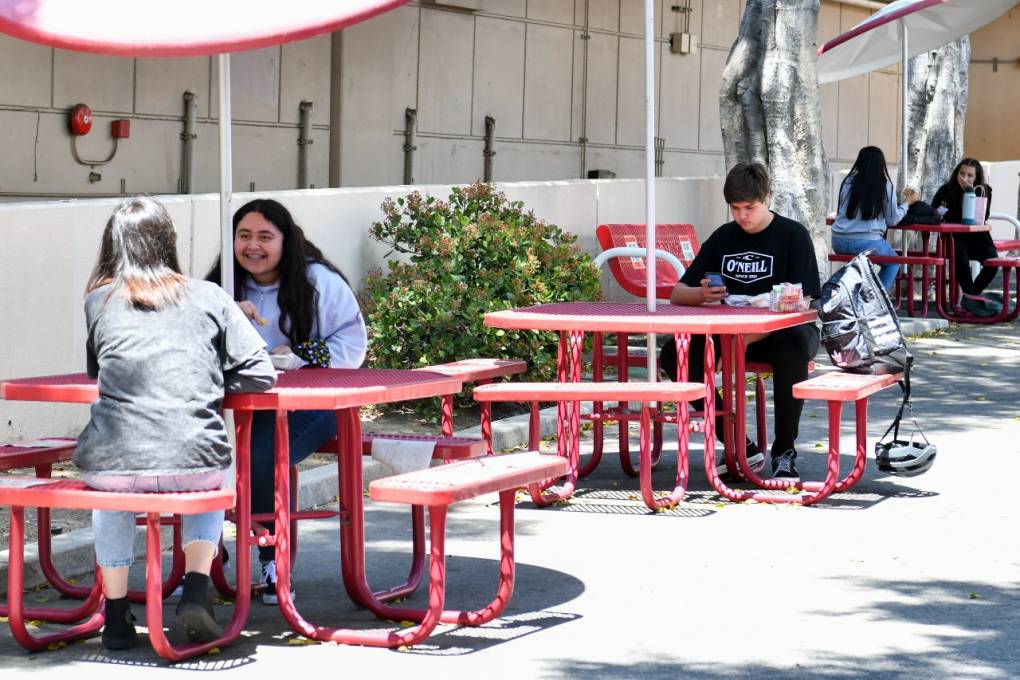
"caption": "Students on their lunch break observe social distance protocols at Hollywood High School on April 27, 2021 in Los Angeles. ",
"description": "LOS ANGELES, CALIFORNIA - APRIL 27: Students on their lunch break observe social distance protocols at Hollywood High School on April 27, 2021 in Los Angeles, California. Los Angeles Unified School District middle and high schools have reopened this week for in-person instruction. COVID-19 protocols in place include testing for all students and staff, vaccinations for all staff, and a completed daily health check for anyone arriving on campus ",
"title": "GettyImages-1314853312 (1)",
"credit": "Rodin Eckenroth/Getty Images",
"status": "inherit",
"altTag": null,
"isLoading": false,
"fetchFailed": false
},
"news_11881625": {
"type": "attachments",
"id": "news_11881625",
"meta": {
"index": "attachments_1716263798",
"site": "news",
"id": "11881625",
"found": true
},
"parent": 11881585,
"imgSizes": {
"twentyfourteen-full-width": {
"file": "https://ww2.kqed.org/app/uploads/sites/10/2021/07/RS46308_026_KQED_SanFrancisco_COVIDShutdown_12062020-qut-1038x576.jpeg",
"width": 1038,
"mimeType": "image/jpeg",
"height": 576
},
"thumbnail": {
"file": "https://ww2.kqed.org/app/uploads/sites/10/2021/07/RS46308_026_KQED_SanFrancisco_COVIDShutdown_12062020-qut-160x107.jpeg",
"width": 160,
"mimeType": "image/jpeg",
"height": 107
},
"post-thumbnail": {
"file": "https://ww2.kqed.org/app/uploads/sites/10/2021/07/RS46308_026_KQED_SanFrancisco_COVIDShutdown_12062020-qut-672x372.jpeg",
"width": 672,
"mimeType": "image/jpeg",
"height": 372
},
"kqedFullSize": {
"file": "https://ww2.kqed.org/app/uploads/sites/10/2021/07/RS46308_026_KQED_SanFrancisco_COVIDShutdown_12062020-qut.jpeg",
"width": 1920,
"height": 1280
},
"large": {
"file": "https://ww2.kqed.org/app/uploads/sites/10/2021/07/RS46308_026_KQED_SanFrancisco_COVIDShutdown_12062020-qut-1020x680.jpeg",
"width": 1020,
"mimeType": "image/jpeg",
"height": 680
},
"1536x1536": {
"file": "https://ww2.kqed.org/app/uploads/sites/10/2021/07/RS46308_026_KQED_SanFrancisco_COVIDShutdown_12062020-qut-1536x1024.jpeg",
"width": 1536,
"mimeType": "image/jpeg",
"height": 1024
},
"medium": {
"file": "https://ww2.kqed.org/app/uploads/sites/10/2021/07/RS46308_026_KQED_SanFrancisco_COVIDShutdown_12062020-qut-800x533.jpeg",
"width": 800,
"mimeType": "image/jpeg",
"height": 533
}
},
"publishDate": 1626723002,
"modified": 1627347044,
"caption": "A group of friends sit at a parklet at the 440 Castro bar in San Francisco on Dec. 6, 2020, the day before a shelter-in-place order went into affect to prevent a coronavirus surge.",
"description": null,
"title": "RS46308_026_KQED_SanFrancisco_COVIDShutdown_12062020-qut",
"credit": "Beth LaBerge/KQED",
"status": "inherit",
"altTag": null,
"isLoading": false,
"fetchFailed": false
},
"news_11881646": {
"type": "attachments",
"id": "news_11881646",
"meta": {
"index": "attachments_1716263798",
"site": "news",
"id": "11881646",
"found": true
},
"parent": 11881642,
"imgSizes": {
"twentyfourteen-full-width": {
"file": "https://ww2.kqed.org/app/uploads/sites/10/2021/07/1920_GettyImages-1314853179-1038x576.jpg",
"width": 1038,
"mimeType": "image/jpeg",
"height": 576
},
"thumbnail": {
"file": "https://ww2.kqed.org/app/uploads/sites/10/2021/07/1920_GettyImages-1314853179-160x103.jpg",
"width": 160,
"mimeType": "image/jpeg",
"height": 103
},
"post-thumbnail": {
"file": "https://ww2.kqed.org/app/uploads/sites/10/2021/07/1920_GettyImages-1314853179-672x372.jpg",
"width": 672,
"mimeType": "image/jpeg",
"height": 372
},
"kqedFullSize": {
"file": "https://ww2.kqed.org/app/uploads/sites/10/2021/07/1920_GettyImages-1314853179.jpg",
"width": 1920,
"height": 1233
},
"large": {
"file": "https://ww2.kqed.org/app/uploads/sites/10/2021/07/1920_GettyImages-1314853179-1020x655.jpg",
"width": 1020,
"mimeType": "image/jpeg",
"height": 655
},
"1536x1536": {
"file": "https://ww2.kqed.org/app/uploads/sites/10/2021/07/1920_GettyImages-1314853179-1536x986.jpg",
"width": 1536,
"mimeType": "image/jpeg",
"height": 986
},
"medium": {
"file": "https://ww2.kqed.org/app/uploads/sites/10/2021/07/1920_GettyImages-1314853179-800x514.jpg",
"width": 800,
"mimeType": "image/jpeg",
"height": 514
}
},
"publishDate": 1626727903,
"modified": 1626731108,
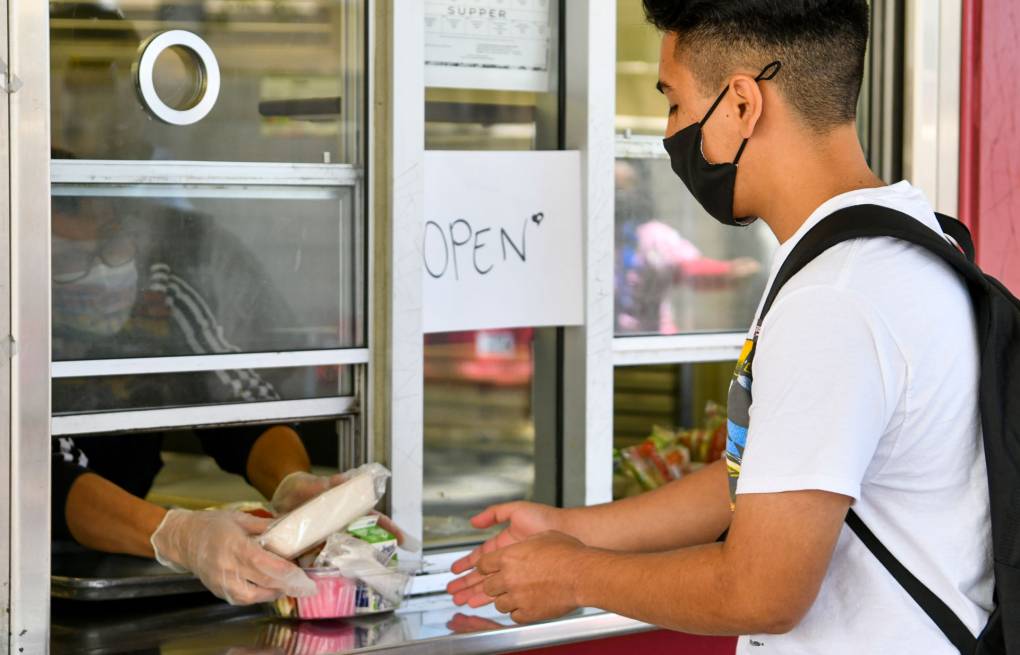
"caption": "A returning student receives pre-packaged lunch at Hollywood High School on April 27, 2021 in Los Angeles. ",
"description": null,
"title": "1920_GettyImages-1314853179",
"credit": "Rodin Eckenroth/Getty Images",
"status": "inherit",
"altTag": null,
"isLoading": false,
"fetchFailed": false
},
"news_11881165": {
"type": "attachments",
"id": "news_11881165",
"meta": {
"index": "attachments_1716263798",
"site": "news",
"id": "11881165",
"found": true
},
"parent": 11881164,
"imgSizes": {
"twentyfourteen-full-width": {
"file": "https://ww2.kqed.org/app/uploads/sites/10/2021/07/gettyimages-1228332941-1-9b169e8c53649daad1661cc6e75856404695505e-1038x576.jpg",
"width": 1038,
"mimeType": "image/jpeg",
"height": 576
},
"thumbnail": {
"file": "https://ww2.kqed.org/app/uploads/sites/10/2021/07/gettyimages-1228332941-1-9b169e8c53649daad1661cc6e75856404695505e-160x120.jpg",
"width": 160,
"mimeType": "image/jpeg",
"height": 120
},
"post-thumbnail": {
"file": "https://ww2.kqed.org/app/uploads/sites/10/2021/07/gettyimages-1228332941-1-9b169e8c53649daad1661cc6e75856404695505e-672x372.jpg",
"width": 672,
"mimeType": "image/jpeg",
"height": 372
},
"kqedFullSize": {
"file": "https://ww2.kqed.org/app/uploads/sites/10/2021/07/gettyimages-1228332941-1-9b169e8c53649daad1661cc6e75856404695505e.jpg",
"width": 1911,
"height": 1433
},
"large": {
"file": "https://ww2.kqed.org/app/uploads/sites/10/2021/07/gettyimages-1228332941-1-9b169e8c53649daad1661cc6e75856404695505e-1020x765.jpg",
"width": 1020,
"mimeType": "image/jpeg",
"height": 765
},
"1536x1536": {
"file": "https://ww2.kqed.org/app/uploads/sites/10/2021/07/gettyimages-1228332941-1-9b169e8c53649daad1661cc6e75856404695505e-1536x1152.jpg",
"width": 1536,
"mimeType": "image/jpeg",
"height": 1152
},
"medium": {
"file": "https://ww2.kqed.org/app/uploads/sites/10/2021/07/gettyimages-1228332941-1-9b169e8c53649daad1661cc6e75856404695505e-800x600.jpg",
"width": 800,
"mimeType": "image/jpeg",
"height": 600
}
},
"publishDate": 1626289077,
"modified": 1626293533,
"caption": "The sun sets behind power lines in Los Angeles on Sept. 3, 2020, ahead of a heat wave that prompted a statewide flex alert.",
"description": "The sun sets behind power lines in Los Angeles, California on September 3, 2020, ahead of a heatwave to arrive September 4 through the Labour Day weekend prompting a statewide flex alert. (Photo by Frederic J. BROWN / AFP) (Photo by FREDERIC J. BROWN/AFP via Getty Images)",
"title": "The sun sets behind power lines in Los Angeles, California on September 3, 2020.",
"credit": "Frederic J. Brown/AFP via Getty Images",
"status": "inherit",
"altTag": null,
"isLoading": false,
"fetchFailed": false
},
"news_11880882": {
"type": "attachments",
"id": "news_11880882",
"meta": {
"index": "attachments_1716263798",
"site": "news",
"id": "11880882",
"found": true
},
"parent": 11880880,
"imgSizes": {
"twentyfourteen-full-width": {
"file": "https://ww2.kqed.org/app/uploads/sites/10/2021/07/gettyimages-1327155951-87a26af65cd5b9f4986d17fa9546e935eec43e5e-1-1038x576.jpg",
"width": 1038,
"mimeType": "image/jpeg",
"height": 576
},
"thumbnail": {
"file": "https://ww2.kqed.org/app/uploads/sites/10/2021/07/gettyimages-1327155951-87a26af65cd5b9f4986d17fa9546e935eec43e5e-1-160x120.jpg",
"width": 160,
"mimeType": "image/jpeg",
"height": 120
},
"post-thumbnail": {
"file": "https://ww2.kqed.org/app/uploads/sites/10/2021/07/gettyimages-1327155951-87a26af65cd5b9f4986d17fa9546e935eec43e5e-1-672x372.jpg",
"width": 672,
"mimeType": "image/jpeg",
"height": 372
},
"kqedFullSize": {
"file": "https://ww2.kqed.org/app/uploads/sites/10/2021/07/gettyimages-1327155951-87a26af65cd5b9f4986d17fa9546e935eec43e5e-1-scaled-e1626118242707.jpg",
"width": 1920,
"height": 1439
},
"2048x2048": {
"file": "https://ww2.kqed.org/app/uploads/sites/10/2021/07/gettyimages-1327155951-87a26af65cd5b9f4986d17fa9546e935eec43e5e-1-2048x1534.jpg",
"width": 2048,
"mimeType": "image/jpeg",
"height": 1534
},
"large": {
"file": "https://ww2.kqed.org/app/uploads/sites/10/2021/07/gettyimages-1327155951-87a26af65cd5b9f4986d17fa9546e935eec43e5e-1-1020x764.jpg",
"width": 1020,
"mimeType": "image/jpeg",
"height": 764
},
"1536x1536": {
"file": "https://ww2.kqed.org/app/uploads/sites/10/2021/07/gettyimages-1327155951-87a26af65cd5b9f4986d17fa9546e935eec43e5e-1-1536x1151.jpg",
"width": 1536,
"mimeType": "image/jpeg",
"height": 1151
},
"full-width": {
"file": "https://ww2.kqed.org/app/uploads/sites/10/2021/07/gettyimages-1327155951-87a26af65cd5b9f4986d17fa9546e935eec43e5e-1-1920x1438.jpg",
"width": 1920,
"mimeType": "image/jpeg",
"height": 1438
},
"medium": {
"file": "https://ww2.kqed.org/app/uploads/sites/10/2021/07/gettyimages-1327155951-87a26af65cd5b9f4986d17fa9546e935eec43e5e-1-800x599.jpg",
"width": 800,
"mimeType": "image/jpeg",
"height": 599
}
},
"publishDate": 1626114739,
"modified": 1626125462,
"caption": "People relax at Georgetown Waterfront Park in Washington, D.C., \non July 5, 2021. While pandemic restrictions have been lifted for much of the U.S., the delta variant of COVID-19 is hospitalizing thousands of unvaccinated people.",
"description": "(Photo by Tasos Katopodis/Getty Images)",
"title": "People relax at the Georgetown Waterfront Park on Monday in Washington, D.C. While pandemic restrictions have been lifted for much of the country, the Delta variant of COVID-19 is hospitalizing thousands of people in the U.S. who have so far not gotten a vaccine.",
"credit": "Tasos Katopodis/Getty Images",
"status": "inherit",
"altTag": null,
"isLoading": false,
"fetchFailed": false
},
"news_11880806": {
"type": "attachments",
"id": "news_11880806",
"meta": {
"index": "attachments_1716263798",
"site": "news",
"id": "11880806",
"found": true
},
"parent": 11880805,
"imgSizes": {
"twentyfourteen-full-width": {
"file": "https://ww2.kqed.org/app/uploads/sites/10/2021/07/RS49617_023_SanFrancisco_AlexPadillaMissionKids_06012021-qut-1038x576.jpeg",
"width": 1038,
"mimeType": "image/jpeg",
"height": 576
},
"thumbnail": {
"file": "https://ww2.kqed.org/app/uploads/sites/10/2021/07/RS49617_023_SanFrancisco_AlexPadillaMissionKids_06012021-qut-160x107.jpeg",
"width": 160,
"mimeType": "image/jpeg",
"height": 107
},
"post-thumbnail": {
"file": "https://ww2.kqed.org/app/uploads/sites/10/2021/07/RS49617_023_SanFrancisco_AlexPadillaMissionKids_06012021-qut-672x372.jpeg",
"width": 672,
"mimeType": "image/jpeg",
"height": 372
},
"kqedFullSize": {
"file": "https://ww2.kqed.org/app/uploads/sites/10/2021/07/RS49617_023_SanFrancisco_AlexPadillaMissionKids_06012021-qut.jpeg",
"width": 1920,
"height": 1278
},
"large": {
"file": "https://ww2.kqed.org/app/uploads/sites/10/2021/07/RS49617_023_SanFrancisco_AlexPadillaMissionKids_06012021-qut-1020x679.jpeg",
"width": 1020,
"mimeType": "image/jpeg",
"height": 679
},
"1536x1536": {
"file": "https://ww2.kqed.org/app/uploads/sites/10/2021/07/RS49617_023_SanFrancisco_AlexPadillaMissionKids_06012021-qut-1536x1022.jpeg",
"width": 1536,
"mimeType": "image/jpeg",
"height": 1022
},
"medium": {
"file": "https://ww2.kqed.org/app/uploads/sites/10/2021/07/RS49617_023_SanFrancisco_AlexPadillaMissionKids_06012021-qut-800x533.jpeg",
"width": 800,
"mimeType": "image/jpeg",
"height": 533
}
},
"publishDate": 1625937474,
"modified": 1626109782,
"caption": "Children at Mission Kids Preschool in San Francisco listen to Sen. Alex Padilla speak during a visit to the school on June 1, 2021.",
"description": null,
"title": "RS49617_023_SanFrancisco_AlexPadillaMissionKids_06012021-qut",
"credit": "Beth LaBerge/KQED",
"status": "inherit",
"altTag": null,
"isLoading": false,
"fetchFailed": false
},
"news_11880479": {
"type": "attachments",
"id": "news_11880479",
"meta": {
"index": "attachments_1716263798",
"site": "news",
"id": "11880479",
"found": true
},
"parent": 11880475,
"imgSizes": {
"thumbnail": {
"file": "https://ww2.kqed.org/app/uploads/sites/10/2021/07/gettyimages-tick-jpeg-160x105.jpg",
"width": 160,
"mimeType": "image/jpeg",
"height": 105
},
"post-thumbnail": {
"file": "https://ww2.kqed.org/app/uploads/sites/10/2021/07/gettyimages-tick-jpeg-672x372.jpg",
"width": 672,
"mimeType": "image/jpeg",
"height": 372
},
"kqedFullSize": {
"file": "https://ww2.kqed.org/app/uploads/sites/10/2021/07/gettyimages-tick-jpeg.jpg",
"width": 800,
"height": 525
}
},
"publishDate": 1625680783,
"modified": 1625680812,
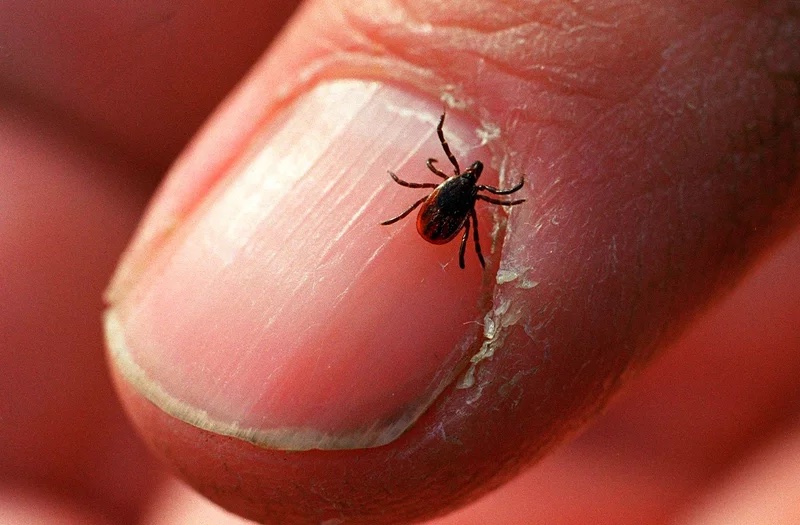
"caption": "The black-legged or deer tick, which carries Lyme disease, appears to be expanding its territory.",
"description": null,
"title": "gettyimages-tick-jpeg",
"credit": "Bill Davis/Newsday via Getty Images",
"status": "inherit",
"altTag": null,
"isLoading": false,
"fetchFailed": false
},
"news_11880413": {
"type": "attachments",
"id": "news_11880413",
"meta": {
"index": "attachments_1716263798",
"site": "news",
"id": "11880413",
"found": true
},
"parent": 11880412,
"imgSizes": {
"twentyfourteen-full-width": {
"file": "https://ww2.kqed.org/app/uploads/sites/10/2021/07/GettyImages-emo018-1024x576.jpg",
"width": 1024,
"mimeType": "image/jpeg",
"height": 576
},
"thumbnail": {
"file": "https://ww2.kqed.org/app/uploads/sites/10/2021/07/GettyImages-emo018-160x108.jpg",
"width": 160,
"mimeType": "image/jpeg",
"height": 108
},
"post-thumbnail": {
"file": "https://ww2.kqed.org/app/uploads/sites/10/2021/07/GettyImages-emo018-672x372.jpg",
"width": 672,
"mimeType": "image/jpeg",
"height": 372
},
"kqedFullSize": {
"file": "https://ww2.kqed.org/app/uploads/sites/10/2021/07/GettyImages-emo018.jpg",
"width": 1024,
"height": 690
},
"large": {
"file": "https://ww2.kqed.org/app/uploads/sites/10/2021/07/GettyImages-emo018-1020x687.jpg",
"width": 1020,
"mimeType": "image/jpeg",
"height": 687
},
"medium": {
"file": "https://ww2.kqed.org/app/uploads/sites/10/2021/07/GettyImages-emo018-800x539.jpg",
"width": 800,
"mimeType": "image/jpeg",
"height": 539
}
},
"publishDate": 1625596329,
"modified": 1625596341,
"caption": null,
"description": null,
"title": "GettyImages-emo018",
"credit": "Tim Teebken/Getty Images",
"status": "inherit",
"altTag": null,
"isLoading": false,
"fetchFailed": false
},
"news_11880226": {
"type": "attachments",
"id": "news_11880226",
"meta": {
"index": "attachments_1716263798",
"site": "news",
"id": "11880226",
"found": true
},
"parent": 11879641,
"imgSizes": {
"twentyfourteen-full-width": {
"file": "https://ww2.kqed.org/app/uploads/sites/10/2021/07/trucks-1038x576.jpg",
"width": 1038,
"mimeType": "image/jpeg",
"height": 576
},
"thumbnail": {
"file": "https://ww2.kqed.org/app/uploads/sites/10/2021/07/trucks-160x90.jpg",
"width": 160,
"mimeType": "image/jpeg",
"height": 90
},
"post-thumbnail": {
"file": "https://ww2.kqed.org/app/uploads/sites/10/2021/07/trucks-672x372.jpg",
"width": 672,
"mimeType": "image/jpeg",
"height": 372
},
"kqedFullSize": {
"file": "https://ww2.kqed.org/app/uploads/sites/10/2021/07/trucks.jpg",
"width": 1920,
"height": 1080
},
"large": {
"file": "https://ww2.kqed.org/app/uploads/sites/10/2021/07/trucks-1020x574.jpg",
"width": 1020,
"mimeType": "image/jpeg",
"height": 574
},
"1536x1536": {
"file": "https://ww2.kqed.org/app/uploads/sites/10/2021/07/trucks-1536x864.jpg",
"width": 1536,
"mimeType": "image/jpeg",
"height": 864
},
"medium": {
"file": "https://ww2.kqed.org/app/uploads/sites/10/2021/07/trucks-800x450.jpg",
"width": 800,
"mimeType": "image/jpeg",
"height": 450
}
},
"publishDate": 1625194429,
"modified": 1625194540,
"caption": "A big rig truck on the 880 freeway. Big trucks like this one are banned on the I-580 freeway.",
"description": null,
"title": "trucks",
"credit": "Teodros Hailye/KQED",
"status": "inherit",
"altTag": null,
"isLoading": false,
"fetchFailed": false
},
"news_11879739": {
"type": "attachments",
"id": "news_11879739",
"meta": {
"index": "attachments_1716263798",
"site": "news",
"id": "11879739",
"found": true
},
"parent": 11879725,
"imgSizes": {
"twentyfourteen-full-width": {
"file": "https://ww2.kqed.org/app/uploads/sites/10/2021/06/RS46911_017_SanJose_AntiEvictionProtest_01272021-qut-1038x576.jpg",
"width": 1038,
"mimeType": "image/jpeg",
"height": 576
},
"thumbnail": {
"file": "https://ww2.kqed.org/app/uploads/sites/10/2021/06/RS46911_017_SanJose_AntiEvictionProtest_01272021-qut-160x107.jpg",
"width": 160,
"mimeType": "image/jpeg",
"height": 107
},
"post-thumbnail": {
"file": "https://ww2.kqed.org/app/uploads/sites/10/2021/06/RS46911_017_SanJose_AntiEvictionProtest_01272021-qut-672x372.jpg",
"width": 672,
"mimeType": "image/jpeg",
"height": 372
},
"kqedFullSize": {
"file": "https://ww2.kqed.org/app/uploads/sites/10/2021/06/RS46911_017_SanJose_AntiEvictionProtest_01272021-qut.jpg",
"width": 1920,
"height": 1280
},
"large": {
"file": "https://ww2.kqed.org/app/uploads/sites/10/2021/06/RS46911_017_SanJose_AntiEvictionProtest_01272021-qut-1020x680.jpg",
"width": 1020,
"mimeType": "image/jpeg",
"height": 680
},
"1536x1536": {
"file": "https://ww2.kqed.org/app/uploads/sites/10/2021/06/RS46911_017_SanJose_AntiEvictionProtest_01272021-qut-1536x1024.jpg",
"width": 1536,
"mimeType": "image/jpeg",
"height": 1024
},
"medium": {
"file": "https://ww2.kqed.org/app/uploads/sites/10/2021/06/RS46911_017_SanJose_AntiEvictionProtest_01272021-qut-800x533.jpg",
"width": 800,
"mimeType": "image/jpeg",
"height": 533
}
},
"publishDate": 1624994714,
"modified": 1624994770,
"caption": "An anti-eviction protester stands in front of Santa Clara County Superior Court on Jan. 27, 2021, during a demonstration calling for stronger statewide eviction protections.",
"description": null,
"title": "RS46911_017_SanJose_AntiEvictionProtest_01272021-qut",
"credit": "Beth LaBerge/KQED",
"status": "inherit",
"altTag": null,
"isLoading": false,
"fetchFailed": false
}
},
"audioPlayerReducer": {
"postId": "stream_live",
"isPaused": true,
"isPlaying": false,
"pfsActive": false,
"pledgeModalIsOpen": true,
"playerDrawerIsOpen": false,
"liveAudioPlayStartedAt": 0,
"liveAudioPlayContext": ""
},
"authorsReducer": {
"byline_news_11882605": {
"type": "authors",
"id": "byline_news_11882605",
"meta": {
"override": true
},
"slug": "byline_news_11882605",
"name": "Ali Tadayon\u003cbr>EdSource",
"isLoading": false
},
"byline_news_11881642": {
"type": "authors",
"id": "byline_news_11881642",
"meta": {
"override": true
},
"slug": "byline_news_11881642",
"name": "Jocelyn Gecker \u003cbr> The Associated Press",
"isLoading": false
},
"byline_news_11881164": {
"type": "authors",
"id": "byline_news_11881164",
"meta": {
"override": true
},
"slug": "byline_news_11881164",
"name": "Deepa Shivaram",
"isLoading": false
},
"byline_news_11880880": {
"type": "authors",
"id": "byline_news_11880880",
"meta": {
"override": true
},
"slug": "byline_news_11880880",
"name": "Laurel Wamsley",
"isLoading": false
},
"byline_news_11880805": {
"type": "authors",
"id": "byline_news_11880805",
"meta": {
"override": true
},
"slug": "byline_news_11880805",
"name": "Jocelyn Gecker \u003cbr> Associated Press",
"isLoading": false
},
"byline_news_11880475": {
"type": "authors",
"id": "byline_news_11880475",
"meta": {
"override": true
},
"slug": "byline_news_11880475",
"name": "Sheila Eldred\u003cbr />NPR",
"isLoading": false
},
"byline_news_11880412": {
"type": "authors",
"id": "byline_news_11880412",
"meta": {
"override": true
},
"slug": "byline_news_11880412",
"name": "\u003ca href=\"https://californiahealthline.org/news/author/mark-kreidler/\">Mark Kreidler\u003c/a>\u003cbr />California Healthline",
"isLoading": false
},
"kqednewsstaffandwires": {
"type": "authors",
"id": "237",
"meta": {
"index": "authors_1716337520",
"id": "237",
"found": true
},
"name": "KQED News Staff and Wires",
"firstName": "KQED News Staff and Wires",
"lastName": null,
"slug": "kqednewsstaffandwires",
"email": "onlinenewsstaff@kqed.org",
"display_author_email": false,
"staff_mastheads": [],
"title": null,
"bio": null,
"avatar": "https://secure.gravatar.com/avatar/72295af8ebbfbd19a4948f5271285664?s=600&d=blank&r=g",
"twitter": null,
"facebook": null,
"instagram": null,
"linkedin": null,
"sites": [
{
"site": "arts",
"roles": [
"contributor"
]
},
{
"site": "news",
"roles": [
"contributor"
]
},
{
"site": "lowdown",
"roles": [
"author"
]
},
{
"site": "stateofhealth",
"roles": [
"contributor"
]
},
{
"site": "food",
"roles": [
"author"
]
}
],
"headData": {
"title": "KQED News Staff and Wires | KQED",
"description": null,
"ogImgSrc": "https://secure.gravatar.com/avatar/72295af8ebbfbd19a4948f5271285664?s=600&d=blank&r=g",
"twImgSrc": "https://secure.gravatar.com/avatar/72295af8ebbfbd19a4948f5271285664?s=600&d=blank&r=g"
},
"isLoading": false,
"link": "/author/kqednewsstaffandwires"
},
"lklivans": {
"type": "authors",
"id": "8648",
"meta": {
"index": "authors_1716337520",
"id": "8648",
"found": true
},
"name": "Laura Klivans",
"firstName": "Laura",
"lastName": "Klivans",
"slug": "lklivans",
"email": "lklivans@kqed.org",
"display_author_email": true,
"staff_mastheads": [
"news",
"science"
],
"title": "Reporter",
"bio": "Laura Klivans is an award-winning science reporter for KQED News, where she covers climate change with an eye on both groundbreaking progress and gaps in action. She is the former host of KQED's blockbuster video series about tiny, amazing animals, \u003cem>Deep Look\u003c/em>. Her work reaches national audiences through NPR, \u003cem>Here & Now, \u003c/em>PRI, and other major outlets. \r\n\r\nLaura’s won five Northern California Area Emmy Awards for Deep Look and First Place in the Greater Bay Area Journalism Awards for a podcast exploring how one Oakland neighborhood teamed up to reduce planet-heating pollution.\r\n\r\nBeyond her reporting, she hosts and moderates events. In the past, she taught audio storytelling at the UC Berkeley Graduate School of Journalism, led international education programs, worked with immigrants and refugees along the Thai-Burmese border, taught high schoolers sex ed, and was an actress. \r\n\r\nShe's a former UC Berkeley Human Rights Fellow, USC Center for Health Journalism's California Fellow and Coro Fellow in Public Affairs. Laura has a master’s in journalism from UC Berkeley, a master’s in education from Harvard, and an undergraduate degree from Northwestern University.\r\n\r\nShe loves trying to riddle the meaning out of vanity license plates.",
"avatar": "https://secure.gravatar.com/avatar/2d2ecd1550a494cc10ad4a503406965585902124739e775a9b3817eebf1d88be?s=600&d=blank&r=g",
"twitter": "lauraklivans",
"bluesky": null,
"facebook": null,
"instagram": null,
"linkedin": null,
"sites": [
{
"site": "news",
"roles": [
"editor"
]
},
{
"site": "stateofhealth",
"roles": [
"contributor",
"editor"
]
},
{
"site": "science",
"roles": [
"editor"
]
},
{
"site": "forum",
"roles": [
"editor"
]
}
],
"headData": {
"title": "Laura Klivans | KQED",
"description": "Reporter",
"ogImgSrc": "https://secure.gravatar.com/avatar/2d2ecd1550a494cc10ad4a503406965585902124739e775a9b3817eebf1d88be?s=600&d=blank&r=g",
"twImgSrc": "https://secure.gravatar.com/avatar/2d2ecd1550a494cc10ad4a503406965585902124739e775a9b3817eebf1d88be?s=600&d=blank&r=g"
},
"isLoading": false,
"link": "/author/lklivans"
},
"msolomon": {
"type": "authors",
"id": "11651",
"meta": {
"index": "authors_1716337520",
"id": "11651",
"found": true
},
"name": "Molly Solomon",
"firstName": "Molly",
"lastName": "Solomon",
"slug": "msolomon",
"email": "msolomon@KQED.org",
"display_author_email": false,
"staff_mastheads": [
"news"
],
"title": "Senior Editor",
"bio": "Molly Solomon is the senior editor of KQED's California Politics and Government Desk. Previously, she was the station's editor-at-large, with a focus on editing early childhood education, politics, and criminal justice. Before that, she managed and edited statewide election coverage for The California Newsroom, a collaboration of local public radio stations, CalMatters and NPR. Molly joined KQED in 2019 to launch the station’s housing affordability desk, where she reported on homelessness, evictions and is the co-host of KQED’s housing podcast, SOLD OUT: Rethinking Housing in America. Before that, she was the Southwest Washington Bureau Chief for Oregon Public Broadcasting and a reporter at Hawaii Public Radio. Her stories have aired on NPR’s \u003cem>Morning Edition\u003c/em>, \u003cem>All Things Considered\u003c/em>, \u003cem>Here & Now\u003c/em>, \u003cem>Science Friday\u003c/em> and \u003cem>Marketplace\u003c/em>. Molly's award-winning reporting has been honored by the Best of the West, Edward R. Murrow awards, Society of Professional Journalists, National Headliner Awards, and the Asian American Journalists Association. Born and raised in Berkeley, Molly is a big fan of burritos and her scruffy terrier, Ollie.",
"avatar": "https://secure.gravatar.com/avatar/9ad9794616923d81c9a79897161545bd?s=600&d=blank&r=g",
"twitter": "solomonout",
"facebook": null,
"instagram": null,
"linkedin": null,
"sites": [
{
"site": "news",
"roles": [
"editor"
]
},
{
"site": "science",
"roles": [
"editor"
]
}
],
"headData": {
"title": "Molly Solomon | KQED",
"description": "Senior Editor",
"ogImgSrc": "https://secure.gravatar.com/avatar/9ad9794616923d81c9a79897161545bd?s=600&d=blank&r=g",
"twImgSrc": "https://secure.gravatar.com/avatar/9ad9794616923d81c9a79897161545bd?s=600&d=blank&r=g"
},
"isLoading": false,
"link": "/author/msolomon"
},
"ebaldassari": {
"type": "authors",
"id": "11652",
"meta": {
"index": "authors_1716337520",
"id": "11652",
"found": true
},
"name": "Erin Baldassari",
"firstName": "Erin",
"lastName": "Baldassari",
"slug": "ebaldassari",
"email": "ebaldassari@KQED.org",
"display_author_email": true,
"staff_mastheads": [
"news"
],
"title": "Staff Writer",
"bio": "Erin Baldassari covers housing for KQED. She's a former print journalist and most recently worked as the transportation reporter for the \u003cem>Mercury News\u003c/em> and \u003cem>East Bay Times. \u003c/em>There, she focused on how the Bay Area’s housing shortage has changed the way people move around the region. She also served on the \u003cem>East Bay Times\u003c/em>’ 2017 Pulitzer Prize-winning team for coverage of the Ghost Ship Fire in Oakland. Prior to that, Erin worked as a breaking news and general assignment reporter for a variety of outlets in the Bay Area and the greater Boston area. A Tufts University alumna, Erin grew up in the foothills of the Sierra Nevada mountains and in Sonoma County. She is a life-long KQED listener.",
"avatar": "https://secure.gravatar.com/avatar/5e95cad64a8ca08288082212e199d2b0cbeb4fd8e8ef5339395f361032bbe005?s=600&d=blank&r=g",
"twitter": "e_baldi",
"bluesky": null,
"facebook": null,
"instagram": null,
"linkedin": null,
"sites": [
{
"site": "news",
"roles": [
"edit_others_posts",
"editor"
]
},
{
"site": "science",
"roles": [
"editor"
]
},
{
"site": "liveblog",
"roles": [
"editor"
]
}
],
"headData": {
"title": "Erin Baldassari | KQED",
"description": "Staff Writer",
"ogImgSrc": "https://secure.gravatar.com/avatar/5e95cad64a8ca08288082212e199d2b0cbeb4fd8e8ef5339395f361032bbe005?s=600&d=blank&r=g",
"twImgSrc": "https://secure.gravatar.com/avatar/5e95cad64a8ca08288082212e199d2b0cbeb4fd8e8ef5339395f361032bbe005?s=600&d=blank&r=g"
},
"isLoading": false,
"link": "/author/ebaldassari"
},
"ccabreralomeli": {
"type": "authors",
"id": "11708",
"meta": {
"index": "authors_1716337520",
"id": "11708",
"found": true
},
"name": "Carlos Cabrera-Lomelí",
"firstName": "Carlos",
"lastName": "Cabrera-Lomelí",
"slug": "ccabreralomeli",
"email": "ccabreralomeli@KQED.org",
"display_author_email": true,
"staff_mastheads": [
"news"
],
"title": "Community Reporter",
"bio": "Carlos Cabrera-Lomelí is a community reporter with KQED's digital engagement team. He also reports and co-produces for KQED's bilingual news hub KQED en Español. He grew up in San Francisco's Mission District and has previously worked with Univision, 48 Hills and REFORMA in Mexico City.",
"avatar": "https://secure.gravatar.com/avatar/c309be9665e484f887b818c89e273ecc673004f426f36b24d00a4d813a2e0518?s=600&d=blank&r=g",
"twitter": "@LomeliCabrera",
"bluesky": null,
"facebook": null,
"instagram": null,
"linkedin": null,
"sites": [
{
"site": "arts",
"roles": [
"editor"
]
},
{
"site": "news",
"roles": [
"editor"
]
},
{
"site": "about",
"roles": [
"editor"
]
},
{
"site": "science",
"roles": [
"editor"
]
},
{
"site": "perspectives",
"roles": [
"editor"
]
},
{
"site": "elections",
"roles": [
"editor"
]
},
{
"site": "liveblog",
"roles": [
"contributor"
]
}
],
"headData": {
"title": "Carlos Cabrera-Lomelí | KQED",
"description": "Community Reporter",
"ogImgSrc": "https://secure.gravatar.com/avatar/c309be9665e484f887b818c89e273ecc673004f426f36b24d00a4d813a2e0518?s=600&d=blank&r=g",
"twImgSrc": "https://secure.gravatar.com/avatar/c309be9665e484f887b818c89e273ecc673004f426f36b24d00a4d813a2e0518?s=600&d=blank&r=g"
},
"isLoading": false,
"link": "/author/ccabreralomeli"
}
},
"pagesReducer": {
"news_tag_health": {
"type": "terms",
"id": "news_18543",
"meta": {
"index": "terms_1716263798",
"site": "news",
"id": "18543",
"score": 6.886699
},
"featImg": null,
"name": "Health",
"description": null,
"taxonomy": "tag",
"headData": {
"twImgId": null,
"twTitle": null,
"ogTitle": null,
"ogImgId": null,
"twDescription": null,
"description": null,
"title": "Health Archives | KQED News",
"ogDescription": null
},
"ttid": 466,
"slug": "health",
"isLoading": false,
"title": "Health",
"pageMeta": {
"site": "news",
"WpPageTemplate": "page-topic-editorial",
"currentPage": 63
},
"blocks": [
{
"blockName": "kqed/post-list",
"attrs": {
"layout": "cardArticle2",
"query": "posts/news?tag=health",
"seeMore": false,
"paginated": true,
"page": 63
}
},
{
"blockName": "kqed/ad"
}
]
}
},
"pfsSessionReducer": {},
"postsReducer": {
"stream_live": {
"type": "live",
"id": "stream_live",
"audioUrl": "https://streams.kqed.org/kqedradio",
"title": "Live Stream",
"excerpt": "Live Stream information currently unavailable.",
"link": "/radio",
"featImg": "",
"label": {
"name": "KQED Live",
"link": "/"
}
},
"stream_kqedNewscast": {
"type": "posts",
"id": "stream_kqedNewscast",
"audioUrl": "https://www.kqed.org/.stream/anon/radio/RDnews/newscast.mp3?_=1",
"title": "KQED Newscast",
"featImg": "",
"label": {
"name": "88.5 FM",
"link": "/"
}
},
"news_11882852": {
"type": "posts",
"id": "news_11882852",
"meta": {
"index": "posts_1716263798",
"site": "news",
"id": "11882852",
"score": null,
"sort": [
1627520108000
]
},
"guestAuthors": [],
"slug": "how-california-will-expand-medi-cal-to-include-more-low-income-immigrants",
"title": "How California Will Expand Medi-Cal to Include More Low-Income Immigrants",
"publishDate": 1627520108,
"format": "standard",
"headTitle": "How California Will Expand Medi-Cal to Include More Low-Income Immigrants | KQED",
"labelTerm": {
"site": "news"
},
"content": "\u003cp>Californians who are at least 50 and living in the country without permission are newly eligible for state health care coverage under legislation signed by Gov. Gavin Newsom on Tuesday, part of a record state budget that includes major investments in mental health, homelessness and housing.\u003c/p>\n\u003cp>The legislation to expand Medi-Cal coverage to low-income adults regardless of immigration status builds upon proposals pushed by Democrats to extend the state’s version of federal Medicaid to children in 2016 and to young adults under 26 in 2020.\u003c/p>\n\u003cp>Around 235,000 people are expected to benefit from this legislation.\u003c/p>\n\u003cul>\n\u003cli>\u003ca href=\"https://www.coveredca.com/health/medi-cal/\">\u003cstrong>Information on who qualifies for Medi-Cal and what are the steps needed to apply.\u003c/strong>\u003c/a>\u003c/li>\n\u003c/ul>\n\u003cp>“It’s a point of pride, it’s a point of principle, and it’s what marks our values here in the state of California,” Newsom said at the Clinica Sierra Vista Elm Community Health Center in Fresno.\u003c/p>\n\u003cp>“We believe in living together, and advancing and prospering together across every conceivable difference.”\u003c/p>\n\u003cp>The program will begin in May 2022. The income threshold to qualify for Medi-Cal is 138% of the federal poverty level or lower. To be eligible, individuals must earn less than $17,609 a year and $36,100 for a family of four.\u003c/p>\n\u003cp>Newsom added that the expansion will have an initial cost of $48 million and eventually cost $1.3 billion per year when the program is fully up and running\u003c/p>\n\u003cp>[pullquote align=\"right\" size=\"medium\" citation=\"Beatriz Hernandez, California Immigrant Policy Center\"]‘We all need this access to health care now and when we recover from the pandemic … we all contribute to the social fabric of this state.’[/pullquote]About 3.2 million people in the state of nearly 40 million are projected to not have health insurance next year, according to the Labor Center at the University of California, Berkeley. Roughly 1.5 million are unauthorized immigrants, making them \u003ca href=\"https://laborcenter.berkeley.edu/ca-coverage-gains-to-erode-without-further-state-action/\">the largest uninsured group in the state\u003c/a>.\u003c/p>\n\u003cp>California is among a small, but growing, group of states that are expanding health coverage to immigrants without legal status. Advocates of expanded coverage say that health care is a basic need and that the coronavirus pandemic underscored just how essential immigrants are in agriculture, food processing and other critical industries.\u003c/p>\n\u003cp>Detractors say taxpayer money should not be spent on unauthorized immigrants.\u003c/p>\n\u003cp>But immigrants residing without authorization in the United States \u003ca href=\"https://www.americanimmigrationcouncil.org/topics/tax-contributions\">pay billions of dollars in taxes\u003c/a> and often do \u003ca href=\"https://www.fwd.us/news/immigrant-essential-workers/\">essential work\u003c/a> in agriculture, food services, health care and other industries.\u003c/p>\n\u003cp>This population is also excluded from the Affordable Care Act and many \u003ca href=\"https://www.kqed.org/news/11874637/the-stimulus-gap-why-many-undocumented-immigrants-arent-getting-the-golden-state-stimulus-theyre-entitled-to\">missed out on pandemic-related stimulus checks\u003c/a> because they file federal taxes using what’s called an Individual Taxpayer Identification Number and not through a Social Security number.\u003c/p>\n\u003cp>Advocates also \u003ca href=\"https://www.kqed.org/news/11876312/activists-stage-die-in-at-newsom-residence-to-demand-more-relief-for-immigrant-workers\">point out\u003c/a> that throughout the pandemic, immigrants residing in the country without authorization, many of them above 50, have served in essential occupations that put them at greater risk of contracting COVID-19.\u003c/p>\n\u003cp>[aside label ='Related Coverage' tag='immigration']In recent years, the state began offering full-scope Medi-Cal — covering doctor’s visits, prescriptions, eye and dental care and other services — to low-income undocumented children and young adults up to age 26. But older immigrants have only been eligible for limited Medi-Cal, which only covers prenatal care and health emergencies.\u003c/p>\n\u003cp>Beatriz Hernandez, a fellow with the California Immigrant Policy Center, said at the signing event that she is undocumented and knows what it feels like to be denied health care. She is grateful for the new policy.\u003c/p>\n\u003cp>“We all need this access to health care now and when we recover from the pandemic. It doesn’t matter the color of our skin, or where we were born. We all deserve this, and we all contribute to the social fabric of this state,” she said.\u003c/p>\n\u003cp>\u003cem>While this specific Medi-Cal expansion does not begin till May 2022, you can review how to apply for Medi-Cal through the Covered California website in \u003ca href=\"https://www.coveredca.com/health/medi-cal/\">English\u003c/a>, \u003ca href=\"https://www.coveredca.com/espanol/health/medi-cal/\">Spanish\u003c/a>, \u003ca href=\"https://www.coveredca.com/chinese/\">Chinese\u003c/a> and \u003ca href=\"https://www.coveredca.com/tagalog/\">Tagalog\u003c/a>. Other languages are also available.\u003c/em>\u003c/p>\n\u003chr>\n\u003cp>\u003cem>This post includes reporting by KQED’s \u003ca href=\"https://www.kqed.org/author/fjhabvala\">Farida Jhabvala Romero\u003c/a> and The Associated Press.\u003c/em>\u003cbr>\n[ad fullwidth]\u003c/p>\n\u003cp>\u003c/p>\n",
"blocks": [],
"excerpt": "Undocumented immigrants over 50 will be eligible for Medi-Cal starting spring of 2022, which could benefit hundreds of thousands of seniors that meet the income requirements.",
"status": "publish",
"parent": 0,
"modified": 1738185393,
"stats": {
"hasAudio": false,
"hasVideo": false,
"hasChartOrMap": false,
"iframeSrcs": [],
"hasGoogleForm": false,
"hasGallery": false,
"hasHearkenModule": false,
"hasPolis": false,
"paragraphCount": 19,
"wordCount": 711
},
"headData": {
"title": "How California Will Expand Medi-Cal to Include More Low-Income Immigrants | KQED",
"description": "Undocumented immigrants over 50 will be eligible for Medi-Cal starting spring of 2022, which could benefit hundreds of thousands of seniors that meet the income requirements.",
"ogTitle": "",
"ogDescription": "",
"ogImgId": "news_11882903",
"twTitle": "",
"twDescription": "",
"twImgId": "news_11882903",
"schema": {
"@context": "https://schema.org",
"@type": "NewsArticle",
"headline": "How California Will Expand Medi-Cal to Include More Low-Income Immigrants",
"datePublished": "2021-07-28T17:55:08-07:00",
"dateModified": "2025-01-29T13:16:33-08:00",
"image": "https://cdn.kqed.org/wp-content/uploads/2020/02/KQED-OG-Image@1x.png",
"isAccessibleForFree": "True",
"publisher": {
"@type": "NewsMediaOrganization",
"@id": "https://www.kqed.org/#organization",
"name": "KQED",
"logo": "https://cdn.kqed.org/wp-content/uploads/2020/02/KQED-OG-Image@1x.png",
"url": "https://www.kqed.org",
"sameAs": [
"https://www.facebook.com/KQED",
"https://twitter.com/KQED",
"https://www.instagram.com/kqed/",
"https://www.tiktok.com/@kqedofficial",
"https://www.linkedin.com/company/kqed",
"https://www.youtube.com/channel/UCeC0IOo7i1P_61zVUWbJ4nw"
]
}
}
},
"sticky": false,
"path": "/news/11882852/how-california-will-expand-medi-cal-to-include-more-low-income-immigrants",
"audioTrackLength": null,
"parsedContent": [
{
"type": "contentString",
"content": "\u003cdiv class=\"post-body\">\u003cp>\u003cp>Californians who are at least 50 and living in the country without permission are newly eligible for state health care coverage under legislation signed by Gov. Gavin Newsom on Tuesday, part of a record state budget that includes major investments in mental health, homelessness and housing.\u003c/p>\n\u003cp>The legislation to expand Medi-Cal coverage to low-income adults regardless of immigration status builds upon proposals pushed by Democrats to extend the state’s version of federal Medicaid to children in 2016 and to young adults under 26 in 2020.\u003c/p>\n\u003cp>Around 235,000 people are expected to benefit from this legislation.\u003c/p>\n\u003cul>\n\u003cli>\u003ca href=\"https://www.coveredca.com/health/medi-cal/\">\u003cstrong>Information on who qualifies for Medi-Cal and what are the steps needed to apply.\u003c/strong>\u003c/a>\u003c/li>\n\u003c/ul>\n\u003cp>“It’s a point of pride, it’s a point of principle, and it’s what marks our values here in the state of California,” Newsom said at the Clinica Sierra Vista Elm Community Health Center in Fresno.\u003c/p>\n\u003cp>“We believe in living together, and advancing and prospering together across every conceivable difference.”\u003c/p>\n\u003cp>The program will begin in May 2022. The income threshold to qualify for Medi-Cal is 138% of the federal poverty level or lower. To be eligible, individuals must earn less than $17,609 a year and $36,100 for a family of four.\u003c/p>\n\u003cp>Newsom added that the expansion will have an initial cost of $48 million and eventually cost $1.3 billion per year when the program is fully up and running\u003c/p>\n\u003cp>\u003c/p>\u003c/div>",
"attributes": {
"named": {},
"numeric": []
}
},
{
"type": "component",
"content": "‘We all need this access to health care now and when we recover from the pandemic … we all contribute to the social fabric of this state.’",
"name": "pullquote",
"attributes": {
"named": {
"align": "right",
"size": "medium",
"citation": "Beatriz Hernandez, California Immigrant Policy Center",
"label": ""
},
"numeric": []
}
},
{
"type": "contentString",
"content": "\u003cdiv class=\"post-body\">\u003cp>About 3.2 million people in the state of nearly 40 million are projected to not have health insurance next year, according to the Labor Center at the University of California, Berkeley. Roughly 1.5 million are unauthorized immigrants, making them \u003ca href=\"https://laborcenter.berkeley.edu/ca-coverage-gains-to-erode-without-further-state-action/\">the largest uninsured group in the state\u003c/a>.\u003c/p>\n\u003cp>California is among a small, but growing, group of states that are expanding health coverage to immigrants without legal status. Advocates of expanded coverage say that health care is a basic need and that the coronavirus pandemic underscored just how essential immigrants are in agriculture, food processing and other critical industries.\u003c/p>\n\u003cp>Detractors say taxpayer money should not be spent on unauthorized immigrants.\u003c/p>\n\u003cp>But immigrants residing without authorization in the United States \u003ca href=\"https://www.americanimmigrationcouncil.org/topics/tax-contributions\">pay billions of dollars in taxes\u003c/a> and often do \u003ca href=\"https://www.fwd.us/news/immigrant-essential-workers/\">essential work\u003c/a> in agriculture, food services, health care and other industries.\u003c/p>\n\u003cp>This population is also excluded from the Affordable Care Act and many \u003ca href=\"https://www.kqed.org/news/11874637/the-stimulus-gap-why-many-undocumented-immigrants-arent-getting-the-golden-state-stimulus-theyre-entitled-to\">missed out on pandemic-related stimulus checks\u003c/a> because they file federal taxes using what’s called an Individual Taxpayer Identification Number and not through a Social Security number.\u003c/p>\n\u003cp>Advocates also \u003ca href=\"https://www.kqed.org/news/11876312/activists-stage-die-in-at-newsom-residence-to-demand-more-relief-for-immigrant-workers\">point out\u003c/a> that throughout the pandemic, immigrants residing in the country without authorization, many of them above 50, have served in essential occupations that put them at greater risk of contracting COVID-19.\u003c/p>\n\u003cp>\u003c/p>\u003c/div>",
"attributes": {
"named": {},
"numeric": []
}
},
{
"type": "component",
"content": "",
"name": "aside",
"attributes": {
"named": {
"label": "Related Coverage ",
"tag": "immigration"
},
"numeric": []
}
},
{
"type": "contentString",
"content": "\u003cdiv class=\"post-body\">\u003cp>In recent years, the state began offering full-scope Medi-Cal — covering doctor’s visits, prescriptions, eye and dental care and other services — to low-income undocumented children and young adults up to age 26. But older immigrants have only been eligible for limited Medi-Cal, which only covers prenatal care and health emergencies.\u003c/p>\n\u003cp>Beatriz Hernandez, a fellow with the California Immigrant Policy Center, said at the signing event that she is undocumented and knows what it feels like to be denied health care. She is grateful for the new policy.\u003c/p>\n\u003cp>“We all need this access to health care now and when we recover from the pandemic. It doesn’t matter the color of our skin, or where we were born. We all deserve this, and we all contribute to the social fabric of this state,” she said.\u003c/p>\n\u003cp>\u003cem>While this specific Medi-Cal expansion does not begin till May 2022, you can review how to apply for Medi-Cal through the Covered California website in \u003ca href=\"https://www.coveredca.com/health/medi-cal/\">English\u003c/a>, \u003ca href=\"https://www.coveredca.com/espanol/health/medi-cal/\">Spanish\u003c/a>, \u003ca href=\"https://www.coveredca.com/chinese/\">Chinese\u003c/a> and \u003ca href=\"https://www.coveredca.com/tagalog/\">Tagalog\u003c/a>. Other languages are also available.\u003c/em>\u003c/p>\n\u003chr>\n\u003cp>\u003cem>This post includes reporting by KQED’s \u003ca href=\"https://www.kqed.org/author/fjhabvala\">Farida Jhabvala Romero\u003c/a> and The Associated Press.\u003c/em>\u003cbr>\n\u003c/p>\u003c/div>",
"attributes": {
"named": {},
"numeric": []
}
},
{
"type": "component",
"content": "",
"name": "ad",
"attributes": {
"named": {
"label": "fullwidth"
},
"numeric": [
"fullwidth"
]
}
},
{
"type": "contentString",
"content": "\u003cdiv class=\"post-body\">\u003cp>\u003c/p>\n\u003cp>\u003c/p>\n\u003c/div>\u003c/p>",
"attributes": {
"named": {},
"numeric": []
}
}
],
"link": "/news/11882852/how-california-will-expand-medi-cal-to-include-more-low-income-immigrants",
"authors": [
"237"
],
"categories": [
"news_457",
"news_1169",
"news_8"
],
"tags": [
"news_27350",
"news_16",
"news_18543",
"news_20202",
"news_2605",
"news_244"
],
"featImg": "news_11882903",
"label": "news"
},
"news_11882644": {
"type": "posts",
"id": "news_11882644",
"meta": {
"index": "posts_1716263798",
"site": "news",
"id": "11882644",
"score": null,
"sort": [
1627431465000
]
},
"guestAuthors": [],
"slug": "csu-to-require-covid-19-vaccinations-for-all-students-faculty-and-staff-on-campus-this-fall",
"title": "CSU to Require COVID-19 Vaccinations for All Students, Faculty and Staff on Campus This Fall",
"publishDate": 1627431465,
"format": "standard",
"headTitle": "CSU to Require COVID-19 Vaccinations for All Students, Faculty and Staff on Campus This Fall | KQED",
"labelTerm": {
"site": "news"
},
"content": "\u003cp>The California State University system — which enrolls more than half a million undergraduate and graduate students — will require proof of COVID-19 vaccination for all faculty, staff and students returning to any of its 23 campuses this fall, school officials \u003ca href=\"https://www2.calstate.edu/csu-system/news/Pages/California-State-University-to-Implement-COVID-19-Vaccination-Requirement-for-Fall-2021-Term.aspx\">said Tuesday\u003c/a>.\u003c/p>\n\u003cp>CSU Chancellor Joseph Castro cited the rapid spread of the very contagious delta variant as a key driver behind the decision, calling the recent uptick in cases “an alarming new factor.”\u003c/p>\n\u003cp>“Receiving a COVID vaccine continues to be the best way to mitigate the spread of the virus,” Castro said in a statement. “We urge all members of the CSU community to get vaccinated as soon as possible, and announcing this requirement now allows members of the CSU community to receive multiple doses of a vaccine as we head into the beginning of the fall term.”\u003c/p>\n\u003cp>Vaccination deadlines will vary by campus, but all vaccination status certifications must be completed by Sept. 30, according to the announcement. Officials noted that vaccinations are available at multiple CSU campuses, and encouraged unvaccinated students and staff to contact their schools to determine options and availability.\u003c/p>\n\u003cp>Students and staff can also seek medical and religious exemptions, and virtual courses will be available for those who forgo vaccinations, officials said.\u003c/p>\n\u003cp>[ad fullwidth]\u003c/p>\n\u003cp>CSU officials said they plan to unveil their formal vaccination policy in the coming days.\u003c/p>\n\u003cp>“The goal of this announcement is really to get as many people vaccinated as possible so that we can have as many people on campus and so that we are all safe collectively,” said Michael Uhlenkamp, a CSU spokesperson. “We are planning to have the majority of courses and activities take place in person. I think for the majority of students, they are looking forward to being back on their respective campus in person in the fall, taking part in those robust opportunities to engage with their classmates, their professors, the staff there.”\u003c/p>\n\u003cp>Uhlenkamp also said each of the system’s campuses will follow local public health guidelines.\u003c/p>\n\u003cp>“The campuses are all prepared to be able to implement additional safety measures, whether that is masking or going back to distancing or even testing,” he said.\u003c/p>\n\u003cp>[aside label=\"related coverage\" tag=\"delta-variant\"]The CSU announcement comes less than two weeks after the University of California rolled out a \u003ca href=\"https://www.sfchronicle.com/health/article/UC-reverses-course-will-require-all-students-and-16247884.php\">similar mandate \u003c/a>for its students and faculty, and a day after California officials \u003ca href=\"https://www.kqed.org/news/11882436/california-requiring-proof-of-vaccine-or-weekly-testing-for-health-workers-and-state-employees\">said vaccine and testing would be required\u003c/a> for state employees and health care workers.\u003c/p>\n\u003cp>CSU officials said they chose to issue the requirement before the vaccines are formally approved by the U.S. Food and Drug Administration “because of evolving circumstances.”\u003c/p>\n\u003cp>California is now reporting an \u003ca href=\"https://covid19.ca.gov/state-dashboard/\">average daily case rate\u003c/a> of about 13 per 100,000 — or about 7,700 new cases a day — a marked uptick from a just month ago, although still significantly lower than during the winter surge. The delta variant accounted for vast majority of new cases, with unvaccinated people disproportionately impacted.\u003c/p>\n\u003cp>Catherine Hutchinson, president of the CSU Employees Union, said in a statement that she and other labor officials met with President Castro Tuesday morning, and fully support “all efforts, whether it be through the state or the CSU, to ensure vaccinations reach more Californians.”\u003c/p>\n\u003cp>And the California Faculty Association — which represents professors and lecturers at all CSU campuses — said its leaders will work with the chancellor’s office to ensure that students and staff are protected from the virus on campus.\u003c/p>\n\u003cp>“I am vaccinated, and I encourage faculty to get vaccinated if they can so that we all do our part to make the CSU a safe place to work,” CFA President Charles Toombs said in a statement.\u003c/p>\n\u003cp>Several CSU campuses have already communicated plans with students to verify vaccination status. Some, like Cal State Los Angeles, launched an online certification form earlier this week, asking students to provide verification documentation. It also includes options for those who have medical or religious exemptions.\u003c/p>\n\u003cp>Tabatha González Manzur, a student at CSU Los Angeles, said she felt a rush of relief on hearing the announcement. She still lives with people who are at high risk of contracting the virus, she said, and remembers the anxiety she felt during the first weeks of the pandemic when her classes were still in person.\u003c/p>\n\u003cp>“We are still in a pandemic and the variant is scary to deal with,” she said. Requiring proof of vaccination as thousands of her peers prepare to return to in-person learning, “will serve as peace of mind.”\u003c/p>\n\u003cp>\u003c/p>\n\u003cp>\u003cem>KQED’s Rebecca Smith and Carlos Cabrera-Lomelí contributed reporting to this post. \u003c/em>\u003c/p>\n\n",
"blocks": [],
"excerpt": "Tuesday's announcement from the the nation’s largest four-year public university system was prompted by the rise in delta variant infections in California. It follows a similar move by the University of California more than a week ago. ",
"status": "publish",
"parent": 0,
"modified": 1726006267,
"stats": {
"hasAudio": false,
"hasVideo": false,
"hasChartOrMap": false,
"iframeSrcs": [],
"hasGoogleForm": false,
"hasGallery": false,
"hasHearkenModule": false,
"hasPolis": false,
"paragraphCount": 21,
"wordCount": 796
},
"headData": {
"title": "CSU to Require COVID-19 Vaccinations for All Students, Faculty and Staff on Campus This Fall | KQED",
"description": "Tuesday's announcement from the the nation’s largest four-year public university system was prompted by the rise in delta variant infections in California. It follows a similar move by the University of California more than a week ago. ",
"ogTitle": "",
"ogDescription": "",
"ogImgId": "",
"twTitle": "",
"twDescription": "",
"twImgId": "",
"schema": {
"@context": "https://schema.org",
"@type": "NewsArticle",
"headline": "CSU to Require COVID-19 Vaccinations for All Students, Faculty and Staff on Campus This Fall",
"datePublished": "2021-07-27T17:17:45-07:00",
"dateModified": "2024-09-10T15:11:07-07:00",
"image": "https://cdn.kqed.org/wp-content/uploads/2020/02/KQED-OG-Image@1x.png",
"isAccessibleForFree": "True",
"publisher": {
"@type": "NewsMediaOrganization",
"@id": "https://www.kqed.org/#organization",
"name": "KQED",
"logo": "https://cdn.kqed.org/wp-content/uploads/2020/02/KQED-OG-Image@1x.png",
"url": "https://www.kqed.org",
"sameAs": [
"https://www.facebook.com/KQED",
"https://twitter.com/KQED",
"https://www.instagram.com/kqed/",
"https://www.tiktok.com/@kqedofficial",
"https://www.linkedin.com/company/kqed",
"https://www.youtube.com/channel/UCeC0IOo7i1P_61zVUWbJ4nw"
]
}
}
},
"sticky": false,
"path": "/news/11882644/csu-to-require-covid-19-vaccinations-for-all-students-faculty-and-staff-on-campus-this-fall",
"audioTrackLength": null,
"parsedContent": [
{
"type": "contentString",
"content": "\u003cdiv class=\"post-body\">\u003cp>\u003cp>The California State University system — which enrolls more than half a million undergraduate and graduate students — will require proof of COVID-19 vaccination for all faculty, staff and students returning to any of its 23 campuses this fall, school officials \u003ca href=\"https://www2.calstate.edu/csu-system/news/Pages/California-State-University-to-Implement-COVID-19-Vaccination-Requirement-for-Fall-2021-Term.aspx\">said Tuesday\u003c/a>.\u003c/p>\n\u003cp>CSU Chancellor Joseph Castro cited the rapid spread of the very contagious delta variant as a key driver behind the decision, calling the recent uptick in cases “an alarming new factor.”\u003c/p>\n\u003cp>“Receiving a COVID vaccine continues to be the best way to mitigate the spread of the virus,” Castro said in a statement. “We urge all members of the CSU community to get vaccinated as soon as possible, and announcing this requirement now allows members of the CSU community to receive multiple doses of a vaccine as we head into the beginning of the fall term.”\u003c/p>\n\u003cp>Vaccination deadlines will vary by campus, but all vaccination status certifications must be completed by Sept. 30, according to the announcement. Officials noted that vaccinations are available at multiple CSU campuses, and encouraged unvaccinated students and staff to contact their schools to determine options and availability.\u003c/p>\n\u003cp>Students and staff can also seek medical and religious exemptions, and virtual courses will be available for those who forgo vaccinations, officials said.\u003c/p>\n\u003cp>\u003c/p>\u003c/div>",
"attributes": {
"named": {},
"numeric": []
}
},
{
"type": "component",
"content": "",
"name": "ad",
"attributes": {
"named": {
"label": "fullwidth"
},
"numeric": [
"fullwidth"
]
}
},
{
"type": "contentString",
"content": "\u003cdiv class=\"post-body\">\u003cp>\u003c/p>\n\u003cp>CSU officials said they plan to unveil their formal vaccination policy in the coming days.\u003c/p>\n\u003cp>“The goal of this announcement is really to get as many people vaccinated as possible so that we can have as many people on campus and so that we are all safe collectively,” said Michael Uhlenkamp, a CSU spokesperson. “We are planning to have the majority of courses and activities take place in person. I think for the majority of students, they are looking forward to being back on their respective campus in person in the fall, taking part in those robust opportunities to engage with their classmates, their professors, the staff there.”\u003c/p>\n\u003cp>Uhlenkamp also said each of the system’s campuses will follow local public health guidelines.\u003c/p>\n\u003cp>“The campuses are all prepared to be able to implement additional safety measures, whether that is masking or going back to distancing or even testing,” he said.\u003c/p>\n\u003cp>\u003c/p>\u003c/div>",
"attributes": {
"named": {},
"numeric": []
}
},
{
"type": "component",
"content": "",
"name": "aside",
"attributes": {
"named": {
"label": "related coverage ",
"tag": "delta-variant"
},
"numeric": []
}
},
{
"type": "contentString",
"content": "\u003cdiv class=\"post-body\">\u003cp>The CSU announcement comes less than two weeks after the University of California rolled out a \u003ca href=\"https://www.sfchronicle.com/health/article/UC-reverses-course-will-require-all-students-and-16247884.php\">similar mandate \u003c/a>for its students and faculty, and a day after California officials \u003ca href=\"https://www.kqed.org/news/11882436/california-requiring-proof-of-vaccine-or-weekly-testing-for-health-workers-and-state-employees\">said vaccine and testing would be required\u003c/a> for state employees and health care workers.\u003c/p>\n\u003cp>CSU officials said they chose to issue the requirement before the vaccines are formally approved by the U.S. Food and Drug Administration “because of evolving circumstances.”\u003c/p>\n\u003cp>California is now reporting an \u003ca href=\"https://covid19.ca.gov/state-dashboard/\">average daily case rate\u003c/a> of about 13 per 100,000 — or about 7,700 new cases a day — a marked uptick from a just month ago, although still significantly lower than during the winter surge. The delta variant accounted for vast majority of new cases, with unvaccinated people disproportionately impacted.\u003c/p>\n\u003cp>Catherine Hutchinson, president of the CSU Employees Union, said in a statement that she and other labor officials met with President Castro Tuesday morning, and fully support “all efforts, whether it be through the state or the CSU, to ensure vaccinations reach more Californians.”\u003c/p>\n\u003cp>And the California Faculty Association — which represents professors and lecturers at all CSU campuses — said its leaders will work with the chancellor’s office to ensure that students and staff are protected from the virus on campus.\u003c/p>\n\u003cp>“I am vaccinated, and I encourage faculty to get vaccinated if they can so that we all do our part to make the CSU a safe place to work,” CFA President Charles Toombs said in a statement.\u003c/p>\n\u003cp>Several CSU campuses have already communicated plans with students to verify vaccination status. Some, like Cal State Los Angeles, launched an online certification form earlier this week, asking students to provide verification documentation. It also includes options for those who have medical or religious exemptions.\u003c/p>\n\u003cp>Tabatha González Manzur, a student at CSU Los Angeles, said she felt a rush of relief on hearing the announcement. She still lives with people who are at high risk of contracting the virus, she said, and remembers the anxiety she felt during the first weeks of the pandemic when her classes were still in person.\u003c/p>\n\u003cp>“We are still in a pandemic and the variant is scary to deal with,” she said. Requiring proof of vaccination as thousands of her peers prepare to return to in-person learning, “will serve as peace of mind.”\u003c/p>\n\u003cp>\u003c/p>\n\u003cp>\u003cem>KQED’s Rebecca Smith and Carlos Cabrera-Lomelí contributed reporting to this post. \u003c/em>\u003c/p>\n\n\u003c/div>\u003c/p>",
"attributes": {
"named": {},
"numeric": []
}
}
],
"link": "/news/11882644/csu-to-require-covid-19-vaccinations-for-all-students-faculty-and-staff-on-campus-this-fall",
"authors": [
"11708"
],
"categories": [
"news_18540",
"news_457",
"news_8"
],
"tags": [
"news_221",
"news_27350",
"news_27504",
"news_18738",
"news_29644",
"news_27626",
"news_18543"
],
"featImg": "news_11699573",
"label": "news"
},
"news_11882605": {
"type": "posts",
"id": "news_11882605",
"meta": {
"index": "posts_1716263798",
"site": "news",
"id": "11882605",
"score": null,
"sort": [
1627427796000
]
},
"guestAuthors": [],
"slug": "free-school-meals-for-all-here-to-stay-in-california",
"title": "Free School Meals for All Here to Stay in California",
"publishDate": 1627427796,
"format": "standard",
"headTitle": "Free School Meals for All Here to Stay in California | KQED",
"labelTerm": {},
"content": "\u003cp>With \u003ca href=\"https://www.feedingamerica.org/sites/default/files/2021-03/National%20Projections%20Brief_3.9.2021_0.pdf\">1 in every 6 children\u003c/a> facing hunger in the U.S., California is the first state to promise every public school student — all \u003ca href=\"https://www.cde.ca.gov/nr/ne/yr21/yr21rel32.asp\">6 million of them\u003c/a> — free school meals.\u003c/p>\n\u003cp>The universal school meals program, which will launch in the 2022-2023 school year, is part of the landmark state budget agreement reached between Gov. Gavin Newsom and the Legislature last month. Days later, \u003ca href=\"https://www.newscentermaine.com/article/news/local/as-seen-on-tv/new-law-requires-free-school-meals-for-all-maine-public-students-regardless-of-family-income-starting-2022-2023/97-4e822474-cd25-4641-958e-c0c8599971c3\">Maine\u003c/a> became the second state to commit to offering a universal school meals program with the signing of its budget.\u003c/p>\n\u003cp>The program ensures that all students will be offered breakfast and lunch at their school, which state Sen. Nancy Skinner, D-Berkeley, said is “essential to learning.” Skinner has led the effort to establish a universal school meal program.\u003c/p>\n\u003cp>“We know that many California children are food insecure, and if you’re hungry you cannot learn well,” Skinner said. “The whole point of school is learning, and everything we can do to create an environment that allows children to thrive and learn is what we need to do.”\u003c/p>\n\u003cp>[ad fullwidth]\u003c/p>\n\u003cp>Skinner \u003ca href=\"https://edsource.org/2021/california-moving-to-pioneer-free-meals-for-all-students/652779\">introduced a bill\u003c/a> in March that would have established a universal school meal program.\u003c/p>\n\u003cp>After the program garnered bipartisan support and the California Department of Finance forecast \u003ca href=\"https://edsource.org/2021/here-are-the-highlights-of-the-may-state-budget-revision/654773\">unexpectedly large projected revenues\u003c/a>, lawmakers opted to include it in the state budget rather than as a separate bill.\u003c/p>\n\u003cp>The final agreement between Newsom and the Legislature calls for $650 million through the Proposition 98 fund each year to reimburse school districts starting in 2022, as well as $54 million in the 2021-22 fiscal year to supplement state meal reimbursements. Proposition 98 is the formula that determines what portion of the general fund goes to community colleges and K-12 schools.\u003c/p>\n\u003cp>The state program is set to begin in the 2022-23 school year because the U.S. Department of Agriculture has already \u003ca href=\"https://edsource.org/2021/usda-extends-free-meals-through-next-school-year/653335\">committed\u003c/a> to paying for school meals for all students through the 2021-22 school year.\u003c/p>\n\u003cp>[pullquote size='medium' align='right' citation=\"State Sen. Nancy Skinner, D-Berkeley\"]‘The whole point of school is learning, and everything we can do to create an environment that allows children to thrive and learn is what we need to do.’[/pullquote]The USDA has reimbursed districts for providing free meals to all students since the start of the pandemic. Before the pandemic, districts were only reimbursed for feeding students who were enrolled in the National School Lunch Program. Advocates said being able to feed students without having to check whether they qualified for free lunches allowed districts to serve more families at a time when many faced hunger and hardship.\u003c/p>\n\u003cp>Waiving the eligibility requirements allowed the Oakland Unified School District, for example, to distribute as many as 18,000 \u003ca href=\"https://edsource.org/2020/grab-and-go-and-drive-up-allow-families-to-pick-up-food-at-closed-california-schools/626088\">grab-and-go meals\u003c/a> a day during the pandemic, said OUSD spokesman John Sasaki.\u003c/p>\n\u003cp>“That just goes to show the need that was there,” Sasaki said.\u003c/p>\n\u003cp>Previously, as part of the National School Lunch Program \u003ca href=\"https://www.fns.usda.gov/cn/applying-free-and-reduced-price-school-meals\">application process\u003c/a>, families had to disclose their household income, how many people lived in the household, their children’s immigration status or if their children were homeless or runaways. Some families feared giving out that information, and students may have felt embarrassed to receive a free meal while others paid for it.\u003c/p>\n\u003cp>[aside label=\"More Education Stories\" tag=\"education\"]Schools in New York City began serving free meals to all students in 2017 after finding that some students would rather go hungry than admit they didn’t have enough money to pay for lunch. The decision followed a national outcry over \u003ca href=\"https://www.nytimes.com/2017/04/30/well/family/lunch-shaming-children-parents-school-bills.html)\">“lunch shaming”\u003c/a> — publicly shaming students for unpaid school meal bills, or even school staff throwing away their lunches rather than allowing them to eat.\u003c/p>\n\u003cp>Advocates believed that though \u003ca href=\"https://www.cde.ca.gov/nr/ne/yr20/yr20rel29.asp\">3.9 million students\u003c/a> — 63% of California’s student body — participated in the program, the need was actually much higher.\u003c/p>\n\u003cp>“It’s such good news that everybody gets food with no strings attached, but to be able to do it in a way that nobody is called out is the best thing about this,” Sasaki said. “We want to make sure kids are never given a hard time for being who they are or being in the situation they are in.”\u003c/p>\n\u003cp>Districts will still be asking families to fill out household income eligibility forms, however. That’s because the number of families in the district that make so little that they qualify for the federal free and reduced-price lunch program remains a \u003ca href=\"https://www.cde.ca.gov/fg/aa/lc/index.asp\">key factor\u003c/a> in the state’s \u003ca href=\"https://edsource.org/2016/local-control-funding-formula-guide-lcff/89272\">Local Control Funding Formula\u003c/a>. The formula gives additional state funds to districts based on the number of low-income students, English learners, foster children and homeless youth they serve.\u003c/p>\n\u003cp>Tony Wold, West Contra Costa Unified School District associate superintendent of business services, said the district was concerned that fewer families would fill out the household income eligibility forms because they didn’t have to in order to receive free meals. That could have potentially led to a reduction in supplemental funds for the cash-strapped district. To help solve the problem, the district had outreach workers call families directly, explaining why it was important for families to submit the information.\u003c/p>\n\u003cp>[pullquote size='medium' align='right' citation=\"Spokesman John Sasaki, Oakland Unified School District\"]‘We want to make sure kids are never given a hard time for being who they are or being in the situation they are in.’[/pullquote]\u003c/p>\n\u003cp>The outreach workers’ “big lift” resulted in more families filling out the forms than the previous year, Wold said, which kept the district’s unduplicated pupils percentage constant. That statistic measures the share of a district’s students who are low-income, homeless, foster youth or English learners — all of which drive the Local Control Funding Formula.\u003c/p>\n\u003cp>Outreach workers at Oakland Unified emphasize to families who are skeptical about the forms that they determine how much money goes to the classroom, Sasaki said.\u003c/p>\n\u003cp>California School Boards Association spokesman Troy Flint said the organization anticipates it will be harder for districts to collect income eligibility forms with the new universal meals program. The association hopes the state will provide some support to schools’ “diligent and creative efforts” to collect the forms, though the group isn’t calling for any specific change.\u003c/p>\n\u003cp>“This administration has prioritized steering additional money toward high-need students, particularly into concentration grants, so there’s reason to believe they might be willing to work toward a modification here,” Flint said.\u003c/p>\n\u003cp>[ad floatright]\u003c/p>\n",
"blocks": [],
"excerpt": "The universal school meals program, which will launch in the 2022-2023 school year, will ensure that all students in California public schools will be offered breakfast and lunch.",
"status": "publish",
"parent": 0,
"modified": 1726006272,
"stats": {
"hasAudio": false,
"hasVideo": false,
"hasChartOrMap": false,
"iframeSrcs": [],
"hasGoogleForm": false,
"hasGallery": false,
"hasHearkenModule": false,
"hasPolis": false,
"paragraphCount": 24,
"wordCount": 1113
},
"headData": {
"title": "Free School Meals for All Here to Stay in California | KQED",
"description": "The universal school meals program, which will launch in the 2022-2023 school year, will ensure that all students in California public schools will be offered breakfast and lunch.",
"ogTitle": "",
"ogDescription": "",
"ogImgId": "",
"twTitle": "",
"twDescription": "",
"twImgId": "",
"schema": {
"@context": "https://schema.org",
"@type": "NewsArticle",
"headline": "Free School Meals for All Here to Stay in California",
"datePublished": "2021-07-27T16:16:36-07:00",
"dateModified": "2024-09-10T15:11:12-07:00",
"image": "https://cdn.kqed.org/wp-content/uploads/2020/02/KQED-OG-Image@1x.png",
"isAccessibleForFree": "True",
"publisher": {
"@type": "NewsMediaOrganization",
"@id": "https://www.kqed.org/#organization",
"name": "KQED",
"logo": "https://cdn.kqed.org/wp-content/uploads/2020/02/KQED-OG-Image@1x.png",
"url": "https://www.kqed.org",
"sameAs": [
"https://www.facebook.com/KQED",
"https://twitter.com/KQED",
"https://www.instagram.com/kqed/",
"https://www.tiktok.com/@kqedofficial",
"https://www.linkedin.com/company/kqed",
"https://www.youtube.com/channel/UCeC0IOo7i1P_61zVUWbJ4nw"
]
}
}
},
"source": "EdSource",
"sourceUrl": "https://edsource.org/2021/free-school-meals-here-to-stay-in-california/658564",
"sticky": false,
"nprByline": "Ali Tadayon\u003cbr>EdSource",
"path": "/news/11882605/free-school-meals-for-all-here-to-stay-in-california",
"audioTrackLength": null,
"parsedContent": [
{
"type": "contentString",
"content": "\u003cdiv class=\"post-body\">\u003cp>\u003cp>With \u003ca href=\"https://www.feedingamerica.org/sites/default/files/2021-03/National%20Projections%20Brief_3.9.2021_0.pdf\">1 in every 6 children\u003c/a> facing hunger in the U.S., California is the first state to promise every public school student — all \u003ca href=\"https://www.cde.ca.gov/nr/ne/yr21/yr21rel32.asp\">6 million of them\u003c/a> — free school meals.\u003c/p>\n\u003cp>The universal school meals program, which will launch in the 2022-2023 school year, is part of the landmark state budget agreement reached between Gov. Gavin Newsom and the Legislature last month. Days later, \u003ca href=\"https://www.newscentermaine.com/article/news/local/as-seen-on-tv/new-law-requires-free-school-meals-for-all-maine-public-students-regardless-of-family-income-starting-2022-2023/97-4e822474-cd25-4641-958e-c0c8599971c3\">Maine\u003c/a> became the second state to commit to offering a universal school meals program with the signing of its budget.\u003c/p>\n\u003cp>The program ensures that all students will be offered breakfast and lunch at their school, which state Sen. Nancy Skinner, D-Berkeley, said is “essential to learning.” Skinner has led the effort to establish a universal school meal program.\u003c/p>\n\u003cp>“We know that many California children are food insecure, and if you’re hungry you cannot learn well,” Skinner said. “The whole point of school is learning, and everything we can do to create an environment that allows children to thrive and learn is what we need to do.”\u003c/p>\n\u003cp>\u003c/p>\u003c/div>",
"attributes": {
"named": {},
"numeric": []
}
},
{
"type": "component",
"content": "",
"name": "ad",
"attributes": {
"named": {
"label": "fullwidth"
},
"numeric": [
"fullwidth"
]
}
},
{
"type": "contentString",
"content": "\u003cdiv class=\"post-body\">\u003cp>\u003c/p>\n\u003cp>Skinner \u003ca href=\"https://edsource.org/2021/california-moving-to-pioneer-free-meals-for-all-students/652779\">introduced a bill\u003c/a> in March that would have established a universal school meal program.\u003c/p>\n\u003cp>After the program garnered bipartisan support and the California Department of Finance forecast \u003ca href=\"https://edsource.org/2021/here-are-the-highlights-of-the-may-state-budget-revision/654773\">unexpectedly large projected revenues\u003c/a>, lawmakers opted to include it in the state budget rather than as a separate bill.\u003c/p>\n\u003cp>The final agreement between Newsom and the Legislature calls for $650 million through the Proposition 98 fund each year to reimburse school districts starting in 2022, as well as $54 million in the 2021-22 fiscal year to supplement state meal reimbursements. Proposition 98 is the formula that determines what portion of the general fund goes to community colleges and K-12 schools.\u003c/p>\n\u003cp>The state program is set to begin in the 2022-23 school year because the U.S. Department of Agriculture has already \u003ca href=\"https://edsource.org/2021/usda-extends-free-meals-through-next-school-year/653335\">committed\u003c/a> to paying for school meals for all students through the 2021-22 school year.\u003c/p>\n\u003cp>\u003c/p>\u003c/div>",
"attributes": {
"named": {},
"numeric": []
}
},
{
"type": "component",
"content": "‘The whole point of school is learning, and everything we can do to create an environment that allows children to thrive and learn is what we need to do.’",
"name": "pullquote",
"attributes": {
"named": {
"size": "medium",
"align": "right",
"citation": "State Sen. Nancy Skinner, D-Berkeley",
"label": ""
},
"numeric": []
}
},
{
"type": "contentString",
"content": "\u003cdiv class=\"post-body\">\u003cp>The USDA has reimbursed districts for providing free meals to all students since the start of the pandemic. Before the pandemic, districts were only reimbursed for feeding students who were enrolled in the National School Lunch Program. Advocates said being able to feed students without having to check whether they qualified for free lunches allowed districts to serve more families at a time when many faced hunger and hardship.\u003c/p>\n\u003cp>Waiving the eligibility requirements allowed the Oakland Unified School District, for example, to distribute as many as 18,000 \u003ca href=\"https://edsource.org/2020/grab-and-go-and-drive-up-allow-families-to-pick-up-food-at-closed-california-schools/626088\">grab-and-go meals\u003c/a> a day during the pandemic, said OUSD spokesman John Sasaki.\u003c/p>\n\u003cp>“That just goes to show the need that was there,” Sasaki said.\u003c/p>\n\u003cp>Previously, as part of the National School Lunch Program \u003ca href=\"https://www.fns.usda.gov/cn/applying-free-and-reduced-price-school-meals\">application process\u003c/a>, families had to disclose their household income, how many people lived in the household, their children’s immigration status or if their children were homeless or runaways. Some families feared giving out that information, and students may have felt embarrassed to receive a free meal while others paid for it.\u003c/p>\n\u003cp>\u003c/p>\u003c/div>",
"attributes": {
"named": {},
"numeric": []
}
},
{
"type": "component",
"content": "",
"name": "aside",
"attributes": {
"named": {
"label": "More Education Stories ",
"tag": "education"
},
"numeric": []
}
},
{
"type": "contentString",
"content": "\u003cdiv class=\"post-body\">\u003cp>Schools in New York City began serving free meals to all students in 2017 after finding that some students would rather go hungry than admit they didn’t have enough money to pay for lunch. The decision followed a national outcry over \u003ca href=\"https://www.nytimes.com/2017/04/30/well/family/lunch-shaming-children-parents-school-bills.html)\">“lunch shaming”\u003c/a> — publicly shaming students for unpaid school meal bills, or even school staff throwing away their lunches rather than allowing them to eat.\u003c/p>\n\u003cp>Advocates believed that though \u003ca href=\"https://www.cde.ca.gov/nr/ne/yr20/yr20rel29.asp\">3.9 million students\u003c/a> — 63% of California’s student body — participated in the program, the need was actually much higher.\u003c/p>\n\u003cp>“It’s such good news that everybody gets food with no strings attached, but to be able to do it in a way that nobody is called out is the best thing about this,” Sasaki said. “We want to make sure kids are never given a hard time for being who they are or being in the situation they are in.”\u003c/p>\n\u003cp>Districts will still be asking families to fill out household income eligibility forms, however. That’s because the number of families in the district that make so little that they qualify for the federal free and reduced-price lunch program remains a \u003ca href=\"https://www.cde.ca.gov/fg/aa/lc/index.asp\">key factor\u003c/a> in the state’s \u003ca href=\"https://edsource.org/2016/local-control-funding-formula-guide-lcff/89272\">Local Control Funding Formula\u003c/a>. The formula gives additional state funds to districts based on the number of low-income students, English learners, foster children and homeless youth they serve.\u003c/p>\n\u003cp>Tony Wold, West Contra Costa Unified School District associate superintendent of business services, said the district was concerned that fewer families would fill out the household income eligibility forms because they didn’t have to in order to receive free meals. That could have potentially led to a reduction in supplemental funds for the cash-strapped district. To help solve the problem, the district had outreach workers call families directly, explaining why it was important for families to submit the information.\u003c/p>\n\u003cp>\u003c/p>\u003c/div>",
"attributes": {
"named": {},
"numeric": []
}
},
{
"type": "component",
"content": "‘We want to make sure kids are never given a hard time for being who they are or being in the situation they are in.’",
"name": "pullquote",
"attributes": {
"named": {
"size": "medium",
"align": "right",
"citation": "Spokesman John Sasaki, Oakland Unified School District",
"label": ""
},
"numeric": []
}
},
{
"type": "contentString",
"content": "\u003cdiv class=\"post-body\">\u003cp>\u003c/p>\n\u003cp>The outreach workers’ “big lift” resulted in more families filling out the forms than the previous year, Wold said, which kept the district’s unduplicated pupils percentage constant. That statistic measures the share of a district’s students who are low-income, homeless, foster youth or English learners — all of which drive the Local Control Funding Formula.\u003c/p>\n\u003cp>Outreach workers at Oakland Unified emphasize to families who are skeptical about the forms that they determine how much money goes to the classroom, Sasaki said.\u003c/p>\n\u003cp>California School Boards Association spokesman Troy Flint said the organization anticipates it will be harder for districts to collect income eligibility forms with the new universal meals program. The association hopes the state will provide some support to schools’ “diligent and creative efforts” to collect the forms, though the group isn’t calling for any specific change.\u003c/p>\n\u003cp>“This administration has prioritized steering additional money toward high-need students, particularly into concentration grants, so there’s reason to believe they might be willing to work toward a modification here,” Flint said.\u003c/p>\n\u003cp>\u003c/p>\u003c/div>",
"attributes": {
"named": {},
"numeric": []
}
},
{
"type": "component",
"content": "",
"name": "ad",
"attributes": {
"named": {
"label": "floatright"
},
"numeric": [
"floatright"
]
}
},
{
"type": "contentString",
"content": "\u003cdiv class=\"post-body\">\u003cp>\u003c/p>\n\u003c/div>\u003c/p>",
"attributes": {
"named": {},
"numeric": []
}
}
],
"link": "/news/11882605/free-school-meals-for-all-here-to-stay-in-california",
"authors": [
"byline_news_11882605"
],
"categories": [
"news_18540",
"news_457",
"news_8",
"news_13"
],
"tags": [
"news_20013",
"news_18543",
"news_1826"
],
"featImg": "news_11882698",
"label": "source_news_11882605"
},
"news_11882487": {
"type": "posts",
"id": "news_11882487",
"meta": {
"index": "posts_1716263798",
"site": "news",
"id": "11882487",
"score": null,
"sort": [
1627346338000
]
},
"guestAuthors": [],
"slug": "carded-sf-bar-group-to-require-proof-of-covid-vaccination-or-negative-test-result-to-drink-indoors",
"title": "Carded: SF Bar Group to Require Proof of COVID Vaccination or Negative Test Result to Drink Indoors",
"publishDate": 1627346338,
"format": "standard",
"headTitle": "Carded: SF Bar Group to Require Proof of COVID Vaccination or Negative Test Result to Drink Indoors | KQED",
"labelTerm": {
"site": "news"
},
"content": "\u003cp>A group representing more than 300 San Francisco bars on Monday announced a new policy requiring patrons to show proof of COVID-19 vaccination or a 72-hour negative test for indoor service.\u003c/p>\n\u003cp>The San Francisco Bar Owner Alliance said the new rule, which goes into effect Thursday, is in response to concerns about a steady uptick in COVID-19 cases among its staff members and the general public, as the delta variant takes hold.\u003c/p>\n\u003cp>“We believe we are obligated to protect our workers and their families and to offer a safe space for customers to relax and socialize,” the group said in a statement. “The decision is based solely on our need to protect our workers, customers and their families. However, we hope it might also influence some who have not yet received vaccinations to do so as soon as they are able.”\u003c/p>\n\u003cp>Enforcement of the new mandate will be up to each bar individually, SF Bar Owner Alliance founder Ben Bleiman said on Twitter. Customers who can’t provide verification of vaccination or a negative test can still be served outdoors.\u003c/p>\n\u003cp>“We understand that the only way our society (and our businesses) can ever return to true normalcy is through higher rates of vaccinations among our residents, not just in San Francisco but across the United States of America,” the group said.\u003c/p>\n\u003cp>https://twitter.com/ben_blei/status/1419740621552578560\u003c/p>\n\u003cp>San Francisco Mayor London Breed called the “move a responsible decision.”\u003c/p>\n\u003cp>“We need everyone to get vaccinated, especially as the delta variant continues to spread,” she said in a statement. “It’s how we can keep our city and our residents safe.”\u003c/p>\n\u003cp>Over the last month, the city has seen a significant rise in daily average COVID-19 case rates, with the San Francisco Department of Public Health reporting an average of 118 new daily cases last week, compared to a daily average of just 15 new cases a month ago.\u003c/p>\n\u003cp>In late June, San Francisco officials announced plans to require its 35,000 city employees to get inoculated, get an exemption or lose their job.\u003c/p>\n\u003cp>[aside label=\"related coverage\" tag=\"delta-variant\"]As of Monday, 76% of all San Francisco residents 12 and older have been completely vaccinated, according to health department data — among the highest rates in the state.\u003c/p>\n\u003cp>Word of the new San Francisco bar rule came just hours after California officials \u003ca href=\"https://www.kqed.org/news/11882436/california-requiring-proof-of-vaccine-or-weekly-testing-for-health-workers-and-state-employees\">announced plans\u003c/a> to soon start requiring millions of health care workers and state employees to show proof of a COVID-19 vaccination or get tested weekly.\u003c/p>\n\u003cp>The new state rule, to begin early next month, will apply to an estimated 246,000 state employees and at least 2 million health care workers and long-term care workers in the public and private sectors, according to Gov. Gavin Newsom.\u003c/p>\n\u003cp>While about 62% of all eligible Californians are fully vaccinated, the state has struggled in recent weeks to make significant progress. Infections and hospitalizations are rising, with the delta variant now making up an estimated 80% of cases in California, though the growing numbers are still far below the winter peak.\u003c/p>\n\u003cp>“An individual’s choice not to get vaccinated is now impacting the rest of us in a profound and devastating and deadly way,” Newsom said, making clear that he wants the private sector to follow his lead.\u003cbr>\n[ad fullwidth]\u003c/p>\n\u003cp>The governor has been hesitant to reimpose requirements on mask-wearing or social distancing since allowing the state to reopen on June 15. The vaccinate-or-test requirement comes as Newsom faces a recall election in September that’s largely over his handling of the pandemic.\u003c/p>\n\u003cp>\u003cem>The post includes reporting from Bay City News and The Associated Press.\u003c/em>\u003c/p>\n\u003cp>\u003c/p>\n",
"blocks": [],
"excerpt": "The San Francisco Bar Owner Alliance, which represents more than 300 bars across the city, said the new rule is in response to concerns about a steady uptick in COVID-19 cases among its staff members and the general public.",
"status": "publish",
"parent": 0,
"modified": 1726006275,
"stats": {
"hasAudio": false,
"hasVideo": false,
"hasChartOrMap": false,
"iframeSrcs": [],
"hasGoogleForm": false,
"hasGallery": false,
"hasHearkenModule": false,
"hasPolis": false,
"paragraphCount": 17,
"wordCount": 632
},
"headData": {
"title": "Carded: SF Bar Group to Require Proof of COVID Vaccination or Negative Test Result to Drink Indoors | KQED",
"description": "The San Francisco Bar Owner Alliance, which represents more than 300 bars across the city, said the new rule is in response to concerns about a steady uptick in COVID-19 cases among its staff members and the general public.",
"ogTitle": "",
"ogDescription": "",
"ogImgId": "",
"twTitle": "",
"twDescription": "",
"twImgId": "",
"schema": {
"@context": "https://schema.org",
"@type": "NewsArticle",
"headline": "Carded: SF Bar Group to Require Proof of COVID Vaccination or Negative Test Result to Drink Indoors",
"datePublished": "2021-07-26T17:38:58-07:00",
"dateModified": "2024-09-10T15:11:15-07:00",
"image": "https://cdn.kqed.org/wp-content/uploads/2020/02/KQED-OG-Image@1x.png",
"isAccessibleForFree": "True",
"publisher": {
"@type": "NewsMediaOrganization",
"@id": "https://www.kqed.org/#organization",
"name": "KQED",
"logo": "https://cdn.kqed.org/wp-content/uploads/2020/02/KQED-OG-Image@1x.png",
"url": "https://www.kqed.org",
"sameAs": [
"https://www.facebook.com/KQED",
"https://twitter.com/KQED",
"https://www.instagram.com/kqed/",
"https://www.tiktok.com/@kqedofficial",
"https://www.linkedin.com/company/kqed",
"https://www.youtube.com/channel/UCeC0IOo7i1P_61zVUWbJ4nw"
]
}
}
},
"sticky": false,
"path": "/news/11882487/carded-sf-bar-group-to-require-proof-of-covid-vaccination-or-negative-test-result-to-drink-indoors",
"audioTrackLength": null,
"parsedContent": [
{
"type": "contentString",
"content": "\u003cdiv class=\"post-body\">\u003cp>\u003cp>A group representing more than 300 San Francisco bars on Monday announced a new policy requiring patrons to show proof of COVID-19 vaccination or a 72-hour negative test for indoor service.\u003c/p>\n\u003cp>The San Francisco Bar Owner Alliance said the new rule, which goes into effect Thursday, is in response to concerns about a steady uptick in COVID-19 cases among its staff members and the general public, as the delta variant takes hold.\u003c/p>\n\u003cp>“We believe we are obligated to protect our workers and their families and to offer a safe space for customers to relax and socialize,” the group said in a statement. “The decision is based solely on our need to protect our workers, customers and their families. However, we hope it might also influence some who have not yet received vaccinations to do so as soon as they are able.”\u003c/p>\n\u003cp>Enforcement of the new mandate will be up to each bar individually, SF Bar Owner Alliance founder Ben Bleiman said on Twitter. Customers who can’t provide verification of vaccination or a negative test can still be served outdoors.\u003c/p>\n\u003cp>“We understand that the only way our society (and our businesses) can ever return to true normalcy is through higher rates of vaccinations among our residents, not just in San Francisco but across the United States of America,” the group said.\u003c/p>\u003c/p>\u003c/div>",
"attributes": {
"named": {},
"numeric": []
}
},
{
"type": "component",
"content": "",
"name": "singleTwitterStatus",
"attributes": {
"named": {
"id": "1419740621552578560"
},
"numeric": []
}
},
{
"type": "contentString",
"content": "\u003cdiv class=\"post-body\">\u003cp>\n\u003cp>San Francisco Mayor London Breed called the “move a responsible decision.”\u003c/p>\n\u003cp>“We need everyone to get vaccinated, especially as the delta variant continues to spread,” she said in a statement. “It’s how we can keep our city and our residents safe.”\u003c/p>\n\u003cp>Over the last month, the city has seen a significant rise in daily average COVID-19 case rates, with the San Francisco Department of Public Health reporting an average of 118 new daily cases last week, compared to a daily average of just 15 new cases a month ago.\u003c/p>\n\u003cp>In late June, San Francisco officials announced plans to require its 35,000 city employees to get inoculated, get an exemption or lose their job.\u003c/p>\n\u003cp>\u003c/p>\u003c/div>",
"attributes": {
"named": {},
"numeric": []
}
},
{
"type": "component",
"content": "",
"name": "aside",
"attributes": {
"named": {
"label": "related coverage ",
"tag": "delta-variant"
},
"numeric": []
}
},
{
"type": "contentString",
"content": "\u003cdiv class=\"post-body\">\u003cp>As of Monday, 76% of all San Francisco residents 12 and older have been completely vaccinated, according to health department data — among the highest rates in the state.\u003c/p>\n\u003cp>Word of the new San Francisco bar rule came just hours after California officials \u003ca href=\"https://www.kqed.org/news/11882436/california-requiring-proof-of-vaccine-or-weekly-testing-for-health-workers-and-state-employees\">announced plans\u003c/a> to soon start requiring millions of health care workers and state employees to show proof of a COVID-19 vaccination or get tested weekly.\u003c/p>\n\u003cp>The new state rule, to begin early next month, will apply to an estimated 246,000 state employees and at least 2 million health care workers and long-term care workers in the public and private sectors, according to Gov. Gavin Newsom.\u003c/p>\n\u003cp>While about 62% of all eligible Californians are fully vaccinated, the state has struggled in recent weeks to make significant progress. Infections and hospitalizations are rising, with the delta variant now making up an estimated 80% of cases in California, though the growing numbers are still far below the winter peak.\u003c/p>\n\u003cp>“An individual’s choice not to get vaccinated is now impacting the rest of us in a profound and devastating and deadly way,” Newsom said, making clear that he wants the private sector to follow his lead.\u003cbr>\n\u003c/p>\u003c/div>",
"attributes": {
"named": {},
"numeric": []
}
},
{
"type": "component",
"content": "",
"name": "ad",
"attributes": {
"named": {
"label": "fullwidth"
},
"numeric": [
"fullwidth"
]
}
},
{
"type": "contentString",
"content": "\u003cdiv class=\"post-body\">\u003cp>\u003c/p>\n\u003cp>The governor has been hesitant to reimpose requirements on mask-wearing or social distancing since allowing the state to reopen on June 15. The vaccinate-or-test requirement comes as Newsom faces a recall election in September that’s largely over his handling of the pandemic.\u003c/p>\n\u003cp>\u003cem>The post includes reporting from Bay City News and The Associated Press.\u003c/em>\u003c/p>\n\u003cp>\u003c/p>\n\u003c/div>\u003c/p>",
"attributes": {
"named": {},
"numeric": []
}
}
],
"link": "/news/11882487/carded-sf-bar-group-to-require-proof-of-covid-vaccination-or-negative-test-result-to-drink-indoors",
"authors": [
"237"
],
"categories": [
"news_457",
"news_8"
],
"tags": [
"news_27350",
"news_27504",
"news_29644",
"news_18543",
"news_38"
],
"featImg": "news_11881625",
"label": "news"
},
"news_11881642": {
"type": "posts",
"id": "news_11881642",
"meta": {
"index": "posts_1716263798",
"site": "news",
"id": "11881642",
"score": null,
"sort": [
1626728870000
]
},
"guestAuthors": [],
"slug": "california-launches-the-largest-free-school-lunch-program-in-the-country",
"title": "California Launches the Largest Free School Lunch Program in the Country",
"publishDate": 1626728870,
"format": "standard",
"headTitle": "California Launches the Largest Free School Lunch Program in the Country | KQED",
"labelTerm": {},
"content": "\u003cp>When classrooms in California reopen for the fall term, all 6.2 million public school students will have the option to eat school meals for free, regardless of their family’s income.\u003c/p>\n\u003cp>The undertaking, made possible by an unexpected budget surplus, will be the largest free student lunch program in the country. School officials, lawmakers, anti-hunger organizations and parents are applauding it as a pioneering way to prevent the stigma of accepting free lunches and feed more hungry children.[pullquote size=\"medium\" align=\"right\" citation=\"State Sen. Nancy Skinner, D-Berkeley\"]‘If you’re a hungry child, you’re not going to learn well. Why should we have to go through a bureaucratic hassle to get a kid fed, when we could just have universal meals?’[/pullquote]\u003c/p>\n\u003cp>“This is so historic. It’s beyond life-changing,” said Erin Primer, director of food services for the San Luis Coastal Unified School District on California’s central coast.\u003c/p>\n\u003cp>Several U.S. cities, including New York, Boston and Chicago, already offer free school meals for all. But until recently, statewide universal meal programs were considered too costly and unrealistic. California became the first state to adopt a universal program late last month, and Maine followed shortly after with a similar plan.\u003c/p>\n\u003cp>“We’ve completely leveled the playing field when it comes to school food,” Primer said. The extra funding will also allow her to offer tastier, better-quality food such as fresh bread, produce and cheese from local producers, she said.\u003cbr>\n[ad fullwidth]\u003c/p>\n\u003cp>Under federal rules, a family of four must make less than $34,000 a year to qualify for free meals and $48,000 to qualify for reduced-price meals. The caps shift annually but are based on federal poverty measures that don’t take into account the high cost of living and taxes in California.\u003c/p>\n\u003cp>“So it’s just for the most poor families, and not even all of them because some people failed to sign up or were fearful to sign up,” said Kat Taylor, a philanthropist and major funder of the Center for Ecoliteracy and the TomKat Ranch that backed California’s plan.\u003c/p>\n\u003cp>About 60% of California students qualify, but experts say the number of children who need food assistance is much higher in a state with vast income inequality. Communities of color are disproportionately affected and immigrant communities in particular are fearful of applying because of detailed forms that ask intrusive questions such as their family income, Social Security number and children’s immigration status.\u003c/p>\n\u003cp>Schools reported a declining percentage of families applying for free and reduced-price meals during the Trump administration, which attempted to tighten immigration policies and public benefits.\u003c/p>\n\u003cp>Like school officials statewide, Primer has countless tales of children who struggled to pay for school meals or were too ashamed to eat for free. There was the child whose mother called Primer, distraught because she made a few hundred dollars too much to qualify; the father who is in the country illegally and feared that filling out the free meal application could get him deported; and constant cases of high schoolers not wanting friends to know they need free food, so they skip eating.\u003c/p>\n\u003cp>When the pandemic hit, it changed everything — including how school meals were served — and provided an impetus for the universal program, which had bipartisan, unanimous support. Lawmakers previously had only pursued targeted bills such as easing school lunch debt.\u003c/p>\n\u003cp>After schools shut in March 2020, many transformed their parking lots into pickup sites, and federal funding allowed schools to offer meals to anyone. There were no applications, qualifications and no questions asked.\u003c/p>\n\u003cp>The massive turnout showed how much families rely on the meals.\u003c/p>\n\u003cp>The Los Angeles Unified School District, the state’s largest with 600,000 students, handed out upward of 400,000 meals a day, said spokeswoman Shannon Haber. San Luis Coastal, with 7,500 students, gave out 30,000 meals a week at the height of the pandemic, nearly triple the number before. The district includes the wealthy city of San Luis Obispo and lower-income areas.\u003c/p>\n\u003cp>“I thought it was a pipe dream for a long time,” said Sen. Nancy Skinner, D-Berkeley, a longtime advocate for universal free meals.\u003c/p>\n\u003cp>Backed by over 200 organizations in a coalition called “School Meals for All,” Skinner and other lawmakers pushed for funding in the state budget, seizing the momentum at a time when California is flush with cash. The $262 billion budget provides $54 million for the coming school year, supplementing funding from the Biden administration through June 2022. After that, California will spend $650 million annually.\u003c/p>\n\u003cp>“If you’re a hungry child, you’re not going to learn well,” said Skinner. “Why should we have to go through a bureaucratic hassle to get a kid fed, when we could just have universal meals?”\u003c/p>\n\u003cp>Senate Education Committee Republicans supported the plan as a way to help families struggling with California’s high cost of living. State Sen. Brian Dahle, a Republican from a largely rural area of Northern California, said he had watched kids at his children’s school steal leftover food when cafeteria workers weren’t looking.\u003c/p>\n\u003cp>“For a lot of them that was their dinner and they were sneaking it or taking it off someone’s plate when they didn’t finish it,” said Dahle.\u003c/p>\n\u003cp>Schools rarely turn hungry kids away. But for children who didn’t qualify and needed lunch, their parents were billed and many racked up huge debts. In recent years, some schools threatened to not let students graduate middle or high school until lunch debts were paid, or stamped the hands of students who owed money, said Jessica Bartholow, chief of staff for Skinner who previously was an anti-hunger advocate.[aside tag=\"education\" label=\"More Related Stories\"]\u003c/p>\n\u003cp>Some schools would hire debt collectors to hound parents, but at the end of the year schools have to use general fund dollars to pay off lunch program debts, she said.\u003c/p>\n\u003cp>For Tina Self, a mother of three, avoiding the cost of $3 school lunches every day will be an enormous relief.\u003c/p>\n\u003cp>“It might seem like a little bit, but it helps a lot,” said Self, who lives in San Luis Obispo where a gallon of gas can cost just shy of $5 a gallon and rent is “crazy.”\u003c/p>\n\u003cp>“Lucky for us we both have a job and we have two running cars,” she said of herself and her husband. “But we’re barely making it as it is.”\u003c/p>\n\u003cp>Tony Wold, associate superintendent of the West Contra Costa Unified School District, says it’s about time lunches were free.\u003c/p>\n\u003cp>“Just like you need to give students textbooks and a computer, there are certain things you need to do. And this is one of them,” Wold said.\u003c/p>\n\u003cp>[ad floatright]\u003c/p>\n",
"blocks": [],
"excerpt": "When classrooms in California reopen for the fall term, all 6.2 million public school students will have the option to eat school meals for free, regardless of their family’s income.",
"status": "publish",
"parent": 0,
"modified": 1726006278,
"stats": {
"hasAudio": false,
"hasVideo": false,
"hasChartOrMap": false,
"iframeSrcs": [],
"hasGoogleForm": false,
"hasGallery": false,
"hasHearkenModule": false,
"hasPolis": false,
"paragraphCount": 27,
"wordCount": 1185
},
"headData": {
"title": "California Launches the Largest Free School Lunch Program in the Country | KQED",
"description": "When classrooms in California reopen for the fall term, all 6.2 million public school students will have the option to eat school meals for free, regardless of their family’s income.",
"ogTitle": "",
"ogDescription": "",
"ogImgId": "",
"twTitle": "",
"twDescription": "",
"twImgId": "",
"schema": {
"@context": "https://schema.org",
"@type": "NewsArticle",
"headline": "California Launches the Largest Free School Lunch Program in the Country",
"datePublished": "2021-07-19T14:07:50-07:00",
"dateModified": "2024-09-10T15:11:18-07:00",
"image": "https://cdn.kqed.org/wp-content/uploads/2020/02/KQED-OG-Image@1x.png",
"isAccessibleForFree": "True",
"publisher": {
"@type": "NewsMediaOrganization",
"@id": "https://www.kqed.org/#organization",
"name": "KQED",
"logo": "https://cdn.kqed.org/wp-content/uploads/2020/02/KQED-OG-Image@1x.png",
"url": "https://www.kqed.org",
"sameAs": [
"https://www.facebook.com/KQED",
"https://twitter.com/KQED",
"https://www.instagram.com/kqed/",
"https://www.tiktok.com/@kqedofficial",
"https://www.linkedin.com/company/kqed",
"https://www.youtube.com/channel/UCeC0IOo7i1P_61zVUWbJ4nw"
]
}
}
},
"source": "Food",
"sourceUrl": "/food/",
"sticky": false,
"nprByline": "Jocelyn Gecker \u003cbr> The Associated Press",
"path": "/news/11881642/california-launches-the-largest-free-school-lunch-program-in-the-country",
"audioTrackLength": null,
"parsedContent": [
{
"type": "contentString",
"content": "\u003cdiv class=\"post-body\">\u003cp>\u003cp>When classrooms in California reopen for the fall term, all 6.2 million public school students will have the option to eat school meals for free, regardless of their family’s income.\u003c/p>\n\u003cp>The undertaking, made possible by an unexpected budget surplus, will be the largest free student lunch program in the country. School officials, lawmakers, anti-hunger organizations and parents are applauding it as a pioneering way to prevent the stigma of accepting free lunches and feed more hungry children.\u003c/p>\u003c/div>",
"attributes": {
"named": {},
"numeric": []
}
},
{
"type": "component",
"content": "‘If you’re a hungry child, you’re not going to learn well. Why should we have to go through a bureaucratic hassle to get a kid fed, when we could just have universal meals?’",
"name": "pullquote",
"attributes": {
"named": {
"size": "medium",
"align": "right",
"citation": "State Sen. Nancy Skinner, D-Berkeley",
"label": ""
},
"numeric": []
}
},
{
"type": "contentString",
"content": "\u003cdiv class=\"post-body\">\u003cp>\u003c/p>\n\u003cp>“This is so historic. It’s beyond life-changing,” said Erin Primer, director of food services for the San Luis Coastal Unified School District on California’s central coast.\u003c/p>\n\u003cp>Several U.S. cities, including New York, Boston and Chicago, already offer free school meals for all. But until recently, statewide universal meal programs were considered too costly and unrealistic. California became the first state to adopt a universal program late last month, and Maine followed shortly after with a similar plan.\u003c/p>\n\u003cp>“We’ve completely leveled the playing field when it comes to school food,” Primer said. The extra funding will also allow her to offer tastier, better-quality food such as fresh bread, produce and cheese from local producers, she said.\u003cbr>\n\u003c/p>\u003c/div>",
"attributes": {
"named": {},
"numeric": []
}
},
{
"type": "component",
"content": "",
"name": "ad",
"attributes": {
"named": {
"label": "fullwidth"
},
"numeric": [
"fullwidth"
]
}
},
{
"type": "contentString",
"content": "\u003cdiv class=\"post-body\">\u003cp>\u003c/p>\n\u003cp>Under federal rules, a family of four must make less than $34,000 a year to qualify for free meals and $48,000 to qualify for reduced-price meals. The caps shift annually but are based on federal poverty measures that don’t take into account the high cost of living and taxes in California.\u003c/p>\n\u003cp>“So it’s just for the most poor families, and not even all of them because some people failed to sign up or were fearful to sign up,” said Kat Taylor, a philanthropist and major funder of the Center for Ecoliteracy and the TomKat Ranch that backed California’s plan.\u003c/p>\n\u003cp>About 60% of California students qualify, but experts say the number of children who need food assistance is much higher in a state with vast income inequality. Communities of color are disproportionately affected and immigrant communities in particular are fearful of applying because of detailed forms that ask intrusive questions such as their family income, Social Security number and children’s immigration status.\u003c/p>\n\u003cp>Schools reported a declining percentage of families applying for free and reduced-price meals during the Trump administration, which attempted to tighten immigration policies and public benefits.\u003c/p>\n\u003cp>Like school officials statewide, Primer has countless tales of children who struggled to pay for school meals or were too ashamed to eat for free. There was the child whose mother called Primer, distraught because she made a few hundred dollars too much to qualify; the father who is in the country illegally and feared that filling out the free meal application could get him deported; and constant cases of high schoolers not wanting friends to know they need free food, so they skip eating.\u003c/p>\n\u003cp>When the pandemic hit, it changed everything — including how school meals were served — and provided an impetus for the universal program, which had bipartisan, unanimous support. Lawmakers previously had only pursued targeted bills such as easing school lunch debt.\u003c/p>\n\u003cp>After schools shut in March 2020, many transformed their parking lots into pickup sites, and federal funding allowed schools to offer meals to anyone. There were no applications, qualifications and no questions asked.\u003c/p>\n\u003cp>The massive turnout showed how much families rely on the meals.\u003c/p>\n\u003cp>The Los Angeles Unified School District, the state’s largest with 600,000 students, handed out upward of 400,000 meals a day, said spokeswoman Shannon Haber. San Luis Coastal, with 7,500 students, gave out 30,000 meals a week at the height of the pandemic, nearly triple the number before. The district includes the wealthy city of San Luis Obispo and lower-income areas.\u003c/p>\n\u003cp>“I thought it was a pipe dream for a long time,” said Sen. Nancy Skinner, D-Berkeley, a longtime advocate for universal free meals.\u003c/p>\n\u003cp>Backed by over 200 organizations in a coalition called “School Meals for All,” Skinner and other lawmakers pushed for funding in the state budget, seizing the momentum at a time when California is flush with cash. The $262 billion budget provides $54 million for the coming school year, supplementing funding from the Biden administration through June 2022. After that, California will spend $650 million annually.\u003c/p>\n\u003cp>“If you’re a hungry child, you’re not going to learn well,” said Skinner. “Why should we have to go through a bureaucratic hassle to get a kid fed, when we could just have universal meals?”\u003c/p>\n\u003cp>Senate Education Committee Republicans supported the plan as a way to help families struggling with California’s high cost of living. State Sen. Brian Dahle, a Republican from a largely rural area of Northern California, said he had watched kids at his children’s school steal leftover food when cafeteria workers weren’t looking.\u003c/p>\n\u003cp>“For a lot of them that was their dinner and they were sneaking it or taking it off someone’s plate when they didn’t finish it,” said Dahle.\u003c/p>\n\u003cp>Schools rarely turn hungry kids away. But for children who didn’t qualify and needed lunch, their parents were billed and many racked up huge debts. In recent years, some schools threatened to not let students graduate middle or high school until lunch debts were paid, or stamped the hands of students who owed money, said Jessica Bartholow, chief of staff for Skinner who previously was an anti-hunger advocate.\u003c/p>\u003c/div>",
"attributes": {
"named": {},
"numeric": []
}
},
{
"type": "component",
"content": "",
"name": "aside",
"attributes": {
"named": {
"tag": "education",
"label": "More Related Stories "
},
"numeric": []
}
},
{
"type": "contentString",
"content": "\u003cdiv class=\"post-body\">\u003cp>\u003c/p>\n\u003cp>Some schools would hire debt collectors to hound parents, but at the end of the year schools have to use general fund dollars to pay off lunch program debts, she said.\u003c/p>\n\u003cp>For Tina Self, a mother of three, avoiding the cost of $3 school lunches every day will be an enormous relief.\u003c/p>\n\u003cp>“It might seem like a little bit, but it helps a lot,” said Self, who lives in San Luis Obispo where a gallon of gas can cost just shy of $5 a gallon and rent is “crazy.”\u003c/p>\n\u003cp>“Lucky for us we both have a job and we have two running cars,” she said of herself and her husband. “But we’re barely making it as it is.”\u003c/p>\n\u003cp>Tony Wold, associate superintendent of the West Contra Costa Unified School District, says it’s about time lunches were free.\u003c/p>\n\u003cp>“Just like you need to give students textbooks and a computer, there are certain things you need to do. And this is one of them,” Wold said.\u003c/p>\n\u003cp>\u003c/p>\u003c/div>",
"attributes": {
"named": {},
"numeric": []
}
},
{
"type": "component",
"content": "",
"name": "ad",
"attributes": {
"named": {
"label": "floatright"
},
"numeric": [
"floatright"
]
}
},
{
"type": "contentString",
"content": "\u003cdiv class=\"post-body\">\u003cp>\u003c/p>\n\u003c/div>\u003c/p>",
"attributes": {
"named": {},
"numeric": []
}
}
],
"link": "/news/11881642/california-launches-the-largest-free-school-lunch-program-in-the-country",
"authors": [
"byline_news_11881642"
],
"categories": [
"news_18540",
"news_24114",
"news_457",
"news_8"
],
"tags": [
"news_20013",
"news_27626",
"news_333",
"news_18543",
"news_22602",
"news_3365"
],
"featImg": "news_11881646",
"label": "source_news_11881642"
},
"news_11881164": {
"type": "posts",
"id": "news_11881164",
"meta": {
"index": "posts_1716263798",
"site": "news",
"id": "11881164",
"score": null,
"sort": [
1626294296000
]
},
"guestAuthors": [],
"slug": "extreme-heat-is-getting-worse-for-low-income-non-white-americans-new-study-finds",
"title": "Extreme Heat Is Getting Worse for Low-Income, Non-White Americans, New Study Finds",
"publishDate": 1626294296,
"format": "standard",
"headTitle": "Extreme Heat Is Getting Worse for Low-Income, Non-White Americans, New Study Finds | KQED",
"labelTerm": {},
"content": "\u003cp>As record-high heat hammers much of the country, a new \u003ca href=\"https://agupubs.onlinelibrary.wiley.com/doi/10.1029/2021EF002016\">study\u003c/a> shows that in many American cities, residents of lower-income neighborhoods and communities of color often endure far higher temperatures than those who live in whiter, wealthier communities.\u003c/p>\n\u003cp>Urban areas are known to be hotter than more rural ones, but the research published Tuesday in the journal Earth’s Future provides one of the most detailed looks to date at how differences in heat extremes break down along racial and socioeconomic lines.\u003c/p>\n\u003cp>The authors used satellite imagery to measure land surface temperature in 1,056 counties across the country, home to about 300 million people. They found that in more than 70% of those counties, neighborhoods that are lower income and those that have larger percentages of people of color “experience significantly more extreme surface urban heat than their wealthier, whiter counterparts.”\u003c/p>\n\u003cp>Relying on U.S. census data, the researchers found that in areas with higher rates of poverty, temperatures can be as much as 7 degrees Fahrenheit warmer during the summer months than in nearby wealthier neighborhoods. The same held true for predominantly minority communities, as compared to nearby non-Hispanic, white neighborhoods.\u003c/p>\n\u003cp>The study is the latest to show how climate change driven by human activity disproportionately harms people of color and poor people. The warming climate is \u003ca href=\"https://nca2018.globalchange.gov/chapter/1/\">making\u003c/a> heat waves more frequent and intense. And even without heat waves, Americans can expect\u003ca href=\"https://www.nytimes.com/interactive/2018/08/30/climate/how-much-hotter-is-your-hometown.html\"> far more days over 90 degrees Fahrenheit\u003c/a> than there were just a few decades ago.\u003c/p>\n\u003cp>[ad fullwidth]\u003c/p>\n\u003cp>\u003ca href=\"https://www.epa.gov/climate-indicators/climate-change-indicators-heat-related-deaths\">Heat is the biggest weather-related killer of Americans, \u003c/a>according to the U.S. Environmental Protection Agency; an \u003ca href=\"https://www.kuow.org/stories/nearly-700-people-believed-to-have-died-in-northwest-heat-wave\">estimated 800 people\u003c/a> have already died in the heat wave that has gripped the Pacific Northwest this month.\u003c/p>\n\u003cp>The researchers — Susanne Benz and Jennifer Burney of UC San Diego — found that in 76% of the counties they studied, lower-income communities experienced higher temperatures than those with higher incomes. When looking at neighborhoods by race, in 71% of counties, people of color lived in neighborhoods with higher temperatures than residents in largely white communities.\u003c/p>\n\u003cp>The researchers point to several factors that are driving up temperatures in these neighborhoods, including more buildings, less vegetation, and to a lesser extent, higher population density.\u003c/p>\n\u003cp>Previous \u003ca href=\"https://journals.plos.org/plosone/article?id=10.1371/journal.pone.0249715\">studies\u003c/a> have shown that less vegetation can impact a city’s temperature, and that neighborhoods that are lower income and where there are more people of color tend to have less tree cover.\u003c/p>\n\u003cp>[aside label=\"Related Stories\" postID=\"news_11879641,science_1975631,science_1975668\"]The researchers also note that the temperature differences they found weren’t unique to larger, more developed cities; heat disparities were also evident in many smaller, more rural areas with newer developments.\u003c/p>\n\u003cp>“The existence of these gradients implies that the inequality we find in our cities does not only develop after large urbanization and growth, but manifests early in the existence of a city itself,” the report states.\u003c/p>\n\u003cp>Its authors also point to a long history of racist land-use policies that have driven such disparities, and urge local policymakers to make equitable development decisions that incorporate heat mitigation strategies, among other factors.\u003c/p>\n\u003cp>“These areas have less tree canopy, more streets, and higher building densities,” the authors contend, “meaning that in addition to their other racist outcomes, redlining policies directly codified into law existing disparity in urban land use and reinforced urban design choices that magnify urban heating into the present.”\u003c/p>\n\u003cdiv class=\"fullattribution\">Copyright 2021 NPR. To see more, visit https://www.npr.org.\u003cimg decoding=\"async\" src=\"https://www.google-analytics.com/__utm.gif?utmac=UA-5828686-4&utmdt=Extreme+Heat+Is+Getting+Worse+For+Low-Income%2C+Non-White+Americans%2C+A+New+Study+Shows&utme=8(APIKey)9(MDAxOTAwOTE4MDEyMTkxMDAzNjczZDljZA004)\">\u003c/div>\n\u003cp>\u003c/p>\n\u003cp>\u003cem>KQED’s Matthew Green contributed reporting to this story.\u003c/em>\u003c/p>\n\n",
"blocks": [],
"excerpt": "A new study shows that in more than 70% of all U.S. counties, temperatures are notably higher in neighborhoods that are predominantly low income and where more people of color live. ",
"status": "publish",
"parent": 0,
"modified": 1726006281,
"stats": {
"hasAudio": false,
"hasVideo": false,
"hasChartOrMap": false,
"iframeSrcs": [],
"hasGoogleForm": false,
"hasGallery": false,
"hasHearkenModule": false,
"hasPolis": false,
"paragraphCount": 16,
"wordCount": 600
},
"headData": {
"title": "Extreme Heat Is Getting Worse for Low-Income, Non-White Americans, New Study Finds | KQED",
"description": "A new study shows that in more than 70% of all U.S. counties, temperatures are notably higher in neighborhoods that are predominantly low income and where more people of color live. ",
"ogTitle": "",
"ogDescription": "",
"ogImgId": "",
"twTitle": "",
"twDescription": "",
"twImgId": "",
"schema": {
"@context": "https://schema.org",
"@type": "NewsArticle",
"headline": "Extreme Heat Is Getting Worse for Low-Income, Non-White Americans, New Study Finds",
"datePublished": "2021-07-14T13:24:56-07:00",
"dateModified": "2024-09-10T15:11:21-07:00",
"image": "https://cdn.kqed.org/wp-content/uploads/2020/02/KQED-OG-Image@1x.png",
"isAccessibleForFree": "True",
"publisher": {
"@type": "NewsMediaOrganization",
"@id": "https://www.kqed.org/#organization",
"name": "KQED",
"logo": "https://cdn.kqed.org/wp-content/uploads/2020/02/KQED-OG-Image@1x.png",
"url": "https://www.kqed.org",
"sameAs": [
"https://www.facebook.com/KQED",
"https://twitter.com/KQED",
"https://www.instagram.com/kqed/",
"https://www.tiktok.com/@kqedofficial",
"https://www.linkedin.com/company/kqed",
"https://www.youtube.com/channel/UCeC0IOo7i1P_61zVUWbJ4nw"
]
}
}
},
"source": "NPR",
"sourceUrl": "https://www.npr.org/",
"sticky": false,
"nprImageCredit": "Frederic J. Brown",
"nprByline": "Deepa Shivaram",
"nprImageAgency": "AFP via Getty Images",
"nprStoryId": "1015983700",
"nprApiLink": "http://api.npr.org/query?id=1015983700&apiKey=MDAxOTAwOTE4MDEyMTkxMDAzNjczZDljZA004",
"nprHtmlLink": "https://www.npr.org/2021/07/14/1015983700/extreme-heat-is-getting-worse-for-low-income-non-white-americans-a-new-study-sho?ft=nprml&f=1015983700",
"nprRetrievedStory": "1",
"nprPubDate": "Wed, 14 Jul 2021 14:44:00 -0400",
"nprStoryDate": "Wed, 14 Jul 2021 14:43:38 -0400",
"nprLastModifiedDate": "Wed, 14 Jul 2021 14:44:03 -0400",
"path": "/news/11881164/extreme-heat-is-getting-worse-for-low-income-non-white-americans-new-study-finds",
"audioTrackLength": null,
"parsedContent": [
{
"type": "contentString",
"content": "\u003cdiv class=\"post-body\">\u003cp>\u003cp>As record-high heat hammers much of the country, a new \u003ca href=\"https://agupubs.onlinelibrary.wiley.com/doi/10.1029/2021EF002016\">study\u003c/a> shows that in many American cities, residents of lower-income neighborhoods and communities of color often endure far higher temperatures than those who live in whiter, wealthier communities.\u003c/p>\n\u003cp>Urban areas are known to be hotter than more rural ones, but the research published Tuesday in the journal Earth’s Future provides one of the most detailed looks to date at how differences in heat extremes break down along racial and socioeconomic lines.\u003c/p>\n\u003cp>The authors used satellite imagery to measure land surface temperature in 1,056 counties across the country, home to about 300 million people. They found that in more than 70% of those counties, neighborhoods that are lower income and those that have larger percentages of people of color “experience significantly more extreme surface urban heat than their wealthier, whiter counterparts.”\u003c/p>\n\u003cp>Relying on U.S. census data, the researchers found that in areas with higher rates of poverty, temperatures can be as much as 7 degrees Fahrenheit warmer during the summer months than in nearby wealthier neighborhoods. The same held true for predominantly minority communities, as compared to nearby non-Hispanic, white neighborhoods.\u003c/p>\n\u003cp>The study is the latest to show how climate change driven by human activity disproportionately harms people of color and poor people. The warming climate is \u003ca href=\"https://nca2018.globalchange.gov/chapter/1/\">making\u003c/a> heat waves more frequent and intense. And even without heat waves, Americans can expect\u003ca href=\"https://www.nytimes.com/interactive/2018/08/30/climate/how-much-hotter-is-your-hometown.html\"> far more days over 90 degrees Fahrenheit\u003c/a> than there were just a few decades ago.\u003c/p>\n\u003cp>\u003c/p>\u003c/div>",
"attributes": {
"named": {},
"numeric": []
}
},
{
"type": "component",
"content": "",
"name": "ad",
"attributes": {
"named": {
"label": "fullwidth"
},
"numeric": [
"fullwidth"
]
}
},
{
"type": "contentString",
"content": "\u003cdiv class=\"post-body\">\u003cp>\u003c/p>\n\u003cp>\u003ca href=\"https://www.epa.gov/climate-indicators/climate-change-indicators-heat-related-deaths\">Heat is the biggest weather-related killer of Americans, \u003c/a>according to the U.S. Environmental Protection Agency; an \u003ca href=\"https://www.kuow.org/stories/nearly-700-people-believed-to-have-died-in-northwest-heat-wave\">estimated 800 people\u003c/a> have already died in the heat wave that has gripped the Pacific Northwest this month.\u003c/p>\n\u003cp>The researchers — Susanne Benz and Jennifer Burney of UC San Diego — found that in 76% of the counties they studied, lower-income communities experienced higher temperatures than those with higher incomes. When looking at neighborhoods by race, in 71% of counties, people of color lived in neighborhoods with higher temperatures than residents in largely white communities.\u003c/p>\n\u003cp>The researchers point to several factors that are driving up temperatures in these neighborhoods, including more buildings, less vegetation, and to a lesser extent, higher population density.\u003c/p>\n\u003cp>Previous \u003ca href=\"https://journals.plos.org/plosone/article?id=10.1371/journal.pone.0249715\">studies\u003c/a> have shown that less vegetation can impact a city’s temperature, and that neighborhoods that are lower income and where there are more people of color tend to have less tree cover.\u003c/p>\n\u003cp>\u003c/p>\u003c/div>",
"attributes": {
"named": {},
"numeric": []
}
},
{
"type": "component",
"content": "",
"name": "aside",
"attributes": {
"named": {
"label": "Related Stories ",
"postid": "news_11879641,science_1975631,science_1975668"
},
"numeric": []
}
},
{
"type": "contentString",
"content": "\u003cdiv class=\"post-body\">\u003cp>The researchers also note that the temperature differences they found weren’t unique to larger, more developed cities; heat disparities were also evident in many smaller, more rural areas with newer developments.\u003c/p>\n\u003cp>“The existence of these gradients implies that the inequality we find in our cities does not only develop after large urbanization and growth, but manifests early in the existence of a city itself,” the report states.\u003c/p>\n\u003cp>Its authors also point to a long history of racist land-use policies that have driven such disparities, and urge local policymakers to make equitable development decisions that incorporate heat mitigation strategies, among other factors.\u003c/p>\n\u003cp>“These areas have less tree canopy, more streets, and higher building densities,” the authors contend, “meaning that in addition to their other racist outcomes, redlining policies directly codified into law existing disparity in urban land use and reinforced urban design choices that magnify urban heating into the present.”\u003c/p>\n\u003cdiv class=\"fullattribution\">Copyright 2021 NPR. To see more, visit https://www.npr.org.\u003cimg decoding=\"async\" src=\"https://www.google-analytics.com/__utm.gif?utmac=UA-5828686-4&utmdt=Extreme+Heat+Is+Getting+Worse+For+Low-Income%2C+Non-White+Americans%2C+A+New+Study+Shows&utme=8(APIKey)9(MDAxOTAwOTE4MDEyMTkxMDAzNjczZDljZA004)\">\u003c/div>\n\u003cp>\u003c/p>\n\u003cp>\u003cem>KQED’s Matthew Green contributed reporting to this story.\u003c/em>\u003c/p>\n\n\u003c/div>\u003c/p>",
"attributes": {
"named": {},
"numeric": []
}
}
],
"link": "/news/11881164/extreme-heat-is-getting-worse-for-low-income-non-white-americans-new-study-finds",
"authors": [
"byline_news_11881164"
],
"categories": [
"news_457",
"news_8"
],
"tags": [
"news_18299",
"news_27626",
"news_18543",
"news_18578",
"news_20219"
],
"featImg": "news_11881165",
"label": "source_news_11881164"
},
"news_11880880": {
"type": "posts",
"id": "news_11880880",
"meta": {
"index": "posts_1716263798",
"site": "news",
"id": "11880880",
"score": null,
"sort": [
1626122497000
]
},
"guestAuthors": [],
"slug": "how-well-know-when-the-covid-19-crisis-is-really-over",
"title": "How We'll Know When the COVID-19 Crisis Is Really Over",
"publishDate": 1626122497,
"format": "standard",
"headTitle": "How We’ll Know When the COVID-19 Crisis Is Really Over | KQED",
"labelTerm": {},
"content": "\u003cp>In many ways, American life is returning to normal: \u003ca href=\"https://www.npr.org/sections/goatsandsoda/2021/06/29/1011270829/coronavirus-faq-im-vaccinated-and-confused-do-i-need-to-mask-up-or-not\">Masks\u003c/a> are no longer required in many locations, \u003ca href=\"https://www.npr.org/sections/goatsandsoda/2021/07/09/1014543918/coronavirus-faq-whats-the-latest-advice-to-protect-kids-in-school-and-on-vacatio\">schools\u003c/a> and universities are slated to reopen, and the days of social distancing are beginning to fade as \u003ca href=\"https://www.npr.org/2021/06/08/1004317191/springsteen-foo-fighters-strokes-rock-new-yorkers-in-june\">concerts\u003c/a> and sporting events bring spectators back.\u003c/p>\n\u003cp>In the U.S., we’re now averaging \u003ca href=\"https://www.cdc.gov/coronavirus/2019-ncov/covid-data/covidview/index.html\">154 deaths a day\u003c/a> from COVID-19 — a tiny fraction compared to the pandemic’s peak — and some safety measures and restrictions remain in place. Life hasn’t quite returned to the pre-pandemic status quo, but it feels much \u003ca href=\"https://www.npr.org/2021/07/04/1012503054/seeking-a-path-back-to-a-glorious-fourth-as-covid-clouds-begin-to-part\">closer to it \u003c/a>than it did six months ago.\u003c/p>\n\u003cp>But while we may long for officials to give an all-clear and declare the pandemic history, the health crisis is definitely not over, both in the U.S. and abroad.\u003c/p>\n\u003cp>The question of \u003cem>when \u003c/em>the crisis will actually be over is a layered one — with different answers from a local, national and global perspective.\u003c/p>\n\u003ch3>No Set-in-Stone Metrics for When it’s Over\u003c/h3>\n\u003cp>The U.S. \u003ca href=\"https://www.npr.org/2020/03/13/815420295/trump-to-discuss-coronavirus-amid-growing-crisis-scrutiny-of-his-response\">declared\u003c/a> COVID-19 a national emergency on March 13, 2020.\u003c/p>\n\u003cp>After many months in which the U.S. led the world in coronavirus cases, the virus is now under much better control here, due to the widespread availability of COVID-19 vaccines.\u003c/p>\n\u003cp>That federal emergency status is still in effect — it has been renewed several times, \u003ca href=\"https://www.phe.gov/emergency/news/healthactions/phe/Pages/COVID-15April2021.aspx\">most recently in April\u003c/a> — and can be extended by the secretary of the Department of Health and Human Services for \u003ca href=\"https://www.phe.gov/Preparedness/legal/Pages/phe-qa.aspx#faq7\">as long as\u003c/a> deemed necessary.\u003c/p>\n\u003cp>It’s not clear whether the U.S. Centers for Disease Control and Prevention will issue any sort of all-clear. The CDC did not respond to NPR on the matter.\u003c/p>\n\u003cp>\u003ca href=\"http://www.healthdata.org/about/ali-mokdad\">Ali Mokdad\u003c/a>, an epidemiologist at the University of Washington, who spent nearly 20 years at the CDC, hopes the agency will eventually give Americans that long-awaited green light.\u003c/p>\n\u003cp>When the time comes, Mokdad told NPR, “It’s very important for our own CDC … to say, ‘We’re out of danger right now. We should move on with our lives.’ ”\u003c/p>\n\u003cp>He says there aren’t set-in-stone metrics to determine when a pandemic is over, because the situation is dynamic and changing so fast. And the virus itself is evolving, too.\u003c/p>\n\u003cp>[aside label=\"related coverage\" tag=\"delta-variant\"]“When you look at the genetic makeup and sequencing of the virus … and how it has been changing, there’s still a lot of room for it to mutate. It’s not at the end of the mutation cycle that it can do. So that virus could still carry a lot of surprises,” he said.\u003c/p>\n\u003ch3>How a Pandemic Officially Ends\u003c/h3>\n\u003cp>The World Health Organization \u003ca href=\"https://www.npr.org/sections/goatsandsoda/2020/03/11/814474930/coronavirus-covid-19-is-now-officially-a-pandemic-who-says\">declared\u003c/a> COVID-19 a pandemic on March 11 last year – the \u003ca href=\"https://www.npr.org/2021/03/11/975663437/march-11-2020-the-day-everything-changed\">same day\u003c/a> that life began to change dramatically in much of the U.S.\u003c/p>\n\u003cp>So when the virus eventually is under control, will WHO declare the pandemic over?\u003c/p>\n\u003cp>Basically, yes.\u003c/p>\n\u003cp>“In general, if the worldwide spread of a disease is brought under control to a localized area, we can say that it is no longer a pandemic, but instead, an epidemic,” a WHO spokesperson told NPR.\u003c/p>\n\u003cp>But the official emphasized that the characterization of the outbreak as a \u003cem>pandemic\u003c/em> has no formal meaning under international law.\u003c/p>\n\u003cp>What \u003cem>does\u003c/em> have a formal meaning is a “public health emergency of international concern” – a status \u003ca href=\"https://www.who.int/director-general/speeches/detail/who-director-general-s-statement-on-ihr-emergency-committee-on-novel-coronavirus-(2019-ncov)\">assigned\u003c/a> to COVID-19 at the end of January 2020. That’s the highest level of health alarm under international law.\u003c/p>\n\u003cp>WHO convenes an international committee every three months to determine if an outbreak should still be considered such a global health emergency. And when it’s over, WHO says it’s over. That’s \u003ca href=\"https://www.who.int/news/item/26-06-2020-final-statement-on-the-8th-meeting-of-the-international-health-regulations\">what it did\u003c/a> last summer regarding an Ebola outbreak in Africa.\u003c/p>\n\u003cp>But it will most likely be a while before that happens.\u003c/p>\n\u003cp>As WHO Director-General Tedros Adhanom Ghebreyesus frequently \u003ca href=\"https://www.who.int/news-room/commentaries/detail/a-global-pandemic-requires-a-world-effort-to-end-it-none-of-us-will-be-safe-until-everyone-is-safe\">states\u003c/a>: None of us will be safe until everyone is safe.\u003c/p>\n\u003ch3>Not Out of the Woods Yet\u003c/h3>\n\u003cp>The delta variant has spread just as fast through the U.S. as epidemiologists feared it would. It now accounts for more than half the cases in the U.S., and \u003ca href=\"https://www.npr.org/sections/coronavirus-live-updates/2021/07/06/1013582342/delta-is-now-the-dominant-coronavirus-variant-in-the-u-s\">far more than that\u003c/a> in certain states.\u003c/p>\n\u003cp>\u003ca href=\"https://publichealth.gwu.edu/departments/environmental-and-occupational-health-office-dean/lynn-r-goldman\">Lynn Goldman\u003c/a>, an epidemiologist and dean at the George Washington University School of Public Health, says the U.S. has some things working for it, and some against it.\u003c/p>\n\u003cp>The good news is we’ve shown the ability to lower rates of transmission and deaths from the virus. And of course, Americans have widespread access to COVID-19 vaccines.\u003c/p>\n\u003cp>The bad news, she says, is there’s resistance to the two main ways to prevent transmission — getting vaccinated and wearing a mask.\u003c/p>\n\u003cp>“And unfortunately, those two attributes tend to coincide within the same people and within the same population subgroups,” Goldman said.\u003c/p>\n\u003cp>In other words, many of the same people who don’t want to get a vaccine also don’t want to wear a mask.\u003c/p>\n\u003cp>As a result, Goldman says, we’re likely to see continued transmission of the virus in the U.S., concentrated in the areas with the lowest rates of vaccination.\u003c/p>\n\u003cp>[ad fullwidth]The current vaccines are highly effective against COVID-19, including the delta variant. That means vastly different outcomes for those who are vaccinated and those who aren’t. Last month, for example, 92 people died of COVID-19 in the state of Maryland. All of them were \u003ca href=\"https://www.npr.org/local/305/2021/07/07/1013724138/only-unvaccinated-people-died-of-c-o-v-i-d-19-in-maryland-last-month-state-says\">unvaccinated\u003c/a>.\u003c/p>\n\u003ch3>Local Numbers Can Be Most Informative\u003c/h3>\n\u003cp>The most precise indicators of progress or problems can be found on a very local level.\u003c/p>\n\u003cp>National and even state-level metrics for infection or vaccination rates can be misleading, Mokdad says. A state’s overall vaccination rate can disguise much lower numbers in certain geographic pockets that remain highly vulnerable to outbreaks.\u003c/p>\n\u003cp>Low vaccination rates make it easier for fast-spreading variants to take hold.\u003c/p>\n\u003cp>While there are many ways to track progress (or lack thereof) in controlling the virus, Mokdad says one especially useful metric is hospitalizations.\u003c/p>\n\u003cp>“There is no way to make a mistake or underreport hospitalization for COVID-19, because everybody who goes to a hospital right now is being tested for COVID-19,” he said.\u003c/p>\n\u003cp>That stands in contrast to cases, which can go uncounted due to a lack of testing, and the number of deaths, which can spike weeks after other indicators during an outbreak.\u003c/p>\n\u003ch3>Coronavirus Will Likely Spike Again This Winter\u003c/h3>\n\u003cp>Even though U.S. cases are much improved from the peak, health officials say unvaccinated people are likely to continue to die from COVID-19 until we successfully control transmission.\u003c/p>\n\u003cp>Experts say the next big challenge will come this winter, when another wave is expected as people move inside during colder months. There will also likely be some outbreaks as students go back to school — children under 12 are not yet eligible for the vaccines.\u003c/p>\n\u003cp>How dangerous the virus continues to be will depend on vaccination levels of the population and the lethality of the variant circulating when winter comes. How quickly a state or local government is willing to go back into restrictive measures — like wearing masks indoors — will play a role, too.\u003c/p>\n\u003cp>“For the short term, it will be seasonal, like what we see with the flu, simply because we don’t have enough vaccine to vaccinate everybody in the world,” Mokdad said.\u003c/p>\n\u003cp>If we do the right things like increasing production of the vaccine, he says, it’s possible we eventually won’t have to worry about COVID-19 anymore.\u003c/p>\n\u003ch3>What the End of the Crisis Might Look Like in the U.S.\u003c/h3>\n\u003cp>Goldman sees two possible scenarios for the U.S. in the near future.\u003c/p>\n\u003cp>One is that the virus evolves to more readily evade the vaccines that have been administered.\u003c/p>\n\u003cp>If that happens, she says, “then we’ll have to go into a whole other round of re-vaccinating everybody.” Drugmakers are already working on booster shots in case they become necessary.\u003c/p>\n\u003cp>On the other hand, the current vaccines could continue to be highly effective.\u003c/p>\n\u003cp>In that case, Goldman believes that within the next several months “we’ll see \u003cem>near\u003c/em> elimination of the pandemic, certainly in the United States and Europe, other wealthy countries, Japan, Taiwan,” while efforts will continue to immunize people in the rest of the world.\u003c/p>\n\u003cp>But it’s very likely, Goldman says, that even when we can say the pandemic is over, transmission will continue in parts of the country that have low rates of vaccination.\u003c/p>\n\u003cp>But one thing is clear: No matter what happens, the effects of the pandemic — including \u003ca href=\"https://www.npr.org/sections/health-shots/2021/05/22/996533041/after-months-of-a-racing-heart-and-burning-feet-a-covid-long-hauler-gets-a-diagn\">long-term physical\u003c/a> and mental health issues, and economic fallout — won’t end when the official emergency does.\u003c/p>\n\u003cdiv class=\"fullattribution\">Copyright 2021 NPR. To see more, visit https://www.npr.org.\u003cimg decoding=\"async\" src=\"https://www.google-analytics.com/__utm.gif?utmac=UA-5828686-4&utmdt=How+We%27ll+Know+When+The+COVID-19+Crisis+Is+Over&utme=8(APIKey)9(MDAxOTAwOTE4MDEyMTkxMDAzNjczZDljZA004)\">\u003c/div>\n\u003cp>[ad floatright]\u003c/p>\n",
"blocks": [],
"excerpt": "Life might feel like it's getting back to normal. But we're not out of the woods yet. Here's what the end of the pandemic might look like.",
"status": "publish",
"parent": 0,
"modified": 1726006284,
"stats": {
"hasAudio": false,
"hasVideo": false,
"hasChartOrMap": false,
"iframeSrcs": [],
"hasGoogleForm": false,
"hasGallery": false,
"hasHearkenModule": false,
"hasPolis": false,
"paragraphCount": 48,
"wordCount": 1519
},
"headData": {
"title": "How We'll Know When the COVID-19 Crisis Is Really Over | KQED",
"description": "Life might feel like it's getting back to normal. But we're not out of the woods yet. Here's what the end of the pandemic might look like.",
"ogTitle": "",
"ogDescription": "",
"ogImgId": "",
"twTitle": "",
"twDescription": "",
"twImgId": "",
"schema": {
"@context": "https://schema.org",
"@type": "NewsArticle",
"headline": "How We'll Know When the COVID-19 Crisis Is Really Over",
"datePublished": "2021-07-12T13:41:37-07:00",
"dateModified": "2024-09-10T15:11:24-07:00",
"image": "https://cdn.kqed.org/wp-content/uploads/2020/02/KQED-OG-Image@1x.png",
"isAccessibleForFree": "True",
"publisher": {
"@type": "NewsMediaOrganization",
"@id": "https://www.kqed.org/#organization",
"name": "KQED",
"logo": "https://cdn.kqed.org/wp-content/uploads/2020/02/KQED-OG-Image@1x.png",
"url": "https://www.kqed.org",
"sameAs": [
"https://www.facebook.com/KQED",
"https://twitter.com/KQED",
"https://www.instagram.com/kqed/",
"https://www.tiktok.com/@kqedofficial",
"https://www.linkedin.com/company/kqed",
"https://www.youtube.com/channel/UCeC0IOo7i1P_61zVUWbJ4nw"
]
}
}
},
"source": "NPR",
"sourceUrl": "https://www.npr.org/",
"sticky": false,
"nprImageCredit": "Tasos Katopodis",
"nprByline": "Laurel Wamsley",
"nprImageAgency": "Getty Images",
"nprStoryId": "1014374383",
"nprApiLink": "http://api.npr.org/query?id=1014374383&apiKey=MDAxOTAwOTE4MDEyMTkxMDAzNjczZDljZA004",
"nprHtmlLink": "https://www.npr.org/2021/07/10/1014374383/covid-19-coronavirus-pandemic-when-its-over?ft=nprml&f=1014374383",
"nprRetrievedStory": "1",
"nprPubDate": "Sat, 10 Jul 2021 08:04:00 -0400",
"nprStoryDate": "Sat, 10 Jul 2021 08:04:29 -0400",
"nprLastModifiedDate": "Sat, 10 Jul 2021 08:04:29 -0400",
"path": "/news/11880880/how-well-know-when-the-covid-19-crisis-is-really-over",
"audioTrackLength": null,
"parsedContent": [
{
"type": "contentString",
"content": "\u003cdiv class=\"post-body\">\u003cp>\u003cp>In many ways, American life is returning to normal: \u003ca href=\"https://www.npr.org/sections/goatsandsoda/2021/06/29/1011270829/coronavirus-faq-im-vaccinated-and-confused-do-i-need-to-mask-up-or-not\">Masks\u003c/a> are no longer required in many locations, \u003ca href=\"https://www.npr.org/sections/goatsandsoda/2021/07/09/1014543918/coronavirus-faq-whats-the-latest-advice-to-protect-kids-in-school-and-on-vacatio\">schools\u003c/a> and universities are slated to reopen, and the days of social distancing are beginning to fade as \u003ca href=\"https://www.npr.org/2021/06/08/1004317191/springsteen-foo-fighters-strokes-rock-new-yorkers-in-june\">concerts\u003c/a> and sporting events bring spectators back.\u003c/p>\n\u003cp>In the U.S., we’re now averaging \u003ca href=\"https://www.cdc.gov/coronavirus/2019-ncov/covid-data/covidview/index.html\">154 deaths a day\u003c/a> from COVID-19 — a tiny fraction compared to the pandemic’s peak — and some safety measures and restrictions remain in place. Life hasn’t quite returned to the pre-pandemic status quo, but it feels much \u003ca href=\"https://www.npr.org/2021/07/04/1012503054/seeking-a-path-back-to-a-glorious-fourth-as-covid-clouds-begin-to-part\">closer to it \u003c/a>than it did six months ago.\u003c/p>\n\u003cp>But while we may long for officials to give an all-clear and declare the pandemic history, the health crisis is definitely not over, both in the U.S. and abroad.\u003c/p>\n\u003cp>The question of \u003cem>when \u003c/em>the crisis will actually be over is a layered one — with different answers from a local, national and global perspective.\u003c/p>\n\u003ch3>No Set-in-Stone Metrics for When it’s Over\u003c/h3>\n\u003cp>The U.S. \u003ca href=\"https://www.npr.org/2020/03/13/815420295/trump-to-discuss-coronavirus-amid-growing-crisis-scrutiny-of-his-response\">declared\u003c/a> COVID-19 a national emergency on March 13, 2020.\u003c/p>\n\u003cp>After many months in which the U.S. led the world in coronavirus cases, the virus is now under much better control here, due to the widespread availability of COVID-19 vaccines.\u003c/p>\n\u003cp>That federal emergency status is still in effect — it has been renewed several times, \u003ca href=\"https://www.phe.gov/emergency/news/healthactions/phe/Pages/COVID-15April2021.aspx\">most recently in April\u003c/a> — and can be extended by the secretary of the Department of Health and Human Services for \u003ca href=\"https://www.phe.gov/Preparedness/legal/Pages/phe-qa.aspx#faq7\">as long as\u003c/a> deemed necessary.\u003c/p>\n\u003cp>It’s not clear whether the U.S. Centers for Disease Control and Prevention will issue any sort of all-clear. The CDC did not respond to NPR on the matter.\u003c/p>\n\u003cp>\u003ca href=\"http://www.healthdata.org/about/ali-mokdad\">Ali Mokdad\u003c/a>, an epidemiologist at the University of Washington, who spent nearly 20 years at the CDC, hopes the agency will eventually give Americans that long-awaited green light.\u003c/p>\n\u003cp>When the time comes, Mokdad told NPR, “It’s very important for our own CDC … to say, ‘We’re out of danger right now. We should move on with our lives.’ ”\u003c/p>\n\u003cp>He says there aren’t set-in-stone metrics to determine when a pandemic is over, because the situation is dynamic and changing so fast. And the virus itself is evolving, too.\u003c/p>\n\u003cp>\u003c/p>\u003c/div>",
"attributes": {
"named": {},
"numeric": []
}
},
{
"type": "component",
"content": "",
"name": "aside",
"attributes": {
"named": {
"label": "related coverage ",
"tag": "delta-variant"
},
"numeric": []
}
},
{
"type": "contentString",
"content": "\u003cdiv class=\"post-body\">\u003cp>“When you look at the genetic makeup and sequencing of the virus … and how it has been changing, there’s still a lot of room for it to mutate. It’s not at the end of the mutation cycle that it can do. So that virus could still carry a lot of surprises,” he said.\u003c/p>\n\u003ch3>How a Pandemic Officially Ends\u003c/h3>\n\u003cp>The World Health Organization \u003ca href=\"https://www.npr.org/sections/goatsandsoda/2020/03/11/814474930/coronavirus-covid-19-is-now-officially-a-pandemic-who-says\">declared\u003c/a> COVID-19 a pandemic on March 11 last year – the \u003ca href=\"https://www.npr.org/2021/03/11/975663437/march-11-2020-the-day-everything-changed\">same day\u003c/a> that life began to change dramatically in much of the U.S.\u003c/p>\n\u003cp>So when the virus eventually is under control, will WHO declare the pandemic over?\u003c/p>\n\u003cp>Basically, yes.\u003c/p>\n\u003cp>“In general, if the worldwide spread of a disease is brought under control to a localized area, we can say that it is no longer a pandemic, but instead, an epidemic,” a WHO spokesperson told NPR.\u003c/p>\n\u003cp>But the official emphasized that the characterization of the outbreak as a \u003cem>pandemic\u003c/em> has no formal meaning under international law.\u003c/p>\n\u003cp>What \u003cem>does\u003c/em> have a formal meaning is a “public health emergency of international concern” – a status \u003ca href=\"https://www.who.int/director-general/speeches/detail/who-director-general-s-statement-on-ihr-emergency-committee-on-novel-coronavirus-(2019-ncov)\">assigned\u003c/a> to COVID-19 at the end of January 2020. That’s the highest level of health alarm under international law.\u003c/p>\n\u003cp>WHO convenes an international committee every three months to determine if an outbreak should still be considered such a global health emergency. And when it’s over, WHO says it’s over. That’s \u003ca href=\"https://www.who.int/news/item/26-06-2020-final-statement-on-the-8th-meeting-of-the-international-health-regulations\">what it did\u003c/a> last summer regarding an Ebola outbreak in Africa.\u003c/p>\n\u003cp>But it will most likely be a while before that happens.\u003c/p>\n\u003cp>As WHO Director-General Tedros Adhanom Ghebreyesus frequently \u003ca href=\"https://www.who.int/news-room/commentaries/detail/a-global-pandemic-requires-a-world-effort-to-end-it-none-of-us-will-be-safe-until-everyone-is-safe\">states\u003c/a>: None of us will be safe until everyone is safe.\u003c/p>\n\u003ch3>Not Out of the Woods Yet\u003c/h3>\n\u003cp>The delta variant has spread just as fast through the U.S. as epidemiologists feared it would. It now accounts for more than half the cases in the U.S., and \u003ca href=\"https://www.npr.org/sections/coronavirus-live-updates/2021/07/06/1013582342/delta-is-now-the-dominant-coronavirus-variant-in-the-u-s\">far more than that\u003c/a> in certain states.\u003c/p>\n\u003cp>\u003ca href=\"https://publichealth.gwu.edu/departments/environmental-and-occupational-health-office-dean/lynn-r-goldman\">Lynn Goldman\u003c/a>, an epidemiologist and dean at the George Washington University School of Public Health, says the U.S. has some things working for it, and some against it.\u003c/p>\n\u003cp>The good news is we’ve shown the ability to lower rates of transmission and deaths from the virus. And of course, Americans have widespread access to COVID-19 vaccines.\u003c/p>\n\u003cp>The bad news, she says, is there’s resistance to the two main ways to prevent transmission — getting vaccinated and wearing a mask.\u003c/p>\n\u003cp>“And unfortunately, those two attributes tend to coincide within the same people and within the same population subgroups,” Goldman said.\u003c/p>\n\u003cp>In other words, many of the same people who don’t want to get a vaccine also don’t want to wear a mask.\u003c/p>\n\u003cp>As a result, Goldman says, we’re likely to see continued transmission of the virus in the U.S., concentrated in the areas with the lowest rates of vaccination.\u003c/p>\n\u003cp>\u003c/p>\u003c/div>",
"attributes": {
"named": {},
"numeric": []
}
},
{
"type": "component",
"content": "",
"name": "ad",
"attributes": {
"named": {
"label": "fullwidth"
},
"numeric": [
"fullwidth"
]
}
},
{
"type": "contentString",
"content": "\u003cdiv class=\"post-body\">\u003cp>The current vaccines are highly effective against COVID-19, including the delta variant. That means vastly different outcomes for those who are vaccinated and those who aren’t. Last month, for example, 92 people died of COVID-19 in the state of Maryland. All of them were \u003ca href=\"https://www.npr.org/local/305/2021/07/07/1013724138/only-unvaccinated-people-died-of-c-o-v-i-d-19-in-maryland-last-month-state-says\">unvaccinated\u003c/a>.\u003c/p>\n\u003ch3>Local Numbers Can Be Most Informative\u003c/h3>\n\u003cp>The most precise indicators of progress or problems can be found on a very local level.\u003c/p>\n\u003cp>National and even state-level metrics for infection or vaccination rates can be misleading, Mokdad says. A state’s overall vaccination rate can disguise much lower numbers in certain geographic pockets that remain highly vulnerable to outbreaks.\u003c/p>\n\u003cp>Low vaccination rates make it easier for fast-spreading variants to take hold.\u003c/p>\n\u003cp>While there are many ways to track progress (or lack thereof) in controlling the virus, Mokdad says one especially useful metric is hospitalizations.\u003c/p>\n\u003cp>“There is no way to make a mistake or underreport hospitalization for COVID-19, because everybody who goes to a hospital right now is being tested for COVID-19,” he said.\u003c/p>\n\u003cp>That stands in contrast to cases, which can go uncounted due to a lack of testing, and the number of deaths, which can spike weeks after other indicators during an outbreak.\u003c/p>\n\u003ch3>Coronavirus Will Likely Spike Again This Winter\u003c/h3>\n\u003cp>Even though U.S. cases are much improved from the peak, health officials say unvaccinated people are likely to continue to die from COVID-19 until we successfully control transmission.\u003c/p>\n\u003cp>Experts say the next big challenge will come this winter, when another wave is expected as people move inside during colder months. There will also likely be some outbreaks as students go back to school — children under 12 are not yet eligible for the vaccines.\u003c/p>\n\u003cp>How dangerous the virus continues to be will depend on vaccination levels of the population and the lethality of the variant circulating when winter comes. How quickly a state or local government is willing to go back into restrictive measures — like wearing masks indoors — will play a role, too.\u003c/p>\n\u003cp>“For the short term, it will be seasonal, like what we see with the flu, simply because we don’t have enough vaccine to vaccinate everybody in the world,” Mokdad said.\u003c/p>\n\u003cp>If we do the right things like increasing production of the vaccine, he says, it’s possible we eventually won’t have to worry about COVID-19 anymore.\u003c/p>\n\u003ch3>What the End of the Crisis Might Look Like in the U.S.\u003c/h3>\n\u003cp>Goldman sees two possible scenarios for the U.S. in the near future.\u003c/p>\n\u003cp>One is that the virus evolves to more readily evade the vaccines that have been administered.\u003c/p>\n\u003cp>If that happens, she says, “then we’ll have to go into a whole other round of re-vaccinating everybody.” Drugmakers are already working on booster shots in case they become necessary.\u003c/p>\n\u003cp>On the other hand, the current vaccines could continue to be highly effective.\u003c/p>\n\u003cp>In that case, Goldman believes that within the next several months “we’ll see \u003cem>near\u003c/em> elimination of the pandemic, certainly in the United States and Europe, other wealthy countries, Japan, Taiwan,” while efforts will continue to immunize people in the rest of the world.\u003c/p>\n\u003cp>But it’s very likely, Goldman says, that even when we can say the pandemic is over, transmission will continue in parts of the country that have low rates of vaccination.\u003c/p>\n\u003cp>But one thing is clear: No matter what happens, the effects of the pandemic — including \u003ca href=\"https://www.npr.org/sections/health-shots/2021/05/22/996533041/after-months-of-a-racing-heart-and-burning-feet-a-covid-long-hauler-gets-a-diagn\">long-term physical\u003c/a> and mental health issues, and economic fallout — won’t end when the official emergency does.\u003c/p>\n\u003cdiv class=\"fullattribution\">Copyright 2021 NPR. To see more, visit https://www.npr.org.\u003cimg decoding=\"async\" src=\"https://www.google-analytics.com/__utm.gif?utmac=UA-5828686-4&utmdt=How+We%27ll+Know+When+The+COVID-19+Crisis+Is+Over&utme=8(APIKey)9(MDAxOTAwOTE4MDEyMTkxMDAzNjczZDljZA004)\">\u003c/div>\n\u003cp>\u003c/p>\u003c/div>",
"attributes": {
"named": {},
"numeric": []
}
},
{
"type": "component",
"content": "",
"name": "ad",
"attributes": {
"named": {
"label": "floatright"
},
"numeric": [
"floatright"
]
}
},
{
"type": "contentString",
"content": "\u003cdiv class=\"post-body\">\u003cp>\u003c/p>\n\u003c/div>\u003c/p>",
"attributes": {
"named": {},
"numeric": []
}
}
],
"link": "/news/11880880/how-well-know-when-the-covid-19-crisis-is-really-over",
"authors": [
"byline_news_11880880"
],
"categories": [
"news_457",
"news_8"
],
"tags": [
"news_27350",
"news_27504",
"news_29644",
"news_27626",
"news_18543"
],
"featImg": "news_11880882",
"label": "source_news_11880880"
},
"news_11880805": {
"type": "posts",
"id": "news_11880805",
"meta": {
"index": "posts_1716263798",
"site": "news",
"id": "11880805",
"score": null,
"sort": [
1625938988000
]
},
"guestAuthors": [],
"slug": "california-to-require-face-masks-at-schools-this-fall",
"title": "California to Require Face Masks at Schools This Fall",
"publishDate": 1625938988,
"format": "standard",
"headTitle": "California to Require Face Masks at Schools This Fall | KQED",
"labelTerm": {
"site": "news"
},
"content": "\u003cp>California will require that masks be worn at schools when classrooms open this fall.\u003c/p>\n\u003cp>On Friday, the Centers for Disease Control and Prevention said vaccinated teachers and students \u003ca href=\"https://www.kqed.org/news/11880730/cdc-updates-guidelines-on-k-12-schools-plus-tips-for-travel-and-family-gatherings\" target=\"_blank\" rel=\"noopener noreferrer\">don’t need to wear face coverings inside school buildings\u003c/a>. But, ahead of new school guidelines expected next week, health officials in California also said Friday that requiring face coverings will allow all schools to reopen this fall for full in-person instruction. [pullquote size=\"medium\" align=\"right\" citation=\"Dr. Mark Ghaly, California Health and Human Services Agency secretary\"]‘We believe that with masking and with testing, we can get kids back to in person 100% in our schools.’[/pullquote]\u003c/p>\n\u003cp>California Health and Human Services Agency Secretary Dr. Mark Ghaly said that not all schools can accommodate physical distancing of at least 3 feet or more, so the best preventive measure is wearing masks indoors.\u003c/p>\n\u003cp>The California Department of Public Health said in a statement that the mask requirement “also will ensure that all kids are treated the same,” without any stigma attached to those who are vaccinated or unvaccinated.\u003c/p>\n\u003cp>“We believe that with masking and with testing, we can get kids back to in person 100% in our schools,” Ghaly said.\u003c/p>\n\u003cp>Ghaly noted the CDC guidance released Friday says that when it is not possible to maintain at least 3 feet of physical distance, “it is especially important to layer multiple other prevention strategies, such as indoor masking.”\u003c/p>\n\u003cp>The health department plans to release more detailed guidance for school reopening next week, said Ghaly, who joined Gov. Gavin Newsom at a Napa Valley elementary school to sign a bill that provides record funding for California schools.\u003c/p>\n\u003cp>Newsom invited a group of young students to help him sign the legislation, which directs how most of the $123.9 billion for K-12 education in the 2021-2022 fiscal year must be spent. [ad fullwidth]\u003c/p>\n\u003cp>As part of a broad new education spending package made possible by the state’s surprise budget surplus, the state’s two-year kindergarten program will be expanded to include all 4-year-olds for free. The program aims to phase in the expansion by 2025 at a cost of $2.7 billion per year.\u003c/p>\n\u003cp>The new plan also puts more money toward after school and summer school programs, particularly in districts that serve high-needs students.\u003c/p>\n\u003cp>“This is a transformational budget. This is unlike anything we have ever done in this state,” Newsom said.\u003c/p>\n\u003cp>This year’s budget also adds money to fund free school meals for all students, with $54 million allocated for this year and $650 million in future years.\u003c/p>\n\u003cp>Newsom’s kindergarten expansion fulfills a promise that he and Democratic legislative leaders made to foot the bill for universal 4-year-old kindergarten statewide. [aside tag=\"education, coronavirus\" label=\"Related Stories\"]\u003c/p>\n\u003cp>Currently, there are about 91,000 4-year-olds enrolled in transitional kindergarten. The new plan would boost enrollment to about 250,000.\u003c/p>\n\u003cp>The bill achieves many longtime priorities for Democrats in the Legislature, said Assemblymember Cecilia Aguiar-Curry, D-Winters, who joined the signing ceremony.\u003c/p>\n\u003cp>“We are changing lives,” said Aguiar-Curry. “By the signing of this today, we’re not going to leave anyone behind.”\u003c/p>\n\u003cp>Newsom has said the funding aims to address many of the inequities that the coronavirus pandemic exposed, including the need for robust mental health services to address childhood depression and trauma, more teachers and lower teacher-student ratios.\u003c/p>\n\u003cp>\u003c/p>\n",
"blocks": [],
"excerpt": "California Health and Human Services Agency Secretary Dr. Mark Ghaly said that not all schools can accommodate physical distancing of at least 3 feet or more, so the best preventive measure is wearing masks indoors.",
"status": "publish",
"parent": 0,
"modified": 1726006287,
"stats": {
"hasAudio": false,
"hasVideo": false,
"hasChartOrMap": false,
"iframeSrcs": [],
"hasGoogleForm": false,
"hasGallery": false,
"hasHearkenModule": false,
"hasPolis": false,
"paragraphCount": 18,
"wordCount": 592
},
"headData": {
"title": "California to Require Face Masks at Schools This Fall | KQED",
"description": "California Health and Human Services Agency Secretary Dr. Mark Ghaly said that not all schools can accommodate physical distancing of at least 3 feet or more, so the best preventive measure is wearing masks indoors.",
"ogTitle": "",
"ogDescription": "",
"ogImgId": "",
"twTitle": "",
"twDescription": "",
"twImgId": "",
"schema": {
"@context": "https://schema.org",
"@type": "NewsArticle",
"headline": "California to Require Face Masks at Schools This Fall",
"datePublished": "2021-07-10T10:43:08-07:00",
"dateModified": "2024-09-10T15:11:27-07:00",
"image": "https://cdn.kqed.org/wp-content/uploads/2020/02/KQED-OG-Image@1x.png",
"isAccessibleForFree": "True",
"publisher": {
"@type": "NewsMediaOrganization",
"@id": "https://www.kqed.org/#organization",
"name": "KQED",
"logo": "https://cdn.kqed.org/wp-content/uploads/2020/02/KQED-OG-Image@1x.png",
"url": "https://www.kqed.org",
"sameAs": [
"https://www.facebook.com/KQED",
"https://twitter.com/KQED",
"https://www.instagram.com/kqed/",
"https://www.tiktok.com/@kqedofficial",
"https://www.linkedin.com/company/kqed",
"https://www.youtube.com/channel/UCeC0IOo7i1P_61zVUWbJ4nw"
]
}
}
},
"sticky": false,
"nprByline": "Jocelyn Gecker \u003cbr> Associated Press",
"path": "/news/11880805/california-to-require-face-masks-at-schools-this-fall",
"audioTrackLength": null,
"parsedContent": [
{
"type": "contentString",
"content": "\u003cdiv class=\"post-body\">\u003cp>\u003cp>California will require that masks be worn at schools when classrooms open this fall.\u003c/p>\n\u003cp>On Friday, the Centers for Disease Control and Prevention said vaccinated teachers and students \u003ca href=\"https://www.kqed.org/news/11880730/cdc-updates-guidelines-on-k-12-schools-plus-tips-for-travel-and-family-gatherings\" target=\"_blank\" rel=\"noopener noreferrer\">don’t need to wear face coverings inside school buildings\u003c/a>. But, ahead of new school guidelines expected next week, health officials in California also said Friday that requiring face coverings will allow all schools to reopen this fall for full in-person instruction. \u003c/p>\u003c/div>",
"attributes": {
"named": {},
"numeric": []
}
},
{
"type": "component",
"content": "‘We believe that with masking and with testing, we can get kids back to in person 100% in our schools.’",
"name": "pullquote",
"attributes": {
"named": {
"size": "medium",
"align": "right",
"citation": "Dr. Mark Ghaly, California Health and Human Services Agency secretary",
"label": ""
},
"numeric": []
}
},
{
"type": "contentString",
"content": "\u003cdiv class=\"post-body\">\u003cp>\u003c/p>\n\u003cp>California Health and Human Services Agency Secretary Dr. Mark Ghaly said that not all schools can accommodate physical distancing of at least 3 feet or more, so the best preventive measure is wearing masks indoors.\u003c/p>\n\u003cp>The California Department of Public Health said in a statement that the mask requirement “also will ensure that all kids are treated the same,” without any stigma attached to those who are vaccinated or unvaccinated.\u003c/p>\n\u003cp>“We believe that with masking and with testing, we can get kids back to in person 100% in our schools,” Ghaly said.\u003c/p>\n\u003cp>Ghaly noted the CDC guidance released Friday says that when it is not possible to maintain at least 3 feet of physical distance, “it is especially important to layer multiple other prevention strategies, such as indoor masking.”\u003c/p>\n\u003cp>The health department plans to release more detailed guidance for school reopening next week, said Ghaly, who joined Gov. Gavin Newsom at a Napa Valley elementary school to sign a bill that provides record funding for California schools.\u003c/p>\n\u003cp>Newsom invited a group of young students to help him sign the legislation, which directs how most of the $123.9 billion for K-12 education in the 2021-2022 fiscal year must be spent. \u003c/p>\u003c/div>",
"attributes": {
"named": {},
"numeric": []
}
},
{
"type": "component",
"content": "",
"name": "ad",
"attributes": {
"named": {
"label": "fullwidth"
},
"numeric": [
"fullwidth"
]
}
},
{
"type": "contentString",
"content": "\u003cdiv class=\"post-body\">\u003cp>\u003c/p>\n\u003cp>As part of a broad new education spending package made possible by the state’s surprise budget surplus, the state’s two-year kindergarten program will be expanded to include all 4-year-olds for free. The program aims to phase in the expansion by 2025 at a cost of $2.7 billion per year.\u003c/p>\n\u003cp>The new plan also puts more money toward after school and summer school programs, particularly in districts that serve high-needs students.\u003c/p>\n\u003cp>“This is a transformational budget. This is unlike anything we have ever done in this state,” Newsom said.\u003c/p>\n\u003cp>This year’s budget also adds money to fund free school meals for all students, with $54 million allocated for this year and $650 million in future years.\u003c/p>\n\u003cp>Newsom’s kindergarten expansion fulfills a promise that he and Democratic legislative leaders made to foot the bill for universal 4-year-old kindergarten statewide. \u003c/p>\u003c/div>",
"attributes": {
"named": {},
"numeric": []
}
},
{
"type": "component",
"content": "",
"name": "aside",
"attributes": {
"named": {
"tag": "education, coronavirus",
"label": "Related Stories "
},
"numeric": []
}
},
{
"type": "contentString",
"content": "\u003cdiv class=\"post-body\">\u003cp>\u003c/p>\n\u003cp>Currently, there are about 91,000 4-year-olds enrolled in transitional kindergarten. The new plan would boost enrollment to about 250,000.\u003c/p>\n\u003cp>The bill achieves many longtime priorities for Democrats in the Legislature, said Assemblymember Cecilia Aguiar-Curry, D-Winters, who joined the signing ceremony.\u003c/p>\n\u003cp>“We are changing lives,” said Aguiar-Curry. “By the signing of this today, we’re not going to leave anyone behind.”\u003c/p>\n\u003cp>Newsom has said the funding aims to address many of the inequities that the coronavirus pandemic exposed, including the need for robust mental health services to address childhood depression and trauma, more teachers and lower teacher-student ratios.\u003c/p>\n\u003cp>\u003c/p>\n\u003c/div>\u003c/p>",
"attributes": {
"named": {},
"numeric": []
}
}
],
"link": "/news/11880805/california-to-require-face-masks-at-schools-this-fall",
"authors": [
"byline_news_11880805"
],
"categories": [
"news_18540",
"news_457",
"news_8"
],
"tags": [
"news_27350",
"news_27504",
"news_20013",
"news_29660",
"news_18543",
"news_22602"
],
"featImg": "news_11880806",
"label": "news"
},
"news_11880475": {
"type": "posts",
"id": "news_11880475",
"meta": {
"index": "posts_1716263798",
"site": "news",
"id": "11880475",
"score": null,
"sort": [
1625683328000
]
},
"guestAuthors": [],
"slug": "ticks-suck-heres-a-guide-to-identifying-them-and-avoiding-bites",
"title": "Ticks Suck. Here's a Guide to Identifying Them and Avoiding Bites",
"publishDate": 1625683328,
"format": "standard",
"headTitle": "Ticks Suck. Here’s a Guide to Identifying Them and Avoiding Bites | KQED",
"labelTerm": {},
"content": "\u003cp>Ticks aren’t known as beach lovers, so ecologist Dan Salkeld and a colleague were surprised when they found 180 ticks in less than a mile on a coastal trail near Muir Beach in California one day in 2016.\u003c/p>\n\u003cp>“Contrary to most people, we were delighted at the high numbers of ticks! It was exciting in terms of sample sizes and data,” says Salkeld, whose findings were \u003ca href=\"https://journals.asm.org/doi/10.1128/AEM.00319-21\">published\u003c/a> in June.\u003c/p>\n\u003cp>But it’s also sobering. For years, people who track black-legged ticks — the kind that carry Lyme disease — have been finding them in further-flung territory, though still in mostly traditional habitats of forested areas with tall grasses and leaf litter.\u003c/p>\n\u003cp>Now, “as the numbers expand, we see ticks in areas that we don’t think of as traditional habitat,” Mayo Clinic parasitologist Bobbi Pritt says.\u003c/p>\n\u003cp>That trend has continued, with ticks are showing up in places previously deemed safe from the disease-carrying arachnids, from those coastal California beach areas to manicured lawns in the Northeast. The sheer number of ticks may be forcing them to branch out into new habitats, Pritt theorizes.\u003c/p>\n\u003cp>And, more of them appear to be carrying pathogens. Pritt’s lab tests tens of thousands of ticks; over the last three years, they’ve found that more and more of the ticks carry the bacteria that causes anaplasmosis, a disease that can cause headache, fever and chills and severe illness if treatment is delayed.\u003c/p>\n\u003cfigure id=\"attachment_11880480\" class=\"wp-caption alignright\" style=\"max-width: 300px\">\u003cimg loading=\"lazy\" decoding=\"async\" src=\"https://ww2.kqed.org/app/uploads/sites/10/2021/07/MDH-tick-jpeg.jpg\" alt=\"\" width=\"300\" height=\"400\" class=\"size-full wp-image-11880480\" srcset=\"https://cdn.kqed.org/wp-content/uploads/sites/10/2021/07/MDH-tick-jpeg.jpg 300w, https://cdn.kqed.org/wp-content/uploads/sites/10/2021/07/MDH-tick-jpeg-160x213.jpg 160w\" sizes=\"(max-width: 300px) 100vw, 300px\">\u003cfigcaption class=\"wp-caption-text\">Minnesota Department of Health employees demo a smart hack for keeping critters off while out in the field: Wrap duct tape around socks and pant legs to prevent ticks from crawling in. \u003ccite>(Sheila Eldred for NPR)\u003c/cite>\u003c/figcaption>\u003c/figure>\n\u003cp>It all adds up to more illness: Tick-borne diseases are at \u003ca href=\"https://www.cdc.gov/ticks/data-summary/index.html\">an all-time high\u003c/a>, with about 50,000 cases reported each year — and far more going unreported.\u003c/p>\n\u003cp>While Lyme disease is by far the most prevalent, accounting for nearly 35,000 cases in 2019, ticks also carry pathogens that can make you allergic to red meat or cause acute respiratory distress. In rare cases, tick-borne diseases are fatal. Anaplasmosis is the second-most common tick-borne disease, with nearly 8,000 cases reported in 2019.\u003c/p>\n\u003cp>Here’s what you need to know about what kinds of ticks to watch out for, where — and what to do if you get bitten.\u003c/p>\n\u003ch3>Check Your Local Tick Forecast\u003c/h3>\n\u003cp>Your personal disease risk is highly dependent on your location.\u003c/p>\n\u003cp>Tick prevalence hinges on a number of local factors that make sweeping generalizations tricky, says Dr. George Dempsey of East Hampton Family Medicine and \u003ca href=\"https://www.bayarealyme.org/\">Bay Area Lyme Foundation’\u003c/a>s Lyme Disease Biobank. That’s why he’s skeptical when he hears predictions for upcoming tick seasons.\u003c/p>\n\u003cp>“Every year they say it’s going to be a big year — either because of acorns or cold winters or warm winters …,” he says, but all of those factors vary from one location to the next.\u003c/p>\n\u003cp>https://youtu.be/_IoOJu2_FKE\u003c/p>\n\u003cp>Currently, a mild winter plus a hot, humid summer in the Midwest is bringing out ticks earlier than usual, for example. “It’s prime time — ticks are already out and about in Minnesota,” says Elizabeth Schiffman, epidemiologist supervisor at the Minnesota Department of Health.\u003c/p>\n\u003cp>Regional differences are shifting as well. In East Hampton, New York, Dempsey is seeing more Lone Star ticks, a relative newcomer to the area, and fewer black-legged ticks — resulting in less Lyme disease. And back on that Muir Beach trail in California, Salkeld’s team got its second surprise when they tested the ticks they found.\u003c/p>\n\u003cp>“Our prediction would have been that they didn’t have Lyme, but they were just as high as ticks in woodland areas,” he says, leading him to pose the question in his study: Should infection prevalence in ticks be reported at a hyper-local level — possibly even for a single trail?\u003c/p>\n\u003cp>What does it mean for those of us trying to stay away from ticks? Be familiar with the ticks in your area, Pritt says. (Try this field map from the University of Rhode Island’s \u003ca href=\"https://web.uri.edu/tickencounter/fieldguide/\">TickEncounter\u003c/a> website.) And note that your state or county health department is your best bet for local tick information.\u003c/p>\n\u003ch3>Know Your Tick Types\u003c/h3>\n\u003cfigure id=\"attachment_11880481\" class=\"wp-caption aligncenter\" style=\"max-width: 800px\">\u003cimg loading=\"lazy\" decoding=\"async\" src=\"https://ww2.kqed.org/app/uploads/sites/10/2021/07/ticks_types-jpeg.jpg\" alt=\"\" width=\"800\" height=\"531\" class=\"size-full wp-image-11880481\" srcset=\"https://cdn.kqed.org/wp-content/uploads/sites/10/2021/07/ticks_types-jpeg.jpg 800w, https://cdn.kqed.org/wp-content/uploads/sites/10/2021/07/ticks_types-jpeg-160x106.jpg 160w\" sizes=\"(max-width: 800px) 100vw, 800px\">\u003cfigcaption class=\"wp-caption-text\">Six common types of adult female ticks. Top row, left to right: Lone star, Black-legged, Asian long-horned. Bottom row, left to right: Gulf coast, American dog, Rocky mountain wood \u003ccite>((Top row, left to right) Public Health Image Library, Wikimedia Commons, James Gathany/CDC (Bottom row, left to right) Public Health Image Library, Patrick Gorring/iNaturalist, Public Health Image Library)\u003c/cite>\u003c/figcaption>\u003c/figure>\n\u003cp>These are the main types you may encounter in the U.S.\u003c/p>\n\u003cp>\u003cstrong>The black-legged tick, often referred to as a deer tick,\u003c/strong> can carry Lyme disease, babesiosis, ehrlichiosis, anaplasmosis and Powassan virus. An adult full-grown black-legged tick is the size of a sesame seed; a nymph is the size of a poppy seed. It’s found in the \u003ca href=\"https://www.cdc.gov/ticks/surveillance/BlackleggedTick.html\">eastern half of the U.S. \u003c/a>Black-legged ticks near the Pacific Coast are a cousin of this tick, known as the Western black-legged tick.\u003c/p>\n\u003cp>[aside tag=\"ticks\" label=\"Related Stories\"]\u003c/p>\n\u003cp>\u003cstrong>The Lone Star tick\u003c/strong> is aggressive; instead of “questing” from a blade of grass like a black-legged tick, it may pursue a person 50 to 75 feet away. “People could be hanging out on their deck and they’ll crawl up on them,” Dempsey says.\u003c/p>\n\u003cp>They can carry ehrlichiosis, heartland virus, tularemia and Southern tick-associated rash illness. Their bite may also trigger alpha-gal syndrome, which can cause an allergy to meat. Adult females have a white dot on their backs.\u003c/p>\n\u003cp>Its range includes a \u003ca href=\"https://www.cdc.gov/stari/geo/index.html\">large swath of the country\u003c/a> from Iowa to Texas and everywhere east of there.\u003c/p>\n\u003cp>\u003cstrong>The Gulf Coast tick\u003c/strong> is a close relation.\u003c/p>\n\u003cp>\u003cstrong>The American dog tick, also known as a wood tick,\u003c/strong> can carry Rocky Mountain Spotted Fever, one of the deadliest tick-borne diseases, and tularemia. This tick is much bigger than a black-legged tick, so people are more likely to spot them when they latch on. It’s found in the \u003ca href=\"https://www.cdc.gov/ticks/maps/american_dog_tick.pdf\">eastern two-thirds of the country and California\u003c/a>.\u003c/p>\n\u003cp>\u003cstrong>The Rocky Mountain wood tick\u003c/strong> can spread Colorado Tick Fever in addition to Rocky Mountain Spotted Fever and tularemia. It ranges primarily in the \u003ca href=\"https://www.cdc.gov/ticks/maps/rocky_mountain_wood_tick.pdf\">northern Rocky Mountain region\u003c/a>.\u003c/p>\n\u003cp>\u003cstrong>The Asian long-horned tick\u003c/strong> A new species landed in the U.S. in 2017, when it was spotted for the first time on a sheep in New Jersey. It’s now been noted in at least 15 states in \u003ca href=\"https://www.cdc.gov/ticks/longhorned-tick/index.html\">the Midwest and East Coast.\u003c/a> Female ticks do not need to mate to lay eggs, and thousands can be found together, making grassy areas appear to be moving. They have not yet been found to transmit disease in the U.S.\u003c/p>\n\u003ch3>How to Avoid Getting Bitten\u003c/h3>\n\u003cp>To avoid a tick encounter, you’ll want to be vigilant about taking precautions whenever you’re spending a significant amount of time outdoors in tick territory, whether you’re hiking or mowing your lawn. Fortunately, the same prevention techniques work for all types of ticks, Pritt says:\u003c/p>\n\u003cp>\u003cstrong>1. Get dorky: \u003c/strong>Repelling ticks starts with your outfit. Choose long sleeves and pants if possible. “And it may feel dorky, but tucking your pants into your socks gives ticks less access into the areas they can bite,” says Pritt, who wears white coveralls and duct tapes the legs to her socks when going on tick drags. Spray exposed skin with a good repellent. And treat clothes likely to be worn in tick habitat ahead of time with a permethrin repellent for the greatest protection.\u003c/p>\n\u003cp>\u003cstrong>2. Strip:\u003c/strong> After your adventure — even if it’s just mowing the lawn — the easiest way to make sure ticks stay outside is to disrobe as soon as possible — shed all your clothes on a porch before going inside to keep any hangers-on outside if possible — jump in the shower, check for ticks and scrub. Remember that disease-carrying ticks can be tiny: At the nymph stage, when it’s likely to bite you, a black-legged tick is the size of a poppy seed. Don’t forget about pets and kids. Check them for ticks outside; otherwise, a tick can fall off a dog inside and bite you.\u003c/p>\n\u003cp>\u003cstrong>3. Disinfect:\u003c/strong> Throw discarded clothes into the dryer on high heat for at least 6 minutes to kill any stragglers.\u003c/p>\n\u003ch3>What to Do if You Do Get Bitten\u003c/h3>\n\u003cp>\u003cstrong>1. Don’t panic. \u003c/strong> It’s a hard rule to follow, Pritt admits, but remember that not every tick carries a harmful bacteria or virus.\u003c/p>\n\u003cp>\u003cstrong>2. Forget the folk remedies:\u003c/strong> “Grab a pair of fine tipped tweezers, remove as quickly as possible as close to skin as you can by pulling it out in a smooth, continuous motion without twisting it,” Pritt says. And don’t light a match or roll it in butter, as in fact, those methods often result in only partial removal.\u003c/p>\n\u003cp>\u003cstrong>3. Save it: \u003c/strong>Put the tick in a plastic bag in the freezer, especially if you think it may have been attached a long time, which may increase the risk of Lyme disease transmission. That way if you decide to see a doctor, they’ll be able to identify the type of tick that bit you, and even test it for disease-causing bacteria. Keep in mind, though, that you may not get infected even if the tick tests positive, Dempsey says.\u003c/p>\n\u003cp>\u003cstrong>4. Watch for symptoms:\u003c/strong> A rash, headache, flu-like symptoms and joint pain can all be signs of Lyme disease, anaplasmosis and ehrlichiosis. A stiff neck and swollen lymph nodes are associated with Lyme disease.\u003c/p>\n\u003cp>\u003cstrong>IF YOU HAVE SYMPTOMS: \u003c/strong>Many people with Lyme disease \u003ca href=\"https://westnile.ca.gov/pdfs/VBDSAnnualReport19.pdf\">don’t remember getting a rash\u003c/a> or a tick bite. So mention your concerns to your health care provider. Blood tests may be able to detect Lyme disease after your body has developed antibodies.\u003c/p>\n\u003cp>Copyright 2021 NPR. To see more, visit https://www.npr.org.\u003c/p>\n\u003cp>[ad fullwidth]\u003c/p>\n\u003cp>[ad floatright]\u003c/p>\n",
"blocks": [],
"excerpt": "With more ticks carrying disease than ever, here's what you need to know about which ticks to watch out for and what to do if you get bitten.",
"status": "publish",
"parent": 0,
"modified": 1726006289,
"stats": {
"hasAudio": false,
"hasVideo": false,
"hasChartOrMap": false,
"iframeSrcs": [],
"hasGoogleForm": false,
"hasGallery": false,
"hasHearkenModule": false,
"hasPolis": false,
"paragraphCount": 38,
"wordCount": 1728
},
"headData": {
"title": "Ticks Suck. Here's a Guide to Identifying Them and Avoiding Bites | KQED",
"description": "With more ticks carrying disease than ever, here's what you need to know about which ticks to watch out for and what to do if you get bitten.",
"ogTitle": "",
"ogDescription": "",
"ogImgId": "",
"twTitle": "",
"twDescription": "",
"twImgId": "",
"schema": {
"@context": "https://schema.org",
"@type": "NewsArticle",
"headline": "Ticks Suck. Here's a Guide to Identifying Them and Avoiding Bites",
"datePublished": "2021-07-07T11:42:08-07:00",
"dateModified": "2024-09-10T15:11:29-07:00",
"image": "https://cdn.kqed.org/wp-content/uploads/2020/02/KQED-OG-Image@1x.png",
"isAccessibleForFree": "True",
"publisher": {
"@type": "NewsMediaOrganization",
"@id": "https://www.kqed.org/#organization",
"name": "KQED",
"logo": "https://cdn.kqed.org/wp-content/uploads/2020/02/KQED-OG-Image@1x.png",
"url": "https://www.kqed.org",
"sameAs": [
"https://www.facebook.com/KQED",
"https://twitter.com/KQED",
"https://www.instagram.com/kqed/",
"https://www.tiktok.com/@kqedofficial",
"https://www.linkedin.com/company/kqed",
"https://www.youtube.com/channel/UCeC0IOo7i1P_61zVUWbJ4nw"
]
}
}
},
"source": "NPR",
"sourceUrl": "https://www.npr.org/",
"sticky": false,
"nprByline": "Sheila Eldred\u003cbr />NPR",
"nprStoryId": "1012643351",
"nprApiLink": "http://api.npr.org/query?id=1012643351&apiKey=MDAxOTAwOTE4MDEyMTkxMDAzNjczZDljZA004",
"nprHtmlLink": "https://www.npr.org/sections/health-shots/2021/07/04/1012643351/tick-bite-disease-safety-tips?ft=nprml&f=1012643351",
"nprRetrievedStory": "1",
"nprPubDate": "Tue, 06 Jul 2021 12:02:00 -0400",
"nprStoryDate": "Sun, 04 Jul 2021 07:00:54 -0400",
"nprLastModifiedDate": "Tue, 06 Jul 2021 12:02:25 -0400",
"path": "/news/11880475/ticks-suck-heres-a-guide-to-identifying-them-and-avoiding-bites",
"audioTrackLength": null,
"parsedContent": [
{
"type": "contentString",
"content": "\u003cdiv class=\"post-body\">\u003cp>\u003cp>Ticks aren’t known as beach lovers, so ecologist Dan Salkeld and a colleague were surprised when they found 180 ticks in less than a mile on a coastal trail near Muir Beach in California one day in 2016.\u003c/p>\n\u003cp>“Contrary to most people, we were delighted at the high numbers of ticks! It was exciting in terms of sample sizes and data,” says Salkeld, whose findings were \u003ca href=\"https://journals.asm.org/doi/10.1128/AEM.00319-21\">published\u003c/a> in June.\u003c/p>\n\u003cp>But it’s also sobering. For years, people who track black-legged ticks — the kind that carry Lyme disease — have been finding them in further-flung territory, though still in mostly traditional habitats of forested areas with tall grasses and leaf litter.\u003c/p>\n\u003cp>Now, “as the numbers expand, we see ticks in areas that we don’t think of as traditional habitat,” Mayo Clinic parasitologist Bobbi Pritt says.\u003c/p>\n\u003cp>That trend has continued, with ticks are showing up in places previously deemed safe from the disease-carrying arachnids, from those coastal California beach areas to manicured lawns in the Northeast. The sheer number of ticks may be forcing them to branch out into new habitats, Pritt theorizes.\u003c/p>\n\u003cp>And, more of them appear to be carrying pathogens. Pritt’s lab tests tens of thousands of ticks; over the last three years, they’ve found that more and more of the ticks carry the bacteria that causes anaplasmosis, a disease that can cause headache, fever and chills and severe illness if treatment is delayed.\u003c/p>\n\u003cfigure id=\"attachment_11880480\" class=\"wp-caption alignright\" style=\"max-width: 300px\">\u003cimg loading=\"lazy\" decoding=\"async\" src=\"https://ww2.kqed.org/app/uploads/sites/10/2021/07/MDH-tick-jpeg.jpg\" alt=\"\" width=\"300\" height=\"400\" class=\"size-full wp-image-11880480\" srcset=\"https://cdn.kqed.org/wp-content/uploads/sites/10/2021/07/MDH-tick-jpeg.jpg 300w, https://cdn.kqed.org/wp-content/uploads/sites/10/2021/07/MDH-tick-jpeg-160x213.jpg 160w\" sizes=\"(max-width: 300px) 100vw, 300px\">\u003cfigcaption class=\"wp-caption-text\">Minnesota Department of Health employees demo a smart hack for keeping critters off while out in the field: Wrap duct tape around socks and pant legs to prevent ticks from crawling in. \u003ccite>(Sheila Eldred for NPR)\u003c/cite>\u003c/figcaption>\u003c/figure>\n\u003cp>It all adds up to more illness: Tick-borne diseases are at \u003ca href=\"https://www.cdc.gov/ticks/data-summary/index.html\">an all-time high\u003c/a>, with about 50,000 cases reported each year — and far more going unreported.\u003c/p>\n\u003cp>While Lyme disease is by far the most prevalent, accounting for nearly 35,000 cases in 2019, ticks also carry pathogens that can make you allergic to red meat or cause acute respiratory distress. In rare cases, tick-borne diseases are fatal. Anaplasmosis is the second-most common tick-borne disease, with nearly 8,000 cases reported in 2019.\u003c/p>\n\u003cp>Here’s what you need to know about what kinds of ticks to watch out for, where — and what to do if you get bitten.\u003c/p>\n\u003ch3>Check Your Local Tick Forecast\u003c/h3>\n\u003cp>Your personal disease risk is highly dependent on your location.\u003c/p>\n\u003cp>Tick prevalence hinges on a number of local factors that make sweeping generalizations tricky, says Dr. George Dempsey of East Hampton Family Medicine and \u003ca href=\"https://www.bayarealyme.org/\">Bay Area Lyme Foundation’\u003c/a>s Lyme Disease Biobank. That’s why he’s skeptical when he hears predictions for upcoming tick seasons.\u003c/p>\n\u003cp>“Every year they say it’s going to be a big year — either because of acorns or cold winters or warm winters …,” he says, but all of those factors vary from one location to the next.\u003c/p>\u003c/p>\u003cp>\u003cspan class='utils-parseShortcode-shortcodes-__youtubeShortcode__embedYoutube'>\n \u003cspan class='utils-parseShortcode-shortcodes-__youtubeShortcode__embedYoutubeInside'>\n \u003ciframe\n loading='lazy'\n class='utils-parseShortcode-shortcodes-__youtubeShortcode__youtubePlayer'\n type='text/html'\n src='//www.youtube.com/embed/_IoOJu2_FKE'\n title='//www.youtube.com/embed/_IoOJu2_FKE'\n allowfullscreen='true'\n style='border:0;'>\u003c/iframe>\n \u003c/span>\n \u003c/span>\u003c/p>\u003cp>\u003cp>Currently, a mild winter plus a hot, humid summer in the Midwest is bringing out ticks earlier than usual, for example. “It’s prime time — ticks are already out and about in Minnesota,” says Elizabeth Schiffman, epidemiologist supervisor at the Minnesota Department of Health.\u003c/p>\n\u003cp>Regional differences are shifting as well. In East Hampton, New York, Dempsey is seeing more Lone Star ticks, a relative newcomer to the area, and fewer black-legged ticks — resulting in less Lyme disease. And back on that Muir Beach trail in California, Salkeld’s team got its second surprise when they tested the ticks they found.\u003c/p>\n\u003cp>“Our prediction would have been that they didn’t have Lyme, but they were just as high as ticks in woodland areas,” he says, leading him to pose the question in his study: Should infection prevalence in ticks be reported at a hyper-local level — possibly even for a single trail?\u003c/p>\n\u003cp>What does it mean for those of us trying to stay away from ticks? Be familiar with the ticks in your area, Pritt says. (Try this field map from the University of Rhode Island’s \u003ca href=\"https://web.uri.edu/tickencounter/fieldguide/\">TickEncounter\u003c/a> website.) And note that your state or county health department is your best bet for local tick information.\u003c/p>\n\u003ch3>Know Your Tick Types\u003c/h3>\n\u003cfigure id=\"attachment_11880481\" class=\"wp-caption aligncenter\" style=\"max-width: 800px\">\u003cimg loading=\"lazy\" decoding=\"async\" src=\"https://ww2.kqed.org/app/uploads/sites/10/2021/07/ticks_types-jpeg.jpg\" alt=\"\" width=\"800\" height=\"531\" class=\"size-full wp-image-11880481\" srcset=\"https://cdn.kqed.org/wp-content/uploads/sites/10/2021/07/ticks_types-jpeg.jpg 800w, https://cdn.kqed.org/wp-content/uploads/sites/10/2021/07/ticks_types-jpeg-160x106.jpg 160w\" sizes=\"(max-width: 800px) 100vw, 800px\">\u003cfigcaption class=\"wp-caption-text\">Six common types of adult female ticks. Top row, left to right: Lone star, Black-legged, Asian long-horned. Bottom row, left to right: Gulf coast, American dog, Rocky mountain wood \u003ccite>((Top row, left to right) Public Health Image Library, Wikimedia Commons, James Gathany/CDC (Bottom row, left to right) Public Health Image Library, Patrick Gorring/iNaturalist, Public Health Image Library)\u003c/cite>\u003c/figcaption>\u003c/figure>\n\u003cp>These are the main types you may encounter in the U.S.\u003c/p>\n\u003cp>\u003cstrong>The black-legged tick, often referred to as a deer tick,\u003c/strong> can carry Lyme disease, babesiosis, ehrlichiosis, anaplasmosis and Powassan virus. An adult full-grown black-legged tick is the size of a sesame seed; a nymph is the size of a poppy seed. It’s found in the \u003ca href=\"https://www.cdc.gov/ticks/surveillance/BlackleggedTick.html\">eastern half of the U.S. \u003c/a>Black-legged ticks near the Pacific Coast are a cousin of this tick, known as the Western black-legged tick.\u003c/p>\n\u003cp>\u003c/p>\u003c/div>",
"attributes": {
"named": {},
"numeric": []
}
},
{
"type": "component",
"content": "",
"name": "aside",
"attributes": {
"named": {
"tag": "ticks",
"label": "Related Stories "
},
"numeric": []
}
},
{
"type": "contentString",
"content": "\u003cdiv class=\"post-body\">\u003cp>\u003c/p>\n\u003cp>\u003cstrong>The Lone Star tick\u003c/strong> is aggressive; instead of “questing” from a blade of grass like a black-legged tick, it may pursue a person 50 to 75 feet away. “People could be hanging out on their deck and they’ll crawl up on them,” Dempsey says.\u003c/p>\n\u003cp>They can carry ehrlichiosis, heartland virus, tularemia and Southern tick-associated rash illness. Their bite may also trigger alpha-gal syndrome, which can cause an allergy to meat. Adult females have a white dot on their backs.\u003c/p>\n\u003cp>Its range includes a \u003ca href=\"https://www.cdc.gov/stari/geo/index.html\">large swath of the country\u003c/a> from Iowa to Texas and everywhere east of there.\u003c/p>\n\u003cp>\u003cstrong>The Gulf Coast tick\u003c/strong> is a close relation.\u003c/p>\n\u003cp>\u003cstrong>The American dog tick, also known as a wood tick,\u003c/strong> can carry Rocky Mountain Spotted Fever, one of the deadliest tick-borne diseases, and tularemia. This tick is much bigger than a black-legged tick, so people are more likely to spot them when they latch on. It’s found in the \u003ca href=\"https://www.cdc.gov/ticks/maps/american_dog_tick.pdf\">eastern two-thirds of the country and California\u003c/a>.\u003c/p>\n\u003cp>\u003cstrong>The Rocky Mountain wood tick\u003c/strong> can spread Colorado Tick Fever in addition to Rocky Mountain Spotted Fever and tularemia. It ranges primarily in the \u003ca href=\"https://www.cdc.gov/ticks/maps/rocky_mountain_wood_tick.pdf\">northern Rocky Mountain region\u003c/a>.\u003c/p>\n\u003cp>\u003cstrong>The Asian long-horned tick\u003c/strong> A new species landed in the U.S. in 2017, when it was spotted for the first time on a sheep in New Jersey. It’s now been noted in at least 15 states in \u003ca href=\"https://www.cdc.gov/ticks/longhorned-tick/index.html\">the Midwest and East Coast.\u003c/a> Female ticks do not need to mate to lay eggs, and thousands can be found together, making grassy areas appear to be moving. They have not yet been found to transmit disease in the U.S.\u003c/p>\n\u003ch3>How to Avoid Getting Bitten\u003c/h3>\n\u003cp>To avoid a tick encounter, you’ll want to be vigilant about taking precautions whenever you’re spending a significant amount of time outdoors in tick territory, whether you’re hiking or mowing your lawn. Fortunately, the same prevention techniques work for all types of ticks, Pritt says:\u003c/p>\n\u003cp>\u003cstrong>1. Get dorky: \u003c/strong>Repelling ticks starts with your outfit. Choose long sleeves and pants if possible. “And it may feel dorky, but tucking your pants into your socks gives ticks less access into the areas they can bite,” says Pritt, who wears white coveralls and duct tapes the legs to her socks when going on tick drags. Spray exposed skin with a good repellent. And treat clothes likely to be worn in tick habitat ahead of time with a permethrin repellent for the greatest protection.\u003c/p>\n\u003cp>\u003cstrong>2. Strip:\u003c/strong> After your adventure — even if it’s just mowing the lawn — the easiest way to make sure ticks stay outside is to disrobe as soon as possible — shed all your clothes on a porch before going inside to keep any hangers-on outside if possible — jump in the shower, check for ticks and scrub. Remember that disease-carrying ticks can be tiny: At the nymph stage, when it’s likely to bite you, a black-legged tick is the size of a poppy seed. Don’t forget about pets and kids. Check them for ticks outside; otherwise, a tick can fall off a dog inside and bite you.\u003c/p>\n\u003cp>\u003cstrong>3. Disinfect:\u003c/strong> Throw discarded clothes into the dryer on high heat for at least 6 minutes to kill any stragglers.\u003c/p>\n\u003ch3>What to Do if You Do Get Bitten\u003c/h3>\n\u003cp>\u003cstrong>1. Don’t panic. \u003c/strong> It’s a hard rule to follow, Pritt admits, but remember that not every tick carries a harmful bacteria or virus.\u003c/p>\n\u003cp>\u003cstrong>2. Forget the folk remedies:\u003c/strong> “Grab a pair of fine tipped tweezers, remove as quickly as possible as close to skin as you can by pulling it out in a smooth, continuous motion without twisting it,” Pritt says. And don’t light a match or roll it in butter, as in fact, those methods often result in only partial removal.\u003c/p>\n\u003cp>\u003cstrong>3. Save it: \u003c/strong>Put the tick in a plastic bag in the freezer, especially if you think it may have been attached a long time, which may increase the risk of Lyme disease transmission. That way if you decide to see a doctor, they’ll be able to identify the type of tick that bit you, and even test it for disease-causing bacteria. Keep in mind, though, that you may not get infected even if the tick tests positive, Dempsey says.\u003c/p>\n\u003cp>\u003cstrong>4. Watch for symptoms:\u003c/strong> A rash, headache, flu-like symptoms and joint pain can all be signs of Lyme disease, anaplasmosis and ehrlichiosis. A stiff neck and swollen lymph nodes are associated with Lyme disease.\u003c/p>\n\u003cp>\u003cstrong>IF YOU HAVE SYMPTOMS: \u003c/strong>Many people with Lyme disease \u003ca href=\"https://westnile.ca.gov/pdfs/VBDSAnnualReport19.pdf\">don’t remember getting a rash\u003c/a> or a tick bite. So mention your concerns to your health care provider. Blood tests may be able to detect Lyme disease after your body has developed antibodies.\u003c/p>\n\u003cp>Copyright 2021 NPR. To see more, visit https://www.npr.org.\u003c/p>\n\u003cp>\u003c/p>\u003c/div>",
"attributes": {
"named": {},
"numeric": []
}
},
{
"type": "component",
"content": "",
"name": "ad",
"attributes": {
"named": {
"label": "fullwidth"
},
"numeric": [
"fullwidth"
]
}
},
{
"type": "contentString",
"content": "\u003cdiv class=\"post-body\">\u003cp>\u003c/p>\n\u003cp>\u003c/p>\u003c/div>",
"attributes": {
"named": {},
"numeric": []
}
},
{
"type": "component",
"content": "",
"name": "ad",
"attributes": {
"named": {
"label": "floatright"
},
"numeric": [
"floatright"
]
}
},
{
"type": "contentString",
"content": "\u003cdiv class=\"post-body\">\u003cp>\u003c/p>\n\u003c/div>\u003c/p>",
"attributes": {
"named": {},
"numeric": []
}
}
],
"link": "/news/11880475/ticks-suck-heres-a-guide-to-identifying-them-and-avoiding-bites",
"authors": [
"byline_news_11880475"
],
"categories": [
"news_457",
"news_8",
"news_356"
],
"tags": [
"news_18543"
],
"affiliates": [
"news_253"
],
"featImg": "news_11880479",
"label": "source_news_11880475"
},
"news_11880412": {
"type": "posts",
"id": "news_11880412",
"meta": {
"index": "posts_1716263798",
"site": "news",
"id": "11880412",
"score": null,
"sort": [
1625601240000
]
},
"guestAuthors": [],
"slug": "california-lawmakers-push-feds-to-allow-a-therapy-that-pays-meth-users-to-abstain",
"title": "California Lawmakers Push Feds to Allow a Therapy That Pays Meth Users to Abstain",
"publishDate": 1625601240,
"format": "standard",
"headTitle": "California Lawmakers Push Feds to Allow a Therapy That Pays Meth Users to Abstain | KQED",
"labelTerm": {},
"content": "\u003cp>In his multiple attempts to overcome a methamphetamine addiction that ground through two decades of his life, Tyrone Clifford Jr. remembers well the closest he came. “The most success I had,” he said, “is when my dealer was in jail.”\u003c/p>\n\u003cp>Then, Clifford walked into a rehab clinic in San Francisco called PROP, the Positive Reinforcement Opportunity Project. There, he encountered an approach so simple he sounds slightly bemused explaining it. The secret? The program paid him to show up and stay clean.\u003c/p>\n\u003cp>“It wasn’t much money — very little, in fact, and I didn’t really need it,” said Clifford, 52. “But I did need the support. I did need the connection. I was doing something positive for the first time in a long, long time, and it changed my outlook.”\u003c/p>\n\u003cp>The concept of a reward for sobriety — known as contingency management — lies at the heart of many an addiction therapy success story. \u003ca href=\"https://www.ncbi.nlm.nih.gov/pmc/articles/PMC3083448/#ref1\">Research\u003c/a> showing it’s a highly effective tool for managing substance use disorder, especially for stimulants, goes back decades.\u003c/p>\n\u003cp>[aside tag=\"methamphetamine\" label=\"Related Stories\"]\u003c/p>\n\u003cp>The Department of Veterans Affairs has \u003ca href=\"https://blogs.va.gov/VAntage/64870/how-va-uses-contingency-management-help-veterans-stay-drug-free/\">long employed\u003c/a> the therapy, providing it to more than 5,600 veterans. Some 92% of the 72,000 urine samples collected during treatment tested negative for the targeted drug, said Dominick DePhilippis, a clinical psychologist and researcher who helped launch the VA’s program in 2011.\u003c/p>\n\u003cp>But outside of the VA? “It is used almost zero,” said Richard Rawson, a professor emeritus at UCLA who has researched the therapy for \u003ca href=\"https://pubmed.ncbi.nlm.nih.gov/7931857/\">nearly 30 years\u003c/a>. Providers worry that by paying patients they’ll violate \u003ca href=\"https://www.healthaffairs.org/do/10.1377/hblog20200305.965186/full/\">anti-kickback regulations\u003c/a> and thus jeopardize their federal funding through Medicaid.\u003c/p>\n\u003cp>But California appears poised to challenge the regulations. On June 1, the state Senate \u003ca href=\"https://leginfo.legislature.ca.gov/faces/billTextClient.xhtml?bill_id=202120220SB110\">unanimously passed\u003c/a> Senate Bill 110, introduced by state Sen. Scott Wiener, D-San Francisco, which declares contingency management (CM) a legal practice and authorizes its funding by adding it to the list of drug treatment services offered through Medi-Cal, the state’s version of Medicaid. The price tag for the bill depends on how many patients use the therapy, but it would cost only about $179,000 a year to include the approach in treatment for 1,000 people trying to kick stimulant use, according to a \u003ca href=\"https://leginfo.legislature.ca.gov/faces/billAnalysisClient.xhtml?bill_id=202120220SB110\">financial analysis\u003c/a>.\u003c/p>\n\u003cp>California’s latest budget, passed by the state Legislature in late June but subject to continuing modifications, may ultimately include money for a CM pilot program for next year. Wiener’s standalone bill would provide permanent funding — if, that is, Medi-Cal can get federal signoff on the practice.\u003c/p>\n\u003cp>The federal anti-kickback statute prohibits offering an inducement to a patient to choose a specific program or type of treatment. The Department of Health and Human Services’ Office of the Inspector General has to this point agreed with the Centers for Medicare & Medicaid Services that a violation would occur at any monetary incentive beyond $75 a year, which contingency management experts say isn’t enough to get results.\u003c/p>\n\u003cp>More than a dozen organizations have written to the Department of Health and Human Services to ask for a waiver of the anti-kickback statute as it pertains to the therapy. A group led by Dr. Westley Clark, former director of the federal Center for Substance Abuse Treatment, is asking Congress to instruct HHS to allow the treatment in Medicaid programs.\u003c/p>\n\u003cp>[ad fullwidth]\u003c/p>\n\u003cp>In response to questions from Kaiser Health News, a spokesman for the HHS Office of the Inspector General declined to comment on specific “waivers in development,” but said the OIG “recognizes that contingency management interventions are the most effective currently available treatment for stimulant use disorders.” Any CM program put in place would be evaluated on a case-by-case basis, he said, and going over the $75 annual limit “does not mean that such incentive automatically violates the statute and is illegal.”\u003c/p>\n\u003cp>The VA can ignore the OIG’s interpretation of the rule because the department’s budget covers all its costs. “VA is in many ways the ideal setting for [the therapy’s] implementation,” said DePhilippis. “We’re not subject to the funding concerns that I hear expressed by my colleagues in programs outside of the VA.”\u003c/p>\n\u003cp>As the name implies, patients in a CM program are rewarded on a contingency basis for modifying their behavior — specifically, by not missing recovery meetings or failing a drug test. While the approach can be employed to treat any type of substance addiction, it’s been especially useful for stimulants like meth and cocaine, for which there is no well-established addiction-combating medication, such as methadone for an addiction to opioids.\u003c/p>\n\u003cp>[pullquote size=\"medium\" align=\"right\" citation=\"Tyrone Clifford Jr., 52, attended the Positive Reinforcement Opportunity Project (PROP) clinic in San Francisco\"]‘It wasn’t much money — very little, in fact, and I didn’t really need it. But I did need the support. I did need the connection. I was doing something positive for the first time in a long, long time, and it changed my outlook.’[/pullquote]\u003c/p>\n\u003cp>Patients at VA recovery sessions draw from a plastic fishbowl that holds 500 slips of paper. Half of those slips contain positive messages: “Good job.” “Way to go.” Another 209 slips are worth $1, while 40 are worth $20 and one “jumbo” prize of $100 lurks in every bowl. As patients continue to stay clean, the number of slips they get to draw increases, to a maximum of eight. If they skip meetings or test positive, they go back to drawing a single slip. The money is paid in the form of vouchers that can be used through the VA’s canteen system to buy food and other items, but not alcohol or tobacco.\u003c/p>\n\u003cp>In other programs that employ the approach, including the one Tyrone Clifford Jr. found in San Francisco in 2011, patients receive gift cards worth $300 to $400 over 12 weeks in exchange for regularly attending meetings and producing clean tests. Most of the incentive programs are designed to end after three months, on the theory that patients have used the time to regularly attend counseling and therapy sessions and kick-start their recoveries.\u003c/p>\n\u003cp>That is what happened to Clifford, who fell into meth use after learning he was HIV-positive at age 21. He and his partner (now husband) soon moved from Georgia to San Francisco, where his use spiraled out of control until he was advised to visit PROP, administered through the San Francisco AIDS Foundation.\u003c/p>\n\u003cp>“The money wasn’t the main thing for me — but it is for some of the guys who come in here,” Clifford said. “They may need that small amount to keep a cellphone bill paid. They may need that for a doctor. I hear people say, ‘Why should we pay a drug user to stop using drugs?’ My answer is that it works. You keep coming in, week after week, and pretty soon you’re back on your feet.”\u003c/p>\n\u003cp>Some critics have moral qualms about paying a patient for good behavior, and therapists are sometimes wary of the approach. But effective approaches are needed. In San Francisco, the meth overdose death rate \u003ca href=\"https://www.sfdph.org/dph/comupg/knowlcol/MethTaskForce/default.asp\">has increased more than 500%\u003c/a> since 2008, and half of all psychiatric emergency room admissions at San Francisco General Hospital are now meth-related.\u003c/p>\n\u003cp>“As a gay man in San Francisco, my community has been deeply affected by meth use,” Wiener said. Meth use \u003ca href=\"https://thehill.com/policy/healthcare/public-global-health/515530-meth-use-rose-across-us-during-pandemics-early-days\">spiked 20% nationally\u003c/a> among those tested in the early months of the pandemic.\u003c/p>\n\u003cp>Those who’ve seen the approach used successfully in treating meth addiction are befuddled by its unavailability, especially now that states \u003ca href=\"https://www.nga.org/center/publications/covid-19-vaccine-incentives/\">offer everything\u003c/a> from marijuana to Yankees tickets to persuade people to get vaccinated against COVID-19.\u003c/p>\n\u003cp>Still, Rawson said he doubts California’s bill can override the HHS restrictions as currently written. Wiener, on the other hand, doesn’t believe the use of therapy was ever in violation of anti-kickback statutes.\u003c/p>\n\u003cp>Clifford simply knows it works.\u003c/p>\n\u003cp>“I see it now from the other side,” said Clifford, who is 10 years sober and now counsels those trying to kick meth addiction through the San Francisco AIDS Foundation. “Guys keep coming back. You can see it building every week.”\u003c/p>\n\u003cp>\u003cem>Update: A response from the HHS Office of the Inspector General has been added to this story.\u003c/em>\u003c/p>\n\u003cp>\u003cem>This story was produced by \u003ca href=\"https://californiahealthline.org/news/article/california-lawmakers-push-feds-to-allow-a-therapy-that-pays-meth-users-to-abstain/\">Kaiser Health News\u003c/a>, which publishes \u003ca href=\"https://californiahealthline.org/news/article/california-lawmakers-push-feds-to-allow-a-therapy-that-pays-meth-users-to-abstain/\">California Healthline\u003c/a>, an editorially independent service of the California Health Care Foundation.\u003c/em>\u003c/p>\n\u003cp>[ad floatright]\u003c/p>\n",
"blocks": [],
"excerpt": "The concept of a reward for sobriety — known as contingency management — lies at the heart of many an addiction therapy success story.",
"status": "publish",
"parent": 0,
"modified": 1726006292,
"stats": {
"hasAudio": false,
"hasVideo": false,
"hasChartOrMap": false,
"iframeSrcs": [],
"hasGoogleForm": false,
"hasGallery": false,
"hasHearkenModule": false,
"hasPolis": false,
"paragraphCount": 29,
"wordCount": 1482
},
"headData": {
"title": "California Lawmakers Push Feds to Allow a Therapy That Pays Meth Users to Abstain | KQED",
"description": "The concept of a reward for sobriety — known as contingency management — lies at the heart of many an addiction therapy success story.",
"ogTitle": "",
"ogDescription": "",
"ogImgId": "",
"twTitle": "",
"twDescription": "",
"twImgId": "",
"schema": {
"@context": "https://schema.org",
"@type": "NewsArticle",
"headline": "California Lawmakers Push Feds to Allow a Therapy That Pays Meth Users to Abstain",
"datePublished": "2021-07-06T12:54:00-07:00",
"dateModified": "2024-09-10T15:11:32-07:00",
"image": "https://cdn.kqed.org/wp-content/uploads/2020/02/KQED-OG-Image@1x.png",
"isAccessibleForFree": "True",
"publisher": {
"@type": "NewsMediaOrganization",
"@id": "https://www.kqed.org/#organization",
"name": "KQED",
"logo": "https://cdn.kqed.org/wp-content/uploads/2020/02/KQED-OG-Image@1x.png",
"url": "https://www.kqed.org",
"sameAs": [
"https://www.facebook.com/KQED",
"https://twitter.com/KQED",
"https://www.instagram.com/kqed/",
"https://www.tiktok.com/@kqedofficial",
"https://www.linkedin.com/company/kqed",
"https://www.youtube.com/channel/UCeC0IOo7i1P_61zVUWbJ4nw"
]
}
}
},
"source": "California Healthline",
"sourceUrl": "https://californiahealthline.org/",
"sticky": false,
"nprByline": "\u003ca href=\"https://californiahealthline.org/news/author/mark-kreidler/\">Mark Kreidler\u003c/a>\u003cbr />California Healthline",
"path": "/news/11880412/california-lawmakers-push-feds-to-allow-a-therapy-that-pays-meth-users-to-abstain",
"audioTrackLength": null,
"parsedContent": [
{
"type": "contentString",
"content": "\u003cdiv class=\"post-body\">\u003cp>\u003cp>In his multiple attempts to overcome a methamphetamine addiction that ground through two decades of his life, Tyrone Clifford Jr. remembers well the closest he came. “The most success I had,” he said, “is when my dealer was in jail.”\u003c/p>\n\u003cp>Then, Clifford walked into a rehab clinic in San Francisco called PROP, the Positive Reinforcement Opportunity Project. There, he encountered an approach so simple he sounds slightly bemused explaining it. The secret? The program paid him to show up and stay clean.\u003c/p>\n\u003cp>“It wasn’t much money — very little, in fact, and I didn’t really need it,” said Clifford, 52. “But I did need the support. I did need the connection. I was doing something positive for the first time in a long, long time, and it changed my outlook.”\u003c/p>\n\u003cp>The concept of a reward for sobriety — known as contingency management — lies at the heart of many an addiction therapy success story. \u003ca href=\"https://www.ncbi.nlm.nih.gov/pmc/articles/PMC3083448/#ref1\">Research\u003c/a> showing it’s a highly effective tool for managing substance use disorder, especially for stimulants, goes back decades.\u003c/p>\n\u003cp>\u003c/p>\u003c/div>",
"attributes": {
"named": {},
"numeric": []
}
},
{
"type": "component",
"content": "",
"name": "aside",
"attributes": {
"named": {
"tag": "methamphetamine",
"label": "Related Stories "
},
"numeric": []
}
},
{
"type": "contentString",
"content": "\u003cdiv class=\"post-body\">\u003cp>\u003c/p>\n\u003cp>The Department of Veterans Affairs has \u003ca href=\"https://blogs.va.gov/VAntage/64870/how-va-uses-contingency-management-help-veterans-stay-drug-free/\">long employed\u003c/a> the therapy, providing it to more than 5,600 veterans. Some 92% of the 72,000 urine samples collected during treatment tested negative for the targeted drug, said Dominick DePhilippis, a clinical psychologist and researcher who helped launch the VA’s program in 2011.\u003c/p>\n\u003cp>But outside of the VA? “It is used almost zero,” said Richard Rawson, a professor emeritus at UCLA who has researched the therapy for \u003ca href=\"https://pubmed.ncbi.nlm.nih.gov/7931857/\">nearly 30 years\u003c/a>. Providers worry that by paying patients they’ll violate \u003ca href=\"https://www.healthaffairs.org/do/10.1377/hblog20200305.965186/full/\">anti-kickback regulations\u003c/a> and thus jeopardize their federal funding through Medicaid.\u003c/p>\n\u003cp>But California appears poised to challenge the regulations. On June 1, the state Senate \u003ca href=\"https://leginfo.legislature.ca.gov/faces/billTextClient.xhtml?bill_id=202120220SB110\">unanimously passed\u003c/a> Senate Bill 110, introduced by state Sen. Scott Wiener, D-San Francisco, which declares contingency management (CM) a legal practice and authorizes its funding by adding it to the list of drug treatment services offered through Medi-Cal, the state’s version of Medicaid. The price tag for the bill depends on how many patients use the therapy, but it would cost only about $179,000 a year to include the approach in treatment for 1,000 people trying to kick stimulant use, according to a \u003ca href=\"https://leginfo.legislature.ca.gov/faces/billAnalysisClient.xhtml?bill_id=202120220SB110\">financial analysis\u003c/a>.\u003c/p>\n\u003cp>California’s latest budget, passed by the state Legislature in late June but subject to continuing modifications, may ultimately include money for a CM pilot program for next year. Wiener’s standalone bill would provide permanent funding — if, that is, Medi-Cal can get federal signoff on the practice.\u003c/p>\n\u003cp>The federal anti-kickback statute prohibits offering an inducement to a patient to choose a specific program or type of treatment. The Department of Health and Human Services’ Office of the Inspector General has to this point agreed with the Centers for Medicare & Medicaid Services that a violation would occur at any monetary incentive beyond $75 a year, which contingency management experts say isn’t enough to get results.\u003c/p>\n\u003cp>More than a dozen organizations have written to the Department of Health and Human Services to ask for a waiver of the anti-kickback statute as it pertains to the therapy. A group led by Dr. Westley Clark, former director of the federal Center for Substance Abuse Treatment, is asking Congress to instruct HHS to allow the treatment in Medicaid programs.\u003c/p>\n\u003cp>\u003c/p>\u003c/div>",
"attributes": {
"named": {},
"numeric": []
}
},
{
"type": "component",
"content": "",
"name": "ad",
"attributes": {
"named": {
"label": "fullwidth"
},
"numeric": [
"fullwidth"
]
}
},
{
"type": "contentString",
"content": "\u003cdiv class=\"post-body\">\u003cp>\u003c/p>\n\u003cp>In response to questions from Kaiser Health News, a spokesman for the HHS Office of the Inspector General declined to comment on specific “waivers in development,” but said the OIG “recognizes that contingency management interventions are the most effective currently available treatment for stimulant use disorders.” Any CM program put in place would be evaluated on a case-by-case basis, he said, and going over the $75 annual limit “does not mean that such incentive automatically violates the statute and is illegal.”\u003c/p>\n\u003cp>The VA can ignore the OIG’s interpretation of the rule because the department’s budget covers all its costs. “VA is in many ways the ideal setting for [the therapy’s] implementation,” said DePhilippis. “We’re not subject to the funding concerns that I hear expressed by my colleagues in programs outside of the VA.”\u003c/p>\n\u003cp>As the name implies, patients in a CM program are rewarded on a contingency basis for modifying their behavior — specifically, by not missing recovery meetings or failing a drug test. While the approach can be employed to treat any type of substance addiction, it’s been especially useful for stimulants like meth and cocaine, for which there is no well-established addiction-combating medication, such as methadone for an addiction to opioids.\u003c/p>\n\u003cp>\u003c/p>\u003c/div>",
"attributes": {
"named": {},
"numeric": []
}
},
{
"type": "component",
"content": "‘It wasn’t much money — very little, in fact, and I didn’t really need it. But I did need the support. I did need the connection. I was doing something positive for the first time in a long, long time, and it changed my outlook.’",
"name": "pullquote",
"attributes": {
"named": {
"size": "medium",
"align": "right",
"citation": "Tyrone Clifford Jr., 52, attended the Positive Reinforcement Opportunity Project (PROP) clinic in San Francisco",
"label": ""
},
"numeric": []
}
},
{
"type": "contentString",
"content": "\u003cdiv class=\"post-body\">\u003cp>\u003c/p>\n\u003cp>Patients at VA recovery sessions draw from a plastic fishbowl that holds 500 slips of paper. Half of those slips contain positive messages: “Good job.” “Way to go.” Another 209 slips are worth $1, while 40 are worth $20 and one “jumbo” prize of $100 lurks in every bowl. As patients continue to stay clean, the number of slips they get to draw increases, to a maximum of eight. If they skip meetings or test positive, they go back to drawing a single slip. The money is paid in the form of vouchers that can be used through the VA’s canteen system to buy food and other items, but not alcohol or tobacco.\u003c/p>\n\u003cp>In other programs that employ the approach, including the one Tyrone Clifford Jr. found in San Francisco in 2011, patients receive gift cards worth $300 to $400 over 12 weeks in exchange for regularly attending meetings and producing clean tests. Most of the incentive programs are designed to end after three months, on the theory that patients have used the time to regularly attend counseling and therapy sessions and kick-start their recoveries.\u003c/p>\n\u003cp>That is what happened to Clifford, who fell into meth use after learning he was HIV-positive at age 21. He and his partner (now husband) soon moved from Georgia to San Francisco, where his use spiraled out of control until he was advised to visit PROP, administered through the San Francisco AIDS Foundation.\u003c/p>\n\u003cp>“The money wasn’t the main thing for me — but it is for some of the guys who come in here,” Clifford said. “They may need that small amount to keep a cellphone bill paid. They may need that for a doctor. I hear people say, ‘Why should we pay a drug user to stop using drugs?’ My answer is that it works. You keep coming in, week after week, and pretty soon you’re back on your feet.”\u003c/p>\n\u003cp>Some critics have moral qualms about paying a patient for good behavior, and therapists are sometimes wary of the approach. But effective approaches are needed. In San Francisco, the meth overdose death rate \u003ca href=\"https://www.sfdph.org/dph/comupg/knowlcol/MethTaskForce/default.asp\">has increased more than 500%\u003c/a> since 2008, and half of all psychiatric emergency room admissions at San Francisco General Hospital are now meth-related.\u003c/p>\n\u003cp>“As a gay man in San Francisco, my community has been deeply affected by meth use,” Wiener said. Meth use \u003ca href=\"https://thehill.com/policy/healthcare/public-global-health/515530-meth-use-rose-across-us-during-pandemics-early-days\">spiked 20% nationally\u003c/a> among those tested in the early months of the pandemic.\u003c/p>\n\u003cp>Those who’ve seen the approach used successfully in treating meth addiction are befuddled by its unavailability, especially now that states \u003ca href=\"https://www.nga.org/center/publications/covid-19-vaccine-incentives/\">offer everything\u003c/a> from marijuana to Yankees tickets to persuade people to get vaccinated against COVID-19.\u003c/p>\n\u003cp>Still, Rawson said he doubts California’s bill can override the HHS restrictions as currently written. Wiener, on the other hand, doesn’t believe the use of therapy was ever in violation of anti-kickback statutes.\u003c/p>\n\u003cp>Clifford simply knows it works.\u003c/p>\n\u003cp>“I see it now from the other side,” said Clifford, who is 10 years sober and now counsels those trying to kick meth addiction through the San Francisco AIDS Foundation. “Guys keep coming back. You can see it building every week.”\u003c/p>\n\u003cp>\u003cem>Update: A response from the HHS Office of the Inspector General has been added to this story.\u003c/em>\u003c/p>\n\u003cp>\u003cem>This story was produced by \u003ca href=\"https://californiahealthline.org/news/article/california-lawmakers-push-feds-to-allow-a-therapy-that-pays-meth-users-to-abstain/\">Kaiser Health News\u003c/a>, which publishes \u003ca href=\"https://californiahealthline.org/news/article/california-lawmakers-push-feds-to-allow-a-therapy-that-pays-meth-users-to-abstain/\">California Healthline\u003c/a>, an editorially independent service of the California Health Care Foundation.\u003c/em>\u003c/p>\n\u003cp>\u003c/p>\u003c/div>",
"attributes": {
"named": {},
"numeric": []
}
},
{
"type": "component",
"content": "",
"name": "ad",
"attributes": {
"named": {
"label": "floatright"
},
"numeric": [
"floatright"
]
}
},
{
"type": "contentString",
"content": "\u003cdiv class=\"post-body\">\u003cp>\u003c/p>\n\u003c/div>\u003c/p>",
"attributes": {
"named": {},
"numeric": []
}
}
],
"link": "/news/11880412/california-lawmakers-push-feds-to-allow-a-therapy-that-pays-meth-users-to-abstain",
"authors": [
"byline_news_11880412"
],
"categories": [
"news_457",
"news_8"
],
"tags": [
"news_27626",
"news_18543",
"news_25076",
"news_24982"
],
"affiliates": [
"news_20286"
],
"featImg": "news_11880413",
"label": "source_news_11880412"
},
"news_11879641": {
"type": "posts",
"id": "news_11879641",
"meta": {
"index": "posts_1716263798",
"site": "news",
"id": "11879641",
"score": null,
"sort": [
1625133640000
]
},
"guestAuthors": [],
"slug": "trucks-are-banned-on-oaklands-i-580-these-sixth-graders-wondered-why",
"title": "Trucks are Banned on Oakland's I-580. These Sixth Graders Wondered Why",
"publishDate": 1625133640,
"format": "standard",
"headTitle": "Trucks are Banned on Oakland’s I-580. These Sixth Graders Wondered Why | KQED",
"labelTerm": {},
"content": "\u003cp>A handful of kids sit in teacher Patrick Messac’s sixth grade classroom at \u003ca href=\"https://lifeacademyoak.org/\" target=\"_blank\" rel=\"noopener noreferrer\">Life Academy of Health and Bioscience\u003c/a> in East Oakland. They’re surrounded by colorful wall displays of human anatomy, moon cycles, and books categorized by scientific topics. Then there are the signs of the pandemic: one kid at each table, each distanced from their neighbors, air filters and stacks of unused chairs.\u003c/p>\n\u003cp>[baycuriouspodcastinfo]\u003c/p>\n\u003cp>The chairs are for the rest of the class, who are at home, zooming into the discussion instead. While this makes the conversation stop-and-go, the students are focused. They’re talking about air pollution, and it’s personal.\u003c/p>\n\u003cp>“It just hurts to know that our community is slowly dying because of this air pollution,” says student Jasmine Orejudos.\u003c/p>\n\u003cp>Orejudos and her classmates live in East Oakland, a region traversed by the Interstate 880 highway. The freeway is heavily used by large trucks, bringing goods from the Port of Oakland to the rest of California and the country. The majority of those trucks are powered by diesel.\u003c/p>\n\u003cfigure id=\"attachment_11879651\" class=\"wp-caption aligncenter\" style=\"max-width: 1920px\">\u003cimg loading=\"lazy\" decoding=\"async\" class=\"size-full wp-image-11879651\" src=\"https://ww2.kqed.org/app/uploads/sites/10/2021/06/Messac-class-1920.jpg\" alt=\"Sixth grade teacher Patrick Messac teaches a science class at Life Academy of Health and Bioscience in East Oakland. Students are studying the health impacts of air pollution and asking questions about their own exposure.\" width=\"1920\" height=\"1080\" srcset=\"https://cdn.kqed.org/wp-content/uploads/sites/10/2021/06/Messac-class-1920.jpg 1920w, https://cdn.kqed.org/wp-content/uploads/sites/10/2021/06/Messac-class-1920-800x450.jpg 800w, https://cdn.kqed.org/wp-content/uploads/sites/10/2021/06/Messac-class-1920-1020x574.jpg 1020w, https://cdn.kqed.org/wp-content/uploads/sites/10/2021/06/Messac-class-1920-160x90.jpg 160w, https://cdn.kqed.org/wp-content/uploads/sites/10/2021/06/Messac-class-1920-1536x864.jpg 1536w\" sizes=\"(max-width: 1920px) 100vw, 1920px\">\u003cfigcaption class=\"wp-caption-text\">Sixth grade teacher Patrick Messac teaches a science class at Life Academy of Health and Bioscience in East Oakland. Students are studying the health impacts of air pollution and asking questions about their own exposure. \u003ccite>(Laura Klivans/KQED)\u003c/cite>\u003c/figcaption>\u003c/figure>\n\u003cp>Most of students at Life Academy are Latino, and studies show communities where Black and Latino people live are overburdened with pollution. Students have been making connections between the dirty air they breathe and some of the poor health they experience.\u003cstrong>\u003cbr>\n\u003c/strong>\u003c/p>\n\u003cp>[ad fullwidth]\u003c/p>\n\u003cp>“Me and my granny both have asthma and sometimes we can’t even go outside to enjoy ourselves because of the diesel-burning trucks,” said student Rodney Moten.\u003c/p>\n\u003cp>While many factors \u003ca href=\"https://www.aafa.org/asthma-triggers-causes/\" target=\"_blank\" rel=\"noopener noreferrer\">can cause and exacerbate asthma\u003c/a>, diesel exhaust is one of them. Residents of East and West Oakland have the \u003ca href=\"https://acphd-web-media.s3-us-west-2.amazonaws.com/media/data-reports/city-county-regional/docs/maps2016.pdf\" target=\"_blank\" rel=\"noopener noreferrer\">highest asthma hospitalization rates in Alameda County,\u003c/a> which health experts say is worsened by breathing diesel pollution wafting down from the highway and over from the nearby Port of Oakland.\u003c/p>\n\u003cp>As the class studied air quality issues, they came across a state law that seemed odd to them. For 70 years, large trucks have been banned on a stretch of the Interstate 580 freeway that runs along the base of the East Bay Hills in Oakland and San Leandro. As a result, large trucks nearly exclusively drive through — and pollute — neighborhoods in Oakland’s flatlands.\u003c/p>\n\u003cfigure id=\"attachment_11879652\" class=\"wp-caption aligncenter\" style=\"max-width: 1920px\">\u003cimg loading=\"lazy\" decoding=\"async\" class=\"size-full wp-image-11879652\" src=\"https://ww2.kqed.org/app/uploads/sites/10/2021/06/Messac-w-student-1920.jpg\" alt=\"Sixth grade science teacher Patrick Messac helps a student with his microscope.\" width=\"1920\" height=\"1080\" srcset=\"https://cdn.kqed.org/wp-content/uploads/sites/10/2021/06/Messac-w-student-1920.jpg 1920w, https://cdn.kqed.org/wp-content/uploads/sites/10/2021/06/Messac-w-student-1920-800x450.jpg 800w, https://cdn.kqed.org/wp-content/uploads/sites/10/2021/06/Messac-w-student-1920-1020x574.jpg 1020w, https://cdn.kqed.org/wp-content/uploads/sites/10/2021/06/Messac-w-student-1920-160x90.jpg 160w, https://cdn.kqed.org/wp-content/uploads/sites/10/2021/06/Messac-w-student-1920-1536x864.jpg 1536w\" sizes=\"(max-width: 1920px) 100vw, 1920px\">\u003cfigcaption class=\"wp-caption-text\">Sixth grade science teacher Patrick Messac helps a student with his microscope at Life Academy of Health and Bioscience in East Oakland. \u003ccite>(Laura Klivans/KQED)\u003c/cite>\u003c/figcaption>\u003c/figure>\n\u003cp>This realization got students like Belinda Castro wondering: “Why are large polluting trucks banned on I-580, the highway that runs through the Oakland hills, but not the 880, the highway that runs through my neighborhood?”\u003c/p>\n\u003cp>The students aren’t the only ones questioning this decades-old ban. Alameda County Supervisor Nate Miley, who supported the ban in 1999 when he was on the Oakland City Council, said he’s changed his thinking.\u003c/p>\n\u003cp>“Knowing what I know now, I would make a different decision to try to phase it out,” Miley said. “We need to take steps to phase that ban out.”\u003c/p>\n\u003cp>Miley was quick to add that he wants to improve air quality along I-880, but not at the expense of reducing air quality along I-580.\u003c/p>\n\u003cp>Oakland City Councilmember Rebecca Kaplan called the ban “a troubling example of environmental racism.” Kaplan said the state law “should be reconsidered.”\u003c/p>\n\u003cp>San Leandro City Councilmember Fred Simon supports lifting the ban as well. He plans to reach out to local elected leaders and agencies “to build a coalition to overturn the 580 truck ban through state legislative efforts.”\u003c/p>\n\u003cp>But changing the law will take more than statements to the press. Others have tried, and failed, to lift the ban in its 70-year history. To actually get it done would require support from Oakland, San Leandro and state government.\u003c/p>\n\u003ch3>The Ban Goes All the Way Back to the 1950s\u003c/h3>\n\u003cp>Oakland is sandwiched between hills to the east and the San Francisco Bay to the west.\u003c/p>\n\u003cp>“I-880 traverses the flatlands and I-580 largely hugs the hills,” said \u003ca href=\"https://www.brown.edu/academics/history/people/robert-self\" target=\"_blank\" rel=\"noopener noreferrer\">Robert Self\u003c/a>, a history professor at Brown University. His book \u003ca href=\"https://press.princeton.edu/books/paperback/9780691124865/american-babylon\" target=\"_blank\" rel=\"noopener noreferrer\">\u003cem>American Babylon: Race and the Struggle for Postwar Oakland\u003c/em>\u003c/a> is about the fight for civil rights after World War II. “This has been historically a representation of the class and to some extent racial divide in the East Bay,” he said.\u003c/p>\n\u003cp>[baycuriouspodcastinfo]\u003c/p>\n\u003cp>The hills were middle and upper middle class, and the flatlands were working class.\u003c/p>\n\u003cp>The truck ban on 580 \u003ca href=\"https://www.newspapers.com/clip/80150442/\" target=\"_blank\" rel=\"noopener noreferrer\">dates back to 1951\u003c/a>, before the road was even a highway. Then it was called MacArthur Boulevard and Oakland’s City Council wanted to keep it free from truck traffic.\u003c/p>\n\u003cp>“MacArthur Boulevard was what you might call the heart of middle class white Oakland in those years,” Self said. “It was a neighborhood whose opinions about the world had the ear of city hall.”\u003c/p>\n\u003cp>And a neighborhood that didn’t have heavy industry like the flatlands. The trucks were re-routed onto the already-constructed 880 highway (then State Route 17).\u003c/p>\n\u003cp>“The city, at the time, certainly did not believe that [flatland] neighborhoods mattered in the same way that the hill neighborhoods mattered,” Self said.\u003c/p>\n\u003ch3>The Road Evolves, But the Ban Remains\u003c/h3>\n\u003cp>When MacArthur Boulevard became a highway in the early 1960s, the City of Oakland \u003ca href=\"https://s3.documentcloud.org/documents/20972147/6789-cms-1.pdf\" target=\"_blank\" rel=\"noopener noreferrer\">continued the ban\u003c/a> on a roughly nine mile stretch of highway without significant debate. It applied to vehicles weighing more than 9,000 pounds, like big rigs, but not smaller trucks like those delivering packages on residential streets. The ban also excluded buses.\u003c/p>\n\u003cfigure id=\"attachment_11879658\" class=\"wp-caption aligncenter\" style=\"max-width: 1484px\">\u003ca href=\"https://www.newspapers.com/clip/80173555/oakland-tribune/\">\u003cimg loading=\"lazy\" decoding=\"async\" class=\"size-full wp-image-11879658\" src=\"https://ww2.kqed.org/app/uploads/sites/10/2021/06/Truck-ban-clipping.png\" alt=\"Oakland Tribune article from November 14, 1967\" width=\"1484\" height=\"1298\" srcset=\"https://cdn.kqed.org/wp-content/uploads/sites/10/2021/06/Truck-ban-clipping.png 1484w, https://cdn.kqed.org/wp-content/uploads/sites/10/2021/06/Truck-ban-clipping-800x700.png 800w, https://cdn.kqed.org/wp-content/uploads/sites/10/2021/06/Truck-ban-clipping-1020x892.png 1020w, https://cdn.kqed.org/wp-content/uploads/sites/10/2021/06/Truck-ban-clipping-160x140.png 160w\" sizes=\"(max-width: 1484px) 100vw, 1484px\">\u003c/a>\u003cfigcaption class=\"wp-caption-text\">Oakland Tribune article from November 14, 1967 on the truck ban controversy. \u003ccite>(Newspapers.com)\u003c/cite>\u003c/figcaption>\u003c/figure>\n\u003cp>In 1967, the ban was up for renewal, this time sparking a more intense deliberation. The possibility that trucks could barrel down both East Bay highways made people irate.\u003c/p>\n\u003cp>Several \u003ca href=\"https://www.newspapers.com/clip/80173555/\" target=\"_blank\" rel=\"noopener noreferrer\">news articles\u003c/a> in the Oakland Tribune outlined the \u003ca href=\"https://www.newspapers.com/clip/80175750/\" target=\"_blank\" rel=\"noopener noreferrer\">controversy\u003c/a>. Those wanting to continue the ban to keep heavy-duty trucks off 580 were led by Oakland’s then-mayor John Reading, and known as “Citizens Against Trucks on MacArthur Freeway.” They argued the area around the highway was far more residential, had more schools and hospitals, and that the road itself was curvier and hillier than 880.\u003c/p>\n\u003cp>One of the loudest voices on the other side was Richard Zeller of the California Trucking Association. He argued that taxes on trucks partially funded the freeway. He also brought up equity, saying the ban was “discriminatory against the people who live near the Nimitz Freeway [ I-880 ] or must use it.”\u003c/p>\n\u003cfigure id=\"attachment_11879659\" class=\"wp-caption alignright\" style=\"max-width: 800px\">\u003ca href=\"https://www.newspapers.com/clip/80175750/oakland-tribune/#\">\u003cimg loading=\"lazy\" decoding=\"async\" class=\"size-full wp-image-11879659\" src=\"https://ww2.kqed.org/app/uploads/sites/10/2021/06/MacArthur-clip.jpg\" alt=\"Oakland tribune article from July 4, 1967\" width=\"800\" height=\"1821\" srcset=\"https://cdn.kqed.org/wp-content/uploads/sites/10/2021/06/MacArthur-clip.jpg 800w, https://cdn.kqed.org/wp-content/uploads/sites/10/2021/06/MacArthur-clip-160x364.jpg 160w, https://cdn.kqed.org/wp-content/uploads/sites/10/2021/06/MacArthur-clip-675x1536.jpg 675w\" sizes=\"(max-width: 800px) 100vw, 800px\">\u003c/a>\u003cfigcaption class=\"wp-caption-text\">Oakland tribune article from July 4, 1967 discussing the truck ban on 580. \u003ccite>(Newspapers.com)\u003c/cite>\u003c/figcaption>\u003c/figure>\n\u003cp>He continued, “Are the senses of those living along the MacArthur Freeway more acute than those living along all the other freeways in the state? Are the schools and hospitals more valuable?”\u003c/p>\n\u003cp>The California Department of Transportation, Caltrans, \u003ca href=\"https://dot.ca.gov/programs/traffic-operations/legal-truck-access/restrict-route-580\" target=\"_blank\" rel=\"noopener noreferrer\">studied the issue\u003c/a> in 1967 to verify that trucks could travel an alternate route instead of 580. The study looked at traffic, not impacts on health or quality of life. According to their website, the department concluded that “there was no strong evidence either to retain or to terminate the truck ban.” Caltrans recommended the ban be extended indefinitely, but with periodic reviews of “operations of the alternate routes, 238 and 880.”\u003c/p>\n\u003cp>Those reviews happened just a few times, with none occurring after 1972.\u003c/p>\n\u003ch3>The 1990s: Asking ‘A Simple Question’\u003c/h3>\n\u003cp>In 1999, Robert Ramorino, head of Roadstar Trucking, asked what he called “a simple question.”\u003c/p>\n\u003cp>“How come my trucks are banned on this stretch of 580?” he said.\u003c/p>\n\u003cp>Ramorino would later go on to become the president of the California Trucking Association. Like his predecessor, he found the ban insulting. He was paying federal highway use taxes for his trucks, which were not allowed to go on the highway running near his business. If heavy trucks were allowed on 580 it would be convenient for both his company and freight movement in general, he said.\u003c/p>\n\u003cp>Ramorino said he and the California Trucking Association asked Caltrans to study lifting the ban on trucks on the 580 freeway. And according to their website, Caltrans officials said if they found good reasons to lift the ban — and the City of Oakland was onboard — they would recommend opening the freeway to trucks.\u003c/p>\n\u003cp>That study never happened though. Residents living along 580 worried studying the issue would open the door to lifting the ban, so they put pressure on their representatives to stop the study before it started. And the Oakland City Council passed a resolution affirming they wanted to continue the ban.\u003c/p>\n\u003cp>“We thought keeping trucks off of 580 was a good thing based on traffic safety. I don’t think we were really thinking a lot about air quality at the time,” said Miley, the Alameda County supervisor, who was on the Oakland City Council in 1999.\u003c/p>\n\u003cp>State legislators also wanted to stop the study and continue the ban.\u003c/p>\n\u003cp>“I was getting dozens and dozens of calls from angry neighbors who wanted to know why this was happening,” said former Assemblymember Ellen Corbett, whose district included Alameda, San Leandro and much of Oakland.\u003c/p>\n\u003cp>Corbett was a newly-elected state assemblymember at the time. She held a meeting for constituents and Caltrans representatives.\u003c/p>\n\u003cp>“We ended up with hundreds of people. In fact, there were so many people that came to the meeting, there was overflow out into the parking lot,” Corbett said.\u003c/p>\n\u003cp>She said residents were worried about noise and road safety. Corbett said her research about the I-580 showed it wasn’t made for trucks, which Caltrans refuted: “the freeway was designed to be safe for all vehicular traffic.”\u003c/p>\n\u003cp>Beyond this, however, Corbett says her constituents felt that if Oakland and San Leandro lifted the ban, they would be breaking a promise made to residents decades ago.\u003c/p>\n\u003cp>“People were actually displaced and homes were taken from people,” she said. “There was a commitment made that trucks would not be on that freeway because these neighborhoods had been destroyed.”\u003c/p>\n\u003cp>Building freeways through established neighborhoods was \u003ca href=\"https://papers.ssrn.com/sol3/papers.cfm?abstract_id=3539889\" target=\"_blank\" rel=\"noopener noreferrer\">commonplace by that time\u003c/a>. It often happened to communities of color, who didn’t have the political clout to extract promises like a ban on trucks.\u003c/p>\n\u003cp>Corbett said she did not hear from any of her constituents who lived or worked along the I-880 freeway. She wrote a bill to make the ban permanent. It was signed into law in 2000 by California Governor Gray Davis.\u003c/p>\n\u003cp>A large truck ban on an interstate is exceedingly rare, and the I-580 highway ban is the only one of its kind meant to assuage the concerns of local residents. According to the Federal Highway Authority, there are only nine such bans nationwide. Seven of those bans are due to construction or structural engineering constraints. One ban — on the Theodore Roosevelt Memorial Bridge in D.C. — was \u003ca href=\"https://www.fhwa.dot.gov/highwayhistory/dcrevolt/part01.pdf\">ordered by President Eisenhower to keep trucks away from the Lincoln Memorial\u003c/a>.\u003c/p>\n\u003ch3>Considering the Truck Ban from a Health Perspective\u003c/h3>\n\u003cp>Residents living along the I-880 corridor in East Oakland experience some of the \u003ca href=\"https://acphd-web-media.s3-us-west-2.amazonaws.com/media/data-reports/city-county-regional/docs/maps2016.pdf\">highest rates of asthma hospitalizations in Alameda County\u003c/a>, according to the Alameda County Public Health Department.\u003c/p>\n\u003cp>The Life Academy sixth graders learned one of the factors contributing to asthma is polluted air: The tiny particles in diesel exhaust are some of the most dangerous.\u003c/p>\n\u003cp>“We may not see this bad air, but we can breathe it,” said student Abrianna Meza. “These diesel trucks burn fuel that causes \u003ca href=\"https://www.epa.gov/sites/production/files/2013-12/documents/black-carbon-fact-sheet_0.pdf\">black carbon\u003c/a>.”\u003c/p>\n\u003cp>[baycuriouspodcastinfo]\u003c/p>\n\u003cp>Phil Martien, of the Bay Area Air Quality Management District, agreed. “Those particles are small enough to get deep into lungs and in some cases even pass through the lung barrier to get into the bloodstream.” In Martien’s role as director of the Assessment, Inventory, & Modeling Division, he reviews how air pollution is distributed in the Bay Area.\u003c/p>\n\u003cp>He said diesel particles, and the chemicals attached to them, can lead to heart attacks, lung cancer and chronic obstructive pulmonary disease (COPD), a group of diseases that make it hard to breathe.\u003c/p>\n\u003cp>“Young people are particularly vulnerable because their lungs are still developing,” Martien said. “There’s actually been \u003ca href=\"https://www.thelancet.com/journals/lancet/article/PIIS0140-6736(07)60037-3/fulltext\" target=\"_blank\" rel=\"noopener noreferrer\">studies\u003c/a> where they’ve looked at young lungs of children who live near freeways and their lungs don’t ever fully develop,” as compared to kids living farther from busy freeways. Martien says living by freeways can also \u003ca href=\"https://ehp.niehs.nih.gov/doi/full/10.1289/ehp.0901232\" target=\"_blank\" rel=\"noopener noreferrer\">cause asthma\u003c/a>.\u003c/p>\n\u003cfigure id=\"attachment_11879605\" class=\"wp-caption aligncenter\" style=\"max-width: 1772px\">\u003ca href=\"https://pubs.acs.org/doi/abs/10.1021/acs.est.7b00891\">\u003cimg loading=\"lazy\" decoding=\"async\" class=\"wp-image-11879605 size-full\" src=\"https://ww2.kqed.org/app/uploads/sites/10/2021/06/Screen-Shot-2021-06-24-at-3.32.37-PM-1.png\" alt=\"Levels of black carbon (BC), nitric oxide (NO), and nitrogen dioxide (NO2) in neighborhoods along Interstate 580 (purple) and Interstate 880 (red). Large trucks are not permitted on a section of I-580.\" width=\"1772\" height=\"1296\" srcset=\"https://cdn.kqed.org/wp-content/uploads/sites/10/2021/06/Screen-Shot-2021-06-24-at-3.32.37-PM-1.png 1772w, https://cdn.kqed.org/wp-content/uploads/sites/10/2021/06/Screen-Shot-2021-06-24-at-3.32.37-PM-1-800x585.png 800w, https://cdn.kqed.org/wp-content/uploads/sites/10/2021/06/Screen-Shot-2021-06-24-at-3.32.37-PM-1-1020x746.png 1020w, https://cdn.kqed.org/wp-content/uploads/sites/10/2021/06/Screen-Shot-2021-06-24-at-3.32.37-PM-1-160x117.png 160w, https://cdn.kqed.org/wp-content/uploads/sites/10/2021/06/Screen-Shot-2021-06-24-at-3.32.37-PM-1-1536x1123.png 1536w\" sizes=\"(max-width: 1772px) 100vw, 1772px\">\u003c/a>\u003cfigcaption class=\"wp-caption-text\">Levels of black carbon (BC), nitric oxide (NO), and nitrogen dioxide (NO2) in neighborhoods along Interstate 580 (purple) and Interstate 880 (red). Large trucks are not permitted on a section of I-580. \u003ccite>(Image Courtesy Environmental Defense Fund)\u003c/cite>\u003c/figcaption>\u003c/figure>\n\u003cp>A \u003ca href=\"https://pubs.acs.org/doi/abs/10.1021/acs.est.7b00891\" target=\"_blank\" rel=\"noopener noreferrer\">collaborative project\u003c/a> by the \u003ca href=\"https://www.edf.org/airqualitymaps/oakland/tale-two-freeways\" target=\"_blank\" rel=\"noopener noreferrer\">Environmental Defense Fund,\u003c/a> a technology company \u003ca href=\"https://www.aclima.io/\" target=\"_blank\" rel=\"noopener noreferrer\">Aclima\u003c/a>, Google Street View and The University of Texas at Austin found that concentrations of harmful pollutants from diesel exhaust were significantly higher in neighborhoods along 880 than those along 580. Black carbon concentrations were roughly 80% higher, nitrogen dioxide concentrations were 60% higher, and nitric oxide were more than double.\u003c/p>\n\u003ch3>What a Truck Ban Means for Equity\u003c/h3>\n\u003cp>Historian Robert Self said what’s happened with the 580 truck ban is the definition of structural racism.\u003c/p>\n\u003cp>“People can make decisions that don’t on their face, seem as if they’re motivated by racial animosity but have profound downstream racial effects,” Self said. “Any individual person can make a decision within that system that appears entirely neutral, and yet it’s got massive racial impacts and effects.”\u003c/p>\n\u003cp>Angela Scott, an East Oakland community organizer with the environmental justice group \u003ca href=\"https://www.cbecal.org/\">Communities for a Better Environment\u003c/a>, agreed. She said she’s talked with people across East Oakland about whether they’d want to push back on the 580 truck ban.\u003c/p>\n\u003cp>“Folks said, ‘We don’t want to put that on anybody else because it’s horrible,'” Scott said.\u003c/p>\n\u003cp>But Scott thinks if East Oakland residents don’t push back against policies like this one it hides the problem. Truck emissions are just one example of the outsized pollution burden her community bears, she said. She thinks it’s time for change.\u003c/p>\n\u003cp>“We have to go beyond, ‘Oh, that was maybe a bad decision,'” Scott said. “How do we undo all those bad decisions with all the things that we know now? How do we fix it so that people are sharing burdens? That’s solidarity.”\u003c/p>\n\u003cblockquote class=\"tiktok-embed\" style=\"max-width: 605px; min-width: 325px;\" cite=\"https://www.tiktok.com/@kqedofficial/video/6987554195729583365\" data-video-id=\"6987554195729583365\">\n\u003csection>\u003ca title=\"@kqedofficial\" href=\"https://www.tiktok.com/@kqedofficial\" target=\"_blank\" rel=\"noopener noreferrer\">@kqedofficial\u003c/a>We explain how a truck policy affects POC in East and West parts of Oakland. \u003ca title=\"racismawareness\" href=\"https://www.tiktok.com/tag/racismawareness\" target=\"_blank\" rel=\"noopener noreferrer\">#racismawareness\u003c/a> \u003ca title=\"oaklandca\" href=\"https://www.tiktok.com/tag/oaklandca\" target=\"_blank\" rel=\"noopener noreferrer\">#oaklandca\u003c/a> \u003ca title=\"socialjustice\" href=\"https://www.tiktok.com/tag/socialjustice\" target=\"_blank\" rel=\"noopener noreferrer\">#socialjustice\u003c/a> \u003ca title=\"environmental\" href=\"https://www.tiktok.com/tag/environmental\" target=\"_blank\" rel=\"noopener noreferrer\">#environmental\u003c/a> \u003ca title=\"fyp\" href=\"https://www.tiktok.com/tag/fyp\" target=\"_blank\" rel=\"noopener noreferrer\">#fyp\u003c/a> \u003ca title=\"bayarea\" href=\"https://www.tiktok.com/tag/bayarea\" target=\"_blank\" rel=\"noopener noreferrer\">#bayarea\u003c/a>\u003ca title=\"♬ original sound - kqed\" href=\"https://www.tiktok.com/music/original-sound-6987558479233846022\" target=\"_blank\" rel=\"noopener noreferrer\">♬ original sound – kqed\u003c/a>\n\u003c/section>\n\u003c/blockquote>\n\u003cp>[tiktok]\u003c/p>\n\u003ch3>What Happens Now\u003c/h3>\n\u003cp>The sixth grade students at Life Academy have plenty of ideas to improve air quality along their highway, from electrifying trucks to planting more trees in the community, to distributing free air purifiers to people living in heavily polluted areas.\u003c/p>\n\u003cp>State officials have some of the same ideas. Last summer, the California Air Resources Board announced a rule \u003ca href=\"https://ww2.arb.ca.gov/news/california-takes-bold-step-reduce-truck-pollution#:~:text=SACRAMENTO%20%E2%80%93%20Today%2C%20the%20California%20Air,California%20will%20be%20zero%2Demission.\" target=\"_blank\" rel=\"noopener noreferrer\">requiring truck manufacturers to transition from diesel to electric\u003c/a> starting in 2024. These regulations say by 2045 every new truck sold in California will be zero-emission.\u003c/p>\n\u003cp>Angela Scott, of Communities for a Better Environment, wants to take things further.\u003c/p>\n\u003cp>“Lift that ban,” she said. “I know people are not going to like it, but it’s such a racist policy. Lift the ban!”\u003c/p>\n\u003cp>Students are pushing for one more thing, something community advocates have been demanding for decades: a study of the ban’s health effects. And there has been some movement on that front. Bay Area air district officials said in an email to KQED they are committed to studying health impacts of the 580 truck ban, “probably in the 2022-2023 time frame.”\u003c/p>\n\u003cp>[ad floatright]\u003c/p>\n\u003cp>[baycuriousquestion]\u003c/p>\n\n",
"blocks": [],
"excerpt": "A 70-year-old ban on large trucks on Interstate 580 pushes diesel-burning vehicles, and their pollution, to Interstate 880. Students living along the 880 corridor want their elected officials to do something about it.\r\n",
"status": "publish",
"parent": 0,
"modified": 1726006295,
"stats": {
"hasAudio": false,
"hasVideo": false,
"hasChartOrMap": false,
"iframeSrcs": [],
"hasGoogleForm": false,
"hasGallery": false,
"hasHearkenModule": true,
"hasPolis": false,
"paragraphCount": 70,
"wordCount": 2742
},
"headData": {
"title": "Trucks are Banned on Oakland's I-580. These Sixth Graders Wondered Why | KQED",
"description": "A 70-year-old ban on large trucks on Interstate 580 pushes diesel-burning vehicles, and their pollution, to Interstate 880. Students living along the 880 corridor want their elected officials to do something about it.\r\n",
"ogTitle": "",
"ogDescription": "",
"ogImgId": "",
"twTitle": "",
"twDescription": "",
"twImgId": "",
"schema": {
"@context": "https://schema.org",
"@type": "NewsArticle",
"headline": "Trucks are Banned on Oakland's I-580. These Sixth Graders Wondered Why",
"datePublished": "2021-07-01T03:00:40-07:00",
"dateModified": "2024-09-10T15:11:35-07:00",
"image": "https://cdn.kqed.org/wp-content/uploads/2020/02/KQED-OG-Image@1x.png",
"isAccessibleForFree": "True",
"publisher": {
"@type": "NewsMediaOrganization",
"@id": "https://www.kqed.org/#organization",
"name": "KQED",
"logo": "https://cdn.kqed.org/wp-content/uploads/2020/02/KQED-OG-Image@1x.png",
"url": "https://www.kqed.org",
"sameAs": [
"https://www.facebook.com/KQED",
"https://twitter.com/KQED",
"https://www.instagram.com/kqed/",
"https://www.tiktok.com/@kqedofficial",
"https://www.linkedin.com/company/kqed",
"https://www.youtube.com/channel/UCeC0IOo7i1P_61zVUWbJ4nw"
]
}
}
},
"source": "Bay Curious",
"sourceUrl": "https://www.kqed.org/podcasts/baycurious",
"audioUrl": "https://www.podtrac.com/pts/redirect.mp3/traffic.megaphone.fm/KQINC2073319975.mp3?updated=1625087259",
"sticky": false,
"subhead": "A Ban Pushes Large Trucks through East Bay Flatlands, Causing Harmful Air Pollution",
"excludeFromSiteSearch": "Include",
"path": "/news/11879641/trucks-are-banned-on-oaklands-i-580-these-sixth-graders-wondered-why",
"audioTrackLength": null,
"parsedContent": [
{
"type": "contentString",
"content": "\u003cdiv class=\"post-body\">\u003cp>\u003cp>A handful of kids sit in teacher Patrick Messac’s sixth grade classroom at \u003ca href=\"https://lifeacademyoak.org/\" target=\"_blank\" rel=\"noopener noreferrer\">Life Academy of Health and Bioscience\u003c/a> in East Oakland. They’re surrounded by colorful wall displays of human anatomy, moon cycles, and books categorized by scientific topics. Then there are the signs of the pandemic: one kid at each table, each distanced from their neighbors, air filters and stacks of unused chairs.\u003c/p>\n\u003cp>\u003c/p>\u003cp>\u003caside class=\"alignleft utils-parseShortcode-shortcodes-__bayCuriousPodcastShortcode__bayCurious\">\u003cimg src=https://cdn.kqed.org/wp-content/uploads/2023/02/bayCuriousLogo.png alt=\"Bay Curious Podcast\" loading=\"lazy\" />\n \u003ca href=\"/news/series/baycurious\">Bay Curious\u003c/a> is a podcast that answers your questions about the Bay Area.\n Subscribe on \u003ca href=\"https://itunes.apple.com/us/podcast/bay-curious/id1172473406\" target=\"_blank\" rel=\"noopener noreferrer\">Apple Podcasts\u003c/a>,\n \u003ca href=\"http://www.npr.org/podcasts/500557090/bay-curious\" target=\"_blank\" rel=\"noopener noreferrer\">NPR One\u003c/a> or your favorite podcast platform.\u003c/aside>\u003c/p>\u003cp>\u003c/p>\n\u003cp>The chairs are for the rest of the class, who are at home, zooming into the discussion instead. While this makes the conversation stop-and-go, the students are focused. They’re talking about air pollution, and it’s personal.\u003c/p>\n\u003cp>“It just hurts to know that our community is slowly dying because of this air pollution,” says student Jasmine Orejudos.\u003c/p>\n\u003cp>Orejudos and her classmates live in East Oakland, a region traversed by the Interstate 880 highway. The freeway is heavily used by large trucks, bringing goods from the Port of Oakland to the rest of California and the country. The majority of those trucks are powered by diesel.\u003c/p>\n\u003cfigure id=\"attachment_11879651\" class=\"wp-caption aligncenter\" style=\"max-width: 1920px\">\u003cimg loading=\"lazy\" decoding=\"async\" class=\"size-full wp-image-11879651\" src=\"https://ww2.kqed.org/app/uploads/sites/10/2021/06/Messac-class-1920.jpg\" alt=\"Sixth grade teacher Patrick Messac teaches a science class at Life Academy of Health and Bioscience in East Oakland. Students are studying the health impacts of air pollution and asking questions about their own exposure.\" width=\"1920\" height=\"1080\" srcset=\"https://cdn.kqed.org/wp-content/uploads/sites/10/2021/06/Messac-class-1920.jpg 1920w, https://cdn.kqed.org/wp-content/uploads/sites/10/2021/06/Messac-class-1920-800x450.jpg 800w, https://cdn.kqed.org/wp-content/uploads/sites/10/2021/06/Messac-class-1920-1020x574.jpg 1020w, https://cdn.kqed.org/wp-content/uploads/sites/10/2021/06/Messac-class-1920-160x90.jpg 160w, https://cdn.kqed.org/wp-content/uploads/sites/10/2021/06/Messac-class-1920-1536x864.jpg 1536w\" sizes=\"(max-width: 1920px) 100vw, 1920px\">\u003cfigcaption class=\"wp-caption-text\">Sixth grade teacher Patrick Messac teaches a science class at Life Academy of Health and Bioscience in East Oakland. Students are studying the health impacts of air pollution and asking questions about their own exposure. \u003ccite>(Laura Klivans/KQED)\u003c/cite>\u003c/figcaption>\u003c/figure>\n\u003cp>Most of students at Life Academy are Latino, and studies show communities where Black and Latino people live are overburdened with pollution. Students have been making connections between the dirty air they breathe and some of the poor health they experience.\u003cstrong>\u003cbr>\n\u003c/strong>\u003c/p>\n\u003cp>\u003c/p>\u003c/div>",
"attributes": {
"named": {},
"numeric": []
}
},
{
"type": "component",
"content": "",
"name": "ad",
"attributes": {
"named": {
"label": "fullwidth"
},
"numeric": [
"fullwidth"
]
}
},
{
"type": "contentString",
"content": "\u003cdiv class=\"post-body\">\u003cp>\u003c/p>\n\u003cp>“Me and my granny both have asthma and sometimes we can’t even go outside to enjoy ourselves because of the diesel-burning trucks,” said student Rodney Moten.\u003c/p>\n\u003cp>While many factors \u003ca href=\"https://www.aafa.org/asthma-triggers-causes/\" target=\"_blank\" rel=\"noopener noreferrer\">can cause and exacerbate asthma\u003c/a>, diesel exhaust is one of them. Residents of East and West Oakland have the \u003ca href=\"https://acphd-web-media.s3-us-west-2.amazonaws.com/media/data-reports/city-county-regional/docs/maps2016.pdf\" target=\"_blank\" rel=\"noopener noreferrer\">highest asthma hospitalization rates in Alameda County,\u003c/a> which health experts say is worsened by breathing diesel pollution wafting down from the highway and over from the nearby Port of Oakland.\u003c/p>\n\u003cp>As the class studied air quality issues, they came across a state law that seemed odd to them. For 70 years, large trucks have been banned on a stretch of the Interstate 580 freeway that runs along the base of the East Bay Hills in Oakland and San Leandro. As a result, large trucks nearly exclusively drive through — and pollute — neighborhoods in Oakland’s flatlands.\u003c/p>\n\u003cfigure id=\"attachment_11879652\" class=\"wp-caption aligncenter\" style=\"max-width: 1920px\">\u003cimg loading=\"lazy\" decoding=\"async\" class=\"size-full wp-image-11879652\" src=\"https://ww2.kqed.org/app/uploads/sites/10/2021/06/Messac-w-student-1920.jpg\" alt=\"Sixth grade science teacher Patrick Messac helps a student with his microscope.\" width=\"1920\" height=\"1080\" srcset=\"https://cdn.kqed.org/wp-content/uploads/sites/10/2021/06/Messac-w-student-1920.jpg 1920w, https://cdn.kqed.org/wp-content/uploads/sites/10/2021/06/Messac-w-student-1920-800x450.jpg 800w, https://cdn.kqed.org/wp-content/uploads/sites/10/2021/06/Messac-w-student-1920-1020x574.jpg 1020w, https://cdn.kqed.org/wp-content/uploads/sites/10/2021/06/Messac-w-student-1920-160x90.jpg 160w, https://cdn.kqed.org/wp-content/uploads/sites/10/2021/06/Messac-w-student-1920-1536x864.jpg 1536w\" sizes=\"(max-width: 1920px) 100vw, 1920px\">\u003cfigcaption class=\"wp-caption-text\">Sixth grade science teacher Patrick Messac helps a student with his microscope at Life Academy of Health and Bioscience in East Oakland. \u003ccite>(Laura Klivans/KQED)\u003c/cite>\u003c/figcaption>\u003c/figure>\n\u003cp>This realization got students like Belinda Castro wondering: “Why are large polluting trucks banned on I-580, the highway that runs through the Oakland hills, but not the 880, the highway that runs through my neighborhood?”\u003c/p>\n\u003cp>The students aren’t the only ones questioning this decades-old ban. Alameda County Supervisor Nate Miley, who supported the ban in 1999 when he was on the Oakland City Council, said he’s changed his thinking.\u003c/p>\n\u003cp>“Knowing what I know now, I would make a different decision to try to phase it out,” Miley said. “We need to take steps to phase that ban out.”\u003c/p>\n\u003cp>Miley was quick to add that he wants to improve air quality along I-880, but not at the expense of reducing air quality along I-580.\u003c/p>\n\u003cp>Oakland City Councilmember Rebecca Kaplan called the ban “a troubling example of environmental racism.” Kaplan said the state law “should be reconsidered.”\u003c/p>\n\u003cp>San Leandro City Councilmember Fred Simon supports lifting the ban as well. He plans to reach out to local elected leaders and agencies “to build a coalition to overturn the 580 truck ban through state legislative efforts.”\u003c/p>\n\u003cp>But changing the law will take more than statements to the press. Others have tried, and failed, to lift the ban in its 70-year history. To actually get it done would require support from Oakland, San Leandro and state government.\u003c/p>\n\u003ch3>The Ban Goes All the Way Back to the 1950s\u003c/h3>\n\u003cp>Oakland is sandwiched between hills to the east and the San Francisco Bay to the west.\u003c/p>\n\u003cp>“I-880 traverses the flatlands and I-580 largely hugs the hills,” said \u003ca href=\"https://www.brown.edu/academics/history/people/robert-self\" target=\"_blank\" rel=\"noopener noreferrer\">Robert Self\u003c/a>, a history professor at Brown University. His book \u003ca href=\"https://press.princeton.edu/books/paperback/9780691124865/american-babylon\" target=\"_blank\" rel=\"noopener noreferrer\">\u003cem>American Babylon: Race and the Struggle for Postwar Oakland\u003c/em>\u003c/a> is about the fight for civil rights after World War II. “This has been historically a representation of the class and to some extent racial divide in the East Bay,” he said.\u003c/p>\n\u003cp>\u003c/p>\u003cp>\u003caside class=\"alignleft utils-parseShortcode-shortcodes-__bayCuriousPodcastShortcode__bayCurious\">\u003cimg src=https://cdn.kqed.org/wp-content/uploads/2023/02/bayCuriousLogo.png alt=\"Bay Curious Podcast\" loading=\"lazy\" />\n \u003ca href=\"/news/series/baycurious\">Bay Curious\u003c/a> is a podcast that answers your questions about the Bay Area.\n Subscribe on \u003ca href=\"https://itunes.apple.com/us/podcast/bay-curious/id1172473406\" target=\"_blank\" rel=\"noopener noreferrer\">Apple Podcasts\u003c/a>,\n \u003ca href=\"http://www.npr.org/podcasts/500557090/bay-curious\" target=\"_blank\" rel=\"noopener noreferrer\">NPR One\u003c/a> or your favorite podcast platform.\u003c/aside>\u003c/p>\u003cp>\u003c/p>\n\u003cp>The hills were middle and upper middle class, and the flatlands were working class.\u003c/p>\n\u003cp>The truck ban on 580 \u003ca href=\"https://www.newspapers.com/clip/80150442/\" target=\"_blank\" rel=\"noopener noreferrer\">dates back to 1951\u003c/a>, before the road was even a highway. Then it was called MacArthur Boulevard and Oakland’s City Council wanted to keep it free from truck traffic.\u003c/p>\n\u003cp>“MacArthur Boulevard was what you might call the heart of middle class white Oakland in those years,” Self said. “It was a neighborhood whose opinions about the world had the ear of city hall.”\u003c/p>\n\u003cp>And a neighborhood that didn’t have heavy industry like the flatlands. The trucks were re-routed onto the already-constructed 880 highway (then State Route 17).\u003c/p>\n\u003cp>“The city, at the time, certainly did not believe that [flatland] neighborhoods mattered in the same way that the hill neighborhoods mattered,” Self said.\u003c/p>\n\u003ch3>The Road Evolves, But the Ban Remains\u003c/h3>\n\u003cp>When MacArthur Boulevard became a highway in the early 1960s, the City of Oakland \u003ca href=\"https://s3.documentcloud.org/documents/20972147/6789-cms-1.pdf\" target=\"_blank\" rel=\"noopener noreferrer\">continued the ban\u003c/a> on a roughly nine mile stretch of highway without significant debate. It applied to vehicles weighing more than 9,000 pounds, like big rigs, but not smaller trucks like those delivering packages on residential streets. The ban also excluded buses.\u003c/p>\n\u003cfigure id=\"attachment_11879658\" class=\"wp-caption aligncenter\" style=\"max-width: 1484px\">\u003ca href=\"https://www.newspapers.com/clip/80173555/oakland-tribune/\">\u003cimg loading=\"lazy\" decoding=\"async\" class=\"size-full wp-image-11879658\" src=\"https://ww2.kqed.org/app/uploads/sites/10/2021/06/Truck-ban-clipping.png\" alt=\"Oakland Tribune article from November 14, 1967\" width=\"1484\" height=\"1298\" srcset=\"https://cdn.kqed.org/wp-content/uploads/sites/10/2021/06/Truck-ban-clipping.png 1484w, https://cdn.kqed.org/wp-content/uploads/sites/10/2021/06/Truck-ban-clipping-800x700.png 800w, https://cdn.kqed.org/wp-content/uploads/sites/10/2021/06/Truck-ban-clipping-1020x892.png 1020w, https://cdn.kqed.org/wp-content/uploads/sites/10/2021/06/Truck-ban-clipping-160x140.png 160w\" sizes=\"(max-width: 1484px) 100vw, 1484px\">\u003c/a>\u003cfigcaption class=\"wp-caption-text\">Oakland Tribune article from November 14, 1967 on the truck ban controversy. \u003ccite>(Newspapers.com)\u003c/cite>\u003c/figcaption>\u003c/figure>\n\u003cp>In 1967, the ban was up for renewal, this time sparking a more intense deliberation. The possibility that trucks could barrel down both East Bay highways made people irate.\u003c/p>\n\u003cp>Several \u003ca href=\"https://www.newspapers.com/clip/80173555/\" target=\"_blank\" rel=\"noopener noreferrer\">news articles\u003c/a> in the Oakland Tribune outlined the \u003ca href=\"https://www.newspapers.com/clip/80175750/\" target=\"_blank\" rel=\"noopener noreferrer\">controversy\u003c/a>. Those wanting to continue the ban to keep heavy-duty trucks off 580 were led by Oakland’s then-mayor John Reading, and known as “Citizens Against Trucks on MacArthur Freeway.” They argued the area around the highway was far more residential, had more schools and hospitals, and that the road itself was curvier and hillier than 880.\u003c/p>\n\u003cp>One of the loudest voices on the other side was Richard Zeller of the California Trucking Association. He argued that taxes on trucks partially funded the freeway. He also brought up equity, saying the ban was “discriminatory against the people who live near the Nimitz Freeway [ I-880 ] or must use it.”\u003c/p>\n\u003cfigure id=\"attachment_11879659\" class=\"wp-caption alignright\" style=\"max-width: 800px\">\u003ca href=\"https://www.newspapers.com/clip/80175750/oakland-tribune/#\">\u003cimg loading=\"lazy\" decoding=\"async\" class=\"size-full wp-image-11879659\" src=\"https://ww2.kqed.org/app/uploads/sites/10/2021/06/MacArthur-clip.jpg\" alt=\"Oakland tribune article from July 4, 1967\" width=\"800\" height=\"1821\" srcset=\"https://cdn.kqed.org/wp-content/uploads/sites/10/2021/06/MacArthur-clip.jpg 800w, https://cdn.kqed.org/wp-content/uploads/sites/10/2021/06/MacArthur-clip-160x364.jpg 160w, https://cdn.kqed.org/wp-content/uploads/sites/10/2021/06/MacArthur-clip-675x1536.jpg 675w\" sizes=\"(max-width: 800px) 100vw, 800px\">\u003c/a>\u003cfigcaption class=\"wp-caption-text\">Oakland tribune article from July 4, 1967 discussing the truck ban on 580. \u003ccite>(Newspapers.com)\u003c/cite>\u003c/figcaption>\u003c/figure>\n\u003cp>He continued, “Are the senses of those living along the MacArthur Freeway more acute than those living along all the other freeways in the state? Are the schools and hospitals more valuable?”\u003c/p>\n\u003cp>The California Department of Transportation, Caltrans, \u003ca href=\"https://dot.ca.gov/programs/traffic-operations/legal-truck-access/restrict-route-580\" target=\"_blank\" rel=\"noopener noreferrer\">studied the issue\u003c/a> in 1967 to verify that trucks could travel an alternate route instead of 580. The study looked at traffic, not impacts on health or quality of life. According to their website, the department concluded that “there was no strong evidence either to retain or to terminate the truck ban.” Caltrans recommended the ban be extended indefinitely, but with periodic reviews of “operations of the alternate routes, 238 and 880.”\u003c/p>\n\u003cp>Those reviews happened just a few times, with none occurring after 1972.\u003c/p>\n\u003ch3>The 1990s: Asking ‘A Simple Question’\u003c/h3>\n\u003cp>In 1999, Robert Ramorino, head of Roadstar Trucking, asked what he called “a simple question.”\u003c/p>\n\u003cp>“How come my trucks are banned on this stretch of 580?” he said.\u003c/p>\n\u003cp>Ramorino would later go on to become the president of the California Trucking Association. Like his predecessor, he found the ban insulting. He was paying federal highway use taxes for his trucks, which were not allowed to go on the highway running near his business. If heavy trucks were allowed on 580 it would be convenient for both his company and freight movement in general, he said.\u003c/p>\n\u003cp>Ramorino said he and the California Trucking Association asked Caltrans to study lifting the ban on trucks on the 580 freeway. And according to their website, Caltrans officials said if they found good reasons to lift the ban — and the City of Oakland was onboard — they would recommend opening the freeway to trucks.\u003c/p>\n\u003cp>That study never happened though. Residents living along 580 worried studying the issue would open the door to lifting the ban, so they put pressure on their representatives to stop the study before it started. And the Oakland City Council passed a resolution affirming they wanted to continue the ban.\u003c/p>\n\u003cp>“We thought keeping trucks off of 580 was a good thing based on traffic safety. I don’t think we were really thinking a lot about air quality at the time,” said Miley, the Alameda County supervisor, who was on the Oakland City Council in 1999.\u003c/p>\n\u003cp>State legislators also wanted to stop the study and continue the ban.\u003c/p>\n\u003cp>“I was getting dozens and dozens of calls from angry neighbors who wanted to know why this was happening,” said former Assemblymember Ellen Corbett, whose district included Alameda, San Leandro and much of Oakland.\u003c/p>\n\u003cp>Corbett was a newly-elected state assemblymember at the time. She held a meeting for constituents and Caltrans representatives.\u003c/p>\n\u003cp>“We ended up with hundreds of people. In fact, there were so many people that came to the meeting, there was overflow out into the parking lot,” Corbett said.\u003c/p>\n\u003cp>She said residents were worried about noise and road safety. Corbett said her research about the I-580 showed it wasn’t made for trucks, which Caltrans refuted: “the freeway was designed to be safe for all vehicular traffic.”\u003c/p>\n\u003cp>Beyond this, however, Corbett says her constituents felt that if Oakland and San Leandro lifted the ban, they would be breaking a promise made to residents decades ago.\u003c/p>\n\u003cp>“People were actually displaced and homes were taken from people,” she said. “There was a commitment made that trucks would not be on that freeway because these neighborhoods had been destroyed.”\u003c/p>\n\u003cp>Building freeways through established neighborhoods was \u003ca href=\"https://papers.ssrn.com/sol3/papers.cfm?abstract_id=3539889\" target=\"_blank\" rel=\"noopener noreferrer\">commonplace by that time\u003c/a>. It often happened to communities of color, who didn’t have the political clout to extract promises like a ban on trucks.\u003c/p>\n\u003cp>Corbett said she did not hear from any of her constituents who lived or worked along the I-880 freeway. She wrote a bill to make the ban permanent. It was signed into law in 2000 by California Governor Gray Davis.\u003c/p>\n\u003cp>A large truck ban on an interstate is exceedingly rare, and the I-580 highway ban is the only one of its kind meant to assuage the concerns of local residents. According to the Federal Highway Authority, there are only nine such bans nationwide. Seven of those bans are due to construction or structural engineering constraints. One ban — on the Theodore Roosevelt Memorial Bridge in D.C. — was \u003ca href=\"https://www.fhwa.dot.gov/highwayhistory/dcrevolt/part01.pdf\">ordered by President Eisenhower to keep trucks away from the Lincoln Memorial\u003c/a>.\u003c/p>\n\u003ch3>Considering the Truck Ban from a Health Perspective\u003c/h3>\n\u003cp>Residents living along the I-880 corridor in East Oakland experience some of the \u003ca href=\"https://acphd-web-media.s3-us-west-2.amazonaws.com/media/data-reports/city-county-regional/docs/maps2016.pdf\">highest rates of asthma hospitalizations in Alameda County\u003c/a>, according to the Alameda County Public Health Department.\u003c/p>\n\u003cp>The Life Academy sixth graders learned one of the factors contributing to asthma is polluted air: The tiny particles in diesel exhaust are some of the most dangerous.\u003c/p>\n\u003cp>“We may not see this bad air, but we can breathe it,” said student Abrianna Meza. “These diesel trucks burn fuel that causes \u003ca href=\"https://www.epa.gov/sites/production/files/2013-12/documents/black-carbon-fact-sheet_0.pdf\">black carbon\u003c/a>.”\u003c/p>\n\u003cp>\u003c/p>\u003cp>\u003caside class=\"alignleft utils-parseShortcode-shortcodes-__bayCuriousPodcastShortcode__bayCurious\">\u003cimg src=https://cdn.kqed.org/wp-content/uploads/2023/02/bayCuriousLogo.png alt=\"Bay Curious Podcast\" loading=\"lazy\" />\n \u003ca href=\"/news/series/baycurious\">Bay Curious\u003c/a> is a podcast that answers your questions about the Bay Area.\n Subscribe on \u003ca href=\"https://itunes.apple.com/us/podcast/bay-curious/id1172473406\" target=\"_blank\" rel=\"noopener noreferrer\">Apple Podcasts\u003c/a>,\n \u003ca href=\"http://www.npr.org/podcasts/500557090/bay-curious\" target=\"_blank\" rel=\"noopener noreferrer\">NPR One\u003c/a> or your favorite podcast platform.\u003c/aside>\u003c/p>\u003cp>\u003c/p>\n\u003cp>Phil Martien, of the Bay Area Air Quality Management District, agreed. “Those particles are small enough to get deep into lungs and in some cases even pass through the lung barrier to get into the bloodstream.” In Martien’s role as director of the Assessment, Inventory, & Modeling Division, he reviews how air pollution is distributed in the Bay Area.\u003c/p>\n\u003cp>He said diesel particles, and the chemicals attached to them, can lead to heart attacks, lung cancer and chronic obstructive pulmonary disease (COPD), a group of diseases that make it hard to breathe.\u003c/p>\n\u003cp>“Young people are particularly vulnerable because their lungs are still developing,” Martien said. “There’s actually been \u003ca href=\"https://www.thelancet.com/journals/lancet/article/PIIS0140-6736(07)60037-3/fulltext\" target=\"_blank\" rel=\"noopener noreferrer\">studies\u003c/a> where they’ve looked at young lungs of children who live near freeways and their lungs don’t ever fully develop,” as compared to kids living farther from busy freeways. Martien says living by freeways can also \u003ca href=\"https://ehp.niehs.nih.gov/doi/full/10.1289/ehp.0901232\" target=\"_blank\" rel=\"noopener noreferrer\">cause asthma\u003c/a>.\u003c/p>\n\u003cfigure id=\"attachment_11879605\" class=\"wp-caption aligncenter\" style=\"max-width: 1772px\">\u003ca href=\"https://pubs.acs.org/doi/abs/10.1021/acs.est.7b00891\">\u003cimg loading=\"lazy\" decoding=\"async\" class=\"wp-image-11879605 size-full\" src=\"https://ww2.kqed.org/app/uploads/sites/10/2021/06/Screen-Shot-2021-06-24-at-3.32.37-PM-1.png\" alt=\"Levels of black carbon (BC), nitric oxide (NO), and nitrogen dioxide (NO2) in neighborhoods along Interstate 580 (purple) and Interstate 880 (red). Large trucks are not permitted on a section of I-580.\" width=\"1772\" height=\"1296\" srcset=\"https://cdn.kqed.org/wp-content/uploads/sites/10/2021/06/Screen-Shot-2021-06-24-at-3.32.37-PM-1.png 1772w, https://cdn.kqed.org/wp-content/uploads/sites/10/2021/06/Screen-Shot-2021-06-24-at-3.32.37-PM-1-800x585.png 800w, https://cdn.kqed.org/wp-content/uploads/sites/10/2021/06/Screen-Shot-2021-06-24-at-3.32.37-PM-1-1020x746.png 1020w, https://cdn.kqed.org/wp-content/uploads/sites/10/2021/06/Screen-Shot-2021-06-24-at-3.32.37-PM-1-160x117.png 160w, https://cdn.kqed.org/wp-content/uploads/sites/10/2021/06/Screen-Shot-2021-06-24-at-3.32.37-PM-1-1536x1123.png 1536w\" sizes=\"(max-width: 1772px) 100vw, 1772px\">\u003c/a>\u003cfigcaption class=\"wp-caption-text\">Levels of black carbon (BC), nitric oxide (NO), and nitrogen dioxide (NO2) in neighborhoods along Interstate 580 (purple) and Interstate 880 (red). Large trucks are not permitted on a section of I-580. \u003ccite>(Image Courtesy Environmental Defense Fund)\u003c/cite>\u003c/figcaption>\u003c/figure>\n\u003cp>A \u003ca href=\"https://pubs.acs.org/doi/abs/10.1021/acs.est.7b00891\" target=\"_blank\" rel=\"noopener noreferrer\">collaborative project\u003c/a> by the \u003ca href=\"https://www.edf.org/airqualitymaps/oakland/tale-two-freeways\" target=\"_blank\" rel=\"noopener noreferrer\">Environmental Defense Fund,\u003c/a> a technology company \u003ca href=\"https://www.aclima.io/\" target=\"_blank\" rel=\"noopener noreferrer\">Aclima\u003c/a>, Google Street View and The University of Texas at Austin found that concentrations of harmful pollutants from diesel exhaust were significantly higher in neighborhoods along 880 than those along 580. Black carbon concentrations were roughly 80% higher, nitrogen dioxide concentrations were 60% higher, and nitric oxide were more than double.\u003c/p>\n\u003ch3>What a Truck Ban Means for Equity\u003c/h3>\n\u003cp>Historian Robert Self said what’s happened with the 580 truck ban is the definition of structural racism.\u003c/p>\n\u003cp>“People can make decisions that don’t on their face, seem as if they’re motivated by racial animosity but have profound downstream racial effects,” Self said. “Any individual person can make a decision within that system that appears entirely neutral, and yet it’s got massive racial impacts and effects.”\u003c/p>\n\u003cp>Angela Scott, an East Oakland community organizer with the environmental justice group \u003ca href=\"https://www.cbecal.org/\">Communities for a Better Environment\u003c/a>, agreed. She said she’s talked with people across East Oakland about whether they’d want to push back on the 580 truck ban.\u003c/p>\n\u003cp>“Folks said, ‘We don’t want to put that on anybody else because it’s horrible,'” Scott said.\u003c/p>\n\u003cp>But Scott thinks if East Oakland residents don’t push back against policies like this one it hides the problem. Truck emissions are just one example of the outsized pollution burden her community bears, she said. She thinks it’s time for change.\u003c/p>\n\u003cp>“We have to go beyond, ‘Oh, that was maybe a bad decision,'” Scott said. “How do we undo all those bad decisions with all the things that we know now? How do we fix it so that people are sharing burdens? That’s solidarity.”\u003c/p>\n\u003cblockquote class=\"tiktok-embed\" style=\"max-width: 605px; min-width: 325px;\" cite=\"https://www.tiktok.com/@kqedofficial/video/6987554195729583365\" data-video-id=\"6987554195729583365\">\n\u003csection>\u003ca title=\"@kqedofficial\" href=\"https://www.tiktok.com/@kqedofficial\" target=\"_blank\" rel=\"noopener noreferrer\">@kqedofficial\u003c/a>We explain how a truck policy affects POC in East and West parts of Oakland. \u003ca title=\"racismawareness\" href=\"https://www.tiktok.com/tag/racismawareness\" target=\"_blank\" rel=\"noopener noreferrer\">#racismawareness\u003c/a> \u003ca title=\"oaklandca\" href=\"https://www.tiktok.com/tag/oaklandca\" target=\"_blank\" rel=\"noopener noreferrer\">#oaklandca\u003c/a> \u003ca title=\"socialjustice\" href=\"https://www.tiktok.com/tag/socialjustice\" target=\"_blank\" rel=\"noopener noreferrer\">#socialjustice\u003c/a> \u003ca title=\"environmental\" href=\"https://www.tiktok.com/tag/environmental\" target=\"_blank\" rel=\"noopener noreferrer\">#environmental\u003c/a> \u003ca title=\"fyp\" href=\"https://www.tiktok.com/tag/fyp\" target=\"_blank\" rel=\"noopener noreferrer\">#fyp\u003c/a> \u003ca title=\"bayarea\" href=\"https://www.tiktok.com/tag/bayarea\" target=\"_blank\" rel=\"noopener noreferrer\">#bayarea\u003c/a>\u003ca title=\"♬ original sound - kqed\" href=\"https://www.tiktok.com/music/original-sound-6987558479233846022\" target=\"_blank\" rel=\"noopener noreferrer\">♬ original sound – kqed\u003c/a>\n\u003c/section>\n\u003c/blockquote>\n\u003cp>\u003c/p>\u003c/div>",
"attributes": {
"named": {},
"numeric": []
}
},
{
"type": "component",
"content": "",
"name": "tiktok",
"attributes": {
"named": {
"label": ""
},
"numeric": []
}
},
{
"type": "contentString",
"content": "\u003cdiv class=\"post-body\">\u003cp>\u003c/p>\n\u003ch3>What Happens Now\u003c/h3>\n\u003cp>The sixth grade students at Life Academy have plenty of ideas to improve air quality along their highway, from electrifying trucks to planting more trees in the community, to distributing free air purifiers to people living in heavily polluted areas.\u003c/p>\n\u003cp>State officials have some of the same ideas. Last summer, the California Air Resources Board announced a rule \u003ca href=\"https://ww2.arb.ca.gov/news/california-takes-bold-step-reduce-truck-pollution#:~:text=SACRAMENTO%20%E2%80%93%20Today%2C%20the%20California%20Air,California%20will%20be%20zero%2Demission.\" target=\"_blank\" rel=\"noopener noreferrer\">requiring truck manufacturers to transition from diesel to electric\u003c/a> starting in 2024. These regulations say by 2045 every new truck sold in California will be zero-emission.\u003c/p>\n\u003cp>Angela Scott, of Communities for a Better Environment, wants to take things further.\u003c/p>\n\u003cp>“Lift that ban,” she said. “I know people are not going to like it, but it’s such a racist policy. Lift the ban!”\u003c/p>\n\u003cp>Students are pushing for one more thing, something community advocates have been demanding for decades: a study of the ban’s health effects. And there has been some movement on that front. Bay Area air district officials said in an email to KQED they are committed to studying health impacts of the 580 truck ban, “probably in the 2022-2023 time frame.”\u003c/p>\n\u003cp>\u003c/p>\u003c/div>",
"attributes": {
"named": {},
"numeric": []
}
},
{
"type": "component",
"content": "",
"name": "ad",
"attributes": {
"named": {
"label": "floatright"
},
"numeric": [
"floatright"
]
}
},
{
"type": "contentString",
"content": "\u003cdiv class=\"post-body\">\u003cp>\u003c/p>\n\u003cp>\u003c/p>\u003c/div>",
"attributes": {
"named": {},
"numeric": []
}
},
{
"type": "component",
"content": "",
"name": "baycuriousquestion",
"attributes": {
"named": {
"label": ""
},
"numeric": []
}
},
{
"type": "contentString",
"content": "\u003cdiv class=\"post-body\">\u003cp>\u003c/p>\n\n\u003c/div>\u003c/p>",
"attributes": {
"named": {},
"numeric": []
}
}
],
"link": "/news/11879641/trucks-are-banned-on-oaklands-i-580-these-sixth-graders-wondered-why",
"authors": [
"8648"
],
"programs": [
"news_33523"
],
"series": [
"news_17986",
"news_34369"
],
"categories": [
"news_19906",
"news_457",
"news_28250",
"news_8",
"news_33520",
"news_356"
],
"tags": [
"news_2036",
"news_18145",
"news_30652",
"news_18299",
"news_28199",
"news_18543",
"news_20517"
],
"featImg": "news_11880226",
"label": "source_news_11879641"
},
"news_11879725": {
"type": "posts",
"id": "news_11879725",
"meta": {
"index": "posts_1716263798",
"site": "news",
"id": "11879725",
"score": null,
"sort": [
1625058008000
]
},
"guestAuthors": [],
"slug": "california-passed-an-eviction-moratorium-more-than-1000-people-were-evicted-anyway-in-the-bay-area",
"title": "Santa Clara, Contra Costa Top Bay Area Counties With Most Evictions During Pandemic",
"publishDate": 1625058008,
"format": "standard",
"headTitle": "Santa Clara, Contra Costa Top Bay Area Counties With Most Evictions During Pandemic | KQED",
"labelTerm": {
"site": "news"
},
"content": "\u003cp>\u003cem>Corrections: We adjusted our overall number of evictions after removing 6 duplicate records and 5 evictions at commercial properties.\u003c/em>\u003c/p>\n\u003cp>As California’s eviction protections neared their expiration on June 30 and concern rose about a wave of evictions, the governor signed legislation this week to \u003ca href=\"https://www.kqed.org/news/11879337/california-to-extend-eviction-moratorium-with-rent-relief-and-back-rent-for-tenants\" target=\"_blank\" rel=\"noopener noreferrer\">extend the moratorium\u003c/a>, allowing more time to get relief into the hands of struggling renters and landlords.\u003c/p>\n\u003cp>But even as the state and local moratoriums have been in place during the pandemic, more than 1,000 Bay Area residents were evicted from their homes, according to an analysis of public records from sheriff’s offices in nine counties.\u003c/p>\n\u003cp>The data includes only instances when sheriff’s deputies were called to physically remove someone from their home, which experts say represents only a small fraction of total evictions.\u003c/p>\n\u003cp>But the data — compiled and analyzed by KQED and researchers at UC Berkeley’s Urban Displacement Project — provides insight into where those evictions are happening, who is most vulnerable and the effectiveness of tenant protections.\u003c/p>\n\u003ctable style=\"border-spacing: 10px;border: thin solid grey\">\n\u003ctbody>\n\u003ctr>\n\u003ctd>\n\u003ch2>\u003ca href=\"https://www.kqed.org/news/11879725\">See Where People Were Evicted in the Bay Area\u003c/a>\u003c/h2>\n\u003cp>Click on the map below to see how many people were evicted from March 19, 2020 to March 31, 2021 by county, city or census tract.\u003cbr>\n\u003ca href=\"https://shiny.demog.berkeley.edu/alexramiller/kqed-evictions/\">\u003cimg loading=\"lazy\" decoding=\"async\" class=\"aligncenter size-medium wp-image-11879745\" src=\"https://ww2.kqed.org/app/uploads/sites/10/2021/06/Screen-Shot-2021-06-29-at-12.57.34-PM-800x408.png\" alt=\"\" width=\"800\" height=\"408\" srcset=\"https://cdn.kqed.org/wp-content/uploads/sites/10/2021/06/Screen-Shot-2021-06-29-at-12.57.34-PM-800x408.png 800w, https://cdn.kqed.org/wp-content/uploads/sites/10/2021/06/Screen-Shot-2021-06-29-at-12.57.34-PM-160x82.png 160w, https://cdn.kqed.org/wp-content/uploads/sites/10/2021/06/Screen-Shot-2021-06-29-at-12.57.34-PM.png 981w\" sizes=\"(max-width: 800px) 100vw, 800px\">\u003c/a>\u003c/p>\u003c/td>\n\u003c/tr>\n\u003c/tbody>\n\u003c/table>\n\u003cp>Roughly half of the 1,012 lockouts occurred in two counties, with 270 in Santa Clara County and 227 in Contra Costa County. Comparatively, in Alameda County, which has half a million more residents than in Contra Costa, sheriff’s deputies performed 25 lockouts, the lowest of all nine counties.\u003c/p>\n\u003cp>The disparity is largely due to differences in protections for tenants that county and city officials enacted during the pandemic, said Anne Tamiko Omura, the executive director of the Eviction Defense Center. The legal services organization counsels tenants in Alameda County and parts of Contra Costa County.\u003c/p>\n\u003cp>“It quantifies what we experience day in and day out,” she said, “which is the huge disparity between tenants who live in Alameda and Contra Costa counties.”\u003c/p>\n\u003cp>Alameda County \u003ca href=\"http://www.acgov.org/cda/hcd/documents/Item27O-2020-41.pdf\" target=\"_blank\" rel=\"noopener noreferrer\">allows only evictions\u003c/a> for health and safety violations or if a landlord is taking their property off the rental market, Tamiko Omura said, making its moratorium one of the strongest in the state. By contrast, Contra Costa’s tenant protections are more narrowly focused on blocking evictions for nonpayment of rent. It allows other evictions, including, for instance, breaches of the lease or nuisance allegations.\u003c/p>\n\u003cp>The same is true in Santa Clara County, said Caryn Hreha, a staff attorney at the Law Foundation of Silicon Valley. Hreha said her office now mostly sees nuisance claims as the grounds cited for an eviction, in part because it’s one of the few ways landlords can evict tenants.\u003c/p>\n\u003cp>“We have cases where it’s the sound of running and jumping from children because it happens frequently, backyards that aren’t cleaned up, parking disputes over who is parking in what spots,” Hreha said. “Those are things landlords are calling nuisances, and those are the cases that are going forward.”\u003c/p>\n\u003cp>\u003c!-- iframe plugin v.4.3 wordpress.org/plugins/iframe/ -->\u003cbr>\n\u003ciframe loading=\"lazy\" title=\"Where Bay Area Sheriffs Evicted People in the Pandemic's First Year \" aria-label=\"Bar Chart\" id=\"datawrapper-chart-DRkC1\" src=\"https://datawrapper.dwcdn.net/DRkC1/7/\" scrolling=\"no\" frameborder=\"0\" style=\"width: 0; min-width: 100% !important; border: none;\" height=\"450\" width=\"100%\" class=\"iframe-class\">\u003c/iframe>\u003c/p>\n\u003cp>The data also points to racial disparities in evictions, said Tim Thomas, research director at UC Berkeley’s Urban Displacement Project. He estimates that Black renters were twice as likely to be evicted than white renters, a finding that is \u003ca href=\"https://journals.sagepub.com/doi/full/10.1177/23780231211009983\" target=\"_blank\" rel=\"noopener noreferrer\">in keeping with national studies\u003c/a>.\u003c/p>\n\u003cp>The data does not include racial demographic information for the people who were evicted. But Thomas and graduate student Alex Ramiller used an algorithm that combines last names with neighborhood demographic information and applied it to 658 eviction records to predict the race of an individual evicted.\u003c/p>\n\u003cp>Tenants who were evicted were also more likely to be living in neighborhoods that have higher poverty rates, lower median rents and have slightly higher levels of rent burden — meaning renters pay more than a third of their income toward rent.[aside postID='news_11879040' label='Bay Area Eviction Dashboard']\u003c/p>\n\u003cp>What is most startling about the data KQED collected, Thomas said, was that it pointed to the effectiveness of Alameda County’s tenant protections. The Urban Displacement Project on Monday released a \u003ca href=\"https://www.urbandisplacement.org/us-regions/housing-precarity-risk-model\">new map and modeling tool to predict where residents are most at risk of eviction\u003c/a>.\u003c/p>\n\u003cp>Tenants in parts of West and East Oakland, Hayward and elsewhere in Alameda County were at high risk of eviction because of the levels of poverty, unemployment and rent burden among residents, Thomas said. But sheriff lockouts remained low.\u003c/p>\n\u003cp>“If that doesn’t make you a believer that policy has an impact,” Thomas said, “I don’t know what will.”\u003c/p>\n\u003ch2>As Coronavirus Cases Surged, So Did Lockouts\u003c/h2>\n\u003cp>Across the Bay Area, sheriff’s lockouts began picking up in the fall, jumping from 39 in September to 104 in October. They peaked in December with 171, as a \u003ca href=\"https://www.sfchronicle.com/projects/coronavirus-map/\" target=\"_blank\" rel=\"noopener noreferrer\">deadly surge in coronavirus cases\u003c/a> was sweeping the region.\u003c/p>\n\u003cp>Suzanne Dershowitz, a housing policy attorney at Legal Aid of Sonoma County, said the uptick in lockouts might be attributed to the expiration of the Judicial Council of California’s eviction moratorium. It was in effect between \u003ca href=\"https://newsroom.courts.ca.gov/news/judicial-council-adopts-new-rules-lower-jail-population-suspend-evictions-and-foreclosures\" target=\"_blank\" rel=\"noopener noreferrer\">April 6\u003c/a> and \u003ca href=\"https://www.kqed.org/news/11833268/california-eviction-moratorium-to-end-on-sept-1-court-says\" target=\"_blank\" rel=\"noopener noreferrer\">Aug. 31\u003c/a> last year and prohibited eviction cases from moving forward, except for health and safety violations.\u003c/p>\n\u003cp>When the Judicial Council’s order expired, the California Legislature \u003ca href=\"https://www.kqed.org/news/11836164/statewide-eviction-protections-approved-by-state-lawmakers-but-tenant-groups-still-fear-eviction-wave\" target=\"_blank\" rel=\"noopener noreferrer\">enacted new statewide tenant protections\u003c/a>, which went into effect on Sept. 1. The law, Assembly Bill 3088, prohibited evictions for nonpayment of rent if the tenant could demonstrate they lost income due to the pandemic.\u003c/p>\n\u003cp>But it left other grounds for eviction in place, such as when an owner wants to remove a property from the rental market, or move themselves or a family member into the property. It also allows evictions for nuisance claims, breaches of the lease or health and safety allegations.\u003c/p>\n\u003cp>“That was a big turning point for us,” Dershowitz said. “As soon as (the Judicial Council’s order) was lifted and the state law went into effect, we saw evictions taking place that had previously been protected.”\u003c/p>\n\u003cp>\u003c!-- iframe plugin v.4.3 wordpress.org/plugins/iframe/ -->\u003cbr>\n\u003ciframe loading=\"lazy\" title=\"People Evicted by Bay Area Sheriffs Since the Start of the Pandemic\" aria-label=\"Interactive line chart\" id=\"datawrapper-chart-lXcNW\" src=\"https://datawrapper.dwcdn.net/lXcNW/7/\" scrolling=\"no\" frameborder=\"0\" style=\"width: 0; min-width: 100% !important; border: none;\" height=\"400\" width=\"100%\" class=\"iframe-class\">\u003c/iframe>\u003cbr>\n[datawrapper]\u003c/p>\n\u003cp>Cases that had been put on hold during the first months of the pandemic began to move forward, and new cases that were now permitted under the new state rules were added to the queue, said the Eviction Defense Center’s Anne Tamiko Omura.\u003c/p>\n\u003cp>“I don’t think it’s a coincidence that the peak happened a couple months after the courts reopened,” she said.\u003c/p>\n\u003cp>After KQED reported its first findings in January on sheriff’s lockouts, Dershowitz said her organization, along with others, were able to successfully lobby the Sonoma County Board of Supervisors to amend the county’s existing tenant protections. The legislation, \u003ca href=\"https://sonomacounty.ca.gov/CAO/Press-Releases/Supervisors-strengthen-protections-regarding-evictions-and-sick-leave-during-pandemic/\" target=\"_blank\" rel=\"noopener noreferrer\">adopted Feb. 9\u003c/a>, added protections for more tenants by only allowing evictions when a landlord wants to remove a property from the rental market and for health and safety violations.\u003c/p>\n\u003cp>“The argument we were making was a public health argument,” Dershowtiz said, “that evictions for nonpayment of rent spreads COVID just as much as an eviction for a lease violation.”\u003c/p>\n\u003cp>The new legislation appears to have had some impact. Sheriff’s lockouts in Sonoma County decreased nearly 60% between January and March of this year, dropping from 37 to 16, according to records from the Sonoma County Sheriff’s Office.\u003cbr>\n[ad fullwidth]\u003c/p>\n\u003ch2>Protections for Renters, Pressure on Landlords\u003c/h2>\n\u003cp>Despite the more than 1,000 sheriff lockouts across the Bay Area, evictions were significantly down from previous years, tenant attorneys said. Pre-pandemic eviction numbers are not widely available, but in Contra Costa County, for example, the \u003ca href=\"http://64.166.146.245/docs/2020/BOS/20200414_1601/41623_Sheriff%27s%20Department%20Eviction%20Report.pdf\" target=\"_blank\" rel=\"noopener noreferrer\">Sheriff’s Office reported\u003c/a> enforcing roughly 30 evictions per week in the 18 months prior to the pandemic, compared to an average 4.5 per week between March 19, 2020 and March 31, 2021.\u003c/p>\n\u003cp>“It’s historic, the levels of protections” for tenants, said Dershowitz. “All of our clients have been impacted by COVID in one way or another, and these protections have been absolutely critical to keeping clients housed.”\u003c/p>\n\u003cp>[pullquote align='right' citation='Jim Siegel']‘Everybody always thinks landlords are rich, but we have lots of expenses.’[/pullquote]But not having the option of evicting tenants has also put some landlords in a bind. Jim Siegel operates 10 rental units across six properties in San Francisco and Sonoma counties. He said he’s owed roughly $150,300 from tenants who haven’t paid rent and said he plans to evict some of them if they aren’t able to pay the back rent once the state and local moratoriums lift.\u003c/p>\n\u003cp>He owns a retail store in San Francisco that reduced its hours significantly, and he said he had to go on unemployment as a result.\u003c/p>\n\u003cp>“Everybody always thinks landlords are rich, but we have lots of expenses,” Siegel said. “We have mortgages, property taxes, insurance, utilities, we have upkeep on the buildings.”\u003c/p>\n\u003cp>Paying all those costs has bled his bank account, Siegel said. He had been using any profit from his buildings to fund his retirement. Now, he said he’ll have to keep working for another couple years.\u003c/p>\n\u003cp>“To keep continually extending the eviction moratorium, it’s just making the tenants’ debt worse,” Siegel said. “Eventually, there will be a reckoning day.”\u003c/p>\n\u003cfigure id=\"attachment_11879729\" class=\"wp-caption aligncenter\" style=\"max-width: 1920px\">\u003ca href=\"https://ww2.kqed.org/app/uploads/sites/10/2021/06/RS46914_020_SanJose_AntiEvictionProtest_01272021-qut.jpg\">\u003cimg loading=\"lazy\" decoding=\"async\" class=\"size-full wp-image-11879729\" src=\"https://ww2.kqed.org/app/uploads/sites/10/2021/06/RS46914_020_SanJose_AntiEvictionProtest_01272021-qut.jpg\" alt=\"\" width=\"1920\" height=\"1280\" srcset=\"https://cdn.kqed.org/wp-content/uploads/sites/10/2021/06/RS46914_020_SanJose_AntiEvictionProtest_01272021-qut.jpg 1920w, https://cdn.kqed.org/wp-content/uploads/sites/10/2021/06/RS46914_020_SanJose_AntiEvictionProtest_01272021-qut-800x533.jpg 800w, https://cdn.kqed.org/wp-content/uploads/sites/10/2021/06/RS46914_020_SanJose_AntiEvictionProtest_01272021-qut-1020x680.jpg 1020w, https://cdn.kqed.org/wp-content/uploads/sites/10/2021/06/RS46914_020_SanJose_AntiEvictionProtest_01272021-qut-160x107.jpg 160w, https://cdn.kqed.org/wp-content/uploads/sites/10/2021/06/RS46914_020_SanJose_AntiEvictionProtest_01272021-qut-1536x1024.jpg 1536w\" sizes=\"(max-width: 1920px) 100vw, 1920px\">\u003c/a>\u003cfigcaption class=\"wp-caption-text\">Protesters rally in front of Santa Clara County Superior Court in San Jose on Jan. 27, 2021, demanding stronger state eviction protections. \u003ccite>(Beth LaBerge/KQED)\u003c/cite>\u003c/figcaption>\u003c/figure>\n\u003cp>Siegel and his tenants in San Francisco and Sonoma counties have applied for rent relief but haven’t received any response.\u003c/p>\n\u003cp>Rent relief has been slow to go out across the state. Cities and counties are administering about half of the $5.2 billion in federal stimulus funds dedicated to rent relief in California, and the state’s Department of Housing and Community Development is administering the other half.\u003cbr>\n[aside label=\"Statewide Evictions\" link1=\"https://calmatters.org/housing/2021/07/california-eviction-moratorium-tenants/,CalMatters: Where Are Tenants Falling Through the Cracks of California Eviction Ban?\"]\u003cbr>\nBut according to the department, as of Tuesday, the state had received 92,749 completed applications for its portion of the rent relief program, requesting more than $722 million in rental assistance. The state had paid out a little more than $73 million — or about 10% of the requested amount — to 6,610 households.\u003c/p>\n\u003cp>With the passage of AB 832, the latest extension of the statewide eviction moratorium through Sept. 30, Tamiko Omura said she’s hopeful those extra months will allow enough time to get the money into the hands of renters and landlords.\u003c/p>\n\u003cp>“I just hope we can forestall all of these evictions long enough,” she said, “to get the bulk of this money pushed out.”\u003c/p>\n\u003chr>\n\u003ch2>How We Did It\u003c/h2>\n\u003cp>When the state enacted its first statewide tenant protections, AB 3088, in September 2020, the housing desk at KQED started wondering: What happens when the moratoriums end?\u003c/p>\n\u003cp>\u003ca href=\"https://calmatters.org/\">CalMatters\u003c/a> had \u003ca href=\"https://calmatters.org/housing/2020/08/californians-evicted-coronavirus-pandemic/?_gl=1*1fnj54d*_ga*NzM2MjI2MTgyLjE1NzM2MDYwNzk\">gathered eviction data from 44 county sheriff’s departments\u003c/a> across California and shared that with KQED and other newsrooms in August 2020. The data included sheriff lockouts from March through June of 2020.\u003c/p>\n\u003cp>KQED reporters began requesting monthly sheriff lockout data from Alameda, Contra Costa, Marin, Napa, San Francisco, San Mateo, Santa Clara, Solano and Sonoma counties for lockouts beginning in July 2020. We have continued submitting records requests every month since.\u003cbr>\n[aside tag='evictions' label='Evictions']\u003c/p>\n\u003cp>A sheriff lockout is a court order to physically remove tenants from a household after they have lost their eviction case. Tenant attorneys say it represents only a small fraction of total evictions since most tenants agree to leave the house or apartment before sheriff’s deputies are called. But it is one of the few ways to determine how many evictions are taking place and provides information about who was evicted and where those evictions have occurred. \u003c/p>\n\u003cp>In most cases, the data provided by the sheriff’s offices included the names of people being evicted and the landlord, the address, and the date of the lockout. The data does not include information about why someone was evicted (i.e., breach of lease, non-payment of rent, nuisance, owner move-in, etc.). We are not publishing people’s names or record level data.\u003c/p>\n\u003cp>KQED and researchers at the Urban Displacement Project converted the records into data and cleaned the results, omitting where possible any lockouts for commercial buildings, duplicate records, cancelled and stayed lockouts. In cases where sheriff’s offices included “post and mail” and “personal” service records, we only included “personal” records. This means that a sheriff’s deputies physically showed up at someone’s home to remove them, whereas “post and mail” indicates the sheriff’s deputies posted a notice for an upcoming eviction on someone’s door. \u003c/p>\n\u003cp>Then Urban Displacement researchers used an algorithm that combines last names with neighborhood demographic information to determine the likely race and ethnicity of evictees. This algorithm has been used to estimate eviction data without race by academics at \u003ca href=\"https://evictions.study/washington/\">UC Berkeley\u003c/a> and \u003ca href=\"https://evictionlab.org/demographics-of-eviction/\">Princeton\u003c/a>.\u003c/p>\n\u003cp>The Urban Displacement Project researchers also used data from the American Community Survey to analyze the characteristics of the neighborhoods where evictions occurred, including median rent, median household income and the racial demographics of residents in those neighborhoods.\u003c/p>\n\u003cp>\u003ca href=\"https://docs.google.com/spreadsheets/d/1osuqwVOt8GcqD_cKmpqS8Y1ZGHrADZgy-sFu1sq48EE/edit#gid=224868833\">You can download aggregated data here.\u003c/a>\u003c/p>\n\u003cp>[ad floatright]\u003c/p>\n",
"blocks": [],
"excerpt": "More than 1,000 people were evicted across the Bay Area during the pandemic’s first year, according to an analysis of public records from sheriff's offices in nine counties. ",
"status": "publish",
"parent": 0,
"modified": 1726006299,
"stats": {
"hasAudio": false,
"hasVideo": false,
"hasChartOrMap": true,
"iframeSrcs": [
"https://datawrapper.dwcdn.net/DRkC1/7/",
"https://datawrapper.dwcdn.net/lXcNW/7/"
],
"hasGoogleForm": false,
"hasGallery": false,
"hasHearkenModule": false,
"hasPolis": false,
"paragraphCount": 51,
"wordCount": 2267
},
"headData": {
"title": "Santa Clara, Contra Costa Top Bay Area Counties With Most Evictions During Pandemic | KQED",
"description": "More than 1,000 people were evicted across the Bay Area during the pandemic’s first year, according to an analysis of public records from sheriff's offices in nine counties. ",
"ogTitle": "",
"ogDescription": "",
"ogImgId": "",
"twTitle": "",
"twDescription": "",
"twImgId": "",
"schema": {
"@context": "https://schema.org",
"@type": "NewsArticle",
"headline": "Santa Clara, Contra Costa Top Bay Area Counties With Most Evictions During Pandemic",
"datePublished": "2021-06-30T06:00:08-07:00",
"dateModified": "2024-09-10T15:11:39-07:00",
"image": "https://cdn.kqed.org/wp-content/uploads/2020/02/KQED-OG-Image@1x.png",
"isAccessibleForFree": "True",
"publisher": {
"@type": "NewsMediaOrganization",
"@id": "https://www.kqed.org/#organization",
"name": "KQED",
"logo": "https://cdn.kqed.org/wp-content/uploads/2020/02/KQED-OG-Image@1x.png",
"url": "https://www.kqed.org",
"sameAs": [
"https://www.facebook.com/KQED",
"https://twitter.com/KQED",
"https://www.instagram.com/kqed/",
"https://www.tiktok.com/@kqedofficial",
"https://www.linkedin.com/company/kqed",
"https://www.youtube.com/channel/UCeC0IOo7i1P_61zVUWbJ4nw"
]
}
}
},
"sticky": false,
"excludeFromSiteSearch": "Include",
"path": "/news/11879725/california-passed-an-eviction-moratorium-more-than-1000-people-were-evicted-anyway-in-the-bay-area",
"audioTrackLength": null,
"parsedContent": [
{
"type": "contentString",
"content": "\u003cdiv class=\"post-body\">\u003cp>\u003cp>\u003cem>Corrections: We adjusted our overall number of evictions after removing 6 duplicate records and 5 evictions at commercial properties.\u003c/em>\u003c/p>\n\u003cp>As California’s eviction protections neared their expiration on June 30 and concern rose about a wave of evictions, the governor signed legislation this week to \u003ca href=\"https://www.kqed.org/news/11879337/california-to-extend-eviction-moratorium-with-rent-relief-and-back-rent-for-tenants\" target=\"_blank\" rel=\"noopener noreferrer\">extend the moratorium\u003c/a>, allowing more time to get relief into the hands of struggling renters and landlords.\u003c/p>\n\u003cp>But even as the state and local moratoriums have been in place during the pandemic, more than 1,000 Bay Area residents were evicted from their homes, according to an analysis of public records from sheriff’s offices in nine counties.\u003c/p>\n\u003cp>The data includes only instances when sheriff’s deputies were called to physically remove someone from their home, which experts say represents only a small fraction of total evictions.\u003c/p>\n\u003cp>But the data — compiled and analyzed by KQED and researchers at UC Berkeley’s Urban Displacement Project — provides insight into where those evictions are happening, who is most vulnerable and the effectiveness of tenant protections.\u003c/p>\n\u003ctable style=\"border-spacing: 10px;border: thin solid grey\">\n\u003ctbody>\n\u003ctr>\n\u003ctd>\n\u003ch2>\u003ca href=\"https://www.kqed.org/news/11879725\">See Where People Were Evicted in the Bay Area\u003c/a>\u003c/h2>\n\u003cp>Click on the map below to see how many people were evicted from March 19, 2020 to March 31, 2021 by county, city or census tract.\u003cbr>\n\u003ca href=\"https://shiny.demog.berkeley.edu/alexramiller/kqed-evictions/\">\u003cimg loading=\"lazy\" decoding=\"async\" class=\"aligncenter size-medium wp-image-11879745\" src=\"https://ww2.kqed.org/app/uploads/sites/10/2021/06/Screen-Shot-2021-06-29-at-12.57.34-PM-800x408.png\" alt=\"\" width=\"800\" height=\"408\" srcset=\"https://cdn.kqed.org/wp-content/uploads/sites/10/2021/06/Screen-Shot-2021-06-29-at-12.57.34-PM-800x408.png 800w, https://cdn.kqed.org/wp-content/uploads/sites/10/2021/06/Screen-Shot-2021-06-29-at-12.57.34-PM-160x82.png 160w, https://cdn.kqed.org/wp-content/uploads/sites/10/2021/06/Screen-Shot-2021-06-29-at-12.57.34-PM.png 981w\" sizes=\"(max-width: 800px) 100vw, 800px\">\u003c/a>\u003c/p>\u003c/td>\n\u003c/tr>\n\u003c/tbody>\n\u003c/table>\n\u003cp>Roughly half of the 1,012 lockouts occurred in two counties, with 270 in Santa Clara County and 227 in Contra Costa County. Comparatively, in Alameda County, which has half a million more residents than in Contra Costa, sheriff’s deputies performed 25 lockouts, the lowest of all nine counties.\u003c/p>\n\u003cp>The disparity is largely due to differences in protections for tenants that county and city officials enacted during the pandemic, said Anne Tamiko Omura, the executive director of the Eviction Defense Center. The legal services organization counsels tenants in Alameda County and parts of Contra Costa County.\u003c/p>\n\u003cp>“It quantifies what we experience day in and day out,” she said, “which is the huge disparity between tenants who live in Alameda and Contra Costa counties.”\u003c/p>\n\u003cp>Alameda County \u003ca href=\"http://www.acgov.org/cda/hcd/documents/Item27O-2020-41.pdf\" target=\"_blank\" rel=\"noopener noreferrer\">allows only evictions\u003c/a> for health and safety violations or if a landlord is taking their property off the rental market, Tamiko Omura said, making its moratorium one of the strongest in the state. By contrast, Contra Costa’s tenant protections are more narrowly focused on blocking evictions for nonpayment of rent. It allows other evictions, including, for instance, breaches of the lease or nuisance allegations.\u003c/p>\n\u003cp>The same is true in Santa Clara County, said Caryn Hreha, a staff attorney at the Law Foundation of Silicon Valley. Hreha said her office now mostly sees nuisance claims as the grounds cited for an eviction, in part because it’s one of the few ways landlords can evict tenants.\u003c/p>\n\u003cp>“We have cases where it’s the sound of running and jumping from children because it happens frequently, backyards that aren’t cleaned up, parking disputes over who is parking in what spots,” Hreha said. “Those are things landlords are calling nuisances, and those are the cases that are going forward.”\u003c/p>\n\u003cp>\u003c!-- iframe plugin v.4.3 wordpress.org/plugins/iframe/ -->\u003cbr>\n\u003ciframe loading=\"lazy\" title=\"Where Bay Area Sheriffs Evicted People in the Pandemic's First Year \" aria-label=\"Bar Chart\" id=\"datawrapper-chart-DRkC1\" src=\"https://datawrapper.dwcdn.net/DRkC1/7/\" scrolling=\"no\" frameborder=\"0\" style=\"width: 0; min-width: 100% !important; border: none;\" height=\"450\" width=\"100%\" class=\"iframe-class\">\u003c/iframe>\u003c/p>\n\u003cp>The data also points to racial disparities in evictions, said Tim Thomas, research director at UC Berkeley’s Urban Displacement Project. He estimates that Black renters were twice as likely to be evicted than white renters, a finding that is \u003ca href=\"https://journals.sagepub.com/doi/full/10.1177/23780231211009983\" target=\"_blank\" rel=\"noopener noreferrer\">in keeping with national studies\u003c/a>.\u003c/p>\n\u003cp>The data does not include racial demographic information for the people who were evicted. But Thomas and graduate student Alex Ramiller used an algorithm that combines last names with neighborhood demographic information and applied it to 658 eviction records to predict the race of an individual evicted.\u003c/p>\n\u003cp>Tenants who were evicted were also more likely to be living in neighborhoods that have higher poverty rates, lower median rents and have slightly higher levels of rent burden — meaning renters pay more than a third of their income toward rent.\u003c/p>\u003c/div>",
"attributes": {
"named": {},
"numeric": []
}
},
{
"type": "component",
"content": "",
"name": "aside",
"attributes": {
"named": {
"postid": "news_11879040",
"label": "Bay Area Eviction Dashboard "
},
"numeric": []
}
},
{
"type": "contentString",
"content": "\u003cdiv class=\"post-body\">\u003cp>\u003c/p>\n\u003cp>What is most startling about the data KQED collected, Thomas said, was that it pointed to the effectiveness of Alameda County’s tenant protections. The Urban Displacement Project on Monday released a \u003ca href=\"https://www.urbandisplacement.org/us-regions/housing-precarity-risk-model\">new map and modeling tool to predict where residents are most at risk of eviction\u003c/a>.\u003c/p>\n\u003cp>Tenants in parts of West and East Oakland, Hayward and elsewhere in Alameda County were at high risk of eviction because of the levels of poverty, unemployment and rent burden among residents, Thomas said. But sheriff lockouts remained low.\u003c/p>\n\u003cp>“If that doesn’t make you a believer that policy has an impact,” Thomas said, “I don’t know what will.”\u003c/p>\n\u003ch2>As Coronavirus Cases Surged, So Did Lockouts\u003c/h2>\n\u003cp>Across the Bay Area, sheriff’s lockouts began picking up in the fall, jumping from 39 in September to 104 in October. They peaked in December with 171, as a \u003ca href=\"https://www.sfchronicle.com/projects/coronavirus-map/\" target=\"_blank\" rel=\"noopener noreferrer\">deadly surge in coronavirus cases\u003c/a> was sweeping the region.\u003c/p>\n\u003cp>Suzanne Dershowitz, a housing policy attorney at Legal Aid of Sonoma County, said the uptick in lockouts might be attributed to the expiration of the Judicial Council of California’s eviction moratorium. It was in effect between \u003ca href=\"https://newsroom.courts.ca.gov/news/judicial-council-adopts-new-rules-lower-jail-population-suspend-evictions-and-foreclosures\" target=\"_blank\" rel=\"noopener noreferrer\">April 6\u003c/a> and \u003ca href=\"https://www.kqed.org/news/11833268/california-eviction-moratorium-to-end-on-sept-1-court-says\" target=\"_blank\" rel=\"noopener noreferrer\">Aug. 31\u003c/a> last year and prohibited eviction cases from moving forward, except for health and safety violations.\u003c/p>\n\u003cp>When the Judicial Council’s order expired, the California Legislature \u003ca href=\"https://www.kqed.org/news/11836164/statewide-eviction-protections-approved-by-state-lawmakers-but-tenant-groups-still-fear-eviction-wave\" target=\"_blank\" rel=\"noopener noreferrer\">enacted new statewide tenant protections\u003c/a>, which went into effect on Sept. 1. The law, Assembly Bill 3088, prohibited evictions for nonpayment of rent if the tenant could demonstrate they lost income due to the pandemic.\u003c/p>\n\u003cp>But it left other grounds for eviction in place, such as when an owner wants to remove a property from the rental market, or move themselves or a family member into the property. It also allows evictions for nuisance claims, breaches of the lease or health and safety allegations.\u003c/p>\n\u003cp>“That was a big turning point for us,” Dershowitz said. “As soon as (the Judicial Council’s order) was lifted and the state law went into effect, we saw evictions taking place that had previously been protected.”\u003c/p>\n\u003cp>\u003c!-- iframe plugin v.4.3 wordpress.org/plugins/iframe/ -->\u003cbr>\n\u003ciframe loading=\"lazy\" title=\"People Evicted by Bay Area Sheriffs Since the Start of the Pandemic\" aria-label=\"Interactive line chart\" id=\"datawrapper-chart-lXcNW\" src=\"https://datawrapper.dwcdn.net/lXcNW/7/\" scrolling=\"no\" frameborder=\"0\" style=\"width: 0; min-width: 100% !important; border: none;\" height=\"400\" width=\"100%\" class=\"iframe-class\">\u003c/iframe>\u003cbr>\n\u003c/p>\u003c/div>",
"attributes": {
"named": {},
"numeric": []
}
},
{
"type": "component",
"content": "",
"name": "datawrapper",
"attributes": {
"named": {
"label": ""
},
"numeric": []
}
},
{
"type": "contentString",
"content": "\u003cdiv class=\"post-body\">\u003cp>\u003c/p>\n\u003cp>Cases that had been put on hold during the first months of the pandemic began to move forward, and new cases that were now permitted under the new state rules were added to the queue, said the Eviction Defense Center’s Anne Tamiko Omura.\u003c/p>\n\u003cp>“I don’t think it’s a coincidence that the peak happened a couple months after the courts reopened,” she said.\u003c/p>\n\u003cp>After KQED reported its first findings in January on sheriff’s lockouts, Dershowitz said her organization, along with others, were able to successfully lobby the Sonoma County Board of Supervisors to amend the county’s existing tenant protections. The legislation, \u003ca href=\"https://sonomacounty.ca.gov/CAO/Press-Releases/Supervisors-strengthen-protections-regarding-evictions-and-sick-leave-during-pandemic/\" target=\"_blank\" rel=\"noopener noreferrer\">adopted Feb. 9\u003c/a>, added protections for more tenants by only allowing evictions when a landlord wants to remove a property from the rental market and for health and safety violations.\u003c/p>\n\u003cp>“The argument we were making was a public health argument,” Dershowtiz said, “that evictions for nonpayment of rent spreads COVID just as much as an eviction for a lease violation.”\u003c/p>\n\u003cp>The new legislation appears to have had some impact. Sheriff’s lockouts in Sonoma County decreased nearly 60% between January and March of this year, dropping from 37 to 16, according to records from the Sonoma County Sheriff’s Office.\u003cbr>\n\u003c/p>\u003c/div>",
"attributes": {
"named": {},
"numeric": []
}
},
{
"type": "component",
"content": "",
"name": "ad",
"attributes": {
"named": {
"label": "fullwidth"
},
"numeric": [
"fullwidth"
]
}
},
{
"type": "contentString",
"content": "\u003cdiv class=\"post-body\">\u003cp>\u003c/p>\n\u003ch2>Protections for Renters, Pressure on Landlords\u003c/h2>\n\u003cp>Despite the more than 1,000 sheriff lockouts across the Bay Area, evictions were significantly down from previous years, tenant attorneys said. Pre-pandemic eviction numbers are not widely available, but in Contra Costa County, for example, the \u003ca href=\"http://64.166.146.245/docs/2020/BOS/20200414_1601/41623_Sheriff%27s%20Department%20Eviction%20Report.pdf\" target=\"_blank\" rel=\"noopener noreferrer\">Sheriff’s Office reported\u003c/a> enforcing roughly 30 evictions per week in the 18 months prior to the pandemic, compared to an average 4.5 per week between March 19, 2020 and March 31, 2021.\u003c/p>\n\u003cp>“It’s historic, the levels of protections” for tenants, said Dershowitz. “All of our clients have been impacted by COVID in one way or another, and these protections have been absolutely critical to keeping clients housed.”\u003c/p>\n\u003cp>\u003c/p>\u003c/div>",
"attributes": {
"named": {},
"numeric": []
}
},
{
"type": "component",
"content": "‘Everybody always thinks landlords are rich, but we have lots of expenses.’",
"name": "pullquote",
"attributes": {
"named": {
"align": "right",
"citation": "Jim Siegel",
"label": ""
},
"numeric": []
}
},
{
"type": "contentString",
"content": "\u003cdiv class=\"post-body\">\u003cp>But not having the option of evicting tenants has also put some landlords in a bind. Jim Siegel operates 10 rental units across six properties in San Francisco and Sonoma counties. He said he’s owed roughly $150,300 from tenants who haven’t paid rent and said he plans to evict some of them if they aren’t able to pay the back rent once the state and local moratoriums lift.\u003c/p>\n\u003cp>He owns a retail store in San Francisco that reduced its hours significantly, and he said he had to go on unemployment as a result.\u003c/p>\n\u003cp>“Everybody always thinks landlords are rich, but we have lots of expenses,” Siegel said. “We have mortgages, property taxes, insurance, utilities, we have upkeep on the buildings.”\u003c/p>\n\u003cp>Paying all those costs has bled his bank account, Siegel said. He had been using any profit from his buildings to fund his retirement. Now, he said he’ll have to keep working for another couple years.\u003c/p>\n\u003cp>“To keep continually extending the eviction moratorium, it’s just making the tenants’ debt worse,” Siegel said. “Eventually, there will be a reckoning day.”\u003c/p>\n\u003cfigure id=\"attachment_11879729\" class=\"wp-caption aligncenter\" style=\"max-width: 1920px\">\u003ca href=\"https://ww2.kqed.org/app/uploads/sites/10/2021/06/RS46914_020_SanJose_AntiEvictionProtest_01272021-qut.jpg\">\u003cimg loading=\"lazy\" decoding=\"async\" class=\"size-full wp-image-11879729\" src=\"https://ww2.kqed.org/app/uploads/sites/10/2021/06/RS46914_020_SanJose_AntiEvictionProtest_01272021-qut.jpg\" alt=\"\" width=\"1920\" height=\"1280\" srcset=\"https://cdn.kqed.org/wp-content/uploads/sites/10/2021/06/RS46914_020_SanJose_AntiEvictionProtest_01272021-qut.jpg 1920w, https://cdn.kqed.org/wp-content/uploads/sites/10/2021/06/RS46914_020_SanJose_AntiEvictionProtest_01272021-qut-800x533.jpg 800w, https://cdn.kqed.org/wp-content/uploads/sites/10/2021/06/RS46914_020_SanJose_AntiEvictionProtest_01272021-qut-1020x680.jpg 1020w, https://cdn.kqed.org/wp-content/uploads/sites/10/2021/06/RS46914_020_SanJose_AntiEvictionProtest_01272021-qut-160x107.jpg 160w, https://cdn.kqed.org/wp-content/uploads/sites/10/2021/06/RS46914_020_SanJose_AntiEvictionProtest_01272021-qut-1536x1024.jpg 1536w\" sizes=\"(max-width: 1920px) 100vw, 1920px\">\u003c/a>\u003cfigcaption class=\"wp-caption-text\">Protesters rally in front of Santa Clara County Superior Court in San Jose on Jan. 27, 2021, demanding stronger state eviction protections. \u003ccite>(Beth LaBerge/KQED)\u003c/cite>\u003c/figcaption>\u003c/figure>\n\u003cp>Siegel and his tenants in San Francisco and Sonoma counties have applied for rent relief but haven’t received any response.\u003c/p>\n\u003cp>Rent relief has been slow to go out across the state. Cities and counties are administering about half of the $5.2 billion in federal stimulus funds dedicated to rent relief in California, and the state’s Department of Housing and Community Development is administering the other half.\u003cbr>\n\u003c/p>\u003c/div>",
"attributes": {
"named": {},
"numeric": []
}
},
{
"type": "component",
"content": "",
"name": "aside",
"attributes": {
"named": {
"label": "Statewide Evictions ",
"link1": "https://calmatters.org/housing/2021/07/california-eviction-moratorium-tenants/,CalMatters: Where Are Tenants Falling Through the Cracks of California Eviction Ban?"
},
"numeric": []
}
},
{
"type": "contentString",
"content": "\u003cdiv class=\"post-body\">\u003cp>\u003cbr>\nBut according to the department, as of Tuesday, the state had received 92,749 completed applications for its portion of the rent relief program, requesting more than $722 million in rental assistance. The state had paid out a little more than $73 million — or about 10% of the requested amount — to 6,610 households.\u003c/p>\n\u003cp>With the passage of AB 832, the latest extension of the statewide eviction moratorium through Sept. 30, Tamiko Omura said she’s hopeful those extra months will allow enough time to get the money into the hands of renters and landlords.\u003c/p>\n\u003cp>“I just hope we can forestall all of these evictions long enough,” she said, “to get the bulk of this money pushed out.”\u003c/p>\n\u003chr>\n\u003ch2>How We Did It\u003c/h2>\n\u003cp>When the state enacted its first statewide tenant protections, AB 3088, in September 2020, the housing desk at KQED started wondering: What happens when the moratoriums end?\u003c/p>\n\u003cp>\u003ca href=\"https://calmatters.org/\">CalMatters\u003c/a> had \u003ca href=\"https://calmatters.org/housing/2020/08/californians-evicted-coronavirus-pandemic/?_gl=1*1fnj54d*_ga*NzM2MjI2MTgyLjE1NzM2MDYwNzk\">gathered eviction data from 44 county sheriff’s departments\u003c/a> across California and shared that with KQED and other newsrooms in August 2020. The data included sheriff lockouts from March through June of 2020.\u003c/p>\n\u003cp>KQED reporters began requesting monthly sheriff lockout data from Alameda, Contra Costa, Marin, Napa, San Francisco, San Mateo, Santa Clara, Solano and Sonoma counties for lockouts beginning in July 2020. We have continued submitting records requests every month since.\u003cbr>\n\u003c/p>\u003c/div>",
"attributes": {
"named": {},
"numeric": []
}
},
{
"type": "component",
"content": "",
"name": "aside",
"attributes": {
"named": {
"tag": "evictions",
"label": "Evictions "
},
"numeric": []
}
},
{
"type": "contentString",
"content": "\u003cdiv class=\"post-body\">\u003cp>\u003c/p>\n\u003cp>A sheriff lockout is a court order to physically remove tenants from a household after they have lost their eviction case. Tenant attorneys say it represents only a small fraction of total evictions since most tenants agree to leave the house or apartment before sheriff’s deputies are called. But it is one of the few ways to determine how many evictions are taking place and provides information about who was evicted and where those evictions have occurred. \u003c/p>\n\u003cp>In most cases, the data provided by the sheriff’s offices included the names of people being evicted and the landlord, the address, and the date of the lockout. The data does not include information about why someone was evicted (i.e., breach of lease, non-payment of rent, nuisance, owner move-in, etc.). We are not publishing people’s names or record level data.\u003c/p>\n\u003cp>KQED and researchers at the Urban Displacement Project converted the records into data and cleaned the results, omitting where possible any lockouts for commercial buildings, duplicate records, cancelled and stayed lockouts. In cases where sheriff’s offices included “post and mail” and “personal” service records, we only included “personal” records. This means that a sheriff’s deputies physically showed up at someone’s home to remove them, whereas “post and mail” indicates the sheriff’s deputies posted a notice for an upcoming eviction on someone’s door. \u003c/p>\n\u003cp>Then Urban Displacement researchers used an algorithm that combines last names with neighborhood demographic information to determine the likely race and ethnicity of evictees. This algorithm has been used to estimate eviction data without race by academics at \u003ca href=\"https://evictions.study/washington/\">UC Berkeley\u003c/a> and \u003ca href=\"https://evictionlab.org/demographics-of-eviction/\">Princeton\u003c/a>.\u003c/p>\n\u003cp>The Urban Displacement Project researchers also used data from the American Community Survey to analyze the characteristics of the neighborhoods where evictions occurred, including median rent, median household income and the racial demographics of residents in those neighborhoods.\u003c/p>\n\u003cp>\u003ca href=\"https://docs.google.com/spreadsheets/d/1osuqwVOt8GcqD_cKmpqS8Y1ZGHrADZgy-sFu1sq48EE/edit#gid=224868833\">You can download aggregated data here.\u003c/a>\u003c/p>\n\u003cp>\u003c/p>\u003c/div>",
"attributes": {
"named": {},
"numeric": []
}
},
{
"type": "component",
"content": "",
"name": "ad",
"attributes": {
"named": {
"label": "floatright"
},
"numeric": [
"floatright"
]
}
},
{
"type": "contentString",
"content": "\u003cdiv class=\"post-body\">\u003cp>\u003c/p>\n\u003c/div>\u003c/p>",
"attributes": {
"named": {},
"numeric": []
}
}
],
"link": "/news/11879725/california-passed-an-eviction-moratorium-more-than-1000-people-were-evicted-anyway-in-the-bay-area",
"authors": [
"11652",
"11651"
],
"categories": [
"news_457",
"news_6266",
"news_8"
],
"tags": [
"news_3921",
"news_18538",
"news_18372",
"news_18543",
"news_1775"
],
"featImg": "news_11879739",
"label": "news"
}
},
"podcastsReducer": {
"isFetching": false,
"fetchFailed": false,
"hasFetched": false,
"podcasts": {}
},
"radioProgramsReducer": {
"isFetching": false,
"fetchFailed": false,
"hasFetched": false,
"radioPrograms": {}
},
"radioSearchSegmentsReducer": {},
"programsReducer": {
"all-things-considered": {
"id": "all-things-considered",
"title": "All Things Considered",
"info": "Every weekday, \u003cem>All Things Considered\u003c/em> hosts Robert Siegel, Audie Cornish, Ari Shapiro, and Kelly McEvers present the program's trademark mix of news, interviews, commentaries, reviews, and offbeat features. Michel Martin hosts on the weekends.",
"airtime": "MON-FRI 1pm-2pm, 4:30pm-6:30pm\u003cbr />SAT-SUN 5pm-6pm",
"imageSrc": "https://cdn.kqed.org/wp-content/uploads/2024/04/All-Things-Considered-Podcast-Tile-360x360-1.jpg",
"officialWebsiteLink": "https://www.npr.org/programs/all-things-considered/",
"meta": {
"site": "news",
"source": "npr"
},
"link": "/radio/program/all-things-considered"
},
"american-suburb-podcast": {
"id": "american-suburb-podcast",
"title": "American Suburb: The Podcast",
"tagline": "The flip side of gentrification, told through one town",
"info": "Gentrification is changing cities across America, forcing people from neighborhoods they have long called home. Call them the displaced. Now those priced out of the Bay Area are looking for a better life in an unlikely place. American Suburb follows this migration to one California town along the Delta, 45 miles from San Francisco. But is this once sleepy suburb ready for them?",
"imageSrc": "https://cdn.kqed.org/wp-content/uploads/2024/04/American-Suburb-Podcast-Tile-703x703-1.jpg",
"officialWebsiteLink": "/news/series/american-suburb-podcast",
"meta": {
"site": "news",
"source": "kqed",
"order": 19
},
"link": "/news/series/american-suburb-podcast/",
"subscribe": {
"npr": "https://rpb3r.app.goo.gl/RBrW",
"apple": "https://itunes.apple.com/WebObjects/MZStore.woa/wa/viewPodcast?mt=2&id=1287748328",
"tuneIn": "https://tunein.com/radio/American-Suburb-p1086805/",
"rss": "https://ww2.kqed.org/news/series/american-suburb-podcast/feed/podcast",
"google": "https://podcasts.google.com/feed/aHR0cHM6Ly9mZWVkcy5tZWdhcGhvbmUuZm0vS1FJTkMzMDExODgxNjA5"
}
},
"baycurious": {
"id": "baycurious",
"title": "Bay Curious",
"tagline": "Exploring the Bay Area, one question at a time",
"info": "KQED’s new podcast, Bay Curious, gets to the bottom of the mysteries — both profound and peculiar — that give the Bay Area its unique identity. And we’ll do it with your help! You ask the questions. You decide what Bay Curious investigates. And you join us on the journey to find the answers.",
"imageSrc": "https://cdn.kqed.org/wp-content/uploads/2024/04/Bay-Curious-Podcast-Tile-703x703-1.jpg",
"imageAlt": "KQED Bay Curious",
"officialWebsiteLink": "/news/series/baycurious",
"meta": {
"site": "news",
"source": "kqed",
"order": 3
},
"link": "/podcasts/baycurious",
"subscribe": {
"apple": "https://podcasts.apple.com/us/podcast/bay-curious/id1172473406",
"npr": "https://www.npr.org/podcasts/500557090/bay-curious",
"rss": "https://ww2.kqed.org/news/category/bay-curious-podcast/feed/podcast",
"amazon": "https://music.amazon.com/podcasts/9a90d476-aa04-455d-9a4c-0871ed6216d4/bay-curious",
"stitcher": "https://www.stitcher.com/podcast/kqed/bay-curious",
"spotify": "https://open.spotify.com/show/6O76IdmhixfijmhTZLIJ8k"
}
},
"bbc-world-service": {
"id": "bbc-world-service",
"title": "BBC World Service",
"info": "The day's top stories from BBC News compiled twice daily in the week, once at weekends.",
"airtime": "MON-FRI 9pm-10pm, TUE-FRI 1am-2am",
"imageSrc": "https://cdn.kqed.org/wp-content/uploads/2024/04/BBC-World-Service-Podcast-Tile-360x360-1.jpg",
"officialWebsiteLink": "https://www.bbc.co.uk/sounds/play/live:bbc_world_service",
"meta": {
"site": "news",
"source": "BBC World Service"
},
"link": "/radio/program/bbc-world-service",
"subscribe": {
"apple": "https://itunes.apple.com/us/podcast/global-news-podcast/id135067274?mt=2",
"tuneIn": "https://tunein.com/radio/BBC-World-Service-p455581/",
"rss": "https://podcasts.files.bbci.co.uk/p02nq0gn.rss"
}
},
"californiareport": {
"id": "californiareport",
"title": "The California Report",
"tagline": "California, day by day",
"info": "KQED’s statewide radio news program providing daily coverage of issues, trends and public policy decisions.",
"imageSrc": "https://cdn.kqed.org/wp-content/uploads/2024/04/The-California-Report-Podcast-Tile-703x703-1.jpg",
"imageAlt": "KQED The California Report",
"officialWebsiteLink": "/californiareport",
"meta": {
"site": "news",
"source": "kqed",
"order": 8
},
"link": "/californiareport",
"subscribe": {
"apple": "https://podcasts.apple.com/us/podcast/kqeds-the-california-report/id79681292",
"amazon": "https://music.amazon.com/podcasts/26099305-72af-4542-9dde-ac1807fe36d5/kqed-s-the-california-report",
"npr": "https://www.npr.org/podcasts/432285393/the-california-report",
"stitcher": "https://www.stitcher.com/podcast/kqedfm-kqeds-the-california-report-podcast-8838",
"rss": "https://ww2.kqed.org/news/tag/tcram/feed/podcast"
}
},
"californiareportmagazine": {
"id": "californiareportmagazine",
"title": "The California Report Magazine",
"tagline": "Your state, your stories",
"info": "Every week, The California Report Magazine takes you on a road trip for the ears: to visit the places and meet the people who make California unique. The in-depth storytelling podcast from the California Report.",
"airtime": "FRI 4:30pm-5pm, 6:30pm-7pm, 11pm-11:30pm",
"imageSrc": "https://cdn.kqed.org/wp-content/uploads/2024/04/The-California-Report-Magazine-Podcast-Tile-703x703-1.jpg",
"imageAlt": "KQED The California Report Magazine",
"officialWebsiteLink": "/californiareportmagazine",
"meta": {
"site": "news",
"source": "kqed",
"order": 10
},
"link": "/californiareportmagazine",
"subscribe": {
"apple": "https://podcasts.apple.com/us/podcast/the-california-report-magazine/id1314750545",
"google": "https://podcasts.google.com/feed/aHR0cHM6Ly9mZWVkcy5tZWdhcGhvbmUuZm0vS1FJTkM3NjkwNjk1OTAz",
"npr": "https://www.npr.org/podcasts/564733126/the-california-report-magazine",
"stitcher": "https://www.stitcher.com/podcast/kqed/the-california-report-magazine",
"rss": "https://ww2.kqed.org/news/tag/tcrmag/feed/podcast"
}
},
"city-arts": {
"id": "city-arts",
"title": "City Arts & Lectures",
"info": "A one-hour radio program to hear celebrated writers, artists and thinkers address contemporary ideas and values, often discussing the creative process. Please note: tapes or transcripts are not available",
"imageSrc": "https://ww2.kqed.org/radio/wp-content/uploads/sites/50/2018/05/cityartsandlecture-300x300.jpg",
"officialWebsiteLink": "https://www.cityarts.net/",
"airtime": "SUN 1pm-2pm, TUE 10pm, WED 1am",
"meta": {
"site": "news",
"source": "City Arts & Lectures"
},
"link": "https://www.cityarts.net",
"subscribe": {
"tuneIn": "https://tunein.com/radio/City-Arts-and-Lectures-p692/",
"rss": "https://www.cityarts.net/feed/"
}
},
"closealltabs": {
"id": "closealltabs",
"title": "Close All Tabs",
"tagline": "Your irreverent guide to the trends redefining our world",
"info": "Close All Tabs breaks down how digital culture shapes our world through thoughtful insights and irreverent humor.",
"imageSrc": "https://cdn.kqed.org/wp-content/uploads/2025/02/CAT_2_Tile-scaled.jpg",
"imageAlt": "KQED Close All Tabs",
"officialWebsiteLink": "/podcasts/closealltabs",
"meta": {
"site": "news",
"source": "kqed",
"order": 1
},
"link": "/podcasts/closealltabs",
"subscribe": {
"apple": "https://podcasts.apple.com/us/podcast/close-all-tabs/id214663465",
"rss": "https://feeds.megaphone.fm/KQINC6993880386",
"amazon": "https://music.amazon.com/podcasts/92d9d4ac-67a3-4eed-b10a-fb45d45b1ef2/close-all-tabs",
"spotify": "https://open.spotify.com/show/6LAJFHnGK1pYXYzv6SIol6?si=deb0cae19813417c"
}
},
"code-switch-life-kit": {
"id": "code-switch-life-kit",
"title": "Code Switch / Life Kit",
"info": "\u003cem>Code Switch\u003c/em>, which listeners will hear in the first part of the hour, has fearless and much-needed conversations about race. Hosted by journalists of color, the show tackles the subject of race head-on, exploring how it impacts every part of society — from politics and pop culture to history, sports and more.\u003cbr />\u003cbr />\u003cem>Life Kit\u003c/em>, which will be in the second part of the hour, guides you through spaces and feelings no one prepares you for — from finances to mental health, from workplace microaggressions to imposter syndrome, from relationships to parenting. The show features experts with real world experience and shares their knowledge. Because everyone needs a little help being human.\u003cbr />\u003cbr />\u003ca href=\"https://www.npr.org/podcasts/510312/codeswitch\">\u003cem>Code Switch\u003c/em> offical site and podcast\u003c/a>\u003cbr />\u003ca href=\"https://www.npr.org/lifekit\">\u003cem>Life Kit\u003c/em> offical site and podcast\u003c/a>\u003cbr />",
"airtime": "SUN 9pm-10pm",
"imageSrc": "https://cdn.kqed.org/wp-content/uploads/2024/04/Code-Switch-Life-Kit-Podcast-Tile-360x360-1.jpg",
"meta": {
"site": "radio",
"source": "npr"
},
"link": "/radio/program/code-switch-life-kit",
"subscribe": {
"apple": "https://podcasts.apple.com/podcast/1112190608?mt=2&at=11l79Y&ct=nprdirectory",
"google": "https://podcasts.google.com/feed/aHR0cHM6Ly93d3cubnByLm9yZy9yc3MvcG9kY2FzdC5waHA_aWQ9NTEwMzEy",
"spotify": "https://open.spotify.com/show/3bExJ9JQpkwNhoHvaIIuyV",
"rss": "https://feeds.npr.org/510312/podcast.xml"
}
},
"commonwealth-club": {
"id": "commonwealth-club",
"title": "Commonwealth Club of California Podcast",
"info": "The Commonwealth Club of California is the nation's oldest and largest public affairs forum. As a non-partisan forum, The Club brings to the public airwaves diverse viewpoints on important topics. The Club's weekly radio broadcast - the oldest in the U.S., dating back to 1924 - is carried across the nation on public radio stations and is now podcasting. Our website archive features audio of our recent programs, as well as selected speeches from our long and distinguished history. This podcast feed is usually updated twice a week and is always un-edited.",
"airtime": "THU 10pm, FRI 1am",
"imageSrc": "https://cdn.kqed.org/wp-content/uploads/2024/04/Commonwealth-Club-Podcast-Tile-360x360-1.jpg",
"officialWebsiteLink": "https://www.commonwealthclub.org/podcasts",
"meta": {
"site": "news",
"source": "Commonwealth Club of California"
},
"link": "/radio/program/commonwealth-club",
"subscribe": {
"apple": "https://itunes.apple.com/us/podcast/commonwealth-club-of-california-podcast/id976334034?mt=2",
"google": "https://podcasts.google.com/feed/aHR0cDovL3d3dy5jb21tb253ZWFsdGhjbHViLm9yZy9hdWRpby9wb2RjYXN0L3dlZWtseS54bWw",
"tuneIn": "https://tunein.com/radio/Commonwealth-Club-of-California-p1060/"
}
},
"forum": {
"id": "forum",
"title": "Forum",
"tagline": "The conversation starts here",
"info": "KQED’s live call-in program discussing local, state, national and international issues, as well as in-depth interviews.",
"airtime": "MON-FRI 9am-11am, 10pm-11pm",
"imageSrc": "https://cdn.kqed.org/wp-content/uploads/2024/04/Forum-Podcast-Tile-703x703-1.jpg",
"imageAlt": "KQED Forum with Mina Kim and Alexis Madrigal",
"officialWebsiteLink": "/forum",
"meta": {
"site": "news",
"source": "kqed",
"order": 9
},
"link": "/forum",
"subscribe": {
"apple": "https://podcasts.apple.com/us/podcast/kqeds-forum/id73329719",
"google": "https://podcasts.google.com/feed/aHR0cHM6Ly9mZWVkcy5tZWdhcGhvbmUuZm0vS1FJTkM5NTU3MzgxNjMz",
"npr": "https://www.npr.org/podcasts/432307980/forum",
"stitcher": "https://www.stitcher.com/podcast/kqedfm-kqeds-forum-podcast",
"rss": "https://feeds.megaphone.fm/KQINC9557381633"
}
},
"freakonomics-radio": {
"id": "freakonomics-radio",
"title": "Freakonomics Radio",
"info": "Freakonomics Radio is a one-hour award-winning podcast and public-radio project hosted by Stephen Dubner, with co-author Steve Levitt as a regular guest. It is produced in partnership with WNYC.",
"imageSrc": "https://ww2.kqed.org/news/wp-content/uploads/sites/10/2018/05/freakonomicsRadio.png",
"officialWebsiteLink": "http://freakonomics.com/",
"airtime": "SUN 1am-2am, SAT 3pm-4pm",
"meta": {
"site": "radio",
"source": "WNYC"
},
"link": "/radio/program/freakonomics-radio",
"subscribe": {
"npr": "https://rpb3r.app.goo.gl/4s8b",
"apple": "https://itunes.apple.com/us/podcast/freakonomics-radio/id354668519",
"tuneIn": "https://tunein.com/podcasts/WNYC-Podcasts/Freakonomics-Radio-p272293/",
"rss": "https://feeds.feedburner.com/freakonomicsradio"
}
},
"fresh-air": {
"id": "fresh-air",
"title": "Fresh Air",
"info": "Hosted by Terry Gross, \u003cem>Fresh Air from WHYY\u003c/em> is the Peabody Award-winning weekday magazine of contemporary arts and issues. One of public radio's most popular programs, Fresh Air features intimate conversations with today's biggest luminaries.",
"airtime": "MON-FRI 7pm-8pm",
"imageSrc": "https://cdn.kqed.org/wp-content/uploads/2024/04/Fresh-Air-Podcast-Tile-360x360-1.jpg",
"officialWebsiteLink": "https://www.npr.org/programs/fresh-air/",
"meta": {
"site": "radio",
"source": "npr"
},
"link": "/radio/program/fresh-air",
"subscribe": {
"npr": "https://rpb3r.app.goo.gl/4s8b",
"apple": "https://itunes.apple.com/WebObjects/MZStore.woa/wa/viewPodcast?s=143441&mt=2&id=214089682&at=11l79Y&ct=nprdirectory",
"tuneIn": "https://tunein.com/radio/Fresh-Air-p17/",
"rss": "https://feeds.npr.org/381444908/podcast.xml"
}
},
"here-and-now": {
"id": "here-and-now",
"title": "Here & Now",
"info": "A live production of NPR and WBUR Boston, in collaboration with stations across the country, Here & Now reflects the fluid world of news as it's happening in the middle of the day, with timely, in-depth news, interviews and conversation. Hosted by Robin Young, Jeremy Hobson and Tonya Mosley.",
"airtime": "MON-THU 11am-12pm",
"imageSrc": "https://cdn.kqed.org/wp-content/uploads/2024/04/Here-And-Now-Podcast-Tile-360x360-1.jpg",
"officialWebsiteLink": "http://www.wbur.org/hereandnow",
"meta": {
"site": "news",
"source": "npr"
},
"link": "/radio/program/here-and-now",
"subsdcribe": {
"apple": "https://itunes.apple.com/WebObjects/MZStore.woa/wa/viewPodcast?mt=2&id=426698661",
"tuneIn": "https://tunein.com/radio/Here--Now-p211/",
"rss": "https://feeds.npr.org/510051/podcast.xml"
}
},
"hidden-brain": {
"id": "hidden-brain",
"title": "Hidden Brain",
"info": "Shankar Vedantam uses science and storytelling to reveal the unconscious patterns that drive human behavior, shape our choices and direct our relationships.",
"imageSrc": "https://ww2.kqed.org/radio/wp-content/uploads/sites/50/2018/05/hiddenbrain.jpg",
"officialWebsiteLink": "https://www.npr.org/series/423302056/hidden-brain",
"airtime": "SUN 7pm-8pm",
"meta": {
"site": "news",
"source": "NPR"
},
"link": "/radio/program/hidden-brain",
"subscribe": {
"apple": "https://itunes.apple.com/us/podcast/hidden-brain/id1028908750?mt=2",
"tuneIn": "https://tunein.com/podcasts/Science-Podcasts/Hidden-Brain-p787503/",
"rss": "https://feeds.npr.org/510308/podcast.xml"
}
},
"how-i-built-this": {
"id": "how-i-built-this",
"title": "How I Built This with Guy Raz",
"info": "Guy Raz dives into the stories behind some of the world's best known companies. How I Built This weaves a narrative journey about innovators, entrepreneurs and idealists—and the movements they built.",
"imageSrc": "https://ww2.kqed.org/news/wp-content/uploads/sites/10/2018/05/howIBuiltThis.png",
"officialWebsiteLink": "https://www.npr.org/podcasts/510313/how-i-built-this",
"airtime": "SUN 7:30pm-8pm",
"meta": {
"site": "news",
"source": "npr"
},
"link": "/radio/program/how-i-built-this",
"subscribe": {
"npr": "https://rpb3r.app.goo.gl/3zxy",
"apple": "https://itunes.apple.com/us/podcast/how-i-built-this-with-guy-raz/id1150510297?mt=2",
"tuneIn": "https://tunein.com/podcasts/Arts--Culture-Podcasts/How-I-Built-This-p910896/",
"rss": "https://feeds.npr.org/510313/podcast.xml"
}
},
"hyphenacion": {
"id": "hyphenacion",
"title": "Hyphenación",
"tagline": "Where conversation and cultura meet",
"info": "What kind of no sabo word is Hyphenación? For us, it’s about living within a hyphenation. Like being a third-gen Mexican-American from the Texas border now living that Bay Area Chicano life. Like Xorje! Each week we bring together a couple of hyphenated Latinos to talk all about personal life choices: family, careers, relationships, belonging … everything is on the table. ",
"imageSrc": "https://cdn.kqed.org/wp-content/uploads/2025/03/Hyphenacion_FinalAssets_PodcastTile.png",
"imageAlt": "KQED Hyphenación",
"officialWebsiteLink": "/podcasts/hyphenacion",
"meta": {
"site": "news",
"source": "kqed",
"order": 15
},
"link": "/podcasts/hyphenacion",
"subscribe": {
"apple": "https://podcasts.apple.com/us/podcast/hyphenaci%C3%B3n/id1191591838",
"spotify": "https://open.spotify.com/show/2p3Fifq96nw9BPcmFdIq0o?si=39209f7b25774f38",
"youtube": "https://www.youtube.com/c/kqedarts",
"amazon": "https://music.amazon.com/podcasts/6c3dd23c-93fb-4aab-97ba-1725fa6315f1/hyphenaci%C3%B3n",
"rss": "https://feeds.megaphone.fm/KQINC2275451163"
}
},
"jerrybrown": {
"id": "jerrybrown",
"title": "The Political Mind of Jerry Brown",
"tagline": "Lessons from a lifetime in politics",
"info": "The Political Mind of Jerry Brown brings listeners the wisdom of the former Governor, Mayor, and presidential candidate. Scott Shafer interviewed Brown for more than 40 hours, covering the former governor's life and half-century in the political game – and Brown has some lessons he'd like to share. ",
"imageSrc": "https://cdn.kqed.org/wp-content/uploads/2024/04/The-Political-Mind-of-Jerry-Brown-Podcast-Tile-703x703-1.jpg",
"imageAlt": "KQED The Political Mind of Jerry Brown",
"officialWebsiteLink": "/podcasts/jerrybrown",
"meta": {
"site": "news",
"source": "kqed",
"order": 18
},
"link": "/podcasts/jerrybrown",
"subscribe": {
"npr": "https://www.npr.org/podcasts/790253322/the-political-mind-of-jerry-brown",
"apple": "https://itunes.apple.com/us/podcast/id1492194549",
"rss": "https://ww2.kqed.org/news/series/jerrybrown/feed/podcast/",
"tuneIn": "http://tun.in/pjGcK",
"stitcher": "https://www.stitcher.com/podcast/kqed/the-political-mind-of-jerry-brown",
"spotify": "https://open.spotify.com/show/54C1dmuyFyKMFttY6X2j6r?si=K8SgRCoISNK6ZbjpXrX5-w",
"amazon": "https://music.amazon.com/podcasts/44420f75-3b0e-4301-ab3b-16da6b09e543/the-political-mind-of-jerry-brown"
}
},
"latino-usa": {
"id": "latino-usa",
"title": "Latino USA",
"airtime": "MON 1am-2am, SUN 6pm-7pm",
"info": "Latino USA, the radio journal of news and culture, is the only national, English-language radio program produced from a Latino perspective.",
"imageSrc": "https://ww2.kqed.org/radio/wp-content/uploads/sites/50/2018/04/latinoUsa.jpg",
"officialWebsiteLink": "http://latinousa.org/",
"meta": {
"site": "news",
"source": "npr"
},
"link": "/radio/program/latino-usa",
"subscribe": {
"npr": "https://rpb3r.app.goo.gl/xtTd",
"apple": "https://itunes.apple.com/WebObjects/MZStore.woa/wa/viewPodcast?s=143441&mt=2&id=79681317&at=11l79Y&ct=nprdirectory",
"tuneIn": "https://tunein.com/radio/Latino-USA-p621/",
"rss": "https://feeds.npr.org/510016/podcast.xml"
}
},
"marketplace": {
"id": "marketplace",
"title": "Marketplace",
"info": "Our flagship program, helmed by Kai Ryssdal, examines what the day in money delivered, through stories, conversations, newsworthy numbers and more. Updated Monday through Friday at about 3:30 p.m. PT.",
"airtime": "MON-FRI 4pm-4:30pm, MON-WED 6:30pm-7pm",
"imageSrc": "https://cdn.kqed.org/wp-content/uploads/2024/04/Marketplace-Podcast-Tile-360x360-1.jpg",
"officialWebsiteLink": "https://www.marketplace.org/",
"meta": {
"site": "news",
"source": "American Public Media"
},
"link": "/radio/program/marketplace",
"subscribe": {
"apple": "https://itunes.apple.com/WebObjects/MZStore.woa/wa/viewPodcast?s=143441&mt=2&id=201853034&at=11l79Y&ct=nprdirectory",
"tuneIn": "https://tunein.com/radio/APM-Marketplace-p88/",
"rss": "https://feeds.publicradio.org/public_feeds/marketplace-pm/rss/rss"
}
},
"masters-of-scale": {
"id": "masters-of-scale",
"title": "Masters of Scale",
"info": "Masters of Scale is an original podcast in which LinkedIn co-founder and Greylock Partner Reid Hoffman sets out to describe and prove theories that explain how great entrepreneurs take their companies from zero to a gazillion in ingenious fashion.",
"airtime": "Every other Wednesday June 12 through October 16 at 8pm (repeats Thursdays at 2am)",
"imageSrc": "https://cdn.kqed.org/wp-content/uploads/2024/04/Masters-of-Scale-Podcast-Tile-360x360-1.jpg",
"officialWebsiteLink": "https://mastersofscale.com/",
"meta": {
"site": "radio",
"source": "WaitWhat"
},
"link": "/radio/program/masters-of-scale",
"subscribe": {
"apple": "http://mastersofscale.app.link/",
"rss": "https://rss.art19.com/masters-of-scale"
}
},
"mindshift": {
"id": "mindshift",
"title": "MindShift",
"tagline": "A podcast about the future of learning and how we raise our kids",
"info": "The MindShift podcast explores the innovations in education that are shaping how kids learn. Hosts Ki Sung and Katrina Schwartz introduce listeners to educators, researchers, parents and students who are developing effective ways to improve how kids learn. We cover topics like how fed-up administrators are developing surprising tactics to deal with classroom disruptions; how listening to podcasts are helping kids develop reading skills; the consequences of overparenting; and why interdisciplinary learning can engage students on all ends of the traditional achievement spectrum. This podcast is part of the MindShift education site, a division of KQED News. KQED is an NPR/PBS member station based in San Francisco. You can also visit the MindShift website for episodes and supplemental blog posts or tweet us \u003ca href=\"https://twitter.com/MindShiftKQED\">@MindShiftKQED\u003c/a> or visit us at \u003ca href=\"/mindshift\">MindShift.KQED.org\u003c/a>",
"imageSrc": "https://cdn.kqed.org/wp-content/uploads/2024/04/Mindshift-Podcast-Tile-703x703-1.jpg",
"imageAlt": "KQED MindShift: How We Will Learn",
"officialWebsiteLink": "/mindshift/",
"meta": {
"site": "news",
"source": "kqed",
"order": 12
},
"link": "/podcasts/mindshift",
"subscribe": {
"apple": "https://podcasts.apple.com/us/podcast/mindshift-podcast/id1078765985",
"google": "https://podcasts.google.com/feed/aHR0cHM6Ly9mZWVkcy5tZWdhcGhvbmUuZm0vS1FJTkM1NzY0NjAwNDI5",
"npr": "https://www.npr.org/podcasts/464615685/mind-shift-podcast",
"stitcher": "https://www.stitcher.com/podcast/kqed/stories-teachers-share",
"spotify": "https://open.spotify.com/show/0MxSpNYZKNprFLCl7eEtyx"
}
},
"morning-edition": {
"id": "morning-edition",
"title": "Morning Edition",
"info": "\u003cem>Morning Edition\u003c/em> takes listeners around the country and the world with multi-faceted stories and commentaries every weekday. Hosts Steve Inskeep, David Greene and Rachel Martin bring you the latest breaking news and features to prepare you for the day.",
"airtime": "MON-FRI 3am-9am",
"imageSrc": "https://cdn.kqed.org/wp-content/uploads/2024/04/Morning-Edition-Podcast-Tile-360x360-1.jpg",
"officialWebsiteLink": "https://www.npr.org/programs/morning-edition/",
"meta": {
"site": "news",
"source": "npr"
},
"link": "/radio/program/morning-edition"
},
"onourwatch": {
"id": "onourwatch",
"title": "On Our Watch",
"tagline": "Deeply-reported investigative journalism",
"info": "For decades, the process for how police police themselves has been inconsistent – if not opaque. In some states, like California, these proceedings were completely hidden. After a new police transparency law unsealed scores of internal affairs files, our reporters set out to examine these cases and the shadow world of police discipline. On Our Watch brings listeners into the rooms where officers are questioned and witnesses are interrogated to find out who this system is really protecting. Is it the officers, or the public they've sworn to serve?",
"imageSrc": "https://cdn.kqed.org/wp-content/uploads/2024/04/On-Our-Watch-Podcast-Tile-703x703-1.jpg",
"imageAlt": "On Our Watch from NPR and KQED",
"officialWebsiteLink": "/podcasts/onourwatch",
"meta": {
"site": "news",
"source": "kqed",
"order": 11
},
"link": "/podcasts/onourwatch",
"subscribe": {
"apple": "https://podcasts.apple.com/podcast/id1567098962",
"google": "https://podcasts.google.com/feed/aHR0cHM6Ly9mZWVkcy5ucHIub3JnLzUxMDM2MC9wb2RjYXN0LnhtbD9zYz1nb29nbGVwb2RjYXN0cw",
"npr": "https://rpb3r.app.goo.gl/onourwatch",
"spotify": "https://open.spotify.com/show/0OLWoyizopu6tY1XiuX70x",
"tuneIn": "https://tunein.com/radio/On-Our-Watch-p1436229/",
"stitcher": "https://www.stitcher.com/show/on-our-watch",
"rss": "https://feeds.npr.org/510360/podcast.xml"
}
},
"on-the-media": {
"id": "on-the-media",
"title": "On The Media",
"info": "Our weekly podcast explores how the media 'sausage' is made, casts an incisive eye on fluctuations in the marketplace of ideas, and examines threats to the freedom of information and expression in America and abroad. For one hour a week, the show tries to lift the veil from the process of \"making media,\" especially news media, because it's through that lens that we see the world and the world sees us",
"airtime": "SUN 2pm-3pm, MON 12am-1am",
"imageSrc": "https://ww2.kqed.org/radio/wp-content/uploads/sites/50/2018/04/onTheMedia.png",
"officialWebsiteLink": "https://www.wnycstudios.org/shows/otm",
"meta": {
"site": "news",
"source": "wnyc"
},
"link": "/radio/program/on-the-media",
"subscribe": {
"apple": "https://itunes.apple.com/us/podcast/on-the-media/id73330715?mt=2",
"tuneIn": "https://tunein.com/radio/On-the-Media-p69/",
"rss": "http://feeds.wnyc.org/onthemedia"
}
},
"pbs-newshour": {
"id": "pbs-newshour",
"title": "PBS NewsHour",
"info": "Analysis, background reports and updates from the PBS NewsHour putting today's news in context.",
"airtime": "MON-FRI 3pm-4pm",
"imageSrc": "https://cdn.kqed.org/wp-content/uploads/2024/04/PBS-News-Hour-Podcast-Tile-360x360-1.jpg",
"officialWebsiteLink": "https://www.pbs.org/newshour/",
"meta": {
"site": "news",
"source": "pbs"
},
"link": "/radio/program/pbs-newshour",
"subscribe": {
"apple": "https://itunes.apple.com/us/podcast/pbs-newshour-full-show/id394432287?mt=2",
"tuneIn": "https://tunein.com/radio/PBS-NewsHour---Full-Show-p425698/",
"rss": "https://www.pbs.org/newshour/feeds/rss/podcasts/show"
}
},
"perspectives": {
"id": "perspectives",
"title": "Perspectives",
"tagline": "KQED's series of daily listener commentaries since 1991",
"info": "KQED's series of daily listener commentaries since 1991.",
"imageSrc": "https://cdn.kqed.org/wp-content/uploads/2025/01/Perspectives_Tile_Final.jpg",
"imageAlt": "KQED Perspectives",
"officialWebsiteLink": "/perspectives/",
"meta": {
"site": "radio",
"source": "kqed",
"order": 14
},
"link": "/perspectives",
"subscribe": {
"apple": "https://podcasts.apple.com/us/podcast/id73801135",
"npr": "https://www.npr.org/podcasts/432309616/perspectives",
"rss": "https://ww2.kqed.org/perspectives/category/perspectives/feed/",
"google": "https://podcasts.google.com/feed/aHR0cHM6Ly93dzIua3FlZC5vcmcvcGVyc3BlY3RpdmVzL2NhdGVnb3J5L3BlcnNwZWN0aXZlcy9mZWVkLw"
}
},
"planet-money": {
"id": "planet-money",
"title": "Planet Money",
"info": "The economy explained. Imagine you could call up a friend and say, Meet me at the bar and tell me what's going on with the economy. Now imagine that's actually a fun evening.",
"airtime": "SUN 3pm-4pm",
"imageSrc": "https://ww2.kqed.org/radio/wp-content/uploads/sites/50/2018/04/planetmoney.jpg",
"officialWebsiteLink": "https://www.npr.org/sections/money/",
"meta": {
"site": "news",
"source": "npr"
},
"link": "/radio/program/planet-money",
"subscribe": {
"npr": "https://rpb3r.app.goo.gl/M4f5",
"apple": "https://itunes.apple.com/us/podcast/planet-money/id290783428?mt=2",
"tuneIn": "https://tunein.com/podcasts/Business--Economics-Podcasts/Planet-Money-p164680/",
"rss": "https://feeds.npr.org/510289/podcast.xml"
}
},
"politicalbreakdown": {
"id": "politicalbreakdown",
"title": "Political Breakdown",
"tagline": "Politics from a personal perspective",
"info": "Political Breakdown is a new series that explores the political intersection of California and the nation. Each week hosts Scott Shafer and Marisa Lagos are joined with a new special guest to unpack politics -- with personality — and offer an insider’s glimpse at how politics happens.",
"airtime": "THU 6:30pm-7pm",
"imageSrc": "https://cdn.kqed.org/wp-content/uploads/2024/04/Political-Breakdown-2024-Podcast-Tile-703x703-1.jpg",
"imageAlt": "KQED Political Breakdown",
"officialWebsiteLink": "/podcasts/politicalbreakdown",
"meta": {
"site": "radio",
"source": "kqed",
"order": 5
},
"link": "/podcasts/politicalbreakdown",
"subscribe": {
"apple": "https://podcasts.apple.com/us/podcast/political-breakdown/id1327641087",
"amazon": "https://music.amazon.com/podcasts/e0c2d153-ad36-4c8d-901d-f1da6a724824/political-breakdown",
"npr": "https://www.npr.org/podcasts/572155894/political-breakdown",
"stitcher": "https://www.stitcher.com/podcast/kqed/political-breakdown",
"spotify": "https://open.spotify.com/show/07RVyIjIdk2WDuVehvBMoN",
"rss": "https://ww2.kqed.org/news/tag/political-breakdown/feed/podcast"
}
},
"possible": {
"id": "possible",
"title": "Possible",
"info": "Possible is hosted by entrepreneur Reid Hoffman and writer Aria Finger. Together in Possible, Hoffman and Finger lead enlightening discussions about building a brighter collective future. The show features interviews with visionary guests like Trevor Noah, Sam Altman and Janette Sadik-Khan. Possible paints an optimistic portrait of the world we can create through science, policy, business, art and our shared humanity. It asks: What if everything goes right for once? How can we get there? Each episode also includes a short fiction story generated by advanced AI GPT-4, serving as a thought-provoking springboard to speculate how humanity could leverage technology for good.",
"airtime": "SUN 2pm",
"imageSrc": "https://cdn.kqed.org/wp-content/uploads/2024/04/Possible-Podcast-Tile-360x360-1.jpg",
"officialWebsiteLink": "https://www.possible.fm/",
"meta": {
"site": "news",
"source": "Possible"
},
"link": "/radio/program/possible",
"subscribe": {
"apple": "https://podcasts.apple.com/us/podcast/possible/id1677184070",
"spotify": "https://open.spotify.com/show/730YpdUSNlMyPQwNnyjp4k"
}
},
"pri-the-world": {
"id": "pri-the-world",
"title": "PRI's The World: Latest Edition",
"info": "Each weekday, host Marco Werman and his team of producers bring you the world's most interesting stories in an hour of radio that reminds us just how small our planet really is.",
"airtime": "MON-FRI 2pm-3pm",
"imageSrc": "https://cdn.kqed.org/wp-content/uploads/2024/04/The-World-Podcast-Tile-360x360-1.jpg",
"officialWebsiteLink": "https://www.pri.org/programs/the-world",
"meta": {
"site": "news",
"source": "PRI"
},
"link": "/radio/program/pri-the-world",
"subscribe": {
"apple": "https://itunes.apple.com/us/podcast/pris-the-world-latest-edition/id278196007?mt=2",
"tuneIn": "https://tunein.com/podcasts/News--Politics-Podcasts/PRIs-The-World-p24/",
"rss": "http://feeds.feedburner.com/pri/theworld"
}
},
"radiolab": {
"id": "radiolab",
"title": "Radiolab",
"info": "A two-time Peabody Award-winner, Radiolab is an investigation told through sounds and stories, and centered around one big idea. In the Radiolab world, information sounds like music and science and culture collide. Hosted by Jad Abumrad and Robert Krulwich, the show is designed for listeners who demand skepticism, but appreciate wonder. WNYC Studios is the producer of other leading podcasts including Freakonomics Radio, Death, Sex & Money, On the Media and many more.",
"airtime": "SUN 12am-1am, SAT 2pm-3pm",
"imageSrc": "https://ww2.kqed.org/radio/wp-content/uploads/sites/50/2018/04/radiolab1400.png",
"officialWebsiteLink": "https://www.wnycstudios.org/shows/radiolab/",
"meta": {
"site": "science",
"source": "WNYC"
},
"link": "/radio/program/radiolab",
"subscribe": {
"apple": "https://itunes.apple.com/us/podcast/radiolab/id152249110?mt=2",
"tuneIn": "https://tunein.com/radio/RadioLab-p68032/",
"rss": "https://feeds.wnyc.org/radiolab"
}
},
"reveal": {
"id": "reveal",
"title": "Reveal",
"info": "Created by The Center for Investigative Reporting and PRX, Reveal is public radios first one-hour weekly radio show and podcast dedicated to investigative reporting. Credible, fact based and without a partisan agenda, Reveal combines the power and artistry of driveway moment storytelling with data-rich reporting on critically important issues. The result is stories that inform and inspire, arming our listeners with information to right injustices, hold the powerful accountable and improve lives.Reveal is hosted by Al Letson and showcases the award-winning work of CIR and newsrooms large and small across the nation. In a radio and podcast market crowded with choices, Reveal focuses on important and often surprising stories that illuminate the world for our listeners.",
"airtime": "SAT 4pm-5pm",
"imageSrc": "https://ww2.kqed.org/radio/wp-content/uploads/sites/50/2018/04/reveal300px.png",
"officialWebsiteLink": "https://www.revealnews.org/episodes/",
"meta": {
"site": "news",
"source": "npr"
},
"link": "/radio/program/reveal",
"subscribe": {
"apple": "https://itunes.apple.com/us/podcast/reveal/id886009669",
"tuneIn": "https://tunein.com/radio/Reveal-p679597/",
"rss": "http://feeds.revealradio.org/revealpodcast"
}
},
"rightnowish": {
"id": "rightnowish",
"title": "Rightnowish",
"tagline": "Art is where you find it",
"info": "Rightnowish digs into life in the Bay Area right now… ish. Journalist Pendarvis Harshaw takes us to galleries painted on the sides of liquor stores in West Oakland. We'll dance in warehouses in the Bayview, make smoothies with kids in South Berkeley, and listen to classical music in a 1984 Cutlass Supreme in Richmond. Every week, Pen talks to movers and shakers about how the Bay Area shapes what they create, and how they shape the place we call home.",
"imageSrc": "https://cdn.kqed.org/wp-content/uploads/2024/04/Rightnowish-Podcast-Tile-500x500-1.jpg",
"imageAlt": "KQED Rightnowish with Pendarvis Harshaw",
"officialWebsiteLink": "/podcasts/rightnowish",
"meta": {
"site": "arts",
"source": "kqed",
"order": 16
},
"link": "/podcasts/rightnowish",
"subscribe": {
"npr": "https://www.npr.org/podcasts/721590300/rightnowish",
"rss": "https://ww2.kqed.org/arts/programs/rightnowish/feed/podcast",
"apple": "https://podcasts.apple.com/us/podcast/rightnowish/id1482187648",
"stitcher": "https://www.stitcher.com/podcast/kqed/rightnowish",
"google": "https://podcasts.google.com/feed/aHR0cHM6Ly9mZWVkcy5tZWdhcGhvbmUuZm0vS1FJTkMxMjU5MTY3NDc4",
"spotify": "https://open.spotify.com/show/7kEJuafTzTVan7B78ttz1I"
}
},
"science-friday": {
"id": "science-friday",
"title": "Science Friday",
"info": "Science Friday is a weekly science talk show, broadcast live over public radio stations nationwide. Each week, the show focuses on science topics that are in the news and tries to bring an educated, balanced discussion to bear on the scientific issues at hand. Panels of expert guests join host Ira Flatow, a veteran science journalist, to discuss science and to take questions from listeners during the call-in portion of the program.",
"airtime": "FRI 11am-1pm",
"imageSrc": "https://cdn.kqed.org/wp-content/uploads/2024/04/Science-Friday-Podcast-Tile-360x360-1.jpg",
"officialWebsiteLink": "https://www.wnycstudios.org/shows/science-friday",
"meta": {
"site": "news",
"source": "npr"
},
"link": "/radio/program/science-friday",
"subscribe": {
"apple": "https://itunes.apple.com/WebObjects/MZStore.woa/wa/viewPodcast?s=143441&mt=2&id=73329284&at=11l79Y&ct=nprdirectory",
"tuneIn": "https://tunein.com/radio/Science-Friday-p394/",
"rss": "http://feeds.wnyc.org/science-friday"
}
},
"snap-judgment": {
"id": "snap-judgment",
"title": "Snap Judgment",
"tagline": "Real stories with killer beats",
"info": "The Snap Judgment radio show and podcast mixes real stories with killer beats to produce cinematic, dramatic radio. Snap's musical brand of storytelling dares listeners to see the world through the eyes of another. This is storytelling... with a BEAT!! Snap first aired on public radio stations nationwide in July 2010. Today, Snap Judgment airs on over 450 public radio stations and is brought to the airwaves by KQED & PRX.",
"airtime": "SAT 1pm-2pm, 9pm-10pm",
"imageSrc": "https://cdn.kqed.org/wp-content/uploads/2024/05/Snap-Judgment-Podcast-Tile-703x703-1.jpg",
"imageAlt": "KQED Snap Judgment",
"officialWebsiteLink": "https://snapjudgment.org",
"meta": {
"site": "arts",
"source": "kqed",
"order": 4
},
"link": "https://snapjudgment.org",
"subscribe": {
"apple": "https://podcasts.apple.com/us/podcast/snap-judgment/id283657561",
"npr": "https://www.npr.org/podcasts/449018144/snap-judgment",
"stitcher": "https://www.pandora.com/podcast/snap-judgment/PC:241?source=stitcher-sunset",
"spotify": "https://open.spotify.com/show/3Cct7ZWmxHNAtLgBTqjC5v",
"rss": "https://snap.feed.snapjudgment.org/"
}
},
"soldout": {
"id": "soldout",
"title": "SOLD OUT: Rethinking Housing in America",
"tagline": "A new future for housing",
"info": "Sold Out: Rethinking Housing in America",
"imageSrc": "https://cdn.kqed.org/wp-content/uploads/2024/04/Sold-Out-Podcast-Tile-703x703-1.jpg",
"imageAlt": "KQED Sold Out: Rethinking Housing in America",
"officialWebsiteLink": "/podcasts/soldout",
"meta": {
"site": "news",
"source": "kqed",
"order": 13
},
"link": "/podcasts/soldout",
"subscribe": {
"npr": "https://www.npr.org/podcasts/911586047/s-o-l-d-o-u-t-a-new-future-for-housing",
"apple": "https://podcasts.apple.com/us/podcast/introducing-sold-out-rethinking-housing-in-america/id1531354937",
"rss": "https://feeds.megaphone.fm/soldout",
"spotify": "https://open.spotify.com/show/38dTBSk2ISFoPiyYNoKn1X",
"stitcher": "https://www.stitcher.com/podcast/kqed/sold-out-rethinking-housing-in-america",
"tunein": "https://tunein.com/radio/SOLD-OUT-Rethinking-Housing-in-America-p1365871/"
}
},
"spooked": {
"id": "spooked",
"title": "Spooked",
"tagline": "True-life supernatural stories",
"info": "",
"imageSrc": "https://cdn.kqed.org/wp-content/uploads/2024/10/Spooked-Podcast-Tile-703x703-1.jpg",
"imageAlt": "KQED Spooked",
"officialWebsiteLink": "https://spookedpodcast.org/",
"meta": {
"site": "news",
"source": "kqed",
"order": 7
},
"link": "https://spookedpodcast.org/",
"subscribe": {
"apple": "https://podcasts.apple.com/us/podcast/spooked/id1279361017",
"npr": "https://www.npr.org/podcasts/549547848/snap-judgment-presents-spooked",
"spotify": "https://open.spotify.com/show/76571Rfl3m7PLJQZKQIGCT",
"rss": "https://feeds.simplecast.com/TBotaapn"
}
},
"tech-nation": {
"id": "tech-nation",
"title": "Tech Nation Radio Podcast",
"info": "Tech Nation is a weekly public radio program, hosted by Dr. Moira Gunn. Founded in 1993, it has grown from a simple interview show to a multi-faceted production, featuring conversations with noted technology and science leaders, and a weekly science and technology-related commentary.",
"airtime": "FRI 10pm",
"imageSrc": "https://cdn.kqed.org/wp-content/uploads/2024/04/Tech-Nation-Radio-Podcast-Tile-360x360-1.jpg",
"officialWebsiteLink": "http://technation.podomatic.com/",
"meta": {
"site": "science",
"source": "Tech Nation Media"
},
"link": "/radio/program/tech-nation",
"subscribe": {
"rss": "https://technation.podomatic.com/rss2.xml"
}
},
"ted-radio-hour": {
"id": "ted-radio-hour",
"title": "TED Radio Hour",
"info": "The TED Radio Hour is a journey through fascinating ideas, astonishing inventions, fresh approaches to old problems, and new ways to think and create.",
"airtime": "SUN 3pm-4pm, SAT 10pm-11pm",
"imageSrc": "https://ww2.kqed.org/radio/wp-content/uploads/sites/50/2018/04/tedRadioHour.jpg",
"officialWebsiteLink": "https://www.npr.org/programs/ted-radio-hour/?showDate=2018-06-22",
"meta": {
"site": "news",
"source": "npr"
},
"link": "/radio/program/ted-radio-hour",
"subscribe": {
"npr": "https://rpb3r.app.goo.gl/8vsS",
"apple": "https://itunes.apple.com/WebObjects/MZStore.woa/wa/viewPodcast?s=143441&mt=2&id=523121474&at=11l79Y&ct=nprdirectory",
"tuneIn": "https://tunein.com/radio/TED-Radio-Hour-p418021/",
"rss": "https://feeds.npr.org/510298/podcast.xml"
}
},
"thebay": {
"id": "thebay",
"title": "The Bay",
"tagline": "Local news to keep you rooted",
"info": "Host Devin Katayama walks you through the biggest story of the day with reporters and newsmakers.",
"imageSrc": "https://cdn.kqed.org/wp-content/uploads/2024/04/The-Bay-Podcast-Tile-703x703-1.jpg",
"imageAlt": "KQED The Bay",
"officialWebsiteLink": "/podcasts/thebay",
"meta": {
"site": "radio",
"source": "kqed",
"order": 2
},
"link": "/podcasts/thebay",
"subscribe": {
"apple": "https://podcasts.apple.com/us/podcast/the-bay/id1350043452",
"amazon": "https://music.amazon.com/podcasts/d800ea4c-7a2c-42f2-b861-edaf78a5db0b/the-bay",
"npr": "https://www.npr.org/podcasts/586725995/the-bay",
"stitcher": "https://www.stitcher.com/podcast/kqed/the-bay",
"spotify": "https://open.spotify.com/show/4BIKBKIujizLHlIlBNaAqQ",
"rss": "https://feeds.megaphone.fm/KQINC8259786327"
}
},
"thelatest": {
"id": "thelatest",
"title": "The Latest",
"tagline": "Trusted local news in real time",
"info": "",
"imageSrc": "https://cdn.kqed.org/wp-content/uploads/2025/05/The-Latest-2025-Podcast-Tile-703x703-1.jpg",
"imageAlt": "KQED The Latest",
"officialWebsiteLink": "/thelatest",
"meta": {
"site": "news",
"source": "kqed",
"order": 6
},
"link": "/thelatest",
"subscribe": {
"apple": "https://podcasts.apple.com/us/podcast/the-latest-from-kqed/id1197721799",
"npr": "https://www.npr.org/podcasts/1257949365/the-latest-from-k-q-e-d",
"spotify": "https://open.spotify.com/show/5KIIXMgM9GTi5AepwOYvIZ?si=bd3053fec7244dba",
"rss": "https://feeds.megaphone.fm/KQINC9137121918"
}
},
"theleap": {
"id": "theleap",
"title": "The Leap",
"tagline": "What if you closed your eyes, and jumped?",
"info": "Stories about people making dramatic, risky changes, told by award-winning public radio reporter Judy Campbell.",
"imageSrc": "https://cdn.kqed.org/wp-content/uploads/2024/04/The-Leap-Podcast-Tile-703x703-1.jpg",
"imageAlt": "KQED The Leap",
"officialWebsiteLink": "/podcasts/theleap",
"meta": {
"site": "news",
"source": "kqed",
"order": 17
},
"link": "/podcasts/theleap",
"subscribe": {
"apple": "https://podcasts.apple.com/us/podcast/the-leap/id1046668171",
"npr": "https://www.npr.org/podcasts/447248267/the-leap",
"stitcher": "https://www.stitcher.com/podcast/kqed/the-leap",
"spotify": "https://open.spotify.com/show/3sSlVHHzU0ytLwuGs1SD1U",
"rss": "https://ww2.kqed.org/news/programs/the-leap/feed/podcast"
}
},
"the-moth-radio-hour": {
"id": "the-moth-radio-hour",
"title": "The Moth Radio Hour",
"info": "Since its launch in 1997, The Moth has presented thousands of true stories, told live and without notes, to standing-room-only crowds worldwide. Moth storytellers stand alone, under a spotlight, with only a microphone and a roomful of strangers. The storyteller and the audience embark on a high-wire act of shared experience which is both terrifying and exhilarating. Since 2008, The Moth podcast has featured many of our favorite stories told live on Moth stages around the country. For information on all of our programs and live events, visit themoth.org.",
"airtime": "SAT 8pm-9pm and SUN 11am-12pm",
"imageSrc": "https://ww2.kqed.org/radio/wp-content/uploads/sites/50/2018/04/theMoth.jpg",
"officialWebsiteLink": "https://themoth.org/",
"meta": {
"site": "arts",
"source": "prx"
},
"link": "/radio/program/the-moth-radio-hour",
"subscribe": {
"apple": "https://itunes.apple.com/us/podcast/the-moth-podcast/id275699983?mt=2",
"tuneIn": "https://tunein.com/radio/The-Moth-p273888/",
"rss": "http://feeds.themoth.org/themothpodcast"
}
},
"the-new-yorker-radio-hour": {
"id": "the-new-yorker-radio-hour",
"title": "The New Yorker Radio Hour",
"info": "The New Yorker Radio Hour is a weekly program presented by the magazine's editor, David Remnick, and produced by WNYC Studios and The New Yorker. Each episode features a diverse mix of interviews, profiles, storytelling, and an occasional burst of humor inspired by the magazine, and shaped by its writers, artists, and editors. This isn't a radio version of a magazine, but something all its own, reflecting the rich possibilities of audio storytelling and conversation. Theme music for the show was composed and performed by Merrill Garbus of tUnE-YArDs.",
"airtime": "SAT 10am-11am",
"imageSrc": "https://cdn.kqed.org/wp-content/uploads/2024/04/The-New-Yorker-Podcast-Tile-360x360-1.jpg",
"officialWebsiteLink": "https://www.wnycstudios.org/shows/tnyradiohour",
"meta": {
"site": "arts",
"source": "WNYC"
},
"link": "/radio/program/the-new-yorker-radio-hour",
"subscribe": {
"apple": "https://itunes.apple.com/us/podcast/id1050430296",
"tuneIn": "https://tunein.com/podcasts/WNYC-Podcasts/New-Yorker-Radio-Hour-p803804/",
"rss": "https://feeds.feedburner.com/newyorkerradiohour"
}
},
"the-sam-sanders-show": {
"id": "the-sam-sanders-show",
"title": "The Sam Sanders Show",
"info": "One of public radio's most dynamic voices, Sam Sanders helped launch The NPR Politics Podcast and hosted NPR's hit show It's Been A Minute. Now, the award-winning host returns with something brand new, The Sam Sanders Show. Every week, Sam Sanders and friends dig into the culture that shapes our lives: what's driving the biggest trends, how artists really think, and even the memes you can't stop scrolling past. Sam is beloved for his way of unpacking the world and bringing you up close to fresh currents and engaging conversations. The Sam Sanders Show is smart, funny and always a good time.",
"airtime": "FRI 12-1pm AND SAT 11am-12pm",
"imageSrc": "https://cdn.kqed.org/wp-content/uploads/2025/11/The-Sam-Sanders-Show-Podcast-Tile-400x400-1.jpg",
"officialWebsiteLink": "https://www.kcrw.com/shows/the-sam-sanders-show/latest",
"meta": {
"site": "arts",
"source": "KCRW"
},
"link": "https://www.kcrw.com/shows/the-sam-sanders-show/latest",
"subscribe": {
"rss": "https://feed.cdnstream1.com/zjb/feed/download/ac/28/59/ac28594c-e1d0-4231-8728-61865cdc80e8.xml"
}
},
"the-splendid-table": {
"id": "the-splendid-table",
"title": "The Splendid Table",
"info": "\u003cem>The Splendid Table\u003c/em> hosts our nation's conversations about cooking, sustainability and food culture.",
"imageSrc": "https://cdn.kqed.org/wp-content/uploads/2024/04/The-Splendid-Table-Podcast-Tile-360x360-1.jpg",
"officialWebsiteLink": "https://www.splendidtable.org/",
"airtime": "SUN 10-11 pm",
"meta": {
"site": "radio",
"source": "npr"
},
"link": "/radio/program/the-splendid-table"
},
"this-american-life": {
"id": "this-american-life",
"title": "This American Life",
"info": "This American Life is a weekly public radio show, heard by 2.2 million people on more than 500 stations. Another 2.5 million people download the weekly podcast. It is hosted by Ira Glass, produced in collaboration with Chicago Public Media, delivered to stations by PRX The Public Radio Exchange, and has won all of the major broadcasting awards.",
"airtime": "SAT 12pm-1pm, 7pm-8pm",
"imageSrc": "https://ww2.kqed.org/radio/wp-content/uploads/sites/50/2018/04/thisAmericanLife.png",
"officialWebsiteLink": "https://www.thisamericanlife.org/",
"meta": {
"site": "news",
"source": "wbez"
},
"link": "/radio/program/this-american-life",
"subscribe": {
"apple": "https://itunes.apple.com/WebObjects/MZStore.woa/wa/viewPodcast?s=143441&mt=2&id=201671138&at=11l79Y&ct=nprdirectory",
"rss": "https://www.thisamericanlife.org/podcast/rss.xml"
}
},
"tinydeskradio": {
"id": "tinydeskradio",
"title": "Tiny Desk Radio",
"info": "We're bringing the best of Tiny Desk to the airwaves, only on public radio.",
"airtime": "SUN 8pm and SAT 9pm",
"imageSrc": "https://cdn.kqed.org/wp-content/uploads/2025/04/300x300-For-Member-Station-Logo-Tiny-Desk-Radio-@2x.png",
"officialWebsiteLink": "https://www.npr.org/series/g-s1-52030/tiny-desk-radio",
"meta": {
"site": "news",
"source": "npr"
},
"link": "/radio/program/tinydeskradio",
"subscribe": {
"rss": "https://feeds.npr.org/g-s1-52030/rss.xml"
}
},
"wait-wait-dont-tell-me": {
"id": "wait-wait-dont-tell-me",
"title": "Wait Wait... Don't Tell Me!",
"info": "Peter Sagal and Bill Kurtis host the weekly NPR News quiz show alongside some of the best and brightest news and entertainment personalities.",
"airtime": "SUN 10am-11am, SAT 11am-12pm, SAT 6pm-7pm",
"imageSrc": "https://cdn.kqed.org/wp-content/uploads/2024/04/Wait-Wait-Podcast-Tile-300x300-1.jpg",
"officialWebsiteLink": "https://www.npr.org/programs/wait-wait-dont-tell-me/",
"meta": {
"site": "news",
"source": "npr"
},
"link": "/radio/program/wait-wait-dont-tell-me",
"subscribe": {
"npr": "https://rpb3r.app.goo.gl/Xogv",
"apple": "https://itunes.apple.com/WebObjects/MZStore.woa/wa/viewPodcast?s=143441&mt=2&id=121493804&at=11l79Y&ct=nprdirectory",
"tuneIn": "https://tunein.com/radio/Wait-Wait-Dont-Tell-Me-p46/",
"rss": "https://feeds.npr.org/344098539/podcast.xml"
}
},
"weekend-edition-saturday": {
"id": "weekend-edition-saturday",
"title": "Weekend Edition Saturday",
"info": "Weekend Edition Saturday wraps up the week's news and offers a mix of analysis and features on a wide range of topics, including arts, sports, entertainment, and human interest stories. The two-hour program is hosted by NPR's Peabody Award-winning Scott Simon.",
"airtime": "SAT 5am-10am",
"imageSrc": "https://cdn.kqed.org/wp-content/uploads/2024/04/Weekend-Edition-Podcast-Tile-360x360-1.jpg",
"officialWebsiteLink": "https://www.npr.org/programs/weekend-edition-saturday/",
"meta": {
"site": "news",
"source": "npr"
},
"link": "/radio/program/weekend-edition-saturday"
},
"weekend-edition-sunday": {
"id": "weekend-edition-sunday",
"title": "Weekend Edition Sunday",
"info": "Weekend Edition Sunday features interviews with newsmakers, artists, scientists, politicians, musicians, writers, theologians and historians. The program has covered news events from Nelson Mandela's 1990 release from a South African prison to the capture of Saddam Hussein.",
"airtime": "SUN 5am-10am",
"imageSrc": "https://cdn.kqed.org/wp-content/uploads/2024/04/Weekend-Edition-Podcast-Tile-360x360-1.jpg",
"officialWebsiteLink": "https://www.npr.org/programs/weekend-edition-sunday/",
"meta": {
"site": "news",
"source": "npr"
},
"link": "/radio/program/weekend-edition-sunday"
}
},
"racesReducer": {},
"racesGenElectionReducer": {},
"racesGenElection2026Reducer": {},
"radioSchedulesReducer": {},
"listsReducer": {
"posts/news?tag=health": {
"isFetching": false,
"latestQuery": {
"from": 744,
"size": 12
},
"vitalsOnly": false,
"totalRequested": 12,
"isLoading": false,
"isLoadingMore": true,
"total": {
"value": 1635,
"relation": "eq"
},
"items": [
"news_11882852",
"news_11882644",
"news_11882605",
"news_11882487",
"news_11881642",
"news_11881164",
"news_11880880",
"news_11880805",
"news_11880475",
"news_11880412",
"news_11879641",
"news_11879725"
],
"complete": true
}
},
"recallGuideReducer": {
"intros": {},
"policy": {},
"candidates": {}
},
"savedArticleReducer": {
"articles": [],
"status": {}
},
"newslettersReducer": {
"isFetching": false,
"fetchFailed": false,
"hasFetched": false,
"newsletters": {},
"isSubscribing": false,
"isUnsubscribing": false,
"subscribedNewsletters": {}
},
"termsReducer": {
"about": {
"name": "About",
"type": "terms",
"id": "about",
"slug": "about",
"link": "/about",
"taxonomy": "site"
},
"arts": {
"name": "Arts & Culture",
"grouping": [
"arts",
"pop",
"trulyca"
],
"description": "KQED Arts provides daily in-depth coverage of the Bay Area's music, art, film, performing arts, literature and arts news, as well as cultural commentary and criticism.",
"type": "terms",
"id": "arts",
"slug": "arts",
"link": "/arts",
"taxonomy": "site"
},
"artschool": {
"name": "Art School",
"parent": "arts",
"type": "terms",
"id": "artschool",
"slug": "artschool",
"link": "/artschool",
"taxonomy": "site"
},
"bayareabites": {
"name": "KQED food",
"grouping": [
"food",
"bayareabites",
"checkplease"
],
"parent": "food",
"type": "terms",
"id": "bayareabites",
"slug": "bayareabites",
"link": "/food",
"taxonomy": "site"
},
"bayareahiphop": {
"name": "Bay Area Hiphop",
"type": "terms",
"id": "bayareahiphop",
"slug": "bayareahiphop",
"link": "/bayareahiphop",
"taxonomy": "site"
},
"campaign21": {
"name": "Campaign 21",
"type": "terms",
"id": "campaign21",
"slug": "campaign21",
"link": "/campaign21",
"taxonomy": "site"
},
"careers": {
"name": "Careers",
"type": "terms",
"id": "careers",
"slug": "careers",
"link": "/careers",
"taxonomy": "site"
},
"checkplease": {
"name": "KQED food",
"grouping": [
"food",
"bayareabites",
"checkplease"
],
"parent": "food",
"type": "terms",
"id": "checkplease",
"slug": "checkplease",
"link": "/food",
"taxonomy": "site"
},
"education": {
"name": "Education",
"grouping": [
"education"
],
"type": "terms",
"id": "education",
"slug": "education",
"link": "/education",
"taxonomy": "site"
},
"elections": {
"name": "Elections",
"type": "terms",
"id": "elections",
"slug": "elections",
"link": "/elections",
"taxonomy": "site"
},
"events": {
"name": "Events",
"type": "terms",
"id": "events",
"slug": "events",
"link": "/events",
"taxonomy": "site"
},
"event": {
"name": "Event",
"alias": "events",
"type": "terms",
"id": "event",
"slug": "event",
"link": "/event",
"taxonomy": "site"
},
"filmschoolshorts": {
"name": "Film School Shorts",
"type": "terms",
"id": "filmschoolshorts",
"slug": "filmschoolshorts",
"link": "/filmschoolshorts",
"taxonomy": "site"
},
"food": {
"name": "KQED food",
"grouping": [
"food",
"bayareabites",
"checkplease"
],
"type": "terms",
"id": "food",
"slug": "food",
"link": "/food",
"taxonomy": "site"
},
"forum": {
"name": "Forum",
"relatedContentQuery": "posts/forum?",
"parent": "news",
"type": "terms",
"id": "forum",
"slug": "forum",
"link": "/forum",
"taxonomy": "site"
},
"futureofyou": {
"name": "Future of You",
"grouping": [
"science",
"futureofyou"
],
"parent": "science",
"type": "terms",
"id": "futureofyou",
"slug": "futureofyou",
"link": "/futureofyou",
"taxonomy": "site"
},
"jpepinheart": {
"name": "KQED food",
"relatedContentQuery": "posts/food,bayareabites,checkplease",
"parent": "food",
"type": "terms",
"id": "jpepinheart",
"slug": "jpepinheart",
"link": "/food",
"taxonomy": "site"
},
"liveblog": {
"name": "Live Blog",
"type": "terms",
"id": "liveblog",
"slug": "liveblog",
"link": "/liveblog",
"taxonomy": "site"
},
"livetv": {
"name": "Live TV",
"parent": "tv",
"type": "terms",
"id": "livetv",
"slug": "livetv",
"link": "/livetv",
"taxonomy": "site"
},
"lowdown": {
"name": "The Lowdown",
"relatedContentQuery": "posts/lowdown?",
"parent": "news",
"type": "terms",
"id": "lowdown",
"slug": "lowdown",
"link": "/lowdown",
"taxonomy": "site"
},
"mindshift": {
"name": "Mindshift",
"parent": "news",
"description": "MindShift explores the future of education by highlighting the innovative – and sometimes counterintuitive – ways educators and parents are helping all children succeed.",
"type": "terms",
"id": "mindshift",
"slug": "mindshift",
"link": "/mindshift",
"taxonomy": "site"
},
"news": {
"name": "News",
"grouping": [
"news",
"forum"
],
"type": "terms",
"id": "news",
"slug": "news",
"link": "/news",
"taxonomy": "site"
},
"newsletters": {
"name": "newsletters",
"type": "terms",
"id": "newsletters",
"slug": "newsletters",
"link": "/newsletters",
"taxonomy": "site"
},
"perspectives": {
"name": "Perspectives",
"parent": "radio",
"type": "terms",
"id": "perspectives",
"slug": "perspectives",
"link": "/perspectives",
"taxonomy": "site"
},
"podcasts": {
"name": "Podcasts",
"type": "terms",
"id": "podcasts",
"slug": "podcasts",
"link": "/podcasts",
"taxonomy": "site"
},
"pop": {
"name": "Pop",
"parent": "arts",
"type": "terms",
"id": "pop",
"slug": "pop",
"link": "/pop",
"taxonomy": "site"
},
"pressroom": {
"name": "Pressroom",
"type": "terms",
"id": "pressroom",
"slug": "pressroom",
"link": "/pressroom",
"taxonomy": "site"
},
"quest": {
"name": "Quest",
"parent": "science",
"type": "terms",
"id": "quest",
"slug": "quest",
"link": "/quest",
"taxonomy": "site"
},
"radio": {
"name": "Radio",
"grouping": [
"forum",
"perspectives"
],
"description": "Listen to KQED Public Radio – home of Forum and The California Report – on 88.5 FM in San Francisco, 89.3 FM in Sacramento, 88.3 FM in Santa Rosa and 88.1 FM in Martinez.",
"type": "terms",
"id": "radio",
"slug": "radio",
"link": "/radio",
"taxonomy": "site"
},
"root": {
"name": "KQED",
"image": "https://ww2.kqed.org/app/uploads/2020/02/KQED-OG-Image@1x.png",
"imageWidth": 1200,
"imageHeight": 630,
"headData": {
"title": "KQED | News, Radio, Podcasts, TV | Public Media for Northern California",
"description": "KQED provides public radio, television, and independent reporting on issues that matter to the Bay Area. We’re the NPR and PBS member station for Northern California."
},
"type": "terms",
"id": "root",
"slug": "root",
"link": "/root",
"taxonomy": "site"
},
"science": {
"name": "Science",
"grouping": [
"science",
"futureofyou"
],
"description": "KQED Science brings you award-winning science and environment coverage from the Bay Area and beyond.",
"type": "terms",
"id": "science",
"slug": "science",
"link": "/science",
"taxonomy": "site"
},
"stateofhealth": {
"name": "State of Health",
"parent": "science",
"type": "terms",
"id": "stateofhealth",
"slug": "stateofhealth",
"link": "/stateofhealth",
"taxonomy": "site"
},
"support": {
"name": "Support",
"type": "terms",
"id": "support",
"slug": "support",
"link": "/support",
"taxonomy": "site"
},
"thedolist": {
"name": "The Do List",
"parent": "arts",
"type": "terms",
"id": "thedolist",
"slug": "thedolist",
"link": "/thedolist",
"taxonomy": "site"
},
"trulyca": {
"name": "Truly CA",
"grouping": [
"arts",
"pop",
"trulyca"
],
"parent": "arts",
"type": "terms",
"id": "trulyca",
"slug": "trulyca",
"link": "/trulyca",
"taxonomy": "site"
},
"tv": {
"name": "TV",
"type": "terms",
"id": "tv",
"slug": "tv",
"link": "/tv",
"taxonomy": "site"
},
"voterguide": {
"name": "Voter Guide",
"parent": "elections",
"alias": "elections",
"type": "terms",
"id": "voterguide",
"slug": "voterguide",
"link": "/voterguide",
"taxonomy": "site"
},
"guiaelectoral": {
"name": "Guia Electoral",
"parent": "elections",
"alias": "elections",
"type": "terms",
"id": "guiaelectoral",
"slug": "guiaelectoral",
"link": "/guiaelectoral",
"taxonomy": "site"
},
"news_tag_health": {
"isLoading": true
},
"news_18543": {
"type": "terms",
"id": "news_18543",
"meta": {
"index": "terms_1716263798",
"site": "news",
"id": "18543",
"found": true
},
"relationships": {},
"featImg": null,
"name": "Health",
"description": null,
"taxonomy": "tag",
"headData": {
"twImgId": null,
"twTitle": null,
"ogTitle": null,
"ogImgId": null,
"twDescription": null,
"description": null,
"title": "Health Archives | KQED News",
"ogDescription": null
},
"ttid": 466,
"slug": "health",
"isLoading": false,
"link": "/news/tag/health"
},
"source_news_11882605": {
"type": "terms",
"id": "source_news_11882605",
"meta": {
"override": true
},
"name": "EdSource",
"link": "https://edsource.org/2021/free-school-meals-here-to-stay-in-california/658564",
"isLoading": false
},
"source_news_11881642": {
"type": "terms",
"id": "source_news_11881642",
"meta": {
"override": true
},
"name": "Food",
"link": "/food/",
"isLoading": false
},
"source_news_11881164": {
"type": "terms",
"id": "source_news_11881164",
"meta": {
"override": true
},
"name": "NPR",
"link": "https://www.npr.org/",
"isLoading": false
},
"source_news_11880880": {
"type": "terms",
"id": "source_news_11880880",
"meta": {
"override": true
},
"name": "NPR",
"link": "https://www.npr.org/",
"isLoading": false
},
"source_news_11880475": {
"type": "terms",
"id": "source_news_11880475",
"meta": {
"override": true
},
"name": "NPR",
"link": "https://www.npr.org/",
"isLoading": false
},
"source_news_11880412": {
"type": "terms",
"id": "source_news_11880412",
"meta": {
"override": true
},
"name": "California Healthline",
"link": "https://californiahealthline.org/",
"isLoading": false
},
"source_news_11879641": {
"type": "terms",
"id": "source_news_11879641",
"meta": {
"override": true
},
"name": "Bay Curious",
"link": "https://www.kqed.org/podcasts/baycurious",
"isLoading": false
},
"news_457": {
"type": "terms",
"id": "news_457",
"meta": {
"index": "terms_1716263798",
"site": "news",
"id": "457",
"found": true
},
"relationships": {},
"featImg": null,
"name": "Health",
"description": null,
"taxonomy": "category",
"headData": {
"twImgId": null,
"twTitle": null,
"ogTitle": null,
"ogImgId": null,
"twDescription": null,
"description": null,
"title": "Health Archives | KQED News",
"ogDescription": null
},
"ttid": 16998,
"slug": "health",
"isLoading": false,
"link": "/news/category/health"
},
"news_1169": {
"type": "terms",
"id": "news_1169",
"meta": {
"index": "terms_1716263798",
"site": "news",
"id": "1169",
"found": true
},
"relationships": {},
"featImg": null,
"name": "Immigration",
"description": null,
"taxonomy": "category",
"headData": {
"twImgId": null,
"twTitle": null,
"ogTitle": null,
"ogImgId": null,
"twDescription": null,
"description": null,
"title": "Immigration Archives | KQED News",
"ogDescription": null
},
"ttid": 1180,
"slug": "immigration",
"isLoading": false,
"link": "/news/category/immigration"
},
"news_8": {
"type": "terms",
"id": "news_8",
"meta": {
"index": "terms_1716263798",
"site": "news",
"id": "8",
"found": true
},
"relationships": {},
"featImg": null,
"name": "News",
"description": null,
"taxonomy": "category",
"headData": {
"twImgId": null,
"twTitle": null,
"ogTitle": null,
"ogImgId": null,
"twDescription": null,
"description": null,
"title": "News Archives | KQED News",
"ogDescription": null
},
"ttid": 8,
"slug": "news",
"isLoading": false,
"link": "/news/category/news"
},
"news_27350": {
"type": "terms",
"id": "news_27350",
"meta": {
"index": "terms_1716263798",
"site": "news",
"id": "27350",
"found": true
},
"relationships": {},
"featImg": null,
"name": "coronavirus",
"description": null,
"taxonomy": "tag",
"headData": {
"twImgId": null,
"twTitle": null,
"ogTitle": null,
"ogImgId": null,
"twDescription": null,
"description": null,
"title": "coronavirus Archives | KQED News",
"ogDescription": null
},
"ttid": 27367,
"slug": "coronavirus",
"isLoading": false,
"link": "/news/tag/coronavirus"
},
"news_16": {
"type": "terms",
"id": "news_16",
"meta": {
"index": "terms_1716263798",
"site": "news",
"id": "16",
"found": true
},
"relationships": {},
"featImg": null,
"name": "Gavin Newsom",
"description": null,
"taxonomy": "tag",
"headData": {
"twImgId": null,
"twTitle": null,
"ogTitle": null,
"ogImgId": null,
"twDescription": null,
"description": null,
"title": "Gavin Newsom Archives | KQED News",
"ogDescription": null
},
"ttid": 16,
"slug": "gavin-newsom",
"isLoading": false,
"link": "/news/tag/gavin-newsom"
},
"news_20202": {
"type": "terms",
"id": "news_20202",
"meta": {
"index": "terms_1716263798",
"site": "news",
"id": "20202",
"found": true
},
"relationships": {},
"featImg": null,
"name": "immigration",
"description": null,
"taxonomy": "tag",
"headData": {
"twImgId": null,
"twTitle": null,
"ogTitle": null,
"ogImgId": null,
"twDescription": null,
"description": null,
"title": "immigration Archives | KQED News",
"ogDescription": null
},
"ttid": 20219,
"slug": "immigration",
"isLoading": false,
"link": "/news/tag/immigration"
},
"news_2605": {
"type": "terms",
"id": "news_2605",
"meta": {
"index": "terms_1716263798",
"site": "news",
"id": "2605",
"found": true
},
"relationships": {},
"featImg": null,
"name": "Medi-Cal",
"description": null,
"taxonomy": "tag",
"headData": {
"twImgId": null,
"twTitle": null,
"ogTitle": null,
"ogImgId": null,
"twDescription": null,
"description": null,
"title": "Medi-Cal Archives | KQED News",
"ogDescription": null
},
"ttid": 2621,
"slug": "medi-cal",
"isLoading": false,
"link": "/news/tag/medi-cal"
},
"news_244": {
"type": "terms",
"id": "news_244",
"meta": {
"index": "terms_1716263798",
"site": "news",
"id": "244",
"found": true
},
"relationships": {},
"featImg": null,
"name": "undocumented immigrants",
"description": null,
"taxonomy": "tag",
"headData": {
"twImgId": null,
"twTitle": null,
"ogTitle": null,
"ogImgId": null,
"twDescription": null,
"description": null,
"title": "undocumented immigrants Archives | KQED News",
"ogDescription": null
},
"ttid": 252,
"slug": "undocumented-immigrants",
"isLoading": false,
"link": "/news/tag/undocumented-immigrants"
},
"news_18540": {
"type": "terms",
"id": "news_18540",
"meta": {
"index": "terms_1716263798",
"site": "news",
"id": "18540",
"found": true
},
"relationships": {},
"featImg": null,
"name": "Education",
"description": null,
"taxonomy": "category",
"headData": {
"twImgId": null,
"twTitle": null,
"ogTitle": null,
"ogImgId": null,
"twDescription": null,
"description": null,
"title": "Education Archives | KQED News",
"ogDescription": null
},
"ttid": 2595,
"slug": "education",
"isLoading": false,
"link": "/news/category/education"
},
"news_221": {
"type": "terms",
"id": "news_221",
"meta": {
"index": "terms_1716263798",
"site": "news",
"id": "221",
"found": true
},
"relationships": {},
"featImg": null,
"name": "California State University",
"description": null,
"taxonomy": "tag",
"headData": {
"twImgId": null,
"twTitle": null,
"ogTitle": null,
"ogImgId": null,
"twDescription": null,
"description": null,
"title": "California State University Archives | KQED News",
"ogDescription": null
},
"ttid": 229,
"slug": "california-state-university",
"isLoading": false,
"link": "/news/tag/california-state-university"
},
"news_27504": {
"type": "terms",
"id": "news_27504",
"meta": {
"index": "terms_1716263798",
"site": "news",
"id": "27504",
"found": true
},
"relationships": {},
"featImg": null,
"name": "covid-19",
"description": null,
"taxonomy": "tag",
"headData": {
"twImgId": null,
"twTitle": null,
"ogTitle": null,
"ogImgId": null,
"twDescription": null,
"description": null,
"title": "covid-19 Archives | KQED News",
"ogDescription": null
},
"ttid": 27521,
"slug": "covid-19",
"isLoading": false,
"link": "/news/tag/covid-19"
},
"news_18738": {
"type": "terms",
"id": "news_18738",
"meta": {
"index": "terms_1716263798",
"site": "news",
"id": "18738",
"found": true
},
"relationships": {},
"featImg": null,
"name": "CSU",
"description": null,
"taxonomy": "tag",
"headData": {
"twImgId": null,
"twTitle": null,
"ogTitle": null,
"ogImgId": null,
"twDescription": null,
"description": null,
"title": "CSU Archives | KQED News",
"ogDescription": null
},
"ttid": 18755,
"slug": "csu",
"isLoading": false,
"link": "/news/tag/csu"
},
"news_29644": {
"type": "terms",
"id": "news_29644",
"meta": {
"index": "terms_1716263798",
"site": "news",
"id": "29644",
"found": true
},
"relationships": {},
"featImg": null,
"name": "delta variant",
"description": null,
"taxonomy": "tag",
"headData": {
"twImgId": null,
"twTitle": null,
"ogTitle": null,
"ogImgId": null,
"twDescription": null,
"description": null,
"title": "delta variant Archives | KQED News",
"ogDescription": null
},
"ttid": 29661,
"slug": "delta-variant",
"isLoading": false,
"link": "/news/tag/delta-variant"
},
"news_27626": {
"type": "terms",
"id": "news_27626",
"meta": {
"index": "terms_1716263798",
"site": "news",
"id": "27626",
"found": true
},
"relationships": {},
"featImg": null,
"name": "featured-news",
"description": null,
"taxonomy": "tag",
"headData": {
"twImgId": null,
"twTitle": null,
"ogTitle": null,
"ogImgId": null,
"twDescription": null,
"description": null,
"title": "featured-news Archives | KQED News",
"ogDescription": null
},
"ttid": 27643,
"slug": "featured-news",
"isLoading": false,
"link": "/news/tag/featured-news"
},
"news_13": {
"type": "terms",
"id": "news_13",
"meta": {
"index": "terms_1716263798",
"site": "news",
"id": "13",
"found": true
},
"relationships": {},
"name": "Politics",
"slug": "politics",
"taxonomy": "category",
"description": null,
"featImg": null,
"headData": {
"title": "Politics | KQED News",
"description": null,
"ogTitle": null,
"ogDescription": null,
"ogImgId": null,
"twTitle": null,
"twDescription": null,
"twImgId": null
},
"ttid": 13,
"isLoading": false,
"link": "/news/category/politics"
},
"news_20013": {
"type": "terms",
"id": "news_20013",
"meta": {
"index": "terms_1716263798",
"site": "news",
"id": "20013",
"found": true
},
"relationships": {},
"featImg": null,
"name": "education",
"description": null,
"taxonomy": "tag",
"headData": {
"twImgId": null,
"twTitle": null,
"ogTitle": null,
"ogImgId": null,
"twDescription": null,
"description": null,
"title": "education Archives | KQED News",
"ogDescription": null
},
"ttid": 20030,
"slug": "education",
"isLoading": false,
"link": "/news/tag/education"
},
"news_1826": {
"type": "terms",
"id": "news_1826",
"meta": {
"index": "terms_1716263798",
"site": "news",
"id": "1826",
"found": true
},
"relationships": {},
"featImg": null,
"name": "Oakland Unified School District",
"description": null,
"taxonomy": "tag",
"headData": {
"twImgId": null,
"twTitle": null,
"ogTitle": null,
"ogImgId": null,
"twDescription": null,
"description": null,
"title": "Oakland Unified School District Archives | KQED News",
"ogDescription": null
},
"ttid": 1841,
"slug": "oakland-unified-school-district",
"isLoading": false,
"link": "/news/tag/oakland-unified-school-district"
},
"news_38": {
"type": "terms",
"id": "news_38",
"meta": {
"index": "terms_1716263798",
"site": "news",
"id": "38",
"found": true
},
"relationships": {},
"featImg": null,
"name": "San Francisco",
"description": null,
"taxonomy": "tag",
"headData": {
"twImgId": null,
"twTitle": null,
"ogTitle": null,
"ogImgId": null,
"twDescription": null,
"description": null,
"title": "San Francisco Archives | KQED News",
"ogDescription": null
},
"ttid": 58,
"slug": "san-francisco",
"isLoading": false,
"link": "/news/tag/san-francisco"
},
"news_24114": {
"type": "terms",
"id": "news_24114",
"meta": {
"index": "terms_1716263798",
"site": "news",
"id": "24114",
"found": true
},
"relationships": {},
"featImg": null,
"name": "Food",
"description": null,
"taxonomy": "category",
"headData": {
"twImgId": null,
"twTitle": null,
"ogTitle": null,
"ogImgId": null,
"twDescription": null,
"description": null,
"title": "Food Archives | KQED News",
"ogDescription": null
},
"ttid": 24131,
"slug": "food",
"isLoading": false,
"link": "/news/category/food"
},
"news_333": {
"type": "terms",
"id": "news_333",
"meta": {
"index": "terms_1716263798",
"site": "news",
"id": "333",
"found": true
},
"relationships": {},
"featImg": null,
"name": "Food",
"description": null,
"taxonomy": "tag",
"headData": {
"twImgId": null,
"twTitle": null,
"ogTitle": null,
"ogImgId": null,
"twDescription": null,
"description": null,
"title": "Food Archives | KQED News",
"ogDescription": null
},
"ttid": 341,
"slug": "food",
"isLoading": false,
"link": "/news/tag/food"
},
"news_22602": {
"type": "terms",
"id": "news_22602",
"meta": {
"index": "terms_1716263798",
"site": "news",
"id": "22602",
"found": true
},
"relationships": {},
"featImg": null,
"name": "school",
"description": null,
"taxonomy": "tag",
"headData": {
"twImgId": null,
"twTitle": null,
"ogTitle": null,
"ogImgId": null,
"twDescription": null,
"description": null,
"title": "school Archives | KQED News",
"ogDescription": null
},
"ttid": 22619,
"slug": "school",
"isLoading": false,
"link": "/news/tag/school"
},
"news_3365": {
"type": "terms",
"id": "news_3365",
"meta": {
"index": "terms_1716263798",
"site": "news",
"id": "3365",
"found": true
},
"relationships": {},
"featImg": null,
"name": "school lunch",
"description": null,
"taxonomy": "tag",
"headData": {
"twImgId": null,
"twTitle": null,
"ogTitle": null,
"ogImgId": null,
"twDescription": null,
"description": null,
"title": "school lunch Archives | KQED News",
"ogDescription": null
},
"ttid": 3383,
"slug": "school-lunch",
"isLoading": false,
"link": "/news/tag/school-lunch"
},
"news_18299": {
"type": "terms",
"id": "news_18299",
"meta": {
"index": "terms_1716263798",
"site": "news",
"id": "18299",
"found": true
},
"relationships": {},
"featImg": null,
"name": "environmental justice",
"description": null,
"taxonomy": "tag",
"headData": {
"twImgId": null,
"twTitle": null,
"ogTitle": null,
"ogImgId": null,
"twDescription": null,
"description": null,
"title": "environmental justice Archives | KQED News",
"ogDescription": null
},
"ttid": 18333,
"slug": "environmental-justice",
"isLoading": false,
"link": "/news/tag/environmental-justice"
},
"news_18578": {
"type": "terms",
"id": "news_18578",
"meta": {
"index": "terms_1716263798",
"site": "news",
"id": "18578",
"found": true
},
"relationships": {},
"featImg": null,
"name": "heat wave",
"description": null,
"taxonomy": "tag",
"headData": {
"twImgId": null,
"twTitle": null,
"ogTitle": null,
"ogImgId": null,
"twDescription": null,
"description": null,
"title": "heat wave Archives | KQED News",
"ogDescription": null
},
"ttid": 18595,
"slug": "heat-wave",
"isLoading": false,
"link": "/news/tag/heat-wave"
},
"news_20219": {
"type": "terms",
"id": "news_20219",
"meta": {
"index": "terms_1716263798",
"site": "news",
"id": "20219",
"found": true
},
"relationships": {},
"featImg": null,
"name": "race",
"description": null,
"taxonomy": "tag",
"headData": {
"twImgId": null,
"twTitle": null,
"ogTitle": null,
"ogImgId": null,
"twDescription": null,
"description": null,
"title": "race Archives | KQED News",
"ogDescription": null
},
"ttid": 20236,
"slug": "race",
"isLoading": false,
"link": "/news/tag/race"
},
"news_29660": {
"type": "terms",
"id": "news_29660",
"meta": {
"index": "terms_1716263798",
"site": "news",
"id": "29660",
"found": true
},
"relationships": {},
"featImg": null,
"name": "face mask",
"description": null,
"taxonomy": "tag",
"headData": {
"twImgId": null,
"twTitle": null,
"ogTitle": null,
"ogImgId": null,
"twDescription": null,
"description": null,
"title": "face mask Archives | KQED News",
"ogDescription": null
},
"ttid": 29677,
"slug": "face-mask",
"isLoading": false,
"link": "/news/tag/face-mask"
},
"news_356": {
"type": "terms",
"id": "news_356",
"meta": {
"index": "terms_1716263798",
"site": "news",
"id": "356",
"found": true
},
"relationships": {},
"featImg": null,
"name": "Science",
"description": null,
"taxonomy": "category",
"headData": {
"twImgId": null,
"twTitle": null,
"ogTitle": null,
"ogImgId": null,
"twDescription": null,
"description": null,
"title": "Science Archives | KQED News",
"ogDescription": null
},
"ttid": 364,
"slug": "science",
"isLoading": false,
"link": "/news/category/science"
},
"news_253": {
"type": "terms",
"id": "news_253",
"meta": {
"index": "terms_1716263798",
"site": "news",
"id": "253",
"found": true
},
"relationships": {},
"featImg": null,
"name": "NPR",
"description": null,
"taxonomy": "affiliate",
"headData": {
"twImgId": null,
"twTitle": null,
"ogTitle": null,
"ogImgId": null,
"twDescription": null,
"description": "KQED is the NPR station for the Bay Area, providing award-winning news, programming, and community engagement.",
"title": "NPR Archives - Get the Latest News and Reports from California | KQED",
"ogDescription": null
},
"ttid": 7083,
"slug": "npr",
"isLoading": false,
"link": "/news/affiliate/npr"
},
"news_25076": {
"type": "terms",
"id": "news_25076",
"meta": {
"index": "terms_1716263798",
"site": "news",
"id": "25076",
"found": true
},
"relationships": {},
"featImg": null,
"name": "meth",
"description": null,
"taxonomy": "tag",
"headData": {
"twImgId": null,
"twTitle": null,
"ogTitle": null,
"ogImgId": null,
"twDescription": null,
"description": null,
"title": "meth Archives | KQED News",
"ogDescription": null
},
"ttid": 25093,
"slug": "meth",
"isLoading": false,
"link": "/news/tag/meth"
},
"news_24982": {
"type": "terms",
"id": "news_24982",
"meta": {
"index": "terms_1716263798",
"site": "news",
"id": "24982",
"found": true
},
"relationships": {},
"featImg": null,
"name": "methamphetamine",
"description": null,
"taxonomy": "tag",
"headData": {
"twImgId": null,
"twTitle": null,
"ogTitle": null,
"ogImgId": null,
"twDescription": null,
"description": null,
"title": "methamphetamine Archives | KQED News",
"ogDescription": null
},
"ttid": 24999,
"slug": "methamphetamine",
"isLoading": false,
"link": "/news/tag/methamphetamine"
},
"news_20286": {
"type": "terms",
"id": "news_20286",
"meta": {
"index": "terms_1716263798",
"site": "news",
"id": "20286",
"found": true
},
"relationships": {},
"featImg": null,
"name": "California Healthline",
"description": null,
"taxonomy": "affiliate",
"headData": {
"twImgId": null,
"twTitle": null,
"ogTitle": null,
"ogImgId": null,
"twDescription": null,
"description": null,
"title": "California Healthline Archives | KQED Arts",
"ogDescription": null
},
"ttid": 20303,
"slug": "california-healthline",
"isLoading": false,
"link": "/news/affiliate/california-healthline"
},
"news_33523": {
"type": "terms",
"id": "news_33523",
"meta": {
"index": "terms_1716263798",
"site": "news",
"id": "33523",
"found": true
},
"relationships": {},
"featImg": null,
"name": "Bay Curious",
"description": null,
"taxonomy": "program",
"headData": {
"twImgId": null,
"twTitle": null,
"ogTitle": null,
"ogImgId": null,
"twDescription": null,
"description": null,
"title": "Bay Curious Archives | KQED News",
"ogDescription": null
},
"ttid": 33540,
"slug": "bay-curious",
"isLoading": false,
"link": "/news/program/bay-curious"
},
"news_17986": {
"type": "terms",
"id": "news_17986",
"meta": {
"index": "terms_1716263798",
"site": "news",
"id": "17986",
"found": true
},
"relationships": {},
"featImg": "https://ww2.kqed.org/app/uploads/sites/10/2016/11/BayCuriousLogoFinal01-e1493662037229.png",
"name": "Bay Curious",
"description": "\u003ch2>A podcast exploring the Bay Area one question at a time\u003c/h2>\r\n\r\n\u003caside>\r\n\u003cdiv style=\"width: 100%; padding-right: 20px;\">\r\n\r\nKQED’s \u003cstrong>Bay Curious\u003c/strong> gets to the bottom of the mysteries — both profound and peculiar — that give the Bay Area its unique identity. And we’ll do it with your help! You ask the questions. You decide what Bay Curious investigates. And you join us on the journey to find the answers.\r\n\u003cbr />\r\n\u003cspan class=\"alignleft\">\u003ca href=\"https://itunes.apple.com/us/podcast/id1172473406\">\u003cimg width=\"75px\" src=\"https://ww2.kqed.org/news/wp-content/uploads/sites/10/2016/11/DownloadOniTunes_100x100.png\">\u003c/a> \u003ca href=\"https://goo.gl/app/playmusic?ibi=com.google.PlayMusic&isi=691797987&ius=googleplaymusic&link=https://play.google.com/music/m/Ipi2mc5aqfen4nr2daayiziiyuy?t%3DBay_Curious\">\u003cimg width=\"75px\" src=\"https://ww2.kqed.org/news/wp-content/uploads/sites/10/2016/11/Google_Play_100x100.png\">\u003c/a>\u003c/span>\u003c/div>\r\n\u003c/aside> \r\n\u003ch2>What's your question?\u003c/h2>\r\n\u003cdiv id=\"huxq6\" class=\"curiosity-module\" data-pym-src=\"//modules.wearehearken.com/kqed/curiosity_modules/133\">\u003c/div>\r\n\u003cscript src=\"//assets.wearehearken.com/production/thirdparty/p.m.js\">\u003c/script>\r\n\u003ch2>Bay Curious monthly newsletter\u003c/h2>\r\nWe're launching it soon! \u003ca href=\"https://docs.google.com/forms/d/e/1FAIpQLSdEtzbyNbSQkRHCCAkKhoGiAl3Bd0zWxhk0ZseJ1KH_o_ZDjQ/viewform\" target=\"_blank\">Sign up\u003c/a> so you don't miss it when it drops.\r\n",
"taxonomy": "series",
"headData": {
"twImgId": null,
"twTitle": null,
"ogTitle": null,
"ogImgId": null,
"twDescription": null,
"description": "A podcast exploring the Bay Area one question at a time KQED’s Bay Curious gets to the bottom of the mysteries — both profound and peculiar — that give the Bay Area its unique identity. And we’ll do it with your help! You ask the questions. You decide what Bay Curious investigates. And you join us on the journey to find the answers. What's your question? Bay Curious monthly newsletter We're launching it soon! Sign up so you don't miss it when it drops.",
"title": "Bay Curious Archives | KQED News",
"ogDescription": null
},
"ttid": 18020,
"slug": "baycurious",
"isLoading": false,
"link": "/news/series/baycurious"
},
"news_34369": {
"type": "terms",
"id": "news_34369",
"meta": {
"index": "terms_1716263798",
"site": "news",
"id": "34369",
"found": true
},
"relationships": {},
"name": "Reparations",
"slug": "reparations",
"taxonomy": "series",
"description": null,
"featImg": null,
"headData": {
"title": "Reparations Archives | KQED News",
"description": null,
"ogTitle": null,
"ogDescription": null,
"ogImgId": null,
"twTitle": null,
"twDescription": null,
"twImgId": null
},
"ttid": 34386,
"isLoading": false,
"link": "/news/series/reparations"
},
"news_19906": {
"type": "terms",
"id": "news_19906",
"meta": {
"index": "terms_1716263798",
"site": "news",
"id": "19906",
"found": true
},
"relationships": {},
"featImg": null,
"name": "Environment",
"description": null,
"taxonomy": "category",
"headData": {
"twImgId": null,
"twTitle": null,
"ogTitle": null,
"ogImgId": null,
"twDescription": null,
"description": null,
"title": "Environment Archives | KQED News",
"ogDescription": null
},
"ttid": 19923,
"slug": "environment",
"isLoading": false,
"link": "/news/category/environment"
},
"news_28250": {
"type": "terms",
"id": "news_28250",
"meta": {
"index": "terms_1716263798",
"site": "news",
"id": "28250",
"found": true
},
"relationships": {},
"featImg": null,
"name": "Local",
"description": null,
"taxonomy": "category",
"headData": {
"twImgId": null,
"twTitle": null,
"ogTitle": null,
"ogImgId": null,
"twDescription": null,
"description": null,
"title": "Local Archives | KQED News",
"ogDescription": null
},
"ttid": 28267,
"slug": "local",
"isLoading": false,
"link": "/news/category/local"
},
"news_33520": {
"type": "terms",
"id": "news_33520",
"meta": {
"index": "terms_1716263798",
"site": "news",
"id": "33520",
"found": true
},
"relationships": {},
"featImg": null,
"name": "Podcast",
"description": null,
"taxonomy": "category",
"headData": {
"twImgId": null,
"twTitle": null,
"ogTitle": null,
"ogImgId": null,
"twDescription": null,
"description": null,
"title": "Podcast Archives | KQED News",
"ogDescription": null
},
"ttid": 33537,
"slug": "podcast",
"isLoading": false,
"link": "/news/category/podcast"
},
"news_2036": {
"type": "terms",
"id": "news_2036",
"meta": {
"index": "terms_1716263798",
"site": "news",
"id": "2036",
"found": true
},
"relationships": {},
"featImg": null,
"name": "air pollution",
"description": null,
"taxonomy": "tag",
"headData": {
"twImgId": null,
"twTitle": null,
"ogTitle": null,
"ogImgId": null,
"twDescription": null,
"description": null,
"title": "air pollution Archives | KQED News",
"ogDescription": null
},
"ttid": 2051,
"slug": "air-pollution",
"isLoading": false,
"link": "/news/tag/air-pollution"
},
"news_18145": {
"type": "terms",
"id": "news_18145",
"meta": {
"index": "terms_1716263798",
"site": "news",
"id": "18145",
"found": true
},
"relationships": {},
"featImg": null,
"name": "asthma",
"description": null,
"taxonomy": "tag",
"headData": {
"twImgId": null,
"twTitle": null,
"ogTitle": null,
"ogImgId": null,
"twDescription": null,
"description": null,
"title": "asthma Archives | KQED News",
"ogDescription": null
},
"ttid": 18179,
"slug": "asthma",
"isLoading": false,
"link": "/news/tag/asthma"
},
"news_30652": {
"type": "terms",
"id": "news_30652",
"meta": {
"index": "terms_1716263798",
"site": "news",
"id": "30652",
"found": true
},
"relationships": {},
"featImg": null,
"name": "california-reparations",
"description": null,
"taxonomy": "tag",
"headData": {
"twImgId": null,
"twTitle": null,
"ogTitle": null,
"ogImgId": null,
"twDescription": null,
"description": null,
"title": "california-reparations Archives | KQED News",
"ogDescription": null
},
"ttid": 30669,
"slug": "california-reparations",
"isLoading": false,
"link": "/news/tag/california-reparations"
},
"news_28199": {
"type": "terms",
"id": "news_28199",
"meta": {
"index": "terms_1716263798",
"site": "news",
"id": "28199",
"found": true
},
"relationships": {},
"featImg": null,
"name": "featured-science",
"description": null,
"taxonomy": "tag",
"headData": {
"twImgId": null,
"twTitle": null,
"ogTitle": null,
"ogImgId": null,
"twDescription": null,
"description": null,
"title": "featured-science Archives | KQED News",
"ogDescription": null
},
"ttid": 28216,
"slug": "featured-science",
"isLoading": false,
"link": "/news/tag/featured-science"
},
"news_20517": {
"type": "terms",
"id": "news_20517",
"meta": {
"index": "terms_1716263798",
"site": "news",
"id": "20517",
"found": true
},
"relationships": {},
"featImg": null,
"name": "transportation",
"description": null,
"taxonomy": "tag",
"headData": {
"twImgId": null,
"twTitle": null,
"ogTitle": null,
"ogImgId": null,
"twDescription": null,
"description": null,
"title": "transportation Archives | KQED News",
"ogDescription": null
},
"ttid": 20534,
"slug": "transportation",
"isLoading": false,
"link": "/news/tag/transportation"
},
"news_6266": {
"type": "terms",
"id": "news_6266",
"meta": {
"index": "terms_1716263798",
"site": "news",
"id": "6266",
"found": true
},
"relationships": {},
"featImg": null,
"name": "Housing",
"description": null,
"taxonomy": "category",
"headData": {
"twImgId": null,
"twTitle": null,
"ogTitle": null,
"ogImgId": null,
"twDescription": null,
"description": null,
"title": "Housing Archives | KQED News",
"ogDescription": null
},
"ttid": 6290,
"slug": "housing",
"isLoading": false,
"link": "/news/category/housing"
},
"news_3921": {
"type": "terms",
"id": "news_3921",
"meta": {
"index": "terms_1716263798",
"site": "news",
"id": "3921",
"found": true
},
"relationships": {},
"featImg": null,
"name": "affordable housing",
"description": null,
"taxonomy": "tag",
"headData": {
"twImgId": null,
"twTitle": null,
"ogTitle": null,
"ogImgId": null,
"twDescription": null,
"description": null,
"title": "affordable housing Archives | KQED News",
"ogDescription": null
},
"ttid": 3940,
"slug": "affordable-housing",
"isLoading": false,
"link": "/news/tag/affordable-housing"
},
"news_18538": {
"type": "terms",
"id": "news_18538",
"meta": {
"index": "terms_1716263798",
"site": "news",
"id": "18538",
"found": true
},
"relationships": {},
"featImg": null,
"name": "California",
"description": null,
"taxonomy": "tag",
"headData": {
"twImgId": null,
"twTitle": null,
"ogTitle": null,
"ogImgId": null,
"twDescription": null,
"description": null,
"title": "California Archives | KQED News",
"ogDescription": null
},
"ttid": 31,
"slug": "california",
"isLoading": false,
"link": "/news/tag/california"
},
"news_18372": {
"type": "terms",
"id": "news_18372",
"meta": {
"index": "terms_1716263798",
"site": "news",
"id": "18372",
"found": true
},
"relationships": {},
"featImg": null,
"name": "evictions",
"description": null,
"taxonomy": "tag",
"headData": {
"twImgId": null,
"twTitle": null,
"ogTitle": null,
"ogImgId": null,
"twDescription": null,
"description": null,
"title": "evictions Archives | KQED News",
"ogDescription": null
},
"ttid": 18406,
"slug": "evictions",
"isLoading": false,
"link": "/news/tag/evictions"
},
"news_1775": {
"type": "terms",
"id": "news_1775",
"meta": {
"index": "terms_1716263798",
"site": "news",
"id": "1775",
"found": true
},
"relationships": {},
"featImg": null,
"name": "housing",
"description": null,
"taxonomy": "tag",
"headData": {
"twImgId": null,
"twTitle": null,
"ogTitle": null,
"ogImgId": null,
"twDescription": null,
"description": null,
"title": "housing Archives | KQED News",
"ogDescription": null
},
"ttid": 1790,
"slug": "housing",
"isLoading": false,
"link": "/news/tag/housing"
}
},
"userPermissionsReducer": {
"wpLoggedIn": false
},
"eventsReducer": {},
"fssReducer": {},
"tvDailyScheduleReducer": {},
"tvWeeklyScheduleReducer": {},
"tvPrimetimeScheduleReducer": {},
"tvMonthlyScheduleReducer": {},
"userAccountReducer": {
"user": {
"email": null,
"emailStatus": "EMAIL_UNVALIDATED",
"loggedStatus": "LOGGED_OUT",
"loggingChecked": false,
"articles": [],
"firstName": null,
"lastName": null,
"phoneNumber": null,
"fetchingMembership": false,
"membershipError": false,
"memberships": [
{
"id": null,
"startDate": null,
"firstName": null,
"lastName": null,
"familyNumber": null,
"memberNumber": null,
"memberSince": null,
"expirationDate": null,
"pfsEligible": false,
"isSustaining": false,
"membershipLevel": "Prospect",
"membershipStatus": "Non Member",
"lastGiftDate": null,
"renewalDate": null,
"lastDonationAmount": null
}
]
},
"authModal": {
"isOpen": false,
"view": "LANDING_VIEW"
},
"error": null
},
"youthMediaReducer": {},
"checkPleaseReducer": {
"filterData": {
"region": {
"key": "Restaurant Region",
"filters": [
"Any Region"
]
},
"cuisine": {
"key": "Restaurant Cuisine",
"filters": [
"Any Cuisine"
]
}
},
"restaurantDataById": {},
"restaurantIdsSorted": [],
"error": null
},
"userAgentReducer": {
"userAgent": "Mozilla/5.0 AppleWebKit/537.36 (KHTML, like Gecko; compatible; ClaudeBot/1.0; +claudebot@anthropic.com)",
"isBot": true
},
"requestOutcomesReducer": {
"notFound": []
}
}