window.__IS_SSR__=true
window.__INITIAL_STATE__={
"attachmentsReducer": {
"audio_0": {
"type": "attachments",
"id": "audio_0",
"imgSizes": {
"kqedFullSize": {
"file": "https://ww2.kqed.org/news/wp-content/themes/KQED-unified/img/audio_bgs/background0.jpg"
}
}
},
"audio_1": {
"type": "attachments",
"id": "audio_1",
"imgSizes": {
"kqedFullSize": {
"file": "https://ww2.kqed.org/news/wp-content/themes/KQED-unified/img/audio_bgs/background1.jpg"
}
}
},
"audio_2": {
"type": "attachments",
"id": "audio_2",
"imgSizes": {
"kqedFullSize": {
"file": "https://ww2.kqed.org/news/wp-content/themes/KQED-unified/img/audio_bgs/background2.jpg"
}
}
},
"audio_3": {
"type": "attachments",
"id": "audio_3",
"imgSizes": {
"kqedFullSize": {
"file": "https://ww2.kqed.org/news/wp-content/themes/KQED-unified/img/audio_bgs/background3.jpg"
}
}
},
"audio_4": {
"type": "attachments",
"id": "audio_4",
"imgSizes": {
"kqedFullSize": {
"file": "https://ww2.kqed.org/news/wp-content/themes/KQED-unified/img/audio_bgs/background4.jpg"
}
}
},
"placeholder": {
"type": "attachments",
"id": "placeholder",
"imgSizes": {
"thumbnail": {
"file": "https://cdn.kqed.org/wp-content/uploads/2024/12/KQED-Default-Image-816638274-2000x1333-1-160x107.jpg",
"width": 160,
"height": 107,
"mimeType": "image/jpeg"
},
"medium": {
"file": "https://cdn.kqed.org/wp-content/uploads/2024/12/KQED-Default-Image-816638274-2000x1333-1-800x533.jpg",
"width": 800,
"height": 533,
"mimeType": "image/jpeg"
},
"medium_large": {
"file": "https://cdn.kqed.org/wp-content/uploads/2024/12/KQED-Default-Image-816638274-2000x1333-1-768x512.jpg",
"width": 768,
"height": 512,
"mimeType": "image/jpeg"
},
"large": {
"file": "https://cdn.kqed.org/wp-content/uploads/2024/12/KQED-Default-Image-816638274-2000x1333-1-1020x680.jpg",
"width": 1020,
"height": 680,
"mimeType": "image/jpeg"
},
"1536x1536": {
"file": "https://cdn.kqed.org/wp-content/uploads/2024/12/KQED-Default-Image-816638274-2000x1333-1-1536x1024.jpg",
"width": 1536,
"height": 1024,
"mimeType": "image/jpeg"
},
"fd-lrg": {
"file": "https://cdn.kqed.org/wp-content/uploads/2024/12/KQED-Default-Image-816638274-2000x1333-1-1536x1024.jpg",
"width": 1536,
"height": 1024,
"mimeType": "image/jpeg"
},
"fd-med": {
"file": "https://cdn.kqed.org/wp-content/uploads/2024/12/KQED-Default-Image-816638274-2000x1333-1-1020x680.jpg",
"width": 1020,
"height": 680,
"mimeType": "image/jpeg"
},
"fd-sm": {
"file": "https://cdn.kqed.org/wp-content/uploads/2024/12/KQED-Default-Image-816638274-2000x1333-1-800x533.jpg",
"width": 800,
"height": 533,
"mimeType": "image/jpeg"
},
"post-thumbnail": {
"file": "https://cdn.kqed.org/wp-content/uploads/2024/12/KQED-Default-Image-816638274-2000x1333-1-672x372.jpg",
"width": 672,
"height": 372,
"mimeType": "image/jpeg"
},
"twentyfourteen-full-width": {
"file": "https://cdn.kqed.org/wp-content/uploads/2024/12/KQED-Default-Image-816638274-2000x1333-1-1038x576.jpg",
"width": 1038,
"height": 576,
"mimeType": "image/jpeg"
},
"xxsmall": {
"file": "https://cdn.kqed.org/wp-content/uploads/2024/12/KQED-Default-Image-816638274-2000x1333-1-160x107.jpg",
"width": 160,
"height": 107,
"mimeType": "image/jpeg"
},
"xsmall": {
"file": "https://cdn.kqed.org/wp-content/uploads/2024/12/KQED-Default-Image-816638274-2000x1333-1-672x372.jpg",
"width": 672,
"height": 372,
"mimeType": "image/jpeg"
},
"small": {
"file": "https://cdn.kqed.org/wp-content/uploads/2024/12/KQED-Default-Image-816638274-2000x1333-1-672x372.jpg",
"width": 672,
"height": 372,
"mimeType": "image/jpeg"
},
"xlarge": {
"file": "https://cdn.kqed.org/wp-content/uploads/2024/12/KQED-Default-Image-816638274-2000x1333-1-1020x680.jpg",
"width": 1020,
"height": 680,
"mimeType": "image/jpeg"
},
"full-width": {
"file": "https://cdn.kqed.org/wp-content/uploads/2024/12/KQED-Default-Image-816638274-2000x1333-1-1920x1280.jpg",
"width": 1920,
"height": 1280,
"mimeType": "image/jpeg"
},
"guest-author-32": {
"file": "https://cdn.kqed.org/wp-content/uploads/2025/01/KQED-Default-Image-816638274-1333x1333-1-160x160.jpg",
"width": 32,
"height": 32,
"mimeType": "image/jpeg"
},
"guest-author-50": {
"file": "https://cdn.kqed.org/wp-content/uploads/2025/01/KQED-Default-Image-816638274-1333x1333-1-160x160.jpg",
"width": 50,
"height": 50,
"mimeType": "image/jpeg"
},
"guest-author-64": {
"file": "https://cdn.kqed.org/wp-content/uploads/2025/01/KQED-Default-Image-816638274-1333x1333-1-160x160.jpg",
"width": 64,
"height": 64,
"mimeType": "image/jpeg"
},
"guest-author-96": {
"file": "https://cdn.kqed.org/wp-content/uploads/2025/01/KQED-Default-Image-816638274-1333x1333-1-160x160.jpg",
"width": 96,
"height": 96,
"mimeType": "image/jpeg"
},
"guest-author-128": {
"file": "https://cdn.kqed.org/wp-content/uploads/2025/01/KQED-Default-Image-816638274-1333x1333-1-160x160.jpg",
"width": 128,
"height": 128,
"mimeType": "image/jpeg"
},
"detail": {
"file": "https://cdn.kqed.org/wp-content/uploads/2025/01/KQED-Default-Image-816638274-1333x1333-1-160x160.jpg",
"width": 160,
"height": 160,
"mimeType": "image/jpeg"
},
"kqedFullSize": {
"file": "https://cdn.kqed.org/wp-content/uploads/2024/12/KQED-Default-Image-816638274-2000x1333-1.jpg",
"width": 2000,
"height": 1333
}
}
},
"news_11941449": {
"type": "attachments",
"id": "news_11941449",
"meta": {
"index": "attachments_1716263798",
"site": "news",
"id": "11941449",
"found": true
},
"parent": 11941448,
"imgSizes": {
"twentyfourteen-full-width": {
"file": "https://ww2.kqed.org/app/uploads/sites/10/2023/02/FARMWORKETS-SHOVELING-DIRT-YELLOW-RAINGEAR-1020x576.jpg",
"width": 1020,
"mimeType": "image/jpeg",
"height": 576
},
"thumbnail": {
"file": "https://ww2.kqed.org/app/uploads/sites/10/2023/02/FARMWORKETS-SHOVELING-DIRT-YELLOW-RAINGEAR-160x103.jpg",
"width": 160,
"mimeType": "image/jpeg",
"height": 103
},
"post-thumbnail": {
"file": "https://ww2.kqed.org/app/uploads/sites/10/2023/02/FARMWORKETS-SHOVELING-DIRT-YELLOW-RAINGEAR-672x372.jpg",
"width": 672,
"mimeType": "image/jpeg",
"height": 372
},
"kqedFullSize": {
"file": "https://ww2.kqed.org/app/uploads/sites/10/2023/02/FARMWORKETS-SHOVELING-DIRT-YELLOW-RAINGEAR.jpg",
"width": 1020,
"height": 656
},
"medium": {
"file": "https://ww2.kqed.org/app/uploads/sites/10/2023/02/FARMWORKETS-SHOVELING-DIRT-YELLOW-RAINGEAR-800x515.jpg",
"width": 800,
"mimeType": "image/jpeg",
"height": 515
}
},
"publishDate": 1676951490,
"modified": 1676951523,
"caption": "Trabajadores agrícolas excavan un canal de riego alrededor de un campo de fresas mientras el río Salinas comienza a desbordarse el 13 de enero de 2023, en Salinas. ",
"description": null,
"title": "FARMWORKETS SHOVELING DIRT - YELLOW RAINGEAR",
"credit": "Justin Sullivan/Getty Images",
"status": "inherit",
"altTag": null,
"isLoading": false,
"fetchFailed": false
},
"news_11941742": {
"type": "attachments",
"id": "news_11941742",
"meta": {
"index": "attachments_1716263798",
"site": "news",
"id": "11941742",
"found": true
},
"parent": 11941716,
"imgSizes": {
"twentyfourteen-full-width": {
"file": "https://ww2.kqed.org/app/uploads/sites/10/2023/02/IMG_2540-1-1038x576.jpeg",
"width": 1038,
"mimeType": "image/jpeg",
"height": 576
},
"thumbnail": {
"file": "https://ww2.kqed.org/app/uploads/sites/10/2023/02/IMG_2540-1-160x120.jpeg",
"width": 160,
"mimeType": "image/jpeg",
"height": 120
},
"post-thumbnail": {
"file": "https://ww2.kqed.org/app/uploads/sites/10/2023/02/IMG_2540-1-672x372.jpeg",
"width": 672,
"mimeType": "image/jpeg",
"height": 372
},
"kqedFullSize": {
"file": "https://ww2.kqed.org/app/uploads/sites/10/2023/02/IMG_2540-1-scaled.jpeg",
"width": 2560,
"height": 1920
},
"2048x2048": {
"file": "https://ww2.kqed.org/app/uploads/sites/10/2023/02/IMG_2540-1-2048x1536.jpeg",
"width": 2048,
"mimeType": "image/jpeg",
"height": 1536
},
"large": {
"file": "https://ww2.kqed.org/app/uploads/sites/10/2023/02/IMG_2540-1-1020x765.jpeg",
"width": 1020,
"mimeType": "image/jpeg",
"height": 765
},
"1536x1536": {
"file": "https://ww2.kqed.org/app/uploads/sites/10/2023/02/IMG_2540-1-1536x1152.jpeg",
"width": 1536,
"mimeType": "image/jpeg",
"height": 1152
},
"full-width": {
"file": "https://ww2.kqed.org/app/uploads/sites/10/2023/02/IMG_2540-1-1920x1440.jpeg",
"width": 1920,
"mimeType": "image/jpeg",
"height": 1440
},
"medium": {
"file": "https://ww2.kqed.org/app/uploads/sites/10/2023/02/IMG_2540-1-800x600.jpeg",
"width": 800,
"mimeType": "image/jpeg",
"height": 600
}
},
"publishDate": 1677205605,
"modified": 1677284999,
"caption": "Joaquín Jiménez Ureña, 49, delivers donated food and supplies to farmworkers on two dozen Coastside San Mateo farms in his '92 Chevy pickup, 'Big Blue.' Jimenez Ureña runs the farmworker program for a local nonprofit group, Ayudando Latinos a Soñar, or ALAS, and he's also Half Moon Bay's vice mayor. In this dual role, he's focused on the critical need for affordable housing for workers in San Mateo's $100 million agricultural economy.",
"description": null,
"title": "IMG_2540 (1)",
"credit": "Reid Cramer/KQED",
"status": "inherit",
"altTag": "A Latino man with beard and glasses rests his hand on the back of a blue pickup truck as he smiles to the camera with trees and hills in the background.",
"isLoading": false,
"fetchFailed": false
},
"news_11940306": {
"type": "attachments",
"id": "news_11940306",
"meta": {
"index": "attachments_1716263798",
"site": "news",
"id": "11940306",
"found": true
},
"parent": 11940252,
"imgSizes": {
"twentyfourteen-full-width": {
"file": "https://ww2.kqed.org/app/uploads/sites/10/2023/02/Arriaga-1038x576.jpg",
"width": 1038,
"mimeType": "image/jpeg",
"height": 576
},
"thumbnail": {
"file": "https://ww2.kqed.org/app/uploads/sites/10/2023/02/Arriaga-160x106.jpg",
"width": 160,
"mimeType": "image/jpeg",
"height": 106
},
"post-thumbnail": {
"file": "https://ww2.kqed.org/app/uploads/sites/10/2023/02/Arriaga-672x372.jpg",
"width": 672,
"mimeType": "image/jpeg",
"height": 372
},
"kqedFullSize": {
"file": "https://ww2.kqed.org/app/uploads/sites/10/2023/02/Arriaga.jpg",
"width": 1480,
"height": 984
},
"large": {
"file": "https://ww2.kqed.org/app/uploads/sites/10/2023/02/Arriaga-1020x678.jpg",
"width": 1020,
"mimeType": "image/jpeg",
"height": 678
},
"medium": {
"file": "https://ww2.kqed.org/app/uploads/sites/10/2023/02/Arriaga-800x532.jpg",
"width": 800,
"mimeType": "image/jpeg",
"height": 532
}
},
"publishDate": 1675744775,
"modified": 1675745461,
"caption": "Dr. Belinda Hernandez-Arriaga, founder and executive director of Ayudando Latinos a Soñar (ALAS), a nonprofit in Half Moon Bay that provides support services to the region's Latino farmworkers and their families. ",
"description": null,
"title": "Arriaga",
"credit": "Courtesy of ALAS",
"status": "inherit",
"altTag": "A woman sits behind a desk with a vase of flowers on it.",
"isLoading": false,
"fetchFailed": false
},
"news_11939606": {
"type": "attachments",
"id": "news_11939606",
"meta": {
"index": "attachments_1716263798",
"site": "news",
"id": "11939606",
"found": true
},
"parent": 11939603,
"imgSizes": {
"twentyfourteen-full-width": {
"file": "https://ww2.kqed.org/app/uploads/sites/10/2023/01/027_KQED_HMBMassShootingVigil_01272023-1038x576.jpg",
"width": 1038,
"mimeType": "image/jpeg",
"height": 576
},
"thumbnail": {
"file": "https://ww2.kqed.org/app/uploads/sites/10/2023/01/027_KQED_HMBMassShootingVigil_01272023-160x107.jpg",
"width": 160,
"mimeType": "image/jpeg",
"height": 107
},
"post-thumbnail": {
"file": "https://ww2.kqed.org/app/uploads/sites/10/2023/01/027_KQED_HMBMassShootingVigil_01272023-672x372.jpg",
"width": 672,
"mimeType": "image/jpeg",
"height": 372
},
"kqedFullSize": {
"file": "https://ww2.kqed.org/app/uploads/sites/10/2023/01/027_KQED_HMBMassShootingVigil_01272023.jpg",
"width": 1920,
"height": 1280
},
"large": {
"file": "https://ww2.kqed.org/app/uploads/sites/10/2023/01/027_KQED_HMBMassShootingVigil_01272023-1020x680.jpg",
"width": 1020,
"mimeType": "image/jpeg",
"height": 680
},
"1536x1536": {
"file": "https://ww2.kqed.org/app/uploads/sites/10/2023/01/027_KQED_HMBMassShootingVigil_01272023-1536x1024.jpg",
"width": 1536,
"mimeType": "image/jpeg",
"height": 1024
},
"medium": {
"file": "https://ww2.kqed.org/app/uploads/sites/10/2023/01/027_KQED_HMBMassShootingVigil_01272023-800x533.jpg",
"width": 800,
"mimeType": "image/jpeg",
"height": 533
}
},
"publishDate": 1674954124,
"modified": 1674954208,
"caption": "Friends and family of the Half Moon Bay mass shooting victims listen to speakers during a vigil in Half Moon Bay on Jan. 27, 2023.",
"description": null,
"title": "027_KQED_HMBMassShootingVigil_01272023",
"credit": "Beth LaBerge/KQED",
"status": "inherit",
"altTag": "An Asian man in a blue jacket holds a candle as he looks up, with other mourners around him.",
"isLoading": false,
"fetchFailed": false
},
"news_11939415": {
"type": "attachments",
"id": "news_11939415",
"meta": {
"index": "attachments_1716263798",
"site": "news",
"id": "11939415",
"found": true
},
"parent": 11939412,
"imgSizes": {
"twentyfourteen-full-width": {
"file": "https://cdn.kqed.org/wp-content/uploads/sites/10/2023/01/GettyImages-1246581187-1038x576.jpg",
"width": 1038,
"mimeType": "image/jpeg",
"height": 576
},
"thumbnail": {
"file": "https://cdn.kqed.org/wp-content/uploads/sites/10/2023/01/GettyImages-1246581187-160x120.jpg",
"width": 160,
"mimeType": "image/jpeg",
"height": 120
},
"post-thumbnail": {
"file": "https://cdn.kqed.org/wp-content/uploads/sites/10/2023/01/GettyImages-1246581187-672x372.jpg",
"width": 672,
"mimeType": "image/jpeg",
"height": 372
},
"kqedFullSize": {
"file": "https://cdn.kqed.org/wp-content/uploads/sites/10/2023/01/GettyImages-1246581187-scaled.jpg",
"width": 2560,
"height": 1920
},
"2048x2048": {
"file": "https://cdn.kqed.org/wp-content/uploads/sites/10/2023/01/GettyImages-1246581187-2048x1536.jpg",
"width": 2048,
"mimeType": "image/jpeg",
"height": 1536
},
"large": {
"file": "https://cdn.kqed.org/wp-content/uploads/sites/10/2023/01/GettyImages-1246581187-1020x765.jpg",
"width": 1020,
"mimeType": "image/jpeg",
"height": 765
},
"1536x1536": {
"file": "https://cdn.kqed.org/wp-content/uploads/sites/10/2023/01/GettyImages-1246581187-1536x1152.jpg",
"width": 1536,
"mimeType": "image/jpeg",
"height": 1152
},
"full-width": {
"file": "https://cdn.kqed.org/wp-content/uploads/sites/10/2023/01/GettyImages-1246581187-1920x1440.jpg",
"width": 1920,
"mimeType": "image/jpeg",
"height": 1440
},
"medium": {
"file": "https://cdn.kqed.org/wp-content/uploads/sites/10/2023/01/GettyImages-1246581187-800x600.jpg",
"width": 800,
"mimeType": "image/jpeg",
"height": 600
}
},
"publishDate": 1674829153,
"modified": 1705699777,
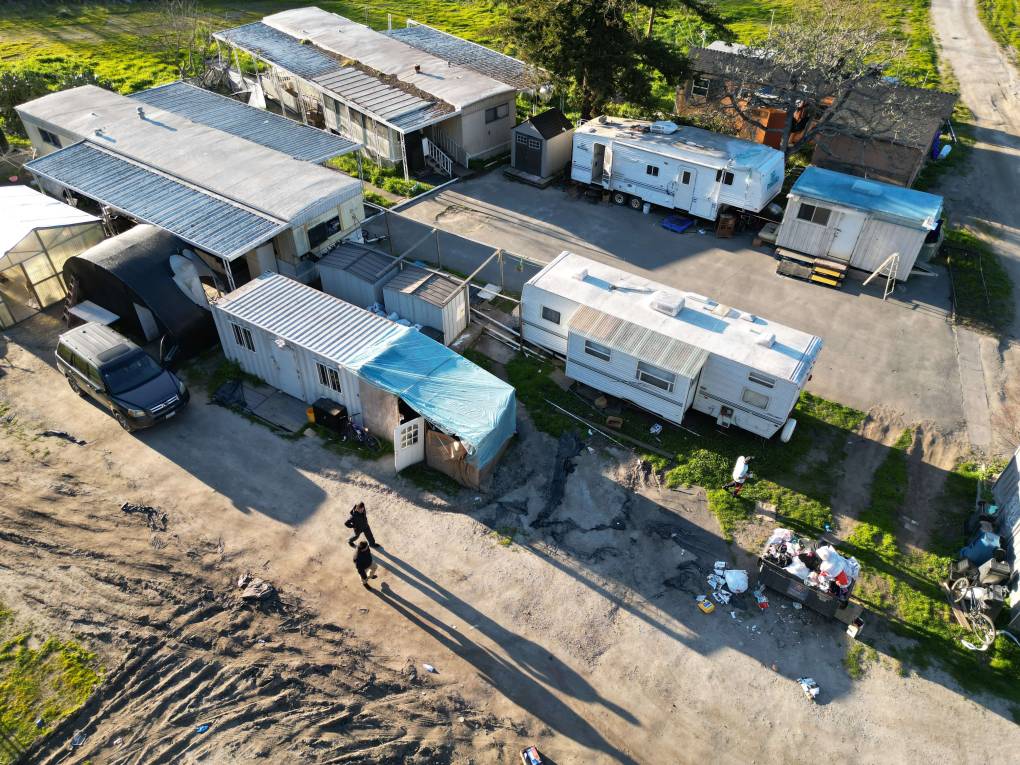
"caption": "An aerial view of some trailers that house farmworkers and their families at California Terra Garden in Half Moon Bay, as seen on Thursday, Jan. 26, 2023. The suspect in the mass killing is believed to have lived with his wife in one of the trailers. ",
"description": "Some of the housing provided to the farmworkers and their families at the mushroom farm on Thursday, Jan. 26, 2023 in Half Moon Bay, Calif. The suspect is said to live with his wife in the upper left house with blue tarp.",
"title": "CAHALFMOON",
"credit": "Paul Kuroda/Washington Post, via Getty Images",
"status": "inherit",
"altTag": "An aerial view of a number of trailers on a farm site.",
"isLoading": false,
"fetchFailed": false
},
"news_11939373": {
"type": "attachments",
"id": "news_11939373",
"meta": {
"index": "attachments_1716263798",
"site": "news",
"id": "11939373",
"found": true
},
"parent": 11939361,
"imgSizes": {
"twentyfourteen-full-width": {
"file": "https://ww2.kqed.org/app/uploads/sites/10/2023/01/GettyImages-1246507852-1024x576.jpg",
"width": 1024,
"mimeType": "image/jpeg",
"height": 576
},
"thumbnail": {
"file": "https://ww2.kqed.org/app/uploads/sites/10/2023/01/GettyImages-1246507852-160x107.jpg",
"width": 160,
"mimeType": "image/jpeg",
"height": 107
},
"post-thumbnail": {
"file": "https://ww2.kqed.org/app/uploads/sites/10/2023/01/GettyImages-1246507852-672x372.jpg",
"width": 672,
"mimeType": "image/jpeg",
"height": 372
},
"kqedFullSize": {
"file": "https://ww2.kqed.org/app/uploads/sites/10/2023/01/GettyImages-1246507852.jpg",
"width": 1024,
"height": 683
},
"large": {
"file": "https://ww2.kqed.org/app/uploads/sites/10/2023/01/GettyImages-1246507852-1020x680.jpg",
"width": 1020,
"mimeType": "image/jpeg",
"height": 680
},
"medium": {
"file": "https://ww2.kqed.org/app/uploads/sites/10/2023/01/GettyImages-1246507852-800x534.jpg",
"width": 800,
"mimeType": "image/jpeg",
"height": 534
}
},
"publishDate": 1674775294,
"modified": 1674780128,
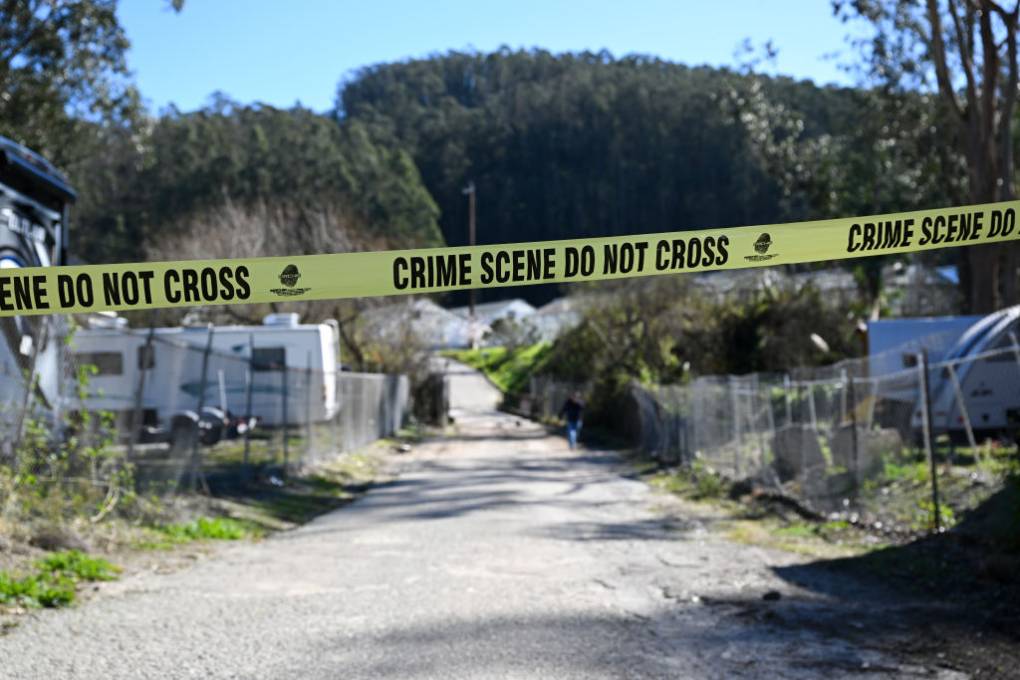
"caption": "Police cordon off the crime scene of a mass shooting that left seven people dead and one injured on Monday, in Half Moon Bay, on Jan. 24, 2023. The shooting happened at two locations, with four people killed at one farm and three at another. A 66-year-old man named Chunli Zhao was identified as the suspect and taken into custody, the San Mateo County Sheriff's Office said.",
"description": null,
"title": "California: Half Moon Bay shooting",
"credit": "Tayfun Coskun/Anadolu Agency via Getty Images",
"status": "inherit",
"altTag": "A crime scene tape cordons off hot houses and RVs and a road in the background.",
"isLoading": false,
"fetchFailed": false
},
"news_11939254": {
"type": "attachments",
"id": "news_11939254",
"meta": {
"index": "attachments_1716263798",
"site": "news",
"id": "11939254",
"found": true
},
"parent": 11939214,
"imgSizes": {
"twentyfourteen-full-width": {
"file": "https://ww2.kqed.org/app/uploads/sites/10/2023/01/GettyImages-1459291559-1024x576.jpg",
"width": 1024,
"mimeType": "image/jpeg",
"height": 576
},
"thumbnail": {
"file": "https://ww2.kqed.org/app/uploads/sites/10/2023/01/GettyImages-1459291559-160x120.jpg",
"width": 160,
"mimeType": "image/jpeg",
"height": 120
},
"post-thumbnail": {
"file": "https://ww2.kqed.org/app/uploads/sites/10/2023/01/GettyImages-1459291559-672x372.jpg",
"width": 672,
"mimeType": "image/jpeg",
"height": 372
},
"kqedFullSize": {
"file": "https://ww2.kqed.org/app/uploads/sites/10/2023/01/GettyImages-1459291559.jpg",
"width": 1024,
"height": 766
},
"large": {
"file": "https://ww2.kqed.org/app/uploads/sites/10/2023/01/GettyImages-1459291559-1020x763.jpg",
"width": 1020,
"mimeType": "image/jpeg",
"height": 763
},
"medium": {
"file": "https://ww2.kqed.org/app/uploads/sites/10/2023/01/GettyImages-1459291559-800x598.jpg",
"width": 800,
"mimeType": "image/jpeg",
"height": 598
}
},
"publishDate": 1674694597,
"modified": 1674695883,
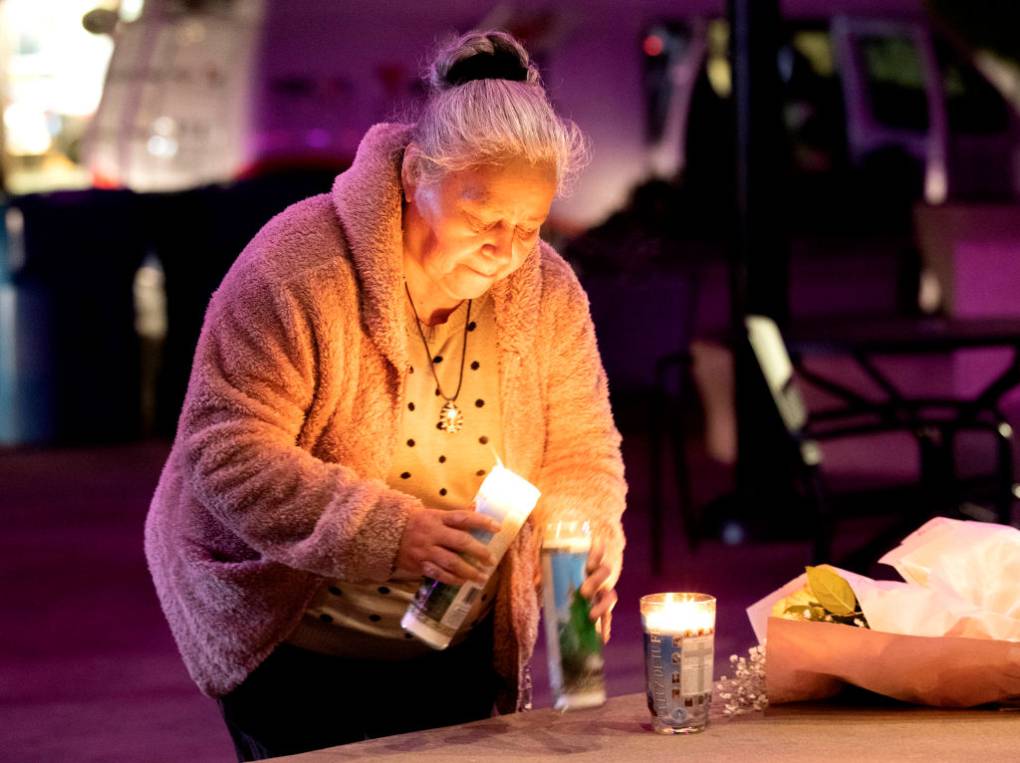
"caption": "A woman holds candles at a makeshift memorial to honor mass shooting victims on Jan. 24, 2023, in Half Moon Bay. Seven people were killed and one critically wounded in shootings at two separate locations in Half Moon Bay on Jan. 23.",
"description": null,
"title": "People Mourn For Victims Killed In Half Moon Bay Mass Shootings",
"credit": "Liu Guanguan/China News Service/VCG via Getty Images",
"status": "inherit",
"altTag": "An elderly Latina woman lights a candle at a memorial",
"isLoading": false,
"fetchFailed": false
},
"news_11938995": {
"type": "attachments",
"id": "news_11938995",
"meta": {
"index": "attachments_1716263798",
"site": "news",
"id": "11938995",
"found": true
},
"parent": 11938972,
"imgSizes": {
"twentyfourteen-full-width": {
"file": "https://ww2.kqed.org/app/uploads/sites/10/2023/01/1000-2-1000x576.jpg",
"width": 1000,
"mimeType": "image/jpeg",
"height": 576
},
"thumbnail": {
"file": "https://ww2.kqed.org/app/uploads/sites/10/2023/01/1000-2-160x107.jpg",
"width": 160,
"mimeType": "image/jpeg",
"height": 107
},
"post-thumbnail": {
"file": "https://ww2.kqed.org/app/uploads/sites/10/2023/01/1000-2-672x372.jpg",
"width": 672,
"mimeType": "image/jpeg",
"height": 372
},
"kqedFullSize": {
"file": "https://ww2.kqed.org/app/uploads/sites/10/2023/01/1000-2.jpg",
"width": 1000,
"height": 667
},
"medium": {
"file": "https://ww2.kqed.org/app/uploads/sites/10/2023/01/1000-2-800x534.jpg",
"width": 800,
"mimeType": "image/jpeg",
"height": 534
}
},
"publishDate": 1674535460,
"modified": 1674535512,
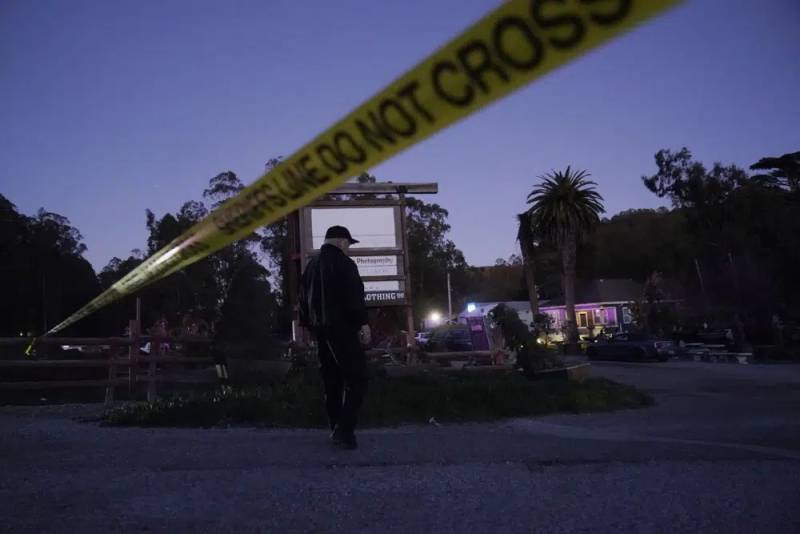
"caption": "Law enforcement cordon off one of the crime scenes in Half Moon Bay on Jan. 23, 2023. Seven people were killed in two related shootings, officials say, and the suspect is now in custody.",
"description": null,
"title": "1000 (2)",
"credit": "Jeff Chiu/AP",
"status": "inherit",
"altTag": null,
"isLoading": false,
"fetchFailed": false
},
"news_11939080": {
"type": "attachments",
"id": "news_11939080",
"meta": {
"index": "attachments_1716263798",
"site": "news",
"id": "11939080",
"found": true
},
"parent": 11938972,
"imgSizes": {
"twentyfourteen-full-width": {
"file": "https://ww2.kqed.org/app/uploads/sites/10/2023/01/HMBMain-1038x576.jpg",
"width": 1038,
"mimeType": "image/jpeg",
"height": 576
},
"thumbnail": {
"file": "https://ww2.kqed.org/app/uploads/sites/10/2023/01/HMBMain-160x107.jpg",
"width": 160,
"mimeType": "image/jpeg",
"height": 107
},
"post-thumbnail": {
"file": "https://ww2.kqed.org/app/uploads/sites/10/2023/01/HMBMain-672x372.jpg",
"width": 672,
"mimeType": "image/jpeg",
"height": 372
},
"kqedFullSize": {
"file": "https://ww2.kqed.org/app/uploads/sites/10/2023/01/HMBMain.jpg",
"width": 1920,
"height": 1280
},
"large": {
"file": "https://ww2.kqed.org/app/uploads/sites/10/2023/01/HMBMain-1020x680.jpg",
"width": 1020,
"mimeType": "image/jpeg",
"height": 680
},
"1536x1536": {
"file": "https://ww2.kqed.org/app/uploads/sites/10/2023/01/HMBMain-1536x1024.jpg",
"width": 1536,
"mimeType": "image/jpeg",
"height": 1024
},
"medium": {
"file": "https://ww2.kqed.org/app/uploads/sites/10/2023/01/HMBMain-800x533.jpg",
"width": 800,
"mimeType": "image/jpeg",
"height": 533
}
},
"publishDate": 1674609027,
"modified": 1674609159,
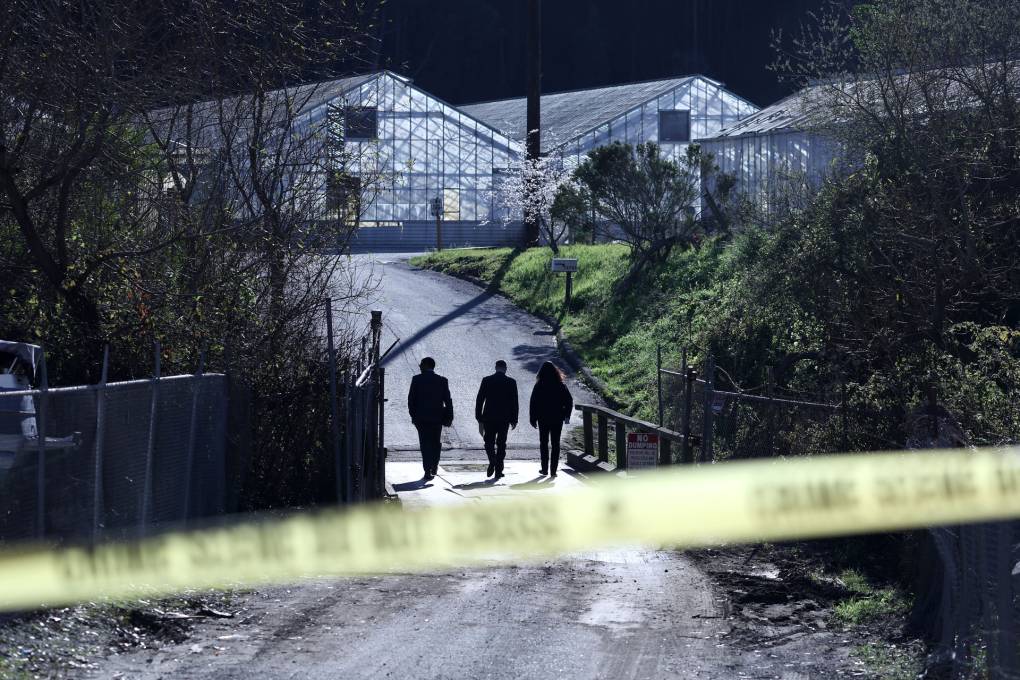
"caption": "FBI agents arrive on Tuesday at a farm where a mass shooting occurred on Monday in Half Moon Bay. Seven people were killed at two separate farm locations that were only a few miles apart.",
"description": null,
"title": "HMBMain",
"credit": "Justin Sullivan/Getty Images",
"status": "inherit",
"altTag": "three figures walk along a road towards what appear to be greenhouses in the distance as a yellow crime scene tape crosses the image in the foreground",
"isLoading": false,
"fetchFailed": false
},
"news_11924293": {
"type": "attachments",
"id": "news_11924293",
"meta": {
"index": "attachments_1716263798",
"site": "news",
"id": "11924293",
"found": true
},
"parent": 11924242,
"imgSizes": {
"twentyfourteen-full-width": {
"file": "https://ww2.kqed.org/app/uploads/sites/10/2022/08/Photo-Aug-01-10-32-06-AM-1038x576.jpg",
"width": 1038,
"mimeType": "image/jpeg",
"height": 576
},
"thumbnail": {
"file": "https://ww2.kqed.org/app/uploads/sites/10/2022/08/Photo-Aug-01-10-32-06-AM-160x120.jpg",
"width": 160,
"mimeType": "image/jpeg",
"height": 120
},
"post-thumbnail": {
"file": "https://ww2.kqed.org/app/uploads/sites/10/2022/08/Photo-Aug-01-10-32-06-AM-672x372.jpg",
"width": 672,
"mimeType": "image/jpeg",
"height": 372
},
"kqedFullSize": {
"file": "https://ww2.kqed.org/app/uploads/sites/10/2022/08/Photo-Aug-01-10-32-06-AM-scaled.jpg",
"width": 2560,
"height": 1920
},
"2048x2048": {
"file": "https://ww2.kqed.org/app/uploads/sites/10/2022/08/Photo-Aug-01-10-32-06-AM-2048x1536.jpg",
"width": 2048,
"mimeType": "image/jpeg",
"height": 1536
},
"large": {
"file": "https://ww2.kqed.org/app/uploads/sites/10/2022/08/Photo-Aug-01-10-32-06-AM-1020x765.jpg",
"width": 1020,
"mimeType": "image/jpeg",
"height": 765
},
"1536x1536": {
"file": "https://ww2.kqed.org/app/uploads/sites/10/2022/08/Photo-Aug-01-10-32-06-AM-1536x1152.jpg",
"width": 1536,
"mimeType": "image/jpeg",
"height": 1152
},
"full-width": {
"file": "https://ww2.kqed.org/app/uploads/sites/10/2022/08/Photo-Aug-01-10-32-06-AM-1920x1440.jpg",
"width": 1920,
"mimeType": "image/jpeg",
"height": 1440
},
"medium": {
"file": "https://ww2.kqed.org/app/uploads/sites/10/2022/08/Photo-Aug-01-10-32-06-AM-800x600.jpg",
"width": 800,
"mimeType": "image/jpeg",
"height": 600
}
},
"publishDate": 1661977382,
"modified": 1662496349,
"caption": "A cluster of 19th-century gravestones sits amid Monterey cypress trees dripping with moss in the Purissima Cemetery, located 4 miles south of Half Moon Bay.",
"description": "A cluster of 19th century gravestones sit amidst Monterey cypress trees dripping with moss in the Purissima Cemetery, located four miles south of Half Moon Bay.",
"title": "Photo Aug 01, 10 32 06 AM",
"credit": "Rachael Myrow/KQED",
"status": "inherit",
"altTag": "Old gravestones sit in a cemetery filled with Monterey cypress trees dripping with moss.",
"isLoading": false,
"fetchFailed": false
},
"news_11904927": {
"type": "attachments",
"id": "news_11904927",
"meta": {
"index": "attachments_1716263798",
"site": "news",
"id": "11904927",
"found": true
},
"parent": 11904843,
"imgSizes": {
"twentyfourteen-full-width": {
"file": "https://ww2.kqed.org/app/uploads/sites/10/2022/02/MARQUEE_920-915x576.jpg",
"width": 915,
"mimeType": "image/jpeg",
"height": 576
},
"thumbnail": {
"file": "https://ww2.kqed.org/app/uploads/sites/10/2022/02/MARQUEE_920-160x108.jpg",
"width": 160,
"mimeType": "image/jpeg",
"height": 108
},
"post-thumbnail": {
"file": "https://ww2.kqed.org/app/uploads/sites/10/2022/02/MARQUEE_920-672x372.jpg",
"width": 672,
"mimeType": "image/jpeg",
"height": 372
},
"kqedFullSize": {
"file": "https://ww2.kqed.org/app/uploads/sites/10/2022/02/MARQUEE_920.jpg",
"width": 915,
"height": 617
},
"medium": {
"file": "https://ww2.kqed.org/app/uploads/sites/10/2022/02/MARQUEE_920-800x539.jpg",
"width": 800,
"mimeType": "image/jpeg",
"height": 539
}
},
"publishDate": 1644619481,
"modified": 1644619481,
"caption": null,
"description": null,
"title": "MARQUEE_920",
"credit": null,
"status": "inherit",
"altTag": null,
"isLoading": false,
"fetchFailed": false
},
"news_11897962": {
"type": "attachments",
"id": "news_11897962",
"meta": {
"index": "attachments_1716263798",
"site": "news",
"id": "11897962",
"found": true
},
"parent": 11897959,
"imgSizes": {
"twentyfourteen-full-width": {
"file": "https://ww2.kqed.org/app/uploads/sites/10/2021/12/Matthew-Cadiagn-Hearn-1038x576.png",
"width": 1038,
"mimeType": "image/png",
"height": 576
},
"thumbnail": {
"file": "https://ww2.kqed.org/app/uploads/sites/10/2021/12/Matthew-Cadiagn-Hearn-160x128.png",
"width": 160,
"mimeType": "image/png",
"height": 128
},
"post-thumbnail": {
"file": "https://ww2.kqed.org/app/uploads/sites/10/2021/12/Matthew-Cadiagn-Hearn-672x372.png",
"width": 672,
"mimeType": "image/png",
"height": 372
},
"kqedFullSize": {
"file": "https://ww2.kqed.org/app/uploads/sites/10/2021/12/Matthew-Cadiagn-Hearn.png",
"width": 1872,
"height": 1494
},
"large": {
"file": "https://ww2.kqed.org/app/uploads/sites/10/2021/12/Matthew-Cadiagn-Hearn-1020x814.png",
"width": 1020,
"mimeType": "image/png",
"height": 814
},
"1536x1536": {
"file": "https://ww2.kqed.org/app/uploads/sites/10/2021/12/Matthew-Cadiagn-Hearn-1536x1226.png",
"width": 1536,
"mimeType": "image/png",
"height": 1226
},
"medium": {
"file": "https://ww2.kqed.org/app/uploads/sites/10/2021/12/Matthew-Cadiagn-Hearn-800x638.png",
"width": 800,
"mimeType": "image/png",
"height": 638
}
},
"publishDate": 1638495380,
"modified": 1638901995,
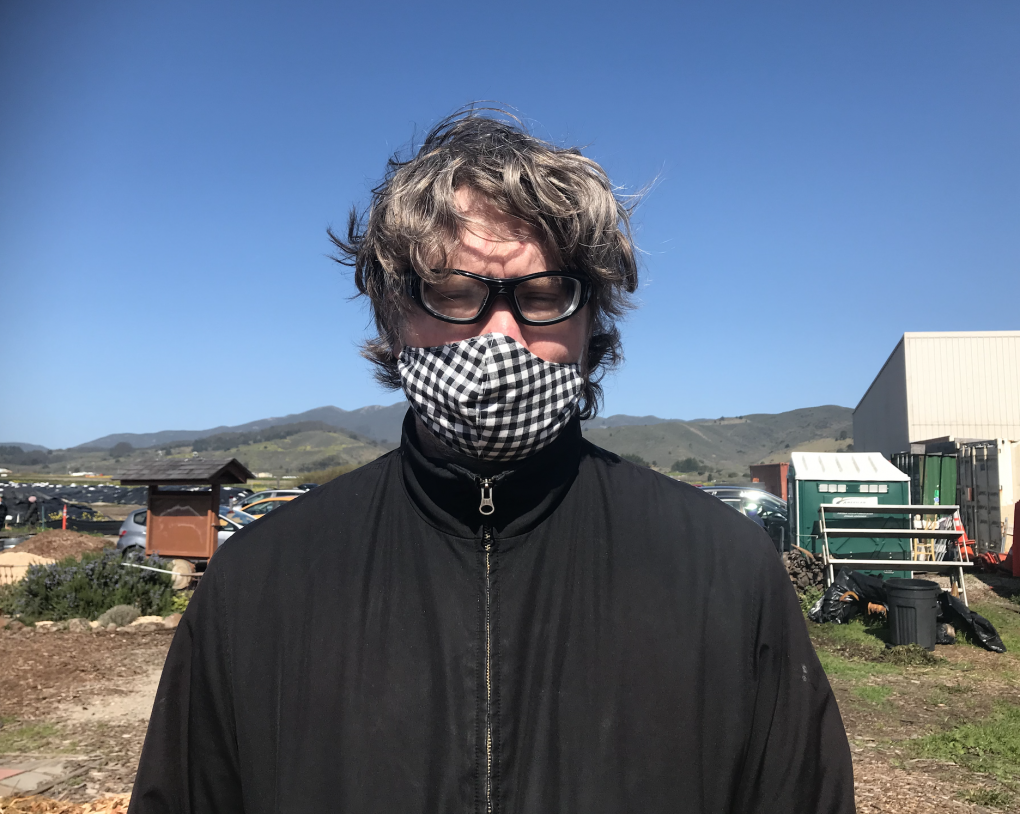
"caption": "Matthew Cadigan Hearn at Big Wave Farm, an intentional community designed to provide adults with intellectual and developmental disabilities the opportunity to live a fulfilling, independent life among their peers.",
"description": "Matthew Cadigan Hearn at Big Wave Farm, an intentional community designed to provide adults with intellectual and developmental disabilities the opportunity to live a fulfilling, independent life among their peers.",
"title": "Matthew Cadigan Hearn at Big Wave Farm.",
"credit": "KQED/Polly Stryker",
"status": "inherit",
"altTag": "A man with curly, blond hair stands in the center frame of a photo wearing glasses and a COVID mask.",
"isLoading": false,
"fetchFailed": false
}
},
"audioPlayerReducer": {
"postId": "stream_live",
"isPaused": true,
"isPlaying": false,
"pfsActive": false,
"pledgeModalIsOpen": true,
"playerDrawerIsOpen": false,
"liveAudioPlayStartedAt": 0,
"liveAudioPlayContext": ""
},
"authorsReducer": {
"gmarzorati": {
"type": "authors",
"id": "227",
"meta": {
"index": "authors_1716337520",
"id": "227",
"found": true
},
"name": "Guy Marzorati",
"firstName": "Guy",
"lastName": "Marzorati",
"slug": "gmarzorati",
"email": "gmarzorati@KQED.org",
"display_author_email": true,
"staff_mastheads": [
"news"
],
"title": "Correspondent",
"bio": "Guy Marzorati is a correspondent on KQED's California Politics and Government Desk, based in San Jose. A graduate of Santa Clara University, Guy joined KQED in 2013. He reports on state and local politics and produces KQED's digital voter guide.",
"avatar": "https://secure.gravatar.com/avatar/e7038b8dbfd55b104369b76b1cd0b9de?s=600&d=blank&r=g",
"twitter": "guymarzorati",
"facebook": null,
"instagram": null,
"linkedin": null,
"sites": [
{
"site": "",
"roles": [
"editor"
]
},
{
"site": "news",
"roles": [
"editor"
]
},
{
"site": "science",
"roles": [
"editor"
]
},
{
"site": "forum",
"roles": [
"editor"
]
},
{
"site": "elections",
"roles": [
"editor"
]
},
{
"site": "liveblog",
"roles": [
"editor"
]
}
],
"headData": {
"title": "Guy Marzorati | KQED",
"description": "Correspondent",
"ogImgSrc": "https://secure.gravatar.com/avatar/e7038b8dbfd55b104369b76b1cd0b9de?s=600&d=blank&r=g",
"twImgSrc": "https://secure.gravatar.com/avatar/e7038b8dbfd55b104369b76b1cd0b9de?s=600&d=blank&r=g"
},
"isLoading": false,
"link": "/author/gmarzorati"
},
"kqed": {
"type": "authors",
"id": "236",
"meta": {
"index": "authors_1716337520",
"id": "236",
"found": true
},
"name": "KQED News Staff",
"firstName": "KQED News Staff",
"lastName": null,
"slug": "kqed",
"email": "faq@kqed.org",
"display_author_email": false,
"staff_mastheads": [],
"title": null,
"bio": null,
"avatar": "https://secure.gravatar.com/avatar/ef0e801a68c4c54afa9180db14084167?s=600&d=blank&r=g",
"twitter": null,
"facebook": null,
"instagram": null,
"linkedin": null,
"sites": [
{
"site": "arts",
"roles": [
"contributor"
]
},
{
"site": "news",
"roles": [
"editor"
]
},
{
"site": "futureofyou",
"roles": [
"author"
]
}
],
"headData": {
"title": "KQED News Staff | KQED",
"description": null,
"ogImgSrc": "https://secure.gravatar.com/avatar/ef0e801a68c4c54afa9180db14084167?s=600&d=blank&r=g",
"twImgSrc": "https://secure.gravatar.com/avatar/ef0e801a68c4c54afa9180db14084167?s=600&d=blank&r=g"
},
"isLoading": false,
"link": "/author/kqed"
},
"pollystryker": {
"type": "authors",
"id": "250",
"meta": {
"index": "authors_1716337520",
"id": "250",
"found": true
},
"name": "Polly Stryker",
"firstName": "Polly",
"lastName": "Stryker",
"slug": "pollystryker",
"email": "pstryker@kqed.org",
"display_author_email": false,
"staff_mastheads": [
"science"
],
"title": "Editor",
"bio": "Polly Stryker is a former editor for KQED's Science desk. She and reporter/host Rachael Myrow produced the KQED podcast, \u003ca href=\"http://www.npr.org/podcasts/448072249/love-in-the-digital-age\">Love in the Digital Age\u003c/a>.\r\n\r\nPolly has worked for a variety of news and public affairs programs, including most recently as editor of \u003cem>The California Report\u003c/em>. She also edited \u003ca href=\"https://ww2.kqed.org/news/programs/the-california-report\" target=\"_blank\" rel=\"noopener noreferrer\">\u003cem>The California Report'\u003c/em>s\u003c/a> \u003ca href=\"http://www.californiareport.org/healthdialogues/\" target=\"_blank\" rel=\"noopener noreferrer\">“Health Dialogues.”\u003c/a> Before that, she was a producer on \u003cem>\u003ca href=\"http://www.scpr.org/programs/airtalk/\" target=\"_blank\" rel=\"noopener noreferrer\">AirTalk\u003c/a>\u003c/em> with Larry Mantle on \u003ca href=\"http://www.scpr.org/\" target=\"_blank\" rel=\"noopener noreferrer\">KPCC\u003c/a> radio, and \u003cem>\u003ca href=\"http://www.kpbs.org/news/midday-edition/\">These Days\u003c/a>\u003c/em> on KPBS. Polly’s work has won awards from the Radio and Television News Directors Association of Northern California, the Society of Professional Journalists (Southern California and Northern California chapters), the Radio and Television News Association. She's also won a Taste Award.\r\n\r\nShe considers herself to be a citizen of the world, having grown up in Cairo before coming to the United States. Polly speaks Arabic and can say, \"I’d like a martini, please\" in Swahili.",
"avatar": "https://secure.gravatar.com/avatar/5012854a99868cb15a517a876d88f736?s=600&d=blank&r=g",
"twitter": null,
"facebook": null,
"instagram": null,
"linkedin": null,
"sites": [
{
"site": "",
"roles": [
"editor"
]
},
{
"site": "arts",
"roles": [
"administrator"
]
},
{
"site": "news",
"roles": [
"subscriber"
]
},
{
"site": "stateofhealth",
"roles": [
"author"
]
},
{
"site": "science",
"roles": [
"editor"
]
},
{
"site": "forum",
"roles": [
"editor"
]
}
],
"headData": {
"title": "Polly Stryker | KQED",
"description": "Editor",
"ogImgSrc": "https://secure.gravatar.com/avatar/5012854a99868cb15a517a876d88f736?s=600&d=blank&r=g",
"twImgSrc": "https://secure.gravatar.com/avatar/5012854a99868cb15a517a876d88f736?s=600&d=blank&r=g"
},
"isLoading": false,
"link": "/author/pollystryker"
},
"rachael-myrow": {
"type": "authors",
"id": "251",
"meta": {
"index": "authors_1716337520",
"id": "251",
"found": true
},
"name": "Rachael Myrow",
"firstName": "Rachael",
"lastName": "Myrow",
"slug": "rachael-myrow",
"email": "rmyrow@kqed.org",
"display_author_email": true,
"staff_mastheads": [
"news"
],
"title": "Senior Editor of KQED's Silicon Valley News Desk",
"bio": "• I write and edit stories about how Silicon Valley power and policies shape everyday life in California. I’m also passionate about making Bay Area history and culture more accessible to a broad public. • I’ve been a journalist for most of my life, starting in high school with The Franklin Press in Los Angeles, where I grew up. While earning my first degree in English at UC Berkeley, I got my start in public radio at KALX-FM. After completing a second degree in journalism at Cal, I landed my first professional job at Marketplace, then moved on to KPCC (now LAist), and then KQED, where I hosted The California Report for more than seven years. • My reporting has appeared on NPR, The World, WBUR’s \u003ci>Here & Now\u003c/i>, and the BBC. I also guest host for KQED’s \u003ci>Forum\u003c/i>, as well as the Commonwealth Club in San Francisco. • I speak periodically on media, democracy and technology issues, and do voiceover work for documentaries and educational video projects. • Outside of the studio, you'll find me hiking Bay Area trails and whipping up Insta-ready meals in my kitchen. • I do not accept gifts, money, or favors from anyone connected to my reporting, I don't pay people for information, and I do not support or donate to political causes. • I strive to treat the people I report on with fairness, honesty, and respect. I also recognize there are often multiple sides to a story and work to verify information through multiple sources and documentation. If I get something wrong, I correct it.",
"avatar": "https://secure.gravatar.com/avatar/87bf8cb5874e045cdff430523a6d48b1?s=600&d=blank&r=g",
"twitter": "rachaelmyrow",
"facebook": null,
"instagram": null,
"linkedin": "https://www.linkedin.com/in/rachaelmyrow/",
"sites": [
{
"site": "arts",
"roles": [
"administrator"
]
},
{
"site": "news",
"roles": [
"edit_others_posts",
"editor"
]
},
{
"site": "futureofyou",
"roles": [
"editor"
]
},
{
"site": "bayareabites",
"roles": [
"editor"
]
},
{
"site": "stateofhealth",
"roles": [
"editor"
]
},
{
"site": "science",
"roles": [
"editor"
]
},
{
"site": "food",
"roles": [
"editor"
]
},
{
"site": "forum",
"roles": [
"editor"
]
},
{
"site": "liveblog",
"roles": [
"author"
]
}
],
"headData": {
"title": "Rachael Myrow | KQED",
"description": "Senior Editor of KQED's Silicon Valley News Desk",
"ogImgSrc": "https://secure.gravatar.com/avatar/87bf8cb5874e045cdff430523a6d48b1?s=600&d=blank&r=g",
"twImgSrc": "https://secure.gravatar.com/avatar/87bf8cb5874e045cdff430523a6d48b1?s=600&d=blank&r=g"
},
"isLoading": false,
"link": "/author/rachael-myrow"
},
"tychehendricks": {
"type": "authors",
"id": "259",
"meta": {
"index": "authors_1716337520",
"id": "259",
"found": true
},
"name": "Tyche Hendricks",
"firstName": "Tyche",
"lastName": "Hendricks",
"slug": "tychehendricks",
"email": "thendricks@kqed.org",
"display_author_email": true,
"staff_mastheads": [
"news"
],
"title": "KQED Senior Editor, Immigration",
"bio": "\u003cspan style=\"font-weight: 400;\">Tyche Hendricks is KQED’s senior editor for immigration, leading coverage of the policy and politics that affect California’s immigrant communities. Her work for KQED’s radio and online audiences is also carried on NPR and other national outlets. She has been recognized with awards from the Radio and Television News Directors Association, the Society for Professional Journalists; the Education Writers Association; the Best of the West and the National Federation of Community Broadcasters. Before joining KQED in 2010, Tyche spent more than a dozen years as a newspaper reporter, notably at the \u003c/span>\u003ci>\u003cspan style=\"font-weight: 400;\">San Francisco Chronicle\u003c/span>\u003c/i>\u003cspan style=\"font-weight: 400;\">. At different times she has covered criminal justice, government and politics and urban planning. Tyche has taught in the MFA Creative Writing program at the University of San Francisco and at UC Berkeley’s Graduate School of Journalism, where she was co-director of a national immigration symposium for professional journalists. She is the author of \u003c/span>\u003ci>\u003cspan style=\"font-weight: 400;\">The Wind Doesn't Need a Passport: Stories from the U.S.-Mexico Borderlands\u003c/span>\u003c/i>\u003cspan style=\"font-weight: 400;\"> (University of California Press). \u003c/span>",
"avatar": "https://secure.gravatar.com/avatar/b8ee458e2731c2d43df86882ce17267e?s=600&d=blank&r=g",
"twitter": "tychehendricks",
"facebook": null,
"instagram": null,
"linkedin": null,
"sites": [
{
"site": "news",
"roles": [
"editor"
]
},
{
"site": "stateofhealth",
"roles": [
"editor"
]
}
],
"headData": {
"title": "Tyche Hendricks | KQED",
"description": "KQED Senior Editor, Immigration",
"ogImgSrc": "https://secure.gravatar.com/avatar/b8ee458e2731c2d43df86882ce17267e?s=600&d=blank&r=g",
"twImgSrc": "https://secure.gravatar.com/avatar/b8ee458e2731c2d43df86882ce17267e?s=600&d=blank&r=g"
},
"isLoading": false,
"link": "/author/tychehendricks"
},
"matthewgreen": {
"type": "authors",
"id": "1263",
"meta": {
"index": "authors_1716337520",
"id": "1263",
"found": true
},
"name": "Matthew Green",
"firstName": "Matthew",
"lastName": "Green",
"slug": "matthewgreen",
"email": "mgreen@kqed.org",
"display_author_email": false,
"staff_mastheads": [],
"title": "KQED Editor/Reporter",
"bio": "Matthew Green is a digital media producer for KQED News. He previously produced \u003ca href=\"http://www.kqed.org/lowdown\">The Lowdown\u003c/a>, KQED’s multimedia news education blog. Matthew's written for numerous Bay Area publications, including the Oakland Tribune and San Francisco Chronicle. He also taught journalism classes at Fremont High School in East Oakland.\r\n\r\nEmail: mgreen@kqed.org; Twitter: @MGreenKQED",
"avatar": "https://secure.gravatar.com/avatar/3bf498d1267ca02c8494f33d8cfc575e?s=600&d=blank&r=g",
"twitter": "MGreenKQED",
"facebook": null,
"instagram": null,
"linkedin": null,
"sites": [
{
"site": "news",
"roles": []
},
{
"site": "lowdown",
"roles": []
},
{
"site": "science",
"roles": []
},
{
"site": "education",
"roles": []
},
{
"site": "quest",
"roles": []
},
{
"site": "liveblog",
"roles": []
}
],
"headData": {
"title": "Matthew Green | KQED",
"description": "KQED Editor/Reporter",
"ogImgSrc": "https://secure.gravatar.com/avatar/3bf498d1267ca02c8494f33d8cfc575e?s=600&d=blank&r=g",
"twImgSrc": "https://secure.gravatar.com/avatar/3bf498d1267ca02c8494f33d8cfc575e?s=600&d=blank&r=g"
},
"isLoading": false,
"link": "/author/matthewgreen"
},
"mlagos": {
"type": "authors",
"id": "3239",
"meta": {
"index": "authors_1716337520",
"id": "3239",
"found": true
},
"name": "Marisa Lagos",
"firstName": "Marisa",
"lastName": "Lagos",
"slug": "mlagos",
"email": "mlagos@kqed.org",
"display_author_email": false,
"staff_mastheads": [
"news"
],
"title": "KQED Contributor",
"bio": "Marisa Lagos is a correspondent for KQED’s California Politics and Government Desk and co-hosts the award-winning show and podcast, Political Breakdown. At KQED, Lagos also conducts reporting, analysis and investigations into state, local and national politics for radio, TV, online and onstage. In 2022, she and co-host, Scott Shafer, moderated the only gubernatorial debate in California. In 2020, the \u003ci>Washington Post\u003c/i> named her one of the top political journalists in California; she was nominated for a Peabody and won several other awards for her work investigating the 2017 California wildfires. She has worked at the \u003ci>San Francisco Chronicle\u003c/i>, \u003ci>San Francisco Examiner\u003c/i> and \u003ci>Los Angeles Times\u003c/i>. A UC Santa Barbara graduate, she lives in San Francisco with her two sons and husband.",
"avatar": "https://secure.gravatar.com/avatar/a261a0d3696fc066871ef96b85b5e7d2?s=600&d=blank&r=g",
"twitter": "@mlagos",
"facebook": null,
"instagram": null,
"linkedin": null,
"sites": [
{
"site": "arts",
"roles": [
"author"
]
},
{
"site": "news",
"roles": [
"editor"
]
},
{
"site": "science",
"roles": [
"editor"
]
},
{
"site": "forum",
"roles": [
"author"
]
},
{
"site": "liveblog",
"roles": [
"author"
]
}
],
"headData": {
"title": "Marisa Lagos | KQED",
"description": "KQED Contributor",
"ogImgSrc": "https://secure.gravatar.com/avatar/a261a0d3696fc066871ef96b85b5e7d2?s=600&d=blank&r=g",
"twImgSrc": "https://secure.gravatar.com/avatar/a261a0d3696fc066871ef96b85b5e7d2?s=600&d=blank&r=g"
},
"isLoading": false,
"link": "/author/mlagos"
},
"ecruzguevarra": {
"type": "authors",
"id": "8654",
"meta": {
"index": "authors_1716337520",
"id": "8654",
"found": true
},
"name": "Ericka Cruz Guevarra",
"firstName": "Ericka",
"lastName": "Cruz Guevarra",
"slug": "ecruzguevarra",
"email": "ecruzguevarra@kqed.org",
"display_author_email": true,
"staff_mastheads": [
"news"
],
"title": "Producer, The Bay Podcast",
"bio": "Ericka Cruz Guevarra is host of \u003ca href=\"https://www.kqed.org/podcasts/thebay\">\u003cem>The Bay\u003c/em>\u003c/a> podcast at KQED. Before host, she was the show’s producer. Her work in that capacity includes a three-part reported series on policing in Vallejo, which won a 2020 excellence in journalism award from the Society of Professional Journalists. Ericka has worked as a breaking news reporter at Oregon Public Broadcasting, helped produce the Code Switch podcast, and was KQED’s inaugural Raul Ramirez Diversity Fund intern. She’s also an alumna of NPR’s Next Generation Radio program. Send her an email if you have strong feelings about whether Fairfield and Suisun City are the Bay. Ericka is represented by SAG-AFTRA.",
"avatar": "https://secure.gravatar.com/avatar/25e5ab8d3d53fad2dcc7bb2b5c506b1a?s=600&d=blank&r=g",
"twitter": "NotoriousECG",
"facebook": null,
"instagram": null,
"linkedin": null,
"sites": [
{
"site": "arts",
"roles": [
"subscriber"
]
},
{
"site": "news",
"roles": [
"editor",
"manage_categories"
]
},
{
"site": "futureofyou",
"roles": [
"subscriber"
]
},
{
"site": "stateofhealth",
"roles": [
"subscriber"
]
},
{
"site": "science",
"roles": [
"editor"
]
},
{
"site": "forum",
"roles": [
"subscriber"
]
}
],
"headData": {
"title": "Ericka Cruz Guevarra | KQED",
"description": "Producer, The Bay Podcast",
"ogImgSrc": "https://secure.gravatar.com/avatar/25e5ab8d3d53fad2dcc7bb2b5c506b1a?s=600&d=blank&r=g",
"twImgSrc": "https://secure.gravatar.com/avatar/25e5ab8d3d53fad2dcc7bb2b5c506b1a?s=600&d=blank&r=g"
},
"isLoading": false,
"link": "/author/ecruzguevarra"
},
"fjhabvala": {
"type": "authors",
"id": "8659",
"meta": {
"index": "authors_1716337520",
"id": "8659",
"found": true
},
"name": "Farida Jhabvala Romero",
"firstName": "Farida",
"lastName": "Jhabvala Romero",
"slug": "fjhabvala",
"email": "fjhabvala@kqed.org",
"display_author_email": true,
"staff_mastheads": [
"news"
],
"title": "KQED Contributor",
"bio": "\u003cspan style=\"font-weight: 400;\">Farida Jhabvala Romero is a Labor Correspondent for KQED. She previously covered immigration. Farida was \u003ca href=\"https://www.ccnma.org/2022-most-influential-latina-journalists\">named\u003c/a> one of the 10 Most Influential Latina Journalists in California in 2022 by the California Chicano News Media Association. Her work has won awards from the Society of Professional Journalists (Northern California), as well as a national and regional Edward M. Murrow Award for the collaborative reporting projects “Dangerous Air” and “Graying California.” \u003c/span>\u003cspan style=\"font-weight: 400;\">Before joining KQED, Farida worked as a producer at Radio Bilingüe, a national public radio network. Farida earned her master’s degree in journalism from Stanford University.\u003c/span>",
"avatar": "https://secure.gravatar.com/avatar/c3ab27c5554b67b478f80971e515aa02?s=600&d=blank&r=g",
"twitter": "FaridaJhabvala",
"facebook": null,
"instagram": null,
"linkedin": "https://www.linkedin.com/in/faridajhabvala/",
"sites": [
{
"site": "news",
"roles": [
"editor"
]
},
{
"site": "stateofhealth",
"roles": [
"author"
]
}
],
"headData": {
"title": "Farida Jhabvala Romero | KQED",
"description": "KQED Contributor",
"ogImgSrc": "https://secure.gravatar.com/avatar/c3ab27c5554b67b478f80971e515aa02?s=600&d=blank&r=g",
"twImgSrc": "https://secure.gravatar.com/avatar/c3ab27c5554b67b478f80971e515aa02?s=600&d=blank&r=g"
},
"isLoading": false,
"link": "/author/fjhabvala"
},
"bwatt": {
"type": "authors",
"id": "11238",
"meta": {
"index": "authors_1716337520",
"id": "11238",
"found": true
},
"name": "Brian Watt",
"firstName": "Brian",
"lastName": "Watt",
"slug": "bwatt",
"email": "bwatt@KQED.org",
"display_author_email": false,
"staff_mastheads": [
"news"
],
"title": "Morning News Anchor",
"bio": "Brian Watt is KQED's morning radio news anchor. He joined the KQED News team in April of 2016. Prior to that, he worked as a Reporter for KPCC in Los Angeles and a producer at \u003cem>Marketplace.\u003c/em>\r\n\r\nDuring eight years at KPCC, Brian covered business and economics, and his work won several awards. In 2008, he won the Los Angeles Press Club’s first-place award for Business and Financial Reporting, Broadcast. He’s also received honorable mention and been first runner up for the Press Club’s Radio Journalist of the Year. He won two Golden Mike awards from the Radio and TV News Association of Southern California.\r\n\r\nBrian holds degrees in theater from Yale University and the Sorbonne, and has worked as an actor in France, Italy, Brazil, Hungary and . . . Hollywood. He appeared in a few television shows, including \u003cem>The West Wing, Judging Amy\u003c/em> and \u003cem>The District.\u003c/em>\r\n\r\nEmail: bwatt@KQED.org Twitter: @RadioBWatt",
"avatar": "https://secure.gravatar.com/avatar/55393ff57ed34e2be773ba4789dd6a19?s=600&d=blank&r=g",
"twitter": "@RadioBWatt",
"facebook": null,
"instagram": null,
"linkedin": null,
"sites": [
{
"site": "arts",
"roles": [
"contributor"
]
},
{
"site": "news",
"roles": [
"editor"
]
}
],
"headData": {
"title": "Brian Watt | KQED",
"description": "Morning News Anchor",
"ogImgSrc": "https://secure.gravatar.com/avatar/55393ff57ed34e2be773ba4789dd6a19?s=600&d=blank&r=g",
"twImgSrc": "https://secure.gravatar.com/avatar/55393ff57ed34e2be773ba4789dd6a19?s=600&d=blank&r=g"
},
"isLoading": false,
"link": "/author/bwatt"
},
"amontecillo": {
"type": "authors",
"id": "11649",
"meta": {
"index": "authors_1716337520",
"id": "11649",
"found": true
},
"name": "Alan Montecillo",
"firstName": "Alan",
"lastName": "Montecillo",
"slug": "amontecillo",
"email": "amontecillo@kqed.org",
"display_author_email": false,
"staff_mastheads": [
"news"
],
"title": "KQED Contributor",
"bio": "Alan Montecillo is the senior editor of \u003cem>\u003ca href=\"http://kqed.org/thebay\">The Bay\u003c/a>, \u003c/em> KQED's local news podcast. Before moving to the Bay Area, he worked as a senior talk show producer for WILL in Champaign-Urbana, Illinois and at Oregon Public Broadcasting in Portland, Oregon. He has won journalism awards from the Society of Professional Journalists Northern California, the Public Media Journalists Association, The Signal Awards, and has also received a regional Edward R. Murrow award. Alan is a Filipino American from Hong Kong and a graduate of Reed College.",
"avatar": "https://secure.gravatar.com/avatar/d5e4e7a76481969ccba76f4e2b5ccabc?s=600&d=blank&r=g",
"twitter": "alanmontecillo",
"facebook": null,
"instagram": null,
"linkedin": null,
"sites": [
{
"site": "",
"roles": [
"editor"
]
},
{
"site": "news",
"roles": [
"editor",
"manage_categories"
]
}
],
"headData": {
"title": "Alan Montecillo | KQED",
"description": "KQED Contributor",
"ogImgSrc": "https://secure.gravatar.com/avatar/d5e4e7a76481969ccba76f4e2b5ccabc?s=600&d=blank&r=g",
"twImgSrc": "https://secure.gravatar.com/avatar/d5e4e7a76481969ccba76f4e2b5ccabc?s=600&d=blank&r=g"
},
"isLoading": false,
"link": "/author/amontecillo"
},
"blaberge": {
"type": "authors",
"id": "11667",
"meta": {
"index": "authors_1716337520",
"id": "11667",
"found": true
},
"name": "Beth LaBerge",
"firstName": "Beth",
"lastName": "LaBerge",
"slug": "blaberge",
"email": "blaberge@KQED.org",
"display_author_email": true,
"staff_mastheads": [
"news"
],
"title": "Photographer, News",
"bio": "Beth LaBerge is a visual journalist for \u003ca href=\"https://www.kqed.org/news\">KQED News\u003c/a>.",
"avatar": "https://secure.gravatar.com/avatar/15e224cd55918d1876693b8280954875?s=600&d=blank&r=g",
"twitter": null,
"facebook": null,
"instagram": "https://www.instagram.com/bethlaberge/",
"linkedin": null,
"sites": [
{
"site": "arts",
"roles": [
"editor"
]
},
{
"site": "news",
"roles": [
"editor"
]
},
{
"site": "science",
"roles": [
"editor",
"contributor",
"author"
]
},
{
"site": "liveblog",
"roles": [
"editor"
]
}
],
"headData": {
"title": "Beth LaBerge | KQED",
"description": "Photographer, News",
"ogImgSrc": "https://secure.gravatar.com/avatar/15e224cd55918d1876693b8280954875?s=600&d=blank&r=g",
"twImgSrc": "https://secure.gravatar.com/avatar/15e224cd55918d1876693b8280954875?s=600&d=blank&r=g"
},
"isLoading": false,
"link": "/author/blaberge"
},
"ccabreralomeli": {
"type": "authors",
"id": "11708",
"meta": {
"index": "authors_1716337520",
"id": "11708",
"found": true
},
"name": "Carlos Cabrera-Lomelí",
"firstName": "Carlos",
"lastName": "Cabrera-Lomelí",
"slug": "ccabreralomeli",
"email": "ccabreralomeli@KQED.org",
"display_author_email": true,
"staff_mastheads": [
"news"
],
"title": "Community Reporter",
"bio": "Carlos Cabrera-Lomelí is a community reporter with KQED's digital engagement team. He also reports and co-produces for KQED's bilingual news hub KQED en Español. He grew up in San Francisco's Mission District and has previously worked with Univision, 48 Hills and REFORMA in Mexico City.",
"avatar": "https://secure.gravatar.com/avatar/e95ff80bb2eaf18a8f2af4dcf7ffb54b?s=600&d=mm&r=g",
"twitter": "@LomeliCabrera",
"facebook": null,
"instagram": null,
"linkedin": null,
"sites": [
{
"site": "arts",
"roles": [
"editor"
]
},
{
"site": "news",
"roles": [
"editor"
]
},
{
"site": "about",
"roles": [
"editor"
]
},
{
"site": "science",
"roles": [
"editor"
]
},
{
"site": "perspectives",
"roles": [
"editor"
]
},
{
"site": "elections",
"roles": [
"editor"
]
},
{
"site": "liveblog",
"roles": [
"contributor"
]
}
],
"headData": {
"title": "Carlos Cabrera-Lomelí | KQED",
"description": "Community Reporter",
"ogImgSrc": "https://secure.gravatar.com/avatar/e95ff80bb2eaf18a8f2af4dcf7ffb54b?s=600&d=mm&r=g",
"twImgSrc": "https://secure.gravatar.com/avatar/e95ff80bb2eaf18a8f2af4dcf7ffb54b?s=600&d=mm&r=g"
},
"isLoading": false,
"link": "/author/ccabreralomeli"
},
"agonzalez": {
"type": "authors",
"id": "11724",
"meta": {
"index": "authors_1716337520",
"id": "11724",
"found": true
},
"name": "Alexander Gonzalez",
"firstName": "Alexander",
"lastName": "Gonzalez",
"slug": "agonzalez",
"email": "AlexanderGonzalez@KQED.org",
"display_author_email": false,
"staff_mastheads": [
"news"
],
"title": "KQED Contributor",
"bio": null,
"avatar": "https://secure.gravatar.com/avatar/9e291ed34e154df4c662edf858b641d70b4859939bfe40be478408f9dfd057d2?s=600&d=blank&r=g",
"twitter": null,
"bluesky": null,
"facebook": null,
"instagram": null,
"linkedin": null,
"sites": [
{
"site": "arts",
"roles": [
"editor"
]
},
{
"site": "news",
"roles": [
"editor"
]
},
{
"site": "science",
"roles": [
"editor"
]
}
],
"headData": {
"title": "Alexander Gonzalez | KQED",
"description": "KQED Contributor",
"ogImgSrc": "https://secure.gravatar.com/avatar/9e291ed34e154df4c662edf858b641d70b4859939bfe40be478408f9dfd057d2?s=600&d=blank&r=g",
"twImgSrc": "https://secure.gravatar.com/avatar/9e291ed34e154df4c662edf858b641d70b4859939bfe40be478408f9dfd057d2?s=600&d=blank&r=g"
},
"isLoading": false,
"link": "/author/agonzalez"
},
"mesquinca": {
"type": "authors",
"id": "11802",
"meta": {
"index": "authors_1716337520",
"id": "11802",
"found": true
},
"name": "Maria Esquinca",
"firstName": "Maria",
"lastName": "Esquinca",
"slug": "mesquinca",
"email": "mesquinca@kqed.org",
"display_author_email": false,
"staff_mastheads": [],
"title": "Producer, The Bay",
"bio": "María Esquinca is a producer of The Bay. Before that, she was a New York Women’s Foundation IGNITE Fellow at Latino USA. She worked at Radio Bilingue where she covered the San Joaquin Valley. Maria has interned at WLRN, News 21, The New York Times Student Journalism Institute and at Crain’s Detroit Business as a Dow Jones News Fund Business Reporting Intern. She is an MFA graduate from the University of Miami. In 2017, she graduated from the Walter Cronkite School of Journalism and Mass Communication with a Master of Mass Communication. A fronteriza, she was born in Ciudad Juárez, Chihuahua, Mexico and grew up in El Paso, Texas.",
"avatar": "https://secure.gravatar.com/avatar/77cedba18aae91da775038ba06dcd8d0?s=600&d=blank&r=g",
"twitter": "@m_esquinca",
"facebook": null,
"instagram": null,
"linkedin": null,
"sites": [
{
"site": "news",
"roles": []
}
],
"headData": {
"title": "Maria Esquinca | KQED",
"description": "Producer, The Bay",
"ogImgSrc": "https://secure.gravatar.com/avatar/77cedba18aae91da775038ba06dcd8d0?s=600&d=blank&r=g",
"twImgSrc": "https://secure.gravatar.com/avatar/77cedba18aae91da775038ba06dcd8d0?s=600&d=blank&r=g"
},
"isLoading": false,
"link": "/author/mesquinca"
},
"sjohnson": {
"type": "authors",
"id": "11840",
"meta": {
"index": "authors_1716337520",
"id": "11840",
"found": true
},
"name": "Sydney Johnson",
"firstName": "Sydney",
"lastName": "Johnson",
"slug": "sjohnson",
"email": "sjohnson@kqed.org",
"display_author_email": false,
"staff_mastheads": [
"news"
],
"title": "KQED Reporter",
"bio": "Sydney Johnson is a general assignment reporter at KQED. She previously reported on public health and city government at the San Francisco Examiner, and before that, she covered statewide education policy for EdSource. Her reporting has won multiple local, state and national awards. Sydney is a graduate of the University of California, Berkeley and lives in San Francisco.",
"avatar": "https://secure.gravatar.com/avatar/97855f2719b72ad6190b7c535fe642c8?s=600&d=blank&r=g",
"twitter": "sydneyfjohnson",
"facebook": null,
"instagram": null,
"linkedin": null,
"sites": [
{
"site": "news",
"roles": [
"editor"
]
}
],
"headData": {
"title": "Sydney Johnson | KQED",
"description": "KQED Reporter",
"ogImgSrc": "https://secure.gravatar.com/avatar/97855f2719b72ad6190b7c535fe642c8?s=600&d=blank&r=g",
"twImgSrc": "https://secure.gravatar.com/avatar/97855f2719b72ad6190b7c535fe642c8?s=600&d=blank&r=g"
},
"isLoading": false,
"link": "/author/sjohnson"
}
},
"pagesReducer": {
"news_tag_half-moon-bay": {
"type": "terms",
"id": "news_1164",
"meta": {
"index": "terms_1716263798",
"site": "news",
"id": "1164",
"score": 8.934093
},
"featImg": null,
"name": "Half Moon Bay",
"description": null,
"taxonomy": "tag",
"headData": {
"twImgId": null,
"twTitle": null,
"ogTitle": null,
"ogImgId": null,
"twDescription": null,
"description": null,
"title": "Half Moon Bay Archives | KQED News",
"ogDescription": null
},
"ttid": 1175,
"slug": "half-moon-bay",
"isLoading": false,
"title": "Half Moon Bay",
"pageMeta": {
"site": "news",
"WpPageTemplate": "page-topic-editorial",
"currentPage": 3
},
"blocks": [
{
"blockName": "kqed/post-list",
"attrs": {
"layout": "cardArticle2",
"query": "posts/news?tag=half-moon-bay",
"seeMore": false,
"paginated": true,
"page": 3
}
},
{
"blockName": "kqed/ad"
}
]
}
},
"pfsSessionReducer": {},
"postsReducer": {
"stream_live": {
"type": "live",
"id": "stream_live",
"audioUrl": "https://streams.kqed.org/kqedradio",
"title": "Live Stream",
"excerpt": "Live Stream information currently unavailable.",
"link": "/radio",
"featImg": "",
"label": {
"name": "KQED Live",
"link": "/"
}
},
"stream_kqedNewscast": {
"type": "posts",
"id": "stream_kqedNewscast",
"audioUrl": "https://www.kqed.org/.stream/anon/radio/RDnews/newscast.mp3?_=1",
"title": "KQED Newscast",
"featImg": "",
"label": {
"name": "88.5 FM",
"link": "/"
}
},
"news_11941448": {
"type": "posts",
"id": "news_11941448",
"meta": {
"index": "posts_1716263798",
"site": "news",
"id": "11941448",
"score": null,
"sort": [
1677694503000
]
},
"parent": 0,
"labelTerm": {},
"blocks": [],
"publishDate": 1677694503,
"format": "standard",
"title": "¿Qué es el programa de acción diferida de la administración Biden para trabajadores indocumentados?",
"headTitle": "KQED News",
"content": "\u003cp>\u003cem>\u003ca href=\"https://www.kqed.org/news/11940316/fear-of-deportation-keeps-some-workers-from-reporting-labor-abuses-a-new-biden-program-aims-to-change-that\">Leer en inglés\u003c/a>\u003c/em>\u003c/p>\n\u003cul>\n\u003cli>\u003cstrong>Ir a:\u003c/strong> \u003ca href=\"#funciona\">\u003cstrong>Cómo funciona la solicitud de acción diferida\u003c/strong>\u003c/a>\u003c/li>\n\u003c/ul>\n\u003cp>A medida que progresan las investigaciones sobre posibles violaciones laborales en las dos granjas de hongos de Half Moon Bay donde se produjo un tiroteo masivo el mes pasado, los abogados laborales y de inmigración del Área de la Bahía dicen que están tratando de correr la voz sobre las nuevas protecciones federales anunciadas recientemente por la administración del presidente Biden que podrían proteger a los trabajadores indocumentados de la deportación si hablan sobre los abusos en su lugar de trabajo.\u003c/p>\n\u003cp>Cuando el gobernador Gavin Newsom visitó Half Moon Bay tras la matanza del 23 de enero, \u003ca href=\"https://www.kqed.org/news/11938972/7-killed-in-monday-shooting-massacre-in-half-moon-bay\">la cual cobró la vida de siete trabajadores agrícolas inmigrantes,\u003c/a> expresó su conmoción al enterarse que los empleados vivieran en contenedores de transporte y dijo que algunos le habían contado que ganaban sólo 9 dólares la hora.\u003c/p>\n\u003cp>[pullquote align=\"right\" size=\"medium\" citation=\"Patricia Ortiz, Directora jurídica del programa de inmigración, California Rural Legal Assistance\"]\"Los trabajadores agrícolas se encuentran en una situación muy vulnerable. Están en zonas rurales, donde tal vez están aislados de la información a la que tienen acceso las personas en otras partes del estado, en cuanto a sus derechos y qué recursos tienen para hacerlos valer\".[/pullquote]\u003c/p>\n\u003cp>\"¿Quieren saber el salario mínimo de California? No es de 9 dólares la hora\", dijo Newsom. \"Sin atención sanitaria, sin ayudas, sin servicios. Pero ellos cuidan de nuestra salud. Prestando un servicio a todos y cada uno de nosotros, todos los días\".\u003c/p>\n\u003cp>Las autoridades estatales comenzaron inmediatamente a recabar información sobre California Terra Garden y Concord Farms, las dos granjas atacadas, y consiguieron entrar dos horas después de que las fuerzas del orden abrieron de nuevo los sitios el 25 de enero, según Peter Melton, portavoz del Departamento de Relaciones Industriales del estado. Confirmó que su agencia está investigando a ambas empresas por posibles infracciones en el lugar de trabajo.\u003c/p>\n\u003cp>Melton subrayó que la agencia no solicita ni rastrea el estatus migratorio de los trabajadores, y añadió: \"En California, los trabajadores agrícolas y de la mayoría de las demás industrias están protegidos por las leyes laborales y las normas de seguridad y salud en el lugar de trabajo de California, independientemente de su estatus migratorio\".\u003c/p>\n\u003cp>Por una cuestión de política, el Departamento de Trabajo de EE.UU. no quiso confirmar si también está investigando las granjas. Pero el vicealcalde de Half Moon Bay, Joaquín Jiménez Ureña, dijo que la semana anterior investigadores federales estuvieron en la ciudad.\u003c/p>\n\u003cp>\"Tuve la oportunidad de reunirme con ellos\", dijo. \"Compartieron conmigo lo que están investigando. Quieren colaborar con nosotros para asegurarse de que los trabajadores agrícolas estén bien atendidos con salarios y vivienda, y que se les comunique cualquier incidente que ocurra en las granjas.\"\u003cbr>\n[ad fullwidth]\u003c/p>\n\u003ch2>Vulnerables a la explotación\u003c/h2>\n\u003cp>A pesar de las protecciones laborales de California, los trabajadores inmigrantes suelen tener miedo a denunciar por temor a las represalias de los empleadores y a la amenaza de la deportación, afirman los defensores.\u003c/p>\n\u003cp>Casi el 60% de los trabajadores agrícolas del estado \u003ca href=\"https://www.dol.gov/agencies/eta/national-agricultural-workers-survey/research/data-tables\">son inmigrantes indocumentados\u003c/a> (enlace sólo en inglés), según los últimos datos del Departamento de Trabajo de EE.UU.\u003c/p>\n\u003cp>Incluso los trabajadores agrícolas que trabajan legalmente, con \u003ca href=\"https://www.dol.gov/agencies/whd/espanol\">visados agrícolas temporales H-2A\u003c/a>, pueden ser reacios a quejarse \u003ca href=\"https://www.kqed.org/news/11919450/trabajar-con-una-visa-h-2a-en-estados-unidos-represalias-derechos\">porque dependen de sus empleadores para mantener sus visados de trabajo\u003c/a>. Y para los inmigrantes indocumentados, el temor es aún mayor, dice Patricia Ortiz, directora legal del programa de inmigración de la organización sin fines de lucro California Rural Legal Assistance (CRLA, por sus siglas en inglés).\u003c/p>\n\u003cp>[aside postID=\"news_11919450\" hero=\"https://ww2.kqed.org/app/uploads/sites/10/2022/07/FarmworkersIlloVignet-1020x659-1.jpg\"]\"Los trabajadores agrícolas se encuentran en una situación muy vulnerable\", dijo Ortiz. \"Están en zonas rurales, donde tal vez están aislados de la información a la que la gente en otras partes del estado tiene acceso, en cuanto a sus derechos y qué recursos tienen para hacerlos valer\".\u003c/p>\n\u003cp>Pero \u003ca href=\"https://www.dhs.gov/news/2023/01/13/dhs-anuncia-mejoras-en-los-procesos-para-apoyar-las-investigaciones-de-cumplimiento\">un nuevo programa simplificado y acelerado de solicitud de \"acción diferida\"\u003c/a>, destinado a ayudar al gobierno a acabar con los empleadores abusivos, podría animar a más trabajadores indocumentados a denunciar condiciones injustas o inseguras, dijo Ortiz.\u003c/p>\n\u003cp>Los trabajadores que demuestren que están cooperando con una investigación laboral pueden solicitar un permiso de trabajo y dos años de protección contra la deportación a través de un proceso acelerado anunciado en enero por el Secretario de Seguridad Nacional (DHS, por sus siglas en inglés), Alejandro Mayorkas. La protección, que se concederá caso por caso, se basa en \u003ca href=\"https://www.dhs.gov/sites/default/files/publications/memo_from_secretary_mayorkas_on_worksite_enforcement.pdf\">un memorando de octubre de 2021 en el que se describe la estrategia del DHS para hacer cumplir la ley en los lugares de trabajo (PDF)\u003c/a> (enlace sólo en inglés).\u003c/p>\n\u003cp>\"Los empresarios sin escrúpulos que se aprovechan de la vulnerabilidad de los trabajadores extranjeros perjudican a todos los trabajadores y ponen en desventaja a las empresas que respetan las normas\", declaró Mayorkas al anunciar el nuevo programa en enero. \"Responsabilizaremos a estos depredadores animando a todos los trabajadores a hacer valer sus derechos\".\u003c/p>\n\u003ch2>Difundir el mensaje\u003c/h2>\n\u003cp>Ortiz dice que grupos de defensa de los inmigrantes como el suyo han estado organizando apresuradamente cursos de formación y seminarios web para informar sobre el programa a otros proveedores de servicios jurídicos que trabajan con inmigrantes.\u003c/p>\n\u003cp>Pero Jiménez Ureña, vicealcalde de Half Moon Bay, que también ayuda dirigir la organización sin fines de lucro ALAS, o Ayudando Latinos a Soñar, que apoya a trabajadores agrícolas en el condado de San Mateo, dijo que desconocía la iniciativa federal.\u003c/p>\n\u003cp>Tras el tiroteo masivo y las posibles infracciones laborales en las granjas de hongos, la Agencia de Trabajo y Desarrollo Laboral de la administración del gobernador Newsom ha empezado a compartir información sobre el nuevo programa.\u003c/p>\n\u003cp>\"La administración ha estado en estrecho contacto con el condado de San Mateo y las organizaciones comunitarias en relación con asistencia migratoria y las nuevas orientaciones del DHS sobre posibles ayudas de inmigración para los trabajadores que hayan sufrido infracciones en el lugar de trabajo.\", dijo Erin Hickey, portavoz de la agencia, en un correo electrónico.\u003c/p>\n\u003cp>Los líderes sindicales de California llevaron a cabo un curso de formación sobre el nuevo programa en Los Ángeles. Y un grupo de abogados del Área de la Bahía programaron una videollamada para debatir cómo podrían beneficiar a sus clientes estas protecciones.\u003c/p>\n\u003ch2>Un giro de 180 grados\u003c/h2>\n\u003cp>Sergio Benavides, un abogado de inmigración de Hayward dijo que ya hace tiempo es que la administración Biden debería haberse enfocado en las protecciones laborales para los inmigrantes.\u003c/p>\n\u003cp>\"Para mí representa un giro completo de 180 grados con respecto a la era del expresidente Trump\", dijo. \"La administración Biden está diciendo, 'Oigan, trabajadores, queremos ayudarlos. Queremos protegerlos. Queremos investigar las violaciones de la ley. Por favor, salgan a la luz'\".\u003c/p>\n\u003cp>Pero Benavides advirtió que la acción diferida es sólo temporal, y dijo que los inmigrantes deberían consultar primero a un abogado para decidir si les beneficiaría solicitarla.\u003c/p>\n\u003cp>Hay otras formas de alivio de la inmigración que podrían ser más duraderas para los inmigrantes indocumentados, incluidos los de las granjas de setas de Half Moon Bay, dijo. Una de ellas, \u003ca href=\"https://www.uscis.gov/es/programas-humanitarios/victimas-de-la-trata-de-personas-y-de-otros-crimenes/victimas-de-actos-criminales-estatus-u-de-no-inmigrante\">el visado U\u003c/a>, puede conducir a una tarjeta verde y, en última instancia, a la ciudadanía para las víctimas de determinados delitos que cooperen con las fuerzas del orden o los investigadores gubernamentales.\u003c/p>\n\u003cp>Y la eficacia del nuevo programa federal dependerá de lo bien que se administre, dijo Benavides. Aunque el DHS dice que el proceso de solicitud será \"agilizado y acelerado\", otras solicitudes de inmigración suelen retrasarse, señaló.\u003c/p>\n\u003cp>\"La gente puede tener derecho a prestaciones y las solicita, pero tarda años y hay estos enormes retrasos\", dijo. \"Van a intentar acelerarlo. ¿Pero qué significa eso? No sé si el gobierno de Biden tiene el personal necesario para asegurarse de que estas solicitudes se tramitan más rápido.\"\u003c/p>\n\u003ch2>\u003ca id=\"funciona\">\u003c/a>Cómo funciona este programa\u003c/h2>\n\u003cp>Si está pensando en solicitar la acción diferida sobre la deportación, aquí tiene algunos detalles que debe conocer:\u003c/p>\n\u003cul>\n\u003cli>Un abogado de inmigración puede ayudarle a decidir si le conviene presentar la solicitud. También pueden decirle si hay otras formas de ayuda migratoria a las que pueda optar, incluidas protecciones más permanentes.\u003c/li>\n\u003cli>Para solicitarla, debe presentar, entre otros formularios:\n\u003cul>\n\u003cli>Una solicitud firmada en la que explique su reclamación y que está participando en una investigación de una agencia laboral.\u003c/li>\n\u003cli>Una carta de apoyo de la agencia laboral.\u003c/li>\n\u003cli>Documentos que prueben su empleo.\u003c/li>\n\u003cli>Prueba de su identidad y nacionalidad.\u003c/li>\n\u003cli>Información biográfica.\u003c/li>\n\u003cli>Una solicitud de permiso de trabajo.\u003c/li>\n\u003c/ul>\n\u003c/li>\n\u003c/ul>\n\u003cul>\n\u003cli>La protección contra la expulsión es temporal, hasta dos años. Puede renovarse si la investigación laboral está en curso. Tenga en cuenta que el DHS dice que puede poner fin a la acción diferida \"en cualquier momento, a su discreción\".\u003c/li>\n\u003cli>Si su solicitud es aprobada y puede demostrar \"necesidad económica\", también puede obtener un permiso de trabajo.\u003c/li>\n\u003cli>En algunos casos, el USCIS puede remitir las solicitudes al Servicio de Inmigración y Control de Aduanas de EE.UU. (ICE, por sus siglas en inglés), especialmente si está en proceso de deportación. Pueden pedir al ICE que les ayude a decidir si le conceden la acción diferida.\u003c/li>\n\u003cli>El Servicio de Ciudadanía e Información de EE.UU. ha creado una oficina para tramitar las solicitudes de forma acelerada.\u003c/li>\n\u003c/ul>\n\u003cp>\u003ca href=\"https://www.dhs.gov/apoyo-del-dhs-la-aplicacion-de-las-leyes-laborales-y-de-empleo\">La información completa sobre el proceso de solicitud está disponible aquí, en español e inglés.\u003c/a>\u003c/p>\n\u003chr>\n\u003cp>\u003cem>Este artículo fue traducido por la periodista \u003ca href=\"https://www.kqed.org/author/mpena/\">María Peña\u003c/a> y editado por el periodista \u003ca href=\"https://www.kqed.org/author/ccabreralomeli\">Carlos Cabrera-Lomelí\u003c/a>.\u003c/em>\u003c/p>\n\u003cp>[ad fullwidth]\u003c/p>\n\u003cp>[ad floatright]\u003c/p>\n",
"stats": {
"hasVideo": false,
"hasChartOrMap": false,
"hasAudio": false,
"hasPolis": false,
"wordCount": 1893,
"hasGoogleForm": false,
"hasGallery": false,
"hasHearkenModule": false,
"iframeSrcs": [],
"paragraphCount": 32
},
"modified": 1678222657,
"excerpt": "Bajo el nuevo programa de \"acción diferida\", los trabajadores que demuestren que están cooperando con una investigación laboral pueden solicitar un permiso de trabajo y dos años de protección contra la deportación.",
"headData": {
"twImgId": "",
"twTitle": "",
"ogTitle": "",
"ogImgId": "",
"twDescription": "",
"description": "Bajo el nuevo programa de "acción diferida", los trabajadores que demuestren que están cooperando con una investigación laboral pueden solicitar un permiso de trabajo y dos años de protección contra la deportación.",
"title": "¿Qué es el programa de acción diferida de la administración Biden para trabajadores indocumentados? | KQED",
"ogDescription": "",
"schema": {
"@context": "https://schema.org",
"@type": "NewsArticle",
"headline": "¿Qué es el programa de acción diferida de la administración Biden para trabajadores indocumentados?",
"datePublished": "2023-03-01T10:15:03-08:00",
"dateModified": "2023-03-07T12:57:37-08:00",
"image": "https://cdn.kqed.org/wp-content/uploads/2020/02/KQED-OG-Image@1x.png",
"isAccessibleForFree": "True",
"publisher": {
"@type": "NewsMediaOrganization",
"@id": "https://www.kqed.org/#organization",
"name": "KQED",
"logo": "https://cdn.kqed.org/wp-content/uploads/2020/02/KQED-OG-Image@1x.png",
"url": "https://www.kqed.org",
"sameAs": [
"https://www.facebook.com/KQED",
"https://twitter.com/KQED",
"https://www.instagram.com/kqed/",
"https://www.tiktok.com/@kqedofficial",
"https://www.linkedin.com/company/kqed",
"https://www.youtube.com/channel/UCeC0IOo7i1P_61zVUWbJ4nw"
]
}
}
},
"guestAuthors": [],
"slug": "que-es-el-programa-de-accion-diferida-de-la-administracion-biden-para-trabajadores-indocumentados",
"status": "publish",
"sourceUrl": "https://www.kqed.org/kqedenespanol",
"excludeFromSiteSearch": "Include",
"source": "KQED en Español",
"articleAge": "0",
"path": "/news/11941448/que-es-el-programa-de-accion-diferida-de-la-administracion-biden-para-trabajadores-indocumentados",
"audioTrackLength": null,
"parsedContent": [
{
"type": "contentString",
"content": "\u003cdiv class=\"post-body\">\u003cp>\u003cp>\u003cem>\u003ca href=\"https://www.kqed.org/news/11940316/fear-of-deportation-keeps-some-workers-from-reporting-labor-abuses-a-new-biden-program-aims-to-change-that\">Leer en inglés\u003c/a>\u003c/em>\u003c/p>\n\u003cul>\n\u003cli>\u003cstrong>Ir a:\u003c/strong> \u003ca href=\"#funciona\">\u003cstrong>Cómo funciona la solicitud de acción diferida\u003c/strong>\u003c/a>\u003c/li>\n\u003c/ul>\n\u003cp>A medida que progresan las investigaciones sobre posibles violaciones laborales en las dos granjas de hongos de Half Moon Bay donde se produjo un tiroteo masivo el mes pasado, los abogados laborales y de inmigración del Área de la Bahía dicen que están tratando de correr la voz sobre las nuevas protecciones federales anunciadas recientemente por la administración del presidente Biden que podrían proteger a los trabajadores indocumentados de la deportación si hablan sobre los abusos en su lugar de trabajo.\u003c/p>\n\u003cp>Cuando el gobernador Gavin Newsom visitó Half Moon Bay tras la matanza del 23 de enero, \u003ca href=\"https://www.kqed.org/news/11938972/7-killed-in-monday-shooting-massacre-in-half-moon-bay\">la cual cobró la vida de siete trabajadores agrícolas inmigrantes,\u003c/a> expresó su conmoción al enterarse que los empleados vivieran en contenedores de transporte y dijo que algunos le habían contado que ganaban sólo 9 dólares la hora.\u003c/p>\n\u003cp>\u003c/p>\u003c/div>",
"attributes": {
"named": {},
"numeric": []
}
},
{
"type": "component",
"content": "\"Los trabajadores agrícolas se encuentran en una situación muy vulnerable. Están en zonas rurales, donde tal vez están aislados de la información a la que tienen acceso las personas en otras partes del estado, en cuanto a sus derechos y qué recursos tienen para hacerlos valer\".",
"name": "pullquote",
"attributes": {
"named": {
"align": "right",
"size": "medium",
"citation": "Patricia Ortiz, Directora jurídica del programa de inmigración, California Rural Legal Assistance",
"label": ""
},
"numeric": []
}
},
{
"type": "contentString",
"content": "\u003cdiv class=\"post-body\">\u003cp>\u003c/p>\n\u003cp>\"¿Quieren saber el salario mínimo de California? No es de 9 dólares la hora\", dijo Newsom. \"Sin atención sanitaria, sin ayudas, sin servicios. Pero ellos cuidan de nuestra salud. Prestando un servicio a todos y cada uno de nosotros, todos los días\".\u003c/p>\n\u003cp>Las autoridades estatales comenzaron inmediatamente a recabar información sobre California Terra Garden y Concord Farms, las dos granjas atacadas, y consiguieron entrar dos horas después de que las fuerzas del orden abrieron de nuevo los sitios el 25 de enero, según Peter Melton, portavoz del Departamento de Relaciones Industriales del estado. Confirmó que su agencia está investigando a ambas empresas por posibles infracciones en el lugar de trabajo.\u003c/p>\n\u003cp>Melton subrayó que la agencia no solicita ni rastrea el estatus migratorio de los trabajadores, y añadió: \"En California, los trabajadores agrícolas y de la mayoría de las demás industrias están protegidos por las leyes laborales y las normas de seguridad y salud en el lugar de trabajo de California, independientemente de su estatus migratorio\".\u003c/p>\n\u003cp>Por una cuestión de política, el Departamento de Trabajo de EE.UU. no quiso confirmar si también está investigando las granjas. Pero el vicealcalde de Half Moon Bay, Joaquín Jiménez Ureña, dijo que la semana anterior investigadores federales estuvieron en la ciudad.\u003c/p>\n\u003cp>\"Tuve la oportunidad de reunirme con ellos\", dijo. \"Compartieron conmigo lo que están investigando. Quieren colaborar con nosotros para asegurarse de que los trabajadores agrícolas estén bien atendidos con salarios y vivienda, y que se les comunique cualquier incidente que ocurra en las granjas.\"\u003cbr>\n\u003c/p>\u003c/div>",
"attributes": {
"named": {},
"numeric": []
}
},
{
"type": "component",
"content": "",
"name": "ad",
"attributes": {
"named": {
"label": "fullwidth"
},
"numeric": [
"fullwidth"
]
}
},
{
"type": "contentString",
"content": "\u003cdiv class=\"post-body\">\u003cp>\u003c/p>\n\u003ch2>Vulnerables a la explotación\u003c/h2>\n\u003cp>A pesar de las protecciones laborales de California, los trabajadores inmigrantes suelen tener miedo a denunciar por temor a las represalias de los empleadores y a la amenaza de la deportación, afirman los defensores.\u003c/p>\n\u003cp>Casi el 60% de los trabajadores agrícolas del estado \u003ca href=\"https://www.dol.gov/agencies/eta/national-agricultural-workers-survey/research/data-tables\">son inmigrantes indocumentados\u003c/a> (enlace sólo en inglés), según los últimos datos del Departamento de Trabajo de EE.UU.\u003c/p>\n\u003cp>Incluso los trabajadores agrícolas que trabajan legalmente, con \u003ca href=\"https://www.dol.gov/agencies/whd/espanol\">visados agrícolas temporales H-2A\u003c/a>, pueden ser reacios a quejarse \u003ca href=\"https://www.kqed.org/news/11919450/trabajar-con-una-visa-h-2a-en-estados-unidos-represalias-derechos\">porque dependen de sus empleadores para mantener sus visados de trabajo\u003c/a>. Y para los inmigrantes indocumentados, el temor es aún mayor, dice Patricia Ortiz, directora legal del programa de inmigración de la organización sin fines de lucro California Rural Legal Assistance (CRLA, por sus siglas en inglés).\u003c/p>\n\u003cp>\u003c/p>\u003c/div>",
"attributes": {
"named": {},
"numeric": []
}
},
{
"type": "component",
"content": "",
"name": "aside",
"attributes": {
"named": {
"postid": "news_11919450",
"hero": "https://ww2.kqed.org/app/uploads/sites/10/2022/07/FarmworkersIlloVignet-1020x659-1.jpg",
"label": ""
},
"numeric": []
}
},
{
"type": "contentString",
"content": "\u003cdiv class=\"post-body\">\u003cp>\"Los trabajadores agrícolas se encuentran en una situación muy vulnerable\", dijo Ortiz. \"Están en zonas rurales, donde tal vez están aislados de la información a la que la gente en otras partes del estado tiene acceso, en cuanto a sus derechos y qué recursos tienen para hacerlos valer\".\u003c/p>\n\u003cp>Pero \u003ca href=\"https://www.dhs.gov/news/2023/01/13/dhs-anuncia-mejoras-en-los-procesos-para-apoyar-las-investigaciones-de-cumplimiento\">un nuevo programa simplificado y acelerado de solicitud de \"acción diferida\"\u003c/a>, destinado a ayudar al gobierno a acabar con los empleadores abusivos, podría animar a más trabajadores indocumentados a denunciar condiciones injustas o inseguras, dijo Ortiz.\u003c/p>\n\u003cp>Los trabajadores que demuestren que están cooperando con una investigación laboral pueden solicitar un permiso de trabajo y dos años de protección contra la deportación a través de un proceso acelerado anunciado en enero por el Secretario de Seguridad Nacional (DHS, por sus siglas en inglés), Alejandro Mayorkas. La protección, que se concederá caso por caso, se basa en \u003ca href=\"https://www.dhs.gov/sites/default/files/publications/memo_from_secretary_mayorkas_on_worksite_enforcement.pdf\">un memorando de octubre de 2021 en el que se describe la estrategia del DHS para hacer cumplir la ley en los lugares de trabajo (PDF)\u003c/a> (enlace sólo en inglés).\u003c/p>\n\u003cp>\"Los empresarios sin escrúpulos que se aprovechan de la vulnerabilidad de los trabajadores extranjeros perjudican a todos los trabajadores y ponen en desventaja a las empresas que respetan las normas\", declaró Mayorkas al anunciar el nuevo programa en enero. \"Responsabilizaremos a estos depredadores animando a todos los trabajadores a hacer valer sus derechos\".\u003c/p>\n\u003ch2>Difundir el mensaje\u003c/h2>\n\u003cp>Ortiz dice que grupos de defensa de los inmigrantes como el suyo han estado organizando apresuradamente cursos de formación y seminarios web para informar sobre el programa a otros proveedores de servicios jurídicos que trabajan con inmigrantes.\u003c/p>\n\u003cp>Pero Jiménez Ureña, vicealcalde de Half Moon Bay, que también ayuda dirigir la organización sin fines de lucro ALAS, o Ayudando Latinos a Soñar, que apoya a trabajadores agrícolas en el condado de San Mateo, dijo que desconocía la iniciativa federal.\u003c/p>\n\u003cp>Tras el tiroteo masivo y las posibles infracciones laborales en las granjas de hongos, la Agencia de Trabajo y Desarrollo Laboral de la administración del gobernador Newsom ha empezado a compartir información sobre el nuevo programa.\u003c/p>\n\u003cp>\"La administración ha estado en estrecho contacto con el condado de San Mateo y las organizaciones comunitarias en relación con asistencia migratoria y las nuevas orientaciones del DHS sobre posibles ayudas de inmigración para los trabajadores que hayan sufrido infracciones en el lugar de trabajo.\", dijo Erin Hickey, portavoz de la agencia, en un correo electrónico.\u003c/p>\n\u003cp>Los líderes sindicales de California llevaron a cabo un curso de formación sobre el nuevo programa en Los Ángeles. Y un grupo de abogados del Área de la Bahía programaron una videollamada para debatir cómo podrían beneficiar a sus clientes estas protecciones.\u003c/p>\n\u003ch2>Un giro de 180 grados\u003c/h2>\n\u003cp>Sergio Benavides, un abogado de inmigración de Hayward dijo que ya hace tiempo es que la administración Biden debería haberse enfocado en las protecciones laborales para los inmigrantes.\u003c/p>\n\u003cp>\"Para mí representa un giro completo de 180 grados con respecto a la era del expresidente Trump\", dijo. \"La administración Biden está diciendo, 'Oigan, trabajadores, queremos ayudarlos. Queremos protegerlos. Queremos investigar las violaciones de la ley. Por favor, salgan a la luz'\".\u003c/p>\n\u003cp>Pero Benavides advirtió que la acción diferida es sólo temporal, y dijo que los inmigrantes deberían consultar primero a un abogado para decidir si les beneficiaría solicitarla.\u003c/p>\n\u003cp>Hay otras formas de alivio de la inmigración que podrían ser más duraderas para los inmigrantes indocumentados, incluidos los de las granjas de setas de Half Moon Bay, dijo. Una de ellas, \u003ca href=\"https://www.uscis.gov/es/programas-humanitarios/victimas-de-la-trata-de-personas-y-de-otros-crimenes/victimas-de-actos-criminales-estatus-u-de-no-inmigrante\">el visado U\u003c/a>, puede conducir a una tarjeta verde y, en última instancia, a la ciudadanía para las víctimas de determinados delitos que cooperen con las fuerzas del orden o los investigadores gubernamentales.\u003c/p>\n\u003cp>Y la eficacia del nuevo programa federal dependerá de lo bien que se administre, dijo Benavides. Aunque el DHS dice que el proceso de solicitud será \"agilizado y acelerado\", otras solicitudes de inmigración suelen retrasarse, señaló.\u003c/p>\n\u003cp>\"La gente puede tener derecho a prestaciones y las solicita, pero tarda años y hay estos enormes retrasos\", dijo. \"Van a intentar acelerarlo. ¿Pero qué significa eso? No sé si el gobierno de Biden tiene el personal necesario para asegurarse de que estas solicitudes se tramitan más rápido.\"\u003c/p>\n\u003ch2>\u003ca id=\"funciona\">\u003c/a>Cómo funciona este programa\u003c/h2>\n\u003cp>Si está pensando en solicitar la acción diferida sobre la deportación, aquí tiene algunos detalles que debe conocer:\u003c/p>\n\u003cul>\n\u003cli>Un abogado de inmigración puede ayudarle a decidir si le conviene presentar la solicitud. También pueden decirle si hay otras formas de ayuda migratoria a las que pueda optar, incluidas protecciones más permanentes.\u003c/li>\n\u003cli>Para solicitarla, debe presentar, entre otros formularios:\n\u003cul>\n\u003cli>Una solicitud firmada en la que explique su reclamación y que está participando en una investigación de una agencia laboral.\u003c/li>\n\u003cli>Una carta de apoyo de la agencia laboral.\u003c/li>\n\u003cli>Documentos que prueben su empleo.\u003c/li>\n\u003cli>Prueba de su identidad y nacionalidad.\u003c/li>\n\u003cli>Información biográfica.\u003c/li>\n\u003cli>Una solicitud de permiso de trabajo.\u003c/li>\n\u003c/ul>\n\u003c/li>\n\u003c/ul>\n\u003cul>\n\u003cli>La protección contra la expulsión es temporal, hasta dos años. Puede renovarse si la investigación laboral está en curso. Tenga en cuenta que el DHS dice que puede poner fin a la acción diferida \"en cualquier momento, a su discreción\".\u003c/li>\n\u003cli>Si su solicitud es aprobada y puede demostrar \"necesidad económica\", también puede obtener un permiso de trabajo.\u003c/li>\n\u003cli>En algunos casos, el USCIS puede remitir las solicitudes al Servicio de Inmigración y Control de Aduanas de EE.UU. (ICE, por sus siglas en inglés), especialmente si está en proceso de deportación. Pueden pedir al ICE que les ayude a decidir si le conceden la acción diferida.\u003c/li>\n\u003cli>El Servicio de Ciudadanía e Información de EE.UU. ha creado una oficina para tramitar las solicitudes de forma acelerada.\u003c/li>\n\u003c/ul>\n\u003cp>\u003ca href=\"https://www.dhs.gov/apoyo-del-dhs-la-aplicacion-de-las-leyes-laborales-y-de-empleo\">La información completa sobre el proceso de solicitud está disponible aquí, en español e inglés.\u003c/a>\u003c/p>\n\u003chr>\n\u003cp>\u003cem>Este artículo fue traducido por la periodista \u003ca href=\"https://www.kqed.org/author/mpena/\">María Peña\u003c/a> y editado por el periodista \u003ca href=\"https://www.kqed.org/author/ccabreralomeli\">Carlos Cabrera-Lomelí\u003c/a>.\u003c/em>\u003c/p>\n\u003cp>\u003c/p>\u003c/div>",
"attributes": {
"named": {},
"numeric": []
}
},
{
"type": "component",
"content": "",
"name": "ad",
"attributes": {
"named": {
"label": "fullwidth"
},
"numeric": [
"fullwidth"
]
}
},
{
"type": "contentString",
"content": "\u003cdiv class=\"post-body\">\u003cp>\u003c/p>\n\u003cp>\u003c/p>\u003c/div>",
"attributes": {
"named": {},
"numeric": []
}
},
{
"type": "component",
"content": "",
"name": "ad",
"attributes": {
"named": {
"label": "floatright"
},
"numeric": [
"floatright"
]
}
},
{
"type": "contentString",
"content": "\u003cdiv class=\"post-body\">\u003cp>\u003c/p>\n\u003c/div>\u003c/p>",
"attributes": {
"named": {},
"numeric": []
}
}
],
"link": "/news/11941448/que-es-el-programa-de-accion-diferida-de-la-administracion-biden-para-trabajadores-indocumentados",
"authors": [
"259"
],
"categories": [
"news_31795",
"news_1169",
"news_28523",
"news_6188"
],
"tags": [
"news_32461",
"news_28586",
"news_1164",
"news_32332",
"news_21027",
"news_20202",
"news_28535",
"news_28790",
"news_28640",
"news_27775",
"news_28444",
"news_32460"
],
"featImg": "news_11941449",
"label": "source_news_11941448"
},
"news_11941716": {
"type": "posts",
"id": "news_11941716",
"meta": {
"index": "posts_1716263798",
"site": "news",
"id": "11941716",
"score": null,
"sort": [
1677272852000
]
},
"parent": 0,
"labelTerm": {
"site": "news"
},
"blocks": [],
"publishDate": 1677272852,
"format": "standard",
"title": "'We Have a Moment Here': An Urgent Push for Farmworker Housing in Wake of Half Moon Bay Tragedy",
"headTitle": "KQED News",
"content": "\u003cp>When Joaquín Jiménez Ureña climbs into the cab of his 1992 Chevrolet pickup truck, he’s often heading out to one of the farms along the San Mateo County coast — to talk with farmworkers and deliver donations of food, rain gear or blankets. But on a recent sunny morning, Jiménez Ureña was setting off for a meeting of local business leaders concerned with a growing sense of crisis over farmworker housing.[pullquote align=\"right\" size=\"medium\" citation=\"David Canepa, supervisor, San Mateo County\"]'This is a systemic, generational problem, not unique to San Mateo County, and one that can only be solved with state and federal help. We owe it to the victims of this tragedy to improve the conditions under which they live for the betterment of our farmworkers.'[/pullquote]In the month since the Jan. 23 mass shooting — in which seven workers at a pair of mushroom farms in Half Moon Bay were shot and killed, allegedly by a 66-year-old co-worker — farmworker housing has been a central concern here. And Jiménez Ureña and other community leaders — as well as farmworkers themselves — are aiming to transform the tragedy into urgently needed investments in decent, affordable housing.\u003c/p>\n\u003cp>When Gov. Gavin Newsom arrived after the shooting rampage to console survivors, only to discover that some were living in uninsulated shipping containers, he expressed outrage and vowed investigations. The next day, San Mateo County Supervisor Ray Mueller, who toured the shooting scenes, \u003ca href=\"https://twitter.com/Ray_Mueller_/status/1618694092506152960\">tweeted photos\u003c/a> of what he called “deplorable, heartbreaking living conditions.”\u003c/p>\n\u003cp>Jiménez Ureña knows how hard life can be for the estimated 2,000 farmworkers who power the county’s \u003ca href=\"https://www.smcgov.org/agwm/agricultural-crop-report\">$100 million agriculture industry\u003c/a>. He’s vice mayor of Half Moon Bay. But he also runs the farmworker outreach program for \u003ca href=\"https://www.alasdreams.com\">Ayudando Latinos a Soñar\u003c/a>, or ALAS, a local nonprofit serving the Latino community.\u003c/p>\n\u003cp>When Jiménez Ureña and his team make visits on a couple of dozen farms along this region known as the Coastside, he said they not only bring donations in the pickup truck, known as Big Blue, but they teach farmworkers about their rights and connect them with health services and other resources. In the process, they hear about the financial stresses workers face.\u003c/p>\n\u003cp>“We had a group of farmworkers that actually were sleeping in their cars,” he said. “They couldn’t find housing, so they moved on, migrated to other farming communities.”\u003c/p>\n\u003cfigure id=\"attachment_11941740\" class=\"wp-caption alignnone\" style=\"max-width: 800px\">\u003cimg decoding=\"async\" loading=\"lazy\" class=\"size-medium wp-image-11941740\" src=\"https://ww2.kqed.org/app/uploads/sites/10/2023/02/IMG_2498-800x600.jpeg\" alt=\"A yellow painted house with a porch, a man walking in.\" width=\"800\" height=\"600\" srcset=\"https://ww2.kqed.org/app/uploads/sites/10/2023/02/IMG_2498-800x600.jpeg 800w, https://ww2.kqed.org/app/uploads/sites/10/2023/02/IMG_2498-1020x765.jpeg 1020w, https://ww2.kqed.org/app/uploads/sites/10/2023/02/IMG_2498-160x120.jpeg 160w, https://ww2.kqed.org/app/uploads/sites/10/2023/02/IMG_2498-1536x1152.jpeg 1536w, https://ww2.kqed.org/app/uploads/sites/10/2023/02/IMG_2498-2048x1536.jpeg 2048w, https://ww2.kqed.org/app/uploads/sites/10/2023/02/IMG_2498-1920x1440.jpeg 1920w\" sizes=\"(max-width: 800px) 100vw, 800px\">\u003cfigcaption class=\"wp-caption-text\">Joaquín Jiménez Ureña walks into the offices of Ayudando Latinos a Sonar, or ALAS, a Half Moon Bay nonprofit group where he runs the farmworker program, on Feb. 8, 2023. \u003ccite>(Reid Cramer/KQED)\u003c/cite>\u003c/figcaption>\u003c/figure>\n\u003cp>Most farmworkers here in the Coastside earn little more than the minimum wage of $15.50/hour, said Jiménez Ureña. But in San Mateo County, a \u003ca href=\"https://livingwage.mit.edu\">living wage\u003c/a> that covers the basics can be well over twice that, depending on how many children a worker is supporting.\u003c/p>\n\u003cp>Unlike other agricultural regions of the state, which have housing challenges of their own, San Mateo’s farming communities are smack in the middle of the expensive Bay Area, just over the hill from Silicon Valley and tucked between beachfront homes and luxury resorts, making the affordability crisis especially acute.\u003c/p>\n\u003ch2>Growing up in crowded housing\u003c/h2>\n\u003cp>Jiménez Ureña, 49, has lived in Half Moon Bay for 34 years. His family left a small town in Jalisco, Mexico, when he was in middle school. And his parents settled the family here and found work in one of the local plant nurseries.\u003c/p>\n\u003cp>He says his family coped with high rents the way many families do, by sharing costs — and living space — with others.\u003c/p>\n\u003cp>“I remember one year during my high school years, we had a three-bedroom house, one bathroom, and there were 21 of us,” he said. “So I know what it feels like to be in a crowded home.”[aside postID=news_11940316 hero='https://ww2.kqed.org/app/uploads/sites/10/2023/02/GettyImages-1456240028-1020x656.jpg']As a teenager, Jiménez Ureña says, he managed by building a life for himself outside the house: playing sports, working an after-school job, studying at the library and even showering at the school gym.\u003c/p>\n\u003cp>“At home there was really not much space to do anything,” he recalled. “I had a place on the floor in the living room to sleep, and a closet where I could keep some of my clothes and my books.”\u003c/p>\n\u003cp>Jiménez Ureña went off to college, then came back home to work as a teacher, in juvenile probation, and eventually as director of the ALAS farmworker program. In 2020 he was elected as the first Latino on the Half Moon Bay City Council.\u003c/p>\n\u003ch2>'Our essential workers can't afford to live here'\u003c/h2>\n\u003cp>On this day, he strode into the Mezza Luna Italian Restaurant in ranch boots and jeans for a Coastside Chamber of Commerce lunch meeting, settling in the back as Half Moon Bay Mayor Deborah Penrose addressed the audience.\u003c/p>\n\u003cp>“It’s been a hell of a month,” she said. “Each and every one of you has suffered the loss of those seven lives … I get it. I’m in pain, too.”\u003c/p>\n\u003cp>And, Penrose said, the deplorable conditions the mushroom workers were living in served as a reminder of a much larger problem: “It has put back into the spotlight the lack of affordable housing — period — on the coast. The fact that our essential workers can't afford to live here and we are losing them.”\u003c/p>\n\u003cp>She said county officials have pledged to work with Half Moon Bay to try to purchase land to build housing for farmworkers and others. The local economy also depends on the labor of low-wage hospitality workers at the area’s many hotels and restaurants.\u003c/p>\n\u003cp>For now, the 38 workers who were displaced from the two mushroom farms recently moved into Airbnb lodging — donated for a month. And officials are scrambling to find a more permanent solution.\u003c/p>\n\u003cp>Last week the San Mateo County Board of Supervisors voted to spend $750,000 of federal pandemic relief funds from the American Rescue Plan toward housing the survivors of the shooting for the coming year. And county officials said they hope those dollars will be matched with philanthropic donations.[aside label=\"Related Stories\" postID=\"news_11939603,forum_2010101892120,news_11939470\"]During the meeting, Supervisor David Canepa said the county has also committed another $3.3 million over two years for farmworker housing. And he pointed to a county loan program for farm owners to build or repair homes for workers. But he said the county can’t do it alone.\u003c/p>\n\u003cp>“This is a systemic, generational problem, not unique to San Mateo County, and one that can only be solved with state and federal help,” said Canepa. “We owe it to the victims of this tragedy to improve the conditions under which they live for the betterment of our farmworkers.”\u003c/p>\n\u003cp>Last week the Newsom administration announced \u003ca href=\"https://www.smcgov.org/ceo/news/state-awards-428-million-spur-local-affordable-housing-including-farmworkers\">grants totaling $42.8 million to three housing developers\u003c/a> to build more than 200 affordable units across San Mateo County — though just 18 of them are reserved for farmworkers.\u003c/p>\n\u003cp>Supervisor Ray Mueller said he has been meeting with multiple state agencies, as well as state legislators and members of Congress, to discuss additional solutions for farmworker housing, though he didn’t share details.\u003c/p>\n\u003cp>“We have a moment here in San Mateo County to really do something that will strengthen our agricultural economy, that will treat farmworkers with the respect and dignity that they deserve and hopefully be a beacon to the rest of the state of what can be accomplished coming out of a tragedy like this,” he said.\u003c/p>\n\u003ch2>A stable year-round home\u003c/h2>\n\u003cp>Yesenia García has worked at Cabrillo Farms for over a decade, planting, harvesting and packing Brussels sprouts, artichokes, fava beans and peas.\u003c/p>\n\u003cp>She counts herself lucky, because her employer provides good housing. She and her husband and two kids share a four-bedroom home on the farm with her in-laws. They are 11 in all, she said, but comfortable enough, with two bathrooms and their own laundry.\u003c/p>\n\u003cp>And García — the daughter of migrant farmworkers, who grew up following the ripening crops up and down California — values the fact that she has a stable, year-round home. She said when work on the farm dries up for a couple of months each year, her boss encourages the crew to stay on and take temporary jobs nearby.\u003c/p>\n\u003cfigure id=\"attachment_11941741\" class=\"wp-caption alignnone\" style=\"max-width: 800px\">\u003cimg decoding=\"async\" loading=\"lazy\" class=\"size-medium wp-image-11941741\" src=\"https://ww2.kqed.org/app/uploads/sites/10/2023/02/IMG_2525-1-800x600.jpeg\" alt=\"A Latina woman with a pink hoodie smiles at the camera while working on a farm.\" width=\"800\" height=\"600\" srcset=\"https://ww2.kqed.org/app/uploads/sites/10/2023/02/IMG_2525-1-800x600.jpeg 800w, https://ww2.kqed.org/app/uploads/sites/10/2023/02/IMG_2525-1-1020x765.jpeg 1020w, https://ww2.kqed.org/app/uploads/sites/10/2023/02/IMG_2525-1-160x120.jpeg 160w, https://ww2.kqed.org/app/uploads/sites/10/2023/02/IMG_2525-1-1536x1152.jpeg 1536w, https://ww2.kqed.org/app/uploads/sites/10/2023/02/IMG_2525-1-2048x1536.jpeg 2048w, https://ww2.kqed.org/app/uploads/sites/10/2023/02/IMG_2525-1-1920x1440.jpeg 1920w\" sizes=\"(max-width: 800px) 100vw, 800px\">\u003cfigcaption class=\"wp-caption-text\">Yesenia García, 29, packs vegetables at Cabrillo Farms just north of Half Moon Bay. García counts herself lucky that her employer provides housing on the farm for her family and many others. As a member of San Mateo County's Farmworker Advisory Commission, she knows how tough it is for low-wage agricultural workers to afford housing in such an expensive Bay Area county. \u003ccite>(Reid Cramer/KQED)\u003c/cite>\u003c/figcaption>\u003c/figure>\n\u003cp>“We all come back … He's always there for us, and we are always there for him,” García said. “But I see other farms. They don't have good housing.”\u003c/p>\n\u003cp>Cabrillo Farms owner David Lea didn’t return KQED’s requests for comment. But Jiménez Ureña said Lea provides the kind of farmworker housing that could be a model for growers.\u003c/p>\n\u003cp>García sits on the county’s new \u003ca href=\"https://www.smcgov.org/ceo/farmworker-advisory-commission\">Farmworker Advisory Commission\u003c/a>, established last fall. She says housing on the San Mateo coast costs so much, it has forced people she knows to move away and take agricultural jobs in the Central Valley.\u003c/p>\n\u003cp>“Most of my friends have already left because they couldn't afford it,” she said.\u003c/p>\n\u003cp>And she says when workers find themselves in unsafe or unsanitary conditions, they’re often afraid to speak up.\u003c/p>\n\u003cp>“Some of them, they’re just scared, they don't want to say anything,” she said. “Probably the immigration status and all that. They don't want to get in trouble.”\u003c/p>\n\u003cp>\u003ca href=\"https://www.dol.gov/agencies/eta/national-agricultural-workers-survey/research/data-tables\">Nearly 60% of the state’s agricultural workers are undocumented immigrants\u003c/a>, according to the latest federal data.\u003c/p>\n\u003ch2>When housing is tied to employment\u003c/h2>\n\u003cp>Complaining about substandard housing can mean risking one’s job, says Lucia Lin, an organizer with the Chinese Progressive Association in San Francisco who has been helping the Mandarin-speaking farmworkers who survived the attack at the Half Moon Bay mushroom farms.\u003c/p>\n\u003cp>She says workers told her that when they saw the jobs listed in Bay Area Chinese newspapers, the fact that lodging was included made the positions appealing. But the shooting exposed how tricky it can be for workers when their housing is tied to their employment.[pullquote align=\"right\" size=\"medium\" citation=\"Joaquín Jiménez Ureña, vice mayor, Half Moon Bay\"]'The county can reach out to all the farms, all the places that offer housing and check them. But you also have to think about what can happen to the people that live there if that place gets red-tagged. Where are they going to go?'[/pullquote]“They're afraid to not go to work because that also means maybe they wouldn't have that job and then maybe they wouldn't have housing,” said Lin. “So there are all of these big things when you have all your eggs in one basket.”\u003c/p>\n\u003cp>Meanwhile, San Mateo County officials are \u003ca href=\"https://www.smcgov.org/ceo/news/county-launches-task-force-improve-living-conditions-farm-laborers\">launching an inspection task force\u003c/a>, to force farmers to upgrade housing that doesn’t meet building codes or health and safety regulations. County Executive Mike Callagy said the multiagency team will work with farm owners to bring housing into compliance, but they will get tough on bad actors.\u003c/p>\n\u003cp>“To the extent that we do find conditions that are not conducive to healthy, dignified living, we will take action,” he told county supervisors.\u003c/p>\n\u003cp>Jiménez Ureña applauded the effort but worries that a crackdown could leave workers homeless. He said he’s seen too many cases where landlords ignore problems until they get complaints, then force the tenants out, renovate the units and put them back on the market at double the rent.\u003c/p>\n\u003cp>“The county can reach out to all the farms, all the places that offer housing and check them,” he said. “But you also have to think about what can happen to the people that live there if that place gets red-tagged. Where are they going to go?”\u003c/p>\n\u003cp>But Jiménez Ureña believes that the attention the shooting has brought to the needs of farmworkers has the potential to unlock the resources and political will to create more decent housing that agricultural workers can afford, in Half Moon Bay and beyond.\u003c/p>\n\u003cp>Jiménez Ureña said he was proud that his boss, ALAS Executive Director Belinda Hernandez-Arriaga, was the guest of U.S. Rep. Anna Eshoo at President Joe Biden’s State of the Union address at the U.S. Capitol earlier this month.\u003c/p>\n\u003cp>“She doesn’t represent just Half Moon Bay. She represents the farmworkers across the United States because it is the same thing happening [everywhere],” he said. “And this is going to put a spotlight on the farmworkers.”\u003c/p>\n\u003cp>Better conditions are essential, Jiménez Ureña said, not just for farmworkers and their families, but for the larger economy. Over the years, he said, he’s seen at least 1,000 acres of Coastside farmland go out of production, as the workforce dwindles.\u003c/p>\n\u003cp>“I personally like corn chips. I don't like computer chips to eat,” he laughed. “Right now everybody's focused on healthy eating, you know? Fresh salads, organic eggs. Think about it: Who do you think is producing that? A farmer can only do so much. So the farmer needs working hands, the farmworkers.”\u003c/p>\n\u003cp>[ad fullwidth]\u003c/p>\n\u003cp>[ad floatright]\u003c/p>\n",
"stats": {
"hasVideo": false,
"hasChartOrMap": false,
"hasAudio": false,
"hasPolis": false,
"wordCount": 2418,
"hasGoogleForm": false,
"hasGallery": false,
"hasHearkenModule": false,
"iframeSrcs": [],
"paragraphCount": 45
},
"modified": 1677285576,
"excerpt": "A month after the mass shooting at two Half Moon Bay mushroom farms focused a spotlight on 'deplorable' living conditions, community leaders — and farmworkers themselves — aim to use the attention to spur funding and building long-needed affordable housing.",
"headData": {
"twImgId": "",
"twTitle": "",
"ogTitle": "",
"ogImgId": "",
"twDescription": "",
"description": "A month after the mass shooting at two Half Moon Bay mushroom farms focused a spotlight on 'deplorable' living conditions, community leaders — and farmworkers themselves — aim to use the attention to spur funding and building long-needed affordable housing.",
"title": "'We Have a Moment Here': An Urgent Push for Farmworker Housing in Wake of Half Moon Bay Tragedy | KQED",
"ogDescription": "",
"schema": {
"@context": "https://schema.org",
"@type": "NewsArticle",
"headline": "'We Have a Moment Here': An Urgent Push for Farmworker Housing in Wake of Half Moon Bay Tragedy",
"datePublished": "2023-02-24T13:07:32-08:00",
"dateModified": "2023-02-24T16:39:36-08:00",
"image": "https://cdn.kqed.org/wp-content/uploads/2020/02/KQED-OG-Image@1x.png",
"isAccessibleForFree": "True",
"publisher": {
"@type": "NewsMediaOrganization",
"@id": "https://www.kqed.org/#organization",
"name": "KQED",
"logo": "https://cdn.kqed.org/wp-content/uploads/2020/02/KQED-OG-Image@1x.png",
"url": "https://www.kqed.org",
"sameAs": [
"https://www.facebook.com/KQED",
"https://twitter.com/KQED",
"https://www.instagram.com/kqed/",
"https://www.tiktok.com/@kqedofficial",
"https://www.linkedin.com/company/kqed",
"https://www.youtube.com/channel/UCeC0IOo7i1P_61zVUWbJ4nw"
]
}
}
},
"guestAuthors": [],
"slug": "we-have-a-moment-here-an-urgent-push-for-farmworker-housing-in-wake-of-half-moon-bay-tragedy",
"status": "publish",
"audioUrl": "https://traffic.omny.fm/d/clips/0af137ef-751e-4b19-a055-aaef00d2d578/ffca7e9f-6831-4[…]f-aaef00f5a073/f0fa1f69-32c4-46c3-8e61-afb20133b17c/audio.mp3",
"excludeFromSiteSearch": "Include",
"articleAge": "0",
"path": "/news/11941716/we-have-a-moment-here-an-urgent-push-for-farmworker-housing-in-wake-of-half-moon-bay-tragedy",
"audioTrackLength": null,
"parsedContent": [
{
"type": "contentString",
"content": "\u003cdiv class=\"post-body\">\u003cp>\u003cp>When Joaquín Jiménez Ureña climbs into the cab of his 1992 Chevrolet pickup truck, he’s often heading out to one of the farms along the San Mateo County coast — to talk with farmworkers and deliver donations of food, rain gear or blankets. But on a recent sunny morning, Jiménez Ureña was setting off for a meeting of local business leaders concerned with a growing sense of crisis over farmworker housing.\u003c/p>\u003c/div>",
"attributes": {
"named": {},
"numeric": []
}
},
{
"type": "component",
"content": "'This is a systemic, generational problem, not unique to San Mateo County, and one that can only be solved with state and federal help. We owe it to the victims of this tragedy to improve the conditions under which they live for the betterment of our farmworkers.'",
"name": "pullquote",
"attributes": {
"named": {
"align": "right",
"size": "medium",
"citation": "David Canepa, supervisor, San Mateo County",
"label": ""
},
"numeric": []
}
},
{
"type": "contentString",
"content": "\u003cdiv class=\"post-body\">\u003cp>In the month since the Jan. 23 mass shooting — in which seven workers at a pair of mushroom farms in Half Moon Bay were shot and killed, allegedly by a 66-year-old co-worker — farmworker housing has been a central concern here. And Jiménez Ureña and other community leaders — as well as farmworkers themselves — are aiming to transform the tragedy into urgently needed investments in decent, affordable housing.\u003c/p>\n\u003cp>When Gov. Gavin Newsom arrived after the shooting rampage to console survivors, only to discover that some were living in uninsulated shipping containers, he expressed outrage and vowed investigations. The next day, San Mateo County Supervisor Ray Mueller, who toured the shooting scenes, \u003ca href=\"https://twitter.com/Ray_Mueller_/status/1618694092506152960\">tweeted photos\u003c/a> of what he called “deplorable, heartbreaking living conditions.”\u003c/p>\n\u003cp>Jiménez Ureña knows how hard life can be for the estimated 2,000 farmworkers who power the county’s \u003ca href=\"https://www.smcgov.org/agwm/agricultural-crop-report\">$100 million agriculture industry\u003c/a>. He’s vice mayor of Half Moon Bay. But he also runs the farmworker outreach program for \u003ca href=\"https://www.alasdreams.com\">Ayudando Latinos a Soñar\u003c/a>, or ALAS, a local nonprofit serving the Latino community.\u003c/p>\n\u003cp>When Jiménez Ureña and his team make visits on a couple of dozen farms along this region known as the Coastside, he said they not only bring donations in the pickup truck, known as Big Blue, but they teach farmworkers about their rights and connect them with health services and other resources. In the process, they hear about the financial stresses workers face.\u003c/p>\n\u003cp>“We had a group of farmworkers that actually were sleeping in their cars,” he said. “They couldn’t find housing, so they moved on, migrated to other farming communities.”\u003c/p>\n\u003cfigure id=\"attachment_11941740\" class=\"wp-caption alignnone\" style=\"max-width: 800px\">\u003cimg decoding=\"async\" loading=\"lazy\" class=\"size-medium wp-image-11941740\" src=\"https://ww2.kqed.org/app/uploads/sites/10/2023/02/IMG_2498-800x600.jpeg\" alt=\"A yellow painted house with a porch, a man walking in.\" width=\"800\" height=\"600\" srcset=\"https://ww2.kqed.org/app/uploads/sites/10/2023/02/IMG_2498-800x600.jpeg 800w, https://ww2.kqed.org/app/uploads/sites/10/2023/02/IMG_2498-1020x765.jpeg 1020w, https://ww2.kqed.org/app/uploads/sites/10/2023/02/IMG_2498-160x120.jpeg 160w, https://ww2.kqed.org/app/uploads/sites/10/2023/02/IMG_2498-1536x1152.jpeg 1536w, https://ww2.kqed.org/app/uploads/sites/10/2023/02/IMG_2498-2048x1536.jpeg 2048w, https://ww2.kqed.org/app/uploads/sites/10/2023/02/IMG_2498-1920x1440.jpeg 1920w\" sizes=\"(max-width: 800px) 100vw, 800px\">\u003cfigcaption class=\"wp-caption-text\">Joaquín Jiménez Ureña walks into the offices of Ayudando Latinos a Sonar, or ALAS, a Half Moon Bay nonprofit group where he runs the farmworker program, on Feb. 8, 2023. \u003ccite>(Reid Cramer/KQED)\u003c/cite>\u003c/figcaption>\u003c/figure>\n\u003cp>Most farmworkers here in the Coastside earn little more than the minimum wage of $15.50/hour, said Jiménez Ureña. But in San Mateo County, a \u003ca href=\"https://livingwage.mit.edu\">living wage\u003c/a> that covers the basics can be well over twice that, depending on how many children a worker is supporting.\u003c/p>\n\u003cp>Unlike other agricultural regions of the state, which have housing challenges of their own, San Mateo’s farming communities are smack in the middle of the expensive Bay Area, just over the hill from Silicon Valley and tucked between beachfront homes and luxury resorts, making the affordability crisis especially acute.\u003c/p>\n\u003ch2>Growing up in crowded housing\u003c/h2>\n\u003cp>Jiménez Ureña, 49, has lived in Half Moon Bay for 34 years. His family left a small town in Jalisco, Mexico, when he was in middle school. And his parents settled the family here and found work in one of the local plant nurseries.\u003c/p>\n\u003cp>He says his family coped with high rents the way many families do, by sharing costs — and living space — with others.\u003c/p>\n\u003cp>“I remember one year during my high school years, we had a three-bedroom house, one bathroom, and there were 21 of us,” he said. “So I know what it feels like to be in a crowded home.”\u003c/p>\u003c/div>",
"attributes": {
"named": {},
"numeric": []
}
},
{
"type": "component",
"content": "",
"name": "aside",
"attributes": {
"named": {
"postid": "news_11940316",
"hero": "https://ww2.kqed.org/app/uploads/sites/10/2023/02/GettyImages-1456240028-1020x656.jpg",
"label": ""
},
"numeric": []
}
},
{
"type": "contentString",
"content": "\u003cdiv class=\"post-body\">\u003cp>As a teenager, Jiménez Ureña says, he managed by building a life for himself outside the house: playing sports, working an after-school job, studying at the library and even showering at the school gym.\u003c/p>\n\u003cp>“At home there was really not much space to do anything,” he recalled. “I had a place on the floor in the living room to sleep, and a closet where I could keep some of my clothes and my books.”\u003c/p>\n\u003cp>Jiménez Ureña went off to college, then came back home to work as a teacher, in juvenile probation, and eventually as director of the ALAS farmworker program. In 2020 he was elected as the first Latino on the Half Moon Bay City Council.\u003c/p>\n\u003ch2>'Our essential workers can't afford to live here'\u003c/h2>\n\u003cp>On this day, he strode into the Mezza Luna Italian Restaurant in ranch boots and jeans for a Coastside Chamber of Commerce lunch meeting, settling in the back as Half Moon Bay Mayor Deborah Penrose addressed the audience.\u003c/p>\n\u003cp>“It’s been a hell of a month,” she said. “Each and every one of you has suffered the loss of those seven lives … I get it. I’m in pain, too.”\u003c/p>\n\u003cp>And, Penrose said, the deplorable conditions the mushroom workers were living in served as a reminder of a much larger problem: “It has put back into the spotlight the lack of affordable housing — period — on the coast. The fact that our essential workers can't afford to live here and we are losing them.”\u003c/p>\n\u003cp>She said county officials have pledged to work with Half Moon Bay to try to purchase land to build housing for farmworkers and others. The local economy also depends on the labor of low-wage hospitality workers at the area’s many hotels and restaurants.\u003c/p>\n\u003cp>For now, the 38 workers who were displaced from the two mushroom farms recently moved into Airbnb lodging — donated for a month. And officials are scrambling to find a more permanent solution.\u003c/p>\n\u003cp>Last week the San Mateo County Board of Supervisors voted to spend $750,000 of federal pandemic relief funds from the American Rescue Plan toward housing the survivors of the shooting for the coming year. And county officials said they hope those dollars will be matched with philanthropic donations.\u003c/p>\u003c/div>",
"attributes": {
"named": {},
"numeric": []
}
},
{
"type": "component",
"content": "",
"name": "aside",
"attributes": {
"named": {
"label": "Related Stories ",
"postid": "news_11939603,forum_2010101892120,news_11939470"
},
"numeric": []
}
},
{
"type": "contentString",
"content": "\u003cdiv class=\"post-body\">\u003cp>During the meeting, Supervisor David Canepa said the county has also committed another $3.3 million over two years for farmworker housing. And he pointed to a county loan program for farm owners to build or repair homes for workers. But he said the county can’t do it alone.\u003c/p>\n\u003cp>“This is a systemic, generational problem, not unique to San Mateo County, and one that can only be solved with state and federal help,” said Canepa. “We owe it to the victims of this tragedy to improve the conditions under which they live for the betterment of our farmworkers.”\u003c/p>\n\u003cp>Last week the Newsom administration announced \u003ca href=\"https://www.smcgov.org/ceo/news/state-awards-428-million-spur-local-affordable-housing-including-farmworkers\">grants totaling $42.8 million to three housing developers\u003c/a> to build more than 200 affordable units across San Mateo County — though just 18 of them are reserved for farmworkers.\u003c/p>\n\u003cp>Supervisor Ray Mueller said he has been meeting with multiple state agencies, as well as state legislators and members of Congress, to discuss additional solutions for farmworker housing, though he didn’t share details.\u003c/p>\n\u003cp>“We have a moment here in San Mateo County to really do something that will strengthen our agricultural economy, that will treat farmworkers with the respect and dignity that they deserve and hopefully be a beacon to the rest of the state of what can be accomplished coming out of a tragedy like this,” he said.\u003c/p>\n\u003ch2>A stable year-round home\u003c/h2>\n\u003cp>Yesenia García has worked at Cabrillo Farms for over a decade, planting, harvesting and packing Brussels sprouts, artichokes, fava beans and peas.\u003c/p>\n\u003cp>She counts herself lucky, because her employer provides good housing. She and her husband and two kids share a four-bedroom home on the farm with her in-laws. They are 11 in all, she said, but comfortable enough, with two bathrooms and their own laundry.\u003c/p>\n\u003cp>And García — the daughter of migrant farmworkers, who grew up following the ripening crops up and down California — values the fact that she has a stable, year-round home. She said when work on the farm dries up for a couple of months each year, her boss encourages the crew to stay on and take temporary jobs nearby.\u003c/p>\n\u003cfigure id=\"attachment_11941741\" class=\"wp-caption alignnone\" style=\"max-width: 800px\">\u003cimg decoding=\"async\" loading=\"lazy\" class=\"size-medium wp-image-11941741\" src=\"https://ww2.kqed.org/app/uploads/sites/10/2023/02/IMG_2525-1-800x600.jpeg\" alt=\"A Latina woman with a pink hoodie smiles at the camera while working on a farm.\" width=\"800\" height=\"600\" srcset=\"https://ww2.kqed.org/app/uploads/sites/10/2023/02/IMG_2525-1-800x600.jpeg 800w, https://ww2.kqed.org/app/uploads/sites/10/2023/02/IMG_2525-1-1020x765.jpeg 1020w, https://ww2.kqed.org/app/uploads/sites/10/2023/02/IMG_2525-1-160x120.jpeg 160w, https://ww2.kqed.org/app/uploads/sites/10/2023/02/IMG_2525-1-1536x1152.jpeg 1536w, https://ww2.kqed.org/app/uploads/sites/10/2023/02/IMG_2525-1-2048x1536.jpeg 2048w, https://ww2.kqed.org/app/uploads/sites/10/2023/02/IMG_2525-1-1920x1440.jpeg 1920w\" sizes=\"(max-width: 800px) 100vw, 800px\">\u003cfigcaption class=\"wp-caption-text\">Yesenia García, 29, packs vegetables at Cabrillo Farms just north of Half Moon Bay. García counts herself lucky that her employer provides housing on the farm for her family and many others. As a member of San Mateo County's Farmworker Advisory Commission, she knows how tough it is for low-wage agricultural workers to afford housing in such an expensive Bay Area county. \u003ccite>(Reid Cramer/KQED)\u003c/cite>\u003c/figcaption>\u003c/figure>\n\u003cp>“We all come back … He's always there for us, and we are always there for him,” García said. “But I see other farms. They don't have good housing.”\u003c/p>\n\u003cp>Cabrillo Farms owner David Lea didn’t return KQED’s requests for comment. But Jiménez Ureña said Lea provides the kind of farmworker housing that could be a model for growers.\u003c/p>\n\u003cp>García sits on the county’s new \u003ca href=\"https://www.smcgov.org/ceo/farmworker-advisory-commission\">Farmworker Advisory Commission\u003c/a>, established last fall. She says housing on the San Mateo coast costs so much, it has forced people she knows to move away and take agricultural jobs in the Central Valley.\u003c/p>\n\u003cp>“Most of my friends have already left because they couldn't afford it,” she said.\u003c/p>\n\u003cp>And she says when workers find themselves in unsafe or unsanitary conditions, they’re often afraid to speak up.\u003c/p>\n\u003cp>“Some of them, they’re just scared, they don't want to say anything,” she said. “Probably the immigration status and all that. They don't want to get in trouble.”\u003c/p>\n\u003cp>\u003ca href=\"https://www.dol.gov/agencies/eta/national-agricultural-workers-survey/research/data-tables\">Nearly 60% of the state’s agricultural workers are undocumented immigrants\u003c/a>, according to the latest federal data.\u003c/p>\n\u003ch2>When housing is tied to employment\u003c/h2>\n\u003cp>Complaining about substandard housing can mean risking one’s job, says Lucia Lin, an organizer with the Chinese Progressive Association in San Francisco who has been helping the Mandarin-speaking farmworkers who survived the attack at the Half Moon Bay mushroom farms.\u003c/p>\n\u003cp>She says workers told her that when they saw the jobs listed in Bay Area Chinese newspapers, the fact that lodging was included made the positions appealing. But the shooting exposed how tricky it can be for workers when their housing is tied to their employment.\u003c/p>\u003c/div>",
"attributes": {
"named": {},
"numeric": []
}
},
{
"type": "component",
"content": "'The county can reach out to all the farms, all the places that offer housing and check them. But you also have to think about what can happen to the people that live there if that place gets red-tagged. Where are they going to go?'",
"name": "pullquote",
"attributes": {
"named": {
"align": "right",
"size": "medium",
"citation": "Joaquín Jiménez Ureña, vice mayor, Half Moon Bay",
"label": ""
},
"numeric": []
}
},
{
"type": "contentString",
"content": "\u003cdiv class=\"post-body\">\u003cp>“They're afraid to not go to work because that also means maybe they wouldn't have that job and then maybe they wouldn't have housing,” said Lin. “So there are all of these big things when you have all your eggs in one basket.”\u003c/p>\n\u003cp>Meanwhile, San Mateo County officials are \u003ca href=\"https://www.smcgov.org/ceo/news/county-launches-task-force-improve-living-conditions-farm-laborers\">launching an inspection task force\u003c/a>, to force farmers to upgrade housing that doesn’t meet building codes or health and safety regulations. County Executive Mike Callagy said the multiagency team will work with farm owners to bring housing into compliance, but they will get tough on bad actors.\u003c/p>\n\u003cp>“To the extent that we do find conditions that are not conducive to healthy, dignified living, we will take action,” he told county supervisors.\u003c/p>\n\u003cp>Jiménez Ureña applauded the effort but worries that a crackdown could leave workers homeless. He said he’s seen too many cases where landlords ignore problems until they get complaints, then force the tenants out, renovate the units and put them back on the market at double the rent.\u003c/p>\n\u003cp>“The county can reach out to all the farms, all the places that offer housing and check them,” he said. “But you also have to think about what can happen to the people that live there if that place gets red-tagged. Where are they going to go?”\u003c/p>\n\u003cp>But Jiménez Ureña believes that the attention the shooting has brought to the needs of farmworkers has the potential to unlock the resources and political will to create more decent housing that agricultural workers can afford, in Half Moon Bay and beyond.\u003c/p>\n\u003cp>Jiménez Ureña said he was proud that his boss, ALAS Executive Director Belinda Hernandez-Arriaga, was the guest of U.S. Rep. Anna Eshoo at President Joe Biden’s State of the Union address at the U.S. Capitol earlier this month.\u003c/p>\n\u003cp>“She doesn’t represent just Half Moon Bay. She represents the farmworkers across the United States because it is the same thing happening [everywhere],” he said. “And this is going to put a spotlight on the farmworkers.”\u003c/p>\n\u003cp>Better conditions are essential, Jiménez Ureña said, not just for farmworkers and their families, but for the larger economy. Over the years, he said, he’s seen at least 1,000 acres of Coastside farmland go out of production, as the workforce dwindles.\u003c/p>\n\u003cp>“I personally like corn chips. I don't like computer chips to eat,” he laughed. “Right now everybody's focused on healthy eating, you know? Fresh salads, organic eggs. Think about it: Who do you think is producing that? A farmer can only do so much. So the farmer needs working hands, the farmworkers.”\u003c/p>\n\u003cp>\u003c/p>\u003c/div>",
"attributes": {
"named": {},
"numeric": []
}
},
{
"type": "component",
"content": "",
"name": "ad",
"attributes": {
"named": {
"label": "fullwidth"
},
"numeric": [
"fullwidth"
]
}
},
{
"type": "contentString",
"content": "\u003cdiv class=\"post-body\">\u003cp>\u003c/p>\n\u003cp>\u003c/p>\u003c/div>",
"attributes": {
"named": {},
"numeric": []
}
},
{
"type": "component",
"content": "",
"name": "ad",
"attributes": {
"named": {
"label": "floatright"
},
"numeric": [
"floatright"
]
}
},
{
"type": "contentString",
"content": "\u003cdiv class=\"post-body\">\u003cp>\u003c/p>\n\u003c/div>\u003c/p>",
"attributes": {
"named": {},
"numeric": []
}
}
],
"link": "/news/11941716/we-have-a-moment-here-an-urgent-push-for-farmworker-housing-in-wake-of-half-moon-bay-tragedy",
"authors": [
"259"
],
"categories": [
"news_1169",
"news_8"
],
"tags": [
"news_18269",
"news_1164",
"news_32436",
"news_20202"
],
"featImg": "news_11941742",
"label": "news"
},
"news_11940252": {
"type": "posts",
"id": "news_11940252",
"meta": {
"index": "posts_1716263798",
"site": "news",
"id": "11940252",
"score": null,
"sort": [
1675778455000
]
},
"guestAuthors": [],
"slug": "another-opportunity-to-fight-for-change-half-moon-bay-farmworker-advocate-to-attend-state-of-the-union",
"title": "'Another Opportunity to Fight for Change': Half Moon Bay Farmworker Advocate to Attend State of the Union",
"publishDate": 1675778455,
"format": "standard",
"headTitle": "‘Another Opportunity to Fight for Change’: Half Moon Bay Farmworker Advocate to Attend State of the Union | KQED",
"labelTerm": {
"site": "news"
},
"content": "\u003cp>A longtime advocate for Latino farmworkers and families in California’s coastal communities is heading to the U.S. Capitol this week to attend President Biden’s State of the Union address.\u003c/p>\n\u003cp>“I hope that my trip to Washington will be another opportunity to fight for change,” said Dr. Belinda Hernandez-Arriaga, founder and executive director of \u003ca href=\"https://www.alasdreams.com/\">Ayudando Latinos a Soñar (ALAS)\u003c/a>, a social services nonprofit based in Half Moon Bay, where \u003ca href=\"https://www.kqed.org/news/tag/half-moon-bay-shooting\">a gunman last month killed seven farmworkers\u003c/a> in what authorities believe was an incident of extreme workplace violence.[pullquote align=\"right\" size=\"medium\" citation=\"Dr. Belinda Hernandez-Arriaga, founder and executive director, Ayudando Latinos a Soñar\"]‘This tragedy brings to light the silence with which many have lived in … in these deplorable conditions with these inequitable wages and lack of health care.’[/pullquote]Hernandez-Arriaga, a mental health social worker and professor of counseling at the University of San Francisco, will be the guest on Tuesday night of U.S. Rep. Anna Eshoo, whose district includes Half Moon Bay.\u003c/p>\n\u003cp>“Her invitation, to me, really resonated with the opportunity to be able to push this conversation as a national agenda, to change the conditions for farmworkers across our country and at home,” said Hernandez-Arriaga, whose group has been working directly to support victims’ families in the aftermath of the Jan. 23 shooting rampage.\u003c/p>\n\u003cp>In advance of her trip, Hernandez-Arriaga spoke with KQED morning host Brian Watt about the urgent need to improve the working and living conditions of the largely underserved, overlooked communities she serves.\u003c/p>\n\u003cp>\u003cem>This interview has been edited for clarity and brevity.\u003c/em>\u003c/p>\n\u003cp>\u003cstrong>Since the shooting, ALAS has been working on the ground to give people critical services. What do they need now?\u003c/strong>\u003c/p>\n\u003cp>It’s such a hard question because of the pain that has been inflicted, the fear, the trauma. So many who have already been affected by trauma for so long are now left without answers, but really needing mental health support first and foremost. There’s so much that they need to share and to have safe spaces to do that.\u003c/p>\n\u003cp>They need the reassurance from our community leaders and our politicians that farmworker conditions will change. They need to know that there’s going to be a national response to improve the lives of farmworkers, their living conditions, their economic wages, their mental health, medical and so much more.\u003c/p>\n\u003cp>We are shaken at our core that this happened in our beautiful small pumpkin town community, where people come to see the Mavericks and cut Christmas trees and pumpkins.\u003c/p>\n\u003cp>\u003cstrong>Have people at the two farms where the shootings happened been able to return to work?\u003c/strong>\u003c/p>\n\u003cp>Some of them are trying to slowly find their way back to work. Others are paralyzed with fear, and others are confused and do not know what to do.\u003c/p>\n\u003cp>So ALAS has really been wrapping care around to say, you know, “We’re here to support you.” Our county leaders have been equally supportive and getting funding to them so that they can take the time they need to be able to process and heal through this journey.\u003c/p>\n\u003cp>\u003cstrong>Before the shooting, your organization was already trying to improve conditions for farmworkers in California, many of whom don’t have adequate access to housing and health care and earn very low wages. So what impact has this incident had? \u003c/strong>\u003c/p>\n\u003cp>We have been talking about the conditions of farmworkers for a long time, particularly during COVID, as we went out into the fields and saw how difficult it was for our farmworker community and heard from farmworker leaders across the state. So we’ve been actively on the ground advocating and pushing for better housing, highlighting the disparities that exist.\u003c/p>\n\u003cp>This tragedy brings to light the silence with which many have lived in … in these deplorable conditions with these inequitable wages and lack of health care. We are hoping that this response really turns the tide.\u003c/p>\n\u003cp>\u003cstrong>Is the lack of access to mental health care for farmworkers something you feel like people needed to know more about even before it took a shooting like this to bring it to light?\u003c/strong>\u003c/p>\n\u003cp>Absolutely. Our platform at ALAS is focused on mental health for Latino essential workers, for our farmworkers. It’s free, accessible and culturally centered.[aside label=\"related coverage\" tag=\"half-moon-bay\"]We recently did a study with Stanford to really understand what the emotional experiences of farmworkers are, because it’s talked about so little in the media. The study showed that what was really important to farmworkers was access to mental health care.\u003c/p>\n\u003cp>This was before the shooting, and it highlights even more the mental health care gap that is very real and that we need to address urgently in our communities across the state\u003c/p>\n\u003cp>\u003cstrong>It’s worth noting that joining you at President Biden’s State of the Union address is Brandon Tsay, who disarmed the gunman suspected of killing 11 people in Monterey Park. This seems like a pretty strong signal, as local, state and federal lawmakers continue to respond to gun violence in this country.\u003c/strong>\u003c/p>\n\u003cp>Absolutely. As a professional in mental health, I’ve been following so many of the different tragedies, and worried about the children and the individuals who have been impacted by gun violence for a long time.\u003c/p>\n\u003cp>I’ve been an advocate saying, “Please, the time is now to get gun reform.” We can’t turn our backs on what is happening. Lives are at stake. People are suffering. There is so much fear.\u003c/p>\n\u003cp>And never did I expect it was going to happen locally here in a farm that we work on, that our ALAS team goes to every week. Our team was there an hour before this shooting happened.\u003c/p>\n\u003cp>But no community is safe from gun violence. And now it’s hit our farmworker community.\u003c/p>\n\u003cp>We have to make a change for gun reform. We have to push for political intervention to say, “This is enough.”\u003c/p>\n\u003cp>[ad fullwidth]\u003c/p>\n\u003cp>\u003c/p>\n",
"blocks": [],
"excerpt": "Dr. Belinda Hernandez-Arriaga, a mental health social worker, will be US Rep. Anna Eshoo's guest at Tuesday's State of the Union address, just weeks after a mass shooting devastated the farmworker community she's served for nearly two decades.",
"status": "publish",
"parent": 0,
"modified": 1721146031,
"stats": {
"hasAudio": false,
"hasVideo": false,
"hasChartOrMap": false,
"iframeSrcs": [],
"hasGoogleForm": false,
"hasGallery": false,
"hasHearkenModule": false,
"hasPolis": false,
"paragraphCount": 26,
"wordCount": 1034
},
"headData": {
"title": "'Another Opportunity to Fight for Change': Half Moon Bay Farmworker Advocate to Attend State of the Union | KQED",
"description": "Dr. Belinda Hernandez-Arriaga, a mental health social worker, will be US Rep. Anna Eshoo's guest at Tuesday's State of the Union address, just weeks after a mass shooting devastated the farmworker community she's served for nearly two decades.",
"ogTitle": "",
"ogDescription": "",
"ogImgId": "",
"twTitle": "",
"twDescription": "",
"twImgId": "",
"schema": {
"@context": "https://schema.org",
"@type": "NewsArticle",
"headline": "'Another Opportunity to Fight for Change': Half Moon Bay Farmworker Advocate to Attend State of the Union",
"datePublished": "2023-02-07T06:00:55-08:00",
"dateModified": "2024-07-16T09:07:11-07:00",
"image": "https://cdn.kqed.org/wp-content/uploads/2020/02/KQED-OG-Image@1x.png",
"isAccessibleForFree": "True",
"publisher": {
"@type": "NewsMediaOrganization",
"@id": "https://www.kqed.org/#organization",
"name": "KQED",
"logo": "https://cdn.kqed.org/wp-content/uploads/2020/02/KQED-OG-Image@1x.png",
"url": "https://www.kqed.org",
"sameAs": [
"https://www.facebook.com/KQED",
"https://twitter.com/KQED",
"https://www.instagram.com/kqed/",
"https://www.tiktok.com/@kqedofficial",
"https://www.linkedin.com/company/kqed",
"https://www.youtube.com/channel/UCeC0IOo7i1P_61zVUWbJ4nw"
]
}
}
},
"audioUrl": "https://traffic.omny.fm/d/clips/0af137ef-751e-4b19-a055-aaef00d2d578/ffca7e9f-6831-41c5-bcaf-aaef00f5a073/29f84d8d-ea09-4c1f-9a5e-afa201489754/audio.mp3",
"sticky": false,
"excludeFromSiteSearch": "Include",
"articleAge": "0",
"path": "/news/11940252/another-opportunity-to-fight-for-change-half-moon-bay-farmworker-advocate-to-attend-state-of-the-union",
"audioTrackLength": null,
"parsedContent": [
{
"type": "contentString",
"content": "\u003cdiv class=\"post-body\">\u003cp>\u003cp>A longtime advocate for Latino farmworkers and families in California’s coastal communities is heading to the U.S. Capitol this week to attend President Biden’s State of the Union address.\u003c/p>\n\u003cp>“I hope that my trip to Washington will be another opportunity to fight for change,” said Dr. Belinda Hernandez-Arriaga, founder and executive director of \u003ca href=\"https://www.alasdreams.com/\">Ayudando Latinos a Soñar (ALAS)\u003c/a>, a social services nonprofit based in Half Moon Bay, where \u003ca href=\"https://www.kqed.org/news/tag/half-moon-bay-shooting\">a gunman last month killed seven farmworkers\u003c/a> in what authorities believe was an incident of extreme workplace violence.\u003c/p>\u003c/div>",
"attributes": {
"named": {},
"numeric": []
}
},
{
"type": "component",
"content": "‘This tragedy brings to light the silence with which many have lived in … in these deplorable conditions with these inequitable wages and lack of health care.’",
"name": "pullquote",
"attributes": {
"named": {
"align": "right",
"size": "medium",
"citation": "Dr. Belinda Hernandez-Arriaga, founder and executive director, Ayudando Latinos a Soñar",
"label": ""
},
"numeric": []
}
},
{
"type": "contentString",
"content": "\u003cdiv class=\"post-body\">\u003cp>Hernandez-Arriaga, a mental health social worker and professor of counseling at the University of San Francisco, will be the guest on Tuesday night of U.S. Rep. Anna Eshoo, whose district includes Half Moon Bay.\u003c/p>\n\u003cp>“Her invitation, to me, really resonated with the opportunity to be able to push this conversation as a national agenda, to change the conditions for farmworkers across our country and at home,” said Hernandez-Arriaga, whose group has been working directly to support victims’ families in the aftermath of the Jan. 23 shooting rampage.\u003c/p>\n\u003cp>In advance of her trip, Hernandez-Arriaga spoke with KQED morning host Brian Watt about the urgent need to improve the working and living conditions of the largely underserved, overlooked communities she serves.\u003c/p>\n\u003cp>\u003cem>This interview has been edited for clarity and brevity.\u003c/em>\u003c/p>\n\u003cp>\u003cstrong>Since the shooting, ALAS has been working on the ground to give people critical services. What do they need now?\u003c/strong>\u003c/p>\n\u003cp>It’s such a hard question because of the pain that has been inflicted, the fear, the trauma. So many who have already been affected by trauma for so long are now left without answers, but really needing mental health support first and foremost. There’s so much that they need to share and to have safe spaces to do that.\u003c/p>\n\u003cp>They need the reassurance from our community leaders and our politicians that farmworker conditions will change. They need to know that there’s going to be a national response to improve the lives of farmworkers, their living conditions, their economic wages, their mental health, medical and so much more.\u003c/p>\n\u003cp>We are shaken at our core that this happened in our beautiful small pumpkin town community, where people come to see the Mavericks and cut Christmas trees and pumpkins.\u003c/p>\n\u003cp>\u003cstrong>Have people at the two farms where the shootings happened been able to return to work?\u003c/strong>\u003c/p>\n\u003cp>Some of them are trying to slowly find their way back to work. Others are paralyzed with fear, and others are confused and do not know what to do.\u003c/p>\n\u003cp>So ALAS has really been wrapping care around to say, you know, “We’re here to support you.” Our county leaders have been equally supportive and getting funding to them so that they can take the time they need to be able to process and heal through this journey.\u003c/p>\n\u003cp>\u003cstrong>Before the shooting, your organization was already trying to improve conditions for farmworkers in California, many of whom don’t have adequate access to housing and health care and earn very low wages. So what impact has this incident had? \u003c/strong>\u003c/p>\n\u003cp>We have been talking about the conditions of farmworkers for a long time, particularly during COVID, as we went out into the fields and saw how difficult it was for our farmworker community and heard from farmworker leaders across the state. So we’ve been actively on the ground advocating and pushing for better housing, highlighting the disparities that exist.\u003c/p>\n\u003cp>This tragedy brings to light the silence with which many have lived in … in these deplorable conditions with these inequitable wages and lack of health care. We are hoping that this response really turns the tide.\u003c/p>\n\u003cp>\u003cstrong>Is the lack of access to mental health care for farmworkers something you feel like people needed to know more about even before it took a shooting like this to bring it to light?\u003c/strong>\u003c/p>\n\u003cp>Absolutely. Our platform at ALAS is focused on mental health for Latino essential workers, for our farmworkers. It’s free, accessible and culturally centered.\u003c/p>\u003c/div>",
"attributes": {
"named": {},
"numeric": []
}
},
{
"type": "component",
"content": "",
"name": "aside",
"attributes": {
"named": {
"label": "related coverage ",
"tag": "half-moon-bay"
},
"numeric": []
}
},
{
"type": "contentString",
"content": "\u003cdiv class=\"post-body\">\u003cp>We recently did a study with Stanford to really understand what the emotional experiences of farmworkers are, because it’s talked about so little in the media. The study showed that what was really important to farmworkers was access to mental health care.\u003c/p>\n\u003cp>This was before the shooting, and it highlights even more the mental health care gap that is very real and that we need to address urgently in our communities across the state\u003c/p>\n\u003cp>\u003cstrong>It’s worth noting that joining you at President Biden’s State of the Union address is Brandon Tsay, who disarmed the gunman suspected of killing 11 people in Monterey Park. This seems like a pretty strong signal, as local, state and federal lawmakers continue to respond to gun violence in this country.\u003c/strong>\u003c/p>\n\u003cp>Absolutely. As a professional in mental health, I’ve been following so many of the different tragedies, and worried about the children and the individuals who have been impacted by gun violence for a long time.\u003c/p>\n\u003cp>I’ve been an advocate saying, “Please, the time is now to get gun reform.” We can’t turn our backs on what is happening. Lives are at stake. People are suffering. There is so much fear.\u003c/p>\n\u003cp>And never did I expect it was going to happen locally here in a farm that we work on, that our ALAS team goes to every week. Our team was there an hour before this shooting happened.\u003c/p>\n\u003cp>But no community is safe from gun violence. And now it’s hit our farmworker community.\u003c/p>\n\u003cp>We have to make a change for gun reform. We have to push for political intervention to say, “This is enough.”\u003c/p>\n\u003cp>\u003c/p>\u003c/div>",
"attributes": {
"named": {},
"numeric": []
}
},
{
"type": "component",
"content": "",
"name": "ad",
"attributes": {
"named": {
"label": "fullwidth"
},
"numeric": [
"fullwidth"
]
}
},
{
"type": "contentString",
"content": "\u003cdiv class=\"post-body\">\u003cp>\u003c/p>\n\u003cp>\u003c/p>\n\u003c/div>\u003c/p>",
"attributes": {
"named": {},
"numeric": []
}
}
],
"link": "/news/11940252/another-opportunity-to-fight-for-change-half-moon-bay-farmworker-advocate-to-attend-state-of-the-union",
"authors": [
"11724",
"11238"
],
"categories": [
"news_8",
"news_13"
],
"tags": [
"news_18538",
"news_18269",
"news_27626",
"news_1164",
"news_32332",
"news_17968",
"news_716"
],
"featImg": "news_11940306",
"label": "news"
},
"news_11939603": {
"type": "posts",
"id": "news_11939603",
"meta": {
"index": "posts_1716263798",
"site": "news",
"id": "11939603",
"score": null,
"sort": [
1675004435000
]
},
"guestAuthors": [],
"slug": "days-after-mass-shooting-half-moon-bay-honor-victims-with-candlelight-vigil",
"title": "Days After Mass Shooting, Half Moon Bay Honors Victims With Candlelight Vigil",
"publishDate": 1675004435,
"format": "standard",
"headTitle": "Days After Mass Shooting, Half Moon Bay Honors Victims With Candlelight Vigil | KQED",
"labelTerm": {
"site": "news"
},
"content": "\u003cp>With the light of hundreds of candles and the sound of music, Half Moon Bay residents gathered Friday evening in Mac Dutra Park to honor the seven farmworkers \u003ca href=\"https://www.kqed.org/news/11938972/7-killed-in-monday-shooting-massacre-in-half-moon-bay\">who were killed in back-to-back shootings at two mushroom farms\u003c/a>, Concord Farms and California Terra Garden.\u003c/p>\n\u003cp>This was the biggest public gathering in the small coastal town since the shooting, an opportunity for family members and residents to process the tragedy and the turbulent days since then.\u003c/p>\n\u003cfigure id=\"attachment_11939613\" class=\"wp-caption alignnone\" style=\"max-width: 800px\">\u003cimg loading=\"lazy\" decoding=\"async\" class=\"size-medium wp-image-11939613\" src=\"https://ww2.kqed.org/app/uploads/sites/10/2023/01/005_KQED_HMBMassShootingVigil_01272023-800x533.jpg\" alt=\"A crowd of mourners look on in the early evening light.\" width=\"800\" height=\"533\" srcset=\"https://cdn.kqed.org/wp-content/uploads/sites/10/2023/01/005_KQED_HMBMassShootingVigil_01272023-800x533.jpg 800w, https://cdn.kqed.org/wp-content/uploads/sites/10/2023/01/005_KQED_HMBMassShootingVigil_01272023-1020x680.jpg 1020w, https://cdn.kqed.org/wp-content/uploads/sites/10/2023/01/005_KQED_HMBMassShootingVigil_01272023-160x107.jpg 160w, https://cdn.kqed.org/wp-content/uploads/sites/10/2023/01/005_KQED_HMBMassShootingVigil_01272023-1536x1024.jpg 1536w, https://cdn.kqed.org/wp-content/uploads/sites/10/2023/01/005_KQED_HMBMassShootingVigil_01272023.jpg 1920w\" sizes=\"(max-width: 800px) 100vw, 800px\">\u003cfigcaption class=\"wp-caption-text\">A group of mourners gather in Half Moon Bay at a vigil for victims of the Half Moon Bay mass shooting, on Jan. 27, 2023. \u003ccite>(Beth LaBerge/KQED)\u003c/cite>\u003c/figcaption>\u003c/figure>\n\u003cp>The farmworkers killed were Asian and Latino immigrants who lived at their work sites, as did children and other relatives. Yetao Bing, 43, Qizhong Cheng, 66, Zhishen Liu, 73, Jingzhi Lu, 64, José Romero Pérez, 38, Aixiang Zhang, 74, and Marciano Martínez Jiménez, 50, all worked in the region’s agricultural sector for years since their arrival in the US. Romero Pérez’s brother, Pedro, survived the attack and is now hospitalized.\u003c/p>\n\u003cp>Prosecutors have charged 66-year-old Chunli Zhao, who worked at one of the farms, \u003ca href=\"https://www.kqed.org/news/11938972/7-killed-in-monday-shooting-massacre-in-half-moon-bay\">with seven counts of murder and one count of attempted murder\u003c/a>.\u003c/p>\n\u003cfigure id=\"attachment_11939609\" class=\"wp-caption alignnone\" style=\"max-width: 800px\">\u003cimg loading=\"lazy\" decoding=\"async\" class=\"size-medium wp-image-11939609\" src=\"https://ww2.kqed.org/app/uploads/sites/10/2023/01/018_KQED_HMBMassShootingVigil_01272023-800x533.jpg\" alt=\"A woman and a young girl hold candles surrounded by other mourners.\" width=\"800\" height=\"533\" srcset=\"https://cdn.kqed.org/wp-content/uploads/sites/10/2023/01/018_KQED_HMBMassShootingVigil_01272023-800x533.jpg 800w, https://cdn.kqed.org/wp-content/uploads/sites/10/2023/01/018_KQED_HMBMassShootingVigil_01272023-1020x680.jpg 1020w, https://cdn.kqed.org/wp-content/uploads/sites/10/2023/01/018_KQED_HMBMassShootingVigil_01272023-160x107.jpg 160w, https://cdn.kqed.org/wp-content/uploads/sites/10/2023/01/018_KQED_HMBMassShootingVigil_01272023-1536x1024.jpg 1536w, https://cdn.kqed.org/wp-content/uploads/sites/10/2023/01/018_KQED_HMBMassShootingVigil_01272023.jpg 1920w\" sizes=\"(max-width: 800px) 100vw, 800px\">\u003cfigcaption class=\"wp-caption-text\">A group of mourners gather in Half Moon Bay at a vigil for victims of the Half Moon Bay mass shooting earlier in the week, on Jan. 27, 2023. \u003ccite>(Beth LaBerge/KQED)\u003c/cite>\u003c/figcaption>\u003c/figure>\n\u003cp>Standing next to an altar composed of hundreds of flowers brought by well-wishers, Servando Martínez, brother of Marciano Martínez Jiménez, thanked those gathered for their support and acknowledged the deep commitment his brother had to Half Moon Bay. “One of his greatest qualities was that he liked to help those around him,” he said in Spanish. “He really enjoyed getting involved in the community.”\u003c/p>\n\u003cfigure id=\"attachment_11939611\" class=\"wp-caption alignnone\" style=\"max-width: 800px\">\u003cimg loading=\"lazy\" decoding=\"async\" class=\"wp-image-11939611 size-medium\" src=\"https://ww2.kqed.org/app/uploads/sites/10/2023/01/010_KQED_HMBMassShootingVigil_01272023-800x533.jpg\" alt=\"A Latino man stands with eyes downcast, looking down with a mask on his face as a young Latino girl comforts him with her hand on his arm and flowers behind them.\" width=\"800\" height=\"533\" srcset=\"https://cdn.kqed.org/wp-content/uploads/sites/10/2023/01/010_KQED_HMBMassShootingVigil_01272023-800x533.jpg 800w, https://cdn.kqed.org/wp-content/uploads/sites/10/2023/01/010_KQED_HMBMassShootingVigil_01272023-1020x680.jpg 1020w, https://cdn.kqed.org/wp-content/uploads/sites/10/2023/01/010_KQED_HMBMassShootingVigil_01272023-160x107.jpg 160w, https://cdn.kqed.org/wp-content/uploads/sites/10/2023/01/010_KQED_HMBMassShootingVigil_01272023-1536x1024.jpg 1536w, https://cdn.kqed.org/wp-content/uploads/sites/10/2023/01/010_KQED_HMBMassShootingVigil_01272023.jpg 1920w\" sizes=\"(max-width: 800px) 100vw, 800px\">\u003cfigcaption class=\"wp-caption-text\">Servando Martínez Jiménez is comforted by his daughter Marisela Martínez-Maya after speaking about his brother Marciano Martínez Jiménez, who was killed in this week’s Half Moon Bay mass shootings, in a vigil for the victims in Half Moon Bay on Jan. 27, 2023. \u003ccite>(Beth LaBerge/KQED)\u003c/cite>\u003c/figcaption>\u003c/figure>\n\u003cp>In the 25 years that he lived in Half Moon Bay, Martínez Jiménez built many friendships within Half Moon Bay’s tight-knit immigrant population and volunteered for several community initiatives. “At this moment, Marciano is with my parents, taking care of them as he would take care of us,” Martínez added. “For me, my brother Marciano is not dead. He only took one more step to where we will all be one day. I ask God to forgive the person who took his life.”\u003cbr>\n[ad fullwidth]\u003cbr>\nJosé Romero Pérez lived in Half Moon Bay for a shorter period, a year and a half, but came with the hope of working to financially support his family in Mexico. In the Bay Area, he connected with his younger cousin, Renato Juárez Pérez, who shared his memories of Romero Pérez.\u003c/p>\n\u003cp>“I felt very safe having him here next to me. He helped me with everything, with any need that I had,” Juárez Pérez said, and added that Romero Pérez leaves behind a loving family, including a wife and children. “I feel so much pain because my cousin is no longer here,” he said.\u003c/p>\n\u003cfigure id=\"attachment_11939610\" class=\"wp-caption alignnone\" style=\"max-width: 800px\">\u003cimg loading=\"lazy\" decoding=\"async\" class=\"size-medium wp-image-11939610\" src=\"https://ww2.kqed.org/app/uploads/sites/10/2023/01/050_KQED_HMBMassShootingVigil_01272023-800x533.jpg\" alt=\"A Latino man speaks into a microphone as he reads from a sheet with flowers behind him.\" width=\"800\" height=\"533\" srcset=\"https://cdn.kqed.org/wp-content/uploads/sites/10/2023/01/050_KQED_HMBMassShootingVigil_01272023-800x533.jpg 800w, https://cdn.kqed.org/wp-content/uploads/sites/10/2023/01/050_KQED_HMBMassShootingVigil_01272023-1020x680.jpg 1020w, https://cdn.kqed.org/wp-content/uploads/sites/10/2023/01/050_KQED_HMBMassShootingVigil_01272023-160x107.jpg 160w, https://cdn.kqed.org/wp-content/uploads/sites/10/2023/01/050_KQED_HMBMassShootingVigil_01272023-1536x1024.jpg 1536w, https://cdn.kqed.org/wp-content/uploads/sites/10/2023/01/050_KQED_HMBMassShootingVigil_01272023.jpg 1920w\" sizes=\"(max-width: 800px) 100vw, 800px\">\u003cfigcaption class=\"wp-caption-text\">Renato Juárez Pérez speaks about his cousin José Romero Pérez during a vigil in honor of the victims of the Half Moon Bay mass shooting at Mac Dutra Park in Half Moon Bay on Jan. 27, 2023. \u003ccite>(Beth LaBerge/KQED)\u003c/cite>\u003c/figcaption>\u003c/figure>\n\u003cp>Even for those who did not know the farmworkers personally, their story and hope to find a better life in this country inspired strong emotions. María Maroa, who has lived for 15 years in Half Moon Bay, remembers breaking into tears when a friend called her on Monday afternoon to tell her what had happened.\u003c/p>\n\u003cp>“I never could have imagined something like this,” she said at the vigil. When she first moved to Half Moon Bay, Maroa also worked as a farmworker and says she was also motivated by the dream of working in the fields to eventually reach a better life.\u003c/p>\n\u003cfigure id=\"attachment_11939607\" class=\"wp-caption alignnone\" style=\"max-width: 800px\">\u003cimg loading=\"lazy\" decoding=\"async\" class=\"size-medium wp-image-11939607\" src=\"https://ww2.kqed.org/app/uploads/sites/10/2023/01/019_KQED_HMBMassShootingVigil_01272023-800x533.jpg\" alt=\"A crowd of mourners, all holding candles, look on in the early evening dark.\" width=\"800\" height=\"533\" srcset=\"https://cdn.kqed.org/wp-content/uploads/sites/10/2023/01/019_KQED_HMBMassShootingVigil_01272023-800x533.jpg 800w, https://cdn.kqed.org/wp-content/uploads/sites/10/2023/01/019_KQED_HMBMassShootingVigil_01272023-1020x680.jpg 1020w, https://cdn.kqed.org/wp-content/uploads/sites/10/2023/01/019_KQED_HMBMassShootingVigil_01272023-160x107.jpg 160w, https://cdn.kqed.org/wp-content/uploads/sites/10/2023/01/019_KQED_HMBMassShootingVigil_01272023-1536x1024.jpg 1536w, https://cdn.kqed.org/wp-content/uploads/sites/10/2023/01/019_KQED_HMBMassShootingVigil_01272023.jpg 1920w\" sizes=\"(max-width: 800px) 100vw, 800px\">\u003cfigcaption class=\"wp-caption-text\">Mourners gather in Half Moon Bay at a vigil for victims of the Half Moon Bay mass shooting earlier in the week, which left seven dead and one wounded, on Jan. 27, 2023. \u003ccite>(Beth LaBerge/KQED)\u003c/cite>\u003c/figcaption>\u003c/figure>\n\u003cp>She adds that the difficult conditions in which farmworkers live on many California farms are no secret and that it’s frustrating how difficult it is for these essential workers to find affordable housing. “As someone who has been a farmworker, I can say that this country eats thanks to our labor,” she said. “The lives and work of farmworkers must be respected and protected.”\u003c/p>\n\u003cp>Research has confirmed what farmworkers and labor advocates have been protesting for years. The average yearly wage in 2021 for an agricultural worker in California \u003ca href=\"https://www.bls.gov/oes/current/oes452092.htm\">was $31,770, or $15.28 an hour\u003c/a>, way below the $25.55 that researchers at MIT \u003ca href=\"https://livingwage.mit.edu/metros/41860\">say is a living wage for one adult with no children in the San Francisco-Oakland-Hayward metropolitan area\u003c/a>.\u003c/p>\n\u003cfigure id=\"attachment_11939616\" class=\"wp-caption alignnone\" style=\"max-width: 800px\">\u003cimg loading=\"lazy\" decoding=\"async\" class=\"size-medium wp-image-11939616\" src=\"https://ww2.kqed.org/app/uploads/sites/10/2023/01/028_KQED_HMBMassShootingVigil_01272023-800x533.jpg\" alt=\"A crowd of mourners sit with candles in their hands as they look up at the altar.\" width=\"800\" height=\"533\" srcset=\"https://cdn.kqed.org/wp-content/uploads/sites/10/2023/01/028_KQED_HMBMassShootingVigil_01272023-800x533.jpg 800w, https://cdn.kqed.org/wp-content/uploads/sites/10/2023/01/028_KQED_HMBMassShootingVigil_01272023-1020x680.jpg 1020w, https://cdn.kqed.org/wp-content/uploads/sites/10/2023/01/028_KQED_HMBMassShootingVigil_01272023-160x107.jpg 160w, https://cdn.kqed.org/wp-content/uploads/sites/10/2023/01/028_KQED_HMBMassShootingVigil_01272023-1536x1024.jpg 1536w, https://cdn.kqed.org/wp-content/uploads/sites/10/2023/01/028_KQED_HMBMassShootingVigil_01272023.jpg 1920w\" sizes=\"(max-width: 800px) 100vw, 800px\">\u003cfigcaption class=\"wp-caption-text\">Friends and family of the Half Moon Bay mass shooting victims listen to speakers during a vigil in Half Moon Bay on Jan. 27, 2023. \u003ccite>(Beth LaBerge/KQED)\u003c/cite>\u003c/figcaption>\u003c/figure>\n\u003cp>San Mateo County District Attorney Steve Wagstaffe \u003ca href=\"https://www.kqed.org/news/11939470/deplorable-heartbreaking-officials-pledge-to-investigate-labor-conditions-at-mushroom-farms-targeted-in-half-moon-bay-shootings\">has told KQED that his office will be investigating the two farms where the shootings happened for wage theft and safety violations\u003c/a> and could potentially prosecute the owners of the farms as well. “The workers were living in very, very poor conditions. Some were in very old trailers and others were living in shacks without running water or electricity,” he said.\u003c/p>\n\u003cp>At the vigil, Half Moon Bay Vice Mayor Joaquín Jiménez Ureña implored his colleagues to honor those killed by expanding affordable housing in the city to ensure that their relatives and fellow farmworkers can have better living conditions.\u003c/p>\n\u003cp>“Our farmworker community is crowded, barely making it with their income,” he said. “A prayer? Helps our spirit. A comfortable bed, helps our body. We need both.”\u003c/p>\n\u003cfigure id=\"attachment_11939615\" class=\"wp-caption alignnone\" style=\"max-width: 800px\">\u003cimg loading=\"lazy\" decoding=\"async\" class=\"size-medium wp-image-11939615\" src=\"https://ww2.kqed.org/app/uploads/sites/10/2023/01/035_KQED_HMBMassShootingVigil_01272023-800x533.jpg\" alt=\"A Latino man with glasses and a beard wearing a green scarf, jacket, and with a pony tail, speaks into a microphone.\" width=\"800\" height=\"533\" srcset=\"https://cdn.kqed.org/wp-content/uploads/sites/10/2023/01/035_KQED_HMBMassShootingVigil_01272023-800x533.jpg 800w, https://cdn.kqed.org/wp-content/uploads/sites/10/2023/01/035_KQED_HMBMassShootingVigil_01272023-1020x680.jpg 1020w, https://cdn.kqed.org/wp-content/uploads/sites/10/2023/01/035_KQED_HMBMassShootingVigil_01272023-160x107.jpg 160w, https://cdn.kqed.org/wp-content/uploads/sites/10/2023/01/035_KQED_HMBMassShootingVigil_01272023-1536x1024.jpg 1536w, https://cdn.kqed.org/wp-content/uploads/sites/10/2023/01/035_KQED_HMBMassShootingVigil_01272023.jpg 1920w\" sizes=\"(max-width: 800px) 100vw, 800px\">\u003cfigcaption class=\"wp-caption-text\">Half Moon Bay Vice Mayor Joaquín Jiménez Ureña speaks at a vigil for victims of the Half Moon Bay mass shooting in Half Moon Bay on Jan. 27, 2023. \u003ccite>(Beth LaBerge/KQED)\u003c/cite>\u003c/figcaption>\u003c/figure>\n\u003cfigure id=\"attachment_11939617\" class=\"wp-caption alignnone\" style=\"max-width: 800px\">\u003cimg loading=\"lazy\" decoding=\"async\" class=\"size-medium wp-image-11939617\" src=\"https://ww2.kqed.org/app/uploads/sites/10/2023/01/041_KQED_HMBMassShootingVigil_01272023-800x533.jpg\" alt=\"A man and a woman seen from behind as they look at an altar with flowers and candles.\" width=\"800\" height=\"533\" srcset=\"https://cdn.kqed.org/wp-content/uploads/sites/10/2023/01/041_KQED_HMBMassShootingVigil_01272023-800x533.jpg 800w, https://cdn.kqed.org/wp-content/uploads/sites/10/2023/01/041_KQED_HMBMassShootingVigil_01272023-1020x680.jpg 1020w, https://cdn.kqed.org/wp-content/uploads/sites/10/2023/01/041_KQED_HMBMassShootingVigil_01272023-160x107.jpg 160w, https://cdn.kqed.org/wp-content/uploads/sites/10/2023/01/041_KQED_HMBMassShootingVigil_01272023-1536x1024.jpg 1536w, https://cdn.kqed.org/wp-content/uploads/sites/10/2023/01/041_KQED_HMBMassShootingVigil_01272023.jpg 1920w\" sizes=\"(max-width: 800px) 100vw, 800px\">\u003cfigcaption class=\"wp-caption-text\">Mourners gather in front of a memorial for victims of a mass shooting in Half Moon Bay after a vigil in their honor at Mac Dutra Park in Half Moon Bay on Jan. 27, 2023. \u003ccite>(Beth LaBerge/KQED)\u003c/cite>\u003c/figcaption>\u003c/figure>\n\u003cp>\u003cb>\u003ci>Here are a few ways to help the families of the victims directly or the groups that are supporting their needs:\u003c/i>\u003c/b>\u003c/p>\n\u003cul>\n\u003cli>The family of José Romero Pérez has organized \u003ca href=\"https://www.gofundme.com/f/muucc-funeral-memorial-and-other-expenses\">a fundraiser to cover funeral expenses and to transport his body back to Oaxaca, Mexico\u003c/a>.\u003c/li>\n\u003cli>The family of Marciano Martínez Jiménez has organized \u003ca href=\"https://www.gofundme.com/f/5qqwra-funeral-memorial-and-other-expenses\">a fundraiser to cover funeral expenses and to transport his body back to Oaxaca, Mexico\u003c/a>.\u003c/li>\n\u003cli>Several AAPI nonprofit organizations, including the Asian Law Caucus and Stop AAPI Hate, have come together to create the \u003ca href=\"https://www.gofundme.com/f/half-moon-bay-victims-fund\">Half Moon Bay Victims Fund\u003c/a>.\u003c/li>\n\u003cli>\u003ca href=\"https://www.alasdreams.com/\">Ayudando Latinos a Soñar (ALAS)\u003c/a> is working directly with each of the farmworker families displaced by the shootings at their work sites to provide them with food, housing and counseling. You can \u003ca href=\"https://donorbox.org/hmb-strong-victims-fund\">donate to ALAS’s HMB Strong Fund here\u003c/a>.\u003c/li>\n\u003cli>\u003ca href=\"https://coastsidehope.org/\">Coastside Hope\u003c/a> is working with county officials to distribute financial relief to the families displaced by the shooting. You can\u003ca href=\"https://coastsidehope.networkforgood.com/\"> donate to Coastside Hope here\u003c/a>.\u003c/li>\n\u003c/ul>\n\u003cp>\u003cem>This story includes reporting from KQED’s Farida Jhabvala Romero and Sydney Johnson.\u003c/em>\u003c/p>\n\u003cp>[ad fullwidth]\u003c/p>\n\u003cp>[ad floatright]\u003c/p>\n",
"blocks": [],
"excerpt": "'The lives and work of farmworkers must be respected and protected': In the wake of the mass shooting that killed 7 farmworkers, Half Moon Bay residents gathered Friday to remember the victims and support their families.",
"status": "publish",
"parent": 0,
"modified": 1725922404,
"stats": {
"hasAudio": false,
"hasVideo": false,
"hasChartOrMap": false,
"iframeSrcs": [],
"hasGoogleForm": false,
"hasGallery": false,
"hasHearkenModule": false,
"hasPolis": false,
"paragraphCount": 18,
"wordCount": 1354
},
"headData": {
"title": "Days After Mass Shooting, Half Moon Bay Honors Victims With Candlelight Vigil | KQED",
"description": "'The lives and work of farmworkers must be respected and protected': In the wake of the mass shooting that killed 7 farmworkers, Half Moon Bay residents gathered Friday to remember the victims and support their families.",
"ogTitle": "",
"ogDescription": "",
"ogImgId": "",
"twTitle": "",
"twDescription": "",
"twImgId": "",
"schema": {
"@context": "https://schema.org",
"@type": "NewsArticle",
"headline": "Days After Mass Shooting, Half Moon Bay Honors Victims With Candlelight Vigil",
"datePublished": "2023-01-29T07:00:35-08:00",
"dateModified": "2024-09-09T15:53:24-07:00",
"image": "https://cdn.kqed.org/wp-content/uploads/2020/02/KQED-OG-Image@1x.png",
"isAccessibleForFree": "True",
"publisher": {
"@type": "NewsMediaOrganization",
"@id": "https://www.kqed.org/#organization",
"name": "KQED",
"logo": "https://cdn.kqed.org/wp-content/uploads/2020/02/KQED-OG-Image@1x.png",
"url": "https://www.kqed.org",
"sameAs": [
"https://www.facebook.com/KQED",
"https://twitter.com/KQED",
"https://www.instagram.com/kqed/",
"https://www.tiktok.com/@kqedofficial",
"https://www.linkedin.com/company/kqed",
"https://www.youtube.com/channel/UCeC0IOo7i1P_61zVUWbJ4nw"
]
}
}
},
"audioUrl": "https://traffic.omny.fm/d/clips/0af137ef-751e-4b19-a055-aaef00d2d578/ffca7e9f-6831-41c5-bcaf-aaef00f5a073/23ce7238-4a9b-423e-b53f-af9a017f7ff5/audio.mp3",
"sticky": false,
"excludeFromSiteSearch": "Include",
"articleAge": "0",
"path": "/news/11939603/days-after-mass-shooting-half-moon-bay-honor-victims-with-candlelight-vigil",
"audioTrackLength": null,
"parsedContent": [
{
"type": "contentString",
"content": "\u003cdiv class=\"post-body\">\u003cp>\u003cp>With the light of hundreds of candles and the sound of music, Half Moon Bay residents gathered Friday evening in Mac Dutra Park to honor the seven farmworkers \u003ca href=\"https://www.kqed.org/news/11938972/7-killed-in-monday-shooting-massacre-in-half-moon-bay\">who were killed in back-to-back shootings at two mushroom farms\u003c/a>, Concord Farms and California Terra Garden.\u003c/p>\n\u003cp>This was the biggest public gathering in the small coastal town since the shooting, an opportunity for family members and residents to process the tragedy and the turbulent days since then.\u003c/p>\n\u003cfigure id=\"attachment_11939613\" class=\"wp-caption alignnone\" style=\"max-width: 800px\">\u003cimg loading=\"lazy\" decoding=\"async\" class=\"size-medium wp-image-11939613\" src=\"https://ww2.kqed.org/app/uploads/sites/10/2023/01/005_KQED_HMBMassShootingVigil_01272023-800x533.jpg\" alt=\"A crowd of mourners look on in the early evening light.\" width=\"800\" height=\"533\" srcset=\"https://cdn.kqed.org/wp-content/uploads/sites/10/2023/01/005_KQED_HMBMassShootingVigil_01272023-800x533.jpg 800w, https://cdn.kqed.org/wp-content/uploads/sites/10/2023/01/005_KQED_HMBMassShootingVigil_01272023-1020x680.jpg 1020w, https://cdn.kqed.org/wp-content/uploads/sites/10/2023/01/005_KQED_HMBMassShootingVigil_01272023-160x107.jpg 160w, https://cdn.kqed.org/wp-content/uploads/sites/10/2023/01/005_KQED_HMBMassShootingVigil_01272023-1536x1024.jpg 1536w, https://cdn.kqed.org/wp-content/uploads/sites/10/2023/01/005_KQED_HMBMassShootingVigil_01272023.jpg 1920w\" sizes=\"(max-width: 800px) 100vw, 800px\">\u003cfigcaption class=\"wp-caption-text\">A group of mourners gather in Half Moon Bay at a vigil for victims of the Half Moon Bay mass shooting, on Jan. 27, 2023. \u003ccite>(Beth LaBerge/KQED)\u003c/cite>\u003c/figcaption>\u003c/figure>\n\u003cp>The farmworkers killed were Asian and Latino immigrants who lived at their work sites, as did children and other relatives. Yetao Bing, 43, Qizhong Cheng, 66, Zhishen Liu, 73, Jingzhi Lu, 64, José Romero Pérez, 38, Aixiang Zhang, 74, and Marciano Martínez Jiménez, 50, all worked in the region’s agricultural sector for years since their arrival in the US. Romero Pérez’s brother, Pedro, survived the attack and is now hospitalized.\u003c/p>\n\u003cp>Prosecutors have charged 66-year-old Chunli Zhao, who worked at one of the farms, \u003ca href=\"https://www.kqed.org/news/11938972/7-killed-in-monday-shooting-massacre-in-half-moon-bay\">with seven counts of murder and one count of attempted murder\u003c/a>.\u003c/p>\n\u003cfigure id=\"attachment_11939609\" class=\"wp-caption alignnone\" style=\"max-width: 800px\">\u003cimg loading=\"lazy\" decoding=\"async\" class=\"size-medium wp-image-11939609\" src=\"https://ww2.kqed.org/app/uploads/sites/10/2023/01/018_KQED_HMBMassShootingVigil_01272023-800x533.jpg\" alt=\"A woman and a young girl hold candles surrounded by other mourners.\" width=\"800\" height=\"533\" srcset=\"https://cdn.kqed.org/wp-content/uploads/sites/10/2023/01/018_KQED_HMBMassShootingVigil_01272023-800x533.jpg 800w, https://cdn.kqed.org/wp-content/uploads/sites/10/2023/01/018_KQED_HMBMassShootingVigil_01272023-1020x680.jpg 1020w, https://cdn.kqed.org/wp-content/uploads/sites/10/2023/01/018_KQED_HMBMassShootingVigil_01272023-160x107.jpg 160w, https://cdn.kqed.org/wp-content/uploads/sites/10/2023/01/018_KQED_HMBMassShootingVigil_01272023-1536x1024.jpg 1536w, https://cdn.kqed.org/wp-content/uploads/sites/10/2023/01/018_KQED_HMBMassShootingVigil_01272023.jpg 1920w\" sizes=\"(max-width: 800px) 100vw, 800px\">\u003cfigcaption class=\"wp-caption-text\">A group of mourners gather in Half Moon Bay at a vigil for victims of the Half Moon Bay mass shooting earlier in the week, on Jan. 27, 2023. \u003ccite>(Beth LaBerge/KQED)\u003c/cite>\u003c/figcaption>\u003c/figure>\n\u003cp>Standing next to an altar composed of hundreds of flowers brought by well-wishers, Servando Martínez, brother of Marciano Martínez Jiménez, thanked those gathered for their support and acknowledged the deep commitment his brother had to Half Moon Bay. “One of his greatest qualities was that he liked to help those around him,” he said in Spanish. “He really enjoyed getting involved in the community.”\u003c/p>\n\u003cfigure id=\"attachment_11939611\" class=\"wp-caption alignnone\" style=\"max-width: 800px\">\u003cimg loading=\"lazy\" decoding=\"async\" class=\"wp-image-11939611 size-medium\" src=\"https://ww2.kqed.org/app/uploads/sites/10/2023/01/010_KQED_HMBMassShootingVigil_01272023-800x533.jpg\" alt=\"A Latino man stands with eyes downcast, looking down with a mask on his face as a young Latino girl comforts him with her hand on his arm and flowers behind them.\" width=\"800\" height=\"533\" srcset=\"https://cdn.kqed.org/wp-content/uploads/sites/10/2023/01/010_KQED_HMBMassShootingVigil_01272023-800x533.jpg 800w, https://cdn.kqed.org/wp-content/uploads/sites/10/2023/01/010_KQED_HMBMassShootingVigil_01272023-1020x680.jpg 1020w, https://cdn.kqed.org/wp-content/uploads/sites/10/2023/01/010_KQED_HMBMassShootingVigil_01272023-160x107.jpg 160w, https://cdn.kqed.org/wp-content/uploads/sites/10/2023/01/010_KQED_HMBMassShootingVigil_01272023-1536x1024.jpg 1536w, https://cdn.kqed.org/wp-content/uploads/sites/10/2023/01/010_KQED_HMBMassShootingVigil_01272023.jpg 1920w\" sizes=\"(max-width: 800px) 100vw, 800px\">\u003cfigcaption class=\"wp-caption-text\">Servando Martínez Jiménez is comforted by his daughter Marisela Martínez-Maya after speaking about his brother Marciano Martínez Jiménez, who was killed in this week’s Half Moon Bay mass shootings, in a vigil for the victims in Half Moon Bay on Jan. 27, 2023. \u003ccite>(Beth LaBerge/KQED)\u003c/cite>\u003c/figcaption>\u003c/figure>\n\u003cp>In the 25 years that he lived in Half Moon Bay, Martínez Jiménez built many friendships within Half Moon Bay’s tight-knit immigrant population and volunteered for several community initiatives. “At this moment, Marciano is with my parents, taking care of them as he would take care of us,” Martínez added. “For me, my brother Marciano is not dead. He only took one more step to where we will all be one day. I ask God to forgive the person who took his life.”\u003cbr>\n\u003c/p>\u003c/div>",
"attributes": {
"named": {},
"numeric": []
}
},
{
"type": "component",
"content": "",
"name": "ad",
"attributes": {
"named": {
"label": "fullwidth"
},
"numeric": [
"fullwidth"
]
}
},
{
"type": "contentString",
"content": "\u003cdiv class=\"post-body\">\u003cp>\u003cbr>\nJosé Romero Pérez lived in Half Moon Bay for a shorter period, a year and a half, but came with the hope of working to financially support his family in Mexico. In the Bay Area, he connected with his younger cousin, Renato Juárez Pérez, who shared his memories of Romero Pérez.\u003c/p>\n\u003cp>“I felt very safe having him here next to me. He helped me with everything, with any need that I had,” Juárez Pérez said, and added that Romero Pérez leaves behind a loving family, including a wife and children. “I feel so much pain because my cousin is no longer here,” he said.\u003c/p>\n\u003cfigure id=\"attachment_11939610\" class=\"wp-caption alignnone\" style=\"max-width: 800px\">\u003cimg loading=\"lazy\" decoding=\"async\" class=\"size-medium wp-image-11939610\" src=\"https://ww2.kqed.org/app/uploads/sites/10/2023/01/050_KQED_HMBMassShootingVigil_01272023-800x533.jpg\" alt=\"A Latino man speaks into a microphone as he reads from a sheet with flowers behind him.\" width=\"800\" height=\"533\" srcset=\"https://cdn.kqed.org/wp-content/uploads/sites/10/2023/01/050_KQED_HMBMassShootingVigil_01272023-800x533.jpg 800w, https://cdn.kqed.org/wp-content/uploads/sites/10/2023/01/050_KQED_HMBMassShootingVigil_01272023-1020x680.jpg 1020w, https://cdn.kqed.org/wp-content/uploads/sites/10/2023/01/050_KQED_HMBMassShootingVigil_01272023-160x107.jpg 160w, https://cdn.kqed.org/wp-content/uploads/sites/10/2023/01/050_KQED_HMBMassShootingVigil_01272023-1536x1024.jpg 1536w, https://cdn.kqed.org/wp-content/uploads/sites/10/2023/01/050_KQED_HMBMassShootingVigil_01272023.jpg 1920w\" sizes=\"(max-width: 800px) 100vw, 800px\">\u003cfigcaption class=\"wp-caption-text\">Renato Juárez Pérez speaks about his cousin José Romero Pérez during a vigil in honor of the victims of the Half Moon Bay mass shooting at Mac Dutra Park in Half Moon Bay on Jan. 27, 2023. \u003ccite>(Beth LaBerge/KQED)\u003c/cite>\u003c/figcaption>\u003c/figure>\n\u003cp>Even for those who did not know the farmworkers personally, their story and hope to find a better life in this country inspired strong emotions. María Maroa, who has lived for 15 years in Half Moon Bay, remembers breaking into tears when a friend called her on Monday afternoon to tell her what had happened.\u003c/p>\n\u003cp>“I never could have imagined something like this,” she said at the vigil. When she first moved to Half Moon Bay, Maroa also worked as a farmworker and says she was also motivated by the dream of working in the fields to eventually reach a better life.\u003c/p>\n\u003cfigure id=\"attachment_11939607\" class=\"wp-caption alignnone\" style=\"max-width: 800px\">\u003cimg loading=\"lazy\" decoding=\"async\" class=\"size-medium wp-image-11939607\" src=\"https://ww2.kqed.org/app/uploads/sites/10/2023/01/019_KQED_HMBMassShootingVigil_01272023-800x533.jpg\" alt=\"A crowd of mourners, all holding candles, look on in the early evening dark.\" width=\"800\" height=\"533\" srcset=\"https://cdn.kqed.org/wp-content/uploads/sites/10/2023/01/019_KQED_HMBMassShootingVigil_01272023-800x533.jpg 800w, https://cdn.kqed.org/wp-content/uploads/sites/10/2023/01/019_KQED_HMBMassShootingVigil_01272023-1020x680.jpg 1020w, https://cdn.kqed.org/wp-content/uploads/sites/10/2023/01/019_KQED_HMBMassShootingVigil_01272023-160x107.jpg 160w, https://cdn.kqed.org/wp-content/uploads/sites/10/2023/01/019_KQED_HMBMassShootingVigil_01272023-1536x1024.jpg 1536w, https://cdn.kqed.org/wp-content/uploads/sites/10/2023/01/019_KQED_HMBMassShootingVigil_01272023.jpg 1920w\" sizes=\"(max-width: 800px) 100vw, 800px\">\u003cfigcaption class=\"wp-caption-text\">Mourners gather in Half Moon Bay at a vigil for victims of the Half Moon Bay mass shooting earlier in the week, which left seven dead and one wounded, on Jan. 27, 2023. \u003ccite>(Beth LaBerge/KQED)\u003c/cite>\u003c/figcaption>\u003c/figure>\n\u003cp>She adds that the difficult conditions in which farmworkers live on many California farms are no secret and that it’s frustrating how difficult it is for these essential workers to find affordable housing. “As someone who has been a farmworker, I can say that this country eats thanks to our labor,” she said. “The lives and work of farmworkers must be respected and protected.”\u003c/p>\n\u003cp>Research has confirmed what farmworkers and labor advocates have been protesting for years. The average yearly wage in 2021 for an agricultural worker in California \u003ca href=\"https://www.bls.gov/oes/current/oes452092.htm\">was $31,770, or $15.28 an hour\u003c/a>, way below the $25.55 that researchers at MIT \u003ca href=\"https://livingwage.mit.edu/metros/41860\">say is a living wage for one adult with no children in the San Francisco-Oakland-Hayward metropolitan area\u003c/a>.\u003c/p>\n\u003cfigure id=\"attachment_11939616\" class=\"wp-caption alignnone\" style=\"max-width: 800px\">\u003cimg loading=\"lazy\" decoding=\"async\" class=\"size-medium wp-image-11939616\" src=\"https://ww2.kqed.org/app/uploads/sites/10/2023/01/028_KQED_HMBMassShootingVigil_01272023-800x533.jpg\" alt=\"A crowd of mourners sit with candles in their hands as they look up at the altar.\" width=\"800\" height=\"533\" srcset=\"https://cdn.kqed.org/wp-content/uploads/sites/10/2023/01/028_KQED_HMBMassShootingVigil_01272023-800x533.jpg 800w, https://cdn.kqed.org/wp-content/uploads/sites/10/2023/01/028_KQED_HMBMassShootingVigil_01272023-1020x680.jpg 1020w, https://cdn.kqed.org/wp-content/uploads/sites/10/2023/01/028_KQED_HMBMassShootingVigil_01272023-160x107.jpg 160w, https://cdn.kqed.org/wp-content/uploads/sites/10/2023/01/028_KQED_HMBMassShootingVigil_01272023-1536x1024.jpg 1536w, https://cdn.kqed.org/wp-content/uploads/sites/10/2023/01/028_KQED_HMBMassShootingVigil_01272023.jpg 1920w\" sizes=\"(max-width: 800px) 100vw, 800px\">\u003cfigcaption class=\"wp-caption-text\">Friends and family of the Half Moon Bay mass shooting victims listen to speakers during a vigil in Half Moon Bay on Jan. 27, 2023. \u003ccite>(Beth LaBerge/KQED)\u003c/cite>\u003c/figcaption>\u003c/figure>\n\u003cp>San Mateo County District Attorney Steve Wagstaffe \u003ca href=\"https://www.kqed.org/news/11939470/deplorable-heartbreaking-officials-pledge-to-investigate-labor-conditions-at-mushroom-farms-targeted-in-half-moon-bay-shootings\">has told KQED that his office will be investigating the two farms where the shootings happened for wage theft and safety violations\u003c/a> and could potentially prosecute the owners of the farms as well. “The workers were living in very, very poor conditions. Some were in very old trailers and others were living in shacks without running water or electricity,” he said.\u003c/p>\n\u003cp>At the vigil, Half Moon Bay Vice Mayor Joaquín Jiménez Ureña implored his colleagues to honor those killed by expanding affordable housing in the city to ensure that their relatives and fellow farmworkers can have better living conditions.\u003c/p>\n\u003cp>“Our farmworker community is crowded, barely making it with their income,” he said. “A prayer? Helps our spirit. A comfortable bed, helps our body. We need both.”\u003c/p>\n\u003cfigure id=\"attachment_11939615\" class=\"wp-caption alignnone\" style=\"max-width: 800px\">\u003cimg loading=\"lazy\" decoding=\"async\" class=\"size-medium wp-image-11939615\" src=\"https://ww2.kqed.org/app/uploads/sites/10/2023/01/035_KQED_HMBMassShootingVigil_01272023-800x533.jpg\" alt=\"A Latino man with glasses and a beard wearing a green scarf, jacket, and with a pony tail, speaks into a microphone.\" width=\"800\" height=\"533\" srcset=\"https://cdn.kqed.org/wp-content/uploads/sites/10/2023/01/035_KQED_HMBMassShootingVigil_01272023-800x533.jpg 800w, https://cdn.kqed.org/wp-content/uploads/sites/10/2023/01/035_KQED_HMBMassShootingVigil_01272023-1020x680.jpg 1020w, https://cdn.kqed.org/wp-content/uploads/sites/10/2023/01/035_KQED_HMBMassShootingVigil_01272023-160x107.jpg 160w, https://cdn.kqed.org/wp-content/uploads/sites/10/2023/01/035_KQED_HMBMassShootingVigil_01272023-1536x1024.jpg 1536w, https://cdn.kqed.org/wp-content/uploads/sites/10/2023/01/035_KQED_HMBMassShootingVigil_01272023.jpg 1920w\" sizes=\"(max-width: 800px) 100vw, 800px\">\u003cfigcaption class=\"wp-caption-text\">Half Moon Bay Vice Mayor Joaquín Jiménez Ureña speaks at a vigil for victims of the Half Moon Bay mass shooting in Half Moon Bay on Jan. 27, 2023. \u003ccite>(Beth LaBerge/KQED)\u003c/cite>\u003c/figcaption>\u003c/figure>\n\u003cfigure id=\"attachment_11939617\" class=\"wp-caption alignnone\" style=\"max-width: 800px\">\u003cimg loading=\"lazy\" decoding=\"async\" class=\"size-medium wp-image-11939617\" src=\"https://ww2.kqed.org/app/uploads/sites/10/2023/01/041_KQED_HMBMassShootingVigil_01272023-800x533.jpg\" alt=\"A man and a woman seen from behind as they look at an altar with flowers and candles.\" width=\"800\" height=\"533\" srcset=\"https://cdn.kqed.org/wp-content/uploads/sites/10/2023/01/041_KQED_HMBMassShootingVigil_01272023-800x533.jpg 800w, https://cdn.kqed.org/wp-content/uploads/sites/10/2023/01/041_KQED_HMBMassShootingVigil_01272023-1020x680.jpg 1020w, https://cdn.kqed.org/wp-content/uploads/sites/10/2023/01/041_KQED_HMBMassShootingVigil_01272023-160x107.jpg 160w, https://cdn.kqed.org/wp-content/uploads/sites/10/2023/01/041_KQED_HMBMassShootingVigil_01272023-1536x1024.jpg 1536w, https://cdn.kqed.org/wp-content/uploads/sites/10/2023/01/041_KQED_HMBMassShootingVigil_01272023.jpg 1920w\" sizes=\"(max-width: 800px) 100vw, 800px\">\u003cfigcaption class=\"wp-caption-text\">Mourners gather in front of a memorial for victims of a mass shooting in Half Moon Bay after a vigil in their honor at Mac Dutra Park in Half Moon Bay on Jan. 27, 2023. \u003ccite>(Beth LaBerge/KQED)\u003c/cite>\u003c/figcaption>\u003c/figure>\n\u003cp>\u003cb>\u003ci>Here are a few ways to help the families of the victims directly or the groups that are supporting their needs:\u003c/i>\u003c/b>\u003c/p>\n\u003cul>\n\u003cli>The family of José Romero Pérez has organized \u003ca href=\"https://www.gofundme.com/f/muucc-funeral-memorial-and-other-expenses\">a fundraiser to cover funeral expenses and to transport his body back to Oaxaca, Mexico\u003c/a>.\u003c/li>\n\u003cli>The family of Marciano Martínez Jiménez has organized \u003ca href=\"https://www.gofundme.com/f/5qqwra-funeral-memorial-and-other-expenses\">a fundraiser to cover funeral expenses and to transport his body back to Oaxaca, Mexico\u003c/a>.\u003c/li>\n\u003cli>Several AAPI nonprofit organizations, including the Asian Law Caucus and Stop AAPI Hate, have come together to create the \u003ca href=\"https://www.gofundme.com/f/half-moon-bay-victims-fund\">Half Moon Bay Victims Fund\u003c/a>.\u003c/li>\n\u003cli>\u003ca href=\"https://www.alasdreams.com/\">Ayudando Latinos a Soñar (ALAS)\u003c/a> is working directly with each of the farmworker families displaced by the shootings at their work sites to provide them with food, housing and counseling. You can \u003ca href=\"https://donorbox.org/hmb-strong-victims-fund\">donate to ALAS’s HMB Strong Fund here\u003c/a>.\u003c/li>\n\u003cli>\u003ca href=\"https://coastsidehope.org/\">Coastside Hope\u003c/a> is working with county officials to distribute financial relief to the families displaced by the shooting. You can\u003ca href=\"https://coastsidehope.networkforgood.com/\"> donate to Coastside Hope here\u003c/a>.\u003c/li>\n\u003c/ul>\n\u003cp>\u003cem>This story includes reporting from KQED’s Farida Jhabvala Romero and Sydney Johnson.\u003c/em>\u003c/p>\n\u003cp>\u003c/p>\u003c/div>",
"attributes": {
"named": {},
"numeric": []
}
},
{
"type": "component",
"content": "",
"name": "ad",
"attributes": {
"named": {
"label": "fullwidth"
},
"numeric": [
"fullwidth"
]
}
},
{
"type": "contentString",
"content": "\u003cdiv class=\"post-body\">\u003cp>\u003c/p>\n\u003cp>\u003c/p>\u003c/div>",
"attributes": {
"named": {},
"numeric": []
}
},
{
"type": "component",
"content": "",
"name": "ad",
"attributes": {
"named": {
"label": "floatright"
},
"numeric": [
"floatright"
]
}
},
{
"type": "contentString",
"content": "\u003cdiv class=\"post-body\">\u003cp>\u003c/p>\n\u003c/div>\u003c/p>",
"attributes": {
"named": {},
"numeric": []
}
}
],
"link": "/news/11939603/days-after-mass-shooting-half-moon-bay-honor-victims-with-candlelight-vigil",
"authors": [
"11708",
"11667"
],
"categories": [
"news_6266",
"news_8"
],
"tags": [
"news_3921",
"news_18269",
"news_1164",
"news_32332",
"news_1775",
"news_23074"
],
"featImg": "news_11939606",
"label": "news"
},
"news_11939470": {
"type": "posts",
"id": "news_11939470",
"meta": {
"index": "posts_1716263798",
"site": "news",
"id": "11939470",
"score": null,
"sort": [
1674914456000
]
},
"parent": 0,
"labelTerm": {
"site": "news"
},
"blocks": [],
"publishDate": 1674914456,
"format": "standard",
"title": "'Deplorable, Heartbreaking': Officials Pledge to Investigate Labor Conditions at Mushroom Farms Targeted in Half Moon Bay Shootings",
"headTitle": "‘Deplorable, Heartbreaking’: Officials Pledge to Investigate Labor Conditions at Mushroom Farms Targeted in Half Moon Bay Shootings | KQED",
"content": "\u003cp>California and local officials say they plan to investigate potential wage theft and safety violations at the two Half Moon Bay farms where a gunman murdered seven of his co-workers on Monday.\u003c/p>\n\u003cp>“The workers were living in very, very poor conditions. Some were in very old trailers and others were living in shacks without running water or electricity,” San Mateo District Attorney Steve Wagstaffe told KQED, after his staff this week toured workers’ living quarters at California Terra Garden, the site of the first shooting, and where the suspect lived. “Really a type of living circumstance that I don’t think any of us think should exist in this country.”\u003c/p>\n\u003cp>[pullquote align=\"right\" size=\"medium\" citation=\"Cynthia Rice, California Rural Legal Assistance\"]‘Once an employer provides a worker housing, the worker becomes dependent on them not only for their wages but for their housing security and the security of their families.’[/pullquote]Wagstaffe noted that he was familiar only with living conditions at that farm, and not at Concord Farms, the site of the second shooting.\u003c/p>\n\u003cp>But, he said, San Mateo County officials would look into potential labor violations at both farm sites.\u003c/p>\n\u003cp>Speaking to reporters on Tuesday, Gov. Gavin Newsom called out the appalling living conditions of the mostly Latino and Asian immigrant agricultural workers on the two farms, some of whom, he said, live in on-site shipping containers and make as little as $9 an hour.\u003c/p>\n\u003cp>“Some of you should see where these folks are living, the conditions they are living in, in shipping containers. Folks getting $9 an hour with no health care, no support, no services,” Newsom said. “But they’re taking care of our health and providing a service to us each and every day.”\u003c/p>\n\u003cp>Following his visit to California Terra Garden this week, San Mateo County Supervisor Ray Mueller tweeted photos of worker housing, describing the conditions as “deplorable” and “heartbreaking.”\u003c/p>\n\u003cp>https://twitter.com/Ray_Mueller_/status/1618694092506152960\u003c/p>\n\u003cp>Despite Half Moon Bay’s location less than 30 miles south of San Francisco, agriculture remains a major part of the local economy, where lush flower farms dot the rolling hills above the ocean, and Brussels sprouts, artichokes and pumpkins are among the area’s highest-yielding crops.\u003c/p>\n\u003cp>Some \u003ca href=\"https://www.dol.gov/agencies/eta/national-agricultural-workers-survey/research/data-tables\">60% of California’s agricultural workers are undocumented immigrants\u003c/a>, according to the latest available data from the U.S. Department of Labor. Fears of deportation or workplace retaliation, farmworker advocates say, often keep workers from speaking out about unfair and sometimes illegal labor practices.\u003c/p>\n\u003cp>In 2021, \u003ca href=\"https://www.bls.gov/oes/current/oes452092.htm\">the average agricultural worker in California was paid just $15.28 an hour, and earned a yearly wage of $31,770\u003c/a>, according to data from the U.S. Bureau of Labor Statistics.\u003c/p>\n\u003cp>Farmworkers earning such low wages often have few housing options, particularly in the Bay Area, one of the most expensive regions in the state, said Cynthia Rice, director of litigation, advocacy and training at California Rural Legal Assistance. And if they choose to live where they work to save money on housing, they are often more vulnerable to wage theft and other abuses, she said.\u003c/p>\n\u003cp>[aside label=\"related coverage\" tag=\"half-moon-bay\"]“Once an employer provides a worker housing, the worker becomes dependent on them not only for their wages but for their housing security and the security of their families,” Rice said.\u003c/p>\n\u003cp>A spokesperson for the California Division of Occupational Safety and Health — also known as Cal/OSHA — and the state Labor Commissioner’s office, which investigates wage theft complaints, said the state’s inspection will “ensure that employees are being afforded all the protections of California labor laws.”\u003c/p>\n\u003cp>The spokesperson also emphasized that most workers in California, including agricultural workers, are “protected by the state’s labor laws and workplace safety and health regulations, regardless of their immigration status.”\u003c/p>\n\u003cp>District Attorney Wagstaffe also said that his office could potentially prosecute the owners of the farms, if evidence of serious violations was uncovered.\u003c/p>\n\u003cp>It would be familiar territory for Wagstaffe, who in 2021 prosecuted a Texas-based owner of a hemp farm in Half Moon Bay for withholding workers’ wages for six weeks.\u003c/p>\n\u003cp>Local labor advocates and city officials are hopeful the current focus on working conditions at farm sites in the area will spur positive changes.\u003c/p>\n\u003cp>“We have exposed how our farmworker community is living, let’s not ignore that. The mental health support they need, let’s not ignore that,” Half Moon Bay Vice Mayor Joaquin Jiménez Ureña told reporters. “Many come to this community for the pumpkin [festival] and ignore the farmworkers. Not today.”\u003c/p>\n\u003cp>Rice, of California Rural Legal Assistance, stressed that it shouldn’t take a mass shooting to bring light to the inequality that many farmworkers endure on a regular basis.\u003c/p>\n\u003cp>“It’s horrifying to think that it takes the death of so many people who are grouped together by virtue of the fact that they work to put food on our tables,” Rice said. “It will be another tragedy if there is no follow-up by enforcement agencies or others who can help these workers out.”\u003cbr>\n[ad fullwidth]\u003c/p>\n\u003cp>\u003c/p>\n",
"stats": {
"hasVideo": false,
"hasChartOrMap": false,
"hasAudio": false,
"hasPolis": false,
"wordCount": 896,
"hasGoogleForm": false,
"hasGallery": false,
"hasHearkenModule": false,
"iframeSrcs": [],
"paragraphCount": 21
},
"modified": 1701974445,
"excerpt": "Fears of deportation or workplace retaliation often keep farmworkers, many of whom are undocumented, from speaking out about unfair and sometimes illegal labor practices, advocates say.",
"headData": {
"twImgId": "",
"twTitle": "",
"socialTitle": "%%title%% %%page%% %%sep%%",
"ogTitle": "",
"ogImgId": "",
"twDescription": "",
"description": "Governor Gavin Newsom called out the appalling living conditions for the mostly Latino and Asian immigrant agricultural workers.",
"socialDescription": "Governor Gavin Newsom called out the appalling living conditions for the mostly Latino and Asian immigrant agricultural workers.",
"title": "'Deplorable, Heartbreaking': Officials Pledge to Investigate Labor Conditions at Mushroom Farms Targeted in Half Moon Bay Shootings |",
"ogDescription": "",
"schema": {
"@context": "https://schema.org",
"@type": "NewsArticle",
"headline": "'Deplorable, Heartbreaking': Officials Pledge to Investigate Labor Conditions at Mushroom Farms Targeted in Half Moon Bay Shootings",
"datePublished": "2023-01-28T06:00:56-08:00",
"dateModified": "2023-12-07T10:40:45-08:00",
"image": "https://cdn.kqed.org/wp-content/uploads/2020/02/KQED-OG-Image@1x.png",
"isAccessibleForFree": "True",
"publisher": {
"@type": "NewsMediaOrganization",
"@id": "https://www.kqed.org/#organization",
"name": "KQED",
"logo": "https://cdn.kqed.org/wp-content/uploads/2020/02/KQED-OG-Image@1x.png",
"url": "https://www.kqed.org",
"sameAs": [
"https://www.facebook.com/KQED",
"https://twitter.com/KQED",
"https://www.instagram.com/kqed/",
"https://www.tiktok.com/@kqedofficial",
"https://www.linkedin.com/company/kqed",
"https://www.youtube.com/channel/UCeC0IOo7i1P_61zVUWbJ4nw"
]
}
}
},
"guestAuthors": [],
"slug": "deplorable-heartbreaking-officials-pledge-to-investigate-labor-conditions-at-mushroom-farms-targeted-in-half-moon-bay-shootings",
"status": "publish",
"audioUrl": "https://traffic.omny.fm/d/clips/0af137ef-751e-4b19-a055-aaef00d2d578/ffca7e9f-6831-4[…]f-aaef00f5a073/a857fdc7-9ff1-400b-9837-af9701096124/audio.mp3",
"excludeFromSiteSearch": "Include",
"sticky": false,
"articleAge": "0",
"path": "/news/11939470/deplorable-heartbreaking-officials-pledge-to-investigate-labor-conditions-at-mushroom-farms-targeted-in-half-moon-bay-shootings",
"audioTrackLength": null,
"parsedContent": [
{
"type": "contentString",
"content": "\u003cdiv class=\"post-body\">\u003cp>\u003cp>California and local officials say they plan to investigate potential wage theft and safety violations at the two Half Moon Bay farms where a gunman murdered seven of his co-workers on Monday.\u003c/p>\n\u003cp>“The workers were living in very, very poor conditions. Some were in very old trailers and others were living in shacks without running water or electricity,” San Mateo District Attorney Steve Wagstaffe told KQED, after his staff this week toured workers’ living quarters at California Terra Garden, the site of the first shooting, and where the suspect lived. “Really a type of living circumstance that I don’t think any of us think should exist in this country.”\u003c/p>\n\u003cp>\u003c/p>\u003c/div>",
"attributes": {
"named": {},
"numeric": []
}
},
{
"type": "component",
"content": "‘Once an employer provides a worker housing, the worker becomes dependent on them not only for their wages but for their housing security and the security of their families.’",
"name": "pullquote",
"attributes": {
"named": {
"align": "right",
"size": "medium",
"citation": "Cynthia Rice, California Rural Legal Assistance",
"label": ""
},
"numeric": []
}
},
{
"type": "contentString",
"content": "\u003cdiv class=\"post-body\">\u003cp>Wagstaffe noted that he was familiar only with living conditions at that farm, and not at Concord Farms, the site of the second shooting.\u003c/p>\n\u003cp>But, he said, San Mateo County officials would look into potential labor violations at both farm sites.\u003c/p>\n\u003cp>Speaking to reporters on Tuesday, Gov. Gavin Newsom called out the appalling living conditions of the mostly Latino and Asian immigrant agricultural workers on the two farms, some of whom, he said, live in on-site shipping containers and make as little as $9 an hour.\u003c/p>\n\u003cp>“Some of you should see where these folks are living, the conditions they are living in, in shipping containers. Folks getting $9 an hour with no health care, no support, no services,” Newsom said. “But they’re taking care of our health and providing a service to us each and every day.”\u003c/p>\n\u003cp>Following his visit to California Terra Garden this week, San Mateo County Supervisor Ray Mueller tweeted photos of worker housing, describing the conditions as “deplorable” and “heartbreaking.”\u003c/p>\u003c/p>\u003c/div>",
"attributes": {
"named": {},
"numeric": []
}
},
{
"type": "component",
"content": "",
"name": "singleTwitterStatus",
"attributes": {
"named": {
"id": "1618694092506152960"
},
"numeric": []
}
},
{
"type": "contentString",
"content": "\u003cdiv class=\"post-body\">\u003cp>\n\u003cp>Despite Half Moon Bay’s location less than 30 miles south of San Francisco, agriculture remains a major part of the local economy, where lush flower farms dot the rolling hills above the ocean, and Brussels sprouts, artichokes and pumpkins are among the area’s highest-yielding crops.\u003c/p>\n\u003cp>Some \u003ca href=\"https://www.dol.gov/agencies/eta/national-agricultural-workers-survey/research/data-tables\">60% of California’s agricultural workers are undocumented immigrants\u003c/a>, according to the latest available data from the U.S. Department of Labor. Fears of deportation or workplace retaliation, farmworker advocates say, often keep workers from speaking out about unfair and sometimes illegal labor practices.\u003c/p>\n\u003cp>In 2021, \u003ca href=\"https://www.bls.gov/oes/current/oes452092.htm\">the average agricultural worker in California was paid just $15.28 an hour, and earned a yearly wage of $31,770\u003c/a>, according to data from the U.S. Bureau of Labor Statistics.\u003c/p>\n\u003cp>Farmworkers earning such low wages often have few housing options, particularly in the Bay Area, one of the most expensive regions in the state, said Cynthia Rice, director of litigation, advocacy and training at California Rural Legal Assistance. And if they choose to live where they work to save money on housing, they are often more vulnerable to wage theft and other abuses, she said.\u003c/p>\n\u003cp>\u003c/p>\u003c/div>",
"attributes": {
"named": {},
"numeric": []
}
},
{
"type": "component",
"content": "",
"name": "aside",
"attributes": {
"named": {
"label": "related coverage ",
"tag": "half-moon-bay"
},
"numeric": []
}
},
{
"type": "contentString",
"content": "\u003cdiv class=\"post-body\">\u003cp>“Once an employer provides a worker housing, the worker becomes dependent on them not only for their wages but for their housing security and the security of their families,” Rice said.\u003c/p>\n\u003cp>A spokesperson for the California Division of Occupational Safety and Health — also known as Cal/OSHA — and the state Labor Commissioner’s office, which investigates wage theft complaints, said the state’s inspection will “ensure that employees are being afforded all the protections of California labor laws.”\u003c/p>\n\u003cp>The spokesperson also emphasized that most workers in California, including agricultural workers, are “protected by the state’s labor laws and workplace safety and health regulations, regardless of their immigration status.”\u003c/p>\n\u003cp>District Attorney Wagstaffe also said that his office could potentially prosecute the owners of the farms, if evidence of serious violations was uncovered.\u003c/p>\n\u003cp>It would be familiar territory for Wagstaffe, who in 2021 prosecuted a Texas-based owner of a hemp farm in Half Moon Bay for withholding workers’ wages for six weeks.\u003c/p>\n\u003cp>Local labor advocates and city officials are hopeful the current focus on working conditions at farm sites in the area will spur positive changes.\u003c/p>\n\u003cp>“We have exposed how our farmworker community is living, let’s not ignore that. The mental health support they need, let’s not ignore that,” Half Moon Bay Vice Mayor Joaquin Jiménez Ureña told reporters. “Many come to this community for the pumpkin [festival] and ignore the farmworkers. Not today.”\u003c/p>\n\u003cp>Rice, of California Rural Legal Assistance, stressed that it shouldn’t take a mass shooting to bring light to the inequality that many farmworkers endure on a regular basis.\u003c/p>\n\u003cp>“It’s horrifying to think that it takes the death of so many people who are grouped together by virtue of the fact that they work to put food on our tables,” Rice said. “It will be another tragedy if there is no follow-up by enforcement agencies or others who can help these workers out.”\u003cbr>\n\u003c/p>\u003c/div>",
"attributes": {
"named": {},
"numeric": []
}
},
{
"type": "component",
"content": "",
"name": "ad",
"attributes": {
"named": {
"label": "fullwidth"
},
"numeric": [
"fullwidth"
]
}
},
{
"type": "contentString",
"content": "\u003cdiv class=\"post-body\">\u003cp>\u003c/p>\n\u003cp>\u003c/p>\n\u003c/div>\u003c/p>",
"attributes": {
"named": {},
"numeric": []
}
}
],
"link": "/news/11939470/deplorable-heartbreaking-officials-pledge-to-investigate-labor-conditions-at-mushroom-farms-targeted-in-half-moon-bay-shootings",
"authors": [
"11840",
"8659"
],
"categories": [
"news_1169",
"news_6188",
"news_8"
],
"tags": [
"news_1164",
"news_32332",
"news_20202",
"news_19904",
"news_18208"
],
"featImg": "news_11939415",
"label": "news"
},
"news_11939361": {
"type": "posts",
"id": "news_11939361",
"meta": {
"index": "posts_1716263798",
"site": "news",
"id": "11939361",
"score": null,
"sort": [
1674780762000
]
},
"guestAuthors": [],
"slug": "im-afraid-half-moon-bay-shootings-may-have-been-extreme-case-of-workplace-violence",
"title": "'I'm Afraid': Half Moon Bay Shootings Likely an Extreme Case of Workplace Violence",
"publishDate": 1674780762,
"format": "standard",
"headTitle": "‘I’m Afraid’: Half Moon Bay Shootings Likely an Extreme Case of Workplace Violence | KQED",
"labelTerm": {
"term": 72,
"site": "news"
},
"content": "\u003cp>\u003cstrong>Updated 3 p.m. Sunday, Jan. 29:\u003c/strong> Chunli Zhao, the man accused of killing seven people at two farms, said he was angered after his boss attempted to charge him $100 for damaged construction equipment, San Mateo County District Attorney Steve Wagstaffe told the Mercury News.\u003c/p>\n\u003cp>Wagstaffe also confirmed previous reporting by NBC Bay Area that Zhao confronted his boss and a co-worker, whom he blamed for a workplace accident, just before the shooting. The co-worker and boss whom Zhao confronted were reportedly among those shot.\u003c/p>\n\u003cp>\u003cstrong>Original story, Thursday, Jan. 26: \u003c/strong>Authorities are currently investigating whether the mass shooting in which seven agricultural workers were killed in Half Moon Bay on Monday was an instance of “workplace violence.”\u003c/p>\n\u003cp>Workplace violence, defined by the U.S. government as any act or threat of violence, harassment, intimidation or other threatening behavior on a work site, is one of the \u003ca href=\"https://www.osha.gov/workplace-violence\">leading causes\u003c/a> of occupational deaths in the United States.[aside label=\"Related Stories\" postID=\"forum_2010101891960,news_11938972\"]But mass shooting events like the one in Half Moon Bay are still relatively rare for work sites, according to occupational health and safety experts, even though shootings have accounted for the majority of workplace homicides in recent years.\u003c/p>\n\u003cp>“I’m afraid. The truth is, you’re afraid because you never know what’s going to happen,” said Lorena Villalobos, who works at a flower nursery near one of the farms that was attacked.\u003c/p>\n\u003cp>On Monday, seven farmworkers were killed in back-to-back shootings at two mushroom farms, Concord Farms and California Terra Garden (formerly known as Mountain Mushroom Farm), in the coastal agricultural town of Half Moon Bay.\u003c/p>\n\u003cp>The suspect, 66-year-old Chunli Zhao, had worked at both sites and was a current employee at the first site he allegedly attacked, county law enforcement officials said.\u003c/p>\n\u003cp>“All of the evidence we have points to this being the instance of workplace violence,” San Mateo County Sheriff Christina Corpus told reporters on Tuesday.\u003c/p>\n\u003cp>The farmworkers killed were Asian and Latino immigrants who lived at their work sites, as did children and other relatives.\u003c/p>\n\u003cp>Those killed include Zhishen Liu, 73; Aixiang Zhang, 74; Qizhong Cheng, 66; Jingzhi Lu, 64; Marciano Martínez Jiménez, 50; Yetao Bing, 43; and José Romero Pérez. Romero Pérez’s brother, Pedro, survived the attack and is now hospitalized. The ages of the Romero Pérez brothers have not yet been released. A family member told \u003cem>\u003ca href=\"https://www.mercurynews.com/2023/01/24/just-two-days-ago-we-were-talking-families-grieve-victims-of-half-moon-bay-massacre/'\">The Mercury News\u003c/a>\u003c/em> that Jose was in his late 30s and Pedro is in his 20s.[pullquote align=\"right\" size=\"medium\" citation=\"Joaquín Jimenez Ureña, vice mayor, Half Moon Bay\"]‘Some of the workers are coming forward with comments like, ‘What can we do if it happens again?’ All these questions are going through their minds.’[/pullquote]The attack is the deadliest mass shooting in San Mateo County’s history, according to District Attorney Stephen Wagstaffe.\u003c/p>\n\u003cp>While workplace homicides ticked up from 2014 to 2019, the most recent year that data is available, mass shootings like the one in Half Moon Bay this week make up only a small fraction of incidents.\u003c/p>\n\u003cp>Generally, workplace homicides tend to follow crime rates around the country, said Jordan Barab, deputy assistant secretary at the Occupational Safety and Health Administration during the Obama administration.\u003c/p>\n\u003cp>“Fatal workplace violence is a major issue,” Barab told KQED. But, “in terms of mass workplace shootings, those make major headlines and for good reason, but they don’t really account for any kind of significant proportion of homicides in the workplace.”\u003c/p>\n\u003cp>Workplace homicides peaked in 1994 at 1,080 and dropped significantly over the next two decades to 409 homicides in 2014. However, \u003ca href=\"https://blogs.cdc.gov/niosh-science-blog/2022/09/07/workplace-violence-indicators/\">workplace homicides crept up\u003c/a> between 2014 and 2019, from 409 to 454, or about 11%, according to the U.S. Bureau of Labor Statistics.\u003c/p>\n\u003cp>About 21% of workplace homicides between 2015 and 2019 occurred in sales and related occupations. Security guards and police officers accounted for 19% of workplace homicides during the same period, according to the Bureau of Labor Statistics. And 79% of workplace homicides were shootings.[aside postID=news_11939214 hero='https://ww2.kqed.org/app/uploads/sites/10/2023/01/GettyImages-1459291559-1020x763.jpg']Villalobos, the flower nursery worker, said that her sister heard the gunshots from Monday’s attack while working next to one of the farms.\u003c/p>\n\u003cp>She acknowledged the difficult scenario, that the suspect was an employee at the farm, but said she would feel safer if more security measures were in place at work sites like hers.\u003c/p>\n\u003cp>“I think more security is needed, so it’s safer. Like guards, or just close the doors so only workers can come in,” said Villalobos.\u003c/p>\n\u003cp>Zhao is charged with seven counts of murder and one count of attempted murder, plus enhancements on those counts for using a firearm.\u003c/p>\n\u003cp>Many people in the quiet coastal Half Moon Bay community remain on edge.\u003c/p>\n\u003cp>“We have calls from community members that would like to receive mental health support, who would like to speak with a clinician about what just happened in their lives,” said Vice Mayor Joaquín Jimenez Ureña. “Some of the workers are coming forward with comments like, ‘What can we do if it happens again?’ All these questions are going through their minds.”\u003c/p>\n\u003cp>\u003cem>KQED’s Madi Bolaños contributed to this story.\u003c/em>\u003c/p>\n\u003cp>[ad fullwidth]\u003c/p>\n\u003cp>\u003c/p>\n",
"blocks": [],
"excerpt": "The recent mass shootings in Half Moon Bay have rattled farmworkers there, who fear future such incidents of what authorities are investigating as 'workplace violence.'",
"status": "publish",
"parent": 0,
"modified": 1721133804,
"stats": {
"hasAudio": false,
"hasVideo": false,
"hasChartOrMap": false,
"iframeSrcs": [],
"hasGoogleForm": false,
"hasGallery": false,
"hasHearkenModule": false,
"hasPolis": false,
"paragraphCount": 23,
"wordCount": 933
},
"headData": {
"title": "'I'm Afraid': Half Moon Bay Shootings Likely an Extreme Case of Workplace Violence | KQED",
"description": "The recent mass shootings in Half Moon Bay have rattled farmworkers there, who fear future such incidents of what authorities are investigating as 'workplace violence.'",
"ogTitle": "",
"ogDescription": "",
"ogImgId": "",
"twTitle": "",
"twDescription": "",
"twImgId": "",
"schema": {
"@context": "https://schema.org",
"@type": "NewsArticle",
"headline": "'I'm Afraid': Half Moon Bay Shootings Likely an Extreme Case of Workplace Violence",
"datePublished": "2023-01-26T16:52:42-08:00",
"dateModified": "2024-07-16T05:43:24-07:00",
"image": "https://cdn.kqed.org/wp-content/uploads/2020/02/KQED-OG-Image@1x.png",
"isAccessibleForFree": "True",
"publisher": {
"@type": "NewsMediaOrganization",
"@id": "https://www.kqed.org/#organization",
"name": "KQED",
"logo": "https://cdn.kqed.org/wp-content/uploads/2020/02/KQED-OG-Image@1x.png",
"url": "https://www.kqed.org",
"sameAs": [
"https://www.facebook.com/KQED",
"https://twitter.com/KQED",
"https://www.instagram.com/kqed/",
"https://www.tiktok.com/@kqedofficial",
"https://www.linkedin.com/company/kqed",
"https://www.youtube.com/channel/UCeC0IOo7i1P_61zVUWbJ4nw"
]
}
}
},
"audioUrl": "https://traffic.omny.fm/d/clips/0af137ef-751e-4b19-a055-aaef00d2d578/ffca7e9f-6831-41c5-bcaf-aaef00f5a073/3bf0a5d4-b2df-448b-869f-af96010d6e52/audio.mp3",
"sticky": false,
"excludeFromSiteSearch": "Include",
"articleAge": "0",
"path": "/news/11939361/im-afraid-half-moon-bay-shootings-may-have-been-extreme-case-of-workplace-violence",
"audioTrackLength": null,
"parsedContent": [
{
"type": "contentString",
"content": "\u003cdiv class=\"post-body\">\u003cp>\u003cp>\u003cstrong>Updated 3 p.m. Sunday, Jan. 29:\u003c/strong> Chunli Zhao, the man accused of killing seven people at two farms, said he was angered after his boss attempted to charge him $100 for damaged construction equipment, San Mateo County District Attorney Steve Wagstaffe told the Mercury News.\u003c/p>\n\u003cp>Wagstaffe also confirmed previous reporting by NBC Bay Area that Zhao confronted his boss and a co-worker, whom he blamed for a workplace accident, just before the shooting. The co-worker and boss whom Zhao confronted were reportedly among those shot.\u003c/p>\n\u003cp>\u003cstrong>Original story, Thursday, Jan. 26: \u003c/strong>Authorities are currently investigating whether the mass shooting in which seven agricultural workers were killed in Half Moon Bay on Monday was an instance of “workplace violence.”\u003c/p>\n\u003cp>Workplace violence, defined by the U.S. government as any act or threat of violence, harassment, intimidation or other threatening behavior on a work site, is one of the \u003ca href=\"https://www.osha.gov/workplace-violence\">leading causes\u003c/a> of occupational deaths in the United States.\u003c/p>\u003c/div>",
"attributes": {
"named": {},
"numeric": []
}
},
{
"type": "component",
"content": "",
"name": "aside",
"attributes": {
"named": {
"label": "Related Stories ",
"postid": "forum_2010101891960,news_11938972"
},
"numeric": []
}
},
{
"type": "contentString",
"content": "\u003cdiv class=\"post-body\">\u003cp>But mass shooting events like the one in Half Moon Bay are still relatively rare for work sites, according to occupational health and safety experts, even though shootings have accounted for the majority of workplace homicides in recent years.\u003c/p>\n\u003cp>“I’m afraid. The truth is, you’re afraid because you never know what’s going to happen,” said Lorena Villalobos, who works at a flower nursery near one of the farms that was attacked.\u003c/p>\n\u003cp>On Monday, seven farmworkers were killed in back-to-back shootings at two mushroom farms, Concord Farms and California Terra Garden (formerly known as Mountain Mushroom Farm), in the coastal agricultural town of Half Moon Bay.\u003c/p>\n\u003cp>The suspect, 66-year-old Chunli Zhao, had worked at both sites and was a current employee at the first site he allegedly attacked, county law enforcement officials said.\u003c/p>\n\u003cp>“All of the evidence we have points to this being the instance of workplace violence,” San Mateo County Sheriff Christina Corpus told reporters on Tuesday.\u003c/p>\n\u003cp>The farmworkers killed were Asian and Latino immigrants who lived at their work sites, as did children and other relatives.\u003c/p>\n\u003cp>Those killed include Zhishen Liu, 73; Aixiang Zhang, 74; Qizhong Cheng, 66; Jingzhi Lu, 64; Marciano Martínez Jiménez, 50; Yetao Bing, 43; and José Romero Pérez. Romero Pérez’s brother, Pedro, survived the attack and is now hospitalized. The ages of the Romero Pérez brothers have not yet been released. A family member told \u003cem>\u003ca href=\"https://www.mercurynews.com/2023/01/24/just-two-days-ago-we-were-talking-families-grieve-victims-of-half-moon-bay-massacre/'\">The Mercury News\u003c/a>\u003c/em> that Jose was in his late 30s and Pedro is in his 20s.\u003c/p>\u003c/div>",
"attributes": {
"named": {},
"numeric": []
}
},
{
"type": "component",
"content": "‘Some of the workers are coming forward with comments like, ‘What can we do if it happens again?’ All these questions are going through their minds.’",
"name": "pullquote",
"attributes": {
"named": {
"align": "right",
"size": "medium",
"citation": "Joaquín Jimenez Ureña, vice mayor, Half Moon Bay",
"label": ""
},
"numeric": []
}
},
{
"type": "contentString",
"content": "\u003cdiv class=\"post-body\">\u003cp>The attack is the deadliest mass shooting in San Mateo County’s history, according to District Attorney Stephen Wagstaffe.\u003c/p>\n\u003cp>While workplace homicides ticked up from 2014 to 2019, the most recent year that data is available, mass shootings like the one in Half Moon Bay this week make up only a small fraction of incidents.\u003c/p>\n\u003cp>Generally, workplace homicides tend to follow crime rates around the country, said Jordan Barab, deputy assistant secretary at the Occupational Safety and Health Administration during the Obama administration.\u003c/p>\n\u003cp>“Fatal workplace violence is a major issue,” Barab told KQED. But, “in terms of mass workplace shootings, those make major headlines and for good reason, but they don’t really account for any kind of significant proportion of homicides in the workplace.”\u003c/p>\n\u003cp>Workplace homicides peaked in 1994 at 1,080 and dropped significantly over the next two decades to 409 homicides in 2014. However, \u003ca href=\"https://blogs.cdc.gov/niosh-science-blog/2022/09/07/workplace-violence-indicators/\">workplace homicides crept up\u003c/a> between 2014 and 2019, from 409 to 454, or about 11%, according to the U.S. Bureau of Labor Statistics.\u003c/p>\n\u003cp>About 21% of workplace homicides between 2015 and 2019 occurred in sales and related occupations. Security guards and police officers accounted for 19% of workplace homicides during the same period, according to the Bureau of Labor Statistics. And 79% of workplace homicides were shootings.\u003c/p>\u003c/div>",
"attributes": {
"named": {},
"numeric": []
}
},
{
"type": "component",
"content": "",
"name": "aside",
"attributes": {
"named": {
"postid": "news_11939214",
"hero": "https://ww2.kqed.org/app/uploads/sites/10/2023/01/GettyImages-1459291559-1020x763.jpg",
"label": ""
},
"numeric": []
}
},
{
"type": "contentString",
"content": "\u003cdiv class=\"post-body\">\u003cp>Villalobos, the flower nursery worker, said that her sister heard the gunshots from Monday’s attack while working next to one of the farms.\u003c/p>\n\u003cp>She acknowledged the difficult scenario, that the suspect was an employee at the farm, but said she would feel safer if more security measures were in place at work sites like hers.\u003c/p>\n\u003cp>“I think more security is needed, so it’s safer. Like guards, or just close the doors so only workers can come in,” said Villalobos.\u003c/p>\n\u003cp>Zhao is charged with seven counts of murder and one count of attempted murder, plus enhancements on those counts for using a firearm.\u003c/p>\n\u003cp>Many people in the quiet coastal Half Moon Bay community remain on edge.\u003c/p>\n\u003cp>“We have calls from community members that would like to receive mental health support, who would like to speak with a clinician about what just happened in their lives,” said Vice Mayor Joaquín Jimenez Ureña. “Some of the workers are coming forward with comments like, ‘What can we do if it happens again?’ All these questions are going through their minds.”\u003c/p>\n\u003cp>\u003cem>KQED’s Madi Bolaños contributed to this story.\u003c/em>\u003c/p>\n\u003cp>\u003c/p>\u003c/div>",
"attributes": {
"named": {},
"numeric": []
}
},
{
"type": "component",
"content": "",
"name": "ad",
"attributes": {
"named": {
"label": "fullwidth"
},
"numeric": [
"fullwidth"
]
}
},
{
"type": "contentString",
"content": "\u003cdiv class=\"post-body\">\u003cp>\u003c/p>\n\u003cp>\u003c/p>\n\u003c/div>\u003c/p>",
"attributes": {
"named": {},
"numeric": []
}
}
],
"link": "/news/11939361/im-afraid-half-moon-bay-shootings-may-have-been-extreme-case-of-workplace-violence",
"authors": [
"11840",
"8659"
],
"programs": [
"news_72"
],
"categories": [
"news_8"
],
"tags": [
"news_27626",
"news_1164",
"news_32332",
"news_19904",
"news_18939",
"news_23063"
],
"featImg": "news_11939373",
"label": "news_72"
},
"news_11939214": {
"type": "posts",
"id": "news_11939214",
"meta": {
"index": "posts_1716263798",
"site": "news",
"id": "11939214",
"score": null,
"sort": [
1674696564000
]
},
"guestAuthors": [],
"slug": "half-moon-bay-mass-shooting-whos-helping-community-members-and-how-to-support-these-efforts",
"title": "Half Moon Bay Mass Shooting: Who's Helping Community Members and How to Support These Efforts",
"publishDate": 1674696564,
"format": "standard",
"headTitle": "Half Moon Bay Mass Shooting: Who’s Helping Community Members and How to Support These Efforts | KQED",
"labelTerm": {
"site": "news"
},
"content": "\u003cul>\n\u003cli>\u003ca href=\"#help\">\u003cstrong>Skip to: Ways to help the families affected by the shooting\u003c/strong>\u003c/a>\u003c/li>\n\u003c/ul>\n\u003cp>A network of San Mateo County residents and community groups have mobilized to support the families of those killed in Monday’s mass shooting in Half Moon Bay. A gunman killed five men and two women who worked at two different mushroom farms on the outskirts of Half Moon Bay, \u003ca href=\"https://www.kqed.org/news/11938972/7-killed-in-monday-shooting-massacre-in-half-moon-bay\">marking California’s third mass killing in just eight days\u003c/a>.\u003c/p>\n\u003cp>The attack has shaken the coastside community, home to many of the immigrant farmworkers who lift up San Mateo County’s agricultural sector. “Some of the farmworker communities here in the coast and other locations live together for decades, sometimes even generations living in the same place,” said Half Moon Bay Vice Mayor Joaquín Jiménez Ureña.\u003c/p>\n\u003cp>The farms where the gunman opened fire were also homes to the dozens of workers and their families. However, these sites have now been closed off as active crime scenes, leaving these families without work or a place to live. “All 17 families should have received a check already to start the financial assistance,” said County Supervisor Ray Mueller, whose district includes Half Moon Bay. “We’re trying to make up for the fact that they are without wages. Right now, they have immediate needs.”\u003c/p>\n\u003cfigure id=\"attachment_11939241\" class=\"wp-caption alignnone\" style=\"max-width: 800px\">\u003cimg loading=\"lazy\" decoding=\"async\" class=\"size-medium wp-image-11939241\" src=\"https://ww2.kqed.org/app/uploads/sites/10/2023/01/GettyImages-1459270728-800x533.jpg\" alt=\"\" width=\"800\" height=\"533\" srcset=\"https://cdn.kqed.org/wp-content/uploads/sites/10/2023/01/GettyImages-1459270728-800x533.jpg 800w, https://cdn.kqed.org/wp-content/uploads/sites/10/2023/01/GettyImages-1459270728-1020x679.jpg 1020w, https://cdn.kqed.org/wp-content/uploads/sites/10/2023/01/GettyImages-1459270728-160x107.jpg 160w, https://cdn.kqed.org/wp-content/uploads/sites/10/2023/01/GettyImages-1459270728.jpg 1024w\" sizes=\"(max-width: 800px) 100vw, 800px\">\u003cfigcaption class=\"wp-caption-text\">A tribute banner is displayed along with seven candles and flowers in a makeshift memorial to honor mass shooting victims at Mac Dutra Park in Half Moon Bay, on Tuesday, Jan. 24, 2023. Seven adults were killed by one suspect at two different locations on Monday. \u003ccite>(Ray Chavez/MediaNews Group/The Mercury News via Getty Images)\u003c/cite>\u003c/figcaption>\u003c/figure>\n\u003cp>The county has been working closely with community groups \u003ca href=\"https://www.alasdreams.com/\">Ayudando Latinos a Soñar (ALAS)\u003c/a> and \u003ca href=\"https://coastsidehope.org/\">Coastside Hope\u003c/a> to provide temporary hotel accommodations, meals and counseling to the families. On Wednesday, San Mateo County Board of Supervisors President David Pine told KQED that officials are also looking into providing “wage backup” for displaced workers to discuss in next Tuesday’s board meeting.\u003c/p>\n\u003cp>Officials and community members have stressed the need to center the mental and physical health needs of the affected farmworkers as part of the community’s recovery. Here is a list of groups offering aid to the affected families and the community of Half Moon Bay at large, regardless of immigration status:\u003c/p>\n\u003cp>\u003ca href=\"https://www.alasdreams.com/\">\u003cb>ALAS\u003c/b>\u003c/a> is working directly with each of the displaced families to provide them with food, housing and counseling. ALAS is also offering free counseling to anyone in Half Moon Bay at their location of 636 Purissima Street. Doors open every day at 9:30 a.m. and walk-ins are accepted. You can also call (650) 560-8947.\u003c/p>\n\u003cp>\u003ca href=\"https://coastsidehope.org/\">\u003cb>Coastside Hope\u003c/b>\u003c/a> is working with county officials to distribute financial relief to the families displaced by the shooting.\u003c/p>\n\u003cp>\u003ca href=\"https://samaritanhousesanmateo.org/\">\u003cb>Samaritan House\u003c/b>\u003c/a>, one of the largest social services groups in San Mateo County, is providing hot meals to workers and displaced families. Laura Bent, CEO of Samaritan House, confirmed with KQED that the organization is also offering mental health support to county residents through its behavioral health program. To connect with these services, you can call (650) 341-4081.\u003c/p>\n\u003cp>\u003ca href=\"https://sanmateocrisis.org/\">\u003cb>StarVista\u003c/b>\u003c/a> provides counseling and crisis prevention services in San Mateo County. The group’s early childhood program is working with preschool programs in the coastside region to offer groups for parents and educators on how to support young children after a tragedy. Family members or friends of the victims can call the 24/7 crisis hotline at (650) 579-0350, which offers support over the phone and in person.\u003c/p>\n\u003cp>Additionally, California has created a fund to provide financial compensation for victims, their families and witnesses of mass violence events, through the \u003ca href=\"https://victims.ca.gov/for-victims/victims-of-mass-events/\">\u003cb>California Victim Compensation Board\u003c/b>\u003c/a>. Those who witnessed the shooting in Half Moon Bay and family members of those killed or injured can apply to receive up to $70,000 for medical expenses or to make up for lost income. For more information on eligibility, you can call (800) 777-9229.\u003c/p>\n\u003ch2>\u003ca id=\"help\">\u003c/a>Ways you can help\u003c/h2>\n\u003cp>County officials have said that those looking to make donations to the affected families can do so by giving to ALAS or Coastside Hope. Details on \u003ca href=\"https://donorbox.org/hmb-strong-victims-fund\">ALAS’s HMB Strong Fund can be found here\u003c/a>; and information on \u003ca href=\"https://coastsidehope.networkforgood.com/\">how to donate to Coastside Hope is available here\u003c/a>.\u003c/p>\n\u003cp>On its end, GoFundMe has verified a fundraiser created by Servando Martínez, brother of Marciano Martínez Jiménez, who was killed in the shooting. The money raised will be used to pay for funeral costs and transport Martínez Jiménez’s body back to Oaxaca, Mexico. You can access \u003cb data-stringify-type=\"bold\">\u003ca class=\"c-link\" href=\"https://www.gofundme.com/f/5qqwra-funeral-memorial-and-other-expenses\" target=\"_blank\" rel=\"noopener noreferrer\" data-stringify-link=\"https://www.gofundme.com/f/5qqwra-funeral-memorial-and-other-expenses\" data-sk=\"tooltip_parent\" data-remove-tab-index=\"true\">this fundraiser, and learn more about the life Martinez Jiménez led in Half Moon Bay, here\u003c/a>\u003c/b>.\u003c/p>\n\u003cp>KQED will continue to review other fundraisers created to support the families of the victims and update this list.\u003c/p>\n\u003cp>\u003ca href=\"https://farmworkercaravan.com/\">The Farmworker Caravan\u003c/a>, a mutual aid collective that provides emergency supplies to agricultural workers across California, has organized a food and clothing drive this week to deliver to ALAS. The drive took place on Wednesday in San José, but the group is looking for volunteers on Thursday to sort through and pack the donations at the San José Woman’s Club on 75 South 11th Street. \u003ca href=\"https://docs.google.com/forms/d/e/1FAIpQLSece1dFm4Gk4QN74otB3dwppM4EgF_QfI8oPSYrnCnadNyTWA/viewform\">You can sign up to volunteer here.\u003c/a>\u003c/p>\n\u003cp>\u003cem>This article includes reporting from KQED’s Madi Bolaños and Marisa Lagos.\u003c/em>\u003c/p>\n\u003cp>[ad fullwidth]\u003c/p>\n\u003cp>\u003c/p>\n",
"blocks": [],
"excerpt": "A network of San Mateo County residents and community groups have mobilized to support the families of those killed in Monday's mass shooting in Half Moon Bay. ",
"status": "publish",
"parent": 0,
"modified": 1721158351,
"stats": {
"hasAudio": false,
"hasVideo": false,
"hasChartOrMap": false,
"iframeSrcs": [],
"hasGoogleForm": false,
"hasGallery": false,
"hasHearkenModule": false,
"hasPolis": false,
"paragraphCount": 17,
"wordCount": 921
},
"headData": {
"title": "Half Moon Bay Mass Shooting: Who's Helping Community Members and How to Support These Efforts | KQED",
"description": "A network of San Mateo County residents and community groups have mobilized to support the families of those killed in Monday's mass shooting in Half Moon Bay. ",
"ogTitle": "",
"ogDescription": "",
"ogImgId": "",
"twTitle": "",
"twDescription": "",
"twImgId": "",
"schema": {
"@context": "https://schema.org",
"@type": "NewsArticle",
"headline": "Half Moon Bay Mass Shooting: Who's Helping Community Members and How to Support These Efforts",
"datePublished": "2023-01-25T17:29:24-08:00",
"dateModified": "2024-07-16T12:32:31-07:00",
"image": "https://cdn.kqed.org/wp-content/uploads/2020/02/KQED-OG-Image@1x.png",
"isAccessibleForFree": "True",
"publisher": {
"@type": "NewsMediaOrganization",
"@id": "https://www.kqed.org/#organization",
"name": "KQED",
"logo": "https://cdn.kqed.org/wp-content/uploads/2020/02/KQED-OG-Image@1x.png",
"url": "https://www.kqed.org",
"sameAs": [
"https://www.facebook.com/KQED",
"https://twitter.com/KQED",
"https://www.instagram.com/kqed/",
"https://www.tiktok.com/@kqedofficial",
"https://www.linkedin.com/company/kqed",
"https://www.youtube.com/channel/UCeC0IOo7i1P_61zVUWbJ4nw"
]
}
}
},
"sticky": false,
"excludeFromSiteSearch": "Include",
"articleAge": "0",
"path": "/news/11939214/half-moon-bay-mass-shooting-whos-helping-community-members-and-how-to-support-these-efforts",
"audioTrackLength": null,
"parsedContent": [
{
"type": "contentString",
"content": "\u003cdiv class=\"post-body\">\u003cp>\u003cul>\n\u003cli>\u003ca href=\"#help\">\u003cstrong>Skip to: Ways to help the families affected by the shooting\u003c/strong>\u003c/a>\u003c/li>\n\u003c/ul>\n\u003cp>A network of San Mateo County residents and community groups have mobilized to support the families of those killed in Monday’s mass shooting in Half Moon Bay. A gunman killed five men and two women who worked at two different mushroom farms on the outskirts of Half Moon Bay, \u003ca href=\"https://www.kqed.org/news/11938972/7-killed-in-monday-shooting-massacre-in-half-moon-bay\">marking California’s third mass killing in just eight days\u003c/a>.\u003c/p>\n\u003cp>The attack has shaken the coastside community, home to many of the immigrant farmworkers who lift up San Mateo County’s agricultural sector. “Some of the farmworker communities here in the coast and other locations live together for decades, sometimes even generations living in the same place,” said Half Moon Bay Vice Mayor Joaquín Jiménez Ureña.\u003c/p>\n\u003cp>The farms where the gunman opened fire were also homes to the dozens of workers and their families. However, these sites have now been closed off as active crime scenes, leaving these families without work or a place to live. “All 17 families should have received a check already to start the financial assistance,” said County Supervisor Ray Mueller, whose district includes Half Moon Bay. “We’re trying to make up for the fact that they are without wages. Right now, they have immediate needs.”\u003c/p>\n\u003cfigure id=\"attachment_11939241\" class=\"wp-caption alignnone\" style=\"max-width: 800px\">\u003cimg loading=\"lazy\" decoding=\"async\" class=\"size-medium wp-image-11939241\" src=\"https://ww2.kqed.org/app/uploads/sites/10/2023/01/GettyImages-1459270728-800x533.jpg\" alt=\"\" width=\"800\" height=\"533\" srcset=\"https://cdn.kqed.org/wp-content/uploads/sites/10/2023/01/GettyImages-1459270728-800x533.jpg 800w, https://cdn.kqed.org/wp-content/uploads/sites/10/2023/01/GettyImages-1459270728-1020x679.jpg 1020w, https://cdn.kqed.org/wp-content/uploads/sites/10/2023/01/GettyImages-1459270728-160x107.jpg 160w, https://cdn.kqed.org/wp-content/uploads/sites/10/2023/01/GettyImages-1459270728.jpg 1024w\" sizes=\"(max-width: 800px) 100vw, 800px\">\u003cfigcaption class=\"wp-caption-text\">A tribute banner is displayed along with seven candles and flowers in a makeshift memorial to honor mass shooting victims at Mac Dutra Park in Half Moon Bay, on Tuesday, Jan. 24, 2023. Seven adults were killed by one suspect at two different locations on Monday. \u003ccite>(Ray Chavez/MediaNews Group/The Mercury News via Getty Images)\u003c/cite>\u003c/figcaption>\u003c/figure>\n\u003cp>The county has been working closely with community groups \u003ca href=\"https://www.alasdreams.com/\">Ayudando Latinos a Soñar (ALAS)\u003c/a> and \u003ca href=\"https://coastsidehope.org/\">Coastside Hope\u003c/a> to provide temporary hotel accommodations, meals and counseling to the families. On Wednesday, San Mateo County Board of Supervisors President David Pine told KQED that officials are also looking into providing “wage backup” for displaced workers to discuss in next Tuesday’s board meeting.\u003c/p>\n\u003cp>Officials and community members have stressed the need to center the mental and physical health needs of the affected farmworkers as part of the community’s recovery. Here is a list of groups offering aid to the affected families and the community of Half Moon Bay at large, regardless of immigration status:\u003c/p>\n\u003cp>\u003ca href=\"https://www.alasdreams.com/\">\u003cb>ALAS\u003c/b>\u003c/a> is working directly with each of the displaced families to provide them with food, housing and counseling. ALAS is also offering free counseling to anyone in Half Moon Bay at their location of 636 Purissima Street. Doors open every day at 9:30 a.m. and walk-ins are accepted. You can also call (650) 560-8947.\u003c/p>\n\u003cp>\u003ca href=\"https://coastsidehope.org/\">\u003cb>Coastside Hope\u003c/b>\u003c/a> is working with county officials to distribute financial relief to the families displaced by the shooting.\u003c/p>\n\u003cp>\u003ca href=\"https://samaritanhousesanmateo.org/\">\u003cb>Samaritan House\u003c/b>\u003c/a>, one of the largest social services groups in San Mateo County, is providing hot meals to workers and displaced families. Laura Bent, CEO of Samaritan House, confirmed with KQED that the organization is also offering mental health support to county residents through its behavioral health program. To connect with these services, you can call (650) 341-4081.\u003c/p>\n\u003cp>\u003ca href=\"https://sanmateocrisis.org/\">\u003cb>StarVista\u003c/b>\u003c/a> provides counseling and crisis prevention services in San Mateo County. The group’s early childhood program is working with preschool programs in the coastside region to offer groups for parents and educators on how to support young children after a tragedy. Family members or friends of the victims can call the 24/7 crisis hotline at (650) 579-0350, which offers support over the phone and in person.\u003c/p>\n\u003cp>Additionally, California has created a fund to provide financial compensation for victims, their families and witnesses of mass violence events, through the \u003ca href=\"https://victims.ca.gov/for-victims/victims-of-mass-events/\">\u003cb>California Victim Compensation Board\u003c/b>\u003c/a>. Those who witnessed the shooting in Half Moon Bay and family members of those killed or injured can apply to receive up to $70,000 for medical expenses or to make up for lost income. For more information on eligibility, you can call (800) 777-9229.\u003c/p>\n\u003ch2>\u003ca id=\"help\">\u003c/a>Ways you can help\u003c/h2>\n\u003cp>County officials have said that those looking to make donations to the affected families can do so by giving to ALAS or Coastside Hope. Details on \u003ca href=\"https://donorbox.org/hmb-strong-victims-fund\">ALAS’s HMB Strong Fund can be found here\u003c/a>; and information on \u003ca href=\"https://coastsidehope.networkforgood.com/\">how to donate to Coastside Hope is available here\u003c/a>.\u003c/p>\n\u003cp>On its end, GoFundMe has verified a fundraiser created by Servando Martínez, brother of Marciano Martínez Jiménez, who was killed in the shooting. The money raised will be used to pay for funeral costs and transport Martínez Jiménez’s body back to Oaxaca, Mexico. You can access \u003cb data-stringify-type=\"bold\">\u003ca class=\"c-link\" href=\"https://www.gofundme.com/f/5qqwra-funeral-memorial-and-other-expenses\" target=\"_blank\" rel=\"noopener noreferrer\" data-stringify-link=\"https://www.gofundme.com/f/5qqwra-funeral-memorial-and-other-expenses\" data-sk=\"tooltip_parent\" data-remove-tab-index=\"true\">this fundraiser, and learn more about the life Martinez Jiménez led in Half Moon Bay, here\u003c/a>\u003c/b>.\u003c/p>\n\u003cp>KQED will continue to review other fundraisers created to support the families of the victims and update this list.\u003c/p>\n\u003cp>\u003ca href=\"https://farmworkercaravan.com/\">The Farmworker Caravan\u003c/a>, a mutual aid collective that provides emergency supplies to agricultural workers across California, has organized a food and clothing drive this week to deliver to ALAS. The drive took place on Wednesday in San José, but the group is looking for volunteers on Thursday to sort through and pack the donations at the San José Woman’s Club on 75 South 11th Street. \u003ca href=\"https://docs.google.com/forms/d/e/1FAIpQLSece1dFm4Gk4QN74otB3dwppM4EgF_QfI8oPSYrnCnadNyTWA/viewform\">You can sign up to volunteer here.\u003c/a>\u003c/p>\n\u003cp>\u003cem>This article includes reporting from KQED’s Madi Bolaños and Marisa Lagos.\u003c/em>\u003c/p>\n\u003cp>\u003c/p>\u003c/div>",
"attributes": {
"named": {},
"numeric": []
}
},
{
"type": "component",
"content": "",
"name": "ad",
"attributes": {
"named": {
"label": "fullwidth"
},
"numeric": [
"fullwidth"
]
}
},
{
"type": "contentString",
"content": "\u003cdiv class=\"post-body\">\u003cp>\u003c/p>\n\u003cp>\u003c/p>\n\u003c/div>\u003c/p>",
"attributes": {
"named": {},
"numeric": []
}
}
],
"link": "/news/11939214/half-moon-bay-mass-shooting-whos-helping-community-members-and-how-to-support-these-efforts",
"authors": [
"11708"
],
"categories": [
"news_8"
],
"tags": [
"news_27626",
"news_1164",
"news_32332",
"news_18939"
],
"featImg": "news_11939254",
"label": "news"
},
"news_11939064": {
"type": "posts",
"id": "news_11939064",
"meta": {
"index": "posts_1716263798",
"site": "news",
"id": "11939064",
"score": null,
"sort": [
1674644440000
]
},
"parent": 0,
"labelTerm": {},
"blocks": [],
"publishDate": 1674644440,
"format": "audio",
"title": "7 Farmworkers Killed in Half Moon Bay Shooting",
"headTitle": "7 Farmworkers Killed in Half Moon Bay Shooting | KQED",
"content": "\u003cp>7 people were killed and 1 injured in a mass shooting in Half Moon Bay on Monday afternoon. The suspect, 66-year old Chunli Zhao, is in police custody. County Sheriff Christina Corpus says all evidence points to a workplace dispute.\u003c/p>\n\u003cp>Half Moon Bay, known both as a tourist destination and an agricultural community, is still recovering from the impact of the massive storms in the past few weeks. Law enforcement say the victims were Latino and Asian, and that some were migrant workers.\u003c/p>\n\u003cp>This shooting happened on the heels of the Monterey Park mass shooting, where 11 people were killed in the mostly-Asian suburban community on Saturday night. And later on Monday, 1 person was killed and 7 injured in a mass shooting in Oakland.\u003c/p>\n\u003cp>\u003cstrong>Guest: \u003c/strong>\u003ca href=\"https://twitter.com/GuyMarzorati\" target=\"_blank\" rel=\"noopener noreferrer\">Guy Marzorati\u003c/a>, KQED politics and government reporter/producer\u003c/p>\n\u003cp>\u003c!-- iframe plugin v.4.3 wordpress.org/plugins/iframe/ -->\u003cbr>\n\u003ciframe loading=\"lazy\" frameborder=\"0\" height=\"200\" scrolling=\"no\" src=\"https://playlist.megaphone.fm/?e=KQINC7248779646&light=true\" width=\"100%\" class=\"iframe-class\">\u003c/iframe>\u003c/p>\n\u003cp>[ad fullwidth]\u003c/p>\n\u003cp>\u003ca href=\"http://bit.ly/3HvW85I\" target=\"_blank\" rel=\"noopener\">\u003cem>Episode Transcript\u003c/em>\u003c/a>\u003c/p>\n\u003cp>\u003cstrong>Links:\u003c/strong>\u003c/p>\n\u003cul>\n\u003cli>\u003ca href=\"https://donorbox.org/hmb-strong-victims-fund\" target=\"_blank\" rel=\"noopener noreferrer\">Half Moon Bay Strong Victims Fund\u003c/a>\u003c/li>\n\u003c/ul>\n\u003cp>\u003c/p>\n\u003cp> \u003c/p>\n\n",
"stats": {
"hasVideo": false,
"hasChartOrMap": false,
"hasAudio": true,
"hasPolis": false,
"wordCount": 149,
"hasGoogleForm": false,
"hasGallery": false,
"hasHearkenModule": false,
"iframeSrcs": [],
"paragraphCount": 9
},
"modified": 1700682910,
"excerpt": "At least seven people were killed and one injured in a mass shooting in Half Moon Bay on Monday afternoon.",
"headData": {
"twImgId": "",
"twTitle": "",
"ogTitle": "",
"ogImgId": "",
"twDescription": "",
"description": "At least seven people were killed and one injured in a mass shooting in Half Moon Bay on Monday afternoon.",
"title": "7 Farmworkers Killed in Half Moon Bay Shooting | KQED",
"ogDescription": "",
"schema": {
"@context": "https://schema.org",
"@type": "NewsArticle",
"headline": "7 Farmworkers Killed in Half Moon Bay Shooting",
"datePublished": "2023-01-25T03:00:40-08:00",
"dateModified": "2023-11-22T11:55:10-08:00",
"image": "https://cdn.kqed.org/wp-content/uploads/2020/02/KQED-OG-Image@1x.png",
"isAccessibleForFree": "True",
"publisher": {
"@type": "NewsMediaOrganization",
"@id": "https://www.kqed.org/#organization",
"name": "KQED",
"logo": "https://cdn.kqed.org/wp-content/uploads/2020/02/KQED-OG-Image@1x.png",
"url": "https://www.kqed.org",
"sameAs": [
"https://www.facebook.com/KQED",
"https://twitter.com/KQED",
"https://www.instagram.com/kqed/",
"https://www.tiktok.com/@kqedofficial",
"https://www.linkedin.com/company/kqed",
"https://www.youtube.com/channel/UCeC0IOo7i1P_61zVUWbJ4nw"
]
}
}
},
"guestAuthors": [],
"slug": "at-least-7-killed-in-half-moon-bay-shooting",
"status": "publish",
"sourceUrl": "https://www.kqed.org/podcasts/thebay",
"audioUrl": "https://www.podtrac.com/pts/redirect.mp3/chrt.fm/track/A511B8/traffic.megaphone.fm/KQINC7248779646.mp3?updated=1674609324",
"excludeFromSiteSearch": "Include",
"source": "The Bay",
"articleAge": "0",
"path": "/news/11939064/at-least-7-killed-in-half-moon-bay-shooting",
"audioTrackLength": null,
"parsedContent": [
{
"type": "contentString",
"content": "\u003cdiv class=\"post-body\">\u003cp>\u003cp>7 people were killed and 1 injured in a mass shooting in Half Moon Bay on Monday afternoon. The suspect, 66-year old Chunli Zhao, is in police custody. County Sheriff Christina Corpus says all evidence points to a workplace dispute.\u003c/p>\n\u003cp>Half Moon Bay, known both as a tourist destination and an agricultural community, is still recovering from the impact of the massive storms in the past few weeks. Law enforcement say the victims were Latino and Asian, and that some were migrant workers.\u003c/p>\n\u003cp>This shooting happened on the heels of the Monterey Park mass shooting, where 11 people were killed in the mostly-Asian suburban community on Saturday night. And later on Monday, 1 person was killed and 7 injured in a mass shooting in Oakland.\u003c/p>\n\u003cp>\u003cstrong>Guest: \u003c/strong>\u003ca href=\"https://twitter.com/GuyMarzorati\" target=\"_blank\" rel=\"noopener noreferrer\">Guy Marzorati\u003c/a>, KQED politics and government reporter/producer\u003c/p>\n\u003cp>\u003c!-- iframe plugin v.4.3 wordpress.org/plugins/iframe/ -->\u003cbr>\n\u003ciframe loading=\"lazy\" frameborder=\"0\" height=\"200\" scrolling=\"no\" src=\"https://playlist.megaphone.fm/?e=KQINC7248779646&light=true\" width=\"100%\" class=\"iframe-class\">\u003c/iframe>\u003c/p>\n\u003cp>\u003c/p>\u003c/div>",
"attributes": {
"named": {},
"numeric": []
}
},
{
"type": "component",
"content": "",
"name": "ad",
"attributes": {
"named": {
"label": "fullwidth"
},
"numeric": [
"fullwidth"
]
}
},
{
"type": "contentString",
"content": "\u003cdiv class=\"post-body\">\u003cp>\u003c/p>\n\u003cp>\u003ca href=\"http://bit.ly/3HvW85I\" target=\"_blank\" rel=\"noopener\">\u003cem>Episode Transcript\u003c/em>\u003c/a>\u003c/p>\n\u003cp>\u003cstrong>Links:\u003c/strong>\u003c/p>\n\u003cul>\n\u003cli>\u003ca href=\"https://donorbox.org/hmb-strong-victims-fund\" target=\"_blank\" rel=\"noopener noreferrer\">Half Moon Bay Strong Victims Fund\u003c/a>\u003c/li>\n\u003c/ul>\n\u003cp>\u003c/p>\n\u003cp> \u003c/p>\n\n\u003c/div>\u003c/p>",
"attributes": {
"named": {},
"numeric": []
}
}
],
"link": "/news/11939064/at-least-7-killed-in-half-moon-bay-shooting",
"authors": [
"8654",
"11802",
"227",
"11649"
],
"programs": [
"news_28779"
],
"categories": [
"news_8",
"news_33520"
],
"tags": [
"news_18269",
"news_1164",
"news_32332",
"news_21721",
"news_22598"
],
"featImg": "news_11938995",
"label": "source_news_11939064"
},
"news_11938972": {
"type": "posts",
"id": "news_11938972",
"meta": {
"index": "posts_1716263798",
"site": "news",
"id": "11938972",
"score": null,
"sort": [
1674529888000
]
},
"parent": 0,
"labelTerm": {
"site": "news"
},
"blocks": [],
"publishDate": 1674529888,
"format": "standard",
"title": "Suspect in Half Moon Bay Farmworker Massacre Charged With 7 Counts of Murder",
"headTitle": "Suspect in Half Moon Bay Farmworker Massacre Charged With 7 Counts of Murder | KQED",
"content": "\u003cp>\u003ci>This story will no longer be updated.\u003c/i>\u003c/p>\n\u003cp>\u003cb>Update, 10 a.m. Thursday: \u003c/b>Days after a gunman killed seven farmworkers at their worksites in Half Moon Bay, San Mateo County officials and activists are calling out the deplorable conditions that some of them lived in.\u003c/p>\n\u003cp>During his visit to the mourning community on Tuesday, Gov. Gavin Newsom noted that farmworkers, many of whom are migrants, often labor for just $9 an hour and are forced to live in on-site shipping containers, as was the case for some of the victims of Monday’s shooting rampage.\u003c/p>\n\u003cp>California’s minimum wage is $15.50 per hour.\u003c/p>\n\u003cp>“Look at what’s happening in terms of the living conditions,” San Mateo District Attorney Stephen Wagstaffe said Wednesday, after the shooting suspect’s first court appearance. “Our office will focus on the prosecution. But I have spoken with the county manager … [and] the president of our board of supervisors. They have been out there. They have seen some of the squalor that exists out there. … Now we have to act on it.”\u003c/p>\n\u003cp>\u003cstrong>Update, 3 p.m. Wednesday: \u003c/strong>The suspect in Monday’s deadly rampage at two Half Moon Bay farm sites was denied bail during his first court appearance since the attacks.\u003c/p>\n\u003cp>During Wednesday’s hearing in San Mateo County Superior Court, District Attorney Steve Wagstaffe emphasized that Chunli Zhao, the 66-year-old suspect, is a Chinese national and not a U.S. citizen, and therefore has “plenty of motive to run.”\u003c/p>\n\u003cp>“For that reason, it was to me a very straightforward and simple request for no bail,” he told reporters afterward.\u003c/p>\n\u003cp>Zhao’s arraignment, initially scheduled for Wednesday, was postponed until Feb. 16, to allow him time to meet with his two attorneys, who were appointed by the court during the hearing.\u003c/p>\n\u003cp>Zhao, who used a Mandarin-language interpreter, used court papers to cover his face for much of the hearing and spoke only briefly to confirm his name when asked by Judge Susan Jakubowski.\u003c/p>\n\u003cp>He did not enter a plea.\u003c/p>\n\u003cp>Before the hearing, Wagstaffe released Zhao’s charging documents, which include seven counts of murder and one count of attempted murder. He said the charges were listed in the order in which the victims are believed to have been shot.\u003c/p>\n\u003cp>If convicted of the charges, Zhao could receive the death penalty or face life in prison without the possibility of parole.\u003c/p>\n\u003cp>“Making that decision on the death penalty is something that will take place over the course of the next many, many months as we have so much more to learn about this individual, about the victims and their families and the harm that’s been inflicted here,” Wagstaffe said, noting that the massacre was the deadliest set of mass shootings in the county’s history. “So we have a long way to go before we make that decision.”\u003c/p>\n\u003cp>He also said that after Zhao’s arrest, the suspect spoke with sheriff’s investigators through an interpreter and did not request an attorney at that time.\u003c/p>\n\u003cp>“We do have a feeling on the motive at this point based on what he told us,” Wagstaffe said, but declined to provide specific details.\u003c/p>\n\u003cp>“I would say the grievances that he had were personal.”\u003c/p>\n\u003cp>Zhao had been renting a trailer at California Terra Garden (formerly Mountain Mushroom Farm), where he had worked for years, a crisis-management consultant hired by the farm \u003ca href=\"https://www.nytimes.com/2023/01/25/us/california-shooting-half-moon-bay.html\">told The New York Times\u003c/a>.\u003c/p>\n\u003cp>\u003cstrong>Update, 12 p.m. Wednesday: \u003c/strong>The San Mateo County Coroner’s Office on Wednesday confirmed the identities of six of the seven victims who were killed in Monday’s back-to-back shootings at two different mushroom farms in Half Moon Bay.\u003c/p>\n\u003cp>The victims include Zhishen Liu, 73, of San Francisco; Aixiang Zhang, 74, of San Francisco; Qizhong Cheng, 66, of Half Moon Bay; Jingzhi Lu, 64, of Half Moon Bay; Marciano Martinez Jimenez, 50, of Moss Beach; and Yetao Bing, 43, whose residence is still unknown.\u003c/p>\n\u003cp>José Romero Pérez was the seventh person killed in the attack, according to \u003ca href=\"https://ww2.kqed.org/app/uploads/sites/10/2023/01/Chunli_Zhao-Complaint-Packet.pdf\">charging documents released Wednesday\u003c/a> by the San Mateo District Attorney’s Office. It also identified Pedro Romero Pérez, his brother, as the one surviving victim. He is currently being treated at Stanford Medical Center.\u003c/p>\n\u003cp>The Mexican consulate confirmed that two of the deceased victims were Mexican nationals, as is survivor Pedro Romero Pérez, according to \u003ca href=\"https://sfstandard.com/community/half-moon-bay-shooting-consulates-reach-out-to-families-of-victims-in-china-mexico/\">The San Francisco Standard\u003c/a>, which also reported that both Mexico and China will provide visa and travel assistance to the bereaved families.\u003c/p>\n\u003cp>Servando Martinez Jimenez said his brother, Marciano Martinez Jimenez, 50, was a delivery person and manager at one of the farms.\u003c/p>\n\u003cp>“He was a good person. He was polite and friendly with everyone. He never had any problems with anyone. I don’t understand why all this happened,” Martinez Jimenez said, in Spanish, while standing outside his Half Moon Bay home.\u003c/p>\n\u003cp>He said his brother never mentioned Zhao or discussed any issues related to him.\u003c/p>\n\u003cp>Marciano Martinez Jimenez had lived in the United States for 28 years after arriving from the Mexican state of Oaxaca, according to Servando Martinez Jimenez, who said he is now working with the Mexican consulate to get his brother’s body home.\u003c/p>\n\u003cp>\u003cstrong>Update, 10 a.m. Wednesday: \u003c/strong>Prosecutors will charge a farmworker accused of killing seven of his co-workers and former co-workers in \u003ca href=\"https://apnews.com/article/northern-california-shootings-3eb00c19a36ad129ca7f0063f4b2aaf9\">back-to-back shootings\u003c/a> on Monday at two Half Moon Bay mushroom farms with seven counts of murder and one count of attempted murder.\u003c/p>\n\u003cp>The charges, which San Mateo County District Attorney Steve Wagstaffe announced Wednesday morning, will be filed before the suspect, 66-year-old Chunli Zhao, makes his first court appearance Wednesday afternoon.\u003c/p>\n\u003cp>It was not immediately clear whether Zhao had an attorney who could speak on his behalf.\u003c/p>\n\u003cp>Zhao, who is believed to have acted alone, also faces a special-circumstance allegation of multiple murder, as well as sentencing enhancements on each count for the use of a firearm, Wagstaffe said.\u003c/p>\n\u003cp>The charges include additional allegations that could result in life in prison without parole or the death penalty, although Gov. Gavin Newsom has issued a moratorium on executions. Among those allegations are that Zhao used a gun, caused great bodily injury, and killed multiple people.\u003c/p>\n\u003cp>\u003cstrong>Update, 4:45 p.m. Tuesday:\u003c/strong> California leaders are calling for tighter laws and regulations for assault weapon sales and high-capacity magazines following deadly shootings in Monterey Park, Half Moon Bay and Oakland this week.\u003c/p>\n\u003cp>“It’s said all the time, ‘Only in America. No. 1 in gun ownership, No. 1 in gun deaths.’ It’s not even complicated,” Gov. Gavin Newsom said at a press conference Tuesday afternoon. “This happened on our watch. It doesn’t have to be this way. It wasn’t always this way. A few decades ago we didn’t experience these things. We have allowed this to happen.”\u003c/p>\n\u003cp>Newsom, who recently visited residents and businesses reeling from the \u003ca href=\"https://www.kqed.org/news/11938863/the-long-process-of-healing-aapi-community-members-react-to-the-lunar-new-year-mass-shooting\">mass shooting in Monterey Park near Los Angeles that killed 11 people\u003c/a>, appeared visibly shaken before reporters in Half Moon Bay on Tuesday. But he didn’t shy away from quickly politicizing the tragic event, calling out specific judges and politicians who have blocked gun safety legislation from moving forward.\u003c/p>\n\u003cp>“I’m still waiting for Kevin McCarthy, the speaker of the House of Representatives. We haven’t heard a damn word from him. Not since Monterey Park, not here, not even one expression of prayers,” Newsom said.\u003c/p>\n\u003cp>There have been \u003ca href=\"https://www.gunviolencearchive.org/\">39 mass shootings in the United States since the start of the year\u003c/a> — more than any other year on record this early into the new year — according to the Gun Violence Archive, an independent gun violence data and research organization, which defines a mass shooting as an incident in which at least four victims are shot, either injured or killed, not including the shooter.\u003c/p>\n\u003cp>Many of the country’s mass shooting events have occurred since the federal assault weapons ban expired in 2004.\u003c/p>\n\u003cp>“To have two horrific shootings in our state in Monterey Park and Half Moon Bay come on the heels of the Lunar New Year is just unimaginable. It makes me think of everything we have done [to address gun violence in California],” said Assemblymember Phil Ting. “But unfortunately, it is still way too easy to purchase a legal firearm in this state. When two individuals who really absolutely have no right to have firearms and obtain it legally or illegally, there’s little we can do. My colleagues at the state level will be going back to work.”\u003c/p>\n\u003cp>Congressmember Anna Eshoo echoed those sentiments and outrage. “We have unfinished business in our country to address gun violence and workplace violence. Until that is finished business, there will be pain in many communities,” she said. “The story of America is not only to meet the challenges, but to make good on the promises.”\u003c/p>\n\u003cp>Vice President Kamala Harris will visit California on Wednesday to honor lives lost in the multiple mass shootings this week.\u003c/p>\n\u003cp>The seven people killed in Half Moon Bay were agricultural workers at two separate mushroom farms. Many lived with their families at the work sites and faced harsh work and living conditions before the attack.\u003c/p>\n\u003cp>Some of the workers live in shipping containers and make around $9 per hour, Newsom said, far less than California’s $15.50 minimum wage, without access to health care.\u003c/p>\n\u003cp>“We have exposed how our farmworker community is living, let’s not ignore that. The mental health support they need, let’s not ignore that,” said Half Moon Bay Vice Mayor Joaquín Jiménez Ureña. “Many come to this community for the pumpkin [festival] and ignore the farmworkers. Not today.”\u003c/p>\n\u003cp>\u003cstrong>Update, 3:30 p.m. Tuesday:\u003c/strong> San Mateo County Sheriff Christina Corpus confirmed that a gunman killed five men and two women at two different farm-site locations in Half Moon Bay on Monday afternoon.\u003c/p>\n\u003cp>Another man, who was critically wounded during the shooting rampage, is out of surgery and in stable condition, she said.\u003c/p>\n\u003cp>“What I can tell you is that the coastal community came together and they were here together in a time of need,” Corpus said.\u003c/p>\n\u003cp>\u003cstrong>Update, 1 p.m. Tuesday: \u003c/strong>Arraignment has been set for Half Moon Bay shooting suspect Chunli Zhao for Wednesday, Jan. 25, at 1:30 p.m. at the Hall of Justice in Redwood City.\u003c/p>\n\u003cp>Zhao is facing seven counts of murder and one count of attempted murder, plus enhancements for using a firearm, according to the San Mateo County Sheriff’s Office.\u003c/p>\n\u003cp>\u003cstrong>Update, 12:30 p.m. Tuesday: \u003c/strong>The suspect in a recent mass shooting in Half Moon Bay, who killed seven agricultural workers and left one in critical condition, had previously been accused of threatening and suffocating a coworker at a prior workplace, \u003ca href=\"https://www.sfchronicle.com/bayarea/article/half-moon-bay-mass-shooting-suspect-once-tried-to-17738909.php\">the San Francisco Chronicle\u003c/a> reported.\u003c/p>\n\u003cp>In 2013, the suspect’s then-coworker filed a temporary restraining order against alleged shooter Chunli Zhao, court records show.\u003c/p>\n\u003cp>On Monday, Zhao, 66, allegedly opened fire at California Terra Garden (formerly Mountain Mushroom Farm), where he was an employee, and then Concord Farms, both located on the outskirts of Half Moon Bay. Officials believe the attack was an instance of workplace violence.\u003c/p>\n\u003cp>The U.S. The Department of Labor considers workplace violence to be any act or threat of physical violence, harassment or intimidation that occurs at the work site.\u003c/p>\n\u003cp>Acts of violence are the third-leading cause of fatal workplace injuries in the U.S., according to the department.\u003c/p>\n\u003cp>On Tuesday, Aaron Tung, the principal at Concord Farms, expressed gratitude for the groundswell of support following the shootings.\u003c/p>\n\u003cp>“For certain, we thank the outpouring of thoughts and support from the community. We thank law enforcement for their swift response and actions,” he said.\u003c/p>\n\u003cp>Tung said Concord Farms is a family owned and operated mushroom farm that has been at its current location for 37 years.\u003c/p>\n\u003cp>“We are shook and very eager to gain more information from the authorities and their investigations,” he added. “Our hearts are with the victims, their families and the Chinese American community—from Half Moon Bay to Monterey Park.”\u003c/p>\n\u003cfigure id=\"attachment_11939048\" class=\"wp-caption aligncenter\" style=\"max-width: 1024px\">\u003cimg decoding=\"async\" loading=\"lazy\" class=\"size-full wp-image-11939048\" src=\"https://ww2.kqed.org/app/uploads/sites/10/2023/01/GettyImages-1458994536.jpg\" alt=\"A police officer patrols an area at night that's cordoned off with caution tape.\" width=\"1024\" height=\"675\" srcset=\"https://ww2.kqed.org/app/uploads/sites/10/2023/01/GettyImages-1458994536.jpg 1024w, https://ww2.kqed.org/app/uploads/sites/10/2023/01/GettyImages-1458994536-800x527.jpg 800w, https://ww2.kqed.org/app/uploads/sites/10/2023/01/GettyImages-1458994536-1020x672.jpg 1020w, https://ww2.kqed.org/app/uploads/sites/10/2023/01/GettyImages-1458994536-160x105.jpg 160w\" sizes=\"(max-width: 1024px) 100vw, 1024px\">\u003cfigcaption class=\"wp-caption-text\">A San Mateo County sheriff’s deputy patrols the area as law enforcement officials conduct an investigation hours after a shooting massacre at two mushroom farms on Jan 23, 2023, in Half Moon Bay that left seven workers dead and another critically injured. \u003ccite>(Justin Sullivan/Getty Images)\u003c/cite>\u003c/figcaption>\u003c/figure>\n\u003cp>\u003cstrong>Original story, 7 p.m. Monday (updated 11 a.m. Tuesday): \u003c/strong>Seven agricultural workers were killed and another was critically injured in a related pair of shootings Monday afternoon at two different mushroom farms on the outskirts of Half Moon Bay, marking California’s \u003ca href=\"https://www.gunviolencearchive.org/reports/mass-shooting?sort=asc&order=State\">third mass killing in just eight days\u003c/a>.\u003c/p>\n\u003cp>The suspect, whom police apprehended just over two hours after the shootings, was an employee at the first site he attacked, officials said.\u003c/p>\n\u003cp>San Mateo County Sheriff Christina Corpus said the victims worked at the two facilities. She said some were Asian and others were Hispanic, including a number of migrant workers. The coroner’s office is still working on identification of victims and notifying the next of kin, she added.\u003c/p>\n\u003cp>“As some of these victims were members of our migrant community, this represents a unique challenge when it comes to notifications and identifications of next of kin,” Corpus said.\u003c/p>\n\u003cp>The sheriff’s office said it received reports of a shooting at California Terra Garden (formerly Mountain Mushroom Farm), off Highway 92, at around 2:20 p.m. Deputies found four people dead from gunshot wounds. A fifth victim was rushed to Stanford Medical Center with life-threatening injuries, and is now out of surgery and in stable condition.\u003c/p>\n\u003cp>Minutes later, officers found three more people dead from gunshot wounds at Concord Farms, about five miles south, along Highway 1.\u003c/p>\n\u003cp>Officers arrested 66-year-old Chunli Zhao just before 5 p.m., after finding him in his car in the parking lot of a sheriff’s substation. He was taken into custody “without incident,” the sheriff’s office said. The firearm Zhao is believed to have used in the shootings — a legally purchased semi-automatic handgun — was inside his car, officials said.\u003c/p>\n\u003cp>https://twitter.com/pacifikate/status/1617687885796487168\u003c/p>\n\u003cp>Corpus on Tuesday confirmed that Zhao was an employee at California Terra Garden (formerly Mountain Mushroom Farm). Officials hadn’t determined a motive for the shooting, she said.\u003c/p>\n\u003cp>“The only known connection between the victims and the suspect is that they may have been co-workers,” Corpus said during a morning press conference. “All of the evidence we have points to this being the instance of workplace violence.”\u003c/p>\n\u003cp>She added that some workers at one facility lived on the premises and children may have seen the shooting.\u003c/p>\n\u003cp>“For children to witness this is unspeakable,” said Corpus, who was just sworn in earlier this month and is \u003ca href=\"http://Officials%20hadn't%20determined%20a%20motive%20for%20the%20shooting,%20Corpus%20said..\">the county’s first Latina sheriff\u003c/a>. “This is a devastating tragedy for this community and the families touched by this unspeakable act of violence.”\u003c/p>\n\u003cfigure id=\"attachment_11939049\" class=\"wp-caption alignnone\" style=\"max-width: 1024px\">\u003ca href=\"https://ww2.kqed.org/app/uploads/sites/10/2023/01/GettyImages-1459137825.jpg\">\u003cimg decoding=\"async\" loading=\"lazy\" class=\"wp-image-11939049 size-full\" src=\"https://ww2.kqed.org/app/uploads/sites/10/2023/01/GettyImages-1459137825.jpg\" alt=\"An aerial phot of police walking past several large warehouse buildings that are cordoned off with caution tape.\" width=\"1024\" height=\"654\" srcset=\"https://ww2.kqed.org/app/uploads/sites/10/2023/01/GettyImages-1459137825.jpg 1024w, https://ww2.kqed.org/app/uploads/sites/10/2023/01/GettyImages-1459137825-800x511.jpg 800w, https://ww2.kqed.org/app/uploads/sites/10/2023/01/GettyImages-1459137825-1020x651.jpg 1020w, https://ww2.kqed.org/app/uploads/sites/10/2023/01/GettyImages-1459137825-160x102.jpg 160w\" sizes=\"(max-width: 1024px) 100vw, 1024px\">\u003c/a>\u003cfigcaption class=\"wp-caption-text\">An aerial view of San Mateo County sheriff’s deputies patrolling one of the Half Moon Bay mushroom farms where a gunman opened fire on Jan. 24, 2023. \u003ccite>(Justin Sullivan/Getty Images)\u003c/cite>\u003c/figcaption>\u003c/figure>\n\u003cp>Officials did not comment on Zhao’s criminal history, but said he had not been on their radar.\u003c/p>\n\u003cp>“I will say there were no specific indicators that would have led us to believe he was capable of something like this. And he was not known to us,” said Eamonn Allen, a sheriff’s office spokesperson.\u003c/p>\n\u003cp>San Mateo County District Attorney Steve Wagstaffe said the arraignment will be Wednesday afternoon.\u003c/p>\n\u003cp>“Cases like this, we’ve never had one in this county of this many deaths at one time,” he said.\u003c/p>\n\u003cp>In a statement, the United Farm Workers union said the tragedy “leaves us heartbroken, angry, and demanding answers.”\u003c/p>\n\u003cp>“While we did not know them, they were part of the too often invisible, yet always essential, agricultural workforce that feeds America and the world,” the statement said.\u003c/p>\n\u003cp>[aside label=\"related coverage\" tag=\"mass-shootings\"]\u003c/p>\n\u003cp>Monday’s rampage was the nation’s sixth mass killing (of four people or more) — and the third in California — just three weeks into the new year. It come less than 48 hours after a\u003ca href=\"https://apnews.com/article/monterey-park-california-shooting-updates-adf80afdeb201b866ec4c39a201f820b?utm_source=homepage&utm_medium=TopNews&utm_campaign=position_01\"> gunman opened fire at a ballroom dance hall\u003c/a> in the Southern California city of Monterey Park during a Lunar New Year celebration, killing 11 people.\u003c/p>\n\u003cp>Just a week earlier, a 16-year-old mother and her 6-month-old baby were among \u003ca href=\"https://www.washingtonpost.com/nation/2023/01/16/visalia-goshen-california-baby-killed/\">six people killed in a shooting at a home in the Central Valley town of Goshen\u003c/a>, in what authorities believe was a targeted attack.\u003c/p>\n\u003cp>“Half Moon Bay has just faced tremendous hardship with the storms,” said County Board of Supervisors President Dave Pine. “It’s a very close-knit community. And the workers are known in the community. And it’s just tearing at everyone’s hearts.”\u003c/p>\n\u003cp>Pine said he assumed the suspect was a “disgruntled worker.”\u003c/p>\n\u003cp>“Gun violence has to stop,” he said. “This is a crazy and tragic world we live in right now.”\u003c/p>\n\u003cp>President Biden on Tuesday pledged “the full support of the federal government in the wake of this heinous attack.”\u003c/p>\n\u003cp>“For the second time in recent days, California communities are mourning the loss of loved ones in a senseless act of gun violence,” Biden said in a statement. “Even as we await further details on these shootings, we know the scourge of gun violence across America requires stronger action.”\u003c/p>\n\u003cp>He urged Congress to “act quickly and deliver this Assault Weapons Ban to my desk.”\u003c/p>\n\u003cp>County Supervisor Ray Mueller said his first thought after learning of the shootings was to mobilize county mental health services to support the farmworker community.\u003c/p>\n\u003cp>“We need to get those services in place both in English and Spanish for the community at large because this community’s been through so much,” Mueller said.\u003c/p>\n\u003cp>“The strength of this community will persevere,” he added. “But this is heartbreaking.”\u003c/p>\n\u003cp>On Monday evening, Qing Hai Zhao, a resident of nearby El Granada, dropped off blankets at a family reunification center at the I.D.E.S. Portuguese Hall in Half Moon Bay on Main Street.\u003c/p>\n\u003cp>“[This] is a very peaceful place,” he said. “And although you’ve heard of such kind of tragedy happening in many places, you can’t believe it actually happened in Half Moon Bay.”\u003c/p>\n\u003cp>\u003cem>This article includes reporting from KQED’s Farida Jhabvala Romero and The Associated Press.\u003c/em>\u003c/p>\n\u003cdiv class=\"EGmpye\">\n\u003cdiv class=\"kkoyGb\">\u003c/div>\n\u003c/div>\n\u003cp>[ad fullwidth]\u003c/p>\n\u003cp>[ad floatright]\u003c/p>\n",
"stats": {
"hasVideo": false,
"hasChartOrMap": false,
"hasAudio": false,
"hasPolis": false,
"wordCount": 3244,
"hasGoogleForm": false,
"hasGallery": false,
"hasHearkenModule": false,
"iframeSrcs": [],
"paragraphCount": 91
},
"modified": 1699474816,
"excerpt": "An employee of one of the two agricultural facilities where the shootings occurred was arrested and taken into custody within several hours. The rampage, believed to be a workplace violence incident, was California's third mass killing in just eight days.",
"headData": {
"twImgId": "",
"twTitle": "",
"ogTitle": "",
"ogImgId": "",
"twDescription": "",
"description": "An employee of one of the two agricultural facilities where the shootings occurred was arrested and taken into custody within several hours. The rampage, believed to be a workplace violence incident, was California's third mass killing in just eight days.",
"title": "Suspect in Half Moon Bay Farmworker Massacre Charged With 7 Counts of Murder | KQED",
"ogDescription": "",
"schema": {
"@context": "https://schema.org",
"@type": "NewsArticle",
"headline": "Suspect in Half Moon Bay Farmworker Massacre Charged With 7 Counts of Murder",
"datePublished": "2023-01-23T19:11:28-08:00",
"dateModified": "2023-11-08T12:20:16-08:00",
"image": "https://cdn.kqed.org/wp-content/uploads/2020/02/KQED-OG-Image@1x.png",
"isAccessibleForFree": "True",
"publisher": {
"@type": "NewsMediaOrganization",
"@id": "https://www.kqed.org/#organization",
"name": "KQED",
"logo": "https://cdn.kqed.org/wp-content/uploads/2020/02/KQED-OG-Image@1x.png",
"url": "https://www.kqed.org",
"sameAs": [
"https://www.facebook.com/KQED",
"https://twitter.com/KQED",
"https://www.instagram.com/kqed/",
"https://www.tiktok.com/@kqedofficial",
"https://www.linkedin.com/company/kqed",
"https://www.youtube.com/channel/UCeC0IOo7i1P_61zVUWbJ4nw"
]
}
}
},
"guestAuthors": [],
"slug": "7-killed-in-monday-shooting-massacre-in-half-moon-bay",
"status": "publish",
"excludeFromSiteSearch": "Include",
"articleAge": "0",
"path": "/news/11938972/7-killed-in-monday-shooting-massacre-in-half-moon-bay",
"audioTrackLength": null,
"parsedContent": [
{
"type": "contentString",
"content": "\u003cdiv class=\"post-body\">\u003cp>\u003cp>\u003ci>This story will no longer be updated.\u003c/i>\u003c/p>\n\u003cp>\u003cb>Update, 10 a.m. Thursday: \u003c/b>Days after a gunman killed seven farmworkers at their worksites in Half Moon Bay, San Mateo County officials and activists are calling out the deplorable conditions that some of them lived in.\u003c/p>\n\u003cp>During his visit to the mourning community on Tuesday, Gov. Gavin Newsom noted that farmworkers, many of whom are migrants, often labor for just $9 an hour and are forced to live in on-site shipping containers, as was the case for some of the victims of Monday’s shooting rampage.\u003c/p>\n\u003cp>California’s minimum wage is $15.50 per hour.\u003c/p>\n\u003cp>“Look at what’s happening in terms of the living conditions,” San Mateo District Attorney Stephen Wagstaffe said Wednesday, after the shooting suspect’s first court appearance. “Our office will focus on the prosecution. But I have spoken with the county manager … [and] the president of our board of supervisors. They have been out there. They have seen some of the squalor that exists out there. … Now we have to act on it.”\u003c/p>\n\u003cp>\u003cstrong>Update, 3 p.m. Wednesday: \u003c/strong>The suspect in Monday’s deadly rampage at two Half Moon Bay farm sites was denied bail during his first court appearance since the attacks.\u003c/p>\n\u003cp>During Wednesday’s hearing in San Mateo County Superior Court, District Attorney Steve Wagstaffe emphasized that Chunli Zhao, the 66-year-old suspect, is a Chinese national and not a U.S. citizen, and therefore has “plenty of motive to run.”\u003c/p>\n\u003cp>“For that reason, it was to me a very straightforward and simple request for no bail,” he told reporters afterward.\u003c/p>\n\u003cp>Zhao’s arraignment, initially scheduled for Wednesday, was postponed until Feb. 16, to allow him time to meet with his two attorneys, who were appointed by the court during the hearing.\u003c/p>\n\u003cp>Zhao, who used a Mandarin-language interpreter, used court papers to cover his face for much of the hearing and spoke only briefly to confirm his name when asked by Judge Susan Jakubowski.\u003c/p>\n\u003cp>He did not enter a plea.\u003c/p>\n\u003cp>Before the hearing, Wagstaffe released Zhao’s charging documents, which include seven counts of murder and one count of attempted murder. He said the charges were listed in the order in which the victims are believed to have been shot.\u003c/p>\n\u003cp>If convicted of the charges, Zhao could receive the death penalty or face life in prison without the possibility of parole.\u003c/p>\n\u003cp>“Making that decision on the death penalty is something that will take place over the course of the next many, many months as we have so much more to learn about this individual, about the victims and their families and the harm that’s been inflicted here,” Wagstaffe said, noting that the massacre was the deadliest set of mass shootings in the county’s history. “So we have a long way to go before we make that decision.”\u003c/p>\n\u003cp>He also said that after Zhao’s arrest, the suspect spoke with sheriff’s investigators through an interpreter and did not request an attorney at that time.\u003c/p>\n\u003cp>“We do have a feeling on the motive at this point based on what he told us,” Wagstaffe said, but declined to provide specific details.\u003c/p>\n\u003cp>“I would say the grievances that he had were personal.”\u003c/p>\n\u003cp>Zhao had been renting a trailer at California Terra Garden (formerly Mountain Mushroom Farm), where he had worked for years, a crisis-management consultant hired by the farm \u003ca href=\"https://www.nytimes.com/2023/01/25/us/california-shooting-half-moon-bay.html\">told The New York Times\u003c/a>.\u003c/p>\n\u003cp>\u003cstrong>Update, 12 p.m. Wednesday: \u003c/strong>The San Mateo County Coroner’s Office on Wednesday confirmed the identities of six of the seven victims who were killed in Monday’s back-to-back shootings at two different mushroom farms in Half Moon Bay.\u003c/p>\n\u003cp>The victims include Zhishen Liu, 73, of San Francisco; Aixiang Zhang, 74, of San Francisco; Qizhong Cheng, 66, of Half Moon Bay; Jingzhi Lu, 64, of Half Moon Bay; Marciano Martinez Jimenez, 50, of Moss Beach; and Yetao Bing, 43, whose residence is still unknown.\u003c/p>\n\u003cp>José Romero Pérez was the seventh person killed in the attack, according to \u003ca href=\"https://ww2.kqed.org/app/uploads/sites/10/2023/01/Chunli_Zhao-Complaint-Packet.pdf\">charging documents released Wednesday\u003c/a> by the San Mateo District Attorney’s Office. It also identified Pedro Romero Pérez, his brother, as the one surviving victim. He is currently being treated at Stanford Medical Center.\u003c/p>\n\u003cp>The Mexican consulate confirmed that two of the deceased victims were Mexican nationals, as is survivor Pedro Romero Pérez, according to \u003ca href=\"https://sfstandard.com/community/half-moon-bay-shooting-consulates-reach-out-to-families-of-victims-in-china-mexico/\">The San Francisco Standard\u003c/a>, which also reported that both Mexico and China will provide visa and travel assistance to the bereaved families.\u003c/p>\n\u003cp>Servando Martinez Jimenez said his brother, Marciano Martinez Jimenez, 50, was a delivery person and manager at one of the farms.\u003c/p>\n\u003cp>“He was a good person. He was polite and friendly with everyone. He never had any problems with anyone. I don’t understand why all this happened,” Martinez Jimenez said, in Spanish, while standing outside his Half Moon Bay home.\u003c/p>\n\u003cp>He said his brother never mentioned Zhao or discussed any issues related to him.\u003c/p>\n\u003cp>Marciano Martinez Jimenez had lived in the United States for 28 years after arriving from the Mexican state of Oaxaca, according to Servando Martinez Jimenez, who said he is now working with the Mexican consulate to get his brother’s body home.\u003c/p>\n\u003cp>\u003cstrong>Update, 10 a.m. Wednesday: \u003c/strong>Prosecutors will charge a farmworker accused of killing seven of his co-workers and former co-workers in \u003ca href=\"https://apnews.com/article/northern-california-shootings-3eb00c19a36ad129ca7f0063f4b2aaf9\">back-to-back shootings\u003c/a> on Monday at two Half Moon Bay mushroom farms with seven counts of murder and one count of attempted murder.\u003c/p>\n\u003cp>The charges, which San Mateo County District Attorney Steve Wagstaffe announced Wednesday morning, will be filed before the suspect, 66-year-old Chunli Zhao, makes his first court appearance Wednesday afternoon.\u003c/p>\n\u003cp>It was not immediately clear whether Zhao had an attorney who could speak on his behalf.\u003c/p>\n\u003cp>Zhao, who is believed to have acted alone, also faces a special-circumstance allegation of multiple murder, as well as sentencing enhancements on each count for the use of a firearm, Wagstaffe said.\u003c/p>\n\u003cp>The charges include additional allegations that could result in life in prison without parole or the death penalty, although Gov. Gavin Newsom has issued a moratorium on executions. Among those allegations are that Zhao used a gun, caused great bodily injury, and killed multiple people.\u003c/p>\n\u003cp>\u003cstrong>Update, 4:45 p.m. Tuesday:\u003c/strong> California leaders are calling for tighter laws and regulations for assault weapon sales and high-capacity magazines following deadly shootings in Monterey Park, Half Moon Bay and Oakland this week.\u003c/p>\n\u003cp>“It’s said all the time, ‘Only in America. No. 1 in gun ownership, No. 1 in gun deaths.’ It’s not even complicated,” Gov. Gavin Newsom said at a press conference Tuesday afternoon. “This happened on our watch. It doesn’t have to be this way. It wasn’t always this way. A few decades ago we didn’t experience these things. We have allowed this to happen.”\u003c/p>\n\u003cp>Newsom, who recently visited residents and businesses reeling from the \u003ca href=\"https://www.kqed.org/news/11938863/the-long-process-of-healing-aapi-community-members-react-to-the-lunar-new-year-mass-shooting\">mass shooting in Monterey Park near Los Angeles that killed 11 people\u003c/a>, appeared visibly shaken before reporters in Half Moon Bay on Tuesday. But he didn’t shy away from quickly politicizing the tragic event, calling out specific judges and politicians who have blocked gun safety legislation from moving forward.\u003c/p>\n\u003cp>“I’m still waiting for Kevin McCarthy, the speaker of the House of Representatives. We haven’t heard a damn word from him. Not since Monterey Park, not here, not even one expression of prayers,” Newsom said.\u003c/p>\n\u003cp>There have been \u003ca href=\"https://www.gunviolencearchive.org/\">39 mass shootings in the United States since the start of the year\u003c/a> — more than any other year on record this early into the new year — according to the Gun Violence Archive, an independent gun violence data and research organization, which defines a mass shooting as an incident in which at least four victims are shot, either injured or killed, not including the shooter.\u003c/p>\n\u003cp>Many of the country’s mass shooting events have occurred since the federal assault weapons ban expired in 2004.\u003c/p>\n\u003cp>“To have two horrific shootings in our state in Monterey Park and Half Moon Bay come on the heels of the Lunar New Year is just unimaginable. It makes me think of everything we have done [to address gun violence in California],” said Assemblymember Phil Ting. “But unfortunately, it is still way too easy to purchase a legal firearm in this state. When two individuals who really absolutely have no right to have firearms and obtain it legally or illegally, there’s little we can do. My colleagues at the state level will be going back to work.”\u003c/p>\n\u003cp>Congressmember Anna Eshoo echoed those sentiments and outrage. “We have unfinished business in our country to address gun violence and workplace violence. Until that is finished business, there will be pain in many communities,” she said. “The story of America is not only to meet the challenges, but to make good on the promises.”\u003c/p>\n\u003cp>Vice President Kamala Harris will visit California on Wednesday to honor lives lost in the multiple mass shootings this week.\u003c/p>\n\u003cp>The seven people killed in Half Moon Bay were agricultural workers at two separate mushroom farms. Many lived with their families at the work sites and faced harsh work and living conditions before the attack.\u003c/p>\n\u003cp>Some of the workers live in shipping containers and make around $9 per hour, Newsom said, far less than California’s $15.50 minimum wage, without access to health care.\u003c/p>\n\u003cp>“We have exposed how our farmworker community is living, let’s not ignore that. The mental health support they need, let’s not ignore that,” said Half Moon Bay Vice Mayor Joaquín Jiménez Ureña. “Many come to this community for the pumpkin [festival] and ignore the farmworkers. Not today.”\u003c/p>\n\u003cp>\u003cstrong>Update, 3:30 p.m. Tuesday:\u003c/strong> San Mateo County Sheriff Christina Corpus confirmed that a gunman killed five men and two women at two different farm-site locations in Half Moon Bay on Monday afternoon.\u003c/p>\n\u003cp>Another man, who was critically wounded during the shooting rampage, is out of surgery and in stable condition, she said.\u003c/p>\n\u003cp>“What I can tell you is that the coastal community came together and they were here together in a time of need,” Corpus said.\u003c/p>\n\u003cp>\u003cstrong>Update, 1 p.m. Tuesday: \u003c/strong>Arraignment has been set for Half Moon Bay shooting suspect Chunli Zhao for Wednesday, Jan. 25, at 1:30 p.m. at the Hall of Justice in Redwood City.\u003c/p>\n\u003cp>Zhao is facing seven counts of murder and one count of attempted murder, plus enhancements for using a firearm, according to the San Mateo County Sheriff’s Office.\u003c/p>\n\u003cp>\u003cstrong>Update, 12:30 p.m. Tuesday: \u003c/strong>The suspect in a recent mass shooting in Half Moon Bay, who killed seven agricultural workers and left one in critical condition, had previously been accused of threatening and suffocating a coworker at a prior workplace, \u003ca href=\"https://www.sfchronicle.com/bayarea/article/half-moon-bay-mass-shooting-suspect-once-tried-to-17738909.php\">the San Francisco Chronicle\u003c/a> reported.\u003c/p>\n\u003cp>In 2013, the suspect’s then-coworker filed a temporary restraining order against alleged shooter Chunli Zhao, court records show.\u003c/p>\n\u003cp>On Monday, Zhao, 66, allegedly opened fire at California Terra Garden (formerly Mountain Mushroom Farm), where he was an employee, and then Concord Farms, both located on the outskirts of Half Moon Bay. Officials believe the attack was an instance of workplace violence.\u003c/p>\n\u003cp>The U.S. The Department of Labor considers workplace violence to be any act or threat of physical violence, harassment or intimidation that occurs at the work site.\u003c/p>\n\u003cp>Acts of violence are the third-leading cause of fatal workplace injuries in the U.S., according to the department.\u003c/p>\n\u003cp>On Tuesday, Aaron Tung, the principal at Concord Farms, expressed gratitude for the groundswell of support following the shootings.\u003c/p>\n\u003cp>“For certain, we thank the outpouring of thoughts and support from the community. We thank law enforcement for their swift response and actions,” he said.\u003c/p>\n\u003cp>Tung said Concord Farms is a family owned and operated mushroom farm that has been at its current location for 37 years.\u003c/p>\n\u003cp>“We are shook and very eager to gain more information from the authorities and their investigations,” he added. “Our hearts are with the victims, their families and the Chinese American community—from Half Moon Bay to Monterey Park.”\u003c/p>\n\u003cfigure id=\"attachment_11939048\" class=\"wp-caption aligncenter\" style=\"max-width: 1024px\">\u003cimg decoding=\"async\" loading=\"lazy\" class=\"size-full wp-image-11939048\" src=\"https://ww2.kqed.org/app/uploads/sites/10/2023/01/GettyImages-1458994536.jpg\" alt=\"A police officer patrols an area at night that's cordoned off with caution tape.\" width=\"1024\" height=\"675\" srcset=\"https://ww2.kqed.org/app/uploads/sites/10/2023/01/GettyImages-1458994536.jpg 1024w, https://ww2.kqed.org/app/uploads/sites/10/2023/01/GettyImages-1458994536-800x527.jpg 800w, https://ww2.kqed.org/app/uploads/sites/10/2023/01/GettyImages-1458994536-1020x672.jpg 1020w, https://ww2.kqed.org/app/uploads/sites/10/2023/01/GettyImages-1458994536-160x105.jpg 160w\" sizes=\"(max-width: 1024px) 100vw, 1024px\">\u003cfigcaption class=\"wp-caption-text\">A San Mateo County sheriff’s deputy patrols the area as law enforcement officials conduct an investigation hours after a shooting massacre at two mushroom farms on Jan 23, 2023, in Half Moon Bay that left seven workers dead and another critically injured. \u003ccite>(Justin Sullivan/Getty Images)\u003c/cite>\u003c/figcaption>\u003c/figure>\n\u003cp>\u003cstrong>Original story, 7 p.m. Monday (updated 11 a.m. Tuesday): \u003c/strong>Seven agricultural workers were killed and another was critically injured in a related pair of shootings Monday afternoon at two different mushroom farms on the outskirts of Half Moon Bay, marking California’s \u003ca href=\"https://www.gunviolencearchive.org/reports/mass-shooting?sort=asc&order=State\">third mass killing in just eight days\u003c/a>.\u003c/p>\n\u003cp>The suspect, whom police apprehended just over two hours after the shootings, was an employee at the first site he attacked, officials said.\u003c/p>\n\u003cp>San Mateo County Sheriff Christina Corpus said the victims worked at the two facilities. She said some were Asian and others were Hispanic, including a number of migrant workers. The coroner’s office is still working on identification of victims and notifying the next of kin, she added.\u003c/p>\n\u003cp>“As some of these victims were members of our migrant community, this represents a unique challenge when it comes to notifications and identifications of next of kin,” Corpus said.\u003c/p>\n\u003cp>The sheriff’s office said it received reports of a shooting at California Terra Garden (formerly Mountain Mushroom Farm), off Highway 92, at around 2:20 p.m. Deputies found four people dead from gunshot wounds. A fifth victim was rushed to Stanford Medical Center with life-threatening injuries, and is now out of surgery and in stable condition.\u003c/p>\n\u003cp>Minutes later, officers found three more people dead from gunshot wounds at Concord Farms, about five miles south, along Highway 1.\u003c/p>\n\u003cp>Officers arrested 66-year-old Chunli Zhao just before 5 p.m., after finding him in his car in the parking lot of a sheriff’s substation. He was taken into custody “without incident,” the sheriff’s office said. The firearm Zhao is believed to have used in the shootings — a legally purchased semi-automatic handgun — was inside his car, officials said.\u003c/p>\u003c/p>\u003c/div>",
"attributes": {
"named": {},
"numeric": []
}
},
{
"type": "component",
"content": "",
"name": "singleTwitterStatus",
"attributes": {
"named": {
"id": "1617687885796487168"
},
"numeric": []
}
},
{
"type": "contentString",
"content": "\u003cdiv class=\"post-body\">\u003cp>\n\u003cp>Corpus on Tuesday confirmed that Zhao was an employee at California Terra Garden (formerly Mountain Mushroom Farm). Officials hadn’t determined a motive for the shooting, she said.\u003c/p>\n\u003cp>“The only known connection between the victims and the suspect is that they may have been co-workers,” Corpus said during a morning press conference. “All of the evidence we have points to this being the instance of workplace violence.”\u003c/p>\n\u003cp>She added that some workers at one facility lived on the premises and children may have seen the shooting.\u003c/p>\n\u003cp>“For children to witness this is unspeakable,” said Corpus, who was just sworn in earlier this month and is \u003ca href=\"http://Officials%20hadn't%20determined%20a%20motive%20for%20the%20shooting,%20Corpus%20said..\">the county’s first Latina sheriff\u003c/a>. “This is a devastating tragedy for this community and the families touched by this unspeakable act of violence.”\u003c/p>\n\u003cfigure id=\"attachment_11939049\" class=\"wp-caption alignnone\" style=\"max-width: 1024px\">\u003ca href=\"https://ww2.kqed.org/app/uploads/sites/10/2023/01/GettyImages-1459137825.jpg\">\u003cimg decoding=\"async\" loading=\"lazy\" class=\"wp-image-11939049 size-full\" src=\"https://ww2.kqed.org/app/uploads/sites/10/2023/01/GettyImages-1459137825.jpg\" alt=\"An aerial phot of police walking past several large warehouse buildings that are cordoned off with caution tape.\" width=\"1024\" height=\"654\" srcset=\"https://ww2.kqed.org/app/uploads/sites/10/2023/01/GettyImages-1459137825.jpg 1024w, https://ww2.kqed.org/app/uploads/sites/10/2023/01/GettyImages-1459137825-800x511.jpg 800w, https://ww2.kqed.org/app/uploads/sites/10/2023/01/GettyImages-1459137825-1020x651.jpg 1020w, https://ww2.kqed.org/app/uploads/sites/10/2023/01/GettyImages-1459137825-160x102.jpg 160w\" sizes=\"(max-width: 1024px) 100vw, 1024px\">\u003c/a>\u003cfigcaption class=\"wp-caption-text\">An aerial view of San Mateo County sheriff’s deputies patrolling one of the Half Moon Bay mushroom farms where a gunman opened fire on Jan. 24, 2023. \u003ccite>(Justin Sullivan/Getty Images)\u003c/cite>\u003c/figcaption>\u003c/figure>\n\u003cp>Officials did not comment on Zhao’s criminal history, but said he had not been on their radar.\u003c/p>\n\u003cp>“I will say there were no specific indicators that would have led us to believe he was capable of something like this. And he was not known to us,” said Eamonn Allen, a sheriff’s office spokesperson.\u003c/p>\n\u003cp>San Mateo County District Attorney Steve Wagstaffe said the arraignment will be Wednesday afternoon.\u003c/p>\n\u003cp>“Cases like this, we’ve never had one in this county of this many deaths at one time,” he said.\u003c/p>\n\u003cp>In a statement, the United Farm Workers union said the tragedy “leaves us heartbroken, angry, and demanding answers.”\u003c/p>\n\u003cp>“While we did not know them, they were part of the too often invisible, yet always essential, agricultural workforce that feeds America and the world,” the statement said.\u003c/p>\n\u003cp>\u003c/p>\u003c/div>",
"attributes": {
"named": {},
"numeric": []
}
},
{
"type": "component",
"content": "",
"name": "aside",
"attributes": {
"named": {
"label": "related coverage ",
"tag": "mass-shootings"
},
"numeric": []
}
},
{
"type": "contentString",
"content": "\u003cdiv class=\"post-body\">\u003cp>\u003c/p>\n\u003cp>Monday’s rampage was the nation’s sixth mass killing (of four people or more) — and the third in California — just three weeks into the new year. It come less than 48 hours after a\u003ca href=\"https://apnews.com/article/monterey-park-california-shooting-updates-adf80afdeb201b866ec4c39a201f820b?utm_source=homepage&utm_medium=TopNews&utm_campaign=position_01\"> gunman opened fire at a ballroom dance hall\u003c/a> in the Southern California city of Monterey Park during a Lunar New Year celebration, killing 11 people.\u003c/p>\n\u003cp>Just a week earlier, a 16-year-old mother and her 6-month-old baby were among \u003ca href=\"https://www.washingtonpost.com/nation/2023/01/16/visalia-goshen-california-baby-killed/\">six people killed in a shooting at a home in the Central Valley town of Goshen\u003c/a>, in what authorities believe was a targeted attack.\u003c/p>\n\u003cp>“Half Moon Bay has just faced tremendous hardship with the storms,” said County Board of Supervisors President Dave Pine. “It’s a very close-knit community. And the workers are known in the community. And it’s just tearing at everyone’s hearts.”\u003c/p>\n\u003cp>Pine said he assumed the suspect was a “disgruntled worker.”\u003c/p>\n\u003cp>“Gun violence has to stop,” he said. “This is a crazy and tragic world we live in right now.”\u003c/p>\n\u003cp>President Biden on Tuesday pledged “the full support of the federal government in the wake of this heinous attack.”\u003c/p>\n\u003cp>“For the second time in recent days, California communities are mourning the loss of loved ones in a senseless act of gun violence,” Biden said in a statement. “Even as we await further details on these shootings, we know the scourge of gun violence across America requires stronger action.”\u003c/p>\n\u003cp>He urged Congress to “act quickly and deliver this Assault Weapons Ban to my desk.”\u003c/p>\n\u003cp>County Supervisor Ray Mueller said his first thought after learning of the shootings was to mobilize county mental health services to support the farmworker community.\u003c/p>\n\u003cp>“We need to get those services in place both in English and Spanish for the community at large because this community’s been through so much,” Mueller said.\u003c/p>\n\u003cp>“The strength of this community will persevere,” he added. “But this is heartbreaking.”\u003c/p>\n\u003cp>On Monday evening, Qing Hai Zhao, a resident of nearby El Granada, dropped off blankets at a family reunification center at the I.D.E.S. Portuguese Hall in Half Moon Bay on Main Street.\u003c/p>\n\u003cp>“[This] is a very peaceful place,” he said. “And although you’ve heard of such kind of tragedy happening in many places, you can’t believe it actually happened in Half Moon Bay.”\u003c/p>\n\u003cp>\u003cem>This article includes reporting from KQED’s Farida Jhabvala Romero and The Associated Press.\u003c/em>\u003c/p>\n\u003cdiv class=\"EGmpye\">\n\u003cdiv class=\"kkoyGb\">\u003c/div>\n\u003c/div>\n\u003cp>\u003c/p>\u003c/div>",
"attributes": {
"named": {},
"numeric": []
}
},
{
"type": "component",
"content": "",
"name": "ad",
"attributes": {
"named": {
"label": "fullwidth"
},
"numeric": [
"fullwidth"
]
}
},
{
"type": "contentString",
"content": "\u003cdiv class=\"post-body\">\u003cp>\u003c/p>\n\u003cp>\u003c/p>\u003c/div>",
"attributes": {
"named": {},
"numeric": []
}
},
{
"type": "component",
"content": "",
"name": "ad",
"attributes": {
"named": {
"label": "floatright"
},
"numeric": [
"floatright"
]
}
},
{
"type": "contentString",
"content": "\u003cdiv class=\"post-body\">\u003cp>\u003c/p>\n\u003c/div>\u003c/p>",
"attributes": {
"named": {},
"numeric": []
}
}
],
"link": "/news/11938972/7-killed-in-monday-shooting-massacre-in-half-moon-bay",
"authors": [
"1263",
"227",
"11840",
"3239"
],
"categories": [
"news_6188",
"news_8"
],
"tags": [
"news_27626",
"news_1164",
"news_21721",
"news_551"
],
"featImg": "news_11939080",
"label": "news"
},
"news_11924242": {
"type": "posts",
"id": "news_11924242",
"meta": {
"index": "posts_1716263798",
"site": "news",
"id": "11924242",
"score": null,
"sort": [
1662631262000
]
},
"guestAuthors": [],
"slug": "purissima-the-ghost-town-hidden-near-half-moon-bay",
"title": "Purissima: The Ghost Town Hidden Near Half Moon Bay",
"publishDate": 1662631262,
"format": "standard",
"headTitle": "Purissima: The Ghost Town Hidden Near Half Moon Bay | KQED",
"labelTerm": {
"term": 33523,
"site": "news"
},
"content": "\u003cp>\u003cem>Read the transcript\u003ca href=\"https://bit.ly/3TO7JkR\"> here\u003c/a>.\u003c/em>\u003c/p>\n\u003cp>Most people who visit Half Moon Bay today head to the beach for surf, sand and a snack. But another, spooky adventure awaits those who peel off Highway 1 and take a windy road up into the hills, especially on one of those days when the fog hangs low.\u003c/p>\n\u003cp>You’ll find working farms and ranches and old homes from the 19th century — some still lived in, others not so much. And if you drive up Verde Road just a little ways, not even a quarter mile, there’s a cemetery that used to be part of a town that no longer exists.\u003c/p>\n\u003cp>“What happened to the ghost town of Purissima? I know that it was intended to be a much bigger town, but the railroad didn’t go all the way there, or something?” asks Julia Thollaug of Montara, on the coast. She’s a local teacher and choreographer who’s been aware of the cemetery for years, but not its backstory.\u003c/p>\n\u003cp>[baycuriouspodcastinfo]\u003c/p>\n\u003cp>“I don’t know anything about who lived there, or why they left,” she said. “That’s the thing that’s so interesting to me. Because Pescadero is still there [on the San Mateo County coast]. Half Moon Bay is there. So, like, why did they leave?”\u003c/p>\n\u003cfigure id=\"attachment_11924294\" class=\"wp-caption aligncenter\" style=\"max-width: 2560px\">\u003cimg loading=\"lazy\" decoding=\"async\" class=\"size-full wp-image-11924294\" src=\"https://ww2.kqed.org/app/uploads/sites/10/2022/08/Photo-Aug-01-9-45-21-AM-scaled.jpg\" alt='A small sign that says \"Purissima Cemetery\" sits on a free-standing gate amidst hedgerows of poison oak.' width=\"2560\" height=\"1920\" srcset=\"https://cdn.kqed.org/wp-content/uploads/sites/10/2022/08/Photo-Aug-01-9-45-21-AM-scaled.jpg 2560w, https://cdn.kqed.org/wp-content/uploads/sites/10/2022/08/Photo-Aug-01-9-45-21-AM-800x600.jpg 800w, https://cdn.kqed.org/wp-content/uploads/sites/10/2022/08/Photo-Aug-01-9-45-21-AM-1020x765.jpg 1020w, https://cdn.kqed.org/wp-content/uploads/sites/10/2022/08/Photo-Aug-01-9-45-21-AM-160x120.jpg 160w, https://cdn.kqed.org/wp-content/uploads/sites/10/2022/08/Photo-Aug-01-9-45-21-AM-1536x1152.jpg 1536w, https://cdn.kqed.org/wp-content/uploads/sites/10/2022/08/Photo-Aug-01-9-45-21-AM-2048x1536.jpg 2048w, https://cdn.kqed.org/wp-content/uploads/sites/10/2022/08/Photo-Aug-01-9-45-21-AM-1920x1440.jpg 1920w\" sizes=\"(max-width: 2560px) 100vw, 2560px\">\u003cfigcaption class=\"wp-caption-text\">A small sign that says ‘Purissima Cemetery’ sits on a freestanding gate amid hedgerows of poison oak. \u003ccite>(Rachael Myrow/KQED)\u003c/cite>\u003c/figcaption>\u003c/figure>\n\u003cp>If you weren’t looking for the Purissima Cemetery, you would probably fly right past the signs facing the road. Even if you did stop, by then you’d already have passed the town!\u003c/p>\n\u003cp>[ad fullwidth]\u003c/p>\n\u003cp>Mitch Postel, president of the \u003ca href=\"https://historysmc.org\" target=\"_blank\" rel=\"noopener noreferrer\">San Mateo County Historical Association\u003c/a>, joined me on a tour of Purissima Cemetery on an unseasonably wet August day. We started by reading from a plaque laid here in the 1960s by the Yerba Buena chapter of \u003ca href=\"https://www.ecvyb1.com\" target=\"_blank\" rel=\"noopener noreferrer\">E Clampus Vitus\u003c/a>, a fraternal organization dedicated to the preservation of the heritage of the American West:\u003c/p>\n\u003cblockquote>\u003cp>The town with stores, school, hotel, saloon, dance hall, harness, shop and blacksmith shop flourished from the early 1860s until the age of the motorcar.\u003c/p>\u003c/blockquote>\n\u003cp>“Actually, I would say it was just a little bit of an exaggeration to say ‘flourished’ from the early 1860s until the age of the motorcar, because it was certainly up and down,” Postel said.\u003c/p>\n\u003cfigure id=\"attachment_11924295\" class=\"wp-caption aligncenter\" style=\"max-width: 2560px\">\u003cimg loading=\"lazy\" decoding=\"async\" class=\"size-full wp-image-11924295\" src=\"https://ww2.kqed.org/app/uploads/sites/10/2022/08/Photo-Aug-01-10-33-39-AM-scaled.jpg\" alt=\"An older man stands in a creepy cemetery\" width=\"2560\" height=\"1920\" srcset=\"https://cdn.kqed.org/wp-content/uploads/sites/10/2022/08/Photo-Aug-01-10-33-39-AM-scaled.jpg 2560w, https://cdn.kqed.org/wp-content/uploads/sites/10/2022/08/Photo-Aug-01-10-33-39-AM-800x600.jpg 800w, https://cdn.kqed.org/wp-content/uploads/sites/10/2022/08/Photo-Aug-01-10-33-39-AM-1020x765.jpg 1020w, https://cdn.kqed.org/wp-content/uploads/sites/10/2022/08/Photo-Aug-01-10-33-39-AM-160x120.jpg 160w, https://cdn.kqed.org/wp-content/uploads/sites/10/2022/08/Photo-Aug-01-10-33-39-AM-1536x1152.jpg 1536w, https://cdn.kqed.org/wp-content/uploads/sites/10/2022/08/Photo-Aug-01-10-33-39-AM-2048x1536.jpg 2048w, https://cdn.kqed.org/wp-content/uploads/sites/10/2022/08/Photo-Aug-01-10-33-39-AM-1920x1440.jpg 1920w\" sizes=\"(max-width: 2560px) 100vw, 2560px\">\u003cfigcaption class=\"wp-caption-text\">Mitch Postel, president of the San Mateo County Historical Association, stands in Purissima Cemetery. \u003ccite>(Rachael Myrow/KQED)\u003c/cite>\u003c/figcaption>\u003c/figure>\n\u003cp>Purissima was pretty much washed up by the turn of the 20th century, though it was not entirely abandoned until the late 1930s, sometime before World War II.\u003c/p>\n\u003cp>The first written mention of the area was by Spaniards on the Portolá expedition of 1769:\u003c/p>\n\u003cblockquote>\u003cp>The country had a gloomy aspect; the hills were bare and treeless, and, consequently, without fire-wood. On the northern side of this stream there were some abandoned Indian huts.\u003cbr>\n— Diary of Miguel Costansó\u003c/p>\u003c/blockquote>\n\u003cp>By the time these men explored what we now know as San Mateo County, the huts were already abandoned. The Ramaytush Ohlone peoples who lived in them were already gone. They might have left for any number of reasons: key people in the settlement dying, leaving to marry, opting for better fishing down the coast. But it wasn’t long before a bunch of European-style villages sprang up on or near the coast, wherever there was a creek, often on the very spots where the Chiguan and Cotegen who lived in this area had been. And when I say villages, I mean a clutch of farmhouses and barns and maybe a school or a stagecoach stop.\u003c/p>\n\u003cfigure id=\"attachment_11924296\" class=\"wp-caption aligncenter\" style=\"max-width: 2560px\">\u003cimg loading=\"lazy\" decoding=\"async\" class=\"size-full wp-image-11924296\" src=\"https://ww2.kqed.org/app/uploads/sites/10/2022/08/Photo-Aug-01-10-25-17-AM-scaled.jpg\" alt=\"Orange lichen crowns an old tombstone.\" width=\"2560\" height=\"1920\" srcset=\"https://cdn.kqed.org/wp-content/uploads/sites/10/2022/08/Photo-Aug-01-10-25-17-AM-scaled.jpg 2560w, https://cdn.kqed.org/wp-content/uploads/sites/10/2022/08/Photo-Aug-01-10-25-17-AM-800x600.jpg 800w, https://cdn.kqed.org/wp-content/uploads/sites/10/2022/08/Photo-Aug-01-10-25-17-AM-1020x765.jpg 1020w, https://cdn.kqed.org/wp-content/uploads/sites/10/2022/08/Photo-Aug-01-10-25-17-AM-160x120.jpg 160w, https://cdn.kqed.org/wp-content/uploads/sites/10/2022/08/Photo-Aug-01-10-25-17-AM-1536x1152.jpg 1536w, https://cdn.kqed.org/wp-content/uploads/sites/10/2022/08/Photo-Aug-01-10-25-17-AM-2048x1536.jpg 2048w, https://cdn.kqed.org/wp-content/uploads/sites/10/2022/08/Photo-Aug-01-10-25-17-AM-1920x1440.jpg 1920w\" sizes=\"(max-width: 2560px) 100vw, 2560px\">\u003cfigcaption class=\"wp-caption-text\">The Dobbel family tombstone sits in a field of cracked cement in Purissima Cemetery. Multiple family members might be buried under the same stone. Each side of the obelisk is engraved with details about a different Dobbel. \u003ccite>(Rachael Myrow/KQED)\u003c/cite>\u003c/figcaption>\u003c/figure>\n\u003cp>Around 1868, a German immigrant named Henry Dobbel bought 1,000 acres and built a mansion on the south bank of Purissima Creek. This place was huge and opulent: 17 large rooms, indoor plumbing, imported carpets, even a ballroom.\u003c/p>\n\u003cp>There isn’t much in the \u003ca href=\"https://www.coastsidebuzz.com/history-lecture-the-lost-town-of-purissima/\" target=\"_blank\" rel=\"noopener noreferrer\">historical records\u003c/a> about Dobbel’s personality, or that of his wife, but it is widely believed Dobbel made his money off the first restaurant to serve waffles in San Francisco. What we do know is that he built many of the buildings in Purissima, like the saloon across the way from the mansion. Also, the Dobbels employed 50 men to farm wheat, barley and potatoes. The waffle king was essentially the economic pillar of Purissima during its founding years. South of Half Moon Bay, the little town appealed to more folks than Dobbel’s family.\u003c/p>\n\u003cp>“Half Moon Bay was known as Spanish Town because that was a place where a lot of people that were of Mexican heritage, Spanish heritage [lived],” Postel said. “They wanted to get away from what was happening with the Anglo-ization of California, so forth. They wanted to have a place.”\u003c/p>\n\u003cp>A diverse group of people moved to Half Moon Bay in the years that followed, many of them Roman Catholics, and — it’s a tale as old as California — when the Protestants made their way to the coast, “they didn’t feel quite comfortable in Spanish Town. So they created another place just a little bit further south, but right on a creek, a little bit inland,” Postel said.\u003c/p>\n\u003cfigure id=\"attachment_11924297\" class=\"wp-caption aligncenter\" style=\"max-width: 2560px\">\u003cimg loading=\"lazy\" decoding=\"async\" class=\"size-full wp-image-11924297\" src=\"https://ww2.kqed.org/app/uploads/sites/10/2022/08/rghfn4Zo-scaled.jpeg\" alt=\"A huge Monterey cypress in the foreground dwarfs a rotting 19th century structure in the background.\" width=\"2560\" height=\"1920\" srcset=\"https://cdn.kqed.org/wp-content/uploads/sites/10/2022/08/rghfn4Zo-scaled.jpeg 2560w, https://cdn.kqed.org/wp-content/uploads/sites/10/2022/08/rghfn4Zo-800x600.jpeg 800w, https://cdn.kqed.org/wp-content/uploads/sites/10/2022/08/rghfn4Zo-1020x765.jpeg 1020w, https://cdn.kqed.org/wp-content/uploads/sites/10/2022/08/rghfn4Zo-160x120.jpeg 160w, https://cdn.kqed.org/wp-content/uploads/sites/10/2022/08/rghfn4Zo-1536x1152.jpeg 1536w, https://cdn.kqed.org/wp-content/uploads/sites/10/2022/08/rghfn4Zo-2048x1536.jpeg 2048w, https://cdn.kqed.org/wp-content/uploads/sites/10/2022/08/rghfn4Zo-1920x1440.jpeg 1920w\" sizes=\"(max-width: 2560px) 100vw, 2560px\">\u003cfigcaption class=\"wp-caption-text\">Up Verde Road a ways and across from the cemetery, this rotting wood structure is believed by some to be one of two schools built in Purissima. But nobody knows for sure. It looks to me like a barn. \u003ccite>(Rachael Myrow/KQED)\u003c/cite>\u003c/figcaption>\u003c/figure>\n\u003cp>Over the years that followed, the people of Purissima farmed, and logged redwoods, in the nearby Santa Cruz Mountains. Some oil was discovered, but it\u003ca href=\"https://www.kqed.org/news/11658023/oil-beneath-san-mateo-county-you-betcha\" target=\"_blank\" rel=\"noopener noreferrer\"> wasn’t enough to make anybody rich\u003c/a>. And there were several, devastating crop failures, not to mention the time the Purissima Creek flooded.\u003c/p>\n\u003cp>Henry Dobbel, still the town’s biggest employer, went bankrupt. He was forced to sell his estate in 1890, and he died in 1891. Both he and his wife are buried in the village cemetery, along with a sobering number of people who died young.\u003c/p>\n\u003cp>What killed people back then at such young ages? “A lot of the young women that you might see that are buried here could have died in childbirth,” Postel said. There were also workplace injuries, he said: “Farming accidents. Logging accidents. But I think most of it was disease. You know, medical assistance was very sparse. There was a town doctor in Half Moon Bay. There was one in Pescadero, too. But that’s a lot of miles between some of these remote farmhouses and a doctor.”\u003c/p>\n\u003cp>In the end, Purissima lasted all of 70 years, give or take. Because the town was never officially incorporated, we don’t know the population figures. The gravestones feature some of the big-for-the-coast Protestant names of the 19th century, though: Dobbel, of course, and Hutch, and \u003ca href=\"http://www.johnstonhouse.org\" target=\"_blank\" rel=\"noopener noreferrer\">Johnston\u003c/a>.\u003c/p>\n\u003cfigure id=\"attachment_11924302\" class=\"wp-caption aligncenter\" style=\"max-width: 2011px\">\u003cimg loading=\"lazy\" decoding=\"async\" class=\"size-full wp-image-11924302\" src=\"https://ww2.kqed.org/app/uploads/sites/10/2022/08/Photo-Jun-17-10-16-52-AM-2.jpg\" alt=\"A 1930s era photograph of a saloon.\" width=\"2011\" height=\"1459\" srcset=\"https://cdn.kqed.org/wp-content/uploads/sites/10/2022/08/Photo-Jun-17-10-16-52-AM-2.jpg 2011w, https://cdn.kqed.org/wp-content/uploads/sites/10/2022/08/Photo-Jun-17-10-16-52-AM-2-800x580.jpg 800w, https://cdn.kqed.org/wp-content/uploads/sites/10/2022/08/Photo-Jun-17-10-16-52-AM-2-1020x740.jpg 1020w, https://cdn.kqed.org/wp-content/uploads/sites/10/2022/08/Photo-Jun-17-10-16-52-AM-2-160x116.jpg 160w, https://cdn.kqed.org/wp-content/uploads/sites/10/2022/08/Photo-Jun-17-10-16-52-AM-2-1536x1114.jpg 1536w, https://cdn.kqed.org/wp-content/uploads/sites/10/2022/08/Photo-Jun-17-10-16-52-AM-2-1920x1393.jpg 1920w\" sizes=\"(max-width: 2011px) 100vw, 2011px\">\u003cfigcaption class=\"wp-caption-text\">San Mateo County’s archives contain a student monograph written by Blair Hyde, a 1939 student at San Mateo Junior College. At that time, there were a number of abandoned buildings still standing in Purissima. \u003ccite>(Rachael Myrow/KQED)\u003c/cite>\u003c/figcaption>\u003c/figure>\n\u003cp>Heads up to our question asker, Julia: The Ocean Shore Railroad, which took locals up to San Francisco and back in the early 20th century, did include a stop here. Highway 1 used to run through here, until it didn’t.\u003c/p>\n\u003cp>I paid a visit to the San Mateo County archives in downtown Redwood City, where I read a student report on Purissima by Blair Hyde of San Mateo Junior College, written in 1939. Back then, the buildings were still standing, but Hyde explains that the people of Purissima gradually came to the inevitable conclusion that Half Moon Bay was the better place to be.\u003c/p>\n\u003cp>Today, the Coastside Land Trust owns much of what used to be the town. The 5-acre cemetery was acquired by Ed Bixby of the \u003ca href=\"https://www.steelmantowncemetery.com/purissima_cemetery.html\" target=\"_blank\" rel=\"noopener noreferrer\">Steelmantown Cemetery Company\u003c/a>, which has provided natural burials on the site for a number of years now, having cleared away enough poison oak to make space for them. There are now clear paths around the old gravestones, too.\u003c/p>\n\u003cfigure id=\"attachment_11924300\" class=\"wp-caption aligncenter\" style=\"max-width: 2560px\">\u003cimg loading=\"lazy\" decoding=\"async\" class=\"size-full wp-image-11924300\" src=\"https://ww2.kqed.org/app/uploads/sites/10/2022/08/Photo-Aug-01-10-28-23-AM-scaled.jpg\" alt=\"A grave festooned with living, planted flowers and carefully arranged pinecones.\" width=\"2560\" height=\"1920\" srcset=\"https://cdn.kqed.org/wp-content/uploads/sites/10/2022/08/Photo-Aug-01-10-28-23-AM-scaled.jpg 2560w, https://cdn.kqed.org/wp-content/uploads/sites/10/2022/08/Photo-Aug-01-10-28-23-AM-800x600.jpg 800w, https://cdn.kqed.org/wp-content/uploads/sites/10/2022/08/Photo-Aug-01-10-28-23-AM-1020x765.jpg 1020w, https://cdn.kqed.org/wp-content/uploads/sites/10/2022/08/Photo-Aug-01-10-28-23-AM-160x120.jpg 160w, https://cdn.kqed.org/wp-content/uploads/sites/10/2022/08/Photo-Aug-01-10-28-23-AM-1536x1152.jpg 1536w, https://cdn.kqed.org/wp-content/uploads/sites/10/2022/08/Photo-Aug-01-10-28-23-AM-2048x1536.jpg 2048w, https://cdn.kqed.org/wp-content/uploads/sites/10/2022/08/Photo-Aug-01-10-28-23-AM-1920x1440.jpg 1920w\" sizes=\"(max-width: 2560px) 100vw, 2560px\">\u003cfigcaption class=\"wp-caption-text\">Purissima Cemetery was acquired by the Steelmantown Cemetery Company, which provides natural burials in a number of cemeteries nationwide. \u003ccite>(Rachael Myrow/KQED)\u003c/cite>\u003c/figcaption>\u003c/figure>\n\u003cp>[ad floatright]\u003c/p>\n\u003cp>[baycuriousquestion]\u003c/p>\n\n",
"blocks": [],
"excerpt": "All that's left of the ghostly town of Purissima in San Mateo County is a 5-acre cemetery by the side of Verde Road near Highway 1.",
"status": "publish",
"parent": 0,
"modified": 1729027653,
"stats": {
"hasAudio": false,
"hasVideo": false,
"hasChartOrMap": false,
"iframeSrcs": [],
"hasGoogleForm": false,
"hasGallery": false,
"hasHearkenModule": true,
"hasPolis": false,
"paragraphCount": 28,
"wordCount": 1456
},
"headData": {
"title": "Purissima: The Ghost Town Hidden Near Half Moon Bay | KQED",
"description": "All that's left of the ghostly town of Purissima in San Mateo County is a 5-acre cemetery by the side of Verde Road near Highway 1.",
"ogTitle": "",
"ogDescription": "",
"ogImgId": "",
"twTitle": "",
"twDescription": "",
"twImgId": "",
"schema": {
"@context": "https://schema.org",
"@type": "NewsArticle",
"headline": "Purissima: The Ghost Town Hidden Near Half Moon Bay",
"datePublished": "2022-09-08T03:01:02-07:00",
"dateModified": "2024-10-15T14:27:33-07:00",
"image": "https://cdn.kqed.org/wp-content/uploads/2020/02/KQED-OG-Image@1x.png",
"isAccessibleForFree": "True",
"publisher": {
"@type": "NewsMediaOrganization",
"@id": "https://www.kqed.org/#organization",
"name": "KQED",
"logo": "https://cdn.kqed.org/wp-content/uploads/2020/02/KQED-OG-Image@1x.png",
"url": "https://www.kqed.org",
"sameAs": [
"https://www.facebook.com/KQED",
"https://twitter.com/KQED",
"https://www.instagram.com/kqed/",
"https://www.tiktok.com/@kqedofficial",
"https://www.linkedin.com/company/kqed",
"https://www.youtube.com/channel/UCeC0IOo7i1P_61zVUWbJ4nw"
]
}
}
},
"audioUrl": "https://dcs.megaphone.fm/KQINC2823459480.mp3?key=67356180cf8a427b108b0ceeca5de7d6",
"sticky": false,
"excludeFromSiteSearch": "Include",
"path": "/news/11924242/purissima-the-ghost-town-hidden-near-half-moon-bay",
"audioTrackLength": null,
"parsedContent": [
{
"type": "contentString",
"content": "\u003cdiv class=\"post-body\">\u003cp>\u003cp>\u003cem>Read the transcript\u003ca href=\"https://bit.ly/3TO7JkR\"> here\u003c/a>.\u003c/em>\u003c/p>\n\u003cp>Most people who visit Half Moon Bay today head to the beach for surf, sand and a snack. But another, spooky adventure awaits those who peel off Highway 1 and take a windy road up into the hills, especially on one of those days when the fog hangs low.\u003c/p>\n\u003cp>You’ll find working farms and ranches and old homes from the 19th century — some still lived in, others not so much. And if you drive up Verde Road just a little ways, not even a quarter mile, there’s a cemetery that used to be part of a town that no longer exists.\u003c/p>\n\u003cp>“What happened to the ghost town of Purissima? I know that it was intended to be a much bigger town, but the railroad didn’t go all the way there, or something?” asks Julia Thollaug of Montara, on the coast. She’s a local teacher and choreographer who’s been aware of the cemetery for years, but not its backstory.\u003c/p>\n\u003cp>\u003c/p>\u003cp>\u003caside class=\"alignleft utils-parseShortcode-shortcodes-__bayCuriousPodcastShortcode__bayCurious\">\u003cimg src=https://cdn.kqed.org/wp-content/uploads/2023/02/bayCuriousLogo.png alt=\"Bay Curious Podcast\" loading=\"lazy\" />\n \u003ca href=\"/news/series/baycurious\">Bay Curious\u003c/a> is a podcast that answers your questions about the Bay Area.\n Subscribe on \u003ca href=\"https://itunes.apple.com/us/podcast/bay-curious/id1172473406\" target=\"_blank\" rel=\"noopener noreferrer\">Apple Podcasts\u003c/a>,\n \u003ca href=\"http://www.npr.org/podcasts/500557090/bay-curious\" target=\"_blank\" rel=\"noopener noreferrer\">NPR One\u003c/a> or your favorite podcast platform.\u003c/aside>\u003c/p>\u003cp>\u003c/p>\n\u003cp>“I don’t know anything about who lived there, or why they left,” she said. “That’s the thing that’s so interesting to me. Because Pescadero is still there [on the San Mateo County coast]. Half Moon Bay is there. So, like, why did they leave?”\u003c/p>\n\u003cfigure id=\"attachment_11924294\" class=\"wp-caption aligncenter\" style=\"max-width: 2560px\">\u003cimg loading=\"lazy\" decoding=\"async\" class=\"size-full wp-image-11924294\" src=\"https://ww2.kqed.org/app/uploads/sites/10/2022/08/Photo-Aug-01-9-45-21-AM-scaled.jpg\" alt='A small sign that says \"Purissima Cemetery\" sits on a free-standing gate amidst hedgerows of poison oak.' width=\"2560\" height=\"1920\" srcset=\"https://cdn.kqed.org/wp-content/uploads/sites/10/2022/08/Photo-Aug-01-9-45-21-AM-scaled.jpg 2560w, https://cdn.kqed.org/wp-content/uploads/sites/10/2022/08/Photo-Aug-01-9-45-21-AM-800x600.jpg 800w, https://cdn.kqed.org/wp-content/uploads/sites/10/2022/08/Photo-Aug-01-9-45-21-AM-1020x765.jpg 1020w, https://cdn.kqed.org/wp-content/uploads/sites/10/2022/08/Photo-Aug-01-9-45-21-AM-160x120.jpg 160w, https://cdn.kqed.org/wp-content/uploads/sites/10/2022/08/Photo-Aug-01-9-45-21-AM-1536x1152.jpg 1536w, https://cdn.kqed.org/wp-content/uploads/sites/10/2022/08/Photo-Aug-01-9-45-21-AM-2048x1536.jpg 2048w, https://cdn.kqed.org/wp-content/uploads/sites/10/2022/08/Photo-Aug-01-9-45-21-AM-1920x1440.jpg 1920w\" sizes=\"(max-width: 2560px) 100vw, 2560px\">\u003cfigcaption class=\"wp-caption-text\">A small sign that says ‘Purissima Cemetery’ sits on a freestanding gate amid hedgerows of poison oak. \u003ccite>(Rachael Myrow/KQED)\u003c/cite>\u003c/figcaption>\u003c/figure>\n\u003cp>If you weren’t looking for the Purissima Cemetery, you would probably fly right past the signs facing the road. Even if you did stop, by then you’d already have passed the town!\u003c/p>\n\u003cp>\u003c/p>\u003c/div>",
"attributes": {
"named": {},
"numeric": []
}
},
{
"type": "component",
"content": "",
"name": "ad",
"attributes": {
"named": {
"label": "fullwidth"
},
"numeric": [
"fullwidth"
]
}
},
{
"type": "contentString",
"content": "\u003cdiv class=\"post-body\">\u003cp>\u003c/p>\n\u003cp>Mitch Postel, president of the \u003ca href=\"https://historysmc.org\" target=\"_blank\" rel=\"noopener noreferrer\">San Mateo County Historical Association\u003c/a>, joined me on a tour of Purissima Cemetery on an unseasonably wet August day. We started by reading from a plaque laid here in the 1960s by the Yerba Buena chapter of \u003ca href=\"https://www.ecvyb1.com\" target=\"_blank\" rel=\"noopener noreferrer\">E Clampus Vitus\u003c/a>, a fraternal organization dedicated to the preservation of the heritage of the American West:\u003c/p>\n\u003cblockquote>\u003cp>The town with stores, school, hotel, saloon, dance hall, harness, shop and blacksmith shop flourished from the early 1860s until the age of the motorcar.\u003c/p>\u003c/blockquote>\n\u003cp>“Actually, I would say it was just a little bit of an exaggeration to say ‘flourished’ from the early 1860s until the age of the motorcar, because it was certainly up and down,” Postel said.\u003c/p>\n\u003cfigure id=\"attachment_11924295\" class=\"wp-caption aligncenter\" style=\"max-width: 2560px\">\u003cimg loading=\"lazy\" decoding=\"async\" class=\"size-full wp-image-11924295\" src=\"https://ww2.kqed.org/app/uploads/sites/10/2022/08/Photo-Aug-01-10-33-39-AM-scaled.jpg\" alt=\"An older man stands in a creepy cemetery\" width=\"2560\" height=\"1920\" srcset=\"https://cdn.kqed.org/wp-content/uploads/sites/10/2022/08/Photo-Aug-01-10-33-39-AM-scaled.jpg 2560w, https://cdn.kqed.org/wp-content/uploads/sites/10/2022/08/Photo-Aug-01-10-33-39-AM-800x600.jpg 800w, https://cdn.kqed.org/wp-content/uploads/sites/10/2022/08/Photo-Aug-01-10-33-39-AM-1020x765.jpg 1020w, https://cdn.kqed.org/wp-content/uploads/sites/10/2022/08/Photo-Aug-01-10-33-39-AM-160x120.jpg 160w, https://cdn.kqed.org/wp-content/uploads/sites/10/2022/08/Photo-Aug-01-10-33-39-AM-1536x1152.jpg 1536w, https://cdn.kqed.org/wp-content/uploads/sites/10/2022/08/Photo-Aug-01-10-33-39-AM-2048x1536.jpg 2048w, https://cdn.kqed.org/wp-content/uploads/sites/10/2022/08/Photo-Aug-01-10-33-39-AM-1920x1440.jpg 1920w\" sizes=\"(max-width: 2560px) 100vw, 2560px\">\u003cfigcaption class=\"wp-caption-text\">Mitch Postel, president of the San Mateo County Historical Association, stands in Purissima Cemetery. \u003ccite>(Rachael Myrow/KQED)\u003c/cite>\u003c/figcaption>\u003c/figure>\n\u003cp>Purissima was pretty much washed up by the turn of the 20th century, though it was not entirely abandoned until the late 1930s, sometime before World War II.\u003c/p>\n\u003cp>The first written mention of the area was by Spaniards on the Portolá expedition of 1769:\u003c/p>\n\u003cblockquote>\u003cp>The country had a gloomy aspect; the hills were bare and treeless, and, consequently, without fire-wood. On the northern side of this stream there were some abandoned Indian huts.\u003cbr>\n— Diary of Miguel Costansó\u003c/p>\u003c/blockquote>\n\u003cp>By the time these men explored what we now know as San Mateo County, the huts were already abandoned. The Ramaytush Ohlone peoples who lived in them were already gone. They might have left for any number of reasons: key people in the settlement dying, leaving to marry, opting for better fishing down the coast. But it wasn’t long before a bunch of European-style villages sprang up on or near the coast, wherever there was a creek, often on the very spots where the Chiguan and Cotegen who lived in this area had been. And when I say villages, I mean a clutch of farmhouses and barns and maybe a school or a stagecoach stop.\u003c/p>\n\u003cfigure id=\"attachment_11924296\" class=\"wp-caption aligncenter\" style=\"max-width: 2560px\">\u003cimg loading=\"lazy\" decoding=\"async\" class=\"size-full wp-image-11924296\" src=\"https://ww2.kqed.org/app/uploads/sites/10/2022/08/Photo-Aug-01-10-25-17-AM-scaled.jpg\" alt=\"Orange lichen crowns an old tombstone.\" width=\"2560\" height=\"1920\" srcset=\"https://cdn.kqed.org/wp-content/uploads/sites/10/2022/08/Photo-Aug-01-10-25-17-AM-scaled.jpg 2560w, https://cdn.kqed.org/wp-content/uploads/sites/10/2022/08/Photo-Aug-01-10-25-17-AM-800x600.jpg 800w, https://cdn.kqed.org/wp-content/uploads/sites/10/2022/08/Photo-Aug-01-10-25-17-AM-1020x765.jpg 1020w, https://cdn.kqed.org/wp-content/uploads/sites/10/2022/08/Photo-Aug-01-10-25-17-AM-160x120.jpg 160w, https://cdn.kqed.org/wp-content/uploads/sites/10/2022/08/Photo-Aug-01-10-25-17-AM-1536x1152.jpg 1536w, https://cdn.kqed.org/wp-content/uploads/sites/10/2022/08/Photo-Aug-01-10-25-17-AM-2048x1536.jpg 2048w, https://cdn.kqed.org/wp-content/uploads/sites/10/2022/08/Photo-Aug-01-10-25-17-AM-1920x1440.jpg 1920w\" sizes=\"(max-width: 2560px) 100vw, 2560px\">\u003cfigcaption class=\"wp-caption-text\">The Dobbel family tombstone sits in a field of cracked cement in Purissima Cemetery. Multiple family members might be buried under the same stone. Each side of the obelisk is engraved with details about a different Dobbel. \u003ccite>(Rachael Myrow/KQED)\u003c/cite>\u003c/figcaption>\u003c/figure>\n\u003cp>Around 1868, a German immigrant named Henry Dobbel bought 1,000 acres and built a mansion on the south bank of Purissima Creek. This place was huge and opulent: 17 large rooms, indoor plumbing, imported carpets, even a ballroom.\u003c/p>\n\u003cp>There isn’t much in the \u003ca href=\"https://www.coastsidebuzz.com/history-lecture-the-lost-town-of-purissima/\" target=\"_blank\" rel=\"noopener noreferrer\">historical records\u003c/a> about Dobbel’s personality, or that of his wife, but it is widely believed Dobbel made his money off the first restaurant to serve waffles in San Francisco. What we do know is that he built many of the buildings in Purissima, like the saloon across the way from the mansion. Also, the Dobbels employed 50 men to farm wheat, barley and potatoes. The waffle king was essentially the economic pillar of Purissima during its founding years. South of Half Moon Bay, the little town appealed to more folks than Dobbel’s family.\u003c/p>\n\u003cp>“Half Moon Bay was known as Spanish Town because that was a place where a lot of people that were of Mexican heritage, Spanish heritage [lived],” Postel said. “They wanted to get away from what was happening with the Anglo-ization of California, so forth. They wanted to have a place.”\u003c/p>\n\u003cp>A diverse group of people moved to Half Moon Bay in the years that followed, many of them Roman Catholics, and — it’s a tale as old as California — when the Protestants made their way to the coast, “they didn’t feel quite comfortable in Spanish Town. So they created another place just a little bit further south, but right on a creek, a little bit inland,” Postel said.\u003c/p>\n\u003cfigure id=\"attachment_11924297\" class=\"wp-caption aligncenter\" style=\"max-width: 2560px\">\u003cimg loading=\"lazy\" decoding=\"async\" class=\"size-full wp-image-11924297\" src=\"https://ww2.kqed.org/app/uploads/sites/10/2022/08/rghfn4Zo-scaled.jpeg\" alt=\"A huge Monterey cypress in the foreground dwarfs a rotting 19th century structure in the background.\" width=\"2560\" height=\"1920\" srcset=\"https://cdn.kqed.org/wp-content/uploads/sites/10/2022/08/rghfn4Zo-scaled.jpeg 2560w, https://cdn.kqed.org/wp-content/uploads/sites/10/2022/08/rghfn4Zo-800x600.jpeg 800w, https://cdn.kqed.org/wp-content/uploads/sites/10/2022/08/rghfn4Zo-1020x765.jpeg 1020w, https://cdn.kqed.org/wp-content/uploads/sites/10/2022/08/rghfn4Zo-160x120.jpeg 160w, https://cdn.kqed.org/wp-content/uploads/sites/10/2022/08/rghfn4Zo-1536x1152.jpeg 1536w, https://cdn.kqed.org/wp-content/uploads/sites/10/2022/08/rghfn4Zo-2048x1536.jpeg 2048w, https://cdn.kqed.org/wp-content/uploads/sites/10/2022/08/rghfn4Zo-1920x1440.jpeg 1920w\" sizes=\"(max-width: 2560px) 100vw, 2560px\">\u003cfigcaption class=\"wp-caption-text\">Up Verde Road a ways and across from the cemetery, this rotting wood structure is believed by some to be one of two schools built in Purissima. But nobody knows for sure. It looks to me like a barn. \u003ccite>(Rachael Myrow/KQED)\u003c/cite>\u003c/figcaption>\u003c/figure>\n\u003cp>Over the years that followed, the people of Purissima farmed, and logged redwoods, in the nearby Santa Cruz Mountains. Some oil was discovered, but it\u003ca href=\"https://www.kqed.org/news/11658023/oil-beneath-san-mateo-county-you-betcha\" target=\"_blank\" rel=\"noopener noreferrer\"> wasn’t enough to make anybody rich\u003c/a>. And there were several, devastating crop failures, not to mention the time the Purissima Creek flooded.\u003c/p>\n\u003cp>Henry Dobbel, still the town’s biggest employer, went bankrupt. He was forced to sell his estate in 1890, and he died in 1891. Both he and his wife are buried in the village cemetery, along with a sobering number of people who died young.\u003c/p>\n\u003cp>What killed people back then at such young ages? “A lot of the young women that you might see that are buried here could have died in childbirth,” Postel said. There were also workplace injuries, he said: “Farming accidents. Logging accidents. But I think most of it was disease. You know, medical assistance was very sparse. There was a town doctor in Half Moon Bay. There was one in Pescadero, too. But that’s a lot of miles between some of these remote farmhouses and a doctor.”\u003c/p>\n\u003cp>In the end, Purissima lasted all of 70 years, give or take. Because the town was never officially incorporated, we don’t know the population figures. The gravestones feature some of the big-for-the-coast Protestant names of the 19th century, though: Dobbel, of course, and Hutch, and \u003ca href=\"http://www.johnstonhouse.org\" target=\"_blank\" rel=\"noopener noreferrer\">Johnston\u003c/a>.\u003c/p>\n\u003cfigure id=\"attachment_11924302\" class=\"wp-caption aligncenter\" style=\"max-width: 2011px\">\u003cimg loading=\"lazy\" decoding=\"async\" class=\"size-full wp-image-11924302\" src=\"https://ww2.kqed.org/app/uploads/sites/10/2022/08/Photo-Jun-17-10-16-52-AM-2.jpg\" alt=\"A 1930s era photograph of a saloon.\" width=\"2011\" height=\"1459\" srcset=\"https://cdn.kqed.org/wp-content/uploads/sites/10/2022/08/Photo-Jun-17-10-16-52-AM-2.jpg 2011w, https://cdn.kqed.org/wp-content/uploads/sites/10/2022/08/Photo-Jun-17-10-16-52-AM-2-800x580.jpg 800w, https://cdn.kqed.org/wp-content/uploads/sites/10/2022/08/Photo-Jun-17-10-16-52-AM-2-1020x740.jpg 1020w, https://cdn.kqed.org/wp-content/uploads/sites/10/2022/08/Photo-Jun-17-10-16-52-AM-2-160x116.jpg 160w, https://cdn.kqed.org/wp-content/uploads/sites/10/2022/08/Photo-Jun-17-10-16-52-AM-2-1536x1114.jpg 1536w, https://cdn.kqed.org/wp-content/uploads/sites/10/2022/08/Photo-Jun-17-10-16-52-AM-2-1920x1393.jpg 1920w\" sizes=\"(max-width: 2011px) 100vw, 2011px\">\u003cfigcaption class=\"wp-caption-text\">San Mateo County’s archives contain a student monograph written by Blair Hyde, a 1939 student at San Mateo Junior College. At that time, there were a number of abandoned buildings still standing in Purissima. \u003ccite>(Rachael Myrow/KQED)\u003c/cite>\u003c/figcaption>\u003c/figure>\n\u003cp>Heads up to our question asker, Julia: The Ocean Shore Railroad, which took locals up to San Francisco and back in the early 20th century, did include a stop here. Highway 1 used to run through here, until it didn’t.\u003c/p>\n\u003cp>I paid a visit to the San Mateo County archives in downtown Redwood City, where I read a student report on Purissima by Blair Hyde of San Mateo Junior College, written in 1939. Back then, the buildings were still standing, but Hyde explains that the people of Purissima gradually came to the inevitable conclusion that Half Moon Bay was the better place to be.\u003c/p>\n\u003cp>Today, the Coastside Land Trust owns much of what used to be the town. The 5-acre cemetery was acquired by Ed Bixby of the \u003ca href=\"https://www.steelmantowncemetery.com/purissima_cemetery.html\" target=\"_blank\" rel=\"noopener noreferrer\">Steelmantown Cemetery Company\u003c/a>, which has provided natural burials on the site for a number of years now, having cleared away enough poison oak to make space for them. There are now clear paths around the old gravestones, too.\u003c/p>\n\u003cfigure id=\"attachment_11924300\" class=\"wp-caption aligncenter\" style=\"max-width: 2560px\">\u003cimg loading=\"lazy\" decoding=\"async\" class=\"size-full wp-image-11924300\" src=\"https://ww2.kqed.org/app/uploads/sites/10/2022/08/Photo-Aug-01-10-28-23-AM-scaled.jpg\" alt=\"A grave festooned with living, planted flowers and carefully arranged pinecones.\" width=\"2560\" height=\"1920\" srcset=\"https://cdn.kqed.org/wp-content/uploads/sites/10/2022/08/Photo-Aug-01-10-28-23-AM-scaled.jpg 2560w, https://cdn.kqed.org/wp-content/uploads/sites/10/2022/08/Photo-Aug-01-10-28-23-AM-800x600.jpg 800w, https://cdn.kqed.org/wp-content/uploads/sites/10/2022/08/Photo-Aug-01-10-28-23-AM-1020x765.jpg 1020w, https://cdn.kqed.org/wp-content/uploads/sites/10/2022/08/Photo-Aug-01-10-28-23-AM-160x120.jpg 160w, https://cdn.kqed.org/wp-content/uploads/sites/10/2022/08/Photo-Aug-01-10-28-23-AM-1536x1152.jpg 1536w, https://cdn.kqed.org/wp-content/uploads/sites/10/2022/08/Photo-Aug-01-10-28-23-AM-2048x1536.jpg 2048w, https://cdn.kqed.org/wp-content/uploads/sites/10/2022/08/Photo-Aug-01-10-28-23-AM-1920x1440.jpg 1920w\" sizes=\"(max-width: 2560px) 100vw, 2560px\">\u003cfigcaption class=\"wp-caption-text\">Purissima Cemetery was acquired by the Steelmantown Cemetery Company, which provides natural burials in a number of cemeteries nationwide. \u003ccite>(Rachael Myrow/KQED)\u003c/cite>\u003c/figcaption>\u003c/figure>\n\u003cp>\u003c/p>\u003c/div>",
"attributes": {
"named": {},
"numeric": []
}
},
{
"type": "component",
"content": "",
"name": "ad",
"attributes": {
"named": {
"label": "floatright"
},
"numeric": [
"floatright"
]
}
},
{
"type": "contentString",
"content": "\u003cdiv class=\"post-body\">\u003cp>\u003c/p>\n\u003cp>\u003c/p>\u003c/div>",
"attributes": {
"named": {},
"numeric": []
}
},
{
"type": "component",
"content": "",
"name": "baycuriousquestion",
"attributes": {
"named": {
"label": ""
},
"numeric": []
}
},
{
"type": "contentString",
"content": "\u003cdiv class=\"post-body\">\u003cp>\u003c/p>\n\n\u003c/div>\u003c/p>",
"attributes": {
"named": {},
"numeric": []
}
}
],
"link": "/news/11924242/purissima-the-ghost-town-hidden-near-half-moon-bay",
"authors": [
"251"
],
"programs": [
"news_28779",
"news_34552",
"news_33523"
],
"series": [
"news_17986"
],
"categories": [
"news_1758",
"news_8",
"news_33520",
"news_248"
],
"tags": [
"news_3631",
"news_1164",
"news_551",
"news_32749",
"news_1631"
],
"featImg": "news_11924293",
"label": "news_33523"
},
"news_11904843": {
"type": "posts",
"id": "news_11904843",
"meta": {
"index": "posts_1716263798",
"site": "news",
"id": "11904843",
"score": null,
"sort": [
1644629903000
]
},
"guestAuthors": [],
"slug": "tackling-reparations-this-week-in-california-news",
"title": "Tackling Reparations | This Week in California News",
"publishDate": 1644629903,
"format": "video",
"headTitle": "Tackling Reparations | This Week in California News | KQED",
"labelTerm": {
"term": 7052,
"site": "news"
},
"content": "\u003cp>\u003cb>San Francisco and Statewide African American Reparations\u003cbr>\n\u003c/b>\u003cspan style=\"font-weight: 400;\">California is the first state in the nation to create a task force to investigate the possibility of some form of compensation for Black residents, in recognition of historical and ongoing discrimination. In the Bay Area, the city of San Francisco has also taken up the matter with its own commission. Both groups have been meeting since last year and are beginning the process of researching how African Americans have been harmed by racist policies and what could be done to make amends.\u003c/span>\u003c/p>\n\u003cp>\u003cspan style=\"font-weight: 400;\">Guest:\u003c/span>\u003c/p>\n\u003cul>\n\u003cli style=\"font-weight: 400;\">\u003cspan style=\"font-weight: 400;\">Eric McDonnell, SF African American Reparations Advisory Committee chair\u003c/span>\u003c/li>\n\u003cli style=\"font-weight: 400;\">\u003cspan style=\"font-weight: 400;\">Otis R. Taylor Jr., KQED \u003c/span>\u003cspan style=\"font-weight: 400;\">supervising senior editor of race and equity\u003c/span>\u003c/li>\n\u003cli style=\"font-weight: 400;\">\u003cspan style=\"font-weight: 400;\">Lakshmi Sarah, KQED digital producer/reporter\u003c/span>\u003c/li>\n\u003c/ul>\n\u003cp>\u003cb>This Week in California News and Politics\u003cbr>\n\u003c/b>\u003cspan style=\"font-weight: 400;\">This week, Gov. Gavin Newsom signed pandemic relief legislation to assist small businesses and also extended COVID-19 paid sick leave. Meanwhile, the state announced that it is lifting indoor mask mandates on Feb. 16 as test-positivity rates continue to fall. We also chew on other news of the week, including a lawsuit filed against Tesla for an alleged hostile and racist workplace and the latest fundraising numbers in a local school board election that’s drawn national attention.\u003c/span>\u003c/p>\n\u003cp>\u003cspan style=\"font-weight: 400;\">Guests:\u003c/span>\u003c/p>\n\u003cul>\n\u003cli style=\"font-weight: 400;\">\u003cspan style=\"font-weight: 400;\">Guy Marzorati, KQED politics and government reporter\u003c/span>\u003c/li>\n\u003cli style=\"font-weight: 400;\">\u003cspan style=\"font-weight: 400;\">Rachael Myrow, KQED Silicon Valley News Desk senior editor\u003c/span>\u003c/li>\n\u003c/ul>\n\u003cp>\u003cb>Something Beautiful: Iacopi Farms Super Bloom\u003cbr>\n\u003c/b>\u003cspan style=\"font-weight: 400;\">It’s super bloom season — when fields of flowers explode into color at roughly the same time after winter rains. For this week’s Something Beautiful, we go to Iacopi Farms in Half Moon Bay.\u003c/span>\u003c/p>\n\u003cp>[ad fullwidth]\u003c/p>\u003cp>\u003c/p>\n",
"blocks": [],
"excerpt": null,
"status": "publish",
"parent": 0,
"modified": 1725920390,
"stats": {
"hasAudio": false,
"hasVideo": false,
"hasChartOrMap": false,
"iframeSrcs": [],
"hasGoogleForm": false,
"hasGallery": false,
"hasHearkenModule": false,
"hasPolis": false,
"paragraphCount": 7,
"wordCount": 269
},
"headData": {
"title": "Tackling Reparations | This Week in California News | KQED",
"description": "San Francisco and Statewide African American Reparations California is the first state in the nation to create a task force to investigate the possibility of some form of compensation for Black residents, in recognition of historical and ongoing discrimination. In the Bay Area, the city of San Francisco has also taken up the matter with its own commission. Both groups have been meeting since last year and are beginning the process of researching how African Americans have been harmed by racist policies and what could be done to make amends. Guest: Eric McDonnell, SF African American Reparations Advisory Committee chair",
"ogTitle": "",
"ogDescription": "",
"ogImgId": "",
"twTitle": "",
"twDescription": "",
"twImgId": "",
"schema": {
"@context": "https://schema.org",
"@type": "NewsArticle",
"headline": "Tackling Reparations | This Week in California News",
"datePublished": "2022-02-11T17:38:23-08:00",
"dateModified": "2024-09-09T15:19:50-07:00",
"image": "https://cdn.kqed.org/wp-content/uploads/2020/02/KQED-OG-Image@1x.png",
"isAccessibleForFree": "True",
"publisher": {
"@type": "NewsMediaOrganization",
"@id": "https://www.kqed.org/#organization",
"name": "KQED",
"logo": "https://cdn.kqed.org/wp-content/uploads/2020/02/KQED-OG-Image@1x.png",
"url": "https://www.kqed.org",
"sameAs": [
"https://www.facebook.com/KQED",
"https://twitter.com/KQED",
"https://www.instagram.com/kqed/",
"https://www.tiktok.com/@kqedofficial",
"https://www.linkedin.com/company/kqed",
"https://www.youtube.com/channel/UCeC0IOo7i1P_61zVUWbJ4nw"
]
}
}
},
"videoEmbed": "https://youtu.be/5UArHfjhoCs",
"sticky": false,
"excludeFromSiteSearch": "Include",
"path": "/news/11904843/tackling-reparations-this-week-in-california-news",
"audioTrackLength": null,
"parsedContent": [
{
"type": "contentString",
"content": "\u003cdiv class=\"post-body\">\u003cp>\u003cp>\u003cb>San Francisco and Statewide African American Reparations\u003cbr>\n\u003c/b>\u003cspan style=\"font-weight: 400;\">California is the first state in the nation to create a task force to investigate the possibility of some form of compensation for Black residents, in recognition of historical and ongoing discrimination. In the Bay Area, the city of San Francisco has also taken up the matter with its own commission. Both groups have been meeting since last year and are beginning the process of researching how African Americans have been harmed by racist policies and what could be done to make amends.\u003c/span>\u003c/p>\n\u003cp>\u003cspan style=\"font-weight: 400;\">Guest:\u003c/span>\u003c/p>\n\u003cul>\n\u003cli style=\"font-weight: 400;\">\u003cspan style=\"font-weight: 400;\">Eric McDonnell, SF African American Reparations Advisory Committee chair\u003c/span>\u003c/li>\n\u003cli style=\"font-weight: 400;\">\u003cspan style=\"font-weight: 400;\">Otis R. Taylor Jr., KQED \u003c/span>\u003cspan style=\"font-weight: 400;\">supervising senior editor of race and equity\u003c/span>\u003c/li>\n\u003cli style=\"font-weight: 400;\">\u003cspan style=\"font-weight: 400;\">Lakshmi Sarah, KQED digital producer/reporter\u003c/span>\u003c/li>\n\u003c/ul>\n\u003cp>\u003cb>This Week in California News and Politics\u003cbr>\n\u003c/b>\u003cspan style=\"font-weight: 400;\">This week, Gov. Gavin Newsom signed pandemic relief legislation to assist small businesses and also extended COVID-19 paid sick leave. Meanwhile, the state announced that it is lifting indoor mask mandates on Feb. 16 as test-positivity rates continue to fall. We also chew on other news of the week, including a lawsuit filed against Tesla for an alleged hostile and racist workplace and the latest fundraising numbers in a local school board election that’s drawn national attention.\u003c/span>\u003c/p>\n\u003cp>\u003cspan style=\"font-weight: 400;\">Guests:\u003c/span>\u003c/p>\n\u003cul>\n\u003cli style=\"font-weight: 400;\">\u003cspan style=\"font-weight: 400;\">Guy Marzorati, KQED politics and government reporter\u003c/span>\u003c/li>\n\u003cli style=\"font-weight: 400;\">\u003cspan style=\"font-weight: 400;\">Rachael Myrow, KQED Silicon Valley News Desk senior editor\u003c/span>\u003c/li>\n\u003c/ul>\n\u003cp>\u003cb>Something Beautiful: Iacopi Farms Super Bloom\u003cbr>\n\u003c/b>\u003cspan style=\"font-weight: 400;\">It’s super bloom season — when fields of flowers explode into color at roughly the same time after winter rains. For this week’s Something Beautiful, we go to Iacopi Farms in Half Moon Bay.\u003c/span>\u003c/p>\n\u003cp>\u003c/p>\u003c/div>",
"attributes": {
"named": {},
"numeric": []
}
},
{
"type": "component",
"content": "",
"name": "ad",
"attributes": {
"named": {
"label": "fullwidth"
},
"numeric": [
"fullwidth"
]
}
},
{
"type": "contentString",
"content": "\u003cdiv class=\"post-body\">\u003cp>\u003c/p>\u003cp>\u003c/p>\n\u003c/div>\u003c/p>",
"attributes": {
"named": {},
"numeric": []
}
}
],
"link": "/news/11904843/tackling-reparations-this-week-in-california-news",
"authors": [
"236"
],
"programs": [
"news_7052"
],
"series": [
"news_34369"
],
"categories": [
"news_457",
"news_6188",
"news_8",
"news_13"
],
"tags": [
"news_30656",
"news_1386",
"news_18538",
"news_30652",
"news_27504",
"news_16",
"news_1164",
"news_20297",
"news_38",
"news_18188",
"news_30632"
],
"featImg": "news_11904927",
"label": "news_7052"
},
"news_11897959": {
"type": "posts",
"id": "news_11897959",
"meta": {
"index": "posts_1716263798",
"site": "news",
"id": "11897959",
"score": null,
"sort": [
1638660881000
]
},
"guestAuthors": [],
"slug": "half-moon-bays-big-wave-community-welcomes-adults-with-intellectual-and-developmental-disabilities",
"title": "Half Moon Bay's 'Big Wave' Community Welcomes Adults With Intellectual and Developmental Disabilities",
"publishDate": 1638660881,
"format": "standard",
"headTitle": "Half Moon Bay’s ‘Big Wave’ Community Welcomes Adults With Intellectual and Developmental Disabilities | KQED",
"labelTerm": {
"term": 26731,
"site": "news"
},
"content": "\u003cp>For parents of children with intellectual and developmental disabilities, the fear of dying with no solid plan in place for their children’s care runs deep.\u003c/p>\n\u003cp>“There’s a clawing specter — that haunting, grinding specter — in your mind: What’s going to happen when you pass?” said Jeff Peck, founder and CEO of the \u003ca href=\"https://www.bigwaveproject.org/farm/\" target=\"_blank\" rel=\"noopener noreferrer\">Big Wave Project\u003c/a>, a community led by parents for their adult children in Half Moon Bay.[pullquote size=\"medium\" align=\"right\" citation=\"Michelle Garcia Winner, speech language pathologist\"]‘Humans are born to contribute to something greater than themselves. If a person only has a five-minute attention span and they can help for five minutes, that’s awesome, right? Because they feel like they’re part of something.’[/pullquote]\u003c/p>\n\u003cp>It all began two decades ago, with Peck and his son starting Special Olympics basketball teams in this small coastal community a half hour’s drive south of San Francisco. Peck’s daughter, Elizabeth, has emotional and intellectual disabilities.\u003c/p>\n\u003cp>Standing over six feet tall, silver hair under his baseball cap, Peck has an easy but direct way of coaching. On a foggy Saturday on a field in Half Moon Bay, Peck instructs a small group of adults huddled around him to protect the ball. Then he tells them, “When I say rebound … ,” and everyone — including his daughter — screams, “Rebound!” at the tops of their lungs.\u003c/p>\n\u003cp>The idea with these teams was for everyone to get a chance to hold the ball, to pass the ball, to aim for the backboard and, generally, have a good time with each other. The Pecks started with seven basketball players; now there are around 60, on four teams.\u003c/p>\n\u003cfigure id=\"attachment_11898281\" class=\"wp-caption aligncenter\" style=\"max-width: 2560px\">\u003cimg loading=\"lazy\" decoding=\"async\" class=\"size-full wp-image-11898281\" src=\"https://ww2.kqed.org/app/uploads/sites/10/2021/12/Daniel-and-Matt-playing-basketball-1-scaled.jpeg\" alt=\"Two young men play basketball on a field on a foggy day.\" width=\"2560\" height=\"1834\" srcset=\"https://cdn.kqed.org/wp-content/uploads/sites/10/2021/12/Daniel-and-Matt-playing-basketball-1-scaled.jpeg 2560w, https://cdn.kqed.org/wp-content/uploads/sites/10/2021/12/Daniel-and-Matt-playing-basketball-1-800x573.jpeg 800w, https://cdn.kqed.org/wp-content/uploads/sites/10/2021/12/Daniel-and-Matt-playing-basketball-1-1020x731.jpeg 1020w, https://cdn.kqed.org/wp-content/uploads/sites/10/2021/12/Daniel-and-Matt-playing-basketball-1-160x115.jpeg 160w, https://cdn.kqed.org/wp-content/uploads/sites/10/2021/12/Daniel-and-Matt-playing-basketball-1-1536x1100.jpeg 1536w, https://cdn.kqed.org/wp-content/uploads/sites/10/2021/12/Daniel-and-Matt-playing-basketball-1-2048x1467.jpeg 2048w, https://cdn.kqed.org/wp-content/uploads/sites/10/2021/12/Daniel-and-Matt-playing-basketball-1-1920x1376.jpeg 1920w\" sizes=\"(max-width: 2560px) 100vw, 2560px\">\u003cfigcaption class=\"wp-caption-text\">Daniel (with the ball) and Matthew Hearn play basketball on a field at Big Wave. \u003ccite>(KQED/Rachael Myrow)\u003c/cite>\u003c/figcaption>\u003c/figure>\n\u003cp>“They started when they were 8. Some of them are 30. Some of them started when they were 20. Now they’re in their 40s, but they keep coming back because that’s the community which they created,” Peck said.\u003c/p>\n\u003cp>[ad fullwidth]\u003c/p>\n\u003cp>As families sat in the bleachers over the years, the parents began to wonder whether these friendships could develop into something more permanent, a self-sustaining community of some kind.\u003c/p>\n\u003cp>“We have all different levels of ability on the basketball court, and the higher, better players would help the lesser players. That’s what this population is,” said Big Wave Project board member \u003ca href=\"https://www.bigwaveproject.org/kim-gainza/\">Kim Gainza\u003c/a>, mother of Emmy, who will live at Big Wave. “They support each other and help each other, and if somebody makes a basket, everybody in the gym is cheering,”\u003c/p>\n\u003cp>Gainza summarized those conversations about the future:\u003c/p>\n\u003cp>“‘Well, what’s your plan for Joey when you’re no longer here?’\u003c/p>\n\u003cp>‘Well, I don’t know.’\u003c/p>\n\u003cp>‘What’s your plan for Emmy when you’re no longer here?’”\u003c/p>\n\u003ch2>An idea takes root\u003c/h2>\n\u003cp>In 1999, Peck bought a windy, grassy plot of land, about 20 acres, across from the Half Moon Bay Airport. At the time, he was mainly interested in providing a comfortable place for sports, with a little farming on the side.\u003c/p>\n\u003cp>There are rows of crops here: strawberries, peas, lettuce, squash and lavender. Colorful chickens go about their business in a large coop. Big Wave sells fresh eggs, mainly to their families. To raise money, they also sell baskets of goodies from their garden — lavender products, flowers and eggs every second and fourth Saturday of the month.\u003c/p>\n\u003cfigure id=\"attachment_11898282\" class=\"wp-caption aligncenter\" style=\"max-width: 2560px\">\u003cimg loading=\"lazy\" decoding=\"async\" class=\"size-full wp-image-11898282\" src=\"https://ww2.kqed.org/app/uploads/sites/10/2021/12/IMG_7059-scaled.jpeg\" alt=\"A bed of strawberry plants grows.\" width=\"2560\" height=\"1919\" srcset=\"https://cdn.kqed.org/wp-content/uploads/sites/10/2021/12/IMG_7059-scaled.jpeg 2560w, https://cdn.kqed.org/wp-content/uploads/sites/10/2021/12/IMG_7059-800x600.jpeg 800w, https://cdn.kqed.org/wp-content/uploads/sites/10/2021/12/IMG_7059-1020x765.jpeg 1020w, https://cdn.kqed.org/wp-content/uploads/sites/10/2021/12/IMG_7059-160x120.jpeg 160w, https://cdn.kqed.org/wp-content/uploads/sites/10/2021/12/IMG_7059-1536x1151.jpeg 1536w, https://cdn.kqed.org/wp-content/uploads/sites/10/2021/12/IMG_7059-2048x1535.jpeg 2048w, https://cdn.kqed.org/wp-content/uploads/sites/10/2021/12/IMG_7059-1920x1439.jpeg 1920w\" sizes=\"(max-width: 2560px) 100vw, 2560px\">\u003cfigcaption class=\"wp-caption-text\">Big Wave sells produce like strawberries, peas, lettuce, squash and lavender. \u003ccite>(KQED/Rachael Myrow)\u003c/cite>\u003c/figcaption>\u003c/figure>\n\u003cp>Over the years, the parents’ ambition for the place grew. Today, it includes plans for apartments, a community café staffed by residents, and office space to rent out for income. The idea is to provide a place where their adult children and other residents who join will soon be able to live independently, in a community of their peers.\u003c/p>\n\u003cp>“You want your child to be safe, but you want your child to have opportunity, a community. You want them to have a full life,” said Peck.\u003c/p>\n\u003cp>Creating an intentional community for adults with intellectual and developmental disabilities is no small feat. Peck did well for himself as a contractor, which allowed him to buy this land 20 years ago. But it’s taken numerous hearings, environmental reviews and permit applications to get to the point where Big Wave could break ground.\u003c/p>\n\u003cp>From the beginning, there were vociferous, local objections to the development. \u003ca href=\"https://www.smharbor.com/commissioner-sabrina-brennan\" target=\"_blank\" rel=\"noopener noreferrer\" data-stringify-link=\"https://www.smharbor.com/commissioner-sabrina-brennan\" data-sk=\"tooltip_parent\">Sabrina Brennan\u003c/a>, a former San Mateo County harbor commissioner who opposed the project, said they ran the gamut\u003cstrong data-stringify-type=\"bold\">: \u003c/strong>from concerns about the property being in a \u003ca href=\"///Users/pollystryker/Downloads/Skelly%20BigWaveWelness%202021%2010.18.21.pdf\" target=\"_blank\" rel=\"noopener noreferrer\">tsunami inundation zone\u003c/a> (mitigated in consultation with the county) and too close to \u003ca href=\"http://fitzgeraldreserve.org/visit\">Fitzgerald Marine Reserve\u003c/a>, to concerns that Big Wave’s residents would be too far away from social services.\u003c/p>\n\u003cp>Another major point of contention was Big Wave’s original proposal to build a large office park nearby, the proceeds of which would support the nonprofit, according to Gainza. Big Wave eventually dropped those plans to get approval from the \u003ca href=\"https://documents.coastal.ca.gov/reports/2018/7/th6/th6-7-2018-report.pdf\" target=\"_blank\" rel=\"noopener noreferrer\" data-stringify-link=\"https://documents.coastal.ca.gov/reports/2018/7/th6/th6-7-2018-report.pdf\" data-sk=\"tooltip_parent\">California Coastal Commission\u003c/a> and San Mateo County for the mixed-use development now under construction, with permits approved in 2018 and 2020. Loans, donations and grants will cover costs instead. Concerns raised in a lawsuit by a local sanitary district were settled in 2009.\u003cbr>\n\u003cstrong data-stringify-type=\"bold\"> \u003c/strong>\u003cbr>\nIn a statement, Big Wave spokesperson Sarah Sherwood wrote that Big Wave “has been through years of examination and regulation, including the completion of an Environmental Impact Statement and full approval and permits from the California Coastal Commission (2015), which Big Wave supports, as it advocates for adults with disabilities, the environment and the natural beauty of the Coast.” She added, “100 percent of all profits from farm sales, and any mom and pop businesses on the property go directly to our nonprofit, to serve the needs of adults with developmental disabilities, such as (autism), Down’s (syndrome) and brain injuries.”\u003c/p>\n\u003cp>The green light finally came during the pandemic. Now 68, Peck knows he has a limited window of time to establish something financially sustainable that can outlast him and the other original parents. “All of the revenue from these commercial assets [will] go to keep the operating costs low,” said Peck.\u003c/p>\n\u003cp>A core group of families paid about $60,000 each for their adult child to have a place at Big Wave, although costs have risen with construction prices and county requirements, like a traffic light.\u003c/p>\n\u003cp>In addition to the 57 apartments where Elizabeth and other adults with intellectual and developmental disabilities will live, there will be office space for rent, with some tenants already slated, like a martial arts academy, a florist, a culinary academy and a public café. The café will be overseen by Julie and Paul Shenkman, who run the popular \u003ca href=\"https://www.samschowderhouse.com\" target=\"_blank\" rel=\"noopener noreferrer\">Sam’s Chowder House\u003c/a> nearby. They’re Big Wave parents, too, and their child Sam will live at Big Wave.\u003c/p>\n\u003cp>“It will be a breakfast-lunch café. It’ll be muffins and coffee and sandwiches and soups. It will provide a place for the kids to have a job,” Julie Shenkman said.\u003c/p>\n\u003cp>The model is kind of like a co-op, or an intentional community or commune, with a board — including residents — to run it all. Peck knows this is a big, expensive experiment.\u003c/p>\n\u003cp>“This is my life’s work,” he said. “When you have children that look at the world differently, you get an insight into life and death and history and spirituality and wisdom that you wouldn’t get otherwise.”\u003c/p>\n\u003ch2>\u003cb>Support for kids, but not for adults \u003c/b>\u003c/h2>\n\u003cp>California’s \u003ca href=\"https://www.dds.ca.gov/RC/\" target=\"_blank\" rel=\"noopener noreferrer\">Department of Developmental Services\u003c/a> serves more than 350,000 people with intellectual and developmental disabilities. It’s a sizable — and vulnerable — population.\u003c/p>\n\u003cp>This state is more generous than many others. But still, parents have to know how to work the system, according to Michelle Garcia Winner, a San Jos\u003cspan style=\"font-weight: 400\">é\u003c/span>-based speech language pathologist who’s worked with people on the autism spectrum for years.\u003c/p>\n\u003cp>She said there are plenty of programs for \u003cem>kids\u003c/em> with intellectual and developmental disabilities (IDDs), but fewer that are available for adults.\u003c/p>\n\u003cp>“I don’t ever see our government being able to manage the needs of adults in a meaningful way,” she said.\u003c/p>\n\u003cp>Garcia Winner said overcoming isolation and finding purpose is very important for the IDD community, just as it is for the rest of us. “Humans are born to contribute to something greater than themselves. If a person only has a five-minute attention span and they can help for five minutes, that’s awesome, right? Because they feel like they’re part of something.”\u003c/p>\n\u003cp>Dr. Lawrence Fung, an assistant professor of psychiatry and behavioral sciences at Stanford, is the proud father of a neurodiverse teenager. He directs the \u003ca href=\"https://med.stanford.edu/neurodiversity.html\" target=\"_blank\" rel=\"noopener noreferrer\">Stanford Neurodiversity Project\u003c/a>, which runs several programs including a specialized employment program for people with autism called \u003ca href=\"https://med.stanford.edu/neurodiversity/NaW.html\" target=\"_blank\" rel=\"noopener noreferrer\">Neurodiversity at Work\u003c/a>. It pairs people on the autism spectrum with jobs well-suited to their skill sets.\u003c/p>\n\u003cp>“A lot of neurodiverse people have significant strengths that can contribute much to society, if they are discovered,” Fung said. He added that it’s important for people like his son to be able to find work and build a strong sense of identity.\u003c/p>\n\u003ch2>A tale of two brothers\u003c/h2>\n\u003cfigure id=\"attachment_11898285\" class=\"wp-caption aligncenter\" style=\"max-width: 2560px\">\u003cimg loading=\"lazy\" decoding=\"async\" class=\"size-full wp-image-11898285\" src=\"https://ww2.kqed.org/app/uploads/sites/10/2021/12/MatthewL_DanielR-by-Nancy-Cadigan-2-scaled.jpeg\" alt=\"Two boys grin as they show off toy airplanes in an outdoor setting.\" width=\"2560\" height=\"1891\" srcset=\"https://cdn.kqed.org/wp-content/uploads/sites/10/2021/12/MatthewL_DanielR-by-Nancy-Cadigan-2-scaled.jpeg 2560w, https://cdn.kqed.org/wp-content/uploads/sites/10/2021/12/MatthewL_DanielR-by-Nancy-Cadigan-2-800x591.jpeg 800w, https://cdn.kqed.org/wp-content/uploads/sites/10/2021/12/MatthewL_DanielR-by-Nancy-Cadigan-2-1020x754.jpeg 1020w, https://cdn.kqed.org/wp-content/uploads/sites/10/2021/12/MatthewL_DanielR-by-Nancy-Cadigan-2-160x118.jpeg 160w, https://cdn.kqed.org/wp-content/uploads/sites/10/2021/12/MatthewL_DanielR-by-Nancy-Cadigan-2-1536x1135.jpeg 1536w, https://cdn.kqed.org/wp-content/uploads/sites/10/2021/12/MatthewL_DanielR-by-Nancy-Cadigan-2-2048x1513.jpeg 2048w, https://cdn.kqed.org/wp-content/uploads/sites/10/2021/12/MatthewL_DanielR-by-Nancy-Cadigan-2-1920x1419.jpeg 1920w\" sizes=\"(max-width: 2560px) 100vw, 2560px\">\u003cfigcaption class=\"wp-caption-text\">Matthew (left) and Daniel Hearn as children. \u003ccite>(Courtesy of Nancy Cadigan)\u003c/cite>\u003c/figcaption>\u003c/figure>\n\u003cp>Matthew Cadigan Hearn is in his mid-30s, 6 feet, 3 inches tall, with wavy brown hair and black-rimmed glasses. He’s also just 11 months older than his brother Daniel, one of the family members who keeps a close eye on Matthew.\u003c/p>\n\u003cp>“Asperger’s was the term … that Matt was diagnosed with until they kind of changed it to being on the autistic spectrum,” Daniel said. The two of them have been a part of the Big Wave Project for more than a decade. Daniel coaches the Cougars, one of four teams at Big Wave. “Some of them can’t catch the ball thrown at full speed and some can,” he said.\u003c/p>\n\u003cp>“Matt is the big man on the court. He is there to get rebounds and blocks and hopefully throw the ball back up if he catches a rebound,” said Daniel.\u003c/p>\n\u003cp>When asked what position he likes to play, Matt said, “Due to my height, I was either a power forward or center, so I was having to get in the scrimmage and be a bit of a punching bag at times.” Matthew floats through the teams and is thinking about becoming a coach himself.\u003c/p>\n\u003cp>Daniel knows the fear of what could happen to his brother Matthew one day, if the brothers get separated or, worse, if Daniel dies. Matthew lives now with an uncle in South San Francisco, but those who don’t have family willing to step up can face grim alternatives, like group homes that can feel institutional.\u003c/p>\n\u003cp>Daniel said people like his brother shouldn’t be warehoused in grim assisted-living facilities, as they often are in California. “What is schizophrenia? What is autism? What is Down syndrome?” he asks. “These [are] things that affect the community and shouldn’t be hidden away, you know? Something that’s so public … and accepting and welcoming [like Big Wave] is just so awesome,” he said.\u003c/p>\n\u003cp>Big Wave, Daniel said, has given Matthew an opportunity to explore and grow as a member of a community. “Matt has his own social circle here, people asking for advice and him really just holding his own audience when talking to a group of people. It was cool to walk into a situation where it’s not, ‘Oh, this is Daniel’s brother.’ It’s like, ‘No, I’m Matt’s brother. This is his space.’”\u003c/p>\n\u003cp>Big Wave meets people where they are. It’s OK here for Matthew to work out issues he’s struggling with, without being condemned or dismissed or patronized, said Daniel. “He’s started a bad habit of slapping his forehead when playing basketball. He’ll miss a shot and get really angry and call himself, ‘Stupid, stupid, stupid!’ And I’m like, ‘Where did that come from? Why are you doing that?’”\u003c/p>\n\u003cfigure id=\"attachment_11898008\" class=\"wp-caption aligncenter\" style=\"max-width: 2560px\">\u003cimg loading=\"lazy\" decoding=\"async\" class=\"size-full wp-image-11898008\" src=\"https://ww2.kqed.org/app/uploads/sites/10/2021/12/Big-Wave-sign-scaled.jpeg\" alt='A weather beaten sign outdoors says, \"Welcome to Bid Wave: Join Us Saturday Mornings, 2nd + 4th\"' width=\"2560\" height=\"1920\" srcset=\"https://cdn.kqed.org/wp-content/uploads/sites/10/2021/12/Big-Wave-sign-scaled.jpeg 2560w, https://cdn.kqed.org/wp-content/uploads/sites/10/2021/12/Big-Wave-sign-800x600.jpeg 800w, https://cdn.kqed.org/wp-content/uploads/sites/10/2021/12/Big-Wave-sign-1020x765.jpeg 1020w, https://cdn.kqed.org/wp-content/uploads/sites/10/2021/12/Big-Wave-sign-160x120.jpeg 160w, https://cdn.kqed.org/wp-content/uploads/sites/10/2021/12/Big-Wave-sign-1536x1152.jpeg 1536w, https://cdn.kqed.org/wp-content/uploads/sites/10/2021/12/Big-Wave-sign-2048x1536.jpeg 2048w, https://cdn.kqed.org/wp-content/uploads/sites/10/2021/12/Big-Wave-sign-1920x1440.jpeg 1920w\" sizes=\"(max-width: 2560px) 100vw, 2560px\">\u003cfigcaption class=\"wp-caption-text\">Big Wave has been a place for members to gather for two decades. The farm portion of the land sells eggs, lavender, vegetables and cut flowers. \u003ccite>(KQED/Rachael Myrow)\u003c/cite>\u003c/figcaption>\u003c/figure>\n\u003cp>Daniel said he’s grateful to Matthew for teaching him more empathy and patience. But it’s also important, Daniel said, that Matthew have a space where he gets to be the big brother. Matthew has training as a peer counselor, something he uses with this community.\u003c/p>\n\u003cp>“You know, if someone’s having a bad day, he’ll go over and chat with them,” Daniel said. “He’ll usually take them aside or have that kind of conversation to see how they’re doing and see how they’re feeling and talk it out, help them kind of process what they’re going through.”\u003c/p>\n\u003cp>The brothers share a lot of history, much of it traumatic. Their mother died of brain cancer in 2009. Daniel guides Matthew through the grief.\u003c/p>\n\u003cp>“He still feels that same kind of guilt, like, ‘Oh, I wish I could have been more supportive of things,’ and I just have to reinforce that ‘I feel the same way. You know, it’s totally fine that you feel that way. And that just means that you’re a good person.’” [aside tag=\"disability, community\" label=\"More Related Stories\"]\u003c/p>\n\u003cp>Matthew gets philosophical when thinking about his mother. “Not that I’m a big religion person, but I do like to think that some part of us that makes us unique does move on when our time here passes,” he said.\u003c/p>\n\u003cp>After their mother died, their father went through alcohol and opioid addiction. He was eventually institutionalized. And then, he died.\u003c/p>\n\u003cp>“Matthew has similar guilt [about] my mom [and] my dad of, ‘Oh, maybe I could have talked him out of drinking,’” Daniel said. “We did the best we could. And it’s stuff we talk about, you know? Guilt is there. And it’s OK to be guilty.”\u003c/p>\n\u003cp>Big Wave has been a critical solace and support to the brothers, and Daniel said he hopes to move into one of the planned caretaker apartments, to help his brother transition to independent living. He’s looking forward to helping Matthew do things like navigate his first fire drill, and cooking for himself.\u003c/p>\n\u003cp>What does Matthew hope for, as he gets ready to move into Big Wave once construction is finished?\u003c/p>\n\u003cp>[ad floatright]\u003c/p>\n\u003cp>“I am just hoping I can be a part of a community that accepts me for what I am, and not having me be something I am not,” he said.\u003c/p>\n\n",
"blocks": [],
"excerpt": "'I am just hoping I can be a part of a community that accepts me for what I am, and not having me be something I am not,' said Matthew Cadigan Hearn, who plans to live at Big Wave. ",
"status": "publish",
"parent": 0,
"modified": 1721158226,
"stats": {
"hasAudio": false,
"hasVideo": false,
"hasChartOrMap": false,
"iframeSrcs": [],
"hasGoogleForm": false,
"hasGallery": false,
"hasHearkenModule": false,
"hasPolis": false,
"paragraphCount": 52,
"wordCount": 2612
},
"headData": {
"title": "Half Moon Bay's 'Big Wave' Community Welcomes Adults With Intellectual and Developmental Disabilities | KQED",
"description": "'I am just hoping I can be a part of a community that accepts me for what I am, and not having me be something I am not,' said Matthew Cadigan Hearn, who plans to live at Big Wave. ",
"ogTitle": "",
"ogDescription": "",
"ogImgId": "",
"twTitle": "",
"twDescription": "",
"twImgId": "",
"schema": {
"@context": "https://schema.org",
"@type": "NewsArticle",
"headline": "Half Moon Bay's 'Big Wave' Community Welcomes Adults With Intellectual and Developmental Disabilities",
"datePublished": "2021-12-04T15:34:41-08:00",
"dateModified": "2024-07-16T12:30:26-07:00",
"image": "https://cdn.kqed.org/wp-content/uploads/2020/02/KQED-OG-Image@1x.png",
"isAccessibleForFree": "True",
"publisher": {
"@type": "NewsMediaOrganization",
"@id": "https://www.kqed.org/#organization",
"name": "KQED",
"logo": "https://cdn.kqed.org/wp-content/uploads/2020/02/KQED-OG-Image@1x.png",
"url": "https://www.kqed.org",
"sameAs": [
"https://www.facebook.com/KQED",
"https://twitter.com/KQED",
"https://www.instagram.com/kqed/",
"https://www.tiktok.com/@kqedofficial",
"https://www.linkedin.com/company/kqed",
"https://www.youtube.com/channel/UCeC0IOo7i1P_61zVUWbJ4nw"
]
}
}
},
"audioUrl": "https://traffic.omny.fm/d/clips/0af137ef-751e-4b19-a055-aaef00d2d578/ffca7e9f-6831-41c5-bcaf-aaef00f5a073/8e2daf15-ed8d-4422-838b-adf301316e15/audio.mp3",
"sticky": false,
"excludeFromSiteSearch": "Include",
"path": "/news/11897959/half-moon-bays-big-wave-community-welcomes-adults-with-intellectual-and-developmental-disabilities",
"audioTrackLength": null,
"parsedContent": [
{
"type": "contentString",
"content": "\u003cdiv class=\"post-body\">\u003cp>\u003cp>For parents of children with intellectual and developmental disabilities, the fear of dying with no solid plan in place for their children’s care runs deep.\u003c/p>\n\u003cp>“There’s a clawing specter — that haunting, grinding specter — in your mind: What’s going to happen when you pass?” said Jeff Peck, founder and CEO of the \u003ca href=\"https://www.bigwaveproject.org/farm/\" target=\"_blank\" rel=\"noopener noreferrer\">Big Wave Project\u003c/a>, a community led by parents for their adult children in Half Moon Bay.\u003c/p>\u003c/div>",
"attributes": {
"named": {},
"numeric": []
}
},
{
"type": "component",
"content": "‘Humans are born to contribute to something greater than themselves. If a person only has a five-minute attention span and they can help for five minutes, that’s awesome, right? Because they feel like they’re part of something.’",
"name": "pullquote",
"attributes": {
"named": {
"size": "medium",
"align": "right",
"citation": "Michelle Garcia Winner, speech language pathologist",
"label": ""
},
"numeric": []
}
},
{
"type": "contentString",
"content": "\u003cdiv class=\"post-body\">\u003cp>\u003c/p>\n\u003cp>It all began two decades ago, with Peck and his son starting Special Olympics basketball teams in this small coastal community a half hour’s drive south of San Francisco. Peck’s daughter, Elizabeth, has emotional and intellectual disabilities.\u003c/p>\n\u003cp>Standing over six feet tall, silver hair under his baseball cap, Peck has an easy but direct way of coaching. On a foggy Saturday on a field in Half Moon Bay, Peck instructs a small group of adults huddled around him to protect the ball. Then he tells them, “When I say rebound … ,” and everyone — including his daughter — screams, “Rebound!” at the tops of their lungs.\u003c/p>\n\u003cp>The idea with these teams was for everyone to get a chance to hold the ball, to pass the ball, to aim for the backboard and, generally, have a good time with each other. The Pecks started with seven basketball players; now there are around 60, on four teams.\u003c/p>\n\u003cfigure id=\"attachment_11898281\" class=\"wp-caption aligncenter\" style=\"max-width: 2560px\">\u003cimg loading=\"lazy\" decoding=\"async\" class=\"size-full wp-image-11898281\" src=\"https://ww2.kqed.org/app/uploads/sites/10/2021/12/Daniel-and-Matt-playing-basketball-1-scaled.jpeg\" alt=\"Two young men play basketball on a field on a foggy day.\" width=\"2560\" height=\"1834\" srcset=\"https://cdn.kqed.org/wp-content/uploads/sites/10/2021/12/Daniel-and-Matt-playing-basketball-1-scaled.jpeg 2560w, https://cdn.kqed.org/wp-content/uploads/sites/10/2021/12/Daniel-and-Matt-playing-basketball-1-800x573.jpeg 800w, https://cdn.kqed.org/wp-content/uploads/sites/10/2021/12/Daniel-and-Matt-playing-basketball-1-1020x731.jpeg 1020w, https://cdn.kqed.org/wp-content/uploads/sites/10/2021/12/Daniel-and-Matt-playing-basketball-1-160x115.jpeg 160w, https://cdn.kqed.org/wp-content/uploads/sites/10/2021/12/Daniel-and-Matt-playing-basketball-1-1536x1100.jpeg 1536w, https://cdn.kqed.org/wp-content/uploads/sites/10/2021/12/Daniel-and-Matt-playing-basketball-1-2048x1467.jpeg 2048w, https://cdn.kqed.org/wp-content/uploads/sites/10/2021/12/Daniel-and-Matt-playing-basketball-1-1920x1376.jpeg 1920w\" sizes=\"(max-width: 2560px) 100vw, 2560px\">\u003cfigcaption class=\"wp-caption-text\">Daniel (with the ball) and Matthew Hearn play basketball on a field at Big Wave. \u003ccite>(KQED/Rachael Myrow)\u003c/cite>\u003c/figcaption>\u003c/figure>\n\u003cp>“They started when they were 8. Some of them are 30. Some of them started when they were 20. Now they’re in their 40s, but they keep coming back because that’s the community which they created,” Peck said.\u003c/p>\n\u003cp>\u003c/p>\u003c/div>",
"attributes": {
"named": {},
"numeric": []
}
},
{
"type": "component",
"content": "",
"name": "ad",
"attributes": {
"named": {
"label": "fullwidth"
},
"numeric": [
"fullwidth"
]
}
},
{
"type": "contentString",
"content": "\u003cdiv class=\"post-body\">\u003cp>\u003c/p>\n\u003cp>As families sat in the bleachers over the years, the parents began to wonder whether these friendships could develop into something more permanent, a self-sustaining community of some kind.\u003c/p>\n\u003cp>“We have all different levels of ability on the basketball court, and the higher, better players would help the lesser players. That’s what this population is,” said Big Wave Project board member \u003ca href=\"https://www.bigwaveproject.org/kim-gainza/\">Kim Gainza\u003c/a>, mother of Emmy, who will live at Big Wave. “They support each other and help each other, and if somebody makes a basket, everybody in the gym is cheering,”\u003c/p>\n\u003cp>Gainza summarized those conversations about the future:\u003c/p>\n\u003cp>“‘Well, what’s your plan for Joey when you’re no longer here?’\u003c/p>\n\u003cp>‘Well, I don’t know.’\u003c/p>\n\u003cp>‘What’s your plan for Emmy when you’re no longer here?’”\u003c/p>\n\u003ch2>An idea takes root\u003c/h2>\n\u003cp>In 1999, Peck bought a windy, grassy plot of land, about 20 acres, across from the Half Moon Bay Airport. At the time, he was mainly interested in providing a comfortable place for sports, with a little farming on the side.\u003c/p>\n\u003cp>There are rows of crops here: strawberries, peas, lettuce, squash and lavender. Colorful chickens go about their business in a large coop. Big Wave sells fresh eggs, mainly to their families. To raise money, they also sell baskets of goodies from their garden — lavender products, flowers and eggs every second and fourth Saturday of the month.\u003c/p>\n\u003cfigure id=\"attachment_11898282\" class=\"wp-caption aligncenter\" style=\"max-width: 2560px\">\u003cimg loading=\"lazy\" decoding=\"async\" class=\"size-full wp-image-11898282\" src=\"https://ww2.kqed.org/app/uploads/sites/10/2021/12/IMG_7059-scaled.jpeg\" alt=\"A bed of strawberry plants grows.\" width=\"2560\" height=\"1919\" srcset=\"https://cdn.kqed.org/wp-content/uploads/sites/10/2021/12/IMG_7059-scaled.jpeg 2560w, https://cdn.kqed.org/wp-content/uploads/sites/10/2021/12/IMG_7059-800x600.jpeg 800w, https://cdn.kqed.org/wp-content/uploads/sites/10/2021/12/IMG_7059-1020x765.jpeg 1020w, https://cdn.kqed.org/wp-content/uploads/sites/10/2021/12/IMG_7059-160x120.jpeg 160w, https://cdn.kqed.org/wp-content/uploads/sites/10/2021/12/IMG_7059-1536x1151.jpeg 1536w, https://cdn.kqed.org/wp-content/uploads/sites/10/2021/12/IMG_7059-2048x1535.jpeg 2048w, https://cdn.kqed.org/wp-content/uploads/sites/10/2021/12/IMG_7059-1920x1439.jpeg 1920w\" sizes=\"(max-width: 2560px) 100vw, 2560px\">\u003cfigcaption class=\"wp-caption-text\">Big Wave sells produce like strawberries, peas, lettuce, squash and lavender. \u003ccite>(KQED/Rachael Myrow)\u003c/cite>\u003c/figcaption>\u003c/figure>\n\u003cp>Over the years, the parents’ ambition for the place grew. Today, it includes plans for apartments, a community café staffed by residents, and office space to rent out for income. The idea is to provide a place where their adult children and other residents who join will soon be able to live independently, in a community of their peers.\u003c/p>\n\u003cp>“You want your child to be safe, but you want your child to have opportunity, a community. You want them to have a full life,” said Peck.\u003c/p>\n\u003cp>Creating an intentional community for adults with intellectual and developmental disabilities is no small feat. Peck did well for himself as a contractor, which allowed him to buy this land 20 years ago. But it’s taken numerous hearings, environmental reviews and permit applications to get to the point where Big Wave could break ground.\u003c/p>\n\u003cp>From the beginning, there were vociferous, local objections to the development. \u003ca href=\"https://www.smharbor.com/commissioner-sabrina-brennan\" target=\"_blank\" rel=\"noopener noreferrer\" data-stringify-link=\"https://www.smharbor.com/commissioner-sabrina-brennan\" data-sk=\"tooltip_parent\">Sabrina Brennan\u003c/a>, a former San Mateo County harbor commissioner who opposed the project, said they ran the gamut\u003cstrong data-stringify-type=\"bold\">: \u003c/strong>from concerns about the property being in a \u003ca href=\"///Users/pollystryker/Downloads/Skelly%20BigWaveWelness%202021%2010.18.21.pdf\" target=\"_blank\" rel=\"noopener noreferrer\">tsunami inundation zone\u003c/a> (mitigated in consultation with the county) and too close to \u003ca href=\"http://fitzgeraldreserve.org/visit\">Fitzgerald Marine Reserve\u003c/a>, to concerns that Big Wave’s residents would be too far away from social services.\u003c/p>\n\u003cp>Another major point of contention was Big Wave’s original proposal to build a large office park nearby, the proceeds of which would support the nonprofit, according to Gainza. Big Wave eventually dropped those plans to get approval from the \u003ca href=\"https://documents.coastal.ca.gov/reports/2018/7/th6/th6-7-2018-report.pdf\" target=\"_blank\" rel=\"noopener noreferrer\" data-stringify-link=\"https://documents.coastal.ca.gov/reports/2018/7/th6/th6-7-2018-report.pdf\" data-sk=\"tooltip_parent\">California Coastal Commission\u003c/a> and San Mateo County for the mixed-use development now under construction, with permits approved in 2018 and 2020. Loans, donations and grants will cover costs instead. Concerns raised in a lawsuit by a local sanitary district were settled in 2009.\u003cbr>\n\u003cstrong data-stringify-type=\"bold\"> \u003c/strong>\u003cbr>\nIn a statement, Big Wave spokesperson Sarah Sherwood wrote that Big Wave “has been through years of examination and regulation, including the completion of an Environmental Impact Statement and full approval and permits from the California Coastal Commission (2015), which Big Wave supports, as it advocates for adults with disabilities, the environment and the natural beauty of the Coast.” She added, “100 percent of all profits from farm sales, and any mom and pop businesses on the property go directly to our nonprofit, to serve the needs of adults with developmental disabilities, such as (autism), Down’s (syndrome) and brain injuries.”\u003c/p>\n\u003cp>The green light finally came during the pandemic. Now 68, Peck knows he has a limited window of time to establish something financially sustainable that can outlast him and the other original parents. “All of the revenue from these commercial assets [will] go to keep the operating costs low,” said Peck.\u003c/p>\n\u003cp>A core group of families paid about $60,000 each for their adult child to have a place at Big Wave, although costs have risen with construction prices and county requirements, like a traffic light.\u003c/p>\n\u003cp>In addition to the 57 apartments where Elizabeth and other adults with intellectual and developmental disabilities will live, there will be office space for rent, with some tenants already slated, like a martial arts academy, a florist, a culinary academy and a public café. The café will be overseen by Julie and Paul Shenkman, who run the popular \u003ca href=\"https://www.samschowderhouse.com\" target=\"_blank\" rel=\"noopener noreferrer\">Sam’s Chowder House\u003c/a> nearby. They’re Big Wave parents, too, and their child Sam will live at Big Wave.\u003c/p>\n\u003cp>“It will be a breakfast-lunch café. It’ll be muffins and coffee and sandwiches and soups. It will provide a place for the kids to have a job,” Julie Shenkman said.\u003c/p>\n\u003cp>The model is kind of like a co-op, or an intentional community or commune, with a board — including residents — to run it all. Peck knows this is a big, expensive experiment.\u003c/p>\n\u003cp>“This is my life’s work,” he said. “When you have children that look at the world differently, you get an insight into life and death and history and spirituality and wisdom that you wouldn’t get otherwise.”\u003c/p>\n\u003ch2>\u003cb>Support for kids, but not for adults \u003c/b>\u003c/h2>\n\u003cp>California’s \u003ca href=\"https://www.dds.ca.gov/RC/\" target=\"_blank\" rel=\"noopener noreferrer\">Department of Developmental Services\u003c/a> serves more than 350,000 people with intellectual and developmental disabilities. It’s a sizable — and vulnerable — population.\u003c/p>\n\u003cp>This state is more generous than many others. But still, parents have to know how to work the system, according to Michelle Garcia Winner, a San Jos\u003cspan style=\"font-weight: 400\">é\u003c/span>-based speech language pathologist who’s worked with people on the autism spectrum for years.\u003c/p>\n\u003cp>She said there are plenty of programs for \u003cem>kids\u003c/em> with intellectual and developmental disabilities (IDDs), but fewer that are available for adults.\u003c/p>\n\u003cp>“I don’t ever see our government being able to manage the needs of adults in a meaningful way,” she said.\u003c/p>\n\u003cp>Garcia Winner said overcoming isolation and finding purpose is very important for the IDD community, just as it is for the rest of us. “Humans are born to contribute to something greater than themselves. If a person only has a five-minute attention span and they can help for five minutes, that’s awesome, right? Because they feel like they’re part of something.”\u003c/p>\n\u003cp>Dr. Lawrence Fung, an assistant professor of psychiatry and behavioral sciences at Stanford, is the proud father of a neurodiverse teenager. He directs the \u003ca href=\"https://med.stanford.edu/neurodiversity.html\" target=\"_blank\" rel=\"noopener noreferrer\">Stanford Neurodiversity Project\u003c/a>, which runs several programs including a specialized employment program for people with autism called \u003ca href=\"https://med.stanford.edu/neurodiversity/NaW.html\" target=\"_blank\" rel=\"noopener noreferrer\">Neurodiversity at Work\u003c/a>. It pairs people on the autism spectrum with jobs well-suited to their skill sets.\u003c/p>\n\u003cp>“A lot of neurodiverse people have significant strengths that can contribute much to society, if they are discovered,” Fung said. He added that it’s important for people like his son to be able to find work and build a strong sense of identity.\u003c/p>\n\u003ch2>A tale of two brothers\u003c/h2>\n\u003cfigure id=\"attachment_11898285\" class=\"wp-caption aligncenter\" style=\"max-width: 2560px\">\u003cimg loading=\"lazy\" decoding=\"async\" class=\"size-full wp-image-11898285\" src=\"https://ww2.kqed.org/app/uploads/sites/10/2021/12/MatthewL_DanielR-by-Nancy-Cadigan-2-scaled.jpeg\" alt=\"Two boys grin as they show off toy airplanes in an outdoor setting.\" width=\"2560\" height=\"1891\" srcset=\"https://cdn.kqed.org/wp-content/uploads/sites/10/2021/12/MatthewL_DanielR-by-Nancy-Cadigan-2-scaled.jpeg 2560w, https://cdn.kqed.org/wp-content/uploads/sites/10/2021/12/MatthewL_DanielR-by-Nancy-Cadigan-2-800x591.jpeg 800w, https://cdn.kqed.org/wp-content/uploads/sites/10/2021/12/MatthewL_DanielR-by-Nancy-Cadigan-2-1020x754.jpeg 1020w, https://cdn.kqed.org/wp-content/uploads/sites/10/2021/12/MatthewL_DanielR-by-Nancy-Cadigan-2-160x118.jpeg 160w, https://cdn.kqed.org/wp-content/uploads/sites/10/2021/12/MatthewL_DanielR-by-Nancy-Cadigan-2-1536x1135.jpeg 1536w, https://cdn.kqed.org/wp-content/uploads/sites/10/2021/12/MatthewL_DanielR-by-Nancy-Cadigan-2-2048x1513.jpeg 2048w, https://cdn.kqed.org/wp-content/uploads/sites/10/2021/12/MatthewL_DanielR-by-Nancy-Cadigan-2-1920x1419.jpeg 1920w\" sizes=\"(max-width: 2560px) 100vw, 2560px\">\u003cfigcaption class=\"wp-caption-text\">Matthew (left) and Daniel Hearn as children. \u003ccite>(Courtesy of Nancy Cadigan)\u003c/cite>\u003c/figcaption>\u003c/figure>\n\u003cp>Matthew Cadigan Hearn is in his mid-30s, 6 feet, 3 inches tall, with wavy brown hair and black-rimmed glasses. He’s also just 11 months older than his brother Daniel, one of the family members who keeps a close eye on Matthew.\u003c/p>\n\u003cp>“Asperger’s was the term … that Matt was diagnosed with until they kind of changed it to being on the autistic spectrum,” Daniel said. The two of them have been a part of the Big Wave Project for more than a decade. Daniel coaches the Cougars, one of four teams at Big Wave. “Some of them can’t catch the ball thrown at full speed and some can,” he said.\u003c/p>\n\u003cp>“Matt is the big man on the court. He is there to get rebounds and blocks and hopefully throw the ball back up if he catches a rebound,” said Daniel.\u003c/p>\n\u003cp>When asked what position he likes to play, Matt said, “Due to my height, I was either a power forward or center, so I was having to get in the scrimmage and be a bit of a punching bag at times.” Matthew floats through the teams and is thinking about becoming a coach himself.\u003c/p>\n\u003cp>Daniel knows the fear of what could happen to his brother Matthew one day, if the brothers get separated or, worse, if Daniel dies. Matthew lives now with an uncle in South San Francisco, but those who don’t have family willing to step up can face grim alternatives, like group homes that can feel institutional.\u003c/p>\n\u003cp>Daniel said people like his brother shouldn’t be warehoused in grim assisted-living facilities, as they often are in California. “What is schizophrenia? What is autism? What is Down syndrome?” he asks. “These [are] things that affect the community and shouldn’t be hidden away, you know? Something that’s so public … and accepting and welcoming [like Big Wave] is just so awesome,” he said.\u003c/p>\n\u003cp>Big Wave, Daniel said, has given Matthew an opportunity to explore and grow as a member of a community. “Matt has his own social circle here, people asking for advice and him really just holding his own audience when talking to a group of people. It was cool to walk into a situation where it’s not, ‘Oh, this is Daniel’s brother.’ It’s like, ‘No, I’m Matt’s brother. This is his space.’”\u003c/p>\n\u003cp>Big Wave meets people where they are. It’s OK here for Matthew to work out issues he’s struggling with, without being condemned or dismissed or patronized, said Daniel. “He’s started a bad habit of slapping his forehead when playing basketball. He’ll miss a shot and get really angry and call himself, ‘Stupid, stupid, stupid!’ And I’m like, ‘Where did that come from? Why are you doing that?’”\u003c/p>\n\u003cfigure id=\"attachment_11898008\" class=\"wp-caption aligncenter\" style=\"max-width: 2560px\">\u003cimg loading=\"lazy\" decoding=\"async\" class=\"size-full wp-image-11898008\" src=\"https://ww2.kqed.org/app/uploads/sites/10/2021/12/Big-Wave-sign-scaled.jpeg\" alt='A weather beaten sign outdoors says, \"Welcome to Bid Wave: Join Us Saturday Mornings, 2nd + 4th\"' width=\"2560\" height=\"1920\" srcset=\"https://cdn.kqed.org/wp-content/uploads/sites/10/2021/12/Big-Wave-sign-scaled.jpeg 2560w, https://cdn.kqed.org/wp-content/uploads/sites/10/2021/12/Big-Wave-sign-800x600.jpeg 800w, https://cdn.kqed.org/wp-content/uploads/sites/10/2021/12/Big-Wave-sign-1020x765.jpeg 1020w, https://cdn.kqed.org/wp-content/uploads/sites/10/2021/12/Big-Wave-sign-160x120.jpeg 160w, https://cdn.kqed.org/wp-content/uploads/sites/10/2021/12/Big-Wave-sign-1536x1152.jpeg 1536w, https://cdn.kqed.org/wp-content/uploads/sites/10/2021/12/Big-Wave-sign-2048x1536.jpeg 2048w, https://cdn.kqed.org/wp-content/uploads/sites/10/2021/12/Big-Wave-sign-1920x1440.jpeg 1920w\" sizes=\"(max-width: 2560px) 100vw, 2560px\">\u003cfigcaption class=\"wp-caption-text\">Big Wave has been a place for members to gather for two decades. The farm portion of the land sells eggs, lavender, vegetables and cut flowers. \u003ccite>(KQED/Rachael Myrow)\u003c/cite>\u003c/figcaption>\u003c/figure>\n\u003cp>Daniel said he’s grateful to Matthew for teaching him more empathy and patience. But it’s also important, Daniel said, that Matthew have a space where he gets to be the big brother. Matthew has training as a peer counselor, something he uses with this community.\u003c/p>\n\u003cp>“You know, if someone’s having a bad day, he’ll go over and chat with them,” Daniel said. “He’ll usually take them aside or have that kind of conversation to see how they’re doing and see how they’re feeling and talk it out, help them kind of process what they’re going through.”\u003c/p>\n\u003cp>The brothers share a lot of history, much of it traumatic. Their mother died of brain cancer in 2009. Daniel guides Matthew through the grief.\u003c/p>\n\u003cp>“He still feels that same kind of guilt, like, ‘Oh, I wish I could have been more supportive of things,’ and I just have to reinforce that ‘I feel the same way. You know, it’s totally fine that you feel that way. And that just means that you’re a good person.’” \u003c/p>\u003c/div>",
"attributes": {
"named": {},
"numeric": []
}
},
{
"type": "component",
"content": "",
"name": "aside",
"attributes": {
"named": {
"tag": "disability, community",
"label": "More Related Stories "
},
"numeric": []
}
},
{
"type": "contentString",
"content": "\u003cdiv class=\"post-body\">\u003cp>\u003c/p>\n\u003cp>Matthew gets philosophical when thinking about his mother. “Not that I’m a big religion person, but I do like to think that some part of us that makes us unique does move on when our time here passes,” he said.\u003c/p>\n\u003cp>After their mother died, their father went through alcohol and opioid addiction. He was eventually institutionalized. And then, he died.\u003c/p>\n\u003cp>“Matthew has similar guilt [about] my mom [and] my dad of, ‘Oh, maybe I could have talked him out of drinking,’” Daniel said. “We did the best we could. And it’s stuff we talk about, you know? Guilt is there. And it’s OK to be guilty.”\u003c/p>\n\u003cp>Big Wave has been a critical solace and support to the brothers, and Daniel said he hopes to move into one of the planned caretaker apartments, to help his brother transition to independent living. He’s looking forward to helping Matthew do things like navigate his first fire drill, and cooking for himself.\u003c/p>\n\u003cp>What does Matthew hope for, as he gets ready to move into Big Wave once construction is finished?\u003c/p>\n\u003cp>\u003c/p>\u003c/div>",
"attributes": {
"named": {},
"numeric": []
}
},
{
"type": "component",
"content": "",
"name": "ad",
"attributes": {
"named": {
"label": "floatright"
},
"numeric": [
"floatright"
]
}
},
{
"type": "contentString",
"content": "\u003cdiv class=\"post-body\">\u003cp>\u003c/p>\n\u003cp>“I am just hoping I can be a part of a community that accepts me for what I am, and not having me be something I am not,” he said.\u003c/p>\n\n\u003c/div>\u003c/p>",
"attributes": {
"named": {},
"numeric": []
}
}
],
"link": "/news/11897959/half-moon-bays-big-wave-community-welcomes-adults-with-intellectual-and-developmental-disabilities",
"authors": [
"250"
],
"programs": [
"news_26731"
],
"categories": [
"news_6266",
"news_28250",
"news_8"
],
"tags": [
"news_3921",
"news_980",
"news_1164"
],
"featImg": "news_11897962",
"label": "news_26731"
}
},
"podcastsReducer": {
"isFetching": false,
"fetchFailed": false,
"hasFetched": false,
"podcasts": {}
},
"radioProgramsReducer": {
"isFetching": false,
"fetchFailed": false,
"hasFetched": false,
"radioPrograms": {}
},
"programsReducer": {
"all-things-considered": {
"id": "all-things-considered",
"title": "All Things Considered",
"info": "Every weekday, \u003cem>All Things Considered\u003c/em> hosts Robert Siegel, Audie Cornish, Ari Shapiro, and Kelly McEvers present the program's trademark mix of news, interviews, commentaries, reviews, and offbeat features. Michel Martin hosts on the weekends.",
"airtime": "MON-FRI 1pm-2pm, 4:30pm-6:30pm\u003cbr />SAT-SUN 5pm-6pm",
"imageSrc": "https://cdn.kqed.org/wp-content/uploads/2024/04/All-Things-Considered-Podcast-Tile-360x360-1.jpg",
"officialWebsiteLink": "https://www.npr.org/programs/all-things-considered/",
"meta": {
"site": "news",
"source": "npr"
},
"link": "/radio/program/all-things-considered"
},
"american-suburb-podcast": {
"id": "american-suburb-podcast",
"title": "American Suburb: The Podcast",
"tagline": "The flip side of gentrification, told through one town",
"info": "Gentrification is changing cities across America, forcing people from neighborhoods they have long called home. Call them the displaced. Now those priced out of the Bay Area are looking for a better life in an unlikely place. American Suburb follows this migration to one California town along the Delta, 45 miles from San Francisco. But is this once sleepy suburb ready for them?",
"imageSrc": "https://cdn.kqed.org/wp-content/uploads/2024/04/American-Suburb-Podcast-Tile-703x703-1.jpg",
"officialWebsiteLink": "/news/series/american-suburb-podcast",
"meta": {
"site": "news",
"source": "kqed",
"order": 19
},
"link": "/news/series/american-suburb-podcast/",
"subscribe": {
"npr": "https://rpb3r.app.goo.gl/RBrW",
"apple": "https://itunes.apple.com/WebObjects/MZStore.woa/wa/viewPodcast?mt=2&id=1287748328",
"tuneIn": "https://tunein.com/radio/American-Suburb-p1086805/",
"rss": "https://ww2.kqed.org/news/series/american-suburb-podcast/feed/podcast",
"google": "https://podcasts.google.com/feed/aHR0cHM6Ly9mZWVkcy5tZWdhcGhvbmUuZm0vS1FJTkMzMDExODgxNjA5"
}
},
"baycurious": {
"id": "baycurious",
"title": "Bay Curious",
"tagline": "Exploring the Bay Area, one question at a time",
"info": "KQED’s new podcast, Bay Curious, gets to the bottom of the mysteries — both profound and peculiar — that give the Bay Area its unique identity. And we’ll do it with your help! You ask the questions. You decide what Bay Curious investigates. And you join us on the journey to find the answers.",
"imageSrc": "https://cdn.kqed.org/wp-content/uploads/2024/04/Bay-Curious-Podcast-Tile-703x703-1.jpg",
"imageAlt": "KQED Bay Curious",
"officialWebsiteLink": "/news/series/baycurious",
"meta": {
"site": "news",
"source": "kqed",
"order": 3
},
"link": "/podcasts/baycurious",
"subscribe": {
"apple": "https://podcasts.apple.com/us/podcast/bay-curious/id1172473406",
"npr": "https://www.npr.org/podcasts/500557090/bay-curious",
"rss": "https://ww2.kqed.org/news/category/bay-curious-podcast/feed/podcast",
"amazon": "https://music.amazon.com/podcasts/9a90d476-aa04-455d-9a4c-0871ed6216d4/bay-curious",
"stitcher": "https://www.stitcher.com/podcast/kqed/bay-curious",
"spotify": "https://open.spotify.com/show/6O76IdmhixfijmhTZLIJ8k"
}
},
"bbc-world-service": {
"id": "bbc-world-service",
"title": "BBC World Service",
"info": "The day's top stories from BBC News compiled twice daily in the week, once at weekends.",
"airtime": "MON-FRI 9pm-10pm, TUE-FRI 1am-2am",
"imageSrc": "https://cdn.kqed.org/wp-content/uploads/2024/04/BBC-World-Service-Podcast-Tile-360x360-1.jpg",
"officialWebsiteLink": "https://www.bbc.co.uk/sounds/play/live:bbc_world_service",
"meta": {
"site": "news",
"source": "BBC World Service"
},
"link": "/radio/program/bbc-world-service",
"subscribe": {
"apple": "https://itunes.apple.com/us/podcast/global-news-podcast/id135067274?mt=2",
"tuneIn": "https://tunein.com/radio/BBC-World-Service-p455581/",
"rss": "https://podcasts.files.bbci.co.uk/p02nq0gn.rss"
}
},
"californiareport": {
"id": "californiareport",
"title": "The California Report",
"tagline": "California, day by day",
"info": "KQED’s statewide radio news program providing daily coverage of issues, trends and public policy decisions.",
"imageSrc": "https://cdn.kqed.org/wp-content/uploads/2024/04/The-California-Report-Podcast-Tile-703x703-1.jpg",
"imageAlt": "KQED The California Report",
"officialWebsiteLink": "/californiareport",
"meta": {
"site": "news",
"source": "kqed",
"order": 8
},
"link": "/californiareport",
"subscribe": {
"apple": "https://podcasts.apple.com/us/podcast/kqeds-the-california-report/id79681292",
"amazon": "https://music.amazon.com/podcasts/26099305-72af-4542-9dde-ac1807fe36d5/kqed-s-the-california-report",
"npr": "https://www.npr.org/podcasts/432285393/the-california-report",
"stitcher": "https://www.stitcher.com/podcast/kqedfm-kqeds-the-california-report-podcast-8838",
"rss": "https://ww2.kqed.org/news/tag/tcram/feed/podcast"
}
},
"californiareportmagazine": {
"id": "californiareportmagazine",
"title": "The California Report Magazine",
"tagline": "Your state, your stories",
"info": "Every week, The California Report Magazine takes you on a road trip for the ears: to visit the places and meet the people who make California unique. The in-depth storytelling podcast from the California Report.",
"airtime": "FRI 4:30pm-5pm, 6:30pm-7pm, 11pm-11:30pm",
"imageSrc": "https://cdn.kqed.org/wp-content/uploads/2024/04/The-California-Report-Magazine-Podcast-Tile-703x703-1.jpg",
"imageAlt": "KQED The California Report Magazine",
"officialWebsiteLink": "/californiareportmagazine",
"meta": {
"site": "news",
"source": "kqed",
"order": 10
},
"link": "/californiareportmagazine",
"subscribe": {
"apple": "https://podcasts.apple.com/us/podcast/the-california-report-magazine/id1314750545",
"google": "https://podcasts.google.com/feed/aHR0cHM6Ly9mZWVkcy5tZWdhcGhvbmUuZm0vS1FJTkM3NjkwNjk1OTAz",
"npr": "https://www.npr.org/podcasts/564733126/the-california-report-magazine",
"stitcher": "https://www.stitcher.com/podcast/kqed/the-california-report-magazine",
"rss": "https://ww2.kqed.org/news/tag/tcrmag/feed/podcast"
}
},
"city-arts": {
"id": "city-arts",
"title": "City Arts & Lectures",
"info": "A one-hour radio program to hear celebrated writers, artists and thinkers address contemporary ideas and values, often discussing the creative process. Please note: tapes or transcripts are not available",
"imageSrc": "https://ww2.kqed.org/radio/wp-content/uploads/sites/50/2018/05/cityartsandlecture-300x300.jpg",
"officialWebsiteLink": "https://www.cityarts.net/",
"airtime": "SUN 1pm-2pm, TUE 10pm, WED 1am",
"meta": {
"site": "news",
"source": "City Arts & Lectures"
},
"link": "https://www.cityarts.net",
"subscribe": {
"tuneIn": "https://tunein.com/radio/City-Arts-and-Lectures-p692/",
"rss": "https://www.cityarts.net/feed/"
}
},
"closealltabs": {
"id": "closealltabs",
"title": "Close All Tabs",
"tagline": "Your irreverent guide to the trends redefining our world",
"info": "Close All Tabs breaks down how digital culture shapes our world through thoughtful insights and irreverent humor.",
"imageSrc": "https://cdn.kqed.org/wp-content/uploads/2025/02/CAT_2_Tile-scaled.jpg",
"imageAlt": "KQED Close All Tabs",
"officialWebsiteLink": "/podcasts/closealltabs",
"meta": {
"site": "news",
"source": "kqed",
"order": 1
},
"link": "/podcasts/closealltabs",
"subscribe": {
"apple": "https://podcasts.apple.com/us/podcast/close-all-tabs/id214663465",
"rss": "https://feeds.megaphone.fm/KQINC6993880386",
"amazon": "https://music.amazon.com/podcasts/92d9d4ac-67a3-4eed-b10a-fb45d45b1ef2/close-all-tabs",
"spotify": "https://open.spotify.com/show/6LAJFHnGK1pYXYzv6SIol6?si=deb0cae19813417c"
}
},
"code-switch-life-kit": {
"id": "code-switch-life-kit",
"title": "Code Switch / Life Kit",
"info": "\u003cem>Code Switch\u003c/em>, which listeners will hear in the first part of the hour, has fearless and much-needed conversations about race. Hosted by journalists of color, the show tackles the subject of race head-on, exploring how it impacts every part of society — from politics and pop culture to history, sports and more.\u003cbr />\u003cbr />\u003cem>Life Kit\u003c/em>, which will be in the second part of the hour, guides you through spaces and feelings no one prepares you for — from finances to mental health, from workplace microaggressions to imposter syndrome, from relationships to parenting. The show features experts with real world experience and shares their knowledge. Because everyone needs a little help being human.\u003cbr />\u003cbr />\u003ca href=\"https://www.npr.org/podcasts/510312/codeswitch\">\u003cem>Code Switch\u003c/em> offical site and podcast\u003c/a>\u003cbr />\u003ca href=\"https://www.npr.org/lifekit\">\u003cem>Life Kit\u003c/em> offical site and podcast\u003c/a>\u003cbr />",
"airtime": "SUN 9pm-10pm",
"imageSrc": "https://cdn.kqed.org/wp-content/uploads/2024/04/Code-Switch-Life-Kit-Podcast-Tile-360x360-1.jpg",
"meta": {
"site": "radio",
"source": "npr"
},
"link": "/radio/program/code-switch-life-kit",
"subscribe": {
"apple": "https://podcasts.apple.com/podcast/1112190608?mt=2&at=11l79Y&ct=nprdirectory",
"google": "https://podcasts.google.com/feed/aHR0cHM6Ly93d3cubnByLm9yZy9yc3MvcG9kY2FzdC5waHA_aWQ9NTEwMzEy",
"spotify": "https://open.spotify.com/show/3bExJ9JQpkwNhoHvaIIuyV",
"rss": "https://feeds.npr.org/510312/podcast.xml"
}
},
"commonwealth-club": {
"id": "commonwealth-club",
"title": "Commonwealth Club of California Podcast",
"info": "The Commonwealth Club of California is the nation's oldest and largest public affairs forum. As a non-partisan forum, The Club brings to the public airwaves diverse viewpoints on important topics. The Club's weekly radio broadcast - the oldest in the U.S., dating back to 1924 - is carried across the nation on public radio stations and is now podcasting. Our website archive features audio of our recent programs, as well as selected speeches from our long and distinguished history. This podcast feed is usually updated twice a week and is always un-edited.",
"airtime": "THU 10pm, FRI 1am",
"imageSrc": "https://cdn.kqed.org/wp-content/uploads/2024/04/Commonwealth-Club-Podcast-Tile-360x360-1.jpg",
"officialWebsiteLink": "https://www.commonwealthclub.org/podcasts",
"meta": {
"site": "news",
"source": "Commonwealth Club of California"
},
"link": "/radio/program/commonwealth-club",
"subscribe": {
"apple": "https://itunes.apple.com/us/podcast/commonwealth-club-of-california-podcast/id976334034?mt=2",
"google": "https://podcasts.google.com/feed/aHR0cDovL3d3dy5jb21tb253ZWFsdGhjbHViLm9yZy9hdWRpby9wb2RjYXN0L3dlZWtseS54bWw",
"tuneIn": "https://tunein.com/radio/Commonwealth-Club-of-California-p1060/"
}
},
"forum": {
"id": "forum",
"title": "Forum",
"tagline": "The conversation starts here",
"info": "KQED’s live call-in program discussing local, state, national and international issues, as well as in-depth interviews.",
"airtime": "MON-FRI 9am-11am, 10pm-11pm",
"imageSrc": "https://cdn.kqed.org/wp-content/uploads/2024/04/Forum-Podcast-Tile-703x703-1.jpg",
"imageAlt": "KQED Forum with Mina Kim and Alexis Madrigal",
"officialWebsiteLink": "/forum",
"meta": {
"site": "news",
"source": "kqed",
"order": 9
},
"link": "/forum",
"subscribe": {
"apple": "https://podcasts.apple.com/us/podcast/kqeds-forum/id73329719",
"google": "https://podcasts.google.com/feed/aHR0cHM6Ly9mZWVkcy5tZWdhcGhvbmUuZm0vS1FJTkM5NTU3MzgxNjMz",
"npr": "https://www.npr.org/podcasts/432307980/forum",
"stitcher": "https://www.stitcher.com/podcast/kqedfm-kqeds-forum-podcast",
"rss": "https://feeds.megaphone.fm/KQINC9557381633"
}
},
"freakonomics-radio": {
"id": "freakonomics-radio",
"title": "Freakonomics Radio",
"info": "Freakonomics Radio is a one-hour award-winning podcast and public-radio project hosted by Stephen Dubner, with co-author Steve Levitt as a regular guest. It is produced in partnership with WNYC.",
"imageSrc": "https://ww2.kqed.org/news/wp-content/uploads/sites/10/2018/05/freakonomicsRadio.png",
"officialWebsiteLink": "http://freakonomics.com/",
"airtime": "SUN 1am-2am, SAT 3pm-4pm",
"meta": {
"site": "radio",
"source": "WNYC"
},
"link": "/radio/program/freakonomics-radio",
"subscribe": {
"npr": "https://rpb3r.app.goo.gl/4s8b",
"apple": "https://itunes.apple.com/us/podcast/freakonomics-radio/id354668519",
"tuneIn": "https://tunein.com/podcasts/WNYC-Podcasts/Freakonomics-Radio-p272293/",
"rss": "https://feeds.feedburner.com/freakonomicsradio"
}
},
"fresh-air": {
"id": "fresh-air",
"title": "Fresh Air",
"info": "Hosted by Terry Gross, \u003cem>Fresh Air from WHYY\u003c/em> is the Peabody Award-winning weekday magazine of contemporary arts and issues. One of public radio's most popular programs, Fresh Air features intimate conversations with today's biggest luminaries.",
"airtime": "MON-FRI 7pm-8pm",
"imageSrc": "https://cdn.kqed.org/wp-content/uploads/2024/04/Fresh-Air-Podcast-Tile-360x360-1.jpg",
"officialWebsiteLink": "https://www.npr.org/programs/fresh-air/",
"meta": {
"site": "radio",
"source": "npr"
},
"link": "/radio/program/fresh-air",
"subscribe": {
"npr": "https://rpb3r.app.goo.gl/4s8b",
"apple": "https://itunes.apple.com/WebObjects/MZStore.woa/wa/viewPodcast?s=143441&mt=2&id=214089682&at=11l79Y&ct=nprdirectory",
"tuneIn": "https://tunein.com/radio/Fresh-Air-p17/",
"rss": "https://feeds.npr.org/381444908/podcast.xml"
}
},
"here-and-now": {
"id": "here-and-now",
"title": "Here & Now",
"info": "A live production of NPR and WBUR Boston, in collaboration with stations across the country, Here & Now reflects the fluid world of news as it's happening in the middle of the day, with timely, in-depth news, interviews and conversation. Hosted by Robin Young, Jeremy Hobson and Tonya Mosley.",
"airtime": "MON-THU 11am-12pm",
"imageSrc": "https://cdn.kqed.org/wp-content/uploads/2024/04/Here-And-Now-Podcast-Tile-360x360-1.jpg",
"officialWebsiteLink": "http://www.wbur.org/hereandnow",
"meta": {
"site": "news",
"source": "npr"
},
"link": "/radio/program/here-and-now",
"subsdcribe": {
"apple": "https://itunes.apple.com/WebObjects/MZStore.woa/wa/viewPodcast?mt=2&id=426698661",
"tuneIn": "https://tunein.com/radio/Here--Now-p211/",
"rss": "https://feeds.npr.org/510051/podcast.xml"
}
},
"hidden-brain": {
"id": "hidden-brain",
"title": "Hidden Brain",
"info": "Shankar Vedantam uses science and storytelling to reveal the unconscious patterns that drive human behavior, shape our choices and direct our relationships.",
"imageSrc": "https://ww2.kqed.org/radio/wp-content/uploads/sites/50/2018/05/hiddenbrain.jpg",
"officialWebsiteLink": "https://www.npr.org/series/423302056/hidden-brain",
"airtime": "SUN 7pm-8pm",
"meta": {
"site": "news",
"source": "NPR"
},
"link": "/radio/program/hidden-brain",
"subscribe": {
"apple": "https://itunes.apple.com/us/podcast/hidden-brain/id1028908750?mt=2",
"tuneIn": "https://tunein.com/podcasts/Science-Podcasts/Hidden-Brain-p787503/",
"rss": "https://feeds.npr.org/510308/podcast.xml"
}
},
"how-i-built-this": {
"id": "how-i-built-this",
"title": "How I Built This with Guy Raz",
"info": "Guy Raz dives into the stories behind some of the world's best known companies. How I Built This weaves a narrative journey about innovators, entrepreneurs and idealists—and the movements they built.",
"imageSrc": "https://ww2.kqed.org/news/wp-content/uploads/sites/10/2018/05/howIBuiltThis.png",
"officialWebsiteLink": "https://www.npr.org/podcasts/510313/how-i-built-this",
"airtime": "SUN 7:30pm-8pm",
"meta": {
"site": "news",
"source": "npr"
},
"link": "/radio/program/how-i-built-this",
"subscribe": {
"npr": "https://rpb3r.app.goo.gl/3zxy",
"apple": "https://itunes.apple.com/us/podcast/how-i-built-this-with-guy-raz/id1150510297?mt=2",
"tuneIn": "https://tunein.com/podcasts/Arts--Culture-Podcasts/How-I-Built-This-p910896/",
"rss": "https://feeds.npr.org/510313/podcast.xml"
}
},
"hyphenacion": {
"id": "hyphenacion",
"title": "Hyphenación",
"tagline": "Where conversation and cultura meet",
"info": "What kind of no sabo word is Hyphenación? For us, it’s about living within a hyphenation. Like being a third-gen Mexican-American from the Texas border now living that Bay Area Chicano life. Like Xorje! Each week we bring together a couple of hyphenated Latinos to talk all about personal life choices: family, careers, relationships, belonging … everything is on the table. ",
"imageSrc": "https://cdn.kqed.org/wp-content/uploads/2025/03/Hyphenacion_FinalAssets_PodcastTile.png",
"imageAlt": "KQED Hyphenación",
"officialWebsiteLink": "/podcasts/hyphenacion",
"meta": {
"site": "news",
"source": "kqed",
"order": 15
},
"link": "/podcasts/hyphenacion",
"subscribe": {
"apple": "https://podcasts.apple.com/us/podcast/hyphenaci%C3%B3n/id1191591838",
"spotify": "https://open.spotify.com/show/2p3Fifq96nw9BPcmFdIq0o?si=39209f7b25774f38",
"youtube": "https://www.youtube.com/c/kqedarts",
"amazon": "https://music.amazon.com/podcasts/6c3dd23c-93fb-4aab-97ba-1725fa6315f1/hyphenaci%C3%B3n",
"rss": "https://feeds.megaphone.fm/KQINC2275451163"
}
},
"jerrybrown": {
"id": "jerrybrown",
"title": "The Political Mind of Jerry Brown",
"tagline": "Lessons from a lifetime in politics",
"info": "The Political Mind of Jerry Brown brings listeners the wisdom of the former Governor, Mayor, and presidential candidate. Scott Shafer interviewed Brown for more than 40 hours, covering the former governor's life and half-century in the political game – and Brown has some lessons he'd like to share. ",
"imageSrc": "https://cdn.kqed.org/wp-content/uploads/2024/04/The-Political-Mind-of-Jerry-Brown-Podcast-Tile-703x703-1.jpg",
"imageAlt": "KQED The Political Mind of Jerry Brown",
"officialWebsiteLink": "/podcasts/jerrybrown",
"meta": {
"site": "news",
"source": "kqed",
"order": 18
},
"link": "/podcasts/jerrybrown",
"subscribe": {
"npr": "https://www.npr.org/podcasts/790253322/the-political-mind-of-jerry-brown",
"apple": "https://itunes.apple.com/us/podcast/id1492194549",
"rss": "https://ww2.kqed.org/news/series/jerrybrown/feed/podcast/",
"tuneIn": "http://tun.in/pjGcK",
"stitcher": "https://www.stitcher.com/podcast/kqed/the-political-mind-of-jerry-brown",
"spotify": "https://open.spotify.com/show/54C1dmuyFyKMFttY6X2j6r?si=K8SgRCoISNK6ZbjpXrX5-w",
"amazon": "https://music.amazon.com/podcasts/44420f75-3b0e-4301-ab3b-16da6b09e543/the-political-mind-of-jerry-brown"
}
},
"latino-usa": {
"id": "latino-usa",
"title": "Latino USA",
"airtime": "MON 1am-2am, SUN 6pm-7pm",
"info": "Latino USA, the radio journal of news and culture, is the only national, English-language radio program produced from a Latino perspective.",
"imageSrc": "https://ww2.kqed.org/radio/wp-content/uploads/sites/50/2018/04/latinoUsa.jpg",
"officialWebsiteLink": "http://latinousa.org/",
"meta": {
"site": "news",
"source": "npr"
},
"link": "/radio/program/latino-usa",
"subscribe": {
"npr": "https://rpb3r.app.goo.gl/xtTd",
"apple": "https://itunes.apple.com/WebObjects/MZStore.woa/wa/viewPodcast?s=143441&mt=2&id=79681317&at=11l79Y&ct=nprdirectory",
"tuneIn": "https://tunein.com/radio/Latino-USA-p621/",
"rss": "https://feeds.npr.org/510016/podcast.xml"
}
},
"marketplace": {
"id": "marketplace",
"title": "Marketplace",
"info": "Our flagship program, helmed by Kai Ryssdal, examines what the day in money delivered, through stories, conversations, newsworthy numbers and more. Updated Monday through Friday at about 3:30 p.m. PT.",
"airtime": "MON-FRI 4pm-4:30pm, MON-WED 6:30pm-7pm",
"imageSrc": "https://cdn.kqed.org/wp-content/uploads/2024/04/Marketplace-Podcast-Tile-360x360-1.jpg",
"officialWebsiteLink": "https://www.marketplace.org/",
"meta": {
"site": "news",
"source": "American Public Media"
},
"link": "/radio/program/marketplace",
"subscribe": {
"apple": "https://itunes.apple.com/WebObjects/MZStore.woa/wa/viewPodcast?s=143441&mt=2&id=201853034&at=11l79Y&ct=nprdirectory",
"tuneIn": "https://tunein.com/radio/APM-Marketplace-p88/",
"rss": "https://feeds.publicradio.org/public_feeds/marketplace-pm/rss/rss"
}
},
"masters-of-scale": {
"id": "masters-of-scale",
"title": "Masters of Scale",
"info": "Masters of Scale is an original podcast in which LinkedIn co-founder and Greylock Partner Reid Hoffman sets out to describe and prove theories that explain how great entrepreneurs take their companies from zero to a gazillion in ingenious fashion.",
"airtime": "Every other Wednesday June 12 through October 16 at 8pm (repeats Thursdays at 2am)",
"imageSrc": "https://cdn.kqed.org/wp-content/uploads/2024/04/Masters-of-Scale-Podcast-Tile-360x360-1.jpg",
"officialWebsiteLink": "https://mastersofscale.com/",
"meta": {
"site": "radio",
"source": "WaitWhat"
},
"link": "/radio/program/masters-of-scale",
"subscribe": {
"apple": "http://mastersofscale.app.link/",
"rss": "https://rss.art19.com/masters-of-scale"
}
},
"mindshift": {
"id": "mindshift",
"title": "MindShift",
"tagline": "A podcast about the future of learning and how we raise our kids",
"info": "The MindShift podcast explores the innovations in education that are shaping how kids learn. Hosts Ki Sung and Katrina Schwartz introduce listeners to educators, researchers, parents and students who are developing effective ways to improve how kids learn. We cover topics like how fed-up administrators are developing surprising tactics to deal with classroom disruptions; how listening to podcasts are helping kids develop reading skills; the consequences of overparenting; and why interdisciplinary learning can engage students on all ends of the traditional achievement spectrum. This podcast is part of the MindShift education site, a division of KQED News. KQED is an NPR/PBS member station based in San Francisco. You can also visit the MindShift website for episodes and supplemental blog posts or tweet us \u003ca href=\"https://twitter.com/MindShiftKQED\">@MindShiftKQED\u003c/a> or visit us at \u003ca href=\"/mindshift\">MindShift.KQED.org\u003c/a>",
"imageSrc": "https://cdn.kqed.org/wp-content/uploads/2024/04/Mindshift-Podcast-Tile-703x703-1.jpg",
"imageAlt": "KQED MindShift: How We Will Learn",
"officialWebsiteLink": "/mindshift/",
"meta": {
"site": "news",
"source": "kqed",
"order": 12
},
"link": "/podcasts/mindshift",
"subscribe": {
"apple": "https://podcasts.apple.com/us/podcast/mindshift-podcast/id1078765985",
"google": "https://podcasts.google.com/feed/aHR0cHM6Ly9mZWVkcy5tZWdhcGhvbmUuZm0vS1FJTkM1NzY0NjAwNDI5",
"npr": "https://www.npr.org/podcasts/464615685/mind-shift-podcast",
"stitcher": "https://www.stitcher.com/podcast/kqed/stories-teachers-share",
"spotify": "https://open.spotify.com/show/0MxSpNYZKNprFLCl7eEtyx"
}
},
"morning-edition": {
"id": "morning-edition",
"title": "Morning Edition",
"info": "\u003cem>Morning Edition\u003c/em> takes listeners around the country and the world with multi-faceted stories and commentaries every weekday. Hosts Steve Inskeep, David Greene and Rachel Martin bring you the latest breaking news and features to prepare you for the day.",
"airtime": "MON-FRI 3am-9am",
"imageSrc": "https://cdn.kqed.org/wp-content/uploads/2024/04/Morning-Edition-Podcast-Tile-360x360-1.jpg",
"officialWebsiteLink": "https://www.npr.org/programs/morning-edition/",
"meta": {
"site": "news",
"source": "npr"
},
"link": "/radio/program/morning-edition"
},
"onourwatch": {
"id": "onourwatch",
"title": "On Our Watch",
"tagline": "Deeply-reported investigative journalism",
"info": "For decades, the process for how police police themselves has been inconsistent – if not opaque. In some states, like California, these proceedings were completely hidden. After a new police transparency law unsealed scores of internal affairs files, our reporters set out to examine these cases and the shadow world of police discipline. On Our Watch brings listeners into the rooms where officers are questioned and witnesses are interrogated to find out who this system is really protecting. Is it the officers, or the public they've sworn to serve?",
"imageSrc": "https://cdn.kqed.org/wp-content/uploads/2024/04/On-Our-Watch-Podcast-Tile-703x703-1.jpg",
"imageAlt": "On Our Watch from NPR and KQED",
"officialWebsiteLink": "/podcasts/onourwatch",
"meta": {
"site": "news",
"source": "kqed",
"order": 11
},
"link": "/podcasts/onourwatch",
"subscribe": {
"apple": "https://podcasts.apple.com/podcast/id1567098962",
"google": "https://podcasts.google.com/feed/aHR0cHM6Ly9mZWVkcy5ucHIub3JnLzUxMDM2MC9wb2RjYXN0LnhtbD9zYz1nb29nbGVwb2RjYXN0cw",
"npr": "https://rpb3r.app.goo.gl/onourwatch",
"spotify": "https://open.spotify.com/show/0OLWoyizopu6tY1XiuX70x",
"tuneIn": "https://tunein.com/radio/On-Our-Watch-p1436229/",
"stitcher": "https://www.stitcher.com/show/on-our-watch",
"rss": "https://feeds.npr.org/510360/podcast.xml"
}
},
"on-the-media": {
"id": "on-the-media",
"title": "On The Media",
"info": "Our weekly podcast explores how the media 'sausage' is made, casts an incisive eye on fluctuations in the marketplace of ideas, and examines threats to the freedom of information and expression in America and abroad. For one hour a week, the show tries to lift the veil from the process of \"making media,\" especially news media, because it's through that lens that we see the world and the world sees us",
"airtime": "SUN 2pm-3pm, MON 12am-1am",
"imageSrc": "https://ww2.kqed.org/radio/wp-content/uploads/sites/50/2018/04/onTheMedia.png",
"officialWebsiteLink": "https://www.wnycstudios.org/shows/otm",
"meta": {
"site": "news",
"source": "wnyc"
},
"link": "/radio/program/on-the-media",
"subscribe": {
"apple": "https://itunes.apple.com/us/podcast/on-the-media/id73330715?mt=2",
"tuneIn": "https://tunein.com/radio/On-the-Media-p69/",
"rss": "http://feeds.wnyc.org/onthemedia"
}
},
"pbs-newshour": {
"id": "pbs-newshour",
"title": "PBS NewsHour",
"info": "Analysis, background reports and updates from the PBS NewsHour putting today's news in context.",
"airtime": "MON-FRI 3pm-4pm",
"imageSrc": "https://cdn.kqed.org/wp-content/uploads/2024/04/PBS-News-Hour-Podcast-Tile-360x360-1.jpg",
"officialWebsiteLink": "https://www.pbs.org/newshour/",
"meta": {
"site": "news",
"source": "pbs"
},
"link": "/radio/program/pbs-newshour",
"subscribe": {
"apple": "https://itunes.apple.com/us/podcast/pbs-newshour-full-show/id394432287?mt=2",
"tuneIn": "https://tunein.com/radio/PBS-NewsHour---Full-Show-p425698/",
"rss": "https://www.pbs.org/newshour/feeds/rss/podcasts/show"
}
},
"perspectives": {
"id": "perspectives",
"title": "Perspectives",
"tagline": "KQED's series of daily listener commentaries since 1991",
"info": "KQED's series of daily listener commentaries since 1991.",
"imageSrc": "https://cdn.kqed.org/wp-content/uploads/2025/01/Perspectives_Tile_Final.jpg",
"imageAlt": "KQED Perspectives",
"officialWebsiteLink": "/perspectives/",
"meta": {
"site": "radio",
"source": "kqed",
"order": 14
},
"link": "/perspectives",
"subscribe": {
"apple": "https://podcasts.apple.com/us/podcast/id73801135",
"npr": "https://www.npr.org/podcasts/432309616/perspectives",
"rss": "https://ww2.kqed.org/perspectives/category/perspectives/feed/",
"google": "https://podcasts.google.com/feed/aHR0cHM6Ly93dzIua3FlZC5vcmcvcGVyc3BlY3RpdmVzL2NhdGVnb3J5L3BlcnNwZWN0aXZlcy9mZWVkLw"
}
},
"planet-money": {
"id": "planet-money",
"title": "Planet Money",
"info": "The economy explained. Imagine you could call up a friend and say, Meet me at the bar and tell me what's going on with the economy. Now imagine that's actually a fun evening.",
"airtime": "SUN 3pm-4pm",
"imageSrc": "https://ww2.kqed.org/radio/wp-content/uploads/sites/50/2018/04/planetmoney.jpg",
"officialWebsiteLink": "https://www.npr.org/sections/money/",
"meta": {
"site": "news",
"source": "npr"
},
"link": "/radio/program/planet-money",
"subscribe": {
"npr": "https://rpb3r.app.goo.gl/M4f5",
"apple": "https://itunes.apple.com/us/podcast/planet-money/id290783428?mt=2",
"tuneIn": "https://tunein.com/podcasts/Business--Economics-Podcasts/Planet-Money-p164680/",
"rss": "https://feeds.npr.org/510289/podcast.xml"
}
},
"politicalbreakdown": {
"id": "politicalbreakdown",
"title": "Political Breakdown",
"tagline": "Politics from a personal perspective",
"info": "Political Breakdown is a new series that explores the political intersection of California and the nation. Each week hosts Scott Shafer and Marisa Lagos are joined with a new special guest to unpack politics -- with personality — and offer an insider’s glimpse at how politics happens.",
"airtime": "THU 6:30pm-7pm",
"imageSrc": "https://cdn.kqed.org/wp-content/uploads/2024/04/Political-Breakdown-2024-Podcast-Tile-703x703-1.jpg",
"imageAlt": "KQED Political Breakdown",
"officialWebsiteLink": "/podcasts/politicalbreakdown",
"meta": {
"site": "radio",
"source": "kqed",
"order": 5
},
"link": "/podcasts/politicalbreakdown",
"subscribe": {
"apple": "https://podcasts.apple.com/us/podcast/political-breakdown/id1327641087",
"amazon": "https://music.amazon.com/podcasts/e0c2d153-ad36-4c8d-901d-f1da6a724824/political-breakdown",
"npr": "https://www.npr.org/podcasts/572155894/political-breakdown",
"stitcher": "https://www.stitcher.com/podcast/kqed/political-breakdown",
"spotify": "https://open.spotify.com/show/07RVyIjIdk2WDuVehvBMoN",
"rss": "https://ww2.kqed.org/news/tag/political-breakdown/feed/podcast"
}
},
"possible": {
"id": "possible",
"title": "Possible",
"info": "Possible is hosted by entrepreneur Reid Hoffman and writer Aria Finger. Together in Possible, Hoffman and Finger lead enlightening discussions about building a brighter collective future. The show features interviews with visionary guests like Trevor Noah, Sam Altman and Janette Sadik-Khan. Possible paints an optimistic portrait of the world we can create through science, policy, business, art and our shared humanity. It asks: What if everything goes right for once? How can we get there? Each episode also includes a short fiction story generated by advanced AI GPT-4, serving as a thought-provoking springboard to speculate how humanity could leverage technology for good.",
"airtime": "SUN 2pm",
"imageSrc": "https://cdn.kqed.org/wp-content/uploads/2024/04/Possible-Podcast-Tile-360x360-1.jpg",
"officialWebsiteLink": "https://www.possible.fm/",
"meta": {
"site": "news",
"source": "Possible"
},
"link": "/radio/program/possible",
"subscribe": {
"apple": "https://podcasts.apple.com/us/podcast/possible/id1677184070",
"spotify": "https://open.spotify.com/show/730YpdUSNlMyPQwNnyjp4k"
}
},
"pri-the-world": {
"id": "pri-the-world",
"title": "PRI's The World: Latest Edition",
"info": "Each weekday, host Marco Werman and his team of producers bring you the world's most interesting stories in an hour of radio that reminds us just how small our planet really is.",
"airtime": "MON-FRI 2pm-3pm",
"imageSrc": "https://cdn.kqed.org/wp-content/uploads/2024/04/The-World-Podcast-Tile-360x360-1.jpg",
"officialWebsiteLink": "https://www.pri.org/programs/the-world",
"meta": {
"site": "news",
"source": "PRI"
},
"link": "/radio/program/pri-the-world",
"subscribe": {
"apple": "https://itunes.apple.com/us/podcast/pris-the-world-latest-edition/id278196007?mt=2",
"tuneIn": "https://tunein.com/podcasts/News--Politics-Podcasts/PRIs-The-World-p24/",
"rss": "http://feeds.feedburner.com/pri/theworld"
}
},
"radiolab": {
"id": "radiolab",
"title": "Radiolab",
"info": "A two-time Peabody Award-winner, Radiolab is an investigation told through sounds and stories, and centered around one big idea. In the Radiolab world, information sounds like music and science and culture collide. Hosted by Jad Abumrad and Robert Krulwich, the show is designed for listeners who demand skepticism, but appreciate wonder. WNYC Studios is the producer of other leading podcasts including Freakonomics Radio, Death, Sex & Money, On the Media and many more.",
"airtime": "SUN 12am-1am, SAT 2pm-3pm",
"imageSrc": "https://ww2.kqed.org/radio/wp-content/uploads/sites/50/2018/04/radiolab1400.png",
"officialWebsiteLink": "https://www.wnycstudios.org/shows/radiolab/",
"meta": {
"site": "science",
"source": "WNYC"
},
"link": "/radio/program/radiolab",
"subscribe": {
"apple": "https://itunes.apple.com/us/podcast/radiolab/id152249110?mt=2",
"tuneIn": "https://tunein.com/radio/RadioLab-p68032/",
"rss": "https://feeds.wnyc.org/radiolab"
}
},
"reveal": {
"id": "reveal",
"title": "Reveal",
"info": "Created by The Center for Investigative Reporting and PRX, Reveal is public radios first one-hour weekly radio show and podcast dedicated to investigative reporting. Credible, fact based and without a partisan agenda, Reveal combines the power and artistry of driveway moment storytelling with data-rich reporting on critically important issues. The result is stories that inform and inspire, arming our listeners with information to right injustices, hold the powerful accountable and improve lives.Reveal is hosted by Al Letson and showcases the award-winning work of CIR and newsrooms large and small across the nation. In a radio and podcast market crowded with choices, Reveal focuses on important and often surprising stories that illuminate the world for our listeners.",
"airtime": "SAT 4pm-5pm",
"imageSrc": "https://ww2.kqed.org/radio/wp-content/uploads/sites/50/2018/04/reveal300px.png",
"officialWebsiteLink": "https://www.revealnews.org/episodes/",
"meta": {
"site": "news",
"source": "npr"
},
"link": "/radio/program/reveal",
"subscribe": {
"apple": "https://itunes.apple.com/us/podcast/reveal/id886009669",
"tuneIn": "https://tunein.com/radio/Reveal-p679597/",
"rss": "http://feeds.revealradio.org/revealpodcast"
}
},
"rightnowish": {
"id": "rightnowish",
"title": "Rightnowish",
"tagline": "Art is where you find it",
"info": "Rightnowish digs into life in the Bay Area right now… ish. Journalist Pendarvis Harshaw takes us to galleries painted on the sides of liquor stores in West Oakland. We'll dance in warehouses in the Bayview, make smoothies with kids in South Berkeley, and listen to classical music in a 1984 Cutlass Supreme in Richmond. Every week, Pen talks to movers and shakers about how the Bay Area shapes what they create, and how they shape the place we call home.",
"imageSrc": "https://cdn.kqed.org/wp-content/uploads/2024/04/Rightnowish-Podcast-Tile-500x500-1.jpg",
"imageAlt": "KQED Rightnowish with Pendarvis Harshaw",
"officialWebsiteLink": "/podcasts/rightnowish",
"meta": {
"site": "arts",
"source": "kqed",
"order": 16
},
"link": "/podcasts/rightnowish",
"subscribe": {
"npr": "https://www.npr.org/podcasts/721590300/rightnowish",
"rss": "https://ww2.kqed.org/arts/programs/rightnowish/feed/podcast",
"apple": "https://podcasts.apple.com/us/podcast/rightnowish/id1482187648",
"stitcher": "https://www.stitcher.com/podcast/kqed/rightnowish",
"google": "https://podcasts.google.com/feed/aHR0cHM6Ly9mZWVkcy5tZWdhcGhvbmUuZm0vS1FJTkMxMjU5MTY3NDc4",
"spotify": "https://open.spotify.com/show/7kEJuafTzTVan7B78ttz1I"
}
},
"science-friday": {
"id": "science-friday",
"title": "Science Friday",
"info": "Science Friday is a weekly science talk show, broadcast live over public radio stations nationwide. Each week, the show focuses on science topics that are in the news and tries to bring an educated, balanced discussion to bear on the scientific issues at hand. Panels of expert guests join host Ira Flatow, a veteran science journalist, to discuss science and to take questions from listeners during the call-in portion of the program.",
"airtime": "FRI 11am-1pm",
"imageSrc": "https://cdn.kqed.org/wp-content/uploads/2024/04/Science-Friday-Podcast-Tile-360x360-1.jpg",
"officialWebsiteLink": "https://www.wnycstudios.org/shows/science-friday",
"meta": {
"site": "news",
"source": "npr"
},
"link": "/radio/program/science-friday",
"subscribe": {
"apple": "https://itunes.apple.com/WebObjects/MZStore.woa/wa/viewPodcast?s=143441&mt=2&id=73329284&at=11l79Y&ct=nprdirectory",
"tuneIn": "https://tunein.com/radio/Science-Friday-p394/",
"rss": "http://feeds.wnyc.org/science-friday"
}
},
"snap-judgment": {
"id": "snap-judgment",
"title": "Snap Judgment",
"tagline": "Real stories with killer beats",
"info": "The Snap Judgment radio show and podcast mixes real stories with killer beats to produce cinematic, dramatic radio. Snap's musical brand of storytelling dares listeners to see the world through the eyes of another. This is storytelling... with a BEAT!! Snap first aired on public radio stations nationwide in July 2010. Today, Snap Judgment airs on over 450 public radio stations and is brought to the airwaves by KQED & PRX.",
"airtime": "SAT 1pm-2pm, 9pm-10pm",
"imageSrc": "https://cdn.kqed.org/wp-content/uploads/2024/05/Snap-Judgment-Podcast-Tile-703x703-1.jpg",
"imageAlt": "KQED Snap Judgment",
"officialWebsiteLink": "https://snapjudgment.org",
"meta": {
"site": "arts",
"source": "kqed",
"order": 4
},
"link": "https://snapjudgment.org",
"subscribe": {
"apple": "https://podcasts.apple.com/us/podcast/snap-judgment/id283657561",
"npr": "https://www.npr.org/podcasts/449018144/snap-judgment",
"stitcher": "https://www.pandora.com/podcast/snap-judgment/PC:241?source=stitcher-sunset",
"spotify": "https://open.spotify.com/show/3Cct7ZWmxHNAtLgBTqjC5v",
"rss": "https://snap.feed.snapjudgment.org/"
}
},
"soldout": {
"id": "soldout",
"title": "SOLD OUT: Rethinking Housing in America",
"tagline": "A new future for housing",
"info": "Sold Out: Rethinking Housing in America",
"imageSrc": "https://cdn.kqed.org/wp-content/uploads/2024/04/Sold-Out-Podcast-Tile-703x703-1.jpg",
"imageAlt": "KQED Sold Out: Rethinking Housing in America",
"officialWebsiteLink": "/podcasts/soldout",
"meta": {
"site": "news",
"source": "kqed",
"order": 13
},
"link": "/podcasts/soldout",
"subscribe": {
"npr": "https://www.npr.org/podcasts/911586047/s-o-l-d-o-u-t-a-new-future-for-housing",
"apple": "https://podcasts.apple.com/us/podcast/introducing-sold-out-rethinking-housing-in-america/id1531354937",
"rss": "https://feeds.megaphone.fm/soldout",
"spotify": "https://open.spotify.com/show/38dTBSk2ISFoPiyYNoKn1X",
"stitcher": "https://www.stitcher.com/podcast/kqed/sold-out-rethinking-housing-in-america",
"tunein": "https://tunein.com/radio/SOLD-OUT-Rethinking-Housing-in-America-p1365871/"
}
},
"spooked": {
"id": "spooked",
"title": "Spooked",
"tagline": "True-life supernatural stories",
"info": "",
"imageSrc": "https://cdn.kqed.org/wp-content/uploads/2024/10/Spooked-Podcast-Tile-703x703-1.jpg",
"imageAlt": "KQED Spooked",
"officialWebsiteLink": "https://spookedpodcast.org/",
"meta": {
"site": "news",
"source": "kqed",
"order": 7
},
"link": "https://spookedpodcast.org/",
"subscribe": {
"apple": "https://podcasts.apple.com/us/podcast/spooked/id1279361017",
"npr": "https://www.npr.org/podcasts/549547848/snap-judgment-presents-spooked",
"spotify": "https://open.spotify.com/show/76571Rfl3m7PLJQZKQIGCT",
"rss": "https://feeds.simplecast.com/TBotaapn"
}
},
"tech-nation": {
"id": "tech-nation",
"title": "Tech Nation Radio Podcast",
"info": "Tech Nation is a weekly public radio program, hosted by Dr. Moira Gunn. Founded in 1993, it has grown from a simple interview show to a multi-faceted production, featuring conversations with noted technology and science leaders, and a weekly science and technology-related commentary.",
"airtime": "FRI 10pm",
"imageSrc": "https://cdn.kqed.org/wp-content/uploads/2024/04/Tech-Nation-Radio-Podcast-Tile-360x360-1.jpg",
"officialWebsiteLink": "http://technation.podomatic.com/",
"meta": {
"site": "science",
"source": "Tech Nation Media"
},
"link": "/radio/program/tech-nation",
"subscribe": {
"rss": "https://technation.podomatic.com/rss2.xml"
}
},
"ted-radio-hour": {
"id": "ted-radio-hour",
"title": "TED Radio Hour",
"info": "The TED Radio Hour is a journey through fascinating ideas, astonishing inventions, fresh approaches to old problems, and new ways to think and create.",
"airtime": "SUN 3pm-4pm, SAT 10pm-11pm",
"imageSrc": "https://ww2.kqed.org/radio/wp-content/uploads/sites/50/2018/04/tedRadioHour.jpg",
"officialWebsiteLink": "https://www.npr.org/programs/ted-radio-hour/?showDate=2018-06-22",
"meta": {
"site": "news",
"source": "npr"
},
"link": "/radio/program/ted-radio-hour",
"subscribe": {
"npr": "https://rpb3r.app.goo.gl/8vsS",
"apple": "https://itunes.apple.com/WebObjects/MZStore.woa/wa/viewPodcast?s=143441&mt=2&id=523121474&at=11l79Y&ct=nprdirectory",
"tuneIn": "https://tunein.com/radio/TED-Radio-Hour-p418021/",
"rss": "https://feeds.npr.org/510298/podcast.xml"
}
},
"thebay": {
"id": "thebay",
"title": "The Bay",
"tagline": "Local news to keep you rooted",
"info": "Host Devin Katayama walks you through the biggest story of the day with reporters and newsmakers.",
"imageSrc": "https://cdn.kqed.org/wp-content/uploads/2024/04/The-Bay-Podcast-Tile-703x703-1.jpg",
"imageAlt": "KQED The Bay",
"officialWebsiteLink": "/podcasts/thebay",
"meta": {
"site": "radio",
"source": "kqed",
"order": 2
},
"link": "/podcasts/thebay",
"subscribe": {
"apple": "https://podcasts.apple.com/us/podcast/the-bay/id1350043452",
"amazon": "https://music.amazon.com/podcasts/d800ea4c-7a2c-42f2-b861-edaf78a5db0b/the-bay",
"npr": "https://www.npr.org/podcasts/586725995/the-bay",
"stitcher": "https://www.stitcher.com/podcast/kqed/the-bay",
"spotify": "https://open.spotify.com/show/4BIKBKIujizLHlIlBNaAqQ",
"rss": "https://feeds.megaphone.fm/KQINC8259786327"
}
},
"thelatest": {
"id": "thelatest",
"title": "The Latest",
"tagline": "Trusted local news in real time",
"info": "",
"imageSrc": "https://cdn.kqed.org/wp-content/uploads/2025/05/The-Latest-2025-Podcast-Tile-703x703-1.jpg",
"imageAlt": "KQED The Latest",
"officialWebsiteLink": "/thelatest",
"meta": {
"site": "news",
"source": "kqed",
"order": 6
},
"link": "/thelatest",
"subscribe": {
"apple": "https://podcasts.apple.com/us/podcast/the-latest-from-kqed/id1197721799",
"npr": "https://www.npr.org/podcasts/1257949365/the-latest-from-k-q-e-d",
"spotify": "https://open.spotify.com/show/5KIIXMgM9GTi5AepwOYvIZ?si=bd3053fec7244dba",
"rss": "https://feeds.megaphone.fm/KQINC9137121918"
}
},
"theleap": {
"id": "theleap",
"title": "The Leap",
"tagline": "What if you closed your eyes, and jumped?",
"info": "Stories about people making dramatic, risky changes, told by award-winning public radio reporter Judy Campbell.",
"imageSrc": "https://cdn.kqed.org/wp-content/uploads/2024/04/The-Leap-Podcast-Tile-703x703-1.jpg",
"imageAlt": "KQED The Leap",
"officialWebsiteLink": "/podcasts/theleap",
"meta": {
"site": "news",
"source": "kqed",
"order": 17
},
"link": "/podcasts/theleap",
"subscribe": {
"apple": "https://podcasts.apple.com/us/podcast/the-leap/id1046668171",
"npr": "https://www.npr.org/podcasts/447248267/the-leap",
"stitcher": "https://www.stitcher.com/podcast/kqed/the-leap",
"spotify": "https://open.spotify.com/show/3sSlVHHzU0ytLwuGs1SD1U",
"rss": "https://ww2.kqed.org/news/programs/the-leap/feed/podcast"
}
},
"the-moth-radio-hour": {
"id": "the-moth-radio-hour",
"title": "The Moth Radio Hour",
"info": "Since its launch in 1997, The Moth has presented thousands of true stories, told live and without notes, to standing-room-only crowds worldwide. Moth storytellers stand alone, under a spotlight, with only a microphone and a roomful of strangers. The storyteller and the audience embark on a high-wire act of shared experience which is both terrifying and exhilarating. Since 2008, The Moth podcast has featured many of our favorite stories told live on Moth stages around the country. For information on all of our programs and live events, visit themoth.org.",
"airtime": "SAT 8pm-9pm and SUN 11am-12pm",
"imageSrc": "https://ww2.kqed.org/radio/wp-content/uploads/sites/50/2018/04/theMoth.jpg",
"officialWebsiteLink": "https://themoth.org/",
"meta": {
"site": "arts",
"source": "prx"
},
"link": "/radio/program/the-moth-radio-hour",
"subscribe": {
"apple": "https://itunes.apple.com/us/podcast/the-moth-podcast/id275699983?mt=2",
"tuneIn": "https://tunein.com/radio/The-Moth-p273888/",
"rss": "http://feeds.themoth.org/themothpodcast"
}
},
"the-new-yorker-radio-hour": {
"id": "the-new-yorker-radio-hour",
"title": "The New Yorker Radio Hour",
"info": "The New Yorker Radio Hour is a weekly program presented by the magazine's editor, David Remnick, and produced by WNYC Studios and The New Yorker. Each episode features a diverse mix of interviews, profiles, storytelling, and an occasional burst of humor inspired by the magazine, and shaped by its writers, artists, and editors. This isn't a radio version of a magazine, but something all its own, reflecting the rich possibilities of audio storytelling and conversation. Theme music for the show was composed and performed by Merrill Garbus of tUnE-YArDs.",
"airtime": "SAT 10am-11am",
"imageSrc": "https://cdn.kqed.org/wp-content/uploads/2024/04/The-New-Yorker-Podcast-Tile-360x360-1.jpg",
"officialWebsiteLink": "https://www.wnycstudios.org/shows/tnyradiohour",
"meta": {
"site": "arts",
"source": "WNYC"
},
"link": "/radio/program/the-new-yorker-radio-hour",
"subscribe": {
"apple": "https://itunes.apple.com/us/podcast/id1050430296",
"tuneIn": "https://tunein.com/podcasts/WNYC-Podcasts/New-Yorker-Radio-Hour-p803804/",
"rss": "https://feeds.feedburner.com/newyorkerradiohour"
}
},
"the-sam-sanders-show": {
"id": "the-sam-sanders-show",
"title": "The Sam Sanders Show",
"info": "One of public radio's most dynamic voices, Sam Sanders helped launch The NPR Politics Podcast and hosted NPR's hit show It's Been A Minute. Now, the award-winning host returns with something brand new, The Sam Sanders Show. Every week, Sam Sanders and friends dig into the culture that shapes our lives: what's driving the biggest trends, how artists really think, and even the memes you can't stop scrolling past. Sam is beloved for his way of unpacking the world and bringing you up close to fresh currents and engaging conversations. The Sam Sanders Show is smart, funny and always a good time.",
"airtime": "FRI 12-1pm AND SAT 11am-12pm",
"imageSrc": "https://cdn.kqed.org/wp-content/uploads/2025/11/The-Sam-Sanders-Show-Podcast-Tile-400x400-1.jpg",
"officialWebsiteLink": "https://www.kcrw.com/shows/the-sam-sanders-show/latest",
"meta": {
"site": "arts",
"source": "KCRW"
},
"link": "https://www.kcrw.com/shows/the-sam-sanders-show/latest",
"subscribe": {
"rss": "https://feed.cdnstream1.com/zjb/feed/download/ac/28/59/ac28594c-e1d0-4231-8728-61865cdc80e8.xml"
}
},
"the-splendid-table": {
"id": "the-splendid-table",
"title": "The Splendid Table",
"info": "\u003cem>The Splendid Table\u003c/em> hosts our nation's conversations about cooking, sustainability and food culture.",
"imageSrc": "https://cdn.kqed.org/wp-content/uploads/2024/04/The-Splendid-Table-Podcast-Tile-360x360-1.jpg",
"officialWebsiteLink": "https://www.splendidtable.org/",
"airtime": "SUN 10-11 pm",
"meta": {
"site": "radio",
"source": "npr"
},
"link": "/radio/program/the-splendid-table"
},
"this-american-life": {
"id": "this-american-life",
"title": "This American Life",
"info": "This American Life is a weekly public radio show, heard by 2.2 million people on more than 500 stations. Another 2.5 million people download the weekly podcast. It is hosted by Ira Glass, produced in collaboration with Chicago Public Media, delivered to stations by PRX The Public Radio Exchange, and has won all of the major broadcasting awards.",
"airtime": "SAT 12pm-1pm, 7pm-8pm",
"imageSrc": "https://ww2.kqed.org/radio/wp-content/uploads/sites/50/2018/04/thisAmericanLife.png",
"officialWebsiteLink": "https://www.thisamericanlife.org/",
"meta": {
"site": "news",
"source": "wbez"
},
"link": "/radio/program/this-american-life",
"subscribe": {
"apple": "https://itunes.apple.com/WebObjects/MZStore.woa/wa/viewPodcast?s=143441&mt=2&id=201671138&at=11l79Y&ct=nprdirectory",
"rss": "https://www.thisamericanlife.org/podcast/rss.xml"
}
},
"tinydeskradio": {
"id": "tinydeskradio",
"title": "Tiny Desk Radio",
"info": "We're bringing the best of Tiny Desk to the airwaves, only on public radio.",
"airtime": "SUN 8pm and SAT 9pm",
"imageSrc": "https://cdn.kqed.org/wp-content/uploads/2025/04/300x300-For-Member-Station-Logo-Tiny-Desk-Radio-@2x.png",
"officialWebsiteLink": "https://www.npr.org/series/g-s1-52030/tiny-desk-radio",
"meta": {
"site": "news",
"source": "npr"
},
"link": "/radio/program/tinydeskradio",
"subscribe": {
"rss": "https://feeds.npr.org/g-s1-52030/rss.xml"
}
},
"wait-wait-dont-tell-me": {
"id": "wait-wait-dont-tell-me",
"title": "Wait Wait... Don't Tell Me!",
"info": "Peter Sagal and Bill Kurtis host the weekly NPR News quiz show alongside some of the best and brightest news and entertainment personalities.",
"airtime": "SUN 10am-11am, SAT 11am-12pm, SAT 6pm-7pm",
"imageSrc": "https://cdn.kqed.org/wp-content/uploads/2024/04/Wait-Wait-Podcast-Tile-300x300-1.jpg",
"officialWebsiteLink": "https://www.npr.org/programs/wait-wait-dont-tell-me/",
"meta": {
"site": "news",
"source": "npr"
},
"link": "/radio/program/wait-wait-dont-tell-me",
"subscribe": {
"npr": "https://rpb3r.app.goo.gl/Xogv",
"apple": "https://itunes.apple.com/WebObjects/MZStore.woa/wa/viewPodcast?s=143441&mt=2&id=121493804&at=11l79Y&ct=nprdirectory",
"tuneIn": "https://tunein.com/radio/Wait-Wait-Dont-Tell-Me-p46/",
"rss": "https://feeds.npr.org/344098539/podcast.xml"
}
},
"weekend-edition-saturday": {
"id": "weekend-edition-saturday",
"title": "Weekend Edition Saturday",
"info": "Weekend Edition Saturday wraps up the week's news and offers a mix of analysis and features on a wide range of topics, including arts, sports, entertainment, and human interest stories. The two-hour program is hosted by NPR's Peabody Award-winning Scott Simon.",
"airtime": "SAT 5am-10am",
"imageSrc": "https://cdn.kqed.org/wp-content/uploads/2024/04/Weekend-Edition-Podcast-Tile-360x360-1.jpg",
"officialWebsiteLink": "https://www.npr.org/programs/weekend-edition-saturday/",
"meta": {
"site": "news",
"source": "npr"
},
"link": "/radio/program/weekend-edition-saturday"
},
"weekend-edition-sunday": {
"id": "weekend-edition-sunday",
"title": "Weekend Edition Sunday",
"info": "Weekend Edition Sunday features interviews with newsmakers, artists, scientists, politicians, musicians, writers, theologians and historians. The program has covered news events from Nelson Mandela's 1990 release from a South African prison to the capture of Saddam Hussein.",
"airtime": "SUN 5am-10am",
"imageSrc": "https://cdn.kqed.org/wp-content/uploads/2024/04/Weekend-Edition-Podcast-Tile-360x360-1.jpg",
"officialWebsiteLink": "https://www.npr.org/programs/weekend-edition-sunday/",
"meta": {
"site": "news",
"source": "npr"
},
"link": "/radio/program/weekend-edition-sunday"
}
},
"racesReducer": {},
"racesGenElectionReducer": {},
"racesGenElection2026Reducer": {},
"radioSchedulesReducer": {},
"listsReducer": {
"posts/news?tag=half-moon-bay": {
"isFetching": false,
"latestQuery": {
"from": 24,
"size": 12
},
"vitalsOnly": false,
"totalRequested": 12,
"isLoading": false,
"isLoadingMore": true,
"total": {
"value": 52,
"relation": "eq"
},
"items": [
"news_11941448",
"news_11941716",
"news_11940252",
"news_11939603",
"news_11939470",
"news_11939361",
"news_11939214",
"news_11939064",
"news_11938972",
"news_11924242",
"news_11904843",
"news_11897959"
],
"complete": true
}
},
"recallGuideReducer": {
"intros": {},
"policy": {},
"candidates": {}
},
"savedArticleReducer": {
"articles": [],
"status": {}
},
"newslettersReducer": {
"isFetching": false,
"fetchFailed": false,
"hasFetched": false,
"newsletters": {},
"isSubscribing": false,
"isUnsubscribing": false,
"subscribedNewsletters": {}
},
"termsReducer": {
"about": {
"name": "About",
"type": "terms",
"id": "about",
"slug": "about",
"link": "/about",
"taxonomy": "site"
},
"arts": {
"name": "Arts & Culture",
"grouping": [
"arts",
"pop",
"trulyca"
],
"description": "KQED Arts provides daily in-depth coverage of the Bay Area's music, art, film, performing arts, literature and arts news, as well as cultural commentary and criticism.",
"type": "terms",
"id": "arts",
"slug": "arts",
"link": "/arts",
"taxonomy": "site"
},
"artschool": {
"name": "Art School",
"parent": "arts",
"type": "terms",
"id": "artschool",
"slug": "artschool",
"link": "/artschool",
"taxonomy": "site"
},
"bayareabites": {
"name": "KQED food",
"grouping": [
"food",
"bayareabites",
"checkplease"
],
"parent": "food",
"type": "terms",
"id": "bayareabites",
"slug": "bayareabites",
"link": "/food",
"taxonomy": "site"
},
"bayareahiphop": {
"name": "Bay Area Hiphop",
"type": "terms",
"id": "bayareahiphop",
"slug": "bayareahiphop",
"link": "/bayareahiphop",
"taxonomy": "site"
},
"campaign21": {
"name": "Campaign 21",
"type": "terms",
"id": "campaign21",
"slug": "campaign21",
"link": "/campaign21",
"taxonomy": "site"
},
"careers": {
"name": "Careers",
"type": "terms",
"id": "careers",
"slug": "careers",
"link": "/careers",
"taxonomy": "site"
},
"checkplease": {
"name": "KQED food",
"grouping": [
"food",
"bayareabites",
"checkplease"
],
"parent": "food",
"type": "terms",
"id": "checkplease",
"slug": "checkplease",
"link": "/food",
"taxonomy": "site"
},
"education": {
"name": "Education",
"grouping": [
"education"
],
"type": "terms",
"id": "education",
"slug": "education",
"link": "/education",
"taxonomy": "site"
},
"elections": {
"name": "Elections",
"type": "terms",
"id": "elections",
"slug": "elections",
"link": "/elections",
"taxonomy": "site"
},
"events": {
"name": "Events",
"type": "terms",
"id": "events",
"slug": "events",
"link": "/events",
"taxonomy": "site"
},
"event": {
"name": "Event",
"alias": "events",
"type": "terms",
"id": "event",
"slug": "event",
"link": "/event",
"taxonomy": "site"
},
"filmschoolshorts": {
"name": "Film School Shorts",
"type": "terms",
"id": "filmschoolshorts",
"slug": "filmschoolshorts",
"link": "/filmschoolshorts",
"taxonomy": "site"
},
"food": {
"name": "KQED food",
"grouping": [
"food",
"bayareabites",
"checkplease"
],
"type": "terms",
"id": "food",
"slug": "food",
"link": "/food",
"taxonomy": "site"
},
"forum": {
"name": "Forum",
"relatedContentQuery": "posts/forum?",
"parent": "news",
"type": "terms",
"id": "forum",
"slug": "forum",
"link": "/forum",
"taxonomy": "site"
},
"futureofyou": {
"name": "Future of You",
"grouping": [
"science",
"futureofyou"
],
"parent": "science",
"type": "terms",
"id": "futureofyou",
"slug": "futureofyou",
"link": "/futureofyou",
"taxonomy": "site"
},
"jpepinheart": {
"name": "KQED food",
"relatedContentQuery": "posts/food,bayareabites,checkplease",
"parent": "food",
"type": "terms",
"id": "jpepinheart",
"slug": "jpepinheart",
"link": "/food",
"taxonomy": "site"
},
"liveblog": {
"name": "Live Blog",
"type": "terms",
"id": "liveblog",
"slug": "liveblog",
"link": "/liveblog",
"taxonomy": "site"
},
"livetv": {
"name": "Live TV",
"parent": "tv",
"type": "terms",
"id": "livetv",
"slug": "livetv",
"link": "/livetv",
"taxonomy": "site"
},
"lowdown": {
"name": "The Lowdown",
"relatedContentQuery": "posts/lowdown?",
"parent": "news",
"type": "terms",
"id": "lowdown",
"slug": "lowdown",
"link": "/lowdown",
"taxonomy": "site"
},
"mindshift": {
"name": "Mindshift",
"parent": "news",
"description": "MindShift explores the future of education by highlighting the innovative – and sometimes counterintuitive – ways educators and parents are helping all children succeed.",
"type": "terms",
"id": "mindshift",
"slug": "mindshift",
"link": "/mindshift",
"taxonomy": "site"
},
"news": {
"name": "News",
"grouping": [
"news",
"forum"
],
"type": "terms",
"id": "news",
"slug": "news",
"link": "/news",
"taxonomy": "site"
},
"newsletters": {
"name": "newsletters",
"type": "terms",
"id": "newsletters",
"slug": "newsletters",
"link": "/newsletters",
"taxonomy": "site"
},
"perspectives": {
"name": "Perspectives",
"parent": "radio",
"type": "terms",
"id": "perspectives",
"slug": "perspectives",
"link": "/perspectives",
"taxonomy": "site"
},
"podcasts": {
"name": "Podcasts",
"type": "terms",
"id": "podcasts",
"slug": "podcasts",
"link": "/podcasts",
"taxonomy": "site"
},
"pop": {
"name": "Pop",
"parent": "arts",
"type": "terms",
"id": "pop",
"slug": "pop",
"link": "/pop",
"taxonomy": "site"
},
"pressroom": {
"name": "Pressroom",
"type": "terms",
"id": "pressroom",
"slug": "pressroom",
"link": "/pressroom",
"taxonomy": "site"
},
"quest": {
"name": "Quest",
"parent": "science",
"type": "terms",
"id": "quest",
"slug": "quest",
"link": "/quest",
"taxonomy": "site"
},
"radio": {
"name": "Radio",
"grouping": [
"forum",
"perspectives"
],
"description": "Listen to KQED Public Radio – home of Forum and The California Report – on 88.5 FM in San Francisco, 89.3 FM in Sacramento, 88.3 FM in Santa Rosa and 88.1 FM in Martinez.",
"type": "terms",
"id": "radio",
"slug": "radio",
"link": "/radio",
"taxonomy": "site"
},
"root": {
"name": "KQED",
"image": "https://ww2.kqed.org/app/uploads/2020/02/KQED-OG-Image@1x.png",
"imageWidth": 1200,
"imageHeight": 630,
"headData": {
"title": "KQED | News, Radio, Podcasts, TV | Public Media for Northern California",
"description": "KQED provides public radio, television, and independent reporting on issues that matter to the Bay Area. We’re the NPR and PBS member station for Northern California."
},
"type": "terms",
"id": "root",
"slug": "root",
"link": "/root",
"taxonomy": "site"
},
"science": {
"name": "Science",
"grouping": [
"science",
"futureofyou"
],
"description": "KQED Science brings you award-winning science and environment coverage from the Bay Area and beyond.",
"type": "terms",
"id": "science",
"slug": "science",
"link": "/science",
"taxonomy": "site"
},
"stateofhealth": {
"name": "State of Health",
"parent": "science",
"type": "terms",
"id": "stateofhealth",
"slug": "stateofhealth",
"link": "/stateofhealth",
"taxonomy": "site"
},
"support": {
"name": "Support",
"type": "terms",
"id": "support",
"slug": "support",
"link": "/support",
"taxonomy": "site"
},
"thedolist": {
"name": "The Do List",
"parent": "arts",
"type": "terms",
"id": "thedolist",
"slug": "thedolist",
"link": "/thedolist",
"taxonomy": "site"
},
"trulyca": {
"name": "Truly CA",
"grouping": [
"arts",
"pop",
"trulyca"
],
"parent": "arts",
"type": "terms",
"id": "trulyca",
"slug": "trulyca",
"link": "/trulyca",
"taxonomy": "site"
},
"tv": {
"name": "TV",
"type": "terms",
"id": "tv",
"slug": "tv",
"link": "/tv",
"taxonomy": "site"
},
"voterguide": {
"name": "Voter Guide",
"parent": "elections",
"alias": "elections",
"type": "terms",
"id": "voterguide",
"slug": "voterguide",
"link": "/voterguide",
"taxonomy": "site"
},
"guiaelectoral": {
"name": "Guia Electoral",
"parent": "elections",
"alias": "elections",
"type": "terms",
"id": "guiaelectoral",
"slug": "guiaelectoral",
"link": "/guiaelectoral",
"taxonomy": "site"
},
"news_tag_half-moon-bay": {
"isLoading": true
},
"news_1164": {
"type": "terms",
"id": "news_1164",
"meta": {
"index": "terms_1716263798",
"site": "news",
"id": "1164",
"found": true
},
"relationships": {},
"featImg": null,
"name": "Half Moon Bay",
"description": null,
"taxonomy": "tag",
"headData": {
"twImgId": null,
"twTitle": null,
"ogTitle": null,
"ogImgId": null,
"twDescription": null,
"description": null,
"title": "Half Moon Bay Archives | KQED News",
"ogDescription": null
},
"ttid": 1175,
"slug": "half-moon-bay",
"isLoading": false,
"link": "/news/tag/half-moon-bay"
},
"source_news_11941448": {
"type": "terms",
"id": "source_news_11941448",
"meta": {
"override": true
},
"name": "KQED en Español",
"link": "https://www.kqed.org/kqedenespanol",
"isLoading": false
},
"source_news_11939064": {
"type": "terms",
"id": "source_news_11939064",
"meta": {
"override": true
},
"name": "The Bay",
"link": "https://www.kqed.org/podcasts/thebay",
"isLoading": false
},
"news_31795": {
"type": "terms",
"id": "news_31795",
"meta": {
"index": "terms_1716263798",
"site": "news",
"id": "31795",
"found": true
},
"relationships": {},
"featImg": null,
"name": "California",
"description": null,
"taxonomy": "category",
"headData": {
"twImgId": null,
"twTitle": null,
"ogTitle": null,
"ogImgId": null,
"twDescription": null,
"description": null,
"title": "California Archives | KQED News",
"ogDescription": null
},
"ttid": 31812,
"slug": "california",
"isLoading": false,
"link": "/news/category/california"
},
"news_1169": {
"type": "terms",
"id": "news_1169",
"meta": {
"index": "terms_1716263798",
"site": "news",
"id": "1169",
"found": true
},
"relationships": {},
"featImg": null,
"name": "Immigration",
"description": null,
"taxonomy": "category",
"headData": {
"twImgId": null,
"twTitle": null,
"ogTitle": null,
"ogImgId": null,
"twDescription": null,
"description": null,
"title": "Immigration Archives | KQED News",
"ogDescription": null
},
"ttid": 1180,
"slug": "immigration",
"isLoading": false,
"link": "/news/category/immigration"
},
"news_28523": {
"type": "terms",
"id": "news_28523",
"meta": {
"index": "terms_1716263798",
"site": "news",
"id": "28523",
"found": true
},
"relationships": {},
"featImg": null,
"name": "KQED en Español",
"description": null,
"taxonomy": "category",
"headData": {
"twImgId": null,
"twTitle": null,
"ogTitle": null,
"ogImgId": null,
"twDescription": null,
"description": null,
"title": "KQED en Español Archives | KQED News",
"ogDescription": null
},
"ttid": 28540,
"slug": "kqed-en-espanol",
"isLoading": false,
"link": "/news/category/kqed-en-espanol"
},
"news_6188": {
"type": "terms",
"id": "news_6188",
"meta": {
"index": "terms_1716263798",
"site": "news",
"id": "6188",
"found": true
},
"relationships": {},
"featImg": null,
"name": "Law and Justice",
"description": null,
"taxonomy": "category",
"headData": {
"twImgId": null,
"twTitle": null,
"ogTitle": null,
"ogImgId": null,
"twDescription": null,
"description": null,
"title": "Law and Justice Archives | KQED News",
"ogDescription": null
},
"ttid": 6212,
"slug": "law-and-justice",
"isLoading": false,
"link": "/news/category/law-and-justice"
},
"news_28586": {
"type": "terms",
"id": "news_28586",
"meta": {
"index": "terms_1716263798",
"site": "news",
"id": "28586",
"found": true
},
"relationships": {},
"featImg": null,
"name": "en español",
"description": null,
"taxonomy": "tag",
"headData": {
"twImgId": null,
"twTitle": null,
"ogTitle": null,
"ogImgId": null,
"twDescription": null,
"description": null,
"title": "en español Archives | KQED News",
"ogDescription": null
},
"ttid": 28603,
"slug": "en-espanol",
"isLoading": false,
"link": "/news/tag/en-espanol"
},
"news_32332": {
"type": "terms",
"id": "news_32332",
"meta": {
"index": "terms_1716263798",
"site": "news",
"id": "32332",
"found": true
},
"relationships": {},
"featImg": null,
"name": "half moon bay shooting",
"description": null,
"taxonomy": "tag",
"headData": {
"twImgId": null,
"twTitle": null,
"ogTitle": null,
"ogImgId": null,
"twDescription": null,
"description": null,
"title": "half moon bay shooting Archives | KQED News",
"ogDescription": null
},
"ttid": 32349,
"slug": "half-moon-bay-shooting",
"isLoading": false,
"link": "/news/tag/half-moon-bay-shooting"
},
"news_21027": {
"type": "terms",
"id": "news_21027",
"meta": {
"index": "terms_1716263798",
"site": "news",
"id": "21027",
"found": true
},
"relationships": {},
"featImg": null,
"name": "ICE",
"description": null,
"taxonomy": "tag",
"headData": {
"twImgId": null,
"twTitle": null,
"ogTitle": null,
"ogImgId": null,
"twDescription": null,
"description": null,
"title": "ICE Archives | KQED News",
"ogDescription": null
},
"ttid": 21044,
"slug": "ice",
"isLoading": false,
"link": "/news/tag/ice"
},
"news_20202": {
"type": "terms",
"id": "news_20202",
"meta": {
"index": "terms_1716263798",
"site": "news",
"id": "20202",
"found": true
},
"relationships": {},
"featImg": null,
"name": "immigration",
"description": null,
"taxonomy": "tag",
"headData": {
"twImgId": null,
"twTitle": null,
"ogTitle": null,
"ogImgId": null,
"twDescription": null,
"description": null,
"title": "immigration Archives | KQED News",
"ogDescription": null
},
"ttid": 20219,
"slug": "immigration",
"isLoading": false,
"link": "/news/tag/immigration"
},
"news_28535": {
"type": "terms",
"id": "news_28535",
"meta": {
"index": "terms_1716263798",
"site": "news",
"id": "28535",
"found": true
},
"relationships": {},
"featImg": null,
"name": "inmigración",
"description": null,
"taxonomy": "tag",
"headData": {
"twImgId": null,
"twTitle": null,
"ogTitle": null,
"ogImgId": null,
"twDescription": null,
"description": null,
"title": "inmigración Archives | KQED News",
"ogDescription": null
},
"ttid": 28552,
"slug": "inmigracion",
"isLoading": false,
"link": "/news/tag/inmigracion"
},
"news_28790": {
"type": "terms",
"id": "news_28790",
"meta": {
"index": "terms_1716263798",
"site": "news",
"id": "28790",
"found": true
},
"relationships": {},
"featImg": null,
"name": "inmigrantes",
"description": null,
"taxonomy": "tag",
"headData": {
"twImgId": null,
"twTitle": null,
"ogTitle": null,
"ogImgId": null,
"twDescription": null,
"description": null,
"title": "inmigrantes Archives | KQED News",
"ogDescription": null
},
"ttid": 28807,
"slug": "inmigrantes",
"isLoading": false,
"link": "/news/tag/inmigrantes"
},
"news_28640": {
"type": "terms",
"id": "news_28640",
"meta": {
"index": "terms_1716263798",
"site": "news",
"id": "28640",
"found": true
},
"relationships": {},
"featImg": null,
"name": "inmigrantes indocumentados",
"description": null,
"taxonomy": "tag",
"headData": {
"twImgId": null,
"twTitle": null,
"ogTitle": null,
"ogImgId": null,
"twDescription": null,
"description": null,
"title": "inmigrantes indocumentados Archives | KQED News",
"ogDescription": null
},
"ttid": 28657,
"slug": "inmigrantes-indocumentados",
"isLoading": false,
"link": "/news/tag/inmigrantes-indocumentados"
},
"news_27775": {
"type": "terms",
"id": "news_27775",
"meta": {
"index": "terms_1716263798",
"site": "news",
"id": "27775",
"found": true
},
"relationships": {},
"featImg": null,
"name": "kqed en español",
"description": null,
"taxonomy": "tag",
"headData": {
"twImgId": null,
"twTitle": null,
"ogTitle": null,
"ogImgId": null,
"twDescription": null,
"description": null,
"title": "kqed en español Archives | KQED News",
"ogDescription": null
},
"ttid": 27792,
"slug": "kqed-en-espanol",
"isLoading": false,
"link": "/news/tag/kqed-en-espanol"
},
"news_28444": {
"type": "terms",
"id": "news_28444",
"meta": {
"index": "terms_1716263798",
"site": "news",
"id": "28444",
"found": true
},
"relationships": {},
"featImg": null,
"name": "kqedenespanol",
"description": null,
"taxonomy": "tag",
"headData": {
"twImgId": null,
"twTitle": null,
"ogTitle": null,
"ogImgId": null,
"twDescription": null,
"description": null,
"title": "kqedenespanol Archives | KQED News",
"ogDescription": null
},
"ttid": 28461,
"slug": "kqedenespanol",
"isLoading": false,
"link": "/news/tag/kqedenespanol"
},
"news_8": {
"type": "terms",
"id": "news_8",
"meta": {
"index": "terms_1716263798",
"site": "news",
"id": "8",
"found": true
},
"relationships": {},
"featImg": null,
"name": "News",
"description": null,
"taxonomy": "category",
"headData": {
"twImgId": null,
"twTitle": null,
"ogTitle": null,
"ogImgId": null,
"twDescription": null,
"description": null,
"title": "News Archives | KQED News",
"ogDescription": null
},
"ttid": 8,
"slug": "news",
"isLoading": false,
"link": "/news/category/news"
},
"news_18269": {
"type": "terms",
"id": "news_18269",
"meta": {
"index": "terms_1716263798",
"site": "news",
"id": "18269",
"found": true
},
"relationships": {},
"featImg": null,
"name": "farmworkers",
"description": null,
"taxonomy": "tag",
"headData": {
"twImgId": null,
"twTitle": null,
"ogTitle": null,
"ogImgId": null,
"twDescription": null,
"description": null,
"title": "farmworkers Archives | KQED News",
"ogDescription": null
},
"ttid": 18303,
"slug": "farmworkers",
"isLoading": false,
"link": "/news/tag/farmworkers"
},
"news_13": {
"type": "terms",
"id": "news_13",
"meta": {
"index": "terms_1716263798",
"site": "news",
"id": "13",
"found": true
},
"relationships": {},
"name": "Politics",
"slug": "politics",
"taxonomy": "category",
"description": null,
"featImg": null,
"headData": {
"title": "Politics | KQED News",
"description": null,
"ogTitle": null,
"ogDescription": null,
"ogImgId": null,
"twTitle": null,
"twDescription": null,
"twImgId": null
},
"ttid": 13,
"isLoading": false,
"link": "/news/category/politics"
},
"news_18538": {
"type": "terms",
"id": "news_18538",
"meta": {
"index": "terms_1716263798",
"site": "news",
"id": "18538",
"found": true
},
"relationships": {},
"featImg": null,
"name": "California",
"description": null,
"taxonomy": "tag",
"headData": {
"twImgId": null,
"twTitle": null,
"ogTitle": null,
"ogImgId": null,
"twDescription": null,
"description": null,
"title": "California Archives | KQED News",
"ogDescription": null
},
"ttid": 31,
"slug": "california",
"isLoading": false,
"link": "/news/tag/california"
},
"news_27626": {
"type": "terms",
"id": "news_27626",
"meta": {
"index": "terms_1716263798",
"site": "news",
"id": "27626",
"found": true
},
"relationships": {},
"featImg": null,
"name": "featured-news",
"description": null,
"taxonomy": "tag",
"headData": {
"twImgId": null,
"twTitle": null,
"ogTitle": null,
"ogImgId": null,
"twDescription": null,
"description": null,
"title": "featured-news Archives | KQED News",
"ogDescription": null
},
"ttid": 27643,
"slug": "featured-news",
"isLoading": false,
"link": "/news/tag/featured-news"
},
"news_17968": {
"type": "terms",
"id": "news_17968",
"meta": {
"index": "terms_1716263798",
"site": "news",
"id": "17968",
"found": true
},
"relationships": {},
"name": "Politics",
"slug": "politics",
"taxonomy": "tag",
"description": null,
"featImg": null,
"headData": {
"title": "Politics | KQED News",
"description": null,
"ogTitle": null,
"ogDescription": null,
"ogImgId": null,
"twTitle": null,
"twDescription": null,
"twImgId": null
},
"ttid": 18002,
"isLoading": false,
"link": "/news/tag/politics"
},
"news_716": {
"type": "terms",
"id": "news_716",
"meta": {
"index": "terms_1716263798",
"site": "news",
"id": "716",
"found": true
},
"relationships": {},
"featImg": null,
"name": "State of the Union",
"description": null,
"taxonomy": "tag",
"headData": {
"twImgId": null,
"twTitle": null,
"ogTitle": null,
"ogImgId": null,
"twDescription": null,
"description": null,
"title": "State of the Union Archives | KQED News",
"ogDescription": null
},
"ttid": 725,
"slug": "state-of-the-union",
"isLoading": false,
"link": "/news/tag/state-of-the-union"
},
"news_6266": {
"type": "terms",
"id": "news_6266",
"meta": {
"index": "terms_1716263798",
"site": "news",
"id": "6266",
"found": true
},
"relationships": {},
"featImg": null,
"name": "Housing",
"description": null,
"taxonomy": "category",
"headData": {
"twImgId": null,
"twTitle": null,
"ogTitle": null,
"ogImgId": null,
"twDescription": null,
"description": null,
"title": "Housing Archives | KQED News",
"ogDescription": null
},
"ttid": 6290,
"slug": "housing",
"isLoading": false,
"link": "/news/category/housing"
},
"news_3921": {
"type": "terms",
"id": "news_3921",
"meta": {
"index": "terms_1716263798",
"site": "news",
"id": "3921",
"found": true
},
"relationships": {},
"featImg": null,
"name": "affordable housing",
"description": null,
"taxonomy": "tag",
"headData": {
"twImgId": null,
"twTitle": null,
"ogTitle": null,
"ogImgId": null,
"twDescription": null,
"description": null,
"title": "affordable housing Archives | KQED News",
"ogDescription": null
},
"ttid": 3940,
"slug": "affordable-housing",
"isLoading": false,
"link": "/news/tag/affordable-housing"
},
"news_1775": {
"type": "terms",
"id": "news_1775",
"meta": {
"index": "terms_1716263798",
"site": "news",
"id": "1775",
"found": true
},
"relationships": {},
"featImg": null,
"name": "housing",
"description": null,
"taxonomy": "tag",
"headData": {
"twImgId": null,
"twTitle": null,
"ogTitle": null,
"ogImgId": null,
"twDescription": null,
"description": null,
"title": "housing Archives | KQED News",
"ogDescription": null
},
"ttid": 1790,
"slug": "housing",
"isLoading": false,
"link": "/news/tag/housing"
},
"news_23074": {
"type": "terms",
"id": "news_23074",
"meta": {
"index": "terms_1716263798",
"site": "news",
"id": "23074",
"found": true
},
"relationships": {},
"featImg": null,
"name": "shootings",
"description": null,
"taxonomy": "tag",
"headData": {
"twImgId": null,
"twTitle": null,
"ogTitle": null,
"ogImgId": null,
"twDescription": null,
"description": null,
"title": "shootings Archives | KQED News",
"ogDescription": null
},
"ttid": 23091,
"slug": "shootings",
"isLoading": false,
"link": "/news/tag/shootings"
},
"news_19904": {
"type": "terms",
"id": "news_19904",
"meta": {
"index": "terms_1716263798",
"site": "news",
"id": "19904",
"found": true
},
"relationships": {},
"name": "Labor",
"slug": "labor",
"taxonomy": "tag",
"description": null,
"featImg": null,
"headData": {
"title": "Labor | KQED News",
"description": null,
"ogTitle": null,
"ogDescription": null,
"ogImgId": null,
"twTitle": null,
"twDescription": null,
"twImgId": null
},
"ttid": 19921,
"isLoading": false,
"link": "/news/tag/labor"
},
"news_18208": {
"type": "terms",
"id": "news_18208",
"meta": {
"index": "terms_1716263798",
"site": "news",
"id": "18208",
"found": true
},
"relationships": {},
"featImg": null,
"name": "wage theft",
"description": null,
"taxonomy": "tag",
"headData": {
"twImgId": null,
"twTitle": null,
"ogTitle": null,
"ogImgId": null,
"twDescription": null,
"description": null,
"title": "wage theft Archives | KQED News",
"ogDescription": null
},
"ttid": 18242,
"slug": "wage-theft",
"isLoading": false,
"link": "/news/tag/wage-theft"
},
"news_72": {
"type": "terms",
"id": "news_72",
"meta": {
"index": "terms_1716263798",
"site": "news",
"id": "72",
"found": true
},
"relationships": {},
"featImg": "https://ww2.kqed.org/app/uploads/sites/10/2014/10/TCR-2-Logo-Web-Banners-03.png",
"name": "The California Report",
"description": null,
"taxonomy": "program",
"headData": {
"twImgId": null,
"twTitle": null,
"ogTitle": null,
"ogImgId": null,
"twDescription": null,
"description": null,
"title": "The California Report Archives | KQED News",
"ogDescription": null
},
"ttid": 6969,
"slug": "the-california-report",
"isLoading": false,
"link": "/news/program/the-california-report"
},
"news_18939": {
"type": "terms",
"id": "news_18939",
"meta": {
"index": "terms_1716263798",
"site": "news",
"id": "18939",
"found": true
},
"relationships": {},
"featImg": null,
"name": "mass shootings",
"description": null,
"taxonomy": "tag",
"headData": {
"twImgId": null,
"twTitle": null,
"ogTitle": null,
"ogImgId": null,
"twDescription": null,
"description": null,
"title": "mass shootings Archives | KQED News",
"ogDescription": null
},
"ttid": 18956,
"slug": "mass-shootings",
"isLoading": false,
"link": "/news/tag/mass-shootings"
},
"news_23063": {
"type": "terms",
"id": "news_23063",
"meta": {
"index": "terms_1716263798",
"site": "news",
"id": "23063",
"found": true
},
"relationships": {},
"featImg": null,
"name": "workplace safety",
"description": null,
"taxonomy": "tag",
"headData": {
"twImgId": null,
"twTitle": null,
"ogTitle": null,
"ogImgId": null,
"twDescription": null,
"description": null,
"title": "workplace safety Archives | KQED News",
"ogDescription": null
},
"ttid": 23080,
"slug": "workplace-safety",
"isLoading": false,
"link": "/news/tag/workplace-safety"
},
"news_28779": {
"type": "terms",
"id": "news_28779",
"meta": {
"index": "terms_1716263798",
"site": "news",
"id": "28779",
"found": true
},
"relationships": {},
"featImg": null,
"name": "The Bay",
"description": null,
"taxonomy": "program",
"headData": {
"twImgId": null,
"twTitle": null,
"ogTitle": null,
"ogImgId": null,
"twDescription": null,
"description": "The Bay is a daily news and culture program from KQED that covers the latest headlines, trends, and stories that matter to the Bay Area.",
"title": "The Bay Area Archives | KQED",
"ogDescription": null
},
"ttid": 28796,
"slug": "the-bay",
"isLoading": false,
"link": "/news/program/the-bay"
},
"news_33520": {
"type": "terms",
"id": "news_33520",
"meta": {
"index": "terms_1716263798",
"site": "news",
"id": "33520",
"found": true
},
"relationships": {},
"featImg": null,
"name": "Podcast",
"description": null,
"taxonomy": "category",
"headData": {
"twImgId": null,
"twTitle": null,
"ogTitle": null,
"ogImgId": null,
"twDescription": null,
"description": null,
"title": "Podcast Archives | KQED News",
"ogDescription": null
},
"ttid": 33537,
"slug": "podcast",
"isLoading": false,
"link": "/news/category/podcast"
},
"news_21721": {
"type": "terms",
"id": "news_21721",
"meta": {
"index": "terms_1716263798",
"site": "news",
"id": "21721",
"found": true
},
"relationships": {},
"featImg": null,
"name": "mass shooting",
"description": null,
"taxonomy": "tag",
"headData": {
"twImgId": null,
"twTitle": null,
"ogTitle": null,
"ogImgId": null,
"twDescription": null,
"description": null,
"title": "mass shooting Archives | KQED News",
"ogDescription": null
},
"ttid": 21738,
"slug": "mass-shooting",
"isLoading": false,
"link": "/news/tag/mass-shooting"
},
"news_22598": {
"type": "terms",
"id": "news_22598",
"meta": {
"index": "terms_1716263798",
"site": "news",
"id": "22598",
"found": true
},
"relationships": {},
"featImg": null,
"name": "The Bay",
"description": "\u003cimg class=\"alignnone size-medium wp-image-11638190\" src=\"https://ww2.kqed.org/news/wp-content/uploads/sites/10/2018/02/TheBay_1200x6301.png\" alt=\"\" />\r\n\u003cbr/>\r\n\r\nEvery good story starts local. So that’s where we start. \u003ci>The Bay\u003c/i> is storytelling for daily news. KQED host Devin Katayama talks with reporters to help us make sense of what’s happening in the Bay Area. One story. One conversation. One idea.\r\n\r\n\u003cstrong>Subscribe to The Bay:\u003c/strong>\r\n\r\n\u003ca href=\"https://itunes.apple.com/us/podcast/the-bay/id1350043452?mt=2\">\u003cimg src=\"https://ww2.kqed.org/news/wp-content/uploads/sites/10/2018/01/Listen_on_Apple_Podcasts_sRGB_US-e1515635079510.png\" />\u003c/a>",
"taxonomy": "tag",
"headData": {
"twImgId": null,
"twTitle": null,
"ogTitle": null,
"ogImgId": null,
"twDescription": null,
"description": "Every good story starts local. So that’s where we start. The Bay is storytelling for daily news. KQED host Devin Katayama talks with reporters to help us make sense of what’s happening in the Bay Area. One story. One conversation. One idea. Subscribe to The Bay:",
"title": "The Bay Archives | KQED News",
"ogDescription": null
},
"ttid": 22615,
"slug": "the-bay",
"isLoading": false,
"link": "/news/tag/the-bay"
},
"news_551": {
"type": "terms",
"id": "news_551",
"meta": {
"index": "terms_1716263798",
"site": "news",
"id": "551",
"found": true
},
"relationships": {},
"featImg": null,
"name": "San Mateo County",
"description": null,
"taxonomy": "tag",
"headData": {
"twImgId": null,
"twTitle": null,
"ogTitle": null,
"ogImgId": null,
"twDescription": null,
"description": null,
"title": "San Mateo County Archives | KQED News",
"ogDescription": null
},
"ttid": 560,
"slug": "san-mateo-county",
"isLoading": false,
"link": "/news/tag/san-mateo-county"
},
"news_34552": {
"type": "terms",
"id": "news_34552",
"meta": {
"index": "terms_1716263798",
"site": "news",
"id": "34552",
"found": true
},
"relationships": {},
"name": "baycurious",
"slug": "baycurious",
"taxonomy": "program",
"description": null,
"featImg": null,
"headData": {
"title": "baycurious | KQED News",
"description": null,
"ogTitle": null,
"ogDescription": null,
"ogImgId": null,
"twTitle": null,
"twDescription": null,
"twImgId": null
},
"ttid": 34569,
"isLoading": false,
"link": "/news/program/baycurious"
},
"news_33523": {
"type": "terms",
"id": "news_33523",
"meta": {
"index": "terms_1716263798",
"site": "news",
"id": "33523",
"found": true
},
"relationships": {},
"featImg": null,
"name": "Bay Curious",
"description": null,
"taxonomy": "program",
"headData": {
"twImgId": null,
"twTitle": null,
"ogTitle": null,
"ogImgId": null,
"twDescription": null,
"description": null,
"title": "Bay Curious Archives | KQED News",
"ogDescription": null
},
"ttid": 33540,
"slug": "bay-curious",
"isLoading": false,
"link": "/news/program/bay-curious"
},
"news_17986": {
"type": "terms",
"id": "news_17986",
"meta": {
"index": "terms_1716263798",
"site": "news",
"id": "17986",
"found": true
},
"relationships": {},
"featImg": "https://ww2.kqed.org/app/uploads/sites/10/2016/11/BayCuriousLogoFinal01-e1493662037229.png",
"name": "Bay Curious",
"description": "\u003ch2>A podcast exploring the Bay Area one question at a time\u003c/h2>\r\n\r\n\u003caside>\r\n\u003cdiv style=\"width: 100%; padding-right: 20px;\">\r\n\r\nKQED’s \u003cstrong>Bay Curious\u003c/strong> gets to the bottom of the mysteries — both profound and peculiar — that give the Bay Area its unique identity. And we’ll do it with your help! You ask the questions. You decide what Bay Curious investigates. And you join us on the journey to find the answers.\r\n\u003cbr />\r\n\u003cspan class=\"alignleft\">\u003ca href=\"https://itunes.apple.com/us/podcast/id1172473406\">\u003cimg width=\"75px\" src=\"https://ww2.kqed.org/news/wp-content/uploads/sites/10/2016/11/DownloadOniTunes_100x100.png\">\u003c/a> \u003ca href=\"https://goo.gl/app/playmusic?ibi=com.google.PlayMusic&isi=691797987&ius=googleplaymusic&link=https://play.google.com/music/m/Ipi2mc5aqfen4nr2daayiziiyuy?t%3DBay_Curious\">\u003cimg width=\"75px\" src=\"https://ww2.kqed.org/news/wp-content/uploads/sites/10/2016/11/Google_Play_100x100.png\">\u003c/a>\u003c/span>\u003c/div>\r\n\u003c/aside> \r\n\u003ch2>What's your question?\u003c/h2>\r\n\u003cdiv id=\"huxq6\" class=\"curiosity-module\" data-pym-src=\"//modules.wearehearken.com/kqed/curiosity_modules/133\">\u003c/div>\r\n\u003cscript src=\"//assets.wearehearken.com/production/thirdparty/p.m.js\">\u003c/script>\r\n\u003ch2>Bay Curious monthly newsletter\u003c/h2>\r\nWe're launching it soon! \u003ca href=\"https://docs.google.com/forms/d/e/1FAIpQLSdEtzbyNbSQkRHCCAkKhoGiAl3Bd0zWxhk0ZseJ1KH_o_ZDjQ/viewform\" target=\"_blank\">Sign up\u003c/a> so you don't miss it when it drops.\r\n",
"taxonomy": "series",
"headData": {
"twImgId": null,
"twTitle": null,
"ogTitle": null,
"ogImgId": null,
"twDescription": null,
"description": "A podcast exploring the Bay Area one question at a time KQED’s Bay Curious gets to the bottom of the mysteries — both profound and peculiar — that give the Bay Area its unique identity. And we’ll do it with your help! You ask the questions. You decide what Bay Curious investigates. And you join us on the journey to find the answers. What's your question? Bay Curious monthly newsletter We're launching it soon! Sign up so you don't miss it when it drops.",
"title": "Bay Curious Archives | KQED News",
"ogDescription": null
},
"ttid": 18020,
"slug": "baycurious",
"isLoading": false,
"link": "/news/series/baycurious"
},
"news_1758": {
"type": "terms",
"id": "news_1758",
"meta": {
"index": "terms_1716263798",
"site": "news",
"id": "1758",
"found": true
},
"relationships": {},
"featImg": null,
"name": "Economy",
"description": null,
"taxonomy": "category",
"headData": {
"twImgId": null,
"twTitle": null,
"ogTitle": null,
"ogImgId": null,
"twDescription": null,
"description": "Full coverage of the economy",
"title": "Economy Archives | KQED News",
"ogDescription": null
},
"ttid": 2648,
"slug": "economy",
"isLoading": false,
"link": "/news/category/economy"
},
"news_248": {
"type": "terms",
"id": "news_248",
"meta": {
"index": "terms_1716263798",
"site": "news",
"id": "248",
"found": true
},
"relationships": {},
"featImg": null,
"name": "Technology",
"description": null,
"taxonomy": "category",
"headData": {
"twImgId": null,
"twTitle": null,
"ogTitle": null,
"ogImgId": null,
"twDescription": null,
"description": null,
"title": "Technology Archives | KQED News",
"ogDescription": null
},
"ttid": 256,
"slug": "technology",
"isLoading": false,
"link": "/news/category/technology"
},
"news_3631": {
"type": "terms",
"id": "news_3631",
"meta": {
"index": "terms_1716263798",
"site": "news",
"id": "3631",
"found": true
},
"relationships": {},
"featImg": null,
"name": "Bay Area History",
"description": null,
"taxonomy": "tag",
"headData": {
"twImgId": null,
"twTitle": null,
"ogTitle": null,
"ogImgId": null,
"twDescription": null,
"description": null,
"title": "Bay Area History Archives | KQED News",
"ogDescription": null
},
"ttid": 3649,
"slug": "bay-area-history",
"isLoading": false,
"link": "/news/tag/bay-area-history"
},
"news_32749": {
"type": "terms",
"id": "news_32749",
"meta": {
"index": "terms_1716263798",
"site": "news",
"id": "32749",
"found": true
},
"relationships": {},
"featImg": null,
"name": "spooky",
"description": null,
"taxonomy": "tag",
"headData": {
"twImgId": null,
"twTitle": null,
"ogTitle": null,
"ogImgId": null,
"twDescription": null,
"description": null,
"title": "spooky Archives | KQED News",
"ogDescription": null
},
"ttid": 32766,
"slug": "spooky",
"isLoading": false,
"link": "/news/tag/spooky"
},
"news_1631": {
"type": "terms",
"id": "news_1631",
"meta": {
"index": "terms_1716263798",
"site": "news",
"id": "1631",
"found": true
},
"relationships": {},
"name": "Technology",
"slug": "technology",
"taxonomy": "tag",
"description": null,
"featImg": null,
"headData": {
"title": "Technology | KQED News",
"description": null,
"ogTitle": null,
"ogDescription": null,
"ogImgId": null,
"twTitle": null,
"twDescription": null,
"twImgId": null
},
"ttid": 1643,
"isLoading": false,
"link": "/news/tag/technology"
},
"news_7052": {
"type": "terms",
"id": "news_7052",
"meta": {
"index": "terms_1716263798",
"site": "news",
"id": "7052",
"found": true
},
"relationships": {
"ogImgId": {
"data": {
"type": "attachments",
"id": "news_117396"
}
}
},
"featImg": "https://ww2.kqed.org/app/uploads/sites/10/2014/10/KQED-Newsroom-Logo-Web-Banners-051.png",
"name": "KQED Newsroom",
"description": null,
"taxonomy": "program",
"headData": {
"twImgId": null,
"twTitle": null,
"ogTitle": "KQED Newsroom",
"ogImgId": "news_117396",
"twDescription": null,
"description": "KQED Newsroom airs every Friday on KQED-9",
"title": "KQED Newsroom | KQED Arts",
"ogDescription": "KQED Newsroom is our weekly show highlighting the issues that matter most to the people of Northern California."
},
"ttid": 7078,
"slug": "kqed-newsroom",
"isLoading": false,
"link": "/news/program/kqed-newsroom"
},
"news_34369": {
"type": "terms",
"id": "news_34369",
"meta": {
"index": "terms_1716263798",
"site": "news",
"id": "34369",
"found": true
},
"relationships": {},
"name": "Reparations",
"slug": "reparations",
"taxonomy": "series",
"description": null,
"featImg": null,
"headData": {
"title": "Reparations Archives | KQED News",
"description": null,
"ogTitle": null,
"ogDescription": null,
"ogImgId": null,
"twTitle": null,
"twDescription": null,
"twImgId": null
},
"ttid": 34386,
"isLoading": false,
"link": "/news/series/reparations"
},
"news_457": {
"type": "terms",
"id": "news_457",
"meta": {
"index": "terms_1716263798",
"site": "news",
"id": "457",
"found": true
},
"relationships": {},
"featImg": null,
"name": "Health",
"description": null,
"taxonomy": "category",
"headData": {
"twImgId": null,
"twTitle": null,
"ogTitle": null,
"ogImgId": null,
"twDescription": null,
"description": null,
"title": "Health Archives | KQED News",
"ogDescription": null
},
"ttid": 16998,
"slug": "health",
"isLoading": false,
"link": "/news/category/health"
},
"news_30656": {
"type": "terms",
"id": "news_30656",
"meta": {
"index": "terms_1716263798",
"site": "news",
"id": "30656",
"found": true
},
"relationships": {},
"featImg": null,
"name": "African American reparations",
"description": null,
"taxonomy": "tag",
"headData": {
"twImgId": null,
"twTitle": null,
"ogTitle": null,
"ogImgId": null,
"twDescription": null,
"description": null,
"title": "African American reparations Archives | KQED News",
"ogDescription": null
},
"ttid": 30673,
"slug": "african-american-reparations",
"isLoading": false,
"link": "/news/tag/african-american-reparations"
},
"news_1386": {
"type": "terms",
"id": "news_1386",
"meta": {
"index": "terms_1716263798",
"site": "news",
"id": "1386",
"found": true
},
"relationships": {},
"featImg": null,
"name": "Bay Area",
"description": null,
"taxonomy": "tag",
"headData": {
"twImgId": null,
"twTitle": null,
"ogTitle": null,
"ogImgId": null,
"twDescription": null,
"description": null,
"title": "Bay Area Archives | KQED News",
"ogDescription": null
},
"ttid": 1398,
"slug": "bay-area",
"isLoading": false,
"link": "/news/tag/bay-area"
},
"news_30652": {
"type": "terms",
"id": "news_30652",
"meta": {
"index": "terms_1716263798",
"site": "news",
"id": "30652",
"found": true
},
"relationships": {},
"featImg": null,
"name": "california-reparations",
"description": null,
"taxonomy": "tag",
"headData": {
"twImgId": null,
"twTitle": null,
"ogTitle": null,
"ogImgId": null,
"twDescription": null,
"description": null,
"title": "california-reparations Archives | KQED News",
"ogDescription": null
},
"ttid": 30669,
"slug": "california-reparations",
"isLoading": false,
"link": "/news/tag/california-reparations"
},
"news_27504": {
"type": "terms",
"id": "news_27504",
"meta": {
"index": "terms_1716263798",
"site": "news",
"id": "27504",
"found": true
},
"relationships": {},
"featImg": null,
"name": "covid-19",
"description": null,
"taxonomy": "tag",
"headData": {
"twImgId": null,
"twTitle": null,
"ogTitle": null,
"ogImgId": null,
"twDescription": null,
"description": null,
"title": "covid-19 Archives | KQED News",
"ogDescription": null
},
"ttid": 27521,
"slug": "covid-19",
"isLoading": false,
"link": "/news/tag/covid-19"
},
"news_16": {
"type": "terms",
"id": "news_16",
"meta": {
"index": "terms_1716263798",
"site": "news",
"id": "16",
"found": true
},
"relationships": {},
"featImg": null,
"name": "Gavin Newsom",
"description": null,
"taxonomy": "tag",
"headData": {
"twImgId": null,
"twTitle": null,
"ogTitle": null,
"ogImgId": null,
"twDescription": null,
"description": null,
"title": "Gavin Newsom Archives | KQED News",
"ogDescription": null
},
"ttid": 16,
"slug": "gavin-newsom",
"isLoading": false,
"link": "/news/tag/gavin-newsom"
},
"news_20297": {
"type": "terms",
"id": "news_20297",
"meta": {
"index": "terms_1716263798",
"site": "news",
"id": "20297",
"found": true
},
"relationships": {},
"featImg": "https://ww2.kqed.org/app/uploads/sites/10/2014/10/KQED-Newsroom-Logo-Web-Banners-051.png",
"name": "KQED Newsroom Full Episodes",
"description": null,
"taxonomy": "tag",
"headData": {
"twImgId": null,
"twTitle": null,
"ogTitle": null,
"ogImgId": null,
"twDescription": null,
"description": null,
"title": "KQED Newsroom Full Episodes Archives | KQED News",
"ogDescription": null
},
"ttid": 20314,
"slug": "kqed-newsroom-episode",
"isLoading": false,
"link": "/news/tag/kqed-newsroom-episode"
},
"news_38": {
"type": "terms",
"id": "news_38",
"meta": {
"index": "terms_1716263798",
"site": "news",
"id": "38",
"found": true
},
"relationships": {},
"featImg": null,
"name": "San Francisco",
"description": null,
"taxonomy": "tag",
"headData": {
"twImgId": null,
"twTitle": null,
"ogTitle": null,
"ogImgId": null,
"twDescription": null,
"description": null,
"title": "San Francisco Archives | KQED News",
"ogDescription": null
},
"ttid": 58,
"slug": "san-francisco",
"isLoading": false,
"link": "/news/tag/san-francisco"
},
"news_18188": {
"type": "terms",
"id": "news_18188",
"meta": {
"index": "terms_1716263798",
"site": "news",
"id": "18188",
"found": true
},
"relationships": {},
"featImg": null,
"name": "Santa Clara County",
"description": null,
"taxonomy": "tag",
"headData": {
"twImgId": null,
"twTitle": null,
"ogTitle": null,
"ogImgId": null,
"twDescription": null,
"description": null,
"title": "Santa Clara County Archives | KQED News",
"ogDescription": null
},
"ttid": 18222,
"slug": "santa-clara-county",
"isLoading": false,
"link": "/news/tag/santa-clara-county"
},
"news_30632": {
"type": "terms",
"id": "news_30632",
"meta": {
"index": "terms_1716263798",
"site": "news",
"id": "30632",
"found": true
},
"relationships": {},
"featImg": null,
"name": "Something Beautiful",
"description": null,
"taxonomy": "tag",
"headData": {
"twImgId": null,
"twTitle": null,
"ogTitle": null,
"ogImgId": null,
"twDescription": null,
"description": null,
"title": "Something Beautiful Archives | KQED News",
"ogDescription": null
},
"ttid": 30649,
"slug": "something-beautiful",
"isLoading": false,
"link": "/news/tag/something-beautiful"
},
"news_26731": {
"type": "terms",
"id": "news_26731",
"meta": {
"index": "terms_1716263798",
"site": "news",
"id": "26731",
"found": true
},
"relationships": {},
"featImg": null,
"name": "The California Report Magazine",
"description": null,
"taxonomy": "program",
"headData": {
"twImgId": null,
"twTitle": null,
"ogTitle": null,
"ogImgId": null,
"twDescription": null,
"description": null,
"title": "The California Report Magazine Archives | KQED News",
"ogDescription": null
},
"ttid": 26748,
"slug": "the-california-report-magazine",
"isLoading": false,
"link": "/news/program/the-california-report-magazine"
},
"news_28250": {
"type": "terms",
"id": "news_28250",
"meta": {
"index": "terms_1716263798",
"site": "news",
"id": "28250",
"found": true
},
"relationships": {},
"featImg": null,
"name": "Local",
"description": null,
"taxonomy": "category",
"headData": {
"twImgId": null,
"twTitle": null,
"ogTitle": null,
"ogImgId": null,
"twDescription": null,
"description": null,
"title": "Local Archives | KQED News",
"ogDescription": null
},
"ttid": 28267,
"slug": "local",
"isLoading": false,
"link": "/news/category/local"
},
"news_980": {
"type": "terms",
"id": "news_980",
"meta": {
"index": "terms_1716263798",
"site": "news",
"id": "980",
"found": true
},
"relationships": {},
"featImg": null,
"name": "autism",
"description": null,
"taxonomy": "tag",
"headData": {
"twImgId": null,
"twTitle": null,
"ogTitle": null,
"ogImgId": null,
"twDescription": null,
"description": null,
"title": "autism Archives | KQED News",
"ogDescription": null
},
"ttid": 990,
"slug": "autism",
"isLoading": false,
"link": "/news/tag/autism"
}
},
"userPermissionsReducer": {
"wpLoggedIn": false
},
"eventsReducer": {},
"fssReducer": {},
"tvDailyScheduleReducer": {},
"tvWeeklyScheduleReducer": {},
"tvPrimetimeScheduleReducer": {},
"tvMonthlyScheduleReducer": {},
"userAccountReducer": {
"user": {
"email": null,
"emailStatus": "EMAIL_UNVALIDATED",
"loggedStatus": "LOGGED_OUT",
"loggingChecked": false,
"articles": [],
"firstName": null,
"lastName": null,
"phoneNumber": null,
"fetchingMembership": false,
"membershipError": false,
"memberships": [
{
"id": null,
"startDate": null,
"firstName": null,
"lastName": null,
"familyNumber": null,
"memberNumber": null,
"memberSince": null,
"expirationDate": null,
"pfsEligible": false,
"isSustaining": false,
"membershipLevel": "Prospect",
"membershipStatus": "Non Member",
"lastGiftDate": null,
"renewalDate": null,
"lastDonationAmount": null
}
]
},
"authModal": {
"isOpen": false,
"view": "LANDING_VIEW"
},
"error": null
},
"youthMediaReducer": {},
"checkPleaseReducer": {
"filterData": {
"region": {
"key": "Restaurant Region",
"filters": [
"Any Region"
]
},
"cuisine": {
"key": "Restaurant Cuisine",
"filters": [
"Any Cuisine"
]
}
},
"restaurantDataById": {},
"restaurantIdsSorted": [],
"error": null
},
"userAgentReducer": {
"userAgent": "Mozilla/5.0 AppleWebKit/537.36 (KHTML, like Gecko; compatible; ClaudeBot/1.0; +claudebot@anthropic.com)",
"isBot": true
}
}