window.__IS_SSR__=true
window.__INITIAL_STATE__={
"attachmentsReducer": {
"audio_0": {
"type": "attachments",
"id": "audio_0",
"imgSizes": {
"kqedFullSize": {
"file": "https://ww2.kqed.org/news/wp-content/themes/KQED-unified/img/audio_bgs/background0.jpg"
}
}
},
"audio_1": {
"type": "attachments",
"id": "audio_1",
"imgSizes": {
"kqedFullSize": {
"file": "https://ww2.kqed.org/news/wp-content/themes/KQED-unified/img/audio_bgs/background1.jpg"
}
}
},
"audio_2": {
"type": "attachments",
"id": "audio_2",
"imgSizes": {
"kqedFullSize": {
"file": "https://ww2.kqed.org/news/wp-content/themes/KQED-unified/img/audio_bgs/background2.jpg"
}
}
},
"audio_3": {
"type": "attachments",
"id": "audio_3",
"imgSizes": {
"kqedFullSize": {
"file": "https://ww2.kqed.org/news/wp-content/themes/KQED-unified/img/audio_bgs/background3.jpg"
}
}
},
"audio_4": {
"type": "attachments",
"id": "audio_4",
"imgSizes": {
"kqedFullSize": {
"file": "https://ww2.kqed.org/news/wp-content/themes/KQED-unified/img/audio_bgs/background4.jpg"
}
}
},
"placeholder": {
"type": "attachments",
"id": "placeholder",
"imgSizes": {
"thumbnail": {
"file": "https://cdn.kqed.org/wp-content/uploads/2024/12/KQED-Default-Image-816638274-2000x1333-1-160x107.jpg",
"width": 160,
"height": 107,
"mimeType": "image/jpeg"
},
"medium": {
"file": "https://cdn.kqed.org/wp-content/uploads/2024/12/KQED-Default-Image-816638274-2000x1333-1-800x533.jpg",
"width": 800,
"height": 533,
"mimeType": "image/jpeg"
},
"medium_large": {
"file": "https://cdn.kqed.org/wp-content/uploads/2024/12/KQED-Default-Image-816638274-2000x1333-1-768x512.jpg",
"width": 768,
"height": 512,
"mimeType": "image/jpeg"
},
"large": {
"file": "https://cdn.kqed.org/wp-content/uploads/2024/12/KQED-Default-Image-816638274-2000x1333-1-1020x680.jpg",
"width": 1020,
"height": 680,
"mimeType": "image/jpeg"
},
"1536x1536": {
"file": "https://cdn.kqed.org/wp-content/uploads/2024/12/KQED-Default-Image-816638274-2000x1333-1-1536x1024.jpg",
"width": 1536,
"height": 1024,
"mimeType": "image/jpeg"
},
"fd-lrg": {
"file": "https://cdn.kqed.org/wp-content/uploads/2024/12/KQED-Default-Image-816638274-2000x1333-1-1536x1024.jpg",
"width": 1536,
"height": 1024,
"mimeType": "image/jpeg"
},
"fd-med": {
"file": "https://cdn.kqed.org/wp-content/uploads/2024/12/KQED-Default-Image-816638274-2000x1333-1-1020x680.jpg",
"width": 1020,
"height": 680,
"mimeType": "image/jpeg"
},
"fd-sm": {
"file": "https://cdn.kqed.org/wp-content/uploads/2024/12/KQED-Default-Image-816638274-2000x1333-1-800x533.jpg",
"width": 800,
"height": 533,
"mimeType": "image/jpeg"
},
"post-thumbnail": {
"file": "https://cdn.kqed.org/wp-content/uploads/2024/12/KQED-Default-Image-816638274-2000x1333-1-672x372.jpg",
"width": 672,
"height": 372,
"mimeType": "image/jpeg"
},
"twentyfourteen-full-width": {
"file": "https://cdn.kqed.org/wp-content/uploads/2024/12/KQED-Default-Image-816638274-2000x1333-1-1038x576.jpg",
"width": 1038,
"height": 576,
"mimeType": "image/jpeg"
},
"xxsmall": {
"file": "https://cdn.kqed.org/wp-content/uploads/2024/12/KQED-Default-Image-816638274-2000x1333-1-160x107.jpg",
"width": 160,
"height": 107,
"mimeType": "image/jpeg"
},
"xsmall": {
"file": "https://cdn.kqed.org/wp-content/uploads/2024/12/KQED-Default-Image-816638274-2000x1333-1-672x372.jpg",
"width": 672,
"height": 372,
"mimeType": "image/jpeg"
},
"small": {
"file": "https://cdn.kqed.org/wp-content/uploads/2024/12/KQED-Default-Image-816638274-2000x1333-1-672x372.jpg",
"width": 672,
"height": 372,
"mimeType": "image/jpeg"
},
"xlarge": {
"file": "https://cdn.kqed.org/wp-content/uploads/2024/12/KQED-Default-Image-816638274-2000x1333-1-1020x680.jpg",
"width": 1020,
"height": 680,
"mimeType": "image/jpeg"
},
"full-width": {
"file": "https://cdn.kqed.org/wp-content/uploads/2024/12/KQED-Default-Image-816638274-2000x1333-1-1920x1280.jpg",
"width": 1920,
"height": 1280,
"mimeType": "image/jpeg"
},
"guest-author-32": {
"file": "https://cdn.kqed.org/wp-content/uploads/2025/01/KQED-Default-Image-816638274-1333x1333-1-160x160.jpg",
"width": 32,
"height": 32,
"mimeType": "image/jpeg"
},
"guest-author-50": {
"file": "https://cdn.kqed.org/wp-content/uploads/2025/01/KQED-Default-Image-816638274-1333x1333-1-160x160.jpg",
"width": 50,
"height": 50,
"mimeType": "image/jpeg"
},
"guest-author-64": {
"file": "https://cdn.kqed.org/wp-content/uploads/2025/01/KQED-Default-Image-816638274-1333x1333-1-160x160.jpg",
"width": 64,
"height": 64,
"mimeType": "image/jpeg"
},
"guest-author-96": {
"file": "https://cdn.kqed.org/wp-content/uploads/2025/01/KQED-Default-Image-816638274-1333x1333-1-160x160.jpg",
"width": 96,
"height": 96,
"mimeType": "image/jpeg"
},
"guest-author-128": {
"file": "https://cdn.kqed.org/wp-content/uploads/2025/01/KQED-Default-Image-816638274-1333x1333-1-160x160.jpg",
"width": 128,
"height": 128,
"mimeType": "image/jpeg"
},
"detail": {
"file": "https://cdn.kqed.org/wp-content/uploads/2025/01/KQED-Default-Image-816638274-1333x1333-1-160x160.jpg",
"width": 160,
"height": 160,
"mimeType": "image/jpeg"
},
"kqedFullSize": {
"file": "https://cdn.kqed.org/wp-content/uploads/2024/12/KQED-Default-Image-816638274-2000x1333-1.jpg",
"width": 2000,
"height": 1333
}
}
},
"news_11806166": {
"type": "attachments",
"id": "news_11806166",
"meta": {
"index": "attachments_1716263798",
"site": "news",
"id": "11806166",
"found": true
},
"parent": 11806163,
"imgSizes": {
"apple_news_ca_landscape_5_5": {
"file": "https://ww2.kqed.org/app/uploads/sites/10/2020/03/RS40465_AGU2019_009-qut-1044x783.jpg",
"width": 1044,
"mimeType": "image/jpeg",
"height": 783
},
"apple_news_ca_square_4_0": {
"file": "https://ww2.kqed.org/app/uploads/sites/10/2020/03/RS40465_AGU2019_009-qut-470x470.jpg",
"width": 470,
"mimeType": "image/jpeg",
"height": 470
},
"twentyfourteen-full-width": {
"file": "https://ww2.kqed.org/app/uploads/sites/10/2020/03/RS40465_AGU2019_009-qut-1038x576.jpg",
"width": 1038,
"mimeType": "image/jpeg",
"height": 576
},
"thumbnail": {
"file": "https://ww2.kqed.org/app/uploads/sites/10/2020/03/RS40465_AGU2019_009-qut-160x107.jpg",
"width": 160,
"mimeType": "image/jpeg",
"height": 107
},
"post-thumbnail": {
"file": "https://ww2.kqed.org/app/uploads/sites/10/2020/03/RS40465_AGU2019_009-qut-672x372.jpg",
"width": 672,
"mimeType": "image/jpeg",
"height": 372
},
"kqedFullSize": {
"file": "https://ww2.kqed.org/app/uploads/sites/10/2020/03/RS40465_AGU2019_009-qut.jpg",
"width": 1920,
"height": 1280
},
"apple_news_ca_landscape_4_7": {
"file": "https://ww2.kqed.org/app/uploads/sites/10/2020/03/RS40465_AGU2019_009-qut-632x474.jpg",
"width": 632,
"mimeType": "image/jpeg",
"height": 474
},
"large": {
"file": "https://ww2.kqed.org/app/uploads/sites/10/2020/03/RS40465_AGU2019_009-qut-1020x680.jpg",
"width": 1020,
"mimeType": "image/jpeg",
"height": 680
},
"apple_news_ca_landscape_4_0": {
"file": "https://ww2.kqed.org/app/uploads/sites/10/2020/03/RS40465_AGU2019_009-qut-536x402.jpg",
"width": 536,
"mimeType": "image/jpeg",
"height": 402
},
"apple_news_ca_portrait_12_9": {
"file": "https://ww2.kqed.org/app/uploads/sites/10/2020/03/RS40465_AGU2019_009-qut-1122x1280.jpg",
"width": 1122,
"mimeType": "image/jpeg",
"height": 1280
},
"medium": {
"file": "https://ww2.kqed.org/app/uploads/sites/10/2020/03/RS40465_AGU2019_009-qut-800x533.jpg",
"width": 800,
"mimeType": "image/jpeg",
"height": 533
},
"apple_news_ca_portrait_4_0": {
"file": "https://ww2.kqed.org/app/uploads/sites/10/2020/03/RS40465_AGU2019_009-qut-354x472.jpg",
"width": 354,
"mimeType": "image/jpeg",
"height": 472
},
"apple_news_ca_portrait_9_7": {
"file": "https://ww2.kqed.org/app/uploads/sites/10/2020/03/RS40465_AGU2019_009-qut-840x1120.jpg",
"width": 840,
"mimeType": "image/jpeg",
"height": 1120
},
"apple_news_ca_landscape_12_9": {
"file": "https://ww2.kqed.org/app/uploads/sites/10/2020/03/RS40465_AGU2019_009-qut-1832x1280.jpg",
"width": 1832,
"mimeType": "image/jpeg",
"height": 1280
},
"apple_news_ca_square_9_7": {
"file": "https://ww2.kqed.org/app/uploads/sites/10/2020/03/RS40465_AGU2019_009-qut-1104x1104.jpg",
"width": 1104,
"mimeType": "image/jpeg",
"height": 1104
},
"apple_news_ca_portrait_4_7": {
"file": "https://ww2.kqed.org/app/uploads/sites/10/2020/03/RS40465_AGU2019_009-qut-414x552.jpg",
"width": 414,
"mimeType": "image/jpeg",
"height": 552
},
"apple_news_ca_square_12_9": {
"file": "https://ww2.kqed.org/app/uploads/sites/10/2020/03/RS40465_AGU2019_009-qut-1472x1280.jpg",
"width": 1472,
"mimeType": "image/jpeg",
"height": 1280
},
"apple_news_ca_portrait_5_5": {
"file": "https://ww2.kqed.org/app/uploads/sites/10/2020/03/RS40465_AGU2019_009-qut-687x916.jpg",
"width": 687,
"mimeType": "image/jpeg",
"height": 916
},
"full-width": {
"file": "https://ww2.kqed.org/app/uploads/sites/10/2020/03/RS40465_AGU2019_009-qut-1920x1280.jpg",
"width": 1920,
"mimeType": "image/jpeg",
"height": 1280
},
"apple_news_ca_square_4_7": {
"file": "https://ww2.kqed.org/app/uploads/sites/10/2020/03/RS40465_AGU2019_009-qut-550x550.jpg",
"width": 550,
"mimeType": "image/jpeg",
"height": 550
},
"apple_news_ca_landscape_9_7": {
"file": "https://ww2.kqed.org/app/uploads/sites/10/2020/03/RS40465_AGU2019_009-qut-1376x1032.jpg",
"width": 1376,
"mimeType": "image/jpeg",
"height": 1032
},
"apple_news_ca_square_5_5": {
"file": "https://ww2.kqed.org/app/uploads/sites/10/2020/03/RS40465_AGU2019_009-qut-912x912.jpg",
"width": 912,
"mimeType": "image/jpeg",
"height": 912
}
},
"publishDate": 1583950076,
"modified": 1583968486,
"caption": "The AGU Fall Centennial Conference at the Moscone Center in San Francisco in December 2019. This year, 10 conventions canceled at the Moscone Center, a $179 million loss. ",
"description": "The AGU Fall Centennial Conference was held at the Moscone Center in San Francisco in December 2019. This year, ten conventions canceled at the Moscone Center due to coronavirus concerns, a nearly $179 million loss. ",
"title": "RS40465_AGU2019_009-qut",
"credit": "Lindsey Moore/KQED",
"status": "inherit",
"isLoading": false,
"fetchFailed": false
},
"arts_13874543": {
"type": "attachments",
"id": "arts_13874543",
"meta": {
"index": "attachments_1716263798",
"site": "arts",
"id": "13874543",
"found": true
},
"parent": 13874503,
"imgSizes": {
"twentyfourteen-full-width": {
"file": "https://ww2.kqed.org/app/uploads/sites/2/2020/02/sf-pride-1038x576.jpg",
"width": 1038,
"mimeType": "image/jpeg",
"height": 576
},
"thumbnail": {
"file": "https://ww2.kqed.org/app/uploads/sites/2/2020/02/sf-pride-160x90.jpg",
"width": 160,
"mimeType": "image/jpeg",
"height": 90
},
"post-thumbnail": {
"file": "https://ww2.kqed.org/app/uploads/sites/2/2020/02/sf-pride-672x372.jpg",
"width": 672,
"mimeType": "image/jpeg",
"height": 372
},
"kqedFullSize": {
"file": "https://ww2.kqed.org/app/uploads/sites/2/2020/02/sf-pride.jpg",
"width": 1920,
"height": 1080
},
"large": {
"file": "https://ww2.kqed.org/app/uploads/sites/2/2020/02/sf-pride-1020x574.jpg",
"width": 1020,
"mimeType": "image/jpeg",
"height": 574
},
"full-width": {
"file": "https://ww2.kqed.org/app/uploads/sites/2/2020/02/sf-pride-1920x1080.jpg",
"width": 1920,
"mimeType": "image/jpeg",
"height": 1080
},
"medium": {
"file": "https://ww2.kqed.org/app/uploads/sites/2/2020/02/sf-pride-800x450.jpg",
"width": 800,
"mimeType": "image/jpeg",
"height": 450
},
"medium_large": {
"file": "https://ww2.kqed.org/app/uploads/sites/2/2020/02/sf-pride-768x432.jpg",
"width": 768,
"mimeType": "image/jpeg",
"height": 432
}
},
"publishDate": 1581028827,
"modified": 1581028902,
"caption": "People march during the San Francisco gay pride parade in San Francisco, California on June, 24, 2018.",
"description": "People march during the San Francisco gay pride parade in San Francisco, California on June, 24, 2018",
"title": "sf-pride",
"credit": "Josh Edelson/AFP via Getty Images",
"status": "inherit",
"isLoading": false,
"fetchFailed": false
},
"news_11798397": {
"type": "attachments",
"id": "news_11798397",
"meta": {
"index": "attachments_1716263798",
"site": "news",
"id": "11798397",
"found": true
},
"parent": 11798377,
"imgSizes": {
"apple_news_ca_landscape_5_5": {
"file": "https://ww2.kqed.org/app/uploads/sites/10/2020/01/iStock-1073357608-1044x783.jpg",
"width": 1044,
"mimeType": "image/jpeg",
"height": 783
},
"apple_news_ca_square_4_0": {
"file": "https://ww2.kqed.org/app/uploads/sites/10/2020/01/iStock-1073357608-470x470.jpg",
"width": 470,
"mimeType": "image/jpeg",
"height": 470
},
"twentyfourteen-full-width": {
"file": "https://ww2.kqed.org/app/uploads/sites/10/2020/01/iStock-1073357608-1038x576.jpg",
"width": 1038,
"mimeType": "image/jpeg",
"height": 576
},
"thumbnail": {
"file": "https://ww2.kqed.org/app/uploads/sites/10/2020/01/iStock-1073357608-160x101.jpg",
"width": 160,
"mimeType": "image/jpeg",
"height": 101
},
"post-thumbnail": {
"file": "https://ww2.kqed.org/app/uploads/sites/10/2020/01/iStock-1073357608-672x372.jpg",
"width": 672,
"mimeType": "image/jpeg",
"height": 372
},
"kqedFullSize": {
"file": "https://ww2.kqed.org/app/uploads/sites/10/2020/01/iStock-1073357608.jpg",
"width": 3516,
"height": 2216
},
"apple_news_ca_landscape_4_7": {
"file": "https://ww2.kqed.org/app/uploads/sites/10/2020/01/iStock-1073357608-632x474.jpg",
"width": 632,
"mimeType": "image/jpeg",
"height": 474
},
"large": {
"file": "https://ww2.kqed.org/app/uploads/sites/10/2020/01/iStock-1073357608-1020x643.jpg",
"width": 1020,
"mimeType": "image/jpeg",
"height": 643
},
"apple_news_ca_landscape_4_0": {
"file": "https://ww2.kqed.org/app/uploads/sites/10/2020/01/iStock-1073357608-536x402.jpg",
"width": 536,
"mimeType": "image/jpeg",
"height": 402
},
"apple_news_ca_portrait_12_9": {
"file": "https://ww2.kqed.org/app/uploads/sites/10/2020/01/iStock-1073357608-1122x1496.jpg",
"width": 1122,
"mimeType": "image/jpeg",
"height": 1496
},
"medium": {
"file": "https://ww2.kqed.org/app/uploads/sites/10/2020/01/iStock-1073357608-800x504.jpg",
"width": 800,
"mimeType": "image/jpeg",
"height": 504
},
"apple_news_ca_portrait_4_0": {
"file": "https://ww2.kqed.org/app/uploads/sites/10/2020/01/iStock-1073357608-354x472.jpg",
"width": 354,
"mimeType": "image/jpeg",
"height": 472
},
"apple_news_ca_portrait_9_7": {
"file": "https://ww2.kqed.org/app/uploads/sites/10/2020/01/iStock-1073357608-840x1120.jpg",
"width": 840,
"mimeType": "image/jpeg",
"height": 1120
},
"apple_news_ca_landscape_12_9": {
"file": "https://ww2.kqed.org/app/uploads/sites/10/2020/01/iStock-1073357608-1832x1374.jpg",
"width": 1832,
"mimeType": "image/jpeg",
"height": 1374
},
"apple_news_ca_square_9_7": {
"file": "https://ww2.kqed.org/app/uploads/sites/10/2020/01/iStock-1073357608-1104x1104.jpg",
"width": 1104,
"mimeType": "image/jpeg",
"height": 1104
},
"apple_news_ca_portrait_4_7": {
"file": "https://ww2.kqed.org/app/uploads/sites/10/2020/01/iStock-1073357608-414x552.jpg",
"width": 414,
"mimeType": "image/jpeg",
"height": 552
},
"apple_news_ca_square_12_9": {
"file": "https://ww2.kqed.org/app/uploads/sites/10/2020/01/iStock-1073357608-1472x1472.jpg",
"width": 1472,
"mimeType": "image/jpeg",
"height": 1472
},
"apple_news_ca_portrait_5_5": {
"file": "https://ww2.kqed.org/app/uploads/sites/10/2020/01/iStock-1073357608-687x916.jpg",
"width": 687,
"mimeType": "image/jpeg",
"height": 916
},
"full-width": {
"file": "https://ww2.kqed.org/app/uploads/sites/10/2020/01/iStock-1073357608-1920x1210.jpg",
"width": 1920,
"mimeType": "image/jpeg",
"height": 1210
},
"apple_news_ca_square_4_7": {
"file": "https://ww2.kqed.org/app/uploads/sites/10/2020/01/iStock-1073357608-550x550.jpg",
"width": 550,
"mimeType": "image/jpeg",
"height": 550
},
"apple_news_ca_landscape_9_7": {
"file": "https://ww2.kqed.org/app/uploads/sites/10/2020/01/iStock-1073357608-1376x1032.jpg",
"width": 1376,
"mimeType": "image/jpeg",
"height": 1032
},
"apple_news_ca_square_5_5": {
"file": "https://ww2.kqed.org/app/uploads/sites/10/2020/01/iStock-1073357608-912x912.jpg",
"width": 912,
"mimeType": "image/jpeg",
"height": 912
}
},
"publishDate": 1580182508,
"modified": 1580236945,
"caption": "It's game on for the digital media campaigns of presidential contenders. ",
"description": "It's game on for the digital media campaigns of presidential contenders. ",
"title": "iStock-1073357608",
"credit": "iStock",
"status": "inherit",
"isLoading": false,
"fetchFailed": false
},
"news_11793222": {
"type": "attachments",
"id": "news_11793222",
"meta": {
"index": "attachments_1716263798",
"site": "news",
"id": "11793222",
"found": true
},
"parent": 11793221,
"imgSizes": {
"apple_news_ca_landscape_5_5": {
"file": "https://ww2.kqed.org/app/uploads/sites/10/2019/12/gettyimages-949009104-f766b218cbc0dd8c9f39e3840995134854869e04-1044x783.jpg",
"width": 1044,
"mimeType": "image/jpeg",
"height": 783
},
"apple_news_ca_square_4_0": {
"file": "https://ww2.kqed.org/app/uploads/sites/10/2019/12/gettyimages-949009104-f766b218cbc0dd8c9f39e3840995134854869e04-470x470.jpg",
"width": 470,
"mimeType": "image/jpeg",
"height": 470
},
"twentyfourteen-full-width": {
"file": "https://ww2.kqed.org/app/uploads/sites/10/2019/12/gettyimages-949009104-f766b218cbc0dd8c9f39e3840995134854869e04-1038x576.jpg",
"width": 1038,
"mimeType": "image/jpeg",
"height": 576
},
"thumbnail": {
"file": "https://ww2.kqed.org/app/uploads/sites/10/2019/12/gettyimages-949009104-f766b218cbc0dd8c9f39e3840995134854869e04-160x120.jpg",
"width": 160,
"mimeType": "image/jpeg",
"height": 120
},
"post-thumbnail": {
"file": "https://ww2.kqed.org/app/uploads/sites/10/2019/12/gettyimages-949009104-f766b218cbc0dd8c9f39e3840995134854869e04-672x372.jpg",
"width": 672,
"mimeType": "image/jpeg",
"height": 372
},
"kqedFullSize": {
"file": "https://ww2.kqed.org/app/uploads/sites/10/2019/12/gettyimages-949009104-f766b218cbc0dd8c9f39e3840995134854869e04-e1577643507676.jpg",
"width": 1920,
"height": 1440
},
"apple_news_ca_landscape_4_7": {
"file": "https://ww2.kqed.org/app/uploads/sites/10/2019/12/gettyimages-949009104-f766b218cbc0dd8c9f39e3840995134854869e04-632x474.jpg",
"width": 632,
"mimeType": "image/jpeg",
"height": 474
},
"large": {
"file": "https://ww2.kqed.org/app/uploads/sites/10/2019/12/gettyimages-949009104-f766b218cbc0dd8c9f39e3840995134854869e04-1020x765.jpg",
"width": 1020,
"mimeType": "image/jpeg",
"height": 765
},
"complete_open_graph": {
"file": "https://ww2.kqed.org/app/uploads/sites/10/2019/12/gettyimages-949009104-f766b218cbc0dd8c9f39e3840995134854869e04-1200x900.jpg",
"width": 1200,
"mimeType": "image/jpeg",
"height": 900
},
"apple_news_ca_landscape_4_0": {
"file": "https://ww2.kqed.org/app/uploads/sites/10/2019/12/gettyimages-949009104-f766b218cbc0dd8c9f39e3840995134854869e04-536x402.jpg",
"width": 536,
"mimeType": "image/jpeg",
"height": 402
},
"apple_news_ca_portrait_12_9": {
"file": "https://ww2.kqed.org/app/uploads/sites/10/2019/12/gettyimages-949009104-f766b218cbc0dd8c9f39e3840995134854869e04-1122x1496.jpg",
"width": 1122,
"mimeType": "image/jpeg",
"height": 1496
},
"medium": {
"file": "https://ww2.kqed.org/app/uploads/sites/10/2019/12/gettyimages-949009104-f766b218cbc0dd8c9f39e3840995134854869e04-800x600.jpg",
"width": 800,
"mimeType": "image/jpeg",
"height": 600
},
"apple_news_ca_portrait_4_0": {
"file": "https://ww2.kqed.org/app/uploads/sites/10/2019/12/gettyimages-949009104-f766b218cbc0dd8c9f39e3840995134854869e04-354x472.jpg",
"width": 354,
"mimeType": "image/jpeg",
"height": 472
},
"apple_news_ca_portrait_9_7": {
"file": "https://ww2.kqed.org/app/uploads/sites/10/2019/12/gettyimages-949009104-f766b218cbc0dd8c9f39e3840995134854869e04-840x1120.jpg",
"width": 840,
"mimeType": "image/jpeg",
"height": 1120
},
"apple_news_ca_landscape_12_9": {
"file": "https://ww2.kqed.org/app/uploads/sites/10/2019/12/gettyimages-949009104-f766b218cbc0dd8c9f39e3840995134854869e04-1832x1374.jpg",
"width": 1832,
"mimeType": "image/jpeg",
"height": 1374
},
"apple_news_ca_square_9_7": {
"file": "https://ww2.kqed.org/app/uploads/sites/10/2019/12/gettyimages-949009104-f766b218cbc0dd8c9f39e3840995134854869e04-1104x1104.jpg",
"width": 1104,
"mimeType": "image/jpeg",
"height": 1104
},
"apple_news_ca_portrait_4_7": {
"file": "https://ww2.kqed.org/app/uploads/sites/10/2019/12/gettyimages-949009104-f766b218cbc0dd8c9f39e3840995134854869e04-414x552.jpg",
"width": 414,
"mimeType": "image/jpeg",
"height": 552
},
"apple_news_ca_square_12_9": {
"file": "https://ww2.kqed.org/app/uploads/sites/10/2019/12/gettyimages-949009104-f766b218cbc0dd8c9f39e3840995134854869e04-1472x1472.jpg",
"width": 1472,
"mimeType": "image/jpeg",
"height": 1472
},
"apple_news_ca_portrait_5_5": {
"file": "https://ww2.kqed.org/app/uploads/sites/10/2019/12/gettyimages-949009104-f766b218cbc0dd8c9f39e3840995134854869e04-687x916.jpg",
"width": 687,
"mimeType": "image/jpeg",
"height": 916
},
"full-width": {
"file": "https://ww2.kqed.org/app/uploads/sites/10/2019/12/gettyimages-949009104-f766b218cbc0dd8c9f39e3840995134854869e04-1920x1440.jpg",
"width": 1920,
"mimeType": "image/jpeg",
"height": 1440
},
"apple_news_ca_square_4_7": {
"file": "https://ww2.kqed.org/app/uploads/sites/10/2019/12/gettyimages-949009104-f766b218cbc0dd8c9f39e3840995134854869e04-550x550.jpg",
"width": 550,
"mimeType": "image/jpeg",
"height": 550
},
"apple_news_ca_landscape_9_7": {
"file": "https://ww2.kqed.org/app/uploads/sites/10/2019/12/gettyimages-949009104-f766b218cbc0dd8c9f39e3840995134854869e04-1376x1032.jpg",
"width": 1376,
"mimeType": "image/jpeg",
"height": 1032
},
"apple_news_ca_square_5_5": {
"file": "https://ww2.kqed.org/app/uploads/sites/10/2019/12/gettyimages-949009104-f766b218cbc0dd8c9f39e3840995134854869e04-912x912.jpg",
"width": 912,
"mimeType": "image/jpeg",
"height": 912
}
},
"publishDate": 1577643028,
"modified": 1577643528,
"caption": "Spotify announced Friday that it will stop the sale of political ads on the streaming platform. The move follows similar decisions by other tech giants, including Twitter and Google.",
"description": "Spotify announced Friday that it will stop the sale of political ads on the streaming platform. The move follows similar decisions by other tech giants, including Twitter and Google.",
"title": "Spotify announced Friday that it will stop the sale of political ads on the streaming platform. The move follows similar decisions by other tech giants, including Twitter and Google.",
"credit": "Lionel Bonaventure/AFP via Getty Images",
"status": "inherit",
"isLoading": false,
"fetchFailed": false
},
"news_11793013": {
"type": "attachments",
"id": "news_11793013",
"meta": {
"index": "attachments_1716263798",
"site": "news",
"id": "11793013",
"found": true
},
"parent": 11792899,
"imgSizes": {
"apple_news_ca_landscape_5_5": {
"file": "https://ww2.kqed.org/app/uploads/sites/10/2019/12/iStock-1070078862-1044x783.jpg",
"width": 1044,
"mimeType": "image/jpeg",
"height": 783
},
"apple_news_ca_square_4_0": {
"file": "https://ww2.kqed.org/app/uploads/sites/10/2019/12/iStock-1070078862-470x470.jpg",
"width": 470,
"mimeType": "image/jpeg",
"height": 470
},
"twentyfourteen-full-width": {
"file": "https://ww2.kqed.org/app/uploads/sites/10/2019/12/iStock-1070078862-1038x576.jpg",
"width": 1038,
"mimeType": "image/jpeg",
"height": 576
},
"thumbnail": {
"file": "https://ww2.kqed.org/app/uploads/sites/10/2019/12/iStock-1070078862-160x61.jpg",
"width": 160,
"mimeType": "image/jpeg",
"height": 61
},
"post-thumbnail": {
"file": "https://ww2.kqed.org/app/uploads/sites/10/2019/12/iStock-1070078862-672x372.jpg",
"width": 672,
"mimeType": "image/jpeg",
"height": 372
},
"kqedFullSize": {
"file": "https://ww2.kqed.org/app/uploads/sites/10/2019/12/iStock-1070078862-e1577471371875.jpg",
"width": 1920,
"height": 729
},
"apple_news_ca_landscape_4_7": {
"file": "https://ww2.kqed.org/app/uploads/sites/10/2019/12/iStock-1070078862-632x474.jpg",
"width": 632,
"mimeType": "image/jpeg",
"height": 474
},
"large": {
"file": "https://ww2.kqed.org/app/uploads/sites/10/2019/12/iStock-1070078862-1020x387.jpg",
"width": 1020,
"mimeType": "image/jpeg",
"height": 387
},
"complete_open_graph": {
"file": "https://ww2.kqed.org/app/uploads/sites/10/2019/12/iStock-1070078862-1200x455.jpg",
"width": 1200,
"mimeType": "image/jpeg",
"height": 455
},
"apple_news_ca_landscape_4_0": {
"file": "https://ww2.kqed.org/app/uploads/sites/10/2019/12/iStock-1070078862-536x402.jpg",
"width": 536,
"mimeType": "image/jpeg",
"height": 402
},
"apple_news_ca_portrait_12_9": {
"file": "https://ww2.kqed.org/app/uploads/sites/10/2019/12/iStock-1070078862-1122x1067.jpg",
"width": 1122,
"mimeType": "image/jpeg",
"height": 1067
},
"medium": {
"file": "https://ww2.kqed.org/app/uploads/sites/10/2019/12/iStock-1070078862-800x304.jpg",
"width": 800,
"mimeType": "image/jpeg",
"height": 304
},
"apple_news_ca_portrait_4_0": {
"file": "https://ww2.kqed.org/app/uploads/sites/10/2019/12/iStock-1070078862-354x472.jpg",
"width": 354,
"mimeType": "image/jpeg",
"height": 472
},
"apple_news_ca_portrait_9_7": {
"file": "https://ww2.kqed.org/app/uploads/sites/10/2019/12/iStock-1070078862-840x1067.jpg",
"width": 840,
"mimeType": "image/jpeg",
"height": 1067
},
"apple_news_ca_landscape_12_9": {
"file": "https://ww2.kqed.org/app/uploads/sites/10/2019/12/iStock-1070078862-1832x1067.jpg",
"width": 1832,
"mimeType": "image/jpeg",
"height": 1067
},
"apple_news_ca_square_9_7": {
"file": "https://ww2.kqed.org/app/uploads/sites/10/2019/12/iStock-1070078862-1104x1067.jpg",
"width": 1104,
"mimeType": "image/jpeg",
"height": 1067
},
"apple_news_ca_portrait_4_7": {
"file": "https://ww2.kqed.org/app/uploads/sites/10/2019/12/iStock-1070078862-414x552.jpg",
"width": 414,
"mimeType": "image/jpeg",
"height": 552
},
"apple_news_ca_square_12_9": {
"file": "https://ww2.kqed.org/app/uploads/sites/10/2019/12/iStock-1070078862-1472x1067.jpg",
"width": 1472,
"mimeType": "image/jpeg",
"height": 1067
},
"apple_news_ca_portrait_5_5": {
"file": "https://ww2.kqed.org/app/uploads/sites/10/2019/12/iStock-1070078862-687x916.jpg",
"width": 687,
"mimeType": "image/jpeg",
"height": 916
},
"full-width": {
"file": "https://ww2.kqed.org/app/uploads/sites/10/2019/12/iStock-1070078862-1920x729.jpg",
"width": 1920,
"mimeType": "image/jpeg",
"height": 729
},
"apple_news_ca_square_4_7": {
"file": "https://ww2.kqed.org/app/uploads/sites/10/2019/12/iStock-1070078862-550x550.jpg",
"width": 550,
"mimeType": "image/jpeg",
"height": 550
},
"apple_news_ca_landscape_9_7": {
"file": "https://ww2.kqed.org/app/uploads/sites/10/2019/12/iStock-1070078862-1376x1032.jpg",
"width": 1376,
"mimeType": "image/jpeg",
"height": 1032
},
"apple_news_ca_square_5_5": {
"file": "https://ww2.kqed.org/app/uploads/sites/10/2019/12/iStock-1070078862-912x912.jpg",
"width": 912,
"mimeType": "image/jpeg",
"height": 912
}
},
"publishDate": 1577399240,
"modified": 1577486258,
"caption": "As of Jan. 1, 2020, the California Consumer Privacy Act applies to for-profit companies that generate more than $25 million in annual gross revenue, have more than 50,000 people's personal data or generate more than 50% of their annual revenue from selling customers' personal data.",
"description": "As of Jan. 1, 2020, the California Consumer Privacy Act applies to for-profit companies that generate more than $25 million in annual gross revenue, have more than 50,000 people's personal data or generate more than 50% of their annual revenue from selling customers' personal data.",
"title": "Protection concept. Protect mechanism, system privacy.",
"credit": "iStock",
"status": "inherit",
"isLoading": false,
"fetchFailed": false
},
"news_11789418": {
"type": "attachments",
"id": "news_11789418",
"meta": {
"index": "attachments_1716263798",
"site": "news",
"id": "11789418",
"found": true
},
"parent": 11789417,
"imgSizes": {
"apple_news_ca_landscape_5_5": {
"file": "https://ww2.kqed.org/app/uploads/sites/10/2019/12/ap_080902152760-92f37e95e401b6576ccc475c4e75099faaf13ef7-1044x783.jpg",
"width": 1044,
"mimeType": "image/jpeg",
"height": 783
},
"apple_news_ca_square_4_0": {
"file": "https://ww2.kqed.org/app/uploads/sites/10/2019/12/ap_080902152760-92f37e95e401b6576ccc475c4e75099faaf13ef7-470x470.jpg",
"width": 470,
"mimeType": "image/jpeg",
"height": 470
},
"twentyfourteen-full-width": {
"file": "https://ww2.kqed.org/app/uploads/sites/10/2019/12/ap_080902152760-92f37e95e401b6576ccc475c4e75099faaf13ef7-1038x576.jpg",
"width": 1038,
"mimeType": "image/jpeg",
"height": 576
},
"thumbnail": {
"file": "https://ww2.kqed.org/app/uploads/sites/10/2019/12/ap_080902152760-92f37e95e401b6576ccc475c4e75099faaf13ef7-160x120.jpg",
"width": 160,
"mimeType": "image/jpeg",
"height": 120
},
"post-thumbnail": {
"file": "https://ww2.kqed.org/app/uploads/sites/10/2019/12/ap_080902152760-92f37e95e401b6576ccc475c4e75099faaf13ef7-672x372.jpg",
"width": 672,
"mimeType": "image/jpeg",
"height": 372
},
"kqedFullSize": {
"file": "https://ww2.kqed.org/app/uploads/sites/10/2019/12/ap_080902152760-92f37e95e401b6576ccc475c4e75099faaf13ef7-e1575420050608.jpg",
"width": 1920,
"height": 1439
},
"apple_news_ca_landscape_4_7": {
"file": "https://ww2.kqed.org/app/uploads/sites/10/2019/12/ap_080902152760-92f37e95e401b6576ccc475c4e75099faaf13ef7-632x474.jpg",
"width": 632,
"mimeType": "image/jpeg",
"height": 474
},
"large": {
"file": "https://ww2.kqed.org/app/uploads/sites/10/2019/12/ap_080902152760-92f37e95e401b6576ccc475c4e75099faaf13ef7-1020x765.jpg",
"width": 1020,
"mimeType": "image/jpeg",
"height": 765
},
"complete_open_graph": {
"file": "https://ww2.kqed.org/app/uploads/sites/10/2019/12/ap_080902152760-92f37e95e401b6576ccc475c4e75099faaf13ef7-1200x900.jpg",
"width": 1200,
"mimeType": "image/jpeg",
"height": 900
},
"apple_news_ca_landscape_4_0": {
"file": "https://ww2.kqed.org/app/uploads/sites/10/2019/12/ap_080902152760-92f37e95e401b6576ccc475c4e75099faaf13ef7-536x402.jpg",
"width": 536,
"mimeType": "image/jpeg",
"height": 402
},
"apple_news_ca_portrait_12_9": {
"file": "https://ww2.kqed.org/app/uploads/sites/10/2019/12/ap_080902152760-92f37e95e401b6576ccc475c4e75099faaf13ef7-1122x1496.jpg",
"width": 1122,
"mimeType": "image/jpeg",
"height": 1496
},
"medium": {
"file": "https://ww2.kqed.org/app/uploads/sites/10/2019/12/ap_080902152760-92f37e95e401b6576ccc475c4e75099faaf13ef7-800x600.jpg",
"width": 800,
"mimeType": "image/jpeg",
"height": 600
},
"apple_news_ca_portrait_4_0": {
"file": "https://ww2.kqed.org/app/uploads/sites/10/2019/12/ap_080902152760-92f37e95e401b6576ccc475c4e75099faaf13ef7-354x472.jpg",
"width": 354,
"mimeType": "image/jpeg",
"height": 472
},
"apple_news_ca_portrait_9_7": {
"file": "https://ww2.kqed.org/app/uploads/sites/10/2019/12/ap_080902152760-92f37e95e401b6576ccc475c4e75099faaf13ef7-840x1120.jpg",
"width": 840,
"mimeType": "image/jpeg",
"height": 1120
},
"apple_news_ca_landscape_12_9": {
"file": "https://ww2.kqed.org/app/uploads/sites/10/2019/12/ap_080902152760-92f37e95e401b6576ccc475c4e75099faaf13ef7-1832x1374.jpg",
"width": 1832,
"mimeType": "image/jpeg",
"height": 1374
},
"apple_news_ca_square_9_7": {
"file": "https://ww2.kqed.org/app/uploads/sites/10/2019/12/ap_080902152760-92f37e95e401b6576ccc475c4e75099faaf13ef7-1104x1104.jpg",
"width": 1104,
"mimeType": "image/jpeg",
"height": 1104
},
"apple_news_ca_portrait_4_7": {
"file": "https://ww2.kqed.org/app/uploads/sites/10/2019/12/ap_080902152760-92f37e95e401b6576ccc475c4e75099faaf13ef7-414x552.jpg",
"width": 414,
"mimeType": "image/jpeg",
"height": 552
},
"apple_news_ca_square_12_9": {
"file": "https://ww2.kqed.org/app/uploads/sites/10/2019/12/ap_080902152760-92f37e95e401b6576ccc475c4e75099faaf13ef7-1472x1472.jpg",
"width": 1472,
"mimeType": "image/jpeg",
"height": 1472
},
"apple_news_ca_portrait_5_5": {
"file": "https://ww2.kqed.org/app/uploads/sites/10/2019/12/ap_080902152760-92f37e95e401b6576ccc475c4e75099faaf13ef7-687x916.jpg",
"width": 687,
"mimeType": "image/jpeg",
"height": 916
},
"full-width": {
"file": "https://ww2.kqed.org/app/uploads/sites/10/2019/12/ap_080902152760-92f37e95e401b6576ccc475c4e75099faaf13ef7-1920x1439.jpg",
"width": 1920,
"mimeType": "image/jpeg",
"height": 1439
},
"apple_news_ca_square_4_7": {
"file": "https://ww2.kqed.org/app/uploads/sites/10/2019/12/ap_080902152760-92f37e95e401b6576ccc475c4e75099faaf13ef7-550x550.jpg",
"width": 550,
"mimeType": "image/jpeg",
"height": 550
},
"apple_news_ca_landscape_9_7": {
"file": "https://ww2.kqed.org/app/uploads/sites/10/2019/12/ap_080902152760-92f37e95e401b6576ccc475c4e75099faaf13ef7-1376x1032.jpg",
"width": 1376,
"mimeType": "image/jpeg",
"height": 1032
},
"apple_news_ca_square_5_5": {
"file": "https://ww2.kqed.org/app/uploads/sites/10/2019/12/ap_080902152760-92f37e95e401b6576ccc475c4e75099faaf13ef7-912x912.jpg",
"width": 912,
"mimeType": "image/jpeg",
"height": 912
}
},
"publishDate": 1575419841,
"modified": 1575420022,
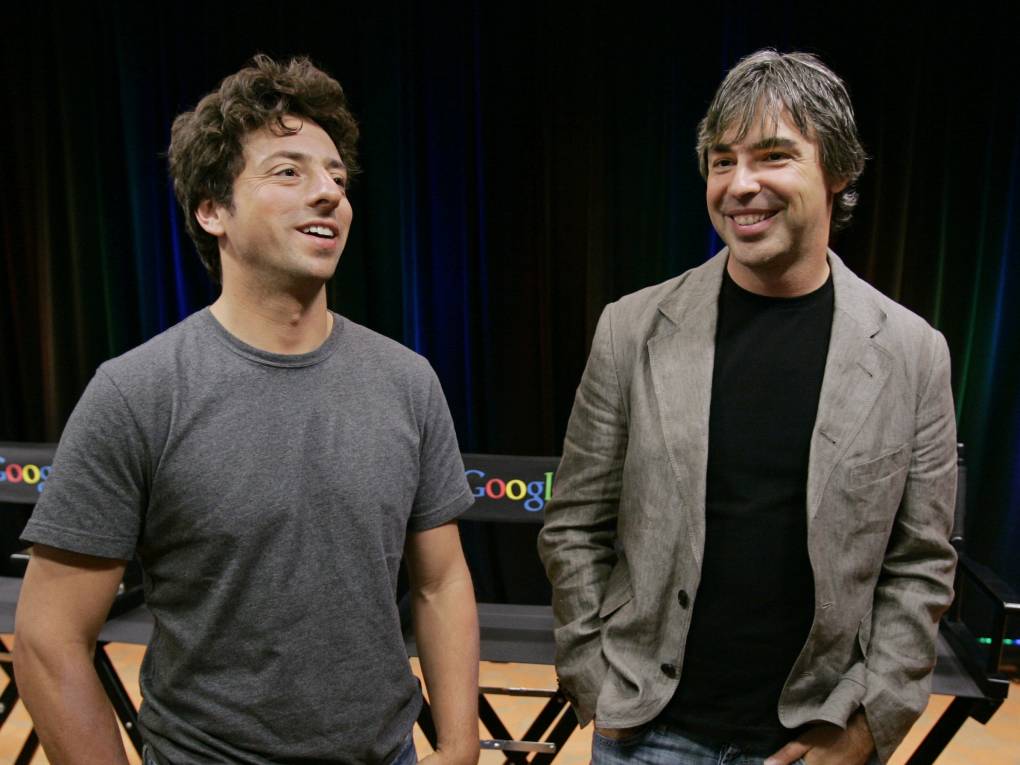
"caption": "Google co-founders Sergey Brin (left) and Larry Page announced Tuesday they are stepping down from their leadership roles but will remain board members of Alphabet, Google's parent company.\n",
"description": "Google co-founders Sergey Brin (left) and Larry Page announced Tuesday they are stepping down from their leadership roles but will remain board members of Alphabet, Google's parent company.",
"title": "Google co-founders Sergey Brin (left) and Larry Page announced Tuesday they are stepping down from their leadership roles but will remain board members of Alphabet, Google's parent company.",
"credit": "Paul Sakuma/AP",
"status": "inherit",
"isLoading": false,
"fetchFailed": false
},
"news_11787011": {
"type": "attachments",
"id": "news_11787011",
"meta": {
"index": "attachments_1716263798",
"site": "news",
"id": "11787011",
"found": true
},
"parent": 11787003,
"imgSizes": {
"apple_news_ca_landscape_5_5": {
"file": "https://ww2.kqed.org/app/uploads/sites/10/2019/11/RS16510_Porn-Hands-qut-1044x783.jpg",
"width": 1044,
"mimeType": "image/jpeg",
"height": 783
},
"apple_news_ca_square_4_0": {
"file": "https://ww2.kqed.org/app/uploads/sites/10/2019/11/RS16510_Porn-Hands-qut-470x470.jpg",
"width": 470,
"mimeType": "image/jpeg",
"height": 470
},
"twentyfourteen-full-width": {
"file": "https://ww2.kqed.org/app/uploads/sites/10/2019/11/RS16510_Porn-Hands-qut-1038x576.jpg",
"width": 1038,
"mimeType": "image/jpeg",
"height": 576
},
"thumbnail": {
"file": "https://ww2.kqed.org/app/uploads/sites/10/2019/11/RS16510_Porn-Hands-qut-160x107.jpg",
"width": 160,
"mimeType": "image/jpeg",
"height": 107
},
"post-thumbnail": {
"file": "https://ww2.kqed.org/app/uploads/sites/10/2019/11/RS16510_Porn-Hands-qut-672x372.jpg",
"width": 672,
"mimeType": "image/jpeg",
"height": 372
},
"kqedFullSize": {
"file": "https://ww2.kqed.org/app/uploads/sites/10/2019/11/RS16510_Porn-Hands-qut.jpg",
"width": 1920,
"height": 1280
},
"apple_news_ca_landscape_4_7": {
"file": "https://ww2.kqed.org/app/uploads/sites/10/2019/11/RS16510_Porn-Hands-qut-632x474.jpg",
"width": 632,
"mimeType": "image/jpeg",
"height": 474
},
"large": {
"file": "https://ww2.kqed.org/app/uploads/sites/10/2019/11/RS16510_Porn-Hands-qut-1020x680.jpg",
"width": 1020,
"mimeType": "image/jpeg",
"height": 680
},
"complete_open_graph": {
"file": "https://ww2.kqed.org/app/uploads/sites/10/2019/11/RS16510_Porn-Hands-qut-1200x800.jpg",
"width": 1200,
"mimeType": "image/jpeg",
"height": 800
},
"apple_news_ca_landscape_4_0": {
"file": "https://ww2.kqed.org/app/uploads/sites/10/2019/11/RS16510_Porn-Hands-qut-536x402.jpg",
"width": 536,
"mimeType": "image/jpeg",
"height": 402
},
"apple_news_ca_portrait_12_9": {
"file": "https://ww2.kqed.org/app/uploads/sites/10/2019/11/RS16510_Porn-Hands-qut-1122x1280.jpg",
"width": 1122,
"mimeType": "image/jpeg",
"height": 1280
},
"medium": {
"file": "https://ww2.kqed.org/app/uploads/sites/10/2019/11/RS16510_Porn-Hands-qut-800x533.jpg",
"width": 800,
"mimeType": "image/jpeg",
"height": 533
},
"apple_news_ca_portrait_4_0": {
"file": "https://ww2.kqed.org/app/uploads/sites/10/2019/11/RS16510_Porn-Hands-qut-354x472.jpg",
"width": 354,
"mimeType": "image/jpeg",
"height": 472
},
"apple_news_ca_portrait_9_7": {
"file": "https://ww2.kqed.org/app/uploads/sites/10/2019/11/RS16510_Porn-Hands-qut-840x1120.jpg",
"width": 840,
"mimeType": "image/jpeg",
"height": 1120
},
"apple_news_ca_landscape_12_9": {
"file": "https://ww2.kqed.org/app/uploads/sites/10/2019/11/RS16510_Porn-Hands-qut-1832x1280.jpg",
"width": 1832,
"mimeType": "image/jpeg",
"height": 1280
},
"apple_news_ca_square_9_7": {
"file": "https://ww2.kqed.org/app/uploads/sites/10/2019/11/RS16510_Porn-Hands-qut-1104x1104.jpg",
"width": 1104,
"mimeType": "image/jpeg",
"height": 1104
},
"apple_news_ca_portrait_4_7": {
"file": "https://ww2.kqed.org/app/uploads/sites/10/2019/11/RS16510_Porn-Hands-qut-414x552.jpg",
"width": 414,
"mimeType": "image/jpeg",
"height": 552
},
"apple_news_ca_square_12_9": {
"file": "https://ww2.kqed.org/app/uploads/sites/10/2019/11/RS16510_Porn-Hands-qut-1472x1280.jpg",
"width": 1472,
"mimeType": "image/jpeg",
"height": 1280
},
"apple_news_ca_portrait_5_5": {
"file": "https://ww2.kqed.org/app/uploads/sites/10/2019/11/RS16510_Porn-Hands-qut-687x916.jpg",
"width": 687,
"mimeType": "image/jpeg",
"height": 916
},
"full-width": {
"file": "https://ww2.kqed.org/app/uploads/sites/10/2019/11/RS16510_Porn-Hands-qut-1920x1280.jpg",
"width": 1920,
"mimeType": "image/jpeg",
"height": 1280
},
"apple_news_ca_square_4_7": {
"file": "https://ww2.kqed.org/app/uploads/sites/10/2019/11/RS16510_Porn-Hands-qut-550x550.jpg",
"width": 550,
"mimeType": "image/jpeg",
"height": 550
},
"apple_news_ca_landscape_9_7": {
"file": "https://ww2.kqed.org/app/uploads/sites/10/2019/11/RS16510_Porn-Hands-qut-1376x1032.jpg",
"width": 1376,
"mimeType": "image/jpeg",
"height": 1032
},
"apple_news_ca_square_5_5": {
"file": "https://ww2.kqed.org/app/uploads/sites/10/2019/11/RS16510_Porn-Hands-qut-912x912.jpg",
"width": 912,
"mimeType": "image/jpeg",
"height": 912
}
},
"publishDate": 1573925804,
"modified": 1573925849,
"caption": "A majority of Americans believe their online and offline activities are being tracked and monitored by companies and the government with some regularity, according to a new Pew Research Center survey of U.S. adults. ",
"description": "A majority of Americans believe their online and offline activities are being tracked and monitored by companies and the government with some regularity, according to a new Pew Research Center survey of U.S. adults. ",
"title": "RS16510_Porn Hands-qut",
"credit": "Jeremy Raff/KQED",
"status": "inherit",
"isLoading": false,
"fetchFailed": false
},
"news_11781773": {
"type": "attachments",
"id": "news_11781773",
"meta": {
"index": "attachments_1716263798",
"site": "news",
"id": "11781773",
"found": true
},
"parent": 11781771,
"imgSizes": {
"apple_news_ca_landscape_5_5": {
"file": "https://ww2.kqed.org/app/uploads/sites/10/2019/10/RS36468_IMG_8798-qut-1044x783.jpg",
"width": 1044,
"mimeType": "image/jpeg",
"height": 783
},
"apple_news_ca_square_4_0": {
"file": "https://ww2.kqed.org/app/uploads/sites/10/2019/10/RS36468_IMG_8798-qut-470x470.jpg",
"width": 470,
"mimeType": "image/jpeg",
"height": 470
},
"twentyfourteen-full-width": {
"file": "https://ww2.kqed.org/app/uploads/sites/10/2019/10/RS36468_IMG_8798-qut-1038x576.jpg",
"width": 1038,
"mimeType": "image/jpeg",
"height": 576
},
"thumbnail": {
"file": "https://ww2.kqed.org/app/uploads/sites/10/2019/10/RS36468_IMG_8798-qut-160x120.jpg",
"width": 160,
"mimeType": "image/jpeg",
"height": 120
},
"post-thumbnail": {
"file": "https://ww2.kqed.org/app/uploads/sites/10/2019/10/RS36468_IMG_8798-qut-672x372.jpg",
"width": 672,
"mimeType": "image/jpeg",
"height": 372
},
"kqedFullSize": {
"file": "https://ww2.kqed.org/app/uploads/sites/10/2019/10/RS36468_IMG_8798-qut.jpg",
"width": 1920,
"height": 1440
},
"apple_news_ca_landscape_4_7": {
"file": "https://ww2.kqed.org/app/uploads/sites/10/2019/10/RS36468_IMG_8798-qut-632x474.jpg",
"width": 632,
"mimeType": "image/jpeg",
"height": 474
},
"large": {
"file": "https://ww2.kqed.org/app/uploads/sites/10/2019/10/RS36468_IMG_8798-qut-1020x765.jpg",
"width": 1020,
"mimeType": "image/jpeg",
"height": 765
},
"complete_open_graph": {
"file": "https://ww2.kqed.org/app/uploads/sites/10/2019/10/RS36468_IMG_8798-qut-1200x900.jpg",
"width": 1200,
"mimeType": "image/jpeg",
"height": 900
},
"apple_news_ca_landscape_4_0": {
"file": "https://ww2.kqed.org/app/uploads/sites/10/2019/10/RS36468_IMG_8798-qut-536x402.jpg",
"width": 536,
"mimeType": "image/jpeg",
"height": 402
},
"apple_news_ca_portrait_12_9": {
"file": "https://ww2.kqed.org/app/uploads/sites/10/2019/10/RS36468_IMG_8798-qut-1122x1440.jpg",
"width": 1122,
"mimeType": "image/jpeg",
"height": 1440
},
"medium": {
"file": "https://ww2.kqed.org/app/uploads/sites/10/2019/10/RS36468_IMG_8798-qut-800x600.jpg",
"width": 800,
"mimeType": "image/jpeg",
"height": 600
},
"apple_news_ca_portrait_4_0": {
"file": "https://ww2.kqed.org/app/uploads/sites/10/2019/10/RS36468_IMG_8798-qut-354x472.jpg",
"width": 354,
"mimeType": "image/jpeg",
"height": 472
},
"apple_news_ca_portrait_9_7": {
"file": "https://ww2.kqed.org/app/uploads/sites/10/2019/10/RS36468_IMG_8798-qut-840x1120.jpg",
"width": 840,
"mimeType": "image/jpeg",
"height": 1120
},
"apple_news_ca_landscape_12_9": {
"file": "https://ww2.kqed.org/app/uploads/sites/10/2019/10/RS36468_IMG_8798-qut-1832x1374.jpg",
"width": 1832,
"mimeType": "image/jpeg",
"height": 1374
},
"apple_news_ca_square_9_7": {
"file": "https://ww2.kqed.org/app/uploads/sites/10/2019/10/RS36468_IMG_8798-qut-1104x1104.jpg",
"width": 1104,
"mimeType": "image/jpeg",
"height": 1104
},
"apple_news_ca_portrait_4_7": {
"file": "https://ww2.kqed.org/app/uploads/sites/10/2019/10/RS36468_IMG_8798-qut-414x552.jpg",
"width": 414,
"mimeType": "image/jpeg",
"height": 552
},
"apple_news_ca_square_12_9": {
"file": "https://ww2.kqed.org/app/uploads/sites/10/2019/10/RS36468_IMG_8798-qut-1472x1440.jpg",
"width": 1472,
"mimeType": "image/jpeg",
"height": 1440
},
"apple_news_ca_portrait_5_5": {
"file": "https://ww2.kqed.org/app/uploads/sites/10/2019/10/RS36468_IMG_8798-qut-687x916.jpg",
"width": 687,
"mimeType": "image/jpeg",
"height": 916
},
"full-width": {
"file": "https://ww2.kqed.org/app/uploads/sites/10/2019/10/RS36468_IMG_8798-qut-1920x1440.jpg",
"width": 1920,
"mimeType": "image/jpeg",
"height": 1440
},
"apple_news_ca_square_4_7": {
"file": "https://ww2.kqed.org/app/uploads/sites/10/2019/10/RS36468_IMG_8798-qut-550x550.jpg",
"width": 550,
"mimeType": "image/jpeg",
"height": 550
},
"apple_news_ca_landscape_9_7": {
"file": "https://ww2.kqed.org/app/uploads/sites/10/2019/10/RS36468_IMG_8798-qut-1376x1032.jpg",
"width": 1376,
"mimeType": "image/jpeg",
"height": 1032
},
"apple_news_ca_square_5_5": {
"file": "https://ww2.kqed.org/app/uploads/sites/10/2019/10/RS36468_IMG_8798-qut-912x912.jpg",
"width": 912,
"mimeType": "image/jpeg",
"height": 912
}
},
"publishDate": 1571771507,
"modified": 1572301327,
"caption": "On campus and off, the value of Stanford’s real estate empire tops $19.7 billion, as of 2018.",
"description": "On campus and off, the value of Stanford’s real estate empire tops $19.7 billion dollars, as of 2018.",
"title": "Stanford-University-Quad",
"credit": "Rachael Myrow/KQED",
"status": "inherit",
"isLoading": false,
"fetchFailed": false
},
"news_11783384": {
"type": "attachments",
"id": "news_11783384",
"meta": {
"index": "attachments_1716263798",
"site": "news",
"id": "11783384",
"found": true
},
"parent": 11783369,
"imgSizes": {
"apple_news_ca_landscape_5_5": {
"file": "https://ww2.kqed.org/app/uploads/sites/10/2019/10/RS39869_GettyImages-1182969866-qut-1044x783.jpg",
"width": 1044,
"mimeType": "image/jpeg",
"height": 783
},
"apple_news_ca_square_4_0": {
"file": "https://ww2.kqed.org/app/uploads/sites/10/2019/10/RS39869_GettyImages-1182969866-qut-470x470.jpg",
"width": 470,
"mimeType": "image/jpeg",
"height": 470
},
"twentyfourteen-full-width": {
"file": "https://ww2.kqed.org/app/uploads/sites/10/2019/10/RS39869_GettyImages-1182969866-qut-1038x576.jpg",
"width": 1038,
"mimeType": "image/jpeg",
"height": 576
},
"thumbnail": {
"file": "https://ww2.kqed.org/app/uploads/sites/10/2019/10/RS39869_GettyImages-1182969866-qut-160x107.jpg",
"width": 160,
"mimeType": "image/jpeg",
"height": 107
},
"post-thumbnail": {
"file": "https://ww2.kqed.org/app/uploads/sites/10/2019/10/RS39869_GettyImages-1182969866-qut-672x372.jpg",
"width": 672,
"mimeType": "image/jpeg",
"height": 372
},
"kqedFullSize": {
"file": "https://ww2.kqed.org/app/uploads/sites/10/2019/10/RS39869_GettyImages-1182969866-qut.jpg",
"width": 1920,
"height": 1280
},
"apple_news_ca_landscape_4_7": {
"file": "https://ww2.kqed.org/app/uploads/sites/10/2019/10/RS39869_GettyImages-1182969866-qut-632x474.jpg",
"width": 632,
"mimeType": "image/jpeg",
"height": 474
},
"large": {
"file": "https://ww2.kqed.org/app/uploads/sites/10/2019/10/RS39869_GettyImages-1182969866-qut-1020x680.jpg",
"width": 1020,
"mimeType": "image/jpeg",
"height": 680
},
"complete_open_graph": {
"file": "https://ww2.kqed.org/app/uploads/sites/10/2019/10/RS39869_GettyImages-1182969866-qut-1200x800.jpg",
"width": 1200,
"mimeType": "image/jpeg",
"height": 800
},
"apple_news_ca_landscape_4_0": {
"file": "https://ww2.kqed.org/app/uploads/sites/10/2019/10/RS39869_GettyImages-1182969866-qut-536x402.jpg",
"width": 536,
"mimeType": "image/jpeg",
"height": 402
},
"apple_news_ca_portrait_12_9": {
"file": "https://ww2.kqed.org/app/uploads/sites/10/2019/10/RS39869_GettyImages-1182969866-qut-1122x1280.jpg",
"width": 1122,
"mimeType": "image/jpeg",
"height": 1280
},
"medium": {
"file": "https://ww2.kqed.org/app/uploads/sites/10/2019/10/RS39869_GettyImages-1182969866-qut-800x533.jpg",
"width": 800,
"mimeType": "image/jpeg",
"height": 533
},
"apple_news_ca_portrait_4_0": {
"file": "https://ww2.kqed.org/app/uploads/sites/10/2019/10/RS39869_GettyImages-1182969866-qut-354x472.jpg",
"width": 354,
"mimeType": "image/jpeg",
"height": 472
},
"apple_news_ca_portrait_9_7": {
"file": "https://ww2.kqed.org/app/uploads/sites/10/2019/10/RS39869_GettyImages-1182969866-qut-840x1120.jpg",
"width": 840,
"mimeType": "image/jpeg",
"height": 1120
},
"apple_news_ca_landscape_12_9": {
"file": "https://ww2.kqed.org/app/uploads/sites/10/2019/10/RS39869_GettyImages-1182969866-qut-1832x1280.jpg",
"width": 1832,
"mimeType": "image/jpeg",
"height": 1280
},
"apple_news_ca_square_9_7": {
"file": "https://ww2.kqed.org/app/uploads/sites/10/2019/10/RS39869_GettyImages-1182969866-qut-1104x1104.jpg",
"width": 1104,
"mimeType": "image/jpeg",
"height": 1104
},
"apple_news_ca_portrait_4_7": {
"file": "https://ww2.kqed.org/app/uploads/sites/10/2019/10/RS39869_GettyImages-1182969866-qut-414x552.jpg",
"width": 414,
"mimeType": "image/jpeg",
"height": 552
},
"apple_news_ca_square_12_9": {
"file": "https://ww2.kqed.org/app/uploads/sites/10/2019/10/RS39869_GettyImages-1182969866-qut-1472x1280.jpg",
"width": 1472,
"mimeType": "image/jpeg",
"height": 1280
},
"apple_news_ca_portrait_5_5": {
"file": "https://ww2.kqed.org/app/uploads/sites/10/2019/10/RS39869_GettyImages-1182969866-qut-687x916.jpg",
"width": 687,
"mimeType": "image/jpeg",
"height": 916
},
"full-width": {
"file": "https://ww2.kqed.org/app/uploads/sites/10/2019/10/RS39869_GettyImages-1182969866-qut-1920x1280.jpg",
"width": 1920,
"mimeType": "image/jpeg",
"height": 1280
},
"apple_news_ca_square_4_7": {
"file": "https://ww2.kqed.org/app/uploads/sites/10/2019/10/RS39869_GettyImages-1182969866-qut-550x550.jpg",
"width": 550,
"mimeType": "image/jpeg",
"height": 550
},
"apple_news_ca_landscape_9_7": {
"file": "https://ww2.kqed.org/app/uploads/sites/10/2019/10/RS39869_GettyImages-1182969866-qut-1376x1032.jpg",
"width": 1376,
"mimeType": "image/jpeg",
"height": 1032
},
"apple_news_ca_square_5_5": {
"file": "https://ww2.kqed.org/app/uploads/sites/10/2019/10/RS39869_GettyImages-1182969866-qut-912x912.jpg",
"width": 912,
"mimeType": "image/jpeg",
"height": 912
}
},
"publishDate": 1572296875,
"modified": 1607610302,
"caption": null,
"description": "WASHINGTON, DC - OCTOBER 23: With an image of himself on a screen in the background, Facebook co-founder and CEO Mark Zuckerberg testifies before the House Financial Services Committee in the Rayburn House Office Building on Capitol Hill October 23, 2019 in Washington, DC. Zuckerberg testified about Facebook's proposed cryptocurrency Libra, how his company will handle false and misleading information by political leaders during the 2020 campaign and how it handles its users’ data and privacy. ",
"title": "Facebook CEO Mark Zuckerberg Testifies Before The House Financial Services Committee",
"credit": "Chip Somodevilla/Getty Images",
"status": "inherit",
"altTag": "WASHINGTON, DC - OCTOBER 23: With an image of himself on a screen in the background, Facebook co-founder and CEO Mark Zuckerberg testifies before the House Financial Services Committee in the Rayburn House Office Building on Capitol Hill October 23, 2019 in Washington, DC. Zuckerberg testified about Facebook's proposed cryptocurrency Libra, how his company will handle false and misleading information by political leaders during the 2020 campaign and how it handles its users’ data and privacy.",
"isLoading": false,
"fetchFailed": false
},
"news_11775764": {
"type": "attachments",
"id": "news_11775764",
"meta": {
"index": "attachments_1716263798",
"site": "news",
"id": "11775764",
"found": true
},
"parent": 11775762,
"imgSizes": {
"apple_news_ca_landscape_5_5": {
"file": "https://ww2.kqed.org/app/uploads/sites/10/2019/09/RS35661_Photo-Mar-05-5-33-06-PM-qut-1044x783.jpg",
"width": 1044,
"mimeType": "image/jpeg",
"height": 783
},
"apple_news_ca_square_4_0": {
"file": "https://ww2.kqed.org/app/uploads/sites/10/2019/09/RS35661_Photo-Mar-05-5-33-06-PM-qut-470x470.jpg",
"width": 470,
"mimeType": "image/jpeg",
"height": 470
},
"twentyfourteen-full-width": {
"file": "https://ww2.kqed.org/app/uploads/sites/10/2019/09/RS35661_Photo-Mar-05-5-33-06-PM-qut-1038x576.jpg",
"width": 1038,
"mimeType": "image/jpeg",
"height": 576
},
"thumbnail": {
"file": "https://ww2.kqed.org/app/uploads/sites/10/2019/09/RS35661_Photo-Mar-05-5-33-06-PM-qut-160x120.jpg",
"width": 160,
"mimeType": "image/jpeg",
"height": 120
},
"post-thumbnail": {
"file": "https://ww2.kqed.org/app/uploads/sites/10/2019/09/RS35661_Photo-Mar-05-5-33-06-PM-qut-672x372.jpg",
"width": 672,
"mimeType": "image/jpeg",
"height": 372
},
"kqedFullSize": {
"file": "https://ww2.kqed.org/app/uploads/sites/10/2019/09/RS35661_Photo-Mar-05-5-33-06-PM-qut.jpg",
"width": 1920,
"height": 1440
},
"apple_news_ca_landscape_4_7": {
"file": "https://ww2.kqed.org/app/uploads/sites/10/2019/09/RS35661_Photo-Mar-05-5-33-06-PM-qut-632x474.jpg",
"width": 632,
"mimeType": "image/jpeg",
"height": 474
},
"large": {
"file": "https://ww2.kqed.org/app/uploads/sites/10/2019/09/RS35661_Photo-Mar-05-5-33-06-PM-qut-1020x765.jpg",
"width": 1020,
"mimeType": "image/jpeg",
"height": 765
},
"complete_open_graph": {
"file": "https://ww2.kqed.org/app/uploads/sites/10/2019/09/RS35661_Photo-Mar-05-5-33-06-PM-qut-1200x900.jpg",
"width": 1200,
"mimeType": "image/jpeg",
"height": 900
},
"apple_news_ca_landscape_4_0": {
"file": "https://ww2.kqed.org/app/uploads/sites/10/2019/09/RS35661_Photo-Mar-05-5-33-06-PM-qut-536x402.jpg",
"width": 536,
"mimeType": "image/jpeg",
"height": 402
},
"apple_news_ca_portrait_12_9": {
"file": "https://ww2.kqed.org/app/uploads/sites/10/2019/09/RS35661_Photo-Mar-05-5-33-06-PM-qut-1122x1440.jpg",
"width": 1122,
"mimeType": "image/jpeg",
"height": 1440
},
"medium": {
"file": "https://ww2.kqed.org/app/uploads/sites/10/2019/09/RS35661_Photo-Mar-05-5-33-06-PM-qut-800x600.jpg",
"width": 800,
"mimeType": "image/jpeg",
"height": 600
},
"apple_news_ca_portrait_4_0": {
"file": "https://ww2.kqed.org/app/uploads/sites/10/2019/09/RS35661_Photo-Mar-05-5-33-06-PM-qut-354x472.jpg",
"width": 354,
"mimeType": "image/jpeg",
"height": 472
},
"apple_news_ca_portrait_9_7": {
"file": "https://ww2.kqed.org/app/uploads/sites/10/2019/09/RS35661_Photo-Mar-05-5-33-06-PM-qut-840x1120.jpg",
"width": 840,
"mimeType": "image/jpeg",
"height": 1120
},
"apple_news_ca_landscape_12_9": {
"file": "https://ww2.kqed.org/app/uploads/sites/10/2019/09/RS35661_Photo-Mar-05-5-33-06-PM-qut-1832x1374.jpg",
"width": 1832,
"mimeType": "image/jpeg",
"height": 1374
},
"apple_news_ca_square_9_7": {
"file": "https://ww2.kqed.org/app/uploads/sites/10/2019/09/RS35661_Photo-Mar-05-5-33-06-PM-qut-1104x1104.jpg",
"width": 1104,
"mimeType": "image/jpeg",
"height": 1104
},
"apple_news_ca_portrait_4_7": {
"file": "https://ww2.kqed.org/app/uploads/sites/10/2019/09/RS35661_Photo-Mar-05-5-33-06-PM-qut-414x552.jpg",
"width": 414,
"mimeType": "image/jpeg",
"height": 552
},
"apple_news_ca_square_12_9": {
"file": "https://ww2.kqed.org/app/uploads/sites/10/2019/09/RS35661_Photo-Mar-05-5-33-06-PM-qut-1472x1440.jpg",
"width": 1472,
"mimeType": "image/jpeg",
"height": 1440
},
"apple_news_ca_portrait_5_5": {
"file": "https://ww2.kqed.org/app/uploads/sites/10/2019/09/RS35661_Photo-Mar-05-5-33-06-PM-qut-687x916.jpg",
"width": 687,
"mimeType": "image/jpeg",
"height": 916
},
"full-width": {
"file": "https://ww2.kqed.org/app/uploads/sites/10/2019/09/RS35661_Photo-Mar-05-5-33-06-PM-qut-1920x1440.jpg",
"width": 1920,
"mimeType": "image/jpeg",
"height": 1440
},
"apple_news_ca_square_4_7": {
"file": "https://ww2.kqed.org/app/uploads/sites/10/2019/09/RS35661_Photo-Mar-05-5-33-06-PM-qut-550x550.jpg",
"width": 550,
"mimeType": "image/jpeg",
"height": 550
},
"apple_news_ca_landscape_9_7": {
"file": "https://ww2.kqed.org/app/uploads/sites/10/2019/09/RS35661_Photo-Mar-05-5-33-06-PM-qut-1376x1032.jpg",
"width": 1376,
"mimeType": "image/jpeg",
"height": 1032
},
"apple_news_ca_square_5_5": {
"file": "https://ww2.kqed.org/app/uploads/sites/10/2019/09/RS35661_Photo-Mar-05-5-33-06-PM-qut-912x912.jpg",
"width": 912,
"mimeType": "image/jpeg",
"height": 912
}
},
"publishDate": 1569028891,
"modified": 1613486319,
"caption": null,
"description": "San Jose skyline at dusk, taken from the Silicon Valley Capital Club.",
"title": "RS35661_Photo Mar 05, 5 33 06 PM-qut",
"credit": "Rachael Myrow/KQED",
"status": "inherit",
"altTag": "San Jose skyline at dusk, taken from the Silicon Valley Capital Club.San Jose skyline at dusk, taken from the Silicon Valley Capital Club.",
"isLoading": false,
"fetchFailed": false
},
"news_11775801": {
"type": "attachments",
"id": "news_11775801",
"meta": {
"index": "attachments_1716263798",
"site": "news",
"id": "11775801",
"found": true
},
"parent": 11775800,
"imgSizes": {
"apple_news_ca_landscape_5_5": {
"file": "https://ww2.kqed.org/app/uploads/sites/10/2019/09/gettyimages-1165948314-28386e6676effad01c6fe9c381c4e6f2eb22f602-1044x783.jpg",
"width": 1044,
"mimeType": "image/jpeg",
"height": 783
},
"apple_news_ca_square_4_0": {
"file": "https://ww2.kqed.org/app/uploads/sites/10/2019/09/gettyimages-1165948314-28386e6676effad01c6fe9c381c4e6f2eb22f602-470x470.jpg",
"width": 470,
"mimeType": "image/jpeg",
"height": 470
},
"twentyfourteen-full-width": {
"file": "https://ww2.kqed.org/app/uploads/sites/10/2019/09/gettyimages-1165948314-28386e6676effad01c6fe9c381c4e6f2eb22f602-1038x576.jpg",
"width": 1038,
"mimeType": "image/jpeg",
"height": 576
},
"thumbnail": {
"file": "https://ww2.kqed.org/app/uploads/sites/10/2019/09/gettyimages-1165948314-28386e6676effad01c6fe9c381c4e6f2eb22f602-160x120.jpg",
"width": 160,
"mimeType": "image/jpeg",
"height": 120
},
"post-thumbnail": {
"file": "https://ww2.kqed.org/app/uploads/sites/10/2019/09/gettyimages-1165948314-28386e6676effad01c6fe9c381c4e6f2eb22f602-672x372.jpg",
"width": 672,
"mimeType": "image/jpeg",
"height": 372
},
"kqedFullSize": {
"file": "https://ww2.kqed.org/app/uploads/sites/10/2019/09/gettyimages-1165948314-28386e6676effad01c6fe9c381c4e6f2eb22f602-e1569086917570.jpg",
"width": 1920,
"height": 1440
},
"apple_news_ca_landscape_4_7": {
"file": "https://ww2.kqed.org/app/uploads/sites/10/2019/09/gettyimages-1165948314-28386e6676effad01c6fe9c381c4e6f2eb22f602-632x474.jpg",
"width": 632,
"mimeType": "image/jpeg",
"height": 474
},
"large": {
"file": "https://ww2.kqed.org/app/uploads/sites/10/2019/09/gettyimages-1165948314-28386e6676effad01c6fe9c381c4e6f2eb22f602-1020x765.jpg",
"width": 1020,
"mimeType": "image/jpeg",
"height": 765
},
"complete_open_graph": {
"file": "https://ww2.kqed.org/app/uploads/sites/10/2019/09/gettyimages-1165948314-28386e6676effad01c6fe9c381c4e6f2eb22f602-1200x900.jpg",
"width": 1200,
"mimeType": "image/jpeg",
"height": 900
},
"apple_news_ca_landscape_4_0": {
"file": "https://ww2.kqed.org/app/uploads/sites/10/2019/09/gettyimages-1165948314-28386e6676effad01c6fe9c381c4e6f2eb22f602-536x402.jpg",
"width": 536,
"mimeType": "image/jpeg",
"height": 402
},
"apple_news_ca_portrait_12_9": {
"file": "https://ww2.kqed.org/app/uploads/sites/10/2019/09/gettyimages-1165948314-28386e6676effad01c6fe9c381c4e6f2eb22f602-1122x1496.jpg",
"width": 1122,
"mimeType": "image/jpeg",
"height": 1496
},
"medium": {
"file": "https://ww2.kqed.org/app/uploads/sites/10/2019/09/gettyimages-1165948314-28386e6676effad01c6fe9c381c4e6f2eb22f602-800x600.jpg",
"width": 800,
"mimeType": "image/jpeg",
"height": 600
},
"apple_news_ca_portrait_4_0": {
"file": "https://ww2.kqed.org/app/uploads/sites/10/2019/09/gettyimages-1165948314-28386e6676effad01c6fe9c381c4e6f2eb22f602-354x472.jpg",
"width": 354,
"mimeType": "image/jpeg",
"height": 472
},
"apple_news_ca_portrait_9_7": {
"file": "https://ww2.kqed.org/app/uploads/sites/10/2019/09/gettyimages-1165948314-28386e6676effad01c6fe9c381c4e6f2eb22f602-840x1120.jpg",
"width": 840,
"mimeType": "image/jpeg",
"height": 1120
},
"apple_news_ca_landscape_12_9": {
"file": "https://ww2.kqed.org/app/uploads/sites/10/2019/09/gettyimages-1165948314-28386e6676effad01c6fe9c381c4e6f2eb22f602-1832x1374.jpg",
"width": 1832,
"mimeType": "image/jpeg",
"height": 1374
},
"apple_news_ca_square_9_7": {
"file": "https://ww2.kqed.org/app/uploads/sites/10/2019/09/gettyimages-1165948314-28386e6676effad01c6fe9c381c4e6f2eb22f602-1104x1104.jpg",
"width": 1104,
"mimeType": "image/jpeg",
"height": 1104
},
"apple_news_ca_portrait_4_7": {
"file": "https://ww2.kqed.org/app/uploads/sites/10/2019/09/gettyimages-1165948314-28386e6676effad01c6fe9c381c4e6f2eb22f602-414x552.jpg",
"width": 414,
"mimeType": "image/jpeg",
"height": 552
},
"apple_news_ca_square_12_9": {
"file": "https://ww2.kqed.org/app/uploads/sites/10/2019/09/gettyimages-1165948314-28386e6676effad01c6fe9c381c4e6f2eb22f602-1472x1472.jpg",
"width": 1472,
"mimeType": "image/jpeg",
"height": 1472
},
"apple_news_ca_portrait_5_5": {
"file": "https://ww2.kqed.org/app/uploads/sites/10/2019/09/gettyimages-1165948314-28386e6676effad01c6fe9c381c4e6f2eb22f602-687x916.jpg",
"width": 687,
"mimeType": "image/jpeg",
"height": 916
},
"full-width": {
"file": "https://ww2.kqed.org/app/uploads/sites/10/2019/09/gettyimages-1165948314-28386e6676effad01c6fe9c381c4e6f2eb22f602-1920x1440.jpg",
"width": 1920,
"mimeType": "image/jpeg",
"height": 1440
},
"apple_news_ca_square_4_7": {
"file": "https://ww2.kqed.org/app/uploads/sites/10/2019/09/gettyimages-1165948314-28386e6676effad01c6fe9c381c4e6f2eb22f602-550x550.jpg",
"width": 550,
"mimeType": "image/jpeg",
"height": 550
},
"apple_news_ca_landscape_9_7": {
"file": "https://ww2.kqed.org/app/uploads/sites/10/2019/09/gettyimages-1165948314-28386e6676effad01c6fe9c381c4e6f2eb22f602-1376x1032.jpg",
"width": 1376,
"mimeType": "image/jpeg",
"height": 1032
},
"apple_news_ca_square_5_5": {
"file": "https://ww2.kqed.org/app/uploads/sites/10/2019/09/gettyimages-1165948314-28386e6676effad01c6fe9c381c4e6f2eb22f602-912x912.jpg",
"width": 912,
"mimeType": "image/jpeg",
"height": 912
}
},
"publishDate": 1569086836,
"modified": 1569086909,
"caption": "In 2018, Twitter released an archive of thousands of accounts that the platform determined were involved in potentially state-backed information campaigns. Since then, it has continued to make announcements of its efforts to remove accounts spreading disinformation.",
"description": "In 2018, Twitter released an archive of thousands of accounts that the platform determined were involved in potentially state-backed information campaigns. Since then, it has continued to make announcements of its efforts to remove accounts spreading disinformation.",
"title": "In 2018, Twitter released an archive of thousands of accounts that the platform determined were involved in potentially state-backed information campaigns. Since then, it has continued to make announcements of its efforts to remove accounts spreading disinformation.",
"credit": "Denis Charlet/AFP/Getty Images",
"status": "inherit",
"isLoading": false,
"fetchFailed": false
},
"news_11726712": {
"type": "attachments",
"id": "news_11726712",
"meta": {
"index": "attachments_1716263798",
"site": "news",
"id": "11726712",
"found": true
},
"parent": 11726676,
"imgSizes": {
"twentyfourteen-full-width": {
"file": "https://ww2.kqed.org/app/uploads/sites/10/2019/02/GoogleSign-1038x576.jpg",
"width": 1038,
"mimeType": "image/jpeg",
"height": 576
},
"thumbnail": {
"file": "https://ww2.kqed.org/app/uploads/sites/10/2019/02/GoogleSign-160x105.jpg",
"width": 160,
"mimeType": "image/jpeg",
"height": 105
},
"post-thumbnail": {
"file": "https://ww2.kqed.org/app/uploads/sites/10/2019/02/GoogleSign-672x372.jpg",
"width": 672,
"mimeType": "image/jpeg",
"height": 372
},
"kqedFullSize": {
"file": "https://ww2.kqed.org/app/uploads/sites/10/2019/02/GoogleSign.jpg",
"width": 1920,
"height": 1263
},
"large": {
"file": "https://ww2.kqed.org/app/uploads/sites/10/2019/02/GoogleSign-1020x671.jpg",
"width": 1020,
"mimeType": "image/jpeg",
"height": 671
},
"complete_open_graph": {
"file": "https://ww2.kqed.org/app/uploads/sites/10/2019/02/GoogleSign-1200x789.jpg",
"width": 1200,
"mimeType": "image/jpeg",
"height": 789
},
"guest-author-50": {
"file": "https://ww2.kqed.org/app/uploads/sites/10/2019/02/GoogleSign-50x50.jpg",
"width": 50,
"mimeType": "image/jpeg",
"height": 50
},
"guest-author-96": {
"file": "https://ww2.kqed.org/app/uploads/sites/10/2019/02/GoogleSign-96x96.jpg",
"width": 96,
"mimeType": "image/jpeg",
"height": 96
},
"medium": {
"file": "https://ww2.kqed.org/app/uploads/sites/10/2019/02/GoogleSign-800x526.jpg",
"width": 800,
"mimeType": "image/jpeg",
"height": 526
},
"guest-author-64": {
"file": "https://ww2.kqed.org/app/uploads/sites/10/2019/02/GoogleSign-64x64.jpg",
"width": 64,
"mimeType": "image/jpeg",
"height": 64
},
"guest-author-32": {
"file": "https://ww2.kqed.org/app/uploads/sites/10/2019/02/GoogleSign-32x32.jpg",
"width": 32,
"mimeType": "image/jpeg",
"height": 32
},
"full-width": {
"file": "https://ww2.kqed.org/app/uploads/sites/10/2019/02/GoogleSign-1920x1263.jpg",
"width": 1920,
"mimeType": "image/jpeg",
"height": 1263
},
"detail": {
"file": "https://ww2.kqed.org/app/uploads/sites/10/2019/02/GoogleSign-150x150.jpg",
"width": 150,
"mimeType": "image/jpeg",
"height": 150
},
"guest-author-128": {
"file": "https://ww2.kqed.org/app/uploads/sites/10/2019/02/GoogleSign-128x128.jpg",
"width": 128,
"mimeType": "image/jpeg",
"height": 128
}
},
"publishDate": 1550270224,
"modified": 1568050438,
"caption": "A sign is posted outside Google headquarters in Mountain View. The tech giant is planning to build a campus in San Jose.",
"description": "A sign is posted outside Google headquarters in Mountain View. The tech giant is planning to build a campus in San Jose.",
"title": "GoogleSign",
"credit": "Josh Edelson/AFP/Getty Images",
"status": "inherit",
"isLoading": false,
"fetchFailed": false
}
},
"audioPlayerReducer": {
"postId": "stream_live",
"isPaused": true,
"isPlaying": false,
"pfsActive": false,
"pledgeModalIsOpen": true,
"playerDrawerIsOpen": false,
"liveAudioPlayStartedAt": 0,
"liveAudioPlayContext": ""
},
"authorsReducer": {
"byline_news_11793221": {
"type": "authors",
"id": "byline_news_11793221",
"meta": {
"override": true
},
"slug": "byline_news_11793221",
"name": "\u003ca href=\"https://www.npr.org/people/536871466/wynne-davis\">Wynne Davis\u003c/a>",
"isLoading": false
},
"byline_news_11789417": {
"type": "authors",
"id": "byline_news_11789417",
"meta": {
"override": true
},
"slug": "byline_news_11789417",
"name": "Shannon Bond\u003cbr>NPR",
"isLoading": false
},
"byline_news_11775800": {
"type": "authors",
"id": "byline_news_11775800",
"meta": {
"override": true
},
"slug": "byline_news_11775800",
"name": "Peter Talbot \u003cbr> NPR",
"isLoading": false
},
"byline_news_11773113": {
"type": "authors",
"id": "byline_news_11773113",
"meta": {
"override": true
},
"slug": "byline_news_11773113",
"name": "\u003cstrong>Rachel Lerman and Marcy Gordon\u003cbr />Associated Press\u003c/strong>",
"isLoading": false
},
"rachael-myrow": {
"type": "authors",
"id": "251",
"meta": {
"index": "authors_1716337520",
"id": "251",
"found": true
},
"name": "Rachael Myrow",
"firstName": "Rachael",
"lastName": "Myrow",
"slug": "rachael-myrow",
"email": "rmyrow@kqed.org",
"display_author_email": true,
"staff_mastheads": [
"news"
],
"title": "Senior Editor of KQED's Silicon Valley News Desk",
"bio": "• I write and edit stories about how Silicon Valley power and policies shape everyday life in California. I’m also passionate about making Bay Area history and culture more accessible to a broad public. • I’ve been a journalist for most of my life, starting in high school with The Franklin Press in Los Angeles, where I grew up. While earning my first degree in English at UC Berkeley, I got my start in public radio at KALX-FM. After completing a second degree in journalism at Cal, I landed my first professional job at Marketplace, then moved on to KPCC (now LAist), and then KQED, where I hosted The California Report for more than seven years. • My reporting has appeared on NPR, The World, WBUR’s \u003ci>Here & Now\u003c/i>, and the BBC. I also guest host for KQED’s \u003ci>Forum\u003c/i>, as well as the Commonwealth Club in San Francisco. • I speak periodically on media, democracy and technology issues, and do voiceover work for documentaries and educational video projects. • Outside of the studio, you'll find me hiking Bay Area trails and whipping up Insta-ready meals in my kitchen. • I do not accept gifts, money, or favors from anyone connected to my reporting, I don't pay people for information, and I do not support or donate to political causes. • I strive to treat the people I report on with fairness, honesty, and respect. I also recognize there are often multiple sides to a story and work to verify information through multiple sources and documentation. If I get something wrong, I correct it.",
"avatar": "https://secure.gravatar.com/avatar/3ed8a3c5f26025e4a805ba634cda8cd764906b97438a6d9ce216b044e340da4e?s=600&d=blank&r=g",
"twitter": "rachaelmyrow",
"bluesky": null,
"facebook": null,
"instagram": null,
"linkedin": "https://www.linkedin.com/in/rachaelmyrow/",
"sites": [
{
"site": "arts",
"roles": [
"administrator"
]
},
{
"site": "news",
"roles": [
"edit_others_posts",
"editor"
]
},
{
"site": "futureofyou",
"roles": [
"editor"
]
},
{
"site": "bayareabites",
"roles": [
"editor"
]
},
{
"site": "stateofhealth",
"roles": [
"editor"
]
},
{
"site": "science",
"roles": [
"editor"
]
},
{
"site": "food",
"roles": [
"editor"
]
},
{
"site": "forum",
"roles": [
"editor"
]
},
{
"site": "liveblog",
"roles": [
"author"
]
}
],
"headData": {
"title": "Rachael Myrow | KQED",
"description": "Senior Editor of KQED's Silicon Valley News Desk",
"ogImgSrc": "https://secure.gravatar.com/avatar/3ed8a3c5f26025e4a805ba634cda8cd764906b97438a6d9ce216b044e340da4e?s=600&d=blank&r=g",
"twImgSrc": "https://secure.gravatar.com/avatar/3ed8a3c5f26025e4a805ba634cda8cd764906b97438a6d9ce216b044e340da4e?s=600&d=blank&r=g"
},
"isLoading": false,
"link": "/author/rachael-myrow"
},
"nvoynovskaya": {
"type": "authors",
"id": "11387",
"meta": {
"index": "authors_1716337520",
"id": "11387",
"found": true
},
"name": "Nastia Voynovskaya",
"firstName": "Nastia",
"lastName": "Voynovskaya",
"slug": "nvoynovskaya",
"email": "nvoynovskaya@kqed.org",
"display_author_email": false,
"staff_mastheads": [
"arts"
],
"title": "Editor and reporter",
"bio": "Nastia Voynovskaya is a reporter, editor and host at KQED Arts & Culture. She's been covering the arts in the Bay Area for over a decade, with a focus on music, queer culture, labor issues and grassroots organizing. She has edited KQED story series such as Trans Bay: A History of San Francisco's Gender-Diverse Community, and co-created KQED's Bay Area hip-hop history project, That's My Word. Nastia's work has been recognized by the Society of Professional Journalists and San Francisco Press Club. She regularly appears on podcasts and radio programs, including NPR's All Songs Considered, and hosts live events where music, culture and conversation meet.",
"avatar": "https://secure.gravatar.com/avatar/5025ee460e5a85d69ca20ea6c6f2f80d7e17795c828f61ea3aecfcd924e9042e?s=600&d=blank&r=g",
"twitter": null,
"bluesky": null,
"facebook": null,
"instagram": "https://www.instagram.com/nananastia/",
"linkedin": null,
"sites": [
{
"site": "",
"roles": [
"editor"
]
},
{
"site": "arts",
"roles": [
"administrator"
]
},
{
"site": "news",
"roles": [
"editor"
]
},
{
"site": "pop",
"roles": [
"administrator"
]
},
{
"site": "bayareabites",
"roles": [
"editor"
]
},
{
"site": "podcasts",
"roles": [
"editor"
]
},
{
"site": "hiphop",
"roles": [
"editor"
]
}
],
"headData": {
"title": "Nastia Voynovskaya | KQED",
"description": "Editor and reporter",
"ogImgSrc": "https://secure.gravatar.com/avatar/5025ee460e5a85d69ca20ea6c6f2f80d7e17795c828f61ea3aecfcd924e9042e?s=600&d=blank&r=g",
"twImgSrc": "https://secure.gravatar.com/avatar/5025ee460e5a85d69ca20ea6c6f2f80d7e17795c828f61ea3aecfcd924e9042e?s=600&d=blank&r=g"
},
"isLoading": false,
"link": "/author/nvoynovskaya"
},
"abandlamudi": {
"type": "authors",
"id": "11672",
"meta": {
"index": "authors_1716337520",
"id": "11672",
"found": true
},
"name": "Adhiti Bandlamudi",
"firstName": "Adhiti",
"lastName": "Bandlamudi",
"slug": "abandlamudi",
"email": "abandlamudi@kqed.org",
"display_author_email": false,
"staff_mastheads": [
"news"
],
"title": "KQED Housing Reporter",
"bio": "Adhiti Bandlamudi reports for KQED's Housing desk. She focuses on how housing gets built across the Bay Area. Before joining KQED in 2020, she reported for WUNC in Durham, North Carolina, WABE in Atlanta, Georgia and Capital Public Radio in Sacramento. In 2017, she was awarded a Kroc Fellowship at NPR where she reported on everything from sprinkles to the Golden State Killer's arrest. When she's not reporting, she's baking new recipes in her kitchen or watching movies with friends and family. She's originally from Georgia and has strong opinions about Great British Bake Off.",
"avatar": "https://secure.gravatar.com/avatar/868129c8b257bb99a3500e2c86a65400?s=600&d=mm&r=g",
"twitter": "oddity_adhiti",
"facebook": null,
"instagram": null,
"linkedin": null,
"sites": [
{
"site": "arts",
"roles": [
"author"
]
},
{
"site": "news",
"roles": [
"editor"
]
},
{
"site": "liveblog",
"roles": [
"author"
]
}
],
"headData": {
"title": "Adhiti Bandlamudi | KQED",
"description": "KQED Housing Reporter",
"ogImgSrc": "https://secure.gravatar.com/avatar/868129c8b257bb99a3500e2c86a65400?s=600&d=mm&r=g",
"twImgSrc": "https://secure.gravatar.com/avatar/868129c8b257bb99a3500e2c86a65400?s=600&d=mm&r=g"
},
"isLoading": false,
"link": "/author/abandlamudi"
}
},
"pagesReducer": {
"news_tag_google": {
"type": "terms",
"id": "news_93",
"meta": {
"index": "terms_1716263798",
"site": "news",
"id": "93",
"score": 8.458717
},
"featImg": null,
"name": "Google",
"description": null,
"taxonomy": "tag",
"headData": {
"twImgId": null,
"twTitle": null,
"ogTitle": null,
"ogImgId": null,
"twDescription": null,
"description": null,
"title": "Google Archives | KQED News",
"ogDescription": null
},
"ttid": 96,
"slug": "google",
"isLoading": false,
"title": "Google",
"pageMeta": {
"site": "news",
"WpPageTemplate": "page-topic-editorial",
"currentPage": 7
},
"blocks": [
{
"blockName": "kqed/post-list",
"attrs": {
"layout": "cardArticle2",
"query": "posts/news?tag=google",
"seeMore": false,
"paginated": true,
"page": 7
}
},
{
"blockName": "kqed/ad"
}
]
}
},
"pfsSessionReducer": {},
"postsReducer": {
"stream_live": {
"type": "live",
"id": "stream_live",
"audioUrl": "https://streams.kqed.org/kqedradio",
"title": "Live Stream",
"excerpt": "Live Stream information currently unavailable.",
"link": "/radio",
"featImg": "",
"label": {
"name": "KQED Live",
"link": "/"
}
},
"stream_kqedNewscast": {
"type": "posts",
"id": "stream_kqedNewscast",
"audioUrl": "https://www.kqed.org/.stream/anon/radio/RDnews/newscast.mp3?_=1",
"title": "KQED Newscast",
"featImg": "",
"label": {
"name": "88.5 FM",
"link": "/"
}
},
"news_11806163": {
"type": "posts",
"id": "news_11806163",
"meta": {
"index": "posts_1716263798",
"site": "news",
"id": "11806163",
"score": null,
"sort": [
1583968499000
]
},
"guestAuthors": [],
"slug": "coronavirus-how-canceled-conferences-are-impacting-local-businesses",
"title": "Coronavirus: How Canceled Conferences Are Impacting Local Businesses",
"publishDate": 1583968499,
"format": "standard",
"headTitle": "Coronavirus: How Canceled Conferences Are Impacting Local Businesses | KQED",
"labelTerm": {},
"content": "\u003cp>The kitchen staff at \u003ca href=\"https://www.google.com/url?q=http://www.leftcoastcatering.com&sa=D&ust=1583898946366000&usg=AFQjCNGO_R8h1xtRWeVmVOUqnZTZFf7rIQ\">Left Coast Catering\u003c/a>, a small San Francisco food preparer, had been busily cooking for a large Blue Cross Blue Shield (BCBS) conference at the Yerba Buena Center for the Arts, scheduled for last week.\u003c/p>\n\u003cp>But just days before the start of the conference, as coronavirus fears intensified, BCBS canceled the event, leaving business owner Laurine Wickett stuck with $7,000 worth of \u003ca href=\"https://www.lexico.com/definition/crudites\">crudités\u003c/a> in her commercial fridges. She ended up donating the unused food to a local nonprofit that delivers food to local shelters and food pantries.\u003c/p>\n\u003cp>[pullquote size='medium' align='right' citation=\"Laurine Wickett, Left Coast Catering\"]‘I don’t see any new inquiries coming in because of this fear, so there’s basically nothing in the pipeline for the next foreseeable future.’[/pullquote]\u003c/p>\n\u003cp>In fact, Wickett has been fielding cancellation calls all week. In her 25 years on the job, she said she’s never seen business drop so fast.\u003c/p>\n\u003cp>“I don’t see any new inquiries coming in because of this fear, so there’s basically nothing in the pipeline for the next foreseeable future.” she said. “I’m looking at almost five to six months that I’m going to have to get myself through. And we’re just going to have to get our team down to bare bones.”\u003c/p>\n\u003cp>Wickett said she has managed to weather major economic slowdowns, like the dot-com bubble crash of the early 2000s and the Great Recession, when there were still always plenty of weddings and bar mitzvahs to work.\u003c/p>\n\u003cp>“But this is completely different, where people are panicking and we’re dealing with fear,” she said. “And you really can’t measure or predict this.”\u003c/p>\n\u003cp>Wickett is hardly alone. Businesses across the Bay Area are just beginning to feel the pain, as a host of events and conferences throughout the region are being canceled or rescheduled in an effort to prevent the spread of the coronavirus.\u003c/p>\n\u003cp>There have been 10 large conference cancellations at San Francisco’s Moscone Center, including \u003ca href=\"https://events.google.com/io/\">Google I/O\u003c/a>, the \u003ca href=\"https://developers.facebook.com/blog/post/2020/02/27/important-f8-2020-update/\">Facebook Developer Conference\u003c/a> and the \u003ca href=\"https://www.gdconf.com/news/important-gdc-2020-update\">Game Developers Conference (GDC)\u003c/a>. Some events, like GDC, have recently announced plans to proceed online — good news for attendees, but little consolation to vendors.\u003c/p>\n\u003cp>[ad fullwidth]\u003c/p>\n\u003cp>The canceled events at Moscone alone amount to nearly $179 million in lost revenue, according to the venue.\u003c/p>\n\u003cp>Every year, spending on meetings and conventions in San Francisco amounts to almost $2 billion, roughly 19% of total tourism spending in the city, according to the San Francisco Travel Association. In other words, an ongoing surge in cancellations would significantly impact the economy of the city and the region.\u003c/p>\n\u003cp>And related losses aren’t likely to be covered by insurance, say insurance brokers and risk analysts like Gisele Norris with the firm Aon.\u003c/p>\n\u003cp>“It’s something insurers would say, ‘If we cover that, it’ll bankrupt us.’ Because everyone is going to have that loss at the same time,” Norris said.\u003c/p>\n\u003cp>[aside label=\"related coverage\" tag=\"coronavirus\"]Norris said the coronavirus outbreak is affecting the world economy much differently than other recent health scares, like H1N1 or the Zika virus, because it’s impacting more people in the United States and other wealthy nations.\u003c/p>\n\u003cp>While businesses can purchase insurance that covers event cancellations due to communicable diseases, like the coronavirus — and many did just that after the H1N1 scare in 2009 — any policies that were opened within the last month are likely to specifically exclude COVID-19 instances.\u003c/p>\n\u003cp>And among insurance policies that do include communicable diseases, most only cover losses if an event was explicitly canceled by order of public health officials, rather than at the discretion of the event organizers.\u003c/p>\n\u003cp>But even in light of those potential losses, Norris said, a growing number of event organizers see cancellation as the most prudent option, both in terms of safety and financial security.\u003c/p>\n\u003cp>“Event organizers may be concerned about their own liability should their venue be a breeding ground for infectious disease,” Norris said.\u003c/p>\n\u003cp>\u003c/p>\n",
"blocks": [],
"excerpt": "Businesses across the Bay Area are just beginning to feel the pain, as a host of events and conferences throughout the region are being canceled or rescheduled in an effort to prevent the spread of the coronavirus.",
"status": "publish",
"parent": 0,
"modified": 1729028602,
"stats": {
"hasAudio": false,
"hasVideo": false,
"hasChartOrMap": false,
"iframeSrcs": [],
"hasGoogleForm": false,
"hasGallery": false,
"hasHearkenModule": false,
"hasPolis": false,
"paragraphCount": 20,
"wordCount": 700
},
"headData": {
"title": "Coronavirus: How Canceled Conferences Are Impacting Local Businesses | KQED",
"description": "Businesses across the Bay Area are just beginning to feel the pain, as a host of events and conferences throughout the region are being canceled or rescheduled in an effort to prevent the spread of the coronavirus.",
"ogTitle": "",
"ogDescription": "",
"ogImgId": "",
"twTitle": "",
"twDescription": "",
"twImgId": "",
"schema": {
"@context": "https://schema.org",
"@type": "NewsArticle",
"headline": "Coronavirus: How Canceled Conferences Are Impacting Local Businesses",
"datePublished": "2020-03-11T16:14:59-07:00",
"dateModified": "2024-10-15T14:43:22-07:00",
"image": "https://cdn.kqed.org/wp-content/uploads/2020/02/KQED-OG-Image@1x.png",
"isAccessibleForFree": "True",
"publisher": {
"@type": "NewsMediaOrganization",
"@id": "https://www.kqed.org/#organization",
"name": "KQED",
"logo": "https://cdn.kqed.org/wp-content/uploads/2020/02/KQED-OG-Image@1x.png",
"url": "https://www.kqed.org",
"sameAs": [
"https://www.facebook.com/KQED",
"https://twitter.com/KQED",
"https://www.instagram.com/kqed/",
"https://www.tiktok.com/@kqedofficial",
"https://www.linkedin.com/company/kqed",
"https://www.youtube.com/channel/UCeC0IOo7i1P_61zVUWbJ4nw"
]
}
}
},
"source": "Coronavirus",
"sourceUrl": "https://www.kqed.org/coronavirus",
"audioUrl": "https://traffic.omny.fm/d/clips/0af137ef-751e-4b19-a055-aaef00d2d578/ffca7e9f-6831-41c5-bcaf-aaef00f5a073/50f1dc88-92fd-4177-934d-ab7b01218437/audio.mp3",
"sticky": false,
"path": "/news/11806163/coronavirus-how-canceled-conferences-are-impacting-local-businesses",
"audioTrackLength": null,
"parsedContent": [
{
"type": "contentString",
"content": "\u003cdiv class=\"post-body\">\u003cp>\u003cp>The kitchen staff at \u003ca href=\"https://www.google.com/url?q=http://www.leftcoastcatering.com&sa=D&ust=1583898946366000&usg=AFQjCNGO_R8h1xtRWeVmVOUqnZTZFf7rIQ\">Left Coast Catering\u003c/a>, a small San Francisco food preparer, had been busily cooking for a large Blue Cross Blue Shield (BCBS) conference at the Yerba Buena Center for the Arts, scheduled for last week.\u003c/p>\n\u003cp>But just days before the start of the conference, as coronavirus fears intensified, BCBS canceled the event, leaving business owner Laurine Wickett stuck with $7,000 worth of \u003ca href=\"https://www.lexico.com/definition/crudites\">crudités\u003c/a> in her commercial fridges. She ended up donating the unused food to a local nonprofit that delivers food to local shelters and food pantries.\u003c/p>\n\u003cp>\u003c/p>\u003c/div>",
"attributes": {
"named": {},
"numeric": []
}
},
{
"type": "component",
"content": "‘I don’t see any new inquiries coming in because of this fear, so there’s basically nothing in the pipeline for the next foreseeable future.’",
"name": "pullquote",
"attributes": {
"named": {
"size": "medium",
"align": "right",
"citation": "Laurine Wickett, Left Coast Catering",
"label": ""
},
"numeric": []
}
},
{
"type": "contentString",
"content": "\u003cdiv class=\"post-body\">\u003cp>\u003c/p>\n\u003cp>In fact, Wickett has been fielding cancellation calls all week. In her 25 years on the job, she said she’s never seen business drop so fast.\u003c/p>\n\u003cp>“I don’t see any new inquiries coming in because of this fear, so there’s basically nothing in the pipeline for the next foreseeable future.” she said. “I’m looking at almost five to six months that I’m going to have to get myself through. And we’re just going to have to get our team down to bare bones.”\u003c/p>\n\u003cp>Wickett said she has managed to weather major economic slowdowns, like the dot-com bubble crash of the early 2000s and the Great Recession, when there were still always plenty of weddings and bar mitzvahs to work.\u003c/p>\n\u003cp>“But this is completely different, where people are panicking and we’re dealing with fear,” she said. “And you really can’t measure or predict this.”\u003c/p>\n\u003cp>Wickett is hardly alone. Businesses across the Bay Area are just beginning to feel the pain, as a host of events and conferences throughout the region are being canceled or rescheduled in an effort to prevent the spread of the coronavirus.\u003c/p>\n\u003cp>There have been 10 large conference cancellations at San Francisco’s Moscone Center, including \u003ca href=\"https://events.google.com/io/\">Google I/O\u003c/a>, the \u003ca href=\"https://developers.facebook.com/blog/post/2020/02/27/important-f8-2020-update/\">Facebook Developer Conference\u003c/a> and the \u003ca href=\"https://www.gdconf.com/news/important-gdc-2020-update\">Game Developers Conference (GDC)\u003c/a>. Some events, like GDC, have recently announced plans to proceed online — good news for attendees, but little consolation to vendors.\u003c/p>\n\u003cp>\u003c/p>\u003c/div>",
"attributes": {
"named": {},
"numeric": []
}
},
{
"type": "component",
"content": "",
"name": "ad",
"attributes": {
"named": {
"label": "fullwidth"
},
"numeric": [
"fullwidth"
]
}
},
{
"type": "contentString",
"content": "\u003cdiv class=\"post-body\">\u003cp>\u003c/p>\n\u003cp>The canceled events at Moscone alone amount to nearly $179 million in lost revenue, according to the venue.\u003c/p>\n\u003cp>Every year, spending on meetings and conventions in San Francisco amounts to almost $2 billion, roughly 19% of total tourism spending in the city, according to the San Francisco Travel Association. In other words, an ongoing surge in cancellations would significantly impact the economy of the city and the region.\u003c/p>\n\u003cp>And related losses aren’t likely to be covered by insurance, say insurance brokers and risk analysts like Gisele Norris with the firm Aon.\u003c/p>\n\u003cp>“It’s something insurers would say, ‘If we cover that, it’ll bankrupt us.’ Because everyone is going to have that loss at the same time,” Norris said.\u003c/p>\n\u003cp>\u003c/p>\u003c/div>",
"attributes": {
"named": {},
"numeric": []
}
},
{
"type": "component",
"content": "",
"name": "aside",
"attributes": {
"named": {
"label": "related coverage ",
"tag": "coronavirus"
},
"numeric": []
}
},
{
"type": "contentString",
"content": "\u003cdiv class=\"post-body\">\u003cp>Norris said the coronavirus outbreak is affecting the world economy much differently than other recent health scares, like H1N1 or the Zika virus, because it’s impacting more people in the United States and other wealthy nations.\u003c/p>\n\u003cp>While businesses can purchase insurance that covers event cancellations due to communicable diseases, like the coronavirus — and many did just that after the H1N1 scare in 2009 — any policies that were opened within the last month are likely to specifically exclude COVID-19 instances.\u003c/p>\n\u003cp>And among insurance policies that do include communicable diseases, most only cover losses if an event was explicitly canceled by order of public health officials, rather than at the discretion of the event organizers.\u003c/p>\n\u003cp>But even in light of those potential losses, Norris said, a growing number of event organizers see cancellation as the most prudent option, both in terms of safety and financial security.\u003c/p>\n\u003cp>“Event organizers may be concerned about their own liability should their venue be a breeding ground for infectious disease,” Norris said.\u003c/p>\n\u003cp>\u003c/p>\n\u003c/div>\u003c/p>",
"attributes": {
"named": {},
"numeric": []
}
}
],
"link": "/news/11806163/coronavirus-how-canceled-conferences-are-impacting-local-businesses",
"authors": [
"11672"
],
"categories": [
"news_1758",
"news_8",
"news_248"
],
"tags": [
"news_19133",
"news_27350",
"news_27504",
"news_249",
"news_93",
"news_18159",
"news_2621",
"news_1631"
],
"featImg": "news_11806166",
"label": "source_news_11806163"
},
"arts_13874503": {
"type": "posts",
"id": "arts_13874503",
"meta": {
"index": "posts_1716263798",
"site": "arts",
"id": "13874503",
"score": null,
"sort": [
1581031785000
]
},
"guestAuthors": [],
"slug": "sf-pride-board-rejects-motion-to-ban-alameda-county-sheriff-google-from-celebration",
"title": "SF Pride Board Rejects Motion to Ban Alameda County Sheriff, Google from Celebration",
"publishDate": 1581031785,
"format": "standard",
"headTitle": "SF Pride Board Rejects Motion to Ban Alameda County Sheriff, Google from Celebration | KQED",
"labelTerm": {
"site": "arts"
},
"content": "\u003cp>Fred Lopez, executive director of San Francisco Pride, announced Wednesday that the organization would reject an \u003ca href=\"https://www.sfgate.com/file/563/5/5635-Statement%20on%20amendments%20passed%20at%20SF%20Pride%20member%20meeting%2C%20Wednesday%2C%20January%2015th%2C%202020%20%281%29.pdf\" target=\"_blank\" rel=\"noopener noreferrer\">amendment\u003c/a> proposed by its members to ban the Alameda County Sheriff’s Office, Google and YouTube from participating in the 2020 Pride Parade.\u003c/p>\n\u003cp>“We have decided as a board there will not be a ban against Google nor the Alameda County Sheriff’s Office at this year’s Pride celebration,” Lopez said in a statement. “Instead, we are saying yes to inclusivity.”\u003c/p>\n\u003cp>SF Pride members voted in January to ban the Alameda County Sheriff’s Office from marching in uniform. The move followed the agency’s eviction enforcement action against \u003ca href=\"https://www.kqed.org/news/11795944/moms-4-housing-members-evicted-from-oakland-home-4-arrested\" target=\"_blank\" rel=\"noopener noreferrer\">Moms 4 Housing\u003c/a>, a coalition of activists and homeless mothers. The mothers and their children were occupying a previously vacant, investor-owned property in Oakland. After a judge upheld their eviction, the county sheriff’s early-morning ouster of the families—which included arrests, officers in riot gear and a bullet-resistant vehicle that resembled a military tank—drew national headlines and outcry from the public. [aside postid='arts_13857994']\u003c/p>\n\u003cp>SF Pride members also voted to ban YouTube and its parent company, Google, because of YouTube’s reluctance to censor hate speech. YouTube \u003ca href=\"https://www.vox.com/identities/2019/6/5/18653900/youtube-lgbtq-hate-speech-policy-carlos-maza-steven-crowder\" target=\"_blank\" rel=\"noopener noreferrer\">drew criticism\u003c/a> from the LGBTQ+ community and its allies in June, 2019 when Vox journalist Carlos Maza complained to the company about conservative YouTube celebrity Steven Crowder’s targeted harassment campaign against him, in which Crowder mocked the writer for his gay, Latinx identity in numerous videos. YouTube responded in a series of tweets from its official account, stating that it wouldn’t take down the videos.\u003c/p>\n\u003cp>“Opinions can be deeply offensive, but if they don’t violate our policies, they’ll remain on our site,” one of the \u003ca href=\"https://twitter.com/TeamYouTube/status/1136055805545857024\" target=\"_blank\" rel=\"noopener noreferrer\">tweets\u003c/a> read. (YouTube later \u003ca href=\"https://youtube.googleblog.com/2019/06/taking-harder-look-at-harassment.html\" target=\"_blank\" rel=\"noopener noreferrer\">demonetized\u003c/a> Crowder’s channel.)\u003c/p>\n\u003cp>[ad fullwidth]\u003c/p>\n\u003cp>Although the SF Pride members voted to ban Google and the Alameda County Sheriff’s Office, the resolution required approval from the organization’s board to go into effect—which it did not get.\u003c/p>\n\u003cp>In his statement, SF Pride’s Lopez appealed to unity. “The Alameda County Sheriff’s Department has not had its own contingent in the parade in years past, and Google has been a responsive corporate sponsor for more than a decade,” he said. “We are in agreement that banning those groups is not in the best interest of Pride and its members, who look forward to an inclusive event each year that reflects the diversity of our wonderful community.”\u003c/p>\n\u003cp>Laurence Berland, a former Google employee and one of the SF Pride members driving the effort to push Google and the sheriff’s office out of the parade, said he’s disappointed in the board’s decision. “In keeping Google in the parade, SF Pride spoke of the value of inclusivity. I guess that’s all about inclusivity of billion dollar corporations, not inclusivity of the LGBTQ+ community, whom YouTube continues to be exclusionary of and hostile toward,” he said to KQED in a text message. “Steven Crowder still gets to spread his message of hate, harassment and bigotry to four million followers. Is that what SF Pride wants to include?”\u003c/p>\n\u003cp>Spokespeople from Google and the Alameda County Sheriff’s Office told KQED that the organizations are pleased to continue participating in SF Pride. Ray Kelly, a sheriff’s spokesperson, said the department welcomes a dialogue to build more trust with the LGBTQ+ community. Indeed, tensions between LGBTQ+ people and law enforcement have persisted for decades: Pride originated with the Compton’s Cafeteria riot in San Francisco and Stonewall riots against police brutality in New York, which took place in the 1960s as a response to systemic police harassment and arrests of gay and transgender people. Today, while relations have somewhat cooled, activists point out that police play an active role in criminalizing homeless people and sex workers, populations that are disproportionately LGBTQ+.\u003c/p>\n\u003cp>Police marching in Pride celebrations has been a \u003ca href=\"https://www.kqed.org/arts/13857994/activists-demand-a-police-free-pride-as-sfpd-ramps-up-its-gay-friendly-image\" target=\"_blank\" rel=\"noopener noreferrer\">hot-button issue\u003c/a> within the LGBTQ+ community for years. Sacramento Pride banned uniformed officers from marching in the 2019 celebration, but \u003ca href=\"https://www.sacbee.com/news/local/article231181973.html\" target=\"_blank\" rel=\"noopener noreferrer\">reversed its decision\u003c/a> at the last minute after the department agreed to create an LGBTQ liaison within its outreach unit and implement other queer- and trans-friendly measures. Uniformed police are banned from Pride parades in Toronto, Minneapolis and Vancouver, and at 2019’s San Francisco Pride, activists \u003ca href=\"https://www.kqed.org/news/11758329/sf-pride-parade-briefly-halted-by-anti-police-anti-corporate-protest\" target=\"_blank\" rel=\"noopener noreferrer\">briefly halted the celebration\u003c/a> to protest the San Francisco Police Department’s inclusion as exhibitors.\u003c/p>\n\u003cp>\u003cb>\u003c/b>“What we learned from some of our communication back and forth with Pride was that there’s there’s a portion of the LGBTQ+ community that is distrustful of law enforcement and that goes back many years,” Kelly said. “So one of the things that we spoke with them about was, how can we build trust where it’s broken in portions of that community?”\u003c/p>\n\u003cp>Kelly also said county sheriff’s deputies didn’t want to evict Moms 4 Housing, but that “\u003cb>\u003c/b>we have to do what we’re lawfully obliged to do under our oath to make sure that we enforce the law.” He called the eviction a success in the sense that no one was injured.\u003c/p>\n\u003cp>A Google spokesperson told KQED, “Google has been a proud participant in San Francisco Pride for more than a decade and we will continue to support this important community organization and others like it here in San Francisco.”\u003c/p>\n\u003cp>\u003c/p>\n\u003cp>\u003cem>KQED’s Sara Hossaini contributed to this report.\u003c/em>\u003c/p>\n\n",
"blocks": [],
"excerpt": "Activists criticized Google's hate speech policies and the Alameda County Sheriff's eviction of Moms 4 Housing.",
"status": "publish",
"parent": 0,
"modified": 1726764314,
"stats": {
"hasAudio": false,
"hasVideo": false,
"hasChartOrMap": false,
"iframeSrcs": [],
"hasGoogleForm": false,
"hasGallery": false,
"hasHearkenModule": false,
"hasPolis": false,
"paragraphCount": 16,
"wordCount": 956
},
"headData": {
"title": "SF Pride Board Rejects Motion to Ban Alameda County Sheriff, Google from Celebration | KQED",
"description": "Activists criticized Google's hate speech policies and the Alameda County Sheriff's eviction of Moms 4 Housing.",
"ogTitle": "",
"ogDescription": "",
"ogImgId": "",
"twTitle": "",
"twDescription": "",
"twImgId": "",
"schema": {
"@context": "https://schema.org",
"@type": "Article",
"headline": "SF Pride Board Rejects Motion to Ban Alameda County Sheriff, Google from Celebration",
"datePublished": "2020-02-06T15:29:45-08:00",
"dateModified": "2024-09-19T09:45:14-07:00",
"image": "https://cdn.kqed.org/wp-content/uploads/2020/02/KQED-OG-Image@1x.png"
}
},
"sticky": false,
"templateType": "standard",
"featuredImageType": "standard",
"path": "/arts/13874503/sf-pride-board-rejects-motion-to-ban-alameda-county-sheriff-google-from-celebration",
"audioTrackLength": null,
"parsedContent": [
{
"type": "contentString",
"content": "\u003cdiv class=\"post-body\">\u003cp>\u003cp>Fred Lopez, executive director of San Francisco Pride, announced Wednesday that the organization would reject an \u003ca href=\"https://www.sfgate.com/file/563/5/5635-Statement%20on%20amendments%20passed%20at%20SF%20Pride%20member%20meeting%2C%20Wednesday%2C%20January%2015th%2C%202020%20%281%29.pdf\" target=\"_blank\" rel=\"noopener noreferrer\">amendment\u003c/a> proposed by its members to ban the Alameda County Sheriff’s Office, Google and YouTube from participating in the 2020 Pride Parade.\u003c/p>\n\u003cp>“We have decided as a board there will not be a ban against Google nor the Alameda County Sheriff’s Office at this year’s Pride celebration,” Lopez said in a statement. “Instead, we are saying yes to inclusivity.”\u003c/p>\n\u003cp>SF Pride members voted in January to ban the Alameda County Sheriff’s Office from marching in uniform. The move followed the agency’s eviction enforcement action against \u003ca href=\"https://www.kqed.org/news/11795944/moms-4-housing-members-evicted-from-oakland-home-4-arrested\" target=\"_blank\" rel=\"noopener noreferrer\">Moms 4 Housing\u003c/a>, a coalition of activists and homeless mothers. The mothers and their children were occupying a previously vacant, investor-owned property in Oakland. After a judge upheld their eviction, the county sheriff’s early-morning ouster of the families—which included arrests, officers in riot gear and a bullet-resistant vehicle that resembled a military tank—drew national headlines and outcry from the public. \u003c/p>\u003c/div>",
"attributes": {
"named": {},
"numeric": []
}
},
{
"type": "component",
"content": "",
"name": "aside",
"attributes": {
"named": {
"postid": "arts_13857994",
"label": ""
},
"numeric": []
}
},
{
"type": "contentString",
"content": "\u003cdiv class=\"post-body\">\u003cp>\u003c/p>\n\u003cp>SF Pride members also voted to ban YouTube and its parent company, Google, because of YouTube’s reluctance to censor hate speech. YouTube \u003ca href=\"https://www.vox.com/identities/2019/6/5/18653900/youtube-lgbtq-hate-speech-policy-carlos-maza-steven-crowder\" target=\"_blank\" rel=\"noopener noreferrer\">drew criticism\u003c/a> from the LGBTQ+ community and its allies in June, 2019 when Vox journalist Carlos Maza complained to the company about conservative YouTube celebrity Steven Crowder’s targeted harassment campaign against him, in which Crowder mocked the writer for his gay, Latinx identity in numerous videos. YouTube responded in a series of tweets from its official account, stating that it wouldn’t take down the videos.\u003c/p>\n\u003cp>“Opinions can be deeply offensive, but if they don’t violate our policies, they’ll remain on our site,” one of the \u003ca href=\"https://twitter.com/TeamYouTube/status/1136055805545857024\" target=\"_blank\" rel=\"noopener noreferrer\">tweets\u003c/a> read. (YouTube later \u003ca href=\"https://youtube.googleblog.com/2019/06/taking-harder-look-at-harassment.html\" target=\"_blank\" rel=\"noopener noreferrer\">demonetized\u003c/a> Crowder’s channel.)\u003c/p>\n\u003cp>\u003c/p>\u003c/div>",
"attributes": {
"named": {},
"numeric": []
}
},
{
"type": "component",
"content": "",
"name": "ad",
"attributes": {
"named": {
"label": "fullwidth"
},
"numeric": [
"fullwidth"
]
}
},
{
"type": "contentString",
"content": "\u003cdiv class=\"post-body\">\u003cp>\u003c/p>\n\u003cp>Although the SF Pride members voted to ban Google and the Alameda County Sheriff’s Office, the resolution required approval from the organization’s board to go into effect—which it did not get.\u003c/p>\n\u003cp>In his statement, SF Pride’s Lopez appealed to unity. “The Alameda County Sheriff’s Department has not had its own contingent in the parade in years past, and Google has been a responsive corporate sponsor for more than a decade,” he said. “We are in agreement that banning those groups is not in the best interest of Pride and its members, who look forward to an inclusive event each year that reflects the diversity of our wonderful community.”\u003c/p>\n\u003cp>Laurence Berland, a former Google employee and one of the SF Pride members driving the effort to push Google and the sheriff’s office out of the parade, said he’s disappointed in the board’s decision. “In keeping Google in the parade, SF Pride spoke of the value of inclusivity. I guess that’s all about inclusivity of billion dollar corporations, not inclusivity of the LGBTQ+ community, whom YouTube continues to be exclusionary of and hostile toward,” he said to KQED in a text message. “Steven Crowder still gets to spread his message of hate, harassment and bigotry to four million followers. Is that what SF Pride wants to include?”\u003c/p>\n\u003cp>Spokespeople from Google and the Alameda County Sheriff’s Office told KQED that the organizations are pleased to continue participating in SF Pride. Ray Kelly, a sheriff’s spokesperson, said the department welcomes a dialogue to build more trust with the LGBTQ+ community. Indeed, tensions between LGBTQ+ people and law enforcement have persisted for decades: Pride originated with the Compton’s Cafeteria riot in San Francisco and Stonewall riots against police brutality in New York, which took place in the 1960s as a response to systemic police harassment and arrests of gay and transgender people. Today, while relations have somewhat cooled, activists point out that police play an active role in criminalizing homeless people and sex workers, populations that are disproportionately LGBTQ+.\u003c/p>\n\u003cp>Police marching in Pride celebrations has been a \u003ca href=\"https://www.kqed.org/arts/13857994/activists-demand-a-police-free-pride-as-sfpd-ramps-up-its-gay-friendly-image\" target=\"_blank\" rel=\"noopener noreferrer\">hot-button issue\u003c/a> within the LGBTQ+ community for years. Sacramento Pride banned uniformed officers from marching in the 2019 celebration, but \u003ca href=\"https://www.sacbee.com/news/local/article231181973.html\" target=\"_blank\" rel=\"noopener noreferrer\">reversed its decision\u003c/a> at the last minute after the department agreed to create an LGBTQ liaison within its outreach unit and implement other queer- and trans-friendly measures. Uniformed police are banned from Pride parades in Toronto, Minneapolis and Vancouver, and at 2019’s San Francisco Pride, activists \u003ca href=\"https://www.kqed.org/news/11758329/sf-pride-parade-briefly-halted-by-anti-police-anti-corporate-protest\" target=\"_blank\" rel=\"noopener noreferrer\">briefly halted the celebration\u003c/a> to protest the San Francisco Police Department’s inclusion as exhibitors.\u003c/p>\n\u003cp>\u003cb>\u003c/b>“What we learned from some of our communication back and forth with Pride was that there’s there’s a portion of the LGBTQ+ community that is distrustful of law enforcement and that goes back many years,” Kelly said. “So one of the things that we spoke with them about was, how can we build trust where it’s broken in portions of that community?”\u003c/p>\n\u003cp>Kelly also said county sheriff’s deputies didn’t want to evict Moms 4 Housing, but that “\u003cb>\u003c/b>we have to do what we’re lawfully obliged to do under our oath to make sure that we enforce the law.” He called the eviction a success in the sense that no one was injured.\u003c/p>\n\u003cp>A Google spokesperson told KQED, “Google has been a proud participant in San Francisco Pride for more than a decade and we will continue to support this important community organization and others like it here in San Francisco.”\u003c/p>\n\u003cp>\u003c/p>\n\u003cp>\u003cem>KQED’s Sara Hossaini contributed to this report.\u003c/em>\u003c/p>\n\n\u003c/div>\u003c/p>",
"attributes": {
"named": {},
"numeric": []
}
}
],
"link": "/arts/13874503/sf-pride-board-rejects-motion-to-ban-alameda-county-sheriff-google-from-celebration",
"authors": [
"11387"
],
"categories": [
"arts_235"
],
"tags": [
"arts_1118",
"arts_2304",
"arts_4544",
"arts_3226",
"arts_5158",
"arts_7564"
],
"featImg": "arts_13874543",
"label": "arts"
},
"news_11798377": {
"type": "posts",
"id": "news_11798377",
"meta": {
"index": "posts_1716263798",
"site": "news",
"id": "11798377",
"score": null,
"sort": [
1580240478000
]
},
"parent": 0,
"labelTerm": {
"site": "news",
"term": 72
},
"blocks": [],
"publishDate": 1580240478,
"format": "audio",
"disqusTitle": "Donald Trump Leads Pack in Social Media Ad Spending for Election 2020",
"title": "Donald Trump Leads Pack in Social Media Ad Spending for Election 2020",
"headTitle": "The California Report | KQED News",
"content": "\u003cp>Maybe you’ve already noticed ads for presidential contenders on your social media feeds. Brace yourselves: you're going to see a lot more as election 2020 heats up.\u003c/p>\n\u003cp>President Trump is leading the pack, according to \u003ca href=\"https://www.anotheracronym.org/fwiw-2020-dashboard/\" target=\"_blank\" rel=\"noopener noreferrer\">Acronym\u003c/a>, a progressive nonprofit working with Democrats to improve their digital game. So far, Trump has spent more than $36 million on Google and Facebook.\u003c/p>\n\u003cp>What do those ads look like? Something like this one, on YouTube:\u003c/p>\n\u003cp>[youtube https://www.youtube.com/watch?v=C7dt8HNV_Ac]\u003c/p>\n\u003cp>[pullquote]Unlike Facebook, which has said it won't fact check ads, Google has taken down hundreds of them for factual inaccuracies — albeit after they ran for awhile and Google got paid.[/pullquote]Only two Democratic presidential candidates are anywhere near matching Trump's spending, but they trail by a wide margin in polls: former New York City Mayor Michael Bloomberg, with $34 million spent on Google and Facebook, and billionaire philanthropist and activist Tom Steyer, who paid almost $24 million.\u003c/p>\n\u003cp>Compare that to \u003ca href=\"https://projects.fivethirtyeight.com/2020-campaign-ads/#\" target=\"_blank\" rel=\"noopener noreferrer\">television\u003c/a>, where Bloomberg and Steyer substantially outpace spending by Trump and his allies. On both platforms, the other candidates fall far behind in terms of ad buys.\u003c/p>\n\u003cfigure id=\"attachment_11798394\" class=\"wp-caption aligncenter\" style=\"max-width: 1710px\">\u003cimg class=\"size-full wp-image-11798394\" src=\"https://ww2.kqed.org/app/uploads/sites/10/2020/01/Screen-Shot-2020-01-27-at-6.30.19-PM.png\" alt=\"2020 candidates total digital spending on Facebook and Google so far. (Source: Acronym)\" width=\"1710\" height=\"766\" srcset=\"https://ww2.kqed.org/app/uploads/sites/10/2020/01/Screen-Shot-2020-01-27-at-6.30.19-PM.png 1710w, https://ww2.kqed.org/app/uploads/sites/10/2020/01/Screen-Shot-2020-01-27-at-6.30.19-PM-160x72.png 160w, https://ww2.kqed.org/app/uploads/sites/10/2020/01/Screen-Shot-2020-01-27-at-6.30.19-PM-800x358.png 800w, https://ww2.kqed.org/app/uploads/sites/10/2020/01/Screen-Shot-2020-01-27-at-6.30.19-PM-1020x457.png 1020w\" sizes=\"(max-width: 1710px) 100vw, 1710px\">\u003cfigcaption class=\"wp-caption-text\">2020 candidates total digital spending on Facebook and Google so far. \u003ccite>(Courtesy of Acronym)\u003c/cite>\u003c/figcaption>\u003c/figure>\n\u003cp>But analysts say you can expect the field of play to change dramatically once the March primary determines who the Democratic contender will be.\u003c/p>\n\u003cp>\"The Democrats have a different challenge right now,\" said Betsy Hoover, co-founder of \u003ca href=\"https://highergroundlabs.com\" target=\"_blank\" rel=\"noopener noreferrer\">Higher Ground Labs\u003c/a>, a political technology accelerator. \"That's just the reality of a crowded primary.\"\u003c/p>\n\u003cp>\"Trump and his campaign have been running a general election campaign and advertising program essentially since he was inaugurated in 2017,\" said Tara McGowan, co-founder and CEO of Acronym. The group runs a political action committee that plans to spend $75 million on digital advertising to counter Trump’s early spending advantage in 2020 battleground states.\u003c/p>\n\u003cp>https://twitter.com/jack/status/1189634360472829952?ref_src=twsrc%5Etfw\u003c/p>\n\u003cp>That said, every U.S. president with an eye to reelection has used the bully pulpit of his office to garner free advertising by generating news. Trump is no exception, but his capacity to use Twitter to generate conversation and controversy is unprecedented. That's despite the fact that the social media platform announced in October last year it would \u003ca href=\"https://twitter.com/jack/status/1189634360472829952\" target=\"_blank\" rel=\"noopener noreferrer\">ban political ads\u003c/a>.\u003c/p>\n\u003cp>The decision was relatively easy for Twitter to make since it doesn't get much of its money from political advertising. The story is different for Google and Facebook, both of which are built on advertising.\u003c/p>\n\u003cp>[aside tag='2020-election' label='Election 2020']Unlike Facebook, which has said it won't fact check ads, Google has \u003ca href=\"https://www.youtube.com/watch?v=qH-HwDThHkI\" target=\"_blank\" rel=\"noopener noreferrer\">taken down\u003c/a> hundreds of them for factual inaccuracies — albeit after they ran for awhile and Google got paid.\u003c/p>\n\u003cp>In November, Google acknowledged public concern about platforms self-policing in an election in announcing it would limit microtargeting — meaning that political ads in the U.S. can only be targeted based on users’ age, gender and ZIP code as of Jan. 6.\u003c/p>\n\u003cp>[pullquote]President Trump has spent more than $36 million on Google and Facebook ads for his reelection campaign.[/pullquote]A number of analysts say limiting microtargeting will help to reduce the play of misleading ads because they'll reach a wider audience — full of people more likely to call out lies quickly. That's not the case with microtargeting. If you’re a liberal, you have to make an effort to find conservative ads, and the same goes for conservatives looking for liberal ads. Platform algorithms feed ads to viewers likely to find them appealing, or at least not offensive.\u003c/p>\n\u003cp>But not everyone believes microtargeting is an unmitigated evil, which is how Facebook \u003ca href=\"https://about.fb.com/news/2020/01/political-ads/\" target=\"_blank\" rel=\"noopener noreferrer\">defends its decision to allow for it\u003c/a>:\u003c/p>\n\u003cblockquote>\u003cp>Unlike Google, we have chosen not to limit targeting of these ads. We considered doing so, but through extensive outreach and consultations we heard about the importance of these tools for reaching key audiences from a wide range of NGOs, nonprofits, political groups and campaigns, including both Republican and Democratic committees in the U.S.\u003c/p>\u003c/blockquote>\n\u003cp>\"There's no dark arts,\" said McGowan of Acronym, which also registers voters. \"We have the same talent and strategies on our side. The issue is really resources and time.\"\u003c/p>\n\u003cp>[ad fullwidth]\u003c/p>\n\u003cp>\u003c/p>\n",
"disqusIdentifier": "11798377 https://ww2.kqed.org/news/?p=11798377",
"disqusUrl": "https://ww2.kqed.org/news/2020/01/28/donald-trump-leads-pack-in-social-media-ad-spending-for-election-2020/",
"stats": {
"hasVideo": true,
"hasChartOrMap": false,
"hasAudio": false,
"hasPolis": false,
"wordCount": 729,
"hasGoogleForm": false,
"hasGallery": false,
"hasHearkenModule": false,
"iframeSrcs": [],
"paragraphCount": 19
},
"modified": 1580428554,
"excerpt": "Only two Democratic presidential candidates are anywhere near matching Trump's spending, but they trail by a wide margin in polls: Michael Bloomberg and Tom Steyer.",
"headData": {
"twImgId": "",
"twTitle": "",
"ogTitle": "",
"ogImgId": "",
"twDescription": "",
"description": "Only two Democratic presidential candidates are anywhere near matching Trump's spending, but they trail by a wide margin in polls: Michael Bloomberg and Tom Steyer.",
"title": "Donald Trump Leads Pack in Social Media Ad Spending for Election 2020 | KQED",
"ogDescription": "",
"schema": {
"@context": "https://schema.org",
"@type": "NewsArticle",
"headline": "Donald Trump Leads Pack in Social Media Ad Spending for Election 2020",
"datePublished": "2020-01-28T11:41:18-08:00",
"dateModified": "2020-01-30T15:55:54-08:00",
"image": "https://cdn.kqed.org/wp-content/uploads/2020/02/KQED-OG-Image@1x.png",
"isAccessibleForFree": "True",
"publisher": {
"@type": "NewsMediaOrganization",
"@id": "https://www.kqed.org/#organization",
"name": "KQED",
"logo": "https://cdn.kqed.org/wp-content/uploads/2020/02/KQED-OG-Image@1x.png",
"url": "https://www.kqed.org",
"sameAs": [
"https://www.facebook.com/KQED",
"https://twitter.com/KQED",
"https://www.instagram.com/kqed/",
"https://www.tiktok.com/@kqedofficial",
"https://www.linkedin.com/company/kqed",
"https://www.youtube.com/channel/UCeC0IOo7i1P_61zVUWbJ4nw"
]
}
}
},
"guestAuthors": [],
"slug": "donald-trump-leads-pack-in-social-media-ad-spending-for-election-2020",
"status": "publish",
"audioUrl": "https://www.kqed.org/.stream/anon/radio/RDnews/2020/01/MyrowPoliticalAds.mp3",
"audioTrackLength": 186,
"path": "/news/11798377/donald-trump-leads-pack-in-social-media-ad-spending-for-election-2020",
"audioDuration": 190000,
"parsedContent": [
{
"type": "contentString",
"content": "\u003cdiv class=\"post-body\">\u003cp>\u003cp>Maybe you’ve already noticed ads for presidential contenders on your social media feeds. Brace yourselves: you're going to see a lot more as election 2020 heats up.\u003c/p>\n\u003cp>President Trump is leading the pack, according to \u003ca href=\"https://www.anotheracronym.org/fwiw-2020-dashboard/\" target=\"_blank\" rel=\"noopener noreferrer\">Acronym\u003c/a>, a progressive nonprofit working with Democrats to improve their digital game. So far, Trump has spent more than $36 million on Google and Facebook.\u003c/p>\n\u003cp>What do those ads look like? Something like this one, on YouTube:\u003c/p>\n\u003cp>\u003c/p>\u003cp>\u003cspan class='utils-parseShortcode-shortcodes-__youtubeShortcode__embedYoutube'>\n \u003cspan class='utils-parseShortcode-shortcodes-__youtubeShortcode__embedYoutubeInside'>\n \u003ciframe\n loading='lazy'\n class='utils-parseShortcode-shortcodes-__youtubeShortcode__youtubePlayer'\n type='text/html'\n src='//www.youtube.com/embed/C7dt8HNV_Ac'\n title='//www.youtube.com/embed/C7dt8HNV_Ac'\n allowfullscreen='true'\n style='border:0;'>\u003c/iframe>\n \u003c/span>\n \u003c/span>\u003c/p>\u003cp>\u003c/p>\n\u003cp>\u003c/p>\u003c/div>",
"attributes": {
"named": {},
"numeric": []
}
},
{
"type": "component",
"content": "Unlike Facebook, which has said it won't fact check ads, Google has taken down hundreds of them for factual inaccuracies — albeit after they ran for awhile and Google got paid.",
"name": "pullquote",
"attributes": {
"named": {
"label": ""
},
"numeric": []
}
},
{
"type": "contentString",
"content": "\u003cdiv class=\"post-body\">\u003cp>Only two Democratic presidential candidates are anywhere near matching Trump's spending, but they trail by a wide margin in polls: former New York City Mayor Michael Bloomberg, with $34 million spent on Google and Facebook, and billionaire philanthropist and activist Tom Steyer, who paid almost $24 million.\u003c/p>\n\u003cp>Compare that to \u003ca href=\"https://projects.fivethirtyeight.com/2020-campaign-ads/#\" target=\"_blank\" rel=\"noopener noreferrer\">television\u003c/a>, where Bloomberg and Steyer substantially outpace spending by Trump and his allies. On both platforms, the other candidates fall far behind in terms of ad buys.\u003c/p>\n\u003cfigure id=\"attachment_11798394\" class=\"wp-caption aligncenter\" style=\"max-width: 1710px\">\u003cimg class=\"size-full wp-image-11798394\" src=\"https://ww2.kqed.org/app/uploads/sites/10/2020/01/Screen-Shot-2020-01-27-at-6.30.19-PM.png\" alt=\"2020 candidates total digital spending on Facebook and Google so far. (Source: Acronym)\" width=\"1710\" height=\"766\" srcset=\"https://ww2.kqed.org/app/uploads/sites/10/2020/01/Screen-Shot-2020-01-27-at-6.30.19-PM.png 1710w, https://ww2.kqed.org/app/uploads/sites/10/2020/01/Screen-Shot-2020-01-27-at-6.30.19-PM-160x72.png 160w, https://ww2.kqed.org/app/uploads/sites/10/2020/01/Screen-Shot-2020-01-27-at-6.30.19-PM-800x358.png 800w, https://ww2.kqed.org/app/uploads/sites/10/2020/01/Screen-Shot-2020-01-27-at-6.30.19-PM-1020x457.png 1020w\" sizes=\"(max-width: 1710px) 100vw, 1710px\">\u003cfigcaption class=\"wp-caption-text\">2020 candidates total digital spending on Facebook and Google so far. \u003ccite>(Courtesy of Acronym)\u003c/cite>\u003c/figcaption>\u003c/figure>\n\u003cp>But analysts say you can expect the field of play to change dramatically once the March primary determines who the Democratic contender will be.\u003c/p>\n\u003cp>\"The Democrats have a different challenge right now,\" said Betsy Hoover, co-founder of \u003ca href=\"https://highergroundlabs.com\" target=\"_blank\" rel=\"noopener noreferrer\">Higher Ground Labs\u003c/a>, a political technology accelerator. \"That's just the reality of a crowded primary.\"\u003c/p>\n\u003cp>\"Trump and his campaign have been running a general election campaign and advertising program essentially since he was inaugurated in 2017,\" said Tara McGowan, co-founder and CEO of Acronym. The group runs a political action committee that plans to spend $75 million on digital advertising to counter Trump’s early spending advantage in 2020 battleground states.\u003c/p>\u003c/p>\u003c/div>",
"attributes": {
"named": {},
"numeric": []
}
},
{
"type": "component",
"content": "",
"name": "singleTwitterStatus",
"attributes": {
"named": {
"id": "1189634360472829952"
},
"numeric": []
}
},
{
"type": "contentString",
"content": "\u003cdiv class=\"post-body\">\u003cp>\n\u003cp>That said, every U.S. president with an eye to reelection has used the bully pulpit of his office to garner free advertising by generating news. Trump is no exception, but his capacity to use Twitter to generate conversation and controversy is unprecedented. That's despite the fact that the social media platform announced in October last year it would \u003ca href=\"https://twitter.com/jack/status/1189634360472829952\" target=\"_blank\" rel=\"noopener noreferrer\">ban political ads\u003c/a>.\u003c/p>\n\u003cp>The decision was relatively easy for Twitter to make since it doesn't get much of its money from political advertising. The story is different for Google and Facebook, both of which are built on advertising.\u003c/p>\n\u003cp>\u003c/p>\u003c/div>",
"attributes": {
"named": {},
"numeric": []
}
},
{
"type": "component",
"content": "",
"name": "aside",
"attributes": {
"named": {
"tag": "2020-election",
"label": "Election 2020 "
},
"numeric": []
}
},
{
"type": "contentString",
"content": "\u003cdiv class=\"post-body\">\u003cp>Unlike Facebook, which has said it won't fact check ads, Google has \u003ca href=\"https://www.youtube.com/watch?v=qH-HwDThHkI\" target=\"_blank\" rel=\"noopener noreferrer\">taken down\u003c/a> hundreds of them for factual inaccuracies — albeit after they ran for awhile and Google got paid.\u003c/p>\n\u003cp>In November, Google acknowledged public concern about platforms self-policing in an election in announcing it would limit microtargeting — meaning that political ads in the U.S. can only be targeted based on users’ age, gender and ZIP code as of Jan. 6.\u003c/p>\n\u003cp>\u003c/p>\u003c/div>",
"attributes": {
"named": {},
"numeric": []
}
},
{
"type": "component",
"content": "President Trump has spent more than $36 million on Google and Facebook ads for his reelection campaign.",
"name": "pullquote",
"attributes": {
"named": {
"label": ""
},
"numeric": []
}
},
{
"type": "contentString",
"content": "\u003cdiv class=\"post-body\">\u003cp>A number of analysts say limiting microtargeting will help to reduce the play of misleading ads because they'll reach a wider audience — full of people more likely to call out lies quickly. That's not the case with microtargeting. If you’re a liberal, you have to make an effort to find conservative ads, and the same goes for conservatives looking for liberal ads. Platform algorithms feed ads to viewers likely to find them appealing, or at least not offensive.\u003c/p>\n\u003cp>But not everyone believes microtargeting is an unmitigated evil, which is how Facebook \u003ca href=\"https://about.fb.com/news/2020/01/political-ads/\" target=\"_blank\" rel=\"noopener noreferrer\">defends its decision to allow for it\u003c/a>:\u003c/p>\n\u003cblockquote>\u003cp>Unlike Google, we have chosen not to limit targeting of these ads. We considered doing so, but through extensive outreach and consultations we heard about the importance of these tools for reaching key audiences from a wide range of NGOs, nonprofits, political groups and campaigns, including both Republican and Democratic committees in the U.S.\u003c/p>\u003c/blockquote>\n\u003cp>\"There's no dark arts,\" said McGowan of Acronym, which also registers voters. \"We have the same talent and strategies on our side. The issue is really resources and time.\"\u003c/p>\n\u003cp>\u003c/p>\u003c/div>",
"attributes": {
"named": {},
"numeric": []
}
},
{
"type": "component",
"content": "",
"name": "ad",
"attributes": {
"named": {
"label": "fullwidth"
},
"numeric": [
"fullwidth"
]
}
},
{
"type": "contentString",
"content": "\u003cdiv class=\"post-body\">\u003cp>\u003c/p>\n\u003cp>\u003c/p>\n\u003c/div>\u003c/p>",
"attributes": {
"named": {},
"numeric": []
}
}
],
"link": "/news/11798377/donald-trump-leads-pack-in-social-media-ad-spending-for-election-2020",
"authors": [
"251"
],
"programs": [
"news_72"
],
"categories": [
"news_8",
"news_13",
"news_248"
],
"tags": [
"news_21267",
"news_1323",
"news_27370",
"news_249",
"news_93",
"news_23092",
"news_2011",
"news_19930",
"news_346",
"news_22585"
],
"featImg": "news_11798397",
"label": "news_72"
},
"news_11793221": {
"type": "posts",
"id": "news_11793221",
"meta": {
"index": "posts_1716263798",
"site": "news",
"id": "11793221",
"score": null,
"sort": [
1577643599000
]
},
"guestAuthors": [],
"slug": "spotify-becomes-latest-tech-company-to-hit-pause-on-political-ads",
"title": "Spotify Becomes Latest Tech Company to Hit Pause on Political Ads",
"publishDate": 1577643599,
"format": "standard",
"headTitle": "Spotify Becomes Latest Tech Company to Hit Pause on Political Ads | KQED",
"labelTerm": {},
"content": "\u003cp>Spotify announced on Friday that it will no longer sell political advertisements for its streaming service starting in early 2020, \u003ca href=\"https://adage.com/article/digital/spotify-suspend-political-ads-2020/2224281\" target=\"_blank\" rel=\"noopener noreferrer\">according to Ad Age.\u003c/a>\u003c/p>\n\u003cp>The change will apply to the company’s ad-supported music streaming service and its podcasts. As \u003cem>Ad Age \u003c/em>reported, it will only affect the U.S. because it is the only country where the company has sold political ads previously.\u003c/p>\n\u003cp>[aside tag='political-ads' label='Related Coverage']\u003c/p>\n\u003cp>This move by Spotify follows similar decisions by Twitter and Google ahead of the 2020 presidential election. In October, Twitter CEO \u003ca href=\"https://www.npr.org/2019/10/30/774865522/twitter-to-halt-political-ads-in-contrast-to-facebook\" target=\"_blank\" rel=\"noopener noreferrer\">Jack Dorsey announced\u003c/a> that the social media platform would halt political advertising worldwide.\u003c/p>\n\u003cp>In November, Google released its own \u003ca href=\"https://www.blog.google/technology/ads/update-our-political-ads-policy/\" target=\"_blank\" rel=\"noopener noreferrer\">updated policies\u003c/a> around political ads, saying they would be allowed, but that advertisers would only be able to target to audiences using general categories of age, gender and postal code.\u003c/p>\n\u003cp>In Spotify’s statement to \u003cem>Ad Age,\u003c/em> the company did not rule out the possibility of running political ads in the future.\u003c/p>\n\u003cp>“At this point in time, we do not yet have the necessary level of robustness in our process, systems and tools to responsibly validate and review this content,” the company said in a statement. “We will reassess this decision as we continue to evolve our capabilities.”\u003c/p>\n\u003cp>In contrast, Facebook has said it will continue to allow political ads as it has, \u003ca href=\"https://www.npr.org/2019/10/30/774646244/facebook-feels-pressure-on-political-ad-policy\">despite pressure\u003c/a> from lawmakers, civil rights groups and some of the company’s own employees.\u003c/p>\n\u003cdiv class=\"fullattribution\">Copyright 2019 NPR. To see more, visit https://www.npr.org.\u003cimg decoding=\"async\" src=\"https://www.google-analytics.com/__utm.gif?utmac=UA-5828686-4&utmdt=Spotify+Becomes+Latest+Tech+Company+To+Hit+Pause+On+Political+Ads&utme=8(APIKey)9(MDAxOTAwOTE4MDEyMTkxMDAzNjczZDljZA004)\">\u003c/div>\n\u003cdiv>\u003c/div>\n\u003cdiv>[ad fullwidth]\u003c/div>\n\u003cp>\u003c/p>\n",
"blocks": [],
"excerpt": "Starting early 2020, the company says it will no longer sell paid political advertisements for its streaming service. The move follows similar decisions by Twitter and Google.",
"status": "publish",
"parent": 0,
"modified": 1729028642,
"stats": {
"hasAudio": false,
"hasVideo": false,
"hasChartOrMap": false,
"iframeSrcs": [],
"hasGoogleForm": false,
"hasGallery": false,
"hasHearkenModule": false,
"hasPolis": false,
"paragraphCount": 9,
"wordCount": 260
},
"headData": {
"title": "Spotify Becomes Latest Tech Company to Hit Pause on Political Ads | KQED",
"description": "Starting early 2020, the company says it will no longer sell paid political advertisements for its streaming service. The move follows similar decisions by Twitter and Google.",
"ogTitle": "",
"ogDescription": "",
"ogImgId": "",
"twTitle": "",
"twDescription": "",
"twImgId": "",
"schema": {
"@context": "https://schema.org",
"@type": "NewsArticle",
"headline": "Spotify Becomes Latest Tech Company to Hit Pause on Political Ads",
"datePublished": "2019-12-29T10:19:59-08:00",
"dateModified": "2024-10-15T14:44:02-07:00",
"image": "https://cdn.kqed.org/wp-content/uploads/2020/02/KQED-OG-Image@1x.png",
"isAccessibleForFree": "True",
"publisher": {
"@type": "NewsMediaOrganization",
"@id": "https://www.kqed.org/#organization",
"name": "KQED",
"logo": "https://cdn.kqed.org/wp-content/uploads/2020/02/KQED-OG-Image@1x.png",
"url": "https://www.kqed.org",
"sameAs": [
"https://www.facebook.com/KQED",
"https://twitter.com/KQED",
"https://www.instagram.com/kqed/",
"https://www.tiktok.com/@kqedofficial",
"https://www.linkedin.com/company/kqed",
"https://www.youtube.com/channel/UCeC0IOo7i1P_61zVUWbJ4nw"
]
}
}
},
"source": "NPR",
"sourceUrl": "https://www.npr.org",
"sticky": false,
"nprImageCredit": "Lionel Bonaventure",
"nprByline": "\u003ca href=\"https://www.npr.org/people/536871466/wynne-davis\">Wynne Davis\u003c/a>",
"nprImageAgency": "AFP via Getty Images",
"nprStoryId": "792078881",
"nprApiLink": "http://api.npr.org/query?id=792078881&apiKey=MDAxOTAwOTE4MDEyMTkxMDAzNjczZDljZA004",
"nprHtmlLink": "https://www.npr.org/2019/12/28/792078881/spotify-becomes-latest-tech-company-to-hit-on-pause-political-ads?ft=nprml&f=792078881",
"nprRetrievedStory": "1",
"nprPubDate": "Sat, 28 Dec 2019 19:38:00 -0500",
"nprStoryDate": "Sat, 28 Dec 2019 17:21:13 -0500",
"nprLastModifiedDate": "Sat, 28 Dec 2019 19:38:14 -0500",
"path": "/news/11793221/spotify-becomes-latest-tech-company-to-hit-pause-on-political-ads",
"audioTrackLength": null,
"parsedContent": [
{
"type": "contentString",
"content": "\u003cdiv class=\"post-body\">\u003cp>\u003cp>Spotify announced on Friday that it will no longer sell political advertisements for its streaming service starting in early 2020, \u003ca href=\"https://adage.com/article/digital/spotify-suspend-political-ads-2020/2224281\" target=\"_blank\" rel=\"noopener noreferrer\">according to Ad Age.\u003c/a>\u003c/p>\n\u003cp>The change will apply to the company’s ad-supported music streaming service and its podcasts. As \u003cem>Ad Age \u003c/em>reported, it will only affect the U.S. because it is the only country where the company has sold political ads previously.\u003c/p>\n\u003cp>\u003c/p>\u003c/div>",
"attributes": {
"named": {},
"numeric": []
}
},
{
"type": "component",
"content": "",
"name": "aside",
"attributes": {
"named": {
"tag": "political-ads",
"label": "Related Coverage "
},
"numeric": []
}
},
{
"type": "contentString",
"content": "\u003cdiv class=\"post-body\">\u003cp>\u003c/p>\n\u003cp>This move by Spotify follows similar decisions by Twitter and Google ahead of the 2020 presidential election. In October, Twitter CEO \u003ca href=\"https://www.npr.org/2019/10/30/774865522/twitter-to-halt-political-ads-in-contrast-to-facebook\" target=\"_blank\" rel=\"noopener noreferrer\">Jack Dorsey announced\u003c/a> that the social media platform would halt political advertising worldwide.\u003c/p>\n\u003cp>In November, Google released its own \u003ca href=\"https://www.blog.google/technology/ads/update-our-political-ads-policy/\" target=\"_blank\" rel=\"noopener noreferrer\">updated policies\u003c/a> around political ads, saying they would be allowed, but that advertisers would only be able to target to audiences using general categories of age, gender and postal code.\u003c/p>\n\u003cp>In Spotify’s statement to \u003cem>Ad Age,\u003c/em> the company did not rule out the possibility of running political ads in the future.\u003c/p>\n\u003cp>“At this point in time, we do not yet have the necessary level of robustness in our process, systems and tools to responsibly validate and review this content,” the company said in a statement. “We will reassess this decision as we continue to evolve our capabilities.”\u003c/p>\n\u003cp>In contrast, Facebook has said it will continue to allow political ads as it has, \u003ca href=\"https://www.npr.org/2019/10/30/774646244/facebook-feels-pressure-on-political-ad-policy\">despite pressure\u003c/a> from lawmakers, civil rights groups and some of the company’s own employees.\u003c/p>\n\u003cdiv class=\"fullattribution\">Copyright 2019 NPR. To see more, visit https://www.npr.org.\u003cimg decoding=\"async\" src=\"https://www.google-analytics.com/__utm.gif?utmac=UA-5828686-4&utmdt=Spotify+Becomes+Latest+Tech+Company+To+Hit+Pause+On+Political+Ads&utme=8(APIKey)9(MDAxOTAwOTE4MDEyMTkxMDAzNjczZDljZA004)\">\u003c/div>\n\u003cdiv>\u003c/div>\n\u003cdiv>\u003c/p>\u003c/div>",
"attributes": {
"named": {},
"numeric": []
}
},
{
"type": "component",
"content": "",
"name": "ad",
"attributes": {
"named": {
"label": "fullwidth"
},
"numeric": [
"fullwidth"
]
}
},
{
"type": "contentString",
"content": "\u003cdiv class=\"post-body\">\u003cp>\u003c/div>\n\u003cp>\u003c/p>\n\u003c/div>\u003c/p>",
"attributes": {
"named": {},
"numeric": []
}
}
],
"link": "/news/11793221/spotify-becomes-latest-tech-company-to-hit-pause-on-political-ads",
"authors": [
"byline_news_11793221"
],
"categories": [
"news_6188",
"news_8",
"news_13",
"news_248"
],
"tags": [
"news_249",
"news_93",
"news_20110",
"news_1631",
"news_346"
],
"featImg": "news_11793222",
"label": "source_news_11793221"
},
"news_11792899": {
"type": "posts",
"id": "news_11792899",
"meta": {
"index": "posts_1716263798",
"site": "news",
"id": "11792899",
"score": null,
"sort": [
1577489313000
]
},
"guestAuthors": [],
"slug": "the-california-consumer-privacy-act-mandates-what-again-exactly",
"title": "The California Consumer Privacy Act Mandates What, Again, Exactly?",
"publishDate": 1577489313,
"format": "standard",
"headTitle": "The California Consumer Privacy Act Mandates What, Again, Exactly? | KQED",
"labelTerm": {
"term": 72,
"site": "news"
},
"content": "\u003cp>On Jan. 1, the toughest data privacy law in the U.S. goes into effect: the \u003ca href=\"https://leginfo.legislature.ca.gov/faces/codes_displayText.xhtml?division=3.&part=4.&lawCode=CIV&title=1.81.5.\" target=\"_blank\" rel=\"noopener noreferrer\">California Consumer Privacy Act\u003c/a>.\u003c/p>\n\u003cp>That’s why you’re seeing a host of emails pop up in your inbox from various companies announcing updates to their terms of service, particularly their privacy policies. With no similar federal law on the horizon, this one is expected to set the standard nationally for some time.\u003c/p>\n\u003cp>At the beginning of the year, Californians will be able to find out what personal information a business is collecting about them, their devices and their children, said one of the new law’s co-authors, \u003ca href=\"https://epic.org/2019/12/mary-stone-ross-joins-epic.html\" target=\"_blank\" rel=\"noopener noreferrer\">Mary Stone Ross\u003c/a>.\u003c/p>\n\u003cp>“They’ll be able to opt out of the sale of their personal information,” she added. “If a company fails to implement reasonable security practices and their personal information is breached, they’ll be allowed to sue those companies.”\u003c/p>\n\u003cp>[pullquote size='medium' align='right' citation='Mary Stone Ross, co-author of the CCPA']‘[Data brokers] are collecting and selling presence of children in household, your religion, if you’re moving or expecting a baby. This is something the CCPA will expose, because now you can read their privacy policy.’[/pullquote]\u003c/p>\n\u003cp>Companies can still collect the data: what you buy, where you go and when, all the photos you’ve ever taken, your emails (even the ones you deleted) and more. But companies now must tell you — when you ask — what they’re collecting and delete it at your request.\u003c/p>\n\u003cp>However, some companies can deny your request if the data is needed to complete a financial transaction or protect against fraud.\u003c/p>\n\u003cp>Companies can’t legally sell that data if you tell them not to. But if they do anyway, you can’t sue.\u003c/p>\n\u003cp>“It’s only for data breaches. So if certain categories of personal information, for example, your Social Security number, are breached, and a business fails to implement reasonable security practices, then you have cause,” said Ross.\u003c/p>\n\u003ch3>California’s Attorney General Can Prosecute\u003c/h3>\n\u003cp>[aside label=\"Related stories\" tag=\"privacy\"]\u003c/p>\n\u003cp>The office of Attorney General Xavier Becerra won’t begin to enforce the law until July 1, 2020, but he said he considers the law in effect as of Jan. 1, “right after that first kiss and the hugs and the champagne.”\u003c/p>\n\u003cp>But his budget is limited. He said his office is likely to conduct only three enforcement actions a year, though he won’t say against what companies.\u003c/p>\n\u003cp>“The bigger the company, the bigger the problem,” Becerra said. “The bigger the universe that has data that is used in certain ways, that could lead to that violation, the bigger the case will be.”\u003c/p>\n\u003cp>When asked about a particularly sensitive kind of information his office is keen to prioritize protection of, Becerra said: “I think my health information is sensitive. I think my Social Security number is sensitive. I think my dating patterns, especially since I’m married, would be sensitive,” Becerra said, jokingly.\u003c/p>\n\u003cp>More seriously, he added that “aggressive, early, decisive enforcement” is likely to focus on the sale of data involving children. “The last thing you want is for any company to think that we’re going to be soft on letting you misuse kids’ personal information.”\u003c/p>\n\u003ch3>How Tech Giants and Data Brokers are Reacting\u003c/h3>\n\u003cp>Industry groups spent the last year \u003ca href=\"https://www.kqed.org/news/11773365/how-tech-companies-are-trying-to-gut-the-california-consumer-privacy-act\" target=\"_blank\" rel=\"noopener noreferrer\">trying to rewrite and soften\u003c/a> the law. It’s expected they’ll sue to stop the CCPA’s rollout, even as most have taken some steps to comply with it. Many businesses complain there’s a lack of clarity on the regulations that Becerra’s staff is \u003ca href=\"https://oag.ca.gov/privacy/ccpa\" target=\"_blank\" rel=\"noopener noreferrer\">still \u003c/a>crafting.\u003c/p>\n\u003cp>For businesses, the attorney general’s office has released a Standardized Regulatory Impact Assessment outlining the potential scope of the new law, but businesses want the office to produce sample forms and notices as well.\u003c/p>\n\u003cp>In the meantime, some companies like \u003ca href=\"https://blogs.microsoft.com/on-the-issues/2019/11/11/microsoft-california-privacy-rights/\" target=\"_blank\" rel=\"noopener noreferrer\">Microsoft\u003c/a> are adopting the new rules across the nation immediately.\u003c/p>\n\u003cp>Other companies are taking a different view. While Facebook has made it easy to \u003ca href=\"https://www.facebook.com/help/1701730696756992\" target=\"_blank\" rel=\"noopener noreferrer\">download your data\u003c/a> — as has \u003ca href=\"https://help.twitter.com/en/managing-your-account/accessing-your-twitter-data\" target=\"_blank\" rel=\"noopener noreferrer\">Twitter\u003c/a> and \u003ca href=\"https://takeout.google.com/settings/takeout\" target=\"_blank\" rel=\"noopener noreferrer\">Google\u003c/a> — the Menlo Park-based social media giant argues it sells advertisers access to you, so it’s up to the advertisers to let you opt out or not.\u003c/p>\n\u003cp>“We’re committed to clearly explaining how our products work, including the fact that we do not sell people’s data,” the company posted \u003ca href=\"https://about.fb.com/news/2019/12/californias-new-privacy-law/amp/\" target=\"_blank\" rel=\"noopener noreferrer\">online.\u003c/a>\u003c/p>\n\u003cp>That doesn’t pass the smell test for a number of industry watchers, including \u003ca href=\"https://www.law.berkeley.edu/our-faculty/faculty-profiles/chris-hoofnagle/\" target=\"_blank\" rel=\"noopener noreferrer\">Chris Hoofnagle\u003c/a>, who teaches tech regulation at UC Berkeley.\u003c/p>\n\u003cp>“Facebook, in particular, appears to be interpreting the law in a very opportunistic way. So that they don’t actually need to do anything to comply with it,” he said.\u003c/p>\n\u003cp>Hoofnagle thinks the biggest tech companies in Silicon Valley are in a financial position to bet it will be awhile before the attorney general’s office comes for them.\u003c/p>\n\u003cp>[pullquote size='medium' align='right' citation='Chris Hoofnagle, UC Berkeley professor']‘Enforcement is the big unknown here. But Facebook will be in trouble if the attorney general picks up the law and uses it.’[/pullquote]\u003c/p>\n\u003cp>The money they could make in the meantime is no joke: Facebook made \u003ca href=\"https://investor.fb.com/investor-news/press-release-details/2019/Facebook-Reports-Fourth-Quarter-and-Full-Year-2018-Results/default.aspx\" target=\"_blank\" rel=\"noopener noreferrer\">$55 billion in 2018\u003c/a> providing advertisers access to users.\u003c/p>\n\u003cp>“Enforcement is the big unknown here. But Facebook will be in trouble if the attorney general picks up the law and uses it,” Hoofnagle said.\u003c/p>\n\u003cp>The law applies to any company that meets any one of three thresholds annually: It has at least $25 million in revenue, makes at least half its money by selling data or gathers information on at least 50,000 consumers. Companies that don’t fix violations within 30 days of being notified can be fined up to $7,500 for each intentional violation.\u003c/p>\n\u003cp>This means the law will impact data brokers — companies built on collecting and selling information whether or not consumers are aware of it.\u003c/p>\n\u003cp>Data tracking and selling has become big business for a wide variety of companies, including \u003ca href=\"https://www.kqed.org/news/11771923/connected-cars-race-to-market-raising-cybersecurity-fears\" target=\"_blank\" rel=\"noopener noreferrer\">automakers\u003c/a>, retailers, software companies and others you may not realize are serving advertisers.\u003c/p>\n\u003cp>Many of us have technically agreed to the tracking and sale by clicking “yes” on those impossible-to-read acceptance forms required to use a host of websites and mobile apps.\u003c/p>\n\u003cp>Think about the last party invitation you received through Evite.\u003c/p>\n\u003cp>“They’re collecting inferences that they glean from the invitation. So they’re collecting and selling presence of children in household, your religion, if you’re moving or expecting a baby,” Mary Ross said. “This is something the CCPA will expose, because now you can read their \u003ca href=\"https://www.evite.com/content/privacy_policy?utm_campaign=privacy_policy&utm_content=&utm_medium=email&utm_source=GUEST_CONFIRM_RSVP\" target=\"_blank\" rel=\"noopener noreferrer\">privacy policy.”\u003c/a>\u003c/p>\n\u003cp>Here’s an excerpt from Evite’s privacy policy:\u003c/p>\n\u003cblockquote>\u003cp>We may also collect and store personal information about other people that you provide to us when you use our Services, including (without limitation) email address, physical address. So, for example, if you use our Service to send other people a gift, information that may interest them, invitations or correspondence, or other communications through our Services, we may store and use the information you provide to us.\u003c/p>\u003c/blockquote>\n\u003cp>Will the new law make the average California citizen more conscious of data tracking? Data privacy activists like Ross are hoping that even if individuals aren’t keen to dig into the fine print, lawyers and journalists will do so in a way that garners public attention.\u003c/p>\n\u003cp>Other data privacy laws like this one are expected to crop up in other states too, because there is no federal law — despite the introduction of several bills in Washington D.C., like the \u003ca href=\"https://eshoo.house.gov/news-stories/press-releases/eshoo-lofgren-introduce-the-online-privacy-act/\" target=\"_blank\" rel=\"noopener noreferrer\">Online Privacy Act\u003c/a> put forward by Silicon Valley congresswomen Anna Eshoo and Zoe Lofgren.\u003c/p>\n\u003cp>“Industry advocates were worried that other states were going to follow the California and have their own version of the CCPA,” said Ross. “It would probably only take one other state to pass their own version … and then there will be a lot of pressure on Congress to pass federal legislation.”\u003c/p>\n\u003cp>[ad fullwidth]\u003c/p>\n\u003cp>[ad floatright]\u003c/p>\n",
"blocks": [],
"excerpt": "A new state law will allow Californians to learn what personal information a business is collecting about them — and opt out of the sale of it — starting Jan. 1. ",
"status": "publish",
"parent": 0,
"modified": 1729028645,
"stats": {
"hasAudio": false,
"hasVideo": false,
"hasChartOrMap": false,
"iframeSrcs": [],
"hasGoogleForm": false,
"hasGallery": false,
"hasHearkenModule": false,
"hasPolis": false,
"paragraphCount": 39,
"wordCount": 1409
},
"headData": {
"title": "The California Consumer Privacy Act Mandates What, Again, Exactly? | KQED",
"description": "A new state law will allow Californians to learn what personal information a business is collecting about them — and opt out of the sale of it — starting Jan. 1. ",
"ogTitle": "",
"ogDescription": "",
"ogImgId": "",
"twTitle": "",
"twDescription": "",
"twImgId": "",
"schema": {
"@context": "https://schema.org",
"@type": "NewsArticle",
"headline": "The California Consumer Privacy Act Mandates What, Again, Exactly?",
"datePublished": "2019-12-27T15:28:33-08:00",
"dateModified": "2024-10-15T14:44:05-07:00",
"image": "https://cdn.kqed.org/wp-content/uploads/2020/02/KQED-OG-Image@1x.png",
"isAccessibleForFree": "True",
"publisher": {
"@type": "NewsMediaOrganization",
"@id": "https://www.kqed.org/#organization",
"name": "KQED",
"logo": "https://cdn.kqed.org/wp-content/uploads/2020/02/KQED-OG-Image@1x.png",
"url": "https://www.kqed.org",
"sameAs": [
"https://www.facebook.com/KQED",
"https://twitter.com/KQED",
"https://www.instagram.com/kqed/",
"https://www.tiktok.com/@kqedofficial",
"https://www.linkedin.com/company/kqed",
"https://www.youtube.com/channel/UCeC0IOo7i1P_61zVUWbJ4nw"
]
}
}
},
"sticky": false,
"path": "/news/11792899/the-california-consumer-privacy-act-mandates-what-again-exactly",
"audioTrackLength": null,
"parsedContent": [
{
"type": "contentString",
"content": "\u003cdiv class=\"post-body\">\u003cp>\u003cp>On Jan. 1, the toughest data privacy law in the U.S. goes into effect: the \u003ca href=\"https://leginfo.legislature.ca.gov/faces/codes_displayText.xhtml?division=3.&part=4.&lawCode=CIV&title=1.81.5.\" target=\"_blank\" rel=\"noopener noreferrer\">California Consumer Privacy Act\u003c/a>.\u003c/p>\n\u003cp>That’s why you’re seeing a host of emails pop up in your inbox from various companies announcing updates to their terms of service, particularly their privacy policies. With no similar federal law on the horizon, this one is expected to set the standard nationally for some time.\u003c/p>\n\u003cp>At the beginning of the year, Californians will be able to find out what personal information a business is collecting about them, their devices and their children, said one of the new law’s co-authors, \u003ca href=\"https://epic.org/2019/12/mary-stone-ross-joins-epic.html\" target=\"_blank\" rel=\"noopener noreferrer\">Mary Stone Ross\u003c/a>.\u003c/p>\n\u003cp>“They’ll be able to opt out of the sale of their personal information,” she added. “If a company fails to implement reasonable security practices and their personal information is breached, they’ll be allowed to sue those companies.”\u003c/p>\n\u003cp>\u003c/p>\u003c/div>",
"attributes": {
"named": {},
"numeric": []
}
},
{
"type": "component",
"content": "‘[Data brokers] are collecting and selling presence of children in household, your religion, if you’re moving or expecting a baby. This is something the CCPA will expose, because now you can read their privacy policy.’",
"name": "pullquote",
"attributes": {
"named": {
"size": "medium",
"align": "right",
"citation": "Mary Stone Ross, co-author of the CCPA",
"label": ""
},
"numeric": []
}
},
{
"type": "contentString",
"content": "\u003cdiv class=\"post-body\">\u003cp>\u003c/p>\n\u003cp>Companies can still collect the data: what you buy, where you go and when, all the photos you’ve ever taken, your emails (even the ones you deleted) and more. But companies now must tell you — when you ask — what they’re collecting and delete it at your request.\u003c/p>\n\u003cp>However, some companies can deny your request if the data is needed to complete a financial transaction or protect against fraud.\u003c/p>\n\u003cp>Companies can’t legally sell that data if you tell them not to. But if they do anyway, you can’t sue.\u003c/p>\n\u003cp>“It’s only for data breaches. So if certain categories of personal information, for example, your Social Security number, are breached, and a business fails to implement reasonable security practices, then you have cause,” said Ross.\u003c/p>\n\u003ch3>California’s Attorney General Can Prosecute\u003c/h3>\n\u003cp>\u003c/p>\u003c/div>",
"attributes": {
"named": {},
"numeric": []
}
},
{
"type": "component",
"content": "",
"name": "aside",
"attributes": {
"named": {
"label": "Related stories ",
"tag": "privacy"
},
"numeric": []
}
},
{
"type": "contentString",
"content": "\u003cdiv class=\"post-body\">\u003cp>\u003c/p>\n\u003cp>The office of Attorney General Xavier Becerra won’t begin to enforce the law until July 1, 2020, but he said he considers the law in effect as of Jan. 1, “right after that first kiss and the hugs and the champagne.”\u003c/p>\n\u003cp>But his budget is limited. He said his office is likely to conduct only three enforcement actions a year, though he won’t say against what companies.\u003c/p>\n\u003cp>“The bigger the company, the bigger the problem,” Becerra said. “The bigger the universe that has data that is used in certain ways, that could lead to that violation, the bigger the case will be.”\u003c/p>\n\u003cp>When asked about a particularly sensitive kind of information his office is keen to prioritize protection of, Becerra said: “I think my health information is sensitive. I think my Social Security number is sensitive. I think my dating patterns, especially since I’m married, would be sensitive,” Becerra said, jokingly.\u003c/p>\n\u003cp>More seriously, he added that “aggressive, early, decisive enforcement” is likely to focus on the sale of data involving children. “The last thing you want is for any company to think that we’re going to be soft on letting you misuse kids’ personal information.”\u003c/p>\n\u003ch3>How Tech Giants and Data Brokers are Reacting\u003c/h3>\n\u003cp>Industry groups spent the last year \u003ca href=\"https://www.kqed.org/news/11773365/how-tech-companies-are-trying-to-gut-the-california-consumer-privacy-act\" target=\"_blank\" rel=\"noopener noreferrer\">trying to rewrite and soften\u003c/a> the law. It’s expected they’ll sue to stop the CCPA’s rollout, even as most have taken some steps to comply with it. Many businesses complain there’s a lack of clarity on the regulations that Becerra’s staff is \u003ca href=\"https://oag.ca.gov/privacy/ccpa\" target=\"_blank\" rel=\"noopener noreferrer\">still \u003c/a>crafting.\u003c/p>\n\u003cp>For businesses, the attorney general’s office has released a Standardized Regulatory Impact Assessment outlining the potential scope of the new law, but businesses want the office to produce sample forms and notices as well.\u003c/p>\n\u003cp>In the meantime, some companies like \u003ca href=\"https://blogs.microsoft.com/on-the-issues/2019/11/11/microsoft-california-privacy-rights/\" target=\"_blank\" rel=\"noopener noreferrer\">Microsoft\u003c/a> are adopting the new rules across the nation immediately.\u003c/p>\n\u003cp>Other companies are taking a different view. While Facebook has made it easy to \u003ca href=\"https://www.facebook.com/help/1701730696756992\" target=\"_blank\" rel=\"noopener noreferrer\">download your data\u003c/a> — as has \u003ca href=\"https://help.twitter.com/en/managing-your-account/accessing-your-twitter-data\" target=\"_blank\" rel=\"noopener noreferrer\">Twitter\u003c/a> and \u003ca href=\"https://takeout.google.com/settings/takeout\" target=\"_blank\" rel=\"noopener noreferrer\">Google\u003c/a> — the Menlo Park-based social media giant argues it sells advertisers access to you, so it’s up to the advertisers to let you opt out or not.\u003c/p>\n\u003cp>“We’re committed to clearly explaining how our products work, including the fact that we do not sell people’s data,” the company posted \u003ca href=\"https://about.fb.com/news/2019/12/californias-new-privacy-law/amp/\" target=\"_blank\" rel=\"noopener noreferrer\">online.\u003c/a>\u003c/p>\n\u003cp>That doesn’t pass the smell test for a number of industry watchers, including \u003ca href=\"https://www.law.berkeley.edu/our-faculty/faculty-profiles/chris-hoofnagle/\" target=\"_blank\" rel=\"noopener noreferrer\">Chris Hoofnagle\u003c/a>, who teaches tech regulation at UC Berkeley.\u003c/p>\n\u003cp>“Facebook, in particular, appears to be interpreting the law in a very opportunistic way. So that they don’t actually need to do anything to comply with it,” he said.\u003c/p>\n\u003cp>Hoofnagle thinks the biggest tech companies in Silicon Valley are in a financial position to bet it will be awhile before the attorney general’s office comes for them.\u003c/p>\n\u003cp>\u003c/p>\u003c/div>",
"attributes": {
"named": {},
"numeric": []
}
},
{
"type": "component",
"content": "‘Enforcement is the big unknown here. But Facebook will be in trouble if the attorney general picks up the law and uses it.’",
"name": "pullquote",
"attributes": {
"named": {
"size": "medium",
"align": "right",
"citation": "Chris Hoofnagle, UC Berkeley professor",
"label": ""
},
"numeric": []
}
},
{
"type": "contentString",
"content": "\u003cdiv class=\"post-body\">\u003cp>\u003c/p>\n\u003cp>The money they could make in the meantime is no joke: Facebook made \u003ca href=\"https://investor.fb.com/investor-news/press-release-details/2019/Facebook-Reports-Fourth-Quarter-and-Full-Year-2018-Results/default.aspx\" target=\"_blank\" rel=\"noopener noreferrer\">$55 billion in 2018\u003c/a> providing advertisers access to users.\u003c/p>\n\u003cp>“Enforcement is the big unknown here. But Facebook will be in trouble if the attorney general picks up the law and uses it,” Hoofnagle said.\u003c/p>\n\u003cp>The law applies to any company that meets any one of three thresholds annually: It has at least $25 million in revenue, makes at least half its money by selling data or gathers information on at least 50,000 consumers. Companies that don’t fix violations within 30 days of being notified can be fined up to $7,500 for each intentional violation.\u003c/p>\n\u003cp>This means the law will impact data brokers — companies built on collecting and selling information whether or not consumers are aware of it.\u003c/p>\n\u003cp>Data tracking and selling has become big business for a wide variety of companies, including \u003ca href=\"https://www.kqed.org/news/11771923/connected-cars-race-to-market-raising-cybersecurity-fears\" target=\"_blank\" rel=\"noopener noreferrer\">automakers\u003c/a>, retailers, software companies and others you may not realize are serving advertisers.\u003c/p>\n\u003cp>Many of us have technically agreed to the tracking and sale by clicking “yes” on those impossible-to-read acceptance forms required to use a host of websites and mobile apps.\u003c/p>\n\u003cp>Think about the last party invitation you received through Evite.\u003c/p>\n\u003cp>“They’re collecting inferences that they glean from the invitation. So they’re collecting and selling presence of children in household, your religion, if you’re moving or expecting a baby,” Mary Ross said. “This is something the CCPA will expose, because now you can read their \u003ca href=\"https://www.evite.com/content/privacy_policy?utm_campaign=privacy_policy&utm_content=&utm_medium=email&utm_source=GUEST_CONFIRM_RSVP\" target=\"_blank\" rel=\"noopener noreferrer\">privacy policy.”\u003c/a>\u003c/p>\n\u003cp>Here’s an excerpt from Evite’s privacy policy:\u003c/p>\n\u003cblockquote>\u003cp>We may also collect and store personal information about other people that you provide to us when you use our Services, including (without limitation) email address, physical address. So, for example, if you use our Service to send other people a gift, information that may interest them, invitations or correspondence, or other communications through our Services, we may store and use the information you provide to us.\u003c/p>\u003c/blockquote>\n\u003cp>Will the new law make the average California citizen more conscious of data tracking? Data privacy activists like Ross are hoping that even if individuals aren’t keen to dig into the fine print, lawyers and journalists will do so in a way that garners public attention.\u003c/p>\n\u003cp>Other data privacy laws like this one are expected to crop up in other states too, because there is no federal law — despite the introduction of several bills in Washington D.C., like the \u003ca href=\"https://eshoo.house.gov/news-stories/press-releases/eshoo-lofgren-introduce-the-online-privacy-act/\" target=\"_blank\" rel=\"noopener noreferrer\">Online Privacy Act\u003c/a> put forward by Silicon Valley congresswomen Anna Eshoo and Zoe Lofgren.\u003c/p>\n\u003cp>“Industry advocates were worried that other states were going to follow the California and have their own version of the CCPA,” said Ross. “It would probably only take one other state to pass their own version … and then there will be a lot of pressure on Congress to pass federal legislation.”\u003c/p>\n\u003cp>\u003c/p>\u003c/div>",
"attributes": {
"named": {},
"numeric": []
}
},
{
"type": "component",
"content": "",
"name": "ad",
"attributes": {
"named": {
"label": "fullwidth"
},
"numeric": [
"fullwidth"
]
}
},
{
"type": "contentString",
"content": "\u003cdiv class=\"post-body\">\u003cp>\u003c/p>\n\u003cp>\u003c/p>\u003c/div>",
"attributes": {
"named": {},
"numeric": []
}
},
{
"type": "component",
"content": "",
"name": "ad",
"attributes": {
"named": {
"label": "floatright"
},
"numeric": [
"floatright"
]
}
},
{
"type": "contentString",
"content": "\u003cdiv class=\"post-body\">\u003cp>\u003c/p>\n\u003c/div>\u003c/p>",
"attributes": {
"named": {},
"numeric": []
}
}
],
"link": "/news/11792899/the-california-consumer-privacy-act-mandates-what-again-exactly",
"authors": [
"251"
],
"programs": [
"news_72"
],
"categories": [
"news_1758",
"news_6188",
"news_8",
"news_33520",
"news_13",
"news_248"
],
"tags": [
"news_21275",
"news_22845",
"news_22844",
"news_249",
"news_19542",
"news_93",
"news_3952",
"news_2011",
"news_1631",
"news_346",
"news_20378",
"news_2013"
],
"featImg": "news_11793013",
"label": "news_72"
},
"news_11789417": {
"type": "posts",
"id": "news_11789417",
"meta": {
"index": "posts_1716263798",
"site": "news",
"id": "11789417",
"score": null,
"sort": [
1575421635000
]
},
"guestAuthors": [],
"slug": "google-founders-brin-page-step-down-pichai-takes-over-as-alphabet-ceo",
"title": "Google Founders Brin, Page Step Down; Pichai Takes Over As Alphabet CEO",
"publishDate": 1575421635,
"format": "standard",
"headTitle": "Google Founders Brin, Page Step Down; Pichai Takes Over As Alphabet CEO | KQED",
"labelTerm": {},
"content": "\u003cp>\u003cstrong>Updated at 6:07 p.m. ET\u003c/strong>\u003c/p>\n\u003cp>Ending an era at the internet’s biggest search company, Google co-founders Sergey Brin and Larry Page are leaving their leadership roles, with CEO Sundar Pichai stepping into the role of chief executive of both Google and its parent company, Alphabet.\u003c/p>\n\u003cp>Page is stepping down as CEO of Alphabet, while Brin is resigning as its president. They will remain board members of Alphabet, a company that oversees Google as well as research initiatives into artificial intelligence and self-driving cars.\u003c/p>\n\u003cp>[aside label=\"related coverage\" tag=\"google\"]Page and Brin founded Google in 1998 when they were Stanford students. They made Google into one of the world’s largest, most profitable companies, dominating online search, digital advertising and video.\u003c/p>\n\u003cp>“We’ve never been ones to hold on to management roles when we think there’s a better way to run the company,” they wrote \u003ca href=\"https://blog.google/inside-google/alphabet/letter-from-larry-and-sergey\">in a letter\u003c/a> Tuesday. “And Alphabet and Google no longer need two CEOs and a President.”\u003c/p>\n\u003cp>In an email to Google employees, Pichai said that in his more than 15 years with Google, “the only constant I’ve seen is change. This process of continuous evolution — which the founders often refer to as ‘uncomfortably exciting’ — is part of who we are.”\u003c/p>\n\u003cp>The restructuring at the top of Google comes as at time of increased turmoil for the internet giant.\u003c/p>\n\u003cp>Google, whose early unofficial motto was “don’t be evil,” has long been known for its open and freewheeling culture, with employees encouraged to speak out. But lately, management has been acccused of cracking down on dissent and criticism.\u003c/p>\n\u003cp>Google fired four engineers last week for accessing internal information. But the workers said they lost their jobs over their labor-organizing efforts and plan to file a complaint with the National Labor Relations Board.\u003c/p>\n\u003cp>[ad fullwidth]\u003c/p>\n\u003cp>Last year, thousands of Google workers around the world \u003ca href=\"https://www.npr.org/2018/11/01/662851489/google-employees-plan-global-walkout-to-protest-companys-treatment-of-women\">walked out to protest\u003c/a> sexual harassment and alleged bad behavior by executives.\u003c/p>\n\u003cp>Regulators in the U.S. and Europe are also looking into how dominant Google is in search and advertising. Some critics are even calling for the company to be broken up.\u003c/p>\n\u003cp>Page and Brin acknowledged that Google is no longer the same company they founded. “Since we wrote our first founders’ letter, the company has evolved and matured,” they wrote Tuesday.\u003c/p>\n\u003cdiv class=\"fullattribution\">Copyright 2019 NPR. To see more, visit https://www.npr.org.\u003cimg decoding=\"async\" src=\"https://www.google-analytics.com/__utm.gif?utmac=UA-5828686-4&utmdt=Google+Founders+Brin%2C+Page+Step+Down%3B+Pichai+Takes+Over+As+Alphabet+CEO+&utme=8(APIKey)9(MDAxOTAwOTE4MDEyMTkxMDAzNjczZDljZA004)\">\u003c/div>\n\u003cp>\u003c/p>\n",
"blocks": [],
"excerpt": "Sergey Brin and Larry Page, who created the search platform in 1998 in their Stanford dorm room, transformed Google into one of the world's largest, most profitable companies, dominating online search, digital advertising and video.",
"status": "publish",
"parent": 0,
"modified": 1721152037,
"stats": {
"hasAudio": false,
"hasVideo": false,
"hasChartOrMap": false,
"iframeSrcs": [],
"hasGoogleForm": false,
"hasGallery": false,
"hasHearkenModule": false,
"hasPolis": false,
"paragraphCount": 14,
"wordCount": 420
},
"headData": {
"title": "Google Founders Brin, Page Step Down; Pichai Takes Over As Alphabet CEO | KQED",
"description": "Sergey Brin and Larry Page, who created the search platform in 1998 in their Stanford dorm room, transformed Google into one of the world's largest, most profitable companies, dominating online search, digital advertising and video.",
"ogTitle": "",
"ogDescription": "",
"ogImgId": "",
"twTitle": "",
"twDescription": "",
"twImgId": "",
"schema": {
"@context": "https://schema.org",
"@type": "NewsArticle",
"headline": "Google Founders Brin, Page Step Down; Pichai Takes Over As Alphabet CEO",
"datePublished": "2019-12-03T17:07:15-08:00",
"dateModified": "2024-07-16T10:47:17-07:00",
"image": "https://cdn.kqed.org/wp-content/uploads/2020/02/KQED-OG-Image@1x.png",
"isAccessibleForFree": "True",
"publisher": {
"@type": "NewsMediaOrganization",
"@id": "https://www.kqed.org/#organization",
"name": "KQED",
"logo": "https://cdn.kqed.org/wp-content/uploads/2020/02/KQED-OG-Image@1x.png",
"url": "https://www.kqed.org",
"sameAs": [
"https://www.facebook.com/KQED",
"https://twitter.com/KQED",
"https://www.instagram.com/kqed/",
"https://www.tiktok.com/@kqedofficial",
"https://www.linkedin.com/company/kqed",
"https://www.youtube.com/channel/UCeC0IOo7i1P_61zVUWbJ4nw"
]
}
}
},
"source": "NPR",
"sourceUrl": "https://www.npr.org/",
"sticky": false,
"nprImageCredit": "Paul Sakuma",
"nprByline": "Shannon Bond\u003cbr>NPR",
"nprImageAgency": "AP",
"nprStoryId": "784570156",
"nprApiLink": "http://api.npr.org/query?id=784570156&apiKey=MDAxOTAwOTE4MDEyMTkxMDAzNjczZDljZA004",
"nprHtmlLink": "https://www.npr.org/2019/12/03/784570156/google-founders-brin-page-step-down-pichai-takes-over-as-alphabet-ceo?ft=nprml&f=784570156",
"nprRetrievedStory": "1",
"nprPubDate": "Tue, 03 Dec 2019 18:11:00 -0500",
"nprStoryDate": "Tue, 03 Dec 2019 17:42:39 -0500",
"nprLastModifiedDate": "Tue, 03 Dec 2019 18:11:00 -0500",
"path": "/news/11789417/google-founders-brin-page-step-down-pichai-takes-over-as-alphabet-ceo",
"audioTrackLength": null,
"parsedContent": [
{
"type": "contentString",
"content": "\u003cdiv class=\"post-body\">\u003cp>\u003cp>\u003cstrong>Updated at 6:07 p.m. ET\u003c/strong>\u003c/p>\n\u003cp>Ending an era at the internet’s biggest search company, Google co-founders Sergey Brin and Larry Page are leaving their leadership roles, with CEO Sundar Pichai stepping into the role of chief executive of both Google and its parent company, Alphabet.\u003c/p>\n\u003cp>Page is stepping down as CEO of Alphabet, while Brin is resigning as its president. They will remain board members of Alphabet, a company that oversees Google as well as research initiatives into artificial intelligence and self-driving cars.\u003c/p>\n\u003cp>\u003c/p>\u003c/div>",
"attributes": {
"named": {},
"numeric": []
}
},
{
"type": "component",
"content": "",
"name": "aside",
"attributes": {
"named": {
"label": "related coverage ",
"tag": "google"
},
"numeric": []
}
},
{
"type": "contentString",
"content": "\u003cdiv class=\"post-body\">\u003cp>Page and Brin founded Google in 1998 when they were Stanford students. They made Google into one of the world’s largest, most profitable companies, dominating online search, digital advertising and video.\u003c/p>\n\u003cp>“We’ve never been ones to hold on to management roles when we think there’s a better way to run the company,” they wrote \u003ca href=\"https://blog.google/inside-google/alphabet/letter-from-larry-and-sergey\">in a letter\u003c/a> Tuesday. “And Alphabet and Google no longer need two CEOs and a President.”\u003c/p>\n\u003cp>In an email to Google employees, Pichai said that in his more than 15 years with Google, “the only constant I’ve seen is change. This process of continuous evolution — which the founders often refer to as ‘uncomfortably exciting’ — is part of who we are.”\u003c/p>\n\u003cp>The restructuring at the top of Google comes as at time of increased turmoil for the internet giant.\u003c/p>\n\u003cp>Google, whose early unofficial motto was “don’t be evil,” has long been known for its open and freewheeling culture, with employees encouraged to speak out. But lately, management has been acccused of cracking down on dissent and criticism.\u003c/p>\n\u003cp>Google fired four engineers last week for accessing internal information. But the workers said they lost their jobs over their labor-organizing efforts and plan to file a complaint with the National Labor Relations Board.\u003c/p>\n\u003cp>\u003c/p>\u003c/div>",
"attributes": {
"named": {},
"numeric": []
}
},
{
"type": "component",
"content": "",
"name": "ad",
"attributes": {
"named": {
"label": "fullwidth"
},
"numeric": [
"fullwidth"
]
}
},
{
"type": "contentString",
"content": "\u003cdiv class=\"post-body\">\u003cp>\u003c/p>\n\u003cp>Last year, thousands of Google workers around the world \u003ca href=\"https://www.npr.org/2018/11/01/662851489/google-employees-plan-global-walkout-to-protest-companys-treatment-of-women\">walked out to protest\u003c/a> sexual harassment and alleged bad behavior by executives.\u003c/p>\n\u003cp>Regulators in the U.S. and Europe are also looking into how dominant Google is in search and advertising. Some critics are even calling for the company to be broken up.\u003c/p>\n\u003cp>Page and Brin acknowledged that Google is no longer the same company they founded. “Since we wrote our first founders’ letter, the company has evolved and matured,” they wrote Tuesday.\u003c/p>\n\u003cdiv class=\"fullattribution\">Copyright 2019 NPR. To see more, visit https://www.npr.org.\u003cimg decoding=\"async\" src=\"https://www.google-analytics.com/__utm.gif?utmac=UA-5828686-4&utmdt=Google+Founders+Brin%2C+Page+Step+Down%3B+Pichai+Takes+Over+As+Alphabet+CEO+&utme=8(APIKey)9(MDAxOTAwOTE4MDEyMTkxMDAzNjczZDljZA004)\">\u003c/div>\n\u003cp>\u003c/p>\n\u003c/div>\u003c/p>",
"attributes": {
"named": {},
"numeric": []
}
}
],
"link": "/news/11789417/google-founders-brin-page-step-down-pichai-takes-over-as-alphabet-ceo",
"authors": [
"byline_news_11789417"
],
"programs": [
"news_72"
],
"categories": [
"news_8",
"news_248"
],
"tags": [
"news_93",
"news_696",
"news_20473"
],
"featImg": "news_11789418",
"label": "source_news_11789417"
},
"news_11787003": {
"type": "posts",
"id": "news_11787003",
"meta": {
"index": "posts_1716263798",
"site": "news",
"id": "11787003",
"score": null,
"sort": [
1573939318000
]
},
"guestAuthors": [],
"slug": "survey-most-americans-feel-data-tracking-is-out-of-control-and-privacy-nonexistent",
"title": "Survey: Most Americans Feel Data Tracking is Out of Control and Privacy Nonexistent",
"publishDate": 1573939318,
"format": "standard",
"headTitle": "Survey: Most Americans Feel Data Tracking is Out of Control and Privacy Nonexistent | KQED",
"labelTerm": {
"site": "news"
},
"content": "\u003cp>With each passing year, more and more companies — and governments— are tracking us for a wide range of reasons. Not surprisingly, six in 10 U.S. adults \u003ca href=\"https://www.pewresearch.org/internet/2019/11/15/how-americans-think-about-privacy-and-the-vulnerability-of-their-personal-data/\" target=\"_blank\" rel=\"noopener noreferrer\">surveyed last June\u003c/a> reported feeling like they’re being watched all the time.\u003c/p>\n\u003cp>“They are not convinced that the benefits of tracking outweigh the risks of tracking, and they are feeling that they don’t have very much control over what is happening to them,” said Lee Rainie, director of internet and technology research at Pew Research Center.\u003c/p>\n\u003cp>The online survey of 4,272 people also found that distress over the lack of data privacy is bi-partisan.\u003c/p>\n\u003cp>“There aren’t dramatic differences between Republicans and Democrats,” Rainie said. “That’s a big story in a time when much of the rest of culture and politics has become polarized.”\u003c/p>\n\u003cfigure id=\"attachment_11787014\" class=\"wp-caption aligncenter\" style=\"max-width: 1150px\">\u003cimg loading=\"lazy\" decoding=\"async\" class=\"size-full wp-image-11787014\" src=\"https://ww2.kqed.org/app/uploads/sites/10/2019/11/Pew-Privacy-1.jpg\" alt=\"\" width=\"1150\" height=\"664\" srcset=\"https://cdn.kqed.org/wp-content/uploads/sites/10/2019/11/Pew-Privacy-1.jpg 1150w, https://cdn.kqed.org/wp-content/uploads/sites/10/2019/11/Pew-Privacy-1-160x92.jpg 160w, https://cdn.kqed.org/wp-content/uploads/sites/10/2019/11/Pew-Privacy-1-800x462.jpg 800w, https://cdn.kqed.org/wp-content/uploads/sites/10/2019/11/Pew-Privacy-1-1020x589.jpg 1020w\" sizes=\"(max-width: 1150px) 100vw, 1150px\">\u003cfigcaption class=\"wp-caption-text\">From a Pew Research Center survey of 4,272 U.S. adults conducted June 3-17, 2019. The margin of error for the full sample is plus or minus 1.9 percentage points. \u003ccite>(Courtesy of the Pew Research Center)\u003c/cite>\u003c/figcaption>\u003c/figure>\n\u003cp>That said, there is widespread disagreement about how government could or should address the problem. This survey did not ask about specific regulatory responses ranging from the conceptual, like establishing a \u003ca href=\"https://eshoo.house.gov/news-stories/press-releases/eshoo-lofgren-introduce-the-online-privacy-act/\" target=\"_blank\" rel=\"noopener noreferrer\">new federal agency\u003c/a> proposed by Silicon Valley Congresswomen Zoe Lofgren and Anna Eshoo, to the already enacted, like the \u003ca href=\"https://oag.ca.gov/privacy/ccpa\" target=\"_blank\" rel=\"noopener noreferrer\">California Consumer Privacy Act\u003c/a> that takes effect Jan. 1, 2020.\u003c/p>\n\u003cp>[ad fullwidth]\u003c/p>\n\u003cp>Seventy percent of those polled said they believe their data is less secure than it was five years ago.\u003c/p>\n\u003cp>“Clearly, this data shows that Americans are anxious for more to be done and more clarity to be established in how data is captured and used. Yet, the hard, gritty details are something that partisans can fight about,” Rainie said.\u003c/p>\n\u003cp>“But, if you give them a choice, do you think it would mostly be a better solution to have more technology tools or other initiatives in your own hands? Or, do you think to have the government be more empowered to do things? Fifty-five percent said they would rather have the tools,” he added.\u003c/p>\n\u003cfigure id=\"attachment_11787015\" class=\"wp-caption aligncenter\" style=\"max-width: 1142px\">\u003cimg loading=\"lazy\" decoding=\"async\" class=\"size-full wp-image-11787015\" src=\"https://ww2.kqed.org/app/uploads/sites/10/2019/11/Pew-Privacy-2.jpg\" alt=\"\" width=\"1142\" height=\"1152\" srcset=\"https://cdn.kqed.org/wp-content/uploads/sites/10/2019/11/Pew-Privacy-2.jpg 1142w, https://cdn.kqed.org/wp-content/uploads/sites/10/2019/11/Pew-Privacy-2-160x161.jpg 160w, https://cdn.kqed.org/wp-content/uploads/sites/10/2019/11/Pew-Privacy-2-800x807.jpg 800w, https://cdn.kqed.org/wp-content/uploads/sites/10/2019/11/Pew-Privacy-2-1020x1029.jpg 1020w\" sizes=\"(max-width: 1142px) 100vw, 1142px\">\u003cfigcaption class=\"wp-caption-text\">From a Pew survey of 4,272 U.S. adults conducted June 3-17, 2019. The margin of error for the full sample is plus or minus 1.9 percentage points. \u003ccite>(Courtesy of the Pew Research Center)\u003c/cite>\u003c/figcaption>\u003c/figure>\n\u003cp>[pullquote size='medium' align='right' citation='Lee Rainie, director of internet and technology research for the Pew Research Center']‘It’s one of the big paradoxes of American life, that Americans say they are very interested in being private, and being in control of their own identities, and yet in their day-to-day lives, they don’t necessarily act as if privacy matters most to them.’[/pullquote]\u003c/p>\n\u003cp>That’s even though 79% of people surveyed are not confident companies will take responsibility for misusing consumers’ data, and three out of four Americans told Pew they are not confident that companies’ mistakes will be held accountable by the government.\u003c/p>\n\u003cp>The nation’s top privacy watchdog, the Federal Trade Commission, established a \u003ca href=\"https://www.kqed.org/news/11763073/ftc-to-hold-facebook-ceo-mark-zuckerberg-liable-for-any-future-privacy-violations\">$5 billion settlement\u003c/a> with Facebook earlier this year over the \u003ca href=\"https://www.kqed.org/news/11713801/facebooks-terrible-horrible-no-good-very-bad-year\" target=\"_blank\" rel=\"noopener noreferrer\">Cambridge Analytica scandal\u003c/a>, as well as a \u003ca href=\"https://www.kqed.org/news/11772159/google-youtube-to-pay-170-million-penalty-over-collecting-kids-personal-info\">$170 million settlement\u003c/a> with Google and YouTube over collecting the personal information of children.\u003c/p>\n\u003cp>But critics say the federal government isn’t doing enough, including some within the federal government. Rohit Chopra and Rebecca Slaughter, both Democratic appointments to the FTC, have said the Facebook settlement in particular should have held company executives personally liable. No federal data privacy legislation has managed to garner enough bi-partisan support to make it to the President’s desk.\u003c/p>\n\u003cfigure id=\"attachment_11787017\" class=\"wp-caption aligncenter\" style=\"max-width: 892px\">\u003cimg loading=\"lazy\" decoding=\"async\" class=\"size-full wp-image-11787017\" src=\"https://ww2.kqed.org/app/uploads/sites/10/2019/11/Pew-Privacy-4.jpg\" alt=\"From a Pew survey of 4,272 U.S. adults conducted June 3-17, 2019. The margin of error for the full sample is plus or minus 1.9 percentage points.\" width=\"892\" height=\"1090\" srcset=\"https://cdn.kqed.org/wp-content/uploads/sites/10/2019/11/Pew-Privacy-4.jpg 892w, https://cdn.kqed.org/wp-content/uploads/sites/10/2019/11/Pew-Privacy-4-160x196.jpg 160w, https://cdn.kqed.org/wp-content/uploads/sites/10/2019/11/Pew-Privacy-4-800x978.jpg 800w\" sizes=\"(max-width: 892px) 100vw, 892px\">\u003cfigcaption class=\"wp-caption-text\">From a Pew survey of 4,272 U.S. adults conducted June 3-17, 2019. The margin of error for the full sample is plus or minus 1.9 percentage points. \u003ccite>(Courtesy of the Pew Research Center)\u003c/cite>\u003c/figcaption>\u003c/figure>\n\u003cp class=\"x_MsoNormal\">From a business perspective, the vast array of companies that track and buy data express much more \u003ca href=\"https://www.mckinsey.com/business-functions/risk/our-insights/data-privacy-what-every-manager-needs-to-know\" target=\"_blank\" rel=\"noopener noreferrer\">concern\u003c/a> about GDPR, the European Union directive on data protection, than anything happening in the United States.\u003c/p>\n\u003cp>[aside tag='data-privacy' label='More on Data Privacy']\u003c/p>\n\u003cp>In the meantime, Americans continue to expand our online profiles.\u003c/p>\n\u003cp>“There is natural tension between data utility and privacy protection, and this will only get more severe as we progress in a data-driven economy,” said Dawn Song, a computer science professor at UC Berkeley. “Traditionally, there has been very little transparency and user control on how users’ data is used. With a growing number of major public data breaches and an increased focus on business models that depend on user data, it’s no wonder that more and more consumers are anxious about how their data is being used.\u003c/p>\n\u003cp>“It’s one of the big paradoxes of American life, that Americans say they are very interested in being private, and yet in their day-to-day lives, they don’t necessarily act as if privacy matters most to them,” Rainie said.\u003c/p>\n\u003cp>\u003c/p>\n\u003cp>He continued, “When you press them about that, you get a couple of answers. First is, they’re confused about what’s going on, how the data are used. They also say that it’s pretty hard to live modern life without many of these tools. They don’t feel it’s a live option to them to be able to withdraw from the systems of monitoring and tracking that they know are taking place.”\u003c/p>\n\n",
"blocks": [],
"excerpt": "The online survey of 4,272 people found that distress over the lack of data privacy is bi-partisan.",
"status": "publish",
"parent": 0,
"modified": 1729028658,
"stats": {
"hasAudio": false,
"hasVideo": false,
"hasChartOrMap": false,
"iframeSrcs": [],
"hasGoogleForm": false,
"hasGallery": false,
"hasHearkenModule": false,
"hasPolis": false,
"paragraphCount": 19,
"wordCount": 944
},
"headData": {
"title": "Survey: Most Americans Feel Data Tracking is Out of Control and Privacy Nonexistent | KQED",
"description": "The online survey of 4,272 people found that distress over the lack of data privacy is bi-partisan.",
"ogTitle": "",
"ogDescription": "",
"ogImgId": "",
"twTitle": "",
"twDescription": "",
"twImgId": "",
"schema": {
"@context": "https://schema.org",
"@type": "NewsArticle",
"headline": "Survey: Most Americans Feel Data Tracking is Out of Control and Privacy Nonexistent",
"datePublished": "2019-11-16T13:21:58-08:00",
"dateModified": "2024-10-15T14:44:18-07:00",
"image": "https://cdn.kqed.org/wp-content/uploads/2020/02/KQED-OG-Image@1x.png",
"isAccessibleForFree": "True",
"publisher": {
"@type": "NewsMediaOrganization",
"@id": "https://www.kqed.org/#organization",
"name": "KQED",
"logo": "https://cdn.kqed.org/wp-content/uploads/2020/02/KQED-OG-Image@1x.png",
"url": "https://www.kqed.org",
"sameAs": [
"https://www.facebook.com/KQED",
"https://twitter.com/KQED",
"https://www.instagram.com/kqed/",
"https://www.tiktok.com/@kqedofficial",
"https://www.linkedin.com/company/kqed",
"https://www.youtube.com/channel/UCeC0IOo7i1P_61zVUWbJ4nw"
]
}
}
},
"sticky": false,
"path": "/news/11787003/survey-most-americans-feel-data-tracking-is-out-of-control-and-privacy-nonexistent",
"audioTrackLength": null,
"parsedContent": [
{
"type": "contentString",
"content": "\u003cdiv class=\"post-body\">\u003cp>\u003cp>With each passing year, more and more companies — and governments— are tracking us for a wide range of reasons. Not surprisingly, six in 10 U.S. adults \u003ca href=\"https://www.pewresearch.org/internet/2019/11/15/how-americans-think-about-privacy-and-the-vulnerability-of-their-personal-data/\" target=\"_blank\" rel=\"noopener noreferrer\">surveyed last June\u003c/a> reported feeling like they’re being watched all the time.\u003c/p>\n\u003cp>“They are not convinced that the benefits of tracking outweigh the risks of tracking, and they are feeling that they don’t have very much control over what is happening to them,” said Lee Rainie, director of internet and technology research at Pew Research Center.\u003c/p>\n\u003cp>The online survey of 4,272 people also found that distress over the lack of data privacy is bi-partisan.\u003c/p>\n\u003cp>“There aren’t dramatic differences between Republicans and Democrats,” Rainie said. “That’s a big story in a time when much of the rest of culture and politics has become polarized.”\u003c/p>\n\u003cfigure id=\"attachment_11787014\" class=\"wp-caption aligncenter\" style=\"max-width: 1150px\">\u003cimg loading=\"lazy\" decoding=\"async\" class=\"size-full wp-image-11787014\" src=\"https://ww2.kqed.org/app/uploads/sites/10/2019/11/Pew-Privacy-1.jpg\" alt=\"\" width=\"1150\" height=\"664\" srcset=\"https://cdn.kqed.org/wp-content/uploads/sites/10/2019/11/Pew-Privacy-1.jpg 1150w, https://cdn.kqed.org/wp-content/uploads/sites/10/2019/11/Pew-Privacy-1-160x92.jpg 160w, https://cdn.kqed.org/wp-content/uploads/sites/10/2019/11/Pew-Privacy-1-800x462.jpg 800w, https://cdn.kqed.org/wp-content/uploads/sites/10/2019/11/Pew-Privacy-1-1020x589.jpg 1020w\" sizes=\"(max-width: 1150px) 100vw, 1150px\">\u003cfigcaption class=\"wp-caption-text\">From a Pew Research Center survey of 4,272 U.S. adults conducted June 3-17, 2019. The margin of error for the full sample is plus or minus 1.9 percentage points. \u003ccite>(Courtesy of the Pew Research Center)\u003c/cite>\u003c/figcaption>\u003c/figure>\n\u003cp>That said, there is widespread disagreement about how government could or should address the problem. This survey did not ask about specific regulatory responses ranging from the conceptual, like establishing a \u003ca href=\"https://eshoo.house.gov/news-stories/press-releases/eshoo-lofgren-introduce-the-online-privacy-act/\" target=\"_blank\" rel=\"noopener noreferrer\">new federal agency\u003c/a> proposed by Silicon Valley Congresswomen Zoe Lofgren and Anna Eshoo, to the already enacted, like the \u003ca href=\"https://oag.ca.gov/privacy/ccpa\" target=\"_blank\" rel=\"noopener noreferrer\">California Consumer Privacy Act\u003c/a> that takes effect Jan. 1, 2020.\u003c/p>\n\u003cp>\u003c/p>\u003c/div>",
"attributes": {
"named": {},
"numeric": []
}
},
{
"type": "component",
"content": "",
"name": "ad",
"attributes": {
"named": {
"label": "fullwidth"
},
"numeric": [
"fullwidth"
]
}
},
{
"type": "contentString",
"content": "\u003cdiv class=\"post-body\">\u003cp>\u003c/p>\n\u003cp>Seventy percent of those polled said they believe their data is less secure than it was five years ago.\u003c/p>\n\u003cp>“Clearly, this data shows that Americans are anxious for more to be done and more clarity to be established in how data is captured and used. Yet, the hard, gritty details are something that partisans can fight about,” Rainie said.\u003c/p>\n\u003cp>“But, if you give them a choice, do you think it would mostly be a better solution to have more technology tools or other initiatives in your own hands? Or, do you think to have the government be more empowered to do things? Fifty-five percent said they would rather have the tools,” he added.\u003c/p>\n\u003cfigure id=\"attachment_11787015\" class=\"wp-caption aligncenter\" style=\"max-width: 1142px\">\u003cimg loading=\"lazy\" decoding=\"async\" class=\"size-full wp-image-11787015\" src=\"https://ww2.kqed.org/app/uploads/sites/10/2019/11/Pew-Privacy-2.jpg\" alt=\"\" width=\"1142\" height=\"1152\" srcset=\"https://cdn.kqed.org/wp-content/uploads/sites/10/2019/11/Pew-Privacy-2.jpg 1142w, https://cdn.kqed.org/wp-content/uploads/sites/10/2019/11/Pew-Privacy-2-160x161.jpg 160w, https://cdn.kqed.org/wp-content/uploads/sites/10/2019/11/Pew-Privacy-2-800x807.jpg 800w, https://cdn.kqed.org/wp-content/uploads/sites/10/2019/11/Pew-Privacy-2-1020x1029.jpg 1020w\" sizes=\"(max-width: 1142px) 100vw, 1142px\">\u003cfigcaption class=\"wp-caption-text\">From a Pew survey of 4,272 U.S. adults conducted June 3-17, 2019. The margin of error for the full sample is plus or minus 1.9 percentage points. \u003ccite>(Courtesy of the Pew Research Center)\u003c/cite>\u003c/figcaption>\u003c/figure>\n\u003cp>\u003c/p>\u003c/div>",
"attributes": {
"named": {},
"numeric": []
}
},
{
"type": "component",
"content": "‘It’s one of the big paradoxes of American life, that Americans say they are very interested in being private, and being in control of their own identities, and yet in their day-to-day lives, they don’t necessarily act as if privacy matters most to them.’",
"name": "pullquote",
"attributes": {
"named": {
"size": "medium",
"align": "right",
"citation": "Lee Rainie, director of internet and technology research for the Pew Research Center",
"label": ""
},
"numeric": []
}
},
{
"type": "contentString",
"content": "\u003cdiv class=\"post-body\">\u003cp>\u003c/p>\n\u003cp>That’s even though 79% of people surveyed are not confident companies will take responsibility for misusing consumers’ data, and three out of four Americans told Pew they are not confident that companies’ mistakes will be held accountable by the government.\u003c/p>\n\u003cp>The nation’s top privacy watchdog, the Federal Trade Commission, established a \u003ca href=\"https://www.kqed.org/news/11763073/ftc-to-hold-facebook-ceo-mark-zuckerberg-liable-for-any-future-privacy-violations\">$5 billion settlement\u003c/a> with Facebook earlier this year over the \u003ca href=\"https://www.kqed.org/news/11713801/facebooks-terrible-horrible-no-good-very-bad-year\" target=\"_blank\" rel=\"noopener noreferrer\">Cambridge Analytica scandal\u003c/a>, as well as a \u003ca href=\"https://www.kqed.org/news/11772159/google-youtube-to-pay-170-million-penalty-over-collecting-kids-personal-info\">$170 million settlement\u003c/a> with Google and YouTube over collecting the personal information of children.\u003c/p>\n\u003cp>But critics say the federal government isn’t doing enough, including some within the federal government. Rohit Chopra and Rebecca Slaughter, both Democratic appointments to the FTC, have said the Facebook settlement in particular should have held company executives personally liable. No federal data privacy legislation has managed to garner enough bi-partisan support to make it to the President’s desk.\u003c/p>\n\u003cfigure id=\"attachment_11787017\" class=\"wp-caption aligncenter\" style=\"max-width: 892px\">\u003cimg loading=\"lazy\" decoding=\"async\" class=\"size-full wp-image-11787017\" src=\"https://ww2.kqed.org/app/uploads/sites/10/2019/11/Pew-Privacy-4.jpg\" alt=\"From a Pew survey of 4,272 U.S. adults conducted June 3-17, 2019. The margin of error for the full sample is plus or minus 1.9 percentage points.\" width=\"892\" height=\"1090\" srcset=\"https://cdn.kqed.org/wp-content/uploads/sites/10/2019/11/Pew-Privacy-4.jpg 892w, https://cdn.kqed.org/wp-content/uploads/sites/10/2019/11/Pew-Privacy-4-160x196.jpg 160w, https://cdn.kqed.org/wp-content/uploads/sites/10/2019/11/Pew-Privacy-4-800x978.jpg 800w\" sizes=\"(max-width: 892px) 100vw, 892px\">\u003cfigcaption class=\"wp-caption-text\">From a Pew survey of 4,272 U.S. adults conducted June 3-17, 2019. The margin of error for the full sample is plus or minus 1.9 percentage points. \u003ccite>(Courtesy of the Pew Research Center)\u003c/cite>\u003c/figcaption>\u003c/figure>\n\u003cp class=\"x_MsoNormal\">From a business perspective, the vast array of companies that track and buy data express much more \u003ca href=\"https://www.mckinsey.com/business-functions/risk/our-insights/data-privacy-what-every-manager-needs-to-know\" target=\"_blank\" rel=\"noopener noreferrer\">concern\u003c/a> about GDPR, the European Union directive on data protection, than anything happening in the United States.\u003c/p>\n\u003cp>\u003c/p>\u003c/div>",
"attributes": {
"named": {},
"numeric": []
}
},
{
"type": "component",
"content": "",
"name": "aside",
"attributes": {
"named": {
"tag": "data-privacy",
"label": "More on Data Privacy "
},
"numeric": []
}
},
{
"type": "contentString",
"content": "\u003cdiv class=\"post-body\">\u003cp>\u003c/p>\n\u003cp>In the meantime, Americans continue to expand our online profiles.\u003c/p>\n\u003cp>“There is natural tension between data utility and privacy protection, and this will only get more severe as we progress in a data-driven economy,” said Dawn Song, a computer science professor at UC Berkeley. “Traditionally, there has been very little transparency and user control on how users’ data is used. With a growing number of major public data breaches and an increased focus on business models that depend on user data, it’s no wonder that more and more consumers are anxious about how their data is being used.\u003c/p>\n\u003cp>“It’s one of the big paradoxes of American life, that Americans say they are very interested in being private, and yet in their day-to-day lives, they don’t necessarily act as if privacy matters most to them,” Rainie said.\u003c/p>\n\u003cp>\u003c/p>\n\u003cp>He continued, “When you press them about that, you get a couple of answers. First is, they’re confused about what’s going on, how the data are used. They also say that it’s pretty hard to live modern life without many of these tools. They don’t feel it’s a live option to them to be able to withdraw from the systems of monitoring and tracking that they know are taking place.”\u003c/p>\n\n\u003c/div>\u003c/p>",
"attributes": {
"named": {},
"numeric": []
}
}
],
"link": "/news/11787003/survey-most-americans-feel-data-tracking-is-out-of-control-and-privacy-nonexistent",
"authors": [
"251"
],
"categories": [
"news_1758",
"news_8",
"news_248"
],
"tags": [
"news_21275",
"news_22845",
"news_22790",
"news_22844",
"news_249",
"news_2103",
"news_93",
"news_17996",
"news_2011",
"news_1631",
"news_20378",
"news_22585",
"news_2013"
],
"featImg": "news_11787011",
"label": "news"
},
"news_11781771": {
"type": "posts",
"id": "news_11781771",
"meta": {
"index": "posts_1716263798",
"site": "news",
"id": "11781771",
"score": null,
"sort": [
1572876020000
]
},
"guestAuthors": [],
"slug": "how-stanford-became-the-largest-landowner-in-silicon-valley",
"title": "How Stanford Came to Dominate the Landscape in Silicon Valley",
"publishDate": 1572876020,
"format": "standard",
"headTitle": "How Stanford Came to Dominate the Landscape in Silicon Valley | KQED",
"labelTerm": {
"term": 72,
"site": "news"
},
"content": "\u003cp>The Leland Stanford Junior University is as beautiful as it is big: replete with huge palm trees, Romanesque-inspired sandstone buildings, concert halls, art galleries and a football stadium that seats 50,000 people. But in the midst of a housing crisis some say Stanford helped create, locals are asking if the university is doing enough to house those it employs.\u003c/p>\n\u003cp>As part of a multi-newsroom investigative project involving \u003ca href=\"https://www.revealnews.org/local/labs/\" target=\"_blank\" rel=\"noopener noreferrer\">Reveal from The Center for Investigative Reporting\u003c/a>, \u003ca href=\"https://www.mercurynews.com/\" target=\"_blank\" rel=\"noopener noreferrer\">The Mercury News\u003c/a>,\u003ca href=\"https://www.nbcbayarea.com/\" target=\"_blank\" rel=\"noopener noreferrer\"> NBC Bay Area\u003c/a>,\u003ca href=\"https://renjournalism.org/\" target=\"_blank\" rel=\"noopener noreferrer\"> Renaissance Journalism\u003c/a> and\u003ca href=\"https://www.telemundoareadelabahia.com/\" target=\"_blank\" rel=\"noopener noreferrer\"> Telemundo 48 Área de la BahíaTelemundo\u003c/a>, we analyzed county assessor office records from 2018\u003cem> \u003c/em>to identify the largest landowners in Santa Clara County.\u003c/p>\n\u003cp>At the top of the list in terms of property value: Stanford. The value of the university’s holdings is greater than those of Google, Apple and Intel combined.\u003c/p>\n\u003cp>[aside label=\"Who Owns Silicon Valley?\" tag=\"who-owns-silicon-valley\"]\u003c/p>\n\u003cp>On campus and off, the value of Stanford’s real estate empire tops $19.7 billion, as of 2018. That’s probably an undercount because Proposition 13, California’s landmark property tax law from the 1970s, has held down the reported value of a lot of Stanford’s properties.\u003c/p>\n\u003cp>“You can drive for miles and still be on Stanford land. I mean, it’s got a golf course. It’s got a nature preserve. The Stanford Linear Accelerator is operated by the federal government, but it’s on Stanford land,” said Steve Staiger, a historian with the \u003ca href=\"http://www.pahistory.org\" target=\"_blank\" rel=\"noopener noreferrer\">Palo Alto Historical Association\u003c/a>.\u003c/p>\n\u003cp>In recent years, as the region’s housing crisis has metastasized, a growing number of community voices are asking whether Stanford’s size comes attached to a greater responsibility to house its faculty and staff. “Stanford certainly has, in many people’s eyes, a responsibility to do their fair share,” Staiger said. “Now, what they think is their fair share and how that’s being handled? It’s different than others because they have space on their lands for housing.”\u003c/p>\n\u003cfigure id=\"attachment_11782709\" class=\"wp-caption aligncenter\" style=\"max-width: 3081px\">\u003cimg loading=\"lazy\" decoding=\"async\" class=\"wp-image-11782709 size-full\" src=\"https://ww2.kqed.org/news/wp-content/uploads/sites/10/2019/10/PC0001_B1_F44_I002.jpeg\" alt=\"Leland, Jane and Leland Jr. Stanford in Paris c. 1881-1883.\" width=\"3081\" height=\"3838\" srcset=\"https://cdn.kqed.org/wp-content/uploads/sites/10/2019/10/PC0001_B1_F44_I002.jpeg 3081w, https://cdn.kqed.org/wp-content/uploads/sites/10/2019/10/PC0001_B1_F44_I002-160x199.jpeg 160w, https://cdn.kqed.org/wp-content/uploads/sites/10/2019/10/PC0001_B1_F44_I002-800x997.jpeg 800w, https://cdn.kqed.org/wp-content/uploads/sites/10/2019/10/PC0001_B1_F44_I002-1020x1271.jpeg 1020w, https://cdn.kqed.org/wp-content/uploads/sites/10/2019/10/PC0001_B1_F44_I002-963x1200.jpeg 963w, https://cdn.kqed.org/wp-content/uploads/sites/10/2019/10/PC0001_B1_F44_I002-1920x2392.jpeg 1920w\" sizes=\"(max-width: 3081px) 100vw, 3081px\">\u003cfigcaption class=\"wp-caption-text\">Leland, Jane and Leland Stanford Jr. in Paris c. 1881-1883. \u003ccite>((Courtesy of Stanford University Archives))\u003c/cite>\u003c/figcaption>\u003c/figure>\n\u003ch2>How Stanford Came to Be So Big\u003c/h2>\n\u003cp>Stanford has one of the largest campuses in the country and sits on roughly 8,180 acres straddling the border of two counties. UC Davis, for comparison’s sake, is just 5,300 acres.\u003c/p>\n\u003cp>As every visitor who takes a campus tour learns, the university was founded by a grieving father who dedicated the school to his son.\u003c/p>\n\u003cp>Amasa Leland Stanford was one of the “Big Four,” a group of California merchants who banded together to build the western portion of America’s first transcontinental railroad, the Central Pacific, with generous support from state and federal governments.\u003c/p>\n\u003cp>Stanford lived lavishly off the profits of his railroad. He joined an exclusive coterie of ultra-wealthy people and owned both a mansion on Nob Hill in San Francisco and a country estate south of the city. He grew grapes and raised horses on a stretch of land that grew to rival the rancheras of the Spanish colonial era.\u003c/p>\n\u003cp>He might have faded into history if not for a tragedy that struck the family in 1884 when his 15-year-old son, Leland Jr., died of typhoid fever while touring Italy.\u003c/p>\n\u003cp>With no heir to pass on all their wealth to, the grief-stricken parents decided to launch a university. In 1885, they donated their land to a new school — with the unusual stipulation that it could never be sold.\u003c/p>\n\u003cfigure id=\"attachment_11781793\" class=\"wp-caption aligncenter\" style=\"max-width: 1920px\">\u003cimg loading=\"lazy\" decoding=\"async\" class=\"wp-image-11781793 size-full\" src=\"https://ww2.kqed.org/news/wp-content/uploads/sites/10/2019/10/RS36464_IMG_8792-qut.jpg\" alt=\"The Hoover Tower on Stanford University campus houses the Hoover Institution Library and Archives, which were founded by Herbert Hoover before he became President of the United States.\" width=\"1920\" height=\"1439\" srcset=\"https://cdn.kqed.org/wp-content/uploads/sites/10/2019/10/RS36464_IMG_8792-qut.jpg 1920w, https://cdn.kqed.org/wp-content/uploads/sites/10/2019/10/RS36464_IMG_8792-qut-160x120.jpg 160w, https://cdn.kqed.org/wp-content/uploads/sites/10/2019/10/RS36464_IMG_8792-qut-800x600.jpg 800w, https://cdn.kqed.org/wp-content/uploads/sites/10/2019/10/RS36464_IMG_8792-qut-1020x764.jpg 1020w, https://cdn.kqed.org/wp-content/uploads/sites/10/2019/10/RS36464_IMG_8792-qut-1200x899.jpg 1200w, https://cdn.kqed.org/wp-content/uploads/sites/10/2019/10/RS36464_IMG_8792-qut-1832x1374.jpg 1832w, https://cdn.kqed.org/wp-content/uploads/sites/10/2019/10/RS36464_IMG_8792-qut-1376x1032.jpg 1376w, https://cdn.kqed.org/wp-content/uploads/sites/10/2019/10/RS36464_IMG_8792-qut-1044x783.jpg 1044w, https://cdn.kqed.org/wp-content/uploads/sites/10/2019/10/RS36464_IMG_8792-qut-632x474.jpg 632w, https://cdn.kqed.org/wp-content/uploads/sites/10/2019/10/RS36464_IMG_8792-qut-536x402.jpg 536w\" sizes=\"(max-width: 1920px) 100vw, 1920px\">\u003cfigcaption class=\"wp-caption-text\">The Hoover Tower on Stanford University campus houses the Hoover Institution Library and Archives, which were founded by Herbert Hoover before he became president of the United States.\u003c/figcaption>\u003c/figure>\n\u003cp>[ad fullwidth]\u003c/p>\n\u003ch2>Land Rich, Cash Poor\u003c/h2>\n\u003cp>For decades following, this edict guaranteed Stanford would be land rich in an area many considered the boonies. To this day, one of Stanford’s nicknames is “The Farm.”\u003c/p>\n\u003cp>It wasn’t until the 1950s that Stanford officials devised a plan to lease out land they couldn’t sell.\u003c/p>\n\u003cp>“\u003ca href=\"https://www.simon.com/mall/stanford-shopping-center\" target=\"_blank\" rel=\"noopener noreferrer\">[Stanford] Shopping Center\u003c/a> is on leased land,” said Staiger. “The \u003ca href=\"https://stanfordresearchpark.com\" target=\"_blank\" rel=\"noopener noreferrer\">[Stanford] Research Park\u003c/a> is on leased land.” The leasing deals allow Stanford to generate income without selling the land, which they’re prohibited from doing by the 1885 founding grant.\u003c/p>\n\u003cp>Then a man named Fred Terman helped launch what we now call Silicon Valley, first as an electrical engineering professor and then as provost at Stanford. Terman was one of the first to encourage tech talent and businesses to stay close to campus rather than seek fame and fortune elsewhere.\u003c/p>\n\u003cp>“I would say the university made a major contribution to the companies here,” Terman said in a 1969 interview. “But then, the companies made a major contribution to those parts of the university that contributed to these companies. So we all grew up together, really.”\u003c/p>\n\u003cp>Today, Stanford boasts an \u003ca href=\"https://news.stanford.edu/press-releases/2019/10/02/stanford-releasereturn-endowment/\" target=\"_blank\" rel=\"noopener noreferrer\">endowment of $27.7 billion\u003c/a>, which puts it near the top in the U.S., behind Harvard and Yale.\u003c/p>\n\u003cp>[youtube https://www.youtube.com/watch?v=Jwk2Y4mi87w]\u003c/p>\n\u003cp>[pullquote size='medium' align='right' citation='Steve Staiger, a historian with the Palo Alto Historical Association']‘Stanford certainly has, in many people’s eyes, a responsibility to do their fair share. Now: what they think is their fair share and how that’s being handled? It’s different than others because they have space on their lands for housing.’[/pullquote]\u003c/p>\n\u003cp>With the help of Hewlett-Packard, Cisco, PayPal, Google, Yahoo, Netflix and others, the center of gravity for tech companies gradually shifted from the East Coast to the West Coast.\u003c/p>\n\u003cp>Year after year, Silicon Valley companies draw in tens of thousands of software engineers, lawyers and other professionals. Not all of them make huge salaries, but in recent years, the economic influx has displaced thousands of people who do not work in tech, forcing them to leave the Bay Area. A quick search on the real estate platform Zillow reveals the median home price in Palo Alto is $2,833,400.\u003c/p>\n\u003ch2>The Housing Crisis\u003c/h2>\n\u003cp>“You can see people living in vehicles on the streets,” said Lenny Siegel, former mayor of Mountain View. “School districts are losing teachers. It’s gotten worse because we’ve had this unprecedented employment growth and very little housing development.”\u003c/p>\n\u003cp>The \u003ca href=\"https://stanfordresearchpark.com\" target=\"_blank\" rel=\"noopener noreferrer\">Stanford Research Park\u003c/a> is home to more than 150 different companies and their 23,000 employees. The university itself directly employs about 13,028 staff members, plus another 2,240 faculty members as of 2018.\u003c/p>\n\u003cp>“We had faculty housing on campus from the very beginning, to provide an opportunity for faculty to be close to the education and research mission of the institution,” said Martin Shell, Stanford’s vice president and chief external relations officer. “And we think that we’ve been following in that tradition for the last 125 years.”\u003c/p>\n\u003cfigure id=\"attachment_11782708\" class=\"wp-caption alignnone\" style=\"max-width: 800px\">\u003cimg loading=\"lazy\" decoding=\"async\" class=\"size-medium wp-image-11782708\" src=\"https://ww2.kqed.org/news/wp-content/uploads/sites/10/2019/10/RS39801_StandfordEdit006-qut-800x527.jpg\" alt=\"Stanford's campus spans 8,180 acres in San Mateo and Santa Clara counties and is one of the largest in the country\" width=\"800\" height=\"527\" srcset=\"https://cdn.kqed.org/wp-content/uploads/sites/10/2019/10/RS39801_StandfordEdit006-qut-800x527.jpg 800w, https://cdn.kqed.org/wp-content/uploads/sites/10/2019/10/RS39801_StandfordEdit006-qut-160x105.jpg 160w, https://cdn.kqed.org/wp-content/uploads/sites/10/2019/10/RS39801_StandfordEdit006-qut-1020x672.jpg 1020w, https://cdn.kqed.org/wp-content/uploads/sites/10/2019/10/RS39801_StandfordEdit006-qut-1200x791.jpg 1200w, https://cdn.kqed.org/wp-content/uploads/sites/10/2019/10/RS39801_StandfordEdit006-qut.jpg 1920w\" sizes=\"(max-width: 800px) 100vw, 800px\">\u003cfigcaption class=\"wp-caption-text\">Stanford’s campus spans 8,180 acres in San Mateo and Santa Clara counties and is one of the largest in the country. \u003ccite>(Courtesy of Jane Tyska/Bay Area News Group)\u003c/cite>\u003c/figcaption>\u003c/figure>\n\u003cp>“They [Stanford University] are the major employer on the Mid-Peninsula both for the university faculty and staff, but more importantly perhaps, numerically, is the \u003ca href=\"https://stanfordhealthcare.org\" target=\"_blank\" rel=\"noopener noreferrer\">Medical Center\u003c/a>. It’s a huge employer, so big that now they have a separate plant out in Redwood City that thousands of people are working at,” historian Staiger said.\u003c/p>\n\u003cp>Stanford officials told our investigative reporting team they plan to build about 1,300 housing units and more than 2,400 beds for graduate students, at an estimated cost of more than $1 billion.\u003c/p>\n\u003cp>“We did that for many reasons, not the least of which was our graduate students were increasingly having a challenge to find a place to live in close proximity where they could afford to live here,” said Shell.\u003c/p>\n\u003cp>When an apartment complex in the works, the expanded \u003ca href=\"https://newgradhousing.stanford.edu\" target=\"_blank\" rel=\"noopener noreferrer\">Escondido Village Graduate Residences,\u003c/a> opens in about a year, Stanford will house more than 75 percent of its graduate students on its campus. The university already houses all of its undergraduates on campus.\u003c/p>\n\u003cp>Some may ask why building more housing is Stanford’s problem when Mountain View, Palo Alto and other nearby cities also haven’t kept pace with growing demand over the last half-century. Or, for that matter, whether it’s a problem for tech companies in the region to solve.\u003c/p>\n\u003cp>In recent months, tech titans like \u003ca href=\"https://www.kqed.org/news/11755545/google-pledges-1-billion-to-help-fight-bay-area-housing-crisis-it-helped-create\" target=\"_blank\" rel=\"noopener noreferrer\">Google\u003c/a> and Facebook have announced major initiatives to help build housing for their employees and others, providing a combination of cash and land as incentives and asking local municipalities to help shape their housing plans.\u003c/p>\n\u003cp>That shift in the public conversation is putting Stanford in the spotlight for a growing number of local politicians and housing advocates. “Stanford has more land than the city of Mountain View,” said Siegel. “Yeah, they’re a big institution and they do a lot, but they need to do more.”\u003c/p>\n\u003ch2>Expanding Real Estate Empire\u003c/h2>\n\u003cp>Stanford leases homes to faculty at prices well below market rates — it’s one of the ways Stanford attracts top academic talent from around the world that might not otherwise move to the region.\u003c/p>\n\u003cp>[pullquote size='medium' align='right' citation='Pria Graves, College Terrace Residents Association']‘Probably most of Silicon Valley wouldn’t exist without Stanford. On the other hand, there are definite downsides.’[/pullquote]\u003c/p>\n\u003cp>For decades, the university’s concerns about housing affordability have focused largely on faculty, as opposed to staff — or the communities that neighbor Stanford. A university-led \u003ca href=\"https://news.stanford.edu/2019/05/20/affordability-task-force-digging-needs-various-communities/\" target=\"_blank\" rel=\"noopener noreferrer\">Affordability Task Force\u003c/a> is expected to deliver recommendations later this year that expand Stanford’s definition of constituents.\u003c/p>\n\u003cp>But in the meantime, Stanford has been busy expanding its residential real estate portfolio off-campus. For example, in just the last five years, the university has bought more than 30 properties in a neighborhood near the campus called College Terrace.\u003c/p>\n\u003cp>Pria Graves, a retired software engineer from Palo Alto, has lived in College Terrace for 34 years. She’s the \u003ca href=\"https://www.collegeterrace.org\" target=\"_blank\" rel=\"noopener noreferrer\">College Terrace Residents Association’s\u003c/a> “Stanford observer.” She argues that Stanford’s choice to absorb properties off-campus to secure housing for its employees is drying up the pool of available housing for others in the community. That, she says, drives local housing prices past already stratospheric levels.\u003c/p>\n\u003cp>What does Graves say to those who argue her neighborhood wouldn’t be as nice as it is without Stanford, or might not even exist without Stanford? “Oh it probably wouldn’t. Probably most of Silicon Valley wouldn’t exist without Stanford,” Graves admits. “On the other hand, there are definite downsides.”\u003c/p>\n\u003cp>Those downsides are at the center of a contentious battle with Santa Clara County supervisors. After three years of back and forth over Stanford’s proposed plans to build another 3.5 million square feet in the coming years, the university abruptly withdrew its application last week.\u003c/p>\n\u003cp>In a \u003ca href=\"https://news.stanford.edu/2019/11/01/stanford-withdraws-general-use-permit-application/\" target=\"_blank\" rel=\"noopener noreferrer\">statement\u003c/a>, the university acknowledged “obstacles on the path to a successful permit” and committed to “a new phase of engagement and dialogue with its neighbors and surrounding communities.”\u003c/p>\n\u003cp>\u003cimg loading=\"lazy\" decoding=\"async\" class=\"alignnone wp-image-11782840 size-medium\" src=\"https://ww2.kqed.org/news/wp-content/uploads/sites/10/2019/10/Copy-of-WhoOwnsSiliconValley_ppt2-800x450.jpg\" alt='\"Who Owns Silicon Valley?\" is a multi-newsroom investigative project involving Reveal from The Center for Investigative Reporting, The Mercury News, NBC Bay Area, Renaissance Journalism and Telemundo 48 Área de la BahíaTelemundo.' width=\"800\" height=\"450\" srcset=\"https://cdn.kqed.org/wp-content/uploads/sites/10/2019/10/Copy-of-WhoOwnsSiliconValley_ppt2-800x450.jpg 800w, https://cdn.kqed.org/wp-content/uploads/sites/10/2019/10/Copy-of-WhoOwnsSiliconValley_ppt2-160x90.jpg 160w, https://cdn.kqed.org/wp-content/uploads/sites/10/2019/10/Copy-of-WhoOwnsSiliconValley_ppt2-1020x574.jpg 1020w, https://cdn.kqed.org/wp-content/uploads/sites/10/2019/10/Copy-of-WhoOwnsSiliconValley_ppt2-1200x675.jpg 1200w, https://cdn.kqed.org/wp-content/uploads/sites/10/2019/10/Copy-of-WhoOwnsSiliconValley_ppt2.jpg 1920w\" sizes=\"(max-width: 800px) 100vw, 800px\">\u003c/p>\n\u003cp>\u003cem>“Who Owns Silicon Valley?” is a multi-newsroom investigative project involving \u003ca href=\"https://www.revealnews.org/local/labs/\" target=\"_blank\" rel=\"noopener noreferrer\">Reveal from The Center for Investigative Reporting\u003c/a>, \u003ca href=\"https://www.mercurynews.com/\" target=\"_blank\" rel=\"noopener noreferrer\">The Mercury News\u003c/a>,\u003ca href=\"https://www.nbcbayarea.com/\" target=\"_blank\" rel=\"noopener noreferrer\"> NBC Bay Area\u003c/a>,\u003ca href=\"https://renjournalism.org/\" target=\"_blank\" rel=\"noopener noreferrer\"> Renaissance Journalism\u003c/a> and\u003ca href=\"https://www.telemundoareadelabahia.com/\" target=\"_blank\" rel=\"noopener noreferrer\"> Telemundo 48 Área de la BahíaTelemundo\u003c/a> and KQED.\u003c/em>\u003c/p>\n\u003cp>[ad floatright]\u003c/p>\n",
"blocks": [],
"excerpt": "The value of Stanford’s real estate empire is greater than the holdings of Google, Apple and Cisco combined.\r\n",
"status": "publish",
"parent": 0,
"modified": 1729028768,
"stats": {
"hasAudio": false,
"hasVideo": true,
"hasChartOrMap": false,
"iframeSrcs": [],
"hasGoogleForm": false,
"hasGallery": false,
"hasHearkenModule": false,
"hasPolis": false,
"paragraphCount": 45,
"wordCount": 1984
},
"headData": {
"title": "How Stanford Came to Dominate the Landscape in Silicon Valley | KQED",
"description": "The value of Stanford’s real estate empire is greater than the holdings of Google, Apple and Cisco combined.\r\n",
"ogTitle": "",
"ogDescription": "",
"ogImgId": "",
"twTitle": "",
"twDescription": "",
"twImgId": "",
"schema": {
"@context": "https://schema.org",
"@type": "NewsArticle",
"headline": "How Stanford Came to Dominate the Landscape in Silicon Valley",
"datePublished": "2019-11-04T06:00:20-08:00",
"dateModified": "2024-10-15T14:46:08-07:00",
"image": "https://cdn.kqed.org/wp-content/uploads/2020/02/KQED-OG-Image@1x.png",
"isAccessibleForFree": "True",
"publisher": {
"@type": "NewsMediaOrganization",
"@id": "https://www.kqed.org/#organization",
"name": "KQED",
"logo": "https://cdn.kqed.org/wp-content/uploads/2020/02/KQED-OG-Image@1x.png",
"url": "https://www.kqed.org",
"sameAs": [
"https://www.facebook.com/KQED",
"https://twitter.com/KQED",
"https://www.instagram.com/kqed/",
"https://www.tiktok.com/@kqedofficial",
"https://www.linkedin.com/company/kqed",
"https://www.youtube.com/channel/UCeC0IOo7i1P_61zVUWbJ4nw"
]
}
}
},
"sticky": false,
"path": "/news/11781771/how-stanford-became-the-largest-landowner-in-silicon-valley",
"audioTrackLength": null,
"parsedContent": [
{
"type": "contentString",
"content": "\u003cdiv class=\"post-body\">\u003cp>\u003cp>The Leland Stanford Junior University is as beautiful as it is big: replete with huge palm trees, Romanesque-inspired sandstone buildings, concert halls, art galleries and a football stadium that seats 50,000 people. But in the midst of a housing crisis some say Stanford helped create, locals are asking if the university is doing enough to house those it employs.\u003c/p>\n\u003cp>As part of a multi-newsroom investigative project involving \u003ca href=\"https://www.revealnews.org/local/labs/\" target=\"_blank\" rel=\"noopener noreferrer\">Reveal from The Center for Investigative Reporting\u003c/a>, \u003ca href=\"https://www.mercurynews.com/\" target=\"_blank\" rel=\"noopener noreferrer\">The Mercury News\u003c/a>,\u003ca href=\"https://www.nbcbayarea.com/\" target=\"_blank\" rel=\"noopener noreferrer\"> NBC Bay Area\u003c/a>,\u003ca href=\"https://renjournalism.org/\" target=\"_blank\" rel=\"noopener noreferrer\"> Renaissance Journalism\u003c/a> and\u003ca href=\"https://www.telemundoareadelabahia.com/\" target=\"_blank\" rel=\"noopener noreferrer\"> Telemundo 48 Área de la BahíaTelemundo\u003c/a>, we analyzed county assessor office records from 2018\u003cem> \u003c/em>to identify the largest landowners in Santa Clara County.\u003c/p>\n\u003cp>At the top of the list in terms of property value: Stanford. The value of the university’s holdings is greater than those of Google, Apple and Intel combined.\u003c/p>\n\u003cp>\u003c/p>\u003c/div>",
"attributes": {
"named": {},
"numeric": []
}
},
{
"type": "component",
"content": "",
"name": "aside",
"attributes": {
"named": {
"label": "Who Owns Silicon Valley? ",
"tag": "who-owns-silicon-valley"
},
"numeric": []
}
},
{
"type": "contentString",
"content": "\u003cdiv class=\"post-body\">\u003cp>\u003c/p>\n\u003cp>On campus and off, the value of Stanford’s real estate empire tops $19.7 billion, as of 2018. That’s probably an undercount because Proposition 13, California’s landmark property tax law from the 1970s, has held down the reported value of a lot of Stanford’s properties.\u003c/p>\n\u003cp>“You can drive for miles and still be on Stanford land. I mean, it’s got a golf course. It’s got a nature preserve. The Stanford Linear Accelerator is operated by the federal government, but it’s on Stanford land,” said Steve Staiger, a historian with the \u003ca href=\"http://www.pahistory.org\" target=\"_blank\" rel=\"noopener noreferrer\">Palo Alto Historical Association\u003c/a>.\u003c/p>\n\u003cp>In recent years, as the region’s housing crisis has metastasized, a growing number of community voices are asking whether Stanford’s size comes attached to a greater responsibility to house its faculty and staff. “Stanford certainly has, in many people’s eyes, a responsibility to do their fair share,” Staiger said. “Now, what they think is their fair share and how that’s being handled? It’s different than others because they have space on their lands for housing.”\u003c/p>\n\u003cfigure id=\"attachment_11782709\" class=\"wp-caption aligncenter\" style=\"max-width: 3081px\">\u003cimg loading=\"lazy\" decoding=\"async\" class=\"wp-image-11782709 size-full\" src=\"https://ww2.kqed.org/news/wp-content/uploads/sites/10/2019/10/PC0001_B1_F44_I002.jpeg\" alt=\"Leland, Jane and Leland Jr. Stanford in Paris c. 1881-1883.\" width=\"3081\" height=\"3838\" srcset=\"https://cdn.kqed.org/wp-content/uploads/sites/10/2019/10/PC0001_B1_F44_I002.jpeg 3081w, https://cdn.kqed.org/wp-content/uploads/sites/10/2019/10/PC0001_B1_F44_I002-160x199.jpeg 160w, https://cdn.kqed.org/wp-content/uploads/sites/10/2019/10/PC0001_B1_F44_I002-800x997.jpeg 800w, https://cdn.kqed.org/wp-content/uploads/sites/10/2019/10/PC0001_B1_F44_I002-1020x1271.jpeg 1020w, https://cdn.kqed.org/wp-content/uploads/sites/10/2019/10/PC0001_B1_F44_I002-963x1200.jpeg 963w, https://cdn.kqed.org/wp-content/uploads/sites/10/2019/10/PC0001_B1_F44_I002-1920x2392.jpeg 1920w\" sizes=\"(max-width: 3081px) 100vw, 3081px\">\u003cfigcaption class=\"wp-caption-text\">Leland, Jane and Leland Stanford Jr. in Paris c. 1881-1883. \u003ccite>((Courtesy of Stanford University Archives))\u003c/cite>\u003c/figcaption>\u003c/figure>\n\u003ch2>How Stanford Came to Be So Big\u003c/h2>\n\u003cp>Stanford has one of the largest campuses in the country and sits on roughly 8,180 acres straddling the border of two counties. UC Davis, for comparison’s sake, is just 5,300 acres.\u003c/p>\n\u003cp>As every visitor who takes a campus tour learns, the university was founded by a grieving father who dedicated the school to his son.\u003c/p>\n\u003cp>Amasa Leland Stanford was one of the “Big Four,” a group of California merchants who banded together to build the western portion of America’s first transcontinental railroad, the Central Pacific, with generous support from state and federal governments.\u003c/p>\n\u003cp>Stanford lived lavishly off the profits of his railroad. He joined an exclusive coterie of ultra-wealthy people and owned both a mansion on Nob Hill in San Francisco and a country estate south of the city. He grew grapes and raised horses on a stretch of land that grew to rival the rancheras of the Spanish colonial era.\u003c/p>\n\u003cp>He might have faded into history if not for a tragedy that struck the family in 1884 when his 15-year-old son, Leland Jr., died of typhoid fever while touring Italy.\u003c/p>\n\u003cp>With no heir to pass on all their wealth to, the grief-stricken parents decided to launch a university. In 1885, they donated their land to a new school — with the unusual stipulation that it could never be sold.\u003c/p>\n\u003cfigure id=\"attachment_11781793\" class=\"wp-caption aligncenter\" style=\"max-width: 1920px\">\u003cimg loading=\"lazy\" decoding=\"async\" class=\"wp-image-11781793 size-full\" src=\"https://ww2.kqed.org/news/wp-content/uploads/sites/10/2019/10/RS36464_IMG_8792-qut.jpg\" alt=\"The Hoover Tower on Stanford University campus houses the Hoover Institution Library and Archives, which were founded by Herbert Hoover before he became President of the United States.\" width=\"1920\" height=\"1439\" srcset=\"https://cdn.kqed.org/wp-content/uploads/sites/10/2019/10/RS36464_IMG_8792-qut.jpg 1920w, https://cdn.kqed.org/wp-content/uploads/sites/10/2019/10/RS36464_IMG_8792-qut-160x120.jpg 160w, https://cdn.kqed.org/wp-content/uploads/sites/10/2019/10/RS36464_IMG_8792-qut-800x600.jpg 800w, https://cdn.kqed.org/wp-content/uploads/sites/10/2019/10/RS36464_IMG_8792-qut-1020x764.jpg 1020w, https://cdn.kqed.org/wp-content/uploads/sites/10/2019/10/RS36464_IMG_8792-qut-1200x899.jpg 1200w, https://cdn.kqed.org/wp-content/uploads/sites/10/2019/10/RS36464_IMG_8792-qut-1832x1374.jpg 1832w, https://cdn.kqed.org/wp-content/uploads/sites/10/2019/10/RS36464_IMG_8792-qut-1376x1032.jpg 1376w, https://cdn.kqed.org/wp-content/uploads/sites/10/2019/10/RS36464_IMG_8792-qut-1044x783.jpg 1044w, https://cdn.kqed.org/wp-content/uploads/sites/10/2019/10/RS36464_IMG_8792-qut-632x474.jpg 632w, https://cdn.kqed.org/wp-content/uploads/sites/10/2019/10/RS36464_IMG_8792-qut-536x402.jpg 536w\" sizes=\"(max-width: 1920px) 100vw, 1920px\">\u003cfigcaption class=\"wp-caption-text\">The Hoover Tower on Stanford University campus houses the Hoover Institution Library and Archives, which were founded by Herbert Hoover before he became president of the United States.\u003c/figcaption>\u003c/figure>\n\u003cp>\u003c/p>\u003c/div>",
"attributes": {
"named": {},
"numeric": []
}
},
{
"type": "component",
"content": "",
"name": "ad",
"attributes": {
"named": {
"label": "fullwidth"
},
"numeric": [
"fullwidth"
]
}
},
{
"type": "contentString",
"content": "\u003cdiv class=\"post-body\">\u003cp>\u003c/p>\n\u003ch2>Land Rich, Cash Poor\u003c/h2>\n\u003cp>For decades following, this edict guaranteed Stanford would be land rich in an area many considered the boonies. To this day, one of Stanford’s nicknames is “The Farm.”\u003c/p>\n\u003cp>It wasn’t until the 1950s that Stanford officials devised a plan to lease out land they couldn’t sell.\u003c/p>\n\u003cp>“\u003ca href=\"https://www.simon.com/mall/stanford-shopping-center\" target=\"_blank\" rel=\"noopener noreferrer\">[Stanford] Shopping Center\u003c/a> is on leased land,” said Staiger. “The \u003ca href=\"https://stanfordresearchpark.com\" target=\"_blank\" rel=\"noopener noreferrer\">[Stanford] Research Park\u003c/a> is on leased land.” The leasing deals allow Stanford to generate income without selling the land, which they’re prohibited from doing by the 1885 founding grant.\u003c/p>\n\u003cp>Then a man named Fred Terman helped launch what we now call Silicon Valley, first as an electrical engineering professor and then as provost at Stanford. Terman was one of the first to encourage tech talent and businesses to stay close to campus rather than seek fame and fortune elsewhere.\u003c/p>\n\u003cp>“I would say the university made a major contribution to the companies here,” Terman said in a 1969 interview. “But then, the companies made a major contribution to those parts of the university that contributed to these companies. So we all grew up together, really.”\u003c/p>\n\u003cp>Today, Stanford boasts an \u003ca href=\"https://news.stanford.edu/press-releases/2019/10/02/stanford-releasereturn-endowment/\" target=\"_blank\" rel=\"noopener noreferrer\">endowment of $27.7 billion\u003c/a>, which puts it near the top in the U.S., behind Harvard and Yale.\u003c/p>\n\u003cp>\u003c/p>\u003cp>\u003cspan class='utils-parseShortcode-shortcodes-__youtubeShortcode__embedYoutube'>\n \u003cspan class='utils-parseShortcode-shortcodes-__youtubeShortcode__embedYoutubeInside'>\n \u003ciframe\n loading='lazy'\n class='utils-parseShortcode-shortcodes-__youtubeShortcode__youtubePlayer'\n type='text/html'\n src='//www.youtube.com/embed/Jwk2Y4mi87w'\n title='//www.youtube.com/embed/Jwk2Y4mi87w'\n allowfullscreen='true'\n style='border:0;'>\u003c/iframe>\n \u003c/span>\n \u003c/span>\u003c/p>\u003cp>\u003c/p>\n\u003cp>\u003c/p>\u003c/div>",
"attributes": {
"named": {},
"numeric": []
}
},
{
"type": "component",
"content": "‘Stanford certainly has, in many people’s eyes, a responsibility to do their fair share. Now: what they think is their fair share and how that’s being handled? It’s different than others because they have space on their lands for housing.’",
"name": "pullquote",
"attributes": {
"named": {
"size": "medium",
"align": "right",
"citation": "Steve Staiger, a historian with the Palo Alto Historical Association",
"label": ""
},
"numeric": []
}
},
{
"type": "contentString",
"content": "\u003cdiv class=\"post-body\">\u003cp>\u003c/p>\n\u003cp>With the help of Hewlett-Packard, Cisco, PayPal, Google, Yahoo, Netflix and others, the center of gravity for tech companies gradually shifted from the East Coast to the West Coast.\u003c/p>\n\u003cp>Year after year, Silicon Valley companies draw in tens of thousands of software engineers, lawyers and other professionals. Not all of them make huge salaries, but in recent years, the economic influx has displaced thousands of people who do not work in tech, forcing them to leave the Bay Area. A quick search on the real estate platform Zillow reveals the median home price in Palo Alto is $2,833,400.\u003c/p>\n\u003ch2>The Housing Crisis\u003c/h2>\n\u003cp>“You can see people living in vehicles on the streets,” said Lenny Siegel, former mayor of Mountain View. “School districts are losing teachers. It’s gotten worse because we’ve had this unprecedented employment growth and very little housing development.”\u003c/p>\n\u003cp>The \u003ca href=\"https://stanfordresearchpark.com\" target=\"_blank\" rel=\"noopener noreferrer\">Stanford Research Park\u003c/a> is home to more than 150 different companies and their 23,000 employees. The university itself directly employs about 13,028 staff members, plus another 2,240 faculty members as of 2018.\u003c/p>\n\u003cp>“We had faculty housing on campus from the very beginning, to provide an opportunity for faculty to be close to the education and research mission of the institution,” said Martin Shell, Stanford’s vice president and chief external relations officer. “And we think that we’ve been following in that tradition for the last 125 years.”\u003c/p>\n\u003cfigure id=\"attachment_11782708\" class=\"wp-caption alignnone\" style=\"max-width: 800px\">\u003cimg loading=\"lazy\" decoding=\"async\" class=\"size-medium wp-image-11782708\" src=\"https://ww2.kqed.org/news/wp-content/uploads/sites/10/2019/10/RS39801_StandfordEdit006-qut-800x527.jpg\" alt=\"Stanford's campus spans 8,180 acres in San Mateo and Santa Clara counties and is one of the largest in the country\" width=\"800\" height=\"527\" srcset=\"https://cdn.kqed.org/wp-content/uploads/sites/10/2019/10/RS39801_StandfordEdit006-qut-800x527.jpg 800w, https://cdn.kqed.org/wp-content/uploads/sites/10/2019/10/RS39801_StandfordEdit006-qut-160x105.jpg 160w, https://cdn.kqed.org/wp-content/uploads/sites/10/2019/10/RS39801_StandfordEdit006-qut-1020x672.jpg 1020w, https://cdn.kqed.org/wp-content/uploads/sites/10/2019/10/RS39801_StandfordEdit006-qut-1200x791.jpg 1200w, https://cdn.kqed.org/wp-content/uploads/sites/10/2019/10/RS39801_StandfordEdit006-qut.jpg 1920w\" sizes=\"(max-width: 800px) 100vw, 800px\">\u003cfigcaption class=\"wp-caption-text\">Stanford’s campus spans 8,180 acres in San Mateo and Santa Clara counties and is one of the largest in the country. \u003ccite>(Courtesy of Jane Tyska/Bay Area News Group)\u003c/cite>\u003c/figcaption>\u003c/figure>\n\u003cp>“They [Stanford University] are the major employer on the Mid-Peninsula both for the university faculty and staff, but more importantly perhaps, numerically, is the \u003ca href=\"https://stanfordhealthcare.org\" target=\"_blank\" rel=\"noopener noreferrer\">Medical Center\u003c/a>. It’s a huge employer, so big that now they have a separate plant out in Redwood City that thousands of people are working at,” historian Staiger said.\u003c/p>\n\u003cp>Stanford officials told our investigative reporting team they plan to build about 1,300 housing units and more than 2,400 beds for graduate students, at an estimated cost of more than $1 billion.\u003c/p>\n\u003cp>“We did that for many reasons, not the least of which was our graduate students were increasingly having a challenge to find a place to live in close proximity where they could afford to live here,” said Shell.\u003c/p>\n\u003cp>When an apartment complex in the works, the expanded \u003ca href=\"https://newgradhousing.stanford.edu\" target=\"_blank\" rel=\"noopener noreferrer\">Escondido Village Graduate Residences,\u003c/a> opens in about a year, Stanford will house more than 75 percent of its graduate students on its campus. The university already houses all of its undergraduates on campus.\u003c/p>\n\u003cp>Some may ask why building more housing is Stanford’s problem when Mountain View, Palo Alto and other nearby cities also haven’t kept pace with growing demand over the last half-century. Or, for that matter, whether it’s a problem for tech companies in the region to solve.\u003c/p>\n\u003cp>In recent months, tech titans like \u003ca href=\"https://www.kqed.org/news/11755545/google-pledges-1-billion-to-help-fight-bay-area-housing-crisis-it-helped-create\" target=\"_blank\" rel=\"noopener noreferrer\">Google\u003c/a> and Facebook have announced major initiatives to help build housing for their employees and others, providing a combination of cash and land as incentives and asking local municipalities to help shape their housing plans.\u003c/p>\n\u003cp>That shift in the public conversation is putting Stanford in the spotlight for a growing number of local politicians and housing advocates. “Stanford has more land than the city of Mountain View,” said Siegel. “Yeah, they’re a big institution and they do a lot, but they need to do more.”\u003c/p>\n\u003ch2>Expanding Real Estate Empire\u003c/h2>\n\u003cp>Stanford leases homes to faculty at prices well below market rates — it’s one of the ways Stanford attracts top academic talent from around the world that might not otherwise move to the region.\u003c/p>\n\u003cp>\u003c/p>\u003c/div>",
"attributes": {
"named": {},
"numeric": []
}
},
{
"type": "component",
"content": "‘Probably most of Silicon Valley wouldn’t exist without Stanford. On the other hand, there are definite downsides.’",
"name": "pullquote",
"attributes": {
"named": {
"size": "medium",
"align": "right",
"citation": "Pria Graves, College Terrace Residents Association",
"label": ""
},
"numeric": []
}
},
{
"type": "contentString",
"content": "\u003cdiv class=\"post-body\">\u003cp>\u003c/p>\n\u003cp>For decades, the university’s concerns about housing affordability have focused largely on faculty, as opposed to staff — or the communities that neighbor Stanford. A university-led \u003ca href=\"https://news.stanford.edu/2019/05/20/affordability-task-force-digging-needs-various-communities/\" target=\"_blank\" rel=\"noopener noreferrer\">Affordability Task Force\u003c/a> is expected to deliver recommendations later this year that expand Stanford’s definition of constituents.\u003c/p>\n\u003cp>But in the meantime, Stanford has been busy expanding its residential real estate portfolio off-campus. For example, in just the last five years, the university has bought more than 30 properties in a neighborhood near the campus called College Terrace.\u003c/p>\n\u003cp>Pria Graves, a retired software engineer from Palo Alto, has lived in College Terrace for 34 years. She’s the \u003ca href=\"https://www.collegeterrace.org\" target=\"_blank\" rel=\"noopener noreferrer\">College Terrace Residents Association’s\u003c/a> “Stanford observer.” She argues that Stanford’s choice to absorb properties off-campus to secure housing for its employees is drying up the pool of available housing for others in the community. That, she says, drives local housing prices past already stratospheric levels.\u003c/p>\n\u003cp>What does Graves say to those who argue her neighborhood wouldn’t be as nice as it is without Stanford, or might not even exist without Stanford? “Oh it probably wouldn’t. Probably most of Silicon Valley wouldn’t exist without Stanford,” Graves admits. “On the other hand, there are definite downsides.”\u003c/p>\n\u003cp>Those downsides are at the center of a contentious battle with Santa Clara County supervisors. After three years of back and forth over Stanford’s proposed plans to build another 3.5 million square feet in the coming years, the university abruptly withdrew its application last week.\u003c/p>\n\u003cp>In a \u003ca href=\"https://news.stanford.edu/2019/11/01/stanford-withdraws-general-use-permit-application/\" target=\"_blank\" rel=\"noopener noreferrer\">statement\u003c/a>, the university acknowledged “obstacles on the path to a successful permit” and committed to “a new phase of engagement and dialogue with its neighbors and surrounding communities.”\u003c/p>\n\u003cp>\u003cimg loading=\"lazy\" decoding=\"async\" class=\"alignnone wp-image-11782840 size-medium\" src=\"https://ww2.kqed.org/news/wp-content/uploads/sites/10/2019/10/Copy-of-WhoOwnsSiliconValley_ppt2-800x450.jpg\" alt='\"Who Owns Silicon Valley?\" is a multi-newsroom investigative project involving Reveal from The Center for Investigative Reporting, The Mercury News, NBC Bay Area, Renaissance Journalism and Telemundo 48 Área de la BahíaTelemundo.' width=\"800\" height=\"450\" srcset=\"https://cdn.kqed.org/wp-content/uploads/sites/10/2019/10/Copy-of-WhoOwnsSiliconValley_ppt2-800x450.jpg 800w, https://cdn.kqed.org/wp-content/uploads/sites/10/2019/10/Copy-of-WhoOwnsSiliconValley_ppt2-160x90.jpg 160w, https://cdn.kqed.org/wp-content/uploads/sites/10/2019/10/Copy-of-WhoOwnsSiliconValley_ppt2-1020x574.jpg 1020w, https://cdn.kqed.org/wp-content/uploads/sites/10/2019/10/Copy-of-WhoOwnsSiliconValley_ppt2-1200x675.jpg 1200w, https://cdn.kqed.org/wp-content/uploads/sites/10/2019/10/Copy-of-WhoOwnsSiliconValley_ppt2.jpg 1920w\" sizes=\"(max-width: 800px) 100vw, 800px\">\u003c/p>\n\u003cp>\u003cem>“Who Owns Silicon Valley?” is a multi-newsroom investigative project involving \u003ca href=\"https://www.revealnews.org/local/labs/\" target=\"_blank\" rel=\"noopener noreferrer\">Reveal from The Center for Investigative Reporting\u003c/a>, \u003ca href=\"https://www.mercurynews.com/\" target=\"_blank\" rel=\"noopener noreferrer\">The Mercury News\u003c/a>,\u003ca href=\"https://www.nbcbayarea.com/\" target=\"_blank\" rel=\"noopener noreferrer\"> NBC Bay Area\u003c/a>,\u003ca href=\"https://renjournalism.org/\" target=\"_blank\" rel=\"noopener noreferrer\"> Renaissance Journalism\u003c/a> and\u003ca href=\"https://www.telemundoareadelabahia.com/\" target=\"_blank\" rel=\"noopener noreferrer\"> Telemundo 48 Área de la BahíaTelemundo\u003c/a> and KQED.\u003c/em>\u003c/p>\n\u003cp>\u003c/p>\u003c/div>",
"attributes": {
"named": {},
"numeric": []
}
},
{
"type": "component",
"content": "",
"name": "ad",
"attributes": {
"named": {
"label": "floatright"
},
"numeric": [
"floatright"
]
}
},
{
"type": "contentString",
"content": "\u003cdiv class=\"post-body\">\u003cp>\u003c/p>\n\u003c/div>\u003c/p>",
"attributes": {
"named": {},
"numeric": []
}
}
],
"link": "/news/11781771/how-stanford-became-the-largest-landowner-in-silicon-valley",
"authors": [
"251"
],
"programs": [
"news_72"
],
"categories": [
"news_1758",
"news_6266",
"news_8",
"news_33520",
"news_248"
],
"tags": [
"news_1702",
"news_22973",
"news_19542",
"news_93",
"news_450",
"news_727",
"news_2011",
"news_17867",
"news_178",
"news_1631",
"news_351"
],
"featImg": "news_11781773",
"label": "news_72"
},
"news_11783369": {
"type": "posts",
"id": "news_11783369",
"meta": {
"index": "posts_1716263798",
"site": "news",
"id": "11783369",
"score": null,
"sort": [
1572392770000
]
},
"guestAuthors": [],
"slug": "poll-californians-have-increasingly-negative-views-about-facebook-but-still-use-it-plenty",
"title": "Poll: Californians Have Increasingly Negative Views About Facebook ... But Still Use It Plenty",
"publishDate": 1572392770,
"format": "standard",
"headTitle": "Poll: Californians Have Increasingly Negative Views About Facebook … But Still Use It Plenty | KQED",
"labelTerm": {
"site": "news"
},
"content": "\u003cp>A new \u003ca href=\"https://www.changeresearch.com/\" target=\"_blank\" rel=\"noopener noreferrer\">Change Research\u003c/a> poll commissioned by KQED found that nearly half of Californians surveyed earlier this month viewed Facebook more negatively than other tech giants like Google, Amazon, Uber and Lyft.\u003c/p>\n\u003cp>The \u003ca href=\"https://docs.google.com/spreadsheets/d/1ztKwQ5amx-7pZcUPj_MeUwwRzapv0SvMXOrm-gDrlFo/edit#gid=0\" target=\"_blank\" rel=\"noopener noreferrer\">online survey\u003c/a>, conducted Oct. 15-18, asked 2,605 Californian primary voters — about two-thirds Democratic and one-third Republican — a range of political and social questions, including how “favorable” they felt about each of the five companies. Nearly half of respondents said they felt either “somewhat unfavorable” or”very unfavorable” about Facebook, a higher percentage than in the previous survey done in September. Just under a quarter of respondents said they viewed the company favorably. The remaining respondents held a neutral position.\u003c/p>\n\u003cp>By contrast, 31% of respondents viewed Amazon and Google unfavorably.\u003c/p>\n\u003cp style=\"text-align: left\">\u003ca href=\"https://ww2.kqed.org/news/wp-content/uploads/sites/10/2019/10/jBUr9-how-californians-feel-about-five-of-the-big-tech-firms-2.jpg\">\u003cimg loading=\"lazy\" decoding=\"async\" class=\"alignnone wp-image-11783750 size-full\" src=\"https://ww2.kqed.org/news/wp-content/uploads/sites/10/2019/10/jBUr9-how-californians-feel-about-five-of-the-big-tech-firms-2.jpg\" alt=\"\" width=\"1762\" height=\"600\" srcset=\"https://cdn.kqed.org/wp-content/uploads/sites/10/2019/10/jBUr9-how-californians-feel-about-five-of-the-big-tech-firms-2.jpg 1762w, https://cdn.kqed.org/wp-content/uploads/sites/10/2019/10/jBUr9-how-californians-feel-about-five-of-the-big-tech-firms-2-160x54.jpg 160w, https://cdn.kqed.org/wp-content/uploads/sites/10/2019/10/jBUr9-how-californians-feel-about-five-of-the-big-tech-firms-2-800x272.jpg 800w, https://cdn.kqed.org/wp-content/uploads/sites/10/2019/10/jBUr9-how-californians-feel-about-five-of-the-big-tech-firms-2-1020x347.jpg 1020w, https://cdn.kqed.org/wp-content/uploads/sites/10/2019/10/jBUr9-how-californians-feel-about-five-of-the-big-tech-firms-2-1200x409.jpg 1200w\" sizes=\"(max-width: 1762px) 100vw, 1762px\">\u003c/a>\u003c/p>\n\u003cp>Since the 2016 election, the Menlo Park-based social media behemoth has been confronted by a host of issues dragging down its public profile, including the \u003ca href=\"https://www.kqed.org/forum/2010101864431/what-the-cambridge-analytica-scandal-means-for-facebook-users\" target=\"_blank\" rel=\"noopener noreferrer\">Cambridge Analytica\u003c/a> scandal that erupted last year and helped further erode the social media company’s trust among users.\u003c/p>\n\u003cp>In 2016, Facebook sold the British political consulting firm access to the personal data of 87 million of its users on behalf of the Trump for President campaign. That information was subsequently used to place targeted, and often questionably truthful, \u003ca href=\"https://www.kqed.org/forum/2010101873996/under-fire-for-misleading-political-ads-facebook-promises-some-changes\" target=\"_blank\" rel=\"noopener noreferrer\">political ads\u003c/a>.[aside label=\"related coverage\" tag=\"facebook\"]\u003c/p>\n\u003cp>The controversial transaction incited public outrage and spurred more than 250 of Facebook’s own employees to sign a\u003ca href=\"https://www.nytimes.com/2019/10/28/technology/facebook-mark-zuckerberg-political-ads.html\" target=\"_blank\" rel=\"noopener noreferrer\"> letter\u003c/a> opposing the company’s hands-off approach to political activity on the site.\u003c/p>\n\u003cp>Separately, attorneys general from eight states and the District of Columbia last month launched a \u003ca href=\"https://www.kqed.org/news/11772737/is-facebook-too-big-state-attorneys-general-want-to-know\" target=\"_blank\" rel=\"noopener noreferrer\">formal investigation\u003c/a> into the company over anti-competitive practices.\u003c/p>\n\u003cp>The October survey was conducted before Facebook’s recent moves to improve its image, including \u003ca href=\"https://newsroom.fb.com/news/2019/10/facebook-commits-1-billion-to-address-housing-affordability/\" target=\"_blank\" rel=\"noopener noreferrer\">pledging $1 billion\u003c/a> to address California’s housing crisis and unveiling its latest effort to support factual news consumption through the addition of a “\u003ca href=\"https://www.niemanlab.org/2019/10/facebook-launches-its-test-news-tab-in-the-u-s-but-you-may-not-see-it-yet/\" target=\"_blank\" rel=\"noopener noreferrer\">news tab\u003c/a>“.\u003c/p>\n\u003cp>But the poll also took place before Facebook CEO Mark Zuckerberg appeared before a \u003ca href=\"https://www.npr.org/2019/10/23/772075523/mark-zuckerberg-offers-a-choice-the-facebook-way-or-the-china-way\" target=\"_blank\" rel=\"noopener noreferrer\">congressional committee\u003c/a> to defend his flailing plans to roll out a new digital currency, called Libra, next year. Lawmakers, especially Democrats, took turns berating, criticizing and skewering Zuckerberg.\u003c/p>\n\u003cp>[youtube https://www.youtube.com/watch?v=xT9BRUoXhh8]\u003c/p>\n\u003cp>“What the poll clearly shows is that Californians’ opinion about Facebook is heading in the wrong direction,” said Pat Reilly of Change Research, who oversaw the survey.\u003c/p>\n\u003cp>Nevertheless, use of the platform in California does not appear to be flagging as a result of this negative attention. When respondents were asked how often they use Facebook, 45% said “many times throughout the day,” while another 37% said “a few times per day.”\u003c/p>\n\u003cp>The same October survey found that a majority of respondents felt relatively neutral about Uber and Lyft, despite the ride-hailing companies’ highly publicized and controversial battle with California lawmakers over \u003ca href=\"https://www.kqed.org/news/11774025/which-jobs-will-be-impacted-by-ab-5-californias-landmark-employment-measure\" target=\"_blank\" rel=\"noopener noreferrer\">gig contract labor\u003c/a>.\u003cbr>\n[ad fullwidth]\u003c/p>\n\u003cp>\u003c/p>\n",
"blocks": [],
"excerpt": "Respondents felt more negatively about the social media giant than they did about a handful of other big, controversy-prone tech firms like Google and Amazon. ",
"status": "publish",
"parent": 0,
"modified": 1729028772,
"stats": {
"hasAudio": false,
"hasVideo": true,
"hasChartOrMap": false,
"iframeSrcs": [],
"hasGoogleForm": false,
"hasGallery": false,
"hasHearkenModule": false,
"hasPolis": false,
"paragraphCount": 14,
"wordCount": 502
},
"headData": {
"title": "Poll: Californians Have Increasingly Negative Views About Facebook ... But Still Use It Plenty | KQED",
"description": "Respondents felt more negatively about the social media giant than they did about a handful of other big, controversy-prone tech firms like Google and Amazon. ",
"ogTitle": "",
"ogDescription": "",
"ogImgId": "",
"twTitle": "",
"twDescription": "",
"twImgId": "",
"schema": {
"@context": "https://schema.org",
"@type": "NewsArticle",
"headline": "Poll: Californians Have Increasingly Negative Views About Facebook ... But Still Use It Plenty",
"datePublished": "2019-10-29T16:46:10-07:00",
"dateModified": "2024-10-15T14:46:12-07:00",
"image": "https://cdn.kqed.org/wp-content/uploads/2020/02/KQED-OG-Image@1x.png",
"isAccessibleForFree": "True",
"publisher": {
"@type": "NewsMediaOrganization",
"@id": "https://www.kqed.org/#organization",
"name": "KQED",
"logo": "https://cdn.kqed.org/wp-content/uploads/2020/02/KQED-OG-Image@1x.png",
"url": "https://www.kqed.org",
"sameAs": [
"https://www.facebook.com/KQED",
"https://twitter.com/KQED",
"https://www.instagram.com/kqed/",
"https://www.tiktok.com/@kqedofficial",
"https://www.linkedin.com/company/kqed",
"https://www.youtube.com/channel/UCeC0IOo7i1P_61zVUWbJ4nw"
]
}
}
},
"sticky": false,
"path": "/news/11783369/poll-californians-have-increasingly-negative-views-about-facebook-but-still-use-it-plenty",
"audioTrackLength": null,
"parsedContent": [
{
"type": "contentString",
"content": "\u003cdiv class=\"post-body\">\u003cp>\u003cp>A new \u003ca href=\"https://www.changeresearch.com/\" target=\"_blank\" rel=\"noopener noreferrer\">Change Research\u003c/a> poll commissioned by KQED found that nearly half of Californians surveyed earlier this month viewed Facebook more negatively than other tech giants like Google, Amazon, Uber and Lyft.\u003c/p>\n\u003cp>The \u003ca href=\"https://docs.google.com/spreadsheets/d/1ztKwQ5amx-7pZcUPj_MeUwwRzapv0SvMXOrm-gDrlFo/edit#gid=0\" target=\"_blank\" rel=\"noopener noreferrer\">online survey\u003c/a>, conducted Oct. 15-18, asked 2,605 Californian primary voters — about two-thirds Democratic and one-third Republican — a range of political and social questions, including how “favorable” they felt about each of the five companies. Nearly half of respondents said they felt either “somewhat unfavorable” or”very unfavorable” about Facebook, a higher percentage than in the previous survey done in September. Just under a quarter of respondents said they viewed the company favorably. The remaining respondents held a neutral position.\u003c/p>\n\u003cp>By contrast, 31% of respondents viewed Amazon and Google unfavorably.\u003c/p>\n\u003cp style=\"text-align: left\">\u003ca href=\"https://ww2.kqed.org/news/wp-content/uploads/sites/10/2019/10/jBUr9-how-californians-feel-about-five-of-the-big-tech-firms-2.jpg\">\u003cimg loading=\"lazy\" decoding=\"async\" class=\"alignnone wp-image-11783750 size-full\" src=\"https://ww2.kqed.org/news/wp-content/uploads/sites/10/2019/10/jBUr9-how-californians-feel-about-five-of-the-big-tech-firms-2.jpg\" alt=\"\" width=\"1762\" height=\"600\" srcset=\"https://cdn.kqed.org/wp-content/uploads/sites/10/2019/10/jBUr9-how-californians-feel-about-five-of-the-big-tech-firms-2.jpg 1762w, https://cdn.kqed.org/wp-content/uploads/sites/10/2019/10/jBUr9-how-californians-feel-about-five-of-the-big-tech-firms-2-160x54.jpg 160w, https://cdn.kqed.org/wp-content/uploads/sites/10/2019/10/jBUr9-how-californians-feel-about-five-of-the-big-tech-firms-2-800x272.jpg 800w, https://cdn.kqed.org/wp-content/uploads/sites/10/2019/10/jBUr9-how-californians-feel-about-five-of-the-big-tech-firms-2-1020x347.jpg 1020w, https://cdn.kqed.org/wp-content/uploads/sites/10/2019/10/jBUr9-how-californians-feel-about-five-of-the-big-tech-firms-2-1200x409.jpg 1200w\" sizes=\"(max-width: 1762px) 100vw, 1762px\">\u003c/a>\u003c/p>\n\u003cp>Since the 2016 election, the Menlo Park-based social media behemoth has been confronted by a host of issues dragging down its public profile, including the \u003ca href=\"https://www.kqed.org/forum/2010101864431/what-the-cambridge-analytica-scandal-means-for-facebook-users\" target=\"_blank\" rel=\"noopener noreferrer\">Cambridge Analytica\u003c/a> scandal that erupted last year and helped further erode the social media company’s trust among users.\u003c/p>\n\u003cp>In 2016, Facebook sold the British political consulting firm access to the personal data of 87 million of its users on behalf of the Trump for President campaign. That information was subsequently used to place targeted, and often questionably truthful, \u003ca href=\"https://www.kqed.org/forum/2010101873996/under-fire-for-misleading-political-ads-facebook-promises-some-changes\" target=\"_blank\" rel=\"noopener noreferrer\">political ads\u003c/a>.\u003c/p>\u003c/div>",
"attributes": {
"named": {},
"numeric": []
}
},
{
"type": "component",
"content": "",
"name": "aside",
"attributes": {
"named": {
"label": "related coverage ",
"tag": "facebook"
},
"numeric": []
}
},
{
"type": "contentString",
"content": "\u003cdiv class=\"post-body\">\u003cp>\u003c/p>\n\u003cp>The controversial transaction incited public outrage and spurred more than 250 of Facebook’s own employees to sign a\u003ca href=\"https://www.nytimes.com/2019/10/28/technology/facebook-mark-zuckerberg-political-ads.html\" target=\"_blank\" rel=\"noopener noreferrer\"> letter\u003c/a> opposing the company’s hands-off approach to political activity on the site.\u003c/p>\n\u003cp>Separately, attorneys general from eight states and the District of Columbia last month launched a \u003ca href=\"https://www.kqed.org/news/11772737/is-facebook-too-big-state-attorneys-general-want-to-know\" target=\"_blank\" rel=\"noopener noreferrer\">formal investigation\u003c/a> into the company over anti-competitive practices.\u003c/p>\n\u003cp>The October survey was conducted before Facebook’s recent moves to improve its image, including \u003ca href=\"https://newsroom.fb.com/news/2019/10/facebook-commits-1-billion-to-address-housing-affordability/\" target=\"_blank\" rel=\"noopener noreferrer\">pledging $1 billion\u003c/a> to address California’s housing crisis and unveiling its latest effort to support factual news consumption through the addition of a “\u003ca href=\"https://www.niemanlab.org/2019/10/facebook-launches-its-test-news-tab-in-the-u-s-but-you-may-not-see-it-yet/\" target=\"_blank\" rel=\"noopener noreferrer\">news tab\u003c/a>“.\u003c/p>\n\u003cp>But the poll also took place before Facebook CEO Mark Zuckerberg appeared before a \u003ca href=\"https://www.npr.org/2019/10/23/772075523/mark-zuckerberg-offers-a-choice-the-facebook-way-or-the-china-way\" target=\"_blank\" rel=\"noopener noreferrer\">congressional committee\u003c/a> to defend his flailing plans to roll out a new digital currency, called Libra, next year. Lawmakers, especially Democrats, took turns berating, criticizing and skewering Zuckerberg.\u003c/p>\n\u003cp>\u003c/p>\u003cp>\u003cspan class='utils-parseShortcode-shortcodes-__youtubeShortcode__embedYoutube'>\n \u003cspan class='utils-parseShortcode-shortcodes-__youtubeShortcode__embedYoutubeInside'>\n \u003ciframe\n loading='lazy'\n class='utils-parseShortcode-shortcodes-__youtubeShortcode__youtubePlayer'\n type='text/html'\n src='//www.youtube.com/embed/xT9BRUoXhh8'\n title='//www.youtube.com/embed/xT9BRUoXhh8'\n allowfullscreen='true'\n style='border:0;'>\u003c/iframe>\n \u003c/span>\n \u003c/span>\u003c/p>\u003cp>\u003c/p>\n\u003cp>“What the poll clearly shows is that Californians’ opinion about Facebook is heading in the wrong direction,” said Pat Reilly of Change Research, who oversaw the survey.\u003c/p>\n\u003cp>Nevertheless, use of the platform in California does not appear to be flagging as a result of this negative attention. When respondents were asked how often they use Facebook, 45% said “many times throughout the day,” while another 37% said “a few times per day.”\u003c/p>\n\u003cp>The same October survey found that a majority of respondents felt relatively neutral about Uber and Lyft, despite the ride-hailing companies’ highly publicized and controversial battle with California lawmakers over \u003ca href=\"https://www.kqed.org/news/11774025/which-jobs-will-be-impacted-by-ab-5-californias-landmark-employment-measure\" target=\"_blank\" rel=\"noopener noreferrer\">gig contract labor\u003c/a>.\u003cbr>\n\u003c/p>\u003c/div>",
"attributes": {
"named": {},
"numeric": []
}
},
{
"type": "component",
"content": "",
"name": "ad",
"attributes": {
"named": {
"label": "fullwidth"
},
"numeric": [
"fullwidth"
]
}
},
{
"type": "contentString",
"content": "\u003cdiv class=\"post-body\">\u003cp>\u003c/p>\n\u003cp>\u003c/p>\n\u003c/div>\u003c/p>",
"attributes": {
"named": {},
"numeric": []
}
}
],
"link": "/news/11783369/poll-californians-have-increasingly-negative-views-about-facebook-but-still-use-it-plenty",
"authors": [
"251"
],
"categories": [
"news_1758",
"news_8",
"news_13",
"news_248"
],
"tags": [
"news_1611",
"news_22790",
"news_249",
"news_93",
"news_4524",
"news_746",
"news_17968",
"news_1631"
],
"featImg": "news_11783384",
"label": "news"
},
"news_11775762": {
"type": "posts",
"id": "news_11775762",
"meta": {
"index": "posts_1716263798",
"site": "news",
"id": "11775762",
"score": null,
"sort": [
1569425380000
]
},
"guestAuthors": [],
"slug": "san-jose-considers-extending-incentives-for-high-rise-developers-downtown",
"title": "San Jose City Council Votes to Extend Incentives for High-Rise Developers Downtown",
"publishDate": 1569425380,
"format": "audio",
"headTitle": "San Jose City Council Votes to Extend Incentives for High-Rise Developers Downtown | KQED",
"labelTerm": {
"site": "news"
},
"content": "\u003cp>\u003cem>Updated Wednesday, Sept. 25, 8:10 a.m.\u003c/em>\u003c/p>\n\u003cp>Following roughly five hours of debate, the San Jose City Council Tuesday night narrowly voted 6-5 to extend a package of fee breaks for downtown housing developers to encourage new construction through 2023.\u003c/p>\n\u003cp>Supporters like Mayor Sam Liccardo argued continuing waivers on things like affordable housing impact fees are necessary in a real estate market growing more expensive by the day.\u003c/p>\n\u003cp>“These are all folks who have been hunting for financing. It’s not like they’re sitting on their hands. And we haven’t seen a single high-rise tower break ground in nearly two years,” Liccardo said. “So we’ve got a market that is telling us simply that it’s not viable to move forward unless we do something to reduce the cost.\u003c/p>\n\u003cp>Still, several council members balked in the face of criticism from people like Louise Auerhahn, director of Economic and Workforce Policy with \u003ca href=\"https://www.wpusa.org\" target=\"_blank\" rel=\"noopener\">Working Partnerships San Jose\u003c/a>.\u003c/p>\n\u003cp>[ad fullwidth]\u003c/p>\n\u003cp>“Every single time, we’re promised this is the last time. Well, now it’s 2019. We’ve had this temporary subsidy for well over a decade, and while we’ve been running this experiment, has this model worked to produce affordable housing? No!” Auerhahn said.\u003c/p>\n\u003cp>The vote followed the most contentious reassessment of the incentives in more than a decade.\u003c/p>\n\u003cp>San Jose officials first approved the Downtown High Rise Incentive Program before the Great Recession brought development to a screeching halt in late 2007. Since then, the City Council has extended the program both in terms of dates and benefits.\u003c/p>\n\u003cp>As it stood, the incentive package included a 50%-off discount on park impact fees, as well as two primary construction taxes, and delays payment of those construction fees until the development has tenants in place renting units.\u003c/p>\n\u003cp>More controversially, downtown developers also get a break on a $17-a-square-foot affordable housing impact fee, if they meet certain criteria designed to spur construction sooner rather than later.\u003c/p>\n\u003cp>City staff calculate that the program can be credited with adding 1,522 units since it began, and an additional 1,043 units in the pipeline.\u003c/p>\n\u003ch2>That was then, this is now\u003c/h2>\n\u003cp>In the last two years, Google has launched an expansion on a \u003ca href=\"https://www.kqed.org/forum/2010101868581/san-jose-city-council-set-to-approve-google-campus\" target=\"_blank\" rel=\"noopener\">massive scale\u003c/a> near Diridon Station downtown, fueling a local real estate gold rush in a neighborhood that has struggled for decades.\u003c/p>\n\u003cp>The local chamber of commerce argued this is no time to end the party by allowing construction incentives to lapse.\u003c/p>\n\u003cp>[aside tag='housing' label='More Coverage']\u003c/p>\n\u003cp>“Many of these cranes are here specifically because of the fee reduction program. In the absence of it, the investor risk, the volatility of the markets, actually make it very difficult for these high-rises to pencil out,” said Eddie Truong, director of government and community relations for the\u003ca href=\"https://www.thesvo.com/team\" target=\"_blank\" rel=\"noopener\"> Silicon Valley Organization\u003c/a>.\u003c/p>\n\u003cp>Truong added, “Most people think builders in general have a very large cash reserve to invest in residential high-rises. If you can’t demonstrate with a business plan that you can get a reasonable return on investment, you’re not going to get investor funding or lender financing from the capital markets.”\u003c/p>\n\u003cp>Construction, land and labor costs have been rising in San Jose and sky high rents appear to have hit a ceiling, limiting that potential return on investment. Development costs for high-rise apartments average $651,000 per unit, according to city staff.\u003c/p>\n\u003cp>An \u003ca href=\"https://www.bizjournals.com/sanjose/news/2019/09/19/guest-viewpoint-high-stakes-for-san-joses-high.html\" target=\"_blank\" rel=\"noopener\">opinion piece\u003c/a> published by Silicon Valley Organization’s President & CEO Matthew Mahood argues that developers have to promise at least a 5% profit to secure lender financing. As it happens, a project feasibility study referenced in the agenda item before the San Jose City Council argues the same — that high-rise developments in the downtown core are not generally feasible without the current fee reduction program.\u003c/p>\n\u003cp>Liccardo was solidly behind extending the incentives. In a statement released last week, he argued that “Exceedingly high construction costs will prevent any residential builder from getting the financing to build a high-rise in Downtown for several years—despite a housing crisis that screams for more housing.”\u003c/p>\n\u003cp>The statement added, “Either reduce fees and get housing built, or we sit on our hands and hope for some miracle to solve this housing crisis for us.”\u003c/p>\n\u003cfigure id=\"attachment_11775797\" class=\"wp-caption aligncenter\" style=\"max-width: 1920px\">\u003cimg loading=\"lazy\" decoding=\"async\" class=\"wp-image-11775797 size-full\" src=\"https://ww2.kqed.org/news/wp-content/uploads/sites/10/2019/09/RS15476_IMG_0887-qut-1920x1440.jpg\" alt=\"One South Market is one of the newest additions to San Jose's downtown skyline. Because of a recent Supreme Court ruling, San Jose can still require new developers to set aside some of their units for sale below market value.\" width=\"1920\" height=\"1440\" srcset=\"https://cdn.kqed.org/wp-content/uploads/sites/10/2019/09/RS15476_IMG_0887-qut-1920x1440.jpg 1920w, https://cdn.kqed.org/wp-content/uploads/sites/10/2019/09/RS15476_IMG_0887-qut-1920x1440-160x120.jpg 160w, https://cdn.kqed.org/wp-content/uploads/sites/10/2019/09/RS15476_IMG_0887-qut-1920x1440-800x600.jpg 800w, https://cdn.kqed.org/wp-content/uploads/sites/10/2019/09/RS15476_IMG_0887-qut-1920x1440-1020x765.jpg 1020w, https://cdn.kqed.org/wp-content/uploads/sites/10/2019/09/RS15476_IMG_0887-qut-1920x1440-1200x900.jpg 1200w, https://cdn.kqed.org/wp-content/uploads/sites/10/2019/09/RS15476_IMG_0887-qut-1920x1440-1832x1374.jpg 1832w, https://cdn.kqed.org/wp-content/uploads/sites/10/2019/09/RS15476_IMG_0887-qut-1920x1440-1376x1032.jpg 1376w, https://cdn.kqed.org/wp-content/uploads/sites/10/2019/09/RS15476_IMG_0887-qut-1920x1440-1044x783.jpg 1044w, https://cdn.kqed.org/wp-content/uploads/sites/10/2019/09/RS15476_IMG_0887-qut-1920x1440-632x474.jpg 632w, https://cdn.kqed.org/wp-content/uploads/sites/10/2019/09/RS15476_IMG_0887-qut-1920x1440-536x402.jpg 536w\" sizes=\"(max-width: 1920px) 100vw, 1920px\">\u003cfigcaption class=\"wp-caption-text\">One South Market is one of the newest additions to San Jose’s downtown skyline. Because of a recent Supreme Court ruling, San Jose can still require new developers to set aside some of their units for sale below market value. \u003ccite>(Rachael Myrow/KQED)\u003c/cite>\u003c/figcaption>\u003c/figure>\n\u003ch2>Affordable housing advocates skeptical\u003c/h2>\n\u003cp>Google, sensitive to criticism of its role in creating the region’s housing crisis region-wide, has pledged to pay for \u003ca href=\"https://www.kqed.org/news/11755545/google-pledges-1-billion-to-help-fight-bay-area-housing-crisis-it-helped-create\" target=\"_blank\" rel=\"noopener\">5,000 affordable housing units\u003c/a>. But as Truong of the Silicon Valley Organization puts it, “Google alone is not going to solve our housing crisis.”\u003c/p>\n\u003cp>To meet state mandates, San Jose was supposed to build \u003ca href=\"https://www.sanjoseca.gov/DocumentCenter/View/76095\" target=\"_blank\" rel=\"noopener\">14,231 market-rate homes\u003c/a> between January 2014 and October 2022.\u003c/p>\n\u003cp>While the city is well on its way to meeting the target for market-rate homes, San Jose has permitted\u003ca href=\"https://www.kqed.org/news/11723268/details-emerge-on-san-joses-100-million-pledge-to-build-more-affordable-housing\" target=\"_blank\" rel=\"noopener\"> just a fraction\u003c/a> of its target for affordable housing.\u003c/p>\n\u003cp>Meanwhile, the average rent for an apartment in San Jose is $2,790, according to \u003ca href=\"https://www.rentcafe.com/apartments-for-rent/us/ca/santa-clara-county/san-jose/\" target=\"_blank\" rel=\"noopener\">Rent Cafe\u003c/a>.\u003c/p>\n\u003cp>In 2010, San Jose required that all new residential developments of 20 units or more set aside 15% of those units for sale below market rate. Developers could also pay a fee in lieu of creating affordable units. That 15% figure has become a de facto floor for the discussion that affordable housing advocates are trying to have in downtown San Jose.\u003c/p>\n\u003cp>At a press conference outside City Hall last week, Sandy Perry, president of the \u003ca href=\"https://ahnscc.wordpress.com\" target=\"_blank\" rel=\"noopener\">Affordable Housing Network of Santa Clara County\u003c/a>, called the proposal to extend tax breaks a “tone deaf” handout to wealthy developers. “Our housing policy should not be based on what benefits the profits of millionaire and billionaires,” Perry said.\u003c/p>\n\u003cp>[ad floatright]\u003c/p>\n\u003cp>He added, “Our city, and actually our whole state, is in the middle of a huge housing crisis. \u003ca href=\"https://destinationhomesv.org/2019/05/san-jose-42-percent-spike-in-homeless-population/\" target=\"_blank\" rel=\"noopener\">42 percent increase\u003c/a> in homelessness in just the last two years in San Jose. The city is doing well enough in achieving its market rate housing goals, but it’s doing \u003ca href=\"http://sjeconomy.com/citys-housing-crisis-workplan-update/\" target=\"_blank\" rel=\"noopener\">absolutely terribly\u003c/a> in its affordable housing goals. What we’re doing is not working.”\u003c/p>\n\n",
"blocks": [],
"excerpt": "Supporters like Mayor Sam Liccardo argued continuing waivers on things like affordable housing impact fees are necessary in a real estate market growing more expensive by the day.",
"status": "publish",
"parent": 0,
"modified": 1729028778,
"stats": {
"hasAudio": false,
"hasVideo": false,
"hasChartOrMap": false,
"iframeSrcs": [],
"hasGoogleForm": false,
"hasGallery": false,
"hasHearkenModule": false,
"hasPolis": false,
"paragraphCount": 29,
"wordCount": 1104
},
"headData": {
"title": "San Jose City Council Votes to Extend Incentives for High-Rise Developers Downtown | KQED",
"description": "Supporters like Mayor Sam Liccardo argued continuing waivers on things like affordable housing impact fees are necessary in a real estate market growing more expensive by the day.",
"ogTitle": "",
"ogDescription": "",
"ogImgId": "",
"twTitle": "",
"twDescription": "",
"twImgId": "",
"schema": {
"@context": "https://schema.org",
"@type": "NewsArticle",
"headline": "San Jose City Council Votes to Extend Incentives for High-Rise Developers Downtown",
"datePublished": "2019-09-25T08:29:40-07:00",
"dateModified": "2024-10-15T14:46:18-07:00",
"image": "https://cdn.kqed.org/wp-content/uploads/2020/02/KQED-OG-Image@1x.png",
"isAccessibleForFree": "True",
"publisher": {
"@type": "NewsMediaOrganization",
"@id": "https://www.kqed.org/#organization",
"name": "KQED",
"logo": "https://cdn.kqed.org/wp-content/uploads/2020/02/KQED-OG-Image@1x.png",
"url": "https://www.kqed.org",
"sameAs": [
"https://www.facebook.com/KQED",
"https://twitter.com/KQED",
"https://www.instagram.com/kqed/",
"https://www.tiktok.com/@kqedofficial",
"https://www.linkedin.com/company/kqed",
"https://www.youtube.com/channel/UCeC0IOo7i1P_61zVUWbJ4nw"
]
}
}
},
"audioUrl": "https://www.kqed.org/.stream/anon/radio/RDnews/2019/09/MyrowSanJoseDevelopment.mp3",
"sticky": false,
"audioTrackLength": 118,
"path": "/news/11775762/san-jose-considers-extending-incentives-for-high-rise-developers-downtown",
"parsedContent": [
{
"type": "contentString",
"content": "\u003cdiv class=\"post-body\">\u003cp>\u003cp>\u003cem>Updated Wednesday, Sept. 25, 8:10 a.m.\u003c/em>\u003c/p>\n\u003cp>Following roughly five hours of debate, the San Jose City Council Tuesday night narrowly voted 6-5 to extend a package of fee breaks for downtown housing developers to encourage new construction through 2023.\u003c/p>\n\u003cp>Supporters like Mayor Sam Liccardo argued continuing waivers on things like affordable housing impact fees are necessary in a real estate market growing more expensive by the day.\u003c/p>\n\u003cp>“These are all folks who have been hunting for financing. It’s not like they’re sitting on their hands. And we haven’t seen a single high-rise tower break ground in nearly two years,” Liccardo said. “So we’ve got a market that is telling us simply that it’s not viable to move forward unless we do something to reduce the cost.\u003c/p>\n\u003cp>Still, several council members balked in the face of criticism from people like Louise Auerhahn, director of Economic and Workforce Policy with \u003ca href=\"https://www.wpusa.org\" target=\"_blank\" rel=\"noopener\">Working Partnerships San Jose\u003c/a>.\u003c/p>\n\u003cp>\u003c/p>\u003c/div>",
"attributes": {
"named": {},
"numeric": []
}
},
{
"type": "component",
"content": "",
"name": "ad",
"attributes": {
"named": {
"label": "fullwidth"
},
"numeric": [
"fullwidth"
]
}
},
{
"type": "contentString",
"content": "\u003cdiv class=\"post-body\">\u003cp>\u003c/p>\n\u003cp>“Every single time, we’re promised this is the last time. Well, now it’s 2019. We’ve had this temporary subsidy for well over a decade, and while we’ve been running this experiment, has this model worked to produce affordable housing? No!” Auerhahn said.\u003c/p>\n\u003cp>The vote followed the most contentious reassessment of the incentives in more than a decade.\u003c/p>\n\u003cp>San Jose officials first approved the Downtown High Rise Incentive Program before the Great Recession brought development to a screeching halt in late 2007. Since then, the City Council has extended the program both in terms of dates and benefits.\u003c/p>\n\u003cp>As it stood, the incentive package included a 50%-off discount on park impact fees, as well as two primary construction taxes, and delays payment of those construction fees until the development has tenants in place renting units.\u003c/p>\n\u003cp>More controversially, downtown developers also get a break on a $17-a-square-foot affordable housing impact fee, if they meet certain criteria designed to spur construction sooner rather than later.\u003c/p>\n\u003cp>City staff calculate that the program can be credited with adding 1,522 units since it began, and an additional 1,043 units in the pipeline.\u003c/p>\n\u003ch2>That was then, this is now\u003c/h2>\n\u003cp>In the last two years, Google has launched an expansion on a \u003ca href=\"https://www.kqed.org/forum/2010101868581/san-jose-city-council-set-to-approve-google-campus\" target=\"_blank\" rel=\"noopener\">massive scale\u003c/a> near Diridon Station downtown, fueling a local real estate gold rush in a neighborhood that has struggled for decades.\u003c/p>\n\u003cp>The local chamber of commerce argued this is no time to end the party by allowing construction incentives to lapse.\u003c/p>\n\u003cp>\u003c/p>\u003c/div>",
"attributes": {
"named": {},
"numeric": []
}
},
{
"type": "component",
"content": "",
"name": "aside",
"attributes": {
"named": {
"tag": "housing",
"label": "More Coverage "
},
"numeric": []
}
},
{
"type": "contentString",
"content": "\u003cdiv class=\"post-body\">\u003cp>\u003c/p>\n\u003cp>“Many of these cranes are here specifically because of the fee reduction program. In the absence of it, the investor risk, the volatility of the markets, actually make it very difficult for these high-rises to pencil out,” said Eddie Truong, director of government and community relations for the\u003ca href=\"https://www.thesvo.com/team\" target=\"_blank\" rel=\"noopener\"> Silicon Valley Organization\u003c/a>.\u003c/p>\n\u003cp>Truong added, “Most people think builders in general have a very large cash reserve to invest in residential high-rises. If you can’t demonstrate with a business plan that you can get a reasonable return on investment, you’re not going to get investor funding or lender financing from the capital markets.”\u003c/p>\n\u003cp>Construction, land and labor costs have been rising in San Jose and sky high rents appear to have hit a ceiling, limiting that potential return on investment. Development costs for high-rise apartments average $651,000 per unit, according to city staff.\u003c/p>\n\u003cp>An \u003ca href=\"https://www.bizjournals.com/sanjose/news/2019/09/19/guest-viewpoint-high-stakes-for-san-joses-high.html\" target=\"_blank\" rel=\"noopener\">opinion piece\u003c/a> published by Silicon Valley Organization’s President & CEO Matthew Mahood argues that developers have to promise at least a 5% profit to secure lender financing. As it happens, a project feasibility study referenced in the agenda item before the San Jose City Council argues the same — that high-rise developments in the downtown core are not generally feasible without the current fee reduction program.\u003c/p>\n\u003cp>Liccardo was solidly behind extending the incentives. In a statement released last week, he argued that “Exceedingly high construction costs will prevent any residential builder from getting the financing to build a high-rise in Downtown for several years—despite a housing crisis that screams for more housing.”\u003c/p>\n\u003cp>The statement added, “Either reduce fees and get housing built, or we sit on our hands and hope for some miracle to solve this housing crisis for us.”\u003c/p>\n\u003cfigure id=\"attachment_11775797\" class=\"wp-caption aligncenter\" style=\"max-width: 1920px\">\u003cimg loading=\"lazy\" decoding=\"async\" class=\"wp-image-11775797 size-full\" src=\"https://ww2.kqed.org/news/wp-content/uploads/sites/10/2019/09/RS15476_IMG_0887-qut-1920x1440.jpg\" alt=\"One South Market is one of the newest additions to San Jose's downtown skyline. Because of a recent Supreme Court ruling, San Jose can still require new developers to set aside some of their units for sale below market value.\" width=\"1920\" height=\"1440\" srcset=\"https://cdn.kqed.org/wp-content/uploads/sites/10/2019/09/RS15476_IMG_0887-qut-1920x1440.jpg 1920w, https://cdn.kqed.org/wp-content/uploads/sites/10/2019/09/RS15476_IMG_0887-qut-1920x1440-160x120.jpg 160w, https://cdn.kqed.org/wp-content/uploads/sites/10/2019/09/RS15476_IMG_0887-qut-1920x1440-800x600.jpg 800w, https://cdn.kqed.org/wp-content/uploads/sites/10/2019/09/RS15476_IMG_0887-qut-1920x1440-1020x765.jpg 1020w, https://cdn.kqed.org/wp-content/uploads/sites/10/2019/09/RS15476_IMG_0887-qut-1920x1440-1200x900.jpg 1200w, https://cdn.kqed.org/wp-content/uploads/sites/10/2019/09/RS15476_IMG_0887-qut-1920x1440-1832x1374.jpg 1832w, https://cdn.kqed.org/wp-content/uploads/sites/10/2019/09/RS15476_IMG_0887-qut-1920x1440-1376x1032.jpg 1376w, https://cdn.kqed.org/wp-content/uploads/sites/10/2019/09/RS15476_IMG_0887-qut-1920x1440-1044x783.jpg 1044w, https://cdn.kqed.org/wp-content/uploads/sites/10/2019/09/RS15476_IMG_0887-qut-1920x1440-632x474.jpg 632w, https://cdn.kqed.org/wp-content/uploads/sites/10/2019/09/RS15476_IMG_0887-qut-1920x1440-536x402.jpg 536w\" sizes=\"(max-width: 1920px) 100vw, 1920px\">\u003cfigcaption class=\"wp-caption-text\">One South Market is one of the newest additions to San Jose’s downtown skyline. Because of a recent Supreme Court ruling, San Jose can still require new developers to set aside some of their units for sale below market value. \u003ccite>(Rachael Myrow/KQED)\u003c/cite>\u003c/figcaption>\u003c/figure>\n\u003ch2>Affordable housing advocates skeptical\u003c/h2>\n\u003cp>Google, sensitive to criticism of its role in creating the region’s housing crisis region-wide, has pledged to pay for \u003ca href=\"https://www.kqed.org/news/11755545/google-pledges-1-billion-to-help-fight-bay-area-housing-crisis-it-helped-create\" target=\"_blank\" rel=\"noopener\">5,000 affordable housing units\u003c/a>. But as Truong of the Silicon Valley Organization puts it, “Google alone is not going to solve our housing crisis.”\u003c/p>\n\u003cp>To meet state mandates, San Jose was supposed to build \u003ca href=\"https://www.sanjoseca.gov/DocumentCenter/View/76095\" target=\"_blank\" rel=\"noopener\">14,231 market-rate homes\u003c/a> between January 2014 and October 2022.\u003c/p>\n\u003cp>While the city is well on its way to meeting the target for market-rate homes, San Jose has permitted\u003ca href=\"https://www.kqed.org/news/11723268/details-emerge-on-san-joses-100-million-pledge-to-build-more-affordable-housing\" target=\"_blank\" rel=\"noopener\"> just a fraction\u003c/a> of its target for affordable housing.\u003c/p>\n\u003cp>Meanwhile, the average rent for an apartment in San Jose is $2,790, according to \u003ca href=\"https://www.rentcafe.com/apartments-for-rent/us/ca/santa-clara-county/san-jose/\" target=\"_blank\" rel=\"noopener\">Rent Cafe\u003c/a>.\u003c/p>\n\u003cp>In 2010, San Jose required that all new residential developments of 20 units or more set aside 15% of those units for sale below market rate. Developers could also pay a fee in lieu of creating affordable units. That 15% figure has become a de facto floor for the discussion that affordable housing advocates are trying to have in downtown San Jose.\u003c/p>\n\u003cp>At a press conference outside City Hall last week, Sandy Perry, president of the \u003ca href=\"https://ahnscc.wordpress.com\" target=\"_blank\" rel=\"noopener\">Affordable Housing Network of Santa Clara County\u003c/a>, called the proposal to extend tax breaks a “tone deaf” handout to wealthy developers. “Our housing policy should not be based on what benefits the profits of millionaire and billionaires,” Perry said.\u003c/p>\n\u003cp>\u003c/p>\u003c/div>",
"attributes": {
"named": {},
"numeric": []
}
},
{
"type": "component",
"content": "",
"name": "ad",
"attributes": {
"named": {
"label": "floatright"
},
"numeric": [
"floatright"
]
}
},
{
"type": "contentString",
"content": "\u003cdiv class=\"post-body\">\u003cp>\u003c/p>\n\u003cp>He added, “Our city, and actually our whole state, is in the middle of a huge housing crisis. \u003ca href=\"https://destinationhomesv.org/2019/05/san-jose-42-percent-spike-in-homeless-population/\" target=\"_blank\" rel=\"noopener\">42 percent increase\u003c/a> in homelessness in just the last two years in San Jose. The city is doing well enough in achieving its market rate housing goals, but it’s doing \u003ca href=\"http://sjeconomy.com/citys-housing-crisis-workplan-update/\" target=\"_blank\" rel=\"noopener\">absolutely terribly\u003c/a> in its affordable housing goals. What we’re doing is not working.”\u003c/p>\n\n\u003c/div>\u003c/p>",
"attributes": {
"named": {},
"numeric": []
}
}
],
"link": "/news/11775762/san-jose-considers-extending-incentives-for-high-rise-developers-downtown",
"authors": [
"251"
],
"categories": [
"news_1758",
"news_6266",
"news_8",
"news_13",
"news_248"
],
"tags": [
"news_3921",
"news_24805",
"news_19542",
"news_93",
"news_1775",
"news_21358",
"news_2011",
"news_6413",
"news_18541",
"news_1631"
],
"featImg": "news_11775764",
"label": "news"
},
"news_11775800": {
"type": "posts",
"id": "news_11775800",
"meta": {
"index": "posts_1716263798",
"site": "news",
"id": "11775800",
"score": null,
"sort": [
1569087676000
]
},
"guestAuthors": [],
"slug": "twitter-suspends-thousands-of-accounts-for-using-the-platform-to-spread-disinformation",
"title": "Twitter Suspends Thousands of Accounts for Using the Platform to Spread Disinformation",
"publishDate": 1569087676,
"format": "standard",
"headTitle": "Twitter Suspends Thousands of Accounts for Using the Platform to Spread Disinformation | KQED",
"labelTerm": {},
"content": "\u003cp>Twitter permanently suspended thousands of accounts in its ongoing effort to fight the spread of disinformation and political discord on its platform, the company announced Friday.\u003c/p>\n\u003cp>The accounts originated from six different countries. And they included the Twitter account used by Saud al-Qahtani, a former adviser to Saudi Arabia’s crown prince and suspected of being involved in the \u003ca href=\"https://www.npr.org/2019/08/10/750086287/inside-saudi-arabias-disinformation-campaign\" target=\"_blank\" rel=\"noopener\">killing\u003c/a> of journalist Jamal Khashoggi.\u003c/p>\n\u003cp>It’s all a part of Twitter’s seemingly endless task of fighting disinformation.\u003c/p>\n\u003cp>The Twitter accounts came from the United Arab Emirates, Egypt, Saudi Arabia, Spain, Ecuador and China, according to Twitter’s \u003ca href=\"https://blog.twitter.com/en_us/topics/company/2019/info-ops-disclosure-data-september-2019.html\" target=\"_blank\" rel=\"noopener\">blog\u003c/a> post. Groups of suspended accounts were involved in various information campaigns, using tactics like spreading content through fake accounts and spamming through retweets.\u003c/p>\n\u003cp>The accounts were suspended for violating Twitter’s policy on platform manipulation, which Twitter defines as large-scale aggressive or deceptive activity that misleads or disrupts people’s social media activity.\u003c/p>\n\u003cp>[ad fullwidth]\u003c/p>\n\u003cp>Twitter has been suspending or removing accounts linked to this sort of activity throughout the year. In August, the company suspended around 200,000 accounts it reported were used to \u003ca href=\"https://www.npr.org/2019/08/20/752668835/how-china-uses-twitter-and-facebook-to-share-disinformation-about-hong-kong\" target=\"_blank\" rel=\"noopener\">discredit\u003c/a> pro-democracy protests in Hong Kong.\u003c/p>\n\u003cp>Tech companies like Facebook, Twitter and Google have been combating disinformation campaigns for a few years in response criticism in the wake of reports that foreign governments\u003ca href=\"https://www.npr.org/2018/12/12/675987838/russias-worldwide-interference\" target=\"_blank\" rel=\"noopener\"> exploit their platforms\u003c/a> for their own agendas.\u003c/p>\n\u003cp>So far, the companies’ progress has been slow, said Nina Jankowicz, a global fellow at the Wilson Center’s Kennan Institute in Washington D.C.\u003c/p>\n\u003cp>She said shutting down disinformation campaigns will take both tech-based solutions and educating people through digital literacy.\u003c/p>\n\u003cp>“It doesn’t matter how many of these accounts we delete, they’re just going to keep cropping back up,” Jankowicz said.\u003c/p>\n\u003cp>Twitter didn’t just suspend or remove the accounts. The company also put many of them into an archive of millions of tweets the platform identified as part of “state-backed information operations.” The idea is to house all the disinformation in one place for research purposes.\u003c/p>\n\u003cp>Twitter’s release of this information is a step toward self-policing and transparency. But Jankowicz said the move only offers a glimpse of what’s out there. She said researchers estimate the percent of fake accounts on Twitter and Facebook accounts are much higher than what the social media platforms say.\u003c/p>\n\u003cp>\u003c/p>\n\u003cp>“Access to data is the linchpin to everything in terms of understanding how social media is really affecting our day to day lives,” she said.\u003c/p>\n\u003cdiv class=\"fullattribution\">Copyright 2019 NPR. To see more, visit \u003ca href=\"http://www.npr.org\" target=\"_blank\" rel=\"noopener\">www.npr.org\u003c/a>.\u003cimg decoding=\"async\" src=\"https://www.google-analytics.com/__utm.gif?utmac=UA-5828686-4&utmdt=Twitter+Removes+Thousands+Of+Accounts+For+Manipulating+Their+Platform&utme=8(APIKey)9(MDAxOTAwOTE4MDEyMTkxMDAzNjczZDljZA004)\">\u003c/div>\n\n",
"blocks": [],
"excerpt": "Many accounts Twitter has suspended or removed have been added to a growing archive of tweets identified as part of \"state-backed information operations.\" ",
"status": "publish",
"parent": 0,
"modified": 1721106171,
"stats": {
"hasAudio": false,
"hasVideo": false,
"hasChartOrMap": false,
"iframeSrcs": [],
"hasGoogleForm": false,
"hasGallery": false,
"hasHearkenModule": false,
"hasPolis": false,
"paragraphCount": 15,
"wordCount": 445
},
"headData": {
"title": "Twitter Suspends Thousands of Accounts for Using the Platform to Spread Disinformation | KQED",
"description": "Many accounts Twitter has suspended or removed have been added to a growing archive of tweets identified as part of "state-backed information operations." ",
"ogTitle": "",
"ogDescription": "",
"ogImgId": "",
"twTitle": "",
"twDescription": "",
"twImgId": "",
"schema": {
"@context": "https://schema.org",
"@type": "NewsArticle",
"headline": "Twitter Suspends Thousands of Accounts for Using the Platform to Spread Disinformation",
"datePublished": "2019-09-21T10:41:16-07:00",
"dateModified": "2024-07-15T22:02:51-07:00",
"image": "https://cdn.kqed.org/wp-content/uploads/2020/02/KQED-OG-Image@1x.png",
"isAccessibleForFree": "True",
"publisher": {
"@type": "NewsMediaOrganization",
"@id": "https://www.kqed.org/#organization",
"name": "KQED",
"logo": "https://cdn.kqed.org/wp-content/uploads/2020/02/KQED-OG-Image@1x.png",
"url": "https://www.kqed.org",
"sameAs": [
"https://www.facebook.com/KQED",
"https://twitter.com/KQED",
"https://www.instagram.com/kqed/",
"https://www.tiktok.com/@kqedofficial",
"https://www.linkedin.com/company/kqed",
"https://www.youtube.com/channel/UCeC0IOo7i1P_61zVUWbJ4nw"
]
}
}
},
"source": "NPR",
"sourceUrl": "www.npr.org",
"sticky": false,
"nprImageCredit": "Denis Charlet",
"nprByline": "Peter Talbot \u003cbr> NPR",
"nprImageAgency": "AFP/Getty Images",
"nprStoryId": "762799187",
"nprApiLink": "http://api.npr.org/query?id=762799187&apiKey=MDAxOTAwOTE4MDEyMTkxMDAzNjczZDljZA004",
"nprHtmlLink": "https://www.npr.org/2019/09/20/762799187/twitter-removes-thousands-of-accounts-for-manipulating-their-platform?ft=nprml&f=762799187",
"nprRetrievedStory": "1",
"nprPubDate": "Fri, 20 Sep 2019 21:35:00 -0400",
"nprStoryDate": "Fri, 20 Sep 2019 21:35:53 -0400",
"nprLastModifiedDate": "Fri, 20 Sep 2019 21:37:32 -0400",
"path": "/news/11775800/twitter-suspends-thousands-of-accounts-for-using-the-platform-to-spread-disinformation",
"audioTrackLength": null,
"parsedContent": [
{
"type": "contentString",
"content": "\u003cdiv class=\"post-body\">\u003cp>\u003cp>Twitter permanently suspended thousands of accounts in its ongoing effort to fight the spread of disinformation and political discord on its platform, the company announced Friday.\u003c/p>\n\u003cp>The accounts originated from six different countries. And they included the Twitter account used by Saud al-Qahtani, a former adviser to Saudi Arabia’s crown prince and suspected of being involved in the \u003ca href=\"https://www.npr.org/2019/08/10/750086287/inside-saudi-arabias-disinformation-campaign\" target=\"_blank\" rel=\"noopener\">killing\u003c/a> of journalist Jamal Khashoggi.\u003c/p>\n\u003cp>It’s all a part of Twitter’s seemingly endless task of fighting disinformation.\u003c/p>\n\u003cp>The Twitter accounts came from the United Arab Emirates, Egypt, Saudi Arabia, Spain, Ecuador and China, according to Twitter’s \u003ca href=\"https://blog.twitter.com/en_us/topics/company/2019/info-ops-disclosure-data-september-2019.html\" target=\"_blank\" rel=\"noopener\">blog\u003c/a> post. Groups of suspended accounts were involved in various information campaigns, using tactics like spreading content through fake accounts and spamming through retweets.\u003c/p>\n\u003cp>The accounts were suspended for violating Twitter’s policy on platform manipulation, which Twitter defines as large-scale aggressive or deceptive activity that misleads or disrupts people’s social media activity.\u003c/p>\n\u003cp>\u003c/p>\u003c/div>",
"attributes": {
"named": {},
"numeric": []
}
},
{
"type": "component",
"content": "",
"name": "ad",
"attributes": {
"named": {
"label": "fullwidth"
},
"numeric": [
"fullwidth"
]
}
},
{
"type": "contentString",
"content": "\u003cdiv class=\"post-body\">\u003cp>\u003c/p>\n\u003cp>Twitter has been suspending or removing accounts linked to this sort of activity throughout the year. In August, the company suspended around 200,000 accounts it reported were used to \u003ca href=\"https://www.npr.org/2019/08/20/752668835/how-china-uses-twitter-and-facebook-to-share-disinformation-about-hong-kong\" target=\"_blank\" rel=\"noopener\">discredit\u003c/a> pro-democracy protests in Hong Kong.\u003c/p>\n\u003cp>Tech companies like Facebook, Twitter and Google have been combating disinformation campaigns for a few years in response criticism in the wake of reports that foreign governments\u003ca href=\"https://www.npr.org/2018/12/12/675987838/russias-worldwide-interference\" target=\"_blank\" rel=\"noopener\"> exploit their platforms\u003c/a> for their own agendas.\u003c/p>\n\u003cp>So far, the companies’ progress has been slow, said Nina Jankowicz, a global fellow at the Wilson Center’s Kennan Institute in Washington D.C.\u003c/p>\n\u003cp>She said shutting down disinformation campaigns will take both tech-based solutions and educating people through digital literacy.\u003c/p>\n\u003cp>“It doesn’t matter how many of these accounts we delete, they’re just going to keep cropping back up,” Jankowicz said.\u003c/p>\n\u003cp>Twitter didn’t just suspend or remove the accounts. The company also put many of them into an archive of millions of tweets the platform identified as part of “state-backed information operations.” The idea is to house all the disinformation in one place for research purposes.\u003c/p>\n\u003cp>Twitter’s release of this information is a step toward self-policing and transparency. But Jankowicz said the move only offers a glimpse of what’s out there. She said researchers estimate the percent of fake accounts on Twitter and Facebook accounts are much higher than what the social media platforms say.\u003c/p>\n\u003cp>\u003c/p>\n\u003cp>“Access to data is the linchpin to everything in terms of understanding how social media is really affecting our day to day lives,” she said.\u003c/p>\n\u003cdiv class=\"fullattribution\">Copyright 2019 NPR. To see more, visit \u003ca href=\"http://www.npr.org\" target=\"_blank\" rel=\"noopener\">www.npr.org\u003c/a>.\u003cimg decoding=\"async\" src=\"https://www.google-analytics.com/__utm.gif?utmac=UA-5828686-4&utmdt=Twitter+Removes+Thousands+Of+Accounts+For+Manipulating+Their+Platform&utme=8(APIKey)9(MDAxOTAwOTE4MDEyMTkxMDAzNjczZDljZA004)\">\u003c/div>\n\n\u003c/div>\u003c/p>",
"attributes": {
"named": {},
"numeric": []
}
}
],
"link": "/news/11775800/twitter-suspends-thousands-of-accounts-for-using-the-platform-to-spread-disinformation",
"authors": [
"byline_news_11775800"
],
"categories": [
"news_8",
"news_248"
],
"tags": [
"news_26706",
"news_93",
"news_17968",
"news_1089",
"news_346"
],
"featImg": "news_11775801",
"label": "source_news_11775800"
},
"news_11773113": {
"type": "posts",
"id": "news_11773113",
"meta": {
"index": "posts_1716263798",
"site": "news",
"id": "11773113",
"score": null,
"sort": [
1568055051000
]
},
"parent": 0,
"labelTerm": {
"site": "news"
},
"blocks": [],
"publishDate": 1568055051,
"format": "standard",
"disqusTitle": "States Led by Texas Target Google in New Antitrust Probe",
"title": "States Led by Texas Target Google in New Antitrust Probe",
"headTitle": "KQED News",
"content": "\u003cp>WASHINGTON — Fifty U.S. states and territories, led by Texas, announced an investigation into Google's \"potential monopolistic behavior.\"\u003c/p>\n\u003cp>The Monday announcement closely followed one from a separate group of states Friday that \u003ca href=\"https://www.apnews.com/5d4d10e28b4841c8a3a723095d4c0d16\" rel=\"noopener\" target=\"_blank\">disclosed an investigation\u003c/a> into Facebook's market dominance. The two probes widen the antitrust scrutiny of big tech companies beyond \u003ca href=\"https://www.apnews.com/ef5819c0ba024b6d8f44f3a6a9aa335e\" rel=\"noopener\" target=\"_blank\">sweeping federal\u003c/a> and congressional investigations and enforcement action by European regulators.\u003c/p>\n\u003cp>Nebraska attorney general Doug Peterson, a Republican, said at a press conference held in Washington that 50 attorneys general joining together sends a \"strong message to Google.\"\u003c/p>\n\u003cp>California and Alabama are not part of the investigation, although it does include the District of Columbia and Puerto Rico. Tara Gallegos, a spokeswoman for California Attorney General Xavier Becerra, declined to confirm or deny any state investigation and would not comment on the announcement by the other states.\u003c/p>\n\u003cp>Mike Lewis, a spokesman for Alabama Attorney General Steve Marshall, also said the state's legal team had no comment on the probe.\u003c/p>\n\u003cp>[ad fullwidth]\u003c/p>\n\u003cp>The news conference featured a dozen Republican attorneys general plus the Democratic attorney general of Washington, D.C.\u003c/p>\n\u003cp>Google's parent company, Alphabet, has a market value of more than $820 billion and controls so many facets of the internet that it's fairly impossible to surf the web for long without running into at least one of its services. Google's dominance in online search and advertising enables it to target millions of consumers for their personal data.\u003c/p>\n\u003cp>[aside tag='google' label='More Technology Coverage']\u003c/p>\n\u003cp>Google expects the state authorities will ask the company about past similar investigations in the U.S. and internationally, senior vice president of global affairs Kent Walker wrote in a blog post Friday.\u003c/p>\n\u003cp>Critics often point to Google's 2007 acquisition of online advertising company DoubleClick as pivotal to its advertising dominance.\u003c/p>\n\u003cp>Europe's antitrust regulators slapped Google with a $1.7 billion fine in March for unfairly inserting exclusivity clauses into contracts with advertisers, \u003ca href=\"https://www.apnews.com/701658e16440433f840e15869b101fa8\" rel=\"noopener\" target=\"_blank\">disadvantaging rivals\u003c/a> in the online ad business.\u003c/p>\n\u003cp>One outcome antitrust regulators might explore is forcing Google to spin off search as a separate company, experts say. Regulators also could focus on areas such as Google's popular video site YouTube, an acquisition Google scored in 2006.\u003c/p>\n\u003cp>Joining Paxton, a Republican, in the investigation are the attorneys general of almost all U.S. states and the District of Columbia.\u003c/p>\n\u003cp>Google has long argued that although its businesses are large, they are useful and beneficial to consumers.\u003c/p>\n\u003cp>\"Google is one of America's top spenders on research and development, making investments that spur innovation,\" Walker wrote. \"Things that were science fiction a few years ago are now free for everyone — translating any language instantaneously, learning about objects by pointing your phone, getting an answer to pretty much any question you might have.\"\u003c/p>\n\u003cp>But federal and state regulators and policymakers are growing more concerned not just with the company's impact on ordinary internet users, but also on smaller companies striving to compete in Google's markets.\u003c/p>\n\u003cp>\"On the one hand, you could just say, 'well Google is dominant because they're good,'\" said Jen King, the director of privacy at Stanford's Center for Internet and Society. \"But at the same time, it's created an ecosystem where people's whole internet experience is mediated through Google's home page and Google's other products.\"\u003c/p>\n\u003cp>Experts believe the probe could focus on at least one of three areas that have caught regulators' eyes.\u003c/p>\n\u003cp>A good first place to look might be online advertising. Google will control 31.1% of global digital ad dollars in 2019, according to eMarketer estimates, crushing a distant second-place Facebook. And many smaller advertisers have argued that Google has such a stranglehold on the market that it becomes a system of whatever Google says, goes — because the alternative could be not reaching customers.\u003c/p>\n\u003cp>\"There's definitely concern on the part of the advertisers themselves that Google wields way too much power in setting rates and favoring their own services over others,\" King said.\u003c/p>\n\u003cp>Another visibly huge piece of Google's business is its search platform, often the starting point for millions of people when they go online. Google dwarfs other search competitors and has faced harsh criticism in the past for favoring its own products over competitors at the top of search results. European regulators also have investigated in this area, ultimately fining Google for promoting its own shopping service. Google is appealing the fine.\u003c/p>\n\u003cp>Google's smartphone operating system, Android, is the most widely used in the world.\u003c/p>\n\u003cp>European regulators have fined Google $5 billion for tactics involving Android, finding that Google forced smartphone makers to install Google apps, thereby expanding its reach. Google has since allowed more options for alternative browser and search apps to European Android phones.\u003c/p>\n\u003cp>The U.S. Justice Department opened a sweeping investigation of big tech companies this summer, looking at whether their online platforms have hurt competition, suppressed innovation or otherwise harmed consumers. The Federal Trade Commission has been conducting its own competition probe of Big Tech, as has the House Judiciary subcommittee on antitrust.\u003c/p>\n\u003cp>\u003c/p>\n\u003cp>\u003cem>Lerman contributed from San Francisco. Matt O'Brien in Providence, Rhode Island, contributed to this report.\u003c/em>\u003c/p>\n\n",
"disqusIdentifier": "11773113 https://ww2.kqed.org/news/?p=11773113",
"disqusUrl": "https://ww2.kqed.org/news/2019/09/09/states-led-by-texas-target-google-in-new-antitrust-probe/",
"stats": {
"hasVideo": false,
"hasChartOrMap": false,
"hasAudio": false,
"hasPolis": false,
"wordCount": 870,
"hasGoogleForm": false,
"hasGallery": false,
"hasHearkenModule": false,
"iframeSrcs": [],
"paragraphCount": 27
},
"modified": 1568055950,
"excerpt": "California and Alabama are not part of the investigation. A spokeswoman for California Attorney General Xavier Becerra declined to confirm or deny any state investigation and would not comment on the announcement by the other states.",
"headData": {
"twImgId": "",
"twTitle": "",
"ogTitle": "",
"ogImgId": "",
"twDescription": "",
"description": "California and Alabama are not part of the investigation. A spokeswoman for California Attorney General Xavier Becerra declined to confirm or deny any state investigation and would not comment on the announcement by the other states.",
"title": "States Led by Texas Target Google in New Antitrust Probe | KQED",
"ogDescription": "",
"schema": {
"@context": "https://schema.org",
"@type": "NewsArticle",
"headline": "States Led by Texas Target Google in New Antitrust Probe",
"datePublished": "2019-09-09T11:50:51-07:00",
"dateModified": "2019-09-09T12:05:50-07:00",
"image": "https://cdn.kqed.org/wp-content/uploads/2020/02/KQED-OG-Image@1x.png",
"isAccessibleForFree": "True",
"publisher": {
"@type": "NewsMediaOrganization",
"@id": "https://www.kqed.org/#organization",
"name": "KQED",
"logo": "https://cdn.kqed.org/wp-content/uploads/2020/02/KQED-OG-Image@1x.png",
"url": "https://www.kqed.org",
"sameAs": [
"https://www.facebook.com/KQED",
"https://twitter.com/KQED",
"https://www.instagram.com/kqed/",
"https://www.tiktok.com/@kqedofficial",
"https://www.linkedin.com/company/kqed",
"https://www.youtube.com/channel/UCeC0IOo7i1P_61zVUWbJ4nw"
]
}
}
},
"guestAuthors": [],
"slug": "states-led-by-texas-target-google-in-new-antitrust-probe",
"status": "publish",
"nprByline": "\u003cstrong>Rachel Lerman and Marcy Gordon\u003cbr />Associated Press\u003c/strong>",
"path": "/news/11773113/states-led-by-texas-target-google-in-new-antitrust-probe",
"audioTrackLength": null,
"parsedContent": [
{
"type": "contentString",
"content": "\u003cdiv class=\"post-body\">\u003cp>\u003cp>WASHINGTON — Fifty U.S. states and territories, led by Texas, announced an investigation into Google's \"potential monopolistic behavior.\"\u003c/p>\n\u003cp>The Monday announcement closely followed one from a separate group of states Friday that \u003ca href=\"https://www.apnews.com/5d4d10e28b4841c8a3a723095d4c0d16\" rel=\"noopener\" target=\"_blank\">disclosed an investigation\u003c/a> into Facebook's market dominance. The two probes widen the antitrust scrutiny of big tech companies beyond \u003ca href=\"https://www.apnews.com/ef5819c0ba024b6d8f44f3a6a9aa335e\" rel=\"noopener\" target=\"_blank\">sweeping federal\u003c/a> and congressional investigations and enforcement action by European regulators.\u003c/p>\n\u003cp>Nebraska attorney general Doug Peterson, a Republican, said at a press conference held in Washington that 50 attorneys general joining together sends a \"strong message to Google.\"\u003c/p>\n\u003cp>California and Alabama are not part of the investigation, although it does include the District of Columbia and Puerto Rico. Tara Gallegos, a spokeswoman for California Attorney General Xavier Becerra, declined to confirm or deny any state investigation and would not comment on the announcement by the other states.\u003c/p>\n\u003cp>Mike Lewis, a spokesman for Alabama Attorney General Steve Marshall, also said the state's legal team had no comment on the probe.\u003c/p>\n\u003cp>\u003c/p>\u003c/div>",
"attributes": {
"named": {},
"numeric": []
}
},
{
"type": "component",
"content": "",
"name": "ad",
"attributes": {
"named": {
"label": "fullwidth"
},
"numeric": [
"fullwidth"
]
}
},
{
"type": "contentString",
"content": "\u003cdiv class=\"post-body\">\u003cp>\u003c/p>\n\u003cp>The news conference featured a dozen Republican attorneys general plus the Democratic attorney general of Washington, D.C.\u003c/p>\n\u003cp>Google's parent company, Alphabet, has a market value of more than $820 billion and controls so many facets of the internet that it's fairly impossible to surf the web for long without running into at least one of its services. Google's dominance in online search and advertising enables it to target millions of consumers for their personal data.\u003c/p>\n\u003cp>\u003c/p>\u003c/div>",
"attributes": {
"named": {},
"numeric": []
}
},
{
"type": "component",
"content": "",
"name": "aside",
"attributes": {
"named": {
"tag": "google",
"label": "More Technology Coverage "
},
"numeric": []
}
},
{
"type": "contentString",
"content": "\u003cdiv class=\"post-body\">\u003cp>\u003c/p>\n\u003cp>Google expects the state authorities will ask the company about past similar investigations in the U.S. and internationally, senior vice president of global affairs Kent Walker wrote in a blog post Friday.\u003c/p>\n\u003cp>Critics often point to Google's 2007 acquisition of online advertising company DoubleClick as pivotal to its advertising dominance.\u003c/p>\n\u003cp>Europe's antitrust regulators slapped Google with a $1.7 billion fine in March for unfairly inserting exclusivity clauses into contracts with advertisers, \u003ca href=\"https://www.apnews.com/701658e16440433f840e15869b101fa8\" rel=\"noopener\" target=\"_blank\">disadvantaging rivals\u003c/a> in the online ad business.\u003c/p>\n\u003cp>One outcome antitrust regulators might explore is forcing Google to spin off search as a separate company, experts say. Regulators also could focus on areas such as Google's popular video site YouTube, an acquisition Google scored in 2006.\u003c/p>\n\u003cp>Joining Paxton, a Republican, in the investigation are the attorneys general of almost all U.S. states and the District of Columbia.\u003c/p>\n\u003cp>Google has long argued that although its businesses are large, they are useful and beneficial to consumers.\u003c/p>\n\u003cp>\"Google is one of America's top spenders on research and development, making investments that spur innovation,\" Walker wrote. \"Things that were science fiction a few years ago are now free for everyone — translating any language instantaneously, learning about objects by pointing your phone, getting an answer to pretty much any question you might have.\"\u003c/p>\n\u003cp>But federal and state regulators and policymakers are growing more concerned not just with the company's impact on ordinary internet users, but also on smaller companies striving to compete in Google's markets.\u003c/p>\n\u003cp>\"On the one hand, you could just say, 'well Google is dominant because they're good,'\" said Jen King, the director of privacy at Stanford's Center for Internet and Society. \"But at the same time, it's created an ecosystem where people's whole internet experience is mediated through Google's home page and Google's other products.\"\u003c/p>\n\u003cp>Experts believe the probe could focus on at least one of three areas that have caught regulators' eyes.\u003c/p>\n\u003cp>A good first place to look might be online advertising. Google will control 31.1% of global digital ad dollars in 2019, according to eMarketer estimates, crushing a distant second-place Facebook. And many smaller advertisers have argued that Google has such a stranglehold on the market that it becomes a system of whatever Google says, goes — because the alternative could be not reaching customers.\u003c/p>\n\u003cp>\"There's definitely concern on the part of the advertisers themselves that Google wields way too much power in setting rates and favoring their own services over others,\" King said.\u003c/p>\n\u003cp>Another visibly huge piece of Google's business is its search platform, often the starting point for millions of people when they go online. Google dwarfs other search competitors and has faced harsh criticism in the past for favoring its own products over competitors at the top of search results. European regulators also have investigated in this area, ultimately fining Google for promoting its own shopping service. Google is appealing the fine.\u003c/p>\n\u003cp>Google's smartphone operating system, Android, is the most widely used in the world.\u003c/p>\n\u003cp>European regulators have fined Google $5 billion for tactics involving Android, finding that Google forced smartphone makers to install Google apps, thereby expanding its reach. Google has since allowed more options for alternative browser and search apps to European Android phones.\u003c/p>\n\u003cp>The U.S. Justice Department opened a sweeping investigation of big tech companies this summer, looking at whether their online platforms have hurt competition, suppressed innovation or otherwise harmed consumers. The Federal Trade Commission has been conducting its own competition probe of Big Tech, as has the House Judiciary subcommittee on antitrust.\u003c/p>\n\u003cp>\u003c/p>\n\u003cp>\u003cem>Lerman contributed from San Francisco. Matt O'Brien in Providence, Rhode Island, contributed to this report.\u003c/em>\u003c/p>\n\n\u003c/div>\u003c/p>",
"attributes": {
"named": {},
"numeric": []
}
}
],
"link": "/news/11773113/states-led-by-texas-target-google-in-new-antitrust-probe",
"authors": [
"byline_news_11773113"
],
"categories": [
"news_8",
"news_248"
],
"tags": [
"news_24027",
"news_93",
"news_22585"
],
"featImg": "news_11726712",
"label": "news"
}
},
"podcastsReducer": {
"isFetching": false,
"fetchFailed": false,
"hasFetched": false,
"podcasts": {}
},
"radioProgramsReducer": {
"isFetching": false,
"fetchFailed": false,
"hasFetched": false,
"radioPrograms": {}
},
"radioSearchSegmentsReducer": {},
"programsReducer": {
"all-things-considered": {
"id": "all-things-considered",
"title": "All Things Considered",
"info": "Every weekday, \u003cem>All Things Considered\u003c/em> hosts Robert Siegel, Audie Cornish, Ari Shapiro, and Kelly McEvers present the program's trademark mix of news, interviews, commentaries, reviews, and offbeat features. Michel Martin hosts on the weekends.",
"airtime": "MON-FRI 1pm-2pm, 4:30pm-6:30pm\u003cbr />SAT-SUN 5pm-6pm",
"imageSrc": "https://cdn.kqed.org/wp-content/uploads/2024/04/All-Things-Considered-Podcast-Tile-360x360-1.jpg",
"officialWebsiteLink": "https://www.npr.org/programs/all-things-considered/",
"meta": {
"site": "news",
"source": "npr"
},
"link": "/radio/program/all-things-considered"
},
"american-suburb-podcast": {
"id": "american-suburb-podcast",
"title": "American Suburb: The Podcast",
"tagline": "The flip side of gentrification, told through one town",
"info": "Gentrification is changing cities across America, forcing people from neighborhoods they have long called home. Call them the displaced. Now those priced out of the Bay Area are looking for a better life in an unlikely place. American Suburb follows this migration to one California town along the Delta, 45 miles from San Francisco. But is this once sleepy suburb ready for them?",
"imageSrc": "https://cdn.kqed.org/wp-content/uploads/2024/04/American-Suburb-Podcast-Tile-703x703-1.jpg",
"officialWebsiteLink": "/news/series/american-suburb-podcast",
"meta": {
"site": "news",
"source": "kqed",
"order": 19
},
"link": "/news/series/american-suburb-podcast/",
"subscribe": {
"npr": "https://rpb3r.app.goo.gl/RBrW",
"apple": "https://itunes.apple.com/WebObjects/MZStore.woa/wa/viewPodcast?mt=2&id=1287748328",
"tuneIn": "https://tunein.com/radio/American-Suburb-p1086805/",
"rss": "https://ww2.kqed.org/news/series/american-suburb-podcast/feed/podcast",
"google": "https://podcasts.google.com/feed/aHR0cHM6Ly9mZWVkcy5tZWdhcGhvbmUuZm0vS1FJTkMzMDExODgxNjA5"
}
},
"baycurious": {
"id": "baycurious",
"title": "Bay Curious",
"tagline": "Exploring the Bay Area, one question at a time",
"info": "KQED’s new podcast, Bay Curious, gets to the bottom of the mysteries — both profound and peculiar — that give the Bay Area its unique identity. And we’ll do it with your help! You ask the questions. You decide what Bay Curious investigates. And you join us on the journey to find the answers.",
"imageSrc": "https://cdn.kqed.org/wp-content/uploads/2024/04/Bay-Curious-Podcast-Tile-703x703-1.jpg",
"imageAlt": "KQED Bay Curious",
"officialWebsiteLink": "/news/series/baycurious",
"meta": {
"site": "news",
"source": "kqed",
"order": 3
},
"link": "/podcasts/baycurious",
"subscribe": {
"apple": "https://podcasts.apple.com/us/podcast/bay-curious/id1172473406",
"npr": "https://www.npr.org/podcasts/500557090/bay-curious",
"rss": "https://ww2.kqed.org/news/category/bay-curious-podcast/feed/podcast",
"amazon": "https://music.amazon.com/podcasts/9a90d476-aa04-455d-9a4c-0871ed6216d4/bay-curious",
"stitcher": "https://www.stitcher.com/podcast/kqed/bay-curious",
"spotify": "https://open.spotify.com/show/6O76IdmhixfijmhTZLIJ8k"
}
},
"bbc-world-service": {
"id": "bbc-world-service",
"title": "BBC World Service",
"info": "The day's top stories from BBC News compiled twice daily in the week, once at weekends.",
"airtime": "MON-FRI 9pm-10pm, TUE-FRI 1am-2am",
"imageSrc": "https://cdn.kqed.org/wp-content/uploads/2024/04/BBC-World-Service-Podcast-Tile-360x360-1.jpg",
"officialWebsiteLink": "https://www.bbc.co.uk/sounds/play/live:bbc_world_service",
"meta": {
"site": "news",
"source": "BBC World Service"
},
"link": "/radio/program/bbc-world-service",
"subscribe": {
"apple": "https://itunes.apple.com/us/podcast/global-news-podcast/id135067274?mt=2",
"tuneIn": "https://tunein.com/radio/BBC-World-Service-p455581/",
"rss": "https://podcasts.files.bbci.co.uk/p02nq0gn.rss"
}
},
"californiareport": {
"id": "californiareport",
"title": "The California Report",
"tagline": "California, day by day",
"info": "KQED’s statewide radio news program providing daily coverage of issues, trends and public policy decisions.",
"imageSrc": "https://cdn.kqed.org/wp-content/uploads/2024/04/The-California-Report-Podcast-Tile-703x703-1.jpg",
"imageAlt": "KQED The California Report",
"officialWebsiteLink": "/californiareport",
"meta": {
"site": "news",
"source": "kqed",
"order": 8
},
"link": "/californiareport",
"subscribe": {
"apple": "https://podcasts.apple.com/us/podcast/kqeds-the-california-report/id79681292",
"amazon": "https://music.amazon.com/podcasts/26099305-72af-4542-9dde-ac1807fe36d5/kqed-s-the-california-report",
"npr": "https://www.npr.org/podcasts/432285393/the-california-report",
"stitcher": "https://www.stitcher.com/podcast/kqedfm-kqeds-the-california-report-podcast-8838",
"rss": "https://ww2.kqed.org/news/tag/tcram/feed/podcast"
}
},
"californiareportmagazine": {
"id": "californiareportmagazine",
"title": "The California Report Magazine",
"tagline": "Your state, your stories",
"info": "Every week, The California Report Magazine takes you on a road trip for the ears: to visit the places and meet the people who make California unique. The in-depth storytelling podcast from the California Report.",
"airtime": "FRI 4:30pm-5pm, 6:30pm-7pm, 11pm-11:30pm",
"imageSrc": "https://cdn.kqed.org/wp-content/uploads/2024/04/The-California-Report-Magazine-Podcast-Tile-703x703-1.jpg",
"imageAlt": "KQED The California Report Magazine",
"officialWebsiteLink": "/californiareportmagazine",
"meta": {
"site": "news",
"source": "kqed",
"order": 10
},
"link": "/californiareportmagazine",
"subscribe": {
"apple": "https://podcasts.apple.com/us/podcast/the-california-report-magazine/id1314750545",
"google": "https://podcasts.google.com/feed/aHR0cHM6Ly9mZWVkcy5tZWdhcGhvbmUuZm0vS1FJTkM3NjkwNjk1OTAz",
"npr": "https://www.npr.org/podcasts/564733126/the-california-report-magazine",
"stitcher": "https://www.stitcher.com/podcast/kqed/the-california-report-magazine",
"rss": "https://ww2.kqed.org/news/tag/tcrmag/feed/podcast"
}
},
"city-arts": {
"id": "city-arts",
"title": "City Arts & Lectures",
"info": "A one-hour radio program to hear celebrated writers, artists and thinkers address contemporary ideas and values, often discussing the creative process. Please note: tapes or transcripts are not available",
"imageSrc": "https://ww2.kqed.org/radio/wp-content/uploads/sites/50/2018/05/cityartsandlecture-300x300.jpg",
"officialWebsiteLink": "https://www.cityarts.net/",
"airtime": "SUN 1pm-2pm, TUE 10pm, WED 1am",
"meta": {
"site": "news",
"source": "City Arts & Lectures"
},
"link": "https://www.cityarts.net",
"subscribe": {
"tuneIn": "https://tunein.com/radio/City-Arts-and-Lectures-p692/",
"rss": "https://www.cityarts.net/feed/"
}
},
"closealltabs": {
"id": "closealltabs",
"title": "Close All Tabs",
"tagline": "Your irreverent guide to the trends redefining our world",
"info": "Close All Tabs breaks down how digital culture shapes our world through thoughtful insights and irreverent humor.",
"imageSrc": "https://cdn.kqed.org/wp-content/uploads/2025/02/CAT_2_Tile-scaled.jpg",
"imageAlt": "KQED Close All Tabs",
"officialWebsiteLink": "/podcasts/closealltabs",
"meta": {
"site": "news",
"source": "kqed",
"order": 1
},
"link": "/podcasts/closealltabs",
"subscribe": {
"apple": "https://podcasts.apple.com/us/podcast/close-all-tabs/id214663465",
"rss": "https://feeds.megaphone.fm/KQINC6993880386",
"amazon": "https://music.amazon.com/podcasts/92d9d4ac-67a3-4eed-b10a-fb45d45b1ef2/close-all-tabs",
"spotify": "https://open.spotify.com/show/6LAJFHnGK1pYXYzv6SIol6?si=deb0cae19813417c"
}
},
"code-switch-life-kit": {
"id": "code-switch-life-kit",
"title": "Code Switch / Life Kit",
"info": "\u003cem>Code Switch\u003c/em>, which listeners will hear in the first part of the hour, has fearless and much-needed conversations about race. Hosted by journalists of color, the show tackles the subject of race head-on, exploring how it impacts every part of society — from politics and pop culture to history, sports and more.\u003cbr />\u003cbr />\u003cem>Life Kit\u003c/em>, which will be in the second part of the hour, guides you through spaces and feelings no one prepares you for — from finances to mental health, from workplace microaggressions to imposter syndrome, from relationships to parenting. The show features experts with real world experience and shares their knowledge. Because everyone needs a little help being human.\u003cbr />\u003cbr />\u003ca href=\"https://www.npr.org/podcasts/510312/codeswitch\">\u003cem>Code Switch\u003c/em> offical site and podcast\u003c/a>\u003cbr />\u003ca href=\"https://www.npr.org/lifekit\">\u003cem>Life Kit\u003c/em> offical site and podcast\u003c/a>\u003cbr />",
"airtime": "SUN 9pm-10pm",
"imageSrc": "https://cdn.kqed.org/wp-content/uploads/2024/04/Code-Switch-Life-Kit-Podcast-Tile-360x360-1.jpg",
"meta": {
"site": "radio",
"source": "npr"
},
"link": "/radio/program/code-switch-life-kit",
"subscribe": {
"apple": "https://podcasts.apple.com/podcast/1112190608?mt=2&at=11l79Y&ct=nprdirectory",
"google": "https://podcasts.google.com/feed/aHR0cHM6Ly93d3cubnByLm9yZy9yc3MvcG9kY2FzdC5waHA_aWQ9NTEwMzEy",
"spotify": "https://open.spotify.com/show/3bExJ9JQpkwNhoHvaIIuyV",
"rss": "https://feeds.npr.org/510312/podcast.xml"
}
},
"commonwealth-club": {
"id": "commonwealth-club",
"title": "Commonwealth Club of California Podcast",
"info": "The Commonwealth Club of California is the nation's oldest and largest public affairs forum. As a non-partisan forum, The Club brings to the public airwaves diverse viewpoints on important topics. The Club's weekly radio broadcast - the oldest in the U.S., dating back to 1924 - is carried across the nation on public radio stations and is now podcasting. Our website archive features audio of our recent programs, as well as selected speeches from our long and distinguished history. This podcast feed is usually updated twice a week and is always un-edited.",
"airtime": "THU 10pm, FRI 1am",
"imageSrc": "https://cdn.kqed.org/wp-content/uploads/2024/04/Commonwealth-Club-Podcast-Tile-360x360-1.jpg",
"officialWebsiteLink": "https://www.commonwealthclub.org/podcasts",
"meta": {
"site": "news",
"source": "Commonwealth Club of California"
},
"link": "/radio/program/commonwealth-club",
"subscribe": {
"apple": "https://itunes.apple.com/us/podcast/commonwealth-club-of-california-podcast/id976334034?mt=2",
"google": "https://podcasts.google.com/feed/aHR0cDovL3d3dy5jb21tb253ZWFsdGhjbHViLm9yZy9hdWRpby9wb2RjYXN0L3dlZWtseS54bWw",
"tuneIn": "https://tunein.com/radio/Commonwealth-Club-of-California-p1060/"
}
},
"forum": {
"id": "forum",
"title": "Forum",
"tagline": "The conversation starts here",
"info": "KQED’s live call-in program discussing local, state, national and international issues, as well as in-depth interviews.",
"airtime": "MON-FRI 9am-11am, 10pm-11pm",
"imageSrc": "https://cdn.kqed.org/wp-content/uploads/2024/04/Forum-Podcast-Tile-703x703-1.jpg",
"imageAlt": "KQED Forum with Mina Kim and Alexis Madrigal",
"officialWebsiteLink": "/forum",
"meta": {
"site": "news",
"source": "kqed",
"order": 9
},
"link": "/forum",
"subscribe": {
"apple": "https://podcasts.apple.com/us/podcast/kqeds-forum/id73329719",
"google": "https://podcasts.google.com/feed/aHR0cHM6Ly9mZWVkcy5tZWdhcGhvbmUuZm0vS1FJTkM5NTU3MzgxNjMz",
"npr": "https://www.npr.org/podcasts/432307980/forum",
"stitcher": "https://www.stitcher.com/podcast/kqedfm-kqeds-forum-podcast",
"rss": "https://feeds.megaphone.fm/KQINC9557381633"
}
},
"freakonomics-radio": {
"id": "freakonomics-radio",
"title": "Freakonomics Radio",
"info": "Freakonomics Radio is a one-hour award-winning podcast and public-radio project hosted by Stephen Dubner, with co-author Steve Levitt as a regular guest. It is produced in partnership with WNYC.",
"imageSrc": "https://ww2.kqed.org/news/wp-content/uploads/sites/10/2018/05/freakonomicsRadio.png",
"officialWebsiteLink": "http://freakonomics.com/",
"airtime": "SUN 1am-2am, SAT 3pm-4pm",
"meta": {
"site": "radio",
"source": "WNYC"
},
"link": "/radio/program/freakonomics-radio",
"subscribe": {
"npr": "https://rpb3r.app.goo.gl/4s8b",
"apple": "https://itunes.apple.com/us/podcast/freakonomics-radio/id354668519",
"tuneIn": "https://tunein.com/podcasts/WNYC-Podcasts/Freakonomics-Radio-p272293/",
"rss": "https://feeds.feedburner.com/freakonomicsradio"
}
},
"fresh-air": {
"id": "fresh-air",
"title": "Fresh Air",
"info": "Hosted by Terry Gross, \u003cem>Fresh Air from WHYY\u003c/em> is the Peabody Award-winning weekday magazine of contemporary arts and issues. One of public radio's most popular programs, Fresh Air features intimate conversations with today's biggest luminaries.",
"airtime": "MON-FRI 7pm-8pm",
"imageSrc": "https://cdn.kqed.org/wp-content/uploads/2024/04/Fresh-Air-Podcast-Tile-360x360-1.jpg",
"officialWebsiteLink": "https://www.npr.org/programs/fresh-air/",
"meta": {
"site": "radio",
"source": "npr"
},
"link": "/radio/program/fresh-air",
"subscribe": {
"npr": "https://rpb3r.app.goo.gl/4s8b",
"apple": "https://itunes.apple.com/WebObjects/MZStore.woa/wa/viewPodcast?s=143441&mt=2&id=214089682&at=11l79Y&ct=nprdirectory",
"tuneIn": "https://tunein.com/radio/Fresh-Air-p17/",
"rss": "https://feeds.npr.org/381444908/podcast.xml"
}
},
"here-and-now": {
"id": "here-and-now",
"title": "Here & Now",
"info": "A live production of NPR and WBUR Boston, in collaboration with stations across the country, Here & Now reflects the fluid world of news as it's happening in the middle of the day, with timely, in-depth news, interviews and conversation. Hosted by Robin Young, Jeremy Hobson and Tonya Mosley.",
"airtime": "MON-THU 11am-12pm",
"imageSrc": "https://cdn.kqed.org/wp-content/uploads/2024/04/Here-And-Now-Podcast-Tile-360x360-1.jpg",
"officialWebsiteLink": "http://www.wbur.org/hereandnow",
"meta": {
"site": "news",
"source": "npr"
},
"link": "/radio/program/here-and-now",
"subsdcribe": {
"apple": "https://itunes.apple.com/WebObjects/MZStore.woa/wa/viewPodcast?mt=2&id=426698661",
"tuneIn": "https://tunein.com/radio/Here--Now-p211/",
"rss": "https://feeds.npr.org/510051/podcast.xml"
}
},
"hidden-brain": {
"id": "hidden-brain",
"title": "Hidden Brain",
"info": "Shankar Vedantam uses science and storytelling to reveal the unconscious patterns that drive human behavior, shape our choices and direct our relationships.",
"imageSrc": "https://ww2.kqed.org/radio/wp-content/uploads/sites/50/2018/05/hiddenbrain.jpg",
"officialWebsiteLink": "https://www.npr.org/series/423302056/hidden-brain",
"airtime": "SUN 7pm-8pm",
"meta": {
"site": "news",
"source": "NPR"
},
"link": "/radio/program/hidden-brain",
"subscribe": {
"apple": "https://itunes.apple.com/us/podcast/hidden-brain/id1028908750?mt=2",
"tuneIn": "https://tunein.com/podcasts/Science-Podcasts/Hidden-Brain-p787503/",
"rss": "https://feeds.npr.org/510308/podcast.xml"
}
},
"how-i-built-this": {
"id": "how-i-built-this",
"title": "How I Built This with Guy Raz",
"info": "Guy Raz dives into the stories behind some of the world's best known companies. How I Built This weaves a narrative journey about innovators, entrepreneurs and idealists—and the movements they built.",
"imageSrc": "https://ww2.kqed.org/news/wp-content/uploads/sites/10/2018/05/howIBuiltThis.png",
"officialWebsiteLink": "https://www.npr.org/podcasts/510313/how-i-built-this",
"airtime": "SUN 7:30pm-8pm",
"meta": {
"site": "news",
"source": "npr"
},
"link": "/radio/program/how-i-built-this",
"subscribe": {
"npr": "https://rpb3r.app.goo.gl/3zxy",
"apple": "https://itunes.apple.com/us/podcast/how-i-built-this-with-guy-raz/id1150510297?mt=2",
"tuneIn": "https://tunein.com/podcasts/Arts--Culture-Podcasts/How-I-Built-This-p910896/",
"rss": "https://feeds.npr.org/510313/podcast.xml"
}
},
"hyphenacion": {
"id": "hyphenacion",
"title": "Hyphenación",
"tagline": "Where conversation and cultura meet",
"info": "What kind of no sabo word is Hyphenación? For us, it’s about living within a hyphenation. Like being a third-gen Mexican-American from the Texas border now living that Bay Area Chicano life. Like Xorje! Each week we bring together a couple of hyphenated Latinos to talk all about personal life choices: family, careers, relationships, belonging … everything is on the table. ",
"imageSrc": "https://cdn.kqed.org/wp-content/uploads/2025/03/Hyphenacion_FinalAssets_PodcastTile.png",
"imageAlt": "KQED Hyphenación",
"officialWebsiteLink": "/podcasts/hyphenacion",
"meta": {
"site": "news",
"source": "kqed",
"order": 15
},
"link": "/podcasts/hyphenacion",
"subscribe": {
"apple": "https://podcasts.apple.com/us/podcast/hyphenaci%C3%B3n/id1191591838",
"spotify": "https://open.spotify.com/show/2p3Fifq96nw9BPcmFdIq0o?si=39209f7b25774f38",
"youtube": "https://www.youtube.com/c/kqedarts",
"amazon": "https://music.amazon.com/podcasts/6c3dd23c-93fb-4aab-97ba-1725fa6315f1/hyphenaci%C3%B3n",
"rss": "https://feeds.megaphone.fm/KQINC2275451163"
}
},
"jerrybrown": {
"id": "jerrybrown",
"title": "The Political Mind of Jerry Brown",
"tagline": "Lessons from a lifetime in politics",
"info": "The Political Mind of Jerry Brown brings listeners the wisdom of the former Governor, Mayor, and presidential candidate. Scott Shafer interviewed Brown for more than 40 hours, covering the former governor's life and half-century in the political game – and Brown has some lessons he'd like to share. ",
"imageSrc": "https://cdn.kqed.org/wp-content/uploads/2024/04/The-Political-Mind-of-Jerry-Brown-Podcast-Tile-703x703-1.jpg",
"imageAlt": "KQED The Political Mind of Jerry Brown",
"officialWebsiteLink": "/podcasts/jerrybrown",
"meta": {
"site": "news",
"source": "kqed",
"order": 18
},
"link": "/podcasts/jerrybrown",
"subscribe": {
"npr": "https://www.npr.org/podcasts/790253322/the-political-mind-of-jerry-brown",
"apple": "https://itunes.apple.com/us/podcast/id1492194549",
"rss": "https://ww2.kqed.org/news/series/jerrybrown/feed/podcast/",
"tuneIn": "http://tun.in/pjGcK",
"stitcher": "https://www.stitcher.com/podcast/kqed/the-political-mind-of-jerry-brown",
"spotify": "https://open.spotify.com/show/54C1dmuyFyKMFttY6X2j6r?si=K8SgRCoISNK6ZbjpXrX5-w",
"amazon": "https://music.amazon.com/podcasts/44420f75-3b0e-4301-ab3b-16da6b09e543/the-political-mind-of-jerry-brown"
}
},
"latino-usa": {
"id": "latino-usa",
"title": "Latino USA",
"airtime": "MON 1am-2am, SUN 6pm-7pm",
"info": "Latino USA, the radio journal of news and culture, is the only national, English-language radio program produced from a Latino perspective.",
"imageSrc": "https://ww2.kqed.org/radio/wp-content/uploads/sites/50/2018/04/latinoUsa.jpg",
"officialWebsiteLink": "http://latinousa.org/",
"meta": {
"site": "news",
"source": "npr"
},
"link": "/radio/program/latino-usa",
"subscribe": {
"npr": "https://rpb3r.app.goo.gl/xtTd",
"apple": "https://itunes.apple.com/WebObjects/MZStore.woa/wa/viewPodcast?s=143441&mt=2&id=79681317&at=11l79Y&ct=nprdirectory",
"tuneIn": "https://tunein.com/radio/Latino-USA-p621/",
"rss": "https://feeds.npr.org/510016/podcast.xml"
}
},
"marketplace": {
"id": "marketplace",
"title": "Marketplace",
"info": "Our flagship program, helmed by Kai Ryssdal, examines what the day in money delivered, through stories, conversations, newsworthy numbers and more. Updated Monday through Friday at about 3:30 p.m. PT.",
"airtime": "MON-FRI 4pm-4:30pm, MON-WED 6:30pm-7pm",
"imageSrc": "https://cdn.kqed.org/wp-content/uploads/2024/04/Marketplace-Podcast-Tile-360x360-1.jpg",
"officialWebsiteLink": "https://www.marketplace.org/",
"meta": {
"site": "news",
"source": "American Public Media"
},
"link": "/radio/program/marketplace",
"subscribe": {
"apple": "https://itunes.apple.com/WebObjects/MZStore.woa/wa/viewPodcast?s=143441&mt=2&id=201853034&at=11l79Y&ct=nprdirectory",
"tuneIn": "https://tunein.com/radio/APM-Marketplace-p88/",
"rss": "https://feeds.publicradio.org/public_feeds/marketplace-pm/rss/rss"
}
},
"masters-of-scale": {
"id": "masters-of-scale",
"title": "Masters of Scale",
"info": "Masters of Scale is an original podcast in which LinkedIn co-founder and Greylock Partner Reid Hoffman sets out to describe and prove theories that explain how great entrepreneurs take their companies from zero to a gazillion in ingenious fashion.",
"airtime": "Every other Wednesday June 12 through October 16 at 8pm (repeats Thursdays at 2am)",
"imageSrc": "https://cdn.kqed.org/wp-content/uploads/2024/04/Masters-of-Scale-Podcast-Tile-360x360-1.jpg",
"officialWebsiteLink": "https://mastersofscale.com/",
"meta": {
"site": "radio",
"source": "WaitWhat"
},
"link": "/radio/program/masters-of-scale",
"subscribe": {
"apple": "http://mastersofscale.app.link/",
"rss": "https://rss.art19.com/masters-of-scale"
}
},
"mindshift": {
"id": "mindshift",
"title": "MindShift",
"tagline": "A podcast about the future of learning and how we raise our kids",
"info": "The MindShift podcast explores the innovations in education that are shaping how kids learn. Hosts Ki Sung and Katrina Schwartz introduce listeners to educators, researchers, parents and students who are developing effective ways to improve how kids learn. We cover topics like how fed-up administrators are developing surprising tactics to deal with classroom disruptions; how listening to podcasts are helping kids develop reading skills; the consequences of overparenting; and why interdisciplinary learning can engage students on all ends of the traditional achievement spectrum. This podcast is part of the MindShift education site, a division of KQED News. KQED is an NPR/PBS member station based in San Francisco. You can also visit the MindShift website for episodes and supplemental blog posts or tweet us \u003ca href=\"https://twitter.com/MindShiftKQED\">@MindShiftKQED\u003c/a> or visit us at \u003ca href=\"/mindshift\">MindShift.KQED.org\u003c/a>",
"imageSrc": "https://cdn.kqed.org/wp-content/uploads/2024/04/Mindshift-Podcast-Tile-703x703-1.jpg",
"imageAlt": "KQED MindShift: How We Will Learn",
"officialWebsiteLink": "/mindshift/",
"meta": {
"site": "news",
"source": "kqed",
"order": 12
},
"link": "/podcasts/mindshift",
"subscribe": {
"apple": "https://podcasts.apple.com/us/podcast/mindshift-podcast/id1078765985",
"google": "https://podcasts.google.com/feed/aHR0cHM6Ly9mZWVkcy5tZWdhcGhvbmUuZm0vS1FJTkM1NzY0NjAwNDI5",
"npr": "https://www.npr.org/podcasts/464615685/mind-shift-podcast",
"stitcher": "https://www.stitcher.com/podcast/kqed/stories-teachers-share",
"spotify": "https://open.spotify.com/show/0MxSpNYZKNprFLCl7eEtyx"
}
},
"morning-edition": {
"id": "morning-edition",
"title": "Morning Edition",
"info": "\u003cem>Morning Edition\u003c/em> takes listeners around the country and the world with multi-faceted stories and commentaries every weekday. Hosts Steve Inskeep, David Greene and Rachel Martin bring you the latest breaking news and features to prepare you for the day.",
"airtime": "MON-FRI 3am-9am",
"imageSrc": "https://cdn.kqed.org/wp-content/uploads/2024/04/Morning-Edition-Podcast-Tile-360x360-1.jpg",
"officialWebsiteLink": "https://www.npr.org/programs/morning-edition/",
"meta": {
"site": "news",
"source": "npr"
},
"link": "/radio/program/morning-edition"
},
"onourwatch": {
"id": "onourwatch",
"title": "On Our Watch",
"tagline": "Deeply-reported investigative journalism",
"info": "For decades, the process for how police police themselves has been inconsistent – if not opaque. In some states, like California, these proceedings were completely hidden. After a new police transparency law unsealed scores of internal affairs files, our reporters set out to examine these cases and the shadow world of police discipline. On Our Watch brings listeners into the rooms where officers are questioned and witnesses are interrogated to find out who this system is really protecting. Is it the officers, or the public they've sworn to serve?",
"imageSrc": "https://cdn.kqed.org/wp-content/uploads/2024/04/On-Our-Watch-Podcast-Tile-703x703-1.jpg",
"imageAlt": "On Our Watch from NPR and KQED",
"officialWebsiteLink": "/podcasts/onourwatch",
"meta": {
"site": "news",
"source": "kqed",
"order": 11
},
"link": "/podcasts/onourwatch",
"subscribe": {
"apple": "https://podcasts.apple.com/podcast/id1567098962",
"google": "https://podcasts.google.com/feed/aHR0cHM6Ly9mZWVkcy5ucHIub3JnLzUxMDM2MC9wb2RjYXN0LnhtbD9zYz1nb29nbGVwb2RjYXN0cw",
"npr": "https://rpb3r.app.goo.gl/onourwatch",
"spotify": "https://open.spotify.com/show/0OLWoyizopu6tY1XiuX70x",
"tuneIn": "https://tunein.com/radio/On-Our-Watch-p1436229/",
"stitcher": "https://www.stitcher.com/show/on-our-watch",
"rss": "https://feeds.npr.org/510360/podcast.xml"
}
},
"on-the-media": {
"id": "on-the-media",
"title": "On The Media",
"info": "Our weekly podcast explores how the media 'sausage' is made, casts an incisive eye on fluctuations in the marketplace of ideas, and examines threats to the freedom of information and expression in America and abroad. For one hour a week, the show tries to lift the veil from the process of \"making media,\" especially news media, because it's through that lens that we see the world and the world sees us",
"airtime": "SUN 2pm-3pm, MON 12am-1am",
"imageSrc": "https://ww2.kqed.org/radio/wp-content/uploads/sites/50/2018/04/onTheMedia.png",
"officialWebsiteLink": "https://www.wnycstudios.org/shows/otm",
"meta": {
"site": "news",
"source": "wnyc"
},
"link": "/radio/program/on-the-media",
"subscribe": {
"apple": "https://itunes.apple.com/us/podcast/on-the-media/id73330715?mt=2",
"tuneIn": "https://tunein.com/radio/On-the-Media-p69/",
"rss": "http://feeds.wnyc.org/onthemedia"
}
},
"pbs-newshour": {
"id": "pbs-newshour",
"title": "PBS NewsHour",
"info": "Analysis, background reports and updates from the PBS NewsHour putting today's news in context.",
"airtime": "MON-FRI 3pm-4pm",
"imageSrc": "https://cdn.kqed.org/wp-content/uploads/2024/04/PBS-News-Hour-Podcast-Tile-360x360-1.jpg",
"officialWebsiteLink": "https://www.pbs.org/newshour/",
"meta": {
"site": "news",
"source": "pbs"
},
"link": "/radio/program/pbs-newshour",
"subscribe": {
"apple": "https://itunes.apple.com/us/podcast/pbs-newshour-full-show/id394432287?mt=2",
"tuneIn": "https://tunein.com/radio/PBS-NewsHour---Full-Show-p425698/",
"rss": "https://www.pbs.org/newshour/feeds/rss/podcasts/show"
}
},
"perspectives": {
"id": "perspectives",
"title": "Perspectives",
"tagline": "KQED's series of daily listener commentaries since 1991",
"info": "KQED's series of daily listener commentaries since 1991.",
"imageSrc": "https://cdn.kqed.org/wp-content/uploads/2025/01/Perspectives_Tile_Final.jpg",
"imageAlt": "KQED Perspectives",
"officialWebsiteLink": "/perspectives/",
"meta": {
"site": "radio",
"source": "kqed",
"order": 14
},
"link": "/perspectives",
"subscribe": {
"apple": "https://podcasts.apple.com/us/podcast/id73801135",
"npr": "https://www.npr.org/podcasts/432309616/perspectives",
"rss": "https://ww2.kqed.org/perspectives/category/perspectives/feed/",
"google": "https://podcasts.google.com/feed/aHR0cHM6Ly93dzIua3FlZC5vcmcvcGVyc3BlY3RpdmVzL2NhdGVnb3J5L3BlcnNwZWN0aXZlcy9mZWVkLw"
}
},
"planet-money": {
"id": "planet-money",
"title": "Planet Money",
"info": "The economy explained. Imagine you could call up a friend and say, Meet me at the bar and tell me what's going on with the economy. Now imagine that's actually a fun evening.",
"airtime": "SUN 3pm-4pm",
"imageSrc": "https://ww2.kqed.org/radio/wp-content/uploads/sites/50/2018/04/planetmoney.jpg",
"officialWebsiteLink": "https://www.npr.org/sections/money/",
"meta": {
"site": "news",
"source": "npr"
},
"link": "/radio/program/planet-money",
"subscribe": {
"npr": "https://rpb3r.app.goo.gl/M4f5",
"apple": "https://itunes.apple.com/us/podcast/planet-money/id290783428?mt=2",
"tuneIn": "https://tunein.com/podcasts/Business--Economics-Podcasts/Planet-Money-p164680/",
"rss": "https://feeds.npr.org/510289/podcast.xml"
}
},
"politicalbreakdown": {
"id": "politicalbreakdown",
"title": "Political Breakdown",
"tagline": "Politics from a personal perspective",
"info": "Political Breakdown is a new series that explores the political intersection of California and the nation. Each week hosts Scott Shafer and Marisa Lagos are joined with a new special guest to unpack politics -- with personality — and offer an insider’s glimpse at how politics happens.",
"airtime": "THU 6:30pm-7pm",
"imageSrc": "https://cdn.kqed.org/wp-content/uploads/2024/04/Political-Breakdown-2024-Podcast-Tile-703x703-1.jpg",
"imageAlt": "KQED Political Breakdown",
"officialWebsiteLink": "/podcasts/politicalbreakdown",
"meta": {
"site": "radio",
"source": "kqed",
"order": 5
},
"link": "/podcasts/politicalbreakdown",
"subscribe": {
"apple": "https://podcasts.apple.com/us/podcast/political-breakdown/id1327641087",
"amazon": "https://music.amazon.com/podcasts/e0c2d153-ad36-4c8d-901d-f1da6a724824/political-breakdown",
"npr": "https://www.npr.org/podcasts/572155894/political-breakdown",
"stitcher": "https://www.stitcher.com/podcast/kqed/political-breakdown",
"spotify": "https://open.spotify.com/show/07RVyIjIdk2WDuVehvBMoN",
"rss": "https://ww2.kqed.org/news/tag/political-breakdown/feed/podcast"
}
},
"possible": {
"id": "possible",
"title": "Possible",
"info": "Possible is hosted by entrepreneur Reid Hoffman and writer Aria Finger. Together in Possible, Hoffman and Finger lead enlightening discussions about building a brighter collective future. The show features interviews with visionary guests like Trevor Noah, Sam Altman and Janette Sadik-Khan. Possible paints an optimistic portrait of the world we can create through science, policy, business, art and our shared humanity. It asks: What if everything goes right for once? How can we get there? Each episode also includes a short fiction story generated by advanced AI GPT-4, serving as a thought-provoking springboard to speculate how humanity could leverage technology for good.",
"airtime": "SUN 2pm",
"imageSrc": "https://cdn.kqed.org/wp-content/uploads/2024/04/Possible-Podcast-Tile-360x360-1.jpg",
"officialWebsiteLink": "https://www.possible.fm/",
"meta": {
"site": "news",
"source": "Possible"
},
"link": "/radio/program/possible",
"subscribe": {
"apple": "https://podcasts.apple.com/us/podcast/possible/id1677184070",
"spotify": "https://open.spotify.com/show/730YpdUSNlMyPQwNnyjp4k"
}
},
"pri-the-world": {
"id": "pri-the-world",
"title": "PRI's The World: Latest Edition",
"info": "Each weekday, host Marco Werman and his team of producers bring you the world's most interesting stories in an hour of radio that reminds us just how small our planet really is.",
"airtime": "MON-FRI 2pm-3pm",
"imageSrc": "https://cdn.kqed.org/wp-content/uploads/2024/04/The-World-Podcast-Tile-360x360-1.jpg",
"officialWebsiteLink": "https://www.pri.org/programs/the-world",
"meta": {
"site": "news",
"source": "PRI"
},
"link": "/radio/program/pri-the-world",
"subscribe": {
"apple": "https://itunes.apple.com/us/podcast/pris-the-world-latest-edition/id278196007?mt=2",
"tuneIn": "https://tunein.com/podcasts/News--Politics-Podcasts/PRIs-The-World-p24/",
"rss": "http://feeds.feedburner.com/pri/theworld"
}
},
"radiolab": {
"id": "radiolab",
"title": "Radiolab",
"info": "A two-time Peabody Award-winner, Radiolab is an investigation told through sounds and stories, and centered around one big idea. In the Radiolab world, information sounds like music and science and culture collide. Hosted by Jad Abumrad and Robert Krulwich, the show is designed for listeners who demand skepticism, but appreciate wonder. WNYC Studios is the producer of other leading podcasts including Freakonomics Radio, Death, Sex & Money, On the Media and many more.",
"airtime": "SUN 12am-1am, SAT 2pm-3pm",
"imageSrc": "https://ww2.kqed.org/radio/wp-content/uploads/sites/50/2018/04/radiolab1400.png",
"officialWebsiteLink": "https://www.wnycstudios.org/shows/radiolab/",
"meta": {
"site": "science",
"source": "WNYC"
},
"link": "/radio/program/radiolab",
"subscribe": {
"apple": "https://itunes.apple.com/us/podcast/radiolab/id152249110?mt=2",
"tuneIn": "https://tunein.com/radio/RadioLab-p68032/",
"rss": "https://feeds.wnyc.org/radiolab"
}
},
"reveal": {
"id": "reveal",
"title": "Reveal",
"info": "Created by The Center for Investigative Reporting and PRX, Reveal is public radios first one-hour weekly radio show and podcast dedicated to investigative reporting. Credible, fact based and without a partisan agenda, Reveal combines the power and artistry of driveway moment storytelling with data-rich reporting on critically important issues. The result is stories that inform and inspire, arming our listeners with information to right injustices, hold the powerful accountable and improve lives.Reveal is hosted by Al Letson and showcases the award-winning work of CIR and newsrooms large and small across the nation. In a radio and podcast market crowded with choices, Reveal focuses on important and often surprising stories that illuminate the world for our listeners.",
"airtime": "SAT 4pm-5pm",
"imageSrc": "https://ww2.kqed.org/radio/wp-content/uploads/sites/50/2018/04/reveal300px.png",
"officialWebsiteLink": "https://www.revealnews.org/episodes/",
"meta": {
"site": "news",
"source": "npr"
},
"link": "/radio/program/reveal",
"subscribe": {
"apple": "https://itunes.apple.com/us/podcast/reveal/id886009669",
"tuneIn": "https://tunein.com/radio/Reveal-p679597/",
"rss": "http://feeds.revealradio.org/revealpodcast"
}
},
"rightnowish": {
"id": "rightnowish",
"title": "Rightnowish",
"tagline": "Art is where you find it",
"info": "Rightnowish digs into life in the Bay Area right now… ish. Journalist Pendarvis Harshaw takes us to galleries painted on the sides of liquor stores in West Oakland. We'll dance in warehouses in the Bayview, make smoothies with kids in South Berkeley, and listen to classical music in a 1984 Cutlass Supreme in Richmond. Every week, Pen talks to movers and shakers about how the Bay Area shapes what they create, and how they shape the place we call home.",
"imageSrc": "https://cdn.kqed.org/wp-content/uploads/2024/04/Rightnowish-Podcast-Tile-500x500-1.jpg",
"imageAlt": "KQED Rightnowish with Pendarvis Harshaw",
"officialWebsiteLink": "/podcasts/rightnowish",
"meta": {
"site": "arts",
"source": "kqed",
"order": 16
},
"link": "/podcasts/rightnowish",
"subscribe": {
"npr": "https://www.npr.org/podcasts/721590300/rightnowish",
"rss": "https://ww2.kqed.org/arts/programs/rightnowish/feed/podcast",
"apple": "https://podcasts.apple.com/us/podcast/rightnowish/id1482187648",
"stitcher": "https://www.stitcher.com/podcast/kqed/rightnowish",
"google": "https://podcasts.google.com/feed/aHR0cHM6Ly9mZWVkcy5tZWdhcGhvbmUuZm0vS1FJTkMxMjU5MTY3NDc4",
"spotify": "https://open.spotify.com/show/7kEJuafTzTVan7B78ttz1I"
}
},
"science-friday": {
"id": "science-friday",
"title": "Science Friday",
"info": "Science Friday is a weekly science talk show, broadcast live over public radio stations nationwide. Each week, the show focuses on science topics that are in the news and tries to bring an educated, balanced discussion to bear on the scientific issues at hand. Panels of expert guests join host Ira Flatow, a veteran science journalist, to discuss science and to take questions from listeners during the call-in portion of the program.",
"airtime": "FRI 11am-1pm",
"imageSrc": "https://cdn.kqed.org/wp-content/uploads/2024/04/Science-Friday-Podcast-Tile-360x360-1.jpg",
"officialWebsiteLink": "https://www.wnycstudios.org/shows/science-friday",
"meta": {
"site": "news",
"source": "npr"
},
"link": "/radio/program/science-friday",
"subscribe": {
"apple": "https://itunes.apple.com/WebObjects/MZStore.woa/wa/viewPodcast?s=143441&mt=2&id=73329284&at=11l79Y&ct=nprdirectory",
"tuneIn": "https://tunein.com/radio/Science-Friday-p394/",
"rss": "http://feeds.wnyc.org/science-friday"
}
},
"snap-judgment": {
"id": "snap-judgment",
"title": "Snap Judgment",
"tagline": "Real stories with killer beats",
"info": "The Snap Judgment radio show and podcast mixes real stories with killer beats to produce cinematic, dramatic radio. Snap's musical brand of storytelling dares listeners to see the world through the eyes of another. This is storytelling... with a BEAT!! Snap first aired on public radio stations nationwide in July 2010. Today, Snap Judgment airs on over 450 public radio stations and is brought to the airwaves by KQED & PRX.",
"airtime": "SAT 1pm-2pm, 9pm-10pm",
"imageSrc": "https://cdn.kqed.org/wp-content/uploads/2024/05/Snap-Judgment-Podcast-Tile-703x703-1.jpg",
"imageAlt": "KQED Snap Judgment",
"officialWebsiteLink": "https://snapjudgment.org",
"meta": {
"site": "arts",
"source": "kqed",
"order": 4
},
"link": "https://snapjudgment.org",
"subscribe": {
"apple": "https://podcasts.apple.com/us/podcast/snap-judgment/id283657561",
"npr": "https://www.npr.org/podcasts/449018144/snap-judgment",
"stitcher": "https://www.pandora.com/podcast/snap-judgment/PC:241?source=stitcher-sunset",
"spotify": "https://open.spotify.com/show/3Cct7ZWmxHNAtLgBTqjC5v",
"rss": "https://snap.feed.snapjudgment.org/"
}
},
"soldout": {
"id": "soldout",
"title": "SOLD OUT: Rethinking Housing in America",
"tagline": "A new future for housing",
"info": "Sold Out: Rethinking Housing in America",
"imageSrc": "https://cdn.kqed.org/wp-content/uploads/2024/04/Sold-Out-Podcast-Tile-703x703-1.jpg",
"imageAlt": "KQED Sold Out: Rethinking Housing in America",
"officialWebsiteLink": "/podcasts/soldout",
"meta": {
"site": "news",
"source": "kqed",
"order": 13
},
"link": "/podcasts/soldout",
"subscribe": {
"npr": "https://www.npr.org/podcasts/911586047/s-o-l-d-o-u-t-a-new-future-for-housing",
"apple": "https://podcasts.apple.com/us/podcast/introducing-sold-out-rethinking-housing-in-america/id1531354937",
"rss": "https://feeds.megaphone.fm/soldout",
"spotify": "https://open.spotify.com/show/38dTBSk2ISFoPiyYNoKn1X",
"stitcher": "https://www.stitcher.com/podcast/kqed/sold-out-rethinking-housing-in-america",
"tunein": "https://tunein.com/radio/SOLD-OUT-Rethinking-Housing-in-America-p1365871/"
}
},
"spooked": {
"id": "spooked",
"title": "Spooked",
"tagline": "True-life supernatural stories",
"info": "",
"imageSrc": "https://cdn.kqed.org/wp-content/uploads/2024/10/Spooked-Podcast-Tile-703x703-1.jpg",
"imageAlt": "KQED Spooked",
"officialWebsiteLink": "https://spookedpodcast.org/",
"meta": {
"site": "news",
"source": "kqed",
"order": 7
},
"link": "https://spookedpodcast.org/",
"subscribe": {
"apple": "https://podcasts.apple.com/us/podcast/spooked/id1279361017",
"npr": "https://www.npr.org/podcasts/549547848/snap-judgment-presents-spooked",
"spotify": "https://open.spotify.com/show/76571Rfl3m7PLJQZKQIGCT",
"rss": "https://feeds.simplecast.com/TBotaapn"
}
},
"tech-nation": {
"id": "tech-nation",
"title": "Tech Nation Radio Podcast",
"info": "Tech Nation is a weekly public radio program, hosted by Dr. Moira Gunn. Founded in 1993, it has grown from a simple interview show to a multi-faceted production, featuring conversations with noted technology and science leaders, and a weekly science and technology-related commentary.",
"airtime": "FRI 10pm",
"imageSrc": "https://cdn.kqed.org/wp-content/uploads/2024/04/Tech-Nation-Radio-Podcast-Tile-360x360-1.jpg",
"officialWebsiteLink": "http://technation.podomatic.com/",
"meta": {
"site": "science",
"source": "Tech Nation Media"
},
"link": "/radio/program/tech-nation",
"subscribe": {
"rss": "https://technation.podomatic.com/rss2.xml"
}
},
"ted-radio-hour": {
"id": "ted-radio-hour",
"title": "TED Radio Hour",
"info": "The TED Radio Hour is a journey through fascinating ideas, astonishing inventions, fresh approaches to old problems, and new ways to think and create.",
"airtime": "SUN 3pm-4pm, SAT 10pm-11pm",
"imageSrc": "https://ww2.kqed.org/radio/wp-content/uploads/sites/50/2018/04/tedRadioHour.jpg",
"officialWebsiteLink": "https://www.npr.org/programs/ted-radio-hour/?showDate=2018-06-22",
"meta": {
"site": "news",
"source": "npr"
},
"link": "/radio/program/ted-radio-hour",
"subscribe": {
"npr": "https://rpb3r.app.goo.gl/8vsS",
"apple": "https://itunes.apple.com/WebObjects/MZStore.woa/wa/viewPodcast?s=143441&mt=2&id=523121474&at=11l79Y&ct=nprdirectory",
"tuneIn": "https://tunein.com/radio/TED-Radio-Hour-p418021/",
"rss": "https://feeds.npr.org/510298/podcast.xml"
}
},
"thebay": {
"id": "thebay",
"title": "The Bay",
"tagline": "Local news to keep you rooted",
"info": "Host Devin Katayama walks you through the biggest story of the day with reporters and newsmakers.",
"imageSrc": "https://cdn.kqed.org/wp-content/uploads/2024/04/The-Bay-Podcast-Tile-703x703-1.jpg",
"imageAlt": "KQED The Bay",
"officialWebsiteLink": "/podcasts/thebay",
"meta": {
"site": "radio",
"source": "kqed",
"order": 2
},
"link": "/podcasts/thebay",
"subscribe": {
"apple": "https://podcasts.apple.com/us/podcast/the-bay/id1350043452",
"amazon": "https://music.amazon.com/podcasts/d800ea4c-7a2c-42f2-b861-edaf78a5db0b/the-bay",
"npr": "https://www.npr.org/podcasts/586725995/the-bay",
"stitcher": "https://www.stitcher.com/podcast/kqed/the-bay",
"spotify": "https://open.spotify.com/show/4BIKBKIujizLHlIlBNaAqQ",
"rss": "https://feeds.megaphone.fm/KQINC8259786327"
}
},
"thelatest": {
"id": "thelatest",
"title": "The Latest",
"tagline": "Trusted local news in real time",
"info": "",
"imageSrc": "https://cdn.kqed.org/wp-content/uploads/2025/05/The-Latest-2025-Podcast-Tile-703x703-1.jpg",
"imageAlt": "KQED The Latest",
"officialWebsiteLink": "/thelatest",
"meta": {
"site": "news",
"source": "kqed",
"order": 6
},
"link": "/thelatest",
"subscribe": {
"apple": "https://podcasts.apple.com/us/podcast/the-latest-from-kqed/id1197721799",
"npr": "https://www.npr.org/podcasts/1257949365/the-latest-from-k-q-e-d",
"spotify": "https://open.spotify.com/show/5KIIXMgM9GTi5AepwOYvIZ?si=bd3053fec7244dba",
"rss": "https://feeds.megaphone.fm/KQINC9137121918"
}
},
"theleap": {
"id": "theleap",
"title": "The Leap",
"tagline": "What if you closed your eyes, and jumped?",
"info": "Stories about people making dramatic, risky changes, told by award-winning public radio reporter Judy Campbell.",
"imageSrc": "https://cdn.kqed.org/wp-content/uploads/2024/04/The-Leap-Podcast-Tile-703x703-1.jpg",
"imageAlt": "KQED The Leap",
"officialWebsiteLink": "/podcasts/theleap",
"meta": {
"site": "news",
"source": "kqed",
"order": 17
},
"link": "/podcasts/theleap",
"subscribe": {
"apple": "https://podcasts.apple.com/us/podcast/the-leap/id1046668171",
"npr": "https://www.npr.org/podcasts/447248267/the-leap",
"stitcher": "https://www.stitcher.com/podcast/kqed/the-leap",
"spotify": "https://open.spotify.com/show/3sSlVHHzU0ytLwuGs1SD1U",
"rss": "https://ww2.kqed.org/news/programs/the-leap/feed/podcast"
}
},
"the-moth-radio-hour": {
"id": "the-moth-radio-hour",
"title": "The Moth Radio Hour",
"info": "Since its launch in 1997, The Moth has presented thousands of true stories, told live and without notes, to standing-room-only crowds worldwide. Moth storytellers stand alone, under a spotlight, with only a microphone and a roomful of strangers. The storyteller and the audience embark on a high-wire act of shared experience which is both terrifying and exhilarating. Since 2008, The Moth podcast has featured many of our favorite stories told live on Moth stages around the country. For information on all of our programs and live events, visit themoth.org.",
"airtime": "SAT 8pm-9pm and SUN 11am-12pm",
"imageSrc": "https://ww2.kqed.org/radio/wp-content/uploads/sites/50/2018/04/theMoth.jpg",
"officialWebsiteLink": "https://themoth.org/",
"meta": {
"site": "arts",
"source": "prx"
},
"link": "/radio/program/the-moth-radio-hour",
"subscribe": {
"apple": "https://itunes.apple.com/us/podcast/the-moth-podcast/id275699983?mt=2",
"tuneIn": "https://tunein.com/radio/The-Moth-p273888/",
"rss": "http://feeds.themoth.org/themothpodcast"
}
},
"the-new-yorker-radio-hour": {
"id": "the-new-yorker-radio-hour",
"title": "The New Yorker Radio Hour",
"info": "The New Yorker Radio Hour is a weekly program presented by the magazine's editor, David Remnick, and produced by WNYC Studios and The New Yorker. Each episode features a diverse mix of interviews, profiles, storytelling, and an occasional burst of humor inspired by the magazine, and shaped by its writers, artists, and editors. This isn't a radio version of a magazine, but something all its own, reflecting the rich possibilities of audio storytelling and conversation. Theme music for the show was composed and performed by Merrill Garbus of tUnE-YArDs.",
"airtime": "SAT 10am-11am",
"imageSrc": "https://cdn.kqed.org/wp-content/uploads/2024/04/The-New-Yorker-Podcast-Tile-360x360-1.jpg",
"officialWebsiteLink": "https://www.wnycstudios.org/shows/tnyradiohour",
"meta": {
"site": "arts",
"source": "WNYC"
},
"link": "/radio/program/the-new-yorker-radio-hour",
"subscribe": {
"apple": "https://itunes.apple.com/us/podcast/id1050430296",
"tuneIn": "https://tunein.com/podcasts/WNYC-Podcasts/New-Yorker-Radio-Hour-p803804/",
"rss": "https://feeds.feedburner.com/newyorkerradiohour"
}
},
"the-sam-sanders-show": {
"id": "the-sam-sanders-show",
"title": "The Sam Sanders Show",
"info": "One of public radio's most dynamic voices, Sam Sanders helped launch The NPR Politics Podcast and hosted NPR's hit show It's Been A Minute. Now, the award-winning host returns with something brand new, The Sam Sanders Show. Every week, Sam Sanders and friends dig into the culture that shapes our lives: what's driving the biggest trends, how artists really think, and even the memes you can't stop scrolling past. Sam is beloved for his way of unpacking the world and bringing you up close to fresh currents and engaging conversations. The Sam Sanders Show is smart, funny and always a good time.",
"airtime": "FRI 12-1pm AND SAT 11am-12pm",
"imageSrc": "https://cdn.kqed.org/wp-content/uploads/2025/11/The-Sam-Sanders-Show-Podcast-Tile-400x400-1.jpg",
"officialWebsiteLink": "https://www.kcrw.com/shows/the-sam-sanders-show/latest",
"meta": {
"site": "arts",
"source": "KCRW"
},
"link": "https://www.kcrw.com/shows/the-sam-sanders-show/latest",
"subscribe": {
"rss": "https://feed.cdnstream1.com/zjb/feed/download/ac/28/59/ac28594c-e1d0-4231-8728-61865cdc80e8.xml"
}
},
"the-splendid-table": {
"id": "the-splendid-table",
"title": "The Splendid Table",
"info": "\u003cem>The Splendid Table\u003c/em> hosts our nation's conversations about cooking, sustainability and food culture.",
"imageSrc": "https://cdn.kqed.org/wp-content/uploads/2024/04/The-Splendid-Table-Podcast-Tile-360x360-1.jpg",
"officialWebsiteLink": "https://www.splendidtable.org/",
"airtime": "SUN 10-11 pm",
"meta": {
"site": "radio",
"source": "npr"
},
"link": "/radio/program/the-splendid-table"
},
"this-american-life": {
"id": "this-american-life",
"title": "This American Life",
"info": "This American Life is a weekly public radio show, heard by 2.2 million people on more than 500 stations. Another 2.5 million people download the weekly podcast. It is hosted by Ira Glass, produced in collaboration with Chicago Public Media, delivered to stations by PRX The Public Radio Exchange, and has won all of the major broadcasting awards.",
"airtime": "SAT 12pm-1pm, 7pm-8pm",
"imageSrc": "https://ww2.kqed.org/radio/wp-content/uploads/sites/50/2018/04/thisAmericanLife.png",
"officialWebsiteLink": "https://www.thisamericanlife.org/",
"meta": {
"site": "news",
"source": "wbez"
},
"link": "/radio/program/this-american-life",
"subscribe": {
"apple": "https://itunes.apple.com/WebObjects/MZStore.woa/wa/viewPodcast?s=143441&mt=2&id=201671138&at=11l79Y&ct=nprdirectory",
"rss": "https://www.thisamericanlife.org/podcast/rss.xml"
}
},
"tinydeskradio": {
"id": "tinydeskradio",
"title": "Tiny Desk Radio",
"info": "We're bringing the best of Tiny Desk to the airwaves, only on public radio.",
"airtime": "SUN 8pm and SAT 9pm",
"imageSrc": "https://cdn.kqed.org/wp-content/uploads/2025/04/300x300-For-Member-Station-Logo-Tiny-Desk-Radio-@2x.png",
"officialWebsiteLink": "https://www.npr.org/series/g-s1-52030/tiny-desk-radio",
"meta": {
"site": "news",
"source": "npr"
},
"link": "/radio/program/tinydeskradio",
"subscribe": {
"rss": "https://feeds.npr.org/g-s1-52030/rss.xml"
}
},
"wait-wait-dont-tell-me": {
"id": "wait-wait-dont-tell-me",
"title": "Wait Wait... Don't Tell Me!",
"info": "Peter Sagal and Bill Kurtis host the weekly NPR News quiz show alongside some of the best and brightest news and entertainment personalities.",
"airtime": "SUN 10am-11am, SAT 11am-12pm, SAT 6pm-7pm",
"imageSrc": "https://cdn.kqed.org/wp-content/uploads/2024/04/Wait-Wait-Podcast-Tile-300x300-1.jpg",
"officialWebsiteLink": "https://www.npr.org/programs/wait-wait-dont-tell-me/",
"meta": {
"site": "news",
"source": "npr"
},
"link": "/radio/program/wait-wait-dont-tell-me",
"subscribe": {
"npr": "https://rpb3r.app.goo.gl/Xogv",
"apple": "https://itunes.apple.com/WebObjects/MZStore.woa/wa/viewPodcast?s=143441&mt=2&id=121493804&at=11l79Y&ct=nprdirectory",
"tuneIn": "https://tunein.com/radio/Wait-Wait-Dont-Tell-Me-p46/",
"rss": "https://feeds.npr.org/344098539/podcast.xml"
}
},
"weekend-edition-saturday": {
"id": "weekend-edition-saturday",
"title": "Weekend Edition Saturday",
"info": "Weekend Edition Saturday wraps up the week's news and offers a mix of analysis and features on a wide range of topics, including arts, sports, entertainment, and human interest stories. The two-hour program is hosted by NPR's Peabody Award-winning Scott Simon.",
"airtime": "SAT 5am-10am",
"imageSrc": "https://cdn.kqed.org/wp-content/uploads/2024/04/Weekend-Edition-Podcast-Tile-360x360-1.jpg",
"officialWebsiteLink": "https://www.npr.org/programs/weekend-edition-saturday/",
"meta": {
"site": "news",
"source": "npr"
},
"link": "/radio/program/weekend-edition-saturday"
},
"weekend-edition-sunday": {
"id": "weekend-edition-sunday",
"title": "Weekend Edition Sunday",
"info": "Weekend Edition Sunday features interviews with newsmakers, artists, scientists, politicians, musicians, writers, theologians and historians. The program has covered news events from Nelson Mandela's 1990 release from a South African prison to the capture of Saddam Hussein.",
"airtime": "SUN 5am-10am",
"imageSrc": "https://cdn.kqed.org/wp-content/uploads/2024/04/Weekend-Edition-Podcast-Tile-360x360-1.jpg",
"officialWebsiteLink": "https://www.npr.org/programs/weekend-edition-sunday/",
"meta": {
"site": "news",
"source": "npr"
},
"link": "/radio/program/weekend-edition-sunday"
}
},
"racesReducer": {},
"racesGenElectionReducer": {},
"racesGenElection2026Reducer": {},
"racesGenElection2026PresidentialReducer": {},
"radioSchedulesReducer": {},
"listsReducer": {
"posts/news?tag=google": {
"isFetching": false,
"latestQuery": {
"from": 72,
"size": 12
},
"vitalsOnly": false,
"totalRequested": 12,
"isLoading": false,
"isLoadingMore": true,
"total": {
"value": 283,
"relation": "eq"
},
"items": [
"news_11806163",
"arts_13874503",
"news_11798377",
"news_11793221",
"news_11792899",
"news_11789417",
"news_11787003",
"news_11781771",
"news_11783369",
"news_11775762",
"news_11775800",
"news_11773113"
],
"complete": true
}
},
"recallGuideReducer": {
"intros": {},
"policy": {},
"candidates": {}
},
"savedArticleReducer": {
"articles": [],
"status": {}
},
"newslettersReducer": {
"isFetching": false,
"fetchFailed": false,
"hasFetched": false,
"newsletters": {},
"isSubscribing": false,
"isUnsubscribing": false,
"subscribedNewsletters": {}
},
"termsReducer": {
"about": {
"name": "About",
"type": "terms",
"id": "about",
"slug": "about",
"link": "/about",
"taxonomy": "site"
},
"arts": {
"name": "Arts & Culture",
"grouping": [
"arts",
"pop",
"trulyca"
],
"description": "KQED Arts provides daily in-depth coverage of the Bay Area's music, art, film, performing arts, literature and arts news, as well as cultural commentary and criticism.",
"type": "terms",
"id": "arts",
"slug": "arts",
"link": "/arts",
"taxonomy": "site"
},
"artschool": {
"name": "Art School",
"parent": "arts",
"type": "terms",
"id": "artschool",
"slug": "artschool",
"link": "/artschool",
"taxonomy": "site"
},
"bayareabites": {
"name": "KQED food",
"grouping": [
"food",
"bayareabites",
"checkplease"
],
"parent": "food",
"type": "terms",
"id": "bayareabites",
"slug": "bayareabites",
"link": "/food",
"taxonomy": "site"
},
"bayareahiphop": {
"name": "Bay Area Hiphop",
"type": "terms",
"id": "bayareahiphop",
"slug": "bayareahiphop",
"link": "/bayareahiphop",
"taxonomy": "site"
},
"campaign21": {
"name": "Campaign 21",
"type": "terms",
"id": "campaign21",
"slug": "campaign21",
"link": "/campaign21",
"taxonomy": "site"
},
"careers": {
"name": "Careers",
"type": "terms",
"id": "careers",
"slug": "careers",
"link": "/careers",
"taxonomy": "site"
},
"checkplease": {
"name": "KQED food",
"grouping": [
"food",
"bayareabites",
"checkplease"
],
"parent": "food",
"type": "terms",
"id": "checkplease",
"slug": "checkplease",
"link": "/food",
"taxonomy": "site"
},
"education": {
"name": "Education",
"grouping": [
"education"
],
"type": "terms",
"id": "education",
"slug": "education",
"link": "/education",
"taxonomy": "site"
},
"elections": {
"name": "Elections",
"type": "terms",
"id": "elections",
"slug": "elections",
"link": "/elections",
"taxonomy": "site"
},
"events": {
"name": "Events",
"type": "terms",
"id": "events",
"slug": "events",
"link": "/events",
"taxonomy": "site"
},
"event": {
"name": "Event",
"alias": "events",
"type": "terms",
"id": "event",
"slug": "event",
"link": "/event",
"taxonomy": "site"
},
"filmschoolshorts": {
"name": "Film School Shorts",
"type": "terms",
"id": "filmschoolshorts",
"slug": "filmschoolshorts",
"link": "/filmschoolshorts",
"taxonomy": "site"
},
"food": {
"name": "KQED food",
"grouping": [
"food",
"bayareabites",
"checkplease"
],
"type": "terms",
"id": "food",
"slug": "food",
"link": "/food",
"taxonomy": "site"
},
"forum": {
"name": "Forum",
"relatedContentQuery": "posts/forum?",
"parent": "news",
"type": "terms",
"id": "forum",
"slug": "forum",
"link": "/forum",
"taxonomy": "site"
},
"futureofyou": {
"name": "Future of You",
"grouping": [
"science",
"futureofyou"
],
"parent": "science",
"type": "terms",
"id": "futureofyou",
"slug": "futureofyou",
"link": "/futureofyou",
"taxonomy": "site"
},
"jpepinheart": {
"name": "KQED food",
"relatedContentQuery": "posts/food,bayareabites,checkplease",
"parent": "food",
"type": "terms",
"id": "jpepinheart",
"slug": "jpepinheart",
"link": "/food",
"taxonomy": "site"
},
"liveblog": {
"name": "Live Blog",
"type": "terms",
"id": "liveblog",
"slug": "liveblog",
"link": "/liveblog",
"taxonomy": "site"
},
"livetv": {
"name": "Live TV",
"parent": "tv",
"type": "terms",
"id": "livetv",
"slug": "livetv",
"link": "/livetv",
"taxonomy": "site"
},
"lowdown": {
"name": "The Lowdown",
"relatedContentQuery": "posts/lowdown?",
"parent": "news",
"type": "terms",
"id": "lowdown",
"slug": "lowdown",
"link": "/lowdown",
"taxonomy": "site"
},
"mindshift": {
"name": "Mindshift",
"parent": "news",
"description": "MindShift explores the future of education by highlighting the innovative – and sometimes counterintuitive – ways educators and parents are helping all children succeed.",
"type": "terms",
"id": "mindshift",
"slug": "mindshift",
"link": "/mindshift",
"taxonomy": "site"
},
"news": {
"name": "News",
"grouping": [
"news",
"forum"
],
"type": "terms",
"id": "news",
"slug": "news",
"link": "/news",
"taxonomy": "site"
},
"newsletters": {
"name": "newsletters",
"type": "terms",
"id": "newsletters",
"slug": "newsletters",
"link": "/newsletters",
"taxonomy": "site"
},
"perspectives": {
"name": "Perspectives",
"parent": "radio",
"type": "terms",
"id": "perspectives",
"slug": "perspectives",
"link": "/perspectives",
"taxonomy": "site"
},
"podcasts": {
"name": "Podcasts",
"type": "terms",
"id": "podcasts",
"slug": "podcasts",
"link": "/podcasts",
"taxonomy": "site"
},
"pop": {
"name": "Pop",
"parent": "arts",
"type": "terms",
"id": "pop",
"slug": "pop",
"link": "/pop",
"taxonomy": "site"
},
"pressroom": {
"name": "Pressroom",
"type": "terms",
"id": "pressroom",
"slug": "pressroom",
"link": "/pressroom",
"taxonomy": "site"
},
"quest": {
"name": "Quest",
"parent": "science",
"type": "terms",
"id": "quest",
"slug": "quest",
"link": "/quest",
"taxonomy": "site"
},
"radio": {
"name": "Radio",
"grouping": [
"forum",
"perspectives"
],
"description": "Listen to KQED Public Radio – home of Forum and The California Report – on 88.5 FM in San Francisco, 89.3 FM in Sacramento, 88.3 FM in Santa Rosa and 88.1 FM in Martinez.",
"type": "terms",
"id": "radio",
"slug": "radio",
"link": "/radio",
"taxonomy": "site"
},
"root": {
"name": "KQED",
"image": "https://ww2.kqed.org/app/uploads/2020/02/KQED-OG-Image@1x.png",
"imageWidth": 1200,
"imageHeight": 630,
"headData": {
"title": "KQED | News, Radio, Podcasts, TV | Public Media for Northern California",
"description": "KQED provides public radio, television, and independent reporting on issues that matter to the Bay Area. We’re the NPR and PBS member station for Northern California."
},
"type": "terms",
"id": "root",
"slug": "root",
"link": "/root",
"taxonomy": "site"
},
"science": {
"name": "Science",
"grouping": [
"science",
"futureofyou"
],
"description": "KQED Science brings you award-winning science and environment coverage from the Bay Area and beyond.",
"type": "terms",
"id": "science",
"slug": "science",
"link": "/science",
"taxonomy": "site"
},
"stateofhealth": {
"name": "State of Health",
"parent": "science",
"type": "terms",
"id": "stateofhealth",
"slug": "stateofhealth",
"link": "/stateofhealth",
"taxonomy": "site"
},
"support": {
"name": "Support",
"type": "terms",
"id": "support",
"slug": "support",
"link": "/support",
"taxonomy": "site"
},
"thedolist": {
"name": "The Do List",
"parent": "arts",
"type": "terms",
"id": "thedolist",
"slug": "thedolist",
"link": "/thedolist",
"taxonomy": "site"
},
"trulyca": {
"name": "Truly CA",
"grouping": [
"arts",
"pop",
"trulyca"
],
"parent": "arts",
"type": "terms",
"id": "trulyca",
"slug": "trulyca",
"link": "/trulyca",
"taxonomy": "site"
},
"tv": {
"name": "TV",
"type": "terms",
"id": "tv",
"slug": "tv",
"link": "/tv",
"taxonomy": "site"
},
"voterguide": {
"name": "Voter Guide",
"parent": "elections",
"alias": "elections",
"type": "terms",
"id": "voterguide",
"slug": "voterguide",
"link": "/voterguide",
"taxonomy": "site"
},
"guiaelectoral": {
"name": "Guia Electoral",
"parent": "elections",
"alias": "elections",
"type": "terms",
"id": "guiaelectoral",
"slug": "guiaelectoral",
"link": "/guiaelectoral",
"taxonomy": "site"
},
"news_tag_google": {
"isLoading": true
},
"news_93": {
"type": "terms",
"id": "news_93",
"meta": {
"index": "terms_1716263798",
"site": "news",
"id": "93",
"found": true
},
"relationships": {},
"featImg": null,
"name": "Google",
"description": null,
"taxonomy": "tag",
"headData": {
"twImgId": null,
"twTitle": null,
"ogTitle": null,
"ogImgId": null,
"twDescription": null,
"description": null,
"title": "Google Archives | KQED News",
"ogDescription": null
},
"ttid": 96,
"slug": "google",
"isLoading": false,
"link": "/news/tag/google"
},
"source_news_11806163": {
"type": "terms",
"id": "source_news_11806163",
"meta": {
"override": true
},
"name": "Coronavirus",
"link": "https://www.kqed.org/coronavirus",
"isLoading": false
},
"source_news_11793221": {
"type": "terms",
"id": "source_news_11793221",
"meta": {
"override": true
},
"name": "NPR",
"link": "https://www.npr.org",
"isLoading": false
},
"source_news_11789417": {
"type": "terms",
"id": "source_news_11789417",
"meta": {
"override": true
},
"name": "NPR",
"link": "https://www.npr.org/",
"isLoading": false
},
"source_news_11775800": {
"type": "terms",
"id": "source_news_11775800",
"meta": {
"override": true
},
"name": "NPR",
"link": "www.npr.org",
"isLoading": false
},
"news_1758": {
"type": "terms",
"id": "news_1758",
"meta": {
"index": "terms_1716263798",
"site": "news",
"id": "1758",
"found": true
},
"relationships": {},
"featImg": null,
"name": "Economy",
"description": null,
"taxonomy": "category",
"headData": {
"twImgId": null,
"twTitle": null,
"ogTitle": null,
"ogImgId": null,
"twDescription": null,
"description": "Full coverage of the economy",
"title": "Economy Archives | KQED News",
"ogDescription": null
},
"ttid": 2648,
"slug": "economy",
"isLoading": false,
"link": "/news/category/economy"
},
"news_8": {
"type": "terms",
"id": "news_8",
"meta": {
"index": "terms_1716263798",
"site": "news",
"id": "8",
"found": true
},
"relationships": {},
"featImg": null,
"name": "News",
"description": null,
"taxonomy": "category",
"headData": {
"twImgId": null,
"twTitle": null,
"ogTitle": null,
"ogImgId": null,
"twDescription": null,
"description": null,
"title": "News Archives | KQED News",
"ogDescription": null
},
"ttid": 8,
"slug": "news",
"isLoading": false,
"link": "/news/category/news"
},
"news_248": {
"type": "terms",
"id": "news_248",
"meta": {
"index": "terms_1716263798",
"site": "news",
"id": "248",
"found": true
},
"relationships": {},
"featImg": null,
"name": "Technology",
"description": null,
"taxonomy": "category",
"headData": {
"twImgId": null,
"twTitle": null,
"ogTitle": null,
"ogImgId": null,
"twDescription": null,
"description": null,
"title": "Technology Archives | KQED News",
"ogDescription": null
},
"ttid": 256,
"slug": "technology",
"isLoading": false,
"link": "/news/category/technology"
},
"news_19133": {
"type": "terms",
"id": "news_19133",
"meta": {
"index": "terms_1716263798",
"site": "news",
"id": "19133",
"found": true
},
"relationships": {},
"featImg": null,
"name": "Arts",
"description": null,
"taxonomy": "tag",
"headData": {
"twImgId": null,
"twTitle": null,
"ogTitle": null,
"ogImgId": null,
"twDescription": null,
"description": null,
"title": "Arts Archives | KQED News",
"ogDescription": null
},
"ttid": 19150,
"slug": "arts",
"isLoading": false,
"link": "/news/tag/arts"
},
"news_27350": {
"type": "terms",
"id": "news_27350",
"meta": {
"index": "terms_1716263798",
"site": "news",
"id": "27350",
"found": true
},
"relationships": {},
"featImg": null,
"name": "coronavirus",
"description": null,
"taxonomy": "tag",
"headData": {
"twImgId": null,
"twTitle": null,
"ogTitle": null,
"ogImgId": null,
"twDescription": null,
"description": null,
"title": "coronavirus Archives | KQED News",
"ogDescription": null
},
"ttid": 27367,
"slug": "coronavirus",
"isLoading": false,
"link": "/news/tag/coronavirus"
},
"news_27504": {
"type": "terms",
"id": "news_27504",
"meta": {
"index": "terms_1716263798",
"site": "news",
"id": "27504",
"found": true
},
"relationships": {},
"featImg": null,
"name": "covid-19",
"description": null,
"taxonomy": "tag",
"headData": {
"twImgId": null,
"twTitle": null,
"ogTitle": null,
"ogImgId": null,
"twDescription": null,
"description": null,
"title": "covid-19 Archives | KQED News",
"ogDescription": null
},
"ttid": 27521,
"slug": "covid-19",
"isLoading": false,
"link": "/news/tag/covid-19"
},
"news_249": {
"type": "terms",
"id": "news_249",
"meta": {
"index": "terms_1716263798",
"site": "news",
"id": "249",
"found": true
},
"relationships": {},
"featImg": null,
"name": "Facebook",
"description": null,
"taxonomy": "tag",
"headData": {
"twImgId": null,
"twTitle": null,
"ogTitle": null,
"ogImgId": null,
"twDescription": null,
"description": null,
"title": "Facebook Archives | KQED News",
"ogDescription": null
},
"ttid": 257,
"slug": "facebook",
"isLoading": false,
"link": "/news/tag/facebook"
},
"news_18159": {
"type": "terms",
"id": "news_18159",
"meta": {
"index": "terms_1716263798",
"site": "news",
"id": "18159",
"found": true
},
"relationships": {},
"featImg": null,
"name": "insurance",
"description": null,
"taxonomy": "tag",
"headData": {
"twImgId": null,
"twTitle": null,
"ogTitle": null,
"ogImgId": null,
"twDescription": null,
"description": null,
"title": "insurance Archives | KQED News",
"ogDescription": null
},
"ttid": 18193,
"slug": "insurance",
"isLoading": false,
"link": "/news/tag/insurance"
},
"news_2621": {
"type": "terms",
"id": "news_2621",
"meta": {
"index": "terms_1716263798",
"site": "news",
"id": "2621",
"found": true
},
"relationships": {},
"name": "Moscone Center",
"slug": "moscone-center",
"taxonomy": "tag",
"description": null,
"featImg": null,
"headData": {
"title": "Moscone Center | KQED News",
"description": null,
"ogTitle": null,
"ogDescription": null,
"ogImgId": null,
"twTitle": null,
"twDescription": null,
"twImgId": null,
"metaRobotsNoIndex": "noindex"
},
"ttid": 2637,
"isLoading": false,
"link": "/news/tag/moscone-center"
},
"news_1631": {
"type": "terms",
"id": "news_1631",
"meta": {
"index": "terms_1716263798",
"site": "news",
"id": "1631",
"found": true
},
"relationships": {},
"name": "Technology",
"slug": "technology",
"taxonomy": "tag",
"description": null,
"featImg": null,
"headData": {
"title": "Technology | KQED News",
"description": null,
"ogTitle": null,
"ogDescription": null,
"ogImgId": null,
"twTitle": null,
"twDescription": null,
"twImgId": null
},
"ttid": 1643,
"isLoading": false,
"link": "/news/tag/technology"
},
"arts_235": {
"type": "terms",
"id": "arts_235",
"meta": {
"index": "terms_1716263798",
"site": "arts",
"id": "235",
"found": true
},
"relationships": {},
"featImg": null,
"name": "News",
"description": null,
"taxonomy": "category",
"headData": {
"twImgId": null,
"twTitle": null,
"ogTitle": null,
"ogImgId": null,
"twDescription": null,
"description": null,
"title": "News Archives | KQED Arts",
"ogDescription": null
},
"ttid": 236,
"slug": "news",
"isLoading": false,
"link": "/arts/category/news"
},
"arts_1118": {
"type": "terms",
"id": "arts_1118",
"meta": {
"index": "terms_1716263798",
"site": "arts",
"id": "1118",
"found": true
},
"relationships": {},
"featImg": null,
"name": "featured",
"description": null,
"taxonomy": "tag",
"headData": {
"twImgId": null,
"twTitle": null,
"ogTitle": null,
"ogImgId": null,
"twDescription": null,
"description": null,
"title": "featured Archives | KQED Arts",
"ogDescription": null
},
"ttid": 1135,
"slug": "featured",
"isLoading": false,
"link": "/arts/tag/featured"
},
"arts_2304": {
"type": "terms",
"id": "arts_2304",
"meta": {
"index": "terms_1716263798",
"site": "arts",
"id": "2304",
"found": true
},
"relationships": {},
"featImg": null,
"name": "Google",
"description": null,
"taxonomy": "tag",
"headData": {
"twImgId": null,
"twTitle": null,
"ogTitle": null,
"ogImgId": null,
"twDescription": null,
"description": null,
"title": "Google Archives | KQED Arts",
"ogDescription": null
},
"ttid": 2316,
"slug": "google",
"isLoading": false,
"link": "/arts/tag/google"
},
"arts_4544": {
"type": "terms",
"id": "arts_4544",
"meta": {
"index": "terms_1716263798",
"site": "arts",
"id": "4544",
"found": true
},
"relationships": {},
"featImg": null,
"name": "Housing",
"description": null,
"taxonomy": "tag",
"headData": {
"twImgId": null,
"twTitle": null,
"ogTitle": null,
"ogImgId": null,
"twDescription": null,
"description": null,
"title": "Housing Archives | KQED Arts",
"ogDescription": null
},
"ttid": 4556,
"slug": "housing",
"isLoading": false,
"link": "/arts/tag/housing"
},
"arts_3226": {
"type": "terms",
"id": "arts_3226",
"meta": {
"index": "terms_1716263798",
"site": "arts",
"id": "3226",
"found": true
},
"relationships": {},
"name": "LGBTQ+",
"slug": "lgbtq",
"taxonomy": "tag",
"description": null,
"featImg": null,
"headData": {
"title": "LGBTQ+ | KQED Arts",
"description": null,
"ogTitle": null,
"ogDescription": null,
"ogImgId": null,
"twTitle": null,
"twDescription": null,
"twImgId": null
},
"ttid": 3238,
"isLoading": false,
"link": "/arts/tag/lgbtq"
},
"arts_5158": {
"type": "terms",
"id": "arts_5158",
"meta": {
"index": "terms_1716263798",
"site": "arts",
"id": "5158",
"found": true
},
"relationships": {},
"name": "Pride",
"slug": "pride",
"taxonomy": "tag",
"description": null,
"featImg": null,
"headData": {
"title": "Pride | KQED Arts",
"description": null,
"ogTitle": null,
"ogDescription": null,
"ogImgId": null,
"twTitle": null,
"twDescription": null,
"twImgId": null
},
"ttid": 5170,
"isLoading": false,
"link": "/arts/tag/pride"
},
"arts_7564": {
"type": "terms",
"id": "arts_7564",
"meta": {
"index": "terms_1716263798",
"site": "arts",
"id": "7564",
"found": true
},
"relationships": {},
"name": "SF Pride",
"slug": "sf-pride",
"taxonomy": "tag",
"description": null,
"featImg": null,
"headData": {
"title": "SF Pride | KQED Arts",
"description": null,
"ogTitle": null,
"ogDescription": null,
"ogImgId": null,
"twTitle": null,
"twDescription": null,
"twImgId": null
},
"ttid": 7576,
"isLoading": false,
"link": "/arts/tag/sf-pride"
},
"news_72": {
"type": "terms",
"id": "news_72",
"meta": {
"index": "terms_1716263798",
"site": "news",
"id": "72",
"found": true
},
"relationships": {},
"featImg": "https://ww2.kqed.org/app/uploads/sites/10/2014/10/TCR-2-Logo-Web-Banners-03.png",
"name": "The California Report",
"description": null,
"taxonomy": "program",
"headData": {
"twImgId": null,
"twTitle": null,
"ogTitle": null,
"ogImgId": null,
"twDescription": null,
"description": null,
"title": "The California Report Archives | KQED News",
"ogDescription": null
},
"ttid": 6969,
"slug": "the-california-report",
"isLoading": false,
"link": "/news/program/the-california-report"
},
"news_13": {
"type": "terms",
"id": "news_13",
"meta": {
"index": "terms_1716263798",
"site": "news",
"id": "13",
"found": true
},
"relationships": {},
"name": "Politics",
"slug": "politics",
"taxonomy": "category",
"description": null,
"featImg": null,
"headData": {
"title": "Politics | KQED News",
"description": null,
"ogTitle": null,
"ogDescription": null,
"ogImgId": null,
"twTitle": null,
"twDescription": null,
"twImgId": null
},
"ttid": 13,
"isLoading": false,
"link": "/news/category/politics"
},
"news_21267": {
"type": "terms",
"id": "news_21267",
"meta": {
"index": "terms_1716263798",
"site": "news",
"id": "21267",
"found": true
},
"relationships": {},
"featImg": null,
"name": "Advertising",
"description": null,
"taxonomy": "tag",
"headData": {
"twImgId": null,
"twTitle": null,
"ogTitle": null,
"ogImgId": null,
"twDescription": null,
"description": null,
"title": "Advertising Archives | KQED News",
"ogDescription": null
},
"ttid": 21284,
"slug": "advertising",
"isLoading": false,
"link": "/news/tag/advertising"
},
"news_1323": {
"type": "terms",
"id": "news_1323",
"meta": {
"index": "terms_1716263798",
"site": "news",
"id": "1323",
"found": true
},
"relationships": {},
"featImg": null,
"name": "Donald Trump",
"description": null,
"taxonomy": "tag",
"headData": {
"twImgId": null,
"twTitle": null,
"ogTitle": null,
"ogImgId": null,
"twDescription": null,
"description": null,
"title": "Donald Trump Archives | KQED News",
"ogDescription": null
},
"ttid": 1335,
"slug": "donald-trump",
"isLoading": false,
"link": "/news/tag/donald-trump"
},
"news_27370": {
"type": "terms",
"id": "news_27370",
"meta": {
"index": "terms_1716263798",
"site": "news",
"id": "27370",
"found": true
},
"relationships": {},
"name": "Election2020",
"slug": "election2020",
"taxonomy": "tag",
"description": null,
"featImg": null,
"headData": {
"title": "Election2020 | KQED News",
"description": null,
"ogTitle": null,
"ogDescription": null,
"ogImgId": null,
"twTitle": null,
"twDescription": null,
"twImgId": null
},
"ttid": 27387,
"isLoading": false,
"link": "/news/tag/election2020"
},
"news_23092": {
"type": "terms",
"id": "news_23092",
"meta": {
"index": "terms_1716263798",
"site": "news",
"id": "23092",
"found": true
},
"relationships": {},
"featImg": null,
"name": "michael bloomberg",
"description": null,
"taxonomy": "tag",
"headData": {
"twImgId": null,
"twTitle": null,
"ogTitle": null,
"ogImgId": null,
"twDescription": null,
"description": null,
"title": "michael bloomberg Archives | KQED News",
"ogDescription": null
},
"ttid": 23109,
"slug": "michael-bloomberg",
"isLoading": false,
"link": "/news/tag/michael-bloomberg"
},
"news_2011": {
"type": "terms",
"id": "news_2011",
"meta": {
"index": "terms_1716263798",
"site": "news",
"id": "2011",
"found": true
},
"relationships": {},
"featImg": null,
"name": "Rachael Myrow",
"description": null,
"taxonomy": "tag",
"headData": {
"twImgId": null,
"twTitle": null,
"ogTitle": null,
"ogImgId": null,
"twDescription": null,
"description": null,
"title": "Rachael Myrow Archives | KQED News",
"ogDescription": null
},
"ttid": 2026,
"slug": "rachael-myrow-2",
"isLoading": false,
"link": "/news/tag/rachael-myrow-2"
},
"news_19930": {
"type": "terms",
"id": "news_19930",
"meta": {
"index": "terms_1716263798",
"site": "news",
"id": "19930",
"found": true
},
"relationships": {},
"featImg": null,
"name": "Tom Steyer",
"description": null,
"taxonomy": "tag",
"headData": {
"twImgId": null,
"twTitle": null,
"ogTitle": null,
"ogImgId": null,
"twDescription": null,
"description": null,
"title": "Tom Steyer Archives | KQED News",
"ogDescription": null
},
"ttid": 19947,
"slug": "tom-steyer",
"isLoading": false,
"link": "/news/tag/tom-steyer"
},
"news_346": {
"type": "terms",
"id": "news_346",
"meta": {
"index": "terms_1716263798",
"site": "news",
"id": "346",
"found": true
},
"relationships": {},
"featImg": null,
"name": "Twitter",
"description": null,
"taxonomy": "tag",
"headData": {
"twImgId": null,
"twTitle": null,
"ogTitle": null,
"ogImgId": null,
"twDescription": null,
"description": null,
"title": "Twitter Archives | KQED News",
"ogDescription": null
},
"ttid": 354,
"slug": "twitter",
"isLoading": false,
"link": "/news/tag/twitter"
},
"news_22585": {
"type": "terms",
"id": "news_22585",
"meta": {
"index": "terms_1716263798",
"site": "news",
"id": "22585",
"found": true
},
"relationships": {},
"featImg": null,
"name": "YouTube",
"description": null,
"taxonomy": "tag",
"headData": {
"twImgId": null,
"twTitle": null,
"ogTitle": null,
"ogImgId": null,
"twDescription": null,
"description": null,
"title": "YouTube Archives | KQED News",
"ogDescription": null
},
"ttid": 22602,
"slug": "youtube",
"isLoading": false,
"link": "/news/tag/youtube"
},
"news_6188": {
"type": "terms",
"id": "news_6188",
"meta": {
"index": "terms_1716263798",
"site": "news",
"id": "6188",
"found": true
},
"relationships": {},
"featImg": null,
"name": "Law and Justice",
"description": null,
"taxonomy": "category",
"headData": {
"twImgId": null,
"twTitle": null,
"ogTitle": null,
"ogImgId": null,
"twDescription": null,
"description": null,
"title": "Law and Justice Archives | KQED News",
"ogDescription": null
},
"ttid": 6212,
"slug": "law-and-justice",
"isLoading": false,
"link": "/news/category/law-and-justice"
},
"news_20110": {
"type": "terms",
"id": "news_20110",
"meta": {
"index": "terms_1716263798",
"site": "news",
"id": "20110",
"found": true
},
"relationships": {},
"featImg": null,
"name": "political ads",
"description": null,
"taxonomy": "tag",
"headData": {
"twImgId": null,
"twTitle": null,
"ogTitle": null,
"ogImgId": null,
"twDescription": null,
"description": null,
"title": "political ads Archives | KQED News",
"ogDescription": null
},
"ttid": 20127,
"slug": "political-ads",
"isLoading": false,
"link": "/news/tag/political-ads"
},
"news_33520": {
"type": "terms",
"id": "news_33520",
"meta": {
"index": "terms_1716263798",
"site": "news",
"id": "33520",
"found": true
},
"relationships": {},
"featImg": null,
"name": "Podcast",
"description": null,
"taxonomy": "category",
"headData": {
"twImgId": null,
"twTitle": null,
"ogTitle": null,
"ogImgId": null,
"twDescription": null,
"description": null,
"title": "Podcast Archives | KQED News",
"ogDescription": null
},
"ttid": 33537,
"slug": "podcast",
"isLoading": false,
"link": "/news/category/podcast"
},
"news_21275": {
"type": "terms",
"id": "news_21275",
"meta": {
"index": "terms_1716263798",
"site": "news",
"id": "21275",
"found": true
},
"relationships": {},
"featImg": null,
"name": "anna eshoo",
"description": null,
"taxonomy": "tag",
"headData": {
"twImgId": null,
"twTitle": null,
"ogTitle": null,
"ogImgId": null,
"twDescription": null,
"description": null,
"title": "anna eshoo Archives | KQED News",
"ogDescription": null
},
"ttid": 21292,
"slug": "anna-eshoo",
"isLoading": false,
"link": "/news/tag/anna-eshoo"
},
"news_22845": {
"type": "terms",
"id": "news_22845",
"meta": {
"index": "terms_1716263798",
"site": "news",
"id": "22845",
"found": true
},
"relationships": {},
"featImg": null,
"name": "California Consumer Privacy Act",
"description": null,
"taxonomy": "tag",
"headData": {
"twImgId": null,
"twTitle": null,
"ogTitle": null,
"ogImgId": null,
"twDescription": null,
"description": null,
"title": "California Consumer Privacy Act Archives | KQED News",
"ogDescription": null
},
"ttid": 22862,
"slug": "california-consumer-privacy-act",
"isLoading": false,
"link": "/news/tag/california-consumer-privacy-act"
},
"news_22844": {
"type": "terms",
"id": "news_22844",
"meta": {
"index": "terms_1716263798",
"site": "news",
"id": "22844",
"found": true
},
"relationships": {},
"featImg": null,
"name": "Data Privacy",
"description": null,
"taxonomy": "tag",
"headData": {
"twImgId": null,
"twTitle": null,
"ogTitle": null,
"ogImgId": null,
"twDescription": null,
"description": null,
"title": "Data Privacy Archives | KQED News",
"ogDescription": null
},
"ttid": 22861,
"slug": "data-privacy",
"isLoading": false,
"link": "/news/tag/data-privacy"
},
"news_19542": {
"type": "terms",
"id": "news_19542",
"meta": {
"index": "terms_1716263798",
"site": "news",
"id": "19542",
"found": true
},
"relationships": {},
"featImg": null,
"name": "featured",
"description": null,
"taxonomy": "tag",
"headData": {
"twImgId": null,
"twTitle": null,
"ogTitle": null,
"ogImgId": null,
"twDescription": null,
"description": null,
"title": "featured Archives | KQED News",
"ogDescription": null
},
"ttid": 19559,
"slug": "featured",
"isLoading": false,
"link": "/news/tag/featured"
},
"news_3952": {
"type": "terms",
"id": "news_3952",
"meta": {
"index": "terms_1716263798",
"site": "news",
"id": "3952",
"found": true
},
"relationships": {},
"featImg": null,
"name": "Microsoft",
"description": null,
"taxonomy": "tag",
"headData": {
"twImgId": null,
"twTitle": null,
"ogTitle": null,
"ogImgId": null,
"twDescription": null,
"description": null,
"title": "Microsoft Archives | KQED News",
"ogDescription": null
},
"ttid": 3971,
"slug": "microsoft",
"isLoading": false,
"link": "/news/tag/microsoft"
},
"news_20378": {
"type": "terms",
"id": "news_20378",
"meta": {
"index": "terms_1716263798",
"site": "news",
"id": "20378",
"found": true
},
"relationships": {},
"featImg": null,
"name": "Xavier Becerra",
"description": null,
"taxonomy": "tag",
"headData": {
"twImgId": null,
"twTitle": null,
"ogTitle": null,
"ogImgId": null,
"twDescription": null,
"description": null,
"title": "Xavier Becerra Archives | KQED News",
"ogDescription": null
},
"ttid": 20395,
"slug": "xavier-becerra",
"isLoading": false,
"link": "/news/tag/xavier-becerra"
},
"news_2013": {
"type": "terms",
"id": "news_2013",
"meta": {
"index": "terms_1716263798",
"site": "news",
"id": "2013",
"found": true
},
"relationships": {},
"featImg": null,
"name": "Zoe Lofgren",
"description": null,
"taxonomy": "tag",
"headData": {
"twImgId": null,
"twTitle": null,
"ogTitle": null,
"ogImgId": null,
"twDescription": null,
"description": null,
"title": "Zoe Lofgren Archives | KQED News",
"ogDescription": null
},
"ttid": 2028,
"slug": "zoe-lofgren",
"isLoading": false,
"link": "/news/tag/zoe-lofgren"
},
"news_696": {
"type": "terms",
"id": "news_696",
"meta": {
"index": "terms_1716263798",
"site": "news",
"id": "696",
"found": true
},
"relationships": {},
"featImg": null,
"name": "Larry Page",
"description": null,
"taxonomy": "tag",
"headData": {
"twImgId": null,
"twTitle": null,
"ogTitle": null,
"ogImgId": null,
"twDescription": null,
"description": null,
"title": "Larry Page Archives | KQED News",
"ogDescription": null
},
"ttid": 705,
"slug": "larry-page",
"isLoading": false,
"link": "/news/tag/larry-page"
},
"news_20473": {
"type": "terms",
"id": "news_20473",
"meta": {
"index": "terms_1716263798",
"site": "news",
"id": "20473",
"found": true
},
"relationships": {},
"featImg": null,
"name": "sundar pichai",
"description": null,
"taxonomy": "tag",
"headData": {
"twImgId": null,
"twTitle": null,
"ogTitle": null,
"ogImgId": null,
"twDescription": null,
"description": null,
"title": "sundar pichai Archives | KQED News",
"ogDescription": null
},
"ttid": 20490,
"slug": "sundar-pichai",
"isLoading": false,
"link": "/news/tag/sundar-pichai"
},
"news_22790": {
"type": "terms",
"id": "news_22790",
"meta": {
"index": "terms_1716263798",
"site": "news",
"id": "22790",
"found": true
},
"relationships": {},
"featImg": null,
"name": "cambridge analytica",
"description": null,
"taxonomy": "tag",
"headData": {
"twImgId": null,
"twTitle": null,
"ogTitle": null,
"ogImgId": null,
"twDescription": null,
"description": null,
"title": "cambridge analytica Archives | KQED News",
"ogDescription": null
},
"ttid": 22807,
"slug": "cambridge-analytica",
"isLoading": false,
"link": "/news/tag/cambridge-analytica"
},
"news_2103": {
"type": "terms",
"id": "news_2103",
"meta": {
"index": "terms_1716263798",
"site": "news",
"id": "2103",
"found": true
},
"relationships": {},
"featImg": null,
"name": "Federal Trade Commission",
"description": null,
"taxonomy": "tag",
"headData": {
"twImgId": null,
"twTitle": null,
"ogTitle": null,
"ogImgId": null,
"twDescription": null,
"description": null,
"title": "Federal Trade Commission Archives | KQED News",
"ogDescription": null
},
"ttid": 2118,
"slug": "federal-trade-commission",
"isLoading": false,
"link": "/news/tag/federal-trade-commission"
},
"news_17996": {
"type": "terms",
"id": "news_17996",
"meta": {
"index": "terms_1716263798",
"site": "news",
"id": "17996",
"found": true
},
"relationships": {},
"featImg": null,
"name": "News",
"description": null,
"taxonomy": "tag",
"headData": {
"twImgId": null,
"twTitle": null,
"ogTitle": null,
"ogImgId": null,
"twDescription": null,
"description": null,
"title": "News Archives | KQED News",
"ogDescription": null
},
"ttid": 18030,
"slug": "news",
"isLoading": false,
"link": "/news/tag/news"
},
"news_6266": {
"type": "terms",
"id": "news_6266",
"meta": {
"index": "terms_1716263798",
"site": "news",
"id": "6266",
"found": true
},
"relationships": {},
"featImg": null,
"name": "Housing",
"description": null,
"taxonomy": "category",
"headData": {
"twImgId": null,
"twTitle": null,
"ogTitle": null,
"ogImgId": null,
"twDescription": null,
"description": null,
"title": "Housing Archives | KQED News",
"ogDescription": null
},
"ttid": 6290,
"slug": "housing",
"isLoading": false,
"link": "/news/category/housing"
},
"news_1702": {
"type": "terms",
"id": "news_1702",
"meta": {
"index": "terms_1716263798",
"site": "news",
"id": "1702",
"found": true
},
"relationships": {},
"featImg": null,
"name": "Cisco",
"description": null,
"taxonomy": "tag",
"headData": {
"twImgId": null,
"twTitle": null,
"ogTitle": null,
"ogImgId": null,
"twDescription": null,
"description": null,
"title": "Cisco Archives | KQED News",
"ogDescription": null
},
"ttid": 1714,
"slug": "cisco",
"isLoading": false,
"link": "/news/tag/cisco"
},
"news_22973": {
"type": "terms",
"id": "news_22973",
"meta": {
"index": "terms_1716263798",
"site": "news",
"id": "22973",
"found": true
},
"relationships": {},
"featImg": null,
"name": "culture",
"description": null,
"taxonomy": "tag",
"headData": {
"twImgId": null,
"twTitle": null,
"ogTitle": null,
"ogImgId": null,
"twDescription": null,
"description": null,
"title": "culture Archives | KQED News",
"ogDescription": null
},
"ttid": 22990,
"slug": "culture",
"isLoading": false,
"link": "/news/tag/culture"
},
"news_450": {
"type": "terms",
"id": "news_450",
"meta": {
"index": "terms_1716263798",
"site": "news",
"id": "450",
"found": true
},
"relationships": {},
"featImg": null,
"name": "Hewlett Packard",
"description": null,
"taxonomy": "tag",
"headData": {
"twImgId": null,
"twTitle": null,
"ogTitle": null,
"ogImgId": null,
"twDescription": null,
"description": null,
"title": "Hewlett Packard Archives | KQED News",
"ogDescription": null
},
"ttid": 459,
"slug": "hewlett-packard",
"isLoading": false,
"link": "/news/tag/hewlett-packard"
},
"news_727": {
"type": "terms",
"id": "news_727",
"meta": {
"index": "terms_1716263798",
"site": "news",
"id": "727",
"found": true
},
"relationships": {},
"featImg": null,
"name": "Netflix",
"description": null,
"taxonomy": "tag",
"headData": {
"twImgId": null,
"twTitle": null,
"ogTitle": null,
"ogImgId": null,
"twDescription": null,
"description": null,
"title": "Netflix Archives | KQED News",
"ogDescription": null
},
"ttid": 736,
"slug": "netflix",
"isLoading": false,
"link": "/news/tag/netflix"
},
"news_17867": {
"type": "terms",
"id": "news_17867",
"meta": {
"index": "terms_1716263798",
"site": "news",
"id": "17867",
"found": true
},
"relationships": {},
"featImg": null,
"name": "Redwood City",
"description": null,
"taxonomy": "tag",
"headData": {
"twImgId": null,
"twTitle": null,
"ogTitle": null,
"ogImgId": null,
"twDescription": null,
"description": null,
"title": "Redwood City Archives | KQED News",
"ogDescription": null
},
"ttid": 17901,
"slug": "redwood-city",
"isLoading": false,
"link": "/news/tag/redwood-city"
},
"news_178": {
"type": "terms",
"id": "news_178",
"meta": {
"index": "terms_1716263798",
"site": "news",
"id": "178",
"found": true
},
"relationships": {},
"featImg": null,
"name": "Stanford",
"description": null,
"taxonomy": "tag",
"headData": {
"twImgId": null,
"twTitle": null,
"ogTitle": null,
"ogImgId": null,
"twDescription": null,
"description": null,
"title": "Stanford Archives | KQED News",
"ogDescription": null
},
"ttid": 185,
"slug": "stanford",
"isLoading": false,
"link": "/news/tag/stanford"
},
"news_351": {
"type": "terms",
"id": "news_351",
"meta": {
"index": "terms_1716263798",
"site": "news",
"id": "351",
"found": true
},
"relationships": {},
"featImg": null,
"name": "Yahoo!",
"description": null,
"taxonomy": "tag",
"headData": {
"twImgId": null,
"twTitle": null,
"ogTitle": null,
"ogImgId": null,
"twDescription": null,
"description": null,
"title": "Yahoo! Archives | KQED News",
"ogDescription": null
},
"ttid": 359,
"slug": "yahoo",
"isLoading": false,
"link": "/news/tag/yahoo"
},
"news_1611": {
"type": "terms",
"id": "news_1611",
"meta": {
"index": "terms_1716263798",
"site": "news",
"id": "1611",
"found": true
},
"relationships": {},
"featImg": null,
"name": "Amazon",
"description": null,
"taxonomy": "tag",
"headData": {
"twImgId": null,
"twTitle": null,
"ogTitle": null,
"ogImgId": null,
"twDescription": null,
"description": null,
"title": "Amazon Archives | KQED News",
"ogDescription": null
},
"ttid": 1623,
"slug": "amazon",
"isLoading": false,
"link": "/news/tag/amazon"
},
"news_4524": {
"type": "terms",
"id": "news_4524",
"meta": {
"index": "terms_1716263798",
"site": "news",
"id": "4524",
"found": true
},
"relationships": {},
"featImg": null,
"name": "Lyft",
"description": null,
"taxonomy": "tag",
"headData": {
"twImgId": null,
"twTitle": null,
"ogTitle": null,
"ogImgId": null,
"twDescription": null,
"description": null,
"title": "Lyft Archives | KQED News",
"ogDescription": null
},
"ttid": 4543,
"slug": "lyft",
"isLoading": false,
"link": "/news/tag/lyft"
},
"news_746": {
"type": "terms",
"id": "news_746",
"meta": {
"index": "terms_1716263798",
"site": "news",
"id": "746",
"found": true
},
"relationships": {},
"featImg": null,
"name": "Mark Zuckberberg",
"description": null,
"taxonomy": "tag",
"headData": {
"twImgId": null,
"twTitle": null,
"ogTitle": null,
"ogImgId": null,
"twDescription": null,
"description": null,
"title": "Mark Zuckberberg Archives | KQED News",
"ogDescription": null
},
"ttid": 755,
"slug": "mark-zuckberberg",
"isLoading": false,
"link": "/news/tag/mark-zuckberberg"
},
"news_17968": {
"type": "terms",
"id": "news_17968",
"meta": {
"index": "terms_1716263798",
"site": "news",
"id": "17968",
"found": true
},
"relationships": {},
"name": "Politics",
"slug": "politics",
"taxonomy": "tag",
"description": null,
"featImg": null,
"headData": {
"title": "Politics | KQED News",
"description": null,
"ogTitle": null,
"ogDescription": null,
"ogImgId": null,
"twTitle": null,
"twDescription": null,
"twImgId": null
},
"ttid": 18002,
"isLoading": false,
"link": "/news/tag/politics"
},
"news_3921": {
"type": "terms",
"id": "news_3921",
"meta": {
"index": "terms_1716263798",
"site": "news",
"id": "3921",
"found": true
},
"relationships": {},
"featImg": null,
"name": "affordable housing",
"description": null,
"taxonomy": "tag",
"headData": {
"twImgId": null,
"twTitle": null,
"ogTitle": null,
"ogImgId": null,
"twDescription": null,
"description": null,
"title": "affordable housing Archives | KQED News",
"ogDescription": null
},
"ttid": 3940,
"slug": "affordable-housing",
"isLoading": false,
"link": "/news/tag/affordable-housing"
},
"news_24805": {
"type": "terms",
"id": "news_24805",
"meta": {
"index": "terms_1716263798",
"site": "news",
"id": "24805",
"found": true
},
"relationships": {},
"featImg": null,
"name": "affordable housing crisis",
"description": null,
"taxonomy": "tag",
"headData": {
"twImgId": null,
"twTitle": null,
"ogTitle": null,
"ogImgId": null,
"twDescription": null,
"description": null,
"title": "affordable housing crisis Archives | KQED News",
"ogDescription": null
},
"ttid": 24822,
"slug": "affordable-housing-crisis",
"isLoading": false,
"link": "/news/tag/affordable-housing-crisis"
},
"news_1775": {
"type": "terms",
"id": "news_1775",
"meta": {
"index": "terms_1716263798",
"site": "news",
"id": "1775",
"found": true
},
"relationships": {},
"featImg": null,
"name": "housing",
"description": null,
"taxonomy": "tag",
"headData": {
"twImgId": null,
"twTitle": null,
"ogTitle": null,
"ogImgId": null,
"twDescription": null,
"description": null,
"title": "housing Archives | KQED News",
"ogDescription": null
},
"ttid": 1790,
"slug": "housing",
"isLoading": false,
"link": "/news/tag/housing"
},
"news_21358": {
"type": "terms",
"id": "news_21358",
"meta": {
"index": "terms_1716263798",
"site": "news",
"id": "21358",
"found": true
},
"relationships": {},
"featImg": null,
"name": "housing crisis",
"description": null,
"taxonomy": "tag",
"headData": {
"twImgId": null,
"twTitle": null,
"ogTitle": null,
"ogImgId": null,
"twDescription": null,
"description": null,
"title": "housing crisis Archives | KQED News",
"ogDescription": null
},
"ttid": 21375,
"slug": "housing-crisis",
"isLoading": false,
"link": "/news/tag/housing-crisis"
},
"news_6413": {
"type": "terms",
"id": "news_6413",
"meta": {
"index": "terms_1716263798",
"site": "news",
"id": "6413",
"found": true
},
"relationships": {},
"featImg": null,
"name": "Sam Liccardo",
"description": null,
"taxonomy": "tag",
"headData": {
"twImgId": null,
"twTitle": null,
"ogTitle": null,
"ogImgId": null,
"twDescription": null,
"description": null,
"title": "Sam Liccardo Archives | KQED News",
"ogDescription": null
},
"ttid": 6437,
"slug": "sam-liccardo",
"isLoading": false,
"link": "/news/tag/sam-liccardo"
},
"news_18541": {
"type": "terms",
"id": "news_18541",
"meta": {
"index": "terms_1716263798",
"site": "news",
"id": "18541",
"found": true
},
"relationships": {},
"featImg": null,
"name": "San Jose",
"description": null,
"taxonomy": "tag",
"headData": {
"twImgId": null,
"twTitle": null,
"ogTitle": null,
"ogImgId": null,
"twDescription": null,
"description": null,
"title": "San Jose Archives | KQED News",
"ogDescription": null
},
"ttid": 91,
"slug": "san-jose",
"isLoading": false,
"link": "/news/tag/san-jose"
},
"news_26706": {
"type": "terms",
"id": "news_26706",
"meta": {
"index": "terms_1716263798",
"site": "news",
"id": "26706",
"found": true
},
"relationships": {},
"featImg": null,
"name": "disinformation",
"description": null,
"taxonomy": "tag",
"headData": {
"twImgId": null,
"twTitle": null,
"ogTitle": null,
"ogImgId": null,
"twDescription": null,
"description": null,
"title": "disinformation Archives | KQED News",
"ogDescription": null
},
"ttid": 26723,
"slug": "disinformation",
"isLoading": false,
"link": "/news/tag/disinformation"
},
"news_1089": {
"type": "terms",
"id": "news_1089",
"meta": {
"index": "terms_1716263798",
"site": "news",
"id": "1089",
"found": true
},
"relationships": {},
"featImg": null,
"name": "social media",
"description": null,
"taxonomy": "tag",
"headData": {
"twImgId": null,
"twTitle": null,
"ogTitle": null,
"ogImgId": null,
"twDescription": null,
"description": null,
"title": "social media Archives | KQED News",
"ogDescription": null
},
"ttid": 1100,
"slug": "social-media",
"isLoading": false,
"link": "/news/tag/social-media"
},
"news_24027": {
"type": "terms",
"id": "news_24027",
"meta": {
"index": "terms_1716263798",
"site": "news",
"id": "24027",
"found": true
},
"relationships": {},
"featImg": null,
"name": "Alphabet",
"description": null,
"taxonomy": "tag",
"headData": {
"twImgId": null,
"twTitle": null,
"ogTitle": null,
"ogImgId": null,
"twDescription": null,
"description": null,
"title": "Alphabet Archives | KQED News",
"ogDescription": null
},
"ttid": 24044,
"slug": "alphabet",
"isLoading": false,
"link": "/news/tag/alphabet"
}
},
"userPermissionsReducer": {
"wpLoggedIn": false
},
"eventsReducer": {},
"fssReducer": {},
"tvDailyScheduleReducer": {},
"tvWeeklyScheduleReducer": {},
"tvPrimetimeScheduleReducer": {},
"tvMonthlyScheduleReducer": {},
"userAccountReducer": {
"user": {
"email": null,
"emailStatus": "EMAIL_UNVALIDATED",
"loggedStatus": "LOGGED_OUT",
"loggingChecked": false,
"articles": [],
"firstName": null,
"lastName": null,
"phoneNumber": null,
"fetchingMembership": false,
"membershipError": false,
"memberships": [
{
"id": null,
"startDate": null,
"firstName": null,
"lastName": null,
"familyNumber": null,
"memberNumber": null,
"memberSince": null,
"expirationDate": null,
"pfsEligible": false,
"isSustaining": false,
"membershipLevel": "Prospect",
"membershipStatus": "Non Member",
"lastGiftDate": null,
"renewalDate": null,
"lastDonationAmount": null
}
]
},
"authModal": {
"isOpen": false,
"view": "LANDING_VIEW"
},
"error": null
},
"youthMediaReducer": {},
"checkPleaseReducer": {
"filterData": {
"region": {
"key": "Restaurant Region",
"filters": [
"Any Region"
]
},
"cuisine": {
"key": "Restaurant Cuisine",
"filters": [
"Any Cuisine"
]
}
},
"restaurantDataById": {},
"restaurantIdsSorted": [],
"error": null
},
"userAgentReducer": {
"userAgent": "Mozilla/5.0 AppleWebKit/537.36 (KHTML, like Gecko; compatible; ClaudeBot/1.0; +claudebot@anthropic.com)",
"isBot": true
},
"requestOutcomesReducer": {
"notFound": []
}
}