window.__IS_SSR__=true
window.__INITIAL_STATE__={
"attachmentsReducer": {
"audio_0": {
"type": "attachments",
"id": "audio_0",
"imgSizes": {
"kqedFullSize": {
"file": "https://ww2.kqed.org/news/wp-content/themes/KQED-unified/img/audio_bgs/background0.jpg"
}
}
},
"audio_1": {
"type": "attachments",
"id": "audio_1",
"imgSizes": {
"kqedFullSize": {
"file": "https://ww2.kqed.org/news/wp-content/themes/KQED-unified/img/audio_bgs/background1.jpg"
}
}
},
"audio_2": {
"type": "attachments",
"id": "audio_2",
"imgSizes": {
"kqedFullSize": {
"file": "https://ww2.kqed.org/news/wp-content/themes/KQED-unified/img/audio_bgs/background2.jpg"
}
}
},
"audio_3": {
"type": "attachments",
"id": "audio_3",
"imgSizes": {
"kqedFullSize": {
"file": "https://ww2.kqed.org/news/wp-content/themes/KQED-unified/img/audio_bgs/background3.jpg"
}
}
},
"audio_4": {
"type": "attachments",
"id": "audio_4",
"imgSizes": {
"kqedFullSize": {
"file": "https://ww2.kqed.org/news/wp-content/themes/KQED-unified/img/audio_bgs/background4.jpg"
}
}
},
"placeholder": {
"type": "attachments",
"id": "placeholder",
"imgSizes": {
"thumbnail": {
"file": "https://cdn.kqed.org/wp-content/uploads/2024/12/KQED-Default-Image-816638274-2000x1333-1-160x107.jpg",
"width": 160,
"height": 107,
"mimeType": "image/jpeg"
},
"medium": {
"file": "https://cdn.kqed.org/wp-content/uploads/2024/12/KQED-Default-Image-816638274-2000x1333-1-800x533.jpg",
"width": 800,
"height": 533,
"mimeType": "image/jpeg"
},
"medium_large": {
"file": "https://cdn.kqed.org/wp-content/uploads/2024/12/KQED-Default-Image-816638274-2000x1333-1-768x512.jpg",
"width": 768,
"height": 512,
"mimeType": "image/jpeg"
},
"large": {
"file": "https://cdn.kqed.org/wp-content/uploads/2024/12/KQED-Default-Image-816638274-2000x1333-1-1020x680.jpg",
"width": 1020,
"height": 680,
"mimeType": "image/jpeg"
},
"1536x1536": {
"file": "https://cdn.kqed.org/wp-content/uploads/2024/12/KQED-Default-Image-816638274-2000x1333-1-1536x1024.jpg",
"width": 1536,
"height": 1024,
"mimeType": "image/jpeg"
},
"fd-lrg": {
"file": "https://cdn.kqed.org/wp-content/uploads/2024/12/KQED-Default-Image-816638274-2000x1333-1-1536x1024.jpg",
"width": 1536,
"height": 1024,
"mimeType": "image/jpeg"
},
"fd-med": {
"file": "https://cdn.kqed.org/wp-content/uploads/2024/12/KQED-Default-Image-816638274-2000x1333-1-1020x680.jpg",
"width": 1020,
"height": 680,
"mimeType": "image/jpeg"
},
"fd-sm": {
"file": "https://cdn.kqed.org/wp-content/uploads/2024/12/KQED-Default-Image-816638274-2000x1333-1-800x533.jpg",
"width": 800,
"height": 533,
"mimeType": "image/jpeg"
},
"post-thumbnail": {
"file": "https://cdn.kqed.org/wp-content/uploads/2024/12/KQED-Default-Image-816638274-2000x1333-1-672x372.jpg",
"width": 672,
"height": 372,
"mimeType": "image/jpeg"
},
"twentyfourteen-full-width": {
"file": "https://cdn.kqed.org/wp-content/uploads/2024/12/KQED-Default-Image-816638274-2000x1333-1-1038x576.jpg",
"width": 1038,
"height": 576,
"mimeType": "image/jpeg"
},
"xxsmall": {
"file": "https://cdn.kqed.org/wp-content/uploads/2024/12/KQED-Default-Image-816638274-2000x1333-1-160x107.jpg",
"width": 160,
"height": 107,
"mimeType": "image/jpeg"
},
"xsmall": {
"file": "https://cdn.kqed.org/wp-content/uploads/2024/12/KQED-Default-Image-816638274-2000x1333-1-672x372.jpg",
"width": 672,
"height": 372,
"mimeType": "image/jpeg"
},
"small": {
"file": "https://cdn.kqed.org/wp-content/uploads/2024/12/KQED-Default-Image-816638274-2000x1333-1-672x372.jpg",
"width": 672,
"height": 372,
"mimeType": "image/jpeg"
},
"xlarge": {
"file": "https://cdn.kqed.org/wp-content/uploads/2024/12/KQED-Default-Image-816638274-2000x1333-1-1020x680.jpg",
"width": 1020,
"height": 680,
"mimeType": "image/jpeg"
},
"full-width": {
"file": "https://cdn.kqed.org/wp-content/uploads/2024/12/KQED-Default-Image-816638274-2000x1333-1-1920x1280.jpg",
"width": 1920,
"height": 1280,
"mimeType": "image/jpeg"
},
"guest-author-32": {
"file": "https://cdn.kqed.org/wp-content/uploads/2025/01/KQED-Default-Image-816638274-1333x1333-1-160x160.jpg",
"width": 32,
"height": 32,
"mimeType": "image/jpeg"
},
"guest-author-50": {
"file": "https://cdn.kqed.org/wp-content/uploads/2025/01/KQED-Default-Image-816638274-1333x1333-1-160x160.jpg",
"width": 50,
"height": 50,
"mimeType": "image/jpeg"
},
"guest-author-64": {
"file": "https://cdn.kqed.org/wp-content/uploads/2025/01/KQED-Default-Image-816638274-1333x1333-1-160x160.jpg",
"width": 64,
"height": 64,
"mimeType": "image/jpeg"
},
"guest-author-96": {
"file": "https://cdn.kqed.org/wp-content/uploads/2025/01/KQED-Default-Image-816638274-1333x1333-1-160x160.jpg",
"width": 96,
"height": 96,
"mimeType": "image/jpeg"
},
"guest-author-128": {
"file": "https://cdn.kqed.org/wp-content/uploads/2025/01/KQED-Default-Image-816638274-1333x1333-1-160x160.jpg",
"width": 128,
"height": 128,
"mimeType": "image/jpeg"
},
"detail": {
"file": "https://cdn.kqed.org/wp-content/uploads/2025/01/KQED-Default-Image-816638274-1333x1333-1-160x160.jpg",
"width": 160,
"height": 160,
"mimeType": "image/jpeg"
},
"kqedFullSize": {
"file": "https://cdn.kqed.org/wp-content/uploads/2024/12/KQED-Default-Image-816638274-2000x1333-1.jpg",
"width": 2000,
"height": 1333
}
}
},
"news_11843899": {
"type": "attachments",
"id": "news_11843899",
"meta": {
"index": "attachments_1716263798",
"site": "news",
"id": "11843899",
"found": true
},
"parent": 11843885,
"imgSizes": {
"apple_news_ca_landscape_5_5": {
"file": "https://ww2.kqed.org/app/uploads/sites/10/2020/10/RS45452_GettyImages-1212788680-qut-1044x783.jpg",
"width": 1044,
"mimeType": "image/jpeg",
"height": 783
},
"apple_news_ca_square_4_0": {
"file": "https://ww2.kqed.org/app/uploads/sites/10/2020/10/RS45452_GettyImages-1212788680-qut-470x470.jpg",
"width": 470,
"mimeType": "image/jpeg",
"height": 470
},
"twentyfourteen-full-width": {
"file": "https://ww2.kqed.org/app/uploads/sites/10/2020/10/RS45452_GettyImages-1212788680-qut-1038x576.jpg",
"width": 1038,
"mimeType": "image/jpeg",
"height": 576
},
"thumbnail": {
"file": "https://ww2.kqed.org/app/uploads/sites/10/2020/10/RS45452_GettyImages-1212788680-qut-160x109.jpg",
"width": 160,
"mimeType": "image/jpeg",
"height": 109
},
"post-thumbnail": {
"file": "https://ww2.kqed.org/app/uploads/sites/10/2020/10/RS45452_GettyImages-1212788680-qut-672x372.jpg",
"width": 672,
"mimeType": "image/jpeg",
"height": 372
},
"kqedFullSize": {
"file": "https://ww2.kqed.org/app/uploads/sites/10/2020/10/RS45452_GettyImages-1212788680-qut.jpg",
"width": 1920,
"height": 1304
},
"apple_news_ca_landscape_4_7": {
"file": "https://ww2.kqed.org/app/uploads/sites/10/2020/10/RS45452_GettyImages-1212788680-qut-632x474.jpg",
"width": 632,
"mimeType": "image/jpeg",
"height": 474
},
"large": {
"file": "https://ww2.kqed.org/app/uploads/sites/10/2020/10/RS45452_GettyImages-1212788680-qut-1020x693.jpg",
"width": 1020,
"mimeType": "image/jpeg",
"height": 693
},
"apple_news_ca_landscape_4_0": {
"file": "https://ww2.kqed.org/app/uploads/sites/10/2020/10/RS45452_GettyImages-1212788680-qut-536x402.jpg",
"width": 536,
"mimeType": "image/jpeg",
"height": 402
},
"apple_news_ca_portrait_12_9": {
"file": "https://ww2.kqed.org/app/uploads/sites/10/2020/10/RS45452_GettyImages-1212788680-qut-1122x1304.jpg",
"width": 1122,
"mimeType": "image/jpeg",
"height": 1304
},
"medium": {
"file": "https://ww2.kqed.org/app/uploads/sites/10/2020/10/RS45452_GettyImages-1212788680-qut-800x543.jpg",
"width": 800,
"mimeType": "image/jpeg",
"height": 543
},
"apple_news_ca_portrait_4_0": {
"file": "https://ww2.kqed.org/app/uploads/sites/10/2020/10/RS45452_GettyImages-1212788680-qut-354x472.jpg",
"width": 354,
"mimeType": "image/jpeg",
"height": 472
},
"apple_news_ca_portrait_9_7": {
"file": "https://ww2.kqed.org/app/uploads/sites/10/2020/10/RS45452_GettyImages-1212788680-qut-840x1120.jpg",
"width": 840,
"mimeType": "image/jpeg",
"height": 1120
},
"apple_news_ca_landscape_12_9": {
"file": "https://ww2.kqed.org/app/uploads/sites/10/2020/10/RS45452_GettyImages-1212788680-qut-1832x1304.jpg",
"width": 1832,
"mimeType": "image/jpeg",
"height": 1304
},
"apple_news_ca_square_9_7": {
"file": "https://ww2.kqed.org/app/uploads/sites/10/2020/10/RS45452_GettyImages-1212788680-qut-1104x1104.jpg",
"width": 1104,
"mimeType": "image/jpeg",
"height": 1104
},
"1536x1536": {
"file": "https://ww2.kqed.org/app/uploads/sites/10/2020/10/RS45452_GettyImages-1212788680-qut-1536x1043.jpg",
"width": 1536,
"mimeType": "image/jpeg",
"height": 1043
},
"apple_news_ca_portrait_4_7": {
"file": "https://ww2.kqed.org/app/uploads/sites/10/2020/10/RS45452_GettyImages-1212788680-qut-414x552.jpg",
"width": 414,
"mimeType": "image/jpeg",
"height": 552
},
"apple_news_ca_square_12_9": {
"file": "https://ww2.kqed.org/app/uploads/sites/10/2020/10/RS45452_GettyImages-1212788680-qut-1472x1304.jpg",
"width": 1472,
"mimeType": "image/jpeg",
"height": 1304
},
"apple_news_ca_portrait_5_5": {
"file": "https://ww2.kqed.org/app/uploads/sites/10/2020/10/RS45452_GettyImages-1212788680-qut-687x916.jpg",
"width": 687,
"mimeType": "image/jpeg",
"height": 916
},
"apple_news_ca_square_4_7": {
"file": "https://ww2.kqed.org/app/uploads/sites/10/2020/10/RS45452_GettyImages-1212788680-qut-550x550.jpg",
"width": 550,
"mimeType": "image/jpeg",
"height": 550
},
"apple_news_ca_landscape_9_7": {
"file": "https://ww2.kqed.org/app/uploads/sites/10/2020/10/RS45452_GettyImages-1212788680-qut-1376x1032.jpg",
"width": 1376,
"mimeType": "image/jpeg",
"height": 1032
},
"apple_news_ca_square_5_5": {
"file": "https://ww2.kqed.org/app/uploads/sites/10/2020/10/RS45452_GettyImages-1212788680-qut-912x912.jpg",
"width": 912,
"mimeType": "image/jpeg",
"height": 912
}
},
"publishDate": 1603825811,
"modified": 1603835500,
"caption": "Medical personnel surround a car going through a drive-thru coronavirus testing clinic run by Verily at the San Mateo County Event Center on March 16, 2020. San Francisco and Alameda counties have severed ties with Verily over the past several months..",
"description": "Medical personnel surround a car going through a drive-thru coronavirus testing clinic run by Verily at the San Mateo County Event Center on March 16, 2020. San Francisco and Alameda counties have severed ties with Verily over the past several months..",
"title": "Google Sister Company Verily Opens Coronavirus Testing Sites In Bay Area",
"credit": "Justin Sullivan/Getty Images",
"status": "inherit",
"isLoading": false,
"fetchFailed": false
},
"news_11839122": {
"type": "attachments",
"id": "news_11839122",
"meta": {
"index": "attachments_1716263798",
"site": "news",
"id": "11839122",
"found": true
},
"parent": 11838638,
"imgSizes": {
"apple_news_ca_landscape_5_5": {
"file": "https://ww2.kqed.org/app/uploads/sites/10/2020/09/au-1044x783.png",
"width": 1044,
"mimeType": "image/png",
"height": 783
},
"apple_news_ca_square_4_0": {
"file": "https://ww2.kqed.org/app/uploads/sites/10/2020/09/au-470x470.png",
"width": 470,
"mimeType": "image/png",
"height": 470
},
"twentyfourteen-full-width": {
"file": "https://ww2.kqed.org/app/uploads/sites/10/2020/09/au-1038x576.png",
"width": 1038,
"mimeType": "image/png",
"height": 576
},
"thumbnail": {
"file": "https://ww2.kqed.org/app/uploads/sites/10/2020/09/au-160x120.png",
"width": 160,
"mimeType": "image/png",
"height": 120
},
"post-thumbnail": {
"file": "https://ww2.kqed.org/app/uploads/sites/10/2020/09/au-672x372.png",
"width": 672,
"mimeType": "image/png",
"height": 372
},
"kqedFullSize": {
"file": "https://ww2.kqed.org/app/uploads/sites/10/2020/09/au.png",
"width": 1920,
"height": 1440
},
"apple_news_ca_landscape_4_7": {
"file": "https://ww2.kqed.org/app/uploads/sites/10/2020/09/au-632x474.png",
"width": 632,
"mimeType": "image/png",
"height": 474
},
"large": {
"file": "https://ww2.kqed.org/app/uploads/sites/10/2020/09/au-1020x765.png",
"width": 1020,
"mimeType": "image/png",
"height": 765
},
"apple_news_ca_landscape_4_0": {
"file": "https://ww2.kqed.org/app/uploads/sites/10/2020/09/au-536x402.png",
"width": 536,
"mimeType": "image/png",
"height": 402
},
"apple_news_ca_portrait_12_9": {
"file": "https://ww2.kqed.org/app/uploads/sites/10/2020/09/au-1122x1440.png",
"width": 1122,
"mimeType": "image/png",
"height": 1440
},
"medium": {
"file": "https://ww2.kqed.org/app/uploads/sites/10/2020/09/au-800x600.png",
"width": 800,
"mimeType": "image/png",
"height": 600
},
"apple_news_ca_portrait_4_0": {
"file": "https://ww2.kqed.org/app/uploads/sites/10/2020/09/au-354x472.png",
"width": 354,
"mimeType": "image/png",
"height": 472
},
"apple_news_ca_portrait_9_7": {
"file": "https://ww2.kqed.org/app/uploads/sites/10/2020/09/au-840x1120.png",
"width": 840,
"mimeType": "image/png",
"height": 1120
},
"apple_news_ca_landscape_12_9": {
"file": "https://ww2.kqed.org/app/uploads/sites/10/2020/09/au-1832x1374.png",
"width": 1832,
"mimeType": "image/png",
"height": 1374
},
"apple_news_ca_square_9_7": {
"file": "https://ww2.kqed.org/app/uploads/sites/10/2020/09/au-1104x1104.png",
"width": 1104,
"mimeType": "image/png",
"height": 1104
},
"1536x1536": {
"file": "https://ww2.kqed.org/app/uploads/sites/10/2020/09/au-1536x1152.png",
"width": 1536,
"mimeType": "image/png",
"height": 1152
},
"apple_news_ca_portrait_4_7": {
"file": "https://ww2.kqed.org/app/uploads/sites/10/2020/09/au-414x552.png",
"width": 414,
"mimeType": "image/png",
"height": 552
},
"apple_news_ca_square_12_9": {
"file": "https://ww2.kqed.org/app/uploads/sites/10/2020/09/au-1472x1440.png",
"width": 1472,
"mimeType": "image/png",
"height": 1440
},
"apple_news_ca_portrait_5_5": {
"file": "https://ww2.kqed.org/app/uploads/sites/10/2020/09/au-687x916.png",
"width": 687,
"mimeType": "image/png",
"height": 916
},
"apple_news_ca_square_4_7": {
"file": "https://ww2.kqed.org/app/uploads/sites/10/2020/09/au-550x550.png",
"width": 550,
"mimeType": "image/png",
"height": 550
},
"apple_news_ca_landscape_9_7": {
"file": "https://ww2.kqed.org/app/uploads/sites/10/2020/09/au-1376x1032.png",
"width": 1376,
"mimeType": "image/png",
"height": 1032
},
"apple_news_ca_square_5_5": {
"file": "https://ww2.kqed.org/app/uploads/sites/10/2020/09/au-912x912.png",
"width": 912,
"mimeType": "image/png",
"height": 912
}
},
"publishDate": 1600805622,
"modified": 1600810726,
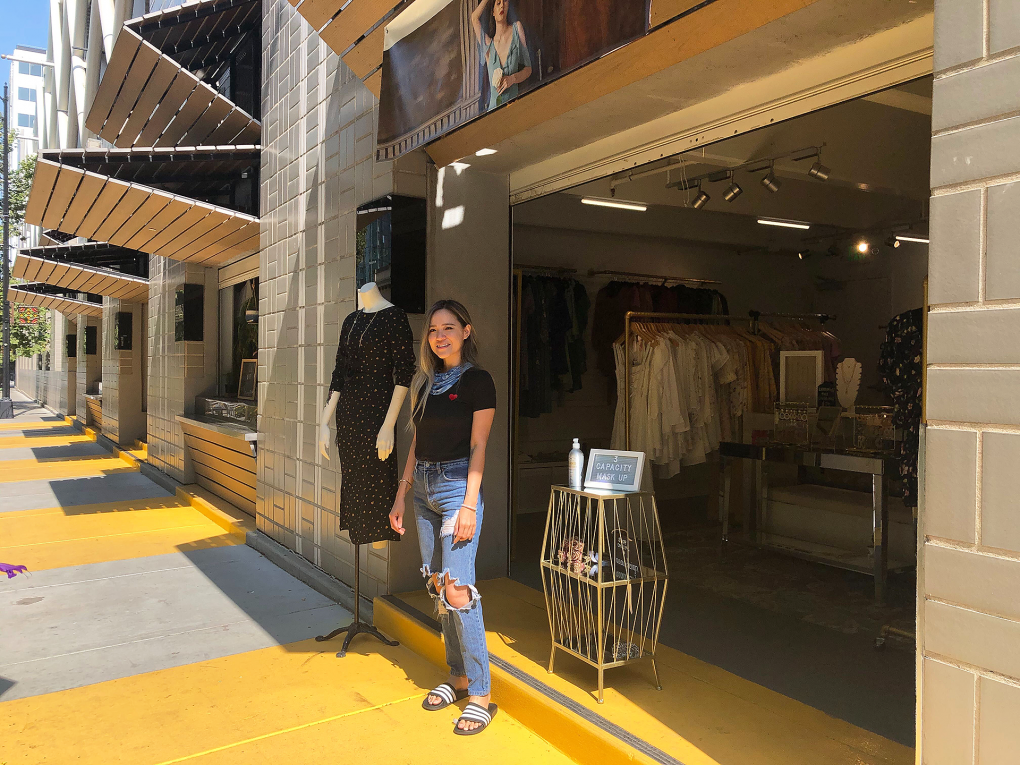
"caption": "Au Nguyen outside Au La La, her newly opened clothing boutique in downtown San Jose. Despite the slow foot traffic due to the pandemic, she says she has still been able to attract some new customers.",
"description": null,
"title": null,
"credit": "Adhiti Bandlamudi/KQED",
"status": "inherit",
"isLoading": false,
"fetchFailed": false
},
"news_11831090": {
"type": "attachments",
"id": "news_11831090",
"meta": {
"index": "attachments_1716263798",
"site": "news",
"id": "11831090",
"found": true
},
"parent": 11831082,
"imgSizes": {
"apple_news_ca_landscape_5_5": {
"file": "https://ww2.kqed.org/app/uploads/sites/10/2020/07/powerful_072920_final-1044x783.png",
"width": 1044,
"mimeType": "image/png",
"height": 783
},
"apple_news_ca_square_4_0": {
"file": "https://ww2.kqed.org/app/uploads/sites/10/2020/07/powerful_072920_final-470x470.png",
"width": 470,
"mimeType": "image/png",
"height": 470
},
"twentyfourteen-full-width": {
"file": "https://ww2.kqed.org/app/uploads/sites/10/2020/07/powerful_072920_final-1038x576.png",
"width": 1038,
"mimeType": "image/png",
"height": 576
},
"thumbnail": {
"file": "https://ww2.kqed.org/app/uploads/sites/10/2020/07/powerful_072920_final-160x111.png",
"width": 160,
"mimeType": "image/png",
"height": 111
},
"post-thumbnail": {
"file": "https://ww2.kqed.org/app/uploads/sites/10/2020/07/powerful_072920_final-672x372.png",
"width": 672,
"mimeType": "image/png",
"height": 372
},
"kqedFullSize": {
"file": "https://ww2.kqed.org/app/uploads/sites/10/2020/07/powerful_072920_final.png",
"width": 1920,
"height": 1331
},
"apple_news_ca_landscape_4_7": {
"file": "https://ww2.kqed.org/app/uploads/sites/10/2020/07/powerful_072920_final-632x474.png",
"width": 632,
"mimeType": "image/png",
"height": 474
},
"large": {
"file": "https://ww2.kqed.org/app/uploads/sites/10/2020/07/powerful_072920_final-1020x707.png",
"width": 1020,
"mimeType": "image/png",
"height": 707
},
"apple_news_ca_landscape_4_0": {
"file": "https://ww2.kqed.org/app/uploads/sites/10/2020/07/powerful_072920_final-536x402.png",
"width": 536,
"mimeType": "image/png",
"height": 402
},
"apple_news_ca_portrait_12_9": {
"file": "https://ww2.kqed.org/app/uploads/sites/10/2020/07/powerful_072920_final-1122x1331.png",
"width": 1122,
"mimeType": "image/png",
"height": 1331
},
"medium": {
"file": "https://ww2.kqed.org/app/uploads/sites/10/2020/07/powerful_072920_final-800x555.png",
"width": 800,
"mimeType": "image/png",
"height": 555
},
"apple_news_ca_portrait_4_0": {
"file": "https://ww2.kqed.org/app/uploads/sites/10/2020/07/powerful_072920_final-354x472.png",
"width": 354,
"mimeType": "image/png",
"height": 472
},
"apple_news_ca_portrait_9_7": {
"file": "https://ww2.kqed.org/app/uploads/sites/10/2020/07/powerful_072920_final-840x1120.png",
"width": 840,
"mimeType": "image/png",
"height": 1120
},
"apple_news_ca_landscape_12_9": {
"file": "https://ww2.kqed.org/app/uploads/sites/10/2020/07/powerful_072920_final-1832x1331.png",
"width": 1832,
"mimeType": "image/png",
"height": 1331
},
"apple_news_ca_square_9_7": {
"file": "https://ww2.kqed.org/app/uploads/sites/10/2020/07/powerful_072920_final-1104x1104.png",
"width": 1104,
"mimeType": "image/png",
"height": 1104
},
"1536x1536": {
"file": "https://ww2.kqed.org/app/uploads/sites/10/2020/07/powerful_072920_final-1536x1065.png",
"width": 1536,
"mimeType": "image/png",
"height": 1065
},
"apple_news_ca_portrait_4_7": {
"file": "https://ww2.kqed.org/app/uploads/sites/10/2020/07/powerful_072920_final-414x552.png",
"width": 414,
"mimeType": "image/png",
"height": 552
},
"apple_news_ca_square_12_9": {
"file": "https://ww2.kqed.org/app/uploads/sites/10/2020/07/powerful_072920_final-1472x1331.png",
"width": 1472,
"mimeType": "image/png",
"height": 1331
},
"apple_news_ca_portrait_5_5": {
"file": "https://ww2.kqed.org/app/uploads/sites/10/2020/07/powerful_072920_final-687x916.png",
"width": 687,
"mimeType": "image/png",
"height": 916
},
"apple_news_ca_square_4_7": {
"file": "https://ww2.kqed.org/app/uploads/sites/10/2020/07/powerful_072920_final-550x550.png",
"width": 550,
"mimeType": "image/png",
"height": 550
},
"apple_news_ca_landscape_9_7": {
"file": "https://ww2.kqed.org/app/uploads/sites/10/2020/07/powerful_072920_final-1376x1032.png",
"width": 1376,
"mimeType": "image/png",
"height": 1032
},
"apple_news_ca_square_5_5": {
"file": "https://ww2.kqed.org/app/uploads/sites/10/2020/07/powerful_072920_final-912x912.png",
"width": 912,
"mimeType": "image/png",
"height": 912
}
},
"publishDate": 1596060562,
"modified": 1596060603,
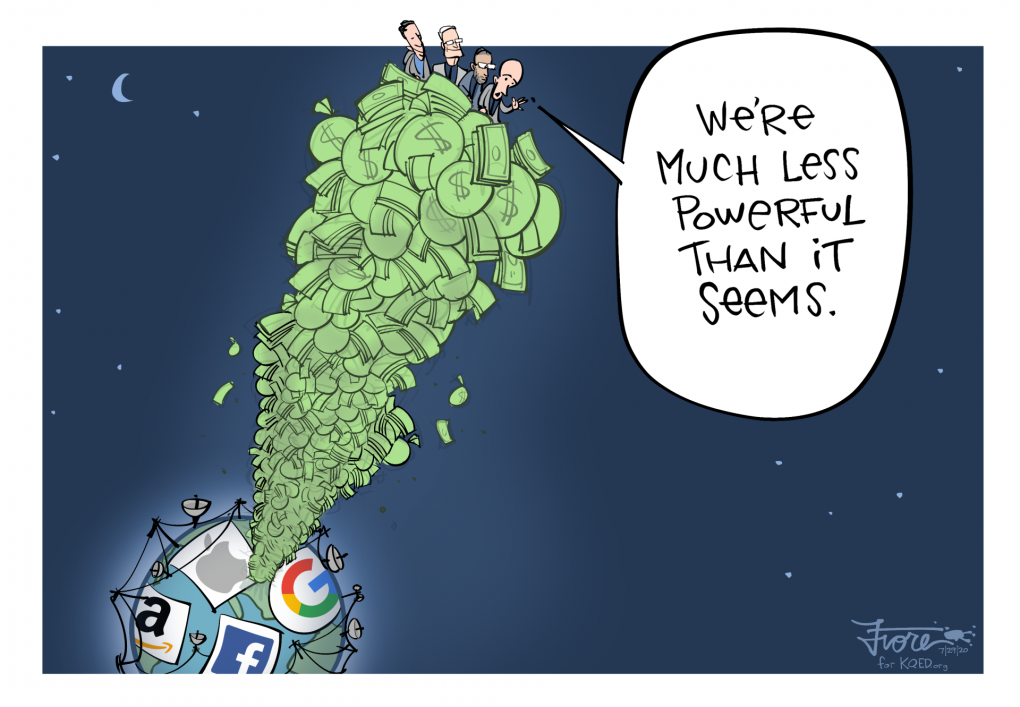
"caption": null,
"description": null,
"title": "powerful_072920_final",
"credit": null,
"status": "inherit",
"isLoading": false,
"fetchFailed": false
},
"news_11830975": {
"type": "attachments",
"id": "news_11830975",
"meta": {
"index": "attachments_1716263798",
"site": "news",
"id": "11830975",
"found": true
},
"parent": 11830974,
"imgSizes": {
"apple_news_ca_landscape_5_5": {
"file": "https://ww2.kqed.org/app/uploads/sites/10/2020/07/gettyimages-1227678555_enl-4521fe83b29587fac5abe2509c20d4bad3035364-1044x783.jpg",
"width": 1044,
"mimeType": "image/jpeg",
"height": 783
},
"apple_news_ca_square_4_0": {
"file": "https://ww2.kqed.org/app/uploads/sites/10/2020/07/gettyimages-1227678555_enl-4521fe83b29587fac5abe2509c20d4bad3035364-470x470.jpg",
"width": 470,
"mimeType": "image/jpeg",
"height": 470
},
"twentyfourteen-full-width": {
"file": "https://ww2.kqed.org/app/uploads/sites/10/2020/07/gettyimages-1227678555_enl-4521fe83b29587fac5abe2509c20d4bad3035364-1038x576.jpg",
"width": 1038,
"mimeType": "image/jpeg",
"height": 576
},
"thumbnail": {
"file": "https://ww2.kqed.org/app/uploads/sites/10/2020/07/gettyimages-1227678555_enl-4521fe83b29587fac5abe2509c20d4bad3035364-160x60.jpg",
"width": 160,
"mimeType": "image/jpeg",
"height": 60
},
"post-thumbnail": {
"file": "https://ww2.kqed.org/app/uploads/sites/10/2020/07/gettyimages-1227678555_enl-4521fe83b29587fac5abe2509c20d4bad3035364-672x372.jpg",
"width": 672,
"mimeType": "image/jpeg",
"height": 372
},
"kqedFullSize": {
"file": "https://ww2.kqed.org/app/uploads/sites/10/2020/07/gettyimages-1227678555_enl-4521fe83b29587fac5abe2509c20d4bad3035364-scaled.jpg",
"width": 2560,
"height": 960
},
"2048x2048": {
"file": "https://ww2.kqed.org/app/uploads/sites/10/2020/07/gettyimages-1227678555_enl-4521fe83b29587fac5abe2509c20d4bad3035364-2048x768.jpg",
"width": 2048,
"mimeType": "image/jpeg",
"height": 768
},
"apple_news_ca_landscape_4_7": {
"file": "https://ww2.kqed.org/app/uploads/sites/10/2020/07/gettyimages-1227678555_enl-4521fe83b29587fac5abe2509c20d4bad3035364-632x474.jpg",
"width": 632,
"mimeType": "image/jpeg",
"height": 474
},
"large": {
"file": "https://ww2.kqed.org/app/uploads/sites/10/2020/07/gettyimages-1227678555_enl-4521fe83b29587fac5abe2509c20d4bad3035364-1020x383.jpg",
"width": 1020,
"mimeType": "image/jpeg",
"height": 383
},
"apple_news_ca_landscape_4_0": {
"file": "https://ww2.kqed.org/app/uploads/sites/10/2020/07/gettyimages-1227678555_enl-4521fe83b29587fac5abe2509c20d4bad3035364-536x402.jpg",
"width": 536,
"mimeType": "image/jpeg",
"height": 402
},
"apple_news_ca_portrait_12_9": {
"file": "https://ww2.kqed.org/app/uploads/sites/10/2020/07/gettyimages-1227678555_enl-4521fe83b29587fac5abe2509c20d4bad3035364-1122x1496.jpg",
"width": 1122,
"mimeType": "image/jpeg",
"height": 1496
},
"medium": {
"file": "https://ww2.kqed.org/app/uploads/sites/10/2020/07/gettyimages-1227678555_enl-4521fe83b29587fac5abe2509c20d4bad3035364-800x300.jpg",
"width": 800,
"mimeType": "image/jpeg",
"height": 300
},
"apple_news_ca_portrait_4_0": {
"file": "https://ww2.kqed.org/app/uploads/sites/10/2020/07/gettyimages-1227678555_enl-4521fe83b29587fac5abe2509c20d4bad3035364-354x472.jpg",
"width": 354,
"mimeType": "image/jpeg",
"height": 472
},
"apple_news_ca_portrait_9_7": {
"file": "https://ww2.kqed.org/app/uploads/sites/10/2020/07/gettyimages-1227678555_enl-4521fe83b29587fac5abe2509c20d4bad3035364-840x1120.jpg",
"width": 840,
"mimeType": "image/jpeg",
"height": 1120
},
"apple_news_ca_landscape_12_9": {
"file": "https://ww2.kqed.org/app/uploads/sites/10/2020/07/gettyimages-1227678555_enl-4521fe83b29587fac5abe2509c20d4bad3035364-1832x1374.jpg",
"width": 1832,
"mimeType": "image/jpeg",
"height": 1374
},
"apple_news_ca_square_9_7": {
"file": "https://ww2.kqed.org/app/uploads/sites/10/2020/07/gettyimages-1227678555_enl-4521fe83b29587fac5abe2509c20d4bad3035364-1104x1104.jpg",
"width": 1104,
"mimeType": "image/jpeg",
"height": 1104
},
"1536x1536": {
"file": "https://ww2.kqed.org/app/uploads/sites/10/2020/07/gettyimages-1227678555_enl-4521fe83b29587fac5abe2509c20d4bad3035364-1536x576.jpg",
"width": 1536,
"mimeType": "image/jpeg",
"height": 576
},
"apple_news_ca_portrait_4_7": {
"file": "https://ww2.kqed.org/app/uploads/sites/10/2020/07/gettyimages-1227678555_enl-4521fe83b29587fac5abe2509c20d4bad3035364-414x552.jpg",
"width": 414,
"mimeType": "image/jpeg",
"height": 552
},
"apple_news_ca_square_12_9": {
"file": "https://ww2.kqed.org/app/uploads/sites/10/2020/07/gettyimages-1227678555_enl-4521fe83b29587fac5abe2509c20d4bad3035364-1472x1472.jpg",
"width": 1472,
"mimeType": "image/jpeg",
"height": 1472
},
"apple_news_ca_portrait_5_5": {
"file": "https://ww2.kqed.org/app/uploads/sites/10/2020/07/gettyimages-1227678555_enl-4521fe83b29587fac5abe2509c20d4bad3035364-687x916.jpg",
"width": 687,
"mimeType": "image/jpeg",
"height": 916
},
"full-width": {
"file": "https://ww2.kqed.org/app/uploads/sites/10/2020/07/gettyimages-1227678555_enl-4521fe83b29587fac5abe2509c20d4bad3035364-1920x720.jpg",
"width": 1920,
"mimeType": "image/jpeg",
"height": 720
},
"apple_news_ca_square_4_7": {
"file": "https://ww2.kqed.org/app/uploads/sites/10/2020/07/gettyimages-1227678555_enl-4521fe83b29587fac5abe2509c20d4bad3035364-550x550.jpg",
"width": 550,
"mimeType": "image/jpeg",
"height": 550
},
"apple_news_ca_landscape_9_7": {
"file": "https://ww2.kqed.org/app/uploads/sites/10/2020/07/gettyimages-1227678555_enl-4521fe83b29587fac5abe2509c20d4bad3035364-1376x1032.jpg",
"width": 1376,
"mimeType": "image/jpeg",
"height": 1032
},
"apple_news_ca_square_5_5": {
"file": "https://ww2.kqed.org/app/uploads/sites/10/2020/07/gettyimages-1227678555_enl-4521fe83b29587fac5abe2509c20d4bad3035364-912x912.jpg",
"width": 912,
"mimeType": "image/jpeg",
"height": 912
}
},
"publishDate": 1596043099,
"modified": 1596043099,
"caption": null,
"description": "(COMBO) This combination of pictures created on July 07, 2020 shows (L-R) Facebook CEO Mark Zuckerberg in Paris on May 23, 2018, Google CEO Sundar Pichai Berlin on January 22, 2019, Apple CEO Tim Cook on October 28, 2019 in New York and Amazon Founder and CEO Jeff Bezos in Las Vegas, Nevada on June 6, 2019. (Photos by AFP) (Photo by BERTRAND GUAY,TOBIAS SCHWARZ,ANGELA WEISS,MARK RALSTON/AFP via Getty Images)",
"title": "Facebook CEO Mark Zuckerberg (from left), Google CEO Sundar Pichai, Apple CEO Tim Cook and Amazon CEO Jeff Bezos are scheduled to testify before a House Judiciary subcommittee.",
"credit": null,
"status": "inherit",
"isLoading": false,
"fetchFailed": false
},
"news_11821524": {
"type": "attachments",
"id": "news_11821524",
"meta": {
"index": "attachments_1716263798",
"site": "news",
"id": "11821524",
"found": true
},
"parent": 11821523,
"imgSizes": {
"apple_news_ca_landscape_5_5": {
"file": "https://ww2.kqed.org/app/uploads/sites/10/2020/05/ap_20148697760093_custom-8f4656c16bcffb1a31c65caa16c87ec62688f1c1-1044x783.jpg",
"width": 1044,
"mimeType": "image/jpeg",
"height": 783
},
"apple_news_ca_square_4_0": {
"file": "https://ww2.kqed.org/app/uploads/sites/10/2020/05/ap_20148697760093_custom-8f4656c16bcffb1a31c65caa16c87ec62688f1c1-470x470.jpg",
"width": 470,
"mimeType": "image/jpeg",
"height": 470
},
"twentyfourteen-full-width": {
"file": "https://ww2.kqed.org/app/uploads/sites/10/2020/05/ap_20148697760093_custom-8f4656c16bcffb1a31c65caa16c87ec62688f1c1-1038x576.jpg",
"width": 1038,
"mimeType": "image/jpeg",
"height": 576
},
"thumbnail": {
"file": "https://ww2.kqed.org/app/uploads/sites/10/2020/05/ap_20148697760093_custom-8f4656c16bcffb1a31c65caa16c87ec62688f1c1-160x107.jpg",
"width": 160,
"mimeType": "image/jpeg",
"height": 107
},
"post-thumbnail": {
"file": "https://ww2.kqed.org/app/uploads/sites/10/2020/05/ap_20148697760093_custom-8f4656c16bcffb1a31c65caa16c87ec62688f1c1-672x372.jpg",
"width": 672,
"mimeType": "image/jpeg",
"height": 372
},
"kqedFullSize": {
"file": "https://ww2.kqed.org/app/uploads/sites/10/2020/05/ap_20148697760093_custom-8f4656c16bcffb1a31c65caa16c87ec62688f1c1-e1590706384891.jpg",
"width": 1920,
"height": 1278
},
"apple_news_ca_landscape_4_7": {
"file": "https://ww2.kqed.org/app/uploads/sites/10/2020/05/ap_20148697760093_custom-8f4656c16bcffb1a31c65caa16c87ec62688f1c1-632x474.jpg",
"width": 632,
"mimeType": "image/jpeg",
"height": 474
},
"large": {
"file": "https://ww2.kqed.org/app/uploads/sites/10/2020/05/ap_20148697760093_custom-8f4656c16bcffb1a31c65caa16c87ec62688f1c1-1020x679.jpg",
"width": 1020,
"mimeType": "image/jpeg",
"height": 679
},
"apple_news_ca_landscape_4_0": {
"file": "https://ww2.kqed.org/app/uploads/sites/10/2020/05/ap_20148697760093_custom-8f4656c16bcffb1a31c65caa16c87ec62688f1c1-536x402.jpg",
"width": 536,
"mimeType": "image/jpeg",
"height": 402
},
"apple_news_ca_portrait_12_9": {
"file": "https://ww2.kqed.org/app/uploads/sites/10/2020/05/ap_20148697760093_custom-8f4656c16bcffb1a31c65caa16c87ec62688f1c1-1122x1496.jpg",
"width": 1122,
"mimeType": "image/jpeg",
"height": 1496
},
"medium": {
"file": "https://ww2.kqed.org/app/uploads/sites/10/2020/05/ap_20148697760093_custom-8f4656c16bcffb1a31c65caa16c87ec62688f1c1-800x533.jpg",
"width": 800,
"mimeType": "image/jpeg",
"height": 533
},
"apple_news_ca_portrait_4_0": {
"file": "https://ww2.kqed.org/app/uploads/sites/10/2020/05/ap_20148697760093_custom-8f4656c16bcffb1a31c65caa16c87ec62688f1c1-354x472.jpg",
"width": 354,
"mimeType": "image/jpeg",
"height": 472
},
"apple_news_ca_portrait_9_7": {
"file": "https://ww2.kqed.org/app/uploads/sites/10/2020/05/ap_20148697760093_custom-8f4656c16bcffb1a31c65caa16c87ec62688f1c1-840x1120.jpg",
"width": 840,
"mimeType": "image/jpeg",
"height": 1120
},
"apple_news_ca_landscape_12_9": {
"file": "https://ww2.kqed.org/app/uploads/sites/10/2020/05/ap_20148697760093_custom-8f4656c16bcffb1a31c65caa16c87ec62688f1c1-1832x1374.jpg",
"width": 1832,
"mimeType": "image/jpeg",
"height": 1374
},
"apple_news_ca_square_9_7": {
"file": "https://ww2.kqed.org/app/uploads/sites/10/2020/05/ap_20148697760093_custom-8f4656c16bcffb1a31c65caa16c87ec62688f1c1-1104x1104.jpg",
"width": 1104,
"mimeType": "image/jpeg",
"height": 1104
},
"apple_news_ca_portrait_4_7": {
"file": "https://ww2.kqed.org/app/uploads/sites/10/2020/05/ap_20148697760093_custom-8f4656c16bcffb1a31c65caa16c87ec62688f1c1-414x552.jpg",
"width": 414,
"mimeType": "image/jpeg",
"height": 552
},
"apple_news_ca_square_12_9": {
"file": "https://ww2.kqed.org/app/uploads/sites/10/2020/05/ap_20148697760093_custom-8f4656c16bcffb1a31c65caa16c87ec62688f1c1-1472x1472.jpg",
"width": 1472,
"mimeType": "image/jpeg",
"height": 1472
},
"apple_news_ca_portrait_5_5": {
"file": "https://ww2.kqed.org/app/uploads/sites/10/2020/05/ap_20148697760093_custom-8f4656c16bcffb1a31c65caa16c87ec62688f1c1-687x916.jpg",
"width": 687,
"mimeType": "image/jpeg",
"height": 916
},
"full-width": {
"file": "https://ww2.kqed.org/app/uploads/sites/10/2020/05/ap_20148697760093_custom-8f4656c16bcffb1a31c65caa16c87ec62688f1c1-1920x1278.jpg",
"width": 1920,
"mimeType": "image/jpeg",
"height": 1278
},
"apple_news_ca_square_4_7": {
"file": "https://ww2.kqed.org/app/uploads/sites/10/2020/05/ap_20148697760093_custom-8f4656c16bcffb1a31c65caa16c87ec62688f1c1-550x550.jpg",
"width": 550,
"mimeType": "image/jpeg",
"height": 550
},
"apple_news_ca_landscape_9_7": {
"file": "https://ww2.kqed.org/app/uploads/sites/10/2020/05/ap_20148697760093_custom-8f4656c16bcffb1a31c65caa16c87ec62688f1c1-1376x1032.jpg",
"width": 1376,
"mimeType": "image/jpeg",
"height": 1032
},
"apple_news_ca_square_5_5": {
"file": "https://ww2.kqed.org/app/uploads/sites/10/2020/05/ap_20148697760093_custom-8f4656c16bcffb1a31c65caa16c87ec62688f1c1-912x912.jpg",
"width": 912,
"mimeType": "image/jpeg",
"height": 912
}
},
"publishDate": 1590706267,
"modified": 1592922957,
"caption": "Silicon Valley is publicly criticizing President Donald Trump's latest attack on visa programs that tech companies use to bring in thousands of skilled foreign workers.",
"description": "Silicon Valley is publicly criticizing President Donald Trump's latest attack on visa programs that tech companies use to bring in thousands of skilled foreign workers.",
"title": "Silicon Valley is publicly criticizing President Donald Trump's latest attack on visa programs that tech companies use to bring in thousands of skilled foreign workers.",
"credit": "Evan Vucci/AP",
"status": "inherit",
"isLoading": false,
"fetchFailed": false
},
"news_11824998": {
"type": "attachments",
"id": "news_11824998",
"meta": {
"index": "attachments_1716263798",
"site": "news",
"id": "11824998",
"found": true
},
"parent": 11824857,
"imgSizes": {
"apple_news_ca_square_4_0": {
"file": "https://ww2.kqed.org/app/uploads/sites/10/2020/06/Ifeoma-470x470.jpg",
"width": 470,
"mimeType": "image/jpeg",
"height": 470
},
"twentyfourteen-full-width": {
"file": "https://ww2.kqed.org/app/uploads/sites/10/2020/06/Ifeoma-1020x576.jpg",
"width": 1020,
"mimeType": "image/jpeg",
"height": 576
},
"thumbnail": {
"file": "https://ww2.kqed.org/app/uploads/sites/10/2020/06/Ifeoma-160x118.jpg",
"width": 160,
"mimeType": "image/jpeg",
"height": 118
},
"post-thumbnail": {
"file": "https://ww2.kqed.org/app/uploads/sites/10/2020/06/Ifeoma-672x372.jpg",
"width": 672,
"mimeType": "image/jpeg",
"height": 372
},
"kqedFullSize": {
"file": "https://ww2.kqed.org/app/uploads/sites/10/2020/06/Ifeoma.jpg",
"width": 1020,
"height": 755
},
"apple_news_ca_landscape_4_7": {
"file": "https://ww2.kqed.org/app/uploads/sites/10/2020/06/Ifeoma-632x474.jpg",
"width": 632,
"mimeType": "image/jpeg",
"height": 474
},
"large": {
"file": "https://ww2.kqed.org/app/uploads/sites/10/2020/06/Ifeoma-1020x755.jpg",
"width": 1020,
"mimeType": "image/jpeg",
"height": 755
},
"apple_news_ca_landscape_4_0": {
"file": "https://ww2.kqed.org/app/uploads/sites/10/2020/06/Ifeoma-536x402.jpg",
"width": 536,
"mimeType": "image/jpeg",
"height": 402
},
"medium": {
"file": "https://ww2.kqed.org/app/uploads/sites/10/2020/06/Ifeoma-800x592.jpg",
"width": 800,
"mimeType": "image/jpeg",
"height": 592
},
"apple_news_ca_portrait_4_0": {
"file": "https://ww2.kqed.org/app/uploads/sites/10/2020/06/Ifeoma-354x472.jpg",
"width": 354,
"mimeType": "image/jpeg",
"height": 472
},
"apple_news_ca_portrait_9_7": {
"file": "https://ww2.kqed.org/app/uploads/sites/10/2020/06/Ifeoma-840x755.jpg",
"width": 840,
"mimeType": "image/jpeg",
"height": 755
},
"apple_news_ca_portrait_4_7": {
"file": "https://ww2.kqed.org/app/uploads/sites/10/2020/06/Ifeoma-414x552.jpg",
"width": 414,
"mimeType": "image/jpeg",
"height": 552
},
"apple_news_ca_portrait_5_5": {
"file": "https://ww2.kqed.org/app/uploads/sites/10/2020/06/Ifeoma-687x755.jpg",
"width": 687,
"mimeType": "image/jpeg",
"height": 755
},
"apple_news_ca_square_4_7": {
"file": "https://ww2.kqed.org/app/uploads/sites/10/2020/06/Ifeoma-550x550.jpg",
"width": 550,
"mimeType": "image/jpeg",
"height": 550
},
"apple_news_ca_square_5_5": {
"file": "https://ww2.kqed.org/app/uploads/sites/10/2020/06/Ifeoma-912x755.jpg",
"width": 912,
"mimeType": "image/jpeg",
"height": 755
}
},
"publishDate": 1592439316,
"modified": 1592439338,
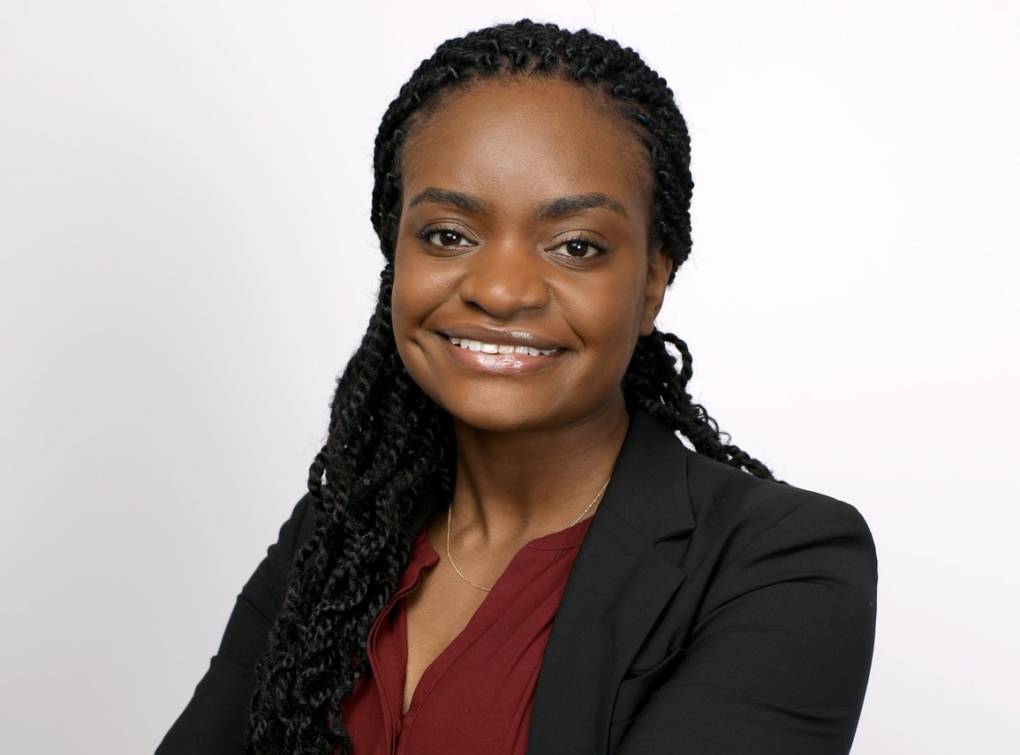
"caption": "Ifeoma Ozoma's Twitter thread slamming Pinterest's professions of concern for racial injustice went viral this week. ",
"description": "Ifeoma Ozoma's Twitter thread slamming Pinterest's professions of concern for racial injustice went viral this week. ",
"title": "Ifeoma",
"credit": "Courtesy of Ifeoma Ozoma",
"status": "inherit",
"isLoading": false,
"fetchFailed": false
},
"news_11817019": {
"type": "attachments",
"id": "news_11817019",
"meta": {
"index": "attachments_1716263798",
"site": "news",
"id": "11817019",
"found": true
},
"parent": 11816098,
"imgSizes": {
"apple_news_ca_landscape_5_5": {
"file": "https://ww2.kqed.org/app/uploads/sites/10/2020/05/RS43114_iStock-1202687914-qut-1044x783.jpg",
"width": 1044,
"mimeType": "image/jpeg",
"height": 783
},
"apple_news_ca_square_4_0": {
"file": "https://ww2.kqed.org/app/uploads/sites/10/2020/05/RS43114_iStock-1202687914-qut-470x470.jpg",
"width": 470,
"mimeType": "image/jpeg",
"height": 470
},
"twentyfourteen-full-width": {
"file": "https://ww2.kqed.org/app/uploads/sites/10/2020/05/RS43114_iStock-1202687914-qut-1038x576.jpg",
"width": 1038,
"mimeType": "image/jpeg",
"height": 576
},
"thumbnail": {
"file": "https://ww2.kqed.org/app/uploads/sites/10/2020/05/RS43114_iStock-1202687914-qut-160x120.jpg",
"width": 160,
"mimeType": "image/jpeg",
"height": 120
},
"post-thumbnail": {
"file": "https://ww2.kqed.org/app/uploads/sites/10/2020/05/RS43114_iStock-1202687914-qut-672x372.jpg",
"width": 672,
"mimeType": "image/jpeg",
"height": 372
},
"kqedFullSize": {
"file": "https://ww2.kqed.org/app/uploads/sites/10/2020/05/RS43114_iStock-1202687914-qut.jpg",
"width": 1920,
"height": 1440
},
"apple_news_ca_landscape_4_7": {
"file": "https://ww2.kqed.org/app/uploads/sites/10/2020/05/RS43114_iStock-1202687914-qut-632x474.jpg",
"width": 632,
"mimeType": "image/jpeg",
"height": 474
},
"large": {
"file": "https://ww2.kqed.org/app/uploads/sites/10/2020/05/RS43114_iStock-1202687914-qut-1020x765.jpg",
"width": 1020,
"mimeType": "image/jpeg",
"height": 765
},
"apple_news_ca_landscape_4_0": {
"file": "https://ww2.kqed.org/app/uploads/sites/10/2020/05/RS43114_iStock-1202687914-qut-536x402.jpg",
"width": 536,
"mimeType": "image/jpeg",
"height": 402
},
"apple_news_ca_portrait_12_9": {
"file": "https://ww2.kqed.org/app/uploads/sites/10/2020/05/RS43114_iStock-1202687914-qut-1122x1440.jpg",
"width": 1122,
"mimeType": "image/jpeg",
"height": 1440
},
"medium": {
"file": "https://ww2.kqed.org/app/uploads/sites/10/2020/05/RS43114_iStock-1202687914-qut-800x600.jpg",
"width": 800,
"mimeType": "image/jpeg",
"height": 600
},
"apple_news_ca_portrait_4_0": {
"file": "https://ww2.kqed.org/app/uploads/sites/10/2020/05/RS43114_iStock-1202687914-qut-354x472.jpg",
"width": 354,
"mimeType": "image/jpeg",
"height": 472
},
"apple_news_ca_portrait_9_7": {
"file": "https://ww2.kqed.org/app/uploads/sites/10/2020/05/RS43114_iStock-1202687914-qut-840x1120.jpg",
"width": 840,
"mimeType": "image/jpeg",
"height": 1120
},
"apple_news_ca_landscape_12_9": {
"file": "https://ww2.kqed.org/app/uploads/sites/10/2020/05/RS43114_iStock-1202687914-qut-1832x1374.jpg",
"width": 1832,
"mimeType": "image/jpeg",
"height": 1374
},
"apple_news_ca_square_9_7": {
"file": "https://ww2.kqed.org/app/uploads/sites/10/2020/05/RS43114_iStock-1202687914-qut-1104x1104.jpg",
"width": 1104,
"mimeType": "image/jpeg",
"height": 1104
},
"apple_news_ca_portrait_4_7": {
"file": "https://ww2.kqed.org/app/uploads/sites/10/2020/05/RS43114_iStock-1202687914-qut-414x552.jpg",
"width": 414,
"mimeType": "image/jpeg",
"height": 552
},
"apple_news_ca_square_12_9": {
"file": "https://ww2.kqed.org/app/uploads/sites/10/2020/05/RS43114_iStock-1202687914-qut-1472x1440.jpg",
"width": 1472,
"mimeType": "image/jpeg",
"height": 1440
},
"apple_news_ca_portrait_5_5": {
"file": "https://ww2.kqed.org/app/uploads/sites/10/2020/05/RS43114_iStock-1202687914-qut-687x916.jpg",
"width": 687,
"mimeType": "image/jpeg",
"height": 916
},
"full-width": {
"file": "https://ww2.kqed.org/app/uploads/sites/10/2020/05/RS43114_iStock-1202687914-qut-1920x1440.jpg",
"width": 1920,
"mimeType": "image/jpeg",
"height": 1440
},
"apple_news_ca_square_4_7": {
"file": "https://ww2.kqed.org/app/uploads/sites/10/2020/05/RS43114_iStock-1202687914-qut-550x550.jpg",
"width": 550,
"mimeType": "image/jpeg",
"height": 550
},
"apple_news_ca_landscape_9_7": {
"file": "https://ww2.kqed.org/app/uploads/sites/10/2020/05/RS43114_iStock-1202687914-qut-1376x1032.jpg",
"width": 1376,
"mimeType": "image/jpeg",
"height": 1032
},
"apple_news_ca_square_5_5": {
"file": "https://ww2.kqed.org/app/uploads/sites/10/2020/05/RS43114_iStock-1202687914-qut-912x912.jpg",
"width": 912,
"mimeType": "image/jpeg",
"height": 912
}
},
"publishDate": 1588898370,
"modified": 1588898483,
"caption": "Amazon, Facebook, Microsoft, Apple and Alphabet are hiring tens of thousands of people — despite, or perhaps, because of the COVID-19 pandemic.",
"description": "Amazon, Facebook, Microsoft, Apple and Alphabet are hiring tens of thousands of people — despite, or perhaps, because of the COVID-19 pandemic.",
"title": "Man with laptop and a small terrier dog on his lap on a bed",
"credit": "Sonja Rachbauer/iStock",
"status": "inherit",
"isLoading": false,
"fetchFailed": false
},
"news_11815215": {
"type": "attachments",
"id": "news_11815215",
"meta": {
"index": "attachments_1716263798",
"site": "news",
"id": "11815215",
"found": true
},
"parent": 11815037,
"imgSizes": {
"apple_news_ca_landscape_5_5": {
"file": "https://ww2.kqed.org/app/uploads/sites/10/2020/04/stayathome-1044x783.jpg",
"width": 1044,
"mimeType": "image/jpeg",
"height": 783
},
"apple_news_ca_square_4_0": {
"file": "https://ww2.kqed.org/app/uploads/sites/10/2020/04/stayathome-470x470.jpg",
"width": 470,
"mimeType": "image/jpeg",
"height": 470
},
"twentyfourteen-full-width": {
"file": "https://ww2.kqed.org/app/uploads/sites/10/2020/04/stayathome-1038x576.jpg",
"width": 1038,
"mimeType": "image/jpeg",
"height": 576
},
"thumbnail": {
"file": "https://ww2.kqed.org/app/uploads/sites/10/2020/04/stayathome-160x107.jpg",
"width": 160,
"mimeType": "image/jpeg",
"height": 107
},
"post-thumbnail": {
"file": "https://ww2.kqed.org/app/uploads/sites/10/2020/04/stayathome-672x372.jpg",
"width": 672,
"mimeType": "image/jpeg",
"height": 372
},
"kqedFullSize": {
"file": "https://ww2.kqed.org/app/uploads/sites/10/2020/04/stayathome.jpg",
"width": 1920,
"height": 1280
},
"apple_news_ca_landscape_4_7": {
"file": "https://ww2.kqed.org/app/uploads/sites/10/2020/04/stayathome-632x474.jpg",
"width": 632,
"mimeType": "image/jpeg",
"height": 474
},
"large": {
"file": "https://ww2.kqed.org/app/uploads/sites/10/2020/04/stayathome-1020x680.jpg",
"width": 1020,
"mimeType": "image/jpeg",
"height": 680
},
"apple_news_ca_landscape_4_0": {
"file": "https://ww2.kqed.org/app/uploads/sites/10/2020/04/stayathome-536x402.jpg",
"width": 536,
"mimeType": "image/jpeg",
"height": 402
},
"apple_news_ca_portrait_12_9": {
"file": "https://ww2.kqed.org/app/uploads/sites/10/2020/04/stayathome-1122x1280.jpg",
"width": 1122,
"mimeType": "image/jpeg",
"height": 1280
},
"medium": {
"file": "https://ww2.kqed.org/app/uploads/sites/10/2020/04/stayathome-800x533.jpg",
"width": 800,
"mimeType": "image/jpeg",
"height": 533
},
"apple_news_ca_portrait_4_0": {
"file": "https://ww2.kqed.org/app/uploads/sites/10/2020/04/stayathome-354x472.jpg",
"width": 354,
"mimeType": "image/jpeg",
"height": 472
},
"apple_news_ca_portrait_9_7": {
"file": "https://ww2.kqed.org/app/uploads/sites/10/2020/04/stayathome-840x1120.jpg",
"width": 840,
"mimeType": "image/jpeg",
"height": 1120
},
"apple_news_ca_landscape_12_9": {
"file": "https://ww2.kqed.org/app/uploads/sites/10/2020/04/stayathome-1832x1280.jpg",
"width": 1832,
"mimeType": "image/jpeg",
"height": 1280
},
"apple_news_ca_square_9_7": {
"file": "https://ww2.kqed.org/app/uploads/sites/10/2020/04/stayathome-1104x1104.jpg",
"width": 1104,
"mimeType": "image/jpeg",
"height": 1104
},
"apple_news_ca_portrait_4_7": {
"file": "https://ww2.kqed.org/app/uploads/sites/10/2020/04/stayathome-414x552.jpg",
"width": 414,
"mimeType": "image/jpeg",
"height": 552
},
"apple_news_ca_square_12_9": {
"file": "https://ww2.kqed.org/app/uploads/sites/10/2020/04/stayathome-1472x1280.jpg",
"width": 1472,
"mimeType": "image/jpeg",
"height": 1280
},
"apple_news_ca_portrait_5_5": {
"file": "https://ww2.kqed.org/app/uploads/sites/10/2020/04/stayathome-687x916.jpg",
"width": 687,
"mimeType": "image/jpeg",
"height": 916
},
"full-width": {
"file": "https://ww2.kqed.org/app/uploads/sites/10/2020/04/stayathome-1920x1280.jpg",
"width": 1920,
"mimeType": "image/jpeg",
"height": 1280
},
"apple_news_ca_square_4_7": {
"file": "https://ww2.kqed.org/app/uploads/sites/10/2020/04/stayathome-550x550.jpg",
"width": 550,
"mimeType": "image/jpeg",
"height": 550
},
"apple_news_ca_landscape_9_7": {
"file": "https://ww2.kqed.org/app/uploads/sites/10/2020/04/stayathome-1376x1032.jpg",
"width": 1376,
"mimeType": "image/jpeg",
"height": 1032
},
"apple_news_ca_square_5_5": {
"file": "https://ww2.kqed.org/app/uploads/sites/10/2020/04/stayathome-912x912.jpg",
"width": 912,
"mimeType": "image/jpeg",
"height": 912
}
},
"publishDate": 1588212007,
"modified": 1588212097,
"caption": "A cyclist at the closed Robin Williams Meadow in San Francisco's Golden Gate Park on April 20, 2020.",
"description": null,
"title": "Coronavirus Pandemic Causes Climate Of Anxiety And Changing Routines In America",
"credit": "Justin Sullivan/Getty Images",
"status": "inherit",
"isLoading": false,
"fetchFailed": false
},
"news_11675137": {
"type": "attachments",
"id": "news_11675137",
"meta": {
"index": "attachments_1716263798",
"site": "news",
"id": "11675137",
"found": true
},
"parent": 11675136,
"imgSizes": {
"small": {
"file": "https://ww2.kqed.org/app/uploads/sites/10/2018/06/RS24921_GettyImages-606021900-qut-520x347.jpg",
"width": 520,
"mimeType": "image/jpeg",
"height": 347
},
"twentyfourteen-full-width": {
"file": "https://ww2.kqed.org/app/uploads/sites/10/2018/06/RS24921_GettyImages-606021900-qut-1038x576.jpg",
"width": 1038,
"mimeType": "image/jpeg",
"height": 576
},
"thumbnail": {
"file": "https://ww2.kqed.org/app/uploads/sites/10/2018/06/RS24921_GettyImages-606021900-qut-160x107.jpg",
"width": 160,
"mimeType": "image/jpeg",
"height": 107
},
"fd-sm": {
"file": "https://ww2.kqed.org/app/uploads/sites/10/2018/06/RS24921_GettyImages-606021900-qut-960x640.jpg",
"width": 960,
"mimeType": "image/jpeg",
"height": 640
},
"post-thumbnail": {
"file": "https://ww2.kqed.org/app/uploads/sites/10/2018/06/RS24921_GettyImages-606021900-qut-672x372.jpg",
"width": 672,
"mimeType": "image/jpeg",
"height": 372
},
"xsmall": {
"file": "https://ww2.kqed.org/app/uploads/sites/10/2018/06/RS24921_GettyImages-606021900-qut-375x250.jpg",
"width": 375,
"mimeType": "image/jpeg",
"height": 250
},
"kqedFullSize": {
"file": "https://ww2.kqed.org/app/uploads/sites/10/2018/06/RS24921_GettyImages-606021900-qut.jpg",
"width": 1920,
"height": 1280
},
"large": {
"file": "https://ww2.kqed.org/app/uploads/sites/10/2018/06/RS24921_GettyImages-606021900-qut-1020x680.jpg",
"width": 1020,
"mimeType": "image/jpeg",
"height": 680
},
"xlarge": {
"file": "https://ww2.kqed.org/app/uploads/sites/10/2018/06/RS24921_GettyImages-606021900-qut-1180x787.jpg",
"width": 1180,
"mimeType": "image/jpeg",
"height": 787
},
"complete_open_graph": {
"file": "https://ww2.kqed.org/app/uploads/sites/10/2018/06/RS24921_GettyImages-606021900-qut-1200x800.jpg",
"width": 1200,
"mimeType": "image/jpeg",
"height": 800
},
"guest-author-50": {
"file": "https://ww2.kqed.org/app/uploads/sites/10/2018/06/RS24921_GettyImages-606021900-qut-50x50.jpg",
"width": 50,
"mimeType": "image/jpeg",
"height": 50
},
"guest-author-96": {
"file": "https://ww2.kqed.org/app/uploads/sites/10/2018/06/RS24921_GettyImages-606021900-qut-96x96.jpg",
"width": 96,
"mimeType": "image/jpeg",
"height": 96
},
"medium": {
"file": "https://ww2.kqed.org/app/uploads/sites/10/2018/06/RS24921_GettyImages-606021900-qut-800x533.jpg",
"width": 800,
"mimeType": "image/jpeg",
"height": 533
},
"guest-author-64": {
"file": "https://ww2.kqed.org/app/uploads/sites/10/2018/06/RS24921_GettyImages-606021900-qut-64x64.jpg",
"width": 64,
"mimeType": "image/jpeg",
"height": 64
},
"guest-author-32": {
"file": "https://ww2.kqed.org/app/uploads/sites/10/2018/06/RS24921_GettyImages-606021900-qut-32x32.jpg",
"width": 32,
"mimeType": "image/jpeg",
"height": 32
},
"fd-lrg": {
"file": "https://ww2.kqed.org/app/uploads/sites/10/2018/06/RS24921_GettyImages-606021900-qut-1920x1280.jpg",
"width": 1920,
"mimeType": "image/jpeg",
"height": 1280
},
"fd-med": {
"file": "https://ww2.kqed.org/app/uploads/sites/10/2018/06/RS24921_GettyImages-606021900-qut-1180x787.jpg",
"width": 1180,
"mimeType": "image/jpeg",
"height": 787
},
"full-width": {
"file": "https://ww2.kqed.org/app/uploads/sites/10/2018/06/RS24921_GettyImages-606021900-qut-1920x1280.jpg",
"width": 1920,
"mimeType": "image/jpeg",
"height": 1280
},
"detail": {
"file": "https://ww2.kqed.org/app/uploads/sites/10/2018/06/RS24921_GettyImages-606021900-qut-150x150.jpg",
"width": 150,
"mimeType": "image/jpeg",
"height": 150
},
"guest-author-128": {
"file": "https://ww2.kqed.org/app/uploads/sites/10/2018/06/RS24921_GettyImages-606021900-qut-128x128.jpg",
"width": 128,
"mimeType": "image/jpeg",
"height": 128
},
"xxsmall": {
"file": "https://ww2.kqed.org/app/uploads/sites/10/2018/06/RS24921_GettyImages-606021900-qut-240x160.jpg",
"width": 240,
"mimeType": "image/jpeg",
"height": 160
}
},
"publishDate": 1529088663,
"modified": 1587337630,
"caption": null,
"description": null,
"title": "RS24921_GettyImages-606021900-qut",
"credit": "Sean Gallup/Getty Images",
"status": "inherit",
"isLoading": false,
"fetchFailed": false
},
"news_11811313": {
"type": "attachments",
"id": "news_11811313",
"meta": {
"index": "attachments_1716263798",
"site": "news",
"id": "11811313",
"found": true
},
"parent": 11811262,
"imgSizes": {
"apple_news_ca_landscape_5_5": {
"file": "https://ww2.kqed.org/app/uploads/sites/10/2020/04/iStock-1213480145-1044x783.jpg",
"width": 1044,
"mimeType": "image/jpeg",
"height": 783
},
"apple_news_ca_square_4_0": {
"file": "https://ww2.kqed.org/app/uploads/sites/10/2020/04/iStock-1213480145-470x470.jpg",
"width": 470,
"mimeType": "image/jpeg",
"height": 470
},
"twentyfourteen-full-width": {
"file": "https://ww2.kqed.org/app/uploads/sites/10/2020/04/iStock-1213480145-1038x576.jpg",
"width": 1038,
"mimeType": "image/jpeg",
"height": 576
},
"thumbnail": {
"file": "https://ww2.kqed.org/app/uploads/sites/10/2020/04/iStock-1213480145-160x100.jpg",
"width": 160,
"mimeType": "image/jpeg",
"height": 100
},
"post-thumbnail": {
"file": "https://ww2.kqed.org/app/uploads/sites/10/2020/04/iStock-1213480145-672x372.jpg",
"width": 672,
"mimeType": "image/jpeg",
"height": 372
},
"kqedFullSize": {
"file": "https://ww2.kqed.org/app/uploads/sites/10/2020/04/iStock-1213480145.jpg",
"width": 2190,
"height": 1369
},
"apple_news_ca_landscape_4_7": {
"file": "https://ww2.kqed.org/app/uploads/sites/10/2020/04/iStock-1213480145-632x474.jpg",
"width": 632,
"mimeType": "image/jpeg",
"height": 474
},
"large": {
"file": "https://ww2.kqed.org/app/uploads/sites/10/2020/04/iStock-1213480145-1020x638.jpg",
"width": 1020,
"mimeType": "image/jpeg",
"height": 638
},
"apple_news_ca_landscape_4_0": {
"file": "https://ww2.kqed.org/app/uploads/sites/10/2020/04/iStock-1213480145-536x402.jpg",
"width": 536,
"mimeType": "image/jpeg",
"height": 402
},
"apple_news_ca_portrait_12_9": {
"file": "https://ww2.kqed.org/app/uploads/sites/10/2020/04/iStock-1213480145-1122x1369.jpg",
"width": 1122,
"mimeType": "image/jpeg",
"height": 1369
},
"medium": {
"file": "https://ww2.kqed.org/app/uploads/sites/10/2020/04/iStock-1213480145-800x500.jpg",
"width": 800,
"mimeType": "image/jpeg",
"height": 500
},
"apple_news_ca_portrait_4_0": {
"file": "https://ww2.kqed.org/app/uploads/sites/10/2020/04/iStock-1213480145-354x472.jpg",
"width": 354,
"mimeType": "image/jpeg",
"height": 472
},
"apple_news_ca_portrait_9_7": {
"file": "https://ww2.kqed.org/app/uploads/sites/10/2020/04/iStock-1213480145-840x1120.jpg",
"width": 840,
"mimeType": "image/jpeg",
"height": 1120
},
"apple_news_ca_landscape_12_9": {
"file": "https://ww2.kqed.org/app/uploads/sites/10/2020/04/iStock-1213480145-1832x1369.jpg",
"width": 1832,
"mimeType": "image/jpeg",
"height": 1369
},
"apple_news_ca_square_9_7": {
"file": "https://ww2.kqed.org/app/uploads/sites/10/2020/04/iStock-1213480145-1104x1104.jpg",
"width": 1104,
"mimeType": "image/jpeg",
"height": 1104
},
"apple_news_ca_portrait_4_7": {
"file": "https://ww2.kqed.org/app/uploads/sites/10/2020/04/iStock-1213480145-414x552.jpg",
"width": 414,
"mimeType": "image/jpeg",
"height": 552
},
"apple_news_ca_square_12_9": {
"file": "https://ww2.kqed.org/app/uploads/sites/10/2020/04/iStock-1213480145-1472x1369.jpg",
"width": 1472,
"mimeType": "image/jpeg",
"height": 1369
},
"apple_news_ca_portrait_5_5": {
"file": "https://ww2.kqed.org/app/uploads/sites/10/2020/04/iStock-1213480145-687x916.jpg",
"width": 687,
"mimeType": "image/jpeg",
"height": 916
},
"full-width": {
"file": "https://ww2.kqed.org/app/uploads/sites/10/2020/04/iStock-1213480145-1920x1200.jpg",
"width": 1920,
"mimeType": "image/jpeg",
"height": 1200
},
"apple_news_ca_square_4_7": {
"file": "https://ww2.kqed.org/app/uploads/sites/10/2020/04/iStock-1213480145-550x550.jpg",
"width": 550,
"mimeType": "image/jpeg",
"height": 550
},
"apple_news_ca_landscape_9_7": {
"file": "https://ww2.kqed.org/app/uploads/sites/10/2020/04/iStock-1213480145-1376x1032.jpg",
"width": 1376,
"mimeType": "image/jpeg",
"height": 1032
},
"apple_news_ca_square_5_5": {
"file": "https://ww2.kqed.org/app/uploads/sites/10/2020/04/iStock-1213480145-912x912.jpg",
"width": 912,
"mimeType": "image/jpeg",
"height": 912
}
},
"publishDate": 1586357641,
"modified": 1586357750,
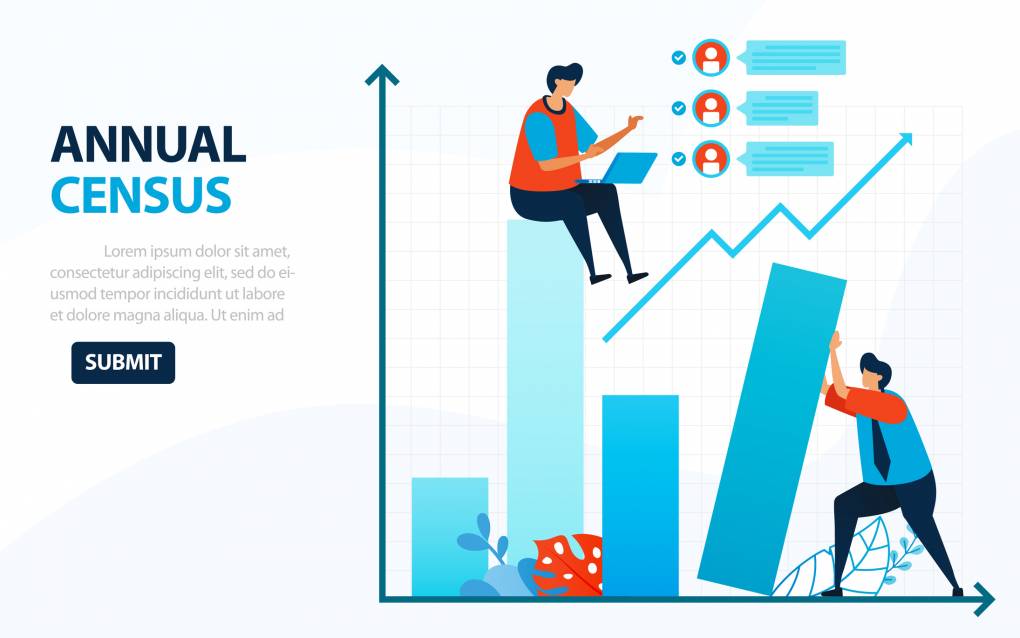
"caption": "Behind the scenes, the U.S. Census Bureau has been working with 340,000+ \"partners\" to identify, delete and counteract misinformation and disinformation about the 2020 count.",
"description": "Behind the scenes, the U.S. Census Bureau has been working with 340,000+ \"partners\" to identify, delete and counteract misinformation and disinformation about the 2020 count.",
"title": "Vector Illustration For 2020 Population Census. Digital Concept With Survey And Check. Can Use For Landing Page, Template, Web, Mobile App, Poster, Banner, Flyer, Background, Website, Advertisement",
"credit": "iStock",
"status": "inherit",
"isLoading": false,
"fetchFailed": false
},
"news_11738400": {
"type": "attachments",
"id": "news_11738400",
"meta": {
"index": "attachments_1716263798",
"site": "news",
"id": "11738400",
"found": true
},
"parent": 11738391,
"imgSizes": {
"post-thumbnail": {
"file": "https://ww2.kqed.org/app/uploads/sites/10/2019/04/RS26525_GettyImages-486234008-qut-672x372.jpg",
"width": 672,
"mimeType": "image/jpeg",
"height": 372
},
"kqedFullSize": {
"file": "https://ww2.kqed.org/app/uploads/sites/10/2019/04/RS26525_GettyImages-486234008-qut.jpg",
"width": 1920,
"height": 1281
},
"guest-author-50": {
"file": "https://ww2.kqed.org/app/uploads/sites/10/2019/04/RS26525_GettyImages-486234008-qut-50x50.jpg",
"width": 50,
"mimeType": "image/jpeg",
"height": 50
},
"guest-author-96": {
"file": "https://ww2.kqed.org/app/uploads/sites/10/2019/04/RS26525_GettyImages-486234008-qut-96x96.jpg",
"width": 96,
"mimeType": "image/jpeg",
"height": 96
},
"apple_news_ca_portrait_12_9": {
"file": "https://ww2.kqed.org/app/uploads/sites/10/2019/04/RS26525_GettyImages-486234008-qut-1122x1281.jpg",
"width": 1122,
"mimeType": "image/jpeg",
"height": 1281
},
"medium": {
"file": "https://ww2.kqed.org/app/uploads/sites/10/2019/04/RS26525_GettyImages-486234008-qut-800x534.jpg",
"width": 800,
"mimeType": "image/jpeg",
"height": 534
},
"guest-author-32": {
"file": "https://ww2.kqed.org/app/uploads/sites/10/2019/04/RS26525_GettyImages-486234008-qut-32x32.jpg",
"width": 32,
"mimeType": "image/jpeg",
"height": 32
},
"apple_news_ca_portrait_9_7": {
"file": "https://ww2.kqed.org/app/uploads/sites/10/2019/04/RS26525_GettyImages-486234008-qut-840x1120.jpg",
"width": 840,
"mimeType": "image/jpeg",
"height": 1120
},
"apple_news_ca_square_9_7": {
"file": "https://ww2.kqed.org/app/uploads/sites/10/2019/04/RS26525_GettyImages-486234008-qut-1104x1104.jpg",
"width": 1104,
"mimeType": "image/jpeg",
"height": 1104
},
"apple_news_ca_portrait_4_7": {
"file": "https://ww2.kqed.org/app/uploads/sites/10/2019/04/RS26525_GettyImages-486234008-qut-414x552.jpg",
"width": 414,
"mimeType": "image/jpeg",
"height": 552
},
"apple_news_ca_square_12_9": {
"file": "https://ww2.kqed.org/app/uploads/sites/10/2019/04/RS26525_GettyImages-486234008-qut-1472x1281.jpg",
"width": 1472,
"mimeType": "image/jpeg",
"height": 1281
},
"apple_news_ca_portrait_5_5": {
"file": "https://ww2.kqed.org/app/uploads/sites/10/2019/04/RS26525_GettyImages-486234008-qut-687x916.jpg",
"width": 687,
"mimeType": "image/jpeg",
"height": 916
},
"apple_news_ca_square_4_7": {
"file": "https://ww2.kqed.org/app/uploads/sites/10/2019/04/RS26525_GettyImages-486234008-qut-550x550.jpg",
"width": 550,
"mimeType": "image/jpeg",
"height": 550
},
"apple_news_ca_square_5_5": {
"file": "https://ww2.kqed.org/app/uploads/sites/10/2019/04/RS26525_GettyImages-486234008-qut-912x912.jpg",
"width": 912,
"mimeType": "image/jpeg",
"height": 912
},
"apple_news_ca_landscape_5_5": {
"file": "https://ww2.kqed.org/app/uploads/sites/10/2019/04/RS26525_GettyImages-486234008-qut-1044x783.jpg",
"width": 1044,
"mimeType": "image/jpeg",
"height": 783
},
"apple_news_ca_square_4_0": {
"file": "https://ww2.kqed.org/app/uploads/sites/10/2019/04/RS26525_GettyImages-486234008-qut-470x470.jpg",
"width": 470,
"mimeType": "image/jpeg",
"height": 470
},
"twentyfourteen-full-width": {
"file": "https://ww2.kqed.org/app/uploads/sites/10/2019/04/RS26525_GettyImages-486234008-qut-1038x576.jpg",
"width": 1038,
"mimeType": "image/jpeg",
"height": 576
},
"thumbnail": {
"file": "https://ww2.kqed.org/app/uploads/sites/10/2019/04/RS26525_GettyImages-486234008-qut-160x107.jpg",
"width": 160,
"mimeType": "image/jpeg",
"height": 107
},
"apple_news_ca_landscape_4_7": {
"file": "https://ww2.kqed.org/app/uploads/sites/10/2019/04/RS26525_GettyImages-486234008-qut-632x474.jpg",
"width": 632,
"mimeType": "image/jpeg",
"height": 474
},
"large": {
"file": "https://ww2.kqed.org/app/uploads/sites/10/2019/04/RS26525_GettyImages-486234008-qut-1020x681.jpg",
"width": 1020,
"mimeType": "image/jpeg",
"height": 681
},
"complete_open_graph": {
"file": "https://ww2.kqed.org/app/uploads/sites/10/2019/04/RS26525_GettyImages-486234008-qut-1200x801.jpg",
"width": 1200,
"mimeType": "image/jpeg",
"height": 801
},
"apple_news_ca_landscape_4_0": {
"file": "https://ww2.kqed.org/app/uploads/sites/10/2019/04/RS26525_GettyImages-486234008-qut-536x402.jpg",
"width": 536,
"mimeType": "image/jpeg",
"height": 402
},
"guest-author-64": {
"file": "https://ww2.kqed.org/app/uploads/sites/10/2019/04/RS26525_GettyImages-486234008-qut-64x64.jpg",
"width": 64,
"mimeType": "image/jpeg",
"height": 64
},
"apple_news_ca_portrait_4_0": {
"file": "https://ww2.kqed.org/app/uploads/sites/10/2019/04/RS26525_GettyImages-486234008-qut-354x472.jpg",
"width": 354,
"mimeType": "image/jpeg",
"height": 472
},
"apple_news_ca_landscape_12_9": {
"file": "https://ww2.kqed.org/app/uploads/sites/10/2019/04/RS26525_GettyImages-486234008-qut-1832x1281.jpg",
"width": 1832,
"mimeType": "image/jpeg",
"height": 1281
},
"full-width": {
"file": "https://ww2.kqed.org/app/uploads/sites/10/2019/04/RS26525_GettyImages-486234008-qut-1920x1281.jpg",
"width": 1920,
"mimeType": "image/jpeg",
"height": 1281
},
"guest-author-128": {
"file": "https://ww2.kqed.org/app/uploads/sites/10/2019/04/RS26525_GettyImages-486234008-qut-128x128.jpg",
"width": 128,
"mimeType": "image/jpeg",
"height": 128
},
"apple_news_ca_landscape_9_7": {
"file": "https://ww2.kqed.org/app/uploads/sites/10/2019/04/RS26525_GettyImages-486234008-qut-1376x1032.jpg",
"width": 1376,
"mimeType": "image/jpeg",
"height": 1032
}
},
"publishDate": 1554664698,
"modified": 1584158349,
"caption": "A significant percentage of tech workers at companies like Google and Facebook are contractors — not official employees — and receive vastly different wages and benefits than their counterparts.",
"description": null,
"title": "Google Updates Its Logo",
"credit": "Justin Sullivan/Getty Images",
"status": "inherit",
"isLoading": false,
"fetchFailed": false
},
"news_11806224": {
"type": "attachments",
"id": "news_11806224",
"meta": {
"index": "attachments_1716263798",
"site": "news",
"id": "11806224",
"found": true
},
"parent": 11806039,
"imgSizes": {
"apple_news_ca_landscape_5_5": {
"file": "https://ww2.kqed.org/app/uploads/sites/10/2020/03/iStock-637744750-1044x783.jpg",
"width": 1044,
"mimeType": "image/jpeg",
"height": 783
},
"apple_news_ca_square_4_0": {
"file": "https://ww2.kqed.org/app/uploads/sites/10/2020/03/iStock-637744750-470x470.jpg",
"width": 470,
"mimeType": "image/jpeg",
"height": 470
},
"twentyfourteen-full-width": {
"file": "https://ww2.kqed.org/app/uploads/sites/10/2020/03/iStock-637744750-1038x576.jpg",
"width": 1038,
"mimeType": "image/jpeg",
"height": 576
},
"thumbnail": {
"file": "https://ww2.kqed.org/app/uploads/sites/10/2020/03/iStock-637744750-160x96.jpg",
"width": 160,
"mimeType": "image/jpeg",
"height": 96
},
"post-thumbnail": {
"file": "https://ww2.kqed.org/app/uploads/sites/10/2020/03/iStock-637744750-672x372.jpg",
"width": 672,
"mimeType": "image/jpeg",
"height": 372
},
"kqedFullSize": {
"file": "https://ww2.kqed.org/app/uploads/sites/10/2020/03/iStock-637744750.jpg",
"width": 2235,
"height": 1341
},
"apple_news_ca_landscape_4_7": {
"file": "https://ww2.kqed.org/app/uploads/sites/10/2020/03/iStock-637744750-632x474.jpg",
"width": 632,
"mimeType": "image/jpeg",
"height": 474
},
"large": {
"file": "https://ww2.kqed.org/app/uploads/sites/10/2020/03/iStock-637744750-1020x612.jpg",
"width": 1020,
"mimeType": "image/jpeg",
"height": 612
},
"apple_news_ca_landscape_4_0": {
"file": "https://ww2.kqed.org/app/uploads/sites/10/2020/03/iStock-637744750-536x402.jpg",
"width": 536,
"mimeType": "image/jpeg",
"height": 402
},
"apple_news_ca_portrait_12_9": {
"file": "https://ww2.kqed.org/app/uploads/sites/10/2020/03/iStock-637744750-1122x1341.jpg",
"width": 1122,
"mimeType": "image/jpeg",
"height": 1341
},
"medium": {
"file": "https://ww2.kqed.org/app/uploads/sites/10/2020/03/iStock-637744750-800x480.jpg",
"width": 800,
"mimeType": "image/jpeg",
"height": 480
},
"apple_news_ca_portrait_4_0": {
"file": "https://ww2.kqed.org/app/uploads/sites/10/2020/03/iStock-637744750-354x472.jpg",
"width": 354,
"mimeType": "image/jpeg",
"height": 472
},
"apple_news_ca_portrait_9_7": {
"file": "https://ww2.kqed.org/app/uploads/sites/10/2020/03/iStock-637744750-840x1120.jpg",
"width": 840,
"mimeType": "image/jpeg",
"height": 1120
},
"apple_news_ca_landscape_12_9": {
"file": "https://ww2.kqed.org/app/uploads/sites/10/2020/03/iStock-637744750-1832x1341.jpg",
"width": 1832,
"mimeType": "image/jpeg",
"height": 1341
},
"apple_news_ca_square_9_7": {
"file": "https://ww2.kqed.org/app/uploads/sites/10/2020/03/iStock-637744750-1104x1104.jpg",
"width": 1104,
"mimeType": "image/jpeg",
"height": 1104
},
"apple_news_ca_portrait_4_7": {
"file": "https://ww2.kqed.org/app/uploads/sites/10/2020/03/iStock-637744750-414x552.jpg",
"width": 414,
"mimeType": "image/jpeg",
"height": 552
},
"apple_news_ca_square_12_9": {
"file": "https://ww2.kqed.org/app/uploads/sites/10/2020/03/iStock-637744750-1472x1341.jpg",
"width": 1472,
"mimeType": "image/jpeg",
"height": 1341
},
"apple_news_ca_portrait_5_5": {
"file": "https://ww2.kqed.org/app/uploads/sites/10/2020/03/iStock-637744750-687x916.jpg",
"width": 687,
"mimeType": "image/jpeg",
"height": 916
},
"full-width": {
"file": "https://ww2.kqed.org/app/uploads/sites/10/2020/03/iStock-637744750-1920x1152.jpg",
"width": 1920,
"mimeType": "image/jpeg",
"height": 1152
},
"apple_news_ca_square_4_7": {
"file": "https://ww2.kqed.org/app/uploads/sites/10/2020/03/iStock-637744750-550x550.jpg",
"width": 550,
"mimeType": "image/jpeg",
"height": 550
},
"apple_news_ca_landscape_9_7": {
"file": "https://ww2.kqed.org/app/uploads/sites/10/2020/03/iStock-637744750-1376x1032.jpg",
"width": 1376,
"mimeType": "image/jpeg",
"height": 1032
},
"apple_news_ca_square_5_5": {
"file": "https://ww2.kqed.org/app/uploads/sites/10/2020/03/iStock-637744750-912x912.jpg",
"width": 912,
"mimeType": "image/jpeg",
"height": 912
}
},
"publishDate": 1583960924,
"modified": 1583960956,
"caption": "Social media platforms struggle struggle to contain misinformation about COVID-19. The World Health Organization has dubbed the situation a global “infodemic.” ",
"description": "Social media platforms struggle struggle to contain misinformation about COVID-19. The World Health Organization has dubbed the situation a global “infodemic.” ",
"title": "Social media platforms struggle struggle to contain misinformation about COVID-19. The World Health Organization has dubbed the situation a global “infodemic.”",
"credit": "iStock",
"status": "inherit",
"isLoading": false,
"fetchFailed": false
}
},
"audioPlayerReducer": {
"postId": "stream_live",
"isPaused": true,
"isPlaying": false,
"pfsActive": false,
"pledgeModalIsOpen": true,
"playerDrawerIsOpen": false,
"liveAudioPlayStartedAt": 0,
"liveAudioPlayContext": ""
},
"authorsReducer": {
"byline_news_11843885": {
"type": "authors",
"id": "byline_news_11843885",
"meta": {
"override": true
},
"slug": "byline_news_11843885",
"name": "\u003ca href=\"https://khn.org/news/author/jenny-gold/\">Jenny Gold\u003c/a> and \u003ca href=\"https://khn.org/news/author/rachana-pradhan/\">Rachana Pradhan\u003c/a>",
"isLoading": false
},
"byline_news_11830974": {
"type": "authors",
"id": "byline_news_11830974",
"meta": {
"override": true
},
"slug": "byline_news_11830974",
"name": "Alina Selyukh",
"isLoading": false
},
"danbrekke": {
"type": "authors",
"id": "222",
"meta": {
"index": "authors_1716337520",
"id": "222",
"found": true
},
"name": "Dan Brekke",
"firstName": "Dan",
"lastName": "Brekke",
"slug": "danbrekke",
"email": "dbrekke@kqed.org",
"display_author_email": true,
"staff_mastheads": [
"news",
"science"
],
"title": "KQED Editor and Reporter",
"bio": "Dan Brekke is a reporter and editor for KQED News, responsible for coverage of topics ranging from California water issues to the Bay Area's transportation challenges. In a newsroom career that began in Chicago in 1972, Dan has worked for \u003cem>The San Francisco Examiner,\u003c/em> Wired and TechTV and has been published in The New York Times, The New York Times Magazine, Business 2.0, Salon and elsewhere.\r\n\r\nSince joining KQED in 2007, Dan has reported, edited and produced both radio and online features and breaking news pieces. He has shared as both editor and reporter in four Society of Professional Journalists Norcal Excellence in Journalism awards and one Edward R. Murrow regional award. He was chosen for a spring 2017 residency at the Mesa Refuge to advance his research on California salmon.\r\n\r\nEmail Dan at: \u003ca href=\"mailto:dbrekke@kqed.org\">dbrekke@kqed.org\u003c/a>\r\n\r\n\u003cstrong>Twitter:\u003c/strong> \u003ca href=\"https://twitter.com/danbrekke\" rel=\"noopener noreferrer\">twitter.com/danbrekke\u003c/a>\r\n\u003cstrong>Facebook:\u003c/strong> \u003ca href=\"https://www.facebook.com/danbrekke\" rel=\"noopener noreferrer\">www.facebook.com/danbrekke\u003c/a>\r\n\u003cstrong>LinkedIn:\u003c/strong> \u003ca href=\"https://www.linkedin.com/in/danbrekke\" rel=\"noopener noreferrer\">www.linkedin.com/in/danbrekke\u003c/a>",
"avatar": "https://secure.gravatar.com/avatar/8f1f0d2a978fb3b23426c922c7e2af558fa36905b49c4ce76a97dc3c72d27226?s=600&d=mm&r=g",
"twitter": "danbrekke",
"bluesky": null,
"facebook": null,
"instagram": "https://www.instagram.com/dan.brekke/",
"linkedin": "https://www.linkedin.com/in/danbrekke/",
"sites": [
{
"site": "news",
"roles": [
"administrator",
"create_posts"
]
},
{
"site": "stateofhealth",
"roles": [
"editor"
]
},
{
"site": "science",
"roles": [
"editor"
]
},
{
"site": "quest",
"roles": [
"contributor"
]
},
{
"site": "food",
"roles": [
"contributor"
]
},
{
"site": "forum",
"roles": [
"contributor"
]
},
{
"site": "elections",
"roles": [
"editor"
]
},
{
"site": "liveblog",
"roles": [
"editor"
]
}
],
"headData": {
"title": "Dan Brekke | KQED",
"description": "KQED Editor and Reporter",
"ogImgSrc": "https://secure.gravatar.com/avatar/8f1f0d2a978fb3b23426c922c7e2af558fa36905b49c4ce76a97dc3c72d27226?s=600&d=mm&r=g",
"twImgSrc": "https://secure.gravatar.com/avatar/8f1f0d2a978fb3b23426c922c7e2af558fa36905b49c4ce76a97dc3c72d27226?s=600&d=mm&r=g"
},
"isLoading": false,
"link": "/author/danbrekke"
},
"rachael-myrow": {
"type": "authors",
"id": "251",
"meta": {
"index": "authors_1716337520",
"id": "251",
"found": true
},
"name": "Rachael Myrow",
"firstName": "Rachael",
"lastName": "Myrow",
"slug": "rachael-myrow",
"email": "rmyrow@kqed.org",
"display_author_email": true,
"staff_mastheads": [
"news"
],
"title": "Senior Editor of KQED's Silicon Valley News Desk",
"bio": "• I write and edit stories about how Silicon Valley power and policies shape everyday life in California. I’m also passionate about making Bay Area history and culture more accessible to a broad public. • I’ve been a journalist for most of my life, starting in high school with The Franklin Press in Los Angeles, where I grew up. While earning my first degree in English at UC Berkeley, I got my start in public radio at KALX-FM. After completing a second degree in journalism at Cal, I landed my first professional job at Marketplace, then moved on to KPCC (now LAist), and then KQED, where I hosted The California Report for more than seven years. • My reporting has appeared on NPR, The World, WBUR’s \u003ci>Here & Now\u003c/i>, and the BBC. I also guest host for KQED’s \u003ci>Forum\u003c/i>, as well as the Commonwealth Club in San Francisco. • I speak periodically on media, democracy and technology issues, and do voiceover work for documentaries and educational video projects. • Outside of the studio, you'll find me hiking Bay Area trails and whipping up Insta-ready meals in my kitchen. • I do not accept gifts, money, or favors from anyone connected to my reporting, I don't pay people for information, and I do not support or donate to political causes. • I strive to treat the people I report on with fairness, honesty, and respect. I also recognize there are often multiple sides to a story and work to verify information through multiple sources and documentation. If I get something wrong, I correct it.",
"avatar": "https://secure.gravatar.com/avatar/3ed8a3c5f26025e4a805ba634cda8cd764906b97438a6d9ce216b044e340da4e?s=600&d=blank&r=g",
"twitter": "rachaelmyrow",
"bluesky": null,
"facebook": null,
"instagram": null,
"linkedin": "https://www.linkedin.com/in/rachaelmyrow/",
"sites": [
{
"site": "arts",
"roles": [
"administrator"
]
},
{
"site": "news",
"roles": [
"edit_others_posts",
"editor"
]
},
{
"site": "futureofyou",
"roles": [
"editor"
]
},
{
"site": "bayareabites",
"roles": [
"editor"
]
},
{
"site": "stateofhealth",
"roles": [
"editor"
]
},
{
"site": "science",
"roles": [
"editor"
]
},
{
"site": "food",
"roles": [
"editor"
]
},
{
"site": "forum",
"roles": [
"editor"
]
},
{
"site": "liveblog",
"roles": [
"author"
]
}
],
"headData": {
"title": "Rachael Myrow | KQED",
"description": "Senior Editor of KQED's Silicon Valley News Desk",
"ogImgSrc": "https://secure.gravatar.com/avatar/3ed8a3c5f26025e4a805ba634cda8cd764906b97438a6d9ce216b044e340da4e?s=600&d=blank&r=g",
"twImgSrc": "https://secure.gravatar.com/avatar/3ed8a3c5f26025e4a805ba634cda8cd764906b97438a6d9ce216b044e340da4e?s=600&d=blank&r=g"
},
"isLoading": false,
"link": "/author/rachael-myrow"
},
"samharnett": {
"type": "authors",
"id": "253",
"meta": {
"index": "authors_1716337520",
"id": "253",
"found": true
},
"name": "Sam Harnett",
"firstName": "Sam",
"lastName": "Harnett",
"slug": "samharnett",
"email": "samharnett@gmail.com",
"display_author_email": false,
"staff_mastheads": [],
"title": "KQED Contributor",
"bio": "Sam Harnett covered tech and work at KQED. He is the co-creator of \u003cem>\u003ca href=\"http://www.theworldaccordingtosound.org\">The World According to Sound\u003c/a>,\u003c/em> a 90-second podcast that features different sounds and the stories behind them.\r\n\r\nBefore coming to KQED, Sam worked as an independent reporter who contributed regularly to \u003cem>The California Report, Marketplace,\u003c/em> \u003cem>The World \u003c/em>and NPR.",
"avatar": "https://secure.gravatar.com/avatar/2538b972ac02f2b9546c7a6c59a0f3d0?s=600&d=blank&r=g",
"twitter": "Samwharnett",
"facebook": null,
"instagram": null,
"linkedin": null,
"sites": [
{
"site": "news",
"roles": [
"edit_others_posts",
"subscriber"
]
},
{
"site": "stateofhealth",
"roles": [
"author"
]
},
{
"site": "science",
"roles": [
"editor"
]
},
{
"site": "quest",
"roles": [
"subscriber"
]
}
],
"headData": {
"title": "Sam Harnett | KQED",
"description": "KQED Contributor",
"ogImgSrc": "https://secure.gravatar.com/avatar/2538b972ac02f2b9546c7a6c59a0f3d0?s=600&d=blank&r=g",
"twImgSrc": "https://secure.gravatar.com/avatar/2538b972ac02f2b9546c7a6c59a0f3d0?s=600&d=blank&r=g"
},
"isLoading": false,
"link": "/author/samharnett"
},
"markfiore": {
"type": "authors",
"id": "3236",
"meta": {
"index": "authors_1716337520",
"id": "3236",
"found": true
},
"name": "Mark Fiore",
"firstName": "Mark",
"lastName": "Fiore",
"slug": "markfiore",
"email": "mark@markfiore.com",
"display_author_email": false,
"staff_mastheads": [
"news"
],
"title": "KQED News Cartoonist",
"bio": "\u003ca href=\"http://www.MarkFiore.com\">MarkFiore.com\u003c/a> | \u003ca href=\"https://twitter.com/markfiore\">Follow on Twitter\u003c/a> | \u003ca href=\"https://www.facebook.com/pages/Mark-Fiore-Animated-Political-Cartoons/94451707396?ref=bookmarks\">Facebook\u003c/a> | \u003ca href=\"mailto:mark@markfiore.com\">email\u003c/a>\r\n\r\nPulitzer Prize-winner, Mark Fiore, who the Wall Street Journal has called “the undisputed guru of the form,” creates animated political cartoons in San Francisco, where his work has been featured regularly on the San Francisco Chronicle’s web site, SFGate.com. His work has appeared on Newsweek.com, Slate.com, CBSNews.com, MotherJones.com, DailyKos.com and NPR’s web site. Fiore’s political animation has appeared on CNN, Frontline, Bill Moyers Journal, Salon.com and cable and broadcast outlets across the globe.\r\n\r\nBeginning his professional life by drawing traditional political cartoons for newspapers, Fiore’s work appeared in publications ranging from the Washington Post to the Los Angeles Times. In the late 1990s, he began to experiment with animating political cartoons and, after a short stint at the San Jose Mercury News as their staff cartoonist, Fiore devoted all his energies to animation.\r\nGrowing up in California, Fiore also spent a good portion of his life in the backwoods of Idaho. It was this combination that shaped him politically. Mark majored in political science at Colorado College, where, in a perfect send-off for a cartoonist, he received his diploma in 1991 as commencement speaker Dick Cheney smiled approvingly.\r\nMark Fiore was awarded the Pulitzer Prize for political cartooning in 2010, a Robert F. Kennedy Journalism Award in 2004 and has twice received an Online Journalism Award for commentary from the Online News Association (2002, 2008). Fiore has received two awards for his work in new media from the National Cartoonists Society (2001, 2002), and in 2006 received The James Madison Freedom of Information Award from The Society of Professional Journalists.",
"avatar": "https://secure.gravatar.com/avatar/fc4e2a612b15b67bad0c6f0e1db4ca9b?s=600&d=blank&r=g",
"twitter": "MarkFiore",
"facebook": null,
"instagram": "https://www.instagram.com/markfiore/?hl=en",
"linkedin": null,
"sites": [
{
"site": "arts",
"roles": [
"contributor"
]
},
{
"site": "news",
"roles": [
"editor"
]
},
{
"site": "futureofyou",
"roles": [
"editor"
]
},
{
"site": "science",
"roles": [
"editor"
]
}
],
"headData": {
"title": "Mark Fiore | KQED",
"description": "KQED News Cartoonist",
"ogImgSrc": "https://secure.gravatar.com/avatar/fc4e2a612b15b67bad0c6f0e1db4ca9b?s=600&d=blank&r=g",
"twImgSrc": "https://secure.gravatar.com/avatar/fc4e2a612b15b67bad0c6f0e1db4ca9b?s=600&d=blank&r=g"
},
"isLoading": false,
"link": "/author/markfiore"
},
"dkatayama": {
"type": "authors",
"id": "7240",
"meta": {
"index": "authors_1716337520",
"id": "7240",
"found": true
},
"name": "Devin Katayama",
"firstName": "Devin",
"lastName": "Katayama",
"slug": "dkatayama",
"email": "dkatayama@kqed.org",
"display_author_email": true,
"staff_mastheads": [
"news"
],
"title": "Editor of Talent and Development",
"bio": "Devin Katayama is former Editor of Talent and Development for KQED. He supported our internship program and on-call staff by looking for equitable opportunities to improve the newsroom.\r\n\r\nHe previously hosted The Bay and American Suburb podcasts from KQED News. Prior to returning to the Bay Area in 2015, Devin was the education reporter for WFPL in Louisville and worked as a producer with radio stations in Chicago and Portland, OR. His work has appeared on NPR’s \u003cem>Morning Edition, All Things Considered, The Takeaway\u003c/em> and \u003cem>Here and Now.\u003c/em>\r\n\r\nDevin earned his MA in Journalism from Columbia College Chicago, where he was a Follett Fellow and the recipient of the 2011 Studs Terkel Community Media Workshop Scholarship for his story on Chicago's homeless youth. He won WBUR's 2014 Daniel Schorr award and a regional RTNDA Edward R. Murrow Award for his documentary \"At Risk\" that looked at issues facing some of Louisville's students. Devin has also received numerous local awards from the Associated Press and the Society of Professional Journalists.",
"avatar": "https://secure.gravatar.com/avatar/d0d2978a31002fb2de107921a8e18405?s=600&d=blank&r=g",
"twitter": "RadioDevin",
"facebook": null,
"instagram": null,
"linkedin": null,
"sites": [
{
"site": "arts",
"roles": []
},
{
"site": "news",
"roles": [
"author"
]
},
{
"site": "stateofhealth",
"roles": [
"author"
]
},
{
"site": "forum",
"roles": [
"editor"
]
},
{
"site": "perspectives",
"roles": [
"editor"
]
}
],
"headData": {
"title": "Devin Katayama | KQED",
"description": "Editor of Talent and Development",
"ogImgSrc": "https://secure.gravatar.com/avatar/d0d2978a31002fb2de107921a8e18405?s=600&d=blank&r=g",
"twImgSrc": "https://secure.gravatar.com/avatar/d0d2978a31002fb2de107921a8e18405?s=600&d=blank&r=g"
},
"isLoading": false,
"link": "/author/dkatayama"
},
"ecruzguevarra": {
"type": "authors",
"id": "8654",
"meta": {
"index": "authors_1716337520",
"id": "8654",
"found": true
},
"name": "Ericka Cruz Guevarra",
"firstName": "Ericka",
"lastName": "Cruz Guevarra",
"slug": "ecruzguevarra",
"email": "ecruzguevarra@kqed.org",
"display_author_email": true,
"staff_mastheads": [
"news"
],
"title": "Producer, The Bay Podcast",
"bio": "Ericka Cruz Guevarra is host of \u003ca href=\"https://www.kqed.org/podcasts/thebay\">\u003cem>The Bay\u003c/em>\u003c/a> podcast at KQED. Before host, she was the show’s producer. Her work in that capacity includes a three-part reported series on policing in Vallejo, which won a 2020 excellence in journalism award from the Society of Professional Journalists. Ericka has worked as a breaking news reporter at Oregon Public Broadcasting, helped produce the Code Switch podcast, and was KQED’s inaugural Raul Ramirez Diversity Fund intern. She’s also an alumna of NPR’s Next Generation Radio program. Send her an email if you have strong feelings about whether Fairfield and Suisun City are the Bay. Ericka is represented by SAG-AFTRA.",
"avatar": "https://secure.gravatar.com/avatar/accefc1de4bafc7e234b69bcb9b6f6536c130fd84709bc3069ef11a78787e1bb?s=600&d=blank&r=g",
"twitter": "NotoriousECG",
"bluesky": null,
"facebook": null,
"instagram": null,
"linkedin": null,
"sites": [
{
"site": "arts",
"roles": [
"subscriber"
]
},
{
"site": "news",
"roles": [
"editor",
"manage_categories"
]
},
{
"site": "futureofyou",
"roles": [
"subscriber"
]
},
{
"site": "stateofhealth",
"roles": [
"subscriber"
]
},
{
"site": "science",
"roles": [
"editor"
]
},
{
"site": "forum",
"roles": [
"subscriber"
]
}
],
"headData": {
"title": "Ericka Cruz Guevarra | KQED",
"description": "Producer, The Bay Podcast",
"ogImgSrc": "https://secure.gravatar.com/avatar/accefc1de4bafc7e234b69bcb9b6f6536c130fd84709bc3069ef11a78787e1bb?s=600&d=blank&r=g",
"twImgSrc": "https://secure.gravatar.com/avatar/accefc1de4bafc7e234b69bcb9b6f6536c130fd84709bc3069ef11a78787e1bb?s=600&d=blank&r=g"
},
"isLoading": false,
"link": "/author/ecruzguevarra"
},
"amontecillo": {
"type": "authors",
"id": "11649",
"meta": {
"index": "authors_1716337520",
"id": "11649",
"found": true
},
"name": "Alan Montecillo",
"firstName": "Alan",
"lastName": "Montecillo",
"slug": "amontecillo",
"email": "amontecillo@kqed.org",
"display_author_email": false,
"staff_mastheads": [
"news"
],
"title": "KQED Contributor",
"bio": "Alan Montecillo is the senior editor of \u003cem>\u003ca href=\"http://kqed.org/thebay\">The Bay\u003c/a>, \u003c/em> KQED's local news podcast. Before moving to the Bay Area, he worked as a senior talk show producer for WILL in Champaign-Urbana, Illinois and at Oregon Public Broadcasting in Portland, Oregon. He has won journalism awards from the Society of Professional Journalists Northern California, the Public Media Journalists Association, The Signal Awards, and has also received a regional Edward R. Murrow award. Alan is a Filipino American from Hong Kong and a graduate of Reed College.",
"avatar": "https://secure.gravatar.com/avatar/268f53a2066899ea9efdd8a5900218b17c822d9862cbc9326cccec53ef41d349?s=600&d=blank&r=g",
"twitter": "alanmontecillo",
"bluesky": null,
"facebook": null,
"instagram": null,
"linkedin": null,
"sites": [
{
"site": "",
"roles": [
"editor"
]
},
{
"site": "news",
"roles": [
"editor",
"manage_categories"
]
}
],
"headData": {
"title": "Alan Montecillo | KQED",
"description": "KQED Contributor",
"ogImgSrc": "https://secure.gravatar.com/avatar/268f53a2066899ea9efdd8a5900218b17c822d9862cbc9326cccec53ef41d349?s=600&d=blank&r=g",
"twImgSrc": "https://secure.gravatar.com/avatar/268f53a2066899ea9efdd8a5900218b17c822d9862cbc9326cccec53ef41d349?s=600&d=blank&r=g"
},
"isLoading": false,
"link": "/author/amontecillo"
},
"abandlamudi": {
"type": "authors",
"id": "11672",
"meta": {
"index": "authors_1716337520",
"id": "11672",
"found": true
},
"name": "Adhiti Bandlamudi",
"firstName": "Adhiti",
"lastName": "Bandlamudi",
"slug": "abandlamudi",
"email": "abandlamudi@kqed.org",
"display_author_email": false,
"staff_mastheads": [
"news"
],
"title": "KQED Housing Reporter",
"bio": "Adhiti Bandlamudi reports for KQED's Housing desk. She focuses on how housing gets built across the Bay Area. Before joining KQED in 2020, she reported for WUNC in Durham, North Carolina, WABE in Atlanta, Georgia and Capital Public Radio in Sacramento. In 2017, she was awarded a Kroc Fellowship at NPR where she reported on everything from sprinkles to the Golden State Killer's arrest. When she's not reporting, she's baking new recipes in her kitchen or watching movies with friends and family. She's originally from Georgia and has strong opinions about Great British Bake Off.",
"avatar": "https://secure.gravatar.com/avatar/868129c8b257bb99a3500e2c86a65400?s=600&d=mm&r=g",
"twitter": "oddity_adhiti",
"facebook": null,
"instagram": null,
"linkedin": null,
"sites": [
{
"site": "arts",
"roles": [
"author"
]
},
{
"site": "news",
"roles": [
"editor"
]
},
{
"site": "liveblog",
"roles": [
"author"
]
}
],
"headData": {
"title": "Adhiti Bandlamudi | KQED",
"description": "KQED Housing Reporter",
"ogImgSrc": "https://secure.gravatar.com/avatar/868129c8b257bb99a3500e2c86a65400?s=600&d=mm&r=g",
"twImgSrc": "https://secure.gravatar.com/avatar/868129c8b257bb99a3500e2c86a65400?s=600&d=mm&r=g"
},
"isLoading": false,
"link": "/author/abandlamudi"
}
},
"pagesReducer": {
"news_tag_google": {
"type": "terms",
"id": "news_93",
"meta": {
"index": "terms_1716263798",
"site": "news",
"id": "93",
"score": 8.458737
},
"featImg": null,
"name": "Google",
"description": null,
"taxonomy": "tag",
"headData": {
"twImgId": null,
"twTitle": null,
"ogTitle": null,
"ogImgId": null,
"twDescription": null,
"description": null,
"title": "Google Archives | KQED News",
"ogDescription": null
},
"ttid": 96,
"slug": "google",
"isLoading": false,
"title": "Google",
"pageMeta": {
"site": "news",
"WpPageTemplate": "page-topic-editorial",
"currentPage": 6
},
"blocks": [
{
"blockName": "kqed/post-list",
"attrs": {
"layout": "cardArticle2",
"query": "posts/news?tag=google",
"seeMore": false,
"paginated": true,
"page": 6
}
},
{
"blockName": "kqed/ad"
}
]
}
},
"pfsSessionReducer": {},
"postsReducer": {
"stream_live": {
"type": "live",
"id": "stream_live",
"audioUrl": "https://streams.kqed.org/kqedradio",
"title": "Live Stream",
"excerpt": "Live Stream information currently unavailable.",
"link": "/radio",
"featImg": "",
"label": {
"name": "KQED Live",
"link": "/"
}
},
"stream_kqedNewscast": {
"type": "posts",
"id": "stream_kqedNewscast",
"audioUrl": "https://www.kqed.org/.stream/anon/radio/RDnews/newscast.mp3?_=1",
"title": "KQED Newscast",
"featImg": "",
"label": {
"name": "88.5 FM",
"link": "/"
}
},
"news_11843885": {
"type": "posts",
"id": "news_11843885",
"meta": {
"index": "posts_1716263798",
"site": "news",
"id": "11843885",
"score": null,
"sort": [
1603837252000
]
},
"guestAuthors": [],
"slug": "verilys-covid-19-testing-program-halted-in-sf-oakland-over-equity-and-privacy-concerns",
"title": "Verily's COVID-19 Testing Program Halted in SF, Oakland Over Equity and Privacy Concerns",
"publishDate": 1603837252,
"format": "audio",
"headTitle": "Verily’s COVID-19 Testing Program Halted in SF, Oakland Over Equity and Privacy Concerns | KQED",
"labelTerm": {},
"content": "\u003cp>Amid fanfare in March, California officials celebrated the launch of a multimillion-dollar contract with Verily — Google’s health-focused sister company — that they said would vastly expand COVID-19 testing among the state’s impoverished and underserved communities.\u003c/p>\n\u003cp>But seven months later, San Francisco and Alameda counties — two of the state’s most populous — have severed ties with the company’s testing sites amid concerns about patients’ data privacy and complaints that funding intended to boost testing in low-income Black and Latino neighborhoods instead was benefiting higher-income residents in other communities.\u003c/p>\n\u003cp>San Francisco and Alameda are among at least 28 counties, including Los Angeles, where California has paid Verily to boost testing capacity through contracts collectively worth $55 million, according to a spokesperson for the California Governor’s Office of Emergency Services. About half of them have received COVID-19 tests through six mobile units that travel among rural areas.\u003c/p>\n\u003cp>[aside postID=news_11818312 hero='https://ww2.kqed.org/app/uploads/sites/10/2020/03/HaywardCoronavirusTesting-1020x664.jpg']Gov. Gavin Newsom has heralded the investment as a game changer in addressing persistent inequities in access to COVID-19 testing across the state that tend to fall along lines of ethnicity and income. The goal, he said in April, touting six new Verily testing sites, was to “make sure we’re truly testing California broadly defined, not just parts of California and those that somehow have the privilege of getting ahead of the line.”\u003c/p>\n\u003cp>Yet the roadblocks for getting underrepresented populations to use the program soon became apparent to Alameda County officials. \u003ca href=\"https://khn.org/wp-content/uploads/sites/2/2020/10/Letter-to-Dr.-Ghaly-on-Testing-Platform.pdf\">In a June letter\u003c/a> to California Secretary of Health Mark Ghaly, Oakland Mayor Libby Schaaf and other members of the county’s COVID-19 Racial Disparities Task Force raised numerous concerns about the Verily protocols.\u003c/p>\n\u003cp>Among their complaints: People signing up for a test through Verily had to do so online, using an existing or newly created Gmail account; the sign-ups were offered only in English or Spanish; and participants were asked to provide sensitive personal information, including their home address and whether they were managing chronic health conditions such as diabetes, obesity or congestive heart failure, which could expose their data to third-party use.\u003c/p>\n\u003cp>“It is critical in this crisis that we continue to build trust between government and healthcare providers and vulnerable communities,” the task force members wrote.\u003c/p>\n\u003cp>[ad fullwidth]\u003c/p>\n\u003cp>Verily had two sites in Alameda County, and one was shuttered by May. The second, located at an Oakland church, closed in August and is set to reopen using a different testing vendor. Alameda County testing director Dr. Jocelyn Freeman Garrick said that while the Verily sites helped the county reach testing goals in terms of raw numbers, they were phased out because of long wait times of a week or more for results, and because the tests were not reaching the residents in greatest need.\u003c/p>\n\u003cp>Verily does not manufacture the COVID-19 tests used at its California sites. It contracts with major corporations such as Quest Diagnostics and Thermo Fisher Scientific to provide the test kits and perform the lab work. What Verily provides is a digital platform where people are screened for symptoms, schedule testing appointments at participating sites and check back for test results.\u003c/p>\n\u003cp>[pullquote citation=\"Dr. Noha Aboelata, CEO of Roots Community Health Center\" size=\"medium\" align=\"right\"]‘Corporations that are not really invested in the community come helicoptering in, bearing gifts, but what they’re taking away is much more valuable.’[/pullquote]Dr. Noha Aboelata is CEO of Roots Community Health Center, an East Oakland clinic that serves mostly African Americans and is one of the original Verily sites in Oakland. Her experience with Verily is best described as a tale of two lines.\u003c/p>\n\u003cp>In May, Aboelata worked with Verily to establish a walk-up site at her clinic, rather than the drive-thru model the company typically uses. There would be two lines: one for people who scheduled their appointments through Verily’s online portal; and a second for people who had not preregistered with Verily. Roots would staff both lines, and Verily would supply test kits and personal protective equipment including masks, which were “like gold” at the time, Aboelata said.\u003c/p>\n\u003cp>Problems emerged almost immediately, she said. People were suspicious of the requirement that they sign up with a Gmail account, and the request for personal information, such as health status and risk factors. “You don’t necessarily want to share that with Google,” Aboelata said.\u003c/p>\n\u003cp>Then there was the language in the privacy policy that allows for sharing data with third parties. “That always is going to raise suspicion and concern in our community,” she said.\u003c/p>\n\u003cp>The people who ended up in the Verily-registered line, she said, tended to be white and to come from wealthier ZIP codes outside East Oakland. And because Verily never changed the website language describing Roots as a drive-thru site, many were angry at having to walk up.\u003c/p>\n\u003cp>“We had people coming from all over the Bay Area who were frustrated that they had to park in Oakland, where they had probably never been and didn’t seem to want to be,” she said. “They were creating quite a scene, and some were saying, ‘I want to talk to the manager.’” She had to ask a few people to leave. “One of them was saying, ‘This is so Oakland, and I hope you all get the virus.’ It was pretty awful.”\u003c/p>\n\u003cp>The Roots line for clients who did not register through Verily, on the other hand, was made up mostly of people of color from the community who long had come to the clinic for medical care, she said.\u003c/p>\n\u003cfigure id=\"attachment_11843963\" class=\"wp-caption aligncenter\" style=\"max-width: 1350px\">\u003cimg loading=\"lazy\" decoding=\"async\" src=\"https://ww2.kqed.org/app/uploads/sites/10/2020/10/verily_01_1350.jpg\" alt=\"a Roots Community Health Center tent\" width=\"1350\" height=\"900\" class=\"size-full wp-image-11843963\" srcset=\"https://cdn.kqed.org/wp-content/uploads/sites/10/2020/10/verily_01_1350.jpg 1350w, https://cdn.kqed.org/wp-content/uploads/sites/10/2020/10/verily_01_1350-800x533.jpg 800w, https://cdn.kqed.org/wp-content/uploads/sites/10/2020/10/verily_01_1350-1020x680.jpg 1020w, https://cdn.kqed.org/wp-content/uploads/sites/10/2020/10/verily_01_1350-160x107.jpg 160w\" sizes=\"(max-width: 1350px) 100vw, 1350px\">\u003cfigcaption class=\"wp-caption-text\">Roots Community Health Center in East Oakland is among the Alameda County COVID-19 testing sites that have severed ties with Verily. People were suspicious of the requirement that they sign up for testing with a Gmail account and the request for personal information, according to center officials. \u003ccite>(Roots Community Health Center)\u003c/cite>\u003c/figcaption>\u003c/figure>\n\u003cp>When Aboelata looked at the data, the disparities were obvious: 12.9% of people tested in the non-Verily line were positive for COVID-19, while just 1.5% of people tested in the Verily-registered line were positive. For Aboelata, it was clear that the two lines were testing two entirely different populations.\u003c/p>\n\u003cp>After just six days of testing, Aboelata asked Verily to leave.\u003c/p>\n\u003cp>“From where we sit, this is an old story,” she said. “Corporations that are not really invested in the community come helicoptering in, bearing gifts, but what they’re taking away is much more valuable.” That thing of value, Aboelata believes, is the data Verily requests from everyone who signs up for a test.\u003c/p>\n\u003cp>[aside tag=\"coronavirus-testing\" label=\"related coverage\"]In San Francisco, Verily mobile testing clinics have also been sidelined. County officials declined to provide an explanation. However, multiple people with knowledge of the testing efforts said the Verily registration process proved chaotic for homeless people and others in the Tenderloin district, one of the city’s poorest neighborhoods.\u003c/p>\n\u003cp>Kenneth Kim, clinical director of Glide, an outreach center that helped run the Tenderloin site, said many homeless residents coming in for testing had Gmail accounts, as Verily required, but could not remember their passwords. When staffers at the testing site tried to help them retrieve their passwords, they found that Google’s two-factor authentication process required users to have the same phone number as when they signed up, which few of the homeless participants did.\u003c/p>\n\u003cp>Dr. Jonathan Fuchs, who leads San Francisco County’s testing strategy at the Department of Public Health, confirmed that the partnership with Verily was “currently on hold.” He declined to provide further details.\u003c/p>\n\u003cp>In response to questions, Verily spokesperson Kathleen Parkes said the program requires users to register with Gmail accounts because Google’s authentication procedures safeguard sensitive data and protect “against unknown individuals sending or receiving information with serious consequences for health or well-being.”\u003c/p>\n\u003cp>Conversations with San Francisco and Alameda remain “active,” Parkes said. The company did not respond to specific questions about the testing disparities cited by community leaders.\u003c/p>\n\u003cp>Verily’s role in COVID-19 testing has been shadowed by controversy since President Donald Trump told reporters at a Rose Garden news conference in March that “Google” was developing a screening website and testing tool. “Google has 1,700 engineers working on this right now,” he said. “They’ve made tremendous progress.”\u003c/p>\n\u003cp>At the time, COVID-19 tests were in short supply and Trump was under pressure to increase capacity as infections ballooned in California, New York and other states. But Google was not building such a website. Instead, Verily, another Alphabet Inc. subsidiary focused on life sciences, was in the early stages of developing a website to help triage people in need of COVID-19 testing, \u003ca href=\"https://twitter.com/Google_Comms/status/1238574670686928906\">Google clarified in a tweet\u003c/a>. It planned to unveil a pilot program in two Bay Area counties.\u003c/p>\n\u003cp>Days later, Newsom announced a California partnership with Verily that so far has paid the company $55 million to establish both mobile and brick-and-mortar testing sites. In addition, Verily has partnered with Rite Aid to manage testing at approximately 300 sites in multiple states under a \u003ca href=\"https://www.usaspending.gov/award/CONT_AWD_75P00120C00030_7570_-NONE-_-NONE-\">$122.6 million federal contract\u003c/a> between the pharmacy chain and the U.S. Department of Health and Human Services. California’s Verily contracts are in place through Nov. 30; the HHS contract is set to expire in January.\u003c/p>\n\u003cp>Participants in the Verily initiative sign an authorization form that says their information can be shared with multiple third parties involved in the testing program, including unnamed contractors and state and federal health authorities.\u003c/p>\n\u003cp>“While the form tells you that Verily may share data with ‘entities that assist with the testing program,’ it doesn’t say who those entities are. If one of those unnamed and unknown entities violates your privacy by misusing your data, you have no way to know and no way to hold them accountable,” said Lee Tien, senior staff attorney for the Electronic Frontier Foundation, a nonprofit that advocates for digital privacy.\u003c/p>\n\u003cp>The policy states Verily will not use the data collected for its own research or meld it with other Google products without the user’s permission. But it notes participants may be invited to share their data for such research, and the testing portal prominently features links inviting participants to sign up for other Verily research.\u003c/p>\n\u003cp>[pullquote citation=\"Dr. Margot Kushel, director of UCSF Benioff Homelessness and Housing Initiative\" size=\"medium\" align=\"right\"]‘It turns out that in public health, the highest-tech solution is usually not the right one.’[/pullquote]In California, as of Oct. 8, the Verily sites had processed an average of 1,583 patient samples per day over the prior seven days, according to the California Department of Public Health. Verily, the state health department and Alameda County all declined requests to provide race and ethnicity data by testing site.\u003c/p>\n\u003cp>Dr. Kim Rhoads, a UCSF professor and former colorectal surgeon who leads a COVID-19 testing project for Black communities, said Aboelata’s experience with Verily is emblematic of widespread racial disparities in the testing and treatment of COVID-19. “We can’t keep talking about the consequences being unintended,” Rhoads said. “We are six months into this pandemic and anyone who is surprised by the repetitive findings of inequity in testing, the spread of virus and COVID-19 mortality just isn’t paying attention.”\u003c/p>\n\u003cp>In an interview, Ghaly, California’s health secretary, said he believed the state’s partnerships with Verily and other companies continue to be a national model for addressing problems with testing disparities, including setting up venues for minority and rural populations. For example, in counties in northern parts of the state, sometimes the only regular testing available was through mobile testing set up under the program, he said.\u003c/p>\n\u003cp>“I think there’s lots of success and lots of lessons learned and we continue to apply them,” Ghaly said. “Until the entire effort is completed, I always look at where we are as part success and part opportunity to keep learning.”\u003c/p>\n\u003cp>In \u003ca href=\"https://khn.org/wp-content/uploads/sites/2/2020/10/Secretary-Ghalys-Response-to-Oakland-Mayor-and-Racial-Disparities-Task-Force.pdf\">a September response\u003c/a> to the Oakland COVID-19 disparities task force, Ghaly outlined several actions the state had taken or would take in response to the concerns, including having Verily update its platform to include additional languages and work with testing vendors on alternative methods for data collection to address privacy concerns.\u003c/p>\n\u003cp>“Some of the things we learned specifically in our experience in Alameda and other parts of the Bay Area is language matters,” Ghaly told Kaiser Health News.\u003c/p>\n\u003cp>After working with the homeless for 25 years, Dr. Margot Kushel, director of the UCSF Benioff Homelessness and Housing Initiative, said she wasn’t surprised to learn some community leaders ran into problems with Verily.\u003c/p>\n\u003cp>“It turns out that in public health, the highest-tech solution is usually not the right one,” she said. To bring COVID cases down, she explained, requires a “laser focus” on the highest-risk communities. And people in those communities often don’t want to turn over the protected information Verily asks for, whether because of fears about their immigration status or a history of mistrust of the medical establishment and policing.\u003c/p>\n\u003cp>“You can imagine a million and a half reasons why people would distrust it,” Kushel said. “The very structure of this is set up to fail. And by failing the communities who need it most, we fail everybody.”\u003c/p>\n\u003cp>\u003cem>California Healthline correspondent Angela Hart contributed to this report.\u003c/em>\u003c/p>\n\u003cp>[ad floatright]\u003c/p>\n",
"blocks": [],
"excerpt": "San Francisco and Alameda counties ended ties with a Google sister company's program amid complaints that funding meant to help low-income neighborhoods was benefiting higher-income residents elsewhere.",
"status": "publish",
"parent": 0,
"modified": 1721125392,
"stats": {
"hasAudio": false,
"hasVideo": false,
"hasChartOrMap": false,
"iframeSrcs": [],
"hasGoogleForm": false,
"hasGallery": false,
"hasHearkenModule": false,
"hasPolis": false,
"paragraphCount": 42,
"wordCount": 2356
},
"headData": {
"title": "Verily's COVID-19 Testing Program Halted in SF, Oakland Over Equity and Privacy Concerns | KQED",
"description": "San Francisco and Alameda counties ended ties with a Google sister company's program amid complaints that funding meant to help low-income neighborhoods was benefiting higher-income residents elsewhere.",
"ogTitle": "",
"ogDescription": "",
"ogImgId": "",
"twTitle": "",
"twDescription": "",
"twImgId": "",
"socialDescription": "San Francisco and Alameda counties ended ties with a Google sister company's program amid complaints that funding meant to help low-income neighborhoods was benefiting higher-income residents elsewhere.",
"canonicalUrl": "https://khn.org/news/verilys-covid-testing-program-halted-in-san-francisco-and-oakland/",
"schema": {
"@context": "https://schema.org",
"@type": "NewsArticle",
"headline": "Verily's COVID-19 Testing Program Halted in SF, Oakland Over Equity and Privacy Concerns",
"datePublished": "2020-10-27T15:20:52-07:00",
"dateModified": "2024-07-16T03:23:12-07:00",
"image": "https://cdn.kqed.org/wp-content/uploads/2020/02/KQED-OG-Image@1x.png",
"isAccessibleForFree": "True",
"publisher": {
"@type": "NewsMediaOrganization",
"@id": "https://www.kqed.org/#organization",
"name": "KQED",
"logo": "https://cdn.kqed.org/wp-content/uploads/2020/02/KQED-OG-Image@1x.png",
"url": "https://www.kqed.org",
"sameAs": [
"https://www.facebook.com/KQED",
"https://twitter.com/KQED",
"https://www.instagram.com/kqed/",
"https://www.tiktok.com/@kqedofficial",
"https://www.linkedin.com/company/kqed",
"https://www.youtube.com/channel/UCeC0IOo7i1P_61zVUWbJ4nw"
]
}
}
},
"source": "Kaiser Health News",
"sourceUrl": "https://khn.org/",
"audioUrl": "https://www.kqed.org/.stream/anon/radio//2020/10/SilerGoldVerilyContract2way.mp3",
"sticky": false,
"nprByline": "\u003ca href=\"https://khn.org/news/author/jenny-gold/\">Jenny Gold\u003c/a> and \u003ca href=\"https://khn.org/news/author/rachana-pradhan/\">Rachana Pradhan\u003c/a>",
"path": "https://khn.org/news/verilys-covid-testing-program-halted-in-san-francisco-and-oakland/",
"redirect": {
"type": "external",
"url": "https://khn.org/news/verilys-covid-testing-program-halted-in-san-francisco-and-oakland/"
},
"audioDuration": 247000,
"audioTrackLength": null,
"parsedContent": [
{
"type": "contentString",
"content": "\u003cdiv class=\"post-body\">\u003cp>\u003cp>Amid fanfare in March, California officials celebrated the launch of a multimillion-dollar contract with Verily — Google’s health-focused sister company — that they said would vastly expand COVID-19 testing among the state’s impoverished and underserved communities.\u003c/p>\n\u003cp>But seven months later, San Francisco and Alameda counties — two of the state’s most populous — have severed ties with the company’s testing sites amid concerns about patients’ data privacy and complaints that funding intended to boost testing in low-income Black and Latino neighborhoods instead was benefiting higher-income residents in other communities.\u003c/p>\n\u003cp>San Francisco and Alameda are among at least 28 counties, including Los Angeles, where California has paid Verily to boost testing capacity through contracts collectively worth $55 million, according to a spokesperson for the California Governor’s Office of Emergency Services. About half of them have received COVID-19 tests through six mobile units that travel among rural areas.\u003c/p>\n\u003cp>\u003c/p>\u003c/div>",
"attributes": {
"named": {},
"numeric": []
}
},
{
"type": "component",
"content": "",
"name": "aside",
"attributes": {
"named": {
"postid": "news_11818312",
"hero": "https://ww2.kqed.org/app/uploads/sites/10/2020/03/HaywardCoronavirusTesting-1020x664.jpg",
"label": ""
},
"numeric": []
}
},
{
"type": "contentString",
"content": "\u003cdiv class=\"post-body\">\u003cp>Gov. Gavin Newsom has heralded the investment as a game changer in addressing persistent inequities in access to COVID-19 testing across the state that tend to fall along lines of ethnicity and income. The goal, he said in April, touting six new Verily testing sites, was to “make sure we’re truly testing California broadly defined, not just parts of California and those that somehow have the privilege of getting ahead of the line.”\u003c/p>\n\u003cp>Yet the roadblocks for getting underrepresented populations to use the program soon became apparent to Alameda County officials. \u003ca href=\"https://khn.org/wp-content/uploads/sites/2/2020/10/Letter-to-Dr.-Ghaly-on-Testing-Platform.pdf\">In a June letter\u003c/a> to California Secretary of Health Mark Ghaly, Oakland Mayor Libby Schaaf and other members of the county’s COVID-19 Racial Disparities Task Force raised numerous concerns about the Verily protocols.\u003c/p>\n\u003cp>Among their complaints: People signing up for a test through Verily had to do so online, using an existing or newly created Gmail account; the sign-ups were offered only in English or Spanish; and participants were asked to provide sensitive personal information, including their home address and whether they were managing chronic health conditions such as diabetes, obesity or congestive heart failure, which could expose their data to third-party use.\u003c/p>\n\u003cp>“It is critical in this crisis that we continue to build trust between government and healthcare providers and vulnerable communities,” the task force members wrote.\u003c/p>\n\u003cp>\u003c/p>\u003c/div>",
"attributes": {
"named": {},
"numeric": []
}
},
{
"type": "component",
"content": "",
"name": "ad",
"attributes": {
"named": {
"label": "fullwidth"
},
"numeric": [
"fullwidth"
]
}
},
{
"type": "contentString",
"content": "\u003cdiv class=\"post-body\">\u003cp>\u003c/p>\n\u003cp>Verily had two sites in Alameda County, and one was shuttered by May. The second, located at an Oakland church, closed in August and is set to reopen using a different testing vendor. Alameda County testing director Dr. Jocelyn Freeman Garrick said that while the Verily sites helped the county reach testing goals in terms of raw numbers, they were phased out because of long wait times of a week or more for results, and because the tests were not reaching the residents in greatest need.\u003c/p>\n\u003cp>Verily does not manufacture the COVID-19 tests used at its California sites. It contracts with major corporations such as Quest Diagnostics and Thermo Fisher Scientific to provide the test kits and perform the lab work. What Verily provides is a digital platform where people are screened for symptoms, schedule testing appointments at participating sites and check back for test results.\u003c/p>\n\u003cp>\u003c/p>\u003c/div>",
"attributes": {
"named": {},
"numeric": []
}
},
{
"type": "component",
"content": "‘Corporations that are not really invested in the community come helicoptering in, bearing gifts, but what they’re taking away is much more valuable.’",
"name": "pullquote",
"attributes": {
"named": {
"citation": "Dr. Noha Aboelata, CEO of Roots Community Health Center",
"size": "medium",
"align": "right",
"label": ""
},
"numeric": []
}
},
{
"type": "contentString",
"content": "\u003cdiv class=\"post-body\">\u003cp>Dr. Noha Aboelata is CEO of Roots Community Health Center, an East Oakland clinic that serves mostly African Americans and is one of the original Verily sites in Oakland. Her experience with Verily is best described as a tale of two lines.\u003c/p>\n\u003cp>In May, Aboelata worked with Verily to establish a walk-up site at her clinic, rather than the drive-thru model the company typically uses. There would be two lines: one for people who scheduled their appointments through Verily’s online portal; and a second for people who had not preregistered with Verily. Roots would staff both lines, and Verily would supply test kits and personal protective equipment including masks, which were “like gold” at the time, Aboelata said.\u003c/p>\n\u003cp>Problems emerged almost immediately, she said. People were suspicious of the requirement that they sign up with a Gmail account, and the request for personal information, such as health status and risk factors. “You don’t necessarily want to share that with Google,” Aboelata said.\u003c/p>\n\u003cp>Then there was the language in the privacy policy that allows for sharing data with third parties. “That always is going to raise suspicion and concern in our community,” she said.\u003c/p>\n\u003cp>The people who ended up in the Verily-registered line, she said, tended to be white and to come from wealthier ZIP codes outside East Oakland. And because Verily never changed the website language describing Roots as a drive-thru site, many were angry at having to walk up.\u003c/p>\n\u003cp>“We had people coming from all over the Bay Area who were frustrated that they had to park in Oakland, where they had probably never been and didn’t seem to want to be,” she said. “They were creating quite a scene, and some were saying, ‘I want to talk to the manager.’” She had to ask a few people to leave. “One of them was saying, ‘This is so Oakland, and I hope you all get the virus.’ It was pretty awful.”\u003c/p>\n\u003cp>The Roots line for clients who did not register through Verily, on the other hand, was made up mostly of people of color from the community who long had come to the clinic for medical care, she said.\u003c/p>\n\u003cfigure id=\"attachment_11843963\" class=\"wp-caption aligncenter\" style=\"max-width: 1350px\">\u003cimg loading=\"lazy\" decoding=\"async\" src=\"https://ww2.kqed.org/app/uploads/sites/10/2020/10/verily_01_1350.jpg\" alt=\"a Roots Community Health Center tent\" width=\"1350\" height=\"900\" class=\"size-full wp-image-11843963\" srcset=\"https://cdn.kqed.org/wp-content/uploads/sites/10/2020/10/verily_01_1350.jpg 1350w, https://cdn.kqed.org/wp-content/uploads/sites/10/2020/10/verily_01_1350-800x533.jpg 800w, https://cdn.kqed.org/wp-content/uploads/sites/10/2020/10/verily_01_1350-1020x680.jpg 1020w, https://cdn.kqed.org/wp-content/uploads/sites/10/2020/10/verily_01_1350-160x107.jpg 160w\" sizes=\"(max-width: 1350px) 100vw, 1350px\">\u003cfigcaption class=\"wp-caption-text\">Roots Community Health Center in East Oakland is among the Alameda County COVID-19 testing sites that have severed ties with Verily. People were suspicious of the requirement that they sign up for testing with a Gmail account and the request for personal information, according to center officials. \u003ccite>(Roots Community Health Center)\u003c/cite>\u003c/figcaption>\u003c/figure>\n\u003cp>When Aboelata looked at the data, the disparities were obvious: 12.9% of people tested in the non-Verily line were positive for COVID-19, while just 1.5% of people tested in the Verily-registered line were positive. For Aboelata, it was clear that the two lines were testing two entirely different populations.\u003c/p>\n\u003cp>After just six days of testing, Aboelata asked Verily to leave.\u003c/p>\n\u003cp>“From where we sit, this is an old story,” she said. “Corporations that are not really invested in the community come helicoptering in, bearing gifts, but what they’re taking away is much more valuable.” That thing of value, Aboelata believes, is the data Verily requests from everyone who signs up for a test.\u003c/p>\n\u003cp>\u003c/p>\u003c/div>",
"attributes": {
"named": {},
"numeric": []
}
},
{
"type": "component",
"content": "",
"name": "aside",
"attributes": {
"named": {
"tag": "coronavirus-testing",
"label": "related coverage "
},
"numeric": []
}
},
{
"type": "contentString",
"content": "\u003cdiv class=\"post-body\">\u003cp>In San Francisco, Verily mobile testing clinics have also been sidelined. County officials declined to provide an explanation. However, multiple people with knowledge of the testing efforts said the Verily registration process proved chaotic for homeless people and others in the Tenderloin district, one of the city’s poorest neighborhoods.\u003c/p>\n\u003cp>Kenneth Kim, clinical director of Glide, an outreach center that helped run the Tenderloin site, said many homeless residents coming in for testing had Gmail accounts, as Verily required, but could not remember their passwords. When staffers at the testing site tried to help them retrieve their passwords, they found that Google’s two-factor authentication process required users to have the same phone number as when they signed up, which few of the homeless participants did.\u003c/p>\n\u003cp>Dr. Jonathan Fuchs, who leads San Francisco County’s testing strategy at the Department of Public Health, confirmed that the partnership with Verily was “currently on hold.” He declined to provide further details.\u003c/p>\n\u003cp>In response to questions, Verily spokesperson Kathleen Parkes said the program requires users to register with Gmail accounts because Google’s authentication procedures safeguard sensitive data and protect “against unknown individuals sending or receiving information with serious consequences for health or well-being.”\u003c/p>\n\u003cp>Conversations with San Francisco and Alameda remain “active,” Parkes said. The company did not respond to specific questions about the testing disparities cited by community leaders.\u003c/p>\n\u003cp>Verily’s role in COVID-19 testing has been shadowed by controversy since President Donald Trump told reporters at a Rose Garden news conference in March that “Google” was developing a screening website and testing tool. “Google has 1,700 engineers working on this right now,” he said. “They’ve made tremendous progress.”\u003c/p>\n\u003cp>At the time, COVID-19 tests were in short supply and Trump was under pressure to increase capacity as infections ballooned in California, New York and other states. But Google was not building such a website. Instead, Verily, another Alphabet Inc. subsidiary focused on life sciences, was in the early stages of developing a website to help triage people in need of COVID-19 testing, \u003ca href=\"https://twitter.com/Google_Comms/status/1238574670686928906\">Google clarified in a tweet\u003c/a>. It planned to unveil a pilot program in two Bay Area counties.\u003c/p>\n\u003cp>Days later, Newsom announced a California partnership with Verily that so far has paid the company $55 million to establish both mobile and brick-and-mortar testing sites. In addition, Verily has partnered with Rite Aid to manage testing at approximately 300 sites in multiple states under a \u003ca href=\"https://www.usaspending.gov/award/CONT_AWD_75P00120C00030_7570_-NONE-_-NONE-\">$122.6 million federal contract\u003c/a> between the pharmacy chain and the U.S. Department of Health and Human Services. California’s Verily contracts are in place through Nov. 30; the HHS contract is set to expire in January.\u003c/p>\n\u003cp>Participants in the Verily initiative sign an authorization form that says their information can be shared with multiple third parties involved in the testing program, including unnamed contractors and state and federal health authorities.\u003c/p>\n\u003cp>“While the form tells you that Verily may share data with ‘entities that assist with the testing program,’ it doesn’t say who those entities are. If one of those unnamed and unknown entities violates your privacy by misusing your data, you have no way to know and no way to hold them accountable,” said Lee Tien, senior staff attorney for the Electronic Frontier Foundation, a nonprofit that advocates for digital privacy.\u003c/p>\n\u003cp>The policy states Verily will not use the data collected for its own research or meld it with other Google products without the user’s permission. But it notes participants may be invited to share their data for such research, and the testing portal prominently features links inviting participants to sign up for other Verily research.\u003c/p>\n\u003cp>\u003c/p>\u003c/div>",
"attributes": {
"named": {},
"numeric": []
}
},
{
"type": "component",
"content": "‘It turns out that in public health, the highest-tech solution is usually not the right one.’",
"name": "pullquote",
"attributes": {
"named": {
"citation": "Dr. Margot Kushel, director of UCSF Benioff Homelessness and Housing Initiative",
"size": "medium",
"align": "right",
"label": ""
},
"numeric": []
}
},
{
"type": "contentString",
"content": "\u003cdiv class=\"post-body\">\u003cp>In California, as of Oct. 8, the Verily sites had processed an average of 1,583 patient samples per day over the prior seven days, according to the California Department of Public Health. Verily, the state health department and Alameda County all declined requests to provide race and ethnicity data by testing site.\u003c/p>\n\u003cp>Dr. Kim Rhoads, a UCSF professor and former colorectal surgeon who leads a COVID-19 testing project for Black communities, said Aboelata’s experience with Verily is emblematic of widespread racial disparities in the testing and treatment of COVID-19. “We can’t keep talking about the consequences being unintended,” Rhoads said. “We are six months into this pandemic and anyone who is surprised by the repetitive findings of inequity in testing, the spread of virus and COVID-19 mortality just isn’t paying attention.”\u003c/p>\n\u003cp>In an interview, Ghaly, California’s health secretary, said he believed the state’s partnerships with Verily and other companies continue to be a national model for addressing problems with testing disparities, including setting up venues for minority and rural populations. For example, in counties in northern parts of the state, sometimes the only regular testing available was through mobile testing set up under the program, he said.\u003c/p>\n\u003cp>“I think there’s lots of success and lots of lessons learned and we continue to apply them,” Ghaly said. “Until the entire effort is completed, I always look at where we are as part success and part opportunity to keep learning.”\u003c/p>\n\u003cp>In \u003ca href=\"https://khn.org/wp-content/uploads/sites/2/2020/10/Secretary-Ghalys-Response-to-Oakland-Mayor-and-Racial-Disparities-Task-Force.pdf\">a September response\u003c/a> to the Oakland COVID-19 disparities task force, Ghaly outlined several actions the state had taken or would take in response to the concerns, including having Verily update its platform to include additional languages and work with testing vendors on alternative methods for data collection to address privacy concerns.\u003c/p>\n\u003cp>“Some of the things we learned specifically in our experience in Alameda and other parts of the Bay Area is language matters,” Ghaly told Kaiser Health News.\u003c/p>\n\u003cp>After working with the homeless for 25 years, Dr. Margot Kushel, director of the UCSF Benioff Homelessness and Housing Initiative, said she wasn’t surprised to learn some community leaders ran into problems with Verily.\u003c/p>\n\u003cp>“It turns out that in public health, the highest-tech solution is usually not the right one,” she said. To bring COVID cases down, she explained, requires a “laser focus” on the highest-risk communities. And people in those communities often don’t want to turn over the protected information Verily asks for, whether because of fears about their immigration status or a history of mistrust of the medical establishment and policing.\u003c/p>\n\u003cp>“You can imagine a million and a half reasons why people would distrust it,” Kushel said. “The very structure of this is set up to fail. And by failing the communities who need it most, we fail everybody.”\u003c/p>\n\u003cp>\u003cem>California Healthline correspondent Angela Hart contributed to this report.\u003c/em>\u003c/p>\n\u003cp>\u003c/p>\u003c/div>",
"attributes": {
"named": {},
"numeric": []
}
},
{
"type": "component",
"content": "",
"name": "ad",
"attributes": {
"named": {
"label": "floatright"
},
"numeric": [
"floatright"
]
}
},
{
"type": "contentString",
"content": "\u003cdiv class=\"post-body\">\u003cp>\u003c/p>\n\u003c/div>\u003c/p>",
"attributes": {
"named": {},
"numeric": []
}
}
],
"link": "https://khn.org/news/verilys-covid-testing-program-halted-in-san-francisco-and-oakland/",
"authors": [
"byline_news_11843885"
],
"categories": [
"news_457",
"news_8",
"news_356",
"news_248"
],
"tags": [
"news_260",
"news_18538",
"news_27350",
"news_27646",
"news_27504",
"news_20013",
"news_21405",
"news_93",
"news_38"
],
"featImg": "news_11843899",
"label": "source_news_11843885"
},
"news_11838638": {
"type": "posts",
"id": "news_11838638",
"meta": {
"index": "posts_1716263798",
"site": "news",
"id": "11838638",
"score": null,
"sort": [
1600810208000
]
},
"guestAuthors": [],
"slug": "why-san-joses-downtown-is-so-sleepy-and-how-the-city-is-trying-to-revive-it",
"title": "Why San Jose's Downtown Is So Sleepy and How the City's Trying to Revive It",
"publishDate": 1600810208,
"format": "standard",
"headTitle": "Why San Jose’s Downtown Is So Sleepy and How the City’s Trying to Revive It | KQED",
"labelTerm": {
"site": "news"
},
"content": "\u003cp>That’s the very question I’ve been asking myself since I moved here in January.\u003c/p>\n\u003cp>San Jose is the third largest city in California, \u003ca href=\"https://www.sanjoseca.gov/your-government/departments/planning-building-code-enforcement/planning-division/data-and-maps/demographics/population\" target=\"_blank\" rel=\"noopener noreferrer\">with over a million people\u003c/a> — bigger than San Francisco! So, why is there so little foot traffic on the streets of its downtown?\u003c/p>\n\u003cp>[pullquote align=\"right\" size=\"medium\" citation=\"Be'Anka Ashaolu, a small business owner in downtown San Jose\"]‘I think there’s a resiliency here, and people want this place to be better. … It could be something great.’[/pullquote]\u003c/p>\n\u003cp>Scott Knies, the executive director of the San Jose Downtown Association, says the city has been dealing with this problem for years.\u003c/p>\n\u003cp>“Our downtown has very low numbers of residents and employees,” he said. “You know, the densities aren’t there.”\u003c/p>\n\u003cp>Knies says San Jose hasn’t been able to build enough housing in its downtown area. Because of that, people have traditionally come from around the Bay Area to visit the city during the weekends, but haven’t stayed for any significant length of time.\u003c/p>\n\u003cp>“Whatever supply (of housing that) has been built, has been filled up, so the demand is certainly there. For whatever reason, it was easier to build out instead of in,” Knies said, referring to the suburban sprawl surrounding the city’s largely empty downtown.\u003c/p>\n\u003cp>But Knies and other city planners have been working to transform the downtown into a more exciting destination. And they see an opportunity on the horizon: a host of major corporate players soon plan to move their campuses inside the city, or expand existing footprints, despite the coronavirus pandemic.\u003c/p>\n\u003cp>“With what Google wants to do in Downtown West, with what Jay Paul wants to do with CityView Plaza at 200 Park, Adobe building their fourth tower — their corporate headquarters,” Knies said. “We are on this path of increasing the densities and having people here who are really going to be supporting the businesses.”\u003c/p>\n\u003cfigure id=\"attachment_11839123\" class=\"wp-caption aligncenter\" style=\"max-width: 1747px\">\u003ca href=\"https://ww2.kqed.org/app/uploads/sites/10/2020/09/market-e1600806146576.png\">\u003cimg loading=\"lazy\" decoding=\"async\" class=\"wp-image-11839123 size-full\" src=\"https://ww2.kqed.org/app/uploads/sites/10/2020/09/market-e1600806146576.png\" alt=\"\" width=\"1747\" height=\"1224\" srcset=\"https://cdn.kqed.org/wp-content/uploads/sites/10/2020/09/market-e1600806146576.png 1747w, https://cdn.kqed.org/wp-content/uploads/sites/10/2020/09/market-e1600806146576-800x561.png 800w, https://cdn.kqed.org/wp-content/uploads/sites/10/2020/09/market-e1600806146576-1020x715.png 1020w, https://cdn.kqed.org/wp-content/uploads/sites/10/2020/09/market-e1600806146576-160x112.png 160w, https://cdn.kqed.org/wp-content/uploads/sites/10/2020/09/market-e1600806146576-1536x1076.png 1536w\" sizes=\"(max-width: 1747px) 100vw, 1747px\">\u003c/a>\u003cfigcaption class=\"wp-caption-text\">San Pedro Square in downtown San Jose was a center of commercial activity before the COVID-19 pandemic hit. While foot traffic has been gradually increasing, particularly on the weekends, business remains slow. \u003ccite>(Adhiti Bandlamudi/KQED)\u003c/cite>\u003c/figcaption>\u003c/figure>\n\u003cp>With those big companies coming in, San Jose has been investing some money in smaller players as well. In 2018, the city launched \u003ca href=\"https://www.moment-sj.com/\" target=\"_blank\" rel=\"noopener noreferrer\">Moment\u003c/a>, a small business incubator program that offers micro-retail spaces in and around San Pedro Square — one of the few happening parts of the city’s downtown — an area filled with cafes, restaurants and an indoor food hall.\u003c/p>\n\u003cp>“(That effort) had really kinda started this, ‘Hey, downtown’s going to turn the corner’ and then it all falls out,” said Knies, noting the pandemic’s overwhelming impact.\u003c/p>\n\u003cp>Six months into the pandemic, Knies is just trying to help existing businesses stay alive.\u003c/p>\n\u003cp>Au Nguyen runs one of the Moment shops in San Pedro Square — a boutique called \u003ca href=\"https://aulala.design/\" target=\"_blank\" rel=\"noopener noreferrer\">Au La La \u003c/a>that she opened in July.\u003cbr>\n[ad fullwidth]\u003cbr>\n“August was a little slower, probably because of the heat wave. The air quality didn’t help with the small businesses here,” Nguyen said. “But we’re doing okay. I’m just grateful to be open!”\u003c/p>\n\u003cp>At her boutique, Nguyen designs and sells handmade light chiffon and silk summer dresses and blouses. After running her business online for about a year, she wanted to test the market with a brick and mortar storefront and decided to set up shop in San Jose, where she has lived for over a decade.\u003c/p>\n\u003cp>“I wanted to test out the fit and quality [of the clothes] and was looking for feedback. So, I was looking for a space to be able to do that,” Nguyen said. “And then Moment was really supportive with COVID — they were flexible on the lease terms.”\u003c/p>\n\u003cp>[aside label=\"related coverage\" tag=\"san-jose\"]Nguyen admits the foot traffic in the area isn’t what it was before the pandemic started, but there are still some people walking around, especially during the weekends. Her proximity to other shops and restaurants doesn’t hurt either.\u003c/p>\n\u003cp>“It has picked up a lot,” she said. “My store might not be so busy, but all the restaurants and the brewery — they actually have a lot of visitors.”\u003c/p>\n\u003cp>Nguyen says she has really enjoyed her experience in downtown San Jose, despite the obvious challenges, and if given the chance, would like to stay here.\u003c/p>\n\u003cp>She’s hardly the only business owner betting that downtown will emerge from the pandemic bigger and better than it was before.\u003c/p>\n\u003cp>Be’Anka Ashaolu and Jeronica Macey are planning to open a self-care themed cafe called \u003ca href=\"https://www.nirvanasoulcoffee.com/\" target=\"_blank\" rel=\"noopener noreferrer\">Nirvana Soul Coffee\u003c/a> a few blocks from San Jose State University at the end of September.\u003c/p>\n\u003cp>Opening in the middle of a pandemic “was no one’s plan,” Ashaolu said. “We just happened to close our loan at the start of shelter in place. We’ve been working on this for over two years.”\u003c/p>\n\u003cp>https://www.instagram.com/p/CDClOynDCG8/?utm_source=ig_web_button_share_sheet\u003c/p>\n\u003cp>Ashaolu and Macey grew up in San Jose and have been living downtown for the past decade. They have long dreamed of opening their cafe here and are confident that residents want to see the downtown area grow.\u003c/p>\n\u003cp>“I think there’s a resiliency here, and people want this place to be better,” Ashaolu said. “So I expect that, pandemic or otherwise, San Jose will become the city it could be. It has that much potential. It could be something great.”\u003c/p>\n\u003cp>\u003c/p>\n",
"blocks": [],
"excerpt": "Before the pandemic started, San Jose city planners began pouring money into the city's downtown area to attract tourists from around the Bay Area. Now they're asking: 'If we build it, will they come?' ",
"status": "publish",
"parent": 0,
"modified": 1729028091,
"stats": {
"hasAudio": false,
"hasVideo": false,
"hasChartOrMap": false,
"iframeSrcs": [],
"hasGoogleForm": false,
"hasGallery": false,
"hasHearkenModule": false,
"hasPolis": false,
"paragraphCount": 24,
"wordCount": 971
},
"headData": {
"title": "Why San Jose's Downtown Is So Sleepy and How the City's Trying to Revive It | KQED",
"description": "Before the pandemic started, San Jose city planners began pouring money into the city's downtown area to attract tourists from around the Bay Area. Now they're asking: 'If we build it, will they come?' ",
"ogTitle": "",
"ogDescription": "",
"ogImgId": "",
"twTitle": "",
"twDescription": "",
"twImgId": "",
"schema": {
"@context": "https://schema.org",
"@type": "NewsArticle",
"headline": "Why San Jose's Downtown Is So Sleepy and How the City's Trying to Revive It",
"datePublished": "2020-09-22T14:30:08-07:00",
"dateModified": "2024-10-15T14:34:51-07:00",
"image": "https://cdn.kqed.org/wp-content/uploads/2020/02/KQED-OG-Image@1x.png",
"isAccessibleForFree": "True",
"publisher": {
"@type": "NewsMediaOrganization",
"@id": "https://www.kqed.org/#organization",
"name": "KQED",
"logo": "https://cdn.kqed.org/wp-content/uploads/2020/02/KQED-OG-Image@1x.png",
"url": "https://www.kqed.org",
"sameAs": [
"https://www.facebook.com/KQED",
"https://twitter.com/KQED",
"https://www.instagram.com/kqed/",
"https://www.tiktok.com/@kqedofficial",
"https://www.linkedin.com/company/kqed",
"https://www.youtube.com/channel/UCeC0IOo7i1P_61zVUWbJ4nw"
]
}
}
},
"audioUrl": "https://traffic.omny.fm/d/clips/0af137ef-751e-4b19-a055-aaef00d2d578/ffca7e9f-6831-41c5-bcaf-aaef00f5a073/ef2af7da-fc52-4900-a16b-ac3a013440ac/audio.mp3",
"sticky": false,
"path": "/news/11838638/why-san-joses-downtown-is-so-sleepy-and-how-the-city-is-trying-to-revive-it",
"audioTrackLength": null,
"parsedContent": [
{
"type": "contentString",
"content": "\u003cdiv class=\"post-body\">\u003cp>\u003cp>That’s the very question I’ve been asking myself since I moved here in January.\u003c/p>\n\u003cp>San Jose is the third largest city in California, \u003ca href=\"https://www.sanjoseca.gov/your-government/departments/planning-building-code-enforcement/planning-division/data-and-maps/demographics/population\" target=\"_blank\" rel=\"noopener noreferrer\">with over a million people\u003c/a> — bigger than San Francisco! So, why is there so little foot traffic on the streets of its downtown?\u003c/p>\n\u003cp>\u003c/p>\u003c/div>",
"attributes": {
"named": {},
"numeric": []
}
},
{
"type": "component",
"content": "‘I think there’s a resiliency here, and people want this place to be better. … It could be something great.’",
"name": "pullquote",
"attributes": {
"named": {
"align": "right",
"size": "medium",
"citation": "Be'Anka Ashaolu, a small business owner in downtown San Jose",
"label": ""
},
"numeric": []
}
},
{
"type": "contentString",
"content": "\u003cdiv class=\"post-body\">\u003cp>\u003c/p>\n\u003cp>Scott Knies, the executive director of the San Jose Downtown Association, says the city has been dealing with this problem for years.\u003c/p>\n\u003cp>“Our downtown has very low numbers of residents and employees,” he said. “You know, the densities aren’t there.”\u003c/p>\n\u003cp>Knies says San Jose hasn’t been able to build enough housing in its downtown area. Because of that, people have traditionally come from around the Bay Area to visit the city during the weekends, but haven’t stayed for any significant length of time.\u003c/p>\n\u003cp>“Whatever supply (of housing that) has been built, has been filled up, so the demand is certainly there. For whatever reason, it was easier to build out instead of in,” Knies said, referring to the suburban sprawl surrounding the city’s largely empty downtown.\u003c/p>\n\u003cp>But Knies and other city planners have been working to transform the downtown into a more exciting destination. And they see an opportunity on the horizon: a host of major corporate players soon plan to move their campuses inside the city, or expand existing footprints, despite the coronavirus pandemic.\u003c/p>\n\u003cp>“With what Google wants to do in Downtown West, with what Jay Paul wants to do with CityView Plaza at 200 Park, Adobe building their fourth tower — their corporate headquarters,” Knies said. “We are on this path of increasing the densities and having people here who are really going to be supporting the businesses.”\u003c/p>\n\u003cfigure id=\"attachment_11839123\" class=\"wp-caption aligncenter\" style=\"max-width: 1747px\">\u003ca href=\"https://ww2.kqed.org/app/uploads/sites/10/2020/09/market-e1600806146576.png\">\u003cimg loading=\"lazy\" decoding=\"async\" class=\"wp-image-11839123 size-full\" src=\"https://ww2.kqed.org/app/uploads/sites/10/2020/09/market-e1600806146576.png\" alt=\"\" width=\"1747\" height=\"1224\" srcset=\"https://cdn.kqed.org/wp-content/uploads/sites/10/2020/09/market-e1600806146576.png 1747w, https://cdn.kqed.org/wp-content/uploads/sites/10/2020/09/market-e1600806146576-800x561.png 800w, https://cdn.kqed.org/wp-content/uploads/sites/10/2020/09/market-e1600806146576-1020x715.png 1020w, https://cdn.kqed.org/wp-content/uploads/sites/10/2020/09/market-e1600806146576-160x112.png 160w, https://cdn.kqed.org/wp-content/uploads/sites/10/2020/09/market-e1600806146576-1536x1076.png 1536w\" sizes=\"(max-width: 1747px) 100vw, 1747px\">\u003c/a>\u003cfigcaption class=\"wp-caption-text\">San Pedro Square in downtown San Jose was a center of commercial activity before the COVID-19 pandemic hit. While foot traffic has been gradually increasing, particularly on the weekends, business remains slow. \u003ccite>(Adhiti Bandlamudi/KQED)\u003c/cite>\u003c/figcaption>\u003c/figure>\n\u003cp>With those big companies coming in, San Jose has been investing some money in smaller players as well. In 2018, the city launched \u003ca href=\"https://www.moment-sj.com/\" target=\"_blank\" rel=\"noopener noreferrer\">Moment\u003c/a>, a small business incubator program that offers micro-retail spaces in and around San Pedro Square — one of the few happening parts of the city’s downtown — an area filled with cafes, restaurants and an indoor food hall.\u003c/p>\n\u003cp>“(That effort) had really kinda started this, ‘Hey, downtown’s going to turn the corner’ and then it all falls out,” said Knies, noting the pandemic’s overwhelming impact.\u003c/p>\n\u003cp>Six months into the pandemic, Knies is just trying to help existing businesses stay alive.\u003c/p>\n\u003cp>Au Nguyen runs one of the Moment shops in San Pedro Square — a boutique called \u003ca href=\"https://aulala.design/\" target=\"_blank\" rel=\"noopener noreferrer\">Au La La \u003c/a>that she opened in July.\u003cbr>\n\u003c/p>\u003c/div>",
"attributes": {
"named": {},
"numeric": []
}
},
{
"type": "component",
"content": "",
"name": "ad",
"attributes": {
"named": {
"label": "fullwidth"
},
"numeric": [
"fullwidth"
]
}
},
{
"type": "contentString",
"content": "\u003cdiv class=\"post-body\">\u003cp>\u003cbr>\n“August was a little slower, probably because of the heat wave. The air quality didn’t help with the small businesses here,” Nguyen said. “But we’re doing okay. I’m just grateful to be open!”\u003c/p>\n\u003cp>At her boutique, Nguyen designs and sells handmade light chiffon and silk summer dresses and blouses. After running her business online for about a year, she wanted to test the market with a brick and mortar storefront and decided to set up shop in San Jose, where she has lived for over a decade.\u003c/p>\n\u003cp>“I wanted to test out the fit and quality [of the clothes] and was looking for feedback. So, I was looking for a space to be able to do that,” Nguyen said. “And then Moment was really supportive with COVID — they were flexible on the lease terms.”\u003c/p>\n\u003cp>\u003c/p>\u003c/div>",
"attributes": {
"named": {},
"numeric": []
}
},
{
"type": "component",
"content": "",
"name": "aside",
"attributes": {
"named": {
"label": "related coverage ",
"tag": "san-jose"
},
"numeric": []
}
},
{
"type": "contentString",
"content": "\u003cdiv class=\"post-body\">\u003cp>Nguyen admits the foot traffic in the area isn’t what it was before the pandemic started, but there are still some people walking around, especially during the weekends. Her proximity to other shops and restaurants doesn’t hurt either.\u003c/p>\n\u003cp>“It has picked up a lot,” she said. “My store might not be so busy, but all the restaurants and the brewery — they actually have a lot of visitors.”\u003c/p>\n\u003cp>Nguyen says she has really enjoyed her experience in downtown San Jose, despite the obvious challenges, and if given the chance, would like to stay here.\u003c/p>\n\u003cp>She’s hardly the only business owner betting that downtown will emerge from the pandemic bigger and better than it was before.\u003c/p>\n\u003cp>Be’Anka Ashaolu and Jeronica Macey are planning to open a self-care themed cafe called \u003ca href=\"https://www.nirvanasoulcoffee.com/\" target=\"_blank\" rel=\"noopener noreferrer\">Nirvana Soul Coffee\u003c/a> a few blocks from San Jose State University at the end of September.\u003c/p>\n\u003cp>Opening in the middle of a pandemic “was no one’s plan,” Ashaolu said. “We just happened to close our loan at the start of shelter in place. We’ve been working on this for over two years.”\u003c/p>\u003c/p>\u003c/div>",
"attributes": {
"named": {},
"numeric": []
}
},
{
"type": "component",
"content": "",
"name": "instagramLink",
"attributes": {
"named": {
"instagramUrl": "https://www.instagram.com/p/CDClOynDCG8/?utm_source=ig_web_button_share_sheet"
},
"numeric": []
}
},
{
"type": "contentString",
"content": "\u003cdiv class=\"post-body\">\u003cp>\u003cp>Ashaolu and Macey grew up in San Jose and have been living downtown for the past decade. They have long dreamed of opening their cafe here and are confident that residents want to see the downtown area grow.\u003c/p>\n\u003cp>“I think there’s a resiliency here, and people want this place to be better,” Ashaolu said. “So I expect that, pandemic or otherwise, San Jose will become the city it could be. It has that much potential. It could be something great.”\u003c/p>\n\u003cp>\u003c/p>\n\u003c/div>\u003c/p>",
"attributes": {
"named": {},
"numeric": []
}
}
],
"link": "/news/11838638/why-san-joses-downtown-is-so-sleepy-and-how-the-city-is-trying-to-revive-it",
"authors": [
"11672"
],
"categories": [
"news_1758",
"news_8",
"news_248"
],
"tags": [
"news_27350",
"news_93",
"news_18541",
"news_27734",
"news_1631",
"news_566"
],
"featImg": "news_11839122",
"label": "news"
},
"news_11831082": {
"type": "posts",
"id": "news_11831082",
"meta": {
"index": "posts_1716263798",
"site": "news",
"id": "11831082",
"score": null,
"sort": [
1596061505000
]
},
"guestAuthors": [],
"slug": "tech-titans-testify-theyre-not-that-big",
"title": "Tech Titans Testify They're Not THAT Big",
"publishDate": 1596061505,
"format": "standard",
"headTitle": "Tech Titans Testify They’re Not THAT Big | KQED",
"labelTerm": {
"term": 18515,
"site": "news"
},
"content": "\u003cp>The heads of Apple, Amazon, Google and Facebook \u003ca href=\"https://bit.ly/fioretechhearing\">testified Wednesday\u003c/a> at a House Judiciary Committee hearing covering everything from anti-competitive behavior to political bias.\u003c/p>\n\u003cp>Even though the main focus of the hearing was on the amount of power and market share accumulated by just four companies, it was unavoidable that the hearing veered into many other ways the tech behemoths impact our lives.\u003c/p>\n\u003cp>From undermining democracy to putting children at risk, technology is so entwined in our world that these executives should be ordered to testify for two weeks.\u003c/p>\n\u003cp>Keep in mind that the combined net worth of the four companies is around $5 trillion (\u003ca href=\"https://www.usatoday.com/story/tech/talkingtech/2018/08/02/how-comprehend-trillion-dollars/890715002/\">yes, that’s a “t”\u003c/a>) and Amazon’s Jeff Bezos is the \u003ca href=\"https://qz.com/1884213/how-much-the-ceos-attending-the-antitrust-hearings-are-worth/\">world’s richest man\u003c/a>.\u003c/p>\n\u003cp>[ad fullwidth]\u003c/p>\n\u003cp>\u003c/p>\n",
"blocks": [],
"excerpt": "The heads of Apple, Amazon, Google and Facebook testified Wednesday at a House Judiciary Committee hearing covering everything from anticompetitive behavior to political bias.",
"status": "publish",
"parent": 0,
"modified": 1721122318,
"stats": {
"hasAudio": false,
"hasVideo": false,
"hasChartOrMap": false,
"iframeSrcs": [],
"hasGoogleForm": false,
"hasGallery": false,
"hasHearkenModule": false,
"hasPolis": false,
"paragraphCount": 6,
"wordCount": 129
},
"headData": {
"title": "Tech Titans Testify They're Not THAT Big | KQED",
"description": "The heads of Apple, Amazon, Google and Facebook testified Wednesday at a House Judiciary Committee hearing covering everything from anticompetitive behavior to political bias.",
"ogTitle": "",
"ogDescription": "",
"ogImgId": "",
"twTitle": "",
"twDescription": "",
"twImgId": "",
"schema": {
"@context": "https://schema.org",
"@type": "NewsArticle",
"headline": "Tech Titans Testify They're Not THAT Big",
"datePublished": "2020-07-29T15:25:05-07:00",
"dateModified": "2024-07-16T02:31:58-07:00",
"image": "https://cdn.kqed.org/wp-content/uploads/2020/02/KQED-OG-Image@1x.png",
"isAccessibleForFree": "True",
"publisher": {
"@type": "NewsMediaOrganization",
"@id": "https://www.kqed.org/#organization",
"name": "KQED",
"logo": "https://cdn.kqed.org/wp-content/uploads/2020/02/KQED-OG-Image@1x.png",
"url": "https://www.kqed.org",
"sameAs": [
"https://www.facebook.com/KQED",
"https://twitter.com/KQED",
"https://www.instagram.com/kqed/",
"https://www.tiktok.com/@kqedofficial",
"https://www.linkedin.com/company/kqed",
"https://www.youtube.com/channel/UCeC0IOo7i1P_61zVUWbJ4nw"
]
}
}
},
"sticky": false,
"path": "/news/11831082/tech-titans-testify-theyre-not-that-big",
"audioTrackLength": null,
"parsedContent": [
{
"type": "contentString",
"content": "\u003cdiv class=\"post-body\">\u003cp>\u003cp>The heads of Apple, Amazon, Google and Facebook \u003ca href=\"https://bit.ly/fioretechhearing\">testified Wednesday\u003c/a> at a House Judiciary Committee hearing covering everything from anti-competitive behavior to political bias.\u003c/p>\n\u003cp>Even though the main focus of the hearing was on the amount of power and market share accumulated by just four companies, it was unavoidable that the hearing veered into many other ways the tech behemoths impact our lives.\u003c/p>\n\u003cp>From undermining democracy to putting children at risk, technology is so entwined in our world that these executives should be ordered to testify for two weeks.\u003c/p>\n\u003cp>Keep in mind that the combined net worth of the four companies is around $5 trillion (\u003ca href=\"https://www.usatoday.com/story/tech/talkingtech/2018/08/02/how-comprehend-trillion-dollars/890715002/\">yes, that’s a “t”\u003c/a>) and Amazon’s Jeff Bezos is the \u003ca href=\"https://qz.com/1884213/how-much-the-ceos-attending-the-antitrust-hearings-are-worth/\">world’s richest man\u003c/a>.\u003c/p>\n\u003cp>\u003c/p>\u003c/div>",
"attributes": {
"named": {},
"numeric": []
}
},
{
"type": "component",
"content": "",
"name": "ad",
"attributes": {
"named": {
"label": "fullwidth"
},
"numeric": [
"fullwidth"
]
}
},
{
"type": "contentString",
"content": "\u003cdiv class=\"post-body\">\u003cp>\u003c/p>\n\u003cp>\u003c/p>\n\u003c/div>\u003c/p>",
"attributes": {
"named": {},
"numeric": []
}
}
],
"link": "/news/11831082/tech-titans-testify-theyre-not-that-big",
"authors": [
"3236"
],
"series": [
"news_18515"
],
"categories": [
"news_6188",
"news_13",
"news_248"
],
"tags": [
"news_24027",
"news_1611",
"news_23736",
"news_19182",
"news_249",
"news_93",
"news_20949",
"news_17968"
],
"featImg": "news_11831090",
"label": "news_18515"
},
"news_11830974": {
"type": "posts",
"id": "news_11830974",
"meta": {
"index": "posts_1716263798",
"site": "news",
"id": "11830974",
"score": null,
"sort": [
1596043940000
]
},
"guestAuthors": [],
"slug": "watch-heads-of-amazon-apple-facebook-and-google-testify-on-big-techs-power",
"title": "Heads Of Amazon, Apple, Facebook And Google Testify On Big Tech's Power",
"publishDate": 1596043940,
"format": "standard",
"headTitle": "Heads Of Amazon, Apple, Facebook And Google Testify On Big Tech’s Power | KQED",
"labelTerm": {},
"content": "\u003cp>\u003cstrong>Updated at 6:35 p.m. ET\u003c/strong>\u003c/p>\n\u003cp>Are Facebook, Google, Amazon and Apple “emperors of the online economy” that stifle competition and hurt consumers? Not surprisingly, the tech giants’ chief executives told Congress: absolutely not. The concern that too much power is concentrated in too few companies is unfounded, they said Wednesday.\u003c/p>\n\u003cp>\u003cstrong>Does Apple punish its rivals on the App Store to score more customers?\u003c/strong>\u003c/p>\n\u003cp>Democratic Rep. Lucy McBath of Georgia drew attention to Apple’s Screen Time app, a service allowing parents to limit their kids’ phone use.\u003c/p>\n\u003cp>When Apple introduced the app in 2018, competing parental control apps, such as OurPact, were booted from the App Store for not meeting Apple’s safety requirements.\u003c/p>\n\u003cp>[ad fullwidth]\u003c/p>\n\u003cp>Apple CEO Tim Cook told McBath those fears were justified.\u003c/p>\n\u003cp>https://youtu.be/RRB1-6nMcIU\u003c/p>\n\u003cp>“We were concerned, Congresswoman, about the privacy and security of kids,” Cook said, noting the app was vulnerable to third-party takeovers. “So we were worried about their safety.”\u003c/p>\n\u003cp>But McBath said House investigators discovered that rival parental control apps that were kicked out of the App Store were readmitted six months later without making significant privacy overhauls.\u003c/p>\n\u003cp>“Of course, six months is truly an eternity for small businesses to be shut down, even worse if all the while a larger competitor is actually taking away customers,” she said.\u003c/p>\n\u003cp>McBath pointed to \u003ca href=\"https://twitter.com/HouseJudiciary/status/1288585817670201353?s=20\">an email\u003c/a> in which an Apple employee responds to a mother complaining about the removal of parental control apps. The Apple representative suggested that the mother download Apple’s Screen Time.\u003c/p>\n\u003cp>Cook said “there are many reasons why” an app may not meet the App Store’s guidelines, dismissing the suggestion that Apple squashed its competition to favor its own service.\u003c/p>\n\u003cp>\u003c!-- iframe plugin v.4.3 wordpress.org/plugins/iframe/ -->\u003cbr>\n\u003ciframe loading=\"lazy\" src=\"https://omny.fm/shows/kqed-segmented-audio/tech-titans-to-dial-in-to-congressional-antitrust/embed\" width=\"100%\" height=\"180\" frameborder=\"0\" title=\"Tech Titans to Dial in to Congressional Antitrust Hearing\" scrolling=\"yes\" class=\"iframe-class\">\u003c/iframe>\u003c/p>\n\u003cp>McBath referenced a second example involving the publisher Random House, which says Apple held back the introduction of its app as Apple pushed its own similar product.\u003c/p>\n\u003cp>“Even some of the largest companies in the country fear your power. Our evidence suggests that your company has used its power to harm your rivals and boost your own business,” McBath said. “This is fundamentally unfair,” she said. “Ultimately, it reduces the competition and the choices made to consumers and that’s a great concern to all of us.”\u003c/p>\n\u003cp>\u003cem>— Bobby Allyn \u003c/em>\u003c/p>\n\u003cp>\u003cstrong>CEO vows Google won’t play favorites in 2020 election\u003c/strong>\u003c/p>\n\u003cp>Google CEO Sundar Pichai faced a barrage of questions from Rep. Jim Jordan. The Ohio Republican said he’s concerned that Google will tailor its search engine to give a leg up to presumed Democratic presidential nominee Joe Biden over President Trump in searches related to the November election.\u003c/p>\n\u003cp>When Jordan asked Pichai for a promise to Americans that Google will not favor Biden in the 2020 election, Pichai said “we don’t do any work to politically tilt anything one way or another.”\u003c/p>\n\u003cp>Jordan persisted with the same question.\u003c/p>\n\u003cp>Pichai, eventually, agreed to make a commitment that Google will not tilt its features to help Biden and that the search engine will not be used to silence conservatives.\u003c/p>\n\u003cp>[aside label=\"more big tech coverage\" tag=\"tech-companies\"]“Yeah, you have my commitment. It’s always been true and we’ll continue to conduct ourselves in a neutral way,” Pichai said.\u003c/p>\n\u003cp>It’s a line of inquiry that is far afield from the purpose of the hearing, noted Pennsylvania Democrat Mary Gay Scanlon, saying she’d like to turn the focus back to antitrust, rather than “fringe conspiracy theories.”\u003c/p>\n\u003cp>This incited Jordan, who interrupted Scanlon, launching a screaming match between Jordan and Democratic leadership about following the rules of the hearing.\u003c/p>\n\u003cp>“When someone comes after my motives for asking questions,” shouted Jordan, “I should get a chance to respond.”\u003c/p>\n\u003cp>\u003cem>— Bobby Allyn \u003c/em>\u003c/p>\n\u003cp>\u003cstrong>Does Amazon use sellers’ data to help itself?\u003c/strong>\u003c/p>\n\u003cp>The first inquiry for Amazon CEO Jeff Bezos finally arrived from Rep. Pramila Jayapal, D-Wash., some two hours into the hearing. Jayapal zeroed in on the subcommittee’s central concern about Amazon: Does the company use the data it collects from other sellers on the platform for its benefit?\u003c/p>\n\u003cp>“I can’t answer that questions yes or no,” Bezos said. “We have a policy against using seller-specific data to aid our private label business, but I can’t guarantee you that that policy has never been violated.”\u003c/p>\n\u003cp>Committee lawmakers have previously accused Amazon of “\u003ca href=\"https://judiciary.house.gov/news/documentsingle.aspx?DocumentID=2931\">lack of candor\u003c/a>” about how it \u003ca href=\"https://www.wsj.com/articles/amazon-scooped-up-data-from-its-own-sellers-to-launch-competing-products-11587650015\">might be using\u003c/a> other sellers’ data to give an edge its own business, something Amazon executives have, until now, denied was happening.\u003c/p>\n\u003cp>Critics have \u003ca href=\"https://www.wsj.com/articles/amazon-scooped-up-data-from-its-own-sellers-to-launch-competing-products-11587650015\">made the case\u003c/a> that Amazon employees may have used such data to create the retailer’s own private-label products, which Bezos told lawmakers the company was still investigating.\u003c/p>\n\u003cp>Jayapal noted that Amazon has access to information about consumer habits, sellers’ pricing and inventory data, a trove of details that could be ripe for abuse if used to make business decisions about Amazon’s own products.\u003c/p>\n\u003cp>“You can set the rules of the game for your competitors, but not actually follow those same rules for yourself,” Jayapal said.\u003c/p>\n\u003cp>“You have access to data that your competitors do not have,” she continued, adding that if Amazon was “continuously monitoring” such data to make sure that other sellers “are never going to get big enough that they can compete with you — that is actually the concern that the committee has,” she said.\u003c/p>\n\u003cp>\u003cem>–Alina Selyukh\u003c/em>\u003c/p>\n\u003cp>\u003cstrong>Google’s Pichai is pressed on being “the gateway to the Internet”\u003c/strong>\u003c/p>\n\u003cp>Subcommittee Chairman Cicilline spent all of his first 5-minute block of questions on Google — the company at most immediate risk of actual antitrust action. The Department of Justice is reportedly preparing to sue the company over its advertising business, and could be joined by state attorneys general who have also been investigating Google.\u003c/p>\n\u003cp>Cicilline pressed CEO Sundar Pichai on whether Google’s business model presents a conflict of interest, because it has an incentive to give search results that keep users on its own site rather than anywhere else on the Internet.\u003c/p>\n\u003cp>“As Google became the gateway to the Internet, it began to abuse its power,” Cicilline said.\u003c/p>\n\u003cp>Pichai responded that Google “always focuses on providing users the most relevant information.” Cicilline appeared annoyed at Pichai’s answers, cutting him off several times to move to another question.\u003c/p>\n\u003cp>\u003cem>–Shannon Bond\u003c/em>\u003c/p>\n\u003cp>\u003cstrong>Still waiting for questions for Jeff Bezos\u003c/strong>\u003c/p>\n\u003cp>Over an hour-and-a-half into the hearing, Jeff Bezos — appearing in Congress for the first time, whose company employs a million workers and has over 150 million paying subscribers — has yet to receive a single question.\u003c/p>\n\u003cp>His presence was slated to become a powerful accomplishment of the House Judiciary Committee, but the questioning so far has left him muted on the live video feed, reaching for some snacks.\u003c/p>\n\u003cp>The hearing, meanwhile, is taking a 10-minute break to fix a technical problem “with one of our witnesses.”\u003c/p>\n\u003cp>\u003cem>–Alina Selyukh\u003c/em>\u003c/p>\n\u003cp>\u003cstrong>Did Facebook buy Instagram to neutralize a competitor?\u003c/strong>\u003c/p>\n\u003cp>Judiciary Committee Chairman Jerry Nadler, D-N.Y., pressed Facebook’s Zuckerberg on exactly why his company bought Instagram for $1 billion back in 2012. That’s a key part of competition questions facing the social media giant. Critics accuse Facebook of buying or copying rivals — like Instagram and WhatsApp — to squash competition.\u003c/p>\n\u003cp>Nadler said in its investigation, the committee got documents from Facebook in which Zuckerberg discussed \u003ca href=\"https://twitter.com/HouseJudiciary/status/1288540745637474306?s=20\">“neutralizing a competitor”\u003c/a> as a reason to pursue Instagram.\u003c/p>\n\u003cp>“Facebook saw Instagram as a threat that could potentially siphon business away from Facebook. And so rather than compete with it, Facebook bought it,” Nadler said.\u003c/p>\n\u003cp>Zuckerberg points out that the Federal Trade Commission okayed the merger at the time. “With hindsight it probably looks obvious that Instagram would have reached the scale that it has today, but at the time it was far from obvious,” he said.\u003c/p>\n\u003cp>Cicilline interjected to say that the “failures” of the FTC in 2012 do not mean it was not a violation of antitrust law.\u003c/p>\n\u003cp>\u003cem>–Shannon Bond\u003c/em>\u003c/p>\n\u003cp>\u003cstrong>Panel chairman: Under coronavirus, big tech “likely to emerge stronger and more powerful” \u003c/strong>\u003c/p>\n\u003cp>Up first is Rhode Island Democrat David Cicilline, chairman of the antitrust subcommittee that’s holding this hearing. He is the driving force behind the year-long investigation of big tech.\u003c/p>\n\u003cp>In his \u003ca href=\"https://judiciary.house.gov/news/documentsingle.aspx?DocumentID=3200\">opening remarks\u003c/a>, he describes the dominance of each company: Amazon in online shopping, Apple in smartphones and apps, Facebook in social media and Google in search and ads. And he points out that thanks to the coronavirus pandemic, all four “are likely to emerge stronger and more powerful than ever before.”\u003c/p>\n\u003cp>“As American families shift more of their work, shopping, and communication online, these giants stand to profit. Locally owned businesses, meanwhile —mom and pop stores on Main Street — face an economic crisis unlike any in recent history,” Cicilline said.\u003c/p>\n\u003cp>The committee’s investigation has turned up a pattern among the tech giants, he said. They control access to information and marketplaces, use that control to “surveil” rivals and protect their power, and favor their own businesses.\u003c/p>\n\u003cp>“Simply put: They have too much power,” Cicilline said. For consumers, he said, this is reminiscent of previous American monopolies: railroads, oil and telephone companies, and even another tech giant — Microsoft.\u003c/p>\n\u003cp>“This investigation also goes to the heart of whether we, as a people, govern ourselves, or whether we let ourselves be governed by private monopolies,” he said. “Our founders would not bow before a king. Nor should we bow before the emperors of the online economy.”\u003c/p>\n\u003cp>\u003cem>–Shannon Bond\u003c/em>\u003c/p>\n\u003cp>\u003cstrong>Republican Jim Jordan: “Big Tech is out to get conservatives”\u003c/strong>\u003c/p>\n\u003cp>Wednesday’s hearing is supposed to be about Big Tech’s power and market dominance. But Republicans are already trying to make it about something else: accusations that online platforms are biased against conservatives.\u003c/p>\n\u003cp>“Big Tech is out to get conservatives,” said Rep. Jim Jordan, R-Ohio, in his fiery opening statement.\u003c/p>\n\u003cp>Jordan then rapidly read aloud headlines making claims that conservative-leaning publications and voices have been suppressed or censored on Facebook and Google.\u003c/p>\n\u003cp>He also mentioned Twitter, even though it is not part of the hearing. Jordan said conservative members of Congress were “shadow banned” on Twitter. He said Twitter’s CEO Jack Dorsey said it was a glitch.\u003c/p>\n\u003cp>“If I had a nickel for every time I heard it was just a glitch, I wouldn’t be as wealthy as our witnesses, but I’d be doing right,” Jordan said.\u003c/p>\n\u003cp>“We all think the free market is great. We think competition is great. We love the fact that these are American companies. But what’s not great is censoring people, censoring conservatives and trying to impact election,” Jordan said. “”If it doesn’t end, there has to be consequences.”\u003c/p>\n\u003cp>Before Jordan’s remarks, Wisconsin Republican Jim Sensenbrenner also mentioned the belief, strongly contested by large tech companies, that conservatives do not get a fair shake by the online platforms, calling reports of conservative censorship troubling.\u003c/p>\n\u003cp>“Conservatives are consumers, too, and they need the protection of antitrust laws,” Sensenbrenner said.\u003c/p>\n\u003cp>The hearing erupted in chaos after Jordan asked that Rep. Mike Johnson of the House Judiciary’s Constitution subcommittee be allowed to participate in the hearing. The request was denied.\u003c/p>\n\u003cp>Jordan then repeatedly interrupted antitrust subcommittee Chairman David Cicilline, who was attempting to introduce Amazon CEO Jeff Bezos.\u003c/p>\n\u003cp>“We’re talking about peoples’ liberties here,” Jordan said over Cicilline.\u003c/p>\n\u003cp>“Put your mask on,” Jordan was told.\u003c/p>\n\u003cp>\u003cem>–Bobby Allyn\u003c/em>\u003c/p>\n\u003cp>\u003cstrong>Trump tweets: ‘Bring fairness to Big Tech’\u003c/strong>\u003c/p>\n\u003cp>The hearing has gotten underway, after an hour-long delay. First up, we will get opening statements from the top members of the committee and the four CEOs. Then lawmakers will each get five minutes to question Jeff Bezos, Tim Cook, Sundar Pichai and Mark Zuckerberg. All four will be joining remotely, via video.\u003c/p>\n\u003cp>The focus of the hearing, and the committee’s investigation, is competition — but expect lawmakers to be unable to resist bringing up other complaints about tech companies, from election security and the spread of misinformation to alleged anti-conservative bias.\u003c/p>\n\u003cp>That’s also the message coming from the White House, where President Trump has repeatedly accused tech companies of treating him unfairly. Shortly after noon, he \u003ca href=\"https://twitter.com/realDonaldTrump/status/1288506554585505793\">tweeted\u003c/a>: “If Congress doesn’t bring fairness to Big Tech, which they should have done years ago, I will do it myself with Executive Orders. In Washington, it has been ALL TALK and NO ACTION for years, and the people of our Country are sick and tired of it!”\u003c/p>\n\u003cp>\u003cem>–Shannon Bond\u003c/em>\u003c/p>\n\u003cp>\u003cstrong>Our original story by Bobby Allyn continues:\u003c/strong>\u003c/p>\n\u003cp>Amid a time of rising tensions with China, some of the powerful CEOs will suggest that too much regulation could provide an opportunity for Chinese tech firms to gain a global toehold, according to opening remarks from the tech leaders \u003ca href=\"https://docs.house.gov/Committee/Calendar/ByEvent.aspx?EventID=110883\">released by\u003c/a> the House Judiciary antitrust subcommittee.\u003c/p>\n\u003cp>“We believe in values — democracy, competition, inclusion and free expression — that the American economy was built on,” Facebook’s Mark Zuckerberg will tell lawmakers, according to his prepared \u003ca href=\"https://assets.documentcloud.org/documents/7009144/Mark-Zuckerberg-Written-Testimony.pdf\">opening statement\u003c/a>. “China is building its own version of the internet focused on very different ideas, and they are exporting their vision to other countries.”\u003c/p>\n\u003cp>Amazon’s Jeff Bezos, the world’s richest person who will be making his first-ever appearance in front of Congress, will bring in \u003ca href=\"https://www.npr.org/2020/07/28/896500557/jeff-bezos-to-washington-my-dad-s-name-is-miguel-he-adopted-me-when-i-was-4\">his personal story \u003c/a>of being adopted by an immigrant father when he was 4 years old and spending his summers on his grandparents’ ranch in Texas, saying his upbringing instilled in him a work ethic that has helped Amazon prosper.\u003c/p>\n\u003cp>Amazon’s rise to becoming the largest online retailer, Bezos will say, is an achievement only made possible in America. But Walmart, he will point out, is still twice the size of Amazon.\u003c/p>\n\u003cp>“We did not start out as the largest marketplace — eBay was many times our size. It was only by focusing on supporting sellers and giving them the best tools we could invent that we were able to succeed and eventually surpass eBay,” Bezos says in his \u003ca href=\"https://assets.documentcloud.org/documents/7009139/Jeff-Bezos-Written-Testimony.pdf\">released testimony\u003c/a>.\u003c/p>\n\u003cp>Google’s Sundar Pichai will steer attention to the other ways people navigate the online world, even though 90% of Internet searches happen on Google.\u003c/p>\n\u003cp>“People have more ways to search for information than ever before — and increasingly this is happening outside the context of only a search engine,” Pichai \u003ca href=\"https://assets.documentcloud.org/documents/7009142/Sundar-Pichai-Written-Testimony.pdf\">plans to tell\u003c/a> the House panel. “You can ask Alexa a question from your kitchen; read your news on Twitter; ask friends for information via WhatsApp; and get recommendations on Snapchat or Pinterest.”\u003c/p>\n\u003cp>Apple’s Tim Cook will echo the appeals to patriotism raised among the other tech CEOs by touting how Apple’s strength, becoming the most valuable company in the world, represents success “only possible in this country.”\u003c/p>\n\u003cp>He will also join the other tech leaders by arguing that Apple has plenty of competition.\u003c/p>\n\u003cp>“The smartphone market is fiercely competitive, and companies like Samsung, LG, Huawei and Google have built very successful smartphone businesses offering different approaches,” Cook will say in \u003ca href=\"https://assets.documentcloud.org/documents/7009148/Tim-Cook-Written-Testimony.pdf\">his opening statement\u003c/a> to lawmakers.\u003c/p>\n\u003cp>Whether members of the House Judiciary Committee’s antitrust subcommittee buy these arguments over the course of what is set to be an hourslong spectacle is another matter.\u003c/p>\n\u003cp>And it remains to be seen if the public will gain new insight into the tech companies, and whether lawmakers can pin down answers from the typically cautious technology executives.\u003c/p>\n\u003cp>The CEOs will be testifying via video at the same time, rather than one by one, a format seen as taking the heat off any individual executive and something the companies requested.\u003c/p>\n\u003cp>While \u003ca href=\"https://www.npr.org/2020/07/28/894834512/big-tech-in-washingtons-hot-seat-what-you-need-to-know\">the hearing\u003c/a> centers on questions around market dominance, lawmakers are free to pepper the executives with questions about any topic.\u003c/p>\n\u003cp>The anything-goes format will likely divert the hearing away from antitrust and delve into issues like perceived anti-conservative bias on social media platforms, a common Republican refrain. And Democrats, often raising concern about foreign election meddling, may inquire about possible efforts to influence the vote online ahead of the November election.\u003c/p>\n\u003cp>More on-topic probing could involve issues like acquisitions that have grown the reach of Big Tech.\u003c/p>\n\u003cp>For instance, Facebook \u003ca href=\"https://www.crunchbase.com/search/acquisitions/field/organizations/num_acquisitions/facebook\">has acquired\u003c/a> nearly 90 companies, including Instagram, WhatsApp and more recently, Giphy, a tool for creating animated images.\u003c/p>\n\u003cp>How ever it goes, one thing is certain: It will be a day for the history books.\u003c/p>\n\u003cp>The hearing is the first time all four technology leaders have testified together, as scrutiny over the companies’ nearly $5 trillion market power draws intensifying scrutiny in Washington.\u003c/p>\n\u003cp>The CEOs will be on the defensive as House lawmakers grill them about whether the business empire each company has created has resulted in monopoly-like dominance that distorts the marketplace in their favor.\u003c/p>\n\u003cp>After enjoying more than a decade virtually free of federal regulation, House lawmakers are expected to make the case that it’s time for the technology behemoths to be held to account.\u003c/p>\n\u003cp>The hearing caps a more than year-long House investigation into the Big Tech companies, which has probed whether the industry leaders box out competition, discourage innovation and pose larger threats to society and American democracy.\u003c/p>\n\u003cp>If Washington can keep the bipartisan focus on Silicon Valley, the hearing could set the stage for historic regulations, but the tech CEOs will be making the case to lawmakers that laws aimed at reining in the scale and power of each company are not necessary, contending that competition among rivals has not been squashed and that consumers have benefited from the technology sector’s success.\u003c/p>\n\u003cp>“You earn trust slowly, over time, by doing hard things well — delivering on time; offering everyday low prices; making promises and keeping them; making principled decisions, even when they’re unpopular,” Bezos will tell the subcommittee.\u003c/p>\n\u003cp>[ad floatright]\u003c/p>\n\u003cp>Unpopular among the four tech giants: the argument that the power each company has amassed over the years is being abused and needs to be held accountable by Washington.\u003c/p>\n\u003cdiv class=\"fullattribution\">Copyright 2020 NPR. To see more, visit https://www.npr.org.\u003cimg decoding=\"async\" src=\"https://www.google-analytics.com/__utm.gif?utmac=UA-5828686-4&utmdt=Heads+Of+Amazon%2C+Apple%2C+Facebook+And+Google+Testify+On+Big+Tech%27s+Power&utme=8(APIKey)9(MDAxOTAwOTE4MDEyMTkxMDAzNjczZDljZA004)\">\u003c/div>\n\n",
"blocks": [],
"excerpt": "The CEOs tell Congress that the giant American tech companies do not stifle competition, saying the concern that too much power is concentrated in too few companies is unfounded.",
"status": "publish",
"parent": 0,
"modified": 1740180489,
"stats": {
"hasAudio": false,
"hasVideo": false,
"hasChartOrMap": false,
"iframeSrcs": [],
"hasGoogleForm": false,
"hasGallery": false,
"hasHearkenModule": false,
"hasPolis": false,
"paragraphCount": 107,
"wordCount": 3173
},
"headData": {
"title": "Heads Of Amazon, Apple, Facebook And Google Testify On Big Tech's Power | KQED",
"description": "The CEOs tell Congress that the giant American tech companies do not stifle competition, saying the concern that too much power is concentrated in too few companies is unfounded.",
"ogTitle": "",
"ogDescription": "",
"ogImgId": "",
"twTitle": "",
"twDescription": "",
"twImgId": "",
"canonicalUrl": "https://www.npr.org/2020/07/29/894802424/watch-heads-of-amazon-apple-facebook-and-google-testify-on-big-techs-power",
"schema": {
"@context": "https://schema.org",
"@type": "NewsArticle",
"headline": "Heads Of Amazon, Apple, Facebook And Google Testify On Big Tech's Power",
"datePublished": "2020-07-29T10:32:20-07:00",
"dateModified": "2025-02-21T15:28:09-08:00",
"image": "https://cdn.kqed.org/wp-content/uploads/2020/02/KQED-OG-Image@1x.png",
"isAccessibleForFree": "True",
"publisher": {
"@type": "NewsMediaOrganization",
"@id": "https://www.kqed.org/#organization",
"name": "KQED",
"logo": "https://cdn.kqed.org/wp-content/uploads/2020/02/KQED-OG-Image@1x.png",
"url": "https://www.kqed.org",
"sameAs": [
"https://www.facebook.com/KQED",
"https://twitter.com/KQED",
"https://www.instagram.com/kqed/",
"https://www.tiktok.com/@kqedofficial",
"https://www.linkedin.com/company/kqed",
"https://www.youtube.com/channel/UCeC0IOo7i1P_61zVUWbJ4nw"
]
}
}
},
"videoEmbed": "https://youtu.be/RRB1-6nMcIU",
"source": "NPR",
"sourceUrl": "https://www.npr.org/",
"sticky": false,
"nprImageCredit": "Bertrand Guay, Tobias Schwarz, Angela Weiss, Mark Ralston",
"nprByline": "Alina Selyukh",
"nprImageAgency": "AFP via Getty Images",
"nprStoryId": "894802424",
"nprApiLink": "http://api.npr.org/query?id=894802424&apiKey=MDAxOTAwOTE4MDEyMTkxMDAzNjczZDljZA004",
"nprHtmlLink": "https://www.npr.org/2020/07/29/894802424/watch-heads-of-amazon-apple-facebook-and-google-testify-on-big-techs-power?ft=nprml&f=894802424",
"nprRetrievedStory": "1",
"nprPubDate": "Wed, 29 Jul 2020 19:00:00 -0400",
"nprStoryDate": "Wed, 29 Jul 2020 10:32:20 -0400",
"nprLastModifiedDate": "Wed, 29 Jul 2020 19:00:10 -0400",
"path": "https://www.npr.org/2020/07/29/894802424/watch-heads-of-amazon-apple-facebook-and-google-testify-on-big-techs-power",
"redirect": {
"type": "external",
"url": "https://www.npr.org/2020/07/29/894802424/watch-heads-of-amazon-apple-facebook-and-google-testify-on-big-techs-power"
},
"audioTrackLength": null,
"parsedContent": [
{
"type": "contentString",
"content": "\u003cdiv class=\"post-body\">\u003cp>\u003cp>\u003cstrong>Updated at 6:35 p.m. ET\u003c/strong>\u003c/p>\n\u003cp>Are Facebook, Google, Amazon and Apple “emperors of the online economy” that stifle competition and hurt consumers? Not surprisingly, the tech giants’ chief executives told Congress: absolutely not. The concern that too much power is concentrated in too few companies is unfounded, they said Wednesday.\u003c/p>\n\u003cp>\u003cstrong>Does Apple punish its rivals on the App Store to score more customers?\u003c/strong>\u003c/p>\n\u003cp>Democratic Rep. Lucy McBath of Georgia drew attention to Apple’s Screen Time app, a service allowing parents to limit their kids’ phone use.\u003c/p>\n\u003cp>When Apple introduced the app in 2018, competing parental control apps, such as OurPact, were booted from the App Store for not meeting Apple’s safety requirements.\u003c/p>\n\u003cp>\u003c/p>\u003c/div>",
"attributes": {
"named": {},
"numeric": []
}
},
{
"type": "component",
"content": "",
"name": "ad",
"attributes": {
"named": {
"label": "fullwidth"
},
"numeric": [
"fullwidth"
]
}
},
{
"type": "contentString",
"content": "\u003cdiv class=\"post-body\">\u003cp>\u003c/p>\n\u003cp>Apple CEO Tim Cook told McBath those fears were justified.\u003c/p>\u003c/p>\u003cp>\u003cspan class='utils-parseShortcode-shortcodes-__youtubeShortcode__embedYoutube'>\n \u003cspan class='utils-parseShortcode-shortcodes-__youtubeShortcode__embedYoutubeInside'>\n \u003ciframe\n loading='lazy'\n class='utils-parseShortcode-shortcodes-__youtubeShortcode__youtubePlayer'\n type='text/html'\n src='//www.youtube.com/embed/RRB1-6nMcIU'\n title='//www.youtube.com/embed/RRB1-6nMcIU'\n allowfullscreen='true'\n style='border:0;'>\u003c/iframe>\n \u003c/span>\n \u003c/span>\u003c/p>\u003cp>\u003cp>“We were concerned, Congresswoman, about the privacy and security of kids,” Cook said, noting the app was vulnerable to third-party takeovers. “So we were worried about their safety.”\u003c/p>\n\u003cp>But McBath said House investigators discovered that rival parental control apps that were kicked out of the App Store were readmitted six months later without making significant privacy overhauls.\u003c/p>\n\u003cp>“Of course, six months is truly an eternity for small businesses to be shut down, even worse if all the while a larger competitor is actually taking away customers,” she said.\u003c/p>\n\u003cp>McBath pointed to \u003ca href=\"https://twitter.com/HouseJudiciary/status/1288585817670201353?s=20\">an email\u003c/a> in which an Apple employee responds to a mother complaining about the removal of parental control apps. The Apple representative suggested that the mother download Apple’s Screen Time.\u003c/p>\n\u003cp>Cook said “there are many reasons why” an app may not meet the App Store’s guidelines, dismissing the suggestion that Apple squashed its competition to favor its own service.\u003c/p>\n\u003cp>\u003c!-- iframe plugin v.4.3 wordpress.org/plugins/iframe/ -->\u003cbr>\n\u003ciframe loading=\"lazy\" src=\"https://omny.fm/shows/kqed-segmented-audio/tech-titans-to-dial-in-to-congressional-antitrust/embed\" width=\"100%\" height=\"180\" frameborder=\"0\" title=\"Tech Titans to Dial in to Congressional Antitrust Hearing\" scrolling=\"yes\" class=\"iframe-class\">\u003c/iframe>\u003c/p>\n\u003cp>McBath referenced a second example involving the publisher Random House, which says Apple held back the introduction of its app as Apple pushed its own similar product.\u003c/p>\n\u003cp>“Even some of the largest companies in the country fear your power. Our evidence suggests that your company has used its power to harm your rivals and boost your own business,” McBath said. “This is fundamentally unfair,” she said. “Ultimately, it reduces the competition and the choices made to consumers and that’s a great concern to all of us.”\u003c/p>\n\u003cp>\u003cem>— Bobby Allyn \u003c/em>\u003c/p>\n\u003cp>\u003cstrong>CEO vows Google won’t play favorites in 2020 election\u003c/strong>\u003c/p>\n\u003cp>Google CEO Sundar Pichai faced a barrage of questions from Rep. Jim Jordan. The Ohio Republican said he’s concerned that Google will tailor its search engine to give a leg up to presumed Democratic presidential nominee Joe Biden over President Trump in searches related to the November election.\u003c/p>\n\u003cp>When Jordan asked Pichai for a promise to Americans that Google will not favor Biden in the 2020 election, Pichai said “we don’t do any work to politically tilt anything one way or another.”\u003c/p>\n\u003cp>Jordan persisted with the same question.\u003c/p>\n\u003cp>Pichai, eventually, agreed to make a commitment that Google will not tilt its features to help Biden and that the search engine will not be used to silence conservatives.\u003c/p>\n\u003cp>\u003c/p>\u003c/div>",
"attributes": {
"named": {},
"numeric": []
}
},
{
"type": "component",
"content": "",
"name": "aside",
"attributes": {
"named": {
"label": "more big tech coverage ",
"tag": "tech-companies"
},
"numeric": []
}
},
{
"type": "contentString",
"content": "\u003cdiv class=\"post-body\">\u003cp>“Yeah, you have my commitment. It’s always been true and we’ll continue to conduct ourselves in a neutral way,” Pichai said.\u003c/p>\n\u003cp>It’s a line of inquiry that is far afield from the purpose of the hearing, noted Pennsylvania Democrat Mary Gay Scanlon, saying she’d like to turn the focus back to antitrust, rather than “fringe conspiracy theories.”\u003c/p>\n\u003cp>This incited Jordan, who interrupted Scanlon, launching a screaming match between Jordan and Democratic leadership about following the rules of the hearing.\u003c/p>\n\u003cp>“When someone comes after my motives for asking questions,” shouted Jordan, “I should get a chance to respond.”\u003c/p>\n\u003cp>\u003cem>— Bobby Allyn \u003c/em>\u003c/p>\n\u003cp>\u003cstrong>Does Amazon use sellers’ data to help itself?\u003c/strong>\u003c/p>\n\u003cp>The first inquiry for Amazon CEO Jeff Bezos finally arrived from Rep. Pramila Jayapal, D-Wash., some two hours into the hearing. Jayapal zeroed in on the subcommittee’s central concern about Amazon: Does the company use the data it collects from other sellers on the platform for its benefit?\u003c/p>\n\u003cp>“I can’t answer that questions yes or no,” Bezos said. “We have a policy against using seller-specific data to aid our private label business, but I can’t guarantee you that that policy has never been violated.”\u003c/p>\n\u003cp>Committee lawmakers have previously accused Amazon of “\u003ca href=\"https://judiciary.house.gov/news/documentsingle.aspx?DocumentID=2931\">lack of candor\u003c/a>” about how it \u003ca href=\"https://www.wsj.com/articles/amazon-scooped-up-data-from-its-own-sellers-to-launch-competing-products-11587650015\">might be using\u003c/a> other sellers’ data to give an edge its own business, something Amazon executives have, until now, denied was happening.\u003c/p>\n\u003cp>Critics have \u003ca href=\"https://www.wsj.com/articles/amazon-scooped-up-data-from-its-own-sellers-to-launch-competing-products-11587650015\">made the case\u003c/a> that Amazon employees may have used such data to create the retailer’s own private-label products, which Bezos told lawmakers the company was still investigating.\u003c/p>\n\u003cp>Jayapal noted that Amazon has access to information about consumer habits, sellers’ pricing and inventory data, a trove of details that could be ripe for abuse if used to make business decisions about Amazon’s own products.\u003c/p>\n\u003cp>“You can set the rules of the game for your competitors, but not actually follow those same rules for yourself,” Jayapal said.\u003c/p>\n\u003cp>“You have access to data that your competitors do not have,” she continued, adding that if Amazon was “continuously monitoring” such data to make sure that other sellers “are never going to get big enough that they can compete with you — that is actually the concern that the committee has,” she said.\u003c/p>\n\u003cp>\u003cem>–Alina Selyukh\u003c/em>\u003c/p>\n\u003cp>\u003cstrong>Google’s Pichai is pressed on being “the gateway to the Internet”\u003c/strong>\u003c/p>\n\u003cp>Subcommittee Chairman Cicilline spent all of his first 5-minute block of questions on Google — the company at most immediate risk of actual antitrust action. The Department of Justice is reportedly preparing to sue the company over its advertising business, and could be joined by state attorneys general who have also been investigating Google.\u003c/p>\n\u003cp>Cicilline pressed CEO Sundar Pichai on whether Google’s business model presents a conflict of interest, because it has an incentive to give search results that keep users on its own site rather than anywhere else on the Internet.\u003c/p>\n\u003cp>“As Google became the gateway to the Internet, it began to abuse its power,” Cicilline said.\u003c/p>\n\u003cp>Pichai responded that Google “always focuses on providing users the most relevant information.” Cicilline appeared annoyed at Pichai’s answers, cutting him off several times to move to another question.\u003c/p>\n\u003cp>\u003cem>–Shannon Bond\u003c/em>\u003c/p>\n\u003cp>\u003cstrong>Still waiting for questions for Jeff Bezos\u003c/strong>\u003c/p>\n\u003cp>Over an hour-and-a-half into the hearing, Jeff Bezos — appearing in Congress for the first time, whose company employs a million workers and has over 150 million paying subscribers — has yet to receive a single question.\u003c/p>\n\u003cp>His presence was slated to become a powerful accomplishment of the House Judiciary Committee, but the questioning so far has left him muted on the live video feed, reaching for some snacks.\u003c/p>\n\u003cp>The hearing, meanwhile, is taking a 10-minute break to fix a technical problem “with one of our witnesses.”\u003c/p>\n\u003cp>\u003cem>–Alina Selyukh\u003c/em>\u003c/p>\n\u003cp>\u003cstrong>Did Facebook buy Instagram to neutralize a competitor?\u003c/strong>\u003c/p>\n\u003cp>Judiciary Committee Chairman Jerry Nadler, D-N.Y., pressed Facebook’s Zuckerberg on exactly why his company bought Instagram for $1 billion back in 2012. That’s a key part of competition questions facing the social media giant. Critics accuse Facebook of buying or copying rivals — like Instagram and WhatsApp — to squash competition.\u003c/p>\n\u003cp>Nadler said in its investigation, the committee got documents from Facebook in which Zuckerberg discussed \u003ca href=\"https://twitter.com/HouseJudiciary/status/1288540745637474306?s=20\">“neutralizing a competitor”\u003c/a> as a reason to pursue Instagram.\u003c/p>\n\u003cp>“Facebook saw Instagram as a threat that could potentially siphon business away from Facebook. And so rather than compete with it, Facebook bought it,” Nadler said.\u003c/p>\n\u003cp>Zuckerberg points out that the Federal Trade Commission okayed the merger at the time. “With hindsight it probably looks obvious that Instagram would have reached the scale that it has today, but at the time it was far from obvious,” he said.\u003c/p>\n\u003cp>Cicilline interjected to say that the “failures” of the FTC in 2012 do not mean it was not a violation of antitrust law.\u003c/p>\n\u003cp>\u003cem>–Shannon Bond\u003c/em>\u003c/p>\n\u003cp>\u003cstrong>Panel chairman: Under coronavirus, big tech “likely to emerge stronger and more powerful” \u003c/strong>\u003c/p>\n\u003cp>Up first is Rhode Island Democrat David Cicilline, chairman of the antitrust subcommittee that’s holding this hearing. He is the driving force behind the year-long investigation of big tech.\u003c/p>\n\u003cp>In his \u003ca href=\"https://judiciary.house.gov/news/documentsingle.aspx?DocumentID=3200\">opening remarks\u003c/a>, he describes the dominance of each company: Amazon in online shopping, Apple in smartphones and apps, Facebook in social media and Google in search and ads. And he points out that thanks to the coronavirus pandemic, all four “are likely to emerge stronger and more powerful than ever before.”\u003c/p>\n\u003cp>“As American families shift more of their work, shopping, and communication online, these giants stand to profit. Locally owned businesses, meanwhile —mom and pop stores on Main Street — face an economic crisis unlike any in recent history,” Cicilline said.\u003c/p>\n\u003cp>The committee’s investigation has turned up a pattern among the tech giants, he said. They control access to information and marketplaces, use that control to “surveil” rivals and protect their power, and favor their own businesses.\u003c/p>\n\u003cp>“Simply put: They have too much power,” Cicilline said. For consumers, he said, this is reminiscent of previous American monopolies: railroads, oil and telephone companies, and even another tech giant — Microsoft.\u003c/p>\n\u003cp>“This investigation also goes to the heart of whether we, as a people, govern ourselves, or whether we let ourselves be governed by private monopolies,” he said. “Our founders would not bow before a king. Nor should we bow before the emperors of the online economy.”\u003c/p>\n\u003cp>\u003cem>–Shannon Bond\u003c/em>\u003c/p>\n\u003cp>\u003cstrong>Republican Jim Jordan: “Big Tech is out to get conservatives”\u003c/strong>\u003c/p>\n\u003cp>Wednesday’s hearing is supposed to be about Big Tech’s power and market dominance. But Republicans are already trying to make it about something else: accusations that online platforms are biased against conservatives.\u003c/p>\n\u003cp>“Big Tech is out to get conservatives,” said Rep. Jim Jordan, R-Ohio, in his fiery opening statement.\u003c/p>\n\u003cp>Jordan then rapidly read aloud headlines making claims that conservative-leaning publications and voices have been suppressed or censored on Facebook and Google.\u003c/p>\n\u003cp>He also mentioned Twitter, even though it is not part of the hearing. Jordan said conservative members of Congress were “shadow banned” on Twitter. He said Twitter’s CEO Jack Dorsey said it was a glitch.\u003c/p>\n\u003cp>“If I had a nickel for every time I heard it was just a glitch, I wouldn’t be as wealthy as our witnesses, but I’d be doing right,” Jordan said.\u003c/p>\n\u003cp>“We all think the free market is great. We think competition is great. We love the fact that these are American companies. But what’s not great is censoring people, censoring conservatives and trying to impact election,” Jordan said. “”If it doesn’t end, there has to be consequences.”\u003c/p>\n\u003cp>Before Jordan’s remarks, Wisconsin Republican Jim Sensenbrenner also mentioned the belief, strongly contested by large tech companies, that conservatives do not get a fair shake by the online platforms, calling reports of conservative censorship troubling.\u003c/p>\n\u003cp>“Conservatives are consumers, too, and they need the protection of antitrust laws,” Sensenbrenner said.\u003c/p>\n\u003cp>The hearing erupted in chaos after Jordan asked that Rep. Mike Johnson of the House Judiciary’s Constitution subcommittee be allowed to participate in the hearing. The request was denied.\u003c/p>\n\u003cp>Jordan then repeatedly interrupted antitrust subcommittee Chairman David Cicilline, who was attempting to introduce Amazon CEO Jeff Bezos.\u003c/p>\n\u003cp>“We’re talking about peoples’ liberties here,” Jordan said over Cicilline.\u003c/p>\n\u003cp>“Put your mask on,” Jordan was told.\u003c/p>\n\u003cp>\u003cem>–Bobby Allyn\u003c/em>\u003c/p>\n\u003cp>\u003cstrong>Trump tweets: ‘Bring fairness to Big Tech’\u003c/strong>\u003c/p>\n\u003cp>The hearing has gotten underway, after an hour-long delay. First up, we will get opening statements from the top members of the committee and the four CEOs. Then lawmakers will each get five minutes to question Jeff Bezos, Tim Cook, Sundar Pichai and Mark Zuckerberg. All four will be joining remotely, via video.\u003c/p>\n\u003cp>The focus of the hearing, and the committee’s investigation, is competition — but expect lawmakers to be unable to resist bringing up other complaints about tech companies, from election security and the spread of misinformation to alleged anti-conservative bias.\u003c/p>\n\u003cp>That’s also the message coming from the White House, where President Trump has repeatedly accused tech companies of treating him unfairly. Shortly after noon, he \u003ca href=\"https://twitter.com/realDonaldTrump/status/1288506554585505793\">tweeted\u003c/a>: “If Congress doesn’t bring fairness to Big Tech, which they should have done years ago, I will do it myself with Executive Orders. In Washington, it has been ALL TALK and NO ACTION for years, and the people of our Country are sick and tired of it!”\u003c/p>\n\u003cp>\u003cem>–Shannon Bond\u003c/em>\u003c/p>\n\u003cp>\u003cstrong>Our original story by Bobby Allyn continues:\u003c/strong>\u003c/p>\n\u003cp>Amid a time of rising tensions with China, some of the powerful CEOs will suggest that too much regulation could provide an opportunity for Chinese tech firms to gain a global toehold, according to opening remarks from the tech leaders \u003ca href=\"https://docs.house.gov/Committee/Calendar/ByEvent.aspx?EventID=110883\">released by\u003c/a> the House Judiciary antitrust subcommittee.\u003c/p>\n\u003cp>“We believe in values — democracy, competition, inclusion and free expression — that the American economy was built on,” Facebook’s Mark Zuckerberg will tell lawmakers, according to his prepared \u003ca href=\"https://assets.documentcloud.org/documents/7009144/Mark-Zuckerberg-Written-Testimony.pdf\">opening statement\u003c/a>. “China is building its own version of the internet focused on very different ideas, and they are exporting their vision to other countries.”\u003c/p>\n\u003cp>Amazon’s Jeff Bezos, the world’s richest person who will be making his first-ever appearance in front of Congress, will bring in \u003ca href=\"https://www.npr.org/2020/07/28/896500557/jeff-bezos-to-washington-my-dad-s-name-is-miguel-he-adopted-me-when-i-was-4\">his personal story \u003c/a>of being adopted by an immigrant father when he was 4 years old and spending his summers on his grandparents’ ranch in Texas, saying his upbringing instilled in him a work ethic that has helped Amazon prosper.\u003c/p>\n\u003cp>Amazon’s rise to becoming the largest online retailer, Bezos will say, is an achievement only made possible in America. But Walmart, he will point out, is still twice the size of Amazon.\u003c/p>\n\u003cp>“We did not start out as the largest marketplace — eBay was many times our size. It was only by focusing on supporting sellers and giving them the best tools we could invent that we were able to succeed and eventually surpass eBay,” Bezos says in his \u003ca href=\"https://assets.documentcloud.org/documents/7009139/Jeff-Bezos-Written-Testimony.pdf\">released testimony\u003c/a>.\u003c/p>\n\u003cp>Google’s Sundar Pichai will steer attention to the other ways people navigate the online world, even though 90% of Internet searches happen on Google.\u003c/p>\n\u003cp>“People have more ways to search for information than ever before — and increasingly this is happening outside the context of only a search engine,” Pichai \u003ca href=\"https://assets.documentcloud.org/documents/7009142/Sundar-Pichai-Written-Testimony.pdf\">plans to tell\u003c/a> the House panel. “You can ask Alexa a question from your kitchen; read your news on Twitter; ask friends for information via WhatsApp; and get recommendations on Snapchat or Pinterest.”\u003c/p>\n\u003cp>Apple’s Tim Cook will echo the appeals to patriotism raised among the other tech CEOs by touting how Apple’s strength, becoming the most valuable company in the world, represents success “only possible in this country.”\u003c/p>\n\u003cp>He will also join the other tech leaders by arguing that Apple has plenty of competition.\u003c/p>\n\u003cp>“The smartphone market is fiercely competitive, and companies like Samsung, LG, Huawei and Google have built very successful smartphone businesses offering different approaches,” Cook will say in \u003ca href=\"https://assets.documentcloud.org/documents/7009148/Tim-Cook-Written-Testimony.pdf\">his opening statement\u003c/a> to lawmakers.\u003c/p>\n\u003cp>Whether members of the House Judiciary Committee’s antitrust subcommittee buy these arguments over the course of what is set to be an hourslong spectacle is another matter.\u003c/p>\n\u003cp>And it remains to be seen if the public will gain new insight into the tech companies, and whether lawmakers can pin down answers from the typically cautious technology executives.\u003c/p>\n\u003cp>The CEOs will be testifying via video at the same time, rather than one by one, a format seen as taking the heat off any individual executive and something the companies requested.\u003c/p>\n\u003cp>While \u003ca href=\"https://www.npr.org/2020/07/28/894834512/big-tech-in-washingtons-hot-seat-what-you-need-to-know\">the hearing\u003c/a> centers on questions around market dominance, lawmakers are free to pepper the executives with questions about any topic.\u003c/p>\n\u003cp>The anything-goes format will likely divert the hearing away from antitrust and delve into issues like perceived anti-conservative bias on social media platforms, a common Republican refrain. And Democrats, often raising concern about foreign election meddling, may inquire about possible efforts to influence the vote online ahead of the November election.\u003c/p>\n\u003cp>More on-topic probing could involve issues like acquisitions that have grown the reach of Big Tech.\u003c/p>\n\u003cp>For instance, Facebook \u003ca href=\"https://www.crunchbase.com/search/acquisitions/field/organizations/num_acquisitions/facebook\">has acquired\u003c/a> nearly 90 companies, including Instagram, WhatsApp and more recently, Giphy, a tool for creating animated images.\u003c/p>\n\u003cp>How ever it goes, one thing is certain: It will be a day for the history books.\u003c/p>\n\u003cp>The hearing is the first time all four technology leaders have testified together, as scrutiny over the companies’ nearly $5 trillion market power draws intensifying scrutiny in Washington.\u003c/p>\n\u003cp>The CEOs will be on the defensive as House lawmakers grill them about whether the business empire each company has created has resulted in monopoly-like dominance that distorts the marketplace in their favor.\u003c/p>\n\u003cp>After enjoying more than a decade virtually free of federal regulation, House lawmakers are expected to make the case that it’s time for the technology behemoths to be held to account.\u003c/p>\n\u003cp>The hearing caps a more than year-long House investigation into the Big Tech companies, which has probed whether the industry leaders box out competition, discourage innovation and pose larger threats to society and American democracy.\u003c/p>\n\u003cp>If Washington can keep the bipartisan focus on Silicon Valley, the hearing could set the stage for historic regulations, but the tech CEOs will be making the case to lawmakers that laws aimed at reining in the scale and power of each company are not necessary, contending that competition among rivals has not been squashed and that consumers have benefited from the technology sector’s success.\u003c/p>\n\u003cp>“You earn trust slowly, over time, by doing hard things well — delivering on time; offering everyday low prices; making promises and keeping them; making principled decisions, even when they’re unpopular,” Bezos will tell the subcommittee.\u003c/p>\n\u003cp>\u003c/p>\u003c/div>",
"attributes": {
"named": {},
"numeric": []
}
},
{
"type": "component",
"content": "",
"name": "ad",
"attributes": {
"named": {
"label": "floatright"
},
"numeric": [
"floatright"
]
}
},
{
"type": "contentString",
"content": "\u003cdiv class=\"post-body\">\u003cp>\u003c/p>\n\u003cp>Unpopular among the four tech giants: the argument that the power each company has amassed over the years is being abused and needs to be held accountable by Washington.\u003c/p>\n\u003cdiv class=\"fullattribution\">Copyright 2020 NPR. To see more, visit https://www.npr.org.\u003cimg decoding=\"async\" src=\"https://www.google-analytics.com/__utm.gif?utmac=UA-5828686-4&utmdt=Heads+Of+Amazon%2C+Apple%2C+Facebook+And+Google+Testify+On+Big+Tech%27s+Power&utme=8(APIKey)9(MDAxOTAwOTE4MDEyMTkxMDAzNjczZDljZA004)\">\u003c/div>\n\n\u003c/div>\u003c/p>",
"attributes": {
"named": {},
"numeric": []
}
}
],
"link": "https://www.npr.org/2020/07/29/894802424/watch-heads-of-amazon-apple-facebook-and-google-testify-on-big-techs-power",
"authors": [
"byline_news_11830974"
],
"categories": [
"news_8",
"news_248"
],
"tags": [
"news_1611",
"news_19182",
"news_249",
"news_93",
"news_1631"
],
"featImg": "news_11830975",
"label": "source_news_11830974"
},
"news_11825766": {
"type": "posts",
"id": "news_11825766",
"meta": {
"index": "posts_1716263798",
"site": "news",
"id": "11825766",
"score": null,
"sort": [
1592939829000
]
},
"guestAuthors": [],
"slug": "trump-suspends-work-visas-and-silicon-valley-isnt-happy",
"title": "Trump Suspends Work Visas – and Silicon Valley Isn't Happy",
"publishDate": 1592939829,
"format": "standard",
"headTitle": "Trump Suspends Work Visas – and Silicon Valley Isn’t Happy | KQED",
"labelTerm": {},
"content": "\u003cp>President Trump’s executive order to suspend new H-1B, L-1 and other temporary work visas for skilled workers and managers through the end of the year has met with broad criticism in Silicon Valley.\u003c/p>\n\u003cp>The L-1 visa that allows companies to transfer employees from overseas offices and the H-1B program for workers in specialty occupations are both popular with tech companies. Several tech executives were quick to condemn the executive order on Twitter, including Tim Cook, CEO of Apple.\u003c/p>\n\u003cp>https://twitter.com/tim_cook/status/1275407136256712707\u003c/p>\n\u003cp>Facebook spokesman Andy Stone wrote KQED, “President Trump’s latest proclamation uses the COVID-19 pandemic as justification for limiting immigration. In reality, the move to keep highly-skilled talent out of the US will make our country’s recovery even more difficult. America is a nation of immigrants and our economy and country benefit when we encourage talented people from around the world to live, work, and contribute here. That’s more true now than ever.”[pullquote size=\"medium\" align=\"right\" citation=\"— Jose Castaneda, Google spokesman\"]‘America’s continued success depends on companies having access to the best talent from around the world. Particularly now, we need that talent to help contribute to America’s economic recovery.’[/pullquote]\u003c/p>\n\u003cp>Google spokesman Jose Castaneda wrote KQED, “Immigrants have not only fueled technological breakthroughs and created new businesses and jobs but have also enriched American life. America’s continued success depends on companies having access to the best talent from around the world. Particularly now, we need that talent to help contribute to America’s economic recovery.”\u003c/p>\n\u003cp>[ad fullwidth]\u003c/p>\n\u003cp>The Trump administration’s professed goal of providing new jobs to those who lost work because of the coronavirus pandemic has also met with widespread ridicule, even from those critical of Silicon Valley and the documented \u003ca href=\"https://www.kqed.org/news/10859344/silicon-valleys-indian-community-pushes-to-reform-h1b-visa-program\" target=\"_blank\" rel=\"noopener noreferrer\">abuses\u003c/a> of the H-1B visa to employ more compliant highly skilled labor at cheaper prices.\u003c/p>\n\u003cp>UC Hastings law professor Veena Dubal wrote KQED, “Many of these jobs can be done remotely, so I suspect that is how companies will handle the blow to their workforce.” She added, that the concept these jobs would be filled by a native U.S. workforce seems disingenuous. “This is a good example of how the racism and xenophobia that appears to guide this administration’s approach to immigration extends across the class divide and is (like racism more generally) illogical.” [pullquote size=\"medium\" align=\"right\" citation=\"—Veena Dubal, UC Hastings law professor\"]‘This is a good example of how the racism and xenophobia that appears to guide this administration’s approach to immigration extends across the class divide and is (like racism more generally) illogical.’[/pullquote]\u003c/p>\n\u003cp>The new restrictions will take effect on June 24. The order is not expected to affect immigrants and visa holders already in the U.S., other than their \u003ca href=\"https://www.kqed.org/news/11701936/spouses-of-h-1b-visa-holders-could-soon-lose-the-right-to-work-in-the-u-s\" target=\"_blank\" rel=\"noopener noreferrer\">spouses\u003c/a>, who have already been put on notice that the Trump administration does not want them working. Still, the order sends a chilling message to immigrants living in the San Francisco Bay Area on visas, along with their families, wrote one person who asked to remain anonymous for fear of reprisal.\u003c/p>\n\u003cp>“As I read through the news, I went through the roller coaster of emotions,” she wrote KQED. “By only the stroke of luck, we were in the United States while the COVID-19 madness began,” she said. Her family had plans to visit India in December 2019, but they postponed this to June 2020 to give the family enough time to get visas stamped from the consulate. [aside tag=\"immigration\" label=\"More Related Coverage\"] She explained that if they had made the trip in 2019, and the process of getting the visas stamped had taken longer than expected, they would not have been in the U.S. and may not have been allowed to return. “A simple trip back home would have been the most life-changing event of our life,” she said, “our trip to India is now postponed indefinitely.”\u003c/p>\n\u003cp>\u003c/p>\n\u003cp>Like others familiar with immigration law, she suspects H-1B/L-1 visa holders who are currently outside the United States will continue to work for Silicon Valley companies remotely. “In that case, they will not pay taxes in the USA, purchase their groceries here or pay rent here,” she said.\u003c/p>\n\n",
"blocks": [],
"excerpt": "Silicon Valley leaders are publicly criticizing President Donald Trump's latest attack on new H-1B, L-1 and other temporary work visa programs popular with tech companies.",
"status": "publish",
"parent": 0,
"modified": 1729028147,
"stats": {
"hasAudio": false,
"hasVideo": false,
"hasChartOrMap": false,
"iframeSrcs": [],
"hasGoogleForm": false,
"hasGallery": false,
"hasHearkenModule": false,
"hasPolis": false,
"paragraphCount": 11,
"wordCount": 752
},
"headData": {
"title": "Trump Suspends Work Visas – and Silicon Valley Isn't Happy | KQED",
"description": "Silicon Valley leaders are publicly criticizing President Donald Trump's latest attack on new H-1B, L-1 and other temporary work visa programs popular with tech companies.",
"ogTitle": "",
"ogDescription": "",
"ogImgId": "",
"twTitle": "",
"twDescription": "",
"twImgId": "",
"schema": {
"@context": "https://schema.org",
"@type": "NewsArticle",
"headline": "Trump Suspends Work Visas – and Silicon Valley Isn't Happy",
"datePublished": "2020-06-23T12:17:09-07:00",
"dateModified": "2024-10-15T14:35:47-07:00",
"image": "https://cdn.kqed.org/wp-content/uploads/2020/02/KQED-OG-Image@1x.png",
"isAccessibleForFree": "True",
"publisher": {
"@type": "NewsMediaOrganization",
"@id": "https://www.kqed.org/#organization",
"name": "KQED",
"logo": "https://cdn.kqed.org/wp-content/uploads/2020/02/KQED-OG-Image@1x.png",
"url": "https://www.kqed.org",
"sameAs": [
"https://www.facebook.com/KQED",
"https://twitter.com/KQED",
"https://www.instagram.com/kqed/",
"https://www.tiktok.com/@kqedofficial",
"https://www.linkedin.com/company/kqed",
"https://www.youtube.com/channel/UCeC0IOo7i1P_61zVUWbJ4nw"
]
}
}
},
"source": "News",
"sourceUrl": "http://kqed.org/",
"sticky": false,
"path": "/news/11825766/trump-suspends-work-visas-and-silicon-valley-isnt-happy",
"audioTrackLength": null,
"parsedContent": [
{
"type": "contentString",
"content": "\u003cdiv class=\"post-body\">\u003cp>\u003cp>President Trump’s executive order to suspend new H-1B, L-1 and other temporary work visas for skilled workers and managers through the end of the year has met with broad criticism in Silicon Valley.\u003c/p>\n\u003cp>The L-1 visa that allows companies to transfer employees from overseas offices and the H-1B program for workers in specialty occupations are both popular with tech companies. Several tech executives were quick to condemn the executive order on Twitter, including Tim Cook, CEO of Apple.\u003c/p>\u003c/p>\u003c/div>",
"attributes": {
"named": {},
"numeric": []
}
},
{
"type": "component",
"content": "",
"name": "singleTwitterStatus",
"attributes": {
"named": {
"id": "1275407136256712707"
},
"numeric": []
}
},
{
"type": "contentString",
"content": "\u003cdiv class=\"post-body\">\u003cp>\n\u003cp>Facebook spokesman Andy Stone wrote KQED, “President Trump’s latest proclamation uses the COVID-19 pandemic as justification for limiting immigration. In reality, the move to keep highly-skilled talent out of the US will make our country’s recovery even more difficult. America is a nation of immigrants and our economy and country benefit when we encourage talented people from around the world to live, work, and contribute here. That’s more true now than ever.”\u003c/p>\u003c/div>",
"attributes": {
"named": {},
"numeric": []
}
},
{
"type": "component",
"content": "‘America’s continued success depends on companies having access to the best talent from around the world. Particularly now, we need that talent to help contribute to America’s economic recovery.’",
"name": "pullquote",
"attributes": {
"named": {
"size": "medium",
"align": "right",
"citation": "— Jose Castaneda, Google spokesman",
"label": ""
},
"numeric": []
}
},
{
"type": "contentString",
"content": "\u003cdiv class=\"post-body\">\u003cp>\u003c/p>\n\u003cp>Google spokesman Jose Castaneda wrote KQED, “Immigrants have not only fueled technological breakthroughs and created new businesses and jobs but have also enriched American life. America’s continued success depends on companies having access to the best talent from around the world. Particularly now, we need that talent to help contribute to America’s economic recovery.”\u003c/p>\n\u003cp>\u003c/p>\u003c/div>",
"attributes": {
"named": {},
"numeric": []
}
},
{
"type": "component",
"content": "",
"name": "ad",
"attributes": {
"named": {
"label": "fullwidth"
},
"numeric": [
"fullwidth"
]
}
},
{
"type": "contentString",
"content": "\u003cdiv class=\"post-body\">\u003cp>\u003c/p>\n\u003cp>The Trump administration’s professed goal of providing new jobs to those who lost work because of the coronavirus pandemic has also met with widespread ridicule, even from those critical of Silicon Valley and the documented \u003ca href=\"https://www.kqed.org/news/10859344/silicon-valleys-indian-community-pushes-to-reform-h1b-visa-program\" target=\"_blank\" rel=\"noopener noreferrer\">abuses\u003c/a> of the H-1B visa to employ more compliant highly skilled labor at cheaper prices.\u003c/p>\n\u003cp>UC Hastings law professor Veena Dubal wrote KQED, “Many of these jobs can be done remotely, so I suspect that is how companies will handle the blow to their workforce.” She added, that the concept these jobs would be filled by a native U.S. workforce seems disingenuous. “This is a good example of how the racism and xenophobia that appears to guide this administration’s approach to immigration extends across the class divide and is (like racism more generally) illogical.” \u003c/p>\u003c/div>",
"attributes": {
"named": {},
"numeric": []
}
},
{
"type": "component",
"content": "‘This is a good example of how the racism and xenophobia that appears to guide this administration’s approach to immigration extends across the class divide and is (like racism more generally) illogical.’",
"name": "pullquote",
"attributes": {
"named": {
"size": "medium",
"align": "right",
"citation": "—Veena Dubal, UC Hastings law professor",
"label": ""
},
"numeric": []
}
},
{
"type": "contentString",
"content": "\u003cdiv class=\"post-body\">\u003cp>\u003c/p>\n\u003cp>The new restrictions will take effect on June 24. The order is not expected to affect immigrants and visa holders already in the U.S., other than their \u003ca href=\"https://www.kqed.org/news/11701936/spouses-of-h-1b-visa-holders-could-soon-lose-the-right-to-work-in-the-u-s\" target=\"_blank\" rel=\"noopener noreferrer\">spouses\u003c/a>, who have already been put on notice that the Trump administration does not want them working. Still, the order sends a chilling message to immigrants living in the San Francisco Bay Area on visas, along with their families, wrote one person who asked to remain anonymous for fear of reprisal.\u003c/p>\n\u003cp>“As I read through the news, I went through the roller coaster of emotions,” she wrote KQED. “By only the stroke of luck, we were in the United States while the COVID-19 madness began,” she said. Her family had plans to visit India in December 2019, but they postponed this to June 2020 to give the family enough time to get visas stamped from the consulate. \u003c/p>\u003c/div>",
"attributes": {
"named": {},
"numeric": []
}
},
{
"type": "component",
"content": "",
"name": "aside",
"attributes": {
"named": {
"tag": "immigration",
"label": "More Related Coverage "
},
"numeric": []
}
},
{
"type": "contentString",
"content": "\u003cdiv class=\"post-body\">\u003cp> She explained that if they had made the trip in 2019, and the process of getting the visas stamped had taken longer than expected, they would not have been in the U.S. and may not have been allowed to return. “A simple trip back home would have been the most life-changing event of our life,” she said, “our trip to India is now postponed indefinitely.”\u003c/p>\n\u003cp>\u003c/p>\n\u003cp>Like others familiar with immigration law, she suspects H-1B/L-1 visa holders who are currently outside the United States will continue to work for Silicon Valley companies remotely. “In that case, they will not pay taxes in the USA, purchase their groceries here or pay rent here,” she said.\u003c/p>\n\n\u003c/div>\u003c/p>",
"attributes": {
"named": {},
"numeric": []
}
}
],
"link": "/news/11825766/trump-suspends-work-visas-and-silicon-valley-isnt-happy",
"authors": [
"251"
],
"categories": [
"news_1758",
"news_1169",
"news_8",
"news_13",
"news_248"
],
"tags": [
"news_19182",
"news_1323",
"news_249",
"news_93",
"news_28145",
"news_20202",
"news_17968",
"news_2011",
"news_1631",
"news_346"
],
"featImg": "news_11821524",
"label": "source_news_11825766"
},
"news_11824857": {
"type": "posts",
"id": "news_11824857",
"meta": {
"index": "posts_1716263798",
"site": "news",
"id": "11824857",
"score": null,
"sort": [
1592485236000
]
},
"guestAuthors": [],
"slug": "silicon-valleys-black-employees-question-corporate-claims-that-black-lives-matter",
"title": "Silicon Valley's Black Employees Question Corporate Claims That Black Lives Matter",
"publishDate": 1592485236,
"format": "audio",
"headTitle": "Silicon Valley’s Black Employees Question Corporate Claims That Black Lives Matter | KQED",
"labelTerm": {
"term": 72,
"site": "news"
},
"content": "\u003cp>Many people consider San Francisco-based Pinterest one of the friendlier social media platforms. That, at least, is what initially drew former public policy and social impact manager Ifeoma Ozoma to Pinterest in July of 2018 from her previous job at Facebook\u003c/p>\n\u003cp>“I thought this is a company that believes in diversity, or at least says it does,” she said. But less than a year later, Ozoma raised concerns about being underpaid for the level of work she was performing at the company.\u003c/p>\n\u003cp>“I wasn’t being paid fairly, and according to the company’s own chart, while I was still the public face of the all of the work that was being used to prop the company up as a responsible tech company in a sea of irresponsible ones,” Ozoma said.\u003c/p>\n\u003cp>In recent weeks, companies across America have gone all out declaring their corporate allyship with Black Lives Matter. Silicon Valley companies have done the same, but that’s generated public backlash from current and former Black employees. None became more viral than Ozoma’s tweet thread earlier this week.\u003c/p>\n\u003cp>https://twitter.com/IfeomaOzoma/status/1272546213322080258?s=20\u003c/p>\n\u003cp>When Ozoma was still working for Pinterest, she said she led a number of initiatives she felt really good about, like taking down \u003ca href=\"https://newsroom.pinterest.com/en/post/bringing-authoritative-vaccine-results-to-pinterest-search\" target=\"_blank\" rel=\"noopener noreferrer\">misinformation about vaccines\u003c/a> on Pinterest. She also got the platform to end its practices promoting \u003ca href=\"https://www.nytimes.com/2019/12/05/style/plantation-weddings-pinterest-knot-zola.html\" target=\"_blank\" rel=\"noopener noreferrer\">slave plantations as wedding venues\u003c/a> — although she took heat in her performance review later and was told it was because she hadn’t made the case for not ending the practice.\u003c/p>\n\u003cp>“I should have come up with the pros for promoting slave plantations. Like, to this day, I think about that, and the fact that it was put in writing — in a performance review that then impacted my pay,” Ozoma said. “Even though externally, the company really took advantage of the press that came with that decision.”\u003c/p>\n\u003cp>[ad fullwidth]\u003c/p>\n\u003cp>After going in circles with her manager, his manager and HR for five months, Ozoma finally hired a lawyer. The office atmosphere was already charged when a white male engineer at the company decided to share her personal information with an online group known for “doxxing.”\u003c/p>\n\u003cp>“My cell phone number, my full name, my photo, my email was shared all over the Internet,” Ozoma said. “It was on YouTube, Facebook, Instagram, Reddit, the ‘chans,’ so 4chan and 8chan.”\u003c/p>\n\u003cp>Ozoma said the engineer was fired a week later but, by then, she was traumatized — and so was another Black colleague on her team she’d brought in to Pinterest.\u003c/p>\n\u003cfigure id=\"attachment_11824893\" class=\"wp-caption aligncenter\" style=\"max-width: 1600px\">\u003cimg loading=\"lazy\" decoding=\"async\" class=\"size-full wp-image-11824893\" src=\"https://ww2.kqed.org/app/uploads/sites/10/2020/06/NewsroomPost-Header-200602_0.jpg\" alt=\"On June 2, 2020, Pinterest CEO Ben Silbermann publicly pledged to take a host of steps to prove the company's pronouncement that "Black Lives Matter."\" width=\"1600\" height=\"800\" srcset=\"https://cdn.kqed.org/wp-content/uploads/sites/10/2020/06/NewsroomPost-Header-200602_0.jpg 1600w, https://cdn.kqed.org/wp-content/uploads/sites/10/2020/06/NewsroomPost-Header-200602_0-160x80.jpg 160w, https://cdn.kqed.org/wp-content/uploads/sites/10/2020/06/NewsroomPost-Header-200602_0-800x400.jpg 800w, https://cdn.kqed.org/wp-content/uploads/sites/10/2020/06/NewsroomPost-Header-200602_0-1020x510.jpg 1020w\" sizes=\"(max-width: 1600px) 100vw, 1600px\">\u003cfigcaption class=\"wp-caption-text\">On June 2, 2020, Pinterest CEO Ben Silbermann \u003ca href=\"https://newsroom.pinterest.com/en/post/listening-and-acting\" target=\"_blank\" rel=\"noopener noreferrer\">publicly pledged\u003c/a> to take a host of steps to prove the company’s pronouncement that “Black Lives Matter.” \u003ccite>(Courtesy of Pinterest)\u003c/cite>\u003c/figcaption>\u003c/figure>\n\u003cp>“Our Black lives were treated like they didn’t matter,” said Aerica Shimizu Banks, who left Google for Pinterest to head its office in Washington D.C. Banks said she hired Ozoma’s lawyer after her own struggles with their manager and HR.\u003c/p>\n\u003cp>“Interacting with members of Congress; traveling around the country speaking on panels and events; representing the company — and yet the only expenses that I accrued that were challenged, continuously, were expenses dedicated to Black organizations and Black businesses I had partnered with,” Banks said.\u003c/p>\n\u003cp>She’s also since left the company, and like Ozoma, also tweeted her displeasure with Pinterest engaging in “performative allyship.”\u003c/p>\n\u003cp>https://twitter.com/erikashimizu/status/1272547227177713664?s=20\u003c/p>\n\u003cp>Asked for comment, Pinterest offered a statement: “We took these issues seriously and conducted a thorough investigation when they were raised, and we’re confident both employees were treated fairly.”\u003c/p>\n\u003cp>Thirteen percent of the U.S. population is Black. But according to the company’s annual \u003ca href=\"https://newsroom.pinterest.com/en/post/diversity-report-2020\" target=\"_blank\" rel=\"noopener noreferrer\">diversity report\u003c/a>, Black people made up roughly 4 percent of its total workforce last year. That puts Pinterest in line with many other tech companies that report their numbers (some, like \u003ca href=\"https://www.theverge.com/2020/6/11/21288491/snap-ceo-spiegel-diversity-report-numbers-release-publicly\" target=\"_blank\" rel=\"noopener noreferrer\">Snap\u003c/a>, don’t) in an industry long dominated by white and Asian males.\u003c/p>\n\u003cp>Consider the most recent publicly available company data from these locally headquartered companies: 9 percent at \u003ca href=\"https://www.apple.com/diversity/\" target=\"_blank\" rel=\"noopener noreferrer\">Apple\u003c/a>, 3.8 percent at \u003ca href=\"https://diversity.fb.com/read-report/\" target=\"_blank\" rel=\"noopener noreferrer\">Facebook\u003c/a>, 5.5 percent at \u003ca href=\"https://kstatic.googleusercontent.com/files/25badfc6b6d1b33f3b87372ff7545d79261520d821e6ee9a82c4ab2de42a01216be2156bc5a60ae3337ffe7176d90b8b2b3000891ac6e516a650ecebf0e3f866\" target=\"_blank\" rel=\"noopener noreferrer\">Google\u003c/a>, 3.7 percent at \u003ca href=\"https://www.oracle.com/corporate/careers/culture/diversity.html\" target=\"_blank\" rel=\"noopener noreferrer\">Oracle\u003c/a>, 4.4 percent at \u003ca href=\"https://slackhq.com/diversity-at-slack-2020\" target=\"_blank\" rel=\"noopener noreferrer\">Slack\u003c/a>, 5.7 percent at \u003ca href=\"https://blog.twitter.com/en_us/topics/company/2019/inclusion-and-diversity-report-december-2019.html\" target=\"_blank\" rel=\"noopener noreferrer\">Twitter\u003c/a>. Isolate diversity numbers for the engineering or tech departments alone, or leadership, and the numbers are invariably even smaller.\u003c/p>\n\u003cfigure id=\"attachment_11824924\" class=\"wp-caption aligncenter\" style=\"max-width: 1294px\">\u003cimg loading=\"lazy\" decoding=\"async\" class=\"size-full wp-image-11824924\" src=\"https://ww2.kqed.org/app/uploads/sites/10/2020/06/Screen-Shot-2020-06-17-at-3.18.58-PM.png\" alt=\"The most recent diversity report for Oracle, the largest tech employer in San Mateo County, reflects industry trends.\" width=\"1294\" height=\"858\" srcset=\"https://cdn.kqed.org/wp-content/uploads/sites/10/2020/06/Screen-Shot-2020-06-17-at-3.18.58-PM.png 1294w, https://cdn.kqed.org/wp-content/uploads/sites/10/2020/06/Screen-Shot-2020-06-17-at-3.18.58-PM-160x106.png 160w, https://cdn.kqed.org/wp-content/uploads/sites/10/2020/06/Screen-Shot-2020-06-17-at-3.18.58-PM-800x530.png 800w, https://cdn.kqed.org/wp-content/uploads/sites/10/2020/06/Screen-Shot-2020-06-17-at-3.18.58-PM-1020x676.png 1020w\" sizes=\"(max-width: 1294px) 100vw, 1294px\">\u003cfigcaption class=\"wp-caption-text\">The most recent diversity report for Oracle, the largest tech employer in San Mateo County, reflects industry trends. \u003ccite>(Courtesy of Oracle)\u003c/cite>\u003c/figcaption>\u003c/figure>\n\u003cp>So should Silicon Valley companies even be issuing statements of support for racial justice? Yes, says Sarah Kunst, managing director of \u003ca href=\"https://www.cleocap.com\" target=\"_blank\" rel=\"noopener noreferrer\">Cleo Capital\u003c/a>, an early stage venture capital firm in San Francisco.\u003c/p>\n\u003cp>“You know, it would be very awkward in this context if you were telling me my life didn’t matter. I think that is a bare minimum. It is far from all anyone should be doing,” said Kunst (who was recently on KQED’s board for a year).\u003c/p>\n\u003cp>Google, Facebook and other companies have blamed their lack of Black employees on the “pipeline” problem — arguing there aren’t enough qualified people to hire, especially in their technical departments.\u003c/p>\n\u003cp>[pullquote size='medium' align='right' citation=\"Sarah Kunst, Cleo Capital\"]‘It would be very awkward in this context if you were telling me my life didn’t matter. I think that is a bare minimum. It is far from all anyone should be doing.’[/pullquote]\u003c/p>\n\u003cp>But many Silicon Valley watchers disagree it’s primarily a pipeline problem. Kunst, for instance, argued she’s observed a number of hiring managers fixated on a short list of Ivy League universities, unable to broaden their definition of “qualified.”\u003c/p>\n\u003cp>She added it’s important to get rid of individuals who make the corporate culture toxic for Black employees and drive them away.\u003c/p>\n\u003cp>“This feels like a really good time to really dig deep and do an overhaul so that you create a culture that everyone loves and everyone is welcome in,” Kunst said, noting many Silicon Valley executives are already rethinking their corporate culture during the coronavirus pandemic.\u003c/p>\n\u003cp>“A few years ago, companies, people, couldn’t even say the word ‘race.’ Like, not a particular race, just the word ‘race,'” said Y-Vonne Hutchinson of \u003ca href=\"https://www.thereadyset.co\" target=\"_blank\" rel=\"noopener noreferrer\">ReadySet\u003c/a>, a diversity, equity and inclusion consulting firm that works with a number of Silicon Valley companies. “The fact that the conversation has shifted so far in such a short period of time is encouraging. At the same time, it takes more than statements. What is it really like inside of your organization? Can Black people succeed?”\u003c/p>\n\u003cp>[pullquote size='medium' align='left' citation=\"Y-Vonne Hutchinson, ReadySet\"]‘The fact that the conversation has shifted so far in such a short period of time is encouraging. At the same time, it takes more than statements. What is it really like inside of your organization? Can Black people succeed?’[/pullquote]\u003c/p>\n\u003cp>Hutchinson added, “Because for a lot of these companies, we do see investments in recruiting. We do see some people coming through the door. Those people don’t advance. Those people leave, and a lot of times that’s because they’re experiencing microaggressions. They’re experiencing racism at work, and there’s no accountability for it.”.\u003c/p>\n\u003cp>Karla Monterroso, CEO of the diversity-focused nonprofit \u003ca href=\"http://www.code2040.org\" target=\"_blank\" rel=\"noopener noreferrer\">Code 2040\u003c/a>, said companies need to focus less on job fairs and turn instead to the internal work needed to become welcoming places for more Black and Latinx employees.\u003c/p>\n\u003cp>“For the longest time, we have focused on the wrong things,” said Monterroso. “You will not get the full benefit of their thoughts and innovation because it’s more dangerous for them to swim against the current. Advocacy for people of color, especially Black people, will look like insubordination to many people. Until we examine that, it’s going to have a disproportionate impact on our workplace.”\u003c/p>\n\u003cp>[ad floatright]\u003c/p>\n",
"blocks": [],
"excerpt": "Pinterest announced solidarity with Black Lives Matter. But two Black women. who are former employees, say the company's move is nothing but \"performative allyship.\"",
"status": "publish",
"parent": 0,
"modified": 1729028151,
"stats": {
"hasAudio": false,
"hasVideo": false,
"hasChartOrMap": false,
"iframeSrcs": [],
"hasGoogleForm": false,
"hasGallery": false,
"hasHearkenModule": false,
"hasPolis": false,
"paragraphCount": 29,
"wordCount": 1394
},
"headData": {
"title": "Silicon Valley's Black Employees Question Corporate Claims That Black Lives Matter | KQED",
"description": "Pinterest announced solidarity with Black Lives Matter. But two Black women. who are former employees, say the company's move is nothing but "performative allyship."",
"ogTitle": "",
"ogDescription": "",
"ogImgId": "",
"twTitle": "",
"twDescription": "",
"twImgId": "",
"schema": {
"@context": "https://schema.org",
"@type": "NewsArticle",
"headline": "Silicon Valley's Black Employees Question Corporate Claims That Black Lives Matter",
"datePublished": "2020-06-18T06:00:36-07:00",
"dateModified": "2024-10-15T14:35:51-07:00",
"image": "https://cdn.kqed.org/wp-content/uploads/2020/02/KQED-OG-Image@1x.png",
"isAccessibleForFree": "True",
"publisher": {
"@type": "NewsMediaOrganization",
"@id": "https://www.kqed.org/#organization",
"name": "KQED",
"logo": "https://cdn.kqed.org/wp-content/uploads/2020/02/KQED-OG-Image@1x.png",
"url": "https://www.kqed.org",
"sameAs": [
"https://www.facebook.com/KQED",
"https://twitter.com/KQED",
"https://www.instagram.com/kqed/",
"https://www.tiktok.com/@kqedofficial",
"https://www.linkedin.com/company/kqed",
"https://www.youtube.com/channel/UCeC0IOo7i1P_61zVUWbJ4nw"
]
}
}
},
"audioUrl": "https://www.kqed.org/.stream/anon/radio/RDnews/2020/06/MyrowPinterest.mp3",
"sticky": false,
"path": "/news/11824857/silicon-valleys-black-employees-question-corporate-claims-that-black-lives-matter",
"audioTrackLength": null,
"parsedContent": [
{
"type": "contentString",
"content": "\u003cdiv class=\"post-body\">\u003cp>\u003cp>Many people consider San Francisco-based Pinterest one of the friendlier social media platforms. That, at least, is what initially drew former public policy and social impact manager Ifeoma Ozoma to Pinterest in July of 2018 from her previous job at Facebook\u003c/p>\n\u003cp>“I thought this is a company that believes in diversity, or at least says it does,” she said. But less than a year later, Ozoma raised concerns about being underpaid for the level of work she was performing at the company.\u003c/p>\n\u003cp>“I wasn’t being paid fairly, and according to the company’s own chart, while I was still the public face of the all of the work that was being used to prop the company up as a responsible tech company in a sea of irresponsible ones,” Ozoma said.\u003c/p>\n\u003cp>In recent weeks, companies across America have gone all out declaring their corporate allyship with Black Lives Matter. Silicon Valley companies have done the same, but that’s generated public backlash from current and former Black employees. None became more viral than Ozoma’s tweet thread earlier this week.\u003c/p>\u003c/p>\u003c/div>",
"attributes": {
"named": {},
"numeric": []
}
},
{
"type": "component",
"content": "",
"name": "singleTwitterStatus",
"attributes": {
"named": {
"id": "1272546213322080258"
},
"numeric": []
}
},
{
"type": "contentString",
"content": "\u003cdiv class=\"post-body\">\u003cp>\n\u003cp>When Ozoma was still working for Pinterest, she said she led a number of initiatives she felt really good about, like taking down \u003ca href=\"https://newsroom.pinterest.com/en/post/bringing-authoritative-vaccine-results-to-pinterest-search\" target=\"_blank\" rel=\"noopener noreferrer\">misinformation about vaccines\u003c/a> on Pinterest. She also got the platform to end its practices promoting \u003ca href=\"https://www.nytimes.com/2019/12/05/style/plantation-weddings-pinterest-knot-zola.html\" target=\"_blank\" rel=\"noopener noreferrer\">slave plantations as wedding venues\u003c/a> — although she took heat in her performance review later and was told it was because she hadn’t made the case for not ending the practice.\u003c/p>\n\u003cp>“I should have come up with the pros for promoting slave plantations. Like, to this day, I think about that, and the fact that it was put in writing — in a performance review that then impacted my pay,” Ozoma said. “Even though externally, the company really took advantage of the press that came with that decision.”\u003c/p>\n\u003cp>\u003c/p>\u003c/div>",
"attributes": {
"named": {},
"numeric": []
}
},
{
"type": "component",
"content": "",
"name": "ad",
"attributes": {
"named": {
"label": "fullwidth"
},
"numeric": [
"fullwidth"
]
}
},
{
"type": "contentString",
"content": "\u003cdiv class=\"post-body\">\u003cp>\u003c/p>\n\u003cp>After going in circles with her manager, his manager and HR for five months, Ozoma finally hired a lawyer. The office atmosphere was already charged when a white male engineer at the company decided to share her personal information with an online group known for “doxxing.”\u003c/p>\n\u003cp>“My cell phone number, my full name, my photo, my email was shared all over the Internet,” Ozoma said. “It was on YouTube, Facebook, Instagram, Reddit, the ‘chans,’ so 4chan and 8chan.”\u003c/p>\n\u003cp>Ozoma said the engineer was fired a week later but, by then, she was traumatized — and so was another Black colleague on her team she’d brought in to Pinterest.\u003c/p>\n\u003cfigure id=\"attachment_11824893\" class=\"wp-caption aligncenter\" style=\"max-width: 1600px\">\u003cimg loading=\"lazy\" decoding=\"async\" class=\"size-full wp-image-11824893\" src=\"https://ww2.kqed.org/app/uploads/sites/10/2020/06/NewsroomPost-Header-200602_0.jpg\" alt=\"On June 2, 2020, Pinterest CEO Ben Silbermann publicly pledged to take a host of steps to prove the company's pronouncement that "Black Lives Matter."\" width=\"1600\" height=\"800\" srcset=\"https://cdn.kqed.org/wp-content/uploads/sites/10/2020/06/NewsroomPost-Header-200602_0.jpg 1600w, https://cdn.kqed.org/wp-content/uploads/sites/10/2020/06/NewsroomPost-Header-200602_0-160x80.jpg 160w, https://cdn.kqed.org/wp-content/uploads/sites/10/2020/06/NewsroomPost-Header-200602_0-800x400.jpg 800w, https://cdn.kqed.org/wp-content/uploads/sites/10/2020/06/NewsroomPost-Header-200602_0-1020x510.jpg 1020w\" sizes=\"(max-width: 1600px) 100vw, 1600px\">\u003cfigcaption class=\"wp-caption-text\">On June 2, 2020, Pinterest CEO Ben Silbermann \u003ca href=\"https://newsroom.pinterest.com/en/post/listening-and-acting\" target=\"_blank\" rel=\"noopener noreferrer\">publicly pledged\u003c/a> to take a host of steps to prove the company’s pronouncement that “Black Lives Matter.” \u003ccite>(Courtesy of Pinterest)\u003c/cite>\u003c/figcaption>\u003c/figure>\n\u003cp>“Our Black lives were treated like they didn’t matter,” said Aerica Shimizu Banks, who left Google for Pinterest to head its office in Washington D.C. Banks said she hired Ozoma’s lawyer after her own struggles with their manager and HR.\u003c/p>\n\u003cp>“Interacting with members of Congress; traveling around the country speaking on panels and events; representing the company — and yet the only expenses that I accrued that were challenged, continuously, were expenses dedicated to Black organizations and Black businesses I had partnered with,” Banks said.\u003c/p>\n\u003cp>She’s also since left the company, and like Ozoma, also tweeted her displeasure with Pinterest engaging in “performative allyship.”\u003c/p>\u003c/p>\u003c/div>",
"attributes": {
"named": {},
"numeric": []
}
},
{
"type": "component",
"content": "",
"name": "singleTwitterStatus",
"attributes": {
"named": {
"id": "1272547227177713664"
},
"numeric": []
}
},
{
"type": "contentString",
"content": "\u003cdiv class=\"post-body\">\u003cp>\n\u003cp>Asked for comment, Pinterest offered a statement: “We took these issues seriously and conducted a thorough investigation when they were raised, and we’re confident both employees were treated fairly.”\u003c/p>\n\u003cp>Thirteen percent of the U.S. population is Black. But according to the company’s annual \u003ca href=\"https://newsroom.pinterest.com/en/post/diversity-report-2020\" target=\"_blank\" rel=\"noopener noreferrer\">diversity report\u003c/a>, Black people made up roughly 4 percent of its total workforce last year. That puts Pinterest in line with many other tech companies that report their numbers (some, like \u003ca href=\"https://www.theverge.com/2020/6/11/21288491/snap-ceo-spiegel-diversity-report-numbers-release-publicly\" target=\"_blank\" rel=\"noopener noreferrer\">Snap\u003c/a>, don’t) in an industry long dominated by white and Asian males.\u003c/p>\n\u003cp>Consider the most recent publicly available company data from these locally headquartered companies: 9 percent at \u003ca href=\"https://www.apple.com/diversity/\" target=\"_blank\" rel=\"noopener noreferrer\">Apple\u003c/a>, 3.8 percent at \u003ca href=\"https://diversity.fb.com/read-report/\" target=\"_blank\" rel=\"noopener noreferrer\">Facebook\u003c/a>, 5.5 percent at \u003ca href=\"https://kstatic.googleusercontent.com/files/25badfc6b6d1b33f3b87372ff7545d79261520d821e6ee9a82c4ab2de42a01216be2156bc5a60ae3337ffe7176d90b8b2b3000891ac6e516a650ecebf0e3f866\" target=\"_blank\" rel=\"noopener noreferrer\">Google\u003c/a>, 3.7 percent at \u003ca href=\"https://www.oracle.com/corporate/careers/culture/diversity.html\" target=\"_blank\" rel=\"noopener noreferrer\">Oracle\u003c/a>, 4.4 percent at \u003ca href=\"https://slackhq.com/diversity-at-slack-2020\" target=\"_blank\" rel=\"noopener noreferrer\">Slack\u003c/a>, 5.7 percent at \u003ca href=\"https://blog.twitter.com/en_us/topics/company/2019/inclusion-and-diversity-report-december-2019.html\" target=\"_blank\" rel=\"noopener noreferrer\">Twitter\u003c/a>. Isolate diversity numbers for the engineering or tech departments alone, or leadership, and the numbers are invariably even smaller.\u003c/p>\n\u003cfigure id=\"attachment_11824924\" class=\"wp-caption aligncenter\" style=\"max-width: 1294px\">\u003cimg loading=\"lazy\" decoding=\"async\" class=\"size-full wp-image-11824924\" src=\"https://ww2.kqed.org/app/uploads/sites/10/2020/06/Screen-Shot-2020-06-17-at-3.18.58-PM.png\" alt=\"The most recent diversity report for Oracle, the largest tech employer in San Mateo County, reflects industry trends.\" width=\"1294\" height=\"858\" srcset=\"https://cdn.kqed.org/wp-content/uploads/sites/10/2020/06/Screen-Shot-2020-06-17-at-3.18.58-PM.png 1294w, https://cdn.kqed.org/wp-content/uploads/sites/10/2020/06/Screen-Shot-2020-06-17-at-3.18.58-PM-160x106.png 160w, https://cdn.kqed.org/wp-content/uploads/sites/10/2020/06/Screen-Shot-2020-06-17-at-3.18.58-PM-800x530.png 800w, https://cdn.kqed.org/wp-content/uploads/sites/10/2020/06/Screen-Shot-2020-06-17-at-3.18.58-PM-1020x676.png 1020w\" sizes=\"(max-width: 1294px) 100vw, 1294px\">\u003cfigcaption class=\"wp-caption-text\">The most recent diversity report for Oracle, the largest tech employer in San Mateo County, reflects industry trends. \u003ccite>(Courtesy of Oracle)\u003c/cite>\u003c/figcaption>\u003c/figure>\n\u003cp>So should Silicon Valley companies even be issuing statements of support for racial justice? Yes, says Sarah Kunst, managing director of \u003ca href=\"https://www.cleocap.com\" target=\"_blank\" rel=\"noopener noreferrer\">Cleo Capital\u003c/a>, an early stage venture capital firm in San Francisco.\u003c/p>\n\u003cp>“You know, it would be very awkward in this context if you were telling me my life didn’t matter. I think that is a bare minimum. It is far from all anyone should be doing,” said Kunst (who was recently on KQED’s board for a year).\u003c/p>\n\u003cp>Google, Facebook and other companies have blamed their lack of Black employees on the “pipeline” problem — arguing there aren’t enough qualified people to hire, especially in their technical departments.\u003c/p>\n\u003cp>\u003c/p>\u003c/div>",
"attributes": {
"named": {},
"numeric": []
}
},
{
"type": "component",
"content": "‘It would be very awkward in this context if you were telling me my life didn’t matter. I think that is a bare minimum. It is far from all anyone should be doing.’",
"name": "pullquote",
"attributes": {
"named": {
"size": "medium",
"align": "right",
"citation": "Sarah Kunst, Cleo Capital",
"label": ""
},
"numeric": []
}
},
{
"type": "contentString",
"content": "\u003cdiv class=\"post-body\">\u003cp>\u003c/p>\n\u003cp>But many Silicon Valley watchers disagree it’s primarily a pipeline problem. Kunst, for instance, argued she’s observed a number of hiring managers fixated on a short list of Ivy League universities, unable to broaden their definition of “qualified.”\u003c/p>\n\u003cp>She added it’s important to get rid of individuals who make the corporate culture toxic for Black employees and drive them away.\u003c/p>\n\u003cp>“This feels like a really good time to really dig deep and do an overhaul so that you create a culture that everyone loves and everyone is welcome in,” Kunst said, noting many Silicon Valley executives are already rethinking their corporate culture during the coronavirus pandemic.\u003c/p>\n\u003cp>“A few years ago, companies, people, couldn’t even say the word ‘race.’ Like, not a particular race, just the word ‘race,'” said Y-Vonne Hutchinson of \u003ca href=\"https://www.thereadyset.co\" target=\"_blank\" rel=\"noopener noreferrer\">ReadySet\u003c/a>, a diversity, equity and inclusion consulting firm that works with a number of Silicon Valley companies. “The fact that the conversation has shifted so far in such a short period of time is encouraging. At the same time, it takes more than statements. What is it really like inside of your organization? Can Black people succeed?”\u003c/p>\n\u003cp>\u003c/p>\u003c/div>",
"attributes": {
"named": {},
"numeric": []
}
},
{
"type": "component",
"content": "‘The fact that the conversation has shifted so far in such a short period of time is encouraging. At the same time, it takes more than statements. What is it really like inside of your organization? Can Black people succeed?’",
"name": "pullquote",
"attributes": {
"named": {
"size": "medium",
"align": "left",
"citation": "Y-Vonne Hutchinson, ReadySet",
"label": ""
},
"numeric": []
}
},
{
"type": "contentString",
"content": "\u003cdiv class=\"post-body\">\u003cp>\u003c/p>\n\u003cp>Hutchinson added, “Because for a lot of these companies, we do see investments in recruiting. We do see some people coming through the door. Those people don’t advance. Those people leave, and a lot of times that’s because they’re experiencing microaggressions. They’re experiencing racism at work, and there’s no accountability for it.”.\u003c/p>\n\u003cp>Karla Monterroso, CEO of the diversity-focused nonprofit \u003ca href=\"http://www.code2040.org\" target=\"_blank\" rel=\"noopener noreferrer\">Code 2040\u003c/a>, said companies need to focus less on job fairs and turn instead to the internal work needed to become welcoming places for more Black and Latinx employees.\u003c/p>\n\u003cp>“For the longest time, we have focused on the wrong things,” said Monterroso. “You will not get the full benefit of their thoughts and innovation because it’s more dangerous for them to swim against the current. Advocacy for people of color, especially Black people, will look like insubordination to many people. Until we examine that, it’s going to have a disproportionate impact on our workplace.”\u003c/p>\n\u003cp>\u003c/p>\u003c/div>",
"attributes": {
"named": {},
"numeric": []
}
},
{
"type": "component",
"content": "",
"name": "ad",
"attributes": {
"named": {
"label": "floatright"
},
"numeric": [
"floatright"
]
}
},
{
"type": "contentString",
"content": "\u003cdiv class=\"post-body\">\u003cp>\u003c/p>\n\u003c/div>\u003c/p>",
"attributes": {
"named": {},
"numeric": []
}
}
],
"link": "/news/11824857/silicon-valleys-black-employees-question-corporate-claims-that-black-lives-matter",
"authors": [
"251"
],
"programs": [
"news_72"
],
"categories": [
"news_1758",
"news_8",
"news_33520",
"news_248"
],
"tags": [
"news_19971",
"news_17687",
"news_21405",
"news_249",
"news_93",
"news_2706",
"news_20219",
"news_2011",
"news_19216",
"news_1631",
"news_346"
],
"featImg": "news_11824998",
"label": "news_72"
},
"news_11816098": {
"type": "posts",
"id": "news_11816098",
"meta": {
"index": "posts_1716263798",
"site": "news",
"id": "11816098",
"score": null,
"sort": [
1588898536000
]
},
"guestAuthors": [],
"slug": "silicon-valley-on-a-hiring-spree-during-coronavirus-pandemic-but-for-how-long",
"title": "Silicon Valley on a Hiring Spree During Coronavirus Pandemic, but for How Long?",
"publishDate": 1588898536,
"format": "audio",
"headTitle": "Silicon Valley on a Hiring Spree During Coronavirus Pandemic, but for How Long? | KQED",
"labelTerm": {},
"content": "\u003cp>The \u003ca href=\"https://www.cnbc.com/2020/05/07/us-weekly-jobless-claims.html\" target=\"_blank\" rel=\"noopener noreferrer\">latest unemployment data\u003c/a> show the national job market — and California’s, for that matter — in the toilet.\u003c/p>\n\u003cp>But in Silicon Valley, the job market isn’t quite so grim — not just despite the coronavirus pandemic, but perhaps because of it. Even as the rest of the economy tanks, these are reasonably good days to be hunting for a mid-level white collar job in web development or tech support. Think about it: We’re all online more than ever. We’re shopping on Amazon, watching live concerts on Facebook, storing ever more photos on Apple’s iCloud, and \u003ca href=\"https://trends.google.com/trends/story/US_cu_4Rjdh3ABAABMHM_en\" target=\"_blank\" rel=\"noopener noreferrer\">searching\u003c/a> for baking recipes on Google.\u003c/p>\n\u003cp>Collectively, \u003ca href=\"https://www.facebook.com/careers/jobs/?results_per_page=5&offices%5B0%5D=Fremont%2C%20CA&offices%5B1%5D=Los%20Angeles%2C%20CA&offices%5B2%5D=Menlo%20Park%2C%20CA&offices%5B3%5D=Mountain%20View%2C%20CA&offices%5B4%5D=Northridge%2C%20CA&offices%5B5%5D=San%20Francisco%2C%20CA&offices%5B6%5D=Santa%20Clara%2C%20CA&offices%5B7%5D=Sausalito%2C%20CA&offices%5B8%5D=Sunnyvale%2C%20CA\" target=\"_blank\" rel=\"noopener noreferrer\">Facebook\u003c/a>, \u003ca href=\"https://careers.microsoft.com/professionals/us/en/l-bayarea\" target=\"_blank\" rel=\"noopener noreferrer\">Microsoft\u003c/a>, \u003ca href=\"https://jobs.apple.com/en-us/search?location=united-states-USA+california-state953\" target=\"_blank\" rel=\"noopener noreferrer\">Apple\u003c/a>, \u003ca href=\"https://www.amazon.jobs/en/search?base_query=&loc_query=California&type=area&latitude=38.57944&longitude=-121.49085®ion=California&country=USA\" target=\"_blank\" rel=\"noopener noreferrer\">Amazon\u003c/a>, and \u003ca href=\"https://careers.google.com/jobs/results/?company=Google&company=Google%20Fiber&company=YouTube&employment_type=FULL_TIME&hl=en_US&jlo=en_US&location=California,%20USA&q=&sort_by=relevance&src=Online%2FHouse%20Ads%2FBKWS\" target=\"_blank\" rel=\"noopener noreferrer\">Alphabet\u003c/a> make up nearly \u003ca href=\"https://markets.businessinsider.com/news/stocks/nasdaq-composite-erases-2020-losses-strong-tech-earnings-stock-market-2020-4-1029178443\">40% of the market value\u003c/a> of the Nasdaq. Sure enough, all five tech titans are hiring by the hundreds, if not the thousands, in California alone. Facebook COO Sheryl Sandberg recently told CNBC that the Menlo Park-based social media giant plans to hire \u003ca href=\"https://www.cnbc.com/2020/04/02/sandberg-facebook-to-add-10000-new-workers-by-end-of-2020.html\" target=\"_blank\" rel=\"noopener noreferrer\">10,000 people\u003c/a> this year in product and engineering.\u003c/p>\n\u003ch3>Size Matters Now\u003c/h3>\n\u003cp>Experts say this particular economic downturn is favoring giants with the cash reserves to wait out a temporary revenue drop or who can pivot to expand in markets with more potential for profit.\u003c/p>\n\u003cfigure id=\"attachment_11816241\" class=\"wp-caption aligncenter\" style=\"max-width: 1056px\">\u003cimg loading=\"lazy\" decoding=\"async\" class=\"size-full wp-image-11816241\" src=\"https://ww2.kqed.org/app/uploads/sites/10/2020/05/Screen-Shot-2020-05-01-at-3.32.41-PM.png\" alt=\"Facebook CEO Mark Zuckerberg and his wife, Priscilla Chan, interviewed Stanford vaccine expert Dr. Bonnie Maldonado on Facebook Live on May 1, 2020. The event was not a riveting plug for the video streaming service but more than 35,000 people did try to watch.\" width=\"1056\" height=\"1030\" srcset=\"https://cdn.kqed.org/wp-content/uploads/sites/10/2020/05/Screen-Shot-2020-05-01-at-3.32.41-PM.png 1056w, https://cdn.kqed.org/wp-content/uploads/sites/10/2020/05/Screen-Shot-2020-05-01-at-3.32.41-PM-160x156.png 160w, https://cdn.kqed.org/wp-content/uploads/sites/10/2020/05/Screen-Shot-2020-05-01-at-3.32.41-PM-800x780.png 800w, https://cdn.kqed.org/wp-content/uploads/sites/10/2020/05/Screen-Shot-2020-05-01-at-3.32.41-PM-1020x995.png 1020w\" sizes=\"(max-width: 1056px) 100vw, 1056px\">\u003cfigcaption class=\"wp-caption-text\">Facebook CEO Mark Zuckerberg and his wife, Priscilla Chan, interviewed Stanford vaccine expert Dr. Bonnie Maldonado on Facebook Live on May 1, 2020. The event was not a riveting plug for the video streaming service, but more than 35,000 people did try to watch. \u003ccite>(Rachael Myrow/KQED)\u003c/cite>\u003c/figcaption>\u003c/figure>\n\u003cp>Take, for example, the online video market, which is exploding right now thanks to the pandemic. Facebook’s offerings in the market include Livestream, Messenger, and most recently, Messenger Rooms, which allows up to 50 people to chat at once.\u003c/p>\n\u003cp>[ad fullwidth]\u003c/p>\n\u003cp>Microsoft declined to comment for this story, but on LinkedIn, which the Seattle software giant owns, Microsoft listed nearly \u003ca href=\"https://www.linkedin.com/jobs/search/?keywords=Microsoft\" target=\"_blank\" rel=\"noopener noreferrer\">300,000 jobs\u003c/a> worldwide at the time of this article’s publication.\u003cbr>\n\u003ca href=\"https://www.amazon.jobs/en/\" target=\"_blank\" rel=\"noopener noreferrer\">Amazon\u003c/a> has hired 175,000 people in its fulfillment and delivery network just since March, but the media focus on its retail and warehouse operations often obscures the fact that the Seattle-based company also employs armies of software developers, technical project managers and the like. Amazon is looking for more than 3,000 people in California alone currently.\u003c/p>\n\u003cp>Beyond the biggest names in Silicon Valley, medium-sized tech employers are also looking to hire.\u003c/p>\n\u003cp>“While we have not increased our hiring in response to the COVID-19 pandemic, now more than ever, we remain committed to attracting top talent across key areas of our business,” wrote a spokeswoman for Genentech, the South San Francisco drugmaker owned by Roche. “So far this year, we have filled more than 1,600 positions and currently have over \u003ca href=\"https://www.gene.com/careers\" target=\"_blank\" rel=\"noopener noreferrer\">1,200 roles open\u003c/a> across many areas of our business, including research and development, manufacturing, sales and marketing and IT.”\u003c/p>\n\u003cp>According to a spokesman for \u003ca href=\"https://blogs.vmware.com/careers/2020/04/message-from-vmware-vp-of-talent-acquisition-on-hiring-and-supporting-our-community.html\" target=\"_blank\" rel=\"noopener noreferrer\">VMware\u003c/a>, the Palo Alto-based software company has more than 300 openings in California and more than 1,400 globally. VMware’s vice president of talent acquisition \u003ca href=\"https://blogs.vmware.com/careers/2020/04/message-from-vmware-vp-of-talent-acquisition-on-hiring-and-supporting-our-community.html\" target=\"_blank\" rel=\"noopener noreferrer\">wrote recently\u003c/a>, “Our hiring efforts are focused on supporting VMware’s five strategic priorities: App Modernization, Multi-Cloud, Virtual Cloud Network, Digital Workspace and Intrinsic Security.”\u003c/p>\n\u003cp>Santa Clara-based \u003ca href=\"https://jobs.intel.com/ListJobs/All\" target=\"_blank\" rel=\"noopener noreferrer\">Intel\u003c/a> has posted more than 700 jobs on its website, more than 70 of which are based here in California.\u003c/p>\n\u003ch2>It’s Not All Full-time or Stable Work\u003c/h2>\n\u003cp>For years, Silicon Valley’s biggest employers have hedged their hiring bets by splitting payroll between full-time employees and \u003ca href=\"https://www.kqed.org/news/11741371/two-tiered-caste-system-the-world-of-white-collar-contracting-in-silicon-valley\" target=\"_blank\" rel=\"noopener noreferrer\">contractors\u003c/a>.\u003c/p>\n\u003cfigure id=\"attachment_11816242\" class=\"wp-caption aligncenter\" style=\"max-width: 2029px\">\u003cimg loading=\"lazy\" decoding=\"async\" class=\"size-full wp-image-11816242\" src=\"https://ww2.kqed.org/app/uploads/sites/10/2020/05/Screen-Shot-2020-04-27-at-1.37.02-PM.jpeg\" alt=\"Shirley Deng of Hayward is in the market for a marketing job in Silicon Valley. She's getting call backs, but says she'd have an easier time of it if she was looking for a position on the techier side of tech.\" width=\"2029\" height=\"1108\" srcset=\"https://cdn.kqed.org/wp-content/uploads/sites/10/2020/05/Screen-Shot-2020-04-27-at-1.37.02-PM.jpeg 2029w, https://cdn.kqed.org/wp-content/uploads/sites/10/2020/05/Screen-Shot-2020-04-27-at-1.37.02-PM-160x87.jpeg 160w, https://cdn.kqed.org/wp-content/uploads/sites/10/2020/05/Screen-Shot-2020-04-27-at-1.37.02-PM-800x437.jpeg 800w, https://cdn.kqed.org/wp-content/uploads/sites/10/2020/05/Screen-Shot-2020-04-27-at-1.37.02-PM-1020x557.jpeg 1020w, https://cdn.kqed.org/wp-content/uploads/sites/10/2020/05/Screen-Shot-2020-04-27-at-1.37.02-PM-1920x1048.jpeg 1920w\" sizes=\"(max-width: 2029px) 100vw, 2029px\">\u003cfigcaption class=\"wp-caption-text\">Shirley Deng of Hayward is in the market for a marketing job in Silicon Valley. She’s getting call backs, but says she’d have an easier time of it if she was looking for a position on the techier side of tech. \u003ccite>(Rachael Myrow/KQED)\u003c/cite>\u003c/figcaption>\u003c/figure>\n\u003cp>Here are the top five hiring categories in the Bay Area over the past eight weeks on Santa Clara-based \u003ca href=\"https://www.upwork.com\" target=\"_blank\" rel=\"noopener noreferrer\">Upwork\u003c/a>, an employment platform for white collar gig work which posts more than 8,000 freelance jobs a day worldwide:\u003c/p>\n\u003cul>\n\u003cli>Web Development\u003c/li>\n\u003cli>Video Production\u003c/li>\n\u003cli>Graphics and Design\u003c/li>\n\u003cli>Web and Mobile Design\u003c/li>\n\u003cli>Technical Support\u003c/li>\n\u003c/ul>\n\u003cp>“We’re seeing a lot of activity around web development, around video production. Technical support is a big one. So there’s a lot of activity where, you know, people are young trying to deploy, install and maintain technical systems for their business,” said Hayden Brown, Upwork’s president and CEO.\u003c/p>\n\u003cp>Brown adds that, in 2020, it doesn’t make sense to draw an arbitrary line between Silicon Valley and the rest of the economy when it comes to tech.\u003c/p>\n\u003cp>“Increasingly, almost every company is becoming something of a digital business,” Brown said.\u003c/p>\n\u003cp>All of that said, your employment security depends in large part on the stability of the company you work for, as the pandemic appears to be most lethal to companies that were struggling before the onset of COVID-19.\u003c/p>\n\u003cp>Shirley Deng was laid off in April, when the Palo Alto-based, no-fee payday lender startup \u003ca href=\"https://www.earnin.com\" target=\"_blank\" rel=\"noopener noreferrer\">Earnin\u003c/a> gutted its marketing department.\u003c/p>\n\u003cp>“Stable is like a relative term,” Deng said ruefully.\u003c/p>\n\u003cp>Now, Deng would prefer to work for a bigger company. She owns a house in Hayward with her fiance, and he’s still working, but paying the mortgage could become a concern in about six months.\u003c/p>\n\u003cp>“A lot of good companies that I might want to work for or envision myself with are holding off on hiring now. Like tech companies have hiring freezes unless it’s a very technical role, where it’s like engineering or developer,” Deng said.\u003c/p>\n\u003cp>The numbers back up Deng’s assessment of the market. You can see who’s hiring and who’s letting people go at \u003ca href=\"http://layoffs.fyi/tracker\" target=\"_blank\" rel=\"noopener noreferrer\">Layoffs.fyi\u003c/a>, a tracker set up by \u003ca class=\"crunchbase-link\" href=\"https://crunchbase.com/person/roger-lee\" target=\"_blank\" rel=\"noopener noreferrer\" data-type=\"person\" data-entity=\"roger-lee\">Roger Lee, \u003c/a> the co-founder of \u003ca href=\"https://humaninterest.com/homepage/?utm_source=GOOGLEPS&utm_medium=SEM&utm_campaign=Brand%20-%20Human%20Interest%20Desktop&utm_content=417770811266&utm_term=human%20interest_p&utm_gclidid=EAIaIQobChMI7_T5ruSY6QIVB8NkCh1PHw7REAAYASAAEgL6NPD_BwE&gclid=EAIaIQobChMI7_T5ruSY6QIVB8NkCh1PHw7REAAYASAAEgL6NPD_BwE\">\u003cspan class=\"s1\">Human Interest\u003c/span>\u003c/a>, a company that helps other companies set up retirement accounts.\u003c/p>\n\u003cfigure id=\"attachment_11816236\" class=\"wp-caption aligncenter\" style=\"max-width: 2138px\">\u003cimg loading=\"lazy\" decoding=\"async\" class=\"size-full wp-image-11816236\" src=\"https://ww2.kqed.org/app/uploads/sites/10/2020/05/Screen-Shot-2020-05-05-at-8.23.08-AM.png\" alt=\"In the market for a job in Silicon Valley? You might have better luck at a large company, compared to a start up, as this May 5, 2020 screen shot from Layoffs.fyi indicates.\" width=\"2138\" height=\"1136\" srcset=\"https://cdn.kqed.org/wp-content/uploads/sites/10/2020/05/Screen-Shot-2020-05-05-at-8.23.08-AM.png 2138w, https://cdn.kqed.org/wp-content/uploads/sites/10/2020/05/Screen-Shot-2020-05-05-at-8.23.08-AM-160x85.png 160w, https://cdn.kqed.org/wp-content/uploads/sites/10/2020/05/Screen-Shot-2020-05-05-at-8.23.08-AM-800x425.png 800w, https://cdn.kqed.org/wp-content/uploads/sites/10/2020/05/Screen-Shot-2020-05-05-at-8.23.08-AM-1020x542.png 1020w, https://cdn.kqed.org/wp-content/uploads/sites/10/2020/05/Screen-Shot-2020-05-05-at-8.23.08-AM-1920x1020.png 1920w\" sizes=\"(max-width: 2138px) 100vw, 2138px\">\u003cfigcaption class=\"wp-caption-text\">In the market for a job in Silicon Valley? You might have better luck at a large company, compared to a startup, as this May 5, 2020 screen shot from Layoffs.fyi indicates. \u003ccite>(Rachael Myrow/KQED)\u003c/cite>\u003c/figcaption>\u003c/figure>\n\u003cp>Deng is confident about her prospects even as she’s sober about the need for the economy to take a hit to protect those most vulnerable to the coronavirus pandemic.\u003c/p>\n\u003cp>“I have a grandma who’s 97 this year and I would be heartbroken if she was exposed and had any complications due to [COVID-19]. My fiance also has a vulnerable immune system. So I understand why we’re staying home. But on the flip side, you know, as I’m job hunting, good companies that might have had positions that I wanted to apply to that are on hold,” Deng said.\u003c/p>\n\u003ch2>This Port in a Storm Might Not Last\u003c/h2>\n\u003cp>Skeptics worry that what we’re witnessing in Silicon Valley is a temporary uptick before bad times settle in.\u003c/p>\n\u003cp>“It certainly seems like an odd time to try purposely to hire new people. Why? Why not just wait?” asked Rachel Massaro, who directs research at the Silicon Valley Institute for Regional Studies at \u003ca href=\"https://jointventure.org/news-and-media/news-releases/1949-silicon-valley-unemployment-increased-to-3-1-in-earliest-response-to-covid-19\" target=\"_blank\" rel=\"noopener noreferrer\">Joint Venture Silicon Valley\u003c/a>.\u003c/p>\n\u003cp>According to the institute, Silicon Valley’s preliminary March unemployment rate of 3.1% represented a sharp increase over February’s rate, but it’s still significantly lower than in the summer of 2009, when unemployment peaked at 10.5%.\u003c/p>\n\u003cp>“It’s possible a lot of these data points, a lot of the indicators that we’re looking at, will have a lag time,” Massaro said. “In a few months, we’ll get a better understanding of the influence of the crisis.”\u003c/p>\n\u003cp>Right now, those Silicon Valley companies on the downswing — \u003ca href=\"https://www.kqed.org/coronavirusliveupdates/news/11816330/airbnb-laying-off-25-of-its-workforce-due-to-travel-decline\" target=\"_blank\" rel=\"noopener noreferrer\">Airbnb\u003c/a>, Eventbrite, Lyft and the like — are taking a hit because what they do is directly impacted by the pandemic. But as the economy as a whole sinks into recession, the current winners in Silicon Valley may not be able to sail above the fray for long.\u003c/p>\n\u003cp>[ad floatright]\u003c/p>\n\u003cp>“Tech is not a monolith,” said \u003ca href=\"https://www.ccsce.com/Steve_Levy.php\" target=\"_blank\" rel=\"noopener noreferrer\">Stephen Levy\u003c/a>, director and senior economist of the Center for Continuing Study of the California Economy in Palo Alto. “The group of people who are hiring is fairly narrow, and in some cases, short term.\u003c/p>\n\n",
"blocks": [],
"excerpt": "Amazon, Facebook, Microsoft, Apple and Alphabet are hiring tens of thousands of people — despite, or perhaps, because of the COVID-19 pandemic.",
"status": "publish",
"parent": 0,
"modified": 1729028541,
"stats": {
"hasAudio": false,
"hasVideo": false,
"hasChartOrMap": false,
"iframeSrcs": [],
"hasGoogleForm": false,
"hasGallery": false,
"hasHearkenModule": false,
"hasPolis": false,
"paragraphCount": 31,
"wordCount": 1436
},
"headData": {
"title": "Silicon Valley on a Hiring Spree During Coronavirus Pandemic, but for How Long? | KQED",
"description": "Amazon, Facebook, Microsoft, Apple and Alphabet are hiring tens of thousands of people — despite, or perhaps, because of the COVID-19 pandemic.",
"ogTitle": "",
"ogDescription": "",
"ogImgId": "",
"twTitle": "",
"twDescription": "",
"twImgId": "",
"schema": {
"@context": "https://schema.org",
"@type": "NewsArticle",
"headline": "Silicon Valley on a Hiring Spree During Coronavirus Pandemic, but for How Long?",
"datePublished": "2020-05-07T17:42:16-07:00",
"dateModified": "2024-10-15T14:42:21-07:00",
"image": "https://cdn.kqed.org/wp-content/uploads/2020/02/KQED-OG-Image@1x.png",
"isAccessibleForFree": "True",
"publisher": {
"@type": "NewsMediaOrganization",
"@id": "https://www.kqed.org/#organization",
"name": "KQED",
"logo": "https://cdn.kqed.org/wp-content/uploads/2020/02/KQED-OG-Image@1x.png",
"url": "https://www.kqed.org",
"sameAs": [
"https://www.facebook.com/KQED",
"https://twitter.com/KQED",
"https://www.instagram.com/kqed/",
"https://www.tiktok.com/@kqedofficial",
"https://www.linkedin.com/company/kqed",
"https://www.youtube.com/channel/UCeC0IOo7i1P_61zVUWbJ4nw"
]
}
}
},
"source": "coronavirus",
"sourceUrl": "https://www.kqed.org/coronavirus",
"audioUrl": "https://traffic.omny.fm/d/clips/0af137ef-751e-4b19-a055-aaef00d2d578/ffca7e9f-6831-41c5-bcaf-aaef00f5a073/be403111-19d9-4adc-a16e-abb401010034/audio.mp3",
"sticky": false,
"path": "/news/11816098/silicon-valley-on-a-hiring-spree-during-coronavirus-pandemic-but-for-how-long",
"audioTrackLength": null,
"parsedContent": [
{
"type": "contentString",
"content": "\u003cdiv class=\"post-body\">\u003cp>\u003cp>The \u003ca href=\"https://www.cnbc.com/2020/05/07/us-weekly-jobless-claims.html\" target=\"_blank\" rel=\"noopener noreferrer\">latest unemployment data\u003c/a> show the national job market — and California’s, for that matter — in the toilet.\u003c/p>\n\u003cp>But in Silicon Valley, the job market isn’t quite so grim — not just despite the coronavirus pandemic, but perhaps because of it. Even as the rest of the economy tanks, these are reasonably good days to be hunting for a mid-level white collar job in web development or tech support. Think about it: We’re all online more than ever. We’re shopping on Amazon, watching live concerts on Facebook, storing ever more photos on Apple’s iCloud, and \u003ca href=\"https://trends.google.com/trends/story/US_cu_4Rjdh3ABAABMHM_en\" target=\"_blank\" rel=\"noopener noreferrer\">searching\u003c/a> for baking recipes on Google.\u003c/p>\n\u003cp>Collectively, \u003ca href=\"https://www.facebook.com/careers/jobs/?results_per_page=5&offices%5B0%5D=Fremont%2C%20CA&offices%5B1%5D=Los%20Angeles%2C%20CA&offices%5B2%5D=Menlo%20Park%2C%20CA&offices%5B3%5D=Mountain%20View%2C%20CA&offices%5B4%5D=Northridge%2C%20CA&offices%5B5%5D=San%20Francisco%2C%20CA&offices%5B6%5D=Santa%20Clara%2C%20CA&offices%5B7%5D=Sausalito%2C%20CA&offices%5B8%5D=Sunnyvale%2C%20CA\" target=\"_blank\" rel=\"noopener noreferrer\">Facebook\u003c/a>, \u003ca href=\"https://careers.microsoft.com/professionals/us/en/l-bayarea\" target=\"_blank\" rel=\"noopener noreferrer\">Microsoft\u003c/a>, \u003ca href=\"https://jobs.apple.com/en-us/search?location=united-states-USA+california-state953\" target=\"_blank\" rel=\"noopener noreferrer\">Apple\u003c/a>, \u003ca href=\"https://www.amazon.jobs/en/search?base_query=&loc_query=California&type=area&latitude=38.57944&longitude=-121.49085®ion=California&country=USA\" target=\"_blank\" rel=\"noopener noreferrer\">Amazon\u003c/a>, and \u003ca href=\"https://careers.google.com/jobs/results/?company=Google&company=Google%20Fiber&company=YouTube&employment_type=FULL_TIME&hl=en_US&jlo=en_US&location=California,%20USA&q=&sort_by=relevance&src=Online%2FHouse%20Ads%2FBKWS\" target=\"_blank\" rel=\"noopener noreferrer\">Alphabet\u003c/a> make up nearly \u003ca href=\"https://markets.businessinsider.com/news/stocks/nasdaq-composite-erases-2020-losses-strong-tech-earnings-stock-market-2020-4-1029178443\">40% of the market value\u003c/a> of the Nasdaq. Sure enough, all five tech titans are hiring by the hundreds, if not the thousands, in California alone. Facebook COO Sheryl Sandberg recently told CNBC that the Menlo Park-based social media giant plans to hire \u003ca href=\"https://www.cnbc.com/2020/04/02/sandberg-facebook-to-add-10000-new-workers-by-end-of-2020.html\" target=\"_blank\" rel=\"noopener noreferrer\">10,000 people\u003c/a> this year in product and engineering.\u003c/p>\n\u003ch3>Size Matters Now\u003c/h3>\n\u003cp>Experts say this particular economic downturn is favoring giants with the cash reserves to wait out a temporary revenue drop or who can pivot to expand in markets with more potential for profit.\u003c/p>\n\u003cfigure id=\"attachment_11816241\" class=\"wp-caption aligncenter\" style=\"max-width: 1056px\">\u003cimg loading=\"lazy\" decoding=\"async\" class=\"size-full wp-image-11816241\" src=\"https://ww2.kqed.org/app/uploads/sites/10/2020/05/Screen-Shot-2020-05-01-at-3.32.41-PM.png\" alt=\"Facebook CEO Mark Zuckerberg and his wife, Priscilla Chan, interviewed Stanford vaccine expert Dr. Bonnie Maldonado on Facebook Live on May 1, 2020. The event was not a riveting plug for the video streaming service but more than 35,000 people did try to watch.\" width=\"1056\" height=\"1030\" srcset=\"https://cdn.kqed.org/wp-content/uploads/sites/10/2020/05/Screen-Shot-2020-05-01-at-3.32.41-PM.png 1056w, https://cdn.kqed.org/wp-content/uploads/sites/10/2020/05/Screen-Shot-2020-05-01-at-3.32.41-PM-160x156.png 160w, https://cdn.kqed.org/wp-content/uploads/sites/10/2020/05/Screen-Shot-2020-05-01-at-3.32.41-PM-800x780.png 800w, https://cdn.kqed.org/wp-content/uploads/sites/10/2020/05/Screen-Shot-2020-05-01-at-3.32.41-PM-1020x995.png 1020w\" sizes=\"(max-width: 1056px) 100vw, 1056px\">\u003cfigcaption class=\"wp-caption-text\">Facebook CEO Mark Zuckerberg and his wife, Priscilla Chan, interviewed Stanford vaccine expert Dr. Bonnie Maldonado on Facebook Live on May 1, 2020. The event was not a riveting plug for the video streaming service, but more than 35,000 people did try to watch. \u003ccite>(Rachael Myrow/KQED)\u003c/cite>\u003c/figcaption>\u003c/figure>\n\u003cp>Take, for example, the online video market, which is exploding right now thanks to the pandemic. Facebook’s offerings in the market include Livestream, Messenger, and most recently, Messenger Rooms, which allows up to 50 people to chat at once.\u003c/p>\n\u003cp>\u003c/p>\u003c/div>",
"attributes": {
"named": {},
"numeric": []
}
},
{
"type": "component",
"content": "",
"name": "ad",
"attributes": {
"named": {
"label": "fullwidth"
},
"numeric": [
"fullwidth"
]
}
},
{
"type": "contentString",
"content": "\u003cdiv class=\"post-body\">\u003cp>\u003c/p>\n\u003cp>Microsoft declined to comment for this story, but on LinkedIn, which the Seattle software giant owns, Microsoft listed nearly \u003ca href=\"https://www.linkedin.com/jobs/search/?keywords=Microsoft\" target=\"_blank\" rel=\"noopener noreferrer\">300,000 jobs\u003c/a> worldwide at the time of this article’s publication.\u003cbr>\n\u003ca href=\"https://www.amazon.jobs/en/\" target=\"_blank\" rel=\"noopener noreferrer\">Amazon\u003c/a> has hired 175,000 people in its fulfillment and delivery network just since March, but the media focus on its retail and warehouse operations often obscures the fact that the Seattle-based company also employs armies of software developers, technical project managers and the like. Amazon is looking for more than 3,000 people in California alone currently.\u003c/p>\n\u003cp>Beyond the biggest names in Silicon Valley, medium-sized tech employers are also looking to hire.\u003c/p>\n\u003cp>“While we have not increased our hiring in response to the COVID-19 pandemic, now more than ever, we remain committed to attracting top talent across key areas of our business,” wrote a spokeswoman for Genentech, the South San Francisco drugmaker owned by Roche. “So far this year, we have filled more than 1,600 positions and currently have over \u003ca href=\"https://www.gene.com/careers\" target=\"_blank\" rel=\"noopener noreferrer\">1,200 roles open\u003c/a> across many areas of our business, including research and development, manufacturing, sales and marketing and IT.”\u003c/p>\n\u003cp>According to a spokesman for \u003ca href=\"https://blogs.vmware.com/careers/2020/04/message-from-vmware-vp-of-talent-acquisition-on-hiring-and-supporting-our-community.html\" target=\"_blank\" rel=\"noopener noreferrer\">VMware\u003c/a>, the Palo Alto-based software company has more than 300 openings in California and more than 1,400 globally. VMware’s vice president of talent acquisition \u003ca href=\"https://blogs.vmware.com/careers/2020/04/message-from-vmware-vp-of-talent-acquisition-on-hiring-and-supporting-our-community.html\" target=\"_blank\" rel=\"noopener noreferrer\">wrote recently\u003c/a>, “Our hiring efforts are focused on supporting VMware’s five strategic priorities: App Modernization, Multi-Cloud, Virtual Cloud Network, Digital Workspace and Intrinsic Security.”\u003c/p>\n\u003cp>Santa Clara-based \u003ca href=\"https://jobs.intel.com/ListJobs/All\" target=\"_blank\" rel=\"noopener noreferrer\">Intel\u003c/a> has posted more than 700 jobs on its website, more than 70 of which are based here in California.\u003c/p>\n\u003ch2>It’s Not All Full-time or Stable Work\u003c/h2>\n\u003cp>For years, Silicon Valley’s biggest employers have hedged their hiring bets by splitting payroll between full-time employees and \u003ca href=\"https://www.kqed.org/news/11741371/two-tiered-caste-system-the-world-of-white-collar-contracting-in-silicon-valley\" target=\"_blank\" rel=\"noopener noreferrer\">contractors\u003c/a>.\u003c/p>\n\u003cfigure id=\"attachment_11816242\" class=\"wp-caption aligncenter\" style=\"max-width: 2029px\">\u003cimg loading=\"lazy\" decoding=\"async\" class=\"size-full wp-image-11816242\" src=\"https://ww2.kqed.org/app/uploads/sites/10/2020/05/Screen-Shot-2020-04-27-at-1.37.02-PM.jpeg\" alt=\"Shirley Deng of Hayward is in the market for a marketing job in Silicon Valley. She's getting call backs, but says she'd have an easier time of it if she was looking for a position on the techier side of tech.\" width=\"2029\" height=\"1108\" srcset=\"https://cdn.kqed.org/wp-content/uploads/sites/10/2020/05/Screen-Shot-2020-04-27-at-1.37.02-PM.jpeg 2029w, https://cdn.kqed.org/wp-content/uploads/sites/10/2020/05/Screen-Shot-2020-04-27-at-1.37.02-PM-160x87.jpeg 160w, https://cdn.kqed.org/wp-content/uploads/sites/10/2020/05/Screen-Shot-2020-04-27-at-1.37.02-PM-800x437.jpeg 800w, https://cdn.kqed.org/wp-content/uploads/sites/10/2020/05/Screen-Shot-2020-04-27-at-1.37.02-PM-1020x557.jpeg 1020w, https://cdn.kqed.org/wp-content/uploads/sites/10/2020/05/Screen-Shot-2020-04-27-at-1.37.02-PM-1920x1048.jpeg 1920w\" sizes=\"(max-width: 2029px) 100vw, 2029px\">\u003cfigcaption class=\"wp-caption-text\">Shirley Deng of Hayward is in the market for a marketing job in Silicon Valley. She’s getting call backs, but says she’d have an easier time of it if she was looking for a position on the techier side of tech. \u003ccite>(Rachael Myrow/KQED)\u003c/cite>\u003c/figcaption>\u003c/figure>\n\u003cp>Here are the top five hiring categories in the Bay Area over the past eight weeks on Santa Clara-based \u003ca href=\"https://www.upwork.com\" target=\"_blank\" rel=\"noopener noreferrer\">Upwork\u003c/a>, an employment platform for white collar gig work which posts more than 8,000 freelance jobs a day worldwide:\u003c/p>\n\u003cul>\n\u003cli>Web Development\u003c/li>\n\u003cli>Video Production\u003c/li>\n\u003cli>Graphics and Design\u003c/li>\n\u003cli>Web and Mobile Design\u003c/li>\n\u003cli>Technical Support\u003c/li>\n\u003c/ul>\n\u003cp>“We’re seeing a lot of activity around web development, around video production. Technical support is a big one. So there’s a lot of activity where, you know, people are young trying to deploy, install and maintain technical systems for their business,” said Hayden Brown, Upwork’s president and CEO.\u003c/p>\n\u003cp>Brown adds that, in 2020, it doesn’t make sense to draw an arbitrary line between Silicon Valley and the rest of the economy when it comes to tech.\u003c/p>\n\u003cp>“Increasingly, almost every company is becoming something of a digital business,” Brown said.\u003c/p>\n\u003cp>All of that said, your employment security depends in large part on the stability of the company you work for, as the pandemic appears to be most lethal to companies that were struggling before the onset of COVID-19.\u003c/p>\n\u003cp>Shirley Deng was laid off in April, when the Palo Alto-based, no-fee payday lender startup \u003ca href=\"https://www.earnin.com\" target=\"_blank\" rel=\"noopener noreferrer\">Earnin\u003c/a> gutted its marketing department.\u003c/p>\n\u003cp>“Stable is like a relative term,” Deng said ruefully.\u003c/p>\n\u003cp>Now, Deng would prefer to work for a bigger company. She owns a house in Hayward with her fiance, and he’s still working, but paying the mortgage could become a concern in about six months.\u003c/p>\n\u003cp>“A lot of good companies that I might want to work for or envision myself with are holding off on hiring now. Like tech companies have hiring freezes unless it’s a very technical role, where it’s like engineering or developer,” Deng said.\u003c/p>\n\u003cp>The numbers back up Deng’s assessment of the market. You can see who’s hiring and who’s letting people go at \u003ca href=\"http://layoffs.fyi/tracker\" target=\"_blank\" rel=\"noopener noreferrer\">Layoffs.fyi\u003c/a>, a tracker set up by \u003ca class=\"crunchbase-link\" href=\"https://crunchbase.com/person/roger-lee\" target=\"_blank\" rel=\"noopener noreferrer\" data-type=\"person\" data-entity=\"roger-lee\">Roger Lee, \u003c/a> the co-founder of \u003ca href=\"https://humaninterest.com/homepage/?utm_source=GOOGLEPS&utm_medium=SEM&utm_campaign=Brand%20-%20Human%20Interest%20Desktop&utm_content=417770811266&utm_term=human%20interest_p&utm_gclidid=EAIaIQobChMI7_T5ruSY6QIVB8NkCh1PHw7REAAYASAAEgL6NPD_BwE&gclid=EAIaIQobChMI7_T5ruSY6QIVB8NkCh1PHw7REAAYASAAEgL6NPD_BwE\">\u003cspan class=\"s1\">Human Interest\u003c/span>\u003c/a>, a company that helps other companies set up retirement accounts.\u003c/p>\n\u003cfigure id=\"attachment_11816236\" class=\"wp-caption aligncenter\" style=\"max-width: 2138px\">\u003cimg loading=\"lazy\" decoding=\"async\" class=\"size-full wp-image-11816236\" src=\"https://ww2.kqed.org/app/uploads/sites/10/2020/05/Screen-Shot-2020-05-05-at-8.23.08-AM.png\" alt=\"In the market for a job in Silicon Valley? You might have better luck at a large company, compared to a start up, as this May 5, 2020 screen shot from Layoffs.fyi indicates.\" width=\"2138\" height=\"1136\" srcset=\"https://cdn.kqed.org/wp-content/uploads/sites/10/2020/05/Screen-Shot-2020-05-05-at-8.23.08-AM.png 2138w, https://cdn.kqed.org/wp-content/uploads/sites/10/2020/05/Screen-Shot-2020-05-05-at-8.23.08-AM-160x85.png 160w, https://cdn.kqed.org/wp-content/uploads/sites/10/2020/05/Screen-Shot-2020-05-05-at-8.23.08-AM-800x425.png 800w, https://cdn.kqed.org/wp-content/uploads/sites/10/2020/05/Screen-Shot-2020-05-05-at-8.23.08-AM-1020x542.png 1020w, https://cdn.kqed.org/wp-content/uploads/sites/10/2020/05/Screen-Shot-2020-05-05-at-8.23.08-AM-1920x1020.png 1920w\" sizes=\"(max-width: 2138px) 100vw, 2138px\">\u003cfigcaption class=\"wp-caption-text\">In the market for a job in Silicon Valley? You might have better luck at a large company, compared to a startup, as this May 5, 2020 screen shot from Layoffs.fyi indicates. \u003ccite>(Rachael Myrow/KQED)\u003c/cite>\u003c/figcaption>\u003c/figure>\n\u003cp>Deng is confident about her prospects even as she’s sober about the need for the economy to take a hit to protect those most vulnerable to the coronavirus pandemic.\u003c/p>\n\u003cp>“I have a grandma who’s 97 this year and I would be heartbroken if she was exposed and had any complications due to [COVID-19]. My fiance also has a vulnerable immune system. So I understand why we’re staying home. But on the flip side, you know, as I’m job hunting, good companies that might have had positions that I wanted to apply to that are on hold,” Deng said.\u003c/p>\n\u003ch2>This Port in a Storm Might Not Last\u003c/h2>\n\u003cp>Skeptics worry that what we’re witnessing in Silicon Valley is a temporary uptick before bad times settle in.\u003c/p>\n\u003cp>“It certainly seems like an odd time to try purposely to hire new people. Why? Why not just wait?” asked Rachel Massaro, who directs research at the Silicon Valley Institute for Regional Studies at \u003ca href=\"https://jointventure.org/news-and-media/news-releases/1949-silicon-valley-unemployment-increased-to-3-1-in-earliest-response-to-covid-19\" target=\"_blank\" rel=\"noopener noreferrer\">Joint Venture Silicon Valley\u003c/a>.\u003c/p>\n\u003cp>According to the institute, Silicon Valley’s preliminary March unemployment rate of 3.1% represented a sharp increase over February’s rate, but it’s still significantly lower than in the summer of 2009, when unemployment peaked at 10.5%.\u003c/p>\n\u003cp>“It’s possible a lot of these data points, a lot of the indicators that we’re looking at, will have a lag time,” Massaro said. “In a few months, we’ll get a better understanding of the influence of the crisis.”\u003c/p>\n\u003cp>Right now, those Silicon Valley companies on the downswing — \u003ca href=\"https://www.kqed.org/coronavirusliveupdates/news/11816330/airbnb-laying-off-25-of-its-workforce-due-to-travel-decline\" target=\"_blank\" rel=\"noopener noreferrer\">Airbnb\u003c/a>, Eventbrite, Lyft and the like — are taking a hit because what they do is directly impacted by the pandemic. But as the economy as a whole sinks into recession, the current winners in Silicon Valley may not be able to sail above the fray for long.\u003c/p>\n\u003cp>\u003c/p>\u003c/div>",
"attributes": {
"named": {},
"numeric": []
}
},
{
"type": "component",
"content": "",
"name": "ad",
"attributes": {
"named": {
"label": "floatright"
},
"numeric": [
"floatright"
]
}
},
{
"type": "contentString",
"content": "\u003cdiv class=\"post-body\">\u003cp>\u003c/p>\n\u003cp>“Tech is not a monolith,” said \u003ca href=\"https://www.ccsce.com/Steve_Levy.php\" target=\"_blank\" rel=\"noopener noreferrer\">Stephen Levy\u003c/a>, director and senior economist of the Center for Continuing Study of the California Economy in Palo Alto. “The group of people who are hiring is fairly narrow, and in some cases, short term.\u003c/p>\n\n\u003c/div>\u003c/p>",
"attributes": {
"named": {},
"numeric": []
}
}
],
"link": "/news/11816098/silicon-valley-on-a-hiring-spree-during-coronavirus-pandemic-but-for-how-long",
"authors": [
"251"
],
"categories": [
"news_1758",
"news_8",
"news_248"
],
"tags": [
"news_1735",
"news_24027",
"news_1611",
"news_19182",
"news_27350",
"news_27504",
"news_21749",
"news_249",
"news_17994",
"news_93",
"news_4524",
"news_3952",
"news_2011",
"news_1631",
"news_631"
],
"featImg": "news_11817019",
"label": "source_news_11816098"
},
"news_11815037": {
"type": "posts",
"id": "news_11815037",
"meta": {
"index": "posts_1716263798",
"site": "news",
"id": "11815037",
"score": null,
"sort": [
1588251644000
]
},
"parent": 0,
"labelTerm": {
"site": "news"
},
"blocks": [],
"publishDate": 1588251644,
"format": "audio",
"disqusTitle": "Six Ways to View Bay Area Compliance With Coronavirus 'Shelter' Orders",
"title": "Six Ways to View Bay Area Compliance With Coronavirus 'Shelter' Orders",
"headTitle": "KQED News",
"content": "\u003cp>[dropcap]W[/dropcap]ith Bay Area health officers releasing \u003ca href=\"http://www.acphd.org/media/572718/health-officer-order-20-10-shelter-in-place-20200429.pdf\" target=\"_blank\" rel=\"noopener noreferrer\">details\u003c/a> of the region’s latest coronavirus shelter-at-home orders, it’s a natural moment to ask just exactly how we’re doing in terms of going along with the directives.\u003c/p>\n\u003cp>As it happens, virtually all of us who are glued to our mobile devices every waking hour are engaged in a massive reporting project that answers that very question. A wide range of apps on our gadgets, from mapping and dating services to fitness trackers, can \u003ca href=\"https://www.nytimes.com/interactive/2018/12/10/business/location-data-privacy-apps.html\" target=\"_blank\" rel=\"noopener noreferrer\">watch where we are and capture that information\u003c/a>.\u003c/p>\n\u003cp>You can guess the rest: App makers use the data to personalize and “improve” the services they offer you. They also sell some of what they capture to third parties that analyze the information for a wide range of other purposes. Assessing traffic and congestion in our cities is one popular use of such data.\u003c/p>\n\u003cp>Yes, this state of things does raise \u003ca href=\"http://businesslawtoday.org/2019/03/power-place-geolocation-tracking-privacy/\" target=\"”_blank”\" rel=\"noopener noreferrer\">privacy concerns\u003c/a>. And there \u003cem>are\u003c/em> ways to \u003ca href=\"www.nytimes.com/2018/12/10/technology/prevent-location-data-sharing.html\" target=\"”_blank’\" rel=\"noopener noreferrer\">turn off or limit the tracking\u003c/a> — something most of us don’t do. But during the coronavirus pandemic, the details of our daily movements that our phones have been capturing and dutifully feeding into the cloud have given analysts a chance to see to what extent we’re actually locked down.\u003c/p>\n\u003cp>And the overall answer is: We’re pretty locked down. Data show we’re traveling far less and staying at home far more. Here's a quick rundown of some of the major analysis services issuing reports on our activity during the pandemic:\u003c/p>\n\u003cp>\u003cstrong>StreetLight Data\u003c/strong>\u003c/p>\n\u003cfigure id=\"attachment_11815085\" class=\"wp-caption alignnone\" style=\"max-width: 800px\">\u003ca href=\"https://ww2.kqed.org/app/uploads/sites/10/2020/04/Screen-Shot-2020-04-29-at-2.24.37-PM.png\">\u003cimg class=\"size-medium wp-image-11815085\" src=\"https://ww2.kqed.org/app/uploads/sites/10/2020/04/Screen-Shot-2020-04-29-at-2.24.37-PM-800x479.png\" alt=\"\" width=\"800\" height=\"479\" srcset=\"https://ww2.kqed.org/app/uploads/sites/10/2020/04/Screen-Shot-2020-04-29-at-2.24.37-PM-800x479.png 800w, https://ww2.kqed.org/app/uploads/sites/10/2020/04/Screen-Shot-2020-04-29-at-2.24.37-PM-160x96.png 160w, https://ww2.kqed.org/app/uploads/sites/10/2020/04/Screen-Shot-2020-04-29-at-2.24.37-PM-1020x611.png 1020w, https://ww2.kqed.org/app/uploads/sites/10/2020/04/Screen-Shot-2020-04-29-at-2.24.37-PM.png 1790w\" sizes=\"(max-width: 800px) 100vw, 800px\">\u003c/a>\u003cfigcaption class=\"wp-caption-text\">A screenshot of an interactive \u003ca href=\"https://www.streetlightdata.com/VMT-monitor-by-county/#emergency-map-response\" target=\"_blank\" rel=\"noopener noreferrer\">StreetLight\u003c/a> map tracking vehicle miles traveled in every county in the Bay Area and throughout the United States. \u003ccite>(Streetlight.com)\u003c/cite>\u003c/figcaption>\u003c/figure>\n\u003cp>StreetLight Data is a San Francisco-based transportation analysis firm that was \u003ca href=\"https://www.kqed.org/science/1946668/data-pinpoints-14-california-communities-with-most-limited-emergency-escape-routes\" target=\"_blank\" rel=\"noopener noreferrer\">in the news\u003c/a> last year for a report on potential access problems for California communities facing high wildfire risks.\u003c/p>\n\u003cp>To report on some of the impacts of COVID-19, StreetLight has partnered with another data firm, Cuebiq, and put together an \u003ca href=\"https://www.streetlightdata.com/VMT-monitor-by-county/#emergency-map-response\" target=\"_blank\" rel=\"noopener noreferrer\">interactive national map\u003c/a> of how total vehicle miles traveled has changed during the pandemic compared to a January baseline. In the Bay Area, not surprisingly, the total miles we're all traveling is way down — in the 85% to 90% range in San Francisco and between 63% to 67% in Solano County, the jurisdiction with the smallest decrease over the last six weeks. StreetLight's map is relatively easy to use and is comparatively current, with the most recent travel data just two to three days old.\u003c/p>\n\u003cp>[ad fullwidth]\u003c/p>\n\u003cp>\u003cstrong>Cuebiq\u003c/strong>\u003c/p>\n\u003cfigure id=\"attachment_11815120\" class=\"wp-caption alignnone\" style=\"max-width: 800px\">\u003ca href=\"https://ww2.kqed.org/app/uploads/sites/10/2020/04/Screen-Shot-2020-04-29-at-3.33.27-PM.png\">\u003cimg class=\"size-medium wp-image-11815120\" src=\"https://ww2.kqed.org/app/uploads/sites/10/2020/04/Screen-Shot-2020-04-29-at-3.33.27-PM-800x509.png\" alt=\"\" width=\"800\" height=\"509\" srcset=\"https://ww2.kqed.org/app/uploads/sites/10/2020/04/Screen-Shot-2020-04-29-at-3.33.27-PM-800x509.png 800w, https://ww2.kqed.org/app/uploads/sites/10/2020/04/Screen-Shot-2020-04-29-at-3.33.27-PM-160x102.png 160w, https://ww2.kqed.org/app/uploads/sites/10/2020/04/Screen-Shot-2020-04-29-at-3.33.27-PM-1020x649.png 1020w, https://ww2.kqed.org/app/uploads/sites/10/2020/04/Screen-Shot-2020-04-29-at-3.33.27-PM-1920x1222.png 1920w, https://ww2.kqed.org/app/uploads/sites/10/2020/04/Screen-Shot-2020-04-29-at-3.33.27-PM.png 2014w\" sizes=\"(max-width: 800px) 100vw, 800px\">\u003c/a>\u003cfigcaption class=\"wp-caption-text\">A screenshot of Cuebiq's \u003ca href=\"https://www.cuebiq.com/visitation-insights-covid19/\" target=\"_blank\" rel=\"noopener noreferrer\">COVID-19 Mobility Insights\u003c/a> interactive.\u003c/figcaption>\u003c/figure>\n\u003cp>New York-based Cuebiq provides the most detailed, complex and hard-to-use view of pandemic behavior trends in its \u003ca href=\"https://www.cuebiq.com/visitation-insights-covid19/\" target=\"_blank\" rel=\"noopener noreferrer\">COVID-19 Mobility Insights\u003c/a> map. The company's analysis shows the number of us staying at home and how far we're traveling from shelter. It even provides a view of how social inequality is playing out in the pandemic by analyzing shelter-at-home trends in higher-income and lower-income areas.\u003c/p>\n\u003cp>We mentioned that Cuebiq's interface for this data is rather hard to use. By that, we mean that it takes a bit of patience and practice to learn to navigate the interactive map. We haven't found a way to drag the map to an area of interest; searching for the geographic area you're interested in seems to work best. The same goes for drilling down to the accompanying tables showing stay-at-home trends and week-over-week changes. It takes some work. A nice feature attached to the bottom of the map, showing travel trends over the last several weeks or the timeframe of your choosing, is very hard to read. Still, there is a lot here to absorb.\u003c/p>\n\u003cp>\u003cstrong>Unacast\u003c/strong>\u003c/p>\n\u003cfigure id=\"attachment_11815135\" class=\"wp-caption alignnone\" style=\"max-width: 800px\">\u003ca href=\"https://ww2.kqed.org/app/uploads/sites/10/2020/04/Screen-Shot-2020-04-29-at-4.10.06-PM.png\">\u003cimg class=\"size-medium wp-image-11815135\" src=\"https://ww2.kqed.org/app/uploads/sites/10/2020/04/Screen-Shot-2020-04-29-at-4.10.06-PM-800x503.png\" alt=\"\" width=\"800\" height=\"503\" srcset=\"https://ww2.kqed.org/app/uploads/sites/10/2020/04/Screen-Shot-2020-04-29-at-4.10.06-PM-800x503.png 800w, https://ww2.kqed.org/app/uploads/sites/10/2020/04/Screen-Shot-2020-04-29-at-4.10.06-PM-160x101.png 160w, https://ww2.kqed.org/app/uploads/sites/10/2020/04/Screen-Shot-2020-04-29-at-4.10.06-PM-1020x641.png 1020w, https://ww2.kqed.org/app/uploads/sites/10/2020/04/Screen-Shot-2020-04-29-at-4.10.06-PM-1920x1207.png 1920w\" sizes=\"(max-width: 800px) 100vw, 800px\">\u003c/a>\u003cfigcaption class=\"wp-caption-text\">Screenshot of Unacast's \u003ca href=\"https://www.unacast.com/covid19/social-distancing-scoreboard?view=state&fips=06\" target=\"_blank\" rel=\"noopener noreferrer\">Social Distancing Scoreboard\u003c/a> for California. \u003ccite>(Unacast)\u003c/cite>\u003c/figcaption>\u003c/figure>\n\u003cp>Unacast, a Norwegian startup that once did entertainment audience analysis, has developed a \u003ca href=\"https://www.unacast.com/covid19/social-distancing-scoreboard\" target=\"_blank\" rel=\"noopener noreferrer\">Social Distancing Scoreboard\u003c/a> that rates every U.S. state and county on three metrics: changes in travel, the number of non-essential trips and \"encounter density\" — essentially, the frequency with which strangers (read: potential coronavirus vectors) wind up in the same place with other strangers. The Unacast data is very fresh, and its graphics include up-to-the-date trend lines on all three indicators.\u003c/p>\n\u003cp>But some of Unacast's grades are perplexing.\u003c/p>\n\u003cp>Its \u003ca href=\"https://www.unacast.com/covid19/social-distancing-scoreboard?view=state&fips=06\" target=\"_blank\" rel=\"noopener noreferrer\">scoreboard gives California a D+\u003c/a> for social distancing measures as of April 29 while it gives New York state, the epicenter of the national pandemic, \u003ca href=\"https://www.unacast.com/covid19/social-distancing-scoreboard?view=state&fips=36\" target=\"_blank\" rel=\"noopener noreferrer\">a C-\u003c/a>. San Francisco, with 23 COVID-19 deaths, gets \u003ca href=\"https://www.unacast.com/covid19/social-distancing-scoreboard?view=county&fips=06075\" target=\"_blank\" rel=\"noopener noreferrer\">a C+\u003c/a>, while Manhattan, with twice the population and nearly 100 times as many people succumbing, gets \u003ca href=\"https://www.unacast.com/covid19/social-distancing-scoreboard?view=county&fips=36061\" target=\"_blank\" rel=\"noopener noreferrer\">a B-\u003c/a>.\u003c/p>\n\u003cp>\u003cstrong>Orbital Insight\u003c/strong>\u003c/p>\n\u003cfigure id=\"attachment_11815191\" class=\"wp-caption alignnone\" style=\"max-width: 790px\">\u003ca href=\"https://ww2.kqed.org/app/uploads/sites/10/2020/04/County_level_standard_distance.png\">\u003cimg class=\"size-full wp-image-11815191\" src=\"https://ww2.kqed.org/app/uploads/sites/10/2020/04/County_level_standard_distance.png\" alt=\"\" width=\"790\" height=\"530\" srcset=\"https://ww2.kqed.org/app/uploads/sites/10/2020/04/County_level_standard_distance.png 790w, https://ww2.kqed.org/app/uploads/sites/10/2020/04/County_level_standard_distance-160x107.png 160w\" sizes=\"(max-width: 790px) 100vw, 790px\">\u003c/a>\u003cfigcaption class=\"wp-caption-text\">Orbital Insight map showing difference in travel distances recorded in U.S. counties in early and mid-April. \u003ccite>(Orbital Insight)\u003c/cite>\u003c/figcaption>\u003c/figure>\n\u003cp>Orbital Insight, a Palo Alto-based geospatial analysis firm, has been tracking travel patterns and time spent at home throughout the coronavirus outbreak. The company says its data shows that San Francisco residents have been spending about 80% of their time at home since shelter orders were imposed six-plus weeks ago. That's a dramatic change from the pattern pre-pandemic. The company says it's detecting signs of \"\u003ca href=\"https://orbitalinsight.com/blog/geospatial-data-show-americans-are-getting-quarantine-fatigue\" target=\"_blank\" rel=\"noopener noreferrer\">quarantine fatigue\u003c/a>\" with travel distances edging up in many states.\u003c/p>\n\u003cp>\u003cstrong>Google\u003c/strong>\u003c/p>\n\u003cfigure id=\"attachment_11815195\" class=\"wp-caption alignnone\" style=\"max-width: 800px\">\u003ca href=\"https://ww2.kqed.org/app/uploads/sites/10/2020/04/Screen-Shot-2020-04-29-at-5.34.06-PM.png\">\u003cimg class=\"size-medium wp-image-11815195\" src=\"https://ww2.kqed.org/app/uploads/sites/10/2020/04/Screen-Shot-2020-04-29-at-5.34.06-PM-800x467.png\" alt=\"\" width=\"800\" height=\"467\" srcset=\"https://ww2.kqed.org/app/uploads/sites/10/2020/04/Screen-Shot-2020-04-29-at-5.34.06-PM-800x467.png 800w, https://ww2.kqed.org/app/uploads/sites/10/2020/04/Screen-Shot-2020-04-29-at-5.34.06-PM-160x93.png 160w, https://ww2.kqed.org/app/uploads/sites/10/2020/04/Screen-Shot-2020-04-29-at-5.34.06-PM-1020x595.png 1020w, https://ww2.kqed.org/app/uploads/sites/10/2020/04/Screen-Shot-2020-04-29-at-5.34.06-PM.png 1480w\" sizes=\"(max-width: 800px) 100vw, 800px\">\u003c/a>\u003cfigcaption class=\"wp-caption-text\">Screenshot of recent Google Mobility Report data for Santa Clara County. \u003ccite>(Google)\u003c/cite>\u003c/figcaption>\u003c/figure>\n\u003cp>Google, which already knows more about you than you know yourself, has been employing users' location data to produce what it's calling \u003ca href=\"https://www.google.com/covid19/mobility/\" target=\"_blank\" rel=\"noopener noreferrer\">Community Mobility Reports\u003c/a> for scores of countries and every state and county in the United States. The data capture activity at transit stations, grocery and drug stores, retail and recreation outlets, parks and workplaces — as well as time spent at home. For \u003ca href=\"https://www.gstatic.com/covid19/mobility/2020-04-26_US_California_Mobility_Report_en.pdf\" target=\"_blank\" rel=\"noopener noreferrer\">California and the Bay Area\u003c/a>, the data isn't super up-to-date: As of this writing on April 29, its numbers only run through April 11 (since updated to April 26). But they do provide a snapshot of how public activity contracted during the first few weeks of the pandemic.\u003c/p>\n\u003cp>\u003cstrong>Apple\u003c/strong>\u003c/p>\n\u003cp>\u003c!-- iframe plugin v.4.3 wordpress.org/plugins/iframe/ -->\u003cbr>\n\u003ciframe width=\"800\" frameborder=\"0\" scrolling=\"no\" src=\"https://docs.google.com/spreadsheets/d/e/2PACX-1vSJkhWse2HZbG5horJyP-IzY04wY3wr4nR_LfyiKxIjGjQwldzrGrx1jXTb7Bfghji68Y3lf-rhV9Fm/pubchart?oid=309654850&format=interactive\" height=\"500\" class=\"iframe-class\">\u003c/iframe>\u003c/p>\n\u003cp>Apple is approaching the problem of estimating public travel from a different direction. The company has developed \u003ca href=\"https://www.apple.com/covid19/mobility\" target=\"_blank\" rel=\"noopener noreferrer\">mobility trend reports\u003c/a> based on routing requests (i.e., directions) that Apple device users submit through the Maps app.\u003c/p>\n\u003cp>The data shows a steep drop here for driving, transit and walking directions. Although all three types of requests are still way down from the baseline levels in January and early February, they're showing a slight uptick in recent days.\u003c/p>\n\u003cp>[ad floatright]\u003c/p>\n",
"disqusIdentifier": "11815037 https://ww2.kqed.org/news/?p=11815037",
"disqusUrl": "https://ww2.kqed.org/news/2020/04/30/six-ways-to-view-bay-area-compliance-with-coronavirus-shelter-orders/",
"stats": {
"hasVideo": false,
"hasChartOrMap": false,
"hasAudio": false,
"hasPolis": false,
"wordCount": 1110,
"hasGoogleForm": false,
"hasGallery": false,
"hasHearkenModule": false,
"iframeSrcs": [],
"paragraphCount": 25
},
"modified": 1588628176,
"excerpt": "Analysis firms use location data from mobile devices to create portraits of how travel and other behavior patterns have changed since shelter-at-home orders were imposed in mid-March. ",
"headData": {
"twImgId": "",
"twTitle": "",
"ogTitle": "",
"ogImgId": "",
"twDescription": "",
"description": "Analysis firms use location data from mobile devices to create portraits of how travel and other behavior patterns have changed since shelter-at-home orders were imposed in mid-March. ",
"title": "Six Ways to View Bay Area Compliance With Coronavirus 'Shelter' Orders | KQED",
"ogDescription": "",
"schema": {
"@context": "https://schema.org",
"@type": "NewsArticle",
"headline": "Six Ways to View Bay Area Compliance With Coronavirus 'Shelter' Orders",
"datePublished": "2020-04-30T06:00:44-07:00",
"dateModified": "2020-05-04T14:36:16-07:00",
"image": "https://cdn.kqed.org/wp-content/uploads/2020/02/KQED-OG-Image@1x.png",
"isAccessibleForFree": "True",
"publisher": {
"@type": "NewsMediaOrganization",
"@id": "https://www.kqed.org/#organization",
"name": "KQED",
"logo": "https://cdn.kqed.org/wp-content/uploads/2020/02/KQED-OG-Image@1x.png",
"url": "https://www.kqed.org",
"sameAs": [
"https://www.facebook.com/KQED",
"https://twitter.com/KQED",
"https://www.instagram.com/kqed/",
"https://www.tiktok.com/@kqedofficial",
"https://www.linkedin.com/company/kqed",
"https://www.youtube.com/channel/UCeC0IOo7i1P_61zVUWbJ4nw"
]
}
}
},
"guestAuthors": [],
"slug": "six-ways-to-view-bay-area-compliance-with-coronavirus-shelter-orders",
"status": "publish",
"audioUrl": "https://traffic.omny.fm/d/clips/0af137ef-751e-4b19-a055-aaef00d2d578/ffca7e9f-6831-41c5-bcaf-aaef00f5a073/d27ffef5-3b06-4f6c-981d-abac0131c30b/audio.mp3",
"path": "/news/11815037/six-ways-to-view-bay-area-compliance-with-coronavirus-shelter-orders",
"audioTrackLength": null,
"parsedContent": [
{
"type": "contentString",
"content": "\u003cdiv class=\"post-body\">\u003cp>\u003cp>\u003c/p>\u003cp>\u003cspan class=\"utils-parseShortcode-shortcodes-__dropcapShortcode__dropcap\">W\u003c/span>\u003c/p>\u003cp>ith Bay Area health officers releasing \u003ca href=\"http://www.acphd.org/media/572718/health-officer-order-20-10-shelter-in-place-20200429.pdf\" target=\"_blank\" rel=\"noopener noreferrer\">details\u003c/a> of the region’s latest coronavirus shelter-at-home orders, it’s a natural moment to ask just exactly how we’re doing in terms of going along with the directives.\u003c/p>\n\u003cp>As it happens, virtually all of us who are glued to our mobile devices every waking hour are engaged in a massive reporting project that answers that very question. A wide range of apps on our gadgets, from mapping and dating services to fitness trackers, can \u003ca href=\"https://www.nytimes.com/interactive/2018/12/10/business/location-data-privacy-apps.html\" target=\"_blank\" rel=\"noopener noreferrer\">watch where we are and capture that information\u003c/a>.\u003c/p>\n\u003cp>You can guess the rest: App makers use the data to personalize and “improve” the services they offer you. They also sell some of what they capture to third parties that analyze the information for a wide range of other purposes. Assessing traffic and congestion in our cities is one popular use of such data.\u003c/p>\n\u003cp>Yes, this state of things does raise \u003ca href=\"http://businesslawtoday.org/2019/03/power-place-geolocation-tracking-privacy/\" target=\"”_blank”\" rel=\"noopener noreferrer\">privacy concerns\u003c/a>. And there \u003cem>are\u003c/em> ways to \u003ca href=\"www.nytimes.com/2018/12/10/technology/prevent-location-data-sharing.html\" target=\"”_blank’\" rel=\"noopener noreferrer\">turn off or limit the tracking\u003c/a> — something most of us don’t do. But during the coronavirus pandemic, the details of our daily movements that our phones have been capturing and dutifully feeding into the cloud have given analysts a chance to see to what extent we’re actually locked down.\u003c/p>\n\u003cp>And the overall answer is: We’re pretty locked down. Data show we’re traveling far less and staying at home far more. Here's a quick rundown of some of the major analysis services issuing reports on our activity during the pandemic:\u003c/p>\n\u003cp>\u003cstrong>StreetLight Data\u003c/strong>\u003c/p>\n\u003cfigure id=\"attachment_11815085\" class=\"wp-caption alignnone\" style=\"max-width: 800px\">\u003ca href=\"https://ww2.kqed.org/app/uploads/sites/10/2020/04/Screen-Shot-2020-04-29-at-2.24.37-PM.png\">\u003cimg class=\"size-medium wp-image-11815085\" src=\"https://ww2.kqed.org/app/uploads/sites/10/2020/04/Screen-Shot-2020-04-29-at-2.24.37-PM-800x479.png\" alt=\"\" width=\"800\" height=\"479\" srcset=\"https://ww2.kqed.org/app/uploads/sites/10/2020/04/Screen-Shot-2020-04-29-at-2.24.37-PM-800x479.png 800w, https://ww2.kqed.org/app/uploads/sites/10/2020/04/Screen-Shot-2020-04-29-at-2.24.37-PM-160x96.png 160w, https://ww2.kqed.org/app/uploads/sites/10/2020/04/Screen-Shot-2020-04-29-at-2.24.37-PM-1020x611.png 1020w, https://ww2.kqed.org/app/uploads/sites/10/2020/04/Screen-Shot-2020-04-29-at-2.24.37-PM.png 1790w\" sizes=\"(max-width: 800px) 100vw, 800px\">\u003c/a>\u003cfigcaption class=\"wp-caption-text\">A screenshot of an interactive \u003ca href=\"https://www.streetlightdata.com/VMT-monitor-by-county/#emergency-map-response\" target=\"_blank\" rel=\"noopener noreferrer\">StreetLight\u003c/a> map tracking vehicle miles traveled in every county in the Bay Area and throughout the United States. \u003ccite>(Streetlight.com)\u003c/cite>\u003c/figcaption>\u003c/figure>\n\u003cp>StreetLight Data is a San Francisco-based transportation analysis firm that was \u003ca href=\"https://www.kqed.org/science/1946668/data-pinpoints-14-california-communities-with-most-limited-emergency-escape-routes\" target=\"_blank\" rel=\"noopener noreferrer\">in the news\u003c/a> last year for a report on potential access problems for California communities facing high wildfire risks.\u003c/p>\n\u003cp>To report on some of the impacts of COVID-19, StreetLight has partnered with another data firm, Cuebiq, and put together an \u003ca href=\"https://www.streetlightdata.com/VMT-monitor-by-county/#emergency-map-response\" target=\"_blank\" rel=\"noopener noreferrer\">interactive national map\u003c/a> of how total vehicle miles traveled has changed during the pandemic compared to a January baseline. In the Bay Area, not surprisingly, the total miles we're all traveling is way down — in the 85% to 90% range in San Francisco and between 63% to 67% in Solano County, the jurisdiction with the smallest decrease over the last six weeks. StreetLight's map is relatively easy to use and is comparatively current, with the most recent travel data just two to three days old.\u003c/p>\n\u003cp>\u003c/p>\u003c/div>",
"attributes": {
"named": {},
"numeric": []
}
},
{
"type": "component",
"content": "",
"name": "ad",
"attributes": {
"named": {
"label": "fullwidth"
},
"numeric": [
"fullwidth"
]
}
},
{
"type": "contentString",
"content": "\u003cdiv class=\"post-body\">\u003cp>\u003c/p>\n\u003cp>\u003cstrong>Cuebiq\u003c/strong>\u003c/p>\n\u003cfigure id=\"attachment_11815120\" class=\"wp-caption alignnone\" style=\"max-width: 800px\">\u003ca href=\"https://ww2.kqed.org/app/uploads/sites/10/2020/04/Screen-Shot-2020-04-29-at-3.33.27-PM.png\">\u003cimg class=\"size-medium wp-image-11815120\" src=\"https://ww2.kqed.org/app/uploads/sites/10/2020/04/Screen-Shot-2020-04-29-at-3.33.27-PM-800x509.png\" alt=\"\" width=\"800\" height=\"509\" srcset=\"https://ww2.kqed.org/app/uploads/sites/10/2020/04/Screen-Shot-2020-04-29-at-3.33.27-PM-800x509.png 800w, https://ww2.kqed.org/app/uploads/sites/10/2020/04/Screen-Shot-2020-04-29-at-3.33.27-PM-160x102.png 160w, https://ww2.kqed.org/app/uploads/sites/10/2020/04/Screen-Shot-2020-04-29-at-3.33.27-PM-1020x649.png 1020w, https://ww2.kqed.org/app/uploads/sites/10/2020/04/Screen-Shot-2020-04-29-at-3.33.27-PM-1920x1222.png 1920w, https://ww2.kqed.org/app/uploads/sites/10/2020/04/Screen-Shot-2020-04-29-at-3.33.27-PM.png 2014w\" sizes=\"(max-width: 800px) 100vw, 800px\">\u003c/a>\u003cfigcaption class=\"wp-caption-text\">A screenshot of Cuebiq's \u003ca href=\"https://www.cuebiq.com/visitation-insights-covid19/\" target=\"_blank\" rel=\"noopener noreferrer\">COVID-19 Mobility Insights\u003c/a> interactive.\u003c/figcaption>\u003c/figure>\n\u003cp>New York-based Cuebiq provides the most detailed, complex and hard-to-use view of pandemic behavior trends in its \u003ca href=\"https://www.cuebiq.com/visitation-insights-covid19/\" target=\"_blank\" rel=\"noopener noreferrer\">COVID-19 Mobility Insights\u003c/a> map. The company's analysis shows the number of us staying at home and how far we're traveling from shelter. It even provides a view of how social inequality is playing out in the pandemic by analyzing shelter-at-home trends in higher-income and lower-income areas.\u003c/p>\n\u003cp>We mentioned that Cuebiq's interface for this data is rather hard to use. By that, we mean that it takes a bit of patience and practice to learn to navigate the interactive map. We haven't found a way to drag the map to an area of interest; searching for the geographic area you're interested in seems to work best. The same goes for drilling down to the accompanying tables showing stay-at-home trends and week-over-week changes. It takes some work. A nice feature attached to the bottom of the map, showing travel trends over the last several weeks or the timeframe of your choosing, is very hard to read. Still, there is a lot here to absorb.\u003c/p>\n\u003cp>\u003cstrong>Unacast\u003c/strong>\u003c/p>\n\u003cfigure id=\"attachment_11815135\" class=\"wp-caption alignnone\" style=\"max-width: 800px\">\u003ca href=\"https://ww2.kqed.org/app/uploads/sites/10/2020/04/Screen-Shot-2020-04-29-at-4.10.06-PM.png\">\u003cimg class=\"size-medium wp-image-11815135\" src=\"https://ww2.kqed.org/app/uploads/sites/10/2020/04/Screen-Shot-2020-04-29-at-4.10.06-PM-800x503.png\" alt=\"\" width=\"800\" height=\"503\" srcset=\"https://ww2.kqed.org/app/uploads/sites/10/2020/04/Screen-Shot-2020-04-29-at-4.10.06-PM-800x503.png 800w, https://ww2.kqed.org/app/uploads/sites/10/2020/04/Screen-Shot-2020-04-29-at-4.10.06-PM-160x101.png 160w, https://ww2.kqed.org/app/uploads/sites/10/2020/04/Screen-Shot-2020-04-29-at-4.10.06-PM-1020x641.png 1020w, https://ww2.kqed.org/app/uploads/sites/10/2020/04/Screen-Shot-2020-04-29-at-4.10.06-PM-1920x1207.png 1920w\" sizes=\"(max-width: 800px) 100vw, 800px\">\u003c/a>\u003cfigcaption class=\"wp-caption-text\">Screenshot of Unacast's \u003ca href=\"https://www.unacast.com/covid19/social-distancing-scoreboard?view=state&fips=06\" target=\"_blank\" rel=\"noopener noreferrer\">Social Distancing Scoreboard\u003c/a> for California. \u003ccite>(Unacast)\u003c/cite>\u003c/figcaption>\u003c/figure>\n\u003cp>Unacast, a Norwegian startup that once did entertainment audience analysis, has developed a \u003ca href=\"https://www.unacast.com/covid19/social-distancing-scoreboard\" target=\"_blank\" rel=\"noopener noreferrer\">Social Distancing Scoreboard\u003c/a> that rates every U.S. state and county on three metrics: changes in travel, the number of non-essential trips and \"encounter density\" — essentially, the frequency with which strangers (read: potential coronavirus vectors) wind up in the same place with other strangers. The Unacast data is very fresh, and its graphics include up-to-the-date trend lines on all three indicators.\u003c/p>\n\u003cp>But some of Unacast's grades are perplexing.\u003c/p>\n\u003cp>Its \u003ca href=\"https://www.unacast.com/covid19/social-distancing-scoreboard?view=state&fips=06\" target=\"_blank\" rel=\"noopener noreferrer\">scoreboard gives California a D+\u003c/a> for social distancing measures as of April 29 while it gives New York state, the epicenter of the national pandemic, \u003ca href=\"https://www.unacast.com/covid19/social-distancing-scoreboard?view=state&fips=36\" target=\"_blank\" rel=\"noopener noreferrer\">a C-\u003c/a>. San Francisco, with 23 COVID-19 deaths, gets \u003ca href=\"https://www.unacast.com/covid19/social-distancing-scoreboard?view=county&fips=06075\" target=\"_blank\" rel=\"noopener noreferrer\">a C+\u003c/a>, while Manhattan, with twice the population and nearly 100 times as many people succumbing, gets \u003ca href=\"https://www.unacast.com/covid19/social-distancing-scoreboard?view=county&fips=36061\" target=\"_blank\" rel=\"noopener noreferrer\">a B-\u003c/a>.\u003c/p>\n\u003cp>\u003cstrong>Orbital Insight\u003c/strong>\u003c/p>\n\u003cfigure id=\"attachment_11815191\" class=\"wp-caption alignnone\" style=\"max-width: 790px\">\u003ca href=\"https://ww2.kqed.org/app/uploads/sites/10/2020/04/County_level_standard_distance.png\">\u003cimg class=\"size-full wp-image-11815191\" src=\"https://ww2.kqed.org/app/uploads/sites/10/2020/04/County_level_standard_distance.png\" alt=\"\" width=\"790\" height=\"530\" srcset=\"https://ww2.kqed.org/app/uploads/sites/10/2020/04/County_level_standard_distance.png 790w, https://ww2.kqed.org/app/uploads/sites/10/2020/04/County_level_standard_distance-160x107.png 160w\" sizes=\"(max-width: 790px) 100vw, 790px\">\u003c/a>\u003cfigcaption class=\"wp-caption-text\">Orbital Insight map showing difference in travel distances recorded in U.S. counties in early and mid-April. \u003ccite>(Orbital Insight)\u003c/cite>\u003c/figcaption>\u003c/figure>\n\u003cp>Orbital Insight, a Palo Alto-based geospatial analysis firm, has been tracking travel patterns and time spent at home throughout the coronavirus outbreak. The company says its data shows that San Francisco residents have been spending about 80% of their time at home since shelter orders were imposed six-plus weeks ago. That's a dramatic change from the pattern pre-pandemic. The company says it's detecting signs of \"\u003ca href=\"https://orbitalinsight.com/blog/geospatial-data-show-americans-are-getting-quarantine-fatigue\" target=\"_blank\" rel=\"noopener noreferrer\">quarantine fatigue\u003c/a>\" with travel distances edging up in many states.\u003c/p>\n\u003cp>\u003cstrong>Google\u003c/strong>\u003c/p>\n\u003cfigure id=\"attachment_11815195\" class=\"wp-caption alignnone\" style=\"max-width: 800px\">\u003ca href=\"https://ww2.kqed.org/app/uploads/sites/10/2020/04/Screen-Shot-2020-04-29-at-5.34.06-PM.png\">\u003cimg class=\"size-medium wp-image-11815195\" src=\"https://ww2.kqed.org/app/uploads/sites/10/2020/04/Screen-Shot-2020-04-29-at-5.34.06-PM-800x467.png\" alt=\"\" width=\"800\" height=\"467\" srcset=\"https://ww2.kqed.org/app/uploads/sites/10/2020/04/Screen-Shot-2020-04-29-at-5.34.06-PM-800x467.png 800w, https://ww2.kqed.org/app/uploads/sites/10/2020/04/Screen-Shot-2020-04-29-at-5.34.06-PM-160x93.png 160w, https://ww2.kqed.org/app/uploads/sites/10/2020/04/Screen-Shot-2020-04-29-at-5.34.06-PM-1020x595.png 1020w, https://ww2.kqed.org/app/uploads/sites/10/2020/04/Screen-Shot-2020-04-29-at-5.34.06-PM.png 1480w\" sizes=\"(max-width: 800px) 100vw, 800px\">\u003c/a>\u003cfigcaption class=\"wp-caption-text\">Screenshot of recent Google Mobility Report data for Santa Clara County. \u003ccite>(Google)\u003c/cite>\u003c/figcaption>\u003c/figure>\n\u003cp>Google, which already knows more about you than you know yourself, has been employing users' location data to produce what it's calling \u003ca href=\"https://www.google.com/covid19/mobility/\" target=\"_blank\" rel=\"noopener noreferrer\">Community Mobility Reports\u003c/a> for scores of countries and every state and county in the United States. The data capture activity at transit stations, grocery and drug stores, retail and recreation outlets, parks and workplaces — as well as time spent at home. For \u003ca href=\"https://www.gstatic.com/covid19/mobility/2020-04-26_US_California_Mobility_Report_en.pdf\" target=\"_blank\" rel=\"noopener noreferrer\">California and the Bay Area\u003c/a>, the data isn't super up-to-date: As of this writing on April 29, its numbers only run through April 11 (since updated to April 26). But they do provide a snapshot of how public activity contracted during the first few weeks of the pandemic.\u003c/p>\n\u003cp>\u003cstrong>Apple\u003c/strong>\u003c/p>\n\u003cp>\u003c!-- iframe plugin v.4.3 wordpress.org/plugins/iframe/ -->\u003cbr>\n\u003ciframe width=\"800\" frameborder=\"0\" scrolling=\"no\" src=\"https://docs.google.com/spreadsheets/d/e/2PACX-1vSJkhWse2HZbG5horJyP-IzY04wY3wr4nR_LfyiKxIjGjQwldzrGrx1jXTb7Bfghji68Y3lf-rhV9Fm/pubchart?oid=309654850&format=interactive\" height=\"500\" class=\"iframe-class\">\u003c/iframe>\u003c/p>\n\u003cp>Apple is approaching the problem of estimating public travel from a different direction. The company has developed \u003ca href=\"https://www.apple.com/covid19/mobility\" target=\"_blank\" rel=\"noopener noreferrer\">mobility trend reports\u003c/a> based on routing requests (i.e., directions) that Apple device users submit through the Maps app.\u003c/p>\n\u003cp>The data shows a steep drop here for driving, transit and walking directions. Although all three types of requests are still way down from the baseline levels in January and early February, they're showing a slight uptick in recent days.\u003c/p>\n\u003cp>\u003c/p>\u003c/div>",
"attributes": {
"named": {},
"numeric": []
}
},
{
"type": "component",
"content": "",
"name": "ad",
"attributes": {
"named": {
"label": "floatright"
},
"numeric": [
"floatright"
]
}
},
{
"type": "contentString",
"content": "\u003cdiv class=\"post-body\">\u003cp>\u003c/p>\n\u003c/div>\u003c/p>",
"attributes": {
"named": {},
"numeric": []
}
}
],
"link": "/news/11815037/six-ways-to-view-bay-area-compliance-with-coronavirus-shelter-orders",
"authors": [
"222"
],
"categories": [
"news_8",
"news_356",
"news_248",
"news_1397"
],
"tags": [
"news_19182",
"news_27350",
"news_27504",
"news_22844",
"news_93"
],
"featImg": "news_11815215",
"label": "news"
},
"news_11812910": {
"type": "posts",
"id": "news_11812910",
"meta": {
"index": "posts_1716263798",
"site": "news",
"id": "11812910",
"score": null,
"sort": [
1587376812000
]
},
"guestAuthors": [],
"slug": "would-you-use-your-phone-to-help-track-covid-19",
"title": "Apple and Google Want to Help Track the Coronavirus — Using Your Phones",
"publishDate": 1587376812,
"format": "audio",
"headTitle": "Apple and Google Want to Help Track the Coronavirus — Using Your Phones | KQED",
"labelTerm": {},
"content": "\u003cp>Health officials have been trying to \u003ca href=\"https://www.kqed.org/news/11805713/the-disease-detectives-tracing-the-spread-of-the-coronavirus\">trace where COVID-19 came from and where it’s going\u003c/a>. In some countries, including China, South Korea, Singapore and Israel, they’ve used cellphones and apps to identify and monitor people infected with the virus. Now, Silicon Valley giants Apple and Google are trying to create the technology for the U.S. But they need more of your data.\u003c/p>\n\u003cp>\u003cstrong>Guest\u003c/strong>:\u003ca href=\"https://twitter.com/rachaelmyrow?ref_src=twsrc%5Egoogle%7Ctwcamp%5Eserp%7Ctwgr%5Eauthor\"> Rachael Myrow,\u003c/a> senior editor of KQED’s Silicon Valley desk\u003c/p>\n\u003cp>[ad fullwidth]\u003c/p>\u003cp>\u003c/p>\n",
"blocks": [],
"excerpt": null,
"status": "publish",
"parent": 0,
"modified": 1740179034,
"stats": {
"hasAudio": false,
"hasVideo": false,
"hasChartOrMap": false,
"iframeSrcs": [],
"hasGoogleForm": false,
"hasGallery": false,
"hasHearkenModule": false,
"hasPolis": false,
"paragraphCount": 4,
"wordCount": 82
},
"headData": {
"title": "Apple and Google Want to Help Track the Coronavirus — Using Your Phones | KQED",
"description": "Health officials have been trying to trace where COVID-19 came from and where it’s going. In some countries, including China, South Korea, Singapore and Israel, they’ve used cellphones and apps to identify and monitor people infected with the virus. Now, Silicon Valley giants Apple and Google are trying to create the technology for the U.S. But they need more of your data. Guest: Rachael Myrow, senior editor of KQED's Silicon Valley desk",
"ogTitle": "",
"ogDescription": "",
"ogImgId": "",
"twTitle": "",
"twDescription": "",
"twImgId": "",
"schema": {
"@context": "https://schema.org",
"@type": "NewsArticle",
"headline": "Apple and Google Want to Help Track the Coronavirus — Using Your Phones",
"datePublished": "2020-04-20T03:00:12-07:00",
"dateModified": "2025-02-21T15:03:54-08:00",
"image": "https://cdn.kqed.org/wp-content/uploads/2020/02/KQED-OG-Image@1x.png",
"isAccessibleForFree": "True",
"publisher": {
"@type": "NewsMediaOrganization",
"@id": "https://www.kqed.org/#organization",
"name": "KQED",
"logo": "https://cdn.kqed.org/wp-content/uploads/2020/02/KQED-OG-Image@1x.png",
"url": "https://www.kqed.org",
"sameAs": [
"https://www.facebook.com/KQED",
"https://twitter.com/KQED",
"https://www.instagram.com/kqed/",
"https://www.tiktok.com/@kqedofficial",
"https://www.linkedin.com/company/kqed",
"https://www.youtube.com/channel/UCeC0IOo7i1P_61zVUWbJ4nw"
]
}
}
},
"source": "The Bay",
"sourceUrl": "https://www.kqed.org/podcasts/thebay",
"audioUrl": "https://www.kqed.org/.stream/anon/radio/thebay/2020/04/ContactTracingFinal.mp3",
"sticky": false,
"path": "/news/11812910/would-you-use-your-phone-to-help-track-covid-19",
"audioTrackLength": null,
"parsedContent": [
{
"type": "contentString",
"content": "\u003cdiv class=\"post-body\">\u003cp>\u003cp>Health officials have been trying to \u003ca href=\"https://www.kqed.org/news/11805713/the-disease-detectives-tracing-the-spread-of-the-coronavirus\">trace where COVID-19 came from and where it’s going\u003c/a>. In some countries, including China, South Korea, Singapore and Israel, they’ve used cellphones and apps to identify and monitor people infected with the virus. Now, Silicon Valley giants Apple and Google are trying to create the technology for the U.S. But they need more of your data.\u003c/p>\n\u003cp>\u003cstrong>Guest\u003c/strong>:\u003ca href=\"https://twitter.com/rachaelmyrow?ref_src=twsrc%5Egoogle%7Ctwcamp%5Eserp%7Ctwgr%5Eauthor\"> Rachael Myrow,\u003c/a> senior editor of KQED’s Silicon Valley desk\u003c/p>\n\u003cp>\u003c/p>\u003c/div>",
"attributes": {
"named": {},
"numeric": []
}
},
{
"type": "component",
"content": "",
"name": "ad",
"attributes": {
"named": {
"label": "fullwidth"
},
"numeric": [
"fullwidth"
]
}
},
{
"type": "contentString",
"content": "\u003cdiv class=\"post-body\">\u003cp>\u003c/p>\u003cp>\u003c/p>\n\u003c/div>\u003c/p>",
"attributes": {
"named": {},
"numeric": []
}
}
],
"link": "/news/11812910/would-you-use-your-phone-to-help-track-covid-19",
"authors": [
"7240",
"251",
"8654",
"11649"
],
"programs": [
"news_28779"
],
"categories": [
"news_8",
"news_33520",
"news_248"
],
"tags": [
"news_19182",
"news_27350",
"news_93",
"news_1631",
"news_22598",
"news_27851"
],
"featImg": "news_11675137",
"label": "source_news_11812910"
},
"news_11811262": {
"type": "posts",
"id": "news_11811262",
"meta": {
"index": "posts_1716263798",
"site": "news",
"id": "11811262",
"score": null,
"sort": [
1586437227000
]
},
"guestAuthors": [],
"slug": "how-good-is-your-grasp-of-census-2020-it-comes-down-to-who-you-trust-online",
"title": "How Good Is Your Grasp of Census 2020? It Comes Down to Who You Trust Online",
"publishDate": 1586437227,
"format": "audio",
"headTitle": "How Good Is Your Grasp of Census 2020? It Comes Down to Who You Trust Online | KQED",
"labelTerm": {
"site": "news"
},
"content": "\u003cp>The U.S. Census count is facing multiple unprecedented challenges this year. There’s the coronavirus pandemic, of course, but also the way social media can amplify misinformation and disinformation about the census.\u003c/p>\n\u003cp>This is the first time people have been able to respond to the census online as well as by phone or mail. It’s also the first decennial count that’s happening in an era when a huge number of Americans get their news — and, really, their understanding of reality — online.\u003c/p>\n\u003cp>So when somebody popular on Instagram posts mistaken information, things can get out of hand pretty quickly.\u003c/p>\n\u003cp>[aside tag=\"census\" label=\"Related Coverage\"]\u003c/p>\n\u003cp>“Often it starts with a micro-celebrity, newspaper or article or something that may have mentioned it,” said Zack Schwartz, one of the leads of the U.S. Census Bureau’s \u003ca href=\"https://2020census.gov/en/trust-and-safety.html\" target=\"_blank\" rel=\"noopener noreferrer\">Trust and Safety Team\u003c/a>.\u003c/p>\n\u003cp>“It’s people who are well-intentioned just not realizing the information they’re putting out is not accurate,” said Schwartz. In an age when everyone considers themselves to be an expert, many don’t hesitate to post unverified information.\u003c/p>\n\u003cp>So for instance, April 1 was \u003cem>not\u003c/em> the deadline to respond to 2020 Census. That’s a classic example of misinformation the census team has been flagging this year and getting social media platforms to delete. The most common myths are posted on the bureau’s dedicated \u003ca href=\"https://2020census.gov/en/news-events/rumors.html\" target=\"_blank\" rel=\"noopener noreferrer\">rumors\u003c/a> page.\u003c/p>\n\u003cp>Ahead of the census, the Trust and Safety Team reached out to more than 340,000 companies and organizations to sensitize them about common misconceptions. That includes tech titans like \u003ca href=\"https://about.fb.com/news/2019/12/helping-protect-the-us-census/\" target=\"_blank\" rel=\"noopener noreferrer\">Facebook,\u003c/a> \u003ca href=\"https://www.blog.google/technology/safety-security/how-google-and-youtube-are-working-protect-2020-us-census/\" target=\"_blank\" rel=\"noopener noreferrer\">Google\u003c/a> and \u003ca href=\"https://blog.twitter.com/en_us/topics/company/2020/us-census-search-prompt.html\" target=\"_blank\" rel=\"noopener noreferrer\">Twitter\u003c/a>, as well as thousands of local community groups.\u003c/p>\n\u003cp>[ad fullwidth]\u003c/p>\n\u003ch2>Misinformation Versus Disinformation\u003c/h2>\n\u003cp>What’s much harder to stamp out is disinformation. “Disinformation are those more coordinated attempts to deter people from participating in the census or push the count in a different direction,” said Trust and Safety Team co-lead Steve Buckner.\u003c/p>\n\u003cp>Why would somebody want to deliberately mess with the count?\u003c/p>\n\u003cp>“Because there is so much at stake in terms of political apportionment in Congress, but also in terms of the billions and billions of dollars that state and local governments get every year, based on census counts,” Buckner said.\u003c/p>\n\u003cp>For instance, a variety of conservative and even neo-Nazi pundits have been posting warnings that Democrats will unfairly benefit from non-citizens participating in the census. This, despite the fact that every count since the first one in 1790 has included non-citizens. The U.S. Constitution calls for a count of “Persons.”\u003c/p>\n\u003cp>In late February, Turning Point USA founder \u003ca href=\"https://twitter.com/charliekirk11\" target=\"_blank\" rel=\"noopener noreferrer\">Charlie Kirk\u003c/a> tweeted:\u003c/p>\n\u003cp>https://twitter.com/charliekirk11/status/1232679818283700229?s=20\u003c/p>\n\u003cp>In addition to the huge reach of his Twitter feed, Kirk’s framing was \u003ca href=\"https://www.mediamatters.org/facebook/right-wing-facebook-pages-and-groups-are-spreading-disinformation-about-census\" target=\"_blank\" rel=\"noopener noreferrer\">quickly amplified\u003c/a> on right-wing Facebook groups and pages, including \u003ca href=\"https://www.facebook.com/groups/158123834849659/permalink/561798951148810\">Team Trump 2020, \u003c/a>\u003ca href=\"https://www.facebook.com/groups/1250734815048111/permalink/2857989347655975\">Fox News with Tucker Carlson \u003c/a>and \u003ca href=\"https://www.facebook.com/groups/1592686077461605/permalink/2979053348824864\">First Official Candace Owens Fan Club\u003c/a>.\u003c/p>\n\u003cp>This public debate demonizing immigrants could scare them away from participating, according to Subbu Vincent, director of the Journalism and Media Ethics program at Santa Clara University.\u003c/p>\n\u003cp>“It’s hard to credibly dismiss a fear, which is a feeling, with thinking. Hard to use reason to dismiss it, especially when there are facts that show that the administration’s intent has been to deport people. Those facts have driven the fear,” Vincent said.\u003c/p>\n\u003cp>The Census Bureau has historically relied on community leaders in hard-to-reach populations to carry the message of the count’s importance, as well as to assure people their information won’t be used against them.\u003c/p>\n\u003cp>“The human brain is actually wired to listen to other people. When you trust particular community leaders, when you trust particular political leaders, you’re more likely to listen to them, as opposed to just facts,” Vincent said.\u003c/p>\n\u003cp>But if your social media feed is counteracting the messages you’re receiving from your trusted leaders, or your feed is building upon a preexisting fear of authority, you might decide to sit this count out, despite the fact that the Census Bureau is \u003ca href=\"https://www.census.gov/about/policies/privacy/data_stewardship/title_13_-_protection_of_confidential_information.html\" target=\"_blank\" rel=\"noopener noreferrer\">legally barred\u003c/a> from sharing your individual responses in any way that can identify you during your likely lifetime.\u003c/p>\n\u003cp>[youtube https://www.youtube.com/watch?v=qzmB5oJQ_z4]\u003c/p>\n\u003cp>Buckner, of the U.S. Census, says the bureau has spent a lot of time building out its website to communicate what’s true and debunk what’s not. But the Trust and Safety Team is also proactively working with social media platforms to flag rumors and lies as they start to take shape.\u003c/p>\n\u003cp>Ultimately though, the platforms decide where to draw the line between what they consider attempts to skew the census count and legally protected political speech. They’ve all signed on to a strategy similar to the one they’re pursuing with the coronavirus pandemic: amplify credible sources and posts; delete or deprioritize non-credible ones.\u003c/p>\n\u003cp>Will those efforts be enough to support a complete and accurate count? We’ll only know when the census is done. Americans have until Aug. 14 to respond.\u003c/p>\n\u003cp>\u003c/p>\n",
"blocks": [],
"excerpt": "This is the first U.S. Census count during a time when a huge number of Americans form their understanding of reality online.",
"status": "publish",
"parent": 0,
"modified": 1738180028,
"stats": {
"hasAudio": false,
"hasVideo": true,
"hasChartOrMap": false,
"iframeSrcs": [],
"hasGoogleForm": false,
"hasGallery": false,
"hasHearkenModule": false,
"hasPolis": false,
"paragraphCount": 25,
"wordCount": 880
},
"headData": {
"title": "How Good Is Your Grasp of Census 2020? It Comes Down to Who You Trust Online | KQED",
"description": "This is the first U.S. Census count during a time when a huge number of Americans form their understanding of reality online.",
"ogTitle": "",
"ogDescription": "",
"ogImgId": "",
"twTitle": "",
"twDescription": "",
"twImgId": "",
"schema": {
"@context": "https://schema.org",
"@type": "NewsArticle",
"headline": "How Good Is Your Grasp of Census 2020? It Comes Down to Who You Trust Online",
"datePublished": "2020-04-09T06:00:27-07:00",
"dateModified": "2025-01-29T11:47:08-08:00",
"image": "https://cdn.kqed.org/wp-content/uploads/2020/02/KQED-OG-Image@1x.png",
"isAccessibleForFree": "True",
"publisher": {
"@type": "NewsMediaOrganization",
"@id": "https://www.kqed.org/#organization",
"name": "KQED",
"logo": "https://cdn.kqed.org/wp-content/uploads/2020/02/KQED-OG-Image@1x.png",
"url": "https://www.kqed.org",
"sameAs": [
"https://www.facebook.com/KQED",
"https://twitter.com/KQED",
"https://www.instagram.com/kqed/",
"https://www.tiktok.com/@kqedofficial",
"https://www.linkedin.com/company/kqed",
"https://www.youtube.com/channel/UCeC0IOo7i1P_61zVUWbJ4nw"
]
}
}
},
"audioUrl": "https://traffic.omny.fm/d/clips/0af137ef-751e-4b19-a055-aaef00d2d578/ffca7e9f-6831-41c5-bcaf-aaef00f5a073/fdfb6507-11ed-484a-bf68-ab9801232e2f/audio.mp3",
"sticky": false,
"path": "/news/11811262/how-good-is-your-grasp-of-census-2020-it-comes-down-to-who-you-trust-online",
"audioTrackLength": null,
"parsedContent": [
{
"type": "contentString",
"content": "\u003cdiv class=\"post-body\">\u003cp>\u003cp>The U.S. Census count is facing multiple unprecedented challenges this year. There’s the coronavirus pandemic, of course, but also the way social media can amplify misinformation and disinformation about the census.\u003c/p>\n\u003cp>This is the first time people have been able to respond to the census online as well as by phone or mail. It’s also the first decennial count that’s happening in an era when a huge number of Americans get their news — and, really, their understanding of reality — online.\u003c/p>\n\u003cp>So when somebody popular on Instagram posts mistaken information, things can get out of hand pretty quickly.\u003c/p>\n\u003cp>\u003c/p>\u003c/div>",
"attributes": {
"named": {},
"numeric": []
}
},
{
"type": "component",
"content": "",
"name": "aside",
"attributes": {
"named": {
"tag": "census",
"label": "Related Coverage "
},
"numeric": []
}
},
{
"type": "contentString",
"content": "\u003cdiv class=\"post-body\">\u003cp>\u003c/p>\n\u003cp>“Often it starts with a micro-celebrity, newspaper or article or something that may have mentioned it,” said Zack Schwartz, one of the leads of the U.S. Census Bureau’s \u003ca href=\"https://2020census.gov/en/trust-and-safety.html\" target=\"_blank\" rel=\"noopener noreferrer\">Trust and Safety Team\u003c/a>.\u003c/p>\n\u003cp>“It’s people who are well-intentioned just not realizing the information they’re putting out is not accurate,” said Schwartz. In an age when everyone considers themselves to be an expert, many don’t hesitate to post unverified information.\u003c/p>\n\u003cp>So for instance, April 1 was \u003cem>not\u003c/em> the deadline to respond to 2020 Census. That’s a classic example of misinformation the census team has been flagging this year and getting social media platforms to delete. The most common myths are posted on the bureau’s dedicated \u003ca href=\"https://2020census.gov/en/news-events/rumors.html\" target=\"_blank\" rel=\"noopener noreferrer\">rumors\u003c/a> page.\u003c/p>\n\u003cp>Ahead of the census, the Trust and Safety Team reached out to more than 340,000 companies and organizations to sensitize them about common misconceptions. That includes tech titans like \u003ca href=\"https://about.fb.com/news/2019/12/helping-protect-the-us-census/\" target=\"_blank\" rel=\"noopener noreferrer\">Facebook,\u003c/a> \u003ca href=\"https://www.blog.google/technology/safety-security/how-google-and-youtube-are-working-protect-2020-us-census/\" target=\"_blank\" rel=\"noopener noreferrer\">Google\u003c/a> and \u003ca href=\"https://blog.twitter.com/en_us/topics/company/2020/us-census-search-prompt.html\" target=\"_blank\" rel=\"noopener noreferrer\">Twitter\u003c/a>, as well as thousands of local community groups.\u003c/p>\n\u003cp>\u003c/p>\u003c/div>",
"attributes": {
"named": {},
"numeric": []
}
},
{
"type": "component",
"content": "",
"name": "ad",
"attributes": {
"named": {
"label": "fullwidth"
},
"numeric": [
"fullwidth"
]
}
},
{
"type": "contentString",
"content": "\u003cdiv class=\"post-body\">\u003cp>\u003c/p>\n\u003ch2>Misinformation Versus Disinformation\u003c/h2>\n\u003cp>What’s much harder to stamp out is disinformation. “Disinformation are those more coordinated attempts to deter people from participating in the census or push the count in a different direction,” said Trust and Safety Team co-lead Steve Buckner.\u003c/p>\n\u003cp>Why would somebody want to deliberately mess with the count?\u003c/p>\n\u003cp>“Because there is so much at stake in terms of political apportionment in Congress, but also in terms of the billions and billions of dollars that state and local governments get every year, based on census counts,” Buckner said.\u003c/p>\n\u003cp>For instance, a variety of conservative and even neo-Nazi pundits have been posting warnings that Democrats will unfairly benefit from non-citizens participating in the census. This, despite the fact that every count since the first one in 1790 has included non-citizens. The U.S. Constitution calls for a count of “Persons.”\u003c/p>\n\u003cp>In late February, Turning Point USA founder \u003ca href=\"https://twitter.com/charliekirk11\" target=\"_blank\" rel=\"noopener noreferrer\">Charlie Kirk\u003c/a> tweeted:\u003c/p>\u003c/p>\u003c/div>",
"attributes": {
"named": {},
"numeric": []
}
},
{
"type": "component",
"content": "",
"name": "singleTwitterStatus",
"attributes": {
"named": {
"id": "1232679818283700229"
},
"numeric": []
}
},
{
"type": "contentString",
"content": "\u003cdiv class=\"post-body\">\u003cp>\n\u003cp>In addition to the huge reach of his Twitter feed, Kirk’s framing was \u003ca href=\"https://www.mediamatters.org/facebook/right-wing-facebook-pages-and-groups-are-spreading-disinformation-about-census\" target=\"_blank\" rel=\"noopener noreferrer\">quickly amplified\u003c/a> on right-wing Facebook groups and pages, including \u003ca href=\"https://www.facebook.com/groups/158123834849659/permalink/561798951148810\">Team Trump 2020, \u003c/a>\u003ca href=\"https://www.facebook.com/groups/1250734815048111/permalink/2857989347655975\">Fox News with Tucker Carlson \u003c/a>and \u003ca href=\"https://www.facebook.com/groups/1592686077461605/permalink/2979053348824864\">First Official Candace Owens Fan Club\u003c/a>.\u003c/p>\n\u003cp>This public debate demonizing immigrants could scare them away from participating, according to Subbu Vincent, director of the Journalism and Media Ethics program at Santa Clara University.\u003c/p>\n\u003cp>“It’s hard to credibly dismiss a fear, which is a feeling, with thinking. Hard to use reason to dismiss it, especially when there are facts that show that the administration’s intent has been to deport people. Those facts have driven the fear,” Vincent said.\u003c/p>\n\u003cp>The Census Bureau has historically relied on community leaders in hard-to-reach populations to carry the message of the count’s importance, as well as to assure people their information won’t be used against them.\u003c/p>\n\u003cp>“The human brain is actually wired to listen to other people. When you trust particular community leaders, when you trust particular political leaders, you’re more likely to listen to them, as opposed to just facts,” Vincent said.\u003c/p>\n\u003cp>But if your social media feed is counteracting the messages you’re receiving from your trusted leaders, or your feed is building upon a preexisting fear of authority, you might decide to sit this count out, despite the fact that the Census Bureau is \u003ca href=\"https://www.census.gov/about/policies/privacy/data_stewardship/title_13_-_protection_of_confidential_information.html\" target=\"_blank\" rel=\"noopener noreferrer\">legally barred\u003c/a> from sharing your individual responses in any way that can identify you during your likely lifetime.\u003c/p>\n\u003cp>\u003c/p>\u003cp>\u003cspan class='utils-parseShortcode-shortcodes-__youtubeShortcode__embedYoutube'>\n \u003cspan class='utils-parseShortcode-shortcodes-__youtubeShortcode__embedYoutubeInside'>\n \u003ciframe\n loading='lazy'\n class='utils-parseShortcode-shortcodes-__youtubeShortcode__youtubePlayer'\n type='text/html'\n src='//www.youtube.com/embed/qzmB5oJQ_z4'\n title='//www.youtube.com/embed/qzmB5oJQ_z4'\n allowfullscreen='true'\n style='border:0;'>\u003c/iframe>\n \u003c/span>\n \u003c/span>\u003c/p>\u003cp>\u003c/p>\n\u003cp>Buckner, of the U.S. Census, says the bureau has spent a lot of time building out its website to communicate what’s true and debunk what’s not. But the Trust and Safety Team is also proactively working with social media platforms to flag rumors and lies as they start to take shape.\u003c/p>\n\u003cp>Ultimately though, the platforms decide where to draw the line between what they consider attempts to skew the census count and legally protected political speech. They’ve all signed on to a strategy similar to the one they’re pursuing with the coronavirus pandemic: amplify credible sources and posts; delete or deprioritize non-credible ones.\u003c/p>\n\u003cp>Will those efforts be enough to support a complete and accurate count? We’ll only know when the census is done. Americans have until Aug. 14 to respond.\u003c/p>\n\u003cp>\u003c/p>\n\u003c/div>\u003c/p>",
"attributes": {
"named": {},
"numeric": []
}
}
],
"link": "/news/11811262/how-good-is-your-grasp-of-census-2020-it-comes-down-to-who-you-trust-online",
"authors": [
"251"
],
"categories": [
"news_8",
"news_13",
"news_248"
],
"tags": [
"news_26244",
"news_26706",
"news_1323",
"news_28756",
"news_249",
"news_93",
"news_205",
"news_26264",
"news_2011",
"news_1631",
"news_346",
"news_27553"
],
"featImg": "news_11811313",
"label": "news"
},
"news_11806387": {
"type": "posts",
"id": "news_11806387",
"meta": {
"index": "posts_1716263798",
"site": "news",
"id": "11806387",
"score": null,
"sort": [
1584198001000
]
},
"guestAuthors": [],
"slug": "coronavirus-highlights-worker-privilege-disparities-at-big-tech-firms",
"title": "Coronavirus Highlights Worker Privilege Disparities at Big Tech Firms",
"publishDate": 1584198001,
"format": "standard",
"headTitle": "Coronavirus Highlights Worker Privilege Disparities at Big Tech Firms | KQED",
"labelTerm": {},
"content": "\u003cp>Ben Gwin says he received an email a few days ago from Google, instructing most company employees to work from home for the next month because of coronavirus concerns. Gwin, who works as a data analyst, is employed by HCL Technologies and is contracted to do work for Google in their Pittsburgh, Pennsylvania, satellite office. \u003c/p>\n\u003cp>And like many contractors at big tech firms, he does not get work-from-home privileges like Google employees.\u003c/p>\n\u003cp>A single dad who doesn’t want to risk getting sick, Gwin doesn’t have enough paid time off to stay home. \u003c/p>\n\u003cp>“What am I supposed to do?” he asks. \u003c/p>\n\u003cp>[aside label=\"Related Coverage\" postID=news_11741371,news_11806175]Gwin’s dilemma, one shared by millions of contract workers across the United States, underscores the stark disparities between full-time employees and contractors, especially at big tech firms.\u003c/p>\n\u003cp>Most employees at companies like Google and Facebook are given the flexibility to work from home — particularly when health concerns arise — and enjoy some of most generous paid time off plans of any labor force in the country. But a significant percentage of the workers at those companies are contractors, not employees, and receive vastly different wages and benefits. At Google for example, “TVCs,” or Temps, Vendors and Contractors, \u003ca href=\"https://www.nytimes.com/2019/05/28/technology/google-temp-workers.html\">account for about half of the company’s entire workforce\u003c/a> according to leaked documents obtained by the New York Times.\u003c/p>\n\u003cp>Gwin, who is technically employed by HCL Technologies, is among an army of white-collar contractors who sit alongside Google employees, often doing very similar jobs, but without the same benefits and pay packages. Most even wear different color badges to distinguish them from real Google employees.\u003c/p>\n\u003cp>Google says that if a temporary worker or vendor has approved remote access, they should feel free to work from home, according to a company statement. It adds that if an office is closed, Google will work with the contracting company to ensure its workers are compensated for those lost hours.\u003c/p>\n\u003cp>Gwin started working at Google, through HCL, a year and a half ago, and says he has repeatedly asked both companies for the flexibility to work from home.\u003c/p>\n\u003cp>What is most infuriating, he says, is how managers from both companies have denied his requests: HCL telling him it would violate Google policies, and Google directing him back to HCL.\u003c/p>\n\u003cp>[ad fullwidth]\u003c/p>\n\u003cp>“It’s really murky as far as who is making the decisions,” he says.\u003c/p>\n\u003cp>Gwin notes that it would be a huge benefit if he could work from home on occasion, like when his 12-year-old daughter is sick or needs him to take her to softball practice.\u003c/p>\n\u003cp>The coronavirus is compounding the frustration that many contractors like Gwin have long felt about the difference in treatment between them and full-time employees.\u003c/p>\n\u003cp>“This will be one of the more stark examples of the tiers and the classist system that is implemented at our building,” Gwin says. “We aren’t really sure what’s going to happen with us. Hopefully we’re allowed to work from home, or if it’s like a quarantine situation, we don’t have to give up a month’s worth of pay. I think a lot of people would just go to work if that was the situation.”\u003c/p>\n\u003cp>In a statement, HCL Technology says it’s “proactively invoking all required measures to ensure business continuity” as the outbreak intensifies.\u003c/p>\n\u003cp>A recent Google statement said that some contractors can work from home, but noted that “to serve our users and keep our products running, some work, performed by Google employees, temporary staff and vendors alike, can only be done by people physically present at offices. We’re taking all necessary and recommended precautions, including increased sanitization and social distancing, a public health best practice.”\u003c/p>\n\u003cp>Chris Tilly, a labor economist at UCLA, says white collar contracting is on the rise in a number of industries beyond just tech. It’s part of a trend he calls the “fissuring” of the workplace, where workers at the same company have increasingly different pay, benefits and privileges. \u003c/p>\n\u003cp>“These fissures undermine the U.S. safety net,” Tilly says, “which depends crucially on employment status, since contractors are considered self-employed and generally receive no benefits at all.”\u003c/p>\n\u003cp>The coronavirus outbreak is both highlighting and exacerbating some of the issues inherent in the fissured workplace, says Tilly. “An emergency situation like the current one worsens the impact of the inequities, and intensifies confusion and the complexities of mounting an effective response.”\u003c/p>\n\u003cp>At Google, Gwin hopes the current health crisis will prompt the company and other big tech firms to reconsider their contractor policies and allow workers like him to access the same work-from-home privileges that their own employees receive.\u003c/p>\n\u003cp>“I just want to be able to spend more time with my daughter,” Gwin says.\u003c/p>\n\u003cp>\u003c/p>\n",
"blocks": [],
"excerpt": "While employees at many big tech firms have been told to work from home as a preventative health measure during the coronavirus outbreak, contractors at these companies are not always afforded the same flexibility.",
"status": "publish",
"parent": 0,
"modified": 1740180808,
"stats": {
"hasAudio": false,
"hasVideo": false,
"hasChartOrMap": false,
"iframeSrcs": [],
"hasGoogleForm": false,
"hasGallery": false,
"hasHearkenModule": false,
"hasPolis": false,
"paragraphCount": 23,
"wordCount": 846
},
"headData": {
"title": "Coronavirus Highlights Worker Privilege Disparities at Big Tech Firms | KQED",
"description": "While employees at many big tech firms have been told to work from home as a preventative health measure during the coronavirus outbreak, contractors at these companies are not always afforded the same flexibility.",
"ogTitle": "",
"ogDescription": "",
"ogImgId": "",
"twTitle": "",
"twDescription": "",
"twImgId": "",
"schema": {
"@context": "https://schema.org",
"@type": "NewsArticle",
"headline": "Coronavirus Highlights Worker Privilege Disparities at Big Tech Firms",
"datePublished": "2020-03-14T08:00:01-07:00",
"dateModified": "2025-02-21T15:33:28-08:00",
"image": "https://cdn.kqed.org/wp-content/uploads/2020/02/KQED-OG-Image@1x.png",
"isAccessibleForFree": "True",
"publisher": {
"@type": "NewsMediaOrganization",
"@id": "https://www.kqed.org/#organization",
"name": "KQED",
"logo": "https://cdn.kqed.org/wp-content/uploads/2020/02/KQED-OG-Image@1x.png",
"url": "https://www.kqed.org",
"sameAs": [
"https://www.facebook.com/KQED",
"https://twitter.com/KQED",
"https://www.instagram.com/kqed/",
"https://www.tiktok.com/@kqedofficial",
"https://www.linkedin.com/company/kqed",
"https://www.youtube.com/channel/UCeC0IOo7i1P_61zVUWbJ4nw"
]
}
}
},
"source": "Coronavirus",
"sourceUrl": "https://www.kqed.org/coronavirus",
"sticky": false,
"path": "/news/11806387/coronavirus-highlights-worker-privilege-disparities-at-big-tech-firms",
"audioTrackLength": null,
"parsedContent": [
{
"type": "contentString",
"content": "\u003cdiv class=\"post-body\">\u003cp>\u003cp>Ben Gwin says he received an email a few days ago from Google, instructing most company employees to work from home for the next month because of coronavirus concerns. Gwin, who works as a data analyst, is employed by HCL Technologies and is contracted to do work for Google in their Pittsburgh, Pennsylvania, satellite office. \u003c/p>\n\u003cp>And like many contractors at big tech firms, he does not get work-from-home privileges like Google employees.\u003c/p>\n\u003cp>A single dad who doesn’t want to risk getting sick, Gwin doesn’t have enough paid time off to stay home. \u003c/p>\n\u003cp>“What am I supposed to do?” he asks. \u003c/p>\n\u003cp>\u003c/p>\u003c/div>",
"attributes": {
"named": {},
"numeric": []
}
},
{
"type": "component",
"content": "",
"name": "aside",
"attributes": {
"named": {
"label": "Related Coverage ",
"postid": "news_11741371,news_11806175"
},
"numeric": []
}
},
{
"type": "contentString",
"content": "\u003cdiv class=\"post-body\">\u003cp>Gwin’s dilemma, one shared by millions of contract workers across the United States, underscores the stark disparities between full-time employees and contractors, especially at big tech firms.\u003c/p>\n\u003cp>Most employees at companies like Google and Facebook are given the flexibility to work from home — particularly when health concerns arise — and enjoy some of most generous paid time off plans of any labor force in the country. But a significant percentage of the workers at those companies are contractors, not employees, and receive vastly different wages and benefits. At Google for example, “TVCs,” or Temps, Vendors and Contractors, \u003ca href=\"https://www.nytimes.com/2019/05/28/technology/google-temp-workers.html\">account for about half of the company’s entire workforce\u003c/a> according to leaked documents obtained by the New York Times.\u003c/p>\n\u003cp>Gwin, who is technically employed by HCL Technologies, is among an army of white-collar contractors who sit alongside Google employees, often doing very similar jobs, but without the same benefits and pay packages. Most even wear different color badges to distinguish them from real Google employees.\u003c/p>\n\u003cp>Google says that if a temporary worker or vendor has approved remote access, they should feel free to work from home, according to a company statement. It adds that if an office is closed, Google will work with the contracting company to ensure its workers are compensated for those lost hours.\u003c/p>\n\u003cp>Gwin started working at Google, through HCL, a year and a half ago, and says he has repeatedly asked both companies for the flexibility to work from home.\u003c/p>\n\u003cp>What is most infuriating, he says, is how managers from both companies have denied his requests: HCL telling him it would violate Google policies, and Google directing him back to HCL.\u003c/p>\n\u003cp>\u003c/p>\u003c/div>",
"attributes": {
"named": {},
"numeric": []
}
},
{
"type": "component",
"content": "",
"name": "ad",
"attributes": {
"named": {
"label": "fullwidth"
},
"numeric": [
"fullwidth"
]
}
},
{
"type": "contentString",
"content": "\u003cdiv class=\"post-body\">\u003cp>\u003c/p>\n\u003cp>“It’s really murky as far as who is making the decisions,” he says.\u003c/p>\n\u003cp>Gwin notes that it would be a huge benefit if he could work from home on occasion, like when his 12-year-old daughter is sick or needs him to take her to softball practice.\u003c/p>\n\u003cp>The coronavirus is compounding the frustration that many contractors like Gwin have long felt about the difference in treatment between them and full-time employees.\u003c/p>\n\u003cp>“This will be one of the more stark examples of the tiers and the classist system that is implemented at our building,” Gwin says. “We aren’t really sure what’s going to happen with us. Hopefully we’re allowed to work from home, or if it’s like a quarantine situation, we don’t have to give up a month’s worth of pay. I think a lot of people would just go to work if that was the situation.”\u003c/p>\n\u003cp>In a statement, HCL Technology says it’s “proactively invoking all required measures to ensure business continuity” as the outbreak intensifies.\u003c/p>\n\u003cp>A recent Google statement said that some contractors can work from home, but noted that “to serve our users and keep our products running, some work, performed by Google employees, temporary staff and vendors alike, can only be done by people physically present at offices. We’re taking all necessary and recommended precautions, including increased sanitization and social distancing, a public health best practice.”\u003c/p>\n\u003cp>Chris Tilly, a labor economist at UCLA, says white collar contracting is on the rise in a number of industries beyond just tech. It’s part of a trend he calls the “fissuring” of the workplace, where workers at the same company have increasingly different pay, benefits and privileges. \u003c/p>\n\u003cp>“These fissures undermine the U.S. safety net,” Tilly says, “which depends crucially on employment status, since contractors are considered self-employed and generally receive no benefits at all.”\u003c/p>\n\u003cp>The coronavirus outbreak is both highlighting and exacerbating some of the issues inherent in the fissured workplace, says Tilly. “An emergency situation like the current one worsens the impact of the inequities, and intensifies confusion and the complexities of mounting an effective response.”\u003c/p>\n\u003cp>At Google, Gwin hopes the current health crisis will prompt the company and other big tech firms to reconsider their contractor policies and allow workers like him to access the same work-from-home privileges that their own employees receive.\u003c/p>\n\u003cp>“I just want to be able to spend more time with my daughter,” Gwin says.\u003c/p>\n\u003cp>\u003c/p>\n\u003c/div>\u003c/p>",
"attributes": {
"named": {},
"numeric": []
}
}
],
"link": "/news/11806387/coronavirus-highlights-worker-privilege-disparities-at-big-tech-firms",
"authors": [
"253"
],
"categories": [
"news_1758",
"news_8",
"news_248"
],
"tags": [
"news_27350",
"news_27504",
"news_93",
"news_24862",
"news_19904",
"news_1631"
],
"featImg": "news_11738400",
"label": "source_news_11806387"
},
"news_11806039": {
"type": "posts",
"id": "news_11806039",
"meta": {
"index": "posts_1716263798",
"site": "news",
"id": "11806039",
"score": null,
"sort": [
1584104445000
]
},
"guestAuthors": [],
"slug": "coronavirus-conspiracies-and-misinformation-what-social-media-companies-are-doing-about-it",
"title": "Coronavirus Conspiracies and Misinformation: What Social Media Companies Are Doing About It",
"publishDate": 1584104445,
"format": "audio",
"headTitle": "Coronavirus Conspiracies and Misinformation: What Social Media Companies Are Doing About It | KQED",
"labelTerm": {},
"content": "\u003cp>Ideas we might normally dismiss out of hand, like how Microsoft co-founder and philanthropist \u003ca href=\"https://www.buzzfeednews.com/article/ryanhatesthis/for-the-last-year-youtube-has-been-cracking-down-on-hoaxes\" target=\"_blank\" rel=\"noopener noreferrer\">Bill Gates cooked up COVID-19\u003c/a> or \u003ca href=\"https://www.bbc.com/news/world-51735367\" target=\"_blank\" rel=\"noopener noreferrer\">that garlic can cure the disease\u003c/a>, can seem more credible during times of crisis or when we’re feeling unsure about information coming from experts and political authorities.\u003c/p>\n\u003cp>That is why social media platforms like Facebook, Google and Twitter are plowing ahead with efforts to emphasize real news and de-emphasize fake news surrounding the coronavirus as the pandemic intensifies. Is it working? Kind of.\u003c/p>\n\u003cp>They’ve been at it since January, in coordination with agencies like the \u003ca href=\"https://www.who.int/emergencies/diseases/novel-coronavirus-2019\" target=\"_blank\" rel=\"noopener noreferrer\">World Health Organization\u003c/a>, which declared the crisis a pandemic on Wednesday. But during public health emergencies, fear and cynicism have a way of amplifying fake news on the internet.\u003c/p>\n\u003cp>For instance, if you search for the word coronavirus on \u003ca href=\"https://about.fb.com/news/2020/01/coronavirus/\" target=\"_blank\" rel=\"noopener noreferrer\">Facebook\u003c/a>, you’ll see evidence of a new policy CEO Mark Zuckerberg announced last week. “A search for coronavirus on Facebook will surface a pop-up that directs you to the World Health Organization or your local health authority for the latest information,” the company wrote. “If you’re in a country where the WHO has reported person-to-person transmission, you’ll also see it in your News Feed.”\u003c/p>\n\u003cdiv class=\"text_exposed_show\">\u003cimg loading=\"lazy\" decoding=\"async\" class=\"aligncenter size-full wp-image-11806070\" src=\"https://ww2.kqed.org/app/uploads/sites/10/2020/03/Screen-Shot-2020-03-09-at-1.32.33-PM.png\" alt=\"\" width=\"1276\" height=\"1526\" srcset=\"https://cdn.kqed.org/wp-content/uploads/sites/10/2020/03/Screen-Shot-2020-03-09-at-1.32.33-PM.png 1276w, https://cdn.kqed.org/wp-content/uploads/sites/10/2020/03/Screen-Shot-2020-03-09-at-1.32.33-PM-160x191.png 160w, https://cdn.kqed.org/wp-content/uploads/sites/10/2020/03/Screen-Shot-2020-03-09-at-1.32.33-PM-800x957.png 800w, https://cdn.kqed.org/wp-content/uploads/sites/10/2020/03/Screen-Shot-2020-03-09-at-1.32.33-PM-1020x1220.png 1020w\" sizes=\"(max-width: 1276px) 100vw, 1276px\">\u003c/div>\n\u003cp>Facebook also said it is blocking content that could cause people harm, such as claims that discourage seeking treatment or taking appropriate precautions against the coronavirus. Posts and videos that shared conspiracy theories were clearly marked as false, once they had been reviewed by fact-checkers.\u003c/p>\n\u003cp>[ad fullwidth]\u003c/p>\n\u003cp>A similar situation is playing out on \u003ca href=\"https://blog.twitter.com/en_us/topics/company/2020/authoritative-information-about-novel-coronavirus.html\" target=\"_blank\" rel=\"noopener noreferrer\">Twitter\u003c/a>, where a simple search should also pull up information from credible sources. “In addition, we’re halting any auto-suggest results that are likely to direct individuals to non-credible content on Twitter,” the company \u003ca href=\"https://blog.twitter.com/en_us/topics/company/2020/authoritative-information-about-novel-coronavirus.html\">wrote\u003c/a>. “This is an expansion of our \u003ca href=\"https://blog.twitter.com/en_us/topics/company/2019/helping-you-find-reliable-public-health-information-on-twitter.html\">#KnowTheFacts\u003c/a> prompt, which we specifically put in place for the public to find clear, credible information on immunization and vaccination health.”\u003c/p>\n\u003cp>Twitter wants to go even farther by clearly labeling misinformation, according to \u003ca href=\"https://help.twitter.com/en/rules-and-policies/twitter-rules\">rules\u003c/a> announced in February by Del Harvey, Twitter’s vice president of trust and safety.\u003c/p>\n\u003cp>“Our new rule: You may not deceptively share synthetic or manipulated media that are likely to cause harm,” she wrote. “In addition, we may label Tweets containing synthetic and manipulated media to help people understand their authenticity and to provide context.”\u003c/p>\n\u003cp>https://twitter.com/delbius/status/1224802196283244545\u003c/p>\n\u003cp>“A critical part of this change was developing this with input from the public, civil society groups, and academic experts,” Harvey’s wrote on Twitter. “We received 6,500+ responses on our approach, and will continue to make changes like this openly and in consultation with people around the world.”\u003c/p>\n\u003cp>[aside label=\"Related stories\" tag=\"coronavirus\"]\u003c/p>\n\u003ch2>Why Misinformation Works\u003c/h2>\n\u003cp>Whether you’re confronting hucksters selling \u003ca href=\"https://www.nytimes.com/2020/03/09/health/fda-letter-coronavirus-cures.html\" target=\"_blank\" rel=\"noopener noreferrer\">silver as a cure for COVID-19\u003c/a> or hungry retailers trying to sell you overpriced face masks, your brain is partly to blame for why you feel compulsively led to click, comment and share — even if, on some level, you know the information is wrong or distorted.\u003c/p>\n\u003cp>“One of the biases in our brain is novelty bias,” said Subbu Vincent, director of the Journalism and Media Ethics program at Santa Clara University’s Markkula Center for Applied Ethics. “We’re susceptible to the latest novel-sounding development and are drawn toward it.”\u003c/p>\n\u003cp>He added, “Conspiracy theories exploit knowledge gaps in our minds between the world our brain sees and our fears. When we try to fill gaps quickly and simplistically, we can fall prey.”\u003c/p>\n\u003cp>Complex explanations, Vincent said, require cognitive effort, and the heavy lift can seem less appealing than the “easy” answer.\u003c/p>\n\u003cp>He added, though, that it’s the same social media platforms that have trained us to respond quickly (and potentially irrationally) to novel information.\u003c/p>\n\u003cp>And don’t be alarmed by the screenshot below. This is what you should see if YouTube is successfully shutting down videos with misinformation in them.\u003c/p>\n\u003cfigure id=\"attachment_11806149\" class=\"wp-caption aligncenter\" style=\"max-width: 1796px\">\u003cimg loading=\"lazy\" decoding=\"async\" class=\"wp-image-11806149 size-full\" src=\"https://ww2.kqed.org/app/uploads/sites/10/2020/03/Screen-Shot-2020-03-11-at-8.01.55-AM.png\" alt=\"If YouTube's content filters are working, you should see something like this when you click on misinformation about the coronavirus pandemic. \" width=\"1796\" height=\"1002\" srcset=\"https://cdn.kqed.org/wp-content/uploads/sites/10/2020/03/Screen-Shot-2020-03-11-at-8.01.55-AM.png 1796w, https://cdn.kqed.org/wp-content/uploads/sites/10/2020/03/Screen-Shot-2020-03-11-at-8.01.55-AM-160x89.png 160w, https://cdn.kqed.org/wp-content/uploads/sites/10/2020/03/Screen-Shot-2020-03-11-at-8.01.55-AM-800x446.png 800w, https://cdn.kqed.org/wp-content/uploads/sites/10/2020/03/Screen-Shot-2020-03-11-at-8.01.55-AM-1020x569.png 1020w\" sizes=\"(max-width: 1796px) 100vw, 1796px\">\u003cfigcaption class=\"wp-caption-text\">If YouTube’s content filters are working, you should see something like this when you click on misinformation about the coronavirus pandemic. \u003ccite>(Rachael Myrow/KQED)\u003c/cite>\u003c/figcaption>\u003c/figure>\n\u003ch2>The Dangers of Engaging\u003c/h2>\n\u003cp>There’s been a fair amount of news coverage about retailers like Amazon and eBay trying to cut down on price-gouging. But that’s only one form of profiteering during this pandemic.\u003c/p>\n\u003cp>In some cases, social media and phishing emails have led people to websites that promise information, a cure, or survival goods like face masks, and then proceed to steal credit card information and other personal details.\u003c/p>\n\u003cp>The cybersecurity firm \u003ca href=\"https://www.cybertalk.org/2020/03/06/coronavirus-themed-domains-50-more-likely-to-be-malicious-than-other-domains/\" target=\"_blank\" rel=\"noopener noreferrer\">Check Point\u003c/a> reported that coronavirus-themed domains are 50% more likely to be malicious than other domains. “Our \u003ca href=\"https://blog.checkpoint.com/2020/02/13/january-2020s-most-wanted-malware-coronavirus-themed-spam-spreads-malicious-emotet-malware/\" target=\"_blank\" rel=\"noopener noreferrer\">Global Threat Index for January 2020\u003c/a> shows that cyber criminals are exploiting interest in the global epidemic to spread malicious activity, with several spam campaigns related to the virus’s name,” the company wrote on its blog.\u003c/p>\n\u003cp>\u003ca href=\"https://news.sophos.com/en-us/2020/03/04/trickbot-campaign-targets-coronavirus-fears-in-italy/\" target=\"_blank\" rel=\"noopener noreferrer\">Sophos\u003c/a>, another cybersecurity company, found an uptick in so-called spear-phishing messages targeting people in Italy, where coronavirus infections have surged in recent weeks. Those messages, with the subject line “coronavirus: informazioni importanti su precauzioni,” include a link to a Microsoft Word document that claims to list cures for the virus. When downloaded, it installs malicious malware on people’s computers.\u003c/p>\n\u003cp>Most experts agree that in general, you should carefully consider the source of any information. If it’s not credible, take a moment to question the claim, and beware of clicking through.\u003c/p>\n\u003cp>\u003c/p>\n\u003cp>Sophos’ blog post concluded, “As with most viruses – digital or biological – this particular contagion can be prevented through good hygiene.”\u003c/p>\n\n",
"blocks": [],
"excerpt": "Despite efforts to contain the spread of misinformation, hucksters, scammers and conspiracy theorists persist in taking advantage of fears about coronavirus.",
"status": "publish",
"parent": 0,
"modified": 1729028596,
"stats": {
"hasAudio": false,
"hasVideo": false,
"hasChartOrMap": false,
"iframeSrcs": [],
"hasGoogleForm": false,
"hasGallery": false,
"hasHearkenModule": false,
"hasPolis": false,
"paragraphCount": 24,
"wordCount": 988
},
"headData": {
"title": "Coronavirus Conspiracies and Misinformation: What Social Media Companies Are Doing About It | KQED",
"description": "Despite efforts to contain the spread of misinformation, hucksters, scammers and conspiracy theorists persist in taking advantage of fears about coronavirus.",
"ogTitle": "",
"ogDescription": "",
"ogImgId": "",
"twTitle": "",
"twDescription": "",
"twImgId": "",
"schema": {
"@context": "https://schema.org",
"@type": "NewsArticle",
"headline": "Coronavirus Conspiracies and Misinformation: What Social Media Companies Are Doing About It",
"datePublished": "2020-03-13T06:00:45-07:00",
"dateModified": "2024-10-15T14:43:16-07:00",
"image": "https://cdn.kqed.org/wp-content/uploads/2020/02/KQED-OG-Image@1x.png",
"isAccessibleForFree": "True",
"publisher": {
"@type": "NewsMediaOrganization",
"@id": "https://www.kqed.org/#organization",
"name": "KQED",
"logo": "https://cdn.kqed.org/wp-content/uploads/2020/02/KQED-OG-Image@1x.png",
"url": "https://www.kqed.org",
"sameAs": [
"https://www.facebook.com/KQED",
"https://twitter.com/KQED",
"https://www.instagram.com/kqed/",
"https://www.tiktok.com/@kqedofficial",
"https://www.linkedin.com/company/kqed",
"https://www.youtube.com/channel/UCeC0IOo7i1P_61zVUWbJ4nw"
]
}
}
},
"source": "Coronavirus",
"sourceUrl": "https://www.kqed.org/coronavirus",
"audioUrl": "https://traffic.omny.fm/d/clips/0af137ef-751e-4b19-a055-aaef00d2d578/ffca7e9f-6831-41c5-bcaf-aaef00f5a073/e8611876-5846-42fc-ae9b-ab7a011ce971/audio.mp3",
"sticky": false,
"path": "/news/11806039/coronavirus-conspiracies-and-misinformation-what-social-media-companies-are-doing-about-it",
"audioTrackLength": null,
"parsedContent": [
{
"type": "contentString",
"content": "\u003cdiv class=\"post-body\">\u003cp>\u003cp>Ideas we might normally dismiss out of hand, like how Microsoft co-founder and philanthropist \u003ca href=\"https://www.buzzfeednews.com/article/ryanhatesthis/for-the-last-year-youtube-has-been-cracking-down-on-hoaxes\" target=\"_blank\" rel=\"noopener noreferrer\">Bill Gates cooked up COVID-19\u003c/a> or \u003ca href=\"https://www.bbc.com/news/world-51735367\" target=\"_blank\" rel=\"noopener noreferrer\">that garlic can cure the disease\u003c/a>, can seem more credible during times of crisis or when we’re feeling unsure about information coming from experts and political authorities.\u003c/p>\n\u003cp>That is why social media platforms like Facebook, Google and Twitter are plowing ahead with efforts to emphasize real news and de-emphasize fake news surrounding the coronavirus as the pandemic intensifies. Is it working? Kind of.\u003c/p>\n\u003cp>They’ve been at it since January, in coordination with agencies like the \u003ca href=\"https://www.who.int/emergencies/diseases/novel-coronavirus-2019\" target=\"_blank\" rel=\"noopener noreferrer\">World Health Organization\u003c/a>, which declared the crisis a pandemic on Wednesday. But during public health emergencies, fear and cynicism have a way of amplifying fake news on the internet.\u003c/p>\n\u003cp>For instance, if you search for the word coronavirus on \u003ca href=\"https://about.fb.com/news/2020/01/coronavirus/\" target=\"_blank\" rel=\"noopener noreferrer\">Facebook\u003c/a>, you’ll see evidence of a new policy CEO Mark Zuckerberg announced last week. “A search for coronavirus on Facebook will surface a pop-up that directs you to the World Health Organization or your local health authority for the latest information,” the company wrote. “If you’re in a country where the WHO has reported person-to-person transmission, you’ll also see it in your News Feed.”\u003c/p>\n\u003cdiv class=\"text_exposed_show\">\u003cimg loading=\"lazy\" decoding=\"async\" class=\"aligncenter size-full wp-image-11806070\" src=\"https://ww2.kqed.org/app/uploads/sites/10/2020/03/Screen-Shot-2020-03-09-at-1.32.33-PM.png\" alt=\"\" width=\"1276\" height=\"1526\" srcset=\"https://cdn.kqed.org/wp-content/uploads/sites/10/2020/03/Screen-Shot-2020-03-09-at-1.32.33-PM.png 1276w, https://cdn.kqed.org/wp-content/uploads/sites/10/2020/03/Screen-Shot-2020-03-09-at-1.32.33-PM-160x191.png 160w, https://cdn.kqed.org/wp-content/uploads/sites/10/2020/03/Screen-Shot-2020-03-09-at-1.32.33-PM-800x957.png 800w, https://cdn.kqed.org/wp-content/uploads/sites/10/2020/03/Screen-Shot-2020-03-09-at-1.32.33-PM-1020x1220.png 1020w\" sizes=\"(max-width: 1276px) 100vw, 1276px\">\u003c/div>\n\u003cp>Facebook also said it is blocking content that could cause people harm, such as claims that discourage seeking treatment or taking appropriate precautions against the coronavirus. Posts and videos that shared conspiracy theories were clearly marked as false, once they had been reviewed by fact-checkers.\u003c/p>\n\u003cp>\u003c/p>\u003c/div>",
"attributes": {
"named": {},
"numeric": []
}
},
{
"type": "component",
"content": "",
"name": "ad",
"attributes": {
"named": {
"label": "fullwidth"
},
"numeric": [
"fullwidth"
]
}
},
{
"type": "contentString",
"content": "\u003cdiv class=\"post-body\">\u003cp>\u003c/p>\n\u003cp>A similar situation is playing out on \u003ca href=\"https://blog.twitter.com/en_us/topics/company/2020/authoritative-information-about-novel-coronavirus.html\" target=\"_blank\" rel=\"noopener noreferrer\">Twitter\u003c/a>, where a simple search should also pull up information from credible sources. “In addition, we’re halting any auto-suggest results that are likely to direct individuals to non-credible content on Twitter,” the company \u003ca href=\"https://blog.twitter.com/en_us/topics/company/2020/authoritative-information-about-novel-coronavirus.html\">wrote\u003c/a>. “This is an expansion of our \u003ca href=\"https://blog.twitter.com/en_us/topics/company/2019/helping-you-find-reliable-public-health-information-on-twitter.html\">#KnowTheFacts\u003c/a> prompt, which we specifically put in place for the public to find clear, credible information on immunization and vaccination health.”\u003c/p>\n\u003cp>Twitter wants to go even farther by clearly labeling misinformation, according to \u003ca href=\"https://help.twitter.com/en/rules-and-policies/twitter-rules\">rules\u003c/a> announced in February by Del Harvey, Twitter’s vice president of trust and safety.\u003c/p>\n\u003cp>“Our new rule: You may not deceptively share synthetic or manipulated media that are likely to cause harm,” she wrote. “In addition, we may label Tweets containing synthetic and manipulated media to help people understand their authenticity and to provide context.”\u003c/p>\u003c/p>\u003c/div>",
"attributes": {
"named": {},
"numeric": []
}
},
{
"type": "component",
"content": "",
"name": "singleTwitterStatus",
"attributes": {
"named": {
"id": "1224802196283244545"
},
"numeric": []
}
},
{
"type": "contentString",
"content": "\u003cdiv class=\"post-body\">\u003cp>\n\u003cp>“A critical part of this change was developing this with input from the public, civil society groups, and academic experts,” Harvey’s wrote on Twitter. “We received 6,500+ responses on our approach, and will continue to make changes like this openly and in consultation with people around the world.”\u003c/p>\n\u003cp>\u003c/p>\u003c/div>",
"attributes": {
"named": {},
"numeric": []
}
},
{
"type": "component",
"content": "",
"name": "aside",
"attributes": {
"named": {
"label": "Related stories ",
"tag": "coronavirus"
},
"numeric": []
}
},
{
"type": "contentString",
"content": "\u003cdiv class=\"post-body\">\u003cp>\u003c/p>\n\u003ch2>Why Misinformation Works\u003c/h2>\n\u003cp>Whether you’re confronting hucksters selling \u003ca href=\"https://www.nytimes.com/2020/03/09/health/fda-letter-coronavirus-cures.html\" target=\"_blank\" rel=\"noopener noreferrer\">silver as a cure for COVID-19\u003c/a> or hungry retailers trying to sell you overpriced face masks, your brain is partly to blame for why you feel compulsively led to click, comment and share — even if, on some level, you know the information is wrong or distorted.\u003c/p>\n\u003cp>“One of the biases in our brain is novelty bias,” said Subbu Vincent, director of the Journalism and Media Ethics program at Santa Clara University’s Markkula Center for Applied Ethics. “We’re susceptible to the latest novel-sounding development and are drawn toward it.”\u003c/p>\n\u003cp>He added, “Conspiracy theories exploit knowledge gaps in our minds between the world our brain sees and our fears. When we try to fill gaps quickly and simplistically, we can fall prey.”\u003c/p>\n\u003cp>Complex explanations, Vincent said, require cognitive effort, and the heavy lift can seem less appealing than the “easy” answer.\u003c/p>\n\u003cp>He added, though, that it’s the same social media platforms that have trained us to respond quickly (and potentially irrationally) to novel information.\u003c/p>\n\u003cp>And don’t be alarmed by the screenshot below. This is what you should see if YouTube is successfully shutting down videos with misinformation in them.\u003c/p>\n\u003cfigure id=\"attachment_11806149\" class=\"wp-caption aligncenter\" style=\"max-width: 1796px\">\u003cimg loading=\"lazy\" decoding=\"async\" class=\"wp-image-11806149 size-full\" src=\"https://ww2.kqed.org/app/uploads/sites/10/2020/03/Screen-Shot-2020-03-11-at-8.01.55-AM.png\" alt=\"If YouTube's content filters are working, you should see something like this when you click on misinformation about the coronavirus pandemic. \" width=\"1796\" height=\"1002\" srcset=\"https://cdn.kqed.org/wp-content/uploads/sites/10/2020/03/Screen-Shot-2020-03-11-at-8.01.55-AM.png 1796w, https://cdn.kqed.org/wp-content/uploads/sites/10/2020/03/Screen-Shot-2020-03-11-at-8.01.55-AM-160x89.png 160w, https://cdn.kqed.org/wp-content/uploads/sites/10/2020/03/Screen-Shot-2020-03-11-at-8.01.55-AM-800x446.png 800w, https://cdn.kqed.org/wp-content/uploads/sites/10/2020/03/Screen-Shot-2020-03-11-at-8.01.55-AM-1020x569.png 1020w\" sizes=\"(max-width: 1796px) 100vw, 1796px\">\u003cfigcaption class=\"wp-caption-text\">If YouTube’s content filters are working, you should see something like this when you click on misinformation about the coronavirus pandemic. \u003ccite>(Rachael Myrow/KQED)\u003c/cite>\u003c/figcaption>\u003c/figure>\n\u003ch2>The Dangers of Engaging\u003c/h2>\n\u003cp>There’s been a fair amount of news coverage about retailers like Amazon and eBay trying to cut down on price-gouging. But that’s only one form of profiteering during this pandemic.\u003c/p>\n\u003cp>In some cases, social media and phishing emails have led people to websites that promise information, a cure, or survival goods like face masks, and then proceed to steal credit card information and other personal details.\u003c/p>\n\u003cp>The cybersecurity firm \u003ca href=\"https://www.cybertalk.org/2020/03/06/coronavirus-themed-domains-50-more-likely-to-be-malicious-than-other-domains/\" target=\"_blank\" rel=\"noopener noreferrer\">Check Point\u003c/a> reported that coronavirus-themed domains are 50% more likely to be malicious than other domains. “Our \u003ca href=\"https://blog.checkpoint.com/2020/02/13/january-2020s-most-wanted-malware-coronavirus-themed-spam-spreads-malicious-emotet-malware/\" target=\"_blank\" rel=\"noopener noreferrer\">Global Threat Index for January 2020\u003c/a> shows that cyber criminals are exploiting interest in the global epidemic to spread malicious activity, with several spam campaigns related to the virus’s name,” the company wrote on its blog.\u003c/p>\n\u003cp>\u003ca href=\"https://news.sophos.com/en-us/2020/03/04/trickbot-campaign-targets-coronavirus-fears-in-italy/\" target=\"_blank\" rel=\"noopener noreferrer\">Sophos\u003c/a>, another cybersecurity company, found an uptick in so-called spear-phishing messages targeting people in Italy, where coronavirus infections have surged in recent weeks. Those messages, with the subject line “coronavirus: informazioni importanti su precauzioni,” include a link to a Microsoft Word document that claims to list cures for the virus. When downloaded, it installs malicious malware on people’s computers.\u003c/p>\n\u003cp>Most experts agree that in general, you should carefully consider the source of any information. If it’s not credible, take a moment to question the claim, and beware of clicking through.\u003c/p>\n\u003cp>\u003c/p>\n\u003cp>Sophos’ blog post concluded, “As with most viruses – digital or biological – this particular contagion can be prevented through good hygiene.”\u003c/p>\n\n\u003c/div>\u003c/p>",
"attributes": {
"named": {},
"numeric": []
}
}
],
"link": "/news/11806039/coronavirus-conspiracies-and-misinformation-what-social-media-companies-are-doing-about-it",
"authors": [
"251"
],
"categories": [
"news_8",
"news_248"
],
"tags": [
"news_22221",
"news_23099",
"news_27350",
"news_27504",
"news_26706",
"news_249",
"news_93",
"news_18543",
"news_26264",
"news_2011",
"news_1631",
"news_346",
"news_22585"
],
"featImg": "news_11806224",
"label": "source_news_11806039"
}
},
"podcastsReducer": {
"isFetching": false,
"fetchFailed": false,
"hasFetched": false,
"podcasts": {}
},
"radioProgramsReducer": {
"isFetching": false,
"fetchFailed": false,
"hasFetched": false,
"radioPrograms": {}
},
"radioSearchSegmentsReducer": {},
"programsReducer": {
"all-things-considered": {
"id": "all-things-considered",
"title": "All Things Considered",
"info": "Every weekday, \u003cem>All Things Considered\u003c/em> hosts Robert Siegel, Audie Cornish, Ari Shapiro, and Kelly McEvers present the program's trademark mix of news, interviews, commentaries, reviews, and offbeat features. Michel Martin hosts on the weekends.",
"airtime": "MON-FRI 1pm-2pm, 4:30pm-6:30pm\u003cbr />SAT-SUN 5pm-6pm",
"imageSrc": "https://cdn.kqed.org/wp-content/uploads/2024/04/All-Things-Considered-Podcast-Tile-360x360-1.jpg",
"officialWebsiteLink": "https://www.npr.org/programs/all-things-considered/",
"meta": {
"site": "news",
"source": "npr"
},
"link": "/radio/program/all-things-considered"
},
"american-suburb-podcast": {
"id": "american-suburb-podcast",
"title": "American Suburb: The Podcast",
"tagline": "The flip side of gentrification, told through one town",
"info": "Gentrification is changing cities across America, forcing people from neighborhoods they have long called home. Call them the displaced. Now those priced out of the Bay Area are looking for a better life in an unlikely place. American Suburb follows this migration to one California town along the Delta, 45 miles from San Francisco. But is this once sleepy suburb ready for them?",
"imageSrc": "https://cdn.kqed.org/wp-content/uploads/2024/04/American-Suburb-Podcast-Tile-703x703-1.jpg",
"officialWebsiteLink": "/news/series/american-suburb-podcast",
"meta": {
"site": "news",
"source": "kqed",
"order": 19
},
"link": "/news/series/american-suburb-podcast/",
"subscribe": {
"npr": "https://rpb3r.app.goo.gl/RBrW",
"apple": "https://itunes.apple.com/WebObjects/MZStore.woa/wa/viewPodcast?mt=2&id=1287748328",
"tuneIn": "https://tunein.com/radio/American-Suburb-p1086805/",
"rss": "https://ww2.kqed.org/news/series/american-suburb-podcast/feed/podcast",
"google": "https://podcasts.google.com/feed/aHR0cHM6Ly9mZWVkcy5tZWdhcGhvbmUuZm0vS1FJTkMzMDExODgxNjA5"
}
},
"baycurious": {
"id": "baycurious",
"title": "Bay Curious",
"tagline": "Exploring the Bay Area, one question at a time",
"info": "KQED’s new podcast, Bay Curious, gets to the bottom of the mysteries — both profound and peculiar — that give the Bay Area its unique identity. And we’ll do it with your help! You ask the questions. You decide what Bay Curious investigates. And you join us on the journey to find the answers.",
"imageSrc": "https://cdn.kqed.org/wp-content/uploads/2024/04/Bay-Curious-Podcast-Tile-703x703-1.jpg",
"imageAlt": "KQED Bay Curious",
"officialWebsiteLink": "/news/series/baycurious",
"meta": {
"site": "news",
"source": "kqed",
"order": 3
},
"link": "/podcasts/baycurious",
"subscribe": {
"apple": "https://podcasts.apple.com/us/podcast/bay-curious/id1172473406",
"npr": "https://www.npr.org/podcasts/500557090/bay-curious",
"rss": "https://ww2.kqed.org/news/category/bay-curious-podcast/feed/podcast",
"amazon": "https://music.amazon.com/podcasts/9a90d476-aa04-455d-9a4c-0871ed6216d4/bay-curious",
"stitcher": "https://www.stitcher.com/podcast/kqed/bay-curious",
"spotify": "https://open.spotify.com/show/6O76IdmhixfijmhTZLIJ8k"
}
},
"bbc-world-service": {
"id": "bbc-world-service",
"title": "BBC World Service",
"info": "The day's top stories from BBC News compiled twice daily in the week, once at weekends.",
"airtime": "MON-FRI 9pm-10pm, TUE-FRI 1am-2am",
"imageSrc": "https://cdn.kqed.org/wp-content/uploads/2024/04/BBC-World-Service-Podcast-Tile-360x360-1.jpg",
"officialWebsiteLink": "https://www.bbc.co.uk/sounds/play/live:bbc_world_service",
"meta": {
"site": "news",
"source": "BBC World Service"
},
"link": "/radio/program/bbc-world-service",
"subscribe": {
"apple": "https://itunes.apple.com/us/podcast/global-news-podcast/id135067274?mt=2",
"tuneIn": "https://tunein.com/radio/BBC-World-Service-p455581/",
"rss": "https://podcasts.files.bbci.co.uk/p02nq0gn.rss"
}
},
"californiareport": {
"id": "californiareport",
"title": "The California Report",
"tagline": "California, day by day",
"info": "KQED’s statewide radio news program providing daily coverage of issues, trends and public policy decisions.",
"imageSrc": "https://cdn.kqed.org/wp-content/uploads/2024/04/The-California-Report-Podcast-Tile-703x703-1.jpg",
"imageAlt": "KQED The California Report",
"officialWebsiteLink": "/californiareport",
"meta": {
"site": "news",
"source": "kqed",
"order": 8
},
"link": "/californiareport",
"subscribe": {
"apple": "https://podcasts.apple.com/us/podcast/kqeds-the-california-report/id79681292",
"amazon": "https://music.amazon.com/podcasts/26099305-72af-4542-9dde-ac1807fe36d5/kqed-s-the-california-report",
"npr": "https://www.npr.org/podcasts/432285393/the-california-report",
"stitcher": "https://www.stitcher.com/podcast/kqedfm-kqeds-the-california-report-podcast-8838",
"rss": "https://ww2.kqed.org/news/tag/tcram/feed/podcast"
}
},
"californiareportmagazine": {
"id": "californiareportmagazine",
"title": "The California Report Magazine",
"tagline": "Your state, your stories",
"info": "Every week, The California Report Magazine takes you on a road trip for the ears: to visit the places and meet the people who make California unique. The in-depth storytelling podcast from the California Report.",
"airtime": "FRI 4:30pm-5pm, 6:30pm-7pm, 11pm-11:30pm",
"imageSrc": "https://cdn.kqed.org/wp-content/uploads/2024/04/The-California-Report-Magazine-Podcast-Tile-703x703-1.jpg",
"imageAlt": "KQED The California Report Magazine",
"officialWebsiteLink": "/californiareportmagazine",
"meta": {
"site": "news",
"source": "kqed",
"order": 10
},
"link": "/californiareportmagazine",
"subscribe": {
"apple": "https://podcasts.apple.com/us/podcast/the-california-report-magazine/id1314750545",
"google": "https://podcasts.google.com/feed/aHR0cHM6Ly9mZWVkcy5tZWdhcGhvbmUuZm0vS1FJTkM3NjkwNjk1OTAz",
"npr": "https://www.npr.org/podcasts/564733126/the-california-report-magazine",
"stitcher": "https://www.stitcher.com/podcast/kqed/the-california-report-magazine",
"rss": "https://ww2.kqed.org/news/tag/tcrmag/feed/podcast"
}
},
"city-arts": {
"id": "city-arts",
"title": "City Arts & Lectures",
"info": "A one-hour radio program to hear celebrated writers, artists and thinkers address contemporary ideas and values, often discussing the creative process. Please note: tapes or transcripts are not available",
"imageSrc": "https://ww2.kqed.org/radio/wp-content/uploads/sites/50/2018/05/cityartsandlecture-300x300.jpg",
"officialWebsiteLink": "https://www.cityarts.net/",
"airtime": "SUN 1pm-2pm, TUE 10pm, WED 1am",
"meta": {
"site": "news",
"source": "City Arts & Lectures"
},
"link": "https://www.cityarts.net",
"subscribe": {
"tuneIn": "https://tunein.com/radio/City-Arts-and-Lectures-p692/",
"rss": "https://www.cityarts.net/feed/"
}
},
"closealltabs": {
"id": "closealltabs",
"title": "Close All Tabs",
"tagline": "Your irreverent guide to the trends redefining our world",
"info": "Close All Tabs breaks down how digital culture shapes our world through thoughtful insights and irreverent humor.",
"imageSrc": "https://cdn.kqed.org/wp-content/uploads/2025/02/CAT_2_Tile-scaled.jpg",
"imageAlt": "KQED Close All Tabs",
"officialWebsiteLink": "/podcasts/closealltabs",
"meta": {
"site": "news",
"source": "kqed",
"order": 1
},
"link": "/podcasts/closealltabs",
"subscribe": {
"apple": "https://podcasts.apple.com/us/podcast/close-all-tabs/id214663465",
"rss": "https://feeds.megaphone.fm/KQINC6993880386",
"amazon": "https://music.amazon.com/podcasts/92d9d4ac-67a3-4eed-b10a-fb45d45b1ef2/close-all-tabs",
"spotify": "https://open.spotify.com/show/6LAJFHnGK1pYXYzv6SIol6?si=deb0cae19813417c"
}
},
"code-switch-life-kit": {
"id": "code-switch-life-kit",
"title": "Code Switch / Life Kit",
"info": "\u003cem>Code Switch\u003c/em>, which listeners will hear in the first part of the hour, has fearless and much-needed conversations about race. Hosted by journalists of color, the show tackles the subject of race head-on, exploring how it impacts every part of society — from politics and pop culture to history, sports and more.\u003cbr />\u003cbr />\u003cem>Life Kit\u003c/em>, which will be in the second part of the hour, guides you through spaces and feelings no one prepares you for — from finances to mental health, from workplace microaggressions to imposter syndrome, from relationships to parenting. The show features experts with real world experience and shares their knowledge. Because everyone needs a little help being human.\u003cbr />\u003cbr />\u003ca href=\"https://www.npr.org/podcasts/510312/codeswitch\">\u003cem>Code Switch\u003c/em> offical site and podcast\u003c/a>\u003cbr />\u003ca href=\"https://www.npr.org/lifekit\">\u003cem>Life Kit\u003c/em> offical site and podcast\u003c/a>\u003cbr />",
"airtime": "SUN 9pm-10pm",
"imageSrc": "https://cdn.kqed.org/wp-content/uploads/2024/04/Code-Switch-Life-Kit-Podcast-Tile-360x360-1.jpg",
"meta": {
"site": "radio",
"source": "npr"
},
"link": "/radio/program/code-switch-life-kit",
"subscribe": {
"apple": "https://podcasts.apple.com/podcast/1112190608?mt=2&at=11l79Y&ct=nprdirectory",
"google": "https://podcasts.google.com/feed/aHR0cHM6Ly93d3cubnByLm9yZy9yc3MvcG9kY2FzdC5waHA_aWQ9NTEwMzEy",
"spotify": "https://open.spotify.com/show/3bExJ9JQpkwNhoHvaIIuyV",
"rss": "https://feeds.npr.org/510312/podcast.xml"
}
},
"commonwealth-club": {
"id": "commonwealth-club",
"title": "Commonwealth Club of California Podcast",
"info": "The Commonwealth Club of California is the nation's oldest and largest public affairs forum. As a non-partisan forum, The Club brings to the public airwaves diverse viewpoints on important topics. The Club's weekly radio broadcast - the oldest in the U.S., dating back to 1924 - is carried across the nation on public radio stations and is now podcasting. Our website archive features audio of our recent programs, as well as selected speeches from our long and distinguished history. This podcast feed is usually updated twice a week and is always un-edited.",
"airtime": "THU 10pm, FRI 1am",
"imageSrc": "https://cdn.kqed.org/wp-content/uploads/2024/04/Commonwealth-Club-Podcast-Tile-360x360-1.jpg",
"officialWebsiteLink": "https://www.commonwealthclub.org/podcasts",
"meta": {
"site": "news",
"source": "Commonwealth Club of California"
},
"link": "/radio/program/commonwealth-club",
"subscribe": {
"apple": "https://itunes.apple.com/us/podcast/commonwealth-club-of-california-podcast/id976334034?mt=2",
"google": "https://podcasts.google.com/feed/aHR0cDovL3d3dy5jb21tb253ZWFsdGhjbHViLm9yZy9hdWRpby9wb2RjYXN0L3dlZWtseS54bWw",
"tuneIn": "https://tunein.com/radio/Commonwealth-Club-of-California-p1060/"
}
},
"forum": {
"id": "forum",
"title": "Forum",
"tagline": "The conversation starts here",
"info": "KQED’s live call-in program discussing local, state, national and international issues, as well as in-depth interviews.",
"airtime": "MON-FRI 9am-11am, 10pm-11pm",
"imageSrc": "https://cdn.kqed.org/wp-content/uploads/2024/04/Forum-Podcast-Tile-703x703-1.jpg",
"imageAlt": "KQED Forum with Mina Kim and Alexis Madrigal",
"officialWebsiteLink": "/forum",
"meta": {
"site": "news",
"source": "kqed",
"order": 9
},
"link": "/forum",
"subscribe": {
"apple": "https://podcasts.apple.com/us/podcast/kqeds-forum/id73329719",
"google": "https://podcasts.google.com/feed/aHR0cHM6Ly9mZWVkcy5tZWdhcGhvbmUuZm0vS1FJTkM5NTU3MzgxNjMz",
"npr": "https://www.npr.org/podcasts/432307980/forum",
"stitcher": "https://www.stitcher.com/podcast/kqedfm-kqeds-forum-podcast",
"rss": "https://feeds.megaphone.fm/KQINC9557381633"
}
},
"freakonomics-radio": {
"id": "freakonomics-radio",
"title": "Freakonomics Radio",
"info": "Freakonomics Radio is a one-hour award-winning podcast and public-radio project hosted by Stephen Dubner, with co-author Steve Levitt as a regular guest. It is produced in partnership with WNYC.",
"imageSrc": "https://ww2.kqed.org/news/wp-content/uploads/sites/10/2018/05/freakonomicsRadio.png",
"officialWebsiteLink": "http://freakonomics.com/",
"airtime": "SUN 1am-2am, SAT 3pm-4pm",
"meta": {
"site": "radio",
"source": "WNYC"
},
"link": "/radio/program/freakonomics-radio",
"subscribe": {
"npr": "https://rpb3r.app.goo.gl/4s8b",
"apple": "https://itunes.apple.com/us/podcast/freakonomics-radio/id354668519",
"tuneIn": "https://tunein.com/podcasts/WNYC-Podcasts/Freakonomics-Radio-p272293/",
"rss": "https://feeds.feedburner.com/freakonomicsradio"
}
},
"fresh-air": {
"id": "fresh-air",
"title": "Fresh Air",
"info": "Hosted by Terry Gross, \u003cem>Fresh Air from WHYY\u003c/em> is the Peabody Award-winning weekday magazine of contemporary arts and issues. One of public radio's most popular programs, Fresh Air features intimate conversations with today's biggest luminaries.",
"airtime": "MON-FRI 7pm-8pm",
"imageSrc": "https://cdn.kqed.org/wp-content/uploads/2024/04/Fresh-Air-Podcast-Tile-360x360-1.jpg",
"officialWebsiteLink": "https://www.npr.org/programs/fresh-air/",
"meta": {
"site": "radio",
"source": "npr"
},
"link": "/radio/program/fresh-air",
"subscribe": {
"npr": "https://rpb3r.app.goo.gl/4s8b",
"apple": "https://itunes.apple.com/WebObjects/MZStore.woa/wa/viewPodcast?s=143441&mt=2&id=214089682&at=11l79Y&ct=nprdirectory",
"tuneIn": "https://tunein.com/radio/Fresh-Air-p17/",
"rss": "https://feeds.npr.org/381444908/podcast.xml"
}
},
"here-and-now": {
"id": "here-and-now",
"title": "Here & Now",
"info": "A live production of NPR and WBUR Boston, in collaboration with stations across the country, Here & Now reflects the fluid world of news as it's happening in the middle of the day, with timely, in-depth news, interviews and conversation. Hosted by Robin Young, Jeremy Hobson and Tonya Mosley.",
"airtime": "MON-THU 11am-12pm",
"imageSrc": "https://cdn.kqed.org/wp-content/uploads/2024/04/Here-And-Now-Podcast-Tile-360x360-1.jpg",
"officialWebsiteLink": "http://www.wbur.org/hereandnow",
"meta": {
"site": "news",
"source": "npr"
},
"link": "/radio/program/here-and-now",
"subsdcribe": {
"apple": "https://itunes.apple.com/WebObjects/MZStore.woa/wa/viewPodcast?mt=2&id=426698661",
"tuneIn": "https://tunein.com/radio/Here--Now-p211/",
"rss": "https://feeds.npr.org/510051/podcast.xml"
}
},
"hidden-brain": {
"id": "hidden-brain",
"title": "Hidden Brain",
"info": "Shankar Vedantam uses science and storytelling to reveal the unconscious patterns that drive human behavior, shape our choices and direct our relationships.",
"imageSrc": "https://ww2.kqed.org/radio/wp-content/uploads/sites/50/2018/05/hiddenbrain.jpg",
"officialWebsiteLink": "https://www.npr.org/series/423302056/hidden-brain",
"airtime": "SUN 7pm-8pm",
"meta": {
"site": "news",
"source": "NPR"
},
"link": "/radio/program/hidden-brain",
"subscribe": {
"apple": "https://itunes.apple.com/us/podcast/hidden-brain/id1028908750?mt=2",
"tuneIn": "https://tunein.com/podcasts/Science-Podcasts/Hidden-Brain-p787503/",
"rss": "https://feeds.npr.org/510308/podcast.xml"
}
},
"how-i-built-this": {
"id": "how-i-built-this",
"title": "How I Built This with Guy Raz",
"info": "Guy Raz dives into the stories behind some of the world's best known companies. How I Built This weaves a narrative journey about innovators, entrepreneurs and idealists—and the movements they built.",
"imageSrc": "https://ww2.kqed.org/news/wp-content/uploads/sites/10/2018/05/howIBuiltThis.png",
"officialWebsiteLink": "https://www.npr.org/podcasts/510313/how-i-built-this",
"airtime": "SUN 7:30pm-8pm",
"meta": {
"site": "news",
"source": "npr"
},
"link": "/radio/program/how-i-built-this",
"subscribe": {
"npr": "https://rpb3r.app.goo.gl/3zxy",
"apple": "https://itunes.apple.com/us/podcast/how-i-built-this-with-guy-raz/id1150510297?mt=2",
"tuneIn": "https://tunein.com/podcasts/Arts--Culture-Podcasts/How-I-Built-This-p910896/",
"rss": "https://feeds.npr.org/510313/podcast.xml"
}
},
"hyphenacion": {
"id": "hyphenacion",
"title": "Hyphenación",
"tagline": "Where conversation and cultura meet",
"info": "What kind of no sabo word is Hyphenación? For us, it’s about living within a hyphenation. Like being a third-gen Mexican-American from the Texas border now living that Bay Area Chicano life. Like Xorje! Each week we bring together a couple of hyphenated Latinos to talk all about personal life choices: family, careers, relationships, belonging … everything is on the table. ",
"imageSrc": "https://cdn.kqed.org/wp-content/uploads/2025/03/Hyphenacion_FinalAssets_PodcastTile.png",
"imageAlt": "KQED Hyphenación",
"officialWebsiteLink": "/podcasts/hyphenacion",
"meta": {
"site": "news",
"source": "kqed",
"order": 15
},
"link": "/podcasts/hyphenacion",
"subscribe": {
"apple": "https://podcasts.apple.com/us/podcast/hyphenaci%C3%B3n/id1191591838",
"spotify": "https://open.spotify.com/show/2p3Fifq96nw9BPcmFdIq0o?si=39209f7b25774f38",
"youtube": "https://www.youtube.com/c/kqedarts",
"amazon": "https://music.amazon.com/podcasts/6c3dd23c-93fb-4aab-97ba-1725fa6315f1/hyphenaci%C3%B3n",
"rss": "https://feeds.megaphone.fm/KQINC2275451163"
}
},
"jerrybrown": {
"id": "jerrybrown",
"title": "The Political Mind of Jerry Brown",
"tagline": "Lessons from a lifetime in politics",
"info": "The Political Mind of Jerry Brown brings listeners the wisdom of the former Governor, Mayor, and presidential candidate. Scott Shafer interviewed Brown for more than 40 hours, covering the former governor's life and half-century in the political game – and Brown has some lessons he'd like to share. ",
"imageSrc": "https://cdn.kqed.org/wp-content/uploads/2024/04/The-Political-Mind-of-Jerry-Brown-Podcast-Tile-703x703-1.jpg",
"imageAlt": "KQED The Political Mind of Jerry Brown",
"officialWebsiteLink": "/podcasts/jerrybrown",
"meta": {
"site": "news",
"source": "kqed",
"order": 18
},
"link": "/podcasts/jerrybrown",
"subscribe": {
"npr": "https://www.npr.org/podcasts/790253322/the-political-mind-of-jerry-brown",
"apple": "https://itunes.apple.com/us/podcast/id1492194549",
"rss": "https://ww2.kqed.org/news/series/jerrybrown/feed/podcast/",
"tuneIn": "http://tun.in/pjGcK",
"stitcher": "https://www.stitcher.com/podcast/kqed/the-political-mind-of-jerry-brown",
"spotify": "https://open.spotify.com/show/54C1dmuyFyKMFttY6X2j6r?si=K8SgRCoISNK6ZbjpXrX5-w",
"amazon": "https://music.amazon.com/podcasts/44420f75-3b0e-4301-ab3b-16da6b09e543/the-political-mind-of-jerry-brown"
}
},
"latino-usa": {
"id": "latino-usa",
"title": "Latino USA",
"airtime": "MON 1am-2am, SUN 6pm-7pm",
"info": "Latino USA, the radio journal of news and culture, is the only national, English-language radio program produced from a Latino perspective.",
"imageSrc": "https://ww2.kqed.org/radio/wp-content/uploads/sites/50/2018/04/latinoUsa.jpg",
"officialWebsiteLink": "http://latinousa.org/",
"meta": {
"site": "news",
"source": "npr"
},
"link": "/radio/program/latino-usa",
"subscribe": {
"npr": "https://rpb3r.app.goo.gl/xtTd",
"apple": "https://itunes.apple.com/WebObjects/MZStore.woa/wa/viewPodcast?s=143441&mt=2&id=79681317&at=11l79Y&ct=nprdirectory",
"tuneIn": "https://tunein.com/radio/Latino-USA-p621/",
"rss": "https://feeds.npr.org/510016/podcast.xml"
}
},
"marketplace": {
"id": "marketplace",
"title": "Marketplace",
"info": "Our flagship program, helmed by Kai Ryssdal, examines what the day in money delivered, through stories, conversations, newsworthy numbers and more. Updated Monday through Friday at about 3:30 p.m. PT.",
"airtime": "MON-FRI 4pm-4:30pm, MON-WED 6:30pm-7pm",
"imageSrc": "https://cdn.kqed.org/wp-content/uploads/2024/04/Marketplace-Podcast-Tile-360x360-1.jpg",
"officialWebsiteLink": "https://www.marketplace.org/",
"meta": {
"site": "news",
"source": "American Public Media"
},
"link": "/radio/program/marketplace",
"subscribe": {
"apple": "https://itunes.apple.com/WebObjects/MZStore.woa/wa/viewPodcast?s=143441&mt=2&id=201853034&at=11l79Y&ct=nprdirectory",
"tuneIn": "https://tunein.com/radio/APM-Marketplace-p88/",
"rss": "https://feeds.publicradio.org/public_feeds/marketplace-pm/rss/rss"
}
},
"masters-of-scale": {
"id": "masters-of-scale",
"title": "Masters of Scale",
"info": "Masters of Scale is an original podcast in which LinkedIn co-founder and Greylock Partner Reid Hoffman sets out to describe and prove theories that explain how great entrepreneurs take their companies from zero to a gazillion in ingenious fashion.",
"airtime": "Every other Wednesday June 12 through October 16 at 8pm (repeats Thursdays at 2am)",
"imageSrc": "https://cdn.kqed.org/wp-content/uploads/2024/04/Masters-of-Scale-Podcast-Tile-360x360-1.jpg",
"officialWebsiteLink": "https://mastersofscale.com/",
"meta": {
"site": "radio",
"source": "WaitWhat"
},
"link": "/radio/program/masters-of-scale",
"subscribe": {
"apple": "http://mastersofscale.app.link/",
"rss": "https://rss.art19.com/masters-of-scale"
}
},
"mindshift": {
"id": "mindshift",
"title": "MindShift",
"tagline": "A podcast about the future of learning and how we raise our kids",
"info": "The MindShift podcast explores the innovations in education that are shaping how kids learn. Hosts Ki Sung and Katrina Schwartz introduce listeners to educators, researchers, parents and students who are developing effective ways to improve how kids learn. We cover topics like how fed-up administrators are developing surprising tactics to deal with classroom disruptions; how listening to podcasts are helping kids develop reading skills; the consequences of overparenting; and why interdisciplinary learning can engage students on all ends of the traditional achievement spectrum. This podcast is part of the MindShift education site, a division of KQED News. KQED is an NPR/PBS member station based in San Francisco. You can also visit the MindShift website for episodes and supplemental blog posts or tweet us \u003ca href=\"https://twitter.com/MindShiftKQED\">@MindShiftKQED\u003c/a> or visit us at \u003ca href=\"/mindshift\">MindShift.KQED.org\u003c/a>",
"imageSrc": "https://cdn.kqed.org/wp-content/uploads/2024/04/Mindshift-Podcast-Tile-703x703-1.jpg",
"imageAlt": "KQED MindShift: How We Will Learn",
"officialWebsiteLink": "/mindshift/",
"meta": {
"site": "news",
"source": "kqed",
"order": 12
},
"link": "/podcasts/mindshift",
"subscribe": {
"apple": "https://podcasts.apple.com/us/podcast/mindshift-podcast/id1078765985",
"google": "https://podcasts.google.com/feed/aHR0cHM6Ly9mZWVkcy5tZWdhcGhvbmUuZm0vS1FJTkM1NzY0NjAwNDI5",
"npr": "https://www.npr.org/podcasts/464615685/mind-shift-podcast",
"stitcher": "https://www.stitcher.com/podcast/kqed/stories-teachers-share",
"spotify": "https://open.spotify.com/show/0MxSpNYZKNprFLCl7eEtyx"
}
},
"morning-edition": {
"id": "morning-edition",
"title": "Morning Edition",
"info": "\u003cem>Morning Edition\u003c/em> takes listeners around the country and the world with multi-faceted stories and commentaries every weekday. Hosts Steve Inskeep, David Greene and Rachel Martin bring you the latest breaking news and features to prepare you for the day.",
"airtime": "MON-FRI 3am-9am",
"imageSrc": "https://cdn.kqed.org/wp-content/uploads/2024/04/Morning-Edition-Podcast-Tile-360x360-1.jpg",
"officialWebsiteLink": "https://www.npr.org/programs/morning-edition/",
"meta": {
"site": "news",
"source": "npr"
},
"link": "/radio/program/morning-edition"
},
"onourwatch": {
"id": "onourwatch",
"title": "On Our Watch",
"tagline": "Deeply-reported investigative journalism",
"info": "For decades, the process for how police police themselves has been inconsistent – if not opaque. In some states, like California, these proceedings were completely hidden. After a new police transparency law unsealed scores of internal affairs files, our reporters set out to examine these cases and the shadow world of police discipline. On Our Watch brings listeners into the rooms where officers are questioned and witnesses are interrogated to find out who this system is really protecting. Is it the officers, or the public they've sworn to serve?",
"imageSrc": "https://cdn.kqed.org/wp-content/uploads/2024/04/On-Our-Watch-Podcast-Tile-703x703-1.jpg",
"imageAlt": "On Our Watch from NPR and KQED",
"officialWebsiteLink": "/podcasts/onourwatch",
"meta": {
"site": "news",
"source": "kqed",
"order": 11
},
"link": "/podcasts/onourwatch",
"subscribe": {
"apple": "https://podcasts.apple.com/podcast/id1567098962",
"google": "https://podcasts.google.com/feed/aHR0cHM6Ly9mZWVkcy5ucHIub3JnLzUxMDM2MC9wb2RjYXN0LnhtbD9zYz1nb29nbGVwb2RjYXN0cw",
"npr": "https://rpb3r.app.goo.gl/onourwatch",
"spotify": "https://open.spotify.com/show/0OLWoyizopu6tY1XiuX70x",
"tuneIn": "https://tunein.com/radio/On-Our-Watch-p1436229/",
"stitcher": "https://www.stitcher.com/show/on-our-watch",
"rss": "https://feeds.npr.org/510360/podcast.xml"
}
},
"on-the-media": {
"id": "on-the-media",
"title": "On The Media",
"info": "Our weekly podcast explores how the media 'sausage' is made, casts an incisive eye on fluctuations in the marketplace of ideas, and examines threats to the freedom of information and expression in America and abroad. For one hour a week, the show tries to lift the veil from the process of \"making media,\" especially news media, because it's through that lens that we see the world and the world sees us",
"airtime": "SUN 2pm-3pm, MON 12am-1am",
"imageSrc": "https://ww2.kqed.org/radio/wp-content/uploads/sites/50/2018/04/onTheMedia.png",
"officialWebsiteLink": "https://www.wnycstudios.org/shows/otm",
"meta": {
"site": "news",
"source": "wnyc"
},
"link": "/radio/program/on-the-media",
"subscribe": {
"apple": "https://itunes.apple.com/us/podcast/on-the-media/id73330715?mt=2",
"tuneIn": "https://tunein.com/radio/On-the-Media-p69/",
"rss": "http://feeds.wnyc.org/onthemedia"
}
},
"pbs-newshour": {
"id": "pbs-newshour",
"title": "PBS NewsHour",
"info": "Analysis, background reports and updates from the PBS NewsHour putting today's news in context.",
"airtime": "MON-FRI 3pm-4pm",
"imageSrc": "https://cdn.kqed.org/wp-content/uploads/2024/04/PBS-News-Hour-Podcast-Tile-360x360-1.jpg",
"officialWebsiteLink": "https://www.pbs.org/newshour/",
"meta": {
"site": "news",
"source": "pbs"
},
"link": "/radio/program/pbs-newshour",
"subscribe": {
"apple": "https://itunes.apple.com/us/podcast/pbs-newshour-full-show/id394432287?mt=2",
"tuneIn": "https://tunein.com/radio/PBS-NewsHour---Full-Show-p425698/",
"rss": "https://www.pbs.org/newshour/feeds/rss/podcasts/show"
}
},
"perspectives": {
"id": "perspectives",
"title": "Perspectives",
"tagline": "KQED's series of daily listener commentaries since 1991",
"info": "KQED's series of daily listener commentaries since 1991.",
"imageSrc": "https://cdn.kqed.org/wp-content/uploads/2025/01/Perspectives_Tile_Final.jpg",
"imageAlt": "KQED Perspectives",
"officialWebsiteLink": "/perspectives/",
"meta": {
"site": "radio",
"source": "kqed",
"order": 14
},
"link": "/perspectives",
"subscribe": {
"apple": "https://podcasts.apple.com/us/podcast/id73801135",
"npr": "https://www.npr.org/podcasts/432309616/perspectives",
"rss": "https://ww2.kqed.org/perspectives/category/perspectives/feed/",
"google": "https://podcasts.google.com/feed/aHR0cHM6Ly93dzIua3FlZC5vcmcvcGVyc3BlY3RpdmVzL2NhdGVnb3J5L3BlcnNwZWN0aXZlcy9mZWVkLw"
}
},
"planet-money": {
"id": "planet-money",
"title": "Planet Money",
"info": "The economy explained. Imagine you could call up a friend and say, Meet me at the bar and tell me what's going on with the economy. Now imagine that's actually a fun evening.",
"airtime": "SUN 3pm-4pm",
"imageSrc": "https://ww2.kqed.org/radio/wp-content/uploads/sites/50/2018/04/planetmoney.jpg",
"officialWebsiteLink": "https://www.npr.org/sections/money/",
"meta": {
"site": "news",
"source": "npr"
},
"link": "/radio/program/planet-money",
"subscribe": {
"npr": "https://rpb3r.app.goo.gl/M4f5",
"apple": "https://itunes.apple.com/us/podcast/planet-money/id290783428?mt=2",
"tuneIn": "https://tunein.com/podcasts/Business--Economics-Podcasts/Planet-Money-p164680/",
"rss": "https://feeds.npr.org/510289/podcast.xml"
}
},
"politicalbreakdown": {
"id": "politicalbreakdown",
"title": "Political Breakdown",
"tagline": "Politics from a personal perspective",
"info": "Political Breakdown is a new series that explores the political intersection of California and the nation. Each week hosts Scott Shafer and Marisa Lagos are joined with a new special guest to unpack politics -- with personality — and offer an insider’s glimpse at how politics happens.",
"airtime": "THU 6:30pm-7pm",
"imageSrc": "https://cdn.kqed.org/wp-content/uploads/2024/04/Political-Breakdown-2024-Podcast-Tile-703x703-1.jpg",
"imageAlt": "KQED Political Breakdown",
"officialWebsiteLink": "/podcasts/politicalbreakdown",
"meta": {
"site": "radio",
"source": "kqed",
"order": 5
},
"link": "/podcasts/politicalbreakdown",
"subscribe": {
"apple": "https://podcasts.apple.com/us/podcast/political-breakdown/id1327641087",
"amazon": "https://music.amazon.com/podcasts/e0c2d153-ad36-4c8d-901d-f1da6a724824/political-breakdown",
"npr": "https://www.npr.org/podcasts/572155894/political-breakdown",
"stitcher": "https://www.stitcher.com/podcast/kqed/political-breakdown",
"spotify": "https://open.spotify.com/show/07RVyIjIdk2WDuVehvBMoN",
"rss": "https://ww2.kqed.org/news/tag/political-breakdown/feed/podcast"
}
},
"possible": {
"id": "possible",
"title": "Possible",
"info": "Possible is hosted by entrepreneur Reid Hoffman and writer Aria Finger. Together in Possible, Hoffman and Finger lead enlightening discussions about building a brighter collective future. The show features interviews with visionary guests like Trevor Noah, Sam Altman and Janette Sadik-Khan. Possible paints an optimistic portrait of the world we can create through science, policy, business, art and our shared humanity. It asks: What if everything goes right for once? How can we get there? Each episode also includes a short fiction story generated by advanced AI GPT-4, serving as a thought-provoking springboard to speculate how humanity could leverage technology for good.",
"airtime": "SUN 2pm",
"imageSrc": "https://cdn.kqed.org/wp-content/uploads/2024/04/Possible-Podcast-Tile-360x360-1.jpg",
"officialWebsiteLink": "https://www.possible.fm/",
"meta": {
"site": "news",
"source": "Possible"
},
"link": "/radio/program/possible",
"subscribe": {
"apple": "https://podcasts.apple.com/us/podcast/possible/id1677184070",
"spotify": "https://open.spotify.com/show/730YpdUSNlMyPQwNnyjp4k"
}
},
"pri-the-world": {
"id": "pri-the-world",
"title": "PRI's The World: Latest Edition",
"info": "Each weekday, host Marco Werman and his team of producers bring you the world's most interesting stories in an hour of radio that reminds us just how small our planet really is.",
"airtime": "MON-FRI 2pm-3pm",
"imageSrc": "https://cdn.kqed.org/wp-content/uploads/2024/04/The-World-Podcast-Tile-360x360-1.jpg",
"officialWebsiteLink": "https://www.pri.org/programs/the-world",
"meta": {
"site": "news",
"source": "PRI"
},
"link": "/radio/program/pri-the-world",
"subscribe": {
"apple": "https://itunes.apple.com/us/podcast/pris-the-world-latest-edition/id278196007?mt=2",
"tuneIn": "https://tunein.com/podcasts/News--Politics-Podcasts/PRIs-The-World-p24/",
"rss": "http://feeds.feedburner.com/pri/theworld"
}
},
"radiolab": {
"id": "radiolab",
"title": "Radiolab",
"info": "A two-time Peabody Award-winner, Radiolab is an investigation told through sounds and stories, and centered around one big idea. In the Radiolab world, information sounds like music and science and culture collide. Hosted by Jad Abumrad and Robert Krulwich, the show is designed for listeners who demand skepticism, but appreciate wonder. WNYC Studios is the producer of other leading podcasts including Freakonomics Radio, Death, Sex & Money, On the Media and many more.",
"airtime": "SUN 12am-1am, SAT 2pm-3pm",
"imageSrc": "https://ww2.kqed.org/radio/wp-content/uploads/sites/50/2018/04/radiolab1400.png",
"officialWebsiteLink": "https://www.wnycstudios.org/shows/radiolab/",
"meta": {
"site": "science",
"source": "WNYC"
},
"link": "/radio/program/radiolab",
"subscribe": {
"apple": "https://itunes.apple.com/us/podcast/radiolab/id152249110?mt=2",
"tuneIn": "https://tunein.com/radio/RadioLab-p68032/",
"rss": "https://feeds.wnyc.org/radiolab"
}
},
"reveal": {
"id": "reveal",
"title": "Reveal",
"info": "Created by The Center for Investigative Reporting and PRX, Reveal is public radios first one-hour weekly radio show and podcast dedicated to investigative reporting. Credible, fact based and without a partisan agenda, Reveal combines the power and artistry of driveway moment storytelling with data-rich reporting on critically important issues. The result is stories that inform and inspire, arming our listeners with information to right injustices, hold the powerful accountable and improve lives.Reveal is hosted by Al Letson and showcases the award-winning work of CIR and newsrooms large and small across the nation. In a radio and podcast market crowded with choices, Reveal focuses on important and often surprising stories that illuminate the world for our listeners.",
"airtime": "SAT 4pm-5pm",
"imageSrc": "https://ww2.kqed.org/radio/wp-content/uploads/sites/50/2018/04/reveal300px.png",
"officialWebsiteLink": "https://www.revealnews.org/episodes/",
"meta": {
"site": "news",
"source": "npr"
},
"link": "/radio/program/reveal",
"subscribe": {
"apple": "https://itunes.apple.com/us/podcast/reveal/id886009669",
"tuneIn": "https://tunein.com/radio/Reveal-p679597/",
"rss": "http://feeds.revealradio.org/revealpodcast"
}
},
"rightnowish": {
"id": "rightnowish",
"title": "Rightnowish",
"tagline": "Art is where you find it",
"info": "Rightnowish digs into life in the Bay Area right now… ish. Journalist Pendarvis Harshaw takes us to galleries painted on the sides of liquor stores in West Oakland. We'll dance in warehouses in the Bayview, make smoothies with kids in South Berkeley, and listen to classical music in a 1984 Cutlass Supreme in Richmond. Every week, Pen talks to movers and shakers about how the Bay Area shapes what they create, and how they shape the place we call home.",
"imageSrc": "https://cdn.kqed.org/wp-content/uploads/2024/04/Rightnowish-Podcast-Tile-500x500-1.jpg",
"imageAlt": "KQED Rightnowish with Pendarvis Harshaw",
"officialWebsiteLink": "/podcasts/rightnowish",
"meta": {
"site": "arts",
"source": "kqed",
"order": 16
},
"link": "/podcasts/rightnowish",
"subscribe": {
"npr": "https://www.npr.org/podcasts/721590300/rightnowish",
"rss": "https://ww2.kqed.org/arts/programs/rightnowish/feed/podcast",
"apple": "https://podcasts.apple.com/us/podcast/rightnowish/id1482187648",
"stitcher": "https://www.stitcher.com/podcast/kqed/rightnowish",
"google": "https://podcasts.google.com/feed/aHR0cHM6Ly9mZWVkcy5tZWdhcGhvbmUuZm0vS1FJTkMxMjU5MTY3NDc4",
"spotify": "https://open.spotify.com/show/7kEJuafTzTVan7B78ttz1I"
}
},
"science-friday": {
"id": "science-friday",
"title": "Science Friday",
"info": "Science Friday is a weekly science talk show, broadcast live over public radio stations nationwide. Each week, the show focuses on science topics that are in the news and tries to bring an educated, balanced discussion to bear on the scientific issues at hand. Panels of expert guests join host Ira Flatow, a veteran science journalist, to discuss science and to take questions from listeners during the call-in portion of the program.",
"airtime": "FRI 11am-1pm",
"imageSrc": "https://cdn.kqed.org/wp-content/uploads/2024/04/Science-Friday-Podcast-Tile-360x360-1.jpg",
"officialWebsiteLink": "https://www.wnycstudios.org/shows/science-friday",
"meta": {
"site": "news",
"source": "npr"
},
"link": "/radio/program/science-friday",
"subscribe": {
"apple": "https://itunes.apple.com/WebObjects/MZStore.woa/wa/viewPodcast?s=143441&mt=2&id=73329284&at=11l79Y&ct=nprdirectory",
"tuneIn": "https://tunein.com/radio/Science-Friday-p394/",
"rss": "http://feeds.wnyc.org/science-friday"
}
},
"snap-judgment": {
"id": "snap-judgment",
"title": "Snap Judgment",
"tagline": "Real stories with killer beats",
"info": "The Snap Judgment radio show and podcast mixes real stories with killer beats to produce cinematic, dramatic radio. Snap's musical brand of storytelling dares listeners to see the world through the eyes of another. This is storytelling... with a BEAT!! Snap first aired on public radio stations nationwide in July 2010. Today, Snap Judgment airs on over 450 public radio stations and is brought to the airwaves by KQED & PRX.",
"airtime": "SAT 1pm-2pm, 9pm-10pm",
"imageSrc": "https://cdn.kqed.org/wp-content/uploads/2024/05/Snap-Judgment-Podcast-Tile-703x703-1.jpg",
"imageAlt": "KQED Snap Judgment",
"officialWebsiteLink": "https://snapjudgment.org",
"meta": {
"site": "arts",
"source": "kqed",
"order": 4
},
"link": "https://snapjudgment.org",
"subscribe": {
"apple": "https://podcasts.apple.com/us/podcast/snap-judgment/id283657561",
"npr": "https://www.npr.org/podcasts/449018144/snap-judgment",
"stitcher": "https://www.pandora.com/podcast/snap-judgment/PC:241?source=stitcher-sunset",
"spotify": "https://open.spotify.com/show/3Cct7ZWmxHNAtLgBTqjC5v",
"rss": "https://snap.feed.snapjudgment.org/"
}
},
"soldout": {
"id": "soldout",
"title": "SOLD OUT: Rethinking Housing in America",
"tagline": "A new future for housing",
"info": "Sold Out: Rethinking Housing in America",
"imageSrc": "https://cdn.kqed.org/wp-content/uploads/2024/04/Sold-Out-Podcast-Tile-703x703-1.jpg",
"imageAlt": "KQED Sold Out: Rethinking Housing in America",
"officialWebsiteLink": "/podcasts/soldout",
"meta": {
"site": "news",
"source": "kqed",
"order": 13
},
"link": "/podcasts/soldout",
"subscribe": {
"npr": "https://www.npr.org/podcasts/911586047/s-o-l-d-o-u-t-a-new-future-for-housing",
"apple": "https://podcasts.apple.com/us/podcast/introducing-sold-out-rethinking-housing-in-america/id1531354937",
"rss": "https://feeds.megaphone.fm/soldout",
"spotify": "https://open.spotify.com/show/38dTBSk2ISFoPiyYNoKn1X",
"stitcher": "https://www.stitcher.com/podcast/kqed/sold-out-rethinking-housing-in-america",
"tunein": "https://tunein.com/radio/SOLD-OUT-Rethinking-Housing-in-America-p1365871/"
}
},
"spooked": {
"id": "spooked",
"title": "Spooked",
"tagline": "True-life supernatural stories",
"info": "",
"imageSrc": "https://cdn.kqed.org/wp-content/uploads/2024/10/Spooked-Podcast-Tile-703x703-1.jpg",
"imageAlt": "KQED Spooked",
"officialWebsiteLink": "https://spookedpodcast.org/",
"meta": {
"site": "news",
"source": "kqed",
"order": 7
},
"link": "https://spookedpodcast.org/",
"subscribe": {
"apple": "https://podcasts.apple.com/us/podcast/spooked/id1279361017",
"npr": "https://www.npr.org/podcasts/549547848/snap-judgment-presents-spooked",
"spotify": "https://open.spotify.com/show/76571Rfl3m7PLJQZKQIGCT",
"rss": "https://feeds.simplecast.com/TBotaapn"
}
},
"tech-nation": {
"id": "tech-nation",
"title": "Tech Nation Radio Podcast",
"info": "Tech Nation is a weekly public radio program, hosted by Dr. Moira Gunn. Founded in 1993, it has grown from a simple interview show to a multi-faceted production, featuring conversations with noted technology and science leaders, and a weekly science and technology-related commentary.",
"airtime": "FRI 10pm",
"imageSrc": "https://cdn.kqed.org/wp-content/uploads/2024/04/Tech-Nation-Radio-Podcast-Tile-360x360-1.jpg",
"officialWebsiteLink": "http://technation.podomatic.com/",
"meta": {
"site": "science",
"source": "Tech Nation Media"
},
"link": "/radio/program/tech-nation",
"subscribe": {
"rss": "https://technation.podomatic.com/rss2.xml"
}
},
"ted-radio-hour": {
"id": "ted-radio-hour",
"title": "TED Radio Hour",
"info": "The TED Radio Hour is a journey through fascinating ideas, astonishing inventions, fresh approaches to old problems, and new ways to think and create.",
"airtime": "SUN 3pm-4pm, SAT 10pm-11pm",
"imageSrc": "https://ww2.kqed.org/radio/wp-content/uploads/sites/50/2018/04/tedRadioHour.jpg",
"officialWebsiteLink": "https://www.npr.org/programs/ted-radio-hour/?showDate=2018-06-22",
"meta": {
"site": "news",
"source": "npr"
},
"link": "/radio/program/ted-radio-hour",
"subscribe": {
"npr": "https://rpb3r.app.goo.gl/8vsS",
"apple": "https://itunes.apple.com/WebObjects/MZStore.woa/wa/viewPodcast?s=143441&mt=2&id=523121474&at=11l79Y&ct=nprdirectory",
"tuneIn": "https://tunein.com/radio/TED-Radio-Hour-p418021/",
"rss": "https://feeds.npr.org/510298/podcast.xml"
}
},
"thebay": {
"id": "thebay",
"title": "The Bay",
"tagline": "Local news to keep you rooted",
"info": "Host Devin Katayama walks you through the biggest story of the day with reporters and newsmakers.",
"imageSrc": "https://cdn.kqed.org/wp-content/uploads/2024/04/The-Bay-Podcast-Tile-703x703-1.jpg",
"imageAlt": "KQED The Bay",
"officialWebsiteLink": "/podcasts/thebay",
"meta": {
"site": "radio",
"source": "kqed",
"order": 2
},
"link": "/podcasts/thebay",
"subscribe": {
"apple": "https://podcasts.apple.com/us/podcast/the-bay/id1350043452",
"amazon": "https://music.amazon.com/podcasts/d800ea4c-7a2c-42f2-b861-edaf78a5db0b/the-bay",
"npr": "https://www.npr.org/podcasts/586725995/the-bay",
"stitcher": "https://www.stitcher.com/podcast/kqed/the-bay",
"spotify": "https://open.spotify.com/show/4BIKBKIujizLHlIlBNaAqQ",
"rss": "https://feeds.megaphone.fm/KQINC8259786327"
}
},
"thelatest": {
"id": "thelatest",
"title": "The Latest",
"tagline": "Trusted local news in real time",
"info": "",
"imageSrc": "https://cdn.kqed.org/wp-content/uploads/2025/05/The-Latest-2025-Podcast-Tile-703x703-1.jpg",
"imageAlt": "KQED The Latest",
"officialWebsiteLink": "/thelatest",
"meta": {
"site": "news",
"source": "kqed",
"order": 6
},
"link": "/thelatest",
"subscribe": {
"apple": "https://podcasts.apple.com/us/podcast/the-latest-from-kqed/id1197721799",
"npr": "https://www.npr.org/podcasts/1257949365/the-latest-from-k-q-e-d",
"spotify": "https://open.spotify.com/show/5KIIXMgM9GTi5AepwOYvIZ?si=bd3053fec7244dba",
"rss": "https://feeds.megaphone.fm/KQINC9137121918"
}
},
"theleap": {
"id": "theleap",
"title": "The Leap",
"tagline": "What if you closed your eyes, and jumped?",
"info": "Stories about people making dramatic, risky changes, told by award-winning public radio reporter Judy Campbell.",
"imageSrc": "https://cdn.kqed.org/wp-content/uploads/2024/04/The-Leap-Podcast-Tile-703x703-1.jpg",
"imageAlt": "KQED The Leap",
"officialWebsiteLink": "/podcasts/theleap",
"meta": {
"site": "news",
"source": "kqed",
"order": 17
},
"link": "/podcasts/theleap",
"subscribe": {
"apple": "https://podcasts.apple.com/us/podcast/the-leap/id1046668171",
"npr": "https://www.npr.org/podcasts/447248267/the-leap",
"stitcher": "https://www.stitcher.com/podcast/kqed/the-leap",
"spotify": "https://open.spotify.com/show/3sSlVHHzU0ytLwuGs1SD1U",
"rss": "https://ww2.kqed.org/news/programs/the-leap/feed/podcast"
}
},
"the-moth-radio-hour": {
"id": "the-moth-radio-hour",
"title": "The Moth Radio Hour",
"info": "Since its launch in 1997, The Moth has presented thousands of true stories, told live and without notes, to standing-room-only crowds worldwide. Moth storytellers stand alone, under a spotlight, with only a microphone and a roomful of strangers. The storyteller and the audience embark on a high-wire act of shared experience which is both terrifying and exhilarating. Since 2008, The Moth podcast has featured many of our favorite stories told live on Moth stages around the country. For information on all of our programs and live events, visit themoth.org.",
"airtime": "SAT 8pm-9pm and SUN 11am-12pm",
"imageSrc": "https://ww2.kqed.org/radio/wp-content/uploads/sites/50/2018/04/theMoth.jpg",
"officialWebsiteLink": "https://themoth.org/",
"meta": {
"site": "arts",
"source": "prx"
},
"link": "/radio/program/the-moth-radio-hour",
"subscribe": {
"apple": "https://itunes.apple.com/us/podcast/the-moth-podcast/id275699983?mt=2",
"tuneIn": "https://tunein.com/radio/The-Moth-p273888/",
"rss": "http://feeds.themoth.org/themothpodcast"
}
},
"the-new-yorker-radio-hour": {
"id": "the-new-yorker-radio-hour",
"title": "The New Yorker Radio Hour",
"info": "The New Yorker Radio Hour is a weekly program presented by the magazine's editor, David Remnick, and produced by WNYC Studios and The New Yorker. Each episode features a diverse mix of interviews, profiles, storytelling, and an occasional burst of humor inspired by the magazine, and shaped by its writers, artists, and editors. This isn't a radio version of a magazine, but something all its own, reflecting the rich possibilities of audio storytelling and conversation. Theme music for the show was composed and performed by Merrill Garbus of tUnE-YArDs.",
"airtime": "SAT 10am-11am",
"imageSrc": "https://cdn.kqed.org/wp-content/uploads/2024/04/The-New-Yorker-Podcast-Tile-360x360-1.jpg",
"officialWebsiteLink": "https://www.wnycstudios.org/shows/tnyradiohour",
"meta": {
"site": "arts",
"source": "WNYC"
},
"link": "/radio/program/the-new-yorker-radio-hour",
"subscribe": {
"apple": "https://itunes.apple.com/us/podcast/id1050430296",
"tuneIn": "https://tunein.com/podcasts/WNYC-Podcasts/New-Yorker-Radio-Hour-p803804/",
"rss": "https://feeds.feedburner.com/newyorkerradiohour"
}
},
"the-sam-sanders-show": {
"id": "the-sam-sanders-show",
"title": "The Sam Sanders Show",
"info": "One of public radio's most dynamic voices, Sam Sanders helped launch The NPR Politics Podcast and hosted NPR's hit show It's Been A Minute. Now, the award-winning host returns with something brand new, The Sam Sanders Show. Every week, Sam Sanders and friends dig into the culture that shapes our lives: what's driving the biggest trends, how artists really think, and even the memes you can't stop scrolling past. Sam is beloved for his way of unpacking the world and bringing you up close to fresh currents and engaging conversations. The Sam Sanders Show is smart, funny and always a good time.",
"airtime": "FRI 12-1pm AND SAT 11am-12pm",
"imageSrc": "https://cdn.kqed.org/wp-content/uploads/2025/11/The-Sam-Sanders-Show-Podcast-Tile-400x400-1.jpg",
"officialWebsiteLink": "https://www.kcrw.com/shows/the-sam-sanders-show/latest",
"meta": {
"site": "arts",
"source": "KCRW"
},
"link": "https://www.kcrw.com/shows/the-sam-sanders-show/latest",
"subscribe": {
"rss": "https://feed.cdnstream1.com/zjb/feed/download/ac/28/59/ac28594c-e1d0-4231-8728-61865cdc80e8.xml"
}
},
"the-splendid-table": {
"id": "the-splendid-table",
"title": "The Splendid Table",
"info": "\u003cem>The Splendid Table\u003c/em> hosts our nation's conversations about cooking, sustainability and food culture.",
"imageSrc": "https://cdn.kqed.org/wp-content/uploads/2024/04/The-Splendid-Table-Podcast-Tile-360x360-1.jpg",
"officialWebsiteLink": "https://www.splendidtable.org/",
"airtime": "SUN 10-11 pm",
"meta": {
"site": "radio",
"source": "npr"
},
"link": "/radio/program/the-splendid-table"
},
"this-american-life": {
"id": "this-american-life",
"title": "This American Life",
"info": "This American Life is a weekly public radio show, heard by 2.2 million people on more than 500 stations. Another 2.5 million people download the weekly podcast. It is hosted by Ira Glass, produced in collaboration with Chicago Public Media, delivered to stations by PRX The Public Radio Exchange, and has won all of the major broadcasting awards.",
"airtime": "SAT 12pm-1pm, 7pm-8pm",
"imageSrc": "https://ww2.kqed.org/radio/wp-content/uploads/sites/50/2018/04/thisAmericanLife.png",
"officialWebsiteLink": "https://www.thisamericanlife.org/",
"meta": {
"site": "news",
"source": "wbez"
},
"link": "/radio/program/this-american-life",
"subscribe": {
"apple": "https://itunes.apple.com/WebObjects/MZStore.woa/wa/viewPodcast?s=143441&mt=2&id=201671138&at=11l79Y&ct=nprdirectory",
"rss": "https://www.thisamericanlife.org/podcast/rss.xml"
}
},
"tinydeskradio": {
"id": "tinydeskradio",
"title": "Tiny Desk Radio",
"info": "We're bringing the best of Tiny Desk to the airwaves, only on public radio.",
"airtime": "SUN 8pm and SAT 9pm",
"imageSrc": "https://cdn.kqed.org/wp-content/uploads/2025/04/300x300-For-Member-Station-Logo-Tiny-Desk-Radio-@2x.png",
"officialWebsiteLink": "https://www.npr.org/series/g-s1-52030/tiny-desk-radio",
"meta": {
"site": "news",
"source": "npr"
},
"link": "/radio/program/tinydeskradio",
"subscribe": {
"rss": "https://feeds.npr.org/g-s1-52030/rss.xml"
}
},
"wait-wait-dont-tell-me": {
"id": "wait-wait-dont-tell-me",
"title": "Wait Wait... Don't Tell Me!",
"info": "Peter Sagal and Bill Kurtis host the weekly NPR News quiz show alongside some of the best and brightest news and entertainment personalities.",
"airtime": "SUN 10am-11am, SAT 11am-12pm, SAT 6pm-7pm",
"imageSrc": "https://cdn.kqed.org/wp-content/uploads/2024/04/Wait-Wait-Podcast-Tile-300x300-1.jpg",
"officialWebsiteLink": "https://www.npr.org/programs/wait-wait-dont-tell-me/",
"meta": {
"site": "news",
"source": "npr"
},
"link": "/radio/program/wait-wait-dont-tell-me",
"subscribe": {
"npr": "https://rpb3r.app.goo.gl/Xogv",
"apple": "https://itunes.apple.com/WebObjects/MZStore.woa/wa/viewPodcast?s=143441&mt=2&id=121493804&at=11l79Y&ct=nprdirectory",
"tuneIn": "https://tunein.com/radio/Wait-Wait-Dont-Tell-Me-p46/",
"rss": "https://feeds.npr.org/344098539/podcast.xml"
}
},
"weekend-edition-saturday": {
"id": "weekend-edition-saturday",
"title": "Weekend Edition Saturday",
"info": "Weekend Edition Saturday wraps up the week's news and offers a mix of analysis and features on a wide range of topics, including arts, sports, entertainment, and human interest stories. The two-hour program is hosted by NPR's Peabody Award-winning Scott Simon.",
"airtime": "SAT 5am-10am",
"imageSrc": "https://cdn.kqed.org/wp-content/uploads/2024/04/Weekend-Edition-Podcast-Tile-360x360-1.jpg",
"officialWebsiteLink": "https://www.npr.org/programs/weekend-edition-saturday/",
"meta": {
"site": "news",
"source": "npr"
},
"link": "/radio/program/weekend-edition-saturday"
},
"weekend-edition-sunday": {
"id": "weekend-edition-sunday",
"title": "Weekend Edition Sunday",
"info": "Weekend Edition Sunday features interviews with newsmakers, artists, scientists, politicians, musicians, writers, theologians and historians. The program has covered news events from Nelson Mandela's 1990 release from a South African prison to the capture of Saddam Hussein.",
"airtime": "SUN 5am-10am",
"imageSrc": "https://cdn.kqed.org/wp-content/uploads/2024/04/Weekend-Edition-Podcast-Tile-360x360-1.jpg",
"officialWebsiteLink": "https://www.npr.org/programs/weekend-edition-sunday/",
"meta": {
"site": "news",
"source": "npr"
},
"link": "/radio/program/weekend-edition-sunday"
}
},
"racesReducer": {},
"racesGenElectionReducer": {},
"racesGenElection2026Reducer": {},
"racesGenElection2026PresidentialReducer": {},
"radioSchedulesReducer": {},
"listsReducer": {
"posts/news?tag=google": {
"isFetching": false,
"latestQuery": {
"from": 60,
"size": 12
},
"vitalsOnly": false,
"totalRequested": 12,
"isLoading": false,
"isLoadingMore": true,
"total": {
"value": 283,
"relation": "eq"
},
"items": [
"news_11843885",
"news_11838638",
"news_11831082",
"news_11830974",
"news_11825766",
"news_11824857",
"news_11816098",
"news_11815037",
"news_11812910",
"news_11811262",
"news_11806387",
"news_11806039"
],
"complete": true
}
},
"recallGuideReducer": {
"intros": {},
"policy": {},
"candidates": {}
},
"savedArticleReducer": {
"articles": [],
"status": {}
},
"newslettersReducer": {
"isFetching": false,
"fetchFailed": false,
"hasFetched": false,
"newsletters": {},
"isSubscribing": false,
"isUnsubscribing": false,
"subscribedNewsletters": {}
},
"termsReducer": {
"about": {
"name": "About",
"type": "terms",
"id": "about",
"slug": "about",
"link": "/about",
"taxonomy": "site"
},
"arts": {
"name": "Arts & Culture",
"grouping": [
"arts",
"pop",
"trulyca"
],
"description": "KQED Arts provides daily in-depth coverage of the Bay Area's music, art, film, performing arts, literature and arts news, as well as cultural commentary and criticism.",
"type": "terms",
"id": "arts",
"slug": "arts",
"link": "/arts",
"taxonomy": "site"
},
"artschool": {
"name": "Art School",
"parent": "arts",
"type": "terms",
"id": "artschool",
"slug": "artschool",
"link": "/artschool",
"taxonomy": "site"
},
"bayareabites": {
"name": "KQED food",
"grouping": [
"food",
"bayareabites",
"checkplease"
],
"parent": "food",
"type": "terms",
"id": "bayareabites",
"slug": "bayareabites",
"link": "/food",
"taxonomy": "site"
},
"bayareahiphop": {
"name": "Bay Area Hiphop",
"type": "terms",
"id": "bayareahiphop",
"slug": "bayareahiphop",
"link": "/bayareahiphop",
"taxonomy": "site"
},
"campaign21": {
"name": "Campaign 21",
"type": "terms",
"id": "campaign21",
"slug": "campaign21",
"link": "/campaign21",
"taxonomy": "site"
},
"careers": {
"name": "Careers",
"type": "terms",
"id": "careers",
"slug": "careers",
"link": "/careers",
"taxonomy": "site"
},
"checkplease": {
"name": "KQED food",
"grouping": [
"food",
"bayareabites",
"checkplease"
],
"parent": "food",
"type": "terms",
"id": "checkplease",
"slug": "checkplease",
"link": "/food",
"taxonomy": "site"
},
"education": {
"name": "Education",
"grouping": [
"education"
],
"type": "terms",
"id": "education",
"slug": "education",
"link": "/education",
"taxonomy": "site"
},
"elections": {
"name": "Elections",
"type": "terms",
"id": "elections",
"slug": "elections",
"link": "/elections",
"taxonomy": "site"
},
"events": {
"name": "Events",
"type": "terms",
"id": "events",
"slug": "events",
"link": "/events",
"taxonomy": "site"
},
"event": {
"name": "Event",
"alias": "events",
"type": "terms",
"id": "event",
"slug": "event",
"link": "/event",
"taxonomy": "site"
},
"filmschoolshorts": {
"name": "Film School Shorts",
"type": "terms",
"id": "filmschoolshorts",
"slug": "filmschoolshorts",
"link": "/filmschoolshorts",
"taxonomy": "site"
},
"food": {
"name": "KQED food",
"grouping": [
"food",
"bayareabites",
"checkplease"
],
"type": "terms",
"id": "food",
"slug": "food",
"link": "/food",
"taxonomy": "site"
},
"forum": {
"name": "Forum",
"relatedContentQuery": "posts/forum?",
"parent": "news",
"type": "terms",
"id": "forum",
"slug": "forum",
"link": "/forum",
"taxonomy": "site"
},
"futureofyou": {
"name": "Future of You",
"grouping": [
"science",
"futureofyou"
],
"parent": "science",
"type": "terms",
"id": "futureofyou",
"slug": "futureofyou",
"link": "/futureofyou",
"taxonomy": "site"
},
"jpepinheart": {
"name": "KQED food",
"relatedContentQuery": "posts/food,bayareabites,checkplease",
"parent": "food",
"type": "terms",
"id": "jpepinheart",
"slug": "jpepinheart",
"link": "/food",
"taxonomy": "site"
},
"liveblog": {
"name": "Live Blog",
"type": "terms",
"id": "liveblog",
"slug": "liveblog",
"link": "/liveblog",
"taxonomy": "site"
},
"livetv": {
"name": "Live TV",
"parent": "tv",
"type": "terms",
"id": "livetv",
"slug": "livetv",
"link": "/livetv",
"taxonomy": "site"
},
"lowdown": {
"name": "The Lowdown",
"relatedContentQuery": "posts/lowdown?",
"parent": "news",
"type": "terms",
"id": "lowdown",
"slug": "lowdown",
"link": "/lowdown",
"taxonomy": "site"
},
"mindshift": {
"name": "Mindshift",
"parent": "news",
"description": "MindShift explores the future of education by highlighting the innovative – and sometimes counterintuitive – ways educators and parents are helping all children succeed.",
"type": "terms",
"id": "mindshift",
"slug": "mindshift",
"link": "/mindshift",
"taxonomy": "site"
},
"news": {
"name": "News",
"grouping": [
"news",
"forum"
],
"type": "terms",
"id": "news",
"slug": "news",
"link": "/news",
"taxonomy": "site"
},
"newsletters": {
"name": "newsletters",
"type": "terms",
"id": "newsletters",
"slug": "newsletters",
"link": "/newsletters",
"taxonomy": "site"
},
"perspectives": {
"name": "Perspectives",
"parent": "radio",
"type": "terms",
"id": "perspectives",
"slug": "perspectives",
"link": "/perspectives",
"taxonomy": "site"
},
"podcasts": {
"name": "Podcasts",
"type": "terms",
"id": "podcasts",
"slug": "podcasts",
"link": "/podcasts",
"taxonomy": "site"
},
"pop": {
"name": "Pop",
"parent": "arts",
"type": "terms",
"id": "pop",
"slug": "pop",
"link": "/pop",
"taxonomy": "site"
},
"pressroom": {
"name": "Pressroom",
"type": "terms",
"id": "pressroom",
"slug": "pressroom",
"link": "/pressroom",
"taxonomy": "site"
},
"quest": {
"name": "Quest",
"parent": "science",
"type": "terms",
"id": "quest",
"slug": "quest",
"link": "/quest",
"taxonomy": "site"
},
"radio": {
"name": "Radio",
"grouping": [
"forum",
"perspectives"
],
"description": "Listen to KQED Public Radio – home of Forum and The California Report – on 88.5 FM in San Francisco, 89.3 FM in Sacramento, 88.3 FM in Santa Rosa and 88.1 FM in Martinez.",
"type": "terms",
"id": "radio",
"slug": "radio",
"link": "/radio",
"taxonomy": "site"
},
"root": {
"name": "KQED",
"image": "https://ww2.kqed.org/app/uploads/2020/02/KQED-OG-Image@1x.png",
"imageWidth": 1200,
"imageHeight": 630,
"headData": {
"title": "KQED | News, Radio, Podcasts, TV | Public Media for Northern California",
"description": "KQED provides public radio, television, and independent reporting on issues that matter to the Bay Area. We’re the NPR and PBS member station for Northern California."
},
"type": "terms",
"id": "root",
"slug": "root",
"link": "/root",
"taxonomy": "site"
},
"science": {
"name": "Science",
"grouping": [
"science",
"futureofyou"
],
"description": "KQED Science brings you award-winning science and environment coverage from the Bay Area and beyond.",
"type": "terms",
"id": "science",
"slug": "science",
"link": "/science",
"taxonomy": "site"
},
"stateofhealth": {
"name": "State of Health",
"parent": "science",
"type": "terms",
"id": "stateofhealth",
"slug": "stateofhealth",
"link": "/stateofhealth",
"taxonomy": "site"
},
"support": {
"name": "Support",
"type": "terms",
"id": "support",
"slug": "support",
"link": "/support",
"taxonomy": "site"
},
"thedolist": {
"name": "The Do List",
"parent": "arts",
"type": "terms",
"id": "thedolist",
"slug": "thedolist",
"link": "/thedolist",
"taxonomy": "site"
},
"trulyca": {
"name": "Truly CA",
"grouping": [
"arts",
"pop",
"trulyca"
],
"parent": "arts",
"type": "terms",
"id": "trulyca",
"slug": "trulyca",
"link": "/trulyca",
"taxonomy": "site"
},
"tv": {
"name": "TV",
"type": "terms",
"id": "tv",
"slug": "tv",
"link": "/tv",
"taxonomy": "site"
},
"voterguide": {
"name": "Voter Guide",
"parent": "elections",
"alias": "elections",
"type": "terms",
"id": "voterguide",
"slug": "voterguide",
"link": "/voterguide",
"taxonomy": "site"
},
"guiaelectoral": {
"name": "Guia Electoral",
"parent": "elections",
"alias": "elections",
"type": "terms",
"id": "guiaelectoral",
"slug": "guiaelectoral",
"link": "/guiaelectoral",
"taxonomy": "site"
},
"news_tag_google": {
"isLoading": true
},
"news_93": {
"type": "terms",
"id": "news_93",
"meta": {
"index": "terms_1716263798",
"site": "news",
"id": "93",
"found": true
},
"relationships": {},
"featImg": null,
"name": "Google",
"description": null,
"taxonomy": "tag",
"headData": {
"twImgId": null,
"twTitle": null,
"ogTitle": null,
"ogImgId": null,
"twDescription": null,
"description": null,
"title": "Google Archives | KQED News",
"ogDescription": null
},
"ttid": 96,
"slug": "google",
"isLoading": false,
"link": "/news/tag/google"
},
"source_news_11843885": {
"type": "terms",
"id": "source_news_11843885",
"meta": {
"override": true
},
"name": "Kaiser Health News",
"link": "https://khn.org/",
"isLoading": false
},
"source_news_11830974": {
"type": "terms",
"id": "source_news_11830974",
"meta": {
"override": true
},
"name": "NPR",
"link": "https://www.npr.org/",
"isLoading": false
},
"source_news_11825766": {
"type": "terms",
"id": "source_news_11825766",
"meta": {
"override": true
},
"name": "News",
"link": "http://kqed.org/",
"isLoading": false
},
"source_news_11816098": {
"type": "terms",
"id": "source_news_11816098",
"meta": {
"override": true
},
"name": "coronavirus",
"link": "https://www.kqed.org/coronavirus",
"isLoading": false
},
"source_news_11812910": {
"type": "terms",
"id": "source_news_11812910",
"meta": {
"override": true
},
"name": "The Bay",
"link": "https://www.kqed.org/podcasts/thebay",
"isLoading": false
},
"source_news_11806387": {
"type": "terms",
"id": "source_news_11806387",
"meta": {
"override": true
},
"name": "Coronavirus",
"link": "https://www.kqed.org/coronavirus",
"isLoading": false
},
"source_news_11806039": {
"type": "terms",
"id": "source_news_11806039",
"meta": {
"override": true
},
"name": "Coronavirus",
"link": "https://www.kqed.org/coronavirus",
"isLoading": false
},
"news_457": {
"type": "terms",
"id": "news_457",
"meta": {
"index": "terms_1716263798",
"site": "news",
"id": "457",
"found": true
},
"relationships": {},
"featImg": null,
"name": "Health",
"description": null,
"taxonomy": "category",
"headData": {
"twImgId": null,
"twTitle": null,
"ogTitle": null,
"ogImgId": null,
"twDescription": null,
"description": null,
"title": "Health Archives | KQED News",
"ogDescription": null
},
"ttid": 16998,
"slug": "health",
"isLoading": false,
"link": "/news/category/health"
},
"news_8": {
"type": "terms",
"id": "news_8",
"meta": {
"index": "terms_1716263798",
"site": "news",
"id": "8",
"found": true
},
"relationships": {},
"featImg": null,
"name": "News",
"description": null,
"taxonomy": "category",
"headData": {
"twImgId": null,
"twTitle": null,
"ogTitle": null,
"ogImgId": null,
"twDescription": null,
"description": null,
"title": "News Archives | KQED News",
"ogDescription": null
},
"ttid": 8,
"slug": "news",
"isLoading": false,
"link": "/news/category/news"
},
"news_356": {
"type": "terms",
"id": "news_356",
"meta": {
"index": "terms_1716263798",
"site": "news",
"id": "356",
"found": true
},
"relationships": {},
"featImg": null,
"name": "Science",
"description": null,
"taxonomy": "category",
"headData": {
"twImgId": null,
"twTitle": null,
"ogTitle": null,
"ogImgId": null,
"twDescription": null,
"description": null,
"title": "Science Archives | KQED News",
"ogDescription": null
},
"ttid": 364,
"slug": "science",
"isLoading": false,
"link": "/news/category/science"
},
"news_248": {
"type": "terms",
"id": "news_248",
"meta": {
"index": "terms_1716263798",
"site": "news",
"id": "248",
"found": true
},
"relationships": {},
"featImg": null,
"name": "Technology",
"description": null,
"taxonomy": "category",
"headData": {
"twImgId": null,
"twTitle": null,
"ogTitle": null,
"ogImgId": null,
"twDescription": null,
"description": null,
"title": "Technology Archives | KQED News",
"ogDescription": null
},
"ttid": 256,
"slug": "technology",
"isLoading": false,
"link": "/news/category/technology"
},
"news_260": {
"type": "terms",
"id": "news_260",
"meta": {
"index": "terms_1716263798",
"site": "news",
"id": "260",
"found": true
},
"relationships": {},
"featImg": null,
"name": "Alameda County",
"description": null,
"taxonomy": "tag",
"headData": {
"twImgId": null,
"twTitle": null,
"ogTitle": null,
"ogImgId": null,
"twDescription": null,
"description": null,
"title": "Alameda County Archives | KQED News",
"ogDescription": null
},
"ttid": 268,
"slug": "alameda-county",
"isLoading": false,
"link": "/news/tag/alameda-county"
},
"news_18538": {
"type": "terms",
"id": "news_18538",
"meta": {
"index": "terms_1716263798",
"site": "news",
"id": "18538",
"found": true
},
"relationships": {},
"featImg": null,
"name": "California",
"description": null,
"taxonomy": "tag",
"headData": {
"twImgId": null,
"twTitle": null,
"ogTitle": null,
"ogImgId": null,
"twDescription": null,
"description": null,
"title": "California Archives | KQED News",
"ogDescription": null
},
"ttid": 31,
"slug": "california",
"isLoading": false,
"link": "/news/tag/california"
},
"news_27350": {
"type": "terms",
"id": "news_27350",
"meta": {
"index": "terms_1716263798",
"site": "news",
"id": "27350",
"found": true
},
"relationships": {},
"featImg": null,
"name": "coronavirus",
"description": null,
"taxonomy": "tag",
"headData": {
"twImgId": null,
"twTitle": null,
"ogTitle": null,
"ogImgId": null,
"twDescription": null,
"description": null,
"title": "coronavirus Archives | KQED News",
"ogDescription": null
},
"ttid": 27367,
"slug": "coronavirus",
"isLoading": false,
"link": "/news/tag/coronavirus"
},
"news_27646": {
"type": "terms",
"id": "news_27646",
"meta": {
"index": "terms_1716263798",
"site": "news",
"id": "27646",
"found": true
},
"relationships": {},
"featImg": null,
"name": "coronavirus testing",
"description": null,
"taxonomy": "tag",
"headData": {
"twImgId": null,
"twTitle": null,
"ogTitle": null,
"ogImgId": null,
"twDescription": null,
"description": null,
"title": "coronavirus testing Archives | KQED News",
"ogDescription": null
},
"ttid": 27663,
"slug": "coronavirus-testing",
"isLoading": false,
"link": "/news/tag/coronavirus-testing"
},
"news_27504": {
"type": "terms",
"id": "news_27504",
"meta": {
"index": "terms_1716263798",
"site": "news",
"id": "27504",
"found": true
},
"relationships": {},
"featImg": null,
"name": "covid-19",
"description": null,
"taxonomy": "tag",
"headData": {
"twImgId": null,
"twTitle": null,
"ogTitle": null,
"ogImgId": null,
"twDescription": null,
"description": null,
"title": "covid-19 Archives | KQED News",
"ogDescription": null
},
"ttid": 27521,
"slug": "covid-19",
"isLoading": false,
"link": "/news/tag/covid-19"
},
"news_20013": {
"type": "terms",
"id": "news_20013",
"meta": {
"index": "terms_1716263798",
"site": "news",
"id": "20013",
"found": true
},
"relationships": {},
"featImg": null,
"name": "education",
"description": null,
"taxonomy": "tag",
"headData": {
"twImgId": null,
"twTitle": null,
"ogTitle": null,
"ogImgId": null,
"twDescription": null,
"description": null,
"title": "education Archives | KQED News",
"ogDescription": null
},
"ttid": 20030,
"slug": "education",
"isLoading": false,
"link": "/news/tag/education"
},
"news_21405": {
"type": "terms",
"id": "news_21405",
"meta": {
"index": "terms_1716263798",
"site": "news",
"id": "21405",
"found": true
},
"relationships": {},
"featImg": null,
"name": "equity",
"description": null,
"taxonomy": "tag",
"headData": {
"twImgId": null,
"twTitle": null,
"ogTitle": null,
"ogImgId": null,
"twDescription": null,
"description": null,
"title": "equity Archives | KQED News",
"ogDescription": null
},
"ttid": 21422,
"slug": "equity",
"isLoading": false,
"link": "/news/tag/equity"
},
"news_38": {
"type": "terms",
"id": "news_38",
"meta": {
"index": "terms_1716263798",
"site": "news",
"id": "38",
"found": true
},
"relationships": {},
"featImg": null,
"name": "San Francisco",
"description": null,
"taxonomy": "tag",
"headData": {
"twImgId": null,
"twTitle": null,
"ogTitle": null,
"ogImgId": null,
"twDescription": null,
"description": null,
"title": "San Francisco Archives | KQED News",
"ogDescription": null
},
"ttid": 58,
"slug": "san-francisco",
"isLoading": false,
"link": "/news/tag/san-francisco"
},
"news_1758": {
"type": "terms",
"id": "news_1758",
"meta": {
"index": "terms_1716263798",
"site": "news",
"id": "1758",
"found": true
},
"relationships": {},
"featImg": null,
"name": "Economy",
"description": null,
"taxonomy": "category",
"headData": {
"twImgId": null,
"twTitle": null,
"ogTitle": null,
"ogImgId": null,
"twDescription": null,
"description": "Full coverage of the economy",
"title": "Economy Archives | KQED News",
"ogDescription": null
},
"ttid": 2648,
"slug": "economy",
"isLoading": false,
"link": "/news/category/economy"
},
"news_18541": {
"type": "terms",
"id": "news_18541",
"meta": {
"index": "terms_1716263798",
"site": "news",
"id": "18541",
"found": true
},
"relationships": {},
"featImg": null,
"name": "San Jose",
"description": null,
"taxonomy": "tag",
"headData": {
"twImgId": null,
"twTitle": null,
"ogTitle": null,
"ogImgId": null,
"twDescription": null,
"description": null,
"title": "San Jose Archives | KQED News",
"ogDescription": null
},
"ttid": 91,
"slug": "san-jose",
"isLoading": false,
"link": "/news/tag/san-jose"
},
"news_27734": {
"type": "terms",
"id": "news_27734",
"meta": {
"index": "terms_1716263798",
"site": "news",
"id": "27734",
"found": true
},
"relationships": {},
"featImg": null,
"name": "small businesses",
"description": null,
"taxonomy": "tag",
"headData": {
"twImgId": null,
"twTitle": null,
"ogTitle": null,
"ogImgId": null,
"twDescription": null,
"description": null,
"title": "small businesses Archives | KQED News",
"ogDescription": null
},
"ttid": 27751,
"slug": "small-businesses",
"isLoading": false,
"link": "/news/tag/small-businesses"
},
"news_1631": {
"type": "terms",
"id": "news_1631",
"meta": {
"index": "terms_1716263798",
"site": "news",
"id": "1631",
"found": true
},
"relationships": {},
"name": "Technology",
"slug": "technology",
"taxonomy": "tag",
"description": null,
"featImg": null,
"headData": {
"title": "Technology | KQED News",
"description": null,
"ogTitle": null,
"ogDescription": null,
"ogImgId": null,
"twTitle": null,
"twDescription": null,
"twImgId": null
},
"ttid": 1643,
"isLoading": false,
"link": "/news/tag/technology"
},
"news_566": {
"type": "terms",
"id": "news_566",
"meta": {
"index": "terms_1716263798",
"site": "news",
"id": "566",
"found": true
},
"relationships": {},
"featImg": null,
"name": "Tourism",
"description": null,
"taxonomy": "tag",
"headData": {
"twImgId": null,
"twTitle": null,
"ogTitle": null,
"ogImgId": null,
"twDescription": null,
"description": null,
"title": "Tourism Archives | KQED News",
"ogDescription": null
},
"ttid": 575,
"slug": "tourism",
"isLoading": false,
"link": "/news/tag/tourism"
},
"news_18515": {
"type": "terms",
"id": "news_18515",
"meta": {
"index": "terms_1716263798",
"site": "news",
"id": "18515",
"found": true
},
"relationships": {},
"featImg": "https://ww2.kqed.org/app/uploads/sites/10/2015/09/DrawnBayHeader.jpg",
"name": "Mark Fiore: Drawn to the Bay",
"description": "\"Mark Fiore: Drawn to the Bay\" is a look at the Bay Area through the eyes of a longtime local cartoonist. Sometimes current, sometimes quirky, always interesting and engaging, you can find Drawn to the Bay here and on KQED’s Facebook, Twitter and Instagram feeds Monday through Friday. Mark Fiore is a Pulitzer Prize-winning political animator and cartoonist who hatched in California before the Intertubes were even invented.\r\n",
"taxonomy": "series",
"headData": {
"twImgId": null,
"twTitle": null,
"ogTitle": null,
"ogImgId": null,
"twDescription": null,
"description": "\"Mark Fiore: Drawn to the Bay\" is a look at the Bay Area through the eyes of a longtime local cartoonist. Sometimes current, sometimes quirky, always interesting and engaging, you can find Drawn to the Bay here and on KQED’s Facebook, Twitter and Instagram feeds Monday through Friday. Mark Fiore is a Pulitzer Prize-winning political animator and cartoonist who hatched in California before the Intertubes were even invented.",
"title": "Mark Fiore: Drawn to the Bay Archives | KQED News",
"ogDescription": null
},
"ttid": 18549,
"slug": "mark-fiore-drawn-to-the-bay",
"isLoading": false,
"link": "/news/series/mark-fiore-drawn-to-the-bay"
},
"news_6188": {
"type": "terms",
"id": "news_6188",
"meta": {
"index": "terms_1716263798",
"site": "news",
"id": "6188",
"found": true
},
"relationships": {},
"featImg": null,
"name": "Law and Justice",
"description": null,
"taxonomy": "category",
"headData": {
"twImgId": null,
"twTitle": null,
"ogTitle": null,
"ogImgId": null,
"twDescription": null,
"description": null,
"title": "Law and Justice Archives | KQED News",
"ogDescription": null
},
"ttid": 6212,
"slug": "law-and-justice",
"isLoading": false,
"link": "/news/category/law-and-justice"
},
"news_13": {
"type": "terms",
"id": "news_13",
"meta": {
"index": "terms_1716263798",
"site": "news",
"id": "13",
"found": true
},
"relationships": {},
"name": "Politics",
"slug": "politics",
"taxonomy": "category",
"description": null,
"featImg": null,
"headData": {
"title": "Politics | KQED News",
"description": null,
"ogTitle": null,
"ogDescription": null,
"ogImgId": null,
"twTitle": null,
"twDescription": null,
"twImgId": null
},
"ttid": 13,
"isLoading": false,
"link": "/news/category/politics"
},
"news_24027": {
"type": "terms",
"id": "news_24027",
"meta": {
"index": "terms_1716263798",
"site": "news",
"id": "24027",
"found": true
},
"relationships": {},
"featImg": null,
"name": "Alphabet",
"description": null,
"taxonomy": "tag",
"headData": {
"twImgId": null,
"twTitle": null,
"ogTitle": null,
"ogImgId": null,
"twDescription": null,
"description": null,
"title": "Alphabet Archives | KQED News",
"ogDescription": null
},
"ttid": 24044,
"slug": "alphabet",
"isLoading": false,
"link": "/news/tag/alphabet"
},
"news_1611": {
"type": "terms",
"id": "news_1611",
"meta": {
"index": "terms_1716263798",
"site": "news",
"id": "1611",
"found": true
},
"relationships": {},
"featImg": null,
"name": "Amazon",
"description": null,
"taxonomy": "tag",
"headData": {
"twImgId": null,
"twTitle": null,
"ogTitle": null,
"ogImgId": null,
"twDescription": null,
"description": null,
"title": "Amazon Archives | KQED News",
"ogDescription": null
},
"ttid": 1623,
"slug": "amazon",
"isLoading": false,
"link": "/news/tag/amazon"
},
"news_23736": {
"type": "terms",
"id": "news_23736",
"meta": {
"index": "terms_1716263798",
"site": "news",
"id": "23736",
"found": true
},
"relationships": {},
"featImg": null,
"name": "antitrust",
"description": null,
"taxonomy": "tag",
"headData": {
"twImgId": null,
"twTitle": null,
"ogTitle": null,
"ogImgId": null,
"twDescription": null,
"description": null,
"title": "antitrust Archives | KQED News",
"ogDescription": null
},
"ttid": 23753,
"slug": "antitrust",
"isLoading": false,
"link": "/news/tag/antitrust"
},
"news_19182": {
"type": "terms",
"id": "news_19182",
"meta": {
"index": "terms_1716263798",
"site": "news",
"id": "19182",
"found": true
},
"relationships": {},
"featImg": null,
"name": "Apple",
"description": null,
"taxonomy": "tag",
"headData": {
"twImgId": null,
"twTitle": null,
"ogTitle": null,
"ogImgId": null,
"twDescription": null,
"description": null,
"title": "Apple Archives | KQED News",
"ogDescription": null
},
"ttid": 19199,
"slug": "apple",
"isLoading": false,
"link": "/news/tag/apple"
},
"news_249": {
"type": "terms",
"id": "news_249",
"meta": {
"index": "terms_1716263798",
"site": "news",
"id": "249",
"found": true
},
"relationships": {},
"featImg": null,
"name": "Facebook",
"description": null,
"taxonomy": "tag",
"headData": {
"twImgId": null,
"twTitle": null,
"ogTitle": null,
"ogImgId": null,
"twDescription": null,
"description": null,
"title": "Facebook Archives | KQED News",
"ogDescription": null
},
"ttid": 257,
"slug": "facebook",
"isLoading": false,
"link": "/news/tag/facebook"
},
"news_20949": {
"type": "terms",
"id": "news_20949",
"meta": {
"index": "terms_1716263798",
"site": "news",
"id": "20949",
"found": true
},
"relationships": {},
"featImg": null,
"name": "mark-fiore-drawn-to-the-bay-featured",
"description": null,
"taxonomy": "tag",
"headData": {
"twImgId": null,
"twTitle": null,
"ogTitle": null,
"ogImgId": null,
"twDescription": null,
"description": null,
"title": "mark-fiore-drawn-to-the-bay-featured Archives | KQED News",
"ogDescription": null
},
"ttid": 20966,
"slug": "mark-fiore-drawn-to-the-bay-featured",
"isLoading": false,
"link": "/news/tag/mark-fiore-drawn-to-the-bay-featured"
},
"news_17968": {
"type": "terms",
"id": "news_17968",
"meta": {
"index": "terms_1716263798",
"site": "news",
"id": "17968",
"found": true
},
"relationships": {},
"name": "Politics",
"slug": "politics",
"taxonomy": "tag",
"description": null,
"featImg": null,
"headData": {
"title": "Politics | KQED News",
"description": null,
"ogTitle": null,
"ogDescription": null,
"ogImgId": null,
"twTitle": null,
"twDescription": null,
"twImgId": null
},
"ttid": 18002,
"isLoading": false,
"link": "/news/tag/politics"
},
"news_1169": {
"type": "terms",
"id": "news_1169",
"meta": {
"index": "terms_1716263798",
"site": "news",
"id": "1169",
"found": true
},
"relationships": {},
"featImg": null,
"name": "Immigration",
"description": null,
"taxonomy": "category",
"headData": {
"twImgId": null,
"twTitle": null,
"ogTitle": null,
"ogImgId": null,
"twDescription": null,
"description": null,
"title": "Immigration Archives | KQED News",
"ogDescription": null
},
"ttid": 1180,
"slug": "immigration",
"isLoading": false,
"link": "/news/category/immigration"
},
"news_1323": {
"type": "terms",
"id": "news_1323",
"meta": {
"index": "terms_1716263798",
"site": "news",
"id": "1323",
"found": true
},
"relationships": {},
"featImg": null,
"name": "Donald Trump",
"description": null,
"taxonomy": "tag",
"headData": {
"twImgId": null,
"twTitle": null,
"ogTitle": null,
"ogImgId": null,
"twDescription": null,
"description": null,
"title": "Donald Trump Archives | KQED News",
"ogDescription": null
},
"ttid": 1335,
"slug": "donald-trump",
"isLoading": false,
"link": "/news/tag/donald-trump"
},
"news_28145": {
"type": "terms",
"id": "news_28145",
"meta": {
"index": "terms_1716263798",
"site": "news",
"id": "28145",
"found": true
},
"relationships": {},
"featImg": null,
"name": "H1B visas",
"description": null,
"taxonomy": "tag",
"headData": {
"twImgId": null,
"twTitle": null,
"ogTitle": null,
"ogImgId": null,
"twDescription": null,
"description": null,
"title": "H1B visas Archives | KQED News",
"ogDescription": null
},
"ttid": 28162,
"slug": "h1b-visas",
"isLoading": false,
"link": "/news/tag/h1b-visas"
},
"news_20202": {
"type": "terms",
"id": "news_20202",
"meta": {
"index": "terms_1716263798",
"site": "news",
"id": "20202",
"found": true
},
"relationships": {},
"featImg": null,
"name": "immigration",
"description": null,
"taxonomy": "tag",
"headData": {
"twImgId": null,
"twTitle": null,
"ogTitle": null,
"ogImgId": null,
"twDescription": null,
"description": null,
"title": "immigration Archives | KQED News",
"ogDescription": null
},
"ttid": 20219,
"slug": "immigration",
"isLoading": false,
"link": "/news/tag/immigration"
},
"news_2011": {
"type": "terms",
"id": "news_2011",
"meta": {
"index": "terms_1716263798",
"site": "news",
"id": "2011",
"found": true
},
"relationships": {},
"featImg": null,
"name": "Rachael Myrow",
"description": null,
"taxonomy": "tag",
"headData": {
"twImgId": null,
"twTitle": null,
"ogTitle": null,
"ogImgId": null,
"twDescription": null,
"description": null,
"title": "Rachael Myrow Archives | KQED News",
"ogDescription": null
},
"ttid": 2026,
"slug": "rachael-myrow-2",
"isLoading": false,
"link": "/news/tag/rachael-myrow-2"
},
"news_346": {
"type": "terms",
"id": "news_346",
"meta": {
"index": "terms_1716263798",
"site": "news",
"id": "346",
"found": true
},
"relationships": {},
"featImg": null,
"name": "Twitter",
"description": null,
"taxonomy": "tag",
"headData": {
"twImgId": null,
"twTitle": null,
"ogTitle": null,
"ogImgId": null,
"twDescription": null,
"description": null,
"title": "Twitter Archives | KQED News",
"ogDescription": null
},
"ttid": 354,
"slug": "twitter",
"isLoading": false,
"link": "/news/tag/twitter"
},
"news_72": {
"type": "terms",
"id": "news_72",
"meta": {
"index": "terms_1716263798",
"site": "news",
"id": "72",
"found": true
},
"relationships": {},
"featImg": "https://ww2.kqed.org/app/uploads/sites/10/2014/10/TCR-2-Logo-Web-Banners-03.png",
"name": "The California Report",
"description": null,
"taxonomy": "program",
"headData": {
"twImgId": null,
"twTitle": null,
"ogTitle": null,
"ogImgId": null,
"twDescription": null,
"description": null,
"title": "The California Report Archives | KQED News",
"ogDescription": null
},
"ttid": 6969,
"slug": "the-california-report",
"isLoading": false,
"link": "/news/program/the-california-report"
},
"news_33520": {
"type": "terms",
"id": "news_33520",
"meta": {
"index": "terms_1716263798",
"site": "news",
"id": "33520",
"found": true
},
"relationships": {},
"featImg": null,
"name": "Podcast",
"description": null,
"taxonomy": "category",
"headData": {
"twImgId": null,
"twTitle": null,
"ogTitle": null,
"ogImgId": null,
"twDescription": null,
"description": null,
"title": "Podcast Archives | KQED News",
"ogDescription": null
},
"ttid": 33537,
"slug": "podcast",
"isLoading": false,
"link": "/news/category/podcast"
},
"news_19971": {
"type": "terms",
"id": "news_19971",
"meta": {
"index": "terms_1716263798",
"site": "news",
"id": "19971",
"found": true
},
"relationships": {},
"featImg": null,
"name": "black lives matter",
"description": null,
"taxonomy": "tag",
"headData": {
"twImgId": null,
"twTitle": null,
"ogTitle": null,
"ogImgId": null,
"twDescription": null,
"description": null,
"title": "black lives matter Archives | KQED News",
"ogDescription": null
},
"ttid": 19988,
"slug": "black-lives-matter",
"isLoading": false,
"link": "/news/tag/black-lives-matter"
},
"news_17687": {
"type": "terms",
"id": "news_17687",
"meta": {
"index": "terms_1716263798",
"site": "news",
"id": "17687",
"found": true
},
"relationships": {},
"featImg": null,
"name": "diversity",
"description": null,
"taxonomy": "tag",
"headData": {
"twImgId": null,
"twTitle": null,
"ogTitle": null,
"ogImgId": null,
"twDescription": null,
"description": null,
"title": "diversity Archives | KQED News",
"ogDescription": null
},
"ttid": 17721,
"slug": "diversity",
"isLoading": false,
"link": "/news/tag/diversity"
},
"news_2706": {
"type": "terms",
"id": "news_2706",
"meta": {
"index": "terms_1716263798",
"site": "news",
"id": "2706",
"found": true
},
"relationships": {},
"name": "Pinterest",
"slug": "pinterest",
"taxonomy": "tag",
"description": null,
"featImg": null,
"headData": {
"title": "Pinterest | KQED News",
"description": null,
"ogTitle": null,
"ogDescription": null,
"ogImgId": null,
"twTitle": null,
"twDescription": null,
"twImgId": null,
"metaRobotsNoIndex": "noindex"
},
"ttid": 2724,
"isLoading": false,
"link": "/news/tag/pinterest"
},
"news_20219": {
"type": "terms",
"id": "news_20219",
"meta": {
"index": "terms_1716263798",
"site": "news",
"id": "20219",
"found": true
},
"relationships": {},
"featImg": null,
"name": "race",
"description": null,
"taxonomy": "tag",
"headData": {
"twImgId": null,
"twTitle": null,
"ogTitle": null,
"ogImgId": null,
"twDescription": null,
"description": null,
"title": "race Archives | KQED News",
"ogDescription": null
},
"ttid": 20236,
"slug": "race",
"isLoading": false,
"link": "/news/tag/race"
},
"news_19216": {
"type": "terms",
"id": "news_19216",
"meta": {
"index": "terms_1716263798",
"site": "news",
"id": "19216",
"found": true
},
"relationships": {},
"featImg": null,
"name": "racism",
"description": null,
"taxonomy": "tag",
"headData": {
"twImgId": null,
"twTitle": null,
"ogTitle": null,
"ogImgId": null,
"twDescription": null,
"description": null,
"title": "racism Archives | KQED News",
"ogDescription": null
},
"ttid": 19233,
"slug": "racism",
"isLoading": false,
"link": "/news/tag/racism"
},
"news_1735": {
"type": "terms",
"id": "news_1735",
"meta": {
"index": "terms_1716263798",
"site": "news",
"id": "1735",
"found": true
},
"relationships": {},
"featImg": null,
"name": "Airbnb",
"description": null,
"taxonomy": "tag",
"headData": {
"twImgId": null,
"twTitle": null,
"ogTitle": null,
"ogImgId": null,
"twDescription": null,
"description": null,
"title": "Airbnb Archives | KQED News",
"ogDescription": null
},
"ttid": 1747,
"slug": "airbnb",
"isLoading": false,
"link": "/news/tag/airbnb"
},
"news_21749": {
"type": "terms",
"id": "news_21749",
"meta": {
"index": "terms_1716263798",
"site": "news",
"id": "21749",
"found": true
},
"relationships": {},
"featImg": null,
"name": "employment",
"description": null,
"taxonomy": "tag",
"headData": {
"twImgId": null,
"twTitle": null,
"ogTitle": null,
"ogImgId": null,
"twDescription": null,
"description": null,
"title": "employment Archives | KQED News",
"ogDescription": null
},
"ttid": 21766,
"slug": "employment",
"isLoading": false,
"link": "/news/tag/employment"
},
"news_17994": {
"type": "terms",
"id": "news_17994",
"meta": {
"index": "terms_1716263798",
"site": "news",
"id": "17994",
"found": true
},
"relationships": {},
"featImg": null,
"name": "gig economy",
"description": null,
"taxonomy": "tag",
"headData": {
"twImgId": null,
"twTitle": null,
"ogTitle": null,
"ogImgId": null,
"twDescription": null,
"description": null,
"title": "gig economy Archives | KQED News",
"ogDescription": null
},
"ttid": 18028,
"slug": "gig-economy",
"isLoading": false,
"link": "/news/tag/gig-economy"
},
"news_4524": {
"type": "terms",
"id": "news_4524",
"meta": {
"index": "terms_1716263798",
"site": "news",
"id": "4524",
"found": true
},
"relationships": {},
"featImg": null,
"name": "Lyft",
"description": null,
"taxonomy": "tag",
"headData": {
"twImgId": null,
"twTitle": null,
"ogTitle": null,
"ogImgId": null,
"twDescription": null,
"description": null,
"title": "Lyft Archives | KQED News",
"ogDescription": null
},
"ttid": 4543,
"slug": "lyft",
"isLoading": false,
"link": "/news/tag/lyft"
},
"news_3952": {
"type": "terms",
"id": "news_3952",
"meta": {
"index": "terms_1716263798",
"site": "news",
"id": "3952",
"found": true
},
"relationships": {},
"featImg": null,
"name": "Microsoft",
"description": null,
"taxonomy": "tag",
"headData": {
"twImgId": null,
"twTitle": null,
"ogTitle": null,
"ogImgId": null,
"twDescription": null,
"description": null,
"title": "Microsoft Archives | KQED News",
"ogDescription": null
},
"ttid": 3971,
"slug": "microsoft",
"isLoading": false,
"link": "/news/tag/microsoft"
},
"news_631": {
"type": "terms",
"id": "news_631",
"meta": {
"index": "terms_1716263798",
"site": "news",
"id": "631",
"found": true
},
"relationships": {},
"featImg": null,
"name": "unemployment",
"description": null,
"taxonomy": "tag",
"headData": {
"twImgId": null,
"twTitle": null,
"ogTitle": null,
"ogImgId": null,
"twDescription": null,
"description": null,
"title": "unemployment Archives | KQED News",
"ogDescription": null
},
"ttid": 640,
"slug": "unemployment",
"isLoading": false,
"link": "/news/tag/unemployment"
},
"news_1397": {
"type": "terms",
"id": "news_1397",
"meta": {
"index": "terms_1716263798",
"site": "news",
"id": "1397",
"found": true
},
"relationships": {},
"featImg": null,
"name": "Transportation",
"description": null,
"taxonomy": "category",
"headData": {
"twImgId": null,
"twTitle": null,
"ogTitle": null,
"ogImgId": null,
"twDescription": null,
"description": null,
"title": "Transportation Archives | KQED News",
"ogDescription": null
},
"ttid": 1409,
"slug": "transportation",
"isLoading": false,
"link": "/news/category/transportation"
},
"news_22844": {
"type": "terms",
"id": "news_22844",
"meta": {
"index": "terms_1716263798",
"site": "news",
"id": "22844",
"found": true
},
"relationships": {},
"featImg": null,
"name": "Data Privacy",
"description": null,
"taxonomy": "tag",
"headData": {
"twImgId": null,
"twTitle": null,
"ogTitle": null,
"ogImgId": null,
"twDescription": null,
"description": null,
"title": "Data Privacy Archives | KQED News",
"ogDescription": null
},
"ttid": 22861,
"slug": "data-privacy",
"isLoading": false,
"link": "/news/tag/data-privacy"
},
"news_28779": {
"type": "terms",
"id": "news_28779",
"meta": {
"index": "terms_1716263798",
"site": "news",
"id": "28779",
"found": true
},
"relationships": {},
"featImg": null,
"name": "The Bay",
"description": null,
"taxonomy": "program",
"headData": {
"twImgId": null,
"twTitle": null,
"ogTitle": null,
"ogImgId": null,
"twDescription": null,
"description": "The Bay is a daily news and culture program from KQED that covers the latest headlines, trends, and stories that matter to the Bay Area.",
"title": "The Bay Area Archives | KQED",
"ogDescription": null
},
"ttid": 28796,
"slug": "the-bay",
"isLoading": false,
"link": "/news/program/the-bay"
},
"news_22598": {
"type": "terms",
"id": "news_22598",
"meta": {
"index": "terms_1716263798",
"site": "news",
"id": "22598",
"found": true
},
"relationships": {},
"featImg": null,
"name": "The Bay",
"description": "\u003cimg class=\"alignnone size-medium wp-image-11638190\" src=\"https://ww2.kqed.org/news/wp-content/uploads/sites/10/2018/02/TheBay_1200x6301.png\" alt=\"\" />\r\n\u003cbr/>\r\n\r\nEvery good story starts local. So that’s where we start. \u003ci>The Bay\u003c/i> is storytelling for daily news. KQED host Devin Katayama talks with reporters to help us make sense of what’s happening in the Bay Area. One story. One conversation. One idea.\r\n\r\n\u003cstrong>Subscribe to The Bay:\u003c/strong>\r\n\r\n\u003ca href=\"https://itunes.apple.com/us/podcast/the-bay/id1350043452?mt=2\">\u003cimg src=\"https://ww2.kqed.org/news/wp-content/uploads/sites/10/2018/01/Listen_on_Apple_Podcasts_sRGB_US-e1515635079510.png\" />\u003c/a>",
"taxonomy": "tag",
"headData": {
"twImgId": null,
"twTitle": null,
"ogTitle": null,
"ogImgId": null,
"twDescription": null,
"description": "Every good story starts local. So that’s where we start. The Bay is storytelling for daily news. KQED host Devin Katayama talks with reporters to help us make sense of what’s happening in the Bay Area. One story. One conversation. One idea. Subscribe to The Bay:",
"title": "The Bay Archives | KQED News",
"ogDescription": null
},
"ttid": 22615,
"slug": "the-bay",
"isLoading": false,
"link": "/news/tag/the-bay"
},
"news_27851": {
"type": "terms",
"id": "news_27851",
"meta": {
"index": "terms_1716263798",
"site": "news",
"id": "27851",
"found": true
},
"relationships": {},
"featImg": null,
"name": "thebay1a",
"description": null,
"taxonomy": "tag",
"headData": {
"twImgId": null,
"twTitle": null,
"ogTitle": null,
"ogImgId": null,
"twDescription": null,
"description": null,
"title": "thebay1a Archives | KQED News",
"ogDescription": null
},
"ttid": 27868,
"slug": "thebay1a",
"isLoading": false,
"link": "/news/tag/thebay1a"
},
"news_26244": {
"type": "terms",
"id": "news_26244",
"meta": {
"index": "terms_1716263798",
"site": "news",
"id": "26244",
"found": true
},
"relationships": {},
"name": "2020 census",
"slug": "2020-census",
"taxonomy": "tag",
"description": null,
"featImg": null,
"headData": {
"title": "2020 census | KQED News",
"description": null,
"ogTitle": null,
"ogDescription": null,
"ogImgId": null,
"twTitle": null,
"twDescription": null,
"twImgId": null,
"metaRobotsNoIndex": "noindex"
},
"ttid": 26261,
"isLoading": false,
"link": "/news/tag/2020-census"
},
"news_26706": {
"type": "terms",
"id": "news_26706",
"meta": {
"index": "terms_1716263798",
"site": "news",
"id": "26706",
"found": true
},
"relationships": {},
"featImg": null,
"name": "disinformation",
"description": null,
"taxonomy": "tag",
"headData": {
"twImgId": null,
"twTitle": null,
"ogTitle": null,
"ogImgId": null,
"twDescription": null,
"description": null,
"title": "disinformation Archives | KQED News",
"ogDescription": null
},
"ttid": 26723,
"slug": "disinformation",
"isLoading": false,
"link": "/news/tag/disinformation"
},
"news_28756": {
"type": "terms",
"id": "news_28756",
"meta": {
"index": "terms_1716263798",
"site": "news",
"id": "28756",
"found": true
},
"relationships": {},
"name": "Election 2020",
"slug": "election-2020",
"taxonomy": "tag",
"description": null,
"featImg": null,
"headData": {
"title": "Election 2020 | KQED News",
"description": null,
"ogTitle": null,
"ogDescription": null,
"ogImgId": null,
"twTitle": null,
"twDescription": null,
"twImgId": null
},
"ttid": 28773,
"isLoading": false,
"link": "/news/tag/election-2020"
},
"news_205": {
"type": "terms",
"id": "news_205",
"meta": {
"index": "terms_1716263798",
"site": "news",
"id": "205",
"found": true
},
"relationships": {},
"featImg": null,
"name": "Media",
"description": null,
"taxonomy": "tag",
"headData": {
"twImgId": null,
"twTitle": null,
"ogTitle": null,
"ogImgId": null,
"twDescription": null,
"description": null,
"title": "Media Archives | KQED News",
"ogDescription": null
},
"ttid": 213,
"slug": "media",
"isLoading": false,
"link": "/news/tag/media"
},
"news_26264": {
"type": "terms",
"id": "news_26264",
"meta": {
"index": "terms_1716263798",
"site": "news",
"id": "26264",
"found": true
},
"relationships": {},
"featImg": null,
"name": "misinformation",
"description": null,
"taxonomy": "tag",
"headData": {
"twImgId": null,
"twTitle": null,
"ogTitle": null,
"ogImgId": null,
"twDescription": null,
"description": null,
"title": "misinformation Archives | KQED News",
"ogDescription": null
},
"ttid": 26281,
"slug": "misinformation",
"isLoading": false,
"link": "/news/tag/misinformation"
},
"news_27553": {
"type": "terms",
"id": "news_27553",
"meta": {
"index": "terms_1716263798",
"site": "news",
"id": "27553",
"found": true
},
"relationships": {},
"featImg": null,
"name": "U.S. Census Bureau",
"description": null,
"taxonomy": "tag",
"headData": {
"twImgId": null,
"twTitle": null,
"ogTitle": null,
"ogImgId": null,
"twDescription": null,
"description": null,
"title": "U.S. Census Bureau Archives | KQED News",
"ogDescription": null
},
"ttid": 27570,
"slug": "u-s-census-bureau",
"isLoading": false,
"link": "/news/tag/u-s-census-bureau"
},
"news_24862": {
"type": "terms",
"id": "news_24862",
"meta": {
"index": "terms_1716263798",
"site": "news",
"id": "24862",
"found": true
},
"relationships": {},
"featImg": null,
"name": "independent contractors",
"description": null,
"taxonomy": "tag",
"headData": {
"twImgId": null,
"twTitle": null,
"ogTitle": null,
"ogImgId": null,
"twDescription": null,
"description": null,
"title": "independent contractors Archives | KQED News",
"ogDescription": null
},
"ttid": 24879,
"slug": "independent-contractors",
"isLoading": false,
"link": "/news/tag/independent-contractors"
},
"news_19904": {
"type": "terms",
"id": "news_19904",
"meta": {
"index": "terms_1716263798",
"site": "news",
"id": "19904",
"found": true
},
"relationships": {},
"name": "Labor",
"slug": "labor",
"taxonomy": "tag",
"description": null,
"featImg": null,
"headData": {
"title": "Labor | KQED News",
"description": null,
"ogTitle": null,
"ogDescription": null,
"ogImgId": null,
"twTitle": null,
"twDescription": null,
"twImgId": null
},
"ttid": 19921,
"isLoading": false,
"link": "/news/tag/labor"
},
"news_22221": {
"type": "terms",
"id": "news_22221",
"meta": {
"index": "terms_1716263798",
"site": "news",
"id": "22221",
"found": true
},
"relationships": {},
"featImg": null,
"name": "cdc",
"description": null,
"taxonomy": "tag",
"headData": {
"twImgId": null,
"twTitle": null,
"ogTitle": null,
"ogImgId": null,
"twDescription": null,
"description": null,
"title": "cdc Archives | KQED News",
"ogDescription": null
},
"ttid": 22238,
"slug": "cdc",
"isLoading": false,
"link": "/news/tag/cdc"
},
"news_23099": {
"type": "terms",
"id": "news_23099",
"meta": {
"index": "terms_1716263798",
"site": "news",
"id": "23099",
"found": true
},
"relationships": {},
"featImg": null,
"name": "Centers for Disease Control and Prevention",
"description": null,
"taxonomy": "tag",
"headData": {
"twImgId": null,
"twTitle": null,
"ogTitle": null,
"ogImgId": null,
"twDescription": null,
"description": null,
"title": "Centers for Disease Control and Prevention Archives | KQED News",
"ogDescription": null
},
"ttid": 23116,
"slug": "centers-for-disease-control-and-prevention",
"isLoading": false,
"link": "/news/tag/centers-for-disease-control-and-prevention"
},
"news_18543": {
"type": "terms",
"id": "news_18543",
"meta": {
"index": "terms_1716263798",
"site": "news",
"id": "18543",
"found": true
},
"relationships": {},
"featImg": null,
"name": "Health",
"description": null,
"taxonomy": "tag",
"headData": {
"twImgId": null,
"twTitle": null,
"ogTitle": null,
"ogImgId": null,
"twDescription": null,
"description": null,
"title": "Health Archives | KQED News",
"ogDescription": null
},
"ttid": 466,
"slug": "health",
"isLoading": false,
"link": "/news/tag/health"
},
"news_22585": {
"type": "terms",
"id": "news_22585",
"meta": {
"index": "terms_1716263798",
"site": "news",
"id": "22585",
"found": true
},
"relationships": {},
"featImg": null,
"name": "YouTube",
"description": null,
"taxonomy": "tag",
"headData": {
"twImgId": null,
"twTitle": null,
"ogTitle": null,
"ogImgId": null,
"twDescription": null,
"description": null,
"title": "YouTube Archives | KQED News",
"ogDescription": null
},
"ttid": 22602,
"slug": "youtube",
"isLoading": false,
"link": "/news/tag/youtube"
}
},
"userPermissionsReducer": {
"wpLoggedIn": false
},
"eventsReducer": {},
"fssReducer": {},
"tvDailyScheduleReducer": {},
"tvWeeklyScheduleReducer": {},
"tvPrimetimeScheduleReducer": {},
"tvMonthlyScheduleReducer": {},
"userAccountReducer": {
"user": {
"email": null,
"emailStatus": "EMAIL_UNVALIDATED",
"loggedStatus": "LOGGED_OUT",
"loggingChecked": false,
"articles": [],
"firstName": null,
"lastName": null,
"phoneNumber": null,
"fetchingMembership": false,
"membershipError": false,
"memberships": [
{
"id": null,
"startDate": null,
"firstName": null,
"lastName": null,
"familyNumber": null,
"memberNumber": null,
"memberSince": null,
"expirationDate": null,
"pfsEligible": false,
"isSustaining": false,
"membershipLevel": "Prospect",
"membershipStatus": "Non Member",
"lastGiftDate": null,
"renewalDate": null,
"lastDonationAmount": null
}
]
},
"authModal": {
"isOpen": false,
"view": "LANDING_VIEW"
},
"error": null
},
"youthMediaReducer": {},
"checkPleaseReducer": {
"filterData": {
"region": {
"key": "Restaurant Region",
"filters": [
"Any Region"
]
},
"cuisine": {
"key": "Restaurant Cuisine",
"filters": [
"Any Cuisine"
]
}
},
"restaurantDataById": {},
"restaurantIdsSorted": [],
"error": null
},
"userAgentReducer": {
"userAgent": "Mozilla/5.0 AppleWebKit/537.36 (KHTML, like Gecko; compatible; ClaudeBot/1.0; +claudebot@anthropic.com)",
"isBot": true
},
"requestOutcomesReducer": {
"notFound": []
}
}