window.__IS_SSR__=true
window.__INITIAL_STATE__={
"attachmentsReducer": {
"audio_0": {
"type": "attachments",
"id": "audio_0",
"imgSizes": {
"kqedFullSize": {
"file": "https://ww2.kqed.org/news/wp-content/themes/KQED-unified/img/audio_bgs/background0.jpg"
}
}
},
"audio_1": {
"type": "attachments",
"id": "audio_1",
"imgSizes": {
"kqedFullSize": {
"file": "https://ww2.kqed.org/news/wp-content/themes/KQED-unified/img/audio_bgs/background1.jpg"
}
}
},
"audio_2": {
"type": "attachments",
"id": "audio_2",
"imgSizes": {
"kqedFullSize": {
"file": "https://ww2.kqed.org/news/wp-content/themes/KQED-unified/img/audio_bgs/background2.jpg"
}
}
},
"audio_3": {
"type": "attachments",
"id": "audio_3",
"imgSizes": {
"kqedFullSize": {
"file": "https://ww2.kqed.org/news/wp-content/themes/KQED-unified/img/audio_bgs/background3.jpg"
}
}
},
"audio_4": {
"type": "attachments",
"id": "audio_4",
"imgSizes": {
"kqedFullSize": {
"file": "https://ww2.kqed.org/news/wp-content/themes/KQED-unified/img/audio_bgs/background4.jpg"
}
}
},
"placeholder": {
"type": "attachments",
"id": "placeholder",
"imgSizes": {
"thumbnail": {
"file": "https://cdn.kqed.org/wp-content/uploads/2024/12/KQED-Default-Image-816638274-2000x1333-1-160x107.jpg",
"width": 160,
"height": 107,
"mimeType": "image/jpeg"
},
"medium": {
"file": "https://cdn.kqed.org/wp-content/uploads/2024/12/KQED-Default-Image-816638274-2000x1333-1-800x533.jpg",
"width": 800,
"height": 533,
"mimeType": "image/jpeg"
},
"medium_large": {
"file": "https://cdn.kqed.org/wp-content/uploads/2024/12/KQED-Default-Image-816638274-2000x1333-1-768x512.jpg",
"width": 768,
"height": 512,
"mimeType": "image/jpeg"
},
"large": {
"file": "https://cdn.kqed.org/wp-content/uploads/2024/12/KQED-Default-Image-816638274-2000x1333-1-1020x680.jpg",
"width": 1020,
"height": 680,
"mimeType": "image/jpeg"
},
"1536x1536": {
"file": "https://cdn.kqed.org/wp-content/uploads/2024/12/KQED-Default-Image-816638274-2000x1333-1-1536x1024.jpg",
"width": 1536,
"height": 1024,
"mimeType": "image/jpeg"
},
"fd-lrg": {
"file": "https://cdn.kqed.org/wp-content/uploads/2024/12/KQED-Default-Image-816638274-2000x1333-1-1536x1024.jpg",
"width": 1536,
"height": 1024,
"mimeType": "image/jpeg"
},
"fd-med": {
"file": "https://cdn.kqed.org/wp-content/uploads/2024/12/KQED-Default-Image-816638274-2000x1333-1-1020x680.jpg",
"width": 1020,
"height": 680,
"mimeType": "image/jpeg"
},
"fd-sm": {
"file": "https://cdn.kqed.org/wp-content/uploads/2024/12/KQED-Default-Image-816638274-2000x1333-1-800x533.jpg",
"width": 800,
"height": 533,
"mimeType": "image/jpeg"
},
"post-thumbnail": {
"file": "https://cdn.kqed.org/wp-content/uploads/2024/12/KQED-Default-Image-816638274-2000x1333-1-672x372.jpg",
"width": 672,
"height": 372,
"mimeType": "image/jpeg"
},
"twentyfourteen-full-width": {
"file": "https://cdn.kqed.org/wp-content/uploads/2024/12/KQED-Default-Image-816638274-2000x1333-1-1038x576.jpg",
"width": 1038,
"height": 576,
"mimeType": "image/jpeg"
},
"xxsmall": {
"file": "https://cdn.kqed.org/wp-content/uploads/2024/12/KQED-Default-Image-816638274-2000x1333-1-160x107.jpg",
"width": 160,
"height": 107,
"mimeType": "image/jpeg"
},
"xsmall": {
"file": "https://cdn.kqed.org/wp-content/uploads/2024/12/KQED-Default-Image-816638274-2000x1333-1-672x372.jpg",
"width": 672,
"height": 372,
"mimeType": "image/jpeg"
},
"small": {
"file": "https://cdn.kqed.org/wp-content/uploads/2024/12/KQED-Default-Image-816638274-2000x1333-1-672x372.jpg",
"width": 672,
"height": 372,
"mimeType": "image/jpeg"
},
"xlarge": {
"file": "https://cdn.kqed.org/wp-content/uploads/2024/12/KQED-Default-Image-816638274-2000x1333-1-1020x680.jpg",
"width": 1020,
"height": 680,
"mimeType": "image/jpeg"
},
"full-width": {
"file": "https://cdn.kqed.org/wp-content/uploads/2024/12/KQED-Default-Image-816638274-2000x1333-1-1920x1280.jpg",
"width": 1920,
"height": 1280,
"mimeType": "image/jpeg"
},
"guest-author-32": {
"file": "https://cdn.kqed.org/wp-content/uploads/2025/01/KQED-Default-Image-816638274-1333x1333-1-160x160.jpg",
"width": 32,
"height": 32,
"mimeType": "image/jpeg"
},
"guest-author-50": {
"file": "https://cdn.kqed.org/wp-content/uploads/2025/01/KQED-Default-Image-816638274-1333x1333-1-160x160.jpg",
"width": 50,
"height": 50,
"mimeType": "image/jpeg"
},
"guest-author-64": {
"file": "https://cdn.kqed.org/wp-content/uploads/2025/01/KQED-Default-Image-816638274-1333x1333-1-160x160.jpg",
"width": 64,
"height": 64,
"mimeType": "image/jpeg"
},
"guest-author-96": {
"file": "https://cdn.kqed.org/wp-content/uploads/2025/01/KQED-Default-Image-816638274-1333x1333-1-160x160.jpg",
"width": 96,
"height": 96,
"mimeType": "image/jpeg"
},
"guest-author-128": {
"file": "https://cdn.kqed.org/wp-content/uploads/2025/01/KQED-Default-Image-816638274-1333x1333-1-160x160.jpg",
"width": 128,
"height": 128,
"mimeType": "image/jpeg"
},
"detail": {
"file": "https://cdn.kqed.org/wp-content/uploads/2025/01/KQED-Default-Image-816638274-1333x1333-1-160x160.jpg",
"width": 160,
"height": 160,
"mimeType": "image/jpeg"
},
"kqedFullSize": {
"file": "https://cdn.kqed.org/wp-content/uploads/2024/12/KQED-Default-Image-816638274-2000x1333-1.jpg",
"width": 2000,
"height": 1333
}
}
},
"news_12089593": {
"type": "attachments",
"id": "news_12089593",
"meta": {
"index": "attachments_1716263798",
"site": "news",
"id": "12089593",
"found": true
},
"title": "20230822-SFSU-37-JY_qed",
"publishDate": 1782934569,
"status": "inherit",
"parent": 12087790,
"modified": 1782934643,
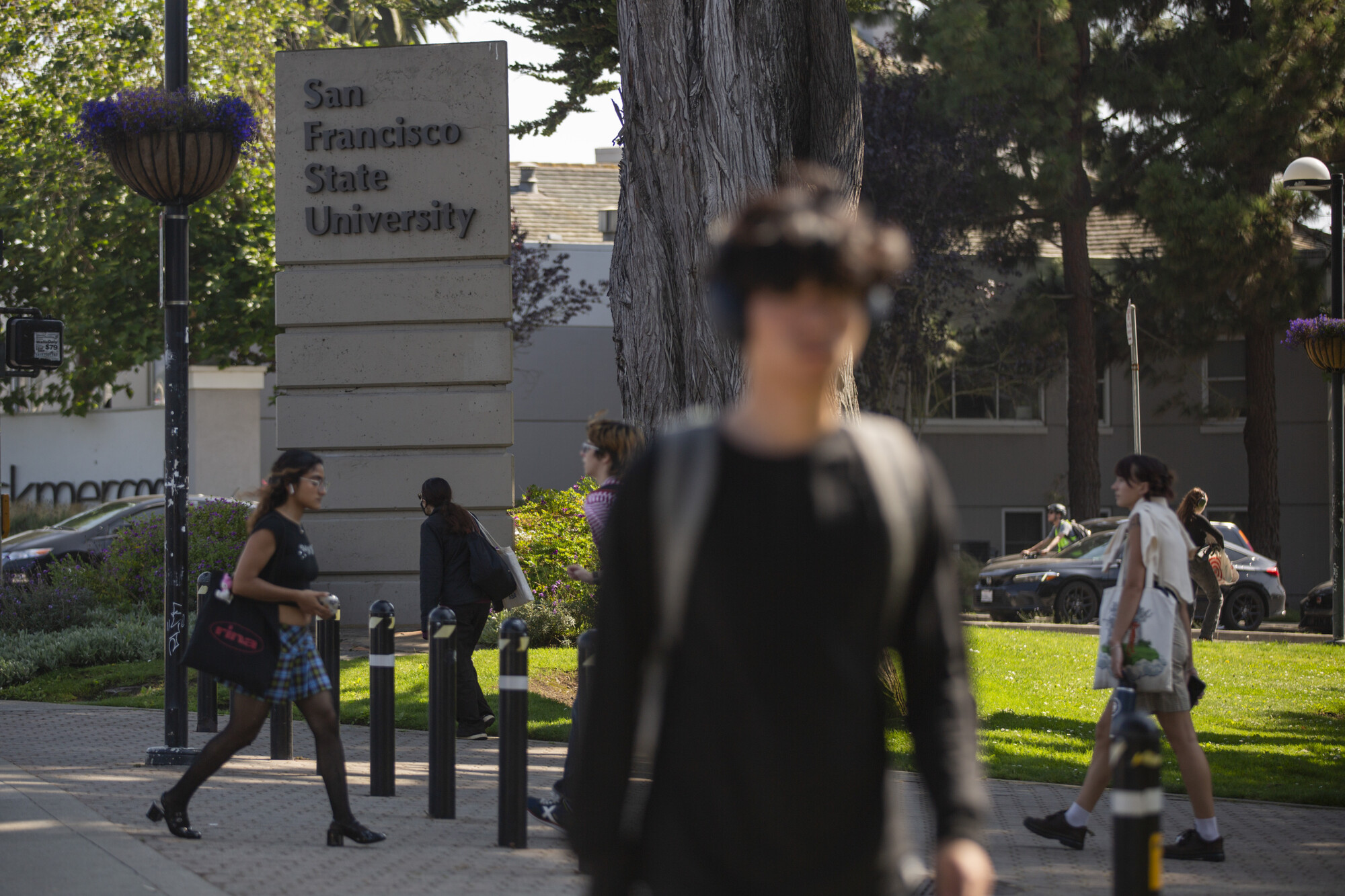
"caption": "Students walk up to the top of San Francisco State University's campus in San Francisco, California, on Aug. 22, 2023. Since Gavin Newsom became governor, state support for California’s public universities has grown by 50%.",
"credit": "Juliana Yamada for KQED",
"altTag": null,
"description": null,
"imgSizes": {
"thumbnail": {
"file": "https://cdn.kqed.org/wp-content/uploads/sites/10/2026/07/20230822-SFSU-37-JY_qed-160x107.jpg",
"width": 160,
"height": 107,
"mimeType": "image/jpeg"
},
"1536x1536": {
"file": "https://cdn.kqed.org/wp-content/uploads/sites/10/2026/07/20230822-SFSU-37-JY_qed-1536x1024.jpg",
"width": 1536,
"height": 1024,
"mimeType": "image/jpeg"
},
"post-thumbnail": {
"file": "https://cdn.kqed.org/wp-content/uploads/sites/10/2026/07/20230822-SFSU-37-JY_qed-672x372.jpg",
"width": 672,
"height": 372,
"mimeType": "image/jpeg"
},
"twentyfourteen-full-width": {
"file": "https://cdn.kqed.org/wp-content/uploads/sites/10/2026/07/20230822-SFSU-37-JY_qed-1038x576.jpg",
"width": 1038,
"height": 576,
"mimeType": "image/jpeg"
},
"npr-cds-wide": {
"file": "https://cdn.kqed.org/wp-content/uploads/sites/10/2026/07/20230822-SFSU-37-JY_qed-1200x675.jpg",
"width": 1200,
"height": 675,
"mimeType": "image/jpeg"
},
"npr-cds-square": {
"file": "https://cdn.kqed.org/wp-content/uploads/sites/10/2026/07/20230822-SFSU-37-JY_qed-600x600.jpg",
"width": 600,
"height": 600,
"mimeType": "image/jpeg"
},
"kqedFullSize": {
"file": "https://cdn.kqed.org/wp-content/uploads/sites/10/2026/07/20230822-SFSU-37-JY_qed.jpg",
"width": 2000,
"height": 1333
}
},
"isLoading": false,
"fetchFailed": false
},
"news_12085353": {
"type": "attachments",
"id": "news_12085353",
"meta": {
"index": "attachments_1716263798",
"site": "news",
"id": "12085353",
"found": true
},
"title": "20260527-MARINCOLLEGEPROFESSOR-JY-01-KQED",
"publishDate": 1779983004,
"status": "inherit",
"parent": 0,
"modified": 1781802019,
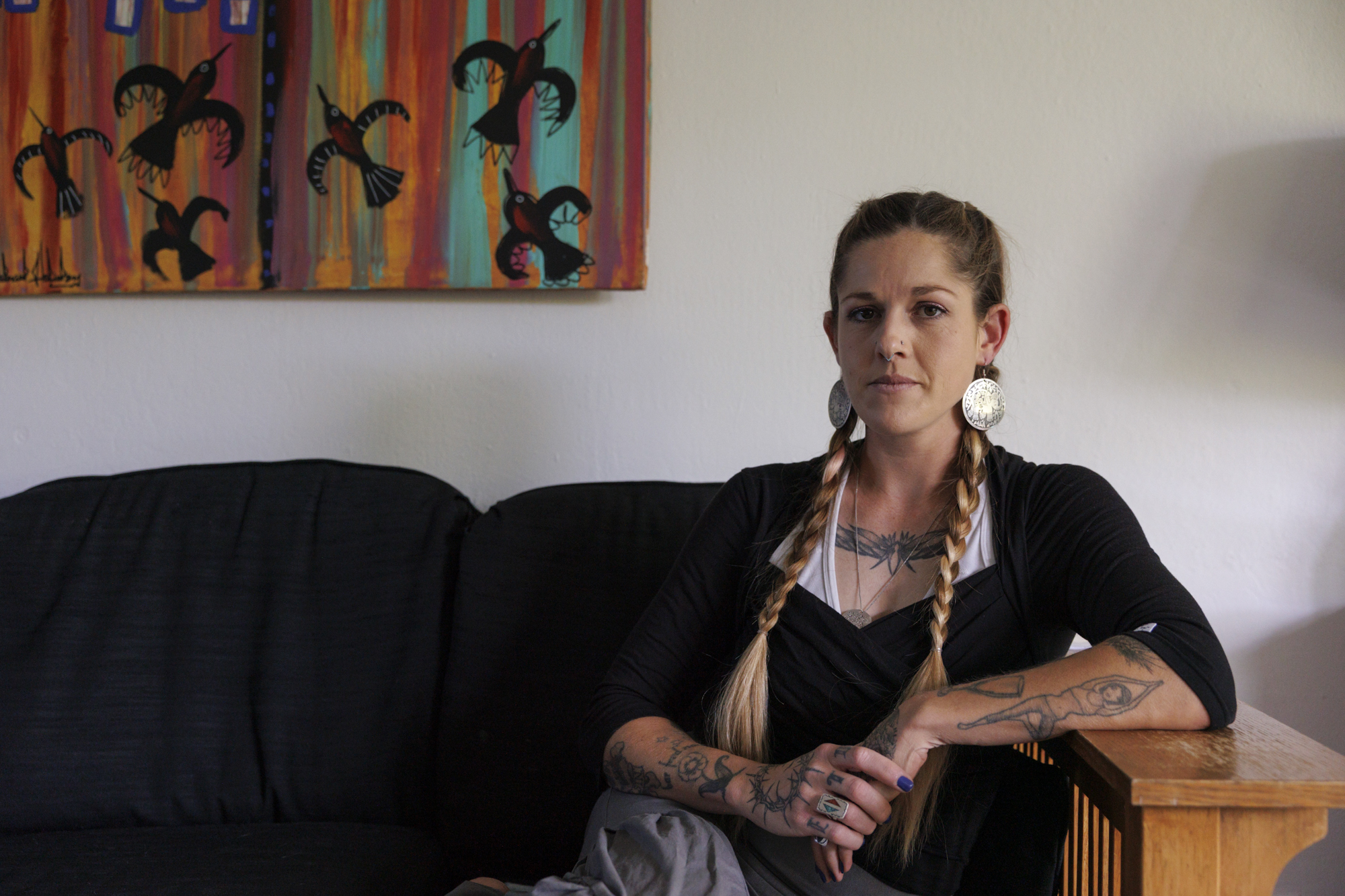
"caption": "Babette Papineau sits for a portrait in her home in Fairfax, California, on Wednesday, May 27, 2026. Papineau is a student at the College of Marin, and filed a Title IX complaint against her professor Joe Mueller after she said he coerced her into a relationship.",
"credit": "Juliana Yamada for KQED",
"altTag": null,
"description": null,
"imgSizes": {
"thumbnail": {
"file": "https://cdn.kqed.org/wp-content/uploads/sites/10/2026/05/20260527-MARINCOLLEGEPROFESSOR-JY-01-KQED-160x107.jpg",
"width": 160,
"height": 107,
"mimeType": "image/jpeg"
},
"1536x1536": {
"file": "https://cdn.kqed.org/wp-content/uploads/sites/10/2026/05/20260527-MARINCOLLEGEPROFESSOR-JY-01-KQED-1536x1024.jpg",
"width": 1536,
"height": 1024,
"mimeType": "image/jpeg"
},
"post-thumbnail": {
"file": "https://cdn.kqed.org/wp-content/uploads/sites/10/2026/05/20260527-MARINCOLLEGEPROFESSOR-JY-01-KQED-672x372.jpg",
"width": 672,
"height": 372,
"mimeType": "image/jpeg"
},
"twentyfourteen-full-width": {
"file": "https://cdn.kqed.org/wp-content/uploads/sites/10/2026/05/20260527-MARINCOLLEGEPROFESSOR-JY-01-KQED-1038x576.jpg",
"width": 1038,
"height": 576,
"mimeType": "image/jpeg"
},
"npr-cds-wide": {
"file": "https://cdn.kqed.org/wp-content/uploads/sites/10/2026/05/20260527-MARINCOLLEGEPROFESSOR-JY-01-KQED-1200x675.jpg",
"width": 1200,
"height": 675,
"mimeType": "image/jpeg"
},
"npr-cds-square": {
"file": "https://cdn.kqed.org/wp-content/uploads/sites/10/2026/05/20260527-MARINCOLLEGEPROFESSOR-JY-01-KQED-600x600.jpg",
"width": 600,
"height": 600,
"mimeType": "image/jpeg"
},
"kqedFullSize": {
"file": "https://cdn.kqed.org/wp-content/uploads/sites/10/2026/05/20260527-MARINCOLLEGEPROFESSOR-JY-01-KQED.jpg",
"width": 2000,
"height": 1333
}
},
"isLoading": false,
"fetchFailed": false
},
"news_12088578": {
"type": "attachments",
"id": "news_12088578",
"meta": {
"index": "attachments_1716263798",
"site": "news",
"id": "12088578",
"found": true
},
"title": "20260619-BlackEnglish-JY-07-KQED",
"publishDate": 1782250805,
"status": "inherit",
"parent": 0,
"modified": 1782944550,
"caption": "Ashley Williams holds her 2-year-old son Ashtyn as she dances with family members during a Juneteenth celebration at her home in El Sobrante, California, on Friday, June 19, 2026.",
"credit": "Juliana Yamada for KQED",
"altTag": null,
"description": null,
"imgSizes": {
"thumbnail": {
"file": "https://cdn.kqed.org/wp-content/uploads/sites/10/2026/06/20260619-BlackEnglish-JY-07-KQED-160x107.jpg",
"width": 160,
"height": 107,
"mimeType": "image/jpeg"
},
"1536x1536": {
"file": "https://cdn.kqed.org/wp-content/uploads/sites/10/2026/06/20260619-BlackEnglish-JY-07-KQED-1536x1024.jpg",
"width": 1536,
"height": 1024,
"mimeType": "image/jpeg"
},
"post-thumbnail": {
"file": "https://cdn.kqed.org/wp-content/uploads/sites/10/2026/06/20260619-BlackEnglish-JY-07-KQED-672x372.jpg",
"width": 672,
"height": 372,
"mimeType": "image/jpeg"
},
"twentyfourteen-full-width": {
"file": "https://cdn.kqed.org/wp-content/uploads/sites/10/2026/06/20260619-BlackEnglish-JY-07-KQED-1038x576.jpg",
"width": 1038,
"height": 576,
"mimeType": "image/jpeg"
},
"npr-cds-wide": {
"file": "https://cdn.kqed.org/wp-content/uploads/sites/10/2026/06/20260619-BlackEnglish-JY-07-KQED-1200x675.jpg",
"width": 1200,
"height": 675,
"mimeType": "image/jpeg"
},
"npr-cds-square": {
"file": "https://cdn.kqed.org/wp-content/uploads/sites/10/2026/06/20260619-BlackEnglish-JY-07-KQED-600x600.jpg",
"width": 600,
"height": 600,
"mimeType": "image/jpeg"
},
"kqedFullSize": {
"file": "https://cdn.kqed.org/wp-content/uploads/sites/10/2026/06/20260619-BlackEnglish-JY-07-KQED.jpg",
"width": 2000,
"height": 1333
}
},
"isLoading": false,
"fetchFailed": false
},
"news_12089605": {
"type": "attachments",
"id": "news_12089605",
"meta": {
"index": "attachments_1716263798",
"site": "news",
"id": "12089605",
"found": true
},
"title": "240215-PreschoolSuspension-32-BL_qed",
"publishDate": 1782935716,
"status": "inherit",
"parent": 12089580,
"modified": 1782935726,
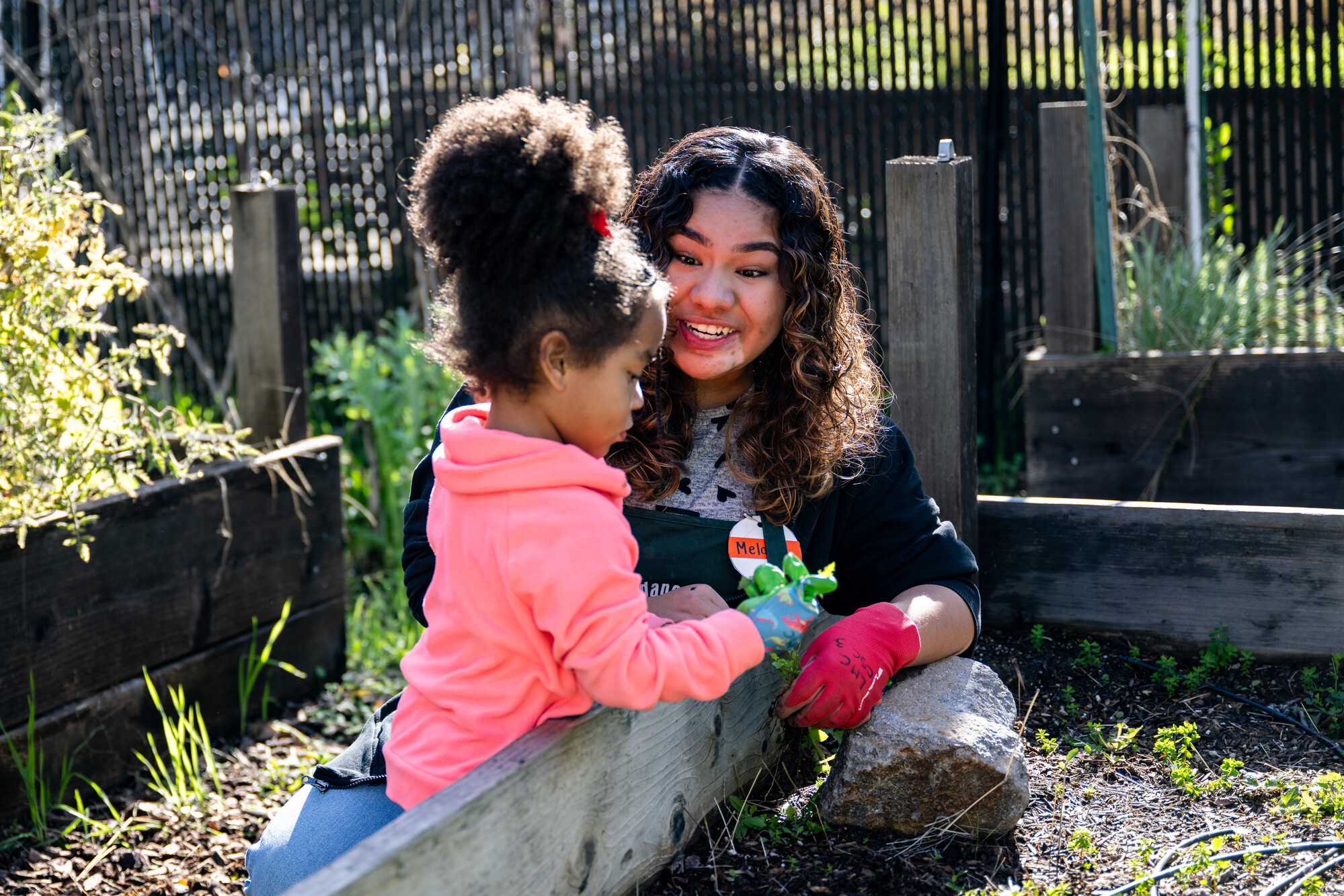
"caption": "Teacher intern Melanie Sandoval works with students in a garden during a preschool class at Los Medanos College Child Study Center in Pittsburg on Feb. 15, 2024.",
"credit": "Beth LaBerge/KQED",
"altTag": null,
"description": null,
"imgSizes": {
"thumbnail": {
"file": "https://cdn.kqed.org/wp-content/uploads/sites/10/2026/07/240215-PreschoolSuspension-32-BL_qed-160x107.jpg",
"width": 160,
"height": 107,
"mimeType": "image/jpeg"
},
"1536x1536": {
"file": "https://cdn.kqed.org/wp-content/uploads/sites/10/2026/07/240215-PreschoolSuspension-32-BL_qed-1536x1024.jpg",
"width": 1536,
"height": 1024,
"mimeType": "image/jpeg"
},
"post-thumbnail": {
"file": "https://cdn.kqed.org/wp-content/uploads/sites/10/2026/07/240215-PreschoolSuspension-32-BL_qed-672x372.jpg",
"width": 672,
"height": 372,
"mimeType": "image/jpeg"
},
"twentyfourteen-full-width": {
"file": "https://cdn.kqed.org/wp-content/uploads/sites/10/2026/07/240215-PreschoolSuspension-32-BL_qed-1038x576.jpg",
"width": 1038,
"height": 576,
"mimeType": "image/jpeg"
},
"npr-cds-wide": {
"file": "https://cdn.kqed.org/wp-content/uploads/sites/10/2026/07/240215-PreschoolSuspension-32-BL_qed-1200x675.jpg",
"width": 1200,
"height": 675,
"mimeType": "image/jpeg"
},
"npr-cds-square": {
"file": "https://cdn.kqed.org/wp-content/uploads/sites/10/2026/07/240215-PreschoolSuspension-32-BL_qed-600x600.jpg",
"width": 600,
"height": 600,
"mimeType": "image/jpeg"
},
"kqedFullSize": {
"file": "https://cdn.kqed.org/wp-content/uploads/sites/10/2026/07/240215-PreschoolSuspension-32-BL_qed.jpg",
"width": 1999,
"height": 1333
}
},
"isLoading": false,
"fetchFailed": false
},
"news_12089327": {
"type": "attachments",
"id": "news_12089327",
"meta": {
"index": "attachments_1716263798",
"site": "news",
"id": "12089327",
"found": true
},
"title": "Governor Gavin Newsom, Compton, Clinton Elementary School",
"publishDate": 1782838933,
"status": "inherit",
"parent": 12089316,
"modified": 1782839294,
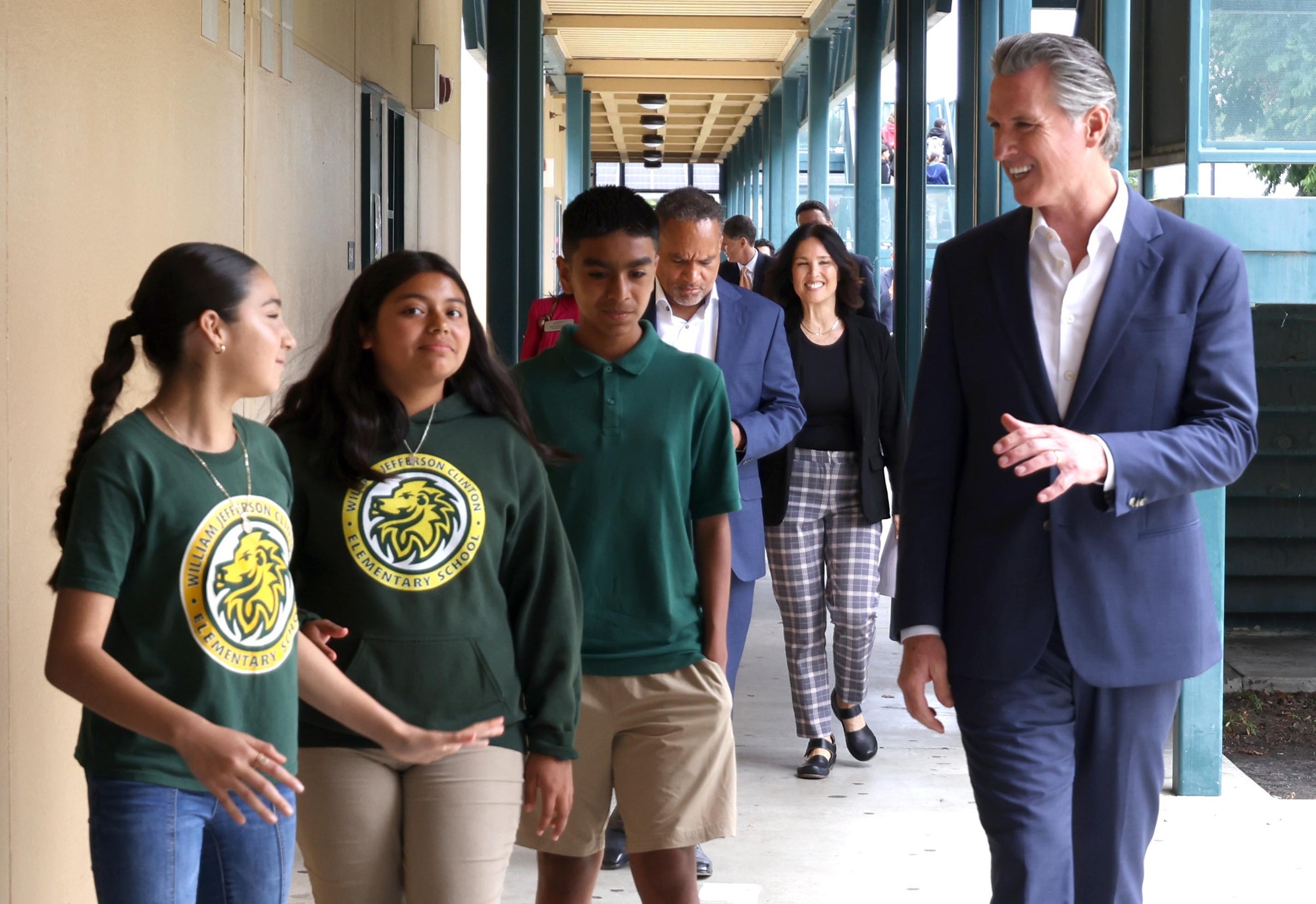
"caption": "Gov. Gavin Newsom walks with students from Clinton Elementary School to announce support for literacy with The Golden State Literacy Plan at Clinton Elementary School in Compton on June 5, 2025. The governor was joined by State Superintendent of Public Instruction Tony Thurmond and other education officials.",
"credit": "Genaro Molina/Los Angeles Times via Getty Images",
"altTag": null,
"description": null,
"imgSizes": {
"thumbnail": {
"file": "https://cdn.kqed.org/wp-content/uploads/sites/10/2026/06/GavinNewsomEducationGetty-160x110.jpg",
"width": 160,
"height": 110,
"mimeType": "image/jpeg"
},
"1536x1536": {
"file": "https://cdn.kqed.org/wp-content/uploads/sites/10/2026/06/GavinNewsomEducationGetty-1536x1055.jpg",
"width": 1536,
"height": 1055,
"mimeType": "image/jpeg"
},
"post-thumbnail": {
"file": "https://cdn.kqed.org/wp-content/uploads/sites/10/2026/06/GavinNewsomEducationGetty-672x372.jpg",
"width": 672,
"height": 372,
"mimeType": "image/jpeg"
},
"twentyfourteen-full-width": {
"file": "https://cdn.kqed.org/wp-content/uploads/sites/10/2026/06/GavinNewsomEducationGetty-1038x576.jpg",
"width": 1038,
"height": 576,
"mimeType": "image/jpeg"
},
"npr-cds-wide": {
"file": "https://cdn.kqed.org/wp-content/uploads/sites/10/2026/06/GavinNewsomEducationGetty-1200x675.jpg",
"width": 1200,
"height": 675,
"mimeType": "image/jpeg"
},
"npr-cds-square": {
"file": "https://cdn.kqed.org/wp-content/uploads/sites/10/2026/06/GavinNewsomEducationGetty-600x600.jpg",
"width": 600,
"height": 600,
"mimeType": "image/jpeg"
},
"kqedFullSize": {
"file": "https://cdn.kqed.org/wp-content/uploads/sites/10/2026/06/GavinNewsomEducationGetty.jpg",
"width": 2000,
"height": 1374
}
},
"isLoading": false,
"fetchFailed": false
},
"news_12087228": {
"type": "attachments",
"id": "news_12087228",
"meta": {
"index": "attachments_1716263798",
"site": "news",
"id": "12087228",
"found": true
},
"title": "061126World Cup_ Stanford 1994_GH_003-KQED",
"publishDate": 1781212979,
"status": "inherit",
"parent": 0,
"modified": 1782427479,
"caption": "Ray Purpur uses a magnifying glass to examine a photograph from the 1994 FIFA World Cup at Stanford University on June 11, 2026. Purpur has preserved memorabilia and photographs from the tournament for more than three decades.",
"credit": "Gustavo Hernandez/KQED",
"altTag": null,
"description": null,
"imgSizes": {
"thumbnail": {
"file": "https://cdn.kqed.org/wp-content/uploads/sites/10/2026/06/061126World-Cup_-Stanford-1994_GH_003-KQED-160x107.jpg",
"width": 160,
"height": 107,
"mimeType": "image/jpeg"
},
"1536x1536": {
"file": "https://cdn.kqed.org/wp-content/uploads/sites/10/2026/06/061126World-Cup_-Stanford-1994_GH_003-KQED-1536x1024.jpg",
"width": 1536,
"height": 1024,
"mimeType": "image/jpeg"
},
"post-thumbnail": {
"file": "https://cdn.kqed.org/wp-content/uploads/sites/10/2026/06/061126World-Cup_-Stanford-1994_GH_003-KQED-672x372.jpg",
"width": 672,
"height": 372,
"mimeType": "image/jpeg"
},
"twentyfourteen-full-width": {
"file": "https://cdn.kqed.org/wp-content/uploads/sites/10/2026/06/061126World-Cup_-Stanford-1994_GH_003-KQED-1038x576.jpg",
"width": 1038,
"height": 576,
"mimeType": "image/jpeg"
},
"npr-cds-wide": {
"file": "https://cdn.kqed.org/wp-content/uploads/sites/10/2026/06/061126World-Cup_-Stanford-1994_GH_003-KQED-1200x675.jpg",
"width": 1200,
"height": 675,
"mimeType": "image/jpeg"
},
"npr-cds-square": {
"file": "https://cdn.kqed.org/wp-content/uploads/sites/10/2026/06/061126World-Cup_-Stanford-1994_GH_003-KQED-600x600.jpg",
"width": 600,
"height": 600,
"mimeType": "image/jpeg"
},
"kqedFullSize": {
"file": "https://cdn.kqed.org/wp-content/uploads/sites/10/2026/06/061126World-Cup_-Stanford-1994_GH_003-KQED.jpg",
"width": 2000,
"height": 1333
}
},
"isLoading": false,
"fetchFailed": false
},
"news_12089186": {
"type": "attachments",
"id": "news_12089186",
"meta": {
"index": "attachments_1716263798",
"site": "news",
"id": "12089186",
"found": true
},
"title": "US-JUSTICE-SPORTS-TRANSGENDER-LGBTQ-DISCRIMINATION",
"publishDate": 1782747620,
"status": "inherit",
"parent": 12088215,
"modified": 1782843123,
"caption": "LGBTQ+ rights advocates rally outside the U.S. Supreme Court as justices hear arguments in challenges to state bans on transgender athletes in women's sports on Jan. 13, 2026, in Washington, D.C. The conservative-dominated court is to hear challenges to state laws in Idaho and West Virginia banning transgender athletes from female competition. More than two dozen U.S. states have passed laws in recent years barring athletes who were assigned as male at birth from taking part in girls' or women's sports. ",
"credit": "Oliver Contreras/AFP via Getty Images",
"altTag": null,
"description": null,
"imgSizes": {
"thumbnail": {
"file": "https://cdn.kqed.org/wp-content/uploads/sites/10/2026/06/GettyImages-2255523853-160x107.jpg",
"width": 160,
"height": 107,
"mimeType": "image/jpeg"
},
"1536x1536": {
"file": "https://cdn.kqed.org/wp-content/uploads/sites/10/2026/06/GettyImages-2255523853-1536x1024.jpg",
"width": 1536,
"height": 1024,
"mimeType": "image/jpeg"
},
"post-thumbnail": {
"file": "https://cdn.kqed.org/wp-content/uploads/sites/10/2026/06/GettyImages-2255523853-672x372.jpg",
"width": 672,
"height": 372,
"mimeType": "image/jpeg"
},
"twentyfourteen-full-width": {
"file": "https://cdn.kqed.org/wp-content/uploads/sites/10/2026/06/GettyImages-2255523853-1038x576.jpg",
"width": 1038,
"height": 576,
"mimeType": "image/jpeg"
},
"npr-cds-wide": {
"file": "https://cdn.kqed.org/wp-content/uploads/sites/10/2026/06/GettyImages-2255523853-1200x675.jpg",
"width": 1200,
"height": 675,
"mimeType": "image/jpeg"
},
"npr-cds-square": {
"file": "https://cdn.kqed.org/wp-content/uploads/sites/10/2026/06/GettyImages-2255523853-600x600.jpg",
"width": 600,
"height": 600,
"mimeType": "image/jpeg"
},
"kqedFullSize": {
"file": "https://cdn.kqed.org/wp-content/uploads/sites/10/2026/06/GettyImages-2255523853.jpg",
"width": 1980,
"height": 1320
}
},
"isLoading": false,
"fetchFailed": false
},
"news_12086385": {
"type": "attachments",
"id": "news_12086385",
"meta": {
"index": "attachments_1716263798",
"site": "news",
"id": "12086385",
"found": true
},
"title": "260603-BerkeleySchoolsLiteracy-11-BL_qed",
"publishDate": 1780679688,
"status": "inherit",
"parent": 12089316,
"modified": 1782932945,
"caption": "Students read during class at Sylvia Mendez Elementary School in Berkeley on June 3, 2026.",
"credit": "Beth LaBerge/KQED",
"altTag": null,
"description": null,
"imgSizes": {
"thumbnail": {
"file": "https://cdn.kqed.org/wp-content/uploads/sites/10/2026/06/260603-BerkeleySchoolsLiteracy-11-BL_qed-160x107.jpg",
"width": 160,
"height": 107,
"mimeType": "image/jpeg"
},
"1536x1536": {
"file": "https://cdn.kqed.org/wp-content/uploads/sites/10/2026/06/260603-BerkeleySchoolsLiteracy-11-BL_qed-1536x1024.jpg",
"width": 1536,
"height": 1024,
"mimeType": "image/jpeg"
},
"post-thumbnail": {
"file": "https://cdn.kqed.org/wp-content/uploads/sites/10/2026/06/260603-BerkeleySchoolsLiteracy-11-BL_qed-672x372.jpg",
"width": 672,
"height": 372,
"mimeType": "image/jpeg"
},
"twentyfourteen-full-width": {
"file": "https://cdn.kqed.org/wp-content/uploads/sites/10/2026/06/260603-BerkeleySchoolsLiteracy-11-BL_qed-1038x576.jpg",
"width": 1038,
"height": 576,
"mimeType": "image/jpeg"
},
"npr-cds-wide": {
"file": "https://cdn.kqed.org/wp-content/uploads/sites/10/2026/06/260603-BerkeleySchoolsLiteracy-11-BL_qed-1200x675.jpg",
"width": 1200,
"height": 675,
"mimeType": "image/jpeg"
},
"npr-cds-square": {
"file": "https://cdn.kqed.org/wp-content/uploads/sites/10/2026/06/260603-BerkeleySchoolsLiteracy-11-BL_qed-600x600.jpg",
"width": 600,
"height": 600,
"mimeType": "image/jpeg"
},
"kqedFullSize": {
"file": "https://cdn.kqed.org/wp-content/uploads/sites/10/2026/06/260603-BerkeleySchoolsLiteracy-11-BL_qed.jpg",
"width": 2000,
"height": 1333
}
},
"isLoading": false,
"fetchFailed": false
},
"news_11988163": {
"type": "attachments",
"id": "news_11988163",
"meta": {
"index": "attachments_1716263798",
"site": "news",
"id": "11988163",
"found": true
},
"title": "240125-SFSUStrike-08-BL_qut",
"publishDate": 1717023045,
"status": "inherit",
"parent": 11988162,
"modified": 1782173886,
"caption": "Sang Hea Kil, San José State University professor and co-chair of the California Faculty Association's Palestine, Arab and Muslim Caucus, cheers during a rally at SFSU in San Francisco on Jan. 25, 2024, urging a no vote on the tentative deal that ended the California State University faculty strike.",
"credit": "Beth LaBerge/KQED",
"altTag": null,
"description": null,
"imgSizes": {
"medium": {
"file": "https://cdn.kqed.org/wp-content/uploads/sites/10/2024/05/240125-SFSUStrike-08-BL_qut-800x533.jpg",
"width": 800,
"height": 533,
"mimeType": "image/jpeg"
},
"large": {
"file": "https://cdn.kqed.org/wp-content/uploads/sites/10/2024/05/240125-SFSUStrike-08-BL_qut-1020x680.jpg",
"width": 1020,
"height": 680,
"mimeType": "image/jpeg"
},
"thumbnail": {
"file": "https://cdn.kqed.org/wp-content/uploads/sites/10/2024/05/240125-SFSUStrike-08-BL_qut-160x107.jpg",
"width": 160,
"height": 107,
"mimeType": "image/jpeg"
},
"1536x1536": {
"file": "https://cdn.kqed.org/wp-content/uploads/sites/10/2024/05/240125-SFSUStrike-08-BL_qut-1536x1024.jpg",
"width": 1536,
"height": 1024,
"mimeType": "image/jpeg"
},
"post-thumbnail": {
"file": "https://cdn.kqed.org/wp-content/uploads/sites/10/2024/05/240125-SFSUStrike-08-BL_qut-672x372.jpg",
"width": 672,
"height": 372,
"mimeType": "image/jpeg"
},
"twentyfourteen-full-width": {
"file": "https://cdn.kqed.org/wp-content/uploads/sites/10/2024/05/240125-SFSUStrike-08-BL_qut-1038x576.jpg",
"width": 1038,
"height": 576,
"mimeType": "image/jpeg"
},
"kqedFullSize": {
"file": "https://cdn.kqed.org/wp-content/uploads/sites/10/2024/05/240125-SFSUStrike-08-BL_qut.jpg",
"width": 1920,
"height": 1280
}
},
"isLoading": false,
"fetchFailed": false
},
"news_12088389": {
"type": "attachments",
"id": "news_12088389",
"meta": {
"index": "attachments_1716263798",
"site": "news",
"id": "12088389",
"found": true
},
"title": "052626_Project-Rebound_JAH_03_CM",
"publishDate": 1782161120,
"status": "inherit",
"parent": 12088386,
"modified": 1782161136,
"caption": "Garret Eiferman, a graduate student, inside the Project Rebound study room at Cal State Northridge on May 26, 2026. ",
"credit": "Jules Hotz for CalMatters",
"altTag": null,
"description": null,
"imgSizes": {
"thumbnail": {
"file": "https://cdn.kqed.org/wp-content/uploads/sites/10/2026/06/052626_Project-Rebound_JAH_03_CM-160x107.jpeg",
"width": 160,
"height": 107,
"mimeType": "image/jpeg"
},
"1536x1536": {
"file": "https://cdn.kqed.org/wp-content/uploads/sites/10/2026/06/052626_Project-Rebound_JAH_03_CM-1536x1024.jpeg",
"width": 1536,
"height": 1024,
"mimeType": "image/jpeg"
},
"post-thumbnail": {
"file": "https://cdn.kqed.org/wp-content/uploads/sites/10/2026/06/052626_Project-Rebound_JAH_03_CM-672x372.jpeg",
"width": 672,
"height": 372,
"mimeType": "image/jpeg"
},
"twentyfourteen-full-width": {
"file": "https://cdn.kqed.org/wp-content/uploads/sites/10/2026/06/052626_Project-Rebound_JAH_03_CM-1038x576.jpeg",
"width": 1038,
"height": 576,
"mimeType": "image/jpeg"
},
"npr-cds-wide": {
"file": "https://cdn.kqed.org/wp-content/uploads/sites/10/2026/06/052626_Project-Rebound_JAH_03_CM-1200x675.jpeg",
"width": 1200,
"height": 675,
"mimeType": "image/jpeg"
},
"npr-cds-square": {
"file": "https://cdn.kqed.org/wp-content/uploads/sites/10/2026/06/052626_Project-Rebound_JAH_03_CM-600x600.jpeg",
"width": 600,
"height": 600,
"mimeType": "image/jpeg"
},
"kqedFullSize": {
"file": "https://cdn.kqed.org/wp-content/uploads/sites/10/2026/06/052626_Project-Rebound_JAH_03_CM.jpeg",
"width": 2000,
"height": 1333
}
},
"isLoading": false,
"fetchFailed": false
},
"news_12087829": {
"type": "attachments",
"id": "news_12087829",
"meta": {
"index": "attachments_1716263798",
"site": "news",
"id": "12087829",
"found": true
},
"title": "061626CSU Labor_GH_003-KQED",
"publishDate": 1781642130,
"status": "inherit",
"parent": 12090647,
"modified": 1783815872,
"caption": "Members of the California State University Employees Union march across the San Francisco State University campus during a rally on June 16, 2026.",
"credit": "Gustavo Hernandez/KQED",
"altTag": null,
"description": null,
"imgSizes": {
"thumbnail": {
"file": "https://cdn.kqed.org/wp-content/uploads/sites/10/2026/06/061626CSU-Labor_GH_003-KQED-160x107.jpg",
"width": 160,
"height": 107,
"mimeType": "image/jpeg"
},
"1536x1536": {
"file": "https://cdn.kqed.org/wp-content/uploads/sites/10/2026/06/061626CSU-Labor_GH_003-KQED-1536x1024.jpg",
"width": 1536,
"height": 1024,
"mimeType": "image/jpeg"
},
"post-thumbnail": {
"file": "https://cdn.kqed.org/wp-content/uploads/sites/10/2026/06/061626CSU-Labor_GH_003-KQED-672x372.jpg",
"width": 672,
"height": 372,
"mimeType": "image/jpeg"
},
"twentyfourteen-full-width": {
"file": "https://cdn.kqed.org/wp-content/uploads/sites/10/2026/06/061626CSU-Labor_GH_003-KQED-1038x576.jpg",
"width": 1038,
"height": 576,
"mimeType": "image/jpeg"
},
"npr-cds-wide": {
"file": "https://cdn.kqed.org/wp-content/uploads/sites/10/2026/06/061626CSU-Labor_GH_003-KQED-1200x675.jpg",
"width": 1200,
"height": 675,
"mimeType": "image/jpeg"
},
"npr-cds-square": {
"file": "https://cdn.kqed.org/wp-content/uploads/sites/10/2026/06/061626CSU-Labor_GH_003-KQED-600x600.jpg",
"width": 600,
"height": 600,
"mimeType": "image/jpeg"
},
"kqedFullSize": {
"file": "https://cdn.kqed.org/wp-content/uploads/sites/10/2026/06/061626CSU-Labor_GH_003-KQED.jpg",
"width": 2000,
"height": 1333
}
},
"isLoading": false,
"fetchFailed": false
},
"news_12049457": {
"type": "attachments",
"id": "news_12049457",
"meta": {
"index": "attachments_1716263798",
"site": "news",
"id": "12049457",
"found": true
},
"title": "Muir Woods Exhibit (1)",
"publishDate": 1753310562,
"status": "inherit",
"parent": 12049405,
"modified": 1758226708,
"caption": "The Muir Woods 'History in Construction' Exhibit, which was put up in 2021 to honor previously undocumented contributions to the park's stewardship. Signs like this one were part of the Trump Administration's removal order.",
"credit": "Courtesy of NPS/Jace Ritchey",
"altTag": null,
"description": null,
"imgSizes": {
"thumbnail": {
"file": "https://cdn.kqed.org/wp-content/uploads/sites/10/2025/07/Muir-Woods-Exhibit-1-160x106.png",
"width": 160,
"height": 106,
"mimeType": "image/png"
},
"1536x1536": {
"file": "https://cdn.kqed.org/wp-content/uploads/sites/10/2025/07/Muir-Woods-Exhibit-1-1536x1022.png",
"width": 1536,
"height": 1022,
"mimeType": "image/png"
},
"post-thumbnail": {
"file": "https://cdn.kqed.org/wp-content/uploads/sites/10/2025/07/Muir-Woods-Exhibit-1-672x372.png",
"width": 672,
"height": 372,
"mimeType": "image/png"
},
"twentyfourteen-full-width": {
"file": "https://cdn.kqed.org/wp-content/uploads/sites/10/2025/07/Muir-Woods-Exhibit-1-1038x576.png",
"width": 1038,
"height": 576,
"mimeType": "image/png"
},
"kqedFullSize": {
"file": "https://cdn.kqed.org/wp-content/uploads/sites/10/2025/07/Muir-Woods-Exhibit-1.png",
"width": 1920,
"height": 1277
}
},
"isLoading": false,
"fetchFailed": false
}
},
"audioPlayerReducer": {
"postId": "stream_live",
"isPaused": true,
"isPlaying": false,
"pfsActive": false,
"pledgeModalIsOpen": true,
"playerDrawerIsOpen": false,
"liveAudioPlayStartedAt": 0,
"liveAudioPlayContext": ""
},
"authorsReducer": {
"byline_news_12090647": {
"type": "authors",
"id": "byline_news_12090647",
"meta": {
"override": true
},
"slug": "byline_news_12090647",
"name": "Mikhail Zinshteyn, CalMatters",
"isLoading": false
},
"byline_news_12088386": {
"type": "authors",
"id": "byline_news_12088386",
"meta": {
"override": true
},
"slug": "byline_news_12088386",
"name": "Ella Carter-Klauschie, CalMatters",
"isLoading": false
},
"shossaini": {
"type": "authors",
"id": "3214",
"meta": {
"index": "authors_1716337520",
"id": "3214",
"found": true
},
"name": "Sara Hossaini",
"firstName": "Sara",
"lastName": "Hossaini",
"slug": "shossaini",
"email": "shossaini@kqed.org",
"display_author_email": true,
"staff_mastheads": [
"news"
],
"title": "KQED Reporter",
"bio": "Sara Hossaini came to general assignment reporting at KQED in 2013 after two winters reporting at Wyoming Public Radio. She holds a bachelor's degree in broadcast journalism from the University of Nebraska-Lincoln. Her radio romance began after a bitter breakup with documentary film (Ok, maybe it's still complicated). Her first simultaneous jobs in San Francisco were as Associate Producer on a PBS film series through the Center for Asian American Media and as a butler. She likes to trot, plot and make things with her hands.",
"avatar": "https://secure.gravatar.com/avatar/060e9f56b9554e17942e89f413242774?s=600&d=blank&r=g",
"twitter": "mshossaini",
"facebook": null,
"instagram": null,
"linkedin": null,
"sites": [
{
"site": "news",
"roles": [
"author"
]
},
{
"site": "stateofhealth",
"roles": [
"author"
]
}
],
"headData": {
"title": "Sara Hossaini | KQED",
"description": "KQED Reporter",
"ogImgSrc": "https://secure.gravatar.com/avatar/060e9f56b9554e17942e89f413242774?s=600&d=blank&r=g",
"twImgSrc": "https://secure.gravatar.com/avatar/060e9f56b9554e17942e89f413242774?s=600&d=blank&r=g"
},
"isLoading": false,
"link": "/author/shossaini"
},
"daisynguyen": {
"type": "authors",
"id": "11829",
"meta": {
"index": "authors_1716337520",
"id": "11829",
"found": true
},
"name": "Daisy Nguyen",
"firstName": "Daisy",
"lastName": "Nguyen",
"slug": "daisynguyen",
"email": "daisynguyen@kqed.org",
"display_author_email": true,
"staff_mastheads": [
"news"
],
"title": "KQED Contributor",
"bio": "I have covered early childhood education and child care for KQED since 2022. I focus on policies aimed at increasing access to early care and education and how they shape individual lives. I've been a journalist for more than two decades, with most of that time devoted to covering breaking news throughout California for The Associated Press. I grew up in San Francisco and studied at UC Davis and Columbia University's Graduate School of Journalism. I live in Oakland with my husband and two kids.",
"avatar": "https://secure.gravatar.com/avatar/2da2127c27f7143b53ebd419800fd55f?s=600&d=blank&r=g",
"twitter": null,
"facebook": null,
"instagram": null,
"linkedin": "https://www.linkedin.com/in/daisynguyen/",
"sites": [
{
"site": "news",
"roles": [
"author"
]
},
{
"site": "liveblog",
"roles": [
"author"
]
}
],
"headData": {
"title": "Daisy Nguyen | KQED",
"description": "KQED Contributor",
"ogImgSrc": "https://secure.gravatar.com/avatar/2da2127c27f7143b53ebd419800fd55f?s=600&d=blank&r=g",
"twImgSrc": "https://secure.gravatar.com/avatar/2da2127c27f7143b53ebd419800fd55f?s=600&d=blank&r=g"
},
"isLoading": false,
"link": "/author/daisynguyen"
},
"jgeha": {
"type": "authors",
"id": "11906",
"meta": {
"index": "authors_1716337520",
"id": "11906",
"found": true
},
"name": "Joseph Geha",
"firstName": "Joseph",
"lastName": "Geha",
"slug": "jgeha",
"email": "jgeha@kqed.org",
"display_author_email": false,
"staff_mastheads": [
"news",
"science"
],
"title": "KQED Contributor",
"bio": null,
"avatar": "https://secure.gravatar.com/avatar/ea84d2b6dd93d6369d453edf19dd583f117cd1759d2d9c9c92f9de77017354fe?s=600&d=blank&r=g",
"twitter": null,
"bluesky": null,
"facebook": null,
"instagram": null,
"linkedin": null,
"sites": [
{
"site": "news",
"roles": [
"editor"
]
},
{
"site": "liveblog",
"roles": [
"author"
]
}
],
"headData": {
"title": "Joseph Geha | KQED",
"description": "KQED Contributor",
"ogImgSrc": "https://secure.gravatar.com/avatar/ea84d2b6dd93d6369d453edf19dd583f117cd1759d2d9c9c92f9de77017354fe?s=600&d=blank&r=g",
"twImgSrc": "https://secure.gravatar.com/avatar/ea84d2b6dd93d6369d453edf19dd583f117cd1759d2d9c9c92f9de77017354fe?s=600&d=blank&r=g"
},
"isLoading": false,
"link": "/author/jgeha"
},
"kdebenedetti": {
"type": "authors",
"id": "11913",
"meta": {
"index": "authors_1716337520",
"id": "11913",
"found": true
},
"name": "Katie DeBenedetti",
"firstName": "Katie",
"lastName": "DeBenedetti",
"slug": "kdebenedetti",
"email": "kdebenedetti@kqed.org",
"display_author_email": false,
"staff_mastheads": [
"news",
"science"
],
"title": "KQED Contributor",
"bio": "Katie DeBenedetti is a digital reporter covering daily news for the Express Desk. Prior to joining KQED as a culture reporting intern in January 2024, she covered education and city government for the Napa Valley Register.",
"avatar": "https://secure.gravatar.com/avatar/6e31073cb8f7e4214ab03f42771d0f45?s=600&d=blank&r=g",
"twitter": null,
"facebook": null,
"instagram": null,
"linkedin": null,
"sites": [
{
"site": "news",
"roles": [
"author"
]
},
{
"site": "science",
"roles": [
"author"
]
},
{
"site": "liveblog",
"roles": [
"author"
]
}
],
"headData": {
"title": "Katie DeBenedetti | KQED",
"description": "KQED Contributor",
"ogImgSrc": "https://secure.gravatar.com/avatar/6e31073cb8f7e4214ab03f42771d0f45?s=600&d=blank&r=g",
"twImgSrc": "https://secure.gravatar.com/avatar/6e31073cb8f7e4214ab03f42771d0f45?s=600&d=blank&r=g"
},
"isLoading": false,
"link": "/author/kdebenedetti"
},
"emanoukian": {
"type": "authors",
"id": "11925",
"meta": {
"index": "authors_1716337520",
"id": "11925",
"found": true
},
"name": "Elize Manoukian",
"firstName": "Elize",
"lastName": "Manoukian",
"slug": "emanoukian",
"email": "emanoukian@KQED.org",
"display_author_email": false,
"staff_mastheads": [
"news"
],
"title": "Digital News Editor",
"bio": "Elize Manoukian is an award-winning audio producer and Senior Editor on the Express Desk, KQED's digital news platform. Her work has appeared on KPFA, Interlochen Public Radio, Oregon Public Broadcast, the New York Daily News, LA Times and the San Diego Union-Tribune.",
"avatar": "https://secure.gravatar.com/avatar/4525f1a8e46ccb30933b32653d9772064cfefe3fa655eb45b3b3a80341f6bdad?s=600&d=blank&r=g",
"twitter": null,
"bluesky": null,
"facebook": null,
"instagram": null,
"linkedin": null,
"sites": [
{
"site": "arts",
"roles": [
"editor"
]
},
{
"site": "news",
"roles": [
"editor"
]
},
{
"site": "science",
"roles": [
"editor"
]
}
],
"headData": {
"title": "Elize Manoukian | KQED",
"description": "Digital News Editor",
"ogImgSrc": "https://secure.gravatar.com/avatar/4525f1a8e46ccb30933b32653d9772064cfefe3fa655eb45b3b3a80341f6bdad?s=600&d=blank&r=g",
"twImgSrc": "https://secure.gravatar.com/avatar/4525f1a8e46ccb30933b32653d9772064cfefe3fa655eb45b3b3a80341f6bdad?s=600&d=blank&r=g"
},
"isLoading": false,
"link": "/author/emanoukian"
},
"sarahwright": {
"type": "authors",
"id": "11956",
"meta": {
"index": "authors_1716337520",
"id": "11956",
"found": true
},
"name": "Sarah Wright",
"firstName": "Sarah",
"lastName": "Wright",
"slug": "sarahwright",
"email": "swright@kqed.org",
"display_author_email": true,
"staff_mastheads": [],
"title": "Outdoors Engagement Reporter",
"bio": "Sarah Wright is KQED's Outdoors Engagement Reporter. Originally from Lake Tahoe, she completed a thru-hike of the Pacific Crest Trail in 2019 and was a U.S. Fulbright Program grantee to Argentina in 2023. Her journalism has appeared in The Guardian, The San Francisco Standard, The Palo Alto Weekly and the Half Moon Bay Review.",
"avatar": "https://secure.gravatar.com/avatar/c161a3d6441865cba25e6db4fa561099ad665799e9432e34da2b84d7e371524c?s=600&d=blank&r=g",
"twitter": null,
"bluesky": null,
"facebook": null,
"instagram": null,
"linkedin": null,
"sites": [
{
"site": "arts",
"roles": [
"editor"
]
},
{
"site": "news",
"roles": [
"editor"
]
},
{
"site": "science",
"roles": [
"contributor",
"author"
]
},
{
"site": "forum",
"roles": [
"editor"
]
}
],
"headData": {
"title": "Sarah Wright | KQED",
"description": "Outdoors Engagement Reporter",
"ogImgSrc": "https://secure.gravatar.com/avatar/c161a3d6441865cba25e6db4fa561099ad665799e9432e34da2b84d7e371524c?s=600&d=blank&r=g",
"twImgSrc": "https://secure.gravatar.com/avatar/c161a3d6441865cba25e6db4fa561099ad665799e9432e34da2b84d7e371524c?s=600&d=blank&r=g"
},
"isLoading": false,
"link": "/author/sarahwright"
},
"aaliahmad": {
"type": "authors",
"id": "11986",
"meta": {
"index": "authors_1716337520",
"id": "11986",
"found": true
},
"name": "Ayah Ali-Ahmad",
"firstName": "Ayah",
"lastName": "Ali-Ahmad",
"slug": "aaliahmad",
"email": "aaliahmad@KQED.org",
"display_author_email": false,
"staff_mastheads": [],
"title": "KQED Contributor",
"bio": null,
"avatar": "https://secure.gravatar.com/avatar/1cf54f187a5e1064b2cfef3f3d2f1e4f93e453395d56912aca6382a6071ec3ed?s=600&d=blank&r=g",
"twitter": "ayahaliahmad",
"bluesky": null,
"facebook": null,
"instagram": null,
"linkedin": null,
"sites": [
{
"site": "news",
"roles": [
"subscriber"
]
}
],
"headData": {
"title": "Ayah Ali-Ahmad | KQED",
"description": "KQED Contributor",
"ogImgSrc": "https://secure.gravatar.com/avatar/1cf54f187a5e1064b2cfef3f3d2f1e4f93e453395d56912aca6382a6071ec3ed?s=600&d=blank&r=g",
"twImgSrc": "https://secure.gravatar.com/avatar/1cf54f187a5e1064b2cfef3f3d2f1e4f93e453395d56912aca6382a6071ec3ed?s=600&d=blank&r=g"
},
"isLoading": false,
"link": "/author/aaliahmad"
}
},
"pagesReducer": {
"news_tag_education": {
"type": "terms",
"id": "news_20013",
"meta": {
"index": "terms_1716263798",
"site": "news",
"id": "20013",
"score": 6.970073
},
"featImg": null,
"name": "education",
"description": null,
"taxonomy": "tag",
"headData": {
"twImgId": null,
"twTitle": null,
"ogTitle": null,
"ogImgId": null,
"twDescription": null,
"description": null,
"title": "education Archives | KQED News",
"ogDescription": null
},
"ttid": 20030,
"slug": "education",
"isLoading": false,
"title": "education",
"pageMeta": {
"site": "news",
"WpPageTemplate": "page-topic-editorial",
"currentPage": 5
},
"blocks": [
{
"blockName": "kqed/post-list",
"attrs": {
"layout": "cardArticle2",
"query": "posts/news?tag=education",
"seeMore": false,
"paginated": true,
"page": 5
}
},
{
"blockName": "kqed/ad"
}
]
}
},
"pfsSessionReducer": {},
"postsReducer": {
"stream_live": {
"type": "live",
"id": "stream_live",
"audioUrl": "https://streams.kqed.org/kqedradio",
"title": "Live Stream",
"excerpt": "Live Stream information currently unavailable.",
"link": "/radio",
"featImg": "",
"label": {
"name": "KQED Live",
"link": "/"
}
},
"stream_kqedNewscast": {
"type": "posts",
"id": "stream_kqedNewscast",
"audioUrl": "https://www.kqed.org/.stream/anon/radio/RDnews/newscast.mp3?_=1",
"title": "KQED Newscast",
"featImg": "",
"label": {
"name": "88.5 FM",
"link": "/"
}
},
"news_12090647": {
"type": "posts",
"id": "news_12090647",
"meta": {
"index": "posts_1716263798",
"site": "news",
"id": "12090647",
"score": null,
"sort": [
1783882805000
]
},
"guestAuthors": [],
"slug": "newsoms-final-budget-sends-more-than-a-billion-dollars-to-university-of-california-cal-state",
"title": "Newsom’s Final Budget Sends More Than a Billion Dollars to University of California, Cal State",
"publishDate": 1783882805,
"format": "standard",
"headTitle": "Newsom’s Final Budget Sends More Than a Billion Dollars to University of California, Cal State | KQED",
"labelTerm": {},
"content": "\u003cp>\u003c!-- Creative Commons Attribution-NonCommercial-NoDerivatives https://creativecommons.org/licenses/by-nc-nd/4.0/ -->\u003c/p>\n\u003cp>\u003cem>This story was originally published by \u003ca href=\"https://calmatters.org/\">CalMatters\u003c/a>. \u003ca href=\"https://calmatters.org/subscribe-to-calmatters/\">Sign up\u003c/a> for their newsletters.\u003c/em>\u003c/p>\n\u003cp>\u003ca href=\"https://www.kqed.org/news/tag/california\">California’s\u003c/a> public colleges and universities emerged as winners in the latest state budget after lawmakers sent them hundreds of millions of dollars in new public spending. However, that largesse was tempered by decisions by Democrats in Sacramento to reject bond measures that could have awarded campuses billions more.\u003c/p>\n\u003cp>The changes were enshrined in the state budget for 2026-27 that the Legislature and Gov. Gavin Newsom \u003ca href=\"https://calmatters.org/politics/2026/06/california-gavin-newsom-final-budget-deal/\">approved last month\u003c/a>.\u003c/p>\n\u003cp>Students were also major beneficiaries, as lawmakers continued to support one of the nation’s most generous state financial aid programs. The Cal Grant, which generally covers tuition at the University of California and California State University and partial tuition at private colleges, remains fully funded as part of an ongoing commitment by lawmakers and Newsom to keep student costs down.\u003c/p>\n\u003cp>[ad fullwidth]\u003c/p>\n\u003cp>UC and Cal State students receiving the Cal Grants will have their tuition charges waived, even as schools continue to raise tuition. And more affordable student housing may be built soon if voters approve a bond that lawmakers and Newsom put on the ballot for November.\u003c/p>\n\u003cp>Prioritizing higher education spending will be “a strong part of Gov. Newsom’s legacy,” said Jessica L. Thompson, a senior vice president at The Institute for College Access & Success. The organization is a think tank that advocates for increased financial aid for low-income students.\u003c/p>\n\u003cfigure id=\"attachment_12038976\" class=\"wp-caption aligncenter\" style=\"max-width: 1999px\">\u003cimg loading=\"lazy\" decoding=\"async\" class=\"size-full wp-image-12038976\" src=\"https://cdn.kqed.org/wp-content/uploads/sites/10/2025/05/250219-CSU-East-Bay-File-MD-12_qed.jpg\" alt=\"\" width=\"1999\" height=\"1333\" srcset=\"https://cdn.kqed.org/wp-content/uploads/sites/10/2025/05/250219-CSU-East-Bay-File-MD-12_qed.jpg 1999w, https://cdn.kqed.org/wp-content/uploads/sites/10/2025/05/250219-CSU-East-Bay-File-MD-12_qed-800x533.jpg 800w, https://cdn.kqed.org/wp-content/uploads/sites/10/2025/05/250219-CSU-East-Bay-File-MD-12_qed-1020x680.jpg 1020w, https://cdn.kqed.org/wp-content/uploads/sites/10/2025/05/250219-CSU-East-Bay-File-MD-12_qed-160x107.jpg 160w, https://cdn.kqed.org/wp-content/uploads/sites/10/2025/05/250219-CSU-East-Bay-File-MD-12_qed-1536x1024.jpg 1536w, https://cdn.kqed.org/wp-content/uploads/sites/10/2025/05/250219-CSU-East-Bay-File-MD-12_qed-1920x1280.jpg 1920w\" sizes=\"auto, (max-width: 1999px) 100vw, 1999px\">\u003cfigcaption class=\"wp-caption-text\">Students make their way on campus at CSU East Bay on Feb. 19, 2025. \u003ccite>(Martin do Nascimento/KQED)\u003c/cite>\u003c/figcaption>\u003c/figure>\n\u003cp>“We’ve never had to work to convince the executive branch that public higher education was incredibly important and central to a lot of the ambitions for the state and for the future, and that’s not something to take for granted,” she told CalMatters.\u003c/p>\n\u003cp>Still, the smaller Middle Class Scholarship, which last year awarded recipients an average of $3,000 in aid to cover school expenses, will decrease to an average of $2,000 this year.\u003c/p>\n\u003cp>Here’s a breakdown of higher education’s wins and losses in California.\u003c/p>\n\u003ch2>More money for UC, Cal State\u003c/h2>\n\u003cp>The UC and Cal State systems each received more than $500 million in ongoing taxpayer support that can be used to hire faculty as they enroll more students and keep up with other expenses, such as rising energy, insurance and staff health costs.\u003c/p>\n\u003cp>That public generosity isn’t guaranteed. Public K-12 schools and community colleges are constitutionally guaranteed around 40% of the state’s general fund. But public universities have no such ironclad dibs on state money.\u003c/p>\n\u003cp>The Legislature’s top budget and policy adviser, the Legislative Analyst’s Office, \u003ca href=\"https://lao.ca.gov/Publications/Report/5112#:~:text=Recommend%20Reducing%20or%20Eliminating%20Base%20Increases,4.2%C2%A0percent%20and%203.5%C2%A0percent%2C%20respectively.\">recommended smaller increases for the universities in February\u003c/a>. The office cited projected multibillion-dollar state deficits. And it argued that both systems can still rely on new revenue from their \u003ca href=\"https://calmatters.org/education/higher-education/2025/11/uc-tuition/\">annual\u003c/a> tuition \u003ca href=\"https://calmatters.org/education/higher-education/2023/09/cal-state-tuition-2/\">hikes\u003c/a>.\u003c/p>\n\u003cfigure id=\"attachment_12084670\" class=\"wp-caption aligncenter\" style=\"max-width: 2000px\">\u003cimg loading=\"lazy\" decoding=\"async\" class=\"wp-image-12084670 size-full\" src=\"https://cdn.kqed.org/wp-content/uploads/sites/10/2026/05/GavinNewsomAP.jpg\" alt=\"\" width=\"2000\" height=\"1333\" srcset=\"https://cdn.kqed.org/wp-content/uploads/sites/10/2026/05/GavinNewsomAP.jpg 2000w, https://cdn.kqed.org/wp-content/uploads/sites/10/2026/05/GavinNewsomAP-160x107.jpg 160w, https://cdn.kqed.org/wp-content/uploads/sites/10/2026/05/GavinNewsomAP-1536x1024.jpg 1536w\" sizes=\"auto, (max-width: 2000px) 100vw, 2000px\">\u003cfigcaption class=\"wp-caption-text\">California Gov. Gavin Newsom speaks about his state budget proposal on May 14, 2026, in Sacramento, California. \u003ccite>(Jeff Chiu/AP )\u003c/cite>\u003c/figcaption>\u003c/figure>\n\u003cp>Newsom’s eight-year tenure coincided with dramatic spikes in state spending for each system. The year before he took office, the UC and Cal State each received \u003ca href=\"https://ebudget.ca.gov/publication/e/2018-19/Agency/6013\">about $3.7\u003c/a> billion in state support. The latest budget act sends more than $5 billion to each system from the state’s general fund.\u003c/p>\n\u003cp>That’s a growth of 50% — but less than the 80% in \u003ca href=\"https://ebudget.ca.gov/2018-19/pdf/Enacted/BudgetSummary/SummaryCharts.pdf#page=2\">overall\u003c/a> state \u003ca href=\"https://abgt.assembly.ca.gov/system/files/2026-06/floor-report-of-the-2026-27-budget-june-27-2026_5.pdf#page=9\">spending\u003c/a> increase Sacramento approved from the general fund during that span.\u003c/p>\n\u003cp>The latest university increases are a combination of new ongoing money for the two university systems and the restoration of more than $100 million in funding cuts that lawmakers applied to both the UC and Cal State in last year’s budget.\u003c/p>\n\u003cp>That drop in money prompted an ongoing impasse between Cal State and unionized workers. Cal State argued the funding cut prevented the system from honoring full raises for thousands of its staff; some unions disagreed by pointing to the loan the state offered Cal State to make up for last year’s cut. Cal State said that doesn’t count since it has to repay that loan.\u003c/p>\n\u003cfigure id=\"attachment_12087829\" class=\"wp-caption aligncenter\" style=\"max-width: 2000px\">\u003cimg loading=\"lazy\" decoding=\"async\" class=\"size-full wp-image-12087829\" src=\"https://cdn.kqed.org/wp-content/uploads/sites/10/2026/06/061626CSU-Labor_GH_003-KQED.jpg\" alt=\"\" width=\"2000\" height=\"1333\" srcset=\"https://cdn.kqed.org/wp-content/uploads/sites/10/2026/06/061626CSU-Labor_GH_003-KQED.jpg 2000w, https://cdn.kqed.org/wp-content/uploads/sites/10/2026/06/061626CSU-Labor_GH_003-KQED-160x107.jpg 160w, https://cdn.kqed.org/wp-content/uploads/sites/10/2026/06/061626CSU-Labor_GH_003-KQED-1536x1024.jpg 1536w\" sizes=\"auto, (max-width: 2000px) 100vw, 2000px\">\u003cfigcaption class=\"wp-caption-text\">Members of the California State University Employees Union march across the San Francisco State University campus during a rally on June 16, 2026. \u003ccite>(Gustavo Hernandez/KQED)\u003c/cite>\u003c/figcaption>\u003c/figure>\n\u003cp>One large union of 36,000 administrative and groundskeeping workers, CSUEU, filed an unfair labor practice charge against Cal State \u003ca href=\"https://calmatters.org/wp-content/uploads/2026/07/lace1450h-1.pdf\">last July\u003c/a>. The union contends that last year’s budget triggered a union contract clause to put workers on higher experience levels. Each “step” increase comes with a 2% raise. Cal State advanced workers one step, but the union says some were supposed to climb five or more steps.\u003c/p>\n\u003cp>CSUEU expects to come to a deal with Cal State on the grievance in the next month — before the state California Public Employment Relations Board is set to issue a decision in August.\u003c/p>\n\u003cp>The union also seeks 11% raises annually for the next three years. It hasn’t sought approval from its members to strike, but the union has \u003ca href=\"https://csueu.org/news?details=staff-bargaining-recap-june-1-2026\">threatened work stoppages.\u003c/a>\u003c/p>\n\u003ch2>Students mostly benefit\u003c/h2>\n\u003cp>The budget deal continues to fully fund the Cal Grant, a politically popular program that has no guaranteed stream of funding like public K-12 schools and community colleges do.\u003c/p>\n\u003cp>Since 2015, the number of Cal Grant recipients has grown from around 330,000 to more than 450,000. State spending also leaped from about $1.9 billion to $2.5 billion, according to the Legislative Analyst’s Office.\u003c/p>\n\u003cp>A major reason for the expansion of students receiving the grant is a \u003ca href=\"https://calmatters.org/education/2021/06/california-college-budget/#:~:text=Cal%20Grants%20coming%20to%20twice%20as%20many%20community%20college%20students\">set of relaxed rules lawmakers approved in 2021\u003c/a>. Those permitted more than 100,000 community college students older than 28 to qualify for the Cal Grant each year. The Legislative Analyst’s Office estimates that Cal Grant’s costs grew by $167 million last year just from those rule changes alone.\u003c/p>\n\u003cfigure id=\"attachment_12058099\" class=\"wp-caption aligncenter\" style=\"max-width: 2000px\">\u003cimg loading=\"lazy\" decoding=\"async\" class=\"size-full wp-image-12058099\" src=\"https://cdn.kqed.org/wp-content/uploads/sites/10/2025/09/20250929_UCBERKELEY_GC-1-KQED.jpg\" alt=\"\" width=\"2000\" height=\"1333\" srcset=\"https://cdn.kqed.org/wp-content/uploads/sites/10/2025/09/20250929_UCBERKELEY_GC-1-KQED.jpg 2000w, https://cdn.kqed.org/wp-content/uploads/sites/10/2025/09/20250929_UCBERKELEY_GC-1-KQED-160x107.jpg 160w, https://cdn.kqed.org/wp-content/uploads/sites/10/2025/09/20250929_UCBERKELEY_GC-1-KQED-1536x1024.jpg 1536w\" sizes=\"auto, (max-width: 2000px) 100vw, 2000px\">\u003cfigcaption class=\"wp-caption-text\">Students walk on campus at UC Berkeley in Berkeley on Sept. 29, 2025. \u003ccite>(Gina Castro/KQED)\u003c/cite>\u003c/figcaption>\u003c/figure>\n\u003cp>The annual tuition hikes at UC, starting in 2022, and Cal State, beginning in 2024, have also pushed the price tag on the Cal Grant higher. About a quarter of the increased costs of Cal Grants for UC and CSU in the last decade is due to tuition increases, the \u003ca href=\"https://lao.ca.gov/Publications/Report/5127#:~:text=We%20estimate%20that%20larger%20Cal%20Grant%20awards%20from%20UC%20and%20CSU%20tuition%20increases%20account%20for%20roughly%20one%E2%80%91quarter%20of%20the%20growth%20in%20Cal%20Grant%20costs%20between%202015%E2%80%9116%20and%202024%E2%80%9125.\">analyst’s office wrote in February\u003c/a>.\u003c/p>\n\u003cp>A smaller financial aid program is dropping in value, however. The Middle Class Scholarship will receive $680 million, enough for an average of about $2,000 for its roughly 350,000 UC and Cal State student recipients. Last year Sacramento funded the program at nearly $1 billion, and the average award was $3,000. The drop in spending was a way to balance the state budget, which cannot run deficits.\u003cbr>\n\u003cstrong>\u003cbr>\n\u003c/strong>The decrease may mean students work more hours or take out loans, though most \u003ca href=\"https://www.universityofcalifornia.edu/press-room/new-data-shows-uc-degrees-deliver-strong-earnings-and-economic-mobility#:~:text=AT%20A%20GLANCE%3A-,Affordability,-%3A%20Over%2060\">UC\u003c/a> and \u003ca href=\"https://www.calstate.edu/impact-of-the-csu/government/Advocacy-and-State-Relations/legislativereports1/Institutional-Financial-Aid-Report-signed-2026.pdf#page=2\">Cal State\u003c/a> undergraduates complete their degrees with no debt.\u003c/p>\n\u003ch2>Bond money is a mixed record\u003c/h2>\n\u003cp>Still, higher education fell short in legislator-backed bonds.\u003c/p>\n\u003cp>One measure that appears to be dead for now is a $12 billion bond that would award science grants to universities and other research organizations. The UC and the union of graduate student workers, whose wages often rely on grant research money, advocated fiercely for it.\u003c/p>\n\u003cp>Proposed by Sen. \u003ca href=\"https://calmatters.digitaldemocracy.org/legislators/scott-wiener-100936\">Scott Wiener\u003c/a>, a Democrat from San Francisco, \u003ca href=\"https://calmatters.digitaldemocracy.org/bills/ca_202520260sb895\">the measure\u003c/a> was viewed as a backstop against the Trump administration’s aggressive attempts to terminate existing and new research funding for the University of California and other campuses.\u003c/p>\n\u003cfigure id=\"attachment_12085953\" class=\"wp-caption aligncenter\" style=\"max-width: 2000px\">\u003cimg loading=\"lazy\" decoding=\"async\" class=\"size-full wp-image-12085953\" src=\"https://cdn.kqed.org/wp-content/uploads/sites/10/2026/06/260602-DISTRICT11SCOTTWIENER-12-BL-KQED.jpg\" alt=\"\" width=\"2000\" height=\"1333\" srcset=\"https://cdn.kqed.org/wp-content/uploads/sites/10/2026/06/260602-DISTRICT11SCOTTWIENER-12-BL-KQED.jpg 2000w, https://cdn.kqed.org/wp-content/uploads/sites/10/2026/06/260602-DISTRICT11SCOTTWIENER-12-BL-KQED-160x107.jpg 160w, https://cdn.kqed.org/wp-content/uploads/sites/10/2026/06/260602-DISTRICT11SCOTTWIENER-12-BL-KQED-1536x1024.jpg 1536w\" sizes=\"auto, (max-width: 2000px) 100vw, 2000px\">\u003cfigcaption class=\"wp-caption-text\">Sen. Scott Wiener speaks during an election night event at his campaign headquarters in San Francisco on June 2, 2026. \u003ccite>(Beth LaBerge/KQED)\u003c/cite>\u003c/figcaption>\u003c/figure>\n\u003cp>Trump alleged the affected grants violated his prohibitions on research into diversity issues and climate change; many of the grants sought to better understand diseases, new pharmaceuticals, cancer and dementia. The UC system alone collected $3 billion in federal research grant money in 2024-25 — \u003ca href=\"https://www.ucop.edu/operating-budget/_files/rbudget/2026-27-budget-detail.pdf#page=21\">nearly half\u003c/a> of its research funding.\u003c/p>\n\u003cp>At one point last year the Trump administration froze or terminated more than 1,000 California science grants from the National Institutes of Health and National Science Foundation. Public tracking site \u003ca href=\"https://grant-witness.us/nih-data.html\">Grant Witness indicates\u003c/a> that most of those have been \u003ca href=\"https://calmatters.org/education/2025/09/ucla-research-grants/\">restored\u003c/a> through various court orders \u003ca href=\"https://calmatters.org/education/higher-education/2025/11/uc/\">after professors\u003c/a> sued last year. But tens of millions of dollars in grants remain on pause in California from those research agencies, while nearly $900 million is\u003ca href=\"https://calmatters.digitaldemocracy.org/bills/ca_202520260sb895#:~:text=U.S.%20Environmental%20Protection%20Agency\"> frozen\u003c/a> from the U.S. Environmental Protection Agency, according to a legislative analysis for Wiener’s measure.\u003c/p>\n\u003cp>Wiener \u003ca href=\"https://calmatters.org/newsletter/altadena-small-business-recovery/#:~:text=Wiener%2C%20to%20CalMatters%20during%20a%20press%20call%20Friday%3A%20%E2%80%9CIt%E2%80%99s%20important%20for%20California%20just%20to%20be%20like%20a%20rock%20in%20the%20storm%2C%20so%20that%20we%E2%80%99re%20just%20doing%20science%20here%20and%20investing%20in%20science%20%E2%80%A6%20regardless%20of%20what%E2%80%99s%20happening%20with%20the%20federal%20government%20at%20that%20moment%20in%20time.%E2%80%9D\">told CalMatters in January\u003c/a> that the bond funding would protect California from an unpredictable Washington, D.C. While Trump sought major cuts to science research agencies in his proposed budget, Congress rebuffed him. Still, experts believe fewer grants \u003ca href=\"https://www.science.org/content/article/nih-likely-award-fewer-grants-it-races-spend-2026-budget\">will be awarded to researchers\u003c/a> under new Trump administration funding rules.\u003c/p>\n\u003cp>Wiener’s bond measure sailed through the Senate but stalled in the Assembly, never getting out of a key committee in time to beat the deadline to appear on the November ballot.[aside postID=news_12086267 hero='https://cdn.kqed.org/wp-content/uploads/sites/10/2026/02/YosemiteGetty.jpg']Nick Miller, a spokesperson for Assembly Speaker \u003ca href=\"https://calmatters.digitaldemocracy.org/legislators/robert-rivas-165041\">Robert Rivas\u003c/a>, a Democrat from Salinas, said in an email that “Trump’s full-scale assault on California touches nearly every public service and program.\u003c/p>\n\u003cp>“Legislators face real, painful choices,” he added.\u003c/p>\n\u003cp>Several legislative and political insiders told CalMatters that another reason the science research bond didn’t advance was because some lawmakers worried it would lower the chances that voters in November approve an $11 billion affordable housing bond. That housing measure was a priority for the Assembly.\u003c/p>\n\u003cp>Another proposed bond would have allowed the UC and Cal State to reduce their backlog of aging structures and build new ones. An effort by Assemblymember \u003ca href=\"https://calmatters.digitaldemocracy.org/legislators/david-alvarez-112993\">David Alvarez\u003c/a>, a Democrat from Chula Vista, to put a measure on the November ballot fizzled by late June. It had no price tag. His office said that Newsom’s Department of Finance determined that the state lacked the money in future budgets to repay the debt owed on such a bond.\u003c/p>\n\u003cp>Cal State reports that more than half of its academic buildings \u003ca href=\"https://www.calstate.edu/csu-system/news/Pages/Investing-in-the-CSUs-Facilities-Needs-is-Investing-in-Californias-Future.aspx#:~:text=More%20than%20half%20of%20the%20CSU%E2%80%99s%20academic%20buildings%20are%20more%20than%2050%20years%20old\">are at least 50 years old\u003c/a>. The system’s five-year construction plan includes $24 billion in projects. UC’s campuses and hospitals say they’re short $46 billion in funding for infrastructure projects.\u003c/p>\n\u003cp>Students and faculty \u003ca href=\"https://calmatters.org/education/2025/04/deferred-maintenance-cal-state-uc/\">in recent years\u003c/a> complained of broken air conditioners during heat waves and downed heaters when the mercury drops. The temperature swings affect expensive laboratory equipment and campuses have also \u003ca href=\"https://lao.ca.gov/Publications/Report/4657#:~:text=as%20well%20as%20frequent%20flooding\">endured floods\u003c/a>.\u003c/p>\n\u003cp>The last time voters approved a facilities bond for the public universities was 2006. Both systems can issue bonds for construction, but their borrowing ability is limited because those debt payments come out of their annual budgets. Voters rejected a $15 billion facilities bond for schools in 2020 that would have provided the two systems $2 billion each. A subsequent bond that voters approved excluded UC and Cal State entirely.\u003c/p>\n\u003cfigure id=\"attachment_12063635\" class=\"wp-caption aligncenter\" style=\"max-width: 2000px\">\u003cimg loading=\"lazy\" decoding=\"async\" class=\"size-full wp-image-12063635\" src=\"https://cdn.kqed.org/wp-content/uploads/sites/10/2025/11/UCBerkeleyZellerbachHallGetty1.jpg\" alt=\"\" width=\"2000\" height=\"1333\" srcset=\"https://cdn.kqed.org/wp-content/uploads/sites/10/2025/11/UCBerkeleyZellerbachHallGetty1.jpg 2000w, https://cdn.kqed.org/wp-content/uploads/sites/10/2025/11/UCBerkeleyZellerbachHallGetty1-160x107.jpg 160w, https://cdn.kqed.org/wp-content/uploads/sites/10/2025/11/UCBerkeleyZellerbachHallGetty1-1536x1024.jpg 1536w\" sizes=\"auto, (max-width: 2000px) 100vw, 2000px\">\u003cfigcaption class=\"wp-caption-text\">Zellerbach Hall on the UC Berkeley campus in Berkeley, California, on Oct. 9, 2018. \u003ccite>(Smith Collection/Gado via Getty Images)\u003c/cite>\u003c/figcaption>\u003c/figure>\n\u003cp>“It’s too soon to plan for 2028 ballot measures but a facilities bond will remain within Alvarez’s priorities for sure,” spokesperson Chris Jonsmyr wrote in an email.\u003c/p>\n\u003cp>A silver construction lining is student dormitory money included in the $11 billion affordable housing bond measure on the ballot this November. If voters approve, Cal State and UC would each get $175 million to continue a state program to build housing that campuses would rent to low-income students at below market rates.\u003c/p>\n\u003cp>For UC, $175 million may be enough to construct around 1,700 beds for low-income students. Housing plans approved by the UC Board of Regents in the past four years that CalMatters reviewed range from $200,000 to $300,000 per bed — high costs fueled by ever-rising construction expenses and stratospheric land prices where the mostly coastal campuses are located.\u003c/p>\n\u003cp>Last fall 9,900 UC students were on waitlists for campus housing, according to data CalMatters requested from the UC Office of the President. The potential addition of affordable beds would complement UC’s ongoing housing construction blitz. It intends to add some 15,000 additional student housing slots by 2030.\u003c/p>\n\u003cp>The system needs it: The average occupancy rate is 104% across the system’s student housing network, UC data show. That means rooms designed as doubles become triples to absorb the inflow.\u003c/p>\n\u003cp>\u003cem>This article was \u003ca href=\"https://calmatters.org/education/higher-education/2026/07/newsom-uc-cal-state-billion-dollars-more/\">originally published on CalMatters\u003c/a> and was republished under the \u003ca href=\"https://creativecommons.org/licenses/by-nc-nd/4.0/\">Creative Commons Attribution-NonCommercial-NoDerivatives\u003c/a> license.\u003c/em>\u003c/p>\n\u003cp>[ad floatright]\u003c/p>\n",
"blocks": [],
"excerpt": "Since Gavin Newsom became governor, state support for California’s public universities has grown by 50%.",
"status": "publish",
"parent": 0,
"modified": 1783878594,
"stats": {
"hasAudio": false,
"hasVideo": false,
"hasChartOrMap": false,
"iframeSrcs": [],
"hasGoogleForm": false,
"hasGallery": false,
"hasHearkenModule": false,
"hasPolis": false,
"paragraphCount": 46,
"wordCount": 2137
},
"headData": {
"title": "Newsom’s Final Budget Sends More Than a Billion Dollars to University of California, Cal State | KQED",
"description": "Since Gavin Newsom became governor, state support for California’s public universities has grown by 50%.",
"ogTitle": "",
"ogDescription": "",
"ogImgId": "",
"twTitle": "",
"twDescription": "",
"twImgId": "",
"schema": {
"@context": "https://schema.org",
"@type": "NewsArticle",
"headline": "Newsom’s Final Budget Sends More Than a Billion Dollars to University of California, Cal State",
"datePublished": "2026-07-12T12:00:05-07:00",
"dateModified": "2026-07-12T10:49:54-07:00",
"image": "https://cdn.kqed.org/wp-content/uploads/2020/02/KQED-OG-Image@1x.png",
"isAccessibleForFree": "True",
"publisher": {
"@type": "NewsMediaOrganization",
"@id": "https://www.kqed.org/#organization",
"name": "KQED",
"logo": "https://cdn.kqed.org/wp-content/uploads/2020/02/KQED-OG-Image@1x.png",
"url": "https://www.kqed.org",
"sameAs": [
"https://www.facebook.com/KQED",
"https://twitter.com/KQED",
"https://www.instagram.com/kqed/",
"https://www.tiktok.com/@kqedofficial",
"https://www.linkedin.com/company/kqed",
"https://www.youtube.com/channel/UCeC0IOo7i1P_61zVUWbJ4nw"
]
}
}
},
"primaryCategory": {
"termId": 18540,
"slug": "education",
"name": "Education"
},
"source": "CalMatters",
"sourceUrl": "https://calmatters.org/",
"sticky": false,
"nprByline": "Mikhail Zinshteyn, CalMatters",
"templateType": "standard",
"featuredImageType": "standard",
"excludeFromSiteSearch": "Include",
"showOnAuthorArchivePages": "No",
"articleAge": "0",
"path": "/news/12090647/newsoms-final-budget-sends-more-than-a-billion-dollars-to-university-of-california-cal-state",
"audioTrackLength": null,
"parsedContent": [
{
"type": "contentString",
"content": "\u003cdiv class=\"post-body\">\u003cp>\u003cp>\u003c!-- Creative Commons Attribution-NonCommercial-NoDerivatives https://creativecommons.org/licenses/by-nc-nd/4.0/ -->\u003c/p>\n\u003cp>\u003cem>This story was originally published by \u003ca href=\"https://calmatters.org/\">CalMatters\u003c/a>. \u003ca href=\"https://calmatters.org/subscribe-to-calmatters/\">Sign up\u003c/a> for their newsletters.\u003c/em>\u003c/p>\n\u003cp>\u003ca href=\"https://www.kqed.org/news/tag/california\">California’s\u003c/a> public colleges and universities emerged as winners in the latest state budget after lawmakers sent them hundreds of millions of dollars in new public spending. However, that largesse was tempered by decisions by Democrats in Sacramento to reject bond measures that could have awarded campuses billions more.\u003c/p>\n\u003cp>The changes were enshrined in the state budget for 2026-27 that the Legislature and Gov. Gavin Newsom \u003ca href=\"https://calmatters.org/politics/2026/06/california-gavin-newsom-final-budget-deal/\">approved last month\u003c/a>.\u003c/p>\n\u003cp>Students were also major beneficiaries, as lawmakers continued to support one of the nation’s most generous state financial aid programs. The Cal Grant, which generally covers tuition at the University of California and California State University and partial tuition at private colleges, remains fully funded as part of an ongoing commitment by lawmakers and Newsom to keep student costs down.\u003c/p>\n\u003cp>\u003c/p>\u003c/div>",
"attributes": {
"named": {},
"numeric": []
}
},
{
"type": "component",
"content": "",
"name": "ad",
"attributes": {
"named": {
"label": "fullwidth"
},
"numeric": [
"fullwidth"
]
}
},
{
"type": "contentString",
"content": "\u003cdiv class=\"post-body\">\u003cp>\u003c/p>\n\u003cp>UC and Cal State students receiving the Cal Grants will have their tuition charges waived, even as schools continue to raise tuition. And more affordable student housing may be built soon if voters approve a bond that lawmakers and Newsom put on the ballot for November.\u003c/p>\n\u003cp>Prioritizing higher education spending will be “a strong part of Gov. Newsom’s legacy,” said Jessica L. Thompson, a senior vice president at The Institute for College Access & Success. The organization is a think tank that advocates for increased financial aid for low-income students.\u003c/p>\n\u003cfigure id=\"attachment_12038976\" class=\"wp-caption aligncenter\" style=\"max-width: 1999px\">\u003cimg loading=\"lazy\" decoding=\"async\" class=\"size-full wp-image-12038976\" src=\"https://cdn.kqed.org/wp-content/uploads/sites/10/2025/05/250219-CSU-East-Bay-File-MD-12_qed.jpg\" alt=\"\" width=\"1999\" height=\"1333\" srcset=\"https://cdn.kqed.org/wp-content/uploads/sites/10/2025/05/250219-CSU-East-Bay-File-MD-12_qed.jpg 1999w, https://cdn.kqed.org/wp-content/uploads/sites/10/2025/05/250219-CSU-East-Bay-File-MD-12_qed-800x533.jpg 800w, https://cdn.kqed.org/wp-content/uploads/sites/10/2025/05/250219-CSU-East-Bay-File-MD-12_qed-1020x680.jpg 1020w, https://cdn.kqed.org/wp-content/uploads/sites/10/2025/05/250219-CSU-East-Bay-File-MD-12_qed-160x107.jpg 160w, https://cdn.kqed.org/wp-content/uploads/sites/10/2025/05/250219-CSU-East-Bay-File-MD-12_qed-1536x1024.jpg 1536w, https://cdn.kqed.org/wp-content/uploads/sites/10/2025/05/250219-CSU-East-Bay-File-MD-12_qed-1920x1280.jpg 1920w\" sizes=\"auto, (max-width: 1999px) 100vw, 1999px\">\u003cfigcaption class=\"wp-caption-text\">Students make their way on campus at CSU East Bay on Feb. 19, 2025. \u003ccite>(Martin do Nascimento/KQED)\u003c/cite>\u003c/figcaption>\u003c/figure>\n\u003cp>“We’ve never had to work to convince the executive branch that public higher education was incredibly important and central to a lot of the ambitions for the state and for the future, and that’s not something to take for granted,” she told CalMatters.\u003c/p>\n\u003cp>Still, the smaller Middle Class Scholarship, which last year awarded recipients an average of $3,000 in aid to cover school expenses, will decrease to an average of $2,000 this year.\u003c/p>\n\u003cp>Here’s a breakdown of higher education’s wins and losses in California.\u003c/p>\n\u003ch2>More money for UC, Cal State\u003c/h2>\n\u003cp>The UC and Cal State systems each received more than $500 million in ongoing taxpayer support that can be used to hire faculty as they enroll more students and keep up with other expenses, such as rising energy, insurance and staff health costs.\u003c/p>\n\u003cp>That public generosity isn’t guaranteed. Public K-12 schools and community colleges are constitutionally guaranteed around 40% of the state’s general fund. But public universities have no such ironclad dibs on state money.\u003c/p>\n\u003cp>The Legislature’s top budget and policy adviser, the Legislative Analyst’s Office, \u003ca href=\"https://lao.ca.gov/Publications/Report/5112#:~:text=Recommend%20Reducing%20or%20Eliminating%20Base%20Increases,4.2%C2%A0percent%20and%203.5%C2%A0percent%2C%20respectively.\">recommended smaller increases for the universities in February\u003c/a>. The office cited projected multibillion-dollar state deficits. And it argued that both systems can still rely on new revenue from their \u003ca href=\"https://calmatters.org/education/higher-education/2025/11/uc-tuition/\">annual\u003c/a> tuition \u003ca href=\"https://calmatters.org/education/higher-education/2023/09/cal-state-tuition-2/\">hikes\u003c/a>.\u003c/p>\n\u003cfigure id=\"attachment_12084670\" class=\"wp-caption aligncenter\" style=\"max-width: 2000px\">\u003cimg loading=\"lazy\" decoding=\"async\" class=\"wp-image-12084670 size-full\" src=\"https://cdn.kqed.org/wp-content/uploads/sites/10/2026/05/GavinNewsomAP.jpg\" alt=\"\" width=\"2000\" height=\"1333\" srcset=\"https://cdn.kqed.org/wp-content/uploads/sites/10/2026/05/GavinNewsomAP.jpg 2000w, https://cdn.kqed.org/wp-content/uploads/sites/10/2026/05/GavinNewsomAP-160x107.jpg 160w, https://cdn.kqed.org/wp-content/uploads/sites/10/2026/05/GavinNewsomAP-1536x1024.jpg 1536w\" sizes=\"auto, (max-width: 2000px) 100vw, 2000px\">\u003cfigcaption class=\"wp-caption-text\">California Gov. Gavin Newsom speaks about his state budget proposal on May 14, 2026, in Sacramento, California. \u003ccite>(Jeff Chiu/AP )\u003c/cite>\u003c/figcaption>\u003c/figure>\n\u003cp>Newsom’s eight-year tenure coincided with dramatic spikes in state spending for each system. The year before he took office, the UC and Cal State each received \u003ca href=\"https://ebudget.ca.gov/publication/e/2018-19/Agency/6013\">about $3.7\u003c/a> billion in state support. The latest budget act sends more than $5 billion to each system from the state’s general fund.\u003c/p>\n\u003cp>That’s a growth of 50% — but less than the 80% in \u003ca href=\"https://ebudget.ca.gov/2018-19/pdf/Enacted/BudgetSummary/SummaryCharts.pdf#page=2\">overall\u003c/a> state \u003ca href=\"https://abgt.assembly.ca.gov/system/files/2026-06/floor-report-of-the-2026-27-budget-june-27-2026_5.pdf#page=9\">spending\u003c/a> increase Sacramento approved from the general fund during that span.\u003c/p>\n\u003cp>The latest university increases are a combination of new ongoing money for the two university systems and the restoration of more than $100 million in funding cuts that lawmakers applied to both the UC and Cal State in last year’s budget.\u003c/p>\n\u003cp>That drop in money prompted an ongoing impasse between Cal State and unionized workers. Cal State argued the funding cut prevented the system from honoring full raises for thousands of its staff; some unions disagreed by pointing to the loan the state offered Cal State to make up for last year’s cut. Cal State said that doesn’t count since it has to repay that loan.\u003c/p>\n\u003cfigure id=\"attachment_12087829\" class=\"wp-caption aligncenter\" style=\"max-width: 2000px\">\u003cimg loading=\"lazy\" decoding=\"async\" class=\"size-full wp-image-12087829\" src=\"https://cdn.kqed.org/wp-content/uploads/sites/10/2026/06/061626CSU-Labor_GH_003-KQED.jpg\" alt=\"\" width=\"2000\" height=\"1333\" srcset=\"https://cdn.kqed.org/wp-content/uploads/sites/10/2026/06/061626CSU-Labor_GH_003-KQED.jpg 2000w, https://cdn.kqed.org/wp-content/uploads/sites/10/2026/06/061626CSU-Labor_GH_003-KQED-160x107.jpg 160w, https://cdn.kqed.org/wp-content/uploads/sites/10/2026/06/061626CSU-Labor_GH_003-KQED-1536x1024.jpg 1536w\" sizes=\"auto, (max-width: 2000px) 100vw, 2000px\">\u003cfigcaption class=\"wp-caption-text\">Members of the California State University Employees Union march across the San Francisco State University campus during a rally on June 16, 2026. \u003ccite>(Gustavo Hernandez/KQED)\u003c/cite>\u003c/figcaption>\u003c/figure>\n\u003cp>One large union of 36,000 administrative and groundskeeping workers, CSUEU, filed an unfair labor practice charge against Cal State \u003ca href=\"https://calmatters.org/wp-content/uploads/2026/07/lace1450h-1.pdf\">last July\u003c/a>. The union contends that last year’s budget triggered a union contract clause to put workers on higher experience levels. Each “step” increase comes with a 2% raise. Cal State advanced workers one step, but the union says some were supposed to climb five or more steps.\u003c/p>\n\u003cp>CSUEU expects to come to a deal with Cal State on the grievance in the next month — before the state California Public Employment Relations Board is set to issue a decision in August.\u003c/p>\n\u003cp>The union also seeks 11% raises annually for the next three years. It hasn’t sought approval from its members to strike, but the union has \u003ca href=\"https://csueu.org/news?details=staff-bargaining-recap-june-1-2026\">threatened work stoppages.\u003c/a>\u003c/p>\n\u003ch2>Students mostly benefit\u003c/h2>\n\u003cp>The budget deal continues to fully fund the Cal Grant, a politically popular program that has no guaranteed stream of funding like public K-12 schools and community colleges do.\u003c/p>\n\u003cp>Since 2015, the number of Cal Grant recipients has grown from around 330,000 to more than 450,000. State spending also leaped from about $1.9 billion to $2.5 billion, according to the Legislative Analyst’s Office.\u003c/p>\n\u003cp>A major reason for the expansion of students receiving the grant is a \u003ca href=\"https://calmatters.org/education/2021/06/california-college-budget/#:~:text=Cal%20Grants%20coming%20to%20twice%20as%20many%20community%20college%20students\">set of relaxed rules lawmakers approved in 2021\u003c/a>. Those permitted more than 100,000 community college students older than 28 to qualify for the Cal Grant each year. The Legislative Analyst’s Office estimates that Cal Grant’s costs grew by $167 million last year just from those rule changes alone.\u003c/p>\n\u003cfigure id=\"attachment_12058099\" class=\"wp-caption aligncenter\" style=\"max-width: 2000px\">\u003cimg loading=\"lazy\" decoding=\"async\" class=\"size-full wp-image-12058099\" src=\"https://cdn.kqed.org/wp-content/uploads/sites/10/2025/09/20250929_UCBERKELEY_GC-1-KQED.jpg\" alt=\"\" width=\"2000\" height=\"1333\" srcset=\"https://cdn.kqed.org/wp-content/uploads/sites/10/2025/09/20250929_UCBERKELEY_GC-1-KQED.jpg 2000w, https://cdn.kqed.org/wp-content/uploads/sites/10/2025/09/20250929_UCBERKELEY_GC-1-KQED-160x107.jpg 160w, https://cdn.kqed.org/wp-content/uploads/sites/10/2025/09/20250929_UCBERKELEY_GC-1-KQED-1536x1024.jpg 1536w\" sizes=\"auto, (max-width: 2000px) 100vw, 2000px\">\u003cfigcaption class=\"wp-caption-text\">Students walk on campus at UC Berkeley in Berkeley on Sept. 29, 2025. \u003ccite>(Gina Castro/KQED)\u003c/cite>\u003c/figcaption>\u003c/figure>\n\u003cp>The annual tuition hikes at UC, starting in 2022, and Cal State, beginning in 2024, have also pushed the price tag on the Cal Grant higher. About a quarter of the increased costs of Cal Grants for UC and CSU in the last decade is due to tuition increases, the \u003ca href=\"https://lao.ca.gov/Publications/Report/5127#:~:text=We%20estimate%20that%20larger%20Cal%20Grant%20awards%20from%20UC%20and%20CSU%20tuition%20increases%20account%20for%20roughly%20one%E2%80%91quarter%20of%20the%20growth%20in%20Cal%20Grant%20costs%20between%202015%E2%80%9116%20and%202024%E2%80%9125.\">analyst’s office wrote in February\u003c/a>.\u003c/p>\n\u003cp>A smaller financial aid program is dropping in value, however. The Middle Class Scholarship will receive $680 million, enough for an average of about $2,000 for its roughly 350,000 UC and Cal State student recipients. Last year Sacramento funded the program at nearly $1 billion, and the average award was $3,000. The drop in spending was a way to balance the state budget, which cannot run deficits.\u003cbr>\n\u003cstrong>\u003cbr>\n\u003c/strong>The decrease may mean students work more hours or take out loans, though most \u003ca href=\"https://www.universityofcalifornia.edu/press-room/new-data-shows-uc-degrees-deliver-strong-earnings-and-economic-mobility#:~:text=AT%20A%20GLANCE%3A-,Affordability,-%3A%20Over%2060\">UC\u003c/a> and \u003ca href=\"https://www.calstate.edu/impact-of-the-csu/government/Advocacy-and-State-Relations/legislativereports1/Institutional-Financial-Aid-Report-signed-2026.pdf#page=2\">Cal State\u003c/a> undergraduates complete their degrees with no debt.\u003c/p>\n\u003ch2>Bond money is a mixed record\u003c/h2>\n\u003cp>Still, higher education fell short in legislator-backed bonds.\u003c/p>\n\u003cp>One measure that appears to be dead for now is a $12 billion bond that would award science grants to universities and other research organizations. The UC and the union of graduate student workers, whose wages often rely on grant research money, advocated fiercely for it.\u003c/p>\n\u003cp>Proposed by Sen. \u003ca href=\"https://calmatters.digitaldemocracy.org/legislators/scott-wiener-100936\">Scott Wiener\u003c/a>, a Democrat from San Francisco, \u003ca href=\"https://calmatters.digitaldemocracy.org/bills/ca_202520260sb895\">the measure\u003c/a> was viewed as a backstop against the Trump administration’s aggressive attempts to terminate existing and new research funding for the University of California and other campuses.\u003c/p>\n\u003cfigure id=\"attachment_12085953\" class=\"wp-caption aligncenter\" style=\"max-width: 2000px\">\u003cimg loading=\"lazy\" decoding=\"async\" class=\"size-full wp-image-12085953\" src=\"https://cdn.kqed.org/wp-content/uploads/sites/10/2026/06/260602-DISTRICT11SCOTTWIENER-12-BL-KQED.jpg\" alt=\"\" width=\"2000\" height=\"1333\" srcset=\"https://cdn.kqed.org/wp-content/uploads/sites/10/2026/06/260602-DISTRICT11SCOTTWIENER-12-BL-KQED.jpg 2000w, https://cdn.kqed.org/wp-content/uploads/sites/10/2026/06/260602-DISTRICT11SCOTTWIENER-12-BL-KQED-160x107.jpg 160w, https://cdn.kqed.org/wp-content/uploads/sites/10/2026/06/260602-DISTRICT11SCOTTWIENER-12-BL-KQED-1536x1024.jpg 1536w\" sizes=\"auto, (max-width: 2000px) 100vw, 2000px\">\u003cfigcaption class=\"wp-caption-text\">Sen. Scott Wiener speaks during an election night event at his campaign headquarters in San Francisco on June 2, 2026. \u003ccite>(Beth LaBerge/KQED)\u003c/cite>\u003c/figcaption>\u003c/figure>\n\u003cp>Trump alleged the affected grants violated his prohibitions on research into diversity issues and climate change; many of the grants sought to better understand diseases, new pharmaceuticals, cancer and dementia. The UC system alone collected $3 billion in federal research grant money in 2024-25 — \u003ca href=\"https://www.ucop.edu/operating-budget/_files/rbudget/2026-27-budget-detail.pdf#page=21\">nearly half\u003c/a> of its research funding.\u003c/p>\n\u003cp>At one point last year the Trump administration froze or terminated more than 1,000 California science grants from the National Institutes of Health and National Science Foundation. Public tracking site \u003ca href=\"https://grant-witness.us/nih-data.html\">Grant Witness indicates\u003c/a> that most of those have been \u003ca href=\"https://calmatters.org/education/2025/09/ucla-research-grants/\">restored\u003c/a> through various court orders \u003ca href=\"https://calmatters.org/education/higher-education/2025/11/uc/\">after professors\u003c/a> sued last year. But tens of millions of dollars in grants remain on pause in California from those research agencies, while nearly $900 million is\u003ca href=\"https://calmatters.digitaldemocracy.org/bills/ca_202520260sb895#:~:text=U.S.%20Environmental%20Protection%20Agency\"> frozen\u003c/a> from the U.S. Environmental Protection Agency, according to a legislative analysis for Wiener’s measure.\u003c/p>\n\u003cp>Wiener \u003ca href=\"https://calmatters.org/newsletter/altadena-small-business-recovery/#:~:text=Wiener%2C%20to%20CalMatters%20during%20a%20press%20call%20Friday%3A%20%E2%80%9CIt%E2%80%99s%20important%20for%20California%20just%20to%20be%20like%20a%20rock%20in%20the%20storm%2C%20so%20that%20we%E2%80%99re%20just%20doing%20science%20here%20and%20investing%20in%20science%20%E2%80%A6%20regardless%20of%20what%E2%80%99s%20happening%20with%20the%20federal%20government%20at%20that%20moment%20in%20time.%E2%80%9D\">told CalMatters in January\u003c/a> that the bond funding would protect California from an unpredictable Washington, D.C. While Trump sought major cuts to science research agencies in his proposed budget, Congress rebuffed him. Still, experts believe fewer grants \u003ca href=\"https://www.science.org/content/article/nih-likely-award-fewer-grants-it-races-spend-2026-budget\">will be awarded to researchers\u003c/a> under new Trump administration funding rules.\u003c/p>\n\u003cp>Wiener’s bond measure sailed through the Senate but stalled in the Assembly, never getting out of a key committee in time to beat the deadline to appear on the November ballot.\u003c/p>\u003c/div>",
"attributes": {
"named": {},
"numeric": []
}
},
{
"type": "component",
"content": "",
"name": "aside",
"attributes": {
"named": {
"postid": "news_12086267",
"hero": "https://cdn.kqed.org/wp-content/uploads/sites/10/2026/02/YosemiteGetty.jpg",
"label": ""
},
"numeric": []
}
},
{
"type": "contentString",
"content": "\u003cdiv class=\"post-body\">\u003cp>Nick Miller, a spokesperson for Assembly Speaker \u003ca href=\"https://calmatters.digitaldemocracy.org/legislators/robert-rivas-165041\">Robert Rivas\u003c/a>, a Democrat from Salinas, said in an email that “Trump’s full-scale assault on California touches nearly every public service and program.\u003c/p>\n\u003cp>“Legislators face real, painful choices,” he added.\u003c/p>\n\u003cp>Several legislative and political insiders told CalMatters that another reason the science research bond didn’t advance was because some lawmakers worried it would lower the chances that voters in November approve an $11 billion affordable housing bond. That housing measure was a priority for the Assembly.\u003c/p>\n\u003cp>Another proposed bond would have allowed the UC and Cal State to reduce their backlog of aging structures and build new ones. An effort by Assemblymember \u003ca href=\"https://calmatters.digitaldemocracy.org/legislators/david-alvarez-112993\">David Alvarez\u003c/a>, a Democrat from Chula Vista, to put a measure on the November ballot fizzled by late June. It had no price tag. His office said that Newsom’s Department of Finance determined that the state lacked the money in future budgets to repay the debt owed on such a bond.\u003c/p>\n\u003cp>Cal State reports that more than half of its academic buildings \u003ca href=\"https://www.calstate.edu/csu-system/news/Pages/Investing-in-the-CSUs-Facilities-Needs-is-Investing-in-Californias-Future.aspx#:~:text=More%20than%20half%20of%20the%20CSU%E2%80%99s%20academic%20buildings%20are%20more%20than%2050%20years%20old\">are at least 50 years old\u003c/a>. The system’s five-year construction plan includes $24 billion in projects. UC’s campuses and hospitals say they’re short $46 billion in funding for infrastructure projects.\u003c/p>\n\u003cp>Students and faculty \u003ca href=\"https://calmatters.org/education/2025/04/deferred-maintenance-cal-state-uc/\">in recent years\u003c/a> complained of broken air conditioners during heat waves and downed heaters when the mercury drops. The temperature swings affect expensive laboratory equipment and campuses have also \u003ca href=\"https://lao.ca.gov/Publications/Report/4657#:~:text=as%20well%20as%20frequent%20flooding\">endured floods\u003c/a>.\u003c/p>\n\u003cp>The last time voters approved a facilities bond for the public universities was 2006. Both systems can issue bonds for construction, but their borrowing ability is limited because those debt payments come out of their annual budgets. Voters rejected a $15 billion facilities bond for schools in 2020 that would have provided the two systems $2 billion each. A subsequent bond that voters approved excluded UC and Cal State entirely.\u003c/p>\n\u003cfigure id=\"attachment_12063635\" class=\"wp-caption aligncenter\" style=\"max-width: 2000px\">\u003cimg loading=\"lazy\" decoding=\"async\" class=\"size-full wp-image-12063635\" src=\"https://cdn.kqed.org/wp-content/uploads/sites/10/2025/11/UCBerkeleyZellerbachHallGetty1.jpg\" alt=\"\" width=\"2000\" height=\"1333\" srcset=\"https://cdn.kqed.org/wp-content/uploads/sites/10/2025/11/UCBerkeleyZellerbachHallGetty1.jpg 2000w, https://cdn.kqed.org/wp-content/uploads/sites/10/2025/11/UCBerkeleyZellerbachHallGetty1-160x107.jpg 160w, https://cdn.kqed.org/wp-content/uploads/sites/10/2025/11/UCBerkeleyZellerbachHallGetty1-1536x1024.jpg 1536w\" sizes=\"auto, (max-width: 2000px) 100vw, 2000px\">\u003cfigcaption class=\"wp-caption-text\">Zellerbach Hall on the UC Berkeley campus in Berkeley, California, on Oct. 9, 2018. \u003ccite>(Smith Collection/Gado via Getty Images)\u003c/cite>\u003c/figcaption>\u003c/figure>\n\u003cp>“It’s too soon to plan for 2028 ballot measures but a facilities bond will remain within Alvarez’s priorities for sure,” spokesperson Chris Jonsmyr wrote in an email.\u003c/p>\n\u003cp>A silver construction lining is student dormitory money included in the $11 billion affordable housing bond measure on the ballot this November. If voters approve, Cal State and UC would each get $175 million to continue a state program to build housing that campuses would rent to low-income students at below market rates.\u003c/p>\n\u003cp>For UC, $175 million may be enough to construct around 1,700 beds for low-income students. Housing plans approved by the UC Board of Regents in the past four years that CalMatters reviewed range from $200,000 to $300,000 per bed — high costs fueled by ever-rising construction expenses and stratospheric land prices where the mostly coastal campuses are located.\u003c/p>\n\u003cp>Last fall 9,900 UC students were on waitlists for campus housing, according to data CalMatters requested from the UC Office of the President. The potential addition of affordable beds would complement UC’s ongoing housing construction blitz. It intends to add some 15,000 additional student housing slots by 2030.\u003c/p>\n\u003cp>The system needs it: The average occupancy rate is 104% across the system’s student housing network, UC data show. That means rooms designed as doubles become triples to absorb the inflow.\u003c/p>\n\u003cp>\u003cem>This article was \u003ca href=\"https://calmatters.org/education/higher-education/2026/07/newsom-uc-cal-state-billion-dollars-more/\">originally published on CalMatters\u003c/a> and was republished under the \u003ca href=\"https://creativecommons.org/licenses/by-nc-nd/4.0/\">Creative Commons Attribution-NonCommercial-NoDerivatives\u003c/a> license.\u003c/em>\u003c/p>\n\u003cp>\u003c/p>\u003c/div>",
"attributes": {
"named": {},
"numeric": []
}
},
{
"type": "component",
"content": "",
"name": "ad",
"attributes": {
"named": {
"label": "floatright"
},
"numeric": [
"floatright"
]
}
},
{
"type": "contentString",
"content": "\u003cdiv class=\"post-body\">\u003cp>\u003c/p>\n\u003c/div>\u003c/p>",
"attributes": {
"named": {},
"numeric": []
}
}
],
"link": "/news/12090647/newsoms-final-budget-sends-more-than-a-billion-dollars-to-university-of-california-cal-state",
"authors": [
"byline_news_12090647"
],
"categories": [
"news_31795",
"news_18540",
"news_8"
],
"tags": [
"news_402",
"news_22772",
"news_18738",
"news_20013",
"news_16",
"news_4843",
"news_206"
],
"affiliates": [
"news_18481"
],
"featImg": "news_12089593",
"label": "source_news_12090647"
},
"news_12084702": {
"type": "posts",
"id": "news_12084702",
"meta": {
"index": "posts_1716263798",
"site": "news",
"id": "12084702",
"score": null,
"sort": [
1783723625000
]
},
"guestAuthors": [],
"slug": "how-a-college-of-marin-professors-influence-reshaped-students-academic-paths",
"title": "How a College of Marin Professor’s Influence Reshaped Students’ Academic Paths",
"publishDate": 1783723625,
"format": "standard",
"headTitle": "How a College of Marin Professor’s Influence Reshaped Students’ Academic Paths | KQED",
"labelTerm": {
"site": "news"
},
"content": "\u003cp>When Babette Papineau enrolled at \u003ca href=\"https://www.kqed.org/news/tag/marin-county\">College of Marin\u003c/a> in the spring of 2023, she hoped to become a naturalist.\u003c/p>\n\u003cp>The 34-year-old mother of two took an environmental science class with professor Joe Mueller and quickly came to see him as an environmental hero and an expert in the field she hoped to enter.\u003c/p>\n\u003cp>“I put him on a pedestal,” Papineau said.\u003c/p>\n\u003cp>In the summer of 2024, Papineau said she reached out to Mueller for guidance after deciding to pursue the college’s natural history certificate.\u003c/p>\n\u003cp>[ad fullwidth]\u003c/p>\n\u003cp>Papineau and Mueller formed a professional and later, romantic relationship. They dated on and off until last summer, when Papineau filed a Title IX complaint against Mueller, alleging that he coerced her into a relationship and engaged in unwanted and inappropriate sexual conduct with her while she was his student and relied on him for mentorship.\u003c/p>\n\u003cp>Papineau’s complaint is one of several accounts that reveal a broader pattern in the college’s natural history program. Interviews with multiple current and former College of Marin students, along with Title IX investigative records reviewed by KQED, describe what former students said was a decadeslong pattern in which Mueller blurred professional boundaries with students, played favorites in class and intimidated students he disliked.\u003c/p>\n\u003cp>Students said Mueller used mentorship, favoritism and control over required coursework in ways that altered their education, shaped their career decisions and created fear inside the department.[aside postID=news_12086091 hero='https://cdn.kqed.org/wp-content/uploads/sites/10/2026/06/CA-Teacher-Discipline-Holly.jpg']College of Marin commissioned workplace investigation law firm Van Dermyden Makus to conduct a third-party evidentiary review of Papineau’s complaint. After a closed-door hearing in May, a third-party consultant found sufficient evidence to support multiple violations of the school’s sexual harassment policy and one violation of its sexual assault policy, according to documents reviewed by KQED.\u003c/p>\n\u003cp>Mueller was placed on immediate leave on Thursday, according to a summary of remedies from the district. It said it planned to “initiate” his termination.\u003c/p>\n\u003cp>According to the findings report, which was delivered to the school’s Title IX coordinator June 29, Mueller was previously found in violation of college harassment policies on two prior occasions since 2016.\u003c/p>\n\u003cp>In one case, the school found that Mueller “exercised extremely poor judgement and unprofessional conduct and placed the District at risk of serious liability by engaging in sexual relationships with students … and taking students to a store with sexually-based items” during an overnight field trip.\u003c/p>\n\u003cp>According to the findings report, which was delivered to the school’s Title IX coordinator on June 29 and reviewed by KQED, investigators found that the college had previously found Mueller to have violated its harassment policies on two prior occasions since 2016.\u003c/p>\n\u003cp>Mueller initially declined to comment on the details of the investigation but later provided a written statement disputing many of the allegations.\u003c/p>\n\u003cp>Following multiple requests to Mueller for comment, several current and former students contacted KQED to express support for the professor and describe positive experiences with him as an instructor and mentor.\u003c/p>\n\u003ch2>Mentorship and power\u003c/h2>\n\u003cp>Mueller told investigators that he noticed Papineau’s talent as a writer in his spring 2023 course and later invited her and several classmates to give a presentation on the environmental impact of grass lawns.\u003c/p>\n\u003cp>The two remained in touch through email, discussing environmental issues and Papineau’s move to Fairfax, the small North Bay town where Mueller lived. Mueller later told investigators their friendship developed in summer 2024.\u003c/p>\n\u003cp>Papineau said she initially viewed Mueller as a mentor. She began working on a website for the natural history program at his request and later spoke on his behalf at a local Board of Supervisors meeting. The two also began hiking together and communicating more frequently.\u003c/p>\n\u003cfigure id=\"attachment_12085022\" class=\"wp-caption aligncenter\" style=\"max-width: 2000px\">\u003cimg loading=\"lazy\" decoding=\"async\" class=\"size-full wp-image-12085022\" src=\"https://cdn.kqed.org/wp-content/uploads/sites/10/2026/05/260522-MARINPROFESSOR00111_TV-KQED.jpg\" alt=\"\" width=\"2000\" height=\"1333\" srcset=\"https://cdn.kqed.org/wp-content/uploads/sites/10/2026/05/260522-MARINPROFESSOR00111_TV-KQED.jpg 2000w, https://cdn.kqed.org/wp-content/uploads/sites/10/2026/05/260522-MARINPROFESSOR00111_TV-KQED-160x107.jpg 160w, https://cdn.kqed.org/wp-content/uploads/sites/10/2026/05/260522-MARINPROFESSOR00111_TV-KQED-1536x1024.jpg 1536w\" sizes=\"auto, (max-width: 2000px) 100vw, 2000px\">\u003cfigcaption class=\"wp-caption-text\">College of Marin in Kentfield on May 22, 2026. \u003ccite>(Tâm Vũ/KQED)\u003c/cite>\u003c/figcaption>\u003c/figure>\n\u003cp>“I was very excited thinking, ‘Wow, this professor who was such an inspiration to me seems to be offering me mentorship, which was like a dream come true,’” Papineau told KQED.\u003c/p>\n\u003cp>Papineau said the relationship became romantic during a hike in summer 2024 when Mueller kissed her. She said the relationship was consensual at first.\u003c/p>\n\u003cp>“I was a little conflicted about it because I was like, ‘He is my hero, and so if he wants something more, I have to at least give that a try,’” Papineau said.\u003c/p>\n\u003cp>The relationship changed after class resumed in fall 2024, Papineau said.\u003c/p>\n\u003cp>She enrolled in Mueller’s ecology class, the first of several classes she would take from him while they were romantically involved. At the time, College of Marin discouraged, but did not prohibit, relationships between instructors and students.[aside postID=news_12087201 hero='https://cdn.kqed.org/wp-content/uploads/sites/10/2026/06/CollegeGraduationGetty.jpg']In November 2025, the Marin Community College District \u003ca href=\"https://policies.marin.edu/sites/default/files/AP3430-ProhibitionofHarassment.pdf\">revised its harassment policy\u003c/a> to prohibit most relationships between students and employees.\u003c/p>\n\u003cp>“Such relationships present an inherent imbalance of power and carry a significant risk of exploitation, compromising the integrity of the educational environment,” the policy states.\u003c/p>\n\u003cp>The college did not respond to questions about what prompted the change. Spokesperson Nicole Cruz said it was campus policy not to comment on specific student or employment matters.\u003c/p>\n\u003cp>“College of Marin is committed to providing an academic and work environment free of unlawful discrimination on the basis of sex, including sexual harassment under Title IX,” she said via email. “College of Marin has a robust and thorough process for investigating complaints of unlawful discrimination … Further, College of Marin strictly prohibits retaliation.”\u003c/p>\n\u003cp>Mueller told investigators that Papineau initiated most of their contact and frequently shared details about her personal life. At one point, he said she told him she’d broken up with her boyfriend and moved out of his residence, according to the investigators’ report.\u003c/p>\n\u003cp>In a statement, Mueller said: “In my 35 years of teaching, I have never, not once, asked a woman out on a date or accepted an invitation to go out on a date that was currently enrolled in one of my classes.” He said in two instances, in 2024 and 1998, women that he “was in well-established relationships with” wanted to take his classes and he could not prohibit them from enrolling.\u003c/p>\n\u003cp>Papineau was first Mueller’s student in the spring of 2023 and told Mueller in May 2024, before they began dating, that she planned to take his course that fall, according to emails viewed by KQED.\u003c/p>\n\u003ch2>A pattern of favoritism\u003c/h2>\n\u003cp>Before Papineau filed her complaint, other students said they had already come to view Mueller as a professor who rewarded favored students and marginalized others.\u003c/p>\n\u003cp>Lily Wales enrolled in Mueller’s environmental science course in fall 2024 during their first semester at College of Marin.\u003c/p>\n\u003cp>Mueller was “sort of legendary” on campus, according to Wales. But he was also known for being harsh with students, while singling out some — including Wales — as favorites.\u003c/p>\n\u003cp>“He would pull me aside after class and tell me how good I was doing and say that he had a lot of connections in the biology world,” Wales said.\u003c/p>\n\u003cfigure id=\"attachment_12088073\" class=\"wp-caption alignleft\" style=\"max-width: 640px\">\u003cimg loading=\"lazy\" decoding=\"async\" class=\"size-full wp-image-12088073\" src=\"https://cdn.kqed.org/wp-content/uploads/sites/10/2026/05/JoeMueller.jpg\" alt=\"\" width=\"640\" height=\"368\" srcset=\"https://cdn.kqed.org/wp-content/uploads/sites/10/2026/05/JoeMueller.jpg 640w, https://cdn.kqed.org/wp-content/uploads/sites/10/2026/05/JoeMueller-160x92.jpg 160w\" sizes=\"auto, (max-width: 640px) 100vw, 640px\">\u003cfigcaption class=\"wp-caption-text\">College of Marin biology professor Joe Mueller on a ridge overlooking Home Bay, part of Drake’s Estero on Jan. 10, 2024. \u003ccite>(Cy Musiker/KQED)\u003c/cite>\u003c/figcaption>\u003c/figure>\n\u003cp>Wales, who was 17 at the time, said Mueller complimented them, offered networking opportunities and invited them on hikes, which they declined.\u003c/p>\n\u003cp>At first, Wales said the attention was validating.\u003c/p>\n\u003cp>“I was pretty young, and so I was really naive,” Wales said. “I was like, ‘It’s so great that so early on there’s somebody in the field that really wants to help me.’”\u003c/p>\n\u003cp>Around midterms, however, they became uncomfortable with the attention.\u003c/p>\n\u003cp>When students were working on group projects, Wales said Mueller critiqued other groups while praising theirs without closely examining the work. Wales said they didn’t study well for the midterm exam and answered multiple questions incorrectly, but were awarded a perfect score.\u003c/p>\n\u003cp>“That was a moment where I was like, ‘I feel like there’s something going on and I don’t want it to get to a point of there being a relationship that’s being formed,’” they said.\u003c/p>\n\u003cp>Shortly after, Wales said they stopped attending Mueller’s class and had avoided taking any of his others throughout their time at College of Marin. Mueller reached out to Wales to express his concern after they had missed a few weeks of class, according to an email viewed by KQED.\u003c/p>\n\u003ch2>The cost of staying in good standing\u003c/h2>\n\u003cp>Walker Newell took about five classes with Mueller during his first few years at College of Marin. He alleges that the professor gave preferential treatment to young, pretty women, while treating others harshly.\u003c/p>\n\u003cp>“There’s definitely people who get weeded out of the classroom that essentially [are] people that Joe doesn’t want in the classroom,” Newell told KQED.\u003c/p>\n\u003cp>Newell recalled that Mueller would often pause mid-lecture to make comments about a student who had an accommodation allowing them to take notes on a laptop. According to Newell, Mueller suggested that the student’s typing distracted classmates and slowed the class.\u003c/p>\n\u003cfigure id=\"attachment_12085021\" class=\"wp-caption aligncenter\" style=\"max-width: 2000px\">\u003cimg loading=\"lazy\" decoding=\"async\" class=\"size-full wp-image-12085021\" src=\"https://cdn.kqed.org/wp-content/uploads/sites/10/2026/05/260522-MARINPROFESSOR00067_TV-KQED.jpg\" alt=\"\" width=\"2000\" height=\"1333\" srcset=\"https://cdn.kqed.org/wp-content/uploads/sites/10/2026/05/260522-MARINPROFESSOR00067_TV-KQED.jpg 2000w, https://cdn.kqed.org/wp-content/uploads/sites/10/2026/05/260522-MARINPROFESSOR00067_TV-KQED-160x107.jpg 160w, https://cdn.kqed.org/wp-content/uploads/sites/10/2026/05/260522-MARINPROFESSOR00067_TV-KQED-1536x1024.jpg 1536w\" sizes=\"auto, (max-width: 2000px) 100vw, 2000px\">\u003cfigcaption class=\"wp-caption-text\">College of Marin in Kentfield on May 22, 2026. \u003ccite>(Tâm Vũ/KQED)\u003c/cite>\u003c/figcaption>\u003c/figure>\n\u003cp>Another former student and college employee, who requested anonymity out of fear of retaliation, similarly said Mueller was often uncooperative with accommodations and singled students out in class.\u003c/p>\n\u003cp>Mueller said that he tries to discourage students from typing notes and asks those who do to speak with him about the benefits of handwriting.\u003c/p>\n\u003cp>“I don’t disparage them; somebody might take it that way,” Mueller said.\u003c/p>\n\u003cp>Mueller described himself as a dedicated teacher and said he would never intentionally treat students unfairly.\u003c/p>\n\u003cp>Newell said Mueller liked to be seen as “all-knowing” and “grand.”\u003c/p>\n\u003cp>Initially, Newell said, he benefited from Mueller’s favor, and it felt good to be praised.\u003c/p>\n\u003cp>“When you’re on his side, it’s great. You get questions wrong on a test, and they get marked right,” Newell said. “But then, after a while, you just can’t see that happen to other people and just feel OK.”[aside postID=news_12084071 hero='https://cdn.kqed.org/wp-content/uploads/sites/10/2026/05/260518-SCU_Sutter-med-school-02-KQED.jpg']That dynamic, Newell said, created an environment in which students understood there were advantages to remaining in Mueller’s good graces.\u003c/p>\n\u003cp>Newell also described an incident during a two-week field course along the West Coast in 2022. According to Newell, Mueller offered to waive the cost of the trip if he helped transport equipment and assist with camp setup and breakdown.\u003c/p>\n\u003cp>When they returned, though, Newell alleges that Mueller charged him hundreds of dollars, saying that he owed him for the cost of the trip, minus a small hourly wage for his work.\u003c/p>\n\u003cp>Mueller said in an email that Newell had been unable to complete the work he promised to do, that the two reached a compromise and that Mueller paid half of the cost.\u003c/p>\n\u003cp>“He got a damn good deal because I cared,” Mueller said.\u003c/p>\n\u003cp>Newell said Mueller repeatedly singled out a middle-aged female student during the trip. After several students stopped at a coffee shop without permission, Newell said Mueller focused his criticism on the woman and berated her.\u003c/p>\n\u003cp>“She was bawling, and she was like, ‘I’m leaving,’” Newell said. “It was just hard to see a grown woman just full on crying and sobbing.”\u003c/p>\n\u003cp>Someone later reported Mueller’s conduct on the trip, and Newell said he was interviewed as part of an investigation. It remains unclear what conclusions the college reached or whether Mueller faced disciplinary action. College of Marin did not respond to questions about the investigation.\u003c/p>\n\u003ch2>When the relationship changed\u003c/h2>\n\u003cp>Between spring of 2024 and summer 2025, Papineau and Mueller exchanged dozens of emails reviewed by KQED.\u003c/p>\n\u003cp>Papineau wrote about kissing and being with Mueller, and said she had dreams of them marrying and living together with her daughters.\u003c/p>\n\u003cp>Papineau also expressed concerns about Mueller’s reactions to her interactions with male classmates and said she felt pressured to manage his emotions. She said that during his fall ecology class, she sat near the edge of the room and focused her attention almost exclusively on him because she worried about upsetting him.\u003c/p>\n\u003cfigure id=\"attachment_12088108\" class=\"wp-caption aligncenter\" style=\"max-width: 2000px\">\u003cimg loading=\"lazy\" decoding=\"async\" class=\"wp-image-12088108 size-full\" src=\"https://cdn.kqed.org/wp-content/uploads/sites/10/2026/05/20260527-MarinCollegeProfessor-JY-05_qed.jpg\" alt=\"\" width=\"2000\" height=\"1333\" srcset=\"https://cdn.kqed.org/wp-content/uploads/sites/10/2026/05/20260527-MarinCollegeProfessor-JY-05_qed.jpg 2000w, https://cdn.kqed.org/wp-content/uploads/sites/10/2026/05/20260527-MarinCollegeProfessor-JY-05_qed-160x107.jpg 160w, https://cdn.kqed.org/wp-content/uploads/sites/10/2026/05/20260527-MarinCollegeProfessor-JY-05_qed-1536x1024.jpg 1536w\" sizes=\"auto, (max-width: 2000px) 100vw, 2000px\">\u003cfigcaption class=\"wp-caption-text\">Babette Papineau stands for a portrait in her home in Fairfax, California, on Wednesday, May 27, 2026. Papineau is a student at the College of Marin and filed a Title IX complaint against her professor, Joe Mueller, after she said he coerced her into a relationship. \u003ccite>(Juliana Yamada for KQED)\u003c/cite>\u003c/figcaption>\u003c/figure>\n\u003cp>After she said she had learned that Mueller previously dated former students, Papineau wrote to him in an email that she “felt almost like I was an insect caught in [his] web.”\u003c/p>\n\u003cp>In another email, Mueller acknowledged previous relationships with former students.\u003c/p>\n\u003cp>“[W]hen I was first teaching, I didn’t realize how dating former students could lead to problems,” he wrote. “It was certainly not of a predatory nature, as back then I was very shy and only dated women that pursued me.”\u003c/p>\n\u003cp>Papineau said she threatened to end their relationship in fall 2024. She alleges that Mueller warned that doing so would jeopardize her future in the natural history program. Mueller teaches several courses required for the natural history certificate, including some that other instructors do not offer.\u003c/p>\n\u003cp>“The story became: ‘Think about your future, think about your career. If we are not together, you cannot carry on in this department,’” Papineau said.[aside postID=news_12084624 hero='https://cdn.kqed.org/wp-content/uploads/sites/10/2026/05/Screenshot-2026-05-21-at-10.21.25%E2%80%AFAM.jpeg']“Education, for me, it’s given me purpose. So the threat of that being taken away was absolutely not something I was OK with. And so I stayed in that with Joe [Mueller],” she said.\u003c/p>\n\u003cp>In emails, Mueller expressed frustration about the couple’s lack of physical intimacy and questioned whether Papineau’s feelings for him were fading. Papineau said that after she told Mueller she didn’t want to be intimate because of past trauma, he paid for therapy and expected updates about her sessions and whether she felt closer to being comfortable having sex with him.\u003c/p>\n\u003cp>He also sent what he called “everlasting love assignments” — quiz-style questionnaires about their relationship.\u003c/p>\n\u003cp>“If you could travel anywhere in the world with me, where would you go? What would we do? … Remember, due to the nature of the exercise, you must include love in at least one answer,” one of the quizzes stated.\u003c/p>\n\u003cp>“When we were together in physical presence, you could tell that I wasn’t comfortable,” Papineau said. “So part of my job was to make up for that in writing.”\u003c/p>\n\u003cp>Papineau said she became increasingly dependent on Mueller. He paid her for work on the book project and contributed more than $11,000 toward her rent, according to copies of checks reviewed by KQED. He also paid more than $2,000 toward therapy expenses, according to images of transaction records reviewed by KQED.\u003c/p>\n\u003cp>The two continued dating until spring 2025. Even after they broke up, they remained in contact and continued collaborating on a book project.\u003c/p>\n\u003cp>Papineau said she ultimately filed her Title IX complaint after learning that other students had similar experiences. What she initially viewed as mentorship had become the foundation of a complaint that raised broader questions about power, favoritism and influence within the college’s natural history program.\u003c/p>\n\u003ch2>Students who walked away\u003c/h2>\n\u003cp>In March 2025, Papineau confided in another professor in the geology department, who later confirmed the conversation to Title IX investigators.\u003c/p>\n\u003cp>According to the investigative report, the professor, who co-taught multiple classes with Mueller, said other students had raised concerns about Mueller’s fairness. The professor also recalled a female student asking in 2017 whether anyone else taught one of Mueller’s classes because she wanted to avoid taking a course with him.\u003c/p>\n\u003cp>For some students, avoiding Mueller was difficult.\u003c/p>\n\u003cfigure id=\"attachment_12085020\" class=\"wp-caption aligncenter\" style=\"max-width: 2000px\">\u003cimg loading=\"lazy\" decoding=\"async\" class=\"wp-image-12085020 size-full\" src=\"https://cdn.kqed.org/wp-content/uploads/sites/10/2026/05/260522-MARINPROFESSOR00007_TV-KQED.jpg\" alt=\"\" width=\"2000\" height=\"1333\" srcset=\"https://cdn.kqed.org/wp-content/uploads/sites/10/2026/05/260522-MARINPROFESSOR00007_TV-KQED.jpg 2000w, https://cdn.kqed.org/wp-content/uploads/sites/10/2026/05/260522-MARINPROFESSOR00007_TV-KQED-160x107.jpg 160w, https://cdn.kqed.org/wp-content/uploads/sites/10/2026/05/260522-MARINPROFESSOR00007_TV-KQED-1536x1024.jpg 1536w\" sizes=\"auto, (max-width: 2000px) 100vw, 2000px\">\u003cfigcaption class=\"wp-caption-text\">A directional sign at College of Marin in Kentfield on May 22, 2026. \u003ccite>(Tâm Vũ/KQED)\u003c/cite>\u003c/figcaption>\u003c/figure>\n\u003cp>“The difficult thing for a lot of students is that [Mueller] is the only teacher that teaches [environmental science] and, I think, three of his other classes,” Wales said. “If you need any of the classes that he teaches, there’s no other option.”\u003c/p>\n\u003cp>When Wales stopped attending Mueller’s class in fall 2024, they allege that they received an F that temporarily placed them on academic probation. They later petitioned to have the grade removed from their record. Wales said the four-year university they hope to transfer to does not require Mueller’s course — a factor in their decision to apply there.\u003c/p>\n\u003cp>Newell also altered his plans.\u003c/p>\n\u003cp>Instead of pursuing College of Marin’s natural history certificate, which required additional classes taught only by Mueller, he switched to biology.\u003c/p>\n\u003cp>Papineau changed her major to philosophy and said she no longer believed a future in natural history was feasible.\u003c/p>\n\u003cp>Taken together, the students described a program in which one professor’s influence extended beyond the classroom and shaped decisions about majors, certificates, careers and whether students remained in the field at all.\u003c/p>\n\u003cp>“I did meet people frequently who were like, ‘Be careful around Joe,’” Papineau said. “But I didn’t believe that for a long time until I saw it for myself.”\u003c/p>\n\u003cp>[ad floatright]\u003c/p>\n",
"blocks": [],
"excerpt": "Former students and Title IX records describe allegations of favoritism, blurred boundaries and academic gatekeeping in College of Marin’s natural history program. The professor has been put on leave.",
"status": "publish",
"parent": 0,
"modified": 1783723643,
"stats": {
"hasAudio": false,
"hasVideo": false,
"hasChartOrMap": false,
"iframeSrcs": [],
"hasGoogleForm": false,
"hasGallery": false,
"hasHearkenModule": false,
"hasPolis": false,
"paragraphCount": 82,
"wordCount": 3062
},
"headData": {
"title": "How a College of Marin Professor’s Influence Reshaped Students’ Academic Paths | KQED",
"description": "Former students and Title IX records describe allegations of favoritism, blurred boundaries and academic gatekeeping in College of Marin’s natural history program. The professor has been put on leave.",
"ogTitle": "",
"ogDescription": "",
"ogImgId": "",
"twTitle": "",
"twDescription": "",
"twImgId": "",
"schema": {
"@context": "https://schema.org",
"@type": "NewsArticle",
"headline": "How a College of Marin Professor’s Influence Reshaped Students’ Academic Paths",
"datePublished": "2026-07-10T15:47:05-07:00",
"dateModified": "2026-07-10T15:47:23-07:00",
"image": "https://cdn.kqed.org/wp-content/uploads/2020/02/KQED-OG-Image@1x.png",
"isAccessibleForFree": "True",
"publisher": {
"@type": "NewsMediaOrganization",
"@id": "https://www.kqed.org/#organization",
"name": "KQED",
"logo": "https://cdn.kqed.org/wp-content/uploads/2020/02/KQED-OG-Image@1x.png",
"url": "https://www.kqed.org",
"sameAs": [
"https://www.facebook.com/KQED",
"https://twitter.com/KQED",
"https://www.instagram.com/kqed/",
"https://www.tiktok.com/@kqedofficial",
"https://www.linkedin.com/company/kqed",
"https://www.youtube.com/channel/UCeC0IOo7i1P_61zVUWbJ4nw"
]
}
}
},
"primaryCategory": {
"termId": 18540,
"slug": "education",
"name": "Education"
},
"sticky": false,
"nprStoryId": "kqed-12084702",
"templateType": "standard",
"featuredImageType": "standard",
"excludeFromSiteSearch": "Include",
"articleAge": "0",
"path": "/news/12084702/how-a-college-of-marin-professors-influence-reshaped-students-academic-paths",
"audioTrackLength": null,
"parsedContent": [
{
"type": "contentString",
"content": "\u003cdiv class=\"post-body\">\u003cp>\u003cp>When Babette Papineau enrolled at \u003ca href=\"https://www.kqed.org/news/tag/marin-county\">College of Marin\u003c/a> in the spring of 2023, she hoped to become a naturalist.\u003c/p>\n\u003cp>The 34-year-old mother of two took an environmental science class with professor Joe Mueller and quickly came to see him as an environmental hero and an expert in the field she hoped to enter.\u003c/p>\n\u003cp>“I put him on a pedestal,” Papineau said.\u003c/p>\n\u003cp>In the summer of 2024, Papineau said she reached out to Mueller for guidance after deciding to pursue the college’s natural history certificate.\u003c/p>\n\u003cp>\u003c/p>\u003c/div>",
"attributes": {
"named": {},
"numeric": []
}
},
{
"type": "component",
"content": "",
"name": "ad",
"attributes": {
"named": {
"label": "fullwidth"
},
"numeric": [
"fullwidth"
]
}
},
{
"type": "contentString",
"content": "\u003cdiv class=\"post-body\">\u003cp>\u003c/p>\n\u003cp>Papineau and Mueller formed a professional and later, romantic relationship. They dated on and off until last summer, when Papineau filed a Title IX complaint against Mueller, alleging that he coerced her into a relationship and engaged in unwanted and inappropriate sexual conduct with her while she was his student and relied on him for mentorship.\u003c/p>\n\u003cp>Papineau’s complaint is one of several accounts that reveal a broader pattern in the college’s natural history program. Interviews with multiple current and former College of Marin students, along with Title IX investigative records reviewed by KQED, describe what former students said was a decadeslong pattern in which Mueller blurred professional boundaries with students, played favorites in class and intimidated students he disliked.\u003c/p>\n\u003cp>Students said Mueller used mentorship, favoritism and control over required coursework in ways that altered their education, shaped their career decisions and created fear inside the department.\u003c/p>\u003c/div>",
"attributes": {
"named": {},
"numeric": []
}
},
{
"type": "component",
"content": "",
"name": "aside",
"attributes": {
"named": {
"postid": "news_12086091",
"hero": "https://cdn.kqed.org/wp-content/uploads/sites/10/2026/06/CA-Teacher-Discipline-Holly.jpg",
"label": ""
},
"numeric": []
}
},
{
"type": "contentString",
"content": "\u003cdiv class=\"post-body\">\u003cp>College of Marin commissioned workplace investigation law firm Van Dermyden Makus to conduct a third-party evidentiary review of Papineau’s complaint. After a closed-door hearing in May, a third-party consultant found sufficient evidence to support multiple violations of the school’s sexual harassment policy and one violation of its sexual assault policy, according to documents reviewed by KQED.\u003c/p>\n\u003cp>Mueller was placed on immediate leave on Thursday, according to a summary of remedies from the district. It said it planned to “initiate” his termination.\u003c/p>\n\u003cp>According to the findings report, which was delivered to the school’s Title IX coordinator June 29, Mueller was previously found in violation of college harassment policies on two prior occasions since 2016.\u003c/p>\n\u003cp>In one case, the school found that Mueller “exercised extremely poor judgement and unprofessional conduct and placed the District at risk of serious liability by engaging in sexual relationships with students … and taking students to a store with sexually-based items” during an overnight field trip.\u003c/p>\n\u003cp>According to the findings report, which was delivered to the school’s Title IX coordinator on June 29 and reviewed by KQED, investigators found that the college had previously found Mueller to have violated its harassment policies on two prior occasions since 2016.\u003c/p>\n\u003cp>Mueller initially declined to comment on the details of the investigation but later provided a written statement disputing many of the allegations.\u003c/p>\n\u003cp>Following multiple requests to Mueller for comment, several current and former students contacted KQED to express support for the professor and describe positive experiences with him as an instructor and mentor.\u003c/p>\n\u003ch2>Mentorship and power\u003c/h2>\n\u003cp>Mueller told investigators that he noticed Papineau’s talent as a writer in his spring 2023 course and later invited her and several classmates to give a presentation on the environmental impact of grass lawns.\u003c/p>\n\u003cp>The two remained in touch through email, discussing environmental issues and Papineau’s move to Fairfax, the small North Bay town where Mueller lived. Mueller later told investigators their friendship developed in summer 2024.\u003c/p>\n\u003cp>Papineau said she initially viewed Mueller as a mentor. She began working on a website for the natural history program at his request and later spoke on his behalf at a local Board of Supervisors meeting. The two also began hiking together and communicating more frequently.\u003c/p>\n\u003cfigure id=\"attachment_12085022\" class=\"wp-caption aligncenter\" style=\"max-width: 2000px\">\u003cimg loading=\"lazy\" decoding=\"async\" class=\"size-full wp-image-12085022\" src=\"https://cdn.kqed.org/wp-content/uploads/sites/10/2026/05/260522-MARINPROFESSOR00111_TV-KQED.jpg\" alt=\"\" width=\"2000\" height=\"1333\" srcset=\"https://cdn.kqed.org/wp-content/uploads/sites/10/2026/05/260522-MARINPROFESSOR00111_TV-KQED.jpg 2000w, https://cdn.kqed.org/wp-content/uploads/sites/10/2026/05/260522-MARINPROFESSOR00111_TV-KQED-160x107.jpg 160w, https://cdn.kqed.org/wp-content/uploads/sites/10/2026/05/260522-MARINPROFESSOR00111_TV-KQED-1536x1024.jpg 1536w\" sizes=\"auto, (max-width: 2000px) 100vw, 2000px\">\u003cfigcaption class=\"wp-caption-text\">College of Marin in Kentfield on May 22, 2026. \u003ccite>(Tâm Vũ/KQED)\u003c/cite>\u003c/figcaption>\u003c/figure>\n\u003cp>“I was very excited thinking, ‘Wow, this professor who was such an inspiration to me seems to be offering me mentorship, which was like a dream come true,’” Papineau told KQED.\u003c/p>\n\u003cp>Papineau said the relationship became romantic during a hike in summer 2024 when Mueller kissed her. She said the relationship was consensual at first.\u003c/p>\n\u003cp>“I was a little conflicted about it because I was like, ‘He is my hero, and so if he wants something more, I have to at least give that a try,’” Papineau said.\u003c/p>\n\u003cp>The relationship changed after class resumed in fall 2024, Papineau said.\u003c/p>\n\u003cp>She enrolled in Mueller’s ecology class, the first of several classes she would take from him while they were romantically involved. At the time, College of Marin discouraged, but did not prohibit, relationships between instructors and students.\u003c/p>\u003c/div>",
"attributes": {
"named": {},
"numeric": []
}
},
{
"type": "component",
"content": "",
"name": "aside",
"attributes": {
"named": {
"postid": "news_12087201",
"hero": "https://cdn.kqed.org/wp-content/uploads/sites/10/2026/06/CollegeGraduationGetty.jpg",
"label": ""
},
"numeric": []
}
},
{
"type": "contentString",
"content": "\u003cdiv class=\"post-body\">\u003cp>In November 2025, the Marin Community College District \u003ca href=\"https://policies.marin.edu/sites/default/files/AP3430-ProhibitionofHarassment.pdf\">revised its harassment policy\u003c/a> to prohibit most relationships between students and employees.\u003c/p>\n\u003cp>“Such relationships present an inherent imbalance of power and carry a significant risk of exploitation, compromising the integrity of the educational environment,” the policy states.\u003c/p>\n\u003cp>The college did not respond to questions about what prompted the change. Spokesperson Nicole Cruz said it was campus policy not to comment on specific student or employment matters.\u003c/p>\n\u003cp>“College of Marin is committed to providing an academic and work environment free of unlawful discrimination on the basis of sex, including sexual harassment under Title IX,” she said via email. “College of Marin has a robust and thorough process for investigating complaints of unlawful discrimination … Further, College of Marin strictly prohibits retaliation.”\u003c/p>\n\u003cp>Mueller told investigators that Papineau initiated most of their contact and frequently shared details about her personal life. At one point, he said she told him she’d broken up with her boyfriend and moved out of his residence, according to the investigators’ report.\u003c/p>\n\u003cp>In a statement, Mueller said: “In my 35 years of teaching, I have never, not once, asked a woman out on a date or accepted an invitation to go out on a date that was currently enrolled in one of my classes.” He said in two instances, in 2024 and 1998, women that he “was in well-established relationships with” wanted to take his classes and he could not prohibit them from enrolling.\u003c/p>\n\u003cp>Papineau was first Mueller’s student in the spring of 2023 and told Mueller in May 2024, before they began dating, that she planned to take his course that fall, according to emails viewed by KQED.\u003c/p>\n\u003ch2>A pattern of favoritism\u003c/h2>\n\u003cp>Before Papineau filed her complaint, other students said they had already come to view Mueller as a professor who rewarded favored students and marginalized others.\u003c/p>\n\u003cp>Lily Wales enrolled in Mueller’s environmental science course in fall 2024 during their first semester at College of Marin.\u003c/p>\n\u003cp>Mueller was “sort of legendary” on campus, according to Wales. But he was also known for being harsh with students, while singling out some — including Wales — as favorites.\u003c/p>\n\u003cp>“He would pull me aside after class and tell me how good I was doing and say that he had a lot of connections in the biology world,” Wales said.\u003c/p>\n\u003cfigure id=\"attachment_12088073\" class=\"wp-caption alignleft\" style=\"max-width: 640px\">\u003cimg loading=\"lazy\" decoding=\"async\" class=\"size-full wp-image-12088073\" src=\"https://cdn.kqed.org/wp-content/uploads/sites/10/2026/05/JoeMueller.jpg\" alt=\"\" width=\"640\" height=\"368\" srcset=\"https://cdn.kqed.org/wp-content/uploads/sites/10/2026/05/JoeMueller.jpg 640w, https://cdn.kqed.org/wp-content/uploads/sites/10/2026/05/JoeMueller-160x92.jpg 160w\" sizes=\"auto, (max-width: 640px) 100vw, 640px\">\u003cfigcaption class=\"wp-caption-text\">College of Marin biology professor Joe Mueller on a ridge overlooking Home Bay, part of Drake’s Estero on Jan. 10, 2024. \u003ccite>(Cy Musiker/KQED)\u003c/cite>\u003c/figcaption>\u003c/figure>\n\u003cp>Wales, who was 17 at the time, said Mueller complimented them, offered networking opportunities and invited them on hikes, which they declined.\u003c/p>\n\u003cp>At first, Wales said the attention was validating.\u003c/p>\n\u003cp>“I was pretty young, and so I was really naive,” Wales said. “I was like, ‘It’s so great that so early on there’s somebody in the field that really wants to help me.’”\u003c/p>\n\u003cp>Around midterms, however, they became uncomfortable with the attention.\u003c/p>\n\u003cp>When students were working on group projects, Wales said Mueller critiqued other groups while praising theirs without closely examining the work. Wales said they didn’t study well for the midterm exam and answered multiple questions incorrectly, but were awarded a perfect score.\u003c/p>\n\u003cp>“That was a moment where I was like, ‘I feel like there’s something going on and I don’t want it to get to a point of there being a relationship that’s being formed,’” they said.\u003c/p>\n\u003cp>Shortly after, Wales said they stopped attending Mueller’s class and had avoided taking any of his others throughout their time at College of Marin. Mueller reached out to Wales to express his concern after they had missed a few weeks of class, according to an email viewed by KQED.\u003c/p>\n\u003ch2>The cost of staying in good standing\u003c/h2>\n\u003cp>Walker Newell took about five classes with Mueller during his first few years at College of Marin. He alleges that the professor gave preferential treatment to young, pretty women, while treating others harshly.\u003c/p>\n\u003cp>“There’s definitely people who get weeded out of the classroom that essentially [are] people that Joe doesn’t want in the classroom,” Newell told KQED.\u003c/p>\n\u003cp>Newell recalled that Mueller would often pause mid-lecture to make comments about a student who had an accommodation allowing them to take notes on a laptop. According to Newell, Mueller suggested that the student’s typing distracted classmates and slowed the class.\u003c/p>\n\u003cfigure id=\"attachment_12085021\" class=\"wp-caption aligncenter\" style=\"max-width: 2000px\">\u003cimg loading=\"lazy\" decoding=\"async\" class=\"size-full wp-image-12085021\" src=\"https://cdn.kqed.org/wp-content/uploads/sites/10/2026/05/260522-MARINPROFESSOR00067_TV-KQED.jpg\" alt=\"\" width=\"2000\" height=\"1333\" srcset=\"https://cdn.kqed.org/wp-content/uploads/sites/10/2026/05/260522-MARINPROFESSOR00067_TV-KQED.jpg 2000w, https://cdn.kqed.org/wp-content/uploads/sites/10/2026/05/260522-MARINPROFESSOR00067_TV-KQED-160x107.jpg 160w, https://cdn.kqed.org/wp-content/uploads/sites/10/2026/05/260522-MARINPROFESSOR00067_TV-KQED-1536x1024.jpg 1536w\" sizes=\"auto, (max-width: 2000px) 100vw, 2000px\">\u003cfigcaption class=\"wp-caption-text\">College of Marin in Kentfield on May 22, 2026. \u003ccite>(Tâm Vũ/KQED)\u003c/cite>\u003c/figcaption>\u003c/figure>\n\u003cp>Another former student and college employee, who requested anonymity out of fear of retaliation, similarly said Mueller was often uncooperative with accommodations and singled students out in class.\u003c/p>\n\u003cp>Mueller said that he tries to discourage students from typing notes and asks those who do to speak with him about the benefits of handwriting.\u003c/p>\n\u003cp>“I don’t disparage them; somebody might take it that way,” Mueller said.\u003c/p>\n\u003cp>Mueller described himself as a dedicated teacher and said he would never intentionally treat students unfairly.\u003c/p>\n\u003cp>Newell said Mueller liked to be seen as “all-knowing” and “grand.”\u003c/p>\n\u003cp>Initially, Newell said, he benefited from Mueller’s favor, and it felt good to be praised.\u003c/p>\n\u003cp>“When you’re on his side, it’s great. You get questions wrong on a test, and they get marked right,” Newell said. “But then, after a while, you just can’t see that happen to other people and just feel OK.”\u003c/p>\u003c/div>",
"attributes": {
"named": {},
"numeric": []
}
},
{
"type": "component",
"content": "",
"name": "aside",
"attributes": {
"named": {
"postid": "news_12084071",
"hero": "https://cdn.kqed.org/wp-content/uploads/sites/10/2026/05/260518-SCU_Sutter-med-school-02-KQED.jpg",
"label": ""
},
"numeric": []
}
},
{
"type": "contentString",
"content": "\u003cdiv class=\"post-body\">\u003cp>That dynamic, Newell said, created an environment in which students understood there were advantages to remaining in Mueller’s good graces.\u003c/p>\n\u003cp>Newell also described an incident during a two-week field course along the West Coast in 2022. According to Newell, Mueller offered to waive the cost of the trip if he helped transport equipment and assist with camp setup and breakdown.\u003c/p>\n\u003cp>When they returned, though, Newell alleges that Mueller charged him hundreds of dollars, saying that he owed him for the cost of the trip, minus a small hourly wage for his work.\u003c/p>\n\u003cp>Mueller said in an email that Newell had been unable to complete the work he promised to do, that the two reached a compromise and that Mueller paid half of the cost.\u003c/p>\n\u003cp>“He got a damn good deal because I cared,” Mueller said.\u003c/p>\n\u003cp>Newell said Mueller repeatedly singled out a middle-aged female student during the trip. After several students stopped at a coffee shop without permission, Newell said Mueller focused his criticism on the woman and berated her.\u003c/p>\n\u003cp>“She was bawling, and she was like, ‘I’m leaving,’” Newell said. “It was just hard to see a grown woman just full on crying and sobbing.”\u003c/p>\n\u003cp>Someone later reported Mueller’s conduct on the trip, and Newell said he was interviewed as part of an investigation. It remains unclear what conclusions the college reached or whether Mueller faced disciplinary action. College of Marin did not respond to questions about the investigation.\u003c/p>\n\u003ch2>When the relationship changed\u003c/h2>\n\u003cp>Between spring of 2024 and summer 2025, Papineau and Mueller exchanged dozens of emails reviewed by KQED.\u003c/p>\n\u003cp>Papineau wrote about kissing and being with Mueller, and said she had dreams of them marrying and living together with her daughters.\u003c/p>\n\u003cp>Papineau also expressed concerns about Mueller’s reactions to her interactions with male classmates and said she felt pressured to manage his emotions. She said that during his fall ecology class, she sat near the edge of the room and focused her attention almost exclusively on him because she worried about upsetting him.\u003c/p>\n\u003cfigure id=\"attachment_12088108\" class=\"wp-caption aligncenter\" style=\"max-width: 2000px\">\u003cimg loading=\"lazy\" decoding=\"async\" class=\"wp-image-12088108 size-full\" src=\"https://cdn.kqed.org/wp-content/uploads/sites/10/2026/05/20260527-MarinCollegeProfessor-JY-05_qed.jpg\" alt=\"\" width=\"2000\" height=\"1333\" srcset=\"https://cdn.kqed.org/wp-content/uploads/sites/10/2026/05/20260527-MarinCollegeProfessor-JY-05_qed.jpg 2000w, https://cdn.kqed.org/wp-content/uploads/sites/10/2026/05/20260527-MarinCollegeProfessor-JY-05_qed-160x107.jpg 160w, https://cdn.kqed.org/wp-content/uploads/sites/10/2026/05/20260527-MarinCollegeProfessor-JY-05_qed-1536x1024.jpg 1536w\" sizes=\"auto, (max-width: 2000px) 100vw, 2000px\">\u003cfigcaption class=\"wp-caption-text\">Babette Papineau stands for a portrait in her home in Fairfax, California, on Wednesday, May 27, 2026. Papineau is a student at the College of Marin and filed a Title IX complaint against her professor, Joe Mueller, after she said he coerced her into a relationship. \u003ccite>(Juliana Yamada for KQED)\u003c/cite>\u003c/figcaption>\u003c/figure>\n\u003cp>After she said she had learned that Mueller previously dated former students, Papineau wrote to him in an email that she “felt almost like I was an insect caught in [his] web.”\u003c/p>\n\u003cp>In another email, Mueller acknowledged previous relationships with former students.\u003c/p>\n\u003cp>“[W]hen I was first teaching, I didn’t realize how dating former students could lead to problems,” he wrote. “It was certainly not of a predatory nature, as back then I was very shy and only dated women that pursued me.”\u003c/p>\n\u003cp>Papineau said she threatened to end their relationship in fall 2024. She alleges that Mueller warned that doing so would jeopardize her future in the natural history program. Mueller teaches several courses required for the natural history certificate, including some that other instructors do not offer.\u003c/p>\n\u003cp>“The story became: ‘Think about your future, think about your career. If we are not together, you cannot carry on in this department,’” Papineau said.\u003c/p>\u003c/div>",
"attributes": {
"named": {},
"numeric": []
}
},
{
"type": "component",
"content": "",
"name": "aside",
"attributes": {
"named": {
"postid": "news_12084624",
"hero": "https://cdn.kqed.org/wp-content/uploads/sites/10/2026/05/Screenshot-2026-05-21-at-10.21.25%E2%80%AFAM.jpeg",
"label": ""
},
"numeric": []
}
},
{
"type": "contentString",
"content": "\u003cdiv class=\"post-body\">\u003cp>“Education, for me, it’s given me purpose. So the threat of that being taken away was absolutely not something I was OK with. And so I stayed in that with Joe [Mueller],” she said.\u003c/p>\n\u003cp>In emails, Mueller expressed frustration about the couple’s lack of physical intimacy and questioned whether Papineau’s feelings for him were fading. Papineau said that after she told Mueller she didn’t want to be intimate because of past trauma, he paid for therapy and expected updates about her sessions and whether she felt closer to being comfortable having sex with him.\u003c/p>\n\u003cp>He also sent what he called “everlasting love assignments” — quiz-style questionnaires about their relationship.\u003c/p>\n\u003cp>“If you could travel anywhere in the world with me, where would you go? What would we do? … Remember, due to the nature of the exercise, you must include love in at least one answer,” one of the quizzes stated.\u003c/p>\n\u003cp>“When we were together in physical presence, you could tell that I wasn’t comfortable,” Papineau said. “So part of my job was to make up for that in writing.”\u003c/p>\n\u003cp>Papineau said she became increasingly dependent on Mueller. He paid her for work on the book project and contributed more than $11,000 toward her rent, according to copies of checks reviewed by KQED. He also paid more than $2,000 toward therapy expenses, according to images of transaction records reviewed by KQED.\u003c/p>\n\u003cp>The two continued dating until spring 2025. Even after they broke up, they remained in contact and continued collaborating on a book project.\u003c/p>\n\u003cp>Papineau said she ultimately filed her Title IX complaint after learning that other students had similar experiences. What she initially viewed as mentorship had become the foundation of a complaint that raised broader questions about power, favoritism and influence within the college’s natural history program.\u003c/p>\n\u003ch2>Students who walked away\u003c/h2>\n\u003cp>In March 2025, Papineau confided in another professor in the geology department, who later confirmed the conversation to Title IX investigators.\u003c/p>\n\u003cp>According to the investigative report, the professor, who co-taught multiple classes with Mueller, said other students had raised concerns about Mueller’s fairness. The professor also recalled a female student asking in 2017 whether anyone else taught one of Mueller’s classes because she wanted to avoid taking a course with him.\u003c/p>\n\u003cp>For some students, avoiding Mueller was difficult.\u003c/p>\n\u003cfigure id=\"attachment_12085020\" class=\"wp-caption aligncenter\" style=\"max-width: 2000px\">\u003cimg loading=\"lazy\" decoding=\"async\" class=\"wp-image-12085020 size-full\" src=\"https://cdn.kqed.org/wp-content/uploads/sites/10/2026/05/260522-MARINPROFESSOR00007_TV-KQED.jpg\" alt=\"\" width=\"2000\" height=\"1333\" srcset=\"https://cdn.kqed.org/wp-content/uploads/sites/10/2026/05/260522-MARINPROFESSOR00007_TV-KQED.jpg 2000w, https://cdn.kqed.org/wp-content/uploads/sites/10/2026/05/260522-MARINPROFESSOR00007_TV-KQED-160x107.jpg 160w, https://cdn.kqed.org/wp-content/uploads/sites/10/2026/05/260522-MARINPROFESSOR00007_TV-KQED-1536x1024.jpg 1536w\" sizes=\"auto, (max-width: 2000px) 100vw, 2000px\">\u003cfigcaption class=\"wp-caption-text\">A directional sign at College of Marin in Kentfield on May 22, 2026. \u003ccite>(Tâm Vũ/KQED)\u003c/cite>\u003c/figcaption>\u003c/figure>\n\u003cp>“The difficult thing for a lot of students is that [Mueller] is the only teacher that teaches [environmental science] and, I think, three of his other classes,” Wales said. “If you need any of the classes that he teaches, there’s no other option.”\u003c/p>\n\u003cp>When Wales stopped attending Mueller’s class in fall 2024, they allege that they received an F that temporarily placed them on academic probation. They later petitioned to have the grade removed from their record. Wales said the four-year university they hope to transfer to does not require Mueller’s course — a factor in their decision to apply there.\u003c/p>\n\u003cp>Newell also altered his plans.\u003c/p>\n\u003cp>Instead of pursuing College of Marin’s natural history certificate, which required additional classes taught only by Mueller, he switched to biology.\u003c/p>\n\u003cp>Papineau changed her major to philosophy and said she no longer believed a future in natural history was feasible.\u003c/p>\n\u003cp>Taken together, the students described a program in which one professor’s influence extended beyond the classroom and shaped decisions about majors, certificates, careers and whether students remained in the field at all.\u003c/p>\n\u003cp>“I did meet people frequently who were like, ‘Be careful around Joe,’” Papineau said. “But I didn’t believe that for a long time until I saw it for myself.”\u003c/p>\n\u003cp>\u003c/p>\u003c/div>",
"attributes": {
"named": {},
"numeric": []
}
},
{
"type": "component",
"content": "",
"name": "ad",
"attributes": {
"named": {
"label": "floatright"
},
"numeric": [
"floatright"
]
}
},
{
"type": "contentString",
"content": "\u003cdiv class=\"post-body\">\u003cp>\u003c/p>\n\u003c/div>\u003c/p>",
"attributes": {
"named": {},
"numeric": []
}
}
],
"link": "/news/12084702/how-a-college-of-marin-professors-influence-reshaped-students-academic-paths",
"authors": [
"11913"
],
"categories": [
"news_31795",
"news_34167",
"news_18540",
"news_6188",
"news_28250",
"news_8"
],
"tags": [
"news_1386",
"news_18538",
"news_36084",
"news_17725",
"news_20013",
"news_27626",
"news_19954",
"news_6505",
"news_3729",
"news_20618",
"news_6215"
],
"featImg": "news_12085353",
"label": "news"
},
"news_12088910": {
"type": "posts",
"id": "news_12088910",
"meta": {
"index": "posts_1716263798",
"site": "news",
"id": "12088910",
"score": null,
"sort": [
1783335633000
]
},
"guestAuthors": [],
"slug": "these-advocates-say-black-english-belongs-in-preschool-classrooms",
"title": "These Advocates Say Black English Belongs in Preschool Classrooms",
"publishDate": 1783335633,
"format": "standard",
"headTitle": "These Advocates Say Black English Belongs in Preschool Classrooms | KQED",
"labelTerm": {},
"content": "\u003cp>Whether at home or at work as a policy strategist and university lecturer, Ashley Williams said she feels relaxed sliding between Black English and standard English.\u003c/p>\n\u003cp>She didn’t feel comfortable communicating this way growing up in South Los Angeles.\u003c/p>\n\u003cp>Williams said that when she was 3 or 4 years old, her grandmother would correct the way she pronounced words like “napkin” whenever she dropped the “p” sound. Her older sister and cousin also told her the way she spoke: “amongst our community wasn’t OK at the schoolhouse.”\u003c/p>\n\u003cp>Generations of Black children grew up learning that their home language wasn’t acceptable in school or the workplace. Many internalized the belief that Black English — sometimes referred to as African American Vernacular English, or AAVE, African American language or Ebonics — is bad English, loaded with slang and grammatical errors.\u003c/p>\n\u003cp>[ad fullwidth]\u003c/p>\n\u003cp>“But with that comes a lot of shame and embarrassment because you’re being constantly corrected when you’re still in a moment when you’re just learning language,” she said.\u003c/p>\n\u003cp>Williams wants to change that.\u003c/p>\n\u003cp>As co-founder of Black Californians United for Early Care & Education, she’s part of a movement to get preschool teachers and caregivers to \u003ca href=\"https://blackece.org/blackenglish/\">legitimize Black English\u003c/a> as a way to build children’s early literacy skills and honor their cultural identity.\u003c/p>\n\u003cp>The work is personal for Williams because she doesn’t want her 2-year-old son to experience what she went through as a child.\u003c/p>\n\u003cfigure id=\"attachment_12088575\" class=\"wp-caption aligncenter\" style=\"max-width: 2000px\">\u003cimg loading=\"lazy\" decoding=\"async\" class=\"size-full wp-image-12088575\" src=\"https://cdn.kqed.org/wp-content/uploads/sites/10/2026/06/20260619-BlackEnglish-JY-02-KQED.jpg\" alt=\"\" width=\"2000\" height=\"1333\" srcset=\"https://cdn.kqed.org/wp-content/uploads/sites/10/2026/06/20260619-BlackEnglish-JY-02-KQED.jpg 2000w, https://cdn.kqed.org/wp-content/uploads/sites/10/2026/06/20260619-BlackEnglish-JY-02-KQED-160x107.jpg 160w, https://cdn.kqed.org/wp-content/uploads/sites/10/2026/06/20260619-BlackEnglish-JY-02-KQED-1536x1024.jpg 1536w\" sizes=\"auto, (max-width: 2000px) 100vw, 2000px\">\u003cfigcaption class=\"wp-caption-text\">Ashley Williams, center, her wife Lauren Ford, right, and their son sit together during a portrait session at their home in Contra Costa County, California, on Friday, June 19, 2026. Williams, an educator and a co-founder of Black Californians United for Early Care and Education (BlackECE), works to create equity-minded policies in early childhood care for Black children like her own son. \u003ccite>(Juliana Yamada for KQED)\u003c/cite>\u003c/figcaption>\u003c/figure>\n\u003cp>“I don’t want my son to walk into any room and feel like his voice is not valued or his perspective can’t be heard because he’s not saying it in one way or the other,” she said.\u003c/p>\n\u003cp>Over the last year and a half, the advocacy group, also known as BlackECE, has offered professional development training to spread the word about the importance of supporting Black English speakers the same way they support dual language learners, children who are learning two or more languages simultaneously.\u003c/p>\n\u003cp>In California, most children under age 5 are dual language learners and the state’s Master Plan for Early Learning and Care, which was released by Gov. Gavin Newsom in 2020, recognizes \u003ca href=\"https://californiaforallkids.chhs.ca.gov/assets/pdfs/CA%20For%20All%20Kids%20-%20Master%20Plan%20Knowledge%20Brief%20-%20DLL.pdf\">the opportunity to develop bilingualism during the early years\u003c/a>, when children’s brains are developing rapidly. It calls on educators to affirm children’s home language even as they’re learning standard English in the classroom. The 10-year road map lays out specific recommendations, such as training the workforce to support dual language learners to foster bilingualism.\u003c/p>\n\u003cp>BlackECE, along with \u003ca href=\"https://earlyedgecalifornia.org/early-edge-policy-corner-advancing-language-justice-the-black-english-language-workgroup/\">other early childhood advocacy groups\u003c/a> and education experts, said those recommendations should also apply to children who speak Black English.[aside postID=news_12087644 hero='https://cdn.kqed.org/wp-content/uploads/sites/10/2026/06/20260619_Juneteenth_GC-13.jpg']“We talk about multilinguals, but we don’t include Black children who may be African-American English speakers,” said Xigrid Soto-Boykin, an early childhood language expert at Arizona State University. “We completely miss this subgroup of children that could also benefit from their language backgrounds to be sustained, but also to be leveraged for their own learning.”\u003c/p>\n\u003cp>Training educators to recognize the legitimacy of Black English is important, she said, because although elements of the language have been \u003ca href=\"https://www.youtube.com/watch?v=dw0ifECyfPI\">embraced by young people\u003c/a> and popularized around the world, misperceptions persist.\u003c/p>\n\u003cp>\u003ca href=\"https://www.sciencedirect.com/science/article/pii/S0885200623000856\">Soto-Boykin co-authored a 2023 study\u003c/a> that found that white early childhood educators who were familiar with Black English or received training to support children from linguistically and culturally diverse backgrounds were more likely to have positive views about the language. Those with less knowledge or training were more likely to believe that it hinders students’ achievement.\u003c/p>\n\u003cp>She said these beliefs can dramatically affect the lives of Black children.\u003c/p>\n\u003cp>“We see it in terms of referrals to special education; we see it in how sometimes teachers correct children and say, ‘We don’t speak like this here in the classroom,’” she said.\u003c/p>\n\u003cp>A national study found that Black children are \u003ca href=\"https://pubmed.ncbi.nlm.nih.gov/30973798/#affiliation-1\">disproportionately diagnosed with speech and language impairments\u003c/a> in 14% of states.\u003c/p>\n\u003cp>Soto-Boykin’s study noted that veteran educators were more likely to have negative beliefs about Black English, possibly because they began their careers in the 1990s, around when the Oakland Unified School District’s Board of Education proposed using Ebonics to help Black students learn standard English. The idea sparked nationwide controversy, with critics disparaging the board for trying to dumb down education.\u003c/p>\n\u003cfigure id=\"attachment_12088576\" class=\"wp-caption aligncenter\" style=\"max-width: 2000px\">\u003cimg loading=\"lazy\" decoding=\"async\" class=\"wp-image-12088576 size-full\" src=\"https://cdn.kqed.org/wp-content/uploads/sites/10/2026/06/20260619-BlackEnglish-JY-05-KQED.jpg\" alt=\"\" width=\"2000\" height=\"1333\" srcset=\"https://cdn.kqed.org/wp-content/uploads/sites/10/2026/06/20260619-BlackEnglish-JY-05-KQED.jpg 2000w, https://cdn.kqed.org/wp-content/uploads/sites/10/2026/06/20260619-BlackEnglish-JY-05-KQED-160x107.jpg 160w, https://cdn.kqed.org/wp-content/uploads/sites/10/2026/06/20260619-BlackEnglish-JY-05-KQED-1536x1024.jpg 1536w\" sizes=\"auto, (max-width: 2000px) 100vw, 2000px\">\u003cfigcaption class=\"wp-caption-text\">Ashley Williams and her son raise their hands up in the air after saying a prayer over food alongside his Williams’ grandmother, Sonja Pollard, and her aunt Sharron Allen, during a family Juneteenth celebration in Contra Costa County, California, on June 19, 2026. \u003ccite>(Juliana Yamada for KQED)\u003c/cite>\u003c/figcaption>\u003c/figure>\n\u003cp>By contrast, early-career educators were more likely to have positive beliefs about Black English because they may have started their careers during the Black Lives Matter movement and have a greater awareness of the broader racial reckoning that followed.\u003c/p>\n\u003cp>“When the perception of how children speak sits at the intersection of Blackness, that perception is nine times out of 10 negative,” Williams said. “Like, you’re from the hood, you’re not speaking correctly, you’re uneducated.”\u003c/p>\n\u003cp>An awareness of Black English as a language is key, Williams said, “because then it allows that educator on the webinar to show up to work the next day and say, ‘There’s something here. … There’s a system behind the way that you speak as a Black child, and I want to learn more about how to support that and help you understand more standard English.’”\u003c/p>\n\u003cp>In webinars led by BlackECE, training begins with an explanation that Black English grew out of the English adopted by millions of people captured in Africa and forced into slavery in British colonial America, starting in 1619. Some linguists theorize that because enslaved people had to pick up the language of their captors quickly, they developed a more streamlined version of English. Over centuries of segregation, that speech evolved into a distinct language with its own rules of grammar, usage and pronunciation.\u003c/p>\n\u003cp>Some characteristics of Black English include double negation of verbs and the “habitual be,” to describe a repeated or ongoing action, as in “We be playin’ with Legos all the time.” Linguists say this use of “be” is systematic and more nuanced than standard English.\u003c/p>\n\u003cfigure id=\"attachment_12088577\" class=\"wp-caption aligncenter\" style=\"max-width: 2000px\">\u003cimg loading=\"lazy\" decoding=\"async\" class=\"wp-image-12088577 size-full\" src=\"https://cdn.kqed.org/wp-content/uploads/sites/10/2026/06/20260619-BlackEnglish-JY-06-KQED.jpg\" alt=\"\" width=\"2000\" height=\"1333\" srcset=\"https://cdn.kqed.org/wp-content/uploads/sites/10/2026/06/20260619-BlackEnglish-JY-06-KQED.jpg 2000w, https://cdn.kqed.org/wp-content/uploads/sites/10/2026/06/20260619-BlackEnglish-JY-06-KQED-160x107.jpg 160w, https://cdn.kqed.org/wp-content/uploads/sites/10/2026/06/20260619-BlackEnglish-JY-06-KQED-1536x1024.jpg 1536w\" sizes=\"auto, (max-width: 2000px) 100vw, 2000px\">\u003cfigcaption class=\"wp-caption-text\">Ashley Williams holds her 2-year-old son as she and her family members fill their plates with food during a Juneteenth celebration at her home in Contra Costa County, California, on June 19, 2026. \u003ccite>(Juliana Yamada for KQED)\u003c/cite>\u003c/figcaption>\u003c/figure>\n\u003cp>“When children learn that their language is valid and beautiful and follows rules, I can’t even describe the pride they feel with that identity,” said \u003ca href=\"https://sc.edu/study/colleges_schools/education/faculty-staff/boutte_gloria.php\">Gloria Swindler Boutte\u003c/a>, an early childhood education professor at the University of South Carolina.\u003c/p>\n\u003cp>“It keeps children from thinking, ‘I have to speak this way at school and this way at home, so maybe there’s something wrong with the people at home and how they speak,’” she said.\u003c/p>\n\u003cp>Educators don’t have to try to speak Black English to affirm the language, she said. They could provide books that feature Black English or identify Black English when they hear children speak it and “expand their repertoire” with alternative words or expressions in standard English.\u003c/p>\n\u003cp>Soto-Boykin suggests creating a vocabulary wall that includes words in Black English and standard English, so that children can make meaning with all the languages they know. For example, educators could help children understand that other words to describe something good could be “awesome, great, dope or fire.”\u003c/p>\n\u003cp>Educators could also invite community members who speak Black English to visit the classroom and tell stories, she said.[aside postID=news_12070361 hero='https://cdn.kqed.org/wp-content/uploads/sites/10/2025/10/CaliforniaReparationsGetty.jpg']Aisha White, founder of a program at the University of Pittsburgh focused on \u003ca href=\"https://www.racepride.pitt.edu/about-pride/\">helping young Black children develop a positive racial identity\u003c/a>, said Black parents could also benefit from some training around Black English. She said that when she showed segments of a documentary called \u003ca href=\"https://www.talkingblackinamerica.org/\">\u003cem>Talking Black in America\u003c/em>\u003c/a> and held discussions with Black parents, many told her they would stop correcting the way their children speak.\u003c/p>\n\u003cp>“It was one of the most impactful projects because there were parents who came into the sessions with negative attitudes toward AAVE, and then decided they will not correct their children’s language anymore,” she said. “That is remarkable that parents would be willing to change their parenting behaviors based on what they learned.”\u003c/p>\n\u003cp>Williams said this kind of support doesn’t cost anything, but can strengthen educators’ relationships with Black children and their families. On the other hand, the tendency to correct the way they speak comes at a personal cost to the kids.\u003c/p>\n\u003cp>When she was in third grade, Williams won a scholarship to attend summer camp, where for the first time she was surrounded by mostly white kids. She remembers picking up on some of the ways her campmates talked and listening to Ace of Bass.\u003c/p>\n\u003cp>When she came home, she remembers her sister and cousin teasing her for “talking white.” In fourth grade, a teacher who was “adamant about proper English” punished the Black students in her class by making them repeatedly enunciate words like “what” and “why.”\u003c/p>\n\u003cp>“It made me feel so insecure, but at the same time that was the language that I needed to be considered in the gifted program in elementary school and be considered the student who always got to lead the Pledge of Allegiance,” she said.\u003c/p>\n\u003cp>Learning to code-switch and “talk white” in school helped her excel academically. Williams went on to study child development at San Francisco State University and earn a doctorate in education.\u003c/p>\n\u003cfigure id=\"attachment_12088579\" class=\"wp-caption aligncenter\" style=\"max-width: 2000px\">\u003cimg loading=\"lazy\" decoding=\"async\" class=\"wp-image-12088579 size-full\" src=\"https://cdn.kqed.org/wp-content/uploads/sites/10/2026/06/20260619-BlackEnglish-JY-09-KQED.jpg\" alt=\"\" width=\"2000\" height=\"1333\" srcset=\"https://cdn.kqed.org/wp-content/uploads/sites/10/2026/06/20260619-BlackEnglish-JY-09-KQED.jpg 2000w, https://cdn.kqed.org/wp-content/uploads/sites/10/2026/06/20260619-BlackEnglish-JY-09-KQED-160x107.jpg 160w, https://cdn.kqed.org/wp-content/uploads/sites/10/2026/06/20260619-BlackEnglish-JY-09-KQED-1536x1024.jpg 1536w\" sizes=\"auto, (max-width: 2000px) 100vw, 2000px\">\u003cfigcaption class=\"wp-caption-text\">Ashley Williams records her wife Lauren Ford as they dance together during a family Juneteenth celebration at their home in Contra Costa County, California, on Friday, June 19, 2026. \u003ccite>(Juliana Yamada for KQED)\u003c/cite>\u003c/figcaption>\u003c/figure>\n\u003cp>But having to code-switch to fit in could be tiresome and felt inauthentic.\u003c/p>\n\u003cp>“When I’m in spaces where I feel the need to code-switch, my imposter syndrome is through the roof. I’m already feeling like, ‘I don’t belong here, I shouldn’t belong here,’” she said. “It’s like my throat closes because I am overthinking so much about what I’m saying.”\u003c/p>\n\u003cp>As she learned more about Black English, Williams began to feel freer to speak a mix of Black English and standard English wherever she goes. The blending of two languages is called \u003ca href=\"https://wida.wisc.edu/news/guide-translanguaging-classroom\">translanguaging\u003c/a>, a concept increasingly recognized in education as a valuable teaching tool.\u003c/p>\n\u003cp>“Really at the heart of this, it’s about affirming our identity and our culture and our humanity and not having to perform as something you’re not just to be accepted in a room,” she said.\u003c/p>\n\u003cp>Beyond raising awareness, BlackECE wants to include Black English speakers in California policies mandating state-funded preschools and child care programs to identify dual language learners to better understand their needs and design curriculum to support them.\u003c/p>\n\u003cp>“We know that with being deemed multilingual learners, there’s resources, there’s supports, there’s teacher training,” Williams said. “And we’re saying, ‘Yes, and we belong in that conversation too.’”\u003c/p>\n\u003cp>***\u003c/p>\n\u003cp>\u003ci>Correction: An earlier version of this story incorrectly identified Xigrid Soto-Boykin as the director of the Children’s Equity Project at Arizona State University. She is a researcher and the director of language justice and learning equity at the Children’s Equity Project.\u003c/i>\u003c/p>\n\u003cp>***\u003c/p>\n\u003ch2>What Does Repair Look Like? Start Here\u003c/h2>\n\u003cp>What does reparations actually mean? Who is pursuing it? What policies are moving forward, and which remain symbolic? As conversations about repair grow across the country, understanding the facts has never been more important.\u003c/p>\n\u003cp>Subscribe to \u003ca href=\"https://airtable.com/appYRab8nOv1F5DoN/pag8qdExQMOokhv5S/form\">A Declaration of Repair\u003c/a>, a weekly newsletter from KQED that follows the people, policies and ideas shaping the reparations movement. Through reporting, accountability tracking and analysis, we help readers understand how past harms continue to shape the present — and explore what efforts to repair them look like today.\u003c/p>\n\u003cp>\u003ca href=\"https://airtable.com/appYRab8nOv1F5DoN/pag8qdExQMOokhv5S/form\">SUBSCRIBE HERE\u003c/a>\u003c/p>\n\u003cp>[ad floatright]\u003c/p>\n",
"blocks": [],
"excerpt": "Generations of Black children grew up learning that their home language isn’t acceptable in school or the workplace. A movement is underway in California to change that.",
"status": "publish",
"parent": 0,
"modified": 1783621140,
"stats": {
"hasAudio": false,
"hasVideo": false,
"hasChartOrMap": false,
"iframeSrcs": [],
"hasGoogleForm": false,
"hasGallery": false,
"hasHearkenModule": false,
"hasPolis": false,
"paragraphCount": 48,
"wordCount": 2210
},
"headData": {
"title": "These Advocates Say Black English Belongs in Preschool Classrooms | KQED",
"description": "Generations of Black children grew up learning that their home language isn’t acceptable in school or the workplace. A movement is underway in California to change that.",
"ogTitle": "",
"ogDescription": "",
"ogImgId": "",
"twTitle": "",
"twDescription": "",
"twImgId": "",
"schema": {
"@context": "https://schema.org",
"@type": "NewsArticle",
"headline": "These Advocates Say Black English Belongs in Preschool Classrooms",
"datePublished": "2026-07-06T04:00:33-07:00",
"dateModified": "2026-07-09T11:19:00-07:00",
"image": "https://cdn.kqed.org/wp-content/uploads/2020/02/KQED-OG-Image@1x.png",
"isAccessibleForFree": "True",
"publisher": {
"@type": "NewsMediaOrganization",
"@id": "https://www.kqed.org/#organization",
"name": "KQED",
"logo": "https://cdn.kqed.org/wp-content/uploads/2020/02/KQED-OG-Image@1x.png",
"url": "https://www.kqed.org",
"sameAs": [
"https://www.facebook.com/KQED",
"https://twitter.com/KQED",
"https://www.instagram.com/kqed/",
"https://www.tiktok.com/@kqedofficial",
"https://www.linkedin.com/company/kqed",
"https://www.youtube.com/channel/UCeC0IOo7i1P_61zVUWbJ4nw"
]
}
}
},
"primaryCategory": {
"termId": 18540,
"slug": "education",
"name": "Education"
},
"source": "Reparations ",
"sourceUrl": "https://www.kqed.org/reparations",
"audioUrl": "https://traffic.omny.fm/d/clips/0af137ef-751e-4b19-a055-aaef00d2d578/ffca7e9f-6831-41c5-bcaf-aaef00f5a073/fbaada46-ea08-404e-88d6-b47f010ddb87/audio.mp3",
"sticky": false,
"nprStoryId": "kqed-12088910",
"templateType": "standard",
"featuredImageType": "standard",
"excludeFromSiteSearch": "Include",
"articleAge": "0",
"path": "/news/12088910/these-advocates-say-black-english-belongs-in-preschool-classrooms",
"audioTrackLength": null,
"parsedContent": [
{
"type": "contentString",
"content": "\u003cdiv class=\"post-body\">\u003cp>\u003cp>Whether at home or at work as a policy strategist and university lecturer, Ashley Williams said she feels relaxed sliding between Black English and standard English.\u003c/p>\n\u003cp>She didn’t feel comfortable communicating this way growing up in South Los Angeles.\u003c/p>\n\u003cp>Williams said that when she was 3 or 4 years old, her grandmother would correct the way she pronounced words like “napkin” whenever she dropped the “p” sound. Her older sister and cousin also told her the way she spoke: “amongst our community wasn’t OK at the schoolhouse.”\u003c/p>\n\u003cp>Generations of Black children grew up learning that their home language wasn’t acceptable in school or the workplace. Many internalized the belief that Black English — sometimes referred to as African American Vernacular English, or AAVE, African American language or Ebonics — is bad English, loaded with slang and grammatical errors.\u003c/p>\n\u003cp>\u003c/p>\u003c/div>",
"attributes": {
"named": {},
"numeric": []
}
},
{
"type": "component",
"content": "",
"name": "ad",
"attributes": {
"named": {
"label": "fullwidth"
},
"numeric": [
"fullwidth"
]
}
},
{
"type": "contentString",
"content": "\u003cdiv class=\"post-body\">\u003cp>\u003c/p>\n\u003cp>“But with that comes a lot of shame and embarrassment because you’re being constantly corrected when you’re still in a moment when you’re just learning language,” she said.\u003c/p>\n\u003cp>Williams wants to change that.\u003c/p>\n\u003cp>As co-founder of Black Californians United for Early Care & Education, she’s part of a movement to get preschool teachers and caregivers to \u003ca href=\"https://blackece.org/blackenglish/\">legitimize Black English\u003c/a> as a way to build children’s early literacy skills and honor their cultural identity.\u003c/p>\n\u003cp>The work is personal for Williams because she doesn’t want her 2-year-old son to experience what she went through as a child.\u003c/p>\n\u003cfigure id=\"attachment_12088575\" class=\"wp-caption aligncenter\" style=\"max-width: 2000px\">\u003cimg loading=\"lazy\" decoding=\"async\" class=\"size-full wp-image-12088575\" src=\"https://cdn.kqed.org/wp-content/uploads/sites/10/2026/06/20260619-BlackEnglish-JY-02-KQED.jpg\" alt=\"\" width=\"2000\" height=\"1333\" srcset=\"https://cdn.kqed.org/wp-content/uploads/sites/10/2026/06/20260619-BlackEnglish-JY-02-KQED.jpg 2000w, https://cdn.kqed.org/wp-content/uploads/sites/10/2026/06/20260619-BlackEnglish-JY-02-KQED-160x107.jpg 160w, https://cdn.kqed.org/wp-content/uploads/sites/10/2026/06/20260619-BlackEnglish-JY-02-KQED-1536x1024.jpg 1536w\" sizes=\"auto, (max-width: 2000px) 100vw, 2000px\">\u003cfigcaption class=\"wp-caption-text\">Ashley Williams, center, her wife Lauren Ford, right, and their son sit together during a portrait session at their home in Contra Costa County, California, on Friday, June 19, 2026. Williams, an educator and a co-founder of Black Californians United for Early Care and Education (BlackECE), works to create equity-minded policies in early childhood care for Black children like her own son. \u003ccite>(Juliana Yamada for KQED)\u003c/cite>\u003c/figcaption>\u003c/figure>\n\u003cp>“I don’t want my son to walk into any room and feel like his voice is not valued or his perspective can’t be heard because he’s not saying it in one way or the other,” she said.\u003c/p>\n\u003cp>Over the last year and a half, the advocacy group, also known as BlackECE, has offered professional development training to spread the word about the importance of supporting Black English speakers the same way they support dual language learners, children who are learning two or more languages simultaneously.\u003c/p>\n\u003cp>In California, most children under age 5 are dual language learners and the state’s Master Plan for Early Learning and Care, which was released by Gov. Gavin Newsom in 2020, recognizes \u003ca href=\"https://californiaforallkids.chhs.ca.gov/assets/pdfs/CA%20For%20All%20Kids%20-%20Master%20Plan%20Knowledge%20Brief%20-%20DLL.pdf\">the opportunity to develop bilingualism during the early years\u003c/a>, when children’s brains are developing rapidly. It calls on educators to affirm children’s home language even as they’re learning standard English in the classroom. The 10-year road map lays out specific recommendations, such as training the workforce to support dual language learners to foster bilingualism.\u003c/p>\n\u003cp>BlackECE, along with \u003ca href=\"https://earlyedgecalifornia.org/early-edge-policy-corner-advancing-language-justice-the-black-english-language-workgroup/\">other early childhood advocacy groups\u003c/a> and education experts, said those recommendations should also apply to children who speak Black English.\u003c/p>\u003c/div>",
"attributes": {
"named": {},
"numeric": []
}
},
{
"type": "component",
"content": "",
"name": "aside",
"attributes": {
"named": {
"postid": "news_12087644",
"hero": "https://cdn.kqed.org/wp-content/uploads/sites/10/2026/06/20260619_Juneteenth_GC-13.jpg",
"label": ""
},
"numeric": []
}
},
{
"type": "contentString",
"content": "\u003cdiv class=\"post-body\">\u003cp>“We talk about multilinguals, but we don’t include Black children who may be African-American English speakers,” said Xigrid Soto-Boykin, an early childhood language expert at Arizona State University. “We completely miss this subgroup of children that could also benefit from their language backgrounds to be sustained, but also to be leveraged for their own learning.”\u003c/p>\n\u003cp>Training educators to recognize the legitimacy of Black English is important, she said, because although elements of the language have been \u003ca href=\"https://www.youtube.com/watch?v=dw0ifECyfPI\">embraced by young people\u003c/a> and popularized around the world, misperceptions persist.\u003c/p>\n\u003cp>\u003ca href=\"https://www.sciencedirect.com/science/article/pii/S0885200623000856\">Soto-Boykin co-authored a 2023 study\u003c/a> that found that white early childhood educators who were familiar with Black English or received training to support children from linguistically and culturally diverse backgrounds were more likely to have positive views about the language. Those with less knowledge or training were more likely to believe that it hinders students’ achievement.\u003c/p>\n\u003cp>She said these beliefs can dramatically affect the lives of Black children.\u003c/p>\n\u003cp>“We see it in terms of referrals to special education; we see it in how sometimes teachers correct children and say, ‘We don’t speak like this here in the classroom,’” she said.\u003c/p>\n\u003cp>A national study found that Black children are \u003ca href=\"https://pubmed.ncbi.nlm.nih.gov/30973798/#affiliation-1\">disproportionately diagnosed with speech and language impairments\u003c/a> in 14% of states.\u003c/p>\n\u003cp>Soto-Boykin’s study noted that veteran educators were more likely to have negative beliefs about Black English, possibly because they began their careers in the 1990s, around when the Oakland Unified School District’s Board of Education proposed using Ebonics to help Black students learn standard English. The idea sparked nationwide controversy, with critics disparaging the board for trying to dumb down education.\u003c/p>\n\u003cfigure id=\"attachment_12088576\" class=\"wp-caption aligncenter\" style=\"max-width: 2000px\">\u003cimg loading=\"lazy\" decoding=\"async\" class=\"wp-image-12088576 size-full\" src=\"https://cdn.kqed.org/wp-content/uploads/sites/10/2026/06/20260619-BlackEnglish-JY-05-KQED.jpg\" alt=\"\" width=\"2000\" height=\"1333\" srcset=\"https://cdn.kqed.org/wp-content/uploads/sites/10/2026/06/20260619-BlackEnglish-JY-05-KQED.jpg 2000w, https://cdn.kqed.org/wp-content/uploads/sites/10/2026/06/20260619-BlackEnglish-JY-05-KQED-160x107.jpg 160w, https://cdn.kqed.org/wp-content/uploads/sites/10/2026/06/20260619-BlackEnglish-JY-05-KQED-1536x1024.jpg 1536w\" sizes=\"auto, (max-width: 2000px) 100vw, 2000px\">\u003cfigcaption class=\"wp-caption-text\">Ashley Williams and her son raise their hands up in the air after saying a prayer over food alongside his Williams’ grandmother, Sonja Pollard, and her aunt Sharron Allen, during a family Juneteenth celebration in Contra Costa County, California, on June 19, 2026. \u003ccite>(Juliana Yamada for KQED)\u003c/cite>\u003c/figcaption>\u003c/figure>\n\u003cp>By contrast, early-career educators were more likely to have positive beliefs about Black English because they may have started their careers during the Black Lives Matter movement and have a greater awareness of the broader racial reckoning that followed.\u003c/p>\n\u003cp>“When the perception of how children speak sits at the intersection of Blackness, that perception is nine times out of 10 negative,” Williams said. “Like, you’re from the hood, you’re not speaking correctly, you’re uneducated.”\u003c/p>\n\u003cp>An awareness of Black English as a language is key, Williams said, “because then it allows that educator on the webinar to show up to work the next day and say, ‘There’s something here. … There’s a system behind the way that you speak as a Black child, and I want to learn more about how to support that and help you understand more standard English.’”\u003c/p>\n\u003cp>In webinars led by BlackECE, training begins with an explanation that Black English grew out of the English adopted by millions of people captured in Africa and forced into slavery in British colonial America, starting in 1619. Some linguists theorize that because enslaved people had to pick up the language of their captors quickly, they developed a more streamlined version of English. Over centuries of segregation, that speech evolved into a distinct language with its own rules of grammar, usage and pronunciation.\u003c/p>\n\u003cp>Some characteristics of Black English include double negation of verbs and the “habitual be,” to describe a repeated or ongoing action, as in “We be playin’ with Legos all the time.” Linguists say this use of “be” is systematic and more nuanced than standard English.\u003c/p>\n\u003cfigure id=\"attachment_12088577\" class=\"wp-caption aligncenter\" style=\"max-width: 2000px\">\u003cimg loading=\"lazy\" decoding=\"async\" class=\"wp-image-12088577 size-full\" src=\"https://cdn.kqed.org/wp-content/uploads/sites/10/2026/06/20260619-BlackEnglish-JY-06-KQED.jpg\" alt=\"\" width=\"2000\" height=\"1333\" srcset=\"https://cdn.kqed.org/wp-content/uploads/sites/10/2026/06/20260619-BlackEnglish-JY-06-KQED.jpg 2000w, https://cdn.kqed.org/wp-content/uploads/sites/10/2026/06/20260619-BlackEnglish-JY-06-KQED-160x107.jpg 160w, https://cdn.kqed.org/wp-content/uploads/sites/10/2026/06/20260619-BlackEnglish-JY-06-KQED-1536x1024.jpg 1536w\" sizes=\"auto, (max-width: 2000px) 100vw, 2000px\">\u003cfigcaption class=\"wp-caption-text\">Ashley Williams holds her 2-year-old son as she and her family members fill their plates with food during a Juneteenth celebration at her home in Contra Costa County, California, on June 19, 2026. \u003ccite>(Juliana Yamada for KQED)\u003c/cite>\u003c/figcaption>\u003c/figure>\n\u003cp>“When children learn that their language is valid and beautiful and follows rules, I can’t even describe the pride they feel with that identity,” said \u003ca href=\"https://sc.edu/study/colleges_schools/education/faculty-staff/boutte_gloria.php\">Gloria Swindler Boutte\u003c/a>, an early childhood education professor at the University of South Carolina.\u003c/p>\n\u003cp>“It keeps children from thinking, ‘I have to speak this way at school and this way at home, so maybe there’s something wrong with the people at home and how they speak,’” she said.\u003c/p>\n\u003cp>Educators don’t have to try to speak Black English to affirm the language, she said. They could provide books that feature Black English or identify Black English when they hear children speak it and “expand their repertoire” with alternative words or expressions in standard English.\u003c/p>\n\u003cp>Soto-Boykin suggests creating a vocabulary wall that includes words in Black English and standard English, so that children can make meaning with all the languages they know. For example, educators could help children understand that other words to describe something good could be “awesome, great, dope or fire.”\u003c/p>\n\u003cp>Educators could also invite community members who speak Black English to visit the classroom and tell stories, she said.\u003c/p>\u003c/div>",
"attributes": {
"named": {},
"numeric": []
}
},
{
"type": "component",
"content": "",
"name": "aside",
"attributes": {
"named": {
"postid": "news_12070361",
"hero": "https://cdn.kqed.org/wp-content/uploads/sites/10/2025/10/CaliforniaReparationsGetty.jpg",
"label": ""
},
"numeric": []
}
},
{
"type": "contentString",
"content": "\u003cdiv class=\"post-body\">\u003cp>Aisha White, founder of a program at the University of Pittsburgh focused on \u003ca href=\"https://www.racepride.pitt.edu/about-pride/\">helping young Black children develop a positive racial identity\u003c/a>, said Black parents could also benefit from some training around Black English. She said that when she showed segments of a documentary called \u003ca href=\"https://www.talkingblackinamerica.org/\">\u003cem>Talking Black in America\u003c/em>\u003c/a> and held discussions with Black parents, many told her they would stop correcting the way their children speak.\u003c/p>\n\u003cp>“It was one of the most impactful projects because there were parents who came into the sessions with negative attitudes toward AAVE, and then decided they will not correct their children’s language anymore,” she said. “That is remarkable that parents would be willing to change their parenting behaviors based on what they learned.”\u003c/p>\n\u003cp>Williams said this kind of support doesn’t cost anything, but can strengthen educators’ relationships with Black children and their families. On the other hand, the tendency to correct the way they speak comes at a personal cost to the kids.\u003c/p>\n\u003cp>When she was in third grade, Williams won a scholarship to attend summer camp, where for the first time she was surrounded by mostly white kids. She remembers picking up on some of the ways her campmates talked and listening to Ace of Bass.\u003c/p>\n\u003cp>When she came home, she remembers her sister and cousin teasing her for “talking white.” In fourth grade, a teacher who was “adamant about proper English” punished the Black students in her class by making them repeatedly enunciate words like “what” and “why.”\u003c/p>\n\u003cp>“It made me feel so insecure, but at the same time that was the language that I needed to be considered in the gifted program in elementary school and be considered the student who always got to lead the Pledge of Allegiance,” she said.\u003c/p>\n\u003cp>Learning to code-switch and “talk white” in school helped her excel academically. Williams went on to study child development at San Francisco State University and earn a doctorate in education.\u003c/p>\n\u003cfigure id=\"attachment_12088579\" class=\"wp-caption aligncenter\" style=\"max-width: 2000px\">\u003cimg loading=\"lazy\" decoding=\"async\" class=\"wp-image-12088579 size-full\" src=\"https://cdn.kqed.org/wp-content/uploads/sites/10/2026/06/20260619-BlackEnglish-JY-09-KQED.jpg\" alt=\"\" width=\"2000\" height=\"1333\" srcset=\"https://cdn.kqed.org/wp-content/uploads/sites/10/2026/06/20260619-BlackEnglish-JY-09-KQED.jpg 2000w, https://cdn.kqed.org/wp-content/uploads/sites/10/2026/06/20260619-BlackEnglish-JY-09-KQED-160x107.jpg 160w, https://cdn.kqed.org/wp-content/uploads/sites/10/2026/06/20260619-BlackEnglish-JY-09-KQED-1536x1024.jpg 1536w\" sizes=\"auto, (max-width: 2000px) 100vw, 2000px\">\u003cfigcaption class=\"wp-caption-text\">Ashley Williams records her wife Lauren Ford as they dance together during a family Juneteenth celebration at their home in Contra Costa County, California, on Friday, June 19, 2026. \u003ccite>(Juliana Yamada for KQED)\u003c/cite>\u003c/figcaption>\u003c/figure>\n\u003cp>But having to code-switch to fit in could be tiresome and felt inauthentic.\u003c/p>\n\u003cp>“When I’m in spaces where I feel the need to code-switch, my imposter syndrome is through the roof. I’m already feeling like, ‘I don’t belong here, I shouldn’t belong here,’” she said. “It’s like my throat closes because I am overthinking so much about what I’m saying.”\u003c/p>\n\u003cp>As she learned more about Black English, Williams began to feel freer to speak a mix of Black English and standard English wherever she goes. The blending of two languages is called \u003ca href=\"https://wida.wisc.edu/news/guide-translanguaging-classroom\">translanguaging\u003c/a>, a concept increasingly recognized in education as a valuable teaching tool.\u003c/p>\n\u003cp>“Really at the heart of this, it’s about affirming our identity and our culture and our humanity and not having to perform as something you’re not just to be accepted in a room,” she said.\u003c/p>\n\u003cp>Beyond raising awareness, BlackECE wants to include Black English speakers in California policies mandating state-funded preschools and child care programs to identify dual language learners to better understand their needs and design curriculum to support them.\u003c/p>\n\u003cp>“We know that with being deemed multilingual learners, there’s resources, there’s supports, there’s teacher training,” Williams said. “And we’re saying, ‘Yes, and we belong in that conversation too.’”\u003c/p>\n\u003cp>***\u003c/p>\n\u003cp>\u003ci>Correction: An earlier version of this story incorrectly identified Xigrid Soto-Boykin as the director of the Children’s Equity Project at Arizona State University. She is a researcher and the director of language justice and learning equity at the Children’s Equity Project.\u003c/i>\u003c/p>\n\u003cp>***\u003c/p>\n\u003ch2>What Does Repair Look Like? Start Here\u003c/h2>\n\u003cp>What does reparations actually mean? Who is pursuing it? What policies are moving forward, and which remain symbolic? As conversations about repair grow across the country, understanding the facts has never been more important.\u003c/p>\n\u003cp>Subscribe to \u003ca href=\"https://airtable.com/appYRab8nOv1F5DoN/pag8qdExQMOokhv5S/form\">A Declaration of Repair\u003c/a>, a weekly newsletter from KQED that follows the people, policies and ideas shaping the reparations movement. Through reporting, accountability tracking and analysis, we help readers understand how past harms continue to shape the present — and explore what efforts to repair them look like today.\u003c/p>\n\u003cp>\u003ca href=\"https://airtable.com/appYRab8nOv1F5DoN/pag8qdExQMOokhv5S/form\">SUBSCRIBE HERE\u003c/a>\u003c/p>\n\u003cp>\u003c/p>\u003c/div>",
"attributes": {
"named": {},
"numeric": []
}
},
{
"type": "component",
"content": "",
"name": "ad",
"attributes": {
"named": {
"label": "floatright"
},
"numeric": [
"floatright"
]
}
},
{
"type": "contentString",
"content": "\u003cdiv class=\"post-body\">\u003cp>\u003c/p>\n\u003c/div>\u003c/p>",
"attributes": {
"named": {},
"numeric": []
}
}
],
"link": "/news/12088910/these-advocates-say-black-english-belongs-in-preschool-classrooms",
"authors": [
"11829"
],
"categories": [
"news_31795",
"news_18540",
"news_8"
],
"tags": [
"news_1386",
"news_28272",
"news_37061",
"news_20754",
"news_25966",
"news_32102",
"news_32928",
"news_29460",
"news_20013",
"news_33935",
"news_27626",
"news_34512",
"news_2923"
],
"featImg": "news_12088578",
"label": "source_news_12088910"
},
"news_12089580": {
"type": "posts",
"id": "news_12089580",
"meta": {
"index": "posts_1716263798",
"site": "news",
"id": "12089580",
"score": null,
"sort": [
1782936435000
]
},
"guestAuthors": [],
"slug": "california-budget-expands-subsidized-childcare-preschool-for-school-employees",
"title": "California Budget Expands Subsidized Childcare, Preschool for School Employees",
"publishDate": 1782936435,
"format": "standard",
"headTitle": "California Budget Expands Subsidized Childcare, Preschool for School Employees | KQED",
"labelTerm": {
"site": "news"
},
"content": "\u003cp>\u003ca href=\"https://www.kqed.org/news/tag/california\">California\u003c/a> will continue expanding subsidized childcare and make public school employees automatically eligible for state-funded preschools under a $352-billion budget signed by Gov. Gavin Newsom this week.\u003c/p>\n\u003cp>The budget for the 2026-27 fiscal year, which begins Wednesday, includes nearly $1.9 billion in funding to relieve the high cost of childcare for low-income families. Most of that funding will be allocated for childcare vouchers, and the state determined there’s enough existing funds to offer school employees access to the California State Preschool Program, which provides free early education in a variety of settings for families who earn \u003ca href=\"https://www.cde.ca.gov/sp/cd/ci/mb2603.asp\">up to the state median income\u003c/a>.\u003c/p>\n\u003cp>Providers were disappointed by some elements of the budget that they said don’t reflect the actual cost of providing care, but parents who \u003ca href=\"https://www.kqed.org/news/12086244/california-parents-on-waitlist-for-subsidized-childcare-anxious-over-proposed-budget-cuts\">have been waiting for a subsidy to help with childcare\u003c/a> were encouraged by the news.\u003c/p>\n\u003cp>[ad fullwidth]\u003c/p>\n\u003cp>“I can see a light in the tunnel,” said Carmen Perez, a Novato mom who has been waiting more than 18 months for an open slot for her toddler son. “I hope we can get off the waiting list. That would be awesome.”\u003c/p>\n\u003cp>The final budget marks a recent reversal for Newsom, who had vowed in 2021 to dramatically increase access to childcare and fund more than 200,000 slots. But after an early push of adding almost 130,000 placements, the state paused the expansion for three years.\u003c/p>\n\u003cp>The state was supposed to resume the rollout this fiscal year, but in May, Newsom instead proposed cutting 6,800 slots as part of his push to eliminate the state deficit. The Democratic-led legislature countered with a proposal to add 44,000 more before settling on the nearly 23,000 spaces.\u003c/p>\n\u003cfigure id=\"attachment_12089607\" class=\"wp-caption aligncenter\" style=\"max-width: 2000px\">\u003cimg loading=\"lazy\" decoding=\"async\" class=\"size-full wp-image-12089607\" src=\"https://cdn.kqed.org/wp-content/uploads/sites/10/2026/07/240215-PreschoolSuspension-37-BL_qed.jpg\" alt=\"\" width=\"2000\" height=\"1333\" srcset=\"https://cdn.kqed.org/wp-content/uploads/sites/10/2026/07/240215-PreschoolSuspension-37-BL_qed.jpg 2000w, https://cdn.kqed.org/wp-content/uploads/sites/10/2026/07/240215-PreschoolSuspension-37-BL_qed-160x107.jpg 160w, https://cdn.kqed.org/wp-content/uploads/sites/10/2026/07/240215-PreschoolSuspension-37-BL_qed-1536x1024.jpg 1536w\" sizes=\"auto, (max-width: 2000px) 100vw, 2000px\">\u003cfigcaption class=\"wp-caption-text\">Danielle Jorgenson, known to students as Teacher Dani, cheers for students as they jump during a preschool class at Los Medanos College Child Study Center in Pittsburg on Feb. 15, 2024. \u003ccite>(Beth LaBerge/KQED)\u003c/cite>\u003c/figcaption>\u003c/figure>\n\u003cp>Most of that funding will be allocated for vouchers, which families typically use to pay for home-based childcare, with a smaller portion for spaces at childcare centers for children under the age of 3.\u003c/p>\n\u003cp>“Democratic lawmakers reminded the governor of his commitment to young children and families, and the governor somewhat reluctantly did agree to continue his own momentum to lift young kids,” said Bruce Fuller, an education policy professor at UC Berkeley.\u003c/p>\n\u003cp>Fuller and his colleagues at the university’s Equity and Excellence in Early Childhood alliance found that during the period California expanded access to transitional kindergarten for all 4-year-old children, \u003ca href=\"https://www.kqed.org/news/12082904/as-transitional-kindergarten-grows-hundreds-of-child-care-centers-close\">nearly 10% of community-based childcare programs and preschools shut their doors\u003c/a>. These private nonprofits struggled to maintain enrollment as 4-year-olds left for TK at public and charter schools.\u003c/p>\n\u003cp>Some of the shuttered programs relied on state funding to provide the California State Preschool Program. Money for their programs came from the general fund, which can fluctuate depending on the state’s fiscal outlook.[aside postID=news_12086244 hero='https://cdn.kqed.org/wp-content/uploads/sites/10/2026/06/260531-CALIFORNIABUDGETCHILDCARE00510_TV-KQED.jpg']To help stabilize these programs, this year’s budget shifts all funding for the state’s preschool program into Proposition 98, a 1988 ballot measure that guarantees minimum spending on education from the state’s general fund.\u003c/p>\n\u003cp>The California School Board Association and the California Teachers Association opposed the move, saying it would weaken funding for TK-12 graders. Requests for comment from both groups about the final budget have not been returned.\u003c/p>\n\u003cp>Fuller called the compromise to make all public school employees, including those who work for county offices of education and community colleges, eligible for the California State Preschool Program “a pretty good deal.”\u003c/p>\n\u003cp>A single parent earning $100,000 per year or a family of four earning $136,000 per year qualifies for the program. It prioritizes the lowest-income families, as well as children in child protective services or who have exceptional needs. The new rule means that school districts and community college employees could benefit from free early care and education. The budget also extends paid pregnancy leave for them.\u003c/p>\n\u003cp>“Democratic lawmakers were able to put in place a sound policy to protect Pre-K dollars from downstream economic troubles,” Fuller said, adding that the compromise with the teachers’ union benefited both their own children and children around the state.\u003c/p>\n\u003cp>Newsom and lawmakers also agreed to simplify a couple of eligibility rules: Families who live within a high-poverty school district are eligible for the state-funded programs and children can stay enrolled even if their parents earn more money after meeting income requirements.\u003c/p>\n\u003cfigure id=\"attachment_12089615\" class=\"wp-caption aligncenter\" style=\"max-width: 1777px\">\u003cimg loading=\"lazy\" decoding=\"async\" class=\"size-full wp-image-12089615\" src=\"https://cdn.kqed.org/wp-content/uploads/sites/10/2026/07/IMG_6623_qed.jpg\" alt=\"\" width=\"1777\" height=\"1333\" srcset=\"https://cdn.kqed.org/wp-content/uploads/sites/10/2026/07/IMG_6623_qed.jpg 1777w, https://cdn.kqed.org/wp-content/uploads/sites/10/2026/07/IMG_6623_qed-160x120.jpg 160w, https://cdn.kqed.org/wp-content/uploads/sites/10/2026/07/IMG_6623_qed-1536x1152.jpg 1536w\" sizes=\"auto, (max-width: 1777px) 100vw, 1777px\">\u003cfigcaption class=\"wp-caption-text\">The majority of students enrolled in the transitional kindergarten program at Kingsley Elementary School come from Spanish-speaking families. Teacher Ana Quintanilla helps them learn basic letters and words. \u003ccite>(Ana Tintocalis/KQED)\u003c/cite>\u003c/figcaption>\u003c/figure>\n\u003cp>Childcare providers applauded additional funding for the slots but were frustrated that Newsom and lawmakers only offered a 2% cost-of-living adjustment for state-subsidized childcare and preschool workers — less than half of what TK-12th grader teachers will get in the new budget.\u003c/p>\n\u003cp>“We are disappointed that the increase in rates doesn’t match the documented need for providers or the cost-of-living increase offered to our peer educators,” said Max Arias, chief negotiator for Child Care Providers United, a union representing home-based childcare providers.\u003c/p>\n\u003cp>He also criticized the state for imposing more mandates for his members — to undergo emergency and disaster preparedness and response training — without accounting for their cost.\u003c/p>\n\u003cp>“Adding slots alone doesn’t stabilize the childcare system,” said Heather Cleary, CEO of Peninsula Family Service, which runs subsidized childcare programs in San Mateo County. “The bigger challenge is that providers are being asked to do more with funding that doesn’t match the cost of operating high-quality programs, and the budget doesn’t necessarily address this.”\u003c/p>\n\u003cp>\u003c/p>\n",
"blocks": [],
"excerpt": "California’s new budget funds nearly 23,000 subsidized childcare spaces for low-income families and makes school district and community college employees eligible for state-funded preschool programs. ",
"status": "publish",
"parent": 0,
"modified": 1783463242,
"stats": {
"hasAudio": false,
"hasVideo": false,
"hasChartOrMap": false,
"iframeSrcs": [],
"hasGoogleForm": false,
"hasGallery": false,
"hasHearkenModule": false,
"hasPolis": false,
"paragraphCount": 21,
"wordCount": 1011
},
"headData": {
"title": "California Budget Expands Subsidized Childcare, Preschool for School Employees | KQED",
"description": "California’s new budget funds nearly 23,000 subsidized childcare spaces for low-income families and makes school district and community college employees eligible for state-funded preschool programs. ",
"ogTitle": "",
"ogDescription": "",
"ogImgId": "",
"twTitle": "",
"twDescription": "",
"twImgId": "",
"schema": {
"@context": "https://schema.org",
"@type": "NewsArticle",
"headline": "California Budget Expands Subsidized Childcare, Preschool for School Employees",
"datePublished": "2026-07-01T13:07:15-07:00",
"dateModified": "2026-07-07T15:27:22-07:00",
"image": "https://cdn.kqed.org/wp-content/uploads/2020/02/KQED-OG-Image@1x.png",
"isAccessibleForFree": "True",
"publisher": {
"@type": "NewsMediaOrganization",
"@id": "https://www.kqed.org/#organization",
"name": "KQED",
"logo": "https://cdn.kqed.org/wp-content/uploads/2020/02/KQED-OG-Image@1x.png",
"url": "https://www.kqed.org",
"sameAs": [
"https://www.facebook.com/KQED",
"https://twitter.com/KQED",
"https://www.instagram.com/kqed/",
"https://www.tiktok.com/@kqedofficial",
"https://www.linkedin.com/company/kqed",
"https://www.youtube.com/channel/UCeC0IOo7i1P_61zVUWbJ4nw"
]
}
}
},
"primaryCategory": {
"termId": 31795,
"slug": "california",
"name": "California"
},
"sticky": false,
"nprStoryId": "kqed-12089580",
"templateType": "standard",
"featuredImageType": "standard",
"excludeFromSiteSearch": "Include",
"articleAge": "0",
"path": "/news/12089580/california-budget-expands-subsidized-childcare-preschool-for-school-employees",
"audioTrackLength": null,
"parsedContent": [
{
"type": "contentString",
"content": "\u003cdiv class=\"post-body\">\u003cp>\u003cp>\u003ca href=\"https://www.kqed.org/news/tag/california\">California\u003c/a> will continue expanding subsidized childcare and make public school employees automatically eligible for state-funded preschools under a $352-billion budget signed by Gov. Gavin Newsom this week.\u003c/p>\n\u003cp>The budget for the 2026-27 fiscal year, which begins Wednesday, includes nearly $1.9 billion in funding to relieve the high cost of childcare for low-income families. Most of that funding will be allocated for childcare vouchers, and the state determined there’s enough existing funds to offer school employees access to the California State Preschool Program, which provides free early education in a variety of settings for families who earn \u003ca href=\"https://www.cde.ca.gov/sp/cd/ci/mb2603.asp\">up to the state median income\u003c/a>.\u003c/p>\n\u003cp>Providers were disappointed by some elements of the budget that they said don’t reflect the actual cost of providing care, but parents who \u003ca href=\"https://www.kqed.org/news/12086244/california-parents-on-waitlist-for-subsidized-childcare-anxious-over-proposed-budget-cuts\">have been waiting for a subsidy to help with childcare\u003c/a> were encouraged by the news.\u003c/p>\n\u003cp>\u003c/p>\u003c/div>",
"attributes": {
"named": {},
"numeric": []
}
},
{
"type": "component",
"content": "",
"name": "ad",
"attributes": {
"named": {
"label": "fullwidth"
},
"numeric": [
"fullwidth"
]
}
},
{
"type": "contentString",
"content": "\u003cdiv class=\"post-body\">\u003cp>\u003c/p>\n\u003cp>“I can see a light in the tunnel,” said Carmen Perez, a Novato mom who has been waiting more than 18 months for an open slot for her toddler son. “I hope we can get off the waiting list. That would be awesome.”\u003c/p>\n\u003cp>The final budget marks a recent reversal for Newsom, who had vowed in 2021 to dramatically increase access to childcare and fund more than 200,000 slots. But after an early push of adding almost 130,000 placements, the state paused the expansion for three years.\u003c/p>\n\u003cp>The state was supposed to resume the rollout this fiscal year, but in May, Newsom instead proposed cutting 6,800 slots as part of his push to eliminate the state deficit. The Democratic-led legislature countered with a proposal to add 44,000 more before settling on the nearly 23,000 spaces.\u003c/p>\n\u003cfigure id=\"attachment_12089607\" class=\"wp-caption aligncenter\" style=\"max-width: 2000px\">\u003cimg loading=\"lazy\" decoding=\"async\" class=\"size-full wp-image-12089607\" src=\"https://cdn.kqed.org/wp-content/uploads/sites/10/2026/07/240215-PreschoolSuspension-37-BL_qed.jpg\" alt=\"\" width=\"2000\" height=\"1333\" srcset=\"https://cdn.kqed.org/wp-content/uploads/sites/10/2026/07/240215-PreschoolSuspension-37-BL_qed.jpg 2000w, https://cdn.kqed.org/wp-content/uploads/sites/10/2026/07/240215-PreschoolSuspension-37-BL_qed-160x107.jpg 160w, https://cdn.kqed.org/wp-content/uploads/sites/10/2026/07/240215-PreschoolSuspension-37-BL_qed-1536x1024.jpg 1536w\" sizes=\"auto, (max-width: 2000px) 100vw, 2000px\">\u003cfigcaption class=\"wp-caption-text\">Danielle Jorgenson, known to students as Teacher Dani, cheers for students as they jump during a preschool class at Los Medanos College Child Study Center in Pittsburg on Feb. 15, 2024. \u003ccite>(Beth LaBerge/KQED)\u003c/cite>\u003c/figcaption>\u003c/figure>\n\u003cp>Most of that funding will be allocated for vouchers, which families typically use to pay for home-based childcare, with a smaller portion for spaces at childcare centers for children under the age of 3.\u003c/p>\n\u003cp>“Democratic lawmakers reminded the governor of his commitment to young children and families, and the governor somewhat reluctantly did agree to continue his own momentum to lift young kids,” said Bruce Fuller, an education policy professor at UC Berkeley.\u003c/p>\n\u003cp>Fuller and his colleagues at the university’s Equity and Excellence in Early Childhood alliance found that during the period California expanded access to transitional kindergarten for all 4-year-old children, \u003ca href=\"https://www.kqed.org/news/12082904/as-transitional-kindergarten-grows-hundreds-of-child-care-centers-close\">nearly 10% of community-based childcare programs and preschools shut their doors\u003c/a>. These private nonprofits struggled to maintain enrollment as 4-year-olds left for TK at public and charter schools.\u003c/p>\n\u003cp>Some of the shuttered programs relied on state funding to provide the California State Preschool Program. Money for their programs came from the general fund, which can fluctuate depending on the state’s fiscal outlook.\u003c/p>\u003c/div>",
"attributes": {
"named": {},
"numeric": []
}
},
{
"type": "component",
"content": "",
"name": "aside",
"attributes": {
"named": {
"postid": "news_12086244",
"hero": "https://cdn.kqed.org/wp-content/uploads/sites/10/2026/06/260531-CALIFORNIABUDGETCHILDCARE00510_TV-KQED.jpg",
"label": ""
},
"numeric": []
}
},
{
"type": "contentString",
"content": "\u003cdiv class=\"post-body\">\u003cp>To help stabilize these programs, this year’s budget shifts all funding for the state’s preschool program into Proposition 98, a 1988 ballot measure that guarantees minimum spending on education from the state’s general fund.\u003c/p>\n\u003cp>The California School Board Association and the California Teachers Association opposed the move, saying it would weaken funding for TK-12 graders. Requests for comment from both groups about the final budget have not been returned.\u003c/p>\n\u003cp>Fuller called the compromise to make all public school employees, including those who work for county offices of education and community colleges, eligible for the California State Preschool Program “a pretty good deal.”\u003c/p>\n\u003cp>A single parent earning $100,000 per year or a family of four earning $136,000 per year qualifies for the program. It prioritizes the lowest-income families, as well as children in child protective services or who have exceptional needs. The new rule means that school districts and community college employees could benefit from free early care and education. The budget also extends paid pregnancy leave for them.\u003c/p>\n\u003cp>“Democratic lawmakers were able to put in place a sound policy to protect Pre-K dollars from downstream economic troubles,” Fuller said, adding that the compromise with the teachers’ union benefited both their own children and children around the state.\u003c/p>\n\u003cp>Newsom and lawmakers also agreed to simplify a couple of eligibility rules: Families who live within a high-poverty school district are eligible for the state-funded programs and children can stay enrolled even if their parents earn more money after meeting income requirements.\u003c/p>\n\u003cfigure id=\"attachment_12089615\" class=\"wp-caption aligncenter\" style=\"max-width: 1777px\">\u003cimg loading=\"lazy\" decoding=\"async\" class=\"size-full wp-image-12089615\" src=\"https://cdn.kqed.org/wp-content/uploads/sites/10/2026/07/IMG_6623_qed.jpg\" alt=\"\" width=\"1777\" height=\"1333\" srcset=\"https://cdn.kqed.org/wp-content/uploads/sites/10/2026/07/IMG_6623_qed.jpg 1777w, https://cdn.kqed.org/wp-content/uploads/sites/10/2026/07/IMG_6623_qed-160x120.jpg 160w, https://cdn.kqed.org/wp-content/uploads/sites/10/2026/07/IMG_6623_qed-1536x1152.jpg 1536w\" sizes=\"auto, (max-width: 1777px) 100vw, 1777px\">\u003cfigcaption class=\"wp-caption-text\">The majority of students enrolled in the transitional kindergarten program at Kingsley Elementary School come from Spanish-speaking families. Teacher Ana Quintanilla helps them learn basic letters and words. \u003ccite>(Ana Tintocalis/KQED)\u003c/cite>\u003c/figcaption>\u003c/figure>\n\u003cp>Childcare providers applauded additional funding for the slots but were frustrated that Newsom and lawmakers only offered a 2% cost-of-living adjustment for state-subsidized childcare and preschool workers — less than half of what TK-12th grader teachers will get in the new budget.\u003c/p>\n\u003cp>“We are disappointed that the increase in rates doesn’t match the documented need for providers or the cost-of-living increase offered to our peer educators,” said Max Arias, chief negotiator for Child Care Providers United, a union representing home-based childcare providers.\u003c/p>\n\u003cp>He also criticized the state for imposing more mandates for his members — to undergo emergency and disaster preparedness and response training — without accounting for their cost.\u003c/p>\n\u003cp>“Adding slots alone doesn’t stabilize the childcare system,” said Heather Cleary, CEO of Peninsula Family Service, which runs subsidized childcare programs in San Mateo County. “The bigger challenge is that providers are being asked to do more with funding that doesn’t match the cost of operating high-quality programs, and the budget doesn’t necessarily address this.”\u003c/p>\n\u003cp>\u003c/p>\n\u003c/div>\u003c/p>",
"attributes": {
"named": {},
"numeric": []
}
}
],
"link": "/news/12089580/california-budget-expands-subsidized-childcare-preschool-for-school-employees",
"authors": [
"11829"
],
"categories": [
"news_31795",
"news_18540",
"news_8"
],
"tags": [
"news_25647",
"news_18538",
"news_20754",
"news_32102",
"news_32928",
"news_20013",
"news_23333",
"news_35063",
"news_16",
"news_20516",
"news_32709"
],
"featImg": "news_12089605",
"label": "news"
},
"news_12089316": {
"type": "posts",
"id": "news_12089316",
"meta": {
"index": "posts_1716263798",
"site": "news",
"id": "12089316",
"score": null,
"sort": [
1782932988000
]
},
"guestAuthors": [],
"slug": "newsoms-education-overhaul-strips-power-from-californias-next-elected-schools-chief",
"title": "Newsom’s Education Overhaul Strips Power From California’s Next Elected Schools Chief",
"publishDate": 1782932988,
"format": "standard",
"headTitle": "Newsom’s Education Overhaul Strips Power From California’s Next Elected Schools Chief | KQED",
"labelTerm": {
"site": "news"
},
"content": "\u003cp>California’s Department of Education will soon be under the control of the governor’s office, drastically changing the role of the next state superintendent, who \u003ca href=\"https://www.kqed.org/news/12086044/conservative-activist-sonja-shaw-advances-in-state-superintendent-race\">will be elected in November\u003c/a>.\u003c/p>\n\u003cp>The change, pushed through \u003ca href=\"https://www.kqed.org/news/12069239/newsom-proposal-to-restructure-california-education-department-catches-state-superintendent-off-guard\">by Gov. Gavin Newsom\u003c/a> as part of negotiations over the state budget signed this week, makes major revisions to the state’s education governance system, stripping day-to-day management from the elected superintendent.\u003c/p>\n\u003cp>Instead, the governor’s office, via an appointed commissioner, will assume more power over the state’s public school system, which serves more than 6 million students from pre-kindergarten through 12th grade.\u003c/p>\n\u003cp>[ad fullwidth]\u003c/p>\n\u003cp>Supporters say the change will increase efficiency and accountability throughout the state’s school system, but opponents — including both candidates running for state superintendent of public instruction — argue that the governor bypassed voters to pass an unpopular reform that strips them of a voice in education.\u003c/p>\n\u003cp>“The people that have to deal with the Department of Education every day, that seek their guidance, that need their support — all of those groups strongly support this change,” said Ted Lempert, who heads the research and policy organization Children Now, which backed the proposal. “They’re the ones that are relying on the Department of Education on a daily basis.”\u003c/p>\n\u003cp>Newsom said the overhaul eliminates a “‘double-headed’ system” in which the Board of Education sets policy, but the superintendent is in charge of implementing it. Lempert agreed that setup “can be really problematic.”\u003c/p>\n\u003cfigure id=\"attachment_12083052\" class=\"wp-caption aligncenter\" style=\"max-width: 2000px\">\u003cimg loading=\"lazy\" decoding=\"async\" class=\"size-full wp-image-12083052\" src=\"https://cdn.kqed.org/wp-content/uploads/sites/10/2026/05/260508-EXPANSIONCONSEQUENCE-TV-05235-KQED.jpg\" alt=\"\" width=\"2000\" height=\"1333\" srcset=\"https://cdn.kqed.org/wp-content/uploads/sites/10/2026/05/260508-EXPANSIONCONSEQUENCE-TV-05235-KQED.jpg 2000w, https://cdn.kqed.org/wp-content/uploads/sites/10/2026/05/260508-EXPANSIONCONSEQUENCE-TV-05235-KQED-160x107.jpg 160w, https://cdn.kqed.org/wp-content/uploads/sites/10/2026/05/260508-EXPANSIONCONSEQUENCE-TV-05235-KQED-1536x1024.jpg 1536w\" sizes=\"auto, (max-width: 2000px) 100vw, 2000px\">\u003cfigcaption class=\"wp-caption-text\">The interior of a classroom at Carquinez Garden School in Crockett on May 8, 2026. \u003ccite>(Tâm Vũ/KQED)\u003c/cite>\u003c/figcaption>\u003c/figure>\n\u003cp>“We are going to modernize the governance system by unifying the policy-making State Board with the Department of Education that implements those policies,” Newsom said in a statement about his proposal in February. “These critical reforms will bring greater accountability, clarity, and coherence to how we serve our students and schools.”\u003c/p>\n\u003cp>The California Teachers Association, which has a long record of launching its preferred candidates to the state superintendent’s office, criticized the change as “\u003ca href=\"https://www.facebook.com/WeAreCTA/posts/four-times-california-voters-have-rejected-attempts-to-strip-them-of-an-elected-/1481282244040424/\">undemocratic\u003c/a>.” President David Goldberg said removing the superintendent from a managerial role puts “one more roadblock to making the system more accountable to educators and students and families.”\u003c/p>\n\u003cp>Barrett Snider, an education lobbyist with Capitol Advisors, said California’s existing system gives the superintendent more power when they disagree with the governor’s office on legislative priorities.[aside postID=news_12088215 hero='https://cdn.kqed.org/wp-content/uploads/sites/10/2026/06/GettyImages-2255523853.jpg']Though the superintendent doesn’t set policy, they have decided where to direct the department’s dollars, and how rules and programs are enforced in schools.\u003c/p>\n\u003cp>“That dynamic is now going to be completely upended, so the administration is going to have control over all aspects of running the state school system,” Snider told KQED.\u003c/p>\n\u003cp>Under the new structure, the state superintendent will act primarily as an independent advocate for public schools. Executive and administrative functions of the Department of Education will be transferred to the new education commissioner, replacing the state superintendent as the ex officio director of education beginning Jan. 15.\u003c/p>\n\u003cp>The superintendent will gain a vote on the state Board of Education, which will be expanded from 11 to 13 members, including two appointed by the Senate president pro tempore and the speaker of the Assembly. At the collegiate level, the superintendent will join California’s community college board and continue to act in existing roles as a California State University trustee and University of California regent.\u003c/p>\n\u003cp>The newly appointed education commissioner will be required to submit a report recommending further governance streamlining to the governor and Legislature by October 2027.\u003c/p>\n\u003cfigure id=\"attachment_12086385\" class=\"wp-caption aligncenter\" style=\"max-width: 2000px\">\u003cimg loading=\"lazy\" decoding=\"async\" class=\"size-full wp-image-12086385\" src=\"https://cdn.kqed.org/wp-content/uploads/sites/10/2026/06/260603-BerkeleySchoolsLiteracy-11-BL_qed.jpg\" alt=\"\" width=\"2000\" height=\"1333\" srcset=\"https://cdn.kqed.org/wp-content/uploads/sites/10/2026/06/260603-BerkeleySchoolsLiteracy-11-BL_qed.jpg 2000w, https://cdn.kqed.org/wp-content/uploads/sites/10/2026/06/260603-BerkeleySchoolsLiteracy-11-BL_qed-160x107.jpg 160w, https://cdn.kqed.org/wp-content/uploads/sites/10/2026/06/260603-BerkeleySchoolsLiteracy-11-BL_qed-1536x1024.jpg 1536w\" sizes=\"auto, (max-width: 2000px) 100vw, 2000px\">\u003cfigcaption class=\"wp-caption-text\">Students read during class at Sylvia Mendez Elementary School in Berkeley on June 3, 2026. \u003ccite>(Beth LaBerge/KQED)\u003c/cite>\u003c/figcaption>\u003c/figure>\n\u003cp>California is one of only a dozen states with a fractured education governance system, and state policy analysts have long argued that the leadership structure should be overhauled.\u003c/p>\n\u003cp>In December, a report by \u003ca href=\"https://edpolicyinca.org/sites/default/files/2025-11/r_myung-dec2025.pdf\">Policy Analysis of California Education\u003c/a> (PACE) found the state’s system “fragmented,” with unclear roles and division of authority. The governor’s new structure incorporates its proposals for redefining the superintendent’s responsibilities.\u003c/p>\n\u003cp>“The question ‘Who is responsible to whom, and for what?’ remains unresolved in California’s education governance system, resulting in blurred lines of responsibility and difficulty making systemic improvement,” the report reads.\u003c/p>\n\u003cp>Administrator organizations, including the Association of California School Administrators and California County Superintendents, also support the change.\u003c/p>\n\u003cp>Both candidates running for the elected superintendent’s seat have come out against the new governance structure. Republican Sonja Shaw, who serves as Chino Valley’s school board president, said the change is an “unprecedented, unconstitutional power grab” by Newsom.\u003c/p>\n\u003cp>“Voters elect their State Superintendent to serve as an independent voice for California education, not as a figurehead,” she said in a statement. “This bill strips that office of its core duties and hands them to a political appointee. It removes critical checks and balances, and tells parents their votes no longer matter.”\u003c/p>\n\u003cfigure id=\"attachment_12086196\" class=\"wp-caption aligncenter\" style=\"max-width: 2000px\">\u003cimg loading=\"lazy\" decoding=\"async\" class=\"size-full wp-image-12086196\" src=\"https://cdn.kqed.org/wp-content/uploads/sites/10/2026/06/Sonja-Shaw-Getty-1.jpg\" alt=\"\" width=\"2000\" height=\"1372\" srcset=\"https://cdn.kqed.org/wp-content/uploads/sites/10/2026/06/Sonja-Shaw-Getty-1.jpg 2000w, https://cdn.kqed.org/wp-content/uploads/sites/10/2026/06/Sonja-Shaw-Getty-1-160x110.jpg 160w, https://cdn.kqed.org/wp-content/uploads/sites/10/2026/06/Sonja-Shaw-Getty-1-1536x1054.jpg 1536w\" sizes=\"auto, (max-width: 2000px) 100vw, 2000px\">\u003cfigcaption class=\"wp-caption-text\">Sonja Shaw, Chino Valley Unified School District Board President, speaks at the California Policy Center and PERK (Protection of the Educational Rights of Kids) event, “A Line in the Sand A Rally for Parental Rights,” at Rancho Madera Community Park in Simi Valley, California, on Sept. 26, 2023. \u003ccite>(Myung J. Chun/Los Angeles Times via Getty Images)\u003c/cite>\u003c/figcaption>\u003c/figure>\n\u003cp>Democratic candidate and San Diego school board president Richard Barrera said that changing the role of state superintendent has been proposed to voters and rejected multiple times.\u003c/p>\n\u003cp>“This end-around attempt to take away responsibility from the person that the voters are electing to improve our public schools is a bad idea,” he said.\u003c/p>\n\u003cp>Snider said he doesn’t think the changes will have a significant effect on the outcome of November’s election, but the winner will be forced to step into a role far different from the one they set out to run for.\u003c/p>\n\u003cp>“It is going to be an interesting new dynamic — both how does the next administration implement this change, and then how does the next state superintendent exercise what is now more limited authority … through a bully pulpit, if nothing else,” he said. “We’re in totally new territory.”\u003c/p>\n\u003cp>[ad floatright]\u003c/p>\n",
"blocks": [],
"excerpt": "Control of California’s Department of Education will soon shift to a governor-appointed commissioner, drastically changing the role of the state superintendent elected in November.",
"status": "publish",
"parent": 0,
"modified": 1782934180,
"stats": {
"hasAudio": false,
"hasVideo": false,
"hasChartOrMap": false,
"iframeSrcs": [],
"hasGoogleForm": false,
"hasGallery": false,
"hasHearkenModule": false,
"hasPolis": false,
"paragraphCount": 25,
"wordCount": 1107
},
"headData": {
"title": "Newsom’s Education Overhaul Strips Power From California’s Next Elected Schools Chief | KQED",
"description": "Control of California’s Department of Education will soon shift to a governor-appointed commissioner, drastically changing the role of the state superintendent elected in November.",
"ogTitle": "",
"ogDescription": "",
"ogImgId": "",
"twTitle": "",
"twDescription": "",
"twImgId": "",
"schema": {
"@context": "https://schema.org",
"@type": "NewsArticle",
"headline": "Newsom’s Education Overhaul Strips Power From California’s Next Elected Schools Chief",
"datePublished": "2026-07-01T12:09:48-07:00",
"dateModified": "2026-07-01T12:29:40-07:00",
"image": "https://cdn.kqed.org/wp-content/uploads/2020/02/KQED-OG-Image@1x.png",
"isAccessibleForFree": "True",
"publisher": {
"@type": "NewsMediaOrganization",
"@id": "https://www.kqed.org/#organization",
"name": "KQED",
"logo": "https://cdn.kqed.org/wp-content/uploads/2020/02/KQED-OG-Image@1x.png",
"url": "https://www.kqed.org",
"sameAs": [
"https://www.facebook.com/KQED",
"https://twitter.com/KQED",
"https://www.instagram.com/kqed/",
"https://www.tiktok.com/@kqedofficial",
"https://www.linkedin.com/company/kqed",
"https://www.youtube.com/channel/UCeC0IOo7i1P_61zVUWbJ4nw"
]
}
}
},
"primaryCategory": {
"termId": 18540,
"slug": "education",
"name": "Education"
},
"sticky": false,
"nprStoryId": "kqed-12089316",
"templateType": "standard",
"featuredImageType": "standard",
"excludeFromSiteSearch": "Include",
"articleAge": "0",
"path": "/news/12089316/newsoms-education-overhaul-strips-power-from-californias-next-elected-schools-chief",
"audioTrackLength": null,
"parsedContent": [
{
"type": "contentString",
"content": "\u003cdiv class=\"post-body\">\u003cp>\u003cp>California’s Department of Education will soon be under the control of the governor’s office, drastically changing the role of the next state superintendent, who \u003ca href=\"https://www.kqed.org/news/12086044/conservative-activist-sonja-shaw-advances-in-state-superintendent-race\">will be elected in November\u003c/a>.\u003c/p>\n\u003cp>The change, pushed through \u003ca href=\"https://www.kqed.org/news/12069239/newsom-proposal-to-restructure-california-education-department-catches-state-superintendent-off-guard\">by Gov. Gavin Newsom\u003c/a> as part of negotiations over the state budget signed this week, makes major revisions to the state’s education governance system, stripping day-to-day management from the elected superintendent.\u003c/p>\n\u003cp>Instead, the governor’s office, via an appointed commissioner, will assume more power over the state’s public school system, which serves more than 6 million students from pre-kindergarten through 12th grade.\u003c/p>\n\u003cp>\u003c/p>\u003c/div>",
"attributes": {
"named": {},
"numeric": []
}
},
{
"type": "component",
"content": "",
"name": "ad",
"attributes": {
"named": {
"label": "fullwidth"
},
"numeric": [
"fullwidth"
]
}
},
{
"type": "contentString",
"content": "\u003cdiv class=\"post-body\">\u003cp>\u003c/p>\n\u003cp>Supporters say the change will increase efficiency and accountability throughout the state’s school system, but opponents — including both candidates running for state superintendent of public instruction — argue that the governor bypassed voters to pass an unpopular reform that strips them of a voice in education.\u003c/p>\n\u003cp>“The people that have to deal with the Department of Education every day, that seek their guidance, that need their support — all of those groups strongly support this change,” said Ted Lempert, who heads the research and policy organization Children Now, which backed the proposal. “They’re the ones that are relying on the Department of Education on a daily basis.”\u003c/p>\n\u003cp>Newsom said the overhaul eliminates a “‘double-headed’ system” in which the Board of Education sets policy, but the superintendent is in charge of implementing it. Lempert agreed that setup “can be really problematic.”\u003c/p>\n\u003cfigure id=\"attachment_12083052\" class=\"wp-caption aligncenter\" style=\"max-width: 2000px\">\u003cimg loading=\"lazy\" decoding=\"async\" class=\"size-full wp-image-12083052\" src=\"https://cdn.kqed.org/wp-content/uploads/sites/10/2026/05/260508-EXPANSIONCONSEQUENCE-TV-05235-KQED.jpg\" alt=\"\" width=\"2000\" height=\"1333\" srcset=\"https://cdn.kqed.org/wp-content/uploads/sites/10/2026/05/260508-EXPANSIONCONSEQUENCE-TV-05235-KQED.jpg 2000w, https://cdn.kqed.org/wp-content/uploads/sites/10/2026/05/260508-EXPANSIONCONSEQUENCE-TV-05235-KQED-160x107.jpg 160w, https://cdn.kqed.org/wp-content/uploads/sites/10/2026/05/260508-EXPANSIONCONSEQUENCE-TV-05235-KQED-1536x1024.jpg 1536w\" sizes=\"auto, (max-width: 2000px) 100vw, 2000px\">\u003cfigcaption class=\"wp-caption-text\">The interior of a classroom at Carquinez Garden School in Crockett on May 8, 2026. \u003ccite>(Tâm Vũ/KQED)\u003c/cite>\u003c/figcaption>\u003c/figure>\n\u003cp>“We are going to modernize the governance system by unifying the policy-making State Board with the Department of Education that implements those policies,” Newsom said in a statement about his proposal in February. “These critical reforms will bring greater accountability, clarity, and coherence to how we serve our students and schools.”\u003c/p>\n\u003cp>The California Teachers Association, which has a long record of launching its preferred candidates to the state superintendent’s office, criticized the change as “\u003ca href=\"https://www.facebook.com/WeAreCTA/posts/four-times-california-voters-have-rejected-attempts-to-strip-them-of-an-elected-/1481282244040424/\">undemocratic\u003c/a>.” President David Goldberg said removing the superintendent from a managerial role puts “one more roadblock to making the system more accountable to educators and students and families.”\u003c/p>\n\u003cp>Barrett Snider, an education lobbyist with Capitol Advisors, said California’s existing system gives the superintendent more power when they disagree with the governor’s office on legislative priorities.\u003c/p>\u003c/div>",
"attributes": {
"named": {},
"numeric": []
}
},
{
"type": "component",
"content": "",
"name": "aside",
"attributes": {
"named": {
"postid": "news_12088215",
"hero": "https://cdn.kqed.org/wp-content/uploads/sites/10/2026/06/GettyImages-2255523853.jpg",
"label": ""
},
"numeric": []
}
},
{
"type": "contentString",
"content": "\u003cdiv class=\"post-body\">\u003cp>Though the superintendent doesn’t set policy, they have decided where to direct the department’s dollars, and how rules and programs are enforced in schools.\u003c/p>\n\u003cp>“That dynamic is now going to be completely upended, so the administration is going to have control over all aspects of running the state school system,” Snider told KQED.\u003c/p>\n\u003cp>Under the new structure, the state superintendent will act primarily as an independent advocate for public schools. Executive and administrative functions of the Department of Education will be transferred to the new education commissioner, replacing the state superintendent as the ex officio director of education beginning Jan. 15.\u003c/p>\n\u003cp>The superintendent will gain a vote on the state Board of Education, which will be expanded from 11 to 13 members, including two appointed by the Senate president pro tempore and the speaker of the Assembly. At the collegiate level, the superintendent will join California’s community college board and continue to act in existing roles as a California State University trustee and University of California regent.\u003c/p>\n\u003cp>The newly appointed education commissioner will be required to submit a report recommending further governance streamlining to the governor and Legislature by October 2027.\u003c/p>\n\u003cfigure id=\"attachment_12086385\" class=\"wp-caption aligncenter\" style=\"max-width: 2000px\">\u003cimg loading=\"lazy\" decoding=\"async\" class=\"size-full wp-image-12086385\" src=\"https://cdn.kqed.org/wp-content/uploads/sites/10/2026/06/260603-BerkeleySchoolsLiteracy-11-BL_qed.jpg\" alt=\"\" width=\"2000\" height=\"1333\" srcset=\"https://cdn.kqed.org/wp-content/uploads/sites/10/2026/06/260603-BerkeleySchoolsLiteracy-11-BL_qed.jpg 2000w, https://cdn.kqed.org/wp-content/uploads/sites/10/2026/06/260603-BerkeleySchoolsLiteracy-11-BL_qed-160x107.jpg 160w, https://cdn.kqed.org/wp-content/uploads/sites/10/2026/06/260603-BerkeleySchoolsLiteracy-11-BL_qed-1536x1024.jpg 1536w\" sizes=\"auto, (max-width: 2000px) 100vw, 2000px\">\u003cfigcaption class=\"wp-caption-text\">Students read during class at Sylvia Mendez Elementary School in Berkeley on June 3, 2026. \u003ccite>(Beth LaBerge/KQED)\u003c/cite>\u003c/figcaption>\u003c/figure>\n\u003cp>California is one of only a dozen states with a fractured education governance system, and state policy analysts have long argued that the leadership structure should be overhauled.\u003c/p>\n\u003cp>In December, a report by \u003ca href=\"https://edpolicyinca.org/sites/default/files/2025-11/r_myung-dec2025.pdf\">Policy Analysis of California Education\u003c/a> (PACE) found the state’s system “fragmented,” with unclear roles and division of authority. The governor’s new structure incorporates its proposals for redefining the superintendent’s responsibilities.\u003c/p>\n\u003cp>“The question ‘Who is responsible to whom, and for what?’ remains unresolved in California’s education governance system, resulting in blurred lines of responsibility and difficulty making systemic improvement,” the report reads.\u003c/p>\n\u003cp>Administrator organizations, including the Association of California School Administrators and California County Superintendents, also support the change.\u003c/p>\n\u003cp>Both candidates running for the elected superintendent’s seat have come out against the new governance structure. Republican Sonja Shaw, who serves as Chino Valley’s school board president, said the change is an “unprecedented, unconstitutional power grab” by Newsom.\u003c/p>\n\u003cp>“Voters elect their State Superintendent to serve as an independent voice for California education, not as a figurehead,” she said in a statement. “This bill strips that office of its core duties and hands them to a political appointee. It removes critical checks and balances, and tells parents their votes no longer matter.”\u003c/p>\n\u003cfigure id=\"attachment_12086196\" class=\"wp-caption aligncenter\" style=\"max-width: 2000px\">\u003cimg loading=\"lazy\" decoding=\"async\" class=\"size-full wp-image-12086196\" src=\"https://cdn.kqed.org/wp-content/uploads/sites/10/2026/06/Sonja-Shaw-Getty-1.jpg\" alt=\"\" width=\"2000\" height=\"1372\" srcset=\"https://cdn.kqed.org/wp-content/uploads/sites/10/2026/06/Sonja-Shaw-Getty-1.jpg 2000w, https://cdn.kqed.org/wp-content/uploads/sites/10/2026/06/Sonja-Shaw-Getty-1-160x110.jpg 160w, https://cdn.kqed.org/wp-content/uploads/sites/10/2026/06/Sonja-Shaw-Getty-1-1536x1054.jpg 1536w\" sizes=\"auto, (max-width: 2000px) 100vw, 2000px\">\u003cfigcaption class=\"wp-caption-text\">Sonja Shaw, Chino Valley Unified School District Board President, speaks at the California Policy Center and PERK (Protection of the Educational Rights of Kids) event, “A Line in the Sand A Rally for Parental Rights,” at Rancho Madera Community Park in Simi Valley, California, on Sept. 26, 2023. \u003ccite>(Myung J. Chun/Los Angeles Times via Getty Images)\u003c/cite>\u003c/figcaption>\u003c/figure>\n\u003cp>Democratic candidate and San Diego school board president Richard Barrera said that changing the role of state superintendent has been proposed to voters and rejected multiple times.\u003c/p>\n\u003cp>“This end-around attempt to take away responsibility from the person that the voters are electing to improve our public schools is a bad idea,” he said.\u003c/p>\n\u003cp>Snider said he doesn’t think the changes will have a significant effect on the outcome of November’s election, but the winner will be forced to step into a role far different from the one they set out to run for.\u003c/p>\n\u003cp>“It is going to be an interesting new dynamic — both how does the next administration implement this change, and then how does the next state superintendent exercise what is now more limited authority … through a bully pulpit, if nothing else,” he said. “We’re in totally new territory.”\u003c/p>\n\u003cp>\u003c/p>\u003c/div>",
"attributes": {
"named": {},
"numeric": []
}
},
{
"type": "component",
"content": "",
"name": "ad",
"attributes": {
"named": {
"label": "floatright"
},
"numeric": [
"floatright"
]
}
},
{
"type": "contentString",
"content": "\u003cdiv class=\"post-body\">\u003cp>\u003c/p>\n\u003c/div>\u003c/p>",
"attributes": {
"named": {},
"numeric": []
}
}
],
"link": "/news/12089316/newsoms-education-overhaul-strips-power-from-californias-next-elected-schools-chief",
"authors": [
"11913"
],
"categories": [
"news_31795",
"news_18540",
"news_28250",
"news_8",
"news_13"
],
"tags": [
"news_18538",
"news_25612",
"news_18286",
"news_20013",
"news_16",
"news_17968",
"news_20516",
"news_37073",
"news_23313"
],
"featImg": "news_12089327",
"label": "news"
},
"news_12088203": {
"type": "posts",
"id": "news_12088203",
"meta": {
"index": "posts_1716263798",
"site": "news",
"id": "12088203",
"score": null,
"sort": [
1782923644000
]
},
"guestAuthors": [],
"slug": "how-the-1994-world-cup-helped-spark-soccers-rise-in-the-bay-area",
"title": "US Men’s Team Returns to Bay Area World Cup Stage, 32 Years After Historic Stanford Match",
"publishDate": 1782923644,
"format": "standard",
"headTitle": "US Men’s Team Returns to Bay Area World Cup Stage, 32 Years After Historic Stanford Match | KQED",
"labelTerm": {
"site": "news"
},
"content": "\u003cp>Much has changed since the last time the U.S. Men’s National Team played a \u003ca href=\"https://www.kqed.org/news/tag/world-cup\">World Cup\u003c/a> match in the Bay Area — on July 4, 1994, at Stanford Stadium.\u003c/p>\n\u003cp>Professional soccer didn’t yet have a strong foothold here. Ticket prices have soared. Fanbases have grown. Stadiums have sprung up across the country.\u003c/p>\n\u003cp>But those who attended, played in the game, or helped bring the event to life, say the California-hosted World Cup matches at the Rose Bowl in Los Angeles, and the U.S. team’s Round of 16 game against soccer powerhouse Brazil at Stanford University drew sellout crowds and helped \u003ca href=\"https://www.kqed.org/news/12087770/how-the-bay-area-helped-shape-u-s-soccer-ahead-of-the-2026-world-cup\">drive interest in the sport\u003c/a> for generations to come.\u003c/p>\n\u003cp>[ad fullwidth]\u003c/p>\n\u003cp>“It was fantastic to see the turnout for all of these games and to see how much support we got from our home fans,” Cobi Jones, who played for the men’s team at the time, said in an interview.\u003c/p>\n\u003cp>As the current squad advances and gears up for a knockout game at the\u003ca href=\"https://www.kqed.org/news/12086949/levis-stadium-is-no-more-san-francisco-bay-area-stadium-hosts-world-cup\"> temporarily renamed Levi’s Stadium\u003c/a> on July 1, Jones said the reaction from fans all those years ago showed the sport was “building” in the U.S., and laid the groundwork for the event’s popularity today.\u003c/p>\n\u003cp>“I would say that ‘94 team was the foundation for everything going forward,” he said.\u003c/p>\n\u003cfigure id=\"attachment_12087233\" class=\"wp-caption aligncenter\" style=\"max-width: 2000px\">\u003cimg loading=\"lazy\" decoding=\"async\" class=\"size-full wp-image-12087233\" src=\"https://cdn.kqed.org/wp-content/uploads/sites/10/2026/06/061126World-Cup_-Stanford-1994_GH_013-KQED.jpg\" alt=\"\" width=\"2000\" height=\"1333\" srcset=\"https://cdn.kqed.org/wp-content/uploads/sites/10/2026/06/061126World-Cup_-Stanford-1994_GH_013-KQED.jpg 2000w, https://cdn.kqed.org/wp-content/uploads/sites/10/2026/06/061126World-Cup_-Stanford-1994_GH_013-KQED-160x107.jpg 160w, https://cdn.kqed.org/wp-content/uploads/sites/10/2026/06/061126World-Cup_-Stanford-1994_GH_013-KQED-1536x1024.jpg 1536w\" sizes=\"auto, (max-width: 2000px) 100vw, 2000px\">\u003cfigcaption class=\"wp-caption-text\">Ray Purpur looks through photographs and memorabilia from the 1994 FIFA World Cup in his office at Stanford University on June 11, 2026. Stanford Stadium hosted World Cup matches during the tournament. \u003ccite>(Gustavo Hernandez/KQED)\u003c/cite>\u003c/figcaption>\u003c/figure>\n\u003cp>Long before the games could be played at Stanford Stadium, an aging facility built in 1921, it had to be prepared to host professional soccer matches.\u003c/p>\n\u003cp>The job was a big undertaking, and for Ray Purpur, who was hired in January 1994 as a deputy director of athletics overseeing facilities, it was a feat he won’t forget.\u003c/p>\n\u003cp>“I’m glad I didn’t realize everything that had to go into it, or I may not have made it,” Purpur said with a chuckle during an interview in his office. “Stanford Stadium was almost a perfect candidate on paper. There was a lot of seats, there was a whole lot of parking, the field was an incredible field.”[aside postID=arts_13990640 hero='https://cdn.kqed.org/wp-content/uploads/sites/2/2026/06/20260528-WORLDCUPBARS-JY-02-KQED.jpg']But some things needed upgrades, like old wooden seating that needed to be removed and replaced with more comfortable metal-clad seats. The press box also needed a major overhaul to accommodate an influx of media, and much like today’s game, FIFA had specifications for the playing field.\u003c/p>\n\u003cp>“And they, kind of late in the game, decided that the crown [the rise in the center of the field] was too much, so we went in, and we scalped the crown off of it and flattened the field just slightly,” Purpur said.\u003c/p>\n\u003cp>Once the games were underway, he said the massive crowds were something he had never witnessed.\u003c/p>\n\u003cp>“I hadn’t been to a game that big before. There were very few photos of Stanford football being sold out like that,” he said. “And every seat was full.”\u003c/p>\n\u003cp>Michael Mastrocola, a San José native and soccer fan, joined the USA94 organizing committee in the Bay Area, which helped to get Stanford selected as a host site.\u003c/p>\n\u003cp>He said the pieces for a dramatic, entertaining game between the U.S. and Brazil were already in place, as the Brazilian team’s World Cup base camp was in Los Gatos.\u003c/p>\n\u003cfigure id=\"attachment_12088814\" class=\"wp-caption aligncenter\" style=\"max-width: 2000px\">\u003cimg loading=\"lazy\" decoding=\"async\" class=\"size-full wp-image-12088814\" src=\"https://cdn.kqed.org/wp-content/uploads/sites/10/2026/06/GETTYIMAGES-661359852-KQED.jpg\" alt=\"\" width=\"2000\" height=\"1333\" srcset=\"https://cdn.kqed.org/wp-content/uploads/sites/10/2026/06/GETTYIMAGES-661359852-KQED.jpg 2000w, https://cdn.kqed.org/wp-content/uploads/sites/10/2026/06/GETTYIMAGES-661359852-KQED-160x107.jpg 160w, https://cdn.kqed.org/wp-content/uploads/sites/10/2026/06/GETTYIMAGES-661359852-KQED-1536x1024.jpg 1536w\" sizes=\"auto, (max-width: 2000px) 100vw, 2000px\">\u003cfigcaption class=\"wp-caption-text\">A general view of Stanford Stadium during the Brazil-USA World Cup game at Stanford in Palo Alto on July 4, 1994. \u003ccite>(Peter Robinson/PA Images via Getty Ima)\u003c/cite>\u003c/figcaption>\u003c/figure>\n\u003cp>Diehard supporters of the team \u003ca href=\"https://www.cbsnews.com/sanfrancisco/news/los-gatos-looks-toward-renewal-of-world-cup-madness/\">flooded \u003c/a>the small South Bay town.\u003c/p>\n\u003cp>“When Brazil came to Los Gatos, it was insane. Everything was yellow and green. They were samba [dancing] all through the streets of Los Gatos, and they really lit the city up,” he said.\u003c/p>\n\u003cp>On Independence Day, the gameplay and the Stanford venue didn’t disappoint.\u003c/p>\n\u003cp>“Everywhere you went, it was red, white and blue mixed in with the sea of the Sambas, of course,” he said, referring to U.S. and Brazil supporters, filling 84,000 seats. “It was electric.”\u003c/p>\n\u003cp>“When they introduced the players, you could just see the glow on people’s faces,” he said. “I remember walking out looking at the turf and the turf was like a carpet. You know, it was perfectly green and bright and manicured.”\u003c/p>\n\u003cp>International professional soccer was still “a baby brother to football and basketball and Super Bowls,” Mastrocola said.\u003c/p>\n\u003cp>It wasn’t lost on the U.S. players that a strong showing against a three-time World Cup champion like Brazil could boost their credibility on an international stage.\u003c/p>\n\u003cfigure id=\"attachment_12088819\" class=\"wp-caption aligncenter\" style=\"max-width: 2000px\">\u003cimg loading=\"lazy\" decoding=\"async\" class=\"size-full wp-image-12088819\" src=\"https://cdn.kqed.org/wp-content/uploads/sites/10/2026/06/GETTYIMAGES-233338-KQED.jpg\" alt=\"\" width=\"2000\" height=\"1299\" srcset=\"https://cdn.kqed.org/wp-content/uploads/sites/10/2026/06/GETTYIMAGES-233338-KQED.jpg 2000w, https://cdn.kqed.org/wp-content/uploads/sites/10/2026/06/GETTYIMAGES-233338-KQED-160x104.jpg 160w, https://cdn.kqed.org/wp-content/uploads/sites/10/2026/06/GETTYIMAGES-233338-KQED-1536x998.jpg 1536w\" sizes=\"auto, (max-width: 2000px) 100vw, 2000px\">\u003cfigcaption class=\"wp-caption-text\">Happy Brazilian fans celebrate during Brazil’s 2-0 victory over Russian in World Cup game at Stanford in Palo Alto on June 20, 1994. \u003ccite>(Steve Dunn/ALLSPORT via Getty Images)\u003c/cite>\u003c/figcaption>\u003c/figure>\n\u003cp>“We were weathering the storm,” Jones said, recalling the matchup and some of Brazil’s best players. “Because they had such talent in the Romários, the Bebetos, the Dungas all over the field.”\u003c/p>\n\u003cp>Ultimately, Brazil won the game, scoring a goal late in the match. But Mastrocola said the U.S. team proved themselves.\u003c/p>\n\u003cp>“They had good coaching. They had great excitement and enthusiasm,” he said. “They wanted to make the USA proud, and they did.”\u003c/p>\n\u003cp>But the rise in soccer professionalization and interest domestically has also tracked with the increasing price of admission for major tournaments like the World Cup.\u003c/p>\n\u003cp>Admission to the group stage games for the current World Cup generally costs fans a minimum of several hundred dollars per ticket, and tickets to the later stages and final matches are akin to buying seats at the Super Bowl.\u003c/p>\n\u003cp>Tickets for the U.S. game on July 1 are currently reselling on the FIFA official marketplace for a minimum of several thousand dollars, and listing as high as more than $20,000.\u003c/p>\n\u003cfigure id=\"attachment_12088815\" class=\"wp-caption aligncenter\" style=\"max-width: 2000px\">\u003cimg loading=\"lazy\" decoding=\"async\" class=\"size-full wp-image-12088815\" src=\"https://cdn.kqed.org/wp-content/uploads/sites/10/2026/06/GETTYIMAGES-1129411309-KQED.jpg\" alt=\"\" width=\"2000\" height=\"1325\" srcset=\"https://cdn.kqed.org/wp-content/uploads/sites/10/2026/06/GETTYIMAGES-1129411309-KQED.jpg 2000w, https://cdn.kqed.org/wp-content/uploads/sites/10/2026/06/GETTYIMAGES-1129411309-KQED-160x106.jpg 160w, https://cdn.kqed.org/wp-content/uploads/sites/10/2026/06/GETTYIMAGES-1129411309-KQED-1536x1018.jpg 1536w\" sizes=\"auto, (max-width: 2000px) 100vw, 2000px\">\u003cfigcaption class=\"wp-caption-text\">Cobi Jones of USA chases down the ball in the Brazil-USA World Cup game at Stanford in Palo Alto on July 4, 1994. \u003ccite>(Mark Leech/Offside/Getty Images)\u003c/cite>\u003c/figcaption>\u003c/figure>\n\u003cp>“It really is ring-fenced around those who can afford these kinds of very high prices,” said Matthew Atencio, a professor of kinesiology and co-director of the Center for Sport and Social Justice at California State University East Bay. “So many of your kids in the Bay Area who love the game or might be interested or curious about the matches that are being hosted are not able to go to those, and I’m disappointed in that aspect.”\u003c/p>\n\u003cp>Atencio drove down from Washington state to see Brazil take on Cameroon at Stanford in 1994. Tickets were less than $100, he said.\u003c/p>\n\u003cp>For young fans like Atencio and his friends, who played soccer at the time, those in-person experiences with the game were inspirational and influential.\u003c/p>\n\u003cp>“That was a real catalyst to us still wanting to be part of the game. And it drove us to keep playing, it drove us to keep coaching,” he said.\u003c/p>\n\u003cp>He’d go on to play on teams and in leagues around the world. He noted players now have many more avenues to play domestically, whether in college, academies, or semi-professionally in various leagues that were not around in the ‘90s.\u003c/p>\n\u003cp>Mastrocola, who sold ticket and hospitality packages around the World Cup in 1994, said he’s happy soccer has taken off, but sad to see prices shooting up so high.\u003c/p>\n\u003cfigure id=\"attachment_12087234\" class=\"wp-caption aligncenter\" style=\"max-width: 2000px\">\u003cimg loading=\"lazy\" decoding=\"async\" class=\"size-full wp-image-12087234\" src=\"https://cdn.kqed.org/wp-content/uploads/sites/10/2026/06/061126World-Cup_-Stanford-1994_GH_015-KQED.jpg\" alt=\"\" width=\"2000\" height=\"1334\" srcset=\"https://cdn.kqed.org/wp-content/uploads/sites/10/2026/06/061126World-Cup_-Stanford-1994_GH_015-KQED.jpg 2000w, https://cdn.kqed.org/wp-content/uploads/sites/10/2026/06/061126World-Cup_-Stanford-1994_GH_015-KQED-160x107.jpg 160w, https://cdn.kqed.org/wp-content/uploads/sites/10/2026/06/061126World-Cup_-Stanford-1994_GH_015-KQED-1536x1025.jpg 1536w\" sizes=\"auto, (max-width: 2000px) 100vw, 2000px\">\u003cfigcaption class=\"wp-caption-text\">Ray Purpur, Stanford’s deputy athletics director, sits with photographs and memorabilia from the 1994 FIFA World Cup in his office at Stanford University on June 11, 2026. Purpur helped oversee preparations when Stanford Stadium hosted matches during the tournament. \u003ccite>(Gustavo Hernandez/KQED)\u003c/cite>\u003c/figcaption>\u003c/figure>\n\u003cp>“The World Cup has become quite corporate,” he said. “You can tell by the price of tickets, it’s not for the fan, it doesn’t seem like it’s for the fans anymore.”\u003c/p>\n\u003cp>Atencio said he’s encouraged to see how community-based organizations have stepped up with grassroots soccer programs to help sustain the sport for youth and in lower-income communities, such as \u003ca href=\"https://www.kqed.org/news/12086356/an-oakland-soccer-program-helps-immigrant-youth-find-belonging\">Soccer Without Borders\u003c/a>, Street Soccer USA and 3v3 soccer tournaments.\u003c/p>\n\u003cp>“I feel like they’re really on the line of how this sport can be for the masses, for the people, and especially for people who simply can’t afford to be part of a pay-to-play system,” he said.\u003c/p>\n\u003cp>\u003cem>KQED’s \u003c/em>\u003ca href=\"https://www.kqed.org/author/kmizuguchi\">\u003cem>Keith Mizuguchi\u003c/em>\u003c/a>\u003cem> and \u003c/em>\u003ca href=\"https://www.kqed.org/author/agonzalez\">\u003cem>Alex Gonzalez\u003c/em>\u003c/a>\u003cem> contributed to this report. \u003c/em>\u003c/p>\n\u003cp>[ad floatright]\u003c/p>\n",
"blocks": [],
"excerpt": "Former players, fans and organizers recall how a 1994 match laid the foundation for today’s U.S. World Cup hopes and expectations. ",
"status": "publish",
"parent": 0,
"modified": 1782923715,
"stats": {
"hasAudio": false,
"hasVideo": false,
"hasChartOrMap": false,
"iframeSrcs": [],
"hasGoogleForm": false,
"hasGallery": false,
"hasHearkenModule": false,
"hasPolis": false,
"paragraphCount": 39,
"wordCount": 1522
},
"headData": {
"title": "US Men’s Team Returns to Bay Area World Cup Stage, 32 Years After Historic Stanford Match | KQED",
"description": "Former players, fans and organizers recall how a 1994 match laid the foundation for today’s U.S. World Cup hopes and expectations. ",
"ogTitle": "",
"ogDescription": "",
"ogImgId": "",
"twTitle": "",
"twDescription": "",
"twImgId": "",
"schema": {
"@context": "https://schema.org",
"@type": "NewsArticle",
"headline": "US Men’s Team Returns to Bay Area World Cup Stage, 32 Years After Historic Stanford Match",
"datePublished": "2026-07-01T09:34:04-07:00",
"dateModified": "2026-07-01T09:35:15-07:00",
"image": "https://cdn.kqed.org/wp-content/uploads/2020/02/KQED-OG-Image@1x.png",
"isAccessibleForFree": "True",
"publisher": {
"@type": "NewsMediaOrganization",
"@id": "https://www.kqed.org/#organization",
"name": "KQED",
"logo": "https://cdn.kqed.org/wp-content/uploads/2020/02/KQED-OG-Image@1x.png",
"url": "https://www.kqed.org",
"sameAs": [
"https://www.facebook.com/KQED",
"https://twitter.com/KQED",
"https://www.instagram.com/kqed/",
"https://www.tiktok.com/@kqedofficial",
"https://www.linkedin.com/company/kqed",
"https://www.youtube.com/channel/UCeC0IOo7i1P_61zVUWbJ4nw"
]
}
}
},
"primaryCategory": {
"termId": 10,
"slug": "sports",
"name": "Sports"
},
"audioUrl": "https://traffic.omny.fm/d/clips/0af137ef-751e-4b19-a055-aaef00d2d578/ffca7e9f-6831-41c5-bcaf-aaef00f5a073/385ad87b-372c-41bb-8ad0-b473010cbc76/audio.mp3",
"sticky": false,
"nprStoryId": "kqed-12088203",
"templateType": "standard",
"featuredImageType": "standard",
"excludeFromSiteSearch": "Include",
"articleAge": "0",
"path": "/news/12088203/how-the-1994-world-cup-helped-spark-soccers-rise-in-the-bay-area",
"audioTrackLength": null,
"parsedContent": [
{
"type": "contentString",
"content": "\u003cdiv class=\"post-body\">\u003cp>\u003cp>Much has changed since the last time the U.S. Men’s National Team played a \u003ca href=\"https://www.kqed.org/news/tag/world-cup\">World Cup\u003c/a> match in the Bay Area — on July 4, 1994, at Stanford Stadium.\u003c/p>\n\u003cp>Professional soccer didn’t yet have a strong foothold here. Ticket prices have soared. Fanbases have grown. Stadiums have sprung up across the country.\u003c/p>\n\u003cp>But those who attended, played in the game, or helped bring the event to life, say the California-hosted World Cup matches at the Rose Bowl in Los Angeles, and the U.S. team’s Round of 16 game against soccer powerhouse Brazil at Stanford University drew sellout crowds and helped \u003ca href=\"https://www.kqed.org/news/12087770/how-the-bay-area-helped-shape-u-s-soccer-ahead-of-the-2026-world-cup\">drive interest in the sport\u003c/a> for generations to come.\u003c/p>\n\u003cp>\u003c/p>\u003c/div>",
"attributes": {
"named": {},
"numeric": []
}
},
{
"type": "component",
"content": "",
"name": "ad",
"attributes": {
"named": {
"label": "fullwidth"
},
"numeric": [
"fullwidth"
]
}
},
{
"type": "contentString",
"content": "\u003cdiv class=\"post-body\">\u003cp>\u003c/p>\n\u003cp>“It was fantastic to see the turnout for all of these games and to see how much support we got from our home fans,” Cobi Jones, who played for the men’s team at the time, said in an interview.\u003c/p>\n\u003cp>As the current squad advances and gears up for a knockout game at the\u003ca href=\"https://www.kqed.org/news/12086949/levis-stadium-is-no-more-san-francisco-bay-area-stadium-hosts-world-cup\"> temporarily renamed Levi’s Stadium\u003c/a> on July 1, Jones said the reaction from fans all those years ago showed the sport was “building” in the U.S., and laid the groundwork for the event’s popularity today.\u003c/p>\n\u003cp>“I would say that ‘94 team was the foundation for everything going forward,” he said.\u003c/p>\n\u003cfigure id=\"attachment_12087233\" class=\"wp-caption aligncenter\" style=\"max-width: 2000px\">\u003cimg loading=\"lazy\" decoding=\"async\" class=\"size-full wp-image-12087233\" src=\"https://cdn.kqed.org/wp-content/uploads/sites/10/2026/06/061126World-Cup_-Stanford-1994_GH_013-KQED.jpg\" alt=\"\" width=\"2000\" height=\"1333\" srcset=\"https://cdn.kqed.org/wp-content/uploads/sites/10/2026/06/061126World-Cup_-Stanford-1994_GH_013-KQED.jpg 2000w, https://cdn.kqed.org/wp-content/uploads/sites/10/2026/06/061126World-Cup_-Stanford-1994_GH_013-KQED-160x107.jpg 160w, https://cdn.kqed.org/wp-content/uploads/sites/10/2026/06/061126World-Cup_-Stanford-1994_GH_013-KQED-1536x1024.jpg 1536w\" sizes=\"auto, (max-width: 2000px) 100vw, 2000px\">\u003cfigcaption class=\"wp-caption-text\">Ray Purpur looks through photographs and memorabilia from the 1994 FIFA World Cup in his office at Stanford University on June 11, 2026. Stanford Stadium hosted World Cup matches during the tournament. \u003ccite>(Gustavo Hernandez/KQED)\u003c/cite>\u003c/figcaption>\u003c/figure>\n\u003cp>Long before the games could be played at Stanford Stadium, an aging facility built in 1921, it had to be prepared to host professional soccer matches.\u003c/p>\n\u003cp>The job was a big undertaking, and for Ray Purpur, who was hired in January 1994 as a deputy director of athletics overseeing facilities, it was a feat he won’t forget.\u003c/p>\n\u003cp>“I’m glad I didn’t realize everything that had to go into it, or I may not have made it,” Purpur said with a chuckle during an interview in his office. “Stanford Stadium was almost a perfect candidate on paper. There was a lot of seats, there was a whole lot of parking, the field was an incredible field.”\u003c/p>\u003c/div>",
"attributes": {
"named": {},
"numeric": []
}
},
{
"type": "component",
"content": "",
"name": "aside",
"attributes": {
"named": {
"postid": "arts_13990640",
"hero": "https://cdn.kqed.org/wp-content/uploads/sites/2/2026/06/20260528-WORLDCUPBARS-JY-02-KQED.jpg",
"label": ""
},
"numeric": []
}
},
{
"type": "contentString",
"content": "\u003cdiv class=\"post-body\">\u003cp>But some things needed upgrades, like old wooden seating that needed to be removed and replaced with more comfortable metal-clad seats. The press box also needed a major overhaul to accommodate an influx of media, and much like today’s game, FIFA had specifications for the playing field.\u003c/p>\n\u003cp>“And they, kind of late in the game, decided that the crown [the rise in the center of the field] was too much, so we went in, and we scalped the crown off of it and flattened the field just slightly,” Purpur said.\u003c/p>\n\u003cp>Once the games were underway, he said the massive crowds were something he had never witnessed.\u003c/p>\n\u003cp>“I hadn’t been to a game that big before. There were very few photos of Stanford football being sold out like that,” he said. “And every seat was full.”\u003c/p>\n\u003cp>Michael Mastrocola, a San José native and soccer fan, joined the USA94 organizing committee in the Bay Area, which helped to get Stanford selected as a host site.\u003c/p>\n\u003cp>He said the pieces for a dramatic, entertaining game between the U.S. and Brazil were already in place, as the Brazilian team’s World Cup base camp was in Los Gatos.\u003c/p>\n\u003cfigure id=\"attachment_12088814\" class=\"wp-caption aligncenter\" style=\"max-width: 2000px\">\u003cimg loading=\"lazy\" decoding=\"async\" class=\"size-full wp-image-12088814\" src=\"https://cdn.kqed.org/wp-content/uploads/sites/10/2026/06/GETTYIMAGES-661359852-KQED.jpg\" alt=\"\" width=\"2000\" height=\"1333\" srcset=\"https://cdn.kqed.org/wp-content/uploads/sites/10/2026/06/GETTYIMAGES-661359852-KQED.jpg 2000w, https://cdn.kqed.org/wp-content/uploads/sites/10/2026/06/GETTYIMAGES-661359852-KQED-160x107.jpg 160w, https://cdn.kqed.org/wp-content/uploads/sites/10/2026/06/GETTYIMAGES-661359852-KQED-1536x1024.jpg 1536w\" sizes=\"auto, (max-width: 2000px) 100vw, 2000px\">\u003cfigcaption class=\"wp-caption-text\">A general view of Stanford Stadium during the Brazil-USA World Cup game at Stanford in Palo Alto on July 4, 1994. \u003ccite>(Peter Robinson/PA Images via Getty Ima)\u003c/cite>\u003c/figcaption>\u003c/figure>\n\u003cp>Diehard supporters of the team \u003ca href=\"https://www.cbsnews.com/sanfrancisco/news/los-gatos-looks-toward-renewal-of-world-cup-madness/\">flooded \u003c/a>the small South Bay town.\u003c/p>\n\u003cp>“When Brazil came to Los Gatos, it was insane. Everything was yellow and green. They were samba [dancing] all through the streets of Los Gatos, and they really lit the city up,” he said.\u003c/p>\n\u003cp>On Independence Day, the gameplay and the Stanford venue didn’t disappoint.\u003c/p>\n\u003cp>“Everywhere you went, it was red, white and blue mixed in with the sea of the Sambas, of course,” he said, referring to U.S. and Brazil supporters, filling 84,000 seats. “It was electric.”\u003c/p>\n\u003cp>“When they introduced the players, you could just see the glow on people’s faces,” he said. “I remember walking out looking at the turf and the turf was like a carpet. You know, it was perfectly green and bright and manicured.”\u003c/p>\n\u003cp>International professional soccer was still “a baby brother to football and basketball and Super Bowls,” Mastrocola said.\u003c/p>\n\u003cp>It wasn’t lost on the U.S. players that a strong showing against a three-time World Cup champion like Brazil could boost their credibility on an international stage.\u003c/p>\n\u003cfigure id=\"attachment_12088819\" class=\"wp-caption aligncenter\" style=\"max-width: 2000px\">\u003cimg loading=\"lazy\" decoding=\"async\" class=\"size-full wp-image-12088819\" src=\"https://cdn.kqed.org/wp-content/uploads/sites/10/2026/06/GETTYIMAGES-233338-KQED.jpg\" alt=\"\" width=\"2000\" height=\"1299\" srcset=\"https://cdn.kqed.org/wp-content/uploads/sites/10/2026/06/GETTYIMAGES-233338-KQED.jpg 2000w, https://cdn.kqed.org/wp-content/uploads/sites/10/2026/06/GETTYIMAGES-233338-KQED-160x104.jpg 160w, https://cdn.kqed.org/wp-content/uploads/sites/10/2026/06/GETTYIMAGES-233338-KQED-1536x998.jpg 1536w\" sizes=\"auto, (max-width: 2000px) 100vw, 2000px\">\u003cfigcaption class=\"wp-caption-text\">Happy Brazilian fans celebrate during Brazil’s 2-0 victory over Russian in World Cup game at Stanford in Palo Alto on June 20, 1994. \u003ccite>(Steve Dunn/ALLSPORT via Getty Images)\u003c/cite>\u003c/figcaption>\u003c/figure>\n\u003cp>“We were weathering the storm,” Jones said, recalling the matchup and some of Brazil’s best players. “Because they had such talent in the Romários, the Bebetos, the Dungas all over the field.”\u003c/p>\n\u003cp>Ultimately, Brazil won the game, scoring a goal late in the match. But Mastrocola said the U.S. team proved themselves.\u003c/p>\n\u003cp>“They had good coaching. They had great excitement and enthusiasm,” he said. “They wanted to make the USA proud, and they did.”\u003c/p>\n\u003cp>But the rise in soccer professionalization and interest domestically has also tracked with the increasing price of admission for major tournaments like the World Cup.\u003c/p>\n\u003cp>Admission to the group stage games for the current World Cup generally costs fans a minimum of several hundred dollars per ticket, and tickets to the later stages and final matches are akin to buying seats at the Super Bowl.\u003c/p>\n\u003cp>Tickets for the U.S. game on July 1 are currently reselling on the FIFA official marketplace for a minimum of several thousand dollars, and listing as high as more than $20,000.\u003c/p>\n\u003cfigure id=\"attachment_12088815\" class=\"wp-caption aligncenter\" style=\"max-width: 2000px\">\u003cimg loading=\"lazy\" decoding=\"async\" class=\"size-full wp-image-12088815\" src=\"https://cdn.kqed.org/wp-content/uploads/sites/10/2026/06/GETTYIMAGES-1129411309-KQED.jpg\" alt=\"\" width=\"2000\" height=\"1325\" srcset=\"https://cdn.kqed.org/wp-content/uploads/sites/10/2026/06/GETTYIMAGES-1129411309-KQED.jpg 2000w, https://cdn.kqed.org/wp-content/uploads/sites/10/2026/06/GETTYIMAGES-1129411309-KQED-160x106.jpg 160w, https://cdn.kqed.org/wp-content/uploads/sites/10/2026/06/GETTYIMAGES-1129411309-KQED-1536x1018.jpg 1536w\" sizes=\"auto, (max-width: 2000px) 100vw, 2000px\">\u003cfigcaption class=\"wp-caption-text\">Cobi Jones of USA chases down the ball in the Brazil-USA World Cup game at Stanford in Palo Alto on July 4, 1994. \u003ccite>(Mark Leech/Offside/Getty Images)\u003c/cite>\u003c/figcaption>\u003c/figure>\n\u003cp>“It really is ring-fenced around those who can afford these kinds of very high prices,” said Matthew Atencio, a professor of kinesiology and co-director of the Center for Sport and Social Justice at California State University East Bay. “So many of your kids in the Bay Area who love the game or might be interested or curious about the matches that are being hosted are not able to go to those, and I’m disappointed in that aspect.”\u003c/p>\n\u003cp>Atencio drove down from Washington state to see Brazil take on Cameroon at Stanford in 1994. Tickets were less than $100, he said.\u003c/p>\n\u003cp>For young fans like Atencio and his friends, who played soccer at the time, those in-person experiences with the game were inspirational and influential.\u003c/p>\n\u003cp>“That was a real catalyst to us still wanting to be part of the game. And it drove us to keep playing, it drove us to keep coaching,” he said.\u003c/p>\n\u003cp>He’d go on to play on teams and in leagues around the world. He noted players now have many more avenues to play domestically, whether in college, academies, or semi-professionally in various leagues that were not around in the ‘90s.\u003c/p>\n\u003cp>Mastrocola, who sold ticket and hospitality packages around the World Cup in 1994, said he’s happy soccer has taken off, but sad to see prices shooting up so high.\u003c/p>\n\u003cfigure id=\"attachment_12087234\" class=\"wp-caption aligncenter\" style=\"max-width: 2000px\">\u003cimg loading=\"lazy\" decoding=\"async\" class=\"size-full wp-image-12087234\" src=\"https://cdn.kqed.org/wp-content/uploads/sites/10/2026/06/061126World-Cup_-Stanford-1994_GH_015-KQED.jpg\" alt=\"\" width=\"2000\" height=\"1334\" srcset=\"https://cdn.kqed.org/wp-content/uploads/sites/10/2026/06/061126World-Cup_-Stanford-1994_GH_015-KQED.jpg 2000w, https://cdn.kqed.org/wp-content/uploads/sites/10/2026/06/061126World-Cup_-Stanford-1994_GH_015-KQED-160x107.jpg 160w, https://cdn.kqed.org/wp-content/uploads/sites/10/2026/06/061126World-Cup_-Stanford-1994_GH_015-KQED-1536x1025.jpg 1536w\" sizes=\"auto, (max-width: 2000px) 100vw, 2000px\">\u003cfigcaption class=\"wp-caption-text\">Ray Purpur, Stanford’s deputy athletics director, sits with photographs and memorabilia from the 1994 FIFA World Cup in his office at Stanford University on June 11, 2026. Purpur helped oversee preparations when Stanford Stadium hosted matches during the tournament. \u003ccite>(Gustavo Hernandez/KQED)\u003c/cite>\u003c/figcaption>\u003c/figure>\n\u003cp>“The World Cup has become quite corporate,” he said. “You can tell by the price of tickets, it’s not for the fan, it doesn’t seem like it’s for the fans anymore.”\u003c/p>\n\u003cp>Atencio said he’s encouraged to see how community-based organizations have stepped up with grassroots soccer programs to help sustain the sport for youth and in lower-income communities, such as \u003ca href=\"https://www.kqed.org/news/12086356/an-oakland-soccer-program-helps-immigrant-youth-find-belonging\">Soccer Without Borders\u003c/a>, Street Soccer USA and 3v3 soccer tournaments.\u003c/p>\n\u003cp>“I feel like they’re really on the line of how this sport can be for the masses, for the people, and especially for people who simply can’t afford to be part of a pay-to-play system,” he said.\u003c/p>\n\u003cp>\u003cem>KQED’s \u003c/em>\u003ca href=\"https://www.kqed.org/author/kmizuguchi\">\u003cem>Keith Mizuguchi\u003c/em>\u003c/a>\u003cem> and \u003c/em>\u003ca href=\"https://www.kqed.org/author/agonzalez\">\u003cem>Alex Gonzalez\u003c/em>\u003c/a>\u003cem> contributed to this report. \u003c/em>\u003c/p>\n\u003cp>\u003c/p>\u003c/div>",
"attributes": {
"named": {},
"numeric": []
}
},
{
"type": "component",
"content": "",
"name": "ad",
"attributes": {
"named": {
"label": "floatright"
},
"numeric": [
"floatright"
]
}
},
{
"type": "contentString",
"content": "\u003cdiv class=\"post-body\">\u003cp>\u003c/p>\n\u003c/div>\u003c/p>",
"attributes": {
"named": {},
"numeric": []
}
}
],
"link": "/news/12088203/how-the-1994-world-cup-helped-spark-soccers-rise-in-the-bay-area",
"authors": [
"11906"
],
"categories": [
"news_28250",
"news_8",
"news_10"
],
"tags": [
"news_20013",
"news_36837",
"news_1489",
"news_21285",
"news_34078",
"news_178",
"news_1928",
"news_6464"
],
"featImg": "news_12087228",
"label": "news"
},
"news_12088215": {
"type": "posts",
"id": "news_12088215",
"meta": {
"index": "posts_1716263798",
"site": "news",
"id": "12088215",
"score": null,
"sort": [
1782847529000
]
},
"guestAuthors": [],
"slug": "states-can-ban-trans-girls-from-sports-competition-supreme-court-rules",
"title": "In California, Supreme Court Ruling on Trans Girls Sports Doesn’t Apply. Here’s Why",
"publishDate": 1782847529,
"format": "standard",
"headTitle": "In California, Supreme Court Ruling on Trans Girls Sports Doesn’t Apply. Here’s Why | KQED",
"labelTerm": {
"site": "news"
},
"content": "\u003cp>After the \u003ca href=\"https://www.kqed.org/news/tag/supreme-court-of-the-united-states\">Supreme Court\u003c/a> ruled Tuesday that states can bar transgender people from competing in girls’ and women’s sports, California student-athletes will continue to be allowed to participate on teams that match their gender identity.\u003c/p>\n\u003cp>The decision to uphold a pair of laws in Idaho and West Virginia prohibiting transgender student-athletes’ participation in women and girls’ sports kicks the decision to states. In recent years, 27 have passed laws affirming that Title IX allows schools “to provide separate women’s and men’s sports teams defined by biological sex,” while others, including California, have created protections for trans students.\u003c/p>\n\u003cp>“Today’s decision is heartbreaking for transgender student athletes and their families,” said Tony Hoang, the executive director of Equality California. “At the same time, the court did not give states or schools a blank check to discriminate against transgender people … schools and states like California can continue to adopt inclusive policies that ensure every student is treated with dignity and respect.”\u003c/p>\n\u003cp>[ad fullwidth]\u003c/p>\n\u003cp>The justices ruled that Title IX allows for schools to determine eligibility for women and girls’ sports based on biological sex.\u003c/p>\n\u003cp>“Women and girls should be allowed to compete for those life-changing opportunities on an equal playing field, without fear of physical injury from biological males or being forced to compete against biological males,” wrote Justice Brent Kavanaugh on behalf of the court’s conservative majority.\u003c/p>\n\u003cp>Attorneys for Lindsay Hecox and Becky Pepper-Jackson, transgender student-athletes in Idaho and West Virginia, had argued that the bans violate Title IX of the Education Amendments, which bars sex discrimination in education. Pepper-Jackson also alleged that West Virginia’s law violated the Equal Protection Clause of the 14th Amendment.\u003c/p>\n\u003cfigure id=\"attachment_12089301\" class=\"wp-caption aligncenter\" style=\"max-width: 2000px\">\u003cimg loading=\"lazy\" decoding=\"async\" class=\"wp-image-12089301 size-full\" src=\"https://cdn.kqed.org/wp-content/uploads/sites/10/2026/06/TransgenderAthletesSCOTUSGetty.jpg\" alt=\"\" width=\"2000\" height=\"1333\" srcset=\"https://cdn.kqed.org/wp-content/uploads/sites/10/2026/06/TransgenderAthletesSCOTUSGetty.jpg 2000w, https://cdn.kqed.org/wp-content/uploads/sites/10/2026/06/TransgenderAthletesSCOTUSGetty-160x107.jpg 160w, https://cdn.kqed.org/wp-content/uploads/sites/10/2026/06/TransgenderAthletesSCOTUSGetty-1536x1024.jpg 1536w\" sizes=\"auto, (max-width: 2000px) 100vw, 2000px\">\u003cfigcaption class=\"wp-caption-text\">Defenders of female sports categories gather in front of the U.S. Supreme Court as they wait for rulings on June 30, 2026, in Washington, D.C. Today, the U.S. Supreme Court struck down a ban on birthright citizenship, upheld state restrictions on transgender athletes in female sports, and eliminated federal limits on coordinated campaign spending. \u003ccite>(Alex Wong/Getty Images)\u003c/cite>\u003c/figcaption>\u003c/figure>\n\u003cp>In 2020, Hecox, then a Boise State University student, sued Idaho after it became the first state in the nation to pass a law banning transgender women and girls from participating on girls’ sports teams. She alleged that the ban violated her rights by preventing her from trying out for the university’s NCAA track and cross country teams as a freshman. Hecox’s case was also joined by a cisgender high school athlete, who said she feared that her sex might be “disputed” under the act.\u003c/p>\n\u003cp>Pepper-Jackson, a 15-year-old shot put and discus athlete in West Virginia, sued the state in 2021 over its similar “Save Women in Sports” Law, which prohibited her from joining her middle school’s track and cross country teams.\u003c/p>\n\u003cp>Justices Sonia Sotomayor, Ketanji Brown Jackson and Elena Kagan issued a partial dissent, saying that while Pepper-Jackson’s Title IX claim failed, her challenge under the Equal Protection Clause should be returned to the district court to address “unresolved factual questions.”[aside postID=news_12081357 hero='https://cdn.kqed.org/wp-content/uploads/sites/10/2024/09/USDeptofJusticeGetty-1020x680.jpg']While the case doesn’t overturn state laws protecting transgender student-athletes, it could have ramifications in California, which was\u003ca href=\"https://www.kqed.org/news/12047432/us-sues-california-over-its-refusal-to-ban-transgender-athletes-from-girls-sports\"> sued in 2025 by the Trump administration\u003c/a> over its policies allowing trans students to compete on teams consistent with their gender identity. Already, conservative activists have taken to social media, threatening to push legislation barring transgender athletes from girls’ sports in more states.\u003c/p>\n\u003cp>“Blue states with boys on girls’ podiums … you’re next,” Kristen Waggoner, the CEO of parents’ rights group Alliance Defending Freedom, \u003ca href=\"https://x.com/KristenWaggoner/status/2071958155127382026\">wrote on the social media platform X\u003c/a> on Tuesday.\u003c/p>\n\u003cp>Trevor Norcross, whose transgender daughter is a track and field athlete in the Central Coast town of Arroyo Grande, said he’s afraid Democratic lawmakers could bow to that political pressure.\u003c/p>\n\u003cp>“It’s become a very politically sensitive discussion,” he said. “Our own governor, Governor Newsom, has made some very poorly worded and poorly thought-through comments.”\u003c/p>\n\u003cp>Newsom questioned the fairness of transgender students’ participation on girls’ sports teams in an episode of his podcast in 2025, and later told KQED’s Political Breakdown that he believes there should be \u003ca href=\"https://www.kqed.org/news/12061434/newsom-trump-sending-troops-to-monitor-californias-election-is-a-2026-preview\">changes in state law\u003c/a> clarifying when and how transgender women and girls can compete in women’s sports.\u003c/p>\n\u003cfigure id=\"attachment_12081747\" class=\"wp-caption aligncenter\" style=\"max-width: 2000px\">\u003cimg loading=\"lazy\" decoding=\"async\" class=\"size-full wp-image-12081747\" src=\"https://cdn.kqed.org/wp-content/uploads/sites/10/2026/04/260429-CIF-Trans-Athletes-01-KQED.jpg\" alt=\"\" width=\"2000\" height=\"1506\" srcset=\"https://cdn.kqed.org/wp-content/uploads/sites/10/2026/04/260429-CIF-Trans-Athletes-01-KQED.jpg 2000w, https://cdn.kqed.org/wp-content/uploads/sites/10/2026/04/260429-CIF-Trans-Athletes-01-KQED-160x120.jpg 160w, https://cdn.kqed.org/wp-content/uploads/sites/10/2026/04/260429-CIF-Trans-Athletes-01-KQED-1536x1157.jpg 1536w\" sizes=\"auto, (max-width: 2000px) 100vw, 2000px\">\u003cfigcaption class=\"wp-caption-text\">Lily, left, and her father, Trevor Norcross, attend a meeting of the California Interscholastic Federation’s executive committee in Oakland on April 24, 2026. \u003ccite>(Desmond Meagley/KQED)\u003c/cite>\u003c/figcaption>\u003c/figure>\n\u003cp>Norcross’s daughter, Lily, 17, worries that Newsom could move to do so before his term ends in November. She also said that the state’s likely gubernatorial elect, Xavier Bacerra, “has refused to give a definitive comment on whether or not he will protect trans athletes.”\u003c/p>\n\u003cp>The National Collegiate Athletic Association and U.S. Olympic and Paralympic Committees have also banned transgender women from women’s sports, following an executive order from President Donald Trump \u003ca href=\"https://www.whitehouse.gov/presidential-actions/2025/02/keeping-men-out-of-womens-sports/\" target=\"_blank\" rel=\"noopener\">threatening to withhold federal funding\u003c/a> from educational institutions that allow trans women to compete on girls’ teams.\u003c/p>\n\u003cp>Outside of school sports, the ruling could inform other cases surrounding trans rights — like litigation currently playing out across the country regarding federal funding for schools with protections for transgender students and healthcare centers that offer gender-affirming care.\u003c/p>\n\u003cp>Dale Melchert, an attorney with the Transgender Law Center, said the decision “takes off the table one of the powerful legal tools we have at our disposal to advocate for trans communities.”\u003c/p>\n\u003cp>“If the Supreme Court says that the Constitution doesn’t protect trans people, that is clearly devastating, regardless of whether you live in a state that is supportive or not,” he continued.\u003c/p>\n\u003cp>\u003c/p>\n",
"blocks": [],
"excerpt": "The decision delivers a major blow to LGBTQ+ rights, although student athletes in California are still protected under state laws. ",
"status": "publish",
"parent": 0,
"modified": 1782850460,
"stats": {
"hasAudio": false,
"hasVideo": false,
"hasChartOrMap": false,
"iframeSrcs": [],
"hasGoogleForm": false,
"hasGallery": false,
"hasHearkenModule": false,
"hasPolis": false,
"paragraphCount": 20,
"wordCount": 1020
},
"headData": {
"title": "In California, Supreme Court Ruling on Trans Girls Sports Doesn’t Apply. Here’s Why | KQED",
"description": "The decision delivers a major blow to LGBTQ+ rights, although student athletes in California are still protected under state laws. ",
"ogTitle": "",
"ogDescription": "",
"ogImgId": "",
"twTitle": "",
"twDescription": "",
"twImgId": "",
"schema": {
"@context": "https://schema.org",
"@type": "NewsArticle",
"headline": "In California, Supreme Court Ruling on Trans Girls Sports Doesn’t Apply. Here’s Why",
"datePublished": "2026-06-30T12:25:29-07:00",
"dateModified": "2026-06-30T13:14:20-07:00",
"image": "https://cdn.kqed.org/wp-content/uploads/2020/02/KQED-OG-Image@1x.png",
"isAccessibleForFree": "True",
"publisher": {
"@type": "NewsMediaOrganization",
"@id": "https://www.kqed.org/#organization",
"name": "KQED",
"logo": "https://cdn.kqed.org/wp-content/uploads/2020/02/KQED-OG-Image@1x.png",
"url": "https://www.kqed.org",
"sameAs": [
"https://www.facebook.com/KQED",
"https://twitter.com/KQED",
"https://www.instagram.com/kqed/",
"https://www.tiktok.com/@kqedofficial",
"https://www.linkedin.com/company/kqed",
"https://www.youtube.com/channel/UCeC0IOo7i1P_61zVUWbJ4nw"
]
}
}
},
"primaryCategory": {
"termId": 13,
"slug": "politics",
"name": "Politics"
},
"sticky": false,
"nprStoryId": "kqed-12088215",
"templateType": "standard",
"featuredImageType": "standard",
"excludeFromSiteSearch": "Include",
"articleAge": "0",
"path": "/news/12088215/states-can-ban-trans-girls-from-sports-competition-supreme-court-rules",
"audioTrackLength": null,
"parsedContent": [
{
"type": "contentString",
"content": "\u003cdiv class=\"post-body\">\u003cp>\u003cp>After the \u003ca href=\"https://www.kqed.org/news/tag/supreme-court-of-the-united-states\">Supreme Court\u003c/a> ruled Tuesday that states can bar transgender people from competing in girls’ and women’s sports, California student-athletes will continue to be allowed to participate on teams that match their gender identity.\u003c/p>\n\u003cp>The decision to uphold a pair of laws in Idaho and West Virginia prohibiting transgender student-athletes’ participation in women and girls’ sports kicks the decision to states. In recent years, 27 have passed laws affirming that Title IX allows schools “to provide separate women’s and men’s sports teams defined by biological sex,” while others, including California, have created protections for trans students.\u003c/p>\n\u003cp>“Today’s decision is heartbreaking for transgender student athletes and their families,” said Tony Hoang, the executive director of Equality California. “At the same time, the court did not give states or schools a blank check to discriminate against transgender people … schools and states like California can continue to adopt inclusive policies that ensure every student is treated with dignity and respect.”\u003c/p>\n\u003cp>\u003c/p>\u003c/div>",
"attributes": {
"named": {},
"numeric": []
}
},
{
"type": "component",
"content": "",
"name": "ad",
"attributes": {
"named": {
"label": "fullwidth"
},
"numeric": [
"fullwidth"
]
}
},
{
"type": "contentString",
"content": "\u003cdiv class=\"post-body\">\u003cp>\u003c/p>\n\u003cp>The justices ruled that Title IX allows for schools to determine eligibility for women and girls’ sports based on biological sex.\u003c/p>\n\u003cp>“Women and girls should be allowed to compete for those life-changing opportunities on an equal playing field, without fear of physical injury from biological males or being forced to compete against biological males,” wrote Justice Brent Kavanaugh on behalf of the court’s conservative majority.\u003c/p>\n\u003cp>Attorneys for Lindsay Hecox and Becky Pepper-Jackson, transgender student-athletes in Idaho and West Virginia, had argued that the bans violate Title IX of the Education Amendments, which bars sex discrimination in education. Pepper-Jackson also alleged that West Virginia’s law violated the Equal Protection Clause of the 14th Amendment.\u003c/p>\n\u003cfigure id=\"attachment_12089301\" class=\"wp-caption aligncenter\" style=\"max-width: 2000px\">\u003cimg loading=\"lazy\" decoding=\"async\" class=\"wp-image-12089301 size-full\" src=\"https://cdn.kqed.org/wp-content/uploads/sites/10/2026/06/TransgenderAthletesSCOTUSGetty.jpg\" alt=\"\" width=\"2000\" height=\"1333\" srcset=\"https://cdn.kqed.org/wp-content/uploads/sites/10/2026/06/TransgenderAthletesSCOTUSGetty.jpg 2000w, https://cdn.kqed.org/wp-content/uploads/sites/10/2026/06/TransgenderAthletesSCOTUSGetty-160x107.jpg 160w, https://cdn.kqed.org/wp-content/uploads/sites/10/2026/06/TransgenderAthletesSCOTUSGetty-1536x1024.jpg 1536w\" sizes=\"auto, (max-width: 2000px) 100vw, 2000px\">\u003cfigcaption class=\"wp-caption-text\">Defenders of female sports categories gather in front of the U.S. Supreme Court as they wait for rulings on June 30, 2026, in Washington, D.C. Today, the U.S. Supreme Court struck down a ban on birthright citizenship, upheld state restrictions on transgender athletes in female sports, and eliminated federal limits on coordinated campaign spending. \u003ccite>(Alex Wong/Getty Images)\u003c/cite>\u003c/figcaption>\u003c/figure>\n\u003cp>In 2020, Hecox, then a Boise State University student, sued Idaho after it became the first state in the nation to pass a law banning transgender women and girls from participating on girls’ sports teams. She alleged that the ban violated her rights by preventing her from trying out for the university’s NCAA track and cross country teams as a freshman. Hecox’s case was also joined by a cisgender high school athlete, who said she feared that her sex might be “disputed” under the act.\u003c/p>\n\u003cp>Pepper-Jackson, a 15-year-old shot put and discus athlete in West Virginia, sued the state in 2021 over its similar “Save Women in Sports” Law, which prohibited her from joining her middle school’s track and cross country teams.\u003c/p>\n\u003cp>Justices Sonia Sotomayor, Ketanji Brown Jackson and Elena Kagan issued a partial dissent, saying that while Pepper-Jackson’s Title IX claim failed, her challenge under the Equal Protection Clause should be returned to the district court to address “unresolved factual questions.”\u003c/p>\u003c/div>",
"attributes": {
"named": {},
"numeric": []
}
},
{
"type": "component",
"content": "",
"name": "aside",
"attributes": {
"named": {
"postid": "news_12081357",
"hero": "https://cdn.kqed.org/wp-content/uploads/sites/10/2024/09/USDeptofJusticeGetty-1020x680.jpg",
"label": ""
},
"numeric": []
}
},
{
"type": "contentString",
"content": "\u003cdiv class=\"post-body\">\u003cp>While the case doesn’t overturn state laws protecting transgender student-athletes, it could have ramifications in California, which was\u003ca href=\"https://www.kqed.org/news/12047432/us-sues-california-over-its-refusal-to-ban-transgender-athletes-from-girls-sports\"> sued in 2025 by the Trump administration\u003c/a> over its policies allowing trans students to compete on teams consistent with their gender identity. Already, conservative activists have taken to social media, threatening to push legislation barring transgender athletes from girls’ sports in more states.\u003c/p>\n\u003cp>“Blue states with boys on girls’ podiums … you’re next,” Kristen Waggoner, the CEO of parents’ rights group Alliance Defending Freedom, \u003ca href=\"https://x.com/KristenWaggoner/status/2071958155127382026\">wrote on the social media platform X\u003c/a> on Tuesday.\u003c/p>\n\u003cp>Trevor Norcross, whose transgender daughter is a track and field athlete in the Central Coast town of Arroyo Grande, said he’s afraid Democratic lawmakers could bow to that political pressure.\u003c/p>\n\u003cp>“It’s become a very politically sensitive discussion,” he said. “Our own governor, Governor Newsom, has made some very poorly worded and poorly thought-through comments.”\u003c/p>\n\u003cp>Newsom questioned the fairness of transgender students’ participation on girls’ sports teams in an episode of his podcast in 2025, and later told KQED’s Political Breakdown that he believes there should be \u003ca href=\"https://www.kqed.org/news/12061434/newsom-trump-sending-troops-to-monitor-californias-election-is-a-2026-preview\">changes in state law\u003c/a> clarifying when and how transgender women and girls can compete in women’s sports.\u003c/p>\n\u003cfigure id=\"attachment_12081747\" class=\"wp-caption aligncenter\" style=\"max-width: 2000px\">\u003cimg loading=\"lazy\" decoding=\"async\" class=\"size-full wp-image-12081747\" src=\"https://cdn.kqed.org/wp-content/uploads/sites/10/2026/04/260429-CIF-Trans-Athletes-01-KQED.jpg\" alt=\"\" width=\"2000\" height=\"1506\" srcset=\"https://cdn.kqed.org/wp-content/uploads/sites/10/2026/04/260429-CIF-Trans-Athletes-01-KQED.jpg 2000w, https://cdn.kqed.org/wp-content/uploads/sites/10/2026/04/260429-CIF-Trans-Athletes-01-KQED-160x120.jpg 160w, https://cdn.kqed.org/wp-content/uploads/sites/10/2026/04/260429-CIF-Trans-Athletes-01-KQED-1536x1157.jpg 1536w\" sizes=\"auto, (max-width: 2000px) 100vw, 2000px\">\u003cfigcaption class=\"wp-caption-text\">Lily, left, and her father, Trevor Norcross, attend a meeting of the California Interscholastic Federation’s executive committee in Oakland on April 24, 2026. \u003ccite>(Desmond Meagley/KQED)\u003c/cite>\u003c/figcaption>\u003c/figure>\n\u003cp>Norcross’s daughter, Lily, 17, worries that Newsom could move to do so before his term ends in November. She also said that the state’s likely gubernatorial elect, Xavier Bacerra, “has refused to give a definitive comment on whether or not he will protect trans athletes.”\u003c/p>\n\u003cp>The National Collegiate Athletic Association and U.S. Olympic and Paralympic Committees have also banned transgender women from women’s sports, following an executive order from President Donald Trump \u003ca href=\"https://www.whitehouse.gov/presidential-actions/2025/02/keeping-men-out-of-womens-sports/\" target=\"_blank\" rel=\"noopener\">threatening to withhold federal funding\u003c/a> from educational institutions that allow trans women to compete on girls’ teams.\u003c/p>\n\u003cp>Outside of school sports, the ruling could inform other cases surrounding trans rights — like litigation currently playing out across the country regarding federal funding for schools with protections for transgender students and healthcare centers that offer gender-affirming care.\u003c/p>\n\u003cp>Dale Melchert, an attorney with the Transgender Law Center, said the decision “takes off the table one of the powerful legal tools we have at our disposal to advocate for trans communities.”\u003c/p>\n\u003cp>“If the Supreme Court says that the Constitution doesn’t protect trans people, that is clearly devastating, regardless of whether you live in a state that is supportive or not,” he continued.\u003c/p>\n\u003cp>\u003c/p>\n\u003c/div>\u003c/p>",
"attributes": {
"named": {},
"numeric": []
}
}
],
"link": "/news/12088215/states-can-ban-trans-girls-from-sports-competition-supreme-court-rules",
"authors": [
"11913"
],
"categories": [
"news_31795",
"news_6188",
"news_8",
"news_13"
],
"tags": [
"news_34950",
"news_4750",
"news_1323",
"news_20013",
"news_27626",
"news_20004",
"news_19345",
"news_17968",
"news_34078",
"news_18037",
"news_35615",
"news_35628",
"news_1172",
"news_25293"
],
"featImg": "news_12089186",
"label": "news"
},
"news_12088044": {
"type": "posts",
"id": "news_12088044",
"meta": {
"index": "posts_1716263798",
"site": "news",
"id": "12088044",
"score": null,
"sort": [
1782309608000
]
},
"guestAuthors": [],
"slug": "berkeley-public-schools-overhauled-reading-instruction-hows-it-going",
"title": "Berkeley Public Schools Overhauled Reading Instruction. How’s It Going?",
"publishDate": 1782309608,
"format": "standard",
"headTitle": "Berkeley Public Schools Overhauled Reading Instruction. How’s It Going? | KQED",
"labelTerm": {
"site": "news"
},
"content": "\u003cp>At the end of the 2025-26 school year, fresh-faced kindergarteners at Sylvia Mendez Elementary School in \u003ca href=\"https://www.kqed.org/news/tag/berkeley-unified-school-district\">Berkeley \u003c/a>practiced reading using small story books. They sounded out aloud in Spanish, like a disorganized, but undeniably impressive, chorus.\u003c/p>\n\u003cp>“Lo..lo..\u003cem>la\u003c/em> manzana!” “Esta es mi casa.”\u003c/p>\n\u003cp>At their own pace, students decoded the words on the pages, pulling apart the sounds and common parts, and then stringing them back together.\u003c/p>\n\u003cp>[ad fullwidth]\u003c/p>\n\u003cp>“If you go around, everyone is reading,” their teacher, Rocio Guzman, said. Guzman has taught at the Berkeley Unified School District for 17 years, and most recently at this dual-language school.\u003c/p>\n\u003cp>“They are in kindergarten, and you see their writings, too. For me, it’s incredible.”\u003cem> \u003c/em>\u003c/p>\n\u003cp>It wasn’t always that way, she said.\u003c/p>\n\u003cp>“Before there was a big difference between who could read and who couldn’t,” she added.\u003c/p>\n\u003cfigure id=\"attachment_12086384\" class=\"wp-caption aligncenter\" style=\"max-width: 2000px\">\u003cimg loading=\"lazy\" decoding=\"async\" class=\"size-full wp-image-12086384\" src=\"https://cdn.kqed.org/wp-content/uploads/sites/10/2026/06/260603-BerkeleySchoolsLiteracy-06-BL_qed.jpg\" alt=\"\" width=\"2000\" height=\"1333\" srcset=\"https://cdn.kqed.org/wp-content/uploads/sites/10/2026/06/260603-BerkeleySchoolsLiteracy-06-BL_qed.jpg 2000w, https://cdn.kqed.org/wp-content/uploads/sites/10/2026/06/260603-BerkeleySchoolsLiteracy-06-BL_qed-160x107.jpg 160w, https://cdn.kqed.org/wp-content/uploads/sites/10/2026/06/260603-BerkeleySchoolsLiteracy-06-BL_qed-1536x1024.jpg 1536w\" sizes=\"auto, (max-width: 2000px) 100vw, 2000px\">\u003cfigcaption class=\"wp-caption-text\">Rocio Guzman, a two-way immersion teacher, works with students during a reading session at Sylvia Mendez Elementary School in Berkeley on June 3, 2026. \u003ccite>(Beth LaBerge/KQED)\u003c/cite>\u003c/figcaption>\u003c/figure>\n\u003cp>Nearly a decade after a landmark class-action lawsuit accused BUSD of failing students with reading disabilities, the district is starting to see evidence that a sweeping overhaul of literacy instruction is taking root.\u003c/p>\n\u003cp>A final report delivered this month found that the change extends beyond curriculum — reforms from the legal settlement and shifting educational paradigms in the U.S. are becoming embedded in the district’s culture.\u003c/p>\n\u003cp>The changes stem from a 2017 lawsuit, when several district families alleged the district allowed their kids with reading disorders like dyslexia to fall through the cracks, causing lifelong harm. The plaintiffs argued that the district had failed to test kids for these learning differences — which, if identified and met with appropriate interventions in their early years, could allow them to progress alongside their peers and even excel.[aside postID=news_12086884 hero='https://cdn.kqed.org/wp-content/uploads/sites/10/2026/06/MariaSuAP1.jpg']The district settled the suit in 2021, agreeing to a formidable \u003ca href=\"https://dredf.net/wp-content/uploads/2021/07/Class-Action-Settlement-Agreement.pdf\">list\u003c/a> of 35 action steps. BUSD embarked on a plan to improve literacy the following year, alongside three years of mandated oversight. This work coincided with a national reckoning on how to teach reading, which has become known as the “Reading Wars.”\u003c/p>\n\u003cp>The debate was \u003ca href=\"https://www.educationnext.org/what-made-sold-a-story-so-consequential-emily-hanford-interview/\">addressed\u003c/a> in \u003ca href=\"https://features.apmreports.org/sold-a-story/\">\u003cem>Sold a Story\u003c/em>\u003c/a>, a 2022 podcast by education journalist Emily Hanson. Her report described how many parents realized during COVID-19 lockdowns that phonics — analyzing a word by its parts and sounds —was no longer the instructional approach for their children.\u003c/p>\n\u003cp>Instead, schools encouraged kids to try to figure out words from context or pictures, a practice known as “cueing,” as part of a “balanced literacy” approach. This method \u003ca href=\"https://www.nytimes.com/2023/04/16/us/science-of-reading-literacy-parents.html\">focused more\u003c/a> on developing a love of books and ensuring students understood the meaning of stories. BUSD was among the practice’s most fervent adherents.\u003c/p>\n\u003cp>Following a \u003ca href=\"https://www.kqed.org/news/11973560/7-years-after-lawsuit-berkeley-schools-slow-to-adopt-effective-reading-curriculum\">protracted\u003c/a> legal dispute and other delays, BUSD joined districts \u003ca href=\"https://edsource.org/2023/newsom-proposes-literacy-roadmap-but-will-remain-hands-off-on-how-districts-teach-reading/686621\">state- and \u003c/a>\u003ca href=\"https://www.lexialearning.com/blog/the-science-of-reading-vs-balanced-literacy\">nationwide \u003c/a>in reversing course on its approach to teaching literacy.\u003c/p>\n\u003cp>In its first three years of monitoring, the district adopted screenings and science-based interventions for struggling elementary and middle schoolers. During that time, the teachers were required to review their reading curricula to see if it was evidence-based. They concluded that it wasn’t and began the process of selecting a new approach.\u003c/p>\n\u003cfigure id=\"attachment_12086387\" class=\"wp-caption aligncenter\" style=\"max-width: 2000px\">\u003cimg loading=\"lazy\" decoding=\"async\" class=\"size-full wp-image-12086387\" src=\"https://cdn.kqed.org/wp-content/uploads/sites/10/2026/06/260603-BerkeleySchoolsLiteracy-14-BL_qed.jpg\" alt=\"\" width=\"2000\" height=\"1333\" srcset=\"https://cdn.kqed.org/wp-content/uploads/sites/10/2026/06/260603-BerkeleySchoolsLiteracy-14-BL_qed.jpg 2000w, https://cdn.kqed.org/wp-content/uploads/sites/10/2026/06/260603-BerkeleySchoolsLiteracy-14-BL_qed-160x107.jpg 160w, https://cdn.kqed.org/wp-content/uploads/sites/10/2026/06/260603-BerkeleySchoolsLiteracy-14-BL_qed-1536x1024.jpg 1536w\" sizes=\"auto, (max-width: 2000px) 100vw, 2000px\">\u003cfigcaption class=\"wp-caption-text\">Students listen to teacher Rocio Guzman during class at Sylvia Mendez Elementary School in Berkeley on June 3, 2026. \u003ccite>(Beth LaBerge/KQED)\u003c/cite>\u003c/figcaption>\u003c/figure>\n\u003cp>BUSD eventually selected two new programs for all elementary school-aged kids: a functional phonics and morphology curriculum, and a Spanish-language equivalent — programs that experts say aren’t just the right way to teach kids with learning differences — but are great for all young learners.\u003c/p>\n\u003cp>In a final \u003ca href=\"https://simbli.eboardsolutions.com/SB_Meetings/ViewMeeting.aspx?S=36030527&MID=74568&Tab=Agenda&enIID=a6yoZvV2BpFzPvKus5D1XQ%3D%3D\">report \u003c/a>delivered at the end of BUSD’s recent school year — its first using the new approach district-wide — Kim Gibbons, the district’s former literacy consultant and most recent settlement monitor, told the school board the “ shift” she observed “is one of the clearest indicators that improvement efforts have really started to become embedded within the district’s culture and systems.”\u003c/p>\n\u003cp>According to Gibbons’ analysis, the district’s youngest readers showed the largest gains: 79% of BUSD kindergarteners were reading at or above grade level by the spring, a 27% improvement from the fall. Of first graders, 86% finished on track, a 19-point jump over the year.\u003c/p>\n\u003cp>Still, according to the report, challenges remained. Nearly a quarter of second graders at one of two unnamed focus schools identified previously as lagging in adopting the new methods remained well below benchmarks.\u003c/p>\n\u003cp>And while Hispanic K-2 students showed strong growth alongside some benchmark improvement for African American students, longstanding achievement disparities persist between white and African American students, especially in older grades.\u003c/p>\n\u003cfigure id=\"attachment_12086381\" class=\"wp-caption aligncenter\" style=\"max-width: 1999px\">\u003cimg loading=\"lazy\" decoding=\"async\" class=\"size-full wp-image-12086381\" src=\"https://cdn.kqed.org/wp-content/uploads/sites/10/2026/06/260603-BerkeleySchoolsLiteracy-01-BL_qed.jpg\" alt=\"\" width=\"1999\" height=\"1333\" srcset=\"https://cdn.kqed.org/wp-content/uploads/sites/10/2026/06/260603-BerkeleySchoolsLiteracy-01-BL_qed.jpg 1999w, https://cdn.kqed.org/wp-content/uploads/sites/10/2026/06/260603-BerkeleySchoolsLiteracy-01-BL_qed-160x107.jpg 160w, https://cdn.kqed.org/wp-content/uploads/sites/10/2026/06/260603-BerkeleySchoolsLiteracy-01-BL_qed-1536x1024.jpg 1536w\" sizes=\"auto, (max-width: 1999px) 100vw, 1999px\">\u003cfigcaption class=\"wp-caption-text\">Rocio Guzman, a two-way immersion teacher, teaches at Sylvia Mendez Elementary School in Berkeley on June 3, 2026. \u003ccite>(Beth LaBerge/KQED)\u003c/cite>\u003c/figcaption>\u003c/figure>\n\u003cp>“We know we’re not done,” BUSD Literacy Coordinator Rose James said. “The data doesn’t look as good as we want it to look, and it never will. We’re going to keep going.”\u003c/p>\n\u003cp>Gibbons found that the district had met its legal obligation to the settlement, but some families still worry the district still isn’t ready to fly solo when it comes to literacy education.\u003c/p>\n\u003cp>Lindsay Nofelt, a Berkeley mom of a dyslexic child as well as a BUSD middle schooler, has tracked the district’s literacy transformation, creating a resource \u003ca href=\"https://www.readingforberkeley.org/\">website \u003c/a>for other families.\u003c/p>\n\u003cp>Nofelt said a monitor is still needed because she believes the report, which focused on grades K-5, hasn’t proven BUSD met the settlement goal of “ensuring fidelity of Literacy Improvement Program implementation” in upper grades.\u003c/p>\n\u003cp>“The settlement is not complete until middle school students have better instruction and support. They don’t read many books. It’s a roulette wheel based on what teacher you get,” Nofelt said.\u003c/p>\n\u003cp>\u003ca href=\"https://bse.berkeley.edu/george-ellis\">George Ellis\u003c/a>, director of the California Reading and Literature Project at UC Berkeley and BUSD’s former settlement monitor, disagreed. He said while the district has overhauled special education interventions for middle schools, structured literacy likely won’t be the focus of any future changes to overall middle school curriculum because it’s not age-appropriate.\u003c/p>\n\u003cp>Yet Ellis said he understands why some families are reluctant to lose a rare level of oversight.\u003c/p>\n\u003cfigure id=\"attachment_12086386\" class=\"wp-caption aligncenter\" style=\"max-width: 2000px\">\u003cimg loading=\"lazy\" decoding=\"async\" class=\"size-full wp-image-12086386\" src=\"https://cdn.kqed.org/wp-content/uploads/sites/10/2026/06/260603-BerkeleySchoolsLiteracy-12-BL_qed.jpg\" alt=\"\" width=\"2000\" height=\"1333\" srcset=\"https://cdn.kqed.org/wp-content/uploads/sites/10/2026/06/260603-BerkeleySchoolsLiteracy-12-BL_qed.jpg 2000w, https://cdn.kqed.org/wp-content/uploads/sites/10/2026/06/260603-BerkeleySchoolsLiteracy-12-BL_qed-160x107.jpg 160w, https://cdn.kqed.org/wp-content/uploads/sites/10/2026/06/260603-BerkeleySchoolsLiteracy-12-BL_qed-1536x1024.jpg 1536w\" sizes=\"auto, (max-width: 2000px) 100vw, 2000px\">\u003cfigcaption class=\"wp-caption-text\">Rocio Guzman, a two-way immersion teacher, works with students during a reading session at Sylvia Mendez Elementary School in Berkeley on June 3, 2026. \u003ccite>(Beth LaBerge/KQED)\u003c/cite>\u003c/figcaption>\u003c/figure>\n\u003cp>“This was a very unique situation where you had outside monitors reporting on progress and compliance. You don’t see that in public schools,” Ellis said, “I think the monitoring piece was a wonderful addition and a very necessary piece. I think at the same time at some point it became a crutch for going around the systems that are already in place for holding the district accountable for improving student outcomes.”\u003c/p>\n\u003cp>That said, Ellis said he believes the data shows Berkeley administrators and many teachers have successfully internalized a culture of data-based decision-making. He said he expects that to carry forward into real student gains beginning next year.\u003c/p>\n\u003cp>Special education attorney Deborah Jacobson, who brought the original lawsuit, is optimistic, too.\u003c/p>\n\u003cp>“There were many times where I was like, crap, we didn’t have language in there that could enforce this, or that could do this, or that; we had some loosey-goosey language that was the result of years of exhaustion,” Jacobson said, “But in the end … the experts … really did see a culture shift. That was the goal.”\u003c/p>\n\u003cp>[ad floatright]\u003c/p>\n",
"blocks": [],
"excerpt": "Nine years after a lawsuit spurred a reckoning around literacy education in Berkeley Unified School District, a new curriculum and culture have taken hold.",
"status": "publish",
"parent": 0,
"modified": 1782317485,
"stats": {
"hasAudio": false,
"hasVideo": false,
"hasChartOrMap": false,
"iframeSrcs": [],
"hasGoogleForm": false,
"hasGallery": false,
"hasHearkenModule": false,
"hasPolis": false,
"paragraphCount": 32,
"wordCount": 1346
},
"headData": {
"title": "Berkeley Public Schools Overhauled Reading Instruction. How’s It Going? | KQED",
"description": "Nine years after a lawsuit spurred a reckoning around literacy education in Berkeley Unified School District, a new curriculum and culture have taken hold.",
"ogTitle": "",
"ogDescription": "",
"ogImgId": "",
"twTitle": "",
"twDescription": "",
"twImgId": "",
"schema": {
"@context": "https://schema.org",
"@type": "NewsArticle",
"headline": "Berkeley Public Schools Overhauled Reading Instruction. How’s It Going?",
"datePublished": "2026-06-24T07:00:08-07:00",
"dateModified": "2026-06-24T09:11:25-07:00",
"image": "https://cdn.kqed.org/wp-content/uploads/2020/02/KQED-OG-Image@1x.png",
"isAccessibleForFree": "True",
"publisher": {
"@type": "NewsMediaOrganization",
"@id": "https://www.kqed.org/#organization",
"name": "KQED",
"logo": "https://cdn.kqed.org/wp-content/uploads/2020/02/KQED-OG-Image@1x.png",
"url": "https://www.kqed.org",
"sameAs": [
"https://www.facebook.com/KQED",
"https://twitter.com/KQED",
"https://www.instagram.com/kqed/",
"https://www.tiktok.com/@kqedofficial",
"https://www.linkedin.com/company/kqed",
"https://www.youtube.com/channel/UCeC0IOo7i1P_61zVUWbJ4nw"
]
}
}
},
"primaryCategory": {
"termId": 18540,
"slug": "education",
"name": "Education"
},
"sticky": false,
"nprStoryId": "kqed-12088044",
"templateType": "standard",
"featuredImageType": "standard",
"excludeFromSiteSearch": "Include",
"articleAge": "0",
"path": "/news/12088044/berkeley-public-schools-overhauled-reading-instruction-hows-it-going",
"audioTrackLength": null,
"parsedContent": [
{
"type": "contentString",
"content": "\u003cdiv class=\"post-body\">\u003cp>\u003cp>At the end of the 2025-26 school year, fresh-faced kindergarteners at Sylvia Mendez Elementary School in \u003ca href=\"https://www.kqed.org/news/tag/berkeley-unified-school-district\">Berkeley \u003c/a>practiced reading using small story books. They sounded out aloud in Spanish, like a disorganized, but undeniably impressive, chorus.\u003c/p>\n\u003cp>“Lo..lo..\u003cem>la\u003c/em> manzana!” “Esta es mi casa.”\u003c/p>\n\u003cp>At their own pace, students decoded the words on the pages, pulling apart the sounds and common parts, and then stringing them back together.\u003c/p>\n\u003cp>\u003c/p>\u003c/div>",
"attributes": {
"named": {},
"numeric": []
}
},
{
"type": "component",
"content": "",
"name": "ad",
"attributes": {
"named": {
"label": "fullwidth"
},
"numeric": [
"fullwidth"
]
}
},
{
"type": "contentString",
"content": "\u003cdiv class=\"post-body\">\u003cp>\u003c/p>\n\u003cp>“If you go around, everyone is reading,” their teacher, Rocio Guzman, said. Guzman has taught at the Berkeley Unified School District for 17 years, and most recently at this dual-language school.\u003c/p>\n\u003cp>“They are in kindergarten, and you see their writings, too. For me, it’s incredible.”\u003cem> \u003c/em>\u003c/p>\n\u003cp>It wasn’t always that way, she said.\u003c/p>\n\u003cp>“Before there was a big difference between who could read and who couldn’t,” she added.\u003c/p>\n\u003cfigure id=\"attachment_12086384\" class=\"wp-caption aligncenter\" style=\"max-width: 2000px\">\u003cimg loading=\"lazy\" decoding=\"async\" class=\"size-full wp-image-12086384\" src=\"https://cdn.kqed.org/wp-content/uploads/sites/10/2026/06/260603-BerkeleySchoolsLiteracy-06-BL_qed.jpg\" alt=\"\" width=\"2000\" height=\"1333\" srcset=\"https://cdn.kqed.org/wp-content/uploads/sites/10/2026/06/260603-BerkeleySchoolsLiteracy-06-BL_qed.jpg 2000w, https://cdn.kqed.org/wp-content/uploads/sites/10/2026/06/260603-BerkeleySchoolsLiteracy-06-BL_qed-160x107.jpg 160w, https://cdn.kqed.org/wp-content/uploads/sites/10/2026/06/260603-BerkeleySchoolsLiteracy-06-BL_qed-1536x1024.jpg 1536w\" sizes=\"auto, (max-width: 2000px) 100vw, 2000px\">\u003cfigcaption class=\"wp-caption-text\">Rocio Guzman, a two-way immersion teacher, works with students during a reading session at Sylvia Mendez Elementary School in Berkeley on June 3, 2026. \u003ccite>(Beth LaBerge/KQED)\u003c/cite>\u003c/figcaption>\u003c/figure>\n\u003cp>Nearly a decade after a landmark class-action lawsuit accused BUSD of failing students with reading disabilities, the district is starting to see evidence that a sweeping overhaul of literacy instruction is taking root.\u003c/p>\n\u003cp>A final report delivered this month found that the change extends beyond curriculum — reforms from the legal settlement and shifting educational paradigms in the U.S. are becoming embedded in the district’s culture.\u003c/p>\n\u003cp>The changes stem from a 2017 lawsuit, when several district families alleged the district allowed their kids with reading disorders like dyslexia to fall through the cracks, causing lifelong harm. The plaintiffs argued that the district had failed to test kids for these learning differences — which, if identified and met with appropriate interventions in their early years, could allow them to progress alongside their peers and even excel.\u003c/p>\u003c/div>",
"attributes": {
"named": {},
"numeric": []
}
},
{
"type": "component",
"content": "",
"name": "aside",
"attributes": {
"named": {
"postid": "news_12086884",
"hero": "https://cdn.kqed.org/wp-content/uploads/sites/10/2026/06/MariaSuAP1.jpg",
"label": ""
},
"numeric": []
}
},
{
"type": "contentString",
"content": "\u003cdiv class=\"post-body\">\u003cp>The district settled the suit in 2021, agreeing to a formidable \u003ca href=\"https://dredf.net/wp-content/uploads/2021/07/Class-Action-Settlement-Agreement.pdf\">list\u003c/a> of 35 action steps. BUSD embarked on a plan to improve literacy the following year, alongside three years of mandated oversight. This work coincided with a national reckoning on how to teach reading, which has become known as the “Reading Wars.”\u003c/p>\n\u003cp>The debate was \u003ca href=\"https://www.educationnext.org/what-made-sold-a-story-so-consequential-emily-hanford-interview/\">addressed\u003c/a> in \u003ca href=\"https://features.apmreports.org/sold-a-story/\">\u003cem>Sold a Story\u003c/em>\u003c/a>, a 2022 podcast by education journalist Emily Hanson. Her report described how many parents realized during COVID-19 lockdowns that phonics — analyzing a word by its parts and sounds —was no longer the instructional approach for their children.\u003c/p>\n\u003cp>Instead, schools encouraged kids to try to figure out words from context or pictures, a practice known as “cueing,” as part of a “balanced literacy” approach. This method \u003ca href=\"https://www.nytimes.com/2023/04/16/us/science-of-reading-literacy-parents.html\">focused more\u003c/a> on developing a love of books and ensuring students understood the meaning of stories. BUSD was among the practice’s most fervent adherents.\u003c/p>\n\u003cp>Following a \u003ca href=\"https://www.kqed.org/news/11973560/7-years-after-lawsuit-berkeley-schools-slow-to-adopt-effective-reading-curriculum\">protracted\u003c/a> legal dispute and other delays, BUSD joined districts \u003ca href=\"https://edsource.org/2023/newsom-proposes-literacy-roadmap-but-will-remain-hands-off-on-how-districts-teach-reading/686621\">state- and \u003c/a>\u003ca href=\"https://www.lexialearning.com/blog/the-science-of-reading-vs-balanced-literacy\">nationwide \u003c/a>in reversing course on its approach to teaching literacy.\u003c/p>\n\u003cp>In its first three years of monitoring, the district adopted screenings and science-based interventions for struggling elementary and middle schoolers. During that time, the teachers were required to review their reading curricula to see if it was evidence-based. They concluded that it wasn’t and began the process of selecting a new approach.\u003c/p>\n\u003cfigure id=\"attachment_12086387\" class=\"wp-caption aligncenter\" style=\"max-width: 2000px\">\u003cimg loading=\"lazy\" decoding=\"async\" class=\"size-full wp-image-12086387\" src=\"https://cdn.kqed.org/wp-content/uploads/sites/10/2026/06/260603-BerkeleySchoolsLiteracy-14-BL_qed.jpg\" alt=\"\" width=\"2000\" height=\"1333\" srcset=\"https://cdn.kqed.org/wp-content/uploads/sites/10/2026/06/260603-BerkeleySchoolsLiteracy-14-BL_qed.jpg 2000w, https://cdn.kqed.org/wp-content/uploads/sites/10/2026/06/260603-BerkeleySchoolsLiteracy-14-BL_qed-160x107.jpg 160w, https://cdn.kqed.org/wp-content/uploads/sites/10/2026/06/260603-BerkeleySchoolsLiteracy-14-BL_qed-1536x1024.jpg 1536w\" sizes=\"auto, (max-width: 2000px) 100vw, 2000px\">\u003cfigcaption class=\"wp-caption-text\">Students listen to teacher Rocio Guzman during class at Sylvia Mendez Elementary School in Berkeley on June 3, 2026. \u003ccite>(Beth LaBerge/KQED)\u003c/cite>\u003c/figcaption>\u003c/figure>\n\u003cp>BUSD eventually selected two new programs for all elementary school-aged kids: a functional phonics and morphology curriculum, and a Spanish-language equivalent — programs that experts say aren’t just the right way to teach kids with learning differences — but are great for all young learners.\u003c/p>\n\u003cp>In a final \u003ca href=\"https://simbli.eboardsolutions.com/SB_Meetings/ViewMeeting.aspx?S=36030527&MID=74568&Tab=Agenda&enIID=a6yoZvV2BpFzPvKus5D1XQ%3D%3D\">report \u003c/a>delivered at the end of BUSD’s recent school year — its first using the new approach district-wide — Kim Gibbons, the district’s former literacy consultant and most recent settlement monitor, told the school board the “ shift” she observed “is one of the clearest indicators that improvement efforts have really started to become embedded within the district’s culture and systems.”\u003c/p>\n\u003cp>According to Gibbons’ analysis, the district’s youngest readers showed the largest gains: 79% of BUSD kindergarteners were reading at or above grade level by the spring, a 27% improvement from the fall. Of first graders, 86% finished on track, a 19-point jump over the year.\u003c/p>\n\u003cp>Still, according to the report, challenges remained. Nearly a quarter of second graders at one of two unnamed focus schools identified previously as lagging in adopting the new methods remained well below benchmarks.\u003c/p>\n\u003cp>And while Hispanic K-2 students showed strong growth alongside some benchmark improvement for African American students, longstanding achievement disparities persist between white and African American students, especially in older grades.\u003c/p>\n\u003cfigure id=\"attachment_12086381\" class=\"wp-caption aligncenter\" style=\"max-width: 1999px\">\u003cimg loading=\"lazy\" decoding=\"async\" class=\"size-full wp-image-12086381\" src=\"https://cdn.kqed.org/wp-content/uploads/sites/10/2026/06/260603-BerkeleySchoolsLiteracy-01-BL_qed.jpg\" alt=\"\" width=\"1999\" height=\"1333\" srcset=\"https://cdn.kqed.org/wp-content/uploads/sites/10/2026/06/260603-BerkeleySchoolsLiteracy-01-BL_qed.jpg 1999w, https://cdn.kqed.org/wp-content/uploads/sites/10/2026/06/260603-BerkeleySchoolsLiteracy-01-BL_qed-160x107.jpg 160w, https://cdn.kqed.org/wp-content/uploads/sites/10/2026/06/260603-BerkeleySchoolsLiteracy-01-BL_qed-1536x1024.jpg 1536w\" sizes=\"auto, (max-width: 1999px) 100vw, 1999px\">\u003cfigcaption class=\"wp-caption-text\">Rocio Guzman, a two-way immersion teacher, teaches at Sylvia Mendez Elementary School in Berkeley on June 3, 2026. \u003ccite>(Beth LaBerge/KQED)\u003c/cite>\u003c/figcaption>\u003c/figure>\n\u003cp>“We know we’re not done,” BUSD Literacy Coordinator Rose James said. “The data doesn’t look as good as we want it to look, and it never will. We’re going to keep going.”\u003c/p>\n\u003cp>Gibbons found that the district had met its legal obligation to the settlement, but some families still worry the district still isn’t ready to fly solo when it comes to literacy education.\u003c/p>\n\u003cp>Lindsay Nofelt, a Berkeley mom of a dyslexic child as well as a BUSD middle schooler, has tracked the district’s literacy transformation, creating a resource \u003ca href=\"https://www.readingforberkeley.org/\">website \u003c/a>for other families.\u003c/p>\n\u003cp>Nofelt said a monitor is still needed because she believes the report, which focused on grades K-5, hasn’t proven BUSD met the settlement goal of “ensuring fidelity of Literacy Improvement Program implementation” in upper grades.\u003c/p>\n\u003cp>“The settlement is not complete until middle school students have better instruction and support. They don’t read many books. It’s a roulette wheel based on what teacher you get,” Nofelt said.\u003c/p>\n\u003cp>\u003ca href=\"https://bse.berkeley.edu/george-ellis\">George Ellis\u003c/a>, director of the California Reading and Literature Project at UC Berkeley and BUSD’s former settlement monitor, disagreed. He said while the district has overhauled special education interventions for middle schools, structured literacy likely won’t be the focus of any future changes to overall middle school curriculum because it’s not age-appropriate.\u003c/p>\n\u003cp>Yet Ellis said he understands why some families are reluctant to lose a rare level of oversight.\u003c/p>\n\u003cfigure id=\"attachment_12086386\" class=\"wp-caption aligncenter\" style=\"max-width: 2000px\">\u003cimg loading=\"lazy\" decoding=\"async\" class=\"size-full wp-image-12086386\" src=\"https://cdn.kqed.org/wp-content/uploads/sites/10/2026/06/260603-BerkeleySchoolsLiteracy-12-BL_qed.jpg\" alt=\"\" width=\"2000\" height=\"1333\" srcset=\"https://cdn.kqed.org/wp-content/uploads/sites/10/2026/06/260603-BerkeleySchoolsLiteracy-12-BL_qed.jpg 2000w, https://cdn.kqed.org/wp-content/uploads/sites/10/2026/06/260603-BerkeleySchoolsLiteracy-12-BL_qed-160x107.jpg 160w, https://cdn.kqed.org/wp-content/uploads/sites/10/2026/06/260603-BerkeleySchoolsLiteracy-12-BL_qed-1536x1024.jpg 1536w\" sizes=\"auto, (max-width: 2000px) 100vw, 2000px\">\u003cfigcaption class=\"wp-caption-text\">Rocio Guzman, a two-way immersion teacher, works with students during a reading session at Sylvia Mendez Elementary School in Berkeley on June 3, 2026. \u003ccite>(Beth LaBerge/KQED)\u003c/cite>\u003c/figcaption>\u003c/figure>\n\u003cp>“This was a very unique situation where you had outside monitors reporting on progress and compliance. You don’t see that in public schools,” Ellis said, “I think the monitoring piece was a wonderful addition and a very necessary piece. I think at the same time at some point it became a crutch for going around the systems that are already in place for holding the district accountable for improving student outcomes.”\u003c/p>\n\u003cp>That said, Ellis said he believes the data shows Berkeley administrators and many teachers have successfully internalized a culture of data-based decision-making. He said he expects that to carry forward into real student gains beginning next year.\u003c/p>\n\u003cp>Special education attorney Deborah Jacobson, who brought the original lawsuit, is optimistic, too.\u003c/p>\n\u003cp>“There were many times where I was like, crap, we didn’t have language in there that could enforce this, or that could do this, or that; we had some loosey-goosey language that was the result of years of exhaustion,” Jacobson said, “But in the end … the experts … really did see a culture shift. That was the goal.”\u003c/p>\n\u003cp>\u003c/p>\u003c/div>",
"attributes": {
"named": {},
"numeric": []
}
},
{
"type": "component",
"content": "",
"name": "ad",
"attributes": {
"named": {
"label": "floatright"
},
"numeric": [
"floatright"
]
}
},
{
"type": "contentString",
"content": "\u003cdiv class=\"post-body\">\u003cp>\u003c/p>\n\u003c/div>\u003c/p>",
"attributes": {
"named": {},
"numeric": []
}
}
],
"link": "/news/12088044/berkeley-public-schools-overhauled-reading-instruction-hows-it-going",
"authors": [
"3214"
],
"categories": [
"news_18540",
"news_28250",
"news_8"
],
"tags": [
"news_129",
"news_32584",
"news_20013",
"news_20516",
"news_33603",
"news_4449"
],
"featImg": "news_12086385",
"label": "news"
},
"news_12088425": {
"type": "posts",
"id": "news_12088425",
"meta": {
"index": "posts_1716263798",
"site": "news",
"id": "12088425",
"score": null,
"sort": [
1782212405000
]
},
"guestAuthors": [],
"slug": "san-jose-state-professor-fired-over-campus-gaza-protests-to-win-back-job-2",
"title": "San José State Professor Fired Over Campus Gaza Protests to Win Back Job",
"publishDate": 1782212405,
"format": "standard",
"headTitle": "San José State Professor Fired Over Campus Gaza Protests to Win Back Job | KQED",
"labelTerm": {
"site": "news"
},
"content": "\u003cp>San José State University must reinstate \u003ca href=\"https://www.kqed.org/news/11988162/sjsu-professor-who-was-suspended-over-pro-palestinian-protests-speaks-out\">Sang Hea Kil\u003c/a>, a professor fired for actions related to pro-Palestinian activism, with full back pay after an arbitrator on Monday decided the school went too far with its sanctions.\u003c/p>\n\u003cp>The move ends a two-year institutional standoff and represents a significant win for Kil and her advocates.\u003c/p>\n\u003cp>Contrary to the recommendation of a faculty panel, SJSU fired Kil late last year, citing her involvement in three on-campus demonstrations spanning the spring of 2024, when \u003ca href=\"https://www.kqed.org/news/12007970/1-year-later-the-impact-of-oct-7-siege-of-gaza-on-life-in-the-bay-area\">student activism over the war in Gaza\u003c/a> gripped university campuses nationwide.\u003c/p>\n\u003cp>[ad fullwidth]\u003c/p>\n\u003cp>Kil, the former faculty adviser for Students for Justice in Palestine, is one of the first tenured professors \u003ca href=\"https://www.theguardian.com/us-news/2025/dec/05/tenured-professor-fired-pro-palestinian-protests\">fired\u003c/a> from a public U.S. university over on-campus demonstrations in connection with the recent protests.\u003c/p>\n\u003cp>“I feel what happened to me was to silence any pro-Palestinian solidarity in academia and also in this nation,” Kil told KQED on Monday. “I fought as hard as I possibly can with the support and solidarity of my colleagues and social justice groups. We won, and it’s a victory for academic freedom on campus and pro-Palestine speech.”\u003c/p>\n\u003cp>The university declined to comment, citing “ongoing personnel matters.”\u003c/p>\n\u003cfigure id=\"attachment_12088416\" class=\"wp-caption alignright\" style=\"max-width: 1170px\">\u003cimg loading=\"lazy\" decoding=\"async\" class=\"size-full wp-image-12088416\" src=\"https://cdn.kqed.org/wp-content/uploads/sites/10/2026/06/260622-SJSU-Gaza-02-KQED.jpg\" alt=\"\" width=\"1170\" height=\"1551\" srcset=\"https://cdn.kqed.org/wp-content/uploads/sites/10/2026/06/260622-SJSU-Gaza-02-KQED.jpg 1170w, https://cdn.kqed.org/wp-content/uploads/sites/10/2026/06/260622-SJSU-Gaza-02-KQED-160x212.jpg 160w, https://cdn.kqed.org/wp-content/uploads/sites/10/2026/06/260622-SJSU-Gaza-02-KQED-1159x1536.jpg 1159w\" sizes=\"auto, (max-width: 1170px) 100vw, 1170px\">\u003cfigcaption class=\"wp-caption-text\">Sang Hea Kil at a protest at SJSU in February 2024. \u003ccite>(Courtesy of Sang Hea Kil)\u003c/cite>\u003c/figcaption>\u003c/figure>\n\u003cp>Ultimately, the arbitrator stated that while the California State University system was able to meet the burden of proving that Kil engaged in unprofessional conduct, it could not prove a failure or refusal to perform her job duties as a professor.\u003c/p>\n\u003cp>Moreover, the third-party review concluded that dismissal was an “excessive and disproportionate” sanction.\u003c/p>\n\u003cp>“To determine a proportionate sanction for such misconduct, the surrounding circumstances, the harm that resulted, and the likelihood of recurrence must be considered,” arbitrator Howard Pearlman wrote.\u003c/p>\n\u003cp>According to faculty review documents and arbitration hearing records obtained by KQED, the case against Kil began in February 2024, when she planned to attend a public guest lecture by Jeffrey Blutinger, director of the Jewish Studies program at Cal State University Long Beach, on a two-state solution for Israelis and Palestinians.\u003c/p>\n\u003cp>Aware that some pro-Palestinian students were organizing to protest the event, university administrators, faculty organizers and campus police testified that they had moved the talk to a private classroom less than an hour before the event.\u003c/p>\n\u003cp>Kil testified that she and several dozen demonstrators who showed up at the library eventually learned of the new location and made their way to the classroom hallway, still unaware that the lecture was no longer public. She said when they were denied entry at the door, the group sat, chanted and stomped.\u003c/p>\n\u003cp>In April, school officials notified Kil that she was under investigation for allegedly violating school rules around professional responsibility and time, place and manner — policies that govern where and how sanctioned campus protests can take place.[aside postID=news_12087836 hero='https://cdn.kqed.org/wp-content/uploads/sites/10/2026/06/061626CSU-Labor_GH_003-KQED.jpg']The following month, the university expanded its probe and placed Kil on paid administrative leave for “directing and encouraging” students to join encampments and violate university policies — which Kil and her representation disputed.\u003c/p>\n\u003cp>After more than a year of suspension, SJSU fired Kil, who then opted for her right to appeal via a panel of her peers to publicly review the university’s case against her — a rarely invoked step. The faculty panel recommended no further sanction beyond the yearlong suspension Kil had already completed.\u003c/p>\n\u003cp>In late 2025, the university upheld her termination anyway.\u003c/p>\n\u003cp>According to SJSU’s agreement with its faculty’s union, a five-day arbitration hearing would be Kil’s final chance to appeal her firing. During those March 2026 proceedings, CSU lawyers justified the dismissal by emphasizing the “totality” of her alleged unprofessional conduct and refusal to perform her duties as a professor during the spring events.\u003c/p>\n\u003cp>Top administrators argued that Kil’s “lack of remorse” indicated a lack of “rehabilitative potential” — something Pearlman told lawyers he “had a hard time believing” given her 17-year employment and clean record. In 2018, the Justice Studies professor \u003ca href=\"https://blogs.sjsu.edu/chhs/2018/10/25/2018-chhs-service-awards-recipients/#:~:text=This%20past%20year%2C%20Sang%20served,outreach%20to%20students%20and%20retention.\">earned\u003c/a> the College of Health and Human Sciences Department’s lifetime achievement award.\u003c/p>\n\u003cp>Kil, a self-described “scholar-activist,” and her union representatives alleged that university administrators bypassed standard disciplinary procedure and terminated her.\u003c/p>\n\u003cfigure id=\"attachment_12037915\" class=\"wp-caption aligncenter\" style=\"max-width: 2000px\">\u003cimg loading=\"lazy\" decoding=\"async\" class=\"size-full wp-image-12037915\" src=\"https://cdn.kqed.org/wp-content/uploads/sites/10/2025/04/20240403_SJSUFILE_GC-11-KQED.jpg\" alt=\"\" width=\"2000\" height=\"1333\" srcset=\"https://cdn.kqed.org/wp-content/uploads/sites/10/2025/04/20240403_SJSUFILE_GC-11-KQED.jpg 2000w, https://cdn.kqed.org/wp-content/uploads/sites/10/2025/04/20240403_SJSUFILE_GC-11-KQED-800x533.jpg 800w, https://cdn.kqed.org/wp-content/uploads/sites/10/2025/04/20240403_SJSUFILE_GC-11-KQED-1020x680.jpg 1020w, https://cdn.kqed.org/wp-content/uploads/sites/10/2025/04/20240403_SJSUFILE_GC-11-KQED-160x107.jpg 160w, https://cdn.kqed.org/wp-content/uploads/sites/10/2025/04/20240403_SJSUFILE_GC-11-KQED-1536x1024.jpg 1536w, https://cdn.kqed.org/wp-content/uploads/sites/10/2025/04/20240403_SJSUFILE_GC-11-KQED-1920x1280.jpg 1920w\" sizes=\"auto, (max-width: 2000px) 100vw, 2000px\">\u003cfigcaption class=\"wp-caption-text\">Tower Hall at San José State University on April 3, 2025. \u003ccite>(Gina Castro/KQED)\u003c/cite>\u003c/figcaption>\u003c/figure>\n\u003cp>Her team also argued her punishment was unfair, given examples of other professors who’d received \u003ca href=\"https://calcoastnews.com/2025/06/cal-poly-san-luis-obispo-pro-palestinian-professor-suspended/\">lighter\u003c/a> discipline for more serious \u003ca href=\"https://apnews.com/d951a6c5af1d449f9244cecb68562b13\">conduct\u003c/a>.\u003c/p>\n\u003cp>\u003ca href=\"https://www.ucop.edu/systemwide-academic-congress/speakers/henry-reichman.html\">Henry Reichman\u003c/a>, California State University, East Bay professor emeritus and academic freedom expert, testified that the “worst thing [Kil] did was engage in noisemaking that was already happening.” He went on to offer a blistering rebuke of the school’s disregard for progressive discipline and tenure, which he said would have a chilling effect on academic freedom and free speech throughout the CSU system.\u003c/p>\n\u003cp>Though Kil said she’s excited to return to the classroom after two years away, she’s worried for her safety. She said she’s faced backlash, describing hateful graffiti threatening violence against Asians, Jews and Muslims scrawled on her office building.\u003c/p>\n\u003cp>“People who have been targeted for anti-genocide or pro-Palestine speech, once they’ve been fired, they’re blacklisted,” she said. “If they had won, I would never have gotten an academic job in the U.S.A. ever again.”\u003c/p>\n\u003cp>\u003c/p>\n",
"blocks": [],
"excerpt": "Sang Hea Kil is one of the first full-time, tenured professors to be fired from a public U.S. university in connection with the protests.",
"status": "publish",
"parent": 0,
"modified": 1782334316,
"stats": {
"hasAudio": false,
"hasVideo": false,
"hasChartOrMap": false,
"iframeSrcs": [],
"hasGoogleForm": false,
"hasGallery": false,
"hasHearkenModule": false,
"hasPolis": false,
"paragraphCount": 24,
"wordCount": 952
},
"headData": {
"title": "San José State Professor Fired Over Campus Gaza Protests to Win Back Job | KQED",
"description": "Sang Hea Kil is one of the first full-time, tenured professors to be fired from a public U.S. university in connection with the protests.",
"ogTitle": "",
"ogDescription": "",
"ogImgId": "",
"twTitle": "",
"twDescription": "",
"twImgId": "",
"schema": {
"@context": "https://schema.org",
"@type": "NewsArticle",
"headline": "San José State Professor Fired Over Campus Gaza Protests to Win Back Job",
"datePublished": "2026-06-23T04:00:05-07:00",
"dateModified": "2026-06-24T13:51:56-07:00",
"image": "https://cdn.kqed.org/wp-content/uploads/2020/02/KQED-OG-Image@1x.png",
"isAccessibleForFree": "True",
"publisher": {
"@type": "NewsMediaOrganization",
"@id": "https://www.kqed.org/#organization",
"name": "KQED",
"logo": "https://cdn.kqed.org/wp-content/uploads/2020/02/KQED-OG-Image@1x.png",
"url": "https://www.kqed.org",
"sameAs": [
"https://www.facebook.com/KQED",
"https://twitter.com/KQED",
"https://www.instagram.com/kqed/",
"https://www.tiktok.com/@kqedofficial",
"https://www.linkedin.com/company/kqed",
"https://www.youtube.com/channel/UCeC0IOo7i1P_61zVUWbJ4nw"
]
}
}
},
"primaryCategory": {
"termId": 18540,
"slug": "education",
"name": "Education"
},
"audioUrl": "https://traffic.omny.fm/d/clips/0af137ef-751e-4b19-a055-aaef00d2d578/ffca7e9f-6831-41c5-bcaf-aaef00f5a073/7d0eef0c-cd55-4190-ba06-b472015be3d7/audio.mp3",
"sticky": false,
"nprStoryId": "kqed-12088425",
"templateType": "standard",
"featuredImageType": "standard",
"excludeFromSiteSearch": "Include",
"articleAge": "0",
"path": "/news/12088425/san-jose-state-professor-fired-over-campus-gaza-protests-to-win-back-job-2",
"audioTrackLength": null,
"parsedContent": [
{
"type": "contentString",
"content": "\u003cdiv class=\"post-body\">\u003cp>\u003cp>San José State University must reinstate \u003ca href=\"https://www.kqed.org/news/11988162/sjsu-professor-who-was-suspended-over-pro-palestinian-protests-speaks-out\">Sang Hea Kil\u003c/a>, a professor fired for actions related to pro-Palestinian activism, with full back pay after an arbitrator on Monday decided the school went too far with its sanctions.\u003c/p>\n\u003cp>The move ends a two-year institutional standoff and represents a significant win for Kil and her advocates.\u003c/p>\n\u003cp>Contrary to the recommendation of a faculty panel, SJSU fired Kil late last year, citing her involvement in three on-campus demonstrations spanning the spring of 2024, when \u003ca href=\"https://www.kqed.org/news/12007970/1-year-later-the-impact-of-oct-7-siege-of-gaza-on-life-in-the-bay-area\">student activism over the war in Gaza\u003c/a> gripped university campuses nationwide.\u003c/p>\n\u003cp>\u003c/p>\u003c/div>",
"attributes": {
"named": {},
"numeric": []
}
},
{
"type": "component",
"content": "",
"name": "ad",
"attributes": {
"named": {
"label": "fullwidth"
},
"numeric": [
"fullwidth"
]
}
},
{
"type": "contentString",
"content": "\u003cdiv class=\"post-body\">\u003cp>\u003c/p>\n\u003cp>Kil, the former faculty adviser for Students for Justice in Palestine, is one of the first tenured professors \u003ca href=\"https://www.theguardian.com/us-news/2025/dec/05/tenured-professor-fired-pro-palestinian-protests\">fired\u003c/a> from a public U.S. university over on-campus demonstrations in connection with the recent protests.\u003c/p>\n\u003cp>“I feel what happened to me was to silence any pro-Palestinian solidarity in academia and also in this nation,” Kil told KQED on Monday. “I fought as hard as I possibly can with the support and solidarity of my colleagues and social justice groups. We won, and it’s a victory for academic freedom on campus and pro-Palestine speech.”\u003c/p>\n\u003cp>The university declined to comment, citing “ongoing personnel matters.”\u003c/p>\n\u003cfigure id=\"attachment_12088416\" class=\"wp-caption alignright\" style=\"max-width: 1170px\">\u003cimg loading=\"lazy\" decoding=\"async\" class=\"size-full wp-image-12088416\" src=\"https://cdn.kqed.org/wp-content/uploads/sites/10/2026/06/260622-SJSU-Gaza-02-KQED.jpg\" alt=\"\" width=\"1170\" height=\"1551\" srcset=\"https://cdn.kqed.org/wp-content/uploads/sites/10/2026/06/260622-SJSU-Gaza-02-KQED.jpg 1170w, https://cdn.kqed.org/wp-content/uploads/sites/10/2026/06/260622-SJSU-Gaza-02-KQED-160x212.jpg 160w, https://cdn.kqed.org/wp-content/uploads/sites/10/2026/06/260622-SJSU-Gaza-02-KQED-1159x1536.jpg 1159w\" sizes=\"auto, (max-width: 1170px) 100vw, 1170px\">\u003cfigcaption class=\"wp-caption-text\">Sang Hea Kil at a protest at SJSU in February 2024. \u003ccite>(Courtesy of Sang Hea Kil)\u003c/cite>\u003c/figcaption>\u003c/figure>\n\u003cp>Ultimately, the arbitrator stated that while the California State University system was able to meet the burden of proving that Kil engaged in unprofessional conduct, it could not prove a failure or refusal to perform her job duties as a professor.\u003c/p>\n\u003cp>Moreover, the third-party review concluded that dismissal was an “excessive and disproportionate” sanction.\u003c/p>\n\u003cp>“To determine a proportionate sanction for such misconduct, the surrounding circumstances, the harm that resulted, and the likelihood of recurrence must be considered,” arbitrator Howard Pearlman wrote.\u003c/p>\n\u003cp>According to faculty review documents and arbitration hearing records obtained by KQED, the case against Kil began in February 2024, when she planned to attend a public guest lecture by Jeffrey Blutinger, director of the Jewish Studies program at Cal State University Long Beach, on a two-state solution for Israelis and Palestinians.\u003c/p>\n\u003cp>Aware that some pro-Palestinian students were organizing to protest the event, university administrators, faculty organizers and campus police testified that they had moved the talk to a private classroom less than an hour before the event.\u003c/p>\n\u003cp>Kil testified that she and several dozen demonstrators who showed up at the library eventually learned of the new location and made their way to the classroom hallway, still unaware that the lecture was no longer public. She said when they were denied entry at the door, the group sat, chanted and stomped.\u003c/p>\n\u003cp>In April, school officials notified Kil that she was under investigation for allegedly violating school rules around professional responsibility and time, place and manner — policies that govern where and how sanctioned campus protests can take place.\u003c/p>\u003c/div>",
"attributes": {
"named": {},
"numeric": []
}
},
{
"type": "component",
"content": "",
"name": "aside",
"attributes": {
"named": {
"postid": "news_12087836",
"hero": "https://cdn.kqed.org/wp-content/uploads/sites/10/2026/06/061626CSU-Labor_GH_003-KQED.jpg",
"label": ""
},
"numeric": []
}
},
{
"type": "contentString",
"content": "\u003cdiv class=\"post-body\">\u003cp>The following month, the university expanded its probe and placed Kil on paid administrative leave for “directing and encouraging” students to join encampments and violate university policies — which Kil and her representation disputed.\u003c/p>\n\u003cp>After more than a year of suspension, SJSU fired Kil, who then opted for her right to appeal via a panel of her peers to publicly review the university’s case against her — a rarely invoked step. The faculty panel recommended no further sanction beyond the yearlong suspension Kil had already completed.\u003c/p>\n\u003cp>In late 2025, the university upheld her termination anyway.\u003c/p>\n\u003cp>According to SJSU’s agreement with its faculty’s union, a five-day arbitration hearing would be Kil’s final chance to appeal her firing. During those March 2026 proceedings, CSU lawyers justified the dismissal by emphasizing the “totality” of her alleged unprofessional conduct and refusal to perform her duties as a professor during the spring events.\u003c/p>\n\u003cp>Top administrators argued that Kil’s “lack of remorse” indicated a lack of “rehabilitative potential” — something Pearlman told lawyers he “had a hard time believing” given her 17-year employment and clean record. In 2018, the Justice Studies professor \u003ca href=\"https://blogs.sjsu.edu/chhs/2018/10/25/2018-chhs-service-awards-recipients/#:~:text=This%20past%20year%2C%20Sang%20served,outreach%20to%20students%20and%20retention.\">earned\u003c/a> the College of Health and Human Sciences Department’s lifetime achievement award.\u003c/p>\n\u003cp>Kil, a self-described “scholar-activist,” and her union representatives alleged that university administrators bypassed standard disciplinary procedure and terminated her.\u003c/p>\n\u003cfigure id=\"attachment_12037915\" class=\"wp-caption aligncenter\" style=\"max-width: 2000px\">\u003cimg loading=\"lazy\" decoding=\"async\" class=\"size-full wp-image-12037915\" src=\"https://cdn.kqed.org/wp-content/uploads/sites/10/2025/04/20240403_SJSUFILE_GC-11-KQED.jpg\" alt=\"\" width=\"2000\" height=\"1333\" srcset=\"https://cdn.kqed.org/wp-content/uploads/sites/10/2025/04/20240403_SJSUFILE_GC-11-KQED.jpg 2000w, https://cdn.kqed.org/wp-content/uploads/sites/10/2025/04/20240403_SJSUFILE_GC-11-KQED-800x533.jpg 800w, https://cdn.kqed.org/wp-content/uploads/sites/10/2025/04/20240403_SJSUFILE_GC-11-KQED-1020x680.jpg 1020w, https://cdn.kqed.org/wp-content/uploads/sites/10/2025/04/20240403_SJSUFILE_GC-11-KQED-160x107.jpg 160w, https://cdn.kqed.org/wp-content/uploads/sites/10/2025/04/20240403_SJSUFILE_GC-11-KQED-1536x1024.jpg 1536w, https://cdn.kqed.org/wp-content/uploads/sites/10/2025/04/20240403_SJSUFILE_GC-11-KQED-1920x1280.jpg 1920w\" sizes=\"auto, (max-width: 2000px) 100vw, 2000px\">\u003cfigcaption class=\"wp-caption-text\">Tower Hall at San José State University on April 3, 2025. \u003ccite>(Gina Castro/KQED)\u003c/cite>\u003c/figcaption>\u003c/figure>\n\u003cp>Her team also argued her punishment was unfair, given examples of other professors who’d received \u003ca href=\"https://calcoastnews.com/2025/06/cal-poly-san-luis-obispo-pro-palestinian-professor-suspended/\">lighter\u003c/a> discipline for more serious \u003ca href=\"https://apnews.com/d951a6c5af1d449f9244cecb68562b13\">conduct\u003c/a>.\u003c/p>\n\u003cp>\u003ca href=\"https://www.ucop.edu/systemwide-academic-congress/speakers/henry-reichman.html\">Henry Reichman\u003c/a>, California State University, East Bay professor emeritus and academic freedom expert, testified that the “worst thing [Kil] did was engage in noisemaking that was already happening.” He went on to offer a blistering rebuke of the school’s disregard for progressive discipline and tenure, which he said would have a chilling effect on academic freedom and free speech throughout the CSU system.\u003c/p>\n\u003cp>Though Kil said she’s excited to return to the classroom after two years away, she’s worried for her safety. She said she’s faced backlash, describing hateful graffiti threatening violence against Asians, Jews and Muslims scrawled on her office building.\u003c/p>\n\u003cp>“People who have been targeted for anti-genocide or pro-Palestine speech, once they’ve been fired, they’re blacklisted,” she said. “If they had won, I would never have gotten an academic job in the U.S.A. ever again.”\u003c/p>\n\u003cp>\u003c/p>\n\u003c/div>\u003c/p>",
"attributes": {
"named": {},
"numeric": []
}
}
],
"link": "/news/12088425/san-jose-state-professor-fired-over-campus-gaza-protests-to-win-back-job-2",
"authors": [
"3214",
"11925"
],
"categories": [
"news_18540",
"news_28250",
"news_8"
],
"tags": [
"news_21077",
"news_20013",
"news_27626",
"news_29475",
"news_1394"
],
"featImg": "news_11988163",
"label": "news"
},
"news_12088386": {
"type": "posts",
"id": "news_12088386",
"meta": {
"index": "posts_1716263798",
"site": "news",
"id": "12088386",
"score": null,
"sort": [
1782163851000
]
},
"guestAuthors": [],
"slug": "california-gave-every-student-in-prison-a-laptop-how-community-colleges-are-using-them",
"title": "California Gave Every Student in Prison a Laptop. How Community Colleges Are Using Them",
"publishDate": 1782163851,
"format": "standard",
"headTitle": "California Gave Every Student in Prison a Laptop. How Community Colleges Are Using Them | KQED",
"labelTerm": {},
"content": "\u003cp>\u003c!-- Creative Commons Attribution-NonCommercial-NoDerivatives https://creativecommons.org/licenses/by-nc-nd/4.0/ -->\u003c/p>\n\u003cfigure>\u003c/figure>\n\u003cp>\u003cem>This story was originally published by \u003ca href=\"https://calmatters.org/\">CalMatters\u003c/a>. \u003ca href=\"https://calmatters.org/subscribe-to-calmatters/\">Sign up\u003c/a> for their newsletters.\u003c/em>\u003c/p>\n\u003cp>Across \u003ca href=\"https://www.kqed.org/news/tag/california\">California\u003c/a>, every incarcerated individual taking a college course now has a tool those of us on the outside take for granted: a laptop.\u003c/p>\n\u003cp>In the past three years, the prison system spent $23.2 million to distribute 30,000 laptops to all incarcerated students.\u003c/p>\n\u003cp>Almost half of those went to the 13,000 inmates enrolled in community college, who are increasingly doing their coursework online.\u003c/p>\n\u003cp>[ad fullwidth]\u003c/p>\n\u003cp>The growth of online learning marks a shift away from correspondence courses, where inmates receive assignments in physical packets, fill them out, and mail them back to colleges, with limited feedback.\u003c/p>\n\u003cp>While some community colleges still offer those types of courses, the laptops are starting to replace the packets.\u003c/p>\n\u003cp>Meanwhile, students and faculty alike debate whether online courses are as effective as in-person courses. Some teachers say online options reduce disruptions when students have to miss class due to court hearings or prison lockdowns.\u003c/p>\n\u003cfigure id=\"attachment_12088391\" class=\"wp-caption aligncenter\" style=\"max-width: 2000px\">\u003cimg loading=\"lazy\" decoding=\"async\" class=\"size-full wp-image-12088391\" src=\"https://cdn.kqed.org/wp-content/uploads/sites/10/2026/06/052626_Project-Rebound_JAH_13_CM.jpeg\" alt=\"\" width=\"2000\" height=\"1333\" srcset=\"https://cdn.kqed.org/wp-content/uploads/sites/10/2026/06/052626_Project-Rebound_JAH_13_CM.jpeg 2000w, https://cdn.kqed.org/wp-content/uploads/sites/10/2026/06/052626_Project-Rebound_JAH_13_CM-160x107.jpeg 160w, https://cdn.kqed.org/wp-content/uploads/sites/10/2026/06/052626_Project-Rebound_JAH_13_CM-1536x1024.jpeg 1536w\" sizes=\"auto, (max-width: 2000px) 100vw, 2000px\">\u003cfigcaption class=\"wp-caption-text\">The Project Rebound study room at Cal State Northridge on May 26, 2026. \u003ccite>(Jules Hotz for CalMatters)\u003c/cite>\u003c/figcaption>\u003c/figure>\n\u003cp>Some students say they prefer in-person courses because they can build invaluable connections. In either mode of learning, inmates say using laptops helps them prepare for life on the outside.\u003c/p>\n\u003cp>“The more we understand about today’s world, the better we’ll be equipped to get out into the workforce as things continue to change,” incarcerated student Richard Moye said in an interview. “We don’t want to get left behind. … Tech literacy is of the utmost importance behind prison walls.”\u003c/p>\n\u003ch2>Online courses could increase enrollment\u003c/h2>\n\u003cp>In 2024, the state Legislative Analyst’s Office \u003ca href=\"https://lao.ca.gov/reports/2024/4913/CC-Programs-State-Prisons-070124.pdf\">recommended\u003c/a> improving the California Community Colleges’ prison education program, called Rising Scholars.\u003c/p>\n\u003cp>The Legislature’s spending and policy adviser recommended addressing limited classroom space by offering more online courses. The office also suggested Rising Scholars prioritize enrollment for students still pursuing their first degrees, to allow for greater student access.\u003c/p>\n\u003cp>Today, 104 of the 116 community colleges in the state partner with prisons to provide courses and degree programs. According to data tracked by the community colleges, over 21,000 courses took place in prisons during fall 2025.\u003c/p>\n\u003cfigure id=\"attachment_12088394\" class=\"wp-caption aligncenter\" style=\"max-width: 2000px\">\u003cimg loading=\"lazy\" decoding=\"async\" class=\"size-full wp-image-12088394\" src=\"https://cdn.kqed.org/wp-content/uploads/sites/10/2026/06/052626_Project-Rebound_JAH_18_CM.jpeg\" alt=\"\" width=\"2000\" height=\"1333\" srcset=\"https://cdn.kqed.org/wp-content/uploads/sites/10/2026/06/052626_Project-Rebound_JAH_18_CM.jpeg 2000w, https://cdn.kqed.org/wp-content/uploads/sites/10/2026/06/052626_Project-Rebound_JAH_18_CM-160x107.jpeg 160w, https://cdn.kqed.org/wp-content/uploads/sites/10/2026/06/052626_Project-Rebound_JAH_18_CM-1536x1024.jpeg 1536w\" sizes=\"auto, (max-width: 2000px) 100vw, 2000px\">\u003cfigcaption class=\"wp-caption-text\">Garret Eiferman, a graduate student, uses one of the computers inside the Project Rebound study room at Cal State Northridge on May 26, 2026. \u003ccite>(Jules Hotz for CalMatters)\u003c/cite>\u003c/figcaption>\u003c/figure>\n\u003cp>Twenty colleges offer courses in person, with a faculty member commuting to the prison to teach the course. The rest teach courses either online or, with diminishing frequency, via mail correspondence, according to the California Community Colleges Chancellor’s Office.\u003c/p>\n\u003cp>The true number of online versus mail correspondence courses taken by incarcerated community college students is unknown. While community colleges have the option to track courses using the data labels “correspondence” or “text one-way,” there is no consistency as far as which ones they use, according to the Chancellor’s Office.\u003c/p>\n\u003cp>In-person classes can be difficult to get into because of enrollment caps and limited classroom space. The average in-person course generally ranges from 18 to 40 students.[aside postID=news_12087201 hero='https://cdn.kqed.org/wp-content/uploads/sites/10/2026/06/CollegeGraduationGetty.jpg']Many colleges enroll students on a first-come, first-served basis, enabling people on their second or third degree to “crowd out” those on their first degree, according to Orlando Sanchez Zavala, a policy analyst for the Legislative Analyst’s Office.\u003c/p>\n\u003cp>Sanchez Zavala said prioritizing enrollment for people pursuing their first degree would have the most impact on lowering recidivism rates.\u003c/p>\n\u003cp>Leaving prison with a degree can make parolees eligible for a wider range of jobs, and more prepared to enter the workforce, reducing their likelihood of reoffending.\u003c/p>\n\u003cp>According to the prison system’s recidivism report, during the 2018-2019 fiscal year, those who earned an associate’s degree while incarcerated had a 8.5% conviction rate in the three years after getting out, compared to a 41.9% conviction rate for all individuals released that same year.\u003c/p>\n\u003cp>Sanchez Zavala also suggested utilizing correspondence and online classes to open more courses with lower enrollment caps, allowing more incarcerated people to access community college.\u003c/p>\n\u003ch2>Incarcerated students face multiple barriers\u003c/h2>\n\u003cp>For in-person courses, a major challenge is finding classroom space in prisons. Though prisons have classrooms, they are also used for other programming and group meetings. Sometimes, classes take place in gyms or dining areas.\u003c/p>\n\u003cp>Joseph Bruno Martinez, 40, said he struggled to get into classes when he was incarcerated at high-security facilities, where institution-wide lockdowns sometimes interrupted learning.\u003c/p>\n\u003cp>Formerly incarcerated student Garret Eiferman, 56, said he found that prison correctional officers were not always amenable to helping incarcerated students complete degrees.\u003c/p>\n\u003cfigure id=\"attachment_12054782\" class=\"wp-caption aligncenter\" style=\"max-width: 2000px\">\u003cimg loading=\"lazy\" decoding=\"async\" class=\"size-full wp-image-12054782\" src=\"https://cdn.kqed.org/wp-content/uploads/sites/10/2025/09/PrisonHeatCM1.jpg\" alt=\"\" width=\"2000\" height=\"1333\" srcset=\"https://cdn.kqed.org/wp-content/uploads/sites/10/2025/09/PrisonHeatCM1.jpg 2000w, https://cdn.kqed.org/wp-content/uploads/sites/10/2025/09/PrisonHeatCM1-160x107.jpg 160w, https://cdn.kqed.org/wp-content/uploads/sites/10/2025/09/PrisonHeatCM1-1536x1024.jpg 1536w\" sizes=\"auto, (max-width: 2000px) 100vw, 2000px\">\u003cfigcaption class=\"wp-caption-text\">Guard towers outside Kern Valley State Prison on Nov. 15, 2022. \u003ccite>(Larry Valenzuela/CalMatters via CatchLight Local)\u003c/cite>\u003c/figcaption>\u003c/figure>\n\u003cp>He had to build relationships with officers so he could use the classrooms past 7 p.m., and, at times, even convince officers to allow his classmates to leave their buildings to attend class.\u003c/p>\n\u003cp>He cited other obstacles to his instruction as well, including out-of-date textbooks with the hard covers ripped off for safety reasons, little to no feedback on his correspondence coursework, and challenges balancing work and other prison programs with classes.\u003c/p>\n\u003cp>Though he didn’t take any online-only courses when he was in prison, Eiferman said he can see the benefits for students as they grapple with the obstacles he went through trying to take in-person courses.\u003c/p>\n\u003ch2>Online courses improve tech literacy\u003c/h2>\n\u003cp>The new laptops offer much to the inmates: education, enrichment, and — for those who will go free one day — future employment.\u003c/p>\n\u003cp>For Moye, online education is important for technology literacy. Moye, 44, has been incarcerated for 16 years and takes courses online and in-person through Solano Community College at California Medical Facility in Vacaville.\u003c/p>\n\u003cp>Moye said a lack of emphasis on tech literacy in prisons is a “disservice to this community” as jobs on the outside require applicants to be skilled at using computers and other tech. Online learning is closing this gap for incarcerated people.\u003c/p>\n\u003cfigure id=\"attachment_12088395\" class=\"wp-caption aligncenter\" style=\"max-width: 2000px\">\u003cimg loading=\"lazy\" decoding=\"async\" class=\"size-full wp-image-12088395\" src=\"https://cdn.kqed.org/wp-content/uploads/sites/10/2026/06/052626_Project-Rebound_JAH_23_CM.jpeg\" alt=\"\" width=\"2000\" height=\"1333\" srcset=\"https://cdn.kqed.org/wp-content/uploads/sites/10/2026/06/052626_Project-Rebound_JAH_23_CM.jpeg 2000w, https://cdn.kqed.org/wp-content/uploads/sites/10/2026/06/052626_Project-Rebound_JAH_23_CM-160x107.jpeg 160w, https://cdn.kqed.org/wp-content/uploads/sites/10/2026/06/052626_Project-Rebound_JAH_23_CM-1536x1024.jpeg 1536w\" sizes=\"auto, (max-width: 2000px) 100vw, 2000px\">\u003cfigcaption class=\"wp-caption-text\">Graduate student Garret Eiferman at Cal State Northridge campus on May 26, 2026. \u003ccite>(Jules Hotz for CalMatters)\u003c/cite>\u003c/figcaption>\u003c/figure>\n\u003cp>Students and teachers told CalMatters they now complete much of their coursework and grading through the online learning site Canvas, which is used across the state’s higher education systems for assigning and submitting work, as well as messaging between students and instructors.\u003c/p>\n\u003cp>Isela Ocegueda is the vice president of instruction at Coastline College and teaches an online English course to incarcerated students. She says using Canvas streamlines an incarcerated student’s transition from school on the inside to school on the outside. At her college, 80% of instruction is online.\u003c/p>\n\u003cp>Until 2023, Coastline College provided courses in prisons through mail-in correspondence. The college calls its new online format “Canvas-supported correspondence.” Ocegueda says the online format allows instructors to offer more creative assignments and thorough feedback. Her first assignment to her English class last semester was a journal entry, in which she asked students to introduce themselves and tell her how she can help them throughout the class.\u003c/p>\n\u003cp>The class final is a research paper, on which Ocegueda can give instant feedback and edits to students who can turn in multiple drafts, which was nearly impossible through snail-mail correspondence.\u003c/p>\n\u003cp>“Imagine just trying to receive essays in the mail and then make your corrections and then send them back,” Ocegueda said. “That was really hard to do in the mail version of correspondence. … Canvas-supported correspondence allows more for that writing process to actually happen.”\u003c/p>\n\u003ch2>Obstacles to online instruction\u003c/h2>\n\u003cp>While major improvements to Wi-Fi connectivity and research materials for inmate coursework have been made, there are still obstacles.\u003c/p>\n\u003cp>Wi-Fi access varies from prison to prison, and it can often take up to a week for students to get reading materials approved by prison librarians for them to access.\u003c/p>\n\u003cp>Students at Pelican Bay State Prison in Del Norte County and California Institution for Women in San Bernardino County say they can’t access Canvas in their cells due to a lack of Wi-Fi, while students at Folsom State Prison and San Quentin Rehabilitation Center say they are able to complete coursework from their cells, where the Wi-Fi is strong.\u003c/p>\n\u003cfigure id=\"attachment_11992341\" class=\"wp-caption aligncenter\" style=\"max-width: 2000px\">\u003cimg loading=\"lazy\" decoding=\"async\" class=\"size-full wp-image-11992341\" src=\"https://cdn.kqed.org/wp-content/uploads/sites/10/2024/06/006_KQED_NEWFOLSOMPRISONSACRAMENTO_04132023-KQED.jpg\" alt=\"A watchtower at a prison, with prison walls and barbed wire in the foreground.\" width=\"2000\" height=\"1333\" srcset=\"https://cdn.kqed.org/wp-content/uploads/sites/10/2024/06/006_KQED_NEWFOLSOMPRISONSACRAMENTO_04132023-KQED.jpg 2000w, https://cdn.kqed.org/wp-content/uploads/sites/10/2024/06/006_KQED_NEWFOLSOMPRISONSACRAMENTO_04132023-KQED-800x533.jpg 800w, https://cdn.kqed.org/wp-content/uploads/sites/10/2024/06/006_KQED_NEWFOLSOMPRISONSACRAMENTO_04132023-KQED-1020x680.jpg 1020w, https://cdn.kqed.org/wp-content/uploads/sites/10/2024/06/006_KQED_NEWFOLSOMPRISONSACRAMENTO_04132023-KQED-160x107.jpg 160w, https://cdn.kqed.org/wp-content/uploads/sites/10/2024/06/006_KQED_NEWFOLSOMPRISONSACRAMENTO_04132023-KQED-1536x1024.jpg 1536w, https://cdn.kqed.org/wp-content/uploads/sites/10/2024/06/006_KQED_NEWFOLSOMPRISONSACRAMENTO_04132023-KQED-1920x1280.jpg 1920w\" sizes=\"auto, (max-width: 2000px) 100vw, 2000px\">\u003cfigcaption class=\"wp-caption-text\">A watch tower at California State Prison, Sacramento, on April 13, 2023. \u003ccite>(Beth LaBerge/KQED)\u003c/cite>\u003c/figcaption>\u003c/figure>\n\u003cp>According to a state prison system spokesperson, inmates have Wi-Fi access in the housing units at all but four state prisons. All prisons have Wi-Fi in education areas and classrooms, though signal strength may vary, according to the spokesperson.\u003c/p>\n\u003cp>Some students pursuing bachelor’s degrees in prisons \u003ca href=\"https://calmatters.org/education/higher-education/2025/08/prison-education/\">reported\u003c/a> to CalMatters last year ongoing challenges with Wi-Fi and limited access to research materials, with some wishing they could do a simple Google search for information.\u003c/p>\n\u003cp>Solano College English professor Ben Brookeshire’s main teaching challenge is delay in students accessing what he calls the “information space.” Some documents his students might need to explore on digital research libraries require approval from prison librarians.\u003c/p>\n\u003ch2>In-person courses boost engagement\u003c/h2>\n\u003cp>Eiferman, now a Cal State Northridge graduate student, did most of his in-prison coursework via correspondence courses from Palo Verde and Coastline colleges from 2009 to 2019.\u003c/p>\n\u003cp>Eiferman holds an associate in arts, an associate in science and a business certificate from his time incarcerated. He was also pursuing a U.S. history degree when he paroled in 2020.\u003c/p>\n\u003cp>“The bulk of my interaction with professors during the degree completion was very minimal. It’s distance learning, so that means it’s all done with an envelope and a stamp, and feedback was never a thing,” Eiferman said. “It was extremely challenging to transfer out here to the university, thinking that I knew stuff that I didn’t or stuff that I knew that needed to be retaught and relearned correctly.”\u003c/p>\n\u003cfigure id=\"attachment_12088396\" class=\"wp-caption aligncenter\" style=\"max-width: 1980px\">\u003cimg loading=\"lazy\" decoding=\"async\" class=\"size-full wp-image-12088396\" src=\"https://cdn.kqed.org/wp-content/uploads/sites/10/2026/06/GettyImages-2230923952.jpg\" alt=\"\" width=\"1980\" height=\"1320\" srcset=\"https://cdn.kqed.org/wp-content/uploads/sites/10/2026/06/GettyImages-2230923952.jpg 1980w, https://cdn.kqed.org/wp-content/uploads/sites/10/2026/06/GettyImages-2230923952-160x107.jpg 160w, https://cdn.kqed.org/wp-content/uploads/sites/10/2026/06/GettyImages-2230923952-1536x1024.jpg 1536w\" sizes=\"auto, (max-width: 1980px) 100vw, 1980px\">\u003cfigcaption class=\"wp-caption-text\">California State University, Northridge on Friday, Aug. 22, 2025. \u003ccite>(Myung J. Chun/Los Angeles Times via Getty Images)\u003c/cite>\u003c/figcaption>\u003c/figure>\n\u003cp>Eiferman took his first in-person course through Bakersfield College at Golden State Community Correctional Facility, a medium-security prison in the southern San Joaquin Valley.\u003c/p>\n\u003cp>It was a math class, a subject he had always struggled with, but Eiferman said he had “aha moments” and was even able to help teach his fellow students. He said he took people “under his wings” to conduct “spirit building” and encourage them to stay in class.\u003c/p>\n\u003cp>Moye said in-person classes allow students to more clearly understand teachers’ expectations. They also offer group interaction, peer support, tutoring and collaboration on class assignments.\u003c/p>\n\u003cp>Data tracked by the community college system indicates a 77% success rate for internet-based and correspondence instruction, and an 85% success rate for in-person instruction, for incarcerated students in spring 2025.[aside postID=news_12086323 hero='https://cdn.kqed.org/wp-content/uploads/sites/10/2025/09/250923-ASPIRE-SAFETY-CONDITIONS-MD-02-KQED-1.jpg']“Success” means the student earned a C or higher, or a “pass” in non-letter graded courses. Incarcerated students have a success rate 10% higher than community college students overall in in-person courses.\u003c/p>\n\u003cp>“I’m a fan of in-person learning,” Moye said. “That’s my favorite style of learning, because to me, it resembles most what’s going on in society. If we’re trying to prepare incarcerated men and women for society, we have to have it look as much like society as possible.”\u003c/p>\n\u003cp>Brookeshire said he has seen his peers debate the merits of online versus in-person courses in the prisons. He said he knows online courses are inevitable, but he strictly teaches in person because it’s the best way for him to connect with students.\u003c/p>\n\u003cp>“I’m very passionate,” Brookshire said. “I really believe there’s magic in a classroom, and I really believe that face-to-face instruction is irreplaceable.”\u003c/p>\n\u003cp>\u003cem>Joe Garcia contributed to this story.\u003c/em>\u003c/p>\n\u003cp>\u003cem>Ella Carter-Klauschie is a contributor with the College Journalism Network, a collaboration between CalMatters and student journalists from across California. CalMatters higher education coverage is supported by a grant from the College Futures Foundation.\u003c/em>\u003c/p>\n\u003cp>\u003cem>This article was \u003ca href=\"https://calmatters.org/education/2026/06/california-community-college-prisons-laptops-online-classes/\">originally published on CalMatters\u003c/a> and was republished under the \u003ca href=\"https://creativecommons.org/licenses/by-nc-nd/4.0/\">Creative Commons Attribution-NonCommercial-NoDerivatives\u003c/a> license.\u003c/em>\u003c/p>\n\u003cp>[ad floatright]\u003c/p>\n",
"blocks": [],
"excerpt": "California prisons have given 30,000 laptops to incarcerated students. Inmates say using technology prepares them to enter the workforce.",
"status": "publish",
"parent": 0,
"modified": 1782164208,
"stats": {
"hasAudio": false,
"hasVideo": false,
"hasChartOrMap": false,
"iframeSrcs": [],
"hasGoogleForm": false,
"hasGallery": false,
"hasHearkenModule": false,
"hasPolis": false,
"paragraphCount": 55,
"wordCount": 2124
},
"headData": {
"title": "California Gave Every Student in Prison a Laptop. How Community Colleges Are Using Them | KQED",
"description": "California prisons have given 30,000 laptops to incarcerated students. Inmates say using technology prepares them to enter the workforce.",
"ogTitle": "",
"ogDescription": "",
"ogImgId": "",
"twTitle": "",
"twDescription": "",
"twImgId": "",
"schema": {
"@context": "https://schema.org",
"@type": "NewsArticle",
"headline": "California Gave Every Student in Prison a Laptop. How Community Colleges Are Using Them",
"datePublished": "2026-06-22T14:30:51-07:00",
"dateModified": "2026-06-22T14:36:48-07:00",
"image": "https://cdn.kqed.org/wp-content/uploads/2020/02/KQED-OG-Image@1x.png",
"isAccessibleForFree": "True",
"publisher": {
"@type": "NewsMediaOrganization",
"@id": "https://www.kqed.org/#organization",
"name": "KQED",
"logo": "https://cdn.kqed.org/wp-content/uploads/2020/02/KQED-OG-Image@1x.png",
"url": "https://www.kqed.org",
"sameAs": [
"https://www.facebook.com/KQED",
"https://twitter.com/KQED",
"https://www.instagram.com/kqed/",
"https://www.tiktok.com/@kqedofficial",
"https://www.linkedin.com/company/kqed",
"https://www.youtube.com/channel/UCeC0IOo7i1P_61zVUWbJ4nw"
]
}
}
},
"primaryCategory": {
"termId": 18540,
"slug": "education",
"name": "Education"
},
"source": "CalMatters",
"sourceUrl": "https://calmatters.org/",
"sticky": false,
"nprByline": "Ella Carter-Klauschie, CalMatters",
"nprStoryId": "kqed-12088386",
"templateType": "standard",
"featuredImageType": "standard",
"excludeFromSiteSearch": "Include",
"showOnAuthorArchivePages": "No",
"articleAge": "0",
"path": "/news/12088386/california-gave-every-student-in-prison-a-laptop-how-community-colleges-are-using-them",
"audioTrackLength": null,
"parsedContent": [
{
"type": "contentString",
"content": "\u003cdiv class=\"post-body\">\u003cp>\u003cp>\u003c!-- Creative Commons Attribution-NonCommercial-NoDerivatives https://creativecommons.org/licenses/by-nc-nd/4.0/ -->\u003c/p>\n\u003cfigure>\u003c/figure>\n\u003cp>\u003cem>This story was originally published by \u003ca href=\"https://calmatters.org/\">CalMatters\u003c/a>. \u003ca href=\"https://calmatters.org/subscribe-to-calmatters/\">Sign up\u003c/a> for their newsletters.\u003c/em>\u003c/p>\n\u003cp>Across \u003ca href=\"https://www.kqed.org/news/tag/california\">California\u003c/a>, every incarcerated individual taking a college course now has a tool those of us on the outside take for granted: a laptop.\u003c/p>\n\u003cp>In the past three years, the prison system spent $23.2 million to distribute 30,000 laptops to all incarcerated students.\u003c/p>\n\u003cp>Almost half of those went to the 13,000 inmates enrolled in community college, who are increasingly doing their coursework online.\u003c/p>\n\u003cp>\u003c/p>\u003c/div>",
"attributes": {
"named": {},
"numeric": []
}
},
{
"type": "component",
"content": "",
"name": "ad",
"attributes": {
"named": {
"label": "fullwidth"
},
"numeric": [
"fullwidth"
]
}
},
{
"type": "contentString",
"content": "\u003cdiv class=\"post-body\">\u003cp>\u003c/p>\n\u003cp>The growth of online learning marks a shift away from correspondence courses, where inmates receive assignments in physical packets, fill them out, and mail them back to colleges, with limited feedback.\u003c/p>\n\u003cp>While some community colleges still offer those types of courses, the laptops are starting to replace the packets.\u003c/p>\n\u003cp>Meanwhile, students and faculty alike debate whether online courses are as effective as in-person courses. Some teachers say online options reduce disruptions when students have to miss class due to court hearings or prison lockdowns.\u003c/p>\n\u003cfigure id=\"attachment_12088391\" class=\"wp-caption aligncenter\" style=\"max-width: 2000px\">\u003cimg loading=\"lazy\" decoding=\"async\" class=\"size-full wp-image-12088391\" src=\"https://cdn.kqed.org/wp-content/uploads/sites/10/2026/06/052626_Project-Rebound_JAH_13_CM.jpeg\" alt=\"\" width=\"2000\" height=\"1333\" srcset=\"https://cdn.kqed.org/wp-content/uploads/sites/10/2026/06/052626_Project-Rebound_JAH_13_CM.jpeg 2000w, https://cdn.kqed.org/wp-content/uploads/sites/10/2026/06/052626_Project-Rebound_JAH_13_CM-160x107.jpeg 160w, https://cdn.kqed.org/wp-content/uploads/sites/10/2026/06/052626_Project-Rebound_JAH_13_CM-1536x1024.jpeg 1536w\" sizes=\"auto, (max-width: 2000px) 100vw, 2000px\">\u003cfigcaption class=\"wp-caption-text\">The Project Rebound study room at Cal State Northridge on May 26, 2026. \u003ccite>(Jules Hotz for CalMatters)\u003c/cite>\u003c/figcaption>\u003c/figure>\n\u003cp>Some students say they prefer in-person courses because they can build invaluable connections. In either mode of learning, inmates say using laptops helps them prepare for life on the outside.\u003c/p>\n\u003cp>“The more we understand about today’s world, the better we’ll be equipped to get out into the workforce as things continue to change,” incarcerated student Richard Moye said in an interview. “We don’t want to get left behind. … Tech literacy is of the utmost importance behind prison walls.”\u003c/p>\n\u003ch2>Online courses could increase enrollment\u003c/h2>\n\u003cp>In 2024, the state Legislative Analyst’s Office \u003ca href=\"https://lao.ca.gov/reports/2024/4913/CC-Programs-State-Prisons-070124.pdf\">recommended\u003c/a> improving the California Community Colleges’ prison education program, called Rising Scholars.\u003c/p>\n\u003cp>The Legislature’s spending and policy adviser recommended addressing limited classroom space by offering more online courses. The office also suggested Rising Scholars prioritize enrollment for students still pursuing their first degrees, to allow for greater student access.\u003c/p>\n\u003cp>Today, 104 of the 116 community colleges in the state partner with prisons to provide courses and degree programs. According to data tracked by the community colleges, over 21,000 courses took place in prisons during fall 2025.\u003c/p>\n\u003cfigure id=\"attachment_12088394\" class=\"wp-caption aligncenter\" style=\"max-width: 2000px\">\u003cimg loading=\"lazy\" decoding=\"async\" class=\"size-full wp-image-12088394\" src=\"https://cdn.kqed.org/wp-content/uploads/sites/10/2026/06/052626_Project-Rebound_JAH_18_CM.jpeg\" alt=\"\" width=\"2000\" height=\"1333\" srcset=\"https://cdn.kqed.org/wp-content/uploads/sites/10/2026/06/052626_Project-Rebound_JAH_18_CM.jpeg 2000w, https://cdn.kqed.org/wp-content/uploads/sites/10/2026/06/052626_Project-Rebound_JAH_18_CM-160x107.jpeg 160w, https://cdn.kqed.org/wp-content/uploads/sites/10/2026/06/052626_Project-Rebound_JAH_18_CM-1536x1024.jpeg 1536w\" sizes=\"auto, (max-width: 2000px) 100vw, 2000px\">\u003cfigcaption class=\"wp-caption-text\">Garret Eiferman, a graduate student, uses one of the computers inside the Project Rebound study room at Cal State Northridge on May 26, 2026. \u003ccite>(Jules Hotz for CalMatters)\u003c/cite>\u003c/figcaption>\u003c/figure>\n\u003cp>Twenty colleges offer courses in person, with a faculty member commuting to the prison to teach the course. The rest teach courses either online or, with diminishing frequency, via mail correspondence, according to the California Community Colleges Chancellor’s Office.\u003c/p>\n\u003cp>The true number of online versus mail correspondence courses taken by incarcerated community college students is unknown. While community colleges have the option to track courses using the data labels “correspondence” or “text one-way,” there is no consistency as far as which ones they use, according to the Chancellor’s Office.\u003c/p>\n\u003cp>In-person classes can be difficult to get into because of enrollment caps and limited classroom space. The average in-person course generally ranges from 18 to 40 students.\u003c/p>\u003c/div>",
"attributes": {
"named": {},
"numeric": []
}
},
{
"type": "component",
"content": "",
"name": "aside",
"attributes": {
"named": {
"postid": "news_12087201",
"hero": "https://cdn.kqed.org/wp-content/uploads/sites/10/2026/06/CollegeGraduationGetty.jpg",
"label": ""
},
"numeric": []
}
},
{
"type": "contentString",
"content": "\u003cdiv class=\"post-body\">\u003cp>Many colleges enroll students on a first-come, first-served basis, enabling people on their second or third degree to “crowd out” those on their first degree, according to Orlando Sanchez Zavala, a policy analyst for the Legislative Analyst’s Office.\u003c/p>\n\u003cp>Sanchez Zavala said prioritizing enrollment for people pursuing their first degree would have the most impact on lowering recidivism rates.\u003c/p>\n\u003cp>Leaving prison with a degree can make parolees eligible for a wider range of jobs, and more prepared to enter the workforce, reducing their likelihood of reoffending.\u003c/p>\n\u003cp>According to the prison system’s recidivism report, during the 2018-2019 fiscal year, those who earned an associate’s degree while incarcerated had a 8.5% conviction rate in the three years after getting out, compared to a 41.9% conviction rate for all individuals released that same year.\u003c/p>\n\u003cp>Sanchez Zavala also suggested utilizing correspondence and online classes to open more courses with lower enrollment caps, allowing more incarcerated people to access community college.\u003c/p>\n\u003ch2>Incarcerated students face multiple barriers\u003c/h2>\n\u003cp>For in-person courses, a major challenge is finding classroom space in prisons. Though prisons have classrooms, they are also used for other programming and group meetings. Sometimes, classes take place in gyms or dining areas.\u003c/p>\n\u003cp>Joseph Bruno Martinez, 40, said he struggled to get into classes when he was incarcerated at high-security facilities, where institution-wide lockdowns sometimes interrupted learning.\u003c/p>\n\u003cp>Formerly incarcerated student Garret Eiferman, 56, said he found that prison correctional officers were not always amenable to helping incarcerated students complete degrees.\u003c/p>\n\u003cfigure id=\"attachment_12054782\" class=\"wp-caption aligncenter\" style=\"max-width: 2000px\">\u003cimg loading=\"lazy\" decoding=\"async\" class=\"size-full wp-image-12054782\" src=\"https://cdn.kqed.org/wp-content/uploads/sites/10/2025/09/PrisonHeatCM1.jpg\" alt=\"\" width=\"2000\" height=\"1333\" srcset=\"https://cdn.kqed.org/wp-content/uploads/sites/10/2025/09/PrisonHeatCM1.jpg 2000w, https://cdn.kqed.org/wp-content/uploads/sites/10/2025/09/PrisonHeatCM1-160x107.jpg 160w, https://cdn.kqed.org/wp-content/uploads/sites/10/2025/09/PrisonHeatCM1-1536x1024.jpg 1536w\" sizes=\"auto, (max-width: 2000px) 100vw, 2000px\">\u003cfigcaption class=\"wp-caption-text\">Guard towers outside Kern Valley State Prison on Nov. 15, 2022. \u003ccite>(Larry Valenzuela/CalMatters via CatchLight Local)\u003c/cite>\u003c/figcaption>\u003c/figure>\n\u003cp>He had to build relationships with officers so he could use the classrooms past 7 p.m., and, at times, even convince officers to allow his classmates to leave their buildings to attend class.\u003c/p>\n\u003cp>He cited other obstacles to his instruction as well, including out-of-date textbooks with the hard covers ripped off for safety reasons, little to no feedback on his correspondence coursework, and challenges balancing work and other prison programs with classes.\u003c/p>\n\u003cp>Though he didn’t take any online-only courses when he was in prison, Eiferman said he can see the benefits for students as they grapple with the obstacles he went through trying to take in-person courses.\u003c/p>\n\u003ch2>Online courses improve tech literacy\u003c/h2>\n\u003cp>The new laptops offer much to the inmates: education, enrichment, and — for those who will go free one day — future employment.\u003c/p>\n\u003cp>For Moye, online education is important for technology literacy. Moye, 44, has been incarcerated for 16 years and takes courses online and in-person through Solano Community College at California Medical Facility in Vacaville.\u003c/p>\n\u003cp>Moye said a lack of emphasis on tech literacy in prisons is a “disservice to this community” as jobs on the outside require applicants to be skilled at using computers and other tech. Online learning is closing this gap for incarcerated people.\u003c/p>\n\u003cfigure id=\"attachment_12088395\" class=\"wp-caption aligncenter\" style=\"max-width: 2000px\">\u003cimg loading=\"lazy\" decoding=\"async\" class=\"size-full wp-image-12088395\" src=\"https://cdn.kqed.org/wp-content/uploads/sites/10/2026/06/052626_Project-Rebound_JAH_23_CM.jpeg\" alt=\"\" width=\"2000\" height=\"1333\" srcset=\"https://cdn.kqed.org/wp-content/uploads/sites/10/2026/06/052626_Project-Rebound_JAH_23_CM.jpeg 2000w, https://cdn.kqed.org/wp-content/uploads/sites/10/2026/06/052626_Project-Rebound_JAH_23_CM-160x107.jpeg 160w, https://cdn.kqed.org/wp-content/uploads/sites/10/2026/06/052626_Project-Rebound_JAH_23_CM-1536x1024.jpeg 1536w\" sizes=\"auto, (max-width: 2000px) 100vw, 2000px\">\u003cfigcaption class=\"wp-caption-text\">Graduate student Garret Eiferman at Cal State Northridge campus on May 26, 2026. \u003ccite>(Jules Hotz for CalMatters)\u003c/cite>\u003c/figcaption>\u003c/figure>\n\u003cp>Students and teachers told CalMatters they now complete much of their coursework and grading through the online learning site Canvas, which is used across the state’s higher education systems for assigning and submitting work, as well as messaging between students and instructors.\u003c/p>\n\u003cp>Isela Ocegueda is the vice president of instruction at Coastline College and teaches an online English course to incarcerated students. She says using Canvas streamlines an incarcerated student’s transition from school on the inside to school on the outside. At her college, 80% of instruction is online.\u003c/p>\n\u003cp>Until 2023, Coastline College provided courses in prisons through mail-in correspondence. The college calls its new online format “Canvas-supported correspondence.” Ocegueda says the online format allows instructors to offer more creative assignments and thorough feedback. Her first assignment to her English class last semester was a journal entry, in which she asked students to introduce themselves and tell her how she can help them throughout the class.\u003c/p>\n\u003cp>The class final is a research paper, on which Ocegueda can give instant feedback and edits to students who can turn in multiple drafts, which was nearly impossible through snail-mail correspondence.\u003c/p>\n\u003cp>“Imagine just trying to receive essays in the mail and then make your corrections and then send them back,” Ocegueda said. “That was really hard to do in the mail version of correspondence. … Canvas-supported correspondence allows more for that writing process to actually happen.”\u003c/p>\n\u003ch2>Obstacles to online instruction\u003c/h2>\n\u003cp>While major improvements to Wi-Fi connectivity and research materials for inmate coursework have been made, there are still obstacles.\u003c/p>\n\u003cp>Wi-Fi access varies from prison to prison, and it can often take up to a week for students to get reading materials approved by prison librarians for them to access.\u003c/p>\n\u003cp>Students at Pelican Bay State Prison in Del Norte County and California Institution for Women in San Bernardino County say they can’t access Canvas in their cells due to a lack of Wi-Fi, while students at Folsom State Prison and San Quentin Rehabilitation Center say they are able to complete coursework from their cells, where the Wi-Fi is strong.\u003c/p>\n\u003cfigure id=\"attachment_11992341\" class=\"wp-caption aligncenter\" style=\"max-width: 2000px\">\u003cimg loading=\"lazy\" decoding=\"async\" class=\"size-full wp-image-11992341\" src=\"https://cdn.kqed.org/wp-content/uploads/sites/10/2024/06/006_KQED_NEWFOLSOMPRISONSACRAMENTO_04132023-KQED.jpg\" alt=\"A watchtower at a prison, with prison walls and barbed wire in the foreground.\" width=\"2000\" height=\"1333\" srcset=\"https://cdn.kqed.org/wp-content/uploads/sites/10/2024/06/006_KQED_NEWFOLSOMPRISONSACRAMENTO_04132023-KQED.jpg 2000w, https://cdn.kqed.org/wp-content/uploads/sites/10/2024/06/006_KQED_NEWFOLSOMPRISONSACRAMENTO_04132023-KQED-800x533.jpg 800w, https://cdn.kqed.org/wp-content/uploads/sites/10/2024/06/006_KQED_NEWFOLSOMPRISONSACRAMENTO_04132023-KQED-1020x680.jpg 1020w, https://cdn.kqed.org/wp-content/uploads/sites/10/2024/06/006_KQED_NEWFOLSOMPRISONSACRAMENTO_04132023-KQED-160x107.jpg 160w, https://cdn.kqed.org/wp-content/uploads/sites/10/2024/06/006_KQED_NEWFOLSOMPRISONSACRAMENTO_04132023-KQED-1536x1024.jpg 1536w, https://cdn.kqed.org/wp-content/uploads/sites/10/2024/06/006_KQED_NEWFOLSOMPRISONSACRAMENTO_04132023-KQED-1920x1280.jpg 1920w\" sizes=\"auto, (max-width: 2000px) 100vw, 2000px\">\u003cfigcaption class=\"wp-caption-text\">A watch tower at California State Prison, Sacramento, on April 13, 2023. \u003ccite>(Beth LaBerge/KQED)\u003c/cite>\u003c/figcaption>\u003c/figure>\n\u003cp>According to a state prison system spokesperson, inmates have Wi-Fi access in the housing units at all but four state prisons. All prisons have Wi-Fi in education areas and classrooms, though signal strength may vary, according to the spokesperson.\u003c/p>\n\u003cp>Some students pursuing bachelor’s degrees in prisons \u003ca href=\"https://calmatters.org/education/higher-education/2025/08/prison-education/\">reported\u003c/a> to CalMatters last year ongoing challenges with Wi-Fi and limited access to research materials, with some wishing they could do a simple Google search for information.\u003c/p>\n\u003cp>Solano College English professor Ben Brookeshire’s main teaching challenge is delay in students accessing what he calls the “information space.” Some documents his students might need to explore on digital research libraries require approval from prison librarians.\u003c/p>\n\u003ch2>In-person courses boost engagement\u003c/h2>\n\u003cp>Eiferman, now a Cal State Northridge graduate student, did most of his in-prison coursework via correspondence courses from Palo Verde and Coastline colleges from 2009 to 2019.\u003c/p>\n\u003cp>Eiferman holds an associate in arts, an associate in science and a business certificate from his time incarcerated. He was also pursuing a U.S. history degree when he paroled in 2020.\u003c/p>\n\u003cp>“The bulk of my interaction with professors during the degree completion was very minimal. It’s distance learning, so that means it’s all done with an envelope and a stamp, and feedback was never a thing,” Eiferman said. “It was extremely challenging to transfer out here to the university, thinking that I knew stuff that I didn’t or stuff that I knew that needed to be retaught and relearned correctly.”\u003c/p>\n\u003cfigure id=\"attachment_12088396\" class=\"wp-caption aligncenter\" style=\"max-width: 1980px\">\u003cimg loading=\"lazy\" decoding=\"async\" class=\"size-full wp-image-12088396\" src=\"https://cdn.kqed.org/wp-content/uploads/sites/10/2026/06/GettyImages-2230923952.jpg\" alt=\"\" width=\"1980\" height=\"1320\" srcset=\"https://cdn.kqed.org/wp-content/uploads/sites/10/2026/06/GettyImages-2230923952.jpg 1980w, https://cdn.kqed.org/wp-content/uploads/sites/10/2026/06/GettyImages-2230923952-160x107.jpg 160w, https://cdn.kqed.org/wp-content/uploads/sites/10/2026/06/GettyImages-2230923952-1536x1024.jpg 1536w\" sizes=\"auto, (max-width: 1980px) 100vw, 1980px\">\u003cfigcaption class=\"wp-caption-text\">California State University, Northridge on Friday, Aug. 22, 2025. \u003ccite>(Myung J. Chun/Los Angeles Times via Getty Images)\u003c/cite>\u003c/figcaption>\u003c/figure>\n\u003cp>Eiferman took his first in-person course through Bakersfield College at Golden State Community Correctional Facility, a medium-security prison in the southern San Joaquin Valley.\u003c/p>\n\u003cp>It was a math class, a subject he had always struggled with, but Eiferman said he had “aha moments” and was even able to help teach his fellow students. He said he took people “under his wings” to conduct “spirit building” and encourage them to stay in class.\u003c/p>\n\u003cp>Moye said in-person classes allow students to more clearly understand teachers’ expectations. They also offer group interaction, peer support, tutoring and collaboration on class assignments.\u003c/p>\n\u003cp>Data tracked by the community college system indicates a 77% success rate for internet-based and correspondence instruction, and an 85% success rate for in-person instruction, for incarcerated students in spring 2025.\u003c/p>\u003c/div>",
"attributes": {
"named": {},
"numeric": []
}
},
{
"type": "component",
"content": "",
"name": "aside",
"attributes": {
"named": {
"postid": "news_12086323",
"hero": "https://cdn.kqed.org/wp-content/uploads/sites/10/2025/09/250923-ASPIRE-SAFETY-CONDITIONS-MD-02-KQED-1.jpg",
"label": ""
},
"numeric": []
}
},
{
"type": "contentString",
"content": "\u003cdiv class=\"post-body\">\u003cp>“Success” means the student earned a C or higher, or a “pass” in non-letter graded courses. Incarcerated students have a success rate 10% higher than community college students overall in in-person courses.\u003c/p>\n\u003cp>“I’m a fan of in-person learning,” Moye said. “That’s my favorite style of learning, because to me, it resembles most what’s going on in society. If we’re trying to prepare incarcerated men and women for society, we have to have it look as much like society as possible.”\u003c/p>\n\u003cp>Brookeshire said he has seen his peers debate the merits of online versus in-person courses in the prisons. He said he knows online courses are inevitable, but he strictly teaches in person because it’s the best way for him to connect with students.\u003c/p>\n\u003cp>“I’m very passionate,” Brookshire said. “I really believe there’s magic in a classroom, and I really believe that face-to-face instruction is irreplaceable.”\u003c/p>\n\u003cp>\u003cem>Joe Garcia contributed to this story.\u003c/em>\u003c/p>\n\u003cp>\u003cem>Ella Carter-Klauschie is a contributor with the College Journalism Network, a collaboration between CalMatters and student journalists from across California. CalMatters higher education coverage is supported by a grant from the College Futures Foundation.\u003c/em>\u003c/p>\n\u003cp>\u003cem>This article was \u003ca href=\"https://calmatters.org/education/2026/06/california-community-college-prisons-laptops-online-classes/\">originally published on CalMatters\u003c/a> and was republished under the \u003ca href=\"https://creativecommons.org/licenses/by-nc-nd/4.0/\">Creative Commons Attribution-NonCommercial-NoDerivatives\u003c/a> license.\u003c/em>\u003c/p>\n\u003cp>\u003c/p>\u003c/div>",
"attributes": {
"named": {},
"numeric": []
}
},
{
"type": "component",
"content": "",
"name": "ad",
"attributes": {
"named": {
"label": "floatright"
},
"numeric": [
"floatright"
]
}
},
{
"type": "contentString",
"content": "\u003cdiv class=\"post-body\">\u003cp>\u003c/p>\n\u003c/div>\u003c/p>",
"attributes": {
"named": {},
"numeric": []
}
}
],
"link": "/news/12088386/california-gave-every-student-in-prison-a-laptop-how-community-colleges-are-using-them",
"authors": [
"byline_news_12088386"
],
"categories": [
"news_34167",
"news_18540",
"news_8"
],
"tags": [
"news_616",
"news_221",
"news_20013",
"news_30805",
"news_24020"
],
"affiliates": [
"news_18481"
],
"featImg": "news_12088389",
"label": "source_news_12088386"
},
"news_12087836": {
"type": "posts",
"id": "news_12087836",
"meta": {
"index": "posts_1716263798",
"site": "news",
"id": "12087836",
"score": null,
"sort": [
1781650559000
]
},
"guestAuthors": [],
"slug": "csu-workers-disrupt-bargaining-at-san-francisco-state-as-contract-deadline-looms",
"title": "CSU Workers Disrupt Bargaining at San Francisco State as Contract Deadline Looms",
"publishDate": 1781650559,
"format": "standard",
"headTitle": "CSU Workers Disrupt Bargaining at San Francisco State as Contract Deadline Looms | KQED",
"labelTerm": {
"site": "news"
},
"content": "\u003cp>More than 100 members of the CSU Employees Union rallied at \u003ca href=\"https://www.kqed.org/news/tag/san-francisco-state-university\">San Francisco State University\u003c/a> on Tuesday, during an active bargaining session — demanding higher wages and job security on the heels of a newly delivered state budget.\u003c/p>\n\u003cp>The workers face a rare convergence: a sweeping set of labor negotiations playing out across the nation’s largest public university system, including a long-standing staff contract about to expire and a first-ever contract for student workers still unwritten.\u003c/p>\n\u003cp>During Tuesday’s rally, that fight spilled directly into the room where it’s being decided.\u003c/p>\n\u003cp>[ad fullwidth]\u003c/p>\n\u003cp>The workers marched upstairs at the J. Paul Leonard Library to chant outside the bargaining session, briefly disrupting the talks. They left behind whiteboards listing their demands for administrators to read on the way out, before marching around the library.\u003c/p>\n\u003cp>The standoff comes after years of financial whiplash across the CSU system, which has spent recent years closing budget deficits and bracing for steep cuts.\u003c/p>\n\u003cp>In 2024, it grappled with a $218 million operating deficit and warned of a projected $\u003ca href=\"https://www.kqed.org/news/11998761/california-state-university-stares-down-a-1-billion-budget-gap-as-campuses-cut-costs\">1 billion shortfall\u003c/a>, and in 2025, Gov. Gavin Newsom moved to cut \u003ca href=\"https://calmatters.org/education/higher-education/2025/02/cal-state-budget-3/\">hundreds of millions\u003c/a> from its ongoing funding.\u003c/p>\n\u003cfigure id=\"attachment_12087830\" class=\"wp-caption aligncenter\" style=\"max-width: 2000px\">\u003cimg loading=\"lazy\" decoding=\"async\" class=\"size-full wp-image-12087830\" src=\"https://cdn.kqed.org/wp-content/uploads/sites/10/2026/06/061626CSU-Labor_GH_016-KQED.jpg\" alt=\"\" width=\"2000\" height=\"1333\" srcset=\"https://cdn.kqed.org/wp-content/uploads/sites/10/2026/06/061626CSU-Labor_GH_016-KQED.jpg 2000w, https://cdn.kqed.org/wp-content/uploads/sites/10/2026/06/061626CSU-Labor_GH_016-KQED-160x107.jpg 160w, https://cdn.kqed.org/wp-content/uploads/sites/10/2026/06/061626CSU-Labor_GH_016-KQED-1536x1024.jpg 1536w\" sizes=\"auto, (max-width: 2000px) 100vw, 2000px\">\u003cfigcaption class=\"wp-caption-text\">A California State University Employees Union organizer speaks through a megaphone near the entrance to San Francisco State University during a rally on June 16, 2026. \u003ccite>(Gustavo Hernandez/KQED)\u003c/cite>\u003c/figcaption>\u003c/figure>\n\u003cp>Campuses responded by freezing hiring, leaving vacancies unfilled, consolidating classes and laying off workers. This year, the union said, the state budget finally delivered a record $264.8 million in new ongoing funding to the CSU, and workers argue that they have yet to see it reflected in their paychecks.\u003c/p>\n\u003cp>The union represents 36,000 staff and student workers across the CSU’s 22 campuses, and juggles several contracts at once. The central one covers staff in bargaining units that include healthcare, facilities, custodial, technical and administrative workers — and it expires June 30.\u003c/p>\n\u003cp>At the same time, student assistants who unionized in 2024 are bargaining for their first-ever contract, and roughly 1,000 workers employed by private service contractors on campus are also in first-contract talks.[aside postID=news_12086884 hero='https://cdn.kqed.org/wp-content/uploads/sites/10/2026/06/MariaSuAP1.jpg']“I’m out here today because, like a lot of Americans, going to the grocery store feels like a luxury extravagance,” said Katie Murphy, chief steward for the union’s San Francisco State chapter and an academic office coordinator in the School of Social Work. “The pay structure we have currently does not support us having a living wage within this city and within the state of California.”\u003c/p>\n\u003cp>Murphy, a Daly City commuter, said some of her colleagues drive in from as far as Sacramento because they can’t afford to live near campus.\u003c/p>\n\u003cp>She framed Tuesday’s action as part of a deliberate strategy that the union called “getting strike ready” — escalating demonstrations meant to show management that the workers are serious, in hopes of preventing an actual walkout.\u003c/p>\n\u003cp>She said that the union has already forced CSU to change its bargaining plans on several occasions. “It’s great to know that we are having an effect and that the CSU knows our power.”\u003c/p>\n\u003cp>This strike would be the first for CSUEU, the CSU’s largest labor group. Murphy said that if no fair contract is reached, the union is prepared to walk out — and to stay out. “We are in it for the long haul,” she said.\u003c/p>\n\u003cp>“The State of California puts a premium on educating our next college graduates,” CSUEU President Catherine Hutchinson said in a statement. “Supporting the essential frontline staff who help students succeed must be a priority for CSU leadership.”\u003c/p>\n\u003cfigure id=\"attachment_12087831\" class=\"wp-caption aligncenter\" style=\"max-width: 2000px\">\u003cimg loading=\"lazy\" decoding=\"async\" class=\"size-full wp-image-12087831\" src=\"https://cdn.kqed.org/wp-content/uploads/sites/10/2026/06/061626CSU-Labor_GH_018-KQED.jpg\" alt=\"\" width=\"2000\" height=\"1333\" srcset=\"https://cdn.kqed.org/wp-content/uploads/sites/10/2026/06/061626CSU-Labor_GH_018-KQED.jpg 2000w, https://cdn.kqed.org/wp-content/uploads/sites/10/2026/06/061626CSU-Labor_GH_018-KQED-160x107.jpg 160w, https://cdn.kqed.org/wp-content/uploads/sites/10/2026/06/061626CSU-Labor_GH_018-KQED-1536x1024.jpg 1536w\" sizes=\"auto, (max-width: 2000px) 100vw, 2000px\">\u003cfigcaption class=\"wp-caption-text\">A union button reading “One Union, One Voice” is displayed on a California State University Employees Union shirt during a rally at San Francisco State University on June 16, 2026. \u003ccite>(Gustavo Hernandez/KQED)\u003c/cite>\u003c/figcaption>\u003c/figure>\n\u003cp>Murphy said the workers’ frustration stems from the CSU walking back a promise on a salary step structure — a system designed to reward years of service and make pay market-competitive — that the union had fought decades to win. She also pointed to raises for campus presidents and executives.\u003c/p>\n\u003cp>“They somehow have money to put into the pockets of people who are at the very top, but not put money in the pockets of people at the bottom for whom it would have the most impact,” she said.\u003c/p>\n\u003cp>For student assistants, the stakes are different, as they’re starting from scratch. Chloe Murray, a peer mentor at the library who earns minimum wage, said she had to take a second job just to afford living in San Francisco.\u003c/p>\n\u003cp>“We don’t have a contract right now, so it means that we don’t have any benefits,” Murray said, noting that while other units were given paid time off to attend the rally, she had to call out of work to be there. The students are pushing for $21 an hour, holiday pay and reduced parking fees.\u003c/p>\n\u003cp>“We help make this campus run, and we have to juggle our class work and working on the campus,” Murray said. “It makes it really difficult when we’re not getting paid very much, and they’re not giving us very many hours.”\u003c/p>\n\u003cp>Murray also pointed to rising tuition — a 6% increase each year under a plan adopted two years ago — despite department cuts and faculty layoffs. “We’re just getting a worse education for a higher cost,” she said.\u003c/p>\n\u003cp>In a statement, the CSU said it is bargaining in good faith “toward achieving an agreement that recognizes and supports the work of our staff in fulfilling CSU’s mission.” The university said that it respects the right to peaceful protest.\u003c/p>\n\u003cfigure id=\"attachment_12087828\" class=\"wp-caption aligncenter\" style=\"max-width: 2000px\">\u003cimg loading=\"lazy\" decoding=\"async\" class=\"size-full wp-image-12087828\" src=\"https://cdn.kqed.org/wp-content/uploads/sites/10/2026/06/061626CSU-Labor_GH_002-KQED.jpg\" alt=\"\" width=\"2000\" height=\"1333\" srcset=\"https://cdn.kqed.org/wp-content/uploads/sites/10/2026/06/061626CSU-Labor_GH_002-KQED.jpg 2000w, https://cdn.kqed.org/wp-content/uploads/sites/10/2026/06/061626CSU-Labor_GH_002-KQED-160x107.jpg 160w, https://cdn.kqed.org/wp-content/uploads/sites/10/2026/06/061626CSU-Labor_GH_002-KQED-1536x1024.jpg 1536w\" sizes=\"auto, (max-width: 2000px) 100vw, 2000px\">\u003cfigcaption class=\"wp-caption-text\">Members of the California State University Employees Union march through the J. Paul Leonard Library during a rally at San Francisco State University on June 16, 2026. \u003ccite>(https://cdn.kqed.org/wp-content/uploads/sites/10/2026/06/061626CSU-Labor_GH_003-KQED.jpg)\u003c/cite>\u003c/figcaption>\u003c/figure>\n\u003cp>Tuesday’s rally at San Francisco State at San Francisco State was the second action of its kind in the past month, and it follows a wave of labor unrest across California’s public education sector.\u003c/p>\n\u003cp>In late 2023, \u003ca href=\"https://www.kqed.org/news/11969109/hundreds-of-sf-state-faculty-ditch-class-in-1-day-strike-for-better-wages-working-conditions\">SF State faculty\u003c/a> staged a one-day strike, and earlier this year, \u003ca href=\"https://www.calstate.edu/csu-system/news/Pages/CSU-February-17-Statement-on-Teamsters-Local-2010-Strike.aspx\">Teamsters struck\u003c/a> within the CSU. This past spring, both \u003ca href=\"https://www.kqed.org/news/12066588/west-contra-costa-teachers-agree-to-end-strike-and-return-to-class-after-a-week\">West Contra Costa Unified School Distric\u003c/a>t and \u003ca href=\"https://www.kqed.org/news/12073306/sfusd-teachers-strike-no-end-in-sight-health-care-battle\">San Francisco Unified School District\u003c/a> reached tentative agreements with unions after strikes.\u003c/p>\n\u003cp>Murphy said those fights are a source of motivation.\u003c/p>\n\u003cp>“We’re always inspired and rallied by our union siblings, our union cousins across various sectors,” she said. “We are united, we’re coming together, and we’ve had enough.”\u003c/p>\n\u003cp>[ad floatright]\u003c/p>\n",
"blocks": [],
"excerpt": "As California State University workers juggle negotiations over multiple contracts statewide, unionized employees at San Francisco State disrupted bargaining, demanding fair pay and job security.",
"status": "publish",
"parent": 0,
"modified": 1781652455,
"stats": {
"hasAudio": false,
"hasVideo": false,
"hasChartOrMap": false,
"iframeSrcs": [],
"hasGoogleForm": false,
"hasGallery": false,
"hasHearkenModule": false,
"hasPolis": false,
"paragraphCount": 27,
"wordCount": 1180
},
"headData": {
"title": "CSU Workers Disrupt Bargaining at San Francisco State as Contract Deadline Looms | KQED",
"description": "As California State University workers juggle negotiations over multiple contracts statewide, unionized employees at San Francisco State disrupted bargaining, demanding fair pay and job security.",
"ogTitle": "",
"ogDescription": "",
"ogImgId": "",
"twTitle": "",
"twDescription": "",
"twImgId": "",
"schema": {
"@context": "https://schema.org",
"@type": "NewsArticle",
"headline": "CSU Workers Disrupt Bargaining at San Francisco State as Contract Deadline Looms",
"datePublished": "2026-06-16T15:55:59-07:00",
"dateModified": "2026-06-16T16:27:35-07:00",
"image": "https://cdn.kqed.org/wp-content/uploads/2020/02/KQED-OG-Image@1x.png",
"isAccessibleForFree": "True",
"publisher": {
"@type": "NewsMediaOrganization",
"@id": "https://www.kqed.org/#organization",
"name": "KQED",
"logo": "https://cdn.kqed.org/wp-content/uploads/2020/02/KQED-OG-Image@1x.png",
"url": "https://www.kqed.org",
"sameAs": [
"https://www.facebook.com/KQED",
"https://twitter.com/KQED",
"https://www.instagram.com/kqed/",
"https://www.tiktok.com/@kqedofficial",
"https://www.linkedin.com/company/kqed",
"https://www.youtube.com/channel/UCeC0IOo7i1P_61zVUWbJ4nw"
]
}
}
},
"primaryCategory": {
"termId": 34551,
"slug": "labor",
"name": "Labor"
},
"sticky": false,
"nprStoryId": "kqed-12087836",
"templateType": "standard",
"featuredImageType": "standard",
"excludeFromSiteSearch": "Include",
"articleAge": "0",
"path": "/news/12087836/csu-workers-disrupt-bargaining-at-san-francisco-state-as-contract-deadline-looms",
"audioTrackLength": null,
"parsedContent": [
{
"type": "contentString",
"content": "\u003cdiv class=\"post-body\">\u003cp>\u003cp>More than 100 members of the CSU Employees Union rallied at \u003ca href=\"https://www.kqed.org/news/tag/san-francisco-state-university\">San Francisco State University\u003c/a> on Tuesday, during an active bargaining session — demanding higher wages and job security on the heels of a newly delivered state budget.\u003c/p>\n\u003cp>The workers face a rare convergence: a sweeping set of labor negotiations playing out across the nation’s largest public university system, including a long-standing staff contract about to expire and a first-ever contract for student workers still unwritten.\u003c/p>\n\u003cp>During Tuesday’s rally, that fight spilled directly into the room where it’s being decided.\u003c/p>\n\u003cp>\u003c/p>\u003c/div>",
"attributes": {
"named": {},
"numeric": []
}
},
{
"type": "component",
"content": "",
"name": "ad",
"attributes": {
"named": {
"label": "fullwidth"
},
"numeric": [
"fullwidth"
]
}
},
{
"type": "contentString",
"content": "\u003cdiv class=\"post-body\">\u003cp>\u003c/p>\n\u003cp>The workers marched upstairs at the J. Paul Leonard Library to chant outside the bargaining session, briefly disrupting the talks. They left behind whiteboards listing their demands for administrators to read on the way out, before marching around the library.\u003c/p>\n\u003cp>The standoff comes after years of financial whiplash across the CSU system, which has spent recent years closing budget deficits and bracing for steep cuts.\u003c/p>\n\u003cp>In 2024, it grappled with a $218 million operating deficit and warned of a projected $\u003ca href=\"https://www.kqed.org/news/11998761/california-state-university-stares-down-a-1-billion-budget-gap-as-campuses-cut-costs\">1 billion shortfall\u003c/a>, and in 2025, Gov. Gavin Newsom moved to cut \u003ca href=\"https://calmatters.org/education/higher-education/2025/02/cal-state-budget-3/\">hundreds of millions\u003c/a> from its ongoing funding.\u003c/p>\n\u003cfigure id=\"attachment_12087830\" class=\"wp-caption aligncenter\" style=\"max-width: 2000px\">\u003cimg loading=\"lazy\" decoding=\"async\" class=\"size-full wp-image-12087830\" src=\"https://cdn.kqed.org/wp-content/uploads/sites/10/2026/06/061626CSU-Labor_GH_016-KQED.jpg\" alt=\"\" width=\"2000\" height=\"1333\" srcset=\"https://cdn.kqed.org/wp-content/uploads/sites/10/2026/06/061626CSU-Labor_GH_016-KQED.jpg 2000w, https://cdn.kqed.org/wp-content/uploads/sites/10/2026/06/061626CSU-Labor_GH_016-KQED-160x107.jpg 160w, https://cdn.kqed.org/wp-content/uploads/sites/10/2026/06/061626CSU-Labor_GH_016-KQED-1536x1024.jpg 1536w\" sizes=\"auto, (max-width: 2000px) 100vw, 2000px\">\u003cfigcaption class=\"wp-caption-text\">A California State University Employees Union organizer speaks through a megaphone near the entrance to San Francisco State University during a rally on June 16, 2026. \u003ccite>(Gustavo Hernandez/KQED)\u003c/cite>\u003c/figcaption>\u003c/figure>\n\u003cp>Campuses responded by freezing hiring, leaving vacancies unfilled, consolidating classes and laying off workers. This year, the union said, the state budget finally delivered a record $264.8 million in new ongoing funding to the CSU, and workers argue that they have yet to see it reflected in their paychecks.\u003c/p>\n\u003cp>The union represents 36,000 staff and student workers across the CSU’s 22 campuses, and juggles several contracts at once. The central one covers staff in bargaining units that include healthcare, facilities, custodial, technical and administrative workers — and it expires June 30.\u003c/p>\n\u003cp>At the same time, student assistants who unionized in 2024 are bargaining for their first-ever contract, and roughly 1,000 workers employed by private service contractors on campus are also in first-contract talks.\u003c/p>\u003c/div>",
"attributes": {
"named": {},
"numeric": []
}
},
{
"type": "component",
"content": "",
"name": "aside",
"attributes": {
"named": {
"postid": "news_12086884",
"hero": "https://cdn.kqed.org/wp-content/uploads/sites/10/2026/06/MariaSuAP1.jpg",
"label": ""
},
"numeric": []
}
},
{
"type": "contentString",
"content": "\u003cdiv class=\"post-body\">\u003cp>“I’m out here today because, like a lot of Americans, going to the grocery store feels like a luxury extravagance,” said Katie Murphy, chief steward for the union’s San Francisco State chapter and an academic office coordinator in the School of Social Work. “The pay structure we have currently does not support us having a living wage within this city and within the state of California.”\u003c/p>\n\u003cp>Murphy, a Daly City commuter, said some of her colleagues drive in from as far as Sacramento because they can’t afford to live near campus.\u003c/p>\n\u003cp>She framed Tuesday’s action as part of a deliberate strategy that the union called “getting strike ready” — escalating demonstrations meant to show management that the workers are serious, in hopes of preventing an actual walkout.\u003c/p>\n\u003cp>She said that the union has already forced CSU to change its bargaining plans on several occasions. “It’s great to know that we are having an effect and that the CSU knows our power.”\u003c/p>\n\u003cp>This strike would be the first for CSUEU, the CSU’s largest labor group. Murphy said that if no fair contract is reached, the union is prepared to walk out — and to stay out. “We are in it for the long haul,” she said.\u003c/p>\n\u003cp>“The State of California puts a premium on educating our next college graduates,” CSUEU President Catherine Hutchinson said in a statement. “Supporting the essential frontline staff who help students succeed must be a priority for CSU leadership.”\u003c/p>\n\u003cfigure id=\"attachment_12087831\" class=\"wp-caption aligncenter\" style=\"max-width: 2000px\">\u003cimg loading=\"lazy\" decoding=\"async\" class=\"size-full wp-image-12087831\" src=\"https://cdn.kqed.org/wp-content/uploads/sites/10/2026/06/061626CSU-Labor_GH_018-KQED.jpg\" alt=\"\" width=\"2000\" height=\"1333\" srcset=\"https://cdn.kqed.org/wp-content/uploads/sites/10/2026/06/061626CSU-Labor_GH_018-KQED.jpg 2000w, https://cdn.kqed.org/wp-content/uploads/sites/10/2026/06/061626CSU-Labor_GH_018-KQED-160x107.jpg 160w, https://cdn.kqed.org/wp-content/uploads/sites/10/2026/06/061626CSU-Labor_GH_018-KQED-1536x1024.jpg 1536w\" sizes=\"auto, (max-width: 2000px) 100vw, 2000px\">\u003cfigcaption class=\"wp-caption-text\">A union button reading “One Union, One Voice” is displayed on a California State University Employees Union shirt during a rally at San Francisco State University on June 16, 2026. \u003ccite>(Gustavo Hernandez/KQED)\u003c/cite>\u003c/figcaption>\u003c/figure>\n\u003cp>Murphy said the workers’ frustration stems from the CSU walking back a promise on a salary step structure — a system designed to reward years of service and make pay market-competitive — that the union had fought decades to win. She also pointed to raises for campus presidents and executives.\u003c/p>\n\u003cp>“They somehow have money to put into the pockets of people who are at the very top, but not put money in the pockets of people at the bottom for whom it would have the most impact,” she said.\u003c/p>\n\u003cp>For student assistants, the stakes are different, as they’re starting from scratch. Chloe Murray, a peer mentor at the library who earns minimum wage, said she had to take a second job just to afford living in San Francisco.\u003c/p>\n\u003cp>“We don’t have a contract right now, so it means that we don’t have any benefits,” Murray said, noting that while other units were given paid time off to attend the rally, she had to call out of work to be there. The students are pushing for $21 an hour, holiday pay and reduced parking fees.\u003c/p>\n\u003cp>“We help make this campus run, and we have to juggle our class work and working on the campus,” Murray said. “It makes it really difficult when we’re not getting paid very much, and they’re not giving us very many hours.”\u003c/p>\n\u003cp>Murray also pointed to rising tuition — a 6% increase each year under a plan adopted two years ago — despite department cuts and faculty layoffs. “We’re just getting a worse education for a higher cost,” she said.\u003c/p>\n\u003cp>In a statement, the CSU said it is bargaining in good faith “toward achieving an agreement that recognizes and supports the work of our staff in fulfilling CSU’s mission.” The university said that it respects the right to peaceful protest.\u003c/p>\n\u003cfigure id=\"attachment_12087828\" class=\"wp-caption aligncenter\" style=\"max-width: 2000px\">\u003cimg loading=\"lazy\" decoding=\"async\" class=\"size-full wp-image-12087828\" src=\"https://cdn.kqed.org/wp-content/uploads/sites/10/2026/06/061626CSU-Labor_GH_002-KQED.jpg\" alt=\"\" width=\"2000\" height=\"1333\" srcset=\"https://cdn.kqed.org/wp-content/uploads/sites/10/2026/06/061626CSU-Labor_GH_002-KQED.jpg 2000w, https://cdn.kqed.org/wp-content/uploads/sites/10/2026/06/061626CSU-Labor_GH_002-KQED-160x107.jpg 160w, https://cdn.kqed.org/wp-content/uploads/sites/10/2026/06/061626CSU-Labor_GH_002-KQED-1536x1024.jpg 1536w\" sizes=\"auto, (max-width: 2000px) 100vw, 2000px\">\u003cfigcaption class=\"wp-caption-text\">Members of the California State University Employees Union march through the J. Paul Leonard Library during a rally at San Francisco State University on June 16, 2026. \u003ccite>(https://cdn.kqed.org/wp-content/uploads/sites/10/2026/06/061626CSU-Labor_GH_003-KQED.jpg)\u003c/cite>\u003c/figcaption>\u003c/figure>\n\u003cp>Tuesday’s rally at San Francisco State at San Francisco State was the second action of its kind in the past month, and it follows a wave of labor unrest across California’s public education sector.\u003c/p>\n\u003cp>In late 2023, \u003ca href=\"https://www.kqed.org/news/11969109/hundreds-of-sf-state-faculty-ditch-class-in-1-day-strike-for-better-wages-working-conditions\">SF State faculty\u003c/a> staged a one-day strike, and earlier this year, \u003ca href=\"https://www.calstate.edu/csu-system/news/Pages/CSU-February-17-Statement-on-Teamsters-Local-2010-Strike.aspx\">Teamsters struck\u003c/a> within the CSU. This past spring, both \u003ca href=\"https://www.kqed.org/news/12066588/west-contra-costa-teachers-agree-to-end-strike-and-return-to-class-after-a-week\">West Contra Costa Unified School Distric\u003c/a>t and \u003ca href=\"https://www.kqed.org/news/12073306/sfusd-teachers-strike-no-end-in-sight-health-care-battle\">San Francisco Unified School District\u003c/a> reached tentative agreements with unions after strikes.\u003c/p>\n\u003cp>Murphy said those fights are a source of motivation.\u003c/p>\n\u003cp>“We’re always inspired and rallied by our union siblings, our union cousins across various sectors,” she said. “We are united, we’re coming together, and we’ve had enough.”\u003c/p>\n\u003cp>\u003c/p>\u003c/div>",
"attributes": {
"named": {},
"numeric": []
}
},
{
"type": "component",
"content": "",
"name": "ad",
"attributes": {
"named": {
"label": "floatright"
},
"numeric": [
"floatright"
]
}
},
{
"type": "contentString",
"content": "\u003cdiv class=\"post-body\">\u003cp>\u003c/p>\n\u003c/div>\u003c/p>",
"attributes": {
"named": {},
"numeric": []
}
}
],
"link": "/news/12087836/csu-workers-disrupt-bargaining-at-san-francisco-state-as-contract-deadline-looms",
"authors": [
"11986"
],
"categories": [
"news_18540",
"news_34551",
"news_28250",
"news_8"
],
"tags": [
"news_20013",
"news_19904",
"news_20482",
"news_38",
"news_1260",
"news_2200",
"news_31988"
],
"featImg": "news_12087829",
"label": "news"
},
"news_12087610": {
"type": "posts",
"id": "news_12087610",
"meta": {
"index": "posts_1716263798",
"site": "news",
"id": "12087610",
"score": null,
"sort": [
1781557223000
]
},
"guestAuthors": [],
"slug": "court-orders-national-parks-signage-including-at-muir-woods-to-be-restored",
"title": "Court Orders National Parks Signage, Including at Muir Woods, to Be Restored",
"publishDate": 1781557223,
"format": "standard",
"headTitle": "Court Orders National Parks Signage, Including at Muir Woods, to Be Restored | KQED",
"labelTerm": {
"site": "news"
},
"content": "\u003cp>A U.S. District Court ruling issued Friday ordered the Trump administration to restore \u003ca href=\"https://www.kqed.org/news/12055659/national-park-service-california-yosemite-muir-woods-trump-executive-order\">signage at national parks that was taken down last year\u003c/a>. That includes a sign at \u003ca href=\"https://www.kqed.org/news/12049405/muir-woods-national-monument-exhibit-removal-trump-executive-order-national-parks-history-under-construction-sticky-notes\">Muir Woods National Monument\u003c/a> in Marin County that documented the contributions of women and Indigenous people to the founding of the park.\u003c/p>\n\u003cp>The signage, which was removed as part of a 2025 \u003ca href=\"https://www.doi.gov/document-library/secretary-order/so-3431-restoring-truth-and-sanity-american-history\">executive order\u003c/a>, includes anything on display that the administration deemed would “inappropriately disparage Americans past or living.”\u003c/p>\n\u003cp>In \u003ca href=\"https://democracyforward.org/wp-content/uploads/2026/06/Parks-PI-Order.pdf\">her 63-page ruling\u003c/a>, Judge Angel Kelley documented exhibits on slavery, climate change and history that were taken down by leaders in President Donald Trump’s White House, who she said: “seek to rewrite the nation’s history with a white-out pen.”\u003c/p>\n\u003cp>[ad fullwidth]\u003c/p>\n\u003cp>Parks advocacy groups, which filed a \u003ca href=\"https://apnews.com/article/slavery-exhibit-climate-national-parks-trump-cb443d3d61c0df9613bc6dd37f7b0f07\">February lawsuit\u003c/a> challenging the order, celebrated the decision, especially amid the 250th anniversary of the founding of the United States.\u003c/p>\n\u003cp>“Today’s court ruling will help protect national parks from the administration’s unprecedented campaign to erase history and science at these one-of-a-kind places,” wrote Alan Spears, senior director for cultural resources at the National Parks Conservation Association, one of the plaintiff organizations. “National parks belong to the American people and censorship of any kind goes against the values these places represent. Americans count on national parks to help us understand our full, rich history.”\u003c/p>\n\u003cp>A Department of the Interior spokesperson told KQED in an email that it is weighing an appeal given the ruling is “from a [President] Biden-appointed judge.”\u003c/p>\n\u003cfigure id=\"attachment_12087613\" class=\"wp-caption aligncenter\" style=\"max-width: 2000px\">\u003cimg loading=\"lazy\" decoding=\"async\" class=\"size-full wp-image-12087613\" src=\"https://cdn.kqed.org/wp-content/uploads/sites/10/2026/06/NPSGetty.jpg\" alt=\"\" width=\"2000\" height=\"1277\" srcset=\"https://cdn.kqed.org/wp-content/uploads/sites/10/2026/06/NPSGetty.jpg 2000w, https://cdn.kqed.org/wp-content/uploads/sites/10/2026/06/NPSGetty-160x102.jpg 160w, https://cdn.kqed.org/wp-content/uploads/sites/10/2026/06/NPSGetty-1536x981.jpg 1536w\" sizes=\"auto, (max-width: 2000px) 100vw, 2000px\">\u003cfigcaption class=\"wp-caption-text\">Staff with the National Parks Service replace the plaques that were part of the ‘Freedom and Slavery in the Making of a New Nation’ exhibit at the President’s house on Feb. 19, 2026, in Philadelphia, Pennsylvania. On Jan. 22, 2926, the exhibit was removed as part of the Trump administration’s policies, and on President’s Day, U.S. District Judge Cynthia Rufe ordered the exhibit’s restoration. \u003ccite>(Matthew Hatcher/Getty Images)\u003c/cite>\u003c/figcaption>\u003c/figure>\n\u003cp>Jon Jarvis, former director of the National Park Service under President Barack Obama, said he anticipates an appeal, but even without one, it’s unlikely the administration will take immediate action to restore removed signs like the one at Muir Woods.\u003c/p>\n\u003cp>This administration’s NPS has been “kind of a mess,” and has a “pattern of ignoring court decisions,” he said. “And I think implementation of this order will also be very messy.”\u003c/p>\n\u003cp>The \u003ca href=\"https://www.kqed.org/news/12055659/national-park-service-california-yosemite-muir-woods-trump-executive-order\">removal process itself has been chaotic\u003c/a> since it was announced last year, Jarvis said.[aside postID=news_12087471 hero='https://cdn.kqed.org/wp-content/uploads/sites/10/2026/06/Trailhead-Gays-LEDE.jpg']“There haven’t been a wholesale and comprehensive set of decisions made from [the executive order],” he said. “There have been some places that have been, let’s say, more aggressive about it … but in many cases, nothing’s ever actually been done to remove or adjust the signs.” Jarvis praised Kelley’s ruling as “well-justified.” He said it “will go in the sort of annals of park service legal lore,” in particular noting its focus on the park service’s education mission.\u003c/p>\n\u003cp>“It’s an affirmation of the park services, not only its mission and responsibilities, but its policy and its responsibility to tell America’s story authentically and to ensure that no one gets left out of that story,” Jarvis said.\u003c/p>\n\u003cp>Parks advocacy groups nationwide have been\u003ca href=\"https://sites.google.com/umn.edu/save-our-signs/home\"> documenting what has been taken down\u003c/a> both physically and digitally on government websites as a result of the executive order. At sites across the state, including at Manzanar National Historic Site in Inyo County, where Japanese Americans were incarcerated during World War II, QR codes were posted soliciting public input on what should be taken down.\u003c/p>\n\u003cp>“The park service took down or revised a lot of signs, and they put them in storage, and they’ll come back out,” he said. “They’re either going to come back now, or they’re going to come back in a few years.”\u003c/p>\n\u003cp>\u003c/p>\n",
"blocks": [],
"excerpt": "The interior department is considering an appeal as parks advocacy organizations celebrate the win.",
"status": "publish",
"parent": 0,
"modified": 1781559067,
"stats": {
"hasAudio": false,
"hasVideo": false,
"hasChartOrMap": false,
"iframeSrcs": [],
"hasGoogleForm": false,
"hasGallery": false,
"hasHearkenModule": false,
"hasPolis": false,
"paragraphCount": 14,
"wordCount": 718
},
"headData": {
"title": "Court Orders National Parks Signage, Including at Muir Woods, to Be Restored | KQED",
"description": "The interior department is considering an appeal as parks advocacy organizations celebrate the win.",
"ogTitle": "",
"ogDescription": "",
"ogImgId": "",
"twTitle": "",
"twDescription": "",
"twImgId": "",
"schema": {
"@context": "https://schema.org",
"@type": "NewsArticle",
"headline": "Court Orders National Parks Signage, Including at Muir Woods, to Be Restored",
"datePublished": "2026-06-15T14:00:23-07:00",
"dateModified": "2026-06-15T14:31:07-07:00",
"image": "https://cdn.kqed.org/wp-content/uploads/2020/02/KQED-OG-Image@1x.png",
"isAccessibleForFree": "True",
"publisher": {
"@type": "NewsMediaOrganization",
"@id": "https://www.kqed.org/#organization",
"name": "KQED",
"logo": "https://cdn.kqed.org/wp-content/uploads/2020/02/KQED-OG-Image@1x.png",
"url": "https://www.kqed.org",
"sameAs": [
"https://www.facebook.com/KQED",
"https://twitter.com/KQED",
"https://www.instagram.com/kqed/",
"https://www.tiktok.com/@kqedofficial",
"https://www.linkedin.com/company/kqed",
"https://www.youtube.com/channel/UCeC0IOo7i1P_61zVUWbJ4nw"
]
}
}
},
"primaryCategory": {
"termId": 31795,
"slug": "california",
"name": "California"
},
"sticky": false,
"nprStoryId": "kqed-12087610",
"templateType": "standard",
"featuredImageType": "standard",
"excludeFromSiteSearch": "Include",
"articleAge": "0",
"path": "/news/12087610/court-orders-national-parks-signage-including-at-muir-woods-to-be-restored",
"audioTrackLength": null,
"parsedContent": [
{
"type": "contentString",
"content": "\u003cdiv class=\"post-body\">\u003cp>\u003cp>A U.S. District Court ruling issued Friday ordered the Trump administration to restore \u003ca href=\"https://www.kqed.org/news/12055659/national-park-service-california-yosemite-muir-woods-trump-executive-order\">signage at national parks that was taken down last year\u003c/a>. That includes a sign at \u003ca href=\"https://www.kqed.org/news/12049405/muir-woods-national-monument-exhibit-removal-trump-executive-order-national-parks-history-under-construction-sticky-notes\">Muir Woods National Monument\u003c/a> in Marin County that documented the contributions of women and Indigenous people to the founding of the park.\u003c/p>\n\u003cp>The signage, which was removed as part of a 2025 \u003ca href=\"https://www.doi.gov/document-library/secretary-order/so-3431-restoring-truth-and-sanity-american-history\">executive order\u003c/a>, includes anything on display that the administration deemed would “inappropriately disparage Americans past or living.”\u003c/p>\n\u003cp>In \u003ca href=\"https://democracyforward.org/wp-content/uploads/2026/06/Parks-PI-Order.pdf\">her 63-page ruling\u003c/a>, Judge Angel Kelley documented exhibits on slavery, climate change and history that were taken down by leaders in President Donald Trump’s White House, who she said: “seek to rewrite the nation’s history with a white-out pen.”\u003c/p>\n\u003cp>\u003c/p>\u003c/div>",
"attributes": {
"named": {},
"numeric": []
}
},
{
"type": "component",
"content": "",
"name": "ad",
"attributes": {
"named": {
"label": "fullwidth"
},
"numeric": [
"fullwidth"
]
}
},
{
"type": "contentString",
"content": "\u003cdiv class=\"post-body\">\u003cp>\u003c/p>\n\u003cp>Parks advocacy groups, which filed a \u003ca href=\"https://apnews.com/article/slavery-exhibit-climate-national-parks-trump-cb443d3d61c0df9613bc6dd37f7b0f07\">February lawsuit\u003c/a> challenging the order, celebrated the decision, especially amid the 250th anniversary of the founding of the United States.\u003c/p>\n\u003cp>“Today’s court ruling will help protect national parks from the administration’s unprecedented campaign to erase history and science at these one-of-a-kind places,” wrote Alan Spears, senior director for cultural resources at the National Parks Conservation Association, one of the plaintiff organizations. “National parks belong to the American people and censorship of any kind goes against the values these places represent. Americans count on national parks to help us understand our full, rich history.”\u003c/p>\n\u003cp>A Department of the Interior spokesperson told KQED in an email that it is weighing an appeal given the ruling is “from a [President] Biden-appointed judge.”\u003c/p>\n\u003cfigure id=\"attachment_12087613\" class=\"wp-caption aligncenter\" style=\"max-width: 2000px\">\u003cimg loading=\"lazy\" decoding=\"async\" class=\"size-full wp-image-12087613\" src=\"https://cdn.kqed.org/wp-content/uploads/sites/10/2026/06/NPSGetty.jpg\" alt=\"\" width=\"2000\" height=\"1277\" srcset=\"https://cdn.kqed.org/wp-content/uploads/sites/10/2026/06/NPSGetty.jpg 2000w, https://cdn.kqed.org/wp-content/uploads/sites/10/2026/06/NPSGetty-160x102.jpg 160w, https://cdn.kqed.org/wp-content/uploads/sites/10/2026/06/NPSGetty-1536x981.jpg 1536w\" sizes=\"auto, (max-width: 2000px) 100vw, 2000px\">\u003cfigcaption class=\"wp-caption-text\">Staff with the National Parks Service replace the plaques that were part of the ‘Freedom and Slavery in the Making of a New Nation’ exhibit at the President’s house on Feb. 19, 2026, in Philadelphia, Pennsylvania. On Jan. 22, 2926, the exhibit was removed as part of the Trump administration’s policies, and on President’s Day, U.S. District Judge Cynthia Rufe ordered the exhibit’s restoration. \u003ccite>(Matthew Hatcher/Getty Images)\u003c/cite>\u003c/figcaption>\u003c/figure>\n\u003cp>Jon Jarvis, former director of the National Park Service under President Barack Obama, said he anticipates an appeal, but even without one, it’s unlikely the administration will take immediate action to restore removed signs like the one at Muir Woods.\u003c/p>\n\u003cp>This administration’s NPS has been “kind of a mess,” and has a “pattern of ignoring court decisions,” he said. “And I think implementation of this order will also be very messy.”\u003c/p>\n\u003cp>The \u003ca href=\"https://www.kqed.org/news/12055659/national-park-service-california-yosemite-muir-woods-trump-executive-order\">removal process itself has been chaotic\u003c/a> since it was announced last year, Jarvis said.\u003c/p>\u003c/div>",
"attributes": {
"named": {},
"numeric": []
}
},
{
"type": "component",
"content": "",
"name": "aside",
"attributes": {
"named": {
"postid": "news_12087471",
"hero": "https://cdn.kqed.org/wp-content/uploads/sites/10/2026/06/Trailhead-Gays-LEDE.jpg",
"label": ""
},
"numeric": []
}
},
{
"type": "contentString",
"content": "\u003cdiv class=\"post-body\">\u003cp>“There haven’t been a wholesale and comprehensive set of decisions made from [the executive order],” he said. “There have been some places that have been, let’s say, more aggressive about it … but in many cases, nothing’s ever actually been done to remove or adjust the signs.” Jarvis praised Kelley’s ruling as “well-justified.” He said it “will go in the sort of annals of park service legal lore,” in particular noting its focus on the park service’s education mission.\u003c/p>\n\u003cp>“It’s an affirmation of the park services, not only its mission and responsibilities, but its policy and its responsibility to tell America’s story authentically and to ensure that no one gets left out of that story,” Jarvis said.\u003c/p>\n\u003cp>Parks advocacy groups nationwide have been\u003ca href=\"https://sites.google.com/umn.edu/save-our-signs/home\"> documenting what has been taken down\u003c/a> both physically and digitally on government websites as a result of the executive order. At sites across the state, including at Manzanar National Historic Site in Inyo County, where Japanese Americans were incarcerated during World War II, QR codes were posted soliciting public input on what should be taken down.\u003c/p>\n\u003cp>“The park service took down or revised a lot of signs, and they put them in storage, and they’ll come back out,” he said. “They’re either going to come back now, or they’re going to come back in a few years.”\u003c/p>\n\u003cp>\u003c/p>\n\u003c/div>\u003c/p>",
"attributes": {
"named": {},
"numeric": []
}
}
],
"link": "/news/12087610/court-orders-national-parks-signage-including-at-muir-woods-to-be-restored",
"authors": [
"11956"
],
"categories": [
"news_31795",
"news_34168",
"news_34551",
"news_8",
"news_13"
],
"tags": [
"news_32707",
"news_18538",
"news_24345",
"news_32395",
"news_1323",
"news_20013",
"news_19904",
"news_2715",
"news_35725",
"news_36379",
"news_17968",
"news_19216",
"news_28497"
],
"featImg": "news_12049457",
"label": "news"
}
},
"podcastsReducer": {
"isFetching": false,
"fetchFailed": false,
"hasFetched": false,
"podcasts": {}
},
"radioProgramsReducer": {
"isFetching": false,
"fetchFailed": false,
"hasFetched": false,
"radioPrograms": {}
},
"radioSearchSegmentsReducer": {},
"programsReducer": {
"all-things-considered": {
"id": "all-things-considered",
"title": "All Things Considered",
"info": "Every weekday, \u003cem>All Things Considered\u003c/em> hosts Robert Siegel, Audie Cornish, Ari Shapiro, and Kelly McEvers present the program's trademark mix of news, interviews, commentaries, reviews, and offbeat features. Michel Martin hosts on the weekends.",
"airtime": "MON-FRI 1pm-2pm, 4:30pm-6:30pm\u003cbr />SAT-SUN 5pm-6pm",
"imageSrc": "https://cdn.kqed.org/wp-content/uploads/2024/04/All-Things-Considered-Podcast-Tile-360x360-1.jpg",
"officialWebsiteLink": "https://www.npr.org/programs/all-things-considered/",
"meta": {
"site": "news",
"source": "npr"
},
"link": "/radio/program/all-things-considered"
},
"american-suburb-podcast": {
"id": "american-suburb-podcast",
"title": "American Suburb: The Podcast",
"tagline": "The flip side of gentrification, told through one town",
"info": "Gentrification is changing cities across America, forcing people from neighborhoods they have long called home. Call them the displaced. Now those priced out of the Bay Area are looking for a better life in an unlikely place. American Suburb follows this migration to one California town along the Delta, 45 miles from San Francisco. But is this once sleepy suburb ready for them?",
"imageSrc": "https://cdn.kqed.org/wp-content/uploads/2024/04/American-Suburb-Podcast-Tile-703x703-1.jpg",
"officialWebsiteLink": "/news/series/american-suburb-podcast",
"meta": {
"site": "news",
"source": "kqed",
"order": 19
},
"link": "/news/series/american-suburb-podcast/",
"subscribe": {
"npr": "https://rpb3r.app.goo.gl/RBrW",
"apple": "https://itunes.apple.com/WebObjects/MZStore.woa/wa/viewPodcast?mt=2&id=1287748328",
"tuneIn": "https://tunein.com/radio/American-Suburb-p1086805/",
"rss": "https://ww2.kqed.org/news/series/american-suburb-podcast/feed/podcast",
"google": "https://podcasts.google.com/feed/aHR0cHM6Ly9mZWVkcy5tZWdhcGhvbmUuZm0vS1FJTkMzMDExODgxNjA5"
}
},
"baycurious": {
"id": "baycurious",
"title": "Bay Curious",
"tagline": "Exploring the Bay Area, one question at a time",
"info": "KQED’s new podcast, Bay Curious, gets to the bottom of the mysteries — both profound and peculiar — that give the Bay Area its unique identity. And we’ll do it with your help! You ask the questions. You decide what Bay Curious investigates. And you join us on the journey to find the answers.",
"imageSrc": "https://cdn.kqed.org/wp-content/uploads/2024/04/Bay-Curious-Podcast-Tile-703x703-1.jpg",
"imageAlt": "KQED Bay Curious",
"officialWebsiteLink": "/news/series/baycurious",
"meta": {
"site": "news",
"source": "kqed",
"order": 3
},
"link": "/podcasts/baycurious",
"subscribe": {
"apple": "https://podcasts.apple.com/us/podcast/bay-curious/id1172473406",
"npr": "https://www.npr.org/podcasts/500557090/bay-curious",
"rss": "https://ww2.kqed.org/news/category/bay-curious-podcast/feed/podcast",
"amazon": "https://music.amazon.com/podcasts/9a90d476-aa04-455d-9a4c-0871ed6216d4/bay-curious",
"stitcher": "https://www.stitcher.com/podcast/kqed/bay-curious",
"spotify": "https://open.spotify.com/show/6O76IdmhixfijmhTZLIJ8k"
}
},
"bbc-world-service": {
"id": "bbc-world-service",
"title": "BBC World Service",
"info": "The day's top stories from BBC News compiled twice daily in the week, once at weekends.",
"airtime": "MON-FRI 9pm-10pm, TUE-FRI 1am-2am",
"imageSrc": "https://cdn.kqed.org/wp-content/uploads/2024/04/BBC-World-Service-Podcast-Tile-360x360-1.jpg",
"officialWebsiteLink": "https://www.bbc.co.uk/sounds/play/live:bbc_world_service",
"meta": {
"site": "news",
"source": "BBC World Service"
},
"link": "/radio/program/bbc-world-service",
"subscribe": {
"apple": "https://itunes.apple.com/us/podcast/global-news-podcast/id135067274?mt=2",
"tuneIn": "https://tunein.com/radio/BBC-World-Service-p455581/",
"rss": "https://podcasts.files.bbci.co.uk/p02nq0gn.rss"
}
},
"californiareport": {
"id": "californiareport",
"title": "The California Report",
"tagline": "California, day by day",
"info": "KQED’s statewide radio news program providing daily coverage of issues, trends and public policy decisions.",
"imageSrc": "https://cdn.kqed.org/wp-content/uploads/2024/04/The-California-Report-Podcast-Tile-703x703-1.jpg",
"imageAlt": "KQED The California Report",
"officialWebsiteLink": "/californiareport",
"meta": {
"site": "news",
"source": "kqed",
"order": 8
},
"link": "/californiareport",
"subscribe": {
"apple": "https://podcasts.apple.com/us/podcast/kqeds-the-california-report/id79681292",
"amazon": "https://music.amazon.com/podcasts/26099305-72af-4542-9dde-ac1807fe36d5/kqed-s-the-california-report",
"npr": "https://www.npr.org/podcasts/432285393/the-california-report",
"stitcher": "https://www.stitcher.com/podcast/kqedfm-kqeds-the-california-report-podcast-8838",
"rss": "https://ww2.kqed.org/news/tag/tcram/feed/podcast"
}
},
"californiareportmagazine": {
"id": "californiareportmagazine",
"title": "The California Report Magazine",
"tagline": "Your state, your stories",
"info": "Every week, The California Report Magazine takes you on a road trip for the ears: to visit the places and meet the people who make California unique. The in-depth storytelling podcast from the California Report.",
"airtime": "FRI 4:30pm-5pm, 6:30pm-7pm, 11pm-11:30pm",
"imageSrc": "https://cdn.kqed.org/wp-content/uploads/2024/04/The-California-Report-Magazine-Podcast-Tile-703x703-1.jpg",
"imageAlt": "KQED The California Report Magazine",
"officialWebsiteLink": "/californiareportmagazine",
"meta": {
"site": "news",
"source": "kqed",
"order": 10
},
"link": "/californiareportmagazine",
"subscribe": {
"apple": "https://podcasts.apple.com/us/podcast/the-california-report-magazine/id1314750545",
"google": "https://podcasts.google.com/feed/aHR0cHM6Ly9mZWVkcy5tZWdhcGhvbmUuZm0vS1FJTkM3NjkwNjk1OTAz",
"npr": "https://www.npr.org/podcasts/564733126/the-california-report-magazine",
"stitcher": "https://www.stitcher.com/podcast/kqed/the-california-report-magazine",
"rss": "https://ww2.kqed.org/news/tag/tcrmag/feed/podcast"
}
},
"city-arts": {
"id": "city-arts",
"title": "City Arts & Lectures",
"info": "A one-hour radio program to hear celebrated writers, artists and thinkers address contemporary ideas and values, often discussing the creative process. Please note: tapes or transcripts are not available",
"imageSrc": "https://ww2.kqed.org/radio/wp-content/uploads/sites/50/2018/05/cityartsandlecture-300x300.jpg",
"officialWebsiteLink": "https://www.cityarts.net/",
"airtime": "SUN 1pm-2pm, TUE 10pm, WED 1am",
"meta": {
"site": "news",
"source": "City Arts & Lectures"
},
"link": "https://www.cityarts.net",
"subscribe": {
"tuneIn": "https://tunein.com/radio/City-Arts-and-Lectures-p692/",
"rss": "https://www.cityarts.net/feed/"
}
},
"closealltabs": {
"id": "closealltabs",
"title": "Close All Tabs",
"tagline": "Your irreverent guide to the trends redefining our world",
"info": "Close All Tabs breaks down how digital culture shapes our world through thoughtful insights and irreverent humor.",
"imageSrc": "https://cdn.kqed.org/wp-content/uploads/2025/02/CAT_2_Tile-scaled.jpg",
"imageAlt": "KQED Close All Tabs",
"officialWebsiteLink": "/podcasts/closealltabs",
"meta": {
"site": "news",
"source": "kqed",
"order": 1
},
"link": "/podcasts/closealltabs",
"subscribe": {
"apple": "https://podcasts.apple.com/us/podcast/close-all-tabs/id214663465",
"rss": "https://feeds.megaphone.fm/KQINC6993880386",
"amazon": "https://music.amazon.com/podcasts/92d9d4ac-67a3-4eed-b10a-fb45d45b1ef2/close-all-tabs",
"spotify": "https://open.spotify.com/show/6LAJFHnGK1pYXYzv6SIol6?si=deb0cae19813417c"
}
},
"code-switch-life-kit": {
"id": "code-switch-life-kit",
"title": "Code Switch / Life Kit",
"info": "\u003cem>Code Switch\u003c/em>, which listeners will hear in the first part of the hour, has fearless and much-needed conversations about race. Hosted by journalists of color, the show tackles the subject of race head-on, exploring how it impacts every part of society — from politics and pop culture to history, sports and more.\u003cbr />\u003cbr />\u003cem>Life Kit\u003c/em>, which will be in the second part of the hour, guides you through spaces and feelings no one prepares you for — from finances to mental health, from workplace microaggressions to imposter syndrome, from relationships to parenting. The show features experts with real world experience and shares their knowledge. Because everyone needs a little help being human.\u003cbr />\u003cbr />\u003ca href=\"https://www.npr.org/podcasts/510312/codeswitch\">\u003cem>Code Switch\u003c/em> offical site and podcast\u003c/a>\u003cbr />\u003ca href=\"https://www.npr.org/lifekit\">\u003cem>Life Kit\u003c/em> offical site and podcast\u003c/a>\u003cbr />",
"airtime": "SUN 9pm-10pm",
"imageSrc": "https://cdn.kqed.org/wp-content/uploads/2024/04/Code-Switch-Life-Kit-Podcast-Tile-360x360-1.jpg",
"meta": {
"site": "radio",
"source": "npr"
},
"link": "/radio/program/code-switch-life-kit",
"subscribe": {
"apple": "https://podcasts.apple.com/podcast/1112190608?mt=2&at=11l79Y&ct=nprdirectory",
"google": "https://podcasts.google.com/feed/aHR0cHM6Ly93d3cubnByLm9yZy9yc3MvcG9kY2FzdC5waHA_aWQ9NTEwMzEy",
"spotify": "https://open.spotify.com/show/3bExJ9JQpkwNhoHvaIIuyV",
"rss": "https://feeds.npr.org/510312/podcast.xml"
}
},
"commonwealth-club": {
"id": "commonwealth-club",
"title": "Commonwealth Club of California Podcast",
"info": "The Commonwealth Club of California is the nation's oldest and largest public affairs forum. As a non-partisan forum, The Club brings to the public airwaves diverse viewpoints on important topics. The Club's weekly radio broadcast - the oldest in the U.S., dating back to 1924 - is carried across the nation on public radio stations and is now podcasting. Our website archive features audio of our recent programs, as well as selected speeches from our long and distinguished history. This podcast feed is usually updated twice a week and is always un-edited.",
"airtime": "THU 10pm, FRI 1am",
"imageSrc": "https://cdn.kqed.org/wp-content/uploads/2024/04/Commonwealth-Club-Podcast-Tile-360x360-1.jpg",
"officialWebsiteLink": "https://www.commonwealthclub.org/podcasts",
"meta": {
"site": "news",
"source": "Commonwealth Club of California"
},
"link": "/radio/program/commonwealth-club",
"subscribe": {
"apple": "https://itunes.apple.com/us/podcast/commonwealth-club-of-california-podcast/id976334034?mt=2",
"google": "https://podcasts.google.com/feed/aHR0cDovL3d3dy5jb21tb253ZWFsdGhjbHViLm9yZy9hdWRpby9wb2RjYXN0L3dlZWtseS54bWw",
"tuneIn": "https://tunein.com/radio/Commonwealth-Club-of-California-p1060/"
}
},
"forum": {
"id": "forum",
"title": "Forum",
"tagline": "The conversation starts here",
"info": "KQED’s live call-in program discussing local, state, national and international issues, as well as in-depth interviews.",
"airtime": "MON-FRI 9am-11am, 10pm-11pm",
"imageSrc": "https://cdn.kqed.org/wp-content/uploads/2024/04/Forum-Podcast-Tile-703x703-1.jpg",
"imageAlt": "KQED Forum with Mina Kim and Alexis Madrigal",
"officialWebsiteLink": "/forum",
"meta": {
"site": "news",
"source": "kqed",
"order": 9
},
"link": "/forum",
"subscribe": {
"apple": "https://podcasts.apple.com/us/podcast/kqeds-forum/id73329719",
"google": "https://podcasts.google.com/feed/aHR0cHM6Ly9mZWVkcy5tZWdhcGhvbmUuZm0vS1FJTkM5NTU3MzgxNjMz",
"npr": "https://www.npr.org/podcasts/432307980/forum",
"stitcher": "https://www.stitcher.com/podcast/kqedfm-kqeds-forum-podcast",
"rss": "https://feeds.megaphone.fm/KQINC9557381633"
}
},
"freakonomics-radio": {
"id": "freakonomics-radio",
"title": "Freakonomics Radio",
"info": "Freakonomics Radio is a one-hour award-winning podcast and public-radio project hosted by Stephen Dubner, with co-author Steve Levitt as a regular guest. It is produced in partnership with WNYC.",
"imageSrc": "https://ww2.kqed.org/news/wp-content/uploads/sites/10/2018/05/freakonomicsRadio.png",
"officialWebsiteLink": "http://freakonomics.com/",
"airtime": "SUN 1am-2am, SAT 3pm-4pm",
"meta": {
"site": "radio",
"source": "WNYC"
},
"link": "/radio/program/freakonomics-radio",
"subscribe": {
"npr": "https://rpb3r.app.goo.gl/4s8b",
"apple": "https://itunes.apple.com/us/podcast/freakonomics-radio/id354668519",
"tuneIn": "https://tunein.com/podcasts/WNYC-Podcasts/Freakonomics-Radio-p272293/",
"rss": "https://feeds.feedburner.com/freakonomicsradio"
}
},
"fresh-air": {
"id": "fresh-air",
"title": "Fresh Air",
"info": "Hosted by Terry Gross, \u003cem>Fresh Air from WHYY\u003c/em> is the Peabody Award-winning weekday magazine of contemporary arts and issues. One of public radio's most popular programs, Fresh Air features intimate conversations with today's biggest luminaries.",
"airtime": "MON-FRI 7pm-8pm",
"imageSrc": "https://cdn.kqed.org/wp-content/uploads/2024/04/Fresh-Air-Podcast-Tile-360x360-1.jpg",
"officialWebsiteLink": "https://www.npr.org/programs/fresh-air/",
"meta": {
"site": "radio",
"source": "npr"
},
"link": "/radio/program/fresh-air",
"subscribe": {
"npr": "https://rpb3r.app.goo.gl/4s8b",
"apple": "https://itunes.apple.com/WebObjects/MZStore.woa/wa/viewPodcast?s=143441&mt=2&id=214089682&at=11l79Y&ct=nprdirectory",
"tuneIn": "https://tunein.com/radio/Fresh-Air-p17/",
"rss": "https://feeds.npr.org/381444908/podcast.xml"
}
},
"here-and-now": {
"id": "here-and-now",
"title": "Here & Now",
"info": "A live production of NPR and WBUR Boston, in collaboration with stations across the country, Here & Now reflects the fluid world of news as it's happening in the middle of the day, with timely, in-depth news, interviews and conversation. Hosted by Robin Young, Jeremy Hobson and Tonya Mosley.",
"airtime": "MON-THU 11am-12pm",
"imageSrc": "https://cdn.kqed.org/wp-content/uploads/2024/04/Here-And-Now-Podcast-Tile-360x360-1.jpg",
"officialWebsiteLink": "http://www.wbur.org/hereandnow",
"meta": {
"site": "news",
"source": "npr"
},
"link": "/radio/program/here-and-now",
"subsdcribe": {
"apple": "https://itunes.apple.com/WebObjects/MZStore.woa/wa/viewPodcast?mt=2&id=426698661",
"tuneIn": "https://tunein.com/radio/Here--Now-p211/",
"rss": "https://feeds.npr.org/510051/podcast.xml"
}
},
"hidden-brain": {
"id": "hidden-brain",
"title": "Hidden Brain",
"info": "Shankar Vedantam uses science and storytelling to reveal the unconscious patterns that drive human behavior, shape our choices and direct our relationships.",
"imageSrc": "https://ww2.kqed.org/radio/wp-content/uploads/sites/50/2018/05/hiddenbrain.jpg",
"officialWebsiteLink": "https://www.npr.org/series/423302056/hidden-brain",
"airtime": "SUN 7pm-8pm",
"meta": {
"site": "news",
"source": "NPR"
},
"link": "/radio/program/hidden-brain",
"subscribe": {
"apple": "https://itunes.apple.com/us/podcast/hidden-brain/id1028908750?mt=2",
"tuneIn": "https://tunein.com/podcasts/Science-Podcasts/Hidden-Brain-p787503/",
"rss": "https://feeds.npr.org/510308/podcast.xml"
}
},
"how-i-built-this": {
"id": "how-i-built-this",
"title": "How I Built This with Guy Raz",
"info": "Guy Raz dives into the stories behind some of the world's best known companies. How I Built This weaves a narrative journey about innovators, entrepreneurs and idealists—and the movements they built.",
"imageSrc": "https://ww2.kqed.org/news/wp-content/uploads/sites/10/2018/05/howIBuiltThis.png",
"officialWebsiteLink": "https://www.npr.org/podcasts/510313/how-i-built-this",
"airtime": "SUN 7:30pm-8pm",
"meta": {
"site": "news",
"source": "npr"
},
"link": "/radio/program/how-i-built-this",
"subscribe": {
"npr": "https://rpb3r.app.goo.gl/3zxy",
"apple": "https://itunes.apple.com/us/podcast/how-i-built-this-with-guy-raz/id1150510297?mt=2",
"tuneIn": "https://tunein.com/podcasts/Arts--Culture-Podcasts/How-I-Built-This-p910896/",
"rss": "https://feeds.npr.org/510313/podcast.xml"
}
},
"hyphenacion": {
"id": "hyphenacion",
"title": "Hyphenación",
"tagline": "Where conversation and cultura meet",
"info": "What kind of no sabo word is Hyphenación? For us, it’s about living within a hyphenation. Like being a third-gen Mexican-American from the Texas border now living that Bay Area Chicano life. Like Xorje! Each week we bring together a couple of hyphenated Latinos to talk all about personal life choices: family, careers, relationships, belonging … everything is on the table. ",
"imageSrc": "https://cdn.kqed.org/wp-content/uploads/2025/03/Hyphenacion_FinalAssets_PodcastTile.png",
"imageAlt": "KQED Hyphenación",
"officialWebsiteLink": "/podcasts/hyphenacion",
"meta": {
"site": "news",
"source": "kqed",
"order": 15
},
"link": "/podcasts/hyphenacion",
"subscribe": {
"apple": "https://podcasts.apple.com/us/podcast/hyphenaci%C3%B3n/id1191591838",
"spotify": "https://open.spotify.com/show/2p3Fifq96nw9BPcmFdIq0o?si=39209f7b25774f38",
"youtube": "https://www.youtube.com/c/kqedarts",
"amazon": "https://music.amazon.com/podcasts/6c3dd23c-93fb-4aab-97ba-1725fa6315f1/hyphenaci%C3%B3n",
"rss": "https://feeds.megaphone.fm/KQINC2275451163"
}
},
"jerrybrown": {
"id": "jerrybrown",
"title": "The Political Mind of Jerry Brown",
"tagline": "Lessons from a lifetime in politics",
"info": "The Political Mind of Jerry Brown brings listeners the wisdom of the former Governor, Mayor, and presidential candidate. Scott Shafer interviewed Brown for more than 40 hours, covering the former governor's life and half-century in the political game – and Brown has some lessons he'd like to share. ",
"imageSrc": "https://cdn.kqed.org/wp-content/uploads/2024/04/The-Political-Mind-of-Jerry-Brown-Podcast-Tile-703x703-1.jpg",
"imageAlt": "KQED The Political Mind of Jerry Brown",
"officialWebsiteLink": "/podcasts/jerrybrown",
"meta": {
"site": "news",
"source": "kqed",
"order": 18
},
"link": "/podcasts/jerrybrown",
"subscribe": {
"npr": "https://www.npr.org/podcasts/790253322/the-political-mind-of-jerry-brown",
"apple": "https://itunes.apple.com/us/podcast/id1492194549",
"rss": "https://ww2.kqed.org/news/series/jerrybrown/feed/podcast/",
"tuneIn": "http://tun.in/pjGcK",
"stitcher": "https://www.stitcher.com/podcast/kqed/the-political-mind-of-jerry-brown",
"spotify": "https://open.spotify.com/show/54C1dmuyFyKMFttY6X2j6r?si=K8SgRCoISNK6ZbjpXrX5-w",
"amazon": "https://music.amazon.com/podcasts/44420f75-3b0e-4301-ab3b-16da6b09e543/the-political-mind-of-jerry-brown"
}
},
"latino-usa": {
"id": "latino-usa",
"title": "Latino USA",
"airtime": "MON 1am-2am, SUN 6pm-7pm",
"info": "Latino USA, the radio journal of news and culture, is the only national, English-language radio program produced from a Latino perspective.",
"imageSrc": "https://ww2.kqed.org/radio/wp-content/uploads/sites/50/2018/04/latinoUsa.jpg",
"officialWebsiteLink": "http://latinousa.org/",
"meta": {
"site": "news",
"source": "npr"
},
"link": "/radio/program/latino-usa",
"subscribe": {
"npr": "https://rpb3r.app.goo.gl/xtTd",
"apple": "https://itunes.apple.com/WebObjects/MZStore.woa/wa/viewPodcast?s=143441&mt=2&id=79681317&at=11l79Y&ct=nprdirectory",
"tuneIn": "https://tunein.com/radio/Latino-USA-p621/",
"rss": "https://feeds.npr.org/510016/podcast.xml"
}
},
"marketplace": {
"id": "marketplace",
"title": "Marketplace",
"info": "Our flagship program, helmed by Kai Ryssdal, examines what the day in money delivered, through stories, conversations, newsworthy numbers and more. Updated Monday through Friday at about 3:30 p.m. PT.",
"airtime": "MON-FRI 4pm-4:30pm, MON-WED 6:30pm-7pm",
"imageSrc": "https://cdn.kqed.org/wp-content/uploads/2024/04/Marketplace-Podcast-Tile-360x360-1.jpg",
"officialWebsiteLink": "https://www.marketplace.org/",
"meta": {
"site": "news",
"source": "American Public Media"
},
"link": "/radio/program/marketplace",
"subscribe": {
"apple": "https://itunes.apple.com/WebObjects/MZStore.woa/wa/viewPodcast?s=143441&mt=2&id=201853034&at=11l79Y&ct=nprdirectory",
"tuneIn": "https://tunein.com/radio/APM-Marketplace-p88/",
"rss": "https://feeds.publicradio.org/public_feeds/marketplace-pm/rss/rss"
}
},
"masters-of-scale": {
"id": "masters-of-scale",
"title": "Masters of Scale",
"info": "Masters of Scale is an original podcast in which LinkedIn co-founder and Greylock Partner Reid Hoffman sets out to describe and prove theories that explain how great entrepreneurs take their companies from zero to a gazillion in ingenious fashion.",
"airtime": "Every other Wednesday June 12 through October 16 at 8pm (repeats Thursdays at 2am)",
"imageSrc": "https://cdn.kqed.org/wp-content/uploads/2024/04/Masters-of-Scale-Podcast-Tile-360x360-1.jpg",
"officialWebsiteLink": "https://mastersofscale.com/",
"meta": {
"site": "radio",
"source": "WaitWhat"
},
"link": "/radio/program/masters-of-scale",
"subscribe": {
"apple": "http://mastersofscale.app.link/",
"rss": "https://rss.art19.com/masters-of-scale"
}
},
"mindshift": {
"id": "mindshift",
"title": "MindShift",
"tagline": "A podcast about the future of learning and how we raise our kids",
"info": "The MindShift podcast explores the innovations in education that are shaping how kids learn. Hosts Ki Sung and Katrina Schwartz introduce listeners to educators, researchers, parents and students who are developing effective ways to improve how kids learn. We cover topics like how fed-up administrators are developing surprising tactics to deal with classroom disruptions; how listening to podcasts are helping kids develop reading skills; the consequences of overparenting; and why interdisciplinary learning can engage students on all ends of the traditional achievement spectrum. This podcast is part of the MindShift education site, a division of KQED News. KQED is an NPR/PBS member station based in San Francisco. You can also visit the MindShift website for episodes and supplemental blog posts or tweet us \u003ca href=\"https://twitter.com/MindShiftKQED\">@MindShiftKQED\u003c/a> or visit us at \u003ca href=\"/mindshift\">MindShift.KQED.org\u003c/a>",
"imageSrc": "https://cdn.kqed.org/wp-content/uploads/2024/04/Mindshift-Podcast-Tile-703x703-1.jpg",
"imageAlt": "KQED MindShift: How We Will Learn",
"officialWebsiteLink": "/mindshift/",
"meta": {
"site": "news",
"source": "kqed",
"order": 12
},
"link": "/podcasts/mindshift",
"subscribe": {
"apple": "https://podcasts.apple.com/us/podcast/mindshift-podcast/id1078765985",
"google": "https://podcasts.google.com/feed/aHR0cHM6Ly9mZWVkcy5tZWdhcGhvbmUuZm0vS1FJTkM1NzY0NjAwNDI5",
"npr": "https://www.npr.org/podcasts/464615685/mind-shift-podcast",
"stitcher": "https://www.stitcher.com/podcast/kqed/stories-teachers-share",
"spotify": "https://open.spotify.com/show/0MxSpNYZKNprFLCl7eEtyx"
}
},
"morning-edition": {
"id": "morning-edition",
"title": "Morning Edition",
"info": "\u003cem>Morning Edition\u003c/em> takes listeners around the country and the world with multi-faceted stories and commentaries every weekday. Hosts Steve Inskeep, David Greene and Rachel Martin bring you the latest breaking news and features to prepare you for the day.",
"airtime": "MON-FRI 3am-9am",
"imageSrc": "https://cdn.kqed.org/wp-content/uploads/2024/04/Morning-Edition-Podcast-Tile-360x360-1.jpg",
"officialWebsiteLink": "https://www.npr.org/programs/morning-edition/",
"meta": {
"site": "news",
"source": "npr"
},
"link": "/radio/program/morning-edition"
},
"onourwatch": {
"id": "onourwatch",
"title": "On Our Watch",
"tagline": "Deeply-reported investigative journalism",
"info": "For decades, the process for how police police themselves has been inconsistent – if not opaque. In some states, like California, these proceedings were completely hidden. After a new police transparency law unsealed scores of internal affairs files, our reporters set out to examine these cases and the shadow world of police discipline. On Our Watch brings listeners into the rooms where officers are questioned and witnesses are interrogated to find out who this system is really protecting. Is it the officers, or the public they've sworn to serve?",
"imageSrc": "https://cdn.kqed.org/wp-content/uploads/2024/04/On-Our-Watch-Podcast-Tile-703x703-1.jpg",
"imageAlt": "On Our Watch from NPR and KQED",
"officialWebsiteLink": "/podcasts/onourwatch",
"meta": {
"site": "news",
"source": "kqed",
"order": 11
},
"link": "/podcasts/onourwatch",
"subscribe": {
"apple": "https://podcasts.apple.com/podcast/id1567098962",
"google": "https://podcasts.google.com/feed/aHR0cHM6Ly9mZWVkcy5ucHIub3JnLzUxMDM2MC9wb2RjYXN0LnhtbD9zYz1nb29nbGVwb2RjYXN0cw",
"npr": "https://rpb3r.app.goo.gl/onourwatch",
"spotify": "https://open.spotify.com/show/0OLWoyizopu6tY1XiuX70x",
"tuneIn": "https://tunein.com/radio/On-Our-Watch-p1436229/",
"stitcher": "https://www.stitcher.com/show/on-our-watch",
"rss": "https://feeds.npr.org/510360/podcast.xml"
}
},
"on-the-media": {
"id": "on-the-media",
"title": "On The Media",
"info": "Our weekly podcast explores how the media 'sausage' is made, casts an incisive eye on fluctuations in the marketplace of ideas, and examines threats to the freedom of information and expression in America and abroad. For one hour a week, the show tries to lift the veil from the process of \"making media,\" especially news media, because it's through that lens that we see the world and the world sees us",
"airtime": "SUN 2pm-3pm, MON 12am-1am",
"imageSrc": "https://ww2.kqed.org/radio/wp-content/uploads/sites/50/2018/04/onTheMedia.png",
"officialWebsiteLink": "https://www.wnycstudios.org/shows/otm",
"meta": {
"site": "news",
"source": "wnyc"
},
"link": "/radio/program/on-the-media",
"subscribe": {
"apple": "https://itunes.apple.com/us/podcast/on-the-media/id73330715?mt=2",
"tuneIn": "https://tunein.com/radio/On-the-Media-p69/",
"rss": "http://feeds.wnyc.org/onthemedia"
}
},
"pbs-newshour": {
"id": "pbs-newshour",
"title": "PBS NewsHour",
"info": "Analysis, background reports and updates from the PBS NewsHour putting today's news in context.",
"airtime": "MON-FRI 3pm-4pm",
"imageSrc": "https://cdn.kqed.org/wp-content/uploads/2024/04/PBS-News-Hour-Podcast-Tile-360x360-1.jpg",
"officialWebsiteLink": "https://www.pbs.org/newshour/",
"meta": {
"site": "news",
"source": "pbs"
},
"link": "/radio/program/pbs-newshour",
"subscribe": {
"apple": "https://itunes.apple.com/us/podcast/pbs-newshour-full-show/id394432287?mt=2",
"tuneIn": "https://tunein.com/radio/PBS-NewsHour---Full-Show-p425698/",
"rss": "https://www.pbs.org/newshour/feeds/rss/podcasts/show"
}
},
"perspectives": {
"id": "perspectives",
"title": "Perspectives",
"tagline": "KQED's series of daily listener commentaries since 1991",
"info": "KQED's series of daily listener commentaries since 1991.",
"imageSrc": "https://cdn.kqed.org/wp-content/uploads/2025/01/Perspectives_Tile_Final.jpg",
"imageAlt": "KQED Perspectives",
"officialWebsiteLink": "/perspectives/",
"meta": {
"site": "radio",
"source": "kqed",
"order": 14
},
"link": "/perspectives",
"subscribe": {
"apple": "https://podcasts.apple.com/us/podcast/id73801135",
"npr": "https://www.npr.org/podcasts/432309616/perspectives",
"rss": "https://ww2.kqed.org/perspectives/category/perspectives/feed/",
"google": "https://podcasts.google.com/feed/aHR0cHM6Ly93dzIua3FlZC5vcmcvcGVyc3BlY3RpdmVzL2NhdGVnb3J5L3BlcnNwZWN0aXZlcy9mZWVkLw"
}
},
"planet-money": {
"id": "planet-money",
"title": "Planet Money",
"info": "The economy explained. Imagine you could call up a friend and say, Meet me at the bar and tell me what's going on with the economy. Now imagine that's actually a fun evening.",
"airtime": "SUN 3pm-4pm",
"imageSrc": "https://ww2.kqed.org/radio/wp-content/uploads/sites/50/2018/04/planetmoney.jpg",
"officialWebsiteLink": "https://www.npr.org/sections/money/",
"meta": {
"site": "news",
"source": "npr"
},
"link": "/radio/program/planet-money",
"subscribe": {
"npr": "https://rpb3r.app.goo.gl/M4f5",
"apple": "https://itunes.apple.com/us/podcast/planet-money/id290783428?mt=2",
"tuneIn": "https://tunein.com/podcasts/Business--Economics-Podcasts/Planet-Money-p164680/",
"rss": "https://feeds.npr.org/510289/podcast.xml"
}
},
"politicalbreakdown": {
"id": "politicalbreakdown",
"title": "Political Breakdown",
"tagline": "Politics from a personal perspective",
"info": "Political Breakdown is a new series that explores the political intersection of California and the nation. Each week hosts Scott Shafer and Marisa Lagos are joined with a new special guest to unpack politics -- with personality — and offer an insider’s glimpse at how politics happens.",
"airtime": "THU 6:30pm-7pm",
"imageSrc": "https://cdn.kqed.org/wp-content/uploads/2024/04/Political-Breakdown-2024-Podcast-Tile-703x703-1.jpg",
"imageAlt": "KQED Political Breakdown",
"officialWebsiteLink": "/podcasts/politicalbreakdown",
"meta": {
"site": "radio",
"source": "kqed",
"order": 5
},
"link": "/podcasts/politicalbreakdown",
"subscribe": {
"apple": "https://podcasts.apple.com/us/podcast/political-breakdown/id1327641087",
"amazon": "https://music.amazon.com/podcasts/e0c2d153-ad36-4c8d-901d-f1da6a724824/political-breakdown",
"npr": "https://www.npr.org/podcasts/572155894/political-breakdown",
"stitcher": "https://www.stitcher.com/podcast/kqed/political-breakdown",
"spotify": "https://open.spotify.com/show/07RVyIjIdk2WDuVehvBMoN",
"rss": "https://ww2.kqed.org/news/tag/political-breakdown/feed/podcast"
}
},
"possible": {
"id": "possible",
"title": "Possible",
"info": "Possible is hosted by entrepreneur Reid Hoffman and writer Aria Finger. Together in Possible, Hoffman and Finger lead enlightening discussions about building a brighter collective future. The show features interviews with visionary guests like Trevor Noah, Sam Altman and Janette Sadik-Khan. Possible paints an optimistic portrait of the world we can create through science, policy, business, art and our shared humanity. It asks: What if everything goes right for once? How can we get there? Each episode also includes a short fiction story generated by advanced AI GPT-4, serving as a thought-provoking springboard to speculate how humanity could leverage technology for good.",
"airtime": "SUN 2pm",
"imageSrc": "https://cdn.kqed.org/wp-content/uploads/2024/04/Possible-Podcast-Tile-360x360-1.jpg",
"officialWebsiteLink": "https://www.possible.fm/",
"meta": {
"site": "news",
"source": "Possible"
},
"link": "/radio/program/possible",
"subscribe": {
"apple": "https://podcasts.apple.com/us/podcast/possible/id1677184070",
"spotify": "https://open.spotify.com/show/730YpdUSNlMyPQwNnyjp4k"
}
},
"pri-the-world": {
"id": "pri-the-world",
"title": "PRI's The World: Latest Edition",
"info": "Each weekday, host Marco Werman and his team of producers bring you the world's most interesting stories in an hour of radio that reminds us just how small our planet really is.",
"airtime": "MON-FRI 2pm-3pm",
"imageSrc": "https://cdn.kqed.org/wp-content/uploads/2024/04/The-World-Podcast-Tile-360x360-1.jpg",
"officialWebsiteLink": "https://www.pri.org/programs/the-world",
"meta": {
"site": "news",
"source": "PRI"
},
"link": "/radio/program/pri-the-world",
"subscribe": {
"apple": "https://itunes.apple.com/us/podcast/pris-the-world-latest-edition/id278196007?mt=2",
"tuneIn": "https://tunein.com/podcasts/News--Politics-Podcasts/PRIs-The-World-p24/",
"rss": "http://feeds.feedburner.com/pri/theworld"
}
},
"radiolab": {
"id": "radiolab",
"title": "Radiolab",
"info": "A two-time Peabody Award-winner, Radiolab is an investigation told through sounds and stories, and centered around one big idea. In the Radiolab world, information sounds like music and science and culture collide. Hosted by Jad Abumrad and Robert Krulwich, the show is designed for listeners who demand skepticism, but appreciate wonder. WNYC Studios is the producer of other leading podcasts including Freakonomics Radio, Death, Sex & Money, On the Media and many more.",
"airtime": "SUN 12am-1am, SAT 2pm-3pm",
"imageSrc": "https://ww2.kqed.org/radio/wp-content/uploads/sites/50/2018/04/radiolab1400.png",
"officialWebsiteLink": "https://www.wnycstudios.org/shows/radiolab/",
"meta": {
"site": "science",
"source": "WNYC"
},
"link": "/radio/program/radiolab",
"subscribe": {
"apple": "https://itunes.apple.com/us/podcast/radiolab/id152249110?mt=2",
"tuneIn": "https://tunein.com/radio/RadioLab-p68032/",
"rss": "https://feeds.wnyc.org/radiolab"
}
},
"reveal": {
"id": "reveal",
"title": "Reveal",
"info": "Created by The Center for Investigative Reporting and PRX, Reveal is public radios first one-hour weekly radio show and podcast dedicated to investigative reporting. Credible, fact based and without a partisan agenda, Reveal combines the power and artistry of driveway moment storytelling with data-rich reporting on critically important issues. The result is stories that inform and inspire, arming our listeners with information to right injustices, hold the powerful accountable and improve lives.Reveal is hosted by Al Letson and showcases the award-winning work of CIR and newsrooms large and small across the nation. In a radio and podcast market crowded with choices, Reveal focuses on important and often surprising stories that illuminate the world for our listeners.",
"airtime": "SAT 4pm-5pm",
"imageSrc": "https://ww2.kqed.org/radio/wp-content/uploads/sites/50/2018/04/reveal300px.png",
"officialWebsiteLink": "https://www.revealnews.org/episodes/",
"meta": {
"site": "news",
"source": "npr"
},
"link": "/radio/program/reveal",
"subscribe": {
"apple": "https://itunes.apple.com/us/podcast/reveal/id886009669",
"tuneIn": "https://tunein.com/radio/Reveal-p679597/",
"rss": "http://feeds.revealradio.org/revealpodcast"
}
},
"rightnowish": {
"id": "rightnowish",
"title": "Rightnowish",
"tagline": "Art is where you find it",
"info": "Rightnowish digs into life in the Bay Area right now… ish. Journalist Pendarvis Harshaw takes us to galleries painted on the sides of liquor stores in West Oakland. We'll dance in warehouses in the Bayview, make smoothies with kids in South Berkeley, and listen to classical music in a 1984 Cutlass Supreme in Richmond. Every week, Pen talks to movers and shakers about how the Bay Area shapes what they create, and how they shape the place we call home.",
"imageSrc": "https://cdn.kqed.org/wp-content/uploads/2024/04/Rightnowish-Podcast-Tile-500x500-1.jpg",
"imageAlt": "KQED Rightnowish with Pendarvis Harshaw",
"officialWebsiteLink": "/podcasts/rightnowish",
"meta": {
"site": "arts",
"source": "kqed",
"order": 16
},
"link": "/podcasts/rightnowish",
"subscribe": {
"npr": "https://www.npr.org/podcasts/721590300/rightnowish",
"rss": "https://ww2.kqed.org/arts/programs/rightnowish/feed/podcast",
"apple": "https://podcasts.apple.com/us/podcast/rightnowish/id1482187648",
"stitcher": "https://www.stitcher.com/podcast/kqed/rightnowish",
"google": "https://podcasts.google.com/feed/aHR0cHM6Ly9mZWVkcy5tZWdhcGhvbmUuZm0vS1FJTkMxMjU5MTY3NDc4",
"spotify": "https://open.spotify.com/show/7kEJuafTzTVan7B78ttz1I"
}
},
"science-friday": {
"id": "science-friday",
"title": "Science Friday",
"info": "Science Friday is a weekly science talk show, broadcast live over public radio stations nationwide. Each week, the show focuses on science topics that are in the news and tries to bring an educated, balanced discussion to bear on the scientific issues at hand. Panels of expert guests join host Ira Flatow, a veteran science journalist, to discuss science and to take questions from listeners during the call-in portion of the program.",
"airtime": "FRI 11am-1pm",
"imageSrc": "https://cdn.kqed.org/wp-content/uploads/2024/04/Science-Friday-Podcast-Tile-360x360-1.jpg",
"officialWebsiteLink": "https://www.wnycstudios.org/shows/science-friday",
"meta": {
"site": "news",
"source": "npr"
},
"link": "/radio/program/science-friday",
"subscribe": {
"apple": "https://itunes.apple.com/WebObjects/MZStore.woa/wa/viewPodcast?s=143441&mt=2&id=73329284&at=11l79Y&ct=nprdirectory",
"tuneIn": "https://tunein.com/radio/Science-Friday-p394/",
"rss": "http://feeds.wnyc.org/science-friday"
}
},
"snap-judgment": {
"id": "snap-judgment",
"title": "Snap Judgment",
"tagline": "Real stories with killer beats",
"info": "The Snap Judgment radio show and podcast mixes real stories with killer beats to produce cinematic, dramatic radio. Snap's musical brand of storytelling dares listeners to see the world through the eyes of another. This is storytelling... with a BEAT!! Snap first aired on public radio stations nationwide in July 2010. Today, Snap Judgment airs on over 450 public radio stations and is brought to the airwaves by KQED & PRX.",
"airtime": "SAT 1pm-2pm, 9pm-10pm",
"imageSrc": "https://cdn.kqed.org/wp-content/uploads/2024/05/Snap-Judgment-Podcast-Tile-703x703-1.jpg",
"imageAlt": "KQED Snap Judgment",
"officialWebsiteLink": "https://snapjudgment.org",
"meta": {
"site": "arts",
"source": "kqed",
"order": 4
},
"link": "https://snapjudgment.org",
"subscribe": {
"apple": "https://podcasts.apple.com/us/podcast/snap-judgment/id283657561",
"npr": "https://www.npr.org/podcasts/449018144/snap-judgment",
"stitcher": "https://www.pandora.com/podcast/snap-judgment/PC:241?source=stitcher-sunset",
"spotify": "https://open.spotify.com/show/3Cct7ZWmxHNAtLgBTqjC5v",
"rss": "https://snap.feed.snapjudgment.org/"
}
},
"soldout": {
"id": "soldout",
"title": "SOLD OUT: Rethinking Housing in America",
"tagline": "A new future for housing",
"info": "Sold Out: Rethinking Housing in America",
"imageSrc": "https://cdn.kqed.org/wp-content/uploads/2024/04/Sold-Out-Podcast-Tile-703x703-1.jpg",
"imageAlt": "KQED Sold Out: Rethinking Housing in America",
"officialWebsiteLink": "/podcasts/soldout",
"meta": {
"site": "news",
"source": "kqed",
"order": 13
},
"link": "/podcasts/soldout",
"subscribe": {
"npr": "https://www.npr.org/podcasts/911586047/s-o-l-d-o-u-t-a-new-future-for-housing",
"apple": "https://podcasts.apple.com/us/podcast/introducing-sold-out-rethinking-housing-in-america/id1531354937",
"rss": "https://feeds.megaphone.fm/soldout",
"spotify": "https://open.spotify.com/show/38dTBSk2ISFoPiyYNoKn1X",
"stitcher": "https://www.stitcher.com/podcast/kqed/sold-out-rethinking-housing-in-america",
"tunein": "https://tunein.com/radio/SOLD-OUT-Rethinking-Housing-in-America-p1365871/"
}
},
"spooked": {
"id": "spooked",
"title": "Spooked",
"tagline": "True-life supernatural stories",
"info": "",
"imageSrc": "https://cdn.kqed.org/wp-content/uploads/2024/10/Spooked-Podcast-Tile-703x703-1.jpg",
"imageAlt": "KQED Spooked",
"officialWebsiteLink": "https://spookedpodcast.org/",
"meta": {
"site": "news",
"source": "kqed",
"order": 7
},
"link": "https://spookedpodcast.org/",
"subscribe": {
"apple": "https://podcasts.apple.com/us/podcast/spooked/id1279361017",
"npr": "https://www.npr.org/podcasts/549547848/snap-judgment-presents-spooked",
"spotify": "https://open.spotify.com/show/76571Rfl3m7PLJQZKQIGCT",
"rss": "https://feeds.simplecast.com/TBotaapn"
}
},
"tech-nation": {
"id": "tech-nation",
"title": "Tech Nation Radio Podcast",
"info": "Tech Nation is a weekly public radio program, hosted by Dr. Moira Gunn. Founded in 1993, it has grown from a simple interview show to a multi-faceted production, featuring conversations with noted technology and science leaders, and a weekly science and technology-related commentary.",
"airtime": "FRI 10pm",
"imageSrc": "https://cdn.kqed.org/wp-content/uploads/2024/04/Tech-Nation-Radio-Podcast-Tile-360x360-1.jpg",
"officialWebsiteLink": "http://technation.podomatic.com/",
"meta": {
"site": "science",
"source": "Tech Nation Media"
},
"link": "/radio/program/tech-nation",
"subscribe": {
"rss": "https://technation.podomatic.com/rss2.xml"
}
},
"ted-radio-hour": {
"id": "ted-radio-hour",
"title": "TED Radio Hour",
"info": "The TED Radio Hour is a journey through fascinating ideas, astonishing inventions, fresh approaches to old problems, and new ways to think and create.",
"airtime": "SUN 3pm-4pm, SAT 10pm-11pm",
"imageSrc": "https://ww2.kqed.org/radio/wp-content/uploads/sites/50/2018/04/tedRadioHour.jpg",
"officialWebsiteLink": "https://www.npr.org/programs/ted-radio-hour/?showDate=2018-06-22",
"meta": {
"site": "news",
"source": "npr"
},
"link": "/radio/program/ted-radio-hour",
"subscribe": {
"npr": "https://rpb3r.app.goo.gl/8vsS",
"apple": "https://itunes.apple.com/WebObjects/MZStore.woa/wa/viewPodcast?s=143441&mt=2&id=523121474&at=11l79Y&ct=nprdirectory",
"tuneIn": "https://tunein.com/radio/TED-Radio-Hour-p418021/",
"rss": "https://feeds.npr.org/510298/podcast.xml"
}
},
"thebay": {
"id": "thebay",
"title": "The Bay",
"tagline": "Local news to keep you rooted",
"info": "Host Devin Katayama walks you through the biggest story of the day with reporters and newsmakers.",
"imageSrc": "https://cdn.kqed.org/wp-content/uploads/2024/04/The-Bay-Podcast-Tile-703x703-1.jpg",
"imageAlt": "KQED The Bay",
"officialWebsiteLink": "/podcasts/thebay",
"meta": {
"site": "radio",
"source": "kqed",
"order": 2
},
"link": "/podcasts/thebay",
"subscribe": {
"apple": "https://podcasts.apple.com/us/podcast/the-bay/id1350043452",
"amazon": "https://music.amazon.com/podcasts/d800ea4c-7a2c-42f2-b861-edaf78a5db0b/the-bay",
"npr": "https://www.npr.org/podcasts/586725995/the-bay",
"stitcher": "https://www.stitcher.com/podcast/kqed/the-bay",
"spotify": "https://open.spotify.com/show/4BIKBKIujizLHlIlBNaAqQ",
"rss": "https://feeds.megaphone.fm/KQINC8259786327"
}
},
"thelatest": {
"id": "thelatest",
"title": "The Latest",
"tagline": "Trusted local news in real time",
"info": "",
"imageSrc": "https://cdn.kqed.org/wp-content/uploads/2025/05/The-Latest-2025-Podcast-Tile-703x703-1.jpg",
"imageAlt": "KQED The Latest",
"officialWebsiteLink": "/thelatest",
"meta": {
"site": "news",
"source": "kqed",
"order": 6
},
"link": "/thelatest",
"subscribe": {
"apple": "https://podcasts.apple.com/us/podcast/the-latest-from-kqed/id1197721799",
"npr": "https://www.npr.org/podcasts/1257949365/the-latest-from-k-q-e-d",
"spotify": "https://open.spotify.com/show/5KIIXMgM9GTi5AepwOYvIZ?si=bd3053fec7244dba",
"rss": "https://feeds.megaphone.fm/KQINC9137121918"
}
},
"theleap": {
"id": "theleap",
"title": "The Leap",
"tagline": "What if you closed your eyes, and jumped?",
"info": "Stories about people making dramatic, risky changes, told by award-winning public radio reporter Judy Campbell.",
"imageSrc": "https://cdn.kqed.org/wp-content/uploads/2024/04/The-Leap-Podcast-Tile-703x703-1.jpg",
"imageAlt": "KQED The Leap",
"officialWebsiteLink": "/podcasts/theleap",
"meta": {
"site": "news",
"source": "kqed",
"order": 17
},
"link": "/podcasts/theleap",
"subscribe": {
"apple": "https://podcasts.apple.com/us/podcast/the-leap/id1046668171",
"npr": "https://www.npr.org/podcasts/447248267/the-leap",
"stitcher": "https://www.stitcher.com/podcast/kqed/the-leap",
"spotify": "https://open.spotify.com/show/3sSlVHHzU0ytLwuGs1SD1U",
"rss": "https://ww2.kqed.org/news/programs/the-leap/feed/podcast"
}
},
"the-moth-radio-hour": {
"id": "the-moth-radio-hour",
"title": "The Moth Radio Hour",
"info": "Since its launch in 1997, The Moth has presented thousands of true stories, told live and without notes, to standing-room-only crowds worldwide. Moth storytellers stand alone, under a spotlight, with only a microphone and a roomful of strangers. The storyteller and the audience embark on a high-wire act of shared experience which is both terrifying and exhilarating. Since 2008, The Moth podcast has featured many of our favorite stories told live on Moth stages around the country. For information on all of our programs and live events, visit themoth.org.",
"airtime": "SAT 8pm-9pm and SUN 11am-12pm",
"imageSrc": "https://ww2.kqed.org/radio/wp-content/uploads/sites/50/2018/04/theMoth.jpg",
"officialWebsiteLink": "https://themoth.org/",
"meta": {
"site": "arts",
"source": "prx"
},
"link": "/radio/program/the-moth-radio-hour",
"subscribe": {
"apple": "https://itunes.apple.com/us/podcast/the-moth-podcast/id275699983?mt=2",
"tuneIn": "https://tunein.com/radio/The-Moth-p273888/",
"rss": "http://feeds.themoth.org/themothpodcast"
}
},
"the-new-yorker-radio-hour": {
"id": "the-new-yorker-radio-hour",
"title": "The New Yorker Radio Hour",
"info": "The New Yorker Radio Hour is a weekly program presented by the magazine's editor, David Remnick, and produced by WNYC Studios and The New Yorker. Each episode features a diverse mix of interviews, profiles, storytelling, and an occasional burst of humor inspired by the magazine, and shaped by its writers, artists, and editors. This isn't a radio version of a magazine, but something all its own, reflecting the rich possibilities of audio storytelling and conversation. Theme music for the show was composed and performed by Merrill Garbus of tUnE-YArDs.",
"airtime": "SAT 10am-11am",
"imageSrc": "https://cdn.kqed.org/wp-content/uploads/2024/04/The-New-Yorker-Podcast-Tile-360x360-1.jpg",
"officialWebsiteLink": "https://www.wnycstudios.org/shows/tnyradiohour",
"meta": {
"site": "arts",
"source": "WNYC"
},
"link": "/radio/program/the-new-yorker-radio-hour",
"subscribe": {
"apple": "https://itunes.apple.com/us/podcast/id1050430296",
"tuneIn": "https://tunein.com/podcasts/WNYC-Podcasts/New-Yorker-Radio-Hour-p803804/",
"rss": "https://feeds.feedburner.com/newyorkerradiohour"
}
},
"the-sam-sanders-show": {
"id": "the-sam-sanders-show",
"title": "The Sam Sanders Show",
"info": "One of public radio's most dynamic voices, Sam Sanders helped launch The NPR Politics Podcast and hosted NPR's hit show It's Been A Minute. Now, the award-winning host returns with something brand new, The Sam Sanders Show. Every week, Sam Sanders and friends dig into the culture that shapes our lives: what's driving the biggest trends, how artists really think, and even the memes you can't stop scrolling past. Sam is beloved for his way of unpacking the world and bringing you up close to fresh currents and engaging conversations. The Sam Sanders Show is smart, funny and always a good time.",
"airtime": "FRI 12-1pm AND SAT 11am-12pm",
"imageSrc": "https://cdn.kqed.org/wp-content/uploads/2025/11/The-Sam-Sanders-Show-Podcast-Tile-400x400-1.jpg",
"officialWebsiteLink": "https://www.kcrw.com/shows/the-sam-sanders-show/latest",
"meta": {
"site": "arts",
"source": "KCRW"
},
"link": "https://www.kcrw.com/shows/the-sam-sanders-show/latest",
"subscribe": {
"rss": "https://feed.cdnstream1.com/zjb/feed/download/ac/28/59/ac28594c-e1d0-4231-8728-61865cdc80e8.xml"
}
},
"the-splendid-table": {
"id": "the-splendid-table",
"title": "The Splendid Table",
"info": "\u003cem>The Splendid Table\u003c/em> hosts our nation's conversations about cooking, sustainability and food culture.",
"imageSrc": "https://cdn.kqed.org/wp-content/uploads/2024/04/The-Splendid-Table-Podcast-Tile-360x360-1.jpg",
"officialWebsiteLink": "https://www.splendidtable.org/",
"airtime": "SUN 10-11 pm",
"meta": {
"site": "radio",
"source": "npr"
},
"link": "/radio/program/the-splendid-table"
},
"this-american-life": {
"id": "this-american-life",
"title": "This American Life",
"info": "This American Life is a weekly public radio show, heard by 2.2 million people on more than 500 stations. Another 2.5 million people download the weekly podcast. It is hosted by Ira Glass, produced in collaboration with Chicago Public Media, delivered to stations by PRX The Public Radio Exchange, and has won all of the major broadcasting awards.",
"airtime": "SAT 12pm-1pm, 7pm-8pm",
"imageSrc": "https://ww2.kqed.org/radio/wp-content/uploads/sites/50/2018/04/thisAmericanLife.png",
"officialWebsiteLink": "https://www.thisamericanlife.org/",
"meta": {
"site": "news",
"source": "wbez"
},
"link": "/radio/program/this-american-life",
"subscribe": {
"apple": "https://itunes.apple.com/WebObjects/MZStore.woa/wa/viewPodcast?s=143441&mt=2&id=201671138&at=11l79Y&ct=nprdirectory",
"rss": "https://www.thisamericanlife.org/podcast/rss.xml"
}
},
"tinydeskradio": {
"id": "tinydeskradio",
"title": "Tiny Desk Radio",
"info": "We're bringing the best of Tiny Desk to the airwaves, only on public radio.",
"airtime": "SUN 8pm and SAT 9pm",
"imageSrc": "https://cdn.kqed.org/wp-content/uploads/2025/04/300x300-For-Member-Station-Logo-Tiny-Desk-Radio-@2x.png",
"officialWebsiteLink": "https://www.npr.org/series/g-s1-52030/tiny-desk-radio",
"meta": {
"site": "news",
"source": "npr"
},
"link": "/radio/program/tinydeskradio",
"subscribe": {
"rss": "https://feeds.npr.org/g-s1-52030/rss.xml"
}
},
"wait-wait-dont-tell-me": {
"id": "wait-wait-dont-tell-me",
"title": "Wait Wait... Don't Tell Me!",
"info": "Peter Sagal and Bill Kurtis host the weekly NPR News quiz show alongside some of the best and brightest news and entertainment personalities.",
"airtime": "SUN 10am-11am, SAT 11am-12pm, SAT 6pm-7pm",
"imageSrc": "https://cdn.kqed.org/wp-content/uploads/2024/04/Wait-Wait-Podcast-Tile-300x300-1.jpg",
"officialWebsiteLink": "https://www.npr.org/programs/wait-wait-dont-tell-me/",
"meta": {
"site": "news",
"source": "npr"
},
"link": "/radio/program/wait-wait-dont-tell-me",
"subscribe": {
"npr": "https://rpb3r.app.goo.gl/Xogv",
"apple": "https://itunes.apple.com/WebObjects/MZStore.woa/wa/viewPodcast?s=143441&mt=2&id=121493804&at=11l79Y&ct=nprdirectory",
"tuneIn": "https://tunein.com/radio/Wait-Wait-Dont-Tell-Me-p46/",
"rss": "https://feeds.npr.org/344098539/podcast.xml"
}
},
"weekend-edition-saturday": {
"id": "weekend-edition-saturday",
"title": "Weekend Edition Saturday",
"info": "Weekend Edition Saturday wraps up the week's news and offers a mix of analysis and features on a wide range of topics, including arts, sports, entertainment, and human interest stories. The two-hour program is hosted by NPR's Peabody Award-winning Scott Simon.",
"airtime": "SAT 5am-10am",
"imageSrc": "https://cdn.kqed.org/wp-content/uploads/2024/04/Weekend-Edition-Podcast-Tile-360x360-1.jpg",
"officialWebsiteLink": "https://www.npr.org/programs/weekend-edition-saturday/",
"meta": {
"site": "news",
"source": "npr"
},
"link": "/radio/program/weekend-edition-saturday"
},
"weekend-edition-sunday": {
"id": "weekend-edition-sunday",
"title": "Weekend Edition Sunday",
"info": "Weekend Edition Sunday features interviews with newsmakers, artists, scientists, politicians, musicians, writers, theologians and historians. The program has covered news events from Nelson Mandela's 1990 release from a South African prison to the capture of Saddam Hussein.",
"airtime": "SUN 5am-10am",
"imageSrc": "https://cdn.kqed.org/wp-content/uploads/2024/04/Weekend-Edition-Podcast-Tile-360x360-1.jpg",
"officialWebsiteLink": "https://www.npr.org/programs/weekend-edition-sunday/",
"meta": {
"site": "news",
"source": "npr"
},
"link": "/radio/program/weekend-edition-sunday"
}
},
"racesReducer": {},
"racesGenElectionReducer": {},
"racesGenElection2026Reducer": {},
"radioSchedulesReducer": {},
"listsReducer": {
"posts/news?tag=education": {
"isFetching": false,
"latestQuery": {
"from": 48,
"size": 12
},
"vitalsOnly": false,
"totalRequested": 12,
"isLoading": false,
"isLoadingMore": true,
"total": {
"value": 1523,
"relation": "eq"
},
"items": [
"news_12090647",
"news_12084702",
"news_12088910",
"news_12089580",
"news_12089316",
"news_12088203",
"news_12088215",
"news_12088044",
"news_12088425",
"news_12088386",
"news_12087836",
"news_12087610"
],
"complete": true
}
},
"recallGuideReducer": {
"intros": {},
"policy": {},
"candidates": {}
},
"savedArticleReducer": {
"articles": [],
"status": {}
},
"newslettersReducer": {
"isFetching": false,
"fetchFailed": false,
"hasFetched": false,
"newsletters": {},
"isSubscribing": false,
"isUnsubscribing": false,
"subscribedNewsletters": {}
},
"termsReducer": {
"about": {
"name": "About",
"type": "terms",
"id": "about",
"slug": "about",
"link": "/about",
"taxonomy": "site"
},
"arts": {
"name": "Arts & Culture",
"grouping": [
"arts",
"pop",
"trulyca"
],
"description": "KQED Arts provides daily in-depth coverage of the Bay Area's music, art, film, performing arts, literature and arts news, as well as cultural commentary and criticism.",
"type": "terms",
"id": "arts",
"slug": "arts",
"link": "/arts",
"taxonomy": "site"
},
"artschool": {
"name": "Art School",
"parent": "arts",
"type": "terms",
"id": "artschool",
"slug": "artschool",
"link": "/artschool",
"taxonomy": "site"
},
"bayareabites": {
"name": "KQED food",
"grouping": [
"food",
"bayareabites",
"checkplease"
],
"parent": "food",
"type": "terms",
"id": "bayareabites",
"slug": "bayareabites",
"link": "/food",
"taxonomy": "site"
},
"bayareahiphop": {
"name": "Bay Area Hiphop",
"type": "terms",
"id": "bayareahiphop",
"slug": "bayareahiphop",
"link": "/bayareahiphop",
"taxonomy": "site"
},
"campaign21": {
"name": "Campaign 21",
"type": "terms",
"id": "campaign21",
"slug": "campaign21",
"link": "/campaign21",
"taxonomy": "site"
},
"careers": {
"name": "Careers",
"type": "terms",
"id": "careers",
"slug": "careers",
"link": "/careers",
"taxonomy": "site"
},
"checkplease": {
"name": "KQED food",
"grouping": [
"food",
"bayareabites",
"checkplease"
],
"parent": "food",
"type": "terms",
"id": "checkplease",
"slug": "checkplease",
"link": "/food",
"taxonomy": "site"
},
"education": {
"name": "Education",
"grouping": [
"education"
],
"type": "terms",
"id": "education",
"slug": "education",
"link": "/education",
"taxonomy": "site"
},
"elections": {
"name": "Elections",
"type": "terms",
"id": "elections",
"slug": "elections",
"link": "/elections",
"taxonomy": "site"
},
"events": {
"name": "Events",
"type": "terms",
"id": "events",
"slug": "events",
"link": "/events",
"taxonomy": "site"
},
"event": {
"name": "Event",
"alias": "events",
"type": "terms",
"id": "event",
"slug": "event",
"link": "/event",
"taxonomy": "site"
},
"filmschoolshorts": {
"name": "Film School Shorts",
"type": "terms",
"id": "filmschoolshorts",
"slug": "filmschoolshorts",
"link": "/filmschoolshorts",
"taxonomy": "site"
},
"food": {
"name": "KQED food",
"grouping": [
"food",
"bayareabites",
"checkplease"
],
"type": "terms",
"id": "food",
"slug": "food",
"link": "/food",
"taxonomy": "site"
},
"forum": {
"name": "Forum",
"relatedContentQuery": "posts/forum?",
"parent": "news",
"type": "terms",
"id": "forum",
"slug": "forum",
"link": "/forum",
"taxonomy": "site"
},
"futureofyou": {
"name": "Future of You",
"grouping": [
"science",
"futureofyou"
],
"parent": "science",
"type": "terms",
"id": "futureofyou",
"slug": "futureofyou",
"link": "/futureofyou",
"taxonomy": "site"
},
"jpepinheart": {
"name": "KQED food",
"relatedContentQuery": "posts/food,bayareabites,checkplease",
"parent": "food",
"type": "terms",
"id": "jpepinheart",
"slug": "jpepinheart",
"link": "/food",
"taxonomy": "site"
},
"liveblog": {
"name": "Live Blog",
"type": "terms",
"id": "liveblog",
"slug": "liveblog",
"link": "/liveblog",
"taxonomy": "site"
},
"livetv": {
"name": "Live TV",
"parent": "tv",
"type": "terms",
"id": "livetv",
"slug": "livetv",
"link": "/livetv",
"taxonomy": "site"
},
"lowdown": {
"name": "The Lowdown",
"relatedContentQuery": "posts/lowdown?",
"parent": "news",
"type": "terms",
"id": "lowdown",
"slug": "lowdown",
"link": "/lowdown",
"taxonomy": "site"
},
"mindshift": {
"name": "Mindshift",
"parent": "news",
"description": "MindShift explores the future of education by highlighting the innovative – and sometimes counterintuitive – ways educators and parents are helping all children succeed.",
"type": "terms",
"id": "mindshift",
"slug": "mindshift",
"link": "/mindshift",
"taxonomy": "site"
},
"news": {
"name": "News",
"grouping": [
"news",
"forum"
],
"type": "terms",
"id": "news",
"slug": "news",
"link": "/news",
"taxonomy": "site"
},
"newsletters": {
"name": "newsletters",
"type": "terms",
"id": "newsletters",
"slug": "newsletters",
"link": "/newsletters",
"taxonomy": "site"
},
"perspectives": {
"name": "Perspectives",
"parent": "radio",
"type": "terms",
"id": "perspectives",
"slug": "perspectives",
"link": "/perspectives",
"taxonomy": "site"
},
"podcasts": {
"name": "Podcasts",
"type": "terms",
"id": "podcasts",
"slug": "podcasts",
"link": "/podcasts",
"taxonomy": "site"
},
"pop": {
"name": "Pop",
"parent": "arts",
"type": "terms",
"id": "pop",
"slug": "pop",
"link": "/pop",
"taxonomy": "site"
},
"pressroom": {
"name": "Pressroom",
"type": "terms",
"id": "pressroom",
"slug": "pressroom",
"link": "/pressroom",
"taxonomy": "site"
},
"quest": {
"name": "Quest",
"parent": "science",
"type": "terms",
"id": "quest",
"slug": "quest",
"link": "/quest",
"taxonomy": "site"
},
"radio": {
"name": "Radio",
"grouping": [
"forum",
"perspectives"
],
"description": "Listen to KQED Public Radio – home of Forum and The California Report – on 88.5 FM in San Francisco, 89.3 FM in Sacramento, 88.3 FM in Santa Rosa and 88.1 FM in Martinez.",
"type": "terms",
"id": "radio",
"slug": "radio",
"link": "/radio",
"taxonomy": "site"
},
"root": {
"name": "KQED",
"image": "https://ww2.kqed.org/app/uploads/2020/02/KQED-OG-Image@1x.png",
"imageWidth": 1200,
"imageHeight": 630,
"headData": {
"title": "KQED | News, Radio, Podcasts, TV | Public Media for Northern California",
"description": "KQED provides public radio, television, and independent reporting on issues that matter to the Bay Area. We’re the NPR and PBS member station for Northern California."
},
"type": "terms",
"id": "root",
"slug": "root",
"link": "/root",
"taxonomy": "site"
},
"science": {
"name": "Science",
"grouping": [
"science",
"futureofyou"
],
"description": "KQED Science brings you award-winning science and environment coverage from the Bay Area and beyond.",
"type": "terms",
"id": "science",
"slug": "science",
"link": "/science",
"taxonomy": "site"
},
"stateofhealth": {
"name": "State of Health",
"parent": "science",
"type": "terms",
"id": "stateofhealth",
"slug": "stateofhealth",
"link": "/stateofhealth",
"taxonomy": "site"
},
"support": {
"name": "Support",
"type": "terms",
"id": "support",
"slug": "support",
"link": "/support",
"taxonomy": "site"
},
"thedolist": {
"name": "The Do List",
"parent": "arts",
"type": "terms",
"id": "thedolist",
"slug": "thedolist",
"link": "/thedolist",
"taxonomy": "site"
},
"trulyca": {
"name": "Truly CA",
"grouping": [
"arts",
"pop",
"trulyca"
],
"parent": "arts",
"type": "terms",
"id": "trulyca",
"slug": "trulyca",
"link": "/trulyca",
"taxonomy": "site"
},
"tv": {
"name": "TV",
"type": "terms",
"id": "tv",
"slug": "tv",
"link": "/tv",
"taxonomy": "site"
},
"voterguide": {
"name": "Voter Guide",
"parent": "elections",
"alias": "elections",
"type": "terms",
"id": "voterguide",
"slug": "voterguide",
"link": "/voterguide",
"taxonomy": "site"
},
"guiaelectoral": {
"name": "Guia Electoral",
"parent": "elections",
"alias": "elections",
"type": "terms",
"id": "guiaelectoral",
"slug": "guiaelectoral",
"link": "/guiaelectoral",
"taxonomy": "site"
},
"news_tag_education": {
"isLoading": true
},
"news_20013": {
"type": "terms",
"id": "news_20013",
"meta": {
"index": "terms_1716263798",
"site": "news",
"id": "20013",
"found": true
},
"relationships": {},
"featImg": null,
"name": "education",
"description": null,
"taxonomy": "tag",
"headData": {
"twImgId": null,
"twTitle": null,
"ogTitle": null,
"ogImgId": null,
"twDescription": null,
"description": null,
"title": "education Archives | KQED News",
"ogDescription": null
},
"ttid": 20030,
"slug": "education",
"isLoading": false,
"link": "/news/tag/education"
},
"source_news_12090647": {
"type": "terms",
"id": "source_news_12090647",
"meta": {
"override": true
},
"name": "CalMatters",
"link": "https://calmatters.org/",
"isLoading": false
},
"source_news_12088910": {
"type": "terms",
"id": "source_news_12088910",
"meta": {
"override": true
},
"name": "Reparations ",
"link": "https://www.kqed.org/reparations",
"isLoading": false
},
"source_news_12088386": {
"type": "terms",
"id": "source_news_12088386",
"meta": {
"override": true
},
"name": "CalMatters",
"link": "https://calmatters.org/",
"isLoading": false
},
"news_31795": {
"type": "terms",
"id": "news_31795",
"meta": {
"index": "terms_1716263798",
"site": "news",
"id": "31795",
"found": true
},
"relationships": {},
"featImg": null,
"name": "California",
"description": null,
"taxonomy": "category",
"headData": {
"twImgId": null,
"twTitle": null,
"ogTitle": null,
"ogImgId": null,
"twDescription": null,
"description": null,
"title": "California Archives | KQED News",
"ogDescription": null
},
"ttid": 31812,
"slug": "california",
"isLoading": false,
"link": "/news/category/california"
},
"news_18540": {
"type": "terms",
"id": "news_18540",
"meta": {
"index": "terms_1716263798",
"site": "news",
"id": "18540",
"found": true
},
"relationships": {},
"featImg": null,
"name": "Education",
"description": null,
"taxonomy": "category",
"headData": {
"twImgId": null,
"twTitle": null,
"ogTitle": null,
"ogImgId": null,
"twDescription": null,
"description": null,
"title": "Education Archives | KQED News",
"ogDescription": null
},
"ttid": 2595,
"slug": "education",
"isLoading": false,
"link": "/news/category/education"
},
"news_8": {
"type": "terms",
"id": "news_8",
"meta": {
"index": "terms_1716263798",
"site": "news",
"id": "8",
"found": true
},
"relationships": {},
"featImg": null,
"name": "News",
"description": null,
"taxonomy": "category",
"headData": {
"twImgId": null,
"twTitle": null,
"ogTitle": null,
"ogImgId": null,
"twDescription": null,
"description": null,
"title": "News Archives | KQED News",
"ogDescription": null
},
"ttid": 8,
"slug": "news",
"isLoading": false,
"link": "/news/category/news"
},
"news_402": {
"type": "terms",
"id": "news_402",
"meta": {
"index": "terms_1716263798",
"site": "news",
"id": "402",
"found": true
},
"relationships": {},
"featImg": null,
"name": "California budget",
"description": null,
"taxonomy": "tag",
"headData": {
"twImgId": null,
"twTitle": null,
"ogTitle": null,
"ogImgId": null,
"twDescription": null,
"description": null,
"title": "California budget Archives | KQED News",
"ogDescription": null
},
"ttid": 410,
"slug": "california-budget",
"isLoading": false,
"link": "/news/tag/california-budget"
},
"news_22772": {
"type": "terms",
"id": "news_22772",
"meta": {
"index": "terms_1716263798",
"site": "news",
"id": "22772",
"found": true
},
"relationships": {},
"featImg": null,
"name": "CALmatters",
"description": null,
"taxonomy": "tag",
"headData": {
"twImgId": null,
"twTitle": null,
"ogTitle": null,
"ogImgId": null,
"twDescription": null,
"description": null,
"title": "CALmatters Archives | KQED News",
"ogDescription": null
},
"ttid": 22789,
"slug": "calmatters",
"isLoading": false,
"link": "/news/tag/calmatters"
},
"news_18738": {
"type": "terms",
"id": "news_18738",
"meta": {
"index": "terms_1716263798",
"site": "news",
"id": "18738",
"found": true
},
"relationships": {},
"featImg": null,
"name": "CSU",
"description": null,
"taxonomy": "tag",
"headData": {
"twImgId": null,
"twTitle": null,
"ogTitle": null,
"ogImgId": null,
"twDescription": null,
"description": null,
"title": "CSU Archives | KQED News",
"ogDescription": null
},
"ttid": 18755,
"slug": "csu",
"isLoading": false,
"link": "/news/tag/csu"
},
"news_16": {
"type": "terms",
"id": "news_16",
"meta": {
"index": "terms_1716263798",
"site": "news",
"id": "16",
"found": true
},
"relationships": {},
"featImg": null,
"name": "Gavin Newsom",
"description": null,
"taxonomy": "tag",
"headData": {
"twImgId": null,
"twTitle": null,
"ogTitle": null,
"ogImgId": null,
"twDescription": null,
"description": null,
"title": "Gavin Newsom Archives | KQED News",
"ogDescription": null
},
"ttid": 16,
"slug": "gavin-newsom",
"isLoading": false,
"link": "/news/tag/gavin-newsom"
},
"news_4843": {
"type": "terms",
"id": "news_4843",
"meta": {
"index": "terms_1716263798",
"site": "news",
"id": "4843",
"found": true
},
"relationships": {},
"featImg": null,
"name": "higher education",
"description": null,
"taxonomy": "tag",
"headData": {
"twImgId": null,
"twTitle": null,
"ogTitle": null,
"ogImgId": null,
"twDescription": null,
"description": null,
"title": "higher education Archives | KQED News",
"ogDescription": null
},
"ttid": 4862,
"slug": "higher-education",
"isLoading": false,
"link": "/news/tag/higher-education"
},
"news_206": {
"type": "terms",
"id": "news_206",
"meta": {
"index": "terms_1716263798",
"site": "news",
"id": "206",
"found": true
},
"relationships": {},
"featImg": null,
"name": "University of California",
"description": null,
"taxonomy": "tag",
"headData": {
"twImgId": null,
"twTitle": null,
"ogTitle": null,
"ogImgId": null,
"twDescription": null,
"description": null,
"title": "University of California Archives | KQED News",
"ogDescription": null
},
"ttid": 214,
"slug": "university-of-california",
"isLoading": false,
"link": "/news/tag/university-of-california"
},
"news_18481": {
"type": "terms",
"id": "news_18481",
"meta": {
"index": "terms_1716263798",
"site": "news",
"id": "18481",
"found": true
},
"relationships": {},
"featImg": null,
"name": "CALmatters",
"description": null,
"taxonomy": "affiliate",
"headData": {
"twImgId": null,
"twTitle": null,
"ogTitle": null,
"ogImgId": null,
"twDescription": null,
"description": null,
"title": "CALmatters Archives | KQED Arts",
"ogDescription": null
},
"ttid": 18515,
"slug": "calmatters",
"isLoading": false,
"link": "/news/affiliate/calmatters"
},
"news_33738": {
"type": "terms",
"id": "news_33738",
"meta": {
"index": "terms_1716263798",
"site": "news",
"id": "33738",
"found": true
},
"relationships": {},
"featImg": null,
"name": "California",
"description": null,
"taxonomy": "interest",
"headData": {
"twImgId": null,
"twTitle": null,
"ogTitle": null,
"ogImgId": null,
"twDescription": null,
"description": null,
"title": "California Archives | KQED News",
"ogDescription": null
},
"ttid": 33755,
"slug": "california",
"isLoading": false,
"link": "/news/interest/california"
},
"news_33746": {
"type": "terms",
"id": "news_33746",
"meta": {
"index": "terms_1716263798",
"site": "news",
"id": "33746",
"found": true
},
"relationships": {},
"featImg": null,
"name": "Education",
"description": null,
"taxonomy": "interest",
"headData": {
"twImgId": null,
"twTitle": null,
"ogTitle": null,
"ogImgId": null,
"twDescription": null,
"description": null,
"title": "Education Archives | KQED News",
"ogDescription": null
},
"ttid": 33763,
"slug": "education",
"isLoading": false,
"link": "/news/interest/education"
},
"news_33733": {
"type": "terms",
"id": "news_33733",
"meta": {
"index": "terms_1716263798",
"site": "news",
"id": "33733",
"found": true
},
"relationships": {},
"featImg": null,
"name": "News",
"description": null,
"taxonomy": "interest",
"headData": {
"twImgId": null,
"twTitle": null,
"ogTitle": null,
"ogImgId": null,
"twDescription": null,
"description": null,
"title": "News Archives | KQED News",
"ogDescription": null
},
"ttid": 33750,
"slug": "news",
"isLoading": false,
"link": "/news/interest/news"
},
"news_34167": {
"type": "terms",
"id": "news_34167",
"meta": {
"index": "terms_1716263798",
"site": "news",
"id": "34167",
"found": true
},
"relationships": {},
"name": "Criminal Justice",
"slug": "criminal-justice",
"taxonomy": "category",
"description": null,
"featImg": null,
"headData": {
"title": "Criminal Justice Archives | KQED News",
"description": null,
"ogTitle": null,
"ogDescription": null,
"ogImgId": null,
"twTitle": null,
"twDescription": null,
"twImgId": null
},
"ttid": 34184,
"isLoading": false,
"link": "/news/category/criminal-justice"
},
"news_6188": {
"type": "terms",
"id": "news_6188",
"meta": {
"index": "terms_1716263798",
"site": "news",
"id": "6188",
"found": true
},
"relationships": {},
"featImg": null,
"name": "Law and Justice",
"description": null,
"taxonomy": "category",
"headData": {
"twImgId": null,
"twTitle": null,
"ogTitle": null,
"ogImgId": null,
"twDescription": null,
"description": null,
"title": "Law and Justice Archives | KQED News",
"ogDescription": null
},
"ttid": 6212,
"slug": "law-and-justice",
"isLoading": false,
"link": "/news/category/law-and-justice"
},
"news_28250": {
"type": "terms",
"id": "news_28250",
"meta": {
"index": "terms_1716263798",
"site": "news",
"id": "28250",
"found": true
},
"relationships": {},
"featImg": null,
"name": "Local",
"description": null,
"taxonomy": "category",
"headData": {
"twImgId": null,
"twTitle": null,
"ogTitle": null,
"ogImgId": null,
"twDescription": null,
"description": null,
"title": "Local Archives | KQED News",
"ogDescription": null
},
"ttid": 28267,
"slug": "local",
"isLoading": false,
"link": "/news/category/local"
},
"news_1386": {
"type": "terms",
"id": "news_1386",
"meta": {
"index": "terms_1716263798",
"site": "news",
"id": "1386",
"found": true
},
"relationships": {},
"featImg": null,
"name": "Bay Area",
"description": null,
"taxonomy": "tag",
"headData": {
"twImgId": null,
"twTitle": null,
"ogTitle": null,
"ogImgId": null,
"twDescription": null,
"description": null,
"title": "Bay Area Archives | KQED News",
"ogDescription": null
},
"ttid": 1398,
"slug": "bay-area",
"isLoading": false,
"link": "/news/tag/bay-area"
},
"news_18538": {
"type": "terms",
"id": "news_18538",
"meta": {
"index": "terms_1716263798",
"site": "news",
"id": "18538",
"found": true
},
"relationships": {},
"featImg": null,
"name": "California",
"description": null,
"taxonomy": "tag",
"headData": {
"twImgId": null,
"twTitle": null,
"ogTitle": null,
"ogImgId": null,
"twDescription": null,
"description": null,
"title": "California Archives | KQED News",
"ogDescription": null
},
"ttid": 31,
"slug": "california",
"isLoading": false,
"link": "/news/tag/california"
},
"news_36084": {
"type": "terms",
"id": "news_36084",
"meta": {
"index": "terms_1716263798",
"site": "news",
"id": "36084",
"found": true
},
"relationships": {},
"name": "college students",
"slug": "college-students",
"taxonomy": "tag",
"description": null,
"featImg": null,
"headData": {
"title": "college students | KQED News",
"description": null,
"ogTitle": null,
"ogDescription": null,
"ogImgId": null,
"twTitle": null,
"twDescription": null,
"twImgId": null
},
"ttid": 36101,
"isLoading": false,
"link": "/news/tag/college-students"
},
"news_17725": {
"type": "terms",
"id": "news_17725",
"meta": {
"index": "terms_1716263798",
"site": "news",
"id": "17725",
"found": true
},
"relationships": {},
"featImg": null,
"name": "criminal justice",
"description": null,
"taxonomy": "tag",
"headData": {
"twImgId": null,
"twTitle": null,
"ogTitle": null,
"ogImgId": null,
"twDescription": null,
"description": null,
"title": "criminal justice Archives | KQED News",
"ogDescription": null
},
"ttid": 17759,
"slug": "criminal-justice",
"isLoading": false,
"link": "/news/tag/criminal-justice"
},
"news_27626": {
"type": "terms",
"id": "news_27626",
"meta": {
"index": "terms_1716263798",
"site": "news",
"id": "27626",
"found": true
},
"relationships": {},
"featImg": null,
"name": "featured-news",
"description": null,
"taxonomy": "tag",
"headData": {
"twImgId": null,
"twTitle": null,
"ogTitle": null,
"ogImgId": null,
"twDescription": null,
"description": null,
"title": "featured-news Archives | KQED News",
"ogDescription": null
},
"ttid": 27643,
"slug": "featured-news",
"isLoading": false,
"link": "/news/tag/featured-news"
},
"news_19954": {
"type": "terms",
"id": "news_19954",
"meta": {
"index": "terms_1716263798",
"site": "news",
"id": "19954",
"found": true
},
"relationships": {},
"featImg": null,
"name": "Law and Justice",
"description": null,
"taxonomy": "tag",
"headData": {
"twImgId": null,
"twTitle": null,
"ogTitle": null,
"ogImgId": null,
"twDescription": null,
"description": null,
"title": "Law and Justice Archives | KQED News",
"ogDescription": null
},
"ttid": 19971,
"slug": "law-and-justice",
"isLoading": false,
"link": "/news/tag/law-and-justice"
},
"news_6505": {
"type": "terms",
"id": "news_6505",
"meta": {
"index": "terms_1716263798",
"site": "news",
"id": "6505",
"found": true
},
"relationships": {},
"featImg": null,
"name": "Marin",
"description": null,
"taxonomy": "tag",
"headData": {
"twImgId": null,
"twTitle": null,
"ogTitle": null,
"ogImgId": null,
"twDescription": null,
"description": null,
"title": "Marin Archives | KQED News",
"ogDescription": null
},
"ttid": 6529,
"slug": "marin",
"isLoading": false,
"link": "/news/tag/marin"
},
"news_3729": {
"type": "terms",
"id": "news_3729",
"meta": {
"index": "terms_1716263798",
"site": "news",
"id": "3729",
"found": true
},
"relationships": {},
"featImg": null,
"name": "Marin County",
"description": null,
"taxonomy": "tag",
"headData": {
"twImgId": null,
"twTitle": null,
"ogTitle": null,
"ogImgId": null,
"twDescription": null,
"description": null,
"title": "Marin County Archives | KQED News",
"ogDescription": null
},
"ttid": 3747,
"slug": "marin-county",
"isLoading": false,
"link": "/news/tag/marin-county"
},
"news_20618": {
"type": "terms",
"id": "news_20618",
"meta": {
"index": "terms_1716263798",
"site": "news",
"id": "20618",
"found": true
},
"relationships": {},
"featImg": null,
"name": "sexual misconduct",
"description": null,
"taxonomy": "tag",
"headData": {
"twImgId": null,
"twTitle": null,
"ogTitle": null,
"ogImgId": null,
"twDescription": null,
"description": null,
"title": "sexual misconduct Archives | KQED News",
"ogDescription": null
},
"ttid": 20635,
"slug": "sexual-misconduct",
"isLoading": false,
"link": "/news/tag/sexual-misconduct"
},
"news_6215": {
"type": "terms",
"id": "news_6215",
"meta": {
"index": "terms_1716263798",
"site": "news",
"id": "6215",
"found": true
},
"relationships": {},
"featImg": null,
"name": "Title IX",
"description": null,
"taxonomy": "tag",
"headData": {
"twImgId": null,
"twTitle": null,
"ogTitle": null,
"ogImgId": null,
"twDescription": null,
"description": null,
"title": "Title IX Archives | KQED News",
"ogDescription": null
},
"ttid": 6239,
"slug": "title-ix",
"isLoading": false,
"link": "/news/tag/title-ix"
},
"news_33743": {
"type": "terms",
"id": "news_33743",
"meta": {
"index": "terms_1716263798",
"site": "news",
"id": "33743",
"found": true
},
"relationships": {},
"featImg": null,
"name": "North Bay",
"description": null,
"taxonomy": "interest",
"headData": {
"twImgId": null,
"twTitle": null,
"ogTitle": null,
"ogImgId": null,
"twDescription": null,
"description": null,
"title": "North Bay Archives | KQED News",
"ogDescription": null
},
"ttid": 33760,
"slug": "north-bay",
"isLoading": false,
"link": "/news/interest/north-bay"
},
"news_28272": {
"type": "terms",
"id": "news_28272",
"meta": {
"index": "terms_1716263798",
"site": "news",
"id": "28272",
"found": true
},
"relationships": {},
"featImg": null,
"name": "black californians",
"description": null,
"taxonomy": "tag",
"headData": {
"twImgId": null,
"twTitle": null,
"ogTitle": null,
"ogImgId": null,
"twDescription": null,
"description": null,
"title": "black californians Archives | KQED News",
"ogDescription": null
},
"ttid": 28289,
"slug": "black-californians",
"isLoading": false,
"link": "/news/tag/black-californians"
},
"news_37061": {
"type": "terms",
"id": "news_37061",
"meta": {
"index": "terms_1716263798",
"site": "news",
"id": "37061",
"found": true
},
"relationships": {},
"name": "black community",
"slug": "black-community",
"taxonomy": "tag",
"description": null,
"featImg": null,
"headData": {
"title": "black community | KQED News",
"description": null,
"ogTitle": null,
"ogDescription": null,
"ogImgId": null,
"twTitle": null,
"twDescription": null,
"twImgId": null
},
"ttid": 37078,
"isLoading": false,
"link": "/news/tag/black-community"
},
"news_20754": {
"type": "terms",
"id": "news_20754",
"meta": {
"index": "terms_1716263798",
"site": "news",
"id": "20754",
"found": true
},
"relationships": {},
"featImg": null,
"name": "child care",
"description": null,
"taxonomy": "tag",
"headData": {
"twImgId": null,
"twTitle": null,
"ogTitle": null,
"ogImgId": null,
"twDescription": null,
"description": null,
"title": "child care Archives | KQED News",
"ogDescription": null
},
"ttid": 20771,
"slug": "child-care",
"isLoading": false,
"link": "/news/tag/child-care"
},
"news_25966": {
"type": "terms",
"id": "news_25966",
"meta": {
"index": "terms_1716263798",
"site": "news",
"id": "25966",
"found": true
},
"relationships": {},
"featImg": null,
"name": "child care providers",
"description": null,
"taxonomy": "tag",
"headData": {
"twImgId": null,
"twTitle": null,
"ogTitle": null,
"ogImgId": null,
"twDescription": null,
"description": null,
"title": "child care providers Archives | KQED News",
"ogDescription": null
},
"ttid": 25983,
"slug": "child-care-providers",
"isLoading": false,
"link": "/news/tag/child-care-providers"
},
"news_32102": {
"type": "terms",
"id": "news_32102",
"meta": {
"index": "terms_1716263798",
"site": "news",
"id": "32102",
"found": true
},
"relationships": {},
"featImg": null,
"name": "early childhood education and care",
"description": null,
"taxonomy": "tag",
"headData": {
"twImgId": null,
"twTitle": null,
"ogTitle": null,
"ogImgId": null,
"twDescription": null,
"description": null,
"title": "early childhood education and care Archives | KQED News",
"ogDescription": null
},
"ttid": 32119,
"slug": "early-childhood-education-and-care",
"isLoading": false,
"link": "/news/tag/early-childhood-education-and-care"
},
"news_32928": {
"type": "terms",
"id": "news_32928",
"meta": {
"index": "terms_1716263798",
"site": "news",
"id": "32928",
"found": true
},
"relationships": {},
"featImg": null,
"name": "early childhood services",
"description": null,
"taxonomy": "tag",
"headData": {
"twImgId": null,
"twTitle": null,
"ogTitle": null,
"ogImgId": null,
"twDescription": null,
"description": null,
"title": "early childhood services Archives | KQED News",
"ogDescription": null
},
"ttid": 32945,
"slug": "early-childhood-services",
"isLoading": false,
"link": "/news/tag/early-childhood-services"
},
"news_29460": {
"type": "terms",
"id": "news_29460",
"meta": {
"index": "terms_1716263798",
"site": "news",
"id": "29460",
"found": true
},
"relationships": {},
"featImg": null,
"name": "early education",
"description": null,
"taxonomy": "tag",
"headData": {
"twImgId": null,
"twTitle": null,
"ogTitle": null,
"ogImgId": null,
"twDescription": null,
"description": null,
"title": "early education Archives | KQED News",
"ogDescription": null
},
"ttid": 29477,
"slug": "early-education",
"isLoading": false,
"link": "/news/tag/early-education"
},
"news_33935": {
"type": "terms",
"id": "news_33935",
"meta": {
"index": "terms_1716263798",
"site": "news",
"id": "33935",
"found": true
},
"relationships": {},
"featImg": null,
"name": "featured-california-reparations",
"description": null,
"taxonomy": "tag",
"headData": {
"twImgId": null,
"twTitle": null,
"ogTitle": null,
"ogImgId": null,
"twDescription": null,
"description": null,
"title": "featured-california-reparations Archives | KQED News",
"ogDescription": null
},
"ttid": 33952,
"slug": "featured-california-reparations",
"isLoading": false,
"link": "/news/tag/featured-california-reparations"
},
"news_34512": {
"type": "terms",
"id": "news_34512",
"meta": {
"index": "terms_1716263798",
"site": "news",
"id": "34512",
"found": true
},
"relationships": {},
"name": "featured-reparations",
"slug": "featured-reparations",
"taxonomy": "tag",
"description": null,
"featImg": null,
"headData": {
"title": "featured-reparations | KQED News",
"description": null,
"ogTitle": null,
"ogDescription": null,
"ogImgId": null,
"twTitle": null,
"twDescription": null,
"twImgId": null
},
"ttid": 34529,
"isLoading": false,
"link": "/news/tag/featured-reparations"
},
"news_2923": {
"type": "terms",
"id": "news_2923",
"meta": {
"index": "terms_1716263798",
"site": "news",
"id": "2923",
"found": true
},
"relationships": {},
"featImg": null,
"name": "reparations",
"description": null,
"taxonomy": "tag",
"headData": {
"twImgId": null,
"twTitle": null,
"ogTitle": null,
"ogImgId": null,
"twDescription": null,
"description": null,
"title": "reparations Archives | KQED News",
"ogDescription": null
},
"ttid": 2941,
"slug": "reparations",
"isLoading": false,
"link": "/news/tag/reparations"
},
"news_25647": {
"type": "terms",
"id": "news_25647",
"meta": {
"index": "terms_1716263798",
"site": "news",
"id": "25647",
"found": true
},
"relationships": {},
"name": "affordable child care",
"slug": "affordable-child-care",
"taxonomy": "tag",
"description": null,
"featImg": null,
"headData": {
"title": "affordable child care | KQED News",
"description": null,
"ogTitle": null,
"ogDescription": null,
"ogImgId": null,
"twTitle": null,
"twDescription": null,
"twImgId": null,
"metaRobotsNoIndex": "noindex"
},
"ttid": 25664,
"isLoading": false,
"link": "/news/tag/affordable-child-care"
},
"news_23333": {
"type": "terms",
"id": "news_23333",
"meta": {
"index": "terms_1716263798",
"site": "news",
"id": "23333",
"found": true
},
"relationships": {},
"featImg": null,
"name": "families",
"description": null,
"taxonomy": "tag",
"headData": {
"twImgId": null,
"twTitle": null,
"ogTitle": null,
"ogImgId": null,
"twDescription": null,
"description": null,
"title": "families Archives | KQED News",
"ogDescription": null
},
"ttid": 23350,
"slug": "families",
"isLoading": false,
"link": "/news/tag/families"
},
"news_35063": {
"type": "terms",
"id": "news_35063",
"meta": {
"index": "terms_1716263798",
"site": "news",
"id": "35063",
"found": true
},
"relationships": {},
"name": "federal funding",
"slug": "federal-funding",
"taxonomy": "tag",
"description": null,
"featImg": null,
"headData": {
"title": "federal funding | KQED News",
"description": null,
"ogTitle": null,
"ogDescription": null,
"ogImgId": null,
"twTitle": null,
"twDescription": null,
"twImgId": null
},
"ttid": 35080,
"isLoading": false,
"link": "/news/tag/federal-funding"
},
"news_20516": {
"type": "terms",
"id": "news_20516",
"meta": {
"index": "terms_1716263798",
"site": "news",
"id": "20516",
"found": true
},
"relationships": {},
"featImg": null,
"name": "public schools",
"description": null,
"taxonomy": "tag",
"headData": {
"twImgId": null,
"twTitle": null,
"ogTitle": null,
"ogImgId": null,
"twDescription": null,
"description": null,
"title": "public schools Archives | KQED News",
"ogDescription": null
},
"ttid": 20533,
"slug": "public-schools",
"isLoading": false,
"link": "/news/tag/public-schools"
},
"news_32709": {
"type": "terms",
"id": "news_32709",
"meta": {
"index": "terms_1716263798",
"site": "news",
"id": "32709",
"found": true
},
"relationships": {},
"name": "subsidies",
"slug": "subsidies",
"taxonomy": "tag",
"description": null,
"featImg": null,
"headData": {
"title": "subsidies | KQED News",
"description": null,
"ogTitle": null,
"ogDescription": null,
"ogImgId": null,
"twTitle": null,
"twDescription": null,
"twImgId": null,
"metaRobotsNoIndex": "noindex"
},
"ttid": 32726,
"isLoading": false,
"link": "/news/tag/subsidies"
},
"news_13": {
"type": "terms",
"id": "news_13",
"meta": {
"index": "terms_1716263798",
"site": "news",
"id": "13",
"found": true
},
"relationships": {},
"name": "Politics",
"slug": "politics",
"taxonomy": "category",
"description": null,
"featImg": null,
"headData": {
"title": "Politics | KQED News",
"description": null,
"ogTitle": null,
"ogDescription": null,
"ogImgId": null,
"twTitle": null,
"twDescription": null,
"twImgId": null
},
"ttid": 13,
"isLoading": false,
"link": "/news/category/politics"
},
"news_25612": {
"type": "terms",
"id": "news_25612",
"meta": {
"index": "terms_1716263798",
"site": "news",
"id": "25612",
"found": true
},
"relationships": {},
"featImg": null,
"name": "California Department of Education",
"description": null,
"taxonomy": "tag",
"headData": {
"twImgId": null,
"twTitle": null,
"ogTitle": null,
"ogImgId": null,
"twDescription": null,
"description": null,
"title": "California Department of Education Archives | KQED News",
"ogDescription": null
},
"ttid": 25629,
"slug": "california-department-of-education",
"isLoading": false,
"link": "/news/tag/california-department-of-education"
},
"news_18286": {
"type": "terms",
"id": "news_18286",
"meta": {
"index": "terms_1716263798",
"site": "news",
"id": "18286",
"found": true
},
"relationships": {},
"featImg": null,
"name": "California Teachers Association",
"description": null,
"taxonomy": "tag",
"headData": {
"twImgId": null,
"twTitle": null,
"ogTitle": null,
"ogImgId": null,
"twDescription": null,
"description": null,
"title": "California Teachers Association Archives | KQED News",
"ogDescription": null
},
"ttid": 18320,
"slug": "california-teachers-association",
"isLoading": false,
"link": "/news/tag/california-teachers-association"
},
"news_17968": {
"type": "terms",
"id": "news_17968",
"meta": {
"index": "terms_1716263798",
"site": "news",
"id": "17968",
"found": true
},
"relationships": {},
"name": "Politics",
"slug": "politics",
"taxonomy": "tag",
"description": null,
"featImg": null,
"headData": {
"title": "Politics | KQED News",
"description": null,
"ogTitle": null,
"ogDescription": null,
"ogImgId": null,
"twTitle": null,
"twDescription": null,
"twImgId": null
},
"ttid": 18002,
"isLoading": false,
"link": "/news/tag/politics"
},
"news_37073": {
"type": "terms",
"id": "news_37073",
"meta": {
"index": "terms_1716263798",
"site": "news",
"id": "37073",
"found": true
},
"relationships": {},
"name": "superintendent",
"slug": "superintendent",
"taxonomy": "tag",
"description": null,
"featImg": null,
"headData": {
"title": "superintendent | KQED News",
"description": null,
"ogTitle": null,
"ogDescription": null,
"ogImgId": null,
"twTitle": null,
"twDescription": null,
"twImgId": null
},
"ttid": 37090,
"isLoading": false,
"link": "/news/tag/superintendent"
},
"news_23313": {
"type": "terms",
"id": "news_23313",
"meta": {
"index": "terms_1716263798",
"site": "news",
"id": "23313",
"found": true
},
"relationships": {},
"featImg": null,
"name": "Tony Thurmond",
"description": null,
"taxonomy": "tag",
"headData": {
"twImgId": null,
"twTitle": null,
"ogTitle": null,
"ogImgId": null,
"twDescription": null,
"description": null,
"title": "Tony Thurmond Archives | KQED News",
"ogDescription": null
},
"ttid": 23330,
"slug": "tony-thurmond",
"isLoading": false,
"link": "/news/tag/tony-thurmond"
},
"news_33734": {
"type": "terms",
"id": "news_33734",
"meta": {
"index": "terms_1716263798",
"site": "news",
"id": "33734",
"found": true
},
"relationships": {},
"featImg": null,
"name": "Local Politics",
"description": null,
"taxonomy": "interest",
"headData": {
"twImgId": null,
"twTitle": null,
"ogTitle": null,
"ogImgId": null,
"twDescription": null,
"description": null,
"title": "Local Politics Archives | KQED News",
"ogDescription": null
},
"ttid": 33751,
"slug": "local-politics",
"isLoading": false,
"link": "/news/interest/local-politics"
},
"news_10": {
"type": "terms",
"id": "news_10",
"meta": {
"index": "terms_1716263798",
"site": "news",
"id": "10",
"found": true
},
"relationships": {},
"featImg": null,
"name": "Sports",
"description": null,
"taxonomy": "category",
"headData": {
"twImgId": null,
"twTitle": null,
"ogTitle": null,
"ogImgId": null,
"twDescription": null,
"description": null,
"title": "Sports Archives | KQED News",
"ogDescription": null
},
"ttid": 10,
"slug": "sports",
"isLoading": false,
"link": "/news/category/sports"
},
"news_36837": {
"type": "terms",
"id": "news_36837",
"meta": {
"index": "terms_1716263798",
"site": "news",
"id": "36837",
"found": true
},
"relationships": {},
"name": "FIFA",
"slug": "fifa",
"taxonomy": "tag",
"description": null,
"featImg": null,
"headData": {
"title": "FIFA | KQED News",
"description": null,
"ogTitle": null,
"ogDescription": null,
"ogImgId": null,
"twTitle": null,
"twDescription": null,
"twImgId": null
},
"ttid": 36854,
"isLoading": false,
"link": "/news/tag/fifa"
},
"news_1489": {
"type": "terms",
"id": "news_1489",
"meta": {
"index": "terms_1716263798",
"site": "news",
"id": "1489",
"found": true
},
"relationships": {},
"featImg": null,
"name": "soccer",
"description": null,
"taxonomy": "tag",
"headData": {
"twImgId": null,
"twTitle": null,
"ogTitle": null,
"ogImgId": null,
"twDescription": null,
"description": null,
"title": "soccer Archives | KQED News",
"ogDescription": null
},
"ttid": 1501,
"slug": "soccer",
"isLoading": false,
"link": "/news/tag/soccer"
},
"news_21285": {
"type": "terms",
"id": "news_21285",
"meta": {
"index": "terms_1716263798",
"site": "news",
"id": "21285",
"found": true
},
"relationships": {},
"featImg": null,
"name": "South Bay",
"description": null,
"taxonomy": "tag",
"headData": {
"twImgId": null,
"twTitle": null,
"ogTitle": null,
"ogImgId": null,
"twDescription": null,
"description": null,
"title": "South Bay Archives | KQED News",
"ogDescription": null
},
"ttid": 21302,
"slug": "south-bay",
"isLoading": false,
"link": "/news/tag/south-bay"
},
"news_34078": {
"type": "terms",
"id": "news_34078",
"meta": {
"index": "terms_1716263798",
"site": "news",
"id": "34078",
"found": true
},
"relationships": {},
"featImg": null,
"name": "sports",
"description": null,
"taxonomy": "tag",
"headData": {
"twImgId": null,
"twTitle": null,
"ogTitle": null,
"ogImgId": null,
"twDescription": null,
"description": null,
"title": "sports Archives | KQED News",
"ogDescription": null
},
"ttid": 34095,
"slug": "sports",
"isLoading": false,
"link": "/news/tag/sports"
},
"news_178": {
"type": "terms",
"id": "news_178",
"meta": {
"index": "terms_1716263798",
"site": "news",
"id": "178",
"found": true
},
"relationships": {},
"featImg": null,
"name": "Stanford",
"description": null,
"taxonomy": "tag",
"headData": {
"twImgId": null,
"twTitle": null,
"ogTitle": null,
"ogImgId": null,
"twDescription": null,
"description": null,
"title": "Stanford Archives | KQED News",
"ogDescription": null
},
"ttid": 185,
"slug": "stanford",
"isLoading": false,
"link": "/news/tag/stanford"
},
"news_1928": {
"type": "terms",
"id": "news_1928",
"meta": {
"index": "terms_1716263798",
"site": "news",
"id": "1928",
"found": true
},
"relationships": {},
"featImg": null,
"name": "Stanford University",
"description": null,
"taxonomy": "tag",
"headData": {
"twImgId": null,
"twTitle": null,
"ogTitle": null,
"ogImgId": null,
"twDescription": null,
"description": null,
"title": "Stanford University Archives | KQED News",
"ogDescription": null
},
"ttid": 1943,
"slug": "stanford-university",
"isLoading": false,
"link": "/news/tag/stanford-university"
},
"news_6464": {
"type": "terms",
"id": "news_6464",
"meta": {
"index": "terms_1716263798",
"site": "news",
"id": "6464",
"found": true
},
"relationships": {},
"featImg": null,
"name": "World Cup",
"description": null,
"taxonomy": "tag",
"headData": {
"twImgId": null,
"twTitle": null,
"ogTitle": null,
"ogImgId": null,
"twDescription": null,
"description": null,
"title": "World Cup Archives | KQED News",
"ogDescription": null
},
"ttid": 6488,
"slug": "world-cup",
"isLoading": false,
"link": "/news/tag/world-cup"
},
"news_33731": {
"type": "terms",
"id": "news_33731",
"meta": {
"index": "terms_1716263798",
"site": "news",
"id": "33731",
"found": true
},
"relationships": {},
"featImg": null,
"name": "South Bay",
"description": null,
"taxonomy": "interest",
"headData": {
"twImgId": null,
"twTitle": null,
"ogTitle": null,
"ogImgId": null,
"twDescription": null,
"description": null,
"title": "South Bay Archives | KQED News",
"ogDescription": null
},
"ttid": 33748,
"slug": "south-bay",
"isLoading": false,
"link": "/news/interest/south-bay"
},
"news_34950": {
"type": "terms",
"id": "news_34950",
"meta": {
"index": "terms_1716263798",
"site": "news",
"id": "34950",
"found": true
},
"relationships": {},
"name": "athletes",
"slug": "athletes",
"taxonomy": "tag",
"description": null,
"featImg": null,
"headData": {
"title": "athletes | KQED News",
"description": null,
"ogTitle": null,
"ogDescription": null,
"ogImgId": null,
"twTitle": null,
"twDescription": null,
"twImgId": null
},
"ttid": 34967,
"isLoading": false,
"link": "/news/tag/athletes"
},
"news_4750": {
"type": "terms",
"id": "news_4750",
"meta": {
"index": "terms_1716263798",
"site": "news",
"id": "4750",
"found": true
},
"relationships": {},
"featImg": null,
"name": "civil rights",
"description": null,
"taxonomy": "tag",
"headData": {
"twImgId": null,
"twTitle": null,
"ogTitle": null,
"ogImgId": null,
"twDescription": null,
"description": null,
"title": "civil rights Archives | KQED News",
"ogDescription": null
},
"ttid": 4769,
"slug": "civil-rights",
"isLoading": false,
"link": "/news/tag/civil-rights"
},
"news_1323": {
"type": "terms",
"id": "news_1323",
"meta": {
"index": "terms_1716263798",
"site": "news",
"id": "1323",
"found": true
},
"relationships": {},
"featImg": null,
"name": "Donald Trump",
"description": null,
"taxonomy": "tag",
"headData": {
"twImgId": null,
"twTitle": null,
"ogTitle": null,
"ogImgId": null,
"twDescription": null,
"description": null,
"title": "Donald Trump Archives | KQED News",
"ogDescription": null
},
"ttid": 1335,
"slug": "donald-trump",
"isLoading": false,
"link": "/news/tag/donald-trump"
},
"news_20004": {
"type": "terms",
"id": "news_20004",
"meta": {
"index": "terms_1716263798",
"site": "news",
"id": "20004",
"found": true
},
"relationships": {},
"featImg": null,
"name": "LGBTQ",
"description": null,
"taxonomy": "tag",
"headData": {
"twImgId": null,
"twTitle": null,
"ogTitle": null,
"ogImgId": null,
"twDescription": null,
"description": null,
"title": "LGBTQ Archives | KQED News",
"ogDescription": null
},
"ttid": 20021,
"slug": "lgbtq",
"isLoading": false,
"link": "/news/tag/lgbtq"
},
"news_19345": {
"type": "terms",
"id": "news_19345",
"meta": {
"index": "terms_1716263798",
"site": "news",
"id": "19345",
"found": true
},
"relationships": {},
"featImg": null,
"name": "LGBTQ rights",
"description": null,
"taxonomy": "tag",
"headData": {
"twImgId": null,
"twTitle": null,
"ogTitle": null,
"ogImgId": null,
"twDescription": null,
"description": null,
"title": "LGBTQ rights Archives | KQED News",
"ogDescription": null
},
"ttid": 19362,
"slug": "lgbtq-rights",
"isLoading": false,
"link": "/news/tag/lgbtq-rights"
},
"news_18037": {
"type": "terms",
"id": "news_18037",
"meta": {
"index": "terms_1716263798",
"site": "news",
"id": "18037",
"found": true
},
"relationships": {},
"featImg": null,
"name": "Supreme Court of the United States",
"description": null,
"taxonomy": "tag",
"headData": {
"twImgId": null,
"twTitle": null,
"ogTitle": null,
"ogImgId": null,
"twDescription": null,
"description": null,
"title": "Supreme Court of the United States Archives | KQED News",
"ogDescription": null
},
"ttid": 18071,
"slug": "supreme-court-of-the-united-states",
"isLoading": false,
"link": "/news/tag/supreme-court-of-the-united-states"
},
"news_35615": {
"type": "terms",
"id": "news_35615",
"meta": {
"index": "terms_1716263798",
"site": "news",
"id": "35615",
"found": true
},
"relationships": {},
"name": "trans athletes",
"slug": "trans-athletes",
"taxonomy": "tag",
"description": null,
"featImg": null,
"headData": {
"title": "trans athletes | KQED News",
"description": null,
"ogTitle": null,
"ogDescription": null,
"ogImgId": null,
"twTitle": null,
"twDescription": null,
"twImgId": null
},
"ttid": 35632,
"isLoading": false,
"link": "/news/tag/trans-athletes"
},
"news_35628": {
"type": "terms",
"id": "news_35628",
"meta": {
"index": "terms_1716263798",
"site": "news",
"id": "35628",
"found": true
},
"relationships": {},
"name": "transgender rights",
"slug": "transgender-rights",
"taxonomy": "tag",
"description": null,
"featImg": null,
"headData": {
"title": "transgender rights | KQED News",
"description": null,
"ogTitle": null,
"ogDescription": null,
"ogImgId": null,
"twTitle": null,
"twDescription": null,
"twImgId": null
},
"ttid": 35645,
"isLoading": false,
"link": "/news/tag/transgender-rights"
},
"news_1172": {
"type": "terms",
"id": "news_1172",
"meta": {
"index": "terms_1716263798",
"site": "news",
"id": "1172",
"found": true
},
"relationships": {},
"featImg": null,
"name": "U.S. Supreme Court",
"description": null,
"taxonomy": "tag",
"headData": {
"twImgId": null,
"twTitle": null,
"ogTitle": null,
"ogImgId": null,
"twDescription": null,
"description": null,
"title": "U.S. Supreme Court Archives | KQED News",
"ogDescription": null
},
"ttid": 1183,
"slug": "u-s-supreme-court",
"isLoading": false,
"link": "/news/tag/u-s-supreme-court"
},
"news_25293": {
"type": "terms",
"id": "news_25293",
"meta": {
"index": "terms_1716263798",
"site": "news",
"id": "25293",
"found": true
},
"relationships": {},
"featImg": null,
"name": "women's sports",
"description": null,
"taxonomy": "tag",
"headData": {
"twImgId": null,
"twTitle": null,
"ogTitle": null,
"ogImgId": null,
"twDescription": null,
"description": null,
"title": "women's sports Archives | KQED News",
"ogDescription": null
},
"ttid": 25310,
"slug": "womens-sports",
"isLoading": false,
"link": "/news/tag/womens-sports"
},
"news_129": {
"type": "terms",
"id": "news_129",
"meta": {
"index": "terms_1716263798",
"site": "news",
"id": "129",
"found": true
},
"relationships": {},
"featImg": null,
"name": "Berkeley",
"description": null,
"taxonomy": "tag",
"headData": {
"twImgId": null,
"twTitle": null,
"ogTitle": null,
"ogImgId": null,
"twDescription": null,
"description": null,
"title": "Berkeley Archives | KQED News",
"ogDescription": null
},
"ttid": 133,
"slug": "berkeley",
"isLoading": false,
"link": "/news/tag/berkeley"
},
"news_32584": {
"type": "terms",
"id": "news_32584",
"meta": {
"index": "terms_1716263798",
"site": "news",
"id": "32584",
"found": true
},
"relationships": {},
"featImg": null,
"name": "California literacy",
"description": null,
"taxonomy": "tag",
"headData": {
"twImgId": null,
"twTitle": null,
"ogTitle": null,
"ogImgId": null,
"twDescription": null,
"description": null,
"title": "California literacy Archives | KQED News",
"ogDescription": null
},
"ttid": 32601,
"slug": "california-literacy",
"isLoading": false,
"link": "/news/tag/california-literacy"
},
"news_33603": {
"type": "terms",
"id": "news_33603",
"meta": {
"index": "terms_1716263798",
"site": "news",
"id": "33603",
"found": true
},
"relationships": {},
"featImg": null,
"name": "reading comprehension",
"description": null,
"taxonomy": "tag",
"headData": {
"twImgId": null,
"twTitle": null,
"ogTitle": null,
"ogImgId": null,
"twDescription": null,
"description": null,
"title": "reading comprehension Archives | KQED News",
"ogDescription": null
},
"ttid": 33620,
"slug": "reading-comprehension",
"isLoading": false,
"link": "/news/tag/reading-comprehension"
},
"news_4449": {
"type": "terms",
"id": "news_4449",
"meta": {
"index": "terms_1716263798",
"site": "news",
"id": "4449",
"found": true
},
"relationships": {},
"featImg": null,
"name": "special education",
"description": null,
"taxonomy": "tag",
"headData": {
"twImgId": null,
"twTitle": null,
"ogTitle": null,
"ogImgId": null,
"twDescription": null,
"description": null,
"title": "special education Archives | KQED News",
"ogDescription": null
},
"ttid": 4468,
"slug": "special-education",
"isLoading": false,
"link": "/news/tag/special-education"
},
"news_33742": {
"type": "terms",
"id": "news_33742",
"meta": {
"index": "terms_1716263798",
"site": "news",
"id": "33742",
"found": true
},
"relationships": {},
"featImg": null,
"name": "Berkeley",
"description": null,
"taxonomy": "interest",
"headData": {
"twImgId": null,
"twTitle": null,
"ogTitle": null,
"ogImgId": null,
"twDescription": null,
"description": null,
"title": "Berkeley Archives | KQED News",
"ogDescription": null
},
"ttid": 33759,
"slug": "berkeley",
"isLoading": false,
"link": "/news/interest/berkeley"
},
"news_21077": {
"type": "terms",
"id": "news_21077",
"meta": {
"index": "terms_1716263798",
"site": "news",
"id": "21077",
"found": true
},
"relationships": {},
"featImg": null,
"name": "activism",
"description": null,
"taxonomy": "tag",
"headData": {
"twImgId": null,
"twTitle": null,
"ogTitle": null,
"ogImgId": null,
"twDescription": null,
"description": null,
"title": "activism Archives | KQED News",
"ogDescription": null
},
"ttid": 21094,
"slug": "activism",
"isLoading": false,
"link": "/news/tag/activism"
},
"news_29475": {
"type": "terms",
"id": "news_29475",
"meta": {
"index": "terms_1716263798",
"site": "news",
"id": "29475",
"found": true
},
"relationships": {},
"featImg": null,
"name": "palestine",
"description": null,
"taxonomy": "tag",
"headData": {
"twImgId": null,
"twTitle": null,
"ogTitle": null,
"ogImgId": null,
"twDescription": null,
"description": null,
"title": "palestine Archives | KQED News",
"ogDescription": null
},
"ttid": 29492,
"slug": "palestine",
"isLoading": false,
"link": "/news/tag/palestine"
},
"news_1394": {
"type": "terms",
"id": "news_1394",
"meta": {
"index": "terms_1716263798",
"site": "news",
"id": "1394",
"found": true
},
"relationships": {},
"featImg": null,
"name": "SJSU",
"description": null,
"taxonomy": "tag",
"headData": {
"twImgId": null,
"twTitle": null,
"ogTitle": null,
"ogImgId": null,
"twDescription": null,
"description": null,
"title": "SJSU Archives | KQED News",
"ogDescription": null
},
"ttid": 1406,
"slug": "sjsu",
"isLoading": false,
"link": "/news/tag/sjsu"
},
"news_616": {
"type": "terms",
"id": "news_616",
"meta": {
"index": "terms_1716263798",
"site": "news",
"id": "616",
"found": true
},
"relationships": {},
"featImg": null,
"name": "California prisons",
"description": null,
"taxonomy": "tag",
"headData": {
"twImgId": null,
"twTitle": null,
"ogTitle": null,
"ogImgId": null,
"twDescription": null,
"description": null,
"title": "California prisons Archives | KQED News",
"ogDescription": null
},
"ttid": 625,
"slug": "california-prisons",
"isLoading": false,
"link": "/news/tag/california-prisons"
},
"news_221": {
"type": "terms",
"id": "news_221",
"meta": {
"index": "terms_1716263798",
"site": "news",
"id": "221",
"found": true
},
"relationships": {},
"featImg": null,
"name": "California State University",
"description": null,
"taxonomy": "tag",
"headData": {
"twImgId": null,
"twTitle": null,
"ogTitle": null,
"ogImgId": null,
"twDescription": null,
"description": null,
"title": "California State University Archives | KQED News",
"ogDescription": null
},
"ttid": 229,
"slug": "california-state-university",
"isLoading": false,
"link": "/news/tag/california-state-university"
},
"news_30805": {
"type": "terms",
"id": "news_30805",
"meta": {
"index": "terms_1716263798",
"site": "news",
"id": "30805",
"found": true
},
"relationships": {},
"name": "Folsom State Prison",
"slug": "folsom-state-prison",
"taxonomy": "tag",
"description": null,
"featImg": null,
"headData": {
"title": "Folsom State Prison | KQED News",
"description": null,
"ogTitle": null,
"ogDescription": null,
"ogImgId": null,
"twTitle": null,
"twDescription": null,
"twImgId": null,
"metaRobotsNoIndex": "noindex"
},
"ttid": 30822,
"isLoading": false,
"link": "/news/tag/folsom-state-prison"
},
"news_24020": {
"type": "terms",
"id": "news_24020",
"meta": {
"index": "terms_1716263798",
"site": "news",
"id": "24020",
"found": true
},
"relationships": {},
"featImg": null,
"name": "prison reform",
"description": null,
"taxonomy": "tag",
"headData": {
"twImgId": null,
"twTitle": null,
"ogTitle": null,
"ogImgId": null,
"twDescription": null,
"description": null,
"title": "prison reform Archives | KQED News",
"ogDescription": null
},
"ttid": 24037,
"slug": "prison-reform",
"isLoading": false,
"link": "/news/tag/prison-reform"
},
"news_34551": {
"type": "terms",
"id": "news_34551",
"meta": {
"index": "terms_1716263798",
"site": "news",
"id": "34551",
"found": true
},
"relationships": {},
"name": "Labor",
"slug": "labor",
"taxonomy": "category",
"description": "We examine worker safety, workplace regulation, employment trends and union organizing.",
"featImg": null,
"headData": {
"title": "Labor | KQED News",
"description": "We examine worker safety, workplace regulation, employment trends and union organizing.",
"ogTitle": null,
"ogDescription": null,
"ogImgId": null,
"twTitle": null,
"twDescription": null,
"twImgId": null
},
"ttid": 34568,
"isLoading": false,
"link": "/news/category/labor"
},
"news_19904": {
"type": "terms",
"id": "news_19904",
"meta": {
"index": "terms_1716263798",
"site": "news",
"id": "19904",
"found": true
},
"relationships": {},
"name": "Labor",
"slug": "labor",
"taxonomy": "tag",
"description": null,
"featImg": null,
"headData": {
"title": "Labor | KQED News",
"description": null,
"ogTitle": null,
"ogDescription": null,
"ogImgId": null,
"twTitle": null,
"twDescription": null,
"twImgId": null
},
"ttid": 19921,
"isLoading": false,
"link": "/news/tag/labor"
},
"news_20482": {
"type": "terms",
"id": "news_20482",
"meta": {
"index": "terms_1716263798",
"site": "news",
"id": "20482",
"found": true
},
"relationships": {},
"featImg": null,
"name": "labor unions",
"description": null,
"taxonomy": "tag",
"headData": {
"twImgId": null,
"twTitle": null,
"ogTitle": null,
"ogImgId": null,
"twDescription": null,
"description": null,
"title": "labor unions Archives | KQED News",
"ogDescription": null
},
"ttid": 20499,
"slug": "labor-unions",
"isLoading": false,
"link": "/news/tag/labor-unions"
},
"news_38": {
"type": "terms",
"id": "news_38",
"meta": {
"index": "terms_1716263798",
"site": "news",
"id": "38",
"found": true
},
"relationships": {},
"featImg": null,
"name": "San Francisco",
"description": null,
"taxonomy": "tag",
"headData": {
"twImgId": null,
"twTitle": null,
"ogTitle": null,
"ogImgId": null,
"twDescription": null,
"description": null,
"title": "San Francisco Archives | KQED News",
"ogDescription": null
},
"ttid": 58,
"slug": "san-francisco",
"isLoading": false,
"link": "/news/tag/san-francisco"
},
"news_1260": {
"type": "terms",
"id": "news_1260",
"meta": {
"index": "terms_1716263798",
"site": "news",
"id": "1260",
"found": true
},
"relationships": {},
"featImg": null,
"name": "San Francisco State",
"description": null,
"taxonomy": "tag",
"headData": {
"twImgId": null,
"twTitle": null,
"ogTitle": null,
"ogImgId": null,
"twDescription": null,
"description": null,
"title": "San Francisco State Archives | KQED News",
"ogDescription": null
},
"ttid": 1272,
"slug": "san-francisco-state",
"isLoading": false,
"link": "/news/tag/san-francisco-state"
},
"news_2200": {
"type": "terms",
"id": "news_2200",
"meta": {
"index": "terms_1716263798",
"site": "news",
"id": "2200",
"found": true
},
"relationships": {},
"featImg": null,
"name": "San Francisco State University",
"description": null,
"taxonomy": "tag",
"headData": {
"twImgId": null,
"twTitle": null,
"ogTitle": null,
"ogImgId": null,
"twDescription": null,
"description": null,
"title": "San Francisco State University Archives | KQED News",
"ogDescription": null
},
"ttid": 2215,
"slug": "san-francisco-state-university",
"isLoading": false,
"link": "/news/tag/san-francisco-state-university"
},
"news_31988": {
"type": "terms",
"id": "news_31988",
"meta": {
"index": "terms_1716263798",
"site": "news",
"id": "31988",
"found": true
},
"relationships": {},
"featImg": null,
"name": "teachers union",
"description": null,
"taxonomy": "tag",
"headData": {
"twImgId": null,
"twTitle": null,
"ogTitle": null,
"ogImgId": null,
"twDescription": null,
"description": null,
"title": "teachers union Archives | KQED News",
"ogDescription": null
},
"ttid": 32005,
"slug": "teachers-union",
"isLoading": false,
"link": "/news/tag/teachers-union"
},
"news_33729": {
"type": "terms",
"id": "news_33729",
"meta": {
"index": "terms_1716263798",
"site": "news",
"id": "33729",
"found": true
},
"relationships": {},
"featImg": null,
"name": "San Francisco",
"description": null,
"taxonomy": "interest",
"headData": {
"twImgId": null,
"twTitle": null,
"ogTitle": null,
"ogImgId": null,
"twDescription": null,
"description": null,
"title": "San Francisco Archives | KQED News",
"ogDescription": null
},
"ttid": 33746,
"slug": "san-francisco",
"isLoading": false,
"link": "/news/interest/san-francisco"
},
"news_34168": {
"type": "terms",
"id": "news_34168",
"meta": {
"index": "terms_1716263798",
"site": "news",
"id": "34168",
"found": true
},
"relationships": {},
"name": "Guides and Explainers",
"slug": "guides-and-explainers",
"taxonomy": "category",
"description": null,
"featImg": null,
"headData": {
"title": "Guides and Explainers Archives | KQED News",
"description": null,
"ogTitle": null,
"ogDescription": null,
"ogImgId": null,
"twTitle": null,
"twDescription": null,
"twImgId": null
},
"ttid": 34185,
"isLoading": false,
"link": "/news/category/guides-and-explainers"
},
"news_32707": {
"type": "terms",
"id": "news_32707",
"meta": {
"index": "terms_1716263798",
"site": "news",
"id": "32707",
"found": true
},
"relationships": {},
"featImg": null,
"name": "audience-news",
"description": null,
"taxonomy": "tag",
"headData": {
"twImgId": null,
"twTitle": null,
"ogTitle": null,
"ogImgId": null,
"twDescription": null,
"description": null,
"title": "audience-news Archives | KQED News",
"ogDescription": null
},
"ttid": 32724,
"slug": "audience-news",
"isLoading": false,
"link": "/news/tag/audience-news"
},
"news_24345": {
"type": "terms",
"id": "news_24345",
"meta": {
"index": "terms_1716263798",
"site": "news",
"id": "24345",
"found": true
},
"relationships": {},
"featImg": null,
"name": "California State Parks",
"description": null,
"taxonomy": "tag",
"headData": {
"twImgId": null,
"twTitle": null,
"ogTitle": null,
"ogImgId": null,
"twDescription": null,
"description": null,
"title": "California State Parks Archives | KQED News",
"ogDescription": null
},
"ttid": 24362,
"slug": "california-state-parks",
"isLoading": false,
"link": "/news/tag/california-state-parks"
},
"news_32395": {
"type": "terms",
"id": "news_32395",
"meta": {
"index": "terms_1716263798",
"site": "news",
"id": "32395",
"found": true
},
"relationships": {},
"featImg": null,
"name": "DEI",
"description": null,
"taxonomy": "tag",
"headData": {
"twImgId": null,
"twTitle": null,
"ogTitle": null,
"ogImgId": null,
"twDescription": null,
"description": null,
"title": "DEI Archives | KQED News",
"ogDescription": null
},
"ttid": 32412,
"slug": "dei",
"isLoading": false,
"link": "/news/tag/dei"
},
"news_2715": {
"type": "terms",
"id": "news_2715",
"meta": {
"index": "terms_1716263798",
"site": "news",
"id": "2715",
"found": true
},
"relationships": {},
"featImg": null,
"name": "national parks",
"description": null,
"taxonomy": "tag",
"headData": {
"twImgId": null,
"twTitle": null,
"ogTitle": null,
"ogImgId": null,
"twDescription": null,
"description": null,
"title": "national parks Archives | KQED News",
"ogDescription": null
},
"ttid": 2733,
"slug": "national-parks",
"isLoading": false,
"link": "/news/tag/national-parks"
},
"news_35725": {
"type": "terms",
"id": "news_35725",
"meta": {
"index": "terms_1716263798",
"site": "news",
"id": "35725",
"found": true
},
"relationships": {},
"name": "National Parks Service",
"slug": "national-parks-service",
"taxonomy": "tag",
"description": null,
"featImg": null,
"headData": {
"title": "National Parks Service | KQED News",
"description": null,
"ogTitle": null,
"ogDescription": null,
"ogImgId": null,
"twTitle": null,
"twDescription": null,
"twImgId": null
},
"ttid": 35742,
"isLoading": false,
"link": "/news/tag/national-parks-service"
},
"news_36379": {
"type": "terms",
"id": "news_36379",
"meta": {
"index": "terms_1716263798",
"site": "news",
"id": "36379",
"found": true
},
"relationships": {},
"name": "outdoors",
"slug": "outdoors",
"taxonomy": "tag",
"description": null,
"featImg": null,
"headData": {
"title": "outdoors | KQED News",
"description": null,
"ogTitle": null,
"ogDescription": null,
"ogImgId": null,
"twTitle": null,
"twDescription": null,
"twImgId": null
},
"ttid": 36396,
"isLoading": false,
"link": "/news/tag/outdoors"
},
"news_19216": {
"type": "terms",
"id": "news_19216",
"meta": {
"index": "terms_1716263798",
"site": "news",
"id": "19216",
"found": true
},
"relationships": {},
"featImg": null,
"name": "racism",
"description": null,
"taxonomy": "tag",
"headData": {
"twImgId": null,
"twTitle": null,
"ogTitle": null,
"ogImgId": null,
"twDescription": null,
"description": null,
"title": "racism Archives | KQED News",
"ogDescription": null
},
"ttid": 19233,
"slug": "racism",
"isLoading": false,
"link": "/news/tag/racism"
},
"news_28497": {
"type": "terms",
"id": "news_28497",
"meta": {
"index": "terms_1716263798",
"site": "news",
"id": "28497",
"found": true
},
"relationships": {},
"featImg": null,
"name": "systemic racism",
"description": null,
"taxonomy": "tag",
"headData": {
"twImgId": null,
"twTitle": null,
"ogTitle": null,
"ogImgId": null,
"twDescription": null,
"description": null,
"title": "systemic racism Archives | KQED News",
"ogDescription": null
},
"ttid": 28514,
"slug": "systemic-racism",
"isLoading": false,
"link": "/news/tag/systemic-racism"
}
},
"userPermissionsReducer": {
"wpLoggedIn": false
},
"eventsReducer": {},
"fssReducer": {},
"tvDailyScheduleReducer": {},
"tvWeeklyScheduleReducer": {},
"tvPrimetimeScheduleReducer": {},
"tvMonthlyScheduleReducer": {},
"userAccountReducer": {
"user": {
"email": null,
"emailStatus": "EMAIL_UNVALIDATED",
"loggedStatus": "LOGGED_OUT",
"loggingChecked": false,
"articles": [],
"firstName": null,
"lastName": null,
"phoneNumber": null,
"fetchingMembership": false,
"membershipError": false,
"memberships": [
{
"id": null,
"startDate": null,
"firstName": null,
"lastName": null,
"familyNumber": null,
"memberNumber": null,
"memberSince": null,
"expirationDate": null,
"pfsEligible": false,
"isSustaining": false,
"membershipLevel": "Prospect",
"membershipStatus": "Non Member",
"lastGiftDate": null,
"renewalDate": null,
"lastDonationAmount": null
}
]
},
"authModal": {
"isOpen": false,
"view": "LANDING_VIEW"
},
"error": null
},
"youthMediaReducer": {},
"checkPleaseReducer": {
"filterData": {
"region": {
"key": "Restaurant Region",
"filters": [
"Any Region"
]
},
"cuisine": {
"key": "Restaurant Cuisine",
"filters": [
"Any Cuisine"
]
}
},
"restaurantDataById": {},
"restaurantIdsSorted": [],
"error": null
},
"userAgentReducer": {
"userAgent": "Mozilla/5.0 AppleWebKit/537.36 (KHTML, like Gecko; compatible; ClaudeBot/1.0; +claudebot@anthropic.com)",
"isBot": true
},
"requestOutcomesReducer": {
"notFound": []
}
}