window.__IS_SSR__=true
window.__INITIAL_STATE__={
"attachmentsReducer": {
"audio_0": {
"type": "attachments",
"id": "audio_0",
"imgSizes": {
"kqedFullSize": {
"file": "https://ww2.kqed.org/news/wp-content/themes/KQED-unified/img/audio_bgs/background0.jpg"
}
}
},
"audio_1": {
"type": "attachments",
"id": "audio_1",
"imgSizes": {
"kqedFullSize": {
"file": "https://ww2.kqed.org/news/wp-content/themes/KQED-unified/img/audio_bgs/background1.jpg"
}
}
},
"audio_2": {
"type": "attachments",
"id": "audio_2",
"imgSizes": {
"kqedFullSize": {
"file": "https://ww2.kqed.org/news/wp-content/themes/KQED-unified/img/audio_bgs/background2.jpg"
}
}
},
"audio_3": {
"type": "attachments",
"id": "audio_3",
"imgSizes": {
"kqedFullSize": {
"file": "https://ww2.kqed.org/news/wp-content/themes/KQED-unified/img/audio_bgs/background3.jpg"
}
}
},
"audio_4": {
"type": "attachments",
"id": "audio_4",
"imgSizes": {
"kqedFullSize": {
"file": "https://ww2.kqed.org/news/wp-content/themes/KQED-unified/img/audio_bgs/background4.jpg"
}
}
},
"placeholder": {
"type": "attachments",
"id": "placeholder",
"imgSizes": {
"thumbnail": {
"file": "https://cdn.kqed.org/wp-content/uploads/2024/12/KQED-Default-Image-816638274-2000x1333-1-160x107.jpg",
"width": 160,
"height": 107,
"mimeType": "image/jpeg"
},
"medium": {
"file": "https://cdn.kqed.org/wp-content/uploads/2024/12/KQED-Default-Image-816638274-2000x1333-1-800x533.jpg",
"width": 800,
"height": 533,
"mimeType": "image/jpeg"
},
"medium_large": {
"file": "https://cdn.kqed.org/wp-content/uploads/2024/12/KQED-Default-Image-816638274-2000x1333-1-768x512.jpg",
"width": 768,
"height": 512,
"mimeType": "image/jpeg"
},
"large": {
"file": "https://cdn.kqed.org/wp-content/uploads/2024/12/KQED-Default-Image-816638274-2000x1333-1-1020x680.jpg",
"width": 1020,
"height": 680,
"mimeType": "image/jpeg"
},
"1536x1536": {
"file": "https://cdn.kqed.org/wp-content/uploads/2024/12/KQED-Default-Image-816638274-2000x1333-1-1536x1024.jpg",
"width": 1536,
"height": 1024,
"mimeType": "image/jpeg"
},
"fd-lrg": {
"file": "https://cdn.kqed.org/wp-content/uploads/2024/12/KQED-Default-Image-816638274-2000x1333-1-1536x1024.jpg",
"width": 1536,
"height": 1024,
"mimeType": "image/jpeg"
},
"fd-med": {
"file": "https://cdn.kqed.org/wp-content/uploads/2024/12/KQED-Default-Image-816638274-2000x1333-1-1020x680.jpg",
"width": 1020,
"height": 680,
"mimeType": "image/jpeg"
},
"fd-sm": {
"file": "https://cdn.kqed.org/wp-content/uploads/2024/12/KQED-Default-Image-816638274-2000x1333-1-800x533.jpg",
"width": 800,
"height": 533,
"mimeType": "image/jpeg"
},
"post-thumbnail": {
"file": "https://cdn.kqed.org/wp-content/uploads/2024/12/KQED-Default-Image-816638274-2000x1333-1-672x372.jpg",
"width": 672,
"height": 372,
"mimeType": "image/jpeg"
},
"twentyfourteen-full-width": {
"file": "https://cdn.kqed.org/wp-content/uploads/2024/12/KQED-Default-Image-816638274-2000x1333-1-1038x576.jpg",
"width": 1038,
"height": 576,
"mimeType": "image/jpeg"
},
"xxsmall": {
"file": "https://cdn.kqed.org/wp-content/uploads/2024/12/KQED-Default-Image-816638274-2000x1333-1-160x107.jpg",
"width": 160,
"height": 107,
"mimeType": "image/jpeg"
},
"xsmall": {
"file": "https://cdn.kqed.org/wp-content/uploads/2024/12/KQED-Default-Image-816638274-2000x1333-1-672x372.jpg",
"width": 672,
"height": 372,
"mimeType": "image/jpeg"
},
"small": {
"file": "https://cdn.kqed.org/wp-content/uploads/2024/12/KQED-Default-Image-816638274-2000x1333-1-672x372.jpg",
"width": 672,
"height": 372,
"mimeType": "image/jpeg"
},
"xlarge": {
"file": "https://cdn.kqed.org/wp-content/uploads/2024/12/KQED-Default-Image-816638274-2000x1333-1-1020x680.jpg",
"width": 1020,
"height": 680,
"mimeType": "image/jpeg"
},
"full-width": {
"file": "https://cdn.kqed.org/wp-content/uploads/2024/12/KQED-Default-Image-816638274-2000x1333-1-1920x1280.jpg",
"width": 1920,
"height": 1280,
"mimeType": "image/jpeg"
},
"guest-author-32": {
"file": "https://cdn.kqed.org/wp-content/uploads/2025/01/KQED-Default-Image-816638274-1333x1333-1-160x160.jpg",
"width": 32,
"height": 32,
"mimeType": "image/jpeg"
},
"guest-author-50": {
"file": "https://cdn.kqed.org/wp-content/uploads/2025/01/KQED-Default-Image-816638274-1333x1333-1-160x160.jpg",
"width": 50,
"height": 50,
"mimeType": "image/jpeg"
},
"guest-author-64": {
"file": "https://cdn.kqed.org/wp-content/uploads/2025/01/KQED-Default-Image-816638274-1333x1333-1-160x160.jpg",
"width": 64,
"height": 64,
"mimeType": "image/jpeg"
},
"guest-author-96": {
"file": "https://cdn.kqed.org/wp-content/uploads/2025/01/KQED-Default-Image-816638274-1333x1333-1-160x160.jpg",
"width": 96,
"height": 96,
"mimeType": "image/jpeg"
},
"guest-author-128": {
"file": "https://cdn.kqed.org/wp-content/uploads/2025/01/KQED-Default-Image-816638274-1333x1333-1-160x160.jpg",
"width": 128,
"height": 128,
"mimeType": "image/jpeg"
},
"detail": {
"file": "https://cdn.kqed.org/wp-content/uploads/2025/01/KQED-Default-Image-816638274-1333x1333-1-160x160.jpg",
"width": 160,
"height": 160,
"mimeType": "image/jpeg"
},
"kqedFullSize": {
"file": "https://cdn.kqed.org/wp-content/uploads/2024/12/KQED-Default-Image-816638274-2000x1333-1.jpg",
"width": 2000,
"height": 1333
}
}
},
"news_12014399": {
"type": "attachments",
"id": "news_12014399",
"meta": {
"index": "attachments_1716263798",
"site": "news",
"id": "12014399",
"found": true
},
"title": "028_KQEDScience_IntCommunitySchoolOakland_10202022_qed",
"publishDate": 1731605204,
"status": "inherit",
"parent": 12014397,
"modified": 1789341781,
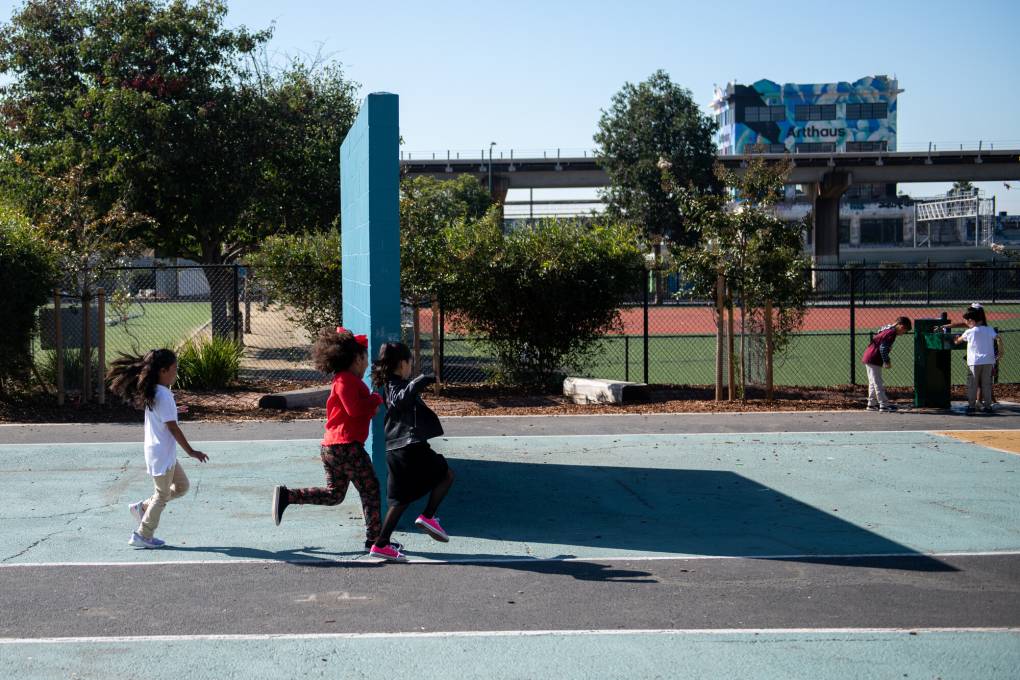
"caption": "Students run behind a wall providing shade in the schoolyard at International Community School in Oakland on Oct. 20, 2022.",
"credit": "Beth LaBerge/KQED",
"altTag": null,
"description": null,
"imgSizes": {
"medium": {
"file": "https://cdn.kqed.org/wp-content/uploads/sites/10/2024/11/028_KQEDScience_IntCommunitySchoolOakland_10202022_qed-800x533.jpg",
"width": 800,
"height": 533,
"mimeType": "image/jpeg"
},
"large": {
"file": "https://cdn.kqed.org/wp-content/uploads/sites/10/2024/11/028_KQEDScience_IntCommunitySchoolOakland_10202022_qed-1020x680.jpg",
"width": 1020,
"height": 680,
"mimeType": "image/jpeg"
},
"thumbnail": {
"file": "https://cdn.kqed.org/wp-content/uploads/sites/10/2024/11/028_KQEDScience_IntCommunitySchoolOakland_10202022_qed-160x107.jpg",
"width": 160,
"height": 107,
"mimeType": "image/jpeg"
},
"1536x1536": {
"file": "https://cdn.kqed.org/wp-content/uploads/sites/10/2024/11/028_KQEDScience_IntCommunitySchoolOakland_10202022_qed-1536x1024.jpg",
"width": 1536,
"height": 1024,
"mimeType": "image/jpeg"
},
"post-thumbnail": {
"file": "https://cdn.kqed.org/wp-content/uploads/sites/10/2024/11/028_KQEDScience_IntCommunitySchoolOakland_10202022_qed-672x372.jpg",
"width": 672,
"height": 372,
"mimeType": "image/jpeg"
},
"twentyfourteen-full-width": {
"file": "https://cdn.kqed.org/wp-content/uploads/sites/10/2024/11/028_KQEDScience_IntCommunitySchoolOakland_10202022_qed-1038x576.jpg",
"width": 1038,
"height": 576,
"mimeType": "image/jpeg"
},
"full-width": {
"file": "https://cdn.kqed.org/wp-content/uploads/sites/10/2024/11/028_KQEDScience_IntCommunitySchoolOakland_10202022_qed-1920x1280.jpg",
"width": 1920,
"height": 1280,
"mimeType": "image/jpeg"
},
"kqedFullSize": {
"file": "https://cdn.kqed.org/wp-content/uploads/sites/10/2024/11/028_KQEDScience_IntCommunitySchoolOakland_10202022_qed.jpg",
"width": 1999,
"height": 1333
}
},
"isLoading": false,
"fetchFailed": false
},
"news_12014065": {
"type": "attachments",
"id": "news_12014065",
"meta": {
"index": "attachments_1716263798",
"site": "news",
"id": "12014065",
"found": true
},
"title": "alisonyin.com",
"publishDate": 1731433935,
"status": "inherit",
"parent": 12014064,
"modified": 1731437663,
"caption": "Recess at Redwood Heights Elementary School in Oakland on Wednesday, May 17, 2017.\nPhotos by Alison Yin for EdSource",
"credit": null,
"altTag": null,
"description": null,
"imgSizes": {
"medium": {
"file": "https://cdn.kqed.org/wp-content/uploads/sites/10/2024/11/241112Redwood_Elem_082-1536x1024-1-800x533.jpg",
"width": 800,
"height": 533,
"mimeType": "image/jpeg"
},
"large": {
"file": "https://cdn.kqed.org/wp-content/uploads/sites/10/2024/11/241112Redwood_Elem_082-1536x1024-1-1020x680.jpg",
"width": 1020,
"height": 680,
"mimeType": "image/jpeg"
},
"thumbnail": {
"file": "https://cdn.kqed.org/wp-content/uploads/sites/10/2024/11/241112Redwood_Elem_082-1536x1024-1-160x107.jpg",
"width": 160,
"height": 107,
"mimeType": "image/jpeg"
},
"post-thumbnail": {
"file": "https://cdn.kqed.org/wp-content/uploads/sites/10/2024/11/241112Redwood_Elem_082-1536x1024-1-672x372.jpg",
"width": 672,
"height": 372,
"mimeType": "image/jpeg"
},
"twentyfourteen-full-width": {
"file": "https://cdn.kqed.org/wp-content/uploads/sites/10/2024/11/241112Redwood_Elem_082-1536x1024-1-1038x576.jpg",
"width": 1038,
"height": 576,
"mimeType": "image/jpeg"
},
"kqedFullSize": {
"file": "https://cdn.kqed.org/wp-content/uploads/sites/10/2024/11/241112Redwood_Elem_082-1536x1024-1.jpg",
"width": 1536,
"height": 1024
}
},
"isLoading": false,
"fetchFailed": false
},
"news_11813962": {
"type": "attachments",
"id": "news_11813962",
"meta": {
"index": "attachments_1716263798",
"site": "news",
"id": "11813962",
"found": true
},
"parent": 11813888,
"imgSizes": {
"apple_news_ca_landscape_5_5": {
"file": "https://ww2.kqed.org/app/uploads/sites/10/2020/04/GettyImages-1206287512_1920x-1044x783.jpg",
"width": 1044,
"mimeType": "image/jpeg",
"height": 783
},
"apple_news_ca_square_4_0": {
"file": "https://ww2.kqed.org/app/uploads/sites/10/2020/04/GettyImages-1206287512_1920x-470x470.jpg",
"width": 470,
"mimeType": "image/jpeg",
"height": 470
},
"twentyfourteen-full-width": {
"file": "https://ww2.kqed.org/app/uploads/sites/10/2020/04/GettyImages-1206287512_1920x-1038x576.jpg",
"width": 1038,
"mimeType": "image/jpeg",
"height": 576
},
"thumbnail": {
"file": "https://ww2.kqed.org/app/uploads/sites/10/2020/04/GettyImages-1206287512_1920x-160x107.jpg",
"width": 160,
"mimeType": "image/jpeg",
"height": 107
},
"post-thumbnail": {
"file": "https://ww2.kqed.org/app/uploads/sites/10/2020/04/GettyImages-1206287512_1920x-672x372.jpg",
"width": 672,
"mimeType": "image/jpeg",
"height": 372
},
"kqedFullSize": {
"file": "https://ww2.kqed.org/app/uploads/sites/10/2020/04/GettyImages-1206287512_1920x.jpg",
"width": 1920,
"height": 1280
},
"apple_news_ca_landscape_4_7": {
"file": "https://ww2.kqed.org/app/uploads/sites/10/2020/04/GettyImages-1206287512_1920x-632x474.jpg",
"width": 632,
"mimeType": "image/jpeg",
"height": 474
},
"large": {
"file": "https://ww2.kqed.org/app/uploads/sites/10/2020/04/GettyImages-1206287512_1920x-1020x680.jpg",
"width": 1020,
"mimeType": "image/jpeg",
"height": 680
},
"apple_news_ca_landscape_4_0": {
"file": "https://ww2.kqed.org/app/uploads/sites/10/2020/04/GettyImages-1206287512_1920x-536x402.jpg",
"width": 536,
"mimeType": "image/jpeg",
"height": 402
},
"apple_news_ca_portrait_12_9": {
"file": "https://ww2.kqed.org/app/uploads/sites/10/2020/04/GettyImages-1206287512_1920x-1122x1280.jpg",
"width": 1122,
"mimeType": "image/jpeg",
"height": 1280
},
"medium": {
"file": "https://ww2.kqed.org/app/uploads/sites/10/2020/04/GettyImages-1206287512_1920x-800x533.jpg",
"width": 800,
"mimeType": "image/jpeg",
"height": 533
},
"apple_news_ca_portrait_4_0": {
"file": "https://ww2.kqed.org/app/uploads/sites/10/2020/04/GettyImages-1206287512_1920x-354x472.jpg",
"width": 354,
"mimeType": "image/jpeg",
"height": 472
},
"apple_news_ca_portrait_9_7": {
"file": "https://ww2.kqed.org/app/uploads/sites/10/2020/04/GettyImages-1206287512_1920x-840x1120.jpg",
"width": 840,
"mimeType": "image/jpeg",
"height": 1120
},
"apple_news_ca_landscape_12_9": {
"file": "https://ww2.kqed.org/app/uploads/sites/10/2020/04/GettyImages-1206287512_1920x-1832x1280.jpg",
"width": 1832,
"mimeType": "image/jpeg",
"height": 1280
},
"apple_news_ca_square_9_7": {
"file": "https://ww2.kqed.org/app/uploads/sites/10/2020/04/GettyImages-1206287512_1920x-1104x1104.jpg",
"width": 1104,
"mimeType": "image/jpeg",
"height": 1104
},
"apple_news_ca_portrait_4_7": {
"file": "https://ww2.kqed.org/app/uploads/sites/10/2020/04/GettyImages-1206287512_1920x-414x552.jpg",
"width": 414,
"mimeType": "image/jpeg",
"height": 552
},
"apple_news_ca_square_12_9": {
"file": "https://ww2.kqed.org/app/uploads/sites/10/2020/04/GettyImages-1206287512_1920x-1472x1280.jpg",
"width": 1472,
"mimeType": "image/jpeg",
"height": 1280
},
"apple_news_ca_portrait_5_5": {
"file": "https://ww2.kqed.org/app/uploads/sites/10/2020/04/GettyImages-1206287512_1920x-687x916.jpg",
"width": 687,
"mimeType": "image/jpeg",
"height": 916
},
"full-width": {
"file": "https://ww2.kqed.org/app/uploads/sites/10/2020/04/GettyImages-1206287512_1920x-1920x1280.jpg",
"width": 1920,
"mimeType": "image/jpeg",
"height": 1280
},
"apple_news_ca_square_4_7": {
"file": "https://ww2.kqed.org/app/uploads/sites/10/2020/04/GettyImages-1206287512_1920x-550x550.jpg",
"width": 550,
"mimeType": "image/jpeg",
"height": 550
},
"apple_news_ca_landscape_9_7": {
"file": "https://ww2.kqed.org/app/uploads/sites/10/2020/04/GettyImages-1206287512_1920x-1376x1032.jpg",
"width": 1376,
"mimeType": "image/jpeg",
"height": 1032
},
"apple_news_ca_square_5_5": {
"file": "https://ww2.kqed.org/app/uploads/sites/10/2020/04/GettyImages-1206287512_1920x-912x912.jpg",
"width": 912,
"mimeType": "image/jpeg",
"height": 912
}
},
"publishDate": 1587667826,
"modified": 1587669970,
"caption": "A person walks past archways during a quiet morning at Stanford University on March 9, 2020. ",
"description": "STANFORD, CA - MARCH 09: A person walks past archways during a quiet morning at Stanford University on March 9, 2020 in Stanford, California. ",
"title": "Stanford University Cancels On-Campus Classes After Faculty Member Tests Positive For Coronavirus",
"credit": "Philip Pacheco/Getty Images",
"status": "inherit",
"isLoading": false,
"fetchFailed": false
},
"news_12010448": {
"type": "attachments",
"id": "news_12010448",
"meta": {
"index": "attachments_1716263798",
"site": "news",
"id": "12010448",
"found": true
},
"title": "241021-SFUSD BREED STATE PRESSER-MD-05-KQED",
"publishDate": 1729540472,
"status": "inherit",
"parent": 0,
"modified": 1729551090,
"caption": "State Superintendent Tony Thurmond speaks at a press event in front of the SFUSD offices in San Francisco on Oct. 21, 2024.",
"credit": "Martin do Nascimento/KQED",
"altTag": null,
"description": null,
"imgSizes": {
"medium": {
"file": "https://cdn.kqed.org/wp-content/uploads/sites/10/2024/10/241021-SFUSD-BREED-STATE-PRESSER-MD-05-KQED-800x533.jpg",
"width": 800,
"height": 533,
"mimeType": "image/jpeg"
},
"large": {
"file": "https://cdn.kqed.org/wp-content/uploads/sites/10/2024/10/241021-SFUSD-BREED-STATE-PRESSER-MD-05-KQED-1020x680.jpg",
"width": 1020,
"height": 680,
"mimeType": "image/jpeg"
},
"thumbnail": {
"file": "https://cdn.kqed.org/wp-content/uploads/sites/10/2024/10/241021-SFUSD-BREED-STATE-PRESSER-MD-05-KQED-160x107.jpg",
"width": 160,
"height": 107,
"mimeType": "image/jpeg"
},
"1536x1536": {
"file": "https://cdn.kqed.org/wp-content/uploads/sites/10/2024/10/241021-SFUSD-BREED-STATE-PRESSER-MD-05-KQED-1536x1024.jpg",
"width": 1536,
"height": 1024,
"mimeType": "image/jpeg"
},
"post-thumbnail": {
"file": "https://cdn.kqed.org/wp-content/uploads/sites/10/2024/10/241021-SFUSD-BREED-STATE-PRESSER-MD-05-KQED-672x372.jpg",
"width": 672,
"height": 372,
"mimeType": "image/jpeg"
},
"twentyfourteen-full-width": {
"file": "https://cdn.kqed.org/wp-content/uploads/sites/10/2024/10/241021-SFUSD-BREED-STATE-PRESSER-MD-05-KQED-1038x576.jpg",
"width": 1038,
"height": 576,
"mimeType": "image/jpeg"
},
"full-width": {
"file": "https://cdn.kqed.org/wp-content/uploads/sites/10/2024/10/241021-SFUSD-BREED-STATE-PRESSER-MD-05-KQED-1920x1280.jpg",
"width": 1920,
"height": 1280,
"mimeType": "image/jpeg"
},
"kqedFullSize": {
"file": "https://cdn.kqed.org/wp-content/uploads/sites/10/2024/10/241021-SFUSD-BREED-STATE-PRESSER-MD-05-KQED.jpg",
"width": 2000,
"height": 1333
}
},
"isLoading": false,
"fetchFailed": false
},
"news_12013785": {
"type": "attachments",
"id": "news_12013785",
"meta": {
"index": "attachments_1716263798",
"site": "news",
"id": "12013785",
"found": true
},
"title": "030_KQEDScience_IntCommunitySchoolOakland_10202022_qed",
"publishDate": 1731110987,
"status": "inherit",
"parent": 12013739,
"modified": 1731111020,
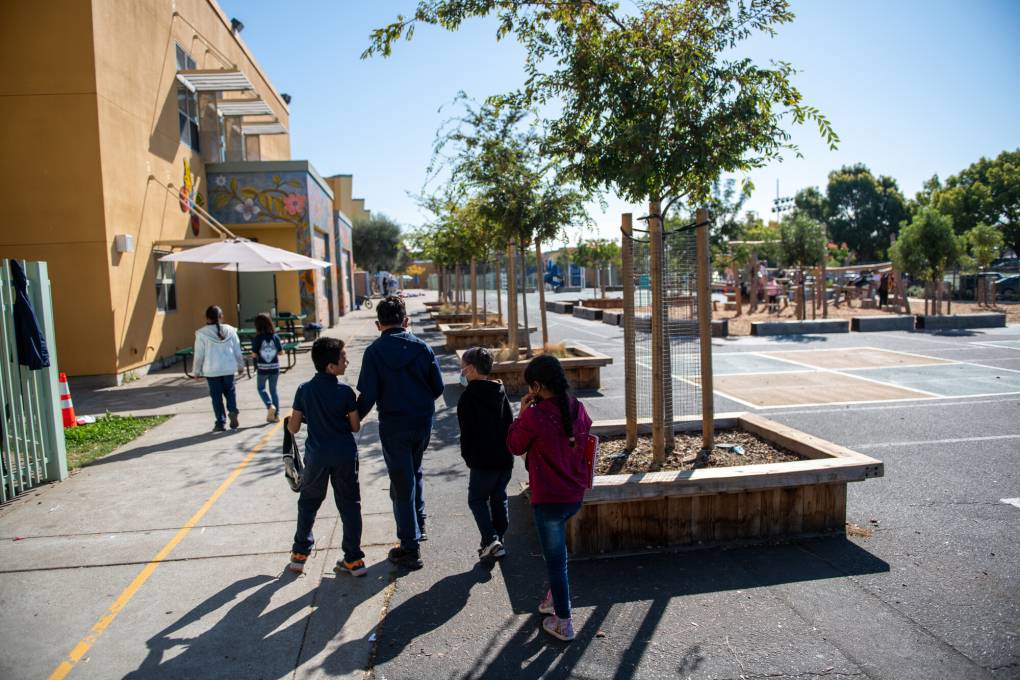
"caption": "Students go in from recess at International Community School in Oakland on Oct. 20, 2022.",
"credit": "Beth LaBerge/KQED",
"altTag": null,
"description": null,
"imgSizes": {
"medium": {
"file": "https://cdn.kqed.org/wp-content/uploads/sites/10/2024/11/030_KQEDScience_IntCommunitySchoolOakland_10202022_qed-800x533.jpg",
"width": 800,
"height": 533,
"mimeType": "image/jpeg"
},
"large": {
"file": "https://cdn.kqed.org/wp-content/uploads/sites/10/2024/11/030_KQEDScience_IntCommunitySchoolOakland_10202022_qed-1020x680.jpg",
"width": 1020,
"height": 680,
"mimeType": "image/jpeg"
},
"thumbnail": {
"file": "https://cdn.kqed.org/wp-content/uploads/sites/10/2024/11/030_KQEDScience_IntCommunitySchoolOakland_10202022_qed-160x107.jpg",
"width": 160,
"height": 107,
"mimeType": "image/jpeg"
},
"1536x1536": {
"file": "https://cdn.kqed.org/wp-content/uploads/sites/10/2024/11/030_KQEDScience_IntCommunitySchoolOakland_10202022_qed-1536x1024.jpg",
"width": 1536,
"height": 1024,
"mimeType": "image/jpeg"
},
"post-thumbnail": {
"file": "https://cdn.kqed.org/wp-content/uploads/sites/10/2024/11/030_KQEDScience_IntCommunitySchoolOakland_10202022_qed-672x372.jpg",
"width": 672,
"height": 372,
"mimeType": "image/jpeg"
},
"twentyfourteen-full-width": {
"file": "https://cdn.kqed.org/wp-content/uploads/sites/10/2024/11/030_KQEDScience_IntCommunitySchoolOakland_10202022_qed-1038x576.jpg",
"width": 1038,
"height": 576,
"mimeType": "image/jpeg"
},
"full-width": {
"file": "https://cdn.kqed.org/wp-content/uploads/sites/10/2024/11/030_KQEDScience_IntCommunitySchoolOakland_10202022_qed-1920x1280.jpg",
"width": 1920,
"height": 1280,
"mimeType": "image/jpeg"
},
"kqedFullSize": {
"file": "https://cdn.kqed.org/wp-content/uploads/sites/10/2024/11/030_KQEDScience_IntCommunitySchoolOakland_10202022_qed.jpg",
"width": 2000,
"height": 1333
}
},
"isLoading": false,
"fetchFailed": false
},
"news_12013559": {
"type": "attachments",
"id": "news_12013559",
"meta": {
"index": "attachments_1716263798",
"site": "news",
"id": "12013559",
"found": true
},
"title": "California Legislature",
"publishDate": 1731024071,
"status": "inherit",
"parent": 12013558,
"modified": 1731029821,
"caption": "In this Jan. 25, 2017 file photo, protesters hold signs as they listen to speakers at a rally outside of City Hall in San Francisco. ",
"credit": "Jeff Chiu/AP Photo",
"altTag": null,
"description": null,
"imgSizes": {
"medium": {
"file": "https://cdn.kqed.org/wp-content/uploads/sites/10/2024/11/17230793736301-2048x1393-1-800x544.jpg",
"width": 800,
"height": 544,
"mimeType": "image/jpeg"
},
"large": {
"file": "https://cdn.kqed.org/wp-content/uploads/sites/10/2024/11/17230793736301-2048x1393-1-1020x694.jpg",
"width": 1020,
"height": 694,
"mimeType": "image/jpeg"
},
"thumbnail": {
"file": "https://cdn.kqed.org/wp-content/uploads/sites/10/2024/11/17230793736301-2048x1393-1-160x109.jpg",
"width": 160,
"height": 109,
"mimeType": "image/jpeg"
},
"1536x1536": {
"file": "https://cdn.kqed.org/wp-content/uploads/sites/10/2024/11/17230793736301-2048x1393-1-1536x1045.jpg",
"width": 1536,
"height": 1045,
"mimeType": "image/jpeg"
},
"post-thumbnail": {
"file": "https://cdn.kqed.org/wp-content/uploads/sites/10/2024/11/17230793736301-2048x1393-1-672x372.jpg",
"width": 672,
"height": 372,
"mimeType": "image/jpeg"
},
"twentyfourteen-full-width": {
"file": "https://cdn.kqed.org/wp-content/uploads/sites/10/2024/11/17230793736301-2048x1393-1-1038x576.jpg",
"width": 1038,
"height": 576,
"mimeType": "image/jpeg"
},
"full-width": {
"file": "https://cdn.kqed.org/wp-content/uploads/sites/10/2024/11/17230793736301-2048x1393-1-1920x1306.jpg",
"width": 1920,
"height": 1306,
"mimeType": "image/jpeg"
},
"kqedFullSize": {
"file": "https://cdn.kqed.org/wp-content/uploads/sites/10/2024/11/17230793736301-2048x1393-1.jpg",
"width": 2048,
"height": 1393
}
},
"isLoading": false,
"fetchFailed": false
},
"news_11826055": {
"type": "attachments",
"id": "news_11826055",
"meta": {
"index": "attachments_1716263798",
"site": "news",
"id": "11826055",
"found": true
},
"parent": 11825991,
"imgSizes": {
"apple_news_ca_landscape_5_5": {
"file": "https://ww2.kqed.org/app/uploads/sites/10/2020/06/RS41635_002_KQED_Election_Prop13_02262020_4349-qut-1044x783.jpg",
"width": 1044,
"mimeType": "image/jpeg",
"height": 783
},
"apple_news_ca_square_4_0": {
"file": "https://ww2.kqed.org/app/uploads/sites/10/2020/06/RS41635_002_KQED_Election_Prop13_02262020_4349-qut-470x470.jpg",
"width": 470,
"mimeType": "image/jpeg",
"height": 470
},
"twentyfourteen-full-width": {
"file": "https://ww2.kqed.org/app/uploads/sites/10/2020/06/RS41635_002_KQED_Election_Prop13_02262020_4349-qut-1038x576.jpg",
"width": 1038,
"mimeType": "image/jpeg",
"height": 576
},
"thumbnail": {
"file": "https://ww2.kqed.org/app/uploads/sites/10/2020/06/RS41635_002_KQED_Election_Prop13_02262020_4349-qut-160x107.jpg",
"width": 160,
"mimeType": "image/jpeg",
"height": 107
},
"post-thumbnail": {
"file": "https://ww2.kqed.org/app/uploads/sites/10/2020/06/RS41635_002_KQED_Election_Prop13_02262020_4349-qut-672x372.jpg",
"width": 672,
"mimeType": "image/jpeg",
"height": 372
},
"kqedFullSize": {
"file": "https://ww2.kqed.org/app/uploads/sites/10/2020/06/RS41635_002_KQED_Election_Prop13_02262020_4349-qut.jpg",
"width": 1920,
"height": 1280
},
"apple_news_ca_landscape_4_7": {
"file": "https://ww2.kqed.org/app/uploads/sites/10/2020/06/RS41635_002_KQED_Election_Prop13_02262020_4349-qut-632x474.jpg",
"width": 632,
"mimeType": "image/jpeg",
"height": 474
},
"large": {
"file": "https://ww2.kqed.org/app/uploads/sites/10/2020/06/RS41635_002_KQED_Election_Prop13_02262020_4349-qut-1020x680.jpg",
"width": 1020,
"mimeType": "image/jpeg",
"height": 680
},
"apple_news_ca_landscape_4_0": {
"file": "https://ww2.kqed.org/app/uploads/sites/10/2020/06/RS41635_002_KQED_Election_Prop13_02262020_4349-qut-536x402.jpg",
"width": 536,
"mimeType": "image/jpeg",
"height": 402
},
"apple_news_ca_portrait_12_9": {
"file": "https://ww2.kqed.org/app/uploads/sites/10/2020/06/RS41635_002_KQED_Election_Prop13_02262020_4349-qut-1122x1280.jpg",
"width": 1122,
"mimeType": "image/jpeg",
"height": 1280
},
"medium": {
"file": "https://ww2.kqed.org/app/uploads/sites/10/2020/06/RS41635_002_KQED_Election_Prop13_02262020_4349-qut-800x533.jpg",
"width": 800,
"mimeType": "image/jpeg",
"height": 533
},
"apple_news_ca_portrait_4_0": {
"file": "https://ww2.kqed.org/app/uploads/sites/10/2020/06/RS41635_002_KQED_Election_Prop13_02262020_4349-qut-354x472.jpg",
"width": 354,
"mimeType": "image/jpeg",
"height": 472
},
"apple_news_ca_portrait_9_7": {
"file": "https://ww2.kqed.org/app/uploads/sites/10/2020/06/RS41635_002_KQED_Election_Prop13_02262020_4349-qut-840x1120.jpg",
"width": 840,
"mimeType": "image/jpeg",
"height": 1120
},
"apple_news_ca_landscape_12_9": {
"file": "https://ww2.kqed.org/app/uploads/sites/10/2020/06/RS41635_002_KQED_Election_Prop13_02262020_4349-qut-1832x1280.jpg",
"width": 1832,
"mimeType": "image/jpeg",
"height": 1280
},
"apple_news_ca_square_9_7": {
"file": "https://ww2.kqed.org/app/uploads/sites/10/2020/06/RS41635_002_KQED_Election_Prop13_02262020_4349-qut-1104x1104.jpg",
"width": 1104,
"mimeType": "image/jpeg",
"height": 1104
},
"1536x1536": {
"file": "https://ww2.kqed.org/app/uploads/sites/10/2020/06/RS41635_002_KQED_Election_Prop13_02262020_4349-qut-1536x1024.jpg",
"width": 1536,
"mimeType": "image/jpeg",
"height": 1024
},
"apple_news_ca_portrait_4_7": {
"file": "https://ww2.kqed.org/app/uploads/sites/10/2020/06/RS41635_002_KQED_Election_Prop13_02262020_4349-qut-414x552.jpg",
"width": 414,
"mimeType": "image/jpeg",
"height": 552
},
"apple_news_ca_square_12_9": {
"file": "https://ww2.kqed.org/app/uploads/sites/10/2020/06/RS41635_002_KQED_Election_Prop13_02262020_4349-qut-1472x1280.jpg",
"width": 1472,
"mimeType": "image/jpeg",
"height": 1280
},
"apple_news_ca_portrait_5_5": {
"file": "https://ww2.kqed.org/app/uploads/sites/10/2020/06/RS41635_002_KQED_Election_Prop13_02262020_4349-qut-687x916.jpg",
"width": 687,
"mimeType": "image/jpeg",
"height": 916
},
"apple_news_ca_square_4_7": {
"file": "https://ww2.kqed.org/app/uploads/sites/10/2020/06/RS41635_002_KQED_Election_Prop13_02262020_4349-qut-550x550.jpg",
"width": 550,
"mimeType": "image/jpeg",
"height": 550
},
"apple_news_ca_landscape_9_7": {
"file": "https://ww2.kqed.org/app/uploads/sites/10/2020/06/RS41635_002_KQED_Election_Prop13_02262020_4349-qut-1376x1032.jpg",
"width": 1376,
"mimeType": "image/jpeg",
"height": 1032
},
"apple_news_ca_square_5_5": {
"file": "https://ww2.kqed.org/app/uploads/sites/10/2020/06/RS41635_002_KQED_Election_Prop13_02262020_4349-qut-912x912.jpg",
"width": 912,
"mimeType": "image/jpeg",
"height": 912
}
},
"publishDate": 1593041774,
"modified": 1593041924,
"caption": "San Francisco Unified School District's Board of Education voted unanimously on June 23, 2020 to declare the city's public schools to be\npolice-free.",
"description": "San Francisco Unified School District's Board of Education voted unanimously on June 23, 2020 to declare the city's public schools to be\npolice-free.",
"title": "RS41635_002_KQED_Election_Prop13_02262020_4349-qut",
"credit": "Beth LaBerge/KQED",
"status": "inherit",
"isLoading": false,
"fetchFailed": false
},
"news_12012697": {
"type": "attachments",
"id": "news_12012697",
"meta": {
"index": "attachments_1716263798",
"site": "news",
"id": "12012697",
"found": true
},
"title": "20230822-SFSU-29-JY_qed",
"publishDate": 1730833101,
"status": "inherit",
"parent": 12012688,
"modified": 1730833972,
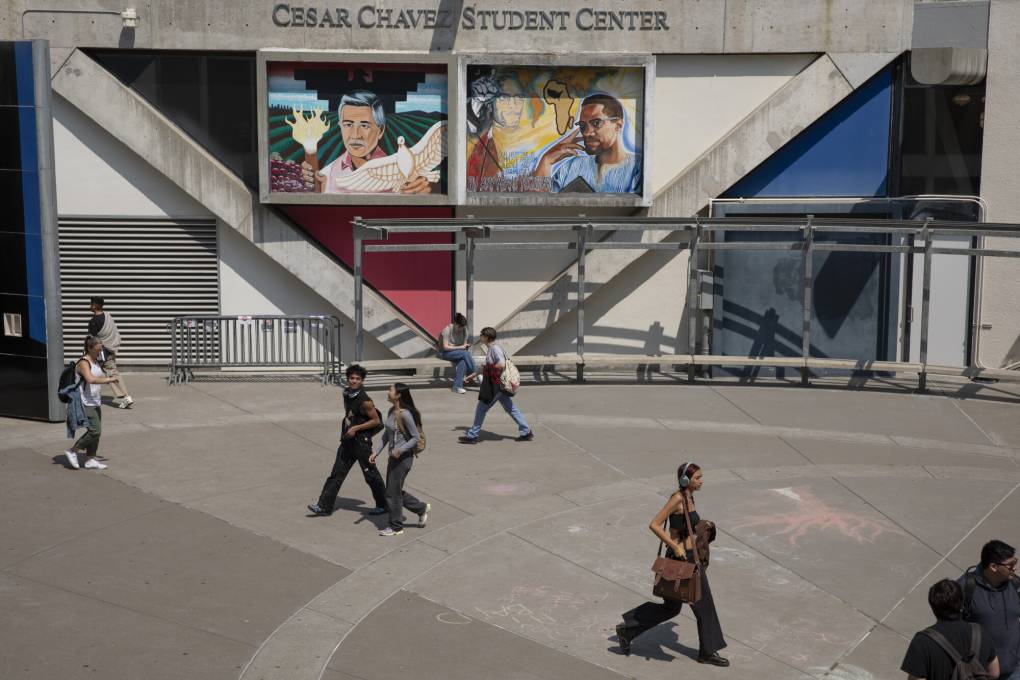
"caption": "Students walk through Malcolm X Plaza at SF State in San Francisco on Tuesday, Aug. 22, 2023.",
"credit": "Juliana Yamada/KQED",
"altTag": "Several walk in a concrete courtyard with a sign in the background saying 'Cesar Chavez Student Center.'",
"description": null,
"imgSizes": {
"medium": {
"file": "https://cdn.kqed.org/wp-content/uploads/sites/10/2024/11/20230822-SFSU-29-JY_qed-800x533.jpg",
"width": 800,
"height": 533,
"mimeType": "image/jpeg"
},
"large": {
"file": "https://cdn.kqed.org/wp-content/uploads/sites/10/2024/11/20230822-SFSU-29-JY_qed-1020x680.jpg",
"width": 1020,
"height": 680,
"mimeType": "image/jpeg"
},
"thumbnail": {
"file": "https://cdn.kqed.org/wp-content/uploads/sites/10/2024/11/20230822-SFSU-29-JY_qed-160x107.jpg",
"width": 160,
"height": 107,
"mimeType": "image/jpeg"
},
"1536x1536": {
"file": "https://cdn.kqed.org/wp-content/uploads/sites/10/2024/11/20230822-SFSU-29-JY_qed-1536x1024.jpg",
"width": 1536,
"height": 1024,
"mimeType": "image/jpeg"
},
"post-thumbnail": {
"file": "https://cdn.kqed.org/wp-content/uploads/sites/10/2024/11/20230822-SFSU-29-JY_qed-672x372.jpg",
"width": 672,
"height": 372,
"mimeType": "image/jpeg"
},
"twentyfourteen-full-width": {
"file": "https://cdn.kqed.org/wp-content/uploads/sites/10/2024/11/20230822-SFSU-29-JY_qed-1038x576.jpg",
"width": 1038,
"height": 576,
"mimeType": "image/jpeg"
},
"full-width": {
"file": "https://cdn.kqed.org/wp-content/uploads/sites/10/2024/11/20230822-SFSU-29-JY_qed-1920x1280.jpg",
"width": 1920,
"height": 1280,
"mimeType": "image/jpeg"
},
"kqedFullSize": {
"file": "https://cdn.kqed.org/wp-content/uploads/sites/10/2024/11/20230822-SFSU-29-JY_qed.jpg",
"width": 2000,
"height": 1333
}
},
"isLoading": false,
"fetchFailed": false
},
"news_12012396": {
"type": "attachments",
"id": "news_12012396",
"meta": {
"index": "attachments_1716263798",
"site": "news",
"id": "12012396",
"found": true
},
"title": "Oakland-High-School1-2048x1188",
"publishDate": 1730683461,
"status": "inherit",
"parent": 12012389,
"modified": 1730683596,
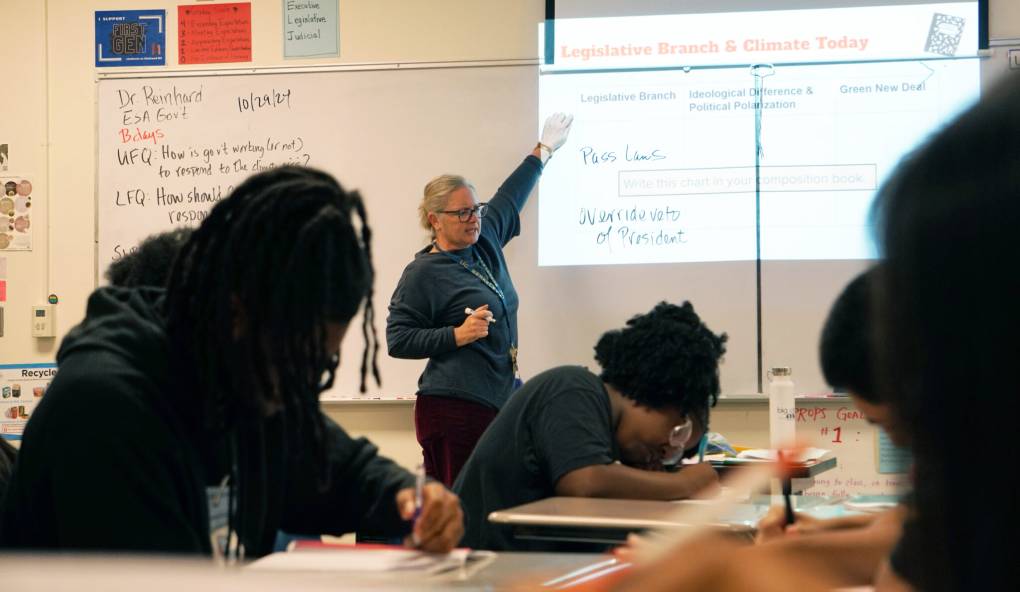
"caption": "Oakland High teacher Rachel Reinhard guides her students through the functions of the legislative branch during a U.S. Government class last week.",
"credit": "Andrew Reed / EdSource",
"altTag": "A white woman wearing glasses and a navy blue shirt points at whiteboard with a projected image as students sit at their desks and work.",
"description": null,
"imgSizes": {
"medium": {
"file": "https://cdn.kqed.org/wp-content/uploads/sites/10/2024/11/Oakland-High-School1-2048x1188-1-800x464.jpg",
"width": 800,
"height": 464,
"mimeType": "image/jpeg"
},
"large": {
"file": "https://cdn.kqed.org/wp-content/uploads/sites/10/2024/11/Oakland-High-School1-2048x1188-1-1020x592.jpg",
"width": 1020,
"height": 592,
"mimeType": "image/jpeg"
},
"thumbnail": {
"file": "https://cdn.kqed.org/wp-content/uploads/sites/10/2024/11/Oakland-High-School1-2048x1188-1-160x93.jpg",
"width": 160,
"height": 93,
"mimeType": "image/jpeg"
},
"1536x1536": {
"file": "https://cdn.kqed.org/wp-content/uploads/sites/10/2024/11/Oakland-High-School1-2048x1188-1-1536x891.jpg",
"width": 1536,
"height": 891,
"mimeType": "image/jpeg"
},
"post-thumbnail": {
"file": "https://cdn.kqed.org/wp-content/uploads/sites/10/2024/11/Oakland-High-School1-2048x1188-1-672x372.jpg",
"width": 672,
"height": 372,
"mimeType": "image/jpeg"
},
"twentyfourteen-full-width": {
"file": "https://cdn.kqed.org/wp-content/uploads/sites/10/2024/11/Oakland-High-School1-2048x1188-1-1038x576.jpg",
"width": 1038,
"height": 576,
"mimeType": "image/jpeg"
},
"full-width": {
"file": "https://cdn.kqed.org/wp-content/uploads/sites/10/2024/11/Oakland-High-School1-2048x1188-1-1920x1114.jpg",
"width": 1920,
"height": 1114,
"mimeType": "image/jpeg"
},
"kqedFullSize": {
"file": "https://cdn.kqed.org/wp-content/uploads/sites/10/2024/11/Oakland-High-School1-2048x1188-1.jpg",
"width": 2048,
"height": 1188
}
},
"isLoading": false,
"fetchFailed": false
},
"news_12011588": {
"type": "attachments",
"id": "news_12011588",
"meta": {
"index": "attachments_1716263798",
"site": "news",
"id": "12011588",
"found": true
},
"title": "241029-OAKLANDSCHOLARSHIPSTUDENTS-17-BL-KQED",
"publishDate": 1730242132,
"status": "inherit",
"parent": 0,
"modified": 1730242192,
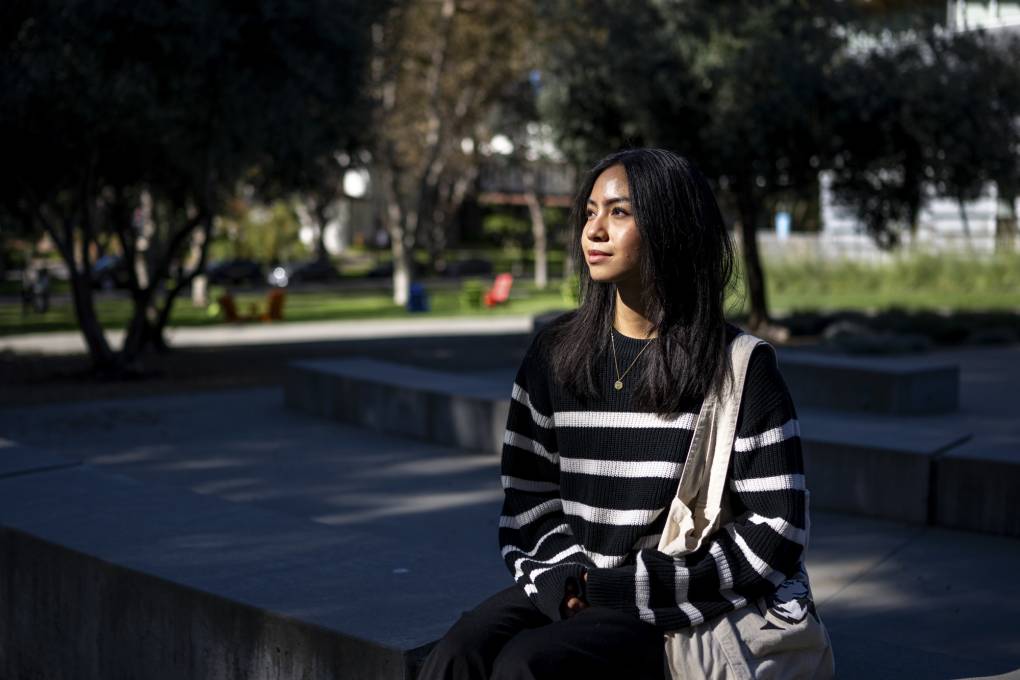
"caption": "Student Angela Vergara sits on the Northeastern University campus in Oakland on Oct. 29, 2024. Vergara received an Oakland Opportunity Scholarship to attend the university through Upward Bound, a federally funded program that helps first-generation college students from underrepresented communities.",
"credit": "Beth LaBerge/KQED",
"altTag": null,
"description": null,
"imgSizes": {
"medium": {
"file": "https://cdn.kqed.org/wp-content/uploads/sites/10/2024/10/241029-OAKLANDSCHOLARSHIPSTUDENTS-17-BL-KQED-800x533.jpg",
"width": 800,
"height": 533,
"mimeType": "image/jpeg"
},
"large": {
"file": "https://cdn.kqed.org/wp-content/uploads/sites/10/2024/10/241029-OAKLANDSCHOLARSHIPSTUDENTS-17-BL-KQED-1020x680.jpg",
"width": 1020,
"height": 680,
"mimeType": "image/jpeg"
},
"thumbnail": {
"file": "https://cdn.kqed.org/wp-content/uploads/sites/10/2024/10/241029-OAKLANDSCHOLARSHIPSTUDENTS-17-BL-KQED-160x107.jpg",
"width": 160,
"height": 107,
"mimeType": "image/jpeg"
},
"1536x1536": {
"file": "https://cdn.kqed.org/wp-content/uploads/sites/10/2024/10/241029-OAKLANDSCHOLARSHIPSTUDENTS-17-BL-KQED-1536x1024.jpg",
"width": 1536,
"height": 1024,
"mimeType": "image/jpeg"
},
"post-thumbnail": {
"file": "https://cdn.kqed.org/wp-content/uploads/sites/10/2024/10/241029-OAKLANDSCHOLARSHIPSTUDENTS-17-BL-KQED-672x372.jpg",
"width": 672,
"height": 372,
"mimeType": "image/jpeg"
},
"twentyfourteen-full-width": {
"file": "https://cdn.kqed.org/wp-content/uploads/sites/10/2024/10/241029-OAKLANDSCHOLARSHIPSTUDENTS-17-BL-KQED-1038x576.jpg",
"width": 1038,
"height": 576,
"mimeType": "image/jpeg"
},
"full-width": {
"file": "https://cdn.kqed.org/wp-content/uploads/sites/10/2024/10/241029-OAKLANDSCHOLARSHIPSTUDENTS-17-BL-KQED-1920x1280.jpg",
"width": 1920,
"height": 1280,
"mimeType": "image/jpeg"
},
"kqedFullSize": {
"file": "https://cdn.kqed.org/wp-content/uploads/sites/10/2024/10/241029-OAKLANDSCHOLARSHIPSTUDENTS-17-BL-KQED.jpg",
"width": 2000,
"height": 1333
}
},
"isLoading": false,
"fetchFailed": false
},
"news_11948331": {
"type": "attachments",
"id": "news_11948331",
"meta": {
"index": "attachments_1716263798",
"site": "news",
"id": "11948331",
"found": true
},
"title": "RS55916_058_KQED_OaklandTeacherStrike_04292022-qut",
"publishDate": 1683062568,
"status": "inherit",
"parent": 11948320,
"modified": 1772216225,
"caption": "Oakland teachers and students listen to speakers during a rally as part of a one-day walkout on April 29, 2022, to protest the Oakland Unified School District's planned closures. Teachers represented by the Oakland Education Association may go on strike once again on Thursday.",
"credit": "Beth LaBerge/KQED",
"altTag": "An older Black man stands outside at a rally, with a sign hanging from his neck that says: 'Fund Public Schools.'",
"description": null,
"imgSizes": {
"medium": {
"file": "https://cdn.kqed.org/wp-content/uploads/sites/10/2023/05/RS55916_058_KQED_OaklandTeacherStrike_04292022-qut-800x533.jpg",
"width": 800,
"height": 533,
"mimeType": "image/jpeg"
},
"large": {
"file": "https://cdn.kqed.org/wp-content/uploads/sites/10/2023/05/RS55916_058_KQED_OaklandTeacherStrike_04292022-qut-1020x680.jpg",
"width": 1020,
"height": 680,
"mimeType": "image/jpeg"
},
"thumbnail": {
"file": "https://cdn.kqed.org/wp-content/uploads/sites/10/2023/05/RS55916_058_KQED_OaklandTeacherStrike_04292022-qut-160x107.jpg",
"width": 160,
"height": 107,
"mimeType": "image/jpeg"
},
"1536x1536": {
"file": "https://cdn.kqed.org/wp-content/uploads/sites/10/2023/05/RS55916_058_KQED_OaklandTeacherStrike_04292022-qut-1536x1024.jpg",
"width": 1536,
"height": 1024,
"mimeType": "image/jpeg"
},
"post-thumbnail": {
"file": "https://cdn.kqed.org/wp-content/uploads/sites/10/2023/05/RS55916_058_KQED_OaklandTeacherStrike_04292022-qut-672x372.jpg",
"width": 672,
"height": 372,
"mimeType": "image/jpeg"
},
"twentyfourteen-full-width": {
"file": "https://cdn.kqed.org/wp-content/uploads/sites/10/2023/05/RS55916_058_KQED_OaklandTeacherStrike_04292022-qut-1038x576.jpg",
"width": 1038,
"height": 576,
"mimeType": "image/jpeg"
},
"kqedFullSize": {
"file": "https://cdn.kqed.org/wp-content/uploads/sites/10/2023/05/RS55916_058_KQED_OaklandTeacherStrike_04292022-qut.jpg",
"width": 1920,
"height": 1280
}
},
"isLoading": false,
"fetchFailed": false
},
"news_12010829": {
"type": "attachments",
"id": "news_12010829",
"meta": {
"index": "attachments_1716263798",
"site": "news",
"id": "12010829",
"found": true
},
"title": "241023-SFUSDSUPERINTENDENT-12-BL-KQED",
"publishDate": 1729719379,
"status": "inherit",
"parent": 0,
"modified": 1730234813,
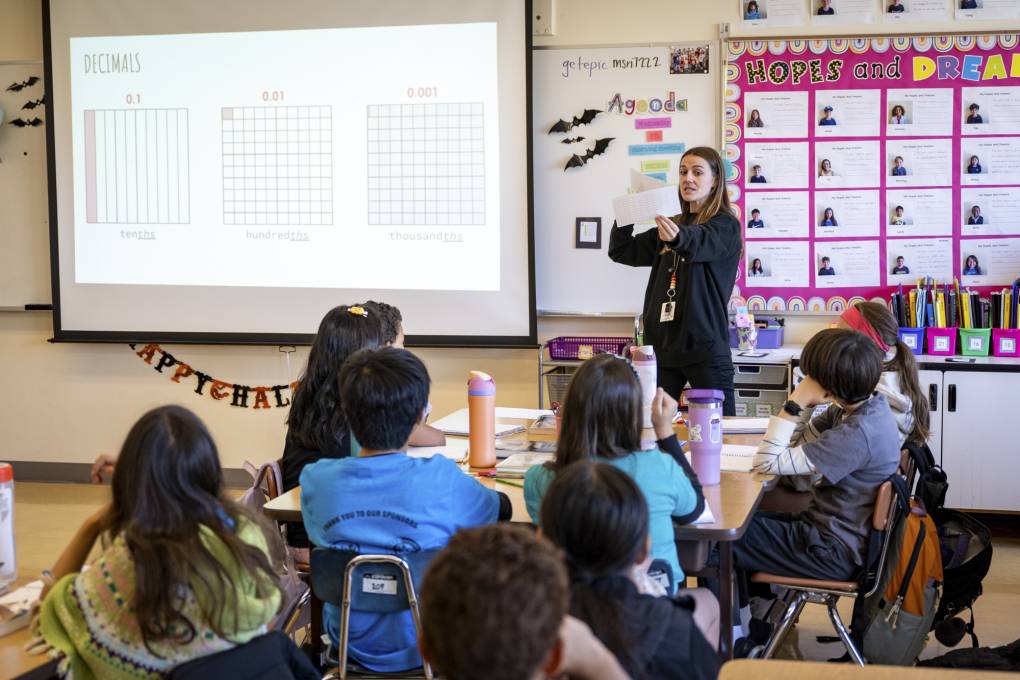
"caption": "Katie Dorset teaches a class at Yick Wo Alternative Elementary School in San Francisco on Oct. 23, 2024, when new Superintendent Maria Su visited the campus.",
"credit": "Beth LaBerge/KQED",
"altTag": null,
"description": null,
"imgSizes": {
"medium": {
"file": "https://cdn.kqed.org/wp-content/uploads/sites/10/2024/10/241023-SFUSDSUPERINTENDENT-12-BL-KQED-800x533.jpg",
"width": 800,
"height": 533,
"mimeType": "image/jpeg"
},
"large": {
"file": "https://cdn.kqed.org/wp-content/uploads/sites/10/2024/10/241023-SFUSDSUPERINTENDENT-12-BL-KQED-1020x680.jpg",
"width": 1020,
"height": 680,
"mimeType": "image/jpeg"
},
"thumbnail": {
"file": "https://cdn.kqed.org/wp-content/uploads/sites/10/2024/10/241023-SFUSDSUPERINTENDENT-12-BL-KQED-160x107.jpg",
"width": 160,
"height": 107,
"mimeType": "image/jpeg"
},
"1536x1536": {
"file": "https://cdn.kqed.org/wp-content/uploads/sites/10/2024/10/241023-SFUSDSUPERINTENDENT-12-BL-KQED-1536x1024.jpg",
"width": 1536,
"height": 1024,
"mimeType": "image/jpeg"
},
"post-thumbnail": {
"file": "https://cdn.kqed.org/wp-content/uploads/sites/10/2024/10/241023-SFUSDSUPERINTENDENT-12-BL-KQED-672x372.jpg",
"width": 672,
"height": 372,
"mimeType": "image/jpeg"
},
"twentyfourteen-full-width": {
"file": "https://cdn.kqed.org/wp-content/uploads/sites/10/2024/10/241023-SFUSDSUPERINTENDENT-12-BL-KQED-1038x576.jpg",
"width": 1038,
"height": 576,
"mimeType": "image/jpeg"
},
"full-width": {
"file": "https://cdn.kqed.org/wp-content/uploads/sites/10/2024/10/241023-SFUSDSUPERINTENDENT-12-BL-KQED-1920x1280.jpg",
"width": 1920,
"height": 1280,
"mimeType": "image/jpeg"
},
"kqedFullSize": {
"file": "https://cdn.kqed.org/wp-content/uploads/sites/10/2024/10/241023-SFUSDSUPERINTENDENT-12-BL-KQED.jpg",
"width": 2000,
"height": 1333
}
},
"isLoading": false,
"fetchFailed": false
}
},
"audioPlayerReducer": {
"postId": "stream_live",
"isPaused": true,
"isPlaying": false,
"pfsActive": false,
"pledgeModalIsOpen": true,
"playerDrawerIsOpen": false,
"liveAudioPlayStartedAt": 0,
"liveAudioPlayContext": ""
},
"authorsReducer": {
"byline_news_12014064": {
"type": "authors",
"id": "byline_news_12014064",
"meta": {
"override": true
},
"slug": "byline_news_12014064",
"name": "Emma Gallegos",
"isLoading": false
},
"byline_news_12013558": {
"type": "authors",
"id": "byline_news_12013558",
"meta": {
"override": true
},
"slug": "byline_news_12013558",
"name": "\u003ca href=\"https://edsource.org/\">EdSource\u003c/a>",
"isLoading": false
},
"byline_news_12012688": {
"type": "authors",
"id": "byline_news_12012688",
"meta": {
"override": true
},
"slug": "byline_news_12012688",
"name": "Mallika Seshadri",
"isLoading": false
},
"byline_news_12012389": {
"type": "authors",
"id": "byline_news_12012389",
"meta": {
"override": true
},
"slug": "byline_news_12012389",
"name": "\u003ca href=\"https://edsource.org/author/jfensterwald\">John Fensterwald, \u003c/a>EdSource",
"isLoading": false
},
"dcronin": {
"type": "authors",
"id": "11362",
"meta": {
"index": "authors_1716337520",
"id": "11362",
"found": true
},
"name": "Dana Cronin",
"firstName": "Dana",
"lastName": "Cronin",
"slug": "dcronin",
"email": "dcronin@KQED.org",
"display_author_email": true,
"staff_mastheads": [],
"title": "KQED Contributor",
"bio": "Dana Cronin is a reporter for KQED News. She loves writing stories about climate change, environmental issues, food and agriculture. She's reported across the country, from Colorado to Washington D.C. to Illinois, and has won numerous awards for her coverage. Her work is regularly featured on national broadcasts, including NPR’s Morning Edition, All Things Considered, PBS Newshour and Science Friday. She lives in Oakland and has an avocado tree in her back yard.",
"avatar": "https://secure.gravatar.com/avatar/bcf89e3455ff7235f96ab6fa7258dd95?s=600&d=blank&r=g",
"twitter": "DanaHCronin",
"facebook": null,
"instagram": null,
"linkedin": null,
"sites": [
{
"site": "arts",
"roles": [
"author"
]
},
{
"site": "news",
"roles": [
"editor"
]
},
{
"site": "science",
"roles": [
"author"
]
},
{
"site": "liveblog",
"roles": [
"author"
]
}
],
"headData": {
"title": "Dana Cronin | KQED",
"description": "KQED Contributor",
"ogImgSrc": "https://secure.gravatar.com/avatar/bcf89e3455ff7235f96ab6fa7258dd95?s=600&d=blank&r=g",
"twImgSrc": "https://secure.gravatar.com/avatar/bcf89e3455ff7235f96ab6fa7258dd95?s=600&d=blank&r=g"
},
"isLoading": false,
"link": "/author/dcronin"
},
"kdebenedetti": {
"type": "authors",
"id": "11913",
"meta": {
"index": "authors_1716337520",
"id": "11913",
"found": true
},
"name": "Katie DeBenedetti",
"firstName": "Katie",
"lastName": "DeBenedetti",
"slug": "kdebenedetti",
"email": "kdebenedetti@kqed.org",
"display_author_email": false,
"staff_mastheads": [
"news",
"science"
],
"title": "KQED Contributor",
"bio": "Katie DeBenedetti is a digital reporter covering daily news for the Express Desk. Prior to joining KQED as a culture reporting intern in January 2024, she covered education and city government for the Napa Valley Register.",
"avatar": "https://secure.gravatar.com/avatar/6e31073cb8f7e4214ab03f42771d0f45?s=600&d=blank&r=g",
"twitter": null,
"facebook": null,
"instagram": null,
"linkedin": null,
"sites": [
{
"site": "news",
"roles": [
"author"
]
},
{
"site": "science",
"roles": [
"author"
]
},
{
"site": "liveblog",
"roles": [
"author"
]
}
],
"headData": {
"title": "Katie DeBenedetti | KQED",
"description": "KQED Contributor",
"ogImgSrc": "https://secure.gravatar.com/avatar/6e31073cb8f7e4214ab03f42771d0f45?s=600&d=blank&r=g",
"twImgSrc": "https://secure.gravatar.com/avatar/6e31073cb8f7e4214ab03f42771d0f45?s=600&d=blank&r=g"
},
"isLoading": false,
"link": "/author/kdebenedetti"
}
},
"pagesReducer": {
"news_tag_education": {
"type": "terms",
"id": "news_20013",
"meta": {
"index": "terms_1716263798",
"site": "news",
"id": "20013",
"score": 6.970053
},
"featImg": null,
"name": "education",
"description": null,
"taxonomy": "tag",
"headData": {
"twImgId": null,
"twTitle": null,
"ogTitle": null,
"ogImgId": null,
"twDescription": null,
"description": null,
"title": "education Archives | KQED News",
"ogDescription": null
},
"ttid": 20030,
"slug": "education",
"isLoading": false,
"title": "education",
"pageMeta": {
"site": "news",
"WpPageTemplate": "page-topic-editorial",
"currentPage": 34
},
"blocks": [
{
"blockName": "kqed/post-list",
"attrs": {
"layout": "cardArticle2",
"query": "posts/news?tag=education",
"seeMore": false,
"paginated": true,
"page": 34
}
},
{
"blockName": "kqed/ad"
}
]
}
},
"pfsSessionReducer": {},
"postsReducer": {
"stream_live": {
"type": "live",
"id": "stream_live",
"audioUrl": "https://streams.kqed.org/kqedradio",
"title": "Live Stream",
"excerpt": "Live Stream information currently unavailable.",
"link": "/radio",
"featImg": "",
"label": {
"name": "KQED Live",
"link": "/"
}
},
"stream_kqedNewscast": {
"type": "posts",
"id": "stream_kqedNewscast",
"audioUrl": "https://www.kqed.org/.stream/anon/radio/RDnews/newscast.mp3?_=1",
"title": "KQED Newscast",
"featImg": "",
"label": {
"name": "88.5 FM",
"link": "/"
}
},
"news_12014397": {
"type": "posts",
"id": "news_12014397",
"meta": {
"index": "posts_1716263798",
"site": "news",
"id": "12014397",
"score": null,
"sort": [
1731608414000
]
},
"guestAuthors": [],
"slug": "parents-teachers-say-oakland-school-mergers-could-hurt-students-in-the-flatlands",
"title": "Parents, Teachers Say Oakland School Mergers Could Hurt Students in the ‘Flatlands’",
"publishDate": 1731608414,
"format": "standard",
"headTitle": "Parents, Teachers Say Oakland School Mergers Could Hurt Students in the ‘Flatlands’ | KQED",
"labelTerm": {
"site": "news"
},
"content": "\u003cp>Dozens of Oakland parents and educators urged the school board to reject a \u003ca href=\"https://www.kqed.org/news/12013739/oakland-school-board-spurns-campus-closures-plans-merge-some-schools-instead\">proposal to merge five pairs of public schools\u003c/a> at its meeting on Wednesday night.\u003c/p>\n\u003cp>The mergers, announced last week after the board didn’t back a wider school closure plan, would save the \u003ca href=\"https://www.kqed.org/news/tag/oakland-unified-school-district\">Oakland Unified School District\u003c/a> money and account for declining enrollment, according to Chief Academic Officer Sondra Aguilera. However, they would also affect small school communities and bilingual programs that families say are sorely needed.\u003c/p>\n\u003cp>The plan would combine 10 schools that share five campuses next fall. The sites have a collective of 3,300 students, with 176 to 440 each. Merging them will save up to $3.5 million a year, the district predicts — making just a dent in its anticipated $174 million two-year deficit.\u003c/p>\n\u003cp>The board is scheduled to vote on the proposed mergers, along with other cost-saving measures, on Dec. 11.\u003c/p>\n\u003cp>[ad fullwidth]\u003c/p>\n\u003cp>At Wednesday’s board meeting, many parents and teachers spoke out against the proposal, which they believe is rushed and could hurt students.\u003c/p>\n\u003cp>“Less than a week for families to be able to respond to this plan and then four weeks before they’re actually going to be voting on it feels really like a lack of respect for the people that are being impacted,” said Kampala Taiz-Rancifer, a spokesperson for the Oakland Education Association and former EnCompass Academy teacher.\u003c/p>\n\u003cp>Nine of the 10 schools on the merger list opened after OUSD passed a policy encouraging more small schools in 1997, especially in the city’s lower-income “flatlands” neighborhoods.\u003c/p>\n\u003cp>Four of the proposed mergers would combine one school that runs a biliteracy or dual immersion Spanish program with one that does not. One of them also combines a high school and middle school serving different grade levels.\u003c/p>\n\u003cp>[aside postID=news_12013739 hero='https://cdn.kqed.org/wp-content/uploads/sites/10/2024/11/030_KQEDScience_IntCommunitySchoolOakland_10202022_qed-1020x680.jpg']\u003c/p>\n\u003cp>Many of the current schools also have large numbers of Black students, Taiz-Rancifer said, and she worries about either community being displaced in the mergers.\u003c/p>\n\u003cp>“What you’re going to wind up having is the elimination of one of the programs,” Taiz-Rancifer told KQED. “Maybe you’re going to eliminate a language program, but then … you’re displacing those kids because their parents are going to want their students to be able to get access to those language programs — or you’re going to displace Black students.\u003c/p>\n\u003cp>“This is why they haven’t done it in years because it’s very difficult to think about how you can merge these programs,” she continued.\u003c/p>\n\u003cp>OUSD last tried to consolidate schools in 2022. That plan to close 11 campuses led to a hunger strike, multiple site occupations and outrage from parents and educators who said it would have disproportionately affected low-income and underrepresented students.\u003c/p>\n\u003cp>It was approved in February 2022, but after taking office in January 2023, the current board \u003ca href=\"https://www.kqed.org/news/11937906/oakland-school-board-halts-controversial-closure-plan-sparing-5-elementary-schools\">reneged on the plan\u003c/a>, opting to close just two schools, merge one and eliminate middle-school grades at another. Only OUSD Board President Sam Davis and Director Clifford Thompson voted against rescinding the closures.\u003c/p>\n\u003cp>Davis said Superintendent Kyla Johnson-Trammell similarly proposed \u003ca href=\"https://www.kqed.org/news/12011731/oakland-school-closures-are-back-on-the-table-less-than-2-years-after-plan-was-axed\">a larger list of schools to close\u003c/a> on top of the five mergers being considered this fall but couldn’t garner support for the plan from the majority of the board.\u003c/p>\n\u003cp>He worries that the five mergers alone won’t go far enough to save the district from state intervention.\u003c/p>\n\u003cp>“It’s very clear what we need to do to become more sustainable, and it’s not clear right now what our board’s plan is to get there,” Davis told KQED last week.\u003c/p>\n\u003cp>Much like San Francisco’s school district — which recently halted a plan to close several schools — OUSD must close a massive budget deficit and bridge gaps left by declining enrollment. The district’s total enrollment has fallen 30% over the last 20 years and is headed for a “fiscal cliff,” according to Alameda County Superintendent Alysse Castro.\u003c/p>\n\u003cp>OUSD is just about 18 months away from regaining full local control after being taken over by the state in 2003 due to fiscal insolvency. The district risks returning to that point if it cannot correct its recurring budget shortfall, a task that \u003ca href=\"https://oaklandside.org/wp-content/uploads/2023/06/OUSD-Broken-Culture.FR-2.pdf\">an Alameda County Grand Jury report\u003c/a> in 2019 said was being kicked down the road amid dysfunction, waste and “a broken administrative culture.”\u003c/p>\n\u003cp>Johnson-Trammell has called the move to merge schools a step in the district’s long-term plan toward fiscal stability, including centralizing service providers and school-site spending.\u003c/p>\n\u003cp>But all that could change come January when the board will turn over again. Director Mike Hutchinson, a staunch opponent of school closures, will remain on the board, and Rachel Latta, who will take over Davis’ seat, has also expressed concern over them.\u003c/p>\n\u003cp>Thompson appears headed for reelection in District 7, which contains four of the affected campuses, and two other new board members will serve District 5 and District 3, where the remaining six schools are located.\u003c/p>\n\u003cp>\u003cstrong>The schools the district plans to merge are:\u003c/strong>\u003c/p>\n\u003cul>\n\u003cli>International Community School and Think College Now Elementary School\u003c/li>\n\u003cli>Manzanita Community School and Manzanita SEED Elementary School\u003c/li>\n\u003cli>United for Success Academy and Life Academy\u003c/li>\n\u003cli>Acorn Woodland Elementary and EnCompass Academy\u003c/li>\n\u003cli>Fred T. Korematsu Discovery Academy and Esperanza Elementary School\u003c/li>\n\u003c/ul>\n\u003cp>\u003c/p>\n",
"blocks": [],
"excerpt": "Oakland Unified plans to merge five pairs of schools to cut costs amid declining enrollment, but critics say it will hurt small school communities and bilingual programs.",
"status": "publish",
"parent": 0,
"modified": 1731611431,
"stats": {
"hasAudio": false,
"hasVideo": false,
"hasChartOrMap": false,
"iframeSrcs": [],
"hasGoogleForm": false,
"hasGallery": false,
"hasHearkenModule": false,
"hasPolis": false,
"paragraphCount": 25,
"wordCount": 933
},
"headData": {
"title": "Parents, Teachers Say Oakland School Mergers Could Hurt Students in the ‘Flatlands’ | KQED",
"description": "Oakland Unified plans to merge five pairs of schools to cut costs amid declining enrollment, but critics say it will hurt small school communities and bilingual programs.",
"ogTitle": "",
"ogDescription": "",
"ogImgId": "",
"twTitle": "",
"twDescription": "",
"twImgId": "",
"schema": {
"@context": "https://schema.org",
"@type": "NewsArticle",
"headline": "Parents, Teachers Say Oakland School Mergers Could Hurt Students in the ‘Flatlands’",
"datePublished": "2024-11-14T10:20:14-08:00",
"dateModified": "2024-11-14T11:10:31-08:00",
"image": "https://cdn.kqed.org/wp-content/uploads/2020/02/KQED-OG-Image@1x.png",
"isAccessibleForFree": "True",
"publisher": {
"@type": "NewsMediaOrganization",
"@id": "https://www.kqed.org/#organization",
"name": "KQED",
"logo": "https://cdn.kqed.org/wp-content/uploads/2020/02/KQED-OG-Image@1x.png",
"url": "https://www.kqed.org",
"sameAs": [
"https://www.facebook.com/KQED",
"https://twitter.com/KQED",
"https://www.instagram.com/kqed/",
"https://www.tiktok.com/@kqedofficial",
"https://www.linkedin.com/company/kqed",
"https://www.youtube.com/channel/UCeC0IOo7i1P_61zVUWbJ4nw"
]
}
}
},
"sticky": false,
"nprStoryId": "kqed-12014397",
"excludeFromSiteSearch": "Include",
"articleAge": "0",
"path": "/news/12014397/parents-teachers-say-oakland-school-mergers-could-hurt-students-in-the-flatlands",
"audioTrackLength": null,
"parsedContent": [
{
"type": "contentString",
"content": "\u003cdiv class=\"post-body\">\u003cp>\u003cp>Dozens of Oakland parents and educators urged the school board to reject a \u003ca href=\"https://www.kqed.org/news/12013739/oakland-school-board-spurns-campus-closures-plans-merge-some-schools-instead\">proposal to merge five pairs of public schools\u003c/a> at its meeting on Wednesday night.\u003c/p>\n\u003cp>The mergers, announced last week after the board didn’t back a wider school closure plan, would save the \u003ca href=\"https://www.kqed.org/news/tag/oakland-unified-school-district\">Oakland Unified School District\u003c/a> money and account for declining enrollment, according to Chief Academic Officer Sondra Aguilera. However, they would also affect small school communities and bilingual programs that families say are sorely needed.\u003c/p>\n\u003cp>The plan would combine 10 schools that share five campuses next fall. The sites have a collective of 3,300 students, with 176 to 440 each. Merging them will save up to $3.5 million a year, the district predicts — making just a dent in its anticipated $174 million two-year deficit.\u003c/p>\n\u003cp>The board is scheduled to vote on the proposed mergers, along with other cost-saving measures, on Dec. 11.\u003c/p>\n\u003cp>\u003c/p>\u003c/div>",
"attributes": {
"named": {},
"numeric": []
}
},
{
"type": "component",
"content": "",
"name": "ad",
"attributes": {
"named": {
"label": "fullwidth"
},
"numeric": [
"fullwidth"
]
}
},
{
"type": "contentString",
"content": "\u003cdiv class=\"post-body\">\u003cp>\u003c/p>\n\u003cp>At Wednesday’s board meeting, many parents and teachers spoke out against the proposal, which they believe is rushed and could hurt students.\u003c/p>\n\u003cp>“Less than a week for families to be able to respond to this plan and then four weeks before they’re actually going to be voting on it feels really like a lack of respect for the people that are being impacted,” said Kampala Taiz-Rancifer, a spokesperson for the Oakland Education Association and former EnCompass Academy teacher.\u003c/p>\n\u003cp>Nine of the 10 schools on the merger list opened after OUSD passed a policy encouraging more small schools in 1997, especially in the city’s lower-income “flatlands” neighborhoods.\u003c/p>\n\u003cp>Four of the proposed mergers would combine one school that runs a biliteracy or dual immersion Spanish program with one that does not. One of them also combines a high school and middle school serving different grade levels.\u003c/p>\n\u003cp>\u003c/p>\u003c/div>",
"attributes": {
"named": {},
"numeric": []
}
},
{
"type": "component",
"content": "",
"name": "aside",
"attributes": {
"named": {
"postid": "news_12013739",
"hero": "https://cdn.kqed.org/wp-content/uploads/sites/10/2024/11/030_KQEDScience_IntCommunitySchoolOakland_10202022_qed-1020x680.jpg",
"label": ""
},
"numeric": []
}
},
{
"type": "contentString",
"content": "\u003cdiv class=\"post-body\">\u003cp>\u003c/p>\n\u003cp>Many of the current schools also have large numbers of Black students, Taiz-Rancifer said, and she worries about either community being displaced in the mergers.\u003c/p>\n\u003cp>“What you’re going to wind up having is the elimination of one of the programs,” Taiz-Rancifer told KQED. “Maybe you’re going to eliminate a language program, but then … you’re displacing those kids because their parents are going to want their students to be able to get access to those language programs — or you’re going to displace Black students.\u003c/p>\n\u003cp>“This is why they haven’t done it in years because it’s very difficult to think about how you can merge these programs,” she continued.\u003c/p>\n\u003cp>OUSD last tried to consolidate schools in 2022. That plan to close 11 campuses led to a hunger strike, multiple site occupations and outrage from parents and educators who said it would have disproportionately affected low-income and underrepresented students.\u003c/p>\n\u003cp>It was approved in February 2022, but after taking office in January 2023, the current board \u003ca href=\"https://www.kqed.org/news/11937906/oakland-school-board-halts-controversial-closure-plan-sparing-5-elementary-schools\">reneged on the plan\u003c/a>, opting to close just two schools, merge one and eliminate middle-school grades at another. Only OUSD Board President Sam Davis and Director Clifford Thompson voted against rescinding the closures.\u003c/p>\n\u003cp>Davis said Superintendent Kyla Johnson-Trammell similarly proposed \u003ca href=\"https://www.kqed.org/news/12011731/oakland-school-closures-are-back-on-the-table-less-than-2-years-after-plan-was-axed\">a larger list of schools to close\u003c/a> on top of the five mergers being considered this fall but couldn’t garner support for the plan from the majority of the board.\u003c/p>\n\u003cp>He worries that the five mergers alone won’t go far enough to save the district from state intervention.\u003c/p>\n\u003cp>“It’s very clear what we need to do to become more sustainable, and it’s not clear right now what our board’s plan is to get there,” Davis told KQED last week.\u003c/p>\n\u003cp>Much like San Francisco’s school district — which recently halted a plan to close several schools — OUSD must close a massive budget deficit and bridge gaps left by declining enrollment. The district’s total enrollment has fallen 30% over the last 20 years and is headed for a “fiscal cliff,” according to Alameda County Superintendent Alysse Castro.\u003c/p>\n\u003cp>OUSD is just about 18 months away from regaining full local control after being taken over by the state in 2003 due to fiscal insolvency. The district risks returning to that point if it cannot correct its recurring budget shortfall, a task that \u003ca href=\"https://oaklandside.org/wp-content/uploads/2023/06/OUSD-Broken-Culture.FR-2.pdf\">an Alameda County Grand Jury report\u003c/a> in 2019 said was being kicked down the road amid dysfunction, waste and “a broken administrative culture.”\u003c/p>\n\u003cp>Johnson-Trammell has called the move to merge schools a step in the district’s long-term plan toward fiscal stability, including centralizing service providers and school-site spending.\u003c/p>\n\u003cp>But all that could change come January when the board will turn over again. Director Mike Hutchinson, a staunch opponent of school closures, will remain on the board, and Rachel Latta, who will take over Davis’ seat, has also expressed concern over them.\u003c/p>\n\u003cp>Thompson appears headed for reelection in District 7, which contains four of the affected campuses, and two other new board members will serve District 5 and District 3, where the remaining six schools are located.\u003c/p>\n\u003cp>\u003cstrong>The schools the district plans to merge are:\u003c/strong>\u003c/p>\n\u003cul>\n\u003cli>International Community School and Think College Now Elementary School\u003c/li>\n\u003cli>Manzanita Community School and Manzanita SEED Elementary School\u003c/li>\n\u003cli>United for Success Academy and Life Academy\u003c/li>\n\u003cli>Acorn Woodland Elementary and EnCompass Academy\u003c/li>\n\u003cli>Fred T. Korematsu Discovery Academy and Esperanza Elementary School\u003c/li>\n\u003c/ul>\n\u003cp>\u003c/p>\n\u003c/div>\u003c/p>",
"attributes": {
"named": {},
"numeric": []
}
}
],
"link": "/news/12014397/parents-teachers-say-oakland-school-mergers-could-hurt-students-in-the-flatlands",
"authors": [
"11913"
],
"categories": [
"news_31795",
"news_18540",
"news_8"
],
"tags": [
"news_20013",
"news_34054",
"news_4281",
"news_3202",
"news_1826",
"news_3366",
"news_24524"
],
"featImg": "news_12014399",
"label": "news"
},
"news_12014064": {
"type": "posts",
"id": "news_12014064",
"meta": {
"index": "posts_1716263798",
"site": "news",
"id": "12014064",
"score": null,
"sort": [
1731441628000
]
},
"guestAuthors": [],
"slug": "bay-area-district-settles-suit-alleging-inequitable-education-practices",
"title": "Bay Area District Settles Suit Alleging Inequitable Education Practices",
"publishDate": 1731441628,
"format": "standard",
"headTitle": "Bay Area District Settles Suit Alleging Inequitable Education Practices | KQED",
"labelTerm": {},
"content": "\u003cp>A Bay Area school district has settled \u003ca href=\"https://edsource.org/2021/aclu-sues-bay-area-school-district-over-separate-unequal-and-illegal-special-education-program/661126\">a lawsuit\u003c/a> claiming that Black students and English learners were denied a proper education and were disproportionately suspended, expelled or funneled into special education classrooms offering poor instruction.\u003c/p>\n\u003cp>Pittsburg Unified School District in Contra Costa County reached the settlement on Oct. 23 in a suit filed in 2021 by the American Civil Liberties Union (ACLU) of Northern California and the Disability Rights Education and Defense Fund.\u003c/p>\n\u003cp>As part of the agreement, the district agreed to hire two independent consultants to help address the issues raised in the case — the district’s disciplinary practices, special education placement and literacy education for students with disabilities, especially English learners.\u003c/p>\n\u003cp>“This is an excellent settlement that is an important step in the right direction for Pittsburg Unified,” said Linnea Nelson, senior staff attorney at the ACLU of Northern California. “It seeks to dismantle past practices that have marginalized students, particularly Black students, English learners and disabled students.”\u003c/p>\n\u003cp>\u003cspan style=\"font-weight: 400\">[ad fullwidth]\u003c/span>\u003c/p>\n\u003ch2>The case\u003c/h2>\n\u003cp>The lawsuit claimed that the district illegally denied meaningful instruction to Black students, students with disabilities and English learners; that special education teachers were not trained to teach disabled students grade-level standards, and that general education teachers were not trained to differentiate their instruction for disabled students.\u003c/p>\n\u003cp>According to the complaint, one plaintiff, special education teacher Michell Redfoot, claimed that the district dissuaded teachers from holding special education students to the same standards as general education students. Another plaintiff, Mark S., an English learner with autism, spent his school days doing arts and crafts and watching Disney movies instead of learning to read and write.\u003c/p>\n\u003cp>Pittsburg Unified meted out discipline, including suspensions and expulsions, to disabled students and Black students at disproportionate rates, the complaint stated. The district had one of the largest disparities between Black and white students in the state for days of instruction missed due to disruption or defiance, according to the suit. It also claimed that Black students were transported to psychiatric wards at three times the rate of other students.\u003c/p>\n\u003cp>Jessica Black said her daughter, who has since graduated from high school, is still traumatized from an incident when she was in the sixth grade, and the school called police, strapped her to a gurney and transported her to a psychiatric ward.\u003c/p>\n\u003cp>“The fact that the state sanctions this level of violence — that we pay for with tax dollars — is egregious,” Black said.\u003c/p>\n\u003cp>After the approval of the settlement at a meeting on Oct. 23, Pittsburg Unified board President Heliodoro Moreno read a statement on behalf of the board, stating that district practices affecting Black students, English learners and disabled students were not consistent with a district that views itself as a champion of equity and inclusivity.\u003c/p>\n\u003cp>“For instance, Black/African American students have and continue to have suspensions at a disproportionate rate than their peers,” according to the statement. “Our system requires consistent courage, honest dialogue, and continuous growth to interrupt practices that lead to disproportionate outcomes for our scholars, especially for some of our African American scholars and scholars receiving special education services.”\u003c/p>\n\u003ch2>The settlement\u003c/h2>\n\u003cp>Superintendent Janet Schulze said the district had been working to address issues even before the suit was filed and that the settlement process will ultimately improve the district in the long run.\u003c/p>\n\u003cp>“The settlement agreement is focused on areas where we still have work to do, and I see it as a positive outcome of a hard process,” Schulze said in a statement to EdSource.\u003c/p>\n\u003cp>The district agreed to hire two independent experts to create a plan to address the issues.\u003c/p>\n\u003cp>One expert, Mildred Browne, will address how the district disciplines students and places students into special education, while the other, Linda Cavazos, will address the district’s early literacy program for special education students with an emphasis on English learners.\u003c/p>\n\u003cp>The district had previously been working with Browne and recognized the importance of retaining her.\u003c/p>\n\u003cp>“It will allow us to continue and deepen the work we have been doing and were already doing when we were served with the lawsuit,” Schulze stated in an email to EdSource.\u003c/p>\n\u003cp>Under the agreement, working with the district, Browne and Cavazos will create a plan by next May and then, through 2028–29, monitor the district’s progress in implementing their recommendations. They will submit reports twice a year that will be publicly presented to the board.\u003c/p>\n\u003cp>The district had previously come under scrutiny for its special education practices. The 2021 suit alleges that the district failed to implement \u003ca href=\"https://pittsburgusd.net/documents/Departments/Educational-Services/Special-Education/All-of-Our-Students-Succeeding-Task-Force/Program-Evaluation-2015-Stetson-Review.pdf\">recommendations to improve special education evaluations\u003c/a> made in 2016 by Frances Stetson, another consultant.\u003c/p>\n\u003cp>According to Stetson’s report, “the positives to report are few and the concerns are many.” It noted that the district fell below the state requirement that disabled students spend at least 80% of their day in a general education classroom — a concern echoed in the 2021 suit.\u003c/p>\n\u003cp>Nelson, the ACLU attorney, is hopeful that the district will address the issues this time because the settlement agreement is legally binding with accountability measures.\u003c/p>\n\u003cp>She added that the district has already taken important steps demonstrating good faith, such as eliminating “willful defiance” as a reason for suspension, ahead of a statewide requirement.\u003c/p>\n\u003cp>Pittsburg Unified was flagged by the California Department of Education for having significant “\u003ca href=\"https://www.cde.ca.gov/sp/se/qa/disproportionality.asp\">disproportionality\u003c/a>,” which happens when students of a certain race or ethnicity in a district are three times more likely to be identified as having a disability, receiving discipline or being placed in special education for three years in a row.\u003c/p>\n\u003cp>Black students at Pittsburg Unified were more likely to be identified as having an emotional disability or other health impairment. But Schulze said the district is no longer flagged for significant disproportionality.\u003c/p>\n\u003cp>[aside tag='education' label='More Education News.']\u003c/p>\n\u003cp>Malhar Shah, an ACLU attorney who previously worked on the case as an attorney for the Disability Rights Education and Defense Fund, said the settlement could create a program that is a model for other districts.\u003c/p>\n\u003cp>Literacy is a hot-button topic in education right now, but Shah said that literacy instruction in California doesn’t always address the individual needs of a student. For instance, plaintiff Mark S. has unique needs as both an English learner and a student with autism. Teachers in California need training on how to best support all students with evidence-based literacy instruction, Shah said.\u003c/p>\n\u003cp>However, Black, one of the parent plaintiffs in the suit, is not optimistic that the settlement will result in the serious change that students like her daughter would have needed. Her daughter’s time at Pittsburg Unified was marked by fighting to get her daughter the social-emotional support and tutoring she needed, Black said. But even under the threat of litigation, her daughter’s education didn’t improve. She said she lost faith in the district and the state of California.\u003c/p>\n\u003cp>Ultimately, Black pulled her daughter out of Pittsburg Unified and sent her to St. Paul, Minnesota, to live with family members. She thrived in the school system there, graduating from high school early. A teacher at Pittsburg Unified told her daughter that welding or manual labor was her only career options. Black is proud that her daughter is currently studying to be a registered nurse.\u003c/p>\n\u003cp>She said educators in Minnesota “stopped, paused and listened” to her daughter and “considered what she needed.”\u003c/p>\n\u003cp>The case against Pittsburg Unified also named the state of California as a defendant, claiming that, by not intervening, the state failed to protect students’ fundamental right to an education. The state \u003ca href=\"https://www.kqed.org/news/11992394/state-and-aclu-agree-on-more-hands-on-approach-to-tracking-discrimination-in-schools\">settled its part of the case\u003c/a> separately this summer.\u003c/p>\n\u003cp>Shah said the state previously took a “hands-off approach,” relying on school districts to monitor themselves when data showed that school practices disproportionately harmed certain racial or ethnic groups.\u003c/p>\n\u003cp>The state agreed \u003ca href=\"https://www.aclunc.org/sites/default/files/Mark%20S%20Settlement%20Agreement%20with%20CDE_0.pdf\">in a settlement\u003c/a> to monitor districts much more closely by reviewing individual student files, observing classrooms and conducting interviews.\u003c/p>\n\u003cp>Malhar said this is important because there are plenty of problems in school districts that don’t “pop up on paper.”\u003c/p>\n\u003cp>[ad floatright]\u003c/p>\n",
"blocks": [],
"excerpt": "Pittsburg Unified has settled a lawsuit claiming that Black students and English learners were denied a proper education and were disproportionately suspended, expelled or funneled into special education classrooms offering poor instruction.",
"status": "publish",
"parent": 0,
"modified": 1731438197,
"stats": {
"hasAudio": false,
"hasVideo": false,
"hasChartOrMap": false,
"iframeSrcs": [],
"hasGoogleForm": false,
"hasGallery": false,
"hasHearkenModule": false,
"hasPolis": false,
"paragraphCount": 36,
"wordCount": 1384
},
"headData": {
"title": "Bay Area District Settles Suit Alleging Inequitable Education Practices | KQED",
"description": "Pittsburg Unified has settled a lawsuit claiming that Black students and English learners were denied a proper education and were disproportionately suspended, expelled or funneled into special education classrooms offering poor instruction.",
"ogTitle": "",
"ogDescription": "",
"ogImgId": "",
"twTitle": "",
"twDescription": "",
"twImgId": "",
"schema": {
"@context": "https://schema.org",
"@type": "NewsArticle",
"headline": "Bay Area District Settles Suit Alleging Inequitable Education Practices",
"datePublished": "2024-11-12T12:00:28-08:00",
"dateModified": "2024-11-12T11:03:17-08:00",
"image": "https://cdn.kqed.org/wp-content/uploads/2020/02/KQED-OG-Image@1x.png",
"isAccessibleForFree": "True",
"publisher": {
"@type": "NewsMediaOrganization",
"@id": "https://www.kqed.org/#organization",
"name": "KQED",
"logo": "https://cdn.kqed.org/wp-content/uploads/2020/02/KQED-OG-Image@1x.png",
"url": "https://www.kqed.org",
"sameAs": [
"https://www.facebook.com/KQED",
"https://twitter.com/KQED",
"https://www.instagram.com/kqed/",
"https://www.tiktok.com/@kqedofficial",
"https://www.linkedin.com/company/kqed",
"https://www.youtube.com/channel/UCeC0IOo7i1P_61zVUWbJ4nw"
]
}
}
},
"source": "EdSource",
"sourceUrl": "https://edsource.org/",
"sticky": false,
"nprByline": "Emma Gallegos",
"excludeFromSiteSearch": "Include",
"showOnAuthorArchivePages": "No",
"articleAge": "0",
"path": "/news/12014064/bay-area-district-settles-suit-alleging-inequitable-education-practices",
"audioTrackLength": null,
"parsedContent": [
{
"type": "contentString",
"content": "\u003cdiv class=\"post-body\">\u003cp>\u003cp>A Bay Area school district has settled \u003ca href=\"https://edsource.org/2021/aclu-sues-bay-area-school-district-over-separate-unequal-and-illegal-special-education-program/661126\">a lawsuit\u003c/a> claiming that Black students and English learners were denied a proper education and were disproportionately suspended, expelled or funneled into special education classrooms offering poor instruction.\u003c/p>\n\u003cp>Pittsburg Unified School District in Contra Costa County reached the settlement on Oct. 23 in a suit filed in 2021 by the American Civil Liberties Union (ACLU) of Northern California and the Disability Rights Education and Defense Fund.\u003c/p>\n\u003cp>As part of the agreement, the district agreed to hire two independent consultants to help address the issues raised in the case — the district’s disciplinary practices, special education placement and literacy education for students with disabilities, especially English learners.\u003c/p>\n\u003cp>“This is an excellent settlement that is an important step in the right direction for Pittsburg Unified,” said Linnea Nelson, senior staff attorney at the ACLU of Northern California. “It seeks to dismantle past practices that have marginalized students, particularly Black students, English learners and disabled students.”\u003c/p>\n\u003cp>\u003cspan style=\"font-weight: 400\">\u003c/p>\u003c/div>",
"attributes": {
"named": {},
"numeric": []
}
},
{
"type": "component",
"content": "",
"name": "ad",
"attributes": {
"named": {
"label": "fullwidth"
},
"numeric": [
"fullwidth"
]
}
},
{
"type": "contentString",
"content": "\u003cdiv class=\"post-body\">\u003cp>\u003c/span>\u003c/p>\n\u003ch2>The case\u003c/h2>\n\u003cp>The lawsuit claimed that the district illegally denied meaningful instruction to Black students, students with disabilities and English learners; that special education teachers were not trained to teach disabled students grade-level standards, and that general education teachers were not trained to differentiate their instruction for disabled students.\u003c/p>\n\u003cp>According to the complaint, one plaintiff, special education teacher Michell Redfoot, claimed that the district dissuaded teachers from holding special education students to the same standards as general education students. Another plaintiff, Mark S., an English learner with autism, spent his school days doing arts and crafts and watching Disney movies instead of learning to read and write.\u003c/p>\n\u003cp>Pittsburg Unified meted out discipline, including suspensions and expulsions, to disabled students and Black students at disproportionate rates, the complaint stated. The district had one of the largest disparities between Black and white students in the state for days of instruction missed due to disruption or defiance, according to the suit. It also claimed that Black students were transported to psychiatric wards at three times the rate of other students.\u003c/p>\n\u003cp>Jessica Black said her daughter, who has since graduated from high school, is still traumatized from an incident when she was in the sixth grade, and the school called police, strapped her to a gurney and transported her to a psychiatric ward.\u003c/p>\n\u003cp>“The fact that the state sanctions this level of violence — that we pay for with tax dollars — is egregious,” Black said.\u003c/p>\n\u003cp>After the approval of the settlement at a meeting on Oct. 23, Pittsburg Unified board President Heliodoro Moreno read a statement on behalf of the board, stating that district practices affecting Black students, English learners and disabled students were not consistent with a district that views itself as a champion of equity and inclusivity.\u003c/p>\n\u003cp>“For instance, Black/African American students have and continue to have suspensions at a disproportionate rate than their peers,” according to the statement. “Our system requires consistent courage, honest dialogue, and continuous growth to interrupt practices that lead to disproportionate outcomes for our scholars, especially for some of our African American scholars and scholars receiving special education services.”\u003c/p>\n\u003ch2>The settlement\u003c/h2>\n\u003cp>Superintendent Janet Schulze said the district had been working to address issues even before the suit was filed and that the settlement process will ultimately improve the district in the long run.\u003c/p>\n\u003cp>“The settlement agreement is focused on areas where we still have work to do, and I see it as a positive outcome of a hard process,” Schulze said in a statement to EdSource.\u003c/p>\n\u003cp>The district agreed to hire two independent experts to create a plan to address the issues.\u003c/p>\n\u003cp>One expert, Mildred Browne, will address how the district disciplines students and places students into special education, while the other, Linda Cavazos, will address the district’s early literacy program for special education students with an emphasis on English learners.\u003c/p>\n\u003cp>The district had previously been working with Browne and recognized the importance of retaining her.\u003c/p>\n\u003cp>“It will allow us to continue and deepen the work we have been doing and were already doing when we were served with the lawsuit,” Schulze stated in an email to EdSource.\u003c/p>\n\u003cp>Under the agreement, working with the district, Browne and Cavazos will create a plan by next May and then, through 2028–29, monitor the district’s progress in implementing their recommendations. They will submit reports twice a year that will be publicly presented to the board.\u003c/p>\n\u003cp>The district had previously come under scrutiny for its special education practices. The 2021 suit alleges that the district failed to implement \u003ca href=\"https://pittsburgusd.net/documents/Departments/Educational-Services/Special-Education/All-of-Our-Students-Succeeding-Task-Force/Program-Evaluation-2015-Stetson-Review.pdf\">recommendations to improve special education evaluations\u003c/a> made in 2016 by Frances Stetson, another consultant.\u003c/p>\n\u003cp>According to Stetson’s report, “the positives to report are few and the concerns are many.” It noted that the district fell below the state requirement that disabled students spend at least 80% of their day in a general education classroom — a concern echoed in the 2021 suit.\u003c/p>\n\u003cp>Nelson, the ACLU attorney, is hopeful that the district will address the issues this time because the settlement agreement is legally binding with accountability measures.\u003c/p>\n\u003cp>She added that the district has already taken important steps demonstrating good faith, such as eliminating “willful defiance” as a reason for suspension, ahead of a statewide requirement.\u003c/p>\n\u003cp>Pittsburg Unified was flagged by the California Department of Education for having significant “\u003ca href=\"https://www.cde.ca.gov/sp/se/qa/disproportionality.asp\">disproportionality\u003c/a>,” which happens when students of a certain race or ethnicity in a district are three times more likely to be identified as having a disability, receiving discipline or being placed in special education for three years in a row.\u003c/p>\n\u003cp>Black students at Pittsburg Unified were more likely to be identified as having an emotional disability or other health impairment. But Schulze said the district is no longer flagged for significant disproportionality.\u003c/p>\n\u003cp>\u003c/p>\u003c/div>",
"attributes": {
"named": {},
"numeric": []
}
},
{
"type": "component",
"content": "",
"name": "aside",
"attributes": {
"named": {
"tag": "education",
"label": "More Education News. "
},
"numeric": []
}
},
{
"type": "contentString",
"content": "\u003cdiv class=\"post-body\">\u003cp>\u003c/p>\n\u003cp>Malhar Shah, an ACLU attorney who previously worked on the case as an attorney for the Disability Rights Education and Defense Fund, said the settlement could create a program that is a model for other districts.\u003c/p>\n\u003cp>Literacy is a hot-button topic in education right now, but Shah said that literacy instruction in California doesn’t always address the individual needs of a student. For instance, plaintiff Mark S. has unique needs as both an English learner and a student with autism. Teachers in California need training on how to best support all students with evidence-based literacy instruction, Shah said.\u003c/p>\n\u003cp>However, Black, one of the parent plaintiffs in the suit, is not optimistic that the settlement will result in the serious change that students like her daughter would have needed. Her daughter’s time at Pittsburg Unified was marked by fighting to get her daughter the social-emotional support and tutoring she needed, Black said. But even under the threat of litigation, her daughter’s education didn’t improve. She said she lost faith in the district and the state of California.\u003c/p>\n\u003cp>Ultimately, Black pulled her daughter out of Pittsburg Unified and sent her to St. Paul, Minnesota, to live with family members. She thrived in the school system there, graduating from high school early. A teacher at Pittsburg Unified told her daughter that welding or manual labor was her only career options. Black is proud that her daughter is currently studying to be a registered nurse.\u003c/p>\n\u003cp>She said educators in Minnesota “stopped, paused and listened” to her daughter and “considered what she needed.”\u003c/p>\n\u003cp>The case against Pittsburg Unified also named the state of California as a defendant, claiming that, by not intervening, the state failed to protect students’ fundamental right to an education. The state \u003ca href=\"https://www.kqed.org/news/11992394/state-and-aclu-agree-on-more-hands-on-approach-to-tracking-discrimination-in-schools\">settled its part of the case\u003c/a> separately this summer.\u003c/p>\n\u003cp>Shah said the state previously took a “hands-off approach,” relying on school districts to monitor themselves when data showed that school practices disproportionately harmed certain racial or ethnic groups.\u003c/p>\n\u003cp>The state agreed \u003ca href=\"https://www.aclunc.org/sites/default/files/Mark%20S%20Settlement%20Agreement%20with%20CDE_0.pdf\">in a settlement\u003c/a> to monitor districts much more closely by reviewing individual student files, observing classrooms and conducting interviews.\u003c/p>\n\u003cp>Malhar said this is important because there are plenty of problems in school districts that don’t “pop up on paper.”\u003c/p>\n\u003cp>\u003c/p>\u003c/div>",
"attributes": {
"named": {},
"numeric": []
}
},
{
"type": "component",
"content": "",
"name": "ad",
"attributes": {
"named": {
"label": "floatright"
},
"numeric": [
"floatright"
]
}
},
{
"type": "contentString",
"content": "\u003cdiv class=\"post-body\">\u003cp>\u003c/p>\n\u003c/div>\u003c/p>",
"attributes": {
"named": {},
"numeric": []
}
}
],
"link": "/news/12014064/bay-area-district-settles-suit-alleging-inequitable-education-practices",
"authors": [
"byline_news_12014064"
],
"categories": [
"news_18540",
"news_28250",
"news_8"
],
"tags": [
"news_1467",
"news_29912",
"news_20013",
"news_20199",
"news_23449"
],
"affiliates": [
"news_33681"
],
"featImg": "news_12014065",
"label": "source_news_12014064"
},
"news_12014071": {
"type": "posts",
"id": "news_12014071",
"meta": {
"index": "posts_1716263798",
"site": "news",
"id": "12014071",
"score": null,
"sort": [
1731441536000
]
},
"guestAuthors": [],
"slug": "thousands-stanford-grad-students-delay-strike-push-last-minute-deal",
"title": "Thousands of Stanford Grad Students Delay Strike in Push for Last-Minute Deal",
"publishDate": 1731441536,
"format": "standard",
"headTitle": "Thousands of Stanford Grad Students Delay Strike in Push for Last-Minute Deal | KQED",
"labelTerm": {
"site": "news"
},
"content": "\u003cp>Thousands of \u003ca href=\"https://www.kqed.org/news/tag/stanford\">Stanford\u003c/a> graduate students planning to strike on Tuesday pushed their walkout back a day amid eleventh-hour negotiations with the university.\u003c/p>\n\u003cp>Much like \u003ca href=\"https://www.kqed.org/news/11935671/university-of-california-workers-reach-deal-to-end-monthlong-strike\">a weekslong strike\u003c/a> that gripped the University of California system in 2022, the Stanford strike could mean significant disruptions to the current academic term, which is just under a month away from final exams.\u003c/p>\n\u003cp>The Stanford Graduate Workers’ Union, which \u003ca href=\"https://www.kqed.org/news/11951849/stanford-graduate-workers-move-to-unionize-to-improve-working-conditions\">formed last year\u003c/a> but has not yet approved a contract, is negotiating with the university for higher wages, more comprehensive benefits and guaranteed funding for doctoral students.\u003c/p>\n\u003cp>[ad fullwidth]\u003c/p>\n\u003cp>The bargaining team cited “sufficient movement,” saying in an email to members on Monday night that it postponed the strike for 24 hours while the two contingents returned to the bargaining table on Tuesday.\u003c/p>\n\u003cp>“We are not quite there, but we think it is worthwhile to continue bargaining,” the message reads. “We will resume bargaining Tuesday … with an expectation that we will either get it done or move forward with the strike.”\u003c/p>\n\u003cp>The union now plans to begin striking Wednesday at 10 a.m., when more than 2,000 graduate students — who lead classes, grade student work and conduct research — could walk off the job, threatening to withhold work until a contract is reached.\u003c/p>\n\u003cp>[aside postID=news_12009822 hero='https://cdn.kqed.org/wp-content/uploads/sites/10/2024/04/San-Jose-overview-1020x768.jpg']\u003c/p>\n\u003cp>“A strike will cause massive disruption to the university’s teaching and research missions, should Stanford fail to avert it,” the bargaining team told members last week. “Teaching assistants will cancel their review and discussion sessions, office hours, and labs. Assignments will not be graded. … However, Stanford’s continued refusal to meet the basic needs of its employees leaves thousands of graduate workers with no choice but to walk off the job.”\u003c/p>\n\u003cp>In an email to Stanford community members on Monday, Provost Jenny Martinez and Vice Provost for Graduate Education Stacey Bent said, “The university takes seriously our obligation to preserve the continuity of learning and research.”\u003c/p>\n\u003cp>“The university has worked to listen and engage constructively with the union at the negotiating table and to put forward a competitive contract offer. We continue to seek a timely resolution,” the message continues.\u003c/p>\n\u003cp>The union has been in contract negotiations with the university for a year following its formation in July 2023. SGWU authorized a strike last Wednesday when 94% of members voted against the university’s latest contract offer and 89% agreed to walk off the job.\u003c/p>\n\u003cp>The bargaining team said last week that it had made progress on securing better benefits, but “Stanford is still refusing to offer a living wage.”\u003c/p>\n\u003cp>Stanford’s \u003ca href=\"https://drive.google.com/file/d/1NQ76sax0xEolsR14ujLw3QnjzCCSlaEe/view\">most recent offer\u003c/a> included a minimum salary of $53,908 a year. The union said that’s not enough to cover the cost of living in Santa Clara County, which it estimates to be $68,620 based on an MIT livable wage calculator. SGWU has proposed a minimum compensation of $58,840, followed by annual increases of 4% and 3.5% for the following two years.\u003c/p>\n\u003cp>Martinez and Bent said in a statement on Nov. 7 that the union is demanding a pay increase between 14%–16%, while the university is offering a 12% increase over three years.\u003c/p>\n\u003cp>“Stanford’s offered salary levels … are the highest among our Ivy Plus peers,” the statement said, referring to a group of schools across the country, including the eight Ivy League schools and other elite universities.\u003c/p>\n\u003cp>While the parties haven’t reached an agreement on compensation, a bargaining tracker published by the union shows that they have made 18 tentative agreements related to union rights, appointments, and health and safety, among other things.\u003c/p>\n\u003cp>SGWU said in a message to members last week that they had also made progress on negotiations for benefits like health care and immigration costs, and getting the university to publish information about rent increases through the years of the contract. Seventy percent of graduate workers live on campus, and the union aims to tie wage increases to the rising cost of living in university housing.\u003c/p>\n\u003cp>Still, sticking points between SGWU and Stanford include guaranteed funding for Ph.D. candidates, which the university already agrees to provide, but the union said it has “failed to honor” on many occasions. The union is also lobbying for access to public transit passes for all students, not just those living off campus.\u003c/p>\n\u003cp>The bargaining team said it will be in meetings with staff all day Tuesday in hopes of reaching an agreement.\u003c/p>\n\u003cp>\u003c/p>\n",
"blocks": [],
"excerpt": "Stanford graduate student workers pushed their strike back a day amid negotiations but said they are prepared to walk out on Wednesday if an agreement is not reached.",
"status": "publish",
"parent": 0,
"modified": 1740612803,
"stats": {
"hasAudio": false,
"hasVideo": false,
"hasChartOrMap": false,
"iframeSrcs": [],
"hasGoogleForm": false,
"hasGallery": false,
"hasHearkenModule": false,
"hasPolis": false,
"paragraphCount": 21,
"wordCount": 784
},
"headData": {
"title": "Thousands of Stanford Grad Students Delay Strike in Push for Last-Minute Deal | KQED",
"description": "Stanford graduate student workers pushed their strike back a day amid negotiations but said they are prepared to walk out on Wednesday if an agreement is not reached.",
"ogTitle": "",
"ogDescription": "",
"ogImgId": "",
"twTitle": "",
"twDescription": "",
"twImgId": "",
"schema": {
"@context": "https://schema.org",
"@type": "NewsArticle",
"headline": "Thousands of Stanford Grad Students Delay Strike in Push for Last-Minute Deal",
"datePublished": "2024-11-12T11:58:56-08:00",
"dateModified": "2025-02-26T15:33:23-08:00",
"image": "https://cdn.kqed.org/wp-content/uploads/2020/02/KQED-OG-Image@1x.png",
"isAccessibleForFree": "True",
"publisher": {
"@type": "NewsMediaOrganization",
"@id": "https://www.kqed.org/#organization",
"name": "KQED",
"logo": "https://cdn.kqed.org/wp-content/uploads/2020/02/KQED-OG-Image@1x.png",
"url": "https://www.kqed.org",
"sameAs": [
"https://www.facebook.com/KQED",
"https://twitter.com/KQED",
"https://www.instagram.com/kqed/",
"https://www.tiktok.com/@kqedofficial",
"https://www.linkedin.com/company/kqed",
"https://www.youtube.com/channel/UCeC0IOo7i1P_61zVUWbJ4nw"
]
}
}
},
"sticky": false,
"nprStoryId": "kqed-12014071",
"excludeFromSiteSearch": "Include",
"articleAge": "0",
"path": "/news/12014071/thousands-stanford-grad-students-delay-strike-push-last-minute-deal",
"audioTrackLength": null,
"parsedContent": [
{
"type": "contentString",
"content": "\u003cdiv class=\"post-body\">\u003cp>\u003cp>Thousands of \u003ca href=\"https://www.kqed.org/news/tag/stanford\">Stanford\u003c/a> graduate students planning to strike on Tuesday pushed their walkout back a day amid eleventh-hour negotiations with the university.\u003c/p>\n\u003cp>Much like \u003ca href=\"https://www.kqed.org/news/11935671/university-of-california-workers-reach-deal-to-end-monthlong-strike\">a weekslong strike\u003c/a> that gripped the University of California system in 2022, the Stanford strike could mean significant disruptions to the current academic term, which is just under a month away from final exams.\u003c/p>\n\u003cp>The Stanford Graduate Workers’ Union, which \u003ca href=\"https://www.kqed.org/news/11951849/stanford-graduate-workers-move-to-unionize-to-improve-working-conditions\">formed last year\u003c/a> but has not yet approved a contract, is negotiating with the university for higher wages, more comprehensive benefits and guaranteed funding for doctoral students.\u003c/p>\n\u003cp>\u003c/p>\u003c/div>",
"attributes": {
"named": {},
"numeric": []
}
},
{
"type": "component",
"content": "",
"name": "ad",
"attributes": {
"named": {
"label": "fullwidth"
},
"numeric": [
"fullwidth"
]
}
},
{
"type": "contentString",
"content": "\u003cdiv class=\"post-body\">\u003cp>\u003c/p>\n\u003cp>The bargaining team cited “sufficient movement,” saying in an email to members on Monday night that it postponed the strike for 24 hours while the two contingents returned to the bargaining table on Tuesday.\u003c/p>\n\u003cp>“We are not quite there, but we think it is worthwhile to continue bargaining,” the message reads. “We will resume bargaining Tuesday … with an expectation that we will either get it done or move forward with the strike.”\u003c/p>\n\u003cp>The union now plans to begin striking Wednesday at 10 a.m., when more than 2,000 graduate students — who lead classes, grade student work and conduct research — could walk off the job, threatening to withhold work until a contract is reached.\u003c/p>\n\u003cp>\u003c/p>\u003c/div>",
"attributes": {
"named": {},
"numeric": []
}
},
{
"type": "component",
"content": "",
"name": "aside",
"attributes": {
"named": {
"postid": "news_12009822",
"hero": "https://cdn.kqed.org/wp-content/uploads/sites/10/2024/04/San-Jose-overview-1020x768.jpg",
"label": ""
},
"numeric": []
}
},
{
"type": "contentString",
"content": "\u003cdiv class=\"post-body\">\u003cp>\u003c/p>\n\u003cp>“A strike will cause massive disruption to the university’s teaching and research missions, should Stanford fail to avert it,” the bargaining team told members last week. “Teaching assistants will cancel their review and discussion sessions, office hours, and labs. Assignments will not be graded. … However, Stanford’s continued refusal to meet the basic needs of its employees leaves thousands of graduate workers with no choice but to walk off the job.”\u003c/p>\n\u003cp>In an email to Stanford community members on Monday, Provost Jenny Martinez and Vice Provost for Graduate Education Stacey Bent said, “The university takes seriously our obligation to preserve the continuity of learning and research.”\u003c/p>\n\u003cp>“The university has worked to listen and engage constructively with the union at the negotiating table and to put forward a competitive contract offer. We continue to seek a timely resolution,” the message continues.\u003c/p>\n\u003cp>The union has been in contract negotiations with the university for a year following its formation in July 2023. SGWU authorized a strike last Wednesday when 94% of members voted against the university’s latest contract offer and 89% agreed to walk off the job.\u003c/p>\n\u003cp>The bargaining team said last week that it had made progress on securing better benefits, but “Stanford is still refusing to offer a living wage.”\u003c/p>\n\u003cp>Stanford’s \u003ca href=\"https://drive.google.com/file/d/1NQ76sax0xEolsR14ujLw3QnjzCCSlaEe/view\">most recent offer\u003c/a> included a minimum salary of $53,908 a year. The union said that’s not enough to cover the cost of living in Santa Clara County, which it estimates to be $68,620 based on an MIT livable wage calculator. SGWU has proposed a minimum compensation of $58,840, followed by annual increases of 4% and 3.5% for the following two years.\u003c/p>\n\u003cp>Martinez and Bent said in a statement on Nov. 7 that the union is demanding a pay increase between 14%–16%, while the university is offering a 12% increase over three years.\u003c/p>\n\u003cp>“Stanford’s offered salary levels … are the highest among our Ivy Plus peers,” the statement said, referring to a group of schools across the country, including the eight Ivy League schools and other elite universities.\u003c/p>\n\u003cp>While the parties haven’t reached an agreement on compensation, a bargaining tracker published by the union shows that they have made 18 tentative agreements related to union rights, appointments, and health and safety, among other things.\u003c/p>\n\u003cp>SGWU said in a message to members last week that they had also made progress on negotiations for benefits like health care and immigration costs, and getting the university to publish information about rent increases through the years of the contract. Seventy percent of graduate workers live on campus, and the union aims to tie wage increases to the rising cost of living in university housing.\u003c/p>\n\u003cp>Still, sticking points between SGWU and Stanford include guaranteed funding for Ph.D. candidates, which the university already agrees to provide, but the union said it has “failed to honor” on many occasions. The union is also lobbying for access to public transit passes for all students, not just those living off campus.\u003c/p>\n\u003cp>The bargaining team said it will be in meetings with staff all day Tuesday in hopes of reaching an agreement.\u003c/p>\n\u003cp>\u003c/p>\n\u003c/div>\u003c/p>",
"attributes": {
"named": {},
"numeric": []
}
}
],
"link": "/news/12014071/thousands-stanford-grad-students-delay-strike-push-last-minute-deal",
"authors": [
"11913"
],
"categories": [
"news_18540",
"news_34551",
"news_8"
],
"tags": [
"news_18538",
"news_20013",
"news_27626",
"news_32885",
"news_19904",
"news_803",
"news_21285",
"news_178",
"news_1928",
"news_2759",
"news_3457"
],
"featImg": "news_11813962",
"label": "news"
},
"news_12013686": {
"type": "posts",
"id": "news_12013686",
"meta": {
"index": "posts_1716263798",
"site": "news",
"id": "12013686",
"score": null,
"sort": [
1731355248000
]
},
"guestAuthors": [],
"slug": "california-schools-brace-for-possible-funding-cuts-under-trump",
"title": "California Schools Brace for Possible Funding Cuts Under Trump",
"publishDate": 1731355248,
"format": "standard",
"headTitle": "California Schools Brace for Possible Funding Cuts Under Trump | KQED",
"labelTerm": {
"site": "news"
},
"content": "\u003cp>\u003ca href=\"https://www.kqed.org/news/tag/donald-trump\">Donald Trump\u003c/a> said he would eliminate the Department of Education and cut funding to K–12 schools as he campaigned. He denounced efforts by the Biden administration to forgive student loans. Now that the former president has been reelected, his second term in office is almost certain to spell trouble for public education, including in \u003ca href=\"https://www.kqed.org/news/tag/california\">California\u003c/a>, home to the largest public school system in the country.\u003c/p>\n\u003cp>California education officials are already calling on President-elect Trump to protect public school funding but are preparing for the worst.\u003c/p>\n\u003cp>State Superintendent Tony Thurmond addressed concerns at a press conference on Friday, surrounded by teachers holding “Education is for everyone” and “Protect all students” signs.\u003c/p>\n\u003cp>[ad fullwidth]\u003c/p>\n\u003cp>“This is not a partisan issue,” he said. “This is an issue of continuing to assure that students have access to the resources that they are entitled to under the law. And we will continue to do that.”\u003c/p>\n\u003cp>If Trump follows through on his vow to abolish the Department of Education, California could face a nearly $8 billion loss in funding for public education. If that happens, Thurmond said he would call on the state Legislature and Gov. Gavin Newsom’s office to backfill that funding.\u003c/p>\n\u003cp>“We’ll see where things end up, but we are already prepared to take legislative action and steps to protect funding in education,” Thurmond said.\u003c/p>\n\u003cp>He said he’s already heard from educators worried about the threat to their most vulnerable students, including those from immigrant families, as well as those enrolled in special education programs.\u003c/p>\n\u003cp>“They said, ‘If the U.S. Department of Education is abolished, does that mean that we’re getting rid of special education services for California students?’ And let me be clear: We will not be ever getting rid of special education services in the great state of California,” he said.\u003c/p>\n\u003cp>During Trump’s first term, he rolled back many Obama-era protections for marginalized students, including students of color and transgender students. Then-Education Secretary Betsy DeVos rescinded Obama’s Title IX guidance for transgender students, which allowed them to use restrooms and locker rooms that matched their gender identity. Trump’s administration also tossed Obama-era civil rights efforts in schools, including a policy aimed at preventing schools from disproportionately disciplining students of color.\u003c/p>\n\u003cp>Not every education-related rollback was successful. For instance, \u003ca href=\"https://www.edweek.org/policy-politics/trump-budget-would-make-massive-cuts-to-ed-dept-but-boost-school-choice/2017/03\">Trump tried to cut funding\u003c/a> to the Department of Education by 13% and eliminate popular programs like after-school programs and teacher training, but a Republican-controlled Congress rejected those efforts.\u003c/p>\n\u003cp>Still, California educators are worried about the damage a second Trump presidency could do to their schools and students.\u003c/p>\n\u003cp>“We want to make sure we have a safe space for every student, regardless of their immigration status,” said Jeff Freitas, president of the California Federation of Teachers and a high school math teacher. “We want to make sure this is a safe space for every LGBTQ+ student.”\u003c/p>\n\u003cp>A decrease in funding would be especially troublesome in the Bay Area, where local school districts are already under financial strain.\u003c/p>\n\u003cp>San Francisco Unified School District is currently \u003ca href=\"https://www.kqed.org/news/12006395/sf-school-district-should-focus-on-budget-before-deciding-on-campus-closures-breed-says\">facing a massive budget deficit\u003c/a>, which has forced it to consider closing and merging some schools, causing outcry among parents, teachers and staff.\u003c/p>\n\u003cp>Oakland’s school district is also grappling with a big budget deficit of $174 million. On Friday, the district announced \u003cspan style=\"margin: 0px;padding: 0px\">it \u003ca href=\"https://www.kqed.org/news/12013739/oakland-school-board-spurns-campus-closures-plans-merge-some-schools-instead\" target=\"_blank\" rel=\"noopener\">plans\u003c/a>\u003c/span>\u003ca href=\"https://www.kqed.org/news/12013739/oakland-school-board-spurns-campus-closures-plans-merge-some-schools-instead\"> to merge 10 campuses\u003c/a> to reduce costs.[aside label=\"Related Stories\" postID=\"news_12013558,news_12013269,forum_2010101907754\"]“At a time when we’re facing a fiscal cliff for other reasons, losing $10 million here or $10 million there … it would be really serious for us,” said Sam Davis, outgoing president of the Oakland Unified School District board.\u003c/p>\n\u003cp>Federal funding accounts for about 7% of the district’s funding, according to Davis. That includes funding for Title I programs, which provide academic opportunities for lower-income students, as well as for special education programs.\u003c/p>\n\u003cp>The vast majority of the district’s funding, though, comes from the state. And Davis said he’s encouraged by Thurmond’s commitment to backfill funding should the federal dollars go away.\u003c/p>\n\u003cp>During Trump’s first term in office, Davis said the district didn’t face significant cuts despite Trump’s focus on education privatization.\u003c/p>\n\u003cp>“The last time around, what we saw was an incompetent administration and a lot of infighting, so they weren’t very effective at implementing their agenda,” he said.\u003c/p>\n\u003cp>This time, Davis said the guardrails have come off, and he’s worried about the extreme plans \u003ca href=\"https://www.kqed.org/news/11998288/what-is-project-2025-donald-trump-heritage-foundation-director-steps-down\">laid out in Project 2025\u003c/a>, for example.\u003c/p>\n\u003cp>Davis said he’s most concerned for the more vulnerable students in the district, especially those from immigrant families. Oakland has one of the highest proportional populations of students who have been in the U.S. for fewer than three years in the state, he said.\u003c/p>\n\u003cp>“We are committed to supporting our families through this difficult time,” he said. “I think we just need to be clear-eyed about the fight that we have on our hands over the next four years.”\u003c/p>\n\u003cp>\u003c/p>\n",
"blocks": [],
"excerpt": "On the campaign trail, Trump said he would eliminate the Department of Education, slash funding to K–12 education and roll back Title IX protections. Now, California education officials are preparing to protect against an administration they say will target the most vulnerable students. ",
"status": "publish",
"parent": 0,
"modified": 1731441642,
"stats": {
"hasAudio": false,
"hasVideo": false,
"hasChartOrMap": false,
"iframeSrcs": [],
"hasGoogleForm": false,
"hasGallery": false,
"hasHearkenModule": false,
"hasPolis": false,
"paragraphCount": 24,
"wordCount": 891
},
"headData": {
"title": "California Schools Brace for Possible Funding Cuts Under Trump | KQED",
"description": "On the campaign trail, Trump said he would eliminate the Department of Education, slash funding to K–12 education and roll back Title IX protections. Now, California education officials are preparing to protect against an administration they say will target the most vulnerable students. ",
"ogTitle": "",
"ogDescription": "",
"ogImgId": "",
"twTitle": "",
"twDescription": "",
"twImgId": "",
"schema": {
"@context": "https://schema.org",
"@type": "NewsArticle",
"headline": "California Schools Brace for Possible Funding Cuts Under Trump",
"datePublished": "2024-11-11T12:00:48-08:00",
"dateModified": "2024-11-12T12:00:42-08:00",
"image": "https://cdn.kqed.org/wp-content/uploads/2020/02/KQED-OG-Image@1x.png",
"isAccessibleForFree": "True",
"publisher": {
"@type": "NewsMediaOrganization",
"@id": "https://www.kqed.org/#organization",
"name": "KQED",
"logo": "https://cdn.kqed.org/wp-content/uploads/2020/02/KQED-OG-Image@1x.png",
"url": "https://www.kqed.org",
"sameAs": [
"https://www.facebook.com/KQED",
"https://twitter.com/KQED",
"https://www.instagram.com/kqed/",
"https://www.tiktok.com/@kqedofficial",
"https://www.linkedin.com/company/kqed",
"https://www.youtube.com/channel/UCeC0IOo7i1P_61zVUWbJ4nw"
]
}
}
},
"sticky": false,
"nprStoryId": "kqed-12013686",
"excludeFromSiteSearch": "Include",
"articleAge": "0",
"path": "/news/12013686/california-schools-brace-for-possible-funding-cuts-under-trump",
"audioTrackLength": null,
"parsedContent": [
{
"type": "contentString",
"content": "\u003cdiv class=\"post-body\">\u003cp>\u003cp>\u003ca href=\"https://www.kqed.org/news/tag/donald-trump\">Donald Trump\u003c/a> said he would eliminate the Department of Education and cut funding to K–12 schools as he campaigned. He denounced efforts by the Biden administration to forgive student loans. Now that the former president has been reelected, his second term in office is almost certain to spell trouble for public education, including in \u003ca href=\"https://www.kqed.org/news/tag/california\">California\u003c/a>, home to the largest public school system in the country.\u003c/p>\n\u003cp>California education officials are already calling on President-elect Trump to protect public school funding but are preparing for the worst.\u003c/p>\n\u003cp>State Superintendent Tony Thurmond addressed concerns at a press conference on Friday, surrounded by teachers holding “Education is for everyone” and “Protect all students” signs.\u003c/p>\n\u003cp>\u003c/p>\u003c/div>",
"attributes": {
"named": {},
"numeric": []
}
},
{
"type": "component",
"content": "",
"name": "ad",
"attributes": {
"named": {
"label": "fullwidth"
},
"numeric": [
"fullwidth"
]
}
},
{
"type": "contentString",
"content": "\u003cdiv class=\"post-body\">\u003cp>\u003c/p>\n\u003cp>“This is not a partisan issue,” he said. “This is an issue of continuing to assure that students have access to the resources that they are entitled to under the law. And we will continue to do that.”\u003c/p>\n\u003cp>If Trump follows through on his vow to abolish the Department of Education, California could face a nearly $8 billion loss in funding for public education. If that happens, Thurmond said he would call on the state Legislature and Gov. Gavin Newsom’s office to backfill that funding.\u003c/p>\n\u003cp>“We’ll see where things end up, but we are already prepared to take legislative action and steps to protect funding in education,” Thurmond said.\u003c/p>\n\u003cp>He said he’s already heard from educators worried about the threat to their most vulnerable students, including those from immigrant families, as well as those enrolled in special education programs.\u003c/p>\n\u003cp>“They said, ‘If the U.S. Department of Education is abolished, does that mean that we’re getting rid of special education services for California students?’ And let me be clear: We will not be ever getting rid of special education services in the great state of California,” he said.\u003c/p>\n\u003cp>During Trump’s first term, he rolled back many Obama-era protections for marginalized students, including students of color and transgender students. Then-Education Secretary Betsy DeVos rescinded Obama’s Title IX guidance for transgender students, which allowed them to use restrooms and locker rooms that matched their gender identity. Trump’s administration also tossed Obama-era civil rights efforts in schools, including a policy aimed at preventing schools from disproportionately disciplining students of color.\u003c/p>\n\u003cp>Not every education-related rollback was successful. For instance, \u003ca href=\"https://www.edweek.org/policy-politics/trump-budget-would-make-massive-cuts-to-ed-dept-but-boost-school-choice/2017/03\">Trump tried to cut funding\u003c/a> to the Department of Education by 13% and eliminate popular programs like after-school programs and teacher training, but a Republican-controlled Congress rejected those efforts.\u003c/p>\n\u003cp>Still, California educators are worried about the damage a second Trump presidency could do to their schools and students.\u003c/p>\n\u003cp>“We want to make sure we have a safe space for every student, regardless of their immigration status,” said Jeff Freitas, president of the California Federation of Teachers and a high school math teacher. “We want to make sure this is a safe space for every LGBTQ+ student.”\u003c/p>\n\u003cp>A decrease in funding would be especially troublesome in the Bay Area, where local school districts are already under financial strain.\u003c/p>\n\u003cp>San Francisco Unified School District is currently \u003ca href=\"https://www.kqed.org/news/12006395/sf-school-district-should-focus-on-budget-before-deciding-on-campus-closures-breed-says\">facing a massive budget deficit\u003c/a>, which has forced it to consider closing and merging some schools, causing outcry among parents, teachers and staff.\u003c/p>\n\u003cp>Oakland’s school district is also grappling with a big budget deficit of $174 million. On Friday, the district announced \u003cspan style=\"margin: 0px;padding: 0px\">it \u003ca href=\"https://www.kqed.org/news/12013739/oakland-school-board-spurns-campus-closures-plans-merge-some-schools-instead\" target=\"_blank\" rel=\"noopener\">plans\u003c/a>\u003c/span>\u003ca href=\"https://www.kqed.org/news/12013739/oakland-school-board-spurns-campus-closures-plans-merge-some-schools-instead\"> to merge 10 campuses\u003c/a> to reduce costs.\u003c/p>\u003c/div>",
"attributes": {
"named": {},
"numeric": []
}
},
{
"type": "component",
"content": "",
"name": "aside",
"attributes": {
"named": {
"label": "Related Stories ",
"postid": "news_12013558,news_12013269,forum_2010101907754"
},
"numeric": []
}
},
{
"type": "contentString",
"content": "\u003cdiv class=\"post-body\">\u003cp>“At a time when we’re facing a fiscal cliff for other reasons, losing $10 million here or $10 million there … it would be really serious for us,” said Sam Davis, outgoing president of the Oakland Unified School District board.\u003c/p>\n\u003cp>Federal funding accounts for about 7% of the district’s funding, according to Davis. That includes funding for Title I programs, which provide academic opportunities for lower-income students, as well as for special education programs.\u003c/p>\n\u003cp>The vast majority of the district’s funding, though, comes from the state. And Davis said he’s encouraged by Thurmond’s commitment to backfill funding should the federal dollars go away.\u003c/p>\n\u003cp>During Trump’s first term in office, Davis said the district didn’t face significant cuts despite Trump’s focus on education privatization.\u003c/p>\n\u003cp>“The last time around, what we saw was an incompetent administration and a lot of infighting, so they weren’t very effective at implementing their agenda,” he said.\u003c/p>\n\u003cp>This time, Davis said the guardrails have come off, and he’s worried about the extreme plans \u003ca href=\"https://www.kqed.org/news/11998288/what-is-project-2025-donald-trump-heritage-foundation-director-steps-down\">laid out in Project 2025\u003c/a>, for example.\u003c/p>\n\u003cp>Davis said he’s most concerned for the more vulnerable students in the district, especially those from immigrant families. Oakland has one of the highest proportional populations of students who have been in the U.S. for fewer than three years in the state, he said.\u003c/p>\n\u003cp>“We are committed to supporting our families through this difficult time,” he said. “I think we just need to be clear-eyed about the fight that we have on our hands over the next four years.”\u003c/p>\n\u003cp>\u003c/p>\n\u003c/div>\u003c/p>",
"attributes": {
"named": {},
"numeric": []
}
}
],
"link": "/news/12013686/california-schools-brace-for-possible-funding-cuts-under-trump",
"authors": [
"11362"
],
"categories": [
"news_18540",
"news_8",
"news_13"
],
"tags": [
"news_18538",
"news_25612",
"news_1323",
"news_20013",
"news_32839",
"news_27626",
"news_34377",
"news_17968",
"news_29111",
"news_38",
"news_23313",
"news_21567"
],
"featImg": "news_12010448",
"label": "news"
},
"news_12013739": {
"type": "posts",
"id": "news_12013739",
"meta": {
"index": "posts_1716263798",
"site": "news",
"id": "12013739",
"score": null,
"sort": [
1731114980000
]
},
"guestAuthors": [],
"slug": "oakland-school-board-spurns-campus-closures-plans-merge-some-schools-instead",
"title": "Oakland School Board Spurns Campus Closures, Plans to Merge Some Schools Instead",
"publishDate": 1731114980,
"format": "standard",
"headTitle": "Oakland School Board Spurns Campus Closures, Plans to Merge Some Schools Instead | KQED",
"labelTerm": {
"site": "news"
},
"content": "\u003cp>Facing a major budget crisis, the \u003ca href=\"https://www.kqed.org/news/tag/oakland-unified-school-district\">Oakland Unified School District\u003c/a> plans to merge 10 co-located public schools next August rather than close any campuses, district leaders said Friday.\u003c/p>\n\u003cp>While OUSD’s staff initially created a \u003ca href=\"https://www.kqed.org/news/12011731/oakland-school-closures-are-back-on-the-table-less-than-2-years-after-plan-was-axed\">larger list of schools to consolidate\u003c/a> in addition to the co-located campuses, a majority of the school board did not support the plan, according to outgoing president Sam Davis.\u003c/p>\n\u003cp>The mergers are one part of the district’s plan to reduce costs to close a $174 million budget deficit. OUSD is on the brink of regaining total local control after a state takeover in 2003, but fiscal uncertainty threatens to thwart that.\u003c/p>\n\u003cp>[ad fullwidth]\u003c/p>\n\u003cp>The schools the district plans to merge are:\u003c/p>\n\u003cul>\n\u003cli>International Community School and Think College Now Elementary School\u003c/li>\n\u003cli>Manzanita Community School and Manzanita SEED Elementary School\u003c/li>\n\u003cli>United for Success Academy and Life Academy\u003c/li>\n\u003cli>Acorn Woodland Elementary and EnCompass Academy\u003c/li>\n\u003cli>Fred T. Korematsu Discovery Academy and Esperanza Elementary School\u003c/li>\n\u003c/ul>\n\u003cp>Superintendent Dr. Kyla Johnson-Trammell said in an email to families that the mergers would create schools that better serve students.\u003c/p>\n\u003cp>“These changes will allow us to combine resources and staff to create stronger educational programs where our students are now,” the message reads.\u003c/p>\n\u003cp>Davis, a first-term board member who did not run for reelection, said he’s worried that without more closures now, the district could end up under the control of Alameda County — and those closures could come anyway.\u003c/p>\n\u003cp>“It’s very clear what we need to do to become more sustainable,” he told KQED. “And it’s not clear right now what our board’s plan is to get there.”\u003c/p>\n\u003cfigure id=\"attachment_12013790\" class=\"wp-caption aligncenter\" style=\"max-width: 2000px\">\u003cimg loading=\"lazy\" decoding=\"async\" class=\"size-full wp-image-12013790\" src=\"https://cdn.kqed.org/wp-content/uploads/sites/10/2024/11/019_KQEDScience_IntCommunitySchoolOakland_10202022_qed.jpg\" alt=\"\" width=\"2000\" height=\"1333\" srcset=\"https://cdn.kqed.org/wp-content/uploads/sites/10/2024/11/019_KQEDScience_IntCommunitySchoolOakland_10202022_qed.jpg 2000w, https://cdn.kqed.org/wp-content/uploads/sites/10/2024/11/019_KQEDScience_IntCommunitySchoolOakland_10202022_qed-800x533.jpg 800w, https://cdn.kqed.org/wp-content/uploads/sites/10/2024/11/019_KQEDScience_IntCommunitySchoolOakland_10202022_qed-1020x680.jpg 1020w, https://cdn.kqed.org/wp-content/uploads/sites/10/2024/11/019_KQEDScience_IntCommunitySchoolOakland_10202022_qed-160x107.jpg 160w, https://cdn.kqed.org/wp-content/uploads/sites/10/2024/11/019_KQEDScience_IntCommunitySchoolOakland_10202022_qed-1536x1024.jpg 1536w, https://cdn.kqed.org/wp-content/uploads/sites/10/2024/11/019_KQEDScience_IntCommunitySchoolOakland_10202022_qed-1920x1280.jpg 1920w\" sizes=\"(max-width: 2000px) 100vw, 2000px\">\u003cfigcaption class=\"wp-caption-text\">Flowers grow in a garden in the schoolyard at International Community School in Oakland on Oct. 20, 2022. \u003ccite>(Beth LaBerge/KQED)\u003c/cite>\u003c/figcaption>\u003c/figure>\n\u003cp>These mergers are part of the district’s fiscal stabilization plan. A list of additional campus consolidations, which didn’t have enough board support in smaller meetings held in recent weeks, was dropped and will not be proposed, Davis said.\u003c/p>\n\u003cp>Other aspects include considering centralizing contracts with some service manufacturers, like those that provide copiers, at school sites, which are currently done on a school-by-school basis.\u003c/p>\n\u003cp>How individual schools contract with community agencies could also be centralized, which Davis said has received pushback.\u003c/p>\n\u003cp>“That’s the one which is more controversial because don’t you want schools to have autonomy to decide which community agencies to contract with rather than it all be centralized?” Davis said. “But, you know, there’s trade-offs either way, and so I think in terms of efficiency, that’s what this is.”\u003c/p>\n\u003cp>[aside postID=news_12013684 hero='https://cdn.kqed.org/wp-content/uploads/sites/10/2024/11/ShengThaoPamelaPrice-1020x680.jpg']\u003c/p>\n\u003cp>Schools’ discretionary funding from the district could also be impacted.\u003c/p>\n\u003cp>What will happen once a new board takes office in January, though, is unknown. In January 2023, then-president Mike Hutchinson, who is still on the board, reversed a \u003ca href=\"https://www.kqed.org/news/11937906/oakland-school-board-halts-controversial-closure-plan-sparing-5-elementary-schools\">controversial plan to close 11 schools\u003c/a>. The district ended up only closing two, merging one and eliminating middle-school grades at another.\u003c/p>\n\u003cp>Davis and Board Director Clifford Thompson were the only members who voted against the reversal. Thompson, who was up for reelection this year, is looking likely to hang on to his seat \u003ca href=\"https://www.kqed.org/elections/results/alameda/school#oakland-school-director-district-7\">in initial ballot returns\u003c/a>.\u003c/p>\n\u003cp>Three new board members will begin terms in January, though. Davis said he feels confident that the new board members seem invested in the city and district, but he knows that Rachel Latta, who will fill his seat, is skeptical.\u003c/p>\n\u003cp>Davis worries the plan Johnson-Trammell will propose to the board on Wednesday won’t do enough.\u003c/p>\n\u003cp>He said that in a letter to the board on Thursday, Alameda County Superintendent Alysse Castro warned that while the district’s current budget was approved, the district was headed for a “fiscal cliff.”\u003c/p>\n\u003cp>“When we look forward, it is almost inevitable that the District will face a ‘lack of going concern’ or ‘negative certification’ without major and prompt action,” the letter reads. “These designations would lead to [the Alameda County Office of Education] reluctantly implementing additional fiscal interventions.”\u003c/p>\n\u003cp>\u003cem>KQED’s Sara Hossaini contributed to this report.\u003c/em>\u003c/p>\n\u003cp>\u003c/p>\n",
"blocks": [],
"excerpt": "The five pairs of Oakland public schools that would merge are all already co-located on the same campuses. The move comes as the district faces a major budget crisis.",
"status": "publish",
"parent": 0,
"modified": 1731178752,
"stats": {
"hasAudio": false,
"hasVideo": false,
"hasChartOrMap": false,
"iframeSrcs": [],
"hasGoogleForm": false,
"hasGallery": false,
"hasHearkenModule": false,
"hasPolis": false,
"paragraphCount": 23,
"wordCount": 729
},
"headData": {
"title": "Oakland School Board Spurns Campus Closures, Plans to Merge Some Schools Instead | KQED",
"description": "The five pairs of Oakland public schools that would merge are all already co-located on the same campuses. The move comes as the district faces a major budget crisis.",
"ogTitle": "",
"ogDescription": "",
"ogImgId": "",
"twTitle": "",
"twDescription": "",
"twImgId": "",
"schema": {
"@context": "https://schema.org",
"@type": "NewsArticle",
"headline": "Oakland School Board Spurns Campus Closures, Plans to Merge Some Schools Instead",
"datePublished": "2024-11-08T17:16:20-08:00",
"dateModified": "2024-11-09T10:59:12-08:00",
"image": "https://cdn.kqed.org/wp-content/uploads/2020/02/KQED-OG-Image@1x.png",
"isAccessibleForFree": "True",
"publisher": {
"@type": "NewsMediaOrganization",
"@id": "https://www.kqed.org/#organization",
"name": "KQED",
"logo": "https://cdn.kqed.org/wp-content/uploads/2020/02/KQED-OG-Image@1x.png",
"url": "https://www.kqed.org",
"sameAs": [
"https://www.facebook.com/KQED",
"https://twitter.com/KQED",
"https://www.instagram.com/kqed/",
"https://www.tiktok.com/@kqedofficial",
"https://www.linkedin.com/company/kqed",
"https://www.youtube.com/channel/UCeC0IOo7i1P_61zVUWbJ4nw"
]
}
}
},
"sticky": false,
"nprStoryId": "kqed-12013739",
"excludeFromSiteSearch": "Include",
"articleAge": "0",
"path": "/news/12013739/oakland-school-board-spurns-campus-closures-plans-merge-some-schools-instead",
"audioTrackLength": null,
"parsedContent": [
{
"type": "contentString",
"content": "\u003cdiv class=\"post-body\">\u003cp>\u003cp>Facing a major budget crisis, the \u003ca href=\"https://www.kqed.org/news/tag/oakland-unified-school-district\">Oakland Unified School District\u003c/a> plans to merge 10 co-located public schools next August rather than close any campuses, district leaders said Friday.\u003c/p>\n\u003cp>While OUSD’s staff initially created a \u003ca href=\"https://www.kqed.org/news/12011731/oakland-school-closures-are-back-on-the-table-less-than-2-years-after-plan-was-axed\">larger list of schools to consolidate\u003c/a> in addition to the co-located campuses, a majority of the school board did not support the plan, according to outgoing president Sam Davis.\u003c/p>\n\u003cp>The mergers are one part of the district’s plan to reduce costs to close a $174 million budget deficit. OUSD is on the brink of regaining total local control after a state takeover in 2003, but fiscal uncertainty threatens to thwart that.\u003c/p>\n\u003cp>\u003c/p>\u003c/div>",
"attributes": {
"named": {},
"numeric": []
}
},
{
"type": "component",
"content": "",
"name": "ad",
"attributes": {
"named": {
"label": "fullwidth"
},
"numeric": [
"fullwidth"
]
}
},
{
"type": "contentString",
"content": "\u003cdiv class=\"post-body\">\u003cp>\u003c/p>\n\u003cp>The schools the district plans to merge are:\u003c/p>\n\u003cul>\n\u003cli>International Community School and Think College Now Elementary School\u003c/li>\n\u003cli>Manzanita Community School and Manzanita SEED Elementary School\u003c/li>\n\u003cli>United for Success Academy and Life Academy\u003c/li>\n\u003cli>Acorn Woodland Elementary and EnCompass Academy\u003c/li>\n\u003cli>Fred T. Korematsu Discovery Academy and Esperanza Elementary School\u003c/li>\n\u003c/ul>\n\u003cp>Superintendent Dr. Kyla Johnson-Trammell said in an email to families that the mergers would create schools that better serve students.\u003c/p>\n\u003cp>“These changes will allow us to combine resources and staff to create stronger educational programs where our students are now,” the message reads.\u003c/p>\n\u003cp>Davis, a first-term board member who did not run for reelection, said he’s worried that without more closures now, the district could end up under the control of Alameda County — and those closures could come anyway.\u003c/p>\n\u003cp>“It’s very clear what we need to do to become more sustainable,” he told KQED. “And it’s not clear right now what our board’s plan is to get there.”\u003c/p>\n\u003cfigure id=\"attachment_12013790\" class=\"wp-caption aligncenter\" style=\"max-width: 2000px\">\u003cimg loading=\"lazy\" decoding=\"async\" class=\"size-full wp-image-12013790\" src=\"https://cdn.kqed.org/wp-content/uploads/sites/10/2024/11/019_KQEDScience_IntCommunitySchoolOakland_10202022_qed.jpg\" alt=\"\" width=\"2000\" height=\"1333\" srcset=\"https://cdn.kqed.org/wp-content/uploads/sites/10/2024/11/019_KQEDScience_IntCommunitySchoolOakland_10202022_qed.jpg 2000w, https://cdn.kqed.org/wp-content/uploads/sites/10/2024/11/019_KQEDScience_IntCommunitySchoolOakland_10202022_qed-800x533.jpg 800w, https://cdn.kqed.org/wp-content/uploads/sites/10/2024/11/019_KQEDScience_IntCommunitySchoolOakland_10202022_qed-1020x680.jpg 1020w, https://cdn.kqed.org/wp-content/uploads/sites/10/2024/11/019_KQEDScience_IntCommunitySchoolOakland_10202022_qed-160x107.jpg 160w, https://cdn.kqed.org/wp-content/uploads/sites/10/2024/11/019_KQEDScience_IntCommunitySchoolOakland_10202022_qed-1536x1024.jpg 1536w, https://cdn.kqed.org/wp-content/uploads/sites/10/2024/11/019_KQEDScience_IntCommunitySchoolOakland_10202022_qed-1920x1280.jpg 1920w\" sizes=\"(max-width: 2000px) 100vw, 2000px\">\u003cfigcaption class=\"wp-caption-text\">Flowers grow in a garden in the schoolyard at International Community School in Oakland on Oct. 20, 2022. \u003ccite>(Beth LaBerge/KQED)\u003c/cite>\u003c/figcaption>\u003c/figure>\n\u003cp>These mergers are part of the district’s fiscal stabilization plan. A list of additional campus consolidations, which didn’t have enough board support in smaller meetings held in recent weeks, was dropped and will not be proposed, Davis said.\u003c/p>\n\u003cp>Other aspects include considering centralizing contracts with some service manufacturers, like those that provide copiers, at school sites, which are currently done on a school-by-school basis.\u003c/p>\n\u003cp>How individual schools contract with community agencies could also be centralized, which Davis said has received pushback.\u003c/p>\n\u003cp>“That’s the one which is more controversial because don’t you want schools to have autonomy to decide which community agencies to contract with rather than it all be centralized?” Davis said. “But, you know, there’s trade-offs either way, and so I think in terms of efficiency, that’s what this is.”\u003c/p>\n\u003cp>\u003c/p>\u003c/div>",
"attributes": {
"named": {},
"numeric": []
}
},
{
"type": "component",
"content": "",
"name": "aside",
"attributes": {
"named": {
"postid": "news_12013684",
"hero": "https://cdn.kqed.org/wp-content/uploads/sites/10/2024/11/ShengThaoPamelaPrice-1020x680.jpg",
"label": ""
},
"numeric": []
}
},
{
"type": "contentString",
"content": "\u003cdiv class=\"post-body\">\u003cp>\u003c/p>\n\u003cp>Schools’ discretionary funding from the district could also be impacted.\u003c/p>\n\u003cp>What will happen once a new board takes office in January, though, is unknown. In January 2023, then-president Mike Hutchinson, who is still on the board, reversed a \u003ca href=\"https://www.kqed.org/news/11937906/oakland-school-board-halts-controversial-closure-plan-sparing-5-elementary-schools\">controversial plan to close 11 schools\u003c/a>. The district ended up only closing two, merging one and eliminating middle-school grades at another.\u003c/p>\n\u003cp>Davis and Board Director Clifford Thompson were the only members who voted against the reversal. Thompson, who was up for reelection this year, is looking likely to hang on to his seat \u003ca href=\"https://www.kqed.org/elections/results/alameda/school#oakland-school-director-district-7\">in initial ballot returns\u003c/a>.\u003c/p>\n\u003cp>Three new board members will begin terms in January, though. Davis said he feels confident that the new board members seem invested in the city and district, but he knows that Rachel Latta, who will fill his seat, is skeptical.\u003c/p>\n\u003cp>Davis worries the plan Johnson-Trammell will propose to the board on Wednesday won’t do enough.\u003c/p>\n\u003cp>He said that in a letter to the board on Thursday, Alameda County Superintendent Alysse Castro warned that while the district’s current budget was approved, the district was headed for a “fiscal cliff.”\u003c/p>\n\u003cp>“When we look forward, it is almost inevitable that the District will face a ‘lack of going concern’ or ‘negative certification’ without major and prompt action,” the letter reads. “These designations would lead to [the Alameda County Office of Education] reluctantly implementing additional fiscal interventions.”\u003c/p>\n\u003cp>\u003cem>KQED’s Sara Hossaini contributed to this report.\u003c/em>\u003c/p>\n\u003cp>\u003c/p>\n\u003c/div>\u003c/p>",
"attributes": {
"named": {},
"numeric": []
}
}
],
"link": "/news/12013739/oakland-school-board-spurns-campus-closures-plans-merge-some-schools-instead",
"authors": [
"11913"
],
"categories": [
"news_18540",
"news_28250",
"news_8"
],
"tags": [
"news_20013",
"news_34054",
"news_4281",
"news_3202",
"news_1826",
"news_3366",
"news_24524"
],
"featImg": "news_12013785",
"label": "news"
},
"news_12013558": {
"type": "posts",
"id": "news_12013558",
"meta": {
"index": "posts_1716263798",
"site": "news",
"id": "12013558",
"score": null,
"sort": [
1731105958000
]
},
"guestAuthors": [],
"slug": "california-education-leaders-try-to-reassure-students-of-protections-against-trump-policies",
"title": "California Education Leaders Try to Reassure Students of Protections Against Trump Policies",
"publishDate": 1731105958,
"format": "standard",
"headTitle": "California Education Leaders Try to Reassure Students of Protections Against Trump Policies | KQED",
"labelTerm": {
"term": 33681,
"site": "news"
},
"content": "\u003cp>When Alejandra Lopez saw swing states that had gone for Joe Biden in 2020 leaning red for Donald Trump on Tuesday night, it felt like déjà vu.\u003c/p>\n\u003cp>“I was really distraught. Honestly, I really would have never thought I would see him having a second term in office,” said Lopez, who is a second-year political science student at Cal Poly Pomona.\u003c/p>\n\u003cp>For Lopez, the stakes were personal. Both of her parents are undocumented immigrants from Mexico who have lived in the U.S. for almost 20 years. Trump has pledged to enact mass deportation of undocumented immigrants.\u003c/p>\n\u003cp>[ad fullwidth]\u003c/p>\n\u003cp>When Trump won for the first time in 2016, Lopez was 11 years old. She remembers feeling scared that her parents — or even she, a U.S. citizen — would be deported and crying all day in class. Now, she feels more angry.\u003c/p>\n\u003cp>“I’m angry that he was elected into office again, that he has promised the same thing again, and that people keep perpetuating it and moving it forward, not recognizing how harmful it can be,” she said. “You look back, and you see that time and time again, he’s just rephrased the same hate that he’s spewed.”\u003c/p>\n\u003cp>Many California children and their families, including immigrants, transgender students and Black and Latino students, among others, are feeling similar fear and uncertainty, after the election of a candidate who has threatened to deport undocumented immigrants en masse, and to cut school funding to states that protect transgender students and promote diversity, equity and inclusion in their schools.\u003c/p>\n\u003cp>California education leaders and advocates said the fear is palpable and justifiable, but they also urged TK-12 schools, colleges and universities to make sure students and families know about policies to protect their rights, some of which were enacted during the first Trump administration.\u003c/p>\n\u003cp>An estimated \u003ca class=\"external\" href=\"https://childrenspartnership.org/wp-content/uploads/2020/05/ChildIsaChild_Immigrant-2024-FINAL.pdf\" target=\"_blank\" rel=\"noopener\">1 million\u003c/a> California children — about 1 in 10 — have an undocumented immigrant parent, the state estimates. Many more have undocumented family members. About \u003ca class=\"external\" href=\"https://www.cde.ca.gov/sp/ml/t3immdemgraphics.asp\" target=\"_blank\" rel=\"noopener\">165,000\u003c/a> California students are recent immigrants themselves.\u003c/p>\n\u003cp>“If we thought teaching was hard yesterday, wait for today’s questions like, ‘Is Trump going to send me back to the gangs?’ and ‘Is he going to deport my mother/father/brother/cousin?’” wrote teacher Larry Ferlazzo on X (formerly Twitter) Wednesday.\u003c/p>\n\u003cp>Xilonin Cruz-González, deputy director of the advocacy organization Californians Together, said schools must reach out now to immigrant families to ensure they feel welcome and safe in school.\u003c/p>\n\u003cp>“Even though it feels scary, especially for immigrant families, because of the rhetoric we’ve heard through the election cycle and we anticipate we will continue to hear, it’s important to remember, especially in California, we have legal protections for immigrant students,” Cruz-González said. “We have federal protections that require us to make sure our schools are safe and welcoming for all students. And we have California laws, especially AB 699, that was passed in 2017, that requires school districts to ensure that our immigrant students are welcomed into our public schools.”\u003c/p>\n\u003cp>The U.S. Supreme Court established in 1982, in the case Plyler vs. Doe, that all children have a right to a free public education, regardless of their immigration status.\u003c/p>\n\u003cp>California’s \u003ca class=\"external\" href=\"https://www.ilrc.org/sites/default/files/resources/ab_699_final.pdf\" target=\"_blank\" rel=\"noopener\">Assembly Bill 699 (PDF)\u003c/a> was passed in response to the previous Trump administration’s immigration enforcement and the fear it caused among immigrant families in California. The bill instructs schools not to collect information about families’ immigration status unless required by law, and requires schools to pass policies limiting assistance with immigration enforcement at public schools, among other things.\u003c/p>\n\u003cp>Lindsey Bird was a newcomer teacher, working with recent immigrant students in 2016 when Trump was first elected. She said she had Syrian refugee students in tears that day.\u003c/p>\n\u003cp>“They felt like their humanity was on the ballot, and they lost,” she said.\u003c/p>\n\u003cp>Bird now works with Teach Plus California, coaching teachers throughout the state on how best to teach English learners. She said teachers are “heartbroken” for their students after Tuesday’s election and eager to share information with their students about their rights.\u003c/p>\n\u003cp>“One teacher told me, ‘I’ll let myself grieve for the remainder of the week, but then I feel like my mama bear mode has been activated because I feel like I have to protect my students,’” Bird said. “So she was asking, ‘How can I protect them? What are my rights? What are their rights?’”\u003c/p>\n\u003cp>Megan Stanton-Trehan, a senior attorney at Disability Rights California who represents students with disabilities, said she saw many students with disabilities and students of color struggle during the last Trump presidency.\u003c/p>\n\u003cp>“I am really concerned about my clients who have disabilities, who are students of color, who are transgender,” said Stanton-Trehan. “In California, we may have a state that is protecting those students to some degree. We have laws that protect them here that are not dependent upon the way the federal government interprets the law, but that’s a lot of burden to put on the state.”\u003c/p>\n\u003cp>She said that the lessons of that first term, however, are in the power of people standing up to such policies.\u003c/p>\n\u003cp>“I think it’s definitely more than ever a time to really center those students and their needs and, really, their voices too,” Stanton-Trehan said. “They’re the next generation, and they’re living through this as well. They’re the ones at the forefront. If there’s any silver lining, it’s perhaps how galvanizing this can be for young people to say enough is enough.”\u003c/p>\n\u003cp>State Attorney General Rob Bonta has said that his team is preparing to protect immigrants, transgender students and others, with possible litigation against Trump’s expected policies.\u003c/p>\n\u003cp>“Fortunately, and unfortunately, we have four years of Trump 1.0 under our belts. We know what to expect, and we won’t be caught flat-footed,” said a Bonta spokesperson. “California’s Legislature has enacted strong protections for the rights of all students in California, and the Department of Justice will ensure those protections are enforced across the state. We are paying attention to what Trump and his advisers have said about their plans for a second administration, and we will be prepared to defend California’s values.”\u003c/p>\n\u003cp>U.C. Berkeley political science professor Dan Schnur said Gov. Gavin Newsom has battled Trump before, but faces a new reality with Harris’ loss.\u003c/p>\n\u003cp>“Newsom’s challenge is going to be balancing what’s best for him as governor and what’s best for him as a potential presidential candidate,” Schnur said.\u003c/p>\n\u003cp>And Trump recognizes, Schnur said, “how much he can benefit politically with his base by beating up on California. The question is how he decides how much of that political benefit can be realized by threats and how much can be realized through follow-up on those threats.”\u003c/p>\n\u003cp>Trump’s campaign promise of shutting down the U.S. Department of Education is an example.\u003c/p>\n\u003cp>Such a move “is a long, long, long shot,” Schnur said “Even if Republicans do win a House majority, he’s going to have a lot of members here who are reluctant to cast that vote.”\u003c/p>\n\u003cp>But Trump’s railing against transgender people and false claims that children receive gender reassignment surgeries at public schools may keep political traction, Schnur said.\u003c/p>\n\u003cp>“I think that debate is much more likely to be central to his agenda.”\u003c/p>\n\u003cp>LGBTQ+ youth were a major focus of this election season up and down the ballot, according to Jorge Reyes Salinas, communications director for LGBTQ+ civil rights organization Equality California.\u003c/p>\n\u003cp>Trump attacked transgender women playing sports and gender-affirming care for transgender youth. Local school board candidates promoted policies that outed transgender students to their parents, in opposition to \u003ca href=\"https://edsource.org/2024/newsom-signs-bill-to-end-parental-notification-policies-at-schools-but-opponents-say-its-not-over-yet/715767\">a new state law\u003c/a>. Anti-bullying policies at local school districts that specifically name LGBTQ youth have become a flash point.\u003c/p>\n\u003cp>California already has laws on the books that protect these communities, and Salinas noted that voters supported Proposition 3, which enshrines the right to same-sex marriage.\u003c/p>\n\u003cp>“I think being in California does provide a peace of mind,” Salinas said.\u003c/p>\n\u003cp>Equality California will be working with other organizations to ensure that there are no gaps in protecting LGBTQ+ youth in California, and that state laws that do support them are implemented.\u003c/p>\n\u003cp>Some school districts, including Los Angeles Unified, sent messages out to parents prior to or during Election Day, highlighting protections for students and offering mental health support for students experiencing anxiety or fear after the election.\u003c/p>\n\u003cp>The union representing teachers in LAUSD, United Teachers Los Angeles, issued a statement saying that\u003cstrong> “\u003c/strong>Ensuring that students and their families are informed and safe will always be our top priority. We are committed to ensuring that every LAUSD student, especially BIPOC, immigrant, and LGBTQIA+ students, has access to the education, resources, and support they deserve.”\u003c/p>\n\u003cp>Some colleges and universities sent similar messages to students. Santa Monica College sent a message to students before the election to offer counseling and “debriefing” spaces for all students, but particularly for LGBTQ students, undocumented students and “racially minoritized communities.” In a Nov. 6 message, San Francisco State University President Lynn Mahoney encouraged students to seek support from campus counseling services as well as groups including the Dream Resource Center and the Queer & Trans Resource Center.\u003c/p>\n\u003cp>Higher education officials in California are well aware they could face legal and funding challenges from the Trump administration on such issues as enrolling undocumented students, free speech and diversity, equity and inclusion. In a rare move Wednesday, the leaders of California’s three public higher education systems shared a joint statement emphasizing that their campuses are welcoming to students and staff from all backgrounds.\u003c/p>\n\u003cp>“Following the presidential election results, we understand that there is a great deal of uncertainty and anxiety within California’s higher education community,” reads the statement, which was signed by Michael Drake, president of the University of California; Mildred García, chancellor of the California State University; and Sonya Christian, chancellor of California Community Colleges.\u003c/p>\n\u003cp>“The University of California, the California State University, and the California Community Colleges remain steadfast and committed to our values of diversity and inclusivity,” they added.\u003c/p>\n\u003cp>Ju Hong, director of the UCLA Dream Resource Center, said Trump’s call for mass deportation is stoking fear among undocumented students and students who are citizens but have family members who are undocumented.[aside label=\"Related Stories\" postID=\"forum_2010101907711,news_11181738,news_12006150\"]Hong said there’s also concern that the Deferred Action for Childhood Arrivals, or DACA, program could get terminated by the courts during Trump’s presidency. Hong himself is a DACA recipient. If the program gets terminated, he wouldn’t be able to keep his job and would be at risk of deportation.\u003c/p>\n\u003cp>Hong called on UC leaders, including the system’s board of regents, to support immigrant students and staff, both with public statements of support and by advocating for more funding for programs like the Dream Resource Center.\u003c/p>\n\u003cp>“Hopefully they think through what are some creative ways to proactively support immigrant students on and off campus,” Hong said.\u003c/p>\n\u003cp>Kevin R. Johnson, professor and former dean of the UC Davis School of Law, said he is concerned that the election of Trump to a second presidency could deter undocumented students from attending public universities, even in California, where they are eligible for in-state tuition and where all three public college and university systems have legal services for undocumented students and family members.\u003c/p>\n\u003cp>“I do think that over the next few months, we will see a great deal of fear and consternation in the immigrant community, including the immigrant student community,” Johnson said. “I fear that the general tenor and thrust of President Trump and some others about immigrants can chill undocumented students from attending a public university and be worried that any appearance in public places could lead to their removal.”\u003c/p>\n\u003cp>\u003cem>EdSource’s \u003ca href=\"https://edsource.org/author/zstavely\">Zaidee Stavely\u003c/a>, \u003ca href=\"https://edsource.org/author/dlambert\">Diana Lambert\u003c/a>, \u003ca href=\"https://edsource.org/author/bmarquez\">Betty Márquez Rosales\u003c/a>, \u003ca href=\"https://edsource.org/author/egallegos\">Emma Gallegos\u003c/a>, \u003ca href=\"https://edsource.org/author/mburke\">Michael Burke\u003c/a>, \u003ca href=\"https://edsource.org/author/adipierro\">Amy DiPierro\u003c/a>, \u003ca href=\"https://edsource.org/author/mseshadri\">Mallika Seshadri\u003c/a> and \u003ca href=\"https://edsource.org/author/tpeele\">Thomas Peele\u003c/a> contributed to this story that \u003ca href=\"https://edsource.org/2024/california-education-leaders-try-to-reassure-students-of-protections-against-trump-policies/721853\">originally appeared in EdSource\u003c/a>.\u003c/em>\u003c/p>\n\u003cp>[ad floatright]\u003c/p>\n",
"blocks": [],
"excerpt": "Many California children and their families, including immigrants, transgender students and Black and Latino students, among others, are feeling fear and uncertainty over a second Trump presidency.",
"status": "publish",
"parent": 0,
"modified": 1731104924,
"stats": {
"hasAudio": false,
"hasVideo": false,
"hasChartOrMap": false,
"iframeSrcs": [],
"hasGoogleForm": false,
"hasGallery": false,
"hasHearkenModule": false,
"hasPolis": false,
"paragraphCount": 49,
"wordCount": 2141
},
"headData": {
"title": "California Education Leaders Try to Reassure Students of Protections Against Trump Policies | KQED",
"description": "Many California children and their families, including immigrants, transgender students and Black and Latino students, among others, are feeling fear and uncertainty over a second Trump presidency.",
"ogTitle": "",
"ogDescription": "",
"ogImgId": "",
"twTitle": "",
"twDescription": "",
"twImgId": "",
"schema": {
"@context": "https://schema.org",
"@type": "NewsArticle",
"headline": "California Education Leaders Try to Reassure Students of Protections Against Trump Policies",
"datePublished": "2024-11-08T14:45:58-08:00",
"dateModified": "2024-11-08T14:28:44-08:00",
"image": "https://cdn.kqed.org/wp-content/uploads/2020/02/KQED-OG-Image@1x.png",
"isAccessibleForFree": "True",
"publisher": {
"@type": "NewsMediaOrganization",
"@id": "https://www.kqed.org/#organization",
"name": "KQED",
"logo": "https://cdn.kqed.org/wp-content/uploads/2020/02/KQED-OG-Image@1x.png",
"url": "https://www.kqed.org",
"sameAs": [
"https://www.facebook.com/KQED",
"https://twitter.com/KQED",
"https://www.instagram.com/kqed/",
"https://www.tiktok.com/@kqedofficial",
"https://www.linkedin.com/company/kqed",
"https://www.youtube.com/channel/UCeC0IOo7i1P_61zVUWbJ4nw"
]
}
}
},
"sticky": false,
"nprByline": "\u003ca href=\"https://edsource.org/\">EdSource\u003c/a>",
"excludeFromSiteSearch": "Include",
"showOnAuthorArchivePages": "No",
"articleAge": "0",
"path": "/news/12013558/california-education-leaders-try-to-reassure-students-of-protections-against-trump-policies",
"audioTrackLength": null,
"parsedContent": [
{
"type": "contentString",
"content": "\u003cdiv class=\"post-body\">\u003cp>\u003cp>When Alejandra Lopez saw swing states that had gone for Joe Biden in 2020 leaning red for Donald Trump on Tuesday night, it felt like déjà vu.\u003c/p>\n\u003cp>“I was really distraught. Honestly, I really would have never thought I would see him having a second term in office,” said Lopez, who is a second-year political science student at Cal Poly Pomona.\u003c/p>\n\u003cp>For Lopez, the stakes were personal. Both of her parents are undocumented immigrants from Mexico who have lived in the U.S. for almost 20 years. Trump has pledged to enact mass deportation of undocumented immigrants.\u003c/p>\n\u003cp>\u003c/p>\u003c/div>",
"attributes": {
"named": {},
"numeric": []
}
},
{
"type": "component",
"content": "",
"name": "ad",
"attributes": {
"named": {
"label": "fullwidth"
},
"numeric": [
"fullwidth"
]
}
},
{
"type": "contentString",
"content": "\u003cdiv class=\"post-body\">\u003cp>\u003c/p>\n\u003cp>When Trump won for the first time in 2016, Lopez was 11 years old. She remembers feeling scared that her parents — or even she, a U.S. citizen — would be deported and crying all day in class. Now, she feels more angry.\u003c/p>\n\u003cp>“I’m angry that he was elected into office again, that he has promised the same thing again, and that people keep perpetuating it and moving it forward, not recognizing how harmful it can be,” she said. “You look back, and you see that time and time again, he’s just rephrased the same hate that he’s spewed.”\u003c/p>\n\u003cp>Many California children and their families, including immigrants, transgender students and Black and Latino students, among others, are feeling similar fear and uncertainty, after the election of a candidate who has threatened to deport undocumented immigrants en masse, and to cut school funding to states that protect transgender students and promote diversity, equity and inclusion in their schools.\u003c/p>\n\u003cp>California education leaders and advocates said the fear is palpable and justifiable, but they also urged TK-12 schools, colleges and universities to make sure students and families know about policies to protect their rights, some of which were enacted during the first Trump administration.\u003c/p>\n\u003cp>An estimated \u003ca class=\"external\" href=\"https://childrenspartnership.org/wp-content/uploads/2020/05/ChildIsaChild_Immigrant-2024-FINAL.pdf\" target=\"_blank\" rel=\"noopener\">1 million\u003c/a> California children — about 1 in 10 — have an undocumented immigrant parent, the state estimates. Many more have undocumented family members. About \u003ca class=\"external\" href=\"https://www.cde.ca.gov/sp/ml/t3immdemgraphics.asp\" target=\"_blank\" rel=\"noopener\">165,000\u003c/a> California students are recent immigrants themselves.\u003c/p>\n\u003cp>“If we thought teaching was hard yesterday, wait for today’s questions like, ‘Is Trump going to send me back to the gangs?’ and ‘Is he going to deport my mother/father/brother/cousin?’” wrote teacher Larry Ferlazzo on X (formerly Twitter) Wednesday.\u003c/p>\n\u003cp>Xilonin Cruz-González, deputy director of the advocacy organization Californians Together, said schools must reach out now to immigrant families to ensure they feel welcome and safe in school.\u003c/p>\n\u003cp>“Even though it feels scary, especially for immigrant families, because of the rhetoric we’ve heard through the election cycle and we anticipate we will continue to hear, it’s important to remember, especially in California, we have legal protections for immigrant students,” Cruz-González said. “We have federal protections that require us to make sure our schools are safe and welcoming for all students. And we have California laws, especially AB 699, that was passed in 2017, that requires school districts to ensure that our immigrant students are welcomed into our public schools.”\u003c/p>\n\u003cp>The U.S. Supreme Court established in 1982, in the case Plyler vs. Doe, that all children have a right to a free public education, regardless of their immigration status.\u003c/p>\n\u003cp>California’s \u003ca class=\"external\" href=\"https://www.ilrc.org/sites/default/files/resources/ab_699_final.pdf\" target=\"_blank\" rel=\"noopener\">Assembly Bill 699 (PDF)\u003c/a> was passed in response to the previous Trump administration’s immigration enforcement and the fear it caused among immigrant families in California. The bill instructs schools not to collect information about families’ immigration status unless required by law, and requires schools to pass policies limiting assistance with immigration enforcement at public schools, among other things.\u003c/p>\n\u003cp>Lindsey Bird was a newcomer teacher, working with recent immigrant students in 2016 when Trump was first elected. She said she had Syrian refugee students in tears that day.\u003c/p>\n\u003cp>“They felt like their humanity was on the ballot, and they lost,” she said.\u003c/p>\n\u003cp>Bird now works with Teach Plus California, coaching teachers throughout the state on how best to teach English learners. She said teachers are “heartbroken” for their students after Tuesday’s election and eager to share information with their students about their rights.\u003c/p>\n\u003cp>“One teacher told me, ‘I’ll let myself grieve for the remainder of the week, but then I feel like my mama bear mode has been activated because I feel like I have to protect my students,’” Bird said. “So she was asking, ‘How can I protect them? What are my rights? What are their rights?’”\u003c/p>\n\u003cp>Megan Stanton-Trehan, a senior attorney at Disability Rights California who represents students with disabilities, said she saw many students with disabilities and students of color struggle during the last Trump presidency.\u003c/p>\n\u003cp>“I am really concerned about my clients who have disabilities, who are students of color, who are transgender,” said Stanton-Trehan. “In California, we may have a state that is protecting those students to some degree. We have laws that protect them here that are not dependent upon the way the federal government interprets the law, but that’s a lot of burden to put on the state.”\u003c/p>\n\u003cp>She said that the lessons of that first term, however, are in the power of people standing up to such policies.\u003c/p>\n\u003cp>“I think it’s definitely more than ever a time to really center those students and their needs and, really, their voices too,” Stanton-Trehan said. “They’re the next generation, and they’re living through this as well. They’re the ones at the forefront. If there’s any silver lining, it’s perhaps how galvanizing this can be for young people to say enough is enough.”\u003c/p>\n\u003cp>State Attorney General Rob Bonta has said that his team is preparing to protect immigrants, transgender students and others, with possible litigation against Trump’s expected policies.\u003c/p>\n\u003cp>“Fortunately, and unfortunately, we have four years of Trump 1.0 under our belts. We know what to expect, and we won’t be caught flat-footed,” said a Bonta spokesperson. “California’s Legislature has enacted strong protections for the rights of all students in California, and the Department of Justice will ensure those protections are enforced across the state. We are paying attention to what Trump and his advisers have said about their plans for a second administration, and we will be prepared to defend California’s values.”\u003c/p>\n\u003cp>U.C. Berkeley political science professor Dan Schnur said Gov. Gavin Newsom has battled Trump before, but faces a new reality with Harris’ loss.\u003c/p>\n\u003cp>“Newsom’s challenge is going to be balancing what’s best for him as governor and what’s best for him as a potential presidential candidate,” Schnur said.\u003c/p>\n\u003cp>And Trump recognizes, Schnur said, “how much he can benefit politically with his base by beating up on California. The question is how he decides how much of that political benefit can be realized by threats and how much can be realized through follow-up on those threats.”\u003c/p>\n\u003cp>Trump’s campaign promise of shutting down the U.S. Department of Education is an example.\u003c/p>\n\u003cp>Such a move “is a long, long, long shot,” Schnur said “Even if Republicans do win a House majority, he’s going to have a lot of members here who are reluctant to cast that vote.”\u003c/p>\n\u003cp>But Trump’s railing against transgender people and false claims that children receive gender reassignment surgeries at public schools may keep political traction, Schnur said.\u003c/p>\n\u003cp>“I think that debate is much more likely to be central to his agenda.”\u003c/p>\n\u003cp>LGBTQ+ youth were a major focus of this election season up and down the ballot, according to Jorge Reyes Salinas, communications director for LGBTQ+ civil rights organization Equality California.\u003c/p>\n\u003cp>Trump attacked transgender women playing sports and gender-affirming care for transgender youth. Local school board candidates promoted policies that outed transgender students to their parents, in opposition to \u003ca href=\"https://edsource.org/2024/newsom-signs-bill-to-end-parental-notification-policies-at-schools-but-opponents-say-its-not-over-yet/715767\">a new state law\u003c/a>. Anti-bullying policies at local school districts that specifically name LGBTQ youth have become a flash point.\u003c/p>\n\u003cp>California already has laws on the books that protect these communities, and Salinas noted that voters supported Proposition 3, which enshrines the right to same-sex marriage.\u003c/p>\n\u003cp>“I think being in California does provide a peace of mind,” Salinas said.\u003c/p>\n\u003cp>Equality California will be working with other organizations to ensure that there are no gaps in protecting LGBTQ+ youth in California, and that state laws that do support them are implemented.\u003c/p>\n\u003cp>Some school districts, including Los Angeles Unified, sent messages out to parents prior to or during Election Day, highlighting protections for students and offering mental health support for students experiencing anxiety or fear after the election.\u003c/p>\n\u003cp>The union representing teachers in LAUSD, United Teachers Los Angeles, issued a statement saying that\u003cstrong> “\u003c/strong>Ensuring that students and their families are informed and safe will always be our top priority. We are committed to ensuring that every LAUSD student, especially BIPOC, immigrant, and LGBTQIA+ students, has access to the education, resources, and support they deserve.”\u003c/p>\n\u003cp>Some colleges and universities sent similar messages to students. Santa Monica College sent a message to students before the election to offer counseling and “debriefing” spaces for all students, but particularly for LGBTQ students, undocumented students and “racially minoritized communities.” In a Nov. 6 message, San Francisco State University President Lynn Mahoney encouraged students to seek support from campus counseling services as well as groups including the Dream Resource Center and the Queer & Trans Resource Center.\u003c/p>\n\u003cp>Higher education officials in California are well aware they could face legal and funding challenges from the Trump administration on such issues as enrolling undocumented students, free speech and diversity, equity and inclusion. In a rare move Wednesday, the leaders of California’s three public higher education systems shared a joint statement emphasizing that their campuses are welcoming to students and staff from all backgrounds.\u003c/p>\n\u003cp>“Following the presidential election results, we understand that there is a great deal of uncertainty and anxiety within California’s higher education community,” reads the statement, which was signed by Michael Drake, president of the University of California; Mildred García, chancellor of the California State University; and Sonya Christian, chancellor of California Community Colleges.\u003c/p>\n\u003cp>“The University of California, the California State University, and the California Community Colleges remain steadfast and committed to our values of diversity and inclusivity,” they added.\u003c/p>\n\u003cp>Ju Hong, director of the UCLA Dream Resource Center, said Trump’s call for mass deportation is stoking fear among undocumented students and students who are citizens but have family members who are undocumented.\u003c/p>\u003c/div>",
"attributes": {
"named": {},
"numeric": []
}
},
{
"type": "component",
"content": "",
"name": "aside",
"attributes": {
"named": {
"label": "Related Stories ",
"postid": "forum_2010101907711,news_11181738,news_12006150"
},
"numeric": []
}
},
{
"type": "contentString",
"content": "\u003cdiv class=\"post-body\">\u003cp>Hong said there’s also concern that the Deferred Action for Childhood Arrivals, or DACA, program could get terminated by the courts during Trump’s presidency. Hong himself is a DACA recipient. If the program gets terminated, he wouldn’t be able to keep his job and would be at risk of deportation.\u003c/p>\n\u003cp>Hong called on UC leaders, including the system’s board of regents, to support immigrant students and staff, both with public statements of support and by advocating for more funding for programs like the Dream Resource Center.\u003c/p>\n\u003cp>“Hopefully they think through what are some creative ways to proactively support immigrant students on and off campus,” Hong said.\u003c/p>\n\u003cp>Kevin R. Johnson, professor and former dean of the UC Davis School of Law, said he is concerned that the election of Trump to a second presidency could deter undocumented students from attending public universities, even in California, where they are eligible for in-state tuition and where all three public college and university systems have legal services for undocumented students and family members.\u003c/p>\n\u003cp>“I do think that over the next few months, we will see a great deal of fear and consternation in the immigrant community, including the immigrant student community,” Johnson said. “I fear that the general tenor and thrust of President Trump and some others about immigrants can chill undocumented students from attending a public university and be worried that any appearance in public places could lead to their removal.”\u003c/p>\n\u003cp>\u003cem>EdSource’s \u003ca href=\"https://edsource.org/author/zstavely\">Zaidee Stavely\u003c/a>, \u003ca href=\"https://edsource.org/author/dlambert\">Diana Lambert\u003c/a>, \u003ca href=\"https://edsource.org/author/bmarquez\">Betty Márquez Rosales\u003c/a>, \u003ca href=\"https://edsource.org/author/egallegos\">Emma Gallegos\u003c/a>, \u003ca href=\"https://edsource.org/author/mburke\">Michael Burke\u003c/a>, \u003ca href=\"https://edsource.org/author/adipierro\">Amy DiPierro\u003c/a>, \u003ca href=\"https://edsource.org/author/mseshadri\">Mallika Seshadri\u003c/a> and \u003ca href=\"https://edsource.org/author/tpeele\">Thomas Peele\u003c/a> contributed to this story that \u003ca href=\"https://edsource.org/2024/california-education-leaders-try-to-reassure-students-of-protections-against-trump-policies/721853\">originally appeared in EdSource\u003c/a>.\u003c/em>\u003c/p>\n\u003cp>\u003c/p>\u003c/div>",
"attributes": {
"named": {},
"numeric": []
}
},
{
"type": "component",
"content": "",
"name": "ad",
"attributes": {
"named": {
"label": "floatright"
},
"numeric": [
"floatright"
]
}
},
{
"type": "contentString",
"content": "\u003cdiv class=\"post-body\">\u003cp>\u003c/p>\n\u003c/div>\u003c/p>",
"attributes": {
"named": {},
"numeric": []
}
}
],
"link": "/news/12013558/california-education-leaders-try-to-reassure-students-of-protections-against-trump-policies",
"authors": [
"byline_news_12013558"
],
"categories": [
"news_31795",
"news_18540",
"news_8",
"news_13"
],
"tags": [
"news_1323",
"news_20013",
"news_32839",
"news_17968"
],
"affiliates": [
"news_33681"
],
"featImg": "news_12013559",
"label": "news_33681"
},
"news_12013574": {
"type": "posts",
"id": "news_12013574",
"meta": {
"index": "posts_1716263798",
"site": "news",
"id": "12013574",
"score": null,
"sort": [
1731081630000
]
},
"guestAuthors": [],
"slug": "sf-school-board-is-headed-for-a-shakeup-its-newcomers-will-inherit-a-crisis",
"title": "SF School Board Is Headed for a Shakeup. Its Newcomers Will Inherit a Crisis",
"publishDate": 1731081630,
"format": "standard",
"headTitle": "SF School Board Is Headed for a Shakeup. Its Newcomers Will Inherit a Crisis | KQED",
"labelTerm": {
"site": "news"
},
"content": "\u003cp>San Francisco voters have spoken, and they are ready for a shakeup on the school board. At a particularly tumultuous time for the city’s schools, the seven-person board appears likely to have four fresh faces come January.\u003c/p>\n\u003cp>As the \u003ca href=\"https://www.kqed.org/news/tag/san-francisco-unified-school-district\">San Francisco Unified School District\u003c/a> reels from a botched school closure plan, the resignations of both the former board president and district superintendent, and an ongoing budget crisis, newcomers holding the majority of Board of Education seats could bring around big changes.\u003c/p>\n\u003cp>Most notable will be how the board chooses to handle school closures and mergers, which SFUSD’s leadership said were necessary to balance resources, but the outgoing board didn’t seem to have an appetite for after a poorly executed roll-out. The plan \u003ca href=\"https://www.kqed.org/news/12011347/sf-schools-wont-close-yet-but-the-city-still-has-questions-about-huge-budget-cuts\">is now on ice\u003c/a>.\u003c/p>\n\u003cp>[ad fullwidth]\u003c/p>\n\u003cp>However, three of the four leading candidates as of the \u003ca href=\"https://www.kqed.org/elections/results/sanfrancisco/school#board-of-education\">latest update from city elections officials\u003c/a>, released Thursday afternoon, have indicated that closures need to be on the table as SFUSD prepares to announce massive budget cuts in December.\u003c/p>\n\u003cp>Jaime Huling, who is almost guaranteed to win one of four available seats after taking a strong lead in first-choice votes, hasn’t shared her stance on future school closures, though she has been a vocal opponent of former Superintendent Matt Wayne’s proposal and the board’s handling of it.\u003c/p>\n\u003cp>In a \u003ca href=\"https://x.com/jaimenina/status/1854079175864582426\">post on social media platform X\u003c/a> after polls closed Tuesday, she said, “I will always fight to protect our immigrant communities, trans kids, freedom of speech, and funding for education. We will not fail our kids.”\u003c/p>\n\u003cp>But two other front-runners who campaigned alongside Huling — John Jersin and Parag Gupta — have indicated support for consolidating schools. The three coalesced with a broad range of support, including moderate political action committee GrowSF and the union representing SFUSD educators. Their messaging has been clear: “a fresh start for the SF School Board.”\u003c/p>\n\u003cp>Gupta, who sits in second place, told the \u003cem>San Francisco Chronicle’s \u003c/em>\u003ca href=\"https://www.sfchronicle.com/opinion/editorials/article/endorsement-sfusd-school-board-19757739.php\">editorial board\u003c/a> that he supports closing schools. He has a daughter attending the Chinese Immersion School at De Avila Elementary, one of the schools that would have taken in Chinese biliteracy students under Wayne’s plan.\u003c/p>\n\u003cp>Jersin, sitting in fourth, has also said closures are likely necessary, and campaigned on bringing financial management and business experience to the school board as the district could approach a more than $400 million budget by 2027 without cost-saving measures.\u003c/p>\n\u003cp>He has two kids in SFUSD schools and sits on the Citizens’ Bond Oversight Committee, which keeps an eye on how the district uses funding allocated through tax-funded bonds.\u003c/p>\n\u003cp>Supryia Ray, who sits in third and is in position to join the board along with Huling, Gupta and Jersin, has stood out from the other likely newcomers as a rare voice questioning the board’s pause of school closures — despite denouncing Wayne’s handling of them.\u003c/p>\n\u003cp>When asked to weigh in on future consolidation plans, she \u003ca href=\"https://x.com/RayforBOE/status/1849321821163884592\">posted on X\u003c/a> that “kicking the can down the road risks the quality of our kids’ education.”\u003c/p>\n\u003cp>“I’m committed to a long-term solution to ensure full staffing and support families impacted by any future closures,” Ray said.\u003c/p>\n\u003cfigure id=\"attachment_12010449\" class=\"wp-caption aligncenter\" style=\"max-width: 2000px\">\u003cimg loading=\"lazy\" decoding=\"async\" class=\"wp-image-12010449 size-full\" src=\"https://cdn.kqed.org/wp-content/uploads/sites/10/2024/10/241021-SFUSD-BREED-STATE-PRESSER-MD-08-KQED.jpg\" alt=\"\" width=\"2000\" height=\"1333\" srcset=\"https://cdn.kqed.org/wp-content/uploads/sites/10/2024/10/241021-SFUSD-BREED-STATE-PRESSER-MD-08-KQED.jpg 2000w, https://cdn.kqed.org/wp-content/uploads/sites/10/2024/10/241021-SFUSD-BREED-STATE-PRESSER-MD-08-KQED-800x533.jpg 800w, https://cdn.kqed.org/wp-content/uploads/sites/10/2024/10/241021-SFUSD-BREED-STATE-PRESSER-MD-08-KQED-1020x680.jpg 1020w, https://cdn.kqed.org/wp-content/uploads/sites/10/2024/10/241021-SFUSD-BREED-STATE-PRESSER-MD-08-KQED-160x107.jpg 160w, https://cdn.kqed.org/wp-content/uploads/sites/10/2024/10/241021-SFUSD-BREED-STATE-PRESSER-MD-08-KQED-1536x1024.jpg 1536w, https://cdn.kqed.org/wp-content/uploads/sites/10/2024/10/241021-SFUSD-BREED-STATE-PRESSER-MD-08-KQED-1920x1280.jpg 1920w\" sizes=\"(max-width: 2000px) 100vw, 2000px\">\u003cfigcaption class=\"wp-caption-text\">New Superintendent Maria Su laughs during a press event in front of the SFUSD offices in San Francisco on Oct. 21, 2024. \u003ccite>(Martin do Nascimento/KQED)\u003c/cite>\u003c/figcaption>\u003c/figure>\n\u003cp>Of note, current board president Matt Alexander is trailing in fifth place, leaving him one spot out of a seat in his hunt for a second term. After taking the helm following former \u003ca href=\"https://www.kqed.org/news/12001593/sudden-shakeup-on-san-francisco-school-board-adds-another-challenge-for-district\">board president Lainie Motamedi’s resignation\u003c/a> in August, he was the leading force opposing Wayne’s school closure plan — and picked up appreciation and credit from a number of San Francisco leaders, including Mayor London Breed.\u003c/p>\n\u003cp>If he’s ousted, SFUSD leadership will be virtually unrecognizable from this fall, when the district’s crisis came to a head.\u003c/p>\n\u003cp>Wayne \u003ca href=\"https://www.kqed.org/news/12010008/sf-schools-crisis-is-spiraling-with-top-official-to-resign-heres-all-thats-happened\">resigned last month\u003c/a>, more or less at the direction of the school board. Current commissioners Jenny Lam, Mark Sanchez and Kevine Boggess — the only board member to oppose Wayne’s resignation and the appointment of the new superintendent — all chose not to run for reelection.\u003c/p>\n\u003cp>The district’s \u003ca href=\"https://www.kqed.org/news/12010687/sfs-new-school-superintendent-is-on-the-job-little-about-it-is-business-as-usual\">new superintendent\u003c/a>, Maria Su, was just appointed about a month ago. Commissioner Phil Kim, who replaced Motamedi, has been on the board for less than three months, albeit busy ones.\u003c/p>\n\u003cp>[aside label='Related Coverage' tag='san-francisco-unified-school-district']\u003c/p>\n\u003cp>Both Su and Kim are new to SFUSD. Kim joined in January after working with Bay Area charter schools for over a decade, and Su has led San Francisco’s Department of Children, Youth and Their Families for almost 20 years.\u003c/p>\n\u003cp>While voters appeared to reject the status quo of district leadership, they appear to have overwhelmingly approved a nearly $800 million school bond to improve infrastructure.\u003c/p>\n\u003cp>There were concerns throughout the fall about whether the bond measure, \u003ca href=\"https://www.kqed.org/elections/results/sanfrancisco/propositions#proposition-a\">Measure A\u003c/a>, would pass given the seeming lack of fiscal responsibility at SFUSD. Still, voters showed strong support, with more than 73% voting in favor of it so far.\u003c/p>\n\u003cp>It will pay for infrastructure improvements like upgrading earthquake safety, old plumbing, electrical and ventilation systems and classroom internet. Student nutrition services, which have been undergoing a \u003ca href=\"https://www.sfusd.edu/transforming-student-dining-experience\">transformation\u003c/a> from prepackaged to meals cooked on-site, are also slated to receive bond funding.\u003c/p>\n\u003cp>San Francisco still has more than 100,000 ballots to count, and expects to update results for the school board races and Measure A, among other races, on Friday afternoon.\u003c/p>\n\u003cp>\u003c/p>\n",
"blocks": [],
"excerpt": "San Francisco voters will send up to four new members to the Board of Education at a tumultuous time for the district. Board President Matt Alexander is trailing in his bid for reelection.",
"status": "publish",
"parent": 0,
"modified": 1731094596,
"stats": {
"hasAudio": false,
"hasVideo": false,
"hasChartOrMap": false,
"iframeSrcs": [],
"hasGoogleForm": false,
"hasGallery": false,
"hasHearkenModule": false,
"hasPolis": false,
"paragraphCount": 25,
"wordCount": 950
},
"headData": {
"title": "SF School Board Is Headed for a Shakeup. Its Newcomers Will Inherit a Crisis | KQED",
"description": "San Francisco voters will send up to four new members to the Board of Education at a tumultuous time for the district. Board President Matt Alexander is trailing in his bid for reelection.",
"ogTitle": "",
"ogDescription": "",
"ogImgId": "",
"twTitle": "",
"twDescription": "",
"twImgId": "",
"schema": {
"@context": "https://schema.org",
"@type": "NewsArticle",
"headline": "SF School Board Is Headed for a Shakeup. Its Newcomers Will Inherit a Crisis",
"datePublished": "2024-11-08T08:00:30-08:00",
"dateModified": "2024-11-08T11:36:36-08:00",
"image": "https://cdn.kqed.org/wp-content/uploads/2020/02/KQED-OG-Image@1x.png",
"isAccessibleForFree": "True",
"publisher": {
"@type": "NewsMediaOrganization",
"@id": "https://www.kqed.org/#organization",
"name": "KQED",
"logo": "https://cdn.kqed.org/wp-content/uploads/2020/02/KQED-OG-Image@1x.png",
"url": "https://www.kqed.org",
"sameAs": [
"https://www.facebook.com/KQED",
"https://twitter.com/KQED",
"https://www.instagram.com/kqed/",
"https://www.tiktok.com/@kqedofficial",
"https://www.linkedin.com/company/kqed",
"https://www.youtube.com/channel/UCeC0IOo7i1P_61zVUWbJ4nw"
]
}
}
},
"sticky": false,
"nprStoryId": "kqed-12013574",
"excludeFromSiteSearch": "Include",
"articleAge": "0",
"path": "/news/12013574/sf-school-board-is-headed-for-a-shakeup-its-newcomers-will-inherit-a-crisis",
"audioTrackLength": null,
"parsedContent": [
{
"type": "contentString",
"content": "\u003cdiv class=\"post-body\">\u003cp>\u003cp>San Francisco voters have spoken, and they are ready for a shakeup on the school board. At a particularly tumultuous time for the city’s schools, the seven-person board appears likely to have four fresh faces come January.\u003c/p>\n\u003cp>As the \u003ca href=\"https://www.kqed.org/news/tag/san-francisco-unified-school-district\">San Francisco Unified School District\u003c/a> reels from a botched school closure plan, the resignations of both the former board president and district superintendent, and an ongoing budget crisis, newcomers holding the majority of Board of Education seats could bring around big changes.\u003c/p>\n\u003cp>Most notable will be how the board chooses to handle school closures and mergers, which SFUSD’s leadership said were necessary to balance resources, but the outgoing board didn’t seem to have an appetite for after a poorly executed roll-out. The plan \u003ca href=\"https://www.kqed.org/news/12011347/sf-schools-wont-close-yet-but-the-city-still-has-questions-about-huge-budget-cuts\">is now on ice\u003c/a>.\u003c/p>\n\u003cp>\u003c/p>\u003c/div>",
"attributes": {
"named": {},
"numeric": []
}
},
{
"type": "component",
"content": "",
"name": "ad",
"attributes": {
"named": {
"label": "fullwidth"
},
"numeric": [
"fullwidth"
]
}
},
{
"type": "contentString",
"content": "\u003cdiv class=\"post-body\">\u003cp>\u003c/p>\n\u003cp>However, three of the four leading candidates as of the \u003ca href=\"https://www.kqed.org/elections/results/sanfrancisco/school#board-of-education\">latest update from city elections officials\u003c/a>, released Thursday afternoon, have indicated that closures need to be on the table as SFUSD prepares to announce massive budget cuts in December.\u003c/p>\n\u003cp>Jaime Huling, who is almost guaranteed to win one of four available seats after taking a strong lead in first-choice votes, hasn’t shared her stance on future school closures, though she has been a vocal opponent of former Superintendent Matt Wayne’s proposal and the board’s handling of it.\u003c/p>\n\u003cp>In a \u003ca href=\"https://x.com/jaimenina/status/1854079175864582426\">post on social media platform X\u003c/a> after polls closed Tuesday, she said, “I will always fight to protect our immigrant communities, trans kids, freedom of speech, and funding for education. We will not fail our kids.”\u003c/p>\n\u003cp>But two other front-runners who campaigned alongside Huling — John Jersin and Parag Gupta — have indicated support for consolidating schools. The three coalesced with a broad range of support, including moderate political action committee GrowSF and the union representing SFUSD educators. Their messaging has been clear: “a fresh start for the SF School Board.”\u003c/p>\n\u003cp>Gupta, who sits in second place, told the \u003cem>San Francisco Chronicle’s \u003c/em>\u003ca href=\"https://www.sfchronicle.com/opinion/editorials/article/endorsement-sfusd-school-board-19757739.php\">editorial board\u003c/a> that he supports closing schools. He has a daughter attending the Chinese Immersion School at De Avila Elementary, one of the schools that would have taken in Chinese biliteracy students under Wayne’s plan.\u003c/p>\n\u003cp>Jersin, sitting in fourth, has also said closures are likely necessary, and campaigned on bringing financial management and business experience to the school board as the district could approach a more than $400 million budget by 2027 without cost-saving measures.\u003c/p>\n\u003cp>He has two kids in SFUSD schools and sits on the Citizens’ Bond Oversight Committee, which keeps an eye on how the district uses funding allocated through tax-funded bonds.\u003c/p>\n\u003cp>Supryia Ray, who sits in third and is in position to join the board along with Huling, Gupta and Jersin, has stood out from the other likely newcomers as a rare voice questioning the board’s pause of school closures — despite denouncing Wayne’s handling of them.\u003c/p>\n\u003cp>When asked to weigh in on future consolidation plans, she \u003ca href=\"https://x.com/RayforBOE/status/1849321821163884592\">posted on X\u003c/a> that “kicking the can down the road risks the quality of our kids’ education.”\u003c/p>\n\u003cp>“I’m committed to a long-term solution to ensure full staffing and support families impacted by any future closures,” Ray said.\u003c/p>\n\u003cfigure id=\"attachment_12010449\" class=\"wp-caption aligncenter\" style=\"max-width: 2000px\">\u003cimg loading=\"lazy\" decoding=\"async\" class=\"wp-image-12010449 size-full\" src=\"https://cdn.kqed.org/wp-content/uploads/sites/10/2024/10/241021-SFUSD-BREED-STATE-PRESSER-MD-08-KQED.jpg\" alt=\"\" width=\"2000\" height=\"1333\" srcset=\"https://cdn.kqed.org/wp-content/uploads/sites/10/2024/10/241021-SFUSD-BREED-STATE-PRESSER-MD-08-KQED.jpg 2000w, https://cdn.kqed.org/wp-content/uploads/sites/10/2024/10/241021-SFUSD-BREED-STATE-PRESSER-MD-08-KQED-800x533.jpg 800w, https://cdn.kqed.org/wp-content/uploads/sites/10/2024/10/241021-SFUSD-BREED-STATE-PRESSER-MD-08-KQED-1020x680.jpg 1020w, https://cdn.kqed.org/wp-content/uploads/sites/10/2024/10/241021-SFUSD-BREED-STATE-PRESSER-MD-08-KQED-160x107.jpg 160w, https://cdn.kqed.org/wp-content/uploads/sites/10/2024/10/241021-SFUSD-BREED-STATE-PRESSER-MD-08-KQED-1536x1024.jpg 1536w, https://cdn.kqed.org/wp-content/uploads/sites/10/2024/10/241021-SFUSD-BREED-STATE-PRESSER-MD-08-KQED-1920x1280.jpg 1920w\" sizes=\"(max-width: 2000px) 100vw, 2000px\">\u003cfigcaption class=\"wp-caption-text\">New Superintendent Maria Su laughs during a press event in front of the SFUSD offices in San Francisco on Oct. 21, 2024. \u003ccite>(Martin do Nascimento/KQED)\u003c/cite>\u003c/figcaption>\u003c/figure>\n\u003cp>Of note, current board president Matt Alexander is trailing in fifth place, leaving him one spot out of a seat in his hunt for a second term. After taking the helm following former \u003ca href=\"https://www.kqed.org/news/12001593/sudden-shakeup-on-san-francisco-school-board-adds-another-challenge-for-district\">board president Lainie Motamedi’s resignation\u003c/a> in August, he was the leading force opposing Wayne’s school closure plan — and picked up appreciation and credit from a number of San Francisco leaders, including Mayor London Breed.\u003c/p>\n\u003cp>If he’s ousted, SFUSD leadership will be virtually unrecognizable from this fall, when the district’s crisis came to a head.\u003c/p>\n\u003cp>Wayne \u003ca href=\"https://www.kqed.org/news/12010008/sf-schools-crisis-is-spiraling-with-top-official-to-resign-heres-all-thats-happened\">resigned last month\u003c/a>, more or less at the direction of the school board. Current commissioners Jenny Lam, Mark Sanchez and Kevine Boggess — the only board member to oppose Wayne’s resignation and the appointment of the new superintendent — all chose not to run for reelection.\u003c/p>\n\u003cp>The district’s \u003ca href=\"https://www.kqed.org/news/12010687/sfs-new-school-superintendent-is-on-the-job-little-about-it-is-business-as-usual\">new superintendent\u003c/a>, Maria Su, was just appointed about a month ago. Commissioner Phil Kim, who replaced Motamedi, has been on the board for less than three months, albeit busy ones.\u003c/p>\n\u003cp>\u003c/p>\u003c/div>",
"attributes": {
"named": {},
"numeric": []
}
},
{
"type": "component",
"content": "",
"name": "aside",
"attributes": {
"named": {
"label": "Related Coverage ",
"tag": "san-francisco-unified-school-district"
},
"numeric": []
}
},
{
"type": "contentString",
"content": "\u003cdiv class=\"post-body\">\u003cp>\u003c/p>\n\u003cp>Both Su and Kim are new to SFUSD. Kim joined in January after working with Bay Area charter schools for over a decade, and Su has led San Francisco’s Department of Children, Youth and Their Families for almost 20 years.\u003c/p>\n\u003cp>While voters appeared to reject the status quo of district leadership, they appear to have overwhelmingly approved a nearly $800 million school bond to improve infrastructure.\u003c/p>\n\u003cp>There were concerns throughout the fall about whether the bond measure, \u003ca href=\"https://www.kqed.org/elections/results/sanfrancisco/propositions#proposition-a\">Measure A\u003c/a>, would pass given the seeming lack of fiscal responsibility at SFUSD. Still, voters showed strong support, with more than 73% voting in favor of it so far.\u003c/p>\n\u003cp>It will pay for infrastructure improvements like upgrading earthquake safety, old plumbing, electrical and ventilation systems and classroom internet. Student nutrition services, which have been undergoing a \u003ca href=\"https://www.sfusd.edu/transforming-student-dining-experience\">transformation\u003c/a> from prepackaged to meals cooked on-site, are also slated to receive bond funding.\u003c/p>\n\u003cp>San Francisco still has more than 100,000 ballots to count, and expects to update results for the school board races and Measure A, among other races, on Friday afternoon.\u003c/p>\n\u003cp>\u003c/p>\n\u003c/div>\u003c/p>",
"attributes": {
"named": {},
"numeric": []
}
}
],
"link": "/news/12013574/sf-school-board-is-headed-for-a-shakeup-its-newcomers-will-inherit-a-crisis",
"authors": [
"11913"
],
"categories": [
"news_18540",
"news_8",
"news_13"
],
"tags": [
"news_20013",
"news_32839",
"news_27626",
"news_34377",
"news_17968",
"news_38",
"news_123",
"news_3946",
"news_1290"
],
"featImg": "news_11826055",
"label": "news"
},
"news_12012688": {
"type": "posts",
"id": "news_12012688",
"meta": {
"index": "posts_1716263798",
"site": "news",
"id": "12012688",
"score": null,
"sort": [
1730836779000
]
},
"guestAuthors": [],
"slug": "new-cal-state-direct-admissions-pilot-program-to-begin-in-riverside",
"title": "New Cal State Direct Admissions Pilot Program to Begin in Riverside",
"publishDate": 1730836779,
"format": "standard",
"headTitle": "New Cal State Direct Admissions Pilot Program to Begin in Riverside | KQED",
"labelTerm": {},
"content": "\u003cp>High school seniors in various parts of the state will have new pathways to the Cal State system for fall 2025.\u003c/p>\n\u003cp>Cal State East Bay announced partnerships with the San Leandro and Hayward Unified School Districts to provide guaranteed admission to students who have completed A-G coursework and sustained at least a 2.5 GPA.\u003c/p>\n\u003cp>High school students in these districts will be notified by the campus if they are guaranteed admission — and will then have to follow through the normal application process and formally enroll.\u003c/p>\n\u003cp>“This type of personal outreach is about more than eligibility — it’s about belonging, about knowing that there is a place for them in their community,” Sonal Patel, San Leandro Unified School District assistant superintendent of educational services, referring to the personalized nature of the admissions offers.\u003c/p>\n\u003cp>“We want our students to feel welcomed and valued as they take this next important step in their educational journey.”\u003c/p>\n\u003cp>[ad fullwidth]\u003c/p>\n\u003cp>Further south, the California State University (CSU) system will also pilot a new direct admissions program for high school seniors through a partnership with the Riverside County Office of Education.\u003c/p>\n\u003cp>CSU will offer graduates of the county’s public high schools eligible for direct admission for fall 2025. The pilot program will include 10 of the CSU’s 23 campuses.\u003c/p>\n\u003cp>Those 10 campuses are CSU Channel Islands, Chico State, CSU East Bay, Cal Poly, Cal Maritime, CSU Monterey Bay, CSU San Bernardino, San Francisco State, CSU San Marcos and Sonoma State.\u003c/p>\n\u003cp>To qualify, high school seniors must meet the A-G requirements and pass each course with a C or higher.\u003c/p>\n\u003cp>Once students meet those requirements, they will be informed of their conditional admission and will have to select the campuses they prefer within the system. Campuses would follow up later on with official admissions offers.\u003c/p>\n\u003cp>“We are excited to provide a direct pathway to higher education for thousands of high school students across Riverside County,” said CSU’s assistant vice chancellor of strategic enrollment management, April Grommo, in the announcement, according to Forbes.\u003c/p>\n\u003cp>\u003c/p>\n\u003cp>“We want students to know that the door to college opportunity is open to them and to help relieve some of the stress and uncertainty about applying for college. Riverside County is an excellent location for this first-ever program for the CSU, as it is ethnically and economically representative of the diversity of California and many of the students the CSU is so proud to serve.”\u003c/p>\n\n",
"blocks": [],
"excerpt": "High school seniors in various parts of the state will have new pathways to the Cal State system for fall 2025.",
"status": "publish",
"parent": 0,
"modified": 1730834441,
"stats": {
"hasAudio": false,
"hasVideo": false,
"hasChartOrMap": false,
"iframeSrcs": [],
"hasGoogleForm": false,
"hasGallery": false,
"hasHearkenModule": false,
"hasPolis": false,
"paragraphCount": 14,
"wordCount": 421
},
"headData": {
"title": "New Cal State Direct Admissions Pilot Program to Begin in Riverside | KQED",
"description": "High school seniors in various parts of the state will have new pathways to the Cal State system for fall 2025.",
"ogTitle": "",
"ogDescription": "",
"ogImgId": "",
"twTitle": "",
"twDescription": "",
"twImgId": "",
"schema": {
"@context": "https://schema.org",
"@type": "NewsArticle",
"headline": "New Cal State Direct Admissions Pilot Program to Begin in Riverside",
"datePublished": "2024-11-05T11:59:39-08:00",
"dateModified": "2024-11-05T11:20:41-08:00",
"image": "https://cdn.kqed.org/wp-content/uploads/2020/02/KQED-OG-Image@1x.png",
"isAccessibleForFree": "True",
"publisher": {
"@type": "NewsMediaOrganization",
"@id": "https://www.kqed.org/#organization",
"name": "KQED",
"logo": "https://cdn.kqed.org/wp-content/uploads/2020/02/KQED-OG-Image@1x.png",
"url": "https://www.kqed.org",
"sameAs": [
"https://www.facebook.com/KQED",
"https://twitter.com/KQED",
"https://www.instagram.com/kqed/",
"https://www.tiktok.com/@kqedofficial",
"https://www.linkedin.com/company/kqed",
"https://www.youtube.com/channel/UCeC0IOo7i1P_61zVUWbJ4nw"
]
}
}
},
"source": "EdSource",
"sourceUrl": "https://edsource.org/",
"sticky": false,
"nprByline": "Mallika Seshadri",
"excludeFromSiteSearch": "Include",
"showOnAuthorArchivePages": "No",
"articleAge": "0",
"path": "/news/12012688/new-cal-state-direct-admissions-pilot-program-to-begin-in-riverside",
"audioTrackLength": null,
"parsedContent": [
{
"type": "contentString",
"content": "\u003cdiv class=\"post-body\">\u003cp>\u003cp>High school seniors in various parts of the state will have new pathways to the Cal State system for fall 2025.\u003c/p>\n\u003cp>Cal State East Bay announced partnerships with the San Leandro and Hayward Unified School Districts to provide guaranteed admission to students who have completed A-G coursework and sustained at least a 2.5 GPA.\u003c/p>\n\u003cp>High school students in these districts will be notified by the campus if they are guaranteed admission — and will then have to follow through the normal application process and formally enroll.\u003c/p>\n\u003cp>“This type of personal outreach is about more than eligibility — it’s about belonging, about knowing that there is a place for them in their community,” Sonal Patel, San Leandro Unified School District assistant superintendent of educational services, referring to the personalized nature of the admissions offers.\u003c/p>\n\u003cp>“We want our students to feel welcomed and valued as they take this next important step in their educational journey.”\u003c/p>\n\u003cp>\u003c/p>\u003c/div>",
"attributes": {
"named": {},
"numeric": []
}
},
{
"type": "component",
"content": "",
"name": "ad",
"attributes": {
"named": {
"label": "fullwidth"
},
"numeric": [
"fullwidth"
]
}
},
{
"type": "contentString",
"content": "\u003cdiv class=\"post-body\">\u003cp>\u003c/p>\n\u003cp>Further south, the California State University (CSU) system will also pilot a new direct admissions program for high school seniors through a partnership with the Riverside County Office of Education.\u003c/p>\n\u003cp>CSU will offer graduates of the county’s public high schools eligible for direct admission for fall 2025. The pilot program will include 10 of the CSU’s 23 campuses.\u003c/p>\n\u003cp>Those 10 campuses are CSU Channel Islands, Chico State, CSU East Bay, Cal Poly, Cal Maritime, CSU Monterey Bay, CSU San Bernardino, San Francisco State, CSU San Marcos and Sonoma State.\u003c/p>\n\u003cp>To qualify, high school seniors must meet the A-G requirements and pass each course with a C or higher.\u003c/p>\n\u003cp>Once students meet those requirements, they will be informed of their conditional admission and will have to select the campuses they prefer within the system. Campuses would follow up later on with official admissions offers.\u003c/p>\n\u003cp>“We are excited to provide a direct pathway to higher education for thousands of high school students across Riverside County,” said CSU’s assistant vice chancellor of strategic enrollment management, April Grommo, in the announcement, according to Forbes.\u003c/p>\n\u003cp>\u003c/p>\n\u003cp>“We want students to know that the door to college opportunity is open to them and to help relieve some of the stress and uncertainty about applying for college. Riverside County is an excellent location for this first-ever program for the CSU, as it is ethnically and economically representative of the diversity of California and many of the students the CSU is so proud to serve.”\u003c/p>\n\n\u003c/div>\u003c/p>",
"attributes": {
"named": {},
"numeric": []
}
}
],
"link": "/news/12012688/new-cal-state-direct-admissions-pilot-program-to-begin-in-riverside",
"authors": [
"byline_news_12012688"
],
"categories": [
"news_18540",
"news_8"
],
"tags": [
"news_18085",
"news_20013"
],
"affiliates": [
"news_33681"
],
"featImg": "news_12012697",
"label": "source_news_12012688"
},
"news_12012389": {
"type": "posts",
"id": "news_12012389",
"meta": {
"index": "posts_1716263798",
"site": "news",
"id": "12012389",
"score": null,
"sort": [
1730685633000
]
},
"guestAuthors": [],
"slug": "how-california-teachers-tackled-misinformation-during-election-season",
"title": "How California Teachers Tackled Misinformation During Election Season",
"publishDate": 1730685633,
"format": "standard",
"headTitle": "How California Teachers Tackled Misinformation During Election Season | KQED",
"labelTerm": {
"term": 33681,
"site": "news"
},
"content": "\u003cp>In the months preceding this week’s election, some California history and social studies teachers have proceeded cautiously in covering the presidential campaign, while others have embraced the opportunity confidently and comprehensively. But most included instruction about the presidential election in their courses, according to responses to an EdSource survey of California history and social science teachers.\u003c/p>\n\u003cp>Their responses underscore that most teachers understood the potential pitfalls of teaching politics in polarized times, compounded by a contagion of misinformation on social media. \u003ca class=\"external\" href=\"https://edsource.org/wp-content/uploads/2024/11/EdSource-Election-Survey-October-2024.pdf\" target=\"_blank\" rel=\"noopener\" data-type=\"link\" data-id=\"https://edsource.org/wp-content/uploads/2024/11/EdSource-Election-Survey-October-2024.pdf\">(Go here to read the questionnaire.)\u003c/a>\u003c/p>\n\u003cp>“A lot of kids are turned off about government and politics. We in the classroom are giving them a sense of access and empowerment,” said Rachel Reinhard, who teaches 12th grade U.S. History and Government at Oakland High School. “We’re showing that elections are ways that individuals can exert power on the system and make sense of an incredibly fast-paced and changing world.”\u003c/p>\n\u003cp>Yet some teachers have struggled to explain how Republican Donald Trump’s rhetoric, threats of retribution, and vows to expel undocumented immigrants have added anxiety to an unprecedentedly tense and divisive election.\u003c/p>\n\u003cp>“The dilemma for any responsible teacher right now is to explain the stakes while being nonpartisan,” said Mike Fishback, who teaches seventh- and eighth-grade social studies at Almaden Country Day School, a private school in San Jose.\u003c/p>\n\u003cp>[ad fullwidth]\u003c/p>\n\u003cp>\u003ca class=\"external\" href=\"https://www.ccss.org/\" target=\"_blank\" rel=\"noopener\">The California Council for the Social Studies\u003c/a> agreed to send EdSource’s survey to its 2,000-member email list, which includes more than 500 active members, most of them teachers. Of those, 64 teachers — about 1 in 8 member teachers — returned the survey by the Oct. 16 deadline. EdSource did not require teachers to submit their names or their schools, although 16 teachers did identify themselves, and many said they were willing to be contacted for an EdSource article.\u003c/p>\n\u003cp>Among the top-line results of the survey:\u003c/p>\n\u003cul class=\"wp-block-list\">\n\u003cli>More than three-quarters of teachers who answered the survey said they are teaching about the election and the presidential campaign, and most of those who aren’t said it was their choice, not a district mandate.\u003c/li>\n\u003cli>Asked if they planned to discuss the Jan. 6, 2021, assault on the Capitol, 37% said no, 29% said yes, and 34% said maybe.\u003c/li>\n\u003cli>Asked if they planned to discuss potential election interference, 39% said no, 23% said yes, and 38% said maybe.\u003c/li>\n\u003cli>Asked to express their level of concern about student incivility in dealing with the election, 44% said they were slightly or not at all concerned; 23% said they were somewhat concerned; and 15% said they were moderately, very or greatly concerned. An additional 19% said they were neutral on the issue.\u003c/li>\n\u003c/ul>\n\u003cp>\u003c!-- iframe plugin v.4.3 wordpress.org/plugins/iframe/ -->\u003cbr>\n\u003ciframe loading=\"lazy\" src=\"https://datawrapper.dwcdn.net/5pDLx/1/\" width=\"1000\" height=\"350\" scrolling=\"yes\" class=\"iframe-class\" frameborder=\"0\">\u003c/iframe>\u003c/p>\n\u003cp>\u003c!-- iframe plugin v.4.3 wordpress.org/plugins/iframe/ -->\u003cbr>\n\u003ciframe loading=\"lazy\" src=\"https://datawrapper.dwcdn.net/2bhJN/2/\" width=\"1000\" height=\"500\" scrolling=\"yes\" class=\"iframe-class\" frameborder=\"0\">\u003c/iframe>\u003c/p>\n\u003ch2>Inoculating for incivility\u003c/h2>\n\u003cp>Creating a classroom culture of respect is critical to promoting openness and avoiding disrespect amid disagreements, Barrett Vitol, a U.S. History and Government teacher at Aptos High in Pajaro Valley Unified, told EdSource. He characterized the district as politically and economically diverse with “extreme wealth and hard poverty,” where some students in farmworker families “are genuinely worried” about the outcome of the election.\u003c/p>\n\u003cp>“When we come together in August, we spend a lot of time helping to build community,” said Vitol, who said he shares with students his own experience as a volunteer for the 2000 Democratic presidential campaign for then Vice President Al Gore.\u003c/p>\n\u003cp>“You have to role model someone who will be politically active without disrespecting other people,” he said, adding that he also relies on humor to defuse tensions.\u003c/p>\n\u003cp>Bob Kelly, a U.S. History and Government teacher at the 500-student Minarets High and Charter High School in Chawanakee Unified, also set class norms early in the year, with a “social compact that holds the students accountable to being respectful to each other,” he said. The rural school district abuts Yosemite National Park.\u003c/p>\n\u003cp>Bruce Aster, who teaches U.S. Government at Carlsbad High School, said that his goal “is to teach civil discourse from day one.” He tells his students, ‘If you demonize your opponent, you will not get their ears.’ That’s a big theme in all my classes.”\u003c/p>\n\u003cp>Many of the teachers cited guides and resources they drew on to promote civil dialogue, bridge differences of opinion and lay out frameworks for discussions. Popular sources include\u003ca class=\"external\" href=\"https://braverangels.org/\" target=\"_blank\" rel=\"noopener\"> Braver Angels\u003c/a>, a volunteer-led national nonprofit, and Boston-based \u003ca class=\"external\" href=\"https://www.facinghistory.org/\" target=\"_blank\" rel=\"noopener\">Facing History and Ourselves\u003c/a>, which offers lessons, explainers and activities on teaching the election.\u003c/p>\n\u003cp>While sources of misinformation have proliferated on the internet, so have tools to expose them. Teachers pointed to sites like\u003ca class=\"external\" href=\"https://adfontesmedia.com/\" target=\"_blank\" rel=\"noopener\"> adfontesmedia.com\u003c/a>,\u003ca class=\"external\" href=\"https://www.allsides.com/about\" target=\"_blank\" rel=\"noopener\"> AllSides.com\u003c/a> and\u003ca class=\"external\" href=\"https://mediabiasfactcheck.com/\" target=\"_blank\" rel=\"noopener\"> mediafactcheck.com\u003c/a> that analyze news sources’ reliability and point to alternative sources with different political perspectives.\u003c/p>\n\u003cp>Reinhard refers to encouraging students to seek trustworthy and accurate news sources as building a “muscle memory.”\u003c/p>\n\u003cp>“I am hoping they would create a habit to counter what they are seeing on social media,” said Reinhard, who is in her second year teaching high school in Oakland after serving as director of the UC Berkeley History-Social Science Project; it supports K-12 teachers in planning for history instruction.\u003c/p>\n\u003cfigure id=\"attachment_12012395\" class=\"wp-caption aligncenter\" style=\"max-width: 2560px\">\u003ca href=\"https://cdn.kqed.org/wp-content/uploads/sites/10/2024/11/Oakland-High-School-scaled-1.jpg\">\u003cimg loading=\"lazy\" decoding=\"async\" class=\"size-full wp-image-12012395\" src=\"https://cdn.kqed.org/wp-content/uploads/sites/10/2024/11/Oakland-High-School-scaled-1.jpg\" alt=\"A white woman wearing glasses and a navy blue shirt leans over teenage girls looking at a book.\" width=\"2560\" height=\"1561\" srcset=\"https://cdn.kqed.org/wp-content/uploads/sites/10/2024/11/Oakland-High-School-scaled-1.jpg 2560w, https://cdn.kqed.org/wp-content/uploads/sites/10/2024/11/Oakland-High-School-scaled-1-800x488.jpg 800w, https://cdn.kqed.org/wp-content/uploads/sites/10/2024/11/Oakland-High-School-scaled-1-1020x622.jpg 1020w, https://cdn.kqed.org/wp-content/uploads/sites/10/2024/11/Oakland-High-School-scaled-1-160x98.jpg 160w, https://cdn.kqed.org/wp-content/uploads/sites/10/2024/11/Oakland-High-School-scaled-1-1536x937.jpg 1536w, https://cdn.kqed.org/wp-content/uploads/sites/10/2024/11/Oakland-High-School-scaled-1-2048x1249.jpg 2048w, https://cdn.kqed.org/wp-content/uploads/sites/10/2024/11/Oakland-High-School-scaled-1-1920x1171.jpg 1920w\" sizes=\"(max-width: 2560px) 100vw, 2560px\">\u003c/a>\u003cfigcaption class=\"wp-caption-text\">Oakland High teacher Rachel Reinhard interacts with students during a U.S. Government class last week. \u003ccite>(Andrew Reed / EdSource)\u003c/cite>\u003c/figcaption>\u003c/figure>\n\u003cp>Karen Clark Yamamoto, who chairs the history department at Western High in the Anaheim Union High School District, said students found the revelations of bias in their favorite sites enlightening. “They realized, ‘I don’t know as much as I thought I did,’” she said. [aside postID=\"mindshift_63681,news_11967044\" label=\"Related Stories\"]\u003c/p>\n\u003cp>To help students clarify their own political views, several teachers had students take the\u003ca class=\"external\" href=\"https://www.pewresearch.org/politics/quiz/political-typology/?gad_source=1&gclid=CjwKCAjw-JG5BhBZEiwAt7JR67sJVk_oKJyHx_hO26tGTmCNHjZ8DRY8J9FYXI4rbMIif8adXmTVzxoCJNgQAvD_BwE\" target=\"_blank\" rel=\"noopener\"> Pew Media Typology Quiz\u003c/a>, whose questions reveal whether students have conservative or liberal philosophies.\u003c/p>\n\u003ch2>Classroom priorities and strategies\u003c/h2>\n\u003cp>The EdSource questionnaire asked teachers to describe the focus of their instruction and their plans for covering the election. The consensus was that a teacher should give students the tools to make informed choices about candidates and ballot issues.\u003c/p>\n\u003cp>James Yates, a teacher at Stellar Charter School in Redding, wrote, “I will teach my students how to investigate each candidate. I want them to look past the rumors and prejudice to see who will really help our country thrive.”\u003c/p>\n\u003cp>Kelly wrote, “We focus on helping the students make sense of the offices, candidates and propositions by understanding which issues matter to them the most.”\u003c/p>\n\u003cp>“Essentially, we focus on students informing themselves and using their own ideology to decide what is best,” said Jon Resendez, a U.S. Government and Economics teacher at Portola High in Irvine Unified. He has found that students, unlike some of their parents, are open when forming their political beliefs.\u003c/p>\n\u003cp>“It’s normal for teenagers to be more flexible than adults in their perspective as they learn more,” he said. “They adjust their voting behavior.”\u003c/p>\n\u003ch2>Little outside criticism\u003c/h2>\n\u003cp>Slightly more than a third of teachers responded to the question about whether they had experienced any criticism from teaching about the presidential election. The majority — 16 of 23 — said they had not, but five reported being criticized by parents, three by students and two by administrators or other colleagues.\u003c/p>\n\u003cp>All eight teachers EdSource spoke with said they were unconcerned about parental pressure or criticism.\u003c/p>\n\u003cp>“No parents are reaching out to express concern,” said Resendez. “Parents assume we will tackle issues head-on.”\u003c/p>\n\u003cp>Kelly, of Chawanakee Unified, uses his students’ work to inform parents about the elections. His students created election guides that they shared at the school’s back-to-school showcase in late October. It included separate objective profiles of Democrat Kamala Harris and Trump, drafted by students chosen because they didn’t support the candidates, Kelly said, along with summaries of local candidates and statewide ballot propositions.\u003c/p>\n\u003cp>At his back-to-school night, Fishback, of the Almaden County Day School in San Jose, encourages parents of his middle school students to discuss election issues and candidates with them.\u003c/p>\n\u003cp>He said that he tells them, “’I need you. If you have not passed along your political values, now is the time to do it. I want them to come to class knowing what families believe and why. My job is to help the students encounter and engage with different perspectives on a variety of contentious issues.’ ”\u003c/p>\n\u003ch2>What the teachers taught and how\u003c/h2>\n\u003cp>The survey asked teachers to check off a list of topics for presenting the presidential election and to add to it. Of 48 teachers who responded to the question, 37 said they reviewed candidates’ positions on key issues and 35 discussed the Electoral College; 28 asked students to explain issues that are important to them and 23 included fact-checking candidates’ claims and statements. Fifteen said they discussed claims that there would be widespread voter fraud.\u003c/p>\n\u003cp>One teacher included discussing gerrymandering, and another said classes would focus on differences among political parties but not the candidates themselves.\u003c/p>\n\u003cp>The teachers reported that they approached the topics with different strategies. Some had students participate in the traditional statewide mock election organized by the California Secretary of State or held their own elections. Some teachers held candidates’ debates, while others intentionally did not, focusing instead on objective analyses of candidates’ positions and the accuracy of media coverage.\u003c/p>\n\u003cp>“I’m not interested in debates,” said Reinhard of Oakland High. “Debates often create false parity. I’m not interested in having students try to win a debate around some information I find problematic.”\u003c/p>\n\u003cp>Yamamoto asks her students in Anaheim to pick five issues they care about and investigate the positions of the parties and the candidates’ websites to determine which party more closely aligns with their views. Inflation, health care and reproductive rights were among the issues. They did the same process with the 10 state initiatives on the ballot.\u003c/p>\n\u003cp>Barrett organized a model Congress for his students at Aptos High. Students wrote their own bills and had to persuade committee chairs and each legislative house to pass them. “Extreme” bills on immigration didn’t make the cut; those that did pass include creating affordable health care, limiting homework, requiring those over 70 to take an extra diving test, taxing billionaires, and granting immigrants who pay taxes for five years a path to citizenship, he said.\u003c/p>\n\u003cp>Some students become deeply invested in their bills, but usually they can control themselves, Barrett said.\u003c/p>\n\u003cp>Aster, of Carlsbad, and Kelly, of Chawanakee Unified, continued what they have done for years: bringing in outside speakers to represent parties and candidates for a debate run by students. “We seek regular folks, not politicians,” said Aster. “It’s always civil, and students see that you can be gracious while speaking strongly.”\u003c/p>\n\u003cp>Several teachers said they didn’t avoid controversy, including looking at the rhetoric of the campaign: Trump’s racist language and post-election authoritarian threats and Democrats’ calling him a “fascist” and a “clown.” But students looked at the furor through an analytical lens to keep discussions “from going off the rails,” said Fishback. He asked his students, How would you characterize Trump, and what has been the impact of his language on the campaign?\u003c/p>\n\u003cp>Most teachers emphasized they kept their own presidential preferences to themselves. “I work hard to be objective; I want it to be a mystery as to my views, though I don’t want them to think I don’t care,” said Aster. Kelly said he would tell students after the election whom he voted for if they asked.\u003c/p>\n\u003cp>“As much I like to lean into politics, the line I don’t cross is siding with one candidate over another,” said Fishback.\u003c/p>\n\u003ch2>Seeing themselves as voters\u003c/h2>\n\u003cp>Aster has been teaching high school for more than three decades.\u003c/p>\n\u003cp>“I see part of my job is to be a cheerleader for the American system and to have them look forward to participating in it,” Aster said. “I don’t want them to come away thinking the system is rigged.”\u003c/p>\n\u003cp>[ad floatright]\u003c/p>\n\u003cp>Last spring, when it appeared likely to be Trump vs. Joe Biden, students in Reinhard’s Government class at Oakland High had no interest in the election. “They were deadened by it,” she said. The nomination of Harris, the hometown candidate and a younger woman of color, however, at least sparked interest, she said.\u003c/p>\n\u003cdiv id=\"block-block_3a9750b17c8b42182e2da4169cf80342\" class=\"block-going-deeper alignfull\">\n\u003cdiv class=\"acf-innerblocks-container\">\n\u003ch2>More findings in the EdSource questionnaire\u003c/h2>\n\u003cul class=\"wp-block-list\">\n\u003cli>The teachers were from all regions of the state, with 27% from Southern California, 17% from the Central Valley and Central Coast and 17% from the San Francisco Bay Areas, 14% from the Sacramento area, 10% from Northern California, 9% from the San Diego area and 3% from the Inland Empire of San Bernardino and Riverside counties.\u003c/li>\n\u003cli>Of the teachers who said they aren’t teaching about the presidential election, only three – two who teach in a largely Democratic district and one from a largely Republican district – said it was their school’s and/or district’s policy not to discuss the subject. Another teacher is discussing the election but not the candidates.\u003c/li>\n\u003cli>Offered multiple choices to explain their reasons for not teaching the election to their students, the majority said there is too much other course material to get through, especially AP courses in U.S. History and Economics and one semester in Government. However, one-third of the 24 respondents to this question said they were concerned about complaints from parents, and five teachers said they had reservations that students would discuss the election respectfully. Five teachers said they were unsure how to address the subject.\u003c/li>\n\u003cli>Teachers were evenly split on how much time to spend on the election, with 39% of 49 respondents spending more than one week on it and 39% spending between two days and a week. Several said they spread discussion of the election out over time, based on topics in the courses they were teaching, and another teacher said five to 10 minutes per day.\u003c/li>\n\u003cli>Most of the respondents were high school teachers who teach multiple subjects; 43% introduced the election in a 12th grade Government course, while 42% taught it in 11th grade American History; 27% taught it in 9th grade Ethnic Studies and 25% introduced it in 10th grade World History. A quarter of respondents were middle school social studies teachers. Individual teachers taught it in AP Psychology, ninth grade Geography, and an English course in persuasive essays.\u003c/li>\n\u003c/ul>\n\u003c/div>\n\u003c/div>\n\n",
"blocks": [],
"excerpt": "An EdSource survey of California teachers reveals the strategies they chose and how they dealt with misinformation.",
"status": "publish",
"parent": 0,
"modified": 1730740153,
"stats": {
"hasAudio": false,
"hasVideo": false,
"hasChartOrMap": true,
"iframeSrcs": [
"https://datawrapper.dwcdn.net/5pDLx/1/",
"https://datawrapper.dwcdn.net/2bhJN/2/"
],
"hasGoogleForm": false,
"hasGallery": false,
"hasHearkenModule": false,
"hasPolis": false,
"paragraphCount": 47,
"wordCount": 2493
},
"headData": {
"title": "How California Teachers Tackled Misinformation During Election Season | KQED",
"description": "An EdSource survey of California teachers reveals the strategies they chose and how they dealt with misinformation.",
"ogTitle": "",
"ogDescription": "",
"ogImgId": "",
"twTitle": "",
"twDescription": "",
"twImgId": "",
"schema": {
"@context": "https://schema.org",
"@type": "NewsArticle",
"headline": "How California Teachers Tackled Misinformation During Election Season",
"datePublished": "2024-11-03T18:00:33-08:00",
"dateModified": "2024-11-04T09:09:13-08:00",
"image": "https://cdn.kqed.org/wp-content/uploads/2020/02/KQED-OG-Image@1x.png",
"isAccessibleForFree": "True",
"publisher": {
"@type": "NewsMediaOrganization",
"@id": "https://www.kqed.org/#organization",
"name": "KQED",
"logo": "https://cdn.kqed.org/wp-content/uploads/2020/02/KQED-OG-Image@1x.png",
"url": "https://www.kqed.org",
"sameAs": [
"https://www.facebook.com/KQED",
"https://twitter.com/KQED",
"https://www.instagram.com/kqed/",
"https://www.tiktok.com/@kqedofficial",
"https://www.linkedin.com/company/kqed",
"https://www.youtube.com/channel/UCeC0IOo7i1P_61zVUWbJ4nw"
]
}
}
},
"sticky": false,
"nprByline": "\u003ca href=\"https://edsource.org/author/jfensterwald\">John Fensterwald, \u003c/a>EdSource",
"nprStoryId": "kqed-12012389",
"excludeFromSiteSearch": "Include",
"showOnAuthorArchivePages": "No",
"articleAge": "0",
"path": "/news/12012389/how-california-teachers-tackled-misinformation-during-election-season",
"audioTrackLength": null,
"parsedContent": [
{
"type": "contentString",
"content": "\u003cdiv class=\"post-body\">\u003cp>\u003cp>In the months preceding this week’s election, some California history and social studies teachers have proceeded cautiously in covering the presidential campaign, while others have embraced the opportunity confidently and comprehensively. But most included instruction about the presidential election in their courses, according to responses to an EdSource survey of California history and social science teachers.\u003c/p>\n\u003cp>Their responses underscore that most teachers understood the potential pitfalls of teaching politics in polarized times, compounded by a contagion of misinformation on social media. \u003ca class=\"external\" href=\"https://edsource.org/wp-content/uploads/2024/11/EdSource-Election-Survey-October-2024.pdf\" target=\"_blank\" rel=\"noopener\" data-type=\"link\" data-id=\"https://edsource.org/wp-content/uploads/2024/11/EdSource-Election-Survey-October-2024.pdf\">(Go here to read the questionnaire.)\u003c/a>\u003c/p>\n\u003cp>“A lot of kids are turned off about government and politics. We in the classroom are giving them a sense of access and empowerment,” said Rachel Reinhard, who teaches 12th grade U.S. History and Government at Oakland High School. “We’re showing that elections are ways that individuals can exert power on the system and make sense of an incredibly fast-paced and changing world.”\u003c/p>\n\u003cp>Yet some teachers have struggled to explain how Republican Donald Trump’s rhetoric, threats of retribution, and vows to expel undocumented immigrants have added anxiety to an unprecedentedly tense and divisive election.\u003c/p>\n\u003cp>“The dilemma for any responsible teacher right now is to explain the stakes while being nonpartisan,” said Mike Fishback, who teaches seventh- and eighth-grade social studies at Almaden Country Day School, a private school in San Jose.\u003c/p>\n\u003cp>\u003c/p>\u003c/div>",
"attributes": {
"named": {},
"numeric": []
}
},
{
"type": "component",
"content": "",
"name": "ad",
"attributes": {
"named": {
"label": "fullwidth"
},
"numeric": [
"fullwidth"
]
}
},
{
"type": "contentString",
"content": "\u003cdiv class=\"post-body\">\u003cp>\u003c/p>\n\u003cp>\u003ca class=\"external\" href=\"https://www.ccss.org/\" target=\"_blank\" rel=\"noopener\">The California Council for the Social Studies\u003c/a> agreed to send EdSource’s survey to its 2,000-member email list, which includes more than 500 active members, most of them teachers. Of those, 64 teachers — about 1 in 8 member teachers — returned the survey by the Oct. 16 deadline. EdSource did not require teachers to submit their names or their schools, although 16 teachers did identify themselves, and many said they were willing to be contacted for an EdSource article.\u003c/p>\n\u003cp>Among the top-line results of the survey:\u003c/p>\n\u003cul class=\"wp-block-list\">\n\u003cli>More than three-quarters of teachers who answered the survey said they are teaching about the election and the presidential campaign, and most of those who aren’t said it was their choice, not a district mandate.\u003c/li>\n\u003cli>Asked if they planned to discuss the Jan. 6, 2021, assault on the Capitol, 37% said no, 29% said yes, and 34% said maybe.\u003c/li>\n\u003cli>Asked if they planned to discuss potential election interference, 39% said no, 23% said yes, and 38% said maybe.\u003c/li>\n\u003cli>Asked to express their level of concern about student incivility in dealing with the election, 44% said they were slightly or not at all concerned; 23% said they were somewhat concerned; and 15% said they were moderately, very or greatly concerned. An additional 19% said they were neutral on the issue.\u003c/li>\n\u003c/ul>\n\u003cp>\u003c!-- iframe plugin v.4.3 wordpress.org/plugins/iframe/ -->\u003cbr>\n\u003ciframe loading=\"lazy\" src=\"https://datawrapper.dwcdn.net/5pDLx/1/\" width=\"1000\" height=\"350\" scrolling=\"yes\" class=\"iframe-class\" frameborder=\"0\">\u003c/iframe>\u003c/p>\n\u003cp>\u003c!-- iframe plugin v.4.3 wordpress.org/plugins/iframe/ -->\u003cbr>\n\u003ciframe loading=\"lazy\" src=\"https://datawrapper.dwcdn.net/2bhJN/2/\" width=\"1000\" height=\"500\" scrolling=\"yes\" class=\"iframe-class\" frameborder=\"0\">\u003c/iframe>\u003c/p>\n\u003ch2>Inoculating for incivility\u003c/h2>\n\u003cp>Creating a classroom culture of respect is critical to promoting openness and avoiding disrespect amid disagreements, Barrett Vitol, a U.S. History and Government teacher at Aptos High in Pajaro Valley Unified, told EdSource. He characterized the district as politically and economically diverse with “extreme wealth and hard poverty,” where some students in farmworker families “are genuinely worried” about the outcome of the election.\u003c/p>\n\u003cp>“When we come together in August, we spend a lot of time helping to build community,” said Vitol, who said he shares with students his own experience as a volunteer for the 2000 Democratic presidential campaign for then Vice President Al Gore.\u003c/p>\n\u003cp>“You have to role model someone who will be politically active without disrespecting other people,” he said, adding that he also relies on humor to defuse tensions.\u003c/p>\n\u003cp>Bob Kelly, a U.S. History and Government teacher at the 500-student Minarets High and Charter High School in Chawanakee Unified, also set class norms early in the year, with a “social compact that holds the students accountable to being respectful to each other,” he said. The rural school district abuts Yosemite National Park.\u003c/p>\n\u003cp>Bruce Aster, who teaches U.S. Government at Carlsbad High School, said that his goal “is to teach civil discourse from day one.” He tells his students, ‘If you demonize your opponent, you will not get their ears.’ That’s a big theme in all my classes.”\u003c/p>\n\u003cp>Many of the teachers cited guides and resources they drew on to promote civil dialogue, bridge differences of opinion and lay out frameworks for discussions. Popular sources include\u003ca class=\"external\" href=\"https://braverangels.org/\" target=\"_blank\" rel=\"noopener\"> Braver Angels\u003c/a>, a volunteer-led national nonprofit, and Boston-based \u003ca class=\"external\" href=\"https://www.facinghistory.org/\" target=\"_blank\" rel=\"noopener\">Facing History and Ourselves\u003c/a>, which offers lessons, explainers and activities on teaching the election.\u003c/p>\n\u003cp>While sources of misinformation have proliferated on the internet, so have tools to expose them. Teachers pointed to sites like\u003ca class=\"external\" href=\"https://adfontesmedia.com/\" target=\"_blank\" rel=\"noopener\"> adfontesmedia.com\u003c/a>,\u003ca class=\"external\" href=\"https://www.allsides.com/about\" target=\"_blank\" rel=\"noopener\"> AllSides.com\u003c/a> and\u003ca class=\"external\" href=\"https://mediabiasfactcheck.com/\" target=\"_blank\" rel=\"noopener\"> mediafactcheck.com\u003c/a> that analyze news sources’ reliability and point to alternative sources with different political perspectives.\u003c/p>\n\u003cp>Reinhard refers to encouraging students to seek trustworthy and accurate news sources as building a “muscle memory.”\u003c/p>\n\u003cp>“I am hoping they would create a habit to counter what they are seeing on social media,” said Reinhard, who is in her second year teaching high school in Oakland after serving as director of the UC Berkeley History-Social Science Project; it supports K-12 teachers in planning for history instruction.\u003c/p>\n\u003cfigure id=\"attachment_12012395\" class=\"wp-caption aligncenter\" style=\"max-width: 2560px\">\u003ca href=\"https://cdn.kqed.org/wp-content/uploads/sites/10/2024/11/Oakland-High-School-scaled-1.jpg\">\u003cimg loading=\"lazy\" decoding=\"async\" class=\"size-full wp-image-12012395\" src=\"https://cdn.kqed.org/wp-content/uploads/sites/10/2024/11/Oakland-High-School-scaled-1.jpg\" alt=\"A white woman wearing glasses and a navy blue shirt leans over teenage girls looking at a book.\" width=\"2560\" height=\"1561\" srcset=\"https://cdn.kqed.org/wp-content/uploads/sites/10/2024/11/Oakland-High-School-scaled-1.jpg 2560w, https://cdn.kqed.org/wp-content/uploads/sites/10/2024/11/Oakland-High-School-scaled-1-800x488.jpg 800w, https://cdn.kqed.org/wp-content/uploads/sites/10/2024/11/Oakland-High-School-scaled-1-1020x622.jpg 1020w, https://cdn.kqed.org/wp-content/uploads/sites/10/2024/11/Oakland-High-School-scaled-1-160x98.jpg 160w, https://cdn.kqed.org/wp-content/uploads/sites/10/2024/11/Oakland-High-School-scaled-1-1536x937.jpg 1536w, https://cdn.kqed.org/wp-content/uploads/sites/10/2024/11/Oakland-High-School-scaled-1-2048x1249.jpg 2048w, https://cdn.kqed.org/wp-content/uploads/sites/10/2024/11/Oakland-High-School-scaled-1-1920x1171.jpg 1920w\" sizes=\"(max-width: 2560px) 100vw, 2560px\">\u003c/a>\u003cfigcaption class=\"wp-caption-text\">Oakland High teacher Rachel Reinhard interacts with students during a U.S. Government class last week. \u003ccite>(Andrew Reed / EdSource)\u003c/cite>\u003c/figcaption>\u003c/figure>\n\u003cp>Karen Clark Yamamoto, who chairs the history department at Western High in the Anaheim Union High School District, said students found the revelations of bias in their favorite sites enlightening. “They realized, ‘I don’t know as much as I thought I did,’” she said. \u003c/p>\u003c/div>",
"attributes": {
"named": {},
"numeric": []
}
},
{
"type": "component",
"content": "",
"name": "aside",
"attributes": {
"named": {
"postid": "mindshift_63681,news_11967044",
"label": "Related Stories "
},
"numeric": []
}
},
{
"type": "contentString",
"content": "\u003cdiv class=\"post-body\">\u003cp>\u003c/p>\n\u003cp>To help students clarify their own political views, several teachers had students take the\u003ca class=\"external\" href=\"https://www.pewresearch.org/politics/quiz/political-typology/?gad_source=1&gclid=CjwKCAjw-JG5BhBZEiwAt7JR67sJVk_oKJyHx_hO26tGTmCNHjZ8DRY8J9FYXI4rbMIif8adXmTVzxoCJNgQAvD_BwE\" target=\"_blank\" rel=\"noopener\"> Pew Media Typology Quiz\u003c/a>, whose questions reveal whether students have conservative or liberal philosophies.\u003c/p>\n\u003ch2>Classroom priorities and strategies\u003c/h2>\n\u003cp>The EdSource questionnaire asked teachers to describe the focus of their instruction and their plans for covering the election. The consensus was that a teacher should give students the tools to make informed choices about candidates and ballot issues.\u003c/p>\n\u003cp>James Yates, a teacher at Stellar Charter School in Redding, wrote, “I will teach my students how to investigate each candidate. I want them to look past the rumors and prejudice to see who will really help our country thrive.”\u003c/p>\n\u003cp>Kelly wrote, “We focus on helping the students make sense of the offices, candidates and propositions by understanding which issues matter to them the most.”\u003c/p>\n\u003cp>“Essentially, we focus on students informing themselves and using their own ideology to decide what is best,” said Jon Resendez, a U.S. Government and Economics teacher at Portola High in Irvine Unified. He has found that students, unlike some of their parents, are open when forming their political beliefs.\u003c/p>\n\u003cp>“It’s normal for teenagers to be more flexible than adults in their perspective as they learn more,” he said. “They adjust their voting behavior.”\u003c/p>\n\u003ch2>Little outside criticism\u003c/h2>\n\u003cp>Slightly more than a third of teachers responded to the question about whether they had experienced any criticism from teaching about the presidential election. The majority — 16 of 23 — said they had not, but five reported being criticized by parents, three by students and two by administrators or other colleagues.\u003c/p>\n\u003cp>All eight teachers EdSource spoke with said they were unconcerned about parental pressure or criticism.\u003c/p>\n\u003cp>“No parents are reaching out to express concern,” said Resendez. “Parents assume we will tackle issues head-on.”\u003c/p>\n\u003cp>Kelly, of Chawanakee Unified, uses his students’ work to inform parents about the elections. His students created election guides that they shared at the school’s back-to-school showcase in late October. It included separate objective profiles of Democrat Kamala Harris and Trump, drafted by students chosen because they didn’t support the candidates, Kelly said, along with summaries of local candidates and statewide ballot propositions.\u003c/p>\n\u003cp>At his back-to-school night, Fishback, of the Almaden County Day School in San Jose, encourages parents of his middle school students to discuss election issues and candidates with them.\u003c/p>\n\u003cp>He said that he tells them, “’I need you. If you have not passed along your political values, now is the time to do it. I want them to come to class knowing what families believe and why. My job is to help the students encounter and engage with different perspectives on a variety of contentious issues.’ ”\u003c/p>\n\u003ch2>What the teachers taught and how\u003c/h2>\n\u003cp>The survey asked teachers to check off a list of topics for presenting the presidential election and to add to it. Of 48 teachers who responded to the question, 37 said they reviewed candidates’ positions on key issues and 35 discussed the Electoral College; 28 asked students to explain issues that are important to them and 23 included fact-checking candidates’ claims and statements. Fifteen said they discussed claims that there would be widespread voter fraud.\u003c/p>\n\u003cp>One teacher included discussing gerrymandering, and another said classes would focus on differences among political parties but not the candidates themselves.\u003c/p>\n\u003cp>The teachers reported that they approached the topics with different strategies. Some had students participate in the traditional statewide mock election organized by the California Secretary of State or held their own elections. Some teachers held candidates’ debates, while others intentionally did not, focusing instead on objective analyses of candidates’ positions and the accuracy of media coverage.\u003c/p>\n\u003cp>“I’m not interested in debates,” said Reinhard of Oakland High. “Debates often create false parity. I’m not interested in having students try to win a debate around some information I find problematic.”\u003c/p>\n\u003cp>Yamamoto asks her students in Anaheim to pick five issues they care about and investigate the positions of the parties and the candidates’ websites to determine which party more closely aligns with their views. Inflation, health care and reproductive rights were among the issues. They did the same process with the 10 state initiatives on the ballot.\u003c/p>\n\u003cp>Barrett organized a model Congress for his students at Aptos High. Students wrote their own bills and had to persuade committee chairs and each legislative house to pass them. “Extreme” bills on immigration didn’t make the cut; those that did pass include creating affordable health care, limiting homework, requiring those over 70 to take an extra diving test, taxing billionaires, and granting immigrants who pay taxes for five years a path to citizenship, he said.\u003c/p>\n\u003cp>Some students become deeply invested in their bills, but usually they can control themselves, Barrett said.\u003c/p>\n\u003cp>Aster, of Carlsbad, and Kelly, of Chawanakee Unified, continued what they have done for years: bringing in outside speakers to represent parties and candidates for a debate run by students. “We seek regular folks, not politicians,” said Aster. “It’s always civil, and students see that you can be gracious while speaking strongly.”\u003c/p>\n\u003cp>Several teachers said they didn’t avoid controversy, including looking at the rhetoric of the campaign: Trump’s racist language and post-election authoritarian threats and Democrats’ calling him a “fascist” and a “clown.” But students looked at the furor through an analytical lens to keep discussions “from going off the rails,” said Fishback. He asked his students, How would you characterize Trump, and what has been the impact of his language on the campaign?\u003c/p>\n\u003cp>Most teachers emphasized they kept their own presidential preferences to themselves. “I work hard to be objective; I want it to be a mystery as to my views, though I don’t want them to think I don’t care,” said Aster. Kelly said he would tell students after the election whom he voted for if they asked.\u003c/p>\n\u003cp>“As much I like to lean into politics, the line I don’t cross is siding with one candidate over another,” said Fishback.\u003c/p>\n\u003ch2>Seeing themselves as voters\u003c/h2>\n\u003cp>Aster has been teaching high school for more than three decades.\u003c/p>\n\u003cp>“I see part of my job is to be a cheerleader for the American system and to have them look forward to participating in it,” Aster said. “I don’t want them to come away thinking the system is rigged.”\u003c/p>\n\u003cp>\u003c/p>\u003c/div>",
"attributes": {
"named": {},
"numeric": []
}
},
{
"type": "component",
"content": "",
"name": "ad",
"attributes": {
"named": {
"label": "floatright"
},
"numeric": [
"floatright"
]
}
},
{
"type": "contentString",
"content": "\u003cdiv class=\"post-body\">\u003cp>\u003c/p>\n\u003cp>Last spring, when it appeared likely to be Trump vs. Joe Biden, students in Reinhard’s Government class at Oakland High had no interest in the election. “They were deadened by it,” she said. The nomination of Harris, the hometown candidate and a younger woman of color, however, at least sparked interest, she said.\u003c/p>\n\u003cdiv id=\"block-block_3a9750b17c8b42182e2da4169cf80342\" class=\"block-going-deeper alignfull\">\n\u003cdiv class=\"acf-innerblocks-container\">\n\u003ch2>More findings in the EdSource questionnaire\u003c/h2>\n\u003cul class=\"wp-block-list\">\n\u003cli>The teachers were from all regions of the state, with 27% from Southern California, 17% from the Central Valley and Central Coast and 17% from the San Francisco Bay Areas, 14% from the Sacramento area, 10% from Northern California, 9% from the San Diego area and 3% from the Inland Empire of San Bernardino and Riverside counties.\u003c/li>\n\u003cli>Of the teachers who said they aren’t teaching about the presidential election, only three – two who teach in a largely Democratic district and one from a largely Republican district – said it was their school’s and/or district’s policy not to discuss the subject. Another teacher is discussing the election but not the candidates.\u003c/li>\n\u003cli>Offered multiple choices to explain their reasons for not teaching the election to their students, the majority said there is too much other course material to get through, especially AP courses in U.S. History and Economics and one semester in Government. However, one-third of the 24 respondents to this question said they were concerned about complaints from parents, and five teachers said they had reservations that students would discuss the election respectfully. Five teachers said they were unsure how to address the subject.\u003c/li>\n\u003cli>Teachers were evenly split on how much time to spend on the election, with 39% of 49 respondents spending more than one week on it and 39% spending between two days and a week. Several said they spread discussion of the election out over time, based on topics in the courses they were teaching, and another teacher said five to 10 minutes per day.\u003c/li>\n\u003cli>Most of the respondents were high school teachers who teach multiple subjects; 43% introduced the election in a 12th grade Government course, while 42% taught it in 11th grade American History; 27% taught it in 9th grade Ethnic Studies and 25% introduced it in 10th grade World History. A quarter of respondents were middle school social studies teachers. Individual teachers taught it in AP Psychology, ninth grade Geography, and an English course in persuasive essays.\u003c/li>\n\u003c/ul>\n\u003c/div>\n\u003c/div>\n\n\u003c/div>\u003c/p>",
"attributes": {
"named": {},
"numeric": []
}
}
],
"link": "/news/12012389/how-california-teachers-tackled-misinformation-during-election-season",
"authors": [
"byline_news_12012389"
],
"categories": [
"news_8",
"news_13"
],
"tags": [
"news_20013",
"news_17968",
"news_2044"
],
"affiliates": [
"news_33681"
],
"featImg": "news_12012396",
"label": "news_33681"
},
"news_12011539": {
"type": "posts",
"id": "news_12011539",
"meta": {
"index": "posts_1716263798",
"site": "news",
"id": "12011539",
"score": null,
"sort": [
1730471451000
]
},
"guestAuthors": [],
"slug": "many-oakland-students-dont-go-to-college-this-new-scholarship-gives-some-a-chance",
"title": "Many Oakland Students Don’t Go to College. This New Scholarship Gives Some a Chance",
"publishDate": 1730471451,
"format": "standard",
"headTitle": "Many Oakland Students Don’t Go to College. This New Scholarship Gives Some a Chance | KQED",
"labelTerm": {
"site": "news"
},
"content": "\u003cp>It’s been about a year since Angela Vergara anxiously opened an email in her Oakland Tech guidance counselor’s office that would change her life.\u003c/p>\n\u003cp>She was venting to her counselor about the stress of waiting for college decisions when the message from Northeastern University Oakland arrived in her inbox — she had gotten into a new partner program between the university and \u003ca href=\"https://www.kqed.org/news/tag/oakland-unified-school-district\">Oakland Unified School District\u003c/a> offering admission and funding for four years of college.\u003c/p>\n\u003cp>“I cried when I saw it. I had to take a lap around the school; I could not believe it,” Vergara said this week, walking past her dorm room and the grassy, secluded campus’ mental health center. “I called my mom right away, like, ‘Mom, you won’t believe it,’ and she also cried — we all cried. It was just a really, really amazing opportunity.”\u003c/p>\n\u003cp>[ad fullwidth]\u003c/p>\n\u003cp>Vergara, who moved to Oakland from the Philippines in middle school, is one of seven OUSD students who started at Northeastern’s Bay Area campus this fall through the Oakland Opportunity Scholarship Program. They are the first class to enroll in the scholarship program since Northeastern University opened on the former site of Mills College in 2022 after the two merged.\u003c/p>\n\u003cp>Vergara applied to many schools, but she was considering going to a community college for two years to lessen the financial burden on her parents, who are already putting her two sisters — all of them first-generation college students — through school.\u003c/p>\n\u003cp>Through the Oakland Opportunity Scholarship Program, she will be able to graduate without debt or straining her parents’ finances. Students — who must qualify for a Pell Grant, which is awarded to students with \u003ca href=\"https://studentaid.gov/understand-aid/types/grants/pell\">great financial need\u003c/a> — receive free tuition, room and board for four years of education, which comes out to more than $340,000 each, according to OUSD spokesperson John Sasaki.\u003c/p>\n\u003cfigure id=\"attachment_12011589\" class=\"wp-caption aligncenter\" style=\"max-width: 2000px\">\u003cimg loading=\"lazy\" decoding=\"async\" class=\"size-full wp-image-12011589\" src=\"https://cdn.kqed.org/wp-content/uploads/sites/10/2024/10/241029-OAKLANDSCHOLARSHIPSTUDENTS-26-BL-KQED.jpg\" alt=\"\" width=\"2000\" height=\"1333\" srcset=\"https://cdn.kqed.org/wp-content/uploads/sites/10/2024/10/241029-OAKLANDSCHOLARSHIPSTUDENTS-26-BL-KQED.jpg 2000w, https://cdn.kqed.org/wp-content/uploads/sites/10/2024/10/241029-OAKLANDSCHOLARSHIPSTUDENTS-26-BL-KQED-800x533.jpg 800w, https://cdn.kqed.org/wp-content/uploads/sites/10/2024/10/241029-OAKLANDSCHOLARSHIPSTUDENTS-26-BL-KQED-1020x680.jpg 1020w, https://cdn.kqed.org/wp-content/uploads/sites/10/2024/10/241029-OAKLANDSCHOLARSHIPSTUDENTS-26-BL-KQED-160x107.jpg 160w, https://cdn.kqed.org/wp-content/uploads/sites/10/2024/10/241029-OAKLANDSCHOLARSHIPSTUDENTS-26-BL-KQED-1536x1024.jpg 1536w, https://cdn.kqed.org/wp-content/uploads/sites/10/2024/10/241029-OAKLANDSCHOLARSHIPSTUDENTS-26-BL-KQED-1920x1280.jpg 1920w\" sizes=\"(max-width: 2000px) 100vw, 2000px\">\u003cfigcaption class=\"wp-caption-text\">The campus of Northeastern University, formerly Mills College, on Oct. 29, 2024. \u003ccite>(Beth LaBerge/KQED)\u003c/cite>\u003c/figcaption>\u003c/figure>\n\u003cp>The program is an extension of a similar one on Northeastern University’s Boston campus. Officials hope to expand the Oakland program from seven to 10 students in future years.\u003c/p>\n\u003cp>“It seemed natural when we came to Oakland to bring that kind of program here, where we’re equally invested in growing and supporting the greater Oakland community,” Northeastern Oakland Dean Daniel Sachs told KQED. “One of those ways, of course, is by supporting the youth and the students in the public school system.”\u003c/p>\n\u003cp>Oakland public schools have had more than their share of problems. Amid steadily declining enrollment, the district faces a huge budget deficit that could lead to a proposal to \u003ca href=\"https://www.kqed.org/news/12011731/oakland-school-closures-are-back-on-the-table-less-than-2-years-after-plan-was-axed\">shutter some campuses\u003c/a>, and a persistent lead contamination issue plaguing many of its schools is likely to \u003ca href=\"https://www.kqed.org/news/12007326/lead-problems-in-oakland-schools-drinking-water-could-cost-over-50-million-to-fix\">cost tens of millions of dollars to fix\u003c/a>.\u003c/p>\n\u003cp>Many students who come up through the embattled Oakland school district don’t end up in college.\u003c/p>\n\u003cp>In 2020, only about 44% of OUSD graduates enrolled in a four-year university or community college. That’s far below the 72% of Bay Area graduates who went to college that year, according to the Public Policy Institute of California.\u003c/p>\n\u003cp>[aside postID=news_12011731 hero='https://cdn.kqed.org/wp-content/uploads/sites/10/2022/04/GettyImages-1382772776.jpg']\u003c/p>\n\u003cp>Last year’s figures showed improvement, with about 35% of OUSD’s graduating seniors enrolling in four-year universities and 20% more in two-year programs, but Oakland is still behind the curve.\u003c/p>\n\u003cp>A scholarship model like the Oakland Opportunity program, though, helps students not only get into college but earn a degree, said Tolani Britton, a professor at UC Berkeley’s School of Education.\u003c/p>\n\u003cp>“Part of what the research tells us is that it’s not simply that students need more information to get to and through college. They need wraparound services,” she said. “Students are actually guaranteed housing, food, tuition and fees so that they can put their energies in many ways towards succeeding in that environment as opposed to trying to figure out how they stay there.”\u003c/p>\n\u003cp>The scholarship students applied through the general Northeastern application and selected the Oakland campus as their top choice for their first year. Most were nominated by a counselor or another staff member at their high school.\u003c/p>\n\u003cp>After the OUSD students complete their first year in Oakland, they can choose to stay in the Bay Area or transfer to any of Northeastern’s 13 campuses in three countries.\u003c/p>\n\u003cp>If more local students attend college close to home and potentially join the workforce there after they graduate, it benefits the whole community economically, Britton said. But whether they stay in the area or not, it can also affect future generations of students.\u003c/p>\n\u003cp>“In addition to the resources you’re bringing after you graduate to your family, there’s also, I absolutely believe, a role model factor, particularly if you’re still local,” Britton said. “You may have that younger cousin who didn’t necessarily see four-year college as a possibility. That younger cousin then sees you graduate and the opportunity that you had. It means something about what is possible.”\u003c/p>\n\u003cfigure id=\"attachment_12011587\" class=\"wp-caption aligncenter\" style=\"max-width: 2000px\">\u003cimg loading=\"lazy\" decoding=\"async\" class=\"size-full wp-image-12011587\" src=\"https://cdn.kqed.org/wp-content/uploads/sites/10/2024/10/241029-OAKLANDSCHOLARSHIPSTUDENTS-12-BL-KQED.jpg\" alt=\"\" width=\"2000\" height=\"1333\" srcset=\"https://cdn.kqed.org/wp-content/uploads/sites/10/2024/10/241029-OAKLANDSCHOLARSHIPSTUDENTS-12-BL-KQED.jpg 2000w, https://cdn.kqed.org/wp-content/uploads/sites/10/2024/10/241029-OAKLANDSCHOLARSHIPSTUDENTS-12-BL-KQED-800x533.jpg 800w, https://cdn.kqed.org/wp-content/uploads/sites/10/2024/10/241029-OAKLANDSCHOLARSHIPSTUDENTS-12-BL-KQED-1020x680.jpg 1020w, https://cdn.kqed.org/wp-content/uploads/sites/10/2024/10/241029-OAKLANDSCHOLARSHIPSTUDENTS-12-BL-KQED-160x107.jpg 160w, https://cdn.kqed.org/wp-content/uploads/sites/10/2024/10/241029-OAKLANDSCHOLARSHIPSTUDENTS-12-BL-KQED-1536x1024.jpg 1536w, https://cdn.kqed.org/wp-content/uploads/sites/10/2024/10/241029-OAKLANDSCHOLARSHIPSTUDENTS-12-BL-KQED-1920x1280.jpg 1920w\" sizes=\"(max-width: 2000px) 100vw, 2000px\">\u003cfigcaption class=\"wp-caption-text\">Angela Vergara is one of seven OUSD students who started at Northeastern’s Bay Area campus this fall through the Oakland Opportunity Scholarship Program. \u003ccite>(Beth LaBerge/KQED)\u003c/cite>\u003c/figcaption>\u003c/figure>\n\u003cp>Vergara, who is studying politics, philosophy and economics, plans to transfer to Boston next fall.\u003c/p>\n\u003cp>“I’m definitely making the most out of my opportunity,” she said. “My plan is [that] after this year, I’m going to transition to Boston and then hopefully London and as many campuses as I can.”\u003c/p>\n\u003cp>She’s most excited about the opportunity to do one of Northeastern’s cooperative education programs, which connect students with semester-long, full-time work experiences. Vergara isn’t 100% sure what she wants to pursue after graduation, but she said she hopes to explore law during her co-op semester.\u003c/p>\n\u003cp>“The campus is in the heart of Boston, which opens you up to so many opportunities,” she said. “There’s lots of law firms there that [Northeastern] has connections with.”\u003c/p>\n\u003cp>While she’s in Oakland, though, she’s already taking full advantage of the school’s resources. She’s a part of the campus’ Trailblazer Program, which connects first-generation students before they begin their first year and provides them with additional advising and monthly meetings to learn about campus resources.[aside postID=news_12007326 hero='https://cdn.kqed.org/wp-content/uploads/sites/10/2024/08/240827-OUSD-LEAD-FOLO-MD-03-KQED.jpg']\u003c/p>\n\u003cp>Vergara took a school-sponsored trip to Lake Tahoe this fall and has joined clubs on campus, like the Women’s Interdisciplinary Society of Entrepreneurship, whose tech networking event she was headed to with her roommate Tuesday afternoon. Then, she was rushing over to economics office hours and studying for midterms later in the week.\u003c/p>\n\u003cp>She said navigating the first few weeks of freshman year has been challenging but exciting.\u003c/p>\n\u003cp>“At first, it was overwhelming because I’m new to campus; I didn’t know anything,” she said. “But I just remember we’re all in the same boat.”\u003c/p>\n\u003cp>[ad floatright]\u003c/p>\n",
"blocks": [],
"excerpt": "A partnership between the Oakland Unified School District and Northeastern University Oakland has its first class of students attending college tuition-free this fall.",
"status": "publish",
"parent": 0,
"modified": 1730501617,
"stats": {
"hasAudio": false,
"hasVideo": false,
"hasChartOrMap": false,
"iframeSrcs": [],
"hasGoogleForm": false,
"hasGallery": false,
"hasHearkenModule": false,
"hasPolis": false,
"paragraphCount": 29,
"wordCount": 1251
},
"headData": {
"title": "Many Oakland Students Don’t Go to College. This New Scholarship Gives Some a Chance | KQED",
"description": "A partnership between the Oakland Unified School District and Northeastern University Oakland has its first class of students attending college tuition-free this fall.",
"ogTitle": "",
"ogDescription": "",
"ogImgId": "",
"twTitle": "",
"twDescription": "",
"twImgId": "",
"schema": {
"@context": "https://schema.org",
"@type": "NewsArticle",
"headline": "Many Oakland Students Don’t Go to College. This New Scholarship Gives Some a Chance",
"datePublished": "2024-11-01T07:30:51-07:00",
"dateModified": "2024-11-01T15:53:37-07:00",
"image": "https://cdn.kqed.org/wp-content/uploads/2020/02/KQED-OG-Image@1x.png",
"isAccessibleForFree": "True",
"publisher": {
"@type": "NewsMediaOrganization",
"@id": "https://www.kqed.org/#organization",
"name": "KQED",
"logo": "https://cdn.kqed.org/wp-content/uploads/2020/02/KQED-OG-Image@1x.png",
"url": "https://www.kqed.org",
"sameAs": [
"https://www.facebook.com/KQED",
"https://twitter.com/KQED",
"https://www.instagram.com/kqed/",
"https://www.tiktok.com/@kqedofficial",
"https://www.linkedin.com/company/kqed",
"https://www.youtube.com/channel/UCeC0IOo7i1P_61zVUWbJ4nw"
]
}
}
},
"sticky": false,
"nprStoryId": "kqed-12011539",
"excludeFromSiteSearch": "Include",
"articleAge": "0",
"path": "/news/12011539/many-oakland-students-dont-go-to-college-this-new-scholarship-gives-some-a-chance",
"audioTrackLength": null,
"parsedContent": [
{
"type": "contentString",
"content": "\u003cdiv class=\"post-body\">\u003cp>\u003cp>It’s been about a year since Angela Vergara anxiously opened an email in her Oakland Tech guidance counselor’s office that would change her life.\u003c/p>\n\u003cp>She was venting to her counselor about the stress of waiting for college decisions when the message from Northeastern University Oakland arrived in her inbox — she had gotten into a new partner program between the university and \u003ca href=\"https://www.kqed.org/news/tag/oakland-unified-school-district\">Oakland Unified School District\u003c/a> offering admission and funding for four years of college.\u003c/p>\n\u003cp>“I cried when I saw it. I had to take a lap around the school; I could not believe it,” Vergara said this week, walking past her dorm room and the grassy, secluded campus’ mental health center. “I called my mom right away, like, ‘Mom, you won’t believe it,’ and she also cried — we all cried. It was just a really, really amazing opportunity.”\u003c/p>\n\u003cp>\u003c/p>\u003c/div>",
"attributes": {
"named": {},
"numeric": []
}
},
{
"type": "component",
"content": "",
"name": "ad",
"attributes": {
"named": {
"label": "fullwidth"
},
"numeric": [
"fullwidth"
]
}
},
{
"type": "contentString",
"content": "\u003cdiv class=\"post-body\">\u003cp>\u003c/p>\n\u003cp>Vergara, who moved to Oakland from the Philippines in middle school, is one of seven OUSD students who started at Northeastern’s Bay Area campus this fall through the Oakland Opportunity Scholarship Program. They are the first class to enroll in the scholarship program since Northeastern University opened on the former site of Mills College in 2022 after the two merged.\u003c/p>\n\u003cp>Vergara applied to many schools, but she was considering going to a community college for two years to lessen the financial burden on her parents, who are already putting her two sisters — all of them first-generation college students — through school.\u003c/p>\n\u003cp>Through the Oakland Opportunity Scholarship Program, she will be able to graduate without debt or straining her parents’ finances. Students — who must qualify for a Pell Grant, which is awarded to students with \u003ca href=\"https://studentaid.gov/understand-aid/types/grants/pell\">great financial need\u003c/a> — receive free tuition, room and board for four years of education, which comes out to more than $340,000 each, according to OUSD spokesperson John Sasaki.\u003c/p>\n\u003cfigure id=\"attachment_12011589\" class=\"wp-caption aligncenter\" style=\"max-width: 2000px\">\u003cimg loading=\"lazy\" decoding=\"async\" class=\"size-full wp-image-12011589\" src=\"https://cdn.kqed.org/wp-content/uploads/sites/10/2024/10/241029-OAKLANDSCHOLARSHIPSTUDENTS-26-BL-KQED.jpg\" alt=\"\" width=\"2000\" height=\"1333\" srcset=\"https://cdn.kqed.org/wp-content/uploads/sites/10/2024/10/241029-OAKLANDSCHOLARSHIPSTUDENTS-26-BL-KQED.jpg 2000w, https://cdn.kqed.org/wp-content/uploads/sites/10/2024/10/241029-OAKLANDSCHOLARSHIPSTUDENTS-26-BL-KQED-800x533.jpg 800w, https://cdn.kqed.org/wp-content/uploads/sites/10/2024/10/241029-OAKLANDSCHOLARSHIPSTUDENTS-26-BL-KQED-1020x680.jpg 1020w, https://cdn.kqed.org/wp-content/uploads/sites/10/2024/10/241029-OAKLANDSCHOLARSHIPSTUDENTS-26-BL-KQED-160x107.jpg 160w, https://cdn.kqed.org/wp-content/uploads/sites/10/2024/10/241029-OAKLANDSCHOLARSHIPSTUDENTS-26-BL-KQED-1536x1024.jpg 1536w, https://cdn.kqed.org/wp-content/uploads/sites/10/2024/10/241029-OAKLANDSCHOLARSHIPSTUDENTS-26-BL-KQED-1920x1280.jpg 1920w\" sizes=\"(max-width: 2000px) 100vw, 2000px\">\u003cfigcaption class=\"wp-caption-text\">The campus of Northeastern University, formerly Mills College, on Oct. 29, 2024. \u003ccite>(Beth LaBerge/KQED)\u003c/cite>\u003c/figcaption>\u003c/figure>\n\u003cp>The program is an extension of a similar one on Northeastern University’s Boston campus. Officials hope to expand the Oakland program from seven to 10 students in future years.\u003c/p>\n\u003cp>“It seemed natural when we came to Oakland to bring that kind of program here, where we’re equally invested in growing and supporting the greater Oakland community,” Northeastern Oakland Dean Daniel Sachs told KQED. “One of those ways, of course, is by supporting the youth and the students in the public school system.”\u003c/p>\n\u003cp>Oakland public schools have had more than their share of problems. Amid steadily declining enrollment, the district faces a huge budget deficit that could lead to a proposal to \u003ca href=\"https://www.kqed.org/news/12011731/oakland-school-closures-are-back-on-the-table-less-than-2-years-after-plan-was-axed\">shutter some campuses\u003c/a>, and a persistent lead contamination issue plaguing many of its schools is likely to \u003ca href=\"https://www.kqed.org/news/12007326/lead-problems-in-oakland-schools-drinking-water-could-cost-over-50-million-to-fix\">cost tens of millions of dollars to fix\u003c/a>.\u003c/p>\n\u003cp>Many students who come up through the embattled Oakland school district don’t end up in college.\u003c/p>\n\u003cp>In 2020, only about 44% of OUSD graduates enrolled in a four-year university or community college. That’s far below the 72% of Bay Area graduates who went to college that year, according to the Public Policy Institute of California.\u003c/p>\n\u003cp>\u003c/p>\u003c/div>",
"attributes": {
"named": {},
"numeric": []
}
},
{
"type": "component",
"content": "",
"name": "aside",
"attributes": {
"named": {
"postid": "news_12011731",
"hero": "https://cdn.kqed.org/wp-content/uploads/sites/10/2022/04/GettyImages-1382772776.jpg",
"label": ""
},
"numeric": []
}
},
{
"type": "contentString",
"content": "\u003cdiv class=\"post-body\">\u003cp>\u003c/p>\n\u003cp>Last year’s figures showed improvement, with about 35% of OUSD’s graduating seniors enrolling in four-year universities and 20% more in two-year programs, but Oakland is still behind the curve.\u003c/p>\n\u003cp>A scholarship model like the Oakland Opportunity program, though, helps students not only get into college but earn a degree, said Tolani Britton, a professor at UC Berkeley’s School of Education.\u003c/p>\n\u003cp>“Part of what the research tells us is that it’s not simply that students need more information to get to and through college. They need wraparound services,” she said. “Students are actually guaranteed housing, food, tuition and fees so that they can put their energies in many ways towards succeeding in that environment as opposed to trying to figure out how they stay there.”\u003c/p>\n\u003cp>The scholarship students applied through the general Northeastern application and selected the Oakland campus as their top choice for their first year. Most were nominated by a counselor or another staff member at their high school.\u003c/p>\n\u003cp>After the OUSD students complete their first year in Oakland, they can choose to stay in the Bay Area or transfer to any of Northeastern’s 13 campuses in three countries.\u003c/p>\n\u003cp>If more local students attend college close to home and potentially join the workforce there after they graduate, it benefits the whole community economically, Britton said. But whether they stay in the area or not, it can also affect future generations of students.\u003c/p>\n\u003cp>“In addition to the resources you’re bringing after you graduate to your family, there’s also, I absolutely believe, a role model factor, particularly if you’re still local,” Britton said. “You may have that younger cousin who didn’t necessarily see four-year college as a possibility. That younger cousin then sees you graduate and the opportunity that you had. It means something about what is possible.”\u003c/p>\n\u003cfigure id=\"attachment_12011587\" class=\"wp-caption aligncenter\" style=\"max-width: 2000px\">\u003cimg loading=\"lazy\" decoding=\"async\" class=\"size-full wp-image-12011587\" src=\"https://cdn.kqed.org/wp-content/uploads/sites/10/2024/10/241029-OAKLANDSCHOLARSHIPSTUDENTS-12-BL-KQED.jpg\" alt=\"\" width=\"2000\" height=\"1333\" srcset=\"https://cdn.kqed.org/wp-content/uploads/sites/10/2024/10/241029-OAKLANDSCHOLARSHIPSTUDENTS-12-BL-KQED.jpg 2000w, https://cdn.kqed.org/wp-content/uploads/sites/10/2024/10/241029-OAKLANDSCHOLARSHIPSTUDENTS-12-BL-KQED-800x533.jpg 800w, https://cdn.kqed.org/wp-content/uploads/sites/10/2024/10/241029-OAKLANDSCHOLARSHIPSTUDENTS-12-BL-KQED-1020x680.jpg 1020w, https://cdn.kqed.org/wp-content/uploads/sites/10/2024/10/241029-OAKLANDSCHOLARSHIPSTUDENTS-12-BL-KQED-160x107.jpg 160w, https://cdn.kqed.org/wp-content/uploads/sites/10/2024/10/241029-OAKLANDSCHOLARSHIPSTUDENTS-12-BL-KQED-1536x1024.jpg 1536w, https://cdn.kqed.org/wp-content/uploads/sites/10/2024/10/241029-OAKLANDSCHOLARSHIPSTUDENTS-12-BL-KQED-1920x1280.jpg 1920w\" sizes=\"(max-width: 2000px) 100vw, 2000px\">\u003cfigcaption class=\"wp-caption-text\">Angela Vergara is one of seven OUSD students who started at Northeastern’s Bay Area campus this fall through the Oakland Opportunity Scholarship Program. \u003ccite>(Beth LaBerge/KQED)\u003c/cite>\u003c/figcaption>\u003c/figure>\n\u003cp>Vergara, who is studying politics, philosophy and economics, plans to transfer to Boston next fall.\u003c/p>\n\u003cp>“I’m definitely making the most out of my opportunity,” she said. “My plan is [that] after this year, I’m going to transition to Boston and then hopefully London and as many campuses as I can.”\u003c/p>\n\u003cp>She’s most excited about the opportunity to do one of Northeastern’s cooperative education programs, which connect students with semester-long, full-time work experiences. Vergara isn’t 100% sure what she wants to pursue after graduation, but she said she hopes to explore law during her co-op semester.\u003c/p>\n\u003cp>“The campus is in the heart of Boston, which opens you up to so many opportunities,” she said. “There’s lots of law firms there that [Northeastern] has connections with.”\u003c/p>\n\u003cp>While she’s in Oakland, though, she’s already taking full advantage of the school’s resources. She’s a part of the campus’ Trailblazer Program, which connects first-generation students before they begin their first year and provides them with additional advising and monthly meetings to learn about campus resources.\u003c/p>\u003c/div>",
"attributes": {
"named": {},
"numeric": []
}
},
{
"type": "component",
"content": "",
"name": "aside",
"attributes": {
"named": {
"postid": "news_12007326",
"hero": "https://cdn.kqed.org/wp-content/uploads/sites/10/2024/08/240827-OUSD-LEAD-FOLO-MD-03-KQED.jpg",
"label": ""
},
"numeric": []
}
},
{
"type": "contentString",
"content": "\u003cdiv class=\"post-body\">\u003cp>\u003c/p>\n\u003cp>Vergara took a school-sponsored trip to Lake Tahoe this fall and has joined clubs on campus, like the Women’s Interdisciplinary Society of Entrepreneurship, whose tech networking event she was headed to with her roommate Tuesday afternoon. Then, she was rushing over to economics office hours and studying for midterms later in the week.\u003c/p>\n\u003cp>She said navigating the first few weeks of freshman year has been challenging but exciting.\u003c/p>\n\u003cp>“At first, it was overwhelming because I’m new to campus; I didn’t know anything,” she said. “But I just remember we’re all in the same boat.”\u003c/p>\n\u003cp>\u003c/p>\u003c/div>",
"attributes": {
"named": {},
"numeric": []
}
},
{
"type": "component",
"content": "",
"name": "ad",
"attributes": {
"named": {
"label": "floatright"
},
"numeric": [
"floatright"
]
}
},
{
"type": "contentString",
"content": "\u003cdiv class=\"post-body\">\u003cp>\u003c/p>\n\u003c/div>\u003c/p>",
"attributes": {
"named": {},
"numeric": []
}
}
],
"link": "/news/12011539/many-oakland-students-dont-go-to-college-this-new-scholarship-gives-some-a-chance",
"authors": [
"11913"
],
"categories": [
"news_31795",
"news_18540",
"news_19906",
"news_28250",
"news_8"
],
"tags": [
"news_20013",
"news_27626",
"news_34054",
"news_1826",
"news_3366"
],
"featImg": "news_12011588",
"label": "news"
},
"news_12011731": {
"type": "posts",
"id": "news_12011731",
"meta": {
"index": "posts_1716263798",
"site": "news",
"id": "12011731",
"score": null,
"sort": [
1730323265000
]
},
"guestAuthors": [],
"slug": "oakland-school-closures-are-back-on-the-table-less-than-2-years-after-plan-was-axed",
"title": "Oakland School Closures Are Back on the Table, Less Than 2 Years After Plan Was Axed",
"publishDate": 1730323265,
"format": "standard",
"headTitle": "Oakland School Closures Are Back on the Table, Less Than 2 Years After Plan Was Axed | KQED",
"labelTerm": {
"site": "news"
},
"content": "\u003cp>\u003cem>Updated 11 a.m. Thursday\u003c/em>\u003c/p>\n\u003cp>The \u003ca href=\"https://www.kqed.org/news/tag/oakland-unified-school-district\">Oakland Unified School District\u003c/a> could soon consider a list of schools to close or merge, less than two years after a controversial plan to do so was \u003ca href=\"https://www.kqed.org/news/11937906/oakland-school-board-halts-controversial-closure-plan-sparing-5-elementary-schools\">overturned by the school board\u003c/a>.\u003c/p>\n\u003cp>School board president Sam Davis said he expects board members to be briefed next week on the superintendent’s proposal to close the district’s $174 million budget deficit, which could include plans to close or merge school sites.\u003c/p>\n\u003cp>Like in San Francisco, where a similar plan to shutter schools \u003ca href=\"https://www.kqed.org/news/12011347/sf-schools-wont-close-yet-but-the-city-still-has-questions-about-huge-budget-cuts\">was recently paused\u003c/a>, Oakland has grappled with declining public school enrollment, leading to less funds for the district.\u003c/p>\n\u003cp>“Our only option is to cut costs, and so this is part of a very big package and the goal is not to strip every school of all the resources and shutter a whole bunch,” Davis said. “It’s about having better-resourced campuses, but in order to have better-resourced campuses and not be spread too thin, we have to have fewer of them.”\u003c/p>\n\u003cp>[ad fullwidth]\u003c/p>\n\u003cp>A first reading of “recommended school changes” is expected on Nov. 13, and a vote on the list could come as soon as Dec. 11, Davis said in last week’s Board of Education meeting.\u003c/p>\n\u003cp>Not all of the district directors believe a closure list will make it to the board. Director Mike Hutchinson said he was confident that Superintendent Kyla Johnson-Trammell would not bring forward a plan this year that includes school consolidations, apart from the possible mergers of five pairs of schools that already share campuses.\u003c/p>\n\u003cp>“Anything beyond that should not be coming forward,” he told KQED. “We have not done the work as a district yet to produce any plans further than that.”\u003c/p>\n\u003cp>OUSD spokesperson John Sasaki said district staffers plan to bring several cost reduction options to the board in November, which will likely include plans to decrease the number of school sites. The specifics are still being decided, he said. \u003c/p>\n\u003cp>“Almost 85% of our funds go to pay teachers, school staff, and all support staff across the district,” Sasaki said via email. “Because so much of the budget is dedicated to people, there are limited other options for closing the gap, which is one reason this situation is so challenging.”\u003c/p>\n\u003cp>The possibility of closing schools isn’t new for Oakland Unified. In 2021, a plan to close 11 campuses \u003ca href=\"https://www.kqed.org/news/11905982/how-dare-you-oakland-school-closure-decision-inspires-new-opposition-efforts\">spurred a hunger strike\u003c/a> and led to outrage from many parents and educators, who believed it would have disproportionately affected low-income and \u003ca href=\"https://www.kqed.org/news/11942006/reversal-of-oakland-school-closures-renews-hope-of-reparations-for-black-students\">underrepresented student\u003c/a>s. The plan was approved in February 2022 but overturned by a newly elected school board — led by then-President Hutchinson — in January 2023. Davis and Board Director Clifford Thompson voted against rescinding the closures.\u003c/p>\n\u003cp>The district ended up closing two schools, merging one and eliminating middle-school grades at another.\u003c/p>\n\u003cp>OUSD’s budget challenges are also ongoing. The district was taken over by the state in 2003, though it is expected to regain full local control in two years.\u003c/p>\n\u003cp>District officials have said it needs to “reduce its footprint” because it has far fewer students than it used to.\u003c/p>\n\u003cp>Enrollment has been declining in Oakland schools since 2002 when the district had more than 50,000 students. It now has just over 34,000, and earlier this month, the district projected it could lose 20% of its students between 2022 and 2032.\u003c/p>\n\u003cp>[aside postID=news_12007326 hero='https://cdn.kqed.org/wp-content/uploads/sites/10/2024/08/240827-OUSD-LEAD-FOLO-MD-03-KQED.jpg']\u003c/p>\n\u003cp>In February, the board approved a budget-balancing resolution, which called for the development of possible cuts as well as “restructuring schools” in alignment with a new state law that requires districts facing financial challenges to perform an equity impact analysis before proposing any possible closures.\u003c/p>\n\u003cp>Davis said this analysis was requested by the board in June and is still underway.\u003c/p>\n\u003cp>“The very first time it was on our agenda was actually my first meeting as president [at the start of the year],” he told KQED. “It’s been something we’ve been talking about all year long.”\u003c/p>\n\u003cp>The district currently has 77 school sites. Though an analysis geared only toward efficiency suggested the district should only operate 46, Davis said the true number that OUSD should maintain, considering equity and other factors, likely falls somewhere in the middle.\u003c/p>\n\u003cp>Addressing the budget this year and reducing the number of schools OUSD operates could allow the board to focus more on curriculum and other educational advancements, Davis said.\u003c/p>\n\u003cp>“As a board member, I feel like our board meetings are budget, budget, budget, austerity, austerity, austerity,” he said. “At some point, that’s not what any of us got elected to [and] want to do. We want to be able to talk about the future and planning for the future and student outcomes and instructional strategies. Until we get past this, we’re not going to be able to do that.”\u003c/p>\n\u003cp>\u003c/p>\n\u003cp>\u003cem>KQED’s \u003ca href=\"https://www.kqed.org/author/shossaini\">Sara Hossaini\u003c/a> contributed to this report\u003c/em>.\u003c/p>\n\n",
"blocks": [],
"excerpt": "The Oakland Unified School District is facing a $174 million budget deficit, and the plan to address it could include closing or merging school sites.",
"status": "publish",
"parent": 0,
"modified": 1730399441,
"stats": {
"hasAudio": false,
"hasVideo": false,
"hasChartOrMap": false,
"iframeSrcs": [],
"hasGoogleForm": false,
"hasGallery": false,
"hasHearkenModule": false,
"hasPolis": false,
"paragraphCount": 25,
"wordCount": 874
},
"headData": {
"title": "Oakland School Closures Are Back on the Table, Less Than 2 Years After Plan Was Axed | KQED",
"description": "The Oakland Unified School District is facing a $174 million budget deficit, and the plan to address it could include closing or merging school sites.",
"ogTitle": "",
"ogDescription": "",
"ogImgId": "",
"twTitle": "",
"twDescription": "",
"twImgId": "",
"schema": {
"@context": "https://schema.org",
"@type": "NewsArticle",
"headline": "Oakland School Closures Are Back on the Table, Less Than 2 Years After Plan Was Axed",
"datePublished": "2024-10-30T14:21:05-07:00",
"dateModified": "2024-10-31T11:30:41-07:00",
"image": "https://cdn.kqed.org/wp-content/uploads/2020/02/KQED-OG-Image@1x.png",
"isAccessibleForFree": "True",
"publisher": {
"@type": "NewsMediaOrganization",
"@id": "https://www.kqed.org/#organization",
"name": "KQED",
"logo": "https://cdn.kqed.org/wp-content/uploads/2020/02/KQED-OG-Image@1x.png",
"url": "https://www.kqed.org",
"sameAs": [
"https://www.facebook.com/KQED",
"https://twitter.com/KQED",
"https://www.instagram.com/kqed/",
"https://www.tiktok.com/@kqedofficial",
"https://www.linkedin.com/company/kqed",
"https://www.youtube.com/channel/UCeC0IOo7i1P_61zVUWbJ4nw"
]
}
}
},
"sticky": false,
"nprStoryId": "kqed-12011731",
"excludeFromSiteSearch": "Include",
"articleAge": "0",
"path": "/news/12011731/oakland-school-closures-are-back-on-the-table-less-than-2-years-after-plan-was-axed",
"audioTrackLength": null,
"parsedContent": [
{
"type": "contentString",
"content": "\u003cdiv class=\"post-body\">\u003cp>\u003cp>\u003cem>Updated 11 a.m. Thursday\u003c/em>\u003c/p>\n\u003cp>The \u003ca href=\"https://www.kqed.org/news/tag/oakland-unified-school-district\">Oakland Unified School District\u003c/a> could soon consider a list of schools to close or merge, less than two years after a controversial plan to do so was \u003ca href=\"https://www.kqed.org/news/11937906/oakland-school-board-halts-controversial-closure-plan-sparing-5-elementary-schools\">overturned by the school board\u003c/a>.\u003c/p>\n\u003cp>School board president Sam Davis said he expects board members to be briefed next week on the superintendent’s proposal to close the district’s $174 million budget deficit, which could include plans to close or merge school sites.\u003c/p>\n\u003cp>Like in San Francisco, where a similar plan to shutter schools \u003ca href=\"https://www.kqed.org/news/12011347/sf-schools-wont-close-yet-but-the-city-still-has-questions-about-huge-budget-cuts\">was recently paused\u003c/a>, Oakland has grappled with declining public school enrollment, leading to less funds for the district.\u003c/p>\n\u003cp>“Our only option is to cut costs, and so this is part of a very big package and the goal is not to strip every school of all the resources and shutter a whole bunch,” Davis said. “It’s about having better-resourced campuses, but in order to have better-resourced campuses and not be spread too thin, we have to have fewer of them.”\u003c/p>\n\u003cp>\u003c/p>\u003c/div>",
"attributes": {
"named": {},
"numeric": []
}
},
{
"type": "component",
"content": "",
"name": "ad",
"attributes": {
"named": {
"label": "fullwidth"
},
"numeric": [
"fullwidth"
]
}
},
{
"type": "contentString",
"content": "\u003cdiv class=\"post-body\">\u003cp>\u003c/p>\n\u003cp>A first reading of “recommended school changes” is expected on Nov. 13, and a vote on the list could come as soon as Dec. 11, Davis said in last week’s Board of Education meeting.\u003c/p>\n\u003cp>Not all of the district directors believe a closure list will make it to the board. Director Mike Hutchinson said he was confident that Superintendent Kyla Johnson-Trammell would not bring forward a plan this year that includes school consolidations, apart from the possible mergers of five pairs of schools that already share campuses.\u003c/p>\n\u003cp>“Anything beyond that should not be coming forward,” he told KQED. “We have not done the work as a district yet to produce any plans further than that.”\u003c/p>\n\u003cp>OUSD spokesperson John Sasaki said district staffers plan to bring several cost reduction options to the board in November, which will likely include plans to decrease the number of school sites. The specifics are still being decided, he said. \u003c/p>\n\u003cp>“Almost 85% of our funds go to pay teachers, school staff, and all support staff across the district,” Sasaki said via email. “Because so much of the budget is dedicated to people, there are limited other options for closing the gap, which is one reason this situation is so challenging.”\u003c/p>\n\u003cp>The possibility of closing schools isn’t new for Oakland Unified. In 2021, a plan to close 11 campuses \u003ca href=\"https://www.kqed.org/news/11905982/how-dare-you-oakland-school-closure-decision-inspires-new-opposition-efforts\">spurred a hunger strike\u003c/a> and led to outrage from many parents and educators, who believed it would have disproportionately affected low-income and \u003ca href=\"https://www.kqed.org/news/11942006/reversal-of-oakland-school-closures-renews-hope-of-reparations-for-black-students\">underrepresented student\u003c/a>s. The plan was approved in February 2022 but overturned by a newly elected school board — led by then-President Hutchinson — in January 2023. Davis and Board Director Clifford Thompson voted against rescinding the closures.\u003c/p>\n\u003cp>The district ended up closing two schools, merging one and eliminating middle-school grades at another.\u003c/p>\n\u003cp>OUSD’s budget challenges are also ongoing. The district was taken over by the state in 2003, though it is expected to regain full local control in two years.\u003c/p>\n\u003cp>District officials have said it needs to “reduce its footprint” because it has far fewer students than it used to.\u003c/p>\n\u003cp>Enrollment has been declining in Oakland schools since 2002 when the district had more than 50,000 students. It now has just over 34,000, and earlier this month, the district projected it could lose 20% of its students between 2022 and 2032.\u003c/p>\n\u003cp>\u003c/p>\u003c/div>",
"attributes": {
"named": {},
"numeric": []
}
},
{
"type": "component",
"content": "",
"name": "aside",
"attributes": {
"named": {
"postid": "news_12007326",
"hero": "https://cdn.kqed.org/wp-content/uploads/sites/10/2024/08/240827-OUSD-LEAD-FOLO-MD-03-KQED.jpg",
"label": ""
},
"numeric": []
}
},
{
"type": "contentString",
"content": "\u003cdiv class=\"post-body\">\u003cp>\u003c/p>\n\u003cp>In February, the board approved a budget-balancing resolution, which called for the development of possible cuts as well as “restructuring schools” in alignment with a new state law that requires districts facing financial challenges to perform an equity impact analysis before proposing any possible closures.\u003c/p>\n\u003cp>Davis said this analysis was requested by the board in June and is still underway.\u003c/p>\n\u003cp>“The very first time it was on our agenda was actually my first meeting as president [at the start of the year],” he told KQED. “It’s been something we’ve been talking about all year long.”\u003c/p>\n\u003cp>The district currently has 77 school sites. Though an analysis geared only toward efficiency suggested the district should only operate 46, Davis said the true number that OUSD should maintain, considering equity and other factors, likely falls somewhere in the middle.\u003c/p>\n\u003cp>Addressing the budget this year and reducing the number of schools OUSD operates could allow the board to focus more on curriculum and other educational advancements, Davis said.\u003c/p>\n\u003cp>“As a board member, I feel like our board meetings are budget, budget, budget, austerity, austerity, austerity,” he said. “At some point, that’s not what any of us got elected to [and] want to do. We want to be able to talk about the future and planning for the future and student outcomes and instructional strategies. Until we get past this, we’re not going to be able to do that.”\u003c/p>\n\u003cp>\u003c/p>\n\u003cp>\u003cem>KQED’s \u003ca href=\"https://www.kqed.org/author/shossaini\">Sara Hossaini\u003c/a> contributed to this report\u003c/em>.\u003c/p>\n\n\u003c/div>\u003c/p>",
"attributes": {
"named": {},
"numeric": []
}
}
],
"link": "/news/12011731/oakland-school-closures-are-back-on-the-table-less-than-2-years-after-plan-was-axed",
"authors": [
"11913"
],
"categories": [
"news_31795",
"news_18540",
"news_28250",
"news_8"
],
"tags": [
"news_20013",
"news_27626",
"news_1826",
"news_3366",
"news_24524"
],
"featImg": "news_11948331",
"label": "news"
},
"news_12011347": {
"type": "posts",
"id": "news_12011347",
"meta": {
"index": "posts_1716263798",
"site": "news",
"id": "12011347",
"score": null,
"sort": [
1730234840000
]
},
"guestAuthors": [],
"slug": "sf-schools-wont-close-yet-but-the-city-still-has-questions-about-huge-budget-cuts",
"title": "SF Schools Won’t Close Yet, But the City Still Has Questions About Huge Budget Cuts",
"publishDate": 1730234840,
"format": "standard",
"headTitle": "SF Schools Won’t Close Yet, But the City Still Has Questions About Huge Budget Cuts | KQED",
"labelTerm": {
"site": "news"
},
"content": "\u003cp>\u003cem>Updated 10:35 a.m. Wednesday\u003c/em>\u003c/p>\n\u003cp>San Francisco’s \u003ca href=\"https://www.kqed.org/news/12010687/sfs-new-school-superintendent-is-on-the-job-little-about-it-is-business-as-usual\">new superintendent of schools\u003c/a> appeared before the Board of Supervisors for the first time in her new role Tuesday evening at a hearing on the district’s paused school closure plan.\u003c/p>\n\u003cp>Superintendent Maria Su was appointed by the school board last week, promising to end months of chaos in the \u003ca href=\"https://www.kqed.org/news/tag/san-francisco-unified-school-district\">San Francisco Unified School District\u003c/a> that led to the resignation of her predecessor, Matt Wayne, \u003ca href=\"https://www.kqed.org/news/12010008/sf-schools-crisis-is-spiraling-with-top-official-to-resign-heres-all-thats-happened\">and an indefinite pause\u003c/a> on the district’s school closure plans. The supervisors, who have become increasingly involved with the district’s functions this fall, requested the hearing to learn how staff could still be affected by the closures.\u003c/p>\n\u003cp>Cassondra Curiel, president of United Educators San Francisco, said educators were left out of the loop on the closure plan, and called on Su to include them in future discussions about possible consolidations — and significant budget cuts expected in December.\u003c/p>\n\u003cp>“We need our families to know this information from the source,” Curiel said at the hearing. “We’re often the first point of contact around any information, and when we did not have it [about school closures], we couldn’t answer for what was going to happen.”\u003c/p>\n\u003cp>[ad fullwidth]\u003c/p>\n\u003cp>Since taking the helm, Su has said that her first priority will be \u003ca href=\"https://www.kqed.org/news/12006395/sf-school-district-should-focus-on-budget-before-deciding-on-campus-closures-breed-says\">closing a $113 million deficit\u003c/a> by the end of the year to avoid a state takeover.\u003c/p>\n\u003cp>Curiel said that the shelved closure plan revealed that the district is likely planning to do that partially through staffing cuts.\u003c/p>\n\u003cp>“There is no indication from us that the plan to make deep cuts is paused,” Curiel said. “We know that the district’s plans for making cuts to balance its budget have been in the works for months, and we finally got a glimpse into that when they published their [school closure] proposal. And while the proposal wasn’t determined or voted on, how else are they going to make those cuts?”\u003c/p>\n\u003cp>State-appointed fiscal advisors from the California Department of Education have had veto power over the district’s budget decisions since May after SFUSD’s interim budget received a negative certification in March.\u003c/p>\n\u003cp>Meredith Dodson, the president of the San Francisco Parent Coalition, said in September that the state has already indicated that there aren’t any “easy cuts left” for the district to make and that any money-saving efforts they carry out will have a considerable impact on schools.\u003c/p>\n\u003cp>The district’s \u003ca href=\"https://go.boarddocs.com/ca/sfusd/Board.nsf/files/D6KSLH732809/%24file/Exhibit%20A_Modified_Fiscal%20Stabilization%20Plan%2C%2025-26_26-27%20summary_20240625.pdf\">fiscal stabilization plan\u003c/a>, which was released under Wayne’s leadership in June, projected cuts of more than 600 full-time equivalent teacher and staff positions in the next two school years.\u003c/p>\n\u003cp>Before the school closures were called off, Wayne had been saying in meetings with affected campus communities that the budget cuts the district planned to make would leave the school sites under-resourced if they were not reduced.\u003c/p>\n\u003cp>Multiple schools might have to share a librarian, or a counselor might have to service multiple campuses and not be onsite every day of the week. It’s unclear if all of the teachers at the school sites that could have merged were going to move with their students to the new school.\u003c/p>\n\u003cp>Curiel said that the district was vague when asked about how it planned to move entire school communities onto the site of another school and how many classrooms or classes per grade level the merged schools would have.\u003c/p>\n\u003cp>She said the proposal clarified that the district “was proposing to move schools not to set up an either-or situation. They were proposing to merge schools while in the context of further cuts.”\u003c/p>\n\u003cp>[aside postID=news_12010687 hero='https://cdn.kqed.org/wp-content/uploads/sites/10/2024/10/241023-SFUSDSUPERINTENDENT-49-BL-KQED-1020x680.jpg']\u003c/p>\n\u003cp>“We have done extensive research into how much resources [SFUSD] invests into positions that are far from schools, far from students,” Curiel said. “We would like to see the proof that they’ve made as much cuts as they can as far from students as they can without hindering the district’s ability to function.”\u003c/p>\n\u003cp>Board of Education Commissioner Alida Fisher apologized for the chaos of the past few months, saying that the district was focused on rebuilding community trust and addressing operational issues.\u003c/p>\n\u003cp>“The way that this process was rolled out without community engagement, without our labor partners…. I do feel the need to apologize for the harm that is done,” she said.\u003c/p>\n\u003cp>The teachers union has called for reductions to come from central office staff positions and expenses before educators. There are currently more than 50 vacant student-facing positions throughout the district, according to Curiel.\u003c/p>\n\u003cp>She hopes that the hearing on Tuesday helps to reveal a “cycle” of reacting instead of planning on the part of the district and to get answers to some of the questions about the resource alignment initiative that she said the district has not been clear about.\u003c/p>\n\u003cp>At the end of last year, the district “said they were going to make cuts to our workforce, and then they found they needed them, and so they brought them back,” Curiel said. “This cycle of wishy-washy-ness provides an environment that is difficult for people to want to remain in…. That’s all, to us, pointing back to a lack of planning and a cycle of reactive behaviors that serve only to harm itself and harm our students.”\u003c/p>\n\u003cp>\u003c/p>\n",
"blocks": [],
"excerpt": "San Francisco’s new superintendent of schools is expected to speak to the Board of Supervisors about the district’s paused school closure plan and how staff could be affected.",
"status": "publish",
"parent": 0,
"modified": 1730309903,
"stats": {
"hasAudio": false,
"hasVideo": false,
"hasChartOrMap": false,
"iframeSrcs": [],
"hasGoogleForm": false,
"hasGallery": false,
"hasHearkenModule": false,
"hasPolis": false,
"paragraphCount": 24,
"wordCount": 944
},
"headData": {
"title": "SF Schools Won’t Close Yet, But the City Still Has Questions About Huge Budget Cuts | KQED",
"description": "San Francisco’s new superintendent of schools is expected to speak to the Board of Supervisors about the district’s paused school closure plan and how staff could be affected.",
"ogTitle": "",
"ogDescription": "",
"ogImgId": "",
"twTitle": "",
"twDescription": "",
"twImgId": "",
"schema": {
"@context": "https://schema.org",
"@type": "NewsArticle",
"headline": "SF Schools Won’t Close Yet, But the City Still Has Questions About Huge Budget Cuts",
"datePublished": "2024-10-29T13:47:20-07:00",
"dateModified": "2024-10-30T10:38:23-07:00",
"image": "https://cdn.kqed.org/wp-content/uploads/2020/02/KQED-OG-Image@1x.png",
"isAccessibleForFree": "True",
"publisher": {
"@type": "NewsMediaOrganization",
"@id": "https://www.kqed.org/#organization",
"name": "KQED",
"logo": "https://cdn.kqed.org/wp-content/uploads/2020/02/KQED-OG-Image@1x.png",
"url": "https://www.kqed.org",
"sameAs": [
"https://www.facebook.com/KQED",
"https://twitter.com/KQED",
"https://www.instagram.com/kqed/",
"https://www.tiktok.com/@kqedofficial",
"https://www.linkedin.com/company/kqed",
"https://www.youtube.com/channel/UCeC0IOo7i1P_61zVUWbJ4nw"
]
}
}
},
"sticky": false,
"nprStoryId": "kqed-12011347",
"excludeFromSiteSearch": "Include",
"articleAge": "0",
"path": "/news/12011347/sf-schools-wont-close-yet-but-the-city-still-has-questions-about-huge-budget-cuts",
"audioTrackLength": null,
"parsedContent": [
{
"type": "contentString",
"content": "\u003cdiv class=\"post-body\">\u003cp>\u003cp>\u003cem>Updated 10:35 a.m. Wednesday\u003c/em>\u003c/p>\n\u003cp>San Francisco’s \u003ca href=\"https://www.kqed.org/news/12010687/sfs-new-school-superintendent-is-on-the-job-little-about-it-is-business-as-usual\">new superintendent of schools\u003c/a> appeared before the Board of Supervisors for the first time in her new role Tuesday evening at a hearing on the district’s paused school closure plan.\u003c/p>\n\u003cp>Superintendent Maria Su was appointed by the school board last week, promising to end months of chaos in the \u003ca href=\"https://www.kqed.org/news/tag/san-francisco-unified-school-district\">San Francisco Unified School District\u003c/a> that led to the resignation of her predecessor, Matt Wayne, \u003ca href=\"https://www.kqed.org/news/12010008/sf-schools-crisis-is-spiraling-with-top-official-to-resign-heres-all-thats-happened\">and an indefinite pause\u003c/a> on the district’s school closure plans. The supervisors, who have become increasingly involved with the district’s functions this fall, requested the hearing to learn how staff could still be affected by the closures.\u003c/p>\n\u003cp>Cassondra Curiel, president of United Educators San Francisco, said educators were left out of the loop on the closure plan, and called on Su to include them in future discussions about possible consolidations — and significant budget cuts expected in December.\u003c/p>\n\u003cp>“We need our families to know this information from the source,” Curiel said at the hearing. “We’re often the first point of contact around any information, and when we did not have it [about school closures], we couldn’t answer for what was going to happen.”\u003c/p>\n\u003cp>\u003c/p>\u003c/div>",
"attributes": {
"named": {},
"numeric": []
}
},
{
"type": "component",
"content": "",
"name": "ad",
"attributes": {
"named": {
"label": "fullwidth"
},
"numeric": [
"fullwidth"
]
}
},
{
"type": "contentString",
"content": "\u003cdiv class=\"post-body\">\u003cp>\u003c/p>\n\u003cp>Since taking the helm, Su has said that her first priority will be \u003ca href=\"https://www.kqed.org/news/12006395/sf-school-district-should-focus-on-budget-before-deciding-on-campus-closures-breed-says\">closing a $113 million deficit\u003c/a> by the end of the year to avoid a state takeover.\u003c/p>\n\u003cp>Curiel said that the shelved closure plan revealed that the district is likely planning to do that partially through staffing cuts.\u003c/p>\n\u003cp>“There is no indication from us that the plan to make deep cuts is paused,” Curiel said. “We know that the district’s plans for making cuts to balance its budget have been in the works for months, and we finally got a glimpse into that when they published their [school closure] proposal. And while the proposal wasn’t determined or voted on, how else are they going to make those cuts?”\u003c/p>\n\u003cp>State-appointed fiscal advisors from the California Department of Education have had veto power over the district’s budget decisions since May after SFUSD’s interim budget received a negative certification in March.\u003c/p>\n\u003cp>Meredith Dodson, the president of the San Francisco Parent Coalition, said in September that the state has already indicated that there aren’t any “easy cuts left” for the district to make and that any money-saving efforts they carry out will have a considerable impact on schools.\u003c/p>\n\u003cp>The district’s \u003ca href=\"https://go.boarddocs.com/ca/sfusd/Board.nsf/files/D6KSLH732809/%24file/Exhibit%20A_Modified_Fiscal%20Stabilization%20Plan%2C%2025-26_26-27%20summary_20240625.pdf\">fiscal stabilization plan\u003c/a>, which was released under Wayne’s leadership in June, projected cuts of more than 600 full-time equivalent teacher and staff positions in the next two school years.\u003c/p>\n\u003cp>Before the school closures were called off, Wayne had been saying in meetings with affected campus communities that the budget cuts the district planned to make would leave the school sites under-resourced if they were not reduced.\u003c/p>\n\u003cp>Multiple schools might have to share a librarian, or a counselor might have to service multiple campuses and not be onsite every day of the week. It’s unclear if all of the teachers at the school sites that could have merged were going to move with their students to the new school.\u003c/p>\n\u003cp>Curiel said that the district was vague when asked about how it planned to move entire school communities onto the site of another school and how many classrooms or classes per grade level the merged schools would have.\u003c/p>\n\u003cp>She said the proposal clarified that the district “was proposing to move schools not to set up an either-or situation. They were proposing to merge schools while in the context of further cuts.”\u003c/p>\n\u003cp>\u003c/p>\u003c/div>",
"attributes": {
"named": {},
"numeric": []
}
},
{
"type": "component",
"content": "",
"name": "aside",
"attributes": {
"named": {
"postid": "news_12010687",
"hero": "https://cdn.kqed.org/wp-content/uploads/sites/10/2024/10/241023-SFUSDSUPERINTENDENT-49-BL-KQED-1020x680.jpg",
"label": ""
},
"numeric": []
}
},
{
"type": "contentString",
"content": "\u003cdiv class=\"post-body\">\u003cp>\u003c/p>\n\u003cp>“We have done extensive research into how much resources [SFUSD] invests into positions that are far from schools, far from students,” Curiel said. “We would like to see the proof that they’ve made as much cuts as they can as far from students as they can without hindering the district’s ability to function.”\u003c/p>\n\u003cp>Board of Education Commissioner Alida Fisher apologized for the chaos of the past few months, saying that the district was focused on rebuilding community trust and addressing operational issues.\u003c/p>\n\u003cp>“The way that this process was rolled out without community engagement, without our labor partners…. I do feel the need to apologize for the harm that is done,” she said.\u003c/p>\n\u003cp>The teachers union has called for reductions to come from central office staff positions and expenses before educators. There are currently more than 50 vacant student-facing positions throughout the district, according to Curiel.\u003c/p>\n\u003cp>She hopes that the hearing on Tuesday helps to reveal a “cycle” of reacting instead of planning on the part of the district and to get answers to some of the questions about the resource alignment initiative that she said the district has not been clear about.\u003c/p>\n\u003cp>At the end of last year, the district “said they were going to make cuts to our workforce, and then they found they needed them, and so they brought them back,” Curiel said. “This cycle of wishy-washy-ness provides an environment that is difficult for people to want to remain in…. That’s all, to us, pointing back to a lack of planning and a cycle of reactive behaviors that serve only to harm itself and harm our students.”\u003c/p>\n\u003cp>\u003c/p>\n\u003c/div>\u003c/p>",
"attributes": {
"named": {},
"numeric": []
}
}
],
"link": "/news/12011347/sf-schools-wont-close-yet-but-the-city-still-has-questions-about-huge-budget-cuts",
"authors": [
"11913"
],
"categories": [
"news_18540",
"news_28250",
"news_8"
],
"tags": [
"news_20013",
"news_27626",
"news_6931",
"news_38",
"news_3946",
"news_2998",
"news_1290"
],
"featImg": "news_12010829",
"label": "news"
}
},
"podcastsReducer": {
"isFetching": false,
"fetchFailed": false,
"hasFetched": false,
"podcasts": {}
},
"radioProgramsReducer": {
"isFetching": false,
"fetchFailed": false,
"hasFetched": false,
"radioPrograms": {}
},
"radioSearchSegmentsReducer": {},
"programsReducer": {
"all-things-considered": {
"id": "all-things-considered",
"title": "All Things Considered",
"info": "Every weekday, \u003cem>All Things Considered\u003c/em> hosts Robert Siegel, Audie Cornish, Ari Shapiro, and Kelly McEvers present the program's trademark mix of news, interviews, commentaries, reviews, and offbeat features. Michel Martin hosts on the weekends.",
"airtime": "MON-FRI 1pm-2pm, 4:30pm-6:30pm\u003cbr />SAT-SUN 5pm-6pm",
"imageSrc": "https://cdn.kqed.org/wp-content/uploads/2024/04/All-Things-Considered-Podcast-Tile-360x360-1.jpg",
"officialWebsiteLink": "https://www.npr.org/programs/all-things-considered/",
"meta": {
"site": "news",
"source": "npr"
},
"link": "/radio/program/all-things-considered"
},
"american-suburb-podcast": {
"id": "american-suburb-podcast",
"title": "American Suburb: The Podcast",
"tagline": "The flip side of gentrification, told through one town",
"info": "Gentrification is changing cities across America, forcing people from neighborhoods they have long called home. Call them the displaced. Now those priced out of the Bay Area are looking for a better life in an unlikely place. American Suburb follows this migration to one California town along the Delta, 45 miles from San Francisco. But is this once sleepy suburb ready for them?",
"imageSrc": "https://cdn.kqed.org/wp-content/uploads/2024/04/American-Suburb-Podcast-Tile-703x703-1.jpg",
"officialWebsiteLink": "/news/series/american-suburb-podcast",
"meta": {
"site": "news",
"source": "kqed",
"order": 19
},
"link": "/news/series/american-suburb-podcast/",
"subscribe": {
"npr": "https://rpb3r.app.goo.gl/RBrW",
"apple": "https://itunes.apple.com/WebObjects/MZStore.woa/wa/viewPodcast?mt=2&id=1287748328",
"tuneIn": "https://tunein.com/radio/American-Suburb-p1086805/",
"rss": "https://ww2.kqed.org/news/series/american-suburb-podcast/feed/podcast",
"google": "https://podcasts.google.com/feed/aHR0cHM6Ly9mZWVkcy5tZWdhcGhvbmUuZm0vS1FJTkMzMDExODgxNjA5"
}
},
"baycurious": {
"id": "baycurious",
"title": "Bay Curious",
"tagline": "Exploring the Bay Area, one question at a time",
"info": "KQED’s new podcast, Bay Curious, gets to the bottom of the mysteries — both profound and peculiar — that give the Bay Area its unique identity. And we’ll do it with your help! You ask the questions. You decide what Bay Curious investigates. And you join us on the journey to find the answers.",
"imageSrc": "https://cdn.kqed.org/wp-content/uploads/2024/04/Bay-Curious-Podcast-Tile-703x703-1.jpg",
"imageAlt": "KQED Bay Curious",
"officialWebsiteLink": "/news/series/baycurious",
"meta": {
"site": "news",
"source": "kqed",
"order": 3
},
"link": "/podcasts/baycurious",
"subscribe": {
"apple": "https://podcasts.apple.com/us/podcast/bay-curious/id1172473406",
"npr": "https://www.npr.org/podcasts/500557090/bay-curious",
"rss": "https://ww2.kqed.org/news/category/bay-curious-podcast/feed/podcast",
"amazon": "https://music.amazon.com/podcasts/9a90d476-aa04-455d-9a4c-0871ed6216d4/bay-curious",
"stitcher": "https://www.stitcher.com/podcast/kqed/bay-curious",
"spotify": "https://open.spotify.com/show/6O76IdmhixfijmhTZLIJ8k"
}
},
"bbc-world-service": {
"id": "bbc-world-service",
"title": "BBC World Service",
"info": "The day's top stories from BBC News compiled twice daily in the week, once at weekends.",
"airtime": "MON-FRI 9pm-10pm, TUE-FRI 1am-2am",
"imageSrc": "https://cdn.kqed.org/wp-content/uploads/2024/04/BBC-World-Service-Podcast-Tile-360x360-1.jpg",
"officialWebsiteLink": "https://www.bbc.co.uk/sounds/play/live:bbc_world_service",
"meta": {
"site": "news",
"source": "BBC World Service"
},
"link": "/radio/program/bbc-world-service",
"subscribe": {
"apple": "https://itunes.apple.com/us/podcast/global-news-podcast/id135067274?mt=2",
"tuneIn": "https://tunein.com/radio/BBC-World-Service-p455581/",
"rss": "https://podcasts.files.bbci.co.uk/p02nq0gn.rss"
}
},
"californiareport": {
"id": "californiareport",
"title": "The California Report",
"tagline": "California, day by day",
"info": "KQED’s statewide radio news program providing daily coverage of issues, trends and public policy decisions.",
"imageSrc": "https://cdn.kqed.org/wp-content/uploads/2024/04/The-California-Report-Podcast-Tile-703x703-1.jpg",
"imageAlt": "KQED The California Report",
"officialWebsiteLink": "/californiareport",
"meta": {
"site": "news",
"source": "kqed",
"order": 8
},
"link": "/californiareport",
"subscribe": {
"apple": "https://podcasts.apple.com/us/podcast/kqeds-the-california-report/id79681292",
"amazon": "https://music.amazon.com/podcasts/26099305-72af-4542-9dde-ac1807fe36d5/kqed-s-the-california-report",
"npr": "https://www.npr.org/podcasts/432285393/the-california-report",
"stitcher": "https://www.stitcher.com/podcast/kqedfm-kqeds-the-california-report-podcast-8838",
"rss": "https://ww2.kqed.org/news/tag/tcram/feed/podcast"
}
},
"californiareportmagazine": {
"id": "californiareportmagazine",
"title": "The California Report Magazine",
"tagline": "Your state, your stories",
"info": "Every week, The California Report Magazine takes you on a road trip for the ears: to visit the places and meet the people who make California unique. The in-depth storytelling podcast from the California Report.",
"airtime": "FRI 4:30pm-5pm, 6:30pm-7pm, 11pm-11:30pm",
"imageSrc": "https://cdn.kqed.org/wp-content/uploads/2024/04/The-California-Report-Magazine-Podcast-Tile-703x703-1.jpg",
"imageAlt": "KQED The California Report Magazine",
"officialWebsiteLink": "/californiareportmagazine",
"meta": {
"site": "news",
"source": "kqed",
"order": 10
},
"link": "/californiareportmagazine",
"subscribe": {
"apple": "https://podcasts.apple.com/us/podcast/the-california-report-magazine/id1314750545",
"google": "https://podcasts.google.com/feed/aHR0cHM6Ly9mZWVkcy5tZWdhcGhvbmUuZm0vS1FJTkM3NjkwNjk1OTAz",
"npr": "https://www.npr.org/podcasts/564733126/the-california-report-magazine",
"stitcher": "https://www.stitcher.com/podcast/kqed/the-california-report-magazine",
"rss": "https://ww2.kqed.org/news/tag/tcrmag/feed/podcast"
}
},
"city-arts": {
"id": "city-arts",
"title": "City Arts & Lectures",
"info": "A one-hour radio program to hear celebrated writers, artists and thinkers address contemporary ideas and values, often discussing the creative process. Please note: tapes or transcripts are not available",
"imageSrc": "https://ww2.kqed.org/radio/wp-content/uploads/sites/50/2018/05/cityartsandlecture-300x300.jpg",
"officialWebsiteLink": "https://www.cityarts.net/",
"airtime": "SUN 1pm-2pm, TUE 10pm, WED 1am",
"meta": {
"site": "news",
"source": "City Arts & Lectures"
},
"link": "https://www.cityarts.net",
"subscribe": {
"tuneIn": "https://tunein.com/radio/City-Arts-and-Lectures-p692/",
"rss": "https://www.cityarts.net/feed/"
}
},
"closealltabs": {
"id": "closealltabs",
"title": "Close All Tabs",
"tagline": "Your irreverent guide to the trends redefining our world",
"info": "Close All Tabs breaks down how digital culture shapes our world through thoughtful insights and irreverent humor.",
"imageSrc": "https://cdn.kqed.org/wp-content/uploads/2025/02/CAT_2_Tile-scaled.jpg",
"imageAlt": "KQED Close All Tabs",
"officialWebsiteLink": "/podcasts/closealltabs",
"meta": {
"site": "news",
"source": "kqed",
"order": 1
},
"link": "/podcasts/closealltabs",
"subscribe": {
"apple": "https://podcasts.apple.com/us/podcast/close-all-tabs/id214663465",
"rss": "https://feeds.megaphone.fm/KQINC6993880386",
"amazon": "https://music.amazon.com/podcasts/92d9d4ac-67a3-4eed-b10a-fb45d45b1ef2/close-all-tabs",
"spotify": "https://open.spotify.com/show/6LAJFHnGK1pYXYzv6SIol6?si=deb0cae19813417c"
}
},
"code-switch-life-kit": {
"id": "code-switch-life-kit",
"title": "Code Switch / Life Kit",
"info": "\u003cem>Code Switch\u003c/em>, which listeners will hear in the first part of the hour, has fearless and much-needed conversations about race. Hosted by journalists of color, the show tackles the subject of race head-on, exploring how it impacts every part of society — from politics and pop culture to history, sports and more.\u003cbr />\u003cbr />\u003cem>Life Kit\u003c/em>, which will be in the second part of the hour, guides you through spaces and feelings no one prepares you for — from finances to mental health, from workplace microaggressions to imposter syndrome, from relationships to parenting. The show features experts with real world experience and shares their knowledge. Because everyone needs a little help being human.\u003cbr />\u003cbr />\u003ca href=\"https://www.npr.org/podcasts/510312/codeswitch\">\u003cem>Code Switch\u003c/em> offical site and podcast\u003c/a>\u003cbr />\u003ca href=\"https://www.npr.org/lifekit\">\u003cem>Life Kit\u003c/em> offical site and podcast\u003c/a>\u003cbr />",
"airtime": "SUN 9pm-10pm",
"imageSrc": "https://cdn.kqed.org/wp-content/uploads/2024/04/Code-Switch-Life-Kit-Podcast-Tile-360x360-1.jpg",
"meta": {
"site": "radio",
"source": "npr"
},
"link": "/radio/program/code-switch-life-kit",
"subscribe": {
"apple": "https://podcasts.apple.com/podcast/1112190608?mt=2&at=11l79Y&ct=nprdirectory",
"google": "https://podcasts.google.com/feed/aHR0cHM6Ly93d3cubnByLm9yZy9yc3MvcG9kY2FzdC5waHA_aWQ9NTEwMzEy",
"spotify": "https://open.spotify.com/show/3bExJ9JQpkwNhoHvaIIuyV",
"rss": "https://feeds.npr.org/510312/podcast.xml"
}
},
"commonwealth-club": {
"id": "commonwealth-club",
"title": "Commonwealth Club of California Podcast",
"info": "The Commonwealth Club of California is the nation's oldest and largest public affairs forum. As a non-partisan forum, The Club brings to the public airwaves diverse viewpoints on important topics. The Club's weekly radio broadcast - the oldest in the U.S., dating back to 1924 - is carried across the nation on public radio stations and is now podcasting. Our website archive features audio of our recent programs, as well as selected speeches from our long and distinguished history. This podcast feed is usually updated twice a week and is always un-edited.",
"airtime": "THU 10pm, FRI 1am",
"imageSrc": "https://cdn.kqed.org/wp-content/uploads/2024/04/Commonwealth-Club-Podcast-Tile-360x360-1.jpg",
"officialWebsiteLink": "https://www.commonwealthclub.org/podcasts",
"meta": {
"site": "news",
"source": "Commonwealth Club of California"
},
"link": "/radio/program/commonwealth-club",
"subscribe": {
"apple": "https://itunes.apple.com/us/podcast/commonwealth-club-of-california-podcast/id976334034?mt=2",
"google": "https://podcasts.google.com/feed/aHR0cDovL3d3dy5jb21tb253ZWFsdGhjbHViLm9yZy9hdWRpby9wb2RjYXN0L3dlZWtseS54bWw",
"tuneIn": "https://tunein.com/radio/Commonwealth-Club-of-California-p1060/"
}
},
"forum": {
"id": "forum",
"title": "Forum",
"tagline": "The conversation starts here",
"info": "KQED’s live call-in program discussing local, state, national and international issues, as well as in-depth interviews.",
"airtime": "MON-FRI 9am-11am, 10pm-11pm",
"imageSrc": "https://cdn.kqed.org/wp-content/uploads/2024/04/Forum-Podcast-Tile-703x703-1.jpg",
"imageAlt": "KQED Forum with Mina Kim and Alexis Madrigal",
"officialWebsiteLink": "/forum",
"meta": {
"site": "news",
"source": "kqed",
"order": 9
},
"link": "/forum",
"subscribe": {
"apple": "https://podcasts.apple.com/us/podcast/kqeds-forum/id73329719",
"google": "https://podcasts.google.com/feed/aHR0cHM6Ly9mZWVkcy5tZWdhcGhvbmUuZm0vS1FJTkM5NTU3MzgxNjMz",
"npr": "https://www.npr.org/podcasts/432307980/forum",
"stitcher": "https://www.stitcher.com/podcast/kqedfm-kqeds-forum-podcast",
"rss": "https://feeds.megaphone.fm/KQINC9557381633"
}
},
"freakonomics-radio": {
"id": "freakonomics-radio",
"title": "Freakonomics Radio",
"info": "Freakonomics Radio is a one-hour award-winning podcast and public-radio project hosted by Stephen Dubner, with co-author Steve Levitt as a regular guest. It is produced in partnership with WNYC.",
"imageSrc": "https://ww2.kqed.org/news/wp-content/uploads/sites/10/2018/05/freakonomicsRadio.png",
"officialWebsiteLink": "http://freakonomics.com/",
"airtime": "SUN 1am-2am, SAT 3pm-4pm",
"meta": {
"site": "radio",
"source": "WNYC"
},
"link": "/radio/program/freakonomics-radio",
"subscribe": {
"npr": "https://rpb3r.app.goo.gl/4s8b",
"apple": "https://itunes.apple.com/us/podcast/freakonomics-radio/id354668519",
"tuneIn": "https://tunein.com/podcasts/WNYC-Podcasts/Freakonomics-Radio-p272293/",
"rss": "https://feeds.feedburner.com/freakonomicsradio"
}
},
"fresh-air": {
"id": "fresh-air",
"title": "Fresh Air",
"info": "Hosted by Terry Gross, \u003cem>Fresh Air from WHYY\u003c/em> is the Peabody Award-winning weekday magazine of contemporary arts and issues. One of public radio's most popular programs, Fresh Air features intimate conversations with today's biggest luminaries.",
"airtime": "MON-FRI 7pm-8pm",
"imageSrc": "https://cdn.kqed.org/wp-content/uploads/2024/04/Fresh-Air-Podcast-Tile-360x360-1.jpg",
"officialWebsiteLink": "https://www.npr.org/programs/fresh-air/",
"meta": {
"site": "radio",
"source": "npr"
},
"link": "/radio/program/fresh-air",
"subscribe": {
"npr": "https://rpb3r.app.goo.gl/4s8b",
"apple": "https://itunes.apple.com/WebObjects/MZStore.woa/wa/viewPodcast?s=143441&mt=2&id=214089682&at=11l79Y&ct=nprdirectory",
"tuneIn": "https://tunein.com/radio/Fresh-Air-p17/",
"rss": "https://feeds.npr.org/381444908/podcast.xml"
}
},
"here-and-now": {
"id": "here-and-now",
"title": "Here & Now",
"info": "A live production of NPR and WBUR Boston, in collaboration with stations across the country, Here & Now reflects the fluid world of news as it's happening in the middle of the day, with timely, in-depth news, interviews and conversation. Hosted by Robin Young, Jeremy Hobson and Tonya Mosley.",
"airtime": "MON-THU 11am-12pm",
"imageSrc": "https://cdn.kqed.org/wp-content/uploads/2024/04/Here-And-Now-Podcast-Tile-360x360-1.jpg",
"officialWebsiteLink": "http://www.wbur.org/hereandnow",
"meta": {
"site": "news",
"source": "npr"
},
"link": "/radio/program/here-and-now",
"subsdcribe": {
"apple": "https://itunes.apple.com/WebObjects/MZStore.woa/wa/viewPodcast?mt=2&id=426698661",
"tuneIn": "https://tunein.com/radio/Here--Now-p211/",
"rss": "https://feeds.npr.org/510051/podcast.xml"
}
},
"hidden-brain": {
"id": "hidden-brain",
"title": "Hidden Brain",
"info": "Shankar Vedantam uses science and storytelling to reveal the unconscious patterns that drive human behavior, shape our choices and direct our relationships.",
"imageSrc": "https://ww2.kqed.org/radio/wp-content/uploads/sites/50/2018/05/hiddenbrain.jpg",
"officialWebsiteLink": "https://www.npr.org/series/423302056/hidden-brain",
"airtime": "SUN 7pm-8pm",
"meta": {
"site": "news",
"source": "NPR"
},
"link": "/radio/program/hidden-brain",
"subscribe": {
"apple": "https://itunes.apple.com/us/podcast/hidden-brain/id1028908750?mt=2",
"tuneIn": "https://tunein.com/podcasts/Science-Podcasts/Hidden-Brain-p787503/",
"rss": "https://feeds.npr.org/510308/podcast.xml"
}
},
"how-i-built-this": {
"id": "how-i-built-this",
"title": "How I Built This with Guy Raz",
"info": "Guy Raz dives into the stories behind some of the world's best known companies. How I Built This weaves a narrative journey about innovators, entrepreneurs and idealists—and the movements they built.",
"imageSrc": "https://ww2.kqed.org/news/wp-content/uploads/sites/10/2018/05/howIBuiltThis.png",
"officialWebsiteLink": "https://www.npr.org/podcasts/510313/how-i-built-this",
"airtime": "SUN 7:30pm-8pm",
"meta": {
"site": "news",
"source": "npr"
},
"link": "/radio/program/how-i-built-this",
"subscribe": {
"npr": "https://rpb3r.app.goo.gl/3zxy",
"apple": "https://itunes.apple.com/us/podcast/how-i-built-this-with-guy-raz/id1150510297?mt=2",
"tuneIn": "https://tunein.com/podcasts/Arts--Culture-Podcasts/How-I-Built-This-p910896/",
"rss": "https://feeds.npr.org/510313/podcast.xml"
}
},
"hyphenacion": {
"id": "hyphenacion",
"title": "Hyphenación",
"tagline": "Where conversation and cultura meet",
"info": "What kind of no sabo word is Hyphenación? For us, it’s about living within a hyphenation. Like being a third-gen Mexican-American from the Texas border now living that Bay Area Chicano life. Like Xorje! Each week we bring together a couple of hyphenated Latinos to talk all about personal life choices: family, careers, relationships, belonging … everything is on the table. ",
"imageSrc": "https://cdn.kqed.org/wp-content/uploads/2025/03/Hyphenacion_FinalAssets_PodcastTile.png",
"imageAlt": "KQED Hyphenación",
"officialWebsiteLink": "/podcasts/hyphenacion",
"meta": {
"site": "news",
"source": "kqed",
"order": 15
},
"link": "/podcasts/hyphenacion",
"subscribe": {
"apple": "https://podcasts.apple.com/us/podcast/hyphenaci%C3%B3n/id1191591838",
"spotify": "https://open.spotify.com/show/2p3Fifq96nw9BPcmFdIq0o?si=39209f7b25774f38",
"youtube": "https://www.youtube.com/c/kqedarts",
"amazon": "https://music.amazon.com/podcasts/6c3dd23c-93fb-4aab-97ba-1725fa6315f1/hyphenaci%C3%B3n",
"rss": "https://feeds.megaphone.fm/KQINC2275451163"
}
},
"jerrybrown": {
"id": "jerrybrown",
"title": "The Political Mind of Jerry Brown",
"tagline": "Lessons from a lifetime in politics",
"info": "The Political Mind of Jerry Brown brings listeners the wisdom of the former Governor, Mayor, and presidential candidate. Scott Shafer interviewed Brown for more than 40 hours, covering the former governor's life and half-century in the political game – and Brown has some lessons he'd like to share. ",
"imageSrc": "https://cdn.kqed.org/wp-content/uploads/2024/04/The-Political-Mind-of-Jerry-Brown-Podcast-Tile-703x703-1.jpg",
"imageAlt": "KQED The Political Mind of Jerry Brown",
"officialWebsiteLink": "/podcasts/jerrybrown",
"meta": {
"site": "news",
"source": "kqed",
"order": 18
},
"link": "/podcasts/jerrybrown",
"subscribe": {
"npr": "https://www.npr.org/podcasts/790253322/the-political-mind-of-jerry-brown",
"apple": "https://itunes.apple.com/us/podcast/id1492194549",
"rss": "https://ww2.kqed.org/news/series/jerrybrown/feed/podcast/",
"tuneIn": "http://tun.in/pjGcK",
"stitcher": "https://www.stitcher.com/podcast/kqed/the-political-mind-of-jerry-brown",
"spotify": "https://open.spotify.com/show/54C1dmuyFyKMFttY6X2j6r?si=K8SgRCoISNK6ZbjpXrX5-w",
"amazon": "https://music.amazon.com/podcasts/44420f75-3b0e-4301-ab3b-16da6b09e543/the-political-mind-of-jerry-brown"
}
},
"latino-usa": {
"id": "latino-usa",
"title": "Latino USA",
"airtime": "MON 1am-2am, SUN 6pm-7pm",
"info": "Latino USA, the radio journal of news and culture, is the only national, English-language radio program produced from a Latino perspective.",
"imageSrc": "https://ww2.kqed.org/radio/wp-content/uploads/sites/50/2018/04/latinoUsa.jpg",
"officialWebsiteLink": "http://latinousa.org/",
"meta": {
"site": "news",
"source": "npr"
},
"link": "/radio/program/latino-usa",
"subscribe": {
"npr": "https://rpb3r.app.goo.gl/xtTd",
"apple": "https://itunes.apple.com/WebObjects/MZStore.woa/wa/viewPodcast?s=143441&mt=2&id=79681317&at=11l79Y&ct=nprdirectory",
"tuneIn": "https://tunein.com/radio/Latino-USA-p621/",
"rss": "https://feeds.npr.org/510016/podcast.xml"
}
},
"marketplace": {
"id": "marketplace",
"title": "Marketplace",
"info": "Our flagship program, helmed by Kai Ryssdal, examines what the day in money delivered, through stories, conversations, newsworthy numbers and more. Updated Monday through Friday at about 3:30 p.m. PT.",
"airtime": "MON-FRI 4pm-4:30pm, MON-WED 6:30pm-7pm",
"imageSrc": "https://cdn.kqed.org/wp-content/uploads/2024/04/Marketplace-Podcast-Tile-360x360-1.jpg",
"officialWebsiteLink": "https://www.marketplace.org/",
"meta": {
"site": "news",
"source": "American Public Media"
},
"link": "/radio/program/marketplace",
"subscribe": {
"apple": "https://itunes.apple.com/WebObjects/MZStore.woa/wa/viewPodcast?s=143441&mt=2&id=201853034&at=11l79Y&ct=nprdirectory",
"tuneIn": "https://tunein.com/radio/APM-Marketplace-p88/",
"rss": "https://feeds.publicradio.org/public_feeds/marketplace-pm/rss/rss"
}
},
"masters-of-scale": {
"id": "masters-of-scale",
"title": "Masters of Scale",
"info": "Masters of Scale is an original podcast in which LinkedIn co-founder and Greylock Partner Reid Hoffman sets out to describe and prove theories that explain how great entrepreneurs take their companies from zero to a gazillion in ingenious fashion.",
"airtime": "Every other Wednesday June 12 through October 16 at 8pm (repeats Thursdays at 2am)",
"imageSrc": "https://cdn.kqed.org/wp-content/uploads/2024/04/Masters-of-Scale-Podcast-Tile-360x360-1.jpg",
"officialWebsiteLink": "https://mastersofscale.com/",
"meta": {
"site": "radio",
"source": "WaitWhat"
},
"link": "/radio/program/masters-of-scale",
"subscribe": {
"apple": "http://mastersofscale.app.link/",
"rss": "https://rss.art19.com/masters-of-scale"
}
},
"mindshift": {
"id": "mindshift",
"title": "MindShift",
"tagline": "A podcast about the future of learning and how we raise our kids",
"info": "The MindShift podcast explores the innovations in education that are shaping how kids learn. Hosts Ki Sung and Katrina Schwartz introduce listeners to educators, researchers, parents and students who are developing effective ways to improve how kids learn. We cover topics like how fed-up administrators are developing surprising tactics to deal with classroom disruptions; how listening to podcasts are helping kids develop reading skills; the consequences of overparenting; and why interdisciplinary learning can engage students on all ends of the traditional achievement spectrum. This podcast is part of the MindShift education site, a division of KQED News. KQED is an NPR/PBS member station based in San Francisco. You can also visit the MindShift website for episodes and supplemental blog posts or tweet us \u003ca href=\"https://twitter.com/MindShiftKQED\">@MindShiftKQED\u003c/a> or visit us at \u003ca href=\"/mindshift\">MindShift.KQED.org\u003c/a>",
"imageSrc": "https://cdn.kqed.org/wp-content/uploads/2024/04/Mindshift-Podcast-Tile-703x703-1.jpg",
"imageAlt": "KQED MindShift: How We Will Learn",
"officialWebsiteLink": "/mindshift/",
"meta": {
"site": "news",
"source": "kqed",
"order": 12
},
"link": "/podcasts/mindshift",
"subscribe": {
"apple": "https://podcasts.apple.com/us/podcast/mindshift-podcast/id1078765985",
"google": "https://podcasts.google.com/feed/aHR0cHM6Ly9mZWVkcy5tZWdhcGhvbmUuZm0vS1FJTkM1NzY0NjAwNDI5",
"npr": "https://www.npr.org/podcasts/464615685/mind-shift-podcast",
"stitcher": "https://www.stitcher.com/podcast/kqed/stories-teachers-share",
"spotify": "https://open.spotify.com/show/0MxSpNYZKNprFLCl7eEtyx"
}
},
"morning-edition": {
"id": "morning-edition",
"title": "Morning Edition",
"info": "\u003cem>Morning Edition\u003c/em> takes listeners around the country and the world with multi-faceted stories and commentaries every weekday. Hosts Steve Inskeep, David Greene and Rachel Martin bring you the latest breaking news and features to prepare you for the day.",
"airtime": "MON-FRI 3am-9am",
"imageSrc": "https://cdn.kqed.org/wp-content/uploads/2024/04/Morning-Edition-Podcast-Tile-360x360-1.jpg",
"officialWebsiteLink": "https://www.npr.org/programs/morning-edition/",
"meta": {
"site": "news",
"source": "npr"
},
"link": "/radio/program/morning-edition"
},
"onourwatch": {
"id": "onourwatch",
"title": "On Our Watch",
"tagline": "Deeply-reported investigative journalism",
"info": "For decades, the process for how police police themselves has been inconsistent – if not opaque. In some states, like California, these proceedings were completely hidden. After a new police transparency law unsealed scores of internal affairs files, our reporters set out to examine these cases and the shadow world of police discipline. On Our Watch brings listeners into the rooms where officers are questioned and witnesses are interrogated to find out who this system is really protecting. Is it the officers, or the public they've sworn to serve?",
"imageSrc": "https://cdn.kqed.org/wp-content/uploads/2024/04/On-Our-Watch-Podcast-Tile-703x703-1.jpg",
"imageAlt": "On Our Watch from NPR and KQED",
"officialWebsiteLink": "/podcasts/onourwatch",
"meta": {
"site": "news",
"source": "kqed",
"order": 11
},
"link": "/podcasts/onourwatch",
"subscribe": {
"apple": "https://podcasts.apple.com/podcast/id1567098962",
"google": "https://podcasts.google.com/feed/aHR0cHM6Ly9mZWVkcy5ucHIub3JnLzUxMDM2MC9wb2RjYXN0LnhtbD9zYz1nb29nbGVwb2RjYXN0cw",
"npr": "https://rpb3r.app.goo.gl/onourwatch",
"spotify": "https://open.spotify.com/show/0OLWoyizopu6tY1XiuX70x",
"tuneIn": "https://tunein.com/radio/On-Our-Watch-p1436229/",
"stitcher": "https://www.stitcher.com/show/on-our-watch",
"rss": "https://feeds.npr.org/510360/podcast.xml"
}
},
"on-the-media": {
"id": "on-the-media",
"title": "On The Media",
"info": "Our weekly podcast explores how the media 'sausage' is made, casts an incisive eye on fluctuations in the marketplace of ideas, and examines threats to the freedom of information and expression in America and abroad. For one hour a week, the show tries to lift the veil from the process of \"making media,\" especially news media, because it's through that lens that we see the world and the world sees us",
"airtime": "SUN 2pm-3pm, MON 12am-1am",
"imageSrc": "https://ww2.kqed.org/radio/wp-content/uploads/sites/50/2018/04/onTheMedia.png",
"officialWebsiteLink": "https://www.wnycstudios.org/shows/otm",
"meta": {
"site": "news",
"source": "wnyc"
},
"link": "/radio/program/on-the-media",
"subscribe": {
"apple": "https://itunes.apple.com/us/podcast/on-the-media/id73330715?mt=2",
"tuneIn": "https://tunein.com/radio/On-the-Media-p69/",
"rss": "http://feeds.wnyc.org/onthemedia"
}
},
"pbs-newshour": {
"id": "pbs-newshour",
"title": "PBS NewsHour",
"info": "Analysis, background reports and updates from the PBS NewsHour putting today's news in context.",
"airtime": "MON-FRI 3pm-4pm",
"imageSrc": "https://cdn.kqed.org/wp-content/uploads/2024/04/PBS-News-Hour-Podcast-Tile-360x360-1.jpg",
"officialWebsiteLink": "https://www.pbs.org/newshour/",
"meta": {
"site": "news",
"source": "pbs"
},
"link": "/radio/program/pbs-newshour",
"subscribe": {
"apple": "https://itunes.apple.com/us/podcast/pbs-newshour-full-show/id394432287?mt=2",
"tuneIn": "https://tunein.com/radio/PBS-NewsHour---Full-Show-p425698/",
"rss": "https://www.pbs.org/newshour/feeds/rss/podcasts/show"
}
},
"perspectives": {
"id": "perspectives",
"title": "Perspectives",
"tagline": "KQED's series of daily listener commentaries since 1991",
"info": "KQED's series of daily listener commentaries since 1991.",
"imageSrc": "https://cdn.kqed.org/wp-content/uploads/2025/01/Perspectives_Tile_Final.jpg",
"imageAlt": "KQED Perspectives",
"officialWebsiteLink": "/perspectives/",
"meta": {
"site": "radio",
"source": "kqed",
"order": 14
},
"link": "/perspectives",
"subscribe": {
"apple": "https://podcasts.apple.com/us/podcast/id73801135",
"npr": "https://www.npr.org/podcasts/432309616/perspectives",
"rss": "https://ww2.kqed.org/perspectives/category/perspectives/feed/",
"google": "https://podcasts.google.com/feed/aHR0cHM6Ly93dzIua3FlZC5vcmcvcGVyc3BlY3RpdmVzL2NhdGVnb3J5L3BlcnNwZWN0aXZlcy9mZWVkLw"
}
},
"planet-money": {
"id": "planet-money",
"title": "Planet Money",
"info": "The economy explained. Imagine you could call up a friend and say, Meet me at the bar and tell me what's going on with the economy. Now imagine that's actually a fun evening.",
"airtime": "SUN 3pm-4pm",
"imageSrc": "https://ww2.kqed.org/radio/wp-content/uploads/sites/50/2018/04/planetmoney.jpg",
"officialWebsiteLink": "https://www.npr.org/sections/money/",
"meta": {
"site": "news",
"source": "npr"
},
"link": "/radio/program/planet-money",
"subscribe": {
"npr": "https://rpb3r.app.goo.gl/M4f5",
"apple": "https://itunes.apple.com/us/podcast/planet-money/id290783428?mt=2",
"tuneIn": "https://tunein.com/podcasts/Business--Economics-Podcasts/Planet-Money-p164680/",
"rss": "https://feeds.npr.org/510289/podcast.xml"
}
},
"politicalbreakdown": {
"id": "politicalbreakdown",
"title": "Political Breakdown",
"tagline": "Politics from a personal perspective",
"info": "Political Breakdown is a new series that explores the political intersection of California and the nation. Each week hosts Scott Shafer and Marisa Lagos are joined with a new special guest to unpack politics -- with personality — and offer an insider’s glimpse at how politics happens.",
"airtime": "THU 6:30pm-7pm",
"imageSrc": "https://cdn.kqed.org/wp-content/uploads/2024/04/Political-Breakdown-2024-Podcast-Tile-703x703-1.jpg",
"imageAlt": "KQED Political Breakdown",
"officialWebsiteLink": "/podcasts/politicalbreakdown",
"meta": {
"site": "radio",
"source": "kqed",
"order": 5
},
"link": "/podcasts/politicalbreakdown",
"subscribe": {
"apple": "https://podcasts.apple.com/us/podcast/political-breakdown/id1327641087",
"amazon": "https://music.amazon.com/podcasts/e0c2d153-ad36-4c8d-901d-f1da6a724824/political-breakdown",
"npr": "https://www.npr.org/podcasts/572155894/political-breakdown",
"stitcher": "https://www.stitcher.com/podcast/kqed/political-breakdown",
"spotify": "https://open.spotify.com/show/07RVyIjIdk2WDuVehvBMoN",
"rss": "https://ww2.kqed.org/news/tag/political-breakdown/feed/podcast"
}
},
"possible": {
"id": "possible",
"title": "Possible",
"info": "Possible is hosted by entrepreneur Reid Hoffman and writer Aria Finger. Together in Possible, Hoffman and Finger lead enlightening discussions about building a brighter collective future. The show features interviews with visionary guests like Trevor Noah, Sam Altman and Janette Sadik-Khan. Possible paints an optimistic portrait of the world we can create through science, policy, business, art and our shared humanity. It asks: What if everything goes right for once? How can we get there? Each episode also includes a short fiction story generated by advanced AI GPT-4, serving as a thought-provoking springboard to speculate how humanity could leverage technology for good.",
"airtime": "SUN 2pm",
"imageSrc": "https://cdn.kqed.org/wp-content/uploads/2024/04/Possible-Podcast-Tile-360x360-1.jpg",
"officialWebsiteLink": "https://www.possible.fm/",
"meta": {
"site": "news",
"source": "Possible"
},
"link": "/radio/program/possible",
"subscribe": {
"apple": "https://podcasts.apple.com/us/podcast/possible/id1677184070",
"spotify": "https://open.spotify.com/show/730YpdUSNlMyPQwNnyjp4k"
}
},
"pri-the-world": {
"id": "pri-the-world",
"title": "PRI's The World: Latest Edition",
"info": "Each weekday, host Marco Werman and his team of producers bring you the world's most interesting stories in an hour of radio that reminds us just how small our planet really is.",
"airtime": "MON-FRI 2pm-3pm",
"imageSrc": "https://cdn.kqed.org/wp-content/uploads/2024/04/The-World-Podcast-Tile-360x360-1.jpg",
"officialWebsiteLink": "https://www.pri.org/programs/the-world",
"meta": {
"site": "news",
"source": "PRI"
},
"link": "/radio/program/pri-the-world",
"subscribe": {
"apple": "https://itunes.apple.com/us/podcast/pris-the-world-latest-edition/id278196007?mt=2",
"tuneIn": "https://tunein.com/podcasts/News--Politics-Podcasts/PRIs-The-World-p24/",
"rss": "http://feeds.feedburner.com/pri/theworld"
}
},
"radiolab": {
"id": "radiolab",
"title": "Radiolab",
"info": "A two-time Peabody Award-winner, Radiolab is an investigation told through sounds and stories, and centered around one big idea. In the Radiolab world, information sounds like music and science and culture collide. Hosted by Jad Abumrad and Robert Krulwich, the show is designed for listeners who demand skepticism, but appreciate wonder. WNYC Studios is the producer of other leading podcasts including Freakonomics Radio, Death, Sex & Money, On the Media and many more.",
"airtime": "SUN 12am-1am, SAT 2pm-3pm",
"imageSrc": "https://ww2.kqed.org/radio/wp-content/uploads/sites/50/2018/04/radiolab1400.png",
"officialWebsiteLink": "https://www.wnycstudios.org/shows/radiolab/",
"meta": {
"site": "science",
"source": "WNYC"
},
"link": "/radio/program/radiolab",
"subscribe": {
"apple": "https://itunes.apple.com/us/podcast/radiolab/id152249110?mt=2",
"tuneIn": "https://tunein.com/radio/RadioLab-p68032/",
"rss": "https://feeds.wnyc.org/radiolab"
}
},
"reveal": {
"id": "reveal",
"title": "Reveal",
"info": "Created by The Center for Investigative Reporting and PRX, Reveal is public radios first one-hour weekly radio show and podcast dedicated to investigative reporting. Credible, fact based and without a partisan agenda, Reveal combines the power and artistry of driveway moment storytelling with data-rich reporting on critically important issues. The result is stories that inform and inspire, arming our listeners with information to right injustices, hold the powerful accountable and improve lives.Reveal is hosted by Al Letson and showcases the award-winning work of CIR and newsrooms large and small across the nation. In a radio and podcast market crowded with choices, Reveal focuses on important and often surprising stories that illuminate the world for our listeners.",
"airtime": "SAT 4pm-5pm",
"imageSrc": "https://ww2.kqed.org/radio/wp-content/uploads/sites/50/2018/04/reveal300px.png",
"officialWebsiteLink": "https://www.revealnews.org/episodes/",
"meta": {
"site": "news",
"source": "npr"
},
"link": "/radio/program/reveal",
"subscribe": {
"apple": "https://itunes.apple.com/us/podcast/reveal/id886009669",
"tuneIn": "https://tunein.com/radio/Reveal-p679597/",
"rss": "http://feeds.revealradio.org/revealpodcast"
}
},
"rightnowish": {
"id": "rightnowish",
"title": "Rightnowish",
"tagline": "Art is where you find it",
"info": "Rightnowish digs into life in the Bay Area right now… ish. Journalist Pendarvis Harshaw takes us to galleries painted on the sides of liquor stores in West Oakland. We'll dance in warehouses in the Bayview, make smoothies with kids in South Berkeley, and listen to classical music in a 1984 Cutlass Supreme in Richmond. Every week, Pen talks to movers and shakers about how the Bay Area shapes what they create, and how they shape the place we call home.",
"imageSrc": "https://cdn.kqed.org/wp-content/uploads/2024/04/Rightnowish-Podcast-Tile-500x500-1.jpg",
"imageAlt": "KQED Rightnowish with Pendarvis Harshaw",
"officialWebsiteLink": "/podcasts/rightnowish",
"meta": {
"site": "arts",
"source": "kqed",
"order": 16
},
"link": "/podcasts/rightnowish",
"subscribe": {
"npr": "https://www.npr.org/podcasts/721590300/rightnowish",
"rss": "https://ww2.kqed.org/arts/programs/rightnowish/feed/podcast",
"apple": "https://podcasts.apple.com/us/podcast/rightnowish/id1482187648",
"stitcher": "https://www.stitcher.com/podcast/kqed/rightnowish",
"google": "https://podcasts.google.com/feed/aHR0cHM6Ly9mZWVkcy5tZWdhcGhvbmUuZm0vS1FJTkMxMjU5MTY3NDc4",
"spotify": "https://open.spotify.com/show/7kEJuafTzTVan7B78ttz1I"
}
},
"science-friday": {
"id": "science-friday",
"title": "Science Friday",
"info": "Science Friday is a weekly science talk show, broadcast live over public radio stations nationwide. Each week, the show focuses on science topics that are in the news and tries to bring an educated, balanced discussion to bear on the scientific issues at hand. Panels of expert guests join host Ira Flatow, a veteran science journalist, to discuss science and to take questions from listeners during the call-in portion of the program.",
"airtime": "FRI 11am-1pm",
"imageSrc": "https://cdn.kqed.org/wp-content/uploads/2024/04/Science-Friday-Podcast-Tile-360x360-1.jpg",
"officialWebsiteLink": "https://www.wnycstudios.org/shows/science-friday",
"meta": {
"site": "news",
"source": "npr"
},
"link": "/radio/program/science-friday",
"subscribe": {
"apple": "https://itunes.apple.com/WebObjects/MZStore.woa/wa/viewPodcast?s=143441&mt=2&id=73329284&at=11l79Y&ct=nprdirectory",
"tuneIn": "https://tunein.com/radio/Science-Friday-p394/",
"rss": "http://feeds.wnyc.org/science-friday"
}
},
"snap-judgment": {
"id": "snap-judgment",
"title": "Snap Judgment",
"tagline": "Real stories with killer beats",
"info": "The Snap Judgment radio show and podcast mixes real stories with killer beats to produce cinematic, dramatic radio. Snap's musical brand of storytelling dares listeners to see the world through the eyes of another. This is storytelling... with a BEAT!! Snap first aired on public radio stations nationwide in July 2010. Today, Snap Judgment airs on over 450 public radio stations and is brought to the airwaves by KQED & PRX.",
"airtime": "SAT 1pm-2pm, 9pm-10pm",
"imageSrc": "https://cdn.kqed.org/wp-content/uploads/2024/05/Snap-Judgment-Podcast-Tile-703x703-1.jpg",
"imageAlt": "KQED Snap Judgment",
"officialWebsiteLink": "https://snapjudgment.org",
"meta": {
"site": "arts",
"source": "kqed",
"order": 4
},
"link": "https://snapjudgment.org",
"subscribe": {
"apple": "https://podcasts.apple.com/us/podcast/snap-judgment/id283657561",
"npr": "https://www.npr.org/podcasts/449018144/snap-judgment",
"stitcher": "https://www.pandora.com/podcast/snap-judgment/PC:241?source=stitcher-sunset",
"spotify": "https://open.spotify.com/show/3Cct7ZWmxHNAtLgBTqjC5v",
"rss": "https://snap.feed.snapjudgment.org/"
}
},
"soldout": {
"id": "soldout",
"title": "SOLD OUT: Rethinking Housing in America",
"tagline": "A new future for housing",
"info": "Sold Out: Rethinking Housing in America",
"imageSrc": "https://cdn.kqed.org/wp-content/uploads/2024/04/Sold-Out-Podcast-Tile-703x703-1.jpg",
"imageAlt": "KQED Sold Out: Rethinking Housing in America",
"officialWebsiteLink": "/podcasts/soldout",
"meta": {
"site": "news",
"source": "kqed",
"order": 13
},
"link": "/podcasts/soldout",
"subscribe": {
"npr": "https://www.npr.org/podcasts/911586047/s-o-l-d-o-u-t-a-new-future-for-housing",
"apple": "https://podcasts.apple.com/us/podcast/introducing-sold-out-rethinking-housing-in-america/id1531354937",
"rss": "https://feeds.megaphone.fm/soldout",
"spotify": "https://open.spotify.com/show/38dTBSk2ISFoPiyYNoKn1X",
"stitcher": "https://www.stitcher.com/podcast/kqed/sold-out-rethinking-housing-in-america",
"tunein": "https://tunein.com/radio/SOLD-OUT-Rethinking-Housing-in-America-p1365871/"
}
},
"spooked": {
"id": "spooked",
"title": "Spooked",
"tagline": "True-life supernatural stories",
"info": "",
"imageSrc": "https://cdn.kqed.org/wp-content/uploads/2024/10/Spooked-Podcast-Tile-703x703-1.jpg",
"imageAlt": "KQED Spooked",
"officialWebsiteLink": "https://spookedpodcast.org/",
"meta": {
"site": "news",
"source": "kqed",
"order": 7
},
"link": "https://spookedpodcast.org/",
"subscribe": {
"apple": "https://podcasts.apple.com/us/podcast/spooked/id1279361017",
"npr": "https://www.npr.org/podcasts/549547848/snap-judgment-presents-spooked",
"spotify": "https://open.spotify.com/show/76571Rfl3m7PLJQZKQIGCT",
"rss": "https://feeds.simplecast.com/TBotaapn"
}
},
"tech-nation": {
"id": "tech-nation",
"title": "Tech Nation Radio Podcast",
"info": "Tech Nation is a weekly public radio program, hosted by Dr. Moira Gunn. Founded in 1993, it has grown from a simple interview show to a multi-faceted production, featuring conversations with noted technology and science leaders, and a weekly science and technology-related commentary.",
"airtime": "FRI 10pm",
"imageSrc": "https://cdn.kqed.org/wp-content/uploads/2024/04/Tech-Nation-Radio-Podcast-Tile-360x360-1.jpg",
"officialWebsiteLink": "http://technation.podomatic.com/",
"meta": {
"site": "science",
"source": "Tech Nation Media"
},
"link": "/radio/program/tech-nation",
"subscribe": {
"rss": "https://technation.podomatic.com/rss2.xml"
}
},
"ted-radio-hour": {
"id": "ted-radio-hour",
"title": "TED Radio Hour",
"info": "The TED Radio Hour is a journey through fascinating ideas, astonishing inventions, fresh approaches to old problems, and new ways to think and create.",
"airtime": "SUN 3pm-4pm, SAT 10pm-11pm",
"imageSrc": "https://ww2.kqed.org/radio/wp-content/uploads/sites/50/2018/04/tedRadioHour.jpg",
"officialWebsiteLink": "https://www.npr.org/programs/ted-radio-hour/?showDate=2018-06-22",
"meta": {
"site": "news",
"source": "npr"
},
"link": "/radio/program/ted-radio-hour",
"subscribe": {
"npr": "https://rpb3r.app.goo.gl/8vsS",
"apple": "https://itunes.apple.com/WebObjects/MZStore.woa/wa/viewPodcast?s=143441&mt=2&id=523121474&at=11l79Y&ct=nprdirectory",
"tuneIn": "https://tunein.com/radio/TED-Radio-Hour-p418021/",
"rss": "https://feeds.npr.org/510298/podcast.xml"
}
},
"thebay": {
"id": "thebay",
"title": "The Bay",
"tagline": "Local news to keep you rooted",
"info": "Host Devin Katayama walks you through the biggest story of the day with reporters and newsmakers.",
"imageSrc": "https://cdn.kqed.org/wp-content/uploads/2024/04/The-Bay-Podcast-Tile-703x703-1.jpg",
"imageAlt": "KQED The Bay",
"officialWebsiteLink": "/podcasts/thebay",
"meta": {
"site": "radio",
"source": "kqed",
"order": 2
},
"link": "/podcasts/thebay",
"subscribe": {
"apple": "https://podcasts.apple.com/us/podcast/the-bay/id1350043452",
"amazon": "https://music.amazon.com/podcasts/d800ea4c-7a2c-42f2-b861-edaf78a5db0b/the-bay",
"npr": "https://www.npr.org/podcasts/586725995/the-bay",
"stitcher": "https://www.stitcher.com/podcast/kqed/the-bay",
"spotify": "https://open.spotify.com/show/4BIKBKIujizLHlIlBNaAqQ",
"rss": "https://feeds.megaphone.fm/KQINC8259786327"
}
},
"thelatest": {
"id": "thelatest",
"title": "The Latest",
"tagline": "Trusted local news in real time",
"info": "",
"imageSrc": "https://cdn.kqed.org/wp-content/uploads/2025/05/The-Latest-2025-Podcast-Tile-703x703-1.jpg",
"imageAlt": "KQED The Latest",
"officialWebsiteLink": "/thelatest",
"meta": {
"site": "news",
"source": "kqed",
"order": 6
},
"link": "/thelatest",
"subscribe": {
"apple": "https://podcasts.apple.com/us/podcast/the-latest-from-kqed/id1197721799",
"npr": "https://www.npr.org/podcasts/1257949365/the-latest-from-k-q-e-d",
"spotify": "https://open.spotify.com/show/5KIIXMgM9GTi5AepwOYvIZ?si=bd3053fec7244dba",
"rss": "https://feeds.megaphone.fm/KQINC9137121918"
}
},
"theleap": {
"id": "theleap",
"title": "The Leap",
"tagline": "What if you closed your eyes, and jumped?",
"info": "Stories about people making dramatic, risky changes, told by award-winning public radio reporter Judy Campbell.",
"imageSrc": "https://cdn.kqed.org/wp-content/uploads/2024/04/The-Leap-Podcast-Tile-703x703-1.jpg",
"imageAlt": "KQED The Leap",
"officialWebsiteLink": "/podcasts/theleap",
"meta": {
"site": "news",
"source": "kqed",
"order": 17
},
"link": "/podcasts/theleap",
"subscribe": {
"apple": "https://podcasts.apple.com/us/podcast/the-leap/id1046668171",
"npr": "https://www.npr.org/podcasts/447248267/the-leap",
"stitcher": "https://www.stitcher.com/podcast/kqed/the-leap",
"spotify": "https://open.spotify.com/show/3sSlVHHzU0ytLwuGs1SD1U",
"rss": "https://ww2.kqed.org/news/programs/the-leap/feed/podcast"
}
},
"the-moth-radio-hour": {
"id": "the-moth-radio-hour",
"title": "The Moth Radio Hour",
"info": "Since its launch in 1997, The Moth has presented thousands of true stories, told live and without notes, to standing-room-only crowds worldwide. Moth storytellers stand alone, under a spotlight, with only a microphone and a roomful of strangers. The storyteller and the audience embark on a high-wire act of shared experience which is both terrifying and exhilarating. Since 2008, The Moth podcast has featured many of our favorite stories told live on Moth stages around the country. For information on all of our programs and live events, visit themoth.org.",
"airtime": "SAT 8pm-9pm and SUN 11am-12pm",
"imageSrc": "https://ww2.kqed.org/radio/wp-content/uploads/sites/50/2018/04/theMoth.jpg",
"officialWebsiteLink": "https://themoth.org/",
"meta": {
"site": "arts",
"source": "prx"
},
"link": "/radio/program/the-moth-radio-hour",
"subscribe": {
"apple": "https://itunes.apple.com/us/podcast/the-moth-podcast/id275699983?mt=2",
"tuneIn": "https://tunein.com/radio/The-Moth-p273888/",
"rss": "http://feeds.themoth.org/themothpodcast"
}
},
"the-new-yorker-radio-hour": {
"id": "the-new-yorker-radio-hour",
"title": "The New Yorker Radio Hour",
"info": "The New Yorker Radio Hour is a weekly program presented by the magazine's editor, David Remnick, and produced by WNYC Studios and The New Yorker. Each episode features a diverse mix of interviews, profiles, storytelling, and an occasional burst of humor inspired by the magazine, and shaped by its writers, artists, and editors. This isn't a radio version of a magazine, but something all its own, reflecting the rich possibilities of audio storytelling and conversation. Theme music for the show was composed and performed by Merrill Garbus of tUnE-YArDs.",
"airtime": "SAT 10am-11am",
"imageSrc": "https://cdn.kqed.org/wp-content/uploads/2024/04/The-New-Yorker-Podcast-Tile-360x360-1.jpg",
"officialWebsiteLink": "https://www.wnycstudios.org/shows/tnyradiohour",
"meta": {
"site": "arts",
"source": "WNYC"
},
"link": "/radio/program/the-new-yorker-radio-hour",
"subscribe": {
"apple": "https://itunes.apple.com/us/podcast/id1050430296",
"tuneIn": "https://tunein.com/podcasts/WNYC-Podcasts/New-Yorker-Radio-Hour-p803804/",
"rss": "https://feeds.feedburner.com/newyorkerradiohour"
}
},
"the-sam-sanders-show": {
"id": "the-sam-sanders-show",
"title": "The Sam Sanders Show",
"info": "One of public radio's most dynamic voices, Sam Sanders helped launch The NPR Politics Podcast and hosted NPR's hit show It's Been A Minute. Now, the award-winning host returns with something brand new, The Sam Sanders Show. Every week, Sam Sanders and friends dig into the culture that shapes our lives: what's driving the biggest trends, how artists really think, and even the memes you can't stop scrolling past. Sam is beloved for his way of unpacking the world and bringing you up close to fresh currents and engaging conversations. The Sam Sanders Show is smart, funny and always a good time.",
"airtime": "FRI 12-1pm AND SAT 11am-12pm",
"imageSrc": "https://cdn.kqed.org/wp-content/uploads/2025/11/The-Sam-Sanders-Show-Podcast-Tile-400x400-1.jpg",
"officialWebsiteLink": "https://www.kcrw.com/shows/the-sam-sanders-show/latest",
"meta": {
"site": "arts",
"source": "KCRW"
},
"link": "https://www.kcrw.com/shows/the-sam-sanders-show/latest",
"subscribe": {
"rss": "https://feed.cdnstream1.com/zjb/feed/download/ac/28/59/ac28594c-e1d0-4231-8728-61865cdc80e8.xml"
}
},
"the-splendid-table": {
"id": "the-splendid-table",
"title": "The Splendid Table",
"info": "\u003cem>The Splendid Table\u003c/em> hosts our nation's conversations about cooking, sustainability and food culture.",
"imageSrc": "https://cdn.kqed.org/wp-content/uploads/2024/04/The-Splendid-Table-Podcast-Tile-360x360-1.jpg",
"officialWebsiteLink": "https://www.splendidtable.org/",
"airtime": "SUN 10-11 pm",
"meta": {
"site": "radio",
"source": "npr"
},
"link": "/radio/program/the-splendid-table"
},
"this-american-life": {
"id": "this-american-life",
"title": "This American Life",
"info": "This American Life is a weekly public radio show, heard by 2.2 million people on more than 500 stations. Another 2.5 million people download the weekly podcast. It is hosted by Ira Glass, produced in collaboration with Chicago Public Media, delivered to stations by PRX The Public Radio Exchange, and has won all of the major broadcasting awards.",
"airtime": "SAT 12pm-1pm, 7pm-8pm",
"imageSrc": "https://ww2.kqed.org/radio/wp-content/uploads/sites/50/2018/04/thisAmericanLife.png",
"officialWebsiteLink": "https://www.thisamericanlife.org/",
"meta": {
"site": "news",
"source": "wbez"
},
"link": "/radio/program/this-american-life",
"subscribe": {
"apple": "https://itunes.apple.com/WebObjects/MZStore.woa/wa/viewPodcast?s=143441&mt=2&id=201671138&at=11l79Y&ct=nprdirectory",
"rss": "https://www.thisamericanlife.org/podcast/rss.xml"
}
},
"tinydeskradio": {
"id": "tinydeskradio",
"title": "Tiny Desk Radio",
"info": "We're bringing the best of Tiny Desk to the airwaves, only on public radio.",
"airtime": "SUN 8pm and SAT 9pm",
"imageSrc": "https://cdn.kqed.org/wp-content/uploads/2025/04/300x300-For-Member-Station-Logo-Tiny-Desk-Radio-@2x.png",
"officialWebsiteLink": "https://www.npr.org/series/g-s1-52030/tiny-desk-radio",
"meta": {
"site": "news",
"source": "npr"
},
"link": "/radio/program/tinydeskradio",
"subscribe": {
"rss": "https://feeds.npr.org/g-s1-52030/rss.xml"
}
},
"wait-wait-dont-tell-me": {
"id": "wait-wait-dont-tell-me",
"title": "Wait Wait... Don't Tell Me!",
"info": "Peter Sagal and Bill Kurtis host the weekly NPR News quiz show alongside some of the best and brightest news and entertainment personalities.",
"airtime": "SUN 10am-11am, SAT 11am-12pm, SAT 6pm-7pm",
"imageSrc": "https://cdn.kqed.org/wp-content/uploads/2024/04/Wait-Wait-Podcast-Tile-300x300-1.jpg",
"officialWebsiteLink": "https://www.npr.org/programs/wait-wait-dont-tell-me/",
"meta": {
"site": "news",
"source": "npr"
},
"link": "/radio/program/wait-wait-dont-tell-me",
"subscribe": {
"npr": "https://rpb3r.app.goo.gl/Xogv",
"apple": "https://itunes.apple.com/WebObjects/MZStore.woa/wa/viewPodcast?s=143441&mt=2&id=121493804&at=11l79Y&ct=nprdirectory",
"tuneIn": "https://tunein.com/radio/Wait-Wait-Dont-Tell-Me-p46/",
"rss": "https://feeds.npr.org/344098539/podcast.xml"
}
},
"weekend-edition-saturday": {
"id": "weekend-edition-saturday",
"title": "Weekend Edition Saturday",
"info": "Weekend Edition Saturday wraps up the week's news and offers a mix of analysis and features on a wide range of topics, including arts, sports, entertainment, and human interest stories. The two-hour program is hosted by NPR's Peabody Award-winning Scott Simon.",
"airtime": "SAT 5am-10am",
"imageSrc": "https://cdn.kqed.org/wp-content/uploads/2024/04/Weekend-Edition-Podcast-Tile-360x360-1.jpg",
"officialWebsiteLink": "https://www.npr.org/programs/weekend-edition-saturday/",
"meta": {
"site": "news",
"source": "npr"
},
"link": "/radio/program/weekend-edition-saturday"
},
"weekend-edition-sunday": {
"id": "weekend-edition-sunday",
"title": "Weekend Edition Sunday",
"info": "Weekend Edition Sunday features interviews with newsmakers, artists, scientists, politicians, musicians, writers, theologians and historians. The program has covered news events from Nelson Mandela's 1990 release from a South African prison to the capture of Saddam Hussein.",
"airtime": "SUN 5am-10am",
"imageSrc": "https://cdn.kqed.org/wp-content/uploads/2024/04/Weekend-Edition-Podcast-Tile-360x360-1.jpg",
"officialWebsiteLink": "https://www.npr.org/programs/weekend-edition-sunday/",
"meta": {
"site": "news",
"source": "npr"
},
"link": "/radio/program/weekend-edition-sunday"
}
},
"racesReducer": {},
"racesGenElectionReducer": {},
"racesGenElection2026Reducer": {},
"radioSchedulesReducer": {},
"listsReducer": {
"posts/news?tag=education": {
"isFetching": false,
"latestQuery": {
"from": 396,
"size": 12
},
"vitalsOnly": false,
"totalRequested": 12,
"isLoading": false,
"isLoadingMore": true,
"total": {
"value": 1523,
"relation": "eq"
},
"items": [
"news_12014397",
"news_12014064",
"news_12014071",
"news_12013686",
"news_12013739",
"news_12013558",
"news_12013574",
"news_12012688",
"news_12012389",
"news_12011539",
"news_12011731",
"news_12011347"
],
"complete": true
}
},
"recallGuideReducer": {
"intros": {},
"policy": {},
"candidates": {}
},
"savedArticleReducer": {
"articles": [],
"status": {}
},
"newslettersReducer": {
"isFetching": false,
"fetchFailed": false,
"hasFetched": false,
"newsletters": {},
"isSubscribing": false,
"isUnsubscribing": false,
"subscribedNewsletters": {}
},
"termsReducer": {
"about": {
"name": "About",
"type": "terms",
"id": "about",
"slug": "about",
"link": "/about",
"taxonomy": "site"
},
"arts": {
"name": "Arts & Culture",
"grouping": [
"arts",
"pop",
"trulyca"
],
"description": "KQED Arts provides daily in-depth coverage of the Bay Area's music, art, film, performing arts, literature and arts news, as well as cultural commentary and criticism.",
"type": "terms",
"id": "arts",
"slug": "arts",
"link": "/arts",
"taxonomy": "site"
},
"artschool": {
"name": "Art School",
"parent": "arts",
"type": "terms",
"id": "artschool",
"slug": "artschool",
"link": "/artschool",
"taxonomy": "site"
},
"bayareabites": {
"name": "KQED food",
"grouping": [
"food",
"bayareabites",
"checkplease"
],
"parent": "food",
"type": "terms",
"id": "bayareabites",
"slug": "bayareabites",
"link": "/food",
"taxonomy": "site"
},
"bayareahiphop": {
"name": "Bay Area Hiphop",
"type": "terms",
"id": "bayareahiphop",
"slug": "bayareahiphop",
"link": "/bayareahiphop",
"taxonomy": "site"
},
"campaign21": {
"name": "Campaign 21",
"type": "terms",
"id": "campaign21",
"slug": "campaign21",
"link": "/campaign21",
"taxonomy": "site"
},
"careers": {
"name": "Careers",
"type": "terms",
"id": "careers",
"slug": "careers",
"link": "/careers",
"taxonomy": "site"
},
"checkplease": {
"name": "KQED food",
"grouping": [
"food",
"bayareabites",
"checkplease"
],
"parent": "food",
"type": "terms",
"id": "checkplease",
"slug": "checkplease",
"link": "/food",
"taxonomy": "site"
},
"education": {
"name": "Education",
"grouping": [
"education"
],
"type": "terms",
"id": "education",
"slug": "education",
"link": "/education",
"taxonomy": "site"
},
"elections": {
"name": "Elections",
"type": "terms",
"id": "elections",
"slug": "elections",
"link": "/elections",
"taxonomy": "site"
},
"events": {
"name": "Events",
"type": "terms",
"id": "events",
"slug": "events",
"link": "/events",
"taxonomy": "site"
},
"event": {
"name": "Event",
"alias": "events",
"type": "terms",
"id": "event",
"slug": "event",
"link": "/event",
"taxonomy": "site"
},
"filmschoolshorts": {
"name": "Film School Shorts",
"type": "terms",
"id": "filmschoolshorts",
"slug": "filmschoolshorts",
"link": "/filmschoolshorts",
"taxonomy": "site"
},
"food": {
"name": "KQED food",
"grouping": [
"food",
"bayareabites",
"checkplease"
],
"type": "terms",
"id": "food",
"slug": "food",
"link": "/food",
"taxonomy": "site"
},
"forum": {
"name": "Forum",
"relatedContentQuery": "posts/forum?",
"parent": "news",
"type": "terms",
"id": "forum",
"slug": "forum",
"link": "/forum",
"taxonomy": "site"
},
"futureofyou": {
"name": "Future of You",
"grouping": [
"science",
"futureofyou"
],
"parent": "science",
"type": "terms",
"id": "futureofyou",
"slug": "futureofyou",
"link": "/futureofyou",
"taxonomy": "site"
},
"jpepinheart": {
"name": "KQED food",
"relatedContentQuery": "posts/food,bayareabites,checkplease",
"parent": "food",
"type": "terms",
"id": "jpepinheart",
"slug": "jpepinheart",
"link": "/food",
"taxonomy": "site"
},
"liveblog": {
"name": "Live Blog",
"type": "terms",
"id": "liveblog",
"slug": "liveblog",
"link": "/liveblog",
"taxonomy": "site"
},
"livetv": {
"name": "Live TV",
"parent": "tv",
"type": "terms",
"id": "livetv",
"slug": "livetv",
"link": "/livetv",
"taxonomy": "site"
},
"lowdown": {
"name": "The Lowdown",
"relatedContentQuery": "posts/lowdown?",
"parent": "news",
"type": "terms",
"id": "lowdown",
"slug": "lowdown",
"link": "/lowdown",
"taxonomy": "site"
},
"mindshift": {
"name": "Mindshift",
"parent": "news",
"description": "MindShift explores the future of education by highlighting the innovative – and sometimes counterintuitive – ways educators and parents are helping all children succeed.",
"type": "terms",
"id": "mindshift",
"slug": "mindshift",
"link": "/mindshift",
"taxonomy": "site"
},
"news": {
"name": "News",
"grouping": [
"news",
"forum"
],
"type": "terms",
"id": "news",
"slug": "news",
"link": "/news",
"taxonomy": "site"
},
"newsletters": {
"name": "newsletters",
"type": "terms",
"id": "newsletters",
"slug": "newsletters",
"link": "/newsletters",
"taxonomy": "site"
},
"perspectives": {
"name": "Perspectives",
"parent": "radio",
"type": "terms",
"id": "perspectives",
"slug": "perspectives",
"link": "/perspectives",
"taxonomy": "site"
},
"podcasts": {
"name": "Podcasts",
"type": "terms",
"id": "podcasts",
"slug": "podcasts",
"link": "/podcasts",
"taxonomy": "site"
},
"pop": {
"name": "Pop",
"parent": "arts",
"type": "terms",
"id": "pop",
"slug": "pop",
"link": "/pop",
"taxonomy": "site"
},
"pressroom": {
"name": "Pressroom",
"type": "terms",
"id": "pressroom",
"slug": "pressroom",
"link": "/pressroom",
"taxonomy": "site"
},
"quest": {
"name": "Quest",
"parent": "science",
"type": "terms",
"id": "quest",
"slug": "quest",
"link": "/quest",
"taxonomy": "site"
},
"radio": {
"name": "Radio",
"grouping": [
"forum",
"perspectives"
],
"description": "Listen to KQED Public Radio – home of Forum and The California Report – on 88.5 FM in San Francisco, 89.3 FM in Sacramento, 88.3 FM in Santa Rosa and 88.1 FM in Martinez.",
"type": "terms",
"id": "radio",
"slug": "radio",
"link": "/radio",
"taxonomy": "site"
},
"root": {
"name": "KQED",
"image": "https://ww2.kqed.org/app/uploads/2020/02/KQED-OG-Image@1x.png",
"imageWidth": 1200,
"imageHeight": 630,
"headData": {
"title": "KQED | News, Radio, Podcasts, TV | Public Media for Northern California",
"description": "KQED provides public radio, television, and independent reporting on issues that matter to the Bay Area. We’re the NPR and PBS member station for Northern California."
},
"type": "terms",
"id": "root",
"slug": "root",
"link": "/root",
"taxonomy": "site"
},
"science": {
"name": "Science",
"grouping": [
"science",
"futureofyou"
],
"description": "KQED Science brings you award-winning science and environment coverage from the Bay Area and beyond.",
"type": "terms",
"id": "science",
"slug": "science",
"link": "/science",
"taxonomy": "site"
},
"stateofhealth": {
"name": "State of Health",
"parent": "science",
"type": "terms",
"id": "stateofhealth",
"slug": "stateofhealth",
"link": "/stateofhealth",
"taxonomy": "site"
},
"support": {
"name": "Support",
"type": "terms",
"id": "support",
"slug": "support",
"link": "/support",
"taxonomy": "site"
},
"thedolist": {
"name": "The Do List",
"parent": "arts",
"type": "terms",
"id": "thedolist",
"slug": "thedolist",
"link": "/thedolist",
"taxonomy": "site"
},
"trulyca": {
"name": "Truly CA",
"grouping": [
"arts",
"pop",
"trulyca"
],
"parent": "arts",
"type": "terms",
"id": "trulyca",
"slug": "trulyca",
"link": "/trulyca",
"taxonomy": "site"
},
"tv": {
"name": "TV",
"type": "terms",
"id": "tv",
"slug": "tv",
"link": "/tv",
"taxonomy": "site"
},
"voterguide": {
"name": "Voter Guide",
"parent": "elections",
"alias": "elections",
"type": "terms",
"id": "voterguide",
"slug": "voterguide",
"link": "/voterguide",
"taxonomy": "site"
},
"guiaelectoral": {
"name": "Guia Electoral",
"parent": "elections",
"alias": "elections",
"type": "terms",
"id": "guiaelectoral",
"slug": "guiaelectoral",
"link": "/guiaelectoral",
"taxonomy": "site"
},
"news_tag_education": {
"isLoading": true
},
"news_20013": {
"type": "terms",
"id": "news_20013",
"meta": {
"index": "terms_1716263798",
"site": "news",
"id": "20013",
"found": true
},
"relationships": {},
"featImg": null,
"name": "education",
"description": null,
"taxonomy": "tag",
"headData": {
"twImgId": null,
"twTitle": null,
"ogTitle": null,
"ogImgId": null,
"twDescription": null,
"description": null,
"title": "education Archives | KQED News",
"ogDescription": null
},
"ttid": 20030,
"slug": "education",
"isLoading": false,
"link": "/news/tag/education"
},
"source_news_12014064": {
"type": "terms",
"id": "source_news_12014064",
"meta": {
"override": true
},
"name": "EdSource",
"link": "https://edsource.org/",
"isLoading": false
},
"source_news_12012688": {
"type": "terms",
"id": "source_news_12012688",
"meta": {
"override": true
},
"name": "EdSource",
"link": "https://edsource.org/",
"isLoading": false
},
"news_31795": {
"type": "terms",
"id": "news_31795",
"meta": {
"index": "terms_1716263798",
"site": "news",
"id": "31795",
"found": true
},
"relationships": {},
"featImg": null,
"name": "California",
"description": null,
"taxonomy": "category",
"headData": {
"twImgId": null,
"twTitle": null,
"ogTitle": null,
"ogImgId": null,
"twDescription": null,
"description": null,
"title": "California Archives | KQED News",
"ogDescription": null
},
"ttid": 31812,
"slug": "california",
"isLoading": false,
"link": "/news/category/california"
},
"news_18540": {
"type": "terms",
"id": "news_18540",
"meta": {
"index": "terms_1716263798",
"site": "news",
"id": "18540",
"found": true
},
"relationships": {},
"featImg": null,
"name": "Education",
"description": null,
"taxonomy": "category",
"headData": {
"twImgId": null,
"twTitle": null,
"ogTitle": null,
"ogImgId": null,
"twDescription": null,
"description": null,
"title": "Education Archives | KQED News",
"ogDescription": null
},
"ttid": 2595,
"slug": "education",
"isLoading": false,
"link": "/news/category/education"
},
"news_8": {
"type": "terms",
"id": "news_8",
"meta": {
"index": "terms_1716263798",
"site": "news",
"id": "8",
"found": true
},
"relationships": {},
"featImg": null,
"name": "News",
"description": null,
"taxonomy": "category",
"headData": {
"twImgId": null,
"twTitle": null,
"ogTitle": null,
"ogImgId": null,
"twDescription": null,
"description": null,
"title": "News Archives | KQED News",
"ogDescription": null
},
"ttid": 8,
"slug": "news",
"isLoading": false,
"link": "/news/category/news"
},
"news_34054": {
"type": "terms",
"id": "news_34054",
"meta": {
"index": "terms_1716263798",
"site": "news",
"id": "34054",
"found": true
},
"relationships": {},
"featImg": null,
"name": "oakland",
"description": null,
"taxonomy": "tag",
"headData": {
"twImgId": null,
"twTitle": null,
"ogTitle": null,
"ogImgId": null,
"twDescription": null,
"description": null,
"title": "oakland Archives | KQED News",
"ogDescription": null
},
"ttid": 34071,
"slug": "oakland",
"isLoading": false,
"link": "/news/tag/oakland"
},
"news_4281": {
"type": "terms",
"id": "news_4281",
"meta": {
"index": "terms_1716263798",
"site": "news",
"id": "4281",
"found": true
},
"relationships": {},
"featImg": null,
"name": "Oakland School Board",
"description": null,
"taxonomy": "tag",
"headData": {
"twImgId": null,
"twTitle": null,
"ogTitle": null,
"ogImgId": null,
"twDescription": null,
"description": null,
"title": "Oakland School Board Archives | KQED News",
"ogDescription": null
},
"ttid": 4300,
"slug": "oakland-school-board",
"isLoading": false,
"link": "/news/tag/oakland-school-board"
},
"news_3202": {
"type": "terms",
"id": "news_3202",
"meta": {
"index": "terms_1716263798",
"site": "news",
"id": "3202",
"found": true
},
"relationships": {},
"featImg": null,
"name": "Oakland schools",
"description": null,
"taxonomy": "tag",
"headData": {
"twImgId": null,
"twTitle": null,
"ogTitle": null,
"ogImgId": null,
"twDescription": null,
"description": null,
"title": "Oakland schools Archives | KQED News",
"ogDescription": null
},
"ttid": 3220,
"slug": "oakland-schools",
"isLoading": false,
"link": "/news/tag/oakland-schools"
},
"news_1826": {
"type": "terms",
"id": "news_1826",
"meta": {
"index": "terms_1716263798",
"site": "news",
"id": "1826",
"found": true
},
"relationships": {},
"featImg": null,
"name": "Oakland Unified School District",
"description": null,
"taxonomy": "tag",
"headData": {
"twImgId": null,
"twTitle": null,
"ogTitle": null,
"ogImgId": null,
"twDescription": null,
"description": null,
"title": "Oakland Unified School District Archives | KQED News",
"ogDescription": null
},
"ttid": 1841,
"slug": "oakland-unified-school-district",
"isLoading": false,
"link": "/news/tag/oakland-unified-school-district"
},
"news_3366": {
"type": "terms",
"id": "news_3366",
"meta": {
"index": "terms_1716263798",
"site": "news",
"id": "3366",
"found": true
},
"relationships": {},
"featImg": null,
"name": "OUSD",
"description": null,
"taxonomy": "tag",
"headData": {
"twImgId": null,
"twTitle": null,
"ogTitle": null,
"ogImgId": null,
"twDescription": null,
"description": null,
"title": "OUSD Archives | KQED News",
"ogDescription": null
},
"ttid": 3384,
"slug": "ousd",
"isLoading": false,
"link": "/news/tag/ousd"
},
"news_24524": {
"type": "terms",
"id": "news_24524",
"meta": {
"index": "terms_1716263798",
"site": "news",
"id": "24524",
"found": true
},
"relationships": {},
"featImg": null,
"name": "school closures",
"description": null,
"taxonomy": "tag",
"headData": {
"twImgId": null,
"twTitle": null,
"ogTitle": null,
"ogImgId": null,
"twDescription": null,
"description": null,
"title": "school closures Archives | KQED News",
"ogDescription": null
},
"ttid": 24541,
"slug": "school-closures",
"isLoading": false,
"link": "/news/tag/school-closures"
},
"news_33746": {
"type": "terms",
"id": "news_33746",
"meta": {
"index": "terms_1716263798",
"site": "news",
"id": "33746",
"found": true
},
"relationships": {},
"featImg": null,
"name": "Education",
"description": null,
"taxonomy": "interest",
"headData": {
"twImgId": null,
"twTitle": null,
"ogTitle": null,
"ogImgId": null,
"twDescription": null,
"description": null,
"title": "Education Archives | KQED News",
"ogDescription": null
},
"ttid": 33763,
"slug": "education",
"isLoading": false,
"link": "/news/interest/education"
},
"news_33733": {
"type": "terms",
"id": "news_33733",
"meta": {
"index": "terms_1716263798",
"site": "news",
"id": "33733",
"found": true
},
"relationships": {},
"featImg": null,
"name": "News",
"description": null,
"taxonomy": "interest",
"headData": {
"twImgId": null,
"twTitle": null,
"ogTitle": null,
"ogImgId": null,
"twDescription": null,
"description": null,
"title": "News Archives | KQED News",
"ogDescription": null
},
"ttid": 33750,
"slug": "news",
"isLoading": false,
"link": "/news/interest/news"
},
"news_33730": {
"type": "terms",
"id": "news_33730",
"meta": {
"index": "terms_1716263798",
"site": "news",
"id": "33730",
"found": true
},
"relationships": {},
"featImg": null,
"name": "Oakland",
"description": null,
"taxonomy": "interest",
"headData": {
"twImgId": null,
"twTitle": null,
"ogTitle": null,
"ogImgId": null,
"twDescription": null,
"description": null,
"title": "Oakland Archives | KQED News",
"ogDescription": null
},
"ttid": 33747,
"slug": "oakland",
"isLoading": false,
"link": "/news/interest/oakland"
},
"news_28250": {
"type": "terms",
"id": "news_28250",
"meta": {
"index": "terms_1716263798",
"site": "news",
"id": "28250",
"found": true
},
"relationships": {},
"featImg": null,
"name": "Local",
"description": null,
"taxonomy": "category",
"headData": {
"twImgId": null,
"twTitle": null,
"ogTitle": null,
"ogImgId": null,
"twDescription": null,
"description": null,
"title": "Local Archives | KQED News",
"ogDescription": null
},
"ttid": 28267,
"slug": "local",
"isLoading": false,
"link": "/news/category/local"
},
"news_1467": {
"type": "terms",
"id": "news_1467",
"meta": {
"index": "terms_1716263798",
"site": "news",
"id": "1467",
"found": true
},
"relationships": {},
"featImg": null,
"name": "Contra Costa County",
"description": null,
"taxonomy": "tag",
"headData": {
"twImgId": null,
"twTitle": null,
"ogTitle": null,
"ogImgId": null,
"twDescription": null,
"description": null,
"title": "Contra Costa County Archives | KQED News",
"ogDescription": null
},
"ttid": 1479,
"slug": "contra-costa-county",
"isLoading": false,
"link": "/news/tag/contra-costa-county"
},
"news_29912": {
"type": "terms",
"id": "news_29912",
"meta": {
"index": "terms_1716263798",
"site": "news",
"id": "29912",
"found": true
},
"relationships": {},
"featImg": null,
"name": "EdSource",
"description": null,
"taxonomy": "tag",
"headData": {
"twImgId": null,
"twTitle": null,
"ogTitle": null,
"ogImgId": null,
"twDescription": null,
"description": null,
"title": "EdSource Archives | KQED News",
"ogDescription": null
},
"ttid": 29929,
"slug": "edsource",
"isLoading": false,
"link": "/news/tag/edsource"
},
"news_20199": {
"type": "terms",
"id": "news_20199",
"meta": {
"index": "terms_1716263798",
"site": "news",
"id": "20199",
"found": true
},
"relationships": {},
"featImg": null,
"name": "lawsuit",
"description": null,
"taxonomy": "tag",
"headData": {
"twImgId": null,
"twTitle": null,
"ogTitle": null,
"ogImgId": null,
"twDescription": null,
"description": null,
"title": "lawsuit Archives | KQED News",
"ogDescription": null
},
"ttid": 20216,
"slug": "lawsuit",
"isLoading": false,
"link": "/news/tag/lawsuit"
},
"news_23449": {
"type": "terms",
"id": "news_23449",
"meta": {
"index": "terms_1716263798",
"site": "news",
"id": "23449",
"found": true
},
"relationships": {},
"featImg": null,
"name": "Pittsburg",
"description": null,
"taxonomy": "tag",
"headData": {
"twImgId": null,
"twTitle": null,
"ogTitle": null,
"ogImgId": null,
"twDescription": null,
"description": null,
"title": "Pittsburg Archives | KQED News",
"ogDescription": null
},
"ttid": 23466,
"slug": "pittsburg",
"isLoading": false,
"link": "/news/tag/pittsburg"
},
"news_33681": {
"type": "terms",
"id": "news_33681",
"meta": {
"index": "terms_1716263798",
"site": "news",
"id": "33681",
"found": true
},
"relationships": {},
"featImg": null,
"name": "EdSource",
"description": null,
"taxonomy": "affiliate",
"headData": {
"twImgId": null,
"twTitle": null,
"ogTitle": null,
"ogImgId": null,
"twDescription": null,
"description": null,
"title": "EdSource Archives | KQED News",
"ogDescription": null
},
"ttid": 33698,
"slug": "edsource",
"isLoading": false,
"link": "/news/affiliate/edsource"
},
"news_33741": {
"type": "terms",
"id": "news_33741",
"meta": {
"index": "terms_1716263798",
"site": "news",
"id": "33741",
"found": true
},
"relationships": {},
"featImg": null,
"name": "East Bay",
"description": null,
"taxonomy": "interest",
"headData": {
"twImgId": null,
"twTitle": null,
"ogTitle": null,
"ogImgId": null,
"twDescription": null,
"description": null,
"title": "East Bay Archives | KQED News",
"ogDescription": null
},
"ttid": 33758,
"slug": "east-bay",
"isLoading": false,
"link": "/news/interest/east-bay"
},
"news_34551": {
"type": "terms",
"id": "news_34551",
"meta": {
"index": "terms_1716263798",
"site": "news",
"id": "34551",
"found": true
},
"relationships": {},
"name": "Labor",
"slug": "labor",
"taxonomy": "category",
"description": "We examine worker safety, workplace regulation, employment trends and union organizing.",
"featImg": null,
"headData": {
"title": "Labor | KQED News",
"description": "We examine worker safety, workplace regulation, employment trends and union organizing.",
"ogTitle": null,
"ogDescription": null,
"ogImgId": null,
"twTitle": null,
"twDescription": null,
"twImgId": null
},
"ttid": 34568,
"isLoading": false,
"link": "/news/category/labor"
},
"news_18538": {
"type": "terms",
"id": "news_18538",
"meta": {
"index": "terms_1716263798",
"site": "news",
"id": "18538",
"found": true
},
"relationships": {},
"featImg": null,
"name": "California",
"description": null,
"taxonomy": "tag",
"headData": {
"twImgId": null,
"twTitle": null,
"ogTitle": null,
"ogImgId": null,
"twDescription": null,
"description": null,
"title": "California Archives | KQED News",
"ogDescription": null
},
"ttid": 31,
"slug": "california",
"isLoading": false,
"link": "/news/tag/california"
},
"news_27626": {
"type": "terms",
"id": "news_27626",
"meta": {
"index": "terms_1716263798",
"site": "news",
"id": "27626",
"found": true
},
"relationships": {},
"featImg": null,
"name": "featured-news",
"description": null,
"taxonomy": "tag",
"headData": {
"twImgId": null,
"twTitle": null,
"ogTitle": null,
"ogImgId": null,
"twDescription": null,
"description": null,
"title": "featured-news Archives | KQED News",
"ogDescription": null
},
"ttid": 27643,
"slug": "featured-news",
"isLoading": false,
"link": "/news/tag/featured-news"
},
"news_32885": {
"type": "terms",
"id": "news_32885",
"meta": {
"index": "terms_1716263798",
"site": "news",
"id": "32885",
"found": true
},
"relationships": {},
"featImg": null,
"name": "higher wages",
"description": null,
"taxonomy": "tag",
"headData": {
"twImgId": null,
"twTitle": null,
"ogTitle": null,
"ogImgId": null,
"twDescription": null,
"description": null,
"title": "higher wages Archives | KQED News",
"ogDescription": null
},
"ttid": 32902,
"slug": "higher-wages",
"isLoading": false,
"link": "/news/tag/higher-wages"
},
"news_19904": {
"type": "terms",
"id": "news_19904",
"meta": {
"index": "terms_1716263798",
"site": "news",
"id": "19904",
"found": true
},
"relationships": {},
"name": "Labor",
"slug": "labor",
"taxonomy": "tag",
"description": null,
"featImg": null,
"headData": {
"title": "Labor | KQED News",
"description": null,
"ogTitle": null,
"ogDescription": null,
"ogImgId": null,
"twTitle": null,
"twDescription": null,
"twImgId": null
},
"ttid": 19921,
"isLoading": false,
"link": "/news/tag/labor"
},
"news_803": {
"type": "terms",
"id": "news_803",
"meta": {
"index": "terms_1716263798",
"site": "news",
"id": "803",
"found": true
},
"relationships": {},
"featImg": null,
"name": "Palo Alto",
"description": null,
"taxonomy": "tag",
"headData": {
"twImgId": null,
"twTitle": null,
"ogTitle": null,
"ogImgId": null,
"twDescription": null,
"description": null,
"title": "Palo Alto Archives | KQED News",
"ogDescription": null
},
"ttid": 813,
"slug": "palo-alto",
"isLoading": false,
"link": "/news/tag/palo-alto"
},
"news_21285": {
"type": "terms",
"id": "news_21285",
"meta": {
"index": "terms_1716263798",
"site": "news",
"id": "21285",
"found": true
},
"relationships": {},
"featImg": null,
"name": "South Bay",
"description": null,
"taxonomy": "tag",
"headData": {
"twImgId": null,
"twTitle": null,
"ogTitle": null,
"ogImgId": null,
"twDescription": null,
"description": null,
"title": "South Bay Archives | KQED News",
"ogDescription": null
},
"ttid": 21302,
"slug": "south-bay",
"isLoading": false,
"link": "/news/tag/south-bay"
},
"news_178": {
"type": "terms",
"id": "news_178",
"meta": {
"index": "terms_1716263798",
"site": "news",
"id": "178",
"found": true
},
"relationships": {},
"featImg": null,
"name": "Stanford",
"description": null,
"taxonomy": "tag",
"headData": {
"twImgId": null,
"twTitle": null,
"ogTitle": null,
"ogImgId": null,
"twDescription": null,
"description": null,
"title": "Stanford Archives | KQED News",
"ogDescription": null
},
"ttid": 185,
"slug": "stanford",
"isLoading": false,
"link": "/news/tag/stanford"
},
"news_1928": {
"type": "terms",
"id": "news_1928",
"meta": {
"index": "terms_1716263798",
"site": "news",
"id": "1928",
"found": true
},
"relationships": {},
"featImg": null,
"name": "Stanford University",
"description": null,
"taxonomy": "tag",
"headData": {
"twImgId": null,
"twTitle": null,
"ogTitle": null,
"ogImgId": null,
"twDescription": null,
"description": null,
"title": "Stanford University Archives | KQED News",
"ogDescription": null
},
"ttid": 1943,
"slug": "stanford-university",
"isLoading": false,
"link": "/news/tag/stanford-university"
},
"news_2759": {
"type": "terms",
"id": "news_2759",
"meta": {
"index": "terms_1716263798",
"site": "news",
"id": "2759",
"found": true
},
"relationships": {},
"featImg": null,
"name": "Strike",
"description": null,
"taxonomy": "tag",
"headData": {
"twImgId": null,
"twTitle": null,
"ogTitle": null,
"ogImgId": null,
"twDescription": null,
"description": null,
"title": "Strike Archives | KQED News",
"ogDescription": null
},
"ttid": 2777,
"slug": "strike",
"isLoading": false,
"link": "/news/tag/strike"
},
"news_3457": {
"type": "terms",
"id": "news_3457",
"meta": {
"index": "terms_1716263798",
"site": "news",
"id": "3457",
"found": true
},
"relationships": {},
"name": "Students",
"slug": "students",
"taxonomy": "tag",
"description": null,
"featImg": null,
"headData": {
"title": "Students | KQED News",
"description": null,
"ogTitle": null,
"ogDescription": null,
"ogImgId": null,
"twTitle": null,
"twDescription": null,
"twImgId": null
},
"ttid": 3475,
"isLoading": false,
"link": "/news/tag/students"
},
"news_33731": {
"type": "terms",
"id": "news_33731",
"meta": {
"index": "terms_1716263798",
"site": "news",
"id": "33731",
"found": true
},
"relationships": {},
"featImg": null,
"name": "South Bay",
"description": null,
"taxonomy": "interest",
"headData": {
"twImgId": null,
"twTitle": null,
"ogTitle": null,
"ogImgId": null,
"twDescription": null,
"description": null,
"title": "South Bay Archives | KQED News",
"ogDescription": null
},
"ttid": 33748,
"slug": "south-bay",
"isLoading": false,
"link": "/news/interest/south-bay"
},
"news_13": {
"type": "terms",
"id": "news_13",
"meta": {
"index": "terms_1716263798",
"site": "news",
"id": "13",
"found": true
},
"relationships": {},
"name": "Politics",
"slug": "politics",
"taxonomy": "category",
"description": null,
"featImg": null,
"headData": {
"title": "Politics | KQED News",
"description": null,
"ogTitle": null,
"ogDescription": null,
"ogImgId": null,
"twTitle": null,
"twDescription": null,
"twImgId": null
},
"ttid": 13,
"isLoading": false,
"link": "/news/category/politics"
},
"news_25612": {
"type": "terms",
"id": "news_25612",
"meta": {
"index": "terms_1716263798",
"site": "news",
"id": "25612",
"found": true
},
"relationships": {},
"featImg": null,
"name": "California Department of Education",
"description": null,
"taxonomy": "tag",
"headData": {
"twImgId": null,
"twTitle": null,
"ogTitle": null,
"ogImgId": null,
"twDescription": null,
"description": null,
"title": "California Department of Education Archives | KQED News",
"ogDescription": null
},
"ttid": 25629,
"slug": "california-department-of-education",
"isLoading": false,
"link": "/news/tag/california-department-of-education"
},
"news_1323": {
"type": "terms",
"id": "news_1323",
"meta": {
"index": "terms_1716263798",
"site": "news",
"id": "1323",
"found": true
},
"relationships": {},
"featImg": null,
"name": "Donald Trump",
"description": null,
"taxonomy": "tag",
"headData": {
"twImgId": null,
"twTitle": null,
"ogTitle": null,
"ogImgId": null,
"twDescription": null,
"description": null,
"title": "Donald Trump Archives | KQED News",
"ogDescription": null
},
"ttid": 1335,
"slug": "donald-trump",
"isLoading": false,
"link": "/news/tag/donald-trump"
},
"news_32839": {
"type": "terms",
"id": "news_32839",
"meta": {
"index": "terms_1716263798",
"site": "news",
"id": "32839",
"found": true
},
"relationships": {},
"featImg": null,
"name": "Election 2024",
"description": null,
"taxonomy": "tag",
"headData": {
"twImgId": null,
"twTitle": null,
"ogTitle": null,
"ogImgId": null,
"twDescription": null,
"description": null,
"title": "Election 2024 Archives | KQED News",
"ogDescription": null
},
"ttid": 32856,
"slug": "election-2024",
"isLoading": false,
"link": "/news/tag/election-2024"
},
"news_34377": {
"type": "terms",
"id": "news_34377",
"meta": {
"index": "terms_1716263798",
"site": "news",
"id": "34377",
"found": true
},
"relationships": {},
"name": "featured-politics",
"slug": "featured-politics",
"taxonomy": "tag",
"description": null,
"featImg": null,
"headData": {
"title": "featured-politics Archives | KQED News",
"description": null,
"ogTitle": null,
"ogDescription": null,
"ogImgId": null,
"twTitle": null,
"twDescription": null,
"twImgId": null
},
"ttid": 34394,
"isLoading": false,
"link": "/news/tag/featured-politics"
},
"news_17968": {
"type": "terms",
"id": "news_17968",
"meta": {
"index": "terms_1716263798",
"site": "news",
"id": "17968",
"found": true
},
"relationships": {},
"name": "Politics",
"slug": "politics",
"taxonomy": "tag",
"description": null,
"featImg": null,
"headData": {
"title": "Politics | KQED News",
"description": null,
"ogTitle": null,
"ogDescription": null,
"ogImgId": null,
"twTitle": null,
"twDescription": null,
"twImgId": null
},
"ttid": 18002,
"isLoading": false,
"link": "/news/tag/politics"
},
"news_29111": {
"type": "terms",
"id": "news_29111",
"meta": {
"index": "terms_1716263798",
"site": "news",
"id": "29111",
"found": true
},
"relationships": {},
"name": "Presidential Election",
"slug": "presidential-election",
"taxonomy": "tag",
"description": null,
"featImg": null,
"headData": {
"title": "Presidential Election Archives | KQED News",
"description": null,
"ogTitle": null,
"ogDescription": null,
"ogImgId": null,
"twTitle": null,
"twDescription": null,
"twImgId": null
},
"ttid": 29128,
"isLoading": false,
"link": "/news/tag/presidential-election"
},
"news_38": {
"type": "terms",
"id": "news_38",
"meta": {
"index": "terms_1716263798",
"site": "news",
"id": "38",
"found": true
},
"relationships": {},
"featImg": null,
"name": "San Francisco",
"description": null,
"taxonomy": "tag",
"headData": {
"twImgId": null,
"twTitle": null,
"ogTitle": null,
"ogImgId": null,
"twDescription": null,
"description": null,
"title": "San Francisco Archives | KQED News",
"ogDescription": null
},
"ttid": 58,
"slug": "san-francisco",
"isLoading": false,
"link": "/news/tag/san-francisco"
},
"news_23313": {
"type": "terms",
"id": "news_23313",
"meta": {
"index": "terms_1716263798",
"site": "news",
"id": "23313",
"found": true
},
"relationships": {},
"featImg": null,
"name": "Tony Thurmond",
"description": null,
"taxonomy": "tag",
"headData": {
"twImgId": null,
"twTitle": null,
"ogTitle": null,
"ogImgId": null,
"twDescription": null,
"description": null,
"title": "Tony Thurmond Archives | KQED News",
"ogDescription": null
},
"ttid": 23330,
"slug": "tony-thurmond",
"isLoading": false,
"link": "/news/tag/tony-thurmond"
},
"news_21567": {
"type": "terms",
"id": "news_21567",
"meta": {
"index": "terms_1716263798",
"site": "news",
"id": "21567",
"found": true
},
"relationships": {},
"featImg": null,
"name": "U.S. Department of Education",
"description": null,
"taxonomy": "tag",
"headData": {
"twImgId": null,
"twTitle": null,
"ogTitle": null,
"ogImgId": null,
"twDescription": null,
"description": null,
"title": "U.S. Department of Education Archives | KQED News",
"ogDescription": null
},
"ttid": 21584,
"slug": "u-s-department-of-education",
"isLoading": false,
"link": "/news/tag/u-s-department-of-education"
},
"news_33734": {
"type": "terms",
"id": "news_33734",
"meta": {
"index": "terms_1716263798",
"site": "news",
"id": "33734",
"found": true
},
"relationships": {},
"featImg": null,
"name": "Local Politics",
"description": null,
"taxonomy": "interest",
"headData": {
"twImgId": null,
"twTitle": null,
"ogTitle": null,
"ogImgId": null,
"twDescription": null,
"description": null,
"title": "Local Politics Archives | KQED News",
"ogDescription": null
},
"ttid": 33751,
"slug": "local-politics",
"isLoading": false,
"link": "/news/interest/local-politics"
},
"news_123": {
"type": "terms",
"id": "news_123",
"meta": {
"index": "terms_1716263798",
"site": "news",
"id": "123",
"found": true
},
"relationships": {},
"featImg": null,
"name": "San Francisco School Board",
"description": null,
"taxonomy": "tag",
"headData": {
"twImgId": null,
"twTitle": null,
"ogTitle": null,
"ogImgId": null,
"twDescription": null,
"description": null,
"title": "San Francisco School Board Archives | KQED News",
"ogDescription": null
},
"ttid": 127,
"slug": "san-francisco-school-board",
"isLoading": false,
"link": "/news/tag/san-francisco-school-board"
},
"news_3946": {
"type": "terms",
"id": "news_3946",
"meta": {
"index": "terms_1716263798",
"site": "news",
"id": "3946",
"found": true
},
"relationships": {},
"featImg": null,
"name": "San Francisco Unified School District",
"description": null,
"taxonomy": "tag",
"headData": {
"twImgId": null,
"twTitle": null,
"ogTitle": null,
"ogImgId": null,
"twDescription": null,
"description": null,
"title": "San Francisco Unified School District Archives | KQED News",
"ogDescription": null
},
"ttid": 3965,
"slug": "san-francisco-unified-school-district",
"isLoading": false,
"link": "/news/tag/san-francisco-unified-school-district"
},
"news_1290": {
"type": "terms",
"id": "news_1290",
"meta": {
"index": "terms_1716263798",
"site": "news",
"id": "1290",
"found": true
},
"relationships": {},
"featImg": null,
"name": "SFUSD",
"description": null,
"taxonomy": "tag",
"headData": {
"twImgId": null,
"twTitle": null,
"ogTitle": null,
"ogImgId": null,
"twDescription": null,
"description": null,
"title": "SFUSD Archives | KQED News",
"ogDescription": null
},
"ttid": 1302,
"slug": "sfusd",
"isLoading": false,
"link": "/news/tag/sfusd"
},
"news_33729": {
"type": "terms",
"id": "news_33729",
"meta": {
"index": "terms_1716263798",
"site": "news",
"id": "33729",
"found": true
},
"relationships": {},
"featImg": null,
"name": "San Francisco",
"description": null,
"taxonomy": "interest",
"headData": {
"twImgId": null,
"twTitle": null,
"ogTitle": null,
"ogImgId": null,
"twDescription": null,
"description": null,
"title": "San Francisco Archives | KQED News",
"ogDescription": null
},
"ttid": 33746,
"slug": "san-francisco",
"isLoading": false,
"link": "/news/interest/san-francisco"
},
"news_18085": {
"type": "terms",
"id": "news_18085",
"meta": {
"index": "terms_1716263798",
"site": "news",
"id": "18085",
"found": true
},
"relationships": {},
"name": "College",
"slug": "college",
"taxonomy": "tag",
"description": null,
"featImg": null,
"headData": {
"title": "College | KQED News",
"description": null,
"ogTitle": null,
"ogDescription": null,
"ogImgId": null,
"twTitle": null,
"twDescription": null,
"twImgId": null
},
"ttid": 18119,
"isLoading": false,
"link": "/news/tag/college"
},
"news_33738": {
"type": "terms",
"id": "news_33738",
"meta": {
"index": "terms_1716263798",
"site": "news",
"id": "33738",
"found": true
},
"relationships": {},
"featImg": null,
"name": "California",
"description": null,
"taxonomy": "interest",
"headData": {
"twImgId": null,
"twTitle": null,
"ogTitle": null,
"ogImgId": null,
"twDescription": null,
"description": null,
"title": "California Archives | KQED News",
"ogDescription": null
},
"ttid": 33755,
"slug": "california",
"isLoading": false,
"link": "/news/interest/california"
},
"news_2044": {
"type": "terms",
"id": "news_2044",
"meta": {
"index": "terms_1716263798",
"site": "news",
"id": "2044",
"found": true
},
"relationships": {},
"featImg": null,
"name": "teachers",
"description": null,
"taxonomy": "tag",
"headData": {
"twImgId": null,
"twTitle": null,
"ogTitle": null,
"ogImgId": null,
"twDescription": null,
"description": null,
"title": "teachers Archives | KQED News",
"ogDescription": null
},
"ttid": 2059,
"slug": "teachers",
"isLoading": false,
"link": "/news/tag/teachers"
},
"news_19906": {
"type": "terms",
"id": "news_19906",
"meta": {
"index": "terms_1716263798",
"site": "news",
"id": "19906",
"found": true
},
"relationships": {},
"featImg": null,
"name": "Environment",
"description": null,
"taxonomy": "category",
"headData": {
"twImgId": null,
"twTitle": null,
"ogTitle": null,
"ogImgId": null,
"twDescription": null,
"description": null,
"title": "Environment Archives | KQED News",
"ogDescription": null
},
"ttid": 19923,
"slug": "environment",
"isLoading": false,
"link": "/news/category/environment"
},
"news_33747": {
"type": "terms",
"id": "news_33747",
"meta": {
"index": "terms_1716263798",
"site": "news",
"id": "33747",
"found": true
},
"relationships": {},
"featImg": null,
"name": "Health",
"description": null,
"taxonomy": "interest",
"headData": {
"twImgId": null,
"twTitle": null,
"ogTitle": null,
"ogImgId": null,
"twDescription": null,
"description": null,
"title": "Health Archives | KQED News",
"ogDescription": null
},
"ttid": 33764,
"slug": "health",
"isLoading": false,
"link": "/news/interest/health"
},
"news_6931": {
"type": "terms",
"id": "news_6931",
"meta": {
"index": "terms_1716263798",
"site": "news",
"id": "6931",
"found": true
},
"relationships": {},
"featImg": null,
"name": "London Breed",
"description": null,
"taxonomy": "tag",
"headData": {
"twImgId": null,
"twTitle": null,
"ogTitle": null,
"ogImgId": null,
"twDescription": null,
"description": null,
"title": "London Breed Archives | KQED News",
"ogDescription": null
},
"ttid": 6955,
"slug": "london-breed",
"isLoading": false,
"link": "/news/tag/london-breed"
},
"news_2998": {
"type": "terms",
"id": "news_2998",
"meta": {
"index": "terms_1716263798",
"site": "news",
"id": "2998",
"found": true
},
"relationships": {},
"featImg": null,
"name": "schools",
"description": null,
"taxonomy": "tag",
"headData": {
"twImgId": null,
"twTitle": null,
"ogTitle": null,
"ogImgId": null,
"twDescription": null,
"description": null,
"title": "schools Archives | KQED News",
"ogDescription": null
},
"ttid": 3016,
"slug": "schools",
"isLoading": false,
"link": "/news/tag/schools"
}
},
"userPermissionsReducer": {
"wpLoggedIn": false
},
"eventsReducer": {},
"fssReducer": {},
"tvDailyScheduleReducer": {},
"tvWeeklyScheduleReducer": {},
"tvPrimetimeScheduleReducer": {},
"tvMonthlyScheduleReducer": {},
"userAccountReducer": {
"user": {
"email": null,
"emailStatus": "EMAIL_UNVALIDATED",
"loggedStatus": "LOGGED_OUT",
"loggingChecked": false,
"articles": [],
"firstName": null,
"lastName": null,
"phoneNumber": null,
"fetchingMembership": false,
"membershipError": false,
"memberships": [
{
"id": null,
"startDate": null,
"firstName": null,
"lastName": null,
"familyNumber": null,
"memberNumber": null,
"memberSince": null,
"expirationDate": null,
"pfsEligible": false,
"isSustaining": false,
"membershipLevel": "Prospect",
"membershipStatus": "Non Member",
"lastGiftDate": null,
"renewalDate": null,
"lastDonationAmount": null
}
]
},
"authModal": {
"isOpen": false,
"view": "LANDING_VIEW"
},
"error": null
},
"youthMediaReducer": {},
"checkPleaseReducer": {
"filterData": {
"region": {
"key": "Restaurant Region",
"filters": [
"Any Region"
]
},
"cuisine": {
"key": "Restaurant Cuisine",
"filters": [
"Any Cuisine"
]
}
},
"restaurantDataById": {},
"restaurantIdsSorted": [],
"error": null
},
"userAgentReducer": {
"userAgent": "Mozilla/5.0 AppleWebKit/537.36 (KHTML, like Gecko; compatible; ClaudeBot/1.0; +claudebot@anthropic.com)",
"isBot": true
},
"requestOutcomesReducer": {
"notFound": []
}
}