window.__IS_SSR__=true
window.__INITIAL_STATE__={
"attachmentsReducer": {
"audio_0": {
"type": "attachments",
"id": "audio_0",
"imgSizes": {
"kqedFullSize": {
"file": "https://ww2.kqed.org/news/wp-content/themes/KQED-unified/img/audio_bgs/background0.jpg"
}
}
},
"audio_1": {
"type": "attachments",
"id": "audio_1",
"imgSizes": {
"kqedFullSize": {
"file": "https://ww2.kqed.org/news/wp-content/themes/KQED-unified/img/audio_bgs/background1.jpg"
}
}
},
"audio_2": {
"type": "attachments",
"id": "audio_2",
"imgSizes": {
"kqedFullSize": {
"file": "https://ww2.kqed.org/news/wp-content/themes/KQED-unified/img/audio_bgs/background2.jpg"
}
}
},
"audio_3": {
"type": "attachments",
"id": "audio_3",
"imgSizes": {
"kqedFullSize": {
"file": "https://ww2.kqed.org/news/wp-content/themes/KQED-unified/img/audio_bgs/background3.jpg"
}
}
},
"audio_4": {
"type": "attachments",
"id": "audio_4",
"imgSizes": {
"kqedFullSize": {
"file": "https://ww2.kqed.org/news/wp-content/themes/KQED-unified/img/audio_bgs/background4.jpg"
}
}
},
"placeholder": {
"type": "attachments",
"id": "placeholder",
"imgSizes": {
"thumbnail": {
"file": "https://cdn.kqed.org/wp-content/uploads/2024/12/KQED-Default-Image-816638274-2000x1333-1-160x107.jpg",
"width": 160,
"height": 107,
"mimeType": "image/jpeg"
},
"medium": {
"file": "https://cdn.kqed.org/wp-content/uploads/2024/12/KQED-Default-Image-816638274-2000x1333-1-800x533.jpg",
"width": 800,
"height": 533,
"mimeType": "image/jpeg"
},
"medium_large": {
"file": "https://cdn.kqed.org/wp-content/uploads/2024/12/KQED-Default-Image-816638274-2000x1333-1-768x512.jpg",
"width": 768,
"height": 512,
"mimeType": "image/jpeg"
},
"large": {
"file": "https://cdn.kqed.org/wp-content/uploads/2024/12/KQED-Default-Image-816638274-2000x1333-1-1020x680.jpg",
"width": 1020,
"height": 680,
"mimeType": "image/jpeg"
},
"1536x1536": {
"file": "https://cdn.kqed.org/wp-content/uploads/2024/12/KQED-Default-Image-816638274-2000x1333-1-1536x1024.jpg",
"width": 1536,
"height": 1024,
"mimeType": "image/jpeg"
},
"fd-lrg": {
"file": "https://cdn.kqed.org/wp-content/uploads/2024/12/KQED-Default-Image-816638274-2000x1333-1-1536x1024.jpg",
"width": 1536,
"height": 1024,
"mimeType": "image/jpeg"
},
"fd-med": {
"file": "https://cdn.kqed.org/wp-content/uploads/2024/12/KQED-Default-Image-816638274-2000x1333-1-1020x680.jpg",
"width": 1020,
"height": 680,
"mimeType": "image/jpeg"
},
"fd-sm": {
"file": "https://cdn.kqed.org/wp-content/uploads/2024/12/KQED-Default-Image-816638274-2000x1333-1-800x533.jpg",
"width": 800,
"height": 533,
"mimeType": "image/jpeg"
},
"post-thumbnail": {
"file": "https://cdn.kqed.org/wp-content/uploads/2024/12/KQED-Default-Image-816638274-2000x1333-1-672x372.jpg",
"width": 672,
"height": 372,
"mimeType": "image/jpeg"
},
"twentyfourteen-full-width": {
"file": "https://cdn.kqed.org/wp-content/uploads/2024/12/KQED-Default-Image-816638274-2000x1333-1-1038x576.jpg",
"width": 1038,
"height": 576,
"mimeType": "image/jpeg"
},
"xxsmall": {
"file": "https://cdn.kqed.org/wp-content/uploads/2024/12/KQED-Default-Image-816638274-2000x1333-1-160x107.jpg",
"width": 160,
"height": 107,
"mimeType": "image/jpeg"
},
"xsmall": {
"file": "https://cdn.kqed.org/wp-content/uploads/2024/12/KQED-Default-Image-816638274-2000x1333-1-672x372.jpg",
"width": 672,
"height": 372,
"mimeType": "image/jpeg"
},
"small": {
"file": "https://cdn.kqed.org/wp-content/uploads/2024/12/KQED-Default-Image-816638274-2000x1333-1-672x372.jpg",
"width": 672,
"height": 372,
"mimeType": "image/jpeg"
},
"xlarge": {
"file": "https://cdn.kqed.org/wp-content/uploads/2024/12/KQED-Default-Image-816638274-2000x1333-1-1020x680.jpg",
"width": 1020,
"height": 680,
"mimeType": "image/jpeg"
},
"full-width": {
"file": "https://cdn.kqed.org/wp-content/uploads/2024/12/KQED-Default-Image-816638274-2000x1333-1-1920x1280.jpg",
"width": 1920,
"height": 1280,
"mimeType": "image/jpeg"
},
"guest-author-32": {
"file": "https://cdn.kqed.org/wp-content/uploads/2025/01/KQED-Default-Image-816638274-1333x1333-1-160x160.jpg",
"width": 32,
"height": 32,
"mimeType": "image/jpeg"
},
"guest-author-50": {
"file": "https://cdn.kqed.org/wp-content/uploads/2025/01/KQED-Default-Image-816638274-1333x1333-1-160x160.jpg",
"width": 50,
"height": 50,
"mimeType": "image/jpeg"
},
"guest-author-64": {
"file": "https://cdn.kqed.org/wp-content/uploads/2025/01/KQED-Default-Image-816638274-1333x1333-1-160x160.jpg",
"width": 64,
"height": 64,
"mimeType": "image/jpeg"
},
"guest-author-96": {
"file": "https://cdn.kqed.org/wp-content/uploads/2025/01/KQED-Default-Image-816638274-1333x1333-1-160x160.jpg",
"width": 96,
"height": 96,
"mimeType": "image/jpeg"
},
"guest-author-128": {
"file": "https://cdn.kqed.org/wp-content/uploads/2025/01/KQED-Default-Image-816638274-1333x1333-1-160x160.jpg",
"width": 128,
"height": 128,
"mimeType": "image/jpeg"
},
"detail": {
"file": "https://cdn.kqed.org/wp-content/uploads/2025/01/KQED-Default-Image-816638274-1333x1333-1-160x160.jpg",
"width": 160,
"height": 160,
"mimeType": "image/jpeg"
},
"kqedFullSize": {
"file": "https://cdn.kqed.org/wp-content/uploads/2024/12/KQED-Default-Image-816638274-2000x1333-1.jpg",
"width": 2000,
"height": 1333
}
}
},
"news_12010730": {
"type": "attachments",
"id": "news_12010730",
"meta": {
"index": "attachments_1716263798",
"site": "news",
"id": "12010730",
"found": true
},
"title": "20241022_SCHOOLDISTRICTHOUSING_GC-10-KQED",
"publishDate": 1729710279,
"status": "inherit",
"parent": 0,
"modified": 1729882204,
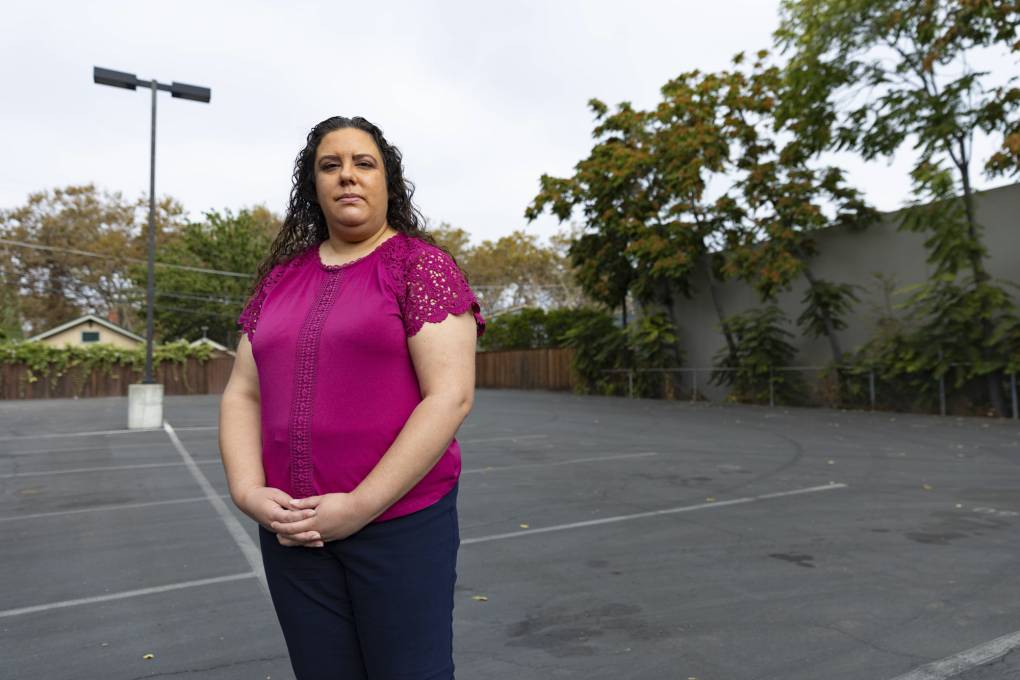
"caption": "Renata Sanchez, president of the San José Teachers Association, poses for a photo at an employee parking lot, the proposed site for educator housing, in San José on Oct. 22.",
"credit": "Gina Castro/KQED",
"altTag": null,
"description": null,
"imgSizes": {
"medium": {
"file": "https://cdn.kqed.org/wp-content/uploads/sites/10/2024/10/20241022_SCHOOLDISTRICTHOUSING_GC-10-KQED-800x533.jpg",
"width": 800,
"height": 533,
"mimeType": "image/jpeg"
},
"large": {
"file": "https://cdn.kqed.org/wp-content/uploads/sites/10/2024/10/20241022_SCHOOLDISTRICTHOUSING_GC-10-KQED-1020x680.jpg",
"width": 1020,
"height": 680,
"mimeType": "image/jpeg"
},
"thumbnail": {
"file": "https://cdn.kqed.org/wp-content/uploads/sites/10/2024/10/20241022_SCHOOLDISTRICTHOUSING_GC-10-KQED-160x107.jpg",
"width": 160,
"height": 107,
"mimeType": "image/jpeg"
},
"1536x1536": {
"file": "https://cdn.kqed.org/wp-content/uploads/sites/10/2024/10/20241022_SCHOOLDISTRICTHOUSING_GC-10-KQED-1536x1024.jpg",
"width": 1536,
"height": 1024,
"mimeType": "image/jpeg"
},
"post-thumbnail": {
"file": "https://cdn.kqed.org/wp-content/uploads/sites/10/2024/10/20241022_SCHOOLDISTRICTHOUSING_GC-10-KQED-672x372.jpg",
"width": 672,
"height": 372,
"mimeType": "image/jpeg"
},
"twentyfourteen-full-width": {
"file": "https://cdn.kqed.org/wp-content/uploads/sites/10/2024/10/20241022_SCHOOLDISTRICTHOUSING_GC-10-KQED-1038x576.jpg",
"width": 1038,
"height": 576,
"mimeType": "image/jpeg"
},
"full-width": {
"file": "https://cdn.kqed.org/wp-content/uploads/sites/10/2024/10/20241022_SCHOOLDISTRICTHOUSING_GC-10-KQED-1920x1280.jpg",
"width": 1920,
"height": 1280,
"mimeType": "image/jpeg"
},
"kqedFullSize": {
"file": "https://cdn.kqed.org/wp-content/uploads/sites/10/2024/10/20241022_SCHOOLDISTRICTHOUSING_GC-10-KQED.jpg",
"width": 2000,
"height": 1333
}
},
"isLoading": false,
"fetchFailed": false
},
"news_12011304": {
"type": "attachments",
"id": "news_12011304",
"meta": {
"index": "attachments_1716263798",
"site": "news",
"id": "12011304",
"found": true
},
"title": "464462487_18425329210079506_7296347096806030553_n (1)",
"publishDate": 1730067293,
"status": "inherit",
"parent": 12011300,
"modified": 1730140178,
"caption": "Members of the Las Lomitas Education Association ended a three-day strike on Saturday, Oct. 27, after the union and school district reached a tentative agreement.",
"credit": "Courtesy of Las Lomitas Education Association",
"altTag": "Several people wearing black T-shirts and sunglasses hold signs that read \"On strike for our students\" as they march down a sidewalk.",
"description": null,
"imgSizes": {
"medium": {
"file": "https://cdn.kqed.org/wp-content/uploads/sites/10/2024/10/464462487_18425329210079506_7296347096806030553_n-1-800x800.jpg",
"width": 800,
"height": 800,
"mimeType": "image/jpeg"
},
"large": {
"file": "https://cdn.kqed.org/wp-content/uploads/sites/10/2024/10/464462487_18425329210079506_7296347096806030553_n-1-1020x1020.jpg",
"width": 1020,
"height": 1020,
"mimeType": "image/jpeg"
},
"thumbnail": {
"file": "https://cdn.kqed.org/wp-content/uploads/sites/10/2024/10/464462487_18425329210079506_7296347096806030553_n-1-160x160.jpg",
"width": 160,
"height": 160,
"mimeType": "image/jpeg"
},
"post-thumbnail": {
"file": "https://cdn.kqed.org/wp-content/uploads/sites/10/2024/10/464462487_18425329210079506_7296347096806030553_n-1-672x372.jpg",
"width": 672,
"height": 372,
"mimeType": "image/jpeg"
},
"twentyfourteen-full-width": {
"file": "https://cdn.kqed.org/wp-content/uploads/sites/10/2024/10/464462487_18425329210079506_7296347096806030553_n-1-1038x576.jpg",
"width": 1038,
"height": 576,
"mimeType": "image/jpeg"
},
"kqedFullSize": {
"file": "https://cdn.kqed.org/wp-content/uploads/sites/10/2024/10/464462487_18425329210079506_7296347096806030553_n-1.jpg",
"width": 1440,
"height": 1440
}
},
"isLoading": false,
"fetchFailed": false
},
"news_12011244": {
"type": "attachments",
"id": "news_12011244",
"meta": {
"index": "attachments_1716263798",
"site": "news",
"id": "12011244",
"found": true
},
"title": "241025-ASTRONAUTJOSEHERNANDEZ-10-BL-KQED",
"publishDate": 1729893636,
"status": "inherit",
"parent": 0,
"modified": 1729893726,
"caption": "Former NASA astronaut José Hernández greets students as he arrives at Alpha: José Hernández School in San José on Oct. 25, 2024, during a backpack and book giveaway event.",
"credit": "Beth LaBerge/KQED",
"altTag": null,
"description": null,
"imgSizes": {
"medium": {
"file": "https://cdn.kqed.org/wp-content/uploads/sites/10/2024/10/241025-ASTRONAUTJOSEHERNANDEZ-10-BL-KQED-800x533.jpg",
"width": 800,
"height": 533,
"mimeType": "image/jpeg"
},
"large": {
"file": "https://cdn.kqed.org/wp-content/uploads/sites/10/2024/10/241025-ASTRONAUTJOSEHERNANDEZ-10-BL-KQED-1020x680.jpg",
"width": 1020,
"height": 680,
"mimeType": "image/jpeg"
},
"thumbnail": {
"file": "https://cdn.kqed.org/wp-content/uploads/sites/10/2024/10/241025-ASTRONAUTJOSEHERNANDEZ-10-BL-KQED-160x107.jpg",
"width": 160,
"height": 107,
"mimeType": "image/jpeg"
},
"1536x1536": {
"file": "https://cdn.kqed.org/wp-content/uploads/sites/10/2024/10/241025-ASTRONAUTJOSEHERNANDEZ-10-BL-KQED-1536x1024.jpg",
"width": 1536,
"height": 1024,
"mimeType": "image/jpeg"
},
"post-thumbnail": {
"file": "https://cdn.kqed.org/wp-content/uploads/sites/10/2024/10/241025-ASTRONAUTJOSEHERNANDEZ-10-BL-KQED-672x372.jpg",
"width": 672,
"height": 372,
"mimeType": "image/jpeg"
},
"twentyfourteen-full-width": {
"file": "https://cdn.kqed.org/wp-content/uploads/sites/10/2024/10/241025-ASTRONAUTJOSEHERNANDEZ-10-BL-KQED-1038x576.jpg",
"width": 1038,
"height": 576,
"mimeType": "image/jpeg"
},
"full-width": {
"file": "https://cdn.kqed.org/wp-content/uploads/sites/10/2024/10/241025-ASTRONAUTJOSEHERNANDEZ-10-BL-KQED-1920x1280.jpg",
"width": 1920,
"height": 1280,
"mimeType": "image/jpeg"
},
"kqedFullSize": {
"file": "https://cdn.kqed.org/wp-content/uploads/sites/10/2024/10/241025-ASTRONAUTJOSEHERNANDEZ-10-BL-KQED.jpg",
"width": 2000,
"height": 1333
}
},
"isLoading": false,
"fetchFailed": false
},
"news_12010831": {
"type": "attachments",
"id": "news_12010831",
"meta": {
"index": "attachments_1716263798",
"site": "news",
"id": "12010831",
"found": true
},
"title": "241023-SFUSDSUPERINTENDENT-49-BL-KQED",
"publishDate": 1729719392,
"status": "inherit",
"parent": 12036914,
"modified": 1745271484,
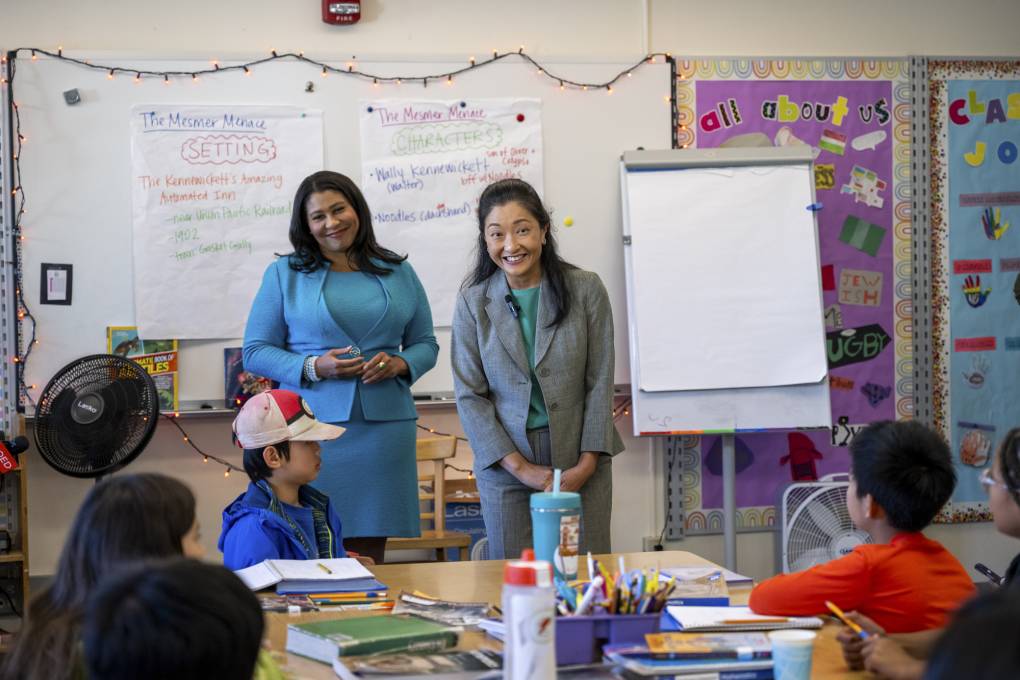
"caption": "Mayor London Breed and Superintendent Maria Su speak with students at Yick Wo Alternative Elementary School in San Francisco on Oct. 23, 2024.",
"credit": "Beth LaBerge/KQED",
"altTag": null,
"description": null,
"imgSizes": {
"medium": {
"file": "https://cdn.kqed.org/wp-content/uploads/sites/10/2024/10/241023-SFUSDSUPERINTENDENT-49-BL-KQED-800x533.jpg",
"width": 800,
"height": 533,
"mimeType": "image/jpeg"
},
"large": {
"file": "https://cdn.kqed.org/wp-content/uploads/sites/10/2024/10/241023-SFUSDSUPERINTENDENT-49-BL-KQED-1020x680.jpg",
"width": 1020,
"height": 680,
"mimeType": "image/jpeg"
},
"thumbnail": {
"file": "https://cdn.kqed.org/wp-content/uploads/sites/10/2024/10/241023-SFUSDSUPERINTENDENT-49-BL-KQED-160x107.jpg",
"width": 160,
"height": 107,
"mimeType": "image/jpeg"
},
"1536x1536": {
"file": "https://cdn.kqed.org/wp-content/uploads/sites/10/2024/10/241023-SFUSDSUPERINTENDENT-49-BL-KQED-1536x1024.jpg",
"width": 1536,
"height": 1024,
"mimeType": "image/jpeg"
},
"post-thumbnail": {
"file": "https://cdn.kqed.org/wp-content/uploads/sites/10/2024/10/241023-SFUSDSUPERINTENDENT-49-BL-KQED-672x372.jpg",
"width": 672,
"height": 372,
"mimeType": "image/jpeg"
},
"twentyfourteen-full-width": {
"file": "https://cdn.kqed.org/wp-content/uploads/sites/10/2024/10/241023-SFUSDSUPERINTENDENT-49-BL-KQED-1038x576.jpg",
"width": 1038,
"height": 576,
"mimeType": "image/jpeg"
},
"full-width": {
"file": "https://cdn.kqed.org/wp-content/uploads/sites/10/2024/10/241023-SFUSDSUPERINTENDENT-49-BL-KQED-1920x1280.jpg",
"width": 1920,
"height": 1280,
"mimeType": "image/jpeg"
},
"kqedFullSize": {
"file": "https://cdn.kqed.org/wp-content/uploads/sites/10/2024/10/241023-SFUSDSUPERINTENDENT-49-BL-KQED.jpg",
"width": 2000,
"height": 1333
}
},
"isLoading": false,
"fetchFailed": false
},
"news_12008834": {
"type": "attachments",
"id": "news_12008834",
"meta": {
"index": "attachments_1716263798",
"site": "news",
"id": "12008834",
"found": true
},
"title": "241009-SFUSDCLOSURESMARCH-19-BL-KQED",
"publishDate": 1728517171,
"status": "inherit",
"parent": 12072028,
"modified": 1770411563,
"caption": "Monica Becker (center), a parent of a former student, marches alongside teachers and students from Harvey Milk Civil Rights Academy to Harvey Milk Plaza in the Castro neighborhood of San Francisco on Oct. 9, 2024, to protest against the potential closure of the school. ",
"credit": "Beth LaBerge/KQED",
"altTag": null,
"description": null,
"imgSizes": {
"medium": {
"file": "https://cdn.kqed.org/wp-content/uploads/sites/10/2024/10/241009-SFUSDCLOSURESMARCH-19-BL-KQED-800x533.jpg",
"width": 800,
"height": 533,
"mimeType": "image/jpeg"
},
"large": {
"file": "https://cdn.kqed.org/wp-content/uploads/sites/10/2024/10/241009-SFUSDCLOSURESMARCH-19-BL-KQED-1020x680.jpg",
"width": 1020,
"height": 680,
"mimeType": "image/jpeg"
},
"thumbnail": {
"file": "https://cdn.kqed.org/wp-content/uploads/sites/10/2024/10/241009-SFUSDCLOSURESMARCH-19-BL-KQED-160x107.jpg",
"width": 160,
"height": 107,
"mimeType": "image/jpeg"
},
"1536x1536": {
"file": "https://cdn.kqed.org/wp-content/uploads/sites/10/2024/10/241009-SFUSDCLOSURESMARCH-19-BL-KQED-1536x1024.jpg",
"width": 1536,
"height": 1024,
"mimeType": "image/jpeg"
},
"post-thumbnail": {
"file": "https://cdn.kqed.org/wp-content/uploads/sites/10/2024/10/241009-SFUSDCLOSURESMARCH-19-BL-KQED-672x372.jpg",
"width": 672,
"height": 372,
"mimeType": "image/jpeg"
},
"twentyfourteen-full-width": {
"file": "https://cdn.kqed.org/wp-content/uploads/sites/10/2024/10/241009-SFUSDCLOSURESMARCH-19-BL-KQED-1038x576.jpg",
"width": 1038,
"height": 576,
"mimeType": "image/jpeg"
},
"full-width": {
"file": "https://cdn.kqed.org/wp-content/uploads/sites/10/2024/10/241009-SFUSDCLOSURESMARCH-19-BL-KQED-1920x1280.jpg",
"width": 1920,
"height": 1280,
"mimeType": "image/jpeg"
},
"kqedFullSize": {
"file": "https://cdn.kqed.org/wp-content/uploads/sites/10/2024/10/241009-SFUSDCLOSURESMARCH-19-BL-KQED.jpg",
"width": 2000,
"height": 1333
}
},
"isLoading": false,
"fetchFailed": false
},
"news_12010493": {
"type": "attachments",
"id": "news_12010493",
"meta": {
"index": "attachments_1716263798",
"site": "news",
"id": "12010493",
"found": true
},
"title": "241021-SFUSD BREED STATE PRESSER-MD-01-KQED-1",
"publishDate": 1729566738,
"status": "inherit",
"parent": 0,
"modified": 1729566776,
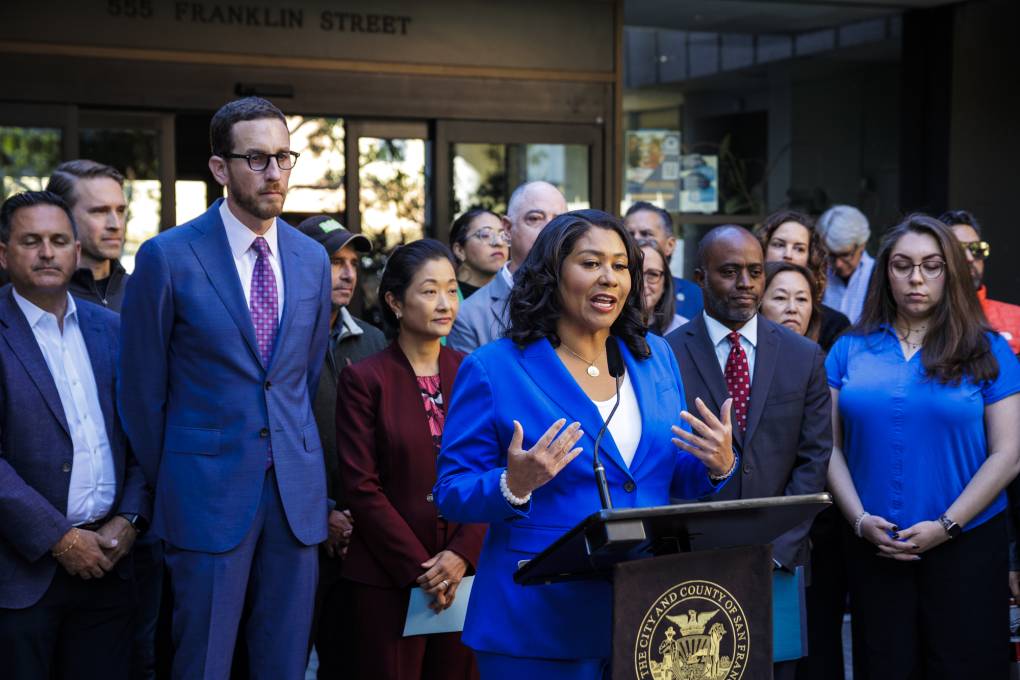
"caption": "Mayor London Breed speaks at a press event in front of the SFUSD offices in San Francisco on Oct. 21, 2024.",
"credit": "Martin do Nascimento/KQED",
"altTag": null,
"description": null,
"imgSizes": {
"medium": {
"file": "https://cdn.kqed.org/wp-content/uploads/sites/10/2024/10/241021-SFUSD-BREED-STATE-PRESSER-MD-01-KQED-1-800x533.jpg",
"width": 800,
"height": 533,
"mimeType": "image/jpeg"
},
"large": {
"file": "https://cdn.kqed.org/wp-content/uploads/sites/10/2024/10/241021-SFUSD-BREED-STATE-PRESSER-MD-01-KQED-1-1020x680.jpg",
"width": 1020,
"height": 680,
"mimeType": "image/jpeg"
},
"thumbnail": {
"file": "https://cdn.kqed.org/wp-content/uploads/sites/10/2024/10/241021-SFUSD-BREED-STATE-PRESSER-MD-01-KQED-1-160x107.jpg",
"width": 160,
"height": 107,
"mimeType": "image/jpeg"
},
"1536x1536": {
"file": "https://cdn.kqed.org/wp-content/uploads/sites/10/2024/10/241021-SFUSD-BREED-STATE-PRESSER-MD-01-KQED-1-1536x1024.jpg",
"width": 1536,
"height": 1024,
"mimeType": "image/jpeg"
},
"post-thumbnail": {
"file": "https://cdn.kqed.org/wp-content/uploads/sites/10/2024/10/241021-SFUSD-BREED-STATE-PRESSER-MD-01-KQED-1-672x372.jpg",
"width": 672,
"height": 372,
"mimeType": "image/jpeg"
},
"twentyfourteen-full-width": {
"file": "https://cdn.kqed.org/wp-content/uploads/sites/10/2024/10/241021-SFUSD-BREED-STATE-PRESSER-MD-01-KQED-1-1038x576.jpg",
"width": 1038,
"height": 576,
"mimeType": "image/jpeg"
},
"full-width": {
"file": "https://cdn.kqed.org/wp-content/uploads/sites/10/2024/10/241021-SFUSD-BREED-STATE-PRESSER-MD-01-KQED-1-1920x1280.jpg",
"width": 1920,
"height": 1280,
"mimeType": "image/jpeg"
},
"kqedFullSize": {
"file": "https://cdn.kqed.org/wp-content/uploads/sites/10/2024/10/241021-SFUSD-BREED-STATE-PRESSER-MD-01-KQED-1.jpg",
"width": 2000,
"height": 1333
}
},
"isLoading": false,
"fetchFailed": false
},
"news_12008835": {
"type": "attachments",
"id": "news_12008835",
"meta": {
"index": "attachments_1716263798",
"site": "news",
"id": "12008835",
"found": true
},
"title": "241009-SFUSDCLOSURESMARCH-29-BL-KQED",
"publishDate": 1728517176,
"status": "inherit",
"parent": 0,
"modified": 1729271470,
"caption": "Teachers, K–5 students and families of Harvey Milk Civil Rights Academy rally at Harvey Milk Plaza in the Castro neighborhood of San Francisco on Oct. 9, 2024, to protest against the potential closure of the school.",
"credit": "Beth LaBerge/KQED",
"altTag": null,
"description": null,
"imgSizes": {
"medium": {
"file": "https://cdn.kqed.org/wp-content/uploads/sites/10/2024/10/241009-SFUSDCLOSURESMARCH-29-BL-KQED-800x533.jpg",
"width": 800,
"height": 533,
"mimeType": "image/jpeg"
},
"large": {
"file": "https://cdn.kqed.org/wp-content/uploads/sites/10/2024/10/241009-SFUSDCLOSURESMARCH-29-BL-KQED-1020x680.jpg",
"width": 1020,
"height": 680,
"mimeType": "image/jpeg"
},
"thumbnail": {
"file": "https://cdn.kqed.org/wp-content/uploads/sites/10/2024/10/241009-SFUSDCLOSURESMARCH-29-BL-KQED-160x107.jpg",
"width": 160,
"height": 107,
"mimeType": "image/jpeg"
},
"1536x1536": {
"file": "https://cdn.kqed.org/wp-content/uploads/sites/10/2024/10/241009-SFUSDCLOSURESMARCH-29-BL-KQED-1536x1024.jpg",
"width": 1536,
"height": 1024,
"mimeType": "image/jpeg"
},
"post-thumbnail": {
"file": "https://cdn.kqed.org/wp-content/uploads/sites/10/2024/10/241009-SFUSDCLOSURESMARCH-29-BL-KQED-672x372.jpg",
"width": 672,
"height": 372,
"mimeType": "image/jpeg"
},
"twentyfourteen-full-width": {
"file": "https://cdn.kqed.org/wp-content/uploads/sites/10/2024/10/241009-SFUSDCLOSURESMARCH-29-BL-KQED-1038x576.jpg",
"width": 1038,
"height": 576,
"mimeType": "image/jpeg"
},
"full-width": {
"file": "https://cdn.kqed.org/wp-content/uploads/sites/10/2024/10/241009-SFUSDCLOSURESMARCH-29-BL-KQED-1920x1280.jpg",
"width": 1920,
"height": 1280,
"mimeType": "image/jpeg"
},
"kqedFullSize": {
"file": "https://cdn.kqed.org/wp-content/uploads/sites/10/2024/10/241009-SFUSDCLOSURESMARCH-29-BL-KQED.jpg",
"width": 2000,
"height": 1333
}
},
"isLoading": false,
"fetchFailed": false
},
"news_12009621": {
"type": "attachments",
"id": "news_12009621",
"meta": {
"index": "attachments_1716263798",
"site": "news",
"id": "12009621",
"found": true
},
"title": "red high school lockers",
"publishDate": 1729104350,
"status": "inherit",
"parent": 12009590,
"modified": 1729104460,
"caption": "Controversy over the firing of Santa Clara County Superintendent Mary Ann Dewan intensifies as parents and community members call for a civil grand jury investigation. State lawmakers criticize the decision, while the county Board of Education pushes back against a lawsuit seeking Dewan's reinstatement, calling it “an astounding attempt to hold on to the power of the office.\"",
"credit": "Getty Images",
"altTag": null,
"description": null,
"imgSizes": {
"medium": {
"file": "https://cdn.kqed.org/wp-content/uploads/sites/10/2024/10/SchoolLockers-800x500.jpg",
"width": 800,
"height": 500,
"mimeType": "image/jpeg"
},
"large": {
"file": "https://cdn.kqed.org/wp-content/uploads/sites/10/2024/10/SchoolLockers-1020x638.jpg",
"width": 1020,
"height": 638,
"mimeType": "image/jpeg"
},
"thumbnail": {
"file": "https://cdn.kqed.org/wp-content/uploads/sites/10/2024/10/SchoolLockers-160x100.jpg",
"width": 160,
"height": 100,
"mimeType": "image/jpeg"
},
"1536x1536": {
"file": "https://cdn.kqed.org/wp-content/uploads/sites/10/2024/10/SchoolLockers-1536x961.jpg",
"width": 1536,
"height": 961,
"mimeType": "image/jpeg"
},
"post-thumbnail": {
"file": "https://cdn.kqed.org/wp-content/uploads/sites/10/2024/10/SchoolLockers-672x372.jpg",
"width": 672,
"height": 372,
"mimeType": "image/jpeg"
},
"twentyfourteen-full-width": {
"file": "https://cdn.kqed.org/wp-content/uploads/sites/10/2024/10/SchoolLockers-1038x576.jpg",
"width": 1038,
"height": 576,
"mimeType": "image/jpeg"
},
"full-width": {
"file": "https://cdn.kqed.org/wp-content/uploads/sites/10/2024/10/SchoolLockers-1920x1201.jpg",
"width": 1920,
"height": 1201,
"mimeType": "image/jpeg"
},
"kqedFullSize": {
"file": "https://cdn.kqed.org/wp-content/uploads/sites/10/2024/10/SchoolLockers.jpg",
"width": 2000,
"height": 1251
}
},
"isLoading": false,
"fetchFailed": false
},
"news_11998904": {
"type": "attachments",
"id": "news_11998904",
"meta": {
"index": "attachments_1716263798",
"site": "news",
"id": "11998904",
"found": true
},
"title": "240612-SFMayoralDebate-36-BL_qed",
"publishDate": 1722897571,
"status": "inherit",
"parent": 11998871,
"modified": 1729026571,
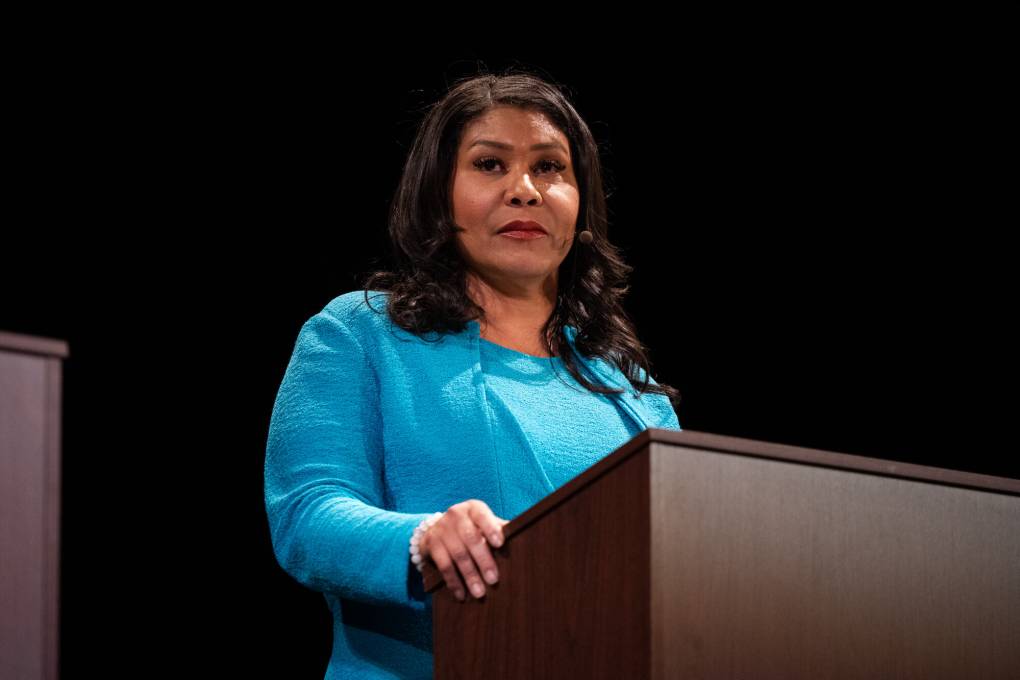
"caption": "Mayor London Breed speaks during a San Francisco mayoral debate on June 12, 2024.",
"credit": "Beth LaBerge/KQED",
"altTag": null,
"description": null,
"imgSizes": {
"medium": {
"file": "https://cdn.kqed.org/wp-content/uploads/sites/10/2024/08/240612-SFMayoralDebate-36-BL_qed-800x533.jpg",
"width": 800,
"height": 533,
"mimeType": "image/jpeg"
},
"large": {
"file": "https://cdn.kqed.org/wp-content/uploads/sites/10/2024/08/240612-SFMayoralDebate-36-BL_qed-1020x680.jpg",
"width": 1020,
"height": 680,
"mimeType": "image/jpeg"
},
"thumbnail": {
"file": "https://cdn.kqed.org/wp-content/uploads/sites/10/2024/08/240612-SFMayoralDebate-36-BL_qed-160x107.jpg",
"width": 160,
"height": 107,
"mimeType": "image/jpeg"
},
"1536x1536": {
"file": "https://cdn.kqed.org/wp-content/uploads/sites/10/2024/08/240612-SFMayoralDebate-36-BL_qed-1536x1024.jpg",
"width": 1536,
"height": 1024,
"mimeType": "image/jpeg"
},
"post-thumbnail": {
"file": "https://cdn.kqed.org/wp-content/uploads/sites/10/2024/08/240612-SFMayoralDebate-36-BL_qed-672x372.jpg",
"width": 672,
"height": 372,
"mimeType": "image/jpeg"
},
"twentyfourteen-full-width": {
"file": "https://cdn.kqed.org/wp-content/uploads/sites/10/2024/08/240612-SFMayoralDebate-36-BL_qed-1038x576.jpg",
"width": 1038,
"height": 576,
"mimeType": "image/jpeg"
},
"full-width": {
"file": "https://cdn.kqed.org/wp-content/uploads/sites/10/2024/08/240612-SFMayoralDebate-36-BL_qed-1920x1280.jpg",
"width": 1920,
"height": 1280,
"mimeType": "image/jpeg"
},
"kqedFullSize": {
"file": "https://cdn.kqed.org/wp-content/uploads/sites/10/2024/08/240612-SFMayoralDebate-36-BL_qed.jpg",
"width": 1999,
"height": 1333
}
},
"isLoading": false,
"fetchFailed": false
},
"news_12007555": {
"type": "attachments",
"id": "news_12007555",
"meta": {
"index": "attachments_1716263798",
"site": "news",
"id": "12007555",
"found": true
},
"title": "241002-CHILDCARE AND CLIMATE CHANGE-MD-03-KQED",
"publishDate": 1727904824,
"status": "inherit",
"parent": 0,
"modified": 1728944701,
"caption": "Alondra Ortega guides preschoolers in doing an activity under a tented canopy at Fitch Mountain Preschool in Healdsburg, part of the North Bay Children's Center, on Oct. 2, 2024.",
"credit": "Martin do Nascimento/KQED",
"altTag": "A young woman works with three young children at an activity table.",
"description": null,
"imgSizes": {
"medium": {
"file": "https://cdn.kqed.org/wp-content/uploads/sites/10/2024/10/241002-CHILDCARE-AND-CLIMATE-CHANGE-MD-03-KQED-800x533.jpg",
"width": 800,
"height": 533,
"mimeType": "image/jpeg"
},
"large": {
"file": "https://cdn.kqed.org/wp-content/uploads/sites/10/2024/10/241002-CHILDCARE-AND-CLIMATE-CHANGE-MD-03-KQED-1020x680.jpg",
"width": 1020,
"height": 680,
"mimeType": "image/jpeg"
},
"thumbnail": {
"file": "https://cdn.kqed.org/wp-content/uploads/sites/10/2024/10/241002-CHILDCARE-AND-CLIMATE-CHANGE-MD-03-KQED-160x107.jpg",
"width": 160,
"height": 107,
"mimeType": "image/jpeg"
},
"1536x1536": {
"file": "https://cdn.kqed.org/wp-content/uploads/sites/10/2024/10/241002-CHILDCARE-AND-CLIMATE-CHANGE-MD-03-KQED-1536x1024.jpg",
"width": 1536,
"height": 1024,
"mimeType": "image/jpeg"
},
"post-thumbnail": {
"file": "https://cdn.kqed.org/wp-content/uploads/sites/10/2024/10/241002-CHILDCARE-AND-CLIMATE-CHANGE-MD-03-KQED-672x372.jpg",
"width": 672,
"height": 372,
"mimeType": "image/jpeg"
},
"twentyfourteen-full-width": {
"file": "https://cdn.kqed.org/wp-content/uploads/sites/10/2024/10/241002-CHILDCARE-AND-CLIMATE-CHANGE-MD-03-KQED-1038x576.jpg",
"width": 1038,
"height": 576,
"mimeType": "image/jpeg"
},
"full-width": {
"file": "https://cdn.kqed.org/wp-content/uploads/sites/10/2024/10/241002-CHILDCARE-AND-CLIMATE-CHANGE-MD-03-KQED-1920x1280.jpg",
"width": 1920,
"height": 1280,
"mimeType": "image/jpeg"
},
"kqedFullSize": {
"file": "https://cdn.kqed.org/wp-content/uploads/sites/10/2024/10/241002-CHILDCARE-AND-CLIMATE-CHANGE-MD-03-KQED.jpg",
"width": 2000,
"height": 1333
}
},
"isLoading": false,
"fetchFailed": false
},
"news_12009137": {
"type": "attachments",
"id": "news_12009137",
"meta": {
"index": "attachments_1716263798",
"site": "news",
"id": "12009137",
"found": true
},
"title": "Senior student Calvonnia Kelly looks out at the Balboa High School yard before school lets out in San Francisco, California, on Friday, May 22, 2015.",
"publishDate": 1728674370,
"status": "inherit",
"parent": 12009120,
"modified": 1728674517,
"caption": "Balboa High School students on campus before school lets out in San Francisco, California, on Friday, May 22, 2015. San Francisco Unified School District began its antisemitism training on Wednesday for high school teachers at Abraham Lincoln, Balboa, Galileo Academy of Science & Technology and George Washington after postponing the sessions due to objections from pro-Palestinian activists over the American Jewish Committee, the group running the training, and its stance on Israel.",
"credit": "Liz Hafalia/The San Francisco Chronicle via Getty Images",
"altTag": null,
"description": null,
"imgSizes": {
"medium": {
"file": "https://cdn.kqed.org/wp-content/uploads/sites/10/2024/10/BalboaHighSchoolSFAntisemitismGetty-800x494.jpg",
"width": 800,
"height": 494,
"mimeType": "image/jpeg"
},
"large": {
"file": "https://cdn.kqed.org/wp-content/uploads/sites/10/2024/10/BalboaHighSchoolSFAntisemitismGetty-1020x629.jpg",
"width": 1020,
"height": 629,
"mimeType": "image/jpeg"
},
"thumbnail": {
"file": "https://cdn.kqed.org/wp-content/uploads/sites/10/2024/10/BalboaHighSchoolSFAntisemitismGetty-160x99.jpg",
"width": 160,
"height": 99,
"mimeType": "image/jpeg"
},
"1536x1536": {
"file": "https://cdn.kqed.org/wp-content/uploads/sites/10/2024/10/BalboaHighSchoolSFAntisemitismGetty-1536x948.jpg",
"width": 1536,
"height": 948,
"mimeType": "image/jpeg"
},
"post-thumbnail": {
"file": "https://cdn.kqed.org/wp-content/uploads/sites/10/2024/10/BalboaHighSchoolSFAntisemitismGetty-672x372.jpg",
"width": 672,
"height": 372,
"mimeType": "image/jpeg"
},
"twentyfourteen-full-width": {
"file": "https://cdn.kqed.org/wp-content/uploads/sites/10/2024/10/BalboaHighSchoolSFAntisemitismGetty-1038x576.jpg",
"width": 1038,
"height": 576,
"mimeType": "image/jpeg"
},
"full-width": {
"file": "https://cdn.kqed.org/wp-content/uploads/sites/10/2024/10/BalboaHighSchoolSFAntisemitismGetty-1920x1185.jpg",
"width": 1920,
"height": 1185,
"mimeType": "image/jpeg"
},
"kqedFullSize": {
"file": "https://cdn.kqed.org/wp-content/uploads/sites/10/2024/10/BalboaHighSchoolSFAntisemitismGetty.jpg",
"width": 2000,
"height": 1234
}
},
"isLoading": false,
"fetchFailed": false
},
"news_12009136": {
"type": "attachments",
"id": "news_12009136",
"meta": {
"index": "attachments_1716263798",
"site": "news",
"id": "12009136",
"found": true
},
"title": "121223-SanPasqualDistrict-Winterhaven-KC-CM-6 copy",
"publishDate": 1728674215,
"status": "inherit",
"parent": 12009129,
"modified": 1728674288,
"caption": "Students in 3rd grade participate in an art class at San Pasqual Valley Unified School District at Winterhaven in Imperial County on Dec. 12, 2023. ",
"credit": "Kristian Carreon for CalMatters",
"altTag": null,
"description": null,
"imgSizes": {
"medium": {
"file": "https://cdn.kqed.org/wp-content/uploads/sites/10/2024/10/121223-SanPasqualDistrict-Winterhaven-KC-CM-6-copy-800x533.jpg",
"width": 800,
"height": 533,
"mimeType": "image/jpeg"
},
"large": {
"file": "https://cdn.kqed.org/wp-content/uploads/sites/10/2024/10/121223-SanPasqualDistrict-Winterhaven-KC-CM-6-copy-1020x680.jpg",
"width": 1020,
"height": 680,
"mimeType": "image/jpeg"
},
"thumbnail": {
"file": "https://cdn.kqed.org/wp-content/uploads/sites/10/2024/10/121223-SanPasqualDistrict-Winterhaven-KC-CM-6-copy-160x107.jpg",
"width": 160,
"height": 107,
"mimeType": "image/jpeg"
},
"1536x1536": {
"file": "https://cdn.kqed.org/wp-content/uploads/sites/10/2024/10/121223-SanPasqualDistrict-Winterhaven-KC-CM-6-copy-1536x1024.jpg",
"width": 1536,
"height": 1024,
"mimeType": "image/jpeg"
},
"post-thumbnail": {
"file": "https://cdn.kqed.org/wp-content/uploads/sites/10/2024/10/121223-SanPasqualDistrict-Winterhaven-KC-CM-6-copy-672x372.jpg",
"width": 672,
"height": 372,
"mimeType": "image/jpeg"
},
"twentyfourteen-full-width": {
"file": "https://cdn.kqed.org/wp-content/uploads/sites/10/2024/10/121223-SanPasqualDistrict-Winterhaven-KC-CM-6-copy-1038x576.jpg",
"width": 1038,
"height": 576,
"mimeType": "image/jpeg"
},
"full-width": {
"file": "https://cdn.kqed.org/wp-content/uploads/sites/10/2024/10/121223-SanPasqualDistrict-Winterhaven-KC-CM-6-copy-1920x1280.jpg",
"width": 1920,
"height": 1280,
"mimeType": "image/jpeg"
},
"kqedFullSize": {
"file": "https://cdn.kqed.org/wp-content/uploads/sites/10/2024/10/121223-SanPasqualDistrict-Winterhaven-KC-CM-6-copy.jpg",
"width": 2000,
"height": 1333
}
},
"isLoading": false,
"fetchFailed": false
}
},
"audioPlayerReducer": {
"postId": "stream_live",
"isPaused": true,
"isPlaying": false,
"pfsActive": false,
"pledgeModalIsOpen": true,
"playerDrawerIsOpen": false,
"liveAudioPlayStartedAt": 0,
"liveAudioPlayContext": ""
},
"authorsReducer": {
"byline_news_12009129": {
"type": "authors",
"id": "byline_news_12009129",
"meta": {
"override": true
},
"slug": "byline_news_12009129",
"name": "\u003ca href=\"https://calmatters.org/author/carolyn-jones/\">Carolyn Jones\u003c/a>, CalMatters",
"isLoading": false
},
"kqed": {
"type": "authors",
"id": "236",
"meta": {
"index": "authors_1716337520",
"id": "236",
"found": true
},
"name": "KQED News Staff",
"firstName": "KQED News Staff",
"lastName": null,
"slug": "kqed",
"email": "faq@kqed.org",
"display_author_email": false,
"staff_mastheads": [],
"title": null,
"bio": null,
"avatar": "https://secure.gravatar.com/avatar/ef0e801a68c4c54afa9180db14084167?s=600&d=blank&r=g",
"twitter": null,
"facebook": null,
"instagram": null,
"linkedin": null,
"sites": [
{
"site": "arts",
"roles": [
"contributor"
]
},
{
"site": "news",
"roles": [
"editor"
]
},
{
"site": "futureofyou",
"roles": [
"author"
]
}
],
"headData": {
"title": "KQED News Staff | KQED",
"description": null,
"ogImgSrc": "https://secure.gravatar.com/avatar/ef0e801a68c4c54afa9180db14084167?s=600&d=blank&r=g",
"twImgSrc": "https://secure.gravatar.com/avatar/ef0e801a68c4c54afa9180db14084167?s=600&d=blank&r=g"
},
"isLoading": false,
"link": "/author/kqed"
},
"ecruzguevarra": {
"type": "authors",
"id": "8654",
"meta": {
"index": "authors_1716337520",
"id": "8654",
"found": true
},
"name": "Ericka Cruz Guevarra",
"firstName": "Ericka",
"lastName": "Cruz Guevarra",
"slug": "ecruzguevarra",
"email": "ecruzguevarra@kqed.org",
"display_author_email": true,
"staff_mastheads": [
"news"
],
"title": "Producer, The Bay Podcast",
"bio": "Ericka Cruz Guevarra is host of \u003ca href=\"https://www.kqed.org/podcasts/thebay\">\u003cem>The Bay\u003c/em>\u003c/a> podcast at KQED. Before host, she was the show’s producer. Her work in that capacity includes a three-part reported series on policing in Vallejo, which won a 2020 excellence in journalism award from the Society of Professional Journalists. Ericka has worked as a breaking news reporter at Oregon Public Broadcasting, helped produce the Code Switch podcast, and was KQED’s inaugural Raul Ramirez Diversity Fund intern. She’s also an alumna of NPR’s Next Generation Radio program. Send her an email if you have strong feelings about whether Fairfield and Suisun City are the Bay. Ericka is represented by SAG-AFTRA.",
"avatar": "https://secure.gravatar.com/avatar/accefc1de4bafc7e234b69bcb9b6f6536c130fd84709bc3069ef11a78787e1bb?s=600&d=blank&r=g",
"twitter": "NotoriousECG",
"bluesky": null,
"facebook": null,
"instagram": null,
"linkedin": null,
"sites": [
{
"site": "arts",
"roles": [
"subscriber"
]
},
{
"site": "news",
"roles": [
"editor",
"manage_categories"
]
},
{
"site": "futureofyou",
"roles": [
"subscriber"
]
},
{
"site": "stateofhealth",
"roles": [
"subscriber"
]
},
{
"site": "science",
"roles": [
"editor"
]
},
{
"site": "forum",
"roles": [
"subscriber"
]
}
],
"headData": {
"title": "Ericka Cruz Guevarra | KQED",
"description": "Producer, The Bay Podcast",
"ogImgSrc": "https://secure.gravatar.com/avatar/accefc1de4bafc7e234b69bcb9b6f6536c130fd84709bc3069ef11a78787e1bb?s=600&d=blank&r=g",
"twImgSrc": "https://secure.gravatar.com/avatar/accefc1de4bafc7e234b69bcb9b6f6536c130fd84709bc3069ef11a78787e1bb?s=600&d=blank&r=g"
},
"isLoading": false,
"link": "/author/ecruzguevarra"
},
"amontecillo": {
"type": "authors",
"id": "11649",
"meta": {
"index": "authors_1716337520",
"id": "11649",
"found": true
},
"name": "Alan Montecillo",
"firstName": "Alan",
"lastName": "Montecillo",
"slug": "amontecillo",
"email": "amontecillo@kqed.org",
"display_author_email": false,
"staff_mastheads": [
"news"
],
"title": "KQED Contributor",
"bio": "Alan Montecillo is the senior editor of \u003cem>\u003ca href=\"http://kqed.org/thebay\">The Bay\u003c/a>, \u003c/em> KQED's local news podcast. Before moving to the Bay Area, he worked as a senior talk show producer for WILL in Champaign-Urbana, Illinois and at Oregon Public Broadcasting in Portland, Oregon. He has won journalism awards from the Society of Professional Journalists Northern California, the Public Media Journalists Association, The Signal Awards, and has also received a regional Edward R. Murrow award. Alan is a Filipino American from Hong Kong and a graduate of Reed College.",
"avatar": "https://secure.gravatar.com/avatar/268f53a2066899ea9efdd8a5900218b17c822d9862cbc9326cccec53ef41d349?s=600&d=blank&r=g",
"twitter": "alanmontecillo",
"bluesky": null,
"facebook": null,
"instagram": null,
"linkedin": null,
"sites": [
{
"site": "",
"roles": [
"editor"
]
},
{
"site": "news",
"roles": [
"editor",
"manage_categories"
]
}
],
"headData": {
"title": "Alan Montecillo | KQED",
"description": "KQED Contributor",
"ogImgSrc": "https://secure.gravatar.com/avatar/268f53a2066899ea9efdd8a5900218b17c822d9862cbc9326cccec53ef41d349?s=600&d=blank&r=g",
"twImgSrc": "https://secure.gravatar.com/avatar/268f53a2066899ea9efdd8a5900218b17c822d9862cbc9326cccec53ef41d349?s=600&d=blank&r=g"
},
"isLoading": false,
"link": "/author/amontecillo"
},
"abandlamudi": {
"type": "authors",
"id": "11672",
"meta": {
"index": "authors_1716337520",
"id": "11672",
"found": true
},
"name": "Adhiti Bandlamudi",
"firstName": "Adhiti",
"lastName": "Bandlamudi",
"slug": "abandlamudi",
"email": "abandlamudi@kqed.org",
"display_author_email": false,
"staff_mastheads": [
"news"
],
"title": "KQED Housing Reporter",
"bio": "Adhiti Bandlamudi reports for KQED's Housing desk. She focuses on how housing gets built across the Bay Area. Before joining KQED in 2020, she reported for WUNC in Durham, North Carolina, WABE in Atlanta, Georgia and Capital Public Radio in Sacramento. In 2017, she was awarded a Kroc Fellowship at NPR where she reported on everything from sprinkles to the Golden State Killer's arrest. When she's not reporting, she's baking new recipes in her kitchen or watching movies with friends and family. She's originally from Georgia and has strong opinions about Great British Bake Off.",
"avatar": "https://secure.gravatar.com/avatar/868129c8b257bb99a3500e2c86a65400?s=600&d=mm&r=g",
"twitter": "oddity_adhiti",
"facebook": null,
"instagram": null,
"linkedin": null,
"sites": [
{
"site": "arts",
"roles": [
"author"
]
},
{
"site": "news",
"roles": [
"editor"
]
},
{
"site": "liveblog",
"roles": [
"author"
]
}
],
"headData": {
"title": "Adhiti Bandlamudi | KQED",
"description": "KQED Housing Reporter",
"ogImgSrc": "https://secure.gravatar.com/avatar/868129c8b257bb99a3500e2c86a65400?s=600&d=mm&r=g",
"twImgSrc": "https://secure.gravatar.com/avatar/868129c8b257bb99a3500e2c86a65400?s=600&d=mm&r=g"
},
"isLoading": false,
"link": "/author/abandlamudi"
},
"ccabreralomeli": {
"type": "authors",
"id": "11708",
"meta": {
"index": "authors_1716337520",
"id": "11708",
"found": true
},
"name": "Carlos Cabrera-Lomelí",
"firstName": "Carlos",
"lastName": "Cabrera-Lomelí",
"slug": "ccabreralomeli",
"email": "ccabreralomeli@KQED.org",
"display_author_email": true,
"staff_mastheads": [
"news"
],
"title": "Community Reporter",
"bio": "Carlos Cabrera-Lomelí is a community reporter with KQED's digital engagement team. He also reports and co-produces for KQED's bilingual news hub KQED en Español. He grew up in San Francisco's Mission District and has previously worked with Univision, 48 Hills and REFORMA in Mexico City.",
"avatar": "https://secure.gravatar.com/avatar/c309be9665e484f887b818c89e273ecc673004f426f36b24d00a4d813a2e0518?s=600&d=blank&r=g",
"twitter": "@LomeliCabrera",
"bluesky": null,
"facebook": null,
"instagram": null,
"linkedin": null,
"sites": [
{
"site": "arts",
"roles": [
"editor"
]
},
{
"site": "news",
"roles": [
"editor"
]
},
{
"site": "about",
"roles": [
"editor"
]
},
{
"site": "science",
"roles": [
"editor"
]
},
{
"site": "perspectives",
"roles": [
"editor"
]
},
{
"site": "elections",
"roles": [
"editor"
]
},
{
"site": "liveblog",
"roles": [
"contributor"
]
}
],
"headData": {
"title": "Carlos Cabrera-Lomelí | KQED",
"description": "Community Reporter",
"ogImgSrc": "https://secure.gravatar.com/avatar/c309be9665e484f887b818c89e273ecc673004f426f36b24d00a4d813a2e0518?s=600&d=blank&r=g",
"twImgSrc": "https://secure.gravatar.com/avatar/c309be9665e484f887b818c89e273ecc673004f426f36b24d00a4d813a2e0518?s=600&d=blank&r=g"
},
"isLoading": false,
"link": "/author/ccabreralomeli"
},
"daisynguyen": {
"type": "authors",
"id": "11829",
"meta": {
"index": "authors_1716337520",
"id": "11829",
"found": true
},
"name": "Daisy Nguyen",
"firstName": "Daisy",
"lastName": "Nguyen",
"slug": "daisynguyen",
"email": "daisynguyen@kqed.org",
"display_author_email": true,
"staff_mastheads": [
"news"
],
"title": "KQED Contributor",
"bio": "I have covered early childhood education and child care for KQED since 2022. I focus on policies aimed at increasing access to early care and education and how they shape individual lives. I've been a journalist for more than two decades, with most of that time devoted to covering breaking news throughout California for The Associated Press. I grew up in San Francisco and studied at UC Davis and Columbia University's Graduate School of Journalism. I live in Oakland with my husband and two kids.",
"avatar": "https://secure.gravatar.com/avatar/2da2127c27f7143b53ebd419800fd55f?s=600&d=blank&r=g",
"twitter": null,
"facebook": null,
"instagram": null,
"linkedin": "https://www.linkedin.com/in/daisynguyen/",
"sites": [
{
"site": "news",
"roles": [
"author"
]
},
{
"site": "liveblog",
"roles": [
"author"
]
}
],
"headData": {
"title": "Daisy Nguyen | KQED",
"description": "KQED Contributor",
"ogImgSrc": "https://secure.gravatar.com/avatar/2da2127c27f7143b53ebd419800fd55f?s=600&d=blank&r=g",
"twImgSrc": "https://secure.gravatar.com/avatar/2da2127c27f7143b53ebd419800fd55f?s=600&d=blank&r=g"
},
"isLoading": false,
"link": "/author/daisynguyen"
},
"jessicakariisa": {
"type": "authors",
"id": "11831",
"meta": {
"index": "authors_1716337520",
"id": "11831",
"found": true
},
"name": "Jessica Kariisa",
"firstName": "Jessica",
"lastName": "Kariisa",
"slug": "jessicakariisa",
"email": "jkariisa@kqed.org",
"display_author_email": false,
"staff_mastheads": [],
"title": "Producer, The Bay",
"bio": "Jessica Kariisa is the producer of The Bay. She first joined KQED as an intern for The California Report Magazine, after which she became an on-call producer. She reported a Bay Curious episode on the use of rap lyrics in criminal trials which won a Society of Professional Journalists award in 2023 for Excellence in Features Journalism and the 2023 Signal Award for Best Conversation Starter. She’s worked on podcasts for Snap Judgment and American Public Media. Before embarking on her audio career, she was a music journalist.\r\n\r\nJessica Kariisa is represented by SAG-AFTRA.",
"avatar": "https://secure.gravatar.com/avatar/522e97b28ac0b3d411621c0fde8f3419c7b71ea2c5c262c57c4bb600963f328c?s=600&d=blank&r=g",
"twitter": null,
"bluesky": null,
"facebook": null,
"instagram": null,
"linkedin": null,
"sites": [
{
"site": "arts",
"roles": [
"author"
]
},
{
"site": "news",
"roles": [
"editor",
"manage_categories"
]
}
],
"headData": {
"title": "Jessica Kariisa | KQED",
"description": "Producer, The Bay",
"ogImgSrc": "https://secure.gravatar.com/avatar/522e97b28ac0b3d411621c0fde8f3419c7b71ea2c5c262c57c4bb600963f328c?s=600&d=blank&r=g",
"twImgSrc": "https://secure.gravatar.com/avatar/522e97b28ac0b3d411621c0fde8f3419c7b71ea2c5c262c57c4bb600963f328c?s=600&d=blank&r=g"
},
"isLoading": false,
"link": "/author/jessicakariisa"
},
"kdebenedetti": {
"type": "authors",
"id": "11913",
"meta": {
"index": "authors_1716337520",
"id": "11913",
"found": true
},
"name": "Katie DeBenedetti",
"firstName": "Katie",
"lastName": "DeBenedetti",
"slug": "kdebenedetti",
"email": "kdebenedetti@kqed.org",
"display_author_email": false,
"staff_mastheads": [
"news",
"science"
],
"title": "KQED Contributor",
"bio": "Katie DeBenedetti is a digital reporter covering daily news for the Express Desk. Prior to joining KQED as a culture reporting intern in January 2024, she covered education and city government for the Napa Valley Register.",
"avatar": "https://secure.gravatar.com/avatar/6e31073cb8f7e4214ab03f42771d0f45?s=600&d=blank&r=g",
"twitter": null,
"facebook": null,
"instagram": null,
"linkedin": null,
"sites": [
{
"site": "news",
"roles": [
"author"
]
},
{
"site": "science",
"roles": [
"author"
]
},
{
"site": "liveblog",
"roles": [
"author"
]
}
],
"headData": {
"title": "Katie DeBenedetti | KQED",
"description": "KQED Contributor",
"ogImgSrc": "https://secure.gravatar.com/avatar/6e31073cb8f7e4214ab03f42771d0f45?s=600&d=blank&r=g",
"twImgSrc": "https://secure.gravatar.com/avatar/6e31073cb8f7e4214ab03f42771d0f45?s=600&d=blank&r=g"
},
"isLoading": false,
"link": "/author/kdebenedetti"
},
"rcooke": {
"type": "authors",
"id": "11921",
"meta": {
"index": "authors_1716337520",
"id": "11921",
"found": true
},
"name": "Riley Cooke",
"firstName": "Riley",
"lastName": "Cooke",
"slug": "rcooke",
"email": "rcooke@kqed.org",
"display_author_email": true,
"staff_mastheads": [
"news"
],
"title": "KQED Contributor",
"bio": "Riley is a senior at UC Berkeley, where she studies political science and journalism. Her work has appeared in SFGate, NBC Bay Area, Local News Matters and more. She enjoys reporting on politics, housing and homelessness — and using as many em dashes as her editors will allow.",
"avatar": "https://secure.gravatar.com/avatar/792f98c126cc5e270a8a96f77f7224ea?s=600&d=blank&r=g",
"twitter": "rrileycooke",
"facebook": null,
"instagram": null,
"linkedin": null,
"sites": [
{
"site": "arts",
"roles": [
"author"
]
},
{
"site": "news",
"roles": [
"author"
]
}
],
"headData": {
"title": "Riley Cooke | KQED",
"description": "KQED Contributor",
"ogImgSrc": "https://secure.gravatar.com/avatar/792f98c126cc5e270a8a96f77f7224ea?s=600&d=blank&r=g",
"twImgSrc": "https://secure.gravatar.com/avatar/792f98c126cc5e270a8a96f77f7224ea?s=600&d=blank&r=g"
},
"isLoading": false,
"link": "/author/rcooke"
}
},
"pagesReducer": {
"news_tag_education": {
"type": "terms",
"id": "news_20013",
"meta": {
"index": "terms_1716263798",
"site": "news",
"id": "20013",
"score": 6.970053
},
"featImg": null,
"name": "education",
"description": null,
"taxonomy": "tag",
"headData": {
"twImgId": null,
"twTitle": null,
"ogTitle": null,
"ogImgId": null,
"twDescription": null,
"description": null,
"title": "education Archives | KQED News",
"ogDescription": null
},
"ttid": 20030,
"slug": "education",
"isLoading": false,
"title": "education",
"pageMeta": {
"site": "news",
"WpPageTemplate": "page-topic-editorial",
"currentPage": 35
},
"blocks": [
{
"blockName": "kqed/post-list",
"attrs": {
"layout": "cardArticle2",
"query": "posts/news?tag=education",
"seeMore": false,
"paginated": true,
"page": 35
}
},
{
"blockName": "kqed/ad"
}
]
}
},
"pfsSessionReducer": {},
"postsReducer": {
"stream_live": {
"type": "live",
"id": "stream_live",
"audioUrl": "https://streams.kqed.org/kqedradio",
"title": "Live Stream",
"excerpt": "Live Stream information currently unavailable.",
"link": "/radio",
"featImg": "",
"label": {
"name": "KQED Live",
"link": "/"
}
},
"stream_kqedNewscast": {
"type": "posts",
"id": "stream_kqedNewscast",
"audioUrl": "https://www.kqed.org/.stream/anon/radio/RDnews/newscast.mp3?_=1",
"title": "KQED Newscast",
"featImg": "",
"label": {
"name": "88.5 FM",
"link": "/"
}
},
"news_12011125": {
"type": "posts",
"id": "news_12011125",
"meta": {
"index": "posts_1716263798",
"site": "news",
"id": "12011125",
"score": null,
"sort": [
1730113328000
]
},
"guestAuthors": [],
"slug": "these-2-bay-area-school-bonds-could-help-build-teacher-housing",
"title": "These 2 Bay Area School Bonds Could Help Build Teacher Housing",
"publishDate": 1730113328,
"format": "standard",
"headTitle": "These 2 Bay Area School Bonds Could Help Build Teacher Housing | KQED",
"labelTerm": {
"site": "news"
},
"content": "\u003cp>For \u003ca href=\"https://www.npr.org/sections/ed/2016/03/24/470710747/more-teachers-cant-afford-to-live-where-they-teach\">years\u003c/a>, Bay Area teachers have said one of their biggest concerns is finding affordable housing close to where they work. For some teachers, the fact that their salaries \u003ca href=\"https://www.edweek.org/teaching-learning/better-pay-would-keep-teachers-from-quitting-but-theres-more-to-it/2022/07\">can’t keep up with the increased cost of living\u003c/a> has some considering leaving the profession altogether.\u003c/p>\n\u003cp>Now, more school districts across California are taking matters into their own hands by getting into the business of building housing for their teachers and staff on empty parking lots, unused office buildings and other excess land. And, in the Bay Area, two districts are turning to bond measures to help pay for it.\u003c/p>\n\u003cp>Those two bonds — \u003ca href=\"https://www.kqed.org/voterguide/santaclara/measures#measure-r\">Measure R in Santa Clara County\u003c/a> and \u003ca href=\"https://www.kqed.org/voterguide/sanmateo/measures#measure-k\">Measure K in San Mateo County\u003c/a> — would raise $1.15 billion and $153 million, respectively, to pay for upgrades to school district facilities. Both measures include building affordable housing for teachers and staff in their descriptions for what the bond could fund.\u003c/p>\n\u003cp>[ad fullwidth]\u003c/p>\n\u003cp>The measures come as state leaders ask voters to consider a \u003ca href=\"https://www.kqed.org/voterguide/california/proposition-2\">$10 billion bond measure\u003c/a> to upgrade school facilities across California. And, as state leaders are faced with a lofty goal to plan for 2.5 million new homes statewide by 2030, \u003ca href=\"https://www.kqed.org/news/11997949/california-schools-keep-losing-teachers-the-state-wants-to-help-build-homes-for-them\">they are encouraging school districts to be more proactive\u003c/a> about building housing for their staff.\u003c/p>\n\u003cp>In San Mateo County, a group of parents and teachers at the Cabrillo Unified School District saw other school districts develop housing for their employees and were inspired to campaign to get Measure K on the ballot. If approved by voters, most of the $153 million will be used to fix classrooms, according to members of the board. Some of the money can also be used to construct educator housing.\u003c/p>\n\u003cp>San José Unified School District’s Measure R anticipates dedicating approximately $283 million of the total $1.15 billion bond to build housing for staff.\u003c/p>\n\u003cfigure id=\"attachment_12010731\" class=\"wp-caption aligncenter\" style=\"max-width: 2000px\">\u003cimg loading=\"lazy\" decoding=\"async\" class=\"size-full wp-image-12010731\" src=\"https://cdn.kqed.org/wp-content/uploads/sites/10/2024/10/20241022_SCHOOLDISTRICTHOUSING_GC-12-KQED.jpg\" alt=\"\" width=\"2000\" height=\"1333\" srcset=\"https://cdn.kqed.org/wp-content/uploads/sites/10/2024/10/20241022_SCHOOLDISTRICTHOUSING_GC-12-KQED.jpg 2000w, https://cdn.kqed.org/wp-content/uploads/sites/10/2024/10/20241022_SCHOOLDISTRICTHOUSING_GC-12-KQED-800x533.jpg 800w, https://cdn.kqed.org/wp-content/uploads/sites/10/2024/10/20241022_SCHOOLDISTRICTHOUSING_GC-12-KQED-1020x680.jpg 1020w, https://cdn.kqed.org/wp-content/uploads/sites/10/2024/10/20241022_SCHOOLDISTRICTHOUSING_GC-12-KQED-160x107.jpg 160w, https://cdn.kqed.org/wp-content/uploads/sites/10/2024/10/20241022_SCHOOLDISTRICTHOUSING_GC-12-KQED-1536x1024.jpg 1536w, https://cdn.kqed.org/wp-content/uploads/sites/10/2024/10/20241022_SCHOOLDISTRICTHOUSING_GC-12-KQED-1920x1280.jpg 1920w\" sizes=\"(max-width: 2000px) 100vw, 2000px\">\u003cfigcaption class=\"wp-caption-text\">A brochure supporting Measure R In San José. \u003ccite>(Gina Castro/KQED)\u003c/cite>\u003c/figcaption>\u003c/figure>\n\u003cp>Renata Sanchez, president of the San José Teachers Union, said the district has seen employee vacancy rates rise, especially among instructional associates, the staff who support special education teachers, and who are often paid less than teachers. She said the bond could help keep those associates from leaving the district.\u003c/p>\n\u003cp>“Nobody here wants to be in the business of developing land for housing,” Sanchez said. “We just feel that we’re cornered into it. We have to do something because nobody else is.”\u003c/p>\n\u003cp>However, opponents of local bond measures say school districts should focus on educating their students, and that bond measures are often proposed too lightly, without thought to how they will impact future residents who have to pay back the debt.\u003c/p>\n\u003cp>“Anybody who owns a home is going to pay more for that home every year,” said Mark Hinkle, president of the Silicon Valley Taxpayers Association, which is opposed to both measures R and K. “And even if you’re a renter, guess where the landlord gets the money to pay these taxes?”\u003c/p>\n\u003cp>[aside label=\"2024 Bay Area Voter Guide\" link1='https://www.kqed.org/voterguide/bayarea,Learn about every single race and measure across the nine Bay Area counties' hero=https://cdn.kqed.org/wp-content/uploads/sites/80/2024/02/Aside-Bay-Area-Voter-Guide-2024-Primary-Election-1200x1200-1.png]\u003c/p>\n\u003cp>So far, only a handful of school districts across the state have successfully completed construction on new workforce housing. Santa Clara Unified School District was the first district to build housing for its staff, according to the California School Board Association. The apartment complex, \u003ca href=\"https://www.santaclarausd.org/about-us/departments/facility-development-and-planning/teacher-housing-foundation\">named Casa Del Maestro\u003c/a>, opened in 2002 and has 70 one- and two-bedroom apartments.\u003c/p>\n\u003cp>This summer, the \u003ca href=\"https://www.kqed.org/news/11997949/california-schools-keep-losing-teachers-the-state-wants-to-help-build-homes-for-them\">Department of Education announced an initiative\u003c/a> to help schools navigate the muddy waters of housing development.\u003c/p>\n\u003cp>In August, the California School Board Association hosted a summit with school district staff, affordable housing advocates and researchers to look into how schools can more effectively build housing. According to Scott Roark, a spokesperson for the Department of Education, more than 150 districts across the state are now in “some stage of developing housing on district property.”\u003c/p>\n\u003cp>Troy Flint, a spokesperson for the California School Board Association, said districts are well-positioned to develop housing because they already own the land. And he argued such projects tend to have a shorter timeline than traditional affordable housing projects.\u003c/p>\n\u003cp>“The land or the buildings that the school districts own — that is under their control, and they have a lot of autonomy,” he said. “You can get from concept to people moving into housing in as little as five years.”\u003c/p>\n\u003cp>Sanchez and others in the San José Unified School District have concrete plans for where they would build the new housing if their bond passes.\u003c/p>\n\u003cp>One project would turn an empty parking lot into 75 studio and one-bedroom apartments with parking underground. Another would move a magnet school to a larger campus and use the existing land to build approximately 120 apartments and townhomes. Their third site would build educator housing on what is currently a special education school.\u003c/p>\n\u003cfigure id=\"attachment_12010729\" class=\"wp-caption aligncenter\" style=\"max-width: 2000px\">\u003cimg loading=\"lazy\" decoding=\"async\" class=\"size-full wp-image-12010729\" src=\"https://cdn.kqed.org/wp-content/uploads/sites/10/2024/10/20241022_SCHOOLDISTRICTHOUSING_GC-4-KQED.jpg\" alt=\"\" width=\"2000\" height=\"1333\" srcset=\"https://cdn.kqed.org/wp-content/uploads/sites/10/2024/10/20241022_SCHOOLDISTRICTHOUSING_GC-4-KQED.jpg 2000w, https://cdn.kqed.org/wp-content/uploads/sites/10/2024/10/20241022_SCHOOLDISTRICTHOUSING_GC-4-KQED-800x533.jpg 800w, https://cdn.kqed.org/wp-content/uploads/sites/10/2024/10/20241022_SCHOOLDISTRICTHOUSING_GC-4-KQED-1020x680.jpg 1020w, https://cdn.kqed.org/wp-content/uploads/sites/10/2024/10/20241022_SCHOOLDISTRICTHOUSING_GC-4-KQED-160x107.jpg 160w, https://cdn.kqed.org/wp-content/uploads/sites/10/2024/10/20241022_SCHOOLDISTRICTHOUSING_GC-4-KQED-1536x1024.jpg 1536w, https://cdn.kqed.org/wp-content/uploads/sites/10/2024/10/20241022_SCHOOLDISTRICTHOUSING_GC-4-KQED-1920x1280.jpg 1920w\" sizes=\"(max-width: 2000px) 100vw, 2000px\">\u003cfigcaption class=\"wp-caption-text\">The proposed site for educator housing on Lenzen Avenue, currently used as an employee parking lot for the San José Unified School District in San José. If approved, the project would create 75 studio and one-bedroom units. \u003ccite>(Gina Castro/KQED)\u003c/cite>\u003c/figcaption>\u003c/figure>\n\u003cp>The biggest project would transform an open field on a technical education campus into an estimated 300 two-bedroom apartments and townhomes. Sanchez said funds from Measure R could fund two of the smaller projects or the one with 300 units.\u003c/p>\n\u003cp>But even if the bond measures are approved, the projects will have to go through each city’s complicated and often costly permitting process.\u003c/p>\n\u003cp>And, in Half Moon Bay, the proposed housing has already caused consternation amongst neighbors who worry the new development could be “out of character” with the existing homes. Mike Alifano, a Half Moon Bay resident and member of previous school bond oversight committees, said this is the district’s first bond measure to mention teacher housing.\u003c/p>\n\u003cp>“We’re a community that doesn’t like a lot of change, and it’s because we want to keep this look and feel of the way things are right now,” he said. “There were other areas [the district] was looking at in different communities, and we had a bit of pushback in those communities.”\u003c/p>\n\u003cp>Sanchez said there have been plans to develop teacher housing in San José since 2020, but once the pandemic hit, the district had to put the projects on hold. But she said she didn’t want to wait any longer.\u003c/p>\n\u003cp>“We are losing teachers across the state, but in this area, at an alarming rate,” she said. “Our kids will suffer if we don’t do something soon.”\u003c/p>\n\u003cp>\u003cem>What housing questions do you have for KQED? \u003ca href=\"https://docs.google.com/forms/d/e/1FAIpQLSfZ-ZKtuSHdeWqxooQwfEcr-oiOpdpJcf2RLZInU7aqjjQlRQ/viewform?embedded=true\">Let us know\u003c/a>:\u003c/em>\u003cbr>\nhttps://docs.google.com/forms/d/e/1FAIpQLSfZ-ZKtuSHdeWqxooQwfEcr-oiOpdpJcf2RLZInU7aqjjQlRQ/viewform?embedded=true\u003c/p>\n\u003cp>[ad floatright]\u003c/p>\n",
"blocks": [],
"excerpt": "Two Bay Area school districts are proposing bond measures that would fund teacher housing. However, developing housing is tough work, especially for schools that are fighting for funding.",
"status": "publish",
"parent": 0,
"modified": 1730307277,
"stats": {
"hasAudio": false,
"hasVideo": false,
"hasChartOrMap": false,
"iframeSrcs": [],
"hasGoogleForm": false,
"hasGallery": false,
"hasHearkenModule": false,
"hasPolis": false,
"paragraphCount": 27,
"wordCount": 1194
},
"headData": {
"title": "These 2 Bay Area School Bonds Could Help Build Teacher Housing | KQED",
"description": "Two Bay Area school districts are proposing bond measures that would fund teacher housing. However, developing housing is tough work, especially for schools that are fighting for funding.",
"ogTitle": "",
"ogDescription": "",
"ogImgId": "",
"twTitle": "",
"twDescription": "",
"twImgId": "",
"schema": {
"@context": "https://schema.org",
"@type": "NewsArticle",
"headline": "These 2 Bay Area School Bonds Could Help Build Teacher Housing",
"datePublished": "2024-10-28T04:02:08-07:00",
"dateModified": "2024-10-30T09:54:37-07:00",
"image": "https://cdn.kqed.org/wp-content/uploads/2020/02/KQED-OG-Image@1x.png",
"isAccessibleForFree": "True",
"publisher": {
"@type": "NewsMediaOrganization",
"@id": "https://www.kqed.org/#organization",
"name": "KQED",
"logo": "https://cdn.kqed.org/wp-content/uploads/2020/02/KQED-OG-Image@1x.png",
"url": "https://www.kqed.org",
"sameAs": [
"https://www.facebook.com/KQED",
"https://twitter.com/KQED",
"https://www.instagram.com/kqed/",
"https://www.tiktok.com/@kqedofficial",
"https://www.linkedin.com/company/kqed",
"https://www.youtube.com/channel/UCeC0IOo7i1P_61zVUWbJ4nw"
]
}
}
},
"audioUrl": "https://traffic.omny.fm/d/clips/0af137ef-751e-4b19-a055-aaef00d2d578/ffca7e9f-6831-41c5-bcaf-aaef00f5a073/afb813d5-d0b7-4286-b82d-b218010ebe7e/audio.mp3",
"sticky": false,
"nprStoryId": "kqed-12011125",
"excludeFromSiteSearch": "Include",
"articleAge": "0",
"path": "/news/12011125/these-2-bay-area-school-bonds-could-help-build-teacher-housing",
"audioTrackLength": null,
"parsedContent": [
{
"type": "contentString",
"content": "\u003cdiv class=\"post-body\">\u003cp>\u003cp>For \u003ca href=\"https://www.npr.org/sections/ed/2016/03/24/470710747/more-teachers-cant-afford-to-live-where-they-teach\">years\u003c/a>, Bay Area teachers have said one of their biggest concerns is finding affordable housing close to where they work. For some teachers, the fact that their salaries \u003ca href=\"https://www.edweek.org/teaching-learning/better-pay-would-keep-teachers-from-quitting-but-theres-more-to-it/2022/07\">can’t keep up with the increased cost of living\u003c/a> has some considering leaving the profession altogether.\u003c/p>\n\u003cp>Now, more school districts across California are taking matters into their own hands by getting into the business of building housing for their teachers and staff on empty parking lots, unused office buildings and other excess land. And, in the Bay Area, two districts are turning to bond measures to help pay for it.\u003c/p>\n\u003cp>Those two bonds — \u003ca href=\"https://www.kqed.org/voterguide/santaclara/measures#measure-r\">Measure R in Santa Clara County\u003c/a> and \u003ca href=\"https://www.kqed.org/voterguide/sanmateo/measures#measure-k\">Measure K in San Mateo County\u003c/a> — would raise $1.15 billion and $153 million, respectively, to pay for upgrades to school district facilities. Both measures include building affordable housing for teachers and staff in their descriptions for what the bond could fund.\u003c/p>\n\u003cp>\u003c/p>\u003c/div>",
"attributes": {
"named": {},
"numeric": []
}
},
{
"type": "component",
"content": "",
"name": "ad",
"attributes": {
"named": {
"label": "fullwidth"
},
"numeric": [
"fullwidth"
]
}
},
{
"type": "contentString",
"content": "\u003cdiv class=\"post-body\">\u003cp>\u003c/p>\n\u003cp>The measures come as state leaders ask voters to consider a \u003ca href=\"https://www.kqed.org/voterguide/california/proposition-2\">$10 billion bond measure\u003c/a> to upgrade school facilities across California. And, as state leaders are faced with a lofty goal to plan for 2.5 million new homes statewide by 2030, \u003ca href=\"https://www.kqed.org/news/11997949/california-schools-keep-losing-teachers-the-state-wants-to-help-build-homes-for-them\">they are encouraging school districts to be more proactive\u003c/a> about building housing for their staff.\u003c/p>\n\u003cp>In San Mateo County, a group of parents and teachers at the Cabrillo Unified School District saw other school districts develop housing for their employees and were inspired to campaign to get Measure K on the ballot. If approved by voters, most of the $153 million will be used to fix classrooms, according to members of the board. Some of the money can also be used to construct educator housing.\u003c/p>\n\u003cp>San José Unified School District’s Measure R anticipates dedicating approximately $283 million of the total $1.15 billion bond to build housing for staff.\u003c/p>\n\u003cfigure id=\"attachment_12010731\" class=\"wp-caption aligncenter\" style=\"max-width: 2000px\">\u003cimg loading=\"lazy\" decoding=\"async\" class=\"size-full wp-image-12010731\" src=\"https://cdn.kqed.org/wp-content/uploads/sites/10/2024/10/20241022_SCHOOLDISTRICTHOUSING_GC-12-KQED.jpg\" alt=\"\" width=\"2000\" height=\"1333\" srcset=\"https://cdn.kqed.org/wp-content/uploads/sites/10/2024/10/20241022_SCHOOLDISTRICTHOUSING_GC-12-KQED.jpg 2000w, https://cdn.kqed.org/wp-content/uploads/sites/10/2024/10/20241022_SCHOOLDISTRICTHOUSING_GC-12-KQED-800x533.jpg 800w, https://cdn.kqed.org/wp-content/uploads/sites/10/2024/10/20241022_SCHOOLDISTRICTHOUSING_GC-12-KQED-1020x680.jpg 1020w, https://cdn.kqed.org/wp-content/uploads/sites/10/2024/10/20241022_SCHOOLDISTRICTHOUSING_GC-12-KQED-160x107.jpg 160w, https://cdn.kqed.org/wp-content/uploads/sites/10/2024/10/20241022_SCHOOLDISTRICTHOUSING_GC-12-KQED-1536x1024.jpg 1536w, https://cdn.kqed.org/wp-content/uploads/sites/10/2024/10/20241022_SCHOOLDISTRICTHOUSING_GC-12-KQED-1920x1280.jpg 1920w\" sizes=\"(max-width: 2000px) 100vw, 2000px\">\u003cfigcaption class=\"wp-caption-text\">A brochure supporting Measure R In San José. \u003ccite>(Gina Castro/KQED)\u003c/cite>\u003c/figcaption>\u003c/figure>\n\u003cp>Renata Sanchez, president of the San José Teachers Union, said the district has seen employee vacancy rates rise, especially among instructional associates, the staff who support special education teachers, and who are often paid less than teachers. She said the bond could help keep those associates from leaving the district.\u003c/p>\n\u003cp>“Nobody here wants to be in the business of developing land for housing,” Sanchez said. “We just feel that we’re cornered into it. We have to do something because nobody else is.”\u003c/p>\n\u003cp>However, opponents of local bond measures say school districts should focus on educating their students, and that bond measures are often proposed too lightly, without thought to how they will impact future residents who have to pay back the debt.\u003c/p>\n\u003cp>“Anybody who owns a home is going to pay more for that home every year,” said Mark Hinkle, president of the Silicon Valley Taxpayers Association, which is opposed to both measures R and K. “And even if you’re a renter, guess where the landlord gets the money to pay these taxes?”\u003c/p>\n\u003cp>\u003c/p>\u003c/div>",
"attributes": {
"named": {},
"numeric": []
}
},
{
"type": "component",
"content": "",
"name": "aside",
"attributes": {
"named": {
"label": "2024 Bay Area Voter Guide ",
"link1": "https://www.kqed.org/voterguide/bayarea,Learn about every single race and measure across the nine Bay Area counties",
"hero": "https://cdn.kqed.org/wp-content/uploads/sites/80/2024/02/Aside-Bay-Area-Voter-Guide-2024-Primary-Election-1200x1200-1.png"
},
"numeric": []
}
},
{
"type": "contentString",
"content": "\u003cdiv class=\"post-body\">\u003cp>\u003c/p>\n\u003cp>So far, only a handful of school districts across the state have successfully completed construction on new workforce housing. Santa Clara Unified School District was the first district to build housing for its staff, according to the California School Board Association. The apartment complex, \u003ca href=\"https://www.santaclarausd.org/about-us/departments/facility-development-and-planning/teacher-housing-foundation\">named Casa Del Maestro\u003c/a>, opened in 2002 and has 70 one- and two-bedroom apartments.\u003c/p>\n\u003cp>This summer, the \u003ca href=\"https://www.kqed.org/news/11997949/california-schools-keep-losing-teachers-the-state-wants-to-help-build-homes-for-them\">Department of Education announced an initiative\u003c/a> to help schools navigate the muddy waters of housing development.\u003c/p>\n\u003cp>In August, the California School Board Association hosted a summit with school district staff, affordable housing advocates and researchers to look into how schools can more effectively build housing. According to Scott Roark, a spokesperson for the Department of Education, more than 150 districts across the state are now in “some stage of developing housing on district property.”\u003c/p>\n\u003cp>Troy Flint, a spokesperson for the California School Board Association, said districts are well-positioned to develop housing because they already own the land. And he argued such projects tend to have a shorter timeline than traditional affordable housing projects.\u003c/p>\n\u003cp>“The land or the buildings that the school districts own — that is under their control, and they have a lot of autonomy,” he said. “You can get from concept to people moving into housing in as little as five years.”\u003c/p>\n\u003cp>Sanchez and others in the San José Unified School District have concrete plans for where they would build the new housing if their bond passes.\u003c/p>\n\u003cp>One project would turn an empty parking lot into 75 studio and one-bedroom apartments with parking underground. Another would move a magnet school to a larger campus and use the existing land to build approximately 120 apartments and townhomes. Their third site would build educator housing on what is currently a special education school.\u003c/p>\n\u003cfigure id=\"attachment_12010729\" class=\"wp-caption aligncenter\" style=\"max-width: 2000px\">\u003cimg loading=\"lazy\" decoding=\"async\" class=\"size-full wp-image-12010729\" src=\"https://cdn.kqed.org/wp-content/uploads/sites/10/2024/10/20241022_SCHOOLDISTRICTHOUSING_GC-4-KQED.jpg\" alt=\"\" width=\"2000\" height=\"1333\" srcset=\"https://cdn.kqed.org/wp-content/uploads/sites/10/2024/10/20241022_SCHOOLDISTRICTHOUSING_GC-4-KQED.jpg 2000w, https://cdn.kqed.org/wp-content/uploads/sites/10/2024/10/20241022_SCHOOLDISTRICTHOUSING_GC-4-KQED-800x533.jpg 800w, https://cdn.kqed.org/wp-content/uploads/sites/10/2024/10/20241022_SCHOOLDISTRICTHOUSING_GC-4-KQED-1020x680.jpg 1020w, https://cdn.kqed.org/wp-content/uploads/sites/10/2024/10/20241022_SCHOOLDISTRICTHOUSING_GC-4-KQED-160x107.jpg 160w, https://cdn.kqed.org/wp-content/uploads/sites/10/2024/10/20241022_SCHOOLDISTRICTHOUSING_GC-4-KQED-1536x1024.jpg 1536w, https://cdn.kqed.org/wp-content/uploads/sites/10/2024/10/20241022_SCHOOLDISTRICTHOUSING_GC-4-KQED-1920x1280.jpg 1920w\" sizes=\"(max-width: 2000px) 100vw, 2000px\">\u003cfigcaption class=\"wp-caption-text\">The proposed site for educator housing on Lenzen Avenue, currently used as an employee parking lot for the San José Unified School District in San José. If approved, the project would create 75 studio and one-bedroom units. \u003ccite>(Gina Castro/KQED)\u003c/cite>\u003c/figcaption>\u003c/figure>\n\u003cp>The biggest project would transform an open field on a technical education campus into an estimated 300 two-bedroom apartments and townhomes. Sanchez said funds from Measure R could fund two of the smaller projects or the one with 300 units.\u003c/p>\n\u003cp>But even if the bond measures are approved, the projects will have to go through each city’s complicated and often costly permitting process.\u003c/p>\n\u003cp>And, in Half Moon Bay, the proposed housing has already caused consternation amongst neighbors who worry the new development could be “out of character” with the existing homes. Mike Alifano, a Half Moon Bay resident and member of previous school bond oversight committees, said this is the district’s first bond measure to mention teacher housing.\u003c/p>\n\u003cp>“We’re a community that doesn’t like a lot of change, and it’s because we want to keep this look and feel of the way things are right now,” he said. “There were other areas [the district] was looking at in different communities, and we had a bit of pushback in those communities.”\u003c/p>\n\u003cp>Sanchez said there have been plans to develop teacher housing in San José since 2020, but once the pandemic hit, the district had to put the projects on hold. But she said she didn’t want to wait any longer.\u003c/p>\n\u003cp>“We are losing teachers across the state, but in this area, at an alarming rate,” she said. “Our kids will suffer if we don’t do something soon.”\u003c/p>\n\u003cp>\u003cem>What housing questions do you have for KQED? \u003ca href=\"https://docs.google.com/forms/d/e/1FAIpQLSfZ-ZKtuSHdeWqxooQwfEcr-oiOpdpJcf2RLZInU7aqjjQlRQ/viewform?embedded=true\">Let us know\u003c/a>:\u003c/em>\u003cbr>\u003c/p>\u003cp>\u003cdiv class='utils-parseShortcode-shortcodes-__shortcodes__shortcodeWrapper'>\n \u003ciframe\n src='https://docs.google.com/forms/d/e/1FAIpQLSfZ-ZKtuSHdeWqxooQwfEcr-oiOpdpJcf2RLZInU7aqjjQlRQ/viewform?embedded=true?embedded=true'\n title='https://docs.google.com/forms/d/e/1FAIpQLSfZ-ZKtuSHdeWqxooQwfEcr-oiOpdpJcf2RLZInU7aqjjQlRQ/viewform?embedded=true'\n width='760' height='500'\n frameborder='0'\n marginheight='0' marginwidth='0'>\u003c/iframe>\u003c/div>\u003c/p>\u003cp>\u003cp>\u003c/p>\u003c/div>",
"attributes": {
"named": {},
"numeric": []
}
},
{
"type": "component",
"content": "",
"name": "ad",
"attributes": {
"named": {
"label": "floatright"
},
"numeric": [
"floatright"
]
}
},
{
"type": "contentString",
"content": "\u003cdiv class=\"post-body\">\u003cp>\u003c/p>\n\u003c/div>\u003c/p>",
"attributes": {
"named": {},
"numeric": []
}
}
],
"link": "/news/12011125/these-2-bay-area-school-bonds-could-help-build-teacher-housing",
"authors": [
"11672"
],
"categories": [
"news_18540",
"news_6266",
"news_28250",
"news_8",
"news_13"
],
"tags": [
"news_3921",
"news_20013",
"news_32839",
"news_27626",
"news_1775",
"news_18541",
"news_551",
"news_18188",
"news_21285"
],
"featImg": "news_12010730",
"label": "news"
},
"news_12011300": {
"type": "posts",
"id": "news_12011300",
"meta": {
"index": "posts_1716263798",
"site": "news",
"id": "12011300",
"score": null,
"sort": [
1730067537000
]
},
"guestAuthors": [],
"slug": "las-lomitas-teachers-union-and-district-reach-tentative-agreement-to-end-strike",
"title": "Las Lomitas Teachers Union and District Reach Tentative Agreement to End Strike",
"publishDate": 1730067537,
"format": "standard",
"headTitle": "Las Lomitas Teachers Union and District Reach Tentative Agreement to End Strike | KQED",
"labelTerm": {
"site": "news"
},
"content": "\u003cp>Teachers and students at two schools in the Las Lomitas Elementary School District will be back in their classrooms on Monday after the district and teachers union \u003ca href=\"https://www.catapult-connect.com/pv-en/_MTc0MTM4P3Q9cjgBX-3405\">announced\u003c/a> a tentative agreement on Saturday night, ending a three-day strike.\u003c/p>\n\u003cp>The tentative agreement will include a 16% raise over three years, according to a press release from the Las Lomitas Education Association (LLEA).\u003c/p>\n\u003cp>In an interview with KQED, LLEA co-president Jennifer Montalvo celebrated the tentative agreement as a “big win.”\u003c/p>\n\u003cp>“We were able to get a three-year deal, and…we also got full health coverage for one person on a Kaiser plan,” Montalvo said.\u003c/p>\n\u003cp>The two schools in the district affected by the strike were La Entrada School in Menlo Park and Las Lomitas Elementary in Atherton.\u003c/p>\n\u003cp>[ad fullwidth]\u003c/p>\n\u003cp>LLEA charged that educators there had been working on an expired contract since the summer of 2023.\u003c/p>\n\u003cp>Previously, the district had proposed a 7% salary increase that would be retroactive to the 2023–24 school year, as well as an ongoing 3% raise. District officials warned that the offer would create an immediate $3 million deficit.\u003c/p>\n\u003cp>In a joint statement Saturday night, LLEA and district Superintendent Dr. Beth Polito said both parties will work together “to ensure a smooth transition back to normalcy. ”\u003c/p>\n\u003cp>\u003c/p>\n\u003cp>\u003cem>This story includes reporting from KQED’s Natalia Navarro. \u003c/em>\u003c/p>\n\n",
"blocks": [],
"excerpt": "Members of the Las Lomitas Education Association ended a three-day strike on Saturday, Oct. 27, after the union and school district reached a tentative agreement.",
"status": "publish",
"parent": 0,
"modified": 1730140901,
"stats": {
"hasAudio": false,
"hasVideo": false,
"hasChartOrMap": false,
"iframeSrcs": [],
"hasGoogleForm": false,
"hasGallery": false,
"hasHearkenModule": false,
"hasPolis": false,
"paragraphCount": 11,
"wordCount": 231
},
"headData": {
"title": "Las Lomitas Teachers Union and District Reach Tentative Agreement to End Strike | KQED",
"description": "Members of the Las Lomitas Education Association ended a three-day strike on Saturday, Oct. 27, after the union and school district reached a tentative agreement.",
"ogTitle": "",
"ogDescription": "",
"ogImgId": "",
"twTitle": "",
"twDescription": "",
"twImgId": "",
"schema": {
"@context": "https://schema.org",
"@type": "NewsArticle",
"headline": "Las Lomitas Teachers Union and District Reach Tentative Agreement to End Strike",
"datePublished": "2024-10-27T15:18:57-07:00",
"dateModified": "2024-10-28T11:41:41-07:00",
"image": "https://cdn.kqed.org/wp-content/uploads/2020/02/KQED-OG-Image@1x.png",
"isAccessibleForFree": "True",
"publisher": {
"@type": "NewsMediaOrganization",
"@id": "https://www.kqed.org/#organization",
"name": "KQED",
"logo": "https://cdn.kqed.org/wp-content/uploads/2020/02/KQED-OG-Image@1x.png",
"url": "https://www.kqed.org",
"sameAs": [
"https://www.facebook.com/KQED",
"https://twitter.com/KQED",
"https://www.instagram.com/kqed/",
"https://www.tiktok.com/@kqedofficial",
"https://www.linkedin.com/company/kqed",
"https://www.youtube.com/channel/UCeC0IOo7i1P_61zVUWbJ4nw"
]
}
}
},
"sticky": false,
"nprStoryId": "kqed-12011300",
"excludeFromSiteSearch": "Include",
"articleAge": "0",
"path": "/news/12011300/las-lomitas-teachers-union-and-district-reach-tentative-agreement-to-end-strike",
"audioTrackLength": null,
"parsedContent": [
{
"type": "contentString",
"content": "\u003cdiv class=\"post-body\">\u003cp>\u003cp>Teachers and students at two schools in the Las Lomitas Elementary School District will be back in their classrooms on Monday after the district and teachers union \u003ca href=\"https://www.catapult-connect.com/pv-en/_MTc0MTM4P3Q9cjgBX-3405\">announced\u003c/a> a tentative agreement on Saturday night, ending a three-day strike.\u003c/p>\n\u003cp>The tentative agreement will include a 16% raise over three years, according to a press release from the Las Lomitas Education Association (LLEA).\u003c/p>\n\u003cp>In an interview with KQED, LLEA co-president Jennifer Montalvo celebrated the tentative agreement as a “big win.”\u003c/p>\n\u003cp>“We were able to get a three-year deal, and…we also got full health coverage for one person on a Kaiser plan,” Montalvo said.\u003c/p>\n\u003cp>The two schools in the district affected by the strike were La Entrada School in Menlo Park and Las Lomitas Elementary in Atherton.\u003c/p>\n\u003cp>\u003c/p>\u003c/div>",
"attributes": {
"named": {},
"numeric": []
}
},
{
"type": "component",
"content": "",
"name": "ad",
"attributes": {
"named": {
"label": "fullwidth"
},
"numeric": [
"fullwidth"
]
}
},
{
"type": "contentString",
"content": "\u003cdiv class=\"post-body\">\u003cp>\u003c/p>\n\u003cp>LLEA charged that educators there had been working on an expired contract since the summer of 2023.\u003c/p>\n\u003cp>Previously, the district had proposed a 7% salary increase that would be retroactive to the 2023–24 school year, as well as an ongoing 3% raise. District officials warned that the offer would create an immediate $3 million deficit.\u003c/p>\n\u003cp>In a joint statement Saturday night, LLEA and district Superintendent Dr. Beth Polito said both parties will work together “to ensure a smooth transition back to normalcy. ”\u003c/p>\n\u003cp>\u003c/p>\n\u003cp>\u003cem>This story includes reporting from KQED’s Natalia Navarro. \u003c/em>\u003c/p>\n\n\u003c/div>\u003c/p>",
"attributes": {
"named": {},
"numeric": []
}
}
],
"link": "/news/12011300/las-lomitas-teachers-union-and-district-reach-tentative-agreement-to-end-strike",
"authors": [
"236"
],
"categories": [
"news_8"
],
"tags": [
"news_31080",
"news_20013",
"news_27626",
"news_32885",
"news_24949",
"news_31988"
],
"featImg": "news_12011304",
"label": "news"
},
"news_12011271": {
"type": "posts",
"id": "news_12011271",
"meta": {
"index": "posts_1716263798",
"site": "news",
"id": "12011271",
"score": null,
"sort": [
1729940414000
]
},
"guestAuthors": [],
"slug": "at-a-san-jose-school-a-cosmic-visit-from-astronaut-jose-hernandez",
"title": "At a San José School, a Cosmic Visit From Astronaut José Hernández",
"publishDate": 1729940414,
"format": "standard",
"headTitle": "At a San José School, a Cosmic Visit From Astronaut José Hernández | KQED",
"labelTerm": {
"site": "news"
},
"content": "\u003cp>On a sunny Friday morning in San José, students and teachers at Alpha: José Hernández School stream into their cafeteria. With smiles everywhere, the excitement is palpable: Students are about to meet the person that their school — a TK–8 public charter school in the city’s Eastside — is named for.\u003c/p>\n\u003cp>A few minutes later, wearing his blue NASA uniform, astronaut and engineer José Hernández walks in — immediately greeted by cheers. He walks over to a lunch table with students from all different grades.\u003c/p>\n\u003cp>“What grade are you guys in?” he asks. “Third!” “First!” “Fourth!” students shout back all at once.\u003c/p>\n\u003cp>“Who’s in fifth?” Hernández asks, and several hands shoot up.\u003c/p>\n\u003cp>“Ah, you know that’s when I decided to be an astronaut,” he replies.\u003c/p>\n\u003cfigure id=\"attachment_12011247\" class=\"wp-caption aligncenter\" style=\"max-width: 2000px\">\u003cimg loading=\"lazy\" decoding=\"async\" class=\"size-full wp-image-12011247\" src=\"https://cdn.kqed.org/wp-content/uploads/sites/10/2024/10/241025-ASTRONAUTJOSEHERNANDEZ-37-BL-KQED.jpg\" alt=\"\" width=\"2000\" height=\"1333\" srcset=\"https://cdn.kqed.org/wp-content/uploads/sites/10/2024/10/241025-ASTRONAUTJOSEHERNANDEZ-37-BL-KQED.jpg 2000w, https://cdn.kqed.org/wp-content/uploads/sites/10/2024/10/241025-ASTRONAUTJOSEHERNANDEZ-37-BL-KQED-800x533.jpg 800w, https://cdn.kqed.org/wp-content/uploads/sites/10/2024/10/241025-ASTRONAUTJOSEHERNANDEZ-37-BL-KQED-1020x680.jpg 1020w, https://cdn.kqed.org/wp-content/uploads/sites/10/2024/10/241025-ASTRONAUTJOSEHERNANDEZ-37-BL-KQED-160x107.jpg 160w, https://cdn.kqed.org/wp-content/uploads/sites/10/2024/10/241025-ASTRONAUTJOSEHERNANDEZ-37-BL-KQED-1536x1024.jpg 1536w, https://cdn.kqed.org/wp-content/uploads/sites/10/2024/10/241025-ASTRONAUTJOSEHERNANDEZ-37-BL-KQED-1920x1280.jpg 1920w\" sizes=\"(max-width: 2000px) 100vw, 2000px\">\u003cfigcaption class=\"wp-caption-text\">Former NASA astronaut José Hernández poses for a portrait at Alpha: José Hernández School in San José on Oct. 25, 2024, during a backpack and book giveaway event. \u003ccite>(Beth LaBerge/KQED)\u003c/cite>\u003c/figcaption>\u003c/figure>\n\u003ch2>\u003cstrong>‘Yo pienso que lo puedes lograr’\u003c/strong>\u003c/h2>\n\u003cp>In 2009, Hernández was a crew member on the \u003ca href=\"https://www.nasa.gov/mission/sts-128/\">STS-128 space shuttle Discovery mission\u003c/a>, which traveled to the International Space Station (ISS.) The mission, which lasted almost two weeks and covered a total of 5.7 million miles, brought crucial maintenance supplies and scientific equipment to the ISS.\u003c/p>\n\u003cp>Hernández’s journey to becoming an astronaut was not easy. He was born in the small agricultural community of French Camp in San Joaquin County to a family of Mexican migrant farmworkers — and during his childhood, his family traveled back and forth between California and Michoacan, Mexico, to follow the different growing seasons.\u003c/p>\n\u003cp>During the school year, Hernández worked in the fields alongside his parents, picking produce on the weekends and seven days a week during the summer. But his parents always emphasized the importance of education to better oneself, he told the students assembled \u003ca href=\"https://www.nbcbayarea.com/news/local/jose-hernandez-migrant-astronaut-alpha-middle-school-reach-stars/70966/\">at the school named after him\u003c/a>.\u003c/p>\n\u003cfigure id=\"attachment_12011245\" class=\"wp-caption aligncenter\" style=\"max-width: 2000px\">\u003cimg loading=\"lazy\" decoding=\"async\" class=\"size-full wp-image-12011245\" src=\"https://cdn.kqed.org/wp-content/uploads/sites/10/2024/10/241025-ASTRONAUTJOSEHERNANDEZ-17-BL-KQED.jpg\" alt=\"\" width=\"2000\" height=\"1333\" srcset=\"https://cdn.kqed.org/wp-content/uploads/sites/10/2024/10/241025-ASTRONAUTJOSEHERNANDEZ-17-BL-KQED.jpg 2000w, https://cdn.kqed.org/wp-content/uploads/sites/10/2024/10/241025-ASTRONAUTJOSEHERNANDEZ-17-BL-KQED-800x533.jpg 800w, https://cdn.kqed.org/wp-content/uploads/sites/10/2024/10/241025-ASTRONAUTJOSEHERNANDEZ-17-BL-KQED-1020x680.jpg 1020w, https://cdn.kqed.org/wp-content/uploads/sites/10/2024/10/241025-ASTRONAUTJOSEHERNANDEZ-17-BL-KQED-160x107.jpg 160w, https://cdn.kqed.org/wp-content/uploads/sites/10/2024/10/241025-ASTRONAUTJOSEHERNANDEZ-17-BL-KQED-1536x1024.jpg 1536w, https://cdn.kqed.org/wp-content/uploads/sites/10/2024/10/241025-ASTRONAUTJOSEHERNANDEZ-17-BL-KQED-1920x1280.jpg 1920w\" sizes=\"(max-width: 2000px) 100vw, 2000px\">\u003cfigcaption class=\"wp-caption-text\">Students listen to former NASA astronaut José Hernández speaks at Alpha: José Hernández School in San José on Oct. 25, 2024, during a backpack and book giveaway event. \u003ccite>(Beth LaBerge/KQED)\u003c/cite>\u003c/figcaption>\u003c/figure>\n\u003cp>“When I told [my father] that I wanted to be an astronaut, he did two things,” Hernández said. “The first thing he did was empower my dream. He said to me, ‘Yo pienso que lo puedes lograr’ — ‘I know you can do it.’”\u003c/p>\n\u003cp>The second thing Hernández’s father did, he said, was to give him tangible advice on how to achieve that dream. “He told me, ‘You know that effort you put out picking fruits and vegetables Saturdays and Sundays, seven days during the summer?’ … and he pointed to my books on the kitchen table, and he said, ‘You put that effort there.’”\u003c/p>\n\u003cp>[ad fullwidth]\u003c/p>\n\u003ch2>\u003cstrong>‘It’s actually a gift’\u003c/strong>\u003c/h2>\n\u003cp>Books — and his love of reading — accompanied Hernández as he moved first through college and then the complex process of applying and training to be an astronaut. And his visit on Friday to the school that bears his name also came with good news: Gordon Philanthropies, a nonprofit organization that works to provide free books to schools in underserved communities, is donating 6,700 books to the school, alongside Hernández’s own Reaching for the Stars Foundation.\u003c/p>\n\u003cfigure id=\"attachment_12011246\" class=\"wp-caption aligncenter\" style=\"max-width: 2000px\">\u003cimg loading=\"lazy\" decoding=\"async\" class=\"size-full wp-image-12011246\" src=\"https://cdn.kqed.org/wp-content/uploads/sites/10/2024/10/241025-ASTRONAUTJOSEHERNANDEZ-29-BL-KQED.jpg\" alt=\"\" width=\"2000\" height=\"1333\" srcset=\"https://cdn.kqed.org/wp-content/uploads/sites/10/2024/10/241025-ASTRONAUTJOSEHERNANDEZ-29-BL-KQED.jpg 2000w, https://cdn.kqed.org/wp-content/uploads/sites/10/2024/10/241025-ASTRONAUTJOSEHERNANDEZ-29-BL-KQED-800x533.jpg 800w, https://cdn.kqed.org/wp-content/uploads/sites/10/2024/10/241025-ASTRONAUTJOSEHERNANDEZ-29-BL-KQED-1020x680.jpg 1020w, https://cdn.kqed.org/wp-content/uploads/sites/10/2024/10/241025-ASTRONAUTJOSEHERNANDEZ-29-BL-KQED-160x107.jpg 160w, https://cdn.kqed.org/wp-content/uploads/sites/10/2024/10/241025-ASTRONAUTJOSEHERNANDEZ-29-BL-KQED-1536x1024.jpg 1536w, https://cdn.kqed.org/wp-content/uploads/sites/10/2024/10/241025-ASTRONAUTJOSEHERNANDEZ-29-BL-KQED-1920x1280.jpg 1920w\" sizes=\"(max-width: 2000px) 100vw, 2000px\">\u003cfigcaption class=\"wp-caption-text\">Former NASA astronaut José Hernández hands out backpacks to students at Alpha: José Hernández School in San José on Oct. 25, 2024, during a book giveaway event. \u003ccite>(Beth LaBerge/KQED)\u003c/cite>\u003c/figcaption>\u003c/figure>\n\u003cp>Many of the donated books are completely bilingual in English and Spanish so that students can take them home and read them together with their families. “En la casa hablábamos puro español — at home, we only spoke Spanish — and what helped me learn English era leer libros — reading books is what helped me learn English,” Hernández said.\u003c/p>\n\u003cp>The majority of students at the school come from Spanish-speaking families and are learning English as a second language, said Alpha: José Hernández School principal Julianna Parra. “We let students take books from our school … not all of our families live near a library, so that opportunity has been really important for our students,” she explained.\u003c/p>\n\u003cp>“We really want to make sure that our students and our families know that having a different primary language is not a bad thing. It’s actually a gift — a skill they can leverage,” Parra said. “Being able to provide books that come in both languages allows for our families to see that in action.”\u003c/p>\n\u003cfigure id=\"attachment_12011248\" class=\"wp-caption aligncenter\" style=\"max-width: 2000px\">\u003cimg loading=\"lazy\" decoding=\"async\" class=\"size-full wp-image-12011248\" src=\"https://cdn.kqed.org/wp-content/uploads/sites/10/2024/10/241025-ASTRONAUTJOSEHERNANDEZ-40-BL-KQED.jpg\" alt=\"\" width=\"2000\" height=\"1333\" srcset=\"https://cdn.kqed.org/wp-content/uploads/sites/10/2024/10/241025-ASTRONAUTJOSEHERNANDEZ-40-BL-KQED.jpg 2000w, https://cdn.kqed.org/wp-content/uploads/sites/10/2024/10/241025-ASTRONAUTJOSEHERNANDEZ-40-BL-KQED-800x533.jpg 800w, https://cdn.kqed.org/wp-content/uploads/sites/10/2024/10/241025-ASTRONAUTJOSEHERNANDEZ-40-BL-KQED-1020x680.jpg 1020w, https://cdn.kqed.org/wp-content/uploads/sites/10/2024/10/241025-ASTRONAUTJOSEHERNANDEZ-40-BL-KQED-160x107.jpg 160w, https://cdn.kqed.org/wp-content/uploads/sites/10/2024/10/241025-ASTRONAUTJOSEHERNANDEZ-40-BL-KQED-1536x1024.jpg 1536w, https://cdn.kqed.org/wp-content/uploads/sites/10/2024/10/241025-ASTRONAUTJOSEHERNANDEZ-40-BL-KQED-1920x1280.jpg 1920w\" sizes=\"(max-width: 2000px) 100vw, 2000px\">\u003cfigcaption class=\"wp-caption-text\">Former NASA astronaut José Hernández poses for photos with students at Alpha: José Hernández School in San José on Oct. 25, 2024, during a backpack and book giveaway event. \u003ccite>(Beth LaBerge/KQED)\u003c/cite>\u003c/figcaption>\u003c/figure>\n\u003cp>Reading in both English and the language spoken at home has been found \u003ca href=\"https://www.aft.org/sites/default/files/ae_fall2015goldenberg_wagner.pdf\">to help bilingual students retain and improve their home language\u003c/a> as they mature. According to \u003ca href=\"https://www.scopus.com/results/citedbyresults.uri?sort=plf-f&cite=2-s2.0-0001674036&src=s&imp=t&sid=e708f65c0daed7fa25e58b397450427c&sot=cite&sdt=a&sl=0&origin=inward&editSaveSearch=&txGid=f03603ba7f558fd52def372d5c6605bd\">decades of research within education\u003c/a>, students from homes where the primary language is not English tend to lose their fluency in that language over time if only English is prioritized at school, something known as “language attrition.”\u003c/p>\n\u003cp>And while not all students at Alpha: José Hernández School may not have the desire to follow in Hernández’s exact footsteps to become an astronaut, many of them still share his love of reading. After hearing Hernández speak, seventh grader Vernon Paul Pineda said that he especially loves reading true crime and thrillers — and when he grows up, he wants to become a photographer.\u003c/p>\n\u003cp>“I get really interested in what the book is talking about,” he said. “You just keep reading, and the book gets more interesting.”\u003c/p>\n\u003cp>\u003c/p>\n",
"blocks": [],
"excerpt": "NASA's first Latino astronaut talked with students about his humble beginnings and how he worked his way to achieving his childhood dream of becoming an astronaut.",
"status": "publish",
"parent": 0,
"modified": 1729903729,
"stats": {
"hasAudio": false,
"hasVideo": false,
"hasChartOrMap": false,
"iframeSrcs": [],
"hasGoogleForm": false,
"hasGallery": false,
"hasHearkenModule": false,
"hasPolis": false,
"paragraphCount": 19,
"wordCount": 1051
},
"headData": {
"title": "At a San José School, a Cosmic Visit From Astronaut José Hernández | KQED",
"description": "NASA's first Latino astronaut talked with students about his humble beginnings and how he worked his way to achieving his childhood dream of becoming an astronaut.",
"ogTitle": "",
"ogDescription": "",
"ogImgId": "",
"twTitle": "",
"twDescription": "",
"twImgId": "",
"schema": {
"@context": "https://schema.org",
"@type": "NewsArticle",
"headline": "At a San José School, a Cosmic Visit From Astronaut José Hernández",
"datePublished": "2024-10-26T04:00:14-07:00",
"dateModified": "2024-10-25T17:48:49-07:00",
"image": "https://cdn.kqed.org/wp-content/uploads/2020/02/KQED-OG-Image@1x.png",
"isAccessibleForFree": "True",
"publisher": {
"@type": "NewsMediaOrganization",
"@id": "https://www.kqed.org/#organization",
"name": "KQED",
"logo": "https://cdn.kqed.org/wp-content/uploads/2020/02/KQED-OG-Image@1x.png",
"url": "https://www.kqed.org",
"sameAs": [
"https://www.facebook.com/KQED",
"https://twitter.com/KQED",
"https://www.instagram.com/kqed/",
"https://www.tiktok.com/@kqedofficial",
"https://www.linkedin.com/company/kqed",
"https://www.youtube.com/channel/UCeC0IOo7i1P_61zVUWbJ4nw"
]
}
}
},
"sticky": false,
"excludeFromSiteSearch": "Include",
"articleAge": "0",
"path": "/news/12011271/at-a-san-jose-school-a-cosmic-visit-from-astronaut-jose-hernandez",
"audioTrackLength": null,
"parsedContent": [
{
"type": "contentString",
"content": "\u003cdiv class=\"post-body\">\u003cp>\u003cp>On a sunny Friday morning in San José, students and teachers at Alpha: José Hernández School stream into their cafeteria. With smiles everywhere, the excitement is palpable: Students are about to meet the person that their school — a TK–8 public charter school in the city’s Eastside — is named for.\u003c/p>\n\u003cp>A few minutes later, wearing his blue NASA uniform, astronaut and engineer José Hernández walks in — immediately greeted by cheers. He walks over to a lunch table with students from all different grades.\u003c/p>\n\u003cp>“What grade are you guys in?” he asks. “Third!” “First!” “Fourth!” students shout back all at once.\u003c/p>\n\u003cp>“Who’s in fifth?” Hernández asks, and several hands shoot up.\u003c/p>\n\u003cp>“Ah, you know that’s when I decided to be an astronaut,” he replies.\u003c/p>\n\u003cfigure id=\"attachment_12011247\" class=\"wp-caption aligncenter\" style=\"max-width: 2000px\">\u003cimg loading=\"lazy\" decoding=\"async\" class=\"size-full wp-image-12011247\" src=\"https://cdn.kqed.org/wp-content/uploads/sites/10/2024/10/241025-ASTRONAUTJOSEHERNANDEZ-37-BL-KQED.jpg\" alt=\"\" width=\"2000\" height=\"1333\" srcset=\"https://cdn.kqed.org/wp-content/uploads/sites/10/2024/10/241025-ASTRONAUTJOSEHERNANDEZ-37-BL-KQED.jpg 2000w, https://cdn.kqed.org/wp-content/uploads/sites/10/2024/10/241025-ASTRONAUTJOSEHERNANDEZ-37-BL-KQED-800x533.jpg 800w, https://cdn.kqed.org/wp-content/uploads/sites/10/2024/10/241025-ASTRONAUTJOSEHERNANDEZ-37-BL-KQED-1020x680.jpg 1020w, https://cdn.kqed.org/wp-content/uploads/sites/10/2024/10/241025-ASTRONAUTJOSEHERNANDEZ-37-BL-KQED-160x107.jpg 160w, https://cdn.kqed.org/wp-content/uploads/sites/10/2024/10/241025-ASTRONAUTJOSEHERNANDEZ-37-BL-KQED-1536x1024.jpg 1536w, https://cdn.kqed.org/wp-content/uploads/sites/10/2024/10/241025-ASTRONAUTJOSEHERNANDEZ-37-BL-KQED-1920x1280.jpg 1920w\" sizes=\"(max-width: 2000px) 100vw, 2000px\">\u003cfigcaption class=\"wp-caption-text\">Former NASA astronaut José Hernández poses for a portrait at Alpha: José Hernández School in San José on Oct. 25, 2024, during a backpack and book giveaway event. \u003ccite>(Beth LaBerge/KQED)\u003c/cite>\u003c/figcaption>\u003c/figure>\n\u003ch2>\u003cstrong>‘Yo pienso que lo puedes lograr’\u003c/strong>\u003c/h2>\n\u003cp>In 2009, Hernández was a crew member on the \u003ca href=\"https://www.nasa.gov/mission/sts-128/\">STS-128 space shuttle Discovery mission\u003c/a>, which traveled to the International Space Station (ISS.) The mission, which lasted almost two weeks and covered a total of 5.7 million miles, brought crucial maintenance supplies and scientific equipment to the ISS.\u003c/p>\n\u003cp>Hernández’s journey to becoming an astronaut was not easy. He was born in the small agricultural community of French Camp in San Joaquin County to a family of Mexican migrant farmworkers — and during his childhood, his family traveled back and forth between California and Michoacan, Mexico, to follow the different growing seasons.\u003c/p>\n\u003cp>During the school year, Hernández worked in the fields alongside his parents, picking produce on the weekends and seven days a week during the summer. But his parents always emphasized the importance of education to better oneself, he told the students assembled \u003ca href=\"https://www.nbcbayarea.com/news/local/jose-hernandez-migrant-astronaut-alpha-middle-school-reach-stars/70966/\">at the school named after him\u003c/a>.\u003c/p>\n\u003cfigure id=\"attachment_12011245\" class=\"wp-caption aligncenter\" style=\"max-width: 2000px\">\u003cimg loading=\"lazy\" decoding=\"async\" class=\"size-full wp-image-12011245\" src=\"https://cdn.kqed.org/wp-content/uploads/sites/10/2024/10/241025-ASTRONAUTJOSEHERNANDEZ-17-BL-KQED.jpg\" alt=\"\" width=\"2000\" height=\"1333\" srcset=\"https://cdn.kqed.org/wp-content/uploads/sites/10/2024/10/241025-ASTRONAUTJOSEHERNANDEZ-17-BL-KQED.jpg 2000w, https://cdn.kqed.org/wp-content/uploads/sites/10/2024/10/241025-ASTRONAUTJOSEHERNANDEZ-17-BL-KQED-800x533.jpg 800w, https://cdn.kqed.org/wp-content/uploads/sites/10/2024/10/241025-ASTRONAUTJOSEHERNANDEZ-17-BL-KQED-1020x680.jpg 1020w, https://cdn.kqed.org/wp-content/uploads/sites/10/2024/10/241025-ASTRONAUTJOSEHERNANDEZ-17-BL-KQED-160x107.jpg 160w, https://cdn.kqed.org/wp-content/uploads/sites/10/2024/10/241025-ASTRONAUTJOSEHERNANDEZ-17-BL-KQED-1536x1024.jpg 1536w, https://cdn.kqed.org/wp-content/uploads/sites/10/2024/10/241025-ASTRONAUTJOSEHERNANDEZ-17-BL-KQED-1920x1280.jpg 1920w\" sizes=\"(max-width: 2000px) 100vw, 2000px\">\u003cfigcaption class=\"wp-caption-text\">Students listen to former NASA astronaut José Hernández speaks at Alpha: José Hernández School in San José on Oct. 25, 2024, during a backpack and book giveaway event. \u003ccite>(Beth LaBerge/KQED)\u003c/cite>\u003c/figcaption>\u003c/figure>\n\u003cp>“When I told [my father] that I wanted to be an astronaut, he did two things,” Hernández said. “The first thing he did was empower my dream. He said to me, ‘Yo pienso que lo puedes lograr’ — ‘I know you can do it.’”\u003c/p>\n\u003cp>The second thing Hernández’s father did, he said, was to give him tangible advice on how to achieve that dream. “He told me, ‘You know that effort you put out picking fruits and vegetables Saturdays and Sundays, seven days during the summer?’ … and he pointed to my books on the kitchen table, and he said, ‘You put that effort there.’”\u003c/p>\n\u003cp>\u003c/p>\u003c/div>",
"attributes": {
"named": {},
"numeric": []
}
},
{
"type": "component",
"content": "",
"name": "ad",
"attributes": {
"named": {
"label": "fullwidth"
},
"numeric": [
"fullwidth"
]
}
},
{
"type": "contentString",
"content": "\u003cdiv class=\"post-body\">\u003cp>\u003c/p>\n\u003ch2>\u003cstrong>‘It’s actually a gift’\u003c/strong>\u003c/h2>\n\u003cp>Books — and his love of reading — accompanied Hernández as he moved first through college and then the complex process of applying and training to be an astronaut. And his visit on Friday to the school that bears his name also came with good news: Gordon Philanthropies, a nonprofit organization that works to provide free books to schools in underserved communities, is donating 6,700 books to the school, alongside Hernández’s own Reaching for the Stars Foundation.\u003c/p>\n\u003cfigure id=\"attachment_12011246\" class=\"wp-caption aligncenter\" style=\"max-width: 2000px\">\u003cimg loading=\"lazy\" decoding=\"async\" class=\"size-full wp-image-12011246\" src=\"https://cdn.kqed.org/wp-content/uploads/sites/10/2024/10/241025-ASTRONAUTJOSEHERNANDEZ-29-BL-KQED.jpg\" alt=\"\" width=\"2000\" height=\"1333\" srcset=\"https://cdn.kqed.org/wp-content/uploads/sites/10/2024/10/241025-ASTRONAUTJOSEHERNANDEZ-29-BL-KQED.jpg 2000w, https://cdn.kqed.org/wp-content/uploads/sites/10/2024/10/241025-ASTRONAUTJOSEHERNANDEZ-29-BL-KQED-800x533.jpg 800w, https://cdn.kqed.org/wp-content/uploads/sites/10/2024/10/241025-ASTRONAUTJOSEHERNANDEZ-29-BL-KQED-1020x680.jpg 1020w, https://cdn.kqed.org/wp-content/uploads/sites/10/2024/10/241025-ASTRONAUTJOSEHERNANDEZ-29-BL-KQED-160x107.jpg 160w, https://cdn.kqed.org/wp-content/uploads/sites/10/2024/10/241025-ASTRONAUTJOSEHERNANDEZ-29-BL-KQED-1536x1024.jpg 1536w, https://cdn.kqed.org/wp-content/uploads/sites/10/2024/10/241025-ASTRONAUTJOSEHERNANDEZ-29-BL-KQED-1920x1280.jpg 1920w\" sizes=\"(max-width: 2000px) 100vw, 2000px\">\u003cfigcaption class=\"wp-caption-text\">Former NASA astronaut José Hernández hands out backpacks to students at Alpha: José Hernández School in San José on Oct. 25, 2024, during a book giveaway event. \u003ccite>(Beth LaBerge/KQED)\u003c/cite>\u003c/figcaption>\u003c/figure>\n\u003cp>Many of the donated books are completely bilingual in English and Spanish so that students can take them home and read them together with their families. “En la casa hablábamos puro español — at home, we only spoke Spanish — and what helped me learn English era leer libros — reading books is what helped me learn English,” Hernández said.\u003c/p>\n\u003cp>The majority of students at the school come from Spanish-speaking families and are learning English as a second language, said Alpha: José Hernández School principal Julianna Parra. “We let students take books from our school … not all of our families live near a library, so that opportunity has been really important for our students,” she explained.\u003c/p>\n\u003cp>“We really want to make sure that our students and our families know that having a different primary language is not a bad thing. It’s actually a gift — a skill they can leverage,” Parra said. “Being able to provide books that come in both languages allows for our families to see that in action.”\u003c/p>\n\u003cfigure id=\"attachment_12011248\" class=\"wp-caption aligncenter\" style=\"max-width: 2000px\">\u003cimg loading=\"lazy\" decoding=\"async\" class=\"size-full wp-image-12011248\" src=\"https://cdn.kqed.org/wp-content/uploads/sites/10/2024/10/241025-ASTRONAUTJOSEHERNANDEZ-40-BL-KQED.jpg\" alt=\"\" width=\"2000\" height=\"1333\" srcset=\"https://cdn.kqed.org/wp-content/uploads/sites/10/2024/10/241025-ASTRONAUTJOSEHERNANDEZ-40-BL-KQED.jpg 2000w, https://cdn.kqed.org/wp-content/uploads/sites/10/2024/10/241025-ASTRONAUTJOSEHERNANDEZ-40-BL-KQED-800x533.jpg 800w, https://cdn.kqed.org/wp-content/uploads/sites/10/2024/10/241025-ASTRONAUTJOSEHERNANDEZ-40-BL-KQED-1020x680.jpg 1020w, https://cdn.kqed.org/wp-content/uploads/sites/10/2024/10/241025-ASTRONAUTJOSEHERNANDEZ-40-BL-KQED-160x107.jpg 160w, https://cdn.kqed.org/wp-content/uploads/sites/10/2024/10/241025-ASTRONAUTJOSEHERNANDEZ-40-BL-KQED-1536x1024.jpg 1536w, https://cdn.kqed.org/wp-content/uploads/sites/10/2024/10/241025-ASTRONAUTJOSEHERNANDEZ-40-BL-KQED-1920x1280.jpg 1920w\" sizes=\"(max-width: 2000px) 100vw, 2000px\">\u003cfigcaption class=\"wp-caption-text\">Former NASA astronaut José Hernández poses for photos with students at Alpha: José Hernández School in San José on Oct. 25, 2024, during a backpack and book giveaway event. \u003ccite>(Beth LaBerge/KQED)\u003c/cite>\u003c/figcaption>\u003c/figure>\n\u003cp>Reading in both English and the language spoken at home has been found \u003ca href=\"https://www.aft.org/sites/default/files/ae_fall2015goldenberg_wagner.pdf\">to help bilingual students retain and improve their home language\u003c/a> as they mature. According to \u003ca href=\"https://www.scopus.com/results/citedbyresults.uri?sort=plf-f&cite=2-s2.0-0001674036&src=s&imp=t&sid=e708f65c0daed7fa25e58b397450427c&sot=cite&sdt=a&sl=0&origin=inward&editSaveSearch=&txGid=f03603ba7f558fd52def372d5c6605bd\">decades of research within education\u003c/a>, students from homes where the primary language is not English tend to lose their fluency in that language over time if only English is prioritized at school, something known as “language attrition.”\u003c/p>\n\u003cp>And while not all students at Alpha: José Hernández School may not have the desire to follow in Hernández’s exact footsteps to become an astronaut, many of them still share his love of reading. After hearing Hernández speak, seventh grader Vernon Paul Pineda said that he especially loves reading true crime and thrillers — and when he grows up, he wants to become a photographer.\u003c/p>\n\u003cp>“I get really interested in what the book is talking about,” he said. “You just keep reading, and the book gets more interesting.”\u003c/p>\n\u003cp>\u003c/p>\n\u003c/div>\u003c/p>",
"attributes": {
"named": {},
"numeric": []
}
}
],
"link": "/news/12011271/at-a-san-jose-school-a-cosmic-visit-from-astronaut-jose-hernandez",
"authors": [
"11708"
],
"categories": [
"news_18540",
"news_8"
],
"tags": [
"news_32707",
"news_20013",
"news_27626",
"news_18541"
],
"featImg": "news_12011244",
"label": "news"
},
"news_12010687": {
"type": "posts",
"id": "news_12010687",
"meta": {
"index": "posts_1716263798",
"site": "news",
"id": "12010687",
"score": null,
"sort": [
1729722332000
]
},
"guestAuthors": [],
"slug": "sfs-new-school-superintendent-is-on-the-job-little-about-it-is-business-as-usual",
"title": "SF’s New School Superintendent Is on the Job. Little About It Is Business as Usual",
"publishDate": 1729722332,
"format": "standard",
"headTitle": "SF’s New School Superintendent Is on the Job. Little About It Is Business as Usual | KQED",
"labelTerm": {
"site": "news"
},
"content": "\u003cp>\u003ca href=\"https://www.kqed.org/news/tag/san-francisco\">San Francisco\u003c/a>’s new superintendent is officially on the job — and already fielding questions from some tough critics: grade school students.\u003c/p>\n\u003cp>Maria Su, who has been co-leading a team of city administrators sent to help stabilize the \u003ca href=\"https://www.kqed.org/news/tag/san-francisco-unified-school-district\">San Francisco Unified School District\u003c/a>, was appointed its new superintendent of schools on Tuesday night when the board approved her contract in a 6–1 vote. She joins at a tumultuous time for the district, which has paused its chaotic school closure process as it looks to close a massive budget deficit.\u003c/p>\n\u003cp>On Wednesday at Yick Wo Elementary School in North Beach, which was on the district’s list of schools that could have closed this spring, fourth- and fifth-graders gathered for a visit by the superintendent were pleased when Su, accompanied by Mayor London Breed, assured them school would remain open. But they also asked hard questions — like had Su been to their school before, and why were closures being considered in the first place?\u003c/p>\n\u003cp>[ad fullwidth]\u003c/p>\n\u003cp>The answers? No, and there are some financial troubles in the district.\u003c/p>\n\u003cp>“There were some people who were working for the school district who were looking at school closures as an option, but they didn’t have all the information to make an informed decision,” Breed told the class, likening it to solving a math equation without doing or showing your work.\u003c/p>\n\u003cfigure id=\"attachment_12010830\" class=\"wp-caption aligncenter\" style=\"max-width: 2000px\">\u003cimg loading=\"lazy\" decoding=\"async\" class=\"size-full wp-image-12010830\" src=\"https://cdn.kqed.org/wp-content/uploads/sites/10/2024/10/241023-SFUSDSUPERINTENDENT-13-BL-KQED.jpg\" alt=\"\" width=\"2000\" height=\"1333\" srcset=\"https://cdn.kqed.org/wp-content/uploads/sites/10/2024/10/241023-SFUSDSUPERINTENDENT-13-BL-KQED.jpg 2000w, https://cdn.kqed.org/wp-content/uploads/sites/10/2024/10/241023-SFUSDSUPERINTENDENT-13-BL-KQED-800x533.jpg 800w, https://cdn.kqed.org/wp-content/uploads/sites/10/2024/10/241023-SFUSDSUPERINTENDENT-13-BL-KQED-1020x680.jpg 1020w, https://cdn.kqed.org/wp-content/uploads/sites/10/2024/10/241023-SFUSDSUPERINTENDENT-13-BL-KQED-160x107.jpg 160w, https://cdn.kqed.org/wp-content/uploads/sites/10/2024/10/241023-SFUSDSUPERINTENDENT-13-BL-KQED-1536x1024.jpg 1536w, https://cdn.kqed.org/wp-content/uploads/sites/10/2024/10/241023-SFUSDSUPERINTENDENT-13-BL-KQED-1920x1280.jpg 1920w\" sizes=\"(max-width: 2000px) 100vw, 2000px\">\u003cfigcaption class=\"wp-caption-text\">Students listen to teacher Katie Dorset in their class at Yick Wo Alternative Elementary School in San Francisco on Oct. 23, 2024. \u003ccite>(Beth LaBerge/KQED)\u003c/cite>\u003c/figcaption>\u003c/figure>\n\u003cp>“One of the reasons why we pulled back on that plan is because we needed to have clear communication, and we needed to make sure we understood what was actually going on and what we need to do,” Breed said. “We’re not sure what we need to do until we get to the bottom of it and get to the facts.”\u003c/p>\n\u003cp>At Tuesday night’s school board meeting, only Commissioner Kevine Boggess voted against Su’s appointment, but many speakers raised concerns about the \u003ca href=\"https://www.kqed.org/news/12010008/sf-schools-crisis-is-spiraling-with-top-official-to-resign-heres-all-thats-happened\">quick timeline\u003c/a> of her selection and her lack of public education experience.\u003c/p>\n\u003cp>Su has headed the city’s Department of Children, Youth and Their Families for 19 years — and though she became the district’s chief officer on Tuesday, she’ll remain a city employee through an agreement between the city and district through June 2026. The city will also have the authority to fire or replace Su, breaking from the normal chain of command, in which the superintendent is responsible to the Board of Education.\u003c/p>\n\u003cp>Parents at the board meeting weren’t all pleased with the city’s heightened influence over San Francisco Unified’s matters.\u003c/p>\n\u003cfigure id=\"attachment_12010829\" class=\"wp-caption aligncenter\" style=\"max-width: 2000px\">\u003cimg loading=\"lazy\" decoding=\"async\" class=\"size-full wp-image-12010829\" src=\"https://cdn.kqed.org/wp-content/uploads/sites/10/2024/10/241023-SFUSDSUPERINTENDENT-12-BL-KQED.jpg\" alt=\"\" width=\"2000\" height=\"1333\" srcset=\"https://cdn.kqed.org/wp-content/uploads/sites/10/2024/10/241023-SFUSDSUPERINTENDENT-12-BL-KQED.jpg 2000w, https://cdn.kqed.org/wp-content/uploads/sites/10/2024/10/241023-SFUSDSUPERINTENDENT-12-BL-KQED-800x533.jpg 800w, https://cdn.kqed.org/wp-content/uploads/sites/10/2024/10/241023-SFUSDSUPERINTENDENT-12-BL-KQED-1020x680.jpg 1020w, https://cdn.kqed.org/wp-content/uploads/sites/10/2024/10/241023-SFUSDSUPERINTENDENT-12-BL-KQED-160x107.jpg 160w, https://cdn.kqed.org/wp-content/uploads/sites/10/2024/10/241023-SFUSDSUPERINTENDENT-12-BL-KQED-1536x1024.jpg 1536w, https://cdn.kqed.org/wp-content/uploads/sites/10/2024/10/241023-SFUSDSUPERINTENDENT-12-BL-KQED-1920x1280.jpg 1920w\" sizes=\"(max-width: 2000px) 100vw, 2000px\">\u003cfigcaption class=\"wp-caption-text\">Katie Dorset teaches a class at Yick Wo Alternative Elementary School in San Francisco on Oct. 23, 2024. \u003ccite>(Beth LaBerge/KQED)\u003c/cite>\u003c/figcaption>\u003c/figure>\n\u003cp>“When one of the mayor’s direct reports is appointed as superintendent two weeks before an election, this creates the appearance of and potential for favoritism, corruption and political patronage,” parent Noah Sloss said.\u003c/p>\n\u003cp>[aside postID=news_12010349 hero='https://cdn.kqed.org/wp-content/uploads/sites/10/2024/10/241021-SFUSD-BREED-STATE-PRESSER-MD-01-KQED-1-1020x680.jpg']\u003c/p>\n\u003cp>To appoint Su, the board also had to approve that she serve without the regular requirements of a teaching and administrative credential and five years of experience in California schools.\u003c/p>\n\u003cp>However, the board members, along with California’s state superintendent and local government leaders, have \u003ca href=\"https://www.kqed.org/news/12010349/sf-school-closures-halted-for-now-but-districts-new-leader-will-be-tested\">thrown their support\u003c/a> behind Su, saying she’s the kind of leader who will meet the district’s tough moment.\u003c/p>\n\u003cp>“What I can promise to the community, as well as to the school community here, is that I’m going to focus really hard to balance a budget, present a budget that makes sense, that is acceptable to the state of California so that we can continue to maintain and retain our local control,” Su said after the classroom visit.\u003c/p>\n\u003cfigure id=\"attachment_12010833\" class=\"wp-caption aligncenter\" style=\"max-width: 2000px\">\u003cimg loading=\"lazy\" decoding=\"async\" class=\"size-full wp-image-12010833\" src=\"https://cdn.kqed.org/wp-content/uploads/sites/10/2024/10/241023-SFUSDSUPERINTENDENT-56-BL-KQED.jpg\" alt=\"\" width=\"2000\" height=\"1333\" srcset=\"https://cdn.kqed.org/wp-content/uploads/sites/10/2024/10/241023-SFUSDSUPERINTENDENT-56-BL-KQED.jpg 2000w, https://cdn.kqed.org/wp-content/uploads/sites/10/2024/10/241023-SFUSDSUPERINTENDENT-56-BL-KQED-800x533.jpg 800w, https://cdn.kqed.org/wp-content/uploads/sites/10/2024/10/241023-SFUSDSUPERINTENDENT-56-BL-KQED-1020x680.jpg 1020w, https://cdn.kqed.org/wp-content/uploads/sites/10/2024/10/241023-SFUSDSUPERINTENDENT-56-BL-KQED-160x107.jpg 160w, https://cdn.kqed.org/wp-content/uploads/sites/10/2024/10/241023-SFUSDSUPERINTENDENT-56-BL-KQED-1536x1024.jpg 1536w, https://cdn.kqed.org/wp-content/uploads/sites/10/2024/10/241023-SFUSDSUPERINTENDENT-56-BL-KQED-1920x1280.jpg 1920w\" sizes=\"(max-width: 2000px) 100vw, 2000px\">\u003cfigcaption class=\"wp-caption-text\">Parent Hee Seung Kim, who goes by Caroline, poses for a portrait outside of Yick Wo Alternative Elementary School in San Francisco on Oct. 23, 2024. \u003ccite>(Beth LaBerge/KQED)\u003c/cite>\u003c/figcaption>\u003c/figure>\n\u003cp>She said she’s meeting with the district’s chief business officer on Wednesday and would be looking at the “gaps and deficiencies” in operational systems where changes could be made. Su will also be focused on “re-establishing a relationship” with California Department of Education fiscal advisors, who were assigned to the district in 2022 and given elevated veto power after SFUSD received a negative budget report in March.\u003c/p>\n\u003cp>Repairing relationships with school communities will also be a top priority.\u003c/p>\n\u003cp>“We need more clear communication,” Yick Wo parent Hee Seung Kim said while hanging a “Panda Pride” banner outside the school. “The composite score the last superintendent did was very unclear. If the new superintendent is willing to communicate with parents, that would be great so we can support.”\u003c/p>\n\u003cp>Whether schools could close or merge in the future — and what schools will look like next year after significant budget cuts — is still unclear.\u003c/p>\n\u003cp>\u003c/p>\n",
"blocks": [],
"excerpt": "San Francisco Superintendent Maria Su visited a North Beach elementary on her first day, following an accelerated appointment process and chaos over school closures.",
"status": "publish",
"parent": 0,
"modified": 1730143645,
"stats": {
"hasAudio": false,
"hasVideo": false,
"hasChartOrMap": false,
"iframeSrcs": [],
"hasGoogleForm": false,
"hasGallery": false,
"hasHearkenModule": false,
"hasPolis": false,
"paragraphCount": 20,
"wordCount": 880
},
"headData": {
"title": "SF’s New School Superintendent Is on the Job. Little About It Is Business as Usual | KQED",
"description": "San Francisco Superintendent Maria Su visited a North Beach elementary on her first day, following an accelerated appointment process and chaos over school closures.",
"ogTitle": "",
"ogDescription": "",
"ogImgId": "",
"twTitle": "",
"twDescription": "",
"twImgId": "",
"schema": {
"@context": "https://schema.org",
"@type": "NewsArticle",
"headline": "SF’s New School Superintendent Is on the Job. Little About It Is Business as Usual",
"datePublished": "2024-10-23T15:25:32-07:00",
"dateModified": "2024-10-28T12:27:25-07:00",
"image": "https://cdn.kqed.org/wp-content/uploads/2020/02/KQED-OG-Image@1x.png",
"isAccessibleForFree": "True",
"publisher": {
"@type": "NewsMediaOrganization",
"@id": "https://www.kqed.org/#organization",
"name": "KQED",
"logo": "https://cdn.kqed.org/wp-content/uploads/2020/02/KQED-OG-Image@1x.png",
"url": "https://www.kqed.org",
"sameAs": [
"https://www.facebook.com/KQED",
"https://twitter.com/KQED",
"https://www.instagram.com/kqed/",
"https://www.tiktok.com/@kqedofficial",
"https://www.linkedin.com/company/kqed",
"https://www.youtube.com/channel/UCeC0IOo7i1P_61zVUWbJ4nw"
]
}
}
},
"sticky": false,
"nprStoryId": "kqed-12010687",
"excludeFromSiteSearch": "Include",
"articleAge": "0",
"path": "/news/12010687/sfs-new-school-superintendent-is-on-the-job-little-about-it-is-business-as-usual",
"audioTrackLength": null,
"parsedContent": [
{
"type": "contentString",
"content": "\u003cdiv class=\"post-body\">\u003cp>\u003cp>\u003ca href=\"https://www.kqed.org/news/tag/san-francisco\">San Francisco\u003c/a>’s new superintendent is officially on the job — and already fielding questions from some tough critics: grade school students.\u003c/p>\n\u003cp>Maria Su, who has been co-leading a team of city administrators sent to help stabilize the \u003ca href=\"https://www.kqed.org/news/tag/san-francisco-unified-school-district\">San Francisco Unified School District\u003c/a>, was appointed its new superintendent of schools on Tuesday night when the board approved her contract in a 6–1 vote. She joins at a tumultuous time for the district, which has paused its chaotic school closure process as it looks to close a massive budget deficit.\u003c/p>\n\u003cp>On Wednesday at Yick Wo Elementary School in North Beach, which was on the district’s list of schools that could have closed this spring, fourth- and fifth-graders gathered for a visit by the superintendent were pleased when Su, accompanied by Mayor London Breed, assured them school would remain open. But they also asked hard questions — like had Su been to their school before, and why were closures being considered in the first place?\u003c/p>\n\u003cp>\u003c/p>\u003c/div>",
"attributes": {
"named": {},
"numeric": []
}
},
{
"type": "component",
"content": "",
"name": "ad",
"attributes": {
"named": {
"label": "fullwidth"
},
"numeric": [
"fullwidth"
]
}
},
{
"type": "contentString",
"content": "\u003cdiv class=\"post-body\">\u003cp>\u003c/p>\n\u003cp>The answers? No, and there are some financial troubles in the district.\u003c/p>\n\u003cp>“There were some people who were working for the school district who were looking at school closures as an option, but they didn’t have all the information to make an informed decision,” Breed told the class, likening it to solving a math equation without doing or showing your work.\u003c/p>\n\u003cfigure id=\"attachment_12010830\" class=\"wp-caption aligncenter\" style=\"max-width: 2000px\">\u003cimg loading=\"lazy\" decoding=\"async\" class=\"size-full wp-image-12010830\" src=\"https://cdn.kqed.org/wp-content/uploads/sites/10/2024/10/241023-SFUSDSUPERINTENDENT-13-BL-KQED.jpg\" alt=\"\" width=\"2000\" height=\"1333\" srcset=\"https://cdn.kqed.org/wp-content/uploads/sites/10/2024/10/241023-SFUSDSUPERINTENDENT-13-BL-KQED.jpg 2000w, https://cdn.kqed.org/wp-content/uploads/sites/10/2024/10/241023-SFUSDSUPERINTENDENT-13-BL-KQED-800x533.jpg 800w, https://cdn.kqed.org/wp-content/uploads/sites/10/2024/10/241023-SFUSDSUPERINTENDENT-13-BL-KQED-1020x680.jpg 1020w, https://cdn.kqed.org/wp-content/uploads/sites/10/2024/10/241023-SFUSDSUPERINTENDENT-13-BL-KQED-160x107.jpg 160w, https://cdn.kqed.org/wp-content/uploads/sites/10/2024/10/241023-SFUSDSUPERINTENDENT-13-BL-KQED-1536x1024.jpg 1536w, https://cdn.kqed.org/wp-content/uploads/sites/10/2024/10/241023-SFUSDSUPERINTENDENT-13-BL-KQED-1920x1280.jpg 1920w\" sizes=\"(max-width: 2000px) 100vw, 2000px\">\u003cfigcaption class=\"wp-caption-text\">Students listen to teacher Katie Dorset in their class at Yick Wo Alternative Elementary School in San Francisco on Oct. 23, 2024. \u003ccite>(Beth LaBerge/KQED)\u003c/cite>\u003c/figcaption>\u003c/figure>\n\u003cp>“One of the reasons why we pulled back on that plan is because we needed to have clear communication, and we needed to make sure we understood what was actually going on and what we need to do,” Breed said. “We’re not sure what we need to do until we get to the bottom of it and get to the facts.”\u003c/p>\n\u003cp>At Tuesday night’s school board meeting, only Commissioner Kevine Boggess voted against Su’s appointment, but many speakers raised concerns about the \u003ca href=\"https://www.kqed.org/news/12010008/sf-schools-crisis-is-spiraling-with-top-official-to-resign-heres-all-thats-happened\">quick timeline\u003c/a> of her selection and her lack of public education experience.\u003c/p>\n\u003cp>Su has headed the city’s Department of Children, Youth and Their Families for 19 years — and though she became the district’s chief officer on Tuesday, she’ll remain a city employee through an agreement between the city and district through June 2026. The city will also have the authority to fire or replace Su, breaking from the normal chain of command, in which the superintendent is responsible to the Board of Education.\u003c/p>\n\u003cp>Parents at the board meeting weren’t all pleased with the city’s heightened influence over San Francisco Unified’s matters.\u003c/p>\n\u003cfigure id=\"attachment_12010829\" class=\"wp-caption aligncenter\" style=\"max-width: 2000px\">\u003cimg loading=\"lazy\" decoding=\"async\" class=\"size-full wp-image-12010829\" src=\"https://cdn.kqed.org/wp-content/uploads/sites/10/2024/10/241023-SFUSDSUPERINTENDENT-12-BL-KQED.jpg\" alt=\"\" width=\"2000\" height=\"1333\" srcset=\"https://cdn.kqed.org/wp-content/uploads/sites/10/2024/10/241023-SFUSDSUPERINTENDENT-12-BL-KQED.jpg 2000w, https://cdn.kqed.org/wp-content/uploads/sites/10/2024/10/241023-SFUSDSUPERINTENDENT-12-BL-KQED-800x533.jpg 800w, https://cdn.kqed.org/wp-content/uploads/sites/10/2024/10/241023-SFUSDSUPERINTENDENT-12-BL-KQED-1020x680.jpg 1020w, https://cdn.kqed.org/wp-content/uploads/sites/10/2024/10/241023-SFUSDSUPERINTENDENT-12-BL-KQED-160x107.jpg 160w, https://cdn.kqed.org/wp-content/uploads/sites/10/2024/10/241023-SFUSDSUPERINTENDENT-12-BL-KQED-1536x1024.jpg 1536w, https://cdn.kqed.org/wp-content/uploads/sites/10/2024/10/241023-SFUSDSUPERINTENDENT-12-BL-KQED-1920x1280.jpg 1920w\" sizes=\"(max-width: 2000px) 100vw, 2000px\">\u003cfigcaption class=\"wp-caption-text\">Katie Dorset teaches a class at Yick Wo Alternative Elementary School in San Francisco on Oct. 23, 2024. \u003ccite>(Beth LaBerge/KQED)\u003c/cite>\u003c/figcaption>\u003c/figure>\n\u003cp>“When one of the mayor’s direct reports is appointed as superintendent two weeks before an election, this creates the appearance of and potential for favoritism, corruption and political patronage,” parent Noah Sloss said.\u003c/p>\n\u003cp>\u003c/p>\u003c/div>",
"attributes": {
"named": {},
"numeric": []
}
},
{
"type": "component",
"content": "",
"name": "aside",
"attributes": {
"named": {
"postid": "news_12010349",
"hero": "https://cdn.kqed.org/wp-content/uploads/sites/10/2024/10/241021-SFUSD-BREED-STATE-PRESSER-MD-01-KQED-1-1020x680.jpg",
"label": ""
},
"numeric": []
}
},
{
"type": "contentString",
"content": "\u003cdiv class=\"post-body\">\u003cp>\u003c/p>\n\u003cp>To appoint Su, the board also had to approve that she serve without the regular requirements of a teaching and administrative credential and five years of experience in California schools.\u003c/p>\n\u003cp>However, the board members, along with California’s state superintendent and local government leaders, have \u003ca href=\"https://www.kqed.org/news/12010349/sf-school-closures-halted-for-now-but-districts-new-leader-will-be-tested\">thrown their support\u003c/a> behind Su, saying she’s the kind of leader who will meet the district’s tough moment.\u003c/p>\n\u003cp>“What I can promise to the community, as well as to the school community here, is that I’m going to focus really hard to balance a budget, present a budget that makes sense, that is acceptable to the state of California so that we can continue to maintain and retain our local control,” Su said after the classroom visit.\u003c/p>\n\u003cfigure id=\"attachment_12010833\" class=\"wp-caption aligncenter\" style=\"max-width: 2000px\">\u003cimg loading=\"lazy\" decoding=\"async\" class=\"size-full wp-image-12010833\" src=\"https://cdn.kqed.org/wp-content/uploads/sites/10/2024/10/241023-SFUSDSUPERINTENDENT-56-BL-KQED.jpg\" alt=\"\" width=\"2000\" height=\"1333\" srcset=\"https://cdn.kqed.org/wp-content/uploads/sites/10/2024/10/241023-SFUSDSUPERINTENDENT-56-BL-KQED.jpg 2000w, https://cdn.kqed.org/wp-content/uploads/sites/10/2024/10/241023-SFUSDSUPERINTENDENT-56-BL-KQED-800x533.jpg 800w, https://cdn.kqed.org/wp-content/uploads/sites/10/2024/10/241023-SFUSDSUPERINTENDENT-56-BL-KQED-1020x680.jpg 1020w, https://cdn.kqed.org/wp-content/uploads/sites/10/2024/10/241023-SFUSDSUPERINTENDENT-56-BL-KQED-160x107.jpg 160w, https://cdn.kqed.org/wp-content/uploads/sites/10/2024/10/241023-SFUSDSUPERINTENDENT-56-BL-KQED-1536x1024.jpg 1536w, https://cdn.kqed.org/wp-content/uploads/sites/10/2024/10/241023-SFUSDSUPERINTENDENT-56-BL-KQED-1920x1280.jpg 1920w\" sizes=\"(max-width: 2000px) 100vw, 2000px\">\u003cfigcaption class=\"wp-caption-text\">Parent Hee Seung Kim, who goes by Caroline, poses for a portrait outside of Yick Wo Alternative Elementary School in San Francisco on Oct. 23, 2024. \u003ccite>(Beth LaBerge/KQED)\u003c/cite>\u003c/figcaption>\u003c/figure>\n\u003cp>She said she’s meeting with the district’s chief business officer on Wednesday and would be looking at the “gaps and deficiencies” in operational systems where changes could be made. Su will also be focused on “re-establishing a relationship” with California Department of Education fiscal advisors, who were assigned to the district in 2022 and given elevated veto power after SFUSD received a negative budget report in March.\u003c/p>\n\u003cp>Repairing relationships with school communities will also be a top priority.\u003c/p>\n\u003cp>“We need more clear communication,” Yick Wo parent Hee Seung Kim said while hanging a “Panda Pride” banner outside the school. “The composite score the last superintendent did was very unclear. If the new superintendent is willing to communicate with parents, that would be great so we can support.”\u003c/p>\n\u003cp>Whether schools could close or merge in the future — and what schools will look like next year after significant budget cuts — is still unclear.\u003c/p>\n\u003cp>\u003c/p>\n\u003c/div>\u003c/p>",
"attributes": {
"named": {},
"numeric": []
}
}
],
"link": "/news/12010687/sfs-new-school-superintendent-is-on-the-job-little-about-it-is-business-as-usual",
"authors": [
"11913"
],
"categories": [
"news_18540",
"news_8",
"news_13"
],
"tags": [
"news_20013",
"news_27626",
"news_34377",
"news_6931",
"news_1198",
"news_17968",
"news_38",
"news_3946",
"news_24524",
"news_1290"
],
"featImg": "news_12010831",
"label": "news"
},
"news_12010547": {
"type": "posts",
"id": "news_12010547",
"meta": {
"index": "posts_1716263798",
"site": "news",
"id": "12010547",
"score": null,
"sort": [
1729677601000
]
},
"guestAuthors": [],
"slug": "sf-school-closures-are-on-pause-for-now",
"title": "SF School Closures Are on Pause – For Now",
"publishDate": 1729677601,
"format": "audio",
"headTitle": "SF School Closures Are on Pause – For Now | KQED",
"labelTerm": {},
"content": "\u003cp>A new superintendent is taking the helm of the embattled San Francisco Unified School District as it faces a December deadline to close a $113 million budget deficit. That’s after a series of crises, including a botched process around school closures, led to the resignation of Superintendent Matt Wayne over the weekend.\u003c/p>\n\u003cp>\u003cstrong>Links:\u003c/strong>\u003c/p>\n\u003cul>\n\u003cli>\u003ca href=\"https://kqed.applytojob.com/apply/ECNyMQ12yY/The-Bay-Podcast-Intern\" target=\"_blank\" rel=\"noopener noreferrer\">Apply to be The Bay’s next intern!\u003c/a>\u003c/li>\n\u003c/ul>\n\u003cp>\u003c!-- iframe plugin v.4.3 wordpress.org/plugins/iframe/ -->\u003cbr>\n\u003ciframe loading=\"lazy\" frameborder=\"0\" height=\"200\" scrolling=\"no\" src=\"https://playlist.megaphone.fm?e=KQINC4444155517\" width=\"100%\" class=\"iframe-class\">\u003c/iframe>\u003c/p>\n\u003cp>\u003cem>This is a computer-generated transcript. While our team has reviewed it, there may be errors.\u003c/em>\u003c/p>\n\u003cp>\u003cstrong>Katie DeBenedetti \u003c/strong>[00:01:33] It’s definitely been a rough couple of months for the district.\u003c/p>\n\u003cp>[ad fullwidth]\u003c/p>\n\u003cp>\u003cstrong>Ericka Cruz Guevarra \u003c/strong>[00:01:36] Katie DeBenedetti is a reporter for KQED.\u003c/p>\n\u003cp>\u003cstrong>Katie DeBenedetti \u003c/strong>[00:01:40] They were already having budget issues that were years in the making. This fall, they were planning to propose a list of schools to close. And then this past week, the superintendent ended up resigning. So it’s been rocky, to say the least.\u003c/p>\n\u003cp>\u003cstrong>Ericka Cruz Guevarra \u003c/strong>[00:01:58] I mean, a lot of the problems facing the district right now really stem from this big budget deficit. Can you remind us — how in the hole is San Francisco Unified and how did it get this bad?\u003c/p>\n\u003cp>\u003cstrong>Katie DeBenedetti \u003c/strong>[00:02:12] This year, the district has about a $113 million deficit, which is pretty bad compared to other districts. Its long term or structural deficit is actually much larger. The district is already under pretty strict oversight from this state. Two fiscal advisers have veto power over their financial decisions and have since March. The district says that most of it is because of declining enrollment. Over the past few decades, less students have attended S.F. City schools, but they haven’t reduced staff or school sites and programs accordingly.\u003c/p>\n\u003cp>\u003cstrong>Ericka Cruz Guevarra \u003c/strong>[00:02:56] And less students, I imagine, means less money.\u003c/p>\n\u003cp>\u003cstrong>Katie DeBenedetti \u003c/strong>[00:02:59] Right. So a lot of the funding comes on a per student basis from the state. So when when there’s less students, there’s just less funds.\u003c/p>\n\u003cp>\u003cstrong>Ericka Cruz Guevarra \u003c/strong>[00:03:12] I mean, how much exactly has enrollment been declining at San Francisco public schools? And is it particularly bad compared to other places?\u003c/p>\n\u003cp>\u003cstrong>Katie DeBenedetti \u003c/strong>[00:03:21] Honestly, the district’s kind of just been kicking the can down the road. So the district estimates that they have 14,000 empty seats across its campuses. To put it into perspective, over the last five years, SFUSD’s enrollment has declined about 10%. And statewide, the drop has, you know, been about 9.5%. So it’s not that much worse.\u003c/p>\n\u003cp>But it’s really been building for years. It hasn’t been adjusting its spending relative to its declining enrollment. San Francisco specifically has less kids. But also with the pandemic, more people moving out of cities. There’s just, you know, less kids in urban areas like San Francisco.\u003c/p>\n\u003cp>\u003cstrong>Ericka Cruz Guevarra \u003c/strong>[00:04:10] One big, very controversial thing that the district has done in the past and was considering again more recently was closing schools. Why was that on the table and how did that go for the district this year?\u003c/p>\n\u003cp>\u003cstrong>Katie DeBenedetti \u003c/strong>[00:04:23] So the declining enrollment problem is really why they’re considering the school closures. The district says it needs to reduce schools to bring the number of classrooms, teachers, guidance counselors in alignment with its new number of students and not be paying for resources for those thousands of empty seats, basically.\u003c/p>\n\u003cp>The act of closing schools itself isn’t going to save the district a ton of money. But because of the deficit, if they don’t make those cuts and leave the amount of schools open that they have now, they’ll be under-resourced. The last time San Francisco closed schools in 2005 and 2006, a lot of people felt that it wasn’t done equitably. It affected Black communities and schools in the southeast side of the city disproportionately. And there was a lot of trust lost during that process. So people are going in with that in the back of their minds, really. And then throughout the fall, it’s just been a bit of a train wreck. The superintendent, Matt Wayne, was supposed to release the lists of schools in September and then pushed it back just two days before it was scheduled.\u003c/p>\n\u003cp>\u003cstrong>Katie DeBenedetti \u003c/strong>[00:05:45] And then Mayor London Breed got involved, sending a rescue team to the district. There were rumors that the district could delay, you know, the list again, and then it did end up dropping with some errors.\u003c/p>\n\u003cp>When it came out, there were incorrect scores that the district was using to decide if schools could close or should close, and they had to be corrected. And then there was also communication that was meant to be sent to one school community that was going to be affected, that ended up going to other staff and students. So it really just was confusing and kind of added to the stress and anger that parents had.\u003c/p>\n\u003cp>\u003cstrong>Ericka Cruz Guevarra \u003c/strong>[00:06:33] I mean, how would you describe the reaction at the time, especially from from parents and families?\u003c/p>\n\u003cp>\u003cstrong>Katie DeBenedetti \u003c/strong>[00:06:41] I think most people were pretty frustrated, but also, you know, ready to fight for their schools to stay open.\u003c/p>\n\u003cp>\u003cstrong>Meredith Dodson \u003c/strong>[00:06:49] You know, there’s an initial reaction of shock, concern, anger.\u003c/p>\n\u003cp>\u003cstrong>Katie DeBenedetti \u003c/strong>[00:06:55] So Meredith Dodson is the executive director of the San Francisco Parent Coalition.\u003c/p>\n\u003cp>\u003cstrong>Meredith Dodson \u003c/strong>[00:07:02] You know, a lot of families weren’t even aware that this process was happening.\u003c/p>\n\u003cp>\u003cstrong>Katie DeBenedetti \u003c/strong>[00:07:06] She said that most parents were pretty frustrated by the way that the rollout has gone, but also feeling kind of unsure about, you know, if we don’t go through with this plan, what comes next?\u003c/p>\n\u003cp>\u003cstrong>Meredith Dodson \u003c/strong>[00:07:20] There needs to be a very clearly communicated story about why this makes sense. And we’re just, we just, we don’t have that story yet. And so we’re kind of waiting. You know, parents are waiting to see that from the district.\u003c/p>\n\u003cp>\u003cstrong>Katie DeBenedetti \u003c/strong>[00:07:33] It’s never going to be an easy thing or really well received, I think, when when you’re closing schools. But there was so much focus on, you know, doing it right this time that I think that amplified the anger because they didn’t do it right.\u003c/p>\n\u003cp>\u003cstrong>Ericka Cruz Guevarra \u003c/strong>[00:07:50] And I mean, that said, that’s not the only problem that the district has faced over the last few years. Can you tell me about what else the district has been sort of dealing with outside of the school closure debacle?\u003c/p>\n\u003cp>\u003cstrong>Katie DeBenedetti \u003c/strong>[00:08:04] Yeah. So the last couple of years, the district has had a really big payroll issue. It resulted in a lot of staff getting incorrect paychecks or missing paychecks. It’s come to light this year that the district did not hire about 250 special education workers that are now missing from school sites that need them. And at the start of this year, there were about 100 vacancies that were budgeted for and in some cases filled, but just not onboarded correctly. So there’s been some other organizational issues.\u003c/p>\n\u003cp>\u003cstrong>Ericka Cruz Guevarra \u003c/strong>[00:08:44] I mean, it sounds just totally chaotic. Why, Katie, is it so bad? I mean, some of this is you could, I guess, chalk up to the budget deficit problem, but it also seems like a lot of mismanagement as well.\u003c/p>\n\u003cp>\u003cstrong>Katie DeBenedetti \u003c/strong>[00:09:01] Yeah. And a lot of that has been blamed on the superintendent, Matt Wayne. I think that a lot of people have also said these problems existed in central office before, but a lot of it really comes down to communication and just a sense that the district office is pretty disjointed and not, you know, on the same page.\u003c/p>\n\u003cp>\u003cstrong>Ericka Cruz Guevarra \u003c/strong>[00:09:29] Coming up, the superintendent resigns and what could happen going forward. Stay with us.\u003c/p>\n\u003cp>So there’s so much going on. And this superintendent or I guess former superintendent Matt Wayne, took a lot of the blame for it all and this weekend, he quit. What happened?\u003c/p>\n\u003cp>\u003cstrong>Katie DeBenedetti \u003c/strong>[00:09:56] Yes. So after the list came out, it was poorly received.\u003c/p>\n\u003cp>\u003cstrong>London Breed \u003c/strong>[00:10:00] There were some major communication issues with our superintendent.\u003c/p>\n\u003cp>\u003cstrong>Katie DeBenedetti \u003c/strong>[00:10:05] Mayor London Breed kind of got involved and came out saying that she had lost confidence in his leadership.\u003c/p>\n\u003cp>\u003cstrong>London Breed \u003c/strong>[00:10:11] The fact is, if we are working on this together and we’re providing that support, we need to all be on the same page.\u003c/p>\n\u003cp>\u003cstrong>Katie DeBenedetti \u003c/strong>[00:10:17] And then pretty quickly, it is announced that he’ll be resigning on Friday night. So the board meets, accepts his resignation, and then board president Matt Alexander announces that they will, you know, hire a new superintendent. Her name’s Maria Su, and they’ll ask her to halt the school closure plan for now.\u003c/p>\n\u003cp>\u003cstrong>Ericka Cruz Guevarra \u003c/strong>[00:10:42] That’s a pretty big deal to have a brand new superintendent with just two months to figure out the budget stuff. I mean, what can you tell me about Maria Sue and what do we know about her?\u003c/p>\n\u003cp>\u003cstrong>Katie DeBenedetti \u003c/strong>[00:10:57] So Maria Sue has been co-leading the mayor’s rescue team that she sent in probably about a month ago now to aid the district with the fiscal problems and the school closure problems. So she’s been familiar with SFUSD at least a little bit for the last month or so. But before that, she has been the executive director of San Francisco’s Department of Children, Youth and their Families. She’s been in that role for 19 years and has worked, you know, with youth and in upper management positions even longer with budgets. You know, she’s familiar with San Francisco and children, but she doesn’t have an education background.\u003c/p>\n\u003cp>\u003cstrong>London Breed \u003c/strong>[00:11:42] Good morning, everyone. I’m San Francisco mayor London Breed, and I am so grateful to be here with so many of the leaders of the city and county of San Francisco.\u003c/p>\n\u003cp>\u003cstrong>Katie DeBenedetti \u003c/strong>[00:11:54] So they had a press conference on Monday morning and it was kind of a who’s who. Mayor London Breed was there. The state superintendent,Tony Thurmond was there. Scott Wiener was there, our state senator. A lot of school board members, a lot of members of the board of supervisors.\u003c/p>\n\u003cp>\u003cstrong>London Breed \u003c/strong>[00:12:14] When you need someone to get the job done, you call people like Maria Su.\u003c/p>\n\u003cp>\u003cstrong>Katie DeBenedetti \u003c/strong>[00:12:20] And there was a real sense of just hope surrounding Maria Su and really stabilizing the district and working together to do so.\u003c/p>\n\u003cp>\u003cstrong>Matt Alexander \u003c/strong>[00:12:29] And that’s what’s been missing at SFUSD. It’s not the educators, it’s the systems that support them. And that is why I am so excited that Maria Su is going to be considered for the next position.\u003c/p>\n\u003cp>\u003cstrong>Katie DeBenedetti \u003c/strong>[00:12:40] Matt Alexander is the board president of San Francisco Unified.\u003c/p>\n\u003cp>\u003cstrong>Matt Alexander \u003c/strong>[00:12:46] You know, our beloved San Francisco Giants finished the season in second to last place, 18 games out. And what did they do? They hired Buster Posey to run the team. That’s what we’re doing with Maria Su. We’re hiring Buster Posey.\u003c/p>\n\u003cp>\u003cstrong>Katie DeBenedetti \u003c/strong>[00:12:59] He also seems pretty confident that she’ll do a great job. He, you know, did touch on the fact that it seemed like in the past, not all of the district staff or maybe the superintendent were super open to support and collaboration. And he felt that she would be.\u003c/p>\n\u003cp>\u003cstrong>Maria Su \u003c/strong>[00:13:24] As a fellow San Franciscan, former SFUSD parent and a lifelong public servant. I understand the profound responsibilities of this role and I am ready.\u003c/p>\n\u003cp>\u003cstrong>Ericka Cruz Guevarra \u003c/strong>[00:13:46] Well, Katie, that’s a lot of big change happening at the district and in key leadership there at this really critical time. What does this mean in the immediate term for parents and students and teachers?\u003c/p>\n\u003cp>\u003cstrong>Katie DeBenedetti \u003c/strong>[00:14:00] So Su said she’s going to focus on the budget first, balancing that by December. But then her other main priority is going to be repairing trust with families. She told reporters that meant going out to school sites, talking with students over snacks, grabbing coffee with parents and teachers, really getting out of the district office and onto school campuses.\u003c/p>\n\u003cp>\u003cstrong>Maria Su \u003c/strong>[00:14:22] These challenges are complex. I wish there was a shortcut to it, but there are not. But I am confident that with the support of everyone behind me, we will get this done.\u003c/p>\n\u003cp>\u003cstrong>Ericka Cruz Guevarra \u003c/strong>[00:14:34] As you just mentioned, Katie, none of this really changes the fact that there is still a budget deficit that needs closing. Besides, you know, the potential of more school closures, do we know anything about how the district plans to do that now? It’s still seems like the million dollar question here.\u003c/p>\n\u003cp>\u003cstrong>Katie DeBenedetti \u003c/strong>[00:14:53] Definitely. We don’t know a lot. But, you know, school closures also aren’t totally off the table. Pretty much every speaker at Monday’s press conference said that there would be tough conversations ahead, alluding to, if not explicitly saying mergers and closures are going to be on the table. And so that’s going to be partly up to the school board after November’s election. There’s been projections that up to 500 positions might be cut, some through layoffs, a lot through attrition. Schools could have to share a nurse or not have a counselor on site every day. The teachers union is also calling for cuts to come from central office staff. So there’s bound to be some tension there, too.\u003c/p>\n\u003cp>\u003cstrong>Cassandra Curiel \u003c/strong>[00:15:40] When there are cuts to schools. Everyone at schools feels that, including the families.\u003c/p>\n\u003cp>\u003cstrong>Katie DeBenedetti \u003c/strong>[00:15:46] Cassandra Curiel is the president of United Educators of San Francisco. San Francisco’s teacher union.\u003c/p>\n\u003cp>\u003cstrong>Cassandra Curiel \u003c/strong>[00:15:53] We’re sensitive to that because cuts to schools does not mean that things that students don’t need or use every day are suddenly gone and no one feels the difference.\u003c/p>\n\u003cp>\u003cstrong>Katie DeBenedetti \u003c/strong>[00:16:04] I think that they’re, you know, feeling cautiously optimistic, hoping that, you know, everything she said about really wanting to engage with them and turning the district around is true, but also going to wait and see what those conversations look like.\u003c/p>\n\u003cp>\u003cstrong>Cassandra Curiel \u003c/strong>[00:16:22] Any cuts to the budget moving forward? We expect a full process, right? We’re very sensitive to that.\u003c/p>\n\u003cp>\u003cstrong>Ericka Cruz Guevarra \u003c/strong>[00:16:34] Well, Katie, how important is it that San Francisco Unified figure out its budget problems?\u003c/p>\n\u003cp>[ad floatright]\u003c/p>\n\u003cp>\u003cstrong>Katie DeBenedetti \u003c/strong>[00:16:42] It’s really important. I mean, the state superintendent and Maria Su both said during the press conference that there wouldn’t be a state takeover. But that is what the district risks if it doesn’t balance the budget. And I think for districts struggling to keep students already, it could have pretty poor effects on both perception and enrollment here. The more students you lose, the more we might have to return to this conversation about school closures or just having less funding again. And a lot of students are going from public schools into private schools, you know, charter schools. And so the district is really trying to bring kids back. So it’s really just a cycle. And if parents don’t feel like they can have stability, obviously they’re going to leave.\u003c/p>\n\n",
"blocks": [],
"excerpt": null,
"status": "publish",
"parent": 0,
"modified": 1729717231,
"stats": {
"hasAudio": true,
"hasVideo": false,
"hasChartOrMap": false,
"iframeSrcs": [],
"hasGoogleForm": false,
"hasGallery": false,
"hasHearkenModule": false,
"hasPolis": false,
"paragraphCount": 63,
"wordCount": 2797
},
"headData": {
"title": "SF School Closures Are on Pause – For Now | KQED",
"description": "A new superintendent is taking the helm of the embattled San Francisco Unified School District as it faces a December deadline to close a $113 million budget deficit. That’s after a series of crises, including a botched process around school closures, led to the resignation of Superintendent Matt Wayne over the weekend. Links: Apply to be The Bay's next intern! This is a computer-generated transcript. While our team has reviewed it, there may be errors. Katie DeBenedetti It's definitely been a rough couple of months for the district. Ericka Cruz Guevarra Katie DeBenedetti is a reporter for KQED.",
"ogTitle": "",
"ogDescription": "",
"ogImgId": "",
"twTitle": "",
"twDescription": "",
"twImgId": "",
"schema": {
"@context": "https://schema.org",
"@type": "NewsArticle",
"headline": "SF School Closures Are on Pause – For Now",
"datePublished": "2024-10-23T03:00:01-07:00",
"dateModified": "2024-10-23T14:00:31-07:00",
"image": "https://cdn.kqed.org/wp-content/uploads/2020/02/KQED-OG-Image@1x.png",
"isAccessibleForFree": "True",
"publisher": {
"@type": "NewsMediaOrganization",
"@id": "https://www.kqed.org/#organization",
"name": "KQED",
"logo": "https://cdn.kqed.org/wp-content/uploads/2020/02/KQED-OG-Image@1x.png",
"url": "https://www.kqed.org",
"sameAs": [
"https://www.facebook.com/KQED",
"https://twitter.com/KQED",
"https://www.instagram.com/kqed/",
"https://www.tiktok.com/@kqedofficial",
"https://www.linkedin.com/company/kqed",
"https://www.youtube.com/channel/UCeC0IOo7i1P_61zVUWbJ4nw"
]
}
}
},
"source": "The Bay",
"sourceUrl": "https://www.kqed.org/podcasts/thebay",
"audioUrl": "https://www.podtrac.com/pts/redirect.mp3/chrt.fm/track/G6C7C3/traffic.megaphone.fm/KQINC4444155517.mp3?updated=1729628243",
"sticky": false,
"nprStoryId": "kqed-12010547",
"excludeFromSiteSearch": "Include",
"articleAge": "0",
"path": "/news/12010547/sf-school-closures-are-on-pause-for-now",
"audioTrackLength": null,
"parsedContent": [
{
"type": "contentString",
"content": "\u003cdiv class=\"post-body\">\u003cp>\u003cp>A new superintendent is taking the helm of the embattled San Francisco Unified School District as it faces a December deadline to close a $113 million budget deficit. That’s after a series of crises, including a botched process around school closures, led to the resignation of Superintendent Matt Wayne over the weekend.\u003c/p>\n\u003cp>\u003cstrong>Links:\u003c/strong>\u003c/p>\n\u003cul>\n\u003cli>\u003ca href=\"https://kqed.applytojob.com/apply/ECNyMQ12yY/The-Bay-Podcast-Intern\" target=\"_blank\" rel=\"noopener noreferrer\">Apply to be The Bay’s next intern!\u003c/a>\u003c/li>\n\u003c/ul>\n\u003cp>\u003c!-- iframe plugin v.4.3 wordpress.org/plugins/iframe/ -->\u003cbr>\n\u003ciframe loading=\"lazy\" frameborder=\"0\" height=\"200\" scrolling=\"no\" src=\"https://playlist.megaphone.fm?e=KQINC4444155517\" width=\"100%\" class=\"iframe-class\">\u003c/iframe>\u003c/p>\n\u003cp>\u003cem>This is a computer-generated transcript. While our team has reviewed it, there may be errors.\u003c/em>\u003c/p>\n\u003cp>\u003cstrong>Katie DeBenedetti \u003c/strong>[00:01:33] It’s definitely been a rough couple of months for the district.\u003c/p>\n\u003cp>\u003c/p>\u003c/div>",
"attributes": {
"named": {},
"numeric": []
}
},
{
"type": "component",
"content": "",
"name": "ad",
"attributes": {
"named": {
"label": "fullwidth"
},
"numeric": [
"fullwidth"
]
}
},
{
"type": "contentString",
"content": "\u003cdiv class=\"post-body\">\u003cp>\u003c/p>\n\u003cp>\u003cstrong>Ericka Cruz Guevarra \u003c/strong>[00:01:36] Katie DeBenedetti is a reporter for KQED.\u003c/p>\n\u003cp>\u003cstrong>Katie DeBenedetti \u003c/strong>[00:01:40] They were already having budget issues that were years in the making. This fall, they were planning to propose a list of schools to close. And then this past week, the superintendent ended up resigning. So it’s been rocky, to say the least.\u003c/p>\n\u003cp>\u003cstrong>Ericka Cruz Guevarra \u003c/strong>[00:01:58] I mean, a lot of the problems facing the district right now really stem from this big budget deficit. Can you remind us — how in the hole is San Francisco Unified and how did it get this bad?\u003c/p>\n\u003cp>\u003cstrong>Katie DeBenedetti \u003c/strong>[00:02:12] This year, the district has about a $113 million deficit, which is pretty bad compared to other districts. Its long term or structural deficit is actually much larger. The district is already under pretty strict oversight from this state. Two fiscal advisers have veto power over their financial decisions and have since March. The district says that most of it is because of declining enrollment. Over the past few decades, less students have attended S.F. City schools, but they haven’t reduced staff or school sites and programs accordingly.\u003c/p>\n\u003cp>\u003cstrong>Ericka Cruz Guevarra \u003c/strong>[00:02:56] And less students, I imagine, means less money.\u003c/p>\n\u003cp>\u003cstrong>Katie DeBenedetti \u003c/strong>[00:02:59] Right. So a lot of the funding comes on a per student basis from the state. So when when there’s less students, there’s just less funds.\u003c/p>\n\u003cp>\u003cstrong>Ericka Cruz Guevarra \u003c/strong>[00:03:12] I mean, how much exactly has enrollment been declining at San Francisco public schools? And is it particularly bad compared to other places?\u003c/p>\n\u003cp>\u003cstrong>Katie DeBenedetti \u003c/strong>[00:03:21] Honestly, the district’s kind of just been kicking the can down the road. So the district estimates that they have 14,000 empty seats across its campuses. To put it into perspective, over the last five years, SFUSD’s enrollment has declined about 10%. And statewide, the drop has, you know, been about 9.5%. So it’s not that much worse.\u003c/p>\n\u003cp>But it’s really been building for years. It hasn’t been adjusting its spending relative to its declining enrollment. San Francisco specifically has less kids. But also with the pandemic, more people moving out of cities. There’s just, you know, less kids in urban areas like San Francisco.\u003c/p>\n\u003cp>\u003cstrong>Ericka Cruz Guevarra \u003c/strong>[00:04:10] One big, very controversial thing that the district has done in the past and was considering again more recently was closing schools. Why was that on the table and how did that go for the district this year?\u003c/p>\n\u003cp>\u003cstrong>Katie DeBenedetti \u003c/strong>[00:04:23] So the declining enrollment problem is really why they’re considering the school closures. The district says it needs to reduce schools to bring the number of classrooms, teachers, guidance counselors in alignment with its new number of students and not be paying for resources for those thousands of empty seats, basically.\u003c/p>\n\u003cp>The act of closing schools itself isn’t going to save the district a ton of money. But because of the deficit, if they don’t make those cuts and leave the amount of schools open that they have now, they’ll be under-resourced. The last time San Francisco closed schools in 2005 and 2006, a lot of people felt that it wasn’t done equitably. It affected Black communities and schools in the southeast side of the city disproportionately. And there was a lot of trust lost during that process. So people are going in with that in the back of their minds, really. And then throughout the fall, it’s just been a bit of a train wreck. The superintendent, Matt Wayne, was supposed to release the lists of schools in September and then pushed it back just two days before it was scheduled.\u003c/p>\n\u003cp>\u003cstrong>Katie DeBenedetti \u003c/strong>[00:05:45] And then Mayor London Breed got involved, sending a rescue team to the district. There were rumors that the district could delay, you know, the list again, and then it did end up dropping with some errors.\u003c/p>\n\u003cp>When it came out, there were incorrect scores that the district was using to decide if schools could close or should close, and they had to be corrected. And then there was also communication that was meant to be sent to one school community that was going to be affected, that ended up going to other staff and students. So it really just was confusing and kind of added to the stress and anger that parents had.\u003c/p>\n\u003cp>\u003cstrong>Ericka Cruz Guevarra \u003c/strong>[00:06:33] I mean, how would you describe the reaction at the time, especially from from parents and families?\u003c/p>\n\u003cp>\u003cstrong>Katie DeBenedetti \u003c/strong>[00:06:41] I think most people were pretty frustrated, but also, you know, ready to fight for their schools to stay open.\u003c/p>\n\u003cp>\u003cstrong>Meredith Dodson \u003c/strong>[00:06:49] You know, there’s an initial reaction of shock, concern, anger.\u003c/p>\n\u003cp>\u003cstrong>Katie DeBenedetti \u003c/strong>[00:06:55] So Meredith Dodson is the executive director of the San Francisco Parent Coalition.\u003c/p>\n\u003cp>\u003cstrong>Meredith Dodson \u003c/strong>[00:07:02] You know, a lot of families weren’t even aware that this process was happening.\u003c/p>\n\u003cp>\u003cstrong>Katie DeBenedetti \u003c/strong>[00:07:06] She said that most parents were pretty frustrated by the way that the rollout has gone, but also feeling kind of unsure about, you know, if we don’t go through with this plan, what comes next?\u003c/p>\n\u003cp>\u003cstrong>Meredith Dodson \u003c/strong>[00:07:20] There needs to be a very clearly communicated story about why this makes sense. And we’re just, we just, we don’t have that story yet. And so we’re kind of waiting. You know, parents are waiting to see that from the district.\u003c/p>\n\u003cp>\u003cstrong>Katie DeBenedetti \u003c/strong>[00:07:33] It’s never going to be an easy thing or really well received, I think, when when you’re closing schools. But there was so much focus on, you know, doing it right this time that I think that amplified the anger because they didn’t do it right.\u003c/p>\n\u003cp>\u003cstrong>Ericka Cruz Guevarra \u003c/strong>[00:07:50] And I mean, that said, that’s not the only problem that the district has faced over the last few years. Can you tell me about what else the district has been sort of dealing with outside of the school closure debacle?\u003c/p>\n\u003cp>\u003cstrong>Katie DeBenedetti \u003c/strong>[00:08:04] Yeah. So the last couple of years, the district has had a really big payroll issue. It resulted in a lot of staff getting incorrect paychecks or missing paychecks. It’s come to light this year that the district did not hire about 250 special education workers that are now missing from school sites that need them. And at the start of this year, there were about 100 vacancies that were budgeted for and in some cases filled, but just not onboarded correctly. So there’s been some other organizational issues.\u003c/p>\n\u003cp>\u003cstrong>Ericka Cruz Guevarra \u003c/strong>[00:08:44] I mean, it sounds just totally chaotic. Why, Katie, is it so bad? I mean, some of this is you could, I guess, chalk up to the budget deficit problem, but it also seems like a lot of mismanagement as well.\u003c/p>\n\u003cp>\u003cstrong>Katie DeBenedetti \u003c/strong>[00:09:01] Yeah. And a lot of that has been blamed on the superintendent, Matt Wayne. I think that a lot of people have also said these problems existed in central office before, but a lot of it really comes down to communication and just a sense that the district office is pretty disjointed and not, you know, on the same page.\u003c/p>\n\u003cp>\u003cstrong>Ericka Cruz Guevarra \u003c/strong>[00:09:29] Coming up, the superintendent resigns and what could happen going forward. Stay with us.\u003c/p>\n\u003cp>So there’s so much going on. And this superintendent or I guess former superintendent Matt Wayne, took a lot of the blame for it all and this weekend, he quit. What happened?\u003c/p>\n\u003cp>\u003cstrong>Katie DeBenedetti \u003c/strong>[00:09:56] Yes. So after the list came out, it was poorly received.\u003c/p>\n\u003cp>\u003cstrong>London Breed \u003c/strong>[00:10:00] There were some major communication issues with our superintendent.\u003c/p>\n\u003cp>\u003cstrong>Katie DeBenedetti \u003c/strong>[00:10:05] Mayor London Breed kind of got involved and came out saying that she had lost confidence in his leadership.\u003c/p>\n\u003cp>\u003cstrong>London Breed \u003c/strong>[00:10:11] The fact is, if we are working on this together and we’re providing that support, we need to all be on the same page.\u003c/p>\n\u003cp>\u003cstrong>Katie DeBenedetti \u003c/strong>[00:10:17] And then pretty quickly, it is announced that he’ll be resigning on Friday night. So the board meets, accepts his resignation, and then board president Matt Alexander announces that they will, you know, hire a new superintendent. Her name’s Maria Su, and they’ll ask her to halt the school closure plan for now.\u003c/p>\n\u003cp>\u003cstrong>Ericka Cruz Guevarra \u003c/strong>[00:10:42] That’s a pretty big deal to have a brand new superintendent with just two months to figure out the budget stuff. I mean, what can you tell me about Maria Sue and what do we know about her?\u003c/p>\n\u003cp>\u003cstrong>Katie DeBenedetti \u003c/strong>[00:10:57] So Maria Sue has been co-leading the mayor’s rescue team that she sent in probably about a month ago now to aid the district with the fiscal problems and the school closure problems. So she’s been familiar with SFUSD at least a little bit for the last month or so. But before that, she has been the executive director of San Francisco’s Department of Children, Youth and their Families. She’s been in that role for 19 years and has worked, you know, with youth and in upper management positions even longer with budgets. You know, she’s familiar with San Francisco and children, but she doesn’t have an education background.\u003c/p>\n\u003cp>\u003cstrong>London Breed \u003c/strong>[00:11:42] Good morning, everyone. I’m San Francisco mayor London Breed, and I am so grateful to be here with so many of the leaders of the city and county of San Francisco.\u003c/p>\n\u003cp>\u003cstrong>Katie DeBenedetti \u003c/strong>[00:11:54] So they had a press conference on Monday morning and it was kind of a who’s who. Mayor London Breed was there. The state superintendent,Tony Thurmond was there. Scott Wiener was there, our state senator. A lot of school board members, a lot of members of the board of supervisors.\u003c/p>\n\u003cp>\u003cstrong>London Breed \u003c/strong>[00:12:14] When you need someone to get the job done, you call people like Maria Su.\u003c/p>\n\u003cp>\u003cstrong>Katie DeBenedetti \u003c/strong>[00:12:20] And there was a real sense of just hope surrounding Maria Su and really stabilizing the district and working together to do so.\u003c/p>\n\u003cp>\u003cstrong>Matt Alexander \u003c/strong>[00:12:29] And that’s what’s been missing at SFUSD. It’s not the educators, it’s the systems that support them. And that is why I am so excited that Maria Su is going to be considered for the next position.\u003c/p>\n\u003cp>\u003cstrong>Katie DeBenedetti \u003c/strong>[00:12:40] Matt Alexander is the board president of San Francisco Unified.\u003c/p>\n\u003cp>\u003cstrong>Matt Alexander \u003c/strong>[00:12:46] You know, our beloved San Francisco Giants finished the season in second to last place, 18 games out. And what did they do? They hired Buster Posey to run the team. That’s what we’re doing with Maria Su. We’re hiring Buster Posey.\u003c/p>\n\u003cp>\u003cstrong>Katie DeBenedetti \u003c/strong>[00:12:59] He also seems pretty confident that she’ll do a great job. He, you know, did touch on the fact that it seemed like in the past, not all of the district staff or maybe the superintendent were super open to support and collaboration. And he felt that she would be.\u003c/p>\n\u003cp>\u003cstrong>Maria Su \u003c/strong>[00:13:24] As a fellow San Franciscan, former SFUSD parent and a lifelong public servant. I understand the profound responsibilities of this role and I am ready.\u003c/p>\n\u003cp>\u003cstrong>Ericka Cruz Guevarra \u003c/strong>[00:13:46] Well, Katie, that’s a lot of big change happening at the district and in key leadership there at this really critical time. What does this mean in the immediate term for parents and students and teachers?\u003c/p>\n\u003cp>\u003cstrong>Katie DeBenedetti \u003c/strong>[00:14:00] So Su said she’s going to focus on the budget first, balancing that by December. But then her other main priority is going to be repairing trust with families. She told reporters that meant going out to school sites, talking with students over snacks, grabbing coffee with parents and teachers, really getting out of the district office and onto school campuses.\u003c/p>\n\u003cp>\u003cstrong>Maria Su \u003c/strong>[00:14:22] These challenges are complex. I wish there was a shortcut to it, but there are not. But I am confident that with the support of everyone behind me, we will get this done.\u003c/p>\n\u003cp>\u003cstrong>Ericka Cruz Guevarra \u003c/strong>[00:14:34] As you just mentioned, Katie, none of this really changes the fact that there is still a budget deficit that needs closing. Besides, you know, the potential of more school closures, do we know anything about how the district plans to do that now? It’s still seems like the million dollar question here.\u003c/p>\n\u003cp>\u003cstrong>Katie DeBenedetti \u003c/strong>[00:14:53] Definitely. We don’t know a lot. But, you know, school closures also aren’t totally off the table. Pretty much every speaker at Monday’s press conference said that there would be tough conversations ahead, alluding to, if not explicitly saying mergers and closures are going to be on the table. And so that’s going to be partly up to the school board after November’s election. There’s been projections that up to 500 positions might be cut, some through layoffs, a lot through attrition. Schools could have to share a nurse or not have a counselor on site every day. The teachers union is also calling for cuts to come from central office staff. So there’s bound to be some tension there, too.\u003c/p>\n\u003cp>\u003cstrong>Cassandra Curiel \u003c/strong>[00:15:40] When there are cuts to schools. Everyone at schools feels that, including the families.\u003c/p>\n\u003cp>\u003cstrong>Katie DeBenedetti \u003c/strong>[00:15:46] Cassandra Curiel is the president of United Educators of San Francisco. San Francisco’s teacher union.\u003c/p>\n\u003cp>\u003cstrong>Cassandra Curiel \u003c/strong>[00:15:53] We’re sensitive to that because cuts to schools does not mean that things that students don’t need or use every day are suddenly gone and no one feels the difference.\u003c/p>\n\u003cp>\u003cstrong>Katie DeBenedetti \u003c/strong>[00:16:04] I think that they’re, you know, feeling cautiously optimistic, hoping that, you know, everything she said about really wanting to engage with them and turning the district around is true, but also going to wait and see what those conversations look like.\u003c/p>\n\u003cp>\u003cstrong>Cassandra Curiel \u003c/strong>[00:16:22] Any cuts to the budget moving forward? We expect a full process, right? We’re very sensitive to that.\u003c/p>\n\u003cp>\u003cstrong>Ericka Cruz Guevarra \u003c/strong>[00:16:34] Well, Katie, how important is it that San Francisco Unified figure out its budget problems?\u003c/p>\n\u003cp>\u003c/p>\u003c/div>",
"attributes": {
"named": {},
"numeric": []
}
},
{
"type": "component",
"content": "",
"name": "ad",
"attributes": {
"named": {
"label": "floatright"
},
"numeric": [
"floatright"
]
}
},
{
"type": "contentString",
"content": "\u003cdiv class=\"post-body\">\u003cp>\u003c/p>\n\u003cp>\u003cstrong>Katie DeBenedetti \u003c/strong>[00:16:42] It’s really important. I mean, the state superintendent and Maria Su both said during the press conference that there wouldn’t be a state takeover. But that is what the district risks if it doesn’t balance the budget. And I think for districts struggling to keep students already, it could have pretty poor effects on both perception and enrollment here. The more students you lose, the more we might have to return to this conversation about school closures or just having less funding again. And a lot of students are going from public schools into private schools, you know, charter schools. And so the district is really trying to bring kids back. So it’s really just a cycle. And if parents don’t feel like they can have stability, obviously they’re going to leave.\u003c/p>\n\n\u003c/div>\u003c/p>",
"attributes": {
"named": {},
"numeric": []
}
}
],
"link": "/news/12010547/sf-school-closures-are-on-pause-for-now",
"authors": [
"8654",
"11913",
"11831",
"11649"
],
"categories": [
"news_8"
],
"tags": [
"news_20013",
"news_33812",
"news_1290",
"news_22598"
],
"featImg": "news_12008834",
"label": "source_news_12010547"
},
"news_12010349": {
"type": "posts",
"id": "news_12010349",
"meta": {
"index": "posts_1716263798",
"site": "news",
"id": "12010349",
"score": null,
"sort": [
1729551409000
]
},
"guestAuthors": [],
"slug": "sf-school-closures-halted-for-now-but-districts-new-leader-will-be-tested",
"title": "SF School Closures Halted for Now, But District’s New Leader Will Be Tested",
"publishDate": 1729551409,
"format": "standard",
"headTitle": "SF School Closures Halted for Now, But District’s New Leader Will Be Tested | KQED",
"labelTerm": {
"site": "news"
},
"content": "\u003cp>As the \u003ca href=\"https://www.kqed.org/news/tag/san-francisco-unified-school-district\">San Francisco Unified School District\u003c/a> tries to turn the page on a tumultuous start to the year, state and local officials rallied Monday in support of the likely new superintendent following embattled leader Matt Wayne’s resignation.\u003c/p>\n\u003cp>On Friday, the school board said it would \u003ca href=\"https://www.kqed.org/news/12010008/sf-schools-crisis-is-spiraling-with-top-official-to-resign-heres-all-thats-happened\">put a halt to the district’s plan to close some campuses\u003c/a>, approved Wayne’s resignation and tapped Maria Su, the co-leader of a rescue team \u003ca href=\"https://www.kqed.org/news/12005932/sf-mayor-sends-team-to-address-crisis-at-school-district-but-dont-call-it-a-takeover\">sent by Mayor London Breed\u003c/a> to aid the district last month, to serve as superintendent. She will take the helm this week, assuming she is approved by the board at its meeting on Tuesday night, on a contract that runs through June 2026.\u003c/p>\n\u003cp>Su has been the executive director of San Francisco’s Department of Children, Youth and Their Families since 2009. She’ll remain a city employee but report to the Board of Education through a memorandum of understanding between the city and the district.\u003c/p>\n\u003cp>“When you need someone to get the job done, you call people like Maria Su,” Breed said during a press conference on Monday, joined by State Superintendent Tony Thurmond and other elected officials. “In every single instance, she has delivered time and time again, and she will deliver on helping through this very challenging transition.”\u003c/p>\n\u003cp>[ad fullwidth]\u003c/p>\n\u003cp>The school board will instruct Su to stop the current closure plan. Though that doesn’t necessarily mean closures won’t be needed in the future, Su said her first priorities will be to deliver a balanced budget to the state by the Dec. 15 deadline and restore trust with school communities.\u003c/p>\n\u003cp>While there have been fears that SFUSD could lose local control if it isn’t able to close a $113 million deficit by that deadline, Su and Thurmond said that there will be no state takeover.\u003c/p>\n\u003cfigure id=\"attachment_12010448\" class=\"wp-caption aligncenter\" style=\"max-width: 2000px\">\u003cimg loading=\"lazy\" decoding=\"async\" class=\"size-full wp-image-12010448\" src=\"https://cdn.kqed.org/wp-content/uploads/sites/10/2024/10/241021-SFUSD-BREED-STATE-PRESSER-MD-05-KQED.jpg\" alt=\"\" width=\"2000\" height=\"1333\" srcset=\"https://cdn.kqed.org/wp-content/uploads/sites/10/2024/10/241021-SFUSD-BREED-STATE-PRESSER-MD-05-KQED.jpg 2000w, https://cdn.kqed.org/wp-content/uploads/sites/10/2024/10/241021-SFUSD-BREED-STATE-PRESSER-MD-05-KQED-800x533.jpg 800w, https://cdn.kqed.org/wp-content/uploads/sites/10/2024/10/241021-SFUSD-BREED-STATE-PRESSER-MD-05-KQED-1020x680.jpg 1020w, https://cdn.kqed.org/wp-content/uploads/sites/10/2024/10/241021-SFUSD-BREED-STATE-PRESSER-MD-05-KQED-160x107.jpg 160w, https://cdn.kqed.org/wp-content/uploads/sites/10/2024/10/241021-SFUSD-BREED-STATE-PRESSER-MD-05-KQED-1536x1024.jpg 1536w, https://cdn.kqed.org/wp-content/uploads/sites/10/2024/10/241021-SFUSD-BREED-STATE-PRESSER-MD-05-KQED-1920x1280.jpg 1920w\" sizes=\"(max-width: 2000px) 100vw, 2000px\">\u003cfigcaption class=\"wp-caption-text\">State Superintendent Tony Thurmond speaks at a press event in front of the SFUSD offices in San Francisco on Oct. 21, 2024. \u003ccite>(Martin do Nascimento/KQED)\u003c/cite>\u003c/figcaption>\u003c/figure>\n\u003cp>The state plans to work with Su as a partner, Thurmond said, adding that she would bring great leadership to the district.\u003c/p>\n\u003cp>“There will not be a state takeover in San Francisco. Let me be clear about that,” Thurmond said. “The role of the California Department of Education is to assist with financial decisions. And our staff has been working with the staff of the district to work through some of the financial challenges and to build better systems. But the role of the Department of Education is never to lead the district.”\u003c/p>\n\u003cp>The district is already under the watch of state fiscal advisors, who have veto power over its spending. The two experts were appointed in 2022, but after SFUSD received a negative budget report in March, they were given more ability to intervene.\u003c/p>\n\u003cp>“We’re going to have to make some really tough decisions ahead of us,” Su said. “But I think we got it on camera that our state superintendent just said that he’s not interested in taking over the district. What he wants to do is provide us support and guidance to make sure that our children and families get everything they need to succeed in our city.”\u003c/p>\n\u003cfigure id=\"attachment_12010494\" class=\"wp-caption aligncenter\" style=\"max-width: 2000px\">\u003cimg loading=\"lazy\" decoding=\"async\" class=\"wp-image-12010494 size-full\" src=\"https://cdn.kqed.org/wp-content/uploads/sites/10/2024/10/241021-SFUSD-BREED-STATE-PRESSER-MD-04-KQED-1.jpg\" alt=\"\" width=\"2000\" height=\"1333\" srcset=\"https://cdn.kqed.org/wp-content/uploads/sites/10/2024/10/241021-SFUSD-BREED-STATE-PRESSER-MD-04-KQED-1.jpg 2000w, https://cdn.kqed.org/wp-content/uploads/sites/10/2024/10/241021-SFUSD-BREED-STATE-PRESSER-MD-04-KQED-1-800x533.jpg 800w, https://cdn.kqed.org/wp-content/uploads/sites/10/2024/10/241021-SFUSD-BREED-STATE-PRESSER-MD-04-KQED-1-1020x680.jpg 1020w, https://cdn.kqed.org/wp-content/uploads/sites/10/2024/10/241021-SFUSD-BREED-STATE-PRESSER-MD-04-KQED-1-160x107.jpg 160w, https://cdn.kqed.org/wp-content/uploads/sites/10/2024/10/241021-SFUSD-BREED-STATE-PRESSER-MD-04-KQED-1-1536x1024.jpg 1536w, https://cdn.kqed.org/wp-content/uploads/sites/10/2024/10/241021-SFUSD-BREED-STATE-PRESSER-MD-04-KQED-1-1920x1280.jpg 1920w\" sizes=\"(max-width: 2000px) 100vw, 2000px\">\u003cfigcaption class=\"wp-caption-text\">Maria Su speaks at a press event in front of the SFUSD offices in San Francisco on Oct. 21, 2024. \u003ccite>(Martin do Nascimento/KQED)\u003c/cite>\u003c/figcaption>\u003c/figure>\n\u003cp>While some parents breathed a sigh of relief after the proposal to close as many as 11 schools was halted, questions about the district’s stability — and continued declining enrollment — remain.\u003c/p>\n\u003cp>“Unfortunately, we have been looking at private schools because of the fact that it’s so destabilizing for students,” said Faith Flanagan, who was looking at middle schools for her son during the district’s enrollment fair on Saturday. “Who’s to say that next year they don’t decide to close down the middle school that my son would potentially be going to.”\u003c/p>\n\u003cp>[aside postID=news_12010008 hero='https://cdn.kqed.org/wp-content/uploads/sites/10/2024/10/241009-SFUSDCLOSURESMARCH-29-BL-KQED-1020x680.jpg']\u003c/p>\n\u003cp>Flanagan said the district’s focus should be on the budget.\u003c/p>\n\u003cp>“I think stabilizing the budget is really a first and foremost plan that we need to put forward, like how do we stabilize the budget so we don’t have to close schools,” she said. “We have incredible schools in San Francisco represented by amazing teachers, staff, [administrators] and parents that really care.”\u003c/p>\n\u003cp>Balancing the budget will likely include significant staff reductions and cuts to some programs.\u003c/p>\n\u003cp>In recent weeks, Wayne had doubled back on an earlier statement that school closures wouldn’t save the district money. He said that while the closures themselves couldn’t solve the budget crisis, without them, the cuts SFUSD needs to make would leave school sites understaffed and under-resourced.\u003c/p>\n\u003cp>Still, Board President Matt Alexander believes Su is up to the difficult task ahead.\u003c/p>\n\u003cp>“Our beloved San Francisco Giants finished the season in second to last place,” he joked at the press conference on Monday. “What did they do? They hired Buster Posey to run the team. That’s what we’re doing with Maria — we’re hiring Buster Posey to run the team.”\u003c/p>\n\u003cp>\u003cem>KQED’s \u003ca href=\"https://www.kqed.org/author/emanoukian\">Elize Manoukian\u003c/a> contributed to this report.\u003c/em>\u003c/p>\n\u003cp>\u003c/p>\n",
"blocks": [],
"excerpt": "As the San Francisco school district tries to turn the page on a tumultuous start to the year, Mayor London Breed and other officials said the pick for new superintendent is up to the challenge.",
"status": "publish",
"parent": 0,
"modified": 1729625531,
"stats": {
"hasAudio": false,
"hasVideo": false,
"hasChartOrMap": false,
"iframeSrcs": [],
"hasGoogleForm": false,
"hasGallery": false,
"hasHearkenModule": false,
"hasPolis": false,
"paragraphCount": 22,
"wordCount": 924
},
"headData": {
"title": "SF School Closures Halted for Now, But District’s New Leader Will Be Tested | KQED",
"description": "As the San Francisco school district tries to turn the page on a tumultuous start to the year, Mayor London Breed and other officials said the pick for new superintendent is up to the challenge.",
"ogTitle": "",
"ogDescription": "",
"ogImgId": "",
"twTitle": "",
"twDescription": "",
"twImgId": "",
"schema": {
"@context": "https://schema.org",
"@type": "NewsArticle",
"headline": "SF School Closures Halted for Now, But District’s New Leader Will Be Tested",
"datePublished": "2024-10-21T15:56:49-07:00",
"dateModified": "2024-10-22T12:32:11-07:00",
"image": "https://cdn.kqed.org/wp-content/uploads/2020/02/KQED-OG-Image@1x.png",
"isAccessibleForFree": "True",
"publisher": {
"@type": "NewsMediaOrganization",
"@id": "https://www.kqed.org/#organization",
"name": "KQED",
"logo": "https://cdn.kqed.org/wp-content/uploads/2020/02/KQED-OG-Image@1x.png",
"url": "https://www.kqed.org",
"sameAs": [
"https://www.facebook.com/KQED",
"https://twitter.com/KQED",
"https://www.instagram.com/kqed/",
"https://www.tiktok.com/@kqedofficial",
"https://www.linkedin.com/company/kqed",
"https://www.youtube.com/channel/UCeC0IOo7i1P_61zVUWbJ4nw"
]
}
}
},
"sticky": false,
"nprStoryId": "kqed-12010349",
"excludeFromSiteSearch": "Include",
"articleAge": "0",
"path": "/news/12010349/sf-school-closures-halted-for-now-but-districts-new-leader-will-be-tested",
"audioTrackLength": null,
"parsedContent": [
{
"type": "contentString",
"content": "\u003cdiv class=\"post-body\">\u003cp>\u003cp>As the \u003ca href=\"https://www.kqed.org/news/tag/san-francisco-unified-school-district\">San Francisco Unified School District\u003c/a> tries to turn the page on a tumultuous start to the year, state and local officials rallied Monday in support of the likely new superintendent following embattled leader Matt Wayne’s resignation.\u003c/p>\n\u003cp>On Friday, the school board said it would \u003ca href=\"https://www.kqed.org/news/12010008/sf-schools-crisis-is-spiraling-with-top-official-to-resign-heres-all-thats-happened\">put a halt to the district’s plan to close some campuses\u003c/a>, approved Wayne’s resignation and tapped Maria Su, the co-leader of a rescue team \u003ca href=\"https://www.kqed.org/news/12005932/sf-mayor-sends-team-to-address-crisis-at-school-district-but-dont-call-it-a-takeover\">sent by Mayor London Breed\u003c/a> to aid the district last month, to serve as superintendent. She will take the helm this week, assuming she is approved by the board at its meeting on Tuesday night, on a contract that runs through June 2026.\u003c/p>\n\u003cp>Su has been the executive director of San Francisco’s Department of Children, Youth and Their Families since 2009. She’ll remain a city employee but report to the Board of Education through a memorandum of understanding between the city and the district.\u003c/p>\n\u003cp>“When you need someone to get the job done, you call people like Maria Su,” Breed said during a press conference on Monday, joined by State Superintendent Tony Thurmond and other elected officials. “In every single instance, she has delivered time and time again, and she will deliver on helping through this very challenging transition.”\u003c/p>\n\u003cp>\u003c/p>\u003c/div>",
"attributes": {
"named": {},
"numeric": []
}
},
{
"type": "component",
"content": "",
"name": "ad",
"attributes": {
"named": {
"label": "fullwidth"
},
"numeric": [
"fullwidth"
]
}
},
{
"type": "contentString",
"content": "\u003cdiv class=\"post-body\">\u003cp>\u003c/p>\n\u003cp>The school board will instruct Su to stop the current closure plan. Though that doesn’t necessarily mean closures won’t be needed in the future, Su said her first priorities will be to deliver a balanced budget to the state by the Dec. 15 deadline and restore trust with school communities.\u003c/p>\n\u003cp>While there have been fears that SFUSD could lose local control if it isn’t able to close a $113 million deficit by that deadline, Su and Thurmond said that there will be no state takeover.\u003c/p>\n\u003cfigure id=\"attachment_12010448\" class=\"wp-caption aligncenter\" style=\"max-width: 2000px\">\u003cimg loading=\"lazy\" decoding=\"async\" class=\"size-full wp-image-12010448\" src=\"https://cdn.kqed.org/wp-content/uploads/sites/10/2024/10/241021-SFUSD-BREED-STATE-PRESSER-MD-05-KQED.jpg\" alt=\"\" width=\"2000\" height=\"1333\" srcset=\"https://cdn.kqed.org/wp-content/uploads/sites/10/2024/10/241021-SFUSD-BREED-STATE-PRESSER-MD-05-KQED.jpg 2000w, https://cdn.kqed.org/wp-content/uploads/sites/10/2024/10/241021-SFUSD-BREED-STATE-PRESSER-MD-05-KQED-800x533.jpg 800w, https://cdn.kqed.org/wp-content/uploads/sites/10/2024/10/241021-SFUSD-BREED-STATE-PRESSER-MD-05-KQED-1020x680.jpg 1020w, https://cdn.kqed.org/wp-content/uploads/sites/10/2024/10/241021-SFUSD-BREED-STATE-PRESSER-MD-05-KQED-160x107.jpg 160w, https://cdn.kqed.org/wp-content/uploads/sites/10/2024/10/241021-SFUSD-BREED-STATE-PRESSER-MD-05-KQED-1536x1024.jpg 1536w, https://cdn.kqed.org/wp-content/uploads/sites/10/2024/10/241021-SFUSD-BREED-STATE-PRESSER-MD-05-KQED-1920x1280.jpg 1920w\" sizes=\"(max-width: 2000px) 100vw, 2000px\">\u003cfigcaption class=\"wp-caption-text\">State Superintendent Tony Thurmond speaks at a press event in front of the SFUSD offices in San Francisco on Oct. 21, 2024. \u003ccite>(Martin do Nascimento/KQED)\u003c/cite>\u003c/figcaption>\u003c/figure>\n\u003cp>The state plans to work with Su as a partner, Thurmond said, adding that she would bring great leadership to the district.\u003c/p>\n\u003cp>“There will not be a state takeover in San Francisco. Let me be clear about that,” Thurmond said. “The role of the California Department of Education is to assist with financial decisions. And our staff has been working with the staff of the district to work through some of the financial challenges and to build better systems. But the role of the Department of Education is never to lead the district.”\u003c/p>\n\u003cp>The district is already under the watch of state fiscal advisors, who have veto power over its spending. The two experts were appointed in 2022, but after SFUSD received a negative budget report in March, they were given more ability to intervene.\u003c/p>\n\u003cp>“We’re going to have to make some really tough decisions ahead of us,” Su said. “But I think we got it on camera that our state superintendent just said that he’s not interested in taking over the district. What he wants to do is provide us support and guidance to make sure that our children and families get everything they need to succeed in our city.”\u003c/p>\n\u003cfigure id=\"attachment_12010494\" class=\"wp-caption aligncenter\" style=\"max-width: 2000px\">\u003cimg loading=\"lazy\" decoding=\"async\" class=\"wp-image-12010494 size-full\" src=\"https://cdn.kqed.org/wp-content/uploads/sites/10/2024/10/241021-SFUSD-BREED-STATE-PRESSER-MD-04-KQED-1.jpg\" alt=\"\" width=\"2000\" height=\"1333\" srcset=\"https://cdn.kqed.org/wp-content/uploads/sites/10/2024/10/241021-SFUSD-BREED-STATE-PRESSER-MD-04-KQED-1.jpg 2000w, https://cdn.kqed.org/wp-content/uploads/sites/10/2024/10/241021-SFUSD-BREED-STATE-PRESSER-MD-04-KQED-1-800x533.jpg 800w, https://cdn.kqed.org/wp-content/uploads/sites/10/2024/10/241021-SFUSD-BREED-STATE-PRESSER-MD-04-KQED-1-1020x680.jpg 1020w, https://cdn.kqed.org/wp-content/uploads/sites/10/2024/10/241021-SFUSD-BREED-STATE-PRESSER-MD-04-KQED-1-160x107.jpg 160w, https://cdn.kqed.org/wp-content/uploads/sites/10/2024/10/241021-SFUSD-BREED-STATE-PRESSER-MD-04-KQED-1-1536x1024.jpg 1536w, https://cdn.kqed.org/wp-content/uploads/sites/10/2024/10/241021-SFUSD-BREED-STATE-PRESSER-MD-04-KQED-1-1920x1280.jpg 1920w\" sizes=\"(max-width: 2000px) 100vw, 2000px\">\u003cfigcaption class=\"wp-caption-text\">Maria Su speaks at a press event in front of the SFUSD offices in San Francisco on Oct. 21, 2024. \u003ccite>(Martin do Nascimento/KQED)\u003c/cite>\u003c/figcaption>\u003c/figure>\n\u003cp>While some parents breathed a sigh of relief after the proposal to close as many as 11 schools was halted, questions about the district’s stability — and continued declining enrollment — remain.\u003c/p>\n\u003cp>“Unfortunately, we have been looking at private schools because of the fact that it’s so destabilizing for students,” said Faith Flanagan, who was looking at middle schools for her son during the district’s enrollment fair on Saturday. “Who’s to say that next year they don’t decide to close down the middle school that my son would potentially be going to.”\u003c/p>\n\u003cp>\u003c/p>\u003c/div>",
"attributes": {
"named": {},
"numeric": []
}
},
{
"type": "component",
"content": "",
"name": "aside",
"attributes": {
"named": {
"postid": "news_12010008",
"hero": "https://cdn.kqed.org/wp-content/uploads/sites/10/2024/10/241009-SFUSDCLOSURESMARCH-29-BL-KQED-1020x680.jpg",
"label": ""
},
"numeric": []
}
},
{
"type": "contentString",
"content": "\u003cdiv class=\"post-body\">\u003cp>\u003c/p>\n\u003cp>Flanagan said the district’s focus should be on the budget.\u003c/p>\n\u003cp>“I think stabilizing the budget is really a first and foremost plan that we need to put forward, like how do we stabilize the budget so we don’t have to close schools,” she said. “We have incredible schools in San Francisco represented by amazing teachers, staff, [administrators] and parents that really care.”\u003c/p>\n\u003cp>Balancing the budget will likely include significant staff reductions and cuts to some programs.\u003c/p>\n\u003cp>In recent weeks, Wayne had doubled back on an earlier statement that school closures wouldn’t save the district money. He said that while the closures themselves couldn’t solve the budget crisis, without them, the cuts SFUSD needs to make would leave school sites understaffed and under-resourced.\u003c/p>\n\u003cp>Still, Board President Matt Alexander believes Su is up to the difficult task ahead.\u003c/p>\n\u003cp>“Our beloved San Francisco Giants finished the season in second to last place,” he joked at the press conference on Monday. “What did they do? They hired Buster Posey to run the team. That’s what we’re doing with Maria — we’re hiring Buster Posey to run the team.”\u003c/p>\n\u003cp>\u003cem>KQED’s \u003ca href=\"https://www.kqed.org/author/emanoukian\">Elize Manoukian\u003c/a> contributed to this report.\u003c/em>\u003c/p>\n\u003cp>\u003c/p>\n\u003c/div>\u003c/p>",
"attributes": {
"named": {},
"numeric": []
}
}
],
"link": "/news/12010349/sf-school-closures-halted-for-now-but-districts-new-leader-will-be-tested",
"authors": [
"11913"
],
"categories": [
"news_31795",
"news_8",
"news_13"
],
"tags": [
"news_20013",
"news_27626",
"news_34377",
"news_17968",
"news_1290"
],
"featImg": "news_12010493",
"label": "news"
},
"news_12010008": {
"type": "posts",
"id": "news_12010008",
"meta": {
"index": "posts_1716263798",
"site": "news",
"id": "12010008",
"score": null,
"sort": [
1729305383000
]
},
"guestAuthors": [],
"slug": "sf-schools-crisis-is-spiraling-with-top-official-to-resign-heres-all-thats-happened",
"title": "Top SF Schools Official Resigns; Board Halts School Closures",
"publishDate": 1729305383,
"format": "standard",
"headTitle": "Top SF Schools Official Resigns; Board Halts School Closures | KQED",
"labelTerm": {
"site": "news"
},
"content": "\u003cp>\u003cem>Updated at 8:20 p.m. Oct. 18.\u003c/em>\u003c/p>\n\u003cp>San Francisco’s superintendent of schools resigned Friday after a botched school closure rollout, hiring fiasco and worsening budget crisis have spurred mounting questions about his ability to lead.\u003c/p>\n\u003cp>The Board of Education accepted Matt Wayne’s resignation at an emergency closed-door meeting Friday night. Wayne led \u003ca href=\"https://www.kqed.org/news/tag/sfusd\">San Francisco Unified School District\u003c/a> for less than two years, and had two years remaining in his contract.\u003c/p>\n\u003cp>Board of Education President Matt Alexander announced a new superintendent will be appointed next week, and school closures will be halted. On Tuesday, the board plans to appoint Maria Su, the co-leader of the rescue team Mayor London Breed appointed to aid the district earlier this month. Su has been the director of the Department of Children, Youth and Their Families since 2009, and previously worked in senior management roles at multiple nonprofits, including Vietnamese Youth Development Center in the Tenderloin.\u003c/p>\n\u003cp>The board plans to direct Su to stop the current school closure process, which Alexander said had gotten too rocky to continue at this time. He said the district’s primary focus will be cutting more than $110 million from the budget before mid-December in order to avoid a state takeover.\u003c/p>\n\u003cp>“The school merger and closure process has been chaotic,” Alexander said after the meeting. “We’ve heard that from families. We’ve heard that from educators. We’ve even heard that from school district staff. The board believes that we need a reset, and we’re going to ask Superintendent Maria Su to assess the situation and determine appropriate next steps.”\u003c/p>\n\u003cp>[ad fullwidth]\u003c/p>\n\u003cp>The move comes days after Breed \u003ca href=\"https://www.kqed.org/news/12009509/mayor-breed-demands-halt-sf-school-closures-citing-chaos-confusion\">called on the district to halt its school closure plan\u003c/a>, saying she had lost confidence in Wayne’s ability to carry it out — joining numerous elected officials and school board members who have questioned his capability to usher the district through the difficult year ahead.\u003c/p>\n\u003cp>The district has been\u003ca href=\"https://www.kqed.org/news/12000784/sf-teachers-students-face-uncertain-future-as-budget-crisis-threatens-closures\"> in turmoil\u003c/a> since before the school year began. It’s already under state oversight amid a massive budget shortfall, and it could face a full takeover if it can’t cut $113 million from an already tight spending plan by December. Chronic declining enrollment has left 14,000 empty seats across San Francisco campuses, and the district continues to deal with vacant positions as it recovers from a multi-year payroll fiasco that cost tens of millions of dollars and resulted in wrong and missed paychecks for staff.\u003c/p>\n\u003cp>\u003cspan style=\"margin: 0px;padding: 0px\">But questions about Wayne’s effectiveness began cropping up more frequently about a month ago when he announced the highly anticipated list of schools slated to close or merge after this academic year — part of a “resource alignment initiative” to cut down costs and decrease empty seats — would be \u003ca href=\"https://www.kqed.org/news/12004831/anxious-waiting-game-drags-on-as-sfusd-delays-list-of-school-closures\" target=\"_blank\" rel=\"noopener\">delayed\u003c/a>.\u003c/span>\u003c/p>\n\u003cp>Within the week, former school board president \u003ca href=\"https://www.kqed.org/news/12001593/sudden-shakeup-on-san-francisco-school-board-adds-another-challenge-for-district\">Lainie Motamedi\u003c/a> said that Wayne’s leadership failures were directly correlated with her abrupt decision to resign days after classes started, the board held its closed-door weekend meeting, and Breed sent in a rescue team of city administrators to aid the struggling district.\u003c/p>\n\u003cp>Since, Wayne has been blamed for failing to budget enough money for 252 special education workers, costing the district tens of millions of dollars. The eventual roll-out of the school closure list has not instilled confidence.\u003c/p>\n\u003cp>[aside postID=news_12008524 hero='https://cdn.kqed.org/wp-content/uploads/sites/10/2024/10/240916-UnionSFSchoolClosures-38-BL_qed-1020x680.jpg']\u003c/p>\n\u003cp>On a Friday earlier this month, \u003cem>Mission Local \u003c/em>reported that the list, already pushed back to October, could be delayed yet again — to after the November election. The district \u003ca href=\"https://www.kqed.org/news/12008286/is-san-franciscos-school-closure-list-delayed-again-district-offers-little-clarity\">didn’t offer much clarity\u003c/a> until the following week, when in a video message, Wayne said he would make an announcement naming schools that met the district’s criteria for closure but weren’t necessarily on the chopping block yet.\u003c/p>\n\u003cp>The\u003ca href=\"https://www.kqed.org/news/12008405/these-san-francisco-schools-could-close-list-isnt-final\"> list came out\u003c/a> the following day, Oct. 8, hours earlier than expected after \u003cspan style=\"margin: 0px;padding: 0px\">Mission Local obtained \u003cem>it\u003c/em>\u003c/span>. It included inaccurate “composite scores” — which SFUSD is using to rate schools on factors including equity, academic performance, school culture and effective use of resources to determine which should close — that had to be updated the same day. Wayne had to apologize after families across the entire district received messages that were supposed to be sent only to an affected school community. The list also included information about where students would transfer and which campuses would merge, leading to questions about whether it might, in fact, be the superintendent’s final recommendation, not just those that met the criteria for potential closure.\u003c/p>\n\u003cp>In the week since the announcement, \u003ca href=\"https://www.kqed.org/news/12008714/parents-sf-schools-named-for-closure-fight-keep-campuses-open\">parents\u003c/a>, politicians and some school board members have spoken out against the district’s mishandlings.\u003c/p>\n\u003cp>Supervisor Connie Chan and Board President Aaron Peskin called out the list’s \u003ca href=\"https://www.kqed.org/news/12008873/san-francisco-school-closures-will-hurt-chinese-immigrant-communities-city-leaders-say\">disproportionate impact on Asian students\u003c/a>. Every leading mayoral candidate, including Peskin, has indicated their opposition to Wayne’s plan, and Tuesday, Breed issued a statement calling for the closures process to be \u003ca href=\"https://www.kqed.org/news/12009509/mayor-breed-demands-halt-sf-school-closures-citing-chaos-confusion\">halted\u003c/a> amid the confusion, saying it was distracting from the crucial need to balance the budget by year’s end.\u003c/p>\n\u003cp>School Board President Matt Alexander told KQED on Tuesday that Breed had made “some valid points.”\u003c/p>\n\u003cp>“The Board of Education … [has] one employee, which is the superintendent, and so we’re monitoring it, holding him accountable and we understand that as a governance team, it’s our responsibility to ensure that we stabilize the situation and that we provide our students and our educators with the schools they deserve,” he said at the time.\u003c/p>\n\u003cp>It seems they plan to do just that on Friday when the board is expected to vote on whether to accept Wayne’s resignation. He still has two years remaining in his contract.\u003c/p>\n\u003cp>Presumably, the board will have to name an interim superintendent as the district now adds to its list of priorities the long process of hiring a new leader.\u003c/p>\n\u003cp>While Wayne appears to be taking the fall for the district’s missteps, Dodson said that he didn’t make all of these decisions alone.\u003c/p>\n\u003cp>“Several others who were involved during this time who contributed to some of the major problems over the last couple of weeks, including the Board of Education, were very involved in fiddling with the [school closures] plan before it was released,” she told KQED. “They were probably more heavily involved with the plan and the final touches on the plan than maybe a board of education should be.”\u003c/p>\n\u003cp>\u003cem>KQED’s Azul Dahlstrom-Eckman contributed to this report.\u003c/em>\u003c/p>\n\u003cp>[ad floatright]\u003c/p>\n",
"blocks": [],
"excerpt": "The Board of Education plans to appoint Maria Su, the co-leader of the rescue team Mayor London Breed appointed to aid the district earlier this month, as superintendent of schools on Tuesday.",
"status": "publish",
"parent": 0,
"modified": 1729309312,
"stats": {
"hasAudio": false,
"hasVideo": false,
"hasChartOrMap": false,
"iframeSrcs": [],
"hasGoogleForm": false,
"hasGallery": false,
"hasHearkenModule": false,
"hasPolis": false,
"paragraphCount": 25,
"wordCount": 1139
},
"headData": {
"title": "Top SF Schools Official Resigns; Board Halts School Closures | KQED",
"description": "The Board of Education plans to appoint Maria Su, the co-leader of the rescue team Mayor London Breed appointed to aid the district earlier this month, as superintendent of schools on Tuesday.",
"ogTitle": "",
"ogDescription": "",
"ogImgId": "",
"twTitle": "",
"twDescription": "",
"twImgId": "",
"schema": {
"@context": "https://schema.org",
"@type": "NewsArticle",
"headline": "Top SF Schools Official Resigns; Board Halts School Closures",
"datePublished": "2024-10-18T19:36:23-07:00",
"dateModified": "2024-10-18T20:41:52-07:00",
"image": "https://cdn.kqed.org/wp-content/uploads/2020/02/KQED-OG-Image@1x.png",
"isAccessibleForFree": "True",
"publisher": {
"@type": "NewsMediaOrganization",
"@id": "https://www.kqed.org/#organization",
"name": "KQED",
"logo": "https://cdn.kqed.org/wp-content/uploads/2020/02/KQED-OG-Image@1x.png",
"url": "https://www.kqed.org",
"sameAs": [
"https://www.facebook.com/KQED",
"https://twitter.com/KQED",
"https://www.instagram.com/kqed/",
"https://www.tiktok.com/@kqedofficial",
"https://www.linkedin.com/company/kqed",
"https://www.youtube.com/channel/UCeC0IOo7i1P_61zVUWbJ4nw"
]
}
}
},
"sticky": false,
"nprStoryId": "kqed-12010008",
"excludeFromSiteSearch": "Include",
"articleAge": "0",
"path": "/news/12010008/sf-schools-crisis-is-spiraling-with-top-official-to-resign-heres-all-thats-happened",
"audioTrackLength": null,
"parsedContent": [
{
"type": "contentString",
"content": "\u003cdiv class=\"post-body\">\u003cp>\u003cp>\u003cem>Updated at 8:20 p.m. Oct. 18.\u003c/em>\u003c/p>\n\u003cp>San Francisco’s superintendent of schools resigned Friday after a botched school closure rollout, hiring fiasco and worsening budget crisis have spurred mounting questions about his ability to lead.\u003c/p>\n\u003cp>The Board of Education accepted Matt Wayne’s resignation at an emergency closed-door meeting Friday night. Wayne led \u003ca href=\"https://www.kqed.org/news/tag/sfusd\">San Francisco Unified School District\u003c/a> for less than two years, and had two years remaining in his contract.\u003c/p>\n\u003cp>Board of Education President Matt Alexander announced a new superintendent will be appointed next week, and school closures will be halted. On Tuesday, the board plans to appoint Maria Su, the co-leader of the rescue team Mayor London Breed appointed to aid the district earlier this month. Su has been the director of the Department of Children, Youth and Their Families since 2009, and previously worked in senior management roles at multiple nonprofits, including Vietnamese Youth Development Center in the Tenderloin.\u003c/p>\n\u003cp>The board plans to direct Su to stop the current school closure process, which Alexander said had gotten too rocky to continue at this time. He said the district’s primary focus will be cutting more than $110 million from the budget before mid-December in order to avoid a state takeover.\u003c/p>\n\u003cp>“The school merger and closure process has been chaotic,” Alexander said after the meeting. “We’ve heard that from families. We’ve heard that from educators. We’ve even heard that from school district staff. The board believes that we need a reset, and we’re going to ask Superintendent Maria Su to assess the situation and determine appropriate next steps.”\u003c/p>\n\u003cp>\u003c/p>\u003c/div>",
"attributes": {
"named": {},
"numeric": []
}
},
{
"type": "component",
"content": "",
"name": "ad",
"attributes": {
"named": {
"label": "fullwidth"
},
"numeric": [
"fullwidth"
]
}
},
{
"type": "contentString",
"content": "\u003cdiv class=\"post-body\">\u003cp>\u003c/p>\n\u003cp>The move comes days after Breed \u003ca href=\"https://www.kqed.org/news/12009509/mayor-breed-demands-halt-sf-school-closures-citing-chaos-confusion\">called on the district to halt its school closure plan\u003c/a>, saying she had lost confidence in Wayne’s ability to carry it out — joining numerous elected officials and school board members who have questioned his capability to usher the district through the difficult year ahead.\u003c/p>\n\u003cp>The district has been\u003ca href=\"https://www.kqed.org/news/12000784/sf-teachers-students-face-uncertain-future-as-budget-crisis-threatens-closures\"> in turmoil\u003c/a> since before the school year began. It’s already under state oversight amid a massive budget shortfall, and it could face a full takeover if it can’t cut $113 million from an already tight spending plan by December. Chronic declining enrollment has left 14,000 empty seats across San Francisco campuses, and the district continues to deal with vacant positions as it recovers from a multi-year payroll fiasco that cost tens of millions of dollars and resulted in wrong and missed paychecks for staff.\u003c/p>\n\u003cp>\u003cspan style=\"margin: 0px;padding: 0px\">But questions about Wayne’s effectiveness began cropping up more frequently about a month ago when he announced the highly anticipated list of schools slated to close or merge after this academic year — part of a “resource alignment initiative” to cut down costs and decrease empty seats — would be \u003ca href=\"https://www.kqed.org/news/12004831/anxious-waiting-game-drags-on-as-sfusd-delays-list-of-school-closures\" target=\"_blank\" rel=\"noopener\">delayed\u003c/a>.\u003c/span>\u003c/p>\n\u003cp>Within the week, former school board president \u003ca href=\"https://www.kqed.org/news/12001593/sudden-shakeup-on-san-francisco-school-board-adds-another-challenge-for-district\">Lainie Motamedi\u003c/a> said that Wayne’s leadership failures were directly correlated with her abrupt decision to resign days after classes started, the board held its closed-door weekend meeting, and Breed sent in a rescue team of city administrators to aid the struggling district.\u003c/p>\n\u003cp>Since, Wayne has been blamed for failing to budget enough money for 252 special education workers, costing the district tens of millions of dollars. The eventual roll-out of the school closure list has not instilled confidence.\u003c/p>\n\u003cp>\u003c/p>\u003c/div>",
"attributes": {
"named": {},
"numeric": []
}
},
{
"type": "component",
"content": "",
"name": "aside",
"attributes": {
"named": {
"postid": "news_12008524",
"hero": "https://cdn.kqed.org/wp-content/uploads/sites/10/2024/10/240916-UnionSFSchoolClosures-38-BL_qed-1020x680.jpg",
"label": ""
},
"numeric": []
}
},
{
"type": "contentString",
"content": "\u003cdiv class=\"post-body\">\u003cp>\u003c/p>\n\u003cp>On a Friday earlier this month, \u003cem>Mission Local \u003c/em>reported that the list, already pushed back to October, could be delayed yet again — to after the November election. The district \u003ca href=\"https://www.kqed.org/news/12008286/is-san-franciscos-school-closure-list-delayed-again-district-offers-little-clarity\">didn’t offer much clarity\u003c/a> until the following week, when in a video message, Wayne said he would make an announcement naming schools that met the district’s criteria for closure but weren’t necessarily on the chopping block yet.\u003c/p>\n\u003cp>The\u003ca href=\"https://www.kqed.org/news/12008405/these-san-francisco-schools-could-close-list-isnt-final\"> list came out\u003c/a> the following day, Oct. 8, hours earlier than expected after \u003cspan style=\"margin: 0px;padding: 0px\">Mission Local obtained \u003cem>it\u003c/em>\u003c/span>. It included inaccurate “composite scores” — which SFUSD is using to rate schools on factors including equity, academic performance, school culture and effective use of resources to determine which should close — that had to be updated the same day. Wayne had to apologize after families across the entire district received messages that were supposed to be sent only to an affected school community. The list also included information about where students would transfer and which campuses would merge, leading to questions about whether it might, in fact, be the superintendent’s final recommendation, not just those that met the criteria for potential closure.\u003c/p>\n\u003cp>In the week since the announcement, \u003ca href=\"https://www.kqed.org/news/12008714/parents-sf-schools-named-for-closure-fight-keep-campuses-open\">parents\u003c/a>, politicians and some school board members have spoken out against the district’s mishandlings.\u003c/p>\n\u003cp>Supervisor Connie Chan and Board President Aaron Peskin called out the list’s \u003ca href=\"https://www.kqed.org/news/12008873/san-francisco-school-closures-will-hurt-chinese-immigrant-communities-city-leaders-say\">disproportionate impact on Asian students\u003c/a>. Every leading mayoral candidate, including Peskin, has indicated their opposition to Wayne’s plan, and Tuesday, Breed issued a statement calling for the closures process to be \u003ca href=\"https://www.kqed.org/news/12009509/mayor-breed-demands-halt-sf-school-closures-citing-chaos-confusion\">halted\u003c/a> amid the confusion, saying it was distracting from the crucial need to balance the budget by year’s end.\u003c/p>\n\u003cp>School Board President Matt Alexander told KQED on Tuesday that Breed had made “some valid points.”\u003c/p>\n\u003cp>“The Board of Education … [has] one employee, which is the superintendent, and so we’re monitoring it, holding him accountable and we understand that as a governance team, it’s our responsibility to ensure that we stabilize the situation and that we provide our students and our educators with the schools they deserve,” he said at the time.\u003c/p>\n\u003cp>It seems they plan to do just that on Friday when the board is expected to vote on whether to accept Wayne’s resignation. He still has two years remaining in his contract.\u003c/p>\n\u003cp>Presumably, the board will have to name an interim superintendent as the district now adds to its list of priorities the long process of hiring a new leader.\u003c/p>\n\u003cp>While Wayne appears to be taking the fall for the district’s missteps, Dodson said that he didn’t make all of these decisions alone.\u003c/p>\n\u003cp>“Several others who were involved during this time who contributed to some of the major problems over the last couple of weeks, including the Board of Education, were very involved in fiddling with the [school closures] plan before it was released,” she told KQED. “They were probably more heavily involved with the plan and the final touches on the plan than maybe a board of education should be.”\u003c/p>\n\u003cp>\u003cem>KQED’s Azul Dahlstrom-Eckman contributed to this report.\u003c/em>\u003c/p>\n\u003cp>\u003c/p>\u003c/div>",
"attributes": {
"named": {},
"numeric": []
}
},
{
"type": "component",
"content": "",
"name": "ad",
"attributes": {
"named": {
"label": "floatright"
},
"numeric": [
"floatright"
]
}
},
{
"type": "contentString",
"content": "\u003cdiv class=\"post-body\">\u003cp>\u003c/p>\n\u003c/div>\u003c/p>",
"attributes": {
"named": {},
"numeric": []
}
}
],
"link": "/news/12010008/sf-schools-crisis-is-spiraling-with-top-official-to-resign-heres-all-thats-happened",
"authors": [
"11913"
],
"categories": [
"news_31795",
"news_18540",
"news_8"
],
"tags": [
"news_20013",
"news_27626",
"news_38",
"news_3946",
"news_2998",
"news_1290"
],
"featImg": "news_12008835",
"label": "news"
},
"news_12009590": {
"type": "posts",
"id": "news_12009590",
"meta": {
"index": "posts_1716263798",
"site": "news",
"id": "12009590",
"score": null,
"sort": [
1729105929000
]
},
"guestAuthors": [],
"slug": "abrupt-firing-of-south-bays-top-school-official-spurs-an-escalating-war-of-words",
"title": "Abrupt Firing of South Bay’s Top School Official Spurs an Escalating War of Words",
"publishDate": 1729105929,
"format": "standard",
"headTitle": "Abrupt Firing of South Bay’s Top School Official Spurs an Escalating War of Words | KQED",
"labelTerm": {
"site": "news"
},
"content": "\u003cp>Two weeks after \u003ca href=\"https://www.kqed.org/news/tag/santa-clara-county\">Santa Clara County\u003c/a>’s top education officer was \u003ca href=\"https://www.kqed.org/news/12007681/santa-clara-countys-top-school-official-is-fired-with-little-explanation\">fired with little explanation\u003c/a>, the battle over the move has escalated.\u003c/p>\n\u003cp>The county’s Board of Education is standing firm in its decision, calling a \u003ca href=\"https://www.kqed.org/news/12007955/santa-clara-schools-chief-was-fired-in-illegal-closed-door-meeting-attorneys-allege\">lawsuit\u003c/a> filed by ousted Superintendent Mary Ann Dewan “an astounding attempt to hold on to the power of the office” in a response filed Wednesday.\u003c/p>\n\u003cp>Meanwhile, a group of parents, community members and staff are calling for a civil grand jury investigation into the abrupt firing, which has also drawn criticism from state lawmakers representing the South Bay.\u003c/p>\n\u003cp>Tara Sreekrishnan, a member of the county school board, said at a Tuesday press conference that the closed-session decision to \u003ca href=\"https://www.kqed.org/news/12007681/santa-clara-countys-top-school-official-is-fired-with-little-explanation\">remove Dewan\u003c/a> from her post has “thrown schools into chaos and created turmoil for staff.”\u003c/p>\n\u003cp>[ad fullwidth]\u003c/p>\n\u003cp>“We’re here today to ask the civil grand jury to aggressively investigate what happened, to provide policy recommendations and to provide oversight as a watchdog agency for the County Office of Education and the County Board of Education,” Sreekrishnan said. “We need to restore transparency and accountability and bring the focus back to our students, to our classrooms.”\u003c/p>\n\u003cp>School board members voted to terminate Dewan without cause during a closed-door meeting on Oct. 2. The 4–2 vote, with one member abstaining, immediately elicited strong reactions from community members on either side.\u003c/p>\n\u003cp>Dewan’s supporters on Tuesday called for the county’s civil grand jury to investigate the Board of Education, alleging that it has exhibited a pattern of acting in ways that are “unchecked and costly” to taxpayers and the students in Santa Clara schools.\u003c/p>\n\u003cp>[aside postID=news_12007681 hero='https://cdn.kqed.org/wp-content/uploads/sites/10/2024/10/GettyImages-1792528853-1020x680.jpg']\u003c/p>\n\u003cp>The push is the latest in a slew of community efforts backing Dewan since her firing. Six state lawmakers representing Santa Clara County sent a letter on Monday to the school board members, asking them to reconsider Dewan’s ouster.\u003c/p>\n\u003cp>“While we understand that certain members of the board and superintendent may have some differences of opinion, it is clearly not in the public interest to terminate such an exemplary superintendent,” reads the letter signed by Sens. Josh Becker and Dave Cortese, as well as Assemblymembers Gail Pellerin, Robert Rivas, Marc Berman and Evan Low.\u003c/p>\n\u003cp>They say that the decision will cost the public hundreds of thousands of dollars in legal fees and compensation.\u003c/p>\n\u003cp>But the board isn’t backing down. On Wednesday, it filed a forceful response to Dewan’s lawsuit, which asks the Santa Clara County Superior Court to stop the board from removing her, calling it a “reckless notion.”\u003c/p>\n\u003cp>“The court should decline this attempt to seize the constitutional and statutory powers of the Santa Clara County Board of Education,” it reads.\u003c/p>\n\u003cp>Board President Maimona Afzal Berta, who voted in favor of firing Dewan, said in a statement that the suit was “an attempt to undermine the will of county voters by overriding the actions of their duly elected representatives.”\u003c/p>\n\u003cp>The board plans to appoint Charles Hinman, who currently serves as the interim executive director of Oxford Preparatory Academy in Orange County, as the county’s interim superintendent during Wednesday’s regular meeting.\u003c/p>\n\u003cp>\u003c/p>\n",
"blocks": [],
"excerpt": "The Santa Clara County school board blasted the ousted superintendent’s lawsuit as “an astounding attempt to hold on to the power of the office” after she was fired two weeks ago. ",
"status": "publish",
"parent": 0,
"modified": 1729107297,
"stats": {
"hasAudio": false,
"hasVideo": false,
"hasChartOrMap": false,
"iframeSrcs": [],
"hasGoogleForm": false,
"hasGallery": false,
"hasHearkenModule": false,
"hasPolis": false,
"paragraphCount": 17,
"wordCount": 564
},
"headData": {
"title": "Abrupt Firing of South Bay’s Top School Official Spurs an Escalating War of Words | KQED",
"description": "The Santa Clara County school board blasted the ousted superintendent’s lawsuit as “an astounding attempt to hold on to the power of the office” after she was fired two weeks ago. ",
"ogTitle": "",
"ogDescription": "",
"ogImgId": "",
"twTitle": "",
"twDescription": "",
"twImgId": "",
"schema": {
"@context": "https://schema.org",
"@type": "NewsArticle",
"headline": "Abrupt Firing of South Bay’s Top School Official Spurs an Escalating War of Words",
"datePublished": "2024-10-16T12:12:09-07:00",
"dateModified": "2024-10-16T12:34:57-07:00",
"image": "https://cdn.kqed.org/wp-content/uploads/2020/02/KQED-OG-Image@1x.png",
"isAccessibleForFree": "True",
"publisher": {
"@type": "NewsMediaOrganization",
"@id": "https://www.kqed.org/#organization",
"name": "KQED",
"logo": "https://cdn.kqed.org/wp-content/uploads/2020/02/KQED-OG-Image@1x.png",
"url": "https://www.kqed.org",
"sameAs": [
"https://www.facebook.com/KQED",
"https://twitter.com/KQED",
"https://www.instagram.com/kqed/",
"https://www.tiktok.com/@kqedofficial",
"https://www.linkedin.com/company/kqed",
"https://www.youtube.com/channel/UCeC0IOo7i1P_61zVUWbJ4nw"
]
}
}
},
"sticky": false,
"nprStoryId": "kqed-12009590",
"excludeFromSiteSearch": "Include",
"articleAge": "0",
"path": "/news/12009590/abrupt-firing-of-south-bays-top-school-official-spurs-an-escalating-war-of-words",
"audioTrackLength": null,
"parsedContent": [
{
"type": "contentString",
"content": "\u003cdiv class=\"post-body\">\u003cp>\u003cp>Two weeks after \u003ca href=\"https://www.kqed.org/news/tag/santa-clara-county\">Santa Clara County\u003c/a>’s top education officer was \u003ca href=\"https://www.kqed.org/news/12007681/santa-clara-countys-top-school-official-is-fired-with-little-explanation\">fired with little explanation\u003c/a>, the battle over the move has escalated.\u003c/p>\n\u003cp>The county’s Board of Education is standing firm in its decision, calling a \u003ca href=\"https://www.kqed.org/news/12007955/santa-clara-schools-chief-was-fired-in-illegal-closed-door-meeting-attorneys-allege\">lawsuit\u003c/a> filed by ousted Superintendent Mary Ann Dewan “an astounding attempt to hold on to the power of the office” in a response filed Wednesday.\u003c/p>\n\u003cp>Meanwhile, a group of parents, community members and staff are calling for a civil grand jury investigation into the abrupt firing, which has also drawn criticism from state lawmakers representing the South Bay.\u003c/p>\n\u003cp>Tara Sreekrishnan, a member of the county school board, said at a Tuesday press conference that the closed-session decision to \u003ca href=\"https://www.kqed.org/news/12007681/santa-clara-countys-top-school-official-is-fired-with-little-explanation\">remove Dewan\u003c/a> from her post has “thrown schools into chaos and created turmoil for staff.”\u003c/p>\n\u003cp>\u003c/p>\u003c/div>",
"attributes": {
"named": {},
"numeric": []
}
},
{
"type": "component",
"content": "",
"name": "ad",
"attributes": {
"named": {
"label": "fullwidth"
},
"numeric": [
"fullwidth"
]
}
},
{
"type": "contentString",
"content": "\u003cdiv class=\"post-body\">\u003cp>\u003c/p>\n\u003cp>“We’re here today to ask the civil grand jury to aggressively investigate what happened, to provide policy recommendations and to provide oversight as a watchdog agency for the County Office of Education and the County Board of Education,” Sreekrishnan said. “We need to restore transparency and accountability and bring the focus back to our students, to our classrooms.”\u003c/p>\n\u003cp>School board members voted to terminate Dewan without cause during a closed-door meeting on Oct. 2. The 4–2 vote, with one member abstaining, immediately elicited strong reactions from community members on either side.\u003c/p>\n\u003cp>Dewan’s supporters on Tuesday called for the county’s civil grand jury to investigate the Board of Education, alleging that it has exhibited a pattern of acting in ways that are “unchecked and costly” to taxpayers and the students in Santa Clara schools.\u003c/p>\n\u003cp>\u003c/p>\u003c/div>",
"attributes": {
"named": {},
"numeric": []
}
},
{
"type": "component",
"content": "",
"name": "aside",
"attributes": {
"named": {
"postid": "news_12007681",
"hero": "https://cdn.kqed.org/wp-content/uploads/sites/10/2024/10/GettyImages-1792528853-1020x680.jpg",
"label": ""
},
"numeric": []
}
},
{
"type": "contentString",
"content": "\u003cdiv class=\"post-body\">\u003cp>\u003c/p>\n\u003cp>The push is the latest in a slew of community efforts backing Dewan since her firing. Six state lawmakers representing Santa Clara County sent a letter on Monday to the school board members, asking them to reconsider Dewan’s ouster.\u003c/p>\n\u003cp>“While we understand that certain members of the board and superintendent may have some differences of opinion, it is clearly not in the public interest to terminate such an exemplary superintendent,” reads the letter signed by Sens. Josh Becker and Dave Cortese, as well as Assemblymembers Gail Pellerin, Robert Rivas, Marc Berman and Evan Low.\u003c/p>\n\u003cp>They say that the decision will cost the public hundreds of thousands of dollars in legal fees and compensation.\u003c/p>\n\u003cp>But the board isn’t backing down. On Wednesday, it filed a forceful response to Dewan’s lawsuit, which asks the Santa Clara County Superior Court to stop the board from removing her, calling it a “reckless notion.”\u003c/p>\n\u003cp>“The court should decline this attempt to seize the constitutional and statutory powers of the Santa Clara County Board of Education,” it reads.\u003c/p>\n\u003cp>Board President Maimona Afzal Berta, who voted in favor of firing Dewan, said in a statement that the suit was “an attempt to undermine the will of county voters by overriding the actions of their duly elected representatives.”\u003c/p>\n\u003cp>The board plans to appoint Charles Hinman, who currently serves as the interim executive director of Oxford Preparatory Academy in Orange County, as the county’s interim superintendent during Wednesday’s regular meeting.\u003c/p>\n\u003cp>\u003c/p>\n\u003c/div>\u003c/p>",
"attributes": {
"named": {},
"numeric": []
}
}
],
"link": "/news/12009590/abrupt-firing-of-south-bays-top-school-official-spurs-an-escalating-war-of-words",
"authors": [
"11913"
],
"categories": [
"news_31795",
"news_18540",
"news_8"
],
"tags": [
"news_20013",
"news_1749",
"news_18188",
"news_25766",
"news_4479",
"news_21285"
],
"featImg": "news_12009621",
"label": "news"
},
"news_12009509": {
"type": "posts",
"id": "news_12009509",
"meta": {
"index": "posts_1716263798",
"site": "news",
"id": "12009509",
"score": null,
"sort": [
1729026988000
]
},
"guestAuthors": [],
"slug": "mayor-breed-demands-halt-sf-school-closures-citing-chaos-confusion",
"title": "Mayor Breed Demands Halt to SF School Closures, Citing Chaos and Confusion",
"publishDate": 1729026988,
"format": "standard",
"headTitle": "Mayor Breed Demands Halt to SF School Closures, Citing Chaos and Confusion | KQED",
"labelTerm": {
"site": "news"
},
"content": "\u003cp>\u003cem>Updated 3:54 p.m. Tuesday\u003c/em>\u003c/p>\n\u003cp>Mayor London Breed on Tuesday called on the \u003ca href=\"https://www.kqed.org/news/tag/sfusd\">San Francisco Unified School District\u003c/a> to halt its plan to close up to 11 schools at the end of the academic year, citing confusion around the process and saying she has lost confidence in the superintendent’s ability to carry it out.\u003c/p>\n\u003cp>In a \u003ca href=\"https://x.com/LondonBreed/status/1846275807129620800\">statement\u003c/a> posted on social media platform X, Breed said, “It is time to immediately stop the school closure process.”\u003c/p>\n\u003cp>“This has become a distraction from the very real work that must be done to balance the budget in the next two months to prevent a state takeover,” the statement reads.\u003c/p>\n\u003cp>The pressure from the mayor comes a week after Superintendent Matt Wayne \u003ca href=\"https://www.kqed.org/news/12008405/these-san-francisco-schools-could-close-list-isnt-final\">announced the list of campuses being considered for closure\u003c/a>, igniting concern and anger from families who had been frustrated over weeks of uncertainty surrounding the process.\u003c/p>\n\u003cp>[ad fullwidth]\u003c/p>\n\u003cp>Breed said \u003ca href=\"https://www.kqed.org/news/12005932/sf-mayor-sends-team-to-address-crisis-at-school-district-but-dont-call-it-a-takeover\">the rescue team\u003c/a> of city administrators she sent to aid the district three weeks ago has worked alongside district staffers on operational issues, including cutting roughly $110 million from the district’s budget. If that shortfall isn’t closed by the end of the year, the district could face a takeover by the California Department of Education.\u003c/p>\n\u003cp>The “mismanaged school closure process” has made addressing those issues difficult, Breed said in her statement.\u003c/p>\n\u003cp>She also slammed Wayne, saying she does not believe the current school closure plan can be carried out in a way that will benefit SFUSD students and families.\u003c/p>\n\u003cfigure id=\"attachment_12008832\" class=\"wp-caption aligncenter\" style=\"max-width: 2000px\">\u003cimg loading=\"lazy\" decoding=\"async\" class=\"size-full wp-image-12008832\" src=\"https://cdn.kqed.org/wp-content/uploads/sites/10/2024/10/241009-SFUSDCLOSURESMARCH-13-BL-KQED.jpg\" alt=\"\" width=\"2000\" height=\"1333\" srcset=\"https://cdn.kqed.org/wp-content/uploads/sites/10/2024/10/241009-SFUSDCLOSURESMARCH-13-BL-KQED.jpg 2000w, https://cdn.kqed.org/wp-content/uploads/sites/10/2024/10/241009-SFUSDCLOSURESMARCH-13-BL-KQED-800x533.jpg 800w, https://cdn.kqed.org/wp-content/uploads/sites/10/2024/10/241009-SFUSDCLOSURESMARCH-13-BL-KQED-1020x680.jpg 1020w, https://cdn.kqed.org/wp-content/uploads/sites/10/2024/10/241009-SFUSDCLOSURESMARCH-13-BL-KQED-160x107.jpg 160w, https://cdn.kqed.org/wp-content/uploads/sites/10/2024/10/241009-SFUSDCLOSURESMARCH-13-BL-KQED-1536x1024.jpg 1536w, https://cdn.kqed.org/wp-content/uploads/sites/10/2024/10/241009-SFUSDCLOSURESMARCH-13-BL-KQED-1920x1280.jpg 1920w\" sizes=\"(max-width: 2000px) 100vw, 2000px\">\u003cfigcaption class=\"wp-caption-text\">Teachers, K-5 students, families and community members march from Harvey Milk Civil Rights Academy to Harvey Milk Plaza in the Castro on Oct. 9, 2024. \u003ccite>(Beth LaBerge/KQED)\u003c/cite>\u003c/figcaption>\u003c/figure>\n\u003cp>“I recognize that discussions around school closures and mergers are difficult and painful, but that only speaks to why any effort to engage in this conversation must be done with care, clarity, and competence,” Breed said. “That has not happened here, and I don’t have confidence that it can happen right now under the current conditions.”\u003c/p>\n\u003cp>In the week since Wayne released the list, there has been \u003ca href=\"https://www.kqed.org/news/12008882/sfusd-faces-backlash-school-closures-community-rallies-town-halls\">significant fallout from communities\u003c/a> who were told their schools met the district’s criteria for closure.\u003c/p>\n\u003cp>The year was already off to a rocky start, especially after Wayne \u003ca href=\"https://www.kqed.org/news/12004831/anxious-waiting-game-drags-on-as-sfusd-delays-list-of-school-closures\">pushed the planned September announcement\u003c/a> of the closure list back a month, just two days before it was anticipated. That week, the former school board president announced that her abrupt resignation from the board was in part due to Wayne’s failures in leadership, and the school board called an emergency weekend meeting, purportedly to discuss whether to keep Wayne in his job. Breed sent in her team of experts to assist the district’s consolidation plan the same day.\u003c/p>\n\u003cp>The October rollout was also chaotic: After news on Oct. 4 suggested Wayne might hold the list until November, the district \u003ca href=\"https://www.kqed.org/news/12008286/is-san-franciscos-school-closure-list-delayed-again-district-offers-little-clarity\">didn’t offer much information\u003c/a> until the following Monday, when Wayne announced in a video message that he would be releasing a list of schools that met the district’s criteria for closure on Tuesday.\u003c/p>\n\u003cp>[aside postID=news_12008873 hero='https://cdn.kqed.org/wp-content/uploads/sites/10/2024/10/241010-SFUSDClosures-06-BL-1020x680.jpg']\u003c/p>\n\u003cp>\u003ca href=\"https://www.kqed.org/news/12008524/sfusd-closures-which-schools-will-be-affected-and-what-do-families-need-to-know\">The list\u003c/a> went live around 4 p.m. after it was obtained by\u003cem> Mission Local\u003c/em> and led to confusion about whether the list — which included plans for which campuses would merge or welcome students from other campuses — was just the schools that were eligible for closure or the district’s actual proposal.\u003c/p>\n\u003cp>“What I’ve heard over and over is confusion and concern around the proposed school closures/merger list and how it has been communicated and managed,” Breed’s statement continues. “I’ve heard from parents, students, and educators who are fearful about the futures of their schools.”\u003c/p>\n\u003cp>Many school communities and political leaders have \u003ca href=\"https://www.kqed.org/news/12008873/san-francisco-school-closures-will-hurt-chinese-immigrant-communities-city-leaders-say\">protested the closures\u003c/a> in the past week, and parent groups have raised concerns regarding the equity of the list, which disproportionately affects schools on the east side of the city and would relocate students in two schools with Cantonese biliteracy programs.\u003c/p>\n\u003cp>Parents have \u003ca href=\"https://www.kqed.org/news/12008714/parents-sf-schools-named-for-closure-fight-keep-campuses-open\">raised concerns\u003c/a> about the criteria the district used, which targeted small schools and included “composite scores” that rate schools on factors including equity, academic performance, school culture and effective use of resources. Those criteria were also changed the same day the list was posted, they said.\u003c/p>\n\u003cp>Breed suggested that her rescue team and members of the school board weren’t even clued in to all of the district’s communications.\u003c/p>\n\u003cp>“It was our understanding from our work with the school board that our stabilization team would be taken seriously,” she said, speaking with reporters after her announcement. “There were some major communication issues with our superintendent. And the fact is, if we are working on this together and we’re providing that support, we need to all be on the same page, and unfortunately, we haven’t been with this process.”\u003c/p>\n\u003cfigure id=\"attachment_12008829\" class=\"wp-caption aligncenter\" style=\"max-width: 2000px\">\u003cimg loading=\"lazy\" decoding=\"async\" class=\"size-full wp-image-12008829\" src=\"https://cdn.kqed.org/wp-content/uploads/sites/10/2024/10/241009-SFUSDCLOSURESMARCH-01-BL-KQED.jpg\" alt=\"\" width=\"2000\" height=\"1333\" srcset=\"https://cdn.kqed.org/wp-content/uploads/sites/10/2024/10/241009-SFUSDCLOSURESMARCH-01-BL-KQED.jpg 2000w, https://cdn.kqed.org/wp-content/uploads/sites/10/2024/10/241009-SFUSDCLOSURESMARCH-01-BL-KQED-800x533.jpg 800w, https://cdn.kqed.org/wp-content/uploads/sites/10/2024/10/241009-SFUSDCLOSURESMARCH-01-BL-KQED-1020x680.jpg 1020w, https://cdn.kqed.org/wp-content/uploads/sites/10/2024/10/241009-SFUSDCLOSURESMARCH-01-BL-KQED-160x107.jpg 160w, https://cdn.kqed.org/wp-content/uploads/sites/10/2024/10/241009-SFUSDCLOSURESMARCH-01-BL-KQED-1536x1024.jpg 1536w, https://cdn.kqed.org/wp-content/uploads/sites/10/2024/10/241009-SFUSDCLOSURESMARCH-01-BL-KQED-1920x1280.jpg 1920w\" sizes=\"(max-width: 2000px) 100vw, 2000px\">\u003cfigcaption class=\"wp-caption-text\">Teachers, K–5 students, families and community members leave Harvey Milk Civil Rights Academy to march to Harvey Milk Plaza in the Castro neighborhood of San Francisco on Oct. 9, 2024, to protest against the potential closure of the school. \u003ccite>(Beth LaBerge/KQED)\u003c/cite>\u003c/figcaption>\u003c/figure>\n\u003cp>School Board President Matt Alexander said that Breed’s statement made “some valid points,” adding that the rollout wasn’t done in the way he expected.\u003c/p>\n\u003cp>He said although the mayor’s team has been working closely with district staff on fiscal and operational stabilization, the superintendent seemed to decline assistance with strategic communications.\u003c/p>\n\u003cp>“There’s been a fair amount of chaos and unnecessary drama,” Alexander told KQED.\u003c/p>\n\u003cp>“The Board of Education is actively monitoring the situation. We have one employee, which is the superintendent, and so we’re monitoring it, holding him accountable and we understand that as a governance team, it’s our responsibility to ensure that we stabilize the situation and that we provide our students and our educators with the schools they deserve.”\u003c/p>\n\u003cp>This week, Wayne and his staff are expected to meet with various school communities that would be affected by the closures ahead of the final proposal that will go to the school board on Nov. 12.\u003c/p>\n\u003cp>As of now, the board is set to make a final decision on school closures on Dec. 10.\u003c/p>\n\u003cp>Breed said that the next few months should be spent ensuring the district maintains local control by balancing its budget in December. Both she and Alexander said that they believe it’s possible to achieve that goal without closing schools.\u003c/p>\n\u003cp>“The weeks and months ahead are going to be incredibly difficult,” Breed said. “There are painful but necessary decisions that will have to be made and any school closures or mergers would only be one small piece of the overall effort to balance the budget.”\u003c/p>\n\u003cp>\u003cem>KQED’s \u003c/em>\u003ca href=\"https://www.kqed.org/author/sjohnson\">\u003cem>Sydney Johnson\u003c/em>\u003c/a>\u003cem> contributed to this report.\u003c/em>\u003c/p>\n\u003cp>[ad floatright]\u003c/p>\n",
"blocks": [],
"excerpt": "San Francisco Mayor London Breed said she lost confidence in the superintendent’s ability to manage the process and urged SFUSD to focus on balancing its budget.",
"status": "publish",
"parent": 0,
"modified": 1729036500,
"stats": {
"hasAudio": false,
"hasVideo": false,
"hasChartOrMap": false,
"iframeSrcs": [],
"hasGoogleForm": false,
"hasGallery": false,
"hasHearkenModule": false,
"hasPolis": false,
"paragraphCount": 30,
"wordCount": 1201
},
"headData": {
"title": "Mayor Breed Demands Halt to SF School Closures, Citing Chaos and Confusion | KQED",
"description": "San Francisco Mayor London Breed said she lost confidence in the superintendent’s ability to manage the process and urged SFUSD to focus on balancing its budget.",
"ogTitle": "",
"ogDescription": "",
"ogImgId": "",
"twTitle": "",
"twDescription": "",
"twImgId": "",
"schema": {
"@context": "https://schema.org",
"@type": "NewsArticle",
"headline": "Mayor Breed Demands Halt to SF School Closures, Citing Chaos and Confusion",
"datePublished": "2024-10-15T14:16:28-07:00",
"dateModified": "2024-10-15T16:55:00-07:00",
"image": "https://cdn.kqed.org/wp-content/uploads/2020/02/KQED-OG-Image@1x.png",
"isAccessibleForFree": "True",
"publisher": {
"@type": "NewsMediaOrganization",
"@id": "https://www.kqed.org/#organization",
"name": "KQED",
"logo": "https://cdn.kqed.org/wp-content/uploads/2020/02/KQED-OG-Image@1x.png",
"url": "https://www.kqed.org",
"sameAs": [
"https://www.facebook.com/KQED",
"https://twitter.com/KQED",
"https://www.instagram.com/kqed/",
"https://www.tiktok.com/@kqedofficial",
"https://www.linkedin.com/company/kqed",
"https://www.youtube.com/channel/UCeC0IOo7i1P_61zVUWbJ4nw"
]
}
}
},
"sticky": false,
"nprStoryId": "kqed-12009509",
"excludeFromSiteSearch": "Include",
"articleAge": "0",
"path": "/news/12009509/mayor-breed-demands-halt-sf-school-closures-citing-chaos-confusion",
"audioTrackLength": null,
"parsedContent": [
{
"type": "contentString",
"content": "\u003cdiv class=\"post-body\">\u003cp>\u003cp>\u003cem>Updated 3:54 p.m. Tuesday\u003c/em>\u003c/p>\n\u003cp>Mayor London Breed on Tuesday called on the \u003ca href=\"https://www.kqed.org/news/tag/sfusd\">San Francisco Unified School District\u003c/a> to halt its plan to close up to 11 schools at the end of the academic year, citing confusion around the process and saying she has lost confidence in the superintendent’s ability to carry it out.\u003c/p>\n\u003cp>In a \u003ca href=\"https://x.com/LondonBreed/status/1846275807129620800\">statement\u003c/a> posted on social media platform X, Breed said, “It is time to immediately stop the school closure process.”\u003c/p>\n\u003cp>“This has become a distraction from the very real work that must be done to balance the budget in the next two months to prevent a state takeover,” the statement reads.\u003c/p>\n\u003cp>The pressure from the mayor comes a week after Superintendent Matt Wayne \u003ca href=\"https://www.kqed.org/news/12008405/these-san-francisco-schools-could-close-list-isnt-final\">announced the list of campuses being considered for closure\u003c/a>, igniting concern and anger from families who had been frustrated over weeks of uncertainty surrounding the process.\u003c/p>\n\u003cp>\u003c/p>\u003c/div>",
"attributes": {
"named": {},
"numeric": []
}
},
{
"type": "component",
"content": "",
"name": "ad",
"attributes": {
"named": {
"label": "fullwidth"
},
"numeric": [
"fullwidth"
]
}
},
{
"type": "contentString",
"content": "\u003cdiv class=\"post-body\">\u003cp>\u003c/p>\n\u003cp>Breed said \u003ca href=\"https://www.kqed.org/news/12005932/sf-mayor-sends-team-to-address-crisis-at-school-district-but-dont-call-it-a-takeover\">the rescue team\u003c/a> of city administrators she sent to aid the district three weeks ago has worked alongside district staffers on operational issues, including cutting roughly $110 million from the district’s budget. If that shortfall isn’t closed by the end of the year, the district could face a takeover by the California Department of Education.\u003c/p>\n\u003cp>The “mismanaged school closure process” has made addressing those issues difficult, Breed said in her statement.\u003c/p>\n\u003cp>She also slammed Wayne, saying she does not believe the current school closure plan can be carried out in a way that will benefit SFUSD students and families.\u003c/p>\n\u003cfigure id=\"attachment_12008832\" class=\"wp-caption aligncenter\" style=\"max-width: 2000px\">\u003cimg loading=\"lazy\" decoding=\"async\" class=\"size-full wp-image-12008832\" src=\"https://cdn.kqed.org/wp-content/uploads/sites/10/2024/10/241009-SFUSDCLOSURESMARCH-13-BL-KQED.jpg\" alt=\"\" width=\"2000\" height=\"1333\" srcset=\"https://cdn.kqed.org/wp-content/uploads/sites/10/2024/10/241009-SFUSDCLOSURESMARCH-13-BL-KQED.jpg 2000w, https://cdn.kqed.org/wp-content/uploads/sites/10/2024/10/241009-SFUSDCLOSURESMARCH-13-BL-KQED-800x533.jpg 800w, https://cdn.kqed.org/wp-content/uploads/sites/10/2024/10/241009-SFUSDCLOSURESMARCH-13-BL-KQED-1020x680.jpg 1020w, https://cdn.kqed.org/wp-content/uploads/sites/10/2024/10/241009-SFUSDCLOSURESMARCH-13-BL-KQED-160x107.jpg 160w, https://cdn.kqed.org/wp-content/uploads/sites/10/2024/10/241009-SFUSDCLOSURESMARCH-13-BL-KQED-1536x1024.jpg 1536w, https://cdn.kqed.org/wp-content/uploads/sites/10/2024/10/241009-SFUSDCLOSURESMARCH-13-BL-KQED-1920x1280.jpg 1920w\" sizes=\"(max-width: 2000px) 100vw, 2000px\">\u003cfigcaption class=\"wp-caption-text\">Teachers, K-5 students, families and community members march from Harvey Milk Civil Rights Academy to Harvey Milk Plaza in the Castro on Oct. 9, 2024. \u003ccite>(Beth LaBerge/KQED)\u003c/cite>\u003c/figcaption>\u003c/figure>\n\u003cp>“I recognize that discussions around school closures and mergers are difficult and painful, but that only speaks to why any effort to engage in this conversation must be done with care, clarity, and competence,” Breed said. “That has not happened here, and I don’t have confidence that it can happen right now under the current conditions.”\u003c/p>\n\u003cp>In the week since Wayne released the list, there has been \u003ca href=\"https://www.kqed.org/news/12008882/sfusd-faces-backlash-school-closures-community-rallies-town-halls\">significant fallout from communities\u003c/a> who were told their schools met the district’s criteria for closure.\u003c/p>\n\u003cp>The year was already off to a rocky start, especially after Wayne \u003ca href=\"https://www.kqed.org/news/12004831/anxious-waiting-game-drags-on-as-sfusd-delays-list-of-school-closures\">pushed the planned September announcement\u003c/a> of the closure list back a month, just two days before it was anticipated. That week, the former school board president announced that her abrupt resignation from the board was in part due to Wayne’s failures in leadership, and the school board called an emergency weekend meeting, purportedly to discuss whether to keep Wayne in his job. Breed sent in her team of experts to assist the district’s consolidation plan the same day.\u003c/p>\n\u003cp>The October rollout was also chaotic: After news on Oct. 4 suggested Wayne might hold the list until November, the district \u003ca href=\"https://www.kqed.org/news/12008286/is-san-franciscos-school-closure-list-delayed-again-district-offers-little-clarity\">didn’t offer much information\u003c/a> until the following Monday, when Wayne announced in a video message that he would be releasing a list of schools that met the district’s criteria for closure on Tuesday.\u003c/p>\n\u003cp>\u003c/p>\u003c/div>",
"attributes": {
"named": {},
"numeric": []
}
},
{
"type": "component",
"content": "",
"name": "aside",
"attributes": {
"named": {
"postid": "news_12008873",
"hero": "https://cdn.kqed.org/wp-content/uploads/sites/10/2024/10/241010-SFUSDClosures-06-BL-1020x680.jpg",
"label": ""
},
"numeric": []
}
},
{
"type": "contentString",
"content": "\u003cdiv class=\"post-body\">\u003cp>\u003c/p>\n\u003cp>\u003ca href=\"https://www.kqed.org/news/12008524/sfusd-closures-which-schools-will-be-affected-and-what-do-families-need-to-know\">The list\u003c/a> went live around 4 p.m. after it was obtained by\u003cem> Mission Local\u003c/em> and led to confusion about whether the list — which included plans for which campuses would merge or welcome students from other campuses — was just the schools that were eligible for closure or the district’s actual proposal.\u003c/p>\n\u003cp>“What I’ve heard over and over is confusion and concern around the proposed school closures/merger list and how it has been communicated and managed,” Breed’s statement continues. “I’ve heard from parents, students, and educators who are fearful about the futures of their schools.”\u003c/p>\n\u003cp>Many school communities and political leaders have \u003ca href=\"https://www.kqed.org/news/12008873/san-francisco-school-closures-will-hurt-chinese-immigrant-communities-city-leaders-say\">protested the closures\u003c/a> in the past week, and parent groups have raised concerns regarding the equity of the list, which disproportionately affects schools on the east side of the city and would relocate students in two schools with Cantonese biliteracy programs.\u003c/p>\n\u003cp>Parents have \u003ca href=\"https://www.kqed.org/news/12008714/parents-sf-schools-named-for-closure-fight-keep-campuses-open\">raised concerns\u003c/a> about the criteria the district used, which targeted small schools and included “composite scores” that rate schools on factors including equity, academic performance, school culture and effective use of resources. Those criteria were also changed the same day the list was posted, they said.\u003c/p>\n\u003cp>Breed suggested that her rescue team and members of the school board weren’t even clued in to all of the district’s communications.\u003c/p>\n\u003cp>“It was our understanding from our work with the school board that our stabilization team would be taken seriously,” she said, speaking with reporters after her announcement. “There were some major communication issues with our superintendent. And the fact is, if we are working on this together and we’re providing that support, we need to all be on the same page, and unfortunately, we haven’t been with this process.”\u003c/p>\n\u003cfigure id=\"attachment_12008829\" class=\"wp-caption aligncenter\" style=\"max-width: 2000px\">\u003cimg loading=\"lazy\" decoding=\"async\" class=\"size-full wp-image-12008829\" src=\"https://cdn.kqed.org/wp-content/uploads/sites/10/2024/10/241009-SFUSDCLOSURESMARCH-01-BL-KQED.jpg\" alt=\"\" width=\"2000\" height=\"1333\" srcset=\"https://cdn.kqed.org/wp-content/uploads/sites/10/2024/10/241009-SFUSDCLOSURESMARCH-01-BL-KQED.jpg 2000w, https://cdn.kqed.org/wp-content/uploads/sites/10/2024/10/241009-SFUSDCLOSURESMARCH-01-BL-KQED-800x533.jpg 800w, https://cdn.kqed.org/wp-content/uploads/sites/10/2024/10/241009-SFUSDCLOSURESMARCH-01-BL-KQED-1020x680.jpg 1020w, https://cdn.kqed.org/wp-content/uploads/sites/10/2024/10/241009-SFUSDCLOSURESMARCH-01-BL-KQED-160x107.jpg 160w, https://cdn.kqed.org/wp-content/uploads/sites/10/2024/10/241009-SFUSDCLOSURESMARCH-01-BL-KQED-1536x1024.jpg 1536w, https://cdn.kqed.org/wp-content/uploads/sites/10/2024/10/241009-SFUSDCLOSURESMARCH-01-BL-KQED-1920x1280.jpg 1920w\" sizes=\"(max-width: 2000px) 100vw, 2000px\">\u003cfigcaption class=\"wp-caption-text\">Teachers, K–5 students, families and community members leave Harvey Milk Civil Rights Academy to march to Harvey Milk Plaza in the Castro neighborhood of San Francisco on Oct. 9, 2024, to protest against the potential closure of the school. \u003ccite>(Beth LaBerge/KQED)\u003c/cite>\u003c/figcaption>\u003c/figure>\n\u003cp>School Board President Matt Alexander said that Breed’s statement made “some valid points,” adding that the rollout wasn’t done in the way he expected.\u003c/p>\n\u003cp>He said although the mayor’s team has been working closely with district staff on fiscal and operational stabilization, the superintendent seemed to decline assistance with strategic communications.\u003c/p>\n\u003cp>“There’s been a fair amount of chaos and unnecessary drama,” Alexander told KQED.\u003c/p>\n\u003cp>“The Board of Education is actively monitoring the situation. We have one employee, which is the superintendent, and so we’re monitoring it, holding him accountable and we understand that as a governance team, it’s our responsibility to ensure that we stabilize the situation and that we provide our students and our educators with the schools they deserve.”\u003c/p>\n\u003cp>This week, Wayne and his staff are expected to meet with various school communities that would be affected by the closures ahead of the final proposal that will go to the school board on Nov. 12.\u003c/p>\n\u003cp>As of now, the board is set to make a final decision on school closures on Dec. 10.\u003c/p>\n\u003cp>Breed said that the next few months should be spent ensuring the district maintains local control by balancing its budget in December. Both she and Alexander said that they believe it’s possible to achieve that goal without closing schools.\u003c/p>\n\u003cp>“The weeks and months ahead are going to be incredibly difficult,” Breed said. “There are painful but necessary decisions that will have to be made and any school closures or mergers would only be one small piece of the overall effort to balance the budget.”\u003c/p>\n\u003cp>\u003cem>KQED’s \u003c/em>\u003ca href=\"https://www.kqed.org/author/sjohnson\">\u003cem>Sydney Johnson\u003c/em>\u003c/a>\u003cem> contributed to this report.\u003c/em>\u003c/p>\n\u003cp>\u003c/p>\u003c/div>",
"attributes": {
"named": {},
"numeric": []
}
},
{
"type": "component",
"content": "",
"name": "ad",
"attributes": {
"named": {
"label": "floatright"
},
"numeric": [
"floatright"
]
}
},
{
"type": "contentString",
"content": "\u003cdiv class=\"post-body\">\u003cp>\u003c/p>\n\u003c/div>\u003c/p>",
"attributes": {
"named": {},
"numeric": []
}
}
],
"link": "/news/12009509/mayor-breed-demands-halt-sf-school-closures-citing-chaos-confusion",
"authors": [
"11913"
],
"categories": [
"news_18540",
"news_8",
"news_13"
],
"tags": [
"news_20013",
"news_27626",
"news_34377",
"news_17968",
"news_1290"
],
"featImg": "news_11998904",
"label": "news"
},
"news_12009422": {
"type": "posts",
"id": "news_12009422",
"meta": {
"index": "posts_1716263798",
"site": "news",
"id": "12009422",
"score": null,
"sort": [
1728990008000
]
},
"guestAuthors": [],
"slug": "helping-them-build-resiliency-how-this-bay-area-preschool-is-protecting-its-kids-from-extreme-weather",
"title": "'Helping Them Build Resiliency': How This Bay Area Preschool Is Protecting Kids From Extreme Weather",
"publishDate": 1728990008,
"format": "standard",
"headTitle": "‘Helping Them Build Resiliency’: How This Bay Area Preschool Is Protecting Kids From Extreme Weather | KQED",
"labelTerm": {
"term": 72,
"site": "news"
},
"content": "\u003cp>During the early October heat wave that set records across the Bay Area, young children at Fitch Mountain Preschool in Healdsburg crammed all of their outdoor play into the morning hours before temperatures reached dangerous levels.\u003c/p>\n\u003cp>They splashed at the water table, made watermelon juice with a hand-cranked blender, and played under a leafy willow structure. By 11, they retreated to their air-conditioned classrooms, where they stayed active by moving through an obstacle course.\u003c/p>\n\u003cp>Restructuring play time is just one part of the preschool’s overall strategy to adapt to extreme heat and other climate-driven events that are affecting young children in the region.\u003c/p>\n\u003cp>Some of their families have had to evacuate from their homes multiple times in recent years, beginning with the destructive North Bay wildfires in 2017 — either to avoid fire danger, unhealthy smoke created by the fires, or power shutoffs meant to prevent high winds from sparking another fire.\u003c/p>\n\u003cp>“When you look at what these kids have experienced during the first six years of their lives, the world is very unpredictable, dangerous and scary,” said Susan Gilmore, president of North Bay Children’s Center, which operates Fitch Mountain and 13 other preschools in Sonoma and Marin counties.\u003c/p>\n\u003cp>[ad fullwidth]\u003c/p>\n\u003cp>“It’s really about helping them build resiliency,” she said.\u003c/p>\n\u003cp>Fitch Mountain operates in a space rented from a local elementary school. About six years ago, it got permission from the school to rip up asphalt in the play yard and replace it with an edible garden. Mulch covers most of the ground except for the tricycle track and the outdoor dining area. The staff repurposed redwood tree stumps to form steps up to a slide and planted willows to create a tunnel-shaped structure.\u003c/p>\n\u003cp>On a hot day, you can go in and [the structure] can be as much as 20 degrees cooler,” said Teresa Fogolini, who directs the gardening and nutrition program for the center. “And it’s a living structure, so the children are learning and seeing and watching it grow over the years.”\u003ci> \u003c/i>\u003c/p>\n\u003cfigure id=\"attachment_12007549\" class=\"wp-caption alignnone\" style=\"max-width: 2000px\">\u003ca href=\"https://cdn.kqed.org/wp-content/uploads/sites/10/2024/10/241002-CHILDCARE-AND-CLIMATE-CHANGE-MD-07-KQED.jpg\">\u003cimg loading=\"lazy\" decoding=\"async\" class=\"size-full wp-image-12007549\" src=\"https://cdn.kqed.org/wp-content/uploads/sites/10/2024/10/241002-CHILDCARE-AND-CLIMATE-CHANGE-MD-07-KQED.jpg\" alt=\"An arched tunnel made out of willow trees in a garden.\" width=\"2000\" height=\"1333\" srcset=\"https://cdn.kqed.org/wp-content/uploads/sites/10/2024/10/241002-CHILDCARE-AND-CLIMATE-CHANGE-MD-07-KQED.jpg 2000w, https://cdn.kqed.org/wp-content/uploads/sites/10/2024/10/241002-CHILDCARE-AND-CLIMATE-CHANGE-MD-07-KQED-800x533.jpg 800w, https://cdn.kqed.org/wp-content/uploads/sites/10/2024/10/241002-CHILDCARE-AND-CLIMATE-CHANGE-MD-07-KQED-1020x680.jpg 1020w, https://cdn.kqed.org/wp-content/uploads/sites/10/2024/10/241002-CHILDCARE-AND-CLIMATE-CHANGE-MD-07-KQED-160x107.jpg 160w, https://cdn.kqed.org/wp-content/uploads/sites/10/2024/10/241002-CHILDCARE-AND-CLIMATE-CHANGE-MD-07-KQED-1536x1024.jpg 1536w, https://cdn.kqed.org/wp-content/uploads/sites/10/2024/10/241002-CHILDCARE-AND-CLIMATE-CHANGE-MD-07-KQED-1920x1280.jpg 1920w\" sizes=\"(max-width: 2000px) 100vw, 2000px\">\u003c/a>\u003cfigcaption class=\"wp-caption-text\">An arched tunnel made out of willow trees at Fitch Mountain Preschool in Healdsburg, part of the North Bay Children’s Center, on Oct. 2, 2024. \u003ccite>(Martin do Nascimento/KQED)\u003c/cite>\u003c/figcaption>\u003c/figure>\n\u003cp>Reducing children’s exposure to heat has become increasingly urgent as human-caused climate change \u003ca href=\"https://www.kqed.org/science/1994643/yes-these-california-heat-waves-are-connected-to-climate-change-heres-how\">has increased the frequency, size, intensity, and duration of heat waves\u003c/a>. Researchers at UCLA found that on a 93-degree day, \u003ca href=\"https://innovation.luskin.ucla.edu/wp-content/uploads/2023/10/Action-Area-3-Protecting-Students-from-Heat-Outdoors.pdf\">asphalt in school yards can get as hot as 145 degrees\u003c/a> — enough to cause third-degree burns.\u003c/p>\n\u003cp>Children under age 5 are especially vulnerable to high temperatures because they have fewer sweat glands and have a harder time cooling down, which can make it hard for them to sleep well, said Lisa Patel, a pediatrician at Stanford Medicine and executive director of the Medical Society Consortium on Climate and Health. Young kids are often not aware when they’re experiencing symptoms of overheating and dehydration, she added.\u003c/p>\n\u003cp>She said the early childhood education field could do more to improve its infrastructure and come up with standards to deal with high temperatures, like making sure kids get enough water during hot days and recognizing when they may be suffering from heat-related illnesses.\u003c/p>\n\u003cp>“The early childhood and care ecosystem is so diverse, and so it’s hard to have a unified approach because some of them have been out of people’s homes, some of them happen in larger buildings, some of them happen from a business that is offering day care,” Patel said.\u003c/p>\n\u003cfigure id=\"attachment_12007546\" class=\"wp-caption alignnone\" style=\"max-width: 2000px\">\u003ca href=\"https://cdn.kqed.org/wp-content/uploads/sites/10/2024/10/241002-CHILDCARE-AND-CLIMATE-CHANGE-MD-04-KQED.jpg\">\u003cimg loading=\"lazy\" decoding=\"async\" class=\"size-full wp-image-12007546\" src=\"https://cdn.kqed.org/wp-content/uploads/sites/10/2024/10/241002-CHILDCARE-AND-CLIMATE-CHANGE-MD-04-KQED.jpg\" alt=\"A young children standing at a table looks at a teacher digging into a pumpkin.\" width=\"2000\" height=\"1333\" srcset=\"https://cdn.kqed.org/wp-content/uploads/sites/10/2024/10/241002-CHILDCARE-AND-CLIMATE-CHANGE-MD-04-KQED.jpg 2000w, https://cdn.kqed.org/wp-content/uploads/sites/10/2024/10/241002-CHILDCARE-AND-CLIMATE-CHANGE-MD-04-KQED-800x533.jpg 800w, https://cdn.kqed.org/wp-content/uploads/sites/10/2024/10/241002-CHILDCARE-AND-CLIMATE-CHANGE-MD-04-KQED-1020x680.jpg 1020w, https://cdn.kqed.org/wp-content/uploads/sites/10/2024/10/241002-CHILDCARE-AND-CLIMATE-CHANGE-MD-04-KQED-160x107.jpg 160w, https://cdn.kqed.org/wp-content/uploads/sites/10/2024/10/241002-CHILDCARE-AND-CLIMATE-CHANGE-MD-04-KQED-1536x1024.jpg 1536w, https://cdn.kqed.org/wp-content/uploads/sites/10/2024/10/241002-CHILDCARE-AND-CLIMATE-CHANGE-MD-04-KQED-1920x1280.jpg 1920w\" sizes=\"(max-width: 2000px) 100vw, 2000px\">\u003c/a>\u003cfigcaption class=\"wp-caption-text\">Nicole Ramirez shows a student the inside of a pumpkin at Fitch Mountain Preschool in Healdsburg, part of the North Bay Children’s Center, on Oct. 2, 2024. \u003ccite>(Martin do Nascimento/KQED)\u003c/cite>\u003c/figcaption>\u003c/figure>\n\u003cp>Patel said child care facilities in coastal areas that historically have had cooler climates need to prepare for warmer and longer heat waves. She said the San Francisco preschool one of her own kids attended didn’t have an air conditioner, so she helped to get a portable AC unit.\u003c/p>\n\u003cp>Improving spaces like child care centers where young kids spend much of their time is crucial so that they’re protected from weather-related risks, \u003ca href=\"https://citiesandschools.berkeley.edu/wp-content/uploads/PlanningforResilientEarlyCareandEducation9.26.22Final.pdf\">according to a 2022 report\u003c/a> by UC Berkeley’s Center for Cities and Schools and the Low Income Investment Fund (LIIF). The study said most early learning facilities are old, poorly constructed and “largely unequipped to withstand the impacts of a worsening climate.”\u003c/p>\n\u003cfigure id=\"attachment_12007556\" class=\"wp-caption alignnone\" style=\"max-width: 2000px\">\u003ca href=\"https://cdn.kqed.org/wp-content/uploads/sites/10/2024/10/241002-CHILDCARE-AND-CLIMATE-CHANGE-MD-09-KQED-1.jpg\">\u003cimg loading=\"lazy\" decoding=\"async\" class=\"size-full wp-image-12007556\" src=\"https://cdn.kqed.org/wp-content/uploads/sites/10/2024/10/241002-CHILDCARE-AND-CLIMATE-CHANGE-MD-09-KQED-1.jpg\" alt=\"A middle-aged woman standing in a garden.\" width=\"2000\" height=\"1333\" srcset=\"https://cdn.kqed.org/wp-content/uploads/sites/10/2024/10/241002-CHILDCARE-AND-CLIMATE-CHANGE-MD-09-KQED-1.jpg 2000w, https://cdn.kqed.org/wp-content/uploads/sites/10/2024/10/241002-CHILDCARE-AND-CLIMATE-CHANGE-MD-09-KQED-1-800x533.jpg 800w, https://cdn.kqed.org/wp-content/uploads/sites/10/2024/10/241002-CHILDCARE-AND-CLIMATE-CHANGE-MD-09-KQED-1-1020x680.jpg 1020w, https://cdn.kqed.org/wp-content/uploads/sites/10/2024/10/241002-CHILDCARE-AND-CLIMATE-CHANGE-MD-09-KQED-1-160x107.jpg 160w, https://cdn.kqed.org/wp-content/uploads/sites/10/2024/10/241002-CHILDCARE-AND-CLIMATE-CHANGE-MD-09-KQED-1-1536x1024.jpg 1536w, https://cdn.kqed.org/wp-content/uploads/sites/10/2024/10/241002-CHILDCARE-AND-CLIMATE-CHANGE-MD-09-KQED-1-1920x1280.jpg 1920w\" sizes=\"(max-width: 2000px) 100vw, 2000px\">\u003c/a>\u003cfigcaption class=\"wp-caption-text\">Teresa Fogolini, director of Garden of Eatin’, at Fitch Mountain Preschool in Healdsburg, part of the North Bay Children’s Center on Oct. 2, 2024. \u003ccite>(Martin do Nascimento/KQED)\u003c/cite>\u003c/figcaption>\u003c/figure>\n\u003cp>Among the California child care providers receiving a portion of the $350 million in state grants to help recover from the COVID-19 pandemic, many have requested upgrades to reduce climate impacts, said Angie Garling, senior vice president of early care and education at LIIF, which is distributing the funds. Projects include solar panels, shade structures, HVAC systems, insulated windows and misting systems to keep children cool when they’re playing outside.\u003c/p>\n\u003cp>Garling said child care programs across California also received another $30 million from a state grant to help school districts green their play yards.\u003c/p>\n\u003cp>The North Bay Children’s Center received $1.5 million in pandemic relief funds toward building a $12 million campus in Novato. The building will have backup power, air filtration and temperature control systems, allowing the center to stay open during hot, windy or smoky days.\u003c/p>\n\u003cp>Gilmore said the center will be a “resiliency hub,” able to stay open and be a gathering place for families during a natural disaster or local emergency — somewhere they can go and be safe instead of an evacuation shelter. She recalls that when the 2017 wildfires forced them to shutter one of their preschool sites, they were able to move everyone to another one, which helped provide child care for working parents and maintained a reassuring routine for the kids.\u003c/p>\n\u003cp>\u003cb>“\u003c/b>We would minimize the trauma that these families experienced when everything did close down, and they didn’t have power or air filters at home,” she said.\u003c/p>\n\u003cfigure id=\"attachment_12007548\" class=\"wp-caption alignnone\" style=\"max-width: 2000px\">\u003ca href=\"https://cdn.kqed.org/wp-content/uploads/sites/10/2024/10/241002-CHILDCARE-AND-CLIMATE-CHANGE-MD-06-KQED.jpg\">\u003cimg loading=\"lazy\" decoding=\"async\" class=\"size-full wp-image-12007548\" src=\"https://cdn.kqed.org/wp-content/uploads/sites/10/2024/10/241002-CHILDCARE-AND-CLIMATE-CHANGE-MD-06-KQED.jpg\" alt=\"A raised bed of strawberries.\" width=\"2000\" height=\"1333\" srcset=\"https://cdn.kqed.org/wp-content/uploads/sites/10/2024/10/241002-CHILDCARE-AND-CLIMATE-CHANGE-MD-06-KQED.jpg 2000w, https://cdn.kqed.org/wp-content/uploads/sites/10/2024/10/241002-CHILDCARE-AND-CLIMATE-CHANGE-MD-06-KQED-800x533.jpg 800w, https://cdn.kqed.org/wp-content/uploads/sites/10/2024/10/241002-CHILDCARE-AND-CLIMATE-CHANGE-MD-06-KQED-1020x680.jpg 1020w, https://cdn.kqed.org/wp-content/uploads/sites/10/2024/10/241002-CHILDCARE-AND-CLIMATE-CHANGE-MD-06-KQED-160x107.jpg 160w, https://cdn.kqed.org/wp-content/uploads/sites/10/2024/10/241002-CHILDCARE-AND-CLIMATE-CHANGE-MD-06-KQED-1536x1024.jpg 1536w, https://cdn.kqed.org/wp-content/uploads/sites/10/2024/10/241002-CHILDCARE-AND-CLIMATE-CHANGE-MD-06-KQED-1920x1280.jpg 1920w\" sizes=\"(max-width: 2000px) 100vw, 2000px\">\u003c/a>\u003cfigcaption class=\"wp-caption-text\">A bed of strawberries growing at Fitch Mountain Preschool in Healdsburg, part of the North Bay Children’s Center, on Oct. 2, 2024. \u003ccite>(Martin do Nascimento/KQED)\u003c/cite>\u003c/figcaption>\u003c/figure>\n\u003cp>Fogelini said the play yard will also have plenty of shade structures.\u003c/p>\n\u003cp>Beyond the structural improvements, she said the center’s staff teaches children about seasonal changes in the garden as one way to introduce climate change in developmentally appropriate ways. The center adopts the Reggio Emilia philosophy of early childhood education, which considers the environment a “third teacher” in addition to parents and educators.\u003c/p>\n\u003cp>The kids learn to recycle and compost food waste in worm bins as part of the center’s \u003ca href=\"https://nbcc.net/garden-of-eatin/\">“Garden of Eatin’” curriculum\u003c/a>, which has become a model for teaching young kids about the environment and has been adopted by early education programs in other states and countries like Uganda, Fogelini said.\u003c/p>\n\u003cp>The kids are also taught to routinely take water breaks. Fogelini said these are positive ways for children to build their “green muscle memories” and help them adapt to a changing climate.\u003c/p>\n\u003cp>“The more children understand what’s happening in their environments, the more they’re not going to be surprised or overwhelmed by the changes,” she said.\u003c/p>\n\u003cp>[ad floatright]\u003c/p>\n\u003cp>\u003cem>Correction: A previous version of this story incorrectly stated that pediatrician Lisa Patel helped get an HVAC system installed at her child’s preschool. It was a portable air conditioner.\u003c/em>\u003c/p>\n\n",
"blocks": [],
"excerpt": "As intense heat waves in California grow more common, the number of schools that lack air conditioning and other climate-safety infrastructure has come into greater focus, particularly at early child care centers, where young children are among the most vulnerable.",
"status": "publish",
"parent": 0,
"modified": 1729191412,
"stats": {
"hasAudio": false,
"hasVideo": false,
"hasChartOrMap": false,
"iframeSrcs": [],
"hasGoogleForm": false,
"hasGallery": false,
"hasHearkenModule": false,
"hasPolis": false,
"paragraphCount": 27,
"wordCount": 1303
},
"headData": {
"title": "'Helping Them Build Resiliency': How This Bay Area Preschool Is Protecting Kids From Extreme Weather | KQED",
"description": "As intense heat waves in California grow more common, the number of schools that lack air conditioning and other climate-safety infrastructure has come into greater focus, particularly at early child care centers, where young children are among the most vulnerable.",
"ogTitle": "",
"ogDescription": "",
"ogImgId": "",
"twTitle": "",
"twDescription": "",
"twImgId": "",
"schema": {
"@context": "https://schema.org",
"@type": "NewsArticle",
"headline": "'Helping Them Build Resiliency': How This Bay Area Preschool Is Protecting Kids From Extreme Weather",
"datePublished": "2024-10-15T04:00:08-07:00",
"dateModified": "2024-10-17T11:56:52-07:00",
"image": "https://cdn.kqed.org/wp-content/uploads/2020/02/KQED-OG-Image@1x.png",
"isAccessibleForFree": "True",
"publisher": {
"@type": "NewsMediaOrganization",
"@id": "https://www.kqed.org/#organization",
"name": "KQED",
"logo": "https://cdn.kqed.org/wp-content/uploads/2020/02/KQED-OG-Image@1x.png",
"url": "https://www.kqed.org",
"sameAs": [
"https://www.facebook.com/KQED",
"https://twitter.com/KQED",
"https://www.instagram.com/kqed/",
"https://www.tiktok.com/@kqedofficial",
"https://www.linkedin.com/company/kqed",
"https://www.youtube.com/channel/UCeC0IOo7i1P_61zVUWbJ4nw"
]
}
}
},
"audioUrl": "https://traffic.omny.fm/d/clips/0af137ef-751e-4b19-a055-aaef00d2d578/ffca7e9f-6831-4[…]f-aaef00f5a073/8e81106b-9776-4bcd-8341-b20300fbe739/audio.mp3",
"sticky": false,
"nprStoryId": "kqed-12009422",
"excludeFromSiteSearch": "Include",
"articleAge": "0",
"path": "/news/12009422/helping-them-build-resiliency-how-this-bay-area-preschool-is-protecting-its-kids-from-extreme-weather",
"audioTrackLength": null,
"parsedContent": [
{
"type": "contentString",
"content": "\u003cdiv class=\"post-body\">\u003cp>\u003cp>During the early October heat wave that set records across the Bay Area, young children at Fitch Mountain Preschool in Healdsburg crammed all of their outdoor play into the morning hours before temperatures reached dangerous levels.\u003c/p>\n\u003cp>They splashed at the water table, made watermelon juice with a hand-cranked blender, and played under a leafy willow structure. By 11, they retreated to their air-conditioned classrooms, where they stayed active by moving through an obstacle course.\u003c/p>\n\u003cp>Restructuring play time is just one part of the preschool’s overall strategy to adapt to extreme heat and other climate-driven events that are affecting young children in the region.\u003c/p>\n\u003cp>Some of their families have had to evacuate from their homes multiple times in recent years, beginning with the destructive North Bay wildfires in 2017 — either to avoid fire danger, unhealthy smoke created by the fires, or power shutoffs meant to prevent high winds from sparking another fire.\u003c/p>\n\u003cp>“When you look at what these kids have experienced during the first six years of their lives, the world is very unpredictable, dangerous and scary,” said Susan Gilmore, president of North Bay Children’s Center, which operates Fitch Mountain and 13 other preschools in Sonoma and Marin counties.\u003c/p>\n\u003cp>\u003c/p>\u003c/div>",
"attributes": {
"named": {},
"numeric": []
}
},
{
"type": "component",
"content": "",
"name": "ad",
"attributes": {
"named": {
"label": "fullwidth"
},
"numeric": [
"fullwidth"
]
}
},
{
"type": "contentString",
"content": "\u003cdiv class=\"post-body\">\u003cp>\u003c/p>\n\u003cp>“It’s really about helping them build resiliency,” she said.\u003c/p>\n\u003cp>Fitch Mountain operates in a space rented from a local elementary school. About six years ago, it got permission from the school to rip up asphalt in the play yard and replace it with an edible garden. Mulch covers most of the ground except for the tricycle track and the outdoor dining area. The staff repurposed redwood tree stumps to form steps up to a slide and planted willows to create a tunnel-shaped structure.\u003c/p>\n\u003cp>On a hot day, you can go in and [the structure] can be as much as 20 degrees cooler,” said Teresa Fogolini, who directs the gardening and nutrition program for the center. “And it’s a living structure, so the children are learning and seeing and watching it grow over the years.”\u003ci> \u003c/i>\u003c/p>\n\u003cfigure id=\"attachment_12007549\" class=\"wp-caption alignnone\" style=\"max-width: 2000px\">\u003ca href=\"https://cdn.kqed.org/wp-content/uploads/sites/10/2024/10/241002-CHILDCARE-AND-CLIMATE-CHANGE-MD-07-KQED.jpg\">\u003cimg loading=\"lazy\" decoding=\"async\" class=\"size-full wp-image-12007549\" src=\"https://cdn.kqed.org/wp-content/uploads/sites/10/2024/10/241002-CHILDCARE-AND-CLIMATE-CHANGE-MD-07-KQED.jpg\" alt=\"An arched tunnel made out of willow trees in a garden.\" width=\"2000\" height=\"1333\" srcset=\"https://cdn.kqed.org/wp-content/uploads/sites/10/2024/10/241002-CHILDCARE-AND-CLIMATE-CHANGE-MD-07-KQED.jpg 2000w, https://cdn.kqed.org/wp-content/uploads/sites/10/2024/10/241002-CHILDCARE-AND-CLIMATE-CHANGE-MD-07-KQED-800x533.jpg 800w, https://cdn.kqed.org/wp-content/uploads/sites/10/2024/10/241002-CHILDCARE-AND-CLIMATE-CHANGE-MD-07-KQED-1020x680.jpg 1020w, https://cdn.kqed.org/wp-content/uploads/sites/10/2024/10/241002-CHILDCARE-AND-CLIMATE-CHANGE-MD-07-KQED-160x107.jpg 160w, https://cdn.kqed.org/wp-content/uploads/sites/10/2024/10/241002-CHILDCARE-AND-CLIMATE-CHANGE-MD-07-KQED-1536x1024.jpg 1536w, https://cdn.kqed.org/wp-content/uploads/sites/10/2024/10/241002-CHILDCARE-AND-CLIMATE-CHANGE-MD-07-KQED-1920x1280.jpg 1920w\" sizes=\"(max-width: 2000px) 100vw, 2000px\">\u003c/a>\u003cfigcaption class=\"wp-caption-text\">An arched tunnel made out of willow trees at Fitch Mountain Preschool in Healdsburg, part of the North Bay Children’s Center, on Oct. 2, 2024. \u003ccite>(Martin do Nascimento/KQED)\u003c/cite>\u003c/figcaption>\u003c/figure>\n\u003cp>Reducing children’s exposure to heat has become increasingly urgent as human-caused climate change \u003ca href=\"https://www.kqed.org/science/1994643/yes-these-california-heat-waves-are-connected-to-climate-change-heres-how\">has increased the frequency, size, intensity, and duration of heat waves\u003c/a>. Researchers at UCLA found that on a 93-degree day, \u003ca href=\"https://innovation.luskin.ucla.edu/wp-content/uploads/2023/10/Action-Area-3-Protecting-Students-from-Heat-Outdoors.pdf\">asphalt in school yards can get as hot as 145 degrees\u003c/a> — enough to cause third-degree burns.\u003c/p>\n\u003cp>Children under age 5 are especially vulnerable to high temperatures because they have fewer sweat glands and have a harder time cooling down, which can make it hard for them to sleep well, said Lisa Patel, a pediatrician at Stanford Medicine and executive director of the Medical Society Consortium on Climate and Health. Young kids are often not aware when they’re experiencing symptoms of overheating and dehydration, she added.\u003c/p>\n\u003cp>She said the early childhood education field could do more to improve its infrastructure and come up with standards to deal with high temperatures, like making sure kids get enough water during hot days and recognizing when they may be suffering from heat-related illnesses.\u003c/p>\n\u003cp>“The early childhood and care ecosystem is so diverse, and so it’s hard to have a unified approach because some of them have been out of people’s homes, some of them happen in larger buildings, some of them happen from a business that is offering day care,” Patel said.\u003c/p>\n\u003cfigure id=\"attachment_12007546\" class=\"wp-caption alignnone\" style=\"max-width: 2000px\">\u003ca href=\"https://cdn.kqed.org/wp-content/uploads/sites/10/2024/10/241002-CHILDCARE-AND-CLIMATE-CHANGE-MD-04-KQED.jpg\">\u003cimg loading=\"lazy\" decoding=\"async\" class=\"size-full wp-image-12007546\" src=\"https://cdn.kqed.org/wp-content/uploads/sites/10/2024/10/241002-CHILDCARE-AND-CLIMATE-CHANGE-MD-04-KQED.jpg\" alt=\"A young children standing at a table looks at a teacher digging into a pumpkin.\" width=\"2000\" height=\"1333\" srcset=\"https://cdn.kqed.org/wp-content/uploads/sites/10/2024/10/241002-CHILDCARE-AND-CLIMATE-CHANGE-MD-04-KQED.jpg 2000w, https://cdn.kqed.org/wp-content/uploads/sites/10/2024/10/241002-CHILDCARE-AND-CLIMATE-CHANGE-MD-04-KQED-800x533.jpg 800w, https://cdn.kqed.org/wp-content/uploads/sites/10/2024/10/241002-CHILDCARE-AND-CLIMATE-CHANGE-MD-04-KQED-1020x680.jpg 1020w, https://cdn.kqed.org/wp-content/uploads/sites/10/2024/10/241002-CHILDCARE-AND-CLIMATE-CHANGE-MD-04-KQED-160x107.jpg 160w, https://cdn.kqed.org/wp-content/uploads/sites/10/2024/10/241002-CHILDCARE-AND-CLIMATE-CHANGE-MD-04-KQED-1536x1024.jpg 1536w, https://cdn.kqed.org/wp-content/uploads/sites/10/2024/10/241002-CHILDCARE-AND-CLIMATE-CHANGE-MD-04-KQED-1920x1280.jpg 1920w\" sizes=\"(max-width: 2000px) 100vw, 2000px\">\u003c/a>\u003cfigcaption class=\"wp-caption-text\">Nicole Ramirez shows a student the inside of a pumpkin at Fitch Mountain Preschool in Healdsburg, part of the North Bay Children’s Center, on Oct. 2, 2024. \u003ccite>(Martin do Nascimento/KQED)\u003c/cite>\u003c/figcaption>\u003c/figure>\n\u003cp>Patel said child care facilities in coastal areas that historically have had cooler climates need to prepare for warmer and longer heat waves. She said the San Francisco preschool one of her own kids attended didn’t have an air conditioner, so she helped to get a portable AC unit.\u003c/p>\n\u003cp>Improving spaces like child care centers where young kids spend much of their time is crucial so that they’re protected from weather-related risks, \u003ca href=\"https://citiesandschools.berkeley.edu/wp-content/uploads/PlanningforResilientEarlyCareandEducation9.26.22Final.pdf\">according to a 2022 report\u003c/a> by UC Berkeley’s Center for Cities and Schools and the Low Income Investment Fund (LIIF). The study said most early learning facilities are old, poorly constructed and “largely unequipped to withstand the impacts of a worsening climate.”\u003c/p>\n\u003cfigure id=\"attachment_12007556\" class=\"wp-caption alignnone\" style=\"max-width: 2000px\">\u003ca href=\"https://cdn.kqed.org/wp-content/uploads/sites/10/2024/10/241002-CHILDCARE-AND-CLIMATE-CHANGE-MD-09-KQED-1.jpg\">\u003cimg loading=\"lazy\" decoding=\"async\" class=\"size-full wp-image-12007556\" src=\"https://cdn.kqed.org/wp-content/uploads/sites/10/2024/10/241002-CHILDCARE-AND-CLIMATE-CHANGE-MD-09-KQED-1.jpg\" alt=\"A middle-aged woman standing in a garden.\" width=\"2000\" height=\"1333\" srcset=\"https://cdn.kqed.org/wp-content/uploads/sites/10/2024/10/241002-CHILDCARE-AND-CLIMATE-CHANGE-MD-09-KQED-1.jpg 2000w, https://cdn.kqed.org/wp-content/uploads/sites/10/2024/10/241002-CHILDCARE-AND-CLIMATE-CHANGE-MD-09-KQED-1-800x533.jpg 800w, https://cdn.kqed.org/wp-content/uploads/sites/10/2024/10/241002-CHILDCARE-AND-CLIMATE-CHANGE-MD-09-KQED-1-1020x680.jpg 1020w, https://cdn.kqed.org/wp-content/uploads/sites/10/2024/10/241002-CHILDCARE-AND-CLIMATE-CHANGE-MD-09-KQED-1-160x107.jpg 160w, https://cdn.kqed.org/wp-content/uploads/sites/10/2024/10/241002-CHILDCARE-AND-CLIMATE-CHANGE-MD-09-KQED-1-1536x1024.jpg 1536w, https://cdn.kqed.org/wp-content/uploads/sites/10/2024/10/241002-CHILDCARE-AND-CLIMATE-CHANGE-MD-09-KQED-1-1920x1280.jpg 1920w\" sizes=\"(max-width: 2000px) 100vw, 2000px\">\u003c/a>\u003cfigcaption class=\"wp-caption-text\">Teresa Fogolini, director of Garden of Eatin’, at Fitch Mountain Preschool in Healdsburg, part of the North Bay Children’s Center on Oct. 2, 2024. \u003ccite>(Martin do Nascimento/KQED)\u003c/cite>\u003c/figcaption>\u003c/figure>\n\u003cp>Among the California child care providers receiving a portion of the $350 million in state grants to help recover from the COVID-19 pandemic, many have requested upgrades to reduce climate impacts, said Angie Garling, senior vice president of early care and education at LIIF, which is distributing the funds. Projects include solar panels, shade structures, HVAC systems, insulated windows and misting systems to keep children cool when they’re playing outside.\u003c/p>\n\u003cp>Garling said child care programs across California also received another $30 million from a state grant to help school districts green their play yards.\u003c/p>\n\u003cp>The North Bay Children’s Center received $1.5 million in pandemic relief funds toward building a $12 million campus in Novato. The building will have backup power, air filtration and temperature control systems, allowing the center to stay open during hot, windy or smoky days.\u003c/p>\n\u003cp>Gilmore said the center will be a “resiliency hub,” able to stay open and be a gathering place for families during a natural disaster or local emergency — somewhere they can go and be safe instead of an evacuation shelter. She recalls that when the 2017 wildfires forced them to shutter one of their preschool sites, they were able to move everyone to another one, which helped provide child care for working parents and maintained a reassuring routine for the kids.\u003c/p>\n\u003cp>\u003cb>“\u003c/b>We would minimize the trauma that these families experienced when everything did close down, and they didn’t have power or air filters at home,” she said.\u003c/p>\n\u003cfigure id=\"attachment_12007548\" class=\"wp-caption alignnone\" style=\"max-width: 2000px\">\u003ca href=\"https://cdn.kqed.org/wp-content/uploads/sites/10/2024/10/241002-CHILDCARE-AND-CLIMATE-CHANGE-MD-06-KQED.jpg\">\u003cimg loading=\"lazy\" decoding=\"async\" class=\"size-full wp-image-12007548\" src=\"https://cdn.kqed.org/wp-content/uploads/sites/10/2024/10/241002-CHILDCARE-AND-CLIMATE-CHANGE-MD-06-KQED.jpg\" alt=\"A raised bed of strawberries.\" width=\"2000\" height=\"1333\" srcset=\"https://cdn.kqed.org/wp-content/uploads/sites/10/2024/10/241002-CHILDCARE-AND-CLIMATE-CHANGE-MD-06-KQED.jpg 2000w, https://cdn.kqed.org/wp-content/uploads/sites/10/2024/10/241002-CHILDCARE-AND-CLIMATE-CHANGE-MD-06-KQED-800x533.jpg 800w, https://cdn.kqed.org/wp-content/uploads/sites/10/2024/10/241002-CHILDCARE-AND-CLIMATE-CHANGE-MD-06-KQED-1020x680.jpg 1020w, https://cdn.kqed.org/wp-content/uploads/sites/10/2024/10/241002-CHILDCARE-AND-CLIMATE-CHANGE-MD-06-KQED-160x107.jpg 160w, https://cdn.kqed.org/wp-content/uploads/sites/10/2024/10/241002-CHILDCARE-AND-CLIMATE-CHANGE-MD-06-KQED-1536x1024.jpg 1536w, https://cdn.kqed.org/wp-content/uploads/sites/10/2024/10/241002-CHILDCARE-AND-CLIMATE-CHANGE-MD-06-KQED-1920x1280.jpg 1920w\" sizes=\"(max-width: 2000px) 100vw, 2000px\">\u003c/a>\u003cfigcaption class=\"wp-caption-text\">A bed of strawberries growing at Fitch Mountain Preschool in Healdsburg, part of the North Bay Children’s Center, on Oct. 2, 2024. \u003ccite>(Martin do Nascimento/KQED)\u003c/cite>\u003c/figcaption>\u003c/figure>\n\u003cp>Fogelini said the play yard will also have plenty of shade structures.\u003c/p>\n\u003cp>Beyond the structural improvements, she said the center’s staff teaches children about seasonal changes in the garden as one way to introduce climate change in developmentally appropriate ways. The center adopts the Reggio Emilia philosophy of early childhood education, which considers the environment a “third teacher” in addition to parents and educators.\u003c/p>\n\u003cp>The kids learn to recycle and compost food waste in worm bins as part of the center’s \u003ca href=\"https://nbcc.net/garden-of-eatin/\">“Garden of Eatin’” curriculum\u003c/a>, which has become a model for teaching young kids about the environment and has been adopted by early education programs in other states and countries like Uganda, Fogelini said.\u003c/p>\n\u003cp>The kids are also taught to routinely take water breaks. Fogelini said these are positive ways for children to build their “green muscle memories” and help them adapt to a changing climate.\u003c/p>\n\u003cp>“The more children understand what’s happening in their environments, the more they’re not going to be surprised or overwhelmed by the changes,” she said.\u003c/p>\n\u003cp>\u003c/p>\u003c/div>",
"attributes": {
"named": {},
"numeric": []
}
},
{
"type": "component",
"content": "",
"name": "ad",
"attributes": {
"named": {
"label": "floatright"
},
"numeric": [
"floatright"
]
}
},
{
"type": "contentString",
"content": "\u003cdiv class=\"post-body\">\u003cp>\u003c/p>\n\u003cp>\u003cem>Correction: A previous version of this story incorrectly stated that pediatrician Lisa Patel helped get an HVAC system installed at her child’s preschool. It was a portable air conditioner.\u003c/em>\u003c/p>\n\n\u003c/div>\u003c/p>",
"attributes": {
"named": {},
"numeric": []
}
}
],
"link": "/news/12009422/helping-them-build-resiliency-how-this-bay-area-preschool-is-protecting-its-kids-from-extreme-weather",
"authors": [
"11829"
],
"programs": [
"news_72"
],
"categories": [
"news_34165",
"news_18540",
"news_8"
],
"tags": [
"news_34501",
"news_19204",
"news_255",
"news_32102",
"news_20013",
"news_27626"
],
"featImg": "news_12007555",
"label": "news_72"
},
"news_12009120": {
"type": "posts",
"id": "news_12009120",
"meta": {
"index": "posts_1716263798",
"site": "news",
"id": "12009120",
"score": null,
"sort": [
1728838826000
]
},
"guestAuthors": [],
"slug": "at-2-conflicting-sfusd-trainings-dueling-ideas-of-what-antisemitism-means",
"title": "At 2 Conflicting SFUSD Trainings, Dueling Ideas of What Antisemitism Means",
"publishDate": 1728838826,
"format": "standard",
"headTitle": "At 2 Conflicting SFUSD Trainings, Dueling Ideas of What Antisemitism Means | KQED",
"labelTerm": {
"site": "news"
},
"content": "\u003cp>At the heart of the split between two separate workshops meant to train \u003ca href=\"https://www.kqed.org/news/tag/san-francisco\">San Francisco\u003c/a> high school teachers \u003ca href=\"https://www.kqed.org/news/12008739/sfusd-antisemitism-training-sparks-controversy-as-some-educators-opt-for-alternative\">on how to combat antisemitism\u003c/a> this week was the definition of antisemitism itself — namely, whether anti-Zionism falls under the umbrella.\u003c/p>\n\u003cp>Dozens of educators refused to attend a Wednesday training that the \u003ca href=\"https://www.kqed.org/news/tag/san-francisco-unified-school-district\">San Francisco Unified School District\u003c/a> called mandatory, which was led by a pro-Israel group. Instead, they opted for an alternative workshop from an anti-racist education institute.\u003c/p>\n\u003cp>“It sounds like the training they received compared to the alternate training that the rest of us received was very polar opposite,” said Marloes Sijstermans, a math teacher at Galileo Academy of Science & Technology who attended the alternative training.\u003c/p>\n\u003cp>[ad fullwidth]\u003c/p>\n\u003cp>Educators had \u003ca href=\"https://www.kqed.org/news/12003864/san-francisco-schools-cancel-antisemitism-workshops-after-complaints-about-potential-bias\">raised concerns weeks ago about the American Jewish Committee\u003c/a> — the organization that the district chose to host antisemitism training at Galileo Academy as well as George Washington, Abraham Lincoln and Balboa high schools — citing its longstanding support for Israel’s right to exist and to defend itself. The initial training, set for September, was called off and \u003ca href=\"https://www.kqed.org/news/12005210/sfusd-reschedules-antisemitism-workshops-amid-outcry-from-parents-jewish-groups\">rescheduled\u003c/a>.\u003c/p>\n\u003cp>Though the district maintained that the workshop would not focus or take a position on the Israel-Hamas war, some teachers and administrators worried that the AJC could not provide unbiased training against that context.\u003c/p>\n\u003cfigure id=\"attachment_12008751\" class=\"wp-caption aligncenter\" style=\"max-width: 2000px\">\u003cimg loading=\"lazy\" decoding=\"async\" class=\"size-full wp-image-12008751\" src=\"https://cdn.kqed.org/wp-content/uploads/sites/10/2024/10/AbrahamLincolnHSSFGetty2.jpg\" alt=\"\" width=\"2000\" height=\"1333\" srcset=\"https://cdn.kqed.org/wp-content/uploads/sites/10/2024/10/AbrahamLincolnHSSFGetty2.jpg 2000w, https://cdn.kqed.org/wp-content/uploads/sites/10/2024/10/AbrahamLincolnHSSFGetty2-800x533.jpg 800w, https://cdn.kqed.org/wp-content/uploads/sites/10/2024/10/AbrahamLincolnHSSFGetty2-1020x680.jpg 1020w, https://cdn.kqed.org/wp-content/uploads/sites/10/2024/10/AbrahamLincolnHSSFGetty2-160x107.jpg 160w, https://cdn.kqed.org/wp-content/uploads/sites/10/2024/10/AbrahamLincolnHSSFGetty2-1536x1024.jpg 1536w, https://cdn.kqed.org/wp-content/uploads/sites/10/2024/10/AbrahamLincolnHSSFGetty2-1920x1280.jpg 1920w\" sizes=\"(max-width: 2000px) 100vw, 2000px\">\u003cfigcaption class=\"wp-caption-text\">Abraham Lincoln High School on Dec. 17, 2020, in San Francisco. San Francisco Unified School District began its antisemitism training on Wednesday for high school teachers at Abraham Lincoln, Balboa, Galileo Academy of Science & Technology and George Washington after postponing the sessions due to objections from pro-Palestinian activists over the American Jewish Committee, the group running the training, and its stance on Israel. \u003ccite>(Justin Sullivan/Getty Images)\u003c/cite>\u003c/figcaption>\u003c/figure>\n\u003cp>With support from their union, a group of teachers organized an alternative workshop to be held at the same time and led by PARCEO, an education justice institute, with support from the anti-Zionist group Jewish Voice for Peace.\u003c/p>\n\u003cp>PARCEO and AJC declined to release their training materials, but educators who attended each workshop shared notes and photos of the presentations with KQED.\u003c/p>\n\u003cp>At Galileo, 33 people — about one-third of the school’s staff members — attended PARCEO’s training, according to Sijstermans. Half of all staff, Sijstermans said, didn’t attend either workshop.\u003c/p>\n\u003cp>Multiple educators said PARCEO’s workshop focused on preparing them to discuss antisemitism with their students. Ian Williams, a special education teacher at Balboa, said he felt it was a better use of his time than other professional development sessions mandated by the district.\u003c/p>\n\u003cp>“Because of the topic, it was one of the best [professional development opportunities] I’ve ever been to,” Williams said. “That speaks to political passion versus the pedagogy that we normally get.”\u003c/p>\n\u003cp>[aside postID=news_12008873 hero='https://cdn.kqed.org/wp-content/uploads/sites/10/2024/10/241010-SFUSDClosures-06-BL-1020x680.jpg']\u003c/p>\n\u003cp>However, not all attendees at the PARCEO workshop were satisfied with the training.\u003c/p>\n\u003cp>Henry Machtay, a media arts teacher at Galileo, said he felt the training focused too much on “disengaging Zionism and Judaism” rather than antisemitism itself. In hindsight, he said he would have preferred to attend neither.\u003c/p>\n\u003cp>“There are negatives about both organizations, and my choice was really a statement about the paternalistic attitude of San Francisco Unified School District — the way they have foisted these professional developments on us one after another after another without any input from teachers,” Machtay said.\u003c/p>\n\u003cp>Over at George Washington High School, teacher Julia David said the AJC training saw about half of all staff in attendance. She said the main focus was the history of antisemitism globally and the complex identity of Jewish people.\u003c/p>\n\u003cp>“Israel did come up because it’s a large part of our identity,” David said, adding that the presentation did not delve into the geopolitical aspect of the modern Israeli-Palestinian conflict.\u003c/p>\n\u003cp>The day before the scheduled training, Galileo principal De Trice Rodgers reminded staff to attend the AJC workshop in an email obtained by KQED. Other schools received similar emails from their principals, Sijstermans said.\u003c/p>\n\u003cp>“We expect teachers to attend this professional development opportunity, and any other type of presentation taking place is not District-approved professional development and you are not authorized to attend during your working hours and while on the school site,” the email reads.\u003c/p>\n\u003cp>The teachers’ union, United Educators of San Francisco, said it would support any educator who skipped the mandatory training in favor of PARCEO’s, according to a union email sent to educators at George Washington High School.\u003c/p>\n\u003cp>In a statement, the district said it could not comment on the PARCEO training because it was not district-sponsored or vetted.\u003c/p>\n\u003cp>“Our focus is on how to provide our diverse student population a safe and supportive learning environment without advocating for any one stance on an issue,” the district said.\u003c/p>\n\u003cp>Officials also chose not to comment on the status of possible disciplinary actions, stating that they were confidential.\u003c/p>\n\u003cp>“Teachers were willing to come up to me and address their own biases that they’re confronting, and I think that’s the point of this workshop,” David said.\u003c/p>\n\u003cp>\u003c/p>\n",
"blocks": [],
"excerpt": "Dozens of San Francisco teachers refused to attend a training led by a pro-Israel group. At the heart of the split between that and an alternative workshop was whether anti-Zionism is antisemitism. ",
"status": "publish",
"parent": 0,
"modified": 1728690882,
"stats": {
"hasAudio": false,
"hasVideo": false,
"hasChartOrMap": false,
"iframeSrcs": [],
"hasGoogleForm": false,
"hasGallery": false,
"hasHearkenModule": false,
"hasPolis": false,
"paragraphCount": 25,
"wordCount": 887
},
"headData": {
"title": "At 2 Conflicting SFUSD Trainings, Dueling Ideas of What Antisemitism Means | KQED",
"description": "Dozens of San Francisco teachers refused to attend a training led by a pro-Israel group. At the heart of the split between that and an alternative workshop was whether anti-Zionism is antisemitism. ",
"ogTitle": "",
"ogDescription": "",
"ogImgId": "",
"twTitle": "",
"twDescription": "",
"twImgId": "",
"schema": {
"@context": "https://schema.org",
"@type": "NewsArticle",
"headline": "At 2 Conflicting SFUSD Trainings, Dueling Ideas of What Antisemitism Means",
"datePublished": "2024-10-13T10:00:26-07:00",
"dateModified": "2024-10-11T16:54:42-07:00",
"image": "https://cdn.kqed.org/wp-content/uploads/2020/02/KQED-OG-Image@1x.png",
"isAccessibleForFree": "True",
"publisher": {
"@type": "NewsMediaOrganization",
"@id": "https://www.kqed.org/#organization",
"name": "KQED",
"logo": "https://cdn.kqed.org/wp-content/uploads/2020/02/KQED-OG-Image@1x.png",
"url": "https://www.kqed.org",
"sameAs": [
"https://www.facebook.com/KQED",
"https://twitter.com/KQED",
"https://www.instagram.com/kqed/",
"https://www.tiktok.com/@kqedofficial",
"https://www.linkedin.com/company/kqed",
"https://www.youtube.com/channel/UCeC0IOo7i1P_61zVUWbJ4nw"
]
}
}
},
"sticky": false,
"excludeFromSiteSearch": "Include",
"articleAge": "0",
"path": "/news/12009120/at-2-conflicting-sfusd-trainings-dueling-ideas-of-what-antisemitism-means",
"audioTrackLength": null,
"parsedContent": [
{
"type": "contentString",
"content": "\u003cdiv class=\"post-body\">\u003cp>\u003cp>At the heart of the split between two separate workshops meant to train \u003ca href=\"https://www.kqed.org/news/tag/san-francisco\">San Francisco\u003c/a> high school teachers \u003ca href=\"https://www.kqed.org/news/12008739/sfusd-antisemitism-training-sparks-controversy-as-some-educators-opt-for-alternative\">on how to combat antisemitism\u003c/a> this week was the definition of antisemitism itself — namely, whether anti-Zionism falls under the umbrella.\u003c/p>\n\u003cp>Dozens of educators refused to attend a Wednesday training that the \u003ca href=\"https://www.kqed.org/news/tag/san-francisco-unified-school-district\">San Francisco Unified School District\u003c/a> called mandatory, which was led by a pro-Israel group. Instead, they opted for an alternative workshop from an anti-racist education institute.\u003c/p>\n\u003cp>“It sounds like the training they received compared to the alternate training that the rest of us received was very polar opposite,” said Marloes Sijstermans, a math teacher at Galileo Academy of Science & Technology who attended the alternative training.\u003c/p>\n\u003cp>\u003c/p>\u003c/div>",
"attributes": {
"named": {},
"numeric": []
}
},
{
"type": "component",
"content": "",
"name": "ad",
"attributes": {
"named": {
"label": "fullwidth"
},
"numeric": [
"fullwidth"
]
}
},
{
"type": "contentString",
"content": "\u003cdiv class=\"post-body\">\u003cp>\u003c/p>\n\u003cp>Educators had \u003ca href=\"https://www.kqed.org/news/12003864/san-francisco-schools-cancel-antisemitism-workshops-after-complaints-about-potential-bias\">raised concerns weeks ago about the American Jewish Committee\u003c/a> — the organization that the district chose to host antisemitism training at Galileo Academy as well as George Washington, Abraham Lincoln and Balboa high schools — citing its longstanding support for Israel’s right to exist and to defend itself. The initial training, set for September, was called off and \u003ca href=\"https://www.kqed.org/news/12005210/sfusd-reschedules-antisemitism-workshops-amid-outcry-from-parents-jewish-groups\">rescheduled\u003c/a>.\u003c/p>\n\u003cp>Though the district maintained that the workshop would not focus or take a position on the Israel-Hamas war, some teachers and administrators worried that the AJC could not provide unbiased training against that context.\u003c/p>\n\u003cfigure id=\"attachment_12008751\" class=\"wp-caption aligncenter\" style=\"max-width: 2000px\">\u003cimg loading=\"lazy\" decoding=\"async\" class=\"size-full wp-image-12008751\" src=\"https://cdn.kqed.org/wp-content/uploads/sites/10/2024/10/AbrahamLincolnHSSFGetty2.jpg\" alt=\"\" width=\"2000\" height=\"1333\" srcset=\"https://cdn.kqed.org/wp-content/uploads/sites/10/2024/10/AbrahamLincolnHSSFGetty2.jpg 2000w, https://cdn.kqed.org/wp-content/uploads/sites/10/2024/10/AbrahamLincolnHSSFGetty2-800x533.jpg 800w, https://cdn.kqed.org/wp-content/uploads/sites/10/2024/10/AbrahamLincolnHSSFGetty2-1020x680.jpg 1020w, https://cdn.kqed.org/wp-content/uploads/sites/10/2024/10/AbrahamLincolnHSSFGetty2-160x107.jpg 160w, https://cdn.kqed.org/wp-content/uploads/sites/10/2024/10/AbrahamLincolnHSSFGetty2-1536x1024.jpg 1536w, https://cdn.kqed.org/wp-content/uploads/sites/10/2024/10/AbrahamLincolnHSSFGetty2-1920x1280.jpg 1920w\" sizes=\"(max-width: 2000px) 100vw, 2000px\">\u003cfigcaption class=\"wp-caption-text\">Abraham Lincoln High School on Dec. 17, 2020, in San Francisco. San Francisco Unified School District began its antisemitism training on Wednesday for high school teachers at Abraham Lincoln, Balboa, Galileo Academy of Science & Technology and George Washington after postponing the sessions due to objections from pro-Palestinian activists over the American Jewish Committee, the group running the training, and its stance on Israel. \u003ccite>(Justin Sullivan/Getty Images)\u003c/cite>\u003c/figcaption>\u003c/figure>\n\u003cp>With support from their union, a group of teachers organized an alternative workshop to be held at the same time and led by PARCEO, an education justice institute, with support from the anti-Zionist group Jewish Voice for Peace.\u003c/p>\n\u003cp>PARCEO and AJC declined to release their training materials, but educators who attended each workshop shared notes and photos of the presentations with KQED.\u003c/p>\n\u003cp>At Galileo, 33 people — about one-third of the school’s staff members — attended PARCEO’s training, according to Sijstermans. Half of all staff, Sijstermans said, didn’t attend either workshop.\u003c/p>\n\u003cp>Multiple educators said PARCEO’s workshop focused on preparing them to discuss antisemitism with their students. Ian Williams, a special education teacher at Balboa, said he felt it was a better use of his time than other professional development sessions mandated by the district.\u003c/p>\n\u003cp>“Because of the topic, it was one of the best [professional development opportunities] I’ve ever been to,” Williams said. “That speaks to political passion versus the pedagogy that we normally get.”\u003c/p>\n\u003cp>\u003c/p>\u003c/div>",
"attributes": {
"named": {},
"numeric": []
}
},
{
"type": "component",
"content": "",
"name": "aside",
"attributes": {
"named": {
"postid": "news_12008873",
"hero": "https://cdn.kqed.org/wp-content/uploads/sites/10/2024/10/241010-SFUSDClosures-06-BL-1020x680.jpg",
"label": ""
},
"numeric": []
}
},
{
"type": "contentString",
"content": "\u003cdiv class=\"post-body\">\u003cp>\u003c/p>\n\u003cp>However, not all attendees at the PARCEO workshop were satisfied with the training.\u003c/p>\n\u003cp>Henry Machtay, a media arts teacher at Galileo, said he felt the training focused too much on “disengaging Zionism and Judaism” rather than antisemitism itself. In hindsight, he said he would have preferred to attend neither.\u003c/p>\n\u003cp>“There are negatives about both organizations, and my choice was really a statement about the paternalistic attitude of San Francisco Unified School District — the way they have foisted these professional developments on us one after another after another without any input from teachers,” Machtay said.\u003c/p>\n\u003cp>Over at George Washington High School, teacher Julia David said the AJC training saw about half of all staff in attendance. She said the main focus was the history of antisemitism globally and the complex identity of Jewish people.\u003c/p>\n\u003cp>“Israel did come up because it’s a large part of our identity,” David said, adding that the presentation did not delve into the geopolitical aspect of the modern Israeli-Palestinian conflict.\u003c/p>\n\u003cp>The day before the scheduled training, Galileo principal De Trice Rodgers reminded staff to attend the AJC workshop in an email obtained by KQED. Other schools received similar emails from their principals, Sijstermans said.\u003c/p>\n\u003cp>“We expect teachers to attend this professional development opportunity, and any other type of presentation taking place is not District-approved professional development and you are not authorized to attend during your working hours and while on the school site,” the email reads.\u003c/p>\n\u003cp>The teachers’ union, United Educators of San Francisco, said it would support any educator who skipped the mandatory training in favor of PARCEO’s, according to a union email sent to educators at George Washington High School.\u003c/p>\n\u003cp>In a statement, the district said it could not comment on the PARCEO training because it was not district-sponsored or vetted.\u003c/p>\n\u003cp>“Our focus is on how to provide our diverse student population a safe and supportive learning environment without advocating for any one stance on an issue,” the district said.\u003c/p>\n\u003cp>Officials also chose not to comment on the status of possible disciplinary actions, stating that they were confidential.\u003c/p>\n\u003cp>“Teachers were willing to come up to me and address their own biases that they’re confronting, and I think that’s the point of this workshop,” David said.\u003c/p>\n\u003cp>\u003c/p>\n\u003c/div>\u003c/p>",
"attributes": {
"named": {},
"numeric": []
}
}
],
"link": "/news/12009120/at-2-conflicting-sfusd-trainings-dueling-ideas-of-what-antisemitism-means",
"authors": [
"11921"
],
"categories": [
"news_31795",
"news_18540",
"news_8"
],
"tags": [
"news_24276",
"news_20013",
"news_27626",
"news_6631",
"news_38",
"news_30812",
"news_3946",
"news_1290"
],
"featImg": "news_12009137",
"label": "news"
},
"news_12009129": {
"type": "posts",
"id": "news_12009129",
"meta": {
"index": "posts_1716263798",
"site": "news",
"id": "12009129",
"score": null,
"sort": [
1728752400000
]
},
"guestAuthors": [],
"slug": "despite-progress-k-12-reading-and-math-scores-are-still-below-pre-pandemic-levels",
"title": "Despite Gains, California K–12 Reading and Math Scores Still Below Pre-Pandemic Levels",
"publishDate": 1728752400,
"format": "standard",
"headTitle": "Despite Gains, California K–12 Reading and Math Scores Still Below Pre-Pandemic Levels | KQED",
"labelTerm": {
"term": 18481,
"site": "news"
},
"content": "\u003cp>California’s K–12 students are gradually rebounding from the pandemic, with nearly all student groups — especially lower-income, Black and Latino students — showing progress in math and English language arts, according to standardized test scores the state released Thursday.\u003c/p>\n\u003cp>“Today’s results suggest that California’s public schools are making encouraging gains, and these gains are largest for our most vulnerable groups of students,” said Linda Darling-Hammond, president of the State Board of Education.\u003c/p>\n\u003cp>Last year, 47% of students statewide met or exceeded the English language arts standards, up from 46.7% the previous year, and 35.5% met or exceeded the math standard, up from 34.6% the previous year. Black, Latino and lower-income students showed bigger gains than the state average in most categories, although they still had lower scores overall.\u003c/p>\n\u003cp>\u003cimg loading=\"lazy\" decoding=\"async\" class=\"aligncenter size-full wp-image-12009130\" src=\"https://cdn.kqed.org/wp-content/uploads/sites/10/2024/10/Image-10-11-24-at-12.07%E2%80%AFPM-scaled-e1728673803745.jpg\" alt=\"\" width=\"1587\" height=\"610\" srcset=\"https://cdn.kqed.org/wp-content/uploads/sites/10/2024/10/Image-10-11-24-at-12.07 PM-scaled-e1728673803745.jpg 1587w, https://cdn.kqed.org/wp-content/uploads/sites/10/2024/10/Image-10-11-24-at-12.07 PM-scaled-e1728673803745-800x307.jpg 800w, https://cdn.kqed.org/wp-content/uploads/sites/10/2024/10/Image-10-11-24-at-12.07 PM-scaled-e1728673803745-1020x392.jpg 1020w, https://cdn.kqed.org/wp-content/uploads/sites/10/2024/10/Image-10-11-24-at-12.07 PM-scaled-e1728673803745-160x61.jpg 160w, https://cdn.kqed.org/wp-content/uploads/sites/10/2024/10/Image-10-11-24-at-12.07 PM-scaled-e1728673803745-1536x590.jpg 1536w\" sizes=\"(max-width: 1587px) 100vw, 1587px\">\u003c/p>\n\u003cp>The Smarter Balanced test, given annually to students in grades 3 to 8 and 11, provides the most comprehensive look at how California’s students are faring academically. The test measures how much students know, as well as their critical thinking, writing ability and problem-solving skills.\u003c/p>\n\u003cp>Although the scores overall inched upward, they’re still far below pre-pandemic levels. Both English language arts and math scores are 4 percentage points below their 2018–19 levels, which were among the highest scores for California students since the state began administering the Smarter Balanced test in 2014–15.\u003c/p>\n\u003cp>Still, the results brought some hope.\u003c/p>\n\u003cp>“There’s reason to be optimistic,” said Lucrecia Santibanez, an education professor at UCLA. “Given the multitude of students of California and the diversity, even small improvements are significant.”\u003c/p>\n\u003cp>She also lauded the improvements among Black, Latino and lower-income students, many of whom suffered hardships during the pandemic. “Schools put a lot of work into helping those students, and it’s good to see things improving,” she said.\u003c/p>\n\u003cp>[ad fullwidth]\u003c/p>\n\u003ch2>Investments in tutoring pay off\u003c/h2>\n\u003cp>State Superintendent of Public Instruction Tony Thurmond attributed the bump in scores to schools’ heavy investments in tutoring, after-school programs, training for teachers and other programs intended to help students catch up after most campuses closed for the 2020–21 school year due to COVID-19.\u003c/p>\n\u003cp>Many of those programs were funded through federal pandemic relief grants, which ended last month. \u003ca href=\"https://calmatters.org/education/k-12-education/2024/09/pandemic-relief/\">Schools have been scrambling\u003c/a> to find new ways to pay for the programs, many of which are imperiled due to state budget uncertainty and declining enrollment.\u003c/p>\n\u003cp>\u003c!-- iframe plugin v.4.3 wordpress.org/plugins/iframe/ -->\u003cbr>\n\u003ciframe loading=\"lazy\" src=\"https://calmatters-2024-test-results.netlify.app/?initialWidth=780&childId=pym_0&parentTitle=California%20student%20test%20scores%20climb%20slightly%20-%20CalMatters&parentUrl=https%3A%2F%2Fcalmatters.org%2Feducation%2Fk-12-education%2F2024%2F10%2Ftest-scores%2F\" width=\"800\" height=\"920\" scrolling=\"yes\" class=\"iframe-class\" frameborder=\"0\">\u003c/iframe>\u003c/p>\n\u003cp>Of particular interest were the third-grade results. Last year’s third graders started kindergarten during the pandemic, missing a key part of early education because most school campuses were closed, and they had to attend class remotely. Educators feared the scores would reflect that, but third graders performed about the same as their predecessors.\u003c/p>\n\u003ch2>Big gains for some districts\u003c/h2>\n\u003cp>Watsonville Prep School, a charter school in Santa Cruz County where nearly all students are lower-income and Latino, saw big gains, especially in reading. Scores jumped 10 percentage points after the school instituted an “all hands on deck” approach to literacy, director of schools Andrea Hernandez said.\u003c/p>\n\u003cp>“We are really proud of our students,” Hernandez said. “We made this a priority, and it’s validating that it led to results. We’re excited, but the job isn’t done yet.”\u003c/p>\n\u003cp>Compton Unified continued its upward trajectory, with math and English language arts scores both climbing almost 3 percentage points. The Los Angeles County district, where 94% of students are lower-income, invested in a wide range of tutoring services, including tutors in classrooms, to provide immediate help for students who need it.\u003c/p>\n\u003cp>“Compton Unified has shown steady and remarkable progress,” Superintendent Darin Brawley said. “This achievement reflects the district’s commitment to equity, ensuring that all students receive the interventions and support necessary.”\u003c/p>\n\u003cp>Benicia Unified, in Solano County, also showed big gains. Math scores rose almost 8 percentage points, to 53% meeting or exceeding standards — well above the state average. The district hired a coach to help teachers improve how they teach math, focusing on helping students who traditionally lag in that subject. Latino and Black students’ scores shot up almost 6 percentage points.\u003c/p>\n\u003cp>\u003c/p>\n",
"blocks": [],
"excerpt": "The Smarter Balanced scores show improvement for both math and English language arts. Black, Latino and lower-income student scores climbed more than the state average, although they still had lower scores overall.",
"status": "publish",
"parent": 0,
"modified": 1728684283,
"stats": {
"hasAudio": false,
"hasVideo": false,
"hasChartOrMap": true,
"iframeSrcs": [
"https://calmatters-2024-test-results.netlify.app/"
],
"hasGoogleForm": false,
"hasGallery": false,
"hasHearkenModule": false,
"hasPolis": false,
"paragraphCount": 20,
"wordCount": 730
},
"headData": {
"title": "Despite Gains, California K–12 Reading and Math Scores Still Below Pre-Pandemic Levels | KQED",
"description": "The Smarter Balanced scores show improvement for both math and English language arts. Black, Latino and lower-income student scores climbed more than the state average, although they still had lower scores overall.",
"ogTitle": "",
"ogDescription": "",
"ogImgId": "",
"twTitle": "",
"twDescription": "",
"twImgId": "",
"schema": {
"@context": "https://schema.org",
"@type": "NewsArticle",
"headline": "Despite Gains, California K–12 Reading and Math Scores Still Below Pre-Pandemic Levels",
"datePublished": "2024-10-12T10:00:00-07:00",
"dateModified": "2024-10-11T15:04:43-07:00",
"image": "https://cdn.kqed.org/wp-content/uploads/2020/02/KQED-OG-Image@1x.png",
"isAccessibleForFree": "True",
"publisher": {
"@type": "NewsMediaOrganization",
"@id": "https://www.kqed.org/#organization",
"name": "KQED",
"logo": "https://cdn.kqed.org/wp-content/uploads/2020/02/KQED-OG-Image@1x.png",
"url": "https://www.kqed.org",
"sameAs": [
"https://www.facebook.com/KQED",
"https://twitter.com/KQED",
"https://www.instagram.com/kqed/",
"https://www.tiktok.com/@kqedofficial",
"https://www.linkedin.com/company/kqed",
"https://www.youtube.com/channel/UCeC0IOo7i1P_61zVUWbJ4nw"
]
}
}
},
"sticky": false,
"nprByline": "\u003ca href=\"https://calmatters.org/author/carolyn-jones/\">Carolyn Jones\u003c/a>, CalMatters",
"excludeFromSiteSearch": "Include",
"showOnAuthorArchivePages": "No",
"articleAge": "0",
"path": "/news/12009129/despite-progress-k-12-reading-and-math-scores-are-still-below-pre-pandemic-levels",
"audioTrackLength": null,
"parsedContent": [
{
"type": "contentString",
"content": "\u003cdiv class=\"post-body\">\u003cp>\u003cp>California’s K–12 students are gradually rebounding from the pandemic, with nearly all student groups — especially lower-income, Black and Latino students — showing progress in math and English language arts, according to standardized test scores the state released Thursday.\u003c/p>\n\u003cp>“Today’s results suggest that California’s public schools are making encouraging gains, and these gains are largest for our most vulnerable groups of students,” said Linda Darling-Hammond, president of the State Board of Education.\u003c/p>\n\u003cp>Last year, 47% of students statewide met or exceeded the English language arts standards, up from 46.7% the previous year, and 35.5% met or exceeded the math standard, up from 34.6% the previous year. Black, Latino and lower-income students showed bigger gains than the state average in most categories, although they still had lower scores overall.\u003c/p>\n\u003cp>\u003cimg loading=\"lazy\" decoding=\"async\" class=\"aligncenter size-full wp-image-12009130\" src=\"https://cdn.kqed.org/wp-content/uploads/sites/10/2024/10/Image-10-11-24-at-12.07%E2%80%AFPM-scaled-e1728673803745.jpg\" alt=\"\" width=\"1587\" height=\"610\" srcset=\"https://cdn.kqed.org/wp-content/uploads/sites/10/2024/10/Image-10-11-24-at-12.07 PM-scaled-e1728673803745.jpg 1587w, https://cdn.kqed.org/wp-content/uploads/sites/10/2024/10/Image-10-11-24-at-12.07 PM-scaled-e1728673803745-800x307.jpg 800w, https://cdn.kqed.org/wp-content/uploads/sites/10/2024/10/Image-10-11-24-at-12.07 PM-scaled-e1728673803745-1020x392.jpg 1020w, https://cdn.kqed.org/wp-content/uploads/sites/10/2024/10/Image-10-11-24-at-12.07 PM-scaled-e1728673803745-160x61.jpg 160w, https://cdn.kqed.org/wp-content/uploads/sites/10/2024/10/Image-10-11-24-at-12.07 PM-scaled-e1728673803745-1536x590.jpg 1536w\" sizes=\"(max-width: 1587px) 100vw, 1587px\">\u003c/p>\n\u003cp>The Smarter Balanced test, given annually to students in grades 3 to 8 and 11, provides the most comprehensive look at how California’s students are faring academically. The test measures how much students know, as well as their critical thinking, writing ability and problem-solving skills.\u003c/p>\n\u003cp>Although the scores overall inched upward, they’re still far below pre-pandemic levels. Both English language arts and math scores are 4 percentage points below their 2018–19 levels, which were among the highest scores for California students since the state began administering the Smarter Balanced test in 2014–15.\u003c/p>\n\u003cp>Still, the results brought some hope.\u003c/p>\n\u003cp>“There’s reason to be optimistic,” said Lucrecia Santibanez, an education professor at UCLA. “Given the multitude of students of California and the diversity, even small improvements are significant.”\u003c/p>\n\u003cp>She also lauded the improvements among Black, Latino and lower-income students, many of whom suffered hardships during the pandemic. “Schools put a lot of work into helping those students, and it’s good to see things improving,” she said.\u003c/p>\n\u003cp>\u003c/p>\u003c/div>",
"attributes": {
"named": {},
"numeric": []
}
},
{
"type": "component",
"content": "",
"name": "ad",
"attributes": {
"named": {
"label": "fullwidth"
},
"numeric": [
"fullwidth"
]
}
},
{
"type": "contentString",
"content": "\u003cdiv class=\"post-body\">\u003cp>\u003c/p>\n\u003ch2>Investments in tutoring pay off\u003c/h2>\n\u003cp>State Superintendent of Public Instruction Tony Thurmond attributed the bump in scores to schools’ heavy investments in tutoring, after-school programs, training for teachers and other programs intended to help students catch up after most campuses closed for the 2020–21 school year due to COVID-19.\u003c/p>\n\u003cp>Many of those programs were funded through federal pandemic relief grants, which ended last month. \u003ca href=\"https://calmatters.org/education/k-12-education/2024/09/pandemic-relief/\">Schools have been scrambling\u003c/a> to find new ways to pay for the programs, many of which are imperiled due to state budget uncertainty and declining enrollment.\u003c/p>\n\u003cp>\u003c!-- iframe plugin v.4.3 wordpress.org/plugins/iframe/ -->\u003cbr>\n\u003ciframe loading=\"lazy\" src=\"https://calmatters-2024-test-results.netlify.app/?initialWidth=780&childId=pym_0&parentTitle=California%20student%20test%20scores%20climb%20slightly%20-%20CalMatters&parentUrl=https%3A%2F%2Fcalmatters.org%2Feducation%2Fk-12-education%2F2024%2F10%2Ftest-scores%2F\" width=\"800\" height=\"920\" scrolling=\"yes\" class=\"iframe-class\" frameborder=\"0\">\u003c/iframe>\u003c/p>\n\u003cp>Of particular interest were the third-grade results. Last year’s third graders started kindergarten during the pandemic, missing a key part of early education because most school campuses were closed, and they had to attend class remotely. Educators feared the scores would reflect that, but third graders performed about the same as their predecessors.\u003c/p>\n\u003ch2>Big gains for some districts\u003c/h2>\n\u003cp>Watsonville Prep School, a charter school in Santa Cruz County where nearly all students are lower-income and Latino, saw big gains, especially in reading. Scores jumped 10 percentage points after the school instituted an “all hands on deck” approach to literacy, director of schools Andrea Hernandez said.\u003c/p>\n\u003cp>“We are really proud of our students,” Hernandez said. “We made this a priority, and it’s validating that it led to results. We’re excited, but the job isn’t done yet.”\u003c/p>\n\u003cp>Compton Unified continued its upward trajectory, with math and English language arts scores both climbing almost 3 percentage points. The Los Angeles County district, where 94% of students are lower-income, invested in a wide range of tutoring services, including tutors in classrooms, to provide immediate help for students who need it.\u003c/p>\n\u003cp>“Compton Unified has shown steady and remarkable progress,” Superintendent Darin Brawley said. “This achievement reflects the district’s commitment to equity, ensuring that all students receive the interventions and support necessary.”\u003c/p>\n\u003cp>Benicia Unified, in Solano County, also showed big gains. Math scores rose almost 8 percentage points, to 53% meeting or exceeding standards — well above the state average. The district hired a coach to help teachers improve how they teach math, focusing on helping students who traditionally lag in that subject. Latino and Black students’ scores shot up almost 6 percentage points.\u003c/p>\n\u003cp>\u003c/p>\n\u003c/div>\u003c/p>",
"attributes": {
"named": {},
"numeric": []
}
}
],
"link": "/news/12009129/despite-progress-k-12-reading-and-math-scores-are-still-below-pre-pandemic-levels",
"authors": [
"byline_news_12009129"
],
"categories": [
"news_8"
],
"tags": [
"news_20013"
],
"affiliates": [
"news_18481"
],
"featImg": "news_12009136",
"label": "news_18481"
}
},
"podcastsReducer": {
"isFetching": false,
"fetchFailed": false,
"hasFetched": false,
"podcasts": {}
},
"radioProgramsReducer": {
"isFetching": false,
"fetchFailed": false,
"hasFetched": false,
"radioPrograms": {}
},
"radioSearchSegmentsReducer": {},
"programsReducer": {
"all-things-considered": {
"id": "all-things-considered",
"title": "All Things Considered",
"info": "Every weekday, \u003cem>All Things Considered\u003c/em> hosts Robert Siegel, Audie Cornish, Ari Shapiro, and Kelly McEvers present the program's trademark mix of news, interviews, commentaries, reviews, and offbeat features. Michel Martin hosts on the weekends.",
"airtime": "MON-FRI 1pm-2pm, 4:30pm-6:30pm\u003cbr />SAT-SUN 5pm-6pm",
"imageSrc": "https://cdn.kqed.org/wp-content/uploads/2024/04/All-Things-Considered-Podcast-Tile-360x360-1.jpg",
"officialWebsiteLink": "https://www.npr.org/programs/all-things-considered/",
"meta": {
"site": "news",
"source": "npr"
},
"link": "/radio/program/all-things-considered"
},
"american-suburb-podcast": {
"id": "american-suburb-podcast",
"title": "American Suburb: The Podcast",
"tagline": "The flip side of gentrification, told through one town",
"info": "Gentrification is changing cities across America, forcing people from neighborhoods they have long called home. Call them the displaced. Now those priced out of the Bay Area are looking for a better life in an unlikely place. American Suburb follows this migration to one California town along the Delta, 45 miles from San Francisco. But is this once sleepy suburb ready for them?",
"imageSrc": "https://cdn.kqed.org/wp-content/uploads/2024/04/American-Suburb-Podcast-Tile-703x703-1.jpg",
"officialWebsiteLink": "/news/series/american-suburb-podcast",
"meta": {
"site": "news",
"source": "kqed",
"order": 19
},
"link": "/news/series/american-suburb-podcast/",
"subscribe": {
"npr": "https://rpb3r.app.goo.gl/RBrW",
"apple": "https://itunes.apple.com/WebObjects/MZStore.woa/wa/viewPodcast?mt=2&id=1287748328",
"tuneIn": "https://tunein.com/radio/American-Suburb-p1086805/",
"rss": "https://ww2.kqed.org/news/series/american-suburb-podcast/feed/podcast",
"google": "https://podcasts.google.com/feed/aHR0cHM6Ly9mZWVkcy5tZWdhcGhvbmUuZm0vS1FJTkMzMDExODgxNjA5"
}
},
"baycurious": {
"id": "baycurious",
"title": "Bay Curious",
"tagline": "Exploring the Bay Area, one question at a time",
"info": "KQED’s new podcast, Bay Curious, gets to the bottom of the mysteries — both profound and peculiar — that give the Bay Area its unique identity. And we’ll do it with your help! You ask the questions. You decide what Bay Curious investigates. And you join us on the journey to find the answers.",
"imageSrc": "https://cdn.kqed.org/wp-content/uploads/2024/04/Bay-Curious-Podcast-Tile-703x703-1.jpg",
"imageAlt": "KQED Bay Curious",
"officialWebsiteLink": "/news/series/baycurious",
"meta": {
"site": "news",
"source": "kqed",
"order": 3
},
"link": "/podcasts/baycurious",
"subscribe": {
"apple": "https://podcasts.apple.com/us/podcast/bay-curious/id1172473406",
"npr": "https://www.npr.org/podcasts/500557090/bay-curious",
"rss": "https://ww2.kqed.org/news/category/bay-curious-podcast/feed/podcast",
"amazon": "https://music.amazon.com/podcasts/9a90d476-aa04-455d-9a4c-0871ed6216d4/bay-curious",
"stitcher": "https://www.stitcher.com/podcast/kqed/bay-curious",
"spotify": "https://open.spotify.com/show/6O76IdmhixfijmhTZLIJ8k"
}
},
"bbc-world-service": {
"id": "bbc-world-service",
"title": "BBC World Service",
"info": "The day's top stories from BBC News compiled twice daily in the week, once at weekends.",
"airtime": "MON-FRI 9pm-10pm, TUE-FRI 1am-2am",
"imageSrc": "https://cdn.kqed.org/wp-content/uploads/2024/04/BBC-World-Service-Podcast-Tile-360x360-1.jpg",
"officialWebsiteLink": "https://www.bbc.co.uk/sounds/play/live:bbc_world_service",
"meta": {
"site": "news",
"source": "BBC World Service"
},
"link": "/radio/program/bbc-world-service",
"subscribe": {
"apple": "https://itunes.apple.com/us/podcast/global-news-podcast/id135067274?mt=2",
"tuneIn": "https://tunein.com/radio/BBC-World-Service-p455581/",
"rss": "https://podcasts.files.bbci.co.uk/p02nq0gn.rss"
}
},
"californiareport": {
"id": "californiareport",
"title": "The California Report",
"tagline": "California, day by day",
"info": "KQED’s statewide radio news program providing daily coverage of issues, trends and public policy decisions.",
"imageSrc": "https://cdn.kqed.org/wp-content/uploads/2024/04/The-California-Report-Podcast-Tile-703x703-1.jpg",
"imageAlt": "KQED The California Report",
"officialWebsiteLink": "/californiareport",
"meta": {
"site": "news",
"source": "kqed",
"order": 8
},
"link": "/californiareport",
"subscribe": {
"apple": "https://podcasts.apple.com/us/podcast/kqeds-the-california-report/id79681292",
"amazon": "https://music.amazon.com/podcasts/26099305-72af-4542-9dde-ac1807fe36d5/kqed-s-the-california-report",
"npr": "https://www.npr.org/podcasts/432285393/the-california-report",
"stitcher": "https://www.stitcher.com/podcast/kqedfm-kqeds-the-california-report-podcast-8838",
"rss": "https://ww2.kqed.org/news/tag/tcram/feed/podcast"
}
},
"californiareportmagazine": {
"id": "californiareportmagazine",
"title": "The California Report Magazine",
"tagline": "Your state, your stories",
"info": "Every week, The California Report Magazine takes you on a road trip for the ears: to visit the places and meet the people who make California unique. The in-depth storytelling podcast from the California Report.",
"airtime": "FRI 4:30pm-5pm, 6:30pm-7pm, 11pm-11:30pm",
"imageSrc": "https://cdn.kqed.org/wp-content/uploads/2024/04/The-California-Report-Magazine-Podcast-Tile-703x703-1.jpg",
"imageAlt": "KQED The California Report Magazine",
"officialWebsiteLink": "/californiareportmagazine",
"meta": {
"site": "news",
"source": "kqed",
"order": 10
},
"link": "/californiareportmagazine",
"subscribe": {
"apple": "https://podcasts.apple.com/us/podcast/the-california-report-magazine/id1314750545",
"google": "https://podcasts.google.com/feed/aHR0cHM6Ly9mZWVkcy5tZWdhcGhvbmUuZm0vS1FJTkM3NjkwNjk1OTAz",
"npr": "https://www.npr.org/podcasts/564733126/the-california-report-magazine",
"stitcher": "https://www.stitcher.com/podcast/kqed/the-california-report-magazine",
"rss": "https://ww2.kqed.org/news/tag/tcrmag/feed/podcast"
}
},
"city-arts": {
"id": "city-arts",
"title": "City Arts & Lectures",
"info": "A one-hour radio program to hear celebrated writers, artists and thinkers address contemporary ideas and values, often discussing the creative process. Please note: tapes or transcripts are not available",
"imageSrc": "https://ww2.kqed.org/radio/wp-content/uploads/sites/50/2018/05/cityartsandlecture-300x300.jpg",
"officialWebsiteLink": "https://www.cityarts.net/",
"airtime": "SUN 1pm-2pm, TUE 10pm, WED 1am",
"meta": {
"site": "news",
"source": "City Arts & Lectures"
},
"link": "https://www.cityarts.net",
"subscribe": {
"tuneIn": "https://tunein.com/radio/City-Arts-and-Lectures-p692/",
"rss": "https://www.cityarts.net/feed/"
}
},
"closealltabs": {
"id": "closealltabs",
"title": "Close All Tabs",
"tagline": "Your irreverent guide to the trends redefining our world",
"info": "Close All Tabs breaks down how digital culture shapes our world through thoughtful insights and irreverent humor.",
"imageSrc": "https://cdn.kqed.org/wp-content/uploads/2025/02/CAT_2_Tile-scaled.jpg",
"imageAlt": "KQED Close All Tabs",
"officialWebsiteLink": "/podcasts/closealltabs",
"meta": {
"site": "news",
"source": "kqed",
"order": 1
},
"link": "/podcasts/closealltabs",
"subscribe": {
"apple": "https://podcasts.apple.com/us/podcast/close-all-tabs/id214663465",
"rss": "https://feeds.megaphone.fm/KQINC6993880386",
"amazon": "https://music.amazon.com/podcasts/92d9d4ac-67a3-4eed-b10a-fb45d45b1ef2/close-all-tabs",
"spotify": "https://open.spotify.com/show/6LAJFHnGK1pYXYzv6SIol6?si=deb0cae19813417c"
}
},
"code-switch-life-kit": {
"id": "code-switch-life-kit",
"title": "Code Switch / Life Kit",
"info": "\u003cem>Code Switch\u003c/em>, which listeners will hear in the first part of the hour, has fearless and much-needed conversations about race. Hosted by journalists of color, the show tackles the subject of race head-on, exploring how it impacts every part of society — from politics and pop culture to history, sports and more.\u003cbr />\u003cbr />\u003cem>Life Kit\u003c/em>, which will be in the second part of the hour, guides you through spaces and feelings no one prepares you for — from finances to mental health, from workplace microaggressions to imposter syndrome, from relationships to parenting. The show features experts with real world experience and shares their knowledge. Because everyone needs a little help being human.\u003cbr />\u003cbr />\u003ca href=\"https://www.npr.org/podcasts/510312/codeswitch\">\u003cem>Code Switch\u003c/em> offical site and podcast\u003c/a>\u003cbr />\u003ca href=\"https://www.npr.org/lifekit\">\u003cem>Life Kit\u003c/em> offical site and podcast\u003c/a>\u003cbr />",
"airtime": "SUN 9pm-10pm",
"imageSrc": "https://cdn.kqed.org/wp-content/uploads/2024/04/Code-Switch-Life-Kit-Podcast-Tile-360x360-1.jpg",
"meta": {
"site": "radio",
"source": "npr"
},
"link": "/radio/program/code-switch-life-kit",
"subscribe": {
"apple": "https://podcasts.apple.com/podcast/1112190608?mt=2&at=11l79Y&ct=nprdirectory",
"google": "https://podcasts.google.com/feed/aHR0cHM6Ly93d3cubnByLm9yZy9yc3MvcG9kY2FzdC5waHA_aWQ9NTEwMzEy",
"spotify": "https://open.spotify.com/show/3bExJ9JQpkwNhoHvaIIuyV",
"rss": "https://feeds.npr.org/510312/podcast.xml"
}
},
"commonwealth-club": {
"id": "commonwealth-club",
"title": "Commonwealth Club of California Podcast",
"info": "The Commonwealth Club of California is the nation's oldest and largest public affairs forum. As a non-partisan forum, The Club brings to the public airwaves diverse viewpoints on important topics. The Club's weekly radio broadcast - the oldest in the U.S., dating back to 1924 - is carried across the nation on public radio stations and is now podcasting. Our website archive features audio of our recent programs, as well as selected speeches from our long and distinguished history. This podcast feed is usually updated twice a week and is always un-edited.",
"airtime": "THU 10pm, FRI 1am",
"imageSrc": "https://cdn.kqed.org/wp-content/uploads/2024/04/Commonwealth-Club-Podcast-Tile-360x360-1.jpg",
"officialWebsiteLink": "https://www.commonwealthclub.org/podcasts",
"meta": {
"site": "news",
"source": "Commonwealth Club of California"
},
"link": "/radio/program/commonwealth-club",
"subscribe": {
"apple": "https://itunes.apple.com/us/podcast/commonwealth-club-of-california-podcast/id976334034?mt=2",
"google": "https://podcasts.google.com/feed/aHR0cDovL3d3dy5jb21tb253ZWFsdGhjbHViLm9yZy9hdWRpby9wb2RjYXN0L3dlZWtseS54bWw",
"tuneIn": "https://tunein.com/radio/Commonwealth-Club-of-California-p1060/"
}
},
"forum": {
"id": "forum",
"title": "Forum",
"tagline": "The conversation starts here",
"info": "KQED’s live call-in program discussing local, state, national and international issues, as well as in-depth interviews.",
"airtime": "MON-FRI 9am-11am, 10pm-11pm",
"imageSrc": "https://cdn.kqed.org/wp-content/uploads/2024/04/Forum-Podcast-Tile-703x703-1.jpg",
"imageAlt": "KQED Forum with Mina Kim and Alexis Madrigal",
"officialWebsiteLink": "/forum",
"meta": {
"site": "news",
"source": "kqed",
"order": 9
},
"link": "/forum",
"subscribe": {
"apple": "https://podcasts.apple.com/us/podcast/kqeds-forum/id73329719",
"google": "https://podcasts.google.com/feed/aHR0cHM6Ly9mZWVkcy5tZWdhcGhvbmUuZm0vS1FJTkM5NTU3MzgxNjMz",
"npr": "https://www.npr.org/podcasts/432307980/forum",
"stitcher": "https://www.stitcher.com/podcast/kqedfm-kqeds-forum-podcast",
"rss": "https://feeds.megaphone.fm/KQINC9557381633"
}
},
"freakonomics-radio": {
"id": "freakonomics-radio",
"title": "Freakonomics Radio",
"info": "Freakonomics Radio is a one-hour award-winning podcast and public-radio project hosted by Stephen Dubner, with co-author Steve Levitt as a regular guest. It is produced in partnership with WNYC.",
"imageSrc": "https://ww2.kqed.org/news/wp-content/uploads/sites/10/2018/05/freakonomicsRadio.png",
"officialWebsiteLink": "http://freakonomics.com/",
"airtime": "SUN 1am-2am, SAT 3pm-4pm",
"meta": {
"site": "radio",
"source": "WNYC"
},
"link": "/radio/program/freakonomics-radio",
"subscribe": {
"npr": "https://rpb3r.app.goo.gl/4s8b",
"apple": "https://itunes.apple.com/us/podcast/freakonomics-radio/id354668519",
"tuneIn": "https://tunein.com/podcasts/WNYC-Podcasts/Freakonomics-Radio-p272293/",
"rss": "https://feeds.feedburner.com/freakonomicsradio"
}
},
"fresh-air": {
"id": "fresh-air",
"title": "Fresh Air",
"info": "Hosted by Terry Gross, \u003cem>Fresh Air from WHYY\u003c/em> is the Peabody Award-winning weekday magazine of contemporary arts and issues. One of public radio's most popular programs, Fresh Air features intimate conversations with today's biggest luminaries.",
"airtime": "MON-FRI 7pm-8pm",
"imageSrc": "https://cdn.kqed.org/wp-content/uploads/2024/04/Fresh-Air-Podcast-Tile-360x360-1.jpg",
"officialWebsiteLink": "https://www.npr.org/programs/fresh-air/",
"meta": {
"site": "radio",
"source": "npr"
},
"link": "/radio/program/fresh-air",
"subscribe": {
"npr": "https://rpb3r.app.goo.gl/4s8b",
"apple": "https://itunes.apple.com/WebObjects/MZStore.woa/wa/viewPodcast?s=143441&mt=2&id=214089682&at=11l79Y&ct=nprdirectory",
"tuneIn": "https://tunein.com/radio/Fresh-Air-p17/",
"rss": "https://feeds.npr.org/381444908/podcast.xml"
}
},
"here-and-now": {
"id": "here-and-now",
"title": "Here & Now",
"info": "A live production of NPR and WBUR Boston, in collaboration with stations across the country, Here & Now reflects the fluid world of news as it's happening in the middle of the day, with timely, in-depth news, interviews and conversation. Hosted by Robin Young, Jeremy Hobson and Tonya Mosley.",
"airtime": "MON-THU 11am-12pm",
"imageSrc": "https://cdn.kqed.org/wp-content/uploads/2024/04/Here-And-Now-Podcast-Tile-360x360-1.jpg",
"officialWebsiteLink": "http://www.wbur.org/hereandnow",
"meta": {
"site": "news",
"source": "npr"
},
"link": "/radio/program/here-and-now",
"subsdcribe": {
"apple": "https://itunes.apple.com/WebObjects/MZStore.woa/wa/viewPodcast?mt=2&id=426698661",
"tuneIn": "https://tunein.com/radio/Here--Now-p211/",
"rss": "https://feeds.npr.org/510051/podcast.xml"
}
},
"hidden-brain": {
"id": "hidden-brain",
"title": "Hidden Brain",
"info": "Shankar Vedantam uses science and storytelling to reveal the unconscious patterns that drive human behavior, shape our choices and direct our relationships.",
"imageSrc": "https://ww2.kqed.org/radio/wp-content/uploads/sites/50/2018/05/hiddenbrain.jpg",
"officialWebsiteLink": "https://www.npr.org/series/423302056/hidden-brain",
"airtime": "SUN 7pm-8pm",
"meta": {
"site": "news",
"source": "NPR"
},
"link": "/radio/program/hidden-brain",
"subscribe": {
"apple": "https://itunes.apple.com/us/podcast/hidden-brain/id1028908750?mt=2",
"tuneIn": "https://tunein.com/podcasts/Science-Podcasts/Hidden-Brain-p787503/",
"rss": "https://feeds.npr.org/510308/podcast.xml"
}
},
"how-i-built-this": {
"id": "how-i-built-this",
"title": "How I Built This with Guy Raz",
"info": "Guy Raz dives into the stories behind some of the world's best known companies. How I Built This weaves a narrative journey about innovators, entrepreneurs and idealists—and the movements they built.",
"imageSrc": "https://ww2.kqed.org/news/wp-content/uploads/sites/10/2018/05/howIBuiltThis.png",
"officialWebsiteLink": "https://www.npr.org/podcasts/510313/how-i-built-this",
"airtime": "SUN 7:30pm-8pm",
"meta": {
"site": "news",
"source": "npr"
},
"link": "/radio/program/how-i-built-this",
"subscribe": {
"npr": "https://rpb3r.app.goo.gl/3zxy",
"apple": "https://itunes.apple.com/us/podcast/how-i-built-this-with-guy-raz/id1150510297?mt=2",
"tuneIn": "https://tunein.com/podcasts/Arts--Culture-Podcasts/How-I-Built-This-p910896/",
"rss": "https://feeds.npr.org/510313/podcast.xml"
}
},
"hyphenacion": {
"id": "hyphenacion",
"title": "Hyphenación",
"tagline": "Where conversation and cultura meet",
"info": "What kind of no sabo word is Hyphenación? For us, it’s about living within a hyphenation. Like being a third-gen Mexican-American from the Texas border now living that Bay Area Chicano life. Like Xorje! Each week we bring together a couple of hyphenated Latinos to talk all about personal life choices: family, careers, relationships, belonging … everything is on the table. ",
"imageSrc": "https://cdn.kqed.org/wp-content/uploads/2025/03/Hyphenacion_FinalAssets_PodcastTile.png",
"imageAlt": "KQED Hyphenación",
"officialWebsiteLink": "/podcasts/hyphenacion",
"meta": {
"site": "news",
"source": "kqed",
"order": 15
},
"link": "/podcasts/hyphenacion",
"subscribe": {
"apple": "https://podcasts.apple.com/us/podcast/hyphenaci%C3%B3n/id1191591838",
"spotify": "https://open.spotify.com/show/2p3Fifq96nw9BPcmFdIq0o?si=39209f7b25774f38",
"youtube": "https://www.youtube.com/c/kqedarts",
"amazon": "https://music.amazon.com/podcasts/6c3dd23c-93fb-4aab-97ba-1725fa6315f1/hyphenaci%C3%B3n",
"rss": "https://feeds.megaphone.fm/KQINC2275451163"
}
},
"jerrybrown": {
"id": "jerrybrown",
"title": "The Political Mind of Jerry Brown",
"tagline": "Lessons from a lifetime in politics",
"info": "The Political Mind of Jerry Brown brings listeners the wisdom of the former Governor, Mayor, and presidential candidate. Scott Shafer interviewed Brown for more than 40 hours, covering the former governor's life and half-century in the political game – and Brown has some lessons he'd like to share. ",
"imageSrc": "https://cdn.kqed.org/wp-content/uploads/2024/04/The-Political-Mind-of-Jerry-Brown-Podcast-Tile-703x703-1.jpg",
"imageAlt": "KQED The Political Mind of Jerry Brown",
"officialWebsiteLink": "/podcasts/jerrybrown",
"meta": {
"site": "news",
"source": "kqed",
"order": 18
},
"link": "/podcasts/jerrybrown",
"subscribe": {
"npr": "https://www.npr.org/podcasts/790253322/the-political-mind-of-jerry-brown",
"apple": "https://itunes.apple.com/us/podcast/id1492194549",
"rss": "https://ww2.kqed.org/news/series/jerrybrown/feed/podcast/",
"tuneIn": "http://tun.in/pjGcK",
"stitcher": "https://www.stitcher.com/podcast/kqed/the-political-mind-of-jerry-brown",
"spotify": "https://open.spotify.com/show/54C1dmuyFyKMFttY6X2j6r?si=K8SgRCoISNK6ZbjpXrX5-w",
"amazon": "https://music.amazon.com/podcasts/44420f75-3b0e-4301-ab3b-16da6b09e543/the-political-mind-of-jerry-brown"
}
},
"latino-usa": {
"id": "latino-usa",
"title": "Latino USA",
"airtime": "MON 1am-2am, SUN 6pm-7pm",
"info": "Latino USA, the radio journal of news and culture, is the only national, English-language radio program produced from a Latino perspective.",
"imageSrc": "https://ww2.kqed.org/radio/wp-content/uploads/sites/50/2018/04/latinoUsa.jpg",
"officialWebsiteLink": "http://latinousa.org/",
"meta": {
"site": "news",
"source": "npr"
},
"link": "/radio/program/latino-usa",
"subscribe": {
"npr": "https://rpb3r.app.goo.gl/xtTd",
"apple": "https://itunes.apple.com/WebObjects/MZStore.woa/wa/viewPodcast?s=143441&mt=2&id=79681317&at=11l79Y&ct=nprdirectory",
"tuneIn": "https://tunein.com/radio/Latino-USA-p621/",
"rss": "https://feeds.npr.org/510016/podcast.xml"
}
},
"marketplace": {
"id": "marketplace",
"title": "Marketplace",
"info": "Our flagship program, helmed by Kai Ryssdal, examines what the day in money delivered, through stories, conversations, newsworthy numbers and more. Updated Monday through Friday at about 3:30 p.m. PT.",
"airtime": "MON-FRI 4pm-4:30pm, MON-WED 6:30pm-7pm",
"imageSrc": "https://cdn.kqed.org/wp-content/uploads/2024/04/Marketplace-Podcast-Tile-360x360-1.jpg",
"officialWebsiteLink": "https://www.marketplace.org/",
"meta": {
"site": "news",
"source": "American Public Media"
},
"link": "/radio/program/marketplace",
"subscribe": {
"apple": "https://itunes.apple.com/WebObjects/MZStore.woa/wa/viewPodcast?s=143441&mt=2&id=201853034&at=11l79Y&ct=nprdirectory",
"tuneIn": "https://tunein.com/radio/APM-Marketplace-p88/",
"rss": "https://feeds.publicradio.org/public_feeds/marketplace-pm/rss/rss"
}
},
"masters-of-scale": {
"id": "masters-of-scale",
"title": "Masters of Scale",
"info": "Masters of Scale is an original podcast in which LinkedIn co-founder and Greylock Partner Reid Hoffman sets out to describe and prove theories that explain how great entrepreneurs take their companies from zero to a gazillion in ingenious fashion.",
"airtime": "Every other Wednesday June 12 through October 16 at 8pm (repeats Thursdays at 2am)",
"imageSrc": "https://cdn.kqed.org/wp-content/uploads/2024/04/Masters-of-Scale-Podcast-Tile-360x360-1.jpg",
"officialWebsiteLink": "https://mastersofscale.com/",
"meta": {
"site": "radio",
"source": "WaitWhat"
},
"link": "/radio/program/masters-of-scale",
"subscribe": {
"apple": "http://mastersofscale.app.link/",
"rss": "https://rss.art19.com/masters-of-scale"
}
},
"mindshift": {
"id": "mindshift",
"title": "MindShift",
"tagline": "A podcast about the future of learning and how we raise our kids",
"info": "The MindShift podcast explores the innovations in education that are shaping how kids learn. Hosts Ki Sung and Katrina Schwartz introduce listeners to educators, researchers, parents and students who are developing effective ways to improve how kids learn. We cover topics like how fed-up administrators are developing surprising tactics to deal with classroom disruptions; how listening to podcasts are helping kids develop reading skills; the consequences of overparenting; and why interdisciplinary learning can engage students on all ends of the traditional achievement spectrum. This podcast is part of the MindShift education site, a division of KQED News. KQED is an NPR/PBS member station based in San Francisco. You can also visit the MindShift website for episodes and supplemental blog posts or tweet us \u003ca href=\"https://twitter.com/MindShiftKQED\">@MindShiftKQED\u003c/a> or visit us at \u003ca href=\"/mindshift\">MindShift.KQED.org\u003c/a>",
"imageSrc": "https://cdn.kqed.org/wp-content/uploads/2024/04/Mindshift-Podcast-Tile-703x703-1.jpg",
"imageAlt": "KQED MindShift: How We Will Learn",
"officialWebsiteLink": "/mindshift/",
"meta": {
"site": "news",
"source": "kqed",
"order": 12
},
"link": "/podcasts/mindshift",
"subscribe": {
"apple": "https://podcasts.apple.com/us/podcast/mindshift-podcast/id1078765985",
"google": "https://podcasts.google.com/feed/aHR0cHM6Ly9mZWVkcy5tZWdhcGhvbmUuZm0vS1FJTkM1NzY0NjAwNDI5",
"npr": "https://www.npr.org/podcasts/464615685/mind-shift-podcast",
"stitcher": "https://www.stitcher.com/podcast/kqed/stories-teachers-share",
"spotify": "https://open.spotify.com/show/0MxSpNYZKNprFLCl7eEtyx"
}
},
"morning-edition": {
"id": "morning-edition",
"title": "Morning Edition",
"info": "\u003cem>Morning Edition\u003c/em> takes listeners around the country and the world with multi-faceted stories and commentaries every weekday. Hosts Steve Inskeep, David Greene and Rachel Martin bring you the latest breaking news and features to prepare you for the day.",
"airtime": "MON-FRI 3am-9am",
"imageSrc": "https://cdn.kqed.org/wp-content/uploads/2024/04/Morning-Edition-Podcast-Tile-360x360-1.jpg",
"officialWebsiteLink": "https://www.npr.org/programs/morning-edition/",
"meta": {
"site": "news",
"source": "npr"
},
"link": "/radio/program/morning-edition"
},
"onourwatch": {
"id": "onourwatch",
"title": "On Our Watch",
"tagline": "Deeply-reported investigative journalism",
"info": "For decades, the process for how police police themselves has been inconsistent – if not opaque. In some states, like California, these proceedings were completely hidden. After a new police transparency law unsealed scores of internal affairs files, our reporters set out to examine these cases and the shadow world of police discipline. On Our Watch brings listeners into the rooms where officers are questioned and witnesses are interrogated to find out who this system is really protecting. Is it the officers, or the public they've sworn to serve?",
"imageSrc": "https://cdn.kqed.org/wp-content/uploads/2024/04/On-Our-Watch-Podcast-Tile-703x703-1.jpg",
"imageAlt": "On Our Watch from NPR and KQED",
"officialWebsiteLink": "/podcasts/onourwatch",
"meta": {
"site": "news",
"source": "kqed",
"order": 11
},
"link": "/podcasts/onourwatch",
"subscribe": {
"apple": "https://podcasts.apple.com/podcast/id1567098962",
"google": "https://podcasts.google.com/feed/aHR0cHM6Ly9mZWVkcy5ucHIub3JnLzUxMDM2MC9wb2RjYXN0LnhtbD9zYz1nb29nbGVwb2RjYXN0cw",
"npr": "https://rpb3r.app.goo.gl/onourwatch",
"spotify": "https://open.spotify.com/show/0OLWoyizopu6tY1XiuX70x",
"tuneIn": "https://tunein.com/radio/On-Our-Watch-p1436229/",
"stitcher": "https://www.stitcher.com/show/on-our-watch",
"rss": "https://feeds.npr.org/510360/podcast.xml"
}
},
"on-the-media": {
"id": "on-the-media",
"title": "On The Media",
"info": "Our weekly podcast explores how the media 'sausage' is made, casts an incisive eye on fluctuations in the marketplace of ideas, and examines threats to the freedom of information and expression in America and abroad. For one hour a week, the show tries to lift the veil from the process of \"making media,\" especially news media, because it's through that lens that we see the world and the world sees us",
"airtime": "SUN 2pm-3pm, MON 12am-1am",
"imageSrc": "https://ww2.kqed.org/radio/wp-content/uploads/sites/50/2018/04/onTheMedia.png",
"officialWebsiteLink": "https://www.wnycstudios.org/shows/otm",
"meta": {
"site": "news",
"source": "wnyc"
},
"link": "/radio/program/on-the-media",
"subscribe": {
"apple": "https://itunes.apple.com/us/podcast/on-the-media/id73330715?mt=2",
"tuneIn": "https://tunein.com/radio/On-the-Media-p69/",
"rss": "http://feeds.wnyc.org/onthemedia"
}
},
"pbs-newshour": {
"id": "pbs-newshour",
"title": "PBS NewsHour",
"info": "Analysis, background reports and updates from the PBS NewsHour putting today's news in context.",
"airtime": "MON-FRI 3pm-4pm",
"imageSrc": "https://cdn.kqed.org/wp-content/uploads/2024/04/PBS-News-Hour-Podcast-Tile-360x360-1.jpg",
"officialWebsiteLink": "https://www.pbs.org/newshour/",
"meta": {
"site": "news",
"source": "pbs"
},
"link": "/radio/program/pbs-newshour",
"subscribe": {
"apple": "https://itunes.apple.com/us/podcast/pbs-newshour-full-show/id394432287?mt=2",
"tuneIn": "https://tunein.com/radio/PBS-NewsHour---Full-Show-p425698/",
"rss": "https://www.pbs.org/newshour/feeds/rss/podcasts/show"
}
},
"perspectives": {
"id": "perspectives",
"title": "Perspectives",
"tagline": "KQED's series of daily listener commentaries since 1991",
"info": "KQED's series of daily listener commentaries since 1991.",
"imageSrc": "https://cdn.kqed.org/wp-content/uploads/2025/01/Perspectives_Tile_Final.jpg",
"imageAlt": "KQED Perspectives",
"officialWebsiteLink": "/perspectives/",
"meta": {
"site": "radio",
"source": "kqed",
"order": 14
},
"link": "/perspectives",
"subscribe": {
"apple": "https://podcasts.apple.com/us/podcast/id73801135",
"npr": "https://www.npr.org/podcasts/432309616/perspectives",
"rss": "https://ww2.kqed.org/perspectives/category/perspectives/feed/",
"google": "https://podcasts.google.com/feed/aHR0cHM6Ly93dzIua3FlZC5vcmcvcGVyc3BlY3RpdmVzL2NhdGVnb3J5L3BlcnNwZWN0aXZlcy9mZWVkLw"
}
},
"planet-money": {
"id": "planet-money",
"title": "Planet Money",
"info": "The economy explained. Imagine you could call up a friend and say, Meet me at the bar and tell me what's going on with the economy. Now imagine that's actually a fun evening.",
"airtime": "SUN 3pm-4pm",
"imageSrc": "https://ww2.kqed.org/radio/wp-content/uploads/sites/50/2018/04/planetmoney.jpg",
"officialWebsiteLink": "https://www.npr.org/sections/money/",
"meta": {
"site": "news",
"source": "npr"
},
"link": "/radio/program/planet-money",
"subscribe": {
"npr": "https://rpb3r.app.goo.gl/M4f5",
"apple": "https://itunes.apple.com/us/podcast/planet-money/id290783428?mt=2",
"tuneIn": "https://tunein.com/podcasts/Business--Economics-Podcasts/Planet-Money-p164680/",
"rss": "https://feeds.npr.org/510289/podcast.xml"
}
},
"politicalbreakdown": {
"id": "politicalbreakdown",
"title": "Political Breakdown",
"tagline": "Politics from a personal perspective",
"info": "Political Breakdown is a new series that explores the political intersection of California and the nation. Each week hosts Scott Shafer and Marisa Lagos are joined with a new special guest to unpack politics -- with personality — and offer an insider’s glimpse at how politics happens.",
"airtime": "THU 6:30pm-7pm",
"imageSrc": "https://cdn.kqed.org/wp-content/uploads/2024/04/Political-Breakdown-2024-Podcast-Tile-703x703-1.jpg",
"imageAlt": "KQED Political Breakdown",
"officialWebsiteLink": "/podcasts/politicalbreakdown",
"meta": {
"site": "radio",
"source": "kqed",
"order": 5
},
"link": "/podcasts/politicalbreakdown",
"subscribe": {
"apple": "https://podcasts.apple.com/us/podcast/political-breakdown/id1327641087",
"amazon": "https://music.amazon.com/podcasts/e0c2d153-ad36-4c8d-901d-f1da6a724824/political-breakdown",
"npr": "https://www.npr.org/podcasts/572155894/political-breakdown",
"stitcher": "https://www.stitcher.com/podcast/kqed/political-breakdown",
"spotify": "https://open.spotify.com/show/07RVyIjIdk2WDuVehvBMoN",
"rss": "https://ww2.kqed.org/news/tag/political-breakdown/feed/podcast"
}
},
"possible": {
"id": "possible",
"title": "Possible",
"info": "Possible is hosted by entrepreneur Reid Hoffman and writer Aria Finger. Together in Possible, Hoffman and Finger lead enlightening discussions about building a brighter collective future. The show features interviews with visionary guests like Trevor Noah, Sam Altman and Janette Sadik-Khan. Possible paints an optimistic portrait of the world we can create through science, policy, business, art and our shared humanity. It asks: What if everything goes right for once? How can we get there? Each episode also includes a short fiction story generated by advanced AI GPT-4, serving as a thought-provoking springboard to speculate how humanity could leverage technology for good.",
"airtime": "SUN 2pm",
"imageSrc": "https://cdn.kqed.org/wp-content/uploads/2024/04/Possible-Podcast-Tile-360x360-1.jpg",
"officialWebsiteLink": "https://www.possible.fm/",
"meta": {
"site": "news",
"source": "Possible"
},
"link": "/radio/program/possible",
"subscribe": {
"apple": "https://podcasts.apple.com/us/podcast/possible/id1677184070",
"spotify": "https://open.spotify.com/show/730YpdUSNlMyPQwNnyjp4k"
}
},
"pri-the-world": {
"id": "pri-the-world",
"title": "PRI's The World: Latest Edition",
"info": "Each weekday, host Marco Werman and his team of producers bring you the world's most interesting stories in an hour of radio that reminds us just how small our planet really is.",
"airtime": "MON-FRI 2pm-3pm",
"imageSrc": "https://cdn.kqed.org/wp-content/uploads/2024/04/The-World-Podcast-Tile-360x360-1.jpg",
"officialWebsiteLink": "https://www.pri.org/programs/the-world",
"meta": {
"site": "news",
"source": "PRI"
},
"link": "/radio/program/pri-the-world",
"subscribe": {
"apple": "https://itunes.apple.com/us/podcast/pris-the-world-latest-edition/id278196007?mt=2",
"tuneIn": "https://tunein.com/podcasts/News--Politics-Podcasts/PRIs-The-World-p24/",
"rss": "http://feeds.feedburner.com/pri/theworld"
}
},
"radiolab": {
"id": "radiolab",
"title": "Radiolab",
"info": "A two-time Peabody Award-winner, Radiolab is an investigation told through sounds and stories, and centered around one big idea. In the Radiolab world, information sounds like music and science and culture collide. Hosted by Jad Abumrad and Robert Krulwich, the show is designed for listeners who demand skepticism, but appreciate wonder. WNYC Studios is the producer of other leading podcasts including Freakonomics Radio, Death, Sex & Money, On the Media and many more.",
"airtime": "SUN 12am-1am, SAT 2pm-3pm",
"imageSrc": "https://ww2.kqed.org/radio/wp-content/uploads/sites/50/2018/04/radiolab1400.png",
"officialWebsiteLink": "https://www.wnycstudios.org/shows/radiolab/",
"meta": {
"site": "science",
"source": "WNYC"
},
"link": "/radio/program/radiolab",
"subscribe": {
"apple": "https://itunes.apple.com/us/podcast/radiolab/id152249110?mt=2",
"tuneIn": "https://tunein.com/radio/RadioLab-p68032/",
"rss": "https://feeds.wnyc.org/radiolab"
}
},
"reveal": {
"id": "reveal",
"title": "Reveal",
"info": "Created by The Center for Investigative Reporting and PRX, Reveal is public radios first one-hour weekly radio show and podcast dedicated to investigative reporting. Credible, fact based and without a partisan agenda, Reveal combines the power and artistry of driveway moment storytelling with data-rich reporting on critically important issues. The result is stories that inform and inspire, arming our listeners with information to right injustices, hold the powerful accountable and improve lives.Reveal is hosted by Al Letson and showcases the award-winning work of CIR and newsrooms large and small across the nation. In a radio and podcast market crowded with choices, Reveal focuses on important and often surprising stories that illuminate the world for our listeners.",
"airtime": "SAT 4pm-5pm",
"imageSrc": "https://ww2.kqed.org/radio/wp-content/uploads/sites/50/2018/04/reveal300px.png",
"officialWebsiteLink": "https://www.revealnews.org/episodes/",
"meta": {
"site": "news",
"source": "npr"
},
"link": "/radio/program/reveal",
"subscribe": {
"apple": "https://itunes.apple.com/us/podcast/reveal/id886009669",
"tuneIn": "https://tunein.com/radio/Reveal-p679597/",
"rss": "http://feeds.revealradio.org/revealpodcast"
}
},
"rightnowish": {
"id": "rightnowish",
"title": "Rightnowish",
"tagline": "Art is where you find it",
"info": "Rightnowish digs into life in the Bay Area right now… ish. Journalist Pendarvis Harshaw takes us to galleries painted on the sides of liquor stores in West Oakland. We'll dance in warehouses in the Bayview, make smoothies with kids in South Berkeley, and listen to classical music in a 1984 Cutlass Supreme in Richmond. Every week, Pen talks to movers and shakers about how the Bay Area shapes what they create, and how they shape the place we call home.",
"imageSrc": "https://cdn.kqed.org/wp-content/uploads/2024/04/Rightnowish-Podcast-Tile-500x500-1.jpg",
"imageAlt": "KQED Rightnowish with Pendarvis Harshaw",
"officialWebsiteLink": "/podcasts/rightnowish",
"meta": {
"site": "arts",
"source": "kqed",
"order": 16
},
"link": "/podcasts/rightnowish",
"subscribe": {
"npr": "https://www.npr.org/podcasts/721590300/rightnowish",
"rss": "https://ww2.kqed.org/arts/programs/rightnowish/feed/podcast",
"apple": "https://podcasts.apple.com/us/podcast/rightnowish/id1482187648",
"stitcher": "https://www.stitcher.com/podcast/kqed/rightnowish",
"google": "https://podcasts.google.com/feed/aHR0cHM6Ly9mZWVkcy5tZWdhcGhvbmUuZm0vS1FJTkMxMjU5MTY3NDc4",
"spotify": "https://open.spotify.com/show/7kEJuafTzTVan7B78ttz1I"
}
},
"science-friday": {
"id": "science-friday",
"title": "Science Friday",
"info": "Science Friday is a weekly science talk show, broadcast live over public radio stations nationwide. Each week, the show focuses on science topics that are in the news and tries to bring an educated, balanced discussion to bear on the scientific issues at hand. Panels of expert guests join host Ira Flatow, a veteran science journalist, to discuss science and to take questions from listeners during the call-in portion of the program.",
"airtime": "FRI 11am-1pm",
"imageSrc": "https://cdn.kqed.org/wp-content/uploads/2024/04/Science-Friday-Podcast-Tile-360x360-1.jpg",
"officialWebsiteLink": "https://www.wnycstudios.org/shows/science-friday",
"meta": {
"site": "news",
"source": "npr"
},
"link": "/radio/program/science-friday",
"subscribe": {
"apple": "https://itunes.apple.com/WebObjects/MZStore.woa/wa/viewPodcast?s=143441&mt=2&id=73329284&at=11l79Y&ct=nprdirectory",
"tuneIn": "https://tunein.com/radio/Science-Friday-p394/",
"rss": "http://feeds.wnyc.org/science-friday"
}
},
"snap-judgment": {
"id": "snap-judgment",
"title": "Snap Judgment",
"tagline": "Real stories with killer beats",
"info": "The Snap Judgment radio show and podcast mixes real stories with killer beats to produce cinematic, dramatic radio. Snap's musical brand of storytelling dares listeners to see the world through the eyes of another. This is storytelling... with a BEAT!! Snap first aired on public radio stations nationwide in July 2010. Today, Snap Judgment airs on over 450 public radio stations and is brought to the airwaves by KQED & PRX.",
"airtime": "SAT 1pm-2pm, 9pm-10pm",
"imageSrc": "https://cdn.kqed.org/wp-content/uploads/2024/05/Snap-Judgment-Podcast-Tile-703x703-1.jpg",
"imageAlt": "KQED Snap Judgment",
"officialWebsiteLink": "https://snapjudgment.org",
"meta": {
"site": "arts",
"source": "kqed",
"order": 4
},
"link": "https://snapjudgment.org",
"subscribe": {
"apple": "https://podcasts.apple.com/us/podcast/snap-judgment/id283657561",
"npr": "https://www.npr.org/podcasts/449018144/snap-judgment",
"stitcher": "https://www.pandora.com/podcast/snap-judgment/PC:241?source=stitcher-sunset",
"spotify": "https://open.spotify.com/show/3Cct7ZWmxHNAtLgBTqjC5v",
"rss": "https://snap.feed.snapjudgment.org/"
}
},
"soldout": {
"id": "soldout",
"title": "SOLD OUT: Rethinking Housing in America",
"tagline": "A new future for housing",
"info": "Sold Out: Rethinking Housing in America",
"imageSrc": "https://cdn.kqed.org/wp-content/uploads/2024/04/Sold-Out-Podcast-Tile-703x703-1.jpg",
"imageAlt": "KQED Sold Out: Rethinking Housing in America",
"officialWebsiteLink": "/podcasts/soldout",
"meta": {
"site": "news",
"source": "kqed",
"order": 13
},
"link": "/podcasts/soldout",
"subscribe": {
"npr": "https://www.npr.org/podcasts/911586047/s-o-l-d-o-u-t-a-new-future-for-housing",
"apple": "https://podcasts.apple.com/us/podcast/introducing-sold-out-rethinking-housing-in-america/id1531354937",
"rss": "https://feeds.megaphone.fm/soldout",
"spotify": "https://open.spotify.com/show/38dTBSk2ISFoPiyYNoKn1X",
"stitcher": "https://www.stitcher.com/podcast/kqed/sold-out-rethinking-housing-in-america",
"tunein": "https://tunein.com/radio/SOLD-OUT-Rethinking-Housing-in-America-p1365871/"
}
},
"spooked": {
"id": "spooked",
"title": "Spooked",
"tagline": "True-life supernatural stories",
"info": "",
"imageSrc": "https://cdn.kqed.org/wp-content/uploads/2024/10/Spooked-Podcast-Tile-703x703-1.jpg",
"imageAlt": "KQED Spooked",
"officialWebsiteLink": "https://spookedpodcast.org/",
"meta": {
"site": "news",
"source": "kqed",
"order": 7
},
"link": "https://spookedpodcast.org/",
"subscribe": {
"apple": "https://podcasts.apple.com/us/podcast/spooked/id1279361017",
"npr": "https://www.npr.org/podcasts/549547848/snap-judgment-presents-spooked",
"spotify": "https://open.spotify.com/show/76571Rfl3m7PLJQZKQIGCT",
"rss": "https://feeds.simplecast.com/TBotaapn"
}
},
"tech-nation": {
"id": "tech-nation",
"title": "Tech Nation Radio Podcast",
"info": "Tech Nation is a weekly public radio program, hosted by Dr. Moira Gunn. Founded in 1993, it has grown from a simple interview show to a multi-faceted production, featuring conversations with noted technology and science leaders, and a weekly science and technology-related commentary.",
"airtime": "FRI 10pm",
"imageSrc": "https://cdn.kqed.org/wp-content/uploads/2024/04/Tech-Nation-Radio-Podcast-Tile-360x360-1.jpg",
"officialWebsiteLink": "http://technation.podomatic.com/",
"meta": {
"site": "science",
"source": "Tech Nation Media"
},
"link": "/radio/program/tech-nation",
"subscribe": {
"rss": "https://technation.podomatic.com/rss2.xml"
}
},
"ted-radio-hour": {
"id": "ted-radio-hour",
"title": "TED Radio Hour",
"info": "The TED Radio Hour is a journey through fascinating ideas, astonishing inventions, fresh approaches to old problems, and new ways to think and create.",
"airtime": "SUN 3pm-4pm, SAT 10pm-11pm",
"imageSrc": "https://ww2.kqed.org/radio/wp-content/uploads/sites/50/2018/04/tedRadioHour.jpg",
"officialWebsiteLink": "https://www.npr.org/programs/ted-radio-hour/?showDate=2018-06-22",
"meta": {
"site": "news",
"source": "npr"
},
"link": "/radio/program/ted-radio-hour",
"subscribe": {
"npr": "https://rpb3r.app.goo.gl/8vsS",
"apple": "https://itunes.apple.com/WebObjects/MZStore.woa/wa/viewPodcast?s=143441&mt=2&id=523121474&at=11l79Y&ct=nprdirectory",
"tuneIn": "https://tunein.com/radio/TED-Radio-Hour-p418021/",
"rss": "https://feeds.npr.org/510298/podcast.xml"
}
},
"thebay": {
"id": "thebay",
"title": "The Bay",
"tagline": "Local news to keep you rooted",
"info": "Host Devin Katayama walks you through the biggest story of the day with reporters and newsmakers.",
"imageSrc": "https://cdn.kqed.org/wp-content/uploads/2024/04/The-Bay-Podcast-Tile-703x703-1.jpg",
"imageAlt": "KQED The Bay",
"officialWebsiteLink": "/podcasts/thebay",
"meta": {
"site": "radio",
"source": "kqed",
"order": 2
},
"link": "/podcasts/thebay",
"subscribe": {
"apple": "https://podcasts.apple.com/us/podcast/the-bay/id1350043452",
"amazon": "https://music.amazon.com/podcasts/d800ea4c-7a2c-42f2-b861-edaf78a5db0b/the-bay",
"npr": "https://www.npr.org/podcasts/586725995/the-bay",
"stitcher": "https://www.stitcher.com/podcast/kqed/the-bay",
"spotify": "https://open.spotify.com/show/4BIKBKIujizLHlIlBNaAqQ",
"rss": "https://feeds.megaphone.fm/KQINC8259786327"
}
},
"thelatest": {
"id": "thelatest",
"title": "The Latest",
"tagline": "Trusted local news in real time",
"info": "",
"imageSrc": "https://cdn.kqed.org/wp-content/uploads/2025/05/The-Latest-2025-Podcast-Tile-703x703-1.jpg",
"imageAlt": "KQED The Latest",
"officialWebsiteLink": "/thelatest",
"meta": {
"site": "news",
"source": "kqed",
"order": 6
},
"link": "/thelatest",
"subscribe": {
"apple": "https://podcasts.apple.com/us/podcast/the-latest-from-kqed/id1197721799",
"npr": "https://www.npr.org/podcasts/1257949365/the-latest-from-k-q-e-d",
"spotify": "https://open.spotify.com/show/5KIIXMgM9GTi5AepwOYvIZ?si=bd3053fec7244dba",
"rss": "https://feeds.megaphone.fm/KQINC9137121918"
}
},
"theleap": {
"id": "theleap",
"title": "The Leap",
"tagline": "What if you closed your eyes, and jumped?",
"info": "Stories about people making dramatic, risky changes, told by award-winning public radio reporter Judy Campbell.",
"imageSrc": "https://cdn.kqed.org/wp-content/uploads/2024/04/The-Leap-Podcast-Tile-703x703-1.jpg",
"imageAlt": "KQED The Leap",
"officialWebsiteLink": "/podcasts/theleap",
"meta": {
"site": "news",
"source": "kqed",
"order": 17
},
"link": "/podcasts/theleap",
"subscribe": {
"apple": "https://podcasts.apple.com/us/podcast/the-leap/id1046668171",
"npr": "https://www.npr.org/podcasts/447248267/the-leap",
"stitcher": "https://www.stitcher.com/podcast/kqed/the-leap",
"spotify": "https://open.spotify.com/show/3sSlVHHzU0ytLwuGs1SD1U",
"rss": "https://ww2.kqed.org/news/programs/the-leap/feed/podcast"
}
},
"the-moth-radio-hour": {
"id": "the-moth-radio-hour",
"title": "The Moth Radio Hour",
"info": "Since its launch in 1997, The Moth has presented thousands of true stories, told live and without notes, to standing-room-only crowds worldwide. Moth storytellers stand alone, under a spotlight, with only a microphone and a roomful of strangers. The storyteller and the audience embark on a high-wire act of shared experience which is both terrifying and exhilarating. Since 2008, The Moth podcast has featured many of our favorite stories told live on Moth stages around the country. For information on all of our programs and live events, visit themoth.org.",
"airtime": "SAT 8pm-9pm and SUN 11am-12pm",
"imageSrc": "https://ww2.kqed.org/radio/wp-content/uploads/sites/50/2018/04/theMoth.jpg",
"officialWebsiteLink": "https://themoth.org/",
"meta": {
"site": "arts",
"source": "prx"
},
"link": "/radio/program/the-moth-radio-hour",
"subscribe": {
"apple": "https://itunes.apple.com/us/podcast/the-moth-podcast/id275699983?mt=2",
"tuneIn": "https://tunein.com/radio/The-Moth-p273888/",
"rss": "http://feeds.themoth.org/themothpodcast"
}
},
"the-new-yorker-radio-hour": {
"id": "the-new-yorker-radio-hour",
"title": "The New Yorker Radio Hour",
"info": "The New Yorker Radio Hour is a weekly program presented by the magazine's editor, David Remnick, and produced by WNYC Studios and The New Yorker. Each episode features a diverse mix of interviews, profiles, storytelling, and an occasional burst of humor inspired by the magazine, and shaped by its writers, artists, and editors. This isn't a radio version of a magazine, but something all its own, reflecting the rich possibilities of audio storytelling and conversation. Theme music for the show was composed and performed by Merrill Garbus of tUnE-YArDs.",
"airtime": "SAT 10am-11am",
"imageSrc": "https://cdn.kqed.org/wp-content/uploads/2024/04/The-New-Yorker-Podcast-Tile-360x360-1.jpg",
"officialWebsiteLink": "https://www.wnycstudios.org/shows/tnyradiohour",
"meta": {
"site": "arts",
"source": "WNYC"
},
"link": "/radio/program/the-new-yorker-radio-hour",
"subscribe": {
"apple": "https://itunes.apple.com/us/podcast/id1050430296",
"tuneIn": "https://tunein.com/podcasts/WNYC-Podcasts/New-Yorker-Radio-Hour-p803804/",
"rss": "https://feeds.feedburner.com/newyorkerradiohour"
}
},
"the-sam-sanders-show": {
"id": "the-sam-sanders-show",
"title": "The Sam Sanders Show",
"info": "One of public radio's most dynamic voices, Sam Sanders helped launch The NPR Politics Podcast and hosted NPR's hit show It's Been A Minute. Now, the award-winning host returns with something brand new, The Sam Sanders Show. Every week, Sam Sanders and friends dig into the culture that shapes our lives: what's driving the biggest trends, how artists really think, and even the memes you can't stop scrolling past. Sam is beloved for his way of unpacking the world and bringing you up close to fresh currents and engaging conversations. The Sam Sanders Show is smart, funny and always a good time.",
"airtime": "FRI 12-1pm AND SAT 11am-12pm",
"imageSrc": "https://cdn.kqed.org/wp-content/uploads/2025/11/The-Sam-Sanders-Show-Podcast-Tile-400x400-1.jpg",
"officialWebsiteLink": "https://www.kcrw.com/shows/the-sam-sanders-show/latest",
"meta": {
"site": "arts",
"source": "KCRW"
},
"link": "https://www.kcrw.com/shows/the-sam-sanders-show/latest",
"subscribe": {
"rss": "https://feed.cdnstream1.com/zjb/feed/download/ac/28/59/ac28594c-e1d0-4231-8728-61865cdc80e8.xml"
}
},
"the-splendid-table": {
"id": "the-splendid-table",
"title": "The Splendid Table",
"info": "\u003cem>The Splendid Table\u003c/em> hosts our nation's conversations about cooking, sustainability and food culture.",
"imageSrc": "https://cdn.kqed.org/wp-content/uploads/2024/04/The-Splendid-Table-Podcast-Tile-360x360-1.jpg",
"officialWebsiteLink": "https://www.splendidtable.org/",
"airtime": "SUN 10-11 pm",
"meta": {
"site": "radio",
"source": "npr"
},
"link": "/radio/program/the-splendid-table"
},
"this-american-life": {
"id": "this-american-life",
"title": "This American Life",
"info": "This American Life is a weekly public radio show, heard by 2.2 million people on more than 500 stations. Another 2.5 million people download the weekly podcast. It is hosted by Ira Glass, produced in collaboration with Chicago Public Media, delivered to stations by PRX The Public Radio Exchange, and has won all of the major broadcasting awards.",
"airtime": "SAT 12pm-1pm, 7pm-8pm",
"imageSrc": "https://ww2.kqed.org/radio/wp-content/uploads/sites/50/2018/04/thisAmericanLife.png",
"officialWebsiteLink": "https://www.thisamericanlife.org/",
"meta": {
"site": "news",
"source": "wbez"
},
"link": "/radio/program/this-american-life",
"subscribe": {
"apple": "https://itunes.apple.com/WebObjects/MZStore.woa/wa/viewPodcast?s=143441&mt=2&id=201671138&at=11l79Y&ct=nprdirectory",
"rss": "https://www.thisamericanlife.org/podcast/rss.xml"
}
},
"tinydeskradio": {
"id": "tinydeskradio",
"title": "Tiny Desk Radio",
"info": "We're bringing the best of Tiny Desk to the airwaves, only on public radio.",
"airtime": "SUN 8pm and SAT 9pm",
"imageSrc": "https://cdn.kqed.org/wp-content/uploads/2025/04/300x300-For-Member-Station-Logo-Tiny-Desk-Radio-@2x.png",
"officialWebsiteLink": "https://www.npr.org/series/g-s1-52030/tiny-desk-radio",
"meta": {
"site": "news",
"source": "npr"
},
"link": "/radio/program/tinydeskradio",
"subscribe": {
"rss": "https://feeds.npr.org/g-s1-52030/rss.xml"
}
},
"wait-wait-dont-tell-me": {
"id": "wait-wait-dont-tell-me",
"title": "Wait Wait... Don't Tell Me!",
"info": "Peter Sagal and Bill Kurtis host the weekly NPR News quiz show alongside some of the best and brightest news and entertainment personalities.",
"airtime": "SUN 10am-11am, SAT 11am-12pm, SAT 6pm-7pm",
"imageSrc": "https://cdn.kqed.org/wp-content/uploads/2024/04/Wait-Wait-Podcast-Tile-300x300-1.jpg",
"officialWebsiteLink": "https://www.npr.org/programs/wait-wait-dont-tell-me/",
"meta": {
"site": "news",
"source": "npr"
},
"link": "/radio/program/wait-wait-dont-tell-me",
"subscribe": {
"npr": "https://rpb3r.app.goo.gl/Xogv",
"apple": "https://itunes.apple.com/WebObjects/MZStore.woa/wa/viewPodcast?s=143441&mt=2&id=121493804&at=11l79Y&ct=nprdirectory",
"tuneIn": "https://tunein.com/radio/Wait-Wait-Dont-Tell-Me-p46/",
"rss": "https://feeds.npr.org/344098539/podcast.xml"
}
},
"weekend-edition-saturday": {
"id": "weekend-edition-saturday",
"title": "Weekend Edition Saturday",
"info": "Weekend Edition Saturday wraps up the week's news and offers a mix of analysis and features on a wide range of topics, including arts, sports, entertainment, and human interest stories. The two-hour program is hosted by NPR's Peabody Award-winning Scott Simon.",
"airtime": "SAT 5am-10am",
"imageSrc": "https://cdn.kqed.org/wp-content/uploads/2024/04/Weekend-Edition-Podcast-Tile-360x360-1.jpg",
"officialWebsiteLink": "https://www.npr.org/programs/weekend-edition-saturday/",
"meta": {
"site": "news",
"source": "npr"
},
"link": "/radio/program/weekend-edition-saturday"
},
"weekend-edition-sunday": {
"id": "weekend-edition-sunday",
"title": "Weekend Edition Sunday",
"info": "Weekend Edition Sunday features interviews with newsmakers, artists, scientists, politicians, musicians, writers, theologians and historians. The program has covered news events from Nelson Mandela's 1990 release from a South African prison to the capture of Saddam Hussein.",
"airtime": "SUN 5am-10am",
"imageSrc": "https://cdn.kqed.org/wp-content/uploads/2024/04/Weekend-Edition-Podcast-Tile-360x360-1.jpg",
"officialWebsiteLink": "https://www.npr.org/programs/weekend-edition-sunday/",
"meta": {
"site": "news",
"source": "npr"
},
"link": "/radio/program/weekend-edition-sunday"
}
},
"racesReducer": {},
"racesGenElectionReducer": {},
"racesGenElection2026Reducer": {},
"radioSchedulesReducer": {},
"listsReducer": {
"posts/news?tag=education": {
"isFetching": false,
"latestQuery": {
"from": 408,
"size": 12
},
"vitalsOnly": false,
"totalRequested": 12,
"isLoading": false,
"isLoadingMore": true,
"total": {
"value": 1523,
"relation": "eq"
},
"items": [
"news_12011125",
"news_12011300",
"news_12011271",
"news_12010687",
"news_12010547",
"news_12010349",
"news_12010008",
"news_12009590",
"news_12009509",
"news_12009422",
"news_12009120",
"news_12009129"
],
"complete": true
}
},
"recallGuideReducer": {
"intros": {},
"policy": {},
"candidates": {}
},
"savedArticleReducer": {
"articles": [],
"status": {}
},
"newslettersReducer": {
"isFetching": false,
"fetchFailed": false,
"hasFetched": false,
"newsletters": {},
"isSubscribing": false,
"isUnsubscribing": false,
"subscribedNewsletters": {}
},
"termsReducer": {
"about": {
"name": "About",
"type": "terms",
"id": "about",
"slug": "about",
"link": "/about",
"taxonomy": "site"
},
"arts": {
"name": "Arts & Culture",
"grouping": [
"arts",
"pop",
"trulyca"
],
"description": "KQED Arts provides daily in-depth coverage of the Bay Area's music, art, film, performing arts, literature and arts news, as well as cultural commentary and criticism.",
"type": "terms",
"id": "arts",
"slug": "arts",
"link": "/arts",
"taxonomy": "site"
},
"artschool": {
"name": "Art School",
"parent": "arts",
"type": "terms",
"id": "artschool",
"slug": "artschool",
"link": "/artschool",
"taxonomy": "site"
},
"bayareabites": {
"name": "KQED food",
"grouping": [
"food",
"bayareabites",
"checkplease"
],
"parent": "food",
"type": "terms",
"id": "bayareabites",
"slug": "bayareabites",
"link": "/food",
"taxonomy": "site"
},
"bayareahiphop": {
"name": "Bay Area Hiphop",
"type": "terms",
"id": "bayareahiphop",
"slug": "bayareahiphop",
"link": "/bayareahiphop",
"taxonomy": "site"
},
"campaign21": {
"name": "Campaign 21",
"type": "terms",
"id": "campaign21",
"slug": "campaign21",
"link": "/campaign21",
"taxonomy": "site"
},
"careers": {
"name": "Careers",
"type": "terms",
"id": "careers",
"slug": "careers",
"link": "/careers",
"taxonomy": "site"
},
"checkplease": {
"name": "KQED food",
"grouping": [
"food",
"bayareabites",
"checkplease"
],
"parent": "food",
"type": "terms",
"id": "checkplease",
"slug": "checkplease",
"link": "/food",
"taxonomy": "site"
},
"education": {
"name": "Education",
"grouping": [
"education"
],
"type": "terms",
"id": "education",
"slug": "education",
"link": "/education",
"taxonomy": "site"
},
"elections": {
"name": "Elections",
"type": "terms",
"id": "elections",
"slug": "elections",
"link": "/elections",
"taxonomy": "site"
},
"events": {
"name": "Events",
"type": "terms",
"id": "events",
"slug": "events",
"link": "/events",
"taxonomy": "site"
},
"event": {
"name": "Event",
"alias": "events",
"type": "terms",
"id": "event",
"slug": "event",
"link": "/event",
"taxonomy": "site"
},
"filmschoolshorts": {
"name": "Film School Shorts",
"type": "terms",
"id": "filmschoolshorts",
"slug": "filmschoolshorts",
"link": "/filmschoolshorts",
"taxonomy": "site"
},
"food": {
"name": "KQED food",
"grouping": [
"food",
"bayareabites",
"checkplease"
],
"type": "terms",
"id": "food",
"slug": "food",
"link": "/food",
"taxonomy": "site"
},
"forum": {
"name": "Forum",
"relatedContentQuery": "posts/forum?",
"parent": "news",
"type": "terms",
"id": "forum",
"slug": "forum",
"link": "/forum",
"taxonomy": "site"
},
"futureofyou": {
"name": "Future of You",
"grouping": [
"science",
"futureofyou"
],
"parent": "science",
"type": "terms",
"id": "futureofyou",
"slug": "futureofyou",
"link": "/futureofyou",
"taxonomy": "site"
},
"jpepinheart": {
"name": "KQED food",
"relatedContentQuery": "posts/food,bayareabites,checkplease",
"parent": "food",
"type": "terms",
"id": "jpepinheart",
"slug": "jpepinheart",
"link": "/food",
"taxonomy": "site"
},
"liveblog": {
"name": "Live Blog",
"type": "terms",
"id": "liveblog",
"slug": "liveblog",
"link": "/liveblog",
"taxonomy": "site"
},
"livetv": {
"name": "Live TV",
"parent": "tv",
"type": "terms",
"id": "livetv",
"slug": "livetv",
"link": "/livetv",
"taxonomy": "site"
},
"lowdown": {
"name": "The Lowdown",
"relatedContentQuery": "posts/lowdown?",
"parent": "news",
"type": "terms",
"id": "lowdown",
"slug": "lowdown",
"link": "/lowdown",
"taxonomy": "site"
},
"mindshift": {
"name": "Mindshift",
"parent": "news",
"description": "MindShift explores the future of education by highlighting the innovative – and sometimes counterintuitive – ways educators and parents are helping all children succeed.",
"type": "terms",
"id": "mindshift",
"slug": "mindshift",
"link": "/mindshift",
"taxonomy": "site"
},
"news": {
"name": "News",
"grouping": [
"news",
"forum"
],
"type": "terms",
"id": "news",
"slug": "news",
"link": "/news",
"taxonomy": "site"
},
"newsletters": {
"name": "newsletters",
"type": "terms",
"id": "newsletters",
"slug": "newsletters",
"link": "/newsletters",
"taxonomy": "site"
},
"perspectives": {
"name": "Perspectives",
"parent": "radio",
"type": "terms",
"id": "perspectives",
"slug": "perspectives",
"link": "/perspectives",
"taxonomy": "site"
},
"podcasts": {
"name": "Podcasts",
"type": "terms",
"id": "podcasts",
"slug": "podcasts",
"link": "/podcasts",
"taxonomy": "site"
},
"pop": {
"name": "Pop",
"parent": "arts",
"type": "terms",
"id": "pop",
"slug": "pop",
"link": "/pop",
"taxonomy": "site"
},
"pressroom": {
"name": "Pressroom",
"type": "terms",
"id": "pressroom",
"slug": "pressroom",
"link": "/pressroom",
"taxonomy": "site"
},
"quest": {
"name": "Quest",
"parent": "science",
"type": "terms",
"id": "quest",
"slug": "quest",
"link": "/quest",
"taxonomy": "site"
},
"radio": {
"name": "Radio",
"grouping": [
"forum",
"perspectives"
],
"description": "Listen to KQED Public Radio – home of Forum and The California Report – on 88.5 FM in San Francisco, 89.3 FM in Sacramento, 88.3 FM in Santa Rosa and 88.1 FM in Martinez.",
"type": "terms",
"id": "radio",
"slug": "radio",
"link": "/radio",
"taxonomy": "site"
},
"root": {
"name": "KQED",
"image": "https://ww2.kqed.org/app/uploads/2020/02/KQED-OG-Image@1x.png",
"imageWidth": 1200,
"imageHeight": 630,
"headData": {
"title": "KQED | News, Radio, Podcasts, TV | Public Media for Northern California",
"description": "KQED provides public radio, television, and independent reporting on issues that matter to the Bay Area. We’re the NPR and PBS member station for Northern California."
},
"type": "terms",
"id": "root",
"slug": "root",
"link": "/root",
"taxonomy": "site"
},
"science": {
"name": "Science",
"grouping": [
"science",
"futureofyou"
],
"description": "KQED Science brings you award-winning science and environment coverage from the Bay Area and beyond.",
"type": "terms",
"id": "science",
"slug": "science",
"link": "/science",
"taxonomy": "site"
},
"stateofhealth": {
"name": "State of Health",
"parent": "science",
"type": "terms",
"id": "stateofhealth",
"slug": "stateofhealth",
"link": "/stateofhealth",
"taxonomy": "site"
},
"support": {
"name": "Support",
"type": "terms",
"id": "support",
"slug": "support",
"link": "/support",
"taxonomy": "site"
},
"thedolist": {
"name": "The Do List",
"parent": "arts",
"type": "terms",
"id": "thedolist",
"slug": "thedolist",
"link": "/thedolist",
"taxonomy": "site"
},
"trulyca": {
"name": "Truly CA",
"grouping": [
"arts",
"pop",
"trulyca"
],
"parent": "arts",
"type": "terms",
"id": "trulyca",
"slug": "trulyca",
"link": "/trulyca",
"taxonomy": "site"
},
"tv": {
"name": "TV",
"type": "terms",
"id": "tv",
"slug": "tv",
"link": "/tv",
"taxonomy": "site"
},
"voterguide": {
"name": "Voter Guide",
"parent": "elections",
"alias": "elections",
"type": "terms",
"id": "voterguide",
"slug": "voterguide",
"link": "/voterguide",
"taxonomy": "site"
},
"guiaelectoral": {
"name": "Guia Electoral",
"parent": "elections",
"alias": "elections",
"type": "terms",
"id": "guiaelectoral",
"slug": "guiaelectoral",
"link": "/guiaelectoral",
"taxonomy": "site"
},
"news_tag_education": {
"isLoading": true
},
"news_20013": {
"type": "terms",
"id": "news_20013",
"meta": {
"index": "terms_1716263798",
"site": "news",
"id": "20013",
"found": true
},
"relationships": {},
"featImg": null,
"name": "education",
"description": null,
"taxonomy": "tag",
"headData": {
"twImgId": null,
"twTitle": null,
"ogTitle": null,
"ogImgId": null,
"twDescription": null,
"description": null,
"title": "education Archives | KQED News",
"ogDescription": null
},
"ttid": 20030,
"slug": "education",
"isLoading": false,
"link": "/news/tag/education"
},
"source_news_12010547": {
"type": "terms",
"id": "source_news_12010547",
"meta": {
"override": true
},
"name": "The Bay",
"link": "https://www.kqed.org/podcasts/thebay",
"isLoading": false
},
"news_18540": {
"type": "terms",
"id": "news_18540",
"meta": {
"index": "terms_1716263798",
"site": "news",
"id": "18540",
"found": true
},
"relationships": {},
"featImg": null,
"name": "Education",
"description": null,
"taxonomy": "category",
"headData": {
"twImgId": null,
"twTitle": null,
"ogTitle": null,
"ogImgId": null,
"twDescription": null,
"description": null,
"title": "Education Archives | KQED News",
"ogDescription": null
},
"ttid": 2595,
"slug": "education",
"isLoading": false,
"link": "/news/category/education"
},
"news_6266": {
"type": "terms",
"id": "news_6266",
"meta": {
"index": "terms_1716263798",
"site": "news",
"id": "6266",
"found": true
},
"relationships": {},
"featImg": null,
"name": "Housing",
"description": null,
"taxonomy": "category",
"headData": {
"twImgId": null,
"twTitle": null,
"ogTitle": null,
"ogImgId": null,
"twDescription": null,
"description": null,
"title": "Housing Archives | KQED News",
"ogDescription": null
},
"ttid": 6290,
"slug": "housing",
"isLoading": false,
"link": "/news/category/housing"
},
"news_28250": {
"type": "terms",
"id": "news_28250",
"meta": {
"index": "terms_1716263798",
"site": "news",
"id": "28250",
"found": true
},
"relationships": {},
"featImg": null,
"name": "Local",
"description": null,
"taxonomy": "category",
"headData": {
"twImgId": null,
"twTitle": null,
"ogTitle": null,
"ogImgId": null,
"twDescription": null,
"description": null,
"title": "Local Archives | KQED News",
"ogDescription": null
},
"ttid": 28267,
"slug": "local",
"isLoading": false,
"link": "/news/category/local"
},
"news_8": {
"type": "terms",
"id": "news_8",
"meta": {
"index": "terms_1716263798",
"site": "news",
"id": "8",
"found": true
},
"relationships": {},
"featImg": null,
"name": "News",
"description": null,
"taxonomy": "category",
"headData": {
"twImgId": null,
"twTitle": null,
"ogTitle": null,
"ogImgId": null,
"twDescription": null,
"description": null,
"title": "News Archives | KQED News",
"ogDescription": null
},
"ttid": 8,
"slug": "news",
"isLoading": false,
"link": "/news/category/news"
},
"news_13": {
"type": "terms",
"id": "news_13",
"meta": {
"index": "terms_1716263798",
"site": "news",
"id": "13",
"found": true
},
"relationships": {},
"name": "Politics",
"slug": "politics",
"taxonomy": "category",
"description": null,
"featImg": null,
"headData": {
"title": "Politics | KQED News",
"description": null,
"ogTitle": null,
"ogDescription": null,
"ogImgId": null,
"twTitle": null,
"twDescription": null,
"twImgId": null
},
"ttid": 13,
"isLoading": false,
"link": "/news/category/politics"
},
"news_3921": {
"type": "terms",
"id": "news_3921",
"meta": {
"index": "terms_1716263798",
"site": "news",
"id": "3921",
"found": true
},
"relationships": {},
"featImg": null,
"name": "affordable housing",
"description": null,
"taxonomy": "tag",
"headData": {
"twImgId": null,
"twTitle": null,
"ogTitle": null,
"ogImgId": null,
"twDescription": null,
"description": null,
"title": "affordable housing Archives | KQED News",
"ogDescription": null
},
"ttid": 3940,
"slug": "affordable-housing",
"isLoading": false,
"link": "/news/tag/affordable-housing"
},
"news_32839": {
"type": "terms",
"id": "news_32839",
"meta": {
"index": "terms_1716263798",
"site": "news",
"id": "32839",
"found": true
},
"relationships": {},
"featImg": null,
"name": "Election 2024",
"description": null,
"taxonomy": "tag",
"headData": {
"twImgId": null,
"twTitle": null,
"ogTitle": null,
"ogImgId": null,
"twDescription": null,
"description": null,
"title": "Election 2024 Archives | KQED News",
"ogDescription": null
},
"ttid": 32856,
"slug": "election-2024",
"isLoading": false,
"link": "/news/tag/election-2024"
},
"news_27626": {
"type": "terms",
"id": "news_27626",
"meta": {
"index": "terms_1716263798",
"site": "news",
"id": "27626",
"found": true
},
"relationships": {},
"featImg": null,
"name": "featured-news",
"description": null,
"taxonomy": "tag",
"headData": {
"twImgId": null,
"twTitle": null,
"ogTitle": null,
"ogImgId": null,
"twDescription": null,
"description": null,
"title": "featured-news Archives | KQED News",
"ogDescription": null
},
"ttid": 27643,
"slug": "featured-news",
"isLoading": false,
"link": "/news/tag/featured-news"
},
"news_1775": {
"type": "terms",
"id": "news_1775",
"meta": {
"index": "terms_1716263798",
"site": "news",
"id": "1775",
"found": true
},
"relationships": {},
"featImg": null,
"name": "housing",
"description": null,
"taxonomy": "tag",
"headData": {
"twImgId": null,
"twTitle": null,
"ogTitle": null,
"ogImgId": null,
"twDescription": null,
"description": null,
"title": "housing Archives | KQED News",
"ogDescription": null
},
"ttid": 1790,
"slug": "housing",
"isLoading": false,
"link": "/news/tag/housing"
},
"news_18541": {
"type": "terms",
"id": "news_18541",
"meta": {
"index": "terms_1716263798",
"site": "news",
"id": "18541",
"found": true
},
"relationships": {},
"featImg": null,
"name": "San Jose",
"description": null,
"taxonomy": "tag",
"headData": {
"twImgId": null,
"twTitle": null,
"ogTitle": null,
"ogImgId": null,
"twDescription": null,
"description": null,
"title": "San Jose Archives | KQED News",
"ogDescription": null
},
"ttid": 91,
"slug": "san-jose",
"isLoading": false,
"link": "/news/tag/san-jose"
},
"news_551": {
"type": "terms",
"id": "news_551",
"meta": {
"index": "terms_1716263798",
"site": "news",
"id": "551",
"found": true
},
"relationships": {},
"featImg": null,
"name": "San Mateo County",
"description": null,
"taxonomy": "tag",
"headData": {
"twImgId": null,
"twTitle": null,
"ogTitle": null,
"ogImgId": null,
"twDescription": null,
"description": null,
"title": "San Mateo County Archives | KQED News",
"ogDescription": null
},
"ttid": 560,
"slug": "san-mateo-county",
"isLoading": false,
"link": "/news/tag/san-mateo-county"
},
"news_18188": {
"type": "terms",
"id": "news_18188",
"meta": {
"index": "terms_1716263798",
"site": "news",
"id": "18188",
"found": true
},
"relationships": {},
"featImg": null,
"name": "Santa Clara County",
"description": null,
"taxonomy": "tag",
"headData": {
"twImgId": null,
"twTitle": null,
"ogTitle": null,
"ogImgId": null,
"twDescription": null,
"description": null,
"title": "Santa Clara County Archives | KQED News",
"ogDescription": null
},
"ttid": 18222,
"slug": "santa-clara-county",
"isLoading": false,
"link": "/news/tag/santa-clara-county"
},
"news_21285": {
"type": "terms",
"id": "news_21285",
"meta": {
"index": "terms_1716263798",
"site": "news",
"id": "21285",
"found": true
},
"relationships": {},
"featImg": null,
"name": "South Bay",
"description": null,
"taxonomy": "tag",
"headData": {
"twImgId": null,
"twTitle": null,
"ogTitle": null,
"ogImgId": null,
"twDescription": null,
"description": null,
"title": "South Bay Archives | KQED News",
"ogDescription": null
},
"ttid": 21302,
"slug": "south-bay",
"isLoading": false,
"link": "/news/tag/south-bay"
},
"news_33734": {
"type": "terms",
"id": "news_33734",
"meta": {
"index": "terms_1716263798",
"site": "news",
"id": "33734",
"found": true
},
"relationships": {},
"featImg": null,
"name": "Local Politics",
"description": null,
"taxonomy": "interest",
"headData": {
"twImgId": null,
"twTitle": null,
"ogTitle": null,
"ogImgId": null,
"twDescription": null,
"description": null,
"title": "Local Politics Archives | KQED News",
"ogDescription": null
},
"ttid": 33751,
"slug": "local-politics",
"isLoading": false,
"link": "/news/interest/local-politics"
},
"news_33733": {
"type": "terms",
"id": "news_33733",
"meta": {
"index": "terms_1716263798",
"site": "news",
"id": "33733",
"found": true
},
"relationships": {},
"featImg": null,
"name": "News",
"description": null,
"taxonomy": "interest",
"headData": {
"twImgId": null,
"twTitle": null,
"ogTitle": null,
"ogImgId": null,
"twDescription": null,
"description": null,
"title": "News Archives | KQED News",
"ogDescription": null
},
"ttid": 33750,
"slug": "news",
"isLoading": false,
"link": "/news/interest/news"
},
"news_33731": {
"type": "terms",
"id": "news_33731",
"meta": {
"index": "terms_1716263798",
"site": "news",
"id": "33731",
"found": true
},
"relationships": {},
"featImg": null,
"name": "South Bay",
"description": null,
"taxonomy": "interest",
"headData": {
"twImgId": null,
"twTitle": null,
"ogTitle": null,
"ogImgId": null,
"twDescription": null,
"description": null,
"title": "South Bay Archives | KQED News",
"ogDescription": null
},
"ttid": 33748,
"slug": "south-bay",
"isLoading": false,
"link": "/news/interest/south-bay"
},
"news_31080": {
"type": "terms",
"id": "news_31080",
"meta": {
"index": "terms_1716263798",
"site": "news",
"id": "31080",
"found": true
},
"relationships": {},
"featImg": null,
"name": "benefits",
"description": null,
"taxonomy": "tag",
"headData": {
"twImgId": null,
"twTitle": null,
"ogTitle": null,
"ogImgId": null,
"twDescription": null,
"description": null,
"title": "benefits Archives | KQED News",
"ogDescription": null
},
"ttid": 31097,
"slug": "benefits",
"isLoading": false,
"link": "/news/tag/benefits"
},
"news_32885": {
"type": "terms",
"id": "news_32885",
"meta": {
"index": "terms_1716263798",
"site": "news",
"id": "32885",
"found": true
},
"relationships": {},
"featImg": null,
"name": "higher wages",
"description": null,
"taxonomy": "tag",
"headData": {
"twImgId": null,
"twTitle": null,
"ogTitle": null,
"ogImgId": null,
"twDescription": null,
"description": null,
"title": "higher wages Archives | KQED News",
"ogDescription": null
},
"ttid": 32902,
"slug": "higher-wages",
"isLoading": false,
"link": "/news/tag/higher-wages"
},
"news_24949": {
"type": "terms",
"id": "news_24949",
"meta": {
"index": "terms_1716263798",
"site": "news",
"id": "24949",
"found": true
},
"relationships": {},
"featImg": null,
"name": "teacher strike",
"description": null,
"taxonomy": "tag",
"headData": {
"twImgId": null,
"twTitle": null,
"ogTitle": null,
"ogImgId": null,
"twDescription": null,
"description": null,
"title": "teacher strike Archives | KQED News",
"ogDescription": null
},
"ttid": 24966,
"slug": "teacher-strike",
"isLoading": false,
"link": "/news/tag/teacher-strike"
},
"news_31988": {
"type": "terms",
"id": "news_31988",
"meta": {
"index": "terms_1716263798",
"site": "news",
"id": "31988",
"found": true
},
"relationships": {},
"featImg": null,
"name": "teachers union",
"description": null,
"taxonomy": "tag",
"headData": {
"twImgId": null,
"twTitle": null,
"ogTitle": null,
"ogImgId": null,
"twDescription": null,
"description": null,
"title": "teachers union Archives | KQED News",
"ogDescription": null
},
"ttid": 32005,
"slug": "teachers-union",
"isLoading": false,
"link": "/news/tag/teachers-union"
},
"news_33746": {
"type": "terms",
"id": "news_33746",
"meta": {
"index": "terms_1716263798",
"site": "news",
"id": "33746",
"found": true
},
"relationships": {},
"featImg": null,
"name": "Education",
"description": null,
"taxonomy": "interest",
"headData": {
"twImgId": null,
"twTitle": null,
"ogTitle": null,
"ogImgId": null,
"twDescription": null,
"description": null,
"title": "Education Archives | KQED News",
"ogDescription": null
},
"ttid": 33763,
"slug": "education",
"isLoading": false,
"link": "/news/interest/education"
},
"news_32707": {
"type": "terms",
"id": "news_32707",
"meta": {
"index": "terms_1716263798",
"site": "news",
"id": "32707",
"found": true
},
"relationships": {},
"featImg": null,
"name": "audience-news",
"description": null,
"taxonomy": "tag",
"headData": {
"twImgId": null,
"twTitle": null,
"ogTitle": null,
"ogImgId": null,
"twDescription": null,
"description": null,
"title": "audience-news Archives | KQED News",
"ogDescription": null
},
"ttid": 32724,
"slug": "audience-news",
"isLoading": false,
"link": "/news/tag/audience-news"
},
"news_34377": {
"type": "terms",
"id": "news_34377",
"meta": {
"index": "terms_1716263798",
"site": "news",
"id": "34377",
"found": true
},
"relationships": {},
"name": "featured-politics",
"slug": "featured-politics",
"taxonomy": "tag",
"description": null,
"featImg": null,
"headData": {
"title": "featured-politics Archives | KQED News",
"description": null,
"ogTitle": null,
"ogDescription": null,
"ogImgId": null,
"twTitle": null,
"twDescription": null,
"twImgId": null
},
"ttid": 34394,
"isLoading": false,
"link": "/news/tag/featured-politics"
},
"news_6931": {
"type": "terms",
"id": "news_6931",
"meta": {
"index": "terms_1716263798",
"site": "news",
"id": "6931",
"found": true
},
"relationships": {},
"featImg": null,
"name": "London Breed",
"description": null,
"taxonomy": "tag",
"headData": {
"twImgId": null,
"twTitle": null,
"ogTitle": null,
"ogImgId": null,
"twDescription": null,
"description": null,
"title": "London Breed Archives | KQED News",
"ogDescription": null
},
"ttid": 6955,
"slug": "london-breed",
"isLoading": false,
"link": "/news/tag/london-breed"
},
"news_1198": {
"type": "terms",
"id": "news_1198",
"meta": {
"index": "terms_1716263798",
"site": "news",
"id": "1198",
"found": true
},
"relationships": {},
"featImg": null,
"name": "North Beach",
"description": null,
"taxonomy": "tag",
"headData": {
"twImgId": null,
"twTitle": null,
"ogTitle": null,
"ogImgId": null,
"twDescription": null,
"description": null,
"title": "North Beach Archives | KQED News",
"ogDescription": null
},
"ttid": 1210,
"slug": "north-beach",
"isLoading": false,
"link": "/news/tag/north-beach"
},
"news_17968": {
"type": "terms",
"id": "news_17968",
"meta": {
"index": "terms_1716263798",
"site": "news",
"id": "17968",
"found": true
},
"relationships": {},
"name": "Politics",
"slug": "politics",
"taxonomy": "tag",
"description": null,
"featImg": null,
"headData": {
"title": "Politics | KQED News",
"description": null,
"ogTitle": null,
"ogDescription": null,
"ogImgId": null,
"twTitle": null,
"twDescription": null,
"twImgId": null
},
"ttid": 18002,
"isLoading": false,
"link": "/news/tag/politics"
},
"news_38": {
"type": "terms",
"id": "news_38",
"meta": {
"index": "terms_1716263798",
"site": "news",
"id": "38",
"found": true
},
"relationships": {},
"featImg": null,
"name": "San Francisco",
"description": null,
"taxonomy": "tag",
"headData": {
"twImgId": null,
"twTitle": null,
"ogTitle": null,
"ogImgId": null,
"twDescription": null,
"description": null,
"title": "San Francisco Archives | KQED News",
"ogDescription": null
},
"ttid": 58,
"slug": "san-francisco",
"isLoading": false,
"link": "/news/tag/san-francisco"
},
"news_3946": {
"type": "terms",
"id": "news_3946",
"meta": {
"index": "terms_1716263798",
"site": "news",
"id": "3946",
"found": true
},
"relationships": {},
"featImg": null,
"name": "San Francisco Unified School District",
"description": null,
"taxonomy": "tag",
"headData": {
"twImgId": null,
"twTitle": null,
"ogTitle": null,
"ogImgId": null,
"twDescription": null,
"description": null,
"title": "San Francisco Unified School District Archives | KQED News",
"ogDescription": null
},
"ttid": 3965,
"slug": "san-francisco-unified-school-district",
"isLoading": false,
"link": "/news/tag/san-francisco-unified-school-district"
},
"news_24524": {
"type": "terms",
"id": "news_24524",
"meta": {
"index": "terms_1716263798",
"site": "news",
"id": "24524",
"found": true
},
"relationships": {},
"featImg": null,
"name": "school closures",
"description": null,
"taxonomy": "tag",
"headData": {
"twImgId": null,
"twTitle": null,
"ogTitle": null,
"ogImgId": null,
"twDescription": null,
"description": null,
"title": "school closures Archives | KQED News",
"ogDescription": null
},
"ttid": 24541,
"slug": "school-closures",
"isLoading": false,
"link": "/news/tag/school-closures"
},
"news_1290": {
"type": "terms",
"id": "news_1290",
"meta": {
"index": "terms_1716263798",
"site": "news",
"id": "1290",
"found": true
},
"relationships": {},
"featImg": null,
"name": "SFUSD",
"description": null,
"taxonomy": "tag",
"headData": {
"twImgId": null,
"twTitle": null,
"ogTitle": null,
"ogImgId": null,
"twDescription": null,
"description": null,
"title": "SFUSD Archives | KQED News",
"ogDescription": null
},
"ttid": 1302,
"slug": "sfusd",
"isLoading": false,
"link": "/news/tag/sfusd"
},
"news_33729": {
"type": "terms",
"id": "news_33729",
"meta": {
"index": "terms_1716263798",
"site": "news",
"id": "33729",
"found": true
},
"relationships": {},
"featImg": null,
"name": "San Francisco",
"description": null,
"taxonomy": "interest",
"headData": {
"twImgId": null,
"twTitle": null,
"ogTitle": null,
"ogImgId": null,
"twDescription": null,
"description": null,
"title": "San Francisco Archives | KQED News",
"ogDescription": null
},
"ttid": 33746,
"slug": "san-francisco",
"isLoading": false,
"link": "/news/interest/san-francisco"
},
"news_33812": {
"type": "terms",
"id": "news_33812",
"meta": {
"index": "terms_1716263798",
"site": "news",
"id": "33812",
"found": true
},
"relationships": {},
"featImg": null,
"name": "Interests",
"description": null,
"taxonomy": "tag",
"headData": {
"twImgId": null,
"twTitle": null,
"ogTitle": null,
"ogImgId": null,
"twDescription": null,
"description": null,
"title": "Interests Archives | KQED News",
"ogDescription": null
},
"ttid": 33829,
"slug": "interests",
"isLoading": false,
"link": "/news/tag/interests"
},
"news_22598": {
"type": "terms",
"id": "news_22598",
"meta": {
"index": "terms_1716263798",
"site": "news",
"id": "22598",
"found": true
},
"relationships": {},
"featImg": null,
"name": "The Bay",
"description": "\u003cimg class=\"alignnone size-medium wp-image-11638190\" src=\"https://ww2.kqed.org/news/wp-content/uploads/sites/10/2018/02/TheBay_1200x6301.png\" alt=\"\" />\r\n\u003cbr/>\r\n\r\nEvery good story starts local. So that’s where we start. \u003ci>The Bay\u003c/i> is storytelling for daily news. KQED host Devin Katayama talks with reporters to help us make sense of what’s happening in the Bay Area. One story. One conversation. One idea.\r\n\r\n\u003cstrong>Subscribe to The Bay:\u003c/strong>\r\n\r\n\u003ca href=\"https://itunes.apple.com/us/podcast/the-bay/id1350043452?mt=2\">\u003cimg src=\"https://ww2.kqed.org/news/wp-content/uploads/sites/10/2018/01/Listen_on_Apple_Podcasts_sRGB_US-e1515635079510.png\" />\u003c/a>",
"taxonomy": "tag",
"headData": {
"twImgId": null,
"twTitle": null,
"ogTitle": null,
"ogImgId": null,
"twDescription": null,
"description": "Every good story starts local. So that’s where we start. The Bay is storytelling for daily news. KQED host Devin Katayama talks with reporters to help us make sense of what’s happening in the Bay Area. One story. One conversation. One idea. Subscribe to The Bay:",
"title": "The Bay Archives | KQED News",
"ogDescription": null
},
"ttid": 22615,
"slug": "the-bay",
"isLoading": false,
"link": "/news/tag/the-bay"
},
"news_31795": {
"type": "terms",
"id": "news_31795",
"meta": {
"index": "terms_1716263798",
"site": "news",
"id": "31795",
"found": true
},
"relationships": {},
"featImg": null,
"name": "California",
"description": null,
"taxonomy": "category",
"headData": {
"twImgId": null,
"twTitle": null,
"ogTitle": null,
"ogImgId": null,
"twDescription": null,
"description": null,
"title": "California Archives | KQED News",
"ogDescription": null
},
"ttid": 31812,
"slug": "california",
"isLoading": false,
"link": "/news/category/california"
},
"news_2998": {
"type": "terms",
"id": "news_2998",
"meta": {
"index": "terms_1716263798",
"site": "news",
"id": "2998",
"found": true
},
"relationships": {},
"featImg": null,
"name": "schools",
"description": null,
"taxonomy": "tag",
"headData": {
"twImgId": null,
"twTitle": null,
"ogTitle": null,
"ogImgId": null,
"twDescription": null,
"description": null,
"title": "schools Archives | KQED News",
"ogDescription": null
},
"ttid": 3016,
"slug": "schools",
"isLoading": false,
"link": "/news/tag/schools"
},
"news_33738": {
"type": "terms",
"id": "news_33738",
"meta": {
"index": "terms_1716263798",
"site": "news",
"id": "33738",
"found": true
},
"relationships": {},
"featImg": null,
"name": "California",
"description": null,
"taxonomy": "interest",
"headData": {
"twImgId": null,
"twTitle": null,
"ogTitle": null,
"ogImgId": null,
"twDescription": null,
"description": null,
"title": "California Archives | KQED News",
"ogDescription": null
},
"ttid": 33755,
"slug": "california",
"isLoading": false,
"link": "/news/interest/california"
},
"news_1749": {
"type": "terms",
"id": "news_1749",
"meta": {
"index": "terms_1716263798",
"site": "news",
"id": "1749",
"found": true
},
"relationships": {},
"featImg": null,
"name": "Santa Clara",
"description": null,
"taxonomy": "tag",
"headData": {
"twImgId": null,
"twTitle": null,
"ogTitle": null,
"ogImgId": null,
"twDescription": null,
"description": null,
"title": "Santa Clara Archives | KQED News",
"ogDescription": null
},
"ttid": 1761,
"slug": "santa-clara",
"isLoading": false,
"link": "/news/tag/santa-clara"
},
"news_25766": {
"type": "terms",
"id": "news_25766",
"meta": {
"index": "terms_1716263798",
"site": "news",
"id": "25766",
"found": true
},
"relationships": {},
"featImg": null,
"name": "Santa Clara County Board of Supervisors",
"description": null,
"taxonomy": "tag",
"headData": {
"twImgId": null,
"twTitle": null,
"ogTitle": null,
"ogImgId": null,
"twDescription": null,
"description": null,
"title": "Santa Clara County Board of Supervisors Archives | KQED News",
"ogDescription": null
},
"ttid": 25783,
"slug": "santa-clara-county-board-of-supervisors",
"isLoading": false,
"link": "/news/tag/santa-clara-county-board-of-supervisors"
},
"news_4479": {
"type": "terms",
"id": "news_4479",
"meta": {
"index": "terms_1716263798",
"site": "news",
"id": "4479",
"found": true
},
"relationships": {},
"name": "Santa Clara Supervisor",
"slug": "santa-clara-supervisor",
"taxonomy": "tag",
"description": null,
"featImg": null,
"headData": {
"title": "Santa Clara Supervisor | KQED News",
"description": null,
"ogTitle": null,
"ogDescription": null,
"ogImgId": null,
"twTitle": null,
"twDescription": null,
"twImgId": null,
"metaRobotsNoIndex": "noindex"
},
"ttid": 4498,
"isLoading": false,
"link": "/news/tag/santa-clara-supervisor"
},
"news_72": {
"type": "terms",
"id": "news_72",
"meta": {
"index": "terms_1716263798",
"site": "news",
"id": "72",
"found": true
},
"relationships": {},
"featImg": "https://ww2.kqed.org/app/uploads/sites/10/2014/10/TCR-2-Logo-Web-Banners-03.png",
"name": "The California Report",
"description": null,
"taxonomy": "program",
"headData": {
"twImgId": null,
"twTitle": null,
"ogTitle": null,
"ogImgId": null,
"twDescription": null,
"description": null,
"title": "The California Report Archives | KQED News",
"ogDescription": null
},
"ttid": 6969,
"slug": "the-california-report",
"isLoading": false,
"link": "/news/program/the-california-report"
},
"news_34165": {
"type": "terms",
"id": "news_34165",
"meta": {
"index": "terms_1716263798",
"site": "news",
"id": "34165",
"found": true
},
"relationships": {},
"name": "Climate",
"slug": "climate",
"taxonomy": "category",
"description": null,
"featImg": null,
"headData": {
"title": "Climate Archives | KQED News",
"description": null,
"ogTitle": null,
"ogDescription": null,
"ogImgId": null,
"twTitle": null,
"twDescription": null,
"twImgId": null
},
"ttid": 34182,
"isLoading": false,
"link": "/news/category/climate"
},
"news_34501": {
"type": "terms",
"id": "news_34501",
"meta": {
"index": "terms_1716263798",
"site": "news",
"id": "34501",
"found": true
},
"relationships": {},
"name": "air conditioning",
"slug": "air-conditioning",
"taxonomy": "tag",
"description": null,
"featImg": null,
"headData": {
"title": "air conditioning | KQED News",
"description": null,
"ogTitle": null,
"ogDescription": null,
"ogImgId": null,
"twTitle": null,
"twDescription": null,
"twImgId": null,
"metaRobotsNoIndex": "noindex"
},
"ttid": 34518,
"isLoading": false,
"link": "/news/tag/air-conditioning"
},
"news_19204": {
"type": "terms",
"id": "news_19204",
"meta": {
"index": "terms_1716263798",
"site": "news",
"id": "19204",
"found": true
},
"relationships": {},
"featImg": null,
"name": "climate",
"description": null,
"taxonomy": "tag",
"headData": {
"twImgId": null,
"twTitle": null,
"ogTitle": null,
"ogImgId": null,
"twDescription": null,
"description": null,
"title": "climate Archives | KQED News",
"ogDescription": null
},
"ttid": 19221,
"slug": "climate",
"isLoading": false,
"link": "/news/tag/climate"
},
"news_255": {
"type": "terms",
"id": "news_255",
"meta": {
"index": "terms_1716263798",
"site": "news",
"id": "255",
"found": true
},
"relationships": {},
"featImg": null,
"name": "climate change",
"description": null,
"taxonomy": "tag",
"headData": {
"twImgId": null,
"twTitle": null,
"ogTitle": null,
"ogImgId": null,
"twDescription": null,
"description": null,
"title": "climate change Archives | KQED News",
"ogDescription": null
},
"ttid": 263,
"slug": "climate-change",
"isLoading": false,
"link": "/news/tag/climate-change"
},
"news_32102": {
"type": "terms",
"id": "news_32102",
"meta": {
"index": "terms_1716263798",
"site": "news",
"id": "32102",
"found": true
},
"relationships": {},
"featImg": null,
"name": "early childhood education and care",
"description": null,
"taxonomy": "tag",
"headData": {
"twImgId": null,
"twTitle": null,
"ogTitle": null,
"ogImgId": null,
"twDescription": null,
"description": null,
"title": "early childhood education and care Archives | KQED News",
"ogDescription": null
},
"ttid": 32119,
"slug": "early-childhood-education-and-care",
"isLoading": false,
"link": "/news/tag/early-childhood-education-and-care"
},
"news_33750": {
"type": "terms",
"id": "news_33750",
"meta": {
"index": "terms_1716263798",
"site": "news",
"id": "33750",
"found": true
},
"relationships": {},
"featImg": null,
"name": "Climate",
"description": null,
"taxonomy": "interest",
"headData": {
"twImgId": null,
"twTitle": null,
"ogTitle": null,
"ogImgId": null,
"twDescription": null,
"description": null,
"title": "Climate Archives | KQED News",
"ogDescription": null
},
"ttid": 33767,
"slug": "climate",
"isLoading": false,
"link": "/news/interest/climate"
},
"news_24276": {
"type": "terms",
"id": "news_24276",
"meta": {
"index": "terms_1716263798",
"site": "news",
"id": "24276",
"found": true
},
"relationships": {},
"featImg": null,
"name": "Anti-Semitism",
"description": null,
"taxonomy": "tag",
"headData": {
"twImgId": null,
"twTitle": null,
"ogTitle": null,
"ogImgId": null,
"twDescription": null,
"description": null,
"title": "Anti-Semitism Archives | KQED News",
"ogDescription": null
},
"ttid": 24293,
"slug": "anti-semitism",
"isLoading": false,
"link": "/news/tag/anti-semitism"
},
"news_6631": {
"type": "terms",
"id": "news_6631",
"meta": {
"index": "terms_1716263798",
"site": "news",
"id": "6631",
"found": true
},
"relationships": {},
"featImg": null,
"name": "Gaza",
"description": null,
"taxonomy": "tag",
"headData": {
"twImgId": null,
"twTitle": null,
"ogTitle": null,
"ogImgId": null,
"twDescription": null,
"description": null,
"title": "Gaza Archives | KQED News",
"ogDescription": null
},
"ttid": 6655,
"slug": "gaza",
"isLoading": false,
"link": "/news/tag/gaza"
},
"news_30812": {
"type": "terms",
"id": "news_30812",
"meta": {
"index": "terms_1716263798",
"site": "news",
"id": "30812",
"found": true
},
"relationships": {},
"featImg": null,
"name": "san francisco teachers",
"description": null,
"taxonomy": "tag",
"headData": {
"twImgId": null,
"twTitle": null,
"ogTitle": null,
"ogImgId": null,
"twDescription": null,
"description": null,
"title": "san francisco teachers Archives | KQED News",
"ogDescription": null
},
"ttid": 30829,
"slug": "san-francisco-teachers",
"isLoading": false,
"link": "/news/tag/san-francisco-teachers"
},
"news_18481": {
"type": "terms",
"id": "news_18481",
"meta": {
"index": "terms_1716263798",
"site": "news",
"id": "18481",
"found": true
},
"relationships": {},
"featImg": null,
"name": "CALmatters",
"description": null,
"taxonomy": "affiliate",
"headData": {
"twImgId": null,
"twTitle": null,
"ogTitle": null,
"ogImgId": null,
"twDescription": null,
"description": null,
"title": "CALmatters Archives | KQED Arts",
"ogDescription": null
},
"ttid": 18515,
"slug": "calmatters",
"isLoading": false,
"link": "/news/affiliate/calmatters"
}
},
"userPermissionsReducer": {
"wpLoggedIn": false
},
"eventsReducer": {},
"fssReducer": {},
"tvDailyScheduleReducer": {},
"tvWeeklyScheduleReducer": {},
"tvPrimetimeScheduleReducer": {},
"tvMonthlyScheduleReducer": {},
"userAccountReducer": {
"user": {
"email": null,
"emailStatus": "EMAIL_UNVALIDATED",
"loggedStatus": "LOGGED_OUT",
"loggingChecked": false,
"articles": [],
"firstName": null,
"lastName": null,
"phoneNumber": null,
"fetchingMembership": false,
"membershipError": false,
"memberships": [
{
"id": null,
"startDate": null,
"firstName": null,
"lastName": null,
"familyNumber": null,
"memberNumber": null,
"memberSince": null,
"expirationDate": null,
"pfsEligible": false,
"isSustaining": false,
"membershipLevel": "Prospect",
"membershipStatus": "Non Member",
"lastGiftDate": null,
"renewalDate": null,
"lastDonationAmount": null
}
]
},
"authModal": {
"isOpen": false,
"view": "LANDING_VIEW"
},
"error": null
},
"youthMediaReducer": {},
"checkPleaseReducer": {
"filterData": {
"region": {
"key": "Restaurant Region",
"filters": [
"Any Region"
]
},
"cuisine": {
"key": "Restaurant Cuisine",
"filters": [
"Any Cuisine"
]
}
},
"restaurantDataById": {},
"restaurantIdsSorted": [],
"error": null
},
"userAgentReducer": {
"userAgent": "Mozilla/5.0 AppleWebKit/537.36 (KHTML, like Gecko; compatible; ClaudeBot/1.0; +claudebot@anthropic.com)",
"isBot": true
},
"requestOutcomesReducer": {
"notFound": []
}
}