window.__IS_SSR__=true
window.__INITIAL_STATE__={
"attachmentsReducer": {
"audio_0": {
"type": "attachments",
"id": "audio_0",
"imgSizes": {
"kqedFullSize": {
"file": "https://ww2.kqed.org/news/wp-content/themes/KQED-unified/img/audio_bgs/background0.jpg"
}
}
},
"audio_1": {
"type": "attachments",
"id": "audio_1",
"imgSizes": {
"kqedFullSize": {
"file": "https://ww2.kqed.org/news/wp-content/themes/KQED-unified/img/audio_bgs/background1.jpg"
}
}
},
"audio_2": {
"type": "attachments",
"id": "audio_2",
"imgSizes": {
"kqedFullSize": {
"file": "https://ww2.kqed.org/news/wp-content/themes/KQED-unified/img/audio_bgs/background2.jpg"
}
}
},
"audio_3": {
"type": "attachments",
"id": "audio_3",
"imgSizes": {
"kqedFullSize": {
"file": "https://ww2.kqed.org/news/wp-content/themes/KQED-unified/img/audio_bgs/background3.jpg"
}
}
},
"audio_4": {
"type": "attachments",
"id": "audio_4",
"imgSizes": {
"kqedFullSize": {
"file": "https://ww2.kqed.org/news/wp-content/themes/KQED-unified/img/audio_bgs/background4.jpg"
}
}
},
"placeholder": {
"type": "attachments",
"id": "placeholder",
"imgSizes": {
"thumbnail": {
"file": "https://cdn.kqed.org/wp-content/uploads/2024/12/KQED-Default-Image-816638274-2000x1333-1-160x107.jpg",
"width": 160,
"height": 107,
"mimeType": "image/jpeg"
},
"medium": {
"file": "https://cdn.kqed.org/wp-content/uploads/2024/12/KQED-Default-Image-816638274-2000x1333-1-800x533.jpg",
"width": 800,
"height": 533,
"mimeType": "image/jpeg"
},
"medium_large": {
"file": "https://cdn.kqed.org/wp-content/uploads/2024/12/KQED-Default-Image-816638274-2000x1333-1-768x512.jpg",
"width": 768,
"height": 512,
"mimeType": "image/jpeg"
},
"large": {
"file": "https://cdn.kqed.org/wp-content/uploads/2024/12/KQED-Default-Image-816638274-2000x1333-1-1020x680.jpg",
"width": 1020,
"height": 680,
"mimeType": "image/jpeg"
},
"1536x1536": {
"file": "https://cdn.kqed.org/wp-content/uploads/2024/12/KQED-Default-Image-816638274-2000x1333-1-1536x1024.jpg",
"width": 1536,
"height": 1024,
"mimeType": "image/jpeg"
},
"fd-lrg": {
"file": "https://cdn.kqed.org/wp-content/uploads/2024/12/KQED-Default-Image-816638274-2000x1333-1-1536x1024.jpg",
"width": 1536,
"height": 1024,
"mimeType": "image/jpeg"
},
"fd-med": {
"file": "https://cdn.kqed.org/wp-content/uploads/2024/12/KQED-Default-Image-816638274-2000x1333-1-1020x680.jpg",
"width": 1020,
"height": 680,
"mimeType": "image/jpeg"
},
"fd-sm": {
"file": "https://cdn.kqed.org/wp-content/uploads/2024/12/KQED-Default-Image-816638274-2000x1333-1-800x533.jpg",
"width": 800,
"height": 533,
"mimeType": "image/jpeg"
},
"post-thumbnail": {
"file": "https://cdn.kqed.org/wp-content/uploads/2024/12/KQED-Default-Image-816638274-2000x1333-1-672x372.jpg",
"width": 672,
"height": 372,
"mimeType": "image/jpeg"
},
"twentyfourteen-full-width": {
"file": "https://cdn.kqed.org/wp-content/uploads/2024/12/KQED-Default-Image-816638274-2000x1333-1-1038x576.jpg",
"width": 1038,
"height": 576,
"mimeType": "image/jpeg"
},
"xxsmall": {
"file": "https://cdn.kqed.org/wp-content/uploads/2024/12/KQED-Default-Image-816638274-2000x1333-1-160x107.jpg",
"width": 160,
"height": 107,
"mimeType": "image/jpeg"
},
"xsmall": {
"file": "https://cdn.kqed.org/wp-content/uploads/2024/12/KQED-Default-Image-816638274-2000x1333-1-672x372.jpg",
"width": 672,
"height": 372,
"mimeType": "image/jpeg"
},
"small": {
"file": "https://cdn.kqed.org/wp-content/uploads/2024/12/KQED-Default-Image-816638274-2000x1333-1-672x372.jpg",
"width": 672,
"height": 372,
"mimeType": "image/jpeg"
},
"xlarge": {
"file": "https://cdn.kqed.org/wp-content/uploads/2024/12/KQED-Default-Image-816638274-2000x1333-1-1020x680.jpg",
"width": 1020,
"height": 680,
"mimeType": "image/jpeg"
},
"full-width": {
"file": "https://cdn.kqed.org/wp-content/uploads/2024/12/KQED-Default-Image-816638274-2000x1333-1-1920x1280.jpg",
"width": 1920,
"height": 1280,
"mimeType": "image/jpeg"
},
"guest-author-32": {
"file": "https://cdn.kqed.org/wp-content/uploads/2025/01/KQED-Default-Image-816638274-1333x1333-1-160x160.jpg",
"width": 32,
"height": 32,
"mimeType": "image/jpeg"
},
"guest-author-50": {
"file": "https://cdn.kqed.org/wp-content/uploads/2025/01/KQED-Default-Image-816638274-1333x1333-1-160x160.jpg",
"width": 50,
"height": 50,
"mimeType": "image/jpeg"
},
"guest-author-64": {
"file": "https://cdn.kqed.org/wp-content/uploads/2025/01/KQED-Default-Image-816638274-1333x1333-1-160x160.jpg",
"width": 64,
"height": 64,
"mimeType": "image/jpeg"
},
"guest-author-96": {
"file": "https://cdn.kqed.org/wp-content/uploads/2025/01/KQED-Default-Image-816638274-1333x1333-1-160x160.jpg",
"width": 96,
"height": 96,
"mimeType": "image/jpeg"
},
"guest-author-128": {
"file": "https://cdn.kqed.org/wp-content/uploads/2025/01/KQED-Default-Image-816638274-1333x1333-1-160x160.jpg",
"width": 128,
"height": 128,
"mimeType": "image/jpeg"
},
"detail": {
"file": "https://cdn.kqed.org/wp-content/uploads/2025/01/KQED-Default-Image-816638274-1333x1333-1-160x160.jpg",
"width": 160,
"height": 160,
"mimeType": "image/jpeg"
},
"kqedFullSize": {
"file": "https://cdn.kqed.org/wp-content/uploads/2024/12/KQED-Default-Image-816638274-2000x1333-1.jpg",
"width": 2000,
"height": 1333
}
}
},
"news_12069351": {
"type": "attachments",
"id": "news_12069351",
"meta": {
"index": "attachments_1716263798",
"site": "news",
"id": "12069351",
"found": true
},
"title": "021_SanLeandro_KidConnectPreschool_10222021_qed",
"publishDate": 1768008471,
"status": "inherit",
"parent": 12069350,
"modified": 1768008675,
"caption": "A teacher works with students on an art project at Kids Connect Infant Care and Preschool in San Leandro on Oct. 22, 2021. On Tuesday, the Trump administration said it was freezing more than $10 billion in federal funds for child care programs in California and four other blue states.",
"credit": null,
"altTag": null,
"description": null,
"imgSizes": {
"thumbnail": {
"file": "https://cdn.kqed.org/wp-content/uploads/sites/10/2026/01/021_SanLeandro_KidConnectPreschool_10222021_qed-160x107.jpg",
"width": 160,
"height": 107,
"mimeType": "image/jpeg"
},
"1536x1536": {
"file": "https://cdn.kqed.org/wp-content/uploads/sites/10/2026/01/021_SanLeandro_KidConnectPreschool_10222021_qed-1536x1024.jpg",
"width": 1536,
"height": 1024,
"mimeType": "image/jpeg"
},
"post-thumbnail": {
"file": "https://cdn.kqed.org/wp-content/uploads/sites/10/2026/01/021_SanLeandro_KidConnectPreschool_10222021_qed-672x372.jpg",
"width": 672,
"height": 372,
"mimeType": "image/jpeg"
},
"twentyfourteen-full-width": {
"file": "https://cdn.kqed.org/wp-content/uploads/sites/10/2026/01/021_SanLeandro_KidConnectPreschool_10222021_qed-1038x576.jpg",
"width": 1038,
"height": 576,
"mimeType": "image/jpeg"
},
"npr-cds-wide": {
"file": "https://cdn.kqed.org/wp-content/uploads/sites/10/2026/01/021_SanLeandro_KidConnectPreschool_10222021_qed-1200x675.jpg",
"width": 1200,
"height": 675,
"mimeType": "image/jpeg"
},
"kqedFullSize": {
"file": "https://cdn.kqed.org/wp-content/uploads/sites/10/2026/01/021_SanLeandro_KidConnectPreschool_10222021_qed.jpg",
"width": 2000,
"height": 1333
}
},
"isLoading": false,
"fetchFailed": false
},
"news_11947885": {
"type": "attachments",
"id": "news_11947885",
"meta": {
"index": "attachments_1716263798",
"site": "news",
"id": "11947885",
"found": true
},
"parent": 11947876,
"imgSizes": {
"twentyfourteen-full-width": {
"file": "https://ww2.kqed.org/app/uploads/sites/10/2023/04/RS64575_022_KQED_AntiochPoliceRacistTextProtest_04182023-qut-1038x576.jpg",
"width": 1038,
"mimeType": "image/jpeg",
"height": 576
},
"thumbnail": {
"file": "https://ww2.kqed.org/app/uploads/sites/10/2023/04/RS64575_022_KQED_AntiochPoliceRacistTextProtest_04182023-qut-160x107.jpg",
"width": 160,
"mimeType": "image/jpeg",
"height": 107
},
"post-thumbnail": {
"file": "https://ww2.kqed.org/app/uploads/sites/10/2023/04/RS64575_022_KQED_AntiochPoliceRacistTextProtest_04182023-qut-672x372.jpg",
"width": 672,
"mimeType": "image/jpeg",
"height": 372
},
"kqedFullSize": {
"file": "https://ww2.kqed.org/app/uploads/sites/10/2023/04/RS64575_022_KQED_AntiochPoliceRacistTextProtest_04182023-qut.jpg",
"width": 1920,
"height": 1280
},
"large": {
"file": "https://ww2.kqed.org/app/uploads/sites/10/2023/04/RS64575_022_KQED_AntiochPoliceRacistTextProtest_04182023-qut-1020x680.jpg",
"width": 1020,
"mimeType": "image/jpeg",
"height": 680
},
"1536x1536": {
"file": "https://ww2.kqed.org/app/uploads/sites/10/2023/04/RS64575_022_KQED_AntiochPoliceRacistTextProtest_04182023-qut-1536x1024.jpg",
"width": 1536,
"mimeType": "image/jpeg",
"height": 1024
},
"medium": {
"file": "https://ww2.kqed.org/app/uploads/sites/10/2023/04/RS64575_022_KQED_AntiochPoliceRacistTextProtest_04182023-qut-800x533.jpg",
"width": 800,
"mimeType": "image/jpeg",
"height": 533
}
},
"publishDate": 1682624983,
"modified": 1682625772,
"caption": "Shagoofa Khan leads a rally from the Antioch Police Department to City Hall with dozens of community members on April 18, 2023, to protest the racist and homophobic text messages shared among the department.",
"description": null,
"title": "RS64575_022_KQED_AntiochPoliceRacistTextProtest_04182023-qut",
"credit": "Beth LaBerge/KQED",
"status": "inherit",
"altTag": "A young woman with a bullhorn leads protesters on the street holding signs.",
"isLoading": false,
"fetchFailed": false
},
"news_11915368": {
"type": "attachments",
"id": "news_11915368",
"meta": {
"index": "attachments_1716263798",
"site": "news",
"id": "11915368",
"found": true
},
"title": "RS47523_009_SanFrancisco_SkyStarWheel_03042021-qut",
"publishDate": 1653689774,
"status": "inherit",
"parent": 11915329,
"modified": 1767990095,
"caption": "The de Young Museum in Golden Gate Park on March 4, 2021.",
"credit": "Beth LaBerge/KQED",
"altTag": "An image of the De Young museum from above during the afternoon.",
"description": "View from the SkyStar Observation Wheel of the de Young Museum in Golden Gate Park on March 4, 2021, the first day of reopening as San Francisco enters the Red Tier.",
"imgSizes": {
"medium": {
"file": "https://cdn.kqed.org/wp-content/uploads/sites/10/2022/05/RS47523_009_SanFrancisco_SkyStarWheel_03042021-qut-800x533.jpg",
"width": 800,
"height": 533,
"mimeType": "image/jpeg"
},
"large": {
"file": "https://cdn.kqed.org/wp-content/uploads/sites/10/2022/05/RS47523_009_SanFrancisco_SkyStarWheel_03042021-qut-1020x680.jpg",
"width": 1020,
"height": 680,
"mimeType": "image/jpeg"
},
"thumbnail": {
"file": "https://cdn.kqed.org/wp-content/uploads/sites/10/2022/05/RS47523_009_SanFrancisco_SkyStarWheel_03042021-qut-160x107.jpg",
"width": 160,
"height": 107,
"mimeType": "image/jpeg"
},
"1536x1536": {
"file": "https://cdn.kqed.org/wp-content/uploads/sites/10/2022/05/RS47523_009_SanFrancisco_SkyStarWheel_03042021-qut-1536x1024.jpg",
"width": 1536,
"height": 1024,
"mimeType": "image/jpeg"
},
"post-thumbnail": {
"file": "https://cdn.kqed.org/wp-content/uploads/sites/10/2022/05/RS47523_009_SanFrancisco_SkyStarWheel_03042021-qut-672x372.jpg",
"width": 672,
"height": 372,
"mimeType": "image/jpeg"
},
"twentyfourteen-full-width": {
"file": "https://cdn.kqed.org/wp-content/uploads/sites/10/2022/05/RS47523_009_SanFrancisco_SkyStarWheel_03042021-qut-1038x576.jpg",
"width": 1038,
"height": 576,
"mimeType": "image/jpeg"
},
"kqedFullSize": {
"file": "https://cdn.kqed.org/wp-content/uploads/sites/10/2022/05/RS47523_009_SanFrancisco_SkyStarWheel_03042021-qut.jpg",
"width": 1920,
"height": 1280
}
},
"isLoading": false,
"fetchFailed": false
},
"news_12069028": {
"type": "attachments",
"id": "news_12069028",
"meta": {
"index": "attachments_1716263798",
"site": "news",
"id": "12069028",
"found": true
},
"title": "230913-ChildCareCenterEviction-007-BL_qed",
"publishDate": 1767832352,
"status": "inherit",
"parent": 12068953,
"modified": 1767835422,
"caption": "Director Heidi Tomsky works with children on an art project at the Fairfax-San Anselmo Children's Center on Sept. 13, 2023. On Tuesday, the Trump administration said it was freezing more than $10 billion in federal funds for child care programs in California and four other blue states.",
"credit": "Beth LaBerge/KQED",
"altTag": null,
"description": null,
"imgSizes": {
"thumbnail": {
"file": "https://cdn.kqed.org/wp-content/uploads/sites/10/2026/01/230913-ChildCareCenterEviction-007-BL_qed-160x107.jpg",
"width": 160,
"height": 107,
"mimeType": "image/jpeg"
},
"1536x1536": {
"file": "https://cdn.kqed.org/wp-content/uploads/sites/10/2026/01/230913-ChildCareCenterEviction-007-BL_qed-1536x1024.jpg",
"width": 1536,
"height": 1024,
"mimeType": "image/jpeg"
},
"post-thumbnail": {
"file": "https://cdn.kqed.org/wp-content/uploads/sites/10/2026/01/230913-ChildCareCenterEviction-007-BL_qed-672x372.jpg",
"width": 672,
"height": 372,
"mimeType": "image/jpeg"
},
"twentyfourteen-full-width": {
"file": "https://cdn.kqed.org/wp-content/uploads/sites/10/2026/01/230913-ChildCareCenterEviction-007-BL_qed-1038x576.jpg",
"width": 1038,
"height": 576,
"mimeType": "image/jpeg"
},
"npr-cds-wide": {
"file": "https://cdn.kqed.org/wp-content/uploads/sites/10/2026/01/230913-ChildCareCenterEviction-007-BL_qed-1200x675.jpg",
"width": 1200,
"height": 675,
"mimeType": "image/jpeg"
},
"kqedFullSize": {
"file": "https://cdn.kqed.org/wp-content/uploads/sites/10/2026/01/230913-ChildCareCenterEviction-007-BL_qed.jpg",
"width": 2000,
"height": 1333
}
},
"isLoading": false,
"fetchFailed": false
},
"news_12068359": {
"type": "attachments",
"id": "news_12068359",
"meta": {
"index": "attachments_1716263798",
"site": "news",
"id": "12068359",
"found": true
},
"title": "051122-School-MG-CM-29",
"publishDate": 1766525631,
"status": "inherit",
"parent": 12068357,
"modified": 1766525650,
"caption": "Students in a classroom in Sacramento on May 11, 2022.",
"credit": "Photo by Miguel Gutierrez Jr., CalMatters",
"altTag": null,
"description": null,
"imgSizes": {
"thumbnail": {
"file": "https://cdn.kqed.org/wp-content/uploads/sites/10/2025/12/051122-School-MG-CM-29-160x107.jpeg",
"width": 160,
"height": 107,
"mimeType": "image/jpeg"
},
"post-thumbnail": {
"file": "https://cdn.kqed.org/wp-content/uploads/sites/10/2025/12/051122-School-MG-CM-29-672x372.jpeg",
"width": 672,
"height": 372,
"mimeType": "image/jpeg"
},
"twentyfourteen-full-width": {
"file": "https://cdn.kqed.org/wp-content/uploads/sites/10/2025/12/051122-School-MG-CM-29-1038x576.jpeg",
"width": 1038,
"height": 576,
"mimeType": "image/jpeg"
},
"npr-cds-wide": {
"file": "https://cdn.kqed.org/wp-content/uploads/sites/10/2025/12/051122-School-MG-CM-29-1200x675.jpeg",
"width": 1200,
"height": 675,
"mimeType": "image/jpeg"
},
"kqedFullSize": {
"file": "https://cdn.kqed.org/wp-content/uploads/sites/10/2025/12/051122-School-MG-CM-29.jpeg",
"width": 1200,
"height": 800
}
},
"isLoading": false,
"fetchFailed": false
},
"news_12066520": {
"type": "attachments",
"id": "news_12066520",
"meta": {
"index": "attachments_1716263798",
"site": "news",
"id": "12066520",
"found": true
},
"title": "251205-OUSDVIOLENCEINTERRUPTER-12-BL-KQED",
"publishDate": 1765323791,
"status": "inherit",
"parent": 0,
"modified": 1765323844,
"caption": "Phelisha Saffold, a school-based violence interrupter, talks with student Realidy, 16, at Castlemont High School in Oakland on Dec. 5, 2025. Violence interrupters work to build relationships with students and help prevent conflicts before they escalate on or off campus.",
"credit": "Beth LaBerge/KQED",
"altTag": null,
"description": null,
"imgSizes": {
"thumbnail": {
"file": "https://cdn.kqed.org/wp-content/uploads/sites/10/2025/12/251205-OUSDVIOLENCEINTERRUPTER-12-BL-KQED-160x107.jpg",
"width": 160,
"height": 107,
"mimeType": "image/jpeg"
},
"1536x1536": {
"file": "https://cdn.kqed.org/wp-content/uploads/sites/10/2025/12/251205-OUSDVIOLENCEINTERRUPTER-12-BL-KQED-1536x1024.jpg",
"width": 1536,
"height": 1024,
"mimeType": "image/jpeg"
},
"post-thumbnail": {
"file": "https://cdn.kqed.org/wp-content/uploads/sites/10/2025/12/251205-OUSDVIOLENCEINTERRUPTER-12-BL-KQED-672x372.jpg",
"width": 672,
"height": 372,
"mimeType": "image/jpeg"
},
"twentyfourteen-full-width": {
"file": "https://cdn.kqed.org/wp-content/uploads/sites/10/2025/12/251205-OUSDVIOLENCEINTERRUPTER-12-BL-KQED-1038x576.jpg",
"width": 1038,
"height": 576,
"mimeType": "image/jpeg"
},
"npr-cds-wide": {
"file": "https://cdn.kqed.org/wp-content/uploads/sites/10/2025/12/251205-OUSDVIOLENCEINTERRUPTER-12-BL-KQED-1200x675.jpg",
"width": 1200,
"height": 675,
"mimeType": "image/jpeg"
},
"kqedFullSize": {
"file": "https://cdn.kqed.org/wp-content/uploads/sites/10/2025/12/251205-OUSDVIOLENCEINTERRUPTER-12-BL-KQED.jpg",
"width": 2000,
"height": 1333
}
},
"isLoading": false,
"fetchFailed": false
},
"news_12043210": {
"type": "attachments",
"id": "news_12043210",
"meta": {
"index": "attachments_1716263798",
"site": "news",
"id": "12043210",
"found": true
},
"title": "The Oakland Unified School District Offices in Oakland on April 28, 2025.",
"publishDate": 1749254496,
"status": "inherit",
"parent": 12043062,
"modified": 1749254510,
"caption": "The Oakland Unified School District Offices in Oakland on April 28, 2025.",
"credit": "Martin do Nascimento/KQED",
"altTag": null,
"description": null,
"imgSizes": {
"thumbnail": {
"file": "https://cdn.kqed.org/wp-content/uploads/sites/10/2025/06/250428-OUSD-OFFICE-FILE-MD-04_qed-160x107.jpg",
"width": 160,
"height": 107,
"mimeType": "image/jpeg"
},
"1536x1536": {
"file": "https://cdn.kqed.org/wp-content/uploads/sites/10/2025/06/250428-OUSD-OFFICE-FILE-MD-04_qed-1536x1024.jpg",
"width": 1536,
"height": 1024,
"mimeType": "image/jpeg"
},
"post-thumbnail": {
"file": "https://cdn.kqed.org/wp-content/uploads/sites/10/2025/06/250428-OUSD-OFFICE-FILE-MD-04_qed-672x372.jpg",
"width": 672,
"height": 372,
"mimeType": "image/jpeg"
},
"twentyfourteen-full-width": {
"file": "https://cdn.kqed.org/wp-content/uploads/sites/10/2025/06/250428-OUSD-OFFICE-FILE-MD-04_qed-1038x576.jpg",
"width": 1038,
"height": 576,
"mimeType": "image/jpeg"
},
"kqedFullSize": {
"file": "https://cdn.kqed.org/wp-content/uploads/sites/10/2025/06/250428-OUSD-OFFICE-FILE-MD-04_qed.jpg",
"width": 2000,
"height": 1333
}
},
"isLoading": false,
"fetchFailed": false
},
"news_12067251": {
"type": "attachments",
"id": "news_12067251",
"meta": {
"index": "attachments_1716263798",
"site": "news",
"id": "12067251",
"found": true
},
"title": "250818-SFUSDFirstDay-24_qed",
"publishDate": 1765835682,
"status": "inherit",
"parent": 12067247,
"modified": 1765835714,
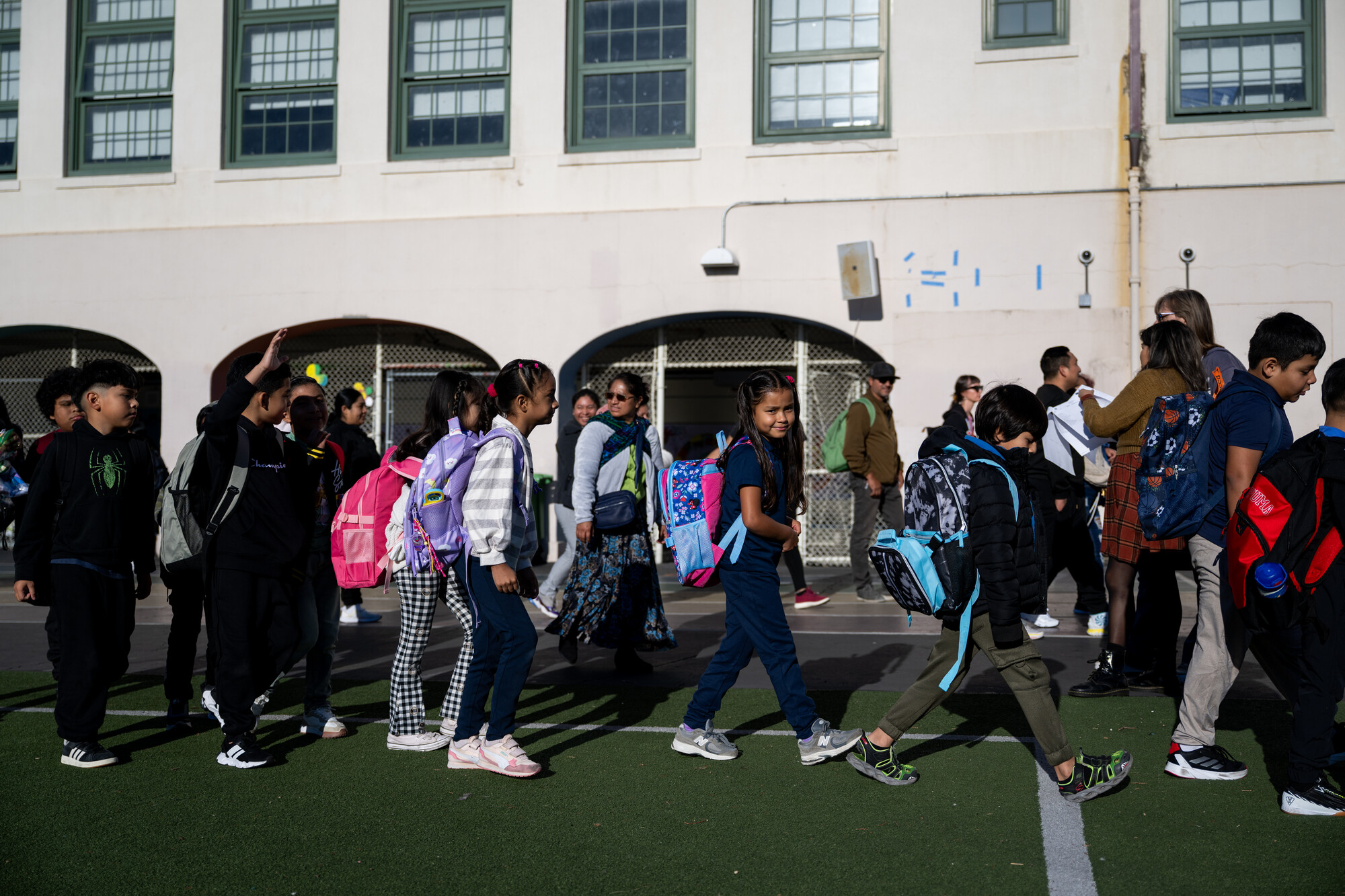
"caption": "Students at Sanchez Elementary School in San Francisco arrive for their first day of the school year on Aug. 18, 2025.",
"credit": "Beth LaBerge/KQED",
"altTag": null,
"description": null,
"imgSizes": {
"thumbnail": {
"file": "https://cdn.kqed.org/wp-content/uploads/sites/10/2025/12/250818-SFUSDFirstDay-24_qed-160x107.jpg",
"width": 160,
"height": 107,
"mimeType": "image/jpeg"
},
"1536x1536": {
"file": "https://cdn.kqed.org/wp-content/uploads/sites/10/2025/12/250818-SFUSDFirstDay-24_qed-1536x1024.jpg",
"width": 1536,
"height": 1024,
"mimeType": "image/jpeg"
},
"post-thumbnail": {
"file": "https://cdn.kqed.org/wp-content/uploads/sites/10/2025/12/250818-SFUSDFirstDay-24_qed-672x372.jpg",
"width": 672,
"height": 372,
"mimeType": "image/jpeg"
},
"twentyfourteen-full-width": {
"file": "https://cdn.kqed.org/wp-content/uploads/sites/10/2025/12/250818-SFUSDFirstDay-24_qed-1038x576.jpg",
"width": 1038,
"height": 576,
"mimeType": "image/jpeg"
},
"npr-cds-wide": {
"file": "https://cdn.kqed.org/wp-content/uploads/sites/10/2025/12/250818-SFUSDFirstDay-24_qed-1200x675.jpg",
"width": 1200,
"height": 675,
"mimeType": "image/jpeg"
},
"kqedFullSize": {
"file": "https://cdn.kqed.org/wp-content/uploads/sites/10/2025/12/250818-SFUSDFirstDay-24_qed.jpg",
"width": 2000,
"height": 1333
}
},
"isLoading": false,
"fetchFailed": false
},
"news_12066941": {
"type": "attachments",
"id": "news_12066941",
"meta": {
"index": "attachments_1716263798",
"site": "news",
"id": "12066941",
"found": true
},
"title": "Close-up of a boy's hands using the mouse of his laptop in a dim environment.",
"publishDate": 1765566466,
"status": "inherit",
"parent": 12066920,
"modified": 1765566485,
"caption": "Close-up of a boy's hands using the mouse of his laptop in a dim environment.",
"credit": "Manuel Arias Duran/Getty Images",
"altTag": null,
"description": null,
"imgSizes": {
"thumbnail": {
"file": "https://cdn.kqed.org/wp-content/uploads/sites/10/2025/12/FAFSAGetty1-160x107.jpg",
"width": 160,
"height": 107,
"mimeType": "image/jpeg"
},
"1536x1536": {
"file": "https://cdn.kqed.org/wp-content/uploads/sites/10/2025/12/FAFSAGetty1-1536x1024.jpg",
"width": 1536,
"height": 1024,
"mimeType": "image/jpeg"
},
"post-thumbnail": {
"file": "https://cdn.kqed.org/wp-content/uploads/sites/10/2025/12/FAFSAGetty1-672x372.jpg",
"width": 672,
"height": 372,
"mimeType": "image/jpeg"
},
"twentyfourteen-full-width": {
"file": "https://cdn.kqed.org/wp-content/uploads/sites/10/2025/12/FAFSAGetty1-1038x576.jpg",
"width": 1038,
"height": 576,
"mimeType": "image/jpeg"
},
"npr-cds-wide": {
"file": "https://cdn.kqed.org/wp-content/uploads/sites/10/2025/12/FAFSAGetty1-1200x675.jpg",
"width": 1200,
"height": 675,
"mimeType": "image/jpeg"
},
"kqedFullSize": {
"file": "https://cdn.kqed.org/wp-content/uploads/sites/10/2025/12/FAFSAGetty1.jpg",
"width": 2000,
"height": 1333
}
},
"isLoading": false,
"fetchFailed": false
},
"news_11955727": {
"type": "attachments",
"id": "news_11955727",
"meta": {
"index": "attachments_1716263798",
"site": "news",
"id": "11955727",
"found": true
},
"title": "Supreme Courts Rules On Major LGBTQ Case And Strikes Down Biden's Student Loan Forgiveness Plan",
"publishDate": 1689360216,
"status": "inherit",
"parent": 12065967,
"modified": 1765577210,
"caption": "D'Aungilique Jackson, of Fresno, California, holds a \"Cancel Student Debt\" sign outside of the Supreme Court of the United States after the nation's high court struck down President Biden's student debt relief program in Washington, D.C., on June 30, 2023.",
"credit": "Kent Nishimura/Los Angeles Times via Getty Images",
"altTag": "A person with long hair and a black T-shirt holds up a bright yellow sign reading \"Cancel Student Debt\" amidst others doing similar.",
"description": null,
"imgSizes": {
"medium": {
"file": "https://cdn.kqed.org/wp-content/uploads/sites/10/2023/07/230714-SUPREME-COURT-STUDENT-DEBT-Getty-KN-KQED-800x533.jpg",
"width": 800,
"height": 533,
"mimeType": "image/jpeg"
},
"large": {
"file": "https://cdn.kqed.org/wp-content/uploads/sites/10/2023/07/230714-SUPREME-COURT-STUDENT-DEBT-Getty-KN-KQED-1020x680.jpg",
"width": 1020,
"height": 680,
"mimeType": "image/jpeg"
},
"thumbnail": {
"file": "https://cdn.kqed.org/wp-content/uploads/sites/10/2023/07/230714-SUPREME-COURT-STUDENT-DEBT-Getty-KN-KQED-160x107.jpg",
"width": 160,
"height": 107,
"mimeType": "image/jpeg"
},
"1536x1536": {
"file": "https://cdn.kqed.org/wp-content/uploads/sites/10/2023/07/230714-SUPREME-COURT-STUDENT-DEBT-Getty-KN-KQED-1536x1024.jpg",
"width": 1536,
"height": 1024,
"mimeType": "image/jpeg"
},
"post-thumbnail": {
"file": "https://cdn.kqed.org/wp-content/uploads/sites/10/2023/07/230714-SUPREME-COURT-STUDENT-DEBT-Getty-KN-KQED-672x372.jpg",
"width": 672,
"height": 372,
"mimeType": "image/jpeg"
},
"twentyfourteen-full-width": {
"file": "https://cdn.kqed.org/wp-content/uploads/sites/10/2023/07/230714-SUPREME-COURT-STUDENT-DEBT-Getty-KN-KQED-1038x576.jpg",
"width": 1038,
"height": 576,
"mimeType": "image/jpeg"
},
"full-width": {
"file": "https://cdn.kqed.org/wp-content/uploads/sites/10/2023/07/230714-SUPREME-COURT-STUDENT-DEBT-Getty-KN-KQED-1920x1280.jpg",
"width": 1920,
"height": 1280,
"mimeType": "image/jpeg"
},
"kqedFullSize": {
"file": "https://cdn.kqed.org/wp-content/uploads/sites/10/2023/07/230714-SUPREME-COURT-STUDENT-DEBT-Getty-KN-KQED.jpg",
"width": 2000,
"height": 1333
}
},
"isLoading": false,
"fetchFailed": false
},
"news_12066690": {
"type": "attachments",
"id": "news_12066690",
"meta": {
"index": "attachments_1716263798",
"site": "news",
"id": "12066690",
"found": true
},
"title": "Peyrin Kao 1 (2)",
"publishDate": 1765401563,
"status": "inherit",
"parent": 0,
"modified": 1765414249,
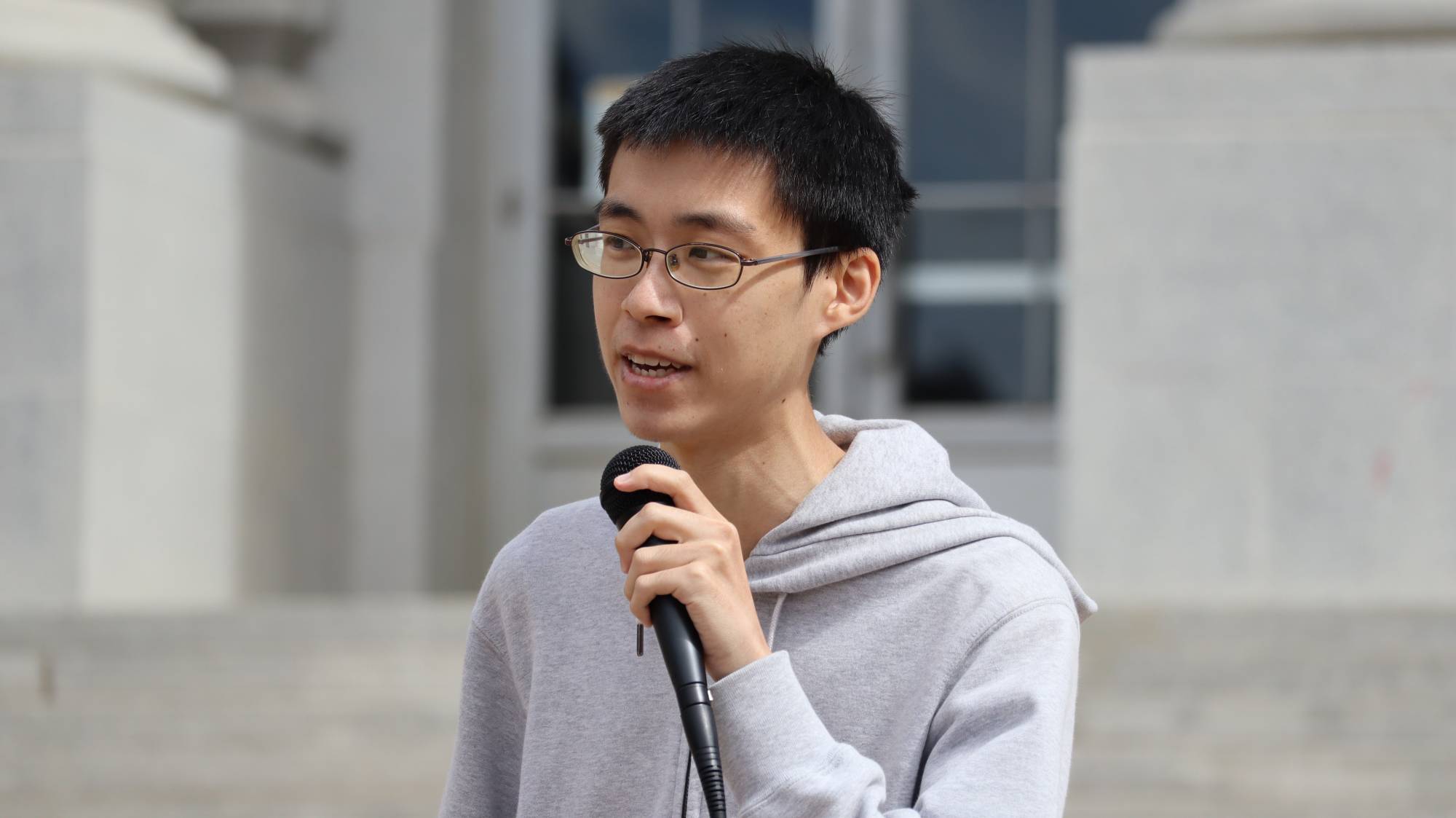
"caption": "Peyrin Kao, a lecturer in the electrical engineering and computer sciences department, has been an outspoken advocate for Palestinian rights.",
"credit": "Courtesy of Peyrin Kao",
"altTag": null,
"description": null,
"imgSizes": {
"medium": {
"file": "https://cdn.kqed.org/wp-content/uploads/sites/10/2025/12/Peyrin-Kao-1-2-2000x1123.jpg",
"width": 2000,
"height": 1123,
"mimeType": "image/jpeg"
},
"large": {
"file": "https://cdn.kqed.org/wp-content/uploads/sites/10/2025/12/Peyrin-Kao-1-2-2000x1123.jpg",
"width": 2000,
"height": 1123,
"mimeType": "image/jpeg"
},
"thumbnail": {
"file": "https://cdn.kqed.org/wp-content/uploads/sites/10/2025/12/Peyrin-Kao-1-2-160x90.jpg",
"width": 160,
"height": 90,
"mimeType": "image/jpeg"
},
"1536x1536": {
"file": "https://cdn.kqed.org/wp-content/uploads/sites/10/2025/12/Peyrin-Kao-1-2-1536x862.jpg",
"width": 1536,
"height": 862,
"mimeType": "image/jpeg"
},
"2048x2048": {
"file": "https://cdn.kqed.org/wp-content/uploads/sites/10/2025/12/Peyrin-Kao-1-2-2048x1150.jpg",
"width": 2048,
"height": 1150,
"mimeType": "image/jpeg"
},
"post-thumbnail": {
"file": "https://cdn.kqed.org/wp-content/uploads/sites/10/2025/12/Peyrin-Kao-1-2-672x372.jpg",
"width": 672,
"height": 372,
"mimeType": "image/jpeg"
},
"twentyfourteen-full-width": {
"file": "https://cdn.kqed.org/wp-content/uploads/sites/10/2025/12/Peyrin-Kao-1-2-1038x576.jpg",
"width": 1038,
"height": 576,
"mimeType": "image/jpeg"
},
"full-width": {
"file": "https://cdn.kqed.org/wp-content/uploads/sites/10/2025/12/Peyrin-Kao-1-2-2000x1123.jpg",
"width": 2000,
"height": 1123,
"mimeType": "image/jpeg"
},
"npr-cds-wide": {
"file": "https://cdn.kqed.org/wp-content/uploads/sites/10/2025/12/Peyrin-Kao-1-2-1200x675.jpg",
"width": 1200,
"height": 675,
"mimeType": "image/jpeg"
},
"kqedFullSize": {
"file": "https://cdn.kqed.org/wp-content/uploads/sites/10/2025/12/Peyrin-Kao-1-2-scaled-e1765401857443.jpg",
"width": 2000,
"height": 1123
}
},
"isLoading": false,
"fetchFailed": false
},
"news_12066308": {
"type": "attachments",
"id": "news_12066308",
"meta": {
"index": "attachments_1716263798",
"site": "news",
"id": "12066308",
"found": true
},
"title": "251205-WCCUSDSTRIKERALLY00960_TV-KQED",
"publishDate": 1764976014,
"status": "inherit",
"parent": 12066401,
"modified": 1765242482,
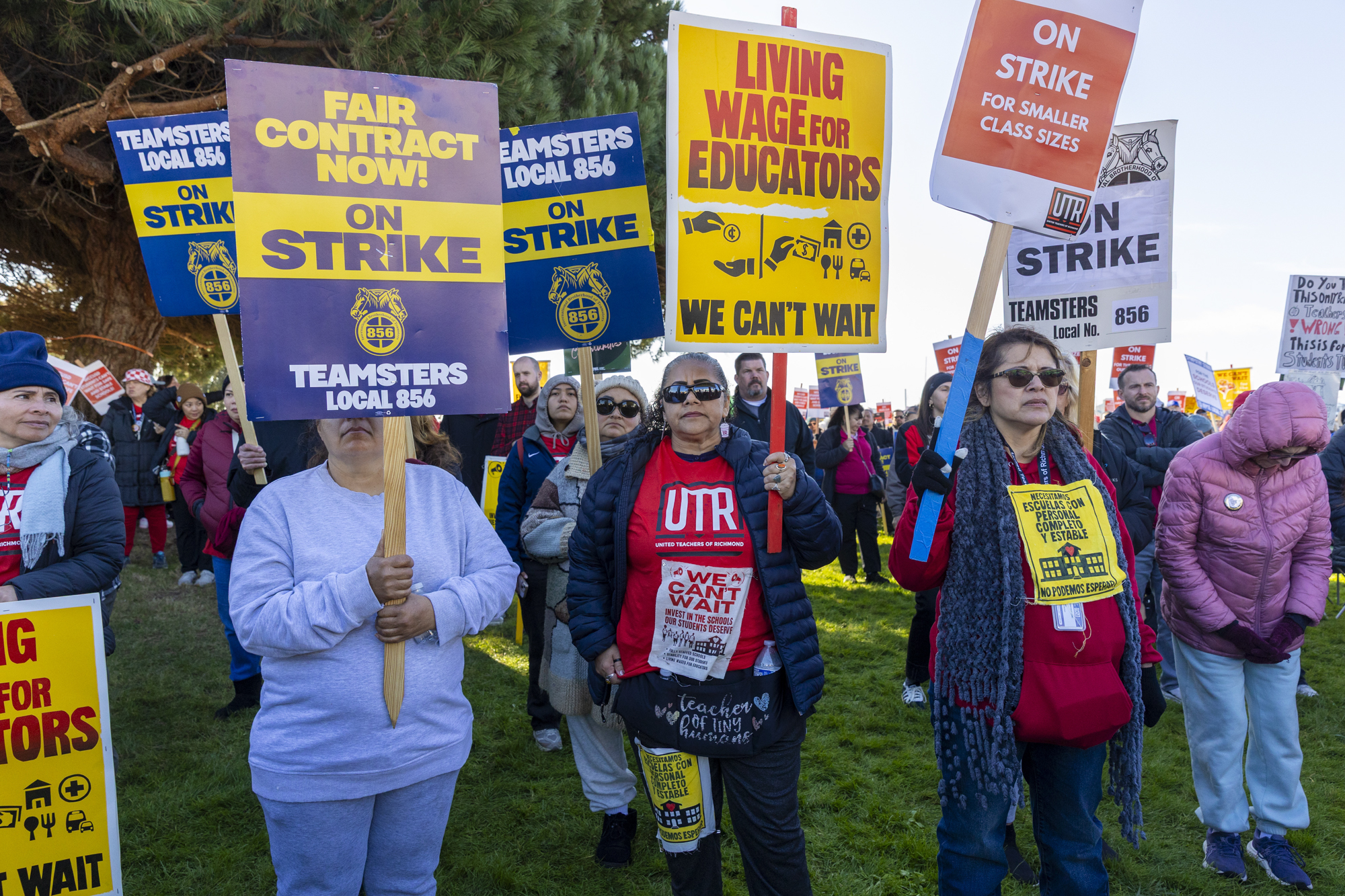
"caption": "West Contra Costa Unified School District teachers and families continue their strike at Marina Bay Park in Richmond on Dec. 5, 2025.",
"credit": "Tâm Vũ/KQED",
"altTag": null,
"description": null,
"imgSizes": {
"thumbnail": {
"file": "https://cdn.kqed.org/wp-content/uploads/sites/10/2025/12/251205-WCCUSDSTRIKERALLY00960_TV-KQED-160x107.jpg",
"width": 160,
"height": 107,
"mimeType": "image/jpeg"
},
"1536x1536": {
"file": "https://cdn.kqed.org/wp-content/uploads/sites/10/2025/12/251205-WCCUSDSTRIKERALLY00960_TV-KQED-1536x1024.jpg",
"width": 1536,
"height": 1024,
"mimeType": "image/jpeg"
},
"post-thumbnail": {
"file": "https://cdn.kqed.org/wp-content/uploads/sites/10/2025/12/251205-WCCUSDSTRIKERALLY00960_TV-KQED-672x372.jpg",
"width": 672,
"height": 372,
"mimeType": "image/jpeg"
},
"twentyfourteen-full-width": {
"file": "https://cdn.kqed.org/wp-content/uploads/sites/10/2025/12/251205-WCCUSDSTRIKERALLY00960_TV-KQED-1038x576.jpg",
"width": 1038,
"height": 576,
"mimeType": "image/jpeg"
},
"npr-cds-wide": {
"file": "https://cdn.kqed.org/wp-content/uploads/sites/10/2025/12/251205-WCCUSDSTRIKERALLY00960_TV-KQED-1200x675.jpg",
"width": 1200,
"height": 675,
"mimeType": "image/jpeg"
},
"kqedFullSize": {
"file": "https://cdn.kqed.org/wp-content/uploads/sites/10/2025/12/251205-WCCUSDSTRIKERALLY00960_TV-KQED.jpg",
"width": 2000,
"height": 1333
}
},
"isLoading": false,
"fetchFailed": false
}
},
"audioPlayerReducer": {
"postId": "stream_live",
"isPaused": true,
"isPlaying": false,
"pfsActive": false,
"pledgeModalIsOpen": true,
"playerDrawerIsOpen": false,
"liveAudioPlayStartedAt": 0,
"liveAudioPlayContext": ""
},
"authorsReducer": {
"byline_news_12068357": {
"type": "authors",
"id": "byline_news_12068357",
"meta": {
"override": true
},
"slug": "byline_news_12068357",
"name": "Carolyn Jones, CalMatters",
"isLoading": false
},
"kqed": {
"type": "authors",
"id": "236",
"meta": {
"index": "authors_1716337520",
"id": "236",
"found": true
},
"name": "KQED News Staff",
"firstName": "KQED News Staff",
"lastName": null,
"slug": "kqed",
"email": "faq@kqed.org",
"display_author_email": false,
"staff_mastheads": [],
"title": null,
"bio": null,
"avatar": "https://secure.gravatar.com/avatar/ef0e801a68c4c54afa9180db14084167?s=600&d=blank&r=g",
"twitter": null,
"facebook": null,
"instagram": null,
"linkedin": null,
"sites": [
{
"site": "arts",
"roles": [
"contributor"
]
},
{
"site": "news",
"roles": [
"editor"
]
},
{
"site": "futureofyou",
"roles": [
"author"
]
}
],
"headData": {
"title": "KQED News Staff | KQED",
"description": null,
"ogImgSrc": "https://secure.gravatar.com/avatar/ef0e801a68c4c54afa9180db14084167?s=600&d=blank&r=g",
"twImgSrc": "https://secure.gravatar.com/avatar/ef0e801a68c4c54afa9180db14084167?s=600&d=blank&r=g"
},
"isLoading": false,
"link": "/author/kqed"
},
"carlysevern": {
"type": "authors",
"id": "3243",
"meta": {
"index": "authors_1716337520",
"id": "3243",
"found": true
},
"name": "Carly Severn",
"firstName": "Carly",
"lastName": "Severn",
"slug": "carlysevern",
"email": "csevern@kqed.org",
"display_author_email": false,
"staff_mastheads": [
"news"
],
"title": "Senior Editor, Audience News ",
"bio": "Carly is KQED's Senior Editor of Audience News on the Digital News team, and has reported for the California Report Magazine, Bay Curious and KQED Arts. She's formerly the host of \u003ca href=\"http://ww2.kqed.org/pop/category/the-cooler/\" rel=\"noopener noreferrer\">The Cooler\u003c/a> podcast.",
"avatar": "https://secure.gravatar.com/avatar/54037bf5c128fe678f0ef26cec97a93f2e7f220a22d7285703328f12c42c1b1d?s=600&d=blank&r=g",
"twitter": "teacupinthebay",
"bluesky": null,
"facebook": null,
"instagram": null,
"linkedin": null,
"sites": [
{
"site": "",
"roles": [
"editor"
]
},
{
"site": "arts",
"roles": [
"editor"
]
},
{
"site": "news",
"roles": [
"administrator"
]
},
{
"site": "pop",
"roles": [
"editor"
]
},
{
"site": "futureofyou",
"roles": [
"editor"
]
},
{
"site": "about",
"roles": [
"administrator"
]
},
{
"site": "mindshift",
"roles": [
"editor"
]
},
{
"site": "bayareabites",
"roles": [
"editor"
]
},
{
"site": "stateofhealth",
"roles": [
"editor"
]
},
{
"site": "science",
"roles": [
"editor"
]
},
{
"site": "food",
"roles": [
"contributor"
]
},
{
"site": "forum",
"roles": [
"editor"
]
},
{
"site": "perspectives",
"roles": [
"administrator"
]
},
{
"site": "liveblog",
"roles": [
"editor"
]
}
],
"headData": {
"title": "Carly Severn | KQED",
"description": "Senior Editor, Audience News ",
"ogImgSrc": "https://secure.gravatar.com/avatar/54037bf5c128fe678f0ef26cec97a93f2e7f220a22d7285703328f12c42c1b1d?s=600&d=blank&r=g",
"twImgSrc": "https://secure.gravatar.com/avatar/54037bf5c128fe678f0ef26cec97a93f2e7f220a22d7285703328f12c42c1b1d?s=600&d=blank&r=g"
},
"isLoading": false,
"link": "/author/carlysevern"
},
"vrancano": {
"type": "authors",
"id": "11276",
"meta": {
"index": "authors_1716337520",
"id": "11276",
"found": true
},
"name": "Vanessa Rancaño",
"firstName": "Vanessa",
"lastName": "Rancaño",
"slug": "vrancano",
"email": "vrancano@kqed.org",
"display_author_email": false,
"staff_mastheads": [
"news"
],
"title": "Reporter",
"bio": "Vanessa Rancaño is a features reporter for KQED. She’s also covered homelessness and education for the station and reported from the Central Valley. Her work has aired across public radio, from flagship national news shows to longform narrative podcasts. Before taking up a mic, she worked as a freelance print journalist. She’s been recognized with a number of national and regional awards. Vanessa grew up in California's Central Valley. She's a former NPR Kroc Fellow, and a graduate of the UC Berkeley Graduate School of Journalism.",
"avatar": "https://secure.gravatar.com/avatar/b3a383dfb0e7ee1c17568f2cf067904ab654d6e3de9743fc661f3c788ade1bed?s=600&d=blank&r=g",
"twitter": "vanessarancano",
"bluesky": null,
"facebook": null,
"instagram": null,
"linkedin": null,
"sites": [
{
"site": "arts",
"roles": [
"editor"
]
},
{
"site": "news",
"roles": [
"editor"
]
},
{
"site": "liveblog",
"roles": [
"contributor"
]
}
],
"headData": {
"title": "Vanessa Rancaño | KQED",
"description": "Reporter",
"ogImgSrc": "https://secure.gravatar.com/avatar/b3a383dfb0e7ee1c17568f2cf067904ab654d6e3de9743fc661f3c788ade1bed?s=600&d=blank&r=g",
"twImgSrc": "https://secure.gravatar.com/avatar/b3a383dfb0e7ee1c17568f2cf067904ab654d6e3de9743fc661f3c788ade1bed?s=600&d=blank&r=g"
},
"isLoading": false,
"link": "/author/vrancano"
},
"ccabreralomeli": {
"type": "authors",
"id": "11708",
"meta": {
"index": "authors_1716337520",
"id": "11708",
"found": true
},
"name": "Carlos Cabrera-Lomelí",
"firstName": "Carlos",
"lastName": "Cabrera-Lomelí",
"slug": "ccabreralomeli",
"email": "ccabreralomeli@KQED.org",
"display_author_email": true,
"staff_mastheads": [
"news"
],
"title": "Community Reporter",
"bio": "Carlos Cabrera-Lomelí is a community reporter with KQED's digital engagement team. He also reports and co-produces for KQED's bilingual news hub KQED en Español. He grew up in San Francisco's Mission District and has previously worked with Univision, 48 Hills and REFORMA in Mexico City.",
"avatar": "https://secure.gravatar.com/avatar/c309be9665e484f887b818c89e273ecc673004f426f36b24d00a4d813a2e0518?s=600&d=blank&r=g",
"twitter": "@LomeliCabrera",
"bluesky": null,
"facebook": null,
"instagram": null,
"linkedin": null,
"sites": [
{
"site": "arts",
"roles": [
"editor"
]
},
{
"site": "news",
"roles": [
"editor"
]
},
{
"site": "about",
"roles": [
"editor"
]
},
{
"site": "science",
"roles": [
"editor"
]
},
{
"site": "perspectives",
"roles": [
"editor"
]
},
{
"site": "elections",
"roles": [
"editor"
]
},
{
"site": "liveblog",
"roles": [
"contributor"
]
}
],
"headData": {
"title": "Carlos Cabrera-Lomelí | KQED",
"description": "Community Reporter",
"ogImgSrc": "https://secure.gravatar.com/avatar/c309be9665e484f887b818c89e273ecc673004f426f36b24d00a4d813a2e0518?s=600&d=blank&r=g",
"twImgSrc": "https://secure.gravatar.com/avatar/c309be9665e484f887b818c89e273ecc673004f426f36b24d00a4d813a2e0518?s=600&d=blank&r=g"
},
"isLoading": false,
"link": "/author/ccabreralomeli"
},
"jlara": {
"type": "authors",
"id": "11761",
"meta": {
"index": "authors_1716337520",
"id": "11761",
"found": true
},
"name": "Juan Carlos Lara",
"firstName": "Juan Carlos",
"lastName": "Lara",
"slug": "jlara",
"email": "jlara@kqed.org",
"display_author_email": false,
"staff_mastheads": [],
"title": "KQED Contributor",
"bio": null,
"avatar": "https://secure.gravatar.com/avatar/19e2052b9b05657c5ff2af2121846e9c?s=600&d=blank&r=g",
"twitter": null,
"facebook": null,
"instagram": null,
"linkedin": null,
"sites": [
{
"site": "arts",
"roles": [
"editor"
]
},
{
"site": "news",
"roles": [
"editor"
]
},
{
"site": "forum",
"roles": [
"editor"
]
},
{
"site": "liveblog",
"roles": [
"contributor"
]
}
],
"headData": {
"title": "Juan Carlos Lara | KQED",
"description": "KQED Contributor",
"ogImgSrc": "https://secure.gravatar.com/avatar/19e2052b9b05657c5ff2af2121846e9c?s=600&d=blank&r=g",
"twImgSrc": "https://secure.gravatar.com/avatar/19e2052b9b05657c5ff2af2121846e9c?s=600&d=blank&r=g"
},
"isLoading": false,
"link": "/author/jlara"
},
"daisynguyen": {
"type": "authors",
"id": "11829",
"meta": {
"index": "authors_1716337520",
"id": "11829",
"found": true
},
"name": "Daisy Nguyen",
"firstName": "Daisy",
"lastName": "Nguyen",
"slug": "daisynguyen",
"email": "daisynguyen@kqed.org",
"display_author_email": true,
"staff_mastheads": [
"news"
],
"title": "KQED Contributor",
"bio": "I have covered early childhood education and child care for KQED since 2022. I focus on policies aimed at increasing access to early care and education and how they shape individual lives. I've been a journalist for more than two decades, with most of that time devoted to covering breaking news throughout California for The Associated Press. I grew up in San Francisco and studied at UC Davis and Columbia University's Graduate School of Journalism. I live in Oakland with my husband and two kids.",
"avatar": "https://secure.gravatar.com/avatar/2da2127c27f7143b53ebd419800fd55f?s=600&d=blank&r=g",
"twitter": null,
"facebook": null,
"instagram": null,
"linkedin": "https://www.linkedin.com/in/daisynguyen/",
"sites": [
{
"site": "news",
"roles": [
"author"
]
},
{
"site": "liveblog",
"roles": [
"author"
]
}
],
"headData": {
"title": "Daisy Nguyen | KQED",
"description": "KQED Contributor",
"ogImgSrc": "https://secure.gravatar.com/avatar/2da2127c27f7143b53ebd419800fd55f?s=600&d=blank&r=g",
"twImgSrc": "https://secure.gravatar.com/avatar/2da2127c27f7143b53ebd419800fd55f?s=600&d=blank&r=g"
},
"isLoading": false,
"link": "/author/daisynguyen"
},
"nkhan": {
"type": "authors",
"id": "11867",
"meta": {
"index": "authors_1716337520",
"id": "11867",
"found": true
},
"name": "Nisa Khan",
"firstName": "Nisa",
"lastName": "Khan",
"slug": "nkhan",
"email": "nkhan@kqed.org",
"display_author_email": false,
"staff_mastheads": [],
"title": "KQED Contributor",
"bio": "Nisa Khan is a reporter for KQED's Audience News Desk. She was formerly a data reporter at Michigan Radio. She earned a Bachelor of Science in Information from the University of Michigan and a Master of Arts in Communication from Stanford University.",
"avatar": "https://secure.gravatar.com/avatar/8720459eef081ff64582b3506b124d58523e80e120704a0cbd9892533c914991?s=600&d=blank&r=g",
"twitter": "mnisakhan",
"bluesky": null,
"facebook": null,
"instagram": null,
"linkedin": null,
"sites": [
{
"site": "arts",
"roles": [
"editor"
]
},
{
"site": "news",
"roles": [
"editor"
]
},
{
"site": "science",
"roles": [
"editor",
"author"
]
},
{
"site": "forum",
"roles": [
"editor"
]
},
{
"site": "liveblog",
"roles": [
"contributor"
]
}
],
"headData": {
"title": "Nisa Khan | KQED",
"description": "KQED Contributor",
"ogImgSrc": "https://secure.gravatar.com/avatar/8720459eef081ff64582b3506b124d58523e80e120704a0cbd9892533c914991?s=600&d=blank&r=g",
"twImgSrc": "https://secure.gravatar.com/avatar/8720459eef081ff64582b3506b124d58523e80e120704a0cbd9892533c914991?s=600&d=blank&r=g"
},
"isLoading": false,
"link": "/author/nkhan"
},
"kdebenedetti": {
"type": "authors",
"id": "11913",
"meta": {
"index": "authors_1716337520",
"id": "11913",
"found": true
},
"name": "Katie DeBenedetti",
"firstName": "Katie",
"lastName": "DeBenedetti",
"slug": "kdebenedetti",
"email": "kdebenedetti@kqed.org",
"display_author_email": false,
"staff_mastheads": [
"news",
"science"
],
"title": "KQED Contributor",
"bio": "Katie DeBenedetti is a digital reporter covering daily news for the Express Desk. Prior to joining KQED as a culture reporting intern in January 2024, she covered education and city government for the Napa Valley Register.",
"avatar": "https://secure.gravatar.com/avatar/6e31073cb8f7e4214ab03f42771d0f45?s=600&d=blank&r=g",
"twitter": null,
"facebook": null,
"instagram": null,
"linkedin": null,
"sites": [
{
"site": "news",
"roles": [
"author"
]
},
{
"site": "science",
"roles": [
"author"
]
},
{
"site": "liveblog",
"roles": [
"author"
]
}
],
"headData": {
"title": "Katie DeBenedetti | KQED",
"description": "KQED Contributor",
"ogImgSrc": "https://secure.gravatar.com/avatar/6e31073cb8f7e4214ab03f42771d0f45?s=600&d=blank&r=g",
"twImgSrc": "https://secure.gravatar.com/avatar/6e31073cb8f7e4214ab03f42771d0f45?s=600&d=blank&r=g"
},
"isLoading": false,
"link": "/author/kdebenedetti"
},
"emanoukian": {
"type": "authors",
"id": "11925",
"meta": {
"index": "authors_1716337520",
"id": "11925",
"found": true
},
"name": "Elize Manoukian",
"firstName": "Elize",
"lastName": "Manoukian",
"slug": "emanoukian",
"email": "emanoukian@KQED.org",
"display_author_email": false,
"staff_mastheads": [
"news"
],
"title": "Digital News Editor",
"bio": "Elize Manoukian is an award-winning audio producer and Senior Editor on the Express Desk, KQED's digital news platform. Her work has appeared on KPFA, Interlochen Public Radio, Oregon Public Broadcast, the New York Daily News, LA Times and the San Diego Union-Tribune.",
"avatar": "https://secure.gravatar.com/avatar/4525f1a8e46ccb30933b32653d9772064cfefe3fa655eb45b3b3a80341f6bdad?s=600&d=blank&r=g",
"twitter": null,
"bluesky": null,
"facebook": null,
"instagram": null,
"linkedin": null,
"sites": [
{
"site": "arts",
"roles": [
"editor"
]
},
{
"site": "news",
"roles": [
"editor"
]
},
{
"site": "science",
"roles": [
"editor"
]
}
],
"headData": {
"title": "Elize Manoukian | KQED",
"description": "Digital News Editor",
"ogImgSrc": "https://secure.gravatar.com/avatar/4525f1a8e46ccb30933b32653d9772064cfefe3fa655eb45b3b3a80341f6bdad?s=600&d=blank&r=g",
"twImgSrc": "https://secure.gravatar.com/avatar/4525f1a8e46ccb30933b32653d9772064cfefe3fa655eb45b3b3a80341f6bdad?s=600&d=blank&r=g"
},
"isLoading": false,
"link": "/author/emanoukian"
}
},
"pagesReducer": {
"news_tag_education": {
"type": "terms",
"id": "news_20013",
"meta": {
"index": "terms_1716263798",
"site": "news",
"id": "20013",
"score": 6.970053
},
"featImg": null,
"name": "education",
"description": null,
"taxonomy": "tag",
"headData": {
"twImgId": null,
"twTitle": null,
"ogTitle": null,
"ogImgId": null,
"twDescription": null,
"description": null,
"title": "education Archives | KQED News",
"ogDescription": null
},
"ttid": 20030,
"slug": "education",
"isLoading": false,
"title": "education",
"pageMeta": {
"site": "news",
"WpPageTemplate": "page-topic-editorial",
"currentPage": 13
},
"blocks": [
{
"blockName": "kqed/post-list",
"attrs": {
"layout": "cardArticle2",
"query": "posts/news?tag=education",
"seeMore": false,
"paginated": true,
"page": 13
}
},
{
"blockName": "kqed/ad"
}
]
}
},
"pfsSessionReducer": {},
"postsReducer": {
"stream_live": {
"type": "live",
"id": "stream_live",
"audioUrl": "https://streams.kqed.org/kqedradio",
"title": "Live Stream",
"excerpt": "Live Stream information currently unavailable.",
"link": "/radio",
"featImg": "",
"label": {
"name": "KQED Live",
"link": "/"
}
},
"stream_kqedNewscast": {
"type": "posts",
"id": "stream_kqedNewscast",
"audioUrl": "https://www.kqed.org/.stream/anon/radio/RDnews/newscast.mp3?_=1",
"title": "KQED Newscast",
"featImg": "",
"label": {
"name": "88.5 FM",
"link": "/"
}
},
"news_12069350": {
"type": "posts",
"id": "news_12069350",
"meta": {
"index": "posts_1716263798",
"site": "news",
"id": "12069350",
"score": null,
"sort": [
1768008970000
]
},
"guestAuthors": [],
"slug": "judge-temporarily-blocks-trumps-5b-child-care-funding-freeze-to-california",
"title": "Judge Temporarily Blocks Trump’s $5B Child Care Funding Freeze to California",
"publishDate": 1768008970,
"format": "standard",
"headTitle": "Judge Temporarily Blocks Trump’s $5B Child Care Funding Freeze to California | KQED",
"labelTerm": {
"site": "news"
},
"content": "\u003cp>\u003cspan style=\"font-weight: 400;\">A judge on Friday temporarily blocked the Trump administration from \u003c/span>\u003ca href=\"https://www.kqed.org/news/12068953/trump-pauses-funding-to-child-care-calworks-in-california-over-alleged-fraud\">\u003cspan style=\"font-weight: 400;\">freezing more than $10 billion\u003c/span>\u003c/a>\u003cspan style=\"font-weight: 400;\"> in child care and welfare funding for California and four other states led by Democratic governors.\u003c/span>\u003c/p>\n\u003cp>\u003cspan style=\"font-weight: 400;\">The decision came a day after the states sued to stop the administration’s decision to \u003ca href=\"https://www.hhs.gov/press-room/hhs-freezes-child-care-family-assistance-grants-five-states-fraud-concerns.html\">freeze three funds\u003c/a> — \u003c/span>\u003cspan style=\"font-weight: 400;\">the Child Care and Development Fund, Temporary Assistance for Needy Families and the Social Services Block Grant \u003c/span>\u003cspan style=\"font-weight: 400;\">—\u003c/span>\u003cspan style=\"font-weight: 400;\"> which provide cash assistance, child care subsidies and other social services to lower-income households. About $5 billion of those funds go to California.\u003c/span>\u003c/p>\n\u003cp>\u003cspan style=\"font-weight: 400;\">Attorney General Rob Bonta, along with the top lawyers for New York, Minnesota, Illinois and Colorado argued that freezing the money would jeopardize some of their states’ most critical anti-poverty programs and that they were already experiencing delays in accessing it.\u003c/span>\u003c/p>\n\u003cp>[ad fullwidth]\u003c/p>\n\u003cp>\u003cspan style=\"font-weight: 400;\">The federal Administration for Children and Families told the states on Tuesday it would restrict access to these funds because it “has reason to believe” the money was fraudulently going to noncitizens. The department gave the states two weeks to submit documentation, like attendance records at child care programs, to justify their spending before they can access the money. \u003c/span>\u003c/p>\n\u003cp>\u003cspan style=\"font-weight: 400;\">The funding freeze stems from a \u003c/span>\u003ca href=\"https://www.npr.org/2026/01/01/nx-s1-5661705/trump-administration-freezes-child-care-funds-in-minnesota-after-claims-of-fraud\">\u003cspan style=\"font-weight: 400;\">video from a conservative influencer \u003c/span>\u003c/a>\u003cspan style=\"font-weight: 400;\">claiming without evidence that child care centers operated by Somali residents in Minnesota committed fraud. The allegation prompted the ACF to suggest \u003c/span>\u003ca href=\"https://acf.gov/media/press/2026/hhs-close-biden-era-loophole-child-care\">\u003cspan style=\"font-weight: 400;\">tightening rules around how federal child care funds get distributed\u003c/span>\u003c/a>\u003cspan style=\"font-weight: 400;\">, like paying child care programs based on attendance instead of enrollment. \u003c/span>\u003c/p>\n\u003cp>\u003cspan style=\"font-weight: 400;\">“This is about nothing more than a president seeking to punish democratic-led states that have taken a stand against his bluster, his bullying, and his blatant and brazen lawlessness,” Bonta said Friday. “This is about a president and administration crying fraud without even attempting to provide any proof to back up the claims.”\u003c/span>\u003c/p>\n\u003cp>\u003cspan style=\"font-weight: 400;\">The temporary restraining order also blocks the Trump administration’s request for documents. \u003c/span>\u003c/p>\n\u003cp>\u003cspan style=\"font-weight: 400;\">California uses the funds to provide temporary cash assistance to families in need, and to support foster care and child welfare services. The state also uses the Child Care and Development fund to provide subsidized child care for lower-income families.\u003c/span>\u003c/p>\n\u003cp>\u003c/p>\n",
"blocks": [],
"excerpt": "In a lawsuit, California and four other states argued that freezing the money would jeopardize critical anti-poverty programs and said they were already experiencing delays in accessing it.",
"status": "publish",
"parent": 0,
"modified": 1768237532,
"stats": {
"hasAudio": false,
"hasVideo": false,
"hasChartOrMap": false,
"iframeSrcs": [],
"hasGoogleForm": false,
"hasGallery": false,
"hasHearkenModule": false,
"hasPolis": false,
"paragraphCount": 10,
"wordCount": 375
},
"headData": {
"title": "Judge Temporarily Blocks Trump’s $5B Child Care Funding Freeze to California | KQED",
"description": "In a lawsuit, California and four other states argued that freezing the money would jeopardize critical anti-poverty programs and said they were already experiencing delays in accessing it.",
"ogTitle": "",
"ogDescription": "",
"ogImgId": "",
"twTitle": "",
"twDescription": "",
"twImgId": "",
"schema": {
"@context": "https://schema.org",
"@type": "NewsArticle",
"headline": "Judge Temporarily Blocks Trump’s $5B Child Care Funding Freeze to California",
"datePublished": "2026-01-09T17:36:10-08:00",
"dateModified": "2026-01-12T09:05:32-08:00",
"image": "https://cdn.kqed.org/wp-content/uploads/2020/02/KQED-OG-Image@1x.png",
"isAccessibleForFree": "True",
"publisher": {
"@type": "NewsMediaOrganization",
"@id": "https://www.kqed.org/#organization",
"name": "KQED",
"logo": "https://cdn.kqed.org/wp-content/uploads/2020/02/KQED-OG-Image@1x.png",
"url": "https://www.kqed.org",
"sameAs": [
"https://www.facebook.com/KQED",
"https://twitter.com/KQED",
"https://www.instagram.com/kqed/",
"https://www.tiktok.com/@kqedofficial",
"https://www.linkedin.com/company/kqed",
"https://www.youtube.com/channel/UCeC0IOo7i1P_61zVUWbJ4nw"
]
}
}
},
"primaryCategory": {
"termId": 31795,
"slug": "california",
"name": "California"
},
"audioUrl": "https://traffic.omny.fm/d/clips/0af137ef-751e-4b19-a055-aaef00d2d578/ffca7e9f-6831-41c5-bcaf-aaef00f5a073/6ec35d9f-7abe-4831-83b3-b3cd011c371c/audio.mp3",
"sticky": false,
"nprStoryId": "kqed-12069350",
"templateType": "standard",
"featuredImageType": "standard",
"excludeFromSiteSearch": "Include",
"articleAge": "0",
"path": "/news/12069350/judge-temporarily-blocks-trumps-5b-child-care-funding-freeze-to-california",
"audioTrackLength": null,
"parsedContent": [
{
"type": "contentString",
"content": "\u003cdiv class=\"post-body\">\u003cp>\u003cp>\u003cspan style=\"font-weight: 400;\">A judge on Friday temporarily blocked the Trump administration from \u003c/span>\u003ca href=\"https://www.kqed.org/news/12068953/trump-pauses-funding-to-child-care-calworks-in-california-over-alleged-fraud\">\u003cspan style=\"font-weight: 400;\">freezing more than $10 billion\u003c/span>\u003c/a>\u003cspan style=\"font-weight: 400;\"> in child care and welfare funding for California and four other states led by Democratic governors.\u003c/span>\u003c/p>\n\u003cp>\u003cspan style=\"font-weight: 400;\">The decision came a day after the states sued to stop the administration’s decision to \u003ca href=\"https://www.hhs.gov/press-room/hhs-freezes-child-care-family-assistance-grants-five-states-fraud-concerns.html\">freeze three funds\u003c/a> — \u003c/span>\u003cspan style=\"font-weight: 400;\">the Child Care and Development Fund, Temporary Assistance for Needy Families and the Social Services Block Grant \u003c/span>\u003cspan style=\"font-weight: 400;\">—\u003c/span>\u003cspan style=\"font-weight: 400;\"> which provide cash assistance, child care subsidies and other social services to lower-income households. About $5 billion of those funds go to California.\u003c/span>\u003c/p>\n\u003cp>\u003cspan style=\"font-weight: 400;\">Attorney General Rob Bonta, along with the top lawyers for New York, Minnesota, Illinois and Colorado argued that freezing the money would jeopardize some of their states’ most critical anti-poverty programs and that they were already experiencing delays in accessing it.\u003c/span>\u003c/p>\n\u003cp>\u003c/p>\u003c/div>",
"attributes": {
"named": {},
"numeric": []
}
},
{
"type": "component",
"content": "",
"name": "ad",
"attributes": {
"named": {
"label": "fullwidth"
},
"numeric": [
"fullwidth"
]
}
},
{
"type": "contentString",
"content": "\u003cdiv class=\"post-body\">\u003cp>\u003c/p>\n\u003cp>\u003cspan style=\"font-weight: 400;\">The federal Administration for Children and Families told the states on Tuesday it would restrict access to these funds because it “has reason to believe” the money was fraudulently going to noncitizens. The department gave the states two weeks to submit documentation, like attendance records at child care programs, to justify their spending before they can access the money. \u003c/span>\u003c/p>\n\u003cp>\u003cspan style=\"font-weight: 400;\">The funding freeze stems from a \u003c/span>\u003ca href=\"https://www.npr.org/2026/01/01/nx-s1-5661705/trump-administration-freezes-child-care-funds-in-minnesota-after-claims-of-fraud\">\u003cspan style=\"font-weight: 400;\">video from a conservative influencer \u003c/span>\u003c/a>\u003cspan style=\"font-weight: 400;\">claiming without evidence that child care centers operated by Somali residents in Minnesota committed fraud. The allegation prompted the ACF to suggest \u003c/span>\u003ca href=\"https://acf.gov/media/press/2026/hhs-close-biden-era-loophole-child-care\">\u003cspan style=\"font-weight: 400;\">tightening rules around how federal child care funds get distributed\u003c/span>\u003c/a>\u003cspan style=\"font-weight: 400;\">, like paying child care programs based on attendance instead of enrollment. \u003c/span>\u003c/p>\n\u003cp>\u003cspan style=\"font-weight: 400;\">“This is about nothing more than a president seeking to punish democratic-led states that have taken a stand against his bluster, his bullying, and his blatant and brazen lawlessness,” Bonta said Friday. “This is about a president and administration crying fraud without even attempting to provide any proof to back up the claims.”\u003c/span>\u003c/p>\n\u003cp>\u003cspan style=\"font-weight: 400;\">The temporary restraining order also blocks the Trump administration’s request for documents. \u003c/span>\u003c/p>\n\u003cp>\u003cspan style=\"font-weight: 400;\">California uses the funds to provide temporary cash assistance to families in need, and to support foster care and child welfare services. The state also uses the Child Care and Development fund to provide subsidized child care for lower-income families.\u003c/span>\u003c/p>\n\u003cp>\u003c/p>\n\u003c/div>\u003c/p>",
"attributes": {
"named": {},
"numeric": []
}
}
],
"link": "/news/12069350/judge-temporarily-blocks-trumps-5b-child-care-funding-freeze-to-california",
"authors": [
"11829"
],
"categories": [
"news_31795",
"news_18540",
"news_28250",
"news_8",
"news_13"
],
"tags": [
"news_25647",
"news_18538",
"news_20754",
"news_32768",
"news_1323",
"news_32102",
"news_32928",
"news_20013",
"news_35063",
"news_17968"
],
"featImg": "news_12069351",
"label": "news"
},
"news_11821950": {
"type": "posts",
"id": "news_11821950",
"meta": {
"index": "posts_1716263798",
"site": "news",
"id": "11821950",
"score": null,
"sort": [
1768000259000
]
},
"guestAuthors": [],
"slug": "how-to-safely-attend-a-protest-in-the-bay-area",
"title": "How to Stay Safe at a Rally in the Bay Area: Know Your Rights",
"publishDate": 1768000259,
"format": "standard",
"headTitle": "How to Stay Safe at a Rally in the Bay Area: Know Your Rights | KQED",
"labelTerm": {},
"content": "\u003cp>The San Francisco Bay Area has a long history of protest.\u003c/p>\n\u003cp>But if you plan on attending a rally yourself, on any cause, how can you stay safe? What \u003cem>are\u003c/em> your rights as a protester?\u003c/p>\n\u003cul>\n\u003cli>\u003cstrong>Jump straight to: \u003ca href=\"#start\">Tips on what to have ready before going to a protest.\u003c/a>\u003c/strong>\u003c/li>\n\u003c/ul>\n\u003cp>If this is the first time you or your friends have gone to a protest, make sure to bookmark this guide, as our team frequently updates it with new information. We also have a \u003ca href=\"#immigrantrights\">new section on what your rights are if you are a not a U.S. citizen and plan to attend to a protest.\u003c/a>\u003c/p>\n\u003cp>And remember: If you’re unable to join a rally or protest in person for whatever reason but want to make your stance on an issue known, you always have the option to \u003ca href=\"https://www.kqed.org/news/11967439/how-can-i-call-my-representative-a-step-by-step-guide-to-the-process\">contact your elected officials to express your opinions\u003c/a>. For more information on what “call your reps” actually means, how to do it, and what to expect as a result, read our explainer: \u003ca href=\"https://www.kqed.org/news/11967439/how-can-i-call-my-representative-a-step-by-step-guide-to-the-process\">How Can I Call My Representative? A Step-by-Step Guide to the Process\u003c/a>.\u003c/p>\n\u003cfigure id=\"attachment_12013354\" class=\"wp-caption alignnone\" style=\"max-width: 2000px\">\u003cimg loading=\"lazy\" decoding=\"async\" class=\"size-full wp-image-12013354\" src=\"https://cdn.kqed.org/wp-content/uploads/sites/10/2024/11/241106-HarveyMilkElectionVigil-16-BL.jpg\" alt=\"\" width=\"2000\" height=\"1333\" srcset=\"https://cdn.kqed.org/wp-content/uploads/sites/10/2024/11/241106-HarveyMilkElectionVigil-16-BL.jpg 2000w, https://cdn.kqed.org/wp-content/uploads/sites/10/2024/11/241106-HarveyMilkElectionVigil-16-BL-800x533.jpg 800w, https://cdn.kqed.org/wp-content/uploads/sites/10/2024/11/241106-HarveyMilkElectionVigil-16-BL-1020x680.jpg 1020w, https://cdn.kqed.org/wp-content/uploads/sites/10/2024/11/241106-HarveyMilkElectionVigil-16-BL-160x107.jpg 160w, https://cdn.kqed.org/wp-content/uploads/sites/10/2024/11/241106-HarveyMilkElectionVigil-16-BL-1536x1024.jpg 1536w, https://cdn.kqed.org/wp-content/uploads/sites/10/2024/11/241106-HarveyMilkElectionVigil-16-BL-1920x1280.jpg 1920w\" sizes=\"auto, (max-width: 2000px) 100vw, 2000px\">\u003cfigcaption class=\"wp-caption-text\">A crowd gathers for a candlelight vigil at Harvey Milk Plaza in San Francisco on Nov. 6, 2024, organized by the Harvey Milk LGBTQ Democratic Club for the community to come together post-election. \u003ccite>(Beth LaBerge/KQED)\u003c/cite>\u003c/figcaption>\u003c/figure>\n\u003ch2>\u003ca id=\"start\">\u003c/a>Have a plan — and then a backup plan\u003c/h2>\n\u003cp>There’s a lot you can do before a protest in terms of logistics and planning:\u003c/p>\n\u003cp>\u003cstrong>Travel with friends\u003c/strong>\u003c/p>\n\u003cp>Choose a meeting place beforehand in the event you get separated. You may also want to designate a friend who is not at the protest as someone you can check in with.\u003c/p>\n\u003cp>Charge your phone. However, some activist groups also recommend taking digital security measures, such as disabling the fingerprint unlock feature to prevent a police officer from forcing you to unlock the phone. Others also recommend turning off text preview on messages and using a more secure messaging app, such as Signal.\u003c/p>\n\u003cp>Also, make sure that you can function without a phone. Consider writing down important phone numbers and keeping them with you.\u003c/p>\n\u003cp>\u003cstrong>Research the intended protest route if possible\u003c/strong>\u003c/p>\n\u003cp>This may be confusing since there’s not always a clearly stated route (a protest is, of course, not a parade), but some rallies do have preplanned routes.\u003c/p>\n\u003cp>By knowing where the protest is headed, you will be able to plan how you might \u003ca href=\"https://netpol.org/guide-to-kettles/\">avoid being caught in a “kettle”\u003c/a> or other containment method — and be able to leave when you are ready.\u003c/p>\n\u003cfigure id=\"attachment_11965032\" class=\"wp-caption aligncenter\" style=\"max-width: 1920px\">\u003cimg loading=\"lazy\" decoding=\"async\" class=\"wp-image-11965032 size-full\" src=\"https://ww2.kqed.org/app/uploads/sites/10/2022/06/231018-StudentWalkoutGaza-011-BL-qut.jpg\" alt=\"A young woman stands in front of a high school building. She looks away from the camera and has the Palestinian flag painted on her rigth cheek.\" width=\"1920\" height=\"1280\" srcset=\"https://cdn.kqed.org/wp-content/uploads/sites/10/2022/06/231018-StudentWalkoutGaza-011-BL-qut.jpg 1920w, https://cdn.kqed.org/wp-content/uploads/sites/10/2022/06/231018-StudentWalkoutGaza-011-BL-qut-800x533.jpg 800w, https://cdn.kqed.org/wp-content/uploads/sites/10/2022/06/231018-StudentWalkoutGaza-011-BL-qut-1020x680.jpg 1020w, https://cdn.kqed.org/wp-content/uploads/sites/10/2022/06/231018-StudentWalkoutGaza-011-BL-qut-160x107.jpg 160w, https://cdn.kqed.org/wp-content/uploads/sites/10/2022/06/231018-StudentWalkoutGaza-011-BL-qut-1536x1024.jpg 1536w\" sizes=\"auto, (max-width: 1920px) 100vw, 1920px\">\u003cfigcaption class=\"wp-caption-text\">Deena, a high school student, participates in a walkout to demand a cease-fire in the Israel-Hamas war in San Francisco on Oct. 18, 2023. \u003ccite>(Beth LaBerge/KQED)\u003c/cite>\u003c/figcaption>\u003c/figure>\n\u003cp>\u003cstrong>Know who is organizing the protest\u003c/strong>\u003c/p>\n\u003cp>It’s worth doing some research on the people and groups behind any protest you plan to attend to make sure it’s in alignment with your values and objectives. During certain Black Lives Matter protests in San Diego in June 2020, for instance, organizers warned demonstrators to avoid specific events they said likely had been surreptitiously coordinated by white nationalist groups.\u003c/p>\n\u003cp>\u003cstrong>Pack a small bag\u003c/strong>\u003c/p>\n\u003cp>Bring only essentials such as water, snacks, hand sanitizer and an extra phone charger.\u003c/p>\n\u003cp>The active component in tear gas adheres to moisture on your face. So it’s also a good idea to pack an extra N95, surgical mask or face covering in case you are exposed to tear gas.\u003c/p>\n\u003cp>Some people \u003ca href=\"https://lifehacker.com/how-to-protest-safely-and-legally-5859590\">recommend bringing basic medical supplies and a bandana soaked in vinegar\u003c/a> or \u003ca href=\"https://www.popsci.com/story/diy/tear-gas-guide/\">in water in a sealed plastic bag\u003c/a> in case there is tear gas. Others recommend a small bottle of water — or even better, a squirt bottle — to pour on your face and eyes.\u003c/p>\n\u003cp>If you get tear-gassed, it is often recommended to:\u003c/p>\n\u003cul>\n\u003cli>Close your eyes.\u003c/li>\n\u003cli>Hold your breath.\u003c/li>\n\u003cli>Get out of the area as soon as possible.\u003c/li>\n\u003cli>Rinse your eyes when possible (ideally using what you have packed with you).\u003c/li>\n\u003c/ul>\n\u003ch2>\u003cstrong>Know your rights\u003c/strong>\u003c/h2>\n\u003cp>You are entitled to free speech and freedom of assembly. However, your rights can be unclear during curfews and shelter-in-place orders. The American Civil Liberties Union has a \u003ca href=\"https://www.aclu.org/know-your-rights/protesters-rights/#i-want-to-take-pictures-or-shoot-video-at-a-protest\">detailed guide to your rights as a protester or a protest organizer\u003c/a>. Notably, when police issue an order to disperse, it is meant to be the last resort for law enforcement.\u003c/p>\n\u003cp>“If officers issue a dispersal order, they must provide a reasonable opportunity to comply, including sufficient time and a clear, unobstructed exit path,” \u003ca href=\"https://www.aclu.org/know-your-rights/protesters-rights/#i-want-to-take-pictures-or-shoot-video-at-a-protest\">according to the ACLU\u003c/a>. \u003ca href=\"https://www.kqed.org/news/11955465/dolores-hill-bomb-legal-rights-spectator-onlooker\">Read our guide to your rights as a spectator.\u003c/a>\u003c/p>\n\u003cp>If you are photographing others, it is recommended to respect privacy, as some may not want to have videos or photos taken. This may also depend on context, location and time of day. In some cases journalists, or those documenting events, have been the target of tear gas and rubber bullets.\u003c/p>\n\u003cul>\n\u003cli>\u003cstrong>\u003ca href=\"#tellus\">Tell us: What else do you need information about right now?\u003c/a>\u003c/strong>\u003c/li>\n\u003c/ul>\n\u003cp>The First Amendment gives you the right to film police who are actively performing their duties, and bystander videos can provide important counternarratives to official accounts. Read our \u003ca href=\"https://www.kqed.org/news/11871364/recording-the-police-what-to-know-and-how-to-stay-safe-doing-it\">guide to filming encounters with the police safely and ethically\u003c/a> and where to share your footage.\u003c/p>\n\u003cp>Additional information can be found from the ACLU and the National Lawyers Guild — the NLG has \u003ca href=\"https://www.nlg.org/know-your-rights/\">pocket-sized know-your-rights guides\u003c/a> in multiple languages. Writing the number for the NLG hotline (and other important numbers such as emergency contacts) on your arm in case you lose your phone or have it confiscated is another suggested way to ensure you have it — should you need it.\u003c/p>\n\u003cfigure id=\"attachment_11958935\" class=\"wp-caption aligncenter\" style=\"max-width: 2000px\">\u003cimg loading=\"lazy\" decoding=\"async\" class=\"size-full wp-image-11958935\" src=\"https://ww2.kqed.org/app/uploads/sites/10/2023/08/RS68263_20230822-HomelessLawsuit-17-JY-KQED.jpg\" alt=\"A large crowd with signs gathers in front of a large stone building. A line of police officers stands nearby.\" width=\"2000\" height=\"1333\" srcset=\"https://cdn.kqed.org/wp-content/uploads/sites/10/2023/08/RS68263_20230822-HomelessLawsuit-17-JY-KQED.jpg 2000w, https://cdn.kqed.org/wp-content/uploads/sites/10/2023/08/RS68263_20230822-HomelessLawsuit-17-JY-KQED-800x533.jpg 800w, https://cdn.kqed.org/wp-content/uploads/sites/10/2023/08/RS68263_20230822-HomelessLawsuit-17-JY-KQED-1020x680.jpg 1020w, https://cdn.kqed.org/wp-content/uploads/sites/10/2023/08/RS68263_20230822-HomelessLawsuit-17-JY-KQED-160x107.jpg 160w, https://cdn.kqed.org/wp-content/uploads/sites/10/2023/08/RS68263_20230822-HomelessLawsuit-17-JY-KQED-1536x1024.jpg 1536w, https://cdn.kqed.org/wp-content/uploads/sites/10/2023/08/RS68263_20230822-HomelessLawsuit-17-JY-KQED-1920x1280.jpg 1920w\" sizes=\"auto, (max-width: 2000px) 100vw, 2000px\">\u003cfigcaption class=\"wp-caption-text\">Protesters, counter-protesters, and SFPD are seen at a rally in front of the Ninth Circuit Court of Appeals in San Francisco on Wednesday, Aug. 23, 2023. The court is hearing arguments for the city’s appeal of an injunction filed by the Coalition on Homelessness, which has temporarily kept city workers from removing encampments on the streets. \u003ccite>(Juliana Yamada/KQED)\u003c/cite>\u003c/figcaption>\u003c/figure>\n\u003cp>\u003cstrong>Be aware of your surroundings\u003c/strong>\u003c/p>\n\u003cp>During the first few days of George Floyd protests in the Bay Area in June 2020, there were fireworks, fires, rubber bullets, tear gas, flash-bangs and even some gunshots. Being aware of your surroundings includes having an understanding of what possible actions may occur around you.\u003c/p>\n\u003ch2>Know the possible law enforcement ramifications of attending a protest\u003c/h2>\n\u003cp>In April 2024, San Francisco District Attorney Brooke Jenkins announced that \u003ca href=\"https://www.kqed.org/news/11983413/could-protesters-who-shut-down-golden-gate-bridge-be-charged-with-false-imprisonment\">she was considering charging a group of pro-Palestinian protesters\u003c/a> with a felony for \u003ca href=\"https://www.kqed.org/news/11982940/protesters-shut-down-880-freeway-in-oakland-as-part-of-economic-blockade-for-gaza\">blocking Bay Area freeways\u003c/a>. People who were stuck in traffic on the bridge, Jenkins \u003ca href=\"https://www.kqed.org/news/11983413/could-protesters-who-shut-down-golden-gate-bridge-be-charged-with-false-imprisonment\">wrote on X\u003c/a>, “may be entitled to restitution + have other victim rights guaranteed under Marsy’s law.”\u003c/p>\n\u003cp>While \u003ca href=\"https://abc7news.com/post/sf-judge-dismisses-majority-charges-pro-palestinian-protesters-shut-down-golden-gate-bridge-back-april/15582777/\">a judge dismissed most of the charges later that year\u003c/a>, and the agency that operates the Golden Gate Bridge \u003ca href=\"https://www.kqed.org/news/12063531/golden-gate-bridge-agency-drops-163k-restitution-claim-against-pro-palestinian-protesters\">withdrew its nearly $163,000 restitution claim\u003c/a> against the activists in November 2025, several of them still face more serious charges including felony conspiracy.[aside postID=news_11984807 hero='https://cdn.kqed.org/wp-content/uploads/sites/10/2024/04/240425-STANFORDGAZAPROTEST-011-BL-KQED-1020x680.jpg']\u003c/p>\n\u003cp>ACLU Northern California’s legal director, Shilpi Agarwal said she found the move by Jenkins had the potential to cast a “chilling effect” on speech in the Bay Area.\u003c/p>\n\u003cp>“Lawful protests are, by design, meant to be visible and inconvenient,” Agarwal said. And while the government can place “reasonable limits on protest” in what is called \u003ca href=\"https://firstamendment.mtsu.edu/article/time-place-and-manner-restrictions/\">a “time, place, and manner restriction\u003c/a>” — meaning authorities can call for certain parameters of protest for safety or other people using the space — the government may \u003ci>not \u003c/i>tell people they cannot protest. And in public spaces, Agarwal said, “people are allowed to protest.”\u003c/p>\n\u003cp>What kinds of law enforcement charges could protesters face, however? Agarwal said while \u003ca href=\"https://www.aclunc.org/our-work/know-your-rights\">charges for protests can be nuanced\u003c/a>, at a basic level, if you are engaged in a protest and encounter police officers who then determine for “some reason” you have violated the “parameters” of the protest, there are usually three charging options available to officers:\u003c/p>\n\u003cul>\n\u003cli>An infraction: typically a ticket where you show your ID, get a citation and may have to appear in court. Usually, an infraction is just a fine to pay.\u003c/li>\n\u003cli>A misdemeanor: for which “you rarely serve” jail time for low-level offenses, Agarwal said.\u003c/li>\n\u003cli>A felony: A more serious criminal charge that usually brings jail time.\u003c/li>\n\u003c/ul>\n\u003cp>Agarwal said the “vast majority of offenses that are commonly charged at protests, when the police do get involved, are typically infractions or misdemeanors.” Common provisions for protesters have been something like resisting arrest, disrupting a public meeting, and failing to disperse.\u003c/p>\n\u003cp>The Center for Protest Law and Litigation’s senior counsel, Rachel Lederman, said restitution is common in criminal cases, adding that \u003ca href=\"https://www.kqed.org/news/11967536/protesters-calling-for-gaza-ceasefire-block-bay-bridges-westbound-lanes\">pro-Palestinian protesters who previously blocked the Bay Bridge\u003c/a> in November 2023 are currently paying “a very small amount of restitution to one person who had a specific medical bill, that they attributed to the traffic blockage.”\u003c/p>\n\u003cp>In April 2024, California State Assemblymember Kate Sanchez introduced \u003ca href=\"https://www.courthousenews.com/california-bill-would-create-new-infraction-for-protesters-who-block-highways/\">a bill before the Assembly Transportation Committee\u003c/a> that would create a new infraction for those who obstruct a highway during a protest that affects an emergency vehicle. AB 2742 proposed a fine of between $200 and $500 for the first offense, $300 and $1000 for the second offense and $500 to $1000 for additional offenses, but\u003ca href=\"https://calmatters.digitaldemocracy.org/bills/ca_202320240ab2742\"> ultimately stalled in the California legislature.\u003c/a>\u003c/p>\n\u003cp>\u003cb>Reminder: Your rights are at their highest in a public forum\u003c/b>\u003c/p>\n\u003cp>When considering your rights, take into account the location where a protest may take place — it could be a campus, a city council meeting, or a usually busy road. And Agarwal said that while the law is complicated and can vary in different situations, First Amendment rights are generally “at their highest when something is a public forum” — that is, a place like a sidewalk or a public plaza.[aside postID='news_11984807,news_11967439,news_11955465,news_11871364,news_11827832' label='Related Guides From KQED']Aside from the \u003ca href=\"https://firstamendment.mtsu.edu/article/time-place-and-manner-restrictions/\">time, place, and manner restriction\u003c/a>, “when you have a public forum, there is very, very little that the government can do to regulate your speech,” she said.\u003c/p>\n\u003cp>Conversely, First Amendment rights are at their lowest at places like private homes, Agarwal said.\u003c/p>\n\u003cp>“It doesn’t mean that you have no rights, but it does mean that whenever and wherever you are on something that is not a public forum, the strength of your First Amendment rights starts to wane,” she said. “And the government can do more to regulate what you can and cannot say.”\u003c/p>\n\u003cp>\u003ca href=\"https://www.kqed.org/news/11984807/know-your-rights-california-protesters-legal-standing-under-the-first-amendment\">Read more about your First Amendment rights at a protest.\u003c/a>\u003c/p>\n\u003ch2>\u003ca id=\"immigrantrights\">\u003c/a>Attending a protest when you’re not a U.S. citizen\u003c/h2>\n\u003cp>One question that KQED has gotten over the years is: “I’m not a U.S. citizen. Can I even be part of a protest?”\u003c/p>\n\u003cp>It’s a question that’s only become more pressing against the backdrop of \u003ca href=\"https://www.kqed.org/news/12025647/what-to-do-if-you-encounter-ice\">high profile activity by U.S. Immigration and Customs Enforcement (ICE) agents\u003c/a> in the last year, spurred by President Trump’s promises to conduct mass deportations in his second term.\u003c/p>\n\u003cp>The \u003cem>technical\u003c/em> answer is: yes, you can attend a protest as a non-citizen. “As a general rule, people who are not citizens have the same First Amendment rights as citizens,” said attorney Carl Takei, the community safety program director at the \u003ca href=\"https://www.asianlawcaucus.org/get-help\">Asian Law Caucus\u003c/a>: a civil rights organization based in San Francisco that offers services to low-income, immigrant, and underserved Asian Americans and Pacific Islander communities.\u003c/p>\n\u003cp>The First Amendment of the United States Constitution is meant to \u003ca href=\"https://www.kqed.org/news/11984807/know-your-rights-california-protesters-legal-standing-under-the-first-amendment\">protect five basic rights\u003c/a>: freedom of religion, freedom of speech, freedom of the press, peaceful assembly and petitioning the government. Whether you have a green card or no permanent legal status, you are still protected by the Constitution, and that includes your right to be part of a peaceful assembly, like a march or rally.\u003c/p>\n\u003cp>However, \u003ca href=\"https://www.kqed.org/news/12028351/what-happens-if-the-president-disobeys-the-courts-a-constitutional-crisis-experts-say\">judges have argued that many of the Trump administrations plans and actions right now flatly go against the Constitution\u003c/a>. And legal scholars and immigration advocates have warned that \u003ca href=\"https://www.kqed.org/news/12042492/what-is-due-process-habeas-corpus-definition-courts-push-back-trump-moves-limit-this-right\">the president is testing his ability to challenge due process in the area of immigration particularly.\u003c/a>\u003c/p>\n\u003cp>Bear in mind also that there are limitations to First Amendment protections. For example, they do not protect speech that can be considered true threats, incitement, fighting words or harassment. The First Amendment also does not protect against “violent or unlawful conduct, even if the person engaging in it intends to express an idea.” \u003ca href=\"https://www.kqed.org/news/11984807/know-your-rights-california-protesters-legal-standing-under-the-first-amendment\">KQED has a complete guide on how First Amendment protections apply in protests.\u003c/a>\u003c/p>\n\u003cp>But what if you’re a non-citizen who’s determined to attend a protest right now? \u003ca href=\"https://www.kqed.org/news/12014436/undocumented-what-to-know-before-a-second-trump-term\">Undocumented people and green card holders have always faced additional risks\u003c/a> at a protest that citizens don’t, warned Takei — especially when law enforcement gets involved.\u003c/p>\n\u003cp>“\u003ca href=\"https://www.kqed.org/news/12065885/ice-immigration-us-citizens-detained-carry-passports-documentation-green-card\">A green card holder is required under federal law to carry\u003c/a> evidence of their permanent resident status,” he explained. He adds that carrying a fake green card or identification and presenting that to law enforcement could make the situation a lot more difficult.\u003c/p>\n\u003cp>“If you’re stopped by the police, \u003ca href=\"https://www.aclu.org/know-your-rights/protesters-rights#:~:text=If%20you%20are%20under%20arrest,are%20not%20allowed%20to%20listen.\">you have the same rights as anyone else\u003c/a>,” Takei said. “You don’t need to consent to a search, answer questions or sign anything.” Even if the situation seems intimidating, Takei explains,\u003ca href=\"https://www.kqed.org/news/12025647/what-to-do-if-you-encounter-ice\"> you have the right to remain silent and not share personal information with law enforcement.\u003c/a>\u003c/p>\n\u003cp>And if you’re asked a question about your immigration status and debating whether to share false information or remain silent, “it’s better to remain silent,” said Takei.\u003c/p>\n\u003cp>But ultimately, if you’re set on protesting as a non-citizen, the most important thing you can do to protect yourself is to make a safety plan for yourself before going to a protest, he recommended. “Write out the contact information for resources, including an attorney or legal organization, and make sure that you’ve talked with friends or family about what to do if you are arrested or if anything goes wrong,” he explained.\u003c/p>\n\u003ch2>Remember there are many ways to protest\u003c/h2>\n\u003cp>As the disability community continues to remind others, there are many ways to show up.\u003c/p>\n\u003cp>You can participate in many meaningful ways that don’t include attending an in-person protest or rally. This could include educating yourself, voting, talking to your community and supporting grassroots organizations, as outlined in \u003ca href=\"https://www.kqed.org/arts/13881199/5-ways-to-show-up-for-racial-justice-today\">this 2020 guide from KQED’s Nastia Voynovskaya\u003c/a>.\u003c/p>\n\u003cp>You can also \u003ca href=\"https://www.kqed.org/news/11967439/how-can-i-call-my-representative-a-step-by-step-guide-to-the-process\">contact your elected officials to express your opinions\u003c/a>. For more information on what “call your reps” actually means, read our explainer, \u003ca href=\"https://www.kqed.org/news/11967439/how-can-i-call-my-representative-a-step-by-step-guide-to-the-process\">How Can I Call My Representative? A Step-by-Step Guide to the Process\u003c/a>.\u003c/p>\n\u003ch2>COVID is still with us: What to know about your possible risks attending a protest\u003c/h2>\n\u003cp>The good news: Your risks of getting COVID-19 outdoors remain far lower than your risks indoors — about 20 times less, said Dr. Peter Chin-Hong, professor of medicine and infectious disease specialist at UCSF.\u003c/p>\n\u003cp>Also, being vaccinated and boosted will greatly reduce your risks of getting very sick, being hospitalized or dying from COVID-19.\u003c/p>\n\u003cp>But you should still think about your risks of getting (or spreading) COVID-19 at a big event full of people, even when you’re outdoors. As with so many decisions against the backdrop of COVID-19, a lot comes down to your personal risks and circumstances — not just to protect yourself but others, too. “I think it requires people to be thoughtful about who they are, who they live with, and what happens when they leave the protest and go back home,” Chin-Hong said.\u003c/p>\n\u003cp>[ad fullwidth]\u003c/p>\n\u003cp>\u003cstrong>Consider bringing a mask along regardless\u003c/strong>\u003c/p>\n\u003cp>It’s not only the number of people you’ll encounter at a protest — it’s what they might be \u003cem>doing\u003c/em>. Even outside, screaming, chanting, coughing and singing all expel more of the particles that can spread COVID-19 than regular activity does, and you may decide to keep your mask on during a protest if it’s a super-crowded space.\u003c/p>\n\u003cp>You might also find that some protest organizers explicitly request you wear a mask and maintain social distancing at the event, especially if the event is being attended by groups or communities at higher risk for severe illness from COVID-19.\u003c/p>\n\u003cp>There’s also the possibility that you might not \u003cem>stay\u003c/em> outside the whole time. “Whenever you have a protest, nobody just stays necessarily outdoors,” Chin-Hong said, giving pre-protest gatherings and meetings or post-protest dinners as examples.\u003c/p>\n\u003cp>“These may be done in people’s homes. I think it’s the stuff that goes around the actual outdoor protest that I’m more worried about,” Chin-Hong said. He recommends that people “think about carrying a mask with them, like they carry an umbrella. So that they just bring out the ‘umbrella’ when it’s potentially ‘raining with COVID\u003ci>.\u003c/i>‘”\u003c/p>\n\u003cfigure id=\"attachment_11965077\" class=\"wp-caption aligncenter\" style=\"max-width: 1020px\">\u003cimg loading=\"lazy\" decoding=\"async\" class=\"size-full wp-image-11965077\" src=\"https://ww2.kqed.org/app/uploads/sites/10/2022/06/RS43804_GettyImages-1244191840-1-qut-1020x680-1.jpg\" alt=\"A large crowed with signs crowds around a building that has been fenced off. Many are pushing against the fence and others are carrying signs. Almost all are wearing facemasks.\" width=\"1020\" height=\"680\" srcset=\"https://cdn.kqed.org/wp-content/uploads/sites/10/2022/06/RS43804_GettyImages-1244191840-1-qut-1020x680-1.jpg 1020w, https://cdn.kqed.org/wp-content/uploads/sites/10/2022/06/RS43804_GettyImages-1244191840-1-qut-1020x680-1-800x533.jpg 800w, https://cdn.kqed.org/wp-content/uploads/sites/10/2022/06/RS43804_GettyImages-1244191840-1-qut-1020x680-1-160x107.jpg 160w\" sizes=\"auto, (max-width: 1020px) 100vw, 1020px\">\u003cfigcaption class=\"wp-caption-text\">Protesters take a knee during a demonstration outside of Mission Police Station to honor of George Floyd on June 3, 2020, in San Francisco. Three years since the onset of the COVID-19 pandemic, it is still common to see people wearing facemasks at protests to protect themselves from a possible coronavirus infection.\u003c/figcaption>\u003c/figure>\n\u003cp>Back in 2021, Chin-Hong told KQED that protests against racist violence and the killing of Black people by police were themselves “a response to a public health threat, if you think about the impact of structural racism and stress on health care.”\u003c/p>\n\u003cp>Now, when it comes to weighing the desire to protest a cause with the risks of getting or spreading COVID-19, “I think the benefits of protesting are even more in favor of protesting now,” Chin-Hong told KQED in 2022. That “risk/benefit calculus,” as he puts it, is even more in favor of attending a rally — “because we have so many tools to keep people safer,” from vaccines and boosters to improved COVID-19 treatment if someone \u003cem>is\u003c/em> hospitalized.\u003c/p>\n\u003cp>\u003cem>This story includes reporting from KQED’s Lakshmi Sarah, Lisa Pickoff-White, Carly Severn, Nisa Khan and Carlos Cabrera-Lomelí. Beth LaBerge and \u003c/em>\u003cem>Peter Arcuni also contributed. A version of this story originally published on April 23, 2021. \u003c/em>\u003c/p>\n\u003cp>[ad floatright]\u003c/p>\n",
"blocks": [],
"excerpt": "Here are some tips on safety and preparation, should you choose to participate in a protest about a cause you care about.",
"status": "publish",
"parent": 0,
"modified": 1768003486,
"stats": {
"hasAudio": false,
"hasVideo": false,
"hasChartOrMap": false,
"iframeSrcs": [],
"hasGoogleForm": false,
"hasGallery": false,
"hasHearkenModule": false,
"hasPolis": false,
"paragraphCount": 66,
"wordCount": 3152
},
"headData": {
"title": "Protecting Your Rights at Bay Area Rallies | KQED",
"description": "Protect yourself at Bay Area protests. Get the latest tips on your rights, preparation, and safety precautions for attending rallies.",
"ogTitle": "",
"ogDescription": "",
"ogImgId": "",
"twTitle": "",
"twDescription": "",
"twImgId": "",
"socialTitle": "Protecting Your Rights at Bay Area Rallies | KQED",
"socialDescription": "Protect yourself at Bay Area protests. Get the latest tips on your rights, preparation, and safety precautions for attending rallies.",
"schema": {
"@context": "https://schema.org",
"@type": "NewsArticle",
"headline": "How to Stay Safe at a Rally in the Bay Area: Know Your Rights",
"datePublished": "2026-01-09T15:10:59-08:00",
"dateModified": "2026-01-09T16:04:46-08:00",
"image": "https://cdn.kqed.org/wp-content/uploads/2020/02/KQED-OG-Image@1x.png",
"isAccessibleForFree": "True",
"publisher": {
"@type": "NewsMediaOrganization",
"@id": "https://www.kqed.org/#organization",
"name": "KQED",
"logo": "https://cdn.kqed.org/wp-content/uploads/2020/02/KQED-OG-Image@1x.png",
"url": "https://www.kqed.org",
"sameAs": [
"https://www.facebook.com/KQED",
"https://twitter.com/KQED",
"https://www.instagram.com/kqed/",
"https://www.tiktok.com/@kqedofficial",
"https://www.linkedin.com/company/kqed",
"https://www.youtube.com/channel/UCeC0IOo7i1P_61zVUWbJ4nw"
]
}
}
},
"primaryCategory": {
"termId": 34168,
"slug": "guides-and-explainers",
"name": "Guides and Explainers"
},
"source": "News",
"sourceUrl": "http://kqed.org/news",
"sticky": false,
"templateType": "standard",
"featuredImageType": "standard",
"excludeFromSiteSearch": "Include",
"articleAge": "0",
"path": "/news/11821950/how-to-safely-attend-a-protest-in-the-bay-area",
"audioTrackLength": null,
"parsedContent": [
{
"type": "contentString",
"content": "\u003cdiv class=\"post-body\">\u003cp>\u003cp>The San Francisco Bay Area has a long history of protest.\u003c/p>\n\u003cp>But if you plan on attending a rally yourself, on any cause, how can you stay safe? What \u003cem>are\u003c/em> your rights as a protester?\u003c/p>\n\u003cul>\n\u003cli>\u003cstrong>Jump straight to: \u003ca href=\"#start\">Tips on what to have ready before going to a protest.\u003c/a>\u003c/strong>\u003c/li>\n\u003c/ul>\n\u003cp>If this is the first time you or your friends have gone to a protest, make sure to bookmark this guide, as our team frequently updates it with new information. We also have a \u003ca href=\"#immigrantrights\">new section on what your rights are if you are a not a U.S. citizen and plan to attend to a protest.\u003c/a>\u003c/p>\n\u003cp>And remember: If you’re unable to join a rally or protest in person for whatever reason but want to make your stance on an issue known, you always have the option to \u003ca href=\"https://www.kqed.org/news/11967439/how-can-i-call-my-representative-a-step-by-step-guide-to-the-process\">contact your elected officials to express your opinions\u003c/a>. For more information on what “call your reps” actually means, how to do it, and what to expect as a result, read our explainer: \u003ca href=\"https://www.kqed.org/news/11967439/how-can-i-call-my-representative-a-step-by-step-guide-to-the-process\">How Can I Call My Representative? A Step-by-Step Guide to the Process\u003c/a>.\u003c/p>\n\u003cfigure id=\"attachment_12013354\" class=\"wp-caption alignnone\" style=\"max-width: 2000px\">\u003cimg loading=\"lazy\" decoding=\"async\" class=\"size-full wp-image-12013354\" src=\"https://cdn.kqed.org/wp-content/uploads/sites/10/2024/11/241106-HarveyMilkElectionVigil-16-BL.jpg\" alt=\"\" width=\"2000\" height=\"1333\" srcset=\"https://cdn.kqed.org/wp-content/uploads/sites/10/2024/11/241106-HarveyMilkElectionVigil-16-BL.jpg 2000w, https://cdn.kqed.org/wp-content/uploads/sites/10/2024/11/241106-HarveyMilkElectionVigil-16-BL-800x533.jpg 800w, https://cdn.kqed.org/wp-content/uploads/sites/10/2024/11/241106-HarveyMilkElectionVigil-16-BL-1020x680.jpg 1020w, https://cdn.kqed.org/wp-content/uploads/sites/10/2024/11/241106-HarveyMilkElectionVigil-16-BL-160x107.jpg 160w, https://cdn.kqed.org/wp-content/uploads/sites/10/2024/11/241106-HarveyMilkElectionVigil-16-BL-1536x1024.jpg 1536w, https://cdn.kqed.org/wp-content/uploads/sites/10/2024/11/241106-HarveyMilkElectionVigil-16-BL-1920x1280.jpg 1920w\" sizes=\"auto, (max-width: 2000px) 100vw, 2000px\">\u003cfigcaption class=\"wp-caption-text\">A crowd gathers for a candlelight vigil at Harvey Milk Plaza in San Francisco on Nov. 6, 2024, organized by the Harvey Milk LGBTQ Democratic Club for the community to come together post-election. \u003ccite>(Beth LaBerge/KQED)\u003c/cite>\u003c/figcaption>\u003c/figure>\n\u003ch2>\u003ca id=\"start\">\u003c/a>Have a plan — and then a backup plan\u003c/h2>\n\u003cp>There’s a lot you can do before a protest in terms of logistics and planning:\u003c/p>\n\u003cp>\u003cstrong>Travel with friends\u003c/strong>\u003c/p>\n\u003cp>Choose a meeting place beforehand in the event you get separated. You may also want to designate a friend who is not at the protest as someone you can check in with.\u003c/p>\n\u003cp>Charge your phone. However, some activist groups also recommend taking digital security measures, such as disabling the fingerprint unlock feature to prevent a police officer from forcing you to unlock the phone. Others also recommend turning off text preview on messages and using a more secure messaging app, such as Signal.\u003c/p>\n\u003cp>Also, make sure that you can function without a phone. Consider writing down important phone numbers and keeping them with you.\u003c/p>\n\u003cp>\u003cstrong>Research the intended protest route if possible\u003c/strong>\u003c/p>\n\u003cp>This may be confusing since there’s not always a clearly stated route (a protest is, of course, not a parade), but some rallies do have preplanned routes.\u003c/p>\n\u003cp>By knowing where the protest is headed, you will be able to plan how you might \u003ca href=\"https://netpol.org/guide-to-kettles/\">avoid being caught in a “kettle”\u003c/a> or other containment method — and be able to leave when you are ready.\u003c/p>\n\u003cfigure id=\"attachment_11965032\" class=\"wp-caption aligncenter\" style=\"max-width: 1920px\">\u003cimg loading=\"lazy\" decoding=\"async\" class=\"wp-image-11965032 size-full\" src=\"https://ww2.kqed.org/app/uploads/sites/10/2022/06/231018-StudentWalkoutGaza-011-BL-qut.jpg\" alt=\"A young woman stands in front of a high school building. She looks away from the camera and has the Palestinian flag painted on her rigth cheek.\" width=\"1920\" height=\"1280\" srcset=\"https://cdn.kqed.org/wp-content/uploads/sites/10/2022/06/231018-StudentWalkoutGaza-011-BL-qut.jpg 1920w, https://cdn.kqed.org/wp-content/uploads/sites/10/2022/06/231018-StudentWalkoutGaza-011-BL-qut-800x533.jpg 800w, https://cdn.kqed.org/wp-content/uploads/sites/10/2022/06/231018-StudentWalkoutGaza-011-BL-qut-1020x680.jpg 1020w, https://cdn.kqed.org/wp-content/uploads/sites/10/2022/06/231018-StudentWalkoutGaza-011-BL-qut-160x107.jpg 160w, https://cdn.kqed.org/wp-content/uploads/sites/10/2022/06/231018-StudentWalkoutGaza-011-BL-qut-1536x1024.jpg 1536w\" sizes=\"auto, (max-width: 1920px) 100vw, 1920px\">\u003cfigcaption class=\"wp-caption-text\">Deena, a high school student, participates in a walkout to demand a cease-fire in the Israel-Hamas war in San Francisco on Oct. 18, 2023. \u003ccite>(Beth LaBerge/KQED)\u003c/cite>\u003c/figcaption>\u003c/figure>\n\u003cp>\u003cstrong>Know who is organizing the protest\u003c/strong>\u003c/p>\n\u003cp>It’s worth doing some research on the people and groups behind any protest you plan to attend to make sure it’s in alignment with your values and objectives. During certain Black Lives Matter protests in San Diego in June 2020, for instance, organizers warned demonstrators to avoid specific events they said likely had been surreptitiously coordinated by white nationalist groups.\u003c/p>\n\u003cp>\u003cstrong>Pack a small bag\u003c/strong>\u003c/p>\n\u003cp>Bring only essentials such as water, snacks, hand sanitizer and an extra phone charger.\u003c/p>\n\u003cp>The active component in tear gas adheres to moisture on your face. So it’s also a good idea to pack an extra N95, surgical mask or face covering in case you are exposed to tear gas.\u003c/p>\n\u003cp>Some people \u003ca href=\"https://lifehacker.com/how-to-protest-safely-and-legally-5859590\">recommend bringing basic medical supplies and a bandana soaked in vinegar\u003c/a> or \u003ca href=\"https://www.popsci.com/story/diy/tear-gas-guide/\">in water in a sealed plastic bag\u003c/a> in case there is tear gas. Others recommend a small bottle of water — or even better, a squirt bottle — to pour on your face and eyes.\u003c/p>\n\u003cp>If you get tear-gassed, it is often recommended to:\u003c/p>\n\u003cul>\n\u003cli>Close your eyes.\u003c/li>\n\u003cli>Hold your breath.\u003c/li>\n\u003cli>Get out of the area as soon as possible.\u003c/li>\n\u003cli>Rinse your eyes when possible (ideally using what you have packed with you).\u003c/li>\n\u003c/ul>\n\u003ch2>\u003cstrong>Know your rights\u003c/strong>\u003c/h2>\n\u003cp>You are entitled to free speech and freedom of assembly. However, your rights can be unclear during curfews and shelter-in-place orders. The American Civil Liberties Union has a \u003ca href=\"https://www.aclu.org/know-your-rights/protesters-rights/#i-want-to-take-pictures-or-shoot-video-at-a-protest\">detailed guide to your rights as a protester or a protest organizer\u003c/a>. Notably, when police issue an order to disperse, it is meant to be the last resort for law enforcement.\u003c/p>\n\u003cp>“If officers issue a dispersal order, they must provide a reasonable opportunity to comply, including sufficient time and a clear, unobstructed exit path,” \u003ca href=\"https://www.aclu.org/know-your-rights/protesters-rights/#i-want-to-take-pictures-or-shoot-video-at-a-protest\">according to the ACLU\u003c/a>. \u003ca href=\"https://www.kqed.org/news/11955465/dolores-hill-bomb-legal-rights-spectator-onlooker\">Read our guide to your rights as a spectator.\u003c/a>\u003c/p>\n\u003cp>If you are photographing others, it is recommended to respect privacy, as some may not want to have videos or photos taken. This may also depend on context, location and time of day. In some cases journalists, or those documenting events, have been the target of tear gas and rubber bullets.\u003c/p>\n\u003cul>\n\u003cli>\u003cstrong>\u003ca href=\"#tellus\">Tell us: What else do you need information about right now?\u003c/a>\u003c/strong>\u003c/li>\n\u003c/ul>\n\u003cp>The First Amendment gives you the right to film police who are actively performing their duties, and bystander videos can provide important counternarratives to official accounts. Read our \u003ca href=\"https://www.kqed.org/news/11871364/recording-the-police-what-to-know-and-how-to-stay-safe-doing-it\">guide to filming encounters with the police safely and ethically\u003c/a> and where to share your footage.\u003c/p>\n\u003cp>Additional information can be found from the ACLU and the National Lawyers Guild — the NLG has \u003ca href=\"https://www.nlg.org/know-your-rights/\">pocket-sized know-your-rights guides\u003c/a> in multiple languages. Writing the number for the NLG hotline (and other important numbers such as emergency contacts) on your arm in case you lose your phone or have it confiscated is another suggested way to ensure you have it — should you need it.\u003c/p>\n\u003cfigure id=\"attachment_11958935\" class=\"wp-caption aligncenter\" style=\"max-width: 2000px\">\u003cimg loading=\"lazy\" decoding=\"async\" class=\"size-full wp-image-11958935\" src=\"https://ww2.kqed.org/app/uploads/sites/10/2023/08/RS68263_20230822-HomelessLawsuit-17-JY-KQED.jpg\" alt=\"A large crowd with signs gathers in front of a large stone building. A line of police officers stands nearby.\" width=\"2000\" height=\"1333\" srcset=\"https://cdn.kqed.org/wp-content/uploads/sites/10/2023/08/RS68263_20230822-HomelessLawsuit-17-JY-KQED.jpg 2000w, https://cdn.kqed.org/wp-content/uploads/sites/10/2023/08/RS68263_20230822-HomelessLawsuit-17-JY-KQED-800x533.jpg 800w, https://cdn.kqed.org/wp-content/uploads/sites/10/2023/08/RS68263_20230822-HomelessLawsuit-17-JY-KQED-1020x680.jpg 1020w, https://cdn.kqed.org/wp-content/uploads/sites/10/2023/08/RS68263_20230822-HomelessLawsuit-17-JY-KQED-160x107.jpg 160w, https://cdn.kqed.org/wp-content/uploads/sites/10/2023/08/RS68263_20230822-HomelessLawsuit-17-JY-KQED-1536x1024.jpg 1536w, https://cdn.kqed.org/wp-content/uploads/sites/10/2023/08/RS68263_20230822-HomelessLawsuit-17-JY-KQED-1920x1280.jpg 1920w\" sizes=\"auto, (max-width: 2000px) 100vw, 2000px\">\u003cfigcaption class=\"wp-caption-text\">Protesters, counter-protesters, and SFPD are seen at a rally in front of the Ninth Circuit Court of Appeals in San Francisco on Wednesday, Aug. 23, 2023. The court is hearing arguments for the city’s appeal of an injunction filed by the Coalition on Homelessness, which has temporarily kept city workers from removing encampments on the streets. \u003ccite>(Juliana Yamada/KQED)\u003c/cite>\u003c/figcaption>\u003c/figure>\n\u003cp>\u003cstrong>Be aware of your surroundings\u003c/strong>\u003c/p>\n\u003cp>During the first few days of George Floyd protests in the Bay Area in June 2020, there were fireworks, fires, rubber bullets, tear gas, flash-bangs and even some gunshots. Being aware of your surroundings includes having an understanding of what possible actions may occur around you.\u003c/p>\n\u003ch2>Know the possible law enforcement ramifications of attending a protest\u003c/h2>\n\u003cp>In April 2024, San Francisco District Attorney Brooke Jenkins announced that \u003ca href=\"https://www.kqed.org/news/11983413/could-protesters-who-shut-down-golden-gate-bridge-be-charged-with-false-imprisonment\">she was considering charging a group of pro-Palestinian protesters\u003c/a> with a felony for \u003ca href=\"https://www.kqed.org/news/11982940/protesters-shut-down-880-freeway-in-oakland-as-part-of-economic-blockade-for-gaza\">blocking Bay Area freeways\u003c/a>. People who were stuck in traffic on the bridge, Jenkins \u003ca href=\"https://www.kqed.org/news/11983413/could-protesters-who-shut-down-golden-gate-bridge-be-charged-with-false-imprisonment\">wrote on X\u003c/a>, “may be entitled to restitution + have other victim rights guaranteed under Marsy’s law.”\u003c/p>\n\u003cp>While \u003ca href=\"https://abc7news.com/post/sf-judge-dismisses-majority-charges-pro-palestinian-protesters-shut-down-golden-gate-bridge-back-april/15582777/\">a judge dismissed most of the charges later that year\u003c/a>, and the agency that operates the Golden Gate Bridge \u003ca href=\"https://www.kqed.org/news/12063531/golden-gate-bridge-agency-drops-163k-restitution-claim-against-pro-palestinian-protesters\">withdrew its nearly $163,000 restitution claim\u003c/a> against the activists in November 2025, several of them still face more serious charges including felony conspiracy.\u003c/p>\u003c/div>",
"attributes": {
"named": {},
"numeric": []
}
},
{
"type": "component",
"content": "",
"name": "aside",
"attributes": {
"named": {
"postid": "news_11984807",
"hero": "https://cdn.kqed.org/wp-content/uploads/sites/10/2024/04/240425-STANFORDGAZAPROTEST-011-BL-KQED-1020x680.jpg",
"label": ""
},
"numeric": []
}
},
{
"type": "contentString",
"content": "\u003cdiv class=\"post-body\">\u003cp>\u003c/p>\n\u003cp>ACLU Northern California’s legal director, Shilpi Agarwal said she found the move by Jenkins had the potential to cast a “chilling effect” on speech in the Bay Area.\u003c/p>\n\u003cp>“Lawful protests are, by design, meant to be visible and inconvenient,” Agarwal said. And while the government can place “reasonable limits on protest” in what is called \u003ca href=\"https://firstamendment.mtsu.edu/article/time-place-and-manner-restrictions/\">a “time, place, and manner restriction\u003c/a>” — meaning authorities can call for certain parameters of protest for safety or other people using the space — the government may \u003ci>not \u003c/i>tell people they cannot protest. And in public spaces, Agarwal said, “people are allowed to protest.”\u003c/p>\n\u003cp>What kinds of law enforcement charges could protesters face, however? Agarwal said while \u003ca href=\"https://www.aclunc.org/our-work/know-your-rights\">charges for protests can be nuanced\u003c/a>, at a basic level, if you are engaged in a protest and encounter police officers who then determine for “some reason” you have violated the “parameters” of the protest, there are usually three charging options available to officers:\u003c/p>\n\u003cul>\n\u003cli>An infraction: typically a ticket where you show your ID, get a citation and may have to appear in court. Usually, an infraction is just a fine to pay.\u003c/li>\n\u003cli>A misdemeanor: for which “you rarely serve” jail time for low-level offenses, Agarwal said.\u003c/li>\n\u003cli>A felony: A more serious criminal charge that usually brings jail time.\u003c/li>\n\u003c/ul>\n\u003cp>Agarwal said the “vast majority of offenses that are commonly charged at protests, when the police do get involved, are typically infractions or misdemeanors.” Common provisions for protesters have been something like resisting arrest, disrupting a public meeting, and failing to disperse.\u003c/p>\n\u003cp>The Center for Protest Law and Litigation’s senior counsel, Rachel Lederman, said restitution is common in criminal cases, adding that \u003ca href=\"https://www.kqed.org/news/11967536/protesters-calling-for-gaza-ceasefire-block-bay-bridges-westbound-lanes\">pro-Palestinian protesters who previously blocked the Bay Bridge\u003c/a> in November 2023 are currently paying “a very small amount of restitution to one person who had a specific medical bill, that they attributed to the traffic blockage.”\u003c/p>\n\u003cp>In April 2024, California State Assemblymember Kate Sanchez introduced \u003ca href=\"https://www.courthousenews.com/california-bill-would-create-new-infraction-for-protesters-who-block-highways/\">a bill before the Assembly Transportation Committee\u003c/a> that would create a new infraction for those who obstruct a highway during a protest that affects an emergency vehicle. AB 2742 proposed a fine of between $200 and $500 for the first offense, $300 and $1000 for the second offense and $500 to $1000 for additional offenses, but\u003ca href=\"https://calmatters.digitaldemocracy.org/bills/ca_202320240ab2742\"> ultimately stalled in the California legislature.\u003c/a>\u003c/p>\n\u003cp>\u003cb>Reminder: Your rights are at their highest in a public forum\u003c/b>\u003c/p>\n\u003cp>When considering your rights, take into account the location where a protest may take place — it could be a campus, a city council meeting, or a usually busy road. And Agarwal said that while the law is complicated and can vary in different situations, First Amendment rights are generally “at their highest when something is a public forum” — that is, a place like a sidewalk or a public plaza.\u003c/p>\u003c/div>",
"attributes": {
"named": {},
"numeric": []
}
},
{
"type": "component",
"content": "",
"name": "aside",
"attributes": {
"named": {
"postid": "news_11984807,news_11967439,news_11955465,news_11871364,news_11827832",
"label": "Related Guides From KQED "
},
"numeric": []
}
},
{
"type": "contentString",
"content": "\u003cdiv class=\"post-body\">\u003cp>Aside from the \u003ca href=\"https://firstamendment.mtsu.edu/article/time-place-and-manner-restrictions/\">time, place, and manner restriction\u003c/a>, “when you have a public forum, there is very, very little that the government can do to regulate your speech,” she said.\u003c/p>\n\u003cp>Conversely, First Amendment rights are at their lowest at places like private homes, Agarwal said.\u003c/p>\n\u003cp>“It doesn’t mean that you have no rights, but it does mean that whenever and wherever you are on something that is not a public forum, the strength of your First Amendment rights starts to wane,” she said. “And the government can do more to regulate what you can and cannot say.”\u003c/p>\n\u003cp>\u003ca href=\"https://www.kqed.org/news/11984807/know-your-rights-california-protesters-legal-standing-under-the-first-amendment\">Read more about your First Amendment rights at a protest.\u003c/a>\u003c/p>\n\u003ch2>\u003ca id=\"immigrantrights\">\u003c/a>Attending a protest when you’re not a U.S. citizen\u003c/h2>\n\u003cp>One question that KQED has gotten over the years is: “I’m not a U.S. citizen. Can I even be part of a protest?”\u003c/p>\n\u003cp>It’s a question that’s only become more pressing against the backdrop of \u003ca href=\"https://www.kqed.org/news/12025647/what-to-do-if-you-encounter-ice\">high profile activity by U.S. Immigration and Customs Enforcement (ICE) agents\u003c/a> in the last year, spurred by President Trump’s promises to conduct mass deportations in his second term.\u003c/p>\n\u003cp>The \u003cem>technical\u003c/em> answer is: yes, you can attend a protest as a non-citizen. “As a general rule, people who are not citizens have the same First Amendment rights as citizens,” said attorney Carl Takei, the community safety program director at the \u003ca href=\"https://www.asianlawcaucus.org/get-help\">Asian Law Caucus\u003c/a>: a civil rights organization based in San Francisco that offers services to low-income, immigrant, and underserved Asian Americans and Pacific Islander communities.\u003c/p>\n\u003cp>The First Amendment of the United States Constitution is meant to \u003ca href=\"https://www.kqed.org/news/11984807/know-your-rights-california-protesters-legal-standing-under-the-first-amendment\">protect five basic rights\u003c/a>: freedom of religion, freedom of speech, freedom of the press, peaceful assembly and petitioning the government. Whether you have a green card or no permanent legal status, you are still protected by the Constitution, and that includes your right to be part of a peaceful assembly, like a march or rally.\u003c/p>\n\u003cp>However, \u003ca href=\"https://www.kqed.org/news/12028351/what-happens-if-the-president-disobeys-the-courts-a-constitutional-crisis-experts-say\">judges have argued that many of the Trump administrations plans and actions right now flatly go against the Constitution\u003c/a>. And legal scholars and immigration advocates have warned that \u003ca href=\"https://www.kqed.org/news/12042492/what-is-due-process-habeas-corpus-definition-courts-push-back-trump-moves-limit-this-right\">the president is testing his ability to challenge due process in the area of immigration particularly.\u003c/a>\u003c/p>\n\u003cp>Bear in mind also that there are limitations to First Amendment protections. For example, they do not protect speech that can be considered true threats, incitement, fighting words or harassment. The First Amendment also does not protect against “violent or unlawful conduct, even if the person engaging in it intends to express an idea.” \u003ca href=\"https://www.kqed.org/news/11984807/know-your-rights-california-protesters-legal-standing-under-the-first-amendment\">KQED has a complete guide on how First Amendment protections apply in protests.\u003c/a>\u003c/p>\n\u003cp>But what if you’re a non-citizen who’s determined to attend a protest right now? \u003ca href=\"https://www.kqed.org/news/12014436/undocumented-what-to-know-before-a-second-trump-term\">Undocumented people and green card holders have always faced additional risks\u003c/a> at a protest that citizens don’t, warned Takei — especially when law enforcement gets involved.\u003c/p>\n\u003cp>“\u003ca href=\"https://www.kqed.org/news/12065885/ice-immigration-us-citizens-detained-carry-passports-documentation-green-card\">A green card holder is required under federal law to carry\u003c/a> evidence of their permanent resident status,” he explained. He adds that carrying a fake green card or identification and presenting that to law enforcement could make the situation a lot more difficult.\u003c/p>\n\u003cp>“If you’re stopped by the police, \u003ca href=\"https://www.aclu.org/know-your-rights/protesters-rights#:~:text=If%20you%20are%20under%20arrest,are%20not%20allowed%20to%20listen.\">you have the same rights as anyone else\u003c/a>,” Takei said. “You don’t need to consent to a search, answer questions or sign anything.” Even if the situation seems intimidating, Takei explains,\u003ca href=\"https://www.kqed.org/news/12025647/what-to-do-if-you-encounter-ice\"> you have the right to remain silent and not share personal information with law enforcement.\u003c/a>\u003c/p>\n\u003cp>And if you’re asked a question about your immigration status and debating whether to share false information or remain silent, “it’s better to remain silent,” said Takei.\u003c/p>\n\u003cp>But ultimately, if you’re set on protesting as a non-citizen, the most important thing you can do to protect yourself is to make a safety plan for yourself before going to a protest, he recommended. “Write out the contact information for resources, including an attorney or legal organization, and make sure that you’ve talked with friends or family about what to do if you are arrested or if anything goes wrong,” he explained.\u003c/p>\n\u003ch2>Remember there are many ways to protest\u003c/h2>\n\u003cp>As the disability community continues to remind others, there are many ways to show up.\u003c/p>\n\u003cp>You can participate in many meaningful ways that don’t include attending an in-person protest or rally. This could include educating yourself, voting, talking to your community and supporting grassroots organizations, as outlined in \u003ca href=\"https://www.kqed.org/arts/13881199/5-ways-to-show-up-for-racial-justice-today\">this 2020 guide from KQED’s Nastia Voynovskaya\u003c/a>.\u003c/p>\n\u003cp>You can also \u003ca href=\"https://www.kqed.org/news/11967439/how-can-i-call-my-representative-a-step-by-step-guide-to-the-process\">contact your elected officials to express your opinions\u003c/a>. For more information on what “call your reps” actually means, read our explainer, \u003ca href=\"https://www.kqed.org/news/11967439/how-can-i-call-my-representative-a-step-by-step-guide-to-the-process\">How Can I Call My Representative? A Step-by-Step Guide to the Process\u003c/a>.\u003c/p>\n\u003ch2>COVID is still with us: What to know about your possible risks attending a protest\u003c/h2>\n\u003cp>The good news: Your risks of getting COVID-19 outdoors remain far lower than your risks indoors — about 20 times less, said Dr. Peter Chin-Hong, professor of medicine and infectious disease specialist at UCSF.\u003c/p>\n\u003cp>Also, being vaccinated and boosted will greatly reduce your risks of getting very sick, being hospitalized or dying from COVID-19.\u003c/p>\n\u003cp>But you should still think about your risks of getting (or spreading) COVID-19 at a big event full of people, even when you’re outdoors. As with so many decisions against the backdrop of COVID-19, a lot comes down to your personal risks and circumstances — not just to protect yourself but others, too. “I think it requires people to be thoughtful about who they are, who they live with, and what happens when they leave the protest and go back home,” Chin-Hong said.\u003c/p>\n\u003cp>\u003c/p>\u003c/div>",
"attributes": {
"named": {},
"numeric": []
}
},
{
"type": "component",
"content": "",
"name": "ad",
"attributes": {
"named": {
"label": "fullwidth"
},
"numeric": [
"fullwidth"
]
}
},
{
"type": "contentString",
"content": "\u003cdiv class=\"post-body\">\u003cp>\u003c/p>\n\u003cp>\u003cstrong>Consider bringing a mask along regardless\u003c/strong>\u003c/p>\n\u003cp>It’s not only the number of people you’ll encounter at a protest — it’s what they might be \u003cem>doing\u003c/em>. Even outside, screaming, chanting, coughing and singing all expel more of the particles that can spread COVID-19 than regular activity does, and you may decide to keep your mask on during a protest if it’s a super-crowded space.\u003c/p>\n\u003cp>You might also find that some protest organizers explicitly request you wear a mask and maintain social distancing at the event, especially if the event is being attended by groups or communities at higher risk for severe illness from COVID-19.\u003c/p>\n\u003cp>There’s also the possibility that you might not \u003cem>stay\u003c/em> outside the whole time. “Whenever you have a protest, nobody just stays necessarily outdoors,” Chin-Hong said, giving pre-protest gatherings and meetings or post-protest dinners as examples.\u003c/p>\n\u003cp>“These may be done in people’s homes. I think it’s the stuff that goes around the actual outdoor protest that I’m more worried about,” Chin-Hong said. He recommends that people “think about carrying a mask with them, like they carry an umbrella. So that they just bring out the ‘umbrella’ when it’s potentially ‘raining with COVID\u003ci>.\u003c/i>‘”\u003c/p>\n\u003cfigure id=\"attachment_11965077\" class=\"wp-caption aligncenter\" style=\"max-width: 1020px\">\u003cimg loading=\"lazy\" decoding=\"async\" class=\"size-full wp-image-11965077\" src=\"https://ww2.kqed.org/app/uploads/sites/10/2022/06/RS43804_GettyImages-1244191840-1-qut-1020x680-1.jpg\" alt=\"A large crowed with signs crowds around a building that has been fenced off. Many are pushing against the fence and others are carrying signs. Almost all are wearing facemasks.\" width=\"1020\" height=\"680\" srcset=\"https://cdn.kqed.org/wp-content/uploads/sites/10/2022/06/RS43804_GettyImages-1244191840-1-qut-1020x680-1.jpg 1020w, https://cdn.kqed.org/wp-content/uploads/sites/10/2022/06/RS43804_GettyImages-1244191840-1-qut-1020x680-1-800x533.jpg 800w, https://cdn.kqed.org/wp-content/uploads/sites/10/2022/06/RS43804_GettyImages-1244191840-1-qut-1020x680-1-160x107.jpg 160w\" sizes=\"auto, (max-width: 1020px) 100vw, 1020px\">\u003cfigcaption class=\"wp-caption-text\">Protesters take a knee during a demonstration outside of Mission Police Station to honor of George Floyd on June 3, 2020, in San Francisco. Three years since the onset of the COVID-19 pandemic, it is still common to see people wearing facemasks at protests to protect themselves from a possible coronavirus infection.\u003c/figcaption>\u003c/figure>\n\u003cp>Back in 2021, Chin-Hong told KQED that protests against racist violence and the killing of Black people by police were themselves “a response to a public health threat, if you think about the impact of structural racism and stress on health care.”\u003c/p>\n\u003cp>Now, when it comes to weighing the desire to protest a cause with the risks of getting or spreading COVID-19, “I think the benefits of protesting are even more in favor of protesting now,” Chin-Hong told KQED in 2022. That “risk/benefit calculus,” as he puts it, is even more in favor of attending a rally — “because we have so many tools to keep people safer,” from vaccines and boosters to improved COVID-19 treatment if someone \u003cem>is\u003c/em> hospitalized.\u003c/p>\n\u003cp>\u003cem>This story includes reporting from KQED’s Lakshmi Sarah, Lisa Pickoff-White, Carly Severn, Nisa Khan and Carlos Cabrera-Lomelí. Beth LaBerge and \u003c/em>\u003cem>Peter Arcuni also contributed. A version of this story originally published on April 23, 2021. \u003c/em>\u003c/p>\n\u003cp>\u003c/p>\u003c/div>",
"attributes": {
"named": {},
"numeric": []
}
},
{
"type": "component",
"content": "",
"name": "ad",
"attributes": {
"named": {
"label": "floatright"
},
"numeric": [
"floatright"
]
}
},
{
"type": "contentString",
"content": "\u003cdiv class=\"post-body\">\u003cp>\u003c/p>\n\u003c/div>\u003c/p>",
"attributes": {
"named": {},
"numeric": []
}
}
],
"link": "/news/11821950/how-to-safely-attend-a-protest-in-the-bay-area",
"authors": [
"236"
],
"categories": [
"news_223",
"news_18540",
"news_34168",
"news_8",
"news_13"
],
"tags": [
"news_21077",
"news_32707",
"news_1386",
"news_19971",
"news_28067",
"news_18538",
"news_4750",
"news_29029",
"news_20013",
"news_35888",
"news_6631",
"news_28031",
"news_20202",
"news_29198",
"news_745"
],
"featImg": "news_11947885",
"label": "source_news_11821950"
},
"news_11943906": {
"type": "posts",
"id": "news_11943906",
"meta": {
"index": "posts_1716263798",
"site": "news",
"id": "11943906",
"score": null,
"sort": [
1767989737000
]
},
"guestAuthors": [],
"slug": "how-to-find-free-museum-tickets-in-the-bay-area",
"title": "How to Find Free Museum Tickets in the Bay Area",
"publishDate": 1767989737,
"format": "standard",
"headTitle": "How to Find Free Museum Tickets in the Bay Area | KQED",
"labelTerm": {
"site": "news"
},
"content": "\u003cp>If you’re looking for free \u003ca href=\"https://www.kqed.org/news/12022427/things-to-do-in-the-bay-area-families-events-live-music-listings-newsletters\">things to do in the Bay Area\u003c/a>, especially during the rain — or \u003ca href=\"https://www.kqed.org/arts/13929182/7-ways-to-keep-your-cool-with-young-kids-this-summer\">need ideas for fun cheap things to do with kids \u003c/a>— our region has dozens of museums, ranging from immersive experiences at the Conservatory of Flowers in San Francisco, to planetariums and giant telescopes at the Chabot Space and Science Center in Oakland, plus extensive art collections at the San José Museum of Art.\u003c/p>\n\u003cp>[aside postID=\"arts_13929182\" hero=\"https://ww2.kqed.org/app/uploads/sites/2/2023/05/RS58459_032_KQED_HeatWaveConcord_09082022-qut-1020x680.jpg\"]Visiting a museum when you’re paying full price can be expensive, especially with a larger family. But there are several ways to find free or low-cost tickets for Bay Area museums, from regular free days to using your library card or your EBT card.\u003c/p>\n\u003cp>Keep reading for a list of free days at major local museums, as well as details of free museum entry for kids. Alternatively, jump straight to more options for finding free museum tickets:\u003c/p>\n\u003cul>\n\u003cli>\u003cstrong>\u003ca href=\"#freemuseumlibrarycard\">I have a library card\u003c/a>\u003c/strong>\u003c/li>\n\u003cli>\u003cstrong>\u003ca href=\"#freemuseumebt\">I have an EBT card\u003c/a>\u003c/strong>\u003c/li>\n\u003cli>\u003cstrong>\u003ca href=\"#freemuseumbankofamerica\">I have a Bank of America or Merrill credit or debit card\u003c/a>\u003c/strong>\u003c/li>\n\u003c/ul>\n\u003ch2>Go on a museum’s free day\u003c/h2>\n\u003cp>\u003cem>\u003cstrong>Best if: You don’t mind being flexible about which museum you visit.\u003c/strong>\u003c/em>\u003c/p>\n\u003cp>Many of the museums in the Bay Area have certain days on which it’s totally free to enter — usually in the first week of every month. Often, these free days will have no conditions attached. But sometimes, you’ll need to prove you’re a resident of that city or region, with photo ID. We’ve marked with an asterisk (\u003cstrong>*\u003c/strong>) the museums that only extend this promotion to residents.\u003c/p>\n\u003cp>Remember that special exhibits are rarely included in free general admission, and that some museums could have a crowd capacity limit on free days.\u003c/p>\n\u003cp>If you have a specific museum you want to visit for free, the most reliable way to find their free day(s) is to search for their website and find details of any free days they offer.\u003c/p>\n\u003cp>Otherwise, here’s just some of the major Bay Area museums with free days each month, plus the days they offer them and any residency requirements. Be sure to click through to see details of free entry, including whether online reservations are needed.\u003c/p>\n\u003cp>\u003cstrong>\u003ca href=\"https://about.asianart.org/plan-your-visit/\">Asian Art Museum Free First Sundays\u003c/a>\u003c/strong>\u003c/p>\n\u003cp>The Asian Art Museum is free on the first Sunday of the month.\u003c/p>\n\u003cul>\n\u003cli>\u003cstrong>Free museum entry for kids here?\u003c/strong> \u003ca href=\"https://about.asianart.org/plan-your-visit/\">Free always for ages 12 and under.\u003c/a>\u003c/li>\n\u003c/ul>\n\u003cp>\u003cstrong>\u003ca href=\"https://www.famsf.org/visit/free-reduced-admission\">de Young Museum and Legion of Honor\u003c/a>*\u003c/strong>\u003c/p>\n\u003cp>\u003ca href=\"https://www.famsf.org/events/free-saturdays-de-young\">Free Saturdays at the de Young Museum\u003c/a> and \u003ca href=\"https://www.famsf.org/events/free-saturdays-legion-of-honor\">Free Saturdays at the Legion of Honor\u003c/a> offer free admission for Bay Area residents every Saturday. \u003ca href=\"https://www.famsf.org/visit/free-reduced-admission\">Both museums are free for all, not just Bay Area residents, on the first Tuesday of every month.\u003c/a>\u003c/p>\n\u003cul>\n\u003cli>\u003cstrong>Free museum entry for kids here?\u003c/strong> Free always for ages 17 and under.\u003c/li>\n\u003c/ul>\n\u003cp>\u003ca href=\"https://www.moadsf.org/events#events-calendar\">\u003cstrong>Museum of the African Diaspora (MoAD)\u003c/strong>\u003c/a>\u003c/p>\n\u003cp>MoAD offers free admission with its THRIVE @ MoAD Community Day every second Saturday of the month.\u003c/p>\n\u003cul>\n\u003cli>\u003cstrong>Free museum entry for kids here?\u003c/strong> Free always for ages 11 and under.\u003c/li>\n\u003c/ul>\n\u003cp>\u003cstrong>\u003ca href=\"https://museumca.org/first-sundays/\">Oakland Museum of California\u003c/a>\u003c/strong>\u003c/p>\n\u003cp>On the first Sunday of every month, general admission at the Oakland Museum of California is free.\u003c/p>\n\u003cul>\n\u003cli>\u003cstrong>Free museum entry for kids here? \u003c/strong>Free always for ages 12 and under.\u003c/li>\n\u003c/ul>\n\u003cp>\u003cstrong>\u003ca href=\"https://chabotspace.org/events/events-listing/\">Chabot Space and Science Center\u003c/a>\u003c/strong>\u003c/p>\n\u003cp>Chabot offers free telescope viewing (not museum entry) on Friday and Saturdays 7:30 p.m.–10:30 p.m., weather permitting.\u003c/p>\n\u003cul>\n\u003cli>\u003cstrong>Free museum entry for kids here? \u003c/strong>Free always for ages under 2.\u003c/li>\n\u003c/ul>\n\u003cp>\u003ca href=\"https://bampfa.org/event/free-first-thursdays\">\u003cstrong>BAMPFA, the UC Berkeley Art Museum and Pacific Film Archive\u003c/strong>\u003c/a>\u003c/p>\n\u003cp>BAMPFA offers free entry to all galleries on the first Thursday of each month.\u003c/p>\n\u003cul>\n\u003cli>\u003cstrong>Free museum entry for kids here? \u003c/strong>Free always for ages 18 and under, and one adult accompanying a child age 13 and under also gets free admission.\u003c/li>\n\u003c/ul>\n\u003cp>\u003ca href=\"https://sjmusart.org/hours-and-admission\">\u003cstrong>San José Museum of Art\u003c/strong>\u003c/a>\u003c/p>\n\u003cp>Free admission after 6 p.m. on the first Friday of every month.\u003c/p>\n\u003cul>\n\u003cli>\u003cstrong>Free museum entry for kids here? \u003c/strong>Free always for ages 17 and under.\u003c/li>\n\u003c/ul>\n\u003cp>\u003cstrong>\u003ca href=\"https://www.sfmoma.org/free-days/#family-day\">SFMOMA Free Days\u003c/a>*\u003c/strong>\u003c/p>\n\u003cp>Please note that as of January, SFMOMA has “temporarily paused” its Free Day program, which previously offered free admission for Bay Area residents on the first Thursday of the month. \u003ca href=\"https://www.sfmoma.org/free-days/#free-family-days\">The next SFMOMA Free Family Day in 2026 is still scheduled for Sunday, June 14\u003c/a>.\u003c/p>\n\u003cul>\n\u003cli>\u003cstrong>Free museum entry for kids here?\u003c/strong>\u003ca href=\"https://www.sfmoma.org/visit/\"> Free always for ages 18 and under.\u003c/a>\u003c/li>\n\u003c/ul>\n\u003cp>Regularly scheduled free days aren’t the only way to visit a museum near you for free or a small cost. Keep reading for more ways to find free or low-cost tickets to museums in the Bay Area.\u003c/p>\n\u003cp>[ad fullwidth]\u003c/p>\n\u003ch2>\u003ca id=\"freemuseumlibrarycard\">\u003c/a>Get free entry with your library card thanks to a Discover and Go pass\u003c/h2>\n\u003cp>\u003cem>\u003cstrong>Best if: You have a Bay Area library card, and don’t mind some forward planning.\u003c/strong>\u003c/em>\u003c/p>\n\u003cp>If you have a library card in the Bay Area, you can use the local Discover and Go program, which offers free or low-cost passes to museums and other attractions. You’ll need to already have a library card to choose and secure a Discover and Go pass, and each pass is attached to a specific venue, for a specific date. (That is, you can’t get a blanket Discover and Go pass to use across several venues.)\u003c/p>\n\u003cp>\u003cstrong>Which museums can I get free or low-cost entry to?\u003c/strong>\u003c/p>\n\u003cp>The list of participating Discover and Go sites includes museums, zoos and other attractions around the Bay Area, including the \u003ca href=\"https://www.calacademy.org/\">California Academy of Sciences\u003c/a>, the\u003ca href=\"https://chabotspace.org/\"> Chabot Space and Science Center\u003c/a> and the \u003ca href=\"https://www.exploratorium.edu/\">Exploratorium\u003c/a>.\u003c/p>\n\u003cp>\u003ca href=\"https://discoverandgo.org/venues/venuenames.php\">See a full list of Bay Area museums and attractions offering Discover and Go passes.\u003c/a>\u003c/p>\n\u003cp>\u003cstrong>When can I go?\u003c/strong>\u003c/p>\n\u003cp>It depends. Different museums and attractions will make Discover and Go passes available for different days.\u003c/p>\n\u003cp>\u003cstrong>How do I get these free or low-cost museum tickets? How many tickets can I get?\u003c/strong>\u003c/p>\n\u003cp>Before you head out, \u003cstrong>\u003ca href=\"https://www.discoverandgo.org/\">secure your Discover and Go passes online\u003c/a>\u003c/strong> and bring along either the printed pass or have it downloaded on your phone. You’ll also need to show valid photo ID at the venue.\u003c/p>\n\u003cp>Each venue has different rules on how many adults and kids can get free entry with a Discover and Go pass.\u003c/p>\n\u003cp>\u003ca href=\"https://www.discoverandgo.org/\">\u003cstrong>To secure a pass, visit discoverandgo.org\u003c/strong>\u003c/a>, select your local library and log in with your library credentials (your library card number and your PIN). You’ll then select the date you’re looking for and see which venues have Discover and Go passes available to reserve. You can have two active reservations per library card.\u003c/p>\n\u003cp>If you need more help, the East Bay family blog \u003ca href=\"https://www.510families.com/about-us/\">510families.com\u003c/a> has \u003ca href=\"https://www.510families.com/discover-go/\">a detailed guide to successfully finding Discover and Go passes\u003c/a> at local museums.\u003c/p>\n\u003ch2>\u003ca id=\"freemuseumebt\">\u003c/a>Get free or low-cost museum tickets with your EBT card\u003c/h2>\n\u003cp>\u003cem>\u003cstrong>Best if: You already have an EBT card, want flexibility with dates and have a larger group.\u003c/strong>\u003c/em>\u003c/p>\n\u003cp>The \u003ca href=\"https://museums4all.org/\">Museums for All program\u003c/a> offers free or low-cost entry to many museums nationwide for people receiving \u003ca href=\"https://www.cdss.ca.gov/calfresh\">CalFresh food benefits\u003c/a> (also known as \u003ca href=\"https://www.benefits.gov/benefit/361\">SNAP\u003c/a>, or food stamps). San Francisco has \u003ca href=\"https://www.sfhsa.org/san-francisco-museums-all\">its own local version of the program\u003c/a>, which also includes city residents who are on Medi-Cal.\u003c/p>\n\u003cp>\u003cstrong>Which museums can I get free or low-cost entry to?\u003c/strong>\u003c/p>\n\u003cp>The \u003ca href=\"https://museums4all.org/#!\">Museums for All program\u003c/a> includes the \u003ca href=\"https://www.calacademy.org/\">California Academy of Sciences\u003c/a>, the \u003ca href=\"https://www.exploratorium.edu/\">Exploratorium\u003c/a>, the \u003ca href=\"https://deyoung.famsf.org/\">de Young Museum\u003c/a> and \u003ca href=\"https://legionofhonor.famsf.org/\">Legion of Honor\u003c/a>, the \u003ca href=\"https://chabotspace.org/\">Chabot Space and Science Center\u003c/a>, the \u003ca href=\"https://museumca.org/\">Oakland Museum of California\u003c/a> and \u003ca href=\"https://filoli.org/\">Filoli Historic House and Garden\u003c/a>.\u003c/p>\n\u003cp>See a \u003ca href=\"https://museums4all.org/#!\">full list of all the Bay Area museums participating in the Museums for All program\u003c/a>.\u003c/p>\n\u003cp>\u003cstrong>When can I go?\u003c/strong>\u003c/p>\n\u003cp>Anytime, usually, but be aware that some museums will ask you to also make a reservation online for entry.\u003c/p>\n\u003cp>\u003cstrong>How do I get these free or low-cost museum tickets? How many tickets can I get?\u003c/strong>\u003c/p>\n\u003cp>All you usually have to do to get free or reduced access is show your EBT card — the card you receive your benefits funds on — and a valid ID at the entrance, and ask for Museums for All tickets. For some museums, you may also have to make online reservations too.\u003c/p>\n\u003cp>Up to four individuals per \u003ca>EBT (electronic benefit transfer) card\u003c/a> can get Museum for All tickets.\u003c/p>\n\u003cp>We recommend that you \u003ca href=\"https://www.kqed.org/news/11915329/how-to-get-free-or-low-cost-museum-entry-this-summer-with-your-ebt-card\">read our 2022 guide to how to redeem your free or low-cost ticket with your EBT card before you go\u003c/a>, since some museums have different rules.\u003c/p>\n\u003cp>If you are a San Francisco resident and want to use the city’s local version of the program, \u003ca href=\"https://www.sfhsa.org/san-francisco-museums-all\">which covers 22 museums and cultural institutions\u003c/a>, you will have to bring an ID that shows you are an SF resident, as well as your EBT or Medi-Cal card.\u003c/p>\n\u003cp>\u003ca href=\"https://www.kqed.org/news/11974262/extra-discounts-your-ebt-card-could-offer-from-free-museums-to-the-farmers-market\">Read more about the discounts your EBT card can get you.\u003c/a>\u003c/p>\n\u003ch2>\u003ca id=\"freemuseumbankofamerica\">\u003c/a>Visit on a Bank of America free museum day\u003c/h2>\n\u003cp>\u003cem>\u003cstrong>Best if: You have an eligible credit or debit card, and don’t mind being tied to a specific weekend.\u003c/strong>\u003c/em>\u003c/p>\n\u003cp>If you have a Bank of America credit or debit card, or a Merrill credit or debit card, you can get free entry to several Bay Area museums on the first weekend of every month.\u003c/p>\n\u003cp>\u003cstrong>Which museums can I get free or low-cost entry to?\u003c/strong>\u003c/p>\n\u003cp>Museums that offer this free entry as part of Bank of America’s Museums on Us program include the \u003ca href=\"https://sjmusart.org/\">San José Museum of Art\u003c/a>, the \u003ca href=\"https://deyoung.famsf.org/\">de Young Museum\u003c/a> and \u003ca href=\"https://legionofhonor.famsf.org/\">Legion of Honor\u003c/a> and \u003ca href=\"https://museumca.org/\">the Oakland Museum of California\u003c/a>.\u003c/p>\n\u003cul>\n\u003cli>\u003ca href=\"https://about.bankofamerica.com/en/making-an-impact/museums-on-us-find-locations-map\">See a map of participating museums around the Bay Area.\u003c/a>\u003c/li>\n\u003c/ul>\n\u003cp>\u003cstrong>When can I go?\u003c/strong>\u003c/p>\n\u003cp>The Bank of America Museums on Us program applies to the first \u003cem>full\u003c/em> weekend every month. In 2026, those weekends are:\u003c/p>\n\u003cul>\n\u003cli>January 2 and 3, 2026\u003c/li>\n\u003cli>February 7 and 8, 2026\u003c/li>\n\u003cli>March 7 and 8, 2026\u003c/li>\n\u003cli>April 4 and 5, 2026\u003c/li>\n\u003cli>May 2 and 3, 2026\u003c/li>\n\u003cli>June 6 and 7, 2026\u003c/li>\n\u003cli>July 4 and 5, 2026\u003c/li>\n\u003cli>August 1 and 2, 2026\u003c/li>\n\u003cli>September 5 and 6, 2026\u003c/li>\n\u003cli>October 3 and 4, 2026\u003c/li>\n\u003cli>November 7 and 8, 2026\u003c/li>\n\u003cli>December 5 and 6, 2026.\u003c/li>\n\u003c/ul>\n\u003cp>\u003cstrong>How do I get these free or low-cost museum tickets? How many can I get?\u003c/strong>\u003c/p>\n\u003cp>\u003ca href=\"https://about.bankofamerica.com/en/making-an-impact/arts-and-culture#museums-on-us\">Show your (active, not expired) Bank of America credit or debit card\u003c/a>, or a Merrill credit or debit card and a photo ID when you enter.\u003c/p>\n\u003cp>Each credit or debit card will get you only \u003ca href=\"https://about.bankofamerica.com/en/making-an-impact/arts-and-culture#museums-on-us\">one free general admission ticket\u003c/a>.\u003c/p>\n\u003cp>\u003cem>A version of this story originally published on Aug. 9, 2023, and contains reporting by KQED’s Jasmine Garnett, Sarah Mohamad and Carlos Cabrera-Lomelí.\u003c/em>\u003c/p>\n\u003cp> \u003c/p>\n\u003cp>[ad floatright]\u003c/p>\n",
"blocks": [],
"excerpt": "All the ways to find free museum admission in the Bay Area — especially if you're looking for things to do with the kids (even if it's raining).",
"status": "publish",
"parent": 0,
"modified": 1768414591,
"stats": {
"hasAudio": false,
"hasVideo": false,
"hasChartOrMap": false,
"iframeSrcs": [],
"hasGoogleForm": false,
"hasGallery": false,
"hasHearkenModule": false,
"hasPolis": false,
"paragraphCount": 62,
"wordCount": 1786
},
"headData": {
"title": "Free Museum Tickets in Bay Area: Your Ultimate Guide | KQED",
"description": "Learn tips and tricks to find free museum tickets in the Bay Area. Explore local culture without spending a dime. Start your cultural adventure now!",
"ogTitle": "",
"ogDescription": "",
"ogImgId": "",
"twTitle": "",
"twDescription": "",
"twImgId": "",
"socialTitle": "Free Museum Tickets in Bay Area: Your Ultimate Guide | KQED",
"socialDescription": "Learn tips and tricks to find free museum tickets in the Bay Area. Explore local culture without spending a dime. Start your cultural adventure now!",
"schema": {
"@context": "https://schema.org",
"@type": "NewsArticle",
"headline": "How to Find Free Museum Tickets in the Bay Area",
"datePublished": "2026-01-09T12:15:37-08:00",
"dateModified": "2026-01-14T10:16:31-08:00",
"image": "https://cdn.kqed.org/wp-content/uploads/2020/02/KQED-OG-Image@1x.png",
"isAccessibleForFree": "True",
"publisher": {
"@type": "NewsMediaOrganization",
"@id": "https://www.kqed.org/#organization",
"name": "KQED",
"logo": "https://cdn.kqed.org/wp-content/uploads/2020/02/KQED-OG-Image@1x.png",
"url": "https://www.kqed.org",
"sameAs": [
"https://www.facebook.com/KQED",
"https://twitter.com/KQED",
"https://www.instagram.com/kqed/",
"https://www.tiktok.com/@kqedofficial",
"https://www.linkedin.com/company/kqed",
"https://www.youtube.com/channel/UCeC0IOo7i1P_61zVUWbJ4nw"
]
}
}
},
"primaryCategory": {
"termId": 8,
"slug": "news",
"name": "News"
},
"sticky": false,
"templateType": "standard",
"featuredImageType": "standard",
"excludeFromSiteSearch": "Include",
"articleAge": "0",
"path": "/news/11943906/how-to-find-free-museum-tickets-in-the-bay-area",
"audioTrackLength": null,
"parsedContent": [
{
"type": "contentString",
"content": "\u003cdiv class=\"post-body\">\u003cp>\u003cp>If you’re looking for free \u003ca href=\"https://www.kqed.org/news/12022427/things-to-do-in-the-bay-area-families-events-live-music-listings-newsletters\">things to do in the Bay Area\u003c/a>, especially during the rain — or \u003ca href=\"https://www.kqed.org/arts/13929182/7-ways-to-keep-your-cool-with-young-kids-this-summer\">need ideas for fun cheap things to do with kids \u003c/a>— our region has dozens of museums, ranging from immersive experiences at the Conservatory of Flowers in San Francisco, to planetariums and giant telescopes at the Chabot Space and Science Center in Oakland, plus extensive art collections at the San José Museum of Art.\u003c/p>\n\u003cp>\u003c/p>\u003c/div>",
"attributes": {
"named": {},
"numeric": []
}
},
{
"type": "component",
"content": "",
"name": "aside",
"attributes": {
"named": {
"postid": "arts_13929182",
"hero": "https://ww2.kqed.org/app/uploads/sites/2/2023/05/RS58459_032_KQED_HeatWaveConcord_09082022-qut-1020x680.jpg",
"label": ""
},
"numeric": []
}
},
{
"type": "contentString",
"content": "\u003cdiv class=\"post-body\">\u003cp>Visiting a museum when you’re paying full price can be expensive, especially with a larger family. But there are several ways to find free or low-cost tickets for Bay Area museums, from regular free days to using your library card or your EBT card.\u003c/p>\n\u003cp>Keep reading for a list of free days at major local museums, as well as details of free museum entry for kids. Alternatively, jump straight to more options for finding free museum tickets:\u003c/p>\n\u003cul>\n\u003cli>\u003cstrong>\u003ca href=\"#freemuseumlibrarycard\">I have a library card\u003c/a>\u003c/strong>\u003c/li>\n\u003cli>\u003cstrong>\u003ca href=\"#freemuseumebt\">I have an EBT card\u003c/a>\u003c/strong>\u003c/li>\n\u003cli>\u003cstrong>\u003ca href=\"#freemuseumbankofamerica\">I have a Bank of America or Merrill credit or debit card\u003c/a>\u003c/strong>\u003c/li>\n\u003c/ul>\n\u003ch2>Go on a museum’s free day\u003c/h2>\n\u003cp>\u003cem>\u003cstrong>Best if: You don’t mind being flexible about which museum you visit.\u003c/strong>\u003c/em>\u003c/p>\n\u003cp>Many of the museums in the Bay Area have certain days on which it’s totally free to enter — usually in the first week of every month. Often, these free days will have no conditions attached. But sometimes, you’ll need to prove you’re a resident of that city or region, with photo ID. We’ve marked with an asterisk (\u003cstrong>*\u003c/strong>) the museums that only extend this promotion to residents.\u003c/p>\n\u003cp>Remember that special exhibits are rarely included in free general admission, and that some museums could have a crowd capacity limit on free days.\u003c/p>\n\u003cp>If you have a specific museum you want to visit for free, the most reliable way to find their free day(s) is to search for their website and find details of any free days they offer.\u003c/p>\n\u003cp>Otherwise, here’s just some of the major Bay Area museums with free days each month, plus the days they offer them and any residency requirements. Be sure to click through to see details of free entry, including whether online reservations are needed.\u003c/p>\n\u003cp>\u003cstrong>\u003ca href=\"https://about.asianart.org/plan-your-visit/\">Asian Art Museum Free First Sundays\u003c/a>\u003c/strong>\u003c/p>\n\u003cp>The Asian Art Museum is free on the first Sunday of the month.\u003c/p>\n\u003cul>\n\u003cli>\u003cstrong>Free museum entry for kids here?\u003c/strong> \u003ca href=\"https://about.asianart.org/plan-your-visit/\">Free always for ages 12 and under.\u003c/a>\u003c/li>\n\u003c/ul>\n\u003cp>\u003cstrong>\u003ca href=\"https://www.famsf.org/visit/free-reduced-admission\">de Young Museum and Legion of Honor\u003c/a>*\u003c/strong>\u003c/p>\n\u003cp>\u003ca href=\"https://www.famsf.org/events/free-saturdays-de-young\">Free Saturdays at the de Young Museum\u003c/a> and \u003ca href=\"https://www.famsf.org/events/free-saturdays-legion-of-honor\">Free Saturdays at the Legion of Honor\u003c/a> offer free admission for Bay Area residents every Saturday. \u003ca href=\"https://www.famsf.org/visit/free-reduced-admission\">Both museums are free for all, not just Bay Area residents, on the first Tuesday of every month.\u003c/a>\u003c/p>\n\u003cul>\n\u003cli>\u003cstrong>Free museum entry for kids here?\u003c/strong> Free always for ages 17 and under.\u003c/li>\n\u003c/ul>\n\u003cp>\u003ca href=\"https://www.moadsf.org/events#events-calendar\">\u003cstrong>Museum of the African Diaspora (MoAD)\u003c/strong>\u003c/a>\u003c/p>\n\u003cp>MoAD offers free admission with its THRIVE @ MoAD Community Day every second Saturday of the month.\u003c/p>\n\u003cul>\n\u003cli>\u003cstrong>Free museum entry for kids here?\u003c/strong> Free always for ages 11 and under.\u003c/li>\n\u003c/ul>\n\u003cp>\u003cstrong>\u003ca href=\"https://museumca.org/first-sundays/\">Oakland Museum of California\u003c/a>\u003c/strong>\u003c/p>\n\u003cp>On the first Sunday of every month, general admission at the Oakland Museum of California is free.\u003c/p>\n\u003cul>\n\u003cli>\u003cstrong>Free museum entry for kids here? \u003c/strong>Free always for ages 12 and under.\u003c/li>\n\u003c/ul>\n\u003cp>\u003cstrong>\u003ca href=\"https://chabotspace.org/events/events-listing/\">Chabot Space and Science Center\u003c/a>\u003c/strong>\u003c/p>\n\u003cp>Chabot offers free telescope viewing (not museum entry) on Friday and Saturdays 7:30 p.m.–10:30 p.m., weather permitting.\u003c/p>\n\u003cul>\n\u003cli>\u003cstrong>Free museum entry for kids here? \u003c/strong>Free always for ages under 2.\u003c/li>\n\u003c/ul>\n\u003cp>\u003ca href=\"https://bampfa.org/event/free-first-thursdays\">\u003cstrong>BAMPFA, the UC Berkeley Art Museum and Pacific Film Archive\u003c/strong>\u003c/a>\u003c/p>\n\u003cp>BAMPFA offers free entry to all galleries on the first Thursday of each month.\u003c/p>\n\u003cul>\n\u003cli>\u003cstrong>Free museum entry for kids here? \u003c/strong>Free always for ages 18 and under, and one adult accompanying a child age 13 and under also gets free admission.\u003c/li>\n\u003c/ul>\n\u003cp>\u003ca href=\"https://sjmusart.org/hours-and-admission\">\u003cstrong>San José Museum of Art\u003c/strong>\u003c/a>\u003c/p>\n\u003cp>Free admission after 6 p.m. on the first Friday of every month.\u003c/p>\n\u003cul>\n\u003cli>\u003cstrong>Free museum entry for kids here? \u003c/strong>Free always for ages 17 and under.\u003c/li>\n\u003c/ul>\n\u003cp>\u003cstrong>\u003ca href=\"https://www.sfmoma.org/free-days/#family-day\">SFMOMA Free Days\u003c/a>*\u003c/strong>\u003c/p>\n\u003cp>Please note that as of January, SFMOMA has “temporarily paused” its Free Day program, which previously offered free admission for Bay Area residents on the first Thursday of the month. \u003ca href=\"https://www.sfmoma.org/free-days/#free-family-days\">The next SFMOMA Free Family Day in 2026 is still scheduled for Sunday, June 14\u003c/a>.\u003c/p>\n\u003cul>\n\u003cli>\u003cstrong>Free museum entry for kids here?\u003c/strong>\u003ca href=\"https://www.sfmoma.org/visit/\"> Free always for ages 18 and under.\u003c/a>\u003c/li>\n\u003c/ul>\n\u003cp>Regularly scheduled free days aren’t the only way to visit a museum near you for free or a small cost. Keep reading for more ways to find free or low-cost tickets to museums in the Bay Area.\u003c/p>\n\u003cp>\u003c/p>\u003c/div>",
"attributes": {
"named": {},
"numeric": []
}
},
{
"type": "component",
"content": "",
"name": "ad",
"attributes": {
"named": {
"label": "fullwidth"
},
"numeric": [
"fullwidth"
]
}
},
{
"type": "contentString",
"content": "\u003cdiv class=\"post-body\">\u003cp>\u003c/p>\n\u003ch2>\u003ca id=\"freemuseumlibrarycard\">\u003c/a>Get free entry with your library card thanks to a Discover and Go pass\u003c/h2>\n\u003cp>\u003cem>\u003cstrong>Best if: You have a Bay Area library card, and don’t mind some forward planning.\u003c/strong>\u003c/em>\u003c/p>\n\u003cp>If you have a library card in the Bay Area, you can use the local Discover and Go program, which offers free or low-cost passes to museums and other attractions. You’ll need to already have a library card to choose and secure a Discover and Go pass, and each pass is attached to a specific venue, for a specific date. (That is, you can’t get a blanket Discover and Go pass to use across several venues.)\u003c/p>\n\u003cp>\u003cstrong>Which museums can I get free or low-cost entry to?\u003c/strong>\u003c/p>\n\u003cp>The list of participating Discover and Go sites includes museums, zoos and other attractions around the Bay Area, including the \u003ca href=\"https://www.calacademy.org/\">California Academy of Sciences\u003c/a>, the\u003ca href=\"https://chabotspace.org/\"> Chabot Space and Science Center\u003c/a> and the \u003ca href=\"https://www.exploratorium.edu/\">Exploratorium\u003c/a>.\u003c/p>\n\u003cp>\u003ca href=\"https://discoverandgo.org/venues/venuenames.php\">See a full list of Bay Area museums and attractions offering Discover and Go passes.\u003c/a>\u003c/p>\n\u003cp>\u003cstrong>When can I go?\u003c/strong>\u003c/p>\n\u003cp>It depends. Different museums and attractions will make Discover and Go passes available for different days.\u003c/p>\n\u003cp>\u003cstrong>How do I get these free or low-cost museum tickets? How many tickets can I get?\u003c/strong>\u003c/p>\n\u003cp>Before you head out, \u003cstrong>\u003ca href=\"https://www.discoverandgo.org/\">secure your Discover and Go passes online\u003c/a>\u003c/strong> and bring along either the printed pass or have it downloaded on your phone. You’ll also need to show valid photo ID at the venue.\u003c/p>\n\u003cp>Each venue has different rules on how many adults and kids can get free entry with a Discover and Go pass.\u003c/p>\n\u003cp>\u003ca href=\"https://www.discoverandgo.org/\">\u003cstrong>To secure a pass, visit discoverandgo.org\u003c/strong>\u003c/a>, select your local library and log in with your library credentials (your library card number and your PIN). You’ll then select the date you’re looking for and see which venues have Discover and Go passes available to reserve. You can have two active reservations per library card.\u003c/p>\n\u003cp>If you need more help, the East Bay family blog \u003ca href=\"https://www.510families.com/about-us/\">510families.com\u003c/a> has \u003ca href=\"https://www.510families.com/discover-go/\">a detailed guide to successfully finding Discover and Go passes\u003c/a> at local museums.\u003c/p>\n\u003ch2>\u003ca id=\"freemuseumebt\">\u003c/a>Get free or low-cost museum tickets with your EBT card\u003c/h2>\n\u003cp>\u003cem>\u003cstrong>Best if: You already have an EBT card, want flexibility with dates and have a larger group.\u003c/strong>\u003c/em>\u003c/p>\n\u003cp>The \u003ca href=\"https://museums4all.org/\">Museums for All program\u003c/a> offers free or low-cost entry to many museums nationwide for people receiving \u003ca href=\"https://www.cdss.ca.gov/calfresh\">CalFresh food benefits\u003c/a> (also known as \u003ca href=\"https://www.benefits.gov/benefit/361\">SNAP\u003c/a>, or food stamps). San Francisco has \u003ca href=\"https://www.sfhsa.org/san-francisco-museums-all\">its own local version of the program\u003c/a>, which also includes city residents who are on Medi-Cal.\u003c/p>\n\u003cp>\u003cstrong>Which museums can I get free or low-cost entry to?\u003c/strong>\u003c/p>\n\u003cp>The \u003ca href=\"https://museums4all.org/#!\">Museums for All program\u003c/a> includes the \u003ca href=\"https://www.calacademy.org/\">California Academy of Sciences\u003c/a>, the \u003ca href=\"https://www.exploratorium.edu/\">Exploratorium\u003c/a>, the \u003ca href=\"https://deyoung.famsf.org/\">de Young Museum\u003c/a> and \u003ca href=\"https://legionofhonor.famsf.org/\">Legion of Honor\u003c/a>, the \u003ca href=\"https://chabotspace.org/\">Chabot Space and Science Center\u003c/a>, the \u003ca href=\"https://museumca.org/\">Oakland Museum of California\u003c/a> and \u003ca href=\"https://filoli.org/\">Filoli Historic House and Garden\u003c/a>.\u003c/p>\n\u003cp>See a \u003ca href=\"https://museums4all.org/#!\">full list of all the Bay Area museums participating in the Museums for All program\u003c/a>.\u003c/p>\n\u003cp>\u003cstrong>When can I go?\u003c/strong>\u003c/p>\n\u003cp>Anytime, usually, but be aware that some museums will ask you to also make a reservation online for entry.\u003c/p>\n\u003cp>\u003cstrong>How do I get these free or low-cost museum tickets? How many tickets can I get?\u003c/strong>\u003c/p>\n\u003cp>All you usually have to do to get free or reduced access is show your EBT card — the card you receive your benefits funds on — and a valid ID at the entrance, and ask for Museums for All tickets. For some museums, you may also have to make online reservations too.\u003c/p>\n\u003cp>Up to four individuals per \u003ca>EBT (electronic benefit transfer) card\u003c/a> can get Museum for All tickets.\u003c/p>\n\u003cp>We recommend that you \u003ca href=\"https://www.kqed.org/news/11915329/how-to-get-free-or-low-cost-museum-entry-this-summer-with-your-ebt-card\">read our 2022 guide to how to redeem your free or low-cost ticket with your EBT card before you go\u003c/a>, since some museums have different rules.\u003c/p>\n\u003cp>If you are a San Francisco resident and want to use the city’s local version of the program, \u003ca href=\"https://www.sfhsa.org/san-francisco-museums-all\">which covers 22 museums and cultural institutions\u003c/a>, you will have to bring an ID that shows you are an SF resident, as well as your EBT or Medi-Cal card.\u003c/p>\n\u003cp>\u003ca href=\"https://www.kqed.org/news/11974262/extra-discounts-your-ebt-card-could-offer-from-free-museums-to-the-farmers-market\">Read more about the discounts your EBT card can get you.\u003c/a>\u003c/p>\n\u003ch2>\u003ca id=\"freemuseumbankofamerica\">\u003c/a>Visit on a Bank of America free museum day\u003c/h2>\n\u003cp>\u003cem>\u003cstrong>Best if: You have an eligible credit or debit card, and don’t mind being tied to a specific weekend.\u003c/strong>\u003c/em>\u003c/p>\n\u003cp>If you have a Bank of America credit or debit card, or a Merrill credit or debit card, you can get free entry to several Bay Area museums on the first weekend of every month.\u003c/p>\n\u003cp>\u003cstrong>Which museums can I get free or low-cost entry to?\u003c/strong>\u003c/p>\n\u003cp>Museums that offer this free entry as part of Bank of America’s Museums on Us program include the \u003ca href=\"https://sjmusart.org/\">San José Museum of Art\u003c/a>, the \u003ca href=\"https://deyoung.famsf.org/\">de Young Museum\u003c/a> and \u003ca href=\"https://legionofhonor.famsf.org/\">Legion of Honor\u003c/a> and \u003ca href=\"https://museumca.org/\">the Oakland Museum of California\u003c/a>.\u003c/p>\n\u003cul>\n\u003cli>\u003ca href=\"https://about.bankofamerica.com/en/making-an-impact/museums-on-us-find-locations-map\">See a map of participating museums around the Bay Area.\u003c/a>\u003c/li>\n\u003c/ul>\n\u003cp>\u003cstrong>When can I go?\u003c/strong>\u003c/p>\n\u003cp>The Bank of America Museums on Us program applies to the first \u003cem>full\u003c/em> weekend every month. In 2026, those weekends are:\u003c/p>\n\u003cul>\n\u003cli>January 2 and 3, 2026\u003c/li>\n\u003cli>February 7 and 8, 2026\u003c/li>\n\u003cli>March 7 and 8, 2026\u003c/li>\n\u003cli>April 4 and 5, 2026\u003c/li>\n\u003cli>May 2 and 3, 2026\u003c/li>\n\u003cli>June 6 and 7, 2026\u003c/li>\n\u003cli>July 4 and 5, 2026\u003c/li>\n\u003cli>August 1 and 2, 2026\u003c/li>\n\u003cli>September 5 and 6, 2026\u003c/li>\n\u003cli>October 3 and 4, 2026\u003c/li>\n\u003cli>November 7 and 8, 2026\u003c/li>\n\u003cli>December 5 and 6, 2026.\u003c/li>\n\u003c/ul>\n\u003cp>\u003cstrong>How do I get these free or low-cost museum tickets? How many can I get?\u003c/strong>\u003c/p>\n\u003cp>\u003ca href=\"https://about.bankofamerica.com/en/making-an-impact/arts-and-culture#museums-on-us\">Show your (active, not expired) Bank of America credit or debit card\u003c/a>, or a Merrill credit or debit card and a photo ID when you enter.\u003c/p>\n\u003cp>Each credit or debit card will get you only \u003ca href=\"https://about.bankofamerica.com/en/making-an-impact/arts-and-culture#museums-on-us\">one free general admission ticket\u003c/a>.\u003c/p>\n\u003cp>\u003cem>A version of this story originally published on Aug. 9, 2023, and contains reporting by KQED’s Jasmine Garnett, Sarah Mohamad and Carlos Cabrera-Lomelí.\u003c/em>\u003c/p>\n\u003cp> \u003c/p>\n\u003cp>\u003c/p>\u003c/div>",
"attributes": {
"named": {},
"numeric": []
}
},
{
"type": "component",
"content": "",
"name": "ad",
"attributes": {
"named": {
"label": "floatright"
},
"numeric": [
"floatright"
]
}
},
{
"type": "contentString",
"content": "\u003cdiv class=\"post-body\">\u003cp>\u003c/p>\n\u003c/div>\u003c/p>",
"attributes": {
"named": {},
"numeric": []
}
}
],
"link": "/news/11943906/how-to-find-free-museum-tickets-in-the-bay-area",
"authors": [
"3243"
],
"categories": [
"news_29992",
"news_18540",
"news_8"
],
"tags": [
"news_19133",
"news_32707",
"news_22578",
"news_1653",
"news_20013",
"news_34081",
"news_23333",
"news_35888",
"news_19994",
"news_26702",
"news_17996",
"news_2501"
],
"featImg": "news_11915368",
"label": "news"
},
"news_12068953": {
"type": "posts",
"id": "news_12068953",
"meta": {
"index": "posts_1716263798",
"site": "news",
"id": "12068953",
"score": null,
"sort": [
1767832874000
]
},
"guestAuthors": [],
"slug": "trump-pauses-funding-to-child-care-calworks-in-california-over-alleged-fraud",
"title": "Trump Pauses Funding to Child Care, CalWORKS in California Over Alleged Fraud",
"publishDate": 1767832874,
"format": "standard",
"headTitle": "Trump Pauses Funding to Child Care, CalWORKS in California Over Alleged Fraud | KQED",
"labelTerm": {
"site": "news"
},
"content": "\u003cp>The Trump administration said \u003ca href=\"https://www.hhs.gov/press-room/hhs-freezes-child-care-family-assistance-grants-five-states-fraud-concerns.html\">it’s freezing more than $10 billion in federal funds\u003c/a> for child care subsidies, social services and cash aid for low-income families in California and four other blue states until tighter restrictions are met.\u003c/p>\n\u003cp>In letters sent late Tuesday to Gov. Gavin Newsom and the leaders of Minnesota, New York, Illinois and Colorado, officials from the Administration for Children and Families said the department would restrict access to three funds — including one that helps pay for CalWORKs, California’s welfare program for families — because it “has reason to believe” the benefits were fraudulently going to noncitizens. The letters did not outline evidence of fraud.\u003c/p>\n\u003cp>The administration demanded that the states submit documentation, like attendance records at child care programs, and justify their spending before they could access the funds.\u003c/p>\n\u003cp>[ad fullwidth]\u003c/p>\n\u003cp>It may take some time to see any potential impact because the funds are rolled out incrementally, and California outmatches federal dollars to pay for its child care programs. In the current state budget, $2.2 billion in federal dollars go towards California’s $7.3-billion spending on child care, according to H.D. Palmer, a spokesperson for the state’s Department of Finance.\u003c/p>\n\u003cp>Nonetheless, representatives from the California Department of Social Services said the funds are critical lifelines to low-income parents to help them afford safe, reliable child care so they can go to work.\u003c/p>\n\u003cp>“The state of California aggressively investigates and prosecutes fraud,” department spokesman Jason Montiel said. “Using unsupported allegations to withhold child care funding only from states that didn’t vote for the president doesn’t stop fraud — it harms struggling moms and dads, President Trump claims to be fighting for.”\u003c/p>\n\u003cfigure id=\"attachment_12069031\" class=\"wp-caption aligncenter\" style=\"max-width: 1999px\">\u003cimg loading=\"lazy\" decoding=\"async\" class=\"size-full wp-image-12069031\" src=\"https://cdn.kqed.org/wp-content/uploads/sites/10/2026/01/020_SanFrancisco_AlexPadillaMissionKids_06012021_qed.jpg\" alt=\"\" width=\"1999\" height=\"1333\" srcset=\"https://cdn.kqed.org/wp-content/uploads/sites/10/2026/01/020_SanFrancisco_AlexPadillaMissionKids_06012021_qed.jpg 1999w, https://cdn.kqed.org/wp-content/uploads/sites/10/2026/01/020_SanFrancisco_AlexPadillaMissionKids_06012021_qed-160x107.jpg 160w, https://cdn.kqed.org/wp-content/uploads/sites/10/2026/01/020_SanFrancisco_AlexPadillaMissionKids_06012021_qed-1536x1024.jpg 1536w\" sizes=\"auto, (max-width: 1999px) 100vw, 1999px\">\u003cfigcaption class=\"wp-caption-text\">Children at Mission Kids Preschool in San Francisco raise their hands to ask Senator Alex Padilla a question on June 1, 2021. \u003ccite>(Beth LaBerge/KQED)\u003c/cite>\u003c/figcaption>\u003c/figure>\n\u003cp>Max Arias, leader of a union representing some 70,000 in-home child care providers in California, said he feared any loss of funding could hobble an already unstable child care system.\u003c/p>\n\u003cp>“Sudden changes to child care access caused by freezes have the potential to ravage our economy and force employers to face unpredictable workforce shortages,” Arias, chairperson of Child Care Providers United, said in a statement.\u003c/p>\n\u003cp>The funding freeze stems from a \u003ca href=\"https://www.npr.org/2026/01/01/nx-s1-5661705/trump-administration-freezes-child-care-funds-in-minnesota-after-claims-of-fraud\">video from a conservative influencer \u003c/a>claiming without evidence that child care centers operated by Somali residents in Minnesota committed fraud. The allegation prompted the ACF to suggest \u003ca href=\"https://acf.gov/media/press/2026/hhs-close-biden-era-loophole-child-care\">tightening rules around how federal child care funds get distributed\u003c/a>, like paying child care programs based on attendance instead of enrollment.\u003c/p>\n\u003cp>Last year, \u003ca href=\"https://www.kqed.org/news/12027906/local-head-start-program-scrambles-to-keep-supporting-kids-amid-trumps-funding-freezes\">a similar funding freeze to Head Start grantees\u003c/a> caused payment delays to dozens of local programs.[aside postID=news_12065196 hero='https://cdn.kqed.org/wp-content/uploads/sites/10/2025/11/251120-FAMILIESFINANCIALINSECURITY-23-BL-KQED.jpg']Advocates said they were alarmed that the federal administration would pause funding to programs that assist children and families over an unsubstantiated video.\u003c/p>\n\u003cp>“We do not believe this is a responsible way to govern, and we expect California leaders to stand up for our kids, families and providers,” said Stacy Lee, a child care policy expert at Children Now.\u003c/p>\n\u003cp>Meanwhile, the leader of a Bay Area nonprofit that provides subsidized child care to about 4,000 low-income families in the Bay Area said he won’t let the funding freeze disrupt services.\u003c/p>\n\u003cp>“Our families can rely on us, our staff can rely on us to be there,” Scott Moore, CEO of Kidango, told KQED in a phone interview on Tuesday. He mentioned that state workers were just in his office to audit enrollment files as part of their routine inspections.\u003c/p>\n\u003cp>“This is one way that the state ensures that we’re following all the regulations,” he said, adding that Kidango has a staff dedicated to meeting enrollment and attendance standards.\u003c/p>\n\u003cp>“While we always put children first, we also ensure that the public money that goes to supporting low-income, working families is well spent and it’s protected,” Moore said.\u003c/p>\n\u003cp>\u003cem>Editor’s Note: This story was updated on Thursday, Jan. 8, 2026, to reflect additional information provided by California’s Department of Finance.\u003c/em>\u003c/p>\n\u003cp>\u003c/p>\n",
"blocks": [],
"excerpt": "The administration said it “has reason to believe” the benefits were fraudulently going to noncitizens, though it did not provide any evidence for the claims. ",
"status": "publish",
"parent": 0,
"modified": 1767906726,
"stats": {
"hasAudio": false,
"hasVideo": false,
"hasChartOrMap": false,
"iframeSrcs": [],
"hasGoogleForm": false,
"hasGallery": false,
"hasHearkenModule": false,
"hasPolis": false,
"paragraphCount": 18,
"wordCount": 722
},
"headData": {
"title": "Trump Pauses Funding to Child Care, CalWORKS in California Over Alleged Fraud | KQED",
"description": "The administration said it “has reason to believe” the benefits were fraudulently going to noncitizens, though it did not provide any evidence for the claims. ",
"ogTitle": "",
"ogDescription": "",
"ogImgId": "",
"twTitle": "",
"twDescription": "",
"twImgId": "",
"schema": {
"@context": "https://schema.org",
"@type": "NewsArticle",
"headline": "Trump Pauses Funding to Child Care, CalWORKS in California Over Alleged Fraud",
"datePublished": "2026-01-07T16:41:14-08:00",
"dateModified": "2026-01-08T13:12:06-08:00",
"image": "https://cdn.kqed.org/wp-content/uploads/2020/02/KQED-OG-Image@1x.png",
"isAccessibleForFree": "True",
"publisher": {
"@type": "NewsMediaOrganization",
"@id": "https://www.kqed.org/#organization",
"name": "KQED",
"logo": "https://cdn.kqed.org/wp-content/uploads/2020/02/KQED-OG-Image@1x.png",
"url": "https://www.kqed.org",
"sameAs": [
"https://www.facebook.com/KQED",
"https://twitter.com/KQED",
"https://www.instagram.com/kqed/",
"https://www.tiktok.com/@kqedofficial",
"https://www.linkedin.com/company/kqed",
"https://www.youtube.com/channel/UCeC0IOo7i1P_61zVUWbJ4nw"
]
}
}
},
"primaryCategory": {
"termId": 31795,
"slug": "california",
"name": "California"
},
"sticky": false,
"nprStoryId": "kqed-12068953",
"templateType": "standard",
"featuredImageType": "standard",
"excludeFromSiteSearch": "Include",
"articleAge": "0",
"path": "/news/12068953/trump-pauses-funding-to-child-care-calworks-in-california-over-alleged-fraud",
"audioTrackLength": null,
"parsedContent": [
{
"type": "contentString",
"content": "\u003cdiv class=\"post-body\">\u003cp>\u003cp>The Trump administration said \u003ca href=\"https://www.hhs.gov/press-room/hhs-freezes-child-care-family-assistance-grants-five-states-fraud-concerns.html\">it’s freezing more than $10 billion in federal funds\u003c/a> for child care subsidies, social services and cash aid for low-income families in California and four other blue states until tighter restrictions are met.\u003c/p>\n\u003cp>In letters sent late Tuesday to Gov. Gavin Newsom and the leaders of Minnesota, New York, Illinois and Colorado, officials from the Administration for Children and Families said the department would restrict access to three funds — including one that helps pay for CalWORKs, California’s welfare program for families — because it “has reason to believe” the benefits were fraudulently going to noncitizens. The letters did not outline evidence of fraud.\u003c/p>\n\u003cp>The administration demanded that the states submit documentation, like attendance records at child care programs, and justify their spending before they could access the funds.\u003c/p>\n\u003cp>\u003c/p>\u003c/div>",
"attributes": {
"named": {},
"numeric": []
}
},
{
"type": "component",
"content": "",
"name": "ad",
"attributes": {
"named": {
"label": "fullwidth"
},
"numeric": [
"fullwidth"
]
}
},
{
"type": "contentString",
"content": "\u003cdiv class=\"post-body\">\u003cp>\u003c/p>\n\u003cp>It may take some time to see any potential impact because the funds are rolled out incrementally, and California outmatches federal dollars to pay for its child care programs. In the current state budget, $2.2 billion in federal dollars go towards California’s $7.3-billion spending on child care, according to H.D. Palmer, a spokesperson for the state’s Department of Finance.\u003c/p>\n\u003cp>Nonetheless, representatives from the California Department of Social Services said the funds are critical lifelines to low-income parents to help them afford safe, reliable child care so they can go to work.\u003c/p>\n\u003cp>“The state of California aggressively investigates and prosecutes fraud,” department spokesman Jason Montiel said. “Using unsupported allegations to withhold child care funding only from states that didn’t vote for the president doesn’t stop fraud — it harms struggling moms and dads, President Trump claims to be fighting for.”\u003c/p>\n\u003cfigure id=\"attachment_12069031\" class=\"wp-caption aligncenter\" style=\"max-width: 1999px\">\u003cimg loading=\"lazy\" decoding=\"async\" class=\"size-full wp-image-12069031\" src=\"https://cdn.kqed.org/wp-content/uploads/sites/10/2026/01/020_SanFrancisco_AlexPadillaMissionKids_06012021_qed.jpg\" alt=\"\" width=\"1999\" height=\"1333\" srcset=\"https://cdn.kqed.org/wp-content/uploads/sites/10/2026/01/020_SanFrancisco_AlexPadillaMissionKids_06012021_qed.jpg 1999w, https://cdn.kqed.org/wp-content/uploads/sites/10/2026/01/020_SanFrancisco_AlexPadillaMissionKids_06012021_qed-160x107.jpg 160w, https://cdn.kqed.org/wp-content/uploads/sites/10/2026/01/020_SanFrancisco_AlexPadillaMissionKids_06012021_qed-1536x1024.jpg 1536w\" sizes=\"auto, (max-width: 1999px) 100vw, 1999px\">\u003cfigcaption class=\"wp-caption-text\">Children at Mission Kids Preschool in San Francisco raise their hands to ask Senator Alex Padilla a question on June 1, 2021. \u003ccite>(Beth LaBerge/KQED)\u003c/cite>\u003c/figcaption>\u003c/figure>\n\u003cp>Max Arias, leader of a union representing some 70,000 in-home child care providers in California, said he feared any loss of funding could hobble an already unstable child care system.\u003c/p>\n\u003cp>“Sudden changes to child care access caused by freezes have the potential to ravage our economy and force employers to face unpredictable workforce shortages,” Arias, chairperson of Child Care Providers United, said in a statement.\u003c/p>\n\u003cp>The funding freeze stems from a \u003ca href=\"https://www.npr.org/2026/01/01/nx-s1-5661705/trump-administration-freezes-child-care-funds-in-minnesota-after-claims-of-fraud\">video from a conservative influencer \u003c/a>claiming without evidence that child care centers operated by Somali residents in Minnesota committed fraud. The allegation prompted the ACF to suggest \u003ca href=\"https://acf.gov/media/press/2026/hhs-close-biden-era-loophole-child-care\">tightening rules around how federal child care funds get distributed\u003c/a>, like paying child care programs based on attendance instead of enrollment.\u003c/p>\n\u003cp>Last year, \u003ca href=\"https://www.kqed.org/news/12027906/local-head-start-program-scrambles-to-keep-supporting-kids-amid-trumps-funding-freezes\">a similar funding freeze to Head Start grantees\u003c/a> caused payment delays to dozens of local programs.\u003c/p>\u003c/div>",
"attributes": {
"named": {},
"numeric": []
}
},
{
"type": "component",
"content": "",
"name": "aside",
"attributes": {
"named": {
"postid": "news_12065196",
"hero": "https://cdn.kqed.org/wp-content/uploads/sites/10/2025/11/251120-FAMILIESFINANCIALINSECURITY-23-BL-KQED.jpg",
"label": ""
},
"numeric": []
}
},
{
"type": "contentString",
"content": "\u003cdiv class=\"post-body\">\u003cp>Advocates said they were alarmed that the federal administration would pause funding to programs that assist children and families over an unsubstantiated video.\u003c/p>\n\u003cp>“We do not believe this is a responsible way to govern, and we expect California leaders to stand up for our kids, families and providers,” said Stacy Lee, a child care policy expert at Children Now.\u003c/p>\n\u003cp>Meanwhile, the leader of a Bay Area nonprofit that provides subsidized child care to about 4,000 low-income families in the Bay Area said he won’t let the funding freeze disrupt services.\u003c/p>\n\u003cp>“Our families can rely on us, our staff can rely on us to be there,” Scott Moore, CEO of Kidango, told KQED in a phone interview on Tuesday. He mentioned that state workers were just in his office to audit enrollment files as part of their routine inspections.\u003c/p>\n\u003cp>“This is one way that the state ensures that we’re following all the regulations,” he said, adding that Kidango has a staff dedicated to meeting enrollment and attendance standards.\u003c/p>\n\u003cp>“While we always put children first, we also ensure that the public money that goes to supporting low-income, working families is well spent and it’s protected,” Moore said.\u003c/p>\n\u003cp>\u003cem>Editor’s Note: This story was updated on Thursday, Jan. 8, 2026, to reflect additional information provided by California’s Department of Finance.\u003c/em>\u003c/p>\n\u003cp>\u003c/p>\n\u003c/div>\u003c/p>",
"attributes": {
"named": {},
"numeric": []
}
}
],
"link": "/news/12068953/trump-pauses-funding-to-child-care-calworks-in-california-over-alleged-fraud",
"authors": [
"11829"
],
"categories": [
"news_31795",
"news_18540",
"news_28250",
"news_8",
"news_13"
],
"tags": [
"news_25647",
"news_18538",
"news_20754",
"news_32768",
"news_1323",
"news_32102",
"news_32928",
"news_20013",
"news_35063",
"news_17968"
],
"featImg": "news_12069028",
"label": "news"
},
"news_12068357": {
"type": "posts",
"id": "news_12068357",
"meta": {
"index": "posts_1716263798",
"site": "news",
"id": "12068357",
"score": null,
"sort": [
1766944842000
]
},
"guestAuthors": [],
"slug": "california-schools-will-have-to-do-more-to-prevent-sex-abuse-under-new-law",
"title": "California Schools Will Have to Do More to Prevent Sex Abuse Under New Law",
"publishDate": 1766944842,
"format": "standard",
"headTitle": "California Schools Will Have to Do More to Prevent Sex Abuse Under New Law | KQED",
"labelTerm": {},
"content": "\u003cp>\u003cem>This story was originally published by \u003ca href=\"https://calmatters.org/\">CalMatters\u003c/a>. \u003ca href=\"https://calmatters.org/subscribe-to-calmatters/\">Sign up\u003c/a> for their newsletters.\u003c/em>\u003c/p>\n\u003cp>Facing a mountain of lawsuits, California K-12 schools will have a system in place beginning this year to prevent teachers and other staff from sexually abusing students.\u003c/p>\n\u003cp>A new California law creates an array of measures to educate school staff, beef up reporting requirements and stop teachers credibly accused of abuse from getting jobs at other districts.\u003c/p>\n\u003cp>[ad fullwidth]\u003c/p>\n\u003cp>The law, \u003ca href=\"https://calmatters.digitaldemocracy.org/bills/ca_202520260sb848\">Senate Bill 848\u003c/a>, goes into effect Jan. 1 and schools must have protocols in place by July. The law applies to all schools, including private schools.\u003c/p>\n\u003cp>“I’m proud to see this bill move forward. It’s been really personal for me,” \u003ca href=\"https://calmatters.digitaldemocracy.org/legislators/sasha-renee-perez-187431\">state Sen. Sasha Renée Pérez\u003c/a>, the bill’s author, told CalMatters after it passed. “For survivors, this is an important step toward justice.”\u003c/p>\n\u003ch2>Avalanche of lawsuits\u003c/h2>\n\u003cp>The law stems from a previous California law that made it easier for victims to sue school districts and counties. Under \u003ca href=\"https://leginfo.legislature.ca.gov/faces/billTextClient.xhtml?bill_id=201920200AB218\">AB 218\u003c/a>, which went into effect in 2020, victims can file suit until age 40 or even older if they didn’t remember being abused until later in life. That’s led to an avalanche of lawsuits and much greater public awareness of the scope of the problem.[aside postID=news_12050399 hero='https://cdn.kqed.org/wp-content/uploads/sites/10/2025/07/GenericClassroomGetty.jpg']\u003c/p>\n\u003cp>So far, victims have filed more than 1,000 lawsuits against school districts and counties, with some resulting in enormous payouts. A jury in Riverside County in 2023 handed Moreno Valley Unified a $135 million verdict over abuse allegations, and Los Angeles Unified faces more than $500 million in claims.\u003c/p>\n\u003cp>Overall, California schools face \u003ca href=\"https://www.fcmat.org/PublicationsReports/child-sexual-assault-fiscal-implications-report.pdf\">nearly $3 billion in sex abuse claims\u003c/a> from former students, according to the Fiscal Crisis and Management Assistance Team, a state agency that helps school districts with financial matters. Some of the incidents occurred decades ago, as early as the 1940s, and some of the payouts have been so large that they’ve led districts to financial insolvency.\u003c/p>\n\u003ch2>School accountability\u003c/h2>\n\u003cp>While the new law doesn’t address the lawsuits, it does institute measures intended to stop future abuse and hold schools more accountable. It requires schools to write comprehensive policies on appropriate behavior, and train students, teachers, coaches and other school staff on recognizing and reporting misconduct. It also broadens the number of staff who are required to report abuse allegations.\u003c/p>\n\u003cp>Perhaps the most noteworthy requirement is creating a database of teachers credibly accused of abuse. The database, to be administered by the California Commission on Teacher Credentialing, will be available to schools during their hiring processes. The aim is to stop teachers who’ve abused students from quitting and getting rehired elsewhere, only to abuse more students. Teachers who’ve been cleared of wrongdoing will be removed from the database.\u003c/p>\n\u003cp>Pérez, a Democrat from Alhambra, said she was inspired to author the new law after reading about \u003ca href=\"https://www.businessinsider.com/40-years-of-sexual-misconduct-at-rosemead-california-high-school-2023-9?investigative=64b6dc464228262bfe7edd25\">generations of abuse\u003c/a> at Rosemead High School, which is in her district. She also \u003ca href=\"https://calmatters.org/education/k-12-education/2025/09/sexual-abuse-california-schools/\">told CaMatters\u003c/a> that she was the victim of a teacher’s unwanted attention when she was in high school.\u003c/p>\n\u003cp>“There are now dollars and cents being assigned to these cases,” she said in September. “It’s really opened up this conversation about what can we do to better prevent this abuse from happening.”\u003c/p>\n\u003cp>\u003cem>This article was \u003ca href=\"https://calmatters.org/education/k-12-education/2025/12/sex-abuse-california/\">originally published on CalMatters\u003c/a> and was republished under the \u003ca href=\"https://creativecommons.org/licenses/by-nc-nd/4.0/\">Creative Commons Attribution-NonCommercial-NoDerivatives\u003c/a> license.\u003c/em>\u003c/p>\n\u003cp>\u003c/p>\n",
"blocks": [],
"excerpt": "The law creates an array of measures to educate school staff, beef up reporting requirements and stop teachers credibly accused of abuse from getting jobs at other districts.",
"status": "publish",
"parent": 0,
"modified": 1766525910,
"stats": {
"hasAudio": false,
"hasVideo": false,
"hasChartOrMap": false,
"iframeSrcs": [],
"hasGoogleForm": false,
"hasGallery": false,
"hasHearkenModule": false,
"hasPolis": false,
"paragraphCount": 15,
"wordCount": 600
},
"headData": {
"title": "California Schools Will Have to Do More to Prevent Sex Abuse Under New Law | KQED",
"description": "The law creates an array of measures to educate school staff, beef up reporting requirements and stop teachers credibly accused of abuse from getting jobs at other districts.",
"ogTitle": "",
"ogDescription": "",
"ogImgId": "",
"twTitle": "",
"twDescription": "",
"twImgId": "",
"schema": {
"@context": "https://schema.org",
"@type": "NewsArticle",
"headline": "California Schools Will Have to Do More to Prevent Sex Abuse Under New Law",
"datePublished": "2025-12-28T10:00:42-08:00",
"dateModified": "2025-12-23T13:38:30-08:00",
"image": "https://cdn.kqed.org/wp-content/uploads/2020/02/KQED-OG-Image@1x.png",
"isAccessibleForFree": "True",
"publisher": {
"@type": "NewsMediaOrganization",
"@id": "https://www.kqed.org/#organization",
"name": "KQED",
"logo": "https://cdn.kqed.org/wp-content/uploads/2020/02/KQED-OG-Image@1x.png",
"url": "https://www.kqed.org",
"sameAs": [
"https://www.facebook.com/KQED",
"https://twitter.com/KQED",
"https://www.instagram.com/kqed/",
"https://www.tiktok.com/@kqedofficial",
"https://www.linkedin.com/company/kqed",
"https://www.youtube.com/channel/UCeC0IOo7i1P_61zVUWbJ4nw"
]
}
}
},
"primaryCategory": {
"termId": 18540,
"slug": "education",
"name": "Education"
},
"source": "CalMatters",
"sourceUrl": "https://calmatters.org/",
"sticky": false,
"nprByline": "Carolyn Jones, CalMatters",
"nprStoryId": "kqed-12065893",
"templateType": "standard",
"featuredImageType": "standard",
"excludeFromSiteSearch": "Include",
"showOnAuthorArchivePages": "No",
"articleAge": "0",
"path": "/news/12068357/california-schools-will-have-to-do-more-to-prevent-sex-abuse-under-new-law",
"audioTrackLength": null,
"parsedContent": [
{
"type": "contentString",
"content": "\u003cdiv class=\"post-body\">\u003cp>\u003cp>\u003cem>This story was originally published by \u003ca href=\"https://calmatters.org/\">CalMatters\u003c/a>. \u003ca href=\"https://calmatters.org/subscribe-to-calmatters/\">Sign up\u003c/a> for their newsletters.\u003c/em>\u003c/p>\n\u003cp>Facing a mountain of lawsuits, California K-12 schools will have a system in place beginning this year to prevent teachers and other staff from sexually abusing students.\u003c/p>\n\u003cp>A new California law creates an array of measures to educate school staff, beef up reporting requirements and stop teachers credibly accused of abuse from getting jobs at other districts.\u003c/p>\n\u003cp>\u003c/p>\u003c/div>",
"attributes": {
"named": {},
"numeric": []
}
},
{
"type": "component",
"content": "",
"name": "ad",
"attributes": {
"named": {
"label": "fullwidth"
},
"numeric": [
"fullwidth"
]
}
},
{
"type": "contentString",
"content": "\u003cdiv class=\"post-body\">\u003cp>\u003c/p>\n\u003cp>The law, \u003ca href=\"https://calmatters.digitaldemocracy.org/bills/ca_202520260sb848\">Senate Bill 848\u003c/a>, goes into effect Jan. 1 and schools must have protocols in place by July. The law applies to all schools, including private schools.\u003c/p>\n\u003cp>“I’m proud to see this bill move forward. It’s been really personal for me,” \u003ca href=\"https://calmatters.digitaldemocracy.org/legislators/sasha-renee-perez-187431\">state Sen. Sasha Renée Pérez\u003c/a>, the bill’s author, told CalMatters after it passed. “For survivors, this is an important step toward justice.”\u003c/p>\n\u003ch2>Avalanche of lawsuits\u003c/h2>\n\u003cp>The law stems from a previous California law that made it easier for victims to sue school districts and counties. Under \u003ca href=\"https://leginfo.legislature.ca.gov/faces/billTextClient.xhtml?bill_id=201920200AB218\">AB 218\u003c/a>, which went into effect in 2020, victims can file suit until age 40 or even older if they didn’t remember being abused until later in life. That’s led to an avalanche of lawsuits and much greater public awareness of the scope of the problem.\u003c/p>\u003c/div>",
"attributes": {
"named": {},
"numeric": []
}
},
{
"type": "component",
"content": "",
"name": "aside",
"attributes": {
"named": {
"postid": "news_12050399",
"hero": "https://cdn.kqed.org/wp-content/uploads/sites/10/2025/07/GenericClassroomGetty.jpg",
"label": ""
},
"numeric": []
}
},
{
"type": "contentString",
"content": "\u003cdiv class=\"post-body\">\u003cp>\u003c/p>\n\u003cp>So far, victims have filed more than 1,000 lawsuits against school districts and counties, with some resulting in enormous payouts. A jury in Riverside County in 2023 handed Moreno Valley Unified a $135 million verdict over abuse allegations, and Los Angeles Unified faces more than $500 million in claims.\u003c/p>\n\u003cp>Overall, California schools face \u003ca href=\"https://www.fcmat.org/PublicationsReports/child-sexual-assault-fiscal-implications-report.pdf\">nearly $3 billion in sex abuse claims\u003c/a> from former students, according to the Fiscal Crisis and Management Assistance Team, a state agency that helps school districts with financial matters. Some of the incidents occurred decades ago, as early as the 1940s, and some of the payouts have been so large that they’ve led districts to financial insolvency.\u003c/p>\n\u003ch2>School accountability\u003c/h2>\n\u003cp>While the new law doesn’t address the lawsuits, it does institute measures intended to stop future abuse and hold schools more accountable. It requires schools to write comprehensive policies on appropriate behavior, and train students, teachers, coaches and other school staff on recognizing and reporting misconduct. It also broadens the number of staff who are required to report abuse allegations.\u003c/p>\n\u003cp>Perhaps the most noteworthy requirement is creating a database of teachers credibly accused of abuse. The database, to be administered by the California Commission on Teacher Credentialing, will be available to schools during their hiring processes. The aim is to stop teachers who’ve abused students from quitting and getting rehired elsewhere, only to abuse more students. Teachers who’ve been cleared of wrongdoing will be removed from the database.\u003c/p>\n\u003cp>Pérez, a Democrat from Alhambra, said she was inspired to author the new law after reading about \u003ca href=\"https://www.businessinsider.com/40-years-of-sexual-misconduct-at-rosemead-california-high-school-2023-9?investigative=64b6dc464228262bfe7edd25\">generations of abuse\u003c/a> at Rosemead High School, which is in her district. She also \u003ca href=\"https://calmatters.org/education/k-12-education/2025/09/sexual-abuse-california-schools/\">told CaMatters\u003c/a> that she was the victim of a teacher’s unwanted attention when she was in high school.\u003c/p>\n\u003cp>“There are now dollars and cents being assigned to these cases,” she said in September. “It’s really opened up this conversation about what can we do to better prevent this abuse from happening.”\u003c/p>\n\u003cp>\u003cem>This article was \u003ca href=\"https://calmatters.org/education/k-12-education/2025/12/sex-abuse-california/\">originally published on CalMatters\u003c/a> and was republished under the \u003ca href=\"https://creativecommons.org/licenses/by-nc-nd/4.0/\">Creative Commons Attribution-NonCommercial-NoDerivatives\u003c/a> license.\u003c/em>\u003c/p>\n\u003cp>\u003c/p>\n\u003c/div>\u003c/p>",
"attributes": {
"named": {},
"numeric": []
}
}
],
"link": "/news/12068357/california-schools-will-have-to-do-more-to-prevent-sex-abuse-under-new-law",
"authors": [
"byline_news_12068357"
],
"categories": [
"news_31795",
"news_18540",
"news_8"
],
"tags": [
"news_18538",
"news_30911",
"news_22772",
"news_20013"
],
"featImg": "news_12068359",
"label": "source_news_12068357"
},
"news_12068035": {
"type": "posts",
"id": "news_12068035",
"meta": {
"index": "posts_1716263798",
"site": "news",
"id": "12068035",
"score": null,
"sort": [
1766246453000
]
},
"guestAuthors": [],
"slug": "she-stops-school-fights-before-they-start-oakland-may-cut-her-job",
"title": "She Stops School Fights Before They Start. Oakland May Cut Her Job",
"publishDate": 1766246453,
"format": "standard",
"headTitle": "She Stops School Fights Before They Start. Oakland May Cut Her Job | KQED",
"labelTerm": {
"site": "news"
},
"content": "\u003cp>At Castlemont High School in \u003ca href=\"https://www.kqed.org/news/tag/deep-east-oakland\">Deep East Oakland\u003c/a>, Phelisha Saffold stands in the sunshine surveying the courtyard.\u003c/p>\n\u003cp>“Today is a good day out,” she says as students sit in clusters, talking and eating lunch. “Drama-free.”\u003c/p>\n\u003cp>She points out the cheerleaders. “They’re not hyphy about nothing.”\u003c/p>\n\u003cp>A few yards away, the boys are doing their thing. The courtyard is filled with lively chatter; there are no raised voices, which would signal that things could go sideways.\u003c/p>\n\u003cp>“That’s when your antennas come on, and you want to put your ear to it,” she says.\u003c/p>\n\u003cp>[ad fullwidth]\u003c/p>\n\u003cp>Over two years working as a school-based violence interrupter at Castlemont, Saffold, 54, has learned to decipher the signs that can precipitate a fight. Yelling is obvious, but sometimes they’re more subtle: A student just seems different one day. Maybe they’re quiet or grumpy.\u003c/p>\n\u003cp>Saffold’s duty is to get ahead of conflicts before they boil over into brawls — or worse. It’s a job that took on renewed urgency after a student was shot and injured at the city’s Skyline High School last month, but with Oakland schools \u003ca href=\"https://www.kqed.org/news/12067547/oakland-schools-in-turmoil-after-two-key-officials-depart-over-budget-crisis\">facing a crippling budget shortfall\u003c/a>, the future of that work is in doubt.\u003c/p>\n\u003ch2>Someone for students to turn to\u003c/h2>\n\u003cp>The term “violence interrupter” doesn’t mean much to Saffold’s students. To them, she’s a mediator, mentor and confidant. She’s got a dozen “school daughters” who call her “mom,” but her vibe is more cool auntie than nagging parent.\u003c/p>\n\u003cp>This work is a long game — less about swooping in right before a squabble breaks out than it is about building relationships far ahead of time, when there’s no sign of trouble.\u003c/p>\n\u003cfigure id=\"attachment_12066519\" class=\"wp-caption aligncenter\" style=\"max-width: 2000px\">\u003cimg loading=\"lazy\" decoding=\"async\" class=\"size-full wp-image-12066519\" src=\"https://cdn.kqed.org/wp-content/uploads/sites/10/2025/12/251205-OUSDVIOLENCEINTERRUPTER-04-BL-KQED.jpg\" alt=\"\" width=\"2000\" height=\"1333\" srcset=\"https://cdn.kqed.org/wp-content/uploads/sites/10/2025/12/251205-OUSDVIOLENCEINTERRUPTER-04-BL-KQED.jpg 2000w, https://cdn.kqed.org/wp-content/uploads/sites/10/2025/12/251205-OUSDVIOLENCEINTERRUPTER-04-BL-KQED-160x107.jpg 160w, https://cdn.kqed.org/wp-content/uploads/sites/10/2025/12/251205-OUSDVIOLENCEINTERRUPTER-04-BL-KQED-1536x1024.jpg 1536w\" sizes=\"auto, (max-width: 2000px) 100vw, 2000px\">\u003cfigcaption class=\"wp-caption-text\">Students Realidy (left), 16, and Nevaeh, 16, talk in the hallway at Castlemont High School in Oakland on Dec. 5, 2025. \u003ccite>(Beth LaBerge/KQED)\u003c/cite>\u003c/figcaption>\u003c/figure>\n\u003cp>“My goal is to get them to understand that they could trust me and they could count on me,” she says. “A lot of the students are not used to that.”\u003c/p>\n\u003cp>She buys gift cards to celebrate good grades and takes students out to eat, or to a food pantry, if they don’t have groceries at home. For her, that’s part of preventing violence: addressing conditions like neglect and hunger that can give rise to it.\u003c/p>\n\u003cp>“She checks in on kids, like, ‘Hey, why are you not in class? Are you feeling good today?’ Like, anything and everything,” says 16-year-old junior Nevaeh, who asked to be identified by only her first name.\u003c/p>\n\u003cp>Saffold spends most of her time listening to students. All day, they approach her with updates about their minor beefs or major family troubles. They vent and ask for advice, and in between, they keep her keyed into conflicts brewing out of her view on social media.\u003c/p>\n\u003cp>“You hear that somebody’s about to get into a fight, but she already knows, so she’s stopping both of the girls,” Nevaeh says. “She’ll let other staff members know. She’s like, ‘Watch out for them.’”\u003c/p>\n\u003cfigure id=\"attachment_12066525\" class=\"wp-caption aligncenter\" style=\"max-width: 2000px\">\u003cimg loading=\"lazy\" decoding=\"async\" class=\"size-full wp-image-12066525\" src=\"https://cdn.kqed.org/wp-content/uploads/sites/10/2025/12/251205-OUSDVIOLENCEINTERRUPTER-37-BL-KQED.jpg\" alt=\"\" width=\"2000\" height=\"1333\" srcset=\"https://cdn.kqed.org/wp-content/uploads/sites/10/2025/12/251205-OUSDVIOLENCEINTERRUPTER-37-BL-KQED.jpg 2000w, https://cdn.kqed.org/wp-content/uploads/sites/10/2025/12/251205-OUSDVIOLENCEINTERRUPTER-37-BL-KQED-160x107.jpg 160w, https://cdn.kqed.org/wp-content/uploads/sites/10/2025/12/251205-OUSDVIOLENCEINTERRUPTER-37-BL-KQED-1536x1024.jpg 1536w\" sizes=\"auto, (max-width: 2000px) 100vw, 2000px\">\u003cfigcaption class=\"wp-caption-text\">Castlemont High School in Oakland on Dec. 5, 2025. \u003ccite>(Beth LaBerge/KQED)\u003c/cite>\u003c/figcaption>\u003c/figure>\n\u003cp>At lunchtime one day in early December, instead of going outside to eat and talk with friends, Nevaeh and a handful of other students seat themselves at desks circled around Saffold, who greets them with, “There go my girls!”\u003c/p>\n\u003cp>They’re here to discuss gossip and rumors, one of the biggest sources of campus drama.\u003c/p>\n\u003cp>“We’re going to talk about how to navigate around he-say she-say and how to solve your own issues without it escalating,” Saffold says.\u003c/p>\n\u003cp>Along with the two other members of the school’s violence prevention team, Saffold created this twice-monthly group to focus on building students’ communication skills. It’s voluntary and open to anyone, but it usually ends up being a group of mostly girls who work closely with them.[aside postID=news_11861142 hero='https://ww2.kqed.org/app/uploads/sites/10/2021/02/RS47159_032_Oakland_SkylineHSFootballPractice_02032021-qut-1020x679.jpg']Today, Saffold asks 15-year-old sophomore Kay’Lonnie Jackson to talk about a conflict she’d just worked through. Jackson and two other girls in the group had been clashing over some gossip all week, and that morning they’d finally put it to rest.\u003c/p>\n\u003cp>“Our beef was over some he-say she-say stuff, and both of us was in the wrong for listening and dragging on the beef,” Kay’Lonnie says. “So as a young lady, I went up to her and addressed myself where I was wrong, and she addressed herself where she was wrong and we apologized to each other.”\u003c/p>\n\u003cp>This is Saffold’s goal: to teach students the skills to defuse arguments and think before they react to provocation. Progress is hard won. In this case, Saffold had met with the girls several times over three days to mediate the dispute before they eventually ended it themselves.\u003c/p>\n\u003cp>“Y’all was driving me crazy this week,” she says. “I felt like I wasn’t getting nowhere. So for you guys to call me today and y’all pretty much fixed it on y’all own, it just made me super proud. It let me know that you guys are listening to what I’m saying.”\u003c/p>\n\u003cp>When Saffold dispenses advice, it comes from someone who’s been there: She was once a student at Castlemont — and a self-described hothead who got into her share of fights and ended up in continuation school.\u003c/p>\n\u003cfigure id=\"attachment_12066523\" class=\"wp-caption aligncenter\" style=\"max-width: 2000px\">\u003cimg loading=\"lazy\" decoding=\"async\" class=\"size-full wp-image-12066523\" src=\"https://cdn.kqed.org/wp-content/uploads/sites/10/2025/12/251205-OUSDVIOLENCEINTERRUPTER-32-BL-KQED.jpg\" alt=\"\" width=\"2000\" height=\"1333\" srcset=\"https://cdn.kqed.org/wp-content/uploads/sites/10/2025/12/251205-OUSDVIOLENCEINTERRUPTER-32-BL-KQED.jpg 2000w, https://cdn.kqed.org/wp-content/uploads/sites/10/2025/12/251205-OUSDVIOLENCEINTERRUPTER-32-BL-KQED-160x107.jpg 160w, https://cdn.kqed.org/wp-content/uploads/sites/10/2025/12/251205-OUSDVIOLENCEINTERRUPTER-32-BL-KQED-1536x1024.jpg 1536w\" sizes=\"auto, (max-width: 2000px) 100vw, 2000px\">\u003cfigcaption class=\"wp-caption-text\">Phelisha Saffold (center), a school-based violence interrupter, talks with students during lunch at Castlemont High School in Oakland on Dec. 5, 2025. \u003ccite>(Beth LaBerge/KQED)\u003c/cite>\u003c/figcaption>\u003c/figure>\n\u003cp>Things have changed since her high school days. She recognizes the rumor mill that drives conflict, but technology has supercharged it. There’s social media, with its ability to broadcast a slight campus-wide in a second, and the way smartphones have turned students into amateur PIs. “They’ll record a conversation and take it to another student and say, ‘I got proof that this has been said,’” she explains.\u003c/p>\n\u003cp>Still, Saffold knows this community because it’s hers. She grew up in East Oakland, “so nine times out of ten if something is going on, I might know your mother, your grandmother, your uncle, your cousin,” she says.\u003c/p>\n\u003cp>In this work, that is as important as the training violence interrupters receive.\u003c/p>\n\u003cp>“They use that credibility, they use that experience, to gain trust with the individuals that they’re working with,” said David Muhammad, executive director of the National Institute for Criminal Justice Reform, which works to reduce violence and incarceration. “They serve as an example for these young people.”\u003c/p>\n\u003cp>Saffold’s connections help when she needs to involve students’ families to end a conflict — which sometimes means persuading a dad, aunt or cousin not to take things into their own hands and retaliate on behalf of their student.\u003c/p>\n\u003ch2>Vital work at risk\u003c/h2>\n\u003cp>Today, most large urban districts in the country have some kind of violence intervention specialists on campus, said Muhammad, who has helped lead gun violence prevention strategies in cities nationwide, including Oakland.\u003c/p>\n\u003cp>Here, Saffold is part of a violence prevention ecosystem developed after the district \u003ca href=\"https://www.kqed.org/arts/13893831/oakland-eliminated-its-school-police-force-so-what-happens-now\">dissolved its school police department\u003c/a> in the wake of the George Floyd protests and committed to \u003ca href=\"https://www.kqed.org/news/11989638/how-oakland-schools-strive-to-defuse-conflict-without-police-intervention\">overhauling its approach to safety\u003c/a>. She works with the former school security officers, now called “culture keepers,” who are focused on de-escalation and trauma-informed restorative practices, along with counselors and social workers, among others.\u003c/p>\n\u003cfigure id=\"attachment_12066522\" class=\"wp-caption aligncenter\" style=\"max-width: 2000px\">\u003cimg loading=\"lazy\" decoding=\"async\" class=\"size-full wp-image-12066522\" src=\"https://cdn.kqed.org/wp-content/uploads/sites/10/2025/12/251205-OUSDVIOLENCEINTERRUPTER-27-BL-KQED.jpg\" alt=\"\" width=\"2000\" height=\"1333\" srcset=\"https://cdn.kqed.org/wp-content/uploads/sites/10/2025/12/251205-OUSDVIOLENCEINTERRUPTER-27-BL-KQED.jpg 2000w, https://cdn.kqed.org/wp-content/uploads/sites/10/2025/12/251205-OUSDVIOLENCEINTERRUPTER-27-BL-KQED-160x107.jpg 160w, https://cdn.kqed.org/wp-content/uploads/sites/10/2025/12/251205-OUSDVIOLENCEINTERRUPTER-27-BL-KQED-1536x1024.jpg 1536w\" sizes=\"auto, (max-width: 2000px) 100vw, 2000px\">\u003cfigcaption class=\"wp-caption-text\">Phelisha Saffold (center), a school-based violence interrupter, talks with Tierra Rogers (left), a gender violence specialist, and Ebony Gray, a case manager, at Castlemont High School in Oakland on Dec. 5, 2025. \u003ccite>(Beth LaBerge/KQED)\u003c/cite>\u003c/figcaption>\u003c/figure>\n\u003cp>Two of her closest allies on campus are the gender-based-violence specialist, who focuses on dating violence, sexual assault and exploitation, and the life coach, something between a mentor and a case manager who works intensively with students. The trio are part of a pilot program rolled out at seven high schools across the district beginning in 2022.\u003c/p>\n\u003cp>These three-person School Violence Intervention and Prevention Program teams are paid for by the city’s Department of Violence Prevention using money voters \u003ca href=\"https://www.oaklandca.gov/Government/City-Council-Leadership/Measures/Measure-Z-Reports-and-Evaluations\">allocated for improving public safety\u003c/a> through 2014’s Measure Z. The department funds community-based organizations like Saffold’s employer, the nonprofit Youth Alive, to carry out the work.\u003c/p>\n\u003cp>\u003ca href=\"https://www.oaklandca.gov/files/assets/city/v/1/city-administrator/documents/measure-z/final-interim-eval-school-vip-12.10.24.pdf\">A city-funded evaluation of the program\u003c/a> by the Urban Institute, a nonprofit research organization, found that from its start in 2022-23 through the end of the 2023-24 school year, violence interrupters held 681 mediations. Almost 60% were proactive, while 11% were aimed at preventing retaliation. Overall, evaluators called the pilot program “promising,” though they noted that it was understaffed and underresourced.\u003c/p>\n\u003cp>But \u003ca href=\"https://www.kqed.org/news/12064018/oakland-violence-prevention-program-at-risk-as-skyline-high-shooting-renews-urgency\">funding is set to sunset\u003c/a> at the end of the school year, and the district is in no position to pick up the tab — the Oakland school board \u003ca href=\"https://oaklandside.org/2025/12/11/ousd-oakland-public-school-board-vote-102-million-cuts/\">just approved a plan to cut $100 million\u003c/a> from next year’s budget amid \u003ca href=\"https://www.kqed.org/news/12067547/oakland-schools-in-turmoil-after-two-key-officials-depart-over-budget-crisis\">leadership turmoil\u003c/a> as it looks to avoid another state takeover.\u003c/p>\n\u003cp>Nelson Alegria, the district’s newly minted executive director of safety, said administrators parsing data to try to streamline the program might pare away positions at some schools and staff up at others. But the program as a whole, he said, would stay largely intact.\u003c/p>\n\u003cfigure id=\"attachment_12066524\" class=\"wp-caption aligncenter\" style=\"max-width: 2000px\">\u003cimg loading=\"lazy\" decoding=\"async\" class=\"size-full wp-image-12066524\" src=\"https://cdn.kqed.org/wp-content/uploads/sites/10/2025/12/251205-OUSDVIOLENCEINTERRUPTER-34-BL-KQED.jpg\" alt=\"\" width=\"2000\" height=\"1333\" srcset=\"https://cdn.kqed.org/wp-content/uploads/sites/10/2025/12/251205-OUSDVIOLENCEINTERRUPTER-34-BL-KQED.jpg 2000w, https://cdn.kqed.org/wp-content/uploads/sites/10/2025/12/251205-OUSDVIOLENCEINTERRUPTER-34-BL-KQED-160x107.jpg 160w, https://cdn.kqed.org/wp-content/uploads/sites/10/2025/12/251205-OUSDVIOLENCEINTERRUPTER-34-BL-KQED-1536x1024.jpg 1536w\" sizes=\"auto, (max-width: 2000px) 100vw, 2000px\">\u003cfigcaption class=\"wp-caption-text\">Phelisha Saffold, a school-based violence interrupter, sits at Castlemont High School in Oakland on Dec. 5, 2025. \u003ccite>(Beth LaBerge/KQED)\u003c/cite>\u003c/figcaption>\u003c/figure>\n\u003cp>“Safety is a top priority,” he said. “We want to make sure everybody understands that safety is not one of those things that we’re putting on the table to be cut.”\u003c/p>\n\u003cp>School board director Mike Hutchinson, who chairs the Budget and Finance Committee, has doubts.\u003c/p>\n\u003cp>“This is an extreme financial crisis of the likes we’ve never seen,” he said, noting that it could be a struggle for the district to fund even its core educational programming. “I’m concerned about a lot of our programs, from our culture keepers on campus to our restorative justice programs to definitely our violence interruption teams.”\u003c/p>\n\u003cp>Hutchinson said he plans to sit down with the head of the Department of Violence Prevention to discuss alternative funding sources, citing the Skyline High shooting as proof the district needs to double down on violence interrupters.\u003c/p>\n\u003cp>For Castlemont’s principal, Joseph Blasher, their work is essential. “You can’t learn if you don’t feel safe,” he said.\u003c/p>\n\u003cp>He credits campus violence prevention efforts for helping to \u003ca href=\"https://dashboards.ousd.org/views/ChronicAbsence_0/Comparison?%3Aembed=y&%3Adisplay_count=no&%3Arender=false#40\">boost\u003c/a> \u003ca href=\"https://dashboards.ousd.org/views/AbsenceDasboardPublic/AbsenceAnalysisSnapshot?%3AshowAppBanner=false&%3Adisplay_count=n&%3Aembed=y\">attendance\u003c/a> and cohort \u003ca href=\"https://dq.cde.ca.gov/dataquest/dqcensus/CohRate.aspx?cds=01612590125161&agglevel=school&year=2024-25&initrow=&ro=y\">graduation rates\u003c/a> and get families more engaged.\u003c/p>\n\u003cp>“I couldn’t imagine all of us just having to leave the campus. That would just be traumatizing,” Saffold said. “Not just for the students — I think for us as well, because we build these bonds.”\u003c/p>\n\u003ch2>More than just a job\u003c/h2>\n\u003cp>Bonding with teenagers and getting them to open up, even those Saffold has grown closest to, is a skill that takes constant upkeep.\u003c/p>\n\u003cp>Saffold’s is on display when she spots junior Tamiya Easley, 17, at lunch one afternoon. “You know we need to talk, right?” Saffold says. “About yesterday.”\u003c/p>\n\u003cp>Tamiya tries to dodge her. “What did I do yesterday?” she asks. “I didn’t even do nothing yesterday!”\u003c/p>\n\u003cfigure id=\"attachment_12068134\" class=\"wp-caption aligncenter\" style=\"max-width: 1999px\">\u003cimg loading=\"lazy\" decoding=\"async\" class=\"size-full wp-image-12068134\" src=\"https://cdn.kqed.org/wp-content/uploads/sites/10/2025/12/251205-OUSDViolenceInterrupter-18-BL_qed.jpg\" alt=\"\" width=\"1999\" height=\"1333\" srcset=\"https://cdn.kqed.org/wp-content/uploads/sites/10/2025/12/251205-OUSDViolenceInterrupter-18-BL_qed.jpg 1999w, https://cdn.kqed.org/wp-content/uploads/sites/10/2025/12/251205-OUSDViolenceInterrupter-18-BL_qed-160x107.jpg 160w, https://cdn.kqed.org/wp-content/uploads/sites/10/2025/12/251205-OUSDViolenceInterrupter-18-BL_qed-1536x1024.jpg 1536w\" sizes=\"auto, (max-width: 1999px) 100vw, 1999px\">\u003cfigcaption class=\"wp-caption-text\">Phelisha Saffold (right), a school-based violence interrupter, talks with a student at Castlemont High School in Oakland on Dec. 5, 2025. \u003ccite>(Beth LaBerge/KQED)\u003c/cite>\u003c/figcaption>\u003c/figure>\n\u003cp>“We’re going to talk about it,” Saffold says with a laugh. She gives Tamiya a sly smile and another warm “We’ll talk about it.”\u003c/p>\n\u003cp>That disarms Tamiya. “Oh, when I was upstairs tripping?” she says.\u003c/p>\n\u003cp>“Yes, you of all people,” Saffold says with a tone that lets Tamiya know she expected better.\u003c/p>\n\u003cp>“Mom! It’s because I don’t like disrespect.”\u003c/p>\n\u003cp>Tamiya explains that she heard some students had been talking about her. She got heated and they got defensive. But she ended up apologizing and it blew over.[aside postID=news_12064511 hero='https://cdn.kqed.org/wp-content/uploads/sites/10/2025/11/20251118_SKYLINE_WALKOUT_GH-18-KQED.jpg']Saffold applauds. “That’s what I’m talking about!”\u003c/p>\n\u003cp>“My anger got the best of me. I know that,” Tamiya says.\u003c/p>\n\u003cp>Saffold often reminds her students that this isn’t just a job for her. She loves it, but it’s more than that. It’s deeply personal.\u003c/p>\n\u003cp>“I don’t want to say it’s what saved my life, but it’s what helps me get through the loss of my son,” she says.\u003c/p>\n\u003cp>Saffold’s son was shot and killed four years ago, when he was 28. And her son’s father died the same way 32 years ago. She said neither of them was in a gang or violent. They were in the wrong place at the wrong time.\u003c/p>\n\u003cp>She tells students their stories to drive home a point: “If you’re kicking off violence, you’re not going to always be the winner.”\u003c/p>\n\u003cp>“She keeps it real,” 16-year-old sophomore Kamarion Warner says, sitting across from Saffold during the lunchtime group meeting. Saffold proved to him how much she cares about students when he briefly moved to Stockton in ninth grade and she enlisted her granddaughter, who lives there, to take him under her wing at school.\u003c/p>\n\u003cp>“She wants you to succeed,” Kamarion says. “You just have to be willing to listen.”\u003c/p>\n\u003cp>“I’m trying to change lives. You guys know my story,” she tells the group. “If I could just save one of y’all, then I feel like I’ve succeeded.”\u003c/p>\n\u003cp>[ad floatright]\u003c/p>\n",
"blocks": [],
"excerpt": "A recent shooting at Skyline High School brought renewed urgency to the job done by “violence interrupters,” who play a big role in keeping students safe. But OUSD’s budget shortfall means the future of that work is in doubt. ",
"status": "publish",
"parent": 0,
"modified": 1766450552,
"stats": {
"hasAudio": false,
"hasVideo": false,
"hasChartOrMap": false,
"iframeSrcs": [],
"hasGoogleForm": false,
"hasGallery": false,
"hasHearkenModule": false,
"hasPolis": false,
"paragraphCount": 59,
"wordCount": 2445
},
"headData": {
"title": "She Stops School Fights Before They Start. Oakland May Cut Her Job | KQED",
"description": "A recent shooting at Skyline High School brought renewed urgency to the job done by “violence interrupters,” who play a big role in keeping students safe. But OUSD’s budget shortfall means the future of that work is in doubt. ",
"ogTitle": "",
"ogDescription": "",
"ogImgId": "",
"twTitle": "",
"twDescription": "",
"twImgId": "",
"schema": {
"@context": "https://schema.org",
"@type": "NewsArticle",
"headline": "She Stops School Fights Before They Start. Oakland May Cut Her Job",
"datePublished": "2025-12-20T08:00:53-08:00",
"dateModified": "2025-12-22T16:42:32-08:00",
"image": "https://cdn.kqed.org/wp-content/uploads/2020/02/KQED-OG-Image@1x.png",
"isAccessibleForFree": "True",
"publisher": {
"@type": "NewsMediaOrganization",
"@id": "https://www.kqed.org/#organization",
"name": "KQED",
"logo": "https://cdn.kqed.org/wp-content/uploads/2020/02/KQED-OG-Image@1x.png",
"url": "https://www.kqed.org",
"sameAs": [
"https://www.facebook.com/KQED",
"https://twitter.com/KQED",
"https://www.instagram.com/kqed/",
"https://www.tiktok.com/@kqedofficial",
"https://www.linkedin.com/company/kqed",
"https://www.youtube.com/channel/UCeC0IOo7i1P_61zVUWbJ4nw"
]
}
}
},
"primaryCategory": {
"termId": 18540,
"slug": "education",
"name": "Education"
},
"audioUrl": "https://traffic.omny.fm/d/clips/0af137ef-751e-4b19-a055-aaef00d2d578/ffca7e9f-6831-4[…]f-aaef00f5a073/2d04758b-32fa-4bd7-9c06-b3bb012bb4dd/audio.mp3",
"sticky": false,
"nprStoryId": "kqed-12068035",
"templateType": "standard",
"featuredImageType": "standard",
"excludeFromSiteSearch": "Include",
"articleAge": "0",
"path": "/news/12068035/she-stops-school-fights-before-they-start-oakland-may-cut-her-job",
"audioTrackLength": null,
"parsedContent": [
{
"type": "contentString",
"content": "\u003cdiv class=\"post-body\">\u003cp>\u003cp>At Castlemont High School in \u003ca href=\"https://www.kqed.org/news/tag/deep-east-oakland\">Deep East Oakland\u003c/a>, Phelisha Saffold stands in the sunshine surveying the courtyard.\u003c/p>\n\u003cp>“Today is a good day out,” she says as students sit in clusters, talking and eating lunch. “Drama-free.”\u003c/p>\n\u003cp>She points out the cheerleaders. “They’re not hyphy about nothing.”\u003c/p>\n\u003cp>A few yards away, the boys are doing their thing. The courtyard is filled with lively chatter; there are no raised voices, which would signal that things could go sideways.\u003c/p>\n\u003cp>“That’s when your antennas come on, and you want to put your ear to it,” she says.\u003c/p>\n\u003cp>\u003c/p>\u003c/div>",
"attributes": {
"named": {},
"numeric": []
}
},
{
"type": "component",
"content": "",
"name": "ad",
"attributes": {
"named": {
"label": "fullwidth"
},
"numeric": [
"fullwidth"
]
}
},
{
"type": "contentString",
"content": "\u003cdiv class=\"post-body\">\u003cp>\u003c/p>\n\u003cp>Over two years working as a school-based violence interrupter at Castlemont, Saffold, 54, has learned to decipher the signs that can precipitate a fight. Yelling is obvious, but sometimes they’re more subtle: A student just seems different one day. Maybe they’re quiet or grumpy.\u003c/p>\n\u003cp>Saffold’s duty is to get ahead of conflicts before they boil over into brawls — or worse. It’s a job that took on renewed urgency after a student was shot and injured at the city’s Skyline High School last month, but with Oakland schools \u003ca href=\"https://www.kqed.org/news/12067547/oakland-schools-in-turmoil-after-two-key-officials-depart-over-budget-crisis\">facing a crippling budget shortfall\u003c/a>, the future of that work is in doubt.\u003c/p>\n\u003ch2>Someone for students to turn to\u003c/h2>\n\u003cp>The term “violence interrupter” doesn’t mean much to Saffold’s students. To them, she’s a mediator, mentor and confidant. She’s got a dozen “school daughters” who call her “mom,” but her vibe is more cool auntie than nagging parent.\u003c/p>\n\u003cp>This work is a long game — less about swooping in right before a squabble breaks out than it is about building relationships far ahead of time, when there’s no sign of trouble.\u003c/p>\n\u003cfigure id=\"attachment_12066519\" class=\"wp-caption aligncenter\" style=\"max-width: 2000px\">\u003cimg loading=\"lazy\" decoding=\"async\" class=\"size-full wp-image-12066519\" src=\"https://cdn.kqed.org/wp-content/uploads/sites/10/2025/12/251205-OUSDVIOLENCEINTERRUPTER-04-BL-KQED.jpg\" alt=\"\" width=\"2000\" height=\"1333\" srcset=\"https://cdn.kqed.org/wp-content/uploads/sites/10/2025/12/251205-OUSDVIOLENCEINTERRUPTER-04-BL-KQED.jpg 2000w, https://cdn.kqed.org/wp-content/uploads/sites/10/2025/12/251205-OUSDVIOLENCEINTERRUPTER-04-BL-KQED-160x107.jpg 160w, https://cdn.kqed.org/wp-content/uploads/sites/10/2025/12/251205-OUSDVIOLENCEINTERRUPTER-04-BL-KQED-1536x1024.jpg 1536w\" sizes=\"auto, (max-width: 2000px) 100vw, 2000px\">\u003cfigcaption class=\"wp-caption-text\">Students Realidy (left), 16, and Nevaeh, 16, talk in the hallway at Castlemont High School in Oakland on Dec. 5, 2025. \u003ccite>(Beth LaBerge/KQED)\u003c/cite>\u003c/figcaption>\u003c/figure>\n\u003cp>“My goal is to get them to understand that they could trust me and they could count on me,” she says. “A lot of the students are not used to that.”\u003c/p>\n\u003cp>She buys gift cards to celebrate good grades and takes students out to eat, or to a food pantry, if they don’t have groceries at home. For her, that’s part of preventing violence: addressing conditions like neglect and hunger that can give rise to it.\u003c/p>\n\u003cp>“She checks in on kids, like, ‘Hey, why are you not in class? Are you feeling good today?’ Like, anything and everything,” says 16-year-old junior Nevaeh, who asked to be identified by only her first name.\u003c/p>\n\u003cp>Saffold spends most of her time listening to students. All day, they approach her with updates about their minor beefs or major family troubles. They vent and ask for advice, and in between, they keep her keyed into conflicts brewing out of her view on social media.\u003c/p>\n\u003cp>“You hear that somebody’s about to get into a fight, but she already knows, so she’s stopping both of the girls,” Nevaeh says. “She’ll let other staff members know. She’s like, ‘Watch out for them.’”\u003c/p>\n\u003cfigure id=\"attachment_12066525\" class=\"wp-caption aligncenter\" style=\"max-width: 2000px\">\u003cimg loading=\"lazy\" decoding=\"async\" class=\"size-full wp-image-12066525\" src=\"https://cdn.kqed.org/wp-content/uploads/sites/10/2025/12/251205-OUSDVIOLENCEINTERRUPTER-37-BL-KQED.jpg\" alt=\"\" width=\"2000\" height=\"1333\" srcset=\"https://cdn.kqed.org/wp-content/uploads/sites/10/2025/12/251205-OUSDVIOLENCEINTERRUPTER-37-BL-KQED.jpg 2000w, https://cdn.kqed.org/wp-content/uploads/sites/10/2025/12/251205-OUSDVIOLENCEINTERRUPTER-37-BL-KQED-160x107.jpg 160w, https://cdn.kqed.org/wp-content/uploads/sites/10/2025/12/251205-OUSDVIOLENCEINTERRUPTER-37-BL-KQED-1536x1024.jpg 1536w\" sizes=\"auto, (max-width: 2000px) 100vw, 2000px\">\u003cfigcaption class=\"wp-caption-text\">Castlemont High School in Oakland on Dec. 5, 2025. \u003ccite>(Beth LaBerge/KQED)\u003c/cite>\u003c/figcaption>\u003c/figure>\n\u003cp>At lunchtime one day in early December, instead of going outside to eat and talk with friends, Nevaeh and a handful of other students seat themselves at desks circled around Saffold, who greets them with, “There go my girls!”\u003c/p>\n\u003cp>They’re here to discuss gossip and rumors, one of the biggest sources of campus drama.\u003c/p>\n\u003cp>“We’re going to talk about how to navigate around he-say she-say and how to solve your own issues without it escalating,” Saffold says.\u003c/p>\n\u003cp>Along with the two other members of the school’s violence prevention team, Saffold created this twice-monthly group to focus on building students’ communication skills. It’s voluntary and open to anyone, but it usually ends up being a group of mostly girls who work closely with them.\u003c/p>\u003c/div>",
"attributes": {
"named": {},
"numeric": []
}
},
{
"type": "component",
"content": "",
"name": "aside",
"attributes": {
"named": {
"postid": "news_11861142",
"hero": "https://ww2.kqed.org/app/uploads/sites/10/2021/02/RS47159_032_Oakland_SkylineHSFootballPractice_02032021-qut-1020x679.jpg",
"label": ""
},
"numeric": []
}
},
{
"type": "contentString",
"content": "\u003cdiv class=\"post-body\">\u003cp>Today, Saffold asks 15-year-old sophomore Kay’Lonnie Jackson to talk about a conflict she’d just worked through. Jackson and two other girls in the group had been clashing over some gossip all week, and that morning they’d finally put it to rest.\u003c/p>\n\u003cp>“Our beef was over some he-say she-say stuff, and both of us was in the wrong for listening and dragging on the beef,” Kay’Lonnie says. “So as a young lady, I went up to her and addressed myself where I was wrong, and she addressed herself where she was wrong and we apologized to each other.”\u003c/p>\n\u003cp>This is Saffold’s goal: to teach students the skills to defuse arguments and think before they react to provocation. Progress is hard won. In this case, Saffold had met with the girls several times over three days to mediate the dispute before they eventually ended it themselves.\u003c/p>\n\u003cp>“Y’all was driving me crazy this week,” she says. “I felt like I wasn’t getting nowhere. So for you guys to call me today and y’all pretty much fixed it on y’all own, it just made me super proud. It let me know that you guys are listening to what I’m saying.”\u003c/p>\n\u003cp>When Saffold dispenses advice, it comes from someone who’s been there: She was once a student at Castlemont — and a self-described hothead who got into her share of fights and ended up in continuation school.\u003c/p>\n\u003cfigure id=\"attachment_12066523\" class=\"wp-caption aligncenter\" style=\"max-width: 2000px\">\u003cimg loading=\"lazy\" decoding=\"async\" class=\"size-full wp-image-12066523\" src=\"https://cdn.kqed.org/wp-content/uploads/sites/10/2025/12/251205-OUSDVIOLENCEINTERRUPTER-32-BL-KQED.jpg\" alt=\"\" width=\"2000\" height=\"1333\" srcset=\"https://cdn.kqed.org/wp-content/uploads/sites/10/2025/12/251205-OUSDVIOLENCEINTERRUPTER-32-BL-KQED.jpg 2000w, https://cdn.kqed.org/wp-content/uploads/sites/10/2025/12/251205-OUSDVIOLENCEINTERRUPTER-32-BL-KQED-160x107.jpg 160w, https://cdn.kqed.org/wp-content/uploads/sites/10/2025/12/251205-OUSDVIOLENCEINTERRUPTER-32-BL-KQED-1536x1024.jpg 1536w\" sizes=\"auto, (max-width: 2000px) 100vw, 2000px\">\u003cfigcaption class=\"wp-caption-text\">Phelisha Saffold (center), a school-based violence interrupter, talks with students during lunch at Castlemont High School in Oakland on Dec. 5, 2025. \u003ccite>(Beth LaBerge/KQED)\u003c/cite>\u003c/figcaption>\u003c/figure>\n\u003cp>Things have changed since her high school days. She recognizes the rumor mill that drives conflict, but technology has supercharged it. There’s social media, with its ability to broadcast a slight campus-wide in a second, and the way smartphones have turned students into amateur PIs. “They’ll record a conversation and take it to another student and say, ‘I got proof that this has been said,’” she explains.\u003c/p>\n\u003cp>Still, Saffold knows this community because it’s hers. She grew up in East Oakland, “so nine times out of ten if something is going on, I might know your mother, your grandmother, your uncle, your cousin,” she says.\u003c/p>\n\u003cp>In this work, that is as important as the training violence interrupters receive.\u003c/p>\n\u003cp>“They use that credibility, they use that experience, to gain trust with the individuals that they’re working with,” said David Muhammad, executive director of the National Institute for Criminal Justice Reform, which works to reduce violence and incarceration. “They serve as an example for these young people.”\u003c/p>\n\u003cp>Saffold’s connections help when she needs to involve students’ families to end a conflict — which sometimes means persuading a dad, aunt or cousin not to take things into their own hands and retaliate on behalf of their student.\u003c/p>\n\u003ch2>Vital work at risk\u003c/h2>\n\u003cp>Today, most large urban districts in the country have some kind of violence intervention specialists on campus, said Muhammad, who has helped lead gun violence prevention strategies in cities nationwide, including Oakland.\u003c/p>\n\u003cp>Here, Saffold is part of a violence prevention ecosystem developed after the district \u003ca href=\"https://www.kqed.org/arts/13893831/oakland-eliminated-its-school-police-force-so-what-happens-now\">dissolved its school police department\u003c/a> in the wake of the George Floyd protests and committed to \u003ca href=\"https://www.kqed.org/news/11989638/how-oakland-schools-strive-to-defuse-conflict-without-police-intervention\">overhauling its approach to safety\u003c/a>. She works with the former school security officers, now called “culture keepers,” who are focused on de-escalation and trauma-informed restorative practices, along with counselors and social workers, among others.\u003c/p>\n\u003cfigure id=\"attachment_12066522\" class=\"wp-caption aligncenter\" style=\"max-width: 2000px\">\u003cimg loading=\"lazy\" decoding=\"async\" class=\"size-full wp-image-12066522\" src=\"https://cdn.kqed.org/wp-content/uploads/sites/10/2025/12/251205-OUSDVIOLENCEINTERRUPTER-27-BL-KQED.jpg\" alt=\"\" width=\"2000\" height=\"1333\" srcset=\"https://cdn.kqed.org/wp-content/uploads/sites/10/2025/12/251205-OUSDVIOLENCEINTERRUPTER-27-BL-KQED.jpg 2000w, https://cdn.kqed.org/wp-content/uploads/sites/10/2025/12/251205-OUSDVIOLENCEINTERRUPTER-27-BL-KQED-160x107.jpg 160w, https://cdn.kqed.org/wp-content/uploads/sites/10/2025/12/251205-OUSDVIOLENCEINTERRUPTER-27-BL-KQED-1536x1024.jpg 1536w\" sizes=\"auto, (max-width: 2000px) 100vw, 2000px\">\u003cfigcaption class=\"wp-caption-text\">Phelisha Saffold (center), a school-based violence interrupter, talks with Tierra Rogers (left), a gender violence specialist, and Ebony Gray, a case manager, at Castlemont High School in Oakland on Dec. 5, 2025. \u003ccite>(Beth LaBerge/KQED)\u003c/cite>\u003c/figcaption>\u003c/figure>\n\u003cp>Two of her closest allies on campus are the gender-based-violence specialist, who focuses on dating violence, sexual assault and exploitation, and the life coach, something between a mentor and a case manager who works intensively with students. The trio are part of a pilot program rolled out at seven high schools across the district beginning in 2022.\u003c/p>\n\u003cp>These three-person School Violence Intervention and Prevention Program teams are paid for by the city’s Department of Violence Prevention using money voters \u003ca href=\"https://www.oaklandca.gov/Government/City-Council-Leadership/Measures/Measure-Z-Reports-and-Evaluations\">allocated for improving public safety\u003c/a> through 2014’s Measure Z. The department funds community-based organizations like Saffold’s employer, the nonprofit Youth Alive, to carry out the work.\u003c/p>\n\u003cp>\u003ca href=\"https://www.oaklandca.gov/files/assets/city/v/1/city-administrator/documents/measure-z/final-interim-eval-school-vip-12.10.24.pdf\">A city-funded evaluation of the program\u003c/a> by the Urban Institute, a nonprofit research organization, found that from its start in 2022-23 through the end of the 2023-24 school year, violence interrupters held 681 mediations. Almost 60% were proactive, while 11% were aimed at preventing retaliation. Overall, evaluators called the pilot program “promising,” though they noted that it was understaffed and underresourced.\u003c/p>\n\u003cp>But \u003ca href=\"https://www.kqed.org/news/12064018/oakland-violence-prevention-program-at-risk-as-skyline-high-shooting-renews-urgency\">funding is set to sunset\u003c/a> at the end of the school year, and the district is in no position to pick up the tab — the Oakland school board \u003ca href=\"https://oaklandside.org/2025/12/11/ousd-oakland-public-school-board-vote-102-million-cuts/\">just approved a plan to cut $100 million\u003c/a> from next year’s budget amid \u003ca href=\"https://www.kqed.org/news/12067547/oakland-schools-in-turmoil-after-two-key-officials-depart-over-budget-crisis\">leadership turmoil\u003c/a> as it looks to avoid another state takeover.\u003c/p>\n\u003cp>Nelson Alegria, the district’s newly minted executive director of safety, said administrators parsing data to try to streamline the program might pare away positions at some schools and staff up at others. But the program as a whole, he said, would stay largely intact.\u003c/p>\n\u003cfigure id=\"attachment_12066524\" class=\"wp-caption aligncenter\" style=\"max-width: 2000px\">\u003cimg loading=\"lazy\" decoding=\"async\" class=\"size-full wp-image-12066524\" src=\"https://cdn.kqed.org/wp-content/uploads/sites/10/2025/12/251205-OUSDVIOLENCEINTERRUPTER-34-BL-KQED.jpg\" alt=\"\" width=\"2000\" height=\"1333\" srcset=\"https://cdn.kqed.org/wp-content/uploads/sites/10/2025/12/251205-OUSDVIOLENCEINTERRUPTER-34-BL-KQED.jpg 2000w, https://cdn.kqed.org/wp-content/uploads/sites/10/2025/12/251205-OUSDVIOLENCEINTERRUPTER-34-BL-KQED-160x107.jpg 160w, https://cdn.kqed.org/wp-content/uploads/sites/10/2025/12/251205-OUSDVIOLENCEINTERRUPTER-34-BL-KQED-1536x1024.jpg 1536w\" sizes=\"auto, (max-width: 2000px) 100vw, 2000px\">\u003cfigcaption class=\"wp-caption-text\">Phelisha Saffold, a school-based violence interrupter, sits at Castlemont High School in Oakland on Dec. 5, 2025. \u003ccite>(Beth LaBerge/KQED)\u003c/cite>\u003c/figcaption>\u003c/figure>\n\u003cp>“Safety is a top priority,” he said. “We want to make sure everybody understands that safety is not one of those things that we’re putting on the table to be cut.”\u003c/p>\n\u003cp>School board director Mike Hutchinson, who chairs the Budget and Finance Committee, has doubts.\u003c/p>\n\u003cp>“This is an extreme financial crisis of the likes we’ve never seen,” he said, noting that it could be a struggle for the district to fund even its core educational programming. “I’m concerned about a lot of our programs, from our culture keepers on campus to our restorative justice programs to definitely our violence interruption teams.”\u003c/p>\n\u003cp>Hutchinson said he plans to sit down with the head of the Department of Violence Prevention to discuss alternative funding sources, citing the Skyline High shooting as proof the district needs to double down on violence interrupters.\u003c/p>\n\u003cp>For Castlemont’s principal, Joseph Blasher, their work is essential. “You can’t learn if you don’t feel safe,” he said.\u003c/p>\n\u003cp>He credits campus violence prevention efforts for helping to \u003ca href=\"https://dashboards.ousd.org/views/ChronicAbsence_0/Comparison?%3Aembed=y&%3Adisplay_count=no&%3Arender=false#40\">boost\u003c/a> \u003ca href=\"https://dashboards.ousd.org/views/AbsenceDasboardPublic/AbsenceAnalysisSnapshot?%3AshowAppBanner=false&%3Adisplay_count=n&%3Aembed=y\">attendance\u003c/a> and cohort \u003ca href=\"https://dq.cde.ca.gov/dataquest/dqcensus/CohRate.aspx?cds=01612590125161&agglevel=school&year=2024-25&initrow=&ro=y\">graduation rates\u003c/a> and get families more engaged.\u003c/p>\n\u003cp>“I couldn’t imagine all of us just having to leave the campus. That would just be traumatizing,” Saffold said. “Not just for the students — I think for us as well, because we build these bonds.”\u003c/p>\n\u003ch2>More than just a job\u003c/h2>\n\u003cp>Bonding with teenagers and getting them to open up, even those Saffold has grown closest to, is a skill that takes constant upkeep.\u003c/p>\n\u003cp>Saffold’s is on display when she spots junior Tamiya Easley, 17, at lunch one afternoon. “You know we need to talk, right?” Saffold says. “About yesterday.”\u003c/p>\n\u003cp>Tamiya tries to dodge her. “What did I do yesterday?” she asks. “I didn’t even do nothing yesterday!”\u003c/p>\n\u003cfigure id=\"attachment_12068134\" class=\"wp-caption aligncenter\" style=\"max-width: 1999px\">\u003cimg loading=\"lazy\" decoding=\"async\" class=\"size-full wp-image-12068134\" src=\"https://cdn.kqed.org/wp-content/uploads/sites/10/2025/12/251205-OUSDViolenceInterrupter-18-BL_qed.jpg\" alt=\"\" width=\"1999\" height=\"1333\" srcset=\"https://cdn.kqed.org/wp-content/uploads/sites/10/2025/12/251205-OUSDViolenceInterrupter-18-BL_qed.jpg 1999w, https://cdn.kqed.org/wp-content/uploads/sites/10/2025/12/251205-OUSDViolenceInterrupter-18-BL_qed-160x107.jpg 160w, https://cdn.kqed.org/wp-content/uploads/sites/10/2025/12/251205-OUSDViolenceInterrupter-18-BL_qed-1536x1024.jpg 1536w\" sizes=\"auto, (max-width: 1999px) 100vw, 1999px\">\u003cfigcaption class=\"wp-caption-text\">Phelisha Saffold (right), a school-based violence interrupter, talks with a student at Castlemont High School in Oakland on Dec. 5, 2025. \u003ccite>(Beth LaBerge/KQED)\u003c/cite>\u003c/figcaption>\u003c/figure>\n\u003cp>“We’re going to talk about it,” Saffold says with a laugh. She gives Tamiya a sly smile and another warm “We’ll talk about it.”\u003c/p>\n\u003cp>That disarms Tamiya. “Oh, when I was upstairs tripping?” she says.\u003c/p>\n\u003cp>“Yes, you of all people,” Saffold says with a tone that lets Tamiya know she expected better.\u003c/p>\n\u003cp>“Mom! It’s because I don’t like disrespect.”\u003c/p>\n\u003cp>Tamiya explains that she heard some students had been talking about her. She got heated and they got defensive. But she ended up apologizing and it blew over.\u003c/p>\u003c/div>",
"attributes": {
"named": {},
"numeric": []
}
},
{
"type": "component",
"content": "",
"name": "aside",
"attributes": {
"named": {
"postid": "news_12064511",
"hero": "https://cdn.kqed.org/wp-content/uploads/sites/10/2025/11/20251118_SKYLINE_WALKOUT_GH-18-KQED.jpg",
"label": ""
},
"numeric": []
}
},
{
"type": "contentString",
"content": "\u003cdiv class=\"post-body\">\u003cp>Saffold applauds. “That’s what I’m talking about!”\u003c/p>\n\u003cp>“My anger got the best of me. I know that,” Tamiya says.\u003c/p>\n\u003cp>Saffold often reminds her students that this isn’t just a job for her. She loves it, but it’s more than that. It’s deeply personal.\u003c/p>\n\u003cp>“I don’t want to say it’s what saved my life, but it’s what helps me get through the loss of my son,” she says.\u003c/p>\n\u003cp>Saffold’s son was shot and killed four years ago, when he was 28. And her son’s father died the same way 32 years ago. She said neither of them was in a gang or violent. They were in the wrong place at the wrong time.\u003c/p>\n\u003cp>She tells students their stories to drive home a point: “If you’re kicking off violence, you’re not going to always be the winner.”\u003c/p>\n\u003cp>“She keeps it real,” 16-year-old sophomore Kamarion Warner says, sitting across from Saffold during the lunchtime group meeting. Saffold proved to him how much she cares about students when he briefly moved to Stockton in ninth grade and she enlisted her granddaughter, who lives there, to take him under her wing at school.\u003c/p>\n\u003cp>“She wants you to succeed,” Kamarion says. “You just have to be willing to listen.”\u003c/p>\n\u003cp>“I’m trying to change lives. You guys know my story,” she tells the group. “If I could just save one of y’all, then I feel like I’ve succeeded.”\u003c/p>\n\u003cp>\u003c/p>\u003c/div>",
"attributes": {
"named": {},
"numeric": []
}
},
{
"type": "component",
"content": "",
"name": "ad",
"attributes": {
"named": {
"label": "floatright"
},
"numeric": [
"floatright"
]
}
},
{
"type": "contentString",
"content": "\u003cdiv class=\"post-body\">\u003cp>\u003c/p>\n\u003c/div>\u003c/p>",
"attributes": {
"named": {},
"numeric": []
}
}
],
"link": "/news/12068035/she-stops-school-fights-before-they-start-oakland-may-cut-her-job",
"authors": [
"11276"
],
"categories": [
"news_34167",
"news_18540",
"news_28250",
"news_8"
],
"tags": [
"news_3854",
"news_34186",
"news_20013",
"news_27626",
"news_35784",
"news_4922",
"news_34054",
"news_3202",
"news_1826",
"news_1442",
"news_18029"
],
"featImg": "news_12066520",
"label": "news"
},
"news_12067547": {
"type": "posts",
"id": "news_12067547",
"meta": {
"index": "posts_1716263798",
"site": "news",
"id": "12067547",
"score": null,
"sort": [
1766082045000
]
},
"guestAuthors": [],
"slug": "oakland-schools-in-turmoil-after-two-key-officials-depart-over-budget-crisis",
"title": "Oakland Schools in Turmoil After 2 Key Officials Depart Over Budget Crisis",
"publishDate": 1766082045,
"format": "standard",
"headTitle": "Oakland Schools in Turmoil After 2 Key Officials Depart Over Budget Crisis | KQED",
"labelTerm": {
"site": "news"
},
"content": "\u003cp>Last week, \u003ca href=\"https://www.kqed.org/news/12055977/ousd-just-got-control-of-its-finances-back-from-the-state-its-already-in-major-trouble\">tensions in Oakland’s school district\u003c/a> over how to stave off a massive budget shortfall came to a head when the district’s top financial officer abruptly resigned, and its chief of staff was terminated.\u003c/p>\n\u003cp>Lisa Grant-Dawson, who was brought into the \u003ca href=\"https://www.kqed.org/news/tag/oakland-unified-school-district\">Oakland Unified School District\u003c/a> in 2020 to lead it out of two decades under state oversight, submitted her resignation on Friday, she told KQED. That same day, Chief of Staff Dan Bellino, who’s been with the district since July, was released by interim Superintendent Denise Saddler without warning.\u003c/p>\n\u003cp>While Bellino confirmed he’d not been given cause for the termination, Grant-Dawson said her decision to leave came after she and Bellino, with other colleagues, led a weekslong budget planning effort to right a $102 million budget deficit projected next year, and planned to present last Wednesday.\u003c/p>\n\u003cp>[ad fullwidth]\u003c/p>\n\u003cp>But two days before the presentation, she said, Saddler revealed a different plan, crafted without the budget chief’s knowledge.\u003c/p>\n\u003cp>“I learned on Monday morning that the superintendent sought to lead in a different direction with the budget scenarios that were ultimately presented to the board. And opted to not inform me and other colleagues in advance of her decision,” Grant-Dawson told KQED.\u003c/p>\n\u003cp>“What I don’t participate in is side-swiping.”\u003c/p>\n\u003cfigure id=\"attachment_12029339\" class=\"wp-caption aligncenter\" style=\"max-width: 2000px\">\u003cimg loading=\"lazy\" decoding=\"async\" class=\"wp-image-12029339 size-full\" src=\"https://cdn.kqed.org/wp-content/uploads/sites/10/2025/02/20241211-OUSDMergerVote-JY-013_qed.jpg\" alt=\"\" width=\"2000\" height=\"1333\" srcset=\"https://cdn.kqed.org/wp-content/uploads/sites/10/2025/02/20241211-OUSDMergerVote-JY-013_qed.jpg 2000w, https://cdn.kqed.org/wp-content/uploads/sites/10/2025/02/20241211-OUSDMergerVote-JY-013_qed-800x533.jpg 800w, https://cdn.kqed.org/wp-content/uploads/sites/10/2025/02/20241211-OUSDMergerVote-JY-013_qed-1020x680.jpg 1020w, https://cdn.kqed.org/wp-content/uploads/sites/10/2025/02/20241211-OUSDMergerVote-JY-013_qed-160x107.jpg 160w, https://cdn.kqed.org/wp-content/uploads/sites/10/2025/02/20241211-OUSDMergerVote-JY-013_qed-1536x1024.jpg 1536w, https://cdn.kqed.org/wp-content/uploads/sites/10/2025/02/20241211-OUSDMergerVote-JY-013_qed-1920x1280.jpg 1920w\" sizes=\"auto, (max-width: 2000px) 100vw, 2000px\">\u003cfigcaption class=\"wp-caption-text\">One parent comforts another as she becomes emotional while making a public comment to the Oakland Unified School District Board about a proposed merger during a meeting at La Escuelita Elementary School in Oakland, California, on Dec. 11, 2024. \u003ccite>(Juliana Yamada/KQED)\u003c/cite>\u003c/figcaption>\u003c/figure>\n\u003cp>In a statement shared with OUSD families, Saddler said she planned to bring on a team of external fiscal experts as the district prepares next year’s budget. Former Oakland City Councilmember Lynette McElhaney will take over as chief of staff.\u003c/p>\n\u003cp>“As superintendent, it is my job to ensure the district has the right leadership structure, alignment and urgency to meet the work that lies ahead of us,” she wrote.\u003c/p>\n\u003cp>In a statement on social media, Board Vice President Valarie Bachelor said she supported Saddler’s decision, and “her need to develop a Senior Leadership Team that can support our district through the next phase of the work.”\u003c/p>\n\u003cp>The major leadership shakeup comes after months of tension between Oakland’s school leaders.[aside postID=news_12064579 hero='https://cdn.kqed.org/wp-content/uploads/sites/10/2024/10/241009-OAKLAND-YOUTH-VOTE-MD-11-KQED-1020x680.jpg']Earlier this year, a teachers union-backed board majority overrode adopted budget cuts in favor of a proposal that was ultimately reversed after it \u003ca href=\"https://www.kqed.org/news/12041279/ousd-cancels-controversial-after-school-cuts-but-deep-divisions-within-school-board-remain\">threatened to cancel some after-school programs\u003c/a>. In April, the same cohort \u003ca href=\"https://www.kqed.org/news/12037315/oakland-school-board-votes-remove-superintendent-sparking-worries-instability\">ousted longtime Superintendent\u003c/a> Kyla Johnson-Trammel. And throughout the year, the board majority has sparred with district staff about how to address a structural funding shortfall and years of declining enrollment.\u003c/p>\n\u003cp>That conflict \u003ca href=\"https://www.kqed.org/news/12059238/alameda-county-to-oakland-schools-reduce-costs-or-lose-financial-independence-again\">escalated in October\u003c/a>, when the board requested staff bring forward two budget proposals to cut $100 million in ongoing expenditures without closing or merging schools, or directly affecting students at school sites.\u003c/p>\n\u003cp>An initial proposal presented by Grant-Dawson last month identified \u003ca href=\"https://www.kqed.org/news/12064579/oaklands-school-district-must-cut-100-million-its-proposed-plan-doesnt-get-close\">$21 million in cuts\u003c/a> within those bounds. To reach the $100 million figure, though, she said campuses would need to be impacted.\u003c/p>\n\u003cp>“We’re a school district. And a school district’s majority of its funds are in schools,” Grant-Dawson said at the time.\u003c/p>\n\u003cp>Since that initial proposal, Grant-Dawson said the senior leadership team had spent many long days developing two plans to realize the other $80 million in cuts necessary to stay solvent next year. She and Bellino had been the main editors of those documents, she said.\u003c/p>\n\u003cfigure id=\"attachment_12037460\" class=\"wp-caption aligncenter\" style=\"max-width: 2000px\">\u003cimg loading=\"lazy\" decoding=\"async\" class=\"size-full wp-image-12037460\" src=\"https://cdn.kqed.org/wp-content/uploads/sites/10/2025/04/20250423_OUSDSupe_GC-17_qed.jpg\" alt=\"\" width=\"2000\" height=\"1333\" srcset=\"https://cdn.kqed.org/wp-content/uploads/sites/10/2025/04/20250423_OUSDSupe_GC-17_qed.jpg 2000w, https://cdn.kqed.org/wp-content/uploads/sites/10/2025/04/20250423_OUSDSupe_GC-17_qed-800x533.jpg 800w, https://cdn.kqed.org/wp-content/uploads/sites/10/2025/04/20250423_OUSDSupe_GC-17_qed-1020x680.jpg 1020w, https://cdn.kqed.org/wp-content/uploads/sites/10/2025/04/20250423_OUSDSupe_GC-17_qed-160x107.jpg 160w, https://cdn.kqed.org/wp-content/uploads/sites/10/2025/04/20250423_OUSDSupe_GC-17_qed-1536x1024.jpg 1536w, https://cdn.kqed.org/wp-content/uploads/sites/10/2025/04/20250423_OUSDSupe_GC-17_qed-1920x1280.jpg 1920w\" sizes=\"auto, (max-width: 2000px) 100vw, 2000px\">\u003cfigcaption class=\"wp-caption-text\">Oakland Unified School District parents, students and supporters attend a board meeting at Metwest High School in Oakland on April 23, 2025. \u003ccite>(Gina Castro/KQED)\u003c/cite>\u003c/figcaption>\u003c/figure>\n\u003cp>“We submitted the version we were working on. The whole team saw it and knew it was being submitted,” she told KQED. “I was notified that there was a change made the next day.”\u003c/p>\n\u003cp>The proposal that Saddler ultimately presented on Wednesday promises $102 million in cuts through major school site and administrative reductions. But Grant-Dawson said it lacks a roadmap that proves it can be implemented.\u003c/p>\n\u003cp>“There’s no math or evidence behind it,” she said, adding that she believes ultimately, the superintendent presented a plan that “she felt the board wanted.”\u003c/p>\n\u003cp>It accounts for a $20 million boost in revenue from growing attendance in each of the next two years. While the district has seen a 1.8% growth this year so far, it can’t guarantee efforts to recruit students will yield those results.\u003c/p>\n\u003cp>In addition to the $21 million in administrative cuts laid out last month, the proposal also recommends slashing another 15-20% of central office spending, and between 7.5-10% from each campus budget.\u003c/p>\n\u003cfigure id=\"attachment_12056738\" class=\"wp-caption aligncenter\" style=\"max-width: 2000px\">\u003cimg loading=\"lazy\" decoding=\"async\" class=\"wp-image-12056738 size-full\" src=\"https://cdn.kqed.org/wp-content/uploads/sites/10/2025/09/007_KQED_OUSDSolidaritySchool_05112023_qed.jpg\" alt=\"\" width=\"2000\" height=\"1333\" srcset=\"https://cdn.kqed.org/wp-content/uploads/sites/10/2025/09/007_KQED_OUSDSolidaritySchool_05112023_qed.jpg 2000w, https://cdn.kqed.org/wp-content/uploads/sites/10/2025/09/007_KQED_OUSDSolidaritySchool_05112023_qed-160x107.jpg 160w, https://cdn.kqed.org/wp-content/uploads/sites/10/2025/09/007_KQED_OUSDSolidaritySchool_05112023_qed-1536x1024.jpg 1536w\" sizes=\"auto, (max-width: 2000px) 100vw, 2000px\">\u003cfigcaption class=\"wp-caption-text\">Oakland Unified students and parents make signs to support teachers at a ‘solidarity school’ in Diamond Park, Oakland, on May 11, 2023, during an Oakland Unified School District teachers’ strike. \u003ccite>(Beth LaBerge/KQED)\u003c/cite>\u003c/figcaption>\u003c/figure>\n\u003cp>To make such large reductions at school sites would likely require cutting programs or staff funded by restricted sources earmarked for specific purposes, which wouldn’t yield savings that can be reappropriated wherever the district sees fit.\u003c/p>\n\u003cp>Another line item reduces special education funding by “restructuring and reducing outside contracts, management, and programmatic elements,” but there is no description of what services and contracts OUSD could reduce while meeting its legal mandate.\u003c/p>\n\u003cp>“The reality,” Grant-Dawson said, is “you don’t have a list of $100 million that’s legit[imate].”\u003c/p>\n\u003cp>To make such large cuts to school site budgets, both Saddler and Grant-Dawson have said the district will have to rethink how many schools it operates.[aside postID=news_12040189 hero='https://cdn.kqed.org/wp-content/uploads/sites/10/2024/11/Photo3_qed-1020x680.jpg']“From where I sit, there is no feasible or reasonable alternative,” Saddler wrote in her proposal. “The District must be restructured — schools and central offices. If the Board makes a commitment to truly restructure OUSD, it must see it through this time.”\u003c/p>\n\u003cp>But it’s not clear that savings from that effort could be realized by next fall.\u003c/p>\n\u003cp>“You can’t just flip a switch, especially when you’re trying to drive that magnitude of the change, in one year,” Grant-Dawson said. “We’ve said that if we’re going to do any restructuring work, it takes at least a year to even plan, engage and all those things.”\u003c/p>\n\u003cp>The proposal Grant-Dawson said her team had submitted, which was not presented on Wednesday, but was included in the documents given to the board ahead of the vote, suggested that the district might need to borrow money from an external source to bridge the gap as it does that work.\u003c/p>\n\u003cp>It also remains to be seen whether the school board will follow through on a plan to close schools. In recent years, OUSD’s board has made \u003ca href=\"https://www.kqed.org/news/12017719/oaklands-school-merger-plan-stalled-districts-huge-deficit-remains\">multiple commitments to do so\u003c/a> that haven’t come to fruition. In 2022, the board approved 11 campus consolidations, but reversed them before they took effect the following year.\u003c/p>\n\u003cp>Grant-Dawson said she doesn’t believe the board has the appetite to take up that work.\u003c/p>\n\u003cp>“Reading the tea leaves, what I said to the district was, ‘You asked me to help support leading you out of receivership, but I don’t lead people back in,’” Grant-Dawson told KQED.\u003c/p>\n\u003cp>[ad floatright]\u003c/p>\n",
"blocks": [],
"excerpt": "The sudden turnover followed a challenging year for OUSD, which must reduce the budget by $100 million to avoid sliding back into state receivership. ",
"status": "publish",
"parent": 0,
"modified": 1766084812,
"stats": {
"hasAudio": false,
"hasVideo": false,
"hasChartOrMap": false,
"iframeSrcs": [],
"hasGoogleForm": false,
"hasGallery": false,
"hasHearkenModule": false,
"hasPolis": false,
"paragraphCount": 31,
"wordCount": 1309
},
"headData": {
"title": "Oakland Schools in Turmoil After 2 Key Officials Depart Over Budget Crisis | KQED",
"description": "The sudden turnover followed a challenging year for OUSD, which must reduce the budget by $100 million to avoid sliding back into state receivership. ",
"ogTitle": "",
"ogDescription": "",
"ogImgId": "",
"twTitle": "",
"twDescription": "",
"twImgId": "",
"schema": {
"@context": "https://schema.org",
"@type": "NewsArticle",
"headline": "Oakland Schools in Turmoil After 2 Key Officials Depart Over Budget Crisis",
"datePublished": "2025-12-18T10:20:45-08:00",
"dateModified": "2025-12-18T11:06:52-08:00",
"image": "https://cdn.kqed.org/wp-content/uploads/2020/02/KQED-OG-Image@1x.png",
"isAccessibleForFree": "True",
"publisher": {
"@type": "NewsMediaOrganization",
"@id": "https://www.kqed.org/#organization",
"name": "KQED",
"logo": "https://cdn.kqed.org/wp-content/uploads/2020/02/KQED-OG-Image@1x.png",
"url": "https://www.kqed.org",
"sameAs": [
"https://www.facebook.com/KQED",
"https://twitter.com/KQED",
"https://www.instagram.com/kqed/",
"https://www.tiktok.com/@kqedofficial",
"https://www.linkedin.com/company/kqed",
"https://www.youtube.com/channel/UCeC0IOo7i1P_61zVUWbJ4nw"
]
}
}
},
"primaryCategory": {
"termId": 18540,
"slug": "education",
"name": "Education"
},
"sticky": false,
"nprStoryId": "kqed-12067547",
"templateType": "standard",
"featuredImageType": "standard",
"excludeFromSiteSearch": "Include",
"articleAge": "0",
"path": "/news/12067547/oakland-schools-in-turmoil-after-two-key-officials-depart-over-budget-crisis",
"audioTrackLength": null,
"parsedContent": [
{
"type": "contentString",
"content": "\u003cdiv class=\"post-body\">\u003cp>\u003cp>Last week, \u003ca href=\"https://www.kqed.org/news/12055977/ousd-just-got-control-of-its-finances-back-from-the-state-its-already-in-major-trouble\">tensions in Oakland’s school district\u003c/a> over how to stave off a massive budget shortfall came to a head when the district’s top financial officer abruptly resigned, and its chief of staff was terminated.\u003c/p>\n\u003cp>Lisa Grant-Dawson, who was brought into the \u003ca href=\"https://www.kqed.org/news/tag/oakland-unified-school-district\">Oakland Unified School District\u003c/a> in 2020 to lead it out of two decades under state oversight, submitted her resignation on Friday, she told KQED. That same day, Chief of Staff Dan Bellino, who’s been with the district since July, was released by interim Superintendent Denise Saddler without warning.\u003c/p>\n\u003cp>While Bellino confirmed he’d not been given cause for the termination, Grant-Dawson said her decision to leave came after she and Bellino, with other colleagues, led a weekslong budget planning effort to right a $102 million budget deficit projected next year, and planned to present last Wednesday.\u003c/p>\n\u003cp>\u003c/p>\u003c/div>",
"attributes": {
"named": {},
"numeric": []
}
},
{
"type": "component",
"content": "",
"name": "ad",
"attributes": {
"named": {
"label": "fullwidth"
},
"numeric": [
"fullwidth"
]
}
},
{
"type": "contentString",
"content": "\u003cdiv class=\"post-body\">\u003cp>\u003c/p>\n\u003cp>But two days before the presentation, she said, Saddler revealed a different plan, crafted without the budget chief’s knowledge.\u003c/p>\n\u003cp>“I learned on Monday morning that the superintendent sought to lead in a different direction with the budget scenarios that were ultimately presented to the board. And opted to not inform me and other colleagues in advance of her decision,” Grant-Dawson told KQED.\u003c/p>\n\u003cp>“What I don’t participate in is side-swiping.”\u003c/p>\n\u003cfigure id=\"attachment_12029339\" class=\"wp-caption aligncenter\" style=\"max-width: 2000px\">\u003cimg loading=\"lazy\" decoding=\"async\" class=\"wp-image-12029339 size-full\" src=\"https://cdn.kqed.org/wp-content/uploads/sites/10/2025/02/20241211-OUSDMergerVote-JY-013_qed.jpg\" alt=\"\" width=\"2000\" height=\"1333\" srcset=\"https://cdn.kqed.org/wp-content/uploads/sites/10/2025/02/20241211-OUSDMergerVote-JY-013_qed.jpg 2000w, https://cdn.kqed.org/wp-content/uploads/sites/10/2025/02/20241211-OUSDMergerVote-JY-013_qed-800x533.jpg 800w, https://cdn.kqed.org/wp-content/uploads/sites/10/2025/02/20241211-OUSDMergerVote-JY-013_qed-1020x680.jpg 1020w, https://cdn.kqed.org/wp-content/uploads/sites/10/2025/02/20241211-OUSDMergerVote-JY-013_qed-160x107.jpg 160w, https://cdn.kqed.org/wp-content/uploads/sites/10/2025/02/20241211-OUSDMergerVote-JY-013_qed-1536x1024.jpg 1536w, https://cdn.kqed.org/wp-content/uploads/sites/10/2025/02/20241211-OUSDMergerVote-JY-013_qed-1920x1280.jpg 1920w\" sizes=\"auto, (max-width: 2000px) 100vw, 2000px\">\u003cfigcaption class=\"wp-caption-text\">One parent comforts another as she becomes emotional while making a public comment to the Oakland Unified School District Board about a proposed merger during a meeting at La Escuelita Elementary School in Oakland, California, on Dec. 11, 2024. \u003ccite>(Juliana Yamada/KQED)\u003c/cite>\u003c/figcaption>\u003c/figure>\n\u003cp>In a statement shared with OUSD families, Saddler said she planned to bring on a team of external fiscal experts as the district prepares next year’s budget. Former Oakland City Councilmember Lynette McElhaney will take over as chief of staff.\u003c/p>\n\u003cp>“As superintendent, it is my job to ensure the district has the right leadership structure, alignment and urgency to meet the work that lies ahead of us,” she wrote.\u003c/p>\n\u003cp>In a statement on social media, Board Vice President Valarie Bachelor said she supported Saddler’s decision, and “her need to develop a Senior Leadership Team that can support our district through the next phase of the work.”\u003c/p>\n\u003cp>The major leadership shakeup comes after months of tension between Oakland’s school leaders.\u003c/p>\u003c/div>",
"attributes": {
"named": {},
"numeric": []
}
},
{
"type": "component",
"content": "",
"name": "aside",
"attributes": {
"named": {
"postid": "news_12064579",
"hero": "https://cdn.kqed.org/wp-content/uploads/sites/10/2024/10/241009-OAKLAND-YOUTH-VOTE-MD-11-KQED-1020x680.jpg",
"label": ""
},
"numeric": []
}
},
{
"type": "contentString",
"content": "\u003cdiv class=\"post-body\">\u003cp>Earlier this year, a teachers union-backed board majority overrode adopted budget cuts in favor of a proposal that was ultimately reversed after it \u003ca href=\"https://www.kqed.org/news/12041279/ousd-cancels-controversial-after-school-cuts-but-deep-divisions-within-school-board-remain\">threatened to cancel some after-school programs\u003c/a>. In April, the same cohort \u003ca href=\"https://www.kqed.org/news/12037315/oakland-school-board-votes-remove-superintendent-sparking-worries-instability\">ousted longtime Superintendent\u003c/a> Kyla Johnson-Trammel. And throughout the year, the board majority has sparred with district staff about how to address a structural funding shortfall and years of declining enrollment.\u003c/p>\n\u003cp>That conflict \u003ca href=\"https://www.kqed.org/news/12059238/alameda-county-to-oakland-schools-reduce-costs-or-lose-financial-independence-again\">escalated in October\u003c/a>, when the board requested staff bring forward two budget proposals to cut $100 million in ongoing expenditures without closing or merging schools, or directly affecting students at school sites.\u003c/p>\n\u003cp>An initial proposal presented by Grant-Dawson last month identified \u003ca href=\"https://www.kqed.org/news/12064579/oaklands-school-district-must-cut-100-million-its-proposed-plan-doesnt-get-close\">$21 million in cuts\u003c/a> within those bounds. To reach the $100 million figure, though, she said campuses would need to be impacted.\u003c/p>\n\u003cp>“We’re a school district. And a school district’s majority of its funds are in schools,” Grant-Dawson said at the time.\u003c/p>\n\u003cp>Since that initial proposal, Grant-Dawson said the senior leadership team had spent many long days developing two plans to realize the other $80 million in cuts necessary to stay solvent next year. She and Bellino had been the main editors of those documents, she said.\u003c/p>\n\u003cfigure id=\"attachment_12037460\" class=\"wp-caption aligncenter\" style=\"max-width: 2000px\">\u003cimg loading=\"lazy\" decoding=\"async\" class=\"size-full wp-image-12037460\" src=\"https://cdn.kqed.org/wp-content/uploads/sites/10/2025/04/20250423_OUSDSupe_GC-17_qed.jpg\" alt=\"\" width=\"2000\" height=\"1333\" srcset=\"https://cdn.kqed.org/wp-content/uploads/sites/10/2025/04/20250423_OUSDSupe_GC-17_qed.jpg 2000w, https://cdn.kqed.org/wp-content/uploads/sites/10/2025/04/20250423_OUSDSupe_GC-17_qed-800x533.jpg 800w, https://cdn.kqed.org/wp-content/uploads/sites/10/2025/04/20250423_OUSDSupe_GC-17_qed-1020x680.jpg 1020w, https://cdn.kqed.org/wp-content/uploads/sites/10/2025/04/20250423_OUSDSupe_GC-17_qed-160x107.jpg 160w, https://cdn.kqed.org/wp-content/uploads/sites/10/2025/04/20250423_OUSDSupe_GC-17_qed-1536x1024.jpg 1536w, https://cdn.kqed.org/wp-content/uploads/sites/10/2025/04/20250423_OUSDSupe_GC-17_qed-1920x1280.jpg 1920w\" sizes=\"auto, (max-width: 2000px) 100vw, 2000px\">\u003cfigcaption class=\"wp-caption-text\">Oakland Unified School District parents, students and supporters attend a board meeting at Metwest High School in Oakland on April 23, 2025. \u003ccite>(Gina Castro/KQED)\u003c/cite>\u003c/figcaption>\u003c/figure>\n\u003cp>“We submitted the version we were working on. The whole team saw it and knew it was being submitted,” she told KQED. “I was notified that there was a change made the next day.”\u003c/p>\n\u003cp>The proposal that Saddler ultimately presented on Wednesday promises $102 million in cuts through major school site and administrative reductions. But Grant-Dawson said it lacks a roadmap that proves it can be implemented.\u003c/p>\n\u003cp>“There’s no math or evidence behind it,” she said, adding that she believes ultimately, the superintendent presented a plan that “she felt the board wanted.”\u003c/p>\n\u003cp>It accounts for a $20 million boost in revenue from growing attendance in each of the next two years. While the district has seen a 1.8% growth this year so far, it can’t guarantee efforts to recruit students will yield those results.\u003c/p>\n\u003cp>In addition to the $21 million in administrative cuts laid out last month, the proposal also recommends slashing another 15-20% of central office spending, and between 7.5-10% from each campus budget.\u003c/p>\n\u003cfigure id=\"attachment_12056738\" class=\"wp-caption aligncenter\" style=\"max-width: 2000px\">\u003cimg loading=\"lazy\" decoding=\"async\" class=\"wp-image-12056738 size-full\" src=\"https://cdn.kqed.org/wp-content/uploads/sites/10/2025/09/007_KQED_OUSDSolidaritySchool_05112023_qed.jpg\" alt=\"\" width=\"2000\" height=\"1333\" srcset=\"https://cdn.kqed.org/wp-content/uploads/sites/10/2025/09/007_KQED_OUSDSolidaritySchool_05112023_qed.jpg 2000w, https://cdn.kqed.org/wp-content/uploads/sites/10/2025/09/007_KQED_OUSDSolidaritySchool_05112023_qed-160x107.jpg 160w, https://cdn.kqed.org/wp-content/uploads/sites/10/2025/09/007_KQED_OUSDSolidaritySchool_05112023_qed-1536x1024.jpg 1536w\" sizes=\"auto, (max-width: 2000px) 100vw, 2000px\">\u003cfigcaption class=\"wp-caption-text\">Oakland Unified students and parents make signs to support teachers at a ‘solidarity school’ in Diamond Park, Oakland, on May 11, 2023, during an Oakland Unified School District teachers’ strike. \u003ccite>(Beth LaBerge/KQED)\u003c/cite>\u003c/figcaption>\u003c/figure>\n\u003cp>To make such large reductions at school sites would likely require cutting programs or staff funded by restricted sources earmarked for specific purposes, which wouldn’t yield savings that can be reappropriated wherever the district sees fit.\u003c/p>\n\u003cp>Another line item reduces special education funding by “restructuring and reducing outside contracts, management, and programmatic elements,” but there is no description of what services and contracts OUSD could reduce while meeting its legal mandate.\u003c/p>\n\u003cp>“The reality,” Grant-Dawson said, is “you don’t have a list of $100 million that’s legit[imate].”\u003c/p>\n\u003cp>To make such large cuts to school site budgets, both Saddler and Grant-Dawson have said the district will have to rethink how many schools it operates.\u003c/p>\u003c/div>",
"attributes": {
"named": {},
"numeric": []
}
},
{
"type": "component",
"content": "",
"name": "aside",
"attributes": {
"named": {
"postid": "news_12040189",
"hero": "https://cdn.kqed.org/wp-content/uploads/sites/10/2024/11/Photo3_qed-1020x680.jpg",
"label": ""
},
"numeric": []
}
},
{
"type": "contentString",
"content": "\u003cdiv class=\"post-body\">\u003cp>“From where I sit, there is no feasible or reasonable alternative,” Saddler wrote in her proposal. “The District must be restructured — schools and central offices. If the Board makes a commitment to truly restructure OUSD, it must see it through this time.”\u003c/p>\n\u003cp>But it’s not clear that savings from that effort could be realized by next fall.\u003c/p>\n\u003cp>“You can’t just flip a switch, especially when you’re trying to drive that magnitude of the change, in one year,” Grant-Dawson said. “We’ve said that if we’re going to do any restructuring work, it takes at least a year to even plan, engage and all those things.”\u003c/p>\n\u003cp>The proposal Grant-Dawson said her team had submitted, which was not presented on Wednesday, but was included in the documents given to the board ahead of the vote, suggested that the district might need to borrow money from an external source to bridge the gap as it does that work.\u003c/p>\n\u003cp>It also remains to be seen whether the school board will follow through on a plan to close schools. In recent years, OUSD’s board has made \u003ca href=\"https://www.kqed.org/news/12017719/oaklands-school-merger-plan-stalled-districts-huge-deficit-remains\">multiple commitments to do so\u003c/a> that haven’t come to fruition. In 2022, the board approved 11 campus consolidations, but reversed them before they took effect the following year.\u003c/p>\n\u003cp>Grant-Dawson said she doesn’t believe the board has the appetite to take up that work.\u003c/p>\n\u003cp>“Reading the tea leaves, what I said to the district was, ‘You asked me to help support leading you out of receivership, but I don’t lead people back in,’” Grant-Dawson told KQED.\u003c/p>\n\u003cp>\u003c/p>\u003c/div>",
"attributes": {
"named": {},
"numeric": []
}
},
{
"type": "component",
"content": "",
"name": "ad",
"attributes": {
"named": {
"label": "floatright"
},
"numeric": [
"floatright"
]
}
},
{
"type": "contentString",
"content": "\u003cdiv class=\"post-body\">\u003cp>\u003c/p>\n\u003c/div>\u003c/p>",
"attributes": {
"named": {},
"numeric": []
}
}
],
"link": "/news/12067547/oakland-schools-in-turmoil-after-two-key-officials-depart-over-budget-crisis",
"authors": [
"11913"
],
"categories": [
"news_18540",
"news_34551",
"news_28250",
"news_8"
],
"tags": [
"news_3854",
"news_20013",
"news_19904",
"news_34054",
"news_4281",
"news_3202",
"news_24851",
"news_1826",
"news_3366"
],
"featImg": "news_12043210",
"label": "news"
},
"news_12067247": {
"type": "posts",
"id": "news_12067247",
"meta": {
"index": "posts_1716263798",
"site": "news",
"id": "12067247",
"score": null,
"sort": [
1765908047000
]
},
"guestAuthors": [],
"slug": "as-teacher-strike-looms-san-franciscos-school-board-set-to-review-proposed-funding-cuts",
"title": "As Teacher Strike Looms, San Francisco’s School Board Set to Review Proposed Funding Cuts",
"publishDate": 1765908047,
"format": "standard",
"headTitle": "As Teacher Strike Looms, San Francisco’s School Board Set to Review Proposed Funding Cuts | KQED",
"labelTerm": {
"site": "news"
},
"content": "\u003cp>San Francisco’s \u003ca href=\"https://www.kqed.org/news/tag/san-francisco-board-of-education\">school board\u003c/a> on Tuesday will get a first look at \u003ca href=\"https://www.kqed.org/news/12066271/sfusd-has-overspent-for-years-major-cuts-could-have-it-on-the-path-to-stability\">district leaders’ plan to slash spending\u003c/a> by more than $100 million for the second year in a row.\u003c/p>\n\u003cp>The proposed cuts include deeper staffing reductions, changes to middle school schedules and school consolidations as soon as 2027.\u003c/p>\n\u003cp>San Francisco Unified School District Superintendent Maria Su said earlier this month that the reductions aim to pull the district out of state oversight, but parents and teachers are worried about the impact further classroom reductions could have, especially on already vulnerable students and schools.\u003c/p>\n\u003cp>[ad fullwidth]\u003c/p>\n\u003cp>“There is definitely some misalignment … in the sense that … our recommendations are calling out for sustainability in staffing, for mental health, and we’re cutting significant apportionments of positions,” said Vanessa Marrero, who heads Parents for Public Schools of San Francisco.\u003c/p>\n\u003cp>Last year, SFUSD cut $114 million in ongoing expenses through hundreds of early retirement buy-outs, a strict staffing model and administrative cuts. This year, it needs to identify another $102 million to cut.\u003c/p>\n\u003cp>The superintendent’s draft plan — which won’t be finalized until the spring — totals about $70 million in savings by 2028.\u003c/p>\n\u003cfigure id=\"attachment_12046126\" class=\"wp-caption aligncenter\" style=\"max-width: 1999px\">\u003cimg loading=\"lazy\" decoding=\"async\" class=\"size-full wp-image-12046126\" src=\"https://cdn.kqed.org/wp-content/uploads/sites/10/2025/06/250418-SFUSD-01-BL_qed.jpg\" alt=\"\" width=\"1999\" height=\"1333\" srcset=\"https://cdn.kqed.org/wp-content/uploads/sites/10/2025/06/250418-SFUSD-01-BL_qed.jpg 1999w, https://cdn.kqed.org/wp-content/uploads/sites/10/2025/06/250418-SFUSD-01-BL_qed-160x107.jpg 160w, https://cdn.kqed.org/wp-content/uploads/sites/10/2025/06/250418-SFUSD-01-BL_qed-1536x1024.jpg 1536w\" sizes=\"auto, (max-width: 1999px) 100vw, 1999px\">\u003cfigcaption class=\"wp-caption-text\">The San Francisco Unified School District Administrative Offices in San Francisco on April 18, 2025. \u003ccite>(Beth LaBerge/KQED)\u003c/cite>\u003c/figcaption>\u003c/figure>\n\u003cp>Under an updated staffing model, only Title I eligible schools will be allocated a social worker. Previously, non-Title I campuses that met specific enrollment criteria were eligible for at least a half-time position.\u003c/p>\n\u003cp>The proposal cuts 45 full-time roles, which could be spread across as many as 90 campuses. The district said it was looking to identify other restricted funding sources to pay for these roles, and to provide flexibility in schools’ discretionary spending to “prioritize investments.”\u003c/p>\n\u003cp>The other major personnel reductions will come from a change to middle school schedules: campuses will transition from a seven-period block schedule rolled out over the last few years back to six-period school days.[aside postID=news_12066271 hero='https://cdn.kqed.org/wp-content/uploads/sites/10/2025/06/250421-SFUSDCentralCuts-06-BL_qed-1.jpg']In 2018, the district introduced its “\u003ca href=\"https://mgredesign.sfusd.edu/\">Middle Grades Redesign\u003c/a>” initiative, which created longer class periods and aimed to add elective course opportunities for students. Presidio Middle School transitioned to the seven-period schedule in 2022, and allows students to \u003ca href=\"https://www.sfusd.edu/school/presidio-middle-school/departments/electives#:~:text=Presidio%2022%2D23%20Electives,%2C%20Dance%2C%20Music%2C%20Computers)\">choose\u003c/a> four quarter-long arts, computer science, language, health or other advanced courses throughout the year.\u003c/p>\n\u003cp>According to the district, returning to a standard six-period day will prioritize core classes.\u003c/p>\n\u003cp>The new schedule would cut 56 classroom teaching positions, and another eight in health. That course material would be folded into other classes, like physical education or science, according to the plan.\u003c/p>\n\u003cp>Security aide roles across campuses would also be cut in half, as well as 18 assistant principal jobs.\u003c/p>\n\u003cp>Eliminating transportation for 2,500 non-special education students would save another $5 million. Marrero said the current funding serves students in neighborhoods with historically lower average test scores who attend schools further from their homes. Cutting that service could create an additional barrier for some to go to a school of their choice, she said.\u003c/p>\n\u003cfigure id=\"attachment_12039959\" class=\"wp-caption aligncenter\" style=\"max-width: 2000px\">\u003cimg loading=\"lazy\" decoding=\"async\" class=\"wp-image-12039959 size-full\" src=\"https://cdn.kqed.org/wp-content/uploads/sites/10/2025/05/052_SanFrancisco_ReopenSchoolsMarch_03132021_qed.jpg\" alt=\"\" width=\"2000\" height=\"1331\" srcset=\"https://cdn.kqed.org/wp-content/uploads/sites/10/2025/05/052_SanFrancisco_ReopenSchoolsMarch_03132021_qed.jpg 2000w, https://cdn.kqed.org/wp-content/uploads/sites/10/2025/05/052_SanFrancisco_ReopenSchoolsMarch_03132021_qed-800x532.jpg 800w, https://cdn.kqed.org/wp-content/uploads/sites/10/2025/05/052_SanFrancisco_ReopenSchoolsMarch_03132021_qed-1020x679.jpg 1020w, https://cdn.kqed.org/wp-content/uploads/sites/10/2025/05/052_SanFrancisco_ReopenSchoolsMarch_03132021_qed-160x106.jpg 160w, https://cdn.kqed.org/wp-content/uploads/sites/10/2025/05/052_SanFrancisco_ReopenSchoolsMarch_03132021_qed-1536x1022.jpg 1536w, https://cdn.kqed.org/wp-content/uploads/sites/10/2025/05/052_SanFrancisco_ReopenSchoolsMarch_03132021_qed-1920x1278.jpg 1920w\" sizes=\"auto, (max-width: 2000px) 100vw, 2000px\">\u003cfigcaption class=\"wp-caption-text\">Meredith Willa Dodson speaks during a rally to reopen San Francisco Unified Schools at City Hall in San Francisco on March 13, 2021, on the first anniversary of school buildings being closed. \u003ccite>(Beth LaBerge/KQED)\u003c/cite>\u003c/figcaption>\u003c/figure>\n\u003cp>Another $14.6 million could come from central office personnel and service reductions, an area that the teachers’ union has long said keeps funds away from students. The district made significant reductions by restructuring the office last year.\u003c/p>\n\u003cp>“We understand that [the district] needs to make cuts, but we don’t yet understand, are these really the best cuts for our students or is there some other way?” said Meredith Dodson, who runs the advocacy group SF Parents. She said families want to know what other cuts were considered and how the ones identified in the fiscal stabilization plan were determined.\u003c/p>\n\u003cp>“We’re just looking for that information from the district to understand that that level of analysis was done [to determine] that these are the solutions that bring the minimal amount of harm to kids. I just don’t see it yet,” she said.\u003c/p>\n\u003cp>Beginning in the fall of 2027, the district is also suggesting savings of more than $3 million thanks to a “consolidation of [its] educational program portfolio.”\u003c/p>\n\u003cp>In recent weeks, SFUSD leadership has begun to discuss reconsidering school closures, after a controversial plan to shutter 11 schools was shelved last fall. Su took over in the wake of the closure crisis, and has prioritized the district’s budget before addressing its footprint, but she said last month that after the fiscal stabilization plan is complete this year, it would be time to take back up the initiative.\u003c/p>\n\u003cfigure id=\"attachment_12064757\" class=\"wp-caption aligncenter\" style=\"max-width: 2000px\">\u003cimg loading=\"lazy\" decoding=\"async\" class=\"wp-image-12064757 size-full\" src=\"https://cdn.kqed.org/wp-content/uploads/sites/10/2025/11/241009-SFUSDClosuresMarch-30-BL_qed.jpg\" alt=\"\" width=\"2000\" height=\"1333\" srcset=\"https://cdn.kqed.org/wp-content/uploads/sites/10/2025/11/241009-SFUSDClosuresMarch-30-BL_qed.jpg 2000w, https://cdn.kqed.org/wp-content/uploads/sites/10/2025/11/241009-SFUSDClosuresMarch-30-BL_qed-160x107.jpg 160w, https://cdn.kqed.org/wp-content/uploads/sites/10/2025/11/241009-SFUSDClosuresMarch-30-BL_qed-1536x1024.jpg 1536w\" sizes=\"auto, (max-width: 2000px) 100vw, 2000px\">\u003cfigcaption class=\"wp-caption-text\">Teachers, K-5 students, and their families at Harvey Milk Civil Rights Academy rally at Harvey Milk Plaza in the Castro neighborhood of San Francisco on Oct. 9, 2024, to protest against the potential closure of the school. \u003ccite>(Beth LaBerge/KQED)\u003c/cite>\u003c/figcaption>\u003c/figure>\n\u003cp>SFUSD, like many districts in the state, faces declining enrollment, and campuses across the city have hundreds of empty seats.\u003c/p>\n\u003cp>While shuttering schools alone won’t save the district significant amounts of money, the district has said that having fewer schools could allow for more robust staffing and make room for more specialized programs.\u003c/p>\n\u003cp>Dodson said showing families those potential benefits will be key to garnering community support.\u003c/p>\n\u003cp>“For a parent to be told that their school is going to be closed, and to be okay with it, I think they would have to believe that there’s better education on the other side of that for their kid,” she told KQED.\u003c/p>\n\u003cp>The reductions planned so far are still about $30 million shy of what the district will need to cut to avoid deficit spending. And, SFUSD currently faces an escalating threat of a \u003ca href=\"https://www.kqed.org/news/12066097/sfusd-teachers-overwhelmingly-vote-to-authorize-the-first-strike-in-49-years\">teacher strike after months\u003c/a> of halting negotiations over a new two-year contract.\u003c/p>\n\u003cp>While SFUSD has said it cannot meet the educators’ demands due to the budget crisis, the union has signaled that members are prepared to strike over wages, staffing demands and more subsidized health care benefits.\u003c/p>\n\u003cp>\u003c/p>\n",
"blocks": [],
"excerpt": "San Francisco Unified School District leaders’ proposed cuts include staffing reductions, shortened middle school schedules and school consolidations as soon as 2027. ",
"status": "publish",
"parent": 0,
"modified": 1765997862,
"stats": {
"hasAudio": false,
"hasVideo": false,
"hasChartOrMap": false,
"iframeSrcs": [],
"hasGoogleForm": false,
"hasGallery": false,
"hasHearkenModule": false,
"hasPolis": false,
"paragraphCount": 26,
"wordCount": 1065
},
"headData": {
"title": "As Teacher Strike Looms, San Francisco’s School Board Set to Review Proposed Funding Cuts | KQED",
"description": "San Francisco Unified School District leaders’ proposed cuts include staffing reductions, shortened middle school schedules and school consolidations as soon as 2027. ",
"ogTitle": "",
"ogDescription": "",
"ogImgId": "",
"twTitle": "",
"twDescription": "",
"twImgId": "",
"schema": {
"@context": "https://schema.org",
"@type": "NewsArticle",
"headline": "As Teacher Strike Looms, San Francisco’s School Board Set to Review Proposed Funding Cuts",
"datePublished": "2025-12-16T10:00:47-08:00",
"dateModified": "2025-12-17T10:57:42-08:00",
"image": "https://cdn.kqed.org/wp-content/uploads/2020/02/KQED-OG-Image@1x.png",
"isAccessibleForFree": "True",
"publisher": {
"@type": "NewsMediaOrganization",
"@id": "https://www.kqed.org/#organization",
"name": "KQED",
"logo": "https://cdn.kqed.org/wp-content/uploads/2020/02/KQED-OG-Image@1x.png",
"url": "https://www.kqed.org",
"sameAs": [
"https://www.facebook.com/KQED",
"https://twitter.com/KQED",
"https://www.instagram.com/kqed/",
"https://www.tiktok.com/@kqedofficial",
"https://www.linkedin.com/company/kqed",
"https://www.youtube.com/channel/UCeC0IOo7i1P_61zVUWbJ4nw"
]
}
}
},
"primaryCategory": {
"termId": 18540,
"slug": "education",
"name": "Education"
},
"sticky": false,
"nprStoryId": "kqed-12067247",
"templateType": "standard",
"featuredImageType": "standard",
"excludeFromSiteSearch": "Include",
"articleAge": "0",
"path": "/news/12067247/as-teacher-strike-looms-san-franciscos-school-board-set-to-review-proposed-funding-cuts",
"audioTrackLength": null,
"parsedContent": [
{
"type": "contentString",
"content": "\u003cdiv class=\"post-body\">\u003cp>\u003cp>San Francisco’s \u003ca href=\"https://www.kqed.org/news/tag/san-francisco-board-of-education\">school board\u003c/a> on Tuesday will get a first look at \u003ca href=\"https://www.kqed.org/news/12066271/sfusd-has-overspent-for-years-major-cuts-could-have-it-on-the-path-to-stability\">district leaders’ plan to slash spending\u003c/a> by more than $100 million for the second year in a row.\u003c/p>\n\u003cp>The proposed cuts include deeper staffing reductions, changes to middle school schedules and school consolidations as soon as 2027.\u003c/p>\n\u003cp>San Francisco Unified School District Superintendent Maria Su said earlier this month that the reductions aim to pull the district out of state oversight, but parents and teachers are worried about the impact further classroom reductions could have, especially on already vulnerable students and schools.\u003c/p>\n\u003cp>\u003c/p>\u003c/div>",
"attributes": {
"named": {},
"numeric": []
}
},
{
"type": "component",
"content": "",
"name": "ad",
"attributes": {
"named": {
"label": "fullwidth"
},
"numeric": [
"fullwidth"
]
}
},
{
"type": "contentString",
"content": "\u003cdiv class=\"post-body\">\u003cp>\u003c/p>\n\u003cp>“There is definitely some misalignment … in the sense that … our recommendations are calling out for sustainability in staffing, for mental health, and we’re cutting significant apportionments of positions,” said Vanessa Marrero, who heads Parents for Public Schools of San Francisco.\u003c/p>\n\u003cp>Last year, SFUSD cut $114 million in ongoing expenses through hundreds of early retirement buy-outs, a strict staffing model and administrative cuts. This year, it needs to identify another $102 million to cut.\u003c/p>\n\u003cp>The superintendent’s draft plan — which won’t be finalized until the spring — totals about $70 million in savings by 2028.\u003c/p>\n\u003cfigure id=\"attachment_12046126\" class=\"wp-caption aligncenter\" style=\"max-width: 1999px\">\u003cimg loading=\"lazy\" decoding=\"async\" class=\"size-full wp-image-12046126\" src=\"https://cdn.kqed.org/wp-content/uploads/sites/10/2025/06/250418-SFUSD-01-BL_qed.jpg\" alt=\"\" width=\"1999\" height=\"1333\" srcset=\"https://cdn.kqed.org/wp-content/uploads/sites/10/2025/06/250418-SFUSD-01-BL_qed.jpg 1999w, https://cdn.kqed.org/wp-content/uploads/sites/10/2025/06/250418-SFUSD-01-BL_qed-160x107.jpg 160w, https://cdn.kqed.org/wp-content/uploads/sites/10/2025/06/250418-SFUSD-01-BL_qed-1536x1024.jpg 1536w\" sizes=\"auto, (max-width: 1999px) 100vw, 1999px\">\u003cfigcaption class=\"wp-caption-text\">The San Francisco Unified School District Administrative Offices in San Francisco on April 18, 2025. \u003ccite>(Beth LaBerge/KQED)\u003c/cite>\u003c/figcaption>\u003c/figure>\n\u003cp>Under an updated staffing model, only Title I eligible schools will be allocated a social worker. Previously, non-Title I campuses that met specific enrollment criteria were eligible for at least a half-time position.\u003c/p>\n\u003cp>The proposal cuts 45 full-time roles, which could be spread across as many as 90 campuses. The district said it was looking to identify other restricted funding sources to pay for these roles, and to provide flexibility in schools’ discretionary spending to “prioritize investments.”\u003c/p>\n\u003cp>The other major personnel reductions will come from a change to middle school schedules: campuses will transition from a seven-period block schedule rolled out over the last few years back to six-period school days.\u003c/p>\u003c/div>",
"attributes": {
"named": {},
"numeric": []
}
},
{
"type": "component",
"content": "",
"name": "aside",
"attributes": {
"named": {
"postid": "news_12066271",
"hero": "https://cdn.kqed.org/wp-content/uploads/sites/10/2025/06/250421-SFUSDCentralCuts-06-BL_qed-1.jpg",
"label": ""
},
"numeric": []
}
},
{
"type": "contentString",
"content": "\u003cdiv class=\"post-body\">\u003cp>In 2018, the district introduced its “\u003ca href=\"https://mgredesign.sfusd.edu/\">Middle Grades Redesign\u003c/a>” initiative, which created longer class periods and aimed to add elective course opportunities for students. Presidio Middle School transitioned to the seven-period schedule in 2022, and allows students to \u003ca href=\"https://www.sfusd.edu/school/presidio-middle-school/departments/electives#:~:text=Presidio%2022%2D23%20Electives,%2C%20Dance%2C%20Music%2C%20Computers)\">choose\u003c/a> four quarter-long arts, computer science, language, health or other advanced courses throughout the year.\u003c/p>\n\u003cp>According to the district, returning to a standard six-period day will prioritize core classes.\u003c/p>\n\u003cp>The new schedule would cut 56 classroom teaching positions, and another eight in health. That course material would be folded into other classes, like physical education or science, according to the plan.\u003c/p>\n\u003cp>Security aide roles across campuses would also be cut in half, as well as 18 assistant principal jobs.\u003c/p>\n\u003cp>Eliminating transportation for 2,500 non-special education students would save another $5 million. Marrero said the current funding serves students in neighborhoods with historically lower average test scores who attend schools further from their homes. Cutting that service could create an additional barrier for some to go to a school of their choice, she said.\u003c/p>\n\u003cfigure id=\"attachment_12039959\" class=\"wp-caption aligncenter\" style=\"max-width: 2000px\">\u003cimg loading=\"lazy\" decoding=\"async\" class=\"wp-image-12039959 size-full\" src=\"https://cdn.kqed.org/wp-content/uploads/sites/10/2025/05/052_SanFrancisco_ReopenSchoolsMarch_03132021_qed.jpg\" alt=\"\" width=\"2000\" height=\"1331\" srcset=\"https://cdn.kqed.org/wp-content/uploads/sites/10/2025/05/052_SanFrancisco_ReopenSchoolsMarch_03132021_qed.jpg 2000w, https://cdn.kqed.org/wp-content/uploads/sites/10/2025/05/052_SanFrancisco_ReopenSchoolsMarch_03132021_qed-800x532.jpg 800w, https://cdn.kqed.org/wp-content/uploads/sites/10/2025/05/052_SanFrancisco_ReopenSchoolsMarch_03132021_qed-1020x679.jpg 1020w, https://cdn.kqed.org/wp-content/uploads/sites/10/2025/05/052_SanFrancisco_ReopenSchoolsMarch_03132021_qed-160x106.jpg 160w, https://cdn.kqed.org/wp-content/uploads/sites/10/2025/05/052_SanFrancisco_ReopenSchoolsMarch_03132021_qed-1536x1022.jpg 1536w, https://cdn.kqed.org/wp-content/uploads/sites/10/2025/05/052_SanFrancisco_ReopenSchoolsMarch_03132021_qed-1920x1278.jpg 1920w\" sizes=\"auto, (max-width: 2000px) 100vw, 2000px\">\u003cfigcaption class=\"wp-caption-text\">Meredith Willa Dodson speaks during a rally to reopen San Francisco Unified Schools at City Hall in San Francisco on March 13, 2021, on the first anniversary of school buildings being closed. \u003ccite>(Beth LaBerge/KQED)\u003c/cite>\u003c/figcaption>\u003c/figure>\n\u003cp>Another $14.6 million could come from central office personnel and service reductions, an area that the teachers’ union has long said keeps funds away from students. The district made significant reductions by restructuring the office last year.\u003c/p>\n\u003cp>“We understand that [the district] needs to make cuts, but we don’t yet understand, are these really the best cuts for our students or is there some other way?” said Meredith Dodson, who runs the advocacy group SF Parents. She said families want to know what other cuts were considered and how the ones identified in the fiscal stabilization plan were determined.\u003c/p>\n\u003cp>“We’re just looking for that information from the district to understand that that level of analysis was done [to determine] that these are the solutions that bring the minimal amount of harm to kids. I just don’t see it yet,” she said.\u003c/p>\n\u003cp>Beginning in the fall of 2027, the district is also suggesting savings of more than $3 million thanks to a “consolidation of [its] educational program portfolio.”\u003c/p>\n\u003cp>In recent weeks, SFUSD leadership has begun to discuss reconsidering school closures, after a controversial plan to shutter 11 schools was shelved last fall. Su took over in the wake of the closure crisis, and has prioritized the district’s budget before addressing its footprint, but she said last month that after the fiscal stabilization plan is complete this year, it would be time to take back up the initiative.\u003c/p>\n\u003cfigure id=\"attachment_12064757\" class=\"wp-caption aligncenter\" style=\"max-width: 2000px\">\u003cimg loading=\"lazy\" decoding=\"async\" class=\"wp-image-12064757 size-full\" src=\"https://cdn.kqed.org/wp-content/uploads/sites/10/2025/11/241009-SFUSDClosuresMarch-30-BL_qed.jpg\" alt=\"\" width=\"2000\" height=\"1333\" srcset=\"https://cdn.kqed.org/wp-content/uploads/sites/10/2025/11/241009-SFUSDClosuresMarch-30-BL_qed.jpg 2000w, https://cdn.kqed.org/wp-content/uploads/sites/10/2025/11/241009-SFUSDClosuresMarch-30-BL_qed-160x107.jpg 160w, https://cdn.kqed.org/wp-content/uploads/sites/10/2025/11/241009-SFUSDClosuresMarch-30-BL_qed-1536x1024.jpg 1536w\" sizes=\"auto, (max-width: 2000px) 100vw, 2000px\">\u003cfigcaption class=\"wp-caption-text\">Teachers, K-5 students, and their families at Harvey Milk Civil Rights Academy rally at Harvey Milk Plaza in the Castro neighborhood of San Francisco on Oct. 9, 2024, to protest against the potential closure of the school. \u003ccite>(Beth LaBerge/KQED)\u003c/cite>\u003c/figcaption>\u003c/figure>\n\u003cp>SFUSD, like many districts in the state, faces declining enrollment, and campuses across the city have hundreds of empty seats.\u003c/p>\n\u003cp>While shuttering schools alone won’t save the district significant amounts of money, the district has said that having fewer schools could allow for more robust staffing and make room for more specialized programs.\u003c/p>\n\u003cp>Dodson said showing families those potential benefits will be key to garnering community support.\u003c/p>\n\u003cp>“For a parent to be told that their school is going to be closed, and to be okay with it, I think they would have to believe that there’s better education on the other side of that for their kid,” she told KQED.\u003c/p>\n\u003cp>The reductions planned so far are still about $30 million shy of what the district will need to cut to avoid deficit spending. And, SFUSD currently faces an escalating threat of a \u003ca href=\"https://www.kqed.org/news/12066097/sfusd-teachers-overwhelmingly-vote-to-authorize-the-first-strike-in-49-years\">teacher strike after months\u003c/a> of halting negotiations over a new two-year contract.\u003c/p>\n\u003cp>While SFUSD has said it cannot meet the educators’ demands due to the budget crisis, the union has signaled that members are prepared to strike over wages, staffing demands and more subsidized health care benefits.\u003c/p>\n\u003cp>\u003c/p>\n\u003c/div>\u003c/p>",
"attributes": {
"named": {},
"numeric": []
}
}
],
"link": "/news/12067247/as-teacher-strike-looms-san-franciscos-school-board-set-to-review-proposed-funding-cuts",
"authors": [
"11913"
],
"categories": [
"news_18540",
"news_34551",
"news_28250",
"news_8"
],
"tags": [
"news_3854",
"news_20013",
"news_19904",
"news_38",
"news_30812",
"news_33375",
"news_3946",
"news_1290",
"news_2044",
"news_30789"
],
"featImg": "news_12067251",
"label": "news"
},
"news_12066920": {
"type": "posts",
"id": "news_12066920",
"meta": {
"index": "posts_1716263798",
"site": "news",
"id": "12066920",
"score": null,
"sort": [
1765638015000
]
},
"guestAuthors": [],
"slug": "what-should-mixed-status-students-know-about-fafsa-this-year",
"title": "Students From Mixed-Status Families: What Should You Know About FAFSA This Year?",
"publishDate": 1765638015,
"format": "standard",
"headTitle": "Students From Mixed-Status Families: What Should You Know About FAFSA This Year? | KQED",
"labelTerm": {
"site": "news"
},
"content": "\u003cp>Applying for student aid can be a stressful, fraught process at the best of times.\u003c/p>\n\u003cp>But in the past two years, the Free Application for Federal Student Aid (\u003ca href=\"https://www.kqed.org/news/tag/fafsa\">FAFSA\u003c/a>) has been a particular source of anxiety for mixed-status families — when the college applicant has a Social Security number, but one or both parents don’t, due to their immigration status.\u003c/p>\n\u003cp>According to 2023 numbers from \u003ca href=\"https://immigrantdataca.org/indicators/mixed-status-families?breakdown=by-age-group\">the California Immigrant Data Portal\u003c/a>, 20% of Californians under 18 are either undocumented or living with undocumented family members.\u003c/p>\n\u003cp>[ad fullwidth]\u003c/p>\n\u003cp>And after this group faced the challenge of a glitch in the 2024-25 FAFSA that \u003ca href=\"https://www.kqed.org/news/11979367/fafsa-2024-the-big-error-affecting-mixed-status-families-and-what-to-do-if-youre-an-affected-student\">locked many students from mixed-status families out of their applications\u003c/a> entirely, a new concern has emerged for this year’s applicants.\u003c/p>\n\u003cp>Between President Donald Trump’s \u003ca href=\"https://www.kqed.org/immigration\">immigration crackdown\u003c/a> and news of \u003ca href=\"https://www.kqed.org/news/12035735/what-we-now-know-about-the-irs-ice-tax-data-deal\">an agreement\u003c/a> between the Internal Revenue Service and U.S. Immigration and Customs Enforcement, some \u003ca href=\"https://calmatters.org/education/2025/07/financial-aid-immigration-deportation-fears/\">mixed-status students are concerned\u003c/a> that filling out the FAFSA can put their family members at risk of deportation.\u003c/p>\n\u003cp>According to the \u003ca href=\"https://www.ncan.org/news/713255/Updated-FAFSA-Guidance-for-Mixed-Status-Families.htm\">National College Attainment Network\u003c/a>, the \u003ca href=\"https://fsapartners.ed.gov/knowledge-center/fsa-handbook/2020-2021/appendices/appx-g-higher-education-act-1965-table-contents-august-26-2020\">Higher Education Act\u003c/a> prohibits the use of data for any purposes other than financial assistance.\u003c/p>\n\u003cfigure id=\"attachment_11968720\" class=\"wp-caption aligncenter\" style=\"max-width: 1920px\">\u003cimg loading=\"lazy\" decoding=\"async\" class=\"size-full wp-image-11968720\" src=\"https://cdn.kqed.org/wp-content/uploads/sites/10/2023/11/IMG_0524.jpg\" alt=\"An illustration showing a pair of hands holding a yellow sheet of paper that reads FAFSA. In the background, a number of figures representing family members talk.\" width=\"1920\" height=\"1240\" srcset=\"https://cdn.kqed.org/wp-content/uploads/sites/10/2023/11/IMG_0524.jpg 1920w, https://cdn.kqed.org/wp-content/uploads/sites/10/2023/11/IMG_0524-800x517.jpg 800w, https://cdn.kqed.org/wp-content/uploads/sites/10/2023/11/IMG_0524-1020x659.jpg 1020w, https://cdn.kqed.org/wp-content/uploads/sites/10/2023/11/IMG_0524-160x103.jpg 160w, https://cdn.kqed.org/wp-content/uploads/sites/10/2023/11/IMG_0524-1536x992.jpg 1536w\" sizes=\"auto, (max-width: 1920px) 100vw, 1920px\">\u003cfigcaption class=\"wp-caption-text\">Completing FAFSA nearly always means involving your family in discussions about finances. For many students, that’s far from a simple conversation. \u003ccite>(Anna Vignet/KQED)\u003c/cite>\u003c/figcaption>\u003c/figure>\n\u003cp>However, the network warned students and their families that it can no longer “assure” them that data submitted through the FAFSA “will continue to be protected.”\u003c/p>\n\u003cp>“While the Office of Federal Student Aid (FSA) has confirmed that ED has not and will not share information that breaks the law, we understand many families’ confidence in this statement may not be as certain under the current administration,” the network’s \u003ca href=\"https://www.ncan.org/news/713255/Updated-FAFSA-Guidance-for-Mixed-Status-Families.htm\">guidance reads\u003c/a>.\u003c/p>\n\u003cp>The Department of Education did not respond to KQED’s request for comment.\u003c/p>\n\u003cp>The priority application deadline for most colleges and institutions is just a few months away, on March 2, 2026. Keep reading to see what guidance is available for mixed-status families — while bearing in mind that this is not legal advice, and you should consult with an expert on your specific situation.\u003c/p>\n\u003cul>\n\u003cli>\u003cstrong>Jump straight to: \u003ca href=\"#Wherecanmixedstatusfamiliesfindmoreinformationorsupport\">Where can mixed-status families find more information or support?\u003c/a>\u003c/strong>\u003c/li>\n\u003c/ul>\n\u003ch2>What advice do California officials have for mixed-status families about financial aid?\u003c/h2>\n\u003cp>The California Student Aid Commission (CSAC) maintains that students from mixed-status families, as well as \u003ca href=\"https://www.csac.ca.gov/sites/default/files/file-attachments/california_dream_act_application_1.pdf\">undocumented students\u003c/a>, can apply to the state-based \u003ca href=\"https://dream.csac.ca.gov/landing\">California DREAM Act\u003c/a> (CADAA). This application allows access to state aid but not federal aid.\u003c/p>\n\u003cp>“We encourage all mixed-status families to use that application,” said Daisy Gonzales, the Executive Director of CSAC, during a Dec. 3 press conference. “That is California’s solution to access financial aid.”[aside postID=news_12059007 hero='https://cdn.kqed.org/wp-content/uploads/sites/10/2024/03/GettyImages-1403066184-1020x680.jpg']According to \u003ca href=\"https://dream.csac.ca.gov/landing\">the California Dream Act website\u003c/a>, “any information you provide on a CA Dream Act Application (CADAA) is only used to determine eligibility for state financial aid.”\u003c/p>\n\u003cp>“Your information is never shared with the federal government or used for immigration enforcement,” the notice reads.\u003c/p>\n\u003cp>If a mixed-status family chooses to complete the FAFSA, the state \u003ca href=\"https://www.csac.ca.gov/cadaa-msf\">emphasized\u003c/a> that they “should be prepared to provide consent to direct data exchange with the IRS.”\u003c/p>\n\u003cp>Since “direct data exchange does not yet work for non-SSN contributors,” these applicants “will also be asked to manually enter their tax information from 2024,” \u003ca href=\"https://www.csac.ca.gov/cadaa-msf\">the California Dream Act website\u003c/a> explains.\u003c/p>\n\u003ch2>What advice do advocates have for mixed-status families?\u003c/h2>\n\u003cp>Ultimately, there isn’t one simple answer for a student and a family, said Catherine Marroquín, senior director at \u003ca href=\"https://www.missiongraduates.org/\">Mission Graduates\u003c/a>, a San Francisco-based organization that helps immigrant and low-income students go to college.\u003c/p>\n\u003cp>“It really just comes down to individually talking to families and figuring out what they feel the most secure doing,” she said. She recommends families decide how much of their own information they are willing to share with state and federal agencies — and identify what they have already shared in the past.\u003c/p>\n\u003cfigure id=\"attachment_11987761\" class=\"wp-caption aligncenter\" style=\"max-width: 1920px\">\u003cimg loading=\"lazy\" decoding=\"async\" class=\"wp-image-11987761 size-full\" src=\"https://cdn.kqed.org/wp-content/uploads/sites/10/2024/05/image-6.png\" alt=\"\" width=\"1920\" height=\"1241\" srcset=\"https://cdn.kqed.org/wp-content/uploads/sites/10/2024/05/image-6.png 1920w, https://cdn.kqed.org/wp-content/uploads/sites/10/2024/05/image-6-800x517.png 800w, https://cdn.kqed.org/wp-content/uploads/sites/10/2024/05/image-6-1020x659.png 1020w, https://cdn.kqed.org/wp-content/uploads/sites/10/2024/05/image-6-160x103.png 160w, https://cdn.kqed.org/wp-content/uploads/sites/10/2024/05/image-6-1536x993.png 1536w\" sizes=\"auto, (max-width: 1920px) 100vw, 1920px\">\u003cfigcaption class=\"wp-caption-text\">According to 2023 numbers from the California Immigrant Data Portal, 20% of Californians under 18 are either undocumented or living with undocumented family members. \u003ccite>(Anna Vignet/KQED)\u003c/cite>\u003c/figcaption>\u003c/figure>\n\u003cp>“If a student was born here, their parents are undocumented, but the parents have done taxes before or have an ITIN number, then the IRS already has their information,” Marroquín said. If families have never filed taxes or requested an \u003ca href=\"https://www.irs.gov/tin/itin/individual-taxpayer-identification-number-itin\">Individual Taxpayer Identification Number\u003c/a>, they may choose to skip FAFSA and avoid any interaction with the federal system for now.\u003c/p>\n\u003cp>It’s still possible to receive financial aid for college by only completing CADAA and not FAFSA, but students may need to put in extra work and look for private scholarships to make up for the loss in federal financial aid. In fact, Mission Graduates is even “encouraging students to also apply for private schools, just because their funding can be more generous,” she said.\u003c/p>\n\u003cp>Some students could also go to institutions that offer free tuition to eligible students — like \u003ca href=\"https://www.ccsf.edu/free-city\">City College of San Francisco\u003c/a> — and transfer in the future if federal policy changes. In all this uncertainty, Marroquín said that programs like hers want to emphasize “power, not panic.”\u003c/p>\n\u003cp>“How do we prepare our families?” she said. “For them to feel safe [with] their kids going to college and the college choices they’re making … this is all part of the universe of concerns that the families are having right now with this administration.”\u003c/p>\n\u003ch2>\u003ca id=\"Wherecanmixedstatusfamiliesfindmoreinformationorsupport\">\u003c/a>Where can mixed-status families find more information or support?\u003c/h2>\n\u003cp>Marroquín recommended consulting a spreadsheet of \u003ca href=\"https://docs.google.com/spreadsheets/d/1EDEaggHiMvXk1Vdg-34T_Njwgfw9GzXzaklS_mgP0LE/edit?gid=0#gid=0\">aid available to mixed-status and undocumented families\u003c/a> created by the Northern California College Promise Coalition. The group Immigration Rising also has a list of \u003ca href=\"https://immigrantsrising.org/resource/list-of-scholarships-and-fellowships/\">scholarships and fellowships\u003c/a> that don’t require proof of U.S. citizenship.\u003c/p>\n\u003cp>Other places you can find support include:\u003c/p>\n\u003cul>\n\u003cli>\u003ca href=\"https://firstgenempower.org/advising-students-ca\">First Gen Empower\u003c/a>\u003c/li>\n\u003cli>\u003ca href=\"https://www.ncan.org/news/713255/Updated-FAFSA-Guidance-for-Mixed-Status-Families.htm\">National College Attainment Network\u003c/a>\u003c/li>\n\u003cli>\u003ca href=\"https://www.csac.ca.gov/cadaa-msf\">California Student Aid Commission’s guidance\u003c/a> for mixed-status families\u003c/li>\n\u003cli>\u003ca href=\"https://contigoed.org/blog/supportingmixedstatusfamilies\">ContingoEd\u003c/a>\u003c/li>\n\u003cli>\u003ca href=\"https://immigrantsrising.org/resources?_sft_topics=higher-education\">Immigrants Rising\u003c/a>\u003c/li>\n\u003cli>\u003ca href=\"https://www.missiongraduates.org/\">Mission Graduates\u003c/a>\u003c/li>\n\u003c/ul>\n\u003cp>\u003c/p>\n",
"blocks": [],
"excerpt": "In this college application cycle, here's what advocates say mixed-status families — students with at least one parent without a Social Security number due to their immigration status — should know about requesting financial aid.",
"status": "publish",
"parent": 0,
"modified": 1767830396,
"stats": {
"hasAudio": false,
"hasVideo": false,
"hasChartOrMap": false,
"iframeSrcs": [],
"hasGoogleForm": false,
"hasGallery": false,
"hasHearkenModule": false,
"hasPolis": false,
"paragraphCount": 25,
"wordCount": 1055
},
"headData": {
"title": "Students From Mixed-Status Families: What Should You Know About FAFSA This Year? | KQED",
"description": "In this college application cycle, here's what advocates say mixed-status families — students with at least one parent without a Social Security number due to their immigration status — should know about requesting financial aid.",
"ogTitle": "",
"ogDescription": "",
"ogImgId": "",
"twTitle": "",
"twDescription": "",
"twImgId": "",
"schema": {
"@context": "https://schema.org",
"@type": "NewsArticle",
"headline": "Students From Mixed-Status Families: What Should You Know About FAFSA This Year?",
"datePublished": "2025-12-13T07:00:15-08:00",
"dateModified": "2026-01-07T15:59:56-08:00",
"image": "https://cdn.kqed.org/wp-content/uploads/2020/02/KQED-OG-Image@1x.png",
"isAccessibleForFree": "True",
"publisher": {
"@type": "NewsMediaOrganization",
"@id": "https://www.kqed.org/#organization",
"name": "KQED",
"logo": "https://cdn.kqed.org/wp-content/uploads/2020/02/KQED-OG-Image@1x.png",
"url": "https://www.kqed.org",
"sameAs": [
"https://www.facebook.com/KQED",
"https://twitter.com/KQED",
"https://www.instagram.com/kqed/",
"https://www.tiktok.com/@kqedofficial",
"https://www.linkedin.com/company/kqed",
"https://www.youtube.com/channel/UCeC0IOo7i1P_61zVUWbJ4nw"
]
}
}
},
"primaryCategory": {
"termId": 34168,
"slug": "guides-and-explainers",
"name": "Guides and Explainers"
},
"sticky": false,
"nprStoryId": "kqed-12066920",
"templateType": "standard",
"featuredImageType": "standard",
"excludeFromSiteSearch": "Include",
"articleAge": "0",
"path": "/news/12066920/what-should-mixed-status-students-know-about-fafsa-this-year",
"audioTrackLength": null,
"parsedContent": [
{
"type": "contentString",
"content": "\u003cdiv class=\"post-body\">\u003cp>\u003cp>Applying for student aid can be a stressful, fraught process at the best of times.\u003c/p>\n\u003cp>But in the past two years, the Free Application for Federal Student Aid (\u003ca href=\"https://www.kqed.org/news/tag/fafsa\">FAFSA\u003c/a>) has been a particular source of anxiety for mixed-status families — when the college applicant has a Social Security number, but one or both parents don’t, due to their immigration status.\u003c/p>\n\u003cp>According to 2023 numbers from \u003ca href=\"https://immigrantdataca.org/indicators/mixed-status-families?breakdown=by-age-group\">the California Immigrant Data Portal\u003c/a>, 20% of Californians under 18 are either undocumented or living with undocumented family members.\u003c/p>\n\u003cp>\u003c/p>\u003c/div>",
"attributes": {
"named": {},
"numeric": []
}
},
{
"type": "component",
"content": "",
"name": "ad",
"attributes": {
"named": {
"label": "fullwidth"
},
"numeric": [
"fullwidth"
]
}
},
{
"type": "contentString",
"content": "\u003cdiv class=\"post-body\">\u003cp>\u003c/p>\n\u003cp>And after this group faced the challenge of a glitch in the 2024-25 FAFSA that \u003ca href=\"https://www.kqed.org/news/11979367/fafsa-2024-the-big-error-affecting-mixed-status-families-and-what-to-do-if-youre-an-affected-student\">locked many students from mixed-status families out of their applications\u003c/a> entirely, a new concern has emerged for this year’s applicants.\u003c/p>\n\u003cp>Between President Donald Trump’s \u003ca href=\"https://www.kqed.org/immigration\">immigration crackdown\u003c/a> and news of \u003ca href=\"https://www.kqed.org/news/12035735/what-we-now-know-about-the-irs-ice-tax-data-deal\">an agreement\u003c/a> between the Internal Revenue Service and U.S. Immigration and Customs Enforcement, some \u003ca href=\"https://calmatters.org/education/2025/07/financial-aid-immigration-deportation-fears/\">mixed-status students are concerned\u003c/a> that filling out the FAFSA can put their family members at risk of deportation.\u003c/p>\n\u003cp>According to the \u003ca href=\"https://www.ncan.org/news/713255/Updated-FAFSA-Guidance-for-Mixed-Status-Families.htm\">National College Attainment Network\u003c/a>, the \u003ca href=\"https://fsapartners.ed.gov/knowledge-center/fsa-handbook/2020-2021/appendices/appx-g-higher-education-act-1965-table-contents-august-26-2020\">Higher Education Act\u003c/a> prohibits the use of data for any purposes other than financial assistance.\u003c/p>\n\u003cfigure id=\"attachment_11968720\" class=\"wp-caption aligncenter\" style=\"max-width: 1920px\">\u003cimg loading=\"lazy\" decoding=\"async\" class=\"size-full wp-image-11968720\" src=\"https://cdn.kqed.org/wp-content/uploads/sites/10/2023/11/IMG_0524.jpg\" alt=\"An illustration showing a pair of hands holding a yellow sheet of paper that reads FAFSA. In the background, a number of figures representing family members talk.\" width=\"1920\" height=\"1240\" srcset=\"https://cdn.kqed.org/wp-content/uploads/sites/10/2023/11/IMG_0524.jpg 1920w, https://cdn.kqed.org/wp-content/uploads/sites/10/2023/11/IMG_0524-800x517.jpg 800w, https://cdn.kqed.org/wp-content/uploads/sites/10/2023/11/IMG_0524-1020x659.jpg 1020w, https://cdn.kqed.org/wp-content/uploads/sites/10/2023/11/IMG_0524-160x103.jpg 160w, https://cdn.kqed.org/wp-content/uploads/sites/10/2023/11/IMG_0524-1536x992.jpg 1536w\" sizes=\"auto, (max-width: 1920px) 100vw, 1920px\">\u003cfigcaption class=\"wp-caption-text\">Completing FAFSA nearly always means involving your family in discussions about finances. For many students, that’s far from a simple conversation. \u003ccite>(Anna Vignet/KQED)\u003c/cite>\u003c/figcaption>\u003c/figure>\n\u003cp>However, the network warned students and their families that it can no longer “assure” them that data submitted through the FAFSA “will continue to be protected.”\u003c/p>\n\u003cp>“While the Office of Federal Student Aid (FSA) has confirmed that ED has not and will not share information that breaks the law, we understand many families’ confidence in this statement may not be as certain under the current administration,” the network’s \u003ca href=\"https://www.ncan.org/news/713255/Updated-FAFSA-Guidance-for-Mixed-Status-Families.htm\">guidance reads\u003c/a>.\u003c/p>\n\u003cp>The Department of Education did not respond to KQED’s request for comment.\u003c/p>\n\u003cp>The priority application deadline for most colleges and institutions is just a few months away, on March 2, 2026. Keep reading to see what guidance is available for mixed-status families — while bearing in mind that this is not legal advice, and you should consult with an expert on your specific situation.\u003c/p>\n\u003cul>\n\u003cli>\u003cstrong>Jump straight to: \u003ca href=\"#Wherecanmixedstatusfamiliesfindmoreinformationorsupport\">Where can mixed-status families find more information or support?\u003c/a>\u003c/strong>\u003c/li>\n\u003c/ul>\n\u003ch2>What advice do California officials have for mixed-status families about financial aid?\u003c/h2>\n\u003cp>The California Student Aid Commission (CSAC) maintains that students from mixed-status families, as well as \u003ca href=\"https://www.csac.ca.gov/sites/default/files/file-attachments/california_dream_act_application_1.pdf\">undocumented students\u003c/a>, can apply to the state-based \u003ca href=\"https://dream.csac.ca.gov/landing\">California DREAM Act\u003c/a> (CADAA). This application allows access to state aid but not federal aid.\u003c/p>\n\u003cp>“We encourage all mixed-status families to use that application,” said Daisy Gonzales, the Executive Director of CSAC, during a Dec. 3 press conference. “That is California’s solution to access financial aid.”\u003c/p>\u003c/div>",
"attributes": {
"named": {},
"numeric": []
}
},
{
"type": "component",
"content": "",
"name": "aside",
"attributes": {
"named": {
"postid": "news_12059007",
"hero": "https://cdn.kqed.org/wp-content/uploads/sites/10/2024/03/GettyImages-1403066184-1020x680.jpg",
"label": ""
},
"numeric": []
}
},
{
"type": "contentString",
"content": "\u003cdiv class=\"post-body\">\u003cp>According to \u003ca href=\"https://dream.csac.ca.gov/landing\">the California Dream Act website\u003c/a>, “any information you provide on a CA Dream Act Application (CADAA) is only used to determine eligibility for state financial aid.”\u003c/p>\n\u003cp>“Your information is never shared with the federal government or used for immigration enforcement,” the notice reads.\u003c/p>\n\u003cp>If a mixed-status family chooses to complete the FAFSA, the state \u003ca href=\"https://www.csac.ca.gov/cadaa-msf\">emphasized\u003c/a> that they “should be prepared to provide consent to direct data exchange with the IRS.”\u003c/p>\n\u003cp>Since “direct data exchange does not yet work for non-SSN contributors,” these applicants “will also be asked to manually enter their tax information from 2024,” \u003ca href=\"https://www.csac.ca.gov/cadaa-msf\">the California Dream Act website\u003c/a> explains.\u003c/p>\n\u003ch2>What advice do advocates have for mixed-status families?\u003c/h2>\n\u003cp>Ultimately, there isn’t one simple answer for a student and a family, said Catherine Marroquín, senior director at \u003ca href=\"https://www.missiongraduates.org/\">Mission Graduates\u003c/a>, a San Francisco-based organization that helps immigrant and low-income students go to college.\u003c/p>\n\u003cp>“It really just comes down to individually talking to families and figuring out what they feel the most secure doing,” she said. She recommends families decide how much of their own information they are willing to share with state and federal agencies — and identify what they have already shared in the past.\u003c/p>\n\u003cfigure id=\"attachment_11987761\" class=\"wp-caption aligncenter\" style=\"max-width: 1920px\">\u003cimg loading=\"lazy\" decoding=\"async\" class=\"wp-image-11987761 size-full\" src=\"https://cdn.kqed.org/wp-content/uploads/sites/10/2024/05/image-6.png\" alt=\"\" width=\"1920\" height=\"1241\" srcset=\"https://cdn.kqed.org/wp-content/uploads/sites/10/2024/05/image-6.png 1920w, https://cdn.kqed.org/wp-content/uploads/sites/10/2024/05/image-6-800x517.png 800w, https://cdn.kqed.org/wp-content/uploads/sites/10/2024/05/image-6-1020x659.png 1020w, https://cdn.kqed.org/wp-content/uploads/sites/10/2024/05/image-6-160x103.png 160w, https://cdn.kqed.org/wp-content/uploads/sites/10/2024/05/image-6-1536x993.png 1536w\" sizes=\"auto, (max-width: 1920px) 100vw, 1920px\">\u003cfigcaption class=\"wp-caption-text\">According to 2023 numbers from the California Immigrant Data Portal, 20% of Californians under 18 are either undocumented or living with undocumented family members. \u003ccite>(Anna Vignet/KQED)\u003c/cite>\u003c/figcaption>\u003c/figure>\n\u003cp>“If a student was born here, their parents are undocumented, but the parents have done taxes before or have an ITIN number, then the IRS already has their information,” Marroquín said. If families have never filed taxes or requested an \u003ca href=\"https://www.irs.gov/tin/itin/individual-taxpayer-identification-number-itin\">Individual Taxpayer Identification Number\u003c/a>, they may choose to skip FAFSA and avoid any interaction with the federal system for now.\u003c/p>\n\u003cp>It’s still possible to receive financial aid for college by only completing CADAA and not FAFSA, but students may need to put in extra work and look for private scholarships to make up for the loss in federal financial aid. In fact, Mission Graduates is even “encouraging students to also apply for private schools, just because their funding can be more generous,” she said.\u003c/p>\n\u003cp>Some students could also go to institutions that offer free tuition to eligible students — like \u003ca href=\"https://www.ccsf.edu/free-city\">City College of San Francisco\u003c/a> — and transfer in the future if federal policy changes. In all this uncertainty, Marroquín said that programs like hers want to emphasize “power, not panic.”\u003c/p>\n\u003cp>“How do we prepare our families?” she said. “For them to feel safe [with] their kids going to college and the college choices they’re making … this is all part of the universe of concerns that the families are having right now with this administration.”\u003c/p>\n\u003ch2>\u003ca id=\"Wherecanmixedstatusfamiliesfindmoreinformationorsupport\">\u003c/a>Where can mixed-status families find more information or support?\u003c/h2>\n\u003cp>Marroquín recommended consulting a spreadsheet of \u003ca href=\"https://docs.google.com/spreadsheets/d/1EDEaggHiMvXk1Vdg-34T_Njwgfw9GzXzaklS_mgP0LE/edit?gid=0#gid=0\">aid available to mixed-status and undocumented families\u003c/a> created by the Northern California College Promise Coalition. The group Immigration Rising also has a list of \u003ca href=\"https://immigrantsrising.org/resource/list-of-scholarships-and-fellowships/\">scholarships and fellowships\u003c/a> that don’t require proof of U.S. citizenship.\u003c/p>\n\u003cp>Other places you can find support include:\u003c/p>\n\u003cul>\n\u003cli>\u003ca href=\"https://firstgenempower.org/advising-students-ca\">First Gen Empower\u003c/a>\u003c/li>\n\u003cli>\u003ca href=\"https://www.ncan.org/news/713255/Updated-FAFSA-Guidance-for-Mixed-Status-Families.htm\">National College Attainment Network\u003c/a>\u003c/li>\n\u003cli>\u003ca href=\"https://www.csac.ca.gov/cadaa-msf\">California Student Aid Commission’s guidance\u003c/a> for mixed-status families\u003c/li>\n\u003cli>\u003ca href=\"https://contigoed.org/blog/supportingmixedstatusfamilies\">ContingoEd\u003c/a>\u003c/li>\n\u003cli>\u003ca href=\"https://immigrantsrising.org/resources?_sft_topics=higher-education\">Immigrants Rising\u003c/a>\u003c/li>\n\u003cli>\u003ca href=\"https://www.missiongraduates.org/\">Mission Graduates\u003c/a>\u003c/li>\n\u003c/ul>\n\u003cp>\u003c/p>\n\u003c/div>\u003c/p>",
"attributes": {
"named": {},
"numeric": []
}
}
],
"link": "/news/12066920/what-should-mixed-status-students-know-about-fafsa-this-year",
"authors": [
"11867",
"11708"
],
"categories": [
"news_18540",
"news_34168",
"news_8",
"news_13"
],
"tags": [
"news_26598",
"news_32707",
"news_20382",
"news_1323",
"news_20013",
"news_31715",
"news_23333",
"news_35888",
"news_27626",
"news_22697",
"news_28093",
"news_25523",
"news_21567"
],
"featImg": "news_12066941",
"label": "news"
},
"news_12066761": {
"type": "posts",
"id": "news_12066761",
"meta": {
"index": "posts_1716263798",
"site": "news",
"id": "12066761",
"score": null,
"sort": [
1765575194000
]
},
"guestAuthors": [],
"slug": "sf-judge-rejects-government-bid-to-delay-processing-student-debt-claims",
"title": "SF Judge Rejects Government Bid to Delay Processing Student Debt Claims",
"publishDate": 1765575194,
"format": "standard",
"headTitle": "SF Judge Rejects Government Bid to Delay Processing Student Debt Claims | KQED",
"labelTerm": {
"site": "news"
},
"content": "\u003cp>Tens of thousands of student loan borrowers who say their schools misled them may soon find out whether that debt will be cleared after a Thursday ruling from a federal judge in \u003ca href=\"https://www.kqed.org/news/tag/san-francisco\">San Francisco\u003c/a>.\u003c/p>\n\u003cp>U.S. District Judge William Alsup denied the Department of Education’s request for an 18-month deadline extension, as the agency grapples with roughly 250,000 applications for student loan relief, originally filed in the latter half of 2022.\u003c/p>\n\u003cp>“I think [Alsup]’s really come to see the way that the system has failed and that there are obligations in the law that are put on the people with power and authority, and they can ignore them and just leave students and individuals holding the bag,” said Eileen Connor, executive director for the Project on Predatory Student Lending and co-counsel for borrowers.\u003c/p>\n\u003cp>[ad fullwidth]\u003c/p>\n\u003cp>The ruling stems from a class-action lawsuit by plaintiffs who claimed the Department of Education illegally delayed processing or improperly denied hundreds of thousands of borrower defense claims, a process that allows federal loans to be wiped out if a school engaged in misconduct or the student was misled when applying.\u003c/p>\n\u003cp>As part of a settlement reached in June 2022, the Department of Education was expected to meet a Jan. 28, 2026, deadline to decide on applications filed between late June and mid-November of 2022.\u003c/p>\n\u003cp>Alsup ruled that the government must abide by that looming deadline for applicants who attended schools with previous evidence of misconduct, or clear the debt entirely.\u003c/p>\n\u003cfigure id=\"attachment_11974333\" class=\"wp-caption aligncenter\" style=\"max-width: 1920px\">\u003cimg loading=\"lazy\" decoding=\"async\" class=\"wp-image-11974333 size-full\" src=\"https://cdn.kqed.org/wp-content/uploads/sites/10/2024/01/Graduation.jpg\" alt=\"A tight shot captured from behind of hundreds of students in blue and yellow graduation caps sitting down.\" width=\"1920\" height=\"1280\" srcset=\"https://cdn.kqed.org/wp-content/uploads/sites/10/2024/01/Graduation.jpg 1920w, https://cdn.kqed.org/wp-content/uploads/sites/10/2024/01/Graduation-800x533.jpg 800w, https://cdn.kqed.org/wp-content/uploads/sites/10/2024/01/Graduation-1020x680.jpg 1020w, https://cdn.kqed.org/wp-content/uploads/sites/10/2024/01/Graduation-160x107.jpg 160w, https://cdn.kqed.org/wp-content/uploads/sites/10/2024/01/Graduation-1536x1024.jpg 1536w\" sizes=\"auto, (max-width: 1920px) 100vw, 1920px\">\u003cfigcaption class=\"wp-caption-text\">Nearly 43 million individuals — one in six adult Americans — have federal student loan debt. \u003ccite>(Vanessa Rancano/KQED)\u003c/cite>\u003c/figcaption>\u003c/figure>\n\u003cp>For applicants from any other schools, Alsup granted the government an extension to April 15, 2026.\u003c/p>\n\u003cp>In a statement, the Department of Education said it is still evaluating the impact of Alsup’s order.\u003c/p>\n\u003cp>“We remain committed to doing the right thing for students, families, and taxpayers,” Press Secretary Ellen Keast said.\u003c/p>\n\u003cp>Alice Panzo is a clinical psychologist who racked up roughly $250,000 in loans attending the for-profit, and now-defunct, Argosy University for her graduate degree between 2009 and 2014.[aside postID=news_12065967 hero='https://cdn.kqed.org/wp-content/uploads/sites/10/2025/12/IMG_1280-2000x1500.jpg']“What I was sold on when I accepted and started attending was not at all what the program was,” Panzo said. “It was promises about an [American Psychological Association] accredited internship is guaranteed coming out of our program. That was a lie.”\u003c/p>\n\u003cp>In the years since graduating, Panzo said compounding interest ballooned her debt to roughly $400,000, despite making consistent payments. She applied for borrower defense in 2022 and has been waiting for a decision ever since.\u003c/p>\n\u003cp>“It has been literally waiting in limbo,” Panzo said. “My husband and I have put off pursuing IVF until we know … it seems irresponsible to start doing that if we are going to have to pay all of these loans back.”\u003c/p>\n\u003cp>In the meantime, Panzo said the debt has ruined her credit score.\u003c/p>\n\u003cp>When her father died last month, Panzo said she didn’t qualify for a low-interest loan to cover the funeral expenses.\u003c/p>\n\u003cp>“Obviously, I was going to find whatever way I could, whether this is wise or not, to have a funeral for my father. So, I ended up having to take out an embarrassingly high-interest rate loan just to cover those expenses,” Panzo said.\u003c/p>\n\u003cfigure id=\"attachment_12063651\" class=\"wp-caption aligncenter\" style=\"max-width: 2000px\">\u003cimg loading=\"lazy\" decoding=\"async\" class=\"size-full wp-image-12063651\" src=\"https://cdn.kqed.org/wp-content/uploads/sites/10/2025/11/251110-COLLEGE-STUDENTS-CALFRESH-MD-07-KQED.jpg\" alt=\"\" width=\"2000\" height=\"1334\" srcset=\"https://cdn.kqed.org/wp-content/uploads/sites/10/2025/11/251110-COLLEGE-STUDENTS-CALFRESH-MD-07-KQED.jpg 2000w, https://cdn.kqed.org/wp-content/uploads/sites/10/2025/11/251110-COLLEGE-STUDENTS-CALFRESH-MD-07-KQED-160x107.jpg 160w, https://cdn.kqed.org/wp-content/uploads/sites/10/2025/11/251110-COLLEGE-STUDENTS-CALFRESH-MD-07-KQED-1536x1025.jpg 1536w\" sizes=\"auto, (max-width: 2000px) 100vw, 2000px\">\u003cfigcaption class=\"wp-caption-text\">Students on campus at Santa Clara University on Nov. 10, 2025. \u003ccite>(Martin do Nascimento/KQED)\u003c/cite>\u003c/figcaption>\u003c/figure>\n\u003cp>Argosy was among the list of roughly 150 schools with known misconduct allegations, so Panzo said she expects to learn the fate of her debt in just a few weeks.\u003c/p>\n\u003cp>“It’s incredibly comforting,” Panzo said.\u003c/p>\n\u003cp>Panzo acknowledged that the government could choose to deny her application, meaning she will have to pay down that roughly $400,000, but she said it’s better than having to live with the uncertainty.[aside postID=news_12063723 hero='https://cdn.kqed.org/wp-content/uploads/sites/10/2025/11/251110-COLLEGE-STUDENTS-CALFRESH-MD-01-KQED.jpg']Though the government is now working to review the applications in this group by the established deadlines, new applications continue to pour in from other students claiming to have been defrauded.\u003c/p>\n\u003cp>According to court documents, 250,000 applications for borrower defense were filed between late 2022, after the group covered by the ruling, and May 2025.\u003c/p>\n\u003cp>Connor, the co-counsel for borrowers, expressed concern that, without significant change, the department will fall behind again, leaving new claimants in limbo for years.\u003c/p>\n\u003cp>“This settlement was meant to put leverage and pressure onto the department to stand up a system that would be able to handle the volume of borrower defense applications and force other reforms,” Connor said. “I don’t have confidence that that message has quite gotten through yet or that those reforms have happened.”\u003c/p>\n\u003cp>On the contrary, Connor said the problem might be worsened by cuts and massive layoffs as part of the Trump administration’s “efficiency” initiative this year.\u003c/p>\n\u003cp>“The problem of fraud is only going to grow, because there’s no enforcement happening at the Department of Education right now,” Connor said. “It’s a failure on a very large scale, and it’s going to hurt a lot of people. And some people will make money off of it.”\u003c/p>\n\u003cp>\u003c/p>\n",
"blocks": [],
"excerpt": "The U.S. government must process borrower defense claims from applicants who attended schools with past evidence of misconduct by January 2026. ",
"status": "publish",
"parent": 0,
"modified": 1765579215,
"stats": {
"hasAudio": false,
"hasVideo": false,
"hasChartOrMap": false,
"iframeSrcs": [],
"hasGoogleForm": false,
"hasGallery": false,
"hasHearkenModule": false,
"hasPolis": false,
"paragraphCount": 25,
"wordCount": 930
},
"headData": {
"title": "SF Judge Rejects Government Bid to Delay Processing Student Debt Claims | KQED",
"description": "The U.S. government must process borrower defense claims from applicants who attended schools with past evidence of misconduct by January 2026. ",
"ogTitle": "",
"ogDescription": "",
"ogImgId": "",
"twTitle": "",
"twDescription": "",
"twImgId": "",
"schema": {
"@context": "https://schema.org",
"@type": "NewsArticle",
"headline": "SF Judge Rejects Government Bid to Delay Processing Student Debt Claims",
"datePublished": "2025-12-12T13:33:14-08:00",
"dateModified": "2025-12-12T14:40:15-08:00",
"image": "https://cdn.kqed.org/wp-content/uploads/2020/02/KQED-OG-Image@1x.png",
"isAccessibleForFree": "True",
"publisher": {
"@type": "NewsMediaOrganization",
"@id": "https://www.kqed.org/#organization",
"name": "KQED",
"logo": "https://cdn.kqed.org/wp-content/uploads/2020/02/KQED-OG-Image@1x.png",
"url": "https://www.kqed.org",
"sameAs": [
"https://www.facebook.com/KQED",
"https://twitter.com/KQED",
"https://www.instagram.com/kqed/",
"https://www.tiktok.com/@kqedofficial",
"https://www.linkedin.com/company/kqed",
"https://www.youtube.com/channel/UCeC0IOo7i1P_61zVUWbJ4nw"
]
}
}
},
"primaryCategory": {
"termId": 18540,
"slug": "education",
"name": "Education"
},
"sticky": false,
"nprStoryId": "kqed-12066761",
"templateType": "standard",
"featuredImageType": "standard",
"excludeFromSiteSearch": "Include",
"articleAge": "0",
"path": "/news/12066761/sf-judge-rejects-government-bid-to-delay-processing-student-debt-claims",
"audioTrackLength": null,
"parsedContent": [
{
"type": "contentString",
"content": "\u003cdiv class=\"post-body\">\u003cp>\u003cp>Tens of thousands of student loan borrowers who say their schools misled them may soon find out whether that debt will be cleared after a Thursday ruling from a federal judge in \u003ca href=\"https://www.kqed.org/news/tag/san-francisco\">San Francisco\u003c/a>.\u003c/p>\n\u003cp>U.S. District Judge William Alsup denied the Department of Education’s request for an 18-month deadline extension, as the agency grapples with roughly 250,000 applications for student loan relief, originally filed in the latter half of 2022.\u003c/p>\n\u003cp>“I think [Alsup]’s really come to see the way that the system has failed and that there are obligations in the law that are put on the people with power and authority, and they can ignore them and just leave students and individuals holding the bag,” said Eileen Connor, executive director for the Project on Predatory Student Lending and co-counsel for borrowers.\u003c/p>\n\u003cp>\u003c/p>\u003c/div>",
"attributes": {
"named": {},
"numeric": []
}
},
{
"type": "component",
"content": "",
"name": "ad",
"attributes": {
"named": {
"label": "fullwidth"
},
"numeric": [
"fullwidth"
]
}
},
{
"type": "contentString",
"content": "\u003cdiv class=\"post-body\">\u003cp>\u003c/p>\n\u003cp>The ruling stems from a class-action lawsuit by plaintiffs who claimed the Department of Education illegally delayed processing or improperly denied hundreds of thousands of borrower defense claims, a process that allows federal loans to be wiped out if a school engaged in misconduct or the student was misled when applying.\u003c/p>\n\u003cp>As part of a settlement reached in June 2022, the Department of Education was expected to meet a Jan. 28, 2026, deadline to decide on applications filed between late June and mid-November of 2022.\u003c/p>\n\u003cp>Alsup ruled that the government must abide by that looming deadline for applicants who attended schools with previous evidence of misconduct, or clear the debt entirely.\u003c/p>\n\u003cfigure id=\"attachment_11974333\" class=\"wp-caption aligncenter\" style=\"max-width: 1920px\">\u003cimg loading=\"lazy\" decoding=\"async\" class=\"wp-image-11974333 size-full\" src=\"https://cdn.kqed.org/wp-content/uploads/sites/10/2024/01/Graduation.jpg\" alt=\"A tight shot captured from behind of hundreds of students in blue and yellow graduation caps sitting down.\" width=\"1920\" height=\"1280\" srcset=\"https://cdn.kqed.org/wp-content/uploads/sites/10/2024/01/Graduation.jpg 1920w, https://cdn.kqed.org/wp-content/uploads/sites/10/2024/01/Graduation-800x533.jpg 800w, https://cdn.kqed.org/wp-content/uploads/sites/10/2024/01/Graduation-1020x680.jpg 1020w, https://cdn.kqed.org/wp-content/uploads/sites/10/2024/01/Graduation-160x107.jpg 160w, https://cdn.kqed.org/wp-content/uploads/sites/10/2024/01/Graduation-1536x1024.jpg 1536w\" sizes=\"auto, (max-width: 1920px) 100vw, 1920px\">\u003cfigcaption class=\"wp-caption-text\">Nearly 43 million individuals — one in six adult Americans — have federal student loan debt. \u003ccite>(Vanessa Rancano/KQED)\u003c/cite>\u003c/figcaption>\u003c/figure>\n\u003cp>For applicants from any other schools, Alsup granted the government an extension to April 15, 2026.\u003c/p>\n\u003cp>In a statement, the Department of Education said it is still evaluating the impact of Alsup’s order.\u003c/p>\n\u003cp>“We remain committed to doing the right thing for students, families, and taxpayers,” Press Secretary Ellen Keast said.\u003c/p>\n\u003cp>Alice Panzo is a clinical psychologist who racked up roughly $250,000 in loans attending the for-profit, and now-defunct, Argosy University for her graduate degree between 2009 and 2014.\u003c/p>\u003c/div>",
"attributes": {
"named": {},
"numeric": []
}
},
{
"type": "component",
"content": "",
"name": "aside",
"attributes": {
"named": {
"postid": "news_12065967",
"hero": "https://cdn.kqed.org/wp-content/uploads/sites/10/2025/12/IMG_1280-2000x1500.jpg",
"label": ""
},
"numeric": []
}
},
{
"type": "contentString",
"content": "\u003cdiv class=\"post-body\">\u003cp>“What I was sold on when I accepted and started attending was not at all what the program was,” Panzo said. “It was promises about an [American Psychological Association] accredited internship is guaranteed coming out of our program. That was a lie.”\u003c/p>\n\u003cp>In the years since graduating, Panzo said compounding interest ballooned her debt to roughly $400,000, despite making consistent payments. She applied for borrower defense in 2022 and has been waiting for a decision ever since.\u003c/p>\n\u003cp>“It has been literally waiting in limbo,” Panzo said. “My husband and I have put off pursuing IVF until we know … it seems irresponsible to start doing that if we are going to have to pay all of these loans back.”\u003c/p>\n\u003cp>In the meantime, Panzo said the debt has ruined her credit score.\u003c/p>\n\u003cp>When her father died last month, Panzo said she didn’t qualify for a low-interest loan to cover the funeral expenses.\u003c/p>\n\u003cp>“Obviously, I was going to find whatever way I could, whether this is wise or not, to have a funeral for my father. So, I ended up having to take out an embarrassingly high-interest rate loan just to cover those expenses,” Panzo said.\u003c/p>\n\u003cfigure id=\"attachment_12063651\" class=\"wp-caption aligncenter\" style=\"max-width: 2000px\">\u003cimg loading=\"lazy\" decoding=\"async\" class=\"size-full wp-image-12063651\" src=\"https://cdn.kqed.org/wp-content/uploads/sites/10/2025/11/251110-COLLEGE-STUDENTS-CALFRESH-MD-07-KQED.jpg\" alt=\"\" width=\"2000\" height=\"1334\" srcset=\"https://cdn.kqed.org/wp-content/uploads/sites/10/2025/11/251110-COLLEGE-STUDENTS-CALFRESH-MD-07-KQED.jpg 2000w, https://cdn.kqed.org/wp-content/uploads/sites/10/2025/11/251110-COLLEGE-STUDENTS-CALFRESH-MD-07-KQED-160x107.jpg 160w, https://cdn.kqed.org/wp-content/uploads/sites/10/2025/11/251110-COLLEGE-STUDENTS-CALFRESH-MD-07-KQED-1536x1025.jpg 1536w\" sizes=\"auto, (max-width: 2000px) 100vw, 2000px\">\u003cfigcaption class=\"wp-caption-text\">Students on campus at Santa Clara University on Nov. 10, 2025. \u003ccite>(Martin do Nascimento/KQED)\u003c/cite>\u003c/figcaption>\u003c/figure>\n\u003cp>Argosy was among the list of roughly 150 schools with known misconduct allegations, so Panzo said she expects to learn the fate of her debt in just a few weeks.\u003c/p>\n\u003cp>“It’s incredibly comforting,” Panzo said.\u003c/p>\n\u003cp>Panzo acknowledged that the government could choose to deny her application, meaning she will have to pay down that roughly $400,000, but she said it’s better than having to live with the uncertainty.\u003c/p>\u003c/div>",
"attributes": {
"named": {},
"numeric": []
}
},
{
"type": "component",
"content": "",
"name": "aside",
"attributes": {
"named": {
"postid": "news_12063723",
"hero": "https://cdn.kqed.org/wp-content/uploads/sites/10/2025/11/251110-COLLEGE-STUDENTS-CALFRESH-MD-01-KQED.jpg",
"label": ""
},
"numeric": []
}
},
{
"type": "contentString",
"content": "\u003cdiv class=\"post-body\">\u003cp>Though the government is now working to review the applications in this group by the established deadlines, new applications continue to pour in from other students claiming to have been defrauded.\u003c/p>\n\u003cp>According to court documents, 250,000 applications for borrower defense were filed between late 2022, after the group covered by the ruling, and May 2025.\u003c/p>\n\u003cp>Connor, the co-counsel for borrowers, expressed concern that, without significant change, the department will fall behind again, leaving new claimants in limbo for years.\u003c/p>\n\u003cp>“This settlement was meant to put leverage and pressure onto the department to stand up a system that would be able to handle the volume of borrower defense applications and force other reforms,” Connor said. “I don’t have confidence that that message has quite gotten through yet or that those reforms have happened.”\u003c/p>\n\u003cp>On the contrary, Connor said the problem might be worsened by cuts and massive layoffs as part of the Trump administration’s “efficiency” initiative this year.\u003c/p>\n\u003cp>“The problem of fraud is only going to grow, because there’s no enforcement happening at the Department of Education right now,” Connor said. “It’s a failure on a very large scale, and it’s going to hurt a lot of people. And some people will make money off of it.”\u003c/p>\n\u003cp>\u003c/p>\n\u003c/div>\u003c/p>",
"attributes": {
"named": {},
"numeric": []
}
}
],
"link": "/news/12066761/sf-judge-rejects-government-bid-to-delay-processing-student-debt-claims",
"authors": [
"11761"
],
"categories": [
"news_31795",
"news_18540",
"news_8",
"news_13"
],
"tags": [
"news_18538",
"news_20382",
"news_1323",
"news_20013",
"news_2924",
"news_17968",
"news_38",
"news_25523",
"news_21567"
],
"featImg": "news_11955727",
"label": "news"
},
"news_12066489": {
"type": "posts",
"id": "news_12066489",
"meta": {
"index": "posts_1716263798",
"site": "news",
"id": "12066489",
"score": null,
"sort": [
1765410855000
]
},
"guestAuthors": [],
"slug": "your-free-speech-does-not-apply-suspended-uc-berkeley-lecturer-speaks-out",
"title": "‘Your Free Speech Does Not Apply’: Suspended UC Berkeley Lecturer Speaks Out",
"publishDate": 1765410855,
"format": "standard",
"headTitle": "‘Your Free Speech Does Not Apply’: Suspended UC Berkeley Lecturer Speaks Out | KQED",
"labelTerm": {
"site": "news"
},
"content": "\u003cp>The suspension of a UC Berkeley computer science lecturer \u003ca href=\"https://www.kqed.org/news/12059351/the-cal-lecturer-who-went-on-a-38-day-hunger-strike-for-gaza\">who went on a hunger strike over the war in Gaza\u003c/a> and made pro-Palestinian remarks in the classroom has raised questions about free speech and the scope of academic freedom on the Bay Area campus.\u003c/p>\n\u003cp>Late last week, UC Berkeley administrators notified Peyrin Kao, 26, of his six-month unpaid suspension, effective Jan. 1, 2026. The suspension, handed down at a time of \u003ca href=\"https://www.kqed.org/news/12032030/uc-berkeley-faculty-rally-to-defend-free-speech-and-protest-cuts\">heightened tensions over free speech on campus\u003c/a>, drew criticism from groups and faculty advocates, who immediately called for his reinstatement and launched a hunger strike in solidarity on Wednesday.\u003c/p>\n\u003cp>Some argued that the university’s decision was a blatant violation of Kao’s First Amendment rights and part of a broader effort to chill pro-Palestinian speech on campus.\u003c/p>\n\u003cp>[ad fullwidth]\u003c/p>\n\u003cp>According to \u003ca href=\"https://drive.google.com/file/d/1nxdR0hTEkSqv4LcHqp3t7SNU1BcWbrI0/view\">an October letter\u003c/a> from UC Berkeley Executive Vice Chancellor and Provost Benjamin Hermalin, Kao misused the classroom “by distorting the instructional process” and deviated from “the responsibilities inherent in academic freedom” during the spring 2024 and fall 2025 semesters.\u003c/p>\n\u003cp>Kao maintains that he followed university policy by making the comments outside of official class time. He said his suspension is part of what’s called “\u003ca href=\"https://read.dukeupress.edu/critical-times/article/8/1/1/400618/Beyond-the-Palestine-Exception\">the Palestine exception\u003c/a>,” or the selective enforcement of rules to restrict Palestinian advocacy. Kao questioned whether he would have been suspended if he criticized the U.S. government or international issues that have drawn \u003ca href=\"https://news.berkeley.edu/2024/09/23/with-3-million-gift-berkeley-prepares-to-build-premier-ukrainian-studies-program/\">condemnation\u003c/a> by the university, such as the Russian invasion of Ukraine.\u003c/p>\n\u003cfigure id=\"attachment_12066692\" class=\"wp-caption aligncenter\" style=\"max-width: 1920px\">\u003cimg loading=\"lazy\" decoding=\"async\" class=\"wp-image-12066692 size-full\" src=\"https://cdn.kqed.org/wp-content/uploads/sites/10/2025/12/Peyrin-at-Regents-meeting-still.png\" alt=\"\" width=\"1920\" height=\"1080\" srcset=\"https://cdn.kqed.org/wp-content/uploads/sites/10/2025/12/Peyrin-at-Regents-meeting-still.png 1920w, https://cdn.kqed.org/wp-content/uploads/sites/10/2025/12/Peyrin-at-Regents-meeting-still-160x90.png 160w, https://cdn.kqed.org/wp-content/uploads/sites/10/2025/12/Peyrin-at-Regents-meeting-still-1536x864.png 1536w, https://cdn.kqed.org/wp-content/uploads/sites/10/2025/12/Peyrin-at-Regents-meeting-still-1200x675.png 1200w\" sizes=\"auto, (max-width: 1920px) 100vw, 1920px\">\u003cfigcaption class=\"wp-caption-text\">Peyrin Kao speaking at a UC Regents meeting on Sept. 17, 2025, at UCSF Mission Bay. \u003ccite>(Courtesy of Peyrin Kao )\u003c/cite>\u003c/figcaption>\u003c/figure>\n\u003cp>“There’s this gaping exception in this so-called free speech that our university and our country champions,” Kao told KQED. “The university loves to talk about how they are ‘the free speech university,’ ‘the home of the free speech movement,’ … but when it comes to Palestine: ‘Sorry, we’re drawing the line, your free speech does not apply.’”\u003c/p>\n\u003cp>UC Berkeley spokesperson Janet Gilmore declined to comment, saying the university doesn’t comment on confidential personnel matters.\u003c/p>\n\u003cp>In Hermalin’s report, Kao was accused of twice violating Regents’ Policy 2301, a \u003ca href=\"https://evcp.berkeley.edu/news/political-advocacy-academic-freedom-and-instruction\">rule\u003c/a> that explicitly prohibits “political indoctrination” as misuse of the classroom and has been frequently cited by the university to regulate campus protest in the wake of Israel’s military campaign in Gaza.\u003c/p>\n\u003cp>A recent analysis by \u003ca href=\"https://www.kqed.org/news/12062192/uc-berkeley-law-school-says-school-likely-violated-civil-rights-of-pro-palestinian-protesters\">Berkeley law students found that the university’s administration\u003c/a> enforces the rule more harshly against faculty who speak in support of Palestinians, and Zahra Billoo, executive director of the Council on American-Islamic Relations’ Bay Area office, said the policy’s vague language lends itself to weaponization against Palestine advocacy.[aside postID=news_12062192 hero='https://cdn.kqed.org/wp-content/uploads/sites/10/2025/03/uc-berkeley-malak-afaneh-handout_qed-1020x680.jpg']“One very important question: Is the policy being enforced in an even-handed way?” said Eugene Volokh, a former First Amendment law scholar at UCLA. “I do think that people ought to be asking, well, are you doing this fairly with regard to all viewpoints?”\u003c/p>\n\u003cp>Volokh and other free speech advocates, however, questioned whether an argument for pedagogical autonomy works in this case, and argued that Kao’s use of the classroom to advocate for his political beliefs may have gone a step too far.\u003c/p>\n\u003cp>In general, the protection of free speech and academic freedom of students and faculty is essential to providing for the education of students and teaching them how to think — the university’s chief role, Volokh said.\u003c/p>\n\u003cp>“At the same time, we have to recognize that in order for the educational process to work, there have to be limits on what is said in the classroom,” he continued. “In a classroom, I’m talking to a captive audience of students who are there to learn a particular subject, presumably not for political indoctrination.”\u003c/p>\n\u003cp>The suspension is not Kao’s first brush with the administration over his vocal support for Palestinian human rights: the letter notes a 2023 censure by a former chair of the Department of Electrical Engineering and Computer Sciences over the school’s anti-advocacy policy.\u003c/p>\n\u003cp>At the beginning of the school year, Kao’s name appeared on a list of \u003ca href=\"https://www.kqed.org/news/12055827/uc-berkeley-gives-trump-administration-160-names-in-antisemitism-investigation\">160 staff and faculty members whose identities UC Berkeley disclosed to the federal Department of Education\u003c/a> as part of what the university described as an antisemitism investigation. Around the same time, Kao began a 38-day hunger strike to protest the war and “how our tech is being to fuel genocide in Gaza,” the lecturer told KQED’s The Bay in October.\u003c/p>\n\u003cfigure id=\"attachment_12058103\" class=\"wp-caption aligncenter\" style=\"max-width: 2000px\">\u003cimg loading=\"lazy\" decoding=\"async\" class=\"size-full wp-image-12058103\" src=\"https://cdn.kqed.org/wp-content/uploads/sites/10/2025/09/20250929_UCBERKELEY_GC-11-KQED.jpg\" alt=\"\" width=\"2000\" height=\"1333\" srcset=\"https://cdn.kqed.org/wp-content/uploads/sites/10/2025/09/20250929_UCBERKELEY_GC-11-KQED.jpg 2000w, https://cdn.kqed.org/wp-content/uploads/sites/10/2025/09/20250929_UCBERKELEY_GC-11-KQED-160x107.jpg 160w, https://cdn.kqed.org/wp-content/uploads/sites/10/2025/09/20250929_UCBERKELEY_GC-11-KQED-1536x1024.jpg 1536w\" sizes=\"auto, (max-width: 2000px) 100vw, 2000px\">\u003cfigcaption class=\"wp-caption-text\">Sather Tower at UC Berkeley in Berkeley on Sept. 29, 2025. \u003ccite>(Gina Castro/KQED)\u003c/cite>\u003c/figcaption>\u003c/figure>\n\u003cp>In April 2024, after dismissing students of an introductory computer science course at the end of his last lecture of the semester, Kao spoke for about four minutes about ethics in technology — using Google’s collaboration with the Israeli military as an example — and expressed solidarity with fellow educators in Gaza, according to the university’s report.\u003c/p>\n\u003cp>Kao made those comments after the end of class, and prefaced his remarks by saying that students were free to leave.\u003c/p>\n\u003cp>“But again, if you want to go, then I don’t take any offense. It’s all good. And I will try not to waste too much of your time because it’s after 2 [pm],” Kao said, according to a transcription created by the university.\u003c/p>\n\u003cp>More recently, Kao drew attention to his hunger strike in class, informing students that he was in poor health due to his activism — without explicitly stating that the act was in protest of the war in Gaza.[aside postID=news_12066592 hero='https://cdn.kqed.org/wp-content/uploads/sites/10/2025/12/251209-STANFORDTRIAL-JG-9_qed.jpg']“Just a heads up that the lectures I give may be a little bit wobbly and poor quality,” Kao allegedly said during a class in the fall.\u003c/p>\n\u003cp>Based on these statements, the university determined that Kao “misused” his authority over students. Even without explicit acknowledgement of the advocacy during class time, the “visible toll” of the hunger strike, and Kao’s own admission that the strike may have affected his teaching, was enough for the university to determine it a violation of policy, Hermalin wrote.\u003c/p>\n\u003cp>The University Council–American Federation of Teachers, the union that represents lecturers, filed a grievance against the “wrongful discipline” of Kao, said field representative Jessica Conte. And \u003ca href=\"https://www.stem4pal.org/\">STEM 4 Palestine\u003c/a>, a campus group that Kao co-founded, announced a hunger strike beginning Wednesday, in solidarity with Kao and other “repressed academics.”\u003c/p>\n\u003cp>“Peyrin is known as a committed educator. He is not just committed to students at Berkeley,” the group told KQED by email. “Putting his own body on the line, he demonstrated public commitment to the students of Palestine, whose universities have been bombed into rubble using technology our university builds.”\u003c/p>\n\u003cp>Kao maintained that all of the discussions in question took place outside of official class time, during an optional lecture that many students elected not to attend, and that the hunger strike took place entirely outside of the classroom.\u003c/p>\n\u003cp>“We were very careful not to talk about it in class with any of our students or any of my students or my staff. And it was something that I think is totally protected by the First Amendment, because I’m doing it in my own capacity,” Kao said.\u003c/p>\n\u003cfigure id=\"attachment_12030970\" class=\"wp-caption aligncenter\" style=\"max-width: 2000px\">\u003cimg loading=\"lazy\" decoding=\"async\" class=\"size-full wp-image-12030970\" src=\"https://cdn.kqed.org/wp-content/uploads/sites/10/2025/03/GettyImages-2149730456.jpg\" alt=\"\" width=\"2000\" height=\"1358\" srcset=\"https://cdn.kqed.org/wp-content/uploads/sites/10/2025/03/GettyImages-2149730456.jpg 2000w, https://cdn.kqed.org/wp-content/uploads/sites/10/2025/03/GettyImages-2149730456-800x543.jpg 800w, https://cdn.kqed.org/wp-content/uploads/sites/10/2025/03/GettyImages-2149730456-1020x693.jpg 1020w, https://cdn.kqed.org/wp-content/uploads/sites/10/2025/03/GettyImages-2149730456-160x109.jpg 160w, https://cdn.kqed.org/wp-content/uploads/sites/10/2025/03/GettyImages-2149730456-1536x1043.jpg 1536w, https://cdn.kqed.org/wp-content/uploads/sites/10/2025/03/GettyImages-2149730456-1920x1304.jpg 1920w\" sizes=\"auto, (max-width: 2000px) 100vw, 2000px\">\u003cfigcaption class=\"wp-caption-text\">Pro-Palestinian protesters set up a tent encampment in front of Sproul Hall on the UC Berkeley campus on April 22, 2024, in Berkeley, California. \u003ccite>(Justin Sullivan/Getty Images)\u003c/cite>\u003c/figcaption>\u003c/figure>\n\u003cp>He also pushed back against the university’s claims that his ethics discussion — and his presentation on cloud-computing contracts between Google and Amazon with Israel — was not germane to the classroom.\u003c/p>\n\u003cp>“These are companies that our students are going to work for. We’re giving our students the tools that they’re then going to use to go and work for these companies and others that are complicit in this ongoing American-Israeli genocide in Gaza,” Kao said. “When you don’t talk about this, that is also making a political decision.”\u003c/p>\n\u003cp>Academic freedom enshrined in the First Amendment protects a professor’s right to discuss pedagogically relevant material during class, and allows some breathing room — as long as it’s furthering the purpose of the course, said Zach Greenberg, director of the \u003ca href=\"https://www.thefire.org/defending-your-rights/legal-support/faculty-legal-defense-fund\">Faculty Legal Defense Fund\u003c/a> at advocacy group FIRE. However, the university has some leeway to limit free speech of faculty within the bounds of the institution’s own academic freedom and, ultimately, to make the judgment call.\u003c/p>\n\u003cp>“The question that we always ask when it comes to political speech is, what’s related to the class and what were they speaking as a professor or as a private citizen?” Greenberg said. “And if you’re going on tangents during class or expressing a political advocacy to students during class as a professor, you’re on company time.”\u003c/p>\n\u003cp>As a California state employee, Kao was entitled to a Skelly hearing, in which the proposed disciplinary action is reviewed by a third party. The lecturer met with Eric Meyer, the dean of UC Berkeley’s School of Information, but his appeal was denied, Kao said.\u003c/p>\n\u003cp>He’s currently working to \u003ca href=\"https://chuffed.org/project/157643-make-back-peyrins-salary\">fundraise\u003c/a> the salary he will lose for the next semester, about $68,000, Kao said, which he vowed to donate to mutual-aid efforts in Gaza.\u003c/p>\n\u003cp>\u003cem>KQED’s \u003c/em>\u003ca href=\"https://www.kqed.org/author/tgoldberg\">\u003cem>Ted Goldberg\u003c/em>\u003c/a>\u003cem> contributed to this report.\u003c/em>\u003c/p>\n\u003cp>[ad floatright]\u003c/p>\n",
"blocks": [],
"excerpt": "Peyrin Kao, a computer science instructor, was disciplined over his discussions of his pro-Palestinian activism in the classroom, raising questions about academic freedom and its limits on campus.",
"status": "publish",
"parent": 0,
"modified": 1765415868,
"stats": {
"hasAudio": false,
"hasVideo": false,
"hasChartOrMap": false,
"iframeSrcs": [],
"hasGoogleForm": false,
"hasGallery": false,
"hasHearkenModule": false,
"hasPolis": false,
"paragraphCount": 32,
"wordCount": 1683
},
"headData": {
"title": "‘Your Free Speech Does Not Apply’: Suspended UC Berkeley Lecturer Speaks Out | KQED",
"description": "Peyrin Kao, a computer science instructor, was disciplined over his discussions of his pro-Palestinian activism in the classroom, raising questions about academic freedom and its limits on campus.",
"ogTitle": "",
"ogDescription": "",
"ogImgId": "",
"twTitle": "",
"twDescription": "",
"twImgId": "",
"schema": {
"@context": "https://schema.org",
"@type": "NewsArticle",
"headline": "‘Your Free Speech Does Not Apply’: Suspended UC Berkeley Lecturer Speaks Out",
"datePublished": "2025-12-10T15:54:15-08:00",
"dateModified": "2025-12-10T17:17:48-08:00",
"image": "https://cdn.kqed.org/wp-content/uploads/2020/02/KQED-OG-Image@1x.png",
"isAccessibleForFree": "True",
"publisher": {
"@type": "NewsMediaOrganization",
"@id": "https://www.kqed.org/#organization",
"name": "KQED",
"logo": "https://cdn.kqed.org/wp-content/uploads/2020/02/KQED-OG-Image@1x.png",
"url": "https://www.kqed.org",
"sameAs": [
"https://www.facebook.com/KQED",
"https://twitter.com/KQED",
"https://www.instagram.com/kqed/",
"https://www.tiktok.com/@kqedofficial",
"https://www.linkedin.com/company/kqed",
"https://www.youtube.com/channel/UCeC0IOo7i1P_61zVUWbJ4nw"
]
}
}
},
"primaryCategory": {
"termId": 18540,
"slug": "education",
"name": "Education"
},
"sticky": false,
"nprStoryId": "kqed-12066489",
"templateType": "standard",
"featuredImageType": "standard",
"excludeFromSiteSearch": "Include",
"articleAge": "0",
"path": "/news/12066489/your-free-speech-does-not-apply-suspended-uc-berkeley-lecturer-speaks-out",
"audioTrackLength": null,
"parsedContent": [
{
"type": "contentString",
"content": "\u003cdiv class=\"post-body\">\u003cp>\u003cp>The suspension of a UC Berkeley computer science lecturer \u003ca href=\"https://www.kqed.org/news/12059351/the-cal-lecturer-who-went-on-a-38-day-hunger-strike-for-gaza\">who went on a hunger strike over the war in Gaza\u003c/a> and made pro-Palestinian remarks in the classroom has raised questions about free speech and the scope of academic freedom on the Bay Area campus.\u003c/p>\n\u003cp>Late last week, UC Berkeley administrators notified Peyrin Kao, 26, of his six-month unpaid suspension, effective Jan. 1, 2026. The suspension, handed down at a time of \u003ca href=\"https://www.kqed.org/news/12032030/uc-berkeley-faculty-rally-to-defend-free-speech-and-protest-cuts\">heightened tensions over free speech on campus\u003c/a>, drew criticism from groups and faculty advocates, who immediately called for his reinstatement and launched a hunger strike in solidarity on Wednesday.\u003c/p>\n\u003cp>Some argued that the university’s decision was a blatant violation of Kao’s First Amendment rights and part of a broader effort to chill pro-Palestinian speech on campus.\u003c/p>\n\u003cp>\u003c/p>\u003c/div>",
"attributes": {
"named": {},
"numeric": []
}
},
{
"type": "component",
"content": "",
"name": "ad",
"attributes": {
"named": {
"label": "fullwidth"
},
"numeric": [
"fullwidth"
]
}
},
{
"type": "contentString",
"content": "\u003cdiv class=\"post-body\">\u003cp>\u003c/p>\n\u003cp>According to \u003ca href=\"https://drive.google.com/file/d/1nxdR0hTEkSqv4LcHqp3t7SNU1BcWbrI0/view\">an October letter\u003c/a> from UC Berkeley Executive Vice Chancellor and Provost Benjamin Hermalin, Kao misused the classroom “by distorting the instructional process” and deviated from “the responsibilities inherent in academic freedom” during the spring 2024 and fall 2025 semesters.\u003c/p>\n\u003cp>Kao maintains that he followed university policy by making the comments outside of official class time. He said his suspension is part of what’s called “\u003ca href=\"https://read.dukeupress.edu/critical-times/article/8/1/1/400618/Beyond-the-Palestine-Exception\">the Palestine exception\u003c/a>,” or the selective enforcement of rules to restrict Palestinian advocacy. Kao questioned whether he would have been suspended if he criticized the U.S. government or international issues that have drawn \u003ca href=\"https://news.berkeley.edu/2024/09/23/with-3-million-gift-berkeley-prepares-to-build-premier-ukrainian-studies-program/\">condemnation\u003c/a> by the university, such as the Russian invasion of Ukraine.\u003c/p>\n\u003cfigure id=\"attachment_12066692\" class=\"wp-caption aligncenter\" style=\"max-width: 1920px\">\u003cimg loading=\"lazy\" decoding=\"async\" class=\"wp-image-12066692 size-full\" src=\"https://cdn.kqed.org/wp-content/uploads/sites/10/2025/12/Peyrin-at-Regents-meeting-still.png\" alt=\"\" width=\"1920\" height=\"1080\" srcset=\"https://cdn.kqed.org/wp-content/uploads/sites/10/2025/12/Peyrin-at-Regents-meeting-still.png 1920w, https://cdn.kqed.org/wp-content/uploads/sites/10/2025/12/Peyrin-at-Regents-meeting-still-160x90.png 160w, https://cdn.kqed.org/wp-content/uploads/sites/10/2025/12/Peyrin-at-Regents-meeting-still-1536x864.png 1536w, https://cdn.kqed.org/wp-content/uploads/sites/10/2025/12/Peyrin-at-Regents-meeting-still-1200x675.png 1200w\" sizes=\"auto, (max-width: 1920px) 100vw, 1920px\">\u003cfigcaption class=\"wp-caption-text\">Peyrin Kao speaking at a UC Regents meeting on Sept. 17, 2025, at UCSF Mission Bay. \u003ccite>(Courtesy of Peyrin Kao )\u003c/cite>\u003c/figcaption>\u003c/figure>\n\u003cp>“There’s this gaping exception in this so-called free speech that our university and our country champions,” Kao told KQED. “The university loves to talk about how they are ‘the free speech university,’ ‘the home of the free speech movement,’ … but when it comes to Palestine: ‘Sorry, we’re drawing the line, your free speech does not apply.’”\u003c/p>\n\u003cp>UC Berkeley spokesperson Janet Gilmore declined to comment, saying the university doesn’t comment on confidential personnel matters.\u003c/p>\n\u003cp>In Hermalin’s report, Kao was accused of twice violating Regents’ Policy 2301, a \u003ca href=\"https://evcp.berkeley.edu/news/political-advocacy-academic-freedom-and-instruction\">rule\u003c/a> that explicitly prohibits “political indoctrination” as misuse of the classroom and has been frequently cited by the university to regulate campus protest in the wake of Israel’s military campaign in Gaza.\u003c/p>\n\u003cp>A recent analysis by \u003ca href=\"https://www.kqed.org/news/12062192/uc-berkeley-law-school-says-school-likely-violated-civil-rights-of-pro-palestinian-protesters\">Berkeley law students found that the university’s administration\u003c/a> enforces the rule more harshly against faculty who speak in support of Palestinians, and Zahra Billoo, executive director of the Council on American-Islamic Relations’ Bay Area office, said the policy’s vague language lends itself to weaponization against Palestine advocacy.\u003c/p>\u003c/div>",
"attributes": {
"named": {},
"numeric": []
}
},
{
"type": "component",
"content": "",
"name": "aside",
"attributes": {
"named": {
"postid": "news_12062192",
"hero": "https://cdn.kqed.org/wp-content/uploads/sites/10/2025/03/uc-berkeley-malak-afaneh-handout_qed-1020x680.jpg",
"label": ""
},
"numeric": []
}
},
{
"type": "contentString",
"content": "\u003cdiv class=\"post-body\">\u003cp>“One very important question: Is the policy being enforced in an even-handed way?” said Eugene Volokh, a former First Amendment law scholar at UCLA. “I do think that people ought to be asking, well, are you doing this fairly with regard to all viewpoints?”\u003c/p>\n\u003cp>Volokh and other free speech advocates, however, questioned whether an argument for pedagogical autonomy works in this case, and argued that Kao’s use of the classroom to advocate for his political beliefs may have gone a step too far.\u003c/p>\n\u003cp>In general, the protection of free speech and academic freedom of students and faculty is essential to providing for the education of students and teaching them how to think — the university’s chief role, Volokh said.\u003c/p>\n\u003cp>“At the same time, we have to recognize that in order for the educational process to work, there have to be limits on what is said in the classroom,” he continued. “In a classroom, I’m talking to a captive audience of students who are there to learn a particular subject, presumably not for political indoctrination.”\u003c/p>\n\u003cp>The suspension is not Kao’s first brush with the administration over his vocal support for Palestinian human rights: the letter notes a 2023 censure by a former chair of the Department of Electrical Engineering and Computer Sciences over the school’s anti-advocacy policy.\u003c/p>\n\u003cp>At the beginning of the school year, Kao’s name appeared on a list of \u003ca href=\"https://www.kqed.org/news/12055827/uc-berkeley-gives-trump-administration-160-names-in-antisemitism-investigation\">160 staff and faculty members whose identities UC Berkeley disclosed to the federal Department of Education\u003c/a> as part of what the university described as an antisemitism investigation. Around the same time, Kao began a 38-day hunger strike to protest the war and “how our tech is being to fuel genocide in Gaza,” the lecturer told KQED’s The Bay in October.\u003c/p>\n\u003cfigure id=\"attachment_12058103\" class=\"wp-caption aligncenter\" style=\"max-width: 2000px\">\u003cimg loading=\"lazy\" decoding=\"async\" class=\"size-full wp-image-12058103\" src=\"https://cdn.kqed.org/wp-content/uploads/sites/10/2025/09/20250929_UCBERKELEY_GC-11-KQED.jpg\" alt=\"\" width=\"2000\" height=\"1333\" srcset=\"https://cdn.kqed.org/wp-content/uploads/sites/10/2025/09/20250929_UCBERKELEY_GC-11-KQED.jpg 2000w, https://cdn.kqed.org/wp-content/uploads/sites/10/2025/09/20250929_UCBERKELEY_GC-11-KQED-160x107.jpg 160w, https://cdn.kqed.org/wp-content/uploads/sites/10/2025/09/20250929_UCBERKELEY_GC-11-KQED-1536x1024.jpg 1536w\" sizes=\"auto, (max-width: 2000px) 100vw, 2000px\">\u003cfigcaption class=\"wp-caption-text\">Sather Tower at UC Berkeley in Berkeley on Sept. 29, 2025. \u003ccite>(Gina Castro/KQED)\u003c/cite>\u003c/figcaption>\u003c/figure>\n\u003cp>In April 2024, after dismissing students of an introductory computer science course at the end of his last lecture of the semester, Kao spoke for about four minutes about ethics in technology — using Google’s collaboration with the Israeli military as an example — and expressed solidarity with fellow educators in Gaza, according to the university’s report.\u003c/p>\n\u003cp>Kao made those comments after the end of class, and prefaced his remarks by saying that students were free to leave.\u003c/p>\n\u003cp>“But again, if you want to go, then I don’t take any offense. It’s all good. And I will try not to waste too much of your time because it’s after 2 [pm],” Kao said, according to a transcription created by the university.\u003c/p>\n\u003cp>More recently, Kao drew attention to his hunger strike in class, informing students that he was in poor health due to his activism — without explicitly stating that the act was in protest of the war in Gaza.\u003c/p>\u003c/div>",
"attributes": {
"named": {},
"numeric": []
}
},
{
"type": "component",
"content": "",
"name": "aside",
"attributes": {
"named": {
"postid": "news_12066592",
"hero": "https://cdn.kqed.org/wp-content/uploads/sites/10/2025/12/251209-STANFORDTRIAL-JG-9_qed.jpg",
"label": ""
},
"numeric": []
}
},
{
"type": "contentString",
"content": "\u003cdiv class=\"post-body\">\u003cp>“Just a heads up that the lectures I give may be a little bit wobbly and poor quality,” Kao allegedly said during a class in the fall.\u003c/p>\n\u003cp>Based on these statements, the university determined that Kao “misused” his authority over students. Even without explicit acknowledgement of the advocacy during class time, the “visible toll” of the hunger strike, and Kao’s own admission that the strike may have affected his teaching, was enough for the university to determine it a violation of policy, Hermalin wrote.\u003c/p>\n\u003cp>The University Council–American Federation of Teachers, the union that represents lecturers, filed a grievance against the “wrongful discipline” of Kao, said field representative Jessica Conte. And \u003ca href=\"https://www.stem4pal.org/\">STEM 4 Palestine\u003c/a>, a campus group that Kao co-founded, announced a hunger strike beginning Wednesday, in solidarity with Kao and other “repressed academics.”\u003c/p>\n\u003cp>“Peyrin is known as a committed educator. He is not just committed to students at Berkeley,” the group told KQED by email. “Putting his own body on the line, he demonstrated public commitment to the students of Palestine, whose universities have been bombed into rubble using technology our university builds.”\u003c/p>\n\u003cp>Kao maintained that all of the discussions in question took place outside of official class time, during an optional lecture that many students elected not to attend, and that the hunger strike took place entirely outside of the classroom.\u003c/p>\n\u003cp>“We were very careful not to talk about it in class with any of our students or any of my students or my staff. And it was something that I think is totally protected by the First Amendment, because I’m doing it in my own capacity,” Kao said.\u003c/p>\n\u003cfigure id=\"attachment_12030970\" class=\"wp-caption aligncenter\" style=\"max-width: 2000px\">\u003cimg loading=\"lazy\" decoding=\"async\" class=\"size-full wp-image-12030970\" src=\"https://cdn.kqed.org/wp-content/uploads/sites/10/2025/03/GettyImages-2149730456.jpg\" alt=\"\" width=\"2000\" height=\"1358\" srcset=\"https://cdn.kqed.org/wp-content/uploads/sites/10/2025/03/GettyImages-2149730456.jpg 2000w, https://cdn.kqed.org/wp-content/uploads/sites/10/2025/03/GettyImages-2149730456-800x543.jpg 800w, https://cdn.kqed.org/wp-content/uploads/sites/10/2025/03/GettyImages-2149730456-1020x693.jpg 1020w, https://cdn.kqed.org/wp-content/uploads/sites/10/2025/03/GettyImages-2149730456-160x109.jpg 160w, https://cdn.kqed.org/wp-content/uploads/sites/10/2025/03/GettyImages-2149730456-1536x1043.jpg 1536w, https://cdn.kqed.org/wp-content/uploads/sites/10/2025/03/GettyImages-2149730456-1920x1304.jpg 1920w\" sizes=\"auto, (max-width: 2000px) 100vw, 2000px\">\u003cfigcaption class=\"wp-caption-text\">Pro-Palestinian protesters set up a tent encampment in front of Sproul Hall on the UC Berkeley campus on April 22, 2024, in Berkeley, California. \u003ccite>(Justin Sullivan/Getty Images)\u003c/cite>\u003c/figcaption>\u003c/figure>\n\u003cp>He also pushed back against the university’s claims that his ethics discussion — and his presentation on cloud-computing contracts between Google and Amazon with Israel — was not germane to the classroom.\u003c/p>\n\u003cp>“These are companies that our students are going to work for. We’re giving our students the tools that they’re then going to use to go and work for these companies and others that are complicit in this ongoing American-Israeli genocide in Gaza,” Kao said. “When you don’t talk about this, that is also making a political decision.”\u003c/p>\n\u003cp>Academic freedom enshrined in the First Amendment protects a professor’s right to discuss pedagogically relevant material during class, and allows some breathing room — as long as it’s furthering the purpose of the course, said Zach Greenberg, director of the \u003ca href=\"https://www.thefire.org/defending-your-rights/legal-support/faculty-legal-defense-fund\">Faculty Legal Defense Fund\u003c/a> at advocacy group FIRE. However, the university has some leeway to limit free speech of faculty within the bounds of the institution’s own academic freedom and, ultimately, to make the judgment call.\u003c/p>\n\u003cp>“The question that we always ask when it comes to political speech is, what’s related to the class and what were they speaking as a professor or as a private citizen?” Greenberg said. “And if you’re going on tangents during class or expressing a political advocacy to students during class as a professor, you’re on company time.”\u003c/p>\n\u003cp>As a California state employee, Kao was entitled to a Skelly hearing, in which the proposed disciplinary action is reviewed by a third party. The lecturer met with Eric Meyer, the dean of UC Berkeley’s School of Information, but his appeal was denied, Kao said.\u003c/p>\n\u003cp>He’s currently working to \u003ca href=\"https://chuffed.org/project/157643-make-back-peyrins-salary\">fundraise\u003c/a> the salary he will lose for the next semester, about $68,000, Kao said, which he vowed to donate to mutual-aid efforts in Gaza.\u003c/p>\n\u003cp>\u003cem>KQED’s \u003c/em>\u003ca href=\"https://www.kqed.org/author/tgoldberg\">\u003cem>Ted Goldberg\u003c/em>\u003c/a>\u003cem> contributed to this report.\u003c/em>\u003c/p>\n\u003cp>\u003c/p>\u003c/div>",
"attributes": {
"named": {},
"numeric": []
}
},
{
"type": "component",
"content": "",
"name": "ad",
"attributes": {
"named": {
"label": "floatright"
},
"numeric": [
"floatright"
]
}
},
{
"type": "contentString",
"content": "\u003cdiv class=\"post-body\">\u003cp>\u003c/p>\n\u003c/div>\u003c/p>",
"attributes": {
"named": {},
"numeric": []
}
}
],
"link": "/news/12066489/your-free-speech-does-not-apply-suspended-uc-berkeley-lecturer-speaks-out",
"authors": [
"11925"
],
"categories": [
"news_31795",
"news_18540",
"news_34551",
"news_28250",
"news_8",
"news_13"
],
"tags": [
"news_1386",
"news_129",
"news_4750",
"news_20013",
"news_27626",
"news_23960",
"news_6631",
"news_1925",
"news_33333",
"news_19904",
"news_17968",
"news_33647",
"news_17597"
],
"featImg": "news_12066690",
"label": "news"
},
"news_12066588": {
"type": "posts",
"id": "news_12066588",
"meta": {
"index": "posts_1716263798",
"site": "news",
"id": "12066588",
"score": null,
"sort": [
1765389527000
]
},
"guestAuthors": [],
"slug": "west-contra-costa-teachers-agree-to-end-strike-and-return-to-class-after-a-week",
"title": "West Contra Costa Teachers Agree to End Strike and Return to Class After a Week",
"publishDate": 1765389527,
"format": "standard",
"headTitle": "West Contra Costa Teachers Agree to End Strike and Return to Class After a Week | KQED",
"labelTerm": {
"site": "news"
},
"content": "\u003cp>\u003ca href=\"https://www.kqed.org/news/tag/west-contra-costa-unified-school-district\">West Contra Costa County teachers\u003c/a> agreed to end their \u003ca href=\"https://www.kqed.org/news/12066054/after-west-contra-costa-teachers-launch-strike-both-sides-will-return-to-the-table\">first-ever strike\u003c/a> early Wednesday, after reaching a tentative contract agreement with the school district overnight.\u003c/p>\n\u003cp>Educators will return to regular classroom instruction on Thursday, a week after they first walked off the job, according to the United Teachers of Richmond and the school district.\u003c/p>\n\u003cp>“Our fight for stability and respect was not easy and is not over. But make no mistake, our historic strike has broken a vicious cycle of neglect and disinvestment,” union president Francisco Ortiz said in a statement. “We are committed now, more than ever, to improving learning conditions for our students, because when they thrive, our communities thrive.”\u003c/p>\n\u003cp>[ad fullwidth]\u003c/p>\n\u003cp>The two-year agreement includes 8% raises over that period for all members, and additional wage increases for special education teachers. The West Contra Costa Unified School District will offer a 100% employer-paid family health care benefit by June 2027 and commit to other provisions that improve classroom conditions and protect international teachers from the threat of changing immigration regulations, such as new high price tags for H-1B visas.\u003c/p>\n\u003cp>The tentative agreement, which the district said is framed around a proposal from the school board, still needs to be ratified by the union and formally ratified by the board.\u003c/p>\n\u003cfigure id=\"attachment_12066306\" class=\"wp-caption aligncenter\" style=\"max-width: 2000px\">\u003cimg loading=\"lazy\" decoding=\"async\" class=\"size-full wp-image-12066306\" src=\"https://cdn.kqed.org/wp-content/uploads/sites/10/2025/12/251205-WCCUSDSTRIKERALLY00410_TV-KQED.jpg\" alt=\"\" width=\"2000\" height=\"1333\" srcset=\"https://cdn.kqed.org/wp-content/uploads/sites/10/2025/12/251205-WCCUSDSTRIKERALLY00410_TV-KQED.jpg 2000w, https://cdn.kqed.org/wp-content/uploads/sites/10/2025/12/251205-WCCUSDSTRIKERALLY00410_TV-KQED-160x107.jpg 160w, https://cdn.kqed.org/wp-content/uploads/sites/10/2025/12/251205-WCCUSDSTRIKERALLY00410_TV-KQED-1536x1024.jpg 1536w\" sizes=\"auto, (max-width: 2000px) 100vw, 2000px\">\u003cfigcaption class=\"wp-caption-text\">West Contra Costa Unified School District teachers and families play with a parachute as children run under during a strike rally at Marina Bay Park in Richmond on December 5, 2025. \u003ccite>(Tâm Vũ/KQED)\u003c/cite>\u003c/figcaption>\u003c/figure>\n\u003cp>“This contract is a strong foundation for us to continue to build the learning environments our students deserve,” said Gabrielle Micheletti, union vice president and co-bargaining chair.\u003c/p>\n\u003cp>Ortiz told KQED that the union was “encouraged and excited” that the board was aligning with their vision for district schools.\u003c/p>\n\u003cp>UTR and the school district \u003ca href=\"https://www.kqed.org/news/12065732/west-contra-costa-teachers-are-set-to-strike-across-the-bay-area-more-could-follow\">began negotiating for a contract\u003c/a> to span the current and next school year eight months ago. Over more than a dozen bargaining sessions, the parties failed to reach a consensus on wages and health care coverage, among other issues.\u003c/p>\n\u003cp>The union’s initial ask was a 10% raise over two years and full benefit coverage, while the district’s final offer came out to just a 3% salary increase during that time and some additional benefit coverage.\u003c/p>\n\u003cp>WCCUSD said it made that offer despite a budget shortfall. The union said it could, and must, offer more, prompting the work stoppage that began last week.[aside postID=news_12066401 hero='https://cdn.kqed.org/wp-content/uploads/sites/10/2025/12/251205-WCCUSDSTRIKERALLY00616_TV-KQED.jpg']The strike disrupted instruction across WCCUSD’s 56 schools as many families kept their students home. On the first day of the strike, more than 1,300 of the district’s 28,000 students registered for an independent study curriculum they could complete for attendance credit as an alternative to coming in person.\u003c/p>\n\u003cp>During the first two days of the strike, \u003ca href=\"https://www.kqed.org/news/12066401/west-contra-costa-teachers-strike-continues-as-support-staff-return-to-work\">teachers were joined\u003c/a> by 1,400 district custodians, food service workers and bus drivers represented by Teamsters Local 856, who had also been in unfruitful contract negotiations with the district.\u003c/p>\n\u003cp>They reached a tentative agreement on a three-year contract over the weekend, allowing some school operations to resume on Monday, but classroom interruptions continued through the start of this week.\u003c/p>\n\u003cp>Throughout the strike, Superintendent Cheryl Cotton said that schools would “provide safe and supportive classrooms and learning activities” and continue to provide meals for students. She noted, though, that it would not feel like normal days.\u003c/p>\n\u003cp>Still, Ortiz said on the picket lines, the union received strong support from families and elected leaders. State Superintendent Tony Thurmond urged the parties to return to the negotiating table Sunday, offering to convene bargaining teams the following day.\u003c/p>\n\u003cp>“They see our students go disinvested in for far too long, and they know that change is necessary,” Ortiz said.\u003c/p>\n\u003cfigure id=\"attachment_12066311\" class=\"wp-caption aligncenter\" style=\"max-width: 2000px\">\u003cimg loading=\"lazy\" decoding=\"async\" class=\"size-full wp-image-12066311\" src=\"https://cdn.kqed.org/wp-content/uploads/sites/10/2025/12/251205-WCCUSDSTRIKERALLY01296_TV-KQED.jpg\" alt=\"\" width=\"2000\" height=\"1333\" srcset=\"https://cdn.kqed.org/wp-content/uploads/sites/10/2025/12/251205-WCCUSDSTRIKERALLY01296_TV-KQED.jpg 2000w, https://cdn.kqed.org/wp-content/uploads/sites/10/2025/12/251205-WCCUSDSTRIKERALLY01296_TV-KQED-160x107.jpg 160w, https://cdn.kqed.org/wp-content/uploads/sites/10/2025/12/251205-WCCUSDSTRIKERALLY01296_TV-KQED-1536x1024.jpg 1536w\" sizes=\"auto, (max-width: 2000px) 100vw, 2000px\">\u003cfigcaption class=\"wp-caption-text\">Francisco Ortiz speaks at a rally during the West Contra Costa United School District rally at Marina Bay Park in Richmond on Dec. 5, 2025. \u003ccite>(Tâm Vũ/KQED)\u003c/cite>\u003c/figcaption>\u003c/figure>\n\u003cp>He said the union will continue to push for smaller class sizes and improvements to special education programs in the future. According to Ortiz, the district’s special education director and superintendent were not present in bargaining sessions.\u003c/p>\n\u003cp>“We know that that’s a bigger fight ahead for special education, when we have leadership that is actually engaged in these processes,” he said.\u003c/p>\n\u003cp>Since bargaining continued past 2 a.m., Wednesday, the day will be an optional classroom preparation day for teachers before classes resume on Thursday. Schools will remain open, as they have throughout the strike.\u003c/p>\n\u003cp>“We are relieved that the strike is over and our students and teachers will be reunited,” the district said in a statement.\u003c/p>\n\u003cp>\u003cem>KQED’s \u003c/em>\u003ca href=\"https://www.kqed.org/author/aaliahmad\">\u003cem>Ayah Ali-Ahmad\u003c/em>\u003c/a>\u003cem> contributed to this report.\u003c/em>\u003c/p>\n\u003cp>\u003c/p>\n",
"blocks": [],
"excerpt": "After one of the largest school districts in the Bay Area was gripped by its first-ever teachers' strike, regular classroom instruction will resume on Thursday. ",
"status": "publish",
"parent": 0,
"modified": 1765409070,
"stats": {
"hasAudio": false,
"hasVideo": false,
"hasChartOrMap": false,
"iframeSrcs": [],
"hasGoogleForm": false,
"hasGallery": false,
"hasHearkenModule": false,
"hasPolis": false,
"paragraphCount": 22,
"wordCount": 828
},
"headData": {
"title": "West Contra Costa Teachers Agree to End Strike and Return to Class After a Week | KQED",
"description": "After one of the largest school districts in the Bay Area was gripped by its first-ever teachers' strike, regular classroom instruction will resume on Thursday. ",
"ogTitle": "",
"ogDescription": "",
"ogImgId": "",
"twTitle": "",
"twDescription": "",
"twImgId": "",
"schema": {
"@context": "https://schema.org",
"@type": "NewsArticle",
"headline": "West Contra Costa Teachers Agree to End Strike and Return to Class After a Week",
"datePublished": "2025-12-10T09:58:47-08:00",
"dateModified": "2025-12-10T15:24:30-08:00",
"image": "https://cdn.kqed.org/wp-content/uploads/2020/02/KQED-OG-Image@1x.png",
"isAccessibleForFree": "True",
"publisher": {
"@type": "NewsMediaOrganization",
"@id": "https://www.kqed.org/#organization",
"name": "KQED",
"logo": "https://cdn.kqed.org/wp-content/uploads/2020/02/KQED-OG-Image@1x.png",
"url": "https://www.kqed.org",
"sameAs": [
"https://www.facebook.com/KQED",
"https://twitter.com/KQED",
"https://www.instagram.com/kqed/",
"https://www.tiktok.com/@kqedofficial",
"https://www.linkedin.com/company/kqed",
"https://www.youtube.com/channel/UCeC0IOo7i1P_61zVUWbJ4nw"
]
}
}
},
"primaryCategory": {
"termId": 34551,
"slug": "labor",
"name": "Labor"
},
"sticky": false,
"nprStoryId": "kqed-12066588",
"templateType": "standard",
"featuredImageType": "standard",
"excludeFromSiteSearch": "Include",
"articleAge": "0",
"path": "/news/12066588/west-contra-costa-teachers-agree-to-end-strike-and-return-to-class-after-a-week",
"audioTrackLength": null,
"parsedContent": [
{
"type": "contentString",
"content": "\u003cdiv class=\"post-body\">\u003cp>\u003cp>\u003ca href=\"https://www.kqed.org/news/tag/west-contra-costa-unified-school-district\">West Contra Costa County teachers\u003c/a> agreed to end their \u003ca href=\"https://www.kqed.org/news/12066054/after-west-contra-costa-teachers-launch-strike-both-sides-will-return-to-the-table\">first-ever strike\u003c/a> early Wednesday, after reaching a tentative contract agreement with the school district overnight.\u003c/p>\n\u003cp>Educators will return to regular classroom instruction on Thursday, a week after they first walked off the job, according to the United Teachers of Richmond and the school district.\u003c/p>\n\u003cp>“Our fight for stability and respect was not easy and is not over. But make no mistake, our historic strike has broken a vicious cycle of neglect and disinvestment,” union president Francisco Ortiz said in a statement. “We are committed now, more than ever, to improving learning conditions for our students, because when they thrive, our communities thrive.”\u003c/p>\n\u003cp>\u003c/p>\u003c/div>",
"attributes": {
"named": {},
"numeric": []
}
},
{
"type": "component",
"content": "",
"name": "ad",
"attributes": {
"named": {
"label": "fullwidth"
},
"numeric": [
"fullwidth"
]
}
},
{
"type": "contentString",
"content": "\u003cdiv class=\"post-body\">\u003cp>\u003c/p>\n\u003cp>The two-year agreement includes 8% raises over that period for all members, and additional wage increases for special education teachers. The West Contra Costa Unified School District will offer a 100% employer-paid family health care benefit by June 2027 and commit to other provisions that improve classroom conditions and protect international teachers from the threat of changing immigration regulations, such as new high price tags for H-1B visas.\u003c/p>\n\u003cp>The tentative agreement, which the district said is framed around a proposal from the school board, still needs to be ratified by the union and formally ratified by the board.\u003c/p>\n\u003cfigure id=\"attachment_12066306\" class=\"wp-caption aligncenter\" style=\"max-width: 2000px\">\u003cimg loading=\"lazy\" decoding=\"async\" class=\"size-full wp-image-12066306\" src=\"https://cdn.kqed.org/wp-content/uploads/sites/10/2025/12/251205-WCCUSDSTRIKERALLY00410_TV-KQED.jpg\" alt=\"\" width=\"2000\" height=\"1333\" srcset=\"https://cdn.kqed.org/wp-content/uploads/sites/10/2025/12/251205-WCCUSDSTRIKERALLY00410_TV-KQED.jpg 2000w, https://cdn.kqed.org/wp-content/uploads/sites/10/2025/12/251205-WCCUSDSTRIKERALLY00410_TV-KQED-160x107.jpg 160w, https://cdn.kqed.org/wp-content/uploads/sites/10/2025/12/251205-WCCUSDSTRIKERALLY00410_TV-KQED-1536x1024.jpg 1536w\" sizes=\"auto, (max-width: 2000px) 100vw, 2000px\">\u003cfigcaption class=\"wp-caption-text\">West Contra Costa Unified School District teachers and families play with a parachute as children run under during a strike rally at Marina Bay Park in Richmond on December 5, 2025. \u003ccite>(Tâm Vũ/KQED)\u003c/cite>\u003c/figcaption>\u003c/figure>\n\u003cp>“This contract is a strong foundation for us to continue to build the learning environments our students deserve,” said Gabrielle Micheletti, union vice president and co-bargaining chair.\u003c/p>\n\u003cp>Ortiz told KQED that the union was “encouraged and excited” that the board was aligning with their vision for district schools.\u003c/p>\n\u003cp>UTR and the school district \u003ca href=\"https://www.kqed.org/news/12065732/west-contra-costa-teachers-are-set-to-strike-across-the-bay-area-more-could-follow\">began negotiating for a contract\u003c/a> to span the current and next school year eight months ago. Over more than a dozen bargaining sessions, the parties failed to reach a consensus on wages and health care coverage, among other issues.\u003c/p>\n\u003cp>The union’s initial ask was a 10% raise over two years and full benefit coverage, while the district’s final offer came out to just a 3% salary increase during that time and some additional benefit coverage.\u003c/p>\n\u003cp>WCCUSD said it made that offer despite a budget shortfall. The union said it could, and must, offer more, prompting the work stoppage that began last week.\u003c/p>\u003c/div>",
"attributes": {
"named": {},
"numeric": []
}
},
{
"type": "component",
"content": "",
"name": "aside",
"attributes": {
"named": {
"postid": "news_12066401",
"hero": "https://cdn.kqed.org/wp-content/uploads/sites/10/2025/12/251205-WCCUSDSTRIKERALLY00616_TV-KQED.jpg",
"label": ""
},
"numeric": []
}
},
{
"type": "contentString",
"content": "\u003cdiv class=\"post-body\">\u003cp>The strike disrupted instruction across WCCUSD’s 56 schools as many families kept their students home. On the first day of the strike, more than 1,300 of the district’s 28,000 students registered for an independent study curriculum they could complete for attendance credit as an alternative to coming in person.\u003c/p>\n\u003cp>During the first two days of the strike, \u003ca href=\"https://www.kqed.org/news/12066401/west-contra-costa-teachers-strike-continues-as-support-staff-return-to-work\">teachers were joined\u003c/a> by 1,400 district custodians, food service workers and bus drivers represented by Teamsters Local 856, who had also been in unfruitful contract negotiations with the district.\u003c/p>\n\u003cp>They reached a tentative agreement on a three-year contract over the weekend, allowing some school operations to resume on Monday, but classroom interruptions continued through the start of this week.\u003c/p>\n\u003cp>Throughout the strike, Superintendent Cheryl Cotton said that schools would “provide safe and supportive classrooms and learning activities” and continue to provide meals for students. She noted, though, that it would not feel like normal days.\u003c/p>\n\u003cp>Still, Ortiz said on the picket lines, the union received strong support from families and elected leaders. State Superintendent Tony Thurmond urged the parties to return to the negotiating table Sunday, offering to convene bargaining teams the following day.\u003c/p>\n\u003cp>“They see our students go disinvested in for far too long, and they know that change is necessary,” Ortiz said.\u003c/p>\n\u003cfigure id=\"attachment_12066311\" class=\"wp-caption aligncenter\" style=\"max-width: 2000px\">\u003cimg loading=\"lazy\" decoding=\"async\" class=\"size-full wp-image-12066311\" src=\"https://cdn.kqed.org/wp-content/uploads/sites/10/2025/12/251205-WCCUSDSTRIKERALLY01296_TV-KQED.jpg\" alt=\"\" width=\"2000\" height=\"1333\" srcset=\"https://cdn.kqed.org/wp-content/uploads/sites/10/2025/12/251205-WCCUSDSTRIKERALLY01296_TV-KQED.jpg 2000w, https://cdn.kqed.org/wp-content/uploads/sites/10/2025/12/251205-WCCUSDSTRIKERALLY01296_TV-KQED-160x107.jpg 160w, https://cdn.kqed.org/wp-content/uploads/sites/10/2025/12/251205-WCCUSDSTRIKERALLY01296_TV-KQED-1536x1024.jpg 1536w\" sizes=\"auto, (max-width: 2000px) 100vw, 2000px\">\u003cfigcaption class=\"wp-caption-text\">Francisco Ortiz speaks at a rally during the West Contra Costa United School District rally at Marina Bay Park in Richmond on Dec. 5, 2025. \u003ccite>(Tâm Vũ/KQED)\u003c/cite>\u003c/figcaption>\u003c/figure>\n\u003cp>He said the union will continue to push for smaller class sizes and improvements to special education programs in the future. According to Ortiz, the district’s special education director and superintendent were not present in bargaining sessions.\u003c/p>\n\u003cp>“We know that that’s a bigger fight ahead for special education, when we have leadership that is actually engaged in these processes,” he said.\u003c/p>\n\u003cp>Since bargaining continued past 2 a.m., Wednesday, the day will be an optional classroom preparation day for teachers before classes resume on Thursday. Schools will remain open, as they have throughout the strike.\u003c/p>\n\u003cp>“We are relieved that the strike is over and our students and teachers will be reunited,” the district said in a statement.\u003c/p>\n\u003cp>\u003cem>KQED’s \u003c/em>\u003ca href=\"https://www.kqed.org/author/aaliahmad\">\u003cem>Ayah Ali-Ahmad\u003c/em>\u003c/a>\u003cem> contributed to this report.\u003c/em>\u003c/p>\n\u003cp>\u003c/p>\n\u003c/div>\u003c/p>",
"attributes": {
"named": {},
"numeric": []
}
}
],
"link": "/news/12066588/west-contra-costa-teachers-agree-to-end-strike-and-return-to-class-after-a-week",
"authors": [
"11913"
],
"categories": [
"news_18540",
"news_34551",
"news_28250",
"news_8"
],
"tags": [
"news_1386",
"news_18352",
"news_20013",
"news_32885",
"news_19904",
"news_24590",
"news_579",
"news_24807",
"news_31988",
"news_3733",
"news_27458"
],
"featImg": "news_12066308",
"label": "news"
}
},
"podcastsReducer": {
"isFetching": false,
"fetchFailed": false,
"hasFetched": false,
"podcasts": {}
},
"radioProgramsReducer": {
"isFetching": false,
"fetchFailed": false,
"hasFetched": false,
"radioPrograms": {}
},
"radioSearchSegmentsReducer": {},
"programsReducer": {
"all-things-considered": {
"id": "all-things-considered",
"title": "All Things Considered",
"info": "Every weekday, \u003cem>All Things Considered\u003c/em> hosts Robert Siegel, Audie Cornish, Ari Shapiro, and Kelly McEvers present the program's trademark mix of news, interviews, commentaries, reviews, and offbeat features. Michel Martin hosts on the weekends.",
"airtime": "MON-FRI 1pm-2pm, 4:30pm-6:30pm\u003cbr />SAT-SUN 5pm-6pm",
"imageSrc": "https://cdn.kqed.org/wp-content/uploads/2024/04/All-Things-Considered-Podcast-Tile-360x360-1.jpg",
"officialWebsiteLink": "https://www.npr.org/programs/all-things-considered/",
"meta": {
"site": "news",
"source": "npr"
},
"link": "/radio/program/all-things-considered"
},
"american-suburb-podcast": {
"id": "american-suburb-podcast",
"title": "American Suburb: The Podcast",
"tagline": "The flip side of gentrification, told through one town",
"info": "Gentrification is changing cities across America, forcing people from neighborhoods they have long called home. Call them the displaced. Now those priced out of the Bay Area are looking for a better life in an unlikely place. American Suburb follows this migration to one California town along the Delta, 45 miles from San Francisco. But is this once sleepy suburb ready for them?",
"imageSrc": "https://cdn.kqed.org/wp-content/uploads/2024/04/American-Suburb-Podcast-Tile-703x703-1.jpg",
"officialWebsiteLink": "/news/series/american-suburb-podcast",
"meta": {
"site": "news",
"source": "kqed",
"order": 19
},
"link": "/news/series/american-suburb-podcast/",
"subscribe": {
"npr": "https://rpb3r.app.goo.gl/RBrW",
"apple": "https://itunes.apple.com/WebObjects/MZStore.woa/wa/viewPodcast?mt=2&id=1287748328",
"tuneIn": "https://tunein.com/radio/American-Suburb-p1086805/",
"rss": "https://ww2.kqed.org/news/series/american-suburb-podcast/feed/podcast",
"google": "https://podcasts.google.com/feed/aHR0cHM6Ly9mZWVkcy5tZWdhcGhvbmUuZm0vS1FJTkMzMDExODgxNjA5"
}
},
"baycurious": {
"id": "baycurious",
"title": "Bay Curious",
"tagline": "Exploring the Bay Area, one question at a time",
"info": "KQED’s new podcast, Bay Curious, gets to the bottom of the mysteries — both profound and peculiar — that give the Bay Area its unique identity. And we’ll do it with your help! You ask the questions. You decide what Bay Curious investigates. And you join us on the journey to find the answers.",
"imageSrc": "https://cdn.kqed.org/wp-content/uploads/2024/04/Bay-Curious-Podcast-Tile-703x703-1.jpg",
"imageAlt": "KQED Bay Curious",
"officialWebsiteLink": "/news/series/baycurious",
"meta": {
"site": "news",
"source": "kqed",
"order": 3
},
"link": "/podcasts/baycurious",
"subscribe": {
"apple": "https://podcasts.apple.com/us/podcast/bay-curious/id1172473406",
"npr": "https://www.npr.org/podcasts/500557090/bay-curious",
"rss": "https://ww2.kqed.org/news/category/bay-curious-podcast/feed/podcast",
"amazon": "https://music.amazon.com/podcasts/9a90d476-aa04-455d-9a4c-0871ed6216d4/bay-curious",
"stitcher": "https://www.stitcher.com/podcast/kqed/bay-curious",
"spotify": "https://open.spotify.com/show/6O76IdmhixfijmhTZLIJ8k"
}
},
"bbc-world-service": {
"id": "bbc-world-service",
"title": "BBC World Service",
"info": "The day's top stories from BBC News compiled twice daily in the week, once at weekends.",
"airtime": "MON-FRI 9pm-10pm, TUE-FRI 1am-2am",
"imageSrc": "https://cdn.kqed.org/wp-content/uploads/2024/04/BBC-World-Service-Podcast-Tile-360x360-1.jpg",
"officialWebsiteLink": "https://www.bbc.co.uk/sounds/play/live:bbc_world_service",
"meta": {
"site": "news",
"source": "BBC World Service"
},
"link": "/radio/program/bbc-world-service",
"subscribe": {
"apple": "https://itunes.apple.com/us/podcast/global-news-podcast/id135067274?mt=2",
"tuneIn": "https://tunein.com/radio/BBC-World-Service-p455581/",
"rss": "https://podcasts.files.bbci.co.uk/p02nq0gn.rss"
}
},
"californiareport": {
"id": "californiareport",
"title": "The California Report",
"tagline": "California, day by day",
"info": "KQED’s statewide radio news program providing daily coverage of issues, trends and public policy decisions.",
"imageSrc": "https://cdn.kqed.org/wp-content/uploads/2024/04/The-California-Report-Podcast-Tile-703x703-1.jpg",
"imageAlt": "KQED The California Report",
"officialWebsiteLink": "/californiareport",
"meta": {
"site": "news",
"source": "kqed",
"order": 8
},
"link": "/californiareport",
"subscribe": {
"apple": "https://podcasts.apple.com/us/podcast/kqeds-the-california-report/id79681292",
"amazon": "https://music.amazon.com/podcasts/26099305-72af-4542-9dde-ac1807fe36d5/kqed-s-the-california-report",
"npr": "https://www.npr.org/podcasts/432285393/the-california-report",
"stitcher": "https://www.stitcher.com/podcast/kqedfm-kqeds-the-california-report-podcast-8838",
"rss": "https://ww2.kqed.org/news/tag/tcram/feed/podcast"
}
},
"californiareportmagazine": {
"id": "californiareportmagazine",
"title": "The California Report Magazine",
"tagline": "Your state, your stories",
"info": "Every week, The California Report Magazine takes you on a road trip for the ears: to visit the places and meet the people who make California unique. The in-depth storytelling podcast from the California Report.",
"airtime": "FRI 4:30pm-5pm, 6:30pm-7pm, 11pm-11:30pm",
"imageSrc": "https://cdn.kqed.org/wp-content/uploads/2024/04/The-California-Report-Magazine-Podcast-Tile-703x703-1.jpg",
"imageAlt": "KQED The California Report Magazine",
"officialWebsiteLink": "/californiareportmagazine",
"meta": {
"site": "news",
"source": "kqed",
"order": 10
},
"link": "/californiareportmagazine",
"subscribe": {
"apple": "https://podcasts.apple.com/us/podcast/the-california-report-magazine/id1314750545",
"google": "https://podcasts.google.com/feed/aHR0cHM6Ly9mZWVkcy5tZWdhcGhvbmUuZm0vS1FJTkM3NjkwNjk1OTAz",
"npr": "https://www.npr.org/podcasts/564733126/the-california-report-magazine",
"stitcher": "https://www.stitcher.com/podcast/kqed/the-california-report-magazine",
"rss": "https://ww2.kqed.org/news/tag/tcrmag/feed/podcast"
}
},
"city-arts": {
"id": "city-arts",
"title": "City Arts & Lectures",
"info": "A one-hour radio program to hear celebrated writers, artists and thinkers address contemporary ideas and values, often discussing the creative process. Please note: tapes or transcripts are not available",
"imageSrc": "https://ww2.kqed.org/radio/wp-content/uploads/sites/50/2018/05/cityartsandlecture-300x300.jpg",
"officialWebsiteLink": "https://www.cityarts.net/",
"airtime": "SUN 1pm-2pm, TUE 10pm, WED 1am",
"meta": {
"site": "news",
"source": "City Arts & Lectures"
},
"link": "https://www.cityarts.net",
"subscribe": {
"tuneIn": "https://tunein.com/radio/City-Arts-and-Lectures-p692/",
"rss": "https://www.cityarts.net/feed/"
}
},
"closealltabs": {
"id": "closealltabs",
"title": "Close All Tabs",
"tagline": "Your irreverent guide to the trends redefining our world",
"info": "Close All Tabs breaks down how digital culture shapes our world through thoughtful insights and irreverent humor.",
"imageSrc": "https://cdn.kqed.org/wp-content/uploads/2025/02/CAT_2_Tile-scaled.jpg",
"imageAlt": "KQED Close All Tabs",
"officialWebsiteLink": "/podcasts/closealltabs",
"meta": {
"site": "news",
"source": "kqed",
"order": 1
},
"link": "/podcasts/closealltabs",
"subscribe": {
"apple": "https://podcasts.apple.com/us/podcast/close-all-tabs/id214663465",
"rss": "https://feeds.megaphone.fm/KQINC6993880386",
"amazon": "https://music.amazon.com/podcasts/92d9d4ac-67a3-4eed-b10a-fb45d45b1ef2/close-all-tabs",
"spotify": "https://open.spotify.com/show/6LAJFHnGK1pYXYzv6SIol6?si=deb0cae19813417c"
}
},
"code-switch-life-kit": {
"id": "code-switch-life-kit",
"title": "Code Switch / Life Kit",
"info": "\u003cem>Code Switch\u003c/em>, which listeners will hear in the first part of the hour, has fearless and much-needed conversations about race. Hosted by journalists of color, the show tackles the subject of race head-on, exploring how it impacts every part of society — from politics and pop culture to history, sports and more.\u003cbr />\u003cbr />\u003cem>Life Kit\u003c/em>, which will be in the second part of the hour, guides you through spaces and feelings no one prepares you for — from finances to mental health, from workplace microaggressions to imposter syndrome, from relationships to parenting. The show features experts with real world experience and shares their knowledge. Because everyone needs a little help being human.\u003cbr />\u003cbr />\u003ca href=\"https://www.npr.org/podcasts/510312/codeswitch\">\u003cem>Code Switch\u003c/em> offical site and podcast\u003c/a>\u003cbr />\u003ca href=\"https://www.npr.org/lifekit\">\u003cem>Life Kit\u003c/em> offical site and podcast\u003c/a>\u003cbr />",
"airtime": "SUN 9pm-10pm",
"imageSrc": "https://cdn.kqed.org/wp-content/uploads/2024/04/Code-Switch-Life-Kit-Podcast-Tile-360x360-1.jpg",
"meta": {
"site": "radio",
"source": "npr"
},
"link": "/radio/program/code-switch-life-kit",
"subscribe": {
"apple": "https://podcasts.apple.com/podcast/1112190608?mt=2&at=11l79Y&ct=nprdirectory",
"google": "https://podcasts.google.com/feed/aHR0cHM6Ly93d3cubnByLm9yZy9yc3MvcG9kY2FzdC5waHA_aWQ9NTEwMzEy",
"spotify": "https://open.spotify.com/show/3bExJ9JQpkwNhoHvaIIuyV",
"rss": "https://feeds.npr.org/510312/podcast.xml"
}
},
"commonwealth-club": {
"id": "commonwealth-club",
"title": "Commonwealth Club of California Podcast",
"info": "The Commonwealth Club of California is the nation's oldest and largest public affairs forum. As a non-partisan forum, The Club brings to the public airwaves diverse viewpoints on important topics. The Club's weekly radio broadcast - the oldest in the U.S., dating back to 1924 - is carried across the nation on public radio stations and is now podcasting. Our website archive features audio of our recent programs, as well as selected speeches from our long and distinguished history. This podcast feed is usually updated twice a week and is always un-edited.",
"airtime": "THU 10pm, FRI 1am",
"imageSrc": "https://cdn.kqed.org/wp-content/uploads/2024/04/Commonwealth-Club-Podcast-Tile-360x360-1.jpg",
"officialWebsiteLink": "https://www.commonwealthclub.org/podcasts",
"meta": {
"site": "news",
"source": "Commonwealth Club of California"
},
"link": "/radio/program/commonwealth-club",
"subscribe": {
"apple": "https://itunes.apple.com/us/podcast/commonwealth-club-of-california-podcast/id976334034?mt=2",
"google": "https://podcasts.google.com/feed/aHR0cDovL3d3dy5jb21tb253ZWFsdGhjbHViLm9yZy9hdWRpby9wb2RjYXN0L3dlZWtseS54bWw",
"tuneIn": "https://tunein.com/radio/Commonwealth-Club-of-California-p1060/"
}
},
"forum": {
"id": "forum",
"title": "Forum",
"tagline": "The conversation starts here",
"info": "KQED’s live call-in program discussing local, state, national and international issues, as well as in-depth interviews.",
"airtime": "MON-FRI 9am-11am, 10pm-11pm",
"imageSrc": "https://cdn.kqed.org/wp-content/uploads/2024/04/Forum-Podcast-Tile-703x703-1.jpg",
"imageAlt": "KQED Forum with Mina Kim and Alexis Madrigal",
"officialWebsiteLink": "/forum",
"meta": {
"site": "news",
"source": "kqed",
"order": 9
},
"link": "/forum",
"subscribe": {
"apple": "https://podcasts.apple.com/us/podcast/kqeds-forum/id73329719",
"google": "https://podcasts.google.com/feed/aHR0cHM6Ly9mZWVkcy5tZWdhcGhvbmUuZm0vS1FJTkM5NTU3MzgxNjMz",
"npr": "https://www.npr.org/podcasts/432307980/forum",
"stitcher": "https://www.stitcher.com/podcast/kqedfm-kqeds-forum-podcast",
"rss": "https://feeds.megaphone.fm/KQINC9557381633"
}
},
"freakonomics-radio": {
"id": "freakonomics-radio",
"title": "Freakonomics Radio",
"info": "Freakonomics Radio is a one-hour award-winning podcast and public-radio project hosted by Stephen Dubner, with co-author Steve Levitt as a regular guest. It is produced in partnership with WNYC.",
"imageSrc": "https://ww2.kqed.org/news/wp-content/uploads/sites/10/2018/05/freakonomicsRadio.png",
"officialWebsiteLink": "http://freakonomics.com/",
"airtime": "SUN 1am-2am, SAT 3pm-4pm",
"meta": {
"site": "radio",
"source": "WNYC"
},
"link": "/radio/program/freakonomics-radio",
"subscribe": {
"npr": "https://rpb3r.app.goo.gl/4s8b",
"apple": "https://itunes.apple.com/us/podcast/freakonomics-radio/id354668519",
"tuneIn": "https://tunein.com/podcasts/WNYC-Podcasts/Freakonomics-Radio-p272293/",
"rss": "https://feeds.feedburner.com/freakonomicsradio"
}
},
"fresh-air": {
"id": "fresh-air",
"title": "Fresh Air",
"info": "Hosted by Terry Gross, \u003cem>Fresh Air from WHYY\u003c/em> is the Peabody Award-winning weekday magazine of contemporary arts and issues. One of public radio's most popular programs, Fresh Air features intimate conversations with today's biggest luminaries.",
"airtime": "MON-FRI 7pm-8pm",
"imageSrc": "https://cdn.kqed.org/wp-content/uploads/2024/04/Fresh-Air-Podcast-Tile-360x360-1.jpg",
"officialWebsiteLink": "https://www.npr.org/programs/fresh-air/",
"meta": {
"site": "radio",
"source": "npr"
},
"link": "/radio/program/fresh-air",
"subscribe": {
"npr": "https://rpb3r.app.goo.gl/4s8b",
"apple": "https://itunes.apple.com/WebObjects/MZStore.woa/wa/viewPodcast?s=143441&mt=2&id=214089682&at=11l79Y&ct=nprdirectory",
"tuneIn": "https://tunein.com/radio/Fresh-Air-p17/",
"rss": "https://feeds.npr.org/381444908/podcast.xml"
}
},
"here-and-now": {
"id": "here-and-now",
"title": "Here & Now",
"info": "A live production of NPR and WBUR Boston, in collaboration with stations across the country, Here & Now reflects the fluid world of news as it's happening in the middle of the day, with timely, in-depth news, interviews and conversation. Hosted by Robin Young, Jeremy Hobson and Tonya Mosley.",
"airtime": "MON-THU 11am-12pm",
"imageSrc": "https://cdn.kqed.org/wp-content/uploads/2024/04/Here-And-Now-Podcast-Tile-360x360-1.jpg",
"officialWebsiteLink": "http://www.wbur.org/hereandnow",
"meta": {
"site": "news",
"source": "npr"
},
"link": "/radio/program/here-and-now",
"subsdcribe": {
"apple": "https://itunes.apple.com/WebObjects/MZStore.woa/wa/viewPodcast?mt=2&id=426698661",
"tuneIn": "https://tunein.com/radio/Here--Now-p211/",
"rss": "https://feeds.npr.org/510051/podcast.xml"
}
},
"hidden-brain": {
"id": "hidden-brain",
"title": "Hidden Brain",
"info": "Shankar Vedantam uses science and storytelling to reveal the unconscious patterns that drive human behavior, shape our choices and direct our relationships.",
"imageSrc": "https://ww2.kqed.org/radio/wp-content/uploads/sites/50/2018/05/hiddenbrain.jpg",
"officialWebsiteLink": "https://www.npr.org/series/423302056/hidden-brain",
"airtime": "SUN 7pm-8pm",
"meta": {
"site": "news",
"source": "NPR"
},
"link": "/radio/program/hidden-brain",
"subscribe": {
"apple": "https://itunes.apple.com/us/podcast/hidden-brain/id1028908750?mt=2",
"tuneIn": "https://tunein.com/podcasts/Science-Podcasts/Hidden-Brain-p787503/",
"rss": "https://feeds.npr.org/510308/podcast.xml"
}
},
"how-i-built-this": {
"id": "how-i-built-this",
"title": "How I Built This with Guy Raz",
"info": "Guy Raz dives into the stories behind some of the world's best known companies. How I Built This weaves a narrative journey about innovators, entrepreneurs and idealists—and the movements they built.",
"imageSrc": "https://ww2.kqed.org/news/wp-content/uploads/sites/10/2018/05/howIBuiltThis.png",
"officialWebsiteLink": "https://www.npr.org/podcasts/510313/how-i-built-this",
"airtime": "SUN 7:30pm-8pm",
"meta": {
"site": "news",
"source": "npr"
},
"link": "/radio/program/how-i-built-this",
"subscribe": {
"npr": "https://rpb3r.app.goo.gl/3zxy",
"apple": "https://itunes.apple.com/us/podcast/how-i-built-this-with-guy-raz/id1150510297?mt=2",
"tuneIn": "https://tunein.com/podcasts/Arts--Culture-Podcasts/How-I-Built-This-p910896/",
"rss": "https://feeds.npr.org/510313/podcast.xml"
}
},
"hyphenacion": {
"id": "hyphenacion",
"title": "Hyphenación",
"tagline": "Where conversation and cultura meet",
"info": "What kind of no sabo word is Hyphenación? For us, it’s about living within a hyphenation. Like being a third-gen Mexican-American from the Texas border now living that Bay Area Chicano life. Like Xorje! Each week we bring together a couple of hyphenated Latinos to talk all about personal life choices: family, careers, relationships, belonging … everything is on the table. ",
"imageSrc": "https://cdn.kqed.org/wp-content/uploads/2025/03/Hyphenacion_FinalAssets_PodcastTile.png",
"imageAlt": "KQED Hyphenación",
"officialWebsiteLink": "/podcasts/hyphenacion",
"meta": {
"site": "news",
"source": "kqed",
"order": 15
},
"link": "/podcasts/hyphenacion",
"subscribe": {
"apple": "https://podcasts.apple.com/us/podcast/hyphenaci%C3%B3n/id1191591838",
"spotify": "https://open.spotify.com/show/2p3Fifq96nw9BPcmFdIq0o?si=39209f7b25774f38",
"youtube": "https://www.youtube.com/c/kqedarts",
"amazon": "https://music.amazon.com/podcasts/6c3dd23c-93fb-4aab-97ba-1725fa6315f1/hyphenaci%C3%B3n",
"rss": "https://feeds.megaphone.fm/KQINC2275451163"
}
},
"jerrybrown": {
"id": "jerrybrown",
"title": "The Political Mind of Jerry Brown",
"tagline": "Lessons from a lifetime in politics",
"info": "The Political Mind of Jerry Brown brings listeners the wisdom of the former Governor, Mayor, and presidential candidate. Scott Shafer interviewed Brown for more than 40 hours, covering the former governor's life and half-century in the political game – and Brown has some lessons he'd like to share. ",
"imageSrc": "https://cdn.kqed.org/wp-content/uploads/2024/04/The-Political-Mind-of-Jerry-Brown-Podcast-Tile-703x703-1.jpg",
"imageAlt": "KQED The Political Mind of Jerry Brown",
"officialWebsiteLink": "/podcasts/jerrybrown",
"meta": {
"site": "news",
"source": "kqed",
"order": 18
},
"link": "/podcasts/jerrybrown",
"subscribe": {
"npr": "https://www.npr.org/podcasts/790253322/the-political-mind-of-jerry-brown",
"apple": "https://itunes.apple.com/us/podcast/id1492194549",
"rss": "https://ww2.kqed.org/news/series/jerrybrown/feed/podcast/",
"tuneIn": "http://tun.in/pjGcK",
"stitcher": "https://www.stitcher.com/podcast/kqed/the-political-mind-of-jerry-brown",
"spotify": "https://open.spotify.com/show/54C1dmuyFyKMFttY6X2j6r?si=K8SgRCoISNK6ZbjpXrX5-w",
"amazon": "https://music.amazon.com/podcasts/44420f75-3b0e-4301-ab3b-16da6b09e543/the-political-mind-of-jerry-brown"
}
},
"latino-usa": {
"id": "latino-usa",
"title": "Latino USA",
"airtime": "MON 1am-2am, SUN 6pm-7pm",
"info": "Latino USA, the radio journal of news and culture, is the only national, English-language radio program produced from a Latino perspective.",
"imageSrc": "https://ww2.kqed.org/radio/wp-content/uploads/sites/50/2018/04/latinoUsa.jpg",
"officialWebsiteLink": "http://latinousa.org/",
"meta": {
"site": "news",
"source": "npr"
},
"link": "/radio/program/latino-usa",
"subscribe": {
"npr": "https://rpb3r.app.goo.gl/xtTd",
"apple": "https://itunes.apple.com/WebObjects/MZStore.woa/wa/viewPodcast?s=143441&mt=2&id=79681317&at=11l79Y&ct=nprdirectory",
"tuneIn": "https://tunein.com/radio/Latino-USA-p621/",
"rss": "https://feeds.npr.org/510016/podcast.xml"
}
},
"marketplace": {
"id": "marketplace",
"title": "Marketplace",
"info": "Our flagship program, helmed by Kai Ryssdal, examines what the day in money delivered, through stories, conversations, newsworthy numbers and more. Updated Monday through Friday at about 3:30 p.m. PT.",
"airtime": "MON-FRI 4pm-4:30pm, MON-WED 6:30pm-7pm",
"imageSrc": "https://cdn.kqed.org/wp-content/uploads/2024/04/Marketplace-Podcast-Tile-360x360-1.jpg",
"officialWebsiteLink": "https://www.marketplace.org/",
"meta": {
"site": "news",
"source": "American Public Media"
},
"link": "/radio/program/marketplace",
"subscribe": {
"apple": "https://itunes.apple.com/WebObjects/MZStore.woa/wa/viewPodcast?s=143441&mt=2&id=201853034&at=11l79Y&ct=nprdirectory",
"tuneIn": "https://tunein.com/radio/APM-Marketplace-p88/",
"rss": "https://feeds.publicradio.org/public_feeds/marketplace-pm/rss/rss"
}
},
"masters-of-scale": {
"id": "masters-of-scale",
"title": "Masters of Scale",
"info": "Masters of Scale is an original podcast in which LinkedIn co-founder and Greylock Partner Reid Hoffman sets out to describe and prove theories that explain how great entrepreneurs take their companies from zero to a gazillion in ingenious fashion.",
"airtime": "Every other Wednesday June 12 through October 16 at 8pm (repeats Thursdays at 2am)",
"imageSrc": "https://cdn.kqed.org/wp-content/uploads/2024/04/Masters-of-Scale-Podcast-Tile-360x360-1.jpg",
"officialWebsiteLink": "https://mastersofscale.com/",
"meta": {
"site": "radio",
"source": "WaitWhat"
},
"link": "/radio/program/masters-of-scale",
"subscribe": {
"apple": "http://mastersofscale.app.link/",
"rss": "https://rss.art19.com/masters-of-scale"
}
},
"mindshift": {
"id": "mindshift",
"title": "MindShift",
"tagline": "A podcast about the future of learning and how we raise our kids",
"info": "The MindShift podcast explores the innovations in education that are shaping how kids learn. Hosts Ki Sung and Katrina Schwartz introduce listeners to educators, researchers, parents and students who are developing effective ways to improve how kids learn. We cover topics like how fed-up administrators are developing surprising tactics to deal with classroom disruptions; how listening to podcasts are helping kids develop reading skills; the consequences of overparenting; and why interdisciplinary learning can engage students on all ends of the traditional achievement spectrum. This podcast is part of the MindShift education site, a division of KQED News. KQED is an NPR/PBS member station based in San Francisco. You can also visit the MindShift website for episodes and supplemental blog posts or tweet us \u003ca href=\"https://twitter.com/MindShiftKQED\">@MindShiftKQED\u003c/a> or visit us at \u003ca href=\"/mindshift\">MindShift.KQED.org\u003c/a>",
"imageSrc": "https://cdn.kqed.org/wp-content/uploads/2024/04/Mindshift-Podcast-Tile-703x703-1.jpg",
"imageAlt": "KQED MindShift: How We Will Learn",
"officialWebsiteLink": "/mindshift/",
"meta": {
"site": "news",
"source": "kqed",
"order": 12
},
"link": "/podcasts/mindshift",
"subscribe": {
"apple": "https://podcasts.apple.com/us/podcast/mindshift-podcast/id1078765985",
"google": "https://podcasts.google.com/feed/aHR0cHM6Ly9mZWVkcy5tZWdhcGhvbmUuZm0vS1FJTkM1NzY0NjAwNDI5",
"npr": "https://www.npr.org/podcasts/464615685/mind-shift-podcast",
"stitcher": "https://www.stitcher.com/podcast/kqed/stories-teachers-share",
"spotify": "https://open.spotify.com/show/0MxSpNYZKNprFLCl7eEtyx"
}
},
"morning-edition": {
"id": "morning-edition",
"title": "Morning Edition",
"info": "\u003cem>Morning Edition\u003c/em> takes listeners around the country and the world with multi-faceted stories and commentaries every weekday. Hosts Steve Inskeep, David Greene and Rachel Martin bring you the latest breaking news and features to prepare you for the day.",
"airtime": "MON-FRI 3am-9am",
"imageSrc": "https://cdn.kqed.org/wp-content/uploads/2024/04/Morning-Edition-Podcast-Tile-360x360-1.jpg",
"officialWebsiteLink": "https://www.npr.org/programs/morning-edition/",
"meta": {
"site": "news",
"source": "npr"
},
"link": "/radio/program/morning-edition"
},
"onourwatch": {
"id": "onourwatch",
"title": "On Our Watch",
"tagline": "Deeply-reported investigative journalism",
"info": "For decades, the process for how police police themselves has been inconsistent – if not opaque. In some states, like California, these proceedings were completely hidden. After a new police transparency law unsealed scores of internal affairs files, our reporters set out to examine these cases and the shadow world of police discipline. On Our Watch brings listeners into the rooms where officers are questioned and witnesses are interrogated to find out who this system is really protecting. Is it the officers, or the public they've sworn to serve?",
"imageSrc": "https://cdn.kqed.org/wp-content/uploads/2024/04/On-Our-Watch-Podcast-Tile-703x703-1.jpg",
"imageAlt": "On Our Watch from NPR and KQED",
"officialWebsiteLink": "/podcasts/onourwatch",
"meta": {
"site": "news",
"source": "kqed",
"order": 11
},
"link": "/podcasts/onourwatch",
"subscribe": {
"apple": "https://podcasts.apple.com/podcast/id1567098962",
"google": "https://podcasts.google.com/feed/aHR0cHM6Ly9mZWVkcy5ucHIub3JnLzUxMDM2MC9wb2RjYXN0LnhtbD9zYz1nb29nbGVwb2RjYXN0cw",
"npr": "https://rpb3r.app.goo.gl/onourwatch",
"spotify": "https://open.spotify.com/show/0OLWoyizopu6tY1XiuX70x",
"tuneIn": "https://tunein.com/radio/On-Our-Watch-p1436229/",
"stitcher": "https://www.stitcher.com/show/on-our-watch",
"rss": "https://feeds.npr.org/510360/podcast.xml"
}
},
"on-the-media": {
"id": "on-the-media",
"title": "On The Media",
"info": "Our weekly podcast explores how the media 'sausage' is made, casts an incisive eye on fluctuations in the marketplace of ideas, and examines threats to the freedom of information and expression in America and abroad. For one hour a week, the show tries to lift the veil from the process of \"making media,\" especially news media, because it's through that lens that we see the world and the world sees us",
"airtime": "SUN 2pm-3pm, MON 12am-1am",
"imageSrc": "https://ww2.kqed.org/radio/wp-content/uploads/sites/50/2018/04/onTheMedia.png",
"officialWebsiteLink": "https://www.wnycstudios.org/shows/otm",
"meta": {
"site": "news",
"source": "wnyc"
},
"link": "/radio/program/on-the-media",
"subscribe": {
"apple": "https://itunes.apple.com/us/podcast/on-the-media/id73330715?mt=2",
"tuneIn": "https://tunein.com/radio/On-the-Media-p69/",
"rss": "http://feeds.wnyc.org/onthemedia"
}
},
"pbs-newshour": {
"id": "pbs-newshour",
"title": "PBS NewsHour",
"info": "Analysis, background reports and updates from the PBS NewsHour putting today's news in context.",
"airtime": "MON-FRI 3pm-4pm",
"imageSrc": "https://cdn.kqed.org/wp-content/uploads/2024/04/PBS-News-Hour-Podcast-Tile-360x360-1.jpg",
"officialWebsiteLink": "https://www.pbs.org/newshour/",
"meta": {
"site": "news",
"source": "pbs"
},
"link": "/radio/program/pbs-newshour",
"subscribe": {
"apple": "https://itunes.apple.com/us/podcast/pbs-newshour-full-show/id394432287?mt=2",
"tuneIn": "https://tunein.com/radio/PBS-NewsHour---Full-Show-p425698/",
"rss": "https://www.pbs.org/newshour/feeds/rss/podcasts/show"
}
},
"perspectives": {
"id": "perspectives",
"title": "Perspectives",
"tagline": "KQED's series of daily listener commentaries since 1991",
"info": "KQED's series of daily listener commentaries since 1991.",
"imageSrc": "https://cdn.kqed.org/wp-content/uploads/2025/01/Perspectives_Tile_Final.jpg",
"imageAlt": "KQED Perspectives",
"officialWebsiteLink": "/perspectives/",
"meta": {
"site": "radio",
"source": "kqed",
"order": 14
},
"link": "/perspectives",
"subscribe": {
"apple": "https://podcasts.apple.com/us/podcast/id73801135",
"npr": "https://www.npr.org/podcasts/432309616/perspectives",
"rss": "https://ww2.kqed.org/perspectives/category/perspectives/feed/",
"google": "https://podcasts.google.com/feed/aHR0cHM6Ly93dzIua3FlZC5vcmcvcGVyc3BlY3RpdmVzL2NhdGVnb3J5L3BlcnNwZWN0aXZlcy9mZWVkLw"
}
},
"planet-money": {
"id": "planet-money",
"title": "Planet Money",
"info": "The economy explained. Imagine you could call up a friend and say, Meet me at the bar and tell me what's going on with the economy. Now imagine that's actually a fun evening.",
"airtime": "SUN 3pm-4pm",
"imageSrc": "https://ww2.kqed.org/radio/wp-content/uploads/sites/50/2018/04/planetmoney.jpg",
"officialWebsiteLink": "https://www.npr.org/sections/money/",
"meta": {
"site": "news",
"source": "npr"
},
"link": "/radio/program/planet-money",
"subscribe": {
"npr": "https://rpb3r.app.goo.gl/M4f5",
"apple": "https://itunes.apple.com/us/podcast/planet-money/id290783428?mt=2",
"tuneIn": "https://tunein.com/podcasts/Business--Economics-Podcasts/Planet-Money-p164680/",
"rss": "https://feeds.npr.org/510289/podcast.xml"
}
},
"politicalbreakdown": {
"id": "politicalbreakdown",
"title": "Political Breakdown",
"tagline": "Politics from a personal perspective",
"info": "Political Breakdown is a new series that explores the political intersection of California and the nation. Each week hosts Scott Shafer and Marisa Lagos are joined with a new special guest to unpack politics -- with personality — and offer an insider’s glimpse at how politics happens.",
"airtime": "THU 6:30pm-7pm",
"imageSrc": "https://cdn.kqed.org/wp-content/uploads/2024/04/Political-Breakdown-2024-Podcast-Tile-703x703-1.jpg",
"imageAlt": "KQED Political Breakdown",
"officialWebsiteLink": "/podcasts/politicalbreakdown",
"meta": {
"site": "radio",
"source": "kqed",
"order": 5
},
"link": "/podcasts/politicalbreakdown",
"subscribe": {
"apple": "https://podcasts.apple.com/us/podcast/political-breakdown/id1327641087",
"amazon": "https://music.amazon.com/podcasts/e0c2d153-ad36-4c8d-901d-f1da6a724824/political-breakdown",
"npr": "https://www.npr.org/podcasts/572155894/political-breakdown",
"stitcher": "https://www.stitcher.com/podcast/kqed/political-breakdown",
"spotify": "https://open.spotify.com/show/07RVyIjIdk2WDuVehvBMoN",
"rss": "https://ww2.kqed.org/news/tag/political-breakdown/feed/podcast"
}
},
"possible": {
"id": "possible",
"title": "Possible",
"info": "Possible is hosted by entrepreneur Reid Hoffman and writer Aria Finger. Together in Possible, Hoffman and Finger lead enlightening discussions about building a brighter collective future. The show features interviews with visionary guests like Trevor Noah, Sam Altman and Janette Sadik-Khan. Possible paints an optimistic portrait of the world we can create through science, policy, business, art and our shared humanity. It asks: What if everything goes right for once? How can we get there? Each episode also includes a short fiction story generated by advanced AI GPT-4, serving as a thought-provoking springboard to speculate how humanity could leverage technology for good.",
"airtime": "SUN 2pm",
"imageSrc": "https://cdn.kqed.org/wp-content/uploads/2024/04/Possible-Podcast-Tile-360x360-1.jpg",
"officialWebsiteLink": "https://www.possible.fm/",
"meta": {
"site": "news",
"source": "Possible"
},
"link": "/radio/program/possible",
"subscribe": {
"apple": "https://podcasts.apple.com/us/podcast/possible/id1677184070",
"spotify": "https://open.spotify.com/show/730YpdUSNlMyPQwNnyjp4k"
}
},
"pri-the-world": {
"id": "pri-the-world",
"title": "PRI's The World: Latest Edition",
"info": "Each weekday, host Marco Werman and his team of producers bring you the world's most interesting stories in an hour of radio that reminds us just how small our planet really is.",
"airtime": "MON-FRI 2pm-3pm",
"imageSrc": "https://cdn.kqed.org/wp-content/uploads/2024/04/The-World-Podcast-Tile-360x360-1.jpg",
"officialWebsiteLink": "https://www.pri.org/programs/the-world",
"meta": {
"site": "news",
"source": "PRI"
},
"link": "/radio/program/pri-the-world",
"subscribe": {
"apple": "https://itunes.apple.com/us/podcast/pris-the-world-latest-edition/id278196007?mt=2",
"tuneIn": "https://tunein.com/podcasts/News--Politics-Podcasts/PRIs-The-World-p24/",
"rss": "http://feeds.feedburner.com/pri/theworld"
}
},
"radiolab": {
"id": "radiolab",
"title": "Radiolab",
"info": "A two-time Peabody Award-winner, Radiolab is an investigation told through sounds and stories, and centered around one big idea. In the Radiolab world, information sounds like music and science and culture collide. Hosted by Jad Abumrad and Robert Krulwich, the show is designed for listeners who demand skepticism, but appreciate wonder. WNYC Studios is the producer of other leading podcasts including Freakonomics Radio, Death, Sex & Money, On the Media and many more.",
"airtime": "SUN 12am-1am, SAT 2pm-3pm",
"imageSrc": "https://ww2.kqed.org/radio/wp-content/uploads/sites/50/2018/04/radiolab1400.png",
"officialWebsiteLink": "https://www.wnycstudios.org/shows/radiolab/",
"meta": {
"site": "science",
"source": "WNYC"
},
"link": "/radio/program/radiolab",
"subscribe": {
"apple": "https://itunes.apple.com/us/podcast/radiolab/id152249110?mt=2",
"tuneIn": "https://tunein.com/radio/RadioLab-p68032/",
"rss": "https://feeds.wnyc.org/radiolab"
}
},
"reveal": {
"id": "reveal",
"title": "Reveal",
"info": "Created by The Center for Investigative Reporting and PRX, Reveal is public radios first one-hour weekly radio show and podcast dedicated to investigative reporting. Credible, fact based and without a partisan agenda, Reveal combines the power and artistry of driveway moment storytelling with data-rich reporting on critically important issues. The result is stories that inform and inspire, arming our listeners with information to right injustices, hold the powerful accountable and improve lives.Reveal is hosted by Al Letson and showcases the award-winning work of CIR and newsrooms large and small across the nation. In a radio and podcast market crowded with choices, Reveal focuses on important and often surprising stories that illuminate the world for our listeners.",
"airtime": "SAT 4pm-5pm",
"imageSrc": "https://ww2.kqed.org/radio/wp-content/uploads/sites/50/2018/04/reveal300px.png",
"officialWebsiteLink": "https://www.revealnews.org/episodes/",
"meta": {
"site": "news",
"source": "npr"
},
"link": "/radio/program/reveal",
"subscribe": {
"apple": "https://itunes.apple.com/us/podcast/reveal/id886009669",
"tuneIn": "https://tunein.com/radio/Reveal-p679597/",
"rss": "http://feeds.revealradio.org/revealpodcast"
}
},
"rightnowish": {
"id": "rightnowish",
"title": "Rightnowish",
"tagline": "Art is where you find it",
"info": "Rightnowish digs into life in the Bay Area right now… ish. Journalist Pendarvis Harshaw takes us to galleries painted on the sides of liquor stores in West Oakland. We'll dance in warehouses in the Bayview, make smoothies with kids in South Berkeley, and listen to classical music in a 1984 Cutlass Supreme in Richmond. Every week, Pen talks to movers and shakers about how the Bay Area shapes what they create, and how they shape the place we call home.",
"imageSrc": "https://cdn.kqed.org/wp-content/uploads/2024/04/Rightnowish-Podcast-Tile-500x500-1.jpg",
"imageAlt": "KQED Rightnowish with Pendarvis Harshaw",
"officialWebsiteLink": "/podcasts/rightnowish",
"meta": {
"site": "arts",
"source": "kqed",
"order": 16
},
"link": "/podcasts/rightnowish",
"subscribe": {
"npr": "https://www.npr.org/podcasts/721590300/rightnowish",
"rss": "https://ww2.kqed.org/arts/programs/rightnowish/feed/podcast",
"apple": "https://podcasts.apple.com/us/podcast/rightnowish/id1482187648",
"stitcher": "https://www.stitcher.com/podcast/kqed/rightnowish",
"google": "https://podcasts.google.com/feed/aHR0cHM6Ly9mZWVkcy5tZWdhcGhvbmUuZm0vS1FJTkMxMjU5MTY3NDc4",
"spotify": "https://open.spotify.com/show/7kEJuafTzTVan7B78ttz1I"
}
},
"science-friday": {
"id": "science-friday",
"title": "Science Friday",
"info": "Science Friday is a weekly science talk show, broadcast live over public radio stations nationwide. Each week, the show focuses on science topics that are in the news and tries to bring an educated, balanced discussion to bear on the scientific issues at hand. Panels of expert guests join host Ira Flatow, a veteran science journalist, to discuss science and to take questions from listeners during the call-in portion of the program.",
"airtime": "FRI 11am-1pm",
"imageSrc": "https://cdn.kqed.org/wp-content/uploads/2024/04/Science-Friday-Podcast-Tile-360x360-1.jpg",
"officialWebsiteLink": "https://www.wnycstudios.org/shows/science-friday",
"meta": {
"site": "news",
"source": "npr"
},
"link": "/radio/program/science-friday",
"subscribe": {
"apple": "https://itunes.apple.com/WebObjects/MZStore.woa/wa/viewPodcast?s=143441&mt=2&id=73329284&at=11l79Y&ct=nprdirectory",
"tuneIn": "https://tunein.com/radio/Science-Friday-p394/",
"rss": "http://feeds.wnyc.org/science-friday"
}
},
"snap-judgment": {
"id": "snap-judgment",
"title": "Snap Judgment",
"tagline": "Real stories with killer beats",
"info": "The Snap Judgment radio show and podcast mixes real stories with killer beats to produce cinematic, dramatic radio. Snap's musical brand of storytelling dares listeners to see the world through the eyes of another. This is storytelling... with a BEAT!! Snap first aired on public radio stations nationwide in July 2010. Today, Snap Judgment airs on over 450 public radio stations and is brought to the airwaves by KQED & PRX.",
"airtime": "SAT 1pm-2pm, 9pm-10pm",
"imageSrc": "https://cdn.kqed.org/wp-content/uploads/2024/05/Snap-Judgment-Podcast-Tile-703x703-1.jpg",
"imageAlt": "KQED Snap Judgment",
"officialWebsiteLink": "https://snapjudgment.org",
"meta": {
"site": "arts",
"source": "kqed",
"order": 4
},
"link": "https://snapjudgment.org",
"subscribe": {
"apple": "https://podcasts.apple.com/us/podcast/snap-judgment/id283657561",
"npr": "https://www.npr.org/podcasts/449018144/snap-judgment",
"stitcher": "https://www.pandora.com/podcast/snap-judgment/PC:241?source=stitcher-sunset",
"spotify": "https://open.spotify.com/show/3Cct7ZWmxHNAtLgBTqjC5v",
"rss": "https://snap.feed.snapjudgment.org/"
}
},
"soldout": {
"id": "soldout",
"title": "SOLD OUT: Rethinking Housing in America",
"tagline": "A new future for housing",
"info": "Sold Out: Rethinking Housing in America",
"imageSrc": "https://cdn.kqed.org/wp-content/uploads/2024/04/Sold-Out-Podcast-Tile-703x703-1.jpg",
"imageAlt": "KQED Sold Out: Rethinking Housing in America",
"officialWebsiteLink": "/podcasts/soldout",
"meta": {
"site": "news",
"source": "kqed",
"order": 13
},
"link": "/podcasts/soldout",
"subscribe": {
"npr": "https://www.npr.org/podcasts/911586047/s-o-l-d-o-u-t-a-new-future-for-housing",
"apple": "https://podcasts.apple.com/us/podcast/introducing-sold-out-rethinking-housing-in-america/id1531354937",
"rss": "https://feeds.megaphone.fm/soldout",
"spotify": "https://open.spotify.com/show/38dTBSk2ISFoPiyYNoKn1X",
"stitcher": "https://www.stitcher.com/podcast/kqed/sold-out-rethinking-housing-in-america",
"tunein": "https://tunein.com/radio/SOLD-OUT-Rethinking-Housing-in-America-p1365871/"
}
},
"spooked": {
"id": "spooked",
"title": "Spooked",
"tagline": "True-life supernatural stories",
"info": "",
"imageSrc": "https://cdn.kqed.org/wp-content/uploads/2024/10/Spooked-Podcast-Tile-703x703-1.jpg",
"imageAlt": "KQED Spooked",
"officialWebsiteLink": "https://spookedpodcast.org/",
"meta": {
"site": "news",
"source": "kqed",
"order": 7
},
"link": "https://spookedpodcast.org/",
"subscribe": {
"apple": "https://podcasts.apple.com/us/podcast/spooked/id1279361017",
"npr": "https://www.npr.org/podcasts/549547848/snap-judgment-presents-spooked",
"spotify": "https://open.spotify.com/show/76571Rfl3m7PLJQZKQIGCT",
"rss": "https://feeds.simplecast.com/TBotaapn"
}
},
"tech-nation": {
"id": "tech-nation",
"title": "Tech Nation Radio Podcast",
"info": "Tech Nation is a weekly public radio program, hosted by Dr. Moira Gunn. Founded in 1993, it has grown from a simple interview show to a multi-faceted production, featuring conversations with noted technology and science leaders, and a weekly science and technology-related commentary.",
"airtime": "FRI 10pm",
"imageSrc": "https://cdn.kqed.org/wp-content/uploads/2024/04/Tech-Nation-Radio-Podcast-Tile-360x360-1.jpg",
"officialWebsiteLink": "http://technation.podomatic.com/",
"meta": {
"site": "science",
"source": "Tech Nation Media"
},
"link": "/radio/program/tech-nation",
"subscribe": {
"rss": "https://technation.podomatic.com/rss2.xml"
}
},
"ted-radio-hour": {
"id": "ted-radio-hour",
"title": "TED Radio Hour",
"info": "The TED Radio Hour is a journey through fascinating ideas, astonishing inventions, fresh approaches to old problems, and new ways to think and create.",
"airtime": "SUN 3pm-4pm, SAT 10pm-11pm",
"imageSrc": "https://ww2.kqed.org/radio/wp-content/uploads/sites/50/2018/04/tedRadioHour.jpg",
"officialWebsiteLink": "https://www.npr.org/programs/ted-radio-hour/?showDate=2018-06-22",
"meta": {
"site": "news",
"source": "npr"
},
"link": "/radio/program/ted-radio-hour",
"subscribe": {
"npr": "https://rpb3r.app.goo.gl/8vsS",
"apple": "https://itunes.apple.com/WebObjects/MZStore.woa/wa/viewPodcast?s=143441&mt=2&id=523121474&at=11l79Y&ct=nprdirectory",
"tuneIn": "https://tunein.com/radio/TED-Radio-Hour-p418021/",
"rss": "https://feeds.npr.org/510298/podcast.xml"
}
},
"thebay": {
"id": "thebay",
"title": "The Bay",
"tagline": "Local news to keep you rooted",
"info": "Host Devin Katayama walks you through the biggest story of the day with reporters and newsmakers.",
"imageSrc": "https://cdn.kqed.org/wp-content/uploads/2024/04/The-Bay-Podcast-Tile-703x703-1.jpg",
"imageAlt": "KQED The Bay",
"officialWebsiteLink": "/podcasts/thebay",
"meta": {
"site": "radio",
"source": "kqed",
"order": 2
},
"link": "/podcasts/thebay",
"subscribe": {
"apple": "https://podcasts.apple.com/us/podcast/the-bay/id1350043452",
"amazon": "https://music.amazon.com/podcasts/d800ea4c-7a2c-42f2-b861-edaf78a5db0b/the-bay",
"npr": "https://www.npr.org/podcasts/586725995/the-bay",
"stitcher": "https://www.stitcher.com/podcast/kqed/the-bay",
"spotify": "https://open.spotify.com/show/4BIKBKIujizLHlIlBNaAqQ",
"rss": "https://feeds.megaphone.fm/KQINC8259786327"
}
},
"thelatest": {
"id": "thelatest",
"title": "The Latest",
"tagline": "Trusted local news in real time",
"info": "",
"imageSrc": "https://cdn.kqed.org/wp-content/uploads/2025/05/The-Latest-2025-Podcast-Tile-703x703-1.jpg",
"imageAlt": "KQED The Latest",
"officialWebsiteLink": "/thelatest",
"meta": {
"site": "news",
"source": "kqed",
"order": 6
},
"link": "/thelatest",
"subscribe": {
"apple": "https://podcasts.apple.com/us/podcast/the-latest-from-kqed/id1197721799",
"npr": "https://www.npr.org/podcasts/1257949365/the-latest-from-k-q-e-d",
"spotify": "https://open.spotify.com/show/5KIIXMgM9GTi5AepwOYvIZ?si=bd3053fec7244dba",
"rss": "https://feeds.megaphone.fm/KQINC9137121918"
}
},
"theleap": {
"id": "theleap",
"title": "The Leap",
"tagline": "What if you closed your eyes, and jumped?",
"info": "Stories about people making dramatic, risky changes, told by award-winning public radio reporter Judy Campbell.",
"imageSrc": "https://cdn.kqed.org/wp-content/uploads/2024/04/The-Leap-Podcast-Tile-703x703-1.jpg",
"imageAlt": "KQED The Leap",
"officialWebsiteLink": "/podcasts/theleap",
"meta": {
"site": "news",
"source": "kqed",
"order": 17
},
"link": "/podcasts/theleap",
"subscribe": {
"apple": "https://podcasts.apple.com/us/podcast/the-leap/id1046668171",
"npr": "https://www.npr.org/podcasts/447248267/the-leap",
"stitcher": "https://www.stitcher.com/podcast/kqed/the-leap",
"spotify": "https://open.spotify.com/show/3sSlVHHzU0ytLwuGs1SD1U",
"rss": "https://ww2.kqed.org/news/programs/the-leap/feed/podcast"
}
},
"the-moth-radio-hour": {
"id": "the-moth-radio-hour",
"title": "The Moth Radio Hour",
"info": "Since its launch in 1997, The Moth has presented thousands of true stories, told live and without notes, to standing-room-only crowds worldwide. Moth storytellers stand alone, under a spotlight, with only a microphone and a roomful of strangers. The storyteller and the audience embark on a high-wire act of shared experience which is both terrifying and exhilarating. Since 2008, The Moth podcast has featured many of our favorite stories told live on Moth stages around the country. For information on all of our programs and live events, visit themoth.org.",
"airtime": "SAT 8pm-9pm and SUN 11am-12pm",
"imageSrc": "https://ww2.kqed.org/radio/wp-content/uploads/sites/50/2018/04/theMoth.jpg",
"officialWebsiteLink": "https://themoth.org/",
"meta": {
"site": "arts",
"source": "prx"
},
"link": "/radio/program/the-moth-radio-hour",
"subscribe": {
"apple": "https://itunes.apple.com/us/podcast/the-moth-podcast/id275699983?mt=2",
"tuneIn": "https://tunein.com/radio/The-Moth-p273888/",
"rss": "http://feeds.themoth.org/themothpodcast"
}
},
"the-new-yorker-radio-hour": {
"id": "the-new-yorker-radio-hour",
"title": "The New Yorker Radio Hour",
"info": "The New Yorker Radio Hour is a weekly program presented by the magazine's editor, David Remnick, and produced by WNYC Studios and The New Yorker. Each episode features a diverse mix of interviews, profiles, storytelling, and an occasional burst of humor inspired by the magazine, and shaped by its writers, artists, and editors. This isn't a radio version of a magazine, but something all its own, reflecting the rich possibilities of audio storytelling and conversation. Theme music for the show was composed and performed by Merrill Garbus of tUnE-YArDs.",
"airtime": "SAT 10am-11am",
"imageSrc": "https://cdn.kqed.org/wp-content/uploads/2024/04/The-New-Yorker-Podcast-Tile-360x360-1.jpg",
"officialWebsiteLink": "https://www.wnycstudios.org/shows/tnyradiohour",
"meta": {
"site": "arts",
"source": "WNYC"
},
"link": "/radio/program/the-new-yorker-radio-hour",
"subscribe": {
"apple": "https://itunes.apple.com/us/podcast/id1050430296",
"tuneIn": "https://tunein.com/podcasts/WNYC-Podcasts/New-Yorker-Radio-Hour-p803804/",
"rss": "https://feeds.feedburner.com/newyorkerradiohour"
}
},
"the-sam-sanders-show": {
"id": "the-sam-sanders-show",
"title": "The Sam Sanders Show",
"info": "One of public radio's most dynamic voices, Sam Sanders helped launch The NPR Politics Podcast and hosted NPR's hit show It's Been A Minute. Now, the award-winning host returns with something brand new, The Sam Sanders Show. Every week, Sam Sanders and friends dig into the culture that shapes our lives: what's driving the biggest trends, how artists really think, and even the memes you can't stop scrolling past. Sam is beloved for his way of unpacking the world and bringing you up close to fresh currents and engaging conversations. The Sam Sanders Show is smart, funny and always a good time.",
"airtime": "FRI 12-1pm AND SAT 11am-12pm",
"imageSrc": "https://cdn.kqed.org/wp-content/uploads/2025/11/The-Sam-Sanders-Show-Podcast-Tile-400x400-1.jpg",
"officialWebsiteLink": "https://www.kcrw.com/shows/the-sam-sanders-show/latest",
"meta": {
"site": "arts",
"source": "KCRW"
},
"link": "https://www.kcrw.com/shows/the-sam-sanders-show/latest",
"subscribe": {
"rss": "https://feed.cdnstream1.com/zjb/feed/download/ac/28/59/ac28594c-e1d0-4231-8728-61865cdc80e8.xml"
}
},
"the-splendid-table": {
"id": "the-splendid-table",
"title": "The Splendid Table",
"info": "\u003cem>The Splendid Table\u003c/em> hosts our nation's conversations about cooking, sustainability and food culture.",
"imageSrc": "https://cdn.kqed.org/wp-content/uploads/2024/04/The-Splendid-Table-Podcast-Tile-360x360-1.jpg",
"officialWebsiteLink": "https://www.splendidtable.org/",
"airtime": "SUN 10-11 pm",
"meta": {
"site": "radio",
"source": "npr"
},
"link": "/radio/program/the-splendid-table"
},
"this-american-life": {
"id": "this-american-life",
"title": "This American Life",
"info": "This American Life is a weekly public radio show, heard by 2.2 million people on more than 500 stations. Another 2.5 million people download the weekly podcast. It is hosted by Ira Glass, produced in collaboration with Chicago Public Media, delivered to stations by PRX The Public Radio Exchange, and has won all of the major broadcasting awards.",
"airtime": "SAT 12pm-1pm, 7pm-8pm",
"imageSrc": "https://ww2.kqed.org/radio/wp-content/uploads/sites/50/2018/04/thisAmericanLife.png",
"officialWebsiteLink": "https://www.thisamericanlife.org/",
"meta": {
"site": "news",
"source": "wbez"
},
"link": "/radio/program/this-american-life",
"subscribe": {
"apple": "https://itunes.apple.com/WebObjects/MZStore.woa/wa/viewPodcast?s=143441&mt=2&id=201671138&at=11l79Y&ct=nprdirectory",
"rss": "https://www.thisamericanlife.org/podcast/rss.xml"
}
},
"tinydeskradio": {
"id": "tinydeskradio",
"title": "Tiny Desk Radio",
"info": "We're bringing the best of Tiny Desk to the airwaves, only on public radio.",
"airtime": "SUN 8pm and SAT 9pm",
"imageSrc": "https://cdn.kqed.org/wp-content/uploads/2025/04/300x300-For-Member-Station-Logo-Tiny-Desk-Radio-@2x.png",
"officialWebsiteLink": "https://www.npr.org/series/g-s1-52030/tiny-desk-radio",
"meta": {
"site": "news",
"source": "npr"
},
"link": "/radio/program/tinydeskradio",
"subscribe": {
"rss": "https://feeds.npr.org/g-s1-52030/rss.xml"
}
},
"wait-wait-dont-tell-me": {
"id": "wait-wait-dont-tell-me",
"title": "Wait Wait... Don't Tell Me!",
"info": "Peter Sagal and Bill Kurtis host the weekly NPR News quiz show alongside some of the best and brightest news and entertainment personalities.",
"airtime": "SUN 10am-11am, SAT 11am-12pm, SAT 6pm-7pm",
"imageSrc": "https://cdn.kqed.org/wp-content/uploads/2024/04/Wait-Wait-Podcast-Tile-300x300-1.jpg",
"officialWebsiteLink": "https://www.npr.org/programs/wait-wait-dont-tell-me/",
"meta": {
"site": "news",
"source": "npr"
},
"link": "/radio/program/wait-wait-dont-tell-me",
"subscribe": {
"npr": "https://rpb3r.app.goo.gl/Xogv",
"apple": "https://itunes.apple.com/WebObjects/MZStore.woa/wa/viewPodcast?s=143441&mt=2&id=121493804&at=11l79Y&ct=nprdirectory",
"tuneIn": "https://tunein.com/radio/Wait-Wait-Dont-Tell-Me-p46/",
"rss": "https://feeds.npr.org/344098539/podcast.xml"
}
},
"weekend-edition-saturday": {
"id": "weekend-edition-saturday",
"title": "Weekend Edition Saturday",
"info": "Weekend Edition Saturday wraps up the week's news and offers a mix of analysis and features on a wide range of topics, including arts, sports, entertainment, and human interest stories. The two-hour program is hosted by NPR's Peabody Award-winning Scott Simon.",
"airtime": "SAT 5am-10am",
"imageSrc": "https://cdn.kqed.org/wp-content/uploads/2024/04/Weekend-Edition-Podcast-Tile-360x360-1.jpg",
"officialWebsiteLink": "https://www.npr.org/programs/weekend-edition-saturday/",
"meta": {
"site": "news",
"source": "npr"
},
"link": "/radio/program/weekend-edition-saturday"
},
"weekend-edition-sunday": {
"id": "weekend-edition-sunday",
"title": "Weekend Edition Sunday",
"info": "Weekend Edition Sunday features interviews with newsmakers, artists, scientists, politicians, musicians, writers, theologians and historians. The program has covered news events from Nelson Mandela's 1990 release from a South African prison to the capture of Saddam Hussein.",
"airtime": "SUN 5am-10am",
"imageSrc": "https://cdn.kqed.org/wp-content/uploads/2024/04/Weekend-Edition-Podcast-Tile-360x360-1.jpg",
"officialWebsiteLink": "https://www.npr.org/programs/weekend-edition-sunday/",
"meta": {
"site": "news",
"source": "npr"
},
"link": "/radio/program/weekend-edition-sunday"
}
},
"racesReducer": {},
"racesGenElectionReducer": {},
"racesGenElection2026Reducer": {},
"radioSchedulesReducer": {},
"listsReducer": {
"posts/news?tag=education": {
"isFetching": false,
"latestQuery": {
"from": 144,
"size": 12
},
"vitalsOnly": false,
"totalRequested": 12,
"isLoading": false,
"isLoadingMore": true,
"total": {
"value": 1523,
"relation": "eq"
},
"items": [
"news_12069350",
"news_11821950",
"news_11943906",
"news_12068953",
"news_12068357",
"news_12068035",
"news_12067547",
"news_12067247",
"news_12066920",
"news_12066761",
"news_12066489",
"news_12066588"
],
"complete": true
}
},
"recallGuideReducer": {
"intros": {},
"policy": {},
"candidates": {}
},
"savedArticleReducer": {
"articles": [],
"status": {}
},
"newslettersReducer": {
"isFetching": false,
"fetchFailed": false,
"hasFetched": false,
"newsletters": {},
"isSubscribing": false,
"isUnsubscribing": false,
"subscribedNewsletters": {}
},
"termsReducer": {
"about": {
"name": "About",
"type": "terms",
"id": "about",
"slug": "about",
"link": "/about",
"taxonomy": "site"
},
"arts": {
"name": "Arts & Culture",
"grouping": [
"arts",
"pop",
"trulyca"
],
"description": "KQED Arts provides daily in-depth coverage of the Bay Area's music, art, film, performing arts, literature and arts news, as well as cultural commentary and criticism.",
"type": "terms",
"id": "arts",
"slug": "arts",
"link": "/arts",
"taxonomy": "site"
},
"artschool": {
"name": "Art School",
"parent": "arts",
"type": "terms",
"id": "artschool",
"slug": "artschool",
"link": "/artschool",
"taxonomy": "site"
},
"bayareabites": {
"name": "KQED food",
"grouping": [
"food",
"bayareabites",
"checkplease"
],
"parent": "food",
"type": "terms",
"id": "bayareabites",
"slug": "bayareabites",
"link": "/food",
"taxonomy": "site"
},
"bayareahiphop": {
"name": "Bay Area Hiphop",
"type": "terms",
"id": "bayareahiphop",
"slug": "bayareahiphop",
"link": "/bayareahiphop",
"taxonomy": "site"
},
"campaign21": {
"name": "Campaign 21",
"type": "terms",
"id": "campaign21",
"slug": "campaign21",
"link": "/campaign21",
"taxonomy": "site"
},
"careers": {
"name": "Careers",
"type": "terms",
"id": "careers",
"slug": "careers",
"link": "/careers",
"taxonomy": "site"
},
"checkplease": {
"name": "KQED food",
"grouping": [
"food",
"bayareabites",
"checkplease"
],
"parent": "food",
"type": "terms",
"id": "checkplease",
"slug": "checkplease",
"link": "/food",
"taxonomy": "site"
},
"education": {
"name": "Education",
"grouping": [
"education"
],
"type": "terms",
"id": "education",
"slug": "education",
"link": "/education",
"taxonomy": "site"
},
"elections": {
"name": "Elections",
"type": "terms",
"id": "elections",
"slug": "elections",
"link": "/elections",
"taxonomy": "site"
},
"events": {
"name": "Events",
"type": "terms",
"id": "events",
"slug": "events",
"link": "/events",
"taxonomy": "site"
},
"event": {
"name": "Event",
"alias": "events",
"type": "terms",
"id": "event",
"slug": "event",
"link": "/event",
"taxonomy": "site"
},
"filmschoolshorts": {
"name": "Film School Shorts",
"type": "terms",
"id": "filmschoolshorts",
"slug": "filmschoolshorts",
"link": "/filmschoolshorts",
"taxonomy": "site"
},
"food": {
"name": "KQED food",
"grouping": [
"food",
"bayareabites",
"checkplease"
],
"type": "terms",
"id": "food",
"slug": "food",
"link": "/food",
"taxonomy": "site"
},
"forum": {
"name": "Forum",
"relatedContentQuery": "posts/forum?",
"parent": "news",
"type": "terms",
"id": "forum",
"slug": "forum",
"link": "/forum",
"taxonomy": "site"
},
"futureofyou": {
"name": "Future of You",
"grouping": [
"science",
"futureofyou"
],
"parent": "science",
"type": "terms",
"id": "futureofyou",
"slug": "futureofyou",
"link": "/futureofyou",
"taxonomy": "site"
},
"jpepinheart": {
"name": "KQED food",
"relatedContentQuery": "posts/food,bayareabites,checkplease",
"parent": "food",
"type": "terms",
"id": "jpepinheart",
"slug": "jpepinheart",
"link": "/food",
"taxonomy": "site"
},
"liveblog": {
"name": "Live Blog",
"type": "terms",
"id": "liveblog",
"slug": "liveblog",
"link": "/liveblog",
"taxonomy": "site"
},
"livetv": {
"name": "Live TV",
"parent": "tv",
"type": "terms",
"id": "livetv",
"slug": "livetv",
"link": "/livetv",
"taxonomy": "site"
},
"lowdown": {
"name": "The Lowdown",
"relatedContentQuery": "posts/lowdown?",
"parent": "news",
"type": "terms",
"id": "lowdown",
"slug": "lowdown",
"link": "/lowdown",
"taxonomy": "site"
},
"mindshift": {
"name": "Mindshift",
"parent": "news",
"description": "MindShift explores the future of education by highlighting the innovative – and sometimes counterintuitive – ways educators and parents are helping all children succeed.",
"type": "terms",
"id": "mindshift",
"slug": "mindshift",
"link": "/mindshift",
"taxonomy": "site"
},
"news": {
"name": "News",
"grouping": [
"news",
"forum"
],
"type": "terms",
"id": "news",
"slug": "news",
"link": "/news",
"taxonomy": "site"
},
"newsletters": {
"name": "newsletters",
"type": "terms",
"id": "newsletters",
"slug": "newsletters",
"link": "/newsletters",
"taxonomy": "site"
},
"perspectives": {
"name": "Perspectives",
"parent": "radio",
"type": "terms",
"id": "perspectives",
"slug": "perspectives",
"link": "/perspectives",
"taxonomy": "site"
},
"podcasts": {
"name": "Podcasts",
"type": "terms",
"id": "podcasts",
"slug": "podcasts",
"link": "/podcasts",
"taxonomy": "site"
},
"pop": {
"name": "Pop",
"parent": "arts",
"type": "terms",
"id": "pop",
"slug": "pop",
"link": "/pop",
"taxonomy": "site"
},
"pressroom": {
"name": "Pressroom",
"type": "terms",
"id": "pressroom",
"slug": "pressroom",
"link": "/pressroom",
"taxonomy": "site"
},
"quest": {
"name": "Quest",
"parent": "science",
"type": "terms",
"id": "quest",
"slug": "quest",
"link": "/quest",
"taxonomy": "site"
},
"radio": {
"name": "Radio",
"grouping": [
"forum",
"perspectives"
],
"description": "Listen to KQED Public Radio – home of Forum and The California Report – on 88.5 FM in San Francisco, 89.3 FM in Sacramento, 88.3 FM in Santa Rosa and 88.1 FM in Martinez.",
"type": "terms",
"id": "radio",
"slug": "radio",
"link": "/radio",
"taxonomy": "site"
},
"root": {
"name": "KQED",
"image": "https://ww2.kqed.org/app/uploads/2020/02/KQED-OG-Image@1x.png",
"imageWidth": 1200,
"imageHeight": 630,
"headData": {
"title": "KQED | News, Radio, Podcasts, TV | Public Media for Northern California",
"description": "KQED provides public radio, television, and independent reporting on issues that matter to the Bay Area. We’re the NPR and PBS member station for Northern California."
},
"type": "terms",
"id": "root",
"slug": "root",
"link": "/root",
"taxonomy": "site"
},
"science": {
"name": "Science",
"grouping": [
"science",
"futureofyou"
],
"description": "KQED Science brings you award-winning science and environment coverage from the Bay Area and beyond.",
"type": "terms",
"id": "science",
"slug": "science",
"link": "/science",
"taxonomy": "site"
},
"stateofhealth": {
"name": "State of Health",
"parent": "science",
"type": "terms",
"id": "stateofhealth",
"slug": "stateofhealth",
"link": "/stateofhealth",
"taxonomy": "site"
},
"support": {
"name": "Support",
"type": "terms",
"id": "support",
"slug": "support",
"link": "/support",
"taxonomy": "site"
},
"thedolist": {
"name": "The Do List",
"parent": "arts",
"type": "terms",
"id": "thedolist",
"slug": "thedolist",
"link": "/thedolist",
"taxonomy": "site"
},
"trulyca": {
"name": "Truly CA",
"grouping": [
"arts",
"pop",
"trulyca"
],
"parent": "arts",
"type": "terms",
"id": "trulyca",
"slug": "trulyca",
"link": "/trulyca",
"taxonomy": "site"
},
"tv": {
"name": "TV",
"type": "terms",
"id": "tv",
"slug": "tv",
"link": "/tv",
"taxonomy": "site"
},
"voterguide": {
"name": "Voter Guide",
"parent": "elections",
"alias": "elections",
"type": "terms",
"id": "voterguide",
"slug": "voterguide",
"link": "/voterguide",
"taxonomy": "site"
},
"guiaelectoral": {
"name": "Guia Electoral",
"parent": "elections",
"alias": "elections",
"type": "terms",
"id": "guiaelectoral",
"slug": "guiaelectoral",
"link": "/guiaelectoral",
"taxonomy": "site"
},
"news_tag_education": {
"isLoading": true
},
"news_20013": {
"type": "terms",
"id": "news_20013",
"meta": {
"index": "terms_1716263798",
"site": "news",
"id": "20013",
"found": true
},
"relationships": {},
"featImg": null,
"name": "education",
"description": null,
"taxonomy": "tag",
"headData": {
"twImgId": null,
"twTitle": null,
"ogTitle": null,
"ogImgId": null,
"twDescription": null,
"description": null,
"title": "education Archives | KQED News",
"ogDescription": null
},
"ttid": 20030,
"slug": "education",
"isLoading": false,
"link": "/news/tag/education"
},
"source_news_11821950": {
"type": "terms",
"id": "source_news_11821950",
"meta": {
"override": true
},
"name": "News",
"link": "http://kqed.org/news",
"isLoading": false
},
"source_news_12068357": {
"type": "terms",
"id": "source_news_12068357",
"meta": {
"override": true
},
"name": "CalMatters",
"link": "https://calmatters.org/",
"isLoading": false
},
"news_31795": {
"type": "terms",
"id": "news_31795",
"meta": {
"index": "terms_1716263798",
"site": "news",
"id": "31795",
"found": true
},
"relationships": {},
"featImg": null,
"name": "California",
"description": null,
"taxonomy": "category",
"headData": {
"twImgId": null,
"twTitle": null,
"ogTitle": null,
"ogImgId": null,
"twDescription": null,
"description": null,
"title": "California Archives | KQED News",
"ogDescription": null
},
"ttid": 31812,
"slug": "california",
"isLoading": false,
"link": "/news/category/california"
},
"news_18540": {
"type": "terms",
"id": "news_18540",
"meta": {
"index": "terms_1716263798",
"site": "news",
"id": "18540",
"found": true
},
"relationships": {},
"featImg": null,
"name": "Education",
"description": null,
"taxonomy": "category",
"headData": {
"twImgId": null,
"twTitle": null,
"ogTitle": null,
"ogImgId": null,
"twDescription": null,
"description": null,
"title": "Education Archives | KQED News",
"ogDescription": null
},
"ttid": 2595,
"slug": "education",
"isLoading": false,
"link": "/news/category/education"
},
"news_28250": {
"type": "terms",
"id": "news_28250",
"meta": {
"index": "terms_1716263798",
"site": "news",
"id": "28250",
"found": true
},
"relationships": {},
"featImg": null,
"name": "Local",
"description": null,
"taxonomy": "category",
"headData": {
"twImgId": null,
"twTitle": null,
"ogTitle": null,
"ogImgId": null,
"twDescription": null,
"description": null,
"title": "Local Archives | KQED News",
"ogDescription": null
},
"ttid": 28267,
"slug": "local",
"isLoading": false,
"link": "/news/category/local"
},
"news_8": {
"type": "terms",
"id": "news_8",
"meta": {
"index": "terms_1716263798",
"site": "news",
"id": "8",
"found": true
},
"relationships": {},
"featImg": null,
"name": "News",
"description": null,
"taxonomy": "category",
"headData": {
"twImgId": null,
"twTitle": null,
"ogTitle": null,
"ogImgId": null,
"twDescription": null,
"description": null,
"title": "News Archives | KQED News",
"ogDescription": null
},
"ttid": 8,
"slug": "news",
"isLoading": false,
"link": "/news/category/news"
},
"news_13": {
"type": "terms",
"id": "news_13",
"meta": {
"index": "terms_1716263798",
"site": "news",
"id": "13",
"found": true
},
"relationships": {},
"name": "Politics",
"slug": "politics",
"taxonomy": "category",
"description": null,
"featImg": null,
"headData": {
"title": "Politics | KQED News",
"description": null,
"ogTitle": null,
"ogDescription": null,
"ogImgId": null,
"twTitle": null,
"twDescription": null,
"twImgId": null
},
"ttid": 13,
"isLoading": false,
"link": "/news/category/politics"
},
"news_25647": {
"type": "terms",
"id": "news_25647",
"meta": {
"index": "terms_1716263798",
"site": "news",
"id": "25647",
"found": true
},
"relationships": {},
"name": "affordable child care",
"slug": "affordable-child-care",
"taxonomy": "tag",
"description": null,
"featImg": null,
"headData": {
"title": "affordable child care | KQED News",
"description": null,
"ogTitle": null,
"ogDescription": null,
"ogImgId": null,
"twTitle": null,
"twDescription": null,
"twImgId": null,
"metaRobotsNoIndex": "noindex"
},
"ttid": 25664,
"isLoading": false,
"link": "/news/tag/affordable-child-care"
},
"news_18538": {
"type": "terms",
"id": "news_18538",
"meta": {
"index": "terms_1716263798",
"site": "news",
"id": "18538",
"found": true
},
"relationships": {},
"featImg": null,
"name": "California",
"description": null,
"taxonomy": "tag",
"headData": {
"twImgId": null,
"twTitle": null,
"ogTitle": null,
"ogImgId": null,
"twDescription": null,
"description": null,
"title": "California Archives | KQED News",
"ogDescription": null
},
"ttid": 31,
"slug": "california",
"isLoading": false,
"link": "/news/tag/california"
},
"news_20754": {
"type": "terms",
"id": "news_20754",
"meta": {
"index": "terms_1716263798",
"site": "news",
"id": "20754",
"found": true
},
"relationships": {},
"featImg": null,
"name": "child care",
"description": null,
"taxonomy": "tag",
"headData": {
"twImgId": null,
"twTitle": null,
"ogTitle": null,
"ogImgId": null,
"twDescription": null,
"description": null,
"title": "child care Archives | KQED News",
"ogDescription": null
},
"ttid": 20771,
"slug": "child-care",
"isLoading": false,
"link": "/news/tag/child-care"
},
"news_32768": {
"type": "terms",
"id": "news_32768",
"meta": {
"index": "terms_1716263798",
"site": "news",
"id": "32768",
"found": true
},
"relationships": {},
"featImg": null,
"name": "child care centers",
"description": null,
"taxonomy": "tag",
"headData": {
"twImgId": null,
"twTitle": null,
"ogTitle": null,
"ogImgId": null,
"twDescription": null,
"description": null,
"title": "child care centers Archives | KQED News",
"ogDescription": null
},
"ttid": 32785,
"slug": "child-care-centers",
"isLoading": false,
"link": "/news/tag/child-care-centers"
},
"news_1323": {
"type": "terms",
"id": "news_1323",
"meta": {
"index": "terms_1716263798",
"site": "news",
"id": "1323",
"found": true
},
"relationships": {},
"featImg": null,
"name": "Donald Trump",
"description": null,
"taxonomy": "tag",
"headData": {
"twImgId": null,
"twTitle": null,
"ogTitle": null,
"ogImgId": null,
"twDescription": null,
"description": null,
"title": "Donald Trump Archives | KQED News",
"ogDescription": null
},
"ttid": 1335,
"slug": "donald-trump",
"isLoading": false,
"link": "/news/tag/donald-trump"
},
"news_32102": {
"type": "terms",
"id": "news_32102",
"meta": {
"index": "terms_1716263798",
"site": "news",
"id": "32102",
"found": true
},
"relationships": {},
"featImg": null,
"name": "early childhood education and care",
"description": null,
"taxonomy": "tag",
"headData": {
"twImgId": null,
"twTitle": null,
"ogTitle": null,
"ogImgId": null,
"twDescription": null,
"description": null,
"title": "early childhood education and care Archives | KQED News",
"ogDescription": null
},
"ttid": 32119,
"slug": "early-childhood-education-and-care",
"isLoading": false,
"link": "/news/tag/early-childhood-education-and-care"
},
"news_32928": {
"type": "terms",
"id": "news_32928",
"meta": {
"index": "terms_1716263798",
"site": "news",
"id": "32928",
"found": true
},
"relationships": {},
"featImg": null,
"name": "early childhood services",
"description": null,
"taxonomy": "tag",
"headData": {
"twImgId": null,
"twTitle": null,
"ogTitle": null,
"ogImgId": null,
"twDescription": null,
"description": null,
"title": "early childhood services Archives | KQED News",
"ogDescription": null
},
"ttid": 32945,
"slug": "early-childhood-services",
"isLoading": false,
"link": "/news/tag/early-childhood-services"
},
"news_35063": {
"type": "terms",
"id": "news_35063",
"meta": {
"index": "terms_1716263798",
"site": "news",
"id": "35063",
"found": true
},
"relationships": {},
"name": "federal funding",
"slug": "federal-funding",
"taxonomy": "tag",
"description": null,
"featImg": null,
"headData": {
"title": "federal funding | KQED News",
"description": null,
"ogTitle": null,
"ogDescription": null,
"ogImgId": null,
"twTitle": null,
"twDescription": null,
"twImgId": null
},
"ttid": 35080,
"isLoading": false,
"link": "/news/tag/federal-funding"
},
"news_17968": {
"type": "terms",
"id": "news_17968",
"meta": {
"index": "terms_1716263798",
"site": "news",
"id": "17968",
"found": true
},
"relationships": {},
"name": "Politics",
"slug": "politics",
"taxonomy": "tag",
"description": null,
"featImg": null,
"headData": {
"title": "Politics | KQED News",
"description": null,
"ogTitle": null,
"ogDescription": null,
"ogImgId": null,
"twTitle": null,
"twDescription": null,
"twImgId": null
},
"ttid": 18002,
"isLoading": false,
"link": "/news/tag/politics"
},
"news_33738": {
"type": "terms",
"id": "news_33738",
"meta": {
"index": "terms_1716263798",
"site": "news",
"id": "33738",
"found": true
},
"relationships": {},
"featImg": null,
"name": "California",
"description": null,
"taxonomy": "interest",
"headData": {
"twImgId": null,
"twTitle": null,
"ogTitle": null,
"ogImgId": null,
"twDescription": null,
"description": null,
"title": "California Archives | KQED News",
"ogDescription": null
},
"ttid": 33755,
"slug": "california",
"isLoading": false,
"link": "/news/interest/california"
},
"news_33734": {
"type": "terms",
"id": "news_33734",
"meta": {
"index": "terms_1716263798",
"site": "news",
"id": "33734",
"found": true
},
"relationships": {},
"featImg": null,
"name": "Local Politics",
"description": null,
"taxonomy": "interest",
"headData": {
"twImgId": null,
"twTitle": null,
"ogTitle": null,
"ogImgId": null,
"twDescription": null,
"description": null,
"title": "Local Politics Archives | KQED News",
"ogDescription": null
},
"ttid": 33751,
"slug": "local-politics",
"isLoading": false,
"link": "/news/interest/local-politics"
},
"news_33733": {
"type": "terms",
"id": "news_33733",
"meta": {
"index": "terms_1716263798",
"site": "news",
"id": "33733",
"found": true
},
"relationships": {},
"featImg": null,
"name": "News",
"description": null,
"taxonomy": "interest",
"headData": {
"twImgId": null,
"twTitle": null,
"ogTitle": null,
"ogImgId": null,
"twDescription": null,
"description": null,
"title": "News Archives | KQED News",
"ogDescription": null
},
"ttid": 33750,
"slug": "news",
"isLoading": false,
"link": "/news/interest/news"
},
"news_223": {
"type": "terms",
"id": "news_223",
"meta": {
"index": "terms_1716263798",
"site": "news",
"id": "223",
"found": true
},
"relationships": {},
"featImg": null,
"name": "Arts and Culture",
"description": null,
"taxonomy": "category",
"headData": {
"twImgId": null,
"twTitle": null,
"ogTitle": null,
"ogImgId": null,
"twDescription": null,
"description": null,
"title": "Arts and Culture Archives | KQED News",
"ogDescription": null
},
"ttid": 231,
"slug": "arts-and-culture",
"isLoading": false,
"link": "/news/category/arts-and-culture"
},
"news_34168": {
"type": "terms",
"id": "news_34168",
"meta": {
"index": "terms_1716263798",
"site": "news",
"id": "34168",
"found": true
},
"relationships": {},
"name": "Guides and Explainers",
"slug": "guides-and-explainers",
"taxonomy": "category",
"description": null,
"featImg": null,
"headData": {
"title": "Guides and Explainers Archives | KQED News",
"description": null,
"ogTitle": null,
"ogDescription": null,
"ogImgId": null,
"twTitle": null,
"twDescription": null,
"twImgId": null
},
"ttid": 34185,
"isLoading": false,
"link": "/news/category/guides-and-explainers"
},
"news_21077": {
"type": "terms",
"id": "news_21077",
"meta": {
"index": "terms_1716263798",
"site": "news",
"id": "21077",
"found": true
},
"relationships": {},
"featImg": null,
"name": "activism",
"description": null,
"taxonomy": "tag",
"headData": {
"twImgId": null,
"twTitle": null,
"ogTitle": null,
"ogImgId": null,
"twDescription": null,
"description": null,
"title": "activism Archives | KQED News",
"ogDescription": null
},
"ttid": 21094,
"slug": "activism",
"isLoading": false,
"link": "/news/tag/activism"
},
"news_32707": {
"type": "terms",
"id": "news_32707",
"meta": {
"index": "terms_1716263798",
"site": "news",
"id": "32707",
"found": true
},
"relationships": {},
"featImg": null,
"name": "audience-news",
"description": null,
"taxonomy": "tag",
"headData": {
"twImgId": null,
"twTitle": null,
"ogTitle": null,
"ogImgId": null,
"twDescription": null,
"description": null,
"title": "audience-news Archives | KQED News",
"ogDescription": null
},
"ttid": 32724,
"slug": "audience-news",
"isLoading": false,
"link": "/news/tag/audience-news"
},
"news_1386": {
"type": "terms",
"id": "news_1386",
"meta": {
"index": "terms_1716263798",
"site": "news",
"id": "1386",
"found": true
},
"relationships": {},
"featImg": null,
"name": "Bay Area",
"description": null,
"taxonomy": "tag",
"headData": {
"twImgId": null,
"twTitle": null,
"ogTitle": null,
"ogImgId": null,
"twDescription": null,
"description": null,
"title": "Bay Area Archives | KQED News",
"ogDescription": null
},
"ttid": 1398,
"slug": "bay-area",
"isLoading": false,
"link": "/news/tag/bay-area"
},
"news_19971": {
"type": "terms",
"id": "news_19971",
"meta": {
"index": "terms_1716263798",
"site": "news",
"id": "19971",
"found": true
},
"relationships": {},
"featImg": null,
"name": "black lives matter",
"description": null,
"taxonomy": "tag",
"headData": {
"twImgId": null,
"twTitle": null,
"ogTitle": null,
"ogImgId": null,
"twDescription": null,
"description": null,
"title": "black lives matter Archives | KQED News",
"ogDescription": null
},
"ttid": 19988,
"slug": "black-lives-matter",
"isLoading": false,
"link": "/news/tag/black-lives-matter"
},
"news_28067": {
"type": "terms",
"id": "news_28067",
"meta": {
"index": "terms_1716263798",
"site": "news",
"id": "28067",
"found": true
},
"relationships": {},
"featImg": null,
"name": "Breonna Taylor",
"description": null,
"taxonomy": "tag",
"headData": {
"twImgId": null,
"twTitle": null,
"ogTitle": null,
"ogImgId": null,
"twDescription": null,
"description": null,
"title": "Breonna Taylor Archives | KQED News",
"ogDescription": null
},
"ttid": 28084,
"slug": "breonna-taylor",
"isLoading": false,
"link": "/news/tag/breonna-taylor"
},
"news_4750": {
"type": "terms",
"id": "news_4750",
"meta": {
"index": "terms_1716263798",
"site": "news",
"id": "4750",
"found": true
},
"relationships": {},
"featImg": null,
"name": "civil rights",
"description": null,
"taxonomy": "tag",
"headData": {
"twImgId": null,
"twTitle": null,
"ogTitle": null,
"ogImgId": null,
"twDescription": null,
"description": null,
"title": "civil rights Archives | KQED News",
"ogDescription": null
},
"ttid": 4769,
"slug": "civil-rights",
"isLoading": false,
"link": "/news/tag/civil-rights"
},
"news_29029": {
"type": "terms",
"id": "news_29029",
"meta": {
"index": "terms_1716263798",
"site": "news",
"id": "29029",
"found": true
},
"relationships": {},
"featImg": null,
"name": "Coronavirus Resources and Explainers",
"description": null,
"taxonomy": "tag",
"headData": {
"twImgId": null,
"twTitle": null,
"ogTitle": null,
"ogImgId": null,
"twDescription": null,
"description": null,
"title": "Coronavirus Resources and Explainers Archives | KQED News",
"ogDescription": null
},
"ttid": 29046,
"slug": "coronavirus-resources-and-explainers",
"isLoading": false,
"link": "/news/tag/coronavirus-resources-and-explainers"
},
"news_35888": {
"type": "terms",
"id": "news_35888",
"meta": {
"index": "terms_1716263798",
"site": "news",
"id": "35888",
"found": true
},
"relationships": {},
"name": "featured-audience-news",
"slug": "featured-audience-news",
"taxonomy": "tag",
"description": null,
"featImg": null,
"headData": {
"title": "featured-audience-news | KQED News",
"description": null,
"ogTitle": null,
"ogDescription": null,
"ogImgId": null,
"twTitle": null,
"twDescription": null,
"twImgId": null
},
"ttid": 35905,
"isLoading": false,
"link": "/news/tag/featured-audience-news"
},
"news_6631": {
"type": "terms",
"id": "news_6631",
"meta": {
"index": "terms_1716263798",
"site": "news",
"id": "6631",
"found": true
},
"relationships": {},
"featImg": null,
"name": "Gaza",
"description": null,
"taxonomy": "tag",
"headData": {
"twImgId": null,
"twTitle": null,
"ogTitle": null,
"ogImgId": null,
"twDescription": null,
"description": null,
"title": "Gaza Archives | KQED News",
"ogDescription": null
},
"ttid": 6655,
"slug": "gaza",
"isLoading": false,
"link": "/news/tag/gaza"
},
"news_28031": {
"type": "terms",
"id": "news_28031",
"meta": {
"index": "terms_1716263798",
"site": "news",
"id": "28031",
"found": true
},
"relationships": {},
"featImg": null,
"name": "George Floyd",
"description": null,
"taxonomy": "tag",
"headData": {
"twImgId": null,
"twTitle": null,
"ogTitle": null,
"ogImgId": null,
"twDescription": null,
"description": null,
"title": "George Floyd Archives | KQED News",
"ogDescription": null
},
"ttid": 28048,
"slug": "george-floyd",
"isLoading": false,
"link": "/news/tag/george-floyd"
},
"news_20202": {
"type": "terms",
"id": "news_20202",
"meta": {
"index": "terms_1716263798",
"site": "news",
"id": "20202",
"found": true
},
"relationships": {},
"featImg": null,
"name": "immigration",
"description": null,
"taxonomy": "tag",
"headData": {
"twImgId": null,
"twTitle": null,
"ogTitle": null,
"ogImgId": null,
"twDescription": null,
"description": null,
"title": "immigration Archives | KQED News",
"ogDescription": null
},
"ttid": 20219,
"slug": "immigration",
"isLoading": false,
"link": "/news/tag/immigration"
},
"news_29198": {
"type": "terms",
"id": "news_29198",
"meta": {
"index": "terms_1716263798",
"site": "news",
"id": "29198",
"found": true
},
"relationships": {},
"featImg": null,
"name": "people's park",
"description": null,
"taxonomy": "tag",
"headData": {
"twImgId": null,
"twTitle": null,
"ogTitle": null,
"ogImgId": null,
"twDescription": null,
"description": null,
"title": "people's park Archives | KQED News",
"ogDescription": null
},
"ttid": 29215,
"slug": "peoples-park",
"isLoading": false,
"link": "/news/tag/peoples-park"
},
"news_745": {
"type": "terms",
"id": "news_745",
"meta": {
"index": "terms_1716263798",
"site": "news",
"id": "745",
"found": true
},
"relationships": {},
"featImg": null,
"name": "protests",
"description": null,
"taxonomy": "tag",
"headData": {
"twImgId": null,
"twTitle": null,
"ogTitle": null,
"ogImgId": null,
"twDescription": null,
"description": null,
"title": "protests Archives | KQED News",
"ogDescription": null
},
"ttid": 754,
"slug": "protests",
"isLoading": false,
"link": "/news/tag/protests"
},
"news_33748": {
"type": "terms",
"id": "news_33748",
"meta": {
"index": "terms_1716263798",
"site": "news",
"id": "33748",
"found": true
},
"relationships": {},
"featImg": null,
"name": "Immigration",
"description": null,
"taxonomy": "interest",
"headData": {
"twImgId": null,
"twTitle": null,
"ogTitle": null,
"ogImgId": null,
"twDescription": null,
"description": null,
"title": "Immigration Archives | KQED News",
"ogDescription": null
},
"ttid": 33765,
"slug": "immigration",
"isLoading": false,
"link": "/news/interest/immigration"
},
"news_33729": {
"type": "terms",
"id": "news_33729",
"meta": {
"index": "terms_1716263798",
"site": "news",
"id": "33729",
"found": true
},
"relationships": {},
"featImg": null,
"name": "San Francisco",
"description": null,
"taxonomy": "interest",
"headData": {
"twImgId": null,
"twTitle": null,
"ogTitle": null,
"ogImgId": null,
"twDescription": null,
"description": null,
"title": "San Francisco Archives | KQED News",
"ogDescription": null
},
"ttid": 33746,
"slug": "san-francisco",
"isLoading": false,
"link": "/news/interest/san-francisco"
},
"news_29992": {
"type": "terms",
"id": "news_29992",
"meta": {
"index": "terms_1716263798",
"site": "news",
"id": "29992",
"found": true
},
"relationships": {},
"featImg": null,
"name": "Arts",
"description": null,
"taxonomy": "category",
"headData": {
"twImgId": null,
"twTitle": null,
"ogTitle": null,
"ogImgId": null,
"twDescription": null,
"description": null,
"title": "Arts Archives | KQED News",
"ogDescription": null
},
"ttid": 30009,
"slug": "arts",
"isLoading": false,
"link": "/news/category/arts"
},
"news_19133": {
"type": "terms",
"id": "news_19133",
"meta": {
"index": "terms_1716263798",
"site": "news",
"id": "19133",
"found": true
},
"relationships": {},
"featImg": null,
"name": "Arts",
"description": null,
"taxonomy": "tag",
"headData": {
"twImgId": null,
"twTitle": null,
"ogTitle": null,
"ogImgId": null,
"twDescription": null,
"description": null,
"title": "Arts Archives | KQED News",
"ogDescription": null
},
"ttid": 19150,
"slug": "arts",
"isLoading": false,
"link": "/news/tag/arts"
},
"news_22578": {
"type": "terms",
"id": "news_22578",
"meta": {
"index": "terms_1716263798",
"site": "news",
"id": "22578",
"found": true
},
"relationships": {},
"featImg": null,
"name": "CalFresh",
"description": null,
"taxonomy": "tag",
"headData": {
"twImgId": null,
"twTitle": null,
"ogTitle": null,
"ogImgId": null,
"twDescription": null,
"description": null,
"title": "CalFresh Archives | KQED News",
"ogDescription": null
},
"ttid": 22595,
"slug": "calfresh",
"isLoading": false,
"link": "/news/tag/calfresh"
},
"news_1653": {
"type": "terms",
"id": "news_1653",
"meta": {
"index": "terms_1716263798",
"site": "news",
"id": "1653",
"found": true
},
"relationships": {},
"featImg": null,
"name": "California Academy of Sciences",
"description": null,
"taxonomy": "tag",
"headData": {
"twImgId": null,
"twTitle": null,
"ogTitle": null,
"ogImgId": null,
"twDescription": null,
"description": null,
"title": "California Academy of Sciences Archives | KQED News",
"ogDescription": null
},
"ttid": 1665,
"slug": "california-academy-of-sciences",
"isLoading": false,
"link": "/news/tag/california-academy-of-sciences"
},
"news_34081": {
"type": "terms",
"id": "news_34081",
"meta": {
"index": "terms_1716263798",
"site": "news",
"id": "34081",
"found": true
},
"relationships": {},
"featImg": null,
"name": "events",
"description": null,
"taxonomy": "tag",
"headData": {
"twImgId": null,
"twTitle": null,
"ogTitle": null,
"ogImgId": null,
"twDescription": null,
"description": null,
"title": "events Archives | KQED News",
"ogDescription": null
},
"ttid": 34098,
"slug": "events",
"isLoading": false,
"link": "/news/tag/events"
},
"news_23333": {
"type": "terms",
"id": "news_23333",
"meta": {
"index": "terms_1716263798",
"site": "news",
"id": "23333",
"found": true
},
"relationships": {},
"featImg": null,
"name": "families",
"description": null,
"taxonomy": "tag",
"headData": {
"twImgId": null,
"twTitle": null,
"ogTitle": null,
"ogImgId": null,
"twDescription": null,
"description": null,
"title": "families Archives | KQED News",
"ogDescription": null
},
"ttid": 23350,
"slug": "families",
"isLoading": false,
"link": "/news/tag/families"
},
"news_19994": {
"type": "terms",
"id": "news_19994",
"meta": {
"index": "terms_1716263798",
"site": "news",
"id": "19994",
"found": true
},
"relationships": {},
"featImg": null,
"name": "food stamps",
"description": null,
"taxonomy": "tag",
"headData": {
"twImgId": null,
"twTitle": null,
"ogTitle": null,
"ogImgId": null,
"twDescription": null,
"description": null,
"title": "food stamps Archives | KQED News",
"ogDescription": null
},
"ttid": 20011,
"slug": "food-stamps",
"isLoading": false,
"link": "/news/tag/food-stamps"
},
"news_26702": {
"type": "terms",
"id": "news_26702",
"meta": {
"index": "terms_1716263798",
"site": "news",
"id": "26702",
"found": true
},
"relationships": {},
"featImg": null,
"name": "KQED guides",
"description": null,
"taxonomy": "tag",
"headData": {
"twImgId": null,
"twTitle": null,
"ogTitle": null,
"ogImgId": null,
"twDescription": null,
"description": null,
"title": "KQED guides Archives | KQED News",
"ogDescription": null
},
"ttid": 26719,
"slug": "kqed-guides",
"isLoading": false,
"link": "/news/tag/kqed-guides"
},
"news_17996": {
"type": "terms",
"id": "news_17996",
"meta": {
"index": "terms_1716263798",
"site": "news",
"id": "17996",
"found": true
},
"relationships": {},
"featImg": null,
"name": "News",
"description": null,
"taxonomy": "tag",
"headData": {
"twImgId": null,
"twTitle": null,
"ogTitle": null,
"ogImgId": null,
"twDescription": null,
"description": null,
"title": "News Archives | KQED News",
"ogDescription": null
},
"ttid": 18030,
"slug": "news",
"isLoading": false,
"link": "/news/tag/news"
},
"news_2501": {
"type": "terms",
"id": "news_2501",
"meta": {
"index": "terms_1716263798",
"site": "news",
"id": "2501",
"found": true
},
"relationships": {},
"featImg": null,
"name": "Oakland Museum of California",
"description": null,
"taxonomy": "tag",
"headData": {
"twImgId": null,
"twTitle": null,
"ogTitle": null,
"ogImgId": null,
"twDescription": null,
"description": null,
"title": "Oakland Museum of California Archives | KQED News",
"ogDescription": null
},
"ttid": 2516,
"slug": "oakland-museum-of-california",
"isLoading": false,
"link": "/news/tag/oakland-museum-of-california"
},
"news_30911": {
"type": "terms",
"id": "news_30911",
"meta": {
"index": "terms_1716263798",
"site": "news",
"id": "30911",
"found": true
},
"relationships": {},
"featImg": null,
"name": "california schools",
"description": null,
"taxonomy": "tag",
"headData": {
"twImgId": null,
"twTitle": null,
"ogTitle": null,
"ogImgId": null,
"twDescription": null,
"description": null,
"title": "california schools Archives | KQED News",
"ogDescription": null
},
"ttid": 30928,
"slug": "california-schools",
"isLoading": false,
"link": "/news/tag/california-schools"
},
"news_22772": {
"type": "terms",
"id": "news_22772",
"meta": {
"index": "terms_1716263798",
"site": "news",
"id": "22772",
"found": true
},
"relationships": {},
"featImg": null,
"name": "CALmatters",
"description": null,
"taxonomy": "tag",
"headData": {
"twImgId": null,
"twTitle": null,
"ogTitle": null,
"ogImgId": null,
"twDescription": null,
"description": null,
"title": "CALmatters Archives | KQED News",
"ogDescription": null
},
"ttid": 22789,
"slug": "calmatters",
"isLoading": false,
"link": "/news/tag/calmatters"
},
"news_33746": {
"type": "terms",
"id": "news_33746",
"meta": {
"index": "terms_1716263798",
"site": "news",
"id": "33746",
"found": true
},
"relationships": {},
"featImg": null,
"name": "Education",
"description": null,
"taxonomy": "interest",
"headData": {
"twImgId": null,
"twTitle": null,
"ogTitle": null,
"ogImgId": null,
"twDescription": null,
"description": null,
"title": "Education Archives | KQED News",
"ogDescription": null
},
"ttid": 33763,
"slug": "education",
"isLoading": false,
"link": "/news/interest/education"
},
"news_34167": {
"type": "terms",
"id": "news_34167",
"meta": {
"index": "terms_1716263798",
"site": "news",
"id": "34167",
"found": true
},
"relationships": {},
"name": "Criminal Justice",
"slug": "criminal-justice",
"taxonomy": "category",
"description": null,
"featImg": null,
"headData": {
"title": "Criminal Justice Archives | KQED News",
"description": null,
"ogTitle": null,
"ogDescription": null,
"ogImgId": null,
"twTitle": null,
"twDescription": null,
"twImgId": null
},
"ttid": 34184,
"isLoading": false,
"link": "/news/category/criminal-justice"
},
"news_3854": {
"type": "terms",
"id": "news_3854",
"meta": {
"index": "terms_1716263798",
"site": "news",
"id": "3854",
"found": true
},
"relationships": {},
"featImg": null,
"name": "budget cuts",
"description": null,
"taxonomy": "tag",
"headData": {
"twImgId": null,
"twTitle": null,
"ogTitle": null,
"ogImgId": null,
"twDescription": null,
"description": null,
"title": "budget cuts Archives | KQED News",
"ogDescription": null
},
"ttid": 3873,
"slug": "budget-cuts",
"isLoading": false,
"link": "/news/tag/budget-cuts"
},
"news_34186": {
"type": "terms",
"id": "news_34186",
"meta": {
"index": "terms_1716263798",
"site": "news",
"id": "34186",
"found": true
},
"relationships": {},
"name": "budget deficit",
"slug": "budget-deficit",
"taxonomy": "tag",
"description": null,
"featImg": null,
"headData": {
"title": "budget deficit Archives | KQED News",
"description": null,
"ogTitle": null,
"ogDescription": null,
"ogImgId": null,
"twTitle": null,
"twDescription": null,
"twImgId": null
},
"ttid": 34203,
"isLoading": false,
"link": "/news/tag/budget-deficit"
},
"news_27626": {
"type": "terms",
"id": "news_27626",
"meta": {
"index": "terms_1716263798",
"site": "news",
"id": "27626",
"found": true
},
"relationships": {},
"featImg": null,
"name": "featured-news",
"description": null,
"taxonomy": "tag",
"headData": {
"twImgId": null,
"twTitle": null,
"ogTitle": null,
"ogImgId": null,
"twDescription": null,
"description": null,
"title": "featured-news Archives | KQED News",
"ogDescription": null
},
"ttid": 27643,
"slug": "featured-news",
"isLoading": false,
"link": "/news/tag/featured-news"
},
"news_35784": {
"type": "terms",
"id": "news_35784",
"meta": {
"index": "terms_1716263798",
"site": "news",
"id": "35784",
"found": true
},
"relationships": {},
"name": "gun violence",
"slug": "gun-violence",
"taxonomy": "tag",
"description": null,
"featImg": null,
"headData": {
"title": "gun violence | KQED News",
"description": null,
"ogTitle": null,
"ogDescription": null,
"ogImgId": null,
"twTitle": null,
"twDescription": null,
"twImgId": null
},
"ttid": 35801,
"isLoading": false,
"link": "/news/tag/gun-violence"
},
"news_4922": {
"type": "terms",
"id": "news_4922",
"meta": {
"index": "terms_1716263798",
"site": "news",
"id": "4922",
"found": true
},
"relationships": {},
"featImg": null,
"name": "high school",
"description": null,
"taxonomy": "tag",
"headData": {
"twImgId": null,
"twTitle": null,
"ogTitle": null,
"ogImgId": null,
"twDescription": null,
"description": null,
"title": "high school Archives | KQED News",
"ogDescription": null
},
"ttid": 4941,
"slug": "high-school",
"isLoading": false,
"link": "/news/tag/high-school"
},
"news_34054": {
"type": "terms",
"id": "news_34054",
"meta": {
"index": "terms_1716263798",
"site": "news",
"id": "34054",
"found": true
},
"relationships": {},
"featImg": null,
"name": "oakland",
"description": null,
"taxonomy": "tag",
"headData": {
"twImgId": null,
"twTitle": null,
"ogTitle": null,
"ogImgId": null,
"twDescription": null,
"description": null,
"title": "oakland Archives | KQED News",
"ogDescription": null
},
"ttid": 34071,
"slug": "oakland",
"isLoading": false,
"link": "/news/tag/oakland"
},
"news_3202": {
"type": "terms",
"id": "news_3202",
"meta": {
"index": "terms_1716263798",
"site": "news",
"id": "3202",
"found": true
},
"relationships": {},
"featImg": null,
"name": "Oakland schools",
"description": null,
"taxonomy": "tag",
"headData": {
"twImgId": null,
"twTitle": null,
"ogTitle": null,
"ogImgId": null,
"twDescription": null,
"description": null,
"title": "Oakland schools Archives | KQED News",
"ogDescription": null
},
"ttid": 3220,
"slug": "oakland-schools",
"isLoading": false,
"link": "/news/tag/oakland-schools"
},
"news_1826": {
"type": "terms",
"id": "news_1826",
"meta": {
"index": "terms_1716263798",
"site": "news",
"id": "1826",
"found": true
},
"relationships": {},
"featImg": null,
"name": "Oakland Unified School District",
"description": null,
"taxonomy": "tag",
"headData": {
"twImgId": null,
"twTitle": null,
"ogTitle": null,
"ogImgId": null,
"twDescription": null,
"description": null,
"title": "Oakland Unified School District Archives | KQED News",
"ogDescription": null
},
"ttid": 1841,
"slug": "oakland-unified-school-district",
"isLoading": false,
"link": "/news/tag/oakland-unified-school-district"
},
"news_1442": {
"type": "terms",
"id": "news_1442",
"meta": {
"index": "terms_1716263798",
"site": "news",
"id": "1442",
"found": true
},
"relationships": {},
"name": "Skyline High School",
"slug": "skyline-high-school",
"taxonomy": "tag",
"description": null,
"featImg": null,
"headData": {
"title": "Skyline High School | KQED News",
"description": null,
"ogTitle": null,
"ogDescription": null,
"ogImgId": null,
"twTitle": null,
"twDescription": null,
"twImgId": null,
"metaRobotsNoIndex": "noindex"
},
"ttid": 1454,
"isLoading": false,
"link": "/news/tag/skyline-high-school"
},
"news_18029": {
"type": "terms",
"id": "news_18029",
"meta": {
"index": "terms_1716263798",
"site": "news",
"id": "18029",
"found": true
},
"relationships": {},
"featImg": null,
"name": "violence",
"description": null,
"taxonomy": "tag",
"headData": {
"twImgId": null,
"twTitle": null,
"ogTitle": null,
"ogImgId": null,
"twDescription": null,
"description": null,
"title": "violence Archives | KQED News",
"ogDescription": null
},
"ttid": 18063,
"slug": "violence",
"isLoading": false,
"link": "/news/tag/violence"
},
"news_33730": {
"type": "terms",
"id": "news_33730",
"meta": {
"index": "terms_1716263798",
"site": "news",
"id": "33730",
"found": true
},
"relationships": {},
"featImg": null,
"name": "Oakland",
"description": null,
"taxonomy": "interest",
"headData": {
"twImgId": null,
"twTitle": null,
"ogTitle": null,
"ogImgId": null,
"twDescription": null,
"description": null,
"title": "Oakland Archives | KQED News",
"ogDescription": null
},
"ttid": 33747,
"slug": "oakland",
"isLoading": false,
"link": "/news/interest/oakland"
},
"news_34551": {
"type": "terms",
"id": "news_34551",
"meta": {
"index": "terms_1716263798",
"site": "news",
"id": "34551",
"found": true
},
"relationships": {},
"name": "Labor",
"slug": "labor",
"taxonomy": "category",
"description": "We examine worker safety, workplace regulation, employment trends and union organizing.",
"featImg": null,
"headData": {
"title": "Labor | KQED News",
"description": "We examine worker safety, workplace regulation, employment trends and union organizing.",
"ogTitle": null,
"ogDescription": null,
"ogImgId": null,
"twTitle": null,
"twDescription": null,
"twImgId": null
},
"ttid": 34568,
"isLoading": false,
"link": "/news/category/labor"
},
"news_19904": {
"type": "terms",
"id": "news_19904",
"meta": {
"index": "terms_1716263798",
"site": "news",
"id": "19904",
"found": true
},
"relationships": {},
"name": "Labor",
"slug": "labor",
"taxonomy": "tag",
"description": null,
"featImg": null,
"headData": {
"title": "Labor | KQED News",
"description": null,
"ogTitle": null,
"ogDescription": null,
"ogImgId": null,
"twTitle": null,
"twDescription": null,
"twImgId": null
},
"ttid": 19921,
"isLoading": false,
"link": "/news/tag/labor"
},
"news_4281": {
"type": "terms",
"id": "news_4281",
"meta": {
"index": "terms_1716263798",
"site": "news",
"id": "4281",
"found": true
},
"relationships": {},
"featImg": null,
"name": "Oakland School Board",
"description": null,
"taxonomy": "tag",
"headData": {
"twImgId": null,
"twTitle": null,
"ogTitle": null,
"ogImgId": null,
"twDescription": null,
"description": null,
"title": "Oakland School Board Archives | KQED News",
"ogDescription": null
},
"ttid": 4300,
"slug": "oakland-school-board",
"isLoading": false,
"link": "/news/tag/oakland-school-board"
},
"news_24851": {
"type": "terms",
"id": "news_24851",
"meta": {
"index": "terms_1716263798",
"site": "news",
"id": "24851",
"found": true
},
"relationships": {},
"featImg": null,
"name": "Oakland teachers",
"description": null,
"taxonomy": "tag",
"headData": {
"twImgId": null,
"twTitle": null,
"ogTitle": null,
"ogImgId": null,
"twDescription": null,
"description": null,
"title": "Oakland teachers Archives | KQED News",
"ogDescription": null
},
"ttid": 24868,
"slug": "oakland-teachers",
"isLoading": false,
"link": "/news/tag/oakland-teachers"
},
"news_3366": {
"type": "terms",
"id": "news_3366",
"meta": {
"index": "terms_1716263798",
"site": "news",
"id": "3366",
"found": true
},
"relationships": {},
"featImg": null,
"name": "OUSD",
"description": null,
"taxonomy": "tag",
"headData": {
"twImgId": null,
"twTitle": null,
"ogTitle": null,
"ogImgId": null,
"twDescription": null,
"description": null,
"title": "OUSD Archives | KQED News",
"ogDescription": null
},
"ttid": 3384,
"slug": "ousd",
"isLoading": false,
"link": "/news/tag/ousd"
},
"news_38": {
"type": "terms",
"id": "news_38",
"meta": {
"index": "terms_1716263798",
"site": "news",
"id": "38",
"found": true
},
"relationships": {},
"featImg": null,
"name": "San Francisco",
"description": null,
"taxonomy": "tag",
"headData": {
"twImgId": null,
"twTitle": null,
"ogTitle": null,
"ogImgId": null,
"twDescription": null,
"description": null,
"title": "San Francisco Archives | KQED News",
"ogDescription": null
},
"ttid": 58,
"slug": "san-francisco",
"isLoading": false,
"link": "/news/tag/san-francisco"
},
"news_30812": {
"type": "terms",
"id": "news_30812",
"meta": {
"index": "terms_1716263798",
"site": "news",
"id": "30812",
"found": true
},
"relationships": {},
"featImg": null,
"name": "san francisco teachers",
"description": null,
"taxonomy": "tag",
"headData": {
"twImgId": null,
"twTitle": null,
"ogTitle": null,
"ogImgId": null,
"twDescription": null,
"description": null,
"title": "san francisco teachers Archives | KQED News",
"ogDescription": null
},
"ttid": 30829,
"slug": "san-francisco-teachers",
"isLoading": false,
"link": "/news/tag/san-francisco-teachers"
},
"news_33375": {
"type": "terms",
"id": "news_33375",
"meta": {
"index": "terms_1716263798",
"site": "news",
"id": "33375",
"found": true
},
"relationships": {},
"featImg": null,
"name": "san francisco teachers' union",
"description": null,
"taxonomy": "tag",
"headData": {
"twImgId": null,
"twTitle": null,
"ogTitle": null,
"ogImgId": null,
"twDescription": null,
"description": null,
"title": "san francisco teachers' union Archives | KQED News",
"ogDescription": null
},
"ttid": 33392,
"slug": "san-francisco-teachers-union",
"isLoading": false,
"link": "/news/tag/san-francisco-teachers-union"
},
"news_3946": {
"type": "terms",
"id": "news_3946",
"meta": {
"index": "terms_1716263798",
"site": "news",
"id": "3946",
"found": true
},
"relationships": {},
"featImg": null,
"name": "San Francisco Unified School District",
"description": null,
"taxonomy": "tag",
"headData": {
"twImgId": null,
"twTitle": null,
"ogTitle": null,
"ogImgId": null,
"twDescription": null,
"description": null,
"title": "San Francisco Unified School District Archives | KQED News",
"ogDescription": null
},
"ttid": 3965,
"slug": "san-francisco-unified-school-district",
"isLoading": false,
"link": "/news/tag/san-francisco-unified-school-district"
},
"news_1290": {
"type": "terms",
"id": "news_1290",
"meta": {
"index": "terms_1716263798",
"site": "news",
"id": "1290",
"found": true
},
"relationships": {},
"featImg": null,
"name": "SFUSD",
"description": null,
"taxonomy": "tag",
"headData": {
"twImgId": null,
"twTitle": null,
"ogTitle": null,
"ogImgId": null,
"twDescription": null,
"description": null,
"title": "SFUSD Archives | KQED News",
"ogDescription": null
},
"ttid": 1302,
"slug": "sfusd",
"isLoading": false,
"link": "/news/tag/sfusd"
},
"news_2044": {
"type": "terms",
"id": "news_2044",
"meta": {
"index": "terms_1716263798",
"site": "news",
"id": "2044",
"found": true
},
"relationships": {},
"featImg": null,
"name": "teachers",
"description": null,
"taxonomy": "tag",
"headData": {
"twImgId": null,
"twTitle": null,
"ogTitle": null,
"ogImgId": null,
"twDescription": null,
"description": null,
"title": "teachers Archives | KQED News",
"ogDescription": null
},
"ttid": 2059,
"slug": "teachers",
"isLoading": false,
"link": "/news/tag/teachers"
},
"news_30789": {
"type": "terms",
"id": "news_30789",
"meta": {
"index": "terms_1716263798",
"site": "news",
"id": "30789",
"found": true
},
"relationships": {},
"featImg": null,
"name": "United Educators of San Francisco",
"description": null,
"taxonomy": "tag",
"headData": {
"twImgId": null,
"twTitle": null,
"ogTitle": null,
"ogImgId": null,
"twDescription": null,
"description": null,
"title": "United Educators of San Francisco Archives | KQED News",
"ogDescription": null
},
"ttid": 30806,
"slug": "united-educators-of-san-francisco",
"isLoading": false,
"link": "/news/tag/united-educators-of-san-francisco"
},
"news_26598": {
"type": "terms",
"id": "news_26598",
"meta": {
"index": "terms_1716263798",
"site": "news",
"id": "26598",
"found": true
},
"relationships": {},
"name": "affordability",
"slug": "affordability",
"taxonomy": "tag",
"description": null,
"featImg": null,
"headData": {
"title": "affordability | KQED News",
"description": null,
"ogTitle": null,
"ogDescription": null,
"ogImgId": null,
"twTitle": null,
"twDescription": null,
"twImgId": null,
"metaRobotsNoIndex": "noindex"
},
"ttid": 26615,
"isLoading": false,
"link": "/news/tag/affordability"
},
"news_20382": {
"type": "terms",
"id": "news_20382",
"meta": {
"index": "terms_1716263798",
"site": "news",
"id": "20382",
"found": true
},
"relationships": {},
"featImg": null,
"name": "debt",
"description": null,
"taxonomy": "tag",
"headData": {
"twImgId": null,
"twTitle": null,
"ogTitle": null,
"ogImgId": null,
"twDescription": null,
"description": null,
"title": "debt Archives | KQED News",
"ogDescription": null
},
"ttid": 20399,
"slug": "debt",
"isLoading": false,
"link": "/news/tag/debt"
},
"news_31715": {
"type": "terms",
"id": "news_31715",
"meta": {
"index": "terms_1716263798",
"site": "news",
"id": "31715",
"found": true
},
"relationships": {},
"featImg": null,
"name": "FAFSA",
"description": null,
"taxonomy": "tag",
"headData": {
"twImgId": null,
"twTitle": null,
"ogTitle": null,
"ogImgId": null,
"twDescription": null,
"description": null,
"title": "FAFSA Archives | KQED News",
"ogDescription": null
},
"ttid": 31732,
"slug": "fafsa",
"isLoading": false,
"link": "/news/tag/fafsa"
},
"news_22697": {
"type": "terms",
"id": "news_22697",
"meta": {
"index": "terms_1716263798",
"site": "news",
"id": "22697",
"found": true
},
"relationships": {},
"featImg": null,
"name": "financial aid",
"description": null,
"taxonomy": "tag",
"headData": {
"twImgId": null,
"twTitle": null,
"ogTitle": null,
"ogImgId": null,
"twDescription": null,
"description": null,
"title": "financial aid Archives | KQED News",
"ogDescription": null
},
"ttid": 22714,
"slug": "financial-aid",
"isLoading": false,
"link": "/news/tag/financial-aid"
},
"news_28093": {
"type": "terms",
"id": "news_28093",
"meta": {
"index": "terms_1716263798",
"site": "news",
"id": "28093",
"found": true
},
"relationships": {},
"featImg": null,
"name": "mixed race",
"description": null,
"taxonomy": "tag",
"headData": {
"twImgId": null,
"twTitle": null,
"ogTitle": null,
"ogImgId": null,
"twDescription": null,
"description": null,
"title": "mixed race Archives | KQED News",
"ogDescription": null
},
"ttid": 28110,
"slug": "mixed-race",
"isLoading": false,
"link": "/news/tag/mixed-race"
},
"news_25523": {
"type": "terms",
"id": "news_25523",
"meta": {
"index": "terms_1716263798",
"site": "news",
"id": "25523",
"found": true
},
"relationships": {},
"featImg": null,
"name": "student loans",
"description": null,
"taxonomy": "tag",
"headData": {
"twImgId": null,
"twTitle": null,
"ogTitle": null,
"ogImgId": null,
"twDescription": null,
"description": null,
"title": "student loans Archives | KQED News",
"ogDescription": null
},
"ttid": 25540,
"slug": "student-loans",
"isLoading": false,
"link": "/news/tag/student-loans"
},
"news_21567": {
"type": "terms",
"id": "news_21567",
"meta": {
"index": "terms_1716263798",
"site": "news",
"id": "21567",
"found": true
},
"relationships": {},
"featImg": null,
"name": "U.S. Department of Education",
"description": null,
"taxonomy": "tag",
"headData": {
"twImgId": null,
"twTitle": null,
"ogTitle": null,
"ogImgId": null,
"twDescription": null,
"description": null,
"title": "U.S. Department of Education Archives | KQED News",
"ogDescription": null
},
"ttid": 21584,
"slug": "u-s-department-of-education",
"isLoading": false,
"link": "/news/tag/u-s-department-of-education"
},
"news_2924": {
"type": "terms",
"id": "news_2924",
"meta": {
"index": "terms_1716263798",
"site": "news",
"id": "2924",
"found": true
},
"relationships": {},
"featImg": null,
"name": "for-profit colleges",
"description": null,
"taxonomy": "tag",
"headData": {
"twImgId": null,
"twTitle": null,
"ogTitle": null,
"ogImgId": null,
"twDescription": null,
"description": null,
"title": "for-profit colleges Archives | KQED News",
"ogDescription": null
},
"ttid": 2942,
"slug": "for-profit-colleges",
"isLoading": false,
"link": "/news/tag/for-profit-colleges"
},
"news_129": {
"type": "terms",
"id": "news_129",
"meta": {
"index": "terms_1716263798",
"site": "news",
"id": "129",
"found": true
},
"relationships": {},
"featImg": null,
"name": "Berkeley",
"description": null,
"taxonomy": "tag",
"headData": {
"twImgId": null,
"twTitle": null,
"ogTitle": null,
"ogImgId": null,
"twDescription": null,
"description": null,
"title": "Berkeley Archives | KQED News",
"ogDescription": null
},
"ttid": 133,
"slug": "berkeley",
"isLoading": false,
"link": "/news/tag/berkeley"
},
"news_23960": {
"type": "terms",
"id": "news_23960",
"meta": {
"index": "terms_1716263798",
"site": "news",
"id": "23960",
"found": true
},
"relationships": {},
"featImg": null,
"name": "First Amendment",
"description": null,
"taxonomy": "tag",
"headData": {
"twImgId": null,
"twTitle": null,
"ogTitle": null,
"ogImgId": null,
"twDescription": null,
"description": null,
"title": "First Amendment Archives | KQED News",
"ogDescription": null
},
"ttid": 23977,
"slug": "first-amendment",
"isLoading": false,
"link": "/news/tag/first-amendment"
},
"news_1925": {
"type": "terms",
"id": "news_1925",
"meta": {
"index": "terms_1716263798",
"site": "news",
"id": "1925",
"found": true
},
"relationships": {},
"featImg": null,
"name": "hunger strike",
"description": null,
"taxonomy": "tag",
"headData": {
"twImgId": null,
"twTitle": null,
"ogTitle": null,
"ogImgId": null,
"twDescription": null,
"description": null,
"title": "hunger strike Archives | KQED News",
"ogDescription": null
},
"ttid": 1940,
"slug": "hunger-strike",
"isLoading": false,
"link": "/news/tag/hunger-strike"
},
"news_33333": {
"type": "terms",
"id": "news_33333",
"meta": {
"index": "terms_1716263798",
"site": "news",
"id": "33333",
"found": true
},
"relationships": {},
"featImg": null,
"name": "Israel-Hamas War",
"description": null,
"taxonomy": "tag",
"headData": {
"twImgId": null,
"twTitle": null,
"ogTitle": null,
"ogImgId": null,
"twDescription": null,
"description": null,
"title": "Israel-Hamas War Archives | KQED News",
"ogDescription": null
},
"ttid": 33350,
"slug": "israel-hamas-war",
"isLoading": false,
"link": "/news/tag/israel-hamas-war"
},
"news_33647": {
"type": "terms",
"id": "news_33647",
"meta": {
"index": "terms_1716263798",
"site": "news",
"id": "33647",
"found": true
},
"relationships": {},
"featImg": null,
"name": "pro-palestinian protest",
"description": null,
"taxonomy": "tag",
"headData": {
"twImgId": null,
"twTitle": null,
"ogTitle": null,
"ogImgId": null,
"twDescription": null,
"description": null,
"title": "pro-palestinian protest Archives | KQED News",
"ogDescription": null
},
"ttid": 33664,
"slug": "pro-palestinian-protest",
"isLoading": false,
"link": "/news/tag/pro-palestinian-protest"
},
"news_17597": {
"type": "terms",
"id": "news_17597",
"meta": {
"index": "terms_1716263798",
"site": "news",
"id": "17597",
"found": true
},
"relationships": {},
"featImg": null,
"name": "UC Berkeley",
"description": null,
"taxonomy": "tag",
"headData": {
"twImgId": null,
"twTitle": null,
"ogTitle": null,
"ogImgId": null,
"twDescription": null,
"description": null,
"title": "UC Berkeley Archives | KQED News",
"ogDescription": null
},
"ttid": 17631,
"slug": "uc-berkeley",
"isLoading": false,
"link": "/news/tag/uc-berkeley"
},
"news_33742": {
"type": "terms",
"id": "news_33742",
"meta": {
"index": "terms_1716263798",
"site": "news",
"id": "33742",
"found": true
},
"relationships": {},
"featImg": null,
"name": "Berkeley",
"description": null,
"taxonomy": "interest",
"headData": {
"twImgId": null,
"twTitle": null,
"ogTitle": null,
"ogImgId": null,
"twDescription": null,
"description": null,
"title": "Berkeley Archives | KQED News",
"ogDescription": null
},
"ttid": 33759,
"slug": "berkeley",
"isLoading": false,
"link": "/news/interest/berkeley"
},
"news_18352": {
"type": "terms",
"id": "news_18352",
"meta": {
"index": "terms_1716263798",
"site": "news",
"id": "18352",
"found": true
},
"relationships": {},
"featImg": null,
"name": "East Bay",
"description": null,
"taxonomy": "tag",
"headData": {
"twImgId": null,
"twTitle": null,
"ogTitle": null,
"ogImgId": null,
"twDescription": null,
"description": null,
"title": "East Bay Archives | KQED News",
"ogDescription": null
},
"ttid": 18386,
"slug": "east-bay",
"isLoading": false,
"link": "/news/tag/east-bay"
},
"news_32885": {
"type": "terms",
"id": "news_32885",
"meta": {
"index": "terms_1716263798",
"site": "news",
"id": "32885",
"found": true
},
"relationships": {},
"featImg": null,
"name": "higher wages",
"description": null,
"taxonomy": "tag",
"headData": {
"twImgId": null,
"twTitle": null,
"ogTitle": null,
"ogImgId": null,
"twDescription": null,
"description": null,
"title": "higher wages Archives | KQED News",
"ogDescription": null
},
"ttid": 32902,
"slug": "higher-wages",
"isLoading": false,
"link": "/news/tag/higher-wages"
},
"news_24590": {
"type": "terms",
"id": "news_24590",
"meta": {
"index": "terms_1716263798",
"site": "news",
"id": "24590",
"found": true
},
"relationships": {},
"featImg": null,
"name": "labor strikes",
"description": null,
"taxonomy": "tag",
"headData": {
"twImgId": null,
"twTitle": null,
"ogTitle": null,
"ogImgId": null,
"twDescription": null,
"description": null,
"title": "labor strikes Archives | KQED News",
"ogDescription": null
},
"ttid": 24607,
"slug": "labor-strikes",
"isLoading": false,
"link": "/news/tag/labor-strikes"
},
"news_579": {
"type": "terms",
"id": "news_579",
"meta": {
"index": "terms_1716263798",
"site": "news",
"id": "579",
"found": true
},
"relationships": {},
"featImg": null,
"name": "Richmond",
"description": null,
"taxonomy": "tag",
"headData": {
"twImgId": null,
"twTitle": null,
"ogTitle": null,
"ogImgId": null,
"twDescription": null,
"description": null,
"title": "Richmond Archives | KQED News",
"ogDescription": null
},
"ttid": 2717,
"slug": "richmond",
"isLoading": false,
"link": "/news/tag/richmond"
},
"news_24807": {
"type": "terms",
"id": "news_24807",
"meta": {
"index": "terms_1716263798",
"site": "news",
"id": "24807",
"found": true
},
"relationships": {},
"featImg": null,
"name": "teachers strike",
"description": null,
"taxonomy": "tag",
"headData": {
"twImgId": null,
"twTitle": null,
"ogTitle": null,
"ogImgId": null,
"twDescription": null,
"description": null,
"title": "teachers strike Archives | KQED News",
"ogDescription": null
},
"ttid": 24824,
"slug": "teachers-strike",
"isLoading": false,
"link": "/news/tag/teachers-strike"
},
"news_31988": {
"type": "terms",
"id": "news_31988",
"meta": {
"index": "terms_1716263798",
"site": "news",
"id": "31988",
"found": true
},
"relationships": {},
"featImg": null,
"name": "teachers union",
"description": null,
"taxonomy": "tag",
"headData": {
"twImgId": null,
"twTitle": null,
"ogTitle": null,
"ogImgId": null,
"twDescription": null,
"description": null,
"title": "teachers union Archives | KQED News",
"ogDescription": null
},
"ttid": 32005,
"slug": "teachers-union",
"isLoading": false,
"link": "/news/tag/teachers-union"
},
"news_3733": {
"type": "terms",
"id": "news_3733",
"meta": {
"index": "terms_1716263798",
"site": "news",
"id": "3733",
"found": true
},
"relationships": {},
"featImg": null,
"name": "wages",
"description": null,
"taxonomy": "tag",
"headData": {
"twImgId": null,
"twTitle": null,
"ogTitle": null,
"ogImgId": null,
"twDescription": null,
"description": null,
"title": "wages Archives | KQED News",
"ogDescription": null
},
"ttid": 3751,
"slug": "wages",
"isLoading": false,
"link": "/news/tag/wages"
},
"news_27458": {
"type": "terms",
"id": "news_27458",
"meta": {
"index": "terms_1716263798",
"site": "news",
"id": "27458",
"found": true
},
"relationships": {},
"featImg": null,
"name": "West Contra Costa Unified School District",
"description": null,
"taxonomy": "tag",
"headData": {
"twImgId": null,
"twTitle": null,
"ogTitle": null,
"ogImgId": null,
"twDescription": null,
"description": null,
"title": "West Contra Costa Unified School District Archives | KQED News",
"ogDescription": null
},
"ttid": 27475,
"slug": "west-contra-costa-unified-school-district",
"isLoading": false,
"link": "/news/tag/west-contra-costa-unified-school-district"
},
"news_33741": {
"type": "terms",
"id": "news_33741",
"meta": {
"index": "terms_1716263798",
"site": "news",
"id": "33741",
"found": true
},
"relationships": {},
"featImg": null,
"name": "East Bay",
"description": null,
"taxonomy": "interest",
"headData": {
"twImgId": null,
"twTitle": null,
"ogTitle": null,
"ogImgId": null,
"twDescription": null,
"description": null,
"title": "East Bay Archives | KQED News",
"ogDescription": null
},
"ttid": 33758,
"slug": "east-bay",
"isLoading": false,
"link": "/news/interest/east-bay"
}
},
"userPermissionsReducer": {
"wpLoggedIn": false
},
"eventsReducer": {},
"fssReducer": {},
"tvDailyScheduleReducer": {},
"tvWeeklyScheduleReducer": {},
"tvPrimetimeScheduleReducer": {},
"tvMonthlyScheduleReducer": {},
"userAccountReducer": {
"user": {
"email": null,
"emailStatus": "EMAIL_UNVALIDATED",
"loggedStatus": "LOGGED_OUT",
"loggingChecked": false,
"articles": [],
"firstName": null,
"lastName": null,
"phoneNumber": null,
"fetchingMembership": false,
"membershipError": false,
"memberships": [
{
"id": null,
"startDate": null,
"firstName": null,
"lastName": null,
"familyNumber": null,
"memberNumber": null,
"memberSince": null,
"expirationDate": null,
"pfsEligible": false,
"isSustaining": false,
"membershipLevel": "Prospect",
"membershipStatus": "Non Member",
"lastGiftDate": null,
"renewalDate": null,
"lastDonationAmount": null
}
]
},
"authModal": {
"isOpen": false,
"view": "LANDING_VIEW"
},
"error": null
},
"youthMediaReducer": {},
"checkPleaseReducer": {
"filterData": {
"region": {
"key": "Restaurant Region",
"filters": [
"Any Region"
]
},
"cuisine": {
"key": "Restaurant Cuisine",
"filters": [
"Any Cuisine"
]
}
},
"restaurantDataById": {},
"restaurantIdsSorted": [],
"error": null
},
"userAgentReducer": {
"userAgent": "Mozilla/5.0 AppleWebKit/537.36 (KHTML, like Gecko; compatible; ClaudeBot/1.0; +claudebot@anthropic.com)",
"isBot": true
},
"requestOutcomesReducer": {
"notFound": []
}
}